window.__IS_SSR__=true
window.__INITIAL_STATE__={
"attachmentsReducer": {
"audio_0": {
"type": "attachments",
"id": "audio_0",
"imgSizes": {
"kqedFullSize": {
"file": "https://ww2.kqed.org/news/wp-content/themes/KQED-unified/img/audio_bgs/background0.jpg"
}
}
},
"audio_1": {
"type": "attachments",
"id": "audio_1",
"imgSizes": {
"kqedFullSize": {
"file": "https://ww2.kqed.org/news/wp-content/themes/KQED-unified/img/audio_bgs/background1.jpg"
}
}
},
"audio_2": {
"type": "attachments",
"id": "audio_2",
"imgSizes": {
"kqedFullSize": {
"file": "https://ww2.kqed.org/news/wp-content/themes/KQED-unified/img/audio_bgs/background2.jpg"
}
}
},
"audio_3": {
"type": "attachments",
"id": "audio_3",
"imgSizes": {
"kqedFullSize": {
"file": "https://ww2.kqed.org/news/wp-content/themes/KQED-unified/img/audio_bgs/background3.jpg"
}
}
},
"audio_4": {
"type": "attachments",
"id": "audio_4",
"imgSizes": {
"kqedFullSize": {
"file": "https://ww2.kqed.org/news/wp-content/themes/KQED-unified/img/audio_bgs/background4.jpg"
}
}
},
"placeholder": {
"type": "attachments",
"id": "placeholder",
"imgSizes": {
"thumbnail": {
"file": "https://cdn.kqed.org/wp-content/uploads/2024/12/KQED-Default-Image-816638274-2000x1333-1-160x107.jpg",
"width": 160,
"height": 107,
"mimeType": "image/jpeg"
},
"medium": {
"file": "https://cdn.kqed.org/wp-content/uploads/2024/12/KQED-Default-Image-816638274-2000x1333-1-800x533.jpg",
"width": 800,
"height": 533,
"mimeType": "image/jpeg"
},
"medium_large": {
"file": "https://cdn.kqed.org/wp-content/uploads/2024/12/KQED-Default-Image-816638274-2000x1333-1-768x512.jpg",
"width": 768,
"height": 512,
"mimeType": "image/jpeg"
},
"large": {
"file": "https://cdn.kqed.org/wp-content/uploads/2024/12/KQED-Default-Image-816638274-2000x1333-1-1020x680.jpg",
"width": 1020,
"height": 680,
"mimeType": "image/jpeg"
},
"1536x1536": {
"file": "https://cdn.kqed.org/wp-content/uploads/2024/12/KQED-Default-Image-816638274-2000x1333-1-1536x1024.jpg",
"width": 1536,
"height": 1024,
"mimeType": "image/jpeg"
},
"fd-lrg": {
"file": "https://cdn.kqed.org/wp-content/uploads/2024/12/KQED-Default-Image-816638274-2000x1333-1-1536x1024.jpg",
"width": 1536,
"height": 1024,
"mimeType": "image/jpeg"
},
"fd-med": {
"file": "https://cdn.kqed.org/wp-content/uploads/2024/12/KQED-Default-Image-816638274-2000x1333-1-1020x680.jpg",
"width": 1020,
"height": 680,
"mimeType": "image/jpeg"
},
"fd-sm": {
"file": "https://cdn.kqed.org/wp-content/uploads/2024/12/KQED-Default-Image-816638274-2000x1333-1-800x533.jpg",
"width": 800,
"height": 533,
"mimeType": "image/jpeg"
},
"post-thumbnail": {
"file": "https://cdn.kqed.org/wp-content/uploads/2024/12/KQED-Default-Image-816638274-2000x1333-1-672x372.jpg",
"width": 672,
"height": 372,
"mimeType": "image/jpeg"
},
"twentyfourteen-full-width": {
"file": "https://cdn.kqed.org/wp-content/uploads/2024/12/KQED-Default-Image-816638274-2000x1333-1-1038x576.jpg",
"width": 1038,
"height": 576,
"mimeType": "image/jpeg"
},
"xxsmall": {
"file": "https://cdn.kqed.org/wp-content/uploads/2024/12/KQED-Default-Image-816638274-2000x1333-1-160x107.jpg",
"width": 160,
"height": 107,
"mimeType": "image/jpeg"
},
"xsmall": {
"file": "https://cdn.kqed.org/wp-content/uploads/2024/12/KQED-Default-Image-816638274-2000x1333-1-672x372.jpg",
"width": 672,
"height": 372,
"mimeType": "image/jpeg"
},
"small": {
"file": "https://cdn.kqed.org/wp-content/uploads/2024/12/KQED-Default-Image-816638274-2000x1333-1-672x372.jpg",
"width": 672,
"height": 372,
"mimeType": "image/jpeg"
},
"xlarge": {
"file": "https://cdn.kqed.org/wp-content/uploads/2024/12/KQED-Default-Image-816638274-2000x1333-1-1020x680.jpg",
"width": 1020,
"height": 680,
"mimeType": "image/jpeg"
},
"full-width": {
"file": "https://cdn.kqed.org/wp-content/uploads/2024/12/KQED-Default-Image-816638274-2000x1333-1-1920x1280.jpg",
"width": 1920,
"height": 1280,
"mimeType": "image/jpeg"
},
"guest-author-32": {
"file": "https://cdn.kqed.org/wp-content/uploads/2025/01/KQED-Default-Image-816638274-1333x1333-1-160x160.jpg",
"width": 32,
"height": 32,
"mimeType": "image/jpeg"
},
"guest-author-50": {
"file": "https://cdn.kqed.org/wp-content/uploads/2025/01/KQED-Default-Image-816638274-1333x1333-1-160x160.jpg",
"width": 50,
"height": 50,
"mimeType": "image/jpeg"
},
"guest-author-64": {
"file": "https://cdn.kqed.org/wp-content/uploads/2025/01/KQED-Default-Image-816638274-1333x1333-1-160x160.jpg",
"width": 64,
"height": 64,
"mimeType": "image/jpeg"
},
"guest-author-96": {
"file": "https://cdn.kqed.org/wp-content/uploads/2025/01/KQED-Default-Image-816638274-1333x1333-1-160x160.jpg",
"width": 96,
"height": 96,
"mimeType": "image/jpeg"
},
"guest-author-128": {
"file": "https://cdn.kqed.org/wp-content/uploads/2025/01/KQED-Default-Image-816638274-1333x1333-1-160x160.jpg",
"width": 128,
"height": 128,
"mimeType": "image/jpeg"
},
"detail": {
"file": "https://cdn.kqed.org/wp-content/uploads/2025/01/KQED-Default-Image-816638274-1333x1333-1-160x160.jpg",
"width": 160,
"height": 160,
"mimeType": "image/jpeg"
},
"kqedFullSize": {
"file": "https://cdn.kqed.org/wp-content/uploads/2024/12/KQED-Default-Image-816638274-2000x1333-1.jpg",
"width": 2000,
"height": 1333
}
}
},
"news_12040493": {
"type": "attachments",
"id": "news_12040493",
"meta": {
"index": "attachments_1716263798",
"site": "news",
"id": "12040493",
"found": true
},
"title": "San Francisco Zoo director Tanya Peterson visits the giraffes the African Savanna exhibit in San Francisco, Calif., on Friday, Jan. 7, 2011",
"publishDate": 1747418176,
"status": "inherit",
"parent": 12040473,
"modified": 1747418409,
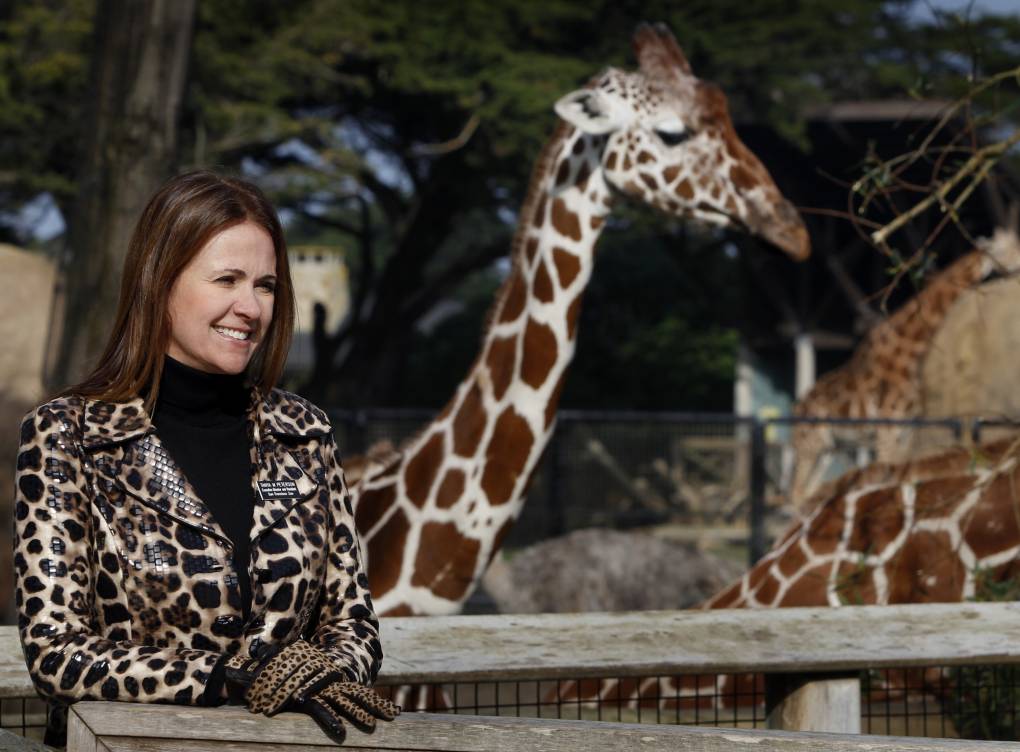
"caption": "San Francisco Zoo director Tanya Peterson visits the giraffes in the African Savanna exhibit in San Francisco, California, on Jan. 7, 2011. The embattled CEO could face a board vote to oust her next week, a union representative said, after concerns about the zoo’s safety and her leadership. ",
"credit": "Paul Chinn/The San Francisco Chronicle via Getty Images",
"altTag": null,
"description": null,
"imgSizes": {
"medium": {
"file": "https://cdn.kqed.org/wp-content/uploads/sites/10/2025/05/SFZooGetty1-800x590.jpg",
"width": 800,
"height": 590,
"mimeType": "image/jpeg"
},
"large": {
"file": "https://cdn.kqed.org/wp-content/uploads/sites/10/2025/05/SFZooGetty1-1020x752.jpg",
"width": 1020,
"height": 752,
"mimeType": "image/jpeg"
},
"thumbnail": {
"file": "https://cdn.kqed.org/wp-content/uploads/sites/10/2025/05/SFZooGetty1-160x118.jpg",
"width": 160,
"height": 118,
"mimeType": "image/jpeg"
},
"1536x1536": {
"file": "https://cdn.kqed.org/wp-content/uploads/sites/10/2025/05/SFZooGetty1-1536x1132.jpg",
"width": 1536,
"height": 1132,
"mimeType": "image/jpeg"
},
"post-thumbnail": {
"file": "https://cdn.kqed.org/wp-content/uploads/sites/10/2025/05/SFZooGetty1-672x372.jpg",
"width": 672,
"height": 372,
"mimeType": "image/jpeg"
},
"twentyfourteen-full-width": {
"file": "https://cdn.kqed.org/wp-content/uploads/sites/10/2025/05/SFZooGetty1-1038x576.jpg",
"width": 1038,
"height": 576,
"mimeType": "image/jpeg"
},
"full-width": {
"file": "https://cdn.kqed.org/wp-content/uploads/sites/10/2025/05/SFZooGetty1-1920x1415.jpg",
"width": 1920,
"height": 1415,
"mimeType": "image/jpeg"
},
"kqedFullSize": {
"file": "https://cdn.kqed.org/wp-content/uploads/sites/10/2025/05/SFZooGetty1.jpg",
"width": 2000,
"height": 1474
}
},
"isLoading": false,
"fetchFailed": false
},
"news_12036301": {
"type": "attachments",
"id": "news_12036301",
"meta": {
"index": "attachments_1716263798",
"site": "news",
"id": "12036301",
"found": true
},
"title": "Fall of Saigon: Mien Ga Memories",
"publishDate": 1744830602,
"status": "inherit",
"parent": 12037893,
"modified": 1745948854,
"caption": "A freshly cooked bowl of Miến gà is pictured at Hong Pham’s home in South Pasadena on Saturday, April 12, 2025. Miến gà is a light Vietnamese chicken soup with mung bean noodles. Hong also added Matsutake mushrooms, charred ginger and fresh Chinese onions. He also topped it with crispy homemade onions that his mom sent him.",
"credit": "Alisha Jucevic for KQED",
"altTag": null,
"description": null,
"imgSizes": {
"medium": {
"file": "https://cdn.kqed.org/wp-content/uploads/sites/10/2025/04/20250412_MIENGAMEMORIES_23-KQED-800x533.jpg",
"width": 800,
"height": 533,
"mimeType": "image/jpeg"
},
"large": {
"file": "https://cdn.kqed.org/wp-content/uploads/sites/10/2025/04/20250412_MIENGAMEMORIES_23-KQED-1020x680.jpg",
"width": 1020,
"height": 680,
"mimeType": "image/jpeg"
},
"thumbnail": {
"file": "https://cdn.kqed.org/wp-content/uploads/sites/10/2025/04/20250412_MIENGAMEMORIES_23-KQED-160x107.jpg",
"width": 160,
"height": 107,
"mimeType": "image/jpeg"
},
"1536x1536": {
"file": "https://cdn.kqed.org/wp-content/uploads/sites/10/2025/04/20250412_MIENGAMEMORIES_23-KQED-1536x1024.jpg",
"width": 1536,
"height": 1024,
"mimeType": "image/jpeg"
},
"post-thumbnail": {
"file": "https://cdn.kqed.org/wp-content/uploads/sites/10/2025/04/20250412_MIENGAMEMORIES_23-KQED-672x372.jpg",
"width": 672,
"height": 372,
"mimeType": "image/jpeg"
},
"twentyfourteen-full-width": {
"file": "https://cdn.kqed.org/wp-content/uploads/sites/10/2025/04/20250412_MIENGAMEMORIES_23-KQED-1038x576.jpg",
"width": 1038,
"height": 576,
"mimeType": "image/jpeg"
},
"full-width": {
"file": "https://cdn.kqed.org/wp-content/uploads/sites/10/2025/04/20250412_MIENGAMEMORIES_23-KQED-1920x1280.jpg",
"width": 1920,
"height": 1280,
"mimeType": "image/jpeg"
},
"kqedFullSize": {
"file": "https://cdn.kqed.org/wp-content/uploads/sites/10/2025/04/20250412_MIENGAMEMORIES_23-KQED.jpg",
"width": 2000,
"height": 1333
}
},
"isLoading": false,
"fetchFailed": false
},
"news_12040390": {
"type": "attachments",
"id": "news_12040390",
"meta": {
"index": "attachments_1716263798",
"site": "news",
"id": "12040390",
"found": true
},
"title": "20250515_RICHMONDDEADBIRDS_GC-25-KQED",
"publishDate": 1747340038,
"status": "inherit",
"parent": 12040311,
"modified": 1747348014,
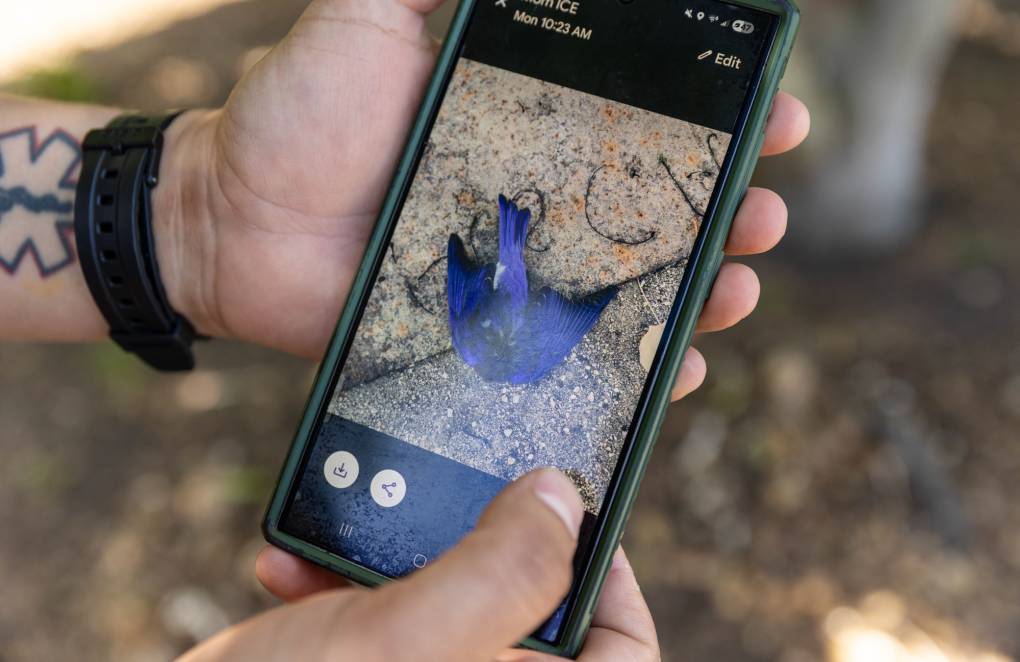
"caption": "Max Bolling shows a photo of a dead bird on his phone on the 6100 block of Bernhard Ave in Richmond on May 15, 2025.",
"credit": "Gina Castro/KQED",
"altTag": null,
"description": null,
"imgSizes": {
"medium": {
"file": "https://cdn.kqed.org/wp-content/uploads/sites/10/2025/05/20250515_RICHMONDDEADBIRDS_GC-25-KQED-800x519.jpg",
"width": 800,
"height": 519,
"mimeType": "image/jpeg"
},
"large": {
"file": "https://cdn.kqed.org/wp-content/uploads/sites/10/2025/05/20250515_RICHMONDDEADBIRDS_GC-25-KQED-1020x662.jpg",
"width": 1020,
"height": 662,
"mimeType": "image/jpeg"
},
"thumbnail": {
"file": "https://cdn.kqed.org/wp-content/uploads/sites/10/2025/05/20250515_RICHMONDDEADBIRDS_GC-25-KQED-160x104.jpg",
"width": 160,
"height": 104,
"mimeType": "image/jpeg"
},
"1536x1536": {
"file": "https://cdn.kqed.org/wp-content/uploads/sites/10/2025/05/20250515_RICHMONDDEADBIRDS_GC-25-KQED-1536x997.jpg",
"width": 1536,
"height": 997,
"mimeType": "image/jpeg"
},
"post-thumbnail": {
"file": "https://cdn.kqed.org/wp-content/uploads/sites/10/2025/05/20250515_RICHMONDDEADBIRDS_GC-25-KQED-672x372.jpg",
"width": 672,
"height": 372,
"mimeType": "image/jpeg"
},
"twentyfourteen-full-width": {
"file": "https://cdn.kqed.org/wp-content/uploads/sites/10/2025/05/20250515_RICHMONDDEADBIRDS_GC-25-KQED-1038x576.jpg",
"width": 1038,
"height": 576,
"mimeType": "image/jpeg"
},
"full-width": {
"file": "https://cdn.kqed.org/wp-content/uploads/sites/10/2025/05/20250515_RICHMONDDEADBIRDS_GC-25-KQED-1920x1246.jpg",
"width": 1920,
"height": 1246,
"mimeType": "image/jpeg"
},
"kqedFullSize": {
"file": "https://cdn.kqed.org/wp-content/uploads/sites/10/2025/05/20250515_RICHMONDDEADBIRDS_GC-25-KQED.jpg",
"width": 2000,
"height": 1298
}
},
"isLoading": false,
"fetchFailed": false
},
"news_12040369": {
"type": "attachments",
"id": "news_12040369",
"meta": {
"index": "attachments_1716263798",
"site": "news",
"id": "12040369",
"found": true
},
"title": "UCRegents1",
"publishDate": 1747336938,
"status": "inherit",
"parent": 12040282,
"modified": 1747337073,
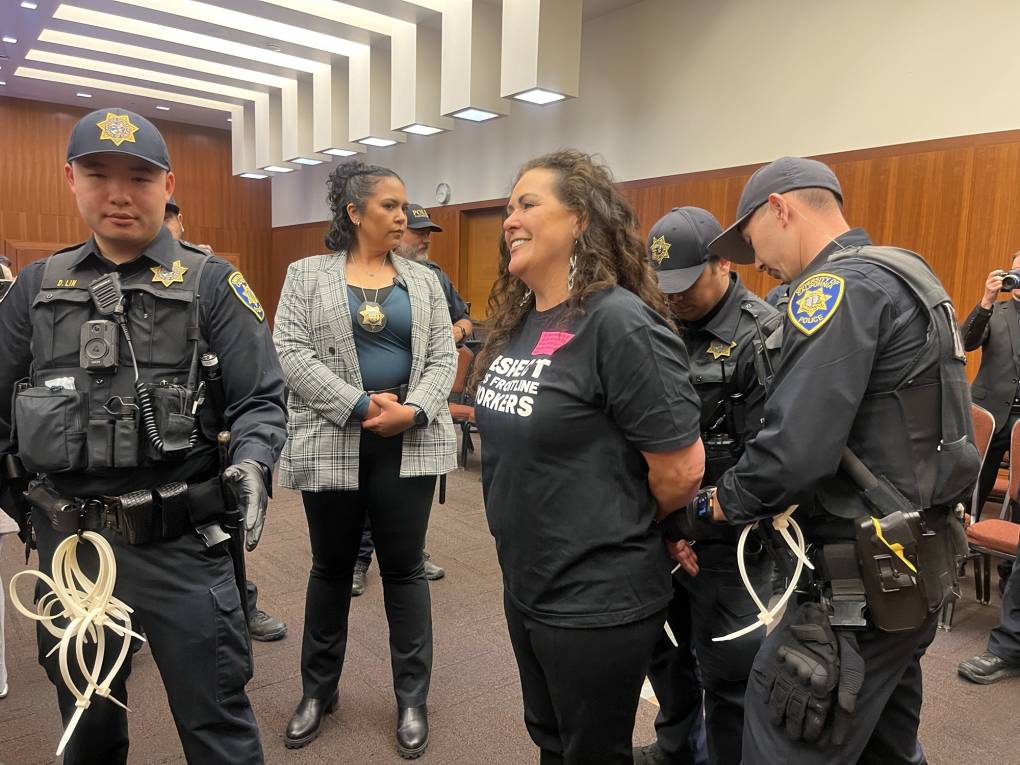
"caption": "During Thursday's UC Regents meeting, some union members refused to leave the room and were arrested, including Lorena Gonzalez, California Labor Federation President.",
"credit": "Juan Carlos Lara/KQED",
"altTag": null,
"description": null,
"imgSizes": {
"medium": {
"file": "https://cdn.kqed.org/wp-content/uploads/sites/10/2025/05/UCRegents1-800x600.jpg",
"width": 800,
"height": 600,
"mimeType": "image/jpeg"
},
"large": {
"file": "https://cdn.kqed.org/wp-content/uploads/sites/10/2025/05/UCRegents1-1020x765.jpg",
"width": 1020,
"height": 765,
"mimeType": "image/jpeg"
},
"thumbnail": {
"file": "https://cdn.kqed.org/wp-content/uploads/sites/10/2025/05/UCRegents1-160x120.jpg",
"width": 160,
"height": 120,
"mimeType": "image/jpeg"
},
"1536x1536": {
"file": "https://cdn.kqed.org/wp-content/uploads/sites/10/2025/05/UCRegents1-1536x1152.jpg",
"width": 1536,
"height": 1152,
"mimeType": "image/jpeg"
},
"post-thumbnail": {
"file": "https://cdn.kqed.org/wp-content/uploads/sites/10/2025/05/UCRegents1-672x372.jpg",
"width": 672,
"height": 372,
"mimeType": "image/jpeg"
},
"twentyfourteen-full-width": {
"file": "https://cdn.kqed.org/wp-content/uploads/sites/10/2025/05/UCRegents1-1038x576.jpg",
"width": 1038,
"height": 576,
"mimeType": "image/jpeg"
},
"full-width": {
"file": "https://cdn.kqed.org/wp-content/uploads/sites/10/2025/05/UCRegents1-1920x1440.jpg",
"width": 1920,
"height": 1440,
"mimeType": "image/jpeg"
},
"kqedFullSize": {
"file": "https://cdn.kqed.org/wp-content/uploads/sites/10/2025/05/UCRegents1.jpg",
"width": 2000,
"height": 1500
}
},
"isLoading": false,
"fetchFailed": false
},
"news_12040186": {
"type": "attachments",
"id": "news_12040186",
"meta": {
"index": "attachments_1716263798",
"site": "news",
"id": "12040186",
"found": true
},
"title": "20241204-BART-JY-002_qed",
"publishDate": 1747263386,
"status": "inherit",
"parent": 0,
"modified": 1757194100,
"caption": "A BART car approaches the platform at Daly City Station in Daly City, on Dec. 4, 2024.",
"credit": "Juliana Yamada/KQED",
"altTag": null,
"description": null,
"imgSizes": {
"medium": {
"file": "https://cdn.kqed.org/wp-content/uploads/sites/10/2025/05/20241204-BART-JY-002_qed-800x533.jpg",
"width": 800,
"height": 533,
"mimeType": "image/jpeg"
},
"large": {
"file": "https://cdn.kqed.org/wp-content/uploads/sites/10/2025/05/20241204-BART-JY-002_qed-1020x680.jpg",
"width": 1020,
"height": 680,
"mimeType": "image/jpeg"
},
"thumbnail": {
"file": "https://cdn.kqed.org/wp-content/uploads/sites/10/2025/05/20241204-BART-JY-002_qed-160x107.jpg",
"width": 160,
"height": 107,
"mimeType": "image/jpeg"
},
"1536x1536": {
"file": "https://cdn.kqed.org/wp-content/uploads/sites/10/2025/05/20241204-BART-JY-002_qed-1536x1024.jpg",
"width": 1536,
"height": 1024,
"mimeType": "image/jpeg"
},
"post-thumbnail": {
"file": "https://cdn.kqed.org/wp-content/uploads/sites/10/2025/05/20241204-BART-JY-002_qed-672x372.jpg",
"width": 672,
"height": 372,
"mimeType": "image/jpeg"
},
"twentyfourteen-full-width": {
"file": "https://cdn.kqed.org/wp-content/uploads/sites/10/2025/05/20241204-BART-JY-002_qed-1038x576.jpg",
"width": 1038,
"height": 576,
"mimeType": "image/jpeg"
},
"full-width": {
"file": "https://cdn.kqed.org/wp-content/uploads/sites/10/2025/05/20241204-BART-JY-002_qed-1920x1280.jpg",
"width": 1920,
"height": 1280,
"mimeType": "image/jpeg"
},
"kqedFullSize": {
"file": "https://cdn.kqed.org/wp-content/uploads/sites/10/2025/05/20241204-BART-JY-002_qed.jpg",
"width": 2000,
"height": 1333
}
},
"isLoading": false,
"fetchFailed": false
},
"news_12040030": {
"type": "attachments",
"id": "news_12040030",
"meta": {
"index": "attachments_1716263798",
"site": "news",
"id": "12040030",
"found": true
},
"title": "031_KQED_SanFrancisco_COVIDShutdown_12062020_qed",
"publishDate": 1747241123,
"status": "inherit",
"parent": 12040028,
"modified": 1747241147,
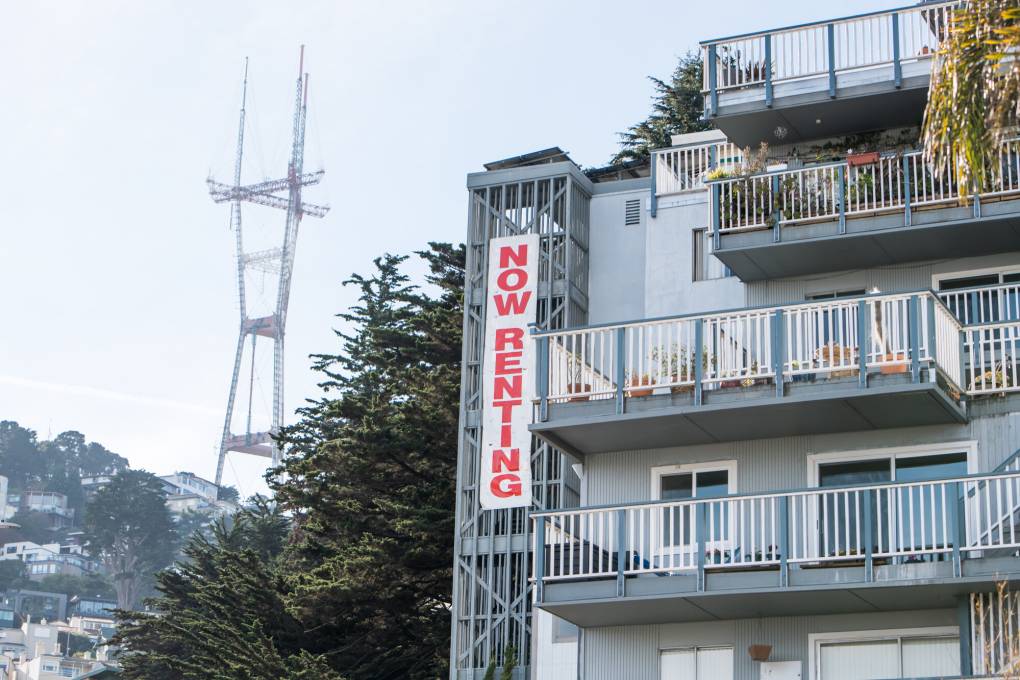
"caption": "A \"Now Renting\" sign on an apartment building on Market Street in San Francisco on Dec. 6, 2020.",
"credit": "Beth LaBerge/KQED",
"altTag": null,
"description": null,
"imgSizes": {
"medium": {
"file": "https://cdn.kqed.org/wp-content/uploads/sites/10/2025/05/031_KQED_SanFrancisco_COVIDShutdown_12062020_qed-800x533.jpg",
"width": 800,
"height": 533,
"mimeType": "image/jpeg"
},
"large": {
"file": "https://cdn.kqed.org/wp-content/uploads/sites/10/2025/05/031_KQED_SanFrancisco_COVIDShutdown_12062020_qed-1020x680.jpg",
"width": 1020,
"height": 680,
"mimeType": "image/jpeg"
},
"thumbnail": {
"file": "https://cdn.kqed.org/wp-content/uploads/sites/10/2025/05/031_KQED_SanFrancisco_COVIDShutdown_12062020_qed-160x107.jpg",
"width": 160,
"height": 107,
"mimeType": "image/jpeg"
},
"1536x1536": {
"file": "https://cdn.kqed.org/wp-content/uploads/sites/10/2025/05/031_KQED_SanFrancisco_COVIDShutdown_12062020_qed-1536x1024.jpg",
"width": 1536,
"height": 1024,
"mimeType": "image/jpeg"
},
"post-thumbnail": {
"file": "https://cdn.kqed.org/wp-content/uploads/sites/10/2025/05/031_KQED_SanFrancisco_COVIDShutdown_12062020_qed-672x372.jpg",
"width": 672,
"height": 372,
"mimeType": "image/jpeg"
},
"twentyfourteen-full-width": {
"file": "https://cdn.kqed.org/wp-content/uploads/sites/10/2025/05/031_KQED_SanFrancisco_COVIDShutdown_12062020_qed-1038x576.jpg",
"width": 1038,
"height": 576,
"mimeType": "image/jpeg"
},
"full-width": {
"file": "https://cdn.kqed.org/wp-content/uploads/sites/10/2025/05/031_KQED_SanFrancisco_COVIDShutdown_12062020_qed-1920x1280.jpg",
"width": 1920,
"height": 1280,
"mimeType": "image/jpeg"
},
"kqedFullSize": {
"file": "https://cdn.kqed.org/wp-content/uploads/sites/10/2025/05/031_KQED_SanFrancisco_COVIDShutdown_12062020_qed.jpg",
"width": 1999,
"height": 1333
}
},
"isLoading": false,
"fetchFailed": false
},
"news_12015371": {
"type": "attachments",
"id": "news_12015371",
"meta": {
"index": "attachments_1716263798",
"site": "news",
"id": "12015371",
"found": true
},
"title": "Photo3_qed",
"publishDate": 1732224825,
"status": "inherit",
"parent": 12015335,
"modified": 1732224856,
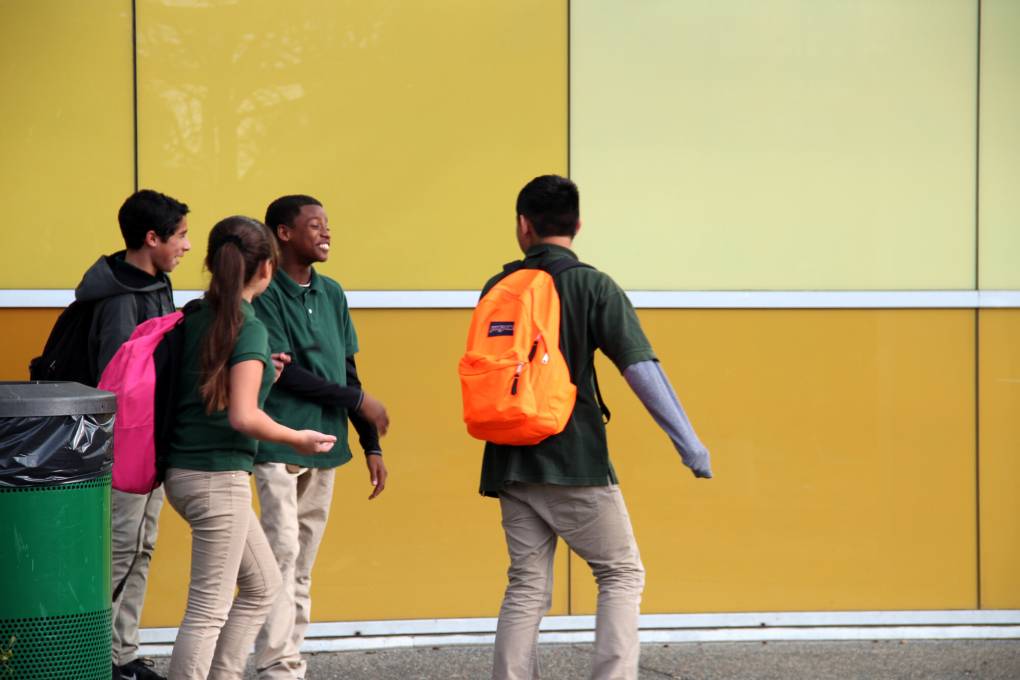
"caption": "Students talk after class at Lighthouse Charter School in Oakland. ",
"credit": "Aaron Mendelson/KQED",
"altTag": null,
"description": null,
"imgSizes": {
"medium": {
"file": "https://cdn.kqed.org/wp-content/uploads/sites/10/2024/11/Photo3_qed-800x533.jpg",
"width": 800,
"height": 533,
"mimeType": "image/jpeg"
},
"large": {
"file": "https://cdn.kqed.org/wp-content/uploads/sites/10/2024/11/Photo3_qed-1020x680.jpg",
"width": 1020,
"height": 680,
"mimeType": "image/jpeg"
},
"thumbnail": {
"file": "https://cdn.kqed.org/wp-content/uploads/sites/10/2024/11/Photo3_qed-160x107.jpg",
"width": 160,
"height": 107,
"mimeType": "image/jpeg"
},
"1536x1536": {
"file": "https://cdn.kqed.org/wp-content/uploads/sites/10/2024/11/Photo3_qed-1536x1024.jpg",
"width": 1536,
"height": 1024,
"mimeType": "image/jpeg"
},
"post-thumbnail": {
"file": "https://cdn.kqed.org/wp-content/uploads/sites/10/2024/11/Photo3_qed-672x372.jpg",
"width": 672,
"height": 372,
"mimeType": "image/jpeg"
},
"twentyfourteen-full-width": {
"file": "https://cdn.kqed.org/wp-content/uploads/sites/10/2024/11/Photo3_qed-1038x576.jpg",
"width": 1038,
"height": 576,
"mimeType": "image/jpeg"
},
"full-width": {
"file": "https://cdn.kqed.org/wp-content/uploads/sites/10/2024/11/Photo3_qed-1920x1280.jpg",
"width": 1920,
"height": 1280,
"mimeType": "image/jpeg"
},
"kqedFullSize": {
"file": "https://cdn.kqed.org/wp-content/uploads/sites/10/2024/11/Photo3_qed.jpg",
"width": 1999,
"height": 1333
}
},
"isLoading": false,
"fetchFailed": false
},
"news_12039307": {
"type": "attachments",
"id": "news_12039307",
"meta": {
"index": "attachments_1716263798",
"site": "news",
"id": "12039307",
"found": true
},
"title": "250505-NATIONALSMILESMONTH-29-BL-KQED",
"publishDate": 1746724806,
"status": "inherit",
"parent": 12039893,
"modified": 1747164348,
"caption": "Dr. Jessica Ngo, a dentist at Total Health Dental Care, talks with patient Otis R. Taylor Jr. in the Berkeley offices on May 5, 2025.",
"credit": "Beth LaBerge/KQED",
"altTag": null,
"description": null,
"imgSizes": {
"medium": {
"file": "https://cdn.kqed.org/wp-content/uploads/sites/10/2025/05/250505-NATIONALSMILESMONTH-29-BL-KQED-800x533.jpg",
"width": 800,
"height": 533,
"mimeType": "image/jpeg"
},
"large": {
"file": "https://cdn.kqed.org/wp-content/uploads/sites/10/2025/05/250505-NATIONALSMILESMONTH-29-BL-KQED-1020x680.jpg",
"width": 1020,
"height": 680,
"mimeType": "image/jpeg"
},
"thumbnail": {
"file": "https://cdn.kqed.org/wp-content/uploads/sites/10/2025/05/250505-NATIONALSMILESMONTH-29-BL-KQED-160x107.jpg",
"width": 160,
"height": 107,
"mimeType": "image/jpeg"
},
"1536x1536": {
"file": "https://cdn.kqed.org/wp-content/uploads/sites/10/2025/05/250505-NATIONALSMILESMONTH-29-BL-KQED-1536x1024.jpg",
"width": 1536,
"height": 1024,
"mimeType": "image/jpeg"
},
"post-thumbnail": {
"file": "https://cdn.kqed.org/wp-content/uploads/sites/10/2025/05/250505-NATIONALSMILESMONTH-29-BL-KQED-672x372.jpg",
"width": 672,
"height": 372,
"mimeType": "image/jpeg"
},
"twentyfourteen-full-width": {
"file": "https://cdn.kqed.org/wp-content/uploads/sites/10/2025/05/250505-NATIONALSMILESMONTH-29-BL-KQED-1038x576.jpg",
"width": 1038,
"height": 576,
"mimeType": "image/jpeg"
},
"full-width": {
"file": "https://cdn.kqed.org/wp-content/uploads/sites/10/2025/05/250505-NATIONALSMILESMONTH-29-BL-KQED-1920x1280.jpg",
"width": 1920,
"height": 1280,
"mimeType": "image/jpeg"
},
"kqedFullSize": {
"file": "https://cdn.kqed.org/wp-content/uploads/sites/10/2025/05/250505-NATIONALSMILESMONTH-29-BL-KQED.jpg",
"width": 2000,
"height": 1333
}
},
"isLoading": false,
"fetchFailed": false
},
"news_11864276": {
"type": "attachments",
"id": "news_11864276",
"meta": {
"index": "attachments_1716263798",
"site": "news",
"id": "11864276",
"found": true
},
"title": "SuisunMarshMain",
"publishDate": 1615494107,
"status": "inherit",
"parent": 11863789,
"modified": 1747182337,
"caption": "Suisun Marsh is home to hundreds of species of birds, fish, amphibians and mammals. Local officials and environmental groups oppose a project allowing exploratory natural gas drilling in the marsh.",
"credit": "Alice Woelfle/KQED",
"altTag": "Grasses blow in the breeze above marsh waters at Suisun Marsh on a clear day.",
"description": "Suisun Marsh is home to hundreds of species of birds, fish, amphibians and mammals. Local officials and environmental groups are opposing a project that would allow exploratory natural gas drilling in the marsh.",
"imgSizes": {
"medium": {
"file": "https://cdn.kqed.org/wp-content/uploads/sites/10/2021/03/SuisunMarshMain-800x540.jpg",
"width": 800,
"height": 540,
"mimeType": "image/jpeg"
},
"large": {
"file": "https://cdn.kqed.org/wp-content/uploads/sites/10/2021/03/SuisunMarshMain-1020x689.jpg",
"width": 1020,
"height": 689,
"mimeType": "image/jpeg"
},
"thumbnail": {
"file": "https://cdn.kqed.org/wp-content/uploads/sites/10/2021/03/SuisunMarshMain-160x108.jpg",
"width": 160,
"height": 108,
"mimeType": "image/jpeg"
},
"1536x1536": {
"file": "https://cdn.kqed.org/wp-content/uploads/sites/10/2021/03/SuisunMarshMain-1536x1038.jpg",
"width": 1536,
"height": 1038,
"mimeType": "image/jpeg"
},
"post-thumbnail": {
"file": "https://cdn.kqed.org/wp-content/uploads/sites/10/2021/03/SuisunMarshMain-672x372.jpg",
"width": 672,
"height": 372,
"mimeType": "image/jpeg"
},
"twentyfourteen-full-width": {
"file": "https://cdn.kqed.org/wp-content/uploads/sites/10/2021/03/SuisunMarshMain-1038x576.jpg",
"width": 1038,
"height": 576,
"mimeType": "image/jpeg"
},
"kqedFullSize": {
"file": "https://cdn.kqed.org/wp-content/uploads/sites/10/2021/03/SuisunMarshMain.jpg",
"width": 1920,
"height": 1297
}
},
"isLoading": false,
"fetchFailed": false
},
"news_12036911": {
"type": "attachments",
"id": "news_12036911",
"meta": {
"index": "attachments_1716263798",
"site": "news",
"id": "12036911",
"found": true
},
"title": "250418-SFUSD-06-BL-KQED",
"publishDate": 1745253406,
"status": "inherit",
"parent": 12036914,
"modified": 1745274516,
"caption": "The San Francisco Unified School District Administrative Offices in San Francisco on April 18, 2025.",
"credit": "Beth LaBerge/KQED",
"altTag": null,
"description": null,
"imgSizes": {
"medium": {
"file": "https://cdn.kqed.org/wp-content/uploads/sites/10/2025/04/250418-SFUSD-06-BL-KQED-800x533.jpg",
"width": 800,
"height": 533,
"mimeType": "image/jpeg"
},
"large": {
"file": "https://cdn.kqed.org/wp-content/uploads/sites/10/2025/04/250418-SFUSD-06-BL-KQED-1020x680.jpg",
"width": 1020,
"height": 680,
"mimeType": "image/jpeg"
},
"thumbnail": {
"file": "https://cdn.kqed.org/wp-content/uploads/sites/10/2025/04/250418-SFUSD-06-BL-KQED-160x107.jpg",
"width": 160,
"height": 107,
"mimeType": "image/jpeg"
},
"1536x1536": {
"file": "https://cdn.kqed.org/wp-content/uploads/sites/10/2025/04/250418-SFUSD-06-BL-KQED-1536x1024.jpg",
"width": 1536,
"height": 1024,
"mimeType": "image/jpeg"
},
"post-thumbnail": {
"file": "https://cdn.kqed.org/wp-content/uploads/sites/10/2025/04/250418-SFUSD-06-BL-KQED-672x372.jpg",
"width": 672,
"height": 372,
"mimeType": "image/jpeg"
},
"twentyfourteen-full-width": {
"file": "https://cdn.kqed.org/wp-content/uploads/sites/10/2025/04/250418-SFUSD-06-BL-KQED-1038x576.jpg",
"width": 1038,
"height": 576,
"mimeType": "image/jpeg"
},
"full-width": {
"file": "https://cdn.kqed.org/wp-content/uploads/sites/10/2025/04/250418-SFUSD-06-BL-KQED-1920x1280.jpg",
"width": 1920,
"height": 1280,
"mimeType": "image/jpeg"
},
"kqedFullSize": {
"file": "https://cdn.kqed.org/wp-content/uploads/sites/10/2025/04/250418-SFUSD-06-BL-KQED.jpg",
"width": 2000,
"height": 1333
}
},
"isLoading": false,
"fetchFailed": false
},
"news_12039810": {
"type": "attachments",
"id": "news_12039810",
"meta": {
"index": "attachments_1716263798",
"site": "news",
"id": "12039810",
"found": true
},
"title": "250512-DAY WITHOUT CHILDCARE-MD-01-KQED",
"publishDate": 1747085840,
"status": "inherit",
"parent": 12045220,
"modified": 1750446707,
"caption": "Khulood Jamil (center) and other childcare providers and supporters march to the Federal Building in San José on May 12, 2025.",
"credit": "Martin do Nascimento/KQED",
"altTag": null,
"description": null,
"imgSizes": {
"medium": {
"file": "https://cdn.kqed.org/wp-content/uploads/sites/10/2025/05/250512-DAY-WITHOUT-CHILDCARE-MD-01-KQED-800x534.jpg",
"width": 800,
"height": 534,
"mimeType": "image/jpeg"
},
"large": {
"file": "https://cdn.kqed.org/wp-content/uploads/sites/10/2025/05/250512-DAY-WITHOUT-CHILDCARE-MD-01-KQED-1020x680.jpg",
"width": 1020,
"height": 680,
"mimeType": "image/jpeg"
},
"thumbnail": {
"file": "https://cdn.kqed.org/wp-content/uploads/sites/10/2025/05/250512-DAY-WITHOUT-CHILDCARE-MD-01-KQED-160x107.jpg",
"width": 160,
"height": 107,
"mimeType": "image/jpeg"
},
"1536x1536": {
"file": "https://cdn.kqed.org/wp-content/uploads/sites/10/2025/05/250512-DAY-WITHOUT-CHILDCARE-MD-01-KQED-1536x1025.jpg",
"width": 1536,
"height": 1025,
"mimeType": "image/jpeg"
},
"post-thumbnail": {
"file": "https://cdn.kqed.org/wp-content/uploads/sites/10/2025/05/250512-DAY-WITHOUT-CHILDCARE-MD-01-KQED-672x372.jpg",
"width": 672,
"height": 372,
"mimeType": "image/jpeg"
},
"twentyfourteen-full-width": {
"file": "https://cdn.kqed.org/wp-content/uploads/sites/10/2025/05/250512-DAY-WITHOUT-CHILDCARE-MD-01-KQED-1038x576.jpg",
"width": 1038,
"height": 576,
"mimeType": "image/jpeg"
},
"full-width": {
"file": "https://cdn.kqed.org/wp-content/uploads/sites/10/2025/05/250512-DAY-WITHOUT-CHILDCARE-MD-01-KQED-1920x1281.jpg",
"width": 1920,
"height": 1281,
"mimeType": "image/jpeg"
},
"kqedFullSize": {
"file": "https://cdn.kqed.org/wp-content/uploads/sites/10/2025/05/250512-DAY-WITHOUT-CHILDCARE-MD-01-KQED.jpg",
"width": 2000,
"height": 1334
}
},
"isLoading": false,
"fetchFailed": false
},
"news_11951887": {
"type": "attachments",
"id": "news_11951887",
"meta": {
"index": "attachments_1716263798",
"site": "news",
"id": "11951887",
"found": true
},
"parent": 11951866,
"imgSizes": {
"twentyfourteen-full-width": {
"file": "https://ww2.kqed.org/app/uploads/sites/10/2023/06/RS32605_ElectricCars_AW_10-qut-1038x576.jpg",
"width": 1038,
"mimeType": "image/jpeg",
"height": 576
},
"thumbnail": {
"file": "https://ww2.kqed.org/app/uploads/sites/10/2023/06/RS32605_ElectricCars_AW_10-qut-160x107.jpg",
"width": 160,
"mimeType": "image/jpeg",
"height": 107
},
"post-thumbnail": {
"file": "https://ww2.kqed.org/app/uploads/sites/10/2023/06/RS32605_ElectricCars_AW_10-qut-672x372.jpg",
"width": 672,
"mimeType": "image/jpeg",
"height": 372
},
"kqedFullSize": {
"file": "https://ww2.kqed.org/app/uploads/sites/10/2023/06/RS32605_ElectricCars_AW_10-qut.jpg",
"width": 1920,
"height": 1280
},
"large": {
"file": "https://ww2.kqed.org/app/uploads/sites/10/2023/06/RS32605_ElectricCars_AW_10-qut-1020x680.jpg",
"width": 1020,
"mimeType": "image/jpeg",
"height": 680
},
"1536x1536": {
"file": "https://ww2.kqed.org/app/uploads/sites/10/2023/06/RS32605_ElectricCars_AW_10-qut-1536x1024.jpg",
"width": 1536,
"mimeType": "image/jpeg",
"height": 1024
},
"medium": {
"file": "https://ww2.kqed.org/app/uploads/sites/10/2023/06/RS32605_ElectricCars_AW_10-qut-800x533.jpg",
"width": 800,
"mimeType": "image/jpeg",
"height": 533
}
},
"publishDate": 1685573972,
"modified": 1685576249,
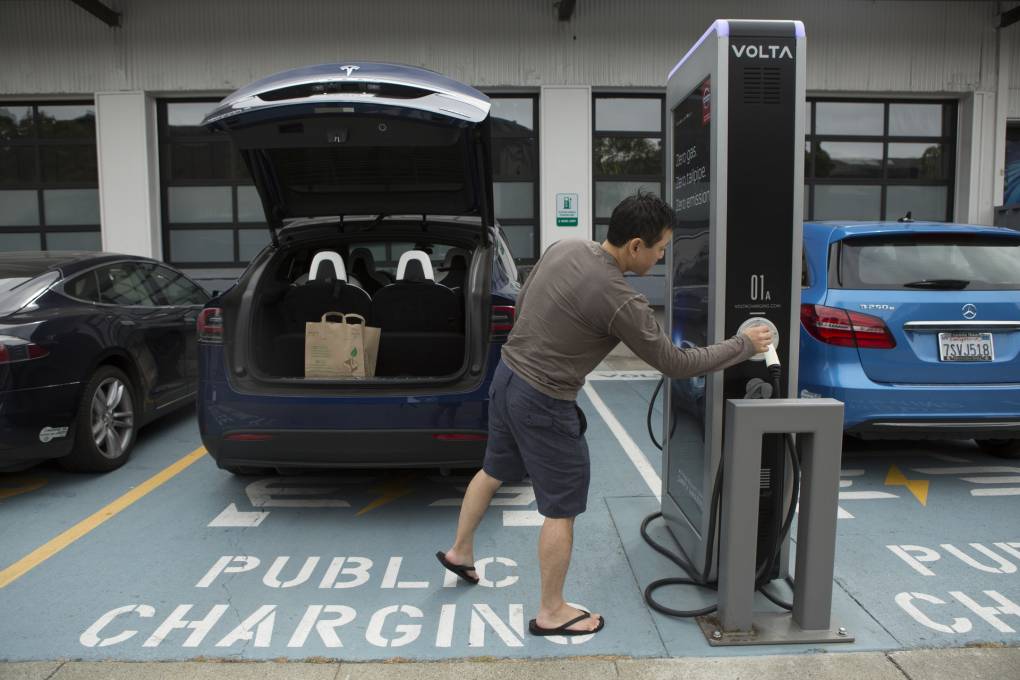
"caption": "A public charging station for electric vehicles in the Potrero neighborhood of San Francisco.",
"description": null,
"title": "RS32605_ElectricCars_AW_10-qut",
"credit": "Anne Wernikoff/KQED",
"status": "inherit",
"altTag": null,
"isLoading": false,
"fetchFailed": false
}
},
"audioPlayerReducer": {
"postId": "stream_live",
"isPaused": true,
"isPlaying": false,
"pfsActive": false,
"pledgeModalIsOpen": true,
"playerDrawerIsOpen": false,
"liveAudioPlayStartedAt": 0,
"liveAudioPlayContext": ""
},
"authorsReducer": {
"shossaini": {
"type": "authors",
"id": "3214",
"meta": {
"index": "authors_1716337520",
"id": "3214",
"found": true
},
"name": "Sara Hossaini",
"firstName": "Sara",
"lastName": "Hossaini",
"slug": "shossaini",
"email": "shossaini@kqed.org",
"display_author_email": true,
"staff_mastheads": [
"news"
],
"title": "KQED Reporter",
"bio": "Sara Hossaini came to general assignment reporting at KQED in 2013 after two winters reporting at Wyoming Public Radio. She holds a bachelor's degree in broadcast journalism from the University of Nebraska-Lincoln. Her radio romance began after a bitter breakup with documentary film (Ok, maybe it's still complicated). Her first simultaneous jobs in San Francisco were as Associate Producer on a PBS film series through the Center for Asian American Media and as a butler. She likes to trot, plot and make things with her hands.",
"avatar": "https://secure.gravatar.com/avatar/060e9f56b9554e17942e89f413242774?s=600&d=blank&r=g",
"twitter": "mshossaini",
"facebook": null,
"instagram": null,
"linkedin": null,
"sites": [
{
"site": "news",
"roles": [
"author"
]
},
{
"site": "stateofhealth",
"roles": [
"author"
]
}
],
"headData": {
"title": "Sara Hossaini | KQED",
"description": "KQED Reporter",
"ogImgSrc": "https://secure.gravatar.com/avatar/060e9f56b9554e17942e89f413242774?s=600&d=blank&r=g",
"twImgSrc": "https://secure.gravatar.com/avatar/060e9f56b9554e17942e89f413242774?s=600&d=blank&r=g"
},
"isLoading": false,
"link": "/author/shossaini"
},
"lklivans": {
"type": "authors",
"id": "8648",
"meta": {
"index": "authors_1716337520",
"id": "8648",
"found": true
},
"name": "Laura Klivans",
"firstName": "Laura",
"lastName": "Klivans",
"slug": "lklivans",
"email": "lklivans@kqed.org",
"display_author_email": true,
"staff_mastheads": [
"news",
"science"
],
"title": "Reporter",
"bio": "Laura Klivans is an award-winning science reporter for KQED News, where she covers climate change with an eye on both groundbreaking progress and gaps in action. She is the former host of KQED's blockbuster video series about tiny, amazing animals, \u003cem>Deep Look\u003c/em>. Her work reaches national audiences through NPR, \u003cem>Here & Now, \u003c/em>PRI, and other major outlets. \r\n\r\nLaura’s won five Northern California Area Emmy Awards for Deep Look and First Place in the Greater Bay Area Journalism Awards for a podcast exploring how one Oakland neighborhood teamed up to reduce planet-heating pollution.\r\n\r\nBeyond her reporting, she hosts and moderates events. In the past, she taught audio storytelling at the UC Berkeley Graduate School of Journalism, led international education programs, worked with immigrants and refugees along the Thai-Burmese border, taught high schoolers sex ed, and was an actress. \r\n\r\nShe's a former UC Berkeley Human Rights Fellow, USC Center for Health Journalism's California Fellow and Coro Fellow in Public Affairs. Laura has a master’s in journalism from UC Berkeley, a master’s in education from Harvard, and an undergraduate degree from Northwestern University.\r\n\r\nShe loves trying to riddle the meaning out of vanity license plates.",
"avatar": "https://secure.gravatar.com/avatar/2d2ecd1550a494cc10ad4a503406965585902124739e775a9b3817eebf1d88be?s=600&d=blank&r=g",
"twitter": "lauraklivans",
"bluesky": null,
"facebook": null,
"instagram": null,
"linkedin": null,
"sites": [
{
"site": "news",
"roles": [
"editor"
]
},
{
"site": "stateofhealth",
"roles": [
"contributor",
"editor"
]
},
{
"site": "science",
"roles": [
"editor"
]
},
{
"site": "forum",
"roles": [
"editor"
]
}
],
"headData": {
"title": "Laura Klivans | KQED",
"description": "Reporter",
"ogImgSrc": "https://secure.gravatar.com/avatar/2d2ecd1550a494cc10ad4a503406965585902124739e775a9b3817eebf1d88be?s=600&d=blank&r=g",
"twImgSrc": "https://secure.gravatar.com/avatar/2d2ecd1550a494cc10ad4a503406965585902124739e775a9b3817eebf1d88be?s=600&d=blank&r=g"
},
"isLoading": false,
"link": "/author/lklivans"
},
"ccabreralomeli": {
"type": "authors",
"id": "11708",
"meta": {
"index": "authors_1716337520",
"id": "11708",
"found": true
},
"name": "Carlos Cabrera-Lomelí",
"firstName": "Carlos",
"lastName": "Cabrera-Lomelí",
"slug": "ccabreralomeli",
"email": "ccabreralomeli@KQED.org",
"display_author_email": true,
"staff_mastheads": [
"news"
],
"title": "Community Reporter",
"bio": "Carlos Cabrera-Lomelí is a community reporter with KQED's digital engagement team. He also reports and co-produces for KQED's bilingual news hub KQED en Español. He grew up in San Francisco's Mission District and has previously worked with Univision, 48 Hills and REFORMA in Mexico City.",
"avatar": "https://secure.gravatar.com/avatar/c309be9665e484f887b818c89e273ecc673004f426f36b24d00a4d813a2e0518?s=600&d=blank&r=g",
"twitter": "@LomeliCabrera",
"bluesky": null,
"facebook": null,
"instagram": null,
"linkedin": null,
"sites": [
{
"site": "arts",
"roles": [
"editor"
]
},
{
"site": "news",
"roles": [
"editor"
]
},
{
"site": "about",
"roles": [
"editor"
]
},
{
"site": "science",
"roles": [
"editor"
]
},
{
"site": "perspectives",
"roles": [
"editor"
]
},
{
"site": "elections",
"roles": [
"editor"
]
},
{
"site": "liveblog",
"roles": [
"contributor"
]
}
],
"headData": {
"title": "Carlos Cabrera-Lomelí | KQED",
"description": "Community Reporter",
"ogImgSrc": "https://secure.gravatar.com/avatar/c309be9665e484f887b818c89e273ecc673004f426f36b24d00a4d813a2e0518?s=600&d=blank&r=g",
"twImgSrc": "https://secure.gravatar.com/avatar/c309be9665e484f887b818c89e273ecc673004f426f36b24d00a4d813a2e0518?s=600&d=blank&r=g"
},
"isLoading": false,
"link": "/author/ccabreralomeli"
},
"eromero": {
"type": "authors",
"id": "11746",
"meta": {
"index": "authors_1716337520",
"id": "11746",
"found": true
},
"name": "Ezra David Romero",
"firstName": "Ezra David",
"lastName": "Romero",
"slug": "eromero",
"email": "eromero@kqed.org",
"display_author_email": true,
"staff_mastheads": [
"news",
"science"
],
"title": "Climate Reporter",
"bio": "Ezra David Romero is a climate reporter for KQED News. He covers the absence and excess of water in the Bay Area — think sea level rise, flooding and drought. For nearly a decade he’s covered how warming temperatures are altering the lives of Californians. He’s reported on farmers worried their pistachio trees aren’t getting enough sleep, families desperate for water, scientists studying dying giant sequoias, and alongside firefighters containing wildfires. His work has appeared on local stations across California and nationally on public radio shows like Morning Edition, Here and Now, All Things Considered and Science Friday. ",
"avatar": "https://secure.gravatar.com/avatar/c76404d287c10ed40224227551ac36e24352c7306f106632caf6fead76f8801f?s=600&d=blank&r=g",
"twitter": "ezraromero",
"bluesky": null,
"facebook": null,
"instagram": null,
"linkedin": null,
"sites": [
{
"site": "arts",
"roles": [
"editor"
]
},
{
"site": "news",
"roles": [
"editor"
]
},
{
"site": "science",
"roles": [
"editor"
]
},
{
"site": "liveblog",
"roles": [
"author"
]
}
],
"headData": {
"title": "Ezra David Romero | KQED",
"description": "Climate Reporter",
"ogImgSrc": "https://secure.gravatar.com/avatar/c76404d287c10ed40224227551ac36e24352c7306f106632caf6fead76f8801f?s=600&d=blank&r=g",
"twImgSrc": "https://secure.gravatar.com/avatar/c76404d287c10ed40224227551ac36e24352c7306f106632caf6fead76f8801f?s=600&d=blank&r=g"
},
"isLoading": false,
"link": "/author/eromero"
},
"otaylor": {
"type": "authors",
"id": "11770",
"meta": {
"index": "authors_1716337520",
"id": "11770",
"found": true
},
"name": "Otis R. Taylor Jr.",
"firstName": "Otis R.",
"lastName": "Taylor Jr.",
"slug": "otaylor",
"email": "otaylor@kqed.org",
"display_author_email": false,
"staff_mastheads": [
"news"
],
"title": "KQED Editor",
"bio": null,
"avatar": "https://secure.gravatar.com/avatar/fe73e14d4842ac8e1c03d57def2530f57f1c5b0ca7d4a987ccc5bd90956cb7c6?s=600&d=blank&r=g",
"twitter": "otisrtaylorjr",
"bluesky": null,
"facebook": null,
"instagram": null,
"linkedin": null,
"sites": [
{
"site": "arts",
"roles": [
"subscriber"
]
},
{
"site": "news",
"roles": [
"subscriber"
]
},
{
"site": "science",
"roles": [
"subscriber"
]
},
{
"site": "liveblog",
"roles": [
"subscriber"
]
}
],
"headData": {
"title": "Otis R. Taylor Jr. | KQED",
"description": "KQED Editor",
"ogImgSrc": "https://secure.gravatar.com/avatar/fe73e14d4842ac8e1c03d57def2530f57f1c5b0ca7d4a987ccc5bd90956cb7c6?s=600&d=blank&r=g",
"twImgSrc": "https://secure.gravatar.com/avatar/fe73e14d4842ac8e1c03d57def2530f57f1c5b0ca7d4a987ccc5bd90956cb7c6?s=600&d=blank&r=g"
},
"isLoading": false,
"link": "/author/otaylor"
},
"daisynguyen": {
"type": "authors",
"id": "11829",
"meta": {
"index": "authors_1716337520",
"id": "11829",
"found": true
},
"name": "Daisy Nguyen",
"firstName": "Daisy",
"lastName": "Nguyen",
"slug": "daisynguyen",
"email": "daisynguyen@kqed.org",
"display_author_email": true,
"staff_mastheads": [
"news"
],
"title": "KQED Contributor",
"bio": "I have covered early childhood education and child care for KQED since 2022. I focus on policies aimed at increasing access to early care and education and how they shape individual lives. I've been a journalist for more than two decades, with most of that time devoted to covering breaking news throughout California for The Associated Press. I grew up in San Francisco and studied at UC Davis and Columbia University's Graduate School of Journalism. I live in Oakland with my husband and two kids.",
"avatar": "https://secure.gravatar.com/avatar/2da2127c27f7143b53ebd419800fd55f?s=600&d=blank&r=g",
"twitter": null,
"facebook": null,
"instagram": null,
"linkedin": "https://www.linkedin.com/in/daisynguyen/",
"sites": [
{
"site": "news",
"roles": [
"author"
]
},
{
"site": "liveblog",
"roles": [
"author"
]
}
],
"headData": {
"title": "Daisy Nguyen | KQED",
"description": "KQED Contributor",
"ogImgSrc": "https://secure.gravatar.com/avatar/2da2127c27f7143b53ebd419800fd55f?s=600&d=blank&r=g",
"twImgSrc": "https://secure.gravatar.com/avatar/2da2127c27f7143b53ebd419800fd55f?s=600&d=blank&r=g"
},
"isLoading": false,
"link": "/author/daisynguyen"
},
"kdebenedetti": {
"type": "authors",
"id": "11913",
"meta": {
"index": "authors_1716337520",
"id": "11913",
"found": true
},
"name": "Katie DeBenedetti",
"firstName": "Katie",
"lastName": "DeBenedetti",
"slug": "kdebenedetti",
"email": "kdebenedetti@kqed.org",
"display_author_email": false,
"staff_mastheads": [
"news",
"science"
],
"title": "KQED Contributor",
"bio": "Katie DeBenedetti is a digital reporter covering daily news for the Express Desk. Prior to joining KQED as a culture reporting intern in January 2024, she covered education and city government for the Napa Valley Register.",
"avatar": "https://secure.gravatar.com/avatar/6e31073cb8f7e4214ab03f42771d0f45?s=600&d=blank&r=g",
"twitter": null,
"facebook": null,
"instagram": null,
"linkedin": null,
"sites": [
{
"site": "news",
"roles": [
"author"
]
},
{
"site": "science",
"roles": [
"author"
]
},
{
"site": "liveblog",
"roles": [
"author"
]
}
],
"headData": {
"title": "Katie DeBenedetti | KQED",
"description": "KQED Contributor",
"ogImgSrc": "https://secure.gravatar.com/avatar/6e31073cb8f7e4214ab03f42771d0f45?s=600&d=blank&r=g",
"twImgSrc": "https://secure.gravatar.com/avatar/6e31073cb8f7e4214ab03f42771d0f45?s=600&d=blank&r=g"
},
"isLoading": false,
"link": "/author/kdebenedetti"
},
"slim": {
"type": "authors",
"id": "11920",
"meta": {
"index": "authors_1716337520",
"id": "11920",
"found": true
},
"name": "Samantha Lim",
"firstName": "Samantha",
"lastName": "Lim",
"slug": "slim",
"email": "slim@KQED.org",
"display_author_email": false,
"staff_mastheads": [],
"title": "KQED Contributor",
"bio": null,
"avatar": "https://secure.gravatar.com/avatar/82e592e6c15fe1a04d385e8ad0fb0b4e?s=600&d=blank&r=g",
"twitter": null,
"facebook": null,
"instagram": null,
"linkedin": null,
"sites": [
{
"site": "news",
"roles": []
}
],
"headData": {
"title": "Samantha Lim | KQED",
"description": "KQED Contributor",
"ogImgSrc": "https://secure.gravatar.com/avatar/82e592e6c15fe1a04d385e8ad0fb0b4e?s=600&d=blank&r=g",
"twImgSrc": "https://secure.gravatar.com/avatar/82e592e6c15fe1a04d385e8ad0fb0b4e?s=600&d=blank&r=g"
},
"isLoading": false,
"link": "/author/slim"
}
},
"pagesReducer": {
"news_tag_bay-area": {
"type": "terms",
"id": "news_1386",
"meta": {
"index": "terms_1716263798",
"site": "news",
"id": "1386",
"score": 7.788433
},
"featImg": null,
"name": "Bay Area",
"description": null,
"taxonomy": "tag",
"headData": {
"twImgId": null,
"twTitle": null,
"ogTitle": null,
"ogImgId": null,
"twDescription": null,
"description": null,
"title": "Bay Area Archives | KQED News",
"ogDescription": null
},
"ttid": 1398,
"slug": "bay-area",
"isLoading": false,
"title": "Bay Area",
"pageMeta": {
"site": "news",
"WpPageTemplate": "page-topic-editorial",
"currentPage": 69
},
"blocks": [
{
"blockName": "kqed/post-list",
"attrs": {
"layout": "cardArticle2",
"query": "posts/news?tag=bay-area",
"seeMore": false,
"paginated": true,
"page": 69
}
},
{
"blockName": "kqed/ad"
}
]
}
},
"pfsSessionReducer": {},
"postsReducer": {
"stream_live": {
"type": "live",
"id": "stream_live",
"audioUrl": "https://streams.kqed.org/kqedradio",
"title": "Live Stream",
"excerpt": "Live Stream information currently unavailable.",
"link": "/radio",
"featImg": "",
"label": {
"name": "KQED Live",
"link": "/"
}
},
"stream_kqedNewscast": {
"type": "posts",
"id": "stream_kqedNewscast",
"audioUrl": "https://www.kqed.org/.stream/anon/radio/RDnews/newscast.mp3?_=1",
"title": "KQED Newscast",
"featImg": "",
"label": {
"name": "88.5 FM",
"link": "/"
}
},
"news_12040473": {
"type": "posts",
"id": "news_12040473",
"meta": {
"index": "posts_1716263798",
"site": "news",
"id": "12040473",
"score": null,
"sort": [
1747425705000
]
},
"guestAuthors": [],
"slug": "trouble-at-san-francisco-zoo-could-soon-lead-to-ceos-removal",
"title": "Trouble at San Francisco Zoo Could Soon Lead to CEO’s Removal",
"publishDate": 1747425705,
"format": "standard",
"headTitle": "Trouble at San Francisco Zoo Could Soon Lead to CEO’s Removal | KQED",
"labelTerm": {
"site": "news"
},
"content": "\u003cp>Dissatisfaction with the \u003ca href=\"https://www.kqed.org/news/tag/san-francisco-zoo\">San Francisco Zoo\u003c/a>’s leadership appears to have hit a breaking point.\u003c/p>\n\u003cp>Embattled CEO Tanya Peterson, who has been under fire since questions about the facility’s safety and her ability to lead it began swirling in recent years, could face a vote to remove her next week, according to a union representative.\u003c/p>\n\u003cp>“The executive board [of the nonprofit San Francisco Zoological Society] is holding an emergency meeting on Tuesday next week where they are going to be discussing the removal of Tanya Peterson from the executive director role,” Corey Hallman of Teamsters Local Union 856, which represents about 100 zookeepers, dieticians, gardeners and other zoo workers, told KQED.\u003c/p>\n\u003cp>[ad fullwidth]\u003c/p>\n\u003cp>News of Peterson’s potential ouster was \u003ca href=\"https://www.sfchronicle.com/sf/article/zoo-tanya-peterson-20313664.php\">first reported\u003c/a> by the \u003cem>San Francisco Chronicle\u003c/em> late Thursday.\u003c/p>\n\u003cp>A spokesperson for Peterson, who has helmed the organization for nearly 17 years, said the CEO wasn’t aware of a vote on her employment.\u003c/p>\n\u003cp>Instead, Peterson said she accepted the resignation last week of the board chair of the San Francisco Zoological Society, which runs the zoo.\u003c/p>\n\u003cfigure id=\"attachment_12017694\" class=\"wp-caption aligncenter\" style=\"max-width: 2000px\">\u003cimg loading=\"lazy\" decoding=\"async\" class=\"size-full wp-image-12017694\" src=\"https://cdn.kqed.org/wp-content/uploads/sites/10/2024/12/SFZooGetty.jpg\" alt=\"\" width=\"2000\" height=\"1818\" srcset=\"https://cdn.kqed.org/wp-content/uploads/sites/10/2024/12/SFZooGetty.jpg 2000w, https://cdn.kqed.org/wp-content/uploads/sites/10/2024/12/SFZooGetty-800x727.jpg 800w, https://cdn.kqed.org/wp-content/uploads/sites/10/2024/12/SFZooGetty-1020x927.jpg 1020w, https://cdn.kqed.org/wp-content/uploads/sites/10/2024/12/SFZooGetty-160x145.jpg 160w, https://cdn.kqed.org/wp-content/uploads/sites/10/2024/12/SFZooGetty-1536x1396.jpg 1536w, https://cdn.kqed.org/wp-content/uploads/sites/10/2024/12/SFZooGetty-1920x1745.jpg 1920w\" sizes=\"auto, (max-width: 2000px) 100vw, 2000px\">\u003cfigcaption class=\"wp-caption-text\">A pair of macaws perch on a tree inside the newly renovated South American Tropical Forest exhibit at the San Francisco Zoo in San Francisco, California, on Sept. 17, 2010. \u003ccite>(Paul Chinn/The San Francisco Chronicle via Getty Images)\u003c/cite>\u003c/figcaption>\u003c/figure>\n\u003cp>On May 7, Peterson wrote in an email to chair Melinda Dunn and Mindy Henderson, another board member, that she had received Dunn’s written resignation.\u003c/p>\n\u003cp>“While you verbally proffered a different reason for your resignation, your written resignation states that it is because you no longer get along with me as CEO,” the email reads.\u003c/p>\n\u003cp>Henderson confirmed that she had received the message, but an email sent to board members on May 9 by attorney Christina Bouchot, who identifies herself as its human resources counsel, said that Dunn never submitted a formal resignation.\u003c/p>\n\u003cp>“I understand that Tanya has informed some of you that Melinda has resigned from the Board. However, this is incorrect for several important reasons,” the message from Bouchot reads.\u003c/p>\n\u003cp>Bouchot said that while Dunn did send some board members communication late last year discussing a possible “transition in leadership,” she never sent any resignation to Peterson, as required by the organization’s bylaws, and later followed up with a “clear decision to remain as chair.”\u003c/p>\n\u003cp>Peterson’s spokesperson said Bouchot was hired by Dunn hired and does not work for the zoo.[aside postID=news_12036582 hero='https://cdn.kqed.org/wp-content/uploads/sites/10/2025/04/PandaGetty-1020x764.jpg']Dunn declined to comment on whether or not there is a vote next week, citing an employment matter.\u003c/p>\n\u003cp>But Hallman said the vote is coming. Since hearing of the meeting, he said, current and former employees and community organizations have begun a “grassroots movement” asking the board to remove Peterson after a few rough years for her and the zoo.\u003c/p>\n\u003cp>In December, the San Francisco Board of Supervisors requested an audit of the facility following a scathing report produced by the Animal Control and Welfare Commission, which found that it was \u003ca href=\"https://www.kqed.org/forum/2010101907448/sf-zoo-is-unsafe-for-visitors-and-animals-according-to-city-report\">“unsafe for visitors and animals.”\u003c/a>\u003c/p>\n\u003cp>In April 2024, the union took a vote of no confidence in Peterson, passed by 93% of voting members, after news that a grizzly bear had briefly chased a zookeeper raised alarms in 2023.\u003c/p>\n\u003cp>Throughout the controversy, Peterson has been leading the charge to bring a pair of giant pandas to San Francisco in an effort to revive the zoo’s declining attendance and profitability.\u003c/p>\n\u003cp>\u003ca href=\"https://www.kqed.org/news/11989335/sf-mayors-bid-to-raise-25-million-for-pandas-spurs-skepticism-amid-budget-crunch\">Launched\u003c/a> in partnership with then-Mayor London Breed last year, the $25 million plan to borrow the pair of pandas from China for three years is not a done deal, even though they’re expected to be on exhibit by next spring.\u003c/p>\n\u003cp>Mayor Daniel Lurie has been \u003ca href=\"https://www.kqed.org/news/12036582/sf-zoo-says-on-track-pandas-no-tariffs-endangered-species\">hesitant to promise their arrival\u003c/a> since his election, and increasingly tense relations between the federal government and China could mean reversing course.\u003c/p>\n\u003cp>Whether the pandas arrive in San Francisco or whether Peterson will be around to welcome them is unknown.\u003c/p>\n\u003cp>“I’m just hopeful that the board makes the right decision,” Hallman told KQED. That, he said, would be “a change in leadership at the zoo and the removal of Tanya Peterson from her role as the executive director.”\u003c/p>\n\u003cp>\u003c/p>\n",
"blocks": [],
"excerpt": "Embattled CEO Tanya Peterson could face a board vote to oust her next week, a union representative said, after concerns about the zoo’s safety and her leadership. ",
"status": "publish",
"parent": 0,
"modified": 1747431433,
"stats": {
"hasAudio": false,
"hasVideo": false,
"hasChartOrMap": false,
"iframeSrcs": [],
"hasGoogleForm": false,
"hasGallery": false,
"hasHearkenModule": false,
"hasPolis": false,
"paragraphCount": 22,
"wordCount": 736
},
"headData": {
"title": "Trouble at San Francisco Zoo Could Soon Lead to CEO’s Removal | KQED",
"description": "Embattled CEO Tanya Peterson could face a board vote to oust her next week, a union representative said, after concerns about the zoo’s safety and her leadership. ",
"ogTitle": "",
"ogDescription": "",
"ogImgId": "",
"twTitle": "",
"twDescription": "",
"twImgId": "",
"schema": {
"@context": "https://schema.org",
"@type": "NewsArticle",
"headline": "Trouble at San Francisco Zoo Could Soon Lead to CEO’s Removal",
"datePublished": "2025-05-16T13:01:45-07:00",
"dateModified": "2025-05-16T14:37:13-07:00",
"image": "https://cdn.kqed.org/wp-content/uploads/2020/02/KQED-OG-Image@1x.png",
"isAccessibleForFree": "True",
"publisher": {
"@type": "NewsMediaOrganization",
"@id": "https://www.kqed.org/#organization",
"name": "KQED",
"logo": "https://cdn.kqed.org/wp-content/uploads/2020/02/KQED-OG-Image@1x.png",
"url": "https://www.kqed.org",
"sameAs": [
"https://www.facebook.com/KQED",
"https://twitter.com/KQED",
"https://www.instagram.com/kqed/",
"https://www.tiktok.com/@kqedofficial",
"https://www.linkedin.com/company/kqed",
"https://www.youtube.com/channel/UCeC0IOo7i1P_61zVUWbJ4nw"
]
}
}
},
"sticky": false,
"nprStoryId": "kqed-12040473",
"templateType": "standard",
"featuredImageType": "standard",
"excludeFromSiteSearch": "Include",
"articleAge": "0",
"path": "/news/12040473/trouble-at-san-francisco-zoo-could-soon-lead-to-ceos-removal",
"audioTrackLength": null,
"parsedContent": [
{
"type": "contentString",
"content": "\u003cdiv class=\"post-body\">\u003cp>\u003cp>Dissatisfaction with the \u003ca href=\"https://www.kqed.org/news/tag/san-francisco-zoo\">San Francisco Zoo\u003c/a>’s leadership appears to have hit a breaking point.\u003c/p>\n\u003cp>Embattled CEO Tanya Peterson, who has been under fire since questions about the facility’s safety and her ability to lead it began swirling in recent years, could face a vote to remove her next week, according to a union representative.\u003c/p>\n\u003cp>“The executive board [of the nonprofit San Francisco Zoological Society] is holding an emergency meeting on Tuesday next week where they are going to be discussing the removal of Tanya Peterson from the executive director role,” Corey Hallman of Teamsters Local Union 856, which represents about 100 zookeepers, dieticians, gardeners and other zoo workers, told KQED.\u003c/p>\n\u003cp>\u003c/p>\u003c/div>",
"attributes": {
"named": {},
"numeric": []
}
},
{
"type": "component",
"content": "",
"name": "ad",
"attributes": {
"named": {
"label": "fullwidth"
},
"numeric": [
"fullwidth"
]
}
},
{
"type": "contentString",
"content": "\u003cdiv class=\"post-body\">\u003cp>\u003c/p>\n\u003cp>News of Peterson’s potential ouster was \u003ca href=\"https://www.sfchronicle.com/sf/article/zoo-tanya-peterson-20313664.php\">first reported\u003c/a> by the \u003cem>San Francisco Chronicle\u003c/em> late Thursday.\u003c/p>\n\u003cp>A spokesperson for Peterson, who has helmed the organization for nearly 17 years, said the CEO wasn’t aware of a vote on her employment.\u003c/p>\n\u003cp>Instead, Peterson said she accepted the resignation last week of the board chair of the San Francisco Zoological Society, which runs the zoo.\u003c/p>\n\u003cfigure id=\"attachment_12017694\" class=\"wp-caption aligncenter\" style=\"max-width: 2000px\">\u003cimg loading=\"lazy\" decoding=\"async\" class=\"size-full wp-image-12017694\" src=\"https://cdn.kqed.org/wp-content/uploads/sites/10/2024/12/SFZooGetty.jpg\" alt=\"\" width=\"2000\" height=\"1818\" srcset=\"https://cdn.kqed.org/wp-content/uploads/sites/10/2024/12/SFZooGetty.jpg 2000w, https://cdn.kqed.org/wp-content/uploads/sites/10/2024/12/SFZooGetty-800x727.jpg 800w, https://cdn.kqed.org/wp-content/uploads/sites/10/2024/12/SFZooGetty-1020x927.jpg 1020w, https://cdn.kqed.org/wp-content/uploads/sites/10/2024/12/SFZooGetty-160x145.jpg 160w, https://cdn.kqed.org/wp-content/uploads/sites/10/2024/12/SFZooGetty-1536x1396.jpg 1536w, https://cdn.kqed.org/wp-content/uploads/sites/10/2024/12/SFZooGetty-1920x1745.jpg 1920w\" sizes=\"auto, (max-width: 2000px) 100vw, 2000px\">\u003cfigcaption class=\"wp-caption-text\">A pair of macaws perch on a tree inside the newly renovated South American Tropical Forest exhibit at the San Francisco Zoo in San Francisco, California, on Sept. 17, 2010. \u003ccite>(Paul Chinn/The San Francisco Chronicle via Getty Images)\u003c/cite>\u003c/figcaption>\u003c/figure>\n\u003cp>On May 7, Peterson wrote in an email to chair Melinda Dunn and Mindy Henderson, another board member, that she had received Dunn’s written resignation.\u003c/p>\n\u003cp>“While you verbally proffered a different reason for your resignation, your written resignation states that it is because you no longer get along with me as CEO,” the email reads.\u003c/p>\n\u003cp>Henderson confirmed that she had received the message, but an email sent to board members on May 9 by attorney Christina Bouchot, who identifies herself as its human resources counsel, said that Dunn never submitted a formal resignation.\u003c/p>\n\u003cp>“I understand that Tanya has informed some of you that Melinda has resigned from the Board. However, this is incorrect for several important reasons,” the message from Bouchot reads.\u003c/p>\n\u003cp>Bouchot said that while Dunn did send some board members communication late last year discussing a possible “transition in leadership,” she never sent any resignation to Peterson, as required by the organization’s bylaws, and later followed up with a “clear decision to remain as chair.”\u003c/p>\n\u003cp>Peterson’s spokesperson said Bouchot was hired by Dunn hired and does not work for the zoo.\u003c/p>\u003c/div>",
"attributes": {
"named": {},
"numeric": []
}
},
{
"type": "component",
"content": "",
"name": "aside",
"attributes": {
"named": {
"postid": "news_12036582",
"hero": "https://cdn.kqed.org/wp-content/uploads/sites/10/2025/04/PandaGetty-1020x764.jpg",
"label": ""
},
"numeric": []
}
},
{
"type": "contentString",
"content": "\u003cdiv class=\"post-body\">\u003cp>Dunn declined to comment on whether or not there is a vote next week, citing an employment matter.\u003c/p>\n\u003cp>But Hallman said the vote is coming. Since hearing of the meeting, he said, current and former employees and community organizations have begun a “grassroots movement” asking the board to remove Peterson after a few rough years for her and the zoo.\u003c/p>\n\u003cp>In December, the San Francisco Board of Supervisors requested an audit of the facility following a scathing report produced by the Animal Control and Welfare Commission, which found that it was \u003ca href=\"https://www.kqed.org/forum/2010101907448/sf-zoo-is-unsafe-for-visitors-and-animals-according-to-city-report\">“unsafe for visitors and animals.”\u003c/a>\u003c/p>\n\u003cp>In April 2024, the union took a vote of no confidence in Peterson, passed by 93% of voting members, after news that a grizzly bear had briefly chased a zookeeper raised alarms in 2023.\u003c/p>\n\u003cp>Throughout the controversy, Peterson has been leading the charge to bring a pair of giant pandas to San Francisco in an effort to revive the zoo’s declining attendance and profitability.\u003c/p>\n\u003cp>\u003ca href=\"https://www.kqed.org/news/11989335/sf-mayors-bid-to-raise-25-million-for-pandas-spurs-skepticism-amid-budget-crunch\">Launched\u003c/a> in partnership with then-Mayor London Breed last year, the $25 million plan to borrow the pair of pandas from China for three years is not a done deal, even though they’re expected to be on exhibit by next spring.\u003c/p>\n\u003cp>Mayor Daniel Lurie has been \u003ca href=\"https://www.kqed.org/news/12036582/sf-zoo-says-on-track-pandas-no-tariffs-endangered-species\">hesitant to promise their arrival\u003c/a> since his election, and increasingly tense relations between the federal government and China could mean reversing course.\u003c/p>\n\u003cp>Whether the pandas arrive in San Francisco or whether Peterson will be around to welcome them is unknown.\u003c/p>\n\u003cp>“I’m just hopeful that the board makes the right decision,” Hallman told KQED. That, he said, would be “a change in leadership at the zoo and the removal of Tanya Peterson from her role as the executive director.”\u003c/p>\n\u003cp>\u003c/p>\n\u003c/div>\u003c/p>",
"attributes": {
"named": {},
"numeric": []
}
}
],
"link": "/news/12040473/trouble-at-san-francisco-zoo-could-soon-lead-to-ceos-removal",
"authors": [
"11913"
],
"categories": [
"news_34551",
"news_28250",
"news_8",
"news_13"
],
"tags": [
"news_18132",
"news_1386",
"news_19904",
"news_17968",
"news_38",
"news_303",
"news_1421"
],
"featImg": "news_12040493",
"label": "news"
},
"news_12037893": {
"type": "posts",
"id": "news_12037893",
"meta": {
"index": "posts_1716263798",
"site": "news",
"id": "12037893",
"score": null,
"sort": [
1747421407000
]
},
"guestAuthors": [],
"slug": "for-one-vietnamese-refugee-family-april-30-signifies-day-of-loss-rebirth",
"title": "For One Vietnamese Family in LA, This Broth Is Rich With Memories of Life After War",
"publishDate": 1747421407,
"format": "standard",
"headTitle": "For One Vietnamese Family in LA, This Broth Is Rich With Memories of Life After War | KQED",
"labelTerm": {},
"content": "\u003cp>Standing over a gas burner in his outdoor kitchen in South Pasadena, Hong Pham toasted an onion and a whole ginger root until they were smoky and black.\u003c/p>\n\u003cp>Every Vietnamese household needs a kitchen in their backyard or garage to do the “smelly cooking,” he joked, emphasizing that charring the aromatics is key to enhancing the flavor of \u003cem>miến gà\u003c/em>, a Vietnamese chicken and glass noodle soup.\u003c/p>\n\u003cp>The dish is comfort in a bowl — and special to Hong and his family, who are among the diaspora of people who fled Vietnam after the war ended a half century ago and \u003ca href=\"https://www.kqed.org/news/12037680/san-jose-became-home-betty-duong-vietnamese-americans\">settled in places like California\u003c/a>. \u003cem>Miến gà \u003c/em>was one of the first homemade meals his family had together after reuniting at a refugee camp.\u003c/p>\n\u003cp>[ad fullwidth]\u003c/p>\n\u003cp>I had a miserable cold this winter and was searching for a recipe for \u003cem>miến gà\u003c/em> when I found one posted by Hong and his wife, Kim Dao, on \u003ca href=\"https://theravenouscouple.com/2013/04/mien-ga-vietnamese-chicken-glass-noodle-soup.html\">The Ravenous Couple\u003c/a>, their popular food blog, YouTube videos and Instagram account.\u003c/p>\n\u003cp>Alongside the recipe, Hong shares a story his father, Tung, told him about the soup’s connection to April 30, the day Saigon fell to communist forces, and his life began to unravel.\u003c/p>\n\u003cp>Because he had served in the South Vietnamese Army, Tung was sent to a Viet Cong re-education camp as punishment for supporting the Americans’ war effort. He endured three years of starvation and hard labor, separated from his family.\u003c/p>\n\u003cfigure id=\"attachment_12036298\" class=\"wp-caption aligncenter\" style=\"max-width: 2000px\">\u003cimg loading=\"lazy\" decoding=\"async\" class=\"size-full wp-image-12036298\" src=\"https://cdn.kqed.org/wp-content/uploads/sites/10/2025/04/20250412_MIENGAMEMORIES_19-KQED.jpg\" alt=\"\" width=\"2000\" height=\"1333\" srcset=\"https://cdn.kqed.org/wp-content/uploads/sites/10/2025/04/20250412_MIENGAMEMORIES_19-KQED.jpg 2000w, https://cdn.kqed.org/wp-content/uploads/sites/10/2025/04/20250412_MIENGAMEMORIES_19-KQED-800x533.jpg 800w, https://cdn.kqed.org/wp-content/uploads/sites/10/2025/04/20250412_MIENGAMEMORIES_19-KQED-1020x680.jpg 1020w, https://cdn.kqed.org/wp-content/uploads/sites/10/2025/04/20250412_MIENGAMEMORIES_19-KQED-160x107.jpg 160w, https://cdn.kqed.org/wp-content/uploads/sites/10/2025/04/20250412_MIENGAMEMORIES_19-KQED-1536x1024.jpg 1536w, https://cdn.kqed.org/wp-content/uploads/sites/10/2025/04/20250412_MIENGAMEMORIES_19-KQED-1920x1280.jpg 1920w\" sizes=\"auto, (max-width: 2000px) 100vw, 2000px\">\u003cfigcaption class=\"wp-caption-text\">Hong Pham serves miến gà at his home in South Pasadena on Saturday, April 12, 2025. \u003ccite>(Alisha Jucevic for KQED)\u003c/cite>\u003c/figcaption>\u003c/figure>\n\u003cp>When he got out, Tung tried to make a living as a teacher, but he barely scraped by. In March 1980, he decided to escape, joining the exodus of \u003ca href=\"https://refugees.org/50-years-after-the-fall-of-saigon-refugee-stories-from-vietnam/\">Vietnamese refugees who fled their homeland\u003c/a> by boat. Because he could only afford three spots on an overcrowded fishing boat, Tung took his two eldest kids — Hong, who was almost 6 at the time, and his 9-year-old sister, Tam — and left behind his pregnant wife, Ly, and another daughter, Hong Ngoc, who was barely 2.\u003c/p>\n\u003cp>“My mom and dad were OK with splitting up the family, even though they had no idea when — how — at what point in the future, if ever, they would see each other again,” Hong said. “For them to make that decision [when they were] in their 30s was unimaginable to me.”\u003c/p>\n\u003cp>Hong and Kim started their blog 16 years ago when they were still dating. They were craving Vietnamese food and wanted to learn how to recreate the dishes their moms cooked for them. Hong’s mom cooked intuitively, using everyday kitchen tools like rice bowls to measure her ingredients, so he decided to write down her methods so he could follow her recipes precisely. Kim helped convert the amounts into the American system of cooking measurements.[aside postID=news_12037680 hero='https://cdn.kqed.org/wp-content/uploads/sites/10/2025/04/20240403_BETTYDUONG_GC-12-KQED-1020x680.jpg']This drew Hong closer to his mom, especially after he moved away from home in Michigan, where the family resettled after coming to America. He often calls her when he’s cooking to get her advice.\u003c/p>\n\u003cp>When he went to college and came home to visit during breaks, his mom often greeted him by asking, “Have you eaten?”\u003c/p>\n\u003cp>“I would just answer her yes or no, and didn’t think much about it. But now, as a parent, I know what she really meant. It was her way of nourishing us and showing her love and affection,” he said. “And so now that we both cook, we’re so much tighter because of our cooking.”\u003cem> \u003c/em>\u003c/p>\n\u003cp>As a daughter of Vietnamese immigrants, I can relate. My parents, brother and I traveled by plane to the United States in 1984 as part of a later wave of refugees who were admitted to the country under the Orderly Departure Program.\u003c/p>\n\u003cp>Whenever we call each other, my parents always first ask, “Have you eaten?”\u003c/p>\n\u003cp>I had been a longtime admirer of The Ravenous Couple and their culinary adventures. After finding the recipe for \u003cem>miến gà\u003c/em> and reading his dad’s story, I reached out to Hong. He was as open and friendly as he seemed online, and he invited me to come cook with him.\u003c/p>\n\u003cfigure id=\"attachment_12036304\" class=\"wp-caption aligncenter\" style=\"max-width: 2000px\">\u003cimg loading=\"lazy\" decoding=\"async\" class=\"wp-image-12036304 size-full\" src=\"https://cdn.kqed.org/wp-content/uploads/sites/10/2025/04/20250412_MienGaMemories_DIPTYCH-01.jpg\" alt=\"\" width=\"2000\" height=\"667\" srcset=\"https://cdn.kqed.org/wp-content/uploads/sites/10/2025/04/20250412_MienGaMemories_DIPTYCH-01.jpg 2000w, https://cdn.kqed.org/wp-content/uploads/sites/10/2025/04/20250412_MienGaMemories_DIPTYCH-01-800x267.jpg 800w, https://cdn.kqed.org/wp-content/uploads/sites/10/2025/04/20250412_MienGaMemories_DIPTYCH-01-1020x340.jpg 1020w, https://cdn.kqed.org/wp-content/uploads/sites/10/2025/04/20250412_MienGaMemories_DIPTYCH-01-160x53.jpg 160w, https://cdn.kqed.org/wp-content/uploads/sites/10/2025/04/20250412_MienGaMemories_DIPTYCH-01-1536x512.jpg 1536w, https://cdn.kqed.org/wp-content/uploads/sites/10/2025/04/20250412_MienGaMemories_DIPTYCH-01-1920x640.jpg 1920w\" sizes=\"auto, (max-width: 2000px) 100vw, 2000px\">\u003cfigcaption class=\"wp-caption-text\">Hong Pham picks fresh Chinese chives from his backyard herb garden as he prepares miến gà at his home in South Pasadena on Saturday, April 12, 2025. \u003ccite>(Alisha Jucevic for KQED)\u003c/cite>\u003c/figcaption>\u003c/figure>\n\u003cp>We moved from his backyard kitchen to his brightly lit indoor kitchen to continue making the soup. Hong called his mom on FaceTime at her home in suburban Detroit to ask how much dry bean thread noodles to use in the dish, because they quickly expand in water. I asked her to share her memories of her family’s flight from Vietnam.\u003c/p>\n\u003cp>Ly said in Vietnamese that after Tung left, she waited anxiously for news. Tung and the children went on a boat led by the same smuggling organization her other family members hired to get to a safer shore. The group was reputable, but there were reasons to worry: The journey was dangerous and an untold number of refugees lost their lives to dehydration, starvation, pirate attacks or rough seas.\u003c/p>\n\u003cp>About 10 days later, a man working for the leader of the smuggling operation came to her door. He said that during the journey to Thailand, Tung begged the leader to bring his wife and toddler on the next trip out of Vietnam, and he agreed.[aside postID=news_12037891 hero='https://cdn.kqed.org/wp-content/uploads/sites/10/2025/04/Paris-By-Night-Ilo_3-1020x659.jpg']Ly said she couldn’t afford to go, but the man urged her to quickly come up with a payment and leave while she was still five months pregnant.\u003c/p>\n\u003cp>“He told me if I refused to go, it was my fault because [the ringleader] was trying to keep his promise to my husband,” she said.\u003c/p>\n\u003cp>With her mom’s help, Ly borrowed enough gold — the most desirable currency in post-war Vietnam — from neighbors and friends to board a boat with about 90 other refugees, with Hong Ngoc on her lap.\u003c/p>\n\u003cp>Ly said the sea was calm and the boat was so overloaded that she could stretch her arm and touch the water. They quickly ran out of food and water, so she fed her daughter a citrus syrup she had made for the trip, so she wouldn’t cry from thirst and hunger.\u003c/p>\n\u003cp>They traveled for three days and two nights before landing on an island near the Thai-Cambodian border. Ly said authorities eventually transported her group to a refugee camp in Laem Sing, a district in eastern Thailand. She and Hong Ngoc arrived on April 30, 1980, five years after the Fall of Saigon. She recalled seeing Tung, Hong and Tam in the crowd of people rushing to welcome the latest load of survivors.\u003c/p>\n\u003cfigure id=\"attachment_12036305\" class=\"wp-caption aligncenter\" style=\"max-width: 2000px\">\u003cimg loading=\"lazy\" decoding=\"async\" class=\"wp-image-12036305 size-full\" src=\"https://cdn.kqed.org/wp-content/uploads/sites/10/2025/04/20250412_MienGaMemories_DIPTYCH-02.jpg\" alt=\"\" width=\"2000\" height=\"667\" srcset=\"https://cdn.kqed.org/wp-content/uploads/sites/10/2025/04/20250412_MienGaMemories_DIPTYCH-02.jpg 2000w, https://cdn.kqed.org/wp-content/uploads/sites/10/2025/04/20250412_MienGaMemories_DIPTYCH-02-800x267.jpg 800w, https://cdn.kqed.org/wp-content/uploads/sites/10/2025/04/20250412_MienGaMemories_DIPTYCH-02-1020x340.jpg 1020w, https://cdn.kqed.org/wp-content/uploads/sites/10/2025/04/20250412_MienGaMemories_DIPTYCH-02-160x53.jpg 160w, https://cdn.kqed.org/wp-content/uploads/sites/10/2025/04/20250412_MienGaMemories_DIPTYCH-02-1536x512.jpg 1536w, https://cdn.kqed.org/wp-content/uploads/sites/10/2025/04/20250412_MienGaMemories_DIPTYCH-02-1920x640.jpg 1920w\" sizes=\"auto, (max-width: 2000px) 100vw, 2000px\">\u003cfigcaption class=\"wp-caption-text\">Hong Pham chars ginger and onion over his outdoor stove to flavor the broth for miến gà, a Vietnamese chicken and glass noodle soup, at his home in South Pasadena on Saturday, April 12, 2025. \u003ccite>(Alisha Jucevic for KQED)\u003c/cite>\u003c/figcaption>\u003c/figure>\n\u003cp>“We were so overcome with emotions, we just hugged each other and cried,” she said.\u003c/p>\n\u003cp>Vietnamese refugees consider April 30 a day of mourning. They call it “Black April” because it was the day they lost their country. But for the Phams, it was also a day of rebirth.\u003c/p>\n\u003cp>“So many people were lost at sea … so for our family to be able to reunite like that was really a miracle,” Hong said.\u003c/p>\n\u003cp>Because of the secrecy surrounding the escape, they never learned the name of the smuggling operation’s leader. He was only known as “Anh Bo.” Hong and his sister, Tam, said they wish they could thank him for bringing their family together.\u003c/p>\n\u003cp>“He could have taken anybody, but he kept his word. Even to this day, that means a lot,” Tam said by phone from her home outside Detroit.\u003c/p>\n\u003cp>Once reunited, the family stayed in Thailand for several more months so Ly could give birth. Tung named their new baby girl Tudo, or \u003cem>tự do,\u003c/em> which means freedom in Vietnamese.\u003c/p>\n\u003cfigure id=\"attachment_12038139\" class=\"wp-caption aligncenter\" style=\"max-width: 2000px\">\u003cimg loading=\"lazy\" decoding=\"async\" class=\"size-full wp-image-12038139\" src=\"https://cdn.kqed.org/wp-content/uploads/sites/10/2025/04/250429-Mien-Ga-Memories-02-KQED.jpg\" alt=\"\" width=\"2000\" height=\"1962\" srcset=\"https://cdn.kqed.org/wp-content/uploads/sites/10/2025/04/250429-Mien-Ga-Memories-02-KQED.jpg 2000w, https://cdn.kqed.org/wp-content/uploads/sites/10/2025/04/250429-Mien-Ga-Memories-02-KQED-800x785.jpg 800w, https://cdn.kqed.org/wp-content/uploads/sites/10/2025/04/250429-Mien-Ga-Memories-02-KQED-1020x1001.jpg 1020w, https://cdn.kqed.org/wp-content/uploads/sites/10/2025/04/250429-Mien-Ga-Memories-02-KQED-160x157.jpg 160w, https://cdn.kqed.org/wp-content/uploads/sites/10/2025/04/250429-Mien-Ga-Memories-02-KQED-1536x1507.jpg 1536w, https://cdn.kqed.org/wp-content/uploads/sites/10/2025/04/250429-Mien-Ga-Memories-02-KQED-1920x1884.jpg 1920w\" sizes=\"auto, (max-width: 2000px) 100vw, 2000px\">\u003cfigcaption class=\"wp-caption-text\">A photo of the Pham family in the early 1980s after they were resettled in Michigan. \u003ccite>(Courtesy of Hong Pham)\u003c/cite>\u003c/figcaption>\u003c/figure>\n\u003cp>At the refugee camp, the family received daily rations of food. Ly said one day, each person received a piece of chicken, so she put everyone’s portion together to make \u003cem>miến gà\u003c/em>.\u003c/p>\n\u003cp>In the blog, Tung described feeling grateful to eat \u003cem>miến gà\u003c/em> with his family, reunited and free.\u003c/p>\n\u003cp>“Thinking what could have been and the remote odds of seeing my family together so soon, I ate this simple dish with such happiness,” he said. “It was the most satisfying and unforgettable meal I’ve ever experienced.”\u003c/p>\n\u003cp>Ly said she was thankful to her brother, who was the first in her family to arrive in the United States, for sending the money to the refugee camp so she could buy the noodles and other ingredients for the soup.\u003c/p>\n\u003cp>At home in South Pasadena, Hong used a whole chicken — head and feet intact — he bought from a fresh poultry store to make his version of \u003cem>miến gà\u003c/em>. He placed the chicken in a boiling pot of broth, threw in the charred onion and ginger and reduced the stock to a simmer. Once the chicken was cooked, about 30 minutes later, he lifted it out of the pot and submerged it in a bowl of ice water.\u003c/p>\n\u003cfigure id=\"attachment_12038059\" class=\"wp-caption aligncenter\" style=\"max-width: 2000px\">\u003cimg loading=\"lazy\" decoding=\"async\" class=\"wp-image-12038059 size-full\" src=\"https://cdn.kqed.org/wp-content/uploads/sites/10/2025/04/20250412_MienGaMemories_12_qed.jpg\" alt=\"\" width=\"2000\" height=\"1333\" srcset=\"https://cdn.kqed.org/wp-content/uploads/sites/10/2025/04/20250412_MienGaMemories_12_qed.jpg 2000w, https://cdn.kqed.org/wp-content/uploads/sites/10/2025/04/20250412_MienGaMemories_12_qed-800x533.jpg 800w, https://cdn.kqed.org/wp-content/uploads/sites/10/2025/04/20250412_MienGaMemories_12_qed-1020x680.jpg 1020w, https://cdn.kqed.org/wp-content/uploads/sites/10/2025/04/20250412_MienGaMemories_12_qed-160x107.jpg 160w, https://cdn.kqed.org/wp-content/uploads/sites/10/2025/04/20250412_MienGaMemories_12_qed-1536x1024.jpg 1536w, https://cdn.kqed.org/wp-content/uploads/sites/10/2025/04/20250412_MienGaMemories_12_qed-1920x1280.jpg 1920w\" sizes=\"auto, (max-width: 2000px) 100vw, 2000px\">\u003cfigcaption class=\"wp-caption-text\">Hong Pham cuts Chinese chives as he prepares miến gà at his home in South Pasadena on Saturday, April 12, 2025. A photo on the fridge shows Pham and his family at a refugee camp in Thailand in 1980 after they escaped Vietnam and before they resettled in the United States. \u003ccite>(Alisha Jucevic for KQED)\u003c/cite>\u003c/figcaption>\u003c/figure>\n\u003cp>Next, he placed the translucent noodles into a handmade ceramic bowl, ladled in the broth and seasoned it with pungent fish sauce. He garnished the soup with chicken, shiitake mushrooms, fried shallots, scallions and fresh chives picked from his herb garden.\u003c/p>\n\u003cp>He said his mom used to scoff at his precise plating technique and his insistence on pairing certain dishes with ceramic pieces that he made — a hobby he picked up during the pandemic — to make sure they “look pretty for the ‘Gram.”\u003c/p>\n\u003cp>It’s a generational difference, Hong said, because his mom had to cook for survival, whereas he has the luxury of consuming food “with more intention.” We gathered around his dining table and slurped \u003cem>miến gà \u003c/em>with Hong’s daughters, Mira and Emi. The noodles were slippery and the soup had an intense chicken flavor combined with the umami of shiitake mushrooms.\u003c/p>\n\u003cp>After Tudo was born, the Phams were admitted to the United States as refugees and resettled in Michigan with the support of a Catholic charity. They rented a house in suburban Detroit. Tung worked as a janitor and assembled machinery parts at a factory, while Ly stayed home.\u003c/p>\n\u003cp>“When I came here, I didn’t know one word of English, and I didn’t know how to drive. I didn’t know anything,” she said. “But I tried to raise my kids and teach them Vietnamese so they wouldn’t lose their cultural heritage.”\u003c/p>\n\u003cfigure id=\"attachment_12036300\" class=\"wp-caption aligncenter\" style=\"max-width: 2000px\">\u003cimg loading=\"lazy\" decoding=\"async\" class=\"wp-image-12036300 size-full\" src=\"https://cdn.kqed.org/wp-content/uploads/sites/10/2025/04/20250412_MIENGAMEMORIES_22-KQED.jpg\" alt=\"\" width=\"2000\" height=\"1333\" srcset=\"https://cdn.kqed.org/wp-content/uploads/sites/10/2025/04/20250412_MIENGAMEMORIES_22-KQED.jpg 2000w, https://cdn.kqed.org/wp-content/uploads/sites/10/2025/04/20250412_MIENGAMEMORIES_22-KQED-800x533.jpg 800w, https://cdn.kqed.org/wp-content/uploads/sites/10/2025/04/20250412_MIENGAMEMORIES_22-KQED-1020x680.jpg 1020w, https://cdn.kqed.org/wp-content/uploads/sites/10/2025/04/20250412_MIENGAMEMORIES_22-KQED-160x107.jpg 160w, https://cdn.kqed.org/wp-content/uploads/sites/10/2025/04/20250412_MIENGAMEMORIES_22-KQED-1536x1024.jpg 1536w, https://cdn.kqed.org/wp-content/uploads/sites/10/2025/04/20250412_MIENGAMEMORIES_22-KQED-1920x1280.jpg 1920w\" sizes=\"auto, (max-width: 2000px) 100vw, 2000px\">\u003cfigcaption class=\"wp-caption-text\">Mira Pham, 7, helps her dad, Hong Pham, set the table to eat miến gà at their home in South Pasadena on Saturday, April 12, 2025. \u003ccite>(Alisha Jucevic for KQED)\u003c/cite>\u003c/figcaption>\u003c/figure>\n\u003cp>When the children went to school full-time, she went back to work as a butcher, a trade she did in the wet markets of Vietnam, this time at a Jewish deli. She also volunteered at her Catholic church, often by making and selling Vietnamese food to raise money for various causes.\u003c/p>\n\u003cp>“My children didn’t understand why I spent so much time in church,” she said. “I explained that before we left, I prayed to God that if He delivers our family to safety, I would do everything I could to serve my faith.”\u003c/p>\n\u003cp>The family started over with almost nothing.\u003c/p>\n\u003cp>Hong remembers wearing secondhand clothes for years because his parents were saving money to pay back their debt. For their first Christmas, his parents wrapped empty boxes and put them under a donated tree because they couldn’t afford to buy gifts.\u003c/p>\n\u003cp>“My mom mentioned that when we first arrived, the [sponsor] families didn’t know what we liked to eat and so they would give us canned peas, canned corn and things like that — and a lot of mashed potato flakes and macaroni and cheese,” Hong said.\u003c/p>\n\u003cfigure id=\"attachment_12036299\" class=\"wp-caption aligncenter\" style=\"max-width: 2000px\">\u003cimg loading=\"lazy\" decoding=\"async\" class=\"wp-image-12036299 size-full\" src=\"https://cdn.kqed.org/wp-content/uploads/sites/10/2025/04/20250412_MIENGAMEMORIES_21-KQED.jpg\" alt=\"\" width=\"2000\" height=\"1333\" srcset=\"https://cdn.kqed.org/wp-content/uploads/sites/10/2025/04/20250412_MIENGAMEMORIES_21-KQED.jpg 2000w, https://cdn.kqed.org/wp-content/uploads/sites/10/2025/04/20250412_MIENGAMEMORIES_21-KQED-800x533.jpg 800w, https://cdn.kqed.org/wp-content/uploads/sites/10/2025/04/20250412_MIENGAMEMORIES_21-KQED-1020x680.jpg 1020w, https://cdn.kqed.org/wp-content/uploads/sites/10/2025/04/20250412_MIENGAMEMORIES_21-KQED-160x107.jpg 160w, https://cdn.kqed.org/wp-content/uploads/sites/10/2025/04/20250412_MIENGAMEMORIES_21-KQED-1536x1024.jpg 1536w, https://cdn.kqed.org/wp-content/uploads/sites/10/2025/04/20250412_MIENGAMEMORIES_21-KQED-1920x1280.jpg 1920w\" sizes=\"auto, (max-width: 2000px) 100vw, 2000px\">\u003cfigcaption class=\"wp-caption-text\">Hong Pham dishes out miến gà at his home in South Pasadena on Saturday, April 12, 2025. \u003ccite>(Alisha Jucevic for KQED)\u003c/cite>\u003c/figcaption>\u003c/figure>\n\u003cp>She didn’t know how to cook any of it, and instead used whatever she could find at American supermarkets to recreate Vietnamese food.\u003c/p>\n\u003cp>“I think that was the ingenuity of that generation. She used all these American ingredients, but it was all made in a Vietnamese way,” he said.\u003c/p>\n\u003cp>Along the way, small acts of kindness helped the family survive.\u003c/p>\n\u003cp>When someone noticed that Tung was taking the bus to get from one job to another, they offered him rides. Later, a sponsor gave him a used car and taught him to drive.\u003c/p>\n\u003cp>“It was a collective effort, a lot of generous people in the community helped us get through a tough time,” Hong said.\u003c/p>\n\u003cp>Hong said his parents constantly reminded him and his siblings how lucky they were to be in the land of opportunity and achieve their dreams. The four kids graduated from the University of Michigan and went on to earn graduate degrees. Hong became a doctor, Tam an engineer, Ngoc a public health expert, and Tudo an attorney.\u003c/p>\n\u003cp>Though he lives far away from his parents, Hong and his wife stay connected to their heritage by speaking Vietnamese to their daughters and by sharing food with their community. They host cooking parties in their backyard to help raise funds for charities. More recently, they made an inventive version of \u003cem>banh mi\u003c/em> with brisket and homemade pickles to support victims of the Eaton wildfire in nearby Altadena.\u003c/p>\n\u003cfigure id=\"attachment_12036302\" class=\"wp-caption aligncenter\" style=\"max-width: 2000px\">\u003cimg loading=\"lazy\" decoding=\"async\" class=\"wp-image-12036302 size-full\" src=\"https://cdn.kqed.org/wp-content/uploads/sites/10/2025/04/20250412_MIENGAMEMORIES_28-KQED.jpg\" alt=\"\" width=\"2000\" height=\"1333\" srcset=\"https://cdn.kqed.org/wp-content/uploads/sites/10/2025/04/20250412_MIENGAMEMORIES_28-KQED.jpg 2000w, https://cdn.kqed.org/wp-content/uploads/sites/10/2025/04/20250412_MIENGAMEMORIES_28-KQED-800x533.jpg 800w, https://cdn.kqed.org/wp-content/uploads/sites/10/2025/04/20250412_MIENGAMEMORIES_28-KQED-1020x680.jpg 1020w, https://cdn.kqed.org/wp-content/uploads/sites/10/2025/04/20250412_MIENGAMEMORIES_28-KQED-160x107.jpg 160w, https://cdn.kqed.org/wp-content/uploads/sites/10/2025/04/20250412_MIENGAMEMORIES_28-KQED-1536x1024.jpg 1536w, https://cdn.kqed.org/wp-content/uploads/sites/10/2025/04/20250412_MIENGAMEMORIES_28-KQED-1920x1280.jpg 1920w\" sizes=\"auto, (max-width: 2000px) 100vw, 2000px\">\u003cfigcaption class=\"wp-caption-text\">Emi Pham, 10, her sister Mira, 7, and their dad, Hong Pham, eat miến gà at their home in South Pasadena on Saturday, April 12, 2025. Miến gà is a Vietnamese chicken and glass noodle soup garnished with shiitake mushrooms, scallions, fresh chives and crispy fried shallots. \u003ccite>(Alisha Jucevic for KQED)\u003c/cite>\u003c/figcaption>\u003c/figure>\n\u003cp>Hong said Tung is 85 and no longer able to speak coherently due to a stroke. Ly takes care of him. Hong said he’s glad he recorded Tung’s memories of \u003cem>miến gà\u003c/em> years ago and regrets not doing more recordings while his dad was still able to speak. He said his dad was a great storyteller and had a knack for spotting Vietnam veterans wherever they went.\u003c/p>\n\u003cp>“He’d approach them really casually and thank them for their service, and next thing you know, they’ll have a long conversation,” Hong said. “He loved to share his stories and listen to other people’s stories as well.”\u003c/p>\n\u003cp>If his dad could speak, Hong said he would probably say that he’s “forever grateful to America for welcoming us as a family and as a whole community.”\u003c/p>\n\u003cp>He said he also thinks Tung would be sad about the country’s tough immigration policies under President Donald Trump.\u003c/p>\n\u003cp>“Part of me also would like to think he would be abhorrent about the current state of America, the freedoms that he escaped and risked his life and lives of his children for, slowly eroding away,” he said.\u003c/p>\n\u003cp>[ad floatright]\u003c/p>\n",
"blocks": [],
"excerpt": "Cooking miến gà, the comforting Vietnamese soup, in their California kitchen, they reflect on what they lost to the war and what they gained by fleeing to the United States.",
"status": "publish",
"parent": 0,
"modified": 1747421574,
"stats": {
"hasAudio": false,
"hasVideo": false,
"hasChartOrMap": false,
"iframeSrcs": [],
"hasGoogleForm": false,
"hasGallery": false,
"hasHearkenModule": false,
"hasPolis": false,
"paragraphCount": 56,
"wordCount": 2777
},
"headData": {
"title": "For One Vietnamese Family in LA, This Broth Is Rich With Memories of Life After War | KQED",
"description": "Cooking miến gà, the comforting Vietnamese soup, in their California kitchen, they reflect on what they lost to the war and what they gained by fleeing to the United States.",
"ogTitle": "",
"ogDescription": "",
"ogImgId": "",
"twTitle": "",
"twDescription": "",
"twImgId": "",
"schema": {
"@context": "https://schema.org",
"@type": "NewsArticle",
"headline": "For One Vietnamese Family in LA, This Broth Is Rich With Memories of Life After War",
"datePublished": "2025-05-16T11:50:07-07:00",
"dateModified": "2025-05-16T11:52:54-07:00",
"image": "https://cdn.kqed.org/wp-content/uploads/2020/02/KQED-OG-Image@1x.png",
"isAccessibleForFree": "True",
"publisher": {
"@type": "NewsMediaOrganization",
"@id": "https://www.kqed.org/#organization",
"name": "KQED",
"logo": "https://cdn.kqed.org/wp-content/uploads/2020/02/KQED-OG-Image@1x.png",
"url": "https://www.kqed.org",
"sameAs": [
"https://www.facebook.com/KQED",
"https://twitter.com/KQED",
"https://www.instagram.com/kqed/",
"https://www.tiktok.com/@kqedofficial",
"https://www.linkedin.com/company/kqed",
"https://www.youtube.com/channel/UCeC0IOo7i1P_61zVUWbJ4nw"
]
}
}
},
"source": "The California Report Magazine",
"audioUrl": "https://traffic.omny.fm/d/clips/0af137ef-751e-4b19-a055-aaef00d2d578/ffca7e9f-6831-41c5-bcaf-aaef00f5a073/637279aa-b5e5-41e2-bf40-b2de012768da/audio.mp3",
"sticky": false,
"nprStoryId": "kqed-12037893",
"templateType": "standard",
"featuredImageType": "standard",
"excludeFromSiteSearch": "Include",
"articleAge": "0",
"path": "/news/12037893/for-one-vietnamese-refugee-family-april-30-signifies-day-of-loss-rebirth",
"audioTrackLength": null,
"parsedContent": [
{
"type": "contentString",
"content": "\u003cdiv class=\"post-body\">\u003cp>\u003cp>Standing over a gas burner in his outdoor kitchen in South Pasadena, Hong Pham toasted an onion and a whole ginger root until they were smoky and black.\u003c/p>\n\u003cp>Every Vietnamese household needs a kitchen in their backyard or garage to do the “smelly cooking,” he joked, emphasizing that charring the aromatics is key to enhancing the flavor of \u003cem>miến gà\u003c/em>, a Vietnamese chicken and glass noodle soup.\u003c/p>\n\u003cp>The dish is comfort in a bowl — and special to Hong and his family, who are among the diaspora of people who fled Vietnam after the war ended a half century ago and \u003ca href=\"https://www.kqed.org/news/12037680/san-jose-became-home-betty-duong-vietnamese-americans\">settled in places like California\u003c/a>. \u003cem>Miến gà \u003c/em>was one of the first homemade meals his family had together after reuniting at a refugee camp.\u003c/p>\n\u003cp>\u003c/p>\u003c/div>",
"attributes": {
"named": {},
"numeric": []
}
},
{
"type": "component",
"content": "",
"name": "ad",
"attributes": {
"named": {
"label": "fullwidth"
},
"numeric": [
"fullwidth"
]
}
},
{
"type": "contentString",
"content": "\u003cdiv class=\"post-body\">\u003cp>\u003c/p>\n\u003cp>I had a miserable cold this winter and was searching for a recipe for \u003cem>miến gà\u003c/em> when I found one posted by Hong and his wife, Kim Dao, on \u003ca href=\"https://theravenouscouple.com/2013/04/mien-ga-vietnamese-chicken-glass-noodle-soup.html\">The Ravenous Couple\u003c/a>, their popular food blog, YouTube videos and Instagram account.\u003c/p>\n\u003cp>Alongside the recipe, Hong shares a story his father, Tung, told him about the soup’s connection to April 30, the day Saigon fell to communist forces, and his life began to unravel.\u003c/p>\n\u003cp>Because he had served in the South Vietnamese Army, Tung was sent to a Viet Cong re-education camp as punishment for supporting the Americans’ war effort. He endured three years of starvation and hard labor, separated from his family.\u003c/p>\n\u003cfigure id=\"attachment_12036298\" class=\"wp-caption aligncenter\" style=\"max-width: 2000px\">\u003cimg loading=\"lazy\" decoding=\"async\" class=\"size-full wp-image-12036298\" src=\"https://cdn.kqed.org/wp-content/uploads/sites/10/2025/04/20250412_MIENGAMEMORIES_19-KQED.jpg\" alt=\"\" width=\"2000\" height=\"1333\" srcset=\"https://cdn.kqed.org/wp-content/uploads/sites/10/2025/04/20250412_MIENGAMEMORIES_19-KQED.jpg 2000w, https://cdn.kqed.org/wp-content/uploads/sites/10/2025/04/20250412_MIENGAMEMORIES_19-KQED-800x533.jpg 800w, https://cdn.kqed.org/wp-content/uploads/sites/10/2025/04/20250412_MIENGAMEMORIES_19-KQED-1020x680.jpg 1020w, https://cdn.kqed.org/wp-content/uploads/sites/10/2025/04/20250412_MIENGAMEMORIES_19-KQED-160x107.jpg 160w, https://cdn.kqed.org/wp-content/uploads/sites/10/2025/04/20250412_MIENGAMEMORIES_19-KQED-1536x1024.jpg 1536w, https://cdn.kqed.org/wp-content/uploads/sites/10/2025/04/20250412_MIENGAMEMORIES_19-KQED-1920x1280.jpg 1920w\" sizes=\"auto, (max-width: 2000px) 100vw, 2000px\">\u003cfigcaption class=\"wp-caption-text\">Hong Pham serves miến gà at his home in South Pasadena on Saturday, April 12, 2025. \u003ccite>(Alisha Jucevic for KQED)\u003c/cite>\u003c/figcaption>\u003c/figure>\n\u003cp>When he got out, Tung tried to make a living as a teacher, but he barely scraped by. In March 1980, he decided to escape, joining the exodus of \u003ca href=\"https://refugees.org/50-years-after-the-fall-of-saigon-refugee-stories-from-vietnam/\">Vietnamese refugees who fled their homeland\u003c/a> by boat. Because he could only afford three spots on an overcrowded fishing boat, Tung took his two eldest kids — Hong, who was almost 6 at the time, and his 9-year-old sister, Tam — and left behind his pregnant wife, Ly, and another daughter, Hong Ngoc, who was barely 2.\u003c/p>\n\u003cp>“My mom and dad were OK with splitting up the family, even though they had no idea when — how — at what point in the future, if ever, they would see each other again,” Hong said. “For them to make that decision [when they were] in their 30s was unimaginable to me.”\u003c/p>\n\u003cp>Hong and Kim started their blog 16 years ago when they were still dating. They were craving Vietnamese food and wanted to learn how to recreate the dishes their moms cooked for them. Hong’s mom cooked intuitively, using everyday kitchen tools like rice bowls to measure her ingredients, so he decided to write down her methods so he could follow her recipes precisely. Kim helped convert the amounts into the American system of cooking measurements.\u003c/p>\u003c/div>",
"attributes": {
"named": {},
"numeric": []
}
},
{
"type": "component",
"content": "",
"name": "aside",
"attributes": {
"named": {
"postid": "news_12037680",
"hero": "https://cdn.kqed.org/wp-content/uploads/sites/10/2025/04/20240403_BETTYDUONG_GC-12-KQED-1020x680.jpg",
"label": ""
},
"numeric": []
}
},
{
"type": "contentString",
"content": "\u003cdiv class=\"post-body\">\u003cp>This drew Hong closer to his mom, especially after he moved away from home in Michigan, where the family resettled after coming to America. He often calls her when he’s cooking to get her advice.\u003c/p>\n\u003cp>When he went to college and came home to visit during breaks, his mom often greeted him by asking, “Have you eaten?”\u003c/p>\n\u003cp>“I would just answer her yes or no, and didn’t think much about it. But now, as a parent, I know what she really meant. It was her way of nourishing us and showing her love and affection,” he said. “And so now that we both cook, we’re so much tighter because of our cooking.”\u003cem> \u003c/em>\u003c/p>\n\u003cp>As a daughter of Vietnamese immigrants, I can relate. My parents, brother and I traveled by plane to the United States in 1984 as part of a later wave of refugees who were admitted to the country under the Orderly Departure Program.\u003c/p>\n\u003cp>Whenever we call each other, my parents always first ask, “Have you eaten?”\u003c/p>\n\u003cp>I had been a longtime admirer of The Ravenous Couple and their culinary adventures. After finding the recipe for \u003cem>miến gà\u003c/em> and reading his dad’s story, I reached out to Hong. He was as open and friendly as he seemed online, and he invited me to come cook with him.\u003c/p>\n\u003cfigure id=\"attachment_12036304\" class=\"wp-caption aligncenter\" style=\"max-width: 2000px\">\u003cimg loading=\"lazy\" decoding=\"async\" class=\"wp-image-12036304 size-full\" src=\"https://cdn.kqed.org/wp-content/uploads/sites/10/2025/04/20250412_MienGaMemories_DIPTYCH-01.jpg\" alt=\"\" width=\"2000\" height=\"667\" srcset=\"https://cdn.kqed.org/wp-content/uploads/sites/10/2025/04/20250412_MienGaMemories_DIPTYCH-01.jpg 2000w, https://cdn.kqed.org/wp-content/uploads/sites/10/2025/04/20250412_MienGaMemories_DIPTYCH-01-800x267.jpg 800w, https://cdn.kqed.org/wp-content/uploads/sites/10/2025/04/20250412_MienGaMemories_DIPTYCH-01-1020x340.jpg 1020w, https://cdn.kqed.org/wp-content/uploads/sites/10/2025/04/20250412_MienGaMemories_DIPTYCH-01-160x53.jpg 160w, https://cdn.kqed.org/wp-content/uploads/sites/10/2025/04/20250412_MienGaMemories_DIPTYCH-01-1536x512.jpg 1536w, https://cdn.kqed.org/wp-content/uploads/sites/10/2025/04/20250412_MienGaMemories_DIPTYCH-01-1920x640.jpg 1920w\" sizes=\"auto, (max-width: 2000px) 100vw, 2000px\">\u003cfigcaption class=\"wp-caption-text\">Hong Pham picks fresh Chinese chives from his backyard herb garden as he prepares miến gà at his home in South Pasadena on Saturday, April 12, 2025. \u003ccite>(Alisha Jucevic for KQED)\u003c/cite>\u003c/figcaption>\u003c/figure>\n\u003cp>We moved from his backyard kitchen to his brightly lit indoor kitchen to continue making the soup. Hong called his mom on FaceTime at her home in suburban Detroit to ask how much dry bean thread noodles to use in the dish, because they quickly expand in water. I asked her to share her memories of her family’s flight from Vietnam.\u003c/p>\n\u003cp>Ly said in Vietnamese that after Tung left, she waited anxiously for news. Tung and the children went on a boat led by the same smuggling organization her other family members hired to get to a safer shore. The group was reputable, but there were reasons to worry: The journey was dangerous and an untold number of refugees lost their lives to dehydration, starvation, pirate attacks or rough seas.\u003c/p>\n\u003cp>About 10 days later, a man working for the leader of the smuggling operation came to her door. He said that during the journey to Thailand, Tung begged the leader to bring his wife and toddler on the next trip out of Vietnam, and he agreed.\u003c/p>\u003c/div>",
"attributes": {
"named": {},
"numeric": []
}
},
{
"type": "component",
"content": "",
"name": "aside",
"attributes": {
"named": {
"postid": "news_12037891",
"hero": "https://cdn.kqed.org/wp-content/uploads/sites/10/2025/04/Paris-By-Night-Ilo_3-1020x659.jpg",
"label": ""
},
"numeric": []
}
},
{
"type": "contentString",
"content": "\u003cdiv class=\"post-body\">\u003cp>Ly said she couldn’t afford to go, but the man urged her to quickly come up with a payment and leave while she was still five months pregnant.\u003c/p>\n\u003cp>“He told me if I refused to go, it was my fault because [the ringleader] was trying to keep his promise to my husband,” she said.\u003c/p>\n\u003cp>With her mom’s help, Ly borrowed enough gold — the most desirable currency in post-war Vietnam — from neighbors and friends to board a boat with about 90 other refugees, with Hong Ngoc on her lap.\u003c/p>\n\u003cp>Ly said the sea was calm and the boat was so overloaded that she could stretch her arm and touch the water. They quickly ran out of food and water, so she fed her daughter a citrus syrup she had made for the trip, so she wouldn’t cry from thirst and hunger.\u003c/p>\n\u003cp>They traveled for three days and two nights before landing on an island near the Thai-Cambodian border. Ly said authorities eventually transported her group to a refugee camp in Laem Sing, a district in eastern Thailand. She and Hong Ngoc arrived on April 30, 1980, five years after the Fall of Saigon. She recalled seeing Tung, Hong and Tam in the crowd of people rushing to welcome the latest load of survivors.\u003c/p>\n\u003cfigure id=\"attachment_12036305\" class=\"wp-caption aligncenter\" style=\"max-width: 2000px\">\u003cimg loading=\"lazy\" decoding=\"async\" class=\"wp-image-12036305 size-full\" src=\"https://cdn.kqed.org/wp-content/uploads/sites/10/2025/04/20250412_MienGaMemories_DIPTYCH-02.jpg\" alt=\"\" width=\"2000\" height=\"667\" srcset=\"https://cdn.kqed.org/wp-content/uploads/sites/10/2025/04/20250412_MienGaMemories_DIPTYCH-02.jpg 2000w, https://cdn.kqed.org/wp-content/uploads/sites/10/2025/04/20250412_MienGaMemories_DIPTYCH-02-800x267.jpg 800w, https://cdn.kqed.org/wp-content/uploads/sites/10/2025/04/20250412_MienGaMemories_DIPTYCH-02-1020x340.jpg 1020w, https://cdn.kqed.org/wp-content/uploads/sites/10/2025/04/20250412_MienGaMemories_DIPTYCH-02-160x53.jpg 160w, https://cdn.kqed.org/wp-content/uploads/sites/10/2025/04/20250412_MienGaMemories_DIPTYCH-02-1536x512.jpg 1536w, https://cdn.kqed.org/wp-content/uploads/sites/10/2025/04/20250412_MienGaMemories_DIPTYCH-02-1920x640.jpg 1920w\" sizes=\"auto, (max-width: 2000px) 100vw, 2000px\">\u003cfigcaption class=\"wp-caption-text\">Hong Pham chars ginger and onion over his outdoor stove to flavor the broth for miến gà, a Vietnamese chicken and glass noodle soup, at his home in South Pasadena on Saturday, April 12, 2025. \u003ccite>(Alisha Jucevic for KQED)\u003c/cite>\u003c/figcaption>\u003c/figure>\n\u003cp>“We were so overcome with emotions, we just hugged each other and cried,” she said.\u003c/p>\n\u003cp>Vietnamese refugees consider April 30 a day of mourning. They call it “Black April” because it was the day they lost their country. But for the Phams, it was also a day of rebirth.\u003c/p>\n\u003cp>“So many people were lost at sea … so for our family to be able to reunite like that was really a miracle,” Hong said.\u003c/p>\n\u003cp>Because of the secrecy surrounding the escape, they never learned the name of the smuggling operation’s leader. He was only known as “Anh Bo.” Hong and his sister, Tam, said they wish they could thank him for bringing their family together.\u003c/p>\n\u003cp>“He could have taken anybody, but he kept his word. Even to this day, that means a lot,” Tam said by phone from her home outside Detroit.\u003c/p>\n\u003cp>Once reunited, the family stayed in Thailand for several more months so Ly could give birth. Tung named their new baby girl Tudo, or \u003cem>tự do,\u003c/em> which means freedom in Vietnamese.\u003c/p>\n\u003cfigure id=\"attachment_12038139\" class=\"wp-caption aligncenter\" style=\"max-width: 2000px\">\u003cimg loading=\"lazy\" decoding=\"async\" class=\"size-full wp-image-12038139\" src=\"https://cdn.kqed.org/wp-content/uploads/sites/10/2025/04/250429-Mien-Ga-Memories-02-KQED.jpg\" alt=\"\" width=\"2000\" height=\"1962\" srcset=\"https://cdn.kqed.org/wp-content/uploads/sites/10/2025/04/250429-Mien-Ga-Memories-02-KQED.jpg 2000w, https://cdn.kqed.org/wp-content/uploads/sites/10/2025/04/250429-Mien-Ga-Memories-02-KQED-800x785.jpg 800w, https://cdn.kqed.org/wp-content/uploads/sites/10/2025/04/250429-Mien-Ga-Memories-02-KQED-1020x1001.jpg 1020w, https://cdn.kqed.org/wp-content/uploads/sites/10/2025/04/250429-Mien-Ga-Memories-02-KQED-160x157.jpg 160w, https://cdn.kqed.org/wp-content/uploads/sites/10/2025/04/250429-Mien-Ga-Memories-02-KQED-1536x1507.jpg 1536w, https://cdn.kqed.org/wp-content/uploads/sites/10/2025/04/250429-Mien-Ga-Memories-02-KQED-1920x1884.jpg 1920w\" sizes=\"auto, (max-width: 2000px) 100vw, 2000px\">\u003cfigcaption class=\"wp-caption-text\">A photo of the Pham family in the early 1980s after they were resettled in Michigan. \u003ccite>(Courtesy of Hong Pham)\u003c/cite>\u003c/figcaption>\u003c/figure>\n\u003cp>At the refugee camp, the family received daily rations of food. Ly said one day, each person received a piece of chicken, so she put everyone’s portion together to make \u003cem>miến gà\u003c/em>.\u003c/p>\n\u003cp>In the blog, Tung described feeling grateful to eat \u003cem>miến gà\u003c/em> with his family, reunited and free.\u003c/p>\n\u003cp>“Thinking what could have been and the remote odds of seeing my family together so soon, I ate this simple dish with such happiness,” he said. “It was the most satisfying and unforgettable meal I’ve ever experienced.”\u003c/p>\n\u003cp>Ly said she was thankful to her brother, who was the first in her family to arrive in the United States, for sending the money to the refugee camp so she could buy the noodles and other ingredients for the soup.\u003c/p>\n\u003cp>At home in South Pasadena, Hong used a whole chicken — head and feet intact — he bought from a fresh poultry store to make his version of \u003cem>miến gà\u003c/em>. He placed the chicken in a boiling pot of broth, threw in the charred onion and ginger and reduced the stock to a simmer. Once the chicken was cooked, about 30 minutes later, he lifted it out of the pot and submerged it in a bowl of ice water.\u003c/p>\n\u003cfigure id=\"attachment_12038059\" class=\"wp-caption aligncenter\" style=\"max-width: 2000px\">\u003cimg loading=\"lazy\" decoding=\"async\" class=\"wp-image-12038059 size-full\" src=\"https://cdn.kqed.org/wp-content/uploads/sites/10/2025/04/20250412_MienGaMemories_12_qed.jpg\" alt=\"\" width=\"2000\" height=\"1333\" srcset=\"https://cdn.kqed.org/wp-content/uploads/sites/10/2025/04/20250412_MienGaMemories_12_qed.jpg 2000w, https://cdn.kqed.org/wp-content/uploads/sites/10/2025/04/20250412_MienGaMemories_12_qed-800x533.jpg 800w, https://cdn.kqed.org/wp-content/uploads/sites/10/2025/04/20250412_MienGaMemories_12_qed-1020x680.jpg 1020w, https://cdn.kqed.org/wp-content/uploads/sites/10/2025/04/20250412_MienGaMemories_12_qed-160x107.jpg 160w, https://cdn.kqed.org/wp-content/uploads/sites/10/2025/04/20250412_MienGaMemories_12_qed-1536x1024.jpg 1536w, https://cdn.kqed.org/wp-content/uploads/sites/10/2025/04/20250412_MienGaMemories_12_qed-1920x1280.jpg 1920w\" sizes=\"auto, (max-width: 2000px) 100vw, 2000px\">\u003cfigcaption class=\"wp-caption-text\">Hong Pham cuts Chinese chives as he prepares miến gà at his home in South Pasadena on Saturday, April 12, 2025. A photo on the fridge shows Pham and his family at a refugee camp in Thailand in 1980 after they escaped Vietnam and before they resettled in the United States. \u003ccite>(Alisha Jucevic for KQED)\u003c/cite>\u003c/figcaption>\u003c/figure>\n\u003cp>Next, he placed the translucent noodles into a handmade ceramic bowl, ladled in the broth and seasoned it with pungent fish sauce. He garnished the soup with chicken, shiitake mushrooms, fried shallots, scallions and fresh chives picked from his herb garden.\u003c/p>\n\u003cp>He said his mom used to scoff at his precise plating technique and his insistence on pairing certain dishes with ceramic pieces that he made — a hobby he picked up during the pandemic — to make sure they “look pretty for the ‘Gram.”\u003c/p>\n\u003cp>It’s a generational difference, Hong said, because his mom had to cook for survival, whereas he has the luxury of consuming food “with more intention.” We gathered around his dining table and slurped \u003cem>miến gà \u003c/em>with Hong’s daughters, Mira and Emi. The noodles were slippery and the soup had an intense chicken flavor combined with the umami of shiitake mushrooms.\u003c/p>\n\u003cp>After Tudo was born, the Phams were admitted to the United States as refugees and resettled in Michigan with the support of a Catholic charity. They rented a house in suburban Detroit. Tung worked as a janitor and assembled machinery parts at a factory, while Ly stayed home.\u003c/p>\n\u003cp>“When I came here, I didn’t know one word of English, and I didn’t know how to drive. I didn’t know anything,” she said. “But I tried to raise my kids and teach them Vietnamese so they wouldn’t lose their cultural heritage.”\u003c/p>\n\u003cfigure id=\"attachment_12036300\" class=\"wp-caption aligncenter\" style=\"max-width: 2000px\">\u003cimg loading=\"lazy\" decoding=\"async\" class=\"wp-image-12036300 size-full\" src=\"https://cdn.kqed.org/wp-content/uploads/sites/10/2025/04/20250412_MIENGAMEMORIES_22-KQED.jpg\" alt=\"\" width=\"2000\" height=\"1333\" srcset=\"https://cdn.kqed.org/wp-content/uploads/sites/10/2025/04/20250412_MIENGAMEMORIES_22-KQED.jpg 2000w, https://cdn.kqed.org/wp-content/uploads/sites/10/2025/04/20250412_MIENGAMEMORIES_22-KQED-800x533.jpg 800w, https://cdn.kqed.org/wp-content/uploads/sites/10/2025/04/20250412_MIENGAMEMORIES_22-KQED-1020x680.jpg 1020w, https://cdn.kqed.org/wp-content/uploads/sites/10/2025/04/20250412_MIENGAMEMORIES_22-KQED-160x107.jpg 160w, https://cdn.kqed.org/wp-content/uploads/sites/10/2025/04/20250412_MIENGAMEMORIES_22-KQED-1536x1024.jpg 1536w, https://cdn.kqed.org/wp-content/uploads/sites/10/2025/04/20250412_MIENGAMEMORIES_22-KQED-1920x1280.jpg 1920w\" sizes=\"auto, (max-width: 2000px) 100vw, 2000px\">\u003cfigcaption class=\"wp-caption-text\">Mira Pham, 7, helps her dad, Hong Pham, set the table to eat miến gà at their home in South Pasadena on Saturday, April 12, 2025. \u003ccite>(Alisha Jucevic for KQED)\u003c/cite>\u003c/figcaption>\u003c/figure>\n\u003cp>When the children went to school full-time, she went back to work as a butcher, a trade she did in the wet markets of Vietnam, this time at a Jewish deli. She also volunteered at her Catholic church, often by making and selling Vietnamese food to raise money for various causes.\u003c/p>\n\u003cp>“My children didn’t understand why I spent so much time in church,” she said. “I explained that before we left, I prayed to God that if He delivers our family to safety, I would do everything I could to serve my faith.”\u003c/p>\n\u003cp>The family started over with almost nothing.\u003c/p>\n\u003cp>Hong remembers wearing secondhand clothes for years because his parents were saving money to pay back their debt. For their first Christmas, his parents wrapped empty boxes and put them under a donated tree because they couldn’t afford to buy gifts.\u003c/p>\n\u003cp>“My mom mentioned that when we first arrived, the [sponsor] families didn’t know what we liked to eat and so they would give us canned peas, canned corn and things like that — and a lot of mashed potato flakes and macaroni and cheese,” Hong said.\u003c/p>\n\u003cfigure id=\"attachment_12036299\" class=\"wp-caption aligncenter\" style=\"max-width: 2000px\">\u003cimg loading=\"lazy\" decoding=\"async\" class=\"wp-image-12036299 size-full\" src=\"https://cdn.kqed.org/wp-content/uploads/sites/10/2025/04/20250412_MIENGAMEMORIES_21-KQED.jpg\" alt=\"\" width=\"2000\" height=\"1333\" srcset=\"https://cdn.kqed.org/wp-content/uploads/sites/10/2025/04/20250412_MIENGAMEMORIES_21-KQED.jpg 2000w, https://cdn.kqed.org/wp-content/uploads/sites/10/2025/04/20250412_MIENGAMEMORIES_21-KQED-800x533.jpg 800w, https://cdn.kqed.org/wp-content/uploads/sites/10/2025/04/20250412_MIENGAMEMORIES_21-KQED-1020x680.jpg 1020w, https://cdn.kqed.org/wp-content/uploads/sites/10/2025/04/20250412_MIENGAMEMORIES_21-KQED-160x107.jpg 160w, https://cdn.kqed.org/wp-content/uploads/sites/10/2025/04/20250412_MIENGAMEMORIES_21-KQED-1536x1024.jpg 1536w, https://cdn.kqed.org/wp-content/uploads/sites/10/2025/04/20250412_MIENGAMEMORIES_21-KQED-1920x1280.jpg 1920w\" sizes=\"auto, (max-width: 2000px) 100vw, 2000px\">\u003cfigcaption class=\"wp-caption-text\">Hong Pham dishes out miến gà at his home in South Pasadena on Saturday, April 12, 2025. \u003ccite>(Alisha Jucevic for KQED)\u003c/cite>\u003c/figcaption>\u003c/figure>\n\u003cp>She didn’t know how to cook any of it, and instead used whatever she could find at American supermarkets to recreate Vietnamese food.\u003c/p>\n\u003cp>“I think that was the ingenuity of that generation. She used all these American ingredients, but it was all made in a Vietnamese way,” he said.\u003c/p>\n\u003cp>Along the way, small acts of kindness helped the family survive.\u003c/p>\n\u003cp>When someone noticed that Tung was taking the bus to get from one job to another, they offered him rides. Later, a sponsor gave him a used car and taught him to drive.\u003c/p>\n\u003cp>“It was a collective effort, a lot of generous people in the community helped us get through a tough time,” Hong said.\u003c/p>\n\u003cp>Hong said his parents constantly reminded him and his siblings how lucky they were to be in the land of opportunity and achieve their dreams. The four kids graduated from the University of Michigan and went on to earn graduate degrees. Hong became a doctor, Tam an engineer, Ngoc a public health expert, and Tudo an attorney.\u003c/p>\n\u003cp>Though he lives far away from his parents, Hong and his wife stay connected to their heritage by speaking Vietnamese to their daughters and by sharing food with their community. They host cooking parties in their backyard to help raise funds for charities. More recently, they made an inventive version of \u003cem>banh mi\u003c/em> with brisket and homemade pickles to support victims of the Eaton wildfire in nearby Altadena.\u003c/p>\n\u003cfigure id=\"attachment_12036302\" class=\"wp-caption aligncenter\" style=\"max-width: 2000px\">\u003cimg loading=\"lazy\" decoding=\"async\" class=\"wp-image-12036302 size-full\" src=\"https://cdn.kqed.org/wp-content/uploads/sites/10/2025/04/20250412_MIENGAMEMORIES_28-KQED.jpg\" alt=\"\" width=\"2000\" height=\"1333\" srcset=\"https://cdn.kqed.org/wp-content/uploads/sites/10/2025/04/20250412_MIENGAMEMORIES_28-KQED.jpg 2000w, https://cdn.kqed.org/wp-content/uploads/sites/10/2025/04/20250412_MIENGAMEMORIES_28-KQED-800x533.jpg 800w, https://cdn.kqed.org/wp-content/uploads/sites/10/2025/04/20250412_MIENGAMEMORIES_28-KQED-1020x680.jpg 1020w, https://cdn.kqed.org/wp-content/uploads/sites/10/2025/04/20250412_MIENGAMEMORIES_28-KQED-160x107.jpg 160w, https://cdn.kqed.org/wp-content/uploads/sites/10/2025/04/20250412_MIENGAMEMORIES_28-KQED-1536x1024.jpg 1536w, https://cdn.kqed.org/wp-content/uploads/sites/10/2025/04/20250412_MIENGAMEMORIES_28-KQED-1920x1280.jpg 1920w\" sizes=\"auto, (max-width: 2000px) 100vw, 2000px\">\u003cfigcaption class=\"wp-caption-text\">Emi Pham, 10, her sister Mira, 7, and their dad, Hong Pham, eat miến gà at their home in South Pasadena on Saturday, April 12, 2025. Miến gà is a Vietnamese chicken and glass noodle soup garnished with shiitake mushrooms, scallions, fresh chives and crispy fried shallots. \u003ccite>(Alisha Jucevic for KQED)\u003c/cite>\u003c/figcaption>\u003c/figure>\n\u003cp>Hong said Tung is 85 and no longer able to speak coherently due to a stroke. Ly takes care of him. Hong said he’s glad he recorded Tung’s memories of \u003cem>miến gà\u003c/em> years ago and regrets not doing more recordings while his dad was still able to speak. He said his dad was a great storyteller and had a knack for spotting Vietnam veterans wherever they went.\u003c/p>\n\u003cp>“He’d approach them really casually and thank them for their service, and next thing you know, they’ll have a long conversation,” Hong said. “He loved to share his stories and listen to other people’s stories as well.”\u003c/p>\n\u003cp>If his dad could speak, Hong said he would probably say that he’s “forever grateful to America for welcoming us as a family and as a whole community.”\u003c/p>\n\u003cp>He said he also thinks Tung would be sad about the country’s tough immigration policies under President Donald Trump.\u003c/p>\n\u003cp>“Part of me also would like to think he would be abhorrent about the current state of America, the freedoms that he escaped and risked his life and lives of his children for, slowly eroding away,” he said.\u003c/p>\n\u003cp>\u003c/p>\u003c/div>",
"attributes": {
"named": {},
"numeric": []
}
},
{
"type": "component",
"content": "",
"name": "ad",
"attributes": {
"named": {
"label": "floatright"
},
"numeric": [
"floatright"
]
}
},
{
"type": "contentString",
"content": "\u003cdiv class=\"post-body\">\u003cp>\u003c/p>\n\u003c/div>\u003c/p>",
"attributes": {
"named": {},
"numeric": []
}
}
],
"link": "/news/12037893/for-one-vietnamese-refugee-family-april-30-signifies-day-of-loss-rebirth",
"authors": [
"11829"
],
"programs": [
"news_26731"
],
"categories": [
"news_223",
"news_31795",
"news_24114",
"news_8",
"news_34018"
],
"tags": [
"news_1386",
"news_18538",
"news_22973",
"news_27626",
"news_333",
"news_27993",
"news_2672",
"news_22018",
"news_21633",
"news_20043"
],
"featImg": "news_12036301",
"label": "source_news_12037893"
},
"news_12040311": {
"type": "posts",
"id": "news_12040311",
"meta": {
"index": "posts_1716263798",
"site": "news",
"id": "12040311",
"score": null,
"sort": [
1747400428000
]
},
"guestAuthors": [],
"slug": "it-was-eviscerated-on-this-quiet-east-bay-street-birds-keep-dropping-dead",
"title": "‘It Was Eviscerated’: On This Quiet East Bay Street, Birds Keep Dropping Dead",
"publishDate": 1747400428,
"format": "standard",
"headTitle": "‘It Was Eviscerated’: On This Quiet East Bay Street, Birds Keep Dropping Dead | KQED",
"labelTerm": {
"site": "news"
},
"content": "\u003cp>In the quiet, hilly neighborhood of East \u003ca href=\"https://www.kqed.org/news/tag/richmond\">Richmond\u003c/a> Heights, a small group of neighbors is gathered to discuss the downy dead.\u003c/p>\n\u003cp>“We are a tight neighborhood, but this has brought us even closer because it’s just scary,” Max Bolling says.\u003c/p>\n\u003cp>On his phone, Bolling has pictures of about a dozen bird casualties, mostly small: bluebirds, doves. Many have dropped dead in his Bernhard Avenue yard, which lies under a web of \u003ca href=\"https://www.kqed.org/news/12016417/californians-pay-billions-for-power-companies-wildfire-prevention-efforts-are-they-cost-effective\">PG&E lines\u003c/a> strung from tall poles in this unincorporated area nestled between the bay and Wildcat Canyon Regional Park.\u003c/p>\n\u003cp>[ad fullwidth]\u003c/p>\n\u003cp>Some of the birds have obvious wounds; one is missing a head. Neighbors say they’ve found about 50 dead birds in recent weeks.\u003c/p>\n\u003cp>Mark Hoehner says he’s seen three fall from the tallest power line above.\u003c/p>\n\u003cp>The sound was “like an electronic crack,” Hoehner says, “and it was most definitely — I don’t know why people want to think it’s a shooter from way down there — because the sound is absolutely coming from up there.”\u003c/p>\n\u003cfigure id=\"attachment_12040387\" class=\"wp-caption aligncenter\" style=\"max-width: 2000px\">\u003cimg loading=\"lazy\" decoding=\"async\" class=\"wp-image-12040387 size-full\" src=\"https://cdn.kqed.org/wp-content/uploads/sites/10/2025/05/20250515_RICHMONDDEADBIRDS_GC-8-KQED.jpg\" alt=\"\" width=\"2000\" height=\"1333\" srcset=\"https://cdn.kqed.org/wp-content/uploads/sites/10/2025/05/20250515_RICHMONDDEADBIRDS_GC-8-KQED.jpg 2000w, https://cdn.kqed.org/wp-content/uploads/sites/10/2025/05/20250515_RICHMONDDEADBIRDS_GC-8-KQED-800x533.jpg 800w, https://cdn.kqed.org/wp-content/uploads/sites/10/2025/05/20250515_RICHMONDDEADBIRDS_GC-8-KQED-1020x680.jpg 1020w, https://cdn.kqed.org/wp-content/uploads/sites/10/2025/05/20250515_RICHMONDDEADBIRDS_GC-8-KQED-160x107.jpg 160w, https://cdn.kqed.org/wp-content/uploads/sites/10/2025/05/20250515_RICHMONDDEADBIRDS_GC-8-KQED-1536x1024.jpg 1536w, https://cdn.kqed.org/wp-content/uploads/sites/10/2025/05/20250515_RICHMONDDEADBIRDS_GC-8-KQED-1920x1280.jpg 1920w\" sizes=\"auto, (max-width: 2000px) 100vw, 2000px\">\u003cfigcaption class=\"wp-caption-text\">Max Bolling stands at the 6100 block of Bernhard Ave, where neighbors have reported dead birds, in Richmond on May 15, 2025. \u003ccite>(Gina Castro/KQED)\u003c/cite>\u003c/figcaption>\u003c/figure>\n\u003cp>PG&E sent two of the dead birds, a mourning dove and a European starling, to the California Department of Fish and Wildlife, which says its necropsies showed signs of trauma but not electrocution. Though the exact cause of death could not be determined, officials say a BB gun or a slingshot could have caused the injuries.\u003c/p>\n\u003cp>Still, neighbors aren’t buying it. They have a healthy dose of skepticism for PG&E; some say they’ve heard the power lines sizzle when the air is moist, such as in the morning fog.\u003c/p>\n\u003cp>That raises worries about more than just the local avian wildlife.[aside postID=news_12040111 hero='https://cdn.kqed.org/wp-content/uploads/sites/10/2024/05/GettyImages-2105332696-1020x687.jpg']“We are in a fire danger [area]; the canyon is right there,” Cindy Kupka says. “Why can’t they just come out and fix it? … Yeah, it seems to me like they’re just lying about it.”\u003c/p>\n\u003cp>In a statement on Wednesday, PG&E spokesperson Tamar Sarkissian said the utility does not believe that there is an issue with its electrical equipment, adding that “the pole at issue is compliant with avian safe guidance, as established by the Avian Powerline Interaction Committee.”\u003c/p>\n\u003cp>If there is one thing that \u003cem>has\u003c/em> spread like wildfire so far, it’s the story itself, a provincial whodunnit that was \u003ca href=\"https://abc7news.com/post/exploding-birds-plague-richmond-california-neighborhood-residents-plea-pge-fix/16389172/\">first covered by ABC7\u003c/a> and has since garnered write-ups in national outposts like People and Newsweek.\u003c/p>\n\u003cp>“Part of it makes me feel like they’re laughing at California,” says Bolling. His neighbors quickly console him.\u003c/p>\n\u003cp>“I think people that care about animals do not think that,” says neighbor Sharon Anderson, who recalls her own disturbing experience. While walking her dog recently, Anderson says, she came across two Contra Costa County sheriff’s deputies investigating the scene.\u003c/p>\n\u003cfigure id=\"attachment_12040391\" class=\"wp-caption aligncenter\" style=\"max-width: 2000px\">\u003cimg loading=\"lazy\" decoding=\"async\" class=\"wp-image-12040391 size-full\" src=\"https://cdn.kqed.org/wp-content/uploads/sites/10/2025/05/20250515_RICHMONDDEADBIRDS_GC-27-KQED.jpg\" alt=\"\" width=\"2000\" height=\"1333\" srcset=\"https://cdn.kqed.org/wp-content/uploads/sites/10/2025/05/20250515_RICHMONDDEADBIRDS_GC-27-KQED.jpg 2000w, https://cdn.kqed.org/wp-content/uploads/sites/10/2025/05/20250515_RICHMONDDEADBIRDS_GC-27-KQED-800x533.jpg 800w, https://cdn.kqed.org/wp-content/uploads/sites/10/2025/05/20250515_RICHMONDDEADBIRDS_GC-27-KQED-1020x680.jpg 1020w, https://cdn.kqed.org/wp-content/uploads/sites/10/2025/05/20250515_RICHMONDDEADBIRDS_GC-27-KQED-160x107.jpg 160w, https://cdn.kqed.org/wp-content/uploads/sites/10/2025/05/20250515_RICHMONDDEADBIRDS_GC-27-KQED-1536x1024.jpg 1536w, https://cdn.kqed.org/wp-content/uploads/sites/10/2025/05/20250515_RICHMONDDEADBIRDS_GC-27-KQED-1920x1280.jpg 1920w\" sizes=\"auto, (max-width: 2000px) 100vw, 2000px\">\u003cfigcaption class=\"wp-caption-text\">Power lines on the 6100 block of Bernhard Ave, where neighbors have reported dead birds, in Richmond on May 15, 2025. . \u003ccite>(Gina Castro/KQED)\u003c/cite>\u003c/figcaption>\u003c/figure>\n\u003cp>“A second later, I heard this pop [that] sounded like a firecracker. And boom, out of the sky, this bird fell off the wire,” she says. “And I saw the sheriff run over to the bird, and I remember her saying it was eviscerated\u003cem>.\u003c/em>”\u003c/p>\n\u003cp>The deputy collected the bird, but neighbors say they don’t know whether it was analyzed. The Contra Costa County Sheriff’s Office did not respond to a request for comment.\u003c/p>\n\u003cp>From his nearby office, County Supervisor John Gioia says he intends to keep his eye on the case.\u003c/p>\n\u003cfigure id=\"attachment_12040386\" class=\"wp-caption aligncenter\" style=\"max-width: 2000px\">\u003cimg loading=\"lazy\" decoding=\"async\" class=\"wp-image-12040386 size-full\" src=\"https://cdn.kqed.org/wp-content/uploads/sites/10/2025/05/20250515_RICHMONDDEADBIRDS_GC-4-KQED.jpg\" alt=\"\" width=\"2000\" height=\"1333\" srcset=\"https://cdn.kqed.org/wp-content/uploads/sites/10/2025/05/20250515_RICHMONDDEADBIRDS_GC-4-KQED.jpg 2000w, https://cdn.kqed.org/wp-content/uploads/sites/10/2025/05/20250515_RICHMONDDEADBIRDS_GC-4-KQED-800x533.jpg 800w, https://cdn.kqed.org/wp-content/uploads/sites/10/2025/05/20250515_RICHMONDDEADBIRDS_GC-4-KQED-1020x680.jpg 1020w, https://cdn.kqed.org/wp-content/uploads/sites/10/2025/05/20250515_RICHMONDDEADBIRDS_GC-4-KQED-160x107.jpg 160w, https://cdn.kqed.org/wp-content/uploads/sites/10/2025/05/20250515_RICHMONDDEADBIRDS_GC-4-KQED-1536x1024.jpg 1536w, https://cdn.kqed.org/wp-content/uploads/sites/10/2025/05/20250515_RICHMONDDEADBIRDS_GC-4-KQED-1920x1280.jpg 1920w\" sizes=\"auto, (max-width: 2000px) 100vw, 2000px\">\u003cfigcaption class=\"wp-caption-text\">Feathers remain at a home on Bernhard Avenue, where neighbors have reported dead birds, in Richmond on May 15, 2025. \u003ccite>(Gina Castro/KQED)\u003c/cite>\u003c/figcaption>\u003c/figure>\n\u003cp>“We dealt with the dead whale that was washed ashore on a beach in Point Richmond, and now, here on the other side of West County, we’re dealing with a large number of dead birds,” Gioia says. “And in both cases, [the] public’s always really concerned about a dead whale, dead birds, dead animals, and understandably, we want to understand what’s causing it and stop it.”\u003c/p>\n\u003cp>Back on Bernhard Avenue, a California Fish and Wildlife truck pulls up as the neighbors continue to talk. An officer, who did not want to be interviewed, begins to take stock of the scene, scattered feathers and all, and chat with residents.\u003c/p>\n\u003cp>“I just … just want it solved. It’s just a feeling of exhaustion and frustration,” Bolling says. “If it was in the middle of July — a \u003cem>bird\u003c/em> and it’s sparking? — it’ll just light up like that. We just want it fixed.”\u003c/p>\n\u003cp>\u003c/p>\n",
"blocks": [],
"excerpt": "Neighbors in East Richmond Heights say they’ve found about 50 dead birds in recent weeks. Some blame PG&E’s power lines, but the utility says there’s no issue with its equipment.",
"status": "publish",
"parent": 0,
"modified": 1747416926,
"stats": {
"hasAudio": false,
"hasVideo": false,
"hasChartOrMap": false,
"iframeSrcs": [],
"hasGoogleForm": false,
"hasGallery": false,
"hasHearkenModule": false,
"hasPolis": false,
"paragraphCount": 21,
"wordCount": 853
},
"headData": {
"title": "‘It Was Eviscerated’: On This Quiet East Bay Street, Birds Keep Dropping Dead | KQED",
"description": "Neighbors in East Richmond Heights say they’ve found about 50 dead birds in recent weeks. Some blame PG&E’s power lines, but the utility says there’s no issue with its equipment.",
"ogTitle": "",
"ogDescription": "",
"ogImgId": "",
"twTitle": "",
"twDescription": "",
"twImgId": "",
"schema": {
"@context": "https://schema.org",
"@type": "NewsArticle",
"headline": "‘It Was Eviscerated’: On This Quiet East Bay Street, Birds Keep Dropping Dead",
"datePublished": "2025-05-16T06:00:28-07:00",
"dateModified": "2025-05-16T10:35:26-07:00",
"image": "https://cdn.kqed.org/wp-content/uploads/2020/02/KQED-OG-Image@1x.png",
"isAccessibleForFree": "True",
"publisher": {
"@type": "NewsMediaOrganization",
"@id": "https://www.kqed.org/#organization",
"name": "KQED",
"logo": "https://cdn.kqed.org/wp-content/uploads/2020/02/KQED-OG-Image@1x.png",
"url": "https://www.kqed.org",
"sameAs": [
"https://www.facebook.com/KQED",
"https://twitter.com/KQED",
"https://www.instagram.com/kqed/",
"https://www.tiktok.com/@kqedofficial",
"https://www.linkedin.com/company/kqed",
"https://www.youtube.com/channel/UCeC0IOo7i1P_61zVUWbJ4nw"
]
}
}
},
"sticky": false,
"nprStoryId": "kqed-12040311",
"templateType": "standard",
"featuredImageType": "standard",
"excludeFromSiteSearch": "Include",
"articleAge": "0",
"path": "/news/12040311/it-was-eviscerated-on-this-quiet-east-bay-street-birds-keep-dropping-dead",
"audioTrackLength": null,
"parsedContent": [
{
"type": "contentString",
"content": "\u003cdiv class=\"post-body\">\u003cp>\u003cp>In the quiet, hilly neighborhood of East \u003ca href=\"https://www.kqed.org/news/tag/richmond\">Richmond\u003c/a> Heights, a small group of neighbors is gathered to discuss the downy dead.\u003c/p>\n\u003cp>“We are a tight neighborhood, but this has brought us even closer because it’s just scary,” Max Bolling says.\u003c/p>\n\u003cp>On his phone, Bolling has pictures of about a dozen bird casualties, mostly small: bluebirds, doves. Many have dropped dead in his Bernhard Avenue yard, which lies under a web of \u003ca href=\"https://www.kqed.org/news/12016417/californians-pay-billions-for-power-companies-wildfire-prevention-efforts-are-they-cost-effective\">PG&E lines\u003c/a> strung from tall poles in this unincorporated area nestled between the bay and Wildcat Canyon Regional Park.\u003c/p>\n\u003cp>\u003c/p>\u003c/div>",
"attributes": {
"named": {},
"numeric": []
}
},
{
"type": "component",
"content": "",
"name": "ad",
"attributes": {
"named": {
"label": "fullwidth"
},
"numeric": [
"fullwidth"
]
}
},
{
"type": "contentString",
"content": "\u003cdiv class=\"post-body\">\u003cp>\u003c/p>\n\u003cp>Some of the birds have obvious wounds; one is missing a head. Neighbors say they’ve found about 50 dead birds in recent weeks.\u003c/p>\n\u003cp>Mark Hoehner says he’s seen three fall from the tallest power line above.\u003c/p>\n\u003cp>The sound was “like an electronic crack,” Hoehner says, “and it was most definitely — I don’t know why people want to think it’s a shooter from way down there — because the sound is absolutely coming from up there.”\u003c/p>\n\u003cfigure id=\"attachment_12040387\" class=\"wp-caption aligncenter\" style=\"max-width: 2000px\">\u003cimg loading=\"lazy\" decoding=\"async\" class=\"wp-image-12040387 size-full\" src=\"https://cdn.kqed.org/wp-content/uploads/sites/10/2025/05/20250515_RICHMONDDEADBIRDS_GC-8-KQED.jpg\" alt=\"\" width=\"2000\" height=\"1333\" srcset=\"https://cdn.kqed.org/wp-content/uploads/sites/10/2025/05/20250515_RICHMONDDEADBIRDS_GC-8-KQED.jpg 2000w, https://cdn.kqed.org/wp-content/uploads/sites/10/2025/05/20250515_RICHMONDDEADBIRDS_GC-8-KQED-800x533.jpg 800w, https://cdn.kqed.org/wp-content/uploads/sites/10/2025/05/20250515_RICHMONDDEADBIRDS_GC-8-KQED-1020x680.jpg 1020w, https://cdn.kqed.org/wp-content/uploads/sites/10/2025/05/20250515_RICHMONDDEADBIRDS_GC-8-KQED-160x107.jpg 160w, https://cdn.kqed.org/wp-content/uploads/sites/10/2025/05/20250515_RICHMONDDEADBIRDS_GC-8-KQED-1536x1024.jpg 1536w, https://cdn.kqed.org/wp-content/uploads/sites/10/2025/05/20250515_RICHMONDDEADBIRDS_GC-8-KQED-1920x1280.jpg 1920w\" sizes=\"auto, (max-width: 2000px) 100vw, 2000px\">\u003cfigcaption class=\"wp-caption-text\">Max Bolling stands at the 6100 block of Bernhard Ave, where neighbors have reported dead birds, in Richmond on May 15, 2025. \u003ccite>(Gina Castro/KQED)\u003c/cite>\u003c/figcaption>\u003c/figure>\n\u003cp>PG&E sent two of the dead birds, a mourning dove and a European starling, to the California Department of Fish and Wildlife, which says its necropsies showed signs of trauma but not electrocution. Though the exact cause of death could not be determined, officials say a BB gun or a slingshot could have caused the injuries.\u003c/p>\n\u003cp>Still, neighbors aren’t buying it. They have a healthy dose of skepticism for PG&E; some say they’ve heard the power lines sizzle when the air is moist, such as in the morning fog.\u003c/p>\n\u003cp>That raises worries about more than just the local avian wildlife.\u003c/p>\u003c/div>",
"attributes": {
"named": {},
"numeric": []
}
},
{
"type": "component",
"content": "",
"name": "aside",
"attributes": {
"named": {
"postid": "news_12040111",
"hero": "https://cdn.kqed.org/wp-content/uploads/sites/10/2024/05/GettyImages-2105332696-1020x687.jpg",
"label": ""
},
"numeric": []
}
},
{
"type": "contentString",
"content": "\u003cdiv class=\"post-body\">\u003cp>“We are in a fire danger [area]; the canyon is right there,” Cindy Kupka says. “Why can’t they just come out and fix it? … Yeah, it seems to me like they’re just lying about it.”\u003c/p>\n\u003cp>In a statement on Wednesday, PG&E spokesperson Tamar Sarkissian said the utility does not believe that there is an issue with its electrical equipment, adding that “the pole at issue is compliant with avian safe guidance, as established by the Avian Powerline Interaction Committee.”\u003c/p>\n\u003cp>If there is one thing that \u003cem>has\u003c/em> spread like wildfire so far, it’s the story itself, a provincial whodunnit that was \u003ca href=\"https://abc7news.com/post/exploding-birds-plague-richmond-california-neighborhood-residents-plea-pge-fix/16389172/\">first covered by ABC7\u003c/a> and has since garnered write-ups in national outposts like People and Newsweek.\u003c/p>\n\u003cp>“Part of it makes me feel like they’re laughing at California,” says Bolling. His neighbors quickly console him.\u003c/p>\n\u003cp>“I think people that care about animals do not think that,” says neighbor Sharon Anderson, who recalls her own disturbing experience. While walking her dog recently, Anderson says, she came across two Contra Costa County sheriff’s deputies investigating the scene.\u003c/p>\n\u003cfigure id=\"attachment_12040391\" class=\"wp-caption aligncenter\" style=\"max-width: 2000px\">\u003cimg loading=\"lazy\" decoding=\"async\" class=\"wp-image-12040391 size-full\" src=\"https://cdn.kqed.org/wp-content/uploads/sites/10/2025/05/20250515_RICHMONDDEADBIRDS_GC-27-KQED.jpg\" alt=\"\" width=\"2000\" height=\"1333\" srcset=\"https://cdn.kqed.org/wp-content/uploads/sites/10/2025/05/20250515_RICHMONDDEADBIRDS_GC-27-KQED.jpg 2000w, https://cdn.kqed.org/wp-content/uploads/sites/10/2025/05/20250515_RICHMONDDEADBIRDS_GC-27-KQED-800x533.jpg 800w, https://cdn.kqed.org/wp-content/uploads/sites/10/2025/05/20250515_RICHMONDDEADBIRDS_GC-27-KQED-1020x680.jpg 1020w, https://cdn.kqed.org/wp-content/uploads/sites/10/2025/05/20250515_RICHMONDDEADBIRDS_GC-27-KQED-160x107.jpg 160w, https://cdn.kqed.org/wp-content/uploads/sites/10/2025/05/20250515_RICHMONDDEADBIRDS_GC-27-KQED-1536x1024.jpg 1536w, https://cdn.kqed.org/wp-content/uploads/sites/10/2025/05/20250515_RICHMONDDEADBIRDS_GC-27-KQED-1920x1280.jpg 1920w\" sizes=\"auto, (max-width: 2000px) 100vw, 2000px\">\u003cfigcaption class=\"wp-caption-text\">Power lines on the 6100 block of Bernhard Ave, where neighbors have reported dead birds, in Richmond on May 15, 2025. . \u003ccite>(Gina Castro/KQED)\u003c/cite>\u003c/figcaption>\u003c/figure>\n\u003cp>“A second later, I heard this pop [that] sounded like a firecracker. And boom, out of the sky, this bird fell off the wire,” she says. “And I saw the sheriff run over to the bird, and I remember her saying it was eviscerated\u003cem>.\u003c/em>”\u003c/p>\n\u003cp>The deputy collected the bird, but neighbors say they don’t know whether it was analyzed. The Contra Costa County Sheriff’s Office did not respond to a request for comment.\u003c/p>\n\u003cp>From his nearby office, County Supervisor John Gioia says he intends to keep his eye on the case.\u003c/p>\n\u003cfigure id=\"attachment_12040386\" class=\"wp-caption aligncenter\" style=\"max-width: 2000px\">\u003cimg loading=\"lazy\" decoding=\"async\" class=\"wp-image-12040386 size-full\" src=\"https://cdn.kqed.org/wp-content/uploads/sites/10/2025/05/20250515_RICHMONDDEADBIRDS_GC-4-KQED.jpg\" alt=\"\" width=\"2000\" height=\"1333\" srcset=\"https://cdn.kqed.org/wp-content/uploads/sites/10/2025/05/20250515_RICHMONDDEADBIRDS_GC-4-KQED.jpg 2000w, https://cdn.kqed.org/wp-content/uploads/sites/10/2025/05/20250515_RICHMONDDEADBIRDS_GC-4-KQED-800x533.jpg 800w, https://cdn.kqed.org/wp-content/uploads/sites/10/2025/05/20250515_RICHMONDDEADBIRDS_GC-4-KQED-1020x680.jpg 1020w, https://cdn.kqed.org/wp-content/uploads/sites/10/2025/05/20250515_RICHMONDDEADBIRDS_GC-4-KQED-160x107.jpg 160w, https://cdn.kqed.org/wp-content/uploads/sites/10/2025/05/20250515_RICHMONDDEADBIRDS_GC-4-KQED-1536x1024.jpg 1536w, https://cdn.kqed.org/wp-content/uploads/sites/10/2025/05/20250515_RICHMONDDEADBIRDS_GC-4-KQED-1920x1280.jpg 1920w\" sizes=\"auto, (max-width: 2000px) 100vw, 2000px\">\u003cfigcaption class=\"wp-caption-text\">Feathers remain at a home on Bernhard Avenue, where neighbors have reported dead birds, in Richmond on May 15, 2025. \u003ccite>(Gina Castro/KQED)\u003c/cite>\u003c/figcaption>\u003c/figure>\n\u003cp>“We dealt with the dead whale that was washed ashore on a beach in Point Richmond, and now, here on the other side of West County, we’re dealing with a large number of dead birds,” Gioia says. “And in both cases, [the] public’s always really concerned about a dead whale, dead birds, dead animals, and understandably, we want to understand what’s causing it and stop it.”\u003c/p>\n\u003cp>Back on Bernhard Avenue, a California Fish and Wildlife truck pulls up as the neighbors continue to talk. An officer, who did not want to be interviewed, begins to take stock of the scene, scattered feathers and all, and chat with residents.\u003c/p>\n\u003cp>“I just … just want it solved. It’s just a feeling of exhaustion and frustration,” Bolling says. “If it was in the middle of July — a \u003cem>bird\u003c/em> and it’s sparking? — it’ll just light up like that. We just want it fixed.”\u003c/p>\n\u003cp>\u003c/p>\n\u003c/div>\u003c/p>",
"attributes": {
"named": {},
"numeric": []
}
}
],
"link": "/news/12040311/it-was-eviscerated-on-this-quiet-east-bay-street-birds-keep-dropping-dead",
"authors": [
"3214"
],
"categories": [
"news_31795",
"news_28250",
"news_8"
],
"tags": [
"news_34576",
"news_18132",
"news_1386",
"news_2426",
"news_22434",
"news_18352",
"news_27626",
"news_22456",
"news_579"
],
"featImg": "news_12040390",
"label": "news"
},
"news_12040282": {
"type": "posts",
"id": "news_12040282",
"meta": {
"index": "posts_1716263798",
"site": "news",
"id": "12040282",
"score": null,
"sort": [
1747342936000
]
},
"guestAuthors": [],
"slug": "dozens-of-uc-workers-labor-leaders-arrested-while-protesting-understaffing-unfair-wages",
"title": "Dozens of UC Workers, Labor Leaders Arrested While Protesting Understaffing, Unfair Wages",
"publishDate": 1747342936,
"format": "standard",
"headTitle": "Dozens of UC Workers, Labor Leaders Arrested While Protesting Understaffing, Unfair Wages | KQED",
"labelTerm": {
"site": "news"
},
"content": "\u003cp>About two dozen demonstrators were arrested Wednesday morning after staging a sit-in to support UC laborers during the final day of the \u003ca href=\"https://www.kqed.org/news/tag/university-of-california\">University of California’\u003c/a>s Board of Regents meeting in San Francisco.\u003c/p>\n\u003cp>Lorena Gonzalez, the president of the California Labor Federation, and Teresa Romero, the national president of United Farm Workers, joined about 20 union-backed UC workers who were zip-tied and removed from the William J. Rutter Center at UC San Francisco’s Mission Bay campus just after 9:30 a.m.\u003c/p>\n\u003cp>Demonstrators refused to leave the room as the board prepared to go into a closed-door meeting, chanting “Whose university? Our university” in an effort to call out UC leadership for what they say are unsafe job vacancy rates and unfair wages amid ongoing contract negotiations.\u003c/p>\n\u003cp>“Our UC unions have been on strike four times, they’ve been without a contract since November, and it’s time for the UC Regents to intervene and settle the contract,” Gonzalez said as campus police officers arrested her and others who remained in the conference hall after the public comment period of the Regents’ regularly scheduled bi-monthly meeting.\u003c/p>\n\u003cp>[ad fullwidth]\u003c/p>\n\u003cp>In a statement, the UC said it “supports our employees’ rights to engage in lawful protests and free speech activities. At the same time, all community members must abide by the University’s reasonable time, place and manner rules.”\u003c/p>\n\u003cp>The action follows four recent \u003ca href=\"https://www.kqed.org/news/12034098/nearly-60000-uc-workers-hit-picket-lines-in-3rd-statewide-strike-in-recent-months\">work stoppages by members\u003c/a> of the American Federation of State, County and Municipal Employees (AFSCME) Local 3299 and University Professional and Technical Employees (UPTE) Local 9119 unions, which represent a collective 55,000 UC employees, since they kicked off bargaining campaigns last June and January, respectively.\u003c/p>\n\u003cfigure id=\"attachment_12040397\" class=\"wp-caption aligncenter\" style=\"max-width: 2000px\">\u003ca href=\"https://cdn.kqed.org/wp-content/uploads/sites/10/2025/05/IMG_7525-scaled-e1747342689641.jpg\">\u003cimg loading=\"lazy\" decoding=\"async\" class=\"size-full wp-image-12040397\" src=\"https://cdn.kqed.org/wp-content/uploads/sites/10/2025/05/IMG_7525-scaled-e1747342689641.jpg\" alt=\"\" width=\"2000\" height=\"1500\">\u003c/a>\u003cfigcaption class=\"wp-caption-text\">About two dozen demonstrators were arrested on May 15, 2025, after staging a sit-in to protest what they called “unsafe job vacancy rates and unfair wages amid ongoing contract negotiations” on the final day of the University of California’s Board of Regents meeting in San Francisco. \u003ccite>(Juan Carlos Lara/KQED)\u003c/cite>\u003c/figcaption>\u003c/figure>\n\u003cp>Both negotiations have been in a stalemate for months as the unions lobby for higher wages, which they say haven’t kept up with the cost of living around UC campuses, leaving some workers without stable housing and others with hour-long commutes to their jobs.\u003c/p>\n\u003cp>The university has offered UPTE a 5% wage increase starting July 1, 2025, followed by a 3% raise both in 2026 and 2027. Its “best and final” offer for AFSCME in April included raises of 5% in 2025, 4% in 2026 and 3% in 2027, 2028 and 2029.\u003c/p>\n\u003cp>While university officials said earlier this month that they have attempted to negotiate “mutually beneficial contracts” with both unions repeatedly, the unions have said the proposals are insufficient.\u003c/p>\n\u003cp>“They want these workers to accept a permanent wage cut, higher healthcare costs, continued desperate under-staffing, no assistance with housing, even though they’re giving all the assistance in the world to their wealthiest executives who clearly don’t need it,” said Todd Steinhaus, a spokesperson for AFSCME. The union’s stance is that meager wage increases are outpaced by inflation, netting a loss of income.\u003c/p>\n\u003cp>Workers are also pushing for increased staffing at medical sites, like UCSF, that they say are chronically understaffed, contributing to employee burnout and poor patient care.\u003c/p>\n\u003cp>[aside postID=news_12039972 hero='https://cdn.kqed.org/wp-content/uploads/sites/10/2025/05/DSC06624_qed-1020x680.jpg']\u003c/p>\n\u003cp>UPTE said UCSF’s social workers are paid 32% less than hospital-based workers, compounding staffing shortages within the school’s citywide case management programs through San Francisco’s public-private partnership with Tipping Point Community, Mayor Daniel Lurie’s anti-poverty nonprofit, that offers housing-focused services.\u003c/p>\n\u003cp>In March, the school enacted a \u003ca href=\"https://ucnet.universityofcalifornia.edu/employee-news/president-drake-on-the-university-of-california-financial-outlook/\">systemwide hiring freeze\u003c/a> in response to the Trump administration’s threats to university funding, prompting complaints with state workforce regulators alleging that the UC failed to notify them of the hiring freeze or to allow bargaining over it ahead of time.\u003c/p>\n\u003cp>After the arrests on Wednesday, hundreds of union members marched through the campus, holding signs that read “Safe Staffing Now” and “Fair Contract Now.”\u003c/p>\n\u003cp>“Given the continued threats to federal funding, the University is grateful it has been able to provide its UPTE and AFSCME-represented employees with fair and reasonable wage and health care offers,” the UC statement said. It said that AFSCME has only provided one counteroffer, and UPTE has yet to provide a counteroffer to its deal proposed late last year.\u003c/p>\n\u003cp>Elizabeth Strater, the national vice president of United Farm Workers, was among the crowd gathered to oppose UC leaders. She said the wider labor movement in the state is watching to see how the school system handles its contract negotiations with workers moving forward.\u003c/p>\n\u003cp>“The whole of the California labor movement has got their eyes on UC right now,” she told KQED at the meeting. “We’ve been watching people really try to get some justice for these frontline workers for a long period of time, and I think we’re at a point right now where we’re not asking anymore. We really do expect [the UC] to do right by these workers.”\u003c/p>\n\u003cp>\u003cem>KQED’s \u003c/em>\u003ca href=\"https://www.kqed.org/author/jlara\">\u003cem>Juan Carlos Lara\u003c/em>\u003c/a>\u003cem> contributed to this story.\u003c/em>\u003c/p>\n\u003cp>\u003c/p>\n",
"blocks": [],
"excerpt": "The demonstrators were staging a sit-in at the University of California’s Board of Regents meeting at UC San Francisco Wednesday morning.\r\n\r\n",
"status": "publish",
"parent": 0,
"modified": 1747344815,
"stats": {
"hasAudio": false,
"hasVideo": false,
"hasChartOrMap": false,
"iframeSrcs": [],
"hasGoogleForm": false,
"hasGallery": false,
"hasHearkenModule": false,
"hasPolis": false,
"paragraphCount": 21,
"wordCount": 916
},
"headData": {
"title": "Dozens of UC Workers, Labor Leaders Arrested While Protesting Understaffing, Unfair Wages | KQED",
"description": "The demonstrators were staging a sit-in at the University of California’s Board of Regents meeting at UC San Francisco Wednesday morning.\r\n\r\n",
"ogTitle": "",
"ogDescription": "",
"ogImgId": "",
"twTitle": "",
"twDescription": "",
"twImgId": "",
"schema": {
"@context": "https://schema.org",
"@type": "NewsArticle",
"headline": "Dozens of UC Workers, Labor Leaders Arrested While Protesting Understaffing, Unfair Wages",
"datePublished": "2025-05-15T14:02:16-07:00",
"dateModified": "2025-05-15T14:33:35-07:00",
"image": "https://cdn.kqed.org/wp-content/uploads/2020/02/KQED-OG-Image@1x.png",
"isAccessibleForFree": "True",
"publisher": {
"@type": "NewsMediaOrganization",
"@id": "https://www.kqed.org/#organization",
"name": "KQED",
"logo": "https://cdn.kqed.org/wp-content/uploads/2020/02/KQED-OG-Image@1x.png",
"url": "https://www.kqed.org",
"sameAs": [
"https://www.facebook.com/KQED",
"https://twitter.com/KQED",
"https://www.instagram.com/kqed/",
"https://www.tiktok.com/@kqedofficial",
"https://www.linkedin.com/company/kqed",
"https://www.youtube.com/channel/UCeC0IOo7i1P_61zVUWbJ4nw"
]
}
}
},
"sticky": false,
"nprStoryId": "kqed-12040282",
"templateType": "standard",
"featuredImageType": "standard",
"excludeFromSiteSearch": "Include",
"articleAge": "0",
"path": "/news/12040282/dozens-of-uc-workers-labor-leaders-arrested-while-protesting-understaffing-unfair-wages",
"audioTrackLength": null,
"parsedContent": [
{
"type": "contentString",
"content": "\u003cdiv class=\"post-body\">\u003cp>\u003cp>About two dozen demonstrators were arrested Wednesday morning after staging a sit-in to support UC laborers during the final day of the \u003ca href=\"https://www.kqed.org/news/tag/university-of-california\">University of California’\u003c/a>s Board of Regents meeting in San Francisco.\u003c/p>\n\u003cp>Lorena Gonzalez, the president of the California Labor Federation, and Teresa Romero, the national president of United Farm Workers, joined about 20 union-backed UC workers who were zip-tied and removed from the William J. Rutter Center at UC San Francisco’s Mission Bay campus just after 9:30 a.m.\u003c/p>\n\u003cp>Demonstrators refused to leave the room as the board prepared to go into a closed-door meeting, chanting “Whose university? Our university” in an effort to call out UC leadership for what they say are unsafe job vacancy rates and unfair wages amid ongoing contract negotiations.\u003c/p>\n\u003cp>“Our UC unions have been on strike four times, they’ve been without a contract since November, and it’s time for the UC Regents to intervene and settle the contract,” Gonzalez said as campus police officers arrested her and others who remained in the conference hall after the public comment period of the Regents’ regularly scheduled bi-monthly meeting.\u003c/p>\n\u003cp>\u003c/p>\u003c/div>",
"attributes": {
"named": {},
"numeric": []
}
},
{
"type": "component",
"content": "",
"name": "ad",
"attributes": {
"named": {
"label": "fullwidth"
},
"numeric": [
"fullwidth"
]
}
},
{
"type": "contentString",
"content": "\u003cdiv class=\"post-body\">\u003cp>\u003c/p>\n\u003cp>In a statement, the UC said it “supports our employees’ rights to engage in lawful protests and free speech activities. At the same time, all community members must abide by the University’s reasonable time, place and manner rules.”\u003c/p>\n\u003cp>The action follows four recent \u003ca href=\"https://www.kqed.org/news/12034098/nearly-60000-uc-workers-hit-picket-lines-in-3rd-statewide-strike-in-recent-months\">work stoppages by members\u003c/a> of the American Federation of State, County and Municipal Employees (AFSCME) Local 3299 and University Professional and Technical Employees (UPTE) Local 9119 unions, which represent a collective 55,000 UC employees, since they kicked off bargaining campaigns last June and January, respectively.\u003c/p>\n\u003cfigure id=\"attachment_12040397\" class=\"wp-caption aligncenter\" style=\"max-width: 2000px\">\u003ca href=\"https://cdn.kqed.org/wp-content/uploads/sites/10/2025/05/IMG_7525-scaled-e1747342689641.jpg\">\u003cimg loading=\"lazy\" decoding=\"async\" class=\"size-full wp-image-12040397\" src=\"https://cdn.kqed.org/wp-content/uploads/sites/10/2025/05/IMG_7525-scaled-e1747342689641.jpg\" alt=\"\" width=\"2000\" height=\"1500\">\u003c/a>\u003cfigcaption class=\"wp-caption-text\">About two dozen demonstrators were arrested on May 15, 2025, after staging a sit-in to protest what they called “unsafe job vacancy rates and unfair wages amid ongoing contract negotiations” on the final day of the University of California’s Board of Regents meeting in San Francisco. \u003ccite>(Juan Carlos Lara/KQED)\u003c/cite>\u003c/figcaption>\u003c/figure>\n\u003cp>Both negotiations have been in a stalemate for months as the unions lobby for higher wages, which they say haven’t kept up with the cost of living around UC campuses, leaving some workers without stable housing and others with hour-long commutes to their jobs.\u003c/p>\n\u003cp>The university has offered UPTE a 5% wage increase starting July 1, 2025, followed by a 3% raise both in 2026 and 2027. Its “best and final” offer for AFSCME in April included raises of 5% in 2025, 4% in 2026 and 3% in 2027, 2028 and 2029.\u003c/p>\n\u003cp>While university officials said earlier this month that they have attempted to negotiate “mutually beneficial contracts” with both unions repeatedly, the unions have said the proposals are insufficient.\u003c/p>\n\u003cp>“They want these workers to accept a permanent wage cut, higher healthcare costs, continued desperate under-staffing, no assistance with housing, even though they’re giving all the assistance in the world to their wealthiest executives who clearly don’t need it,” said Todd Steinhaus, a spokesperson for AFSCME. The union’s stance is that meager wage increases are outpaced by inflation, netting a loss of income.\u003c/p>\n\u003cp>Workers are also pushing for increased staffing at medical sites, like UCSF, that they say are chronically understaffed, contributing to employee burnout and poor patient care.\u003c/p>\n\u003cp>\u003c/p>\u003c/div>",
"attributes": {
"named": {},
"numeric": []
}
},
{
"type": "component",
"content": "",
"name": "aside",
"attributes": {
"named": {
"postid": "news_12039972",
"hero": "https://cdn.kqed.org/wp-content/uploads/sites/10/2025/05/DSC06624_qed-1020x680.jpg",
"label": ""
},
"numeric": []
}
},
{
"type": "contentString",
"content": "\u003cdiv class=\"post-body\">\u003cp>\u003c/p>\n\u003cp>UPTE said UCSF’s social workers are paid 32% less than hospital-based workers, compounding staffing shortages within the school’s citywide case management programs through San Francisco’s public-private partnership with Tipping Point Community, Mayor Daniel Lurie’s anti-poverty nonprofit, that offers housing-focused services.\u003c/p>\n\u003cp>In March, the school enacted a \u003ca href=\"https://ucnet.universityofcalifornia.edu/employee-news/president-drake-on-the-university-of-california-financial-outlook/\">systemwide hiring freeze\u003c/a> in response to the Trump administration’s threats to university funding, prompting complaints with state workforce regulators alleging that the UC failed to notify them of the hiring freeze or to allow bargaining over it ahead of time.\u003c/p>\n\u003cp>After the arrests on Wednesday, hundreds of union members marched through the campus, holding signs that read “Safe Staffing Now” and “Fair Contract Now.”\u003c/p>\n\u003cp>“Given the continued threats to federal funding, the University is grateful it has been able to provide its UPTE and AFSCME-represented employees with fair and reasonable wage and health care offers,” the UC statement said. It said that AFSCME has only provided one counteroffer, and UPTE has yet to provide a counteroffer to its deal proposed late last year.\u003c/p>\n\u003cp>Elizabeth Strater, the national vice president of United Farm Workers, was among the crowd gathered to oppose UC leaders. She said the wider labor movement in the state is watching to see how the school system handles its contract negotiations with workers moving forward.\u003c/p>\n\u003cp>“The whole of the California labor movement has got their eyes on UC right now,” she told KQED at the meeting. “We’ve been watching people really try to get some justice for these frontline workers for a long period of time, and I think we’re at a point right now where we’re not asking anymore. We really do expect [the UC] to do right by these workers.”\u003c/p>\n\u003cp>\u003cem>KQED’s \u003c/em>\u003ca href=\"https://www.kqed.org/author/jlara\">\u003cem>Juan Carlos Lara\u003c/em>\u003c/a>\u003cem> contributed to this story.\u003c/em>\u003c/p>\n\u003cp>\u003c/p>\n\u003c/div>\u003c/p>",
"attributes": {
"named": {},
"numeric": []
}
}
],
"link": "/news/12040282/dozens-of-uc-workers-labor-leaders-arrested-while-protesting-understaffing-unfair-wages",
"authors": [
"11913"
],
"categories": [
"news_457",
"news_34551",
"news_28250",
"news_8"
],
"tags": [
"news_1386",
"news_18543",
"news_35118",
"news_24939",
"news_19904",
"news_20482",
"news_38",
"news_2100",
"news_922"
],
"featImg": "news_12040369",
"label": "news"
},
"news_12040042": {
"type": "posts",
"id": "news_12040042",
"meta": {
"index": "posts_1716263798",
"site": "news",
"id": "12040042",
"score": null,
"sort": [
1747314033000
]
},
"guestAuthors": [],
"slug": "transit-advocates-warn-fiscal-crisis-after-newsom-passes-on-emergency-funding",
"title": "Transit Advocates Warn of Fiscal Crisis After Newsom Passes on Emergency Funding",
"publishDate": 1747314033,
"format": "standard",
"headTitle": "Transit Advocates Warn of Fiscal Crisis After Newsom Passes on Emergency Funding | KQED",
"labelTerm": {
"site": "news"
},
"content": "\u003cp>As Bay Area transit systems ride on the edge of financial catastrophe, some state leaders and transit advocates were disappointed to see that Gov. Gavin Newsom did not include a funding boost in his \u003ca href=\"https://www.kqed.org/news/12040025/newsom-blames-trump-california-budget-deficit-aims-cap-undocumented-health-care\">revised budget proposal\u003c/a> on Wednesday.\u003c/p>\n\u003cp>State Sens. Scott Wiener, D-San Francisco, and Jesse Arreguín, D-Berkeley, had asked for $2 billion in \u003ca href=\"https://www.kqed.org/news/12039394/last-ditch-effort-fund-bay-area-transit-tries-pick-up-support\">emergency funding\u003c/a> for transit agencies, a stopgap solution ahead of their proposed sales tax measure for the November 2026 ballot that would raise much-needed money.\u003c/p>\n\u003cp>Bay Area transit agencies, including BART, Muni, AC Transit and Caltrain, face a combined budget deficit of more than $800 million in the next fiscal year. Without immediate funding, some supporters are worried that the agencies may be forced to reduce operations before a sales tax measure can be voted on.\u003c/p>\n\u003cp>[ad fullwidth]\u003c/p>\n\u003cp>“It’s critical that we include in the adopted budget funding to keep transit agencies in operation in California,” Arreguín said. “We’re at the edge of a fiscal cliff, and the impact this will have on our state and particularly the Bay Area, will be significant.”\u003c/p>\n\u003cp>He added, however, that Newsom’s decision not to include transit funds in the revised state budget was not surprising. California now faces a $12 billion budget deficit in the coming fiscal year, according to the governor’s revised proposal, and the Trump administration’s hostilities threaten to further exacerbate the state’s economic uncertainty.\u003c/p>\n\u003cfigure id=\"attachment_12040183\" class=\"wp-caption aligncenter\" style=\"max-width: 1533px\">\u003cimg loading=\"lazy\" decoding=\"async\" class=\"size-full wp-image-12040183\" src=\"https://cdn.kqed.org/wp-content/uploads/sites/10/2025/05/IMAGE-6-KQED.jpg\" alt=\"\" width=\"1533\" height=\"1154\" srcset=\"https://cdn.kqed.org/wp-content/uploads/sites/10/2025/05/IMAGE-6-KQED.jpg 1533w, https://cdn.kqed.org/wp-content/uploads/sites/10/2025/05/IMAGE-6-KQED-800x602.jpg 800w, https://cdn.kqed.org/wp-content/uploads/sites/10/2025/05/IMAGE-6-KQED-1020x768.jpg 1020w, https://cdn.kqed.org/wp-content/uploads/sites/10/2025/05/IMAGE-6-KQED-160x120.jpg 160w\" sizes=\"auto, (max-width: 1533px) 100vw, 1533px\">\u003cfigcaption class=\"wp-caption-text\">A banner reading “Gavin: Fund Transit” hangs from the pedestrian bridge over US-101 at Utah and 18th streets in San Francisco on Tuesday, May 13, 2025. Public transit advocates in 12 cities across California dropped banners over highway overpasses to demand that Gov. Newsom include $2 billion in the upcoming state budget revision to keep transit systems running over the next two years. \u003ccite>(Courtesy of Fund California Public Transit.)\u003c/cite>\u003c/figcaption>\u003c/figure>\n\u003cp>“We knew when we submitted our budget request that it would be challenging,” Arreguín said. “We’re not going to expect that the federal government’s going to save us here, so it’s up to the state. We’re going to work harder over the next few weeks to make our case.”\u003c/p>\n\u003cp>While Newsom’s revised budget proposal does not include the emergency transit funding, the state Legislature may decide to add it before the budget is finalized in June, Arreguín noted.\u003c/p>\n\u003cp>If the money doesn’t come through, Arreguín warned that problems like last week’s \u003ca href=\"https://www.kqed.org/news/12039472/bart-shuts-down-entire-train-service-due-to-computer-networking-problem\">hourslong BART outage\u003c/a> that resulted in massive traffic jams and frustrated commuters could become more common.[aside postID=news_12040025 hero='https://cdn.kqed.org/wp-content/uploads/sites/10/2025/05/GavinNewsom2025AP2-1020x680.jpg']Cyrus Hall, a transportation activist, urged state legislators to reconsider the emergency funding. Without the $2 billion requested by Wiener and Arreguín, transit agencies are going to struggle to survive, he said. Many of them, such as BART and Muni, will have to drastically reduce services, which could mean slashing weekend operations and running fewer trains.\u003c/p>\n\u003cp>Alternatively, transit agencies could also decide to sustain themselves by reallocating funds, Hall said, adding that money typically spent on upkeep may be moved around in order to keep buses running, which could lead to unexpected failures. It’s not sustainable, he said.\u003c/p>\n\u003cp>“Public transit is that linchpin that allows people to get to work, to get to school. Without it, particularly here in the Bay Area with our geography, transportation will collapse,” Hall said. “We need to find the money in order to keep the system running.”\u003c/p>\n\u003cp>Rebecca Long, director of legislation and public affairs at the Metropolitan Transportation Commission, said that because state funding is unreliable, Bay Area residents should prioritize long-term solutions such as the tax measure proposed by Wiener and Arreguín.\u003c/p>\n\u003cp>According to Long, while funds resulting from the measure wouldn’t be available until 2027, transit agencies could take out loans against the anticipated funding to prevent service reductions in the meantime.\u003c/p>\n\u003cp>\u003cem>KQED’s \u003c/em>\u003ca href=\"https://www.kqed.org/author/jlara\">\u003cem>Juan Carlos Lara\u003c/em>\u003c/a>\u003cem> contributed to this report.\u003c/em>\u003c/p>\n\u003cp>\u003c/p>\n",
"blocks": [],
"excerpt": "Two Bay Area lawmakers had urged Gov. Gavin Newsom to include $2 billion in emergency transit funding in his revised budget proposal. He declined, but the Legislature could still add it.",
"status": "publish",
"parent": 0,
"modified": 1747270499,
"stats": {
"hasAudio": false,
"hasVideo": false,
"hasChartOrMap": false,
"iframeSrcs": [],
"hasGoogleForm": false,
"hasGallery": false,
"hasHearkenModule": false,
"hasPolis": false,
"paragraphCount": 15,
"wordCount": 707
},
"headData": {
"title": "Transit Advocates Warn of Fiscal Crisis After Newsom Passes on Emergency Funding | KQED",
"description": "Two Bay Area lawmakers had urged Gov. Gavin Newsom to include $2 billion in emergency transit funding in his revised budget proposal. He declined, but the Legislature could still add it.",
"ogTitle": "",
"ogDescription": "",
"ogImgId": "",
"twTitle": "",
"twDescription": "",
"twImgId": "",
"schema": {
"@context": "https://schema.org",
"@type": "NewsArticle",
"headline": "Transit Advocates Warn of Fiscal Crisis After Newsom Passes on Emergency Funding",
"datePublished": "2025-05-15T06:00:33-07:00",
"dateModified": "2025-05-14T17:54:59-07:00",
"image": "https://cdn.kqed.org/wp-content/uploads/2020/02/KQED-OG-Image@1x.png",
"isAccessibleForFree": "True",
"publisher": {
"@type": "NewsMediaOrganization",
"@id": "https://www.kqed.org/#organization",
"name": "KQED",
"logo": "https://cdn.kqed.org/wp-content/uploads/2020/02/KQED-OG-Image@1x.png",
"url": "https://www.kqed.org",
"sameAs": [
"https://www.facebook.com/KQED",
"https://twitter.com/KQED",
"https://www.instagram.com/kqed/",
"https://www.tiktok.com/@kqedofficial",
"https://www.linkedin.com/company/kqed",
"https://www.youtube.com/channel/UCeC0IOo7i1P_61zVUWbJ4nw"
]
}
}
},
"sticky": false,
"templateType": "standard",
"featuredImageType": "standard",
"excludeFromSiteSearch": "Include",
"articleAge": "0",
"path": "/news/12040042/transit-advocates-warn-fiscal-crisis-after-newsom-passes-on-emergency-funding",
"audioTrackLength": null,
"parsedContent": [
{
"type": "contentString",
"content": "\u003cdiv class=\"post-body\">\u003cp>\u003cp>As Bay Area transit systems ride on the edge of financial catastrophe, some state leaders and transit advocates were disappointed to see that Gov. Gavin Newsom did not include a funding boost in his \u003ca href=\"https://www.kqed.org/news/12040025/newsom-blames-trump-california-budget-deficit-aims-cap-undocumented-health-care\">revised budget proposal\u003c/a> on Wednesday.\u003c/p>\n\u003cp>State Sens. Scott Wiener, D-San Francisco, and Jesse Arreguín, D-Berkeley, had asked for $2 billion in \u003ca href=\"https://www.kqed.org/news/12039394/last-ditch-effort-fund-bay-area-transit-tries-pick-up-support\">emergency funding\u003c/a> for transit agencies, a stopgap solution ahead of their proposed sales tax measure for the November 2026 ballot that would raise much-needed money.\u003c/p>\n\u003cp>Bay Area transit agencies, including BART, Muni, AC Transit and Caltrain, face a combined budget deficit of more than $800 million in the next fiscal year. Without immediate funding, some supporters are worried that the agencies may be forced to reduce operations before a sales tax measure can be voted on.\u003c/p>\n\u003cp>\u003c/p>\u003c/div>",
"attributes": {
"named": {},
"numeric": []
}
},
{
"type": "component",
"content": "",
"name": "ad",
"attributes": {
"named": {
"label": "fullwidth"
},
"numeric": [
"fullwidth"
]
}
},
{
"type": "contentString",
"content": "\u003cdiv class=\"post-body\">\u003cp>\u003c/p>\n\u003cp>“It’s critical that we include in the adopted budget funding to keep transit agencies in operation in California,” Arreguín said. “We’re at the edge of a fiscal cliff, and the impact this will have on our state and particularly the Bay Area, will be significant.”\u003c/p>\n\u003cp>He added, however, that Newsom’s decision not to include transit funds in the revised state budget was not surprising. California now faces a $12 billion budget deficit in the coming fiscal year, according to the governor’s revised proposal, and the Trump administration’s hostilities threaten to further exacerbate the state’s economic uncertainty.\u003c/p>\n\u003cfigure id=\"attachment_12040183\" class=\"wp-caption aligncenter\" style=\"max-width: 1533px\">\u003cimg loading=\"lazy\" decoding=\"async\" class=\"size-full wp-image-12040183\" src=\"https://cdn.kqed.org/wp-content/uploads/sites/10/2025/05/IMAGE-6-KQED.jpg\" alt=\"\" width=\"1533\" height=\"1154\" srcset=\"https://cdn.kqed.org/wp-content/uploads/sites/10/2025/05/IMAGE-6-KQED.jpg 1533w, https://cdn.kqed.org/wp-content/uploads/sites/10/2025/05/IMAGE-6-KQED-800x602.jpg 800w, https://cdn.kqed.org/wp-content/uploads/sites/10/2025/05/IMAGE-6-KQED-1020x768.jpg 1020w, https://cdn.kqed.org/wp-content/uploads/sites/10/2025/05/IMAGE-6-KQED-160x120.jpg 160w\" sizes=\"auto, (max-width: 1533px) 100vw, 1533px\">\u003cfigcaption class=\"wp-caption-text\">A banner reading “Gavin: Fund Transit” hangs from the pedestrian bridge over US-101 at Utah and 18th streets in San Francisco on Tuesday, May 13, 2025. Public transit advocates in 12 cities across California dropped banners over highway overpasses to demand that Gov. Newsom include $2 billion in the upcoming state budget revision to keep transit systems running over the next two years. \u003ccite>(Courtesy of Fund California Public Transit.)\u003c/cite>\u003c/figcaption>\u003c/figure>\n\u003cp>“We knew when we submitted our budget request that it would be challenging,” Arreguín said. “We’re not going to expect that the federal government’s going to save us here, so it’s up to the state. We’re going to work harder over the next few weeks to make our case.”\u003c/p>\n\u003cp>While Newsom’s revised budget proposal does not include the emergency transit funding, the state Legislature may decide to add it before the budget is finalized in June, Arreguín noted.\u003c/p>\n\u003cp>If the money doesn’t come through, Arreguín warned that problems like last week’s \u003ca href=\"https://www.kqed.org/news/12039472/bart-shuts-down-entire-train-service-due-to-computer-networking-problem\">hourslong BART outage\u003c/a> that resulted in massive traffic jams and frustrated commuters could become more common.\u003c/p>\u003c/div>",
"attributes": {
"named": {},
"numeric": []
}
},
{
"type": "component",
"content": "",
"name": "aside",
"attributes": {
"named": {
"postid": "news_12040025",
"hero": "https://cdn.kqed.org/wp-content/uploads/sites/10/2025/05/GavinNewsom2025AP2-1020x680.jpg",
"label": ""
},
"numeric": []
}
},
{
"type": "contentString",
"content": "\u003cdiv class=\"post-body\">\u003cp>Cyrus Hall, a transportation activist, urged state legislators to reconsider the emergency funding. Without the $2 billion requested by Wiener and Arreguín, transit agencies are going to struggle to survive, he said. Many of them, such as BART and Muni, will have to drastically reduce services, which could mean slashing weekend operations and running fewer trains.\u003c/p>\n\u003cp>Alternatively, transit agencies could also decide to sustain themselves by reallocating funds, Hall said, adding that money typically spent on upkeep may be moved around in order to keep buses running, which could lead to unexpected failures. It’s not sustainable, he said.\u003c/p>\n\u003cp>“Public transit is that linchpin that allows people to get to work, to get to school. Without it, particularly here in the Bay Area with our geography, transportation will collapse,” Hall said. “We need to find the money in order to keep the system running.”\u003c/p>\n\u003cp>Rebecca Long, director of legislation and public affairs at the Metropolitan Transportation Commission, said that because state funding is unreliable, Bay Area residents should prioritize long-term solutions such as the tax measure proposed by Wiener and Arreguín.\u003c/p>\n\u003cp>According to Long, while funds resulting from the measure wouldn’t be available until 2027, transit agencies could take out loans against the anticipated funding to prevent service reductions in the meantime.\u003c/p>\n\u003cp>\u003cem>KQED’s \u003c/em>\u003ca href=\"https://www.kqed.org/author/jlara\">\u003cem>Juan Carlos Lara\u003c/em>\u003c/a>\u003cem> contributed to this report.\u003c/em>\u003c/p>\n\u003cp>\u003c/p>\n\u003c/div>\u003c/p>",
"attributes": {
"named": {},
"numeric": []
}
}
],
"link": "/news/12040042/transit-advocates-warn-fiscal-crisis-after-newsom-passes-on-emergency-funding",
"authors": [
"11920"
],
"categories": [
"news_31795",
"news_8",
"news_1397"
],
"tags": [
"news_269",
"news_1386",
"news_18538",
"news_22178",
"news_17768",
"news_1323",
"news_16",
"news_320",
"news_1764",
"news_34336",
"news_1334",
"news_23908",
"news_20517"
],
"featImg": "news_12040186",
"label": "news"
},
"news_12040028": {
"type": "posts",
"id": "news_12040028",
"meta": {
"index": "posts_1716263798",
"site": "news",
"id": "12040028",
"score": null,
"sort": [
1747306810000
]
},
"guestAuthors": [],
"slug": "paying-rent-in-california-it-could-now-help-your-credit-score",
"title": "Paying Rent in California? It Could Now Help Your Credit Score",
"publishDate": 1747306810,
"format": "standard",
"headTitle": "Paying Rent in California? It Could Now Help Your Credit Score | KQED",
"labelTerm": {
"site": "news"
},
"content": "\u003cp>As buying a home becomes \u003ca href=\"https://lao.ca.gov/LAOEconTax/Article/Detail/793\">more expensive each year\u003c/a>, families in California are renting for longer periods of time. According to the most recently available data, more than 40% of Californians are \u003ca href=\"https://www.kqed.org/news/tag/housing\">renters\u003c/a> — a higher proportion \u003ca href=\"https://www.ppic.org/blog/californias-renters/#:~:text=Renters%20make%20up%20a%20much%20larger%20share,remarkably%20consistent%20over%20the%20last%20six%20decades\">than any other state in the country\u003c/a> except New York.\u003c/p>\n\u003cp>One of the many economic benefits of owning your own home, in addition to boosting your family’s wealth and long-term stability, is building credit through mortgage payments. Now, a recently enacted California law also offers renters a way to use their \u003cem>rent \u003c/em>payments to do the same thing — as long as they pay on time.\u003c/p>\n\u003cp>With the passage of \u003ca href=\"https://leginfo.legislature.ca.gov/faces/billTextClient.xhtml?bill_id=202320240AB2747\">Assembly Bill 2747\u003c/a>, tenants can ask their landlord to share rent payments made on time — however, their lease defines that timeframe — to at least one credit bureau. Assemblymember Matt Haney, D-San Francisco, authored AB 2747 to give tenants an additional tool to boost their credit score, said Nate Allbee, Haney’s communications director.\u003c/p>\n\u003cp>[ad fullwidth]\u003c/p>\n\u003cp>“People take paying rent seriously,” Allbee said. “What we’re hoping is that people who are making this financial commitment and doing the right thing, see their credit increase.”\u003c/p>\n\u003cp>So, how does sharing your rent payments with credit bureaus work if you choose to take advantage of this new law? Keep reading to learn what’s expected of landlords and what tenants should know before they make a decision about sharing this information.\u003c/p>\n\u003ch2>How does reporting rent payments to credit bureaus work?\u003c/h2>\n\u003cp>In the United States, three major credit bureaus — Equifax, TransUnion and Experian — \u003ca href=\"https://www.consumerfinance.gov/consumer-tools/credit-reports-and-scores/consumer-reporting-companies/companies-list/\">collect data on individual consumers\u003c/a> who take out loans or use credit cards. These companies then use that information to calculate a person’s credit score: a number that impacts their ability to take out a major loan, like a mortgage, or even to secure their next apartment.\u003c/p>\n\u003cp>Each credit bureau \u003ca href=\"https://www.consumerfinance.gov/ask-cfpb/what-is-a-credit-score-en-315/\">has different ways of calculating somebody’s credit score\u003c/a> and may prioritize payments for certain loans — like a mortgage or car payment — more than others. But generally, the better you are at paying back your loans and other financial obligations on time, the easier it will be for you \u003ca href=\"https://www.consumerfinance.gov/ask-cfpb/how-do-i-get-and-keep-a-good-credit-score-en-318/\">to increase your credit score\u003c/a> and have access to more credit — and larger loans — in the future.\u003c/p>\n\u003cfigure id=\"attachment_12040032\" class=\"wp-caption aligncenter\" style=\"max-width: 2000px\">\u003cimg loading=\"lazy\" decoding=\"async\" class=\"size-full wp-image-12040032\" src=\"https://cdn.kqed.org/wp-content/uploads/sites/10/2025/05/88900824_qed.jpg\" alt=\"\" width=\"2000\" height=\"1305\" srcset=\"https://cdn.kqed.org/wp-content/uploads/sites/10/2025/05/88900824_qed.jpg 2000w, https://cdn.kqed.org/wp-content/uploads/sites/10/2025/05/88900824_qed-800x522.jpg 800w, https://cdn.kqed.org/wp-content/uploads/sites/10/2025/05/88900824_qed-1020x666.jpg 1020w, https://cdn.kqed.org/wp-content/uploads/sites/10/2025/05/88900824_qed-160x104.jpg 160w, https://cdn.kqed.org/wp-content/uploads/sites/10/2025/05/88900824_qed-1536x1002.jpg 1536w, https://cdn.kqed.org/wp-content/uploads/sites/10/2025/05/88900824_qed-1920x1253.jpg 1920w\" sizes=\"auto, (max-width: 2000px) 100vw, 2000px\">\u003cfigcaption class=\"wp-caption-text\">A sign advertising an apartment for rent hangs from a fire escape in front of an apartment building on July 8, 2009, in San Francisco, California. \u003ccite>(Justin Sullivan/Getty Images)\u003c/cite>\u003c/figcaption>\u003c/figure>\n\u003cp>Landlords can already share \u003cem>late \u003c/em>rent payments with credit bureaus, which ends up hurting tenants’ credit scores. However, under AB 2747, a tenant can choose for at least one of these credit bureaus to be notified when they make an on-time rent payment. However, it’s the responsibility of the landlord — not the tenant — to make sure that credit bureaus receive this information.\u003c/p>\n\u003cp>As of April 1, the law said California landlords must offer their tenants the option to share on-time payments with credit bureaus at the time of signing the lease. And even if the tenant declines at the time, the landlord is expected to then offer this option again at least once a year.\u003c/p>\n\u003cp>If you’re a tenant on an existing lease, according to the law, your landlord should have spoken to you by now about this option — specifically, at least once between the time span of Jan. 1 and April 1.\u003c/p>\n\u003cp>If your landlord didn’t do this, the law doesn’t specify any penalties for landlords that failed to have these conversations during that time period — but as a tenant, you can still bring them up now.\u003c/p>\n\u003cp>“We want people to feel empowered and strong — the law is on your side here,” said Allbee, adding that landlords have “a responsibility to be updated with the laws of the state of California.”\u003c/p>\n\u003ch2>Tenants: Before you make a decision …\u003c/h2>\n\u003cp>The goal behind AB 2747 is to help tenants improve their credit scores. But just how a credit score is calculated \u003ca href=\"https://www.consumerfinance.gov/ask-cfpb/what-is-a-credit-score-en-315/\">is pretty complicated\u003c/a> — and can change depending on the credit bureau you’re looking at.\u003c/p>\n\u003cp>“There are so many different factors that go into your credit score,” said Lily Liu, CEO of Piñata, which has \u003ca href=\"https://www.pinata.ai/california-rent-reporting-ab2747/\">an online system where California landlords can share on-time rent payment history\u003c/a> with all three credit bureaus at once. These factors include “consistency of payments and history of \u003ca href=\"https://www.americanexpress.com/en-us/credit-cards/credit-intel/credit-tradelines/\">tradelines,\u003c/a>” she said.\u003c/p>\n\u003cp>[aside postID=news_12039595 hero='https://cdn.kqed.org/wp-content/uploads/sites/10/2025/05/GettyImages-1778666769-1020x765.jpg']\u003c/p>\n\u003cp>If you’re concerned about your ability to keep up these consistent, on-time payments over a longer period of time, you should factor this in before making a decision regarding AB 2747, said Leah Simon-Weisberg, legal director for the tenants rights group \u003ca href=\"https://www.acceaction.org/renterhelp\">Alliance of Californians for Community Empowerment (ACCE)\u003c/a>.\u003c/p>\n\u003cp>“Are you ready to make a long-term commitment to not only paying on time, but also paying for this reporting?” she said. Simon-Weisberg has joined other housing advocates in criticizing AB 2747 for having tenants themselves cover the costs of sharing payment information with credit bureaus.\u003c/p>\n\u003cp>“Tenants shouldn’t have to pay for credit reporting, because you don’t pay your credit card company to do the same,” she said.\u003c/p>\n\u003cp>It’s still unclear how credit bureaus will process on-time rent payment data from tenants, she said. But she urged those who \u003cem>do\u003c/em> decide to move forward with sharing their information to take the long view.\u003c/p>\n\u003cp>“Make a long-term commitment in doing it,” she said. “Because if you’re only reporting positive payments, and then there’s nothing, [credit bureaus] are going to assume that it’s negative.”\u003c/p>\n\u003ch2>Who is exempt from this new law?\u003c/h2>\n\u003cp>Individual landlords who own a property with 15 or fewer units are excluded from this new requirement.\u003c/p>\n\u003cp>But if your landlord owns 15 or less units as either a corporation, an LLC or real estate investment trust — rather than as an individual — they \u003cem>will\u003c/em> have to offer tenants the option to share on-time payments with credit bureaus.\u003c/p>\n\u003cfigure id=\"attachment_12011966\" class=\"wp-caption aligncenter\" style=\"max-width: 2000px\">\u003cimg loading=\"lazy\" decoding=\"async\" class=\"size-full wp-image-12011966\" src=\"https://cdn.kqed.org/wp-content/uploads/sites/10/2024/10/GETTYIMAGES-1244095544-KQED.jpg\" alt=\"\" width=\"2000\" height=\"1333\" srcset=\"https://cdn.kqed.org/wp-content/uploads/sites/10/2024/10/GETTYIMAGES-1244095544-KQED.jpg 2000w, https://cdn.kqed.org/wp-content/uploads/sites/10/2024/10/GETTYIMAGES-1244095544-KQED-800x533.jpg 800w, https://cdn.kqed.org/wp-content/uploads/sites/10/2024/10/GETTYIMAGES-1244095544-KQED-1020x680.jpg 1020w, https://cdn.kqed.org/wp-content/uploads/sites/10/2024/10/GETTYIMAGES-1244095544-KQED-160x107.jpg 160w, https://cdn.kqed.org/wp-content/uploads/sites/10/2024/10/GETTYIMAGES-1244095544-KQED-1536x1024.jpg 1536w, https://cdn.kqed.org/wp-content/uploads/sites/10/2024/10/GETTYIMAGES-1244095544-KQED-1920x1280.jpg 1920w\" sizes=\"auto, (max-width: 2000px) 100vw, 2000px\">\u003cfigcaption class=\"wp-caption-text\">An apartment for rent sign is posted in South Pasadena, California, on Oct. 19, 2022. \u003ccite>(Frederic J. Brown/AFP via Getty Images)\u003c/cite>\u003c/figcaption>\u003c/figure>\n\u003cp>So, to give real-world examples, if you’re renting a room at a friend or family member’s house and that’s the only home they own, this law does not apply to your situation. However, if your landlord is a corporation that owns three different apartment buildings throughout the city, they must follow AB 2747.\u003c/p>\n\u003ch2>What should tenants and landlords know about complying with AB 2747?\u003c/h2>\n\u003cp>\u003cstrong>If you’re a tenant …\u003c/strong>\u003c/p>\n\u003cp>If you decide that you \u003cem>do\u003c/em> want your landlord to share your on-time rent payments to a credit bureau, you are expected to pay your landlord an additional $10 \u003cem>each time\u003c/em> you want your information shared.\u003c/p>\n\u003cp>This fee is meant to cover the costs for the landlord to pass this information on to a credit bureau, and is intended to cover the costs of their time and any fees charged by the company itself. However, the fee cannot be greater than $10 each month.\u003c/p>\n\u003cp>The tenant gets to choose when they want their on-time rent payments shared, and how frequently. For example, even if you pay your rent on time every month, you could tell your landlord to report only your payments during the first six months of the year — and you’d only have to pay your landlord the $10 fee for those six months.\u003c/p>\n\u003cp>Your landlord also cannot penalize you for not paying the $10 fee, and they can’t take it from your deposit or add it to your rent payment. Conversely, if a tenant fails to pay the $10 fee, the landlord is not obligated to report their payment information that month — even if it’s on time.\u003c/p>\n\u003cp>What if you want to stop having your landlord share your rent payments with credit bureaus? You can opt out at any time, but the law requires you to wait at least six months before you request to have your on-time payments shared once again.\u003c/p>\n\u003cp>\u003cstrong>If you’re a landlord …\u003c/strong>\u003c/p>\n\u003cp>If your tenant wants you to report their on-time payments to a credit bureau, you’ll have to provide them with a contract that specifies:\u003c/p>\n\u003cul>\n\u003cli>Which credit bureau you’ll be sharing their information with\u003c/li>\n\u003cli>The monthly fee you’ll charge them for doing so (which cannot exceed $10)\u003c/li>\n\u003cli>Instructions on how to opt out in the future.\u003c/li>\n\u003c/ul>\n\u003cp>The California Apartment Association (CAA) offers its members sample versions of these contracts for both \u003ca href=\"https://caanet.org/kb/notice-of-offer-of-positive-rental-payment-information-reporting/\">new tenants\u003c/a> and \u003ca href=\"https://caanet.org/kb/offer-of-positive-rental-payment-information-reporting-addendum/\">existing tenants\u003c/a>. [aside postID=news_12039317 hero='https://cdn.kqed.org/wp-content/uploads/sites/10/2021/10/IMG_1625-1020x765.jpg']CAA has \u003ca href=\"https://caanet.org/april-1-is-fast-approaching-get-ready-for-new-rent-reporting-and-security-deposit-photo-requirements/\">additional guidance for landlords on complying with AB 2747\u003c/a>.\u003c/p>\n\u003cp>As for passing on your tenants’ information to a credit bureau, each credit bureau \u003ca href=\"https://osbornehomes.com/how-to-report-tenants-to-credit-agencies-in-california/\">has different rules on submitting this type of data\u003c/a>. Landlords can also use a paid platform like Piñata, which helps landlords comply with this part of the law.\u003c/p>\n\u003cp>“Typically, we’re plugging straight into their rent payment processing system or property management software,” said Liu.\u003c/p>\n\u003ch2>What other questions do you have about housing?\u003c/h2>\n\u003cp>Housing is one of the most crucial — and contentious — issues in the Bay Area, and here at KQED, we have \u003ca href=\"https://www.kqed.org/housing\">a whole team dedicated to exploring stories about housing affordability\u003c/a>.\u003c/p>\n\u003cp>As part of our work, we also want to bring you explainers and guides about housing in the region, offering practical advice and insight for renters, homeowners and unhoused folks on a wide range of housing situations. We also want you to send us your story ideas and tips, share your personal experience with housing in the Bay Area or volunteer to be one of the KQED readers and listeners we consult about housing stories.\u003c/p>\n\u003cp>You can use the comment box below to submit your question about housing in the Bay Area or California more widely. The information you provide here will be shared with the folks who work on KQED’s housing coverage, and we may follow up with you directly through the contact details you provide. (We’ll never share your information outside of KQED without your permission.) We won’t be able to reply to everyone who submits a question, but what you tell us will make our reporting stronger on KQED.org, KQED Public Radio and our social media channels.\u003c/p>\n\u003cp>https://docs.google.com/forms/d/e/1FAIpQLSfZ-ZKtuSHdeWqxooQwfEcr-oiOpdpJcf2RLZInU7aqjjQlRQ/viewform?embedded=true\u003c/p>\n\u003cp>[ad floatright]\u003c/p>\n",
"blocks": [],
"excerpt": "In California, AB 2747 now requires landlords to give tenants the option to share on-time rent payments with credit bureaus.\r\n",
"status": "publish",
"parent": 0,
"modified": 1747418460,
"stats": {
"hasAudio": false,
"hasVideo": false,
"hasChartOrMap": false,
"iframeSrcs": [],
"hasGoogleForm": true,
"hasGallery": false,
"hasHearkenModule": false,
"hasPolis": false,
"paragraphCount": 39,
"wordCount": 1834
},
"headData": {
"title": "Paying Rent in California? It Could Now Help Your Credit Score | KQED",
"description": "In California, AB 2747 now requires landlords to give tenants the option to share on-time rent payments with credit bureaus.\r\n",
"ogTitle": "",
"ogDescription": "",
"ogImgId": "",
"twTitle": "",
"twDescription": "",
"twImgId": "",
"schema": {
"@context": "https://schema.org",
"@type": "NewsArticle",
"headline": "Paying Rent in California? It Could Now Help Your Credit Score",
"datePublished": "2025-05-15T04:00:10-07:00",
"dateModified": "2025-05-16T11:01:00-07:00",
"image": "https://cdn.kqed.org/wp-content/uploads/2020/02/KQED-OG-Image@1x.png",
"isAccessibleForFree": "True",
"publisher": {
"@type": "NewsMediaOrganization",
"@id": "https://www.kqed.org/#organization",
"name": "KQED",
"logo": "https://cdn.kqed.org/wp-content/uploads/2020/02/KQED-OG-Image@1x.png",
"url": "https://www.kqed.org",
"sameAs": [
"https://www.facebook.com/KQED",
"https://twitter.com/KQED",
"https://www.instagram.com/kqed/",
"https://www.tiktok.com/@kqedofficial",
"https://www.linkedin.com/company/kqed",
"https://www.youtube.com/channel/UCeC0IOo7i1P_61zVUWbJ4nw"
]
}
}
},
"sticky": false,
"nprStoryId": "kqed-12040028",
"templateType": "standard",
"featuredImageType": "standard",
"excludeFromSiteSearch": "Include",
"articleAge": "0",
"path": "/news/12040028/paying-rent-in-california-it-could-now-help-your-credit-score",
"audioTrackLength": null,
"parsedContent": [
{
"type": "contentString",
"content": "\u003cdiv class=\"post-body\">\u003cp>\u003cp>As buying a home becomes \u003ca href=\"https://lao.ca.gov/LAOEconTax/Article/Detail/793\">more expensive each year\u003c/a>, families in California are renting for longer periods of time. According to the most recently available data, more than 40% of Californians are \u003ca href=\"https://www.kqed.org/news/tag/housing\">renters\u003c/a> — a higher proportion \u003ca href=\"https://www.ppic.org/blog/californias-renters/#:~:text=Renters%20make%20up%20a%20much%20larger%20share,remarkably%20consistent%20over%20the%20last%20six%20decades\">than any other state in the country\u003c/a> except New York.\u003c/p>\n\u003cp>One of the many economic benefits of owning your own home, in addition to boosting your family’s wealth and long-term stability, is building credit through mortgage payments. Now, a recently enacted California law also offers renters a way to use their \u003cem>rent \u003c/em>payments to do the same thing — as long as they pay on time.\u003c/p>\n\u003cp>With the passage of \u003ca href=\"https://leginfo.legislature.ca.gov/faces/billTextClient.xhtml?bill_id=202320240AB2747\">Assembly Bill 2747\u003c/a>, tenants can ask their landlord to share rent payments made on time — however, their lease defines that timeframe — to at least one credit bureau. Assemblymember Matt Haney, D-San Francisco, authored AB 2747 to give tenants an additional tool to boost their credit score, said Nate Allbee, Haney’s communications director.\u003c/p>\n\u003cp>\u003c/p>\u003c/div>",
"attributes": {
"named": {},
"numeric": []
}
},
{
"type": "component",
"content": "",
"name": "ad",
"attributes": {
"named": {
"label": "fullwidth"
},
"numeric": [
"fullwidth"
]
}
},
{
"type": "contentString",
"content": "\u003cdiv class=\"post-body\">\u003cp>\u003c/p>\n\u003cp>“People take paying rent seriously,” Allbee said. “What we’re hoping is that people who are making this financial commitment and doing the right thing, see their credit increase.”\u003c/p>\n\u003cp>So, how does sharing your rent payments with credit bureaus work if you choose to take advantage of this new law? Keep reading to learn what’s expected of landlords and what tenants should know before they make a decision about sharing this information.\u003c/p>\n\u003ch2>How does reporting rent payments to credit bureaus work?\u003c/h2>\n\u003cp>In the United States, three major credit bureaus — Equifax, TransUnion and Experian — \u003ca href=\"https://www.consumerfinance.gov/consumer-tools/credit-reports-and-scores/consumer-reporting-companies/companies-list/\">collect data on individual consumers\u003c/a> who take out loans or use credit cards. These companies then use that information to calculate a person’s credit score: a number that impacts their ability to take out a major loan, like a mortgage, or even to secure their next apartment.\u003c/p>\n\u003cp>Each credit bureau \u003ca href=\"https://www.consumerfinance.gov/ask-cfpb/what-is-a-credit-score-en-315/\">has different ways of calculating somebody’s credit score\u003c/a> and may prioritize payments for certain loans — like a mortgage or car payment — more than others. But generally, the better you are at paying back your loans and other financial obligations on time, the easier it will be for you \u003ca href=\"https://www.consumerfinance.gov/ask-cfpb/how-do-i-get-and-keep-a-good-credit-score-en-318/\">to increase your credit score\u003c/a> and have access to more credit — and larger loans — in the future.\u003c/p>\n\u003cfigure id=\"attachment_12040032\" class=\"wp-caption aligncenter\" style=\"max-width: 2000px\">\u003cimg loading=\"lazy\" decoding=\"async\" class=\"size-full wp-image-12040032\" src=\"https://cdn.kqed.org/wp-content/uploads/sites/10/2025/05/88900824_qed.jpg\" alt=\"\" width=\"2000\" height=\"1305\" srcset=\"https://cdn.kqed.org/wp-content/uploads/sites/10/2025/05/88900824_qed.jpg 2000w, https://cdn.kqed.org/wp-content/uploads/sites/10/2025/05/88900824_qed-800x522.jpg 800w, https://cdn.kqed.org/wp-content/uploads/sites/10/2025/05/88900824_qed-1020x666.jpg 1020w, https://cdn.kqed.org/wp-content/uploads/sites/10/2025/05/88900824_qed-160x104.jpg 160w, https://cdn.kqed.org/wp-content/uploads/sites/10/2025/05/88900824_qed-1536x1002.jpg 1536w, https://cdn.kqed.org/wp-content/uploads/sites/10/2025/05/88900824_qed-1920x1253.jpg 1920w\" sizes=\"auto, (max-width: 2000px) 100vw, 2000px\">\u003cfigcaption class=\"wp-caption-text\">A sign advertising an apartment for rent hangs from a fire escape in front of an apartment building on July 8, 2009, in San Francisco, California. \u003ccite>(Justin Sullivan/Getty Images)\u003c/cite>\u003c/figcaption>\u003c/figure>\n\u003cp>Landlords can already share \u003cem>late \u003c/em>rent payments with credit bureaus, which ends up hurting tenants’ credit scores. However, under AB 2747, a tenant can choose for at least one of these credit bureaus to be notified when they make an on-time rent payment. However, it’s the responsibility of the landlord — not the tenant — to make sure that credit bureaus receive this information.\u003c/p>\n\u003cp>As of April 1, the law said California landlords must offer their tenants the option to share on-time payments with credit bureaus at the time of signing the lease. And even if the tenant declines at the time, the landlord is expected to then offer this option again at least once a year.\u003c/p>\n\u003cp>If you’re a tenant on an existing lease, according to the law, your landlord should have spoken to you by now about this option — specifically, at least once between the time span of Jan. 1 and April 1.\u003c/p>\n\u003cp>If your landlord didn’t do this, the law doesn’t specify any penalties for landlords that failed to have these conversations during that time period — but as a tenant, you can still bring them up now.\u003c/p>\n\u003cp>“We want people to feel empowered and strong — the law is on your side here,” said Allbee, adding that landlords have “a responsibility to be updated with the laws of the state of California.”\u003c/p>\n\u003ch2>Tenants: Before you make a decision …\u003c/h2>\n\u003cp>The goal behind AB 2747 is to help tenants improve their credit scores. But just how a credit score is calculated \u003ca href=\"https://www.consumerfinance.gov/ask-cfpb/what-is-a-credit-score-en-315/\">is pretty complicated\u003c/a> — and can change depending on the credit bureau you’re looking at.\u003c/p>\n\u003cp>“There are so many different factors that go into your credit score,” said Lily Liu, CEO of Piñata, which has \u003ca href=\"https://www.pinata.ai/california-rent-reporting-ab2747/\">an online system where California landlords can share on-time rent payment history\u003c/a> with all three credit bureaus at once. These factors include “consistency of payments and history of \u003ca href=\"https://www.americanexpress.com/en-us/credit-cards/credit-intel/credit-tradelines/\">tradelines,\u003c/a>” she said.\u003c/p>\n\u003cp>\u003c/p>\u003c/div>",
"attributes": {
"named": {},
"numeric": []
}
},
{
"type": "component",
"content": "",
"name": "aside",
"attributes": {
"named": {
"postid": "news_12039595",
"hero": "https://cdn.kqed.org/wp-content/uploads/sites/10/2025/05/GettyImages-1778666769-1020x765.jpg",
"label": ""
},
"numeric": []
}
},
{
"type": "contentString",
"content": "\u003cdiv class=\"post-body\">\u003cp>\u003c/p>\n\u003cp>If you’re concerned about your ability to keep up these consistent, on-time payments over a longer period of time, you should factor this in before making a decision regarding AB 2747, said Leah Simon-Weisberg, legal director for the tenants rights group \u003ca href=\"https://www.acceaction.org/renterhelp\">Alliance of Californians for Community Empowerment (ACCE)\u003c/a>.\u003c/p>\n\u003cp>“Are you ready to make a long-term commitment to not only paying on time, but also paying for this reporting?” she said. Simon-Weisberg has joined other housing advocates in criticizing AB 2747 for having tenants themselves cover the costs of sharing payment information with credit bureaus.\u003c/p>\n\u003cp>“Tenants shouldn’t have to pay for credit reporting, because you don’t pay your credit card company to do the same,” she said.\u003c/p>\n\u003cp>It’s still unclear how credit bureaus will process on-time rent payment data from tenants, she said. But she urged those who \u003cem>do\u003c/em> decide to move forward with sharing their information to take the long view.\u003c/p>\n\u003cp>“Make a long-term commitment in doing it,” she said. “Because if you’re only reporting positive payments, and then there’s nothing, [credit bureaus] are going to assume that it’s negative.”\u003c/p>\n\u003ch2>Who is exempt from this new law?\u003c/h2>\n\u003cp>Individual landlords who own a property with 15 or fewer units are excluded from this new requirement.\u003c/p>\n\u003cp>But if your landlord owns 15 or less units as either a corporation, an LLC or real estate investment trust — rather than as an individual — they \u003cem>will\u003c/em> have to offer tenants the option to share on-time payments with credit bureaus.\u003c/p>\n\u003cfigure id=\"attachment_12011966\" class=\"wp-caption aligncenter\" style=\"max-width: 2000px\">\u003cimg loading=\"lazy\" decoding=\"async\" class=\"size-full wp-image-12011966\" src=\"https://cdn.kqed.org/wp-content/uploads/sites/10/2024/10/GETTYIMAGES-1244095544-KQED.jpg\" alt=\"\" width=\"2000\" height=\"1333\" srcset=\"https://cdn.kqed.org/wp-content/uploads/sites/10/2024/10/GETTYIMAGES-1244095544-KQED.jpg 2000w, https://cdn.kqed.org/wp-content/uploads/sites/10/2024/10/GETTYIMAGES-1244095544-KQED-800x533.jpg 800w, https://cdn.kqed.org/wp-content/uploads/sites/10/2024/10/GETTYIMAGES-1244095544-KQED-1020x680.jpg 1020w, https://cdn.kqed.org/wp-content/uploads/sites/10/2024/10/GETTYIMAGES-1244095544-KQED-160x107.jpg 160w, https://cdn.kqed.org/wp-content/uploads/sites/10/2024/10/GETTYIMAGES-1244095544-KQED-1536x1024.jpg 1536w, https://cdn.kqed.org/wp-content/uploads/sites/10/2024/10/GETTYIMAGES-1244095544-KQED-1920x1280.jpg 1920w\" sizes=\"auto, (max-width: 2000px) 100vw, 2000px\">\u003cfigcaption class=\"wp-caption-text\">An apartment for rent sign is posted in South Pasadena, California, on Oct. 19, 2022. \u003ccite>(Frederic J. Brown/AFP via Getty Images)\u003c/cite>\u003c/figcaption>\u003c/figure>\n\u003cp>So, to give real-world examples, if you’re renting a room at a friend or family member’s house and that’s the only home they own, this law does not apply to your situation. However, if your landlord is a corporation that owns three different apartment buildings throughout the city, they must follow AB 2747.\u003c/p>\n\u003ch2>What should tenants and landlords know about complying with AB 2747?\u003c/h2>\n\u003cp>\u003cstrong>If you’re a tenant …\u003c/strong>\u003c/p>\n\u003cp>If you decide that you \u003cem>do\u003c/em> want your landlord to share your on-time rent payments to a credit bureau, you are expected to pay your landlord an additional $10 \u003cem>each time\u003c/em> you want your information shared.\u003c/p>\n\u003cp>This fee is meant to cover the costs for the landlord to pass this information on to a credit bureau, and is intended to cover the costs of their time and any fees charged by the company itself. However, the fee cannot be greater than $10 each month.\u003c/p>\n\u003cp>The tenant gets to choose when they want their on-time rent payments shared, and how frequently. For example, even if you pay your rent on time every month, you could tell your landlord to report only your payments during the first six months of the year — and you’d only have to pay your landlord the $10 fee for those six months.\u003c/p>\n\u003cp>Your landlord also cannot penalize you for not paying the $10 fee, and they can’t take it from your deposit or add it to your rent payment. Conversely, if a tenant fails to pay the $10 fee, the landlord is not obligated to report their payment information that month — even if it’s on time.\u003c/p>\n\u003cp>What if you want to stop having your landlord share your rent payments with credit bureaus? You can opt out at any time, but the law requires you to wait at least six months before you request to have your on-time payments shared once again.\u003c/p>\n\u003cp>\u003cstrong>If you’re a landlord …\u003c/strong>\u003c/p>\n\u003cp>If your tenant wants you to report their on-time payments to a credit bureau, you’ll have to provide them with a contract that specifies:\u003c/p>\n\u003cul>\n\u003cli>Which credit bureau you’ll be sharing their information with\u003c/li>\n\u003cli>The monthly fee you’ll charge them for doing so (which cannot exceed $10)\u003c/li>\n\u003cli>Instructions on how to opt out in the future.\u003c/li>\n\u003c/ul>\n\u003cp>The California Apartment Association (CAA) offers its members sample versions of these contracts for both \u003ca href=\"https://caanet.org/kb/notice-of-offer-of-positive-rental-payment-information-reporting/\">new tenants\u003c/a> and \u003ca href=\"https://caanet.org/kb/offer-of-positive-rental-payment-information-reporting-addendum/\">existing tenants\u003c/a>. \u003c/p>\u003c/div>",
"attributes": {
"named": {},
"numeric": []
}
},
{
"type": "component",
"content": "",
"name": "aside",
"attributes": {
"named": {
"postid": "news_12039317",
"hero": "https://cdn.kqed.org/wp-content/uploads/sites/10/2021/10/IMG_1625-1020x765.jpg",
"label": ""
},
"numeric": []
}
},
{
"type": "contentString",
"content": "\u003cdiv class=\"post-body\">\u003cp>CAA has \u003ca href=\"https://caanet.org/april-1-is-fast-approaching-get-ready-for-new-rent-reporting-and-security-deposit-photo-requirements/\">additional guidance for landlords on complying with AB 2747\u003c/a>.\u003c/p>\n\u003cp>As for passing on your tenants’ information to a credit bureau, each credit bureau \u003ca href=\"https://osbornehomes.com/how-to-report-tenants-to-credit-agencies-in-california/\">has different rules on submitting this type of data\u003c/a>. Landlords can also use a paid platform like Piñata, which helps landlords comply with this part of the law.\u003c/p>\n\u003cp>“Typically, we’re plugging straight into their rent payment processing system or property management software,” said Liu.\u003c/p>\n\u003ch2>What other questions do you have about housing?\u003c/h2>\n\u003cp>Housing is one of the most crucial — and contentious — issues in the Bay Area, and here at KQED, we have \u003ca href=\"https://www.kqed.org/housing\">a whole team dedicated to exploring stories about housing affordability\u003c/a>.\u003c/p>\n\u003cp>As part of our work, we also want to bring you explainers and guides about housing in the region, offering practical advice and insight for renters, homeowners and unhoused folks on a wide range of housing situations. We also want you to send us your story ideas and tips, share your personal experience with housing in the Bay Area or volunteer to be one of the KQED readers and listeners we consult about housing stories.\u003c/p>\n\u003cp>You can use the comment box below to submit your question about housing in the Bay Area or California more widely. The information you provide here will be shared with the folks who work on KQED’s housing coverage, and we may follow up with you directly through the contact details you provide. (We’ll never share your information outside of KQED without your permission.) We won’t be able to reply to everyone who submits a question, but what you tell us will make our reporting stronger on KQED.org, KQED Public Radio and our social media channels.\u003c/p>\u003c/p>\u003cp>\u003cdiv class='utils-parseShortcode-shortcodes-__shortcodes__shortcodeWrapper'>\n \u003ciframe\n src='https://docs.google.com/forms/d/e/1FAIpQLSfZ-ZKtuSHdeWqxooQwfEcr-oiOpdpJcf2RLZInU7aqjjQlRQ/viewform?embedded=true?embedded=true'\n title='https://docs.google.com/forms/d/e/1FAIpQLSfZ-ZKtuSHdeWqxooQwfEcr-oiOpdpJcf2RLZInU7aqjjQlRQ/viewform?embedded=true'\n width='760' height='500'\n frameborder='0'\n marginheight='0' marginwidth='0'>\u003c/iframe>\u003c/div>\u003c/p>\u003cp>\u003cp>\u003c/p>\u003c/div>",
"attributes": {
"named": {},
"numeric": []
}
},
{
"type": "component",
"content": "",
"name": "ad",
"attributes": {
"named": {
"label": "floatright"
},
"numeric": [
"floatright"
]
}
},
{
"type": "contentString",
"content": "\u003cdiv class=\"post-body\">\u003cp>\u003c/p>\n\u003c/div>\u003c/p>",
"attributes": {
"named": {},
"numeric": []
}
}
],
"link": "/news/12040028/paying-rent-in-california-it-could-now-help-your-credit-score",
"authors": [
"11708"
],
"categories": [
"news_31795",
"news_6266",
"news_8"
],
"tags": [
"news_3921",
"news_32707",
"news_1386",
"news_18538",
"news_34571",
"news_27626",
"news_1775",
"news_20967"
],
"featImg": "news_12040030",
"label": "news"
},
"news_12040189": {
"type": "posts",
"id": "news_12040189",
"meta": {
"index": "posts_1716263798",
"site": "news",
"id": "12040189",
"score": null,
"sort": [
1747264486000
]
},
"guestAuthors": [],
"slug": "ousd-after-school-programs-could-be-cut-by-at-least-50",
"title": "OUSD After-School Programs Could Be Cut By At Least 50%",
"publishDate": 1747264486,
"format": "standard",
"headTitle": "OUSD After-School Programs Could Be Cut By At Least 50% | KQED",
"labelTerm": {
"site": "news"
},
"content": "\u003cp>\u003cem>Updated at 3:24 pm Thursday \u003c/em>\u003c/p>\n\u003cp>Oakland’s schools might not be able to offer at least half of their after-school programs next year after a set of budget solutions meant to keep cuts away from students appears to have backfired.\u003c/p>\n\u003cp>School Board President Jennifer Brouhard said Wednesday that it was shocking to see the proposal to cut funding for aftercare, but emails show that the board was warned by its fiscal adviser more than a month ago that the resolution could endanger the programs.\u003c/p>\n\u003cp>“Merely adding the Expanded Learning Opportunity Program and After School Education and Safety grants to the list of unavoidable expenses, the cap is exceeded,” the letter from fiscal adviser Luz Cázares on April 8 said.\u003c/p>\n\u003cp>[ad fullwidth]\u003c/p>\n\u003cp>Cázares sent the letter warning that the programs would be at risk after she lifted a stay on a board resolution capping spending on the district’s outside contracts, among other expenses, earlier this year.\u003c/p>\n\u003cp>Last week, local organizations that facilitate campuses’ after-school care and enrichment programs said they were informed that 50%-80% funding cuts could now leave at least 3,000 students without somewhere to go after class.\u003c/p>\n\u003cfigure id=\"attachment_12039974\" class=\"wp-caption aligncenter\" style=\"max-width: 2000px\">\u003ca href=\"https://cdn.kqed.org/wp-content/uploads/sites/10/2025/05/20250423_OUSDSupe_GC-6_qed.jpg\">\u003cimg loading=\"lazy\" decoding=\"async\" class=\"size-full wp-image-12039974\" src=\"https://cdn.kqed.org/wp-content/uploads/sites/10/2025/05/20250423_OUSDSupe_GC-6_qed.jpg\" alt=\"\" width=\"2000\" height=\"1333\" srcset=\"https://cdn.kqed.org/wp-content/uploads/sites/10/2025/05/20250423_OUSDSupe_GC-6_qed.jpg 2000w, https://cdn.kqed.org/wp-content/uploads/sites/10/2025/05/20250423_OUSDSupe_GC-6_qed-800x533.jpg 800w, https://cdn.kqed.org/wp-content/uploads/sites/10/2025/05/20250423_OUSDSupe_GC-6_qed-1020x680.jpg 1020w, https://cdn.kqed.org/wp-content/uploads/sites/10/2025/05/20250423_OUSDSupe_GC-6_qed-160x107.jpg 160w, https://cdn.kqed.org/wp-content/uploads/sites/10/2025/05/20250423_OUSDSupe_GC-6_qed-1536x1024.jpg 1536w, https://cdn.kqed.org/wp-content/uploads/sites/10/2025/05/20250423_OUSDSupe_GC-6_qed-1920x1280.jpg 1920w\" sizes=\"auto, (max-width: 2000px) 100vw, 2000px\">\u003c/a>\u003cfigcaption class=\"wp-caption-text\">During an Oakland Unified School District board meeting at Metwest High School in Oakland on April 23, 2025. \u003ccite>(Gina Castro/KQED)\u003c/cite>\u003c/figcaption>\u003c/figure>\n\u003cp>“These cuts would displace more than half of all students currently served by OUSD after-school programs, eliminating a critical support system for families, violating core requirements of state and federal education grants, and the legal mandate to provide after-school services,” the groups said in a joint letter addressed to board members asking them to rescind the resolution.\u003c/p>\n\u003cp>In March, \u003ca href=\"https://www.kqed.org/news/12029001/oakland-school-board-approves-over-100-layoffs-a-day-after-similar-vote-in-sf\">amid approvals for layoffs\u003c/a> and bickering between board members, a slim majority voted to approve a set of “alternative budget solutions” brought forward by Board President Jennifer Brouhard and Vice President Valarie Bachelor.\u003c/p>\n\u003cp>The five-item list capped spending on outside contracts, books and supplies and some employee salaries, along with cutting travel spending. It served as a supplement to a larger package of budget-balancing solutions the board approved in December to patch a \u003ca href=\"https://www.kqed.org/news/12017719/oaklands-school-merger-plan-stalled-districts-huge-deficit-remains\">$95 million deficit\u003c/a>. That deficit has since shrunk to $70 million.\u003c/p>\n\u003cp>[aside postID=news_12039972 hero='https://cdn.kqed.org/wp-content/uploads/sites/10/2025/05/DSC06624_qed-1020x680.jpg']\u003c/p>\n\u003cp>In a statement, Brouhard said that she stands by the spirit of the proposal, which aimed to “reduce consultant and contract spending and ensure every dollar directly supports students.”\u003c/p>\n\u003cp>She blamed the district’s staff for the way it interpreted the resolution.\u003c/p>\n\u003cp>“I was angry to see after-school programs and field trips cut — programs essential to student learning, safety and well-being,” she said. “These cuts deeply harmed students. This was never our intent, and district leadership knew that.”\u003c/p>\n\u003cp>However, chief business officer Lisa Grant-Dawson said in an email to Brouhard that she was told prior to voting on the resolution, and again in April, about the “massive changes” it would mean, including to after-school program funding.\u003c/p>\n\u003cp>The cuts were intended to reallocate some funding back to campuses that were facing budget cuts, Brouhard said at the time. But the district’s plan to slash after-school spending won’t free up any money that’s usable elsewhere, according to the nonprofits.\u003c/p>\n\u003cp>“All OUSD funding for after-school comes from the state and federal government and can only be used during out-of-school hours,” the nonprofits’ letter to the board said. “The funding reductions will result in OUSD returning funds it otherwise could have spent on students and staff, and it will lose tens of millions of dollars now and into the future.”\u003c/p>\n\u003cp>Lukas Brekke-Miesner, the executive director of Oakland Kids First, which runs Castlemont High School’s after-school enrichment, said these programs are a lifeline for families.\u003c/p>\n\u003cp>“I work full time, my partner works full time, and my kids have a safe place to be and someone who they really love looking after them,” he said. “A lot of families — working class, low income, et cetera — just don’t have the necessary support systems to function any other way.”\u003c/p>\n\u003cp>He said these programs often provide food, homework help and, for younger kids, fun activities like crafts or arts performances.\u003c/p>\n\u003cp>At the high school level, Oakland Kids First has “leadership development and enrichment programs, we have on-campus and off-campus internships, we run a one-acre farm on campus that young folks also work on” at Castlemont, Brekke-Miesner said.\u003c/p>\n\u003cp>These programs keep them safe and engaged in their communities — a tall order for many teenagers.\u003c/p>\n\u003cp>[aside postID=news_12039737 hero='https://cdn.kqed.org/wp-content/uploads/sites/10/2025/05/OaklandSchoolChildren-1020x696.jpg']\u003c/p>\n\u003cp>“Oftentimes, there’s a certain distance that young people feel, a certain frustration, …and having caring adult allies that are able to connect with them and do programs that are in alignment with their interests — those are things that are pretty unique to after-school,” he said.\u003c/p>\n\u003cp>Drastically reducing after-school services could also threaten the district’s compliance with state law and decrease student attendance, the nonprofit partners’ letter said.\u003c/p>\n\u003cp>Board members Mike Hutchinson and Clifford Thompson, both of whom opposed the alternative budget solutions proposal, plan to introduce legislation on Wednesday that would rescind it.\u003c/p>\n\u003cp>Hutchinson said on social media that the policy sent “shockwaves” through the district last week, when schools found out about the total of $29 million of frozen funds.\u003c/p>\n\u003cp>In the district he represents, schools have between $100,000 and $200,000 cut from their budgets. Separately, the district is considering centralizing some services and reducing school site funding allocations to reduce spending next year.\u003c/p>\n\u003cp>Danielle Davis, the principal of McClymonds High School, wrote on Facebook that her campus was losing funding for college advisers and mentorship and summer internship stipends.\u003c/p>\n\u003cp>While Brekke-Miesner believes the school board members’ proposal was well-intentioned, he said they should be deliberate about what its impact will be.\u003c/p>\n\u003cp>“Electeds need to be really wary of running afoul of families in this district and voters in this district,” he said. “Ultimately, we have to make decisions in this district that are oriented towards our students and our families.”\u003c/p>\n\u003cp>\u003c/p>\n",
"blocks": [],
"excerpt": "A budget stopgap measure by the Oakland School Board appears to have backfired, jeopardizing the future of aftercare funding.",
"status": "publish",
"parent": 0,
"modified": 1747351617,
"stats": {
"hasAudio": false,
"hasVideo": false,
"hasChartOrMap": false,
"iframeSrcs": [],
"hasGoogleForm": false,
"hasGallery": false,
"hasHearkenModule": false,
"hasPolis": false,
"paragraphCount": 32,
"wordCount": 1087
},
"headData": {
"title": "OUSD After-School Programs Could Be Cut By At Least 50% | KQED",
"description": "A budget stopgap measure by the Oakland School Board appears to have backfired, jeopardizing the future of aftercare funding.",
"ogTitle": "",
"ogDescription": "",
"ogImgId": "",
"twTitle": "",
"twDescription": "",
"twImgId": "",
"schema": {
"@context": "https://schema.org",
"@type": "NewsArticle",
"headline": "OUSD After-School Programs Could Be Cut By At Least 50%",
"datePublished": "2025-05-14T16:14:46-07:00",
"dateModified": "2025-05-15T16:26:57-07:00",
"image": "https://cdn.kqed.org/wp-content/uploads/2020/02/KQED-OG-Image@1x.png",
"isAccessibleForFree": "True",
"publisher": {
"@type": "NewsMediaOrganization",
"@id": "https://www.kqed.org/#organization",
"name": "KQED",
"logo": "https://cdn.kqed.org/wp-content/uploads/2020/02/KQED-OG-Image@1x.png",
"url": "https://www.kqed.org",
"sameAs": [
"https://www.facebook.com/KQED",
"https://twitter.com/KQED",
"https://www.instagram.com/kqed/",
"https://www.tiktok.com/@kqedofficial",
"https://www.linkedin.com/company/kqed",
"https://www.youtube.com/channel/UCeC0IOo7i1P_61zVUWbJ4nw"
]
}
}
},
"sticky": false,
"nprStoryId": "kqed-12040189",
"templateType": "standard",
"featuredImageType": "standard",
"excludeFromSiteSearch": "Include",
"articleAge": "0",
"path": "/news/12040189/ousd-after-school-programs-could-be-cut-by-at-least-50",
"audioTrackLength": null,
"parsedContent": [
{
"type": "contentString",
"content": "\u003cdiv class=\"post-body\">\u003cp>\u003cp>\u003cem>Updated at 3:24 pm Thursday \u003c/em>\u003c/p>\n\u003cp>Oakland’s schools might not be able to offer at least half of their after-school programs next year after a set of budget solutions meant to keep cuts away from students appears to have backfired.\u003c/p>\n\u003cp>School Board President Jennifer Brouhard said Wednesday that it was shocking to see the proposal to cut funding for aftercare, but emails show that the board was warned by its fiscal adviser more than a month ago that the resolution could endanger the programs.\u003c/p>\n\u003cp>“Merely adding the Expanded Learning Opportunity Program and After School Education and Safety grants to the list of unavoidable expenses, the cap is exceeded,” the letter from fiscal adviser Luz Cázares on April 8 said.\u003c/p>\n\u003cp>\u003c/p>\u003c/div>",
"attributes": {
"named": {},
"numeric": []
}
},
{
"type": "component",
"content": "",
"name": "ad",
"attributes": {
"named": {
"label": "fullwidth"
},
"numeric": [
"fullwidth"
]
}
},
{
"type": "contentString",
"content": "\u003cdiv class=\"post-body\">\u003cp>\u003c/p>\n\u003cp>Cázares sent the letter warning that the programs would be at risk after she lifted a stay on a board resolution capping spending on the district’s outside contracts, among other expenses, earlier this year.\u003c/p>\n\u003cp>Last week, local organizations that facilitate campuses’ after-school care and enrichment programs said they were informed that 50%-80% funding cuts could now leave at least 3,000 students without somewhere to go after class.\u003c/p>\n\u003cfigure id=\"attachment_12039974\" class=\"wp-caption aligncenter\" style=\"max-width: 2000px\">\u003ca href=\"https://cdn.kqed.org/wp-content/uploads/sites/10/2025/05/20250423_OUSDSupe_GC-6_qed.jpg\">\u003cimg loading=\"lazy\" decoding=\"async\" class=\"size-full wp-image-12039974\" src=\"https://cdn.kqed.org/wp-content/uploads/sites/10/2025/05/20250423_OUSDSupe_GC-6_qed.jpg\" alt=\"\" width=\"2000\" height=\"1333\" srcset=\"https://cdn.kqed.org/wp-content/uploads/sites/10/2025/05/20250423_OUSDSupe_GC-6_qed.jpg 2000w, https://cdn.kqed.org/wp-content/uploads/sites/10/2025/05/20250423_OUSDSupe_GC-6_qed-800x533.jpg 800w, https://cdn.kqed.org/wp-content/uploads/sites/10/2025/05/20250423_OUSDSupe_GC-6_qed-1020x680.jpg 1020w, https://cdn.kqed.org/wp-content/uploads/sites/10/2025/05/20250423_OUSDSupe_GC-6_qed-160x107.jpg 160w, https://cdn.kqed.org/wp-content/uploads/sites/10/2025/05/20250423_OUSDSupe_GC-6_qed-1536x1024.jpg 1536w, https://cdn.kqed.org/wp-content/uploads/sites/10/2025/05/20250423_OUSDSupe_GC-6_qed-1920x1280.jpg 1920w\" sizes=\"auto, (max-width: 2000px) 100vw, 2000px\">\u003c/a>\u003cfigcaption class=\"wp-caption-text\">During an Oakland Unified School District board meeting at Metwest High School in Oakland on April 23, 2025. \u003ccite>(Gina Castro/KQED)\u003c/cite>\u003c/figcaption>\u003c/figure>\n\u003cp>“These cuts would displace more than half of all students currently served by OUSD after-school programs, eliminating a critical support system for families, violating core requirements of state and federal education grants, and the legal mandate to provide after-school services,” the groups said in a joint letter addressed to board members asking them to rescind the resolution.\u003c/p>\n\u003cp>In March, \u003ca href=\"https://www.kqed.org/news/12029001/oakland-school-board-approves-over-100-layoffs-a-day-after-similar-vote-in-sf\">amid approvals for layoffs\u003c/a> and bickering between board members, a slim majority voted to approve a set of “alternative budget solutions” brought forward by Board President Jennifer Brouhard and Vice President Valarie Bachelor.\u003c/p>\n\u003cp>The five-item list capped spending on outside contracts, books and supplies and some employee salaries, along with cutting travel spending. It served as a supplement to a larger package of budget-balancing solutions the board approved in December to patch a \u003ca href=\"https://www.kqed.org/news/12017719/oaklands-school-merger-plan-stalled-districts-huge-deficit-remains\">$95 million deficit\u003c/a>. That deficit has since shrunk to $70 million.\u003c/p>\n\u003cp>\u003c/p>\u003c/div>",
"attributes": {
"named": {},
"numeric": []
}
},
{
"type": "component",
"content": "",
"name": "aside",
"attributes": {
"named": {
"postid": "news_12039972",
"hero": "https://cdn.kqed.org/wp-content/uploads/sites/10/2025/05/DSC06624_qed-1020x680.jpg",
"label": ""
},
"numeric": []
}
},
{
"type": "contentString",
"content": "\u003cdiv class=\"post-body\">\u003cp>\u003c/p>\n\u003cp>In a statement, Brouhard said that she stands by the spirit of the proposal, which aimed to “reduce consultant and contract spending and ensure every dollar directly supports students.”\u003c/p>\n\u003cp>She blamed the district’s staff for the way it interpreted the resolution.\u003c/p>\n\u003cp>“I was angry to see after-school programs and field trips cut — programs essential to student learning, safety and well-being,” she said. “These cuts deeply harmed students. This was never our intent, and district leadership knew that.”\u003c/p>\n\u003cp>However, chief business officer Lisa Grant-Dawson said in an email to Brouhard that she was told prior to voting on the resolution, and again in April, about the “massive changes” it would mean, including to after-school program funding.\u003c/p>\n\u003cp>The cuts were intended to reallocate some funding back to campuses that were facing budget cuts, Brouhard said at the time. But the district’s plan to slash after-school spending won’t free up any money that’s usable elsewhere, according to the nonprofits.\u003c/p>\n\u003cp>“All OUSD funding for after-school comes from the state and federal government and can only be used during out-of-school hours,” the nonprofits’ letter to the board said. “The funding reductions will result in OUSD returning funds it otherwise could have spent on students and staff, and it will lose tens of millions of dollars now and into the future.”\u003c/p>\n\u003cp>Lukas Brekke-Miesner, the executive director of Oakland Kids First, which runs Castlemont High School’s after-school enrichment, said these programs are a lifeline for families.\u003c/p>\n\u003cp>“I work full time, my partner works full time, and my kids have a safe place to be and someone who they really love looking after them,” he said. “A lot of families — working class, low income, et cetera — just don’t have the necessary support systems to function any other way.”\u003c/p>\n\u003cp>He said these programs often provide food, homework help and, for younger kids, fun activities like crafts or arts performances.\u003c/p>\n\u003cp>At the high school level, Oakland Kids First has “leadership development and enrichment programs, we have on-campus and off-campus internships, we run a one-acre farm on campus that young folks also work on” at Castlemont, Brekke-Miesner said.\u003c/p>\n\u003cp>These programs keep them safe and engaged in their communities — a tall order for many teenagers.\u003c/p>\n\u003cp>\u003c/p>\u003c/div>",
"attributes": {
"named": {},
"numeric": []
}
},
{
"type": "component",
"content": "",
"name": "aside",
"attributes": {
"named": {
"postid": "news_12039737",
"hero": "https://cdn.kqed.org/wp-content/uploads/sites/10/2025/05/OaklandSchoolChildren-1020x696.jpg",
"label": ""
},
"numeric": []
}
},
{
"type": "contentString",
"content": "\u003cdiv class=\"post-body\">\u003cp>\u003c/p>\n\u003cp>“Oftentimes, there’s a certain distance that young people feel, a certain frustration, …and having caring adult allies that are able to connect with them and do programs that are in alignment with their interests — those are things that are pretty unique to after-school,” he said.\u003c/p>\n\u003cp>Drastically reducing after-school services could also threaten the district’s compliance with state law and decrease student attendance, the nonprofit partners’ letter said.\u003c/p>\n\u003cp>Board members Mike Hutchinson and Clifford Thompson, both of whom opposed the alternative budget solutions proposal, plan to introduce legislation on Wednesday that would rescind it.\u003c/p>\n\u003cp>Hutchinson said on social media that the policy sent “shockwaves” through the district last week, when schools found out about the total of $29 million of frozen funds.\u003c/p>\n\u003cp>In the district he represents, schools have between $100,000 and $200,000 cut from their budgets. Separately, the district is considering centralizing some services and reducing school site funding allocations to reduce spending next year.\u003c/p>\n\u003cp>Danielle Davis, the principal of McClymonds High School, wrote on Facebook that her campus was losing funding for college advisers and mentorship and summer internship stipends.\u003c/p>\n\u003cp>While Brekke-Miesner believes the school board members’ proposal was well-intentioned, he said they should be deliberate about what its impact will be.\u003c/p>\n\u003cp>“Electeds need to be really wary of running afoul of families in this district and voters in this district,” he said. “Ultimately, we have to make decisions in this district that are oriented towards our students and our families.”\u003c/p>\n\u003cp>\u003c/p>\n\u003c/div>\u003c/p>",
"attributes": {
"named": {},
"numeric": []
}
}
],
"link": "/news/12040189/ousd-after-school-programs-could-be-cut-by-at-least-50",
"authors": [
"11913"
],
"categories": [
"news_18540",
"news_28250",
"news_8"
],
"tags": [
"news_1386",
"news_18538",
"news_25612",
"news_32983",
"news_18352",
"news_20013",
"news_34054",
"news_1826",
"news_3366",
"news_24524"
],
"featImg": "news_12015371",
"label": "news"
},
"news_12039893": {
"type": "posts",
"id": "news_12039893",
"meta": {
"index": "posts_1716263798",
"site": "news",
"id": "12039893",
"score": null,
"sort": [
1747231226000
]
},
"guestAuthors": [],
"slug": "whats-a-dentist-to-do-when-theres-not-much-to-smile-about-ask-dr-j",
"title": "Berkeley Dentist Known for Her Sneakers and Smiles Connects Through Compassionate Care",
"publishDate": 1747231226,
"format": "standard",
"headTitle": "Berkeley Dentist Known for Her Sneakers and Smiles Connects Through Compassionate Care | KQED",
"labelTerm": {},
"content": "\u003cp>The three-way syringe hisses — a dry \u003cem>pssst\u003c/em> followed by the rhythmic \u003cem>chik-chik-chik\u003c/em> of the metal dental scaler on enamel, as hardened tartar is scraped from my teeth, a sound I can almost feel.\u003c/p>\n\u003cp>It had been four years since I last saw my dentist, Dr. Jessica Ngo, and a lot had happened since then.\u003c/p>\n\u003cp>Through the safety glasses I wore to shield my eyes from splashes and debris, I caught sight of her dark eyes and the mole on the skin fold below her left eye. She wore Orascoptic dental loupes — high-powered lenses designed for spotting what eludes the naked eye. I hummed along with Taylor Swift’s “Shake It Off” as I followed the stray wisps of black hair slipping from beneath the satin headgear she wore.\u003c/p>\n\u003cp>“Are you really wearing a bonnet?” I asked.\u003c/p>\n\u003cp>[ad fullwidth]\u003c/p>\n\u003cp>Ngo — or Dr. J, as I call her — laughed behind her surgical mask.\u003c/p>\n\u003cp>I told her I also wear a bonnet to protect my locs while sleeping. It’s a hair thing. I \u003cem>get\u003c/em> it. We laughed together.\u003c/p>\n\u003cp>Maybe you could use some more laughter these days. National Smile Month, an annual campaign to promote \u003ca href=\"https://www.dentalhealth.org/national-smile-month\">oral health\u003c/a>, began Tuesday, but in 2025, there hasn’t been much to smile about for the people I care for. The ripple effects of \u003ca href=\"https://www.kqed.org/news/12034478/federal-workers-fired-thousands-california-wants-hire-them\">mass layoffs\u003c/a>, \u003ca href=\"https://www.kqed.org/news/12037889/trump-administration-considers-immigration-detention-bay-area-military-base-records-show\">detentions\u003c/a>, \u003ca href=\"https://www.kqed.org/news/12030273/if-trump-revokes-ukrainian-refugees-legal-status-many-in-california-fear-deportation\">deportations\u003c/a>, \u003ca href=\"https://www.kqed.org/news/12034742/california-students-visa-cancellations-sue-trump-administration\">visa cancellations\u003c/a>, trade threats, and the volatility of the stock market and retirement accounts leave many people stressed, \u003ca href=\"https://www.sfchronicle.com/news/article/Author-finds-happiness-not-misery-loves-company-9961102.php\">anxious\u003c/a> — and kissing their teeth.\u003c/p>\n\u003cfigure id=\"attachment_12039305\" class=\"wp-caption aligncenter\" style=\"max-width: 2000px\">\u003cimg loading=\"lazy\" decoding=\"async\" class=\"size-full wp-image-12039305\" src=\"https://cdn.kqed.org/wp-content/uploads/sites/10/2025/05/250505-NATIONALSMILESMONTH-07-BL-KQED.jpg\" alt=\"\" width=\"2000\" height=\"1333\" srcset=\"https://cdn.kqed.org/wp-content/uploads/sites/10/2025/05/250505-NATIONALSMILESMONTH-07-BL-KQED.jpg 2000w, https://cdn.kqed.org/wp-content/uploads/sites/10/2025/05/250505-NATIONALSMILESMONTH-07-BL-KQED-800x533.jpg 800w, https://cdn.kqed.org/wp-content/uploads/sites/10/2025/05/250505-NATIONALSMILESMONTH-07-BL-KQED-1020x680.jpg 1020w, https://cdn.kqed.org/wp-content/uploads/sites/10/2025/05/250505-NATIONALSMILESMONTH-07-BL-KQED-160x107.jpg 160w, https://cdn.kqed.org/wp-content/uploads/sites/10/2025/05/250505-NATIONALSMILESMONTH-07-BL-KQED-1536x1024.jpg 1536w, https://cdn.kqed.org/wp-content/uploads/sites/10/2025/05/250505-NATIONALSMILESMONTH-07-BL-KQED-1920x1280.jpg 1920w\" sizes=\"auto, (max-width: 2000px) 100vw, 2000px\">\u003cfigcaption class=\"wp-caption-text\">Dr. Jessica Ngo, a dentist at Total Health Dental Care, talks with patient Otis R. Taylor Jr. in the Berkeley offices on May 5, 2025. \u003ccite>(Beth LaBerge/KQED)\u003c/cite>\u003c/figcaption>\u003c/figure>\n\u003cp>I returned to Dr. J’s office at \u003ca href=\"https://totalhealthdentalcare.com/jessica-ngo\">Total Health Dental Care\u003c/a> on Telegraph Avenue in Berkeley because I’ve been grinding my teeth. And eating too many Skittles. And I missed the care she offers — the kind of sensitivity I haven’t found elsewhere.\u003c/p>\n\u003cp>Poor oral health is closely linked to chronic diseases such as stroke, heart disease and diabetes. Proper oral hygiene can extend life expectancy. However, for people without dental insurance to reduce out-of-pocket expenses, preventative care is inaccessible.\u003c/p>\n\u003cp>“I actually had terrible teeth growing up,” Dr. J, a San Francisco native and one of five children raised by Chinese immigrants, told me. “I probably have over 20 fillings, and I have a root canal, a few crowns.”\u003c/p>\n\u003cp>Wait, what?[aside postID=news_12039102 hero='https://cdn.kqed.org/wp-content/uploads/sites/10/2025/03/072820-Doctor-Pediatrician-Kid-GETTY-CM-01-copy-1020x680.jpg']“They were working all the time,” she said of her parents. “I don’t think we had very much supervision. They didn’t double-check if we were brushing properly. They didn’t really restrict us on what we were eating, so we ate a lot of junk food and had a lot of candy.”\u003c/p>\n\u003cp>Dr. J, who is married with two young daughters, told me she doesn’t recall her family having insurance when she was a child growing up in the Ingleside neighborhood. If she did go to the dentist, it was an emergency.\u003c/p>\n\u003cp>“As a result of that, I had a lot of cavities that probably went untreated for a period of time before I saw dentists in my teenage years, and that’s when I needed all of that dental work,” she said. “I actually enjoyed going to the dentist, because it was something that wasn’t always available to me.”\u003c/p>\n\u003cp>That is why she does what she does.\u003c/p>\n\u003cp>This is why I go to see her: My mother, who once dug through the garbage for a baby tooth I wanted to put under my pillow for the tooth fairy, has always stressed the importance of a healthy mouth. Going to the dentist wasn’t always available to her.\u003c/p>\n\u003cp>I balked at braces, because I didn’t want to get teased, even though my misaligned central incisors — buck teeth — were clowned. Braces gave me a straighter smile — and made me less prone to gum disease, which slowly erodes the bone and tissue that anchor your teeth.\u003c/p>\n\u003cfigure id=\"attachment_12039309\" class=\"wp-caption aligncenter\" style=\"max-width: 2000px\">\u003cimg loading=\"lazy\" decoding=\"async\" class=\"size-full wp-image-12039309\" src=\"https://cdn.kqed.org/wp-content/uploads/sites/10/2025/05/250505-NATIONALSMILESMONTH-35-BL-KQED.jpg\" alt=\"\" width=\"2000\" height=\"1333\" srcset=\"https://cdn.kqed.org/wp-content/uploads/sites/10/2025/05/250505-NATIONALSMILESMONTH-35-BL-KQED.jpg 2000w, https://cdn.kqed.org/wp-content/uploads/sites/10/2025/05/250505-NATIONALSMILESMONTH-35-BL-KQED-800x533.jpg 800w, https://cdn.kqed.org/wp-content/uploads/sites/10/2025/05/250505-NATIONALSMILESMONTH-35-BL-KQED-1020x680.jpg 1020w, https://cdn.kqed.org/wp-content/uploads/sites/10/2025/05/250505-NATIONALSMILESMONTH-35-BL-KQED-160x107.jpg 160w, https://cdn.kqed.org/wp-content/uploads/sites/10/2025/05/250505-NATIONALSMILESMONTH-35-BL-KQED-1536x1024.jpg 1536w, https://cdn.kqed.org/wp-content/uploads/sites/10/2025/05/250505-NATIONALSMILESMONTH-35-BL-KQED-1920x1280.jpg 1920w\" sizes=\"auto, (max-width: 2000px) 100vw, 2000px\">\u003cfigcaption class=\"wp-caption-text\">Chusang Nhasang talks with patient Otis Taylor at the front desk of the Total Health Dental Care Berkeley offices on May 5, 2025. \u003ccite>(Beth LaBerge/KQED)\u003c/cite>\u003c/figcaption>\u003c/figure>\n\u003cp>If left untreated, gum disease can lead to tooth loss and lingering bad breath. The problems can go far beyond your mouth. The bacteria behind gum disease can enter the bloodstream, traveling to organs like the heart, lungs and kidneys.\u003c/p>\n\u003cp>“Gum issues, if you’re not taking care of it, become a lot more complicated to treat as time goes on, so your mom was definitely right in that regard,” Dr. J, 36, said. “It’s rare to have that prevention or preventative care if there is a financial barrier or the patient isn’t covered, and so lower-income individuals have a harder time with that.”\u003c/p>\n\u003cp>Republicans in Congress are debating how to cut billions from Medicaid over the next decade — known as Medi-Cal in California — the safety-net program that covers health care for low-income families, children, seniors and people with disabilities. In California, roughly 15 million people rely on it.[aside postID=news_12039390 hero='https://cdn.kqed.org/wp-content/uploads/sites/10/2025/05/IMG_1018-1020x765.jpg']According to one IGS poll, \u003ca href=\"https://www.kqed.org/news/12039465/medicaid-cuts-divide-california-house-members-as-budget-deadline-looms\">more than half — 56% — of California voters\u003c/a> believe the state will be negatively impacted by proposed changes to Medi-Cal, which offers preventative and restorative dental benefits to children and adults. More than two-thirds of Medi-Cal recipients express concern about \u003ca href=\"https://www.kqed.org/news/12039102/californians-worried-about-medi-cal-congressional-republicans-consider-cuts\">their own health insurance coverage\u003c/a>.\u003c/p>\n\u003cp>And get this: The prevalence of periodontal disease is higher among Black and Mexican American adults age 30 and older, according to \u003ca href=\"https://www.nidcr.nih.gov/research/oralhealthinamerica\">Oral Health in America: Advances and Challenges\u003c/a> — a report from the National Institute of Dental and Craniofacial Research, part of the National Institutes of Health.\u003c/p>\n\u003cp>That’s why the \u003ca href=\"https://www.kqed.org/reparations\">California Reparations Task Force\u003c/a>, the first statewide body to study reparations for Black people, released a report with 115 policy recommendations, including a section on \u003ca href=\"https://oag.ca.gov/system/files/media/ch29-ca-reparations.pdf\">remedying disparities\u003c/a> in oral health care.\u003c/p>\n\u003cp>What kept me away from Dr. J’s office was insurance — Total Health didn’t take KQED’s plan. That changed this year when KQED switched providers. With age, I’ve come to value doctors I can truly connect with — where care feels human, not just clinical.\u003c/p>\n\u003cp>Dr. J’s office has been renovated with slat wood paneling and wood floors, but the energy remains the same. I crack jokes with Chusang Nhasang, the financial manager. The music is from personal playlists.\u003c/p>\n\u003cfigure id=\"attachment_12039306\" class=\"wp-caption aligncenter\" style=\"max-width: 2000px\">\u003cimg loading=\"lazy\" decoding=\"async\" class=\"size-full wp-image-12039306\" src=\"https://cdn.kqed.org/wp-content/uploads/sites/10/2025/05/250505-NATIONALSMILESMONTH-25-BL-KQED.jpg\" alt=\"\" width=\"2000\" height=\"1333\" srcset=\"https://cdn.kqed.org/wp-content/uploads/sites/10/2025/05/250505-NATIONALSMILESMONTH-25-BL-KQED.jpg 2000w, https://cdn.kqed.org/wp-content/uploads/sites/10/2025/05/250505-NATIONALSMILESMONTH-25-BL-KQED-800x533.jpg 800w, https://cdn.kqed.org/wp-content/uploads/sites/10/2025/05/250505-NATIONALSMILESMONTH-25-BL-KQED-1020x680.jpg 1020w, https://cdn.kqed.org/wp-content/uploads/sites/10/2025/05/250505-NATIONALSMILESMONTH-25-BL-KQED-160x107.jpg 160w, https://cdn.kqed.org/wp-content/uploads/sites/10/2025/05/250505-NATIONALSMILESMONTH-25-BL-KQED-1536x1024.jpg 1536w, https://cdn.kqed.org/wp-content/uploads/sites/10/2025/05/250505-NATIONALSMILESMONTH-25-BL-KQED-1920x1280.jpg 1920w\" sizes=\"auto, (max-width: 2000px) 100vw, 2000px\">\u003cfigcaption class=\"wp-caption-text\">Dr. Jessica Ngo, a dentist at Total Health Dental Care, holds her Orascoptic dental loupes in Berkeley on May 5, 2025. \u003ccite>(Beth LaBerge/KQED)\u003c/cite>\u003c/figcaption>\u003c/figure>\n\u003cp>It’s the kind of place where dental anxiety melts away like butter on a pancake fresh off the griddle, a dental office where talk of sneaker collecting feels just as natural as a cleaning. Dental hygienists and dental assistants move around the office on lightweight performance shoes, such as On or Hoka. Dr. J said Adidas Ultraboosts are her go-to, but the last time I saw her, she was rocking the orange-accented Adidas Yeezy Boost 350 V2 Beluga Reflective.\u003c/p>\n\u003cp>“At some point, I was a major collector,” she said as she peeled off her gloves and pulled out her phone to play Jubel’s electronic dance cover of “\u003ca href=\"https://www.youtube.com/watch?v=tYwBRlgeK9Q\">Dancing in the Moonlight\u003c/a>,” a \u003ca href=\"https://www.youtube.com/watch?v=g5JqPxmYhlo\">1972 hit by King Harvest\u003c/a>. “I had shoe boxes — a line of them. I actually have a ton of shoes I’ve never opened, and so I became more practical. I don’t buy them just to store them anymore. I buy them to wear them.”\u003c/p>\n\u003cp>She’s going to give the shoes to her daughters, who, like me, love going to the dentist. Dr. J pointed out my Air Max 1 Dirty Denim. I clean my sneakers with a toothbrush.\u003c/p>\n\u003cp>Dr. J guided a pen-like intraoral scanner over my molars, its soft, mechanical hum rising as it created 3D images of my teeth.\u003c/p>\n\u003cp>“I wanted to show you — that crack is dangerous,” she said, pointing to a monitor. “We’re hoping that we put the crown over and it stops the crack, but sometimes when they’re too deep, it can still propagate. So we shall see.”\u003c/p>\n\u003cp>I floss after every snack and meal. Sometimes I walk around the newsroom handing out chocolate after lunch. I have a devastating sweet tooth.\u003c/p>\n\u003cp>“Otherwise, your teeth are beautiful,” she said, swiveling to take off her gloves. “You’re taking good care of them. The gum looks really healthy.”\u003c/p>\n\u003cp>As she peeled the plastic from her wrist, a soft, suctioned \u003cem>shffft\u003c/em> gave way to a crisp \u003cem>snap\u003c/em>.\u003c/p>\n\u003cp>[ad floatright]\u003c/p>\n",
"blocks": [],
"excerpt": "After four years, Otis R. Taylor Jr. reunited with Dr. Jessica Ngo, a San Francisco native who might have the coolest dental practice in the Bay Area. He was kept away because of insurance. ",
"status": "publish",
"parent": 0,
"modified": 1747410620,
"stats": {
"hasAudio": false,
"hasVideo": false,
"hasChartOrMap": false,
"iframeSrcs": [],
"hasGoogleForm": false,
"hasGallery": false,
"hasHearkenModule": false,
"hasPolis": false,
"paragraphCount": 33,
"wordCount": 1543
},
"headData": {
"title": "Berkeley Dentist Known for Her Sneakers and Smiles Connects Through Compassionate Care | KQED",
"description": "After four years, Otis R. Taylor Jr. reunited with Dr. Jessica Ngo, a San Francisco native who might have the coolest dental practice in the Bay Area. He was kept away because of insurance. ",
"ogTitle": "",
"ogDescription": "",
"ogImgId": "",
"twTitle": "",
"twDescription": "",
"twImgId": "",
"schema": {
"@context": "https://schema.org",
"@type": "NewsArticle",
"headline": "Berkeley Dentist Known for Her Sneakers and Smiles Connects Through Compassionate Care",
"datePublished": "2025-05-14T07:00:26-07:00",
"dateModified": "2025-05-16T08:50:20-07:00",
"image": "https://cdn.kqed.org/wp-content/uploads/2020/02/KQED-OG-Image@1x.png",
"isAccessibleForFree": "True",
"publisher": {
"@type": "NewsMediaOrganization",
"@id": "https://www.kqed.org/#organization",
"name": "KQED",
"logo": "https://cdn.kqed.org/wp-content/uploads/2020/02/KQED-OG-Image@1x.png",
"url": "https://www.kqed.org",
"sameAs": [
"https://www.facebook.com/KQED",
"https://twitter.com/KQED",
"https://www.instagram.com/kqed/",
"https://www.tiktok.com/@kqedofficial",
"https://www.linkedin.com/company/kqed",
"https://www.youtube.com/channel/UCeC0IOo7i1P_61zVUWbJ4nw"
]
}
}
},
"source": "COMMENTARY",
"sticky": false,
"nprStoryId": "kqed-12039893",
"templateType": "standard",
"featuredImageType": "standard",
"excludeFromSiteSearch": "Include",
"showOnAuthorArchivePages": "No",
"articleAge": "0",
"path": "/news/12039893/whats-a-dentist-to-do-when-theres-not-much-to-smile-about-ask-dr-j",
"audioTrackLength": null,
"parsedContent": [
{
"type": "contentString",
"content": "\u003cdiv class=\"post-body\">\u003cp>\u003cp>The three-way syringe hisses — a dry \u003cem>pssst\u003c/em> followed by the rhythmic \u003cem>chik-chik-chik\u003c/em> of the metal dental scaler on enamel, as hardened tartar is scraped from my teeth, a sound I can almost feel.\u003c/p>\n\u003cp>It had been four years since I last saw my dentist, Dr. Jessica Ngo, and a lot had happened since then.\u003c/p>\n\u003cp>Through the safety glasses I wore to shield my eyes from splashes and debris, I caught sight of her dark eyes and the mole on the skin fold below her left eye. She wore Orascoptic dental loupes — high-powered lenses designed for spotting what eludes the naked eye. I hummed along with Taylor Swift’s “Shake It Off” as I followed the stray wisps of black hair slipping from beneath the satin headgear she wore.\u003c/p>\n\u003cp>“Are you really wearing a bonnet?” I asked.\u003c/p>\n\u003cp>\u003c/p>\u003c/div>",
"attributes": {
"named": {},
"numeric": []
}
},
{
"type": "component",
"content": "",
"name": "ad",
"attributes": {
"named": {
"label": "fullwidth"
},
"numeric": [
"fullwidth"
]
}
},
{
"type": "contentString",
"content": "\u003cdiv class=\"post-body\">\u003cp>\u003c/p>\n\u003cp>Ngo — or Dr. J, as I call her — laughed behind her surgical mask.\u003c/p>\n\u003cp>I told her I also wear a bonnet to protect my locs while sleeping. It’s a hair thing. I \u003cem>get\u003c/em> it. We laughed together.\u003c/p>\n\u003cp>Maybe you could use some more laughter these days. National Smile Month, an annual campaign to promote \u003ca href=\"https://www.dentalhealth.org/national-smile-month\">oral health\u003c/a>, began Tuesday, but in 2025, there hasn’t been much to smile about for the people I care for. The ripple effects of \u003ca href=\"https://www.kqed.org/news/12034478/federal-workers-fired-thousands-california-wants-hire-them\">mass layoffs\u003c/a>, \u003ca href=\"https://www.kqed.org/news/12037889/trump-administration-considers-immigration-detention-bay-area-military-base-records-show\">detentions\u003c/a>, \u003ca href=\"https://www.kqed.org/news/12030273/if-trump-revokes-ukrainian-refugees-legal-status-many-in-california-fear-deportation\">deportations\u003c/a>, \u003ca href=\"https://www.kqed.org/news/12034742/california-students-visa-cancellations-sue-trump-administration\">visa cancellations\u003c/a>, trade threats, and the volatility of the stock market and retirement accounts leave many people stressed, \u003ca href=\"https://www.sfchronicle.com/news/article/Author-finds-happiness-not-misery-loves-company-9961102.php\">anxious\u003c/a> — and kissing their teeth.\u003c/p>\n\u003cfigure id=\"attachment_12039305\" class=\"wp-caption aligncenter\" style=\"max-width: 2000px\">\u003cimg loading=\"lazy\" decoding=\"async\" class=\"size-full wp-image-12039305\" src=\"https://cdn.kqed.org/wp-content/uploads/sites/10/2025/05/250505-NATIONALSMILESMONTH-07-BL-KQED.jpg\" alt=\"\" width=\"2000\" height=\"1333\" srcset=\"https://cdn.kqed.org/wp-content/uploads/sites/10/2025/05/250505-NATIONALSMILESMONTH-07-BL-KQED.jpg 2000w, https://cdn.kqed.org/wp-content/uploads/sites/10/2025/05/250505-NATIONALSMILESMONTH-07-BL-KQED-800x533.jpg 800w, https://cdn.kqed.org/wp-content/uploads/sites/10/2025/05/250505-NATIONALSMILESMONTH-07-BL-KQED-1020x680.jpg 1020w, https://cdn.kqed.org/wp-content/uploads/sites/10/2025/05/250505-NATIONALSMILESMONTH-07-BL-KQED-160x107.jpg 160w, https://cdn.kqed.org/wp-content/uploads/sites/10/2025/05/250505-NATIONALSMILESMONTH-07-BL-KQED-1536x1024.jpg 1536w, https://cdn.kqed.org/wp-content/uploads/sites/10/2025/05/250505-NATIONALSMILESMONTH-07-BL-KQED-1920x1280.jpg 1920w\" sizes=\"auto, (max-width: 2000px) 100vw, 2000px\">\u003cfigcaption class=\"wp-caption-text\">Dr. Jessica Ngo, a dentist at Total Health Dental Care, talks with patient Otis R. Taylor Jr. in the Berkeley offices on May 5, 2025. \u003ccite>(Beth LaBerge/KQED)\u003c/cite>\u003c/figcaption>\u003c/figure>\n\u003cp>I returned to Dr. J’s office at \u003ca href=\"https://totalhealthdentalcare.com/jessica-ngo\">Total Health Dental Care\u003c/a> on Telegraph Avenue in Berkeley because I’ve been grinding my teeth. And eating too many Skittles. And I missed the care she offers — the kind of sensitivity I haven’t found elsewhere.\u003c/p>\n\u003cp>Poor oral health is closely linked to chronic diseases such as stroke, heart disease and diabetes. Proper oral hygiene can extend life expectancy. However, for people without dental insurance to reduce out-of-pocket expenses, preventative care is inaccessible.\u003c/p>\n\u003cp>“I actually had terrible teeth growing up,” Dr. J, a San Francisco native and one of five children raised by Chinese immigrants, told me. “I probably have over 20 fillings, and I have a root canal, a few crowns.”\u003c/p>\n\u003cp>Wait, what?\u003c/p>\u003c/div>",
"attributes": {
"named": {},
"numeric": []
}
},
{
"type": "component",
"content": "",
"name": "aside",
"attributes": {
"named": {
"postid": "news_12039102",
"hero": "https://cdn.kqed.org/wp-content/uploads/sites/10/2025/03/072820-Doctor-Pediatrician-Kid-GETTY-CM-01-copy-1020x680.jpg",
"label": ""
},
"numeric": []
}
},
{
"type": "contentString",
"content": "\u003cdiv class=\"post-body\">\u003cp>“They were working all the time,” she said of her parents. “I don’t think we had very much supervision. They didn’t double-check if we were brushing properly. They didn’t really restrict us on what we were eating, so we ate a lot of junk food and had a lot of candy.”\u003c/p>\n\u003cp>Dr. J, who is married with two young daughters, told me she doesn’t recall her family having insurance when she was a child growing up in the Ingleside neighborhood. If she did go to the dentist, it was an emergency.\u003c/p>\n\u003cp>“As a result of that, I had a lot of cavities that probably went untreated for a period of time before I saw dentists in my teenage years, and that’s when I needed all of that dental work,” she said. “I actually enjoyed going to the dentist, because it was something that wasn’t always available to me.”\u003c/p>\n\u003cp>That is why she does what she does.\u003c/p>\n\u003cp>This is why I go to see her: My mother, who once dug through the garbage for a baby tooth I wanted to put under my pillow for the tooth fairy, has always stressed the importance of a healthy mouth. Going to the dentist wasn’t always available to her.\u003c/p>\n\u003cp>I balked at braces, because I didn’t want to get teased, even though my misaligned central incisors — buck teeth — were clowned. Braces gave me a straighter smile — and made me less prone to gum disease, which slowly erodes the bone and tissue that anchor your teeth.\u003c/p>\n\u003cfigure id=\"attachment_12039309\" class=\"wp-caption aligncenter\" style=\"max-width: 2000px\">\u003cimg loading=\"lazy\" decoding=\"async\" class=\"size-full wp-image-12039309\" src=\"https://cdn.kqed.org/wp-content/uploads/sites/10/2025/05/250505-NATIONALSMILESMONTH-35-BL-KQED.jpg\" alt=\"\" width=\"2000\" height=\"1333\" srcset=\"https://cdn.kqed.org/wp-content/uploads/sites/10/2025/05/250505-NATIONALSMILESMONTH-35-BL-KQED.jpg 2000w, https://cdn.kqed.org/wp-content/uploads/sites/10/2025/05/250505-NATIONALSMILESMONTH-35-BL-KQED-800x533.jpg 800w, https://cdn.kqed.org/wp-content/uploads/sites/10/2025/05/250505-NATIONALSMILESMONTH-35-BL-KQED-1020x680.jpg 1020w, https://cdn.kqed.org/wp-content/uploads/sites/10/2025/05/250505-NATIONALSMILESMONTH-35-BL-KQED-160x107.jpg 160w, https://cdn.kqed.org/wp-content/uploads/sites/10/2025/05/250505-NATIONALSMILESMONTH-35-BL-KQED-1536x1024.jpg 1536w, https://cdn.kqed.org/wp-content/uploads/sites/10/2025/05/250505-NATIONALSMILESMONTH-35-BL-KQED-1920x1280.jpg 1920w\" sizes=\"auto, (max-width: 2000px) 100vw, 2000px\">\u003cfigcaption class=\"wp-caption-text\">Chusang Nhasang talks with patient Otis Taylor at the front desk of the Total Health Dental Care Berkeley offices on May 5, 2025. \u003ccite>(Beth LaBerge/KQED)\u003c/cite>\u003c/figcaption>\u003c/figure>\n\u003cp>If left untreated, gum disease can lead to tooth loss and lingering bad breath. The problems can go far beyond your mouth. The bacteria behind gum disease can enter the bloodstream, traveling to organs like the heart, lungs and kidneys.\u003c/p>\n\u003cp>“Gum issues, if you’re not taking care of it, become a lot more complicated to treat as time goes on, so your mom was definitely right in that regard,” Dr. J, 36, said. “It’s rare to have that prevention or preventative care if there is a financial barrier or the patient isn’t covered, and so lower-income individuals have a harder time with that.”\u003c/p>\n\u003cp>Republicans in Congress are debating how to cut billions from Medicaid over the next decade — known as Medi-Cal in California — the safety-net program that covers health care for low-income families, children, seniors and people with disabilities. In California, roughly 15 million people rely on it.\u003c/p>\u003c/div>",
"attributes": {
"named": {},
"numeric": []
}
},
{
"type": "component",
"content": "",
"name": "aside",
"attributes": {
"named": {
"postid": "news_12039390",
"hero": "https://cdn.kqed.org/wp-content/uploads/sites/10/2025/05/IMG_1018-1020x765.jpg",
"label": ""
},
"numeric": []
}
},
{
"type": "contentString",
"content": "\u003cdiv class=\"post-body\">\u003cp>According to one IGS poll, \u003ca href=\"https://www.kqed.org/news/12039465/medicaid-cuts-divide-california-house-members-as-budget-deadline-looms\">more than half — 56% — of California voters\u003c/a> believe the state will be negatively impacted by proposed changes to Medi-Cal, which offers preventative and restorative dental benefits to children and adults. More than two-thirds of Medi-Cal recipients express concern about \u003ca href=\"https://www.kqed.org/news/12039102/californians-worried-about-medi-cal-congressional-republicans-consider-cuts\">their own health insurance coverage\u003c/a>.\u003c/p>\n\u003cp>And get this: The prevalence of periodontal disease is higher among Black and Mexican American adults age 30 and older, according to \u003ca href=\"https://www.nidcr.nih.gov/research/oralhealthinamerica\">Oral Health in America: Advances and Challenges\u003c/a> — a report from the National Institute of Dental and Craniofacial Research, part of the National Institutes of Health.\u003c/p>\n\u003cp>That’s why the \u003ca href=\"https://www.kqed.org/reparations\">California Reparations Task Force\u003c/a>, the first statewide body to study reparations for Black people, released a report with 115 policy recommendations, including a section on \u003ca href=\"https://oag.ca.gov/system/files/media/ch29-ca-reparations.pdf\">remedying disparities\u003c/a> in oral health care.\u003c/p>\n\u003cp>What kept me away from Dr. J’s office was insurance — Total Health didn’t take KQED’s plan. That changed this year when KQED switched providers. With age, I’ve come to value doctors I can truly connect with — where care feels human, not just clinical.\u003c/p>\n\u003cp>Dr. J’s office has been renovated with slat wood paneling and wood floors, but the energy remains the same. I crack jokes with Chusang Nhasang, the financial manager. The music is from personal playlists.\u003c/p>\n\u003cfigure id=\"attachment_12039306\" class=\"wp-caption aligncenter\" style=\"max-width: 2000px\">\u003cimg loading=\"lazy\" decoding=\"async\" class=\"size-full wp-image-12039306\" src=\"https://cdn.kqed.org/wp-content/uploads/sites/10/2025/05/250505-NATIONALSMILESMONTH-25-BL-KQED.jpg\" alt=\"\" width=\"2000\" height=\"1333\" srcset=\"https://cdn.kqed.org/wp-content/uploads/sites/10/2025/05/250505-NATIONALSMILESMONTH-25-BL-KQED.jpg 2000w, https://cdn.kqed.org/wp-content/uploads/sites/10/2025/05/250505-NATIONALSMILESMONTH-25-BL-KQED-800x533.jpg 800w, https://cdn.kqed.org/wp-content/uploads/sites/10/2025/05/250505-NATIONALSMILESMONTH-25-BL-KQED-1020x680.jpg 1020w, https://cdn.kqed.org/wp-content/uploads/sites/10/2025/05/250505-NATIONALSMILESMONTH-25-BL-KQED-160x107.jpg 160w, https://cdn.kqed.org/wp-content/uploads/sites/10/2025/05/250505-NATIONALSMILESMONTH-25-BL-KQED-1536x1024.jpg 1536w, https://cdn.kqed.org/wp-content/uploads/sites/10/2025/05/250505-NATIONALSMILESMONTH-25-BL-KQED-1920x1280.jpg 1920w\" sizes=\"auto, (max-width: 2000px) 100vw, 2000px\">\u003cfigcaption class=\"wp-caption-text\">Dr. Jessica Ngo, a dentist at Total Health Dental Care, holds her Orascoptic dental loupes in Berkeley on May 5, 2025. \u003ccite>(Beth LaBerge/KQED)\u003c/cite>\u003c/figcaption>\u003c/figure>\n\u003cp>It’s the kind of place where dental anxiety melts away like butter on a pancake fresh off the griddle, a dental office where talk of sneaker collecting feels just as natural as a cleaning. Dental hygienists and dental assistants move around the office on lightweight performance shoes, such as On or Hoka. Dr. J said Adidas Ultraboosts are her go-to, but the last time I saw her, she was rocking the orange-accented Adidas Yeezy Boost 350 V2 Beluga Reflective.\u003c/p>\n\u003cp>“At some point, I was a major collector,” she said as she peeled off her gloves and pulled out her phone to play Jubel’s electronic dance cover of “\u003ca href=\"https://www.youtube.com/watch?v=tYwBRlgeK9Q\">Dancing in the Moonlight\u003c/a>,” a \u003ca href=\"https://www.youtube.com/watch?v=g5JqPxmYhlo\">1972 hit by King Harvest\u003c/a>. “I had shoe boxes — a line of them. I actually have a ton of shoes I’ve never opened, and so I became more practical. I don’t buy them just to store them anymore. I buy them to wear them.”\u003c/p>\n\u003cp>She’s going to give the shoes to her daughters, who, like me, love going to the dentist. Dr. J pointed out my Air Max 1 Dirty Denim. I clean my sneakers with a toothbrush.\u003c/p>\n\u003cp>Dr. J guided a pen-like intraoral scanner over my molars, its soft, mechanical hum rising as it created 3D images of my teeth.\u003c/p>\n\u003cp>“I wanted to show you — that crack is dangerous,” she said, pointing to a monitor. “We’re hoping that we put the crown over and it stops the crack, but sometimes when they’re too deep, it can still propagate. So we shall see.”\u003c/p>\n\u003cp>I floss after every snack and meal. Sometimes I walk around the newsroom handing out chocolate after lunch. I have a devastating sweet tooth.\u003c/p>\n\u003cp>“Otherwise, your teeth are beautiful,” she said, swiveling to take off her gloves. “You’re taking good care of them. The gum looks really healthy.”\u003c/p>\n\u003cp>As she peeled the plastic from her wrist, a soft, suctioned \u003cem>shffft\u003c/em> gave way to a crisp \u003cem>snap\u003c/em>.\u003c/p>\n\u003cp>\u003c/p>\u003c/div>",
"attributes": {
"named": {},
"numeric": []
}
},
{
"type": "component",
"content": "",
"name": "ad",
"attributes": {
"named": {
"label": "floatright"
},
"numeric": [
"floatright"
]
}
},
{
"type": "contentString",
"content": "\u003cdiv class=\"post-body\">\u003cp>\u003c/p>\n\u003c/div>\u003c/p>",
"attributes": {
"named": {},
"numeric": []
}
}
],
"link": "/news/12039893/whats-a-dentist-to-do-when-theres-not-much-to-smile-about-ask-dr-j",
"authors": [
"11770"
],
"categories": [
"news_31795",
"news_457",
"news_8"
],
"tags": [
"news_1386",
"news_129",
"news_18538",
"news_33935",
"news_27626",
"news_18543",
"news_1054",
"news_19960",
"news_38"
],
"featImg": "news_12039307",
"label": "source_news_12039893"
},
"news_12039891": {
"type": "posts",
"id": "news_12039891",
"meta": {
"index": "posts_1716263798",
"site": "news",
"id": "12039891",
"score": null,
"sort": [
1747227631000
]
},
"guestAuthors": [],
"slug": "bay-area-environmental-justice-projects-in-limbo-after-federal-funding-is-canceled",
"title": "Bay Area Environmental Justice Projects in Limbo After Federal Funding Is Canceled",
"publishDate": 1747227631,
"format": "standard",
"headTitle": "Bay Area Environmental Justice Projects in Limbo After Federal Funding Is Canceled | KQED",
"labelTerm": {
"site": "news"
},
"content": "\u003cp>Bay Area nonprofits, counties and cities with \u003ca href=\"https://www.kqed.org/news/12032873/hundreds-rally-sf-support-epa-trump-cuts-climate-funds\">environmental justice\u003c/a> projects are searching for new funding after the Trump administration terminated the grants that funded their work in the last two weeks.\u003c/p>\n\u003cp>At least three nonprofits, Contra Costa County and the city of San José received emails from the administration, primarily from the U.S. Environmental Protection Agency, stating “the objectives of the award are no longer consistent with EPA funding priorities.” The grant terminations came as the administration has sought to eliminate any focus on environmental justice at the EPA.\u003c/p>\n\u003cp>The grant recipients had planned to establish a bike-share program in East San José, provide food to low-income families in Vallejo, purchase air purifiers for families with asthmatic children along the peninsula, enable San Rafael residents to prepare their neighborhoods for flooding and create a resilience hub with a 24/7 emergency shelter and plant trees in North Richmond.\u003c/p>\n\u003cp>Now, staff from each city, county and nonprofit are figuring out how to accomplish their goals without help from the federal government.\u003c/p>\n\u003cp>[ad fullwidth]\u003c/p>\n\u003cp>EPA Administrator Lee Zeldin has said that environmental justice has been used as an “excuse to fund left-wing activists instead of actually spending those dollars to directly remediate environmental issues for those communities.”\u003c/p>\n\u003cp>In February, EPA officials said the agency would terminate $20 billion in climate grants issued by the Biden administration. Among the billions of dollars in funding on the chopping block by the agency in recent months were 63 grants representing nearly $260 million for projects and organizations across California, according to \u003ca href=\"https://www.kqed.org/science/1996483/never-before-seen-documents-reveal-epa-canceled-63-grants-across-california\">a KQED analysis\u003c/a> of a list compiled by a group of Democratic senators. Many of the groups received a final termination email in the past two weeks.\u003c/p>\n\u003ch2>‘We’re hoping that our communities will back us up’\u003c/h2>\n\u003cfigure id=\"attachment_12031672\" class=\"wp-caption aligncenter\" style=\"max-width: 2000px\">\u003ca href=\"https://cdn.kqed.org/wp-content/uploads/sites/10/2025/03/019_EastPaloAlto_SeaLevelRise_03292021_qed.jpg\">\u003cimg loading=\"lazy\" decoding=\"async\" class=\"size-full wp-image-12031672\" src=\"https://cdn.kqed.org/wp-content/uploads/sites/10/2025/03/019_EastPaloAlto_SeaLevelRise_03292021_qed.jpg\" alt=\"\" width=\"2000\" height=\"1333\" srcset=\"https://cdn.kqed.org/wp-content/uploads/sites/10/2025/03/019_EastPaloAlto_SeaLevelRise_03292021_qed.jpg 2000w, https://cdn.kqed.org/wp-content/uploads/sites/10/2025/03/019_EastPaloAlto_SeaLevelRise_03292021_qed-800x533.jpg 800w, https://cdn.kqed.org/wp-content/uploads/sites/10/2025/03/019_EastPaloAlto_SeaLevelRise_03292021_qed-1020x680.jpg 1020w, https://cdn.kqed.org/wp-content/uploads/sites/10/2025/03/019_EastPaloAlto_SeaLevelRise_03292021_qed-160x107.jpg 160w, https://cdn.kqed.org/wp-content/uploads/sites/10/2025/03/019_EastPaloAlto_SeaLevelRise_03292021_qed-1536x1024.jpg 1536w, https://cdn.kqed.org/wp-content/uploads/sites/10/2025/03/019_EastPaloAlto_SeaLevelRise_03292021_qed-1920x1280.jpg 1920w\" sizes=\"auto, (max-width: 2000px) 100vw, 2000px\">\u003c/a>\u003cfigcaption class=\"wp-caption-text\">Climate Resilient Communities executive director Violet Wulf-Saena at Cooley Landing Park in East Palo Alto on March 29, 2021. \u003ccite>(Beth LaBerge/KQED)\u003c/cite>\u003c/figcaption>\u003c/figure>\n\u003cp>Climate Resilient Communities, based in East Palo Alto, planned to buy in-home air purifiers with its $500,000 EPA grant to help families whose children have asthma. The nonprofit also lost a $100,000 National Science Foundation grant meant to complete the final year of a five-year study engaging 320 households to understand how they respond to climate hazards.\u003c/p>\n\u003cp>Violet Wulf-Saena, the group’s executive director, said the nonprofit has enough funds to keep operating for about three months. She hopes to raise $5 million to fill the gap and fund its next fiscal year, beginning in July, and plans to hold a fundraiser to match a $300,000 gift from a private foundation.\u003c/p>\n\u003cp>“If we’re able to fundraise, we’re going to distribute air purifiers to families,” Wulf-Saena said. “I’m trying to keep my team together. We’re all vulnerable.”\u003c/p>\n\u003cp>She is optimistic that private funders or state grants, potentially through a\u003ca href=\"https://www.kqed.org/news/12012256/californias-10-billion-climate-bond-ahead-with-a-strong-lead\"> $10 billion climate bond\u003c/a> passed by California voters in November, will help keep her nonprofit afloat.\u003c/p>\n\u003cp>“We’re hoping that our communities will back us up,” Wulf-Saena said of her 15-person organization. “I’m going to find a way to ride through it, and with all the effort that went into building up the work that we do now, it will be reckless of me to give up easily.”\u003c/p>\n\u003cp>[aside postID=science_1996746 hero='https://ww2.kqed.org/app/uploads/sites/35/2021/03/RS48091_GettyImages-507138914-qut-1020x686.jpg']\u003c/p>\n\u003cp>Last week, the EPA also terminated a nearly $500,000 grant for the Canal Alliance, a San Rafael nonprofit that planned to use the money to recruit residents to create a plan for the Canal neighborhood to adapt to the effects of climate change, as well as long-standing issues like a lack of transportation and housing.\u003c/p>\n\u003cp>“The Canal community is at the front lines of sea level rise,” said Aaron Burnett, director of policy and civic engagement at the Canal Alliance. “It’s the most prone to flooding as a result of sea level rise in any community in the entire Bay Area.”\u003c/p>\n\u003cp>Burnett said the nonprofit plans to continue the work and is looking for new funding.\u003c/p>\n\u003cp>“At the end of the day, it presents a very significant and immediate harm to our ability to ensure that we can have a holistic and successful process,” he said. “But in the long term, the Canal Alliance is in a position where we can make it work regardless of the funding. “\u003c/p>\n\u003cp>However, other EPA grantees are still unsure about the status of their grants. In March, the West Oakland Environmental Indicators Project received a termination letter from the EPA for a $500,000 grant to study air quality.\u003c/p>\n\u003cp>“We have been locked out of the invoicing system since then and have not been paid for outstanding work as a result,” said Jess Sand, the group’s director of content and digital programs. “We have had no communication from the EPA in response to our inquiries.”\u003c/p>\n\u003cp>The group also has a $90,000 service contract for analyzing local air quality that’s in limbo. Sand said the EPA reduced it “without our consent,” and while the organization’s EPA contract manager said “it is being canceled,” it has not yet received a termination notice.\u003c/p>\n\u003ch2>‘We’re exploring legal options’\u003c/h2>\n\u003cfigure id=\"attachment_11283357\" class=\"wp-caption aligncenter\" style=\"max-width: 1024px\">\u003ca href=\"https://cdn.kqed.org/wp-content/uploads/sites/10/2017/01/GettyImages-81708081-1.jpg\">\u003cimg loading=\"lazy\" decoding=\"async\" class=\"size-full wp-image-11283357\" src=\"https://cdn.kqed.org/wp-content/uploads/sites/10/2017/01/GettyImages-81708081-1.jpg\" alt=\"The view of the Richmond-San Rafael bridge is partially obscured by hazy smoke-filled air in June 2008, when Northern California suffered from numerous wildfires.\" width=\"1024\" height=\"683\" srcset=\"https://cdn.kqed.org/wp-content/uploads/sites/10/2017/01/GettyImages-81708081-1.jpg 1024w, https://cdn.kqed.org/wp-content/uploads/sites/10/2017/01/GettyImages-81708081-1-160x107.jpg 160w, https://cdn.kqed.org/wp-content/uploads/sites/10/2017/01/GettyImages-81708081-1-800x534.jpg 800w, https://cdn.kqed.org/wp-content/uploads/sites/10/2017/01/GettyImages-81708081-1-1020x680.jpg 1020w, https://cdn.kqed.org/wp-content/uploads/sites/10/2017/01/GettyImages-81708081-1-960x640.jpg 960w, https://cdn.kqed.org/wp-content/uploads/sites/10/2017/01/GettyImages-81708081-1-240x160.jpg 240w, https://cdn.kqed.org/wp-content/uploads/sites/10/2017/01/GettyImages-81708081-1-375x250.jpg 375w, https://cdn.kqed.org/wp-content/uploads/sites/10/2017/01/GettyImages-81708081-1-520x347.jpg 520w\" sizes=\"auto, (max-width: 1024px) 100vw, 1024px\">\u003c/a>\u003cfigcaption class=\"wp-caption-text\">The view of the Richmond-San Rafael bridge is partially obscured by hazy smoke-filled air in June 2008, when Northern California suffered from numerous wildfires. \u003ccite>(Justin Sullivan/Getty Images)\u003c/cite>\u003c/figcaption>\u003c/figure>\n\u003cp>San José lost a million-dollar EPA grant to extend its electric bike-share program from the city’s downtown into the community of East San José. The funds would have established up to a dozen bike docking stations in the community.\u003c/p>\n\u003cp>“We want to be able to provide better transportation options to our community residents, especially those who are car insecure or don’t have a car at all,” said Daniela Castañeda, the city’s clean mobility and community engagement lead. “This forces us to reevaluate how we do that.”\u003c/p>\n\u003cp>Castañeda said the city will not dip into other funds for the project, and the loss of the grant means “we’re not going to go as deep into East San José as we had originally hoped.”\u003c/p>\n\u003cp>The administration also defunded two projects in Contra Costa and Solano counties. The Food Bank of Contra Costa and Solano lost a $150,000 EPA grant for grocery rescue in Vallejo. Caitlin Sly, president and CEO of the food bank, said she initially found out the grant was at risk in the news media, and then last week, the EPA cut the funding.\u003c/p>\n\u003cp>“We could have a lot of impact, both to reduce food waste and to feed our hungry neighbors,” she said.\u003c/p>\n\u003cp>[aside postID=science_1996728 hero='https://cdn.kqed.org/wp-content/uploads/sites/35/2025/05/SanFranciscoSinkingGetty-1020x680.jpg']\u003c/p>\n\u003cp>Also, Sly said the Federal Emergency Management Agency indefinitely paused a $160,000 grant to fund its schools and senior programs. She said the United States Department of Agriculture also chose not to renew a grant to purchase fresh produce. In addition, 11 truckloads of USDA food were recently canceled “without warning,” which would have provided 250,000 meals.\u003c/p>\n\u003cp>“There will likely be less food rescued and less food going into the hands of the people that need it most,” she said.\u003c/p>\n\u003cp>The EPA also dropped a more than $19 million grant for Contra Costa County. The county planned to use the funds to bolster the community of North Richmond by making homes energy efficient, removing asphalt, planting trees, establishing a resiliency center, creating a community farm and other initiatives.\u003c/p>\n\u003cp>“This is one of those cases where the EPA is robbing the community of a benefit that it deserves,” said county supervisor John Gioia, whose district includes Richmond. “This community, which is adjacent to a chemical plant and oil refinery, is in need of this type of investment.”\u003c/p>\n\u003cp>While at least one court case ruled that certain EPA \u003ca href=\"https://insideclimatenews.org/news/01052025/trump-epa-funding-cuts-target-disadvantaged-communities/#:~:text=Now%2C%20the%20grantees'%20lawsuit%20to,a%20giveaway%2C%E2%80%9D%20Wilson%20said.\">grant cancellations violate federal law\u003c/a>, the Bay Area groups still lost funding.\u003c/p>\n\u003cp>“We’re exploring legal options, but in the meantime, we are robbed of the money,” Gioia said. “Unfortunately, all we can do is pursue this in court and hope that if there is a future administration, things will change.”\u003c/p>\n\u003cp>[ad floatright]\u003c/p>\n",
"blocks": [],
"excerpt": "Bay Area nonprofits, counties and cities are exploring funding alternatives after the Trump administration recently axed grants focused on environmental justice and climate adaptation.\r\n",
"status": "publish",
"parent": 0,
"modified": 1747183854,
"stats": {
"hasAudio": false,
"hasVideo": false,
"hasChartOrMap": false,
"iframeSrcs": [],
"hasGoogleForm": false,
"hasGallery": false,
"hasHearkenModule": false,
"hasPolis": false,
"paragraphCount": 33,
"wordCount": 1456
},
"headData": {
"title": "Bay Area Environmental Justice Projects in Limbo After Federal Funding Is Canceled | KQED",
"description": "Bay Area nonprofits, counties and cities are exploring funding alternatives after the Trump administration recently axed grants focused on environmental justice and climate adaptation.\r\n",
"ogTitle": "",
"ogDescription": "",
"ogImgId": "",
"twTitle": "",
"twDescription": "",
"twImgId": "",
"schema": {
"@context": "https://schema.org",
"@type": "NewsArticle",
"headline": "Bay Area Environmental Justice Projects in Limbo After Federal Funding Is Canceled",
"datePublished": "2025-05-14T06:00:31-07:00",
"dateModified": "2025-05-13T17:50:54-07:00",
"image": "https://cdn.kqed.org/wp-content/uploads/2020/02/KQED-OG-Image@1x.png",
"isAccessibleForFree": "True",
"publisher": {
"@type": "NewsMediaOrganization",
"@id": "https://www.kqed.org/#organization",
"name": "KQED",
"logo": "https://cdn.kqed.org/wp-content/uploads/2020/02/KQED-OG-Image@1x.png",
"url": "https://www.kqed.org",
"sameAs": [
"https://www.facebook.com/KQED",
"https://twitter.com/KQED",
"https://www.instagram.com/kqed/",
"https://www.tiktok.com/@kqedofficial",
"https://www.linkedin.com/company/kqed",
"https://www.youtube.com/channel/UCeC0IOo7i1P_61zVUWbJ4nw"
]
}
}
},
"sticky": false,
"templateType": "standard",
"featuredImageType": "standard",
"excludeFromSiteSearch": "Include",
"articleAge": "0",
"path": "/news/12039891/bay-area-environmental-justice-projects-in-limbo-after-federal-funding-is-canceled",
"audioTrackLength": null,
"parsedContent": [
{
"type": "contentString",
"content": "\u003cdiv class=\"post-body\">\u003cp>\u003cp>Bay Area nonprofits, counties and cities with \u003ca href=\"https://www.kqed.org/news/12032873/hundreds-rally-sf-support-epa-trump-cuts-climate-funds\">environmental justice\u003c/a> projects are searching for new funding after the Trump administration terminated the grants that funded their work in the last two weeks.\u003c/p>\n\u003cp>At least three nonprofits, Contra Costa County and the city of San José received emails from the administration, primarily from the U.S. Environmental Protection Agency, stating “the objectives of the award are no longer consistent with EPA funding priorities.” The grant terminations came as the administration has sought to eliminate any focus on environmental justice at the EPA.\u003c/p>\n\u003cp>The grant recipients had planned to establish a bike-share program in East San José, provide food to low-income families in Vallejo, purchase air purifiers for families with asthmatic children along the peninsula, enable San Rafael residents to prepare their neighborhoods for flooding and create a resilience hub with a 24/7 emergency shelter and plant trees in North Richmond.\u003c/p>\n\u003cp>Now, staff from each city, county and nonprofit are figuring out how to accomplish their goals without help from the federal government.\u003c/p>\n\u003cp>\u003c/p>\u003c/div>",
"attributes": {
"named": {},
"numeric": []
}
},
{
"type": "component",
"content": "",
"name": "ad",
"attributes": {
"named": {
"label": "fullwidth"
},
"numeric": [
"fullwidth"
]
}
},
{
"type": "contentString",
"content": "\u003cdiv class=\"post-body\">\u003cp>\u003c/p>\n\u003cp>EPA Administrator Lee Zeldin has said that environmental justice has been used as an “excuse to fund left-wing activists instead of actually spending those dollars to directly remediate environmental issues for those communities.”\u003c/p>\n\u003cp>In February, EPA officials said the agency would terminate $20 billion in climate grants issued by the Biden administration. Among the billions of dollars in funding on the chopping block by the agency in recent months were 63 grants representing nearly $260 million for projects and organizations across California, according to \u003ca href=\"https://www.kqed.org/science/1996483/never-before-seen-documents-reveal-epa-canceled-63-grants-across-california\">a KQED analysis\u003c/a> of a list compiled by a group of Democratic senators. Many of the groups received a final termination email in the past two weeks.\u003c/p>\n\u003ch2>‘We’re hoping that our communities will back us up’\u003c/h2>\n\u003cfigure id=\"attachment_12031672\" class=\"wp-caption aligncenter\" style=\"max-width: 2000px\">\u003ca href=\"https://cdn.kqed.org/wp-content/uploads/sites/10/2025/03/019_EastPaloAlto_SeaLevelRise_03292021_qed.jpg\">\u003cimg loading=\"lazy\" decoding=\"async\" class=\"size-full wp-image-12031672\" src=\"https://cdn.kqed.org/wp-content/uploads/sites/10/2025/03/019_EastPaloAlto_SeaLevelRise_03292021_qed.jpg\" alt=\"\" width=\"2000\" height=\"1333\" srcset=\"https://cdn.kqed.org/wp-content/uploads/sites/10/2025/03/019_EastPaloAlto_SeaLevelRise_03292021_qed.jpg 2000w, https://cdn.kqed.org/wp-content/uploads/sites/10/2025/03/019_EastPaloAlto_SeaLevelRise_03292021_qed-800x533.jpg 800w, https://cdn.kqed.org/wp-content/uploads/sites/10/2025/03/019_EastPaloAlto_SeaLevelRise_03292021_qed-1020x680.jpg 1020w, https://cdn.kqed.org/wp-content/uploads/sites/10/2025/03/019_EastPaloAlto_SeaLevelRise_03292021_qed-160x107.jpg 160w, https://cdn.kqed.org/wp-content/uploads/sites/10/2025/03/019_EastPaloAlto_SeaLevelRise_03292021_qed-1536x1024.jpg 1536w, https://cdn.kqed.org/wp-content/uploads/sites/10/2025/03/019_EastPaloAlto_SeaLevelRise_03292021_qed-1920x1280.jpg 1920w\" sizes=\"auto, (max-width: 2000px) 100vw, 2000px\">\u003c/a>\u003cfigcaption class=\"wp-caption-text\">Climate Resilient Communities executive director Violet Wulf-Saena at Cooley Landing Park in East Palo Alto on March 29, 2021. \u003ccite>(Beth LaBerge/KQED)\u003c/cite>\u003c/figcaption>\u003c/figure>\n\u003cp>Climate Resilient Communities, based in East Palo Alto, planned to buy in-home air purifiers with its $500,000 EPA grant to help families whose children have asthma. The nonprofit also lost a $100,000 National Science Foundation grant meant to complete the final year of a five-year study engaging 320 households to understand how they respond to climate hazards.\u003c/p>\n\u003cp>Violet Wulf-Saena, the group’s executive director, said the nonprofit has enough funds to keep operating for about three months. She hopes to raise $5 million to fill the gap and fund its next fiscal year, beginning in July, and plans to hold a fundraiser to match a $300,000 gift from a private foundation.\u003c/p>\n\u003cp>“If we’re able to fundraise, we’re going to distribute air purifiers to families,” Wulf-Saena said. “I’m trying to keep my team together. We’re all vulnerable.”\u003c/p>\n\u003cp>She is optimistic that private funders or state grants, potentially through a\u003ca href=\"https://www.kqed.org/news/12012256/californias-10-billion-climate-bond-ahead-with-a-strong-lead\"> $10 billion climate bond\u003c/a> passed by California voters in November, will help keep her nonprofit afloat.\u003c/p>\n\u003cp>“We’re hoping that our communities will back us up,” Wulf-Saena said of her 15-person organization. “I’m going to find a way to ride through it, and with all the effort that went into building up the work that we do now, it will be reckless of me to give up easily.”\u003c/p>\n\u003cp>\u003c/p>\u003c/div>",
"attributes": {
"named": {},
"numeric": []
}
},
{
"type": "component",
"content": "",
"name": "aside",
"attributes": {
"named": {
"postid": "science_1996746",
"hero": "https://ww2.kqed.org/app/uploads/sites/35/2021/03/RS48091_GettyImages-507138914-qut-1020x686.jpg",
"label": ""
},
"numeric": []
}
},
{
"type": "contentString",
"content": "\u003cdiv class=\"post-body\">\u003cp>\u003c/p>\n\u003cp>Last week, the EPA also terminated a nearly $500,000 grant for the Canal Alliance, a San Rafael nonprofit that planned to use the money to recruit residents to create a plan for the Canal neighborhood to adapt to the effects of climate change, as well as long-standing issues like a lack of transportation and housing.\u003c/p>\n\u003cp>“The Canal community is at the front lines of sea level rise,” said Aaron Burnett, director of policy and civic engagement at the Canal Alliance. “It’s the most prone to flooding as a result of sea level rise in any community in the entire Bay Area.”\u003c/p>\n\u003cp>Burnett said the nonprofit plans to continue the work and is looking for new funding.\u003c/p>\n\u003cp>“At the end of the day, it presents a very significant and immediate harm to our ability to ensure that we can have a holistic and successful process,” he said. “But in the long term, the Canal Alliance is in a position where we can make it work regardless of the funding. “\u003c/p>\n\u003cp>However, other EPA grantees are still unsure about the status of their grants. In March, the West Oakland Environmental Indicators Project received a termination letter from the EPA for a $500,000 grant to study air quality.\u003c/p>\n\u003cp>“We have been locked out of the invoicing system since then and have not been paid for outstanding work as a result,” said Jess Sand, the group’s director of content and digital programs. “We have had no communication from the EPA in response to our inquiries.”\u003c/p>\n\u003cp>The group also has a $90,000 service contract for analyzing local air quality that’s in limbo. Sand said the EPA reduced it “without our consent,” and while the organization’s EPA contract manager said “it is being canceled,” it has not yet received a termination notice.\u003c/p>\n\u003ch2>‘We’re exploring legal options’\u003c/h2>\n\u003cfigure id=\"attachment_11283357\" class=\"wp-caption aligncenter\" style=\"max-width: 1024px\">\u003ca href=\"https://cdn.kqed.org/wp-content/uploads/sites/10/2017/01/GettyImages-81708081-1.jpg\">\u003cimg loading=\"lazy\" decoding=\"async\" class=\"size-full wp-image-11283357\" src=\"https://cdn.kqed.org/wp-content/uploads/sites/10/2017/01/GettyImages-81708081-1.jpg\" alt=\"The view of the Richmond-San Rafael bridge is partially obscured by hazy smoke-filled air in June 2008, when Northern California suffered from numerous wildfires.\" width=\"1024\" height=\"683\" srcset=\"https://cdn.kqed.org/wp-content/uploads/sites/10/2017/01/GettyImages-81708081-1.jpg 1024w, https://cdn.kqed.org/wp-content/uploads/sites/10/2017/01/GettyImages-81708081-1-160x107.jpg 160w, https://cdn.kqed.org/wp-content/uploads/sites/10/2017/01/GettyImages-81708081-1-800x534.jpg 800w, https://cdn.kqed.org/wp-content/uploads/sites/10/2017/01/GettyImages-81708081-1-1020x680.jpg 1020w, https://cdn.kqed.org/wp-content/uploads/sites/10/2017/01/GettyImages-81708081-1-960x640.jpg 960w, https://cdn.kqed.org/wp-content/uploads/sites/10/2017/01/GettyImages-81708081-1-240x160.jpg 240w, https://cdn.kqed.org/wp-content/uploads/sites/10/2017/01/GettyImages-81708081-1-375x250.jpg 375w, https://cdn.kqed.org/wp-content/uploads/sites/10/2017/01/GettyImages-81708081-1-520x347.jpg 520w\" sizes=\"auto, (max-width: 1024px) 100vw, 1024px\">\u003c/a>\u003cfigcaption class=\"wp-caption-text\">The view of the Richmond-San Rafael bridge is partially obscured by hazy smoke-filled air in June 2008, when Northern California suffered from numerous wildfires. \u003ccite>(Justin Sullivan/Getty Images)\u003c/cite>\u003c/figcaption>\u003c/figure>\n\u003cp>San José lost a million-dollar EPA grant to extend its electric bike-share program from the city’s downtown into the community of East San José. The funds would have established up to a dozen bike docking stations in the community.\u003c/p>\n\u003cp>“We want to be able to provide better transportation options to our community residents, especially those who are car insecure or don’t have a car at all,” said Daniela Castañeda, the city’s clean mobility and community engagement lead. “This forces us to reevaluate how we do that.”\u003c/p>\n\u003cp>Castañeda said the city will not dip into other funds for the project, and the loss of the grant means “we’re not going to go as deep into East San José as we had originally hoped.”\u003c/p>\n\u003cp>The administration also defunded two projects in Contra Costa and Solano counties. The Food Bank of Contra Costa and Solano lost a $150,000 EPA grant for grocery rescue in Vallejo. Caitlin Sly, president and CEO of the food bank, said she initially found out the grant was at risk in the news media, and then last week, the EPA cut the funding.\u003c/p>\n\u003cp>“We could have a lot of impact, both to reduce food waste and to feed our hungry neighbors,” she said.\u003c/p>\n\u003cp>\u003c/p>\u003c/div>",
"attributes": {
"named": {},
"numeric": []
}
},
{
"type": "component",
"content": "",
"name": "aside",
"attributes": {
"named": {
"postid": "science_1996728",
"hero": "https://cdn.kqed.org/wp-content/uploads/sites/35/2025/05/SanFranciscoSinkingGetty-1020x680.jpg",
"label": ""
},
"numeric": []
}
},
{
"type": "contentString",
"content": "\u003cdiv class=\"post-body\">\u003cp>\u003c/p>\n\u003cp>Also, Sly said the Federal Emergency Management Agency indefinitely paused a $160,000 grant to fund its schools and senior programs. She said the United States Department of Agriculture also chose not to renew a grant to purchase fresh produce. In addition, 11 truckloads of USDA food were recently canceled “without warning,” which would have provided 250,000 meals.\u003c/p>\n\u003cp>“There will likely be less food rescued and less food going into the hands of the people that need it most,” she said.\u003c/p>\n\u003cp>The EPA also dropped a more than $19 million grant for Contra Costa County. The county planned to use the funds to bolster the community of North Richmond by making homes energy efficient, removing asphalt, planting trees, establishing a resiliency center, creating a community farm and other initiatives.\u003c/p>\n\u003cp>“This is one of those cases where the EPA is robbing the community of a benefit that it deserves,” said county supervisor John Gioia, whose district includes Richmond. “This community, which is adjacent to a chemical plant and oil refinery, is in need of this type of investment.”\u003c/p>\n\u003cp>While at least one court case ruled that certain EPA \u003ca href=\"https://insideclimatenews.org/news/01052025/trump-epa-funding-cuts-target-disadvantaged-communities/#:~:text=Now%2C%20the%20grantees'%20lawsuit%20to,a%20giveaway%2C%E2%80%9D%20Wilson%20said.\">grant cancellations violate federal law\u003c/a>, the Bay Area groups still lost funding.\u003c/p>\n\u003cp>“We’re exploring legal options, but in the meantime, we are robbed of the money,” Gioia said. “Unfortunately, all we can do is pursue this in court and hope that if there is a future administration, things will change.”\u003c/p>\n\u003cp>\u003c/p>\u003c/div>",
"attributes": {
"named": {},
"numeric": []
}
},
{
"type": "component",
"content": "",
"name": "ad",
"attributes": {
"named": {
"label": "floatright"
},
"numeric": [
"floatright"
]
}
},
{
"type": "contentString",
"content": "\u003cdiv class=\"post-body\">\u003cp>\u003c/p>\n\u003c/div>\u003c/p>",
"attributes": {
"named": {},
"numeric": []
}
}
],
"link": "/news/12039891/bay-area-environmental-justice-projects-in-limbo-after-federal-funding-is-canceled",
"authors": [
"11746"
],
"categories": [
"news_31795",
"news_8",
"news_356"
],
"tags": [
"news_1386",
"news_19204",
"news_255",
"news_21506",
"news_28199",
"news_3187"
],
"featImg": "news_11864276",
"label": "news"
},
"news_12039904": {
"type": "posts",
"id": "news_12039904",
"meta": {
"index": "posts_1716263798",
"site": "news",
"id": "12039904",
"score": null,
"sort": [
1747175338000
]
},
"guestAuthors": [],
"slug": "sfusd-cuts-spending-dozens-classroom-roles-still-need-filled",
"title": "As SFUSD Cuts Spending, Dozens of Classroom Roles Still Need to Be Filled",
"publishDate": 1747175338,
"format": "standard",
"headTitle": "As SFUSD Cuts Spending, Dozens of Classroom Roles Still Need to Be Filled | KQED",
"labelTerm": {
"site": "news"
},
"content": "\u003cp>While San Francisco public schools will avoid teacher layoffs thanks to \u003ca href=\"https://www.kqed.org/news/12017631/embattled-sf-school-district-offer-hundreds-buyouts-potential-layoffs\">hundreds of buyouts \u003c/a>offered this spring, the district’s work to make significant budget cuts as painless as possible has left schools needing to fill about 150 classroom positions before next fall.\u003c/p>\n\u003cp>According to tentative budget documents district officials plan to present to the school board on Tuesday evening, the early retirement plan will save the district more than $7.5 million through educator buyouts, and layoffs in the administrative central office total more than $28 million in spending reductions, although those numbers could change since the district temporarily reopened buyout applications in April.\u003c/p>\n\u003cp>However, the staffing changes also leave the district with classroom vacancies to fill and strict limits on how to fill them.\u003c/p>\n\u003cp>[ad fullwidth]\u003c/p>\n\u003cp>“The efforts that the leadership took to close the deficit in the ‘easiest pill to swallow’ way … [mean that] right now there are hundreds of positions because of the shuffling [that] need to be filled this spring,” said Meredith Dodson, the executive director of advocacy group San Francisco Parents. “But the state is preventing them from doing any external hiring.”\u003c/p>\n\u003cp>The \u003ca href=\"https://www.kqed.org/news/tag/sfusd\">San Francisco Unified School District\u003c/a>’s hiring process comes at the end of a whirlwind school year marked by a botched school closure plan, a new superintendent and public scrutiny tied up in the city’s contentious election cycle. This year, the district must make $114 million in budget cuts to avoid state takeover after years of overspending, and it has faced mounting pressure to do so without cutting teachers or classrooms.\u003c/p>\n\u003cfigure id=\"attachment_12039959\" class=\"wp-caption aligncenter\" style=\"max-width: 2000px\">\u003cimg loading=\"lazy\" decoding=\"async\" class=\"wp-image-12039959 size-full\" src=\"https://cdn.kqed.org/wp-content/uploads/sites/10/2025/05/052_SanFrancisco_ReopenSchoolsMarch_03132021_qed.jpg\" alt=\"\" width=\"2000\" height=\"1331\" srcset=\"https://cdn.kqed.org/wp-content/uploads/sites/10/2025/05/052_SanFrancisco_ReopenSchoolsMarch_03132021_qed.jpg 2000w, https://cdn.kqed.org/wp-content/uploads/sites/10/2025/05/052_SanFrancisco_ReopenSchoolsMarch_03132021_qed-800x532.jpg 800w, https://cdn.kqed.org/wp-content/uploads/sites/10/2025/05/052_SanFrancisco_ReopenSchoolsMarch_03132021_qed-1020x679.jpg 1020w, https://cdn.kqed.org/wp-content/uploads/sites/10/2025/05/052_SanFrancisco_ReopenSchoolsMarch_03132021_qed-160x106.jpg 160w, https://cdn.kqed.org/wp-content/uploads/sites/10/2025/05/052_SanFrancisco_ReopenSchoolsMarch_03132021_qed-1536x1022.jpg 1536w, https://cdn.kqed.org/wp-content/uploads/sites/10/2025/05/052_SanFrancisco_ReopenSchoolsMarch_03132021_qed-1920x1278.jpg 1920w\" sizes=\"auto, (max-width: 2000px) 100vw, 2000px\">\u003cfigcaption class=\"wp-caption-text\">Meredith Willa Dodson from Decreasing the Distance speaks during a rally to reopen San Francisco Unified Schools at City Hall in San Francisco on March 13, 2021, on the first anniversary of school buildings being closed. \u003ccite>(Beth LaBerge/KQED)\u003c/cite>\u003c/figcaption>\u003c/figure>\n\u003cp>Because of the budget shortfall, SFUSD has been under heightened state oversight since last May, including a hiring freeze that requires state advisors to approve any district plans to bring in new staff. Earlier this month, the California Department of Education partially lifted that freeze, allowing SFUSD to begin hiring eligible internal employees for classroom positions after they were affected by layoffs in the central office or cuts to other special assignment roles and offering renewals to temporary teachers on one-year contracts.\u003c/p>\n\u003cp>But Dodson said that if the district is not allowed to recruit candidates from outside, whether those vacancies get filled fully depends on where teachers want to work — and if they choose to remain at SFUSD at all.\u003c/p>\n\u003cp>“There is the challenge of a principal being like, ‘Wait, it’s the end of the year, I need to fill my school for the next year,’ and they’re not being allowed to,” she told KQED. “It’s really bad, especially for those high priority, high need schools, [that] are typically the schools that are harder to staff.”[aside postID=news_12039737 hero='https://cdn.kqed.org/wp-content/uploads/sites/10/2025/05/OaklandSchoolChildren-1020x696.jpg']Even if the district is allowed to begin hiring externally and fills its classroom roles, it is still set to have \u003ca href=\"https://www.kqed.org/news/12031347/san-francisco-schools-may-cut-staff-face-backlash-over-new-hiring-limits\">hundreds fewer staff members next year\u003c/a> and lose some of its most experienced teachers to early retirement.\u003c/p>\n\u003cp>Dodson said parents are especially worried about “the cuts in para[educators], the cuts in counselors.”\u003c/p>\n\u003cp>“You can’t have counselors with hundreds and hundreds of kids on their caseload; they’ll never be able to meet with them all,” she said. “And then, of course, paras [serve] our kids in special education who need that additional support. There are a lot of concerns about some of those cuts that we’re seeing.”\u003c/p>\n\u003cp>Superintendent Maria Su recently said SFUSD is \u003ca href=\"https://www.kqed.org/news/12036914/more-sfusd-layoffs-to-target-central-office-bringing-budget-gap-closer-to-zero\">within $10 million\u003c/a> of balancing this year’s shortfall, but the district isn’t out of the woods financially in the long term.\u003c/p>\n\u003cp>It is forecasting deficits in the tens of millions in each of the next three years. Those projections would spend down the majority of SFUSD’s restricted and unrestricted fund balances and wipe out its rainy day reserves, and they don’t reflect any salary increases that could be negotiated with employee unions.\u003c/p>\n\u003cp>The district said some of the excess spending it plans to do in the next few years allows it to utilize one-time money in its restricted fund, but it will need to make more reductions as that money is spent.\u003c/p>\n\u003cp>“The Fiscal Stabilization Plan has a significant positive impact on our financial forecast, but additional steps will be necessary to achieve sustainability in the long term,” according to district documents.\u003c/p>\n\u003cp>Dodson said the district’s new leadership is making strides in the right direction, but without better collaboration with the state, long-term problems will continue to loom.\u003c/p>\n\u003cp>“We need to see the state giving San Francisco Unified a little more carrot and a little less stick,” she said. “If they don’t allow principals to hire to fill classrooms, then the state is as much responsible as our district for denying kids a quality education.”\u003c/p>\n\u003cp>\u003c/p>\n",
"blocks": [],
"excerpt": "San Francisco public schools will avoid teacher layoffs, but the district’s buyouts and staffing changes leave it with classroom vacancies to fill, and strict limits on how to fill them.",
"status": "publish",
"parent": 0,
"modified": 1747177901,
"stats": {
"hasAudio": false,
"hasVideo": false,
"hasChartOrMap": false,
"iframeSrcs": [],
"hasGoogleForm": false,
"hasGallery": false,
"hasHearkenModule": false,
"hasPolis": false,
"paragraphCount": 18,
"wordCount": 880
},
"headData": {
"title": "As SFUSD Cuts Spending, Dozens of Classroom Roles Still Need to Be Filled | KQED",
"description": "San Francisco public schools will avoid teacher layoffs, but the district’s buyouts and staffing changes leave it with classroom vacancies to fill, and strict limits on how to fill them.",
"ogTitle": "",
"ogDescription": "",
"ogImgId": "",
"twTitle": "",
"twDescription": "",
"twImgId": "",
"schema": {
"@context": "https://schema.org",
"@type": "NewsArticle",
"headline": "As SFUSD Cuts Spending, Dozens of Classroom Roles Still Need to Be Filled",
"datePublished": "2025-05-13T15:28:58-07:00",
"dateModified": "2025-05-13T16:11:41-07:00",
"image": "https://cdn.kqed.org/wp-content/uploads/2020/02/KQED-OG-Image@1x.png",
"isAccessibleForFree": "True",
"publisher": {
"@type": "NewsMediaOrganization",
"@id": "https://www.kqed.org/#organization",
"name": "KQED",
"logo": "https://cdn.kqed.org/wp-content/uploads/2020/02/KQED-OG-Image@1x.png",
"url": "https://www.kqed.org",
"sameAs": [
"https://www.facebook.com/KQED",
"https://twitter.com/KQED",
"https://www.instagram.com/kqed/",
"https://www.tiktok.com/@kqedofficial",
"https://www.linkedin.com/company/kqed",
"https://www.youtube.com/channel/UCeC0IOo7i1P_61zVUWbJ4nw"
]
}
}
},
"sticky": false,
"nprStoryId": "kqed-12039904",
"templateType": "standard",
"featuredImageType": "standard",
"excludeFromSiteSearch": "Include",
"articleAge": "0",
"path": "/news/12039904/sfusd-cuts-spending-dozens-classroom-roles-still-need-filled",
"audioTrackLength": null,
"parsedContent": [
{
"type": "contentString",
"content": "\u003cdiv class=\"post-body\">\u003cp>\u003cp>While San Francisco public schools will avoid teacher layoffs thanks to \u003ca href=\"https://www.kqed.org/news/12017631/embattled-sf-school-district-offer-hundreds-buyouts-potential-layoffs\">hundreds of buyouts \u003c/a>offered this spring, the district’s work to make significant budget cuts as painless as possible has left schools needing to fill about 150 classroom positions before next fall.\u003c/p>\n\u003cp>According to tentative budget documents district officials plan to present to the school board on Tuesday evening, the early retirement plan will save the district more than $7.5 million through educator buyouts, and layoffs in the administrative central office total more than $28 million in spending reductions, although those numbers could change since the district temporarily reopened buyout applications in April.\u003c/p>\n\u003cp>However, the staffing changes also leave the district with classroom vacancies to fill and strict limits on how to fill them.\u003c/p>\n\u003cp>\u003c/p>\u003c/div>",
"attributes": {
"named": {},
"numeric": []
}
},
{
"type": "component",
"content": "",
"name": "ad",
"attributes": {
"named": {
"label": "fullwidth"
},
"numeric": [
"fullwidth"
]
}
},
{
"type": "contentString",
"content": "\u003cdiv class=\"post-body\">\u003cp>\u003c/p>\n\u003cp>“The efforts that the leadership took to close the deficit in the ‘easiest pill to swallow’ way … [mean that] right now there are hundreds of positions because of the shuffling [that] need to be filled this spring,” said Meredith Dodson, the executive director of advocacy group San Francisco Parents. “But the state is preventing them from doing any external hiring.”\u003c/p>\n\u003cp>The \u003ca href=\"https://www.kqed.org/news/tag/sfusd\">San Francisco Unified School District\u003c/a>’s hiring process comes at the end of a whirlwind school year marked by a botched school closure plan, a new superintendent and public scrutiny tied up in the city’s contentious election cycle. This year, the district must make $114 million in budget cuts to avoid state takeover after years of overspending, and it has faced mounting pressure to do so without cutting teachers or classrooms.\u003c/p>\n\u003cfigure id=\"attachment_12039959\" class=\"wp-caption aligncenter\" style=\"max-width: 2000px\">\u003cimg loading=\"lazy\" decoding=\"async\" class=\"wp-image-12039959 size-full\" src=\"https://cdn.kqed.org/wp-content/uploads/sites/10/2025/05/052_SanFrancisco_ReopenSchoolsMarch_03132021_qed.jpg\" alt=\"\" width=\"2000\" height=\"1331\" srcset=\"https://cdn.kqed.org/wp-content/uploads/sites/10/2025/05/052_SanFrancisco_ReopenSchoolsMarch_03132021_qed.jpg 2000w, https://cdn.kqed.org/wp-content/uploads/sites/10/2025/05/052_SanFrancisco_ReopenSchoolsMarch_03132021_qed-800x532.jpg 800w, https://cdn.kqed.org/wp-content/uploads/sites/10/2025/05/052_SanFrancisco_ReopenSchoolsMarch_03132021_qed-1020x679.jpg 1020w, https://cdn.kqed.org/wp-content/uploads/sites/10/2025/05/052_SanFrancisco_ReopenSchoolsMarch_03132021_qed-160x106.jpg 160w, https://cdn.kqed.org/wp-content/uploads/sites/10/2025/05/052_SanFrancisco_ReopenSchoolsMarch_03132021_qed-1536x1022.jpg 1536w, https://cdn.kqed.org/wp-content/uploads/sites/10/2025/05/052_SanFrancisco_ReopenSchoolsMarch_03132021_qed-1920x1278.jpg 1920w\" sizes=\"auto, (max-width: 2000px) 100vw, 2000px\">\u003cfigcaption class=\"wp-caption-text\">Meredith Willa Dodson from Decreasing the Distance speaks during a rally to reopen San Francisco Unified Schools at City Hall in San Francisco on March 13, 2021, on the first anniversary of school buildings being closed. \u003ccite>(Beth LaBerge/KQED)\u003c/cite>\u003c/figcaption>\u003c/figure>\n\u003cp>Because of the budget shortfall, SFUSD has been under heightened state oversight since last May, including a hiring freeze that requires state advisors to approve any district plans to bring in new staff. Earlier this month, the California Department of Education partially lifted that freeze, allowing SFUSD to begin hiring eligible internal employees for classroom positions after they were affected by layoffs in the central office or cuts to other special assignment roles and offering renewals to temporary teachers on one-year contracts.\u003c/p>\n\u003cp>But Dodson said that if the district is not allowed to recruit candidates from outside, whether those vacancies get filled fully depends on where teachers want to work — and if they choose to remain at SFUSD at all.\u003c/p>\n\u003cp>“There is the challenge of a principal being like, ‘Wait, it’s the end of the year, I need to fill my school for the next year,’ and they’re not being allowed to,” she told KQED. “It’s really bad, especially for those high priority, high need schools, [that] are typically the schools that are harder to staff.”\u003c/p>\u003c/div>",
"attributes": {
"named": {},
"numeric": []
}
},
{
"type": "component",
"content": "",
"name": "aside",
"attributes": {
"named": {
"postid": "news_12039737",
"hero": "https://cdn.kqed.org/wp-content/uploads/sites/10/2025/05/OaklandSchoolChildren-1020x696.jpg",
"label": ""
},
"numeric": []
}
},
{
"type": "contentString",
"content": "\u003cdiv class=\"post-body\">\u003cp>Even if the district is allowed to begin hiring externally and fills its classroom roles, it is still set to have \u003ca href=\"https://www.kqed.org/news/12031347/san-francisco-schools-may-cut-staff-face-backlash-over-new-hiring-limits\">hundreds fewer staff members next year\u003c/a> and lose some of its most experienced teachers to early retirement.\u003c/p>\n\u003cp>Dodson said parents are especially worried about “the cuts in para[educators], the cuts in counselors.”\u003c/p>\n\u003cp>“You can’t have counselors with hundreds and hundreds of kids on their caseload; they’ll never be able to meet with them all,” she said. “And then, of course, paras [serve] our kids in special education who need that additional support. There are a lot of concerns about some of those cuts that we’re seeing.”\u003c/p>\n\u003cp>Superintendent Maria Su recently said SFUSD is \u003ca href=\"https://www.kqed.org/news/12036914/more-sfusd-layoffs-to-target-central-office-bringing-budget-gap-closer-to-zero\">within $10 million\u003c/a> of balancing this year’s shortfall, but the district isn’t out of the woods financially in the long term.\u003c/p>\n\u003cp>It is forecasting deficits in the tens of millions in each of the next three years. Those projections would spend down the majority of SFUSD’s restricted and unrestricted fund balances and wipe out its rainy day reserves, and they don’t reflect any salary increases that could be negotiated with employee unions.\u003c/p>\n\u003cp>The district said some of the excess spending it plans to do in the next few years allows it to utilize one-time money in its restricted fund, but it will need to make more reductions as that money is spent.\u003c/p>\n\u003cp>“The Fiscal Stabilization Plan has a significant positive impact on our financial forecast, but additional steps will be necessary to achieve sustainability in the long term,” according to district documents.\u003c/p>\n\u003cp>Dodson said the district’s new leadership is making strides in the right direction, but without better collaboration with the state, long-term problems will continue to loom.\u003c/p>\n\u003cp>“We need to see the state giving San Francisco Unified a little more carrot and a little less stick,” she said. “If they don’t allow principals to hire to fill classrooms, then the state is as much responsible as our district for denying kids a quality education.”\u003c/p>\n\u003cp>\u003c/p>\n\u003c/div>\u003c/p>",
"attributes": {
"named": {},
"numeric": []
}
}
],
"link": "/news/12039904/sfusd-cuts-spending-dozens-classroom-roles-still-need-filled",
"authors": [
"11913"
],
"categories": [
"news_18540",
"news_28250",
"news_8"
],
"tags": [
"news_1386",
"news_3854",
"news_20013",
"news_19904",
"news_38",
"news_29330",
"news_123",
"news_2876",
"news_30812",
"news_1290"
],
"featImg": "news_12036911",
"label": "news"
},
"news_12039626": {
"type": "posts",
"id": "news_12039626",
"meta": {
"index": "posts_1716263798",
"site": "news",
"id": "12039626",
"score": null,
"sort": [
1747134032000
]
},
"guestAuthors": [],
"slug": "child-care-advocates-denounce-head-start-layoffs-in-santa-clara-county",
"title": "Child Care Advocates Denounce Head Start Layoffs in Santa Clara County",
"publishDate": 1747134032,
"format": "standard",
"headTitle": "Child Care Advocates Denounce Head Start Layoffs in Santa Clara County | KQED",
"labelTerm": {
"site": "news"
},
"content": "\u003cp>Several dozen child care providers and advocates rallied Monday outside the federal building in San José to call on Congress to protect \u003ca href=\"https://www.kqed.org/news/12038904/hundreds-of-pink-slips-prompt-california-lawmakers-to-warn-of-threats-to-head-start\">Head Start\u003c/a> and other programs that support low-income families.\u003c/p>\n\u003cp>“Don’t you dare cut child care!” they chanted as they marched from the building to a nearby park to mark A Day Without Child Care. A handful of childcare providers closed their doors to attend the rally, but there was little evidence of a widespread work stoppage, as national organizers of the event have urged.\u003c/p>\n\u003cp>Advocates used the occasion to denounce the Santa Clara County Office of Education’s decision to lay off more than 250 teachers and staffers and effectively shut services to low-income children enrolled in its Early Head Start, Head Start, migrant education and special education programs.\u003c/p>\n\u003cp>[ad fullwidth]\u003c/p>\n\u003cp>Early Head Start provides care for kids from birth to 3 years old, and Head Start serves kids between 3 and 5 years old. The county serves more than 1,200 families in Santa Clara and San Benito counties, as well as migrant families who live in other Bay Area counties.\u003c/p>\n\u003cp>The SCCOE has cited federal funding uncertainties as the reason for the layoffs. Jennifer Gravem, a spokeswoman for the office, said it has not heard whether its grants to operate Early Head Start, Head Start and the migrant education programs, which are set to expire on June 30, will be renewed.\u003c/p>\n\u003cfigure id=\"attachment_12039811\" class=\"wp-caption aligncenter\" style=\"max-width: 2000px\">\u003cimg loading=\"lazy\" decoding=\"async\" class=\"wp-image-12039811 size-full\" src=\"https://cdn.kqed.org/wp-content/uploads/sites/10/2025/05/250512-DAY-WITHOUT-CHILDCARE-MD-02-KQED.jpg\" alt=\"\" width=\"2000\" height=\"1334\" srcset=\"https://cdn.kqed.org/wp-content/uploads/sites/10/2025/05/250512-DAY-WITHOUT-CHILDCARE-MD-02-KQED.jpg 2000w, https://cdn.kqed.org/wp-content/uploads/sites/10/2025/05/250512-DAY-WITHOUT-CHILDCARE-MD-02-KQED-800x534.jpg 800w, https://cdn.kqed.org/wp-content/uploads/sites/10/2025/05/250512-DAY-WITHOUT-CHILDCARE-MD-02-KQED-1020x680.jpg 1020w, https://cdn.kqed.org/wp-content/uploads/sites/10/2025/05/250512-DAY-WITHOUT-CHILDCARE-MD-02-KQED-160x107.jpg 160w, https://cdn.kqed.org/wp-content/uploads/sites/10/2025/05/250512-DAY-WITHOUT-CHILDCARE-MD-02-KQED-1536x1025.jpg 1536w, https://cdn.kqed.org/wp-content/uploads/sites/10/2025/05/250512-DAY-WITHOUT-CHILDCARE-MD-02-KQED-1920x1281.jpg 1920w\" sizes=\"auto, (max-width: 2000px) 100vw, 2000px\">\u003cfigcaption class=\"wp-caption-text\">Clarissa Doutherd speaks at the Day Without Child Care rally in front of the Federal Building in San José on May 12, 2025. \u003ccite>(Martin do Nascimento/KQED)\u003c/cite>\u003c/figcaption>\u003c/figure>\n\u003cp>“If grants are reduced or eliminated, SCCOE will be unable to sustain these programs,” she said in a statement to KQED last week.\u003c/p>\n\u003cp>That means some of the families enrolled in Head Start’s year-round programs won’t have any child care starting July 1, said Veronica Arellano, who has spent 19 years working as a family advocate at Head Start.\u003c/p>\n\u003cp>“It’s been very nerve-racking and stressful for myself, but more so for our families that really depend on it,” she said.\u003c/p>\n\u003cp>Some Head Start funding has been delayed since the Trump administration closed several regional offices of the Department of Health and Human Services, \u003ca href=\"https://www.kqed.org/news/12035966/i-know-the-power-of-head-start-laid-off-worker-fears-for-programs-future\">including one in San Francisco\u003c/a>, and laid off federal workers who support Head Start.\u003c/p>\n\u003cp>[aside postID=news_12038904 hero='https://cdn.kqed.org/wp-content/uploads/sites/10/2024/05/20240524_MobileHeadStart-34_qut-1020x680.jpg']\u003c/p>\n\u003cp>As a consequence, the SEIU union locals that represent many Head Start workers in California said at least 1,000 of their members have gotten or expect to receive pink slips.\u003c/p>\n\u003cp>Union workers are calling on the SCCOE to rescind the layoff notices before they go into effect May 25.\u003c/p>\n\u003cp>Mercedes Hill, who helps administer Head Start for the SCCOE, pointed out that the Merced County Office of Education has decided to continue paying its workers while it waits for the federal government to renew its Head Start grant, which is also up for renewal soon.\u003c/p>\n\u003cp>Hill said she and her coworkers are “fairly certain” the grant will come through because the county has received funding to operate Head Start for the past 60 years.\u003c/p>\n\u003cp>“It’s just demoralizing to the staff. We just don’t know what we’re going to do come July 1,” she said. “ The potential break in service would be devastating, even if it’s for a day.”\u003c/p>\n\u003cfigure id=\"attachment_12039812\" class=\"wp-caption aligncenter\" style=\"max-width: 2000px\">\u003cimg loading=\"lazy\" decoding=\"async\" class=\"wp-image-12039812 size-full\" src=\"https://cdn.kqed.org/wp-content/uploads/sites/10/2025/05/250512-DAY-WITHOUT-CHILDCARE-MD-03-KQED.jpg\" alt=\"\" width=\"2000\" height=\"1334\" srcset=\"https://cdn.kqed.org/wp-content/uploads/sites/10/2025/05/250512-DAY-WITHOUT-CHILDCARE-MD-03-KQED.jpg 2000w, https://cdn.kqed.org/wp-content/uploads/sites/10/2025/05/250512-DAY-WITHOUT-CHILDCARE-MD-03-KQED-800x534.jpg 800w, https://cdn.kqed.org/wp-content/uploads/sites/10/2025/05/250512-DAY-WITHOUT-CHILDCARE-MD-03-KQED-1020x680.jpg 1020w, https://cdn.kqed.org/wp-content/uploads/sites/10/2025/05/250512-DAY-WITHOUT-CHILDCARE-MD-03-KQED-160x107.jpg 160w, https://cdn.kqed.org/wp-content/uploads/sites/10/2025/05/250512-DAY-WITHOUT-CHILDCARE-MD-03-KQED-1536x1025.jpg 1536w, https://cdn.kqed.org/wp-content/uploads/sites/10/2025/05/250512-DAY-WITHOUT-CHILDCARE-MD-03-KQED-1920x1281.jpg 1920w\" sizes=\"auto, (max-width: 2000px) 100vw, 2000px\">\u003cfigcaption class=\"wp-caption-text\">Diane Nguyen (left) and Yadira Orozco (center) hold their children at the Day Without Child Care rally in front of the Federal Building in San José on May 12, 2025. \u003ccite>(Martin do Nascimento/KQED)\u003c/cite>\u003c/figcaption>\u003c/figure>\n\u003cp>Diane Nguyen, a parent who sends her 4-year-old son to a Head Start center in San José, said if she loses child care, she would have to put her pursuit of a nursing degree on hold. Nguyen credited the teachers and staff at Head Start for supporting her and her son as they coped with the deaths of her mom and best friend.\u003c/p>\n\u003cp>“Head Start is not just another childcare to me, it’s family — the family advocates, the teachers, they’re not just teachers and family advocates. They’re a second mom or an auntie,” she said.\u003c/p>\n\u003cp>KQED’s \u003ca href=\"https://www.kqed.org/author/rcooke\">Riley Cooke\u003c/a> contributed to this report.\u003c/p>\n\u003cp>\u003c/p>\n",
"blocks": [],
"excerpt": "On the 4th annual Day Without Childcare, advocates rallied to denounce the Santa Clara County Office of Education’s decision to lay off more than 250 teachers and staffers.",
"status": "publish",
"parent": 0,
"modified": 1747143096,
"stats": {
"hasAudio": false,
"hasVideo": false,
"hasChartOrMap": false,
"iframeSrcs": [],
"hasGoogleForm": false,
"hasGallery": false,
"hasHearkenModule": false,
"hasPolis": false,
"paragraphCount": 20,
"wordCount": 743
},
"headData": {
"title": "Child Care Advocates Denounce Head Start Layoffs in Santa Clara County | KQED",
"description": "On the 4th annual Day Without Childcare, advocates rallied to denounce the Santa Clara County Office of Education’s decision to lay off more than 250 teachers and staffers.",
"ogTitle": "",
"ogDescription": "",
"ogImgId": "",
"twTitle": "",
"twDescription": "",
"twImgId": "",
"schema": {
"@context": "https://schema.org",
"@type": "NewsArticle",
"headline": "Child Care Advocates Denounce Head Start Layoffs in Santa Clara County",
"datePublished": "2025-05-13T04:00:32-07:00",
"dateModified": "2025-05-13T06:31:36-07:00",
"image": "https://cdn.kqed.org/wp-content/uploads/2020/02/KQED-OG-Image@1x.png",
"isAccessibleForFree": "True",
"publisher": {
"@type": "NewsMediaOrganization",
"@id": "https://www.kqed.org/#organization",
"name": "KQED",
"logo": "https://cdn.kqed.org/wp-content/uploads/2020/02/KQED-OG-Image@1x.png",
"url": "https://www.kqed.org",
"sameAs": [
"https://www.facebook.com/KQED",
"https://twitter.com/KQED",
"https://www.instagram.com/kqed/",
"https://www.tiktok.com/@kqedofficial",
"https://www.linkedin.com/company/kqed",
"https://www.youtube.com/channel/UCeC0IOo7i1P_61zVUWbJ4nw"
]
}
}
},
"sticky": false,
"nprStoryId": "kqed-12039626",
"templateType": "standard",
"featuredImageType": "standard",
"excludeFromSiteSearch": "Include",
"articleAge": "0",
"path": "/news/12039626/child-care-advocates-denounce-head-start-layoffs-in-santa-clara-county",
"audioTrackLength": null,
"parsedContent": [
{
"type": "contentString",
"content": "\u003cdiv class=\"post-body\">\u003cp>\u003cp>Several dozen child care providers and advocates rallied Monday outside the federal building in San José to call on Congress to protect \u003ca href=\"https://www.kqed.org/news/12038904/hundreds-of-pink-slips-prompt-california-lawmakers-to-warn-of-threats-to-head-start\">Head Start\u003c/a> and other programs that support low-income families.\u003c/p>\n\u003cp>“Don’t you dare cut child care!” they chanted as they marched from the building to a nearby park to mark A Day Without Child Care. A handful of childcare providers closed their doors to attend the rally, but there was little evidence of a widespread work stoppage, as national organizers of the event have urged.\u003c/p>\n\u003cp>Advocates used the occasion to denounce the Santa Clara County Office of Education’s decision to lay off more than 250 teachers and staffers and effectively shut services to low-income children enrolled in its Early Head Start, Head Start, migrant education and special education programs.\u003c/p>\n\u003cp>\u003c/p>\u003c/div>",
"attributes": {
"named": {},
"numeric": []
}
},
{
"type": "component",
"content": "",
"name": "ad",
"attributes": {
"named": {
"label": "fullwidth"
},
"numeric": [
"fullwidth"
]
}
},
{
"type": "contentString",
"content": "\u003cdiv class=\"post-body\">\u003cp>\u003c/p>\n\u003cp>Early Head Start provides care for kids from birth to 3 years old, and Head Start serves kids between 3 and 5 years old. The county serves more than 1,200 families in Santa Clara and San Benito counties, as well as migrant families who live in other Bay Area counties.\u003c/p>\n\u003cp>The SCCOE has cited federal funding uncertainties as the reason for the layoffs. Jennifer Gravem, a spokeswoman for the office, said it has not heard whether its grants to operate Early Head Start, Head Start and the migrant education programs, which are set to expire on June 30, will be renewed.\u003c/p>\n\u003cfigure id=\"attachment_12039811\" class=\"wp-caption aligncenter\" style=\"max-width: 2000px\">\u003cimg loading=\"lazy\" decoding=\"async\" class=\"wp-image-12039811 size-full\" src=\"https://cdn.kqed.org/wp-content/uploads/sites/10/2025/05/250512-DAY-WITHOUT-CHILDCARE-MD-02-KQED.jpg\" alt=\"\" width=\"2000\" height=\"1334\" srcset=\"https://cdn.kqed.org/wp-content/uploads/sites/10/2025/05/250512-DAY-WITHOUT-CHILDCARE-MD-02-KQED.jpg 2000w, https://cdn.kqed.org/wp-content/uploads/sites/10/2025/05/250512-DAY-WITHOUT-CHILDCARE-MD-02-KQED-800x534.jpg 800w, https://cdn.kqed.org/wp-content/uploads/sites/10/2025/05/250512-DAY-WITHOUT-CHILDCARE-MD-02-KQED-1020x680.jpg 1020w, https://cdn.kqed.org/wp-content/uploads/sites/10/2025/05/250512-DAY-WITHOUT-CHILDCARE-MD-02-KQED-160x107.jpg 160w, https://cdn.kqed.org/wp-content/uploads/sites/10/2025/05/250512-DAY-WITHOUT-CHILDCARE-MD-02-KQED-1536x1025.jpg 1536w, https://cdn.kqed.org/wp-content/uploads/sites/10/2025/05/250512-DAY-WITHOUT-CHILDCARE-MD-02-KQED-1920x1281.jpg 1920w\" sizes=\"auto, (max-width: 2000px) 100vw, 2000px\">\u003cfigcaption class=\"wp-caption-text\">Clarissa Doutherd speaks at the Day Without Child Care rally in front of the Federal Building in San José on May 12, 2025. \u003ccite>(Martin do Nascimento/KQED)\u003c/cite>\u003c/figcaption>\u003c/figure>\n\u003cp>“If grants are reduced or eliminated, SCCOE will be unable to sustain these programs,” she said in a statement to KQED last week.\u003c/p>\n\u003cp>That means some of the families enrolled in Head Start’s year-round programs won’t have any child care starting July 1, said Veronica Arellano, who has spent 19 years working as a family advocate at Head Start.\u003c/p>\n\u003cp>“It’s been very nerve-racking and stressful for myself, but more so for our families that really depend on it,” she said.\u003c/p>\n\u003cp>Some Head Start funding has been delayed since the Trump administration closed several regional offices of the Department of Health and Human Services, \u003ca href=\"https://www.kqed.org/news/12035966/i-know-the-power-of-head-start-laid-off-worker-fears-for-programs-future\">including one in San Francisco\u003c/a>, and laid off federal workers who support Head Start.\u003c/p>\n\u003cp>\u003c/p>\u003c/div>",
"attributes": {
"named": {},
"numeric": []
}
},
{
"type": "component",
"content": "",
"name": "aside",
"attributes": {
"named": {
"postid": "news_12038904",
"hero": "https://cdn.kqed.org/wp-content/uploads/sites/10/2024/05/20240524_MobileHeadStart-34_qut-1020x680.jpg",
"label": ""
},
"numeric": []
}
},
{
"type": "contentString",
"content": "\u003cdiv class=\"post-body\">\u003cp>\u003c/p>\n\u003cp>As a consequence, the SEIU union locals that represent many Head Start workers in California said at least 1,000 of their members have gotten or expect to receive pink slips.\u003c/p>\n\u003cp>Union workers are calling on the SCCOE to rescind the layoff notices before they go into effect May 25.\u003c/p>\n\u003cp>Mercedes Hill, who helps administer Head Start for the SCCOE, pointed out that the Merced County Office of Education has decided to continue paying its workers while it waits for the federal government to renew its Head Start grant, which is also up for renewal soon.\u003c/p>\n\u003cp>Hill said she and her coworkers are “fairly certain” the grant will come through because the county has received funding to operate Head Start for the past 60 years.\u003c/p>\n\u003cp>“It’s just demoralizing to the staff. We just don’t know what we’re going to do come July 1,” she said. “ The potential break in service would be devastating, even if it’s for a day.”\u003c/p>\n\u003cfigure id=\"attachment_12039812\" class=\"wp-caption aligncenter\" style=\"max-width: 2000px\">\u003cimg loading=\"lazy\" decoding=\"async\" class=\"wp-image-12039812 size-full\" src=\"https://cdn.kqed.org/wp-content/uploads/sites/10/2025/05/250512-DAY-WITHOUT-CHILDCARE-MD-03-KQED.jpg\" alt=\"\" width=\"2000\" height=\"1334\" srcset=\"https://cdn.kqed.org/wp-content/uploads/sites/10/2025/05/250512-DAY-WITHOUT-CHILDCARE-MD-03-KQED.jpg 2000w, https://cdn.kqed.org/wp-content/uploads/sites/10/2025/05/250512-DAY-WITHOUT-CHILDCARE-MD-03-KQED-800x534.jpg 800w, https://cdn.kqed.org/wp-content/uploads/sites/10/2025/05/250512-DAY-WITHOUT-CHILDCARE-MD-03-KQED-1020x680.jpg 1020w, https://cdn.kqed.org/wp-content/uploads/sites/10/2025/05/250512-DAY-WITHOUT-CHILDCARE-MD-03-KQED-160x107.jpg 160w, https://cdn.kqed.org/wp-content/uploads/sites/10/2025/05/250512-DAY-WITHOUT-CHILDCARE-MD-03-KQED-1536x1025.jpg 1536w, https://cdn.kqed.org/wp-content/uploads/sites/10/2025/05/250512-DAY-WITHOUT-CHILDCARE-MD-03-KQED-1920x1281.jpg 1920w\" sizes=\"auto, (max-width: 2000px) 100vw, 2000px\">\u003cfigcaption class=\"wp-caption-text\">Diane Nguyen (left) and Yadira Orozco (center) hold their children at the Day Without Child Care rally in front of the Federal Building in San José on May 12, 2025. \u003ccite>(Martin do Nascimento/KQED)\u003c/cite>\u003c/figcaption>\u003c/figure>\n\u003cp>Diane Nguyen, a parent who sends her 4-year-old son to a Head Start center in San José, said if she loses child care, she would have to put her pursuit of a nursing degree on hold. Nguyen credited the teachers and staff at Head Start for supporting her and her son as they coped with the deaths of her mom and best friend.\u003c/p>\n\u003cp>“Head Start is not just another childcare to me, it’s family — the family advocates, the teachers, they’re not just teachers and family advocates. They’re a second mom or an auntie,” she said.\u003c/p>\n\u003cp>KQED’s \u003ca href=\"https://www.kqed.org/author/rcooke\">Riley Cooke\u003c/a> contributed to this report.\u003c/p>\n\u003cp>\u003c/p>\n\u003c/div>\u003c/p>",
"attributes": {
"named": {},
"numeric": []
}
}
],
"link": "/news/12039626/child-care-advocates-denounce-head-start-layoffs-in-santa-clara-county",
"authors": [
"11829"
],
"categories": [
"news_31795",
"news_18540",
"news_28250",
"news_8"
],
"tags": [
"news_25647",
"news_1386",
"news_18538",
"news_20754",
"news_32768",
"news_25966",
"news_1323",
"news_32102",
"news_32928",
"news_20013",
"news_20466",
"news_27626",
"news_35063",
"news_33388"
],
"featImg": "news_12039810",
"label": "news"
},
"news_12039494": {
"type": "posts",
"id": "news_12039494",
"meta": {
"index": "posts_1716263798",
"site": "news",
"id": "12039494",
"score": null,
"sort": [
1747060246000
]
},
"guestAuthors": [],
"slug": "senate-weighs-repeal-of-california-clean-air-rules-raising-stakes-for-ev-market-and-public-health",
"title": "Senate Weighs Repeal of California Clean Air Rules, Raising Stakes for EV Market and Public Health",
"publishDate": 1747060246,
"format": "standard",
"headTitle": "Senate Weighs Repeal of California Clean Air Rules, Raising Stakes for EV Market and Public Health | KQED",
"labelTerm": {
"site": "news"
},
"content": "\u003cp>The U.S. Senate is weighing whether to roll back \u003ca href=\"https://www.kqed.org/science/1995370/federal-government-approves-californias-ban-on-the-sale-of-new-gas-cars-by-2035\">California’s long-standing authority to set its own air quality standards\u003c/a>. The congressional move wades into murky legal waters, with potential impacts in the Bay Area ranging from increased air pollution to fewer choices when buying a new car.\u003c/p>\n\u003cp>The three rules in question regulate cars, trucks and buses, pushing them to pollute less. The most buzzworthy is a ban on the sale of new gas-powered cars in the state by 2035, which President Donald Trump vehemently opposes. The other two aim to reduce pollution from heavy duty trucks and buses, and require truck makers to start selling more electric vehicles.\u003c/p>\n\u003cp>Earlier this month, the House of Representatives voted to rescind the Environmental Protection Agency’s approvals of the rules.\u003c/p>\n\u003cp>[ad fullwidth]\u003c/p>\n\u003cp>In a surprise to many environmentalists, the vote did not fall strictly along party lines: 35 House Democrats joined Republicans in supporting the repeal of California’s rules. Democrats who opposed the state’s policies cited concerns about the affordability and practicality of electric vehicles, while environmentalists questioned the potential influence of oil and gas lobbying on the vote.\u003c/p>\n\u003cp>As the Senate takes up California’s clean air rules, it remains unclear whether Congress has the authority to intervene — or whether California would comply with any decision lawmakers make.\u003c/p>\n\u003cp>The majority of \u003ca href=\"https://ww2.arb.ca.gov/ghg-inventory-graphs\">California’s\u003c/a> planet-warming emissions come from transportation — the same is true \u003ca href=\"https://www.epa.gov/ghgemissions/sources-greenhouse-gas-emissions\">nationwide\u003c/a>.\u003c/p>\n\u003cp>California has been regulating its own vehicle pollution since the \u003ca href=\"https://ww2.arb.ca.gov/about/history#:~:text=In%201966%20California%20established%20the,Air%20Resources%20Board%20was%20established.\">1960s\u003c/a>, before the Clean Air Act was signed into law in 1970. Due to the state’s historically horrendous air pollution, California was granted authority to set its own emissions standards, as long as they were stricter than federal rules. The state rules would then require approval from the EPA through “waivers” for the final stamp.\u003c/p>\n\u003cp>Other states can voluntarily adopt California’s rules, which a handful have done.\u003c/p>\n\u003cp>[aside postID=news_12037646 hero='https://cdn.kqed.org/wp-content/uploads/sites/10/2025/04/230928-EAGLE-ROCK-SETTLE-MD-09_qed-1020x680.jpg']\u003c/p>\n\u003cp>Congress invoked the Congressional Review Act, which allows lawmakers to undo recent regulations with a simple majority vote.\u003c/p>\n\u003cp>But the Senate Parliamentarian, who serves as Congress’s referee, and the Government Accountability Office, an independent agency overseeing the government, say California’s clean air waivers are outside their jurisdiction.\u003c/p>\n\u003cp>California’s Air Resources Board, which wrote the rules, insists Congress doesn’t have the power to take away their oversight.\u003c/p>\n\u003cp>“The vote does not change CARB’s authority,” CARB spokesperson David Clegern wrote in a statement. “CARB will continue its mission to protect the public health of Californians impacted by harmful air pollution,” he wrote in response to a question about whether the agency will continue to enforce its rules.\u003c/p>\n\u003cp>Regardless of how the Senate votes, will the state’s rules be enforced? And what will this mean for the Bay Area in the years ahead? We put the question to experts.\u003c/p>\n\u003ch2>\u003cstrong>Uncertainty for vehicle manufacturers\u003c/strong>\u003c/h2>\n\u003cp>The opposing positions of the national and state government create unpredictability for the companies that make vehicles.\u003c/p>\n\u003cp>“That creates uncertainty for industry and could help ensure that we’re burning more fossil fuel and more gas guzzlers can be produced in the meantime,” said Ethan Elkind, director of the climate program at the UC Berkeley School of Law.\u003c/p>\n\u003cp>Brian Maas, president of the California New Car Dealers Association, is not taking a stance on Congress’s actions, but he has been advocating for a pause on California’s clean vehicle regulations.\u003c/p>\n\u003cp>“Ninety-five percent of the manufacturers aren’t going to be able to comply when the mandate kicks in for the 2026 model year, which is happening this summer,” Maas said.\u003c/p>\n\u003cp>He said that as the rules get enforced, some of which require a certain percentage of vehicle sales to be zero-emission, dealers will limit the amount of gas cars and trucks they sell so they comply with regulations, making fewer gas vehicles available.\u003c/p>\n\u003cp>The fallout would likely impact the range of cars available for purchase at car dealerships: both gas and electric.\u003c/p>\n\u003cp>If California’s rules are repealed, Elkind said automakers that are not committed to electric vehicles may abandon those models. “So that means that we’ll have less choice, fewer options for electric models,” he said. And potentially higher costs.\u003c/p>\n\u003cp>On the other hand, if the rules are enforced, there will be “disruptions in the number and type of internal combustion engine vehicles that will be available for purchase,” Maas said.\u003c/p>\n\u003cp>The problem, according to Maas, is that while Californians purchase far more electric vehicles than residents of other states, demand isn’t growing at the same pace as what is required of sales of electric-vehicles written into California’s regulations, which slowly ratchets up the percentage of zero-emission vehicles that must be sold annually, starting with 35% in 2026.\u003c/p>\n\u003cfigure id=\"attachment_12037648\" class=\"wp-caption aligncenter\" style=\"max-width: 2000px\">\u003cimg loading=\"lazy\" decoding=\"async\" class=\"size-full wp-image-12037648\" src=\"https://cdn.kqed.org/wp-content/uploads/sites/10/2025/04/CaliforniaDieselGetty.jpg\" alt=\"\" width=\"2000\" height=\"1268\" srcset=\"https://cdn.kqed.org/wp-content/uploads/sites/10/2025/04/CaliforniaDieselGetty.jpg 2000w, https://cdn.kqed.org/wp-content/uploads/sites/10/2025/04/CaliforniaDieselGetty-800x507.jpg 800w, https://cdn.kqed.org/wp-content/uploads/sites/10/2025/04/CaliforniaDieselGetty-1020x647.jpg 1020w, https://cdn.kqed.org/wp-content/uploads/sites/10/2025/04/CaliforniaDieselGetty-160x101.jpg 160w, https://cdn.kqed.org/wp-content/uploads/sites/10/2025/04/CaliforniaDieselGetty-1536x974.jpg 1536w, https://cdn.kqed.org/wp-content/uploads/sites/10/2025/04/CaliforniaDieselGetty-1920x1217.jpg 1920w\" sizes=\"auto, (max-width: 2000px) 100vw, 2000px\">\u003cfigcaption class=\"wp-caption-text\">A diesel truck moves along a freeway on March 31, 2023, in Oakland. \u003ccite>(Justin Sullivan/Getty Images)\u003c/cite>\u003c/figcaption>\u003c/figure>\n\u003ch2>\u003cstrong>Unhealthy air for overburdened communities\u003c/strong>\u003c/h2>\n\u003cp>The longer it takes for rules reducing air pollution to go into effect, the longer communities will be breathing polluted air. East and West Oakland and Richmond are exposed to air pollution due to highways, ports and manufacturing.\u003c/p>\n\u003cp>“The impact is going to be felt by the low-income disadvantaged communities and communities of color,” said Roman Partida-Lopez, senior legal counsel at equity organization The Greenlining Institute. “We have an opportunity to continue to push on ensuring that we’re creating a healthier, more equitable future for our communities and by denying these waivers, we’re doing the opposite.”\u003c/p>\n\u003cp>One of the state’s rules addresses reducing pollution from diesel engines, which “produce a public health impact that’s 10 times greater than what gasoline engines produce,” said Ray Minjares, program director for heavy-duty vehicles at the International Council on Clean Transportation, an independent research organization.\u003c/p>\n\u003cp>He continued: “Diesel engines emit far higher levels of dangerous particulate matter, and other nitrogen oxide pollutants that are what contributes to heart disease, stroke, lung cancer, childhood asthma.”\u003c/p>\n\u003ch2>\u003cstrong>Higher public transit costs\u003c/strong>\u003c/h2>\n\u003cp>California has \u003ca href=\"https://ww2.arb.ca.gov/resources/fact-sheets/innovative-clean-transit-ict-regulation-fact-sheet\">a rule\u003c/a> requiring all public transit agencies to transition to zero-emission buses, with all new bus purchases mandated to be zero-emission by 2029; that rule is not one being considered for repeal. \u003ca href=\"https://ww2.arb.ca.gov/our-work/programs/advanced-clean-trucks\">One\u003c/a> of California’s clean air act rules that Congress is discussing impacts production of large electric vehicles, including buses.\u003c/p>\n\u003cp>The rule “actually increases the choices these transit bus fleets have, and it puts downward pressure on the prices that they would pay,” Minjares said. Without it, public transit agencies would have fewer and more expensive electric bus options, which could translate to higher public transit fees, he said.\u003c/p>\n\u003ch2>\u003cstrong>Delayed deployment of electric trucks\u003c/strong>\u003c/h2>\n\u003cp>Minjares and Elkind expressed concern that rolling back California’s rules would significantly slow the development of electric trucks, especially heavy-duty, long-haul models. While some electric passenger vehicles are nearly the same upfront price as gas cars — and likely will reach that point in the coming years — large trucks still need investment to become viable, they said.\u003c/p>\n\u003cp>“That market is very much in its infancy, whereas the light-duty market is much farther ahead, so we’d really be throttling the progress on clean trucks, and almost half of our smog is from trucks, from a diesel engine,” said Elkind.\u003c/p>\n\u003cp>Given the size of California’s market, delays in developing affordable, clean trucks would affect the entire U.S. and slow the nationwide transition to zero-emission trucks.\u003c/p>\n\u003cp>[ad floatright]\u003c/p>\n",
"blocks": [],
"excerpt": "As Congress weighs curbing California’s authority to regulate vehicle pollution, we asked how it would affect Bay Area residents.",
"status": "publish",
"parent": 0,
"modified": 1746842082,
"stats": {
"hasAudio": false,
"hasVideo": false,
"hasChartOrMap": false,
"iframeSrcs": [],
"hasGoogleForm": false,
"hasGallery": false,
"hasHearkenModule": false,
"hasPolis": false,
"paragraphCount": 34,
"wordCount": 1320
},
"headData": {
"title": "Senate Weighs Repeal of California Clean Air Rules, Raising Stakes for EV Market and Public Health | KQED",
"description": "As Congress weighs curbing California’s authority to regulate vehicle pollution, we asked how it would affect Bay Area residents.",
"ogTitle": "",
"ogDescription": "",
"ogImgId": "",
"twTitle": "",
"twDescription": "",
"twImgId": "",
"schema": {
"@context": "https://schema.org",
"@type": "NewsArticle",
"headline": "Senate Weighs Repeal of California Clean Air Rules, Raising Stakes for EV Market and Public Health",
"datePublished": "2025-05-12T07:30:46-07:00",
"dateModified": "2025-05-09T18:54:42-07:00",
"image": "https://cdn.kqed.org/wp-content/uploads/2020/02/KQED-OG-Image@1x.png",
"isAccessibleForFree": "True",
"publisher": {
"@type": "NewsMediaOrganization",
"@id": "https://www.kqed.org/#organization",
"name": "KQED",
"logo": "https://cdn.kqed.org/wp-content/uploads/2020/02/KQED-OG-Image@1x.png",
"url": "https://www.kqed.org",
"sameAs": [
"https://www.facebook.com/KQED",
"https://twitter.com/KQED",
"https://www.instagram.com/kqed/",
"https://www.tiktok.com/@kqedofficial",
"https://www.linkedin.com/company/kqed",
"https://www.youtube.com/channel/UCeC0IOo7i1P_61zVUWbJ4nw"
]
}
}
},
"sticky": false,
"templateType": "standard",
"featuredImageType": "standard",
"excludeFromSiteSearch": "Include",
"articleAge": "0",
"path": "/news/12039494/senate-weighs-repeal-of-california-clean-air-rules-raising-stakes-for-ev-market-and-public-health",
"audioTrackLength": null,
"parsedContent": [
{
"type": "contentString",
"content": "\u003cdiv class=\"post-body\">\u003cp>\u003cp>The U.S. Senate is weighing whether to roll back \u003ca href=\"https://www.kqed.org/science/1995370/federal-government-approves-californias-ban-on-the-sale-of-new-gas-cars-by-2035\">California’s long-standing authority to set its own air quality standards\u003c/a>. The congressional move wades into murky legal waters, with potential impacts in the Bay Area ranging from increased air pollution to fewer choices when buying a new car.\u003c/p>\n\u003cp>The three rules in question regulate cars, trucks and buses, pushing them to pollute less. The most buzzworthy is a ban on the sale of new gas-powered cars in the state by 2035, which President Donald Trump vehemently opposes. The other two aim to reduce pollution from heavy duty trucks and buses, and require truck makers to start selling more electric vehicles.\u003c/p>\n\u003cp>Earlier this month, the House of Representatives voted to rescind the Environmental Protection Agency’s approvals of the rules.\u003c/p>\n\u003cp>\u003c/p>\u003c/div>",
"attributes": {
"named": {},
"numeric": []
}
},
{
"type": "component",
"content": "",
"name": "ad",
"attributes": {
"named": {
"label": "fullwidth"
},
"numeric": [
"fullwidth"
]
}
},
{
"type": "contentString",
"content": "\u003cdiv class=\"post-body\">\u003cp>\u003c/p>\n\u003cp>In a surprise to many environmentalists, the vote did not fall strictly along party lines: 35 House Democrats joined Republicans in supporting the repeal of California’s rules. Democrats who opposed the state’s policies cited concerns about the affordability and practicality of electric vehicles, while environmentalists questioned the potential influence of oil and gas lobbying on the vote.\u003c/p>\n\u003cp>As the Senate takes up California’s clean air rules, it remains unclear whether Congress has the authority to intervene — or whether California would comply with any decision lawmakers make.\u003c/p>\n\u003cp>The majority of \u003ca href=\"https://ww2.arb.ca.gov/ghg-inventory-graphs\">California’s\u003c/a> planet-warming emissions come from transportation — the same is true \u003ca href=\"https://www.epa.gov/ghgemissions/sources-greenhouse-gas-emissions\">nationwide\u003c/a>.\u003c/p>\n\u003cp>California has been regulating its own vehicle pollution since the \u003ca href=\"https://ww2.arb.ca.gov/about/history#:~:text=In%201966%20California%20established%20the,Air%20Resources%20Board%20was%20established.\">1960s\u003c/a>, before the Clean Air Act was signed into law in 1970. Due to the state’s historically horrendous air pollution, California was granted authority to set its own emissions standards, as long as they were stricter than federal rules. The state rules would then require approval from the EPA through “waivers” for the final stamp.\u003c/p>\n\u003cp>Other states can voluntarily adopt California’s rules, which a handful have done.\u003c/p>\n\u003cp>\u003c/p>\u003c/div>",
"attributes": {
"named": {},
"numeric": []
}
},
{
"type": "component",
"content": "",
"name": "aside",
"attributes": {
"named": {
"postid": "news_12037646",
"hero": "https://cdn.kqed.org/wp-content/uploads/sites/10/2025/04/230928-EAGLE-ROCK-SETTLE-MD-09_qed-1020x680.jpg",
"label": ""
},
"numeric": []
}
},
{
"type": "contentString",
"content": "\u003cdiv class=\"post-body\">\u003cp>\u003c/p>\n\u003cp>Congress invoked the Congressional Review Act, which allows lawmakers to undo recent regulations with a simple majority vote.\u003c/p>\n\u003cp>But the Senate Parliamentarian, who serves as Congress’s referee, and the Government Accountability Office, an independent agency overseeing the government, say California’s clean air waivers are outside their jurisdiction.\u003c/p>\n\u003cp>California’s Air Resources Board, which wrote the rules, insists Congress doesn’t have the power to take away their oversight.\u003c/p>\n\u003cp>“The vote does not change CARB’s authority,” CARB spokesperson David Clegern wrote in a statement. “CARB will continue its mission to protect the public health of Californians impacted by harmful air pollution,” he wrote in response to a question about whether the agency will continue to enforce its rules.\u003c/p>\n\u003cp>Regardless of how the Senate votes, will the state’s rules be enforced? And what will this mean for the Bay Area in the years ahead? We put the question to experts.\u003c/p>\n\u003ch2>\u003cstrong>Uncertainty for vehicle manufacturers\u003c/strong>\u003c/h2>\n\u003cp>The opposing positions of the national and state government create unpredictability for the companies that make vehicles.\u003c/p>\n\u003cp>“That creates uncertainty for industry and could help ensure that we’re burning more fossil fuel and more gas guzzlers can be produced in the meantime,” said Ethan Elkind, director of the climate program at the UC Berkeley School of Law.\u003c/p>\n\u003cp>Brian Maas, president of the California New Car Dealers Association, is not taking a stance on Congress’s actions, but he has been advocating for a pause on California’s clean vehicle regulations.\u003c/p>\n\u003cp>“Ninety-five percent of the manufacturers aren’t going to be able to comply when the mandate kicks in for the 2026 model year, which is happening this summer,” Maas said.\u003c/p>\n\u003cp>He said that as the rules get enforced, some of which require a certain percentage of vehicle sales to be zero-emission, dealers will limit the amount of gas cars and trucks they sell so they comply with regulations, making fewer gas vehicles available.\u003c/p>\n\u003cp>The fallout would likely impact the range of cars available for purchase at car dealerships: both gas and electric.\u003c/p>\n\u003cp>If California’s rules are repealed, Elkind said automakers that are not committed to electric vehicles may abandon those models. “So that means that we’ll have less choice, fewer options for electric models,” he said. And potentially higher costs.\u003c/p>\n\u003cp>On the other hand, if the rules are enforced, there will be “disruptions in the number and type of internal combustion engine vehicles that will be available for purchase,” Maas said.\u003c/p>\n\u003cp>The problem, according to Maas, is that while Californians purchase far more electric vehicles than residents of other states, demand isn’t growing at the same pace as what is required of sales of electric-vehicles written into California’s regulations, which slowly ratchets up the percentage of zero-emission vehicles that must be sold annually, starting with 35% in 2026.\u003c/p>\n\u003cfigure id=\"attachment_12037648\" class=\"wp-caption aligncenter\" style=\"max-width: 2000px\">\u003cimg loading=\"lazy\" decoding=\"async\" class=\"size-full wp-image-12037648\" src=\"https://cdn.kqed.org/wp-content/uploads/sites/10/2025/04/CaliforniaDieselGetty.jpg\" alt=\"\" width=\"2000\" height=\"1268\" srcset=\"https://cdn.kqed.org/wp-content/uploads/sites/10/2025/04/CaliforniaDieselGetty.jpg 2000w, https://cdn.kqed.org/wp-content/uploads/sites/10/2025/04/CaliforniaDieselGetty-800x507.jpg 800w, https://cdn.kqed.org/wp-content/uploads/sites/10/2025/04/CaliforniaDieselGetty-1020x647.jpg 1020w, https://cdn.kqed.org/wp-content/uploads/sites/10/2025/04/CaliforniaDieselGetty-160x101.jpg 160w, https://cdn.kqed.org/wp-content/uploads/sites/10/2025/04/CaliforniaDieselGetty-1536x974.jpg 1536w, https://cdn.kqed.org/wp-content/uploads/sites/10/2025/04/CaliforniaDieselGetty-1920x1217.jpg 1920w\" sizes=\"auto, (max-width: 2000px) 100vw, 2000px\">\u003cfigcaption class=\"wp-caption-text\">A diesel truck moves along a freeway on March 31, 2023, in Oakland. \u003ccite>(Justin Sullivan/Getty Images)\u003c/cite>\u003c/figcaption>\u003c/figure>\n\u003ch2>\u003cstrong>Unhealthy air for overburdened communities\u003c/strong>\u003c/h2>\n\u003cp>The longer it takes for rules reducing air pollution to go into effect, the longer communities will be breathing polluted air. East and West Oakland and Richmond are exposed to air pollution due to highways, ports and manufacturing.\u003c/p>\n\u003cp>“The impact is going to be felt by the low-income disadvantaged communities and communities of color,” said Roman Partida-Lopez, senior legal counsel at equity organization The Greenlining Institute. “We have an opportunity to continue to push on ensuring that we’re creating a healthier, more equitable future for our communities and by denying these waivers, we’re doing the opposite.”\u003c/p>\n\u003cp>One of the state’s rules addresses reducing pollution from diesel engines, which “produce a public health impact that’s 10 times greater than what gasoline engines produce,” said Ray Minjares, program director for heavy-duty vehicles at the International Council on Clean Transportation, an independent research organization.\u003c/p>\n\u003cp>He continued: “Diesel engines emit far higher levels of dangerous particulate matter, and other nitrogen oxide pollutants that are what contributes to heart disease, stroke, lung cancer, childhood asthma.”\u003c/p>\n\u003ch2>\u003cstrong>Higher public transit costs\u003c/strong>\u003c/h2>\n\u003cp>California has \u003ca href=\"https://ww2.arb.ca.gov/resources/fact-sheets/innovative-clean-transit-ict-regulation-fact-sheet\">a rule\u003c/a> requiring all public transit agencies to transition to zero-emission buses, with all new bus purchases mandated to be zero-emission by 2029; that rule is not one being considered for repeal. \u003ca href=\"https://ww2.arb.ca.gov/our-work/programs/advanced-clean-trucks\">One\u003c/a> of California’s clean air act rules that Congress is discussing impacts production of large electric vehicles, including buses.\u003c/p>\n\u003cp>The rule “actually increases the choices these transit bus fleets have, and it puts downward pressure on the prices that they would pay,” Minjares said. Without it, public transit agencies would have fewer and more expensive electric bus options, which could translate to higher public transit fees, he said.\u003c/p>\n\u003ch2>\u003cstrong>Delayed deployment of electric trucks\u003c/strong>\u003c/h2>\n\u003cp>Minjares and Elkind expressed concern that rolling back California’s rules would significantly slow the development of electric trucks, especially heavy-duty, long-haul models. While some electric passenger vehicles are nearly the same upfront price as gas cars — and likely will reach that point in the coming years — large trucks still need investment to become viable, they said.\u003c/p>\n\u003cp>“That market is very much in its infancy, whereas the light-duty market is much farther ahead, so we’d really be throttling the progress on clean trucks, and almost half of our smog is from trucks, from a diesel engine,” said Elkind.\u003c/p>\n\u003cp>Given the size of California’s market, delays in developing affordable, clean trucks would affect the entire U.S. and slow the nationwide transition to zero-emission trucks.\u003c/p>\n\u003cp>\u003c/p>\u003c/div>",
"attributes": {
"named": {},
"numeric": []
}
},
{
"type": "component",
"content": "",
"name": "ad",
"attributes": {
"named": {
"label": "floatright"
},
"numeric": [
"floatright"
]
}
},
{
"type": "contentString",
"content": "\u003cdiv class=\"post-body\">\u003cp>\u003c/p>\n\u003c/div>\u003c/p>",
"attributes": {
"named": {},
"numeric": []
}
}
],
"link": "/news/12039494/senate-weighs-repeal-of-california-clean-air-rules-raising-stakes-for-ev-market-and-public-health",
"authors": [
"8648"
],
"categories": [
"news_31795",
"news_8",
"news_356"
],
"tags": [
"news_2036",
"news_1386",
"news_19204",
"news_255",
"news_21348",
"news_28199",
"news_34054",
"news_579",
"news_3187",
"news_35055"
],
"featImg": "news_11951887",
"label": "news"
}
},
"podcastsReducer": {
"isFetching": false,
"fetchFailed": false,
"hasFetched": false,
"podcasts": {}
},
"radioProgramsReducer": {
"isFetching": false,
"fetchFailed": false,
"hasFetched": false,
"radioPrograms": {}
},
"radioSearchSegmentsReducer": {},
"programsReducer": {
"all-things-considered": {
"id": "all-things-considered",
"title": "All Things Considered",
"info": "Every weekday, \u003cem>All Things Considered\u003c/em> hosts Robert Siegel, Audie Cornish, Ari Shapiro, and Kelly McEvers present the program's trademark mix of news, interviews, commentaries, reviews, and offbeat features. Michel Martin hosts on the weekends.",
"airtime": "MON-FRI 1pm-2pm, 4:30pm-6:30pm\u003cbr />SAT-SUN 5pm-6pm",
"imageSrc": "https://cdn.kqed.org/wp-content/uploads/2024/04/All-Things-Considered-Podcast-Tile-360x360-1.jpg",
"officialWebsiteLink": "https://www.npr.org/programs/all-things-considered/",
"meta": {
"site": "news",
"source": "npr"
},
"link": "/radio/program/all-things-considered"
},
"american-suburb-podcast": {
"id": "american-suburb-podcast",
"title": "American Suburb: The Podcast",
"tagline": "The flip side of gentrification, told through one town",
"info": "Gentrification is changing cities across America, forcing people from neighborhoods they have long called home. Call them the displaced. Now those priced out of the Bay Area are looking for a better life in an unlikely place. American Suburb follows this migration to one California town along the Delta, 45 miles from San Francisco. But is this once sleepy suburb ready for them?",
"imageSrc": "https://cdn.kqed.org/wp-content/uploads/2024/04/American-Suburb-Podcast-Tile-703x703-1.jpg",
"officialWebsiteLink": "/news/series/american-suburb-podcast",
"meta": {
"site": "news",
"source": "kqed",
"order": 19
},
"link": "/news/series/american-suburb-podcast/",
"subscribe": {
"npr": "https://rpb3r.app.goo.gl/RBrW",
"apple": "https://itunes.apple.com/WebObjects/MZStore.woa/wa/viewPodcast?mt=2&id=1287748328",
"tuneIn": "https://tunein.com/radio/American-Suburb-p1086805/",
"rss": "https://ww2.kqed.org/news/series/american-suburb-podcast/feed/podcast",
"google": "https://podcasts.google.com/feed/aHR0cHM6Ly9mZWVkcy5tZWdhcGhvbmUuZm0vS1FJTkMzMDExODgxNjA5"
}
},
"baycurious": {
"id": "baycurious",
"title": "Bay Curious",
"tagline": "Exploring the Bay Area, one question at a time",
"info": "KQED’s new podcast, Bay Curious, gets to the bottom of the mysteries — both profound and peculiar — that give the Bay Area its unique identity. And we’ll do it with your help! You ask the questions. You decide what Bay Curious investigates. And you join us on the journey to find the answers.",
"imageSrc": "https://cdn.kqed.org/wp-content/uploads/2024/04/Bay-Curious-Podcast-Tile-703x703-1.jpg",
"imageAlt": "KQED Bay Curious",
"officialWebsiteLink": "/news/series/baycurious",
"meta": {
"site": "news",
"source": "kqed",
"order": 3
},
"link": "/podcasts/baycurious",
"subscribe": {
"apple": "https://podcasts.apple.com/us/podcast/bay-curious/id1172473406",
"npr": "https://www.npr.org/podcasts/500557090/bay-curious",
"rss": "https://ww2.kqed.org/news/category/bay-curious-podcast/feed/podcast",
"amazon": "https://music.amazon.com/podcasts/9a90d476-aa04-455d-9a4c-0871ed6216d4/bay-curious",
"stitcher": "https://www.stitcher.com/podcast/kqed/bay-curious",
"spotify": "https://open.spotify.com/show/6O76IdmhixfijmhTZLIJ8k"
}
},
"bbc-world-service": {
"id": "bbc-world-service",
"title": "BBC World Service",
"info": "The day's top stories from BBC News compiled twice daily in the week, once at weekends.",
"airtime": "MON-FRI 9pm-10pm, TUE-FRI 1am-2am",
"imageSrc": "https://cdn.kqed.org/wp-content/uploads/2024/04/BBC-World-Service-Podcast-Tile-360x360-1.jpg",
"officialWebsiteLink": "https://www.bbc.co.uk/sounds/play/live:bbc_world_service",
"meta": {
"site": "news",
"source": "BBC World Service"
},
"link": "/radio/program/bbc-world-service",
"subscribe": {
"apple": "https://itunes.apple.com/us/podcast/global-news-podcast/id135067274?mt=2",
"tuneIn": "https://tunein.com/radio/BBC-World-Service-p455581/",
"rss": "https://podcasts.files.bbci.co.uk/p02nq0gn.rss"
}
},
"californiareport": {
"id": "californiareport",
"title": "The California Report",
"tagline": "California, day by day",
"info": "KQED’s statewide radio news program providing daily coverage of issues, trends and public policy decisions.",
"imageSrc": "https://cdn.kqed.org/wp-content/uploads/2024/04/The-California-Report-Podcast-Tile-703x703-1.jpg",
"imageAlt": "KQED The California Report",
"officialWebsiteLink": "/californiareport",
"meta": {
"site": "news",
"source": "kqed",
"order": 8
},
"link": "/californiareport",
"subscribe": {
"apple": "https://podcasts.apple.com/us/podcast/kqeds-the-california-report/id79681292",
"amazon": "https://music.amazon.com/podcasts/26099305-72af-4542-9dde-ac1807fe36d5/kqed-s-the-california-report",
"npr": "https://www.npr.org/podcasts/432285393/the-california-report",
"stitcher": "https://www.stitcher.com/podcast/kqedfm-kqeds-the-california-report-podcast-8838",
"rss": "https://ww2.kqed.org/news/tag/tcram/feed/podcast"
}
},
"californiareportmagazine": {
"id": "californiareportmagazine",
"title": "The California Report Magazine",
"tagline": "Your state, your stories",
"info": "Every week, The California Report Magazine takes you on a road trip for the ears: to visit the places and meet the people who make California unique. The in-depth storytelling podcast from the California Report.",
"airtime": "FRI 4:30pm-5pm, 6:30pm-7pm, 11pm-11:30pm",
"imageSrc": "https://cdn.kqed.org/wp-content/uploads/2024/04/The-California-Report-Magazine-Podcast-Tile-703x703-1.jpg",
"imageAlt": "KQED The California Report Magazine",
"officialWebsiteLink": "/californiareportmagazine",
"meta": {
"site": "news",
"source": "kqed",
"order": 10
},
"link": "/californiareportmagazine",
"subscribe": {
"apple": "https://podcasts.apple.com/us/podcast/the-california-report-magazine/id1314750545",
"google": "https://podcasts.google.com/feed/aHR0cHM6Ly9mZWVkcy5tZWdhcGhvbmUuZm0vS1FJTkM3NjkwNjk1OTAz",
"npr": "https://www.npr.org/podcasts/564733126/the-california-report-magazine",
"stitcher": "https://www.stitcher.com/podcast/kqed/the-california-report-magazine",
"rss": "https://ww2.kqed.org/news/tag/tcrmag/feed/podcast"
}
},
"city-arts": {
"id": "city-arts",
"title": "City Arts & Lectures",
"info": "A one-hour radio program to hear celebrated writers, artists and thinkers address contemporary ideas and values, often discussing the creative process. Please note: tapes or transcripts are not available",
"imageSrc": "https://ww2.kqed.org/radio/wp-content/uploads/sites/50/2018/05/cityartsandlecture-300x300.jpg",
"officialWebsiteLink": "https://www.cityarts.net/",
"airtime": "SUN 1pm-2pm, TUE 10pm, WED 1am",
"meta": {
"site": "news",
"source": "City Arts & Lectures"
},
"link": "https://www.cityarts.net",
"subscribe": {
"tuneIn": "https://tunein.com/radio/City-Arts-and-Lectures-p692/",
"rss": "https://www.cityarts.net/feed/"
}
},
"closealltabs": {
"id": "closealltabs",
"title": "Close All Tabs",
"tagline": "Your irreverent guide to the trends redefining our world",
"info": "Close All Tabs breaks down how digital culture shapes our world through thoughtful insights and irreverent humor.",
"imageSrc": "https://cdn.kqed.org/wp-content/uploads/2025/02/CAT_2_Tile-scaled.jpg",
"imageAlt": "KQED Close All Tabs",
"officialWebsiteLink": "/podcasts/closealltabs",
"meta": {
"site": "news",
"source": "kqed",
"order": 1
},
"link": "/podcasts/closealltabs",
"subscribe": {
"apple": "https://podcasts.apple.com/us/podcast/close-all-tabs/id214663465",
"rss": "https://feeds.megaphone.fm/KQINC6993880386",
"amazon": "https://music.amazon.com/podcasts/92d9d4ac-67a3-4eed-b10a-fb45d45b1ef2/close-all-tabs",
"spotify": "https://open.spotify.com/show/6LAJFHnGK1pYXYzv6SIol6?si=deb0cae19813417c"
}
},
"code-switch-life-kit": {
"id": "code-switch-life-kit",
"title": "Code Switch / Life Kit",
"info": "\u003cem>Code Switch\u003c/em>, which listeners will hear in the first part of the hour, has fearless and much-needed conversations about race. Hosted by journalists of color, the show tackles the subject of race head-on, exploring how it impacts every part of society — from politics and pop culture to history, sports and more.\u003cbr />\u003cbr />\u003cem>Life Kit\u003c/em>, which will be in the second part of the hour, guides you through spaces and feelings no one prepares you for — from finances to mental health, from workplace microaggressions to imposter syndrome, from relationships to parenting. The show features experts with real world experience and shares their knowledge. Because everyone needs a little help being human.\u003cbr />\u003cbr />\u003ca href=\"https://www.npr.org/podcasts/510312/codeswitch\">\u003cem>Code Switch\u003c/em> offical site and podcast\u003c/a>\u003cbr />\u003ca href=\"https://www.npr.org/lifekit\">\u003cem>Life Kit\u003c/em> offical site and podcast\u003c/a>\u003cbr />",
"airtime": "SUN 9pm-10pm",
"imageSrc": "https://cdn.kqed.org/wp-content/uploads/2024/04/Code-Switch-Life-Kit-Podcast-Tile-360x360-1.jpg",
"meta": {
"site": "radio",
"source": "npr"
},
"link": "/radio/program/code-switch-life-kit",
"subscribe": {
"apple": "https://podcasts.apple.com/podcast/1112190608?mt=2&at=11l79Y&ct=nprdirectory",
"google": "https://podcasts.google.com/feed/aHR0cHM6Ly93d3cubnByLm9yZy9yc3MvcG9kY2FzdC5waHA_aWQ9NTEwMzEy",
"spotify": "https://open.spotify.com/show/3bExJ9JQpkwNhoHvaIIuyV",
"rss": "https://feeds.npr.org/510312/podcast.xml"
}
},
"commonwealth-club": {
"id": "commonwealth-club",
"title": "Commonwealth Club of California Podcast",
"info": "The Commonwealth Club of California is the nation's oldest and largest public affairs forum. As a non-partisan forum, The Club brings to the public airwaves diverse viewpoints on important topics. The Club's weekly radio broadcast - the oldest in the U.S., dating back to 1924 - is carried across the nation on public radio stations and is now podcasting. Our website archive features audio of our recent programs, as well as selected speeches from our long and distinguished history. This podcast feed is usually updated twice a week and is always un-edited.",
"airtime": "THU 10pm, FRI 1am",
"imageSrc": "https://cdn.kqed.org/wp-content/uploads/2024/04/Commonwealth-Club-Podcast-Tile-360x360-1.jpg",
"officialWebsiteLink": "https://www.commonwealthclub.org/podcasts",
"meta": {
"site": "news",
"source": "Commonwealth Club of California"
},
"link": "/radio/program/commonwealth-club",
"subscribe": {
"apple": "https://itunes.apple.com/us/podcast/commonwealth-club-of-california-podcast/id976334034?mt=2",
"google": "https://podcasts.google.com/feed/aHR0cDovL3d3dy5jb21tb253ZWFsdGhjbHViLm9yZy9hdWRpby9wb2RjYXN0L3dlZWtseS54bWw",
"tuneIn": "https://tunein.com/radio/Commonwealth-Club-of-California-p1060/"
}
},
"forum": {
"id": "forum",
"title": "Forum",
"tagline": "The conversation starts here",
"info": "KQED’s live call-in program discussing local, state, national and international issues, as well as in-depth interviews.",
"airtime": "MON-FRI 9am-11am, 10pm-11pm",
"imageSrc": "https://cdn.kqed.org/wp-content/uploads/2024/04/Forum-Podcast-Tile-703x703-1.jpg",
"imageAlt": "KQED Forum with Mina Kim and Alexis Madrigal",
"officialWebsiteLink": "/forum",
"meta": {
"site": "news",
"source": "kqed",
"order": 9
},
"link": "/forum",
"subscribe": {
"apple": "https://podcasts.apple.com/us/podcast/kqeds-forum/id73329719",
"google": "https://podcasts.google.com/feed/aHR0cHM6Ly9mZWVkcy5tZWdhcGhvbmUuZm0vS1FJTkM5NTU3MzgxNjMz",
"npr": "https://www.npr.org/podcasts/432307980/forum",
"stitcher": "https://www.stitcher.com/podcast/kqedfm-kqeds-forum-podcast",
"rss": "https://feeds.megaphone.fm/KQINC9557381633"
}
},
"freakonomics-radio": {
"id": "freakonomics-radio",
"title": "Freakonomics Radio",
"info": "Freakonomics Radio is a one-hour award-winning podcast and public-radio project hosted by Stephen Dubner, with co-author Steve Levitt as a regular guest. It is produced in partnership with WNYC.",
"imageSrc": "https://ww2.kqed.org/news/wp-content/uploads/sites/10/2018/05/freakonomicsRadio.png",
"officialWebsiteLink": "http://freakonomics.com/",
"airtime": "SUN 1am-2am, SAT 3pm-4pm",
"meta": {
"site": "radio",
"source": "WNYC"
},
"link": "/radio/program/freakonomics-radio",
"subscribe": {
"npr": "https://rpb3r.app.goo.gl/4s8b",
"apple": "https://itunes.apple.com/us/podcast/freakonomics-radio/id354668519",
"tuneIn": "https://tunein.com/podcasts/WNYC-Podcasts/Freakonomics-Radio-p272293/",
"rss": "https://feeds.feedburner.com/freakonomicsradio"
}
},
"fresh-air": {
"id": "fresh-air",
"title": "Fresh Air",
"info": "Hosted by Terry Gross, \u003cem>Fresh Air from WHYY\u003c/em> is the Peabody Award-winning weekday magazine of contemporary arts and issues. One of public radio's most popular programs, Fresh Air features intimate conversations with today's biggest luminaries.",
"airtime": "MON-FRI 7pm-8pm",
"imageSrc": "https://cdn.kqed.org/wp-content/uploads/2024/04/Fresh-Air-Podcast-Tile-360x360-1.jpg",
"officialWebsiteLink": "https://www.npr.org/programs/fresh-air/",
"meta": {
"site": "radio",
"source": "npr"
},
"link": "/radio/program/fresh-air",
"subscribe": {
"npr": "https://rpb3r.app.goo.gl/4s8b",
"apple": "https://itunes.apple.com/WebObjects/MZStore.woa/wa/viewPodcast?s=143441&mt=2&id=214089682&at=11l79Y&ct=nprdirectory",
"tuneIn": "https://tunein.com/radio/Fresh-Air-p17/",
"rss": "https://feeds.npr.org/381444908/podcast.xml"
}
},
"here-and-now": {
"id": "here-and-now",
"title": "Here & Now",
"info": "A live production of NPR and WBUR Boston, in collaboration with stations across the country, Here & Now reflects the fluid world of news as it's happening in the middle of the day, with timely, in-depth news, interviews and conversation. Hosted by Robin Young, Jeremy Hobson and Tonya Mosley.",
"airtime": "MON-THU 11am-12pm",
"imageSrc": "https://cdn.kqed.org/wp-content/uploads/2024/04/Here-And-Now-Podcast-Tile-360x360-1.jpg",
"officialWebsiteLink": "http://www.wbur.org/hereandnow",
"meta": {
"site": "news",
"source": "npr"
},
"link": "/radio/program/here-and-now",
"subsdcribe": {
"apple": "https://itunes.apple.com/WebObjects/MZStore.woa/wa/viewPodcast?mt=2&id=426698661",
"tuneIn": "https://tunein.com/radio/Here--Now-p211/",
"rss": "https://feeds.npr.org/510051/podcast.xml"
}
},
"hidden-brain": {
"id": "hidden-brain",
"title": "Hidden Brain",
"info": "Shankar Vedantam uses science and storytelling to reveal the unconscious patterns that drive human behavior, shape our choices and direct our relationships.",
"imageSrc": "https://ww2.kqed.org/radio/wp-content/uploads/sites/50/2018/05/hiddenbrain.jpg",
"officialWebsiteLink": "https://www.npr.org/series/423302056/hidden-brain",
"airtime": "SUN 7pm-8pm",
"meta": {
"site": "news",
"source": "NPR"
},
"link": "/radio/program/hidden-brain",
"subscribe": {
"apple": "https://itunes.apple.com/us/podcast/hidden-brain/id1028908750?mt=2",
"tuneIn": "https://tunein.com/podcasts/Science-Podcasts/Hidden-Brain-p787503/",
"rss": "https://feeds.npr.org/510308/podcast.xml"
}
},
"how-i-built-this": {
"id": "how-i-built-this",
"title": "How I Built This with Guy Raz",
"info": "Guy Raz dives into the stories behind some of the world's best known companies. How I Built This weaves a narrative journey about innovators, entrepreneurs and idealists—and the movements they built.",
"imageSrc": "https://ww2.kqed.org/news/wp-content/uploads/sites/10/2018/05/howIBuiltThis.png",
"officialWebsiteLink": "https://www.npr.org/podcasts/510313/how-i-built-this",
"airtime": "SUN 7:30pm-8pm",
"meta": {
"site": "news",
"source": "npr"
},
"link": "/radio/program/how-i-built-this",
"subscribe": {
"npr": "https://rpb3r.app.goo.gl/3zxy",
"apple": "https://itunes.apple.com/us/podcast/how-i-built-this-with-guy-raz/id1150510297?mt=2",
"tuneIn": "https://tunein.com/podcasts/Arts--Culture-Podcasts/How-I-Built-This-p910896/",
"rss": "https://feeds.npr.org/510313/podcast.xml"
}
},
"hyphenacion": {
"id": "hyphenacion",
"title": "Hyphenación",
"tagline": "Where conversation and cultura meet",
"info": "What kind of no sabo word is Hyphenación? For us, it’s about living within a hyphenation. Like being a third-gen Mexican-American from the Texas border now living that Bay Area Chicano life. Like Xorje! Each week we bring together a couple of hyphenated Latinos to talk all about personal life choices: family, careers, relationships, belonging … everything is on the table. ",
"imageSrc": "https://cdn.kqed.org/wp-content/uploads/2025/03/Hyphenacion_FinalAssets_PodcastTile.png",
"imageAlt": "KQED Hyphenación",
"officialWebsiteLink": "/podcasts/hyphenacion",
"meta": {
"site": "news",
"source": "kqed",
"order": 15
},
"link": "/podcasts/hyphenacion",
"subscribe": {
"apple": "https://podcasts.apple.com/us/podcast/hyphenaci%C3%B3n/id1191591838",
"spotify": "https://open.spotify.com/show/2p3Fifq96nw9BPcmFdIq0o?si=39209f7b25774f38",
"youtube": "https://www.youtube.com/c/kqedarts",
"amazon": "https://music.amazon.com/podcasts/6c3dd23c-93fb-4aab-97ba-1725fa6315f1/hyphenaci%C3%B3n",
"rss": "https://feeds.megaphone.fm/KQINC2275451163"
}
},
"jerrybrown": {
"id": "jerrybrown",
"title": "The Political Mind of Jerry Brown",
"tagline": "Lessons from a lifetime in politics",
"info": "The Political Mind of Jerry Brown brings listeners the wisdom of the former Governor, Mayor, and presidential candidate. Scott Shafer interviewed Brown for more than 40 hours, covering the former governor's life and half-century in the political game – and Brown has some lessons he'd like to share. ",
"imageSrc": "https://cdn.kqed.org/wp-content/uploads/2024/04/The-Political-Mind-of-Jerry-Brown-Podcast-Tile-703x703-1.jpg",
"imageAlt": "KQED The Political Mind of Jerry Brown",
"officialWebsiteLink": "/podcasts/jerrybrown",
"meta": {
"site": "news",
"source": "kqed",
"order": 18
},
"link": "/podcasts/jerrybrown",
"subscribe": {
"npr": "https://www.npr.org/podcasts/790253322/the-political-mind-of-jerry-brown",
"apple": "https://itunes.apple.com/us/podcast/id1492194549",
"rss": "https://ww2.kqed.org/news/series/jerrybrown/feed/podcast/",
"tuneIn": "http://tun.in/pjGcK",
"stitcher": "https://www.stitcher.com/podcast/kqed/the-political-mind-of-jerry-brown",
"spotify": "https://open.spotify.com/show/54C1dmuyFyKMFttY6X2j6r?si=K8SgRCoISNK6ZbjpXrX5-w",
"amazon": "https://music.amazon.com/podcasts/44420f75-3b0e-4301-ab3b-16da6b09e543/the-political-mind-of-jerry-brown"
}
},
"latino-usa": {
"id": "latino-usa",
"title": "Latino USA",
"airtime": "MON 1am-2am, SUN 6pm-7pm",
"info": "Latino USA, the radio journal of news and culture, is the only national, English-language radio program produced from a Latino perspective.",
"imageSrc": "https://ww2.kqed.org/radio/wp-content/uploads/sites/50/2018/04/latinoUsa.jpg",
"officialWebsiteLink": "http://latinousa.org/",
"meta": {
"site": "news",
"source": "npr"
},
"link": "/radio/program/latino-usa",
"subscribe": {
"npr": "https://rpb3r.app.goo.gl/xtTd",
"apple": "https://itunes.apple.com/WebObjects/MZStore.woa/wa/viewPodcast?s=143441&mt=2&id=79681317&at=11l79Y&ct=nprdirectory",
"tuneIn": "https://tunein.com/radio/Latino-USA-p621/",
"rss": "https://feeds.npr.org/510016/podcast.xml"
}
},
"marketplace": {
"id": "marketplace",
"title": "Marketplace",
"info": "Our flagship program, helmed by Kai Ryssdal, examines what the day in money delivered, through stories, conversations, newsworthy numbers and more. Updated Monday through Friday at about 3:30 p.m. PT.",
"airtime": "MON-FRI 4pm-4:30pm, MON-WED 6:30pm-7pm",
"imageSrc": "https://cdn.kqed.org/wp-content/uploads/2024/04/Marketplace-Podcast-Tile-360x360-1.jpg",
"officialWebsiteLink": "https://www.marketplace.org/",
"meta": {
"site": "news",
"source": "American Public Media"
},
"link": "/radio/program/marketplace",
"subscribe": {
"apple": "https://itunes.apple.com/WebObjects/MZStore.woa/wa/viewPodcast?s=143441&mt=2&id=201853034&at=11l79Y&ct=nprdirectory",
"tuneIn": "https://tunein.com/radio/APM-Marketplace-p88/",
"rss": "https://feeds.publicradio.org/public_feeds/marketplace-pm/rss/rss"
}
},
"masters-of-scale": {
"id": "masters-of-scale",
"title": "Masters of Scale",
"info": "Masters of Scale is an original podcast in which LinkedIn co-founder and Greylock Partner Reid Hoffman sets out to describe and prove theories that explain how great entrepreneurs take their companies from zero to a gazillion in ingenious fashion.",
"airtime": "Every other Wednesday June 12 through October 16 at 8pm (repeats Thursdays at 2am)",
"imageSrc": "https://cdn.kqed.org/wp-content/uploads/2024/04/Masters-of-Scale-Podcast-Tile-360x360-1.jpg",
"officialWebsiteLink": "https://mastersofscale.com/",
"meta": {
"site": "radio",
"source": "WaitWhat"
},
"link": "/radio/program/masters-of-scale",
"subscribe": {
"apple": "http://mastersofscale.app.link/",
"rss": "https://rss.art19.com/masters-of-scale"
}
},
"mindshift": {
"id": "mindshift",
"title": "MindShift",
"tagline": "A podcast about the future of learning and how we raise our kids",
"info": "The MindShift podcast explores the innovations in education that are shaping how kids learn. Hosts Ki Sung and Katrina Schwartz introduce listeners to educators, researchers, parents and students who are developing effective ways to improve how kids learn. We cover topics like how fed-up administrators are developing surprising tactics to deal with classroom disruptions; how listening to podcasts are helping kids develop reading skills; the consequences of overparenting; and why interdisciplinary learning can engage students on all ends of the traditional achievement spectrum. This podcast is part of the MindShift education site, a division of KQED News. KQED is an NPR/PBS member station based in San Francisco. You can also visit the MindShift website for episodes and supplemental blog posts or tweet us \u003ca href=\"https://twitter.com/MindShiftKQED\">@MindShiftKQED\u003c/a> or visit us at \u003ca href=\"/mindshift\">MindShift.KQED.org\u003c/a>",
"imageSrc": "https://cdn.kqed.org/wp-content/uploads/2024/04/Mindshift-Podcast-Tile-703x703-1.jpg",
"imageAlt": "KQED MindShift: How We Will Learn",
"officialWebsiteLink": "/mindshift/",
"meta": {
"site": "news",
"source": "kqed",
"order": 12
},
"link": "/podcasts/mindshift",
"subscribe": {
"apple": "https://podcasts.apple.com/us/podcast/mindshift-podcast/id1078765985",
"google": "https://podcasts.google.com/feed/aHR0cHM6Ly9mZWVkcy5tZWdhcGhvbmUuZm0vS1FJTkM1NzY0NjAwNDI5",
"npr": "https://www.npr.org/podcasts/464615685/mind-shift-podcast",
"stitcher": "https://www.stitcher.com/podcast/kqed/stories-teachers-share",
"spotify": "https://open.spotify.com/show/0MxSpNYZKNprFLCl7eEtyx"
}
},
"morning-edition": {
"id": "morning-edition",
"title": "Morning Edition",
"info": "\u003cem>Morning Edition\u003c/em> takes listeners around the country and the world with multi-faceted stories and commentaries every weekday. Hosts Steve Inskeep, David Greene and Rachel Martin bring you the latest breaking news and features to prepare you for the day.",
"airtime": "MON-FRI 3am-9am",
"imageSrc": "https://cdn.kqed.org/wp-content/uploads/2024/04/Morning-Edition-Podcast-Tile-360x360-1.jpg",
"officialWebsiteLink": "https://www.npr.org/programs/morning-edition/",
"meta": {
"site": "news",
"source": "npr"
},
"link": "/radio/program/morning-edition"
},
"onourwatch": {
"id": "onourwatch",
"title": "On Our Watch",
"tagline": "Deeply-reported investigative journalism",
"info": "For decades, the process for how police police themselves has been inconsistent – if not opaque. In some states, like California, these proceedings were completely hidden. After a new police transparency law unsealed scores of internal affairs files, our reporters set out to examine these cases and the shadow world of police discipline. On Our Watch brings listeners into the rooms where officers are questioned and witnesses are interrogated to find out who this system is really protecting. Is it the officers, or the public they've sworn to serve?",
"imageSrc": "https://cdn.kqed.org/wp-content/uploads/2024/04/On-Our-Watch-Podcast-Tile-703x703-1.jpg",
"imageAlt": "On Our Watch from NPR and KQED",
"officialWebsiteLink": "/podcasts/onourwatch",
"meta": {
"site": "news",
"source": "kqed",
"order": 11
},
"link": "/podcasts/onourwatch",
"subscribe": {
"apple": "https://podcasts.apple.com/podcast/id1567098962",
"google": "https://podcasts.google.com/feed/aHR0cHM6Ly9mZWVkcy5ucHIub3JnLzUxMDM2MC9wb2RjYXN0LnhtbD9zYz1nb29nbGVwb2RjYXN0cw",
"npr": "https://rpb3r.app.goo.gl/onourwatch",
"spotify": "https://open.spotify.com/show/0OLWoyizopu6tY1XiuX70x",
"tuneIn": "https://tunein.com/radio/On-Our-Watch-p1436229/",
"stitcher": "https://www.stitcher.com/show/on-our-watch",
"rss": "https://feeds.npr.org/510360/podcast.xml"
}
},
"on-the-media": {
"id": "on-the-media",
"title": "On The Media",
"info": "Our weekly podcast explores how the media 'sausage' is made, casts an incisive eye on fluctuations in the marketplace of ideas, and examines threats to the freedom of information and expression in America and abroad. For one hour a week, the show tries to lift the veil from the process of \"making media,\" especially news media, because it's through that lens that we see the world and the world sees us",
"airtime": "SUN 2pm-3pm, MON 12am-1am",
"imageSrc": "https://ww2.kqed.org/radio/wp-content/uploads/sites/50/2018/04/onTheMedia.png",
"officialWebsiteLink": "https://www.wnycstudios.org/shows/otm",
"meta": {
"site": "news",
"source": "wnyc"
},
"link": "/radio/program/on-the-media",
"subscribe": {
"apple": "https://itunes.apple.com/us/podcast/on-the-media/id73330715?mt=2",
"tuneIn": "https://tunein.com/radio/On-the-Media-p69/",
"rss": "http://feeds.wnyc.org/onthemedia"
}
},
"pbs-newshour": {
"id": "pbs-newshour",
"title": "PBS NewsHour",
"info": "Analysis, background reports and updates from the PBS NewsHour putting today's news in context.",
"airtime": "MON-FRI 3pm-4pm",
"imageSrc": "https://cdn.kqed.org/wp-content/uploads/2024/04/PBS-News-Hour-Podcast-Tile-360x360-1.jpg",
"officialWebsiteLink": "https://www.pbs.org/newshour/",
"meta": {
"site": "news",
"source": "pbs"
},
"link": "/radio/program/pbs-newshour",
"subscribe": {
"apple": "https://itunes.apple.com/us/podcast/pbs-newshour-full-show/id394432287?mt=2",
"tuneIn": "https://tunein.com/radio/PBS-NewsHour---Full-Show-p425698/",
"rss": "https://www.pbs.org/newshour/feeds/rss/podcasts/show"
}
},
"perspectives": {
"id": "perspectives",
"title": "Perspectives",
"tagline": "KQED's series of daily listener commentaries since 1991",
"info": "KQED's series of daily listener commentaries since 1991.",
"imageSrc": "https://cdn.kqed.org/wp-content/uploads/2025/01/Perspectives_Tile_Final.jpg",
"imageAlt": "KQED Perspectives",
"officialWebsiteLink": "/perspectives/",
"meta": {
"site": "radio",
"source": "kqed",
"order": 14
},
"link": "/perspectives",
"subscribe": {
"apple": "https://podcasts.apple.com/us/podcast/id73801135",
"npr": "https://www.npr.org/podcasts/432309616/perspectives",
"rss": "https://ww2.kqed.org/perspectives/category/perspectives/feed/",
"google": "https://podcasts.google.com/feed/aHR0cHM6Ly93dzIua3FlZC5vcmcvcGVyc3BlY3RpdmVzL2NhdGVnb3J5L3BlcnNwZWN0aXZlcy9mZWVkLw"
}
},
"planet-money": {
"id": "planet-money",
"title": "Planet Money",
"info": "The economy explained. Imagine you could call up a friend and say, Meet me at the bar and tell me what's going on with the economy. Now imagine that's actually a fun evening.",
"airtime": "SUN 3pm-4pm",
"imageSrc": "https://ww2.kqed.org/radio/wp-content/uploads/sites/50/2018/04/planetmoney.jpg",
"officialWebsiteLink": "https://www.npr.org/sections/money/",
"meta": {
"site": "news",
"source": "npr"
},
"link": "/radio/program/planet-money",
"subscribe": {
"npr": "https://rpb3r.app.goo.gl/M4f5",
"apple": "https://itunes.apple.com/us/podcast/planet-money/id290783428?mt=2",
"tuneIn": "https://tunein.com/podcasts/Business--Economics-Podcasts/Planet-Money-p164680/",
"rss": "https://feeds.npr.org/510289/podcast.xml"
}
},
"politicalbreakdown": {
"id": "politicalbreakdown",
"title": "Political Breakdown",
"tagline": "Politics from a personal perspective",
"info": "Political Breakdown is a new series that explores the political intersection of California and the nation. Each week hosts Scott Shafer and Marisa Lagos are joined with a new special guest to unpack politics -- with personality — and offer an insider’s glimpse at how politics happens.",
"airtime": "THU 6:30pm-7pm",
"imageSrc": "https://cdn.kqed.org/wp-content/uploads/2024/04/Political-Breakdown-2024-Podcast-Tile-703x703-1.jpg",
"imageAlt": "KQED Political Breakdown",
"officialWebsiteLink": "/podcasts/politicalbreakdown",
"meta": {
"site": "radio",
"source": "kqed",
"order": 5
},
"link": "/podcasts/politicalbreakdown",
"subscribe": {
"apple": "https://podcasts.apple.com/us/podcast/political-breakdown/id1327641087",
"amazon": "https://music.amazon.com/podcasts/e0c2d153-ad36-4c8d-901d-f1da6a724824/political-breakdown",
"npr": "https://www.npr.org/podcasts/572155894/political-breakdown",
"stitcher": "https://www.stitcher.com/podcast/kqed/political-breakdown",
"spotify": "https://open.spotify.com/show/07RVyIjIdk2WDuVehvBMoN",
"rss": "https://ww2.kqed.org/news/tag/political-breakdown/feed/podcast"
}
},
"possible": {
"id": "possible",
"title": "Possible",
"info": "Possible is hosted by entrepreneur Reid Hoffman and writer Aria Finger. Together in Possible, Hoffman and Finger lead enlightening discussions about building a brighter collective future. The show features interviews with visionary guests like Trevor Noah, Sam Altman and Janette Sadik-Khan. Possible paints an optimistic portrait of the world we can create through science, policy, business, art and our shared humanity. It asks: What if everything goes right for once? How can we get there? Each episode also includes a short fiction story generated by advanced AI GPT-4, serving as a thought-provoking springboard to speculate how humanity could leverage technology for good.",
"airtime": "SUN 2pm",
"imageSrc": "https://cdn.kqed.org/wp-content/uploads/2024/04/Possible-Podcast-Tile-360x360-1.jpg",
"officialWebsiteLink": "https://www.possible.fm/",
"meta": {
"site": "news",
"source": "Possible"
},
"link": "/radio/program/possible",
"subscribe": {
"apple": "https://podcasts.apple.com/us/podcast/possible/id1677184070",
"spotify": "https://open.spotify.com/show/730YpdUSNlMyPQwNnyjp4k"
}
},
"pri-the-world": {
"id": "pri-the-world",
"title": "PRI's The World: Latest Edition",
"info": "Each weekday, host Marco Werman and his team of producers bring you the world's most interesting stories in an hour of radio that reminds us just how small our planet really is.",
"airtime": "MON-FRI 2pm-3pm",
"imageSrc": "https://cdn.kqed.org/wp-content/uploads/2024/04/The-World-Podcast-Tile-360x360-1.jpg",
"officialWebsiteLink": "https://www.pri.org/programs/the-world",
"meta": {
"site": "news",
"source": "PRI"
},
"link": "/radio/program/pri-the-world",
"subscribe": {
"apple": "https://itunes.apple.com/us/podcast/pris-the-world-latest-edition/id278196007?mt=2",
"tuneIn": "https://tunein.com/podcasts/News--Politics-Podcasts/PRIs-The-World-p24/",
"rss": "http://feeds.feedburner.com/pri/theworld"
}
},
"radiolab": {
"id": "radiolab",
"title": "Radiolab",
"info": "A two-time Peabody Award-winner, Radiolab is an investigation told through sounds and stories, and centered around one big idea. In the Radiolab world, information sounds like music and science and culture collide. Hosted by Jad Abumrad and Robert Krulwich, the show is designed for listeners who demand skepticism, but appreciate wonder. WNYC Studios is the producer of other leading podcasts including Freakonomics Radio, Death, Sex & Money, On the Media and many more.",
"airtime": "SUN 12am-1am, SAT 2pm-3pm",
"imageSrc": "https://ww2.kqed.org/radio/wp-content/uploads/sites/50/2018/04/radiolab1400.png",
"officialWebsiteLink": "https://www.wnycstudios.org/shows/radiolab/",
"meta": {
"site": "science",
"source": "WNYC"
},
"link": "/radio/program/radiolab",
"subscribe": {
"apple": "https://itunes.apple.com/us/podcast/radiolab/id152249110?mt=2",
"tuneIn": "https://tunein.com/radio/RadioLab-p68032/",
"rss": "https://feeds.wnyc.org/radiolab"
}
},
"reveal": {
"id": "reveal",
"title": "Reveal",
"info": "Created by The Center for Investigative Reporting and PRX, Reveal is public radios first one-hour weekly radio show and podcast dedicated to investigative reporting. Credible, fact based and without a partisan agenda, Reveal combines the power and artistry of driveway moment storytelling with data-rich reporting on critically important issues. The result is stories that inform and inspire, arming our listeners with information to right injustices, hold the powerful accountable and improve lives.Reveal is hosted by Al Letson and showcases the award-winning work of CIR and newsrooms large and small across the nation. In a radio and podcast market crowded with choices, Reveal focuses on important and often surprising stories that illuminate the world for our listeners.",
"airtime": "SAT 4pm-5pm",
"imageSrc": "https://ww2.kqed.org/radio/wp-content/uploads/sites/50/2018/04/reveal300px.png",
"officialWebsiteLink": "https://www.revealnews.org/episodes/",
"meta": {
"site": "news",
"source": "npr"
},
"link": "/radio/program/reveal",
"subscribe": {
"apple": "https://itunes.apple.com/us/podcast/reveal/id886009669",
"tuneIn": "https://tunein.com/radio/Reveal-p679597/",
"rss": "http://feeds.revealradio.org/revealpodcast"
}
},
"rightnowish": {
"id": "rightnowish",
"title": "Rightnowish",
"tagline": "Art is where you find it",
"info": "Rightnowish digs into life in the Bay Area right now… ish. Journalist Pendarvis Harshaw takes us to galleries painted on the sides of liquor stores in West Oakland. We'll dance in warehouses in the Bayview, make smoothies with kids in South Berkeley, and listen to classical music in a 1984 Cutlass Supreme in Richmond. Every week, Pen talks to movers and shakers about how the Bay Area shapes what they create, and how they shape the place we call home.",
"imageSrc": "https://cdn.kqed.org/wp-content/uploads/2024/04/Rightnowish-Podcast-Tile-500x500-1.jpg",
"imageAlt": "KQED Rightnowish with Pendarvis Harshaw",
"officialWebsiteLink": "/podcasts/rightnowish",
"meta": {
"site": "arts",
"source": "kqed",
"order": 16
},
"link": "/podcasts/rightnowish",
"subscribe": {
"npr": "https://www.npr.org/podcasts/721590300/rightnowish",
"rss": "https://ww2.kqed.org/arts/programs/rightnowish/feed/podcast",
"apple": "https://podcasts.apple.com/us/podcast/rightnowish/id1482187648",
"stitcher": "https://www.stitcher.com/podcast/kqed/rightnowish",
"google": "https://podcasts.google.com/feed/aHR0cHM6Ly9mZWVkcy5tZWdhcGhvbmUuZm0vS1FJTkMxMjU5MTY3NDc4",
"spotify": "https://open.spotify.com/show/7kEJuafTzTVan7B78ttz1I"
}
},
"science-friday": {
"id": "science-friday",
"title": "Science Friday",
"info": "Science Friday is a weekly science talk show, broadcast live over public radio stations nationwide. Each week, the show focuses on science topics that are in the news and tries to bring an educated, balanced discussion to bear on the scientific issues at hand. Panels of expert guests join host Ira Flatow, a veteran science journalist, to discuss science and to take questions from listeners during the call-in portion of the program.",
"airtime": "FRI 11am-1pm",
"imageSrc": "https://cdn.kqed.org/wp-content/uploads/2024/04/Science-Friday-Podcast-Tile-360x360-1.jpg",
"officialWebsiteLink": "https://www.wnycstudios.org/shows/science-friday",
"meta": {
"site": "news",
"source": "npr"
},
"link": "/radio/program/science-friday",
"subscribe": {
"apple": "https://itunes.apple.com/WebObjects/MZStore.woa/wa/viewPodcast?s=143441&mt=2&id=73329284&at=11l79Y&ct=nprdirectory",
"tuneIn": "https://tunein.com/radio/Science-Friday-p394/",
"rss": "http://feeds.wnyc.org/science-friday"
}
},
"snap-judgment": {
"id": "snap-judgment",
"title": "Snap Judgment",
"tagline": "Real stories with killer beats",
"info": "The Snap Judgment radio show and podcast mixes real stories with killer beats to produce cinematic, dramatic radio. Snap's musical brand of storytelling dares listeners to see the world through the eyes of another. This is storytelling... with a BEAT!! Snap first aired on public radio stations nationwide in July 2010. Today, Snap Judgment airs on over 450 public radio stations and is brought to the airwaves by KQED & PRX.",
"airtime": "SAT 1pm-2pm, 9pm-10pm",
"imageSrc": "https://cdn.kqed.org/wp-content/uploads/2024/05/Snap-Judgment-Podcast-Tile-703x703-1.jpg",
"imageAlt": "KQED Snap Judgment",
"officialWebsiteLink": "https://snapjudgment.org",
"meta": {
"site": "arts",
"source": "kqed",
"order": 4
},
"link": "https://snapjudgment.org",
"subscribe": {
"apple": "https://podcasts.apple.com/us/podcast/snap-judgment/id283657561",
"npr": "https://www.npr.org/podcasts/449018144/snap-judgment",
"stitcher": "https://www.pandora.com/podcast/snap-judgment/PC:241?source=stitcher-sunset",
"spotify": "https://open.spotify.com/show/3Cct7ZWmxHNAtLgBTqjC5v",
"rss": "https://snap.feed.snapjudgment.org/"
}
},
"soldout": {
"id": "soldout",
"title": "SOLD OUT: Rethinking Housing in America",
"tagline": "A new future for housing",
"info": "Sold Out: Rethinking Housing in America",
"imageSrc": "https://cdn.kqed.org/wp-content/uploads/2024/04/Sold-Out-Podcast-Tile-703x703-1.jpg",
"imageAlt": "KQED Sold Out: Rethinking Housing in America",
"officialWebsiteLink": "/podcasts/soldout",
"meta": {
"site": "news",
"source": "kqed",
"order": 13
},
"link": "/podcasts/soldout",
"subscribe": {
"npr": "https://www.npr.org/podcasts/911586047/s-o-l-d-o-u-t-a-new-future-for-housing",
"apple": "https://podcasts.apple.com/us/podcast/introducing-sold-out-rethinking-housing-in-america/id1531354937",
"rss": "https://feeds.megaphone.fm/soldout",
"spotify": "https://open.spotify.com/show/38dTBSk2ISFoPiyYNoKn1X",
"stitcher": "https://www.stitcher.com/podcast/kqed/sold-out-rethinking-housing-in-america",
"tunein": "https://tunein.com/radio/SOLD-OUT-Rethinking-Housing-in-America-p1365871/"
}
},
"spooked": {
"id": "spooked",
"title": "Spooked",
"tagline": "True-life supernatural stories",
"info": "",
"imageSrc": "https://cdn.kqed.org/wp-content/uploads/2024/10/Spooked-Podcast-Tile-703x703-1.jpg",
"imageAlt": "KQED Spooked",
"officialWebsiteLink": "https://spookedpodcast.org/",
"meta": {
"site": "news",
"source": "kqed",
"order": 7
},
"link": "https://spookedpodcast.org/",
"subscribe": {
"apple": "https://podcasts.apple.com/us/podcast/spooked/id1279361017",
"npr": "https://www.npr.org/podcasts/549547848/snap-judgment-presents-spooked",
"spotify": "https://open.spotify.com/show/76571Rfl3m7PLJQZKQIGCT",
"rss": "https://feeds.simplecast.com/TBotaapn"
}
},
"tech-nation": {
"id": "tech-nation",
"title": "Tech Nation Radio Podcast",
"info": "Tech Nation is a weekly public radio program, hosted by Dr. Moira Gunn. Founded in 1993, it has grown from a simple interview show to a multi-faceted production, featuring conversations with noted technology and science leaders, and a weekly science and technology-related commentary.",
"airtime": "FRI 10pm",
"imageSrc": "https://cdn.kqed.org/wp-content/uploads/2024/04/Tech-Nation-Radio-Podcast-Tile-360x360-1.jpg",
"officialWebsiteLink": "http://technation.podomatic.com/",
"meta": {
"site": "science",
"source": "Tech Nation Media"
},
"link": "/radio/program/tech-nation",
"subscribe": {
"rss": "https://technation.podomatic.com/rss2.xml"
}
},
"ted-radio-hour": {
"id": "ted-radio-hour",
"title": "TED Radio Hour",
"info": "The TED Radio Hour is a journey through fascinating ideas, astonishing inventions, fresh approaches to old problems, and new ways to think and create.",
"airtime": "SUN 3pm-4pm, SAT 10pm-11pm",
"imageSrc": "https://ww2.kqed.org/radio/wp-content/uploads/sites/50/2018/04/tedRadioHour.jpg",
"officialWebsiteLink": "https://www.npr.org/programs/ted-radio-hour/?showDate=2018-06-22",
"meta": {
"site": "news",
"source": "npr"
},
"link": "/radio/program/ted-radio-hour",
"subscribe": {
"npr": "https://rpb3r.app.goo.gl/8vsS",
"apple": "https://itunes.apple.com/WebObjects/MZStore.woa/wa/viewPodcast?s=143441&mt=2&id=523121474&at=11l79Y&ct=nprdirectory",
"tuneIn": "https://tunein.com/radio/TED-Radio-Hour-p418021/",
"rss": "https://feeds.npr.org/510298/podcast.xml"
}
},
"thebay": {
"id": "thebay",
"title": "The Bay",
"tagline": "Local news to keep you rooted",
"info": "Host Devin Katayama walks you through the biggest story of the day with reporters and newsmakers.",
"imageSrc": "https://cdn.kqed.org/wp-content/uploads/2024/04/The-Bay-Podcast-Tile-703x703-1.jpg",
"imageAlt": "KQED The Bay",
"officialWebsiteLink": "/podcasts/thebay",
"meta": {
"site": "radio",
"source": "kqed",
"order": 2
},
"link": "/podcasts/thebay",
"subscribe": {
"apple": "https://podcasts.apple.com/us/podcast/the-bay/id1350043452",
"amazon": "https://music.amazon.com/podcasts/d800ea4c-7a2c-42f2-b861-edaf78a5db0b/the-bay",
"npr": "https://www.npr.org/podcasts/586725995/the-bay",
"stitcher": "https://www.stitcher.com/podcast/kqed/the-bay",
"spotify": "https://open.spotify.com/show/4BIKBKIujizLHlIlBNaAqQ",
"rss": "https://feeds.megaphone.fm/KQINC8259786327"
}
},
"thelatest": {
"id": "thelatest",
"title": "The Latest",
"tagline": "Trusted local news in real time",
"info": "",
"imageSrc": "https://cdn.kqed.org/wp-content/uploads/2025/05/The-Latest-2025-Podcast-Tile-703x703-1.jpg",
"imageAlt": "KQED The Latest",
"officialWebsiteLink": "/thelatest",
"meta": {
"site": "news",
"source": "kqed",
"order": 6
},
"link": "/thelatest",
"subscribe": {
"apple": "https://podcasts.apple.com/us/podcast/the-latest-from-kqed/id1197721799",
"npr": "https://www.npr.org/podcasts/1257949365/the-latest-from-k-q-e-d",
"spotify": "https://open.spotify.com/show/5KIIXMgM9GTi5AepwOYvIZ?si=bd3053fec7244dba",
"rss": "https://feeds.megaphone.fm/KQINC9137121918"
}
},
"theleap": {
"id": "theleap",
"title": "The Leap",
"tagline": "What if you closed your eyes, and jumped?",
"info": "Stories about people making dramatic, risky changes, told by award-winning public radio reporter Judy Campbell.",
"imageSrc": "https://cdn.kqed.org/wp-content/uploads/2024/04/The-Leap-Podcast-Tile-703x703-1.jpg",
"imageAlt": "KQED The Leap",
"officialWebsiteLink": "/podcasts/theleap",
"meta": {
"site": "news",
"source": "kqed",
"order": 17
},
"link": "/podcasts/theleap",
"subscribe": {
"apple": "https://podcasts.apple.com/us/podcast/the-leap/id1046668171",
"npr": "https://www.npr.org/podcasts/447248267/the-leap",
"stitcher": "https://www.stitcher.com/podcast/kqed/the-leap",
"spotify": "https://open.spotify.com/show/3sSlVHHzU0ytLwuGs1SD1U",
"rss": "https://ww2.kqed.org/news/programs/the-leap/feed/podcast"
}
},
"the-moth-radio-hour": {
"id": "the-moth-radio-hour",
"title": "The Moth Radio Hour",
"info": "Since its launch in 1997, The Moth has presented thousands of true stories, told live and without notes, to standing-room-only crowds worldwide. Moth storytellers stand alone, under a spotlight, with only a microphone and a roomful of strangers. The storyteller and the audience embark on a high-wire act of shared experience which is both terrifying and exhilarating. Since 2008, The Moth podcast has featured many of our favorite stories told live on Moth stages around the country. For information on all of our programs and live events, visit themoth.org.",
"airtime": "SAT 8pm-9pm and SUN 11am-12pm",
"imageSrc": "https://ww2.kqed.org/radio/wp-content/uploads/sites/50/2018/04/theMoth.jpg",
"officialWebsiteLink": "https://themoth.org/",
"meta": {
"site": "arts",
"source": "prx"
},
"link": "/radio/program/the-moth-radio-hour",
"subscribe": {
"apple": "https://itunes.apple.com/us/podcast/the-moth-podcast/id275699983?mt=2",
"tuneIn": "https://tunein.com/radio/The-Moth-p273888/",
"rss": "http://feeds.themoth.org/themothpodcast"
}
},
"the-new-yorker-radio-hour": {
"id": "the-new-yorker-radio-hour",
"title": "The New Yorker Radio Hour",
"info": "The New Yorker Radio Hour is a weekly program presented by the magazine's editor, David Remnick, and produced by WNYC Studios and The New Yorker. Each episode features a diverse mix of interviews, profiles, storytelling, and an occasional burst of humor inspired by the magazine, and shaped by its writers, artists, and editors. This isn't a radio version of a magazine, but something all its own, reflecting the rich possibilities of audio storytelling and conversation. Theme music for the show was composed and performed by Merrill Garbus of tUnE-YArDs.",
"airtime": "SAT 10am-11am",
"imageSrc": "https://cdn.kqed.org/wp-content/uploads/2024/04/The-New-Yorker-Podcast-Tile-360x360-1.jpg",
"officialWebsiteLink": "https://www.wnycstudios.org/shows/tnyradiohour",
"meta": {
"site": "arts",
"source": "WNYC"
},
"link": "/radio/program/the-new-yorker-radio-hour",
"subscribe": {
"apple": "https://itunes.apple.com/us/podcast/id1050430296",
"tuneIn": "https://tunein.com/podcasts/WNYC-Podcasts/New-Yorker-Radio-Hour-p803804/",
"rss": "https://feeds.feedburner.com/newyorkerradiohour"
}
},
"the-sam-sanders-show": {
"id": "the-sam-sanders-show",
"title": "The Sam Sanders Show",
"info": "One of public radio's most dynamic voices, Sam Sanders helped launch The NPR Politics Podcast and hosted NPR's hit show It's Been A Minute. Now, the award-winning host returns with something brand new, The Sam Sanders Show. Every week, Sam Sanders and friends dig into the culture that shapes our lives: what's driving the biggest trends, how artists really think, and even the memes you can't stop scrolling past. Sam is beloved for his way of unpacking the world and bringing you up close to fresh currents and engaging conversations. The Sam Sanders Show is smart, funny and always a good time.",
"airtime": "FRI 12-1pm AND SAT 11am-12pm",
"imageSrc": "https://cdn.kqed.org/wp-content/uploads/2025/11/The-Sam-Sanders-Show-Podcast-Tile-400x400-1.jpg",
"officialWebsiteLink": "https://www.kcrw.com/shows/the-sam-sanders-show/latest",
"meta": {
"site": "arts",
"source": "KCRW"
},
"link": "https://www.kcrw.com/shows/the-sam-sanders-show/latest",
"subscribe": {
"rss": "https://feed.cdnstream1.com/zjb/feed/download/ac/28/59/ac28594c-e1d0-4231-8728-61865cdc80e8.xml"
}
},
"the-splendid-table": {
"id": "the-splendid-table",
"title": "The Splendid Table",
"info": "\u003cem>The Splendid Table\u003c/em> hosts our nation's conversations about cooking, sustainability and food culture.",
"imageSrc": "https://cdn.kqed.org/wp-content/uploads/2024/04/The-Splendid-Table-Podcast-Tile-360x360-1.jpg",
"officialWebsiteLink": "https://www.splendidtable.org/",
"airtime": "SUN 10-11 pm",
"meta": {
"site": "radio",
"source": "npr"
},
"link": "/radio/program/the-splendid-table"
},
"this-american-life": {
"id": "this-american-life",
"title": "This American Life",
"info": "This American Life is a weekly public radio show, heard by 2.2 million people on more than 500 stations. Another 2.5 million people download the weekly podcast. It is hosted by Ira Glass, produced in collaboration with Chicago Public Media, delivered to stations by PRX The Public Radio Exchange, and has won all of the major broadcasting awards.",
"airtime": "SAT 12pm-1pm, 7pm-8pm",
"imageSrc": "https://ww2.kqed.org/radio/wp-content/uploads/sites/50/2018/04/thisAmericanLife.png",
"officialWebsiteLink": "https://www.thisamericanlife.org/",
"meta": {
"site": "news",
"source": "wbez"
},
"link": "/radio/program/this-american-life",
"subscribe": {
"apple": "https://itunes.apple.com/WebObjects/MZStore.woa/wa/viewPodcast?s=143441&mt=2&id=201671138&at=11l79Y&ct=nprdirectory",
"rss": "https://www.thisamericanlife.org/podcast/rss.xml"
}
},
"tinydeskradio": {
"id": "tinydeskradio",
"title": "Tiny Desk Radio",
"info": "We're bringing the best of Tiny Desk to the airwaves, only on public radio.",
"airtime": "SUN 8pm and SAT 9pm",
"imageSrc": "https://cdn.kqed.org/wp-content/uploads/2025/04/300x300-For-Member-Station-Logo-Tiny-Desk-Radio-@2x.png",
"officialWebsiteLink": "https://www.npr.org/series/g-s1-52030/tiny-desk-radio",
"meta": {
"site": "news",
"source": "npr"
},
"link": "/radio/program/tinydeskradio",
"subscribe": {
"rss": "https://feeds.npr.org/g-s1-52030/rss.xml"
}
},
"wait-wait-dont-tell-me": {
"id": "wait-wait-dont-tell-me",
"title": "Wait Wait... Don't Tell Me!",
"info": "Peter Sagal and Bill Kurtis host the weekly NPR News quiz show alongside some of the best and brightest news and entertainment personalities.",
"airtime": "SUN 10am-11am, SAT 11am-12pm, SAT 6pm-7pm",
"imageSrc": "https://cdn.kqed.org/wp-content/uploads/2024/04/Wait-Wait-Podcast-Tile-300x300-1.jpg",
"officialWebsiteLink": "https://www.npr.org/programs/wait-wait-dont-tell-me/",
"meta": {
"site": "news",
"source": "npr"
},
"link": "/radio/program/wait-wait-dont-tell-me",
"subscribe": {
"npr": "https://rpb3r.app.goo.gl/Xogv",
"apple": "https://itunes.apple.com/WebObjects/MZStore.woa/wa/viewPodcast?s=143441&mt=2&id=121493804&at=11l79Y&ct=nprdirectory",
"tuneIn": "https://tunein.com/radio/Wait-Wait-Dont-Tell-Me-p46/",
"rss": "https://feeds.npr.org/344098539/podcast.xml"
}
},
"weekend-edition-saturday": {
"id": "weekend-edition-saturday",
"title": "Weekend Edition Saturday",
"info": "Weekend Edition Saturday wraps up the week's news and offers a mix of analysis and features on a wide range of topics, including arts, sports, entertainment, and human interest stories. The two-hour program is hosted by NPR's Peabody Award-winning Scott Simon.",
"airtime": "SAT 5am-10am",
"imageSrc": "https://cdn.kqed.org/wp-content/uploads/2024/04/Weekend-Edition-Podcast-Tile-360x360-1.jpg",
"officialWebsiteLink": "https://www.npr.org/programs/weekend-edition-saturday/",
"meta": {
"site": "news",
"source": "npr"
},
"link": "/radio/program/weekend-edition-saturday"
},
"weekend-edition-sunday": {
"id": "weekend-edition-sunday",
"title": "Weekend Edition Sunday",
"info": "Weekend Edition Sunday features interviews with newsmakers, artists, scientists, politicians, musicians, writers, theologians and historians. The program has covered news events from Nelson Mandela's 1990 release from a South African prison to the capture of Saddam Hussein.",
"airtime": "SUN 5am-10am",
"imageSrc": "https://cdn.kqed.org/wp-content/uploads/2024/04/Weekend-Edition-Podcast-Tile-360x360-1.jpg",
"officialWebsiteLink": "https://www.npr.org/programs/weekend-edition-sunday/",
"meta": {
"site": "news",
"source": "npr"
},
"link": "/radio/program/weekend-edition-sunday"
}
},
"racesReducer": {},
"racesGenElectionReducer": {},
"racesGenElection2026Reducer": {},
"radioSchedulesReducer": {},
"listsReducer": {
"posts/news?tag=bay-area": {
"isFetching": false,
"latestQuery": {
"from": 816,
"size": 12
},
"vitalsOnly": false,
"totalRequested": 12,
"isLoading": false,
"isLoadingMore": true,
"total": {
"value": 1215,
"relation": "eq"
},
"items": [
"news_12040473",
"news_12037893",
"news_12040311",
"news_12040282",
"news_12040042",
"news_12040028",
"news_12040189",
"news_12039893",
"news_12039891",
"news_12039904",
"news_12039626",
"news_12039494"
],
"complete": true
}
},
"recallGuideReducer": {
"intros": {},
"policy": {},
"candidates": {}
},
"savedArticleReducer": {
"articles": [],
"status": {}
},
"newslettersReducer": {
"isFetching": false,
"fetchFailed": false,
"hasFetched": false,
"newsletters": {},
"isSubscribing": false,
"isUnsubscribing": false,
"subscribedNewsletters": {}
},
"termsReducer": {
"about": {
"name": "About",
"type": "terms",
"id": "about",
"slug": "about",
"link": "/about",
"taxonomy": "site"
},
"arts": {
"name": "Arts & Culture",
"grouping": [
"arts",
"pop",
"trulyca"
],
"description": "KQED Arts provides daily in-depth coverage of the Bay Area's music, art, film, performing arts, literature and arts news, as well as cultural commentary and criticism.",
"type": "terms",
"id": "arts",
"slug": "arts",
"link": "/arts",
"taxonomy": "site"
},
"artschool": {
"name": "Art School",
"parent": "arts",
"type": "terms",
"id": "artschool",
"slug": "artschool",
"link": "/artschool",
"taxonomy": "site"
},
"bayareabites": {
"name": "KQED food",
"grouping": [
"food",
"bayareabites",
"checkplease"
],
"parent": "food",
"type": "terms",
"id": "bayareabites",
"slug": "bayareabites",
"link": "/food",
"taxonomy": "site"
},
"bayareahiphop": {
"name": "Bay Area Hiphop",
"type": "terms",
"id": "bayareahiphop",
"slug": "bayareahiphop",
"link": "/bayareahiphop",
"taxonomy": "site"
},
"campaign21": {
"name": "Campaign 21",
"type": "terms",
"id": "campaign21",
"slug": "campaign21",
"link": "/campaign21",
"taxonomy": "site"
},
"careers": {
"name": "Careers",
"type": "terms",
"id": "careers",
"slug": "careers",
"link": "/careers",
"taxonomy": "site"
},
"checkplease": {
"name": "KQED food",
"grouping": [
"food",
"bayareabites",
"checkplease"
],
"parent": "food",
"type": "terms",
"id": "checkplease",
"slug": "checkplease",
"link": "/food",
"taxonomy": "site"
},
"education": {
"name": "Education",
"grouping": [
"education"
],
"type": "terms",
"id": "education",
"slug": "education",
"link": "/education",
"taxonomy": "site"
},
"elections": {
"name": "Elections",
"type": "terms",
"id": "elections",
"slug": "elections",
"link": "/elections",
"taxonomy": "site"
},
"events": {
"name": "Events",
"type": "terms",
"id": "events",
"slug": "events",
"link": "/events",
"taxonomy": "site"
},
"event": {
"name": "Event",
"alias": "events",
"type": "terms",
"id": "event",
"slug": "event",
"link": "/event",
"taxonomy": "site"
},
"filmschoolshorts": {
"name": "Film School Shorts",
"type": "terms",
"id": "filmschoolshorts",
"slug": "filmschoolshorts",
"link": "/filmschoolshorts",
"taxonomy": "site"
},
"food": {
"name": "KQED food",
"grouping": [
"food",
"bayareabites",
"checkplease"
],
"type": "terms",
"id": "food",
"slug": "food",
"link": "/food",
"taxonomy": "site"
},
"forum": {
"name": "Forum",
"relatedContentQuery": "posts/forum?",
"parent": "news",
"type": "terms",
"id": "forum",
"slug": "forum",
"link": "/forum",
"taxonomy": "site"
},
"futureofyou": {
"name": "Future of You",
"grouping": [
"science",
"futureofyou"
],
"parent": "science",
"type": "terms",
"id": "futureofyou",
"slug": "futureofyou",
"link": "/futureofyou",
"taxonomy": "site"
},
"jpepinheart": {
"name": "KQED food",
"relatedContentQuery": "posts/food,bayareabites,checkplease",
"parent": "food",
"type": "terms",
"id": "jpepinheart",
"slug": "jpepinheart",
"link": "/food",
"taxonomy": "site"
},
"liveblog": {
"name": "Live Blog",
"type": "terms",
"id": "liveblog",
"slug": "liveblog",
"link": "/liveblog",
"taxonomy": "site"
},
"livetv": {
"name": "Live TV",
"parent": "tv",
"type": "terms",
"id": "livetv",
"slug": "livetv",
"link": "/livetv",
"taxonomy": "site"
},
"lowdown": {
"name": "The Lowdown",
"relatedContentQuery": "posts/lowdown?",
"parent": "news",
"type": "terms",
"id": "lowdown",
"slug": "lowdown",
"link": "/lowdown",
"taxonomy": "site"
},
"mindshift": {
"name": "Mindshift",
"parent": "news",
"description": "MindShift explores the future of education by highlighting the innovative – and sometimes counterintuitive – ways educators and parents are helping all children succeed.",
"type": "terms",
"id": "mindshift",
"slug": "mindshift",
"link": "/mindshift",
"taxonomy": "site"
},
"news": {
"name": "News",
"grouping": [
"news",
"forum"
],
"type": "terms",
"id": "news",
"slug": "news",
"link": "/news",
"taxonomy": "site"
},
"newsletters": {
"name": "newsletters",
"type": "terms",
"id": "newsletters",
"slug": "newsletters",
"link": "/newsletters",
"taxonomy": "site"
},
"perspectives": {
"name": "Perspectives",
"parent": "radio",
"type": "terms",
"id": "perspectives",
"slug": "perspectives",
"link": "/perspectives",
"taxonomy": "site"
},
"podcasts": {
"name": "Podcasts",
"type": "terms",
"id": "podcasts",
"slug": "podcasts",
"link": "/podcasts",
"taxonomy": "site"
},
"pop": {
"name": "Pop",
"parent": "arts",
"type": "terms",
"id": "pop",
"slug": "pop",
"link": "/pop",
"taxonomy": "site"
},
"pressroom": {
"name": "Pressroom",
"type": "terms",
"id": "pressroom",
"slug": "pressroom",
"link": "/pressroom",
"taxonomy": "site"
},
"quest": {
"name": "Quest",
"parent": "science",
"type": "terms",
"id": "quest",
"slug": "quest",
"link": "/quest",
"taxonomy": "site"
},
"radio": {
"name": "Radio",
"grouping": [
"forum",
"perspectives"
],
"description": "Listen to KQED Public Radio – home of Forum and The California Report – on 88.5 FM in San Francisco, 89.3 FM in Sacramento, 88.3 FM in Santa Rosa and 88.1 FM in Martinez.",
"type": "terms",
"id": "radio",
"slug": "radio",
"link": "/radio",
"taxonomy": "site"
},
"root": {
"name": "KQED",
"image": "https://ww2.kqed.org/app/uploads/2020/02/KQED-OG-Image@1x.png",
"imageWidth": 1200,
"imageHeight": 630,
"headData": {
"title": "KQED | News, Radio, Podcasts, TV | Public Media for Northern California",
"description": "KQED provides public radio, television, and independent reporting on issues that matter to the Bay Area. We’re the NPR and PBS member station for Northern California."
},
"type": "terms",
"id": "root",
"slug": "root",
"link": "/root",
"taxonomy": "site"
},
"science": {
"name": "Science",
"grouping": [
"science",
"futureofyou"
],
"description": "KQED Science brings you award-winning science and environment coverage from the Bay Area and beyond.",
"type": "terms",
"id": "science",
"slug": "science",
"link": "/science",
"taxonomy": "site"
},
"stateofhealth": {
"name": "State of Health",
"parent": "science",
"type": "terms",
"id": "stateofhealth",
"slug": "stateofhealth",
"link": "/stateofhealth",
"taxonomy": "site"
},
"support": {
"name": "Support",
"type": "terms",
"id": "support",
"slug": "support",
"link": "/support",
"taxonomy": "site"
},
"thedolist": {
"name": "The Do List",
"parent": "arts",
"type": "terms",
"id": "thedolist",
"slug": "thedolist",
"link": "/thedolist",
"taxonomy": "site"
},
"trulyca": {
"name": "Truly CA",
"grouping": [
"arts",
"pop",
"trulyca"
],
"parent": "arts",
"type": "terms",
"id": "trulyca",
"slug": "trulyca",
"link": "/trulyca",
"taxonomy": "site"
},
"tv": {
"name": "TV",
"type": "terms",
"id": "tv",
"slug": "tv",
"link": "/tv",
"taxonomy": "site"
},
"voterguide": {
"name": "Voter Guide",
"parent": "elections",
"alias": "elections",
"type": "terms",
"id": "voterguide",
"slug": "voterguide",
"link": "/voterguide",
"taxonomy": "site"
},
"guiaelectoral": {
"name": "Guia Electoral",
"parent": "elections",
"alias": "elections",
"type": "terms",
"id": "guiaelectoral",
"slug": "guiaelectoral",
"link": "/guiaelectoral",
"taxonomy": "site"
},
"news_tag_bay-area": {
"isLoading": true
},
"news_1386": {
"type": "terms",
"id": "news_1386",
"meta": {
"index": "terms_1716263798",
"site": "news",
"id": "1386",
"found": true
},
"relationships": {},
"featImg": null,
"name": "Bay Area",
"description": null,
"taxonomy": "tag",
"headData": {
"twImgId": null,
"twTitle": null,
"ogTitle": null,
"ogImgId": null,
"twDescription": null,
"description": null,
"title": "Bay Area Archives | KQED News",
"ogDescription": null
},
"ttid": 1398,
"slug": "bay-area",
"isLoading": false,
"link": "/news/tag/bay-area"
},
"source_news_12037893": {
"type": "terms",
"id": "source_news_12037893",
"meta": {
"override": true
},
"name": "The California Report Magazine",
"isLoading": false
},
"source_news_12039893": {
"type": "terms",
"id": "source_news_12039893",
"meta": {
"override": true
},
"name": "COMMENTARY",
"isLoading": false
},
"news_34551": {
"type": "terms",
"id": "news_34551",
"meta": {
"index": "terms_1716263798",
"site": "news",
"id": "34551",
"found": true
},
"relationships": {},
"name": "Labor",
"slug": "labor",
"taxonomy": "category",
"description": "We examine worker safety, workplace regulation, employment trends and union organizing.",
"featImg": null,
"headData": {
"title": "Labor | KQED News",
"description": "We examine worker safety, workplace regulation, employment trends and union organizing.",
"ogTitle": null,
"ogDescription": null,
"ogImgId": null,
"twTitle": null,
"twDescription": null,
"twImgId": null
},
"ttid": 34568,
"isLoading": false,
"link": "/news/category/labor"
},
"news_28250": {
"type": "terms",
"id": "news_28250",
"meta": {
"index": "terms_1716263798",
"site": "news",
"id": "28250",
"found": true
},
"relationships": {},
"featImg": null,
"name": "Local",
"description": null,
"taxonomy": "category",
"headData": {
"twImgId": null,
"twTitle": null,
"ogTitle": null,
"ogImgId": null,
"twDescription": null,
"description": null,
"title": "Local Archives | KQED News",
"ogDescription": null
},
"ttid": 28267,
"slug": "local",
"isLoading": false,
"link": "/news/category/local"
},
"news_8": {
"type": "terms",
"id": "news_8",
"meta": {
"index": "terms_1716263798",
"site": "news",
"id": "8",
"found": true
},
"relationships": {},
"featImg": null,
"name": "News",
"description": null,
"taxonomy": "category",
"headData": {
"twImgId": null,
"twTitle": null,
"ogTitle": null,
"ogImgId": null,
"twDescription": null,
"description": null,
"title": "News Archives | KQED News",
"ogDescription": null
},
"ttid": 8,
"slug": "news",
"isLoading": false,
"link": "/news/category/news"
},
"news_13": {
"type": "terms",
"id": "news_13",
"meta": {
"index": "terms_1716263798",
"site": "news",
"id": "13",
"found": true
},
"relationships": {},
"name": "Politics",
"slug": "politics",
"taxonomy": "category",
"description": null,
"featImg": null,
"headData": {
"title": "Politics | KQED News",
"description": null,
"ogTitle": null,
"ogDescription": null,
"ogImgId": null,
"twTitle": null,
"twDescription": null,
"twImgId": null
},
"ttid": 13,
"isLoading": false,
"link": "/news/category/politics"
},
"news_18132": {
"type": "terms",
"id": "news_18132",
"meta": {
"index": "terms_1716263798",
"site": "news",
"id": "18132",
"found": true
},
"relationships": {},
"featImg": null,
"name": "animals",
"description": null,
"taxonomy": "tag",
"headData": {
"twImgId": null,
"twTitle": null,
"ogTitle": null,
"ogImgId": null,
"twDescription": null,
"description": null,
"title": "animals Archives | KQED News",
"ogDescription": null
},
"ttid": 18166,
"slug": "animals",
"isLoading": false,
"link": "/news/tag/animals"
},
"news_19904": {
"type": "terms",
"id": "news_19904",
"meta": {
"index": "terms_1716263798",
"site": "news",
"id": "19904",
"found": true
},
"relationships": {},
"name": "Labor",
"slug": "labor",
"taxonomy": "tag",
"description": null,
"featImg": null,
"headData": {
"title": "Labor | KQED News",
"description": null,
"ogTitle": null,
"ogDescription": null,
"ogImgId": null,
"twTitle": null,
"twDescription": null,
"twImgId": null
},
"ttid": 19921,
"isLoading": false,
"link": "/news/tag/labor"
},
"news_17968": {
"type": "terms",
"id": "news_17968",
"meta": {
"index": "terms_1716263798",
"site": "news",
"id": "17968",
"found": true
},
"relationships": {},
"name": "Politics",
"slug": "politics",
"taxonomy": "tag",
"description": null,
"featImg": null,
"headData": {
"title": "Politics | KQED News",
"description": null,
"ogTitle": null,
"ogDescription": null,
"ogImgId": null,
"twTitle": null,
"twDescription": null,
"twImgId": null
},
"ttid": 18002,
"isLoading": false,
"link": "/news/tag/politics"
},
"news_38": {
"type": "terms",
"id": "news_38",
"meta": {
"index": "terms_1716263798",
"site": "news",
"id": "38",
"found": true
},
"relationships": {},
"featImg": null,
"name": "San Francisco",
"description": null,
"taxonomy": "tag",
"headData": {
"twImgId": null,
"twTitle": null,
"ogTitle": null,
"ogImgId": null,
"twDescription": null,
"description": null,
"title": "San Francisco Archives | KQED News",
"ogDescription": null
},
"ttid": 58,
"slug": "san-francisco",
"isLoading": false,
"link": "/news/tag/san-francisco"
},
"news_303": {
"type": "terms",
"id": "news_303",
"meta": {
"index": "terms_1716263798",
"site": "news",
"id": "303",
"found": true
},
"relationships": {},
"featImg": null,
"name": "San Francisco Zoo",
"description": null,
"taxonomy": "tag",
"headData": {
"twImgId": null,
"twTitle": null,
"ogTitle": null,
"ogImgId": null,
"twDescription": null,
"description": null,
"title": "San Francisco Zoo Archives | KQED News",
"ogDescription": null
},
"ttid": 311,
"slug": "san-francisco-zoo",
"isLoading": false,
"link": "/news/tag/san-francisco-zoo"
},
"news_1421": {
"type": "terms",
"id": "news_1421",
"meta": {
"index": "terms_1716263798",
"site": "news",
"id": "1421",
"found": true
},
"relationships": {},
"featImg": null,
"name": "wildlife",
"description": null,
"taxonomy": "tag",
"headData": {
"twImgId": null,
"twTitle": null,
"ogTitle": null,
"ogImgId": null,
"twDescription": null,
"description": null,
"title": "wildlife Archives | KQED News",
"ogDescription": null
},
"ttid": 1433,
"slug": "wildlife",
"isLoading": false,
"link": "/news/tag/wildlife"
},
"news_33738": {
"type": "terms",
"id": "news_33738",
"meta": {
"index": "terms_1716263798",
"site": "news",
"id": "33738",
"found": true
},
"relationships": {},
"featImg": null,
"name": "California",
"description": null,
"taxonomy": "interest",
"headData": {
"twImgId": null,
"twTitle": null,
"ogTitle": null,
"ogImgId": null,
"twDescription": null,
"description": null,
"title": "California Archives | KQED News",
"ogDescription": null
},
"ttid": 33755,
"slug": "california",
"isLoading": false,
"link": "/news/interest/california"
},
"news_33733": {
"type": "terms",
"id": "news_33733",
"meta": {
"index": "terms_1716263798",
"site": "news",
"id": "33733",
"found": true
},
"relationships": {},
"featImg": null,
"name": "News",
"description": null,
"taxonomy": "interest",
"headData": {
"twImgId": null,
"twTitle": null,
"ogTitle": null,
"ogImgId": null,
"twDescription": null,
"description": null,
"title": "News Archives | KQED News",
"ogDescription": null
},
"ttid": 33750,
"slug": "news",
"isLoading": false,
"link": "/news/interest/news"
},
"news_33729": {
"type": "terms",
"id": "news_33729",
"meta": {
"index": "terms_1716263798",
"site": "news",
"id": "33729",
"found": true
},
"relationships": {},
"featImg": null,
"name": "San Francisco",
"description": null,
"taxonomy": "interest",
"headData": {
"twImgId": null,
"twTitle": null,
"ogTitle": null,
"ogImgId": null,
"twDescription": null,
"description": null,
"title": "San Francisco Archives | KQED News",
"ogDescription": null
},
"ttid": 33746,
"slug": "san-francisco",
"isLoading": false,
"link": "/news/interest/san-francisco"
},
"news_26731": {
"type": "terms",
"id": "news_26731",
"meta": {
"index": "terms_1716263798",
"site": "news",
"id": "26731",
"found": true
},
"relationships": {},
"featImg": null,
"name": "The California Report Magazine",
"description": null,
"taxonomy": "program",
"headData": {
"twImgId": null,
"twTitle": null,
"ogTitle": null,
"ogImgId": null,
"twDescription": null,
"description": null,
"title": "The California Report Magazine Archives | KQED News",
"ogDescription": null
},
"ttid": 26748,
"slug": "the-california-report-magazine",
"isLoading": false,
"link": "/news/program/the-california-report-magazine"
},
"news_223": {
"type": "terms",
"id": "news_223",
"meta": {
"index": "terms_1716263798",
"site": "news",
"id": "223",
"found": true
},
"relationships": {},
"featImg": null,
"name": "Arts and Culture",
"description": null,
"taxonomy": "category",
"headData": {
"twImgId": null,
"twTitle": null,
"ogTitle": null,
"ogImgId": null,
"twDescription": null,
"description": null,
"title": "Arts and Culture Archives | KQED News",
"ogDescription": null
},
"ttid": 231,
"slug": "arts-and-culture",
"isLoading": false,
"link": "/news/category/arts-and-culture"
},
"news_31795": {
"type": "terms",
"id": "news_31795",
"meta": {
"index": "terms_1716263798",
"site": "news",
"id": "31795",
"found": true
},
"relationships": {},
"featImg": null,
"name": "California",
"description": null,
"taxonomy": "category",
"headData": {
"twImgId": null,
"twTitle": null,
"ogTitle": null,
"ogImgId": null,
"twDescription": null,
"description": null,
"title": "California Archives | KQED News",
"ogDescription": null
},
"ttid": 31812,
"slug": "california",
"isLoading": false,
"link": "/news/category/california"
},
"news_24114": {
"type": "terms",
"id": "news_24114",
"meta": {
"index": "terms_1716263798",
"site": "news",
"id": "24114",
"found": true
},
"relationships": {},
"featImg": null,
"name": "Food",
"description": null,
"taxonomy": "category",
"headData": {
"twImgId": null,
"twTitle": null,
"ogTitle": null,
"ogImgId": null,
"twDescription": null,
"description": null,
"title": "Food Archives | KQED News",
"ogDescription": null
},
"ttid": 24131,
"slug": "food",
"isLoading": false,
"link": "/news/category/food"
},
"news_34018": {
"type": "terms",
"id": "news_34018",
"meta": {
"index": "terms_1716263798",
"site": "news",
"id": "34018",
"found": true
},
"relationships": {},
"featImg": null,
"name": "tcr",
"description": null,
"taxonomy": "category",
"headData": {
"twImgId": null,
"twTitle": null,
"ogTitle": null,
"ogImgId": null,
"twDescription": null,
"description": null,
"title": "tcr Archives | KQED News",
"ogDescription": null
},
"ttid": 34035,
"slug": "tcr",
"isLoading": false,
"link": "/news/category/tcr"
},
"news_18538": {
"type": "terms",
"id": "news_18538",
"meta": {
"index": "terms_1716263798",
"site": "news",
"id": "18538",
"found": true
},
"relationships": {},
"featImg": null,
"name": "California",
"description": null,
"taxonomy": "tag",
"headData": {
"twImgId": null,
"twTitle": null,
"ogTitle": null,
"ogImgId": null,
"twDescription": null,
"description": null,
"title": "California Archives | KQED News",
"ogDescription": null
},
"ttid": 31,
"slug": "california",
"isLoading": false,
"link": "/news/tag/california"
},
"news_22973": {
"type": "terms",
"id": "news_22973",
"meta": {
"index": "terms_1716263798",
"site": "news",
"id": "22973",
"found": true
},
"relationships": {},
"featImg": null,
"name": "culture",
"description": null,
"taxonomy": "tag",
"headData": {
"twImgId": null,
"twTitle": null,
"ogTitle": null,
"ogImgId": null,
"twDescription": null,
"description": null,
"title": "culture Archives | KQED News",
"ogDescription": null
},
"ttid": 22990,
"slug": "culture",
"isLoading": false,
"link": "/news/tag/culture"
},
"news_27626": {
"type": "terms",
"id": "news_27626",
"meta": {
"index": "terms_1716263798",
"site": "news",
"id": "27626",
"found": true
},
"relationships": {},
"featImg": null,
"name": "featured-news",
"description": null,
"taxonomy": "tag",
"headData": {
"twImgId": null,
"twTitle": null,
"ogTitle": null,
"ogImgId": null,
"twDescription": null,
"description": null,
"title": "featured-news Archives | KQED News",
"ogDescription": null
},
"ttid": 27643,
"slug": "featured-news",
"isLoading": false,
"link": "/news/tag/featured-news"
},
"news_333": {
"type": "terms",
"id": "news_333",
"meta": {
"index": "terms_1716263798",
"site": "news",
"id": "333",
"found": true
},
"relationships": {},
"featImg": null,
"name": "Food",
"description": null,
"taxonomy": "tag",
"headData": {
"twImgId": null,
"twTitle": null,
"ogTitle": null,
"ogImgId": null,
"twDescription": null,
"description": null,
"title": "Food Archives | KQED News",
"ogDescription": null
},
"ttid": 341,
"slug": "food",
"isLoading": false,
"link": "/news/tag/food"
},
"news_27993": {
"type": "terms",
"id": "news_27993",
"meta": {
"index": "terms_1716263798",
"site": "news",
"id": "27993",
"found": true
},
"relationships": {},
"featImg": null,
"name": "Food history",
"description": null,
"taxonomy": "tag",
"headData": {
"twImgId": null,
"twTitle": null,
"ogTitle": null,
"ogImgId": null,
"twDescription": null,
"description": null,
"title": "Food history Archives | KQED News",
"ogDescription": null
},
"ttid": 28010,
"slug": "food-history",
"isLoading": false,
"link": "/news/tag/food-history"
},
"news_2672": {
"type": "terms",
"id": "news_2672",
"meta": {
"index": "terms_1716263798",
"site": "news",
"id": "2672",
"found": true
},
"relationships": {},
"featImg": null,
"name": "Photography",
"description": "Witness the Bay Area through captivating images and compelling narratives. Explore the latest visually-driven storytelling by KQED and immerse yourself in the heart of our community.",
"taxonomy": "tag",
"headData": {
"twImgId": null,
"twTitle": null,
"ogTitle": null,
"ogImgId": null,
"twDescription": null,
"description": "Witness the Bay Area through captivating images and compelling narratives. Explore the latest visually-driven storytelling by KQED and immerse yourself in the heart of our community.",
"title": "Photography Archives | KQED News",
"ogDescription": null
},
"ttid": 2689,
"slug": "photography",
"isLoading": false,
"link": "/news/tag/photography"
},
"news_22018": {
"type": "terms",
"id": "news_22018",
"meta": {
"index": "terms_1716263798",
"site": "news",
"id": "22018",
"found": true
},
"relationships": {},
"featImg": null,
"name": "TCRMag",
"description": null,
"taxonomy": "tag",
"headData": {
"twImgId": null,
"twTitle": null,
"ogTitle": null,
"ogImgId": null,
"twDescription": null,
"description": null,
"title": "TCRMag Archives | KQED News",
"ogDescription": null
},
"ttid": 22035,
"slug": "tcrmag",
"isLoading": false,
"link": "/news/tag/tcrmag"
},
"news_21633": {
"type": "terms",
"id": "news_21633",
"meta": {
"index": "terms_1716263798",
"site": "news",
"id": "21633",
"found": true
},
"relationships": {},
"featImg": null,
"name": "Vietnam stories",
"description": null,
"taxonomy": "tag",
"headData": {
"twImgId": null,
"twTitle": null,
"ogTitle": null,
"ogImgId": null,
"twDescription": null,
"description": null,
"title": "Vietnam stories Archives | KQED News",
"ogDescription": null
},
"ttid": 21650,
"slug": "vietnam-stories",
"isLoading": false,
"link": "/news/tag/vietnam-stories"
},
"news_20043": {
"type": "terms",
"id": "news_20043",
"meta": {
"index": "terms_1716263798",
"site": "news",
"id": "20043",
"found": true
},
"relationships": {},
"featImg": null,
"name": "Vietnamese-Americans",
"description": null,
"taxonomy": "tag",
"headData": {
"twImgId": null,
"twTitle": null,
"ogTitle": null,
"ogImgId": null,
"twDescription": null,
"description": null,
"title": "Vietnamese-Americans Archives | KQED News",
"ogDescription": null
},
"ttid": 20060,
"slug": "vietnamese-americans",
"isLoading": false,
"link": "/news/tag/vietnamese-americans"
},
"news_33735": {
"type": "terms",
"id": "news_33735",
"meta": {
"index": "terms_1716263798",
"site": "news",
"id": "33735",
"found": true
},
"relationships": {},
"featImg": null,
"name": "Food and Drink",
"description": null,
"taxonomy": "interest",
"headData": {
"twImgId": null,
"twTitle": null,
"ogTitle": null,
"ogImgId": null,
"twDescription": null,
"description": null,
"title": "Food and Drink Archives | KQED News",
"ogDescription": null
},
"ttid": 33752,
"slug": "food-and-drink",
"isLoading": false,
"link": "/news/interest/food-and-drink"
},
"news_34576": {
"type": "terms",
"id": "news_34576",
"meta": {
"index": "terms_1716263798",
"site": "news",
"id": "34576",
"found": true
},
"relationships": {},
"name": "animal welfare",
"slug": "animal-welfare",
"taxonomy": "tag",
"description": null,
"featImg": null,
"headData": {
"title": "animal welfare | KQED News",
"description": null,
"ogTitle": null,
"ogDescription": null,
"ogImgId": null,
"twTitle": null,
"twDescription": null,
"twImgId": null
},
"ttid": 34593,
"isLoading": false,
"link": "/news/tag/animal-welfare"
},
"news_2426": {
"type": "terms",
"id": "news_2426",
"meta": {
"index": "terms_1716263798",
"site": "news",
"id": "2426",
"found": true
},
"relationships": {},
"featImg": null,
"name": "birds",
"description": null,
"taxonomy": "tag",
"headData": {
"twImgId": null,
"twTitle": null,
"ogTitle": null,
"ogImgId": null,
"twDescription": null,
"description": null,
"title": "birds Archives | KQED News",
"ogDescription": null
},
"ttid": 2441,
"slug": "birds",
"isLoading": false,
"link": "/news/tag/birds"
},
"news_22434": {
"type": "terms",
"id": "news_22434",
"meta": {
"index": "terms_1716263798",
"site": "news",
"id": "22434",
"found": true
},
"relationships": {},
"featImg": null,
"name": "death",
"description": null,
"taxonomy": "tag",
"headData": {
"twImgId": null,
"twTitle": null,
"ogTitle": null,
"ogImgId": null,
"twDescription": null,
"description": null,
"title": "death Archives | KQED News",
"ogDescription": null
},
"ttid": 22451,
"slug": "death",
"isLoading": false,
"link": "/news/tag/death"
},
"news_18352": {
"type": "terms",
"id": "news_18352",
"meta": {
"index": "terms_1716263798",
"site": "news",
"id": "18352",
"found": true
},
"relationships": {},
"featImg": null,
"name": "East Bay",
"description": null,
"taxonomy": "tag",
"headData": {
"twImgId": null,
"twTitle": null,
"ogTitle": null,
"ogImgId": null,
"twDescription": null,
"description": null,
"title": "East Bay Archives | KQED News",
"ogDescription": null
},
"ttid": 18386,
"slug": "east-bay",
"isLoading": false,
"link": "/news/tag/east-bay"
},
"news_22456": {
"type": "terms",
"id": "news_22456",
"meta": {
"index": "terms_1716263798",
"site": "news",
"id": "22456",
"found": true
},
"relationships": {},
"featImg": null,
"name": "public safety",
"description": null,
"taxonomy": "tag",
"headData": {
"twImgId": null,
"twTitle": null,
"ogTitle": null,
"ogImgId": null,
"twDescription": null,
"description": null,
"title": "public safety Archives | KQED News",
"ogDescription": null
},
"ttid": 22473,
"slug": "public-safety",
"isLoading": false,
"link": "/news/tag/public-safety"
},
"news_579": {
"type": "terms",
"id": "news_579",
"meta": {
"index": "terms_1716263798",
"site": "news",
"id": "579",
"found": true
},
"relationships": {},
"featImg": null,
"name": "Richmond",
"description": null,
"taxonomy": "tag",
"headData": {
"twImgId": null,
"twTitle": null,
"ogTitle": null,
"ogImgId": null,
"twDescription": null,
"description": null,
"title": "Richmond Archives | KQED News",
"ogDescription": null
},
"ttid": 2717,
"slug": "richmond",
"isLoading": false,
"link": "/news/tag/richmond"
},
"news_33741": {
"type": "terms",
"id": "news_33741",
"meta": {
"index": "terms_1716263798",
"site": "news",
"id": "33741",
"found": true
},
"relationships": {},
"featImg": null,
"name": "East Bay",
"description": null,
"taxonomy": "interest",
"headData": {
"twImgId": null,
"twTitle": null,
"ogTitle": null,
"ogImgId": null,
"twDescription": null,
"description": null,
"title": "East Bay Archives | KQED News",
"ogDescription": null
},
"ttid": 33758,
"slug": "east-bay",
"isLoading": false,
"link": "/news/interest/east-bay"
},
"news_457": {
"type": "terms",
"id": "news_457",
"meta": {
"index": "terms_1716263798",
"site": "news",
"id": "457",
"found": true
},
"relationships": {},
"featImg": null,
"name": "Health",
"description": null,
"taxonomy": "category",
"headData": {
"twImgId": null,
"twTitle": null,
"ogTitle": null,
"ogImgId": null,
"twDescription": null,
"description": null,
"title": "Health Archives | KQED News",
"ogDescription": null
},
"ttid": 16998,
"slug": "health",
"isLoading": false,
"link": "/news/category/health"
},
"news_18543": {
"type": "terms",
"id": "news_18543",
"meta": {
"index": "terms_1716263798",
"site": "news",
"id": "18543",
"found": true
},
"relationships": {},
"featImg": null,
"name": "Health",
"description": null,
"taxonomy": "tag",
"headData": {
"twImgId": null,
"twTitle": null,
"ogTitle": null,
"ogImgId": null,
"twDescription": null,
"description": null,
"title": "Health Archives | KQED News",
"ogDescription": null
},
"ttid": 466,
"slug": "health",
"isLoading": false,
"link": "/news/tag/health"
},
"news_35118": {
"type": "terms",
"id": "news_35118",
"meta": {
"index": "terms_1716263798",
"site": "news",
"id": "35118",
"found": true
},
"relationships": {},
"name": "health care",
"slug": "health-care",
"taxonomy": "tag",
"description": null,
"featImg": null,
"headData": {
"title": "health care | KQED News",
"description": null,
"ogTitle": null,
"ogDescription": null,
"ogImgId": null,
"twTitle": null,
"twDescription": null,
"twImgId": null
},
"ttid": 35135,
"isLoading": false,
"link": "/news/tag/health-care"
},
"news_24939": {
"type": "terms",
"id": "news_24939",
"meta": {
"index": "terms_1716263798",
"site": "news",
"id": "24939",
"found": true
},
"relationships": {},
"featImg": null,
"name": "health care workers",
"description": null,
"taxonomy": "tag",
"headData": {
"twImgId": null,
"twTitle": null,
"ogTitle": null,
"ogImgId": null,
"twDescription": null,
"description": null,
"title": "health care workers Archives | KQED News",
"ogDescription": null
},
"ttid": 24956,
"slug": "health-care-workers",
"isLoading": false,
"link": "/news/tag/health-care-workers"
},
"news_20482": {
"type": "terms",
"id": "news_20482",
"meta": {
"index": "terms_1716263798",
"site": "news",
"id": "20482",
"found": true
},
"relationships": {},
"featImg": null,
"name": "labor unions",
"description": null,
"taxonomy": "tag",
"headData": {
"twImgId": null,
"twTitle": null,
"ogTitle": null,
"ogImgId": null,
"twDescription": null,
"description": null,
"title": "labor unions Archives | KQED News",
"ogDescription": null
},
"ttid": 20499,
"slug": "labor-unions",
"isLoading": false,
"link": "/news/tag/labor-unions"
},
"news_2100": {
"type": "terms",
"id": "news_2100",
"meta": {
"index": "terms_1716263798",
"site": "news",
"id": "2100",
"found": true
},
"relationships": {},
"featImg": null,
"name": "UC regents",
"description": null,
"taxonomy": "tag",
"headData": {
"twImgId": null,
"twTitle": null,
"ogTitle": null,
"ogImgId": null,
"twDescription": null,
"description": null,
"title": "UC regents Archives | KQED News",
"ogDescription": null
},
"ttid": 2115,
"slug": "uc-regents",
"isLoading": false,
"link": "/news/tag/uc-regents"
},
"news_922": {
"type": "terms",
"id": "news_922",
"meta": {
"index": "terms_1716263798",
"site": "news",
"id": "922",
"found": true
},
"relationships": {},
"featImg": null,
"name": "ucsf",
"description": null,
"taxonomy": "tag",
"headData": {
"twImgId": null,
"twTitle": null,
"ogTitle": null,
"ogImgId": null,
"twDescription": null,
"description": null,
"title": "ucsf Archives | KQED News",
"ogDescription": null
},
"ttid": 932,
"slug": "ucsf",
"isLoading": false,
"link": "/news/tag/ucsf"
},
"news_33747": {
"type": "terms",
"id": "news_33747",
"meta": {
"index": "terms_1716263798",
"site": "news",
"id": "33747",
"found": true
},
"relationships": {},
"featImg": null,
"name": "Health",
"description": null,
"taxonomy": "interest",
"headData": {
"twImgId": null,
"twTitle": null,
"ogTitle": null,
"ogImgId": null,
"twDescription": null,
"description": null,
"title": "Health Archives | KQED News",
"ogDescription": null
},
"ttid": 33764,
"slug": "health",
"isLoading": false,
"link": "/news/interest/health"
},
"news_1397": {
"type": "terms",
"id": "news_1397",
"meta": {
"index": "terms_1716263798",
"site": "news",
"id": "1397",
"found": true
},
"relationships": {},
"featImg": null,
"name": "Transportation",
"description": null,
"taxonomy": "category",
"headData": {
"twImgId": null,
"twTitle": null,
"ogTitle": null,
"ogImgId": null,
"twDescription": null,
"description": null,
"title": "Transportation Archives | KQED News",
"ogDescription": null
},
"ttid": 1409,
"slug": "transportation",
"isLoading": false,
"link": "/news/category/transportation"
},
"news_269": {
"type": "terms",
"id": "news_269",
"meta": {
"index": "terms_1716263798",
"site": "news",
"id": "269",
"found": true
},
"relationships": {},
"featImg": null,
"name": "BART",
"description": null,
"taxonomy": "tag",
"headData": {
"twImgId": null,
"twTitle": null,
"ogTitle": null,
"ogImgId": null,
"twDescription": null,
"description": null,
"title": "BART Archives | KQED News",
"ogDescription": null
},
"ttid": 277,
"slug": "bart",
"isLoading": false,
"link": "/news/tag/bart"
},
"news_22178": {
"type": "terms",
"id": "news_22178",
"meta": {
"index": "terms_1716263798",
"site": "news",
"id": "22178",
"found": true
},
"relationships": {},
"featImg": null,
"name": "California State Budget",
"description": null,
"taxonomy": "tag",
"headData": {
"twImgId": null,
"twTitle": null,
"ogTitle": null,
"ogImgId": null,
"twDescription": null,
"description": null,
"title": "California State Budget Archives | KQED News",
"ogDescription": null
},
"ttid": 22195,
"slug": "california-state-budget",
"isLoading": false,
"link": "/news/tag/california-state-budget"
},
"news_17768": {
"type": "terms",
"id": "news_17768",
"meta": {
"index": "terms_1716263798",
"site": "news",
"id": "17768",
"found": true
},
"relationships": {},
"featImg": null,
"name": "commuting",
"description": null,
"taxonomy": "tag",
"headData": {
"twImgId": null,
"twTitle": null,
"ogTitle": null,
"ogImgId": null,
"twDescription": null,
"description": null,
"title": "commuting Archives | KQED News",
"ogDescription": null
},
"ttid": 17802,
"slug": "commuting",
"isLoading": false,
"link": "/news/tag/commuting"
},
"news_1323": {
"type": "terms",
"id": "news_1323",
"meta": {
"index": "terms_1716263798",
"site": "news",
"id": "1323",
"found": true
},
"relationships": {},
"featImg": null,
"name": "Donald Trump",
"description": null,
"taxonomy": "tag",
"headData": {
"twImgId": null,
"twTitle": null,
"ogTitle": null,
"ogImgId": null,
"twDescription": null,
"description": null,
"title": "Donald Trump Archives | KQED News",
"ogDescription": null
},
"ttid": 1335,
"slug": "donald-trump",
"isLoading": false,
"link": "/news/tag/donald-trump"
},
"news_16": {
"type": "terms",
"id": "news_16",
"meta": {
"index": "terms_1716263798",
"site": "news",
"id": "16",
"found": true
},
"relationships": {},
"featImg": null,
"name": "Gavin Newsom",
"description": null,
"taxonomy": "tag",
"headData": {
"twImgId": null,
"twTitle": null,
"ogTitle": null,
"ogImgId": null,
"twDescription": null,
"description": null,
"title": "Gavin Newsom Archives | KQED News",
"ogDescription": null
},
"ttid": 16,
"slug": "gavin-newsom",
"isLoading": false,
"link": "/news/tag/gavin-newsom"
},
"news_320": {
"type": "terms",
"id": "news_320",
"meta": {
"index": "terms_1716263798",
"site": "news",
"id": "320",
"found": true
},
"relationships": {},
"featImg": null,
"name": "Muni",
"description": null,
"taxonomy": "tag",
"headData": {
"twImgId": null,
"twTitle": null,
"ogTitle": null,
"ogImgId": null,
"twDescription": null,
"description": null,
"title": "Muni Archives | KQED News",
"ogDescription": null
},
"ttid": 328,
"slug": "muni",
"isLoading": false,
"link": "/news/tag/muni"
},
"news_1764": {
"type": "terms",
"id": "news_1764",
"meta": {
"index": "terms_1716263798",
"site": "news",
"id": "1764",
"found": true
},
"relationships": {},
"featImg": null,
"name": "public transit",
"description": null,
"taxonomy": "tag",
"headData": {
"twImgId": null,
"twTitle": null,
"ogTitle": null,
"ogImgId": null,
"twDescription": null,
"description": null,
"title": "public transit Archives | KQED News",
"ogDescription": null
},
"ttid": 1777,
"slug": "public-transit",
"isLoading": false,
"link": "/news/tag/public-transit"
},
"news_34336": {
"type": "terms",
"id": "news_34336",
"meta": {
"index": "terms_1716263798",
"site": "news",
"id": "34336",
"found": true
},
"relationships": {},
"name": "San Francisco Bay Rapid Transit",
"slug": "san-francisco-bay-rapid-transit",
"taxonomy": "tag",
"description": null,
"featImg": null,
"headData": {
"title": "San Francisco Bay Rapid Transit Archives | KQED News",
"description": null,
"ogTitle": null,
"ogDescription": null,
"ogImgId": null,
"twTitle": null,
"twDescription": null,
"twImgId": null
},
"ttid": 34353,
"isLoading": false,
"link": "/news/tag/san-francisco-bay-rapid-transit"
},
"news_1334": {
"type": "terms",
"id": "news_1334",
"meta": {
"index": "terms_1716263798",
"site": "news",
"id": "1334",
"found": true
},
"relationships": {},
"featImg": null,
"name": "SFMTA",
"description": null,
"taxonomy": "tag",
"headData": {
"twImgId": null,
"twTitle": null,
"ogTitle": null,
"ogImgId": null,
"twDescription": null,
"description": null,
"title": "SFMTA Archives | KQED News",
"ogDescription": null
},
"ttid": 1346,
"slug": "sfmta",
"isLoading": false,
"link": "/news/tag/sfmta"
},
"news_23908": {
"type": "terms",
"id": "news_23908",
"meta": {
"index": "terms_1716263798",
"site": "news",
"id": "23908",
"found": true
},
"relationships": {},
"featImg": null,
"name": "tariffs",
"description": null,
"taxonomy": "tag",
"headData": {
"twImgId": null,
"twTitle": null,
"ogTitle": null,
"ogImgId": null,
"twDescription": null,
"description": null,
"title": "tariffs Archives | KQED News",
"ogDescription": null
},
"ttid": 23925,
"slug": "tariffs",
"isLoading": false,
"link": "/news/tag/tariffs"
},
"news_20517": {
"type": "terms",
"id": "news_20517",
"meta": {
"index": "terms_1716263798",
"site": "news",
"id": "20517",
"found": true
},
"relationships": {},
"featImg": null,
"name": "transportation",
"description": null,
"taxonomy": "tag",
"headData": {
"twImgId": null,
"twTitle": null,
"ogTitle": null,
"ogImgId": null,
"twDescription": null,
"description": null,
"title": "transportation Archives | KQED News",
"ogDescription": null
},
"ttid": 20534,
"slug": "transportation",
"isLoading": false,
"link": "/news/tag/transportation"
},
"news_33734": {
"type": "terms",
"id": "news_33734",
"meta": {
"index": "terms_1716263798",
"site": "news",
"id": "33734",
"found": true
},
"relationships": {},
"featImg": null,
"name": "Local Politics",
"description": null,
"taxonomy": "interest",
"headData": {
"twImgId": null,
"twTitle": null,
"ogTitle": null,
"ogImgId": null,
"twDescription": null,
"description": null,
"title": "Local Politics Archives | KQED News",
"ogDescription": null
},
"ttid": 33751,
"slug": "local-politics",
"isLoading": false,
"link": "/news/interest/local-politics"
},
"news_6266": {
"type": "terms",
"id": "news_6266",
"meta": {
"index": "terms_1716263798",
"site": "news",
"id": "6266",
"found": true
},
"relationships": {},
"featImg": null,
"name": "Housing",
"description": null,
"taxonomy": "category",
"headData": {
"twImgId": null,
"twTitle": null,
"ogTitle": null,
"ogImgId": null,
"twDescription": null,
"description": null,
"title": "Housing Archives | KQED News",
"ogDescription": null
},
"ttid": 6290,
"slug": "housing",
"isLoading": false,
"link": "/news/category/housing"
},
"news_3921": {
"type": "terms",
"id": "news_3921",
"meta": {
"index": "terms_1716263798",
"site": "news",
"id": "3921",
"found": true
},
"relationships": {},
"featImg": null,
"name": "affordable housing",
"description": null,
"taxonomy": "tag",
"headData": {
"twImgId": null,
"twTitle": null,
"ogTitle": null,
"ogImgId": null,
"twDescription": null,
"description": null,
"title": "affordable housing Archives | KQED News",
"ogDescription": null
},
"ttid": 3940,
"slug": "affordable-housing",
"isLoading": false,
"link": "/news/tag/affordable-housing"
},
"news_32707": {
"type": "terms",
"id": "news_32707",
"meta": {
"index": "terms_1716263798",
"site": "news",
"id": "32707",
"found": true
},
"relationships": {},
"featImg": null,
"name": "audience-news",
"description": null,
"taxonomy": "tag",
"headData": {
"twImgId": null,
"twTitle": null,
"ogTitle": null,
"ogImgId": null,
"twDescription": null,
"description": null,
"title": "audience-news Archives | KQED News",
"ogDescription": null
},
"ttid": 32724,
"slug": "audience-news",
"isLoading": false,
"link": "/news/tag/audience-news"
},
"news_34571": {
"type": "terms",
"id": "news_34571",
"meta": {
"index": "terms_1716263798",
"site": "news",
"id": "34571",
"found": true
},
"relationships": {},
"name": "credit",
"slug": "credit",
"taxonomy": "tag",
"description": null,
"featImg": null,
"headData": {
"title": "credit | KQED News",
"description": null,
"ogTitle": null,
"ogDescription": null,
"ogImgId": null,
"twTitle": null,
"twDescription": null,
"twImgId": null
},
"ttid": 34588,
"isLoading": false,
"link": "/news/tag/credit"
},
"news_1775": {
"type": "terms",
"id": "news_1775",
"meta": {
"index": "terms_1716263798",
"site": "news",
"id": "1775",
"found": true
},
"relationships": {},
"featImg": null,
"name": "housing",
"description": null,
"taxonomy": "tag",
"headData": {
"twImgId": null,
"twTitle": null,
"ogTitle": null,
"ogImgId": null,
"twDescription": null,
"description": null,
"title": "housing Archives | KQED News",
"ogDescription": null
},
"ttid": 1790,
"slug": "housing",
"isLoading": false,
"link": "/news/tag/housing"
},
"news_20967": {
"type": "terms",
"id": "news_20967",
"meta": {
"index": "terms_1716263798",
"site": "news",
"id": "20967",
"found": true
},
"relationships": {},
"featImg": null,
"name": "Rent",
"description": null,
"taxonomy": "tag",
"headData": {
"twImgId": null,
"twTitle": null,
"ogTitle": null,
"ogImgId": null,
"twDescription": null,
"description": null,
"title": "Rent Archives | KQED News",
"ogDescription": null
},
"ttid": 20984,
"slug": "rent",
"isLoading": false,
"link": "/news/tag/rent"
},
"news_33739": {
"type": "terms",
"id": "news_33739",
"meta": {
"index": "terms_1716263798",
"site": "news",
"id": "33739",
"found": true
},
"relationships": {},
"featImg": null,
"name": "Housing",
"description": null,
"taxonomy": "interest",
"headData": {
"twImgId": null,
"twTitle": null,
"ogTitle": null,
"ogImgId": null,
"twDescription": null,
"description": null,
"title": "Housing Archives | KQED News",
"ogDescription": null
},
"ttid": 33756,
"slug": "housing",
"isLoading": false,
"link": "/news/interest/housing"
},
"news_18540": {
"type": "terms",
"id": "news_18540",
"meta": {
"index": "terms_1716263798",
"site": "news",
"id": "18540",
"found": true
},
"relationships": {},
"featImg": null,
"name": "Education",
"description": null,
"taxonomy": "category",
"headData": {
"twImgId": null,
"twTitle": null,
"ogTitle": null,
"ogImgId": null,
"twDescription": null,
"description": null,
"title": "Education Archives | KQED News",
"ogDescription": null
},
"ttid": 2595,
"slug": "education",
"isLoading": false,
"link": "/news/category/education"
},
"news_25612": {
"type": "terms",
"id": "news_25612",
"meta": {
"index": "terms_1716263798",
"site": "news",
"id": "25612",
"found": true
},
"relationships": {},
"featImg": null,
"name": "California Department of Education",
"description": null,
"taxonomy": "tag",
"headData": {
"twImgId": null,
"twTitle": null,
"ogTitle": null,
"ogImgId": null,
"twDescription": null,
"description": null,
"title": "California Department of Education Archives | KQED News",
"ogDescription": null
},
"ttid": 25629,
"slug": "california-department-of-education",
"isLoading": false,
"link": "/news/tag/california-department-of-education"
},
"news_32983": {
"type": "terms",
"id": "news_32983",
"meta": {
"index": "terms_1716263798",
"site": "news",
"id": "32983",
"found": true
},
"relationships": {},
"featImg": null,
"name": "city budgets",
"description": null,
"taxonomy": "tag",
"headData": {
"twImgId": null,
"twTitle": null,
"ogTitle": null,
"ogImgId": null,
"twDescription": null,
"description": null,
"title": "city budgets Archives | KQED News",
"ogDescription": null
},
"ttid": 33000,
"slug": "city-budgets",
"isLoading": false,
"link": "/news/tag/city-budgets"
},
"news_20013": {
"type": "terms",
"id": "news_20013",
"meta": {
"index": "terms_1716263798",
"site": "news",
"id": "20013",
"found": true
},
"relationships": {},
"featImg": null,
"name": "education",
"description": null,
"taxonomy": "tag",
"headData": {
"twImgId": null,
"twTitle": null,
"ogTitle": null,
"ogImgId": null,
"twDescription": null,
"description": null,
"title": "education Archives | KQED News",
"ogDescription": null
},
"ttid": 20030,
"slug": "education",
"isLoading": false,
"link": "/news/tag/education"
},
"news_34054": {
"type": "terms",
"id": "news_34054",
"meta": {
"index": "terms_1716263798",
"site": "news",
"id": "34054",
"found": true
},
"relationships": {},
"featImg": null,
"name": "oakland",
"description": null,
"taxonomy": "tag",
"headData": {
"twImgId": null,
"twTitle": null,
"ogTitle": null,
"ogImgId": null,
"twDescription": null,
"description": null,
"title": "oakland Archives | KQED News",
"ogDescription": null
},
"ttid": 34071,
"slug": "oakland",
"isLoading": false,
"link": "/news/tag/oakland"
},
"news_1826": {
"type": "terms",
"id": "news_1826",
"meta": {
"index": "terms_1716263798",
"site": "news",
"id": "1826",
"found": true
},
"relationships": {},
"featImg": null,
"name": "Oakland Unified School District",
"description": null,
"taxonomy": "tag",
"headData": {
"twImgId": null,
"twTitle": null,
"ogTitle": null,
"ogImgId": null,
"twDescription": null,
"description": null,
"title": "Oakland Unified School District Archives | KQED News",
"ogDescription": null
},
"ttid": 1841,
"slug": "oakland-unified-school-district",
"isLoading": false,
"link": "/news/tag/oakland-unified-school-district"
},
"news_3366": {
"type": "terms",
"id": "news_3366",
"meta": {
"index": "terms_1716263798",
"site": "news",
"id": "3366",
"found": true
},
"relationships": {},
"featImg": null,
"name": "OUSD",
"description": null,
"taxonomy": "tag",
"headData": {
"twImgId": null,
"twTitle": null,
"ogTitle": null,
"ogImgId": null,
"twDescription": null,
"description": null,
"title": "OUSD Archives | KQED News",
"ogDescription": null
},
"ttid": 3384,
"slug": "ousd",
"isLoading": false,
"link": "/news/tag/ousd"
},
"news_24524": {
"type": "terms",
"id": "news_24524",
"meta": {
"index": "terms_1716263798",
"site": "news",
"id": "24524",
"found": true
},
"relationships": {},
"featImg": null,
"name": "school closures",
"description": null,
"taxonomy": "tag",
"headData": {
"twImgId": null,
"twTitle": null,
"ogTitle": null,
"ogImgId": null,
"twDescription": null,
"description": null,
"title": "school closures Archives | KQED News",
"ogDescription": null
},
"ttid": 24541,
"slug": "school-closures",
"isLoading": false,
"link": "/news/tag/school-closures"
},
"news_33746": {
"type": "terms",
"id": "news_33746",
"meta": {
"index": "terms_1716263798",
"site": "news",
"id": "33746",
"found": true
},
"relationships": {},
"featImg": null,
"name": "Education",
"description": null,
"taxonomy": "interest",
"headData": {
"twImgId": null,
"twTitle": null,
"ogTitle": null,
"ogImgId": null,
"twDescription": null,
"description": null,
"title": "Education Archives | KQED News",
"ogDescription": null
},
"ttid": 33763,
"slug": "education",
"isLoading": false,
"link": "/news/interest/education"
},
"news_33730": {
"type": "terms",
"id": "news_33730",
"meta": {
"index": "terms_1716263798",
"site": "news",
"id": "33730",
"found": true
},
"relationships": {},
"featImg": null,
"name": "Oakland",
"description": null,
"taxonomy": "interest",
"headData": {
"twImgId": null,
"twTitle": null,
"ogTitle": null,
"ogImgId": null,
"twDescription": null,
"description": null,
"title": "Oakland Archives | KQED News",
"ogDescription": null
},
"ttid": 33747,
"slug": "oakland",
"isLoading": false,
"link": "/news/interest/oakland"
},
"news_129": {
"type": "terms",
"id": "news_129",
"meta": {
"index": "terms_1716263798",
"site": "news",
"id": "129",
"found": true
},
"relationships": {},
"featImg": null,
"name": "Berkeley",
"description": null,
"taxonomy": "tag",
"headData": {
"twImgId": null,
"twTitle": null,
"ogTitle": null,
"ogImgId": null,
"twDescription": null,
"description": null,
"title": "Berkeley Archives | KQED News",
"ogDescription": null
},
"ttid": 133,
"slug": "berkeley",
"isLoading": false,
"link": "/news/tag/berkeley"
},
"news_33935": {
"type": "terms",
"id": "news_33935",
"meta": {
"index": "terms_1716263798",
"site": "news",
"id": "33935",
"found": true
},
"relationships": {},
"featImg": null,
"name": "featured-california-reparations",
"description": null,
"taxonomy": "tag",
"headData": {
"twImgId": null,
"twTitle": null,
"ogTitle": null,
"ogImgId": null,
"twDescription": null,
"description": null,
"title": "featured-california-reparations Archives | KQED News",
"ogDescription": null
},
"ttid": 33952,
"slug": "featured-california-reparations",
"isLoading": false,
"link": "/news/tag/featured-california-reparations"
},
"news_1054": {
"type": "terms",
"id": "news_1054",
"meta": {
"index": "terms_1716263798",
"site": "news",
"id": "1054",
"found": true
},
"relationships": {},
"featImg": null,
"name": "health insurance",
"description": null,
"taxonomy": "tag",
"headData": {
"twImgId": null,
"twTitle": null,
"ogTitle": null,
"ogImgId": null,
"twDescription": null,
"description": null,
"title": "health insurance Archives | KQED News",
"ogDescription": null
},
"ttid": 1065,
"slug": "health-insurance",
"isLoading": false,
"link": "/news/tag/health-insurance"
},
"news_19960": {
"type": "terms",
"id": "news_19960",
"meta": {
"index": "terms_1716263798",
"site": "news",
"id": "19960",
"found": true
},
"relationships": {},
"featImg": null,
"name": "public health",
"description": null,
"taxonomy": "tag",
"headData": {
"twImgId": null,
"twTitle": null,
"ogTitle": null,
"ogImgId": null,
"twDescription": null,
"description": null,
"title": "public health Archives | KQED News",
"ogDescription": null
},
"ttid": 19977,
"slug": "public-health",
"isLoading": false,
"link": "/news/tag/public-health"
},
"news_356": {
"type": "terms",
"id": "news_356",
"meta": {
"index": "terms_1716263798",
"site": "news",
"id": "356",
"found": true
},
"relationships": {},
"featImg": null,
"name": "Science",
"description": null,
"taxonomy": "category",
"headData": {
"twImgId": null,
"twTitle": null,
"ogTitle": null,
"ogImgId": null,
"twDescription": null,
"description": null,
"title": "Science Archives | KQED News",
"ogDescription": null
},
"ttid": 364,
"slug": "science",
"isLoading": false,
"link": "/news/category/science"
},
"news_19204": {
"type": "terms",
"id": "news_19204",
"meta": {
"index": "terms_1716263798",
"site": "news",
"id": "19204",
"found": true
},
"relationships": {},
"featImg": null,
"name": "climate",
"description": null,
"taxonomy": "tag",
"headData": {
"twImgId": null,
"twTitle": null,
"ogTitle": null,
"ogImgId": null,
"twDescription": null,
"description": null,
"title": "climate Archives | KQED News",
"ogDescription": null
},
"ttid": 19221,
"slug": "climate",
"isLoading": false,
"link": "/news/tag/climate"
},
"news_255": {
"type": "terms",
"id": "news_255",
"meta": {
"index": "terms_1716263798",
"site": "news",
"id": "255",
"found": true
},
"relationships": {},
"featImg": null,
"name": "climate change",
"description": null,
"taxonomy": "tag",
"headData": {
"twImgId": null,
"twTitle": null,
"ogTitle": null,
"ogImgId": null,
"twDescription": null,
"description": null,
"title": "climate change Archives | KQED News",
"ogDescription": null
},
"ttid": 263,
"slug": "climate-change",
"isLoading": false,
"link": "/news/tag/climate-change"
},
"news_21506": {
"type": "terms",
"id": "news_21506",
"meta": {
"index": "terms_1716263798",
"site": "news",
"id": "21506",
"found": true
},
"relationships": {},
"featImg": null,
"name": "Environmental Protection Agency",
"description": null,
"taxonomy": "tag",
"headData": {
"twImgId": null,
"twTitle": null,
"ogTitle": null,
"ogImgId": null,
"twDescription": null,
"description": null,
"title": "Environmental Protection Agency Archives | KQED News",
"ogDescription": null
},
"ttid": 21523,
"slug": "environmental-protection-agency",
"isLoading": false,
"link": "/news/tag/environmental-protection-agency"
},
"news_28199": {
"type": "terms",
"id": "news_28199",
"meta": {
"index": "terms_1716263798",
"site": "news",
"id": "28199",
"found": true
},
"relationships": {},
"featImg": null,
"name": "featured-science",
"description": null,
"taxonomy": "tag",
"headData": {
"twImgId": null,
"twTitle": null,
"ogTitle": null,
"ogImgId": null,
"twDescription": null,
"description": null,
"title": "featured-science Archives | KQED News",
"ogDescription": null
},
"ttid": 28216,
"slug": "featured-science",
"isLoading": false,
"link": "/news/tag/featured-science"
},
"news_3187": {
"type": "terms",
"id": "news_3187",
"meta": {
"index": "terms_1716263798",
"site": "news",
"id": "3187",
"found": true
},
"relationships": {},
"featImg": null,
"name": "science",
"description": null,
"taxonomy": "tag",
"headData": {
"twImgId": null,
"twTitle": null,
"ogTitle": null,
"ogImgId": null,
"twDescription": null,
"description": null,
"title": "science Archives | KQED News",
"ogDescription": null
},
"ttid": 3205,
"slug": "science-2",
"isLoading": false,
"link": "/news/tag/science-2"
},
"news_33737": {
"type": "terms",
"id": "news_33737",
"meta": {
"index": "terms_1716263798",
"site": "news",
"id": "33737",
"found": true
},
"relationships": {},
"featImg": null,
"name": "Science",
"description": null,
"taxonomy": "interest",
"headData": {
"twImgId": null,
"twTitle": null,
"ogTitle": null,
"ogImgId": null,
"twDescription": null,
"description": null,
"title": "Science Archives | KQED News",
"ogDescription": null
},
"ttid": 33754,
"slug": "science",
"isLoading": false,
"link": "/news/interest/science"
},
"news_3854": {
"type": "terms",
"id": "news_3854",
"meta": {
"index": "terms_1716263798",
"site": "news",
"id": "3854",
"found": true
},
"relationships": {},
"featImg": null,
"name": "budget cuts",
"description": null,
"taxonomy": "tag",
"headData": {
"twImgId": null,
"twTitle": null,
"ogTitle": null,
"ogImgId": null,
"twDescription": null,
"description": null,
"title": "budget cuts Archives | KQED News",
"ogDescription": null
},
"ttid": 3873,
"slug": "budget-cuts",
"isLoading": false,
"link": "/news/tag/budget-cuts"
},
"news_29330": {
"type": "terms",
"id": "news_29330",
"meta": {
"index": "terms_1716263798",
"site": "news",
"id": "29330",
"found": true
},
"relationships": {},
"featImg": null,
"name": "San Francisco Board of Education",
"description": null,
"taxonomy": "tag",
"headData": {
"twImgId": null,
"twTitle": null,
"ogTitle": null,
"ogImgId": null,
"twDescription": null,
"description": null,
"title": "San Francisco Board of Education Archives | KQED News",
"ogDescription": null
},
"ttid": 29347,
"slug": "san-francisco-board-of-education",
"isLoading": false,
"link": "/news/tag/san-francisco-board-of-education"
},
"news_123": {
"type": "terms",
"id": "news_123",
"meta": {
"index": "terms_1716263798",
"site": "news",
"id": "123",
"found": true
},
"relationships": {},
"featImg": null,
"name": "San Francisco School Board",
"description": null,
"taxonomy": "tag",
"headData": {
"twImgId": null,
"twTitle": null,
"ogTitle": null,
"ogImgId": null,
"twDescription": null,
"description": null,
"title": "San Francisco School Board Archives | KQED News",
"ogDescription": null
},
"ttid": 127,
"slug": "san-francisco-school-board",
"isLoading": false,
"link": "/news/tag/san-francisco-school-board"
},
"news_2876": {
"type": "terms",
"id": "news_2876",
"meta": {
"index": "terms_1716263798",
"site": "news",
"id": "2876",
"found": true
},
"relationships": {},
"featImg": null,
"name": "San Francisco School District",
"description": null,
"taxonomy": "tag",
"headData": {
"twImgId": null,
"twTitle": null,
"ogTitle": null,
"ogImgId": null,
"twDescription": null,
"description": null,
"title": "San Francisco School District Archives | KQED News",
"ogDescription": null
},
"ttid": 2894,
"slug": "san-francisco-school-district",
"isLoading": false,
"link": "/news/tag/san-francisco-school-district"
},
"news_30812": {
"type": "terms",
"id": "news_30812",
"meta": {
"index": "terms_1716263798",
"site": "news",
"id": "30812",
"found": true
},
"relationships": {},
"featImg": null,
"name": "san francisco teachers",
"description": null,
"taxonomy": "tag",
"headData": {
"twImgId": null,
"twTitle": null,
"ogTitle": null,
"ogImgId": null,
"twDescription": null,
"description": null,
"title": "san francisco teachers Archives | KQED News",
"ogDescription": null
},
"ttid": 30829,
"slug": "san-francisco-teachers",
"isLoading": false,
"link": "/news/tag/san-francisco-teachers"
},
"news_1290": {
"type": "terms",
"id": "news_1290",
"meta": {
"index": "terms_1716263798",
"site": "news",
"id": "1290",
"found": true
},
"relationships": {},
"featImg": null,
"name": "SFUSD",
"description": null,
"taxonomy": "tag",
"headData": {
"twImgId": null,
"twTitle": null,
"ogTitle": null,
"ogImgId": null,
"twDescription": null,
"description": null,
"title": "SFUSD Archives | KQED News",
"ogDescription": null
},
"ttid": 1302,
"slug": "sfusd",
"isLoading": false,
"link": "/news/tag/sfusd"
},
"news_25647": {
"type": "terms",
"id": "news_25647",
"meta": {
"index": "terms_1716263798",
"site": "news",
"id": "25647",
"found": true
},
"relationships": {},
"name": "affordable child care",
"slug": "affordable-child-care",
"taxonomy": "tag",
"description": null,
"featImg": null,
"headData": {
"title": "affordable child care | KQED News",
"description": null,
"ogTitle": null,
"ogDescription": null,
"ogImgId": null,
"twTitle": null,
"twDescription": null,
"twImgId": null,
"metaRobotsNoIndex": "noindex"
},
"ttid": 25664,
"isLoading": false,
"link": "/news/tag/affordable-child-care"
},
"news_20754": {
"type": "terms",
"id": "news_20754",
"meta": {
"index": "terms_1716263798",
"site": "news",
"id": "20754",
"found": true
},
"relationships": {},
"featImg": null,
"name": "child care",
"description": null,
"taxonomy": "tag",
"headData": {
"twImgId": null,
"twTitle": null,
"ogTitle": null,
"ogImgId": null,
"twDescription": null,
"description": null,
"title": "child care Archives | KQED News",
"ogDescription": null
},
"ttid": 20771,
"slug": "child-care",
"isLoading": false,
"link": "/news/tag/child-care"
},
"news_32768": {
"type": "terms",
"id": "news_32768",
"meta": {
"index": "terms_1716263798",
"site": "news",
"id": "32768",
"found": true
},
"relationships": {},
"featImg": null,
"name": "child care centers",
"description": null,
"taxonomy": "tag",
"headData": {
"twImgId": null,
"twTitle": null,
"ogTitle": null,
"ogImgId": null,
"twDescription": null,
"description": null,
"title": "child care centers Archives | KQED News",
"ogDescription": null
},
"ttid": 32785,
"slug": "child-care-centers",
"isLoading": false,
"link": "/news/tag/child-care-centers"
},
"news_25966": {
"type": "terms",
"id": "news_25966",
"meta": {
"index": "terms_1716263798",
"site": "news",
"id": "25966",
"found": true
},
"relationships": {},
"featImg": null,
"name": "child care providers",
"description": null,
"taxonomy": "tag",
"headData": {
"twImgId": null,
"twTitle": null,
"ogTitle": null,
"ogImgId": null,
"twDescription": null,
"description": null,
"title": "child care providers Archives | KQED News",
"ogDescription": null
},
"ttid": 25983,
"slug": "child-care-providers",
"isLoading": false,
"link": "/news/tag/child-care-providers"
},
"news_32102": {
"type": "terms",
"id": "news_32102",
"meta": {
"index": "terms_1716263798",
"site": "news",
"id": "32102",
"found": true
},
"relationships": {},
"featImg": null,
"name": "early childhood education and care",
"description": null,
"taxonomy": "tag",
"headData": {
"twImgId": null,
"twTitle": null,
"ogTitle": null,
"ogImgId": null,
"twDescription": null,
"description": null,
"title": "early childhood education and care Archives | KQED News",
"ogDescription": null
},
"ttid": 32119,
"slug": "early-childhood-education-and-care",
"isLoading": false,
"link": "/news/tag/early-childhood-education-and-care"
},
"news_32928": {
"type": "terms",
"id": "news_32928",
"meta": {
"index": "terms_1716263798",
"site": "news",
"id": "32928",
"found": true
},
"relationships": {},
"featImg": null,
"name": "early childhood services",
"description": null,
"taxonomy": "tag",
"headData": {
"twImgId": null,
"twTitle": null,
"ogTitle": null,
"ogImgId": null,
"twDescription": null,
"description": null,
"title": "early childhood services Archives | KQED News",
"ogDescription": null
},
"ttid": 32945,
"slug": "early-childhood-services",
"isLoading": false,
"link": "/news/tag/early-childhood-services"
},
"news_20466": {
"type": "terms",
"id": "news_20466",
"meta": {
"index": "terms_1716263798",
"site": "news",
"id": "20466",
"found": true
},
"relationships": {},
"featImg": null,
"name": "Executive Order",
"description": null,
"taxonomy": "tag",
"headData": {
"twImgId": null,
"twTitle": null,
"ogTitle": null,
"ogImgId": null,
"twDescription": null,
"description": null,
"title": "Executive Order Archives | KQED News",
"ogDescription": null
},
"ttid": 20483,
"slug": "executive-order",
"isLoading": false,
"link": "/news/tag/executive-order"
},
"news_35063": {
"type": "terms",
"id": "news_35063",
"meta": {
"index": "terms_1716263798",
"site": "news",
"id": "35063",
"found": true
},
"relationships": {},
"name": "federal funding",
"slug": "federal-funding",
"taxonomy": "tag",
"description": null,
"featImg": null,
"headData": {
"title": "federal funding | KQED News",
"description": null,
"ogTitle": null,
"ogDescription": null,
"ogImgId": null,
"twTitle": null,
"twDescription": null,
"twImgId": null
},
"ttid": 35080,
"isLoading": false,
"link": "/news/tag/federal-funding"
},
"news_33388": {
"type": "terms",
"id": "news_33388",
"meta": {
"index": "terms_1716263798",
"site": "news",
"id": "33388",
"found": true
},
"relationships": {},
"featImg": null,
"name": "Head Start",
"description": null,
"taxonomy": "tag",
"headData": {
"twImgId": null,
"twTitle": null,
"ogTitle": null,
"ogImgId": null,
"twDescription": null,
"description": null,
"title": "Head Start Archives | KQED News",
"ogDescription": null
},
"ttid": 33405,
"slug": "head-start",
"isLoading": false,
"link": "/news/tag/head-start"
},
"news_2036": {
"type": "terms",
"id": "news_2036",
"meta": {
"index": "terms_1716263798",
"site": "news",
"id": "2036",
"found": true
},
"relationships": {},
"featImg": null,
"name": "air pollution",
"description": null,
"taxonomy": "tag",
"headData": {
"twImgId": null,
"twTitle": null,
"ogTitle": null,
"ogImgId": null,
"twDescription": null,
"description": null,
"title": "air pollution Archives | KQED News",
"ogDescription": null
},
"ttid": 2051,
"slug": "air-pollution",
"isLoading": false,
"link": "/news/tag/air-pollution"
},
"news_21348": {
"type": "terms",
"id": "news_21348",
"meta": {
"index": "terms_1716263798",
"site": "news",
"id": "21348",
"found": true
},
"relationships": {},
"featImg": null,
"name": "electric vehicles;",
"description": null,
"taxonomy": "tag",
"headData": {
"twImgId": null,
"twTitle": null,
"ogTitle": null,
"ogImgId": null,
"twDescription": null,
"description": null,
"title": "electric vehicles; Archives | KQED News",
"ogDescription": null
},
"ttid": 21365,
"slug": "electric-vehicles",
"isLoading": false,
"link": "/news/tag/electric-vehicles"
},
"news_35055": {
"type": "terms",
"id": "news_35055",
"meta": {
"index": "terms_1716263798",
"site": "news",
"id": "35055",
"found": true
},
"relationships": {},
"name": "zero emission vehicles",
"slug": "zero-emission-vehicles",
"taxonomy": "tag",
"description": null,
"featImg": null,
"headData": {
"title": "zero emission vehicles | KQED News",
"description": null,
"ogTitle": null,
"ogDescription": null,
"ogImgId": null,
"twTitle": null,
"twDescription": null,
"twImgId": null
},
"ttid": 35072,
"isLoading": false,
"link": "/news/tag/zero-emission-vehicles"
},
"news_33750": {
"type": "terms",
"id": "news_33750",
"meta": {
"index": "terms_1716263798",
"site": "news",
"id": "33750",
"found": true
},
"relationships": {},
"featImg": null,
"name": "Climate",
"description": null,
"taxonomy": "interest",
"headData": {
"twImgId": null,
"twTitle": null,
"ogTitle": null,
"ogImgId": null,
"twDescription": null,
"description": null,
"title": "Climate Archives | KQED News",
"ogDescription": null
},
"ttid": 33767,
"slug": "climate",
"isLoading": false,
"link": "/news/interest/climate"
}
},
"userPermissionsReducer": {
"wpLoggedIn": false
},
"eventsReducer": {},
"fssReducer": {},
"tvDailyScheduleReducer": {},
"tvWeeklyScheduleReducer": {},
"tvPrimetimeScheduleReducer": {},
"tvMonthlyScheduleReducer": {},
"userAccountReducer": {
"user": {
"email": null,
"emailStatus": "EMAIL_UNVALIDATED",
"loggedStatus": "LOGGED_OUT",
"loggingChecked": false,
"articles": [],
"firstName": null,
"lastName": null,
"phoneNumber": null,
"fetchingMembership": false,
"membershipError": false,
"memberships": [
{
"id": null,
"startDate": null,
"firstName": null,
"lastName": null,
"familyNumber": null,
"memberNumber": null,
"memberSince": null,
"expirationDate": null,
"pfsEligible": false,
"isSustaining": false,
"membershipLevel": "Prospect",
"membershipStatus": "Non Member",
"lastGiftDate": null,
"renewalDate": null,
"lastDonationAmount": null
}
]
},
"authModal": {
"isOpen": false,
"view": "LANDING_VIEW"
},
"error": null
},
"youthMediaReducer": {},
"checkPleaseReducer": {
"filterData": {
"region": {
"key": "Restaurant Region",
"filters": [
"Any Region"
]
},
"cuisine": {
"key": "Restaurant Cuisine",
"filters": [
"Any Cuisine"
]
}
},
"restaurantDataById": {},
"restaurantIdsSorted": [],
"error": null
},
"userAgentReducer": {
"userAgent": "Mozilla/5.0 AppleWebKit/537.36 (KHTML, like Gecko; compatible; ClaudeBot/1.0; +claudebot@anthropic.com)",
"isBot": true
},
"requestOutcomesReducer": {
"notFound": []
}
}