window.__IS_SSR__=true
window.__INITIAL_STATE__={
"attachmentsReducer": {
"audio_0": {
"type": "attachments",
"id": "audio_0",
"imgSizes": {
"kqedFullSize": {
"file": "https://ww2.kqed.org/news/wp-content/themes/KQED-unified/img/audio_bgs/background0.jpg"
}
}
},
"audio_1": {
"type": "attachments",
"id": "audio_1",
"imgSizes": {
"kqedFullSize": {
"file": "https://ww2.kqed.org/news/wp-content/themes/KQED-unified/img/audio_bgs/background1.jpg"
}
}
},
"audio_2": {
"type": "attachments",
"id": "audio_2",
"imgSizes": {
"kqedFullSize": {
"file": "https://ww2.kqed.org/news/wp-content/themes/KQED-unified/img/audio_bgs/background2.jpg"
}
}
},
"audio_3": {
"type": "attachments",
"id": "audio_3",
"imgSizes": {
"kqedFullSize": {
"file": "https://ww2.kqed.org/news/wp-content/themes/KQED-unified/img/audio_bgs/background3.jpg"
}
}
},
"audio_4": {
"type": "attachments",
"id": "audio_4",
"imgSizes": {
"kqedFullSize": {
"file": "https://ww2.kqed.org/news/wp-content/themes/KQED-unified/img/audio_bgs/background4.jpg"
}
}
},
"placeholder": {
"type": "attachments",
"id": "placeholder",
"imgSizes": {
"thumbnail": {
"file": "https://cdn.kqed.org/wp-content/uploads/2024/12/KQED-Default-Image-816638274-2000x1333-1-160x107.jpg",
"width": 160,
"height": 107,
"mimeType": "image/jpeg"
},
"medium": {
"file": "https://cdn.kqed.org/wp-content/uploads/2024/12/KQED-Default-Image-816638274-2000x1333-1-800x533.jpg",
"width": 800,
"height": 533,
"mimeType": "image/jpeg"
},
"medium_large": {
"file": "https://cdn.kqed.org/wp-content/uploads/2024/12/KQED-Default-Image-816638274-2000x1333-1-768x512.jpg",
"width": 768,
"height": 512,
"mimeType": "image/jpeg"
},
"large": {
"file": "https://cdn.kqed.org/wp-content/uploads/2024/12/KQED-Default-Image-816638274-2000x1333-1-1020x680.jpg",
"width": 1020,
"height": 680,
"mimeType": "image/jpeg"
},
"1536x1536": {
"file": "https://cdn.kqed.org/wp-content/uploads/2024/12/KQED-Default-Image-816638274-2000x1333-1-1536x1024.jpg",
"width": 1536,
"height": 1024,
"mimeType": "image/jpeg"
},
"fd-lrg": {
"file": "https://cdn.kqed.org/wp-content/uploads/2024/12/KQED-Default-Image-816638274-2000x1333-1-1536x1024.jpg",
"width": 1536,
"height": 1024,
"mimeType": "image/jpeg"
},
"fd-med": {
"file": "https://cdn.kqed.org/wp-content/uploads/2024/12/KQED-Default-Image-816638274-2000x1333-1-1020x680.jpg",
"width": 1020,
"height": 680,
"mimeType": "image/jpeg"
},
"fd-sm": {
"file": "https://cdn.kqed.org/wp-content/uploads/2024/12/KQED-Default-Image-816638274-2000x1333-1-800x533.jpg",
"width": 800,
"height": 533,
"mimeType": "image/jpeg"
},
"post-thumbnail": {
"file": "https://cdn.kqed.org/wp-content/uploads/2024/12/KQED-Default-Image-816638274-2000x1333-1-672x372.jpg",
"width": 672,
"height": 372,
"mimeType": "image/jpeg"
},
"twentyfourteen-full-width": {
"file": "https://cdn.kqed.org/wp-content/uploads/2024/12/KQED-Default-Image-816638274-2000x1333-1-1038x576.jpg",
"width": 1038,
"height": 576,
"mimeType": "image/jpeg"
},
"xxsmall": {
"file": "https://cdn.kqed.org/wp-content/uploads/2024/12/KQED-Default-Image-816638274-2000x1333-1-160x107.jpg",
"width": 160,
"height": 107,
"mimeType": "image/jpeg"
},
"xsmall": {
"file": "https://cdn.kqed.org/wp-content/uploads/2024/12/KQED-Default-Image-816638274-2000x1333-1-672x372.jpg",
"width": 672,
"height": 372,
"mimeType": "image/jpeg"
},
"small": {
"file": "https://cdn.kqed.org/wp-content/uploads/2024/12/KQED-Default-Image-816638274-2000x1333-1-672x372.jpg",
"width": 672,
"height": 372,
"mimeType": "image/jpeg"
},
"xlarge": {
"file": "https://cdn.kqed.org/wp-content/uploads/2024/12/KQED-Default-Image-816638274-2000x1333-1-1020x680.jpg",
"width": 1020,
"height": 680,
"mimeType": "image/jpeg"
},
"full-width": {
"file": "https://cdn.kqed.org/wp-content/uploads/2024/12/KQED-Default-Image-816638274-2000x1333-1-1920x1280.jpg",
"width": 1920,
"height": 1280,
"mimeType": "image/jpeg"
},
"guest-author-32": {
"file": "https://cdn.kqed.org/wp-content/uploads/2025/01/KQED-Default-Image-816638274-1333x1333-1-160x160.jpg",
"width": 32,
"height": 32,
"mimeType": "image/jpeg"
},
"guest-author-50": {
"file": "https://cdn.kqed.org/wp-content/uploads/2025/01/KQED-Default-Image-816638274-1333x1333-1-160x160.jpg",
"width": 50,
"height": 50,
"mimeType": "image/jpeg"
},
"guest-author-64": {
"file": "https://cdn.kqed.org/wp-content/uploads/2025/01/KQED-Default-Image-816638274-1333x1333-1-160x160.jpg",
"width": 64,
"height": 64,
"mimeType": "image/jpeg"
},
"guest-author-96": {
"file": "https://cdn.kqed.org/wp-content/uploads/2025/01/KQED-Default-Image-816638274-1333x1333-1-160x160.jpg",
"width": 96,
"height": 96,
"mimeType": "image/jpeg"
},
"guest-author-128": {
"file": "https://cdn.kqed.org/wp-content/uploads/2025/01/KQED-Default-Image-816638274-1333x1333-1-160x160.jpg",
"width": 128,
"height": 128,
"mimeType": "image/jpeg"
},
"detail": {
"file": "https://cdn.kqed.org/wp-content/uploads/2025/01/KQED-Default-Image-816638274-1333x1333-1-160x160.jpg",
"width": 160,
"height": 160,
"mimeType": "image/jpeg"
},
"kqedFullSize": {
"file": "https://cdn.kqed.org/wp-content/uploads/2024/12/KQED-Default-Image-816638274-2000x1333-1.jpg",
"width": 2000,
"height": 1333
}
}
},
"news_12055477": {
"type": "attachments",
"id": "news_12055477",
"meta": {
"index": "attachments_1716263798",
"site": "news",
"id": "12055477",
"found": true
},
"title": "Mission Cliffs in San Francisco on Sept. 10, 2025.",
"publishDate": 1757537076,
"status": "inherit",
"parent": 0,
"modified": 1757537099,
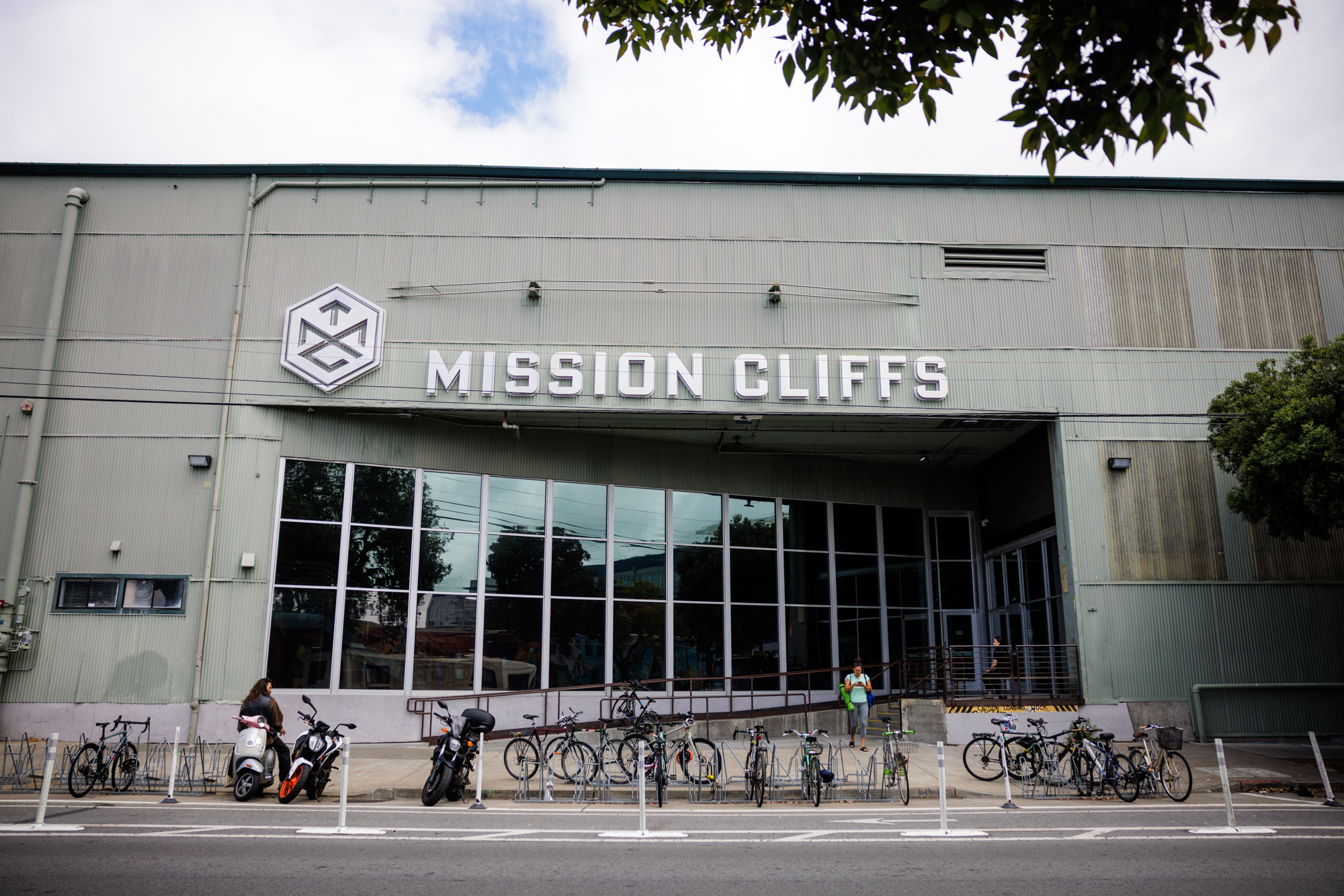
"caption": "Mission Cliffs in San Francisco on Sept. 10, 2025. Workers at some of the Bay Area’s most popular rock climbing gyms, which includes Mission Cliffs and Dogpatch Boulders in San Francisco, voted to unionize. The vote comes amid extended contract negotiations for the company’s unionized workers in Southern California. ",
"credit": "Martin do Nascimento/KQED",
"altTag": null,
"description": null,
"imgSizes": {
"thumbnail": {
"file": "https://cdn.kqed.org/wp-content/uploads/sites/10/2025/09/250910-MISSION-CLIFFS-MD-01-KQED-160x107.jpg",
"width": 160,
"height": 107,
"mimeType": "image/jpeg"
},
"1536x1536": {
"file": "https://cdn.kqed.org/wp-content/uploads/sites/10/2025/09/250910-MISSION-CLIFFS-MD-01-KQED-1536x1025.jpg",
"width": 1536,
"height": 1025,
"mimeType": "image/jpeg"
},
"post-thumbnail": {
"file": "https://cdn.kqed.org/wp-content/uploads/sites/10/2025/09/250910-MISSION-CLIFFS-MD-01-KQED-672x372.jpg",
"width": 672,
"height": 372,
"mimeType": "image/jpeg"
},
"twentyfourteen-full-width": {
"file": "https://cdn.kqed.org/wp-content/uploads/sites/10/2025/09/250910-MISSION-CLIFFS-MD-01-KQED-1038x576.jpg",
"width": 1038,
"height": 576,
"mimeType": "image/jpeg"
},
"kqedFullSize": {
"file": "https://cdn.kqed.org/wp-content/uploads/sites/10/2025/09/250910-MISSION-CLIFFS-MD-01-KQED.jpg",
"width": 2000,
"height": 1334
}
},
"isLoading": false,
"fetchFailed": false
},
"news_12055063": {
"type": "attachments",
"id": "news_12055063",
"meta": {
"index": "attachments_1716263798",
"site": "news",
"id": "12055063",
"found": true
},
"title": "250903-ICETRAINING_01023_TV-KQED",
"publishDate": 1757336633,
"status": "inherit",
"parent": 12071374,
"modified": 1769642299,
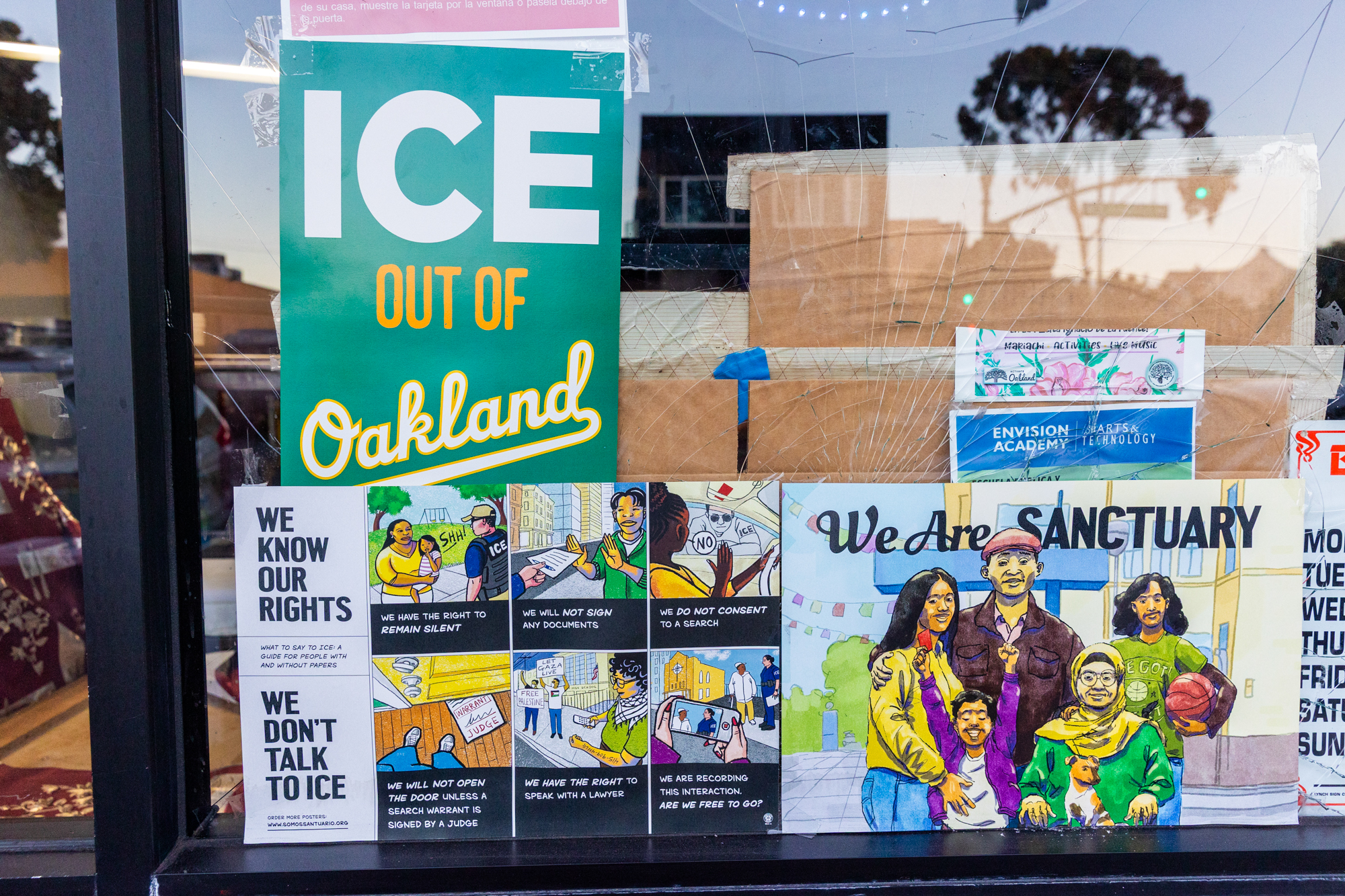
"caption": "Signs identify Taqueria La Gran Chiquita as a safe space for those at risk of deportation in Oakland on Sept. 3, 2025. Members of the Community of Fruitvale and East Bay Sanctuary Covenant gather to prepare for how to fight back against ICE.",
"credit": "Tâm Vũ/KQED",
"altTag": null,
"description": null,
"imgSizes": {
"thumbnail": {
"file": "https://cdn.kqed.org/wp-content/uploads/sites/10/2025/09/250903-ICETRAINING_01023_TV-KQED-160x107.jpg",
"width": 160,
"height": 107,
"mimeType": "image/jpeg"
},
"1536x1536": {
"file": "https://cdn.kqed.org/wp-content/uploads/sites/10/2025/09/250903-ICETRAINING_01023_TV-KQED-1536x1024.jpg",
"width": 1536,
"height": 1024,
"mimeType": "image/jpeg"
},
"post-thumbnail": {
"file": "https://cdn.kqed.org/wp-content/uploads/sites/10/2025/09/250903-ICETRAINING_01023_TV-KQED-672x372.jpg",
"width": 672,
"height": 372,
"mimeType": "image/jpeg"
},
"twentyfourteen-full-width": {
"file": "https://cdn.kqed.org/wp-content/uploads/sites/10/2025/09/250903-ICETRAINING_01023_TV-KQED-1038x576.jpg",
"width": 1038,
"height": 576,
"mimeType": "image/jpeg"
},
"kqedFullSize": {
"file": "https://cdn.kqed.org/wp-content/uploads/sites/10/2025/09/250903-ICETRAINING_01023_TV-KQED.jpg",
"width": 2000,
"height": 1333
}
},
"isLoading": false,
"fetchFailed": false
},
"news_12048131": {
"type": "attachments",
"id": "news_12048131",
"meta": {
"index": "attachments_1716263798",
"site": "news",
"id": "12048131",
"found": true
},
"title": "250715-ImmigrationCourtProtests-16-BL_qed",
"publishDate": 1752605220,
"status": "inherit",
"parent": 12047875,
"modified": 1752862905,
"caption": "Supporters rally outside the U.S. District Court in San Francisco on July 15, 2025, calling on ICE to release Guillermo Medina Reyes ahead of his preliminary injunction hearing.",
"credit": "Beth LaBerge/KQED",
"altTag": null,
"description": null,
"imgSizes": {
"thumbnail": {
"file": "https://cdn.kqed.org/wp-content/uploads/sites/10/2025/07/250715-ImmigrationCourtProtests-16-BL_qed-160x107.jpg",
"width": 160,
"height": 107,
"mimeType": "image/jpeg"
},
"1536x1536": {
"file": "https://cdn.kqed.org/wp-content/uploads/sites/10/2025/07/250715-ImmigrationCourtProtests-16-BL_qed-1536x1024.jpg",
"width": 1536,
"height": 1024,
"mimeType": "image/jpeg"
},
"post-thumbnail": {
"file": "https://cdn.kqed.org/wp-content/uploads/sites/10/2025/07/250715-ImmigrationCourtProtests-16-BL_qed-672x372.jpg",
"width": 672,
"height": 372,
"mimeType": "image/jpeg"
},
"twentyfourteen-full-width": {
"file": "https://cdn.kqed.org/wp-content/uploads/sites/10/2025/07/250715-ImmigrationCourtProtests-16-BL_qed-1038x576.jpg",
"width": 1038,
"height": 576,
"mimeType": "image/jpeg"
},
"kqedFullSize": {
"file": "https://cdn.kqed.org/wp-content/uploads/sites/10/2025/07/250715-ImmigrationCourtProtests-16-BL_qed.jpg",
"width": 2000,
"height": 1333
}
},
"isLoading": false,
"fetchFailed": false
},
"news_12053762": {
"type": "attachments",
"id": "news_12053762",
"meta": {
"index": "attachments_1716263798",
"site": "news",
"id": "12053762",
"found": true
},
"title": "250820-HOUSINGFIRST_02100_TV-KQED",
"publishDate": 1756230690,
"status": "inherit",
"parent": 0,
"modified": 1756231387,
"caption": "William Wade, a formerly homeless veteran housed through the HUD-Veterans Affairs Supportive Housing program, poses for a portrait at the Laguna Commons supportive housing in Fremont on Aug. 20, 2025.",
"credit": "Tâm Vũ/KQED",
"altTag": null,
"description": null,
"imgSizes": {
"thumbnail": {
"file": "https://cdn.kqed.org/wp-content/uploads/sites/10/2025/08/250820-HOUSINGFIRST_02100_TV-KQED-160x107.jpg",
"width": 160,
"height": 107,
"mimeType": "image/jpeg"
},
"1536x1536": {
"file": "https://cdn.kqed.org/wp-content/uploads/sites/10/2025/08/250820-HOUSINGFIRST_02100_TV-KQED-1536x1024.jpg",
"width": 1536,
"height": 1024,
"mimeType": "image/jpeg"
},
"post-thumbnail": {
"file": "https://cdn.kqed.org/wp-content/uploads/sites/10/2025/08/250820-HOUSINGFIRST_02100_TV-KQED-672x372.jpg",
"width": 672,
"height": 372,
"mimeType": "image/jpeg"
},
"twentyfourteen-full-width": {
"file": "https://cdn.kqed.org/wp-content/uploads/sites/10/2025/08/250820-HOUSINGFIRST_02100_TV-KQED-1038x576.jpg",
"width": 1038,
"height": 576,
"mimeType": "image/jpeg"
},
"kqedFullSize": {
"file": "https://cdn.kqed.org/wp-content/uploads/sites/10/2025/08/250820-HOUSINGFIRST_02100_TV-KQED.jpg",
"width": 2000,
"height": 1333
}
},
"isLoading": false,
"fetchFailed": false
},
"news_12055199": {
"type": "attachments",
"id": "news_12055199",
"meta": {
"index": "attachments_1716263798",
"site": "news",
"id": "12055199",
"found": true
},
"title": "TransitFundingKQED3",
"publishDate": 1757365914,
"status": "inherit",
"parent": 12055129,
"modified": 1757365953,
"caption": "More than a hundred people gathered at San Francisco’s Civic Center Plaza on Sept. 8, 2025, in support of an emergency state loan for Bay Area public transit agencies. ",
"credit": "Farida Jhabvala Romero/KQED",
"altTag": null,
"description": null,
"imgSizes": {
"thumbnail": {
"file": "https://cdn.kqed.org/wp-content/uploads/sites/10/2025/09/TransitFundingKQED3-160x120.jpg",
"width": 160,
"height": 120,
"mimeType": "image/jpeg"
},
"1536x1536": {
"file": "https://cdn.kqed.org/wp-content/uploads/sites/10/2025/09/TransitFundingKQED3-1536x1152.jpg",
"width": 1536,
"height": 1152,
"mimeType": "image/jpeg"
},
"post-thumbnail": {
"file": "https://cdn.kqed.org/wp-content/uploads/sites/10/2025/09/TransitFundingKQED3-672x372.jpg",
"width": 672,
"height": 372,
"mimeType": "image/jpeg"
},
"twentyfourteen-full-width": {
"file": "https://cdn.kqed.org/wp-content/uploads/sites/10/2025/09/TransitFundingKQED3-1038x576.jpg",
"width": 1038,
"height": 576,
"mimeType": "image/jpeg"
},
"kqedFullSize": {
"file": "https://cdn.kqed.org/wp-content/uploads/sites/10/2025/09/TransitFundingKQED3.jpg",
"width": 2000,
"height": 1500
}
},
"isLoading": false,
"fetchFailed": false
},
"news_12044001": {
"type": "attachments",
"id": "news_12044001",
"meta": {
"index": "attachments_1716263798",
"site": "news",
"id": "12044001",
"found": true
},
"title": "JENN OAKLEY_HOMELESSNESSHOMEOWNERSHIP_MO50-KQED",
"publishDate": 1749757338,
"status": "inherit",
"parent": 0,
"modified": 1757103222,
"caption": "Jenn Oakley — who experienced homelessness just four and a half years ago, became a homeowner through the First Home Emeryville program — photographed on June 7, 2025.",
"credit": "Manuel Orbegozo for KQED",
"altTag": null,
"description": null,
"imgSizes": {
"thumbnail": {
"file": "https://cdn.kqed.org/wp-content/uploads/sites/10/2025/06/JENN-OAKLEY_HOMELESSNESSHOMEOWNERSHIP_MO50-KQED-160x107.jpg",
"width": 160,
"height": 107,
"mimeType": "image/jpeg"
},
"1536x1536": {
"file": "https://cdn.kqed.org/wp-content/uploads/sites/10/2025/06/JENN-OAKLEY_HOMELESSNESSHOMEOWNERSHIP_MO50-KQED-1536x1024.jpg",
"width": 1536,
"height": 1024,
"mimeType": "image/jpeg"
},
"post-thumbnail": {
"file": "https://cdn.kqed.org/wp-content/uploads/sites/10/2025/06/JENN-OAKLEY_HOMELESSNESSHOMEOWNERSHIP_MO50-KQED-672x372.jpg",
"width": 672,
"height": 372,
"mimeType": "image/jpeg"
},
"twentyfourteen-full-width": {
"file": "https://cdn.kqed.org/wp-content/uploads/sites/10/2025/06/JENN-OAKLEY_HOMELESSNESSHOMEOWNERSHIP_MO50-KQED-1038x576.jpg",
"width": 1038,
"height": 576,
"mimeType": "image/jpeg"
},
"kqedFullSize": {
"file": "https://cdn.kqed.org/wp-content/uploads/sites/10/2025/06/JENN-OAKLEY_HOMELESSNESSHOMEOWNERSHIP_MO50-KQED.jpg",
"width": 2000,
"height": 1333
}
},
"isLoading": false,
"fetchFailed": false
},
"news_12054806": {
"type": "attachments",
"id": "news_12054806",
"meta": {
"index": "attachments_1716263798",
"site": "news",
"id": "12054806",
"found": true
},
"title": "ICE agents raid to arrest illigal immigrants.",
"publishDate": 1757095104,
"status": "inherit",
"parent": 12054798,
"modified": 1757118556,
"caption": "Thomas Giles, Field Office Director, center, talks to a raiding party agent after a raid to arrest an illegal immigrant with a criminal record on Thursday, Sept. 8, 2022, in Los Angeles.",
"credit": "Irfan Khan/Los Angeles Times/ Getty Images",
"altTag": null,
"description": null,
"imgSizes": {
"thumbnail": {
"file": "https://cdn.kqed.org/wp-content/uploads/sites/10/2025/09/GettyImages-1243312873_NEWS-160x107.jpg",
"width": 160,
"height": 107,
"mimeType": "image/jpeg"
},
"1536x1536": {
"file": "https://cdn.kqed.org/wp-content/uploads/sites/10/2025/09/GettyImages-1243312873_NEWS-1536x1024.jpg",
"width": 1536,
"height": 1024,
"mimeType": "image/jpeg"
},
"post-thumbnail": {
"file": "https://cdn.kqed.org/wp-content/uploads/sites/10/2025/09/GettyImages-1243312873_NEWS-672x372.jpg",
"width": 672,
"height": 372,
"mimeType": "image/jpeg"
},
"twentyfourteen-full-width": {
"file": "https://cdn.kqed.org/wp-content/uploads/sites/10/2025/09/GettyImages-1243312873_NEWS-1038x576.jpg",
"width": 1038,
"height": 576,
"mimeType": "image/jpeg"
},
"kqedFullSize": {
"file": "https://cdn.kqed.org/wp-content/uploads/sites/10/2025/09/GettyImages-1243312873_NEWS.jpg",
"width": 2000,
"height": 1333
}
},
"isLoading": false,
"fetchFailed": false
},
"news_12054621": {
"type": "attachments",
"id": "news_12054621",
"meta": {
"index": "attachments_1716263798",
"site": "news",
"id": "12054621",
"found": true
},
"title": "Sign at the entrance to the Barnes & Noble store in Midtown",
"publishDate": 1757008147,
"status": "inherit",
"parent": 12054603,
"modified": 1757008232,
"caption": "The entrance to the Barnes & Noble store in Midtown Manhattan in New York on June 9, 2025.",
"credit": "Erik McGregor/LightRocket via Getty Images",
"altTag": null,
"description": null,
"imgSizes": {
"thumbnail": {
"file": "https://cdn.kqed.org/wp-content/uploads/sites/10/2025/09/BarnesNobleGetty-160x107.jpg",
"width": 160,
"height": 107,
"mimeType": "image/jpeg"
},
"1536x1536": {
"file": "https://cdn.kqed.org/wp-content/uploads/sites/10/2025/09/BarnesNobleGetty-1536x1024.jpg",
"width": 1536,
"height": 1024,
"mimeType": "image/jpeg"
},
"post-thumbnail": {
"file": "https://cdn.kqed.org/wp-content/uploads/sites/10/2025/09/BarnesNobleGetty-672x372.jpg",
"width": 672,
"height": 372,
"mimeType": "image/jpeg"
},
"twentyfourteen-full-width": {
"file": "https://cdn.kqed.org/wp-content/uploads/sites/10/2025/09/BarnesNobleGetty-1038x576.jpg",
"width": 1038,
"height": 576,
"mimeType": "image/jpeg"
},
"kqedFullSize": {
"file": "https://cdn.kqed.org/wp-content/uploads/sites/10/2025/09/BarnesNobleGetty.jpg",
"width": 2000,
"height": 1333
}
},
"isLoading": false,
"fetchFailed": false
},
"news_12042200": {
"type": "attachments",
"id": "news_12042200",
"meta": {
"index": "attachments_1716263798",
"site": "news",
"id": "12042200",
"found": true
},
"title": "008_KQED_630Sansome_02052020_1470_qed",
"publishDate": 1748630169,
"status": "inherit",
"parent": 12042197,
"modified": 1784932362,
"caption": "The U.S. Immigration & Customs Enforcement building at 630 Sansome St., in San Francisco, California, on Feb. 5, 2020.",
"credit": "Beth LaBerge/KQED",
"altTag": null,
"description": null,
"imgSizes": {
"medium": {
"file": "https://cdn.kqed.org/wp-content/uploads/sites/10/2025/05/008_KQED_630Sansome_02052020_1470_qed-800x533.jpg",
"width": 800,
"height": 533,
"mimeType": "image/jpeg"
},
"large": {
"file": "https://cdn.kqed.org/wp-content/uploads/sites/10/2025/05/008_KQED_630Sansome_02052020_1470_qed-1020x680.jpg",
"width": 1020,
"height": 680,
"mimeType": "image/jpeg"
},
"thumbnail": {
"file": "https://cdn.kqed.org/wp-content/uploads/sites/10/2025/05/008_KQED_630Sansome_02052020_1470_qed-160x107.jpg",
"width": 160,
"height": 107,
"mimeType": "image/jpeg"
},
"1536x1536": {
"file": "https://cdn.kqed.org/wp-content/uploads/sites/10/2025/05/008_KQED_630Sansome_02052020_1470_qed-1536x1024.jpg",
"width": 1536,
"height": 1024,
"mimeType": "image/jpeg"
},
"post-thumbnail": {
"file": "https://cdn.kqed.org/wp-content/uploads/sites/10/2025/05/008_KQED_630Sansome_02052020_1470_qed-672x372.jpg",
"width": 672,
"height": 372,
"mimeType": "image/jpeg"
},
"twentyfourteen-full-width": {
"file": "https://cdn.kqed.org/wp-content/uploads/sites/10/2025/05/008_KQED_630Sansome_02052020_1470_qed-1038x576.jpg",
"width": 1038,
"height": 576,
"mimeType": "image/jpeg"
},
"full-width": {
"file": "https://cdn.kqed.org/wp-content/uploads/sites/10/2025/05/008_KQED_630Sansome_02052020_1470_qed-1920x1280.jpg",
"width": 1920,
"height": 1280,
"mimeType": "image/jpeg"
},
"kqedFullSize": {
"file": "https://cdn.kqed.org/wp-content/uploads/sites/10/2025/05/008_KQED_630Sansome_02052020_1470_qed.jpg",
"width": 1999,
"height": 1333
}
},
"isLoading": false,
"fetchFailed": false
},
"news_12054579": {
"type": "attachments",
"id": "news_12054579",
"meta": {
"index": "attachments_1716263798",
"site": "news",
"id": "12054579",
"found": true
},
"title": "Mexico v Honduras - Gold Cup 2025: Semifinal",
"publishDate": 1756943543,
"status": "inherit",
"parent": 12054576,
"modified": 1756943610,
"caption": "A Santa Clara Police patch on July 2, 2025, in Santa Clara, California. ",
"credit": "Robbie Jay Barratt/AMA via Getty Images",
"altTag": null,
"description": null,
"imgSizes": {
"thumbnail": {
"file": "https://cdn.kqed.org/wp-content/uploads/sites/10/2025/09/SantaClaraPoliceDepartmentGetty-160x107.jpg",
"width": 160,
"height": 107,
"mimeType": "image/jpeg"
},
"1536x1536": {
"file": "https://cdn.kqed.org/wp-content/uploads/sites/10/2025/09/SantaClaraPoliceDepartmentGetty-1536x1024.jpg",
"width": 1536,
"height": 1024,
"mimeType": "image/jpeg"
},
"post-thumbnail": {
"file": "https://cdn.kqed.org/wp-content/uploads/sites/10/2025/09/SantaClaraPoliceDepartmentGetty-672x372.jpg",
"width": 672,
"height": 372,
"mimeType": "image/jpeg"
},
"twentyfourteen-full-width": {
"file": "https://cdn.kqed.org/wp-content/uploads/sites/10/2025/09/SantaClaraPoliceDepartmentGetty-1038x576.jpg",
"width": 1038,
"height": 576,
"mimeType": "image/jpeg"
},
"kqedFullSize": {
"file": "https://cdn.kqed.org/wp-content/uploads/sites/10/2025/09/SantaClaraPoliceDepartmentGetty.jpg",
"width": 2000,
"height": 1333
}
},
"isLoading": false,
"fetchFailed": false
},
"news_12051233": {
"type": "attachments",
"id": "news_12051233",
"meta": {
"index": "attachments_1716263798",
"site": "news",
"id": "12051233",
"found": true
},
"title": "AngelMontano",
"publishDate": 1754583423,
"status": "inherit",
"parent": 12051256,
"modified": 1754674142,
"caption": "Photos from the GoFundMe account of Angel Montaño.",
"credit": "Courtesy of the Montaño Family",
"altTag": null,
"description": null,
"imgSizes": {
"thumbnail": {
"file": "https://cdn.kqed.org/wp-content/uploads/sites/10/2025/08/AngelMontano-160x90.jpg",
"width": 160,
"height": 90,
"mimeType": "image/jpeg"
},
"post-thumbnail": {
"file": "https://cdn.kqed.org/wp-content/uploads/sites/10/2025/08/AngelMontano-672x372.jpg",
"width": 672,
"height": 372,
"mimeType": "image/jpeg"
},
"kqedFullSize": {
"file": "https://cdn.kqed.org/wp-content/uploads/sites/10/2025/08/AngelMontano.jpg",
"width": 720,
"height": 405
}
},
"isLoading": false,
"fetchFailed": false
},
"news_12054395": {
"type": "attachments",
"id": "news_12054395",
"meta": {
"index": "attachments_1716263798",
"site": "news",
"id": "12054395",
"found": true
},
"title": "portola-music-festival-2025-sf",
"publishDate": 1756842115,
"status": "inherit",
"parent": 12054345,
"modified": 1756842149,
"caption": "Peggy Gou performs at Portola Music Festival in San Francisco on Sunday, Sept. 25, 2022. \n",
"credit": "Estefany Gonzalez/KQED",
"altTag": null,
"description": null,
"imgSizes": {
"thumbnail": {
"file": "https://cdn.kqed.org/wp-content/uploads/sites/10/2025/09/Peggy-Gou-performs-at-Portola-Music-Festival-in-San-Francisco-on-Sunday-Sept.-25-2022.-estefany-Gonzalez002-1020x680-1-160x107.jpg",
"width": 160,
"height": 107,
"mimeType": "image/jpeg"
},
"post-thumbnail": {
"file": "https://cdn.kqed.org/wp-content/uploads/sites/10/2025/09/Peggy-Gou-performs-at-Portola-Music-Festival-in-San-Francisco-on-Sunday-Sept.-25-2022.-estefany-Gonzalez002-1020x680-1-672x372.jpg",
"width": 672,
"height": 372,
"mimeType": "image/jpeg"
},
"twentyfourteen-full-width": {
"file": "https://cdn.kqed.org/wp-content/uploads/sites/10/2025/09/Peggy-Gou-performs-at-Portola-Music-Festival-in-San-Francisco-on-Sunday-Sept.-25-2022.-estefany-Gonzalez002-1020x680-1-1020x576.jpg",
"width": 1020,
"height": 576,
"mimeType": "image/jpeg"
},
"kqedFullSize": {
"file": "https://cdn.kqed.org/wp-content/uploads/sites/10/2025/09/Peggy-Gou-performs-at-Portola-Music-Festival-in-San-Francisco-on-Sunday-Sept.-25-2022.-estefany-Gonzalez002-1020x680-1.jpg",
"width": 1020,
"height": 680
}
},
"isLoading": false,
"fetchFailed": false
}
},
"audioPlayerReducer": {
"postId": "stream_live",
"isPaused": true,
"isPlaying": false,
"pfsActive": false,
"pledgeModalIsOpen": true,
"playerDrawerIsOpen": false,
"liveAudioPlayStartedAt": 0,
"liveAudioPlayContext": ""
},
"authorsReducer": {
"fjhabvala": {
"type": "authors",
"id": "8659",
"meta": {
"index": "authors_1716337520",
"id": "8659",
"found": true
},
"name": "Farida Jhabvala Romero",
"firstName": "Farida",
"lastName": "Jhabvala Romero",
"slug": "fjhabvala",
"email": "fjhabvala@kqed.org",
"display_author_email": true,
"staff_mastheads": [
"news"
],
"title": "KQED Contributor",
"bio": "Farida Jhabvala Romero is a Labor Correspondent for KQED. She previously covered immigration. Farida was \u003ca href=\"https://www.ccnma.org/2022-most-influential-latina-journalists\">named\u003c/a> one of the 10 Most Influential Latina Journalists in California in 2022 by the California Chicano News Media Association. Her work has won awards from the Society of Professional Journalists (Northern California), as well as a national and regional Edward M. Murrow Award for the collaborative reporting projects “Dangerous Air” and “Graying California.” Before joining KQED, Farida worked as a producer at Radio Bilingüe, a national public radio network. Farida earned her master’s degree in journalism from Stanford University.",
"avatar": "https://secure.gravatar.com/avatar/f9f022d4e2609741874222a1e9d41f48fea74011aa7c615eef91d9a50c944ebe?s=600&d=blank&r=g",
"twitter": "FaridaJhabvala",
"bluesky": null,
"facebook": null,
"instagram": null,
"linkedin": "https://www.linkedin.com/in/faridajhabvala/",
"sites": [
{
"site": "news",
"roles": [
"editor"
]
},
{
"site": "stateofhealth",
"roles": [
"author"
]
},
{
"site": "liveblog",
"roles": [
"author"
]
}
],
"headData": {
"title": "Farida Jhabvala Romero | KQED",
"description": "KQED Contributor",
"ogImgSrc": "https://secure.gravatar.com/avatar/f9f022d4e2609741874222a1e9d41f48fea74011aa7c615eef91d9a50c944ebe?s=600&d=blank&r=g",
"twImgSrc": "https://secure.gravatar.com/avatar/f9f022d4e2609741874222a1e9d41f48fea74011aa7c615eef91d9a50c944ebe?s=600&d=blank&r=g"
},
"isLoading": false,
"link": "/author/fjhabvala"
},
"vrancano": {
"type": "authors",
"id": "11276",
"meta": {
"index": "authors_1716337520",
"id": "11276",
"found": true
},
"name": "Vanessa Rancaño",
"firstName": "Vanessa",
"lastName": "Rancaño",
"slug": "vrancano",
"email": "vrancano@kqed.org",
"display_author_email": false,
"staff_mastheads": [
"news"
],
"title": "Reporter",
"bio": "Vanessa Rancaño is a features reporter for KQED. She’s also covered homelessness and education for the station and reported from the Central Valley. Her work has aired across public radio, from flagship national news shows to longform narrative podcasts. Before taking up a mic, she worked as a freelance print journalist. She’s been recognized with a number of national and regional awards. Vanessa grew up in California's Central Valley. She's a former NPR Kroc Fellow, and a graduate of the UC Berkeley Graduate School of Journalism.",
"avatar": "https://secure.gravatar.com/avatar/b3a383dfb0e7ee1c17568f2cf067904ab654d6e3de9743fc661f3c788ade1bed?s=600&d=blank&r=g",
"twitter": "vanessarancano",
"bluesky": null,
"facebook": null,
"instagram": null,
"linkedin": null,
"sites": [
{
"site": "arts",
"roles": [
"editor"
]
},
{
"site": "news",
"roles": [
"editor"
]
},
{
"site": "liveblog",
"roles": [
"contributor"
]
}
],
"headData": {
"title": "Vanessa Rancaño | KQED",
"description": "Reporter",
"ogImgSrc": "https://secure.gravatar.com/avatar/b3a383dfb0e7ee1c17568f2cf067904ab654d6e3de9743fc661f3c788ade1bed?s=600&d=blank&r=g",
"twImgSrc": "https://secure.gravatar.com/avatar/b3a383dfb0e7ee1c17568f2cf067904ab654d6e3de9743fc661f3c788ade1bed?s=600&d=blank&r=g"
},
"isLoading": false,
"link": "/author/vrancano"
},
"otaylor": {
"type": "authors",
"id": "11770",
"meta": {
"index": "authors_1716337520",
"id": "11770",
"found": true
},
"name": "Otis R. Taylor Jr.",
"firstName": "Otis R.",
"lastName": "Taylor Jr.",
"slug": "otaylor",
"email": "otaylor@kqed.org",
"display_author_email": false,
"staff_mastheads": [
"news"
],
"title": "KQED Editor",
"bio": null,
"avatar": "https://secure.gravatar.com/avatar/fe73e14d4842ac8e1c03d57def2530f57f1c5b0ca7d4a987ccc5bd90956cb7c6?s=600&d=blank&r=g",
"twitter": "otisrtaylorjr",
"bluesky": null,
"facebook": null,
"instagram": null,
"linkedin": null,
"sites": [
{
"site": "arts",
"roles": [
"subscriber"
]
},
{
"site": "news",
"roles": [
"subscriber"
]
},
{
"site": "science",
"roles": [
"subscriber"
]
},
{
"site": "liveblog",
"roles": [
"subscriber"
]
}
],
"headData": {
"title": "Otis R. Taylor Jr. | KQED",
"description": "KQED Editor",
"ogImgSrc": "https://secure.gravatar.com/avatar/fe73e14d4842ac8e1c03d57def2530f57f1c5b0ca7d4a987ccc5bd90956cb7c6?s=600&d=blank&r=g",
"twImgSrc": "https://secure.gravatar.com/avatar/fe73e14d4842ac8e1c03d57def2530f57f1c5b0ca7d4a987ccc5bd90956cb7c6?s=600&d=blank&r=g"
},
"isLoading": false,
"link": "/author/otaylor"
},
"adahlstromeckman": {
"type": "authors",
"id": "11785",
"meta": {
"index": "authors_1716337520",
"id": "11785",
"found": true
},
"name": "Azul Dahlstrom-Eckman",
"firstName": "Azul",
"lastName": "Dahlstrom-Eckman",
"slug": "adahlstromeckman",
"email": "adahlstrom-eckman@kqed.org",
"display_author_email": true,
"staff_mastheads": [],
"title": "Reporter",
"bio": "Azul is a reporter for KQED focusing on transportation and features. He joined KQED in 2021 as an alumnus of KALW's Audio Academy radio journalism training program.",
"avatar": "https://secure.gravatar.com/avatar/9cb750298435add7815a777f55bf1f46845c1386bb8452555c60a7b820b5aba3?s=600&d=blank&r=g",
"twitter": "@zuliemann",
"bluesky": "@azul415.bsky.social",
"facebook": null,
"instagram": null,
"linkedin": null,
"sites": [
{
"site": "arts",
"roles": [
"editor"
]
},
{
"site": "news",
"roles": [
"editor"
]
},
{
"site": "science",
"roles": [
"editor"
]
},
{
"site": "liveblog",
"roles": [
"author"
]
}
],
"headData": {
"title": "Azul Dahlstrom-Eckman | KQED",
"description": "Reporter",
"ogImgSrc": "https://secure.gravatar.com/avatar/9cb750298435add7815a777f55bf1f46845c1386bb8452555c60a7b820b5aba3?s=600&d=blank&r=g",
"twImgSrc": "https://secure.gravatar.com/avatar/9cb750298435add7815a777f55bf1f46845c1386bb8452555c60a7b820b5aba3?s=600&d=blank&r=g"
},
"isLoading": false,
"link": "/author/adahlstromeckman"
},
"nkhan": {
"type": "authors",
"id": "11867",
"meta": {
"index": "authors_1716337520",
"id": "11867",
"found": true
},
"name": "Nisa Khan",
"firstName": "Nisa",
"lastName": "Khan",
"slug": "nkhan",
"email": "nkhan@kqed.org",
"display_author_email": false,
"staff_mastheads": [],
"title": "KQED Contributor",
"bio": "Nisa Khan is a reporter for KQED's Audience News Desk. She was formerly a data reporter at Michigan Radio. She earned a Bachelor of Science in Information from the University of Michigan and a Master of Arts in Communication from Stanford University.",
"avatar": "https://secure.gravatar.com/avatar/8720459eef081ff64582b3506b124d58523e80e120704a0cbd9892533c914991?s=600&d=blank&r=g",
"twitter": "mnisakhan",
"bluesky": null,
"facebook": null,
"instagram": null,
"linkedin": null,
"sites": [
{
"site": "arts",
"roles": [
"editor"
]
},
{
"site": "news",
"roles": [
"editor"
]
},
{
"site": "science",
"roles": [
"editor",
"author"
]
},
{
"site": "forum",
"roles": [
"editor"
]
},
{
"site": "liveblog",
"roles": [
"contributor"
]
}
],
"headData": {
"title": "Nisa Khan | KQED",
"description": "KQED Contributor",
"ogImgSrc": "https://secure.gravatar.com/avatar/8720459eef081ff64582b3506b124d58523e80e120704a0cbd9892533c914991?s=600&d=blank&r=g",
"twImgSrc": "https://secure.gravatar.com/avatar/8720459eef081ff64582b3506b124d58523e80e120704a0cbd9892533c914991?s=600&d=blank&r=g"
},
"isLoading": false,
"link": "/author/nkhan"
},
"jgeha": {
"type": "authors",
"id": "11906",
"meta": {
"index": "authors_1716337520",
"id": "11906",
"found": true
},
"name": "Joseph Geha",
"firstName": "Joseph",
"lastName": "Geha",
"slug": "jgeha",
"email": "jgeha@kqed.org",
"display_author_email": false,
"staff_mastheads": [
"news",
"science"
],
"title": "KQED Contributor",
"bio": null,
"avatar": "https://secure.gravatar.com/avatar/ea84d2b6dd93d6369d453edf19dd583f117cd1759d2d9c9c92f9de77017354fe?s=600&d=blank&r=g",
"twitter": null,
"bluesky": null,
"facebook": null,
"instagram": null,
"linkedin": null,
"sites": [
{
"site": "news",
"roles": [
"editor"
]
},
{
"site": "liveblog",
"roles": [
"author"
]
}
],
"headData": {
"title": "Joseph Geha | KQED",
"description": "KQED Contributor",
"ogImgSrc": "https://secure.gravatar.com/avatar/ea84d2b6dd93d6369d453edf19dd583f117cd1759d2d9c9c92f9de77017354fe?s=600&d=blank&r=g",
"twImgSrc": "https://secure.gravatar.com/avatar/ea84d2b6dd93d6369d453edf19dd583f117cd1759d2d9c9c92f9de77017354fe?s=600&d=blank&r=g"
},
"isLoading": false,
"link": "/author/jgeha"
},
"kdebenedetti": {
"type": "authors",
"id": "11913",
"meta": {
"index": "authors_1716337520",
"id": "11913",
"found": true
},
"name": "Katie DeBenedetti",
"firstName": "Katie",
"lastName": "DeBenedetti",
"slug": "kdebenedetti",
"email": "kdebenedetti@kqed.org",
"display_author_email": false,
"staff_mastheads": [
"news",
"science"
],
"title": "KQED Contributor",
"bio": "Katie DeBenedetti is a digital reporter covering daily news for the Express Desk. Prior to joining KQED as a culture reporting intern in January 2024, she covered education and city government for the Napa Valley Register.",
"avatar": "https://secure.gravatar.com/avatar/6e31073cb8f7e4214ab03f42771d0f45?s=600&d=blank&r=g",
"twitter": null,
"facebook": null,
"instagram": null,
"linkedin": null,
"sites": [
{
"site": "news",
"roles": [
"author"
]
},
{
"site": "science",
"roles": [
"author"
]
},
{
"site": "liveblog",
"roles": [
"author"
]
}
],
"headData": {
"title": "Katie DeBenedetti | KQED",
"description": "KQED Contributor",
"ogImgSrc": "https://secure.gravatar.com/avatar/6e31073cb8f7e4214ab03f42771d0f45?s=600&d=blank&r=g",
"twImgSrc": "https://secure.gravatar.com/avatar/6e31073cb8f7e4214ab03f42771d0f45?s=600&d=blank&r=g"
},
"isLoading": false,
"link": "/author/kdebenedetti"
}
},
"pagesReducer": {
"news_tag_bay-area": {
"type": "terms",
"id": "news_1386",
"meta": {
"index": "terms_1716263798",
"site": "news",
"id": "1386",
"score": 7.7927804
},
"featImg": null,
"name": "Bay Area",
"description": null,
"taxonomy": "tag",
"headData": {
"twImgId": null,
"twTitle": null,
"ogTitle": null,
"ogImgId": null,
"twDescription": null,
"description": null,
"title": "Bay Area Archives | KQED News",
"ogDescription": null
},
"ttid": 1398,
"slug": "bay-area",
"isLoading": false,
"title": "Bay Area",
"pageMeta": {
"site": "news",
"WpPageTemplate": "page-topic-editorial",
"currentPage": 67
},
"blocks": [
{
"blockName": "kqed/post-list",
"attrs": {
"layout": "cardArticle2",
"query": "posts/news?tag=bay-area",
"seeMore": false,
"paginated": true,
"page": 67
}
},
{
"blockName": "kqed/ad"
}
]
}
},
"pfsSessionReducer": {},
"postsReducer": {
"stream_live": {
"type": "live",
"id": "stream_live",
"audioUrl": "https://hls.kqed.org/hls/kqed_app/playlist.m3u8",
"title": "Live Stream",
"excerpt": "Live Stream information currently unavailable.",
"link": "/radio",
"featImg": "",
"label": {
"name": "KQED Live",
"link": "/"
}
},
"stream_kqedNewscast": {
"type": "posts",
"id": "stream_kqedNewscast",
"audioUrl": "https://www.kqed.org/.stream/anon/radio/RDnews/newscast.mp3?_=1",
"title": "KQED Newscast",
"featImg": "",
"label": {
"name": "88.5 FM",
"link": "/"
}
},
"news_12055450": {
"type": "posts",
"id": "news_12055450",
"meta": {
"index": "posts_1716263798",
"site": "news",
"id": "12055450",
"score": null,
"sort": [
1757540195000
]
},
"guestAuthors": [],
"slug": "workers-at-4-popular-bay-area-rock-climbing-gyms-win-unionization-vote",
"title": "Workers at 4 Popular Bay Area Rock Climbing Gyms Win Unionization Vote",
"publishDate": 1757540195,
"format": "standard",
"headTitle": "Workers at 4 Popular Bay Area Rock Climbing Gyms Win Unionization Vote | KQED",
"labelTerm": {
"site": "news"
},
"content": "\u003cp>Workers at some of the Bay Area’s most popular \u003ca href=\"https://www.kqed.org/news/12042550/fun-and-affordable-sports-and-activities-to-try-in-the-bay-area\">rock climbing\u003c/a> gyms have voted to unionize, joining colleagues at five gyms in Southern California that are in contract negotiations with their employer, Touchstone Climbing.\u003c/p>\n\u003cp>Employees of Mission Cliffs and Dogpatch Boulders in San Francisco, as well as The Studio in San Jose and Diablo Rock Gym in Concord, won their unionization votes on Monday night.\u003c/p>\n\u003cp>“ I’m very excited; it’s excellent news,” said Max Dolso-Morey, a club coach at Mission Cliffs and a member of the union organizing committee.\u003c/p>\n\u003cp>[ad fullwidth]\u003c/p>\n\u003cp>Workers will aim to negotiate over wages, safety and other concerns with Touchstone, the largest operator of indoor climbing gyms in the state. Dolso-Morey said one of his motivations to unionize was to advocate for more safety staff at Mission Cliffs. Though hundreds of people may use the gym at peak hours, he said, only one person will be in charge of checking that people are climbing safely, among other tasks.\u003c/p>\n\u003cp>“ Accidents do happen, and usually it’s because of a lack of safety staff being able to make sure everyone is doing the correct protocols before they climb on the wall,” Dolso-Morey said.\u003c/p>\n\u003cp>Dolso-Morey said he also hopes unionizing will help workers negotiate for better wages. He said his most recent raise pushed up his wage by 4%, equal to 80 cents an hour.\u003c/p>\n\u003cfigure id=\"attachment_12055478\" class=\"wp-caption aligncenter\" style=\"max-width: 2000px\">\u003cimg loading=\"lazy\" decoding=\"async\" class=\"size-full wp-image-12055478\" src=\"https://cdn.kqed.org/wp-content/uploads/sites/10/2025/09/250910-MISSION-CLIFFS-MD-04-KQED.jpg\" alt=\"\" width=\"2000\" height=\"1334\" srcset=\"https://cdn.kqed.org/wp-content/uploads/sites/10/2025/09/250910-MISSION-CLIFFS-MD-04-KQED.jpg 2000w, https://cdn.kqed.org/wp-content/uploads/sites/10/2025/09/250910-MISSION-CLIFFS-MD-04-KQED-160x107.jpg 160w, https://cdn.kqed.org/wp-content/uploads/sites/10/2025/09/250910-MISSION-CLIFFS-MD-04-KQED-1536x1025.jpg 1536w\" sizes=\"auto, (max-width: 2000px) 100vw, 2000px\">\u003cfigcaption class=\"wp-caption-text\">Mission Cliffs in San Francisco on Sept. 10, 2025. \u003ccite>(Martin do Nascimento/KQED)\u003c/cite>\u003c/figcaption>\u003c/figure>\n\u003cp>“ Living in San Francisco is diabolically expensive,” Dolso-Morey said. “If we didn’t love doing this job and being part of this community, we wouldn’t be here. So we feel that we should be paid fairly and treated with dignity.”\u003c/p>\n\u003cp>The employees, who will be known as Touchstone Workers United, have joined Workers United, an affiliate of the Service Employees International Union.\u003c/p>\n\u003cp>Workers at five Touchstone gyms in Southern California voted to unionize in March of last year and have been in negotiations with the company since September 2024.\u003c/p>\n\u003cp>Alex Tillett-Saks, outside counsel for Workers United, has filed five separate unfair labor practice charges with the National Labor Relations Board against Touchstone on behalf of the workers. The complaints remain open.\u003c/p>\n\u003cp>“Touchstone has shown a constant and consistent lack of regard for the employee’s desire to bargain a contract,” Tillett-Saks said.[aside postID=news_12054083 hero='https://cdn.kqed.org/wp-content/uploads/sites/10/2025/03/CaliforniaPublicLandsGetty1-1020x681.jpg']Four of the complaints allege Touchstone retaliated against workers at its Southern California gyms for forming a union, including by increasing employees’ workload, removing employee perks and changing their health plan without bargaining the changes with the union.\u003c/p>\n\u003cp>One complaint, filed last week, alleges a supervisor at Dogpatch Boulders in San Francisco held a captive meeting with employees to inform them that employees were to take shorter breaks, and did so as a means to chill union activities.\u003c/p>\n\u003cp>Touchstone Climbing did not respond to multiple requests for comment by deadline.\u003c/p>\n\u003cp>The company has rapidly expanded in recent years, opening three new gyms in 2024 alone for a total of 18 statewide.\u003c/p>\n\u003cp>“As any company expands, you get additional layers of leadership, and we want to make sure that no matter how many layers of leadership pop up, the employees maintain an equitable voice when it comes to the direction of the company,” said Tyler Mitchell, who works at the front desk at Diablo Rock Gym in Concord and supported the unionization effort.\u003c/p>\n\u003cp>The vote at Diablo Rock Gym included fitness, guest and belay staff, as well as coaches. Mitchell said Touchstone challenged one of the ballots, successfully excluding one employee who sometimes works less than 4 hours per week. He added that routesetters, the employees who set the routes clients climb on and work at gyms throughout the Touchstone system, would be in a different voting unit and were not included in the vote.\u003c/p>\n\u003cp>The ongoing tension between Touchstone and its employees gave way to a routesetter strike in Southern California \u003ca href=\"https://www.climbing.com/news/touchstone-gym-union-routesetter-strike/\">earlier this year.\u003c/a> Some clients of Touchstone are also boycotting the company in support of the ongoing contract negotiations there.\u003c/p>\n\u003cp>In an FAQ on its website, Touchstone pushed back on the claim that it is not “coming to the table with proposals.”\u003c/p>\n\u003cp>“Touchstone regularly presents proposals during bargaining. As a company, we have a responsibility to balance the needs of all stakeholders — including principled commitments to our community, business partners, and the environment and a legal duty to shareholders,” the company wrote on its website.\u003c/p>\n\u003cp>Mitchell said he was expecting more pushback from Touchstone throughout the process and that at his gym, they have a good relationship with their management.\u003c/p>\n\u003cp>“I think that Touchstone understood that this isn’t something that can really be effectively fought against, and from my perspective, personally, it seems that they accepted that this would happen.”\u003c/p>\n\u003cp>\u003c/p>\n",
"blocks": [],
"excerpt": "The vote, which includes Mission Cliffs and Dogpatch Boulders in San Francisco, comes amid extended contract negotiations for the company’s unionized workers in Southern California. ",
"status": "publish",
"parent": 0,
"modified": 1757545106,
"stats": {
"hasAudio": false,
"hasVideo": false,
"hasChartOrMap": false,
"iframeSrcs": [],
"hasGoogleForm": false,
"hasGallery": false,
"hasHearkenModule": false,
"hasPolis": false,
"paragraphCount": 23,
"wordCount": 842
},
"headData": {
"title": "Workers at 4 Popular Bay Area Rock Climbing Gyms Win Unionization Vote | KQED",
"description": "The vote, which includes Mission Cliffs and Dogpatch Boulders in San Francisco, comes amid extended contract negotiations for the company’s unionized workers in Southern California. ",
"ogTitle": "",
"ogDescription": "",
"ogImgId": "",
"twTitle": "",
"twDescription": "",
"twImgId": "",
"schema": {
"@context": "https://schema.org",
"@type": "NewsArticle",
"headline": "Workers at 4 Popular Bay Area Rock Climbing Gyms Win Unionization Vote",
"datePublished": "2025-09-10T14:36:35-07:00",
"dateModified": "2025-09-10T15:58:26-07:00",
"image": "https://cdn.kqed.org/wp-content/uploads/2020/02/KQED-OG-Image@1x.png",
"isAccessibleForFree": "True",
"publisher": {
"@type": "NewsMediaOrganization",
"@id": "https://www.kqed.org/#organization",
"name": "KQED",
"logo": "https://cdn.kqed.org/wp-content/uploads/2020/02/KQED-OG-Image@1x.png",
"url": "https://www.kqed.org",
"sameAs": [
"https://www.facebook.com/KQED",
"https://twitter.com/KQED",
"https://www.instagram.com/kqed/",
"https://www.tiktok.com/@kqedofficial",
"https://www.linkedin.com/company/kqed",
"https://www.youtube.com/channel/UCeC0IOo7i1P_61zVUWbJ4nw"
]
}
}
},
"primaryCategory": {
"termId": 34551,
"slug": "labor",
"name": "Labor"
},
"sticky": false,
"nprStoryId": "kqed-12055450",
"templateType": "standard",
"featuredImageType": "standard",
"excludeFromSiteSearch": "Include",
"articleAge": "0",
"path": "/news/12055450/workers-at-4-popular-bay-area-rock-climbing-gyms-win-unionization-vote",
"audioTrackLength": null,
"parsedContent": [
{
"type": "contentString",
"content": "\u003cdiv class=\"post-body\">\u003cp>\u003cp>Workers at some of the Bay Area’s most popular \u003ca href=\"https://www.kqed.org/news/12042550/fun-and-affordable-sports-and-activities-to-try-in-the-bay-area\">rock climbing\u003c/a> gyms have voted to unionize, joining colleagues at five gyms in Southern California that are in contract negotiations with their employer, Touchstone Climbing.\u003c/p>\n\u003cp>Employees of Mission Cliffs and Dogpatch Boulders in San Francisco, as well as The Studio in San Jose and Diablo Rock Gym in Concord, won their unionization votes on Monday night.\u003c/p>\n\u003cp>“ I’m very excited; it’s excellent news,” said Max Dolso-Morey, a club coach at Mission Cliffs and a member of the union organizing committee.\u003c/p>\n\u003cp>\u003c/p>\u003c/div>",
"attributes": {
"named": {},
"numeric": []
}
},
{
"type": "component",
"content": "",
"name": "ad",
"attributes": {
"named": {
"label": "fullwidth"
},
"numeric": [
"fullwidth"
]
}
},
{
"type": "contentString",
"content": "\u003cdiv class=\"post-body\">\u003cp>\u003c/p>\n\u003cp>Workers will aim to negotiate over wages, safety and other concerns with Touchstone, the largest operator of indoor climbing gyms in the state. Dolso-Morey said one of his motivations to unionize was to advocate for more safety staff at Mission Cliffs. Though hundreds of people may use the gym at peak hours, he said, only one person will be in charge of checking that people are climbing safely, among other tasks.\u003c/p>\n\u003cp>“ Accidents do happen, and usually it’s because of a lack of safety staff being able to make sure everyone is doing the correct protocols before they climb on the wall,” Dolso-Morey said.\u003c/p>\n\u003cp>Dolso-Morey said he also hopes unionizing will help workers negotiate for better wages. He said his most recent raise pushed up his wage by 4%, equal to 80 cents an hour.\u003c/p>\n\u003cfigure id=\"attachment_12055478\" class=\"wp-caption aligncenter\" style=\"max-width: 2000px\">\u003cimg loading=\"lazy\" decoding=\"async\" class=\"size-full wp-image-12055478\" src=\"https://cdn.kqed.org/wp-content/uploads/sites/10/2025/09/250910-MISSION-CLIFFS-MD-04-KQED.jpg\" alt=\"\" width=\"2000\" height=\"1334\" srcset=\"https://cdn.kqed.org/wp-content/uploads/sites/10/2025/09/250910-MISSION-CLIFFS-MD-04-KQED.jpg 2000w, https://cdn.kqed.org/wp-content/uploads/sites/10/2025/09/250910-MISSION-CLIFFS-MD-04-KQED-160x107.jpg 160w, https://cdn.kqed.org/wp-content/uploads/sites/10/2025/09/250910-MISSION-CLIFFS-MD-04-KQED-1536x1025.jpg 1536w\" sizes=\"auto, (max-width: 2000px) 100vw, 2000px\">\u003cfigcaption class=\"wp-caption-text\">Mission Cliffs in San Francisco on Sept. 10, 2025. \u003ccite>(Martin do Nascimento/KQED)\u003c/cite>\u003c/figcaption>\u003c/figure>\n\u003cp>“ Living in San Francisco is diabolically expensive,” Dolso-Morey said. “If we didn’t love doing this job and being part of this community, we wouldn’t be here. So we feel that we should be paid fairly and treated with dignity.”\u003c/p>\n\u003cp>The employees, who will be known as Touchstone Workers United, have joined Workers United, an affiliate of the Service Employees International Union.\u003c/p>\n\u003cp>Workers at five Touchstone gyms in Southern California voted to unionize in March of last year and have been in negotiations with the company since September 2024.\u003c/p>\n\u003cp>Alex Tillett-Saks, outside counsel for Workers United, has filed five separate unfair labor practice charges with the National Labor Relations Board against Touchstone on behalf of the workers. The complaints remain open.\u003c/p>\n\u003cp>“Touchstone has shown a constant and consistent lack of regard for the employee’s desire to bargain a contract,” Tillett-Saks said.\u003c/p>\u003c/div>",
"attributes": {
"named": {},
"numeric": []
}
},
{
"type": "component",
"content": "",
"name": "aside",
"attributes": {
"named": {
"postid": "news_12054083",
"hero": "https://cdn.kqed.org/wp-content/uploads/sites/10/2025/03/CaliforniaPublicLandsGetty1-1020x681.jpg",
"label": ""
},
"numeric": []
}
},
{
"type": "contentString",
"content": "\u003cdiv class=\"post-body\">\u003cp>Four of the complaints allege Touchstone retaliated against workers at its Southern California gyms for forming a union, including by increasing employees’ workload, removing employee perks and changing their health plan without bargaining the changes with the union.\u003c/p>\n\u003cp>One complaint, filed last week, alleges a supervisor at Dogpatch Boulders in San Francisco held a captive meeting with employees to inform them that employees were to take shorter breaks, and did so as a means to chill union activities.\u003c/p>\n\u003cp>Touchstone Climbing did not respond to multiple requests for comment by deadline.\u003c/p>\n\u003cp>The company has rapidly expanded in recent years, opening three new gyms in 2024 alone for a total of 18 statewide.\u003c/p>\n\u003cp>“As any company expands, you get additional layers of leadership, and we want to make sure that no matter how many layers of leadership pop up, the employees maintain an equitable voice when it comes to the direction of the company,” said Tyler Mitchell, who works at the front desk at Diablo Rock Gym in Concord and supported the unionization effort.\u003c/p>\n\u003cp>The vote at Diablo Rock Gym included fitness, guest and belay staff, as well as coaches. Mitchell said Touchstone challenged one of the ballots, successfully excluding one employee who sometimes works less than 4 hours per week. He added that routesetters, the employees who set the routes clients climb on and work at gyms throughout the Touchstone system, would be in a different voting unit and were not included in the vote.\u003c/p>\n\u003cp>The ongoing tension between Touchstone and its employees gave way to a routesetter strike in Southern California \u003ca href=\"https://www.climbing.com/news/touchstone-gym-union-routesetter-strike/\">earlier this year.\u003c/a> Some clients of Touchstone are also boycotting the company in support of the ongoing contract negotiations there.\u003c/p>\n\u003cp>In an FAQ on its website, Touchstone pushed back on the claim that it is not “coming to the table with proposals.”\u003c/p>\n\u003cp>“Touchstone regularly presents proposals during bargaining. As a company, we have a responsibility to balance the needs of all stakeholders — including principled commitments to our community, business partners, and the environment and a legal duty to shareholders,” the company wrote on its website.\u003c/p>\n\u003cp>Mitchell said he was expecting more pushback from Touchstone throughout the process and that at his gym, they have a good relationship with their management.\u003c/p>\n\u003cp>“I think that Touchstone understood that this isn’t something that can really be effectively fought against, and from my perspective, personally, it seems that they accepted that this would happen.”\u003c/p>\n\u003cp>\u003c/p>\n\u003c/div>\u003c/p>",
"attributes": {
"named": {},
"numeric": []
}
}
],
"link": "/news/12055450/workers-at-4-popular-bay-area-rock-climbing-gyms-win-unionization-vote",
"authors": [
"11785"
],
"categories": [
"news_34551",
"news_28250",
"news_8"
],
"tags": [
"news_1386",
"news_19904",
"news_20482",
"news_38"
],
"featImg": "news_12055477",
"label": "news"
},
"news_12055279": {
"type": "posts",
"id": "news_12055279",
"meta": {
"index": "posts_1716263798",
"site": "news",
"id": "12055279",
"score": null,
"sort": [
1757509232000
]
},
"guestAuthors": [],
"slug": "oakland-latino-merchants-learn-rights-as-ice-targets-worksites",
"title": "Oakland Latino Merchants Learn Rights as ICE Targets Worksites",
"publishDate": 1757509232,
"format": "standard",
"headTitle": "Oakland Latino Merchants Learn Rights as ICE Targets Worksites | KQED",
"labelTerm": {
"site": "news"
},
"content": "\u003cp>For months, Ledy Ordoñez worried about what she would do if immigration officers arrived at her store in the heart of \u003ca href=\"https://www.kqed.org/news/tag/oakland\">Oakland\u003c/a>’s premier Latino neighborhood.\u003c/p>\n\u003cp>Like other local business owners with a largely immigrant clientele, she felt a responsibility to her customers but was also hampered by unanswered questions. Must she allow Immigration and Customs Enforcement into her business? Could neighboring restaurants close their doors to agents? Did customers have to answer questions if stopped?\u003c/p>\n\u003cp>“Me and other merchants here need to get informed, so that we know how to act if ICE comes,” Ordoñez said in Spanish after helping a mother and daughter select braided bracelets from a glass display at her shop, Ecuador Imports. “We have to support our people.”\u003c/p>\n\u003cp>[ad fullwidth]\u003c/p>\n\u003cp>As immigration authorities increasingly target worksites for arrests, hundreds of managers and business owners like Ordoñez have flocked to “Know Your Rights” training events in the Bay Area specifically \u003ca href=\"https://www.kqed.org/news/12025647/what-to-do-if-you-encounter-ice\">tailored to the workplace\u003c/a>, according to legal aid groups and worker advocates.\u003c/p>\n\u003cp>Employers in California must navigate additional responsibilities under state \u003ca href=\"https://www.dir.ca.gov/DIRNews/2025/2025-52.html\">labor laws\u003c/a> when it comes to immigration worksite inspections or raids.\u003c/p>\n\u003cfigure id=\"attachment_12055070\" class=\"wp-caption aligncenter\" style=\"max-width: 2000px\">\u003cimg loading=\"lazy\" decoding=\"async\" class=\"wp-image-12055070 size-full\" src=\"https://cdn.kqed.org/wp-content/uploads/sites/10/2025/09/250903-ICETRAINING_01090_TV-KQED-1.jpg\" alt=\"\" width=\"2000\" height=\"1333\" srcset=\"https://cdn.kqed.org/wp-content/uploads/sites/10/2025/09/250903-ICETRAINING_01090_TV-KQED-1.jpg 2000w, https://cdn.kqed.org/wp-content/uploads/sites/10/2025/09/250903-ICETRAINING_01090_TV-KQED-1-160x107.jpg 160w, https://cdn.kqed.org/wp-content/uploads/sites/10/2025/09/250903-ICETRAINING_01090_TV-KQED-1-1536x1024.jpg 1536w\" sizes=\"auto, (max-width: 2000px) 100vw, 2000px\">\u003cfigcaption class=\"wp-caption-text\">Ledy Ordoñez poses for a portrait during a training session on community rights in relation to ICE enforcement, at Taqueria La Gran Chiquita in Oakland on Sept. 3, 2025. \u003ccite>(Tâm Vũ/KQED)\u003c/cite>\u003c/figcaption>\u003c/figure>\n\u003cp>“Employers would be breaking California law if they voluntarily allow ICE to access employee records or private areas,” said Marisa Almor, a trainer with the nonprofit East Bay Sanctuary Covenant, referring to a state\u003ca href=\"https://www.dir.ca.gov/dlse/AB_450_QA.pdf\"> law\u003c/a> known as the Immigrant Worker Protection Act. “So we are informing employers of what their rights are and what they should also not do.”\u003c/p>\n\u003cp>Several merchants in the Fruitvale neighborhood said the more aggressive immigration crackdown they’ve watched unfold in Southern California gave them a sense of urgency to attend a recent training at Taqueria La Gran Chiquita, organized by a local business association.\u003c/p>\n\u003cp>Many attendees said they worry about the use of ethnic profiling to \u003ca href=\"https://www.kqed.org/news/12052452/you-cant-trust-anyone-in-oakland-fear-of-ice-raids-grips-day-laborers\">arrest noncriminal workers\u003c/a> from warehouses, \u003ca href=\"https://www.kqed.org/news/12055084/california-volunteers-stand-guard-at-day-laborer-corners-amid-ice-sweeps\">Home Depot parking lots\u003c/a> and bus stops.[aside postID=news_12025647 hero='https://cdn.kqed.org/wp-content/uploads/sites/10/2025/01/GettyImages-1243312873-1020x680.jpg']“What we see happening in LA is going to come up here. We have to get organized,” said Jose Antonio Dorado, who owns a bookkeeping and tax services business. “It’s only a matter of time.”\u003c/p>\n\u003cp>On Monday, the U.S. Supreme Court \u003ca href=\"https://www.documentcloud.org/documents/26085902-25a169-order/\">temporarily allowed\u003c/a> the Trump administration to continue using broad factors such as apparent ethnicity, language and occupation to conduct ICE raids in the LA area.\u003c/p>\n\u003cp>Critics said the justices’ 6–3 decision will likely embolden federal authorities to use similar tactics in other cities and could lead to Latino U.S. citizens being erroneously targeted because of the color of their skin, Spanish language, or type of work at car washes or as day laborers.\u003c/p>\n\u003cp>At La Gran Chiquita, stacks of flyers and handouts, including an employer preparedness checklist, greeted local merchants as they walked in.\u003c/p>\n\u003cp>Tables and chairs were moved aside to make way for couches, a projector and a white hanging sheet that functioned as a screen. At least one confused customer expecting tacos backed away after realizing the restaurant had been transformed into a classroom.\u003c/p>\n\u003cfigure id=\"attachment_12055069\" class=\"wp-caption aligncenter\" style=\"max-width: 2000px\">\u003cimg loading=\"lazy\" decoding=\"async\" class=\"wp-image-12055069 size-full\" src=\"https://cdn.kqed.org/wp-content/uploads/sites/10/2025/09/250903-ICETRAINING_01050_TV-KQED-1.jpg\" alt=\"\" width=\"2000\" height=\"1333\" srcset=\"https://cdn.kqed.org/wp-content/uploads/sites/10/2025/09/250903-ICETRAINING_01050_TV-KQED-1.jpg 2000w, https://cdn.kqed.org/wp-content/uploads/sites/10/2025/09/250903-ICETRAINING_01050_TV-KQED-1-160x107.jpg 160w, https://cdn.kqed.org/wp-content/uploads/sites/10/2025/09/250903-ICETRAINING_01050_TV-KQED-1-1536x1024.jpg 1536w\" sizes=\"auto, (max-width: 2000px) 100vw, 2000px\">\u003cfigcaption class=\"wp-caption-text\">Marisa Almor (left) answers Enrique Soriano’s (right) question about community rights in relation to ICE enforcement at Taqueria La Gran Chiquita, in Oakland, on Sept. 3, 2025. \u003ccite>(Tâm Vũ/KQED)\u003c/cite>\u003c/figcaption>\u003c/figure>\n\u003cp>Almor, who taught the training, advised merchants to plan ahead on how to respond if ICE visited their businesses. The Constitution guarantees that all people on U.S. soil — regardless of their immigration status — have the right to remain silent and request a lawyer if detained, she said.\u003c/p>\n\u003cp>“You must establish a response protocol,” Almor said as attendees took photos of presentation slides and scribbled notes. “Talk with your employees in advance and designate who is authorized to make decisions, who should interact with law enforcement in the name of the business and coworkers and who can document the interaction at a safe distance.”\u003c/p>\n\u003cp>Almor said brick-and-mortar business owners — especially in predominantly Latino areas — should identify which areas of their stores or offices are considered public versus private.[aside postID=news_12049326 hero='https://cdn.kqed.org/wp-content/uploads/sites/10/2025/07/250715-ImmigrationCourtProtests-07-BL_qed.jpg']The distinction is important because California employers don’t have to allow ICE into private spaces unless they present a valid judicial warrant, she said.\u003c/p>\n\u003cp>“It’s rare for immigration agents to carry a judicial warrant,” Almor said, pointing out the differences between that document and the administrative orders more commonly carried by immigration officers.\u003c/p>\n\u003cp>Erick Olivares, who hosted the training at his taqueria, said learning about his legal rights as a business owner made him feel more confident. He planned to meet with employees at his two restaurants in the Fruitvale and Richmond, as well as fellow merchants, to ensure they \u003ca href=\"https://www.kqed.org/news/12050993/a-day-in-the-life-of-san-joses-rapid-response-network-built-to-resist-ice-fear\">know their rights\u003c/a>.\u003c/p>\n\u003cp>“With all this information, I got more ideas about the things that I can do. First of all, for me is to prepare my business,” said Olivares, 44.\u003c/p>\n\u003cp>The naturalized U.S. citizen, who first arrived in the Fruitvale as an undocumented teen, said his life experience motivates him to protect his community from any immigration-related abuses. Olivares said he doesn’t want to interfere with ICE’s work but will stand up for his mostly Latino employees and customers if needed.\u003c/p>\n\u003cfigure id=\"attachment_12055071\" class=\"wp-caption aligncenter\" style=\"max-width: 2000px\">\u003cimg loading=\"lazy\" decoding=\"async\" class=\"size-full wp-image-12055071\" src=\"https://cdn.kqed.org/wp-content/uploads/sites/10/2025/09/250903-ICETRAINING_01102_TV-KQED-1.jpg\" alt=\"\" width=\"2000\" height=\"1333\" srcset=\"https://cdn.kqed.org/wp-content/uploads/sites/10/2025/09/250903-ICETRAINING_01102_TV-KQED-1.jpg 2000w, https://cdn.kqed.org/wp-content/uploads/sites/10/2025/09/250903-ICETRAINING_01102_TV-KQED-1-160x107.jpg 160w, https://cdn.kqed.org/wp-content/uploads/sites/10/2025/09/250903-ICETRAINING_01102_TV-KQED-1-1536x1024.jpg 1536w\" sizes=\"auto, (max-width: 2000px) 100vw, 2000px\">\u003cfigcaption class=\"wp-caption-text\">Erick Olivares poses for a portrait during a training session on community rights in relation to ICE enforcement, at Taqueria La Gran Chiquita in Oakland on Sept. 3, 2025. \u003ccite>(Tâm Vũ/KQED)\u003c/cite>\u003c/figcaption>\u003c/figure>\n\u003cp>“Now that I have the opportunity to protect my people, that’s what I want to do,” he said. “I want to help my community. I want to protect the businesses because these things that the federal government is doing to us; we cannot just let it be. We need to fight back.”\u003c/p>\n\u003cp>Dorado, who co-leads the Comunidad y Comerciantes de Fruitvale business association with Olivares, said he wants members to become trainers themselves and involve other merchants. The 77-year-old lifelong Fruitvale resident said that, as unsettling as recent immigration sweeps in other regions may be, he sees an opportunity in the Bay Area for employers to unite.\u003c/p>\n\u003cp>“We can talk to them about the importance of our coming together, and it’s not just the education,” said Dorado, a former police commissioner. “It’s also the multiplying force of our coming together as merchants and Latino merchants, especially here in the Fruitvale.”\u003c/p>\n\u003cp>[ad floatright]\u003c/p>\n",
"blocks": [],
"excerpt": "Business owners in Oakland’s Fruitvale neighborhood attended a workshop on workplace immigration enforcement, preparing to protect employees and customers under California law.",
"status": "publish",
"parent": 0,
"modified": 1757464672,
"stats": {
"hasAudio": false,
"hasVideo": false,
"hasChartOrMap": false,
"iframeSrcs": [],
"hasGoogleForm": false,
"hasGallery": false,
"hasHearkenModule": false,
"hasPolis": false,
"paragraphCount": 24,
"wordCount": 1165
},
"headData": {
"title": "Oakland Latino Merchants Learn Rights as ICE Targets Worksites | KQED",
"description": "Business owners in Oakland’s Fruitvale neighborhood attended a workshop on workplace immigration enforcement, preparing to protect employees and customers under California law.",
"ogTitle": "",
"ogDescription": "",
"ogImgId": "",
"twTitle": "",
"twDescription": "",
"twImgId": "",
"schema": {
"@context": "https://schema.org",
"@type": "NewsArticle",
"headline": "Oakland Latino Merchants Learn Rights as ICE Targets Worksites",
"datePublished": "2025-09-10T06:00:32-07:00",
"dateModified": "2025-09-09T17:37:52-07:00",
"image": "https://cdn.kqed.org/wp-content/uploads/2020/02/KQED-OG-Image@1x.png",
"isAccessibleForFree": "True",
"publisher": {
"@type": "NewsMediaOrganization",
"@id": "https://www.kqed.org/#organization",
"name": "KQED",
"logo": "https://cdn.kqed.org/wp-content/uploads/2020/02/KQED-OG-Image@1x.png",
"url": "https://www.kqed.org",
"sameAs": [
"https://www.facebook.com/KQED",
"https://twitter.com/KQED",
"https://www.instagram.com/kqed/",
"https://www.tiktok.com/@kqedofficial",
"https://www.linkedin.com/company/kqed",
"https://www.youtube.com/channel/UCeC0IOo7i1P_61zVUWbJ4nw"
]
}
}
},
"primaryCategory": {
"termId": 34551,
"slug": "labor",
"name": "Labor"
},
"audioUrl": "https://traffic.omny.fm/d/clips/0af137ef-751e-4b19-a055-aaef00d2d578/ffca7e9f-6831-41c5-bcaf-aaef00f5a073/466be45a-97f9-40fe-ac6c-b353011a4b96/audio.mp3",
"sticky": false,
"templateType": "standard",
"featuredImageType": "standard",
"excludeFromSiteSearch": "Include",
"articleAge": "0",
"path": "/news/12055279/oakland-latino-merchants-learn-rights-as-ice-targets-worksites",
"audioTrackLength": null,
"parsedContent": [
{
"type": "contentString",
"content": "\u003cdiv class=\"post-body\">\u003cp>\u003cp>For months, Ledy Ordoñez worried about what she would do if immigration officers arrived at her store in the heart of \u003ca href=\"https://www.kqed.org/news/tag/oakland\">Oakland\u003c/a>’s premier Latino neighborhood.\u003c/p>\n\u003cp>Like other local business owners with a largely immigrant clientele, she felt a responsibility to her customers but was also hampered by unanswered questions. Must she allow Immigration and Customs Enforcement into her business? Could neighboring restaurants close their doors to agents? Did customers have to answer questions if stopped?\u003c/p>\n\u003cp>“Me and other merchants here need to get informed, so that we know how to act if ICE comes,” Ordoñez said in Spanish after helping a mother and daughter select braided bracelets from a glass display at her shop, Ecuador Imports. “We have to support our people.”\u003c/p>\n\u003cp>\u003c/p>\u003c/div>",
"attributes": {
"named": {},
"numeric": []
}
},
{
"type": "component",
"content": "",
"name": "ad",
"attributes": {
"named": {
"label": "fullwidth"
},
"numeric": [
"fullwidth"
]
}
},
{
"type": "contentString",
"content": "\u003cdiv class=\"post-body\">\u003cp>\u003c/p>\n\u003cp>As immigration authorities increasingly target worksites for arrests, hundreds of managers and business owners like Ordoñez have flocked to “Know Your Rights” training events in the Bay Area specifically \u003ca href=\"https://www.kqed.org/news/12025647/what-to-do-if-you-encounter-ice\">tailored to the workplace\u003c/a>, according to legal aid groups and worker advocates.\u003c/p>\n\u003cp>Employers in California must navigate additional responsibilities under state \u003ca href=\"https://www.dir.ca.gov/DIRNews/2025/2025-52.html\">labor laws\u003c/a> when it comes to immigration worksite inspections or raids.\u003c/p>\n\u003cfigure id=\"attachment_12055070\" class=\"wp-caption aligncenter\" style=\"max-width: 2000px\">\u003cimg loading=\"lazy\" decoding=\"async\" class=\"wp-image-12055070 size-full\" src=\"https://cdn.kqed.org/wp-content/uploads/sites/10/2025/09/250903-ICETRAINING_01090_TV-KQED-1.jpg\" alt=\"\" width=\"2000\" height=\"1333\" srcset=\"https://cdn.kqed.org/wp-content/uploads/sites/10/2025/09/250903-ICETRAINING_01090_TV-KQED-1.jpg 2000w, https://cdn.kqed.org/wp-content/uploads/sites/10/2025/09/250903-ICETRAINING_01090_TV-KQED-1-160x107.jpg 160w, https://cdn.kqed.org/wp-content/uploads/sites/10/2025/09/250903-ICETRAINING_01090_TV-KQED-1-1536x1024.jpg 1536w\" sizes=\"auto, (max-width: 2000px) 100vw, 2000px\">\u003cfigcaption class=\"wp-caption-text\">Ledy Ordoñez poses for a portrait during a training session on community rights in relation to ICE enforcement, at Taqueria La Gran Chiquita in Oakland on Sept. 3, 2025. \u003ccite>(Tâm Vũ/KQED)\u003c/cite>\u003c/figcaption>\u003c/figure>\n\u003cp>“Employers would be breaking California law if they voluntarily allow ICE to access employee records or private areas,” said Marisa Almor, a trainer with the nonprofit East Bay Sanctuary Covenant, referring to a state\u003ca href=\"https://www.dir.ca.gov/dlse/AB_450_QA.pdf\"> law\u003c/a> known as the Immigrant Worker Protection Act. “So we are informing employers of what their rights are and what they should also not do.”\u003c/p>\n\u003cp>Several merchants in the Fruitvale neighborhood said the more aggressive immigration crackdown they’ve watched unfold in Southern California gave them a sense of urgency to attend a recent training at Taqueria La Gran Chiquita, organized by a local business association.\u003c/p>\n\u003cp>Many attendees said they worry about the use of ethnic profiling to \u003ca href=\"https://www.kqed.org/news/12052452/you-cant-trust-anyone-in-oakland-fear-of-ice-raids-grips-day-laborers\">arrest noncriminal workers\u003c/a> from warehouses, \u003ca href=\"https://www.kqed.org/news/12055084/california-volunteers-stand-guard-at-day-laborer-corners-amid-ice-sweeps\">Home Depot parking lots\u003c/a> and bus stops.\u003c/p>\u003c/div>",
"attributes": {
"named": {},
"numeric": []
}
},
{
"type": "component",
"content": "",
"name": "aside",
"attributes": {
"named": {
"postid": "news_12025647",
"hero": "https://cdn.kqed.org/wp-content/uploads/sites/10/2025/01/GettyImages-1243312873-1020x680.jpg",
"label": ""
},
"numeric": []
}
},
{
"type": "contentString",
"content": "\u003cdiv class=\"post-body\">\u003cp>“What we see happening in LA is going to come up here. We have to get organized,” said Jose Antonio Dorado, who owns a bookkeeping and tax services business. “It’s only a matter of time.”\u003c/p>\n\u003cp>On Monday, the U.S. Supreme Court \u003ca href=\"https://www.documentcloud.org/documents/26085902-25a169-order/\">temporarily allowed\u003c/a> the Trump administration to continue using broad factors such as apparent ethnicity, language and occupation to conduct ICE raids in the LA area.\u003c/p>\n\u003cp>Critics said the justices’ 6–3 decision will likely embolden federal authorities to use similar tactics in other cities and could lead to Latino U.S. citizens being erroneously targeted because of the color of their skin, Spanish language, or type of work at car washes or as day laborers.\u003c/p>\n\u003cp>At La Gran Chiquita, stacks of flyers and handouts, including an employer preparedness checklist, greeted local merchants as they walked in.\u003c/p>\n\u003cp>Tables and chairs were moved aside to make way for couches, a projector and a white hanging sheet that functioned as a screen. At least one confused customer expecting tacos backed away after realizing the restaurant had been transformed into a classroom.\u003c/p>\n\u003cfigure id=\"attachment_12055069\" class=\"wp-caption aligncenter\" style=\"max-width: 2000px\">\u003cimg loading=\"lazy\" decoding=\"async\" class=\"wp-image-12055069 size-full\" src=\"https://cdn.kqed.org/wp-content/uploads/sites/10/2025/09/250903-ICETRAINING_01050_TV-KQED-1.jpg\" alt=\"\" width=\"2000\" height=\"1333\" srcset=\"https://cdn.kqed.org/wp-content/uploads/sites/10/2025/09/250903-ICETRAINING_01050_TV-KQED-1.jpg 2000w, https://cdn.kqed.org/wp-content/uploads/sites/10/2025/09/250903-ICETRAINING_01050_TV-KQED-1-160x107.jpg 160w, https://cdn.kqed.org/wp-content/uploads/sites/10/2025/09/250903-ICETRAINING_01050_TV-KQED-1-1536x1024.jpg 1536w\" sizes=\"auto, (max-width: 2000px) 100vw, 2000px\">\u003cfigcaption class=\"wp-caption-text\">Marisa Almor (left) answers Enrique Soriano’s (right) question about community rights in relation to ICE enforcement at Taqueria La Gran Chiquita, in Oakland, on Sept. 3, 2025. \u003ccite>(Tâm Vũ/KQED)\u003c/cite>\u003c/figcaption>\u003c/figure>\n\u003cp>Almor, who taught the training, advised merchants to plan ahead on how to respond if ICE visited their businesses. The Constitution guarantees that all people on U.S. soil — regardless of their immigration status — have the right to remain silent and request a lawyer if detained, she said.\u003c/p>\n\u003cp>“You must establish a response protocol,” Almor said as attendees took photos of presentation slides and scribbled notes. “Talk with your employees in advance and designate who is authorized to make decisions, who should interact with law enforcement in the name of the business and coworkers and who can document the interaction at a safe distance.”\u003c/p>\n\u003cp>Almor said brick-and-mortar business owners — especially in predominantly Latino areas — should identify which areas of their stores or offices are considered public versus private.\u003c/p>\u003c/div>",
"attributes": {
"named": {},
"numeric": []
}
},
{
"type": "component",
"content": "",
"name": "aside",
"attributes": {
"named": {
"postid": "news_12049326",
"hero": "https://cdn.kqed.org/wp-content/uploads/sites/10/2025/07/250715-ImmigrationCourtProtests-07-BL_qed.jpg",
"label": ""
},
"numeric": []
}
},
{
"type": "contentString",
"content": "\u003cdiv class=\"post-body\">\u003cp>The distinction is important because California employers don’t have to allow ICE into private spaces unless they present a valid judicial warrant, she said.\u003c/p>\n\u003cp>“It’s rare for immigration agents to carry a judicial warrant,” Almor said, pointing out the differences between that document and the administrative orders more commonly carried by immigration officers.\u003c/p>\n\u003cp>Erick Olivares, who hosted the training at his taqueria, said learning about his legal rights as a business owner made him feel more confident. He planned to meet with employees at his two restaurants in the Fruitvale and Richmond, as well as fellow merchants, to ensure they \u003ca href=\"https://www.kqed.org/news/12050993/a-day-in-the-life-of-san-joses-rapid-response-network-built-to-resist-ice-fear\">know their rights\u003c/a>.\u003c/p>\n\u003cp>“With all this information, I got more ideas about the things that I can do. First of all, for me is to prepare my business,” said Olivares, 44.\u003c/p>\n\u003cp>The naturalized U.S. citizen, who first arrived in the Fruitvale as an undocumented teen, said his life experience motivates him to protect his community from any immigration-related abuses. Olivares said he doesn’t want to interfere with ICE’s work but will stand up for his mostly Latino employees and customers if needed.\u003c/p>\n\u003cfigure id=\"attachment_12055071\" class=\"wp-caption aligncenter\" style=\"max-width: 2000px\">\u003cimg loading=\"lazy\" decoding=\"async\" class=\"size-full wp-image-12055071\" src=\"https://cdn.kqed.org/wp-content/uploads/sites/10/2025/09/250903-ICETRAINING_01102_TV-KQED-1.jpg\" alt=\"\" width=\"2000\" height=\"1333\" srcset=\"https://cdn.kqed.org/wp-content/uploads/sites/10/2025/09/250903-ICETRAINING_01102_TV-KQED-1.jpg 2000w, https://cdn.kqed.org/wp-content/uploads/sites/10/2025/09/250903-ICETRAINING_01102_TV-KQED-1-160x107.jpg 160w, https://cdn.kqed.org/wp-content/uploads/sites/10/2025/09/250903-ICETRAINING_01102_TV-KQED-1-1536x1024.jpg 1536w\" sizes=\"auto, (max-width: 2000px) 100vw, 2000px\">\u003cfigcaption class=\"wp-caption-text\">Erick Olivares poses for a portrait during a training session on community rights in relation to ICE enforcement, at Taqueria La Gran Chiquita in Oakland on Sept. 3, 2025. \u003ccite>(Tâm Vũ/KQED)\u003c/cite>\u003c/figcaption>\u003c/figure>\n\u003cp>“Now that I have the opportunity to protect my people, that’s what I want to do,” he said. “I want to help my community. I want to protect the businesses because these things that the federal government is doing to us; we cannot just let it be. We need to fight back.”\u003c/p>\n\u003cp>Dorado, who co-leads the Comunidad y Comerciantes de Fruitvale business association with Olivares, said he wants members to become trainers themselves and involve other merchants. The 77-year-old lifelong Fruitvale resident said that, as unsettling as recent immigration sweeps in other regions may be, he sees an opportunity in the Bay Area for employers to unite.\u003c/p>\n\u003cp>“We can talk to them about the importance of our coming together, and it’s not just the education,” said Dorado, a former police commissioner. “It’s also the multiplying force of our coming together as merchants and Latino merchants, especially here in the Fruitvale.”\u003c/p>\n\u003cp>\u003c/p>\u003c/div>",
"attributes": {
"named": {},
"numeric": []
}
},
{
"type": "component",
"content": "",
"name": "ad",
"attributes": {
"named": {
"label": "floatright"
},
"numeric": [
"floatright"
]
}
},
{
"type": "contentString",
"content": "\u003cdiv class=\"post-body\">\u003cp>\u003c/p>\n\u003c/div>\u003c/p>",
"attributes": {
"named": {},
"numeric": []
}
}
],
"link": "/news/12055279/oakland-latino-merchants-learn-rights-as-ice-targets-worksites",
"authors": [
"8659"
],
"categories": [
"news_1169",
"news_34551",
"news_8"
],
"tags": [
"news_1386",
"news_18538",
"news_1323",
"news_27626",
"news_35825",
"news_20202",
"news_19904",
"news_38",
"news_27734",
"news_244"
],
"featImg": "news_12055063",
"label": "news"
},
"news_12055416": {
"type": "posts",
"id": "news_12055416",
"meta": {
"index": "posts_1716263798",
"site": "news",
"id": "12055416",
"score": null,
"sort": [
1757464557000
]
},
"guestAuthors": [],
"slug": "trump-fires-san-franciscos-top-immigration-judge",
"title": "Trump Fires San Francisco’s Top Immigration Judge",
"publishDate": 1757464557,
"format": "standard",
"headTitle": "Trump Fires San Francisco’s Top Immigration Judge | KQED",
"labelTerm": {
"site": "news"
},
"content": "\u003cp>The Trump administration fired San Francisco’s top immigration judge on Tuesday, marking the \u003ca href=\"https://www.kqed.org/news/12054620/despite-a-growing-case-backlog-trump-fires-6th-san-francisco-immigration-judge\">seventh firing in the office\u003c/a> since January and adding to concerns that the White House is targeting judges who are unwilling to bend to its desires.\u003c/p>\n\u003cp>Loi McCleskey, who has served as the court’s assistant chief immigration judge for just over a year, was terminated by the Department of Justice’s Executive Office for Immigration Review — the body that adjudicates immigration cases and administers national law — according to an internal email shared with the office’s staff and viewed by KQED.\u003c/p>\n\u003cp>The move follows a national trend, as more than 100 immigration judges have been fired since Trump took office, according to the \u003ca href=\"https://www.aila.org/aila-executive-director-trump-administration-furthers-erodes-immigration-courts\">American Immigration Lawyers Association.\u003c/a>\u003c/p>\n\u003cp>[ad fullwidth]\u003c/p>\n\u003cp>“I want to let you know that my employment with EOIR has been terminated effective today,” McCleskey told the office team via email. “It has been an honor to serve as your ACIJ and to work alongside such a dedicated and talented group of professionals.”\u003c/p>\n\u003cp>In her role, McCleskey supervised all of the judges in San Francisco’s office, which has a record of granting asylum at a higher rate than the national average, according to data collected by \u003ca href=\"https://tracreports.org/phptools/immigration/asylum/\">Transaction Records Access Clearinghouse at Syracuse University.\u003c/a>\u003c/p>\n\u003cp>Attorneys told KQED that the discrepancy between San Francisco’s and rates in other jurisdictions is likely due to a multitude of factors, including that asylum seekers in San Francisco are more likely to have representation and required to meet different standards than in some other states.\u003c/p>\n\u003cp>Her firing, and those of six other judges in the office, have prompted local attorneys and former staff in recent weeks to suspect that the federal government is targeting adjudicators who are more likely to grant asylum or have spent their careers defending immigrants.\u003c/p>\n\u003cp>“It appears to be completely ideologically based,” former San Francisco immigration judge Dana Leigh Marks said of the firings last week. “It appears to be very results-oriented, targeted towards individuals who think more independently and are willing to listen to both sides when a case is presented to them rather than just accepting the government assertions.”\u003cbr>\n[aside postID=news_12055084 hero='https://cdn.kqed.org/wp-content/uploads/sites/10/2025/09/250905-ADOPTACORNER_00645_TV-KQED.jpg']McCleskey granted asylum to just more than 72% of the asylum seekers whose cases she heard, according to \u003ca href=\"https://tracreports.org/immigration/reports/judge2024/00867SFR/index.html\">TRAC data\u003c/a>. That figure is significantly higher than the countrywide average, which has hovered below 50% in most recent years, but about the norm within the Bay Area court.\u003c/p>\n\u003cp>The three San Francisco judges with the highest asylum-granting rates have all been terminated in recent months, including Judge Shira Levine, who was fired last week.\u003c/p>\n\u003cp>Levine said that McCleskey was well respected and had navigated the difficult role of heading an immigration court in recent months with “competence and grace.”\u003c/p>\n\u003cp>“She truly was the glue holding the San Francisco court together as political appointees and ideologues in Washington were doing their best to dismantle and tear apart the court,” Levine told KQED on Tuesday.\u003c/p>\n\u003cp>Levine said she’s worried that the administration is trying to create chaos in immigration courts and get rid of people who “play by the rules.”\u003c/p>\n\u003cp>In August, the DOJ lowered the prerequisites to qualify for temporary judge positions, removing the requirement that candidates have prior immigration experience, and the following week, the federal government authorized 600 military lawyers to serve in those roles.\u003c/p>\n\u003cp>“The Trump administration, in terminating ACIJ McCleskey, is seeking to replace upstanding, experienced, knowledgeable, fair judges with people who possess none of those skills but people who may come from the military and will follow orders,” Levine said.\u003c/p>\n\u003cp>\u003c/p>\n",
"blocks": [],
"excerpt": "The seventh firing of a San Francisco immigration judge has added to concerns that the Trump administration is targeting adjudicators who don’t support the President’s aggressive immigration agenda. ",
"status": "publish",
"parent": 0,
"modified": 1757467255,
"stats": {
"hasAudio": false,
"hasVideo": false,
"hasChartOrMap": false,
"iframeSrcs": [],
"hasGoogleForm": false,
"hasGallery": false,
"hasHearkenModule": false,
"hasPolis": false,
"paragraphCount": 16,
"wordCount": 637
},
"headData": {
"title": "Trump Fires San Francisco’s Top Immigration Judge | KQED",
"description": "The seventh firing of a San Francisco immigration judge has added to concerns that the Trump administration is targeting adjudicators who don’t support the President’s aggressive immigration agenda. ",
"ogTitle": "",
"ogDescription": "",
"ogImgId": "",
"twTitle": "",
"twDescription": "",
"twImgId": "",
"schema": {
"@context": "https://schema.org",
"@type": "NewsArticle",
"headline": "Trump Fires San Francisco’s Top Immigration Judge",
"datePublished": "2025-09-09T17:35:57-07:00",
"dateModified": "2025-09-09T18:20:55-07:00",
"image": "https://cdn.kqed.org/wp-content/uploads/2020/02/KQED-OG-Image@1x.png",
"isAccessibleForFree": "True",
"publisher": {
"@type": "NewsMediaOrganization",
"@id": "https://www.kqed.org/#organization",
"name": "KQED",
"logo": "https://cdn.kqed.org/wp-content/uploads/2020/02/KQED-OG-Image@1x.png",
"url": "https://www.kqed.org",
"sameAs": [
"https://www.facebook.com/KQED",
"https://twitter.com/KQED",
"https://www.instagram.com/kqed/",
"https://www.tiktok.com/@kqedofficial",
"https://www.linkedin.com/company/kqed",
"https://www.youtube.com/channel/UCeC0IOo7i1P_61zVUWbJ4nw"
]
}
}
},
"primaryCategory": {
"termId": 1169,
"slug": "immigration",
"name": "Immigration"
},
"sticky": false,
"nprStoryId": "kqed-12055416",
"templateType": "standard",
"featuredImageType": "standard",
"excludeFromSiteSearch": "Include",
"articleAge": "0",
"path": "/news/12055416/trump-fires-san-franciscos-top-immigration-judge",
"audioTrackLength": null,
"parsedContent": [
{
"type": "contentString",
"content": "\u003cdiv class=\"post-body\">\u003cp>\u003cp>The Trump administration fired San Francisco’s top immigration judge on Tuesday, marking the \u003ca href=\"https://www.kqed.org/news/12054620/despite-a-growing-case-backlog-trump-fires-6th-san-francisco-immigration-judge\">seventh firing in the office\u003c/a> since January and adding to concerns that the White House is targeting judges who are unwilling to bend to its desires.\u003c/p>\n\u003cp>Loi McCleskey, who has served as the court’s assistant chief immigration judge for just over a year, was terminated by the Department of Justice’s Executive Office for Immigration Review — the body that adjudicates immigration cases and administers national law — according to an internal email shared with the office’s staff and viewed by KQED.\u003c/p>\n\u003cp>The move follows a national trend, as more than 100 immigration judges have been fired since Trump took office, according to the \u003ca href=\"https://www.aila.org/aila-executive-director-trump-administration-furthers-erodes-immigration-courts\">American Immigration Lawyers Association.\u003c/a>\u003c/p>\n\u003cp>\u003c/p>\u003c/div>",
"attributes": {
"named": {},
"numeric": []
}
},
{
"type": "component",
"content": "",
"name": "ad",
"attributes": {
"named": {
"label": "fullwidth"
},
"numeric": [
"fullwidth"
]
}
},
{
"type": "contentString",
"content": "\u003cdiv class=\"post-body\">\u003cp>\u003c/p>\n\u003cp>“I want to let you know that my employment with EOIR has been terminated effective today,” McCleskey told the office team via email. “It has been an honor to serve as your ACIJ and to work alongside such a dedicated and talented group of professionals.”\u003c/p>\n\u003cp>In her role, McCleskey supervised all of the judges in San Francisco’s office, which has a record of granting asylum at a higher rate than the national average, according to data collected by \u003ca href=\"https://tracreports.org/phptools/immigration/asylum/\">Transaction Records Access Clearinghouse at Syracuse University.\u003c/a>\u003c/p>\n\u003cp>Attorneys told KQED that the discrepancy between San Francisco’s and rates in other jurisdictions is likely due to a multitude of factors, including that asylum seekers in San Francisco are more likely to have representation and required to meet different standards than in some other states.\u003c/p>\n\u003cp>Her firing, and those of six other judges in the office, have prompted local attorneys and former staff in recent weeks to suspect that the federal government is targeting adjudicators who are more likely to grant asylum or have spent their careers defending immigrants.\u003c/p>\n\u003cp>“It appears to be completely ideologically based,” former San Francisco immigration judge Dana Leigh Marks said of the firings last week. “It appears to be very results-oriented, targeted towards individuals who think more independently and are willing to listen to both sides when a case is presented to them rather than just accepting the government assertions.”\u003cbr>\n\u003c/p>\u003c/div>",
"attributes": {
"named": {},
"numeric": []
}
},
{
"type": "component",
"content": "",
"name": "aside",
"attributes": {
"named": {
"postid": "news_12055084",
"hero": "https://cdn.kqed.org/wp-content/uploads/sites/10/2025/09/250905-ADOPTACORNER_00645_TV-KQED.jpg",
"label": ""
},
"numeric": []
}
},
{
"type": "contentString",
"content": "\u003cdiv class=\"post-body\">\u003cp>McCleskey granted asylum to just more than 72% of the asylum seekers whose cases she heard, according to \u003ca href=\"https://tracreports.org/immigration/reports/judge2024/00867SFR/index.html\">TRAC data\u003c/a>. That figure is significantly higher than the countrywide average, which has hovered below 50% in most recent years, but about the norm within the Bay Area court.\u003c/p>\n\u003cp>The three San Francisco judges with the highest asylum-granting rates have all been terminated in recent months, including Judge Shira Levine, who was fired last week.\u003c/p>\n\u003cp>Levine said that McCleskey was well respected and had navigated the difficult role of heading an immigration court in recent months with “competence and grace.”\u003c/p>\n\u003cp>“She truly was the glue holding the San Francisco court together as political appointees and ideologues in Washington were doing their best to dismantle and tear apart the court,” Levine told KQED on Tuesday.\u003c/p>\n\u003cp>Levine said she’s worried that the administration is trying to create chaos in immigration courts and get rid of people who “play by the rules.”\u003c/p>\n\u003cp>In August, the DOJ lowered the prerequisites to qualify for temporary judge positions, removing the requirement that candidates have prior immigration experience, and the following week, the federal government authorized 600 military lawyers to serve in those roles.\u003c/p>\n\u003cp>“The Trump administration, in terminating ACIJ McCleskey, is seeking to replace upstanding, experienced, knowledgeable, fair judges with people who possess none of those skills but people who may come from the military and will follow orders,” Levine said.\u003c/p>\n\u003cp>\u003c/p>\n\u003c/div>\u003c/p>",
"attributes": {
"named": {},
"numeric": []
}
}
],
"link": "/news/12055416/trump-fires-san-franciscos-top-immigration-judge",
"authors": [
"11913"
],
"categories": [
"news_34167",
"news_1169",
"news_28250",
"news_8"
],
"tags": [
"news_1386",
"news_17825",
"news_1323",
"news_27626",
"news_20202",
"news_38"
],
"featImg": "news_12048131",
"label": "news"
},
"news_12054270": {
"type": "posts",
"id": "news_12054270",
"meta": {
"index": "posts_1716263798",
"site": "news",
"id": "12054270",
"score": null,
"sort": [
1757434712000
]
},
"guestAuthors": [],
"slug": "trumps-tectonic-shift-on-homelessness-could-have-dire-impacts-in-california",
"title": "Trump’s ‘Tectonic Shift’ on Homelessness Is Sending Shockwaves Across California",
"publishDate": 1757434712,
"format": "standard",
"headTitle": "Trump’s ‘Tectonic Shift’ on Homelessness Is Sending Shockwaves Across California | KQED",
"labelTerm": {
"site": "news"
},
"content": "\u003cp>Wearing a fistful of army rings, Bill Wade pulled his green beret from a shelf crammed with military memorabilia. As he held it in his hands, he read the U.S. Army Special Forces motto on the patch: De Oppresso Liber, in his words, “Hero of the Oppressed.”\u003c/p>\n\u003cp>Wade’s time in \u003ca href=\"https://www.kqed.org/news/tag/vietnam\">Vietnam\u003c/a> is a source of pride, but more than half a century later, the 74-year-old still carries its scars.\u003c/p>\n\u003cp>As a teenager, the army provided him with an escape from an abusive foster father. Later, it gave him structure and purpose. But his 12 years of service also left him with PTSD, a shattered jaw that still aches and a jar of his own teeth, which fell out over the years.\u003c/p>\n\u003cp>For over a decade, Wade lived in his truck, doing stints as a bouncer and renting rooms when he could. “It was a weird life,” he said, “a terrible life back then.”\u003c/p>\n\u003cp>[ad fullwidth]\u003c/p>\n\u003cp>Then, six years ago, he landed a small studio apartment in Fremont that he shares with his cat, Libby.\u003c/p>\n\u003cp>Having a place to live hasn’t relieved his pain, physical or emotional, but it’s put him in a better place to tend those wounds. “Now I have a place to come home to,” he said.\u003c/p>\n\u003cp>Wade’s path from years of instability to this small sanctuary reflects the philosophy guiding California’s homelessness policy, which prioritizes getting people into permanent housing with as few barriers as possible. Or, as Alex Visotzky of the National Alliance to End Homelessness puts it, “The very simple idea that the immediate solution to someone being homeless is a home.”\u003c/p>\n\u003cfigure id=\"attachment_12053757\" class=\"wp-caption aligncenter\" style=\"max-width: 2000px\">\u003cimg loading=\"lazy\" decoding=\"async\" class=\"size-full wp-image-12053757\" src=\"https://cdn.kqed.org/wp-content/uploads/sites/10/2025/08/250820-HOUSINGFIRST_01757_TV-KQED.jpg\" alt=\"\" width=\"2000\" height=\"1333\" srcset=\"https://cdn.kqed.org/wp-content/uploads/sites/10/2025/08/250820-HOUSINGFIRST_01757_TV-KQED.jpg 2000w, https://cdn.kqed.org/wp-content/uploads/sites/10/2025/08/250820-HOUSINGFIRST_01757_TV-KQED-160x107.jpg 160w, https://cdn.kqed.org/wp-content/uploads/sites/10/2025/08/250820-HOUSINGFIRST_01757_TV-KQED-1536x1024.jpg 1536w\" sizes=\"auto, (max-width: 2000px) 100vw, 2000px\">\u003cfigcaption class=\"wp-caption-text\">William Wade, a formerly homeless veteran housed through the HUD-Veterans Affairs Supportive Housing program, shows his dog tags at his Laguna Commons apartment in Fremont on Aug. 20, 2025. \u003ccite>(Tâm Vũ/KQED)\u003c/cite>\u003c/figcaption>\u003c/figure>\n\u003cp>This approach, known as Housing First, has shaped the federal response to homelessness for two decades, and California doubled down in 2016 by \u003ca href=\"https://leginfo.legislature.ca.gov/faces/codes_displaySection.xhtml?lawCode=WIC§ionNum=8255.\">requiring state-funded programs\u003c/a> to follow its principles.\u003c/p>\n\u003cp>Now the Trump administration is trying to scrap it. In late July, the president \u003ca href=\"https://www.kqed.org/news/12049734/newsoms-office-blasts-trumps-homelessness-order-as-a-harmful-imitation\">issued an executive order\u003c/a> directing federal agencies to stop funding Housing First programs, calling them a failure and turning a California mandate into a liability.\u003c/p>\n\u003cp>The order is the culmination of a backlash that’s been brewing for years — both in California and across the country — as the number of people on the streets keeps ticking up even as the spending on homelessness grows.[aside postID=news_12049734 hero='https://cdn.kqed.org/wp-content/uploads/sites/10/2025/07/241203-FresnoCampingBan-25-BL_qed.jpg']The debate over Housing First hinges on a clash over both causes and solutions. Is homelessness the result of rampant drug use and untreated mental illness, or of deeper structural forces like sky-high rents, poverty and racism? Should housing be used as a reward for sobriety and treatment, or provided first, as the foundation for recovery? And, perhaps more fundamentally, should housing be a human right?\u003c/p>\n\u003cp>“The pendulum is swinging back,” said Paul Webster, a California-based fellow with the Cicero Institute, the Texas-based think tank leading the ideological charge against Housing First. “We have to balance the provision of housing with some kind of way to help people get better.”\u003c/p>\n\u003cp>What the federal pullback will mean in California isn’t clear. Local officials are awaiting guidance on whether and how they’ll be able to tap federal dollars. Jonathan Russell, who runs homelessness services for Alameda County, where Wade lives, called it a “tectonic shift” that has left local agencies caught between contradictory policies. “There’s a lot of unknowns,” he said.\u003c/p>\n\u003cp>Last year, the county’s \u003ca href=\"https://www.hud.gov/sites/dfiles/CPD/documents/CoC/CoC-2024-CA_Press.pdf\">main federal homelessness-related grant\u003c/a> totaled $56 million, and nearly 80% of that went to permanent housing. If that funding doesn’t come through this year and he can’t find a way to make it up, Russell said, as many as 1,400 people in Alameda County alone could lose their rental assistance.\u003c/p>\n\u003ch2>Million-dollar Murray\u003c/h2>\n\u003cp>Wade spent years in and out of homelessness before a fellow vet suggested he turn to the VA for help. He started seeing a psychiatrist and secured a housing voucher through a federal program that specializes in helping homeless veterans. But he still hadn’t found an apartment that would accept it.\u003c/p>\n\u003cp>That changed after a lucky encounter with a DMV worker. He was applying for a new driver’s license with a veteran designation when the woman behind the counter asked for his address. “I don’t live nowhere,” he recalls telling her.\u003c/p>\n\u003cfigure id=\"attachment_12053756\" class=\"wp-caption aligncenter\" style=\"max-width: 2000px\">\u003cimg loading=\"lazy\" decoding=\"async\" class=\"size-full wp-image-12053756\" src=\"https://cdn.kqed.org/wp-content/uploads/sites/10/2025/08/250820-HOUSINGFIRST_01683_TV-KQED.jpg\" alt=\"\" width=\"2000\" height=\"1333\" srcset=\"https://cdn.kqed.org/wp-content/uploads/sites/10/2025/08/250820-HOUSINGFIRST_01683_TV-KQED.jpg 2000w, https://cdn.kqed.org/wp-content/uploads/sites/10/2025/08/250820-HOUSINGFIRST_01683_TV-KQED-160x107.jpg 160w, https://cdn.kqed.org/wp-content/uploads/sites/10/2025/08/250820-HOUSINGFIRST_01683_TV-KQED-1536x1024.jpg 1536w\" sizes=\"auto, (max-width: 2000px) 100vw, 2000px\">\u003cfigcaption class=\"wp-caption-text\">A family photo of William Wade, his ex-wife, and their now deceased child sits on a shelf in Wade’s Laguna Commons apartment in Fremont on Aug. 20, 2025. William Wade is a formerly homeless veteran housed through the HUD-Veterans Affairs Supportive Housing program. \u003ccite>(Tâm Vũ/KQED)\u003c/cite>\u003c/figcaption>\u003c/figure>\n\u003cp>Her son happened to be a veteran who’d been in the same position, and she connected Wade with staff at an apartment building in Fremont for people exiting homelessness. Within weeks, Wade said he was able to move into his own studio there.\u003c/p>\n\u003cp>“It was fantastic,” he said. “I couldn’t believe it.”\u003c/p>\n\u003cp>When proponents of Housing First point to the approach’s success, they often highlight the very program that helped Wade get into housing. Launched in 2008 under the George W. Bush Administration, the Department of Housing and Urban Development’s Veterans Affairs Supportive Housing, or HUD-VASH, offers participants housing vouchers with few strings attached.\u003c/p>\n\u003cp>Participants put about a third of their income toward rent, and the rest is covered by the voucher. Case managers help connect the veterans with optional services like health care, mental health treatment and substance use counseling.[aside postID=news_12051236 hero='https://cdn.kqed.org/wp-content/uploads/sites/10/2025/07/250626-GRANTSPASSDECISIONANNI-03-BL-KQED.jpg']The program is credited with helping contribute to a \u003ca href=\"https://news.va.gov/137562/veteran-homelessness-reaches-record-low-2023/\">55% drop in homelessness\u003c/a> among veterans nationwide since 2010, even as overall homelessness \u003ca href=\"https://www.huduser.gov/portal/sites/default/files/pdf/2024-AHAR-Part-1.pdf\">climbed over 20%\u003c/a> during that time.\u003c/p>\n\u003cp>It was the story of another veteran that first brought Housing First into the mainstream. Murray Barr was an ex-marine who drank himself to death on the streets of Reno, Nevada. In a 2006 \u003ca href=\"https://www.newyorker.com/magazine/2006/02/13/million-dollar-murray\">\u003cem>New Yorker \u003c/em>article\u003c/a>\u003cem>, \u003c/em>Malcolm Gladwell used Barr’s repeated ER visits and rehab stays to illustrate the high cost of homelessness and to make the case for a more economical approach: permanent supportive housing.\u003c/p>\n\u003cp>Around the country, journalists, politicians and nonprofits seized on the “Million-Dollar Murray” narrative, galvanizing support for the Housing First strategy with its cost-saving logic.\u003c/p>\n\u003cp>Gladwell first heard Barr’s story not from a liberal academic or housing advocate, but from Philip Mangano, who Bush appointed to lead the U.S. Interagency Council on Homelessness in 2002.\u003c/p>\n\u003cp>His idea was radical: Take the most difficult cases, the nation’s Murray Barrs, and hand them the keys to an apartment.\u003c/p>\n\u003cp>Before Mangano ushered in the era of Housing First, the typical approach to getting people off the streets was intuitive, not guided by research, according to University of Southern California professor Benjamin Henwood, who studies homelessness policy. In hindsight, it can be seen as a “treatment first” or “housing readiness” strategy that operated like a reward system, providing housing to those who could meet a series of requirements as they graduated from shelter to temporary to more permanent placements.\u003c/p>\n\u003cfigure id=\"attachment_12053760\" class=\"wp-caption aligncenter\" style=\"max-width: 2000px\">\u003cimg loading=\"lazy\" decoding=\"async\" class=\"size-full wp-image-12053760\" src=\"https://cdn.kqed.org/wp-content/uploads/sites/10/2025/08/250820-HOUSINGFIRST_02019_TV-KQED.jpg\" alt=\"\" width=\"2000\" height=\"1333\" srcset=\"https://cdn.kqed.org/wp-content/uploads/sites/10/2025/08/250820-HOUSINGFIRST_02019_TV-KQED.jpg 2000w, https://cdn.kqed.org/wp-content/uploads/sites/10/2025/08/250820-HOUSINGFIRST_02019_TV-KQED-160x107.jpg 160w, https://cdn.kqed.org/wp-content/uploads/sites/10/2025/08/250820-HOUSINGFIRST_02019_TV-KQED-1536x1024.jpg 1536w\" sizes=\"auto, (max-width: 2000px) 100vw, 2000px\">\u003cfigcaption class=\"wp-caption-text\">A laundry room is featured at the Laguna Commons supportive housing in Fremont on Aug. 20, 2025. \u003ccite>(Tâm Vũ/KQED)\u003c/cite>\u003c/figcaption>\u003c/figure>\n\u003cp>“Folks had to prove all along the way … that they were ready for housing,” said Vivian Wan, the CEO of Abode Services, which operates the building where Wade lives. “If they did well and followed all the rules and were good tenants in transitional housing, then they got the golden ticket to permanent supportive housing.”\u003c/p>\n\u003cp>Success required staying sober, getting mental healthcare, drug treatment, making curfew or meeting with a case manager. As a result, chronically unhoused people with substance use or mental health issues often flunked out of programs.\u003c/p>\n\u003cp>Around the country, people started experimenting with a different approach that prioritized housing. New York City-based psychologist Sam Tsemberis was the first to rigorously study the model and coin the term: Housing First.\u003c/p>\n\u003cp>In the early ’90s, Tsemberis launched a program that targeted people who’d failed out of previous programs and placed them in apartments with no requirement to get clean or enter treatment and no time limit.\u003c/p>\n\u003cp>“These were typically very significantly impaired people,” Wan said. “Folks who were really very vulnerable had acute mental health needs across the board.”\u003c/p>\n\u003cp>After five years, \u003ca href=\"https://psychiatryonline.org/doi/10.1176/appi.ps.51.4.487\">88% of the participants were still housed\u003c/a>, compared to 47% of residents in the city’s residential treatment system.\u003c/p>\n\u003cp>Other research showed promising results, too. “The people who you gave housing to actually stayed in that housing, and they stopped going to the emergency room, and they stopped getting arrested, whereas the other folks continue to cycle through all these other institutions,” Henwood said. “That’s what got the attention of the Bush Administration.”\u003c/p>\n\u003cp>The intent, Mangano told Gladwell, was to invest in solutions “that actually end homelessness.”\u003c/p>\n\u003ch2>Evolution and backlash\u003c/h2>\n\u003cp>Over time, as Housing First became the country’s homelessness policy north star, the term evolved into a catch-all, blurring what it actually entails.\u003c/p>\n\u003cp>“It sort of lost a bit of its meaning along the way,” Henwood said. “And I think part of that made it an easy target for where we are today.”\u003c/p>\n\u003cp>Across the country, there are now \u003ca href=\"https://files.hudexchange.info/reports/published/CoC_HIC_NatlTerrDC_2024.pdf\">some 400,000 units\u003c/a> of permanent supportive housing nationwide, up 32% in the \u003ca href=\"https://files.hudexchange.info/reports/published/CoC_HIC_NatlTerrDC_2014.pdf\">last decade\u003c/a>. In California, the number rose 73% to \u003ca href=\"https://files.hudexchange.info/reports/published/CoC_HIC_NatlTerrDC_2024.pdf\">around 79,000\u003c/a>. While some programs hew to Tsemberis’ model, with its clear set of standards, many more employ the approach loosely. Today, it’s shorthand for simply providing housing with few preconditions.\u003c/p>\n\u003cfigure id=\"attachment_12053763\" class=\"wp-caption aligncenter\" style=\"max-width: 2000px\">\u003cimg loading=\"lazy\" decoding=\"async\" class=\"size-full wp-image-12053763\" src=\"https://cdn.kqed.org/wp-content/uploads/sites/10/2025/08/250820-HOUSINGFIRST_02179_TV-KQED.jpg\" alt=\"\" width=\"2000\" height=\"1333\" srcset=\"https://cdn.kqed.org/wp-content/uploads/sites/10/2025/08/250820-HOUSINGFIRST_02179_TV-KQED.jpg 2000w, https://cdn.kqed.org/wp-content/uploads/sites/10/2025/08/250820-HOUSINGFIRST_02179_TV-KQED-160x107.jpg 160w, https://cdn.kqed.org/wp-content/uploads/sites/10/2025/08/250820-HOUSINGFIRST_02179_TV-KQED-1536x1024.jpg 1536w\" sizes=\"auto, (max-width: 2000px) 100vw, 2000px\">\u003cfigcaption class=\"wp-caption-text\">The Laguna Commons supportive housing stands on 41152 Fremont Blvd., in Fremont, on Aug. 20, 2025. \u003ccite>(Tâm Vũ/KQED)\u003c/cite>\u003c/figcaption>\u003c/figure>\n\u003cp>And as permanent supportive housing has become the primary tool for ending homelessness, critics see its limitations.\u003c/p>\n\u003cp>While Wade imagines he’ll live in his studio apartment for the rest of his life, the evidence shows permanent supportive housing doesn’t work for everybody. About one in five people will struggle to keep their apartments, Henwood said, noting it’s difficult to predict who that will be. People with serious mental health or drug issues might stay housed, while others who appear stable get evicted.\u003c/p>\n\u003cp>Stephen Eide, a senior fellow at the Manhattan Institute, argues that while certain Housing First programs might be successful, the results don’t often hold up at scale. “At the city level, the evidence was never very compelling,” he said. “That’s a big problem because when the public was told, ‘We know how to end homelessness,’ they were really thinking about at the city level.”\u003c/p>\n\u003cp>In his view, Housing First has promised too much and delivered too little, making it ripe for attacks. “This is a problem that the advocates created because they were so grandiose in their claims about what Housing First was going to do,” he said.[aside postID=news_12039730 hero='https://cdn.kqed.org/wp-content/uploads/sites/10/2024/08/080924-ENCAMPMENT-SWEEP-MD-01-KQED-1020x680.jpg']By the late 2010s, right-leaning think tanks like his were waging an ideological war on Housing First. They’ve argued the model is ineffective and doesn’t address what they believe are often the root causes of homelessness — drug addiction and mental illness.\u003c/p>\n\u003cp>Those arguments have now found purchase at the highest levels of government. The Cicero Institute pushed many of the ideas in President Trump’s recent executive order, including banning public camping, predicating housing on treatment and forcibly institutionalizing people.\u003c/p>\n\u003cp>“The spigot’s been supporting this housing-centric approach,” Cicero’s Webster said of the billions in federal money invested. “And what are the results that we’ve seen? We’ve seen homelessness go up.”\u003c/p>\n\u003cp>Defenders of Housing First liken that logic to handing out too few life jackets and then, when those without jackets drown, blaming the devices. The problem isn’t too much spending in their view, but too little.\u003c/p>\n\u003cp>In the Bay Area alone, the nonprofit All Home \u003ca href=\"https://www.kqed.org/news/11991834/slashing-bay-area-homelessness-would-cost-9-5-billion-report-says\">estimates it would cost $9.5 billion\u003c/a> over five years on top of current spending to cut homelessness by just three-quarters. And despite the expansion of permanent supportive housing, they point to a system dogged by scarcity. In California, where more than \u003ca href=\"https://www.huduser.gov/portal/sites/default/files/pdf/2024-AHAR-Part-1.pdf\">187,000 people experience homelessness\u003c/a> on any given night, people can wait years for a spot to open. In the meantime, their condition deteriorates.\u003c/p>\n\u003cfigure id=\"attachment_12053761\" class=\"wp-caption aligncenter\" style=\"max-width: 2000px\">\u003cimg loading=\"lazy\" decoding=\"async\" class=\"size-full wp-image-12053761\" src=\"https://cdn.kqed.org/wp-content/uploads/sites/10/2025/08/250820-HOUSINGFIRST_02034_TV-KQED.jpg\" alt=\"\" width=\"2000\" height=\"1333\" srcset=\"https://cdn.kqed.org/wp-content/uploads/sites/10/2025/08/250820-HOUSINGFIRST_02034_TV-KQED.jpg 2000w, https://cdn.kqed.org/wp-content/uploads/sites/10/2025/08/250820-HOUSINGFIRST_02034_TV-KQED-160x107.jpg 160w, https://cdn.kqed.org/wp-content/uploads/sites/10/2025/08/250820-HOUSINGFIRST_02034_TV-KQED-1536x1024.jpg 1536w\" sizes=\"auto, (max-width: 2000px) 100vw, 2000px\">\u003cfigcaption class=\"wp-caption-text\">A bike room is featured at the Laguna Commons supportive housing in Fremont on Aug. 20, 2025. \u003ccite>(Tâm Vũ/KQED)\u003c/cite>\u003c/figcaption>\u003c/figure>\n\u003cp>“We know the longer folks are outside and the longer folks don’t have stable housing, the more their needs can get more complex, more difficult to overcome,” Russell said. And research shows that Housing First programs aren’t good at addressing those complex needs.\u003c/p>\n\u003cp>For those whose needs are less complex, Housing First may indeed get them off the street, but the “Million-Dollar Murray” cost-savings argument breaks down. Research finds that it only holds up for the small subset of unhoused people who cycle between emergency rooms and jails. But for many others who don’t fit that criterion, it may not.\u003c/p>\n\u003cp>“That doesn’t hold true once you’re working with families who live in their cars and don’t go to ERs and don’t use all these other emergency services,” Henwood said. “If you give them an apartment and a social worker or a mental health worker, that just costs money.”\u003c/p>\n\u003cp>The answer, Russell and Henwood say, is not to throw out Housing First, but to expand the types of offerings that are available to better meet people’s needs. “The real need is actually to diversify the housing types across the continuum,” Russell said.\u003c/p>\n\u003cp>On that point, Eide and Webster agree. They argue that some people might need more mental health support than housing providers can offer. Others might need sober living facilities so they don’t relapse. And still others might not need much more than a temporary roof over their heads.\u003c/p>\n\u003ch2>Rethinking housing first in California\u003c/h2>\n\u003cp>Beneath all these arguments is a more fundamental disagreement about the nature of housing in this country. For Visotzky of the National Alliance to End Homelessness, solving homelessness means asking big questions that get at the true cause: “Are we doing enough to house poor people in this country? Is our housing market working for the poorest people?” And blaming Housing First is a distraction from the answer — in his view, a resounding no.\u003c/p>\n\u003cp>It’s an idea echoed on the \u003ca href=\"https://www.pathwayshousingfirst.org/\">homepage\u003c/a> for Tsemberis’s preeminent Housing First training program, which declares, “Housing is a Human Right.” To critics like Webster, such statements are evidence that the model isn’t just a failed policy but a Trojan Horse for socialism.\u003c/p>\n\u003cfigure id=\"attachment_12053759\" class=\"wp-caption aligncenter\" style=\"max-width: 2000px\">\u003cimg loading=\"lazy\" decoding=\"async\" class=\"size-full wp-image-12053759\" src=\"https://cdn.kqed.org/wp-content/uploads/sites/10/2025/08/250820-HOUSINGFIRST_01990_TV-KQED.jpg\" alt=\"\" width=\"2000\" height=\"1333\" srcset=\"https://cdn.kqed.org/wp-content/uploads/sites/10/2025/08/250820-HOUSINGFIRST_01990_TV-KQED.jpg 2000w, https://cdn.kqed.org/wp-content/uploads/sites/10/2025/08/250820-HOUSINGFIRST_01990_TV-KQED-160x107.jpg 160w, https://cdn.kqed.org/wp-content/uploads/sites/10/2025/08/250820-HOUSINGFIRST_01990_TV-KQED-1536x1024.jpg 1536w\" sizes=\"auto, (max-width: 2000px) 100vw, 2000px\">\u003cfigcaption class=\"wp-caption-text\">A community space for children at the Laguna Commons supportive housing in Fremont on Aug. 20, 2025. \u003ccite>(Tâm Vũ/KQED)\u003c/cite>\u003c/figcaption>\u003c/figure>\n\u003cp>“The ultimate choice is, do we want to have a conversation about restructuring our entire housing system, such that housing is no longer considered a commodity but a public good?” Webster said. “I’m not interested in that conversation; I don’t think this executive order is interested in the conversation.”\u003c/p>\n\u003cp>\u003cspan style=\"font-weight: 400\">Pete Kasperowicz, press secretary for the U.S. Department of Veterans Affairs, said he has no reason to believe the recent executive order will impact the HUD-VASH program that Wade is in. “Past administrations may have labeled HUD-VASH as a ‘Housing First’ program,” he said in a statement, “but we don’t view it that way.”\u003c/span>\u003c/p>\n\u003cp>\u003cspan style=\"font-weight: 400\">Asked whether HUD-VASH has begun or would begin requiring treatment as a condition of enrollment in the program, which Trump’s executive order explicitly demands, Kasperowicz declined to respond.\u003c/span>\u003c/p>\n\u003cp>In California, efforts to \u003ca href=\"https://legiscan.com/CA/text/ACA10/id/2729557\">enshrine housing as a human right\u003c/a> into the state constitution and build social housing \u003ca href=\"https://leginfo.legislature.ca.gov/faces/billTextClient.xhtml?bill_id=202320240AB309\">haven’t gotten\u003c/a> \u003ca href=\"https://leginfo.legislature.ca.gov/faces/billTextClient.xhtml?bill_id=202120220AB387\">much traction\u003c/a>. But policymakers are reconsidering their approach to homelessness, including Housing First.\u003c/p>\n\u003cp>California Gov. Gavin Newsom and many local leaders have already \u003ca href=\"https://www.kqed.org/news/12039730/newsom-pushes-cities-ban-homeless-encampments-across-california\">leaned into enforcement\u003c/a>, backing \u003ca href=\"https://www.kqed.org/news/11997352/newsom-orders-state-agencies-to-dismantle-homeless-encampments-across-california\">encampment clearings\u003c/a> and \u003ca href=\"https://www.kqed.org/news/12007175/care-court-was-supposed-to-help-those-hardest-to-treat-heres-how-its-going\">expanded\u003c/a> \u003ca href=\"https://www.kqed.org/news/11963961/newsom-signs-law-expanding-conservatorships-for-those-experiencing-severe-mental-illness-substance-abuse\">conservatorships\u003c/a>.\u003c/p>\n\u003cp>Eide, of the Manhattan Institute, sees the state’s shift as part of a larger national turn away from Housing First. “A lot of people, whether they want to say they’re aligned with the president or not, are moving in the same general direction as a lot of the ideas in this executive order,” he said, referring to Trump’s call for tougher enforcement and more treatment mandates.\u003c/p>\n\u003cp>Assemblymember Matt Haney of San Francisco is among the Democrats pressing for changes. “Where California’s approach to Housing First has fallen short is that it’s been in some ways inflexible in recognizing that some people do need options,” he said.\u003c/p>\n\u003cp>He \u003ca href=\"https://leginfo.legislature.ca.gov/faces/billTextClient.xhtml?bill_id=202520260AB255\">introduced a bill\u003c/a> that would allow state funding to be used for drug-free recovery housing. He said California’s 2016 Housing First law was written to prevent providers from imposing conditions like drug tests just to get a bed for the night. But in practice, he argued, it has blocked funding for residents who actually want drug-free environments.\u003c/p>\n\u003cp>“Unfortunately, right now, we force everyone into environments where drug use is explicitly allowed,” Haney said.\u003c/p>\n\u003cp>Whatever its pitfalls, Wade is proof of what Housing First can do: keep someone with deep wounds housed and connected to care. Advocates warn discarding the model could unravel that fragile progress for thousands like him.\u003c/p>\n\u003cfigure id=\"attachment_12053758\" class=\"wp-caption aligncenter\" style=\"max-width: 2000px\">\u003cimg loading=\"lazy\" decoding=\"async\" class=\"size-full wp-image-12053758\" src=\"https://cdn.kqed.org/wp-content/uploads/sites/10/2025/08/250820-HOUSINGFIRST_01827_TV-KQED.jpg\" alt=\"\" width=\"2000\" height=\"1333\" srcset=\"https://cdn.kqed.org/wp-content/uploads/sites/10/2025/08/250820-HOUSINGFIRST_01827_TV-KQED.jpg 2000w, https://cdn.kqed.org/wp-content/uploads/sites/10/2025/08/250820-HOUSINGFIRST_01827_TV-KQED-160x107.jpg 160w, https://cdn.kqed.org/wp-content/uploads/sites/10/2025/08/250820-HOUSINGFIRST_01827_TV-KQED-1536x1024.jpg 1536w\" sizes=\"auto, (max-width: 2000px) 100vw, 2000px\">\u003cfigcaption class=\"wp-caption-text\">William Wade, a formerly homeless veteran housed through the HUD-Veterans Affairs Supportive Housing program, pets his cat Libby as he looks out the window at his Laguna Commons apartment in Fremont on Aug. 20, 2025. \u003ccite>(Tâm Vũ/KQED)\u003c/cite>\u003c/figcaption>\u003c/figure>\n\u003cp>When he was living in his truck, Wade was fighting a deep depression. He was divorced, and his only child had died in her 20s of a brain tumor. “Throughout those years, I was contemplating suicide and got pretty close,” he said.\u003c/p>\n\u003cp>Today, Wade volunteers as a security guard for a nearby church, and he’s made a couple of friends in the building. Still, he struggles. “Sometimes I get down and out,” he said.\u003c/p>\n\u003cp>Housing has not swept away his depression, but he’s less alone. His VA case worker regularly calls to check up on him and make sure he’s seeing his doctor and taking medication. He’s enrolled in an anger management class and goes on group outings to the movies or to eat.\u003c/p>\n\u003cp>On his favorite field trip, they visited stables, and Wade met a horse named Country Candy. He beamed as he recounted brushing her chest. “We had a ball,” he said.\u003c/p>\n\u003cp>[ad floatright]\u003c/p>\n",
"blocks": [],
"excerpt": "California’s embrace of Housing First principles has become a liability after the president directed federal agencies to stop funding that approach to homelessness.",
"status": "publish",
"parent": 0,
"modified": 1757459810,
"stats": {
"hasAudio": false,
"hasVideo": false,
"hasChartOrMap": false,
"iframeSrcs": [],
"hasGoogleForm": false,
"hasGallery": false,
"hasHearkenModule": false,
"hasPolis": false,
"paragraphCount": 66,
"wordCount": 3343
},
"headData": {
"title": "Trump’s ‘Tectonic Shift’ on Homelessness Is Sending Shockwaves Across California | KQED",
"description": "California’s embrace of Housing First principles has become a liability after the president directed federal agencies to stop funding that approach to homelessness.",
"ogTitle": "",
"ogDescription": "",
"ogImgId": "",
"twTitle": "",
"twDescription": "",
"twImgId": "",
"schema": {
"@context": "https://schema.org",
"@type": "NewsArticle",
"headline": "Trump’s ‘Tectonic Shift’ on Homelessness Is Sending Shockwaves Across California",
"datePublished": "2025-09-09T09:18:32-07:00",
"dateModified": "2025-09-09T16:16:50-07:00",
"image": "https://cdn.kqed.org/wp-content/uploads/2020/02/KQED-OG-Image@1x.png",
"isAccessibleForFree": "True",
"publisher": {
"@type": "NewsMediaOrganization",
"@id": "https://www.kqed.org/#organization",
"name": "KQED",
"logo": "https://cdn.kqed.org/wp-content/uploads/2020/02/KQED-OG-Image@1x.png",
"url": "https://www.kqed.org",
"sameAs": [
"https://www.facebook.com/KQED",
"https://twitter.com/KQED",
"https://www.instagram.com/kqed/",
"https://www.tiktok.com/@kqedofficial",
"https://www.linkedin.com/company/kqed",
"https://www.youtube.com/channel/UCeC0IOo7i1P_61zVUWbJ4nw"
]
}
}
},
"primaryCategory": {
"termId": 6266,
"slug": "housing",
"name": "Housing"
},
"sticky": false,
"nprStoryId": "kqed-12054270",
"templateType": "standard",
"featuredImageType": "standard",
"excludeFromSiteSearch": "Include",
"articleAge": "0",
"path": "/news/12054270/trumps-tectonic-shift-on-homelessness-could-have-dire-impacts-in-california",
"audioTrackLength": null,
"parsedContent": [
{
"type": "contentString",
"content": "\u003cdiv class=\"post-body\">\u003cp>\u003cp>Wearing a fistful of army rings, Bill Wade pulled his green beret from a shelf crammed with military memorabilia. As he held it in his hands, he read the U.S. Army Special Forces motto on the patch: De Oppresso Liber, in his words, “Hero of the Oppressed.”\u003c/p>\n\u003cp>Wade’s time in \u003ca href=\"https://www.kqed.org/news/tag/vietnam\">Vietnam\u003c/a> is a source of pride, but more than half a century later, the 74-year-old still carries its scars.\u003c/p>\n\u003cp>As a teenager, the army provided him with an escape from an abusive foster father. Later, it gave him structure and purpose. But his 12 years of service also left him with PTSD, a shattered jaw that still aches and a jar of his own teeth, which fell out over the years.\u003c/p>\n\u003cp>For over a decade, Wade lived in his truck, doing stints as a bouncer and renting rooms when he could. “It was a weird life,” he said, “a terrible life back then.”\u003c/p>\n\u003cp>\u003c/p>\u003c/div>",
"attributes": {
"named": {},
"numeric": []
}
},
{
"type": "component",
"content": "",
"name": "ad",
"attributes": {
"named": {
"label": "fullwidth"
},
"numeric": [
"fullwidth"
]
}
},
{
"type": "contentString",
"content": "\u003cdiv class=\"post-body\">\u003cp>\u003c/p>\n\u003cp>Then, six years ago, he landed a small studio apartment in Fremont that he shares with his cat, Libby.\u003c/p>\n\u003cp>Having a place to live hasn’t relieved his pain, physical or emotional, but it’s put him in a better place to tend those wounds. “Now I have a place to come home to,” he said.\u003c/p>\n\u003cp>Wade’s path from years of instability to this small sanctuary reflects the philosophy guiding California’s homelessness policy, which prioritizes getting people into permanent housing with as few barriers as possible. Or, as Alex Visotzky of the National Alliance to End Homelessness puts it, “The very simple idea that the immediate solution to someone being homeless is a home.”\u003c/p>\n\u003cfigure id=\"attachment_12053757\" class=\"wp-caption aligncenter\" style=\"max-width: 2000px\">\u003cimg loading=\"lazy\" decoding=\"async\" class=\"size-full wp-image-12053757\" src=\"https://cdn.kqed.org/wp-content/uploads/sites/10/2025/08/250820-HOUSINGFIRST_01757_TV-KQED.jpg\" alt=\"\" width=\"2000\" height=\"1333\" srcset=\"https://cdn.kqed.org/wp-content/uploads/sites/10/2025/08/250820-HOUSINGFIRST_01757_TV-KQED.jpg 2000w, https://cdn.kqed.org/wp-content/uploads/sites/10/2025/08/250820-HOUSINGFIRST_01757_TV-KQED-160x107.jpg 160w, https://cdn.kqed.org/wp-content/uploads/sites/10/2025/08/250820-HOUSINGFIRST_01757_TV-KQED-1536x1024.jpg 1536w\" sizes=\"auto, (max-width: 2000px) 100vw, 2000px\">\u003cfigcaption class=\"wp-caption-text\">William Wade, a formerly homeless veteran housed through the HUD-Veterans Affairs Supportive Housing program, shows his dog tags at his Laguna Commons apartment in Fremont on Aug. 20, 2025. \u003ccite>(Tâm Vũ/KQED)\u003c/cite>\u003c/figcaption>\u003c/figure>\n\u003cp>This approach, known as Housing First, has shaped the federal response to homelessness for two decades, and California doubled down in 2016 by \u003ca href=\"https://leginfo.legislature.ca.gov/faces/codes_displaySection.xhtml?lawCode=WIC§ionNum=8255.\">requiring state-funded programs\u003c/a> to follow its principles.\u003c/p>\n\u003cp>Now the Trump administration is trying to scrap it. In late July, the president \u003ca href=\"https://www.kqed.org/news/12049734/newsoms-office-blasts-trumps-homelessness-order-as-a-harmful-imitation\">issued an executive order\u003c/a> directing federal agencies to stop funding Housing First programs, calling them a failure and turning a California mandate into a liability.\u003c/p>\n\u003cp>The order is the culmination of a backlash that’s been brewing for years — both in California and across the country — as the number of people on the streets keeps ticking up even as the spending on homelessness grows.\u003c/p>\u003c/div>",
"attributes": {
"named": {},
"numeric": []
}
},
{
"type": "component",
"content": "",
"name": "aside",
"attributes": {
"named": {
"postid": "news_12049734",
"hero": "https://cdn.kqed.org/wp-content/uploads/sites/10/2025/07/241203-FresnoCampingBan-25-BL_qed.jpg",
"label": ""
},
"numeric": []
}
},
{
"type": "contentString",
"content": "\u003cdiv class=\"post-body\">\u003cp>The debate over Housing First hinges on a clash over both causes and solutions. Is homelessness the result of rampant drug use and untreated mental illness, or of deeper structural forces like sky-high rents, poverty and racism? Should housing be used as a reward for sobriety and treatment, or provided first, as the foundation for recovery? And, perhaps more fundamentally, should housing be a human right?\u003c/p>\n\u003cp>“The pendulum is swinging back,” said Paul Webster, a California-based fellow with the Cicero Institute, the Texas-based think tank leading the ideological charge against Housing First. “We have to balance the provision of housing with some kind of way to help people get better.”\u003c/p>\n\u003cp>What the federal pullback will mean in California isn’t clear. Local officials are awaiting guidance on whether and how they’ll be able to tap federal dollars. Jonathan Russell, who runs homelessness services for Alameda County, where Wade lives, called it a “tectonic shift” that has left local agencies caught between contradictory policies. “There’s a lot of unknowns,” he said.\u003c/p>\n\u003cp>Last year, the county’s \u003ca href=\"https://www.hud.gov/sites/dfiles/CPD/documents/CoC/CoC-2024-CA_Press.pdf\">main federal homelessness-related grant\u003c/a> totaled $56 million, and nearly 80% of that went to permanent housing. If that funding doesn’t come through this year and he can’t find a way to make it up, Russell said, as many as 1,400 people in Alameda County alone could lose their rental assistance.\u003c/p>\n\u003ch2>Million-dollar Murray\u003c/h2>\n\u003cp>Wade spent years in and out of homelessness before a fellow vet suggested he turn to the VA for help. He started seeing a psychiatrist and secured a housing voucher through a federal program that specializes in helping homeless veterans. But he still hadn’t found an apartment that would accept it.\u003c/p>\n\u003cp>That changed after a lucky encounter with a DMV worker. He was applying for a new driver’s license with a veteran designation when the woman behind the counter asked for his address. “I don’t live nowhere,” he recalls telling her.\u003c/p>\n\u003cfigure id=\"attachment_12053756\" class=\"wp-caption aligncenter\" style=\"max-width: 2000px\">\u003cimg loading=\"lazy\" decoding=\"async\" class=\"size-full wp-image-12053756\" src=\"https://cdn.kqed.org/wp-content/uploads/sites/10/2025/08/250820-HOUSINGFIRST_01683_TV-KQED.jpg\" alt=\"\" width=\"2000\" height=\"1333\" srcset=\"https://cdn.kqed.org/wp-content/uploads/sites/10/2025/08/250820-HOUSINGFIRST_01683_TV-KQED.jpg 2000w, https://cdn.kqed.org/wp-content/uploads/sites/10/2025/08/250820-HOUSINGFIRST_01683_TV-KQED-160x107.jpg 160w, https://cdn.kqed.org/wp-content/uploads/sites/10/2025/08/250820-HOUSINGFIRST_01683_TV-KQED-1536x1024.jpg 1536w\" sizes=\"auto, (max-width: 2000px) 100vw, 2000px\">\u003cfigcaption class=\"wp-caption-text\">A family photo of William Wade, his ex-wife, and their now deceased child sits on a shelf in Wade’s Laguna Commons apartment in Fremont on Aug. 20, 2025. William Wade is a formerly homeless veteran housed through the HUD-Veterans Affairs Supportive Housing program. \u003ccite>(Tâm Vũ/KQED)\u003c/cite>\u003c/figcaption>\u003c/figure>\n\u003cp>Her son happened to be a veteran who’d been in the same position, and she connected Wade with staff at an apartment building in Fremont for people exiting homelessness. Within weeks, Wade said he was able to move into his own studio there.\u003c/p>\n\u003cp>“It was fantastic,” he said. “I couldn’t believe it.”\u003c/p>\n\u003cp>When proponents of Housing First point to the approach’s success, they often highlight the very program that helped Wade get into housing. Launched in 2008 under the George W. Bush Administration, the Department of Housing and Urban Development’s Veterans Affairs Supportive Housing, or HUD-VASH, offers participants housing vouchers with few strings attached.\u003c/p>\n\u003cp>Participants put about a third of their income toward rent, and the rest is covered by the voucher. Case managers help connect the veterans with optional services like health care, mental health treatment and substance use counseling.\u003c/p>\u003c/div>",
"attributes": {
"named": {},
"numeric": []
}
},
{
"type": "component",
"content": "",
"name": "aside",
"attributes": {
"named": {
"postid": "news_12051236",
"hero": "https://cdn.kqed.org/wp-content/uploads/sites/10/2025/07/250626-GRANTSPASSDECISIONANNI-03-BL-KQED.jpg",
"label": ""
},
"numeric": []
}
},
{
"type": "contentString",
"content": "\u003cdiv class=\"post-body\">\u003cp>The program is credited with helping contribute to a \u003ca href=\"https://news.va.gov/137562/veteran-homelessness-reaches-record-low-2023/\">55% drop in homelessness\u003c/a> among veterans nationwide since 2010, even as overall homelessness \u003ca href=\"https://www.huduser.gov/portal/sites/default/files/pdf/2024-AHAR-Part-1.pdf\">climbed over 20%\u003c/a> during that time.\u003c/p>\n\u003cp>It was the story of another veteran that first brought Housing First into the mainstream. Murray Barr was an ex-marine who drank himself to death on the streets of Reno, Nevada. In a 2006 \u003ca href=\"https://www.newyorker.com/magazine/2006/02/13/million-dollar-murray\">\u003cem>New Yorker \u003c/em>article\u003c/a>\u003cem>, \u003c/em>Malcolm Gladwell used Barr’s repeated ER visits and rehab stays to illustrate the high cost of homelessness and to make the case for a more economical approach: permanent supportive housing.\u003c/p>\n\u003cp>Around the country, journalists, politicians and nonprofits seized on the “Million-Dollar Murray” narrative, galvanizing support for the Housing First strategy with its cost-saving logic.\u003c/p>\n\u003cp>Gladwell first heard Barr’s story not from a liberal academic or housing advocate, but from Philip Mangano, who Bush appointed to lead the U.S. Interagency Council on Homelessness in 2002.\u003c/p>\n\u003cp>His idea was radical: Take the most difficult cases, the nation’s Murray Barrs, and hand them the keys to an apartment.\u003c/p>\n\u003cp>Before Mangano ushered in the era of Housing First, the typical approach to getting people off the streets was intuitive, not guided by research, according to University of Southern California professor Benjamin Henwood, who studies homelessness policy. In hindsight, it can be seen as a “treatment first” or “housing readiness” strategy that operated like a reward system, providing housing to those who could meet a series of requirements as they graduated from shelter to temporary to more permanent placements.\u003c/p>\n\u003cfigure id=\"attachment_12053760\" class=\"wp-caption aligncenter\" style=\"max-width: 2000px\">\u003cimg loading=\"lazy\" decoding=\"async\" class=\"size-full wp-image-12053760\" src=\"https://cdn.kqed.org/wp-content/uploads/sites/10/2025/08/250820-HOUSINGFIRST_02019_TV-KQED.jpg\" alt=\"\" width=\"2000\" height=\"1333\" srcset=\"https://cdn.kqed.org/wp-content/uploads/sites/10/2025/08/250820-HOUSINGFIRST_02019_TV-KQED.jpg 2000w, https://cdn.kqed.org/wp-content/uploads/sites/10/2025/08/250820-HOUSINGFIRST_02019_TV-KQED-160x107.jpg 160w, https://cdn.kqed.org/wp-content/uploads/sites/10/2025/08/250820-HOUSINGFIRST_02019_TV-KQED-1536x1024.jpg 1536w\" sizes=\"auto, (max-width: 2000px) 100vw, 2000px\">\u003cfigcaption class=\"wp-caption-text\">A laundry room is featured at the Laguna Commons supportive housing in Fremont on Aug. 20, 2025. \u003ccite>(Tâm Vũ/KQED)\u003c/cite>\u003c/figcaption>\u003c/figure>\n\u003cp>“Folks had to prove all along the way … that they were ready for housing,” said Vivian Wan, the CEO of Abode Services, which operates the building where Wade lives. “If they did well and followed all the rules and were good tenants in transitional housing, then they got the golden ticket to permanent supportive housing.”\u003c/p>\n\u003cp>Success required staying sober, getting mental healthcare, drug treatment, making curfew or meeting with a case manager. As a result, chronically unhoused people with substance use or mental health issues often flunked out of programs.\u003c/p>\n\u003cp>Around the country, people started experimenting with a different approach that prioritized housing. New York City-based psychologist Sam Tsemberis was the first to rigorously study the model and coin the term: Housing First.\u003c/p>\n\u003cp>In the early ’90s, Tsemberis launched a program that targeted people who’d failed out of previous programs and placed them in apartments with no requirement to get clean or enter treatment and no time limit.\u003c/p>\n\u003cp>“These were typically very significantly impaired people,” Wan said. “Folks who were really very vulnerable had acute mental health needs across the board.”\u003c/p>\n\u003cp>After five years, \u003ca href=\"https://psychiatryonline.org/doi/10.1176/appi.ps.51.4.487\">88% of the participants were still housed\u003c/a>, compared to 47% of residents in the city’s residential treatment system.\u003c/p>\n\u003cp>Other research showed promising results, too. “The people who you gave housing to actually stayed in that housing, and they stopped going to the emergency room, and they stopped getting arrested, whereas the other folks continue to cycle through all these other institutions,” Henwood said. “That’s what got the attention of the Bush Administration.”\u003c/p>\n\u003cp>The intent, Mangano told Gladwell, was to invest in solutions “that actually end homelessness.”\u003c/p>\n\u003ch2>Evolution and backlash\u003c/h2>\n\u003cp>Over time, as Housing First became the country’s homelessness policy north star, the term evolved into a catch-all, blurring what it actually entails.\u003c/p>\n\u003cp>“It sort of lost a bit of its meaning along the way,” Henwood said. “And I think part of that made it an easy target for where we are today.”\u003c/p>\n\u003cp>Across the country, there are now \u003ca href=\"https://files.hudexchange.info/reports/published/CoC_HIC_NatlTerrDC_2024.pdf\">some 400,000 units\u003c/a> of permanent supportive housing nationwide, up 32% in the \u003ca href=\"https://files.hudexchange.info/reports/published/CoC_HIC_NatlTerrDC_2014.pdf\">last decade\u003c/a>. In California, the number rose 73% to \u003ca href=\"https://files.hudexchange.info/reports/published/CoC_HIC_NatlTerrDC_2024.pdf\">around 79,000\u003c/a>. While some programs hew to Tsemberis’ model, with its clear set of standards, many more employ the approach loosely. Today, it’s shorthand for simply providing housing with few preconditions.\u003c/p>\n\u003cfigure id=\"attachment_12053763\" class=\"wp-caption aligncenter\" style=\"max-width: 2000px\">\u003cimg loading=\"lazy\" decoding=\"async\" class=\"size-full wp-image-12053763\" src=\"https://cdn.kqed.org/wp-content/uploads/sites/10/2025/08/250820-HOUSINGFIRST_02179_TV-KQED.jpg\" alt=\"\" width=\"2000\" height=\"1333\" srcset=\"https://cdn.kqed.org/wp-content/uploads/sites/10/2025/08/250820-HOUSINGFIRST_02179_TV-KQED.jpg 2000w, https://cdn.kqed.org/wp-content/uploads/sites/10/2025/08/250820-HOUSINGFIRST_02179_TV-KQED-160x107.jpg 160w, https://cdn.kqed.org/wp-content/uploads/sites/10/2025/08/250820-HOUSINGFIRST_02179_TV-KQED-1536x1024.jpg 1536w\" sizes=\"auto, (max-width: 2000px) 100vw, 2000px\">\u003cfigcaption class=\"wp-caption-text\">The Laguna Commons supportive housing stands on 41152 Fremont Blvd., in Fremont, on Aug. 20, 2025. \u003ccite>(Tâm Vũ/KQED)\u003c/cite>\u003c/figcaption>\u003c/figure>\n\u003cp>And as permanent supportive housing has become the primary tool for ending homelessness, critics see its limitations.\u003c/p>\n\u003cp>While Wade imagines he’ll live in his studio apartment for the rest of his life, the evidence shows permanent supportive housing doesn’t work for everybody. About one in five people will struggle to keep their apartments, Henwood said, noting it’s difficult to predict who that will be. People with serious mental health or drug issues might stay housed, while others who appear stable get evicted.\u003c/p>\n\u003cp>Stephen Eide, a senior fellow at the Manhattan Institute, argues that while certain Housing First programs might be successful, the results don’t often hold up at scale. “At the city level, the evidence was never very compelling,” he said. “That’s a big problem because when the public was told, ‘We know how to end homelessness,’ they were really thinking about at the city level.”\u003c/p>\n\u003cp>In his view, Housing First has promised too much and delivered too little, making it ripe for attacks. “This is a problem that the advocates created because they were so grandiose in their claims about what Housing First was going to do,” he said.\u003c/p>\u003c/div>",
"attributes": {
"named": {},
"numeric": []
}
},
{
"type": "component",
"content": "",
"name": "aside",
"attributes": {
"named": {
"postid": "news_12039730",
"hero": "https://cdn.kqed.org/wp-content/uploads/sites/10/2024/08/080924-ENCAMPMENT-SWEEP-MD-01-KQED-1020x680.jpg",
"label": ""
},
"numeric": []
}
},
{
"type": "contentString",
"content": "\u003cdiv class=\"post-body\">\u003cp>By the late 2010s, right-leaning think tanks like his were waging an ideological war on Housing First. They’ve argued the model is ineffective and doesn’t address what they believe are often the root causes of homelessness — drug addiction and mental illness.\u003c/p>\n\u003cp>Those arguments have now found purchase at the highest levels of government. The Cicero Institute pushed many of the ideas in President Trump’s recent executive order, including banning public camping, predicating housing on treatment and forcibly institutionalizing people.\u003c/p>\n\u003cp>“The spigot’s been supporting this housing-centric approach,” Cicero’s Webster said of the billions in federal money invested. “And what are the results that we’ve seen? We’ve seen homelessness go up.”\u003c/p>\n\u003cp>Defenders of Housing First liken that logic to handing out too few life jackets and then, when those without jackets drown, blaming the devices. The problem isn’t too much spending in their view, but too little.\u003c/p>\n\u003cp>In the Bay Area alone, the nonprofit All Home \u003ca href=\"https://www.kqed.org/news/11991834/slashing-bay-area-homelessness-would-cost-9-5-billion-report-says\">estimates it would cost $9.5 billion\u003c/a> over five years on top of current spending to cut homelessness by just three-quarters. And despite the expansion of permanent supportive housing, they point to a system dogged by scarcity. In California, where more than \u003ca href=\"https://www.huduser.gov/portal/sites/default/files/pdf/2024-AHAR-Part-1.pdf\">187,000 people experience homelessness\u003c/a> on any given night, people can wait years for a spot to open. In the meantime, their condition deteriorates.\u003c/p>\n\u003cfigure id=\"attachment_12053761\" class=\"wp-caption aligncenter\" style=\"max-width: 2000px\">\u003cimg loading=\"lazy\" decoding=\"async\" class=\"size-full wp-image-12053761\" src=\"https://cdn.kqed.org/wp-content/uploads/sites/10/2025/08/250820-HOUSINGFIRST_02034_TV-KQED.jpg\" alt=\"\" width=\"2000\" height=\"1333\" srcset=\"https://cdn.kqed.org/wp-content/uploads/sites/10/2025/08/250820-HOUSINGFIRST_02034_TV-KQED.jpg 2000w, https://cdn.kqed.org/wp-content/uploads/sites/10/2025/08/250820-HOUSINGFIRST_02034_TV-KQED-160x107.jpg 160w, https://cdn.kqed.org/wp-content/uploads/sites/10/2025/08/250820-HOUSINGFIRST_02034_TV-KQED-1536x1024.jpg 1536w\" sizes=\"auto, (max-width: 2000px) 100vw, 2000px\">\u003cfigcaption class=\"wp-caption-text\">A bike room is featured at the Laguna Commons supportive housing in Fremont on Aug. 20, 2025. \u003ccite>(Tâm Vũ/KQED)\u003c/cite>\u003c/figcaption>\u003c/figure>\n\u003cp>“We know the longer folks are outside and the longer folks don’t have stable housing, the more their needs can get more complex, more difficult to overcome,” Russell said. And research shows that Housing First programs aren’t good at addressing those complex needs.\u003c/p>\n\u003cp>For those whose needs are less complex, Housing First may indeed get them off the street, but the “Million-Dollar Murray” cost-savings argument breaks down. Research finds that it only holds up for the small subset of unhoused people who cycle between emergency rooms and jails. But for many others who don’t fit that criterion, it may not.\u003c/p>\n\u003cp>“That doesn’t hold true once you’re working with families who live in their cars and don’t go to ERs and don’t use all these other emergency services,” Henwood said. “If you give them an apartment and a social worker or a mental health worker, that just costs money.”\u003c/p>\n\u003cp>The answer, Russell and Henwood say, is not to throw out Housing First, but to expand the types of offerings that are available to better meet people’s needs. “The real need is actually to diversify the housing types across the continuum,” Russell said.\u003c/p>\n\u003cp>On that point, Eide and Webster agree. They argue that some people might need more mental health support than housing providers can offer. Others might need sober living facilities so they don’t relapse. And still others might not need much more than a temporary roof over their heads.\u003c/p>\n\u003ch2>Rethinking housing first in California\u003c/h2>\n\u003cp>Beneath all these arguments is a more fundamental disagreement about the nature of housing in this country. For Visotzky of the National Alliance to End Homelessness, solving homelessness means asking big questions that get at the true cause: “Are we doing enough to house poor people in this country? Is our housing market working for the poorest people?” And blaming Housing First is a distraction from the answer — in his view, a resounding no.\u003c/p>\n\u003cp>It’s an idea echoed on the \u003ca href=\"https://www.pathwayshousingfirst.org/\">homepage\u003c/a> for Tsemberis’s preeminent Housing First training program, which declares, “Housing is a Human Right.” To critics like Webster, such statements are evidence that the model isn’t just a failed policy but a Trojan Horse for socialism.\u003c/p>\n\u003cfigure id=\"attachment_12053759\" class=\"wp-caption aligncenter\" style=\"max-width: 2000px\">\u003cimg loading=\"lazy\" decoding=\"async\" class=\"size-full wp-image-12053759\" src=\"https://cdn.kqed.org/wp-content/uploads/sites/10/2025/08/250820-HOUSINGFIRST_01990_TV-KQED.jpg\" alt=\"\" width=\"2000\" height=\"1333\" srcset=\"https://cdn.kqed.org/wp-content/uploads/sites/10/2025/08/250820-HOUSINGFIRST_01990_TV-KQED.jpg 2000w, https://cdn.kqed.org/wp-content/uploads/sites/10/2025/08/250820-HOUSINGFIRST_01990_TV-KQED-160x107.jpg 160w, https://cdn.kqed.org/wp-content/uploads/sites/10/2025/08/250820-HOUSINGFIRST_01990_TV-KQED-1536x1024.jpg 1536w\" sizes=\"auto, (max-width: 2000px) 100vw, 2000px\">\u003cfigcaption class=\"wp-caption-text\">A community space for children at the Laguna Commons supportive housing in Fremont on Aug. 20, 2025. \u003ccite>(Tâm Vũ/KQED)\u003c/cite>\u003c/figcaption>\u003c/figure>\n\u003cp>“The ultimate choice is, do we want to have a conversation about restructuring our entire housing system, such that housing is no longer considered a commodity but a public good?” Webster said. “I’m not interested in that conversation; I don’t think this executive order is interested in the conversation.”\u003c/p>\n\u003cp>\u003cspan style=\"font-weight: 400\">Pete Kasperowicz, press secretary for the U.S. Department of Veterans Affairs, said he has no reason to believe the recent executive order will impact the HUD-VASH program that Wade is in. “Past administrations may have labeled HUD-VASH as a ‘Housing First’ program,” he said in a statement, “but we don’t view it that way.”\u003c/span>\u003c/p>\n\u003cp>\u003cspan style=\"font-weight: 400\">Asked whether HUD-VASH has begun or would begin requiring treatment as a condition of enrollment in the program, which Trump’s executive order explicitly demands, Kasperowicz declined to respond.\u003c/span>\u003c/p>\n\u003cp>In California, efforts to \u003ca href=\"https://legiscan.com/CA/text/ACA10/id/2729557\">enshrine housing as a human right\u003c/a> into the state constitution and build social housing \u003ca href=\"https://leginfo.legislature.ca.gov/faces/billTextClient.xhtml?bill_id=202320240AB309\">haven’t gotten\u003c/a> \u003ca href=\"https://leginfo.legislature.ca.gov/faces/billTextClient.xhtml?bill_id=202120220AB387\">much traction\u003c/a>. But policymakers are reconsidering their approach to homelessness, including Housing First.\u003c/p>\n\u003cp>California Gov. Gavin Newsom and many local leaders have already \u003ca href=\"https://www.kqed.org/news/12039730/newsom-pushes-cities-ban-homeless-encampments-across-california\">leaned into enforcement\u003c/a>, backing \u003ca href=\"https://www.kqed.org/news/11997352/newsom-orders-state-agencies-to-dismantle-homeless-encampments-across-california\">encampment clearings\u003c/a> and \u003ca href=\"https://www.kqed.org/news/12007175/care-court-was-supposed-to-help-those-hardest-to-treat-heres-how-its-going\">expanded\u003c/a> \u003ca href=\"https://www.kqed.org/news/11963961/newsom-signs-law-expanding-conservatorships-for-those-experiencing-severe-mental-illness-substance-abuse\">conservatorships\u003c/a>.\u003c/p>\n\u003cp>Eide, of the Manhattan Institute, sees the state’s shift as part of a larger national turn away from Housing First. “A lot of people, whether they want to say they’re aligned with the president or not, are moving in the same general direction as a lot of the ideas in this executive order,” he said, referring to Trump’s call for tougher enforcement and more treatment mandates.\u003c/p>\n\u003cp>Assemblymember Matt Haney of San Francisco is among the Democrats pressing for changes. “Where California’s approach to Housing First has fallen short is that it’s been in some ways inflexible in recognizing that some people do need options,” he said.\u003c/p>\n\u003cp>He \u003ca href=\"https://leginfo.legislature.ca.gov/faces/billTextClient.xhtml?bill_id=202520260AB255\">introduced a bill\u003c/a> that would allow state funding to be used for drug-free recovery housing. He said California’s 2016 Housing First law was written to prevent providers from imposing conditions like drug tests just to get a bed for the night. But in practice, he argued, it has blocked funding for residents who actually want drug-free environments.\u003c/p>\n\u003cp>“Unfortunately, right now, we force everyone into environments where drug use is explicitly allowed,” Haney said.\u003c/p>\n\u003cp>Whatever its pitfalls, Wade is proof of what Housing First can do: keep someone with deep wounds housed and connected to care. Advocates warn discarding the model could unravel that fragile progress for thousands like him.\u003c/p>\n\u003cfigure id=\"attachment_12053758\" class=\"wp-caption aligncenter\" style=\"max-width: 2000px\">\u003cimg loading=\"lazy\" decoding=\"async\" class=\"size-full wp-image-12053758\" src=\"https://cdn.kqed.org/wp-content/uploads/sites/10/2025/08/250820-HOUSINGFIRST_01827_TV-KQED.jpg\" alt=\"\" width=\"2000\" height=\"1333\" srcset=\"https://cdn.kqed.org/wp-content/uploads/sites/10/2025/08/250820-HOUSINGFIRST_01827_TV-KQED.jpg 2000w, https://cdn.kqed.org/wp-content/uploads/sites/10/2025/08/250820-HOUSINGFIRST_01827_TV-KQED-160x107.jpg 160w, https://cdn.kqed.org/wp-content/uploads/sites/10/2025/08/250820-HOUSINGFIRST_01827_TV-KQED-1536x1024.jpg 1536w\" sizes=\"auto, (max-width: 2000px) 100vw, 2000px\">\u003cfigcaption class=\"wp-caption-text\">William Wade, a formerly homeless veteran housed through the HUD-Veterans Affairs Supportive Housing program, pets his cat Libby as he looks out the window at his Laguna Commons apartment in Fremont on Aug. 20, 2025. \u003ccite>(Tâm Vũ/KQED)\u003c/cite>\u003c/figcaption>\u003c/figure>\n\u003cp>When he was living in his truck, Wade was fighting a deep depression. He was divorced, and his only child had died in her 20s of a brain tumor. “Throughout those years, I was contemplating suicide and got pretty close,” he said.\u003c/p>\n\u003cp>Today, Wade volunteers as a security guard for a nearby church, and he’s made a couple of friends in the building. Still, he struggles. “Sometimes I get down and out,” he said.\u003c/p>\n\u003cp>Housing has not swept away his depression, but he’s less alone. His VA case worker regularly calls to check up on him and make sure he’s seeing his doctor and taking medication. He’s enrolled in an anger management class and goes on group outings to the movies or to eat.\u003c/p>\n\u003cp>On his favorite field trip, they visited stables, and Wade met a horse named Country Candy. He beamed as he recounted brushing her chest. “We had a ball,” he said.\u003c/p>\n\u003cp>\u003c/p>\u003c/div>",
"attributes": {
"named": {},
"numeric": []
}
},
{
"type": "component",
"content": "",
"name": "ad",
"attributes": {
"named": {
"label": "floatright"
},
"numeric": [
"floatright"
]
}
},
{
"type": "contentString",
"content": "\u003cdiv class=\"post-body\">\u003cp>\u003c/p>\n\u003c/div>\u003c/p>",
"attributes": {
"named": {},
"numeric": []
}
}
],
"link": "/news/12054270/trumps-tectonic-shift-on-homelessness-could-have-dire-impacts-in-california",
"authors": [
"11276"
],
"categories": [
"news_31795",
"news_6266",
"news_8"
],
"tags": [
"news_3921",
"news_1386",
"news_18538",
"news_1323",
"news_27626",
"news_16",
"news_4020",
"news_1775"
],
"featImg": "news_12053762",
"label": "news"
},
"news_12055129": {
"type": "posts",
"id": "news_12055129",
"meta": {
"index": "posts_1716263798",
"site": "news",
"id": "12055129",
"score": null,
"sort": [
1757366268000
]
},
"guestAuthors": [],
"slug": "riders-rally-to-keep-bay-area-transit-loan-running-on-time",
"title": "Riders Rally to Keep Bay Area Transit Loan Running on Time",
"publishDate": 1757366268,
"format": "standard",
"headTitle": "Riders Rally to Keep Bay Area Transit Loan Running on Time | KQED",
"labelTerm": {
"site": "news"
},
"content": "\u003cp>\u003ca href=\"https://www.kqed.org/news/tag/public-transit\">Public transit\u003c/a> riders in the Bay Area are used to the occasional delay, but news that sorely needed state funding could be running late has sent advocates into emergency mode.\u003c/p>\n\u003cp>Dressed as medical responders, activists carried mock transit vehicles on stretchers across San Francisco’s Civic Center Plaza on Monday to implore Gov. Gavin Newsom to deliver a promised $750 million loan. The money, meant to prevent looming service cuts at some of the Bay Area’s largest transit agencies, would bridge the gap until lawmakers can put a regional funding measure on the ballot.\u003c/p>\n\u003cp>“ This emergency loan would stave off imminent service cuts that would devastate working people, seniors, students, families and businesses,” said Carter Lavin, co-founder of the Transbay Coalition.\u003c/p>\n\u003cp>[ad fullwidth]\u003c/p>\n\u003cp>The rally came after state Sens. Scott Wiener, D-San Francisco, and Jesse Arreguín, D-Oakland, said \u003ca href=\"https://www.kqed.org/news/12054992/newsom-will-not-provide-stopgap-loan-to-prevent-cuts-to-bay-area-transit-lawmakers-say\">Saturday \u003c/a>that the California Department of Finance informed them that it would not finalize the loan before Friday’s legislative deadline.\u003c/p>\n\u003cp>“This failure by the Department of Finance is unacceptable,” the senators wrote in a press release.\u003c/p>\n\u003cp>But by Monday, Newsom’s office sought to dispel the notion that the loan would not be delivered.\u003c/p>\n\u003cfigure id=\"attachment_12055197\" class=\"wp-caption aligncenter\" style=\"max-width: 2000px\">\u003cimg loading=\"lazy\" decoding=\"async\" class=\"size-full wp-image-12055197\" src=\"https://cdn.kqed.org/wp-content/uploads/sites/10/2025/09/TransitFundingKQED2.jpg\" alt=\"\" width=\"2000\" height=\"1500\" srcset=\"https://cdn.kqed.org/wp-content/uploads/sites/10/2025/09/TransitFundingKQED2.jpg 2000w, https://cdn.kqed.org/wp-content/uploads/sites/10/2025/09/TransitFundingKQED2-160x120.jpg 160w, https://cdn.kqed.org/wp-content/uploads/sites/10/2025/09/TransitFundingKQED2-1536x1152.jpg 1536w\" sizes=\"auto, (max-width: 2000px) 100vw, 2000px\">\u003cfigcaption class=\"wp-caption-text\">State Sen. Scott Wiener addresses a rally at San Francisco Civic Center Plaza on Monday, Sept. 8, 2025. More than a hundred transit advocates and elected officials called for Gov. Gavin Newsom’s administration to sign off on a $750 million emergency loan for Bay Area transit agencies. \u003ccite>(Farida Jhabvala Romero/KQED)\u003c/cite>\u003c/figcaption>\u003c/figure>\n\u003cp>“We are working closely with all stakeholders on the parameters of a funding deal. Our shared goal is to agree on the terms of a deal by this fall,” the governor’s office said in a statement.\u003c/p>\n\u003cp>Newsom and state lawmakers agreed to \u003ca href=\"https://www.kqed.org/news/12043556/california-lawmakers-plan-would-help-bay-area-transit-avoid-fiscal-disaster-for-now\">the loan\u003c/a> earlier this summer, and it was included in the June budget passed by the Legislature. Since then, Wiener said he and others have been working with the Department of Finance to negotiate terms to implement the loan, and have submitted three different proposals to the department.\u003c/p>\n\u003cp>“They just kept saying no. But now they’ve said that this [latest] proposal is something that they can work with, which is great,” Wiener said. “ We’re working to take a strong step before we adjourn on Friday. We’ll keep working on it over the fall. This is really important, and we need to get it done.”[aside postID=news_12054754 hero='https://cdn.kqed.org/wp-content/uploads/sites/10/2025/09/250905-bartoutage00435_TV_qed.jpg']Bay Area transit agencies like BART, Muni, AC Transit and Caltrain are staring down immense budget deficits beginning in fiscal year 2026–27, as one-time state and federal funding related to the pandemic is exhausted, and ridership numbers fail to rebound to pre-pandemic levels.\u003c/p>\n\u003cp>The loan is intended as a stopgap measure to prevent service cuts between now and 2027, when funding from the potential regional tax measure would kick in.\u003c/p>\n\u003cp>That measure, \u003ca href=\"https://www.kqed.org/news/12039394/last-ditch-effort-fund-bay-area-transit-tries-pick-up-support\">SB 63\u003c/a>, would impose a 0.5% sales tax in Alameda, Contra Costa, San Mateo and Santa Clara counties, and a 1% sales tax in San Francisco County to fund local transit agencies. If passed by lawmakers, the bill would need to be approved by voters on the November 2026 ballot and would provide funding for 14 years.\u003c/p>\n\u003cp>Advocates caution that without both the loan and the regional tax measure, Bay Area public transit service would wither.\u003c/p>\n\u003cp>BART is facing a budget deficit of approximately $375 million in the 2027 fiscal year, the most severe of all the local transit agencies. Officials say that if SB 63 fails to pass, the agency could be forced to end weekend service, cut two lines entirely or end service at 9 p.m.\u003c/p>\n\u003cfigure id=\"attachment_12055202\" class=\"wp-caption aligncenter\" style=\"max-width: 2000px\">\u003cimg loading=\"lazy\" decoding=\"async\" class=\"size-full wp-image-12055202\" src=\"https://cdn.kqed.org/wp-content/uploads/sites/10/2025/09/TransitFundingKQED.jpg\" alt=\"\" width=\"2000\" height=\"1500\" srcset=\"https://cdn.kqed.org/wp-content/uploads/sites/10/2025/09/TransitFundingKQED.jpg 2000w, https://cdn.kqed.org/wp-content/uploads/sites/10/2025/09/TransitFundingKQED-160x120.jpg 160w, https://cdn.kqed.org/wp-content/uploads/sites/10/2025/09/TransitFundingKQED-1536x1152.jpg 1536w\" sizes=\"auto, (max-width: 2000px) 100vw, 2000px\">\u003cfigcaption class=\"wp-caption-text\">Activists and lawmakers are calling on Gov. Gavin Newsom to make good on a promised $750 million loan to prevent drastic service cuts to local transit next year. \u003ccite>(Farida Jhabvala Romero/KQED)\u003c/cite>\u003c/figcaption>\u003c/figure>\n\u003cp>BART has experienced \u003ca href=\"https://www.kqed.org/news/12054754/bart-outage-shuts-down-entire-system-for-2nd-time-in-months\">two \u003c/a>major systemwide outages this year, which snarled morning commutes and contributed to worse-than-usual traffic on Bay Area roads. Supporters of public transit warn this \u003ca href=\"https://www.kqed.org/news/12039472/bart-shuts-down-entire-train-service-due-to-computer-networking-problem\">could be a regular occurrence\u003c/a> if both the loan and the regional sales tax measure fail to materialize.\u003c/p>\n\u003cp>“ The Bay Area does not run without buses and trains. We saw this last week when, for just a couple hours, [BART] was down,” Assemblymember Matt Haney, D-San Francisco, said. “It brought the Bay nearly to gridlock. People couldn’t get to work, they couldn’t get to school.”\u003c/p>\n\u003cp>Wiener said the loan is needed by next spring, but he stressed that time is of the essence in getting it secured.\u003c/p>\n\u003cp>“Whether the loan gets finalized now or in a couple months, it doesn’t matter, but it needs to get finalized soon,” Wiener said. “ The transit agencies need to have confidence that the money is coming.”\u003c/p>\n\u003cp>He said he is “more optimistic now than I was a few days ago,” but “it’s still not guaranteed.”\u003c/p>\n\u003cp>\u003cem>KQED’s \u003ca href=\"https://www.kqed.org/author/fjhabvala\">Farida Jhabvala Romero\u003c/a> contributed to this report.\u003c/em>\u003c/p>\n\u003cp>\u003c/p>\n",
"blocks": [],
"excerpt": "Activists and lawmakers are calling on Gov. Gavin Newsom to make good on a promised $750 million loan to prevent drastic service cuts to local transit next year. ",
"status": "publish",
"parent": 0,
"modified": 1757369529,
"stats": {
"hasAudio": false,
"hasVideo": false,
"hasChartOrMap": false,
"iframeSrcs": [],
"hasGoogleForm": false,
"hasGallery": false,
"hasHearkenModule": false,
"hasPolis": false,
"paragraphCount": 21,
"wordCount": 881
},
"headData": {
"title": "Riders Rally to Keep Bay Area Transit Loan Running on Time | KQED",
"description": "Activists and lawmakers are calling on Gov. Gavin Newsom to make good on a promised $750 million loan to prevent drastic service cuts to local transit next year. ",
"ogTitle": "",
"ogDescription": "",
"ogImgId": "",
"twTitle": "",
"twDescription": "",
"twImgId": "",
"schema": {
"@context": "https://schema.org",
"@type": "NewsArticle",
"headline": "Riders Rally to Keep Bay Area Transit Loan Running on Time",
"datePublished": "2025-09-08T14:17:48-07:00",
"dateModified": "2025-09-08T15:12:09-07:00",
"image": "https://cdn.kqed.org/wp-content/uploads/2020/02/KQED-OG-Image@1x.png",
"isAccessibleForFree": "True",
"publisher": {
"@type": "NewsMediaOrganization",
"@id": "https://www.kqed.org/#organization",
"name": "KQED",
"logo": "https://cdn.kqed.org/wp-content/uploads/2020/02/KQED-OG-Image@1x.png",
"url": "https://www.kqed.org",
"sameAs": [
"https://www.facebook.com/KQED",
"https://twitter.com/KQED",
"https://www.instagram.com/kqed/",
"https://www.tiktok.com/@kqedofficial",
"https://www.linkedin.com/company/kqed",
"https://www.youtube.com/channel/UCeC0IOo7i1P_61zVUWbJ4nw"
]
}
}
},
"primaryCategory": {
"termId": 1397,
"slug": "transportation",
"name": "Transportation"
},
"sticky": false,
"nprStoryId": "kqed-12055129",
"templateType": "standard",
"featuredImageType": "standard",
"excludeFromSiteSearch": "Include",
"articleAge": "0",
"path": "/news/12055129/riders-rally-to-keep-bay-area-transit-loan-running-on-time",
"audioTrackLength": null,
"parsedContent": [
{
"type": "contentString",
"content": "\u003cdiv class=\"post-body\">\u003cp>\u003cp>\u003ca href=\"https://www.kqed.org/news/tag/public-transit\">Public transit\u003c/a> riders in the Bay Area are used to the occasional delay, but news that sorely needed state funding could be running late has sent advocates into emergency mode.\u003c/p>\n\u003cp>Dressed as medical responders, activists carried mock transit vehicles on stretchers across San Francisco’s Civic Center Plaza on Monday to implore Gov. Gavin Newsom to deliver a promised $750 million loan. The money, meant to prevent looming service cuts at some of the Bay Area’s largest transit agencies, would bridge the gap until lawmakers can put a regional funding measure on the ballot.\u003c/p>\n\u003cp>“ This emergency loan would stave off imminent service cuts that would devastate working people, seniors, students, families and businesses,” said Carter Lavin, co-founder of the Transbay Coalition.\u003c/p>\n\u003cp>\u003c/p>\u003c/div>",
"attributes": {
"named": {},
"numeric": []
}
},
{
"type": "component",
"content": "",
"name": "ad",
"attributes": {
"named": {
"label": "fullwidth"
},
"numeric": [
"fullwidth"
]
}
},
{
"type": "contentString",
"content": "\u003cdiv class=\"post-body\">\u003cp>\u003c/p>\n\u003cp>The rally came after state Sens. Scott Wiener, D-San Francisco, and Jesse Arreguín, D-Oakland, said \u003ca href=\"https://www.kqed.org/news/12054992/newsom-will-not-provide-stopgap-loan-to-prevent-cuts-to-bay-area-transit-lawmakers-say\">Saturday \u003c/a>that the California Department of Finance informed them that it would not finalize the loan before Friday’s legislative deadline.\u003c/p>\n\u003cp>“This failure by the Department of Finance is unacceptable,” the senators wrote in a press release.\u003c/p>\n\u003cp>But by Monday, Newsom’s office sought to dispel the notion that the loan would not be delivered.\u003c/p>\n\u003cfigure id=\"attachment_12055197\" class=\"wp-caption aligncenter\" style=\"max-width: 2000px\">\u003cimg loading=\"lazy\" decoding=\"async\" class=\"size-full wp-image-12055197\" src=\"https://cdn.kqed.org/wp-content/uploads/sites/10/2025/09/TransitFundingKQED2.jpg\" alt=\"\" width=\"2000\" height=\"1500\" srcset=\"https://cdn.kqed.org/wp-content/uploads/sites/10/2025/09/TransitFundingKQED2.jpg 2000w, https://cdn.kqed.org/wp-content/uploads/sites/10/2025/09/TransitFundingKQED2-160x120.jpg 160w, https://cdn.kqed.org/wp-content/uploads/sites/10/2025/09/TransitFundingKQED2-1536x1152.jpg 1536w\" sizes=\"auto, (max-width: 2000px) 100vw, 2000px\">\u003cfigcaption class=\"wp-caption-text\">State Sen. Scott Wiener addresses a rally at San Francisco Civic Center Plaza on Monday, Sept. 8, 2025. More than a hundred transit advocates and elected officials called for Gov. Gavin Newsom’s administration to sign off on a $750 million emergency loan for Bay Area transit agencies. \u003ccite>(Farida Jhabvala Romero/KQED)\u003c/cite>\u003c/figcaption>\u003c/figure>\n\u003cp>“We are working closely with all stakeholders on the parameters of a funding deal. Our shared goal is to agree on the terms of a deal by this fall,” the governor’s office said in a statement.\u003c/p>\n\u003cp>Newsom and state lawmakers agreed to \u003ca href=\"https://www.kqed.org/news/12043556/california-lawmakers-plan-would-help-bay-area-transit-avoid-fiscal-disaster-for-now\">the loan\u003c/a> earlier this summer, and it was included in the June budget passed by the Legislature. Since then, Wiener said he and others have been working with the Department of Finance to negotiate terms to implement the loan, and have submitted three different proposals to the department.\u003c/p>\n\u003cp>“They just kept saying no. But now they’ve said that this [latest] proposal is something that they can work with, which is great,” Wiener said. “ We’re working to take a strong step before we adjourn on Friday. We’ll keep working on it over the fall. This is really important, and we need to get it done.”\u003c/p>\u003c/div>",
"attributes": {
"named": {},
"numeric": []
}
},
{
"type": "component",
"content": "",
"name": "aside",
"attributes": {
"named": {
"postid": "news_12054754",
"hero": "https://cdn.kqed.org/wp-content/uploads/sites/10/2025/09/250905-bartoutage00435_TV_qed.jpg",
"label": ""
},
"numeric": []
}
},
{
"type": "contentString",
"content": "\u003cdiv class=\"post-body\">\u003cp>Bay Area transit agencies like BART, Muni, AC Transit and Caltrain are staring down immense budget deficits beginning in fiscal year 2026–27, as one-time state and federal funding related to the pandemic is exhausted, and ridership numbers fail to rebound to pre-pandemic levels.\u003c/p>\n\u003cp>The loan is intended as a stopgap measure to prevent service cuts between now and 2027, when funding from the potential regional tax measure would kick in.\u003c/p>\n\u003cp>That measure, \u003ca href=\"https://www.kqed.org/news/12039394/last-ditch-effort-fund-bay-area-transit-tries-pick-up-support\">SB 63\u003c/a>, would impose a 0.5% sales tax in Alameda, Contra Costa, San Mateo and Santa Clara counties, and a 1% sales tax in San Francisco County to fund local transit agencies. If passed by lawmakers, the bill would need to be approved by voters on the November 2026 ballot and would provide funding for 14 years.\u003c/p>\n\u003cp>Advocates caution that without both the loan and the regional tax measure, Bay Area public transit service would wither.\u003c/p>\n\u003cp>BART is facing a budget deficit of approximately $375 million in the 2027 fiscal year, the most severe of all the local transit agencies. Officials say that if SB 63 fails to pass, the agency could be forced to end weekend service, cut two lines entirely or end service at 9 p.m.\u003c/p>\n\u003cfigure id=\"attachment_12055202\" class=\"wp-caption aligncenter\" style=\"max-width: 2000px\">\u003cimg loading=\"lazy\" decoding=\"async\" class=\"size-full wp-image-12055202\" src=\"https://cdn.kqed.org/wp-content/uploads/sites/10/2025/09/TransitFundingKQED.jpg\" alt=\"\" width=\"2000\" height=\"1500\" srcset=\"https://cdn.kqed.org/wp-content/uploads/sites/10/2025/09/TransitFundingKQED.jpg 2000w, https://cdn.kqed.org/wp-content/uploads/sites/10/2025/09/TransitFundingKQED-160x120.jpg 160w, https://cdn.kqed.org/wp-content/uploads/sites/10/2025/09/TransitFundingKQED-1536x1152.jpg 1536w\" sizes=\"auto, (max-width: 2000px) 100vw, 2000px\">\u003cfigcaption class=\"wp-caption-text\">Activists and lawmakers are calling on Gov. Gavin Newsom to make good on a promised $750 million loan to prevent drastic service cuts to local transit next year. \u003ccite>(Farida Jhabvala Romero/KQED)\u003c/cite>\u003c/figcaption>\u003c/figure>\n\u003cp>BART has experienced \u003ca href=\"https://www.kqed.org/news/12054754/bart-outage-shuts-down-entire-system-for-2nd-time-in-months\">two \u003c/a>major systemwide outages this year, which snarled morning commutes and contributed to worse-than-usual traffic on Bay Area roads. Supporters of public transit warn this \u003ca href=\"https://www.kqed.org/news/12039472/bart-shuts-down-entire-train-service-due-to-computer-networking-problem\">could be a regular occurrence\u003c/a> if both the loan and the regional sales tax measure fail to materialize.\u003c/p>\n\u003cp>“ The Bay Area does not run without buses and trains. We saw this last week when, for just a couple hours, [BART] was down,” Assemblymember Matt Haney, D-San Francisco, said. “It brought the Bay nearly to gridlock. People couldn’t get to work, they couldn’t get to school.”\u003c/p>\n\u003cp>Wiener said the loan is needed by next spring, but he stressed that time is of the essence in getting it secured.\u003c/p>\n\u003cp>“Whether the loan gets finalized now or in a couple months, it doesn’t matter, but it needs to get finalized soon,” Wiener said. “ The transit agencies need to have confidence that the money is coming.”\u003c/p>\n\u003cp>He said he is “more optimistic now than I was a few days ago,” but “it’s still not guaranteed.”\u003c/p>\n\u003cp>\u003cem>KQED’s \u003ca href=\"https://www.kqed.org/author/fjhabvala\">Farida Jhabvala Romero\u003c/a> contributed to this report.\u003c/em>\u003c/p>\n\u003cp>\u003c/p>\n\u003c/div>\u003c/p>",
"attributes": {
"named": {},
"numeric": []
}
}
],
"link": "/news/12055129/riders-rally-to-keep-bay-area-transit-loan-running-on-time",
"authors": [
"11785"
],
"categories": [
"news_31795",
"news_28250",
"news_8",
"news_1397"
],
"tags": [
"news_269",
"news_1386",
"news_18538",
"news_21536",
"news_34388",
"news_16",
"news_1764",
"news_38",
"news_20517"
],
"featImg": "news_12055199",
"label": "news"
},
"news_12054805": {
"type": "posts",
"id": "news_12054805",
"meta": {
"index": "posts_1716263798",
"site": "news",
"id": "12054805",
"score": null,
"sort": [
1757340015000
]
},
"guestAuthors": [],
"slug": "this-is-how-one-bay-area-woman-went-from-homelessness-to-homeownership",
"title": "From Homeless to Homeowner: One Bay Area Woman's Journey",
"publishDate": 1757340015,
"format": "standard",
"headTitle": "From Homeless to Homeowner: One Bay Area Woman’s Journey | KQED",
"labelTerm": {
"site": "news"
},
"content": "\u003cp>This summer, Jenn Oakley bought a one-bedroom condo in Emeryville — a milestone that once seemed impossible after more than a decade of \u003ca href=\"https://www.kqed.org/news/tag/homelessness\">homelessness\u003c/a>, addiction, recovery and rehabilitation.\u003c/p>\n\u003cp>Her journey is wild, full of sharp turns and near collapses. Before I get to it, know this: When I first \u003ca href=\"https://www.sfchronicle.com/bayarea/otisrtaylorjr/article/Who-can-really-afford-rent-in-the-Bay-Area-Beats-15271337.php\">told her story\u003c/a> as a \u003cem>San Francisco Chronicle\u003c/em> columnist, readers sent money. Their generosity gave her the foothold she needed to start climbing back.\u003c/p>\n\u003cp>That’s the truth about touching the bottom: No one climbs out alone. Some land on a safety net. Others crash onto concrete. We pass them every day — in tents, in shacks, at stoplights with cardboard pleas.\u003c/p>\n\u003cp>[ad fullwidth]\u003c/p>\n\u003cp>Oakley’s story makes me wonder what else might be possible in the Bay Area, where stability feels impossible for many. Her story illuminates the cruelty of a system that punishes those who lose their housing. Years of homelessness, addiction and structural barriers made Oakley — the most determined unhoused person I’ve reported on — a long shot. She did nearly everything right — sobriety, training, work, service — and still needed luck and the kindness of strangers.\u003c/p>\n\u003cp>For the tens of thousands drifting street to street and the countless more hanging on by a rent check, the door to stable, permanent housing isn’t just closed — it’s bolted.\u003c/p>\n\u003cfigure id=\"attachment_12054862\" class=\"wp-caption aligncenter\" style=\"max-width: 2000px\">\u003cimg loading=\"lazy\" decoding=\"async\" class=\"wp-image-12054862 size-full\" src=\"https://cdn.kqed.org/wp-content/uploads/sites/10/2025/09/Jenn-Oakley_homelessnesshomeownership_MO32_qed.jpg\" alt=\"\" width=\"2000\" height=\"1333\" srcset=\"https://cdn.kqed.org/wp-content/uploads/sites/10/2025/09/Jenn-Oakley_homelessnesshomeownership_MO32_qed.jpg 2000w, https://cdn.kqed.org/wp-content/uploads/sites/10/2025/09/Jenn-Oakley_homelessnesshomeownership_MO32_qed-160x107.jpg 160w, https://cdn.kqed.org/wp-content/uploads/sites/10/2025/09/Jenn-Oakley_homelessnesshomeownership_MO32_qed-1536x1024.jpg 1536w\" sizes=\"auto, (max-width: 2000px) 100vw, 2000px\">\u003cfigcaption class=\"wp-caption-text\">Jenn Oakley poses for a portrait inside her moving truck after moving out her belongings from a storage unit en route to her first-ever owned home in the East Bay on June 7, 2025. \u003ccite>(Manuel Orbegozo for KQED)\u003c/cite>\u003c/figcaption>\u003c/figure>\n\u003cp>When I first met Oakley, she had her face buried in the hood of a beat-up Nissan Altima, which was leaking oil. It was May 2020, outside the Lake Merritt Tuff Sheds, Oakland’s transitional housing for the unhoused. It was the early pandemic, and most of us were going stir-crazy inside. I wanted to talk to the people who didn’t have the luxury.\u003c/p>\n\u003cp>Oakley told me she’d been homeless for a decade. After moving to Oakland from Tennessee nearly two decades ago, Oakley, a college graduate, sold insurance. Her slide began in 2009, after her father died. Grief pushed her into meth. The spiral was swift and merciless: she lost her housing, her work and nearly herself. Then came the stroke, which left her partially paralyzed in a room at the Value Inn at the corner of MacArthur Boulevard and Shafter Avenue.\u003c/p>\n\u003cp>I followed her for seven months. In December 2020, she moved into her own room near UC Berkeley — $950 a month for a chance at stability, made possible in part by the generosity of \u003cem>Chronicle\u003c/em> readers. The distance \u003ca href=\"https://www.sfchronicle.com/bayarea/otisrtaylorjr/article/Bay-Area-has-been-memorable-but-family-s-15780385.php\">between the streets and a bed\u003c/a> with a roof came down to just $3,000.[aside postID=news_12051236 hero='https://cdn.kqed.org/wp-content/uploads/sites/10/2025/07/250626-GRANTSPASSDECISIONANNI-03-BL-KQED.jpg']On May 28, 2025, Oakley became the owner of a waterfront condo in Emeryville. The complex has gyms, jacuzzis and saunas.\u003c/p>\n\u003cp>“I’m working so much I can’t even enjoy it yet,” Oakley told me, standing in the breakfast nook where she has her work-from-home station. She’s juggling three jobs and nearly 80 hours a week. “In the future, I’m gonna make some changes to this place.”\u003c/p>\n\u003cp>She wants to get rid of the beige carpet. Oakley, who regularly runs five miles a day, still has to hang her running medals, patches and bibs.\u003c/p>\n\u003cp>We’ve kept in touch since meeting five years ago. The more I got to know her, the more I realized: If someone as focused as Oakley can barely grasp an affordable apartment, what hope remains for those on the street?\u003c/p>\n\u003cp>Gov. Gavin Newsom has pushed cities to \u003ca href=\"https://www.kqed.org/news/12039730/newsom-pushes-cities-ban-homeless-encampments-across-california\">ban homeless encampments\u003c/a> across California.\u003c/p>\n\u003cp>RV communities are asphalt villages, stubborn and sprawling, their challenges mounting as more Californians \u003ca href=\"https://www.kqed.org/news/12043516/rv-encampments-are-notoriously-hard-to-close-this-city-found-something-that-works\">trade driveways for curbsides\u003c/a> and turn vehicles into permanent homes. California’s homeless population is still the largest in the country, with more than 187,000 people \u003ca href=\"https://www.huduser.gov/portal/sites/default/files/pdf/2024-AHAR-Part-1.pdf\">at last count\u003c/a>.\u003c/p>\n\u003cfigure id=\"attachment_12043991\" class=\"wp-caption aligncenter\" style=\"max-width: 2000px\">\u003cimg loading=\"lazy\" decoding=\"async\" class=\"wp-image-12043991 size-full\" src=\"https://cdn.kqed.org/wp-content/uploads/sites/10/2025/06/JENN-OAKLEY_HOMELESSNESSHOMEOWNERSHIP_MO15-KQED.jpg\" alt=\"\" width=\"2000\" height=\"1333\" srcset=\"https://cdn.kqed.org/wp-content/uploads/sites/10/2025/06/JENN-OAKLEY_HOMELESSNESSHOMEOWNERSHIP_MO15-KQED.jpg 2000w, https://cdn.kqed.org/wp-content/uploads/sites/10/2025/06/JENN-OAKLEY_HOMELESSNESSHOMEOWNERSHIP_MO15-KQED-160x107.jpg 160w, https://cdn.kqed.org/wp-content/uploads/sites/10/2025/06/JENN-OAKLEY_HOMELESSNESSHOMEOWNERSHIP_MO15-KQED-1536x1024.jpg 1536w\" sizes=\"auto, (max-width: 2000px) 100vw, 2000px\">\u003cfigcaption class=\"wp-caption-text\">Jenn Oakley relied on her community of friends and graduates from Rising Sun Center for Opportunity, where she is a case manager, for assistance in moving out of her storage unit in Emeryville on June 7, 2025. \u003ccite>(Manuel Orbegozo for KQED)\u003c/cite>\u003c/figcaption>\u003c/figure>\n\u003cp>In the Bay Area, the homelessness crisis continues to swell, reaching a record 38,891 people in 2024 — a 6% jump from the year before, according to the Bay Area Council Economic Institute. The surge is driven by the relentless housing and affordability crunch, compounded by struggles with mental health and substance use. Already stretched shelters and supportive housing programs struggle to keep up with a growing population.\u003c/p>\n\u003cp>For most, the odds of escaping homelessness are grim. But every so often, someone beats them.\u003c/p>\n\u003cp>Oakley, known as Tennessee Jenn on the streets, won the lottery. No, not like the unhoused man who \u003ca href=\"https://www.sfchronicle.com/california/article/california-lottery-homeless-man-20769219.php\">won a $1 million prize\u003c/a> from a California Lottery scratcher. Oakley won the housing lottery in Emeryville. She’s the first person to become a homeowner through First Home Emeryville, the city’s down payment assistance program for first-time buyers.\u003c/p>\n\u003cp>“If your credit’s not good enough, if you don’t have enough money, then you’re out,” she told me as she showed me around her place. “And even if you do get approved, then you gotta find a spot. There’s only 40 condos for sale in Emeryville at any given time.”\u003c/p>\n\u003cfigure id=\"attachment_12043988\" class=\"wp-caption aligncenter\" style=\"max-width: 2000px\">\u003cimg loading=\"lazy\" decoding=\"async\" class=\"wp-image-12043988 size-full\" src=\"https://cdn.kqed.org/wp-content/uploads/sites/10/2025/06/JENN-OAKLEY_HOMELESSNESSHOMEOWNERSHIP_MO02-KQED.jpg\" alt=\"\" width=\"2000\" height=\"1333\" srcset=\"https://cdn.kqed.org/wp-content/uploads/sites/10/2025/06/JENN-OAKLEY_HOMELESSNESSHOMEOWNERSHIP_MO02-KQED.jpg 2000w, https://cdn.kqed.org/wp-content/uploads/sites/10/2025/06/JENN-OAKLEY_HOMELESSNESSHOMEOWNERSHIP_MO02-KQED-160x107.jpg 160w, https://cdn.kqed.org/wp-content/uploads/sites/10/2025/06/JENN-OAKLEY_HOMELESSNESSHOMEOWNERSHIP_MO02-KQED-1536x1024.jpg 1536w\" sizes=\"auto, (max-width: 2000px) 100vw, 2000px\">\u003cfigcaption class=\"wp-caption-text\">Jenn Oakley carries a box filled with her belongings into a moving truck in Emeryville on June 7, 2025. \u003ccite>(Manuel Orbegozo for KQED)\u003c/cite>\u003c/figcaption>\u003c/figure>\n\u003cp>Only three were in her price range — and she needed to qualify for a loan. Another buyer made an offer, and she nearly lost the place, but her mortgage broker hustled to close the deal.\u003c/p>\n\u003cp>As we sat on her porch one Sunday afternoon last month, Fattie, Oakley’s lab-mastiff mix, nudged my leg, drooling for attention. Until her stroke, Oakley, now 47, had lived and worked in a hotel for three years, she said. The stroke only slowed her down temporarily. As she recovered, she threw herself into learning new trades, determined to build a stable future.\u003c/p>\n\u003cp>Oakley’s leadership and passion for helping others were obvious the first time she met former Oakland Mayor Libby Schaaf.[aside postID=news_12050701 hero='https://cdn.kqed.org/wp-content/uploads/sites/10/2025/07/250722-SHELTERFAMILIES-08-BL-KQED.jpg']“It was a pleasure to stay in touch and see those gifts develop,” Schaaf said. “I’m grateful she stayed in touch with me. So often, as policymakers, we launch a program like Cabin Communities, we only get to evaluate its success with cold aggregated data or, sadly, not at all. To see intimately how Jenn was affected by the city’s actions was a profound gift for me. And I got a friend in the bargain.”\u003c/p>\n\u003cp>While living in the cabins, Oakley took automotive tech classes at Chabot College in Hayward. She completed a construction-training program at Rising Sun Center for Opportunity, which helps low-income people enter trades. She trained for two years to be a heavy equipment mechanic, only to be dismissed, she said, by a sexist instructor who questioned her age and mocked her background. Oakley said she was the third woman in 10 years to complete the program.\u003c/p>\n\u003cp>She’s worked security, changed oil at Jiffy Lube in Castro Valley, even fueled airplanes at San Francisco International Airport — until a background check flagged old drug and weapon charges, and she was escorted off the premises, she said.\u003c/p>\n\u003cp>She found her occupational calling by leaning into what she knows. She thrived working at Lifelong Medical Care, an organization that helps residents navigate the transition from homelessness into permanent housing.\u003c/p>\n\u003cfigure id=\"attachment_12043998\" class=\"wp-caption aligncenter\" style=\"max-width: 2000px\">\u003cimg loading=\"lazy\" decoding=\"async\" class=\"wp-image-12043998 size-full\" src=\"https://cdn.kqed.org/wp-content/uploads/sites/10/2025/06/JENN-OAKLEY_HOMELESSNESSHOMEOWNERSHIP_MO42-KQED.jpg\" alt=\"\" width=\"2000\" height=\"1333\" srcset=\"https://cdn.kqed.org/wp-content/uploads/sites/10/2025/06/JENN-OAKLEY_HOMELESSNESSHOMEOWNERSHIP_MO42-KQED.jpg 2000w, https://cdn.kqed.org/wp-content/uploads/sites/10/2025/06/JENN-OAKLEY_HOMELESSNESSHOMEOWNERSHIP_MO42-KQED-160x107.jpg 160w, https://cdn.kqed.org/wp-content/uploads/sites/10/2025/06/JENN-OAKLEY_HOMELESSNESSHOMEOWNERSHIP_MO42-KQED-1536x1024.jpg 1536w\" sizes=\"auto, (max-width: 2000px) 100vw, 2000px\">\u003cfigcaption class=\"wp-caption-text\">Jenn Oakley moves her belongings into the bedroom of her first-ever owned home in the East Bay on June 7, 2025. \u003ccite>(Manuel Orbegozo for KQED)\u003c/cite>\u003c/figcaption>\u003c/figure>\n\u003cp>“All these people had been homeless, now they’re trying to figure out how to live inside,” she told me. “They’ve got disabilities, addiction, violence — but I loved it. And they loved me. I was good at it.”\u003c/p>\n\u003cp>She’s now the lead case manager at Rising Sun, helping others move out of homelessness.\u003c/p>\n\u003cp>“I was homeless for 10 years. I was on drugs for 30. I can tell them all that stuff, and it gives me instant credibility,” she said.\u003c/p>\n\u003cp>Her compassion isn’t limited to her job description. She also looks after a man she met while homeless — a man who had a stroke and cannot speak. She helped him secure an apartment in Brooklyn Basin and still checks in, making sure he has meals, medication and the support he needs.\u003c/p>\n\u003cfigure id=\"attachment_12043997\" class=\"wp-caption aligncenter\" style=\"max-width: 2000px\">\u003cimg loading=\"lazy\" decoding=\"async\" class=\"wp-image-12043997 size-full\" src=\"https://cdn.kqed.org/wp-content/uploads/sites/10/2025/06/JENN-OAKLEY_HOMELESSNESSHOMEOWNERSHIP_MO39-KQED.jpg\" alt=\"\" width=\"2000\" height=\"1333\" srcset=\"https://cdn.kqed.org/wp-content/uploads/sites/10/2025/06/JENN-OAKLEY_HOMELESSNESSHOMEOWNERSHIP_MO39-KQED.jpg 2000w, https://cdn.kqed.org/wp-content/uploads/sites/10/2025/06/JENN-OAKLEY_HOMELESSNESSHOMEOWNERSHIP_MO39-KQED-160x107.jpg 160w, https://cdn.kqed.org/wp-content/uploads/sites/10/2025/06/JENN-OAKLEY_HOMELESSNESSHOMEOWNERSHIP_MO39-KQED-1536x1024.jpg 1536w\" sizes=\"auto, (max-width: 2000px) 100vw, 2000px\">\u003cfigcaption class=\"wp-caption-text\">Jenn Oakley has championed advocacy for equal access to housing and opportunities in the East Bay and plans to write a book about her journey from homelessness to home ownership. Photographed on June 7, 2025. \u003ccite>(Manuel Orbegozo for KQED)\u003c/cite>\u003c/figcaption>\u003c/figure>\n\u003cp>“We were friends, but we weren’t that close. He’s older, and I saw him, and I had instant survivor’s guilt,” Oakley said. “I mean, my stroke — I came back. I started taking care of him and doing his case work, doing all this stuff.”\u003c/p>\n\u003cp>On the weekends, she surveys unhoused people across East Oakland, where encampments have been pushed. She navigates streets to connect with people who would otherwise disappear.\u003c/p>\n\u003cp>“They’re scattered. It’s a whole different climate than it was five years ago. Ever since Grants Pass passed, everything has changed,” she said, referring to the Supreme Court decision that gives cities \u003ca href=\"https://www.kqed.org/news/11991340/supreme-court-says-laws-criminalizing-homeless-camping-do-not-violate-constitution\">more power to regulate\u003c/a> encampments on sidewalks and public property.\u003c/p>\n\u003cp>It’s a long way from the street to where she lives now, in a complex with Bay Bridge views and three swimming pools. We watched as neighbors shuffled past in robes, heading to swim or sunbathe.\u003c/p>\n\u003cp>“Like, wait,” Oakley said, shaking her head, “this is where I live now?”\u003c/p>\n\u003cp>[ad floatright]\u003c/p>\n",
"blocks": [],
"excerpt": "Jenn Oakley, a formerly homeless Oakland woman, overcame addiction, systemic barriers and a decade on the streets to buy her a home in Emeryville, highlighting the challenges of affordable housing in the Bay Area.",
"status": "publish",
"parent": 0,
"modified": 1757715101,
"stats": {
"hasAudio": false,
"hasVideo": false,
"hasChartOrMap": false,
"iframeSrcs": [],
"hasGoogleForm": false,
"hasGallery": false,
"hasHearkenModule": false,
"hasPolis": false,
"paragraphCount": 34,
"wordCount": 1745
},
"headData": {
"title": "From Homeless to Homeowner: One Bay Area Woman's Journey | KQED",
"description": "Jenn Oakley, a formerly homeless Oakland woman, overcame addiction, systemic barriers and a decade on the streets to buy her a home in Emeryville, highlighting the challenges of affordable housing in the Bay Area.",
"ogTitle": "",
"ogDescription": "",
"ogImgId": "",
"twTitle": "",
"twDescription": "",
"twImgId": "",
"schema": {
"@context": "https://schema.org",
"@type": "NewsArticle",
"headline": "From Homeless to Homeowner: One Bay Area Woman's Journey",
"datePublished": "2025-09-08T07:00:15-07:00",
"dateModified": "2025-09-12T15:11:41-07:00",
"image": "https://cdn.kqed.org/wp-content/uploads/2020/02/KQED-OG-Image@1x.png",
"isAccessibleForFree": "True",
"publisher": {
"@type": "NewsMediaOrganization",
"@id": "https://www.kqed.org/#organization",
"name": "KQED",
"logo": "https://cdn.kqed.org/wp-content/uploads/2020/02/KQED-OG-Image@1x.png",
"url": "https://www.kqed.org",
"sameAs": [
"https://www.facebook.com/KQED",
"https://twitter.com/KQED",
"https://www.instagram.com/kqed/",
"https://www.tiktok.com/@kqedofficial",
"https://www.linkedin.com/company/kqed",
"https://www.youtube.com/channel/UCeC0IOo7i1P_61zVUWbJ4nw"
]
}
}
},
"primaryCategory": {
"termId": 6266,
"slug": "housing",
"name": "Housing"
},
"sticky": false,
"nprStoryId": "kqed-12054805",
"templateType": "standard",
"featuredImageType": "standard",
"excludeFromSiteSearch": "Include",
"articleAge": "0",
"path": "/news/12054805/this-is-how-one-bay-area-woman-went-from-homelessness-to-homeownership",
"audioTrackLength": null,
"parsedContent": [
{
"type": "contentString",
"content": "\u003cdiv class=\"post-body\">\u003cp>\u003cp>This summer, Jenn Oakley bought a one-bedroom condo in Emeryville — a milestone that once seemed impossible after more than a decade of \u003ca href=\"https://www.kqed.org/news/tag/homelessness\">homelessness\u003c/a>, addiction, recovery and rehabilitation.\u003c/p>\n\u003cp>Her journey is wild, full of sharp turns and near collapses. Before I get to it, know this: When I first \u003ca href=\"https://www.sfchronicle.com/bayarea/otisrtaylorjr/article/Who-can-really-afford-rent-in-the-Bay-Area-Beats-15271337.php\">told her story\u003c/a> as a \u003cem>San Francisco Chronicle\u003c/em> columnist, readers sent money. Their generosity gave her the foothold she needed to start climbing back.\u003c/p>\n\u003cp>That’s the truth about touching the bottom: No one climbs out alone. Some land on a safety net. Others crash onto concrete. We pass them every day — in tents, in shacks, at stoplights with cardboard pleas.\u003c/p>\n\u003cp>\u003c/p>\u003c/div>",
"attributes": {
"named": {},
"numeric": []
}
},
{
"type": "component",
"content": "",
"name": "ad",
"attributes": {
"named": {
"label": "fullwidth"
},
"numeric": [
"fullwidth"
]
}
},
{
"type": "contentString",
"content": "\u003cdiv class=\"post-body\">\u003cp>\u003c/p>\n\u003cp>Oakley’s story makes me wonder what else might be possible in the Bay Area, where stability feels impossible for many. Her story illuminates the cruelty of a system that punishes those who lose their housing. Years of homelessness, addiction and structural barriers made Oakley — the most determined unhoused person I’ve reported on — a long shot. She did nearly everything right — sobriety, training, work, service — and still needed luck and the kindness of strangers.\u003c/p>\n\u003cp>For the tens of thousands drifting street to street and the countless more hanging on by a rent check, the door to stable, permanent housing isn’t just closed — it’s bolted.\u003c/p>\n\u003cfigure id=\"attachment_12054862\" class=\"wp-caption aligncenter\" style=\"max-width: 2000px\">\u003cimg loading=\"lazy\" decoding=\"async\" class=\"wp-image-12054862 size-full\" src=\"https://cdn.kqed.org/wp-content/uploads/sites/10/2025/09/Jenn-Oakley_homelessnesshomeownership_MO32_qed.jpg\" alt=\"\" width=\"2000\" height=\"1333\" srcset=\"https://cdn.kqed.org/wp-content/uploads/sites/10/2025/09/Jenn-Oakley_homelessnesshomeownership_MO32_qed.jpg 2000w, https://cdn.kqed.org/wp-content/uploads/sites/10/2025/09/Jenn-Oakley_homelessnesshomeownership_MO32_qed-160x107.jpg 160w, https://cdn.kqed.org/wp-content/uploads/sites/10/2025/09/Jenn-Oakley_homelessnesshomeownership_MO32_qed-1536x1024.jpg 1536w\" sizes=\"auto, (max-width: 2000px) 100vw, 2000px\">\u003cfigcaption class=\"wp-caption-text\">Jenn Oakley poses for a portrait inside her moving truck after moving out her belongings from a storage unit en route to her first-ever owned home in the East Bay on June 7, 2025. \u003ccite>(Manuel Orbegozo for KQED)\u003c/cite>\u003c/figcaption>\u003c/figure>\n\u003cp>When I first met Oakley, she had her face buried in the hood of a beat-up Nissan Altima, which was leaking oil. It was May 2020, outside the Lake Merritt Tuff Sheds, Oakland’s transitional housing for the unhoused. It was the early pandemic, and most of us were going stir-crazy inside. I wanted to talk to the people who didn’t have the luxury.\u003c/p>\n\u003cp>Oakley told me she’d been homeless for a decade. After moving to Oakland from Tennessee nearly two decades ago, Oakley, a college graduate, sold insurance. Her slide began in 2009, after her father died. Grief pushed her into meth. The spiral was swift and merciless: she lost her housing, her work and nearly herself. Then came the stroke, which left her partially paralyzed in a room at the Value Inn at the corner of MacArthur Boulevard and Shafter Avenue.\u003c/p>\n\u003cp>I followed her for seven months. In December 2020, she moved into her own room near UC Berkeley — $950 a month for a chance at stability, made possible in part by the generosity of \u003cem>Chronicle\u003c/em> readers. The distance \u003ca href=\"https://www.sfchronicle.com/bayarea/otisrtaylorjr/article/Bay-Area-has-been-memorable-but-family-s-15780385.php\">between the streets and a bed\u003c/a> with a roof came down to just $3,000.\u003c/p>\u003c/div>",
"attributes": {
"named": {},
"numeric": []
}
},
{
"type": "component",
"content": "",
"name": "aside",
"attributes": {
"named": {
"postid": "news_12051236",
"hero": "https://cdn.kqed.org/wp-content/uploads/sites/10/2025/07/250626-GRANTSPASSDECISIONANNI-03-BL-KQED.jpg",
"label": ""
},
"numeric": []
}
},
{
"type": "contentString",
"content": "\u003cdiv class=\"post-body\">\u003cp>On May 28, 2025, Oakley became the owner of a waterfront condo in Emeryville. The complex has gyms, jacuzzis and saunas.\u003c/p>\n\u003cp>“I’m working so much I can’t even enjoy it yet,” Oakley told me, standing in the breakfast nook where she has her work-from-home station. She’s juggling three jobs and nearly 80 hours a week. “In the future, I’m gonna make some changes to this place.”\u003c/p>\n\u003cp>She wants to get rid of the beige carpet. Oakley, who regularly runs five miles a day, still has to hang her running medals, patches and bibs.\u003c/p>\n\u003cp>We’ve kept in touch since meeting five years ago. The more I got to know her, the more I realized: If someone as focused as Oakley can barely grasp an affordable apartment, what hope remains for those on the street?\u003c/p>\n\u003cp>Gov. Gavin Newsom has pushed cities to \u003ca href=\"https://www.kqed.org/news/12039730/newsom-pushes-cities-ban-homeless-encampments-across-california\">ban homeless encampments\u003c/a> across California.\u003c/p>\n\u003cp>RV communities are asphalt villages, stubborn and sprawling, their challenges mounting as more Californians \u003ca href=\"https://www.kqed.org/news/12043516/rv-encampments-are-notoriously-hard-to-close-this-city-found-something-that-works\">trade driveways for curbsides\u003c/a> and turn vehicles into permanent homes. California’s homeless population is still the largest in the country, with more than 187,000 people \u003ca href=\"https://www.huduser.gov/portal/sites/default/files/pdf/2024-AHAR-Part-1.pdf\">at last count\u003c/a>.\u003c/p>\n\u003cfigure id=\"attachment_12043991\" class=\"wp-caption aligncenter\" style=\"max-width: 2000px\">\u003cimg loading=\"lazy\" decoding=\"async\" class=\"wp-image-12043991 size-full\" src=\"https://cdn.kqed.org/wp-content/uploads/sites/10/2025/06/JENN-OAKLEY_HOMELESSNESSHOMEOWNERSHIP_MO15-KQED.jpg\" alt=\"\" width=\"2000\" height=\"1333\" srcset=\"https://cdn.kqed.org/wp-content/uploads/sites/10/2025/06/JENN-OAKLEY_HOMELESSNESSHOMEOWNERSHIP_MO15-KQED.jpg 2000w, https://cdn.kqed.org/wp-content/uploads/sites/10/2025/06/JENN-OAKLEY_HOMELESSNESSHOMEOWNERSHIP_MO15-KQED-160x107.jpg 160w, https://cdn.kqed.org/wp-content/uploads/sites/10/2025/06/JENN-OAKLEY_HOMELESSNESSHOMEOWNERSHIP_MO15-KQED-1536x1024.jpg 1536w\" sizes=\"auto, (max-width: 2000px) 100vw, 2000px\">\u003cfigcaption class=\"wp-caption-text\">Jenn Oakley relied on her community of friends and graduates from Rising Sun Center for Opportunity, where she is a case manager, for assistance in moving out of her storage unit in Emeryville on June 7, 2025. \u003ccite>(Manuel Orbegozo for KQED)\u003c/cite>\u003c/figcaption>\u003c/figure>\n\u003cp>In the Bay Area, the homelessness crisis continues to swell, reaching a record 38,891 people in 2024 — a 6% jump from the year before, according to the Bay Area Council Economic Institute. The surge is driven by the relentless housing and affordability crunch, compounded by struggles with mental health and substance use. Already stretched shelters and supportive housing programs struggle to keep up with a growing population.\u003c/p>\n\u003cp>For most, the odds of escaping homelessness are grim. But every so often, someone beats them.\u003c/p>\n\u003cp>Oakley, known as Tennessee Jenn on the streets, won the lottery. No, not like the unhoused man who \u003ca href=\"https://www.sfchronicle.com/california/article/california-lottery-homeless-man-20769219.php\">won a $1 million prize\u003c/a> from a California Lottery scratcher. Oakley won the housing lottery in Emeryville. She’s the first person to become a homeowner through First Home Emeryville, the city’s down payment assistance program for first-time buyers.\u003c/p>\n\u003cp>“If your credit’s not good enough, if you don’t have enough money, then you’re out,” she told me as she showed me around her place. “And even if you do get approved, then you gotta find a spot. There’s only 40 condos for sale in Emeryville at any given time.”\u003c/p>\n\u003cfigure id=\"attachment_12043988\" class=\"wp-caption aligncenter\" style=\"max-width: 2000px\">\u003cimg loading=\"lazy\" decoding=\"async\" class=\"wp-image-12043988 size-full\" src=\"https://cdn.kqed.org/wp-content/uploads/sites/10/2025/06/JENN-OAKLEY_HOMELESSNESSHOMEOWNERSHIP_MO02-KQED.jpg\" alt=\"\" width=\"2000\" height=\"1333\" srcset=\"https://cdn.kqed.org/wp-content/uploads/sites/10/2025/06/JENN-OAKLEY_HOMELESSNESSHOMEOWNERSHIP_MO02-KQED.jpg 2000w, https://cdn.kqed.org/wp-content/uploads/sites/10/2025/06/JENN-OAKLEY_HOMELESSNESSHOMEOWNERSHIP_MO02-KQED-160x107.jpg 160w, https://cdn.kqed.org/wp-content/uploads/sites/10/2025/06/JENN-OAKLEY_HOMELESSNESSHOMEOWNERSHIP_MO02-KQED-1536x1024.jpg 1536w\" sizes=\"auto, (max-width: 2000px) 100vw, 2000px\">\u003cfigcaption class=\"wp-caption-text\">Jenn Oakley carries a box filled with her belongings into a moving truck in Emeryville on June 7, 2025. \u003ccite>(Manuel Orbegozo for KQED)\u003c/cite>\u003c/figcaption>\u003c/figure>\n\u003cp>Only three were in her price range — and she needed to qualify for a loan. Another buyer made an offer, and she nearly lost the place, but her mortgage broker hustled to close the deal.\u003c/p>\n\u003cp>As we sat on her porch one Sunday afternoon last month, Fattie, Oakley’s lab-mastiff mix, nudged my leg, drooling for attention. Until her stroke, Oakley, now 47, had lived and worked in a hotel for three years, she said. The stroke only slowed her down temporarily. As she recovered, she threw herself into learning new trades, determined to build a stable future.\u003c/p>\n\u003cp>Oakley’s leadership and passion for helping others were obvious the first time she met former Oakland Mayor Libby Schaaf.\u003c/p>\u003c/div>",
"attributes": {
"named": {},
"numeric": []
}
},
{
"type": "component",
"content": "",
"name": "aside",
"attributes": {
"named": {
"postid": "news_12050701",
"hero": "https://cdn.kqed.org/wp-content/uploads/sites/10/2025/07/250722-SHELTERFAMILIES-08-BL-KQED.jpg",
"label": ""
},
"numeric": []
}
},
{
"type": "contentString",
"content": "\u003cdiv class=\"post-body\">\u003cp>“It was a pleasure to stay in touch and see those gifts develop,” Schaaf said. “I’m grateful she stayed in touch with me. So often, as policymakers, we launch a program like Cabin Communities, we only get to evaluate its success with cold aggregated data or, sadly, not at all. To see intimately how Jenn was affected by the city’s actions was a profound gift for me. And I got a friend in the bargain.”\u003c/p>\n\u003cp>While living in the cabins, Oakley took automotive tech classes at Chabot College in Hayward. She completed a construction-training program at Rising Sun Center for Opportunity, which helps low-income people enter trades. She trained for two years to be a heavy equipment mechanic, only to be dismissed, she said, by a sexist instructor who questioned her age and mocked her background. Oakley said she was the third woman in 10 years to complete the program.\u003c/p>\n\u003cp>She’s worked security, changed oil at Jiffy Lube in Castro Valley, even fueled airplanes at San Francisco International Airport — until a background check flagged old drug and weapon charges, and she was escorted off the premises, she said.\u003c/p>\n\u003cp>She found her occupational calling by leaning into what she knows. She thrived working at Lifelong Medical Care, an organization that helps residents navigate the transition from homelessness into permanent housing.\u003c/p>\n\u003cfigure id=\"attachment_12043998\" class=\"wp-caption aligncenter\" style=\"max-width: 2000px\">\u003cimg loading=\"lazy\" decoding=\"async\" class=\"wp-image-12043998 size-full\" src=\"https://cdn.kqed.org/wp-content/uploads/sites/10/2025/06/JENN-OAKLEY_HOMELESSNESSHOMEOWNERSHIP_MO42-KQED.jpg\" alt=\"\" width=\"2000\" height=\"1333\" srcset=\"https://cdn.kqed.org/wp-content/uploads/sites/10/2025/06/JENN-OAKLEY_HOMELESSNESSHOMEOWNERSHIP_MO42-KQED.jpg 2000w, https://cdn.kqed.org/wp-content/uploads/sites/10/2025/06/JENN-OAKLEY_HOMELESSNESSHOMEOWNERSHIP_MO42-KQED-160x107.jpg 160w, https://cdn.kqed.org/wp-content/uploads/sites/10/2025/06/JENN-OAKLEY_HOMELESSNESSHOMEOWNERSHIP_MO42-KQED-1536x1024.jpg 1536w\" sizes=\"auto, (max-width: 2000px) 100vw, 2000px\">\u003cfigcaption class=\"wp-caption-text\">Jenn Oakley moves her belongings into the bedroom of her first-ever owned home in the East Bay on June 7, 2025. \u003ccite>(Manuel Orbegozo for KQED)\u003c/cite>\u003c/figcaption>\u003c/figure>\n\u003cp>“All these people had been homeless, now they’re trying to figure out how to live inside,” she told me. “They’ve got disabilities, addiction, violence — but I loved it. And they loved me. I was good at it.”\u003c/p>\n\u003cp>She’s now the lead case manager at Rising Sun, helping others move out of homelessness.\u003c/p>\n\u003cp>“I was homeless for 10 years. I was on drugs for 30. I can tell them all that stuff, and it gives me instant credibility,” she said.\u003c/p>\n\u003cp>Her compassion isn’t limited to her job description. She also looks after a man she met while homeless — a man who had a stroke and cannot speak. She helped him secure an apartment in Brooklyn Basin and still checks in, making sure he has meals, medication and the support he needs.\u003c/p>\n\u003cfigure id=\"attachment_12043997\" class=\"wp-caption aligncenter\" style=\"max-width: 2000px\">\u003cimg loading=\"lazy\" decoding=\"async\" class=\"wp-image-12043997 size-full\" src=\"https://cdn.kqed.org/wp-content/uploads/sites/10/2025/06/JENN-OAKLEY_HOMELESSNESSHOMEOWNERSHIP_MO39-KQED.jpg\" alt=\"\" width=\"2000\" height=\"1333\" srcset=\"https://cdn.kqed.org/wp-content/uploads/sites/10/2025/06/JENN-OAKLEY_HOMELESSNESSHOMEOWNERSHIP_MO39-KQED.jpg 2000w, https://cdn.kqed.org/wp-content/uploads/sites/10/2025/06/JENN-OAKLEY_HOMELESSNESSHOMEOWNERSHIP_MO39-KQED-160x107.jpg 160w, https://cdn.kqed.org/wp-content/uploads/sites/10/2025/06/JENN-OAKLEY_HOMELESSNESSHOMEOWNERSHIP_MO39-KQED-1536x1024.jpg 1536w\" sizes=\"auto, (max-width: 2000px) 100vw, 2000px\">\u003cfigcaption class=\"wp-caption-text\">Jenn Oakley has championed advocacy for equal access to housing and opportunities in the East Bay and plans to write a book about her journey from homelessness to home ownership. Photographed on June 7, 2025. \u003ccite>(Manuel Orbegozo for KQED)\u003c/cite>\u003c/figcaption>\u003c/figure>\n\u003cp>“We were friends, but we weren’t that close. He’s older, and I saw him, and I had instant survivor’s guilt,” Oakley said. “I mean, my stroke — I came back. I started taking care of him and doing his case work, doing all this stuff.”\u003c/p>\n\u003cp>On the weekends, she surveys unhoused people across East Oakland, where encampments have been pushed. She navigates streets to connect with people who would otherwise disappear.\u003c/p>\n\u003cp>“They’re scattered. It’s a whole different climate than it was five years ago. Ever since Grants Pass passed, everything has changed,” she said, referring to the Supreme Court decision that gives cities \u003ca href=\"https://www.kqed.org/news/11991340/supreme-court-says-laws-criminalizing-homeless-camping-do-not-violate-constitution\">more power to regulate\u003c/a> encampments on sidewalks and public property.\u003c/p>\n\u003cp>It’s a long way from the street to where she lives now, in a complex with Bay Bridge views and three swimming pools. We watched as neighbors shuffled past in robes, heading to swim or sunbathe.\u003c/p>\n\u003cp>“Like, wait,” Oakley said, shaking her head, “this is where I live now?”\u003c/p>\n\u003cp>\u003c/p>\u003c/div>",
"attributes": {
"named": {},
"numeric": []
}
},
{
"type": "component",
"content": "",
"name": "ad",
"attributes": {
"named": {
"label": "floatright"
},
"numeric": [
"floatright"
]
}
},
{
"type": "contentString",
"content": "\u003cdiv class=\"post-body\">\u003cp>\u003c/p>\n\u003c/div>\u003c/p>",
"attributes": {
"named": {},
"numeric": []
}
}
],
"link": "/news/12054805/this-is-how-one-bay-area-woman-went-from-homelessness-to-homeownership",
"authors": [
"11770"
],
"categories": [
"news_31795",
"news_6266",
"news_8"
],
"tags": [
"news_3921",
"news_1386",
"news_18538",
"news_27626",
"news_4020",
"news_1775",
"news_6905",
"news_34054"
],
"featImg": "news_12044001",
"label": "news"
},
"news_12054798": {
"type": "posts",
"id": "news_12054798",
"meta": {
"index": "posts_1716263798",
"site": "news",
"id": "12054798",
"score": null,
"sort": [
1757116591000
]
},
"guestAuthors": [],
"slug": "san-jose-joins-the-growing-call-to-unmask-ice-agents",
"title": "San José Joins the Growing Call to Unmask ICE Agents",
"publishDate": 1757116591,
"format": "standard",
"headTitle": "San José Joins the Growing Call to Unmask ICE Agents | KQED",
"labelTerm": {
"site": "news"
},
"content": "\u003cp>Elected leaders in the \u003ca href=\"https://www.kqed.org/news/tag/bay-area\">Bay Area\u003c/a>’s largest city are proposing a policy that would ban federal immigration officers from concealing their identities during enforcement actions within its borders, taking a cue from lawmakers in the state and elsewhere.\u003c/p>\n\u003cp>San José Councilmember Peter Ortiz, who represents a large chunk of the city’s east side, said the proposed ordinance is about restoring trust.\u003c/p>\n\u003cp>“When federal law enforcement officers, or any law enforcement officers, are covering their face or refusing to identify themselves — like we’ve seen across the state and across the country in regard to ICE and federal immigration enforcement — it creates fear and uncertainty, especially in our immigrant communities,” Ortiz told KQED in an interview on Friday.\u003c/p>\n\u003cp>[ad fullwidth]\u003c/p>\n\u003cp>“I believe people, regardless of citizenship, deserve to know who’s approaching them and whether that person is a legitimate law enforcement officer, not someone impersonating them.”\u003c/p>\n\u003cp>The policy, which has also drawn support from Council members David Cohen, Pamela Campos and Rosemary Kamei, will be heard at the city’s Rules and Open Government Committee on Wednesday. If it finds enough support there, the ordinance could be considered by the full council in about two months, Ortiz said.\u003c/p>\n\u003cfigure id=\"attachment_11987727\" class=\"wp-caption aligncenter\" style=\"max-width: 1920px\">\u003cimg loading=\"lazy\" decoding=\"async\" class=\"size-full wp-image-11987727\" src=\"https://cdn.kqed.org/wp-content/uploads/sites/10/2024/05/240524-REGIONALMEDICAL-JG-5_qut.jpg\" alt=\"\" width=\"1920\" height=\"1280\" srcset=\"https://cdn.kqed.org/wp-content/uploads/sites/10/2024/05/240524-REGIONALMEDICAL-JG-5_qut.jpg 1920w, https://cdn.kqed.org/wp-content/uploads/sites/10/2024/05/240524-REGIONALMEDICAL-JG-5_qut-800x533.jpg 800w, https://cdn.kqed.org/wp-content/uploads/sites/10/2024/05/240524-REGIONALMEDICAL-JG-5_qut-1020x680.jpg 1020w, https://cdn.kqed.org/wp-content/uploads/sites/10/2024/05/240524-REGIONALMEDICAL-JG-5_qut-160x107.jpg 160w, https://cdn.kqed.org/wp-content/uploads/sites/10/2024/05/240524-REGIONALMEDICAL-JG-5_qut-1536x1024.jpg 1536w\" sizes=\"auto, (max-width: 1920px) 100vw, 1920px\">\u003cfigcaption class=\"wp-caption-text\">San José City Councilmember Peter Ortiz speaks during a rally outside of Regional Medical Center in East San José on May 24. Ortiz and others called on Attorney General Rob Bonta to halt service cuts planned by the hospital’s ownership. \u003ccite>(Joseph Geha/KQED)\u003c/cite>\u003c/figcaption>\u003c/figure>\n\u003cp>San José, which is home to nearly 1 million people, has large Asian and Latino populations, and about 40% of the city’s residents are immigrants, according to the US Census.\u003c/p>\n\u003cp>“I believe it’s a responsibility of this council to make sure that our immigrant community is being protected, is being represented properly, and that any sort of immigration enforcement … is done in accordance with the law and respects the human rights of all residents,” Ortiz said.\u003c/p>\n\u003cp>While the city has not seen Immigration and Customs Enforcement raids on the scale of the Los Angeles County area, enforcement actions in San José earlier this year and around the Bay Area have \u003ca href=\"https://www.kqed.org/news/12043139/san-jose-immigrant-advocates-protest-sweeping-ice-arrests\">prompted protests\u003c/a> against the Trump administration’s aggressive escalation of tactics.\u003c/p>\n\u003cp>\u003ca href=\"https://www.kqed.org/news/12043787/as-ice-fears-grow-san-jose-approves-1-5-million-to-support-immigrants\">San José and Santa Clara County leaders\u003c/a> responded by bolstering funding for legal aid and financial relief for families whose loved ones have been detained, as \u003ca href=\"https://www.kqed.org/news/12045336/growing-south-bay-ice-fears-lead-to-surge-in-immigrant-hotline-calls\">spiking fear of ICE roundups\u003c/a> has kept some home from work or school. [aside postID=news_12054668 hero='https://cdn.kqed.org/wp-content/uploads/sites/10/2025/09/GettyImages-2220320695-2000x1334.jpg']Legislators in California, New York and Pennsylvania and supervisors in \u003ca href=\"https://www.latimes.com/california/story/2025-07-29/well-see-you-in-court-l-a-county-plans-to-bar-federal-immigration-agents-from-concealing-their-identity\">Los Angeles\u003c/a> County are among some of the electeds pushing similar policies sometimes referred to as \u003ca href=\"https://www.kqed.org/news/12044570/california-bill-would-prohibit-ice-officers-from-wearing-masks-in-the-state\">“No Secret Police” laws\u003c/a>, even as the legal landscape around such rules is murky.\u003c/p>\n\u003cp>San José City Attorney Nora Frimann said it’s unclear whether local or state laws will hold any sway over federal agents or officers, be they from ICE, Border Patrol, or another agency.\u003c/p>\n\u003cp>“But it is also significantly troubling to many in the community that masking and other efforts to hide identity can endanger residents, and not allow our residents to know if legitimate law enforcement is occurring and by which agency or branch of government,” Frimann said in an email.\u003c/p>\n\u003cp>A spokesperson for ICE did not immediately respond to a request for comment about San José’s proposal. The agency has previously told KQED in response to similar legislation proposed by state Sens. Scott Weiner, D-San Francisco, and Jesse Arreguín, D-Berkeley, that officers wear masks and use other methods to avoid identification to prevent “doxxing,” or the publishing of someone’s personal information online to publicly shame or harass them.\u003c/p>\n\u003cp>Ortiz acknowledged his policy proposal could result in a courtroom fight.\u003c/p>\n\u003cp>“It may come to a legal argument that we may have to support in partnership with the state of California and other jurisdictions, but I believe that San José has a moral obligation to lead that conversation and to lead in that battle for our immigrant community,” he said.\u003c/p>\n\u003cp>If the proposal makes it to the full council, there will likely be a discussion of the merits of the policy and any legal implications, Frimann said.\u003c/p>\n\u003cp>\u003c/p>\n",
"blocks": [],
"excerpt": "“People, regardless of citizenship, deserve to know who's approaching them,” said San José Councilmember Peter Ortiz, who is backing the ordinance.",
"status": "publish",
"parent": 0,
"modified": 1757120394,
"stats": {
"hasAudio": false,
"hasVideo": false,
"hasChartOrMap": false,
"iframeSrcs": [],
"hasGoogleForm": false,
"hasGallery": false,
"hasHearkenModule": false,
"hasPolis": false,
"paragraphCount": 17,
"wordCount": 747
},
"headData": {
"title": "San José Joins the Growing Call to Unmask ICE Agents | KQED",
"description": "“People, regardless of citizenship, deserve to know who's approaching them,” said San José Councilmember Peter Ortiz, who is backing the ordinance.",
"ogTitle": "",
"ogDescription": "",
"ogImgId": "",
"twTitle": "",
"twDescription": "",
"twImgId": "",
"schema": {
"@context": "https://schema.org",
"@type": "NewsArticle",
"headline": "San José Joins the Growing Call to Unmask ICE Agents",
"datePublished": "2025-09-05T16:56:31-07:00",
"dateModified": "2025-09-05T17:59:54-07:00",
"image": "https://cdn.kqed.org/wp-content/uploads/2020/02/KQED-OG-Image@1x.png",
"isAccessibleForFree": "True",
"publisher": {
"@type": "NewsMediaOrganization",
"@id": "https://www.kqed.org/#organization",
"name": "KQED",
"logo": "https://cdn.kqed.org/wp-content/uploads/2020/02/KQED-OG-Image@1x.png",
"url": "https://www.kqed.org",
"sameAs": [
"https://www.facebook.com/KQED",
"https://twitter.com/KQED",
"https://www.instagram.com/kqed/",
"https://www.tiktok.com/@kqedofficial",
"https://www.linkedin.com/company/kqed",
"https://www.youtube.com/channel/UCeC0IOo7i1P_61zVUWbJ4nw"
]
}
}
},
"primaryCategory": {
"termId": 1169,
"slug": "immigration",
"name": "Immigration"
},
"sticky": false,
"nprStoryId": "kqed-12054798",
"templateType": "standard",
"featuredImageType": "standard",
"excludeFromSiteSearch": "Include",
"articleAge": "0",
"path": "/news/12054798/san-jose-joins-the-growing-call-to-unmask-ice-agents",
"audioTrackLength": null,
"parsedContent": [
{
"type": "contentString",
"content": "\u003cdiv class=\"post-body\">\u003cp>\u003cp>Elected leaders in the \u003ca href=\"https://www.kqed.org/news/tag/bay-area\">Bay Area\u003c/a>’s largest city are proposing a policy that would ban federal immigration officers from concealing their identities during enforcement actions within its borders, taking a cue from lawmakers in the state and elsewhere.\u003c/p>\n\u003cp>San José Councilmember Peter Ortiz, who represents a large chunk of the city’s east side, said the proposed ordinance is about restoring trust.\u003c/p>\n\u003cp>“When federal law enforcement officers, or any law enforcement officers, are covering their face or refusing to identify themselves — like we’ve seen across the state and across the country in regard to ICE and federal immigration enforcement — it creates fear and uncertainty, especially in our immigrant communities,” Ortiz told KQED in an interview on Friday.\u003c/p>\n\u003cp>\u003c/p>\u003c/div>",
"attributes": {
"named": {},
"numeric": []
}
},
{
"type": "component",
"content": "",
"name": "ad",
"attributes": {
"named": {
"label": "fullwidth"
},
"numeric": [
"fullwidth"
]
}
},
{
"type": "contentString",
"content": "\u003cdiv class=\"post-body\">\u003cp>\u003c/p>\n\u003cp>“I believe people, regardless of citizenship, deserve to know who’s approaching them and whether that person is a legitimate law enforcement officer, not someone impersonating them.”\u003c/p>\n\u003cp>The policy, which has also drawn support from Council members David Cohen, Pamela Campos and Rosemary Kamei, will be heard at the city’s Rules and Open Government Committee on Wednesday. If it finds enough support there, the ordinance could be considered by the full council in about two months, Ortiz said.\u003c/p>\n\u003cfigure id=\"attachment_11987727\" class=\"wp-caption aligncenter\" style=\"max-width: 1920px\">\u003cimg loading=\"lazy\" decoding=\"async\" class=\"size-full wp-image-11987727\" src=\"https://cdn.kqed.org/wp-content/uploads/sites/10/2024/05/240524-REGIONALMEDICAL-JG-5_qut.jpg\" alt=\"\" width=\"1920\" height=\"1280\" srcset=\"https://cdn.kqed.org/wp-content/uploads/sites/10/2024/05/240524-REGIONALMEDICAL-JG-5_qut.jpg 1920w, https://cdn.kqed.org/wp-content/uploads/sites/10/2024/05/240524-REGIONALMEDICAL-JG-5_qut-800x533.jpg 800w, https://cdn.kqed.org/wp-content/uploads/sites/10/2024/05/240524-REGIONALMEDICAL-JG-5_qut-1020x680.jpg 1020w, https://cdn.kqed.org/wp-content/uploads/sites/10/2024/05/240524-REGIONALMEDICAL-JG-5_qut-160x107.jpg 160w, https://cdn.kqed.org/wp-content/uploads/sites/10/2024/05/240524-REGIONALMEDICAL-JG-5_qut-1536x1024.jpg 1536w\" sizes=\"auto, (max-width: 1920px) 100vw, 1920px\">\u003cfigcaption class=\"wp-caption-text\">San José City Councilmember Peter Ortiz speaks during a rally outside of Regional Medical Center in East San José on May 24. Ortiz and others called on Attorney General Rob Bonta to halt service cuts planned by the hospital’s ownership. \u003ccite>(Joseph Geha/KQED)\u003c/cite>\u003c/figcaption>\u003c/figure>\n\u003cp>San José, which is home to nearly 1 million people, has large Asian and Latino populations, and about 40% of the city’s residents are immigrants, according to the US Census.\u003c/p>\n\u003cp>“I believe it’s a responsibility of this council to make sure that our immigrant community is being protected, is being represented properly, and that any sort of immigration enforcement … is done in accordance with the law and respects the human rights of all residents,” Ortiz said.\u003c/p>\n\u003cp>While the city has not seen Immigration and Customs Enforcement raids on the scale of the Los Angeles County area, enforcement actions in San José earlier this year and around the Bay Area have \u003ca href=\"https://www.kqed.org/news/12043139/san-jose-immigrant-advocates-protest-sweeping-ice-arrests\">prompted protests\u003c/a> against the Trump administration’s aggressive escalation of tactics.\u003c/p>\n\u003cp>\u003ca href=\"https://www.kqed.org/news/12043787/as-ice-fears-grow-san-jose-approves-1-5-million-to-support-immigrants\">San José and Santa Clara County leaders\u003c/a> responded by bolstering funding for legal aid and financial relief for families whose loved ones have been detained, as \u003ca href=\"https://www.kqed.org/news/12045336/growing-south-bay-ice-fears-lead-to-surge-in-immigrant-hotline-calls\">spiking fear of ICE roundups\u003c/a> has kept some home from work or school. \u003c/p>\u003c/div>",
"attributes": {
"named": {},
"numeric": []
}
},
{
"type": "component",
"content": "",
"name": "aside",
"attributes": {
"named": {
"postid": "news_12054668",
"hero": "https://cdn.kqed.org/wp-content/uploads/sites/10/2025/09/GettyImages-2220320695-2000x1334.jpg",
"label": ""
},
"numeric": []
}
},
{
"type": "contentString",
"content": "\u003cdiv class=\"post-body\">\u003cp>Legislators in California, New York and Pennsylvania and supervisors in \u003ca href=\"https://www.latimes.com/california/story/2025-07-29/well-see-you-in-court-l-a-county-plans-to-bar-federal-immigration-agents-from-concealing-their-identity\">Los Angeles\u003c/a> County are among some of the electeds pushing similar policies sometimes referred to as \u003ca href=\"https://www.kqed.org/news/12044570/california-bill-would-prohibit-ice-officers-from-wearing-masks-in-the-state\">“No Secret Police” laws\u003c/a>, even as the legal landscape around such rules is murky.\u003c/p>\n\u003cp>San José City Attorney Nora Frimann said it’s unclear whether local or state laws will hold any sway over federal agents or officers, be they from ICE, Border Patrol, or another agency.\u003c/p>\n\u003cp>“But it is also significantly troubling to many in the community that masking and other efforts to hide identity can endanger residents, and not allow our residents to know if legitimate law enforcement is occurring and by which agency or branch of government,” Frimann said in an email.\u003c/p>\n\u003cp>A spokesperson for ICE did not immediately respond to a request for comment about San José’s proposal. The agency has previously told KQED in response to similar legislation proposed by state Sens. Scott Weiner, D-San Francisco, and Jesse Arreguín, D-Berkeley, that officers wear masks and use other methods to avoid identification to prevent “doxxing,” or the publishing of someone’s personal information online to publicly shame or harass them.\u003c/p>\n\u003cp>Ortiz acknowledged his policy proposal could result in a courtroom fight.\u003c/p>\n\u003cp>“It may come to a legal argument that we may have to support in partnership with the state of California and other jurisdictions, but I believe that San José has a moral obligation to lead that conversation and to lead in that battle for our immigrant community,” he said.\u003c/p>\n\u003cp>If the proposal makes it to the full council, there will likely be a discussion of the merits of the policy and any legal implications, Frimann said.\u003c/p>\n\u003cp>\u003c/p>\n\u003c/div>\u003c/p>",
"attributes": {
"named": {},
"numeric": []
}
}
],
"link": "/news/12054798/san-jose-joins-the-growing-call-to-unmask-ice-agents",
"authors": [
"11906"
],
"categories": [
"news_31795",
"news_1169",
"news_8",
"news_13"
],
"tags": [
"news_1386",
"news_20202",
"news_20857",
"news_18541",
"news_21285",
"news_244"
],
"featImg": "news_12054806",
"label": "news"
},
"news_12054603": {
"type": "posts",
"id": "news_12054603",
"meta": {
"index": "posts_1716263798",
"site": "news",
"id": "12054603",
"score": null,
"sort": [
1757097366000
]
},
"guestAuthors": [],
"slug": "barnes-noble-buys-beloved-bay-area-chain-books-inc-for-3-25-million",
"title": "Barnes & Noble Buys Beloved Bay Area Chain Books Inc. for $3.25 Million",
"publishDate": 1757097366,
"format": "standard",
"headTitle": "Barnes & Noble Buys Beloved Bay Area Chain Books Inc. for $3.25 Million | KQED",
"labelTerm": {
"site": "news"
},
"content": "\u003cp>A longtime \u003ca href=\"https://www.kqed.org/news/tag/bay-area\">Bay Area\u003c/a> bookseller announced Wednesday that it would be acquired by bookstore giant Barnes & Noble, allowing it to keep its nine stores open after filing for bankruptcy earlier this year.\u003c/p>\n\u003cp>Books Inc., which has been a staple brick-and-morter bookstore in the Bay Area for more than 150 years, asked the U.S. Bankruptcy Court for the Northern District of California to approve its sale to BI Acquisition Co., a Barnes and Noble affiliate, for $3.25 million.\u003c/p>\n\u003cp>If the deal is approved, Books Inc. stores in San Francisco, the East Bay and on the Peninsula will get to keep their recognizable name, but have the resources of the larger corporation, according to CEO Andy Perham.\u003c/p>\n\u003cp>[ad fullwidth]\u003c/p>\n\u003cp>“This agreement will ensure that Book Inc.’s legacy will continue for the foreseeable future,” Perham said in a statement. “With Barnes & Noble’s deep resources and world-class support, Books Inc. will be able to quickly modernize its operations so we can focus on what we do best: connecting people with books, ideas and each other.”\u003c/p>\n\u003cp>Like many indie bookstores, Books Inc. has struggled to remain profitable as online booksellers like Amazon entered the market, offering faster delivery, lower prices and more convenience. In January, the company filed for Chapter 11 bankruptcy, citing revenue losses from rising operating costs and changing consumer habits during the COVID-19 pandemic, which shifted even more shopping online.\u003c/p>\n\u003cp>“Retail patterns have changed a lot since COVID,” said Vanessa Martini, who works as the head buyer for San Francisco’s Green Apple Books. “[Books Inc.] had locations like in places that were heavily dependent on commuting workers that don’t really shop in those areas anymore.”[aside postID=news_12051278 hero='https://cdn.kqed.org/wp-content/uploads/sites/10/2025/08/PhilzCoffeeGetty.jpg']Martini said she lives near the Books Inc. at Opera Plaza on Van Ness Avenue, which is “definitely an area that just simply sees fewer people coming in.”\u003c/p>\n\u003cp>She said the initial news that Books Inc. had filed for bankruptcy was “crushing,” but the announcement that it would be bought by Barnes & Noble felt more bittersweet.\u003c/p>\n\u003cp>“It is … disappointing to lose what was an indie bookstore to something that’s no longer indie,” she said, but added that the stores remaining open is a definite upside.\u003c/p>\n\u003cp>Another positive Martini sees in the deal is that Barnes & Noble is investing in the indie model — “they’re seeing where the money can actually be made,” she said.\u003c/p>\n\u003cp>In 2024, Barnes & Noble purchased Denver-based Tattered Cover’s book stores after it filed for Chapter 11 bankruptcy. The chain has also been opening smaller stores that feel more local and personable, Martini said.\u003c/p>\n\u003cp>“When you go into the newly opened Barnes & Noble that they are positioning, there are smaller footprints, they have much more obvious staff involvement, like handwritten shelf talkers, which didn’t used to be the case,” she told KQED. “They have front table displays that are definitely modeled after the indie selections.”\u003c/p>\n\u003cp>That’s because even as in-person book shopping declines, she said, indie bookstores offer a purchasing experience that’s different from Amazon, or even Barnes & Noble. At those neighborhood stores, she said, people are more often introduced to new authors or titles, and more likely to pick up a book in a genre they wouldn’t usually because it’s on one of their aesthetic display tables.\u003c/p>\n\u003cp>“What an indie bookstore does is [say] ‘OK, here’s the thing that you know about and have heard about, but here’s something else that you never would have picked up without somebody who’s plumbed through all of the thousands of pieces of publisher catalog copy to find the most interesting thing for you,’” Martini said. “The power of discovery is still what indie bookstores do best.”\u003c/p>\n\u003cp>\u003cem>KQED’s \u003c/em>\u003ca href=\"https://www.kqed.org/author/rachael-myrow\">\u003cem>Rachael Myrow\u003c/em>\u003c/a>\u003cem> contributed to this report. \u003c/em>\u003c/p>\n\u003cp>\u003c/p>\n",
"blocks": [],
"excerpt": "If the deal is approved, the book stores scattered across the Bay Area will get to keep their recognizable name, Books Inc. CEO Andy Perham said. ",
"status": "publish",
"parent": 0,
"modified": 1757101553,
"stats": {
"hasAudio": false,
"hasVideo": false,
"hasChartOrMap": false,
"iframeSrcs": [],
"hasGoogleForm": false,
"hasGallery": false,
"hasHearkenModule": false,
"hasPolis": false,
"paragraphCount": 16,
"wordCount": 699
},
"headData": {
"title": "Barnes & Noble Buys Beloved Bay Area Chain Books Inc. for $3.25 Million | KQED",
"description": "If the deal is approved, the book stores scattered across the Bay Area will get to keep their recognizable name, Books Inc. CEO Andy Perham said. ",
"ogTitle": "",
"ogDescription": "",
"ogImgId": "",
"twTitle": "",
"twDescription": "",
"twImgId": "",
"schema": {
"@context": "https://schema.org",
"@type": "NewsArticle",
"headline": "Barnes & Noble Buys Beloved Bay Area Chain Books Inc. for $3.25 Million",
"datePublished": "2025-09-05T11:36:06-07:00",
"dateModified": "2025-09-05T12:45:53-07:00",
"image": "https://cdn.kqed.org/wp-content/uploads/2020/02/KQED-OG-Image@1x.png",
"isAccessibleForFree": "True",
"publisher": {
"@type": "NewsMediaOrganization",
"@id": "https://www.kqed.org/#organization",
"name": "KQED",
"logo": "https://cdn.kqed.org/wp-content/uploads/2020/02/KQED-OG-Image@1x.png",
"url": "https://www.kqed.org",
"sameAs": [
"https://www.facebook.com/KQED",
"https://twitter.com/KQED",
"https://www.instagram.com/kqed/",
"https://www.tiktok.com/@kqedofficial",
"https://www.linkedin.com/company/kqed",
"https://www.youtube.com/channel/UCeC0IOo7i1P_61zVUWbJ4nw"
]
}
}
},
"primaryCategory": {
"termId": 28250,
"slug": "local",
"name": "Local"
},
"sticky": false,
"nprStoryId": "kqed-12054603",
"templateType": "standard",
"featuredImageType": "standard",
"excludeFromSiteSearch": "Include",
"articleAge": "0",
"path": "/news/12054603/barnes-noble-buys-beloved-bay-area-chain-books-inc-for-3-25-million",
"audioTrackLength": null,
"parsedContent": [
{
"type": "contentString",
"content": "\u003cdiv class=\"post-body\">\u003cp>\u003cp>A longtime \u003ca href=\"https://www.kqed.org/news/tag/bay-area\">Bay Area\u003c/a> bookseller announced Wednesday that it would be acquired by bookstore giant Barnes & Noble, allowing it to keep its nine stores open after filing for bankruptcy earlier this year.\u003c/p>\n\u003cp>Books Inc., which has been a staple brick-and-morter bookstore in the Bay Area for more than 150 years, asked the U.S. Bankruptcy Court for the Northern District of California to approve its sale to BI Acquisition Co., a Barnes and Noble affiliate, for $3.25 million.\u003c/p>\n\u003cp>If the deal is approved, Books Inc. stores in San Francisco, the East Bay and on the Peninsula will get to keep their recognizable name, but have the resources of the larger corporation, according to CEO Andy Perham.\u003c/p>\n\u003cp>\u003c/p>\u003c/div>",
"attributes": {
"named": {},
"numeric": []
}
},
{
"type": "component",
"content": "",
"name": "ad",
"attributes": {
"named": {
"label": "fullwidth"
},
"numeric": [
"fullwidth"
]
}
},
{
"type": "contentString",
"content": "\u003cdiv class=\"post-body\">\u003cp>\u003c/p>\n\u003cp>“This agreement will ensure that Book Inc.’s legacy will continue for the foreseeable future,” Perham said in a statement. “With Barnes & Noble’s deep resources and world-class support, Books Inc. will be able to quickly modernize its operations so we can focus on what we do best: connecting people with books, ideas and each other.”\u003c/p>\n\u003cp>Like many indie bookstores, Books Inc. has struggled to remain profitable as online booksellers like Amazon entered the market, offering faster delivery, lower prices and more convenience. In January, the company filed for Chapter 11 bankruptcy, citing revenue losses from rising operating costs and changing consumer habits during the COVID-19 pandemic, which shifted even more shopping online.\u003c/p>\n\u003cp>“Retail patterns have changed a lot since COVID,” said Vanessa Martini, who works as the head buyer for San Francisco’s Green Apple Books. “[Books Inc.] had locations like in places that were heavily dependent on commuting workers that don’t really shop in those areas anymore.”\u003c/p>\u003c/div>",
"attributes": {
"named": {},
"numeric": []
}
},
{
"type": "component",
"content": "",
"name": "aside",
"attributes": {
"named": {
"postid": "news_12051278",
"hero": "https://cdn.kqed.org/wp-content/uploads/sites/10/2025/08/PhilzCoffeeGetty.jpg",
"label": ""
},
"numeric": []
}
},
{
"type": "contentString",
"content": "\u003cdiv class=\"post-body\">\u003cp>Martini said she lives near the Books Inc. at Opera Plaza on Van Ness Avenue, which is “definitely an area that just simply sees fewer people coming in.”\u003c/p>\n\u003cp>She said the initial news that Books Inc. had filed for bankruptcy was “crushing,” but the announcement that it would be bought by Barnes & Noble felt more bittersweet.\u003c/p>\n\u003cp>“It is … disappointing to lose what was an indie bookstore to something that’s no longer indie,” she said, but added that the stores remaining open is a definite upside.\u003c/p>\n\u003cp>Another positive Martini sees in the deal is that Barnes & Noble is investing in the indie model — “they’re seeing where the money can actually be made,” she said.\u003c/p>\n\u003cp>In 2024, Barnes & Noble purchased Denver-based Tattered Cover’s book stores after it filed for Chapter 11 bankruptcy. The chain has also been opening smaller stores that feel more local and personable, Martini said.\u003c/p>\n\u003cp>“When you go into the newly opened Barnes & Noble that they are positioning, there are smaller footprints, they have much more obvious staff involvement, like handwritten shelf talkers, which didn’t used to be the case,” she told KQED. “They have front table displays that are definitely modeled after the indie selections.”\u003c/p>\n\u003cp>That’s because even as in-person book shopping declines, she said, indie bookstores offer a purchasing experience that’s different from Amazon, or even Barnes & Noble. At those neighborhood stores, she said, people are more often introduced to new authors or titles, and more likely to pick up a book in a genre they wouldn’t usually because it’s on one of their aesthetic display tables.\u003c/p>\n\u003cp>“What an indie bookstore does is [say] ‘OK, here’s the thing that you know about and have heard about, but here’s something else that you never would have picked up without somebody who’s plumbed through all of the thousands of pieces of publisher catalog copy to find the most interesting thing for you,’” Martini said. “The power of discovery is still what indie bookstores do best.”\u003c/p>\n\u003cp>\u003cem>KQED’s \u003c/em>\u003ca href=\"https://www.kqed.org/author/rachael-myrow\">\u003cem>Rachael Myrow\u003c/em>\u003c/a>\u003cem> contributed to this report. \u003c/em>\u003c/p>\n\u003cp>\u003c/p>\n\u003c/div>\u003c/p>",
"attributes": {
"named": {},
"numeric": []
}
}
],
"link": "/news/12054603/barnes-noble-buys-beloved-bay-area-chain-books-inc-for-3-25-million",
"authors": [
"11913"
],
"categories": [
"news_29992",
"news_34551",
"news_28250",
"news_8"
],
"tags": [
"news_1386",
"news_129",
"news_18880",
"news_35063",
"news_19904",
"news_38"
],
"featImg": "news_12054621",
"label": "news"
},
"news_12054620": {
"type": "posts",
"id": "news_12054620",
"meta": {
"index": "posts_1716263798",
"site": "news",
"id": "12054620",
"score": null,
"sort": [
1757020180000
]
},
"guestAuthors": [],
"slug": "despite-a-growing-case-backlog-trump-fires-6th-san-francisco-immigration-judge",
"title": "Despite a Growing Case Backlog, Trump Fires Sixth San Francisco Immigration Judge",
"publishDate": 1757020180,
"format": "standard",
"headTitle": "Despite a Growing Case Backlog, Trump Fires Sixth San Francisco Immigration Judge | KQED",
"labelTerm": {
"site": "news"
},
"content": "\u003cp>The Department of Justice this week fired a sixth\u003ca href=\"https://www.kqed.org/immigration\"> San Francisco immigration judge\u003c/a> since President Donald Trump took office. The firing appears to follow a pattern of targeting adjudicators likely to grant asylum or have spent their careers defending immigrants.\u003c/p>\n\u003cp>Judge Shira Levine, who was appointed to the city’s immigration court in October 2021, was terminated without cause by the Department of Justice this week, \u003ca href=\"https://www.nbcbayarea.com/investigations/sixth-san-francisco-immigration-judge-fired/3942782/\">NBC Bay Area first reported\u003c/a>.\u003c/p>\n\u003cp>According to Milli Atkinson, the director of the Immigrant Legal Defense Program with the Bar Association of San Francisco, Levine wasn’t given an explanation for her removal. But it wasn’t entirely out of the blue.\u003c/p>\n\u003cp>[ad fullwidth]\u003c/p>\n\u003cp>Since April, five other judges in the city’s immigration court have received similar termination messages, including Judges Chloe Dillon and Elisa Brasil, the two other judges in the city’s court who have the highest asylum grant rates, according to data collected by \u003ca href=\"https://tracreports.org/immigration/reports/judgereports/00876SFR/index.html\">Transaction Records Access Clearinghouse at Syracuse University\u003c/a>.\u003c/p>\n\u003cp>Dillon told KQED she learned she was fired through a three-sentence email on Aug. 22. She opened her inbox late that Friday, returning to her office after hearing oral arguments for a yearslong asylum hearing. She had already indicated how she would rule in the courtroom, and hoped to issue her decision by the end of the day.\u003c/p>\n\u003cfigure id=\"attachment_12048131\" class=\"wp-caption aligncenter\" style=\"max-width: 2000px\">\u003ca href=\"https://cdn.kqed.org/wp-content/uploads/sites/10/2025/07/250715-ImmigrationCourtProtests-16-BL_qed.jpg\">\u003cimg loading=\"lazy\" decoding=\"async\" src=\"https://cdn.kqed.org/wp-content/uploads/sites/10/2025/07/250715-ImmigrationCourtProtests-16-BL_qed.jpg\" alt=\"\" width=\"2000\" height=\"1333\" class=\"size-full wp-image-12048131\" srcset=\"https://cdn.kqed.org/wp-content/uploads/sites/10/2025/07/250715-ImmigrationCourtProtests-16-BL_qed.jpg 2000w, https://cdn.kqed.org/wp-content/uploads/sites/10/2025/07/250715-ImmigrationCourtProtests-16-BL_qed-160x107.jpg 160w, https://cdn.kqed.org/wp-content/uploads/sites/10/2025/07/250715-ImmigrationCourtProtests-16-BL_qed-1536x1024.jpg 1536w\" sizes=\"auto, (max-width: 2000px) 100vw, 2000px\">\u003c/a>\u003cfigcaption class=\"wp-caption-text\">Supporters rally outside the U.S. District Court in San Francisco on July 15, 2025, calling on ICE to release Bay Area organizer Guillermo Medina Reyes ahead of his preliminary injunction hearing. \u003ccite>(Beth LaBerge/KQED)\u003c/cite>\u003c/figcaption>\u003c/figure>\n\u003cp>Instead, she spent the next 90 minutes scrambling to collect all of her personal items, return all of her federal property and hand over her 6,000-docket case load without any idea who would pick it up.\u003c/p>\n\u003cp>Dillon said it didn’t come entirely as a shock that she was fired — despite the job safety she and other government workers might have had in the past, the Trump administration has treated federal workers as at-will employees. And, she said, there had been mass firings at immigration courts, especially among people who fit certain demographics.\u003c/p>\n\u003cp>She said many of the judges who have been fired were appointed during the Biden administration. People with experience representing immigrants, or with high asylum grant rates also appear to be targets.\u003c/p>\n\u003cp>“They are specifically targeting one end of the spectrum because they don’t like those results; they don’t think that people should be granted asylum essentially,” she said.\u003c/p>\n\u003cp>Five of the six dismissed judges have \u003ca href=\"https://tracreports.org/immigration/reports/judgereports/\">higher asylum-granting rates\u003c/a> than the national average and have spent at least part of their careers aiding immigrants in court.\u003c/p>\n\u003cp>“It appears to be completely ideologically based,” former San Francisco immigration judge Dana Leigh Marks said of the firings. “It’s making assumptions about people from their background, and it appears to be very results-oriented, targeted towards individuals who think more independently and are willing to listen to both sides when a case is presented to them rather than just accepting the government assertions.”\u003c/p>\n\u003cp>Levine granted asylum to more than 97% of the immigrants in her courtroom between fiscal years 2019 and 2024. Dillon granted 96.5% of people asylum. During that period, the national average hovered around 50%, falling to its lowest last October at just below 36%, according to \u003ca href=\"https://tracreports.org/reports/751/\">TRAC data\u003c/a>.[aside postID=news_12052975 hero='https://cdn.kqed.org/wp-content/uploads/sites/10/2025/08/250820-ICE-ACTIVITY-JCL-03-KQED.jpg']While the numbers don’t reflect that San Francisco asylum seekers are more likely to have representation and have to meet different standards than those in other states, experts said the Department of Justice is targeting judges who they believe are more likely to stray from U.S. prosecutors’ requests.\u003c/p>\n\u003cp>Marks said it appears that the DOJ is going after judges with backgrounds in immigrant advocacy rights, private practice or public interest law, while those who rose through the ranks as prosecutors for the Immigration and Customs Enforcement Division of the Department of Homeland Security have kept their appointments. She called the pattern “distressing.”\u003c/p>\n\u003cp>Before being appointed to the court in May 2023, Brasil worked as a private practice immigration attorney, litigating pro bono cases throughout her career. Levine spent more than five years as an immigration attorney at Centro Legal de la Raza and the Immigration Institute of the Bay Area in the East Bay. Dillon served as an attorney advisor at Los Angeles’ immigration court and another fired judge, Jami Vigil, previously worked as a court-appointed counsel for immigrant families for eight years.\u003c/p>\n\u003cp>When Marks was appointed in 1987, the federal court system was undergoing a transformation, she said.\u003c/p>\n\u003cp>Before the 1980s, many immigration judges were career Department of Homeland Security prosecutors who were “rewarded for their productivity” with a court appointment. But, “when I was recruited, and when others followed me, there was an effort to balance the court so that there were both immigration prosecutors and immigration defenders,” she told KQED.\u003c/p>\n\u003cp>Marks was the 68th person to be appointed as an immigration judge in the country. Now, there are more than 600, many of whom previously defended immigrants in the courts they now oversee.\u003c/p>\n\u003cp>“That’s much more appropriate with regard to reflecting public attitudes towards immigration and towards the knowledge base and sophistication and professionalism that the court was trying to achieve,” Marks said.\u003c/p>\n\u003cp>The recent changes, she fears, reflect backsliding within the system.\u003c/p>\n\u003cp>In August, the DOJ lowered the prerequisites to qualify for temporary judge positions, removing the requirement that candidates have prior immigration experience. The following week, the federal government authorized 600 military lawyers to serve as temporary immigration judges, NPR reported.\u003c/p>\n\u003cp>“Immigration law is routinely considered to be second in complexity to tax law,” Marks said. “To hire someone with no immigration law experience seems very, very unfair, counterproductive [and] undermining the integrity and respect that the immigration judge core deserves.\u003c/p>\n\u003cp>“I fear it will have lasting consequences. And none of them good.”\u003c/p>\n\u003cp>Even before the firings, U.S. immigration courts had growing case backlogs as ICE enforcement efforts ramped up under the Trump administration. New temporary judges who don’t understand the nuances of the immigration field, and don’t have time for training or mentorship, will likely work more slowly and could make more errors, Atkinson said.\u003c/p>\n\u003cp>Both she and Marks said this could extend already long wait times for court dates and increase the number of erroneous rulings that end up in appeals court.\u003c/p>\n\u003cp>Atkinson believes the changes could further deter asylum seekers from pursuing their cases if they cannot afford representation on appeal or understand the filing timeline to do so. Advocates have already been raising alarms that ICE agents are making previously unprecedented arrests in the halls of immigration courts and outside ICE field offices when people reported to mandatory hearings or check-in appointments, a move they say is meant to scare asylum seekers into missing these appointments and losing their case.\u003c/p>\n\u003cp>“Every barrier at every stage is going to mean more and more asylum seekers are going to be put at risk of being removed and deported because they didn’t have the opportunity to present their case in front of a fair and unbiased judge,” she told KQED.\u003c/p>\n\u003cp>[ad floatright]\u003c/p>\n",
"blocks": [],
"excerpt": "The firings appear to target San Francisco judges with a history granting asylum, or with careers defending immigrants’ rights.",
"status": "publish",
"parent": 0,
"modified": 1757027333,
"stats": {
"hasAudio": false,
"hasVideo": false,
"hasChartOrMap": false,
"iframeSrcs": [],
"hasGoogleForm": false,
"hasGallery": false,
"hasHearkenModule": false,
"hasPolis": false,
"paragraphCount": 28,
"wordCount": 1251
},
"headData": {
"title": "Despite a Growing Case Backlog, Trump Fires Sixth San Francisco Immigration Judge | KQED",
"description": "The firings appear to target San Francisco judges with a history granting asylum, or with careers defending immigrants’ rights.",
"ogTitle": "",
"ogDescription": "",
"ogImgId": "",
"twTitle": "",
"twDescription": "",
"twImgId": "",
"schema": {
"@context": "https://schema.org",
"@type": "NewsArticle",
"headline": "Despite a Growing Case Backlog, Trump Fires Sixth San Francisco Immigration Judge",
"datePublished": "2025-09-04T14:09:40-07:00",
"dateModified": "2025-09-04T16:08:53-07:00",
"image": "https://cdn.kqed.org/wp-content/uploads/2020/02/KQED-OG-Image@1x.png",
"isAccessibleForFree": "True",
"publisher": {
"@type": "NewsMediaOrganization",
"@id": "https://www.kqed.org/#organization",
"name": "KQED",
"logo": "https://cdn.kqed.org/wp-content/uploads/2020/02/KQED-OG-Image@1x.png",
"url": "https://www.kqed.org",
"sameAs": [
"https://www.facebook.com/KQED",
"https://twitter.com/KQED",
"https://www.instagram.com/kqed/",
"https://www.tiktok.com/@kqedofficial",
"https://www.linkedin.com/company/kqed",
"https://www.youtube.com/channel/UCeC0IOo7i1P_61zVUWbJ4nw"
]
}
}
},
"primaryCategory": {
"termId": 1169,
"slug": "immigration",
"name": "Immigration"
},
"sticky": false,
"nprStoryId": "kqed-12054620",
"templateType": "standard",
"featuredImageType": "standard",
"excludeFromSiteSearch": "Include",
"articleAge": "0",
"path": "/news/12054620/despite-a-growing-case-backlog-trump-fires-6th-san-francisco-immigration-judge",
"audioTrackLength": null,
"parsedContent": [
{
"type": "contentString",
"content": "\u003cdiv class=\"post-body\">\u003cp>\u003cp>The Department of Justice this week fired a sixth\u003ca href=\"https://www.kqed.org/immigration\"> San Francisco immigration judge\u003c/a> since President Donald Trump took office. The firing appears to follow a pattern of targeting adjudicators likely to grant asylum or have spent their careers defending immigrants.\u003c/p>\n\u003cp>Judge Shira Levine, who was appointed to the city’s immigration court in October 2021, was terminated without cause by the Department of Justice this week, \u003ca href=\"https://www.nbcbayarea.com/investigations/sixth-san-francisco-immigration-judge-fired/3942782/\">NBC Bay Area first reported\u003c/a>.\u003c/p>\n\u003cp>According to Milli Atkinson, the director of the Immigrant Legal Defense Program with the Bar Association of San Francisco, Levine wasn’t given an explanation for her removal. But it wasn’t entirely out of the blue.\u003c/p>\n\u003cp>\u003c/p>\u003c/div>",
"attributes": {
"named": {},
"numeric": []
}
},
{
"type": "component",
"content": "",
"name": "ad",
"attributes": {
"named": {
"label": "fullwidth"
},
"numeric": [
"fullwidth"
]
}
},
{
"type": "contentString",
"content": "\u003cdiv class=\"post-body\">\u003cp>\u003c/p>\n\u003cp>Since April, five other judges in the city’s immigration court have received similar termination messages, including Judges Chloe Dillon and Elisa Brasil, the two other judges in the city’s court who have the highest asylum grant rates, according to data collected by \u003ca href=\"https://tracreports.org/immigration/reports/judgereports/00876SFR/index.html\">Transaction Records Access Clearinghouse at Syracuse University\u003c/a>.\u003c/p>\n\u003cp>Dillon told KQED she learned she was fired through a three-sentence email on Aug. 22. She opened her inbox late that Friday, returning to her office after hearing oral arguments for a yearslong asylum hearing. She had already indicated how she would rule in the courtroom, and hoped to issue her decision by the end of the day.\u003c/p>\n\u003cfigure id=\"attachment_12048131\" class=\"wp-caption aligncenter\" style=\"max-width: 2000px\">\u003ca href=\"https://cdn.kqed.org/wp-content/uploads/sites/10/2025/07/250715-ImmigrationCourtProtests-16-BL_qed.jpg\">\u003cimg loading=\"lazy\" decoding=\"async\" src=\"https://cdn.kqed.org/wp-content/uploads/sites/10/2025/07/250715-ImmigrationCourtProtests-16-BL_qed.jpg\" alt=\"\" width=\"2000\" height=\"1333\" class=\"size-full wp-image-12048131\" srcset=\"https://cdn.kqed.org/wp-content/uploads/sites/10/2025/07/250715-ImmigrationCourtProtests-16-BL_qed.jpg 2000w, https://cdn.kqed.org/wp-content/uploads/sites/10/2025/07/250715-ImmigrationCourtProtests-16-BL_qed-160x107.jpg 160w, https://cdn.kqed.org/wp-content/uploads/sites/10/2025/07/250715-ImmigrationCourtProtests-16-BL_qed-1536x1024.jpg 1536w\" sizes=\"auto, (max-width: 2000px) 100vw, 2000px\">\u003c/a>\u003cfigcaption class=\"wp-caption-text\">Supporters rally outside the U.S. District Court in San Francisco on July 15, 2025, calling on ICE to release Bay Area organizer Guillermo Medina Reyes ahead of his preliminary injunction hearing. \u003ccite>(Beth LaBerge/KQED)\u003c/cite>\u003c/figcaption>\u003c/figure>\n\u003cp>Instead, she spent the next 90 minutes scrambling to collect all of her personal items, return all of her federal property and hand over her 6,000-docket case load without any idea who would pick it up.\u003c/p>\n\u003cp>Dillon said it didn’t come entirely as a shock that she was fired — despite the job safety she and other government workers might have had in the past, the Trump administration has treated federal workers as at-will employees. And, she said, there had been mass firings at immigration courts, especially among people who fit certain demographics.\u003c/p>\n\u003cp>She said many of the judges who have been fired were appointed during the Biden administration. People with experience representing immigrants, or with high asylum grant rates also appear to be targets.\u003c/p>\n\u003cp>“They are specifically targeting one end of the spectrum because they don’t like those results; they don’t think that people should be granted asylum essentially,” she said.\u003c/p>\n\u003cp>Five of the six dismissed judges have \u003ca href=\"https://tracreports.org/immigration/reports/judgereports/\">higher asylum-granting rates\u003c/a> than the national average and have spent at least part of their careers aiding immigrants in court.\u003c/p>\n\u003cp>“It appears to be completely ideologically based,” former San Francisco immigration judge Dana Leigh Marks said of the firings. “It’s making assumptions about people from their background, and it appears to be very results-oriented, targeted towards individuals who think more independently and are willing to listen to both sides when a case is presented to them rather than just accepting the government assertions.”\u003c/p>\n\u003cp>Levine granted asylum to more than 97% of the immigrants in her courtroom between fiscal years 2019 and 2024. Dillon granted 96.5% of people asylum. During that period, the national average hovered around 50%, falling to its lowest last October at just below 36%, according to \u003ca href=\"https://tracreports.org/reports/751/\">TRAC data\u003c/a>.\u003c/p>\u003c/div>",
"attributes": {
"named": {},
"numeric": []
}
},
{
"type": "component",
"content": "",
"name": "aside",
"attributes": {
"named": {
"postid": "news_12052975",
"hero": "https://cdn.kqed.org/wp-content/uploads/sites/10/2025/08/250820-ICE-ACTIVITY-JCL-03-KQED.jpg",
"label": ""
},
"numeric": []
}
},
{
"type": "contentString",
"content": "\u003cdiv class=\"post-body\">\u003cp>While the numbers don’t reflect that San Francisco asylum seekers are more likely to have representation and have to meet different standards than those in other states, experts said the Department of Justice is targeting judges who they believe are more likely to stray from U.S. prosecutors’ requests.\u003c/p>\n\u003cp>Marks said it appears that the DOJ is going after judges with backgrounds in immigrant advocacy rights, private practice or public interest law, while those who rose through the ranks as prosecutors for the Immigration and Customs Enforcement Division of the Department of Homeland Security have kept their appointments. She called the pattern “distressing.”\u003c/p>\n\u003cp>Before being appointed to the court in May 2023, Brasil worked as a private practice immigration attorney, litigating pro bono cases throughout her career. Levine spent more than five years as an immigration attorney at Centro Legal de la Raza and the Immigration Institute of the Bay Area in the East Bay. Dillon served as an attorney advisor at Los Angeles’ immigration court and another fired judge, Jami Vigil, previously worked as a court-appointed counsel for immigrant families for eight years.\u003c/p>\n\u003cp>When Marks was appointed in 1987, the federal court system was undergoing a transformation, she said.\u003c/p>\n\u003cp>Before the 1980s, many immigration judges were career Department of Homeland Security prosecutors who were “rewarded for their productivity” with a court appointment. But, “when I was recruited, and when others followed me, there was an effort to balance the court so that there were both immigration prosecutors and immigration defenders,” she told KQED.\u003c/p>\n\u003cp>Marks was the 68th person to be appointed as an immigration judge in the country. Now, there are more than 600, many of whom previously defended immigrants in the courts they now oversee.\u003c/p>\n\u003cp>“That’s much more appropriate with regard to reflecting public attitudes towards immigration and towards the knowledge base and sophistication and professionalism that the court was trying to achieve,” Marks said.\u003c/p>\n\u003cp>The recent changes, she fears, reflect backsliding within the system.\u003c/p>\n\u003cp>In August, the DOJ lowered the prerequisites to qualify for temporary judge positions, removing the requirement that candidates have prior immigration experience. The following week, the federal government authorized 600 military lawyers to serve as temporary immigration judges, NPR reported.\u003c/p>\n\u003cp>“Immigration law is routinely considered to be second in complexity to tax law,” Marks said. “To hire someone with no immigration law experience seems very, very unfair, counterproductive [and] undermining the integrity and respect that the immigration judge core deserves.\u003c/p>\n\u003cp>“I fear it will have lasting consequences. And none of them good.”\u003c/p>\n\u003cp>Even before the firings, U.S. immigration courts had growing case backlogs as ICE enforcement efforts ramped up under the Trump administration. New temporary judges who don’t understand the nuances of the immigration field, and don’t have time for training or mentorship, will likely work more slowly and could make more errors, Atkinson said.\u003c/p>\n\u003cp>Both she and Marks said this could extend already long wait times for court dates and increase the number of erroneous rulings that end up in appeals court.\u003c/p>\n\u003cp>Atkinson believes the changes could further deter asylum seekers from pursuing their cases if they cannot afford representation on appeal or understand the filing timeline to do so. Advocates have already been raising alarms that ICE agents are making previously unprecedented arrests in the halls of immigration courts and outside ICE field offices when people reported to mandatory hearings or check-in appointments, a move they say is meant to scare asylum seekers into missing these appointments and losing their case.\u003c/p>\n\u003cp>“Every barrier at every stage is going to mean more and more asylum seekers are going to be put at risk of being removed and deported because they didn’t have the opportunity to present their case in front of a fair and unbiased judge,” she told KQED.\u003c/p>\n\u003cp>\u003c/p>\u003c/div>",
"attributes": {
"named": {},
"numeric": []
}
},
{
"type": "component",
"content": "",
"name": "ad",
"attributes": {
"named": {
"label": "floatright"
},
"numeric": [
"floatright"
]
}
},
{
"type": "contentString",
"content": "\u003cdiv class=\"post-body\">\u003cp>\u003c/p>\n\u003c/div>\u003c/p>",
"attributes": {
"named": {},
"numeric": []
}
}
],
"link": "/news/12054620/despite-a-growing-case-backlog-trump-fires-6th-san-francisco-immigration-judge",
"authors": [
"11913"
],
"categories": [
"news_1169",
"news_6188",
"news_28250",
"news_8"
],
"tags": [
"news_1386",
"news_1323",
"news_17708",
"news_20202",
"news_35740",
"news_38",
"news_244"
],
"featImg": "news_12042200",
"label": "news"
},
"news_12054576": {
"type": "posts",
"id": "news_12054576",
"meta": {
"index": "posts_1716263798",
"site": "news",
"id": "12054576",
"score": null,
"sort": [
1756944949000
]
},
"guestAuthors": [],
"slug": "santa-clara-police-fatally-shoot-stabbing-suspect",
"title": "Santa Clara Police Fatally Shoot Stabbing Suspect",
"publishDate": 1756944949,
"format": "standard",
"headTitle": "Santa Clara Police Fatally Shoot Stabbing Suspect | KQED",
"labelTerm": {
"site": "news"
},
"content": "\u003cp>\u003ca href=\"https://www.kqed.org/news/tag/santa-clara\">Santa Clara\u003c/a> police fatally shot someone while responding to a report of a stabbing on Wednesday morning, according to the department.\u003c/p>\n\u003cp>Officers responded to a home in the 1800 block of Eisenhower Drive in north Santa Clara around 6:18 a.m., after someone called police to report a stabbing in the home.\u003c/p>\n\u003cp>[ad fullwidth]\u003c/p>\n\u003cp>Officers arrived and shot the suspect. The person was taken to a hospital and later pronounced deceased, police said in a press release on Wednesday.\u003c/p>\n\u003cp>“The officer was not injured as a result of the incident,” the statement said. The victim of the stabbing was hospitalized and is being treated for their injuries.\u003c/p>\n\u003cp>Police released no other details, but department officials said they expect to provide an update on the incident on Thursday afternoon.\u003c/p>\n\u003cp>The Santa Clara County District Attorney’s Office and the Santa Clara Police Department are conducting a joint investigation.\u003c/p>\n\u003cp>\u003c/p>\n",
"blocks": [],
"excerpt": "A person shot by Santa Clara police was transported to a hospital and pronounced dead. ",
"status": "publish",
"parent": 0,
"modified": 1756946754,
"stats": {
"hasAudio": false,
"hasVideo": false,
"hasChartOrMap": false,
"iframeSrcs": [],
"hasGoogleForm": false,
"hasGallery": false,
"hasHearkenModule": false,
"hasPolis": false,
"paragraphCount": 8,
"wordCount": 151
},
"headData": {
"title": "Santa Clara Police Fatally Shoot Stabbing Suspect | KQED",
"description": "A person shot by Santa Clara police was transported to a hospital and pronounced dead. ",
"ogTitle": "",
"ogDescription": "",
"ogImgId": "",
"twTitle": "",
"twDescription": "",
"twImgId": "",
"schema": {
"@context": "https://schema.org",
"@type": "NewsArticle",
"headline": "Santa Clara Police Fatally Shoot Stabbing Suspect",
"datePublished": "2025-09-03T17:15:49-07:00",
"dateModified": "2025-09-03T17:45:54-07:00",
"image": "https://cdn.kqed.org/wp-content/uploads/2020/02/KQED-OG-Image@1x.png",
"isAccessibleForFree": "True",
"publisher": {
"@type": "NewsMediaOrganization",
"@id": "https://www.kqed.org/#organization",
"name": "KQED",
"logo": "https://cdn.kqed.org/wp-content/uploads/2020/02/KQED-OG-Image@1x.png",
"url": "https://www.kqed.org",
"sameAs": [
"https://www.facebook.com/KQED",
"https://twitter.com/KQED",
"https://www.instagram.com/kqed/",
"https://www.tiktok.com/@kqedofficial",
"https://www.linkedin.com/company/kqed",
"https://www.youtube.com/channel/UCeC0IOo7i1P_61zVUWbJ4nw"
]
}
}
},
"primaryCategory": {
"termId": 34167,
"slug": "criminal-justice",
"name": "Criminal Justice"
},
"sticky": false,
"nprStoryId": "kqed-12054576",
"templateType": "standard",
"featuredImageType": "standard",
"excludeFromSiteSearch": "Include",
"articleAge": "0",
"path": "/news/12054576/santa-clara-police-fatally-shoot-stabbing-suspect",
"audioTrackLength": null,
"parsedContent": [
{
"type": "contentString",
"content": "\u003cdiv class=\"post-body\">\u003cp>\u003cp>\u003ca href=\"https://www.kqed.org/news/tag/santa-clara\">Santa Clara\u003c/a> police fatally shot someone while responding to a report of a stabbing on Wednesday morning, according to the department.\u003c/p>\n\u003cp>Officers responded to a home in the 1800 block of Eisenhower Drive in north Santa Clara around 6:18 a.m., after someone called police to report a stabbing in the home.\u003c/p>\n\u003cp>\u003c/p>\u003c/div>",
"attributes": {
"named": {},
"numeric": []
}
},
{
"type": "component",
"content": "",
"name": "ad",
"attributes": {
"named": {
"label": "fullwidth"
},
"numeric": [
"fullwidth"
]
}
},
{
"type": "contentString",
"content": "\u003cdiv class=\"post-body\">\u003cp>\u003c/p>\n\u003cp>Officers arrived and shot the suspect. The person was taken to a hospital and later pronounced deceased, police said in a press release on Wednesday.\u003c/p>\n\u003cp>“The officer was not injured as a result of the incident,” the statement said. The victim of the stabbing was hospitalized and is being treated for their injuries.\u003c/p>\n\u003cp>Police released no other details, but department officials said they expect to provide an update on the incident on Thursday afternoon.\u003c/p>\n\u003cp>The Santa Clara County District Attorney’s Office and the Santa Clara Police Department are conducting a joint investigation.\u003c/p>\n\u003cp>\u003c/p>\n\u003c/div>\u003c/p>",
"attributes": {
"named": {},
"numeric": []
}
}
],
"link": "/news/12054576/santa-clara-police-fatally-shoot-stabbing-suspect",
"authors": [
"11906"
],
"categories": [
"news_34167",
"news_28250",
"news_8"
],
"tags": [
"news_1386",
"news_17725",
"news_19954",
"news_22850",
"news_22456",
"news_1749",
"news_18188",
"news_21285"
],
"featImg": "news_12054579",
"label": "news"
},
"news_12054383": {
"type": "posts",
"id": "news_12054383",
"meta": {
"index": "posts_1716263798",
"site": "news",
"id": "12054383",
"score": null,
"sort": [
1756933665000
]
},
"guestAuthors": [],
"slug": "during-mental-health-crises-california-police-are-still-first-responders-its-not-working",
"title": "During Mental Health Crises, California Police Are Still First Responders. It’s Not Working",
"publishDate": 1756933665,
"format": "standard",
"headTitle": "During Mental Health Crises, California Police Are Still First Responders. It’s Not Working | KQED",
"labelTerm": {
"site": "news"
},
"content": "\u003cp>In August, a Richmond man called 911 for assistance: \u003ca href=\"https://www.kqed.org/news/12051745/richmond-police-release-details-in-fatal-shooting-of-man-in-mental-health-crisis\">his brother, Angel Montaño, was armed with a knife\u003c/a> in the family home, threatening to kill members of his family.\u003c/p>\n\u003cp>“My brother became aggressive. He has mental issues,” Montaño’s brother, whose name has been redacted, told the emergency dispatcher in an audio recording released by the Richmond Police Department.\u003c/p>\n\u003cp>Responding officers rushed to the scene, waiting out of view for less-lethal weapons as Montaño’s family tried to de-escalate the situation. But when the caller said Angel, 27, had grabbed a second knife, they rushed to the door and shot him. Montaño, a U.S. Marine reserve officer, died of his wounds on the scene.\u003c/p>\n\u003cp>[ad fullwidth]\u003c/p>\n\u003cp>Following the shooting, Richmond Police Chief Bisa French had a clear message about mental health and public safety: “Something has to change.”\u003c/p>\n\u003cp>“This is an extremely unfortunate and tragic event,” French said at a press conference the week after the shooting. “I don’t have the answers of what can be done differently, but I do hope that there will be some conversation around legislation and laws to get the people that actually need some mental health assistance the help that they need so that we do not end up in these types of situations.”\u003c/p>\n\u003cfigure id=\"attachment_12051143\" class=\"wp-caption aligncenter\" style=\"max-width: 2000px\">\u003ca href=\"https://cdn.kqed.org/wp-content/uploads/sites/10/2025/08/250806-RICHMOND-POLICE-FILE-MD-03-KQED.jpg\">\u003cimg loading=\"lazy\" decoding=\"async\" class=\"size-full wp-image-12051143\" src=\"https://cdn.kqed.org/wp-content/uploads/sites/10/2025/08/250806-RICHMOND-POLICE-FILE-MD-03-KQED.jpg\" alt=\"\" width=\"2000\" height=\"1334\" srcset=\"https://cdn.kqed.org/wp-content/uploads/sites/10/2025/08/250806-RICHMOND-POLICE-FILE-MD-03-KQED.jpg 2000w, https://cdn.kqed.org/wp-content/uploads/sites/10/2025/08/250806-RICHMOND-POLICE-FILE-MD-03-KQED-160x107.jpg 160w, https://cdn.kqed.org/wp-content/uploads/sites/10/2025/08/250806-RICHMOND-POLICE-FILE-MD-03-KQED-1536x1025.jpg 1536w\" sizes=\"auto, (max-width: 2000px) 100vw, 2000px\">\u003c/a>\u003cfigcaption class=\"wp-caption-text\">The Richmond Police Department in Richmond on Aug. 6, 2025. \u003ccite>(Martin do Nascimento/KQED)\u003c/cite>\u003c/figcaption>\u003c/figure>\n\u003cp>The sentiment isn’t a new one. Experts have debated how to more effectively respond to mental health crises for decades, and most recently, a movement to move away from law enforcement responses entirely gained momentum after \u003ca href=\"http://v\">George Floyd’s murder in 2020\u003c/a>.\u003c/p>\n\u003cp>While police remain the de facto responders to mental health emergencies in many places, including Richmond, experts say there are still a number of reforms law enforcement agencies could implement to improve their responses. Many, though, remain sluggish or stagnant.\u003c/p>\n\u003cp>“What kind of precedent are we setting when families of individuals experiencing a mental health crisis are now afraid to call 911 because they’re forced to weigh the impossible decision between getting help or keeping their loved ones alive,” asked one of Montaño’s former classmates at a Richmond City Council meeting shortly after Montaño’s death.\u003c/p>\n\u003cp>Since 2020, jurisdictions nationwide have piloted mental health response teams based on a program out of Eugene, Oregon known as CAHOOTS, or Crisis Assistance Helping Out On The Streets.\u003c/p>\n\u003cp>If a nonviolent mental health call came in, 911 dispatchers in the city could send a two-person team made up of a medic and mental health worker to respond instead of police.[aside postID=news_12051745 hero='https://cdn.kqed.org/wp-content/uploads/sites/10/2025/08/250811_RICHMOND-PD-SHOOTING-UPDATE-_GH-KQED.jpg']None of these teams’ responders carried weapons or had law enforcement training.\u003c/p>\n\u003cp>Richmond was one of the cities inspired by CAHOOTS, but its version, the Community Crisis Response Program, still isn’t operational. While some residents blamed the City Council for not activating the program more quickly, Richmond police spokesperson Lt. Donald Patchin said even if the civilian-led team was operational, it would have passed Montaño’s case to the police, since he was armed.\u003c/p>\n\u003cp>Because “the civilian was already exhibiting a threat of deadly force, that means that there’s a better argument for the police at that point coming in with potential deadly force,” said Robert Weisberg, who heads Stanford’s Criminal Justice Center.\u003c/p>\n\u003cp>“These are often very scary, very heated, intense situations,” said Jen Skeem, a UC Berkeley psychologist who studies mental health and criminal justice. “[Citizen-led] programs usually get just a very small assortment of the calls that have already been triaged, they don’t involve any risk and they’re not going to get responded to [by police] because there’s no, as they say, ‘blood and bullets.’”\u003c/p>\n\u003cp>Still, Skeem said there are other reforms within police departments that could improve their mental health responses. \u003ca href=\"https://www.nami.org/advocacy/crisis-intervention/crisis-intervention-team-cit-programs/#:~:text=In%20over%202%2C700%20communities%20nationwide,ensures%20officer%20and%20community%20safety.\">More than 2,700 departments\u003c/a> nationwide have units whose officers complete crisis intervention training and others have piloted programs that embed a mental health counselor into an existing police squad.\u003c/p>\n\u003cp>More than 70% of officers in San Francisco’s police department have taken a 40-hour crisis intervention training course, \u003ca href=\"https://www.sanfranciscopolice.org/your-sfpd/explore-department/crisis-intervention-team-cit-program\">according to department data\u003c/a>. SFPD said that the training led to a 68% decrease in officer use of force and 18 consecutive months without a police shooting between 2016 and 2020.\u003c/p>\n\u003cp>The training, first developed in 1988, focuses on expanding officers’ understanding of mental health conditions, emphasizing de-escalation and creating connections between officers and people with relevant lived experiences, according to the \u003ca href=\"https://bja.ojp.gov/events/crisis-response-and-intervention-training-crit\">Department of Justice\u003c/a>.[aside postID=news_11964307 hero='https://ww2.kqed.org/app/uploads/sites/10/2022/10/RS12714_491213158_af42d77b95_o-qut-1020x627.jpg']Richmond police did not respond to questions about whether its officers underwent crisis intervention training. The city’s website said that it has a \u003ca href=\"https://www.ci.richmond.ca.us/4705/Community-Crisis-Response-Program\">crisis negotiation team\u003c/a> trained in “negotiating with armed subjects, barricaded subjects, suicidal subjects and incidents where hostages have been taken.”\u003c/p>\n\u003cp>Some cities, including Mobile, Alabama, now hire mental health clinicians who ride along with police officers to the scene of the crisis.\u003c/p>\n\u003cp>“You have a clinician who’s trained in, hopefully, dealing appropriately with people and de-escalating situations, along with a police officer who’s really trained to respond to situations that can involve danger,” Skeem said.\u003c/p>\n\u003cp>Experts are also studying how providing mental health training to 911 dispatchers affects outcomes.\u003c/p>\n\u003cp>Skeem said she and other researchers are assessing the efficacy of training dispatchers to convey information to officers or other responders “in a way that will not trigger a lot of stigma or fear … that can make the response ineffective or involve more force than maybe it needs to.”\u003c/p>\n\u003cp>Dispatchers also learn how to ask questions to extract better information from callers and more accurately assess how much imminent risk is involved.\u003c/p>\n\u003cp>Skeem said she’s observed that when a mental health clinician responds, they tend to treat the caller as an expert in the situation, since they are usually a friend or family member of the person in crisis.\u003c/p>\n\u003cp>“They can get more information about what’s helped in the past, what might be helpful now, if there’s someone in the house that has the most positive relationship with the person that might try some way of approaching the issue,” Skeem said. “It’s leveraging the expertise of the caller to really inform the way that the response goes.”\u003c/p>\n\u003cp>Richmond’s police department did not respond to questions about whether it had implemented any of these alternative response methods prior to Montaño’s death, or if it is considering further reform moving forward.\u003c/p>\n\u003cp>All U.S.residents can call the \u003ca href=\"https://www.kqed.org/news/11919553/a-new-mental-health-crisis-line-launches-on-saturday-is-california-ready-to-operate-it\">988 crisis line,\u003c/a> an alternative to 911 that connects people having psychiatric emergencies with non-police options where they’re available.\u003c/p>\n\u003cp>Richmond’s Community Crisis Response Program, which the City Council approved in 2023, hopes to begin responding to incidents later this year\u003ca href=\"https://www.grandviewindependent.com/richmond-opens-applications-for-crisis-intervention-positions/\"> after opening applications for crisis intervention specialists in May\u003c/a>. When it launches, the team will only respond to nonviolent incidents.\u003c/p>\n\u003cp>[ad floatright]\u003c/p>\n",
"blocks": [],
"excerpt": "The death of 27-year-old Richmond resident Angel Montaño has prompted renewed discussions over the role of police in responding to calls about people in psychiatric distress. ",
"status": "publish",
"parent": 0,
"modified": 1756935607,
"stats": {
"hasAudio": false,
"hasVideo": false,
"hasChartOrMap": false,
"iframeSrcs": [],
"hasGoogleForm": false,
"hasGallery": false,
"hasHearkenModule": false,
"hasPolis": false,
"paragraphCount": 28,
"wordCount": 1256
},
"headData": {
"title": "During Mental Health Crises, California Police Are Still First Responders. It’s Not Working | KQED",
"description": "The death of 27-year-old Richmond resident Angel Montaño has prompted renewed discussions over the role of police in responding to calls about people in psychiatric distress. ",
"ogTitle": "",
"ogDescription": "",
"ogImgId": "",
"twTitle": "",
"twDescription": "",
"twImgId": "",
"schema": {
"@context": "https://schema.org",
"@type": "NewsArticle",
"headline": "During Mental Health Crises, California Police Are Still First Responders. It’s Not Working",
"datePublished": "2025-09-03T14:07:45-07:00",
"dateModified": "2025-09-03T14:40:07-07:00",
"image": "https://cdn.kqed.org/wp-content/uploads/2020/02/KQED-OG-Image@1x.png",
"isAccessibleForFree": "True",
"publisher": {
"@type": "NewsMediaOrganization",
"@id": "https://www.kqed.org/#organization",
"name": "KQED",
"logo": "https://cdn.kqed.org/wp-content/uploads/2020/02/KQED-OG-Image@1x.png",
"url": "https://www.kqed.org",
"sameAs": [
"https://www.facebook.com/KQED",
"https://twitter.com/KQED",
"https://www.instagram.com/kqed/",
"https://www.tiktok.com/@kqedofficial",
"https://www.linkedin.com/company/kqed",
"https://www.youtube.com/channel/UCeC0IOo7i1P_61zVUWbJ4nw"
]
}
}
},
"primaryCategory": {
"termId": 34167,
"slug": "criminal-justice",
"name": "Criminal Justice"
},
"audioUrl": "https://traffic.omny.fm/d/clips/0af137ef-751e-4b19-a055-aaef00d2d578/ffca7e9f-6831-4[…]f-aaef00f5a073/4019d8dc-0c97-47b3-83ad-b34d010e11af/audio.mp3",
"sticky": false,
"nprStoryId": "kqed-12054383",
"templateType": "standard",
"featuredImageType": "standard",
"excludeFromSiteSearch": "Include",
"articleAge": "0",
"path": "/news/12054383/during-mental-health-crises-california-police-are-still-first-responders-its-not-working",
"audioTrackLength": null,
"parsedContent": [
{
"type": "contentString",
"content": "\u003cdiv class=\"post-body\">\u003cp>\u003cp>In August, a Richmond man called 911 for assistance: \u003ca href=\"https://www.kqed.org/news/12051745/richmond-police-release-details-in-fatal-shooting-of-man-in-mental-health-crisis\">his brother, Angel Montaño, was armed with a knife\u003c/a> in the family home, threatening to kill members of his family.\u003c/p>\n\u003cp>“My brother became aggressive. He has mental issues,” Montaño’s brother, whose name has been redacted, told the emergency dispatcher in an audio recording released by the Richmond Police Department.\u003c/p>\n\u003cp>Responding officers rushed to the scene, waiting out of view for less-lethal weapons as Montaño’s family tried to de-escalate the situation. But when the caller said Angel, 27, had grabbed a second knife, they rushed to the door and shot him. Montaño, a U.S. Marine reserve officer, died of his wounds on the scene.\u003c/p>\n\u003cp>\u003c/p>\u003c/div>",
"attributes": {
"named": {},
"numeric": []
}
},
{
"type": "component",
"content": "",
"name": "ad",
"attributes": {
"named": {
"label": "fullwidth"
},
"numeric": [
"fullwidth"
]
}
},
{
"type": "contentString",
"content": "\u003cdiv class=\"post-body\">\u003cp>\u003c/p>\n\u003cp>Following the shooting, Richmond Police Chief Bisa French had a clear message about mental health and public safety: “Something has to change.”\u003c/p>\n\u003cp>“This is an extremely unfortunate and tragic event,” French said at a press conference the week after the shooting. “I don’t have the answers of what can be done differently, but I do hope that there will be some conversation around legislation and laws to get the people that actually need some mental health assistance the help that they need so that we do not end up in these types of situations.”\u003c/p>\n\u003cfigure id=\"attachment_12051143\" class=\"wp-caption aligncenter\" style=\"max-width: 2000px\">\u003ca href=\"https://cdn.kqed.org/wp-content/uploads/sites/10/2025/08/250806-RICHMOND-POLICE-FILE-MD-03-KQED.jpg\">\u003cimg loading=\"lazy\" decoding=\"async\" class=\"size-full wp-image-12051143\" src=\"https://cdn.kqed.org/wp-content/uploads/sites/10/2025/08/250806-RICHMOND-POLICE-FILE-MD-03-KQED.jpg\" alt=\"\" width=\"2000\" height=\"1334\" srcset=\"https://cdn.kqed.org/wp-content/uploads/sites/10/2025/08/250806-RICHMOND-POLICE-FILE-MD-03-KQED.jpg 2000w, https://cdn.kqed.org/wp-content/uploads/sites/10/2025/08/250806-RICHMOND-POLICE-FILE-MD-03-KQED-160x107.jpg 160w, https://cdn.kqed.org/wp-content/uploads/sites/10/2025/08/250806-RICHMOND-POLICE-FILE-MD-03-KQED-1536x1025.jpg 1536w\" sizes=\"auto, (max-width: 2000px) 100vw, 2000px\">\u003c/a>\u003cfigcaption class=\"wp-caption-text\">The Richmond Police Department in Richmond on Aug. 6, 2025. \u003ccite>(Martin do Nascimento/KQED)\u003c/cite>\u003c/figcaption>\u003c/figure>\n\u003cp>The sentiment isn’t a new one. Experts have debated how to more effectively respond to mental health crises for decades, and most recently, a movement to move away from law enforcement responses entirely gained momentum after \u003ca href=\"http://v\">George Floyd’s murder in 2020\u003c/a>.\u003c/p>\n\u003cp>While police remain the de facto responders to mental health emergencies in many places, including Richmond, experts say there are still a number of reforms law enforcement agencies could implement to improve their responses. Many, though, remain sluggish or stagnant.\u003c/p>\n\u003cp>“What kind of precedent are we setting when families of individuals experiencing a mental health crisis are now afraid to call 911 because they’re forced to weigh the impossible decision between getting help or keeping their loved ones alive,” asked one of Montaño’s former classmates at a Richmond City Council meeting shortly after Montaño’s death.\u003c/p>\n\u003cp>Since 2020, jurisdictions nationwide have piloted mental health response teams based on a program out of Eugene, Oregon known as CAHOOTS, or Crisis Assistance Helping Out On The Streets.\u003c/p>\n\u003cp>If a nonviolent mental health call came in, 911 dispatchers in the city could send a two-person team made up of a medic and mental health worker to respond instead of police.\u003c/p>\u003c/div>",
"attributes": {
"named": {},
"numeric": []
}
},
{
"type": "component",
"content": "",
"name": "aside",
"attributes": {
"named": {
"postid": "news_12051745",
"hero": "https://cdn.kqed.org/wp-content/uploads/sites/10/2025/08/250811_RICHMOND-PD-SHOOTING-UPDATE-_GH-KQED.jpg",
"label": ""
},
"numeric": []
}
},
{
"type": "contentString",
"content": "\u003cdiv class=\"post-body\">\u003cp>None of these teams’ responders carried weapons or had law enforcement training.\u003c/p>\n\u003cp>Richmond was one of the cities inspired by CAHOOTS, but its version, the Community Crisis Response Program, still isn’t operational. While some residents blamed the City Council for not activating the program more quickly, Richmond police spokesperson Lt. Donald Patchin said even if the civilian-led team was operational, it would have passed Montaño’s case to the police, since he was armed.\u003c/p>\n\u003cp>Because “the civilian was already exhibiting a threat of deadly force, that means that there’s a better argument for the police at that point coming in with potential deadly force,” said Robert Weisberg, who heads Stanford’s Criminal Justice Center.\u003c/p>\n\u003cp>“These are often very scary, very heated, intense situations,” said Jen Skeem, a UC Berkeley psychologist who studies mental health and criminal justice. “[Citizen-led] programs usually get just a very small assortment of the calls that have already been triaged, they don’t involve any risk and they’re not going to get responded to [by police] because there’s no, as they say, ‘blood and bullets.’”\u003c/p>\n\u003cp>Still, Skeem said there are other reforms within police departments that could improve their mental health responses. \u003ca href=\"https://www.nami.org/advocacy/crisis-intervention/crisis-intervention-team-cit-programs/#:~:text=In%20over%202%2C700%20communities%20nationwide,ensures%20officer%20and%20community%20safety.\">More than 2,700 departments\u003c/a> nationwide have units whose officers complete crisis intervention training and others have piloted programs that embed a mental health counselor into an existing police squad.\u003c/p>\n\u003cp>More than 70% of officers in San Francisco’s police department have taken a 40-hour crisis intervention training course, \u003ca href=\"https://www.sanfranciscopolice.org/your-sfpd/explore-department/crisis-intervention-team-cit-program\">according to department data\u003c/a>. SFPD said that the training led to a 68% decrease in officer use of force and 18 consecutive months without a police shooting between 2016 and 2020.\u003c/p>\n\u003cp>The training, first developed in 1988, focuses on expanding officers’ understanding of mental health conditions, emphasizing de-escalation and creating connections between officers and people with relevant lived experiences, according to the \u003ca href=\"https://bja.ojp.gov/events/crisis-response-and-intervention-training-crit\">Department of Justice\u003c/a>.\u003c/p>\u003c/div>",
"attributes": {
"named": {},
"numeric": []
}
},
{
"type": "component",
"content": "",
"name": "aside",
"attributes": {
"named": {
"postid": "news_11964307",
"hero": "https://ww2.kqed.org/app/uploads/sites/10/2022/10/RS12714_491213158_af42d77b95_o-qut-1020x627.jpg",
"label": ""
},
"numeric": []
}
},
{
"type": "contentString",
"content": "\u003cdiv class=\"post-body\">\u003cp>Richmond police did not respond to questions about whether its officers underwent crisis intervention training. The city’s website said that it has a \u003ca href=\"https://www.ci.richmond.ca.us/4705/Community-Crisis-Response-Program\">crisis negotiation team\u003c/a> trained in “negotiating with armed subjects, barricaded subjects, suicidal subjects and incidents where hostages have been taken.”\u003c/p>\n\u003cp>Some cities, including Mobile, Alabama, now hire mental health clinicians who ride along with police officers to the scene of the crisis.\u003c/p>\n\u003cp>“You have a clinician who’s trained in, hopefully, dealing appropriately with people and de-escalating situations, along with a police officer who’s really trained to respond to situations that can involve danger,” Skeem said.\u003c/p>\n\u003cp>Experts are also studying how providing mental health training to 911 dispatchers affects outcomes.\u003c/p>\n\u003cp>Skeem said she and other researchers are assessing the efficacy of training dispatchers to convey information to officers or other responders “in a way that will not trigger a lot of stigma or fear … that can make the response ineffective or involve more force than maybe it needs to.”\u003c/p>\n\u003cp>Dispatchers also learn how to ask questions to extract better information from callers and more accurately assess how much imminent risk is involved.\u003c/p>\n\u003cp>Skeem said she’s observed that when a mental health clinician responds, they tend to treat the caller as an expert in the situation, since they are usually a friend or family member of the person in crisis.\u003c/p>\n\u003cp>“They can get more information about what’s helped in the past, what might be helpful now, if there’s someone in the house that has the most positive relationship with the person that might try some way of approaching the issue,” Skeem said. “It’s leveraging the expertise of the caller to really inform the way that the response goes.”\u003c/p>\n\u003cp>Richmond’s police department did not respond to questions about whether it had implemented any of these alternative response methods prior to Montaño’s death, or if it is considering further reform moving forward.\u003c/p>\n\u003cp>All U.S.residents can call the \u003ca href=\"https://www.kqed.org/news/11919553/a-new-mental-health-crisis-line-launches-on-saturday-is-california-ready-to-operate-it\">988 crisis line,\u003c/a> an alternative to 911 that connects people having psychiatric emergencies with non-police options where they’re available.\u003c/p>\n\u003cp>Richmond’s Community Crisis Response Program, which the City Council approved in 2023, hopes to begin responding to incidents later this year\u003ca href=\"https://www.grandviewindependent.com/richmond-opens-applications-for-crisis-intervention-positions/\"> after opening applications for crisis intervention specialists in May\u003c/a>. When it launches, the team will only respond to nonviolent incidents.\u003c/p>\n\u003cp>\u003c/p>\u003c/div>",
"attributes": {
"named": {},
"numeric": []
}
},
{
"type": "component",
"content": "",
"name": "ad",
"attributes": {
"named": {
"label": "floatright"
},
"numeric": [
"floatright"
]
}
},
{
"type": "contentString",
"content": "\u003cdiv class=\"post-body\">\u003cp>\u003c/p>\n\u003c/div>\u003c/p>",
"attributes": {
"named": {},
"numeric": []
}
}
],
"link": "/news/12054383/during-mental-health-crises-california-police-are-still-first-responders-its-not-working",
"authors": [
"11913"
],
"categories": [
"news_34167",
"news_457",
"news_8"
],
"tags": [
"news_1386",
"news_17725",
"news_27626",
"news_18543",
"news_2109",
"news_4379",
"news_579",
"news_19662"
],
"featImg": "news_12051233",
"label": "news"
},
"news_12054345": {
"type": "posts",
"id": "news_12054345",
"meta": {
"index": "posts_1716263798",
"site": "news",
"id": "12054345",
"score": null,
"sort": [
1756897235000
]
},
"guestAuthors": [],
"slug": "portola-music-festival-2025-sf-lineup-bag-policy-pier-80-parking",
"title": "Going to Portola Music Festival 2025? What to Know, From Bag Policy to Parking",
"publishDate": 1756897235,
"format": "standard",
"headTitle": "Going to Portola Music Festival 2025? What to Know, From Bag Policy to Parking | KQED",
"labelTerm": {
"site": "news"
},
"content": "\u003cp>The Portola Music Festival is coming back to\u003ca href=\"https://www.kqed.org/news/tag/san-francisco\"> San Francisco\u003c/a> on Sept. 20 and 21, with a \u003ca href=\"https://www.kqed.org/arts/13976070/portola-festival-2025-peggy-gou-chemical-brothers\">lineup\u003c/a> that includes LCD Soundsystem, Christina Aguilera, the Dare, the Chemical Brothers, Peggy Gou, Rico Nasty, Kreayshawn, Magdalena Bay, Dom Dolla, Moby and the Prodigy.\u003c/p>\n\u003cp>While the festival itself is a relatively new addition to San Francisco’s musical calendar, it now attracts \u003ca href=\"https://www.sfmta.com/travel-updates/portola-music-festival-september-28-29-2024\">crowds of around 45,000 people\u003c/a>.\u003c/p>\n\u003cp>Among them is KQED’s own media and marketing campaigns manager Emma Yee, who has attended the Portola Music Festival every year since it launched in 2022. Yee said that for her, what sets this event apart from the staples like \u003ca href=\"https://www.kqed.org/news/12050338/outside-lands-2025-parking-road-closures-will-call-wristbands-pick-up-food-bag-rule-muni-buses\">Outside Lands\u003c/a> and \u003ca href=\"https://www.kqed.org/news/12042763/stern-grove-festival-2025-from-tickets-to-schedules-to-transit\">Stern Grove\u003c/a> is its industrial-feeling Pier 80 warehouse location near the Dogpatch District.\u003c/p>\n\u003cp>[ad fullwidth]\u003c/p>\n\u003cp>“It’s in between a big naval ship and a big crane,” she said, and for her, this “bare bones” aesthetic makes Portola’s lineup — which includes EDM, alternative and pop acts — all the more enjoyable. “It has a very specific curated taste that’s kind of hard to encapsulate, but it all kind of somehow works together,” Yee said.\u003c/p>\n\u003cul>\n\u003cli>\u003cstrong>Jump straight to: \u003ca href=\"#portola-music-festival-bag-policy\">What’s the bag policy at the Portola Music Festival?\u003c/a>\u003c/strong>\u003c/li>\n\u003c/ul>\n\u003cp>If you’ve already got tickets to the Portola Music Festival — or are contemplating buying them — keep reading for our guide to everything you need to know about this newer festival, with insider tips on what to bring, advice for first-timers, road closures, public transportation options and more.\u003c/p>\n\u003cp>\u003cimg loading=\"lazy\" decoding=\"async\" class=\"aligncenter wp-image-12054354 size-full\" src=\"https://cdn.kqed.org/wp-content/uploads/sites/10/2025/09/lineup-5-30-25.jpg\" alt=\"\" width=\"1400\" height=\"1746\" srcset=\"https://cdn.kqed.org/wp-content/uploads/sites/10/2025/09/lineup-5-30-25.jpg 1400w, https://cdn.kqed.org/wp-content/uploads/sites/10/2025/09/lineup-5-30-25-160x200.jpg 160w, https://cdn.kqed.org/wp-content/uploads/sites/10/2025/09/lineup-5-30-25-1232x1536.jpg 1232w\" sizes=\"auto, (max-width: 1400px) 100vw, 1400px\">\u003c/p>\n\u003ch2>When and where is the Portola Music Festival?\u003c/h2>\n\u003cp>The Portola Music Festival spans a whole weekend: Saturday, Sept. 20, and Sunday, Sept. 21.\u003c/p>\n\u003cp>Doors open at 1 p.m. on each day and music ends around 11 p.m.\u003c/p>\n\u003cp>You can view the entire festival lineup and the set times on the \u003ca href=\"https://www.portolamusicfestival.com/set-times/\">Portola Music Festival’s website\u003c/a>.\u003c/p>\n\u003cp>The box office and the entrance to the event are at 900 Marin St., San Francisco.\u003c/p>\n\u003ch2>Can I still get tickets to the Portola Music Festival?\u003c/h2>\n\u003cp>As of publication, \u003ca href=\"https://www.portolamusicfestival.com/passes/\">passes to the Portola Music Festival — including VIP packages — are still available on AXS\u003c/a>.\u003c/p>\n\u003cp>The earlier you buy tickets, the cheaper they are — but remember, the event is for ages 21+ only.\u003c/p>\n\u003cp>The festival’s website warns people \u003cem>not\u003c/em> to buy passes from a third party, and that organizers “won’t service, authenticate or support passes” purchased from a third party or scalper.” If you decide to forge ahead with buying a third party ticket, Portola organizers also note that receipts and order confirmations can be faked or forged, so “don’t be fooled.”\u003c/p>\n\u003cfigure id=\"attachment_12054356\" class=\"wp-caption aligncenter\" style=\"max-width: 2000px\">\u003cimg loading=\"lazy\" decoding=\"async\" class=\"wp-image-12054356 size-full\" src=\"https://cdn.kqed.org/wp-content/uploads/sites/10/2025/09/240928_Portola_EG_04_qed.jpg\" alt=\"\" width=\"2000\" height=\"1333\" srcset=\"https://cdn.kqed.org/wp-content/uploads/sites/10/2025/09/240928_Portola_EG_04_qed.jpg 2000w, https://cdn.kqed.org/wp-content/uploads/sites/10/2025/09/240928_Portola_EG_04_qed-160x107.jpg 160w, https://cdn.kqed.org/wp-content/uploads/sites/10/2025/09/240928_Portola_EG_04_qed-1536x1024.jpg 1536w\" sizes=\"auto, (max-width: 2000px) 100vw, 2000px\">\u003cfigcaption class=\"wp-caption-text\">Andie Romero, 30, uses a parasol decorated with colorful charms to protect herself from the sun at Portola Music Festival in San Francisco on Saturday, Sept. 28, 2024. Romero, a festival enthusiast, has taken the parasol with her to countless festivals, considers it a staple, and has repaired it each time a charm falls off. “It’s been through a lot,” she said. \u003ccite>(Estefany Gonzalez for KQED)\u003c/cite>\u003c/figcaption>\u003c/figure>\n\u003ch2>What should I know about the Portola Music Festival’s Pier 80 venue?\u003c/h2>\n\u003cp>\u003cstrong>Plan for poor phone signal\u003c/strong>\u003c/p>\n\u003cp>A pro tip from Yee: She advised you to make sure that your tickets are already loaded on the \u003ca href=\"https://support.axs.com/hc/en-us/articles/115002034107-What-is-AXS-Mobile-ID\">AXS Mobile app\u003c/a> you’ve used to purchase them, or are waiting in your phone’s wallet app — because the internet signal at Pier 80 is not super strong, and you might not be able to do this in line. Consider also bringing a portable charger, she said, which is allowed at this festival (some venues prohibit them).\u003c/p>\n\u003cp>If you are going with a group of people and you decide to split up, establish a meeting spot where you can get together again, in case your messages are slow to send.\u003c/p>\n\u003cp>\u003cstrong>Don’t rely on cash\u003c/strong>\u003c/p>\n\u003cp>The Portola Music Festival is \u003ca href=\"https://www.portolamusicfestival.com/general-info/\">a cashless event\u003c/a>, but any cash you do bring can be converted to a pre-paid Visa Card at a Guest Service booth.\u003cem> \u003c/em>\u003c/p>\n\u003cp>\u003cstrong>Prepare to move around …\u003c/strong>\u003c/p>\n\u003cp>While the Pier 80 venue is on “the smaller side” as festivals go, noted Yee, it also has a lot of “open space” that makes it relatively easy to jump from stage to stage.\u003c/p>\n\u003cp>That said, usual festival rules apply: If you want to get a good spot for a set, be sure to get to that stage early to avoid a mass of people. (A personal note on festival etiquette from this reporter: If you’ve arrived at a stage super early to make sure you catch your favorite performer, remember to be respectful of the artists playing before them — and their fans. This can look like standing, if you can, and clapping at appropriate times.)\u003c/p>\n\u003cp>Also, be prepared to move around a stage a little, advised Yee, as the volume of Portola sets can range widely from extremely loud (earplugs are recommended) to “on the quiet side,” especially the stages near the water.\u003c/p>\n\u003cp>\u003cstrong>… and dress for comfort (plus variable temperatures)\u003c/strong>\u003c/p>\n\u003cp>Over the years, Portola organizers have added blue astroturf and floor mats to make standing on Pier 80’s concrete easier on your knees and feet — but you should still plan on wearing very comfortable shoes. You’ll also find some seating and water stations around the venue.\u003c/p>\n\u003cp>Be sure to check \u003ca href=\"https://forecast.weather.gov/MapClick.php?lat=37.7335&lon=-122.392\">the National Weather Service\u003c/a> ahead of the festival to know what to wear. Yee advised that while the warehouse stage in particular gets very warm, the temperature can drop significantly at night. Pier 80’s waterfront location can also make for a lot of wind around the open-air stages.[aside postID=news_11878134 hero='https://cdn.kqed.org/wp-content/uploads/sites/10/2024/09/GettyImages-2175344883-1020x680.jpg']\u003c/p>\n\u003cp>\u003cstrong>\u003cem>Don’t \u003c/em>\u003c/strong>\u003cstrong>plan on in-out privileges\u003c/strong>\u003c/p>\n\u003cp>Once you enter the venue, you cannot reenter on the same day — so don’t park somewhere you’ll need to feed a meter.\u003c/p>\n\u003cp>\u003cstrong>Know what you’ll do in a crowd situation \u003c/strong>\u003c/p>\n\u003cp>Portola is a 21+ festival, which you may find makes this crowd feel a little less rowdy than other concerts and festivals, said Yee. If you’re among the people who’ve expressed \u003ca href=\"https://www.theguardian.com/music/2023/aug/04/bad-behaviour-at-concerts-normalised-experts-say\">concern\u003c/a> about \u003ca href=\"https://www.rollingstone.com/culture/culture-news/2023-concert-etiquette-guide-1234740935/\">concert etiquette\u003c/a> devolving since the pandemic — a phenomenon which even has its \u003ca href=\"https://en.wikipedia.org/wiki/Concert_abuse_in_the_2020s\">own Wikipedia page\u003c/a> — this might be music to your ears.\u003c/p>\n\u003cp>It will be crowded, though, with an expected attendance of 45,000 people. If you are the type of person who gets overwhelmed in a busy place, take a look at NPR’s full guide on what to do if you find yourself caught in \u003ca href=\"https://www.npr.org/2021/11/09/1053828800/south-korea-seoul-halloween-crowd-safety-tips\">a crowd crush\u003c/a>.\u003c/p>\n\u003cp>According to Mehdi Moussaïd, a research scientist in Berlin who studies crowd behavior, rely on your instincts and senses if you feel like the crowd is getting too dense. If you get stuck in a crush, \u003ca href=\"https://www.npr.org/2021/11/09/1053828800/south-korea-seoul-halloween-crowd-safety-tips\">move with the crowd and put your arms out\u003c/a> in front of your chest and hold them there, he told NPR in 2022.\u003c/p>\n\u003ch2>\u003ca id=\"portola-music-festival-bag-policy\">\u003c/a>What’s the bag policy at the Portola Music Festival?\u003c/h2>\n\u003cp>The Portola Music Festival has an \u003ca href=\"https://www.portolamusicfestival.com/general-info/#prohibited-items\">extensive list\u003c/a> of what you can or cannot bring to Pier 80. Be sure to read closely, because some classic rave attire, like toys or gloves, may not be allowed.\u003c/p>\n\u003cp>\u003cstrong>Just a few of the items prohibited under the Portola Music Festival bag policy: \u003c/strong>\u003c/p>\n\u003cul>\n\u003cli>Bags, backpacks, fanny packs or purses that are larger than 18”x13”x8.5”\u003c/li>\n\u003cli>Pets (although service animals are allowed)\u003c/li>\n\u003cli>Masks (although medical face coverings to protect against COVID, like N95 masks, are allowed)\u003c/li>\n\u003cli>Aerosol products, including sunscreen\u003c/li>\n\u003cli>Outside food or drinks\u003c/li>\n\u003cli>Flags and flyers\u003c/li>\n\u003cli>Flashlights and glow sticks\u003c/li>\n\u003cli>Chain wallets and chains\u003c/li>\n\u003cli>Airhorns\u003c/li>\n\u003cli>Audio recording devices, drones, laptops, tablets, selfie sticks and professional cameras\u003c/li>\n\u003cli>Chairs, coolers, hammocks, tents and wagons/wheeled carts\u003c/li>\n\u003cli>Drugs (although you \u003cem>can\u003c/em> bring \u003ca href=\"https://video.kqed.org/video/narcan-opioid-1682625961/\">Naloxone\u003c/a>)\u003c/li>\n\u003c/ul>\n\u003cp>The Portola Music Festival’s website also reads that there can be \u003ca href=\"https://www.portolamusicfestival.com/general-info/\">“NO more than 7 Pokémon cards per person (STRICTLY ENFORCED).”\u003c/a> This reporter would like one visitor to defy this rule, to see what happens.\u003c/p>\n\u003cp>You can see the full list of allowed items \u003ca href=\"https://www.portolamusicfestival.com/general-info/\">on the Portola website\u003c/a>, including empty water bottles, phones and chargers (although charging lockers are also \u003ca href=\"https://www.tixr.com/groups/lockandrock/events/portola-music-festival-25-charging-locker-rentals-143627\">available\u003c/a>) and breast pumps and stored breastmilk or formula.\u003c/p>\n\u003ch2>Is there food at the Portola Music Festival?\u003c/h2>\n\u003cp>Food, alcoholic drinks and nonalcoholic drinks are available at the festival. The list of this year’s vendors has not been released yet, but last year included spots like Momo Noodle, Brenda’s French Soul Food and the Vegan Hood Chefs.\u003c/p>\n\u003cp>According to Portola’s \u003ca href=\"https://www.portolamusicfestival.com/ada/\">accessibility page\u003c/a>, there will be gluten-free, vegan and dairy-free dietary options.\u003c/p>\n\u003ch2>Is there parking at the Portola Music Festival?\u003c/h2>\n\u003cp>Festival officials highly recommend that you do \u003ca href=\"https://www.portolamusicfestival.com/get-here-get-out/\">\u003cem>not\u003c/em> drive\u003c/a> to the event, since there is no designated parking available at Pier 80. There is also no designated ADA parking.\u003c/p>\n\u003cp>If you do end up driving, you may be able to find parking in the Dogpatch near Pier 80 by scoping out \u003ca href=\"https://spothero.com/\">third-party apps like SpotHero\u003c/a>. Be careful not to block driveways and sidewalks, unless you’d like to return to find your car towed.\u003c/p>\n\u003cp>Some Caltrain stations, although\u003ca href=\"https://www.caltrain.com/station/22ndstreet\"> not the ones closest to Pier 80,\u003c/a> have \u003ca href=\"https://www.caltrain.com/rider-information/parking\">parking for around $5.50\u003c/a>.\u003c/p>\n\u003cp>Remember, break-ins are common in the Bay — so leave nothing visible in your vehicle, and if at all possible, leave your trunk exposed to show it’s empty. Never leave any electronics, like laptops, in your vehicle, even if you think they’re hidden. Read KQED’s \u003ca href=\"https://www.kqed.org/news/11959799/how-to-avoid-a-car-break-in-bay-area\">full guide\u003c/a> to reducing your chances of suffering a car break-in in San Francisco (and if you’re unlucky enough to have \u003ca href=\"https://www.kqed.org/news/11959477/car-break-ins-bay-area-glass-repair-what-to-do\">your car broken into\u003c/a>, our guide to how to claim the costs of window repair and stolen items from your insurance).\u003c/p>\n\u003ch2>What are the closest public transit options to the Portola Music Festival?\u003c/h2>\n\u003cp>Here are the available public transit options. To avoid getting stranded, be sure to check when your last train or bus leaves.\u003c/p>\n\u003cp>\u003cstrong>BART and shuttles\u003c/strong>\u003c/p>\n\u003cp>If you take BART to the 24th Street station in San Francisco’s Mission District, you can walk over to Valencia and 24th streets to take Portola’s free shuttle to Pier 80.[aside postID=news_12052690 hero='https://cdn.kqed.org/wp-content/uploads/sites/10/2025/08/20241204-BART-JY-023_qed.jpg']Shuttles will run consistently between Pier 80 and 24th Street from 12:30 p.m. to 11:30 p.m. They will drop you off at Illinois and Cesar Chavez streets, which are within two blocks of the entrance.\u003c/p>\n\u003cp>There will be a limited number of accessible shuttles to Pier 80, so be sure to email \u003ca href=\"mailto:ada.portola@goldenvoice.com\">ada.portola@goldenvoice.com\u003c/a> ahead of time to secure a spot.\u003c/p>\n\u003cp>Plan your journey by using \u003ca href=\"https://www.bart.gov/planner\">BART’s Trip Planner\u003c/a>.\u003c/p>\n\u003cp>\u003cstrong>SF Muni\u003c/strong>\u003c/p>\n\u003cp>According to the Portola Music Festival’s \u003ca href=\"https://www.portolamusicfestival.com/get-here-get-out/\">transit page\u003c/a>, your Muni options are:\u003c/p>\n\u003cul>\n\u003cli>T Third Train: From Powell Street BART Station, walk to Union Square/Market Street Station and board Muni’s T Third line toward Sunnydale. Get off at Third/Marin, just two blocks from Pier 80.\u003c/li>\n\u003cli>Route 48 Quintara: exit at 23rd and Third Street and walk 10 minutes to Pier 80.\u003c/li>\n\u003cli>Route 19 Polk: exit at Connecticut and Cesar Chavez and walk 10 minutes to Pier 80.\u003c/li>\n\u003cli>Route 15 Bayview Hunters Point Express: exit at Third & Marin, two blocks from Pier 80.\u003c/li>\n\u003c/ul>\n\u003cp>When leaving the event, you can take:\u003c/p>\n\u003cul>\n\u003cli>T Third Train: From 9 p.m. to 12:30 a.m., board at Third & Marin.\n\u003cul>\n\u003cli>Muni will have extra T Third trains staged and ready to go downtown at the end of the night.\u003c/li>\n\u003cli>The trains will stop at Union Square-Market Street Station, where you can walk to Powell Street BART Station, Market Street bus routes, or AC Transit Transbay Bus Service. Union Square-Market Street Station, Chinatown Station and Yerba Buena/Moscone stations will stay open late until 1 a.m.\u003c/li>\n\u003c/ul>\n\u003c/li>\n\u003cli>Route 48 Quintara runs 24/7 and connects to the 24th Street BART Station. Board at 23rd and Third. Buses run every 20 minutes before 11:30 p.m. and every 30 minutes after 11:30 p.m.\u003c/li>\n\u003cli>Route 19 Polk service ends at 10 p.m. Board at Connecticut & Cesar Chavez.\u003c/li>\n\u003cli>Route 15 Bayview Hunters Point Express Board at Third & Marin, two blocks from Pier 80.\u003c/li>\n\u003cli>Route 91 OWL is an overnight route connecting Pier 80 to Ocean Avenue, West Portal and 19th Street.\u003c/li>\n\u003c/ul>\n\u003cp>Figure out your route by using \u003ca href=\"https://www.sfmta.com/trip-planner\">SFMTA’s Trip Planner\u003c/a>.\u003c/p>\n\u003cp>\u003cstrong>Caltrain\u003c/strong>\u003c/p>\n\u003cp>The closest Caltrain station is the 22nd Street Station, which is about a mile walk from Pier 80. The last train leaving Southbound is at 12:10 a.m.\u003c/p>\n\u003cp>The 22nd Street Station does not have elevator service, so if you have accessibility needs, you may need to go to the San Francisco Caltrain Station and transfer to the T Third.\u003c/p>\n\u003cp>You can plan your trip on \u003ca href=\"http://www.caltrain.com/\">Caltrain’s website\u003c/a>.\u003c/p>\n\u003cp>\u003cstrong>Biking\u003c/strong>\u003c/p>\n\u003cp>There are free bike valets at Portola near 1495 Illinois St., for a limited number of bikes. The valet runs from 12:30 p.m. to 11:30 p.m.\u003c/p>\n\u003cp>If you are unable to secure a spot with the valet, there are several nearby bike racks that you can find on SFMTA’s \u003ca href=\"https://www.sfmta.com/maps/san-francisco-bike-network-map\">Bike Network Map\u003c/a>.\u003c/p>\n\u003cp>There are also Bay Wheels stations around Pier 80, including:\u003c/p>\n\u003cul>\n\u003cli>Illinois and Cesar Chavez streets (This one is closest to the event’s entrance)\u003c/li>\n\u003cli>Indiana and Cesar Chavez streets\u003c/li>\n\u003cli>Evans Avenue + Newhall Street\u003c/li>\n\u003cli>Illinois and 20th streets\u003c/li>\n\u003cli>Iowa and 22nd streets\u003c/li>\n\u003cli>Utah and 25th streets\u003c/li>\n\u003c/ul>\n\u003cp>\u003cstrong>Rideshare and pick up/drop off\u003c/strong>\u003c/p>\n\u003cp>The pick-up and drop-off location for rideshare services like Lyft and Uber is a few blocks from the entrance at 23rd and Illinois streets.\u003c/p>\n\u003cp>Waymos will not be able to reach this location, according to officials. Expect traffic delays and accompanying surge prices on apps like Uber and Lyft.\u003c/p>\n\u003cfigure id=\"attachment_12054358\" class=\"wp-caption aligncenter\" style=\"max-width: 2000px\">\u003cimg loading=\"lazy\" decoding=\"async\" class=\"wp-image-12054358 size-full\" src=\"https://cdn.kqed.org/wp-content/uploads/sites/10/2025/09/240928_Portola_EG_59_qed.jpg\" alt=\"\" width=\"2000\" height=\"1333\" srcset=\"https://cdn.kqed.org/wp-content/uploads/sites/10/2025/09/240928_Portola_EG_59_qed.jpg 2000w, https://cdn.kqed.org/wp-content/uploads/sites/10/2025/09/240928_Portola_EG_59_qed-160x107.jpg 160w, https://cdn.kqed.org/wp-content/uploads/sites/10/2025/09/240928_Portola_EG_59_qed-1536x1024.jpg 1536w\" sizes=\"auto, (max-width: 2000px) 100vw, 2000px\">\u003cfigcaption class=\"wp-caption-text\">Thousands of people dance as Disclosure performs at Portola Music Festival in San Francisco on Sunday, Sept. 29, 2024. \u003ccite>(Estefany Gonzalez for KQED)\u003c/cite>\u003c/figcaption>\u003c/figure>\n\u003ch2>What do I need to know about accessibility at the Portola Music Festival?\u003c/h2>\n\u003cp>There is \u003ca href=\"https://www.portolamusicfestival.com/ada/\">no pre-registration for accessibility\u003c/a>. Instead, you’ll have to register on-site at the event itself, at the two Accessibility Services Hubs near the Box Office at the entrance and inside the venue next to the lockers.\u003c/p>\n\u003cp>At the hub, you can get help like registering your service animal, getting an Assisted Listening Device System and getting an accessibility wristband.\u003c/p>\n\u003cp>The wristband allows people to access accessibility services throughout the venue. Do not take off the wristband during the festival weekend. A companion can also get a wristband.\u003c/p>\n\u003cp>According to the festival’s \u003ca href=\"https://www.portolamusicfestival.com/ada/\">website\u003c/a>, “The venue is navigable for people with mobility disabilities. The event is held primarily on cement terrain.” The festival will not be able to provide transportation between stages, but can provide some guidance on navigating routes at the hubs.\u003c/p>\n\u003cp>More to know about accessibility:\u003c/p>\n\u003cul>\n\u003cli>If you are taking a shuttle from the BART station to Pier 80, be sure to email ada.portola@goldenvoice.com ahead of time to secure a spot.\u003c/li>\n\u003cli>The pick-up/drop-zone is located on the corner of Cesar Chavez and Tennessee streets. It is mostly cement.\u003c/li>\n\u003cli>There will be an accessible entry land at each festival entrance.\u003c/li>\n\u003cli>There will be medical staff on-site.\u003c/li>\n\u003cli>There will be no mobility device to rent at the festival, but guests can bring their own equipment. Any charges for these devices must use a 110-volt, 20-amp circuit.\u003c/li>\n\u003cli>Some of the stages have an accessible viewing area, which you can access by visiting the hubs. You can also bring a companion with you. Seating is first-come, first-served.\u003c/li>\n\u003cli>The deadline to request sign language interpreters, closed captions, braille and more has passed. But you can try emailing \u003ca href=\"mailto:ada.portola@goldenvoice.com\">ada.portola@goldenvoice.com\u003c/a> to learn more about your options.\u003c/li>\n\u003c/ul>\n\u003ch2>Are there any pregames or afterparties I should know about?\u003c/h2>\n\u003cp>Several of the acting performers at the Portola Music Festival are also performing at individual sets from Sept. 18 to Sept. 22 for Portola Week.\u003c/p>\n\u003cp>So if there is a conflict and you can’t make it to a performance during a festival, or can’t get tickets at all, you \u003cem>may \u003c/em>be able to catch them at another venue, if you move fast.\u003c/p>\n\u003cp>Check out the schedule and secure tickets for\u003ca href=\"https://portolamusicfestival.com/portola-week/\"> Portola Week on the festival’s website\u003c/a>.\u003c/p>\n\u003cp>SF Public Works is also hosting a \u003ca href=\"https://www.tixr.com/groups/publicsf/events/queen-out-portola-pre-party-with-cam-girl-gaszia-donatachi-more-153361\">Portola Pre-Party\u003c/a> on Sept. 18 with acts like Cam Girl, Gaszia and Donatachi.\u003c/p>\n\u003cp>[ad floatright]\u003c/p>\n",
"blocks": [],
"excerpt": "Everything to know about the Portola Music Festival returning to San Francisco this month, from bag policy, the festival lineup and parking.",
"status": "publish",
"parent": 0,
"modified": 1756842187,
"stats": {
"hasAudio": false,
"hasVideo": false,
"hasChartOrMap": false,
"iframeSrcs": [],
"hasGoogleForm": false,
"hasGallery": false,
"hasHearkenModule": false,
"hasPolis": false,
"paragraphCount": 72,
"wordCount": 2845
},
"headData": {
"title": "Going to Portola Music Festival 2025? What to Know, From Bag Policy to Parking | KQED",
"description": "Everything to know about the Portola Music Festival returning to San Francisco this month, from bag policy, the festival lineup and parking.",
"ogTitle": "",
"ogDescription": "",
"ogImgId": "",
"twTitle": "",
"twDescription": "",
"twImgId": "",
"schema": {
"@context": "https://schema.org",
"@type": "NewsArticle",
"headline": "Going to Portola Music Festival 2025? What to Know, From Bag Policy to Parking",
"datePublished": "2025-09-03T04:00:35-07:00",
"dateModified": "2025-09-02T12:43:07-07:00",
"image": "https://cdn.kqed.org/wp-content/uploads/2020/02/KQED-OG-Image@1x.png",
"isAccessibleForFree": "True",
"publisher": {
"@type": "NewsMediaOrganization",
"@id": "https://www.kqed.org/#organization",
"name": "KQED",
"logo": "https://cdn.kqed.org/wp-content/uploads/2020/02/KQED-OG-Image@1x.png",
"url": "https://www.kqed.org",
"sameAs": [
"https://www.facebook.com/KQED",
"https://twitter.com/KQED",
"https://www.instagram.com/kqed/",
"https://www.tiktok.com/@kqedofficial",
"https://www.linkedin.com/company/kqed",
"https://www.youtube.com/channel/UCeC0IOo7i1P_61zVUWbJ4nw"
]
}
}
},
"primaryCategory": {
"termId": 8,
"slug": "news",
"name": "News"
},
"sticky": false,
"templateType": "standard",
"featuredImageType": "standard",
"excludeFromSiteSearch": "Include",
"articleAge": "0",
"path": "/news/12054345/portola-music-festival-2025-sf-lineup-bag-policy-pier-80-parking",
"audioTrackLength": null,
"parsedContent": [
{
"type": "contentString",
"content": "\u003cdiv class=\"post-body\">\u003cp>\u003cp>The Portola Music Festival is coming back to\u003ca href=\"https://www.kqed.org/news/tag/san-francisco\"> San Francisco\u003c/a> on Sept. 20 and 21, with a \u003ca href=\"https://www.kqed.org/arts/13976070/portola-festival-2025-peggy-gou-chemical-brothers\">lineup\u003c/a> that includes LCD Soundsystem, Christina Aguilera, the Dare, the Chemical Brothers, Peggy Gou, Rico Nasty, Kreayshawn, Magdalena Bay, Dom Dolla, Moby and the Prodigy.\u003c/p>\n\u003cp>While the festival itself is a relatively new addition to San Francisco’s musical calendar, it now attracts \u003ca href=\"https://www.sfmta.com/travel-updates/portola-music-festival-september-28-29-2024\">crowds of around 45,000 people\u003c/a>.\u003c/p>\n\u003cp>Among them is KQED’s own media and marketing campaigns manager Emma Yee, who has attended the Portola Music Festival every year since it launched in 2022. Yee said that for her, what sets this event apart from the staples like \u003ca href=\"https://www.kqed.org/news/12050338/outside-lands-2025-parking-road-closures-will-call-wristbands-pick-up-food-bag-rule-muni-buses\">Outside Lands\u003c/a> and \u003ca href=\"https://www.kqed.org/news/12042763/stern-grove-festival-2025-from-tickets-to-schedules-to-transit\">Stern Grove\u003c/a> is its industrial-feeling Pier 80 warehouse location near the Dogpatch District.\u003c/p>\n\u003cp>\u003c/p>\u003c/div>",
"attributes": {
"named": {},
"numeric": []
}
},
{
"type": "component",
"content": "",
"name": "ad",
"attributes": {
"named": {
"label": "fullwidth"
},
"numeric": [
"fullwidth"
]
}
},
{
"type": "contentString",
"content": "\u003cdiv class=\"post-body\">\u003cp>\u003c/p>\n\u003cp>“It’s in between a big naval ship and a big crane,” she said, and for her, this “bare bones” aesthetic makes Portola’s lineup — which includes EDM, alternative and pop acts — all the more enjoyable. “It has a very specific curated taste that’s kind of hard to encapsulate, but it all kind of somehow works together,” Yee said.\u003c/p>\n\u003cul>\n\u003cli>\u003cstrong>Jump straight to: \u003ca href=\"#portola-music-festival-bag-policy\">What’s the bag policy at the Portola Music Festival?\u003c/a>\u003c/strong>\u003c/li>\n\u003c/ul>\n\u003cp>If you’ve already got tickets to the Portola Music Festival — or are contemplating buying them — keep reading for our guide to everything you need to know about this newer festival, with insider tips on what to bring, advice for first-timers, road closures, public transportation options and more.\u003c/p>\n\u003cp>\u003cimg loading=\"lazy\" decoding=\"async\" class=\"aligncenter wp-image-12054354 size-full\" src=\"https://cdn.kqed.org/wp-content/uploads/sites/10/2025/09/lineup-5-30-25.jpg\" alt=\"\" width=\"1400\" height=\"1746\" srcset=\"https://cdn.kqed.org/wp-content/uploads/sites/10/2025/09/lineup-5-30-25.jpg 1400w, https://cdn.kqed.org/wp-content/uploads/sites/10/2025/09/lineup-5-30-25-160x200.jpg 160w, https://cdn.kqed.org/wp-content/uploads/sites/10/2025/09/lineup-5-30-25-1232x1536.jpg 1232w\" sizes=\"auto, (max-width: 1400px) 100vw, 1400px\">\u003c/p>\n\u003ch2>When and where is the Portola Music Festival?\u003c/h2>\n\u003cp>The Portola Music Festival spans a whole weekend: Saturday, Sept. 20, and Sunday, Sept. 21.\u003c/p>\n\u003cp>Doors open at 1 p.m. on each day and music ends around 11 p.m.\u003c/p>\n\u003cp>You can view the entire festival lineup and the set times on the \u003ca href=\"https://www.portolamusicfestival.com/set-times/\">Portola Music Festival’s website\u003c/a>.\u003c/p>\n\u003cp>The box office and the entrance to the event are at 900 Marin St., San Francisco.\u003c/p>\n\u003ch2>Can I still get tickets to the Portola Music Festival?\u003c/h2>\n\u003cp>As of publication, \u003ca href=\"https://www.portolamusicfestival.com/passes/\">passes to the Portola Music Festival — including VIP packages — are still available on AXS\u003c/a>.\u003c/p>\n\u003cp>The earlier you buy tickets, the cheaper they are — but remember, the event is for ages 21+ only.\u003c/p>\n\u003cp>The festival’s website warns people \u003cem>not\u003c/em> to buy passes from a third party, and that organizers “won’t service, authenticate or support passes” purchased from a third party or scalper.” If you decide to forge ahead with buying a third party ticket, Portola organizers also note that receipts and order confirmations can be faked or forged, so “don’t be fooled.”\u003c/p>\n\u003cfigure id=\"attachment_12054356\" class=\"wp-caption aligncenter\" style=\"max-width: 2000px\">\u003cimg loading=\"lazy\" decoding=\"async\" class=\"wp-image-12054356 size-full\" src=\"https://cdn.kqed.org/wp-content/uploads/sites/10/2025/09/240928_Portola_EG_04_qed.jpg\" alt=\"\" width=\"2000\" height=\"1333\" srcset=\"https://cdn.kqed.org/wp-content/uploads/sites/10/2025/09/240928_Portola_EG_04_qed.jpg 2000w, https://cdn.kqed.org/wp-content/uploads/sites/10/2025/09/240928_Portola_EG_04_qed-160x107.jpg 160w, https://cdn.kqed.org/wp-content/uploads/sites/10/2025/09/240928_Portola_EG_04_qed-1536x1024.jpg 1536w\" sizes=\"auto, (max-width: 2000px) 100vw, 2000px\">\u003cfigcaption class=\"wp-caption-text\">Andie Romero, 30, uses a parasol decorated with colorful charms to protect herself from the sun at Portola Music Festival in San Francisco on Saturday, Sept. 28, 2024. Romero, a festival enthusiast, has taken the parasol with her to countless festivals, considers it a staple, and has repaired it each time a charm falls off. “It’s been through a lot,” she said. \u003ccite>(Estefany Gonzalez for KQED)\u003c/cite>\u003c/figcaption>\u003c/figure>\n\u003ch2>What should I know about the Portola Music Festival’s Pier 80 venue?\u003c/h2>\n\u003cp>\u003cstrong>Plan for poor phone signal\u003c/strong>\u003c/p>\n\u003cp>A pro tip from Yee: She advised you to make sure that your tickets are already loaded on the \u003ca href=\"https://support.axs.com/hc/en-us/articles/115002034107-What-is-AXS-Mobile-ID\">AXS Mobile app\u003c/a> you’ve used to purchase them, or are waiting in your phone’s wallet app — because the internet signal at Pier 80 is not super strong, and you might not be able to do this in line. Consider also bringing a portable charger, she said, which is allowed at this festival (some venues prohibit them).\u003c/p>\n\u003cp>If you are going with a group of people and you decide to split up, establish a meeting spot where you can get together again, in case your messages are slow to send.\u003c/p>\n\u003cp>\u003cstrong>Don’t rely on cash\u003c/strong>\u003c/p>\n\u003cp>The Portola Music Festival is \u003ca href=\"https://www.portolamusicfestival.com/general-info/\">a cashless event\u003c/a>, but any cash you do bring can be converted to a pre-paid Visa Card at a Guest Service booth.\u003cem> \u003c/em>\u003c/p>\n\u003cp>\u003cstrong>Prepare to move around …\u003c/strong>\u003c/p>\n\u003cp>While the Pier 80 venue is on “the smaller side” as festivals go, noted Yee, it also has a lot of “open space” that makes it relatively easy to jump from stage to stage.\u003c/p>\n\u003cp>That said, usual festival rules apply: If you want to get a good spot for a set, be sure to get to that stage early to avoid a mass of people. (A personal note on festival etiquette from this reporter: If you’ve arrived at a stage super early to make sure you catch your favorite performer, remember to be respectful of the artists playing before them — and their fans. This can look like standing, if you can, and clapping at appropriate times.)\u003c/p>\n\u003cp>Also, be prepared to move around a stage a little, advised Yee, as the volume of Portola sets can range widely from extremely loud (earplugs are recommended) to “on the quiet side,” especially the stages near the water.\u003c/p>\n\u003cp>\u003cstrong>… and dress for comfort (plus variable temperatures)\u003c/strong>\u003c/p>\n\u003cp>Over the years, Portola organizers have added blue astroturf and floor mats to make standing on Pier 80’s concrete easier on your knees and feet — but you should still plan on wearing very comfortable shoes. You’ll also find some seating and water stations around the venue.\u003c/p>\n\u003cp>Be sure to check \u003ca href=\"https://forecast.weather.gov/MapClick.php?lat=37.7335&lon=-122.392\">the National Weather Service\u003c/a> ahead of the festival to know what to wear. Yee advised that while the warehouse stage in particular gets very warm, the temperature can drop significantly at night. Pier 80’s waterfront location can also make for a lot of wind around the open-air stages.\u003c/p>\u003c/div>",
"attributes": {
"named": {},
"numeric": []
}
},
{
"type": "component",
"content": "",
"name": "aside",
"attributes": {
"named": {
"postid": "news_11878134",
"hero": "https://cdn.kqed.org/wp-content/uploads/sites/10/2024/09/GettyImages-2175344883-1020x680.jpg",
"label": ""
},
"numeric": []
}
},
{
"type": "contentString",
"content": "\u003cdiv class=\"post-body\">\u003cp>\u003c/p>\n\u003cp>\u003cstrong>\u003cem>Don’t \u003c/em>\u003c/strong>\u003cstrong>plan on in-out privileges\u003c/strong>\u003c/p>\n\u003cp>Once you enter the venue, you cannot reenter on the same day — so don’t park somewhere you’ll need to feed a meter.\u003c/p>\n\u003cp>\u003cstrong>Know what you’ll do in a crowd situation \u003c/strong>\u003c/p>\n\u003cp>Portola is a 21+ festival, which you may find makes this crowd feel a little less rowdy than other concerts and festivals, said Yee. If you’re among the people who’ve expressed \u003ca href=\"https://www.theguardian.com/music/2023/aug/04/bad-behaviour-at-concerts-normalised-experts-say\">concern\u003c/a> about \u003ca href=\"https://www.rollingstone.com/culture/culture-news/2023-concert-etiquette-guide-1234740935/\">concert etiquette\u003c/a> devolving since the pandemic — a phenomenon which even has its \u003ca href=\"https://en.wikipedia.org/wiki/Concert_abuse_in_the_2020s\">own Wikipedia page\u003c/a> — this might be music to your ears.\u003c/p>\n\u003cp>It will be crowded, though, with an expected attendance of 45,000 people. If you are the type of person who gets overwhelmed in a busy place, take a look at NPR’s full guide on what to do if you find yourself caught in \u003ca href=\"https://www.npr.org/2021/11/09/1053828800/south-korea-seoul-halloween-crowd-safety-tips\">a crowd crush\u003c/a>.\u003c/p>\n\u003cp>According to Mehdi Moussaïd, a research scientist in Berlin who studies crowd behavior, rely on your instincts and senses if you feel like the crowd is getting too dense. If you get stuck in a crush, \u003ca href=\"https://www.npr.org/2021/11/09/1053828800/south-korea-seoul-halloween-crowd-safety-tips\">move with the crowd and put your arms out\u003c/a> in front of your chest and hold them there, he told NPR in 2022.\u003c/p>\n\u003ch2>\u003ca id=\"portola-music-festival-bag-policy\">\u003c/a>What’s the bag policy at the Portola Music Festival?\u003c/h2>\n\u003cp>The Portola Music Festival has an \u003ca href=\"https://www.portolamusicfestival.com/general-info/#prohibited-items\">extensive list\u003c/a> of what you can or cannot bring to Pier 80. Be sure to read closely, because some classic rave attire, like toys or gloves, may not be allowed.\u003c/p>\n\u003cp>\u003cstrong>Just a few of the items prohibited under the Portola Music Festival bag policy: \u003c/strong>\u003c/p>\n\u003cul>\n\u003cli>Bags, backpacks, fanny packs or purses that are larger than 18”x13”x8.5”\u003c/li>\n\u003cli>Pets (although service animals are allowed)\u003c/li>\n\u003cli>Masks (although medical face coverings to protect against COVID, like N95 masks, are allowed)\u003c/li>\n\u003cli>Aerosol products, including sunscreen\u003c/li>\n\u003cli>Outside food or drinks\u003c/li>\n\u003cli>Flags and flyers\u003c/li>\n\u003cli>Flashlights and glow sticks\u003c/li>\n\u003cli>Chain wallets and chains\u003c/li>\n\u003cli>Airhorns\u003c/li>\n\u003cli>Audio recording devices, drones, laptops, tablets, selfie sticks and professional cameras\u003c/li>\n\u003cli>Chairs, coolers, hammocks, tents and wagons/wheeled carts\u003c/li>\n\u003cli>Drugs (although you \u003cem>can\u003c/em> bring \u003ca href=\"https://video.kqed.org/video/narcan-opioid-1682625961/\">Naloxone\u003c/a>)\u003c/li>\n\u003c/ul>\n\u003cp>The Portola Music Festival’s website also reads that there can be \u003ca href=\"https://www.portolamusicfestival.com/general-info/\">“NO more than 7 Pokémon cards per person (STRICTLY ENFORCED).”\u003c/a> This reporter would like one visitor to defy this rule, to see what happens.\u003c/p>\n\u003cp>You can see the full list of allowed items \u003ca href=\"https://www.portolamusicfestival.com/general-info/\">on the Portola website\u003c/a>, including empty water bottles, phones and chargers (although charging lockers are also \u003ca href=\"https://www.tixr.com/groups/lockandrock/events/portola-music-festival-25-charging-locker-rentals-143627\">available\u003c/a>) and breast pumps and stored breastmilk or formula.\u003c/p>\n\u003ch2>Is there food at the Portola Music Festival?\u003c/h2>\n\u003cp>Food, alcoholic drinks and nonalcoholic drinks are available at the festival. The list of this year’s vendors has not been released yet, but last year included spots like Momo Noodle, Brenda’s French Soul Food and the Vegan Hood Chefs.\u003c/p>\n\u003cp>According to Portola’s \u003ca href=\"https://www.portolamusicfestival.com/ada/\">accessibility page\u003c/a>, there will be gluten-free, vegan and dairy-free dietary options.\u003c/p>\n\u003ch2>Is there parking at the Portola Music Festival?\u003c/h2>\n\u003cp>Festival officials highly recommend that you do \u003ca href=\"https://www.portolamusicfestival.com/get-here-get-out/\">\u003cem>not\u003c/em> drive\u003c/a> to the event, since there is no designated parking available at Pier 80. There is also no designated ADA parking.\u003c/p>\n\u003cp>If you do end up driving, you may be able to find parking in the Dogpatch near Pier 80 by scoping out \u003ca href=\"https://spothero.com/\">third-party apps like SpotHero\u003c/a>. Be careful not to block driveways and sidewalks, unless you’d like to return to find your car towed.\u003c/p>\n\u003cp>Some Caltrain stations, although\u003ca href=\"https://www.caltrain.com/station/22ndstreet\"> not the ones closest to Pier 80,\u003c/a> have \u003ca href=\"https://www.caltrain.com/rider-information/parking\">parking for around $5.50\u003c/a>.\u003c/p>\n\u003cp>Remember, break-ins are common in the Bay — so leave nothing visible in your vehicle, and if at all possible, leave your trunk exposed to show it’s empty. Never leave any electronics, like laptops, in your vehicle, even if you think they’re hidden. Read KQED’s \u003ca href=\"https://www.kqed.org/news/11959799/how-to-avoid-a-car-break-in-bay-area\">full guide\u003c/a> to reducing your chances of suffering a car break-in in San Francisco (and if you’re unlucky enough to have \u003ca href=\"https://www.kqed.org/news/11959477/car-break-ins-bay-area-glass-repair-what-to-do\">your car broken into\u003c/a>, our guide to how to claim the costs of window repair and stolen items from your insurance).\u003c/p>\n\u003ch2>What are the closest public transit options to the Portola Music Festival?\u003c/h2>\n\u003cp>Here are the available public transit options. To avoid getting stranded, be sure to check when your last train or bus leaves.\u003c/p>\n\u003cp>\u003cstrong>BART and shuttles\u003c/strong>\u003c/p>\n\u003cp>If you take BART to the 24th Street station in San Francisco’s Mission District, you can walk over to Valencia and 24th streets to take Portola’s free shuttle to Pier 80.\u003c/p>\u003c/div>",
"attributes": {
"named": {},
"numeric": []
}
},
{
"type": "component",
"content": "",
"name": "aside",
"attributes": {
"named": {
"postid": "news_12052690",
"hero": "https://cdn.kqed.org/wp-content/uploads/sites/10/2025/08/20241204-BART-JY-023_qed.jpg",
"label": ""
},
"numeric": []
}
},
{
"type": "contentString",
"content": "\u003cdiv class=\"post-body\">\u003cp>Shuttles will run consistently between Pier 80 and 24th Street from 12:30 p.m. to 11:30 p.m. They will drop you off at Illinois and Cesar Chavez streets, which are within two blocks of the entrance.\u003c/p>\n\u003cp>There will be a limited number of accessible shuttles to Pier 80, so be sure to email \u003ca href=\"mailto:ada.portola@goldenvoice.com\">ada.portola@goldenvoice.com\u003c/a> ahead of time to secure a spot.\u003c/p>\n\u003cp>Plan your journey by using \u003ca href=\"https://www.bart.gov/planner\">BART’s Trip Planner\u003c/a>.\u003c/p>\n\u003cp>\u003cstrong>SF Muni\u003c/strong>\u003c/p>\n\u003cp>According to the Portola Music Festival’s \u003ca href=\"https://www.portolamusicfestival.com/get-here-get-out/\">transit page\u003c/a>, your Muni options are:\u003c/p>\n\u003cul>\n\u003cli>T Third Train: From Powell Street BART Station, walk to Union Square/Market Street Station and board Muni’s T Third line toward Sunnydale. Get off at Third/Marin, just two blocks from Pier 80.\u003c/li>\n\u003cli>Route 48 Quintara: exit at 23rd and Third Street and walk 10 minutes to Pier 80.\u003c/li>\n\u003cli>Route 19 Polk: exit at Connecticut and Cesar Chavez and walk 10 minutes to Pier 80.\u003c/li>\n\u003cli>Route 15 Bayview Hunters Point Express: exit at Third & Marin, two blocks from Pier 80.\u003c/li>\n\u003c/ul>\n\u003cp>When leaving the event, you can take:\u003c/p>\n\u003cul>\n\u003cli>T Third Train: From 9 p.m. to 12:30 a.m., board at Third & Marin.\n\u003cul>\n\u003cli>Muni will have extra T Third trains staged and ready to go downtown at the end of the night.\u003c/li>\n\u003cli>The trains will stop at Union Square-Market Street Station, where you can walk to Powell Street BART Station, Market Street bus routes, or AC Transit Transbay Bus Service. Union Square-Market Street Station, Chinatown Station and Yerba Buena/Moscone stations will stay open late until 1 a.m.\u003c/li>\n\u003c/ul>\n\u003c/li>\n\u003cli>Route 48 Quintara runs 24/7 and connects to the 24th Street BART Station. Board at 23rd and Third. Buses run every 20 minutes before 11:30 p.m. and every 30 minutes after 11:30 p.m.\u003c/li>\n\u003cli>Route 19 Polk service ends at 10 p.m. Board at Connecticut & Cesar Chavez.\u003c/li>\n\u003cli>Route 15 Bayview Hunters Point Express Board at Third & Marin, two blocks from Pier 80.\u003c/li>\n\u003cli>Route 91 OWL is an overnight route connecting Pier 80 to Ocean Avenue, West Portal and 19th Street.\u003c/li>\n\u003c/ul>\n\u003cp>Figure out your route by using \u003ca href=\"https://www.sfmta.com/trip-planner\">SFMTA’s Trip Planner\u003c/a>.\u003c/p>\n\u003cp>\u003cstrong>Caltrain\u003c/strong>\u003c/p>\n\u003cp>The closest Caltrain station is the 22nd Street Station, which is about a mile walk from Pier 80. The last train leaving Southbound is at 12:10 a.m.\u003c/p>\n\u003cp>The 22nd Street Station does not have elevator service, so if you have accessibility needs, you may need to go to the San Francisco Caltrain Station and transfer to the T Third.\u003c/p>\n\u003cp>You can plan your trip on \u003ca href=\"http://www.caltrain.com/\">Caltrain’s website\u003c/a>.\u003c/p>\n\u003cp>\u003cstrong>Biking\u003c/strong>\u003c/p>\n\u003cp>There are free bike valets at Portola near 1495 Illinois St., for a limited number of bikes. The valet runs from 12:30 p.m. to 11:30 p.m.\u003c/p>\n\u003cp>If you are unable to secure a spot with the valet, there are several nearby bike racks that you can find on SFMTA’s \u003ca href=\"https://www.sfmta.com/maps/san-francisco-bike-network-map\">Bike Network Map\u003c/a>.\u003c/p>\n\u003cp>There are also Bay Wheels stations around Pier 80, including:\u003c/p>\n\u003cul>\n\u003cli>Illinois and Cesar Chavez streets (This one is closest to the event’s entrance)\u003c/li>\n\u003cli>Indiana and Cesar Chavez streets\u003c/li>\n\u003cli>Evans Avenue + Newhall Street\u003c/li>\n\u003cli>Illinois and 20th streets\u003c/li>\n\u003cli>Iowa and 22nd streets\u003c/li>\n\u003cli>Utah and 25th streets\u003c/li>\n\u003c/ul>\n\u003cp>\u003cstrong>Rideshare and pick up/drop off\u003c/strong>\u003c/p>\n\u003cp>The pick-up and drop-off location for rideshare services like Lyft and Uber is a few blocks from the entrance at 23rd and Illinois streets.\u003c/p>\n\u003cp>Waymos will not be able to reach this location, according to officials. Expect traffic delays and accompanying surge prices on apps like Uber and Lyft.\u003c/p>\n\u003cfigure id=\"attachment_12054358\" class=\"wp-caption aligncenter\" style=\"max-width: 2000px\">\u003cimg loading=\"lazy\" decoding=\"async\" class=\"wp-image-12054358 size-full\" src=\"https://cdn.kqed.org/wp-content/uploads/sites/10/2025/09/240928_Portola_EG_59_qed.jpg\" alt=\"\" width=\"2000\" height=\"1333\" srcset=\"https://cdn.kqed.org/wp-content/uploads/sites/10/2025/09/240928_Portola_EG_59_qed.jpg 2000w, https://cdn.kqed.org/wp-content/uploads/sites/10/2025/09/240928_Portola_EG_59_qed-160x107.jpg 160w, https://cdn.kqed.org/wp-content/uploads/sites/10/2025/09/240928_Portola_EG_59_qed-1536x1024.jpg 1536w\" sizes=\"auto, (max-width: 2000px) 100vw, 2000px\">\u003cfigcaption class=\"wp-caption-text\">Thousands of people dance as Disclosure performs at Portola Music Festival in San Francisco on Sunday, Sept. 29, 2024. \u003ccite>(Estefany Gonzalez for KQED)\u003c/cite>\u003c/figcaption>\u003c/figure>\n\u003ch2>What do I need to know about accessibility at the Portola Music Festival?\u003c/h2>\n\u003cp>There is \u003ca href=\"https://www.portolamusicfestival.com/ada/\">no pre-registration for accessibility\u003c/a>. Instead, you’ll have to register on-site at the event itself, at the two Accessibility Services Hubs near the Box Office at the entrance and inside the venue next to the lockers.\u003c/p>\n\u003cp>At the hub, you can get help like registering your service animal, getting an Assisted Listening Device System and getting an accessibility wristband.\u003c/p>\n\u003cp>The wristband allows people to access accessibility services throughout the venue. Do not take off the wristband during the festival weekend. A companion can also get a wristband.\u003c/p>\n\u003cp>According to the festival’s \u003ca href=\"https://www.portolamusicfestival.com/ada/\">website\u003c/a>, “The venue is navigable for people with mobility disabilities. The event is held primarily on cement terrain.” The festival will not be able to provide transportation between stages, but can provide some guidance on navigating routes at the hubs.\u003c/p>\n\u003cp>More to know about accessibility:\u003c/p>\n\u003cul>\n\u003cli>If you are taking a shuttle from the BART station to Pier 80, be sure to email ada.portola@goldenvoice.com ahead of time to secure a spot.\u003c/li>\n\u003cli>The pick-up/drop-zone is located on the corner of Cesar Chavez and Tennessee streets. It is mostly cement.\u003c/li>\n\u003cli>There will be an accessible entry land at each festival entrance.\u003c/li>\n\u003cli>There will be medical staff on-site.\u003c/li>\n\u003cli>There will be no mobility device to rent at the festival, but guests can bring their own equipment. Any charges for these devices must use a 110-volt, 20-amp circuit.\u003c/li>\n\u003cli>Some of the stages have an accessible viewing area, which you can access by visiting the hubs. You can also bring a companion with you. Seating is first-come, first-served.\u003c/li>\n\u003cli>The deadline to request sign language interpreters, closed captions, braille and more has passed. But you can try emailing \u003ca href=\"mailto:ada.portola@goldenvoice.com\">ada.portola@goldenvoice.com\u003c/a> to learn more about your options.\u003c/li>\n\u003c/ul>\n\u003ch2>Are there any pregames or afterparties I should know about?\u003c/h2>\n\u003cp>Several of the acting performers at the Portola Music Festival are also performing at individual sets from Sept. 18 to Sept. 22 for Portola Week.\u003c/p>\n\u003cp>So if there is a conflict and you can’t make it to a performance during a festival, or can’t get tickets at all, you \u003cem>may \u003c/em>be able to catch them at another venue, if you move fast.\u003c/p>\n\u003cp>Check out the schedule and secure tickets for\u003ca href=\"https://portolamusicfestival.com/portola-week/\"> Portola Week on the festival’s website\u003c/a>.\u003c/p>\n\u003cp>SF Public Works is also hosting a \u003ca href=\"https://www.tixr.com/groups/publicsf/events/queen-out-portola-pre-party-with-cam-girl-gaszia-donatachi-more-153361\">Portola Pre-Party\u003c/a> on Sept. 18 with acts like Cam Girl, Gaszia and Donatachi.\u003c/p>\n\u003cp>\u003c/p>\u003c/div>",
"attributes": {
"named": {},
"numeric": []
}
},
{
"type": "component",
"content": "",
"name": "ad",
"attributes": {
"named": {
"label": "floatright"
},
"numeric": [
"floatright"
]
}
},
{
"type": "contentString",
"content": "\u003cdiv class=\"post-body\">\u003cp>\u003c/p>\n\u003c/div>\u003c/p>",
"attributes": {
"named": {},
"numeric": []
}
}
],
"link": "/news/12054345/portola-music-festival-2025-sf-lineup-bag-policy-pier-80-parking",
"authors": [
"11867"
],
"categories": [
"news_29992",
"news_31795",
"news_34168",
"news_28250",
"news_8"
],
"tags": [
"news_19133",
"news_32662",
"news_32707",
"news_1386",
"news_18538",
"news_27626",
"news_1425"
],
"featImg": "news_12054395",
"label": "news"
}
},
"podcastsReducer": {
"isFetching": false,
"fetchFailed": false,
"hasFetched": false,
"podcasts": {}
},
"radioProgramsReducer": {
"isFetching": false,
"fetchFailed": false,
"hasFetched": false,
"radioPrograms": {}
},
"radioSearchSegmentsReducer": {},
"programsReducer": {
"all-things-considered": {
"id": "all-things-considered",
"title": "All Things Considered",
"info": "Every weekday, \u003cem>All Things Considered\u003c/em> hosts Robert Siegel, Audie Cornish, Ari Shapiro, and Kelly McEvers present the program's trademark mix of news, interviews, commentaries, reviews, and offbeat features. Michel Martin hosts on the weekends.",
"airtime": "MON-FRI 1pm-2pm, 4:30pm-6:30pm\u003cbr />SAT-SUN 5pm-6pm",
"imageSrc": "https://cdn.kqed.org/wp-content/uploads/2024/04/All-Things-Considered-Podcast-Tile-360x360-1.jpg",
"officialWebsiteLink": "https://www.npr.org/programs/all-things-considered/",
"meta": {
"site": "news",
"source": "npr"
},
"link": "/radio/program/all-things-considered"
},
"american-suburb-podcast": {
"id": "american-suburb-podcast",
"title": "American Suburb: The Podcast",
"tagline": "The flip side of gentrification, told through one town",
"info": "Gentrification is changing cities across America, forcing people from neighborhoods they have long called home. Call them the displaced. Now those priced out of the Bay Area are looking for a better life in an unlikely place. American Suburb follows this migration to one California town along the Delta, 45 miles from San Francisco. But is this once sleepy suburb ready for them?",
"imageSrc": "https://cdn.kqed.org/wp-content/uploads/2024/04/American-Suburb-Podcast-Tile-703x703-1.jpg",
"officialWebsiteLink": "/news/series/american-suburb-podcast",
"meta": {
"site": "news",
"source": "kqed",
"order": 19
},
"link": "/news/series/american-suburb-podcast/",
"subscribe": {
"npr": "https://rpb3r.app.goo.gl/RBrW",
"apple": "https://itunes.apple.com/WebObjects/MZStore.woa/wa/viewPodcast?mt=2&id=1287748328",
"tuneIn": "https://tunein.com/radio/American-Suburb-p1086805/",
"rss": "https://ww2.kqed.org/news/series/american-suburb-podcast/feed/podcast",
"google": "https://podcasts.google.com/feed/aHR0cHM6Ly9mZWVkcy5tZWdhcGhvbmUuZm0vS1FJTkMzMDExODgxNjA5"
}
},
"baycurious": {
"id": "baycurious",
"title": "Bay Curious",
"tagline": "Exploring the Bay Area, one question at a time",
"info": "KQED’s new podcast, Bay Curious, gets to the bottom of the mysteries — both profound and peculiar — that give the Bay Area its unique identity. And we’ll do it with your help! You ask the questions. You decide what Bay Curious investigates. And you join us on the journey to find the answers.",
"imageSrc": "https://cdn.kqed.org/wp-content/uploads/2024/04/Bay-Curious-Podcast-Tile-703x703-1.jpg",
"imageAlt": "KQED Bay Curious",
"officialWebsiteLink": "/news/series/baycurious",
"meta": {
"site": "news",
"source": "kqed",
"order": 3
},
"link": "/podcasts/baycurious",
"subscribe": {
"apple": "https://podcasts.apple.com/us/podcast/bay-curious/id1172473406",
"npr": "https://www.npr.org/podcasts/500557090/bay-curious",
"rss": "https://ww2.kqed.org/news/category/bay-curious-podcast/feed/podcast",
"amazon": "https://music.amazon.com/podcasts/9a90d476-aa04-455d-9a4c-0871ed6216d4/bay-curious",
"stitcher": "https://www.stitcher.com/podcast/kqed/bay-curious",
"spotify": "https://open.spotify.com/show/6O76IdmhixfijmhTZLIJ8k"
}
},
"bbc-world-service": {
"id": "bbc-world-service",
"title": "BBC World Service",
"info": "The day's top stories from BBC News compiled twice daily in the week, once at weekends.",
"airtime": "MON-FRI 9pm-10pm, TUE-FRI 1am-2am",
"imageSrc": "https://cdn.kqed.org/wp-content/uploads/2024/04/BBC-World-Service-Podcast-Tile-360x360-1.jpg",
"officialWebsiteLink": "https://www.bbc.co.uk/sounds/play/live:bbc_world_service",
"meta": {
"site": "news",
"source": "BBC World Service"
},
"link": "/radio/program/bbc-world-service",
"subscribe": {
"apple": "https://itunes.apple.com/us/podcast/global-news-podcast/id135067274?mt=2",
"tuneIn": "https://tunein.com/radio/BBC-World-Service-p455581/",
"rss": "https://podcasts.files.bbci.co.uk/p02nq0gn.rss"
}
},
"californiareport": {
"id": "californiareport",
"title": "The California Report",
"tagline": "California, day by day",
"info": "KQED’s statewide radio news program providing daily coverage of issues, trends and public policy decisions.",
"imageSrc": "https://cdn.kqed.org/wp-content/uploads/2024/04/The-California-Report-Podcast-Tile-703x703-1.jpg",
"imageAlt": "KQED The California Report",
"officialWebsiteLink": "/californiareport",
"meta": {
"site": "news",
"source": "kqed",
"order": 8
},
"link": "/californiareport",
"subscribe": {
"apple": "https://podcasts.apple.com/us/podcast/kqeds-the-california-report/id79681292",
"amazon": "https://music.amazon.com/podcasts/26099305-72af-4542-9dde-ac1807fe36d5/kqed-s-the-california-report",
"npr": "https://www.npr.org/podcasts/432285393/the-california-report",
"stitcher": "https://www.stitcher.com/podcast/kqedfm-kqeds-the-california-report-podcast-8838",
"rss": "https://ww2.kqed.org/news/tag/tcram/feed/podcast"
}
},
"californiareportmagazine": {
"id": "californiareportmagazine",
"title": "The California Report Magazine",
"tagline": "Your state, your stories",
"info": "Every week, The California Report Magazine takes you on a road trip for the ears: to visit the places and meet the people who make California unique. The in-depth storytelling podcast from the California Report.",
"airtime": "FRI 4:30pm-5pm, 6:30pm-7pm, 11pm-11:30pm",
"imageSrc": "https://cdn.kqed.org/wp-content/uploads/2024/04/The-California-Report-Magazine-Podcast-Tile-703x703-1.jpg",
"imageAlt": "KQED The California Report Magazine",
"officialWebsiteLink": "/californiareportmagazine",
"meta": {
"site": "news",
"source": "kqed",
"order": 10
},
"link": "/californiareportmagazine",
"subscribe": {
"apple": "https://podcasts.apple.com/us/podcast/the-california-report-magazine/id1314750545",
"google": "https://podcasts.google.com/feed/aHR0cHM6Ly9mZWVkcy5tZWdhcGhvbmUuZm0vS1FJTkM3NjkwNjk1OTAz",
"npr": "https://www.npr.org/podcasts/564733126/the-california-report-magazine",
"stitcher": "https://www.stitcher.com/podcast/kqed/the-california-report-magazine",
"rss": "https://ww2.kqed.org/news/tag/tcrmag/feed/podcast"
}
},
"city-arts": {
"id": "city-arts",
"title": "City Arts & Lectures",
"info": "A one-hour radio program to hear celebrated writers, artists and thinkers address contemporary ideas and values, often discussing the creative process. Please note: tapes or transcripts are not available",
"imageSrc": "https://ww2.kqed.org/radio/wp-content/uploads/sites/50/2018/05/cityartsandlecture-300x300.jpg",
"officialWebsiteLink": "https://www.cityarts.net/",
"airtime": "SUN 1pm-2pm, TUE 10pm, WED 1am",
"meta": {
"site": "news",
"source": "City Arts & Lectures"
},
"link": "https://www.cityarts.net",
"subscribe": {
"tuneIn": "https://tunein.com/radio/City-Arts-and-Lectures-p692/",
"rss": "https://www.cityarts.net/feed/"
}
},
"closealltabs": {
"id": "closealltabs",
"title": "Close All Tabs",
"tagline": "Your irreverent guide to the trends redefining our world",
"info": "Close All Tabs breaks down how digital culture shapes our world through thoughtful insights and irreverent humor.",
"imageSrc": "https://cdn.kqed.org/wp-content/uploads/2025/02/CAT_2_Tile-scaled.jpg",
"imageAlt": "KQED Close All Tabs",
"officialWebsiteLink": "/podcasts/closealltabs",
"meta": {
"site": "news",
"source": "kqed",
"order": 1
},
"link": "/podcasts/closealltabs",
"subscribe": {
"apple": "https://podcasts.apple.com/us/podcast/close-all-tabs/id214663465",
"rss": "https://feeds.megaphone.fm/KQINC6993880386",
"amazon": "https://music.amazon.com/podcasts/92d9d4ac-67a3-4eed-b10a-fb45d45b1ef2/close-all-tabs",
"spotify": "https://open.spotify.com/show/6LAJFHnGK1pYXYzv6SIol6?si=deb0cae19813417c"
}
},
"code-switch-life-kit": {
"id": "code-switch-life-kit",
"title": "Code Switch / Life Kit",
"info": "\u003cem>Code Switch\u003c/em>, which listeners will hear in the first part of the hour, has fearless and much-needed conversations about race. Hosted by journalists of color, the show tackles the subject of race head-on, exploring how it impacts every part of society — from politics and pop culture to history, sports and more.\u003cbr />\u003cbr />\u003cem>Life Kit\u003c/em>, which will be in the second part of the hour, guides you through spaces and feelings no one prepares you for — from finances to mental health, from workplace microaggressions to imposter syndrome, from relationships to parenting. The show features experts with real world experience and shares their knowledge. Because everyone needs a little help being human.\u003cbr />\u003cbr />\u003ca href=\"https://www.npr.org/podcasts/510312/codeswitch\">\u003cem>Code Switch\u003c/em> offical site and podcast\u003c/a>\u003cbr />\u003ca href=\"https://www.npr.org/lifekit\">\u003cem>Life Kit\u003c/em> offical site and podcast\u003c/a>\u003cbr />",
"airtime": "SUN 9pm-10pm",
"imageSrc": "https://cdn.kqed.org/wp-content/uploads/2024/04/Code-Switch-Life-Kit-Podcast-Tile-360x360-1.jpg",
"meta": {
"site": "radio",
"source": "npr"
},
"link": "/radio/program/code-switch-life-kit",
"subscribe": {
"apple": "https://podcasts.apple.com/podcast/1112190608?mt=2&at=11l79Y&ct=nprdirectory",
"google": "https://podcasts.google.com/feed/aHR0cHM6Ly93d3cubnByLm9yZy9yc3MvcG9kY2FzdC5waHA_aWQ9NTEwMzEy",
"spotify": "https://open.spotify.com/show/3bExJ9JQpkwNhoHvaIIuyV",
"rss": "https://feeds.npr.org/510312/podcast.xml"
}
},
"commonwealth-club": {
"id": "commonwealth-club",
"title": "Commonwealth Club of California Podcast",
"info": "The Commonwealth Club of California is the nation's oldest and largest public affairs forum. As a non-partisan forum, The Club brings to the public airwaves diverse viewpoints on important topics. The Club's weekly radio broadcast - the oldest in the U.S., dating back to 1924 - is carried across the nation on public radio stations and is now podcasting. Our website archive features audio of our recent programs, as well as selected speeches from our long and distinguished history. This podcast feed is usually updated twice a week and is always un-edited.",
"airtime": "THU 10pm, FRI 1am",
"imageSrc": "https://cdn.kqed.org/wp-content/uploads/2024/04/Commonwealth-Club-Podcast-Tile-360x360-1.jpg",
"officialWebsiteLink": "https://www.commonwealthclub.org/podcasts",
"meta": {
"site": "news",
"source": "Commonwealth Club of California"
},
"link": "/radio/program/commonwealth-club",
"subscribe": {
"apple": "https://itunes.apple.com/us/podcast/commonwealth-club-of-california-podcast/id976334034?mt=2",
"google": "https://podcasts.google.com/feed/aHR0cDovL3d3dy5jb21tb253ZWFsdGhjbHViLm9yZy9hdWRpby9wb2RjYXN0L3dlZWtseS54bWw",
"tuneIn": "https://tunein.com/radio/Commonwealth-Club-of-California-p1060/"
}
},
"forum": {
"id": "forum",
"title": "Forum",
"tagline": "The conversation starts here",
"info": "KQED’s live call-in program discussing local, state, national and international issues, as well as in-depth interviews.",
"airtime": "MON-FRI 9am-11am, 10pm-11pm",
"imageSrc": "https://cdn.kqed.org/wp-content/uploads/2024/04/Forum-Podcast-Tile-703x703-1.jpg",
"imageAlt": "KQED Forum with Mina Kim and Alexis Madrigal",
"officialWebsiteLink": "/forum",
"meta": {
"site": "news",
"source": "kqed",
"order": 9
},
"link": "/forum",
"subscribe": {
"apple": "https://podcasts.apple.com/us/podcast/kqeds-forum/id73329719",
"google": "https://podcasts.google.com/feed/aHR0cHM6Ly9mZWVkcy5tZWdhcGhvbmUuZm0vS1FJTkM5NTU3MzgxNjMz",
"npr": "https://www.npr.org/podcasts/432307980/forum",
"stitcher": "https://www.stitcher.com/podcast/kqedfm-kqeds-forum-podcast",
"rss": "https://feeds.megaphone.fm/KQINC9557381633"
}
},
"freakonomics-radio": {
"id": "freakonomics-radio",
"title": "Freakonomics Radio",
"info": "Freakonomics Radio is a one-hour award-winning podcast and public-radio project hosted by Stephen Dubner, with co-author Steve Levitt as a regular guest. It is produced in partnership with WNYC.",
"imageSrc": "https://ww2.kqed.org/news/wp-content/uploads/sites/10/2018/05/freakonomicsRadio.png",
"officialWebsiteLink": "http://freakonomics.com/",
"airtime": "SUN 1am-2am, SAT 3pm-4pm",
"meta": {
"site": "radio",
"source": "WNYC"
},
"link": "/radio/program/freakonomics-radio",
"subscribe": {
"npr": "https://rpb3r.app.goo.gl/4s8b",
"apple": "https://itunes.apple.com/us/podcast/freakonomics-radio/id354668519",
"tuneIn": "https://tunein.com/podcasts/WNYC-Podcasts/Freakonomics-Radio-p272293/",
"rss": "https://feeds.feedburner.com/freakonomicsradio"
}
},
"fresh-air": {
"id": "fresh-air",
"title": "Fresh Air",
"info": "Hosted by Terry Gross, \u003cem>Fresh Air from WHYY\u003c/em> is the Peabody Award-winning weekday magazine of contemporary arts and issues. One of public radio's most popular programs, Fresh Air features intimate conversations with today's biggest luminaries.",
"airtime": "MON-FRI 7pm-8pm",
"imageSrc": "https://cdn.kqed.org/wp-content/uploads/2024/04/Fresh-Air-Podcast-Tile-360x360-1.jpg",
"officialWebsiteLink": "https://www.npr.org/programs/fresh-air/",
"meta": {
"site": "radio",
"source": "npr"
},
"link": "/radio/program/fresh-air",
"subscribe": {
"npr": "https://rpb3r.app.goo.gl/4s8b",
"apple": "https://itunes.apple.com/WebObjects/MZStore.woa/wa/viewPodcast?s=143441&mt=2&id=214089682&at=11l79Y&ct=nprdirectory",
"tuneIn": "https://tunein.com/radio/Fresh-Air-p17/",
"rss": "https://feeds.npr.org/381444908/podcast.xml"
}
},
"here-and-now": {
"id": "here-and-now",
"title": "Here & Now",
"info": "A live production of NPR and WBUR Boston, in collaboration with stations across the country, Here & Now reflects the fluid world of news as it's happening in the middle of the day, with timely, in-depth news, interviews and conversation. Hosted by Robin Young, Jeremy Hobson and Tonya Mosley.",
"airtime": "MON-THU 11am-12pm",
"imageSrc": "https://cdn.kqed.org/wp-content/uploads/2024/04/Here-And-Now-Podcast-Tile-360x360-1.jpg",
"officialWebsiteLink": "http://www.wbur.org/hereandnow",
"meta": {
"site": "news",
"source": "npr"
},
"link": "/radio/program/here-and-now",
"subsdcribe": {
"apple": "https://itunes.apple.com/WebObjects/MZStore.woa/wa/viewPodcast?mt=2&id=426698661",
"tuneIn": "https://tunein.com/radio/Here--Now-p211/",
"rss": "https://feeds.npr.org/510051/podcast.xml"
}
},
"hidden-brain": {
"id": "hidden-brain",
"title": "Hidden Brain",
"info": "Shankar Vedantam uses science and storytelling to reveal the unconscious patterns that drive human behavior, shape our choices and direct our relationships.",
"imageSrc": "https://ww2.kqed.org/radio/wp-content/uploads/sites/50/2018/05/hiddenbrain.jpg",
"officialWebsiteLink": "https://www.npr.org/series/423302056/hidden-brain",
"airtime": "SUN 7pm-8pm",
"meta": {
"site": "news",
"source": "NPR"
},
"link": "/radio/program/hidden-brain",
"subscribe": {
"apple": "https://itunes.apple.com/us/podcast/hidden-brain/id1028908750?mt=2",
"tuneIn": "https://tunein.com/podcasts/Science-Podcasts/Hidden-Brain-p787503/",
"rss": "https://feeds.npr.org/510308/podcast.xml"
}
},
"how-i-built-this": {
"id": "how-i-built-this",
"title": "How I Built This with Guy Raz",
"info": "Guy Raz dives into the stories behind some of the world's best known companies. How I Built This weaves a narrative journey about innovators, entrepreneurs and idealists—and the movements they built.",
"imageSrc": "https://ww2.kqed.org/news/wp-content/uploads/sites/10/2018/05/howIBuiltThis.png",
"officialWebsiteLink": "https://www.npr.org/podcasts/510313/how-i-built-this",
"airtime": "SUN 7:30pm-8pm",
"meta": {
"site": "news",
"source": "npr"
},
"link": "/radio/program/how-i-built-this",
"subscribe": {
"npr": "https://rpb3r.app.goo.gl/3zxy",
"apple": "https://itunes.apple.com/us/podcast/how-i-built-this-with-guy-raz/id1150510297?mt=2",
"tuneIn": "https://tunein.com/podcasts/Arts--Culture-Podcasts/How-I-Built-This-p910896/",
"rss": "https://feeds.npr.org/510313/podcast.xml"
}
},
"hyphenacion": {
"id": "hyphenacion",
"title": "Hyphenación",
"tagline": "Where conversation and cultura meet",
"info": "What kind of no sabo word is Hyphenación? For us, it’s about living within a hyphenation. Like being a third-gen Mexican-American from the Texas border now living that Bay Area Chicano life. Like Xorje! Each week we bring together a couple of hyphenated Latinos to talk all about personal life choices: family, careers, relationships, belonging … everything is on the table. ",
"imageSrc": "https://cdn.kqed.org/wp-content/uploads/2025/03/Hyphenacion_FinalAssets_PodcastTile.png",
"imageAlt": "KQED Hyphenación",
"officialWebsiteLink": "/podcasts/hyphenacion",
"meta": {
"site": "news",
"source": "kqed",
"order": 15
},
"link": "/podcasts/hyphenacion",
"subscribe": {
"apple": "https://podcasts.apple.com/us/podcast/hyphenaci%C3%B3n/id1191591838",
"spotify": "https://open.spotify.com/show/2p3Fifq96nw9BPcmFdIq0o?si=39209f7b25774f38",
"youtube": "https://www.youtube.com/c/kqedarts",
"amazon": "https://music.amazon.com/podcasts/6c3dd23c-93fb-4aab-97ba-1725fa6315f1/hyphenaci%C3%B3n",
"rss": "https://feeds.megaphone.fm/KQINC2275451163"
}
},
"jerrybrown": {
"id": "jerrybrown",
"title": "The Political Mind of Jerry Brown",
"tagline": "Lessons from a lifetime in politics",
"info": "The Political Mind of Jerry Brown brings listeners the wisdom of the former Governor, Mayor, and presidential candidate. Scott Shafer interviewed Brown for more than 40 hours, covering the former governor's life and half-century in the political game – and Brown has some lessons he'd like to share. ",
"imageSrc": "https://cdn.kqed.org/wp-content/uploads/2024/04/The-Political-Mind-of-Jerry-Brown-Podcast-Tile-703x703-1.jpg",
"imageAlt": "KQED The Political Mind of Jerry Brown",
"officialWebsiteLink": "/podcasts/jerrybrown",
"meta": {
"site": "news",
"source": "kqed",
"order": 18
},
"link": "/podcasts/jerrybrown",
"subscribe": {
"npr": "https://www.npr.org/podcasts/790253322/the-political-mind-of-jerry-brown",
"apple": "https://itunes.apple.com/us/podcast/id1492194549",
"rss": "https://ww2.kqed.org/news/series/jerrybrown/feed/podcast/",
"tuneIn": "http://tun.in/pjGcK",
"stitcher": "https://www.stitcher.com/podcast/kqed/the-political-mind-of-jerry-brown",
"spotify": "https://open.spotify.com/show/54C1dmuyFyKMFttY6X2j6r?si=K8SgRCoISNK6ZbjpXrX5-w",
"amazon": "https://music.amazon.com/podcasts/44420f75-3b0e-4301-ab3b-16da6b09e543/the-political-mind-of-jerry-brown"
}
},
"latino-usa": {
"id": "latino-usa",
"title": "Latino USA",
"airtime": "MON 1am-2am, SUN 6pm-7pm",
"info": "Latino USA, the radio journal of news and culture, is the only national, English-language radio program produced from a Latino perspective.",
"imageSrc": "https://ww2.kqed.org/radio/wp-content/uploads/sites/50/2018/04/latinoUsa.jpg",
"officialWebsiteLink": "http://latinousa.org/",
"meta": {
"site": "news",
"source": "npr"
},
"link": "/radio/program/latino-usa",
"subscribe": {
"npr": "https://rpb3r.app.goo.gl/xtTd",
"apple": "https://itunes.apple.com/WebObjects/MZStore.woa/wa/viewPodcast?s=143441&mt=2&id=79681317&at=11l79Y&ct=nprdirectory",
"tuneIn": "https://tunein.com/radio/Latino-USA-p621/",
"rss": "https://feeds.npr.org/510016/podcast.xml"
}
},
"marketplace": {
"id": "marketplace",
"title": "Marketplace",
"info": "Our flagship program, helmed by Kai Ryssdal, examines what the day in money delivered, through stories, conversations, newsworthy numbers and more. Updated Monday through Friday at about 3:30 p.m. PT.",
"airtime": "MON-FRI 4pm-4:30pm, MON-WED 6:30pm-7pm",
"imageSrc": "https://cdn.kqed.org/wp-content/uploads/2024/04/Marketplace-Podcast-Tile-360x360-1.jpg",
"officialWebsiteLink": "https://www.marketplace.org/",
"meta": {
"site": "news",
"source": "American Public Media"
},
"link": "/radio/program/marketplace",
"subscribe": {
"apple": "https://itunes.apple.com/WebObjects/MZStore.woa/wa/viewPodcast?s=143441&mt=2&id=201853034&at=11l79Y&ct=nprdirectory",
"tuneIn": "https://tunein.com/radio/APM-Marketplace-p88/",
"rss": "https://feeds.publicradio.org/public_feeds/marketplace-pm/rss/rss"
}
},
"masters-of-scale": {
"id": "masters-of-scale",
"title": "Masters of Scale",
"info": "Masters of Scale is an original podcast in which LinkedIn co-founder and Greylock Partner Reid Hoffman sets out to describe and prove theories that explain how great entrepreneurs take their companies from zero to a gazillion in ingenious fashion.",
"airtime": "Every other Wednesday June 12 through October 16 at 8pm (repeats Thursdays at 2am)",
"imageSrc": "https://cdn.kqed.org/wp-content/uploads/2024/04/Masters-of-Scale-Podcast-Tile-360x360-1.jpg",
"officialWebsiteLink": "https://mastersofscale.com/",
"meta": {
"site": "radio",
"source": "WaitWhat"
},
"link": "/radio/program/masters-of-scale",
"subscribe": {
"apple": "http://mastersofscale.app.link/",
"rss": "https://rss.art19.com/masters-of-scale"
}
},
"mindshift": {
"id": "mindshift",
"title": "MindShift",
"tagline": "A podcast about the future of learning and how we raise our kids",
"info": "The MindShift podcast explores the innovations in education that are shaping how kids learn. Hosts Ki Sung and Katrina Schwartz introduce listeners to educators, researchers, parents and students who are developing effective ways to improve how kids learn. We cover topics like how fed-up administrators are developing surprising tactics to deal with classroom disruptions; how listening to podcasts are helping kids develop reading skills; the consequences of overparenting; and why interdisciplinary learning can engage students on all ends of the traditional achievement spectrum. This podcast is part of the MindShift education site, a division of KQED News. KQED is an NPR/PBS member station based in San Francisco. You can also visit the MindShift website for episodes and supplemental blog posts or tweet us \u003ca href=\"https://twitter.com/MindShiftKQED\">@MindShiftKQED\u003c/a> or visit us at \u003ca href=\"/mindshift\">MindShift.KQED.org\u003c/a>",
"imageSrc": "https://cdn.kqed.org/wp-content/uploads/2024/04/Mindshift-Podcast-Tile-703x703-1.jpg",
"imageAlt": "KQED MindShift: How We Will Learn",
"officialWebsiteLink": "/mindshift/",
"meta": {
"site": "news",
"source": "kqed",
"order": 12
},
"link": "/podcasts/mindshift",
"subscribe": {
"apple": "https://podcasts.apple.com/us/podcast/mindshift-podcast/id1078765985",
"google": "https://podcasts.google.com/feed/aHR0cHM6Ly9mZWVkcy5tZWdhcGhvbmUuZm0vS1FJTkM1NzY0NjAwNDI5",
"npr": "https://www.npr.org/podcasts/464615685/mind-shift-podcast",
"stitcher": "https://www.stitcher.com/podcast/kqed/stories-teachers-share",
"spotify": "https://open.spotify.com/show/0MxSpNYZKNprFLCl7eEtyx"
}
},
"morning-edition": {
"id": "morning-edition",
"title": "Morning Edition",
"info": "\u003cem>Morning Edition\u003c/em> takes listeners around the country and the world with multi-faceted stories and commentaries every weekday. Hosts Steve Inskeep, David Greene and Rachel Martin bring you the latest breaking news and features to prepare you for the day.",
"airtime": "MON-FRI 3am-9am",
"imageSrc": "https://cdn.kqed.org/wp-content/uploads/2024/04/Morning-Edition-Podcast-Tile-360x360-1.jpg",
"officialWebsiteLink": "https://www.npr.org/programs/morning-edition/",
"meta": {
"site": "news",
"source": "npr"
},
"link": "/radio/program/morning-edition"
},
"onourwatch": {
"id": "onourwatch",
"title": "On Our Watch",
"tagline": "Deeply-reported investigative journalism",
"info": "For decades, the process for how police police themselves has been inconsistent – if not opaque. In some states, like California, these proceedings were completely hidden. After a new police transparency law unsealed scores of internal affairs files, our reporters set out to examine these cases and the shadow world of police discipline. On Our Watch brings listeners into the rooms where officers are questioned and witnesses are interrogated to find out who this system is really protecting. Is it the officers, or the public they've sworn to serve?",
"imageSrc": "https://cdn.kqed.org/wp-content/uploads/2024/04/On-Our-Watch-Podcast-Tile-703x703-1.jpg",
"imageAlt": "On Our Watch from NPR and KQED",
"officialWebsiteLink": "/podcasts/onourwatch",
"meta": {
"site": "news",
"source": "kqed",
"order": 11
},
"link": "/podcasts/onourwatch",
"subscribe": {
"apple": "https://podcasts.apple.com/podcast/id1567098962",
"google": "https://podcasts.google.com/feed/aHR0cHM6Ly9mZWVkcy5ucHIub3JnLzUxMDM2MC9wb2RjYXN0LnhtbD9zYz1nb29nbGVwb2RjYXN0cw",
"npr": "https://rpb3r.app.goo.gl/onourwatch",
"spotify": "https://open.spotify.com/show/0OLWoyizopu6tY1XiuX70x",
"tuneIn": "https://tunein.com/radio/On-Our-Watch-p1436229/",
"stitcher": "https://www.stitcher.com/show/on-our-watch",
"rss": "https://feeds.npr.org/510360/podcast.xml"
}
},
"on-the-media": {
"id": "on-the-media",
"title": "On The Media",
"info": "Our weekly podcast explores how the media 'sausage' is made, casts an incisive eye on fluctuations in the marketplace of ideas, and examines threats to the freedom of information and expression in America and abroad. For one hour a week, the show tries to lift the veil from the process of \"making media,\" especially news media, because it's through that lens that we see the world and the world sees us",
"airtime": "SUN 2pm-3pm, MON 12am-1am",
"imageSrc": "https://ww2.kqed.org/radio/wp-content/uploads/sites/50/2018/04/onTheMedia.png",
"officialWebsiteLink": "https://www.wnycstudios.org/shows/otm",
"meta": {
"site": "news",
"source": "wnyc"
},
"link": "/radio/program/on-the-media",
"subscribe": {
"apple": "https://itunes.apple.com/us/podcast/on-the-media/id73330715?mt=2",
"tuneIn": "https://tunein.com/radio/On-the-Media-p69/",
"rss": "http://feeds.wnyc.org/onthemedia"
}
},
"pbs-newshour": {
"id": "pbs-newshour",
"title": "PBS NewsHour",
"info": "Analysis, background reports and updates from the PBS NewsHour putting today's news in context.",
"airtime": "MON-FRI 3pm-4pm",
"imageSrc": "https://cdn.kqed.org/wp-content/uploads/2024/04/PBS-News-Hour-Podcast-Tile-360x360-1.jpg",
"officialWebsiteLink": "https://www.pbs.org/newshour/",
"meta": {
"site": "news",
"source": "pbs"
},
"link": "/radio/program/pbs-newshour",
"subscribe": {
"apple": "https://itunes.apple.com/us/podcast/pbs-newshour-full-show/id394432287?mt=2",
"tuneIn": "https://tunein.com/radio/PBS-NewsHour---Full-Show-p425698/",
"rss": "https://www.pbs.org/newshour/feeds/rss/podcasts/show"
}
},
"perspectives": {
"id": "perspectives",
"title": "Perspectives",
"tagline": "KQED's series of daily listener commentaries since 1991",
"info": "KQED's series of daily listener commentaries since 1991.",
"imageSrc": "https://cdn.kqed.org/wp-content/uploads/2025/01/Perspectives_Tile_Final.jpg",
"imageAlt": "KQED Perspectives",
"officialWebsiteLink": "/perspectives/",
"meta": {
"site": "radio",
"source": "kqed",
"order": 14
},
"link": "/perspectives",
"subscribe": {
"apple": "https://podcasts.apple.com/us/podcast/id73801135",
"npr": "https://www.npr.org/podcasts/432309616/perspectives",
"rss": "https://ww2.kqed.org/perspectives/category/perspectives/feed/",
"google": "https://podcasts.google.com/feed/aHR0cHM6Ly93dzIua3FlZC5vcmcvcGVyc3BlY3RpdmVzL2NhdGVnb3J5L3BlcnNwZWN0aXZlcy9mZWVkLw"
}
},
"planet-money": {
"id": "planet-money",
"title": "Planet Money",
"info": "The economy explained. Imagine you could call up a friend and say, Meet me at the bar and tell me what's going on with the economy. Now imagine that's actually a fun evening.",
"airtime": "SUN 3pm-4pm",
"imageSrc": "https://ww2.kqed.org/radio/wp-content/uploads/sites/50/2018/04/planetmoney.jpg",
"officialWebsiteLink": "https://www.npr.org/sections/money/",
"meta": {
"site": "news",
"source": "npr"
},
"link": "/radio/program/planet-money",
"subscribe": {
"npr": "https://rpb3r.app.goo.gl/M4f5",
"apple": "https://itunes.apple.com/us/podcast/planet-money/id290783428?mt=2",
"tuneIn": "https://tunein.com/podcasts/Business--Economics-Podcasts/Planet-Money-p164680/",
"rss": "https://feeds.npr.org/510289/podcast.xml"
}
},
"politicalbreakdown": {
"id": "politicalbreakdown",
"title": "Political Breakdown",
"tagline": "Politics from a personal perspective",
"info": "Political Breakdown is a new series that explores the political intersection of California and the nation. Each week hosts Scott Shafer and Marisa Lagos are joined with a new special guest to unpack politics -- with personality — and offer an insider’s glimpse at how politics happens.",
"airtime": "THU 6:30pm-7pm",
"imageSrc": "https://cdn.kqed.org/wp-content/uploads/2024/04/Political-Breakdown-2024-Podcast-Tile-703x703-1.jpg",
"imageAlt": "KQED Political Breakdown",
"officialWebsiteLink": "/podcasts/politicalbreakdown",
"meta": {
"site": "radio",
"source": "kqed",
"order": 5
},
"link": "/podcasts/politicalbreakdown",
"subscribe": {
"apple": "https://podcasts.apple.com/us/podcast/political-breakdown/id1327641087",
"amazon": "https://music.amazon.com/podcasts/e0c2d153-ad36-4c8d-901d-f1da6a724824/political-breakdown",
"npr": "https://www.npr.org/podcasts/572155894/political-breakdown",
"stitcher": "https://www.stitcher.com/podcast/kqed/political-breakdown",
"spotify": "https://open.spotify.com/show/07RVyIjIdk2WDuVehvBMoN",
"rss": "https://ww2.kqed.org/news/tag/political-breakdown/feed/podcast"
}
},
"possible": {
"id": "possible",
"title": "Possible",
"info": "Possible is hosted by entrepreneur Reid Hoffman and writer Aria Finger. Together in Possible, Hoffman and Finger lead enlightening discussions about building a brighter collective future. The show features interviews with visionary guests like Trevor Noah, Sam Altman and Janette Sadik-Khan. Possible paints an optimistic portrait of the world we can create through science, policy, business, art and our shared humanity. It asks: What if everything goes right for once? How can we get there? Each episode also includes a short fiction story generated by advanced AI GPT-4, serving as a thought-provoking springboard to speculate how humanity could leverage technology for good.",
"airtime": "SUN 2pm",
"imageSrc": "https://cdn.kqed.org/wp-content/uploads/2024/04/Possible-Podcast-Tile-360x360-1.jpg",
"officialWebsiteLink": "https://www.possible.fm/",
"meta": {
"site": "news",
"source": "Possible"
},
"link": "/radio/program/possible",
"subscribe": {
"apple": "https://podcasts.apple.com/us/podcast/possible/id1677184070",
"spotify": "https://open.spotify.com/show/730YpdUSNlMyPQwNnyjp4k"
}
},
"pri-the-world": {
"id": "pri-the-world",
"title": "PRI's The World: Latest Edition",
"info": "Each weekday, host Marco Werman and his team of producers bring you the world's most interesting stories in an hour of radio that reminds us just how small our planet really is.",
"airtime": "MON-FRI 2pm-3pm",
"imageSrc": "https://cdn.kqed.org/wp-content/uploads/2024/04/The-World-Podcast-Tile-360x360-1.jpg",
"officialWebsiteLink": "https://www.pri.org/programs/the-world",
"meta": {
"site": "news",
"source": "PRI"
},
"link": "/radio/program/pri-the-world",
"subscribe": {
"apple": "https://itunes.apple.com/us/podcast/pris-the-world-latest-edition/id278196007?mt=2",
"tuneIn": "https://tunein.com/podcasts/News--Politics-Podcasts/PRIs-The-World-p24/",
"rss": "http://feeds.feedburner.com/pri/theworld"
}
},
"radiolab": {
"id": "radiolab",
"title": "Radiolab",
"info": "A two-time Peabody Award-winner, Radiolab is an investigation told through sounds and stories, and centered around one big idea. In the Radiolab world, information sounds like music and science and culture collide. Hosted by Jad Abumrad and Robert Krulwich, the show is designed for listeners who demand skepticism, but appreciate wonder. WNYC Studios is the producer of other leading podcasts including Freakonomics Radio, Death, Sex & Money, On the Media and many more.",
"airtime": "SUN 12am-1am, SAT 2pm-3pm",
"imageSrc": "https://ww2.kqed.org/radio/wp-content/uploads/sites/50/2018/04/radiolab1400.png",
"officialWebsiteLink": "https://www.wnycstudios.org/shows/radiolab/",
"meta": {
"site": "science",
"source": "WNYC"
},
"link": "/radio/program/radiolab",
"subscribe": {
"apple": "https://itunes.apple.com/us/podcast/radiolab/id152249110?mt=2",
"tuneIn": "https://tunein.com/radio/RadioLab-p68032/",
"rss": "https://feeds.wnyc.org/radiolab"
}
},
"reveal": {
"id": "reveal",
"title": "Reveal",
"info": "Created by The Center for Investigative Reporting and PRX, Reveal is public radios first one-hour weekly radio show and podcast dedicated to investigative reporting. Credible, fact based and without a partisan agenda, Reveal combines the power and artistry of driveway moment storytelling with data-rich reporting on critically important issues. The result is stories that inform and inspire, arming our listeners with information to right injustices, hold the powerful accountable and improve lives.Reveal is hosted by Al Letson and showcases the award-winning work of CIR and newsrooms large and small across the nation. In a radio and podcast market crowded with choices, Reveal focuses on important and often surprising stories that illuminate the world for our listeners.",
"airtime": "SAT 4pm-5pm",
"imageSrc": "https://ww2.kqed.org/radio/wp-content/uploads/sites/50/2018/04/reveal300px.png",
"officialWebsiteLink": "https://www.revealnews.org/episodes/",
"meta": {
"site": "news",
"source": "npr"
},
"link": "/radio/program/reveal",
"subscribe": {
"apple": "https://itunes.apple.com/us/podcast/reveal/id886009669",
"tuneIn": "https://tunein.com/radio/Reveal-p679597/",
"rss": "http://feeds.revealradio.org/revealpodcast"
}
},
"rightnowish": {
"id": "rightnowish",
"title": "Rightnowish",
"tagline": "Art is where you find it",
"info": "Rightnowish digs into life in the Bay Area right now… ish. Journalist Pendarvis Harshaw takes us to galleries painted on the sides of liquor stores in West Oakland. We'll dance in warehouses in the Bayview, make smoothies with kids in South Berkeley, and listen to classical music in a 1984 Cutlass Supreme in Richmond. Every week, Pen talks to movers and shakers about how the Bay Area shapes what they create, and how they shape the place we call home.",
"imageSrc": "https://cdn.kqed.org/wp-content/uploads/2024/04/Rightnowish-Podcast-Tile-500x500-1.jpg",
"imageAlt": "KQED Rightnowish with Pendarvis Harshaw",
"officialWebsiteLink": "/podcasts/rightnowish",
"meta": {
"site": "arts",
"source": "kqed",
"order": 16
},
"link": "/podcasts/rightnowish",
"subscribe": {
"npr": "https://www.npr.org/podcasts/721590300/rightnowish",
"rss": "https://ww2.kqed.org/arts/programs/rightnowish/feed/podcast",
"apple": "https://podcasts.apple.com/us/podcast/rightnowish/id1482187648",
"stitcher": "https://www.stitcher.com/podcast/kqed/rightnowish",
"google": "https://podcasts.google.com/feed/aHR0cHM6Ly9mZWVkcy5tZWdhcGhvbmUuZm0vS1FJTkMxMjU5MTY3NDc4",
"spotify": "https://open.spotify.com/show/7kEJuafTzTVan7B78ttz1I"
}
},
"science-friday": {
"id": "science-friday",
"title": "Science Friday",
"info": "Science Friday is a weekly science talk show, broadcast live over public radio stations nationwide. Each week, the show focuses on science topics that are in the news and tries to bring an educated, balanced discussion to bear on the scientific issues at hand. Panels of expert guests join host Ira Flatow, a veteran science journalist, to discuss science and to take questions from listeners during the call-in portion of the program.",
"airtime": "FRI 11am-1pm",
"imageSrc": "https://cdn.kqed.org/wp-content/uploads/2024/04/Science-Friday-Podcast-Tile-360x360-1.jpg",
"officialWebsiteLink": "https://www.wnycstudios.org/shows/science-friday",
"meta": {
"site": "news",
"source": "npr"
},
"link": "/radio/program/science-friday",
"subscribe": {
"apple": "https://itunes.apple.com/WebObjects/MZStore.woa/wa/viewPodcast?s=143441&mt=2&id=73329284&at=11l79Y&ct=nprdirectory",
"tuneIn": "https://tunein.com/radio/Science-Friday-p394/",
"rss": "http://feeds.wnyc.org/science-friday"
}
},
"snap-judgment": {
"id": "snap-judgment",
"title": "Snap Judgment",
"tagline": "Real stories with killer beats",
"info": "The Snap Judgment radio show and podcast mixes real stories with killer beats to produce cinematic, dramatic radio. Snap's musical brand of storytelling dares listeners to see the world through the eyes of another. This is storytelling... with a BEAT!! Snap first aired on public radio stations nationwide in July 2010. Today, Snap Judgment airs on over 450 public radio stations and is brought to the airwaves by KQED & PRX.",
"airtime": "SAT 1pm-2pm, 9pm-10pm",
"imageSrc": "https://cdn.kqed.org/wp-content/uploads/2024/05/Snap-Judgment-Podcast-Tile-703x703-1.jpg",
"imageAlt": "KQED Snap Judgment",
"officialWebsiteLink": "https://snapjudgment.org",
"meta": {
"site": "arts",
"source": "kqed",
"order": 4
},
"link": "https://snapjudgment.org",
"subscribe": {
"apple": "https://podcasts.apple.com/us/podcast/snap-judgment/id283657561",
"npr": "https://www.npr.org/podcasts/449018144/snap-judgment",
"stitcher": "https://www.pandora.com/podcast/snap-judgment/PC:241?source=stitcher-sunset",
"spotify": "https://open.spotify.com/show/3Cct7ZWmxHNAtLgBTqjC5v",
"rss": "https://snap.feed.snapjudgment.org/"
}
},
"soldout": {
"id": "soldout",
"title": "SOLD OUT: Rethinking Housing in America",
"tagline": "A new future for housing",
"info": "Sold Out: Rethinking Housing in America",
"imageSrc": "https://cdn.kqed.org/wp-content/uploads/2024/04/Sold-Out-Podcast-Tile-703x703-1.jpg",
"imageAlt": "KQED Sold Out: Rethinking Housing in America",
"officialWebsiteLink": "/podcasts/soldout",
"meta": {
"site": "news",
"source": "kqed",
"order": 13
},
"link": "/podcasts/soldout",
"subscribe": {
"npr": "https://www.npr.org/podcasts/911586047/s-o-l-d-o-u-t-a-new-future-for-housing",
"apple": "https://podcasts.apple.com/us/podcast/introducing-sold-out-rethinking-housing-in-america/id1531354937",
"rss": "https://feeds.megaphone.fm/soldout",
"spotify": "https://open.spotify.com/show/38dTBSk2ISFoPiyYNoKn1X",
"stitcher": "https://www.stitcher.com/podcast/kqed/sold-out-rethinking-housing-in-america",
"tunein": "https://tunein.com/radio/SOLD-OUT-Rethinking-Housing-in-America-p1365871/"
}
},
"spooked": {
"id": "spooked",
"title": "Spooked",
"tagline": "True-life supernatural stories",
"info": "",
"imageSrc": "https://cdn.kqed.org/wp-content/uploads/2024/10/Spooked-Podcast-Tile-703x703-1.jpg",
"imageAlt": "KQED Spooked",
"officialWebsiteLink": "https://spookedpodcast.org/",
"meta": {
"site": "news",
"source": "kqed",
"order": 7
},
"link": "https://spookedpodcast.org/",
"subscribe": {
"apple": "https://podcasts.apple.com/us/podcast/spooked/id1279361017",
"npr": "https://www.npr.org/podcasts/549547848/snap-judgment-presents-spooked",
"spotify": "https://open.spotify.com/show/76571Rfl3m7PLJQZKQIGCT",
"rss": "https://feeds.simplecast.com/TBotaapn"
}
},
"tech-nation": {
"id": "tech-nation",
"title": "Tech Nation Radio Podcast",
"info": "Tech Nation is a weekly public radio program, hosted by Dr. Moira Gunn. Founded in 1993, it has grown from a simple interview show to a multi-faceted production, featuring conversations with noted technology and science leaders, and a weekly science and technology-related commentary.",
"airtime": "FRI 10pm",
"imageSrc": "https://cdn.kqed.org/wp-content/uploads/2024/04/Tech-Nation-Radio-Podcast-Tile-360x360-1.jpg",
"officialWebsiteLink": "http://technation.podomatic.com/",
"meta": {
"site": "science",
"source": "Tech Nation Media"
},
"link": "/radio/program/tech-nation",
"subscribe": {
"rss": "https://technation.podomatic.com/rss2.xml"
}
},
"ted-radio-hour": {
"id": "ted-radio-hour",
"title": "TED Radio Hour",
"info": "The TED Radio Hour is a journey through fascinating ideas, astonishing inventions, fresh approaches to old problems, and new ways to think and create.",
"airtime": "SUN 3pm-4pm, SAT 10pm-11pm",
"imageSrc": "https://ww2.kqed.org/radio/wp-content/uploads/sites/50/2018/04/tedRadioHour.jpg",
"officialWebsiteLink": "https://www.npr.org/programs/ted-radio-hour/?showDate=2018-06-22",
"meta": {
"site": "news",
"source": "npr"
},
"link": "/radio/program/ted-radio-hour",
"subscribe": {
"npr": "https://rpb3r.app.goo.gl/8vsS",
"apple": "https://itunes.apple.com/WebObjects/MZStore.woa/wa/viewPodcast?s=143441&mt=2&id=523121474&at=11l79Y&ct=nprdirectory",
"tuneIn": "https://tunein.com/radio/TED-Radio-Hour-p418021/",
"rss": "https://feeds.npr.org/510298/podcast.xml"
}
},
"thebay": {
"id": "thebay",
"title": "The Bay",
"tagline": "Local news to keep you rooted",
"info": "Host Devin Katayama walks you through the biggest story of the day with reporters and newsmakers.",
"imageSrc": "https://cdn.kqed.org/wp-content/uploads/2024/04/The-Bay-Podcast-Tile-703x703-1.jpg",
"imageAlt": "KQED The Bay",
"officialWebsiteLink": "/podcasts/thebay",
"meta": {
"site": "radio",
"source": "kqed",
"order": 2
},
"link": "/podcasts/thebay",
"subscribe": {
"apple": "https://podcasts.apple.com/us/podcast/the-bay/id1350043452",
"amazon": "https://music.amazon.com/podcasts/d800ea4c-7a2c-42f2-b861-edaf78a5db0b/the-bay",
"npr": "https://www.npr.org/podcasts/586725995/the-bay",
"stitcher": "https://www.stitcher.com/podcast/kqed/the-bay",
"spotify": "https://open.spotify.com/show/4BIKBKIujizLHlIlBNaAqQ",
"rss": "https://feeds.megaphone.fm/KQINC8259786327"
}
},
"thelatest": {
"id": "thelatest",
"title": "The Latest",
"tagline": "Trusted local news in real time",
"info": "",
"imageSrc": "https://cdn.kqed.org/wp-content/uploads/2025/05/The-Latest-2025-Podcast-Tile-703x703-1.jpg",
"imageAlt": "KQED The Latest",
"officialWebsiteLink": "/thelatest",
"meta": {
"site": "news",
"source": "kqed",
"order": 6
},
"link": "/thelatest",
"subscribe": {
"apple": "https://podcasts.apple.com/us/podcast/the-latest-from-kqed/id1197721799",
"npr": "https://www.npr.org/podcasts/1257949365/the-latest-from-k-q-e-d",
"spotify": "https://open.spotify.com/show/5KIIXMgM9GTi5AepwOYvIZ?si=bd3053fec7244dba",
"rss": "https://feeds.megaphone.fm/KQINC9137121918"
}
},
"theleap": {
"id": "theleap",
"title": "The Leap",
"tagline": "What if you closed your eyes, and jumped?",
"info": "Stories about people making dramatic, risky changes, told by award-winning public radio reporter Judy Campbell.",
"imageSrc": "https://cdn.kqed.org/wp-content/uploads/2024/04/The-Leap-Podcast-Tile-703x703-1.jpg",
"imageAlt": "KQED The Leap",
"officialWebsiteLink": "/podcasts/theleap",
"meta": {
"site": "news",
"source": "kqed",
"order": 17
},
"link": "/podcasts/theleap",
"subscribe": {
"apple": "https://podcasts.apple.com/us/podcast/the-leap/id1046668171",
"npr": "https://www.npr.org/podcasts/447248267/the-leap",
"stitcher": "https://www.stitcher.com/podcast/kqed/the-leap",
"spotify": "https://open.spotify.com/show/3sSlVHHzU0ytLwuGs1SD1U",
"rss": "https://ww2.kqed.org/news/programs/the-leap/feed/podcast"
}
},
"the-moth-radio-hour": {
"id": "the-moth-radio-hour",
"title": "The Moth Radio Hour",
"info": "Since its launch in 1997, The Moth has presented thousands of true stories, told live and without notes, to standing-room-only crowds worldwide. Moth storytellers stand alone, under a spotlight, with only a microphone and a roomful of strangers. The storyteller and the audience embark on a high-wire act of shared experience which is both terrifying and exhilarating. Since 2008, The Moth podcast has featured many of our favorite stories told live on Moth stages around the country. For information on all of our programs and live events, visit themoth.org.",
"airtime": "SAT 8pm-9pm and SUN 11am-12pm",
"imageSrc": "https://ww2.kqed.org/radio/wp-content/uploads/sites/50/2018/04/theMoth.jpg",
"officialWebsiteLink": "https://themoth.org/",
"meta": {
"site": "arts",
"source": "prx"
},
"link": "/radio/program/the-moth-radio-hour",
"subscribe": {
"apple": "https://itunes.apple.com/us/podcast/the-moth-podcast/id275699983?mt=2",
"tuneIn": "https://tunein.com/radio/The-Moth-p273888/",
"rss": "http://feeds.themoth.org/themothpodcast"
}
},
"the-new-yorker-radio-hour": {
"id": "the-new-yorker-radio-hour",
"title": "The New Yorker Radio Hour",
"info": "The New Yorker Radio Hour is a weekly program presented by the magazine's editor, David Remnick, and produced by WNYC Studios and The New Yorker. Each episode features a diverse mix of interviews, profiles, storytelling, and an occasional burst of humor inspired by the magazine, and shaped by its writers, artists, and editors. This isn't a radio version of a magazine, but something all its own, reflecting the rich possibilities of audio storytelling and conversation. Theme music for the show was composed and performed by Merrill Garbus of tUnE-YArDs.",
"airtime": "SAT 10am-11am",
"imageSrc": "https://cdn.kqed.org/wp-content/uploads/2024/04/The-New-Yorker-Podcast-Tile-360x360-1.jpg",
"officialWebsiteLink": "https://www.wnycstudios.org/shows/tnyradiohour",
"meta": {
"site": "arts",
"source": "WNYC"
},
"link": "/radio/program/the-new-yorker-radio-hour",
"subscribe": {
"apple": "https://itunes.apple.com/us/podcast/id1050430296",
"tuneIn": "https://tunein.com/podcasts/WNYC-Podcasts/New-Yorker-Radio-Hour-p803804/",
"rss": "https://feeds.feedburner.com/newyorkerradiohour"
}
},
"the-sam-sanders-show": {
"id": "the-sam-sanders-show",
"title": "The Sam Sanders Show",
"info": "One of public radio's most dynamic voices, Sam Sanders helped launch The NPR Politics Podcast and hosted NPR's hit show It's Been A Minute. Now, the award-winning host returns with something brand new, The Sam Sanders Show. Every week, Sam Sanders and friends dig into the culture that shapes our lives: what's driving the biggest trends, how artists really think, and even the memes you can't stop scrolling past. Sam is beloved for his way of unpacking the world and bringing you up close to fresh currents and engaging conversations. The Sam Sanders Show is smart, funny and always a good time.",
"airtime": "FRI 12-1pm AND SAT 11am-12pm",
"imageSrc": "https://cdn.kqed.org/wp-content/uploads/2025/11/The-Sam-Sanders-Show-Podcast-Tile-400x400-1.jpg",
"officialWebsiteLink": "https://www.kcrw.com/shows/the-sam-sanders-show/latest",
"meta": {
"site": "arts",
"source": "KCRW"
},
"link": "https://www.kcrw.com/shows/the-sam-sanders-show/latest",
"subscribe": {
"rss": "https://feed.cdnstream1.com/zjb/feed/download/ac/28/59/ac28594c-e1d0-4231-8728-61865cdc80e8.xml"
}
},
"the-splendid-table": {
"id": "the-splendid-table",
"title": "The Splendid Table",
"info": "\u003cem>The Splendid Table\u003c/em> hosts our nation's conversations about cooking, sustainability and food culture.",
"imageSrc": "https://cdn.kqed.org/wp-content/uploads/2024/04/The-Splendid-Table-Podcast-Tile-360x360-1.jpg",
"officialWebsiteLink": "https://www.splendidtable.org/",
"airtime": "SUN 10-11 pm",
"meta": {
"site": "radio",
"source": "npr"
},
"link": "/radio/program/the-splendid-table"
},
"this-american-life": {
"id": "this-american-life",
"title": "This American Life",
"info": "This American Life is a weekly public radio show, heard by 2.2 million people on more than 500 stations. Another 2.5 million people download the weekly podcast. It is hosted by Ira Glass, produced in collaboration with Chicago Public Media, delivered to stations by PRX The Public Radio Exchange, and has won all of the major broadcasting awards.",
"airtime": "SAT 12pm-1pm, 7pm-8pm",
"imageSrc": "https://ww2.kqed.org/radio/wp-content/uploads/sites/50/2018/04/thisAmericanLife.png",
"officialWebsiteLink": "https://www.thisamericanlife.org/",
"meta": {
"site": "news",
"source": "wbez"
},
"link": "/radio/program/this-american-life",
"subscribe": {
"apple": "https://itunes.apple.com/WebObjects/MZStore.woa/wa/viewPodcast?s=143441&mt=2&id=201671138&at=11l79Y&ct=nprdirectory",
"rss": "https://www.thisamericanlife.org/podcast/rss.xml"
}
},
"tinydeskradio": {
"id": "tinydeskradio",
"title": "Tiny Desk Radio",
"info": "We're bringing the best of Tiny Desk to the airwaves, only on public radio.",
"airtime": "SUN 8pm and SAT 9pm",
"imageSrc": "https://cdn.kqed.org/wp-content/uploads/2025/04/300x300-For-Member-Station-Logo-Tiny-Desk-Radio-@2x.png",
"officialWebsiteLink": "https://www.npr.org/series/g-s1-52030/tiny-desk-radio",
"meta": {
"site": "news",
"source": "npr"
},
"link": "/radio/program/tinydeskradio",
"subscribe": {
"rss": "https://feeds.npr.org/g-s1-52030/rss.xml"
}
},
"wait-wait-dont-tell-me": {
"id": "wait-wait-dont-tell-me",
"title": "Wait Wait... Don't Tell Me!",
"info": "Peter Sagal and Bill Kurtis host the weekly NPR News quiz show alongside some of the best and brightest news and entertainment personalities.",
"airtime": "SUN 10am-11am, SAT 11am-12pm, SAT 6pm-7pm",
"imageSrc": "https://cdn.kqed.org/wp-content/uploads/2024/04/Wait-Wait-Podcast-Tile-300x300-1.jpg",
"officialWebsiteLink": "https://www.npr.org/programs/wait-wait-dont-tell-me/",
"meta": {
"site": "news",
"source": "npr"
},
"link": "/radio/program/wait-wait-dont-tell-me",
"subscribe": {
"npr": "https://rpb3r.app.goo.gl/Xogv",
"apple": "https://itunes.apple.com/WebObjects/MZStore.woa/wa/viewPodcast?s=143441&mt=2&id=121493804&at=11l79Y&ct=nprdirectory",
"tuneIn": "https://tunein.com/radio/Wait-Wait-Dont-Tell-Me-p46/",
"rss": "https://feeds.npr.org/344098539/podcast.xml"
}
},
"weekend-edition-saturday": {
"id": "weekend-edition-saturday",
"title": "Weekend Edition Saturday",
"info": "Weekend Edition Saturday wraps up the week's news and offers a mix of analysis and features on a wide range of topics, including arts, sports, entertainment, and human interest stories. The two-hour program is hosted by NPR's Peabody Award-winning Scott Simon.",
"airtime": "SAT 5am-10am",
"imageSrc": "https://cdn.kqed.org/wp-content/uploads/2024/04/Weekend-Edition-Podcast-Tile-360x360-1.jpg",
"officialWebsiteLink": "https://www.npr.org/programs/weekend-edition-saturday/",
"meta": {
"site": "news",
"source": "npr"
},
"link": "/radio/program/weekend-edition-saturday"
},
"weekend-edition-sunday": {
"id": "weekend-edition-sunday",
"title": "Weekend Edition Sunday",
"info": "Weekend Edition Sunday features interviews with newsmakers, artists, scientists, politicians, musicians, writers, theologians and historians. The program has covered news events from Nelson Mandela's 1990 release from a South African prison to the capture of Saddam Hussein.",
"airtime": "SUN 5am-10am",
"imageSrc": "https://cdn.kqed.org/wp-content/uploads/2024/04/Weekend-Edition-Podcast-Tile-360x360-1.jpg",
"officialWebsiteLink": "https://www.npr.org/programs/weekend-edition-sunday/",
"meta": {
"site": "news",
"source": "npr"
},
"link": "/radio/program/weekend-edition-sunday"
}
},
"racesReducer": {},
"racesGenElectionReducer": {},
"racesGenElection2026Reducer": {},
"racesGeneralEl2026Reducer": {},
"radioSchedulesReducer": {},
"listsReducer": {
"posts/news?tag=bay-area": {
"isFetching": false,
"latestQuery": {
"from": 792,
"size": 12
},
"vitalsOnly": false,
"totalRequested": 12,
"isLoading": false,
"isLoadingMore": true,
"total": {
"value": 1382,
"relation": "eq"
},
"items": [
"news_12055450",
"news_12055279",
"news_12055416",
"news_12054270",
"news_12055129",
"news_12054805",
"news_12054798",
"news_12054603",
"news_12054620",
"news_12054576",
"news_12054383",
"news_12054345"
],
"complete": true
}
},
"recallGuideReducer": {
"intros": {},
"policy": {},
"candidates": {}
},
"savedArticleReducer": {
"articles": [],
"status": {}
},
"newslettersReducer": {
"isFetching": false,
"fetchFailed": false,
"hasFetched": false,
"newsletters": {},
"isSubscribing": false,
"isUnsubscribing": false,
"subscribedNewsletters": {}
},
"termsReducer": {
"about": {
"name": "About",
"type": "terms",
"id": "about",
"slug": "about",
"link": "/about",
"taxonomy": "site"
},
"arts": {
"name": "Arts & Culture",
"grouping": [
"arts",
"pop",
"trulyca"
],
"description": "KQED Arts provides daily in-depth coverage of the Bay Area's music, art, film, performing arts, literature and arts news, as well as cultural commentary and criticism.",
"type": "terms",
"id": "arts",
"slug": "arts",
"link": "/arts",
"taxonomy": "site"
},
"artschool": {
"name": "Art School",
"parent": "arts",
"type": "terms",
"id": "artschool",
"slug": "artschool",
"link": "/artschool",
"taxonomy": "site"
},
"bayareabites": {
"name": "KQED food",
"grouping": [
"food",
"bayareabites",
"checkplease"
],
"parent": "food",
"type": "terms",
"id": "bayareabites",
"slug": "bayareabites",
"link": "/food",
"taxonomy": "site"
},
"bayareahiphop": {
"name": "Bay Area Hiphop",
"type": "terms",
"id": "bayareahiphop",
"slug": "bayareahiphop",
"link": "/bayareahiphop",
"taxonomy": "site"
},
"campaign21": {
"name": "Campaign 21",
"type": "terms",
"id": "campaign21",
"slug": "campaign21",
"link": "/campaign21",
"taxonomy": "site"
},
"careers": {
"name": "Careers",
"type": "terms",
"id": "careers",
"slug": "careers",
"link": "/careers",
"taxonomy": "site"
},
"checkplease": {
"name": "KQED food",
"grouping": [
"food",
"bayareabites",
"checkplease"
],
"parent": "food",
"type": "terms",
"id": "checkplease",
"slug": "checkplease",
"link": "/food",
"taxonomy": "site"
},
"education": {
"name": "Education",
"grouping": [
"education"
],
"type": "terms",
"id": "education",
"slug": "education",
"link": "/education",
"taxonomy": "site"
},
"elections": {
"name": "Elections",
"type": "terms",
"id": "elections",
"slug": "elections",
"link": "/elections",
"taxonomy": "site"
},
"events": {
"name": "Events",
"type": "terms",
"id": "events",
"slug": "events",
"link": "/events",
"taxonomy": "site"
},
"event": {
"name": "Event",
"alias": "events",
"type": "terms",
"id": "event",
"slug": "event",
"link": "/event",
"taxonomy": "site"
},
"filmschoolshorts": {
"name": "Film School Shorts",
"type": "terms",
"id": "filmschoolshorts",
"slug": "filmschoolshorts",
"link": "/filmschoolshorts",
"taxonomy": "site"
},
"food": {
"name": "KQED food",
"grouping": [
"food",
"bayareabites",
"checkplease"
],
"type": "terms",
"id": "food",
"slug": "food",
"link": "/food",
"taxonomy": "site"
},
"forum": {
"name": "Forum",
"relatedContentQuery": "posts/forum?",
"parent": "news",
"type": "terms",
"id": "forum",
"slug": "forum",
"link": "/forum",
"taxonomy": "site"
},
"futureofyou": {
"name": "Future of You",
"grouping": [
"science",
"futureofyou"
],
"parent": "science",
"type": "terms",
"id": "futureofyou",
"slug": "futureofyou",
"link": "/futureofyou",
"taxonomy": "site"
},
"jpepinheart": {
"name": "KQED food",
"relatedContentQuery": "posts/food,bayareabites,checkplease",
"parent": "food",
"type": "terms",
"id": "jpepinheart",
"slug": "jpepinheart",
"link": "/food",
"taxonomy": "site"
},
"liveblog": {
"name": "Live Blog",
"type": "terms",
"id": "liveblog",
"slug": "liveblog",
"link": "/liveblog",
"taxonomy": "site"
},
"livetv": {
"name": "Live TV",
"parent": "tv",
"type": "terms",
"id": "livetv",
"slug": "livetv",
"link": "/livetv",
"taxonomy": "site"
},
"lowdown": {
"name": "The Lowdown",
"relatedContentQuery": "posts/lowdown?",
"parent": "news",
"type": "terms",
"id": "lowdown",
"slug": "lowdown",
"link": "/lowdown",
"taxonomy": "site"
},
"mindshift": {
"name": "Mindshift",
"parent": "news",
"description": "MindShift explores the future of education by highlighting the innovative – and sometimes counterintuitive – ways educators and parents are helping all children succeed.",
"type": "terms",
"id": "mindshift",
"slug": "mindshift",
"link": "/mindshift",
"taxonomy": "site"
},
"news": {
"name": "News",
"grouping": [
"news",
"forum"
],
"type": "terms",
"id": "news",
"slug": "news",
"link": "/news",
"taxonomy": "site"
},
"newsletters": {
"name": "newsletters",
"type": "terms",
"id": "newsletters",
"slug": "newsletters",
"link": "/newsletters",
"taxonomy": "site"
},
"perspectives": {
"name": "Perspectives",
"parent": "radio",
"type": "terms",
"id": "perspectives",
"slug": "perspectives",
"link": "/perspectives",
"taxonomy": "site"
},
"podcasts": {
"name": "Podcasts",
"type": "terms",
"id": "podcasts",
"slug": "podcasts",
"link": "/podcasts",
"taxonomy": "site"
},
"pop": {
"name": "Pop",
"parent": "arts",
"type": "terms",
"id": "pop",
"slug": "pop",
"link": "/pop",
"taxonomy": "site"
},
"pressroom": {
"name": "Pressroom",
"type": "terms",
"id": "pressroom",
"slug": "pressroom",
"link": "/pressroom",
"taxonomy": "site"
},
"quest": {
"name": "Quest",
"parent": "science",
"type": "terms",
"id": "quest",
"slug": "quest",
"link": "/quest",
"taxonomy": "site"
},
"radio": {
"name": "Radio",
"grouping": [
"forum",
"perspectives"
],
"description": "Listen to KQED Public Radio – home of Forum and The California Report – on 88.5 FM in San Francisco, 89.3 FM in Sacramento, 88.3 FM in Santa Rosa and 88.1 FM in Martinez.",
"type": "terms",
"id": "radio",
"slug": "radio",
"link": "/radio",
"taxonomy": "site"
},
"root": {
"name": "KQED",
"image": "https://ww2.kqed.org/app/uploads/2020/02/KQED-OG-Image@1x.png",
"imageWidth": 1200,
"imageHeight": 630,
"headData": {
"title": "KQED | News, Radio, Podcasts, TV | Public Media for Northern California",
"description": "KQED provides public radio, television, and independent reporting on issues that matter to the Bay Area. We’re the NPR and PBS member station for Northern California."
},
"type": "terms",
"id": "root",
"slug": "root",
"link": "/root",
"taxonomy": "site"
},
"science": {
"name": "Science",
"grouping": [
"science",
"futureofyou"
],
"description": "KQED Science brings you award-winning science and environment coverage from the Bay Area and beyond.",
"type": "terms",
"id": "science",
"slug": "science",
"link": "/science",
"taxonomy": "site"
},
"stateofhealth": {
"name": "State of Health",
"parent": "science",
"type": "terms",
"id": "stateofhealth",
"slug": "stateofhealth",
"link": "/stateofhealth",
"taxonomy": "site"
},
"support": {
"name": "Support",
"type": "terms",
"id": "support",
"slug": "support",
"link": "/support",
"taxonomy": "site"
},
"thedolist": {
"name": "The Do List",
"parent": "arts",
"type": "terms",
"id": "thedolist",
"slug": "thedolist",
"link": "/thedolist",
"taxonomy": "site"
},
"trulyca": {
"name": "Truly CA",
"grouping": [
"arts",
"pop",
"trulyca"
],
"parent": "arts",
"type": "terms",
"id": "trulyca",
"slug": "trulyca",
"link": "/trulyca",
"taxonomy": "site"
},
"tv": {
"name": "TV",
"type": "terms",
"id": "tv",
"slug": "tv",
"link": "/tv",
"taxonomy": "site"
},
"voterguide": {
"name": "Voter Guide",
"parent": "elections",
"alias": "elections",
"type": "terms",
"id": "voterguide",
"slug": "voterguide",
"link": "/voterguide",
"taxonomy": "site"
},
"guiaelectoral": {
"name": "Guia Electoral",
"parent": "elections",
"alias": "elections",
"type": "terms",
"id": "guiaelectoral",
"slug": "guiaelectoral",
"link": "/guiaelectoral",
"taxonomy": "site"
},
"news_tag_bay-area": {
"isLoading": true
},
"news_1386": {
"type": "terms",
"id": "news_1386",
"meta": {
"index": "terms_1716263798",
"site": "news",
"id": "1386",
"found": true
},
"relationships": {},
"featImg": null,
"name": "Bay Area",
"description": null,
"taxonomy": "tag",
"headData": {
"twImgId": null,
"twTitle": null,
"ogTitle": null,
"ogImgId": null,
"twDescription": null,
"description": null,
"title": "Bay Area Archives | KQED News",
"ogDescription": null
},
"ttid": 1398,
"slug": "bay-area",
"isLoading": false,
"link": "/news/tag/bay-area"
},
"news_34551": {
"type": "terms",
"id": "news_34551",
"meta": {
"index": "terms_1716263798",
"site": "news",
"id": "34551",
"found": true
},
"relationships": {},
"name": "Labor",
"slug": "labor",
"taxonomy": "category",
"description": "We examine worker safety, workplace regulation, employment trends and union organizing.",
"featImg": null,
"headData": {
"title": "Labor | KQED News",
"description": "We examine worker safety, workplace regulation, employment trends and union organizing.",
"ogTitle": null,
"ogDescription": null,
"ogImgId": null,
"twTitle": null,
"twDescription": null,
"twImgId": null
},
"ttid": 34568,
"isLoading": false,
"link": "/news/category/labor"
},
"news_28250": {
"type": "terms",
"id": "news_28250",
"meta": {
"index": "terms_1716263798",
"site": "news",
"id": "28250",
"found": true
},
"relationships": {},
"featImg": null,
"name": "Local",
"description": null,
"taxonomy": "category",
"headData": {
"twImgId": null,
"twTitle": null,
"ogTitle": null,
"ogImgId": null,
"twDescription": null,
"description": null,
"title": "Local Archives | KQED News",
"ogDescription": null
},
"ttid": 28267,
"slug": "local",
"isLoading": false,
"link": "/news/category/local"
},
"news_8": {
"type": "terms",
"id": "news_8",
"meta": {
"index": "terms_1716263798",
"site": "news",
"id": "8",
"found": true
},
"relationships": {},
"featImg": null,
"name": "News",
"description": null,
"taxonomy": "category",
"headData": {
"twImgId": null,
"twTitle": null,
"ogTitle": null,
"ogImgId": null,
"twDescription": null,
"description": null,
"title": "News Archives | KQED News",
"ogDescription": null
},
"ttid": 8,
"slug": "news",
"isLoading": false,
"link": "/news/category/news"
},
"news_19904": {
"type": "terms",
"id": "news_19904",
"meta": {
"index": "terms_1716263798",
"site": "news",
"id": "19904",
"found": true
},
"relationships": {},
"name": "Labor",
"slug": "labor",
"taxonomy": "tag",
"description": null,
"featImg": null,
"headData": {
"title": "Labor | KQED News",
"description": null,
"ogTitle": null,
"ogDescription": null,
"ogImgId": null,
"twTitle": null,
"twDescription": null,
"twImgId": null
},
"ttid": 19921,
"isLoading": false,
"link": "/news/tag/labor"
},
"news_20482": {
"type": "terms",
"id": "news_20482",
"meta": {
"index": "terms_1716263798",
"site": "news",
"id": "20482",
"found": true
},
"relationships": {},
"featImg": null,
"name": "labor unions",
"description": null,
"taxonomy": "tag",
"headData": {
"twImgId": null,
"twTitle": null,
"ogTitle": null,
"ogImgId": null,
"twDescription": null,
"description": null,
"title": "labor unions Archives | KQED News",
"ogDescription": null
},
"ttid": 20499,
"slug": "labor-unions",
"isLoading": false,
"link": "/news/tag/labor-unions"
},
"news_38": {
"type": "terms",
"id": "news_38",
"meta": {
"index": "terms_1716263798",
"site": "news",
"id": "38",
"found": true
},
"relationships": {},
"featImg": null,
"name": "San Francisco",
"description": null,
"taxonomy": "tag",
"headData": {
"twImgId": null,
"twTitle": null,
"ogTitle": null,
"ogImgId": null,
"twDescription": null,
"description": null,
"title": "San Francisco Archives | KQED News",
"ogDescription": null
},
"ttid": 58,
"slug": "san-francisco",
"isLoading": false,
"link": "/news/tag/san-francisco"
},
"news_33738": {
"type": "terms",
"id": "news_33738",
"meta": {
"index": "terms_1716263798",
"site": "news",
"id": "33738",
"found": true
},
"relationships": {},
"featImg": null,
"name": "California",
"description": null,
"taxonomy": "interest",
"headData": {
"twImgId": null,
"twTitle": null,
"ogTitle": null,
"ogImgId": null,
"twDescription": null,
"description": null,
"title": "California Archives | KQED News",
"ogDescription": null
},
"ttid": 33755,
"slug": "california",
"isLoading": false,
"link": "/news/interest/california"
},
"news_33733": {
"type": "terms",
"id": "news_33733",
"meta": {
"index": "terms_1716263798",
"site": "news",
"id": "33733",
"found": true
},
"relationships": {},
"featImg": null,
"name": "News",
"description": null,
"taxonomy": "interest",
"headData": {
"twImgId": null,
"twTitle": null,
"ogTitle": null,
"ogImgId": null,
"twDescription": null,
"description": null,
"title": "News Archives | KQED News",
"ogDescription": null
},
"ttid": 33750,
"slug": "news",
"isLoading": false,
"link": "/news/interest/news"
},
"news_1169": {
"type": "terms",
"id": "news_1169",
"meta": {
"index": "terms_1716263798",
"site": "news",
"id": "1169",
"found": true
},
"relationships": {},
"featImg": null,
"name": "Immigration",
"description": null,
"taxonomy": "category",
"headData": {
"twImgId": null,
"twTitle": null,
"ogTitle": null,
"ogImgId": null,
"twDescription": null,
"description": null,
"title": "Immigration Archives | KQED News",
"ogDescription": null
},
"ttid": 1180,
"slug": "immigration",
"isLoading": false,
"link": "/news/category/immigration"
},
"news_18538": {
"type": "terms",
"id": "news_18538",
"meta": {
"index": "terms_1716263798",
"site": "news",
"id": "18538",
"found": true
},
"relationships": {},
"featImg": null,
"name": "California",
"description": null,
"taxonomy": "tag",
"headData": {
"twImgId": null,
"twTitle": null,
"ogTitle": null,
"ogImgId": null,
"twDescription": null,
"description": null,
"title": "California Archives | KQED News",
"ogDescription": null
},
"ttid": 31,
"slug": "california",
"isLoading": false,
"link": "/news/tag/california"
},
"news_1323": {
"type": "terms",
"id": "news_1323",
"meta": {
"index": "terms_1716263798",
"site": "news",
"id": "1323",
"found": true
},
"relationships": {},
"featImg": null,
"name": "Donald Trump",
"description": null,
"taxonomy": "tag",
"headData": {
"twImgId": null,
"twTitle": null,
"ogTitle": null,
"ogImgId": null,
"twDescription": null,
"description": null,
"title": "Donald Trump Archives | KQED News",
"ogDescription": null
},
"ttid": 1335,
"slug": "donald-trump",
"isLoading": false,
"link": "/news/tag/donald-trump"
},
"news_27626": {
"type": "terms",
"id": "news_27626",
"meta": {
"index": "terms_1716263798",
"site": "news",
"id": "27626",
"found": true
},
"relationships": {},
"featImg": null,
"name": "featured-news",
"description": null,
"taxonomy": "tag",
"headData": {
"twImgId": null,
"twTitle": null,
"ogTitle": null,
"ogImgId": null,
"twDescription": null,
"description": null,
"title": "featured-news Archives | KQED News",
"ogDescription": null
},
"ttid": 27643,
"slug": "featured-news",
"isLoading": false,
"link": "/news/tag/featured-news"
},
"news_35825": {
"type": "terms",
"id": "news_35825",
"meta": {
"index": "terms_1716263798",
"site": "news",
"id": "35825",
"found": true
},
"relationships": {},
"name": "immigrant workers",
"slug": "immigrant-workers",
"taxonomy": "tag",
"description": null,
"featImg": null,
"headData": {
"title": "immigrant workers | KQED News",
"description": null,
"ogTitle": null,
"ogDescription": null,
"ogImgId": null,
"twTitle": null,
"twDescription": null,
"twImgId": null
},
"ttid": 35842,
"isLoading": false,
"link": "/news/tag/immigrant-workers"
},
"news_20202": {
"type": "terms",
"id": "news_20202",
"meta": {
"index": "terms_1716263798",
"site": "news",
"id": "20202",
"found": true
},
"relationships": {},
"featImg": null,
"name": "immigration",
"description": null,
"taxonomy": "tag",
"headData": {
"twImgId": null,
"twTitle": null,
"ogTitle": null,
"ogImgId": null,
"twDescription": null,
"description": null,
"title": "immigration Archives | KQED News",
"ogDescription": null
},
"ttid": 20219,
"slug": "immigration",
"isLoading": false,
"link": "/news/tag/immigration"
},
"news_27734": {
"type": "terms",
"id": "news_27734",
"meta": {
"index": "terms_1716263798",
"site": "news",
"id": "27734",
"found": true
},
"relationships": {},
"featImg": null,
"name": "small businesses",
"description": null,
"taxonomy": "tag",
"headData": {
"twImgId": null,
"twTitle": null,
"ogTitle": null,
"ogImgId": null,
"twDescription": null,
"description": null,
"title": "small businesses Archives | KQED News",
"ogDescription": null
},
"ttid": 27751,
"slug": "small-businesses",
"isLoading": false,
"link": "/news/tag/small-businesses"
},
"news_244": {
"type": "terms",
"id": "news_244",
"meta": {
"index": "terms_1716263798",
"site": "news",
"id": "244",
"found": true
},
"relationships": {},
"featImg": null,
"name": "undocumented immigrants",
"description": null,
"taxonomy": "tag",
"headData": {
"twImgId": null,
"twTitle": null,
"ogTitle": null,
"ogImgId": null,
"twDescription": null,
"description": null,
"title": "undocumented immigrants Archives | KQED News",
"ogDescription": null
},
"ttid": 252,
"slug": "undocumented-immigrants",
"isLoading": false,
"link": "/news/tag/undocumented-immigrants"
},
"news_33748": {
"type": "terms",
"id": "news_33748",
"meta": {
"index": "terms_1716263798",
"site": "news",
"id": "33748",
"found": true
},
"relationships": {},
"featImg": null,
"name": "Immigration",
"description": null,
"taxonomy": "interest",
"headData": {
"twImgId": null,
"twTitle": null,
"ogTitle": null,
"ogImgId": null,
"twDescription": null,
"description": null,
"title": "Immigration Archives | KQED News",
"ogDescription": null
},
"ttid": 33765,
"slug": "immigration",
"isLoading": false,
"link": "/news/interest/immigration"
},
"news_34167": {
"type": "terms",
"id": "news_34167",
"meta": {
"index": "terms_1716263798",
"site": "news",
"id": "34167",
"found": true
},
"relationships": {},
"name": "Criminal Justice",
"slug": "criminal-justice",
"taxonomy": "category",
"description": null,
"featImg": null,
"headData": {
"title": "Criminal Justice Archives | KQED News",
"description": null,
"ogTitle": null,
"ogDescription": null,
"ogImgId": null,
"twTitle": null,
"twDescription": null,
"twImgId": null
},
"ttid": 34184,
"isLoading": false,
"link": "/news/category/criminal-justice"
},
"news_17825": {
"type": "terms",
"id": "news_17825",
"meta": {
"index": "terms_1716263798",
"site": "news",
"id": "17825",
"found": true
},
"relationships": {},
"featImg": null,
"name": "courts",
"description": null,
"taxonomy": "tag",
"headData": {
"twImgId": null,
"twTitle": null,
"ogTitle": null,
"ogImgId": null,
"twDescription": null,
"description": null,
"title": "courts Archives | KQED News",
"ogDescription": null
},
"ttid": 17859,
"slug": "courts",
"isLoading": false,
"link": "/news/tag/courts"
},
"news_33745": {
"type": "terms",
"id": "news_33745",
"meta": {
"index": "terms_1716263798",
"site": "news",
"id": "33745",
"found": true
},
"relationships": {},
"featImg": null,
"name": "Criminal Justice",
"description": null,
"taxonomy": "interest",
"headData": {
"twImgId": null,
"twTitle": null,
"ogTitle": null,
"ogImgId": null,
"twDescription": null,
"description": null,
"title": "Criminal Justice Archives | KQED News",
"ogDescription": null
},
"ttid": 33762,
"slug": "criminal-justice",
"isLoading": false,
"link": "/news/interest/criminal-justice"
},
"news_31795": {
"type": "terms",
"id": "news_31795",
"meta": {
"index": "terms_1716263798",
"site": "news",
"id": "31795",
"found": true
},
"relationships": {},
"featImg": null,
"name": "California",
"description": null,
"taxonomy": "category",
"headData": {
"twImgId": null,
"twTitle": null,
"ogTitle": null,
"ogImgId": null,
"twDescription": null,
"description": null,
"title": "California Archives | KQED News",
"ogDescription": null
},
"ttid": 31812,
"slug": "california",
"isLoading": false,
"link": "/news/category/california"
},
"news_6266": {
"type": "terms",
"id": "news_6266",
"meta": {
"index": "terms_1716263798",
"site": "news",
"id": "6266",
"found": true
},
"relationships": {},
"featImg": null,
"name": "Housing",
"description": null,
"taxonomy": "category",
"headData": {
"twImgId": null,
"twTitle": null,
"ogTitle": null,
"ogImgId": null,
"twDescription": null,
"description": null,
"title": "Housing Archives | KQED News",
"ogDescription": null
},
"ttid": 6290,
"slug": "housing",
"isLoading": false,
"link": "/news/category/housing"
},
"news_3921": {
"type": "terms",
"id": "news_3921",
"meta": {
"index": "terms_1716263798",
"site": "news",
"id": "3921",
"found": true
},
"relationships": {},
"featImg": null,
"name": "affordable housing",
"description": null,
"taxonomy": "tag",
"headData": {
"twImgId": null,
"twTitle": null,
"ogTitle": null,
"ogImgId": null,
"twDescription": null,
"description": null,
"title": "affordable housing Archives | KQED News",
"ogDescription": null
},
"ttid": 3940,
"slug": "affordable-housing",
"isLoading": false,
"link": "/news/tag/affordable-housing"
},
"news_16": {
"type": "terms",
"id": "news_16",
"meta": {
"index": "terms_1716263798",
"site": "news",
"id": "16",
"found": true
},
"relationships": {},
"featImg": null,
"name": "Gavin Newsom",
"description": null,
"taxonomy": "tag",
"headData": {
"twImgId": null,
"twTitle": null,
"ogTitle": null,
"ogImgId": null,
"twDescription": null,
"description": null,
"title": "Gavin Newsom Archives | KQED News",
"ogDescription": null
},
"ttid": 16,
"slug": "gavin-newsom",
"isLoading": false,
"link": "/news/tag/gavin-newsom"
},
"news_4020": {
"type": "terms",
"id": "news_4020",
"meta": {
"index": "terms_1716263798",
"site": "news",
"id": "4020",
"found": true
},
"relationships": {},
"name": "Homelessness",
"slug": "homelessness",
"taxonomy": "tag",
"description": null,
"featImg": null,
"headData": {
"title": "Homelessness | KQED News",
"description": null,
"ogTitle": null,
"ogDescription": null,
"ogImgId": null,
"twTitle": null,
"twDescription": null,
"twImgId": null,
"metaRobotsNoIndex": "index"
},
"ttid": 4039,
"isLoading": false,
"link": "/news/tag/homelessness"
},
"news_1775": {
"type": "terms",
"id": "news_1775",
"meta": {
"index": "terms_1716263798",
"site": "news",
"id": "1775",
"found": true
},
"relationships": {},
"featImg": null,
"name": "housing",
"description": null,
"taxonomy": "tag",
"headData": {
"twImgId": null,
"twTitle": null,
"ogTitle": null,
"ogImgId": null,
"twDescription": null,
"description": null,
"title": "housing Archives | KQED News",
"ogDescription": null
},
"ttid": 1790,
"slug": "housing",
"isLoading": false,
"link": "/news/tag/housing"
},
"news_33739": {
"type": "terms",
"id": "news_33739",
"meta": {
"index": "terms_1716263798",
"site": "news",
"id": "33739",
"found": true
},
"relationships": {},
"featImg": null,
"name": "Housing",
"description": null,
"taxonomy": "interest",
"headData": {
"twImgId": null,
"twTitle": null,
"ogTitle": null,
"ogImgId": null,
"twDescription": null,
"description": null,
"title": "Housing Archives | KQED News",
"ogDescription": null
},
"ttid": 33756,
"slug": "housing",
"isLoading": false,
"link": "/news/interest/housing"
},
"news_1397": {
"type": "terms",
"id": "news_1397",
"meta": {
"index": "terms_1716263798",
"site": "news",
"id": "1397",
"found": true
},
"relationships": {},
"featImg": null,
"name": "Transportation",
"description": null,
"taxonomy": "category",
"headData": {
"twImgId": null,
"twTitle": null,
"ogTitle": null,
"ogImgId": null,
"twDescription": null,
"description": null,
"title": "Transportation Archives | KQED News",
"ogDescription": null
},
"ttid": 1409,
"slug": "transportation",
"isLoading": false,
"link": "/news/category/transportation"
},
"news_269": {
"type": "terms",
"id": "news_269",
"meta": {
"index": "terms_1716263798",
"site": "news",
"id": "269",
"found": true
},
"relationships": {},
"featImg": null,
"name": "BART",
"description": null,
"taxonomy": "tag",
"headData": {
"twImgId": null,
"twTitle": null,
"ogTitle": null,
"ogImgId": null,
"twDescription": null,
"description": null,
"title": "BART Archives | KQED News",
"ogDescription": null
},
"ttid": 277,
"slug": "bart",
"isLoading": false,
"link": "/news/tag/bart"
},
"news_21536": {
"type": "terms",
"id": "news_21536",
"meta": {
"index": "terms_1716263798",
"site": "news",
"id": "21536",
"found": true
},
"relationships": {},
"featImg": null,
"name": "Civic Center",
"description": null,
"taxonomy": "tag",
"headData": {
"twImgId": null,
"twTitle": null,
"ogTitle": null,
"ogImgId": null,
"twDescription": null,
"description": null,
"title": "Civic Center Archives | KQED News",
"ogDescription": null
},
"ttid": 21553,
"slug": "civic-center",
"isLoading": false,
"link": "/news/tag/civic-center"
},
"news_34388": {
"type": "terms",
"id": "news_34388",
"meta": {
"index": "terms_1716263798",
"site": "news",
"id": "34388",
"found": true
},
"relationships": {},
"name": "funding",
"slug": "funding",
"taxonomy": "tag",
"description": null,
"featImg": null,
"headData": {
"title": "funding Archives | KQED News",
"description": null,
"ogTitle": null,
"ogDescription": null,
"ogImgId": null,
"twTitle": null,
"twDescription": null,
"twImgId": null
},
"ttid": 34405,
"isLoading": false,
"link": "/news/tag/funding"
},
"news_1764": {
"type": "terms",
"id": "news_1764",
"meta": {
"index": "terms_1716263798",
"site": "news",
"id": "1764",
"found": true
},
"relationships": {},
"featImg": null,
"name": "public transit",
"description": null,
"taxonomy": "tag",
"headData": {
"twImgId": null,
"twTitle": null,
"ogTitle": null,
"ogImgId": null,
"twDescription": null,
"description": null,
"title": "public transit Archives | KQED News",
"ogDescription": null
},
"ttid": 1777,
"slug": "public-transit",
"isLoading": false,
"link": "/news/tag/public-transit"
},
"news_20517": {
"type": "terms",
"id": "news_20517",
"meta": {
"index": "terms_1716263798",
"site": "news",
"id": "20517",
"found": true
},
"relationships": {},
"featImg": null,
"name": "transportation",
"description": null,
"taxonomy": "tag",
"headData": {
"twImgId": null,
"twTitle": null,
"ogTitle": null,
"ogImgId": null,
"twDescription": null,
"description": null,
"title": "transportation Archives | KQED News",
"ogDescription": null
},
"ttid": 20534,
"slug": "transportation",
"isLoading": false,
"link": "/news/tag/transportation"
},
"news_33729": {
"type": "terms",
"id": "news_33729",
"meta": {
"index": "terms_1716263798",
"site": "news",
"id": "33729",
"found": true
},
"relationships": {},
"featImg": null,
"name": "San Francisco",
"description": null,
"taxonomy": "interest",
"headData": {
"twImgId": null,
"twTitle": null,
"ogTitle": null,
"ogImgId": null,
"twDescription": null,
"description": null,
"title": "San Francisco Archives | KQED News",
"ogDescription": null
},
"ttid": 33746,
"slug": "san-francisco",
"isLoading": false,
"link": "/news/interest/san-francisco"
},
"news_6905": {
"type": "terms",
"id": "news_6905",
"meta": {
"index": "terms_1716263798",
"site": "news",
"id": "6905",
"found": true
},
"relationships": {},
"featImg": null,
"name": "Libby Schaaf",
"description": null,
"taxonomy": "tag",
"headData": {
"twImgId": null,
"twTitle": null,
"ogTitle": null,
"ogImgId": null,
"twDescription": null,
"description": null,
"title": "Libby Schaaf Archives | KQED News",
"ogDescription": null
},
"ttid": 6929,
"slug": "libby-schaaf",
"isLoading": false,
"link": "/news/tag/libby-schaaf"
},
"news_34054": {
"type": "terms",
"id": "news_34054",
"meta": {
"index": "terms_1716263798",
"site": "news",
"id": "34054",
"found": true
},
"relationships": {},
"featImg": null,
"name": "oakland",
"description": null,
"taxonomy": "tag",
"headData": {
"twImgId": null,
"twTitle": null,
"ogTitle": null,
"ogImgId": null,
"twDescription": null,
"description": null,
"title": "oakland Archives | KQED News",
"ogDescription": null
},
"ttid": 34071,
"slug": "oakland",
"isLoading": false,
"link": "/news/tag/oakland"
},
"news_13": {
"type": "terms",
"id": "news_13",
"meta": {
"index": "terms_1716263798",
"site": "news",
"id": "13",
"found": true
},
"relationships": {},
"name": "Politics",
"slug": "politics",
"taxonomy": "category",
"description": null,
"featImg": null,
"headData": {
"title": "Politics | KQED News",
"description": null,
"ogTitle": null,
"ogDescription": null,
"ogImgId": null,
"twTitle": null,
"twDescription": null,
"twImgId": null
},
"ttid": 13,
"isLoading": false,
"link": "/news/category/politics"
},
"news_20857": {
"type": "terms",
"id": "news_20857",
"meta": {
"index": "terms_1716263798",
"site": "news",
"id": "20857",
"found": true
},
"relationships": {},
"featImg": null,
"name": "Immigration Customs and Enforcement",
"description": null,
"taxonomy": "tag",
"headData": {
"twImgId": null,
"twTitle": null,
"ogTitle": null,
"ogImgId": null,
"twDescription": null,
"description": null,
"title": "Immigration Customs and Enforcement Archives | KQED News",
"ogDescription": null
},
"ttid": 20874,
"slug": "immigration-customs-and-enforcement",
"isLoading": false,
"link": "/news/tag/immigration-customs-and-enforcement"
},
"news_18541": {
"type": "terms",
"id": "news_18541",
"meta": {
"index": "terms_1716263798",
"site": "news",
"id": "18541",
"found": true
},
"relationships": {},
"featImg": null,
"name": "San Jose",
"description": null,
"taxonomy": "tag",
"headData": {
"twImgId": null,
"twTitle": null,
"ogTitle": null,
"ogImgId": null,
"twDescription": null,
"description": null,
"title": "San Jose Archives | KQED News",
"ogDescription": null
},
"ttid": 91,
"slug": "san-jose",
"isLoading": false,
"link": "/news/tag/san-jose"
},
"news_21285": {
"type": "terms",
"id": "news_21285",
"meta": {
"index": "terms_1716263798",
"site": "news",
"id": "21285",
"found": true
},
"relationships": {},
"featImg": null,
"name": "South Bay",
"description": null,
"taxonomy": "tag",
"headData": {
"twImgId": null,
"twTitle": null,
"ogTitle": null,
"ogImgId": null,
"twDescription": null,
"description": null,
"title": "South Bay Archives | KQED News",
"ogDescription": null
},
"ttid": 21302,
"slug": "south-bay",
"isLoading": false,
"link": "/news/tag/south-bay"
},
"news_33731": {
"type": "terms",
"id": "news_33731",
"meta": {
"index": "terms_1716263798",
"site": "news",
"id": "33731",
"found": true
},
"relationships": {},
"featImg": null,
"name": "South Bay",
"description": null,
"taxonomy": "interest",
"headData": {
"twImgId": null,
"twTitle": null,
"ogTitle": null,
"ogImgId": null,
"twDescription": null,
"description": null,
"title": "South Bay Archives | KQED News",
"ogDescription": null
},
"ttid": 33748,
"slug": "south-bay",
"isLoading": false,
"link": "/news/interest/south-bay"
},
"news_29992": {
"type": "terms",
"id": "news_29992",
"meta": {
"index": "terms_1716263798",
"site": "news",
"id": "29992",
"found": true
},
"relationships": {},
"featImg": null,
"name": "Arts",
"description": null,
"taxonomy": "category",
"headData": {
"twImgId": null,
"twTitle": null,
"ogTitle": null,
"ogImgId": null,
"twDescription": null,
"description": null,
"title": "Arts Archives | KQED News",
"ogDescription": null
},
"ttid": 30009,
"slug": "arts",
"isLoading": false,
"link": "/news/category/arts"
},
"news_129": {
"type": "terms",
"id": "news_129",
"meta": {
"index": "terms_1716263798",
"site": "news",
"id": "129",
"found": true
},
"relationships": {},
"featImg": null,
"name": "Berkeley",
"description": null,
"taxonomy": "tag",
"headData": {
"twImgId": null,
"twTitle": null,
"ogTitle": null,
"ogImgId": null,
"twDescription": null,
"description": null,
"title": "Berkeley Archives | KQED News",
"ogDescription": null
},
"ttid": 133,
"slug": "berkeley",
"isLoading": false,
"link": "/news/tag/berkeley"
},
"news_18880": {
"type": "terms",
"id": "news_18880",
"meta": {
"index": "terms_1716263798",
"site": "news",
"id": "18880",
"found": true
},
"relationships": {},
"featImg": null,
"name": "books",
"description": null,
"taxonomy": "tag",
"headData": {
"twImgId": null,
"twTitle": null,
"ogTitle": null,
"ogImgId": null,
"twDescription": null,
"description": null,
"title": "books Archives | KQED News",
"ogDescription": null
},
"ttid": 18897,
"slug": "books",
"isLoading": false,
"link": "/news/tag/books"
},
"news_35063": {
"type": "terms",
"id": "news_35063",
"meta": {
"index": "terms_1716263798",
"site": "news",
"id": "35063",
"found": true
},
"relationships": {},
"name": "federal funding",
"slug": "federal-funding",
"taxonomy": "tag",
"description": null,
"featImg": null,
"headData": {
"title": "federal funding | KQED News",
"description": null,
"ogTitle": null,
"ogDescription": null,
"ogImgId": null,
"twTitle": null,
"twDescription": null,
"twImgId": null
},
"ttid": 35080,
"isLoading": false,
"link": "/news/tag/federal-funding"
},
"news_33742": {
"type": "terms",
"id": "news_33742",
"meta": {
"index": "terms_1716263798",
"site": "news",
"id": "33742",
"found": true
},
"relationships": {},
"featImg": null,
"name": "Berkeley",
"description": null,
"taxonomy": "interest",
"headData": {
"twImgId": null,
"twTitle": null,
"ogTitle": null,
"ogImgId": null,
"twDescription": null,
"description": null,
"title": "Berkeley Archives | KQED News",
"ogDescription": null
},
"ttid": 33759,
"slug": "berkeley",
"isLoading": false,
"link": "/news/interest/berkeley"
},
"news_6188": {
"type": "terms",
"id": "news_6188",
"meta": {
"index": "terms_1716263798",
"site": "news",
"id": "6188",
"found": true
},
"relationships": {},
"featImg": null,
"name": "Law and Justice",
"description": null,
"taxonomy": "category",
"headData": {
"twImgId": null,
"twTitle": null,
"ogTitle": null,
"ogImgId": null,
"twDescription": null,
"description": null,
"title": "Law and Justice Archives | KQED News",
"ogDescription": null
},
"ttid": 6212,
"slug": "law-and-justice",
"isLoading": false,
"link": "/news/category/law-and-justice"
},
"news_17708": {
"type": "terms",
"id": "news_17708",
"meta": {
"index": "terms_1716263798",
"site": "news",
"id": "17708",
"found": true
},
"relationships": {},
"featImg": null,
"name": "immigrants",
"description": null,
"taxonomy": "tag",
"headData": {
"twImgId": null,
"twTitle": null,
"ogTitle": null,
"ogImgId": null,
"twDescription": null,
"description": null,
"title": "immigrants Archives | KQED News",
"ogDescription": null
},
"ttid": 17742,
"slug": "immigrants",
"isLoading": false,
"link": "/news/tag/immigrants"
},
"news_35740": {
"type": "terms",
"id": "news_35740",
"meta": {
"index": "terms_1716263798",
"site": "news",
"id": "35740",
"found": true
},
"relationships": {},
"name": "immigration court",
"slug": "immigration-court",
"taxonomy": "tag",
"description": null,
"featImg": null,
"headData": {
"title": "immigration court | KQED News",
"description": null,
"ogTitle": null,
"ogDescription": null,
"ogImgId": null,
"twTitle": null,
"twDescription": null,
"twImgId": null
},
"ttid": 35757,
"isLoading": false,
"link": "/news/tag/immigration-court"
},
"news_17725": {
"type": "terms",
"id": "news_17725",
"meta": {
"index": "terms_1716263798",
"site": "news",
"id": "17725",
"found": true
},
"relationships": {},
"featImg": null,
"name": "criminal justice",
"description": null,
"taxonomy": "tag",
"headData": {
"twImgId": null,
"twTitle": null,
"ogTitle": null,
"ogImgId": null,
"twDescription": null,
"description": null,
"title": "criminal justice Archives | KQED News",
"ogDescription": null
},
"ttid": 17759,
"slug": "criminal-justice",
"isLoading": false,
"link": "/news/tag/criminal-justice"
},
"news_19954": {
"type": "terms",
"id": "news_19954",
"meta": {
"index": "terms_1716263798",
"site": "news",
"id": "19954",
"found": true
},
"relationships": {},
"featImg": null,
"name": "Law and Justice",
"description": null,
"taxonomy": "tag",
"headData": {
"twImgId": null,
"twTitle": null,
"ogTitle": null,
"ogImgId": null,
"twDescription": null,
"description": null,
"title": "Law and Justice Archives | KQED News",
"ogDescription": null
},
"ttid": 19971,
"slug": "law-and-justice",
"isLoading": false,
"link": "/news/tag/law-and-justice"
},
"news_22850": {
"type": "terms",
"id": "news_22850",
"meta": {
"index": "terms_1716263798",
"site": "news",
"id": "22850",
"found": true
},
"relationships": {},
"featImg": null,
"name": "Police shooting",
"description": null,
"taxonomy": "tag",
"headData": {
"twImgId": null,
"twTitle": null,
"ogTitle": null,
"ogImgId": null,
"twDescription": null,
"description": null,
"title": "Police shooting Archives | KQED News",
"ogDescription": null
},
"ttid": 22867,
"slug": "police-shooting",
"isLoading": false,
"link": "/news/tag/police-shooting"
},
"news_22456": {
"type": "terms",
"id": "news_22456",
"meta": {
"index": "terms_1716263798",
"site": "news",
"id": "22456",
"found": true
},
"relationships": {},
"featImg": null,
"name": "public safety",
"description": null,
"taxonomy": "tag",
"headData": {
"twImgId": null,
"twTitle": null,
"ogTitle": null,
"ogImgId": null,
"twDescription": null,
"description": null,
"title": "public safety Archives | KQED News",
"ogDescription": null
},
"ttid": 22473,
"slug": "public-safety",
"isLoading": false,
"link": "/news/tag/public-safety"
},
"news_1749": {
"type": "terms",
"id": "news_1749",
"meta": {
"index": "terms_1716263798",
"site": "news",
"id": "1749",
"found": true
},
"relationships": {},
"featImg": null,
"name": "Santa Clara",
"description": null,
"taxonomy": "tag",
"headData": {
"twImgId": null,
"twTitle": null,
"ogTitle": null,
"ogImgId": null,
"twDescription": null,
"description": null,
"title": "Santa Clara Archives | KQED News",
"ogDescription": null
},
"ttid": 1761,
"slug": "santa-clara",
"isLoading": false,
"link": "/news/tag/santa-clara"
},
"news_18188": {
"type": "terms",
"id": "news_18188",
"meta": {
"index": "terms_1716263798",
"site": "news",
"id": "18188",
"found": true
},
"relationships": {},
"featImg": null,
"name": "Santa Clara County",
"description": null,
"taxonomy": "tag",
"headData": {
"twImgId": null,
"twTitle": null,
"ogTitle": null,
"ogImgId": null,
"twDescription": null,
"description": null,
"title": "Santa Clara County Archives | KQED News",
"ogDescription": null
},
"ttid": 18222,
"slug": "santa-clara-county",
"isLoading": false,
"link": "/news/tag/santa-clara-county"
},
"news_457": {
"type": "terms",
"id": "news_457",
"meta": {
"index": "terms_1716263798",
"site": "news",
"id": "457",
"found": true
},
"relationships": {},
"featImg": null,
"name": "Health",
"description": null,
"taxonomy": "category",
"headData": {
"twImgId": null,
"twTitle": null,
"ogTitle": null,
"ogImgId": null,
"twDescription": null,
"description": null,
"title": "Health Archives | KQED News",
"ogDescription": null
},
"ttid": 16998,
"slug": "health",
"isLoading": false,
"link": "/news/category/health"
},
"news_18543": {
"type": "terms",
"id": "news_18543",
"meta": {
"index": "terms_1716263798",
"site": "news",
"id": "18543",
"found": true
},
"relationships": {},
"featImg": null,
"name": "Health",
"description": null,
"taxonomy": "tag",
"headData": {
"twImgId": null,
"twTitle": null,
"ogTitle": null,
"ogImgId": null,
"twDescription": null,
"description": null,
"title": "Health Archives | KQED News",
"ogDescription": null
},
"ttid": 466,
"slug": "health",
"isLoading": false,
"link": "/news/tag/health"
},
"news_2109": {
"type": "terms",
"id": "news_2109",
"meta": {
"index": "terms_1716263798",
"site": "news",
"id": "2109",
"found": true
},
"relationships": {},
"featImg": null,
"name": "mental health",
"description": null,
"taxonomy": "tag",
"headData": {
"twImgId": null,
"twTitle": null,
"ogTitle": null,
"ogImgId": null,
"twDescription": null,
"description": null,
"title": "mental health Archives | KQED News",
"ogDescription": null
},
"ttid": 2124,
"slug": "mental-health",
"isLoading": false,
"link": "/news/tag/mental-health"
},
"news_4379": {
"type": "terms",
"id": "news_4379",
"meta": {
"index": "terms_1716263798",
"site": "news",
"id": "4379",
"found": true
},
"relationships": {},
"featImg": null,
"name": "police shootings",
"description": null,
"taxonomy": "tag",
"headData": {
"twImgId": null,
"twTitle": null,
"ogTitle": null,
"ogImgId": null,
"twDescription": null,
"description": null,
"title": "police shootings Archives | KQED News",
"ogDescription": null
},
"ttid": 4398,
"slug": "police-shootings",
"isLoading": false,
"link": "/news/tag/police-shootings"
},
"news_579": {
"type": "terms",
"id": "news_579",
"meta": {
"index": "terms_1716263798",
"site": "news",
"id": "579",
"found": true
},
"relationships": {},
"featImg": null,
"name": "Richmond",
"description": null,
"taxonomy": "tag",
"headData": {
"twImgId": null,
"twTitle": null,
"ogTitle": null,
"ogImgId": null,
"twDescription": null,
"description": null,
"title": "Richmond Archives | KQED News",
"ogDescription": null
},
"ttid": 2717,
"slug": "richmond",
"isLoading": false,
"link": "/news/tag/richmond"
},
"news_19662": {
"type": "terms",
"id": "news_19662",
"meta": {
"index": "terms_1716263798",
"site": "news",
"id": "19662",
"found": true
},
"relationships": {},
"featImg": null,
"name": "Richmond Police Department",
"description": null,
"taxonomy": "tag",
"headData": {
"twImgId": null,
"twTitle": null,
"ogTitle": null,
"ogImgId": null,
"twDescription": null,
"description": null,
"title": "Richmond Police Department Archives | KQED News",
"ogDescription": null
},
"ttid": 19679,
"slug": "richmond-police-department",
"isLoading": false,
"link": "/news/tag/richmond-police-department"
},
"news_33747": {
"type": "terms",
"id": "news_33747",
"meta": {
"index": "terms_1716263798",
"site": "news",
"id": "33747",
"found": true
},
"relationships": {},
"featImg": null,
"name": "Health",
"description": null,
"taxonomy": "interest",
"headData": {
"twImgId": null,
"twTitle": null,
"ogTitle": null,
"ogImgId": null,
"twDescription": null,
"description": null,
"title": "Health Archives | KQED News",
"ogDescription": null
},
"ttid": 33764,
"slug": "health",
"isLoading": false,
"link": "/news/interest/health"
},
"news_34168": {
"type": "terms",
"id": "news_34168",
"meta": {
"index": "terms_1716263798",
"site": "news",
"id": "34168",
"found": true
},
"relationships": {},
"name": "Guides",
"slug": "guides",
"taxonomy": "category",
"description": null,
"featImg": null,
"headData": {
"title": "Guides | KQED News",
"description": null,
"ogTitle": null,
"ogDescription": null,
"ogImgId": null,
"twTitle": null,
"twDescription": null,
"twImgId": null
},
"ttid": 34185,
"isLoading": false,
"link": "/news/category/guides"
},
"news_19133": {
"type": "terms",
"id": "news_19133",
"meta": {
"index": "terms_1716263798",
"site": "news",
"id": "19133",
"found": true
},
"relationships": {},
"featImg": null,
"name": "Arts",
"description": null,
"taxonomy": "tag",
"headData": {
"twImgId": null,
"twTitle": null,
"ogTitle": null,
"ogImgId": null,
"twDescription": null,
"description": null,
"title": "Arts Archives | KQED News",
"ogDescription": null
},
"ttid": 19150,
"slug": "arts",
"isLoading": false,
"link": "/news/tag/arts"
},
"news_32662": {
"type": "terms",
"id": "news_32662",
"meta": {
"index": "terms_1716263798",
"site": "news",
"id": "32662",
"found": true
},
"relationships": {},
"featImg": null,
"name": "arts and culture",
"description": null,
"taxonomy": "tag",
"headData": {
"twImgId": null,
"twTitle": null,
"ogTitle": null,
"ogImgId": null,
"twDescription": null,
"description": null,
"title": "arts and culture Archives | KQED News",
"ogDescription": null
},
"ttid": 32679,
"slug": "arts-and-culture",
"isLoading": false,
"link": "/news/tag/arts-and-culture"
},
"news_32707": {
"type": "terms",
"id": "news_32707",
"meta": {
"index": "terms_1716263798",
"site": "news",
"id": "32707",
"found": true
},
"relationships": {},
"featImg": null,
"name": "audience-news",
"description": null,
"taxonomy": "tag",
"headData": {
"twImgId": null,
"twTitle": null,
"ogTitle": null,
"ogImgId": null,
"twDescription": null,
"description": null,
"title": "audience-news Archives | KQED News",
"ogDescription": null
},
"ttid": 32724,
"slug": "audience-news",
"isLoading": false,
"link": "/news/tag/audience-news"
},
"news_1425": {
"type": "terms",
"id": "news_1425",
"meta": {
"index": "terms_1716263798",
"site": "news",
"id": "1425",
"found": true
},
"relationships": {},
"featImg": null,
"name": "music",
"description": null,
"taxonomy": "tag",
"headData": {
"twImgId": null,
"twTitle": null,
"ogTitle": null,
"ogImgId": null,
"twDescription": null,
"description": null,
"title": "music Archives | KQED News",
"ogDescription": null
},
"ttid": 1437,
"slug": "music",
"isLoading": false,
"link": "/news/tag/music"
},
"news_33736": {
"type": "terms",
"id": "news_33736",
"meta": {
"index": "terms_1716263798",
"site": "news",
"id": "33736",
"found": true
},
"relationships": {},
"featImg": null,
"name": "Arts and Culture",
"description": null,
"taxonomy": "interest",
"headData": {
"twImgId": null,
"twTitle": null,
"ogTitle": null,
"ogImgId": null,
"twDescription": null,
"description": null,
"title": "Arts and Culture Archives | KQED News",
"ogDescription": null
},
"ttid": 33753,
"slug": "arts-and-culture",
"isLoading": false,
"link": "/news/interest/arts-and-culture"
},
"news_33749": {
"type": "terms",
"id": "news_33749",
"meta": {
"index": "terms_1716263798",
"site": "news",
"id": "33749",
"found": true
},
"relationships": {},
"featImg": null,
"name": "Entertainment",
"description": null,
"taxonomy": "interest",
"headData": {
"twImgId": null,
"twTitle": null,
"ogTitle": null,
"ogImgId": null,
"twDescription": null,
"description": null,
"title": "Entertainment Archives | KQED News",
"ogDescription": null
},
"ttid": 33766,
"slug": "entertainment",
"isLoading": false,
"link": "/news/interest/entertainment"
}
},
"userPermissionsReducer": {
"wpLoggedIn": false
},
"eventsReducer": {},
"fssReducer": {},
"tvDailyScheduleReducer": {},
"tvWeeklyScheduleReducer": {},
"tvPrimetimeScheduleReducer": {},
"tvMonthlyScheduleReducer": {},
"userAccountReducer": {
"user": {
"email": null,
"emailStatus": "EMAIL_UNVALIDATED",
"loggedStatus": "LOGGED_OUT",
"loggingChecked": false,
"articles": [],
"firstName": null,
"lastName": null,
"phoneNumber": null,
"fetchingMembership": false,
"membershipError": false,
"memberships": [
{
"id": null,
"startDate": null,
"firstName": null,
"lastName": null,
"familyNumber": null,
"memberNumber": null,
"memberSince": null,
"expirationDate": null,
"pfsEligible": false,
"isSustaining": false,
"membershipLevel": "Prospect",
"membershipStatus": "Non Member",
"lastGiftDate": null,
"renewalDate": null,
"lastDonationAmount": null
}
]
},
"authModal": {
"isOpen": false,
"view": "LANDING_VIEW"
},
"error": null
},
"youthMediaReducer": {},
"checkPleaseReducer": {
"filterData": {
"region": {
"key": "Restaurant Region",
"filters": [
"Any Region"
]
},
"cuisine": {
"key": "Restaurant Cuisine",
"filters": [
"Any Cuisine"
]
}
},
"restaurantDataById": {},
"restaurantIdsSorted": [],
"error": null
},
"userAgentReducer": {
"userAgent": "Mozilla/5.0 AppleWebKit/537.36 (KHTML, like Gecko; compatible; ClaudeBot/1.0; +claudebot@anthropic.com)",
"isBot": true
},
"requestOutcomesReducer": {
"notFound": []
},
"navPromosReducer": {
"isFetching": false,
"fetchFailed": false,
"hasFetched": true,
"promos": {
"news": {},
"podcasts-radio": {},
"video-tv": {},
"events": {},
"support": {
"name": "Shop exclusive Bay Area offers",
"link": "https://shop.kqed.org/",
"imageURL": "https://cdn.kqed.org/wp-content/uploads/2026/11/Nav-Support-KQED-Marketplace@2x-e29b8111.png",
"description": "100% of net proceeds go to support KQED’s mission."
}
}
}
}