window.__IS_SSR__=true
window.__INITIAL_STATE__={
"attachmentsReducer": {
"audio_0": {
"type": "attachments",
"id": "audio_0",
"imgSizes": {
"kqedFullSize": {
"file": "https://ww2.kqed.org/news/wp-content/themes/KQED-unified/img/audio_bgs/background0.jpg"
}
}
},
"audio_1": {
"type": "attachments",
"id": "audio_1",
"imgSizes": {
"kqedFullSize": {
"file": "https://ww2.kqed.org/news/wp-content/themes/KQED-unified/img/audio_bgs/background1.jpg"
}
}
},
"audio_2": {
"type": "attachments",
"id": "audio_2",
"imgSizes": {
"kqedFullSize": {
"file": "https://ww2.kqed.org/news/wp-content/themes/KQED-unified/img/audio_bgs/background2.jpg"
}
}
},
"audio_3": {
"type": "attachments",
"id": "audio_3",
"imgSizes": {
"kqedFullSize": {
"file": "https://ww2.kqed.org/news/wp-content/themes/KQED-unified/img/audio_bgs/background3.jpg"
}
}
},
"audio_4": {
"type": "attachments",
"id": "audio_4",
"imgSizes": {
"kqedFullSize": {
"file": "https://ww2.kqed.org/news/wp-content/themes/KQED-unified/img/audio_bgs/background4.jpg"
}
}
},
"placeholder": {
"type": "attachments",
"id": "placeholder",
"imgSizes": {
"thumbnail": {
"file": "https://cdn.kqed.org/wp-content/uploads/2024/12/KQED-Default-Image-816638274-2000x1333-1-160x107.jpg",
"width": 160,
"height": 107,
"mimeType": "image/jpeg"
},
"medium": {
"file": "https://cdn.kqed.org/wp-content/uploads/2024/12/KQED-Default-Image-816638274-2000x1333-1-800x533.jpg",
"width": 800,
"height": 533,
"mimeType": "image/jpeg"
},
"medium_large": {
"file": "https://cdn.kqed.org/wp-content/uploads/2024/12/KQED-Default-Image-816638274-2000x1333-1-768x512.jpg",
"width": 768,
"height": 512,
"mimeType": "image/jpeg"
},
"large": {
"file": "https://cdn.kqed.org/wp-content/uploads/2024/12/KQED-Default-Image-816638274-2000x1333-1-1020x680.jpg",
"width": 1020,
"height": 680,
"mimeType": "image/jpeg"
},
"1536x1536": {
"file": "https://cdn.kqed.org/wp-content/uploads/2024/12/KQED-Default-Image-816638274-2000x1333-1-1536x1024.jpg",
"width": 1536,
"height": 1024,
"mimeType": "image/jpeg"
},
"fd-lrg": {
"file": "https://cdn.kqed.org/wp-content/uploads/2024/12/KQED-Default-Image-816638274-2000x1333-1-1536x1024.jpg",
"width": 1536,
"height": 1024,
"mimeType": "image/jpeg"
},
"fd-med": {
"file": "https://cdn.kqed.org/wp-content/uploads/2024/12/KQED-Default-Image-816638274-2000x1333-1-1020x680.jpg",
"width": 1020,
"height": 680,
"mimeType": "image/jpeg"
},
"fd-sm": {
"file": "https://cdn.kqed.org/wp-content/uploads/2024/12/KQED-Default-Image-816638274-2000x1333-1-800x533.jpg",
"width": 800,
"height": 533,
"mimeType": "image/jpeg"
},
"post-thumbnail": {
"file": "https://cdn.kqed.org/wp-content/uploads/2024/12/KQED-Default-Image-816638274-2000x1333-1-672x372.jpg",
"width": 672,
"height": 372,
"mimeType": "image/jpeg"
},
"twentyfourteen-full-width": {
"file": "https://cdn.kqed.org/wp-content/uploads/2024/12/KQED-Default-Image-816638274-2000x1333-1-1038x576.jpg",
"width": 1038,
"height": 576,
"mimeType": "image/jpeg"
},
"xxsmall": {
"file": "https://cdn.kqed.org/wp-content/uploads/2024/12/KQED-Default-Image-816638274-2000x1333-1-160x107.jpg",
"width": 160,
"height": 107,
"mimeType": "image/jpeg"
},
"xsmall": {
"file": "https://cdn.kqed.org/wp-content/uploads/2024/12/KQED-Default-Image-816638274-2000x1333-1-672x372.jpg",
"width": 672,
"height": 372,
"mimeType": "image/jpeg"
},
"small": {
"file": "https://cdn.kqed.org/wp-content/uploads/2024/12/KQED-Default-Image-816638274-2000x1333-1-672x372.jpg",
"width": 672,
"height": 372,
"mimeType": "image/jpeg"
},
"xlarge": {
"file": "https://cdn.kqed.org/wp-content/uploads/2024/12/KQED-Default-Image-816638274-2000x1333-1-1020x680.jpg",
"width": 1020,
"height": 680,
"mimeType": "image/jpeg"
},
"full-width": {
"file": "https://cdn.kqed.org/wp-content/uploads/2024/12/KQED-Default-Image-816638274-2000x1333-1-1920x1280.jpg",
"width": 1920,
"height": 1280,
"mimeType": "image/jpeg"
},
"guest-author-32": {
"file": "https://cdn.kqed.org/wp-content/uploads/2025/01/KQED-Default-Image-816638274-1333x1333-1-160x160.jpg",
"width": 32,
"height": 32,
"mimeType": "image/jpeg"
},
"guest-author-50": {
"file": "https://cdn.kqed.org/wp-content/uploads/2025/01/KQED-Default-Image-816638274-1333x1333-1-160x160.jpg",
"width": 50,
"height": 50,
"mimeType": "image/jpeg"
},
"guest-author-64": {
"file": "https://cdn.kqed.org/wp-content/uploads/2025/01/KQED-Default-Image-816638274-1333x1333-1-160x160.jpg",
"width": 64,
"height": 64,
"mimeType": "image/jpeg"
},
"guest-author-96": {
"file": "https://cdn.kqed.org/wp-content/uploads/2025/01/KQED-Default-Image-816638274-1333x1333-1-160x160.jpg",
"width": 96,
"height": 96,
"mimeType": "image/jpeg"
},
"guest-author-128": {
"file": "https://cdn.kqed.org/wp-content/uploads/2025/01/KQED-Default-Image-816638274-1333x1333-1-160x160.jpg",
"width": 128,
"height": 128,
"mimeType": "image/jpeg"
},
"detail": {
"file": "https://cdn.kqed.org/wp-content/uploads/2025/01/KQED-Default-Image-816638274-1333x1333-1-160x160.jpg",
"width": 160,
"height": 160,
"mimeType": "image/jpeg"
},
"kqedFullSize": {
"file": "https://cdn.kqed.org/wp-content/uploads/2024/12/KQED-Default-Image-816638274-2000x1333-1.jpg",
"width": 2000,
"height": 1333
}
}
},
"news_12059852": {
"type": "attachments",
"id": "news_12059852",
"meta": {
"index": "attachments_1716263798",
"site": "news",
"id": "12059852",
"found": true
},
"title": "251014-KAISER STRIKE START-MD-03-KQED-1",
"publishDate": 1760463524,
"status": "inherit",
"parent": 0,
"modified": 1768609829,
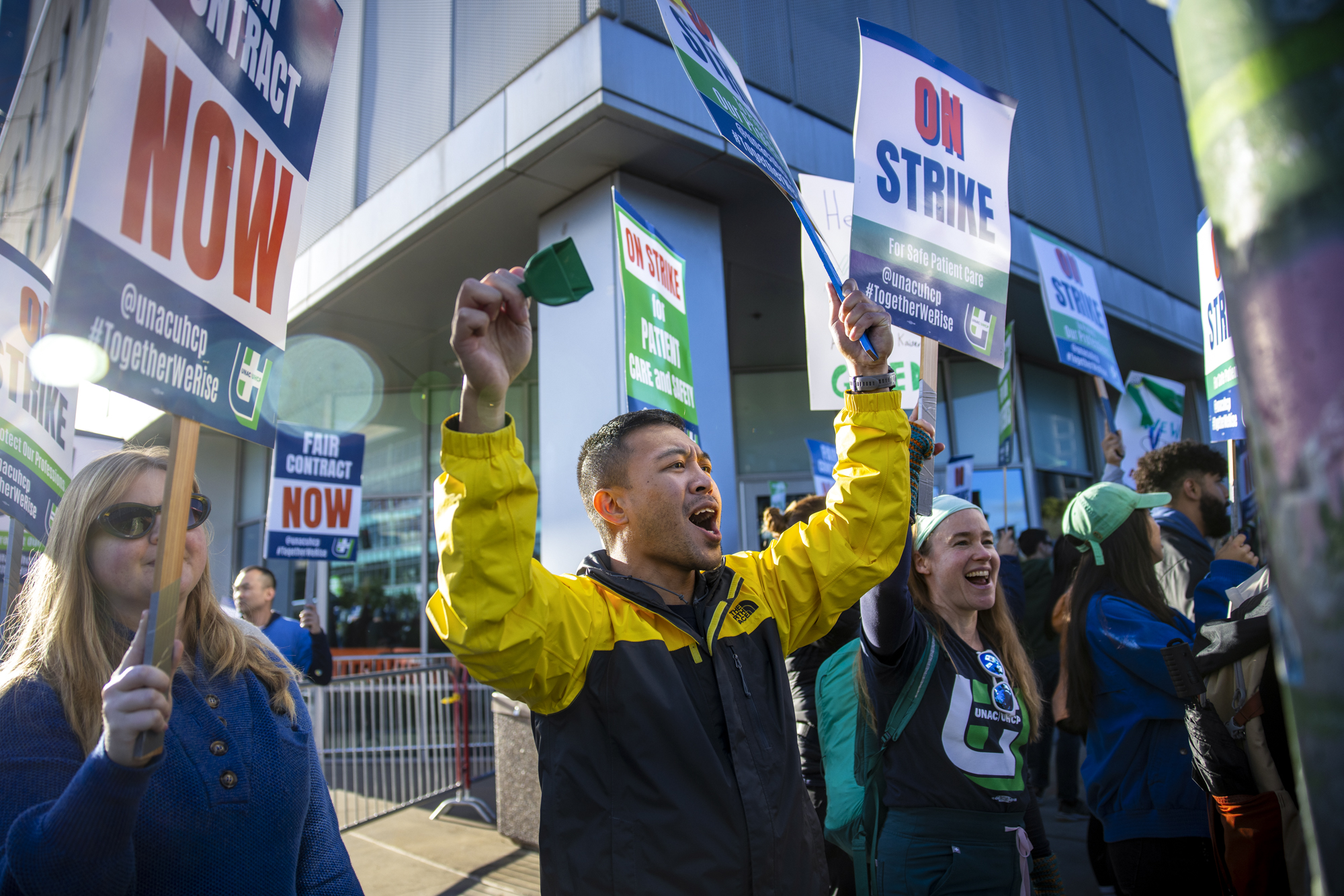
"caption": "Oliver Nuique (center) and others strike outside of the Kaiser Permanente Oakland Medical Center in Oakland on Oct. 14, 2025. Up to 46,000 Kaiser Permanente workers represented by an alliance of unions across multiple states plan to join picket lines over wages and staffing levels.",
"credit": "Martin do Nascimento/KQED",
"altTag": null,
"description": null,
"imgSizes": {
"thumbnail": {
"file": "https://cdn.kqed.org/wp-content/uploads/sites/10/2025/10/251014-KAISER-STRIKE-START-MD-03-KQED-1-160x107.jpg",
"width": 160,
"height": 107,
"mimeType": "image/jpeg"
},
"1536x1536": {
"file": "https://cdn.kqed.org/wp-content/uploads/sites/10/2025/10/251014-KAISER-STRIKE-START-MD-03-KQED-1-1536x1025.jpg",
"width": 1536,
"height": 1025,
"mimeType": "image/jpeg"
},
"post-thumbnail": {
"file": "https://cdn.kqed.org/wp-content/uploads/sites/10/2025/10/251014-KAISER-STRIKE-START-MD-03-KQED-1-672x372.jpg",
"width": 672,
"height": 372,
"mimeType": "image/jpeg"
},
"twentyfourteen-full-width": {
"file": "https://cdn.kqed.org/wp-content/uploads/sites/10/2025/10/251014-KAISER-STRIKE-START-MD-03-KQED-1-1038x576.jpg",
"width": 1038,
"height": 576,
"mimeType": "image/jpeg"
},
"kqedFullSize": {
"file": "https://cdn.kqed.org/wp-content/uploads/sites/10/2025/10/251014-KAISER-STRIKE-START-MD-03-KQED-1.jpg",
"width": 2000,
"height": 1334
}
},
"isLoading": false,
"fetchFailed": false
},
"news_12059821": {
"type": "attachments",
"id": "news_12059821",
"meta": {
"index": "attachments_1716263798",
"site": "news",
"id": "12059821",
"found": true
},
"title": "044_KQED_SheriffPressConference_06082023_qed",
"publishDate": 1760459135,
"status": "inherit",
"parent": 12059818,
"modified": 1760459169,
"caption": "San Francisco Police Department Chief William Scott speaks during a news conference in Civic Center in San Francisco on June 8, 2023.",
"credit": "Beth LaBerge/KQED",
"altTag": null,
"description": null,
"imgSizes": {
"thumbnail": {
"file": "https://cdn.kqed.org/wp-content/uploads/sites/10/2025/10/044_KQED_SheriffPressConference_06082023_qed-160x107.jpg",
"width": 160,
"height": 107,
"mimeType": "image/jpeg"
},
"1536x1536": {
"file": "https://cdn.kqed.org/wp-content/uploads/sites/10/2025/10/044_KQED_SheriffPressConference_06082023_qed-1536x1024.jpg",
"width": 1536,
"height": 1024,
"mimeType": "image/jpeg"
},
"post-thumbnail": {
"file": "https://cdn.kqed.org/wp-content/uploads/sites/10/2025/10/044_KQED_SheriffPressConference_06082023_qed-672x372.jpg",
"width": 672,
"height": 372,
"mimeType": "image/jpeg"
},
"twentyfourteen-full-width": {
"file": "https://cdn.kqed.org/wp-content/uploads/sites/10/2025/10/044_KQED_SheriffPressConference_06082023_qed-1038x576.jpg",
"width": 1038,
"height": 576,
"mimeType": "image/jpeg"
},
"kqedFullSize": {
"file": "https://cdn.kqed.org/wp-content/uploads/sites/10/2025/10/044_KQED_SheriffPressConference_06082023_qed.jpg",
"width": 2000,
"height": 1333
}
},
"isLoading": false,
"fetchFailed": false
},
"news_12059726": {
"type": "attachments",
"id": "news_12059726",
"meta": {
"index": "attachments_1716263798",
"site": "news",
"id": "12059726",
"found": true
},
"title": "PALESTINIAN-ISRAEL-CONFLICT-HOSTAGES-PRISONERS-SWAP",
"publishDate": 1760386670,
"status": "inherit",
"parent": 12059721,
"modified": 1760386875,
"caption": "One of the Palestinian prisoners, who was released in a prisoner-hostage swap and ceasefire deal between Israel and Hamas, is embraced by a relative upon arrival by bus at Ramallah Cultural Centre in Ramallah in the occupied West Bank, on Oct. 13, 2025, coming from Ofer military prison in the Israel-occupied Palestinian territories. The initial stage of the Gaza ceasefire deal includes the release of 47 Israeli living and dead hostages taken on Oct. 7, 2023, in exchange for 250 prisoners and 1,700 Gazans held by Israel since the war broke out. ",
"credit": "Zain Jaafar/AFP via Getty Images",
"altTag": null,
"description": null,
"imgSizes": {
"thumbnail": {
"file": "https://cdn.kqed.org/wp-content/uploads/sites/10/2025/10/Israel-Hamas-Ceasefire-Getty-160x107.jpg",
"width": 160,
"height": 107,
"mimeType": "image/jpeg"
},
"1536x1536": {
"file": "https://cdn.kqed.org/wp-content/uploads/sites/10/2025/10/Israel-Hamas-Ceasefire-Getty-1536x1024.jpg",
"width": 1536,
"height": 1024,
"mimeType": "image/jpeg"
},
"post-thumbnail": {
"file": "https://cdn.kqed.org/wp-content/uploads/sites/10/2025/10/Israel-Hamas-Ceasefire-Getty-672x372.jpg",
"width": 672,
"height": 372,
"mimeType": "image/jpeg"
},
"twentyfourteen-full-width": {
"file": "https://cdn.kqed.org/wp-content/uploads/sites/10/2025/10/Israel-Hamas-Ceasefire-Getty-1038x576.jpg",
"width": 1038,
"height": 576,
"mimeType": "image/jpeg"
},
"kqedFullSize": {
"file": "https://cdn.kqed.org/wp-content/uploads/sites/10/2025/10/Israel-Hamas-Ceasefire-Getty.jpg",
"width": 2000,
"height": 1333
}
},
"isLoading": false,
"fetchFailed": false
},
"news_12059732": {
"type": "attachments",
"id": "news_12059732",
"meta": {
"index": "attachments_1716263798",
"site": "news",
"id": "12059732",
"found": true
},
"title": "Salesforce CEO Marc Benioff And NVIDIA's CEO Jensen Huang Speak At Salesforce's Dreamforce Event",
"publishDate": 1760388192,
"status": "inherit",
"parent": 12059728,
"modified": 1760388229,
"caption": "Salesforce CEO Marc Benioff speaks during Salesforce's Dreamforce on Sept. 17, 2024, in San Francisco, California. ",
"credit": "Justin Sullivan/Getty Images",
"altTag": null,
"description": null,
"imgSizes": {
"thumbnail": {
"file": "https://cdn.kqed.org/wp-content/uploads/sites/10/2025/10/MarcBenioffGetty-160x107.jpg",
"width": 160,
"height": 107,
"mimeType": "image/jpeg"
},
"1536x1536": {
"file": "https://cdn.kqed.org/wp-content/uploads/sites/10/2025/10/MarcBenioffGetty-1536x1031.jpg",
"width": 1536,
"height": 1031,
"mimeType": "image/jpeg"
},
"post-thumbnail": {
"file": "https://cdn.kqed.org/wp-content/uploads/sites/10/2025/10/MarcBenioffGetty-672x372.jpg",
"width": 672,
"height": 372,
"mimeType": "image/jpeg"
},
"twentyfourteen-full-width": {
"file": "https://cdn.kqed.org/wp-content/uploads/sites/10/2025/10/MarcBenioffGetty-1038x576.jpg",
"width": 1038,
"height": 576,
"mimeType": "image/jpeg"
},
"kqedFullSize": {
"file": "https://cdn.kqed.org/wp-content/uploads/sites/10/2025/10/MarcBenioffGetty.jpg",
"width": 2000,
"height": 1343
}
},
"isLoading": false,
"fetchFailed": false
},
"news_12059994": {
"type": "attachments",
"id": "news_12059994",
"meta": {
"index": "attachments_1716263798",
"site": "news",
"id": "12059994",
"found": true
},
"title": "OtterMontereyBayAquarium1",
"publishDate": 1760553491,
"status": "inherit",
"parent": 12059734,
"modified": 1760553524,
"caption": "Southern sea otter Ivy eating in the Sea Otter exhibit. The aquarium reissued the T-shirt worn by Taylor Swift ahead of a new campaign to raise awareness about otter habitat restoration. ",
"credit": "Courtesy of the Monterey Bay Aquarium",
"altTag": null,
"description": null,
"imgSizes": {
"thumbnail": {
"file": "https://cdn.kqed.org/wp-content/uploads/sites/10/2025/10/OtterMontereyBayAquarium1-160x107.jpg",
"width": 160,
"height": 107,
"mimeType": "image/jpeg"
},
"1536x1536": {
"file": "https://cdn.kqed.org/wp-content/uploads/sites/10/2025/10/OtterMontereyBayAquarium1-1536x1024.jpg",
"width": 1536,
"height": 1024,
"mimeType": "image/jpeg"
},
"post-thumbnail": {
"file": "https://cdn.kqed.org/wp-content/uploads/sites/10/2025/10/OtterMontereyBayAquarium1-672x372.jpg",
"width": 672,
"height": 372,
"mimeType": "image/jpeg"
},
"twentyfourteen-full-width": {
"file": "https://cdn.kqed.org/wp-content/uploads/sites/10/2025/10/OtterMontereyBayAquarium1-1038x576.jpg",
"width": 1038,
"height": 576,
"mimeType": "image/jpeg"
},
"kqedFullSize": {
"file": "https://cdn.kqed.org/wp-content/uploads/sites/10/2025/10/OtterMontereyBayAquarium1.jpg",
"width": 2000,
"height": 1333
}
},
"isLoading": false,
"fetchFailed": false
},
"news_12059629": {
"type": "attachments",
"id": "news_12059629",
"meta": {
"index": "attachments_1716263798",
"site": "news",
"id": "12059629",
"found": true
},
"title": "251008_ENDOF10_-9-KQED",
"publishDate": 1760356671,
"status": "inherit",
"parent": 0,
"modified": 1760356793,
"caption": "Del Jaljaa works on a laptop motherboard at his repair bench in San Francisco on Oct. 8, 2025. Right to Repair advocates warn that Microsoft’s move away from Windows 10 could create mountains of electronic waste.",
"credit": "Gustavo Hernandez/KQED",
"altTag": null,
"description": null,
"imgSizes": {
"thumbnail": {
"file": "https://cdn.kqed.org/wp-content/uploads/sites/10/2025/10/251008_ENDOF10_-9-KQED-160x107.jpg",
"width": 160,
"height": 107,
"mimeType": "image/jpeg"
},
"1536x1536": {
"file": "https://cdn.kqed.org/wp-content/uploads/sites/10/2025/10/251008_ENDOF10_-9-KQED-1536x1024.jpg",
"width": 1536,
"height": 1024,
"mimeType": "image/jpeg"
},
"post-thumbnail": {
"file": "https://cdn.kqed.org/wp-content/uploads/sites/10/2025/10/251008_ENDOF10_-9-KQED-672x372.jpg",
"width": 672,
"height": 372,
"mimeType": "image/jpeg"
},
"twentyfourteen-full-width": {
"file": "https://cdn.kqed.org/wp-content/uploads/sites/10/2025/10/251008_ENDOF10_-9-KQED-1038x576.jpg",
"width": 1038,
"height": 576,
"mimeType": "image/jpeg"
},
"kqedFullSize": {
"file": "https://cdn.kqed.org/wp-content/uploads/sites/10/2025/10/251008_ENDOF10_-9-KQED.jpg",
"width": 2000,
"height": 1333
}
},
"isLoading": false,
"fetchFailed": false
},
"news_12059309": {
"type": "attachments",
"id": "news_12059309",
"meta": {
"index": "attachments_1716263798",
"site": "news",
"id": "12059309",
"found": true
},
"title": "251009-CORNMAZEBTS-15-BL-KQED",
"publishDate": 1760041536,
"status": "inherit",
"parent": 0,
"modified": 1760041596,
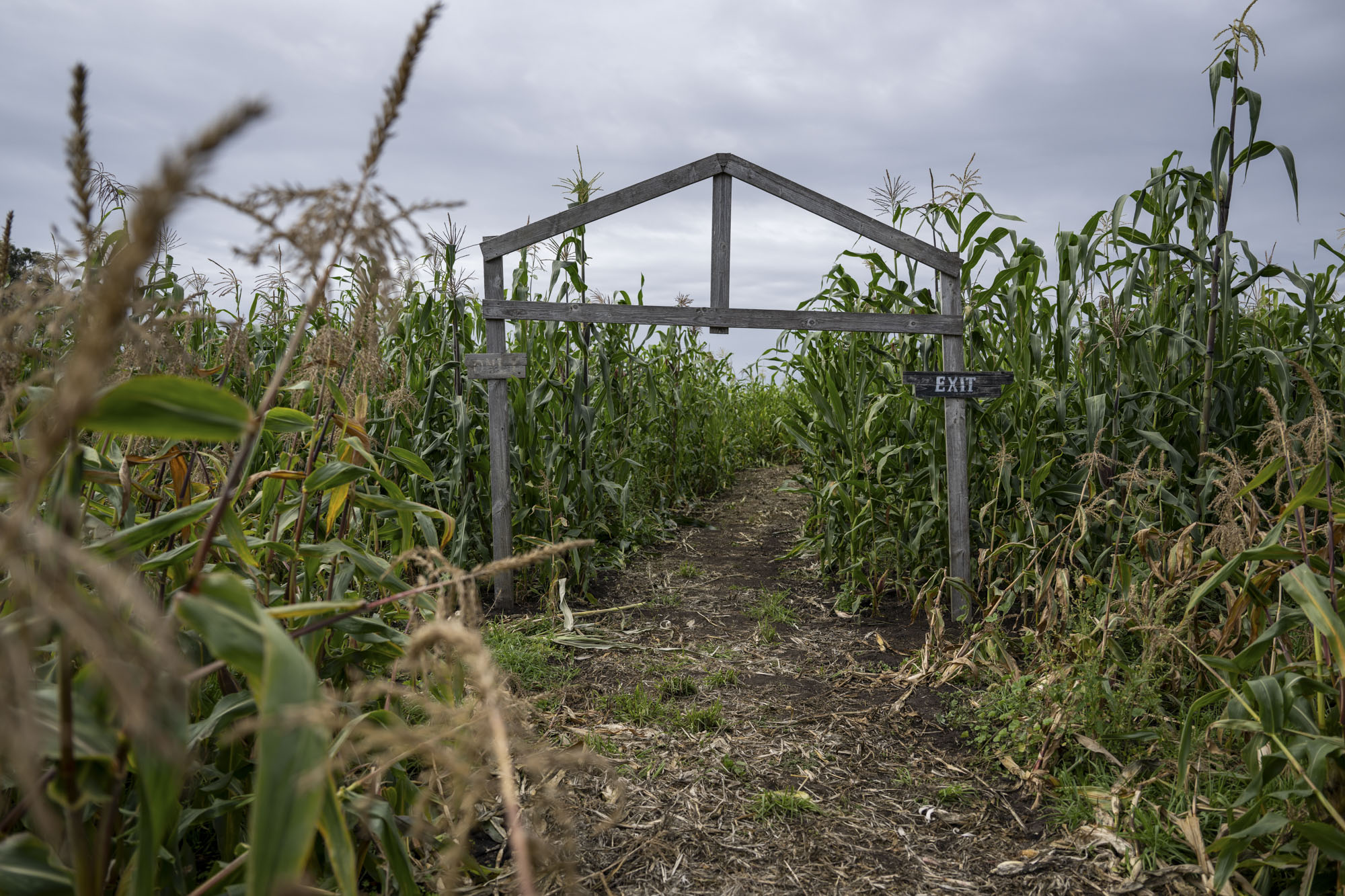
"caption": "The exit of the corn maze at Andreotti Family Farms in Half Moon Bay on Oct. 9, 2025.",
"credit": "Beth LaBerge/KQED",
"altTag": null,
"description": null,
"imgSizes": {
"thumbnail": {
"file": "https://cdn.kqed.org/wp-content/uploads/sites/10/2025/10/251009-CORNMAZEBTS-15-BL-KQED-160x107.jpg",
"width": 160,
"height": 107,
"mimeType": "image/jpeg"
},
"1536x1536": {
"file": "https://cdn.kqed.org/wp-content/uploads/sites/10/2025/10/251009-CORNMAZEBTS-15-BL-KQED-1536x1024.jpg",
"width": 1536,
"height": 1024,
"mimeType": "image/jpeg"
},
"post-thumbnail": {
"file": "https://cdn.kqed.org/wp-content/uploads/sites/10/2025/10/251009-CORNMAZEBTS-15-BL-KQED-672x372.jpg",
"width": 672,
"height": 372,
"mimeType": "image/jpeg"
},
"twentyfourteen-full-width": {
"file": "https://cdn.kqed.org/wp-content/uploads/sites/10/2025/10/251009-CORNMAZEBTS-15-BL-KQED-1038x576.jpg",
"width": 1038,
"height": 576,
"mimeType": "image/jpeg"
},
"kqedFullSize": {
"file": "https://cdn.kqed.org/wp-content/uploads/sites/10/2025/10/251009-CORNMAZEBTS-15-BL-KQED.jpg",
"width": 2000,
"height": 1333
}
},
"isLoading": false,
"fetchFailed": false
},
"news_11983729": {
"type": "attachments",
"id": "news_11983729",
"meta": {
"index": "attachments_1716263798",
"site": "news",
"id": "11983729",
"found": true
},
"title": "240422-NursesAI-29-BL",
"publishDate": 1713822684,
"status": "inherit",
"parent": 0,
"modified": 1760140505,
"caption": "Claire Siegel rallies alongside fellow nurses from across California at Kaiser Permanente on Geary Boulevard in San Francisco on April 22, 2024, to advocate for patient safety in the face of artificial intelligence technology.",
"credit": "Beth LaBerge/KQED",
"altTag": "A woman with glasses holds a sign above her head that reads 'Patients are NOT algorithms' in front of a Kaiser Permanente building.",
"description": null,
"imgSizes": {
"medium": {
"file": "https://cdn.kqed.org/wp-content/uploads/sites/10/2024/04/240422-NursesAI-29-BL-800x533.jpg",
"width": 800,
"height": 533,
"mimeType": "image/jpeg"
},
"large": {
"file": "https://cdn.kqed.org/wp-content/uploads/sites/10/2024/04/240422-NursesAI-29-BL-1020x680.jpg",
"width": 1020,
"height": 680,
"mimeType": "image/jpeg"
},
"thumbnail": {
"file": "https://cdn.kqed.org/wp-content/uploads/sites/10/2024/04/240422-NursesAI-29-BL-160x107.jpg",
"width": 160,
"height": 107,
"mimeType": "image/jpeg"
},
"1536x1536": {
"file": "https://cdn.kqed.org/wp-content/uploads/sites/10/2024/04/240422-NursesAI-29-BL-1536x1024.jpg",
"width": 1536,
"height": 1024,
"mimeType": "image/jpeg"
},
"2048x2048": {
"file": "https://cdn.kqed.org/wp-content/uploads/sites/10/2024/04/240422-NursesAI-29-BL-2048x1366.jpg",
"width": 2048,
"height": 1366,
"mimeType": "image/jpeg"
},
"post-thumbnail": {
"file": "https://cdn.kqed.org/wp-content/uploads/sites/10/2024/04/240422-NursesAI-29-BL-672x372.jpg",
"width": 672,
"height": 372,
"mimeType": "image/jpeg"
},
"twentyfourteen-full-width": {
"file": "https://cdn.kqed.org/wp-content/uploads/sites/10/2024/04/240422-NursesAI-29-BL-1038x576.jpg",
"width": 1038,
"height": 576,
"mimeType": "image/jpeg"
},
"full-width": {
"file": "https://cdn.kqed.org/wp-content/uploads/sites/10/2024/04/240422-NursesAI-29-BL-1920x1280.jpg",
"width": 1920,
"height": 1280,
"mimeType": "image/jpeg"
},
"kqedFullSize": {
"file": "https://cdn.kqed.org/wp-content/uploads/sites/10/2024/04/240422-NursesAI-29-BL-scaled.jpg",
"width": 2560,
"height": 1707
}
},
"isLoading": false,
"fetchFailed": false
},
"news_11927447": {
"type": "attachments",
"id": "news_11927447",
"meta": {
"index": "attachments_1716263798",
"site": "news",
"id": "11927447",
"found": true
},
"parent": 11927434,
"imgSizes": {
"twentyfourteen-full-width": {
"file": "https://ww2.kqed.org/app/uploads/sites/10/2022/10/RS50006_047_SanFrancisco_JuneteenthKickoffRally_06172021-qut-1038x576.jpg",
"width": 1038,
"mimeType": "image/jpeg",
"height": 576
},
"thumbnail": {
"file": "https://ww2.kqed.org/app/uploads/sites/10/2022/10/RS50006_047_SanFrancisco_JuneteenthKickoffRally_06172021-qut-160x107.jpg",
"width": 160,
"mimeType": "image/jpeg",
"height": 107
},
"post-thumbnail": {
"file": "https://ww2.kqed.org/app/uploads/sites/10/2022/10/RS50006_047_SanFrancisco_JuneteenthKickoffRally_06172021-qut-672x372.jpg",
"width": 672,
"mimeType": "image/jpeg",
"height": 372
},
"kqedFullSize": {
"file": "https://ww2.kqed.org/app/uploads/sites/10/2022/10/RS50006_047_SanFrancisco_JuneteenthKickoffRally_06172021-qut.jpg",
"width": 1920,
"height": 1278
},
"large": {
"file": "https://ww2.kqed.org/app/uploads/sites/10/2022/10/RS50006_047_SanFrancisco_JuneteenthKickoffRally_06172021-qut-1020x679.jpg",
"width": 1020,
"mimeType": "image/jpeg",
"height": 679
},
"1536x1536": {
"file": "https://ww2.kqed.org/app/uploads/sites/10/2022/10/RS50006_047_SanFrancisco_JuneteenthKickoffRally_06172021-qut-1536x1022.jpg",
"width": 1536,
"mimeType": "image/jpeg",
"height": 1022
},
"medium": {
"file": "https://ww2.kqed.org/app/uploads/sites/10/2022/10/RS50006_047_SanFrancisco_JuneteenthKickoffRally_06172021-qut-800x533.jpg",
"width": 800,
"mimeType": "image/jpeg",
"height": 533
}
},
"publishDate": 1664654554,
"modified": 1664654887,
"caption": "San Francisco Board of Supervisors President Shamann Walton and his fellow supervisors are challenging Mayor Breed and the Navy over Bayview-Hunters Point.",
"description": "SF Board of Supervisors President Shamann Walton",
"title": "RS50006_047_SanFrancisco_JuneteenthKickoffRally_06172021-qut",
"credit": "Beth LaBerge/KQED",
"status": "inherit",
"altTag": "A man in a suit with a blue tie speaks at a rally in front of a microphone.",
"isLoading": false,
"fetchFailed": false
},
"news_12015607": {
"type": "attachments",
"id": "news_12015607",
"meta": {
"index": "attachments_1716263798",
"site": "news",
"id": "12015607",
"found": true
},
"title": "241122-StormHitsBayArea-18-BL",
"publishDate": 1732310372,
"status": "inherit",
"parent": 0,
"modified": 1732310404,
"caption": "Devin Guy takes a video at the Vista Point overlook near Golden Gate Bridge north of San Francisco on Nov. 22, 2024, during a storm bringing heavy rain and strong winds to the Bay Area.",
"credit": "Beth LaBerge/KQED",
"altTag": null,
"description": null,
"imgSizes": {
"medium": {
"file": "https://cdn.kqed.org/wp-content/uploads/sites/10/2024/11/241122-StormHitsBayArea-18-BL-800x533.jpg",
"width": 800,
"height": 533,
"mimeType": "image/jpeg"
},
"large": {
"file": "https://cdn.kqed.org/wp-content/uploads/sites/10/2024/11/241122-StormHitsBayArea-18-BL-1020x680.jpg",
"width": 1020,
"height": 680,
"mimeType": "image/jpeg"
},
"thumbnail": {
"file": "https://cdn.kqed.org/wp-content/uploads/sites/10/2024/11/241122-StormHitsBayArea-18-BL-160x107.jpg",
"width": 160,
"height": 107,
"mimeType": "image/jpeg"
},
"1536x1536": {
"file": "https://cdn.kqed.org/wp-content/uploads/sites/10/2024/11/241122-StormHitsBayArea-18-BL-1536x1024.jpg",
"width": 1536,
"height": 1024,
"mimeType": "image/jpeg"
},
"post-thumbnail": {
"file": "https://cdn.kqed.org/wp-content/uploads/sites/10/2024/11/241122-StormHitsBayArea-18-BL-672x372.jpg",
"width": 672,
"height": 372,
"mimeType": "image/jpeg"
},
"twentyfourteen-full-width": {
"file": "https://cdn.kqed.org/wp-content/uploads/sites/10/2024/11/241122-StormHitsBayArea-18-BL-1038x576.jpg",
"width": 1038,
"height": 576,
"mimeType": "image/jpeg"
},
"full-width": {
"file": "https://cdn.kqed.org/wp-content/uploads/sites/10/2024/11/241122-StormHitsBayArea-18-BL-1920x1280.jpg",
"width": 1920,
"height": 1280,
"mimeType": "image/jpeg"
},
"kqedFullSize": {
"file": "https://cdn.kqed.org/wp-content/uploads/sites/10/2024/11/241122-StormHitsBayArea-18-BL.jpg",
"width": 2000,
"height": 1333
}
},
"isLoading": false,
"fetchFailed": false
},
"news_12058778": {
"type": "attachments",
"id": "news_12058778",
"meta": {
"index": "attachments_1716263798",
"site": "news",
"id": "12058778",
"found": true
},
"title": "20251002_REDWOODEMPIRE_GC-28-KQED",
"publishDate": 1759767004,
"status": "inherit",
"parent": 0,
"modified": 1760029663,
"caption": "Kunjan Joshi, manager of the Redwood Empire hospitality building, prepares a Charred Offerings whiskey cocktail on Mare Island in Vallejo on Oct. 2, 2025.",
"credit": "Gina Castro/KQED",
"altTag": null,
"description": null,
"imgSizes": {
"thumbnail": {
"file": "https://cdn.kqed.org/wp-content/uploads/sites/10/2025/10/20251002_REDWOODEMPIRE_GC-28-KQED-160x107.jpg",
"width": 160,
"height": 107,
"mimeType": "image/jpeg"
},
"1536x1536": {
"file": "https://cdn.kqed.org/wp-content/uploads/sites/10/2025/10/20251002_REDWOODEMPIRE_GC-28-KQED-1536x1024.jpg",
"width": 1536,
"height": 1024,
"mimeType": "image/jpeg"
},
"post-thumbnail": {
"file": "https://cdn.kqed.org/wp-content/uploads/sites/10/2025/10/20251002_REDWOODEMPIRE_GC-28-KQED-672x372.jpg",
"width": 672,
"height": 372,
"mimeType": "image/jpeg"
},
"twentyfourteen-full-width": {
"file": "https://cdn.kqed.org/wp-content/uploads/sites/10/2025/10/20251002_REDWOODEMPIRE_GC-28-KQED-1038x576.jpg",
"width": 1038,
"height": 576,
"mimeType": "image/jpeg"
},
"kqedFullSize": {
"file": "https://cdn.kqed.org/wp-content/uploads/sites/10/2025/10/20251002_REDWOODEMPIRE_GC-28-KQED.jpg",
"width": 2000,
"height": 1333
}
},
"isLoading": false,
"fetchFailed": false
},
"news_12042516": {
"type": "attachments",
"id": "news_12042516",
"meta": {
"index": "attachments_1716263798",
"site": "news",
"id": "12042516",
"found": true
},
"title": "The Oakland Unified School District in Oakland on June 3, 2025.",
"publishDate": 1748972655,
"status": "inherit",
"parent": 0,
"modified": 1748973041,
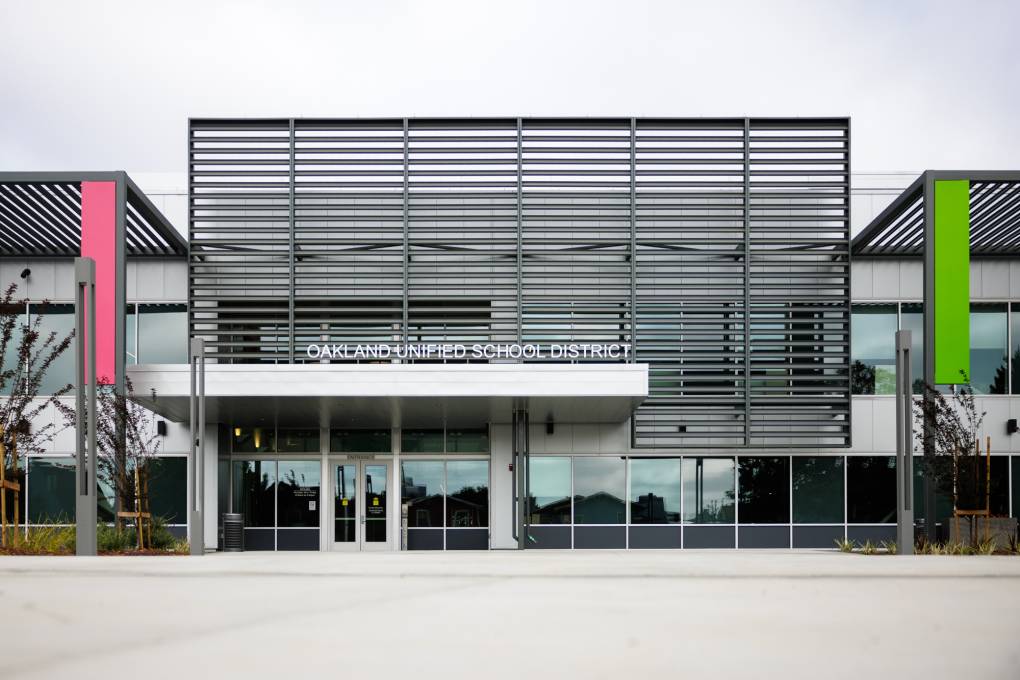
"caption": "The Oakland Unified School District offices in Oakland on June 3, 2025.",
"credit": "Martin do Nascimento/KQED",
"altTag": null,
"description": null,
"imgSizes": {
"medium": {
"file": "https://cdn.kqed.org/wp-content/uploads/sites/10/2025/06/250603-OUSD-MD-01-KQED-800x534.jpg",
"width": 800,
"height": 534,
"mimeType": "image/jpeg"
},
"large": {
"file": "https://cdn.kqed.org/wp-content/uploads/sites/10/2025/06/250603-OUSD-MD-01-KQED-1020x680.jpg",
"width": 1020,
"height": 680,
"mimeType": "image/jpeg"
},
"thumbnail": {
"file": "https://cdn.kqed.org/wp-content/uploads/sites/10/2025/06/250603-OUSD-MD-01-KQED-160x107.jpg",
"width": 160,
"height": 107,
"mimeType": "image/jpeg"
},
"1536x1536": {
"file": "https://cdn.kqed.org/wp-content/uploads/sites/10/2025/06/250603-OUSD-MD-01-KQED-1536x1025.jpg",
"width": 1536,
"height": 1025,
"mimeType": "image/jpeg"
},
"post-thumbnail": {
"file": "https://cdn.kqed.org/wp-content/uploads/sites/10/2025/06/250603-OUSD-MD-01-KQED-672x372.jpg",
"width": 672,
"height": 372,
"mimeType": "image/jpeg"
},
"twentyfourteen-full-width": {
"file": "https://cdn.kqed.org/wp-content/uploads/sites/10/2025/06/250603-OUSD-MD-01-KQED-1038x576.jpg",
"width": 1038,
"height": 576,
"mimeType": "image/jpeg"
},
"full-width": {
"file": "https://cdn.kqed.org/wp-content/uploads/sites/10/2025/06/250603-OUSD-MD-01-KQED-1920x1281.jpg",
"width": 1920,
"height": 1281,
"mimeType": "image/jpeg"
},
"kqedFullSize": {
"file": "https://cdn.kqed.org/wp-content/uploads/sites/10/2025/06/250603-OUSD-MD-01-KQED.jpg",
"width": 2000,
"height": 1334
}
},
"isLoading": false,
"fetchFailed": false
}
},
"audioPlayerReducer": {
"postId": "stream_live",
"isPaused": true,
"isPlaying": false,
"pfsActive": false,
"pledgeModalIsOpen": true,
"playerDrawerIsOpen": false,
"liveAudioPlayStartedAt": 0,
"liveAudioPlayContext": ""
},
"authorsReducer": {
"byline_news_12059267": {
"type": "authors",
"id": "byline_news_12059267",
"meta": {
"override": true
},
"slug": "byline_news_12059267",
"name": "Amanda Hernandez ",
"isLoading": false
},
"shotchkiss": {
"type": "authors",
"id": "61",
"meta": {
"index": "authors_1716337520",
"id": "61",
"found": true
},
"name": "Sarah Hotchkiss",
"firstName": "Sarah",
"lastName": "Hotchkiss",
"slug": "shotchkiss",
"email": "shotchkiss@kqed.org",
"display_author_email": true,
"staff_mastheads": [
"arts"
],
"title": "Senior Editor",
"bio": "Sarah Hotchkiss is a San Francisco \u003ca href=\"http://www.sarahhotchkiss.com\">artist\u003c/a> and arts writer. In 2019, she received the Dorothea & Leo Rabkin Foundation grant for visual art journalism and in 2020 she received a Society of Professional Journalists, Northern California award for excellence in arts and culture reporting.",
"avatar": "https://secure.gravatar.com/avatar/bc662df144b3d27fd8b1b6f1c2a420d34e91e53154d411bb7ad353cc8b6cea8d?s=600&d=blank&r=g",
"twitter": null,
"bluesky": null,
"facebook": null,
"instagram": null,
"linkedin": null,
"sites": [
{
"site": "",
"roles": [
"editor"
]
},
{
"site": "arts",
"roles": [
"Contributor",
"administrator"
]
},
{
"site": "artschool",
"roles": [
"administrator"
]
},
{
"site": "news",
"roles": [
"editor"
]
},
{
"site": "pop",
"roles": [
"administrator"
]
},
{
"site": "bayareabites",
"roles": [
"editor"
]
},
{
"site": "spark",
"roles": [
"editor"
]
},
{
"site": "checkplease",
"roles": [
"editor"
]
}
],
"headData": {
"title": "Sarah Hotchkiss | KQED",
"description": "Senior Editor",
"ogImgSrc": "https://secure.gravatar.com/avatar/bc662df144b3d27fd8b1b6f1c2a420d34e91e53154d411bb7ad353cc8b6cea8d?s=600&d=blank&r=g",
"twImgSrc": "https://secure.gravatar.com/avatar/bc662df144b3d27fd8b1b6f1c2a420d34e91e53154d411bb7ad353cc8b6cea8d?s=600&d=blank&r=g"
},
"isLoading": false,
"link": "/author/shotchkiss"
},
"lmorehouse": {
"type": "authors",
"id": "3229",
"meta": {
"index": "authors_1716337520",
"id": "3229",
"found": true
},
"name": "Lisa Morehouse",
"firstName": "Lisa",
"lastName": "Morehouse",
"slug": "lmorehouse",
"email": "morehouse.lisa@gmail.com",
"display_author_email": false,
"staff_mastheads": [],
"title": "KQED Contributor",
"bio": "Lisa Morehouse is an award-winning public radio and print journalist, who has filed for National Public Radio, American Public Media, KQED Public Radio, Edutopia, and McSweeney’s. Her reporting has taken her from Samoan traveling circuses to Mississippi Delta classrooms to the homes of Lao refugees in rural Iowa. In addition to reporting, she teaches radio production to at-risk youth in the Bay Area. Her series \u003ca href=\"http://afterthegoldrushradio.com/\">After the Gold Rush\u003c/a> featured the changing industries, populations and identities of rural towns throughout California. She’s now producing \u003ca href=\"http://www.californiafoodways.com/\">California Foodways\u003c/a>, a series exploring the intersections of food, culture, economics, history and labor. Follow along on the \u003ca href=\"https://www.facebook.com/californiafoodways?ref=hl\">Facebook page\u003c/a> or on Twitter @cafoodways.",
"avatar": "https://secure.gravatar.com/avatar/dae74b002a6e256f39abb19d6f5acaea?s=600&d=blank&r=g",
"twitter": null,
"facebook": null,
"instagram": null,
"linkedin": null,
"sites": [
{
"site": "",
"roles": [
"editor"
]
},
{
"site": "news",
"roles": [
"author"
]
}
],
"headData": {
"title": "Lisa Morehouse | KQED",
"description": "KQED Contributor",
"ogImgSrc": "https://secure.gravatar.com/avatar/dae74b002a6e256f39abb19d6f5acaea?s=600&d=blank&r=g",
"twImgSrc": "https://secure.gravatar.com/avatar/dae74b002a6e256f39abb19d6f5acaea?s=600&d=blank&r=g"
},
"isLoading": false,
"link": "/author/lmorehouse"
},
"fjhabvala": {
"type": "authors",
"id": "8659",
"meta": {
"index": "authors_1716337520",
"id": "8659",
"found": true
},
"name": "Farida Jhabvala Romero",
"firstName": "Farida",
"lastName": "Jhabvala Romero",
"slug": "fjhabvala",
"email": "fjhabvala@kqed.org",
"display_author_email": true,
"staff_mastheads": [
"news"
],
"title": "KQED Contributor",
"bio": "Farida Jhabvala Romero is a Labor Correspondent for KQED. She previously covered immigration. Farida was \u003ca href=\"https://www.ccnma.org/2022-most-influential-latina-journalists\">named\u003c/a> one of the 10 Most Influential Latina Journalists in California in 2022 by the California Chicano News Media Association. Her work has won awards from the Society of Professional Journalists (Northern California), as well as a national and regional Edward M. Murrow Award for the collaborative reporting projects “Dangerous Air” and “Graying California.” Before joining KQED, Farida worked as a producer at Radio Bilingüe, a national public radio network. Farida earned her master’s degree in journalism from Stanford University.",
"avatar": "https://secure.gravatar.com/avatar/f9f022d4e2609741874222a1e9d41f48fea74011aa7c615eef91d9a50c944ebe?s=600&d=blank&r=g",
"twitter": "FaridaJhabvala",
"bluesky": null,
"facebook": null,
"instagram": null,
"linkedin": "https://www.linkedin.com/in/faridajhabvala/",
"sites": [
{
"site": "news",
"roles": [
"editor"
]
},
{
"site": "stateofhealth",
"roles": [
"author"
]
},
{
"site": "liveblog",
"roles": [
"author"
]
}
],
"headData": {
"title": "Farida Jhabvala Romero | KQED",
"description": "KQED Contributor",
"ogImgSrc": "https://secure.gravatar.com/avatar/f9f022d4e2609741874222a1e9d41f48fea74011aa7c615eef91d9a50c944ebe?s=600&d=blank&r=g",
"twImgSrc": "https://secure.gravatar.com/avatar/f9f022d4e2609741874222a1e9d41f48fea74011aa7c615eef91d9a50c944ebe?s=600&d=blank&r=g"
},
"isLoading": false,
"link": "/author/fjhabvala"
},
"adahlstromeckman": {
"type": "authors",
"id": "11785",
"meta": {
"index": "authors_1716337520",
"id": "11785",
"found": true
},
"name": "Azul Dahlstrom-Eckman",
"firstName": "Azul",
"lastName": "Dahlstrom-Eckman",
"slug": "adahlstromeckman",
"email": "adahlstrom-eckman@kqed.org",
"display_author_email": true,
"staff_mastheads": [],
"title": "Reporter",
"bio": "Azul is a reporter for KQED focusing on transportation and features. He joined KQED in 2021 as an alumna of KALW's Audio Academy radio journalism training program.",
"avatar": "https://secure.gravatar.com/avatar/9cb750298435add7815a777f55bf1f46845c1386bb8452555c60a7b820b5aba3?s=600&d=blank&r=g",
"twitter": "@zuliemann",
"bluesky": "@azul415.bsky.social",
"facebook": null,
"instagram": null,
"linkedin": null,
"sites": [
{
"site": "arts",
"roles": [
"editor"
]
},
{
"site": "news",
"roles": [
"editor"
]
},
{
"site": "science",
"roles": [
"editor"
]
},
{
"site": "liveblog",
"roles": [
"author"
]
}
],
"headData": {
"title": "Azul Dahlstrom-Eckman | KQED",
"description": "Reporter",
"ogImgSrc": "https://secure.gravatar.com/avatar/9cb750298435add7815a777f55bf1f46845c1386bb8452555c60a7b820b5aba3?s=600&d=blank&r=g",
"twImgSrc": "https://secure.gravatar.com/avatar/9cb750298435add7815a777f55bf1f46845c1386bb8452555c60a7b820b5aba3?s=600&d=blank&r=g"
},
"isLoading": false,
"link": "/author/adahlstromeckman"
},
"sjohnson": {
"type": "authors",
"id": "11840",
"meta": {
"index": "authors_1716337520",
"id": "11840",
"found": true
},
"name": "Sydney Johnson",
"firstName": "Sydney",
"lastName": "Johnson",
"slug": "sjohnson",
"email": "sjohnson@kqed.org",
"display_author_email": false,
"staff_mastheads": [
"news"
],
"title": "KQED Reporter",
"bio": "Sydney Johnson is a general assignment reporter at KQED. She previously reported on public health and city government at the San Francisco Examiner, and before that, she covered statewide education policy for EdSource. Her reporting has won multiple local, state and national awards. Sydney is a graduate of the University of California, Berkeley and lives in San Francisco.",
"avatar": "https://secure.gravatar.com/avatar/97855f2719b72ad6190b7c535fe642c8?s=600&d=blank&r=g",
"twitter": "sydneyfjohnson",
"facebook": null,
"instagram": null,
"linkedin": null,
"sites": [
{
"site": "news",
"roles": [
"editor"
]
}
],
"headData": {
"title": "Sydney Johnson | KQED",
"description": "KQED Reporter",
"ogImgSrc": "https://secure.gravatar.com/avatar/97855f2719b72ad6190b7c535fe642c8?s=600&d=blank&r=g",
"twImgSrc": "https://secure.gravatar.com/avatar/97855f2719b72ad6190b7c535fe642c8?s=600&d=blank&r=g"
},
"isLoading": false,
"link": "/author/sjohnson"
},
"nkhan": {
"type": "authors",
"id": "11867",
"meta": {
"index": "authors_1716337520",
"id": "11867",
"found": true
},
"name": "Nisa Khan",
"firstName": "Nisa",
"lastName": "Khan",
"slug": "nkhan",
"email": "nkhan@kqed.org",
"display_author_email": false,
"staff_mastheads": [],
"title": "KQED Contributor",
"bio": "Nisa Khan is a reporter for KQED's Audience News Desk. She was formerly a data reporter at Michigan Radio. She earned a Bachelor of Science in Information from the University of Michigan and a Master of Arts in Communication from Stanford University.",
"avatar": "https://secure.gravatar.com/avatar/8720459eef081ff64582b3506b124d58523e80e120704a0cbd9892533c914991?s=600&d=blank&r=g",
"twitter": "mnisakhan",
"bluesky": null,
"facebook": null,
"instagram": null,
"linkedin": null,
"sites": [
{
"site": "arts",
"roles": [
"editor"
]
},
{
"site": "news",
"roles": [
"editor"
]
},
{
"site": "science",
"roles": [
"editor",
"author"
]
},
{
"site": "forum",
"roles": [
"editor"
]
},
{
"site": "liveblog",
"roles": [
"contributor"
]
}
],
"headData": {
"title": "Nisa Khan | KQED",
"description": "KQED Contributor",
"ogImgSrc": "https://secure.gravatar.com/avatar/8720459eef081ff64582b3506b124d58523e80e120704a0cbd9892533c914991?s=600&d=blank&r=g",
"twImgSrc": "https://secure.gravatar.com/avatar/8720459eef081ff64582b3506b124d58523e80e120704a0cbd9892533c914991?s=600&d=blank&r=g"
},
"isLoading": false,
"link": "/author/nkhan"
},
"kdebenedetti": {
"type": "authors",
"id": "11913",
"meta": {
"index": "authors_1716337520",
"id": "11913",
"found": true
},
"name": "Katie DeBenedetti",
"firstName": "Katie",
"lastName": "DeBenedetti",
"slug": "kdebenedetti",
"email": "kdebenedetti@kqed.org",
"display_author_email": false,
"staff_mastheads": [
"news",
"science"
],
"title": "KQED Contributor",
"bio": "Katie DeBenedetti is a digital reporter covering daily news for the Express Desk. Prior to joining KQED as a culture reporting intern in January 2024, she covered education and city government for the Napa Valley Register.",
"avatar": "https://secure.gravatar.com/avatar/6e31073cb8f7e4214ab03f42771d0f45?s=600&d=blank&r=g",
"twitter": null,
"facebook": null,
"instagram": null,
"linkedin": null,
"sites": [
{
"site": "news",
"roles": [
"author"
]
},
{
"site": "science",
"roles": [
"author"
]
},
{
"site": "liveblog",
"roles": [
"author"
]
}
],
"headData": {
"title": "Katie DeBenedetti | KQED",
"description": "KQED Contributor",
"ogImgSrc": "https://secure.gravatar.com/avatar/6e31073cb8f7e4214ab03f42771d0f45?s=600&d=blank&r=g",
"twImgSrc": "https://secure.gravatar.com/avatar/6e31073cb8f7e4214ab03f42771d0f45?s=600&d=blank&r=g"
},
"isLoading": false,
"link": "/author/kdebenedetti"
},
"sarahwright": {
"type": "authors",
"id": "11956",
"meta": {
"index": "authors_1716337520",
"id": "11956",
"found": true
},
"name": "Sarah Wright",
"firstName": "Sarah",
"lastName": "Wright",
"slug": "sarahwright",
"email": "swright@kqed.org",
"display_author_email": true,
"staff_mastheads": [],
"title": "Outdoors Engagement Reporter",
"bio": "Sarah Wright is KQED's Outdoors Engagement Reporter. Originally from Lake Tahoe, she completed a thru-hike of the Pacific Crest Trail in 2019 and was a U.S. Fulbright Program grantee to Argentina in 2023. Her journalism has appeared in The Guardian, The San Francisco Standard, The Palo Alto Weekly and the Half Moon Bay Review.",
"avatar": "https://secure.gravatar.com/avatar/c161a3d6441865cba25e6db4fa561099ad665799e9432e34da2b84d7e371524c?s=600&d=blank&r=g",
"twitter": null,
"bluesky": null,
"facebook": null,
"instagram": null,
"linkedin": null,
"sites": [
{
"site": "arts",
"roles": [
"editor"
]
},
{
"site": "news",
"roles": [
"editor"
]
},
{
"site": "science",
"roles": [
"contributor",
"author"
]
},
{
"site": "forum",
"roles": [
"editor"
]
}
],
"headData": {
"title": "Sarah Wright | KQED",
"description": "Outdoors Engagement Reporter",
"ogImgSrc": "https://secure.gravatar.com/avatar/c161a3d6441865cba25e6db4fa561099ad665799e9432e34da2b84d7e371524c?s=600&d=blank&r=g",
"twImgSrc": "https://secure.gravatar.com/avatar/c161a3d6441865cba25e6db4fa561099ad665799e9432e34da2b84d7e371524c?s=600&d=blank&r=g"
},
"isLoading": false,
"link": "/author/sarahwright"
}
},
"pagesReducer": {
"news_tag_bay-area": {
"type": "terms",
"id": "news_1386",
"meta": {
"index": "terms_1716263798",
"site": "news",
"id": "1386",
"score": 7.788433
},
"featImg": null,
"name": "Bay Area",
"description": null,
"taxonomy": "tag",
"headData": {
"twImgId": null,
"twTitle": null,
"ogTitle": null,
"ogImgId": null,
"twDescription": null,
"description": null,
"title": "Bay Area Archives | KQED News",
"ogDescription": null
},
"ttid": 1398,
"slug": "bay-area",
"isLoading": false,
"title": "Bay Area",
"pageMeta": {
"site": "news",
"WpPageTemplate": "page-topic-editorial",
"currentPage": 49
},
"blocks": [
{
"blockName": "kqed/post-list",
"attrs": {
"layout": "cardArticle2",
"query": "posts/news?tag=bay-area",
"seeMore": false,
"paginated": true,
"page": 49
}
},
{
"blockName": "kqed/ad"
}
]
}
},
"pfsSessionReducer": {},
"postsReducer": {
"stream_live": {
"type": "live",
"id": "stream_live",
"audioUrl": "https://streams.kqed.org/kqedradio",
"title": "Live Stream",
"excerpt": "Live Stream information currently unavailable.",
"link": "/radio",
"featImg": "",
"label": {
"name": "KQED Live",
"link": "/"
}
},
"stream_kqedNewscast": {
"type": "posts",
"id": "stream_kqedNewscast",
"audioUrl": "https://www.kqed.org/.stream/anon/radio/RDnews/newscast.mp3?_=1",
"title": "KQED Newscast",
"featImg": "",
"label": {
"name": "88.5 FM",
"link": "/"
}
},
"news_12059890": {
"type": "posts",
"id": "news_12059890",
"meta": {
"index": "posts_1716263798",
"site": "news",
"id": "12059890",
"score": null,
"sort": [
1760482419000
]
},
"guestAuthors": [],
"slug": "kaiser-strike-hits-several-bay-area-locations-as-thousands-walk-off-the-job",
"title": "Kaiser Strike Hits Several Bay Area Locations as Thousands Walk Off the Job",
"publishDate": 1760482419,
"format": "standard",
"headTitle": "Kaiser Strike Hits Several Bay Area Locations as Thousands Walk Off the Job | KQED",
"labelTerm": {
"site": "news"
},
"content": "\u003cp>\u003ca href=\"https://www.kqed.org/news/tag/kaiser-permanente\">Kaiser Permanente\u003c/a> employees picketed outside several Bay Area locations on Tuesday, joining tens of thousands across multiple states in kicking off a planned \u003ca href=\"https://www.kqed.org/news/12059551/california-kaiser-health-care-workers-reaching-breaking-point-set-to-strike-next-week\">five-day strike\u003c/a> at the nonprofit health care organization.\u003c/p>\n\u003cp>Up to 46,000 workers represented by an alliance of unions plan to join picket lines throughout the week, demanding higher wages and increased staffing levels. The work stoppage, which is expected to end Sunday morning, could disrupt operations at hospitals, clinics and medical offices in California, Hawaii and Oregon.\u003c/p>\n\u003cp>The workers say soaring inflation has outpaced their wages, hurting retention rates and patient care.\u003c/p>\n\u003cp>[ad fullwidth]\u003c/p>\n\u003cp>“We’re just wanting better patient care, better patient access. Also, we’re asking for [them to] pay us fairly,” said Lore Vanden Heuvel, a physical therapist based in Antioch.\u003c/p>\n\u003cp>Kaiser, which said it has already offered a “generous” wage hike, has been negotiating a new national contract since May with the Alliance of Healthcare Unions, a network of 23 unions that represent nearly 61,000 Kaiser employees. Some affiliated unions, including in the Bay Area, have been bargaining with the employer for longer, though not all of the unions involved in the ongoing contract negotiations are striking.\u003c/p>\n\u003cfigure id=\"attachment_12059851\" class=\"wp-caption aligncenter\" style=\"max-width: 2000px\">\u003cimg loading=\"lazy\" decoding=\"async\" class=\"size-full wp-image-12059851\" src=\"https://cdn.kqed.org/wp-content/uploads/sites/10/2025/10/251014-KAISER-STRIKE-START-MD-07-KQED.jpg\" alt=\"\" width=\"2000\" height=\"1334\" srcset=\"https://cdn.kqed.org/wp-content/uploads/sites/10/2025/10/251014-KAISER-STRIKE-START-MD-07-KQED.jpg 2000w, https://cdn.kqed.org/wp-content/uploads/sites/10/2025/10/251014-KAISER-STRIKE-START-MD-07-KQED-160x107.jpg 160w, https://cdn.kqed.org/wp-content/uploads/sites/10/2025/10/251014-KAISER-STRIKE-START-MD-07-KQED-1536x1025.jpg 1536w\" sizes=\"auto, (max-width: 2000px) 100vw, 2000px\">\u003cfigcaption class=\"wp-caption-text\">Lore Vandenheuvel and other workers strike outside of the Kaiser Permanente Oakland Medical Center in Oakland on Oct. 14, 2025. \u003ccite>(Martin do Nascimento/KQED)\u003c/cite>\u003c/figcaption>\u003c/figure>\n\u003cp>“The strike is designed to disrupt the lives of our patients — the very people we are all here to serve,” Kaiser \u003ca href=\"https://about.kaiserpermanente.org/who-we-are/labor-relations/alliance-national-bargaining/media-statements/our-statement-on-the-alliance-of-health-care-unions-strike\">said in a statement on Monday\u003c/a>, adding that the Oakland-based organization is prepared to maintain services for its patients, including about 8 million in California, by onboarding thousands of temporary nurses, clinicians and staff and reassigning others who have volunteered to work at strike locations.\u003c/p>\n\u003cp>Kaiser hospitals and most medical offices will remain open, but some appointments are being shifted to virtual settings. Certain elective surgeries and procedures could be rescheduled.\u003c/p>\n\u003cp>“For months, we’ve been preparing contingency plans to ensure our members will continue to receive safe, high-quality care,” Kaiser said. “We remain committed to an agreement that balances fair pay with affordable care.”[aside postID=news_12059551 hero='https://cdn.kqed.org/wp-content/uploads/sites/10/2024/04/240422-NursesAI-29-BL-1020x680.jpg']Compensation has been a major sticking point in the negotiations between the Alliance of Healthcare Unions and Kaiser.\u003c/p>\n\u003cp>The alliance in May proposed a 38% wage increase over four years, though it has since lowered its ask to 25%. Kaiser’s most recent offer includes a 21.5% raise over four years, which it said builds on an already competitive pay scale. The proposal would improve health plans and retiree benefits for employees, according to Lionel Sims, the vice president of human resources for Kaiser Permanente in Northern California.\u003c/p>\n\u003cp>But union leaders say Kaiser’s offer does not sufficiently compensate for the much smaller raises workers agreed to during the COVID-19 pandemic, when Kaiser said it was struggling financially.\u003c/p>\n\u003cp>At the same time, Kaiser negotiated higher raises with other unions, according to Brian Mason, the representation director for one of the striking unions, the United Nurses Associations of California/Union of Health Care Professionals.\u003c/p>\n\u003cp>UNAC/UHCP, which represents about 31,000 registered nurses, pharmacists, physician assistants and other health care professionals largely based in California, said its members need larger pay bumps to catch up.\u003c/p>\n\u003cfigure id=\"attachment_12059848\" class=\"wp-caption aligncenter\" style=\"max-width: 2000px\">\u003cimg loading=\"lazy\" decoding=\"async\" class=\"size-full wp-image-12059848\" src=\"https://cdn.kqed.org/wp-content/uploads/sites/10/2025/10/251014-KAISER-STRIKE-START-MD-04-KQED.jpg\" alt=\"\" width=\"2000\" height=\"1334\" srcset=\"https://cdn.kqed.org/wp-content/uploads/sites/10/2025/10/251014-KAISER-STRIKE-START-MD-04-KQED.jpg 2000w, https://cdn.kqed.org/wp-content/uploads/sites/10/2025/10/251014-KAISER-STRIKE-START-MD-04-KQED-160x107.jpg 160w, https://cdn.kqed.org/wp-content/uploads/sites/10/2025/10/251014-KAISER-STRIKE-START-MD-04-KQED-1536x1025.jpg 1536w\" sizes=\"auto, (max-width: 2000px) 100vw, 2000px\">\u003cfigcaption class=\"wp-caption-text\">Workers strike outside of the Kaiser Permanente Oakland Medical Center in Oakland on Oct. 14, 2025. \u003ccite>(Martin do Nascimento/KQED)\u003c/cite>\u003c/figcaption>\u003c/figure>\n\u003cp>“They left us behind,” Mason said. “Now it’s our time. These are health care professionals who come to work every day who are committed to their patients and they’re out fighting for what they deserve.”\u003c/p>\n\u003cp>The alliance is also concerned that Kaiser’s proposal would actually cut some health benefits and pensions for some groups of workers, including physicians assistants, nurse anesthetists and midwives.\u003c/p>\n\u003cp>Without a significant increase in compensation, the unions said, Kaiser medical centers will continue to be understaffed.\u003c/p>\n\u003cp>“We’re lacking staffing left and right in all different disciplines and inpatient and outpatient everywhere,” Vanden Heuvel told KQED.\u003c/p>\n\u003cp>Jeff Cathcart, a certified registered nurse anesthetist who has been with Kaiser for 20 years, said that anesthetists have been bargaining for a contract for most of the two years since they unionized. In that time, they’ve lost more than 100 of their 400 CRNAs, he added.\u003c/p>\n\u003cp>“They’re leaving for better working conditions, an average increase in pay of about 25%,” Cathcart said. “When we have that problem with retention and recruitment, that leads to access to care issues for our patients. And that’s really what we’re out here fighting for.”\u003c/p>\n\u003cfigure id=\"attachment_12059850\" class=\"wp-caption aligncenter\" style=\"max-width: 2000px\">\u003cimg loading=\"lazy\" decoding=\"async\" class=\"size-full wp-image-12059850\" src=\"https://cdn.kqed.org/wp-content/uploads/sites/10/2025/10/251014-KAISER-STRIKE-START-MD-06-KQED.jpg\" alt=\"\" width=\"2000\" height=\"1334\" srcset=\"https://cdn.kqed.org/wp-content/uploads/sites/10/2025/10/251014-KAISER-STRIKE-START-MD-06-KQED.jpg 2000w, https://cdn.kqed.org/wp-content/uploads/sites/10/2025/10/251014-KAISER-STRIKE-START-MD-06-KQED-160x107.jpg 160w, https://cdn.kqed.org/wp-content/uploads/sites/10/2025/10/251014-KAISER-STRIKE-START-MD-06-KQED-1536x1025.jpg 1536w\" sizes=\"auto, (max-width: 2000px) 100vw, 2000px\">\u003cfigcaption class=\"wp-caption-text\">Arezou Mansourian leads workers in chanting as they strike outside of the Kaiser Permanente Oakland Medical Center in Oakland on Oct. 14, 2025. \u003ccite>(Martin do Nascimento/KQED)\u003c/cite>\u003c/figcaption>\u003c/figure>\n\u003cp>The short staffing is leading to burnout and hurting patient care by delaying appointment wait times, said Arezou Mansourian, who has worked as a physician assistant in orthopedics at Kaiser in Walnut Creek, Dublin and Antioch for 16 years.\u003c/p>\n\u003cp>“If you break your wrist, you’re going to have to wait one to two weeks to see us,” she told KQED. “Things like dermatology have six-month waits … you try to go in and even get your eyes checked, it’s three months; a colonoscopy, three to six months in most areas.”\u003c/p>\n\u003cp>“If you’re a post-op patient and need to be seen weekly, and your therapist has to tell you, ‘Sorry, I’m booking out for four weeks,’ that’s not really the best of care,” Vanden Heuvel added.\u003c/p>\n\u003cp>Kaiser has maintained that it meets or exceeds required state staffing levels.\u003c/p>\n\u003cp>Sims, the VP of human resources, said the unions’ focus on negotiating higher pay is disingenuous.\u003c/p>\n\u003cfigure id=\"attachment_12059845\" class=\"wp-caption aligncenter\" style=\"max-width: 2000px\">\u003cimg loading=\"lazy\" decoding=\"async\" class=\"size-full wp-image-12059845\" src=\"https://cdn.kqed.org/wp-content/uploads/sites/10/2025/10/251014-KAISER-STRIKE-START-MD-01-KQED.jpg\" alt=\"\" width=\"2000\" height=\"1333\" srcset=\"https://cdn.kqed.org/wp-content/uploads/sites/10/2025/10/251014-KAISER-STRIKE-START-MD-01-KQED.jpg 2000w, https://cdn.kqed.org/wp-content/uploads/sites/10/2025/10/251014-KAISER-STRIKE-START-MD-01-KQED-160x107.jpg 160w, https://cdn.kqed.org/wp-content/uploads/sites/10/2025/10/251014-KAISER-STRIKE-START-MD-01-KQED-1536x1024.jpg 1536w\" sizes=\"auto, (max-width: 2000px) 100vw, 2000px\">\u003cfigcaption class=\"wp-caption-text\">Workers strike outside of the Kaiser Permanente Oakland Medical Center in Oakland on Oct. 14, 2025. \u003ccite>(Martin do Nascimento/KQED)\u003c/cite>\u003c/figcaption>\u003c/figure>\n\u003cp>“They say their goal is to protect patients by ensuring better care and staffing, but the real issue is wages,” he told KQED last week in a statement. “Their claims about Kaiser Permanente’s quality and staffing don’t reflect the facts.”\u003c/p>\n\u003cp>Instead, Kaiser argues that offering a raise any higher than the 21.5% in its current proposal would force it to increase rates and potentially push people to “make the difficult choice to go without coverage.”\u003c/p>\n\u003cp>The union alliance said Kaiser maintains significant financial reserves, mostly accumulated during the pandemic, and posted higher operating revenue and income in the first half of 2025 than the same period last year.\u003c/p>\n\u003cp>Mason also pointed to the employer’s recent expansion into new states, \u003ca href=\"https://www.prnewswire.com/news-releases/kaiser-permanente-launches-in-nevada-in-2026-302552906.html\">partnering with Renown Health\u003c/a> in Nevada and purchasing medical groups on the East Coast.\u003c/p>\n\u003cp>“It’s kind of hard to feel sorry for Kaiser when they say they have to raise rates [while] they’re out buying new medical groups,” he said. “They’re sitting on a lot of money and that’s all profit that is made off the backs of the health care professionals who are currently on strike right now … that is a result of the work that they do.”\u003c/p>\n\u003cp>[ad floatright]\u003c/p>\n",
"blocks": [],
"excerpt": "Up to 46,000 Kaiser Permanente workers represented by an alliance of unions across multiple states plan to join picket lines over wages and staffing levels.",
"status": "publish",
"parent": 0,
"modified": 1760554779,
"stats": {
"hasAudio": false,
"hasVideo": false,
"hasChartOrMap": false,
"iframeSrcs": [],
"hasGoogleForm": false,
"hasGallery": false,
"hasHearkenModule": false,
"hasPolis": false,
"paragraphCount": 30,
"wordCount": 1255
},
"headData": {
"title": "Kaiser Strike Hits Several Bay Area Locations as Thousands Walk Off the Job | KQED",
"description": "Up to 46,000 Kaiser Permanente workers represented by an alliance of unions across multiple states plan to join picket lines over wages and staffing levels.",
"ogTitle": "",
"ogDescription": "",
"ogImgId": "",
"twTitle": "",
"twDescription": "",
"twImgId": "",
"schema": {
"@context": "https://schema.org",
"@type": "NewsArticle",
"headline": "Kaiser Strike Hits Several Bay Area Locations as Thousands Walk Off the Job",
"datePublished": "2025-10-14T15:53:39-07:00",
"dateModified": "2025-10-15T11:59:39-07:00",
"image": "https://cdn.kqed.org/wp-content/uploads/2020/02/KQED-OG-Image@1x.png",
"isAccessibleForFree": "True",
"publisher": {
"@type": "NewsMediaOrganization",
"@id": "https://www.kqed.org/#organization",
"name": "KQED",
"logo": "https://cdn.kqed.org/wp-content/uploads/2020/02/KQED-OG-Image@1x.png",
"url": "https://www.kqed.org",
"sameAs": [
"https://www.facebook.com/KQED",
"https://twitter.com/KQED",
"https://www.instagram.com/kqed/",
"https://www.tiktok.com/@kqedofficial",
"https://www.linkedin.com/company/kqed",
"https://www.youtube.com/channel/UCeC0IOo7i1P_61zVUWbJ4nw"
]
}
}
},
"primaryCategory": {
"termId": 34551,
"slug": "labor",
"name": "Labor"
},
"audioUrl": "https://traffic.omny.fm/d/clips/0af137ef-751e-4b19-a055-aaef00d2d578/ffca7e9f-6831-41c5-bcaf-aaef00f5a073/a5e02189-ed9e-49b1-bed8-b377010c91ff/audio.mp3",
"sticky": false,
"nprStoryId": "kqed-12059890",
"templateType": "standard",
"featuredImageType": "standard",
"excludeFromSiteSearch": "Include",
"articleAge": "0",
"path": "/news/12059890/kaiser-strike-hits-several-bay-area-locations-as-thousands-walk-off-the-job",
"audioTrackLength": null,
"parsedContent": [
{
"type": "contentString",
"content": "\u003cdiv class=\"post-body\">\u003cp>\u003cp>\u003ca href=\"https://www.kqed.org/news/tag/kaiser-permanente\">Kaiser Permanente\u003c/a> employees picketed outside several Bay Area locations on Tuesday, joining tens of thousands across multiple states in kicking off a planned \u003ca href=\"https://www.kqed.org/news/12059551/california-kaiser-health-care-workers-reaching-breaking-point-set-to-strike-next-week\">five-day strike\u003c/a> at the nonprofit health care organization.\u003c/p>\n\u003cp>Up to 46,000 workers represented by an alliance of unions plan to join picket lines throughout the week, demanding higher wages and increased staffing levels. The work stoppage, which is expected to end Sunday morning, could disrupt operations at hospitals, clinics and medical offices in California, Hawaii and Oregon.\u003c/p>\n\u003cp>The workers say soaring inflation has outpaced their wages, hurting retention rates and patient care.\u003c/p>\n\u003cp>\u003c/p>\u003c/div>",
"attributes": {
"named": {},
"numeric": []
}
},
{
"type": "component",
"content": "",
"name": "ad",
"attributes": {
"named": {
"label": "fullwidth"
},
"numeric": [
"fullwidth"
]
}
},
{
"type": "contentString",
"content": "\u003cdiv class=\"post-body\">\u003cp>\u003c/p>\n\u003cp>“We’re just wanting better patient care, better patient access. Also, we’re asking for [them to] pay us fairly,” said Lore Vanden Heuvel, a physical therapist based in Antioch.\u003c/p>\n\u003cp>Kaiser, which said it has already offered a “generous” wage hike, has been negotiating a new national contract since May with the Alliance of Healthcare Unions, a network of 23 unions that represent nearly 61,000 Kaiser employees. Some affiliated unions, including in the Bay Area, have been bargaining with the employer for longer, though not all of the unions involved in the ongoing contract negotiations are striking.\u003c/p>\n\u003cfigure id=\"attachment_12059851\" class=\"wp-caption aligncenter\" style=\"max-width: 2000px\">\u003cimg loading=\"lazy\" decoding=\"async\" class=\"size-full wp-image-12059851\" src=\"https://cdn.kqed.org/wp-content/uploads/sites/10/2025/10/251014-KAISER-STRIKE-START-MD-07-KQED.jpg\" alt=\"\" width=\"2000\" height=\"1334\" srcset=\"https://cdn.kqed.org/wp-content/uploads/sites/10/2025/10/251014-KAISER-STRIKE-START-MD-07-KQED.jpg 2000w, https://cdn.kqed.org/wp-content/uploads/sites/10/2025/10/251014-KAISER-STRIKE-START-MD-07-KQED-160x107.jpg 160w, https://cdn.kqed.org/wp-content/uploads/sites/10/2025/10/251014-KAISER-STRIKE-START-MD-07-KQED-1536x1025.jpg 1536w\" sizes=\"auto, (max-width: 2000px) 100vw, 2000px\">\u003cfigcaption class=\"wp-caption-text\">Lore Vandenheuvel and other workers strike outside of the Kaiser Permanente Oakland Medical Center in Oakland on Oct. 14, 2025. \u003ccite>(Martin do Nascimento/KQED)\u003c/cite>\u003c/figcaption>\u003c/figure>\n\u003cp>“The strike is designed to disrupt the lives of our patients — the very people we are all here to serve,” Kaiser \u003ca href=\"https://about.kaiserpermanente.org/who-we-are/labor-relations/alliance-national-bargaining/media-statements/our-statement-on-the-alliance-of-health-care-unions-strike\">said in a statement on Monday\u003c/a>, adding that the Oakland-based organization is prepared to maintain services for its patients, including about 8 million in California, by onboarding thousands of temporary nurses, clinicians and staff and reassigning others who have volunteered to work at strike locations.\u003c/p>\n\u003cp>Kaiser hospitals and most medical offices will remain open, but some appointments are being shifted to virtual settings. Certain elective surgeries and procedures could be rescheduled.\u003c/p>\n\u003cp>“For months, we’ve been preparing contingency plans to ensure our members will continue to receive safe, high-quality care,” Kaiser said. “We remain committed to an agreement that balances fair pay with affordable care.”\u003c/p>\u003c/div>",
"attributes": {
"named": {},
"numeric": []
}
},
{
"type": "component",
"content": "",
"name": "aside",
"attributes": {
"named": {
"postid": "news_12059551",
"hero": "https://cdn.kqed.org/wp-content/uploads/sites/10/2024/04/240422-NursesAI-29-BL-1020x680.jpg",
"label": ""
},
"numeric": []
}
},
{
"type": "contentString",
"content": "\u003cdiv class=\"post-body\">\u003cp>Compensation has been a major sticking point in the negotiations between the Alliance of Healthcare Unions and Kaiser.\u003c/p>\n\u003cp>The alliance in May proposed a 38% wage increase over four years, though it has since lowered its ask to 25%. Kaiser’s most recent offer includes a 21.5% raise over four years, which it said builds on an already competitive pay scale. The proposal would improve health plans and retiree benefits for employees, according to Lionel Sims, the vice president of human resources for Kaiser Permanente in Northern California.\u003c/p>\n\u003cp>But union leaders say Kaiser’s offer does not sufficiently compensate for the much smaller raises workers agreed to during the COVID-19 pandemic, when Kaiser said it was struggling financially.\u003c/p>\n\u003cp>At the same time, Kaiser negotiated higher raises with other unions, according to Brian Mason, the representation director for one of the striking unions, the United Nurses Associations of California/Union of Health Care Professionals.\u003c/p>\n\u003cp>UNAC/UHCP, which represents about 31,000 registered nurses, pharmacists, physician assistants and other health care professionals largely based in California, said its members need larger pay bumps to catch up.\u003c/p>\n\u003cfigure id=\"attachment_12059848\" class=\"wp-caption aligncenter\" style=\"max-width: 2000px\">\u003cimg loading=\"lazy\" decoding=\"async\" class=\"size-full wp-image-12059848\" src=\"https://cdn.kqed.org/wp-content/uploads/sites/10/2025/10/251014-KAISER-STRIKE-START-MD-04-KQED.jpg\" alt=\"\" width=\"2000\" height=\"1334\" srcset=\"https://cdn.kqed.org/wp-content/uploads/sites/10/2025/10/251014-KAISER-STRIKE-START-MD-04-KQED.jpg 2000w, https://cdn.kqed.org/wp-content/uploads/sites/10/2025/10/251014-KAISER-STRIKE-START-MD-04-KQED-160x107.jpg 160w, https://cdn.kqed.org/wp-content/uploads/sites/10/2025/10/251014-KAISER-STRIKE-START-MD-04-KQED-1536x1025.jpg 1536w\" sizes=\"auto, (max-width: 2000px) 100vw, 2000px\">\u003cfigcaption class=\"wp-caption-text\">Workers strike outside of the Kaiser Permanente Oakland Medical Center in Oakland on Oct. 14, 2025. \u003ccite>(Martin do Nascimento/KQED)\u003c/cite>\u003c/figcaption>\u003c/figure>\n\u003cp>“They left us behind,” Mason said. “Now it’s our time. These are health care professionals who come to work every day who are committed to their patients and they’re out fighting for what they deserve.”\u003c/p>\n\u003cp>The alliance is also concerned that Kaiser’s proposal would actually cut some health benefits and pensions for some groups of workers, including physicians assistants, nurse anesthetists and midwives.\u003c/p>\n\u003cp>Without a significant increase in compensation, the unions said, Kaiser medical centers will continue to be understaffed.\u003c/p>\n\u003cp>“We’re lacking staffing left and right in all different disciplines and inpatient and outpatient everywhere,” Vanden Heuvel told KQED.\u003c/p>\n\u003cp>Jeff Cathcart, a certified registered nurse anesthetist who has been with Kaiser for 20 years, said that anesthetists have been bargaining for a contract for most of the two years since they unionized. In that time, they’ve lost more than 100 of their 400 CRNAs, he added.\u003c/p>\n\u003cp>“They’re leaving for better working conditions, an average increase in pay of about 25%,” Cathcart said. “When we have that problem with retention and recruitment, that leads to access to care issues for our patients. And that’s really what we’re out here fighting for.”\u003c/p>\n\u003cfigure id=\"attachment_12059850\" class=\"wp-caption aligncenter\" style=\"max-width: 2000px\">\u003cimg loading=\"lazy\" decoding=\"async\" class=\"size-full wp-image-12059850\" src=\"https://cdn.kqed.org/wp-content/uploads/sites/10/2025/10/251014-KAISER-STRIKE-START-MD-06-KQED.jpg\" alt=\"\" width=\"2000\" height=\"1334\" srcset=\"https://cdn.kqed.org/wp-content/uploads/sites/10/2025/10/251014-KAISER-STRIKE-START-MD-06-KQED.jpg 2000w, https://cdn.kqed.org/wp-content/uploads/sites/10/2025/10/251014-KAISER-STRIKE-START-MD-06-KQED-160x107.jpg 160w, https://cdn.kqed.org/wp-content/uploads/sites/10/2025/10/251014-KAISER-STRIKE-START-MD-06-KQED-1536x1025.jpg 1536w\" sizes=\"auto, (max-width: 2000px) 100vw, 2000px\">\u003cfigcaption class=\"wp-caption-text\">Arezou Mansourian leads workers in chanting as they strike outside of the Kaiser Permanente Oakland Medical Center in Oakland on Oct. 14, 2025. \u003ccite>(Martin do Nascimento/KQED)\u003c/cite>\u003c/figcaption>\u003c/figure>\n\u003cp>The short staffing is leading to burnout and hurting patient care by delaying appointment wait times, said Arezou Mansourian, who has worked as a physician assistant in orthopedics at Kaiser in Walnut Creek, Dublin and Antioch for 16 years.\u003c/p>\n\u003cp>“If you break your wrist, you’re going to have to wait one to two weeks to see us,” she told KQED. “Things like dermatology have six-month waits … you try to go in and even get your eyes checked, it’s three months; a colonoscopy, three to six months in most areas.”\u003c/p>\n\u003cp>“If you’re a post-op patient and need to be seen weekly, and your therapist has to tell you, ‘Sorry, I’m booking out for four weeks,’ that’s not really the best of care,” Vanden Heuvel added.\u003c/p>\n\u003cp>Kaiser has maintained that it meets or exceeds required state staffing levels.\u003c/p>\n\u003cp>Sims, the VP of human resources, said the unions’ focus on negotiating higher pay is disingenuous.\u003c/p>\n\u003cfigure id=\"attachment_12059845\" class=\"wp-caption aligncenter\" style=\"max-width: 2000px\">\u003cimg loading=\"lazy\" decoding=\"async\" class=\"size-full wp-image-12059845\" src=\"https://cdn.kqed.org/wp-content/uploads/sites/10/2025/10/251014-KAISER-STRIKE-START-MD-01-KQED.jpg\" alt=\"\" width=\"2000\" height=\"1333\" srcset=\"https://cdn.kqed.org/wp-content/uploads/sites/10/2025/10/251014-KAISER-STRIKE-START-MD-01-KQED.jpg 2000w, https://cdn.kqed.org/wp-content/uploads/sites/10/2025/10/251014-KAISER-STRIKE-START-MD-01-KQED-160x107.jpg 160w, https://cdn.kqed.org/wp-content/uploads/sites/10/2025/10/251014-KAISER-STRIKE-START-MD-01-KQED-1536x1024.jpg 1536w\" sizes=\"auto, (max-width: 2000px) 100vw, 2000px\">\u003cfigcaption class=\"wp-caption-text\">Workers strike outside of the Kaiser Permanente Oakland Medical Center in Oakland on Oct. 14, 2025. \u003ccite>(Martin do Nascimento/KQED)\u003c/cite>\u003c/figcaption>\u003c/figure>\n\u003cp>“They say their goal is to protect patients by ensuring better care and staffing, but the real issue is wages,” he told KQED last week in a statement. “Their claims about Kaiser Permanente’s quality and staffing don’t reflect the facts.”\u003c/p>\n\u003cp>Instead, Kaiser argues that offering a raise any higher than the 21.5% in its current proposal would force it to increase rates and potentially push people to “make the difficult choice to go without coverage.”\u003c/p>\n\u003cp>The union alliance said Kaiser maintains significant financial reserves, mostly accumulated during the pandemic, and posted higher operating revenue and income in the first half of 2025 than the same period last year.\u003c/p>\n\u003cp>Mason also pointed to the employer’s recent expansion into new states, \u003ca href=\"https://www.prnewswire.com/news-releases/kaiser-permanente-launches-in-nevada-in-2026-302552906.html\">partnering with Renown Health\u003c/a> in Nevada and purchasing medical groups on the East Coast.\u003c/p>\n\u003cp>“It’s kind of hard to feel sorry for Kaiser when they say they have to raise rates [while] they’re out buying new medical groups,” he said. “They’re sitting on a lot of money and that’s all profit that is made off the backs of the health care professionals who are currently on strike right now … that is a result of the work that they do.”\u003c/p>\n\u003cp>\u003c/p>\u003c/div>",
"attributes": {
"named": {},
"numeric": []
}
},
{
"type": "component",
"content": "",
"name": "ad",
"attributes": {
"named": {
"label": "floatright"
},
"numeric": [
"floatright"
]
}
},
{
"type": "contentString",
"content": "\u003cdiv class=\"post-body\">\u003cp>\u003c/p>\n\u003c/div>\u003c/p>",
"attributes": {
"named": {},
"numeric": []
}
}
],
"link": "/news/12059890/kaiser-strike-hits-several-bay-area-locations-as-thousands-walk-off-the-job",
"authors": [
"8659",
"11913"
],
"categories": [
"news_31795",
"news_457",
"news_34551",
"news_28250",
"news_8"
],
"tags": [
"news_1386",
"news_18538",
"news_18543",
"news_35118",
"news_21790",
"news_421",
"news_33310",
"news_19904",
"news_24590",
"news_34054"
],
"featImg": "news_12059852",
"label": "news"
},
"news_12059818": {
"type": "posts",
"id": "news_12059818",
"meta": {
"index": "posts_1716263798",
"site": "news",
"id": "12059818",
"score": null,
"sort": [
1760461110000
]
},
"guestAuthors": [],
"slug": "san-francisco-police-commission-begins-interviews-for-next-sfpd-chief-at-a-pivotal-time",
"title": "San Francisco Police Commission Begins Interviews for Next SFPD Chief at a Pivotal Time",
"publishDate": 1760461110,
"format": "standard",
"headTitle": "San Francisco Police Commission Begins Interviews for Next SFPD Chief at a Pivotal Time | KQED",
"labelTerm": {
"site": "news"
},
"content": "\u003cp>The San Francisco Police Commission will begin interviews for the city’s next chief of police on Tuesday morning, kicking off a process that will lead to a critical choice for Mayor \u003ca href=\"https://www.kqed.org/news/tag/daniel-lurie\">Daniel Lurie\u003c/a>.\u003c/p>\n\u003cp>The position has been vacant since May, when former chief Bill Scott \u003ca href=\"https://www.kqed.org/news/12039092/san-franciscos-police-chief-stepping-down\">announced his departure\u003c/a> after eight years in the role.\u003c/p>\n\u003cp>The city’s seven-member Police Commission, a group of volunteers appointed by the mayor and Board of Supervisors, will enter into a closed session on Tuesday morning to interview candidates over the next one to two weeks.\u003c/p>\n\u003cp>[ad fullwidth]\u003c/p>\n\u003cp>“We have a self-imposed deadline of Nov. 12 to present the finalists to Lurie,” commission Vice President Kevin Benedicto told KQED.\u003c/p>\n\u003cp>Ultimately, the mayor will select the next chief from three commission-selected candidates. Who Lurie picks could define his time as mayor.\u003c/p>\n\u003cp>Lurie’s chief of public safety, Paul Yep, has served as interim chief in the months since Scott’s departure. Despite speculation that he was auditioning to take on the permanent role, Yep did not apply.\u003c/p>\n\u003cfigure id=\"attachment_12020121\" class=\"wp-caption aligncenter\" style=\"max-width: 1999px\">\u003cimg loading=\"lazy\" decoding=\"async\" class=\"size-full wp-image-12020121\" src=\"https://cdn.kqed.org/wp-content/uploads/sites/10/2025/01/240819-DanielLuriePresser-03-BL_qed.jpg\" alt=\"\" width=\"1999\" height=\"1333\" srcset=\"https://cdn.kqed.org/wp-content/uploads/sites/10/2025/01/240819-DanielLuriePresser-03-BL_qed.jpg 1999w, https://cdn.kqed.org/wp-content/uploads/sites/10/2025/01/240819-DanielLuriePresser-03-BL_qed-800x533.jpg 800w, https://cdn.kqed.org/wp-content/uploads/sites/10/2025/01/240819-DanielLuriePresser-03-BL_qed-1020x680.jpg 1020w, https://cdn.kqed.org/wp-content/uploads/sites/10/2025/01/240819-DanielLuriePresser-03-BL_qed-160x107.jpg 160w, https://cdn.kqed.org/wp-content/uploads/sites/10/2025/01/240819-DanielLuriePresser-03-BL_qed-1536x1024.jpg 1536w, https://cdn.kqed.org/wp-content/uploads/sites/10/2025/01/240819-DanielLuriePresser-03-BL_qed-1920x1280.jpg 1920w\" sizes=\"auto, (max-width: 1999px) 100vw, 1999px\">\u003cfigcaption class=\"wp-caption-text\">Former San Francisco Police Commander Paul Yep speaks during a press conference supporting mayoral candidate Daniel Lurie in San Francisco on Aug. 19, 2024. \u003ccite>(Beth LaBerge/KQED)\u003c/cite>\u003c/figcaption>\u003c/figure>\n\u003cp>There were 34 applicants for the job; only Steven Ford, who served at the SFPD for 31 years and briefly led the Antioch Police Department, \u003ca href=\"https://www.sfchronicle.com/sf/article/one-popular-cop-not-among-applicants-police-chief-21044775.php\">publicly stated that he applied\u003c/a>.\u003c/p>\n\u003cp>Lurie currently has two appointees on the Police Commission. Former federal prosecutor Wilson Leung filled a vacant seat at the beginning of Lurie’s term. And Lurie selected anti-violence activist Mattie Scott to serve after \u003ca href=\"https://www.kqed.org/news/12028726/reformist-sf-police-commissioner-is-ousted-giving-lurie-greater-control-of-oversight\">removing progressive police commissioner Max Carter-Oberstone\u003c/a>. (The mayor appoints four members to the commission; the Board of Supervisors selects three.)\u003c/p>\n\u003cp>While reported crime is low in San Francisco — Lurie recently stated \u003ca href=\"https://www.kqed.org/news/12059728/salesforce-ceo-marc-benioff-sf-mayor-scrap-event-after-national-guard-comment\">crime is down 30% citywide\u003c/a> compared to last year — the new chief will inherit an understaffed police force, calls for more community policing and millions in overtime spending. Low-level crimes and open-air drug use are a persistent problem.[aside postID=news_12042755 hero='https://cdn.kqed.org/wp-content/uploads/sites/10/2025/06/250609-LURIEPRESSER-04-BL-KQED.jpg']Community meetings organized between August and September by Ralph Andersen & Associates, the agency leading the search for candidates, gathered responses from 227 people about what they were looking for in the role. The \u003ca href=\"https://media.api.sf.gov/documents/PoliceCommission10825_-_RAA_Summary_Results_for_Community_Input.pdf\">report\u003c/a>, presented to the Police Commission at their Oct. 8 meeting, found that respondents were looking for a police chief “who embodies integrity, openness, and courage, while also being firmly grounded in the unique needs of San Francisco.”\u003c/p>\n\u003cp>Benedicto said the community meetings, along with conversations with police officers and other department employees, have already shaped some of the commission’s decision-making and will continue to help them winnow down the candidates.\u003c/p>\n\u003cp>According to community input, one of the chief’s key priorities should be “preparedness around federal immigration enforcement activity.” Protesters have faced off against Immigration and Customs Enforcement officers outside San Francisco’s immigration court. In cities like Los Angeles, Chicago, Washington, D.C., and Memphis, Tennessee, similar protests have been used by the Trump administration as a rationale for sending in the National Guard.\u003c/p>\n\u003cp>Trump has \u003ca href=\"https://www.npr.org/2025/10/10/nx-s1-5567177/national-guard-map-chicago-california-oregon\">suggested sending troops to San Francisco and Oakland\u003c/a>, a plan Lurie has refrained from commenting on. “We have work to do, there is no doubt about that,” he said at the Italian Heritage Festival on Sunday. “We need more SFPD.”\u003c/p>\n\u003cfigure id=\"attachment_12047757\" class=\"wp-caption aligncenter\" style=\"max-width: 2000px\">\u003cimg loading=\"lazy\" decoding=\"async\" class=\"size-full wp-image-12047757\" src=\"https://cdn.kqed.org/wp-content/uploads/sites/10/2025/07/250418-SFPDFile-39-BL_qed-1.jpg\" alt=\"\" width=\"2000\" height=\"1333\" srcset=\"https://cdn.kqed.org/wp-content/uploads/sites/10/2025/07/250418-SFPDFile-39-BL_qed-1.jpg 2000w, https://cdn.kqed.org/wp-content/uploads/sites/10/2025/07/250418-SFPDFile-39-BL_qed-1-160x107.jpg 160w, https://cdn.kqed.org/wp-content/uploads/sites/10/2025/07/250418-SFPDFile-39-BL_qed-1-1536x1024.jpg 1536w\" sizes=\"auto, (max-width: 2000px) 100vw, 2000px\">\u003cfigcaption class=\"wp-caption-text\">A San Francisco Police Department officer in San Francisco on April 18, 2025. \u003ccite>(Beth LaBerge/KQED)\u003c/cite>\u003c/figcaption>\u003c/figure>\n\u003cp>Whoever Lurie picks for the job will face a host of challenges — just as Scott did eight years ago. The former chief was appointed by then-Mayor Ed Lee in 2016 after two years of high-profile police shootings and calls for accountability. Scott’s mandate from Lee was to transform the SFPD into a “21st-century police force.”\u003c/p>\n\u003cp>Just this January, the SFPD announced it had completed \u003ca href=\"https://www.kqed.org/news/12020778/state-ends-oversight-sfpd-after-long-reform-effort-followed-fatal-shootings\">an eight-year reform process\u003c/a> with the Department of Justice. During Scott’s time as chief, the department implemented more than 270 recommended reforms.\u003c/p>\n\u003cp>His tenure was also marked by the pandemic, an increase in fentanyl overdoses, and a rise in car break-ins and property crime. Dissatisfaction with policing led in part to the 2022 recall of District Attorney Chesa Boudin, which in turn hampered former Mayor London Breed’s bid for reelection.\u003c/p>\n\u003cp>Lurie’s choice could similarly make or break his burgeoning political career. The city hopes to have the position filled by the end of this year.\u003c/p>\n\u003cp>\u003c/p>\n",
"blocks": [],
"excerpt": "The board will present three finalists to Mayor Daniel Lurie, a choice that could define his time as mayor amid difficulties for the SFPD and concerns around federal enforcement.",
"status": "publish",
"parent": 0,
"modified": 1760465567,
"stats": {
"hasAudio": false,
"hasVideo": false,
"hasChartOrMap": false,
"iframeSrcs": [],
"hasGoogleForm": false,
"hasGallery": false,
"hasHearkenModule": false,
"hasPolis": false,
"paragraphCount": 18,
"wordCount": 786
},
"headData": {
"title": "San Francisco Police Commission Begins Interviews for Next SFPD Chief at a Pivotal Time | KQED",
"description": "The board will present three finalists to Mayor Daniel Lurie, a choice that could define his time as mayor amid difficulties for the SFPD and concerns around federal enforcement.",
"ogTitle": "",
"ogDescription": "",
"ogImgId": "",
"twTitle": "",
"twDescription": "",
"twImgId": "",
"schema": {
"@context": "https://schema.org",
"@type": "NewsArticle",
"headline": "San Francisco Police Commission Begins Interviews for Next SFPD Chief at a Pivotal Time",
"datePublished": "2025-10-14T09:58:30-07:00",
"dateModified": "2025-10-14T11:12:47-07:00",
"image": "https://cdn.kqed.org/wp-content/uploads/2020/02/KQED-OG-Image@1x.png",
"isAccessibleForFree": "True",
"publisher": {
"@type": "NewsMediaOrganization",
"@id": "https://www.kqed.org/#organization",
"name": "KQED",
"logo": "https://cdn.kqed.org/wp-content/uploads/2020/02/KQED-OG-Image@1x.png",
"url": "https://www.kqed.org",
"sameAs": [
"https://www.facebook.com/KQED",
"https://twitter.com/KQED",
"https://www.instagram.com/kqed/",
"https://www.tiktok.com/@kqedofficial",
"https://www.linkedin.com/company/kqed",
"https://www.youtube.com/channel/UCeC0IOo7i1P_61zVUWbJ4nw"
]
}
}
},
"primaryCategory": {
"termId": 8,
"slug": "news",
"name": "News"
},
"sticky": false,
"nprStoryId": "kqed-12059818",
"templateType": "standard",
"featuredImageType": "standard",
"excludeFromSiteSearch": "Include",
"articleAge": "0",
"path": "/news/12059818/san-francisco-police-commission-begins-interviews-for-next-sfpd-chief-at-a-pivotal-time",
"audioTrackLength": null,
"parsedContent": [
{
"type": "contentString",
"content": "\u003cdiv class=\"post-body\">\u003cp>\u003cp>The San Francisco Police Commission will begin interviews for the city’s next chief of police on Tuesday morning, kicking off a process that will lead to a critical choice for Mayor \u003ca href=\"https://www.kqed.org/news/tag/daniel-lurie\">Daniel Lurie\u003c/a>.\u003c/p>\n\u003cp>The position has been vacant since May, when former chief Bill Scott \u003ca href=\"https://www.kqed.org/news/12039092/san-franciscos-police-chief-stepping-down\">announced his departure\u003c/a> after eight years in the role.\u003c/p>\n\u003cp>The city’s seven-member Police Commission, a group of volunteers appointed by the mayor and Board of Supervisors, will enter into a closed session on Tuesday morning to interview candidates over the next one to two weeks.\u003c/p>\n\u003cp>\u003c/p>\u003c/div>",
"attributes": {
"named": {},
"numeric": []
}
},
{
"type": "component",
"content": "",
"name": "ad",
"attributes": {
"named": {
"label": "fullwidth"
},
"numeric": [
"fullwidth"
]
}
},
{
"type": "contentString",
"content": "\u003cdiv class=\"post-body\">\u003cp>\u003c/p>\n\u003cp>“We have a self-imposed deadline of Nov. 12 to present the finalists to Lurie,” commission Vice President Kevin Benedicto told KQED.\u003c/p>\n\u003cp>Ultimately, the mayor will select the next chief from three commission-selected candidates. Who Lurie picks could define his time as mayor.\u003c/p>\n\u003cp>Lurie’s chief of public safety, Paul Yep, has served as interim chief in the months since Scott’s departure. Despite speculation that he was auditioning to take on the permanent role, Yep did not apply.\u003c/p>\n\u003cfigure id=\"attachment_12020121\" class=\"wp-caption aligncenter\" style=\"max-width: 1999px\">\u003cimg loading=\"lazy\" decoding=\"async\" class=\"size-full wp-image-12020121\" src=\"https://cdn.kqed.org/wp-content/uploads/sites/10/2025/01/240819-DanielLuriePresser-03-BL_qed.jpg\" alt=\"\" width=\"1999\" height=\"1333\" srcset=\"https://cdn.kqed.org/wp-content/uploads/sites/10/2025/01/240819-DanielLuriePresser-03-BL_qed.jpg 1999w, https://cdn.kqed.org/wp-content/uploads/sites/10/2025/01/240819-DanielLuriePresser-03-BL_qed-800x533.jpg 800w, https://cdn.kqed.org/wp-content/uploads/sites/10/2025/01/240819-DanielLuriePresser-03-BL_qed-1020x680.jpg 1020w, https://cdn.kqed.org/wp-content/uploads/sites/10/2025/01/240819-DanielLuriePresser-03-BL_qed-160x107.jpg 160w, https://cdn.kqed.org/wp-content/uploads/sites/10/2025/01/240819-DanielLuriePresser-03-BL_qed-1536x1024.jpg 1536w, https://cdn.kqed.org/wp-content/uploads/sites/10/2025/01/240819-DanielLuriePresser-03-BL_qed-1920x1280.jpg 1920w\" sizes=\"auto, (max-width: 1999px) 100vw, 1999px\">\u003cfigcaption class=\"wp-caption-text\">Former San Francisco Police Commander Paul Yep speaks during a press conference supporting mayoral candidate Daniel Lurie in San Francisco on Aug. 19, 2024. \u003ccite>(Beth LaBerge/KQED)\u003c/cite>\u003c/figcaption>\u003c/figure>\n\u003cp>There were 34 applicants for the job; only Steven Ford, who served at the SFPD for 31 years and briefly led the Antioch Police Department, \u003ca href=\"https://www.sfchronicle.com/sf/article/one-popular-cop-not-among-applicants-police-chief-21044775.php\">publicly stated that he applied\u003c/a>.\u003c/p>\n\u003cp>Lurie currently has two appointees on the Police Commission. Former federal prosecutor Wilson Leung filled a vacant seat at the beginning of Lurie’s term. And Lurie selected anti-violence activist Mattie Scott to serve after \u003ca href=\"https://www.kqed.org/news/12028726/reformist-sf-police-commissioner-is-ousted-giving-lurie-greater-control-of-oversight\">removing progressive police commissioner Max Carter-Oberstone\u003c/a>. (The mayor appoints four members to the commission; the Board of Supervisors selects three.)\u003c/p>\n\u003cp>While reported crime is low in San Francisco — Lurie recently stated \u003ca href=\"https://www.kqed.org/news/12059728/salesforce-ceo-marc-benioff-sf-mayor-scrap-event-after-national-guard-comment\">crime is down 30% citywide\u003c/a> compared to last year — the new chief will inherit an understaffed police force, calls for more community policing and millions in overtime spending. Low-level crimes and open-air drug use are a persistent problem.\u003c/p>\u003c/div>",
"attributes": {
"named": {},
"numeric": []
}
},
{
"type": "component",
"content": "",
"name": "aside",
"attributes": {
"named": {
"postid": "news_12042755",
"hero": "https://cdn.kqed.org/wp-content/uploads/sites/10/2025/06/250609-LURIEPRESSER-04-BL-KQED.jpg",
"label": ""
},
"numeric": []
}
},
{
"type": "contentString",
"content": "\u003cdiv class=\"post-body\">\u003cp>Community meetings organized between August and September by Ralph Andersen & Associates, the agency leading the search for candidates, gathered responses from 227 people about what they were looking for in the role. The \u003ca href=\"https://media.api.sf.gov/documents/PoliceCommission10825_-_RAA_Summary_Results_for_Community_Input.pdf\">report\u003c/a>, presented to the Police Commission at their Oct. 8 meeting, found that respondents were looking for a police chief “who embodies integrity, openness, and courage, while also being firmly grounded in the unique needs of San Francisco.”\u003c/p>\n\u003cp>Benedicto said the community meetings, along with conversations with police officers and other department employees, have already shaped some of the commission’s decision-making and will continue to help them winnow down the candidates.\u003c/p>\n\u003cp>According to community input, one of the chief’s key priorities should be “preparedness around federal immigration enforcement activity.” Protesters have faced off against Immigration and Customs Enforcement officers outside San Francisco’s immigration court. In cities like Los Angeles, Chicago, Washington, D.C., and Memphis, Tennessee, similar protests have been used by the Trump administration as a rationale for sending in the National Guard.\u003c/p>\n\u003cp>Trump has \u003ca href=\"https://www.npr.org/2025/10/10/nx-s1-5567177/national-guard-map-chicago-california-oregon\">suggested sending troops to San Francisco and Oakland\u003c/a>, a plan Lurie has refrained from commenting on. “We have work to do, there is no doubt about that,” he said at the Italian Heritage Festival on Sunday. “We need more SFPD.”\u003c/p>\n\u003cfigure id=\"attachment_12047757\" class=\"wp-caption aligncenter\" style=\"max-width: 2000px\">\u003cimg loading=\"lazy\" decoding=\"async\" class=\"size-full wp-image-12047757\" src=\"https://cdn.kqed.org/wp-content/uploads/sites/10/2025/07/250418-SFPDFile-39-BL_qed-1.jpg\" alt=\"\" width=\"2000\" height=\"1333\" srcset=\"https://cdn.kqed.org/wp-content/uploads/sites/10/2025/07/250418-SFPDFile-39-BL_qed-1.jpg 2000w, https://cdn.kqed.org/wp-content/uploads/sites/10/2025/07/250418-SFPDFile-39-BL_qed-1-160x107.jpg 160w, https://cdn.kqed.org/wp-content/uploads/sites/10/2025/07/250418-SFPDFile-39-BL_qed-1-1536x1024.jpg 1536w\" sizes=\"auto, (max-width: 2000px) 100vw, 2000px\">\u003cfigcaption class=\"wp-caption-text\">A San Francisco Police Department officer in San Francisco on April 18, 2025. \u003ccite>(Beth LaBerge/KQED)\u003c/cite>\u003c/figcaption>\u003c/figure>\n\u003cp>Whoever Lurie picks for the job will face a host of challenges — just as Scott did eight years ago. The former chief was appointed by then-Mayor Ed Lee in 2016 after two years of high-profile police shootings and calls for accountability. Scott’s mandate from Lee was to transform the SFPD into a “21st-century police force.”\u003c/p>\n\u003cp>Just this January, the SFPD announced it had completed \u003ca href=\"https://www.kqed.org/news/12020778/state-ends-oversight-sfpd-after-long-reform-effort-followed-fatal-shootings\">an eight-year reform process\u003c/a> with the Department of Justice. During Scott’s time as chief, the department implemented more than 270 recommended reforms.\u003c/p>\n\u003cp>His tenure was also marked by the pandemic, an increase in fentanyl overdoses, and a rise in car break-ins and property crime. Dissatisfaction with policing led in part to the 2022 recall of District Attorney Chesa Boudin, which in turn hampered former Mayor London Breed’s bid for reelection.\u003c/p>\n\u003cp>Lurie’s choice could similarly make or break his burgeoning political career. The city hopes to have the position filled by the end of this year.\u003c/p>\n\u003cp>\u003c/p>\n\u003c/div>\u003c/p>",
"attributes": {
"named": {},
"numeric": []
}
}
],
"link": "/news/12059818/san-francisco-police-commission-begins-interviews-for-next-sfpd-chief-at-a-pivotal-time",
"authors": [
"61"
],
"categories": [
"news_28250",
"news_8",
"news_13"
],
"tags": [
"news_1386",
"news_25782",
"news_34055",
"news_34377",
"news_17968",
"news_22456",
"news_38",
"news_545",
"news_20331",
"news_20441"
],
"featImg": "news_12059821",
"label": "news"
},
"news_12059721": {
"type": "posts",
"id": "news_12059721",
"meta": {
"index": "posts_1716263798",
"site": "news",
"id": "12059721",
"score": null,
"sort": [
1760396530000
]
},
"guestAuthors": [],
"slug": "gaza-ceasefire-deal-brings-scenes-of-relief-and-some-uncertainty-for-activists",
"title": "Gaza Ceasefire Deal Brings Scenes of Relief and Some Uncertainty for Activists",
"publishDate": 1760396530,
"format": "standard",
"headTitle": "Gaza Ceasefire Deal Brings Scenes of Relief and Some Uncertainty for Activists | KQED",
"labelTerm": {
"site": "news"
},
"content": "\u003cp>As international leaders gathered in Egypt on Monday to mark the first stage of a ceasefire deal in \u003ca href=\"https://www.kqed.org/news/tag/gaza\">Gaza\u003c/a>, activists in the Bay Area celebrated the relief of the major breakthrough but said it isn’t without hesitation — and fear — over whether it will lead to prolonged peace.\u003c/p>\n\u003cp>On Monday, Hamas released the final 20 living Israeli hostages captured during their Oct. 7, 2023, attack on southern Israel, and in exchange, Israel released nearly 2,000 Palestinian prisoners, many of whom were detained without charges during the two-year war.\u003c/p>\n\u003cp>The Israeli hostages were delivered to the International Committee of the Red Cross inside Gaza in two groups, \u003ca href=\"https://www.npr.org/2025/10/13/g-s1-93207/hamas-releasing-israeli-hostages\">NPR reported\u003c/a>, and many have been reunited with loved ones in Israel, according to social media posts from the Israel Defense Forces. Many of the detained Palestinians were put on buses to Gaza and the West Bank. Israel is sending others abroad.\u003c/p>\n\u003cp>[ad fullwidth]\u003c/p>\n\u003cp>The exchange was one of the most critical and long-demanded aspects of a deal to end the fighting. But many questions about how to rehabilitate the destroyed Gaza Strip, who will lead, and when Israel will withdraw its troops remain uncertain and precarious.\u003c/p>\n\u003cp>“It’s both happiness and relief, and understanding that we need to work hard to make it so that Palestinians really do have freedom,” said Ellen Brotsky, a council member of the Bay Area’s chapter of Jewish Voice for Peace. “It’s both of those. I’m holding both of them.”\u003c/p>\n\u003cp>Seth Brysk, the Northern California regional director for the American Jewish Committee, said that while he also feels relief and appreciation for the moment, “there’s a lot more work that needs to be done.”\u003c/p>\n\u003cfigure id=\"attachment_12050066\" class=\"wp-caption aligncenter\" style=\"max-width: 2000px\">\u003cimg loading=\"lazy\" decoding=\"async\" class=\"size-full wp-image-12050066\" src=\"https://cdn.kqed.org/wp-content/uploads/sites/10/2025/07/GazaHumanitarianCrisisJuly2025Getty.jpg\" alt=\"\" width=\"2000\" height=\"1333\" srcset=\"https://cdn.kqed.org/wp-content/uploads/sites/10/2025/07/GazaHumanitarianCrisisJuly2025Getty.jpg 2000w, https://cdn.kqed.org/wp-content/uploads/sites/10/2025/07/GazaHumanitarianCrisisJuly2025Getty-160x107.jpg 160w, https://cdn.kqed.org/wp-content/uploads/sites/10/2025/07/GazaHumanitarianCrisisJuly2025Getty-1536x1024.jpg 1536w\" sizes=\"auto, (max-width: 2000px) 100vw, 2000px\">\u003cfigcaption class=\"wp-caption-text\">Thousands of Palestinians struggling with hunger in Gaza flock to the Zakim area in the north of the region to receive aid on July 22, 2025. \u003ccite>(Hamza Z. H. Qraiqea/Anadolu via Getty Images)\u003c/cite>\u003c/figcaption>\u003c/figure>\n\u003cp>“This is a potentially historic, pivotal moment for the Middle East. There’s potential here for the brighter future that we’ve all hoped for for Israelis and Palestinians and really for the entire region,” he told KQED. “It’s a great moment that shouldn’t be allowed to pass.”\u003c/p>\n\u003cp>“We could see the joy in both Palestinians and Israelis on the ground,” Brotsky said.\u003c/p>\n\u003cp>“I was deeply impacted both by the videos of Palestinians, once the ceasefire agreement was announced, the stream of Palestinians going back to northern Gaza; the videos of the hostages being returned both in Israel and in Palestine,” she continued. “And also, I feel like this is just the first step.”\u003c/p>\n\u003cp>The first phase of the plan that would end the war, sparked by Hamas’ Oct. 7 attack on southern Israel and Israel’s subsequent military offensive in Gaza, officially took effect Friday after gaining approval from Israeli Prime Minister Benjamin Netanyahu’s cabinet and Hamas leaders.[aside postID=news_12059265 hero='https://cdn.kqed.org/wp-content/uploads/sites/10/2024/11/005_KQED_StanfordGradUnion_05302023_qed-1020x680.jpg']Israeli forces have pulled back from some of the most populous parts of Gaza they’ve occupied, and through the weekend, many Palestinians have begun returning to displaced parts of Northern Gaza.\u003c/p>\n\u003cp>Many of the longer-term aspects of President Trump’s previously announced \u003ca href=\"https://www.bbc.com/news/articles/c70155nked7o\">20-point peace proposal, published by the BBC\u003c/a>, still need to be worked out and will likely be challenging to execute.\u003c/p>\n\u003cp>The initial phase of the deal still demands that Hamas release the bodies of 28 more Israeli hostages who are presumed to be dead, and that Israel allows an influx of humanitarian aid to enter Gaza.\u003c/p>\n\u003cp>Four coffins carrying hostages’ remains were en route to Israel’s National Institute for Forensic Medicine for identification, the IDF said Monday. It’s unclear if and when the outstanding bodies might be returned.\u003c/p>\n\u003cp>The deal also required Israeli troops to pull back to agreed-upon “yellow lines” outside the Gaza City and Khan Yunis areas. Going forward, Israel would need to withdraw from Gaza entirely — aside from a security buffer zone — while Hamas would be required to agree to disarm and give up any role in governing the region.\u003c/p>\n\u003cp>Hamas has not publicly agreed to disarm, and it’s unclear what other group might have the capacity to lead long-term. Israel has not set forth a timeline for withdrawing its remaining troops, who are \u003ca href=\"https://www.npr.org/2025/10/13/g-s1-93207/hamas-releasing-israeli-hostages\">still stationed in about half of the region\u003c/a>, according to NPR.\u003c/p>\n\u003cfigure id=\"attachment_12022355\" class=\"wp-caption aligncenter\" style=\"max-width: 2000px\">\u003cimg loading=\"lazy\" decoding=\"async\" class=\"size-full wp-image-12022355\" src=\"https://cdn.kqed.org/wp-content/uploads/sites/10/2025/01/CeasefireGazaAP.jpg\" alt=\"\" width=\"2000\" height=\"1333\" srcset=\"https://cdn.kqed.org/wp-content/uploads/sites/10/2025/01/CeasefireGazaAP.jpg 2000w, https://cdn.kqed.org/wp-content/uploads/sites/10/2025/01/CeasefireGazaAP-800x533.jpg 800w, https://cdn.kqed.org/wp-content/uploads/sites/10/2025/01/CeasefireGazaAP-1020x680.jpg 1020w, https://cdn.kqed.org/wp-content/uploads/sites/10/2025/01/CeasefireGazaAP-160x107.jpg 160w, https://cdn.kqed.org/wp-content/uploads/sites/10/2025/01/CeasefireGazaAP-1536x1024.jpg 1536w, https://cdn.kqed.org/wp-content/uploads/sites/10/2025/01/CeasefireGazaAP-1920x1280.jpg 1920w\" sizes=\"auto, (max-width: 2000px) 100vw, 2000px\">\u003cfigcaption class=\"wp-caption-text\">Palestinians celebrate the announcement of a ceasefire deal between Hamas and Israel in Deir al-Balah, central Gaza Strip, on Wednesday, Jan. 15, 2025. \u003ccite>(Abdel Kareem Hana/AP Photo)\u003c/cite>\u003c/figcaption>\u003c/figure>\n\u003cp>“The international community has to maintain pressure on Hamas to agree to the rest of the peace plan,” Brysk said. “They have to agree to disarm, that there needs to be an international mechanism with a Palestinian presence to govern a post-war Gaza and we have to make sure that Hamas can’t be allowed to maintain its weapons or to govern Gaza.”\u003c/p>\n\u003cp>“I’m going to be watching to see that Israel is held to the agreements in the ceasefire,” Brotsky said.\u003c/p>\n\u003cp>Since Oct. 7, there have been three attempts to pause or halt fighting in exchange for the release of some hostages and delivery of aid to Gaza. Israel and Hamas have both accused the other of violating the temporary ceasefires, as well as historical peace deals prior to the war.\u003c/p>\n\u003cp>“That often happens,” Brotsky said.\u003c/p>\n\u003cp>She said Jewish Voice for Peace will be closely watching to see that, as negotiations over the reconstruction and habilitation of Gaza begin, Palestinians are given autonomy, and that they do not endure “military rule and oppression” by Israel.[aside postID=news_12058616 hero='https://cdn.kqed.org/wp-content/uploads/sites/10/2025/09/OaklandGazaProtest1.jpg']“Without Palestinian sovereignty and authority and participation in the peace deal as leaders, things aren’t going to change,” she said. “Israel, the U.S., other nations can’t be the decisive voices in the reconstruction that happens.”\u003c/p>\n\u003cp>Under Trump’s proposed plan, he would oversee a body called the “Board of Peace,” which would guide a “technocratic, apolitical Palestinian committee” to set up new governance in Gaza. The body would be temporary, and Trump said it would be comprised of a group of “qualified” Palestinians and international experts.\u003c/p>\n\u003cp>Former British Prime Minister Tony Blair would also be a member of the Board of Peace, according to the plan, though others who might also be involved in leadership haven’t been named.\u003c/p>\n\u003cp>Samer Araabi of the Arab Resource and Organizing Center said he’s wary of a group of international leaders guiding the development of a governance structure in Gaza.\u003c/p>\n\u003cp>“Europeans overseeing the way that Palestine will be ‘rebuilt’ — we have a hundred years of history of that happening, and we know exactly how well that has worked in the past,” he said.\u003c/p>\n\u003cp>He’s also unsure that the group of Palestinian technocrats and Board of Peace put together by Trump would effectively oversee economic recovery and rehabilitation of the land in Gaza, the vast majority of which has been destroyed.\u003c/p>\n\u003cp>\u003ca href=\"https://www.npr.org/2025/10/13/g-s1-92205/ceasefire-gaza-war-key-figures\">NPR estimates\u003c/a> that 78% of buildings in Gaza have been destroyed or damaged, including more than 100 historical and archeological sites. Only 1.5% of farmland in Gaza can still be cultivated, and just 14 of its 36 hospitals are partially or wholly functional.\u003c/p>\n\u003cp>“I don’t know whether the political will exists to actually make Gaza livable again, to put in the investment and time and energy to rebuild an utterly devastated society,” Araabi said. “It’s hard to see whether or not that is all going to be done and whether it will actually be done in a way that prioritizes and values Palestinian sovereignty.”\u003c/p>\n\u003cp>\u003cem>KQED’s \u003c/em>\u003ca href=\"https://www.kqed.org/author/shossaini\">\u003cem>Sara Hossaini\u003c/em>\u003c/a>\u003cem> contributed to this report.\u003c/em>\u003c/p>\n\u003cp>[ad floatright]\u003c/p>\n",
"blocks": [],
"excerpt": "The exchange of Israeli hostages captured by Hamas and Palestinian prisoners held in Israel was one of the most critical aspects of a deal to end the fighting. But many questions remain.",
"status": "publish",
"parent": 0,
"modified": 1760398741,
"stats": {
"hasAudio": false,
"hasVideo": false,
"hasChartOrMap": false,
"iframeSrcs": [],
"hasGoogleForm": false,
"hasGallery": false,
"hasHearkenModule": false,
"hasPolis": false,
"paragraphCount": 30,
"wordCount": 1378
},
"headData": {
"title": "Gaza Ceasefire Deal Brings Scenes of Relief and Some Uncertainty for Activists | KQED",
"description": "The exchange of Israeli hostages captured by Hamas and Palestinian prisoners held in Israel was one of the most critical aspects of a deal to end the fighting. But many questions remain.",
"ogTitle": "",
"ogDescription": "",
"ogImgId": "",
"twTitle": "",
"twDescription": "",
"twImgId": "",
"schema": {
"@context": "https://schema.org",
"@type": "NewsArticle",
"headline": "Gaza Ceasefire Deal Brings Scenes of Relief and Some Uncertainty for Activists",
"datePublished": "2025-10-13T16:02:10-07:00",
"dateModified": "2025-10-13T16:39:01-07:00",
"image": "https://cdn.kqed.org/wp-content/uploads/2020/02/KQED-OG-Image@1x.png",
"isAccessibleForFree": "True",
"publisher": {
"@type": "NewsMediaOrganization",
"@id": "https://www.kqed.org/#organization",
"name": "KQED",
"logo": "https://cdn.kqed.org/wp-content/uploads/2020/02/KQED-OG-Image@1x.png",
"url": "https://www.kqed.org",
"sameAs": [
"https://www.facebook.com/KQED",
"https://twitter.com/KQED",
"https://www.instagram.com/kqed/",
"https://www.tiktok.com/@kqedofficial",
"https://www.linkedin.com/company/kqed",
"https://www.youtube.com/channel/UCeC0IOo7i1P_61zVUWbJ4nw"
]
}
}
},
"primaryCategory": {
"termId": 13,
"slug": "politics",
"name": "Politics"
},
"sticky": false,
"nprStoryId": "kqed-12059721",
"templateType": "standard",
"featuredImageType": "standard",
"excludeFromSiteSearch": "Include",
"articleAge": "0",
"path": "/news/12059721/gaza-ceasefire-deal-brings-scenes-of-relief-and-some-uncertainty-for-activists",
"audioTrackLength": null,
"parsedContent": [
{
"type": "contentString",
"content": "\u003cdiv class=\"post-body\">\u003cp>\u003cp>As international leaders gathered in Egypt on Monday to mark the first stage of a ceasefire deal in \u003ca href=\"https://www.kqed.org/news/tag/gaza\">Gaza\u003c/a>, activists in the Bay Area celebrated the relief of the major breakthrough but said it isn’t without hesitation — and fear — over whether it will lead to prolonged peace.\u003c/p>\n\u003cp>On Monday, Hamas released the final 20 living Israeli hostages captured during their Oct. 7, 2023, attack on southern Israel, and in exchange, Israel released nearly 2,000 Palestinian prisoners, many of whom were detained without charges during the two-year war.\u003c/p>\n\u003cp>The Israeli hostages were delivered to the International Committee of the Red Cross inside Gaza in two groups, \u003ca href=\"https://www.npr.org/2025/10/13/g-s1-93207/hamas-releasing-israeli-hostages\">NPR reported\u003c/a>, and many have been reunited with loved ones in Israel, according to social media posts from the Israel Defense Forces. Many of the detained Palestinians were put on buses to Gaza and the West Bank. Israel is sending others abroad.\u003c/p>\n\u003cp>\u003c/p>\u003c/div>",
"attributes": {
"named": {},
"numeric": []
}
},
{
"type": "component",
"content": "",
"name": "ad",
"attributes": {
"named": {
"label": "fullwidth"
},
"numeric": [
"fullwidth"
]
}
},
{
"type": "contentString",
"content": "\u003cdiv class=\"post-body\">\u003cp>\u003c/p>\n\u003cp>The exchange was one of the most critical and long-demanded aspects of a deal to end the fighting. But many questions about how to rehabilitate the destroyed Gaza Strip, who will lead, and when Israel will withdraw its troops remain uncertain and precarious.\u003c/p>\n\u003cp>“It’s both happiness and relief, and understanding that we need to work hard to make it so that Palestinians really do have freedom,” said Ellen Brotsky, a council member of the Bay Area’s chapter of Jewish Voice for Peace. “It’s both of those. I’m holding both of them.”\u003c/p>\n\u003cp>Seth Brysk, the Northern California regional director for the American Jewish Committee, said that while he also feels relief and appreciation for the moment, “there’s a lot more work that needs to be done.”\u003c/p>\n\u003cfigure id=\"attachment_12050066\" class=\"wp-caption aligncenter\" style=\"max-width: 2000px\">\u003cimg loading=\"lazy\" decoding=\"async\" class=\"size-full wp-image-12050066\" src=\"https://cdn.kqed.org/wp-content/uploads/sites/10/2025/07/GazaHumanitarianCrisisJuly2025Getty.jpg\" alt=\"\" width=\"2000\" height=\"1333\" srcset=\"https://cdn.kqed.org/wp-content/uploads/sites/10/2025/07/GazaHumanitarianCrisisJuly2025Getty.jpg 2000w, https://cdn.kqed.org/wp-content/uploads/sites/10/2025/07/GazaHumanitarianCrisisJuly2025Getty-160x107.jpg 160w, https://cdn.kqed.org/wp-content/uploads/sites/10/2025/07/GazaHumanitarianCrisisJuly2025Getty-1536x1024.jpg 1536w\" sizes=\"auto, (max-width: 2000px) 100vw, 2000px\">\u003cfigcaption class=\"wp-caption-text\">Thousands of Palestinians struggling with hunger in Gaza flock to the Zakim area in the north of the region to receive aid on July 22, 2025. \u003ccite>(Hamza Z. H. Qraiqea/Anadolu via Getty Images)\u003c/cite>\u003c/figcaption>\u003c/figure>\n\u003cp>“This is a potentially historic, pivotal moment for the Middle East. There’s potential here for the brighter future that we’ve all hoped for for Israelis and Palestinians and really for the entire region,” he told KQED. “It’s a great moment that shouldn’t be allowed to pass.”\u003c/p>\n\u003cp>“We could see the joy in both Palestinians and Israelis on the ground,” Brotsky said.\u003c/p>\n\u003cp>“I was deeply impacted both by the videos of Palestinians, once the ceasefire agreement was announced, the stream of Palestinians going back to northern Gaza; the videos of the hostages being returned both in Israel and in Palestine,” she continued. “And also, I feel like this is just the first step.”\u003c/p>\n\u003cp>The first phase of the plan that would end the war, sparked by Hamas’ Oct. 7 attack on southern Israel and Israel’s subsequent military offensive in Gaza, officially took effect Friday after gaining approval from Israeli Prime Minister Benjamin Netanyahu’s cabinet and Hamas leaders.\u003c/p>\u003c/div>",
"attributes": {
"named": {},
"numeric": []
}
},
{
"type": "component",
"content": "",
"name": "aside",
"attributes": {
"named": {
"postid": "news_12059265",
"hero": "https://cdn.kqed.org/wp-content/uploads/sites/10/2024/11/005_KQED_StanfordGradUnion_05302023_qed-1020x680.jpg",
"label": ""
},
"numeric": []
}
},
{
"type": "contentString",
"content": "\u003cdiv class=\"post-body\">\u003cp>Israeli forces have pulled back from some of the most populous parts of Gaza they’ve occupied, and through the weekend, many Palestinians have begun returning to displaced parts of Northern Gaza.\u003c/p>\n\u003cp>Many of the longer-term aspects of President Trump’s previously announced \u003ca href=\"https://www.bbc.com/news/articles/c70155nked7o\">20-point peace proposal, published by the BBC\u003c/a>, still need to be worked out and will likely be challenging to execute.\u003c/p>\n\u003cp>The initial phase of the deal still demands that Hamas release the bodies of 28 more Israeli hostages who are presumed to be dead, and that Israel allows an influx of humanitarian aid to enter Gaza.\u003c/p>\n\u003cp>Four coffins carrying hostages’ remains were en route to Israel’s National Institute for Forensic Medicine for identification, the IDF said Monday. It’s unclear if and when the outstanding bodies might be returned.\u003c/p>\n\u003cp>The deal also required Israeli troops to pull back to agreed-upon “yellow lines” outside the Gaza City and Khan Yunis areas. Going forward, Israel would need to withdraw from Gaza entirely — aside from a security buffer zone — while Hamas would be required to agree to disarm and give up any role in governing the region.\u003c/p>\n\u003cp>Hamas has not publicly agreed to disarm, and it’s unclear what other group might have the capacity to lead long-term. Israel has not set forth a timeline for withdrawing its remaining troops, who are \u003ca href=\"https://www.npr.org/2025/10/13/g-s1-93207/hamas-releasing-israeli-hostages\">still stationed in about half of the region\u003c/a>, according to NPR.\u003c/p>\n\u003cfigure id=\"attachment_12022355\" class=\"wp-caption aligncenter\" style=\"max-width: 2000px\">\u003cimg loading=\"lazy\" decoding=\"async\" class=\"size-full wp-image-12022355\" src=\"https://cdn.kqed.org/wp-content/uploads/sites/10/2025/01/CeasefireGazaAP.jpg\" alt=\"\" width=\"2000\" height=\"1333\" srcset=\"https://cdn.kqed.org/wp-content/uploads/sites/10/2025/01/CeasefireGazaAP.jpg 2000w, https://cdn.kqed.org/wp-content/uploads/sites/10/2025/01/CeasefireGazaAP-800x533.jpg 800w, https://cdn.kqed.org/wp-content/uploads/sites/10/2025/01/CeasefireGazaAP-1020x680.jpg 1020w, https://cdn.kqed.org/wp-content/uploads/sites/10/2025/01/CeasefireGazaAP-160x107.jpg 160w, https://cdn.kqed.org/wp-content/uploads/sites/10/2025/01/CeasefireGazaAP-1536x1024.jpg 1536w, https://cdn.kqed.org/wp-content/uploads/sites/10/2025/01/CeasefireGazaAP-1920x1280.jpg 1920w\" sizes=\"auto, (max-width: 2000px) 100vw, 2000px\">\u003cfigcaption class=\"wp-caption-text\">Palestinians celebrate the announcement of a ceasefire deal between Hamas and Israel in Deir al-Balah, central Gaza Strip, on Wednesday, Jan. 15, 2025. \u003ccite>(Abdel Kareem Hana/AP Photo)\u003c/cite>\u003c/figcaption>\u003c/figure>\n\u003cp>“The international community has to maintain pressure on Hamas to agree to the rest of the peace plan,” Brysk said. “They have to agree to disarm, that there needs to be an international mechanism with a Palestinian presence to govern a post-war Gaza and we have to make sure that Hamas can’t be allowed to maintain its weapons or to govern Gaza.”\u003c/p>\n\u003cp>“I’m going to be watching to see that Israel is held to the agreements in the ceasefire,” Brotsky said.\u003c/p>\n\u003cp>Since Oct. 7, there have been three attempts to pause or halt fighting in exchange for the release of some hostages and delivery of aid to Gaza. Israel and Hamas have both accused the other of violating the temporary ceasefires, as well as historical peace deals prior to the war.\u003c/p>\n\u003cp>“That often happens,” Brotsky said.\u003c/p>\n\u003cp>She said Jewish Voice for Peace will be closely watching to see that, as negotiations over the reconstruction and habilitation of Gaza begin, Palestinians are given autonomy, and that they do not endure “military rule and oppression” by Israel.\u003c/p>\u003c/div>",
"attributes": {
"named": {},
"numeric": []
}
},
{
"type": "component",
"content": "",
"name": "aside",
"attributes": {
"named": {
"postid": "news_12058616",
"hero": "https://cdn.kqed.org/wp-content/uploads/sites/10/2025/09/OaklandGazaProtest1.jpg",
"label": ""
},
"numeric": []
}
},
{
"type": "contentString",
"content": "\u003cdiv class=\"post-body\">\u003cp>“Without Palestinian sovereignty and authority and participation in the peace deal as leaders, things aren’t going to change,” she said. “Israel, the U.S., other nations can’t be the decisive voices in the reconstruction that happens.”\u003c/p>\n\u003cp>Under Trump’s proposed plan, he would oversee a body called the “Board of Peace,” which would guide a “technocratic, apolitical Palestinian committee” to set up new governance in Gaza. The body would be temporary, and Trump said it would be comprised of a group of “qualified” Palestinians and international experts.\u003c/p>\n\u003cp>Former British Prime Minister Tony Blair would also be a member of the Board of Peace, according to the plan, though others who might also be involved in leadership haven’t been named.\u003c/p>\n\u003cp>Samer Araabi of the Arab Resource and Organizing Center said he’s wary of a group of international leaders guiding the development of a governance structure in Gaza.\u003c/p>\n\u003cp>“Europeans overseeing the way that Palestine will be ‘rebuilt’ — we have a hundred years of history of that happening, and we know exactly how well that has worked in the past,” he said.\u003c/p>\n\u003cp>He’s also unsure that the group of Palestinian technocrats and Board of Peace put together by Trump would effectively oversee economic recovery and rehabilitation of the land in Gaza, the vast majority of which has been destroyed.\u003c/p>\n\u003cp>\u003ca href=\"https://www.npr.org/2025/10/13/g-s1-92205/ceasefire-gaza-war-key-figures\">NPR estimates\u003c/a> that 78% of buildings in Gaza have been destroyed or damaged, including more than 100 historical and archeological sites. Only 1.5% of farmland in Gaza can still be cultivated, and just 14 of its 36 hospitals are partially or wholly functional.\u003c/p>\n\u003cp>“I don’t know whether the political will exists to actually make Gaza livable again, to put in the investment and time and energy to rebuild an utterly devastated society,” Araabi said. “It’s hard to see whether or not that is all going to be done and whether it will actually be done in a way that prioritizes and values Palestinian sovereignty.”\u003c/p>\n\u003cp>\u003cem>KQED’s \u003c/em>\u003ca href=\"https://www.kqed.org/author/shossaini\">\u003cem>Sara Hossaini\u003c/em>\u003c/a>\u003cem> contributed to this report.\u003c/em>\u003c/p>\n\u003cp>\u003c/p>\u003c/div>",
"attributes": {
"named": {},
"numeric": []
}
},
{
"type": "component",
"content": "",
"name": "ad",
"attributes": {
"named": {
"label": "floatright"
},
"numeric": [
"floatright"
]
}
},
{
"type": "contentString",
"content": "\u003cdiv class=\"post-body\">\u003cp>\u003c/p>\n\u003c/div>\u003c/p>",
"attributes": {
"named": {},
"numeric": []
}
}
],
"link": "/news/12059721/gaza-ceasefire-deal-brings-scenes-of-relief-and-some-uncertainty-for-activists",
"authors": [
"11913"
],
"categories": [
"news_28250",
"news_8",
"news_13"
],
"tags": [
"news_1386",
"news_34377",
"news_6631",
"news_1741",
"news_33333",
"news_33440",
"news_17968"
],
"featImg": "news_12059726",
"label": "news"
},
"news_12059728": {
"type": "posts",
"id": "news_12059728",
"meta": {
"index": "posts_1716263798",
"site": "news",
"id": "12059728",
"score": null,
"sort": [
1760393555000
]
},
"guestAuthors": [],
"slug": "salesforce-ceo-marc-benioff-sf-mayor-scrap-event-after-national-guard-comment",
"title": "Salesforce CEO Marc Benioff, SF Mayor Scrap Event After National Guard Comment",
"publishDate": 1760393555,
"format": "standard",
"headTitle": "Salesforce CEO Marc Benioff, SF Mayor Scrap Event After National Guard Comment | KQED",
"labelTerm": {
"site": "news"
},
"content": "\u003cp>Days after his comments advocating for President \u003ca href=\"https://www.kqed.org/news/tag/donald-trump\">Donald Trump\u003c/a> to send the National Guard into San Francisco ballooned into a controversy, Salesforce CEO Marc Benioff was slated to appear at a press event on Monday afternoon with Mayor Daniel Lurie. Then it was cancelled.\u003c/p>\n\u003cp>The abrupt change came after Benioff, a fourth-generation San Franciscan once viewed as relatively liberal, came under fire over the weekend for praising Trump in an interview with \u003ca href=\"https://www.nytimes.com/2025/10/10/us/marc-benioff-san-francisco-guard.html\">\u003cem>The New York Times\u003c/em>\u003c/a> and lambasting the city’s approach to combating crime, saying the city should “refund” the police force—even though the police budget has grown and violent crime rates are down.\u003c/p>\n\u003cp>“San Francisco’s public safety challenges are real and complex, and we need to continue exploring every possible pathway to create a safer city for everyone,” Benioff, who once hosted a dinner for then-Democratic presidential candidate Hillary Clinton, said in a post on the social media platform X following his interview with \u003cem>the Times\u003c/em>.\u003c/p>\n\u003cp>[ad fullwidth]\u003c/p>\n\u003cp>Salesforce media representatives said the cancellation was due to an expected rainstorm. They did not say why the event — announcing millions of dollars in donations to UCSF Benioff Children’s Hospital and local public schools — was not simply moved indoors.\u003c/p>\n\u003cp>Benioff has since said that his comments were intended to suggest that San Francisco needs the same level of policing that takes place during Salesforce’s flagship conference, Dreamforce, happening this week in downtown San Francisco. Homeless advocates have also criticized the way the city increases encampment sweeps and policing \u003ca href=\"https://www.kqed.org/news/11966960/san-francisco-is-clearing-homeless-encampments-ahead-of-apec\">during major public events\u003c/a>, rather than putting more resources toward seeking long-term solutions.\u003c/p>\n\u003cfigure id=\"attachment_12037910\" class=\"wp-caption aligncenter\" style=\"max-width: 2000px\">\u003cimg loading=\"lazy\" decoding=\"async\" class=\"wp-image-12037910 size-full\" src=\"https://cdn.kqed.org/wp-content/uploads/sites/10/2025/04/20250424_UCSFFILE_GC-17-KQED.jpg\" alt=\"\" width=\"2000\" height=\"1333\" srcset=\"https://cdn.kqed.org/wp-content/uploads/sites/10/2025/04/20250424_UCSFFILE_GC-17-KQED.jpg 2000w, https://cdn.kqed.org/wp-content/uploads/sites/10/2025/04/20250424_UCSFFILE_GC-17-KQED-800x533.jpg 800w, https://cdn.kqed.org/wp-content/uploads/sites/10/2025/04/20250424_UCSFFILE_GC-17-KQED-1020x680.jpg 1020w, https://cdn.kqed.org/wp-content/uploads/sites/10/2025/04/20250424_UCSFFILE_GC-17-KQED-160x107.jpg 160w, https://cdn.kqed.org/wp-content/uploads/sites/10/2025/04/20250424_UCSFFILE_GC-17-KQED-1536x1024.jpg 1536w, https://cdn.kqed.org/wp-content/uploads/sites/10/2025/04/20250424_UCSFFILE_GC-17-KQED-1920x1280.jpg 1920w\" sizes=\"auto, (max-width: 2000px) 100vw, 2000px\">\u003cfigcaption class=\"wp-caption-text\">UCSF Benioff Children’s Hospital at Mission Bay in San Francisco on April 24, 2025. \u003ccite>(Gina Castro/KQED)\u003c/cite>\u003c/figcaption>\u003c/figure>\n\u003cp>But Benioff’s comments shocked some city officials and were immediately seized on by other tech giants close to Trump, like Elon Musk, who echoed Benioff’s call to bring the National Guard to San Francisco.\u003c/p>\n\u003cp>“It’s the only solution at this point,” Musk \u003ca href=\"https://x.com/elonmusk/status/1977277765415321926\">posted Sunday on X\u003c/a>. “Nothing else has or will work.”\u003c/p>\n\u003cp>On Sunday, the Salesforce CEO elaborated on his remarks on X.\u003c/p>\n\u003cp>“When I was recently asked about federal resources, my point was this: each year, to make Dreamforce as safe as possible for 50,000 attendees, we add 200 additional law-enforcement professionals — coordinated across city, state, and other partners,” he said in the lengthy post. “It’s proof that collaboration works and a reminder that the city needs more resources to keep San Franciscans safe year-round.”[aside postID=news_11977506 hero='https://cdn.kqed.org/wp-content/uploads/sites/10/2024/02/waimea-2_custom-3e3b796df19537131158318566195b4713aae87c-1020x674.jpg']Mayor Daniel Lurie, a moderate Democrat who has refrained from speaking out against Trump or his allies in tech, declined to respond to Benioff’s National Guard comments but defended the city’s law enforcement capabilities, saying crime is down 30% citywide compared to last year.\u003c/p>\n\u003cp>“We are going to keep people safe during Salesforce and Dreamforce this week, and we will keep people safe 365 days a year,” Lurie said when asked by reporters about Benioff’s comments at the city’s Italian Heritage Festival on Sunday. “We have work to do, there is no doubt about that. We need more SFPD.\u003c/p>\n\u003cp>“For the first time in seven years, we have an increase in SFPD officers, and for the first time in 10 years, we have an increase in Sheriff’s officers,” Lurie said. “The city is on the rise. San Francisco is coming back, and I trust my local law enforcement.”\u003c/p>\n\u003cp>But other local officials blasted Benioff for adding fuel to the president’s decision to send the military to largely Democratic cities, including Portland, Chicago and Los Angeles.\u003c/p>\n\u003cp>“This is a slap in the face to San Francisco. It’s insulting to our cops, and it’s honestly galling to those of us who’ve been fighting hard over the last few years to fully staff our SFPD,” Supervisor Matt Dorsey said \u003ca href=\"https://x.com/mattdorsey/status/1976842793265119244\">in a post on X\u003c/a>. “Marc Benioff, I pleaded for your support last year for the Prop F Charter Amendment I wrote, which would have swelled our police staffing ranks by hundreds of officers.”\u003c/p>\n\u003cfigure id=\"attachment_11993653\" class=\"wp-caption aligncenter\" style=\"max-width: 2000px\">\u003cimg loading=\"lazy\" decoding=\"async\" class=\"wp-image-11993653 size-full\" src=\"https://cdn.kqed.org/wp-content/uploads/sites/10/2024/07/240711-NEWSOM-CARS-AF-01-KQED.jpg\" alt=\"\" width=\"2000\" height=\"1333\" srcset=\"https://cdn.kqed.org/wp-content/uploads/sites/10/2024/07/240711-NEWSOM-CARS-AF-01-KQED.jpg 2000w, https://cdn.kqed.org/wp-content/uploads/sites/10/2024/07/240711-NEWSOM-CARS-AF-01-KQED-800x533.jpg 800w, https://cdn.kqed.org/wp-content/uploads/sites/10/2024/07/240711-NEWSOM-CARS-AF-01-KQED-1020x680.jpg 1020w, https://cdn.kqed.org/wp-content/uploads/sites/10/2024/07/240711-NEWSOM-CARS-AF-01-KQED-160x107.jpg 160w, https://cdn.kqed.org/wp-content/uploads/sites/10/2024/07/240711-NEWSOM-CARS-AF-01-KQED-1536x1024.jpg 1536w, https://cdn.kqed.org/wp-content/uploads/sites/10/2024/07/240711-NEWSOM-CARS-AF-01-KQED-1920x1280.jpg 1920w\" sizes=\"auto, (max-width: 2000px) 100vw, 2000px\">\u003cfigcaption class=\"wp-caption-text\">Gov. Gavin Newsom announced a fourfold increase in California Highway Patrol operations in the East Bay on July 11, 2024, at Berry Bros. Towing in West Oakland, backed by rows of cars recovered by CHP. He was joined by Oakland Police Chief Floyd Mitchell (left) and CHP Commissioner Sean Duryee (right). \u003ccite>(Annelise Finney/KQED)\u003c/cite>\u003c/figcaption>\u003c/figure>\n\u003cp>The city has struggled over the last decade to recruit and retain police officers, even with increased financial incentives.\u003c/p>\n\u003cp>In 2023, Gov. Gavin Newsom ordered the California Highway Patrol and National Guard to \u003ca href=\"https://www.npr.org/2023/04/22/1171467560/newsom-san-francisco-fentanyl-national-guard-highway-patrol\">assist San Francisco law enforcement\u003c/a> with fentanyl trafficking in the city. But legal experts have said Trump’s decision to deploy troops in cities, against the will of their local and state leadership, violates federal law.\u003c/p>\n\u003cp>In contrast to many other tech executives, the Salesforce CEO was outspokenly supportive of a 2018 ballot measure, Prop C, which taxed the city’s wealthiest technology companies to fund homelessness services.\u003c/p>\n\u003cp>But like Musk and other tech titans, Benioff’s politics in recent years have shifted to the right.[aside postID=news_12058799 hero='https://cdn.kqed.org/wp-content/uploads/sites/10/2025/10/RobBontaTrumpGetty.jpg']In 2024, as the city was debating a new policy to ban pretextual traffic stops, which data show disproportionately affect Black drivers, Benioff said San Francisco should continue the controversial practice and increase police funding.\u003c/p>\n\u003cp>“Our police need to be empowered now — not this new terrible decision to end pretext stops,” he posted on X.\u003c/p>\n\u003cp>It’s unclear exactly what’s prompted Benioff’s pivot toward Trump, but Salesforce does business with the federal government and tech moguls from OpenAI’s Sam Altman to Meta’s Mark Zuckerberg have spoken favorably of the president in what many analysts say is an attempt to preserve their own business interests in the face of a commander-in-chief who has sought to punish his enemies.\u003c/p>\n\u003cp>Benioff’s latest comments signal to Keally McBride, a professor of politics at the University of San Francisco, that Benioff, who has largely relocated in recent years to Hawaii, “is probably not in touch with what life in San Francisco really is like these days. And he’s not thinking very clearly about the human costs that are associated with bringing in the National Guard to police.”\u003c/p>\n\u003cp>His remarks also pose a challenge for Lurie, who, while steering clear of criticizing Trump, has also sought to foster relationships with tech leaders.\u003c/p>\n\u003cfigure id=\"attachment_12059031\" class=\"wp-caption aligncenter\" style=\"max-width: 2000px\">\u003cimg loading=\"lazy\" decoding=\"async\" class=\"size-full wp-image-12059031\" src=\"https://cdn.kqed.org/wp-content/uploads/sites/10/2025/10/251007_Urban-Alchemy-Rally_-2_qed.jpg\" alt=\"\" width=\"2000\" height=\"1333\" srcset=\"https://cdn.kqed.org/wp-content/uploads/sites/10/2025/10/251007_Urban-Alchemy-Rally_-2_qed.jpg 2000w, https://cdn.kqed.org/wp-content/uploads/sites/10/2025/10/251007_Urban-Alchemy-Rally_-2_qed-160x107.jpg 160w, https://cdn.kqed.org/wp-content/uploads/sites/10/2025/10/251007_Urban-Alchemy-Rally_-2_qed-1536x1024.jpg 1536w\" sizes=\"auto, (max-width: 2000px) 100vw, 2000px\">\u003cfigcaption class=\"wp-caption-text\">Mayor Daniel Lurie speaks at a rally on the steps of City Hall in San Francisco on Oct. 7, 2025. \u003ccite>(Gustavo Hernandez/KQED)\u003c/cite>\u003c/figcaption>\u003c/figure>\n\u003cp>“Benioff coming out and saying, ‘I think the National Guard should come in,’ makes it clear that there are political costs for San Franciscans, but also for Lurie in associating himself with these people,” McBride said. “Lurie’s trying to be like, ‘We’re the good rich people,’ and this is not going to help.”\u003c/p>\n\u003cp>The mayor, a Levi Strauss heir, is walking a tightrope in trying to court business interest in the city, at a time when the city has had to cut millions of dollars from its annual budget and is increasingly looking to private philanthropy to fill in the gaps. Angering Benioff, who has poured millions of dollars into various San Francisco causes, could have serious repercussions. The Salesforce CEO has already threatened in the past to move Dreamforce to another city, like Las Vegas.\u003c/p>\n\u003cp>“No one is doing more philanthropy in San Francisco this year than I am,” Benioff said in an \u003ca href=\"https://sfstandard.com/2025/10/13/publicly-turning-san-francisco-marc-benioff-had-privately-left/\">interview with \u003cem>the San Francisco Standard\u003c/em>\u003c/a>. “We are the largest philanthropist in San Francisco by the company and individually. Nobody has given more than my family. Nobody has given more than my company.”\u003c/p>\n\u003cp>At the start of Lurie’s term this year, McBride said she hoped Lurie’s keep-quiet approach, “would mean that San Francisco would dodge the ire of Donald Trump, and that his affiliation with the tech industry leaders would help in that regard,” she said.\u003c/p>\n\u003cp>Lurie has \u003ca href=\"https://www.kqed.org/news/12023569/lurie-tiptoes-around-trump-as-sf-leaders-challenge-executive-orders\">remained silent as Trump\u003c/a> has sent the National Guard to crack down on protests against increased immigration raids and arrests, and as the president said he will continue to send troops to Democratic strongholds like San Francisco to fight a “\u003ca href=\"https://www.kqed.org/news/12058130/san-francisco-officials-respond-to-trump-telling-us-generals-were-under-invasion-from-within\">war from within\u003c/a>.”\u003c/p>\n\u003cp>Now, that approach is being tested.\u003c/p>\n\u003cp>“Benioff’s statements, if anything, serve as encouragement to the Trump Administration. It could be decisive,” McBride said. “But, it’s really hard to know what the White House will do. I’m way beyond trying to predict what’s going to happen next week.”\u003c/p>\n\u003cp>[ad floatright]\u003c/p>\n",
"blocks": [],
"excerpt": "The event was scheduled days after Benioff praised President Donald Trump in an interview with The New York Times, advocating for him to send troops to San Francisco.",
"status": "publish",
"parent": 0,
"modified": 1760399359,
"stats": {
"hasAudio": false,
"hasVideo": false,
"hasChartOrMap": false,
"iframeSrcs": [],
"hasGoogleForm": false,
"hasGallery": false,
"hasHearkenModule": false,
"hasPolis": false,
"paragraphCount": 30,
"wordCount": 1546
},
"headData": {
"title": "Salesforce CEO Marc Benioff, SF Mayor Scrap Event After National Guard Comment | KQED",
"description": "The event was scheduled days after Benioff praised President Donald Trump in an interview with The New York Times, advocating for him to send troops to San Francisco.",
"ogTitle": "",
"ogDescription": "",
"ogImgId": "",
"twTitle": "",
"twDescription": "",
"twImgId": "",
"schema": {
"@context": "https://schema.org",
"@type": "NewsArticle",
"headline": "Salesforce CEO Marc Benioff, SF Mayor Scrap Event After National Guard Comment",
"datePublished": "2025-10-13T15:12:35-07:00",
"dateModified": "2025-10-13T16:49:19-07:00",
"image": "https://cdn.kqed.org/wp-content/uploads/2020/02/KQED-OG-Image@1x.png",
"isAccessibleForFree": "True",
"publisher": {
"@type": "NewsMediaOrganization",
"@id": "https://www.kqed.org/#organization",
"name": "KQED",
"logo": "https://cdn.kqed.org/wp-content/uploads/2020/02/KQED-OG-Image@1x.png",
"url": "https://www.kqed.org",
"sameAs": [
"https://www.facebook.com/KQED",
"https://twitter.com/KQED",
"https://www.instagram.com/kqed/",
"https://www.tiktok.com/@kqedofficial",
"https://www.linkedin.com/company/kqed",
"https://www.youtube.com/channel/UCeC0IOo7i1P_61zVUWbJ4nw"
]
}
}
},
"primaryCategory": {
"termId": 13,
"slug": "politics",
"name": "Politics"
},
"sticky": false,
"nprStoryId": "kqed-12059728",
"templateType": "standard",
"featuredImageType": "standard",
"excludeFromSiteSearch": "Include",
"articleAge": "0",
"path": "/news/12059728/salesforce-ceo-marc-benioff-sf-mayor-scrap-event-after-national-guard-comment",
"audioTrackLength": null,
"parsedContent": [
{
"type": "contentString",
"content": "\u003cdiv class=\"post-body\">\u003cp>\u003cp>Days after his comments advocating for President \u003ca href=\"https://www.kqed.org/news/tag/donald-trump\">Donald Trump\u003c/a> to send the National Guard into San Francisco ballooned into a controversy, Salesforce CEO Marc Benioff was slated to appear at a press event on Monday afternoon with Mayor Daniel Lurie. Then it was cancelled.\u003c/p>\n\u003cp>The abrupt change came after Benioff, a fourth-generation San Franciscan once viewed as relatively liberal, came under fire over the weekend for praising Trump in an interview with \u003ca href=\"https://www.nytimes.com/2025/10/10/us/marc-benioff-san-francisco-guard.html\">\u003cem>The New York Times\u003c/em>\u003c/a> and lambasting the city’s approach to combating crime, saying the city should “refund” the police force—even though the police budget has grown and violent crime rates are down.\u003c/p>\n\u003cp>“San Francisco’s public safety challenges are real and complex, and we need to continue exploring every possible pathway to create a safer city for everyone,” Benioff, who once hosted a dinner for then-Democratic presidential candidate Hillary Clinton, said in a post on the social media platform X following his interview with \u003cem>the Times\u003c/em>.\u003c/p>\n\u003cp>\u003c/p>\u003c/div>",
"attributes": {
"named": {},
"numeric": []
}
},
{
"type": "component",
"content": "",
"name": "ad",
"attributes": {
"named": {
"label": "fullwidth"
},
"numeric": [
"fullwidth"
]
}
},
{
"type": "contentString",
"content": "\u003cdiv class=\"post-body\">\u003cp>\u003c/p>\n\u003cp>Salesforce media representatives said the cancellation was due to an expected rainstorm. They did not say why the event — announcing millions of dollars in donations to UCSF Benioff Children’s Hospital and local public schools — was not simply moved indoors.\u003c/p>\n\u003cp>Benioff has since said that his comments were intended to suggest that San Francisco needs the same level of policing that takes place during Salesforce’s flagship conference, Dreamforce, happening this week in downtown San Francisco. Homeless advocates have also criticized the way the city increases encampment sweeps and policing \u003ca href=\"https://www.kqed.org/news/11966960/san-francisco-is-clearing-homeless-encampments-ahead-of-apec\">during major public events\u003c/a>, rather than putting more resources toward seeking long-term solutions.\u003c/p>\n\u003cfigure id=\"attachment_12037910\" class=\"wp-caption aligncenter\" style=\"max-width: 2000px\">\u003cimg loading=\"lazy\" decoding=\"async\" class=\"wp-image-12037910 size-full\" src=\"https://cdn.kqed.org/wp-content/uploads/sites/10/2025/04/20250424_UCSFFILE_GC-17-KQED.jpg\" alt=\"\" width=\"2000\" height=\"1333\" srcset=\"https://cdn.kqed.org/wp-content/uploads/sites/10/2025/04/20250424_UCSFFILE_GC-17-KQED.jpg 2000w, https://cdn.kqed.org/wp-content/uploads/sites/10/2025/04/20250424_UCSFFILE_GC-17-KQED-800x533.jpg 800w, https://cdn.kqed.org/wp-content/uploads/sites/10/2025/04/20250424_UCSFFILE_GC-17-KQED-1020x680.jpg 1020w, https://cdn.kqed.org/wp-content/uploads/sites/10/2025/04/20250424_UCSFFILE_GC-17-KQED-160x107.jpg 160w, https://cdn.kqed.org/wp-content/uploads/sites/10/2025/04/20250424_UCSFFILE_GC-17-KQED-1536x1024.jpg 1536w, https://cdn.kqed.org/wp-content/uploads/sites/10/2025/04/20250424_UCSFFILE_GC-17-KQED-1920x1280.jpg 1920w\" sizes=\"auto, (max-width: 2000px) 100vw, 2000px\">\u003cfigcaption class=\"wp-caption-text\">UCSF Benioff Children’s Hospital at Mission Bay in San Francisco on April 24, 2025. \u003ccite>(Gina Castro/KQED)\u003c/cite>\u003c/figcaption>\u003c/figure>\n\u003cp>But Benioff’s comments shocked some city officials and were immediately seized on by other tech giants close to Trump, like Elon Musk, who echoed Benioff’s call to bring the National Guard to San Francisco.\u003c/p>\n\u003cp>“It’s the only solution at this point,” Musk \u003ca href=\"https://x.com/elonmusk/status/1977277765415321926\">posted Sunday on X\u003c/a>. “Nothing else has or will work.”\u003c/p>\n\u003cp>On Sunday, the Salesforce CEO elaborated on his remarks on X.\u003c/p>\n\u003cp>“When I was recently asked about federal resources, my point was this: each year, to make Dreamforce as safe as possible for 50,000 attendees, we add 200 additional law-enforcement professionals — coordinated across city, state, and other partners,” he said in the lengthy post. “It’s proof that collaboration works and a reminder that the city needs more resources to keep San Franciscans safe year-round.”\u003c/p>\u003c/div>",
"attributes": {
"named": {},
"numeric": []
}
},
{
"type": "component",
"content": "",
"name": "aside",
"attributes": {
"named": {
"postid": "news_11977506",
"hero": "https://cdn.kqed.org/wp-content/uploads/sites/10/2024/02/waimea-2_custom-3e3b796df19537131158318566195b4713aae87c-1020x674.jpg",
"label": ""
},
"numeric": []
}
},
{
"type": "contentString",
"content": "\u003cdiv class=\"post-body\">\u003cp>Mayor Daniel Lurie, a moderate Democrat who has refrained from speaking out against Trump or his allies in tech, declined to respond to Benioff’s National Guard comments but defended the city’s law enforcement capabilities, saying crime is down 30% citywide compared to last year.\u003c/p>\n\u003cp>“We are going to keep people safe during Salesforce and Dreamforce this week, and we will keep people safe 365 days a year,” Lurie said when asked by reporters about Benioff’s comments at the city’s Italian Heritage Festival on Sunday. “We have work to do, there is no doubt about that. We need more SFPD.\u003c/p>\n\u003cp>“For the first time in seven years, we have an increase in SFPD officers, and for the first time in 10 years, we have an increase in Sheriff’s officers,” Lurie said. “The city is on the rise. San Francisco is coming back, and I trust my local law enforcement.”\u003c/p>\n\u003cp>But other local officials blasted Benioff for adding fuel to the president’s decision to send the military to largely Democratic cities, including Portland, Chicago and Los Angeles.\u003c/p>\n\u003cp>“This is a slap in the face to San Francisco. It’s insulting to our cops, and it’s honestly galling to those of us who’ve been fighting hard over the last few years to fully staff our SFPD,” Supervisor Matt Dorsey said \u003ca href=\"https://x.com/mattdorsey/status/1976842793265119244\">in a post on X\u003c/a>. “Marc Benioff, I pleaded for your support last year for the Prop F Charter Amendment I wrote, which would have swelled our police staffing ranks by hundreds of officers.”\u003c/p>\n\u003cfigure id=\"attachment_11993653\" class=\"wp-caption aligncenter\" style=\"max-width: 2000px\">\u003cimg loading=\"lazy\" decoding=\"async\" class=\"wp-image-11993653 size-full\" src=\"https://cdn.kqed.org/wp-content/uploads/sites/10/2024/07/240711-NEWSOM-CARS-AF-01-KQED.jpg\" alt=\"\" width=\"2000\" height=\"1333\" srcset=\"https://cdn.kqed.org/wp-content/uploads/sites/10/2024/07/240711-NEWSOM-CARS-AF-01-KQED.jpg 2000w, https://cdn.kqed.org/wp-content/uploads/sites/10/2024/07/240711-NEWSOM-CARS-AF-01-KQED-800x533.jpg 800w, https://cdn.kqed.org/wp-content/uploads/sites/10/2024/07/240711-NEWSOM-CARS-AF-01-KQED-1020x680.jpg 1020w, https://cdn.kqed.org/wp-content/uploads/sites/10/2024/07/240711-NEWSOM-CARS-AF-01-KQED-160x107.jpg 160w, https://cdn.kqed.org/wp-content/uploads/sites/10/2024/07/240711-NEWSOM-CARS-AF-01-KQED-1536x1024.jpg 1536w, https://cdn.kqed.org/wp-content/uploads/sites/10/2024/07/240711-NEWSOM-CARS-AF-01-KQED-1920x1280.jpg 1920w\" sizes=\"auto, (max-width: 2000px) 100vw, 2000px\">\u003cfigcaption class=\"wp-caption-text\">Gov. Gavin Newsom announced a fourfold increase in California Highway Patrol operations in the East Bay on July 11, 2024, at Berry Bros. Towing in West Oakland, backed by rows of cars recovered by CHP. He was joined by Oakland Police Chief Floyd Mitchell (left) and CHP Commissioner Sean Duryee (right). \u003ccite>(Annelise Finney/KQED)\u003c/cite>\u003c/figcaption>\u003c/figure>\n\u003cp>The city has struggled over the last decade to recruit and retain police officers, even with increased financial incentives.\u003c/p>\n\u003cp>In 2023, Gov. Gavin Newsom ordered the California Highway Patrol and National Guard to \u003ca href=\"https://www.npr.org/2023/04/22/1171467560/newsom-san-francisco-fentanyl-national-guard-highway-patrol\">assist San Francisco law enforcement\u003c/a> with fentanyl trafficking in the city. But legal experts have said Trump’s decision to deploy troops in cities, against the will of their local and state leadership, violates federal law.\u003c/p>\n\u003cp>In contrast to many other tech executives, the Salesforce CEO was outspokenly supportive of a 2018 ballot measure, Prop C, which taxed the city’s wealthiest technology companies to fund homelessness services.\u003c/p>\n\u003cp>But like Musk and other tech titans, Benioff’s politics in recent years have shifted to the right.\u003c/p>\u003c/div>",
"attributes": {
"named": {},
"numeric": []
}
},
{
"type": "component",
"content": "",
"name": "aside",
"attributes": {
"named": {
"postid": "news_12058799",
"hero": "https://cdn.kqed.org/wp-content/uploads/sites/10/2025/10/RobBontaTrumpGetty.jpg",
"label": ""
},
"numeric": []
}
},
{
"type": "contentString",
"content": "\u003cdiv class=\"post-body\">\u003cp>In 2024, as the city was debating a new policy to ban pretextual traffic stops, which data show disproportionately affect Black drivers, Benioff said San Francisco should continue the controversial practice and increase police funding.\u003c/p>\n\u003cp>“Our police need to be empowered now — not this new terrible decision to end pretext stops,” he posted on X.\u003c/p>\n\u003cp>It’s unclear exactly what’s prompted Benioff’s pivot toward Trump, but Salesforce does business with the federal government and tech moguls from OpenAI’s Sam Altman to Meta’s Mark Zuckerberg have spoken favorably of the president in what many analysts say is an attempt to preserve their own business interests in the face of a commander-in-chief who has sought to punish his enemies.\u003c/p>\n\u003cp>Benioff’s latest comments signal to Keally McBride, a professor of politics at the University of San Francisco, that Benioff, who has largely relocated in recent years to Hawaii, “is probably not in touch with what life in San Francisco really is like these days. And he’s not thinking very clearly about the human costs that are associated with bringing in the National Guard to police.”\u003c/p>\n\u003cp>His remarks also pose a challenge for Lurie, who, while steering clear of criticizing Trump, has also sought to foster relationships with tech leaders.\u003c/p>\n\u003cfigure id=\"attachment_12059031\" class=\"wp-caption aligncenter\" style=\"max-width: 2000px\">\u003cimg loading=\"lazy\" decoding=\"async\" class=\"size-full wp-image-12059031\" src=\"https://cdn.kqed.org/wp-content/uploads/sites/10/2025/10/251007_Urban-Alchemy-Rally_-2_qed.jpg\" alt=\"\" width=\"2000\" height=\"1333\" srcset=\"https://cdn.kqed.org/wp-content/uploads/sites/10/2025/10/251007_Urban-Alchemy-Rally_-2_qed.jpg 2000w, https://cdn.kqed.org/wp-content/uploads/sites/10/2025/10/251007_Urban-Alchemy-Rally_-2_qed-160x107.jpg 160w, https://cdn.kqed.org/wp-content/uploads/sites/10/2025/10/251007_Urban-Alchemy-Rally_-2_qed-1536x1024.jpg 1536w\" sizes=\"auto, (max-width: 2000px) 100vw, 2000px\">\u003cfigcaption class=\"wp-caption-text\">Mayor Daniel Lurie speaks at a rally on the steps of City Hall in San Francisco on Oct. 7, 2025. \u003ccite>(Gustavo Hernandez/KQED)\u003c/cite>\u003c/figcaption>\u003c/figure>\n\u003cp>“Benioff coming out and saying, ‘I think the National Guard should come in,’ makes it clear that there are political costs for San Franciscans, but also for Lurie in associating himself with these people,” McBride said. “Lurie’s trying to be like, ‘We’re the good rich people,’ and this is not going to help.”\u003c/p>\n\u003cp>The mayor, a Levi Strauss heir, is walking a tightrope in trying to court business interest in the city, at a time when the city has had to cut millions of dollars from its annual budget and is increasingly looking to private philanthropy to fill in the gaps. Angering Benioff, who has poured millions of dollars into various San Francisco causes, could have serious repercussions. The Salesforce CEO has already threatened in the past to move Dreamforce to another city, like Las Vegas.\u003c/p>\n\u003cp>“No one is doing more philanthropy in San Francisco this year than I am,” Benioff said in an \u003ca href=\"https://sfstandard.com/2025/10/13/publicly-turning-san-francisco-marc-benioff-had-privately-left/\">interview with \u003cem>the San Francisco Standard\u003c/em>\u003c/a>. “We are the largest philanthropist in San Francisco by the company and individually. Nobody has given more than my family. Nobody has given more than my company.”\u003c/p>\n\u003cp>At the start of Lurie’s term this year, McBride said she hoped Lurie’s keep-quiet approach, “would mean that San Francisco would dodge the ire of Donald Trump, and that his affiliation with the tech industry leaders would help in that regard,” she said.\u003c/p>\n\u003cp>Lurie has \u003ca href=\"https://www.kqed.org/news/12023569/lurie-tiptoes-around-trump-as-sf-leaders-challenge-executive-orders\">remained silent as Trump\u003c/a> has sent the National Guard to crack down on protests against increased immigration raids and arrests, and as the president said he will continue to send troops to Democratic strongholds like San Francisco to fight a “\u003ca href=\"https://www.kqed.org/news/12058130/san-francisco-officials-respond-to-trump-telling-us-generals-were-under-invasion-from-within\">war from within\u003c/a>.”\u003c/p>\n\u003cp>Now, that approach is being tested.\u003c/p>\n\u003cp>“Benioff’s statements, if anything, serve as encouragement to the Trump Administration. It could be decisive,” McBride said. “But, it’s really hard to know what the White House will do. I’m way beyond trying to predict what’s going to happen next week.”\u003c/p>\n\u003cp>\u003c/p>\u003c/div>",
"attributes": {
"named": {},
"numeric": []
}
},
{
"type": "component",
"content": "",
"name": "ad",
"attributes": {
"named": {
"label": "floatright"
},
"numeric": [
"floatright"
]
}
},
{
"type": "contentString",
"content": "\u003cdiv class=\"post-body\">\u003cp>\u003c/p>\n\u003c/div>\u003c/p>",
"attributes": {
"named": {},
"numeric": []
}
}
],
"link": "/news/12059728/salesforce-ceo-marc-benioff-sf-mayor-scrap-event-after-national-guard-comment",
"authors": [
"11840"
],
"categories": [
"news_31795",
"news_1169",
"news_28250",
"news_8",
"news_13"
],
"tags": [
"news_1386",
"news_20098",
"news_34377",
"news_35606",
"news_20202",
"news_17897",
"news_79",
"news_17968",
"news_5150",
"news_6467",
"news_20529",
"news_31295"
],
"featImg": "news_12059732",
"label": "news"
},
"news_12059734": {
"type": "posts",
"id": "news_12059734",
"meta": {
"index": "posts_1716263798",
"site": "news",
"id": "12059734",
"score": null,
"sort": [
1760391717000
]
},
"guestAuthors": [],
"slug": "monterey-bay-aquarium-revives-30-year-old-otter-tee-worn-by-taylor-swift",
"title": "Monterey Bay Aquarium Revives 30-Year-Old Otter Tee Worn by Taylor Swift",
"publishDate": 1760391717,
"format": "standard",
"headTitle": "Monterey Bay Aquarium Revives 30-Year-Old Otter Tee Worn by Taylor Swift | KQED",
"labelTerm": {
"site": "news"
},
"content": "\u003cp>\u003cem>(Update on Oct. 16 at 10:30 a.m.: The campaign featuring the otter shirts \u003ca href=\"https://tiltify.com/monterey-bay-aquarium/sea-otter-shirt-reprint\">is now live\u003c/a>. The aquarium’s goal is $1.3 million. )\u003c/em>\u003c/p>\n\u003cp>When Pleasanton resident Stephanie Haller settled in for a showing of \u003ca href=\"http://kqed.org/arts/tag/taylor-swift\">Taylor Swift’s\u003c/a> new movie, she didn’t expect to get hit with a wave of nostalgia.\u003c/p>\n\u003cp>The movie featured behind-the-scenes footage of Swift directing a music video for a song off \u003ca href=\"https://www.youtube.com/watch?v=ko70cExuzZM&list=RDko70cExuzZM&start_radio=1&pp=ygUWdGhlIGxpZmUgb2YgYSBzaG93Z2lybKAHAQ%3D%3D\">her new album \u003cem>The Life of a Showgirl\u003c/em>\u003c/a>, all while donning \u003ca href=\"https://www.youtube.com/shorts/y7aKqgNMbpk\">a vintage otter T-shirt\u003c/a> from the Monterey Bay Aquarium.\u003c/p>\n\u003cp>As a born-and-raised Bay Area kid, Haller immediately recognized the shirt.\u003c/p>\n\u003cp>[ad fullwidth]\u003c/p>\n\u003cp>“I was taken back to the ’90s,” Haller said. “I’m pretty sure I had that shirt originally. I had to ask my mom, actually, and be like, ‘Did I have that?’”\u003c/p>\n\u003cp>Fans online became enamored with the shirt featuring an \u003ca href=\"https://www.instagram.com/p/DPXzZ6zAJGU/\">illustration\u003c/a> of two otters floating in the water side-by-side, especially since it ties into Swift’s personal love for the animal, shared by her fiancé and Kansas City Chiefs football player Travis Kelce.\u003c/p>\n\u003cp>“All I use the Internet for is sourdough and when Travis sends videos of otters on his Instagram,” she recently said on \u003ca href=\"https://www.youtube.com/shorts/eZH1orsrfJw\">Kelce’s podcast\u003c/a>\u003cem>. \u003c/em>\u003c/p>\n\u003cp>https://twitter.com/whattaylorwears/status/1974241581898060082?s=46&t=7BBzFwo6eYLzJIVfAlumEQ\u003c/p>\n\u003cp>But the viral shirt has a special connection in the Bay.\u003c/p>\n\u003cp>“We also heard from a couple of friends that here, in some of the local movie theaters, people actually cheered when they saw that it was an aquarium shirt,” said Liz MacDonald, the director of content strategy at the Monterey Bay Aquarium.\u003c/p>\n\u003cp>MacDonald said after the movie premiered on Oct. 3, the aquarium started receiving a plethora of fan messages alerting them about Swift’s shirt and saw “a wave of $13 donations.” 13 is Swift’s favorite number.\u003c/p>\n\u003cp>“There definitely were some folks who were like, ‘Huh, what’s up with this?’” MacDonald said of the $13 donations. “But we do have enough Swifties on the team.”\u003c/p>\n\u003cp>Amid all of the love, MacDonald knew that Monterey Bay Aquarium had to find the shirt.\u003c/p>\n\u003ch2>A scramble for otters\u003c/h2>\n\u003cp>The movie — which earned \u003ca href=\"https://www.cbsnews.com/news/taylor-swift-life-of-a-showgirl-movie-33-million-box-office/\">$34 million\u003c/a> at the domestic box office — sparked a search for the artwork almost immediately.\u003c/p>\n\u003cp>The biggest hurdle, MacDonald said, was that the shirt was made in 1993 and the aquarium didn’t have the digital files to “pull up right away.”\u003c/p>\n\u003cp>“It became sort of a huge team effort between both us at the aquarium and the Swifties online [who] were also doing a lot of their own sleuthing and pinging us about what they were finding,” she said. “Some of our long-term staff members were reaching out to former employees, former vendors. It really was anyone at the aquarium who had a lead.”\u003c/p>\n\u003cfigure id=\"attachment_12050890\" class=\"wp-caption aligncenter\" style=\"max-width: 2000px\">\u003cimg loading=\"lazy\" decoding=\"async\" class=\"wp-image-12050890 size-full\" src=\"https://cdn.kqed.org/wp-content/uploads/sites/10/2025/08/250804-BC-BIODIVERSITY-07-KQED.jpg\" alt=\"Southern Sea otter on a beach\" width=\"2000\" height=\"1333\" srcset=\"https://cdn.kqed.org/wp-content/uploads/sites/10/2025/08/250804-BC-BIODIVERSITY-07-KQED.jpg 2000w, https://cdn.kqed.org/wp-content/uploads/sites/10/2025/08/250804-BC-BIODIVERSITY-07-KQED-160x107.jpg 160w, https://cdn.kqed.org/wp-content/uploads/sites/10/2025/08/250804-BC-BIODIVERSITY-07-KQED-1536x1024.jpg 1536w\" sizes=\"auto, (max-width: 2000px) 100vw, 2000px\">\u003cfigcaption class=\"wp-caption-text\">A surrogate-reared otter, No. 696, is released back to the wild as part of the Monterey Bay Aquarium’s Sea Otter Research and Conservation study. \u003ccite>(Courtesy of Monterey Bay Aquarium)\u003c/cite>\u003c/figcaption>\u003c/figure>\n\u003cp>MacDonald said the aquarium’s art director started going through physical file boxes to find leads on the artwork. Eventually, he found the original invoices between the aquarium and the company that produced the shirt.\u003c/p>\n\u003cp>The company is now called \u003ca href=\"https://www.instagram.com/libertygraphicstees/\">Liberty Graphics\u003c/a>, based in Maine. Monterey Bay Aquarium successfully got in contact with them two days later, on Monday.\u003c/p>\n\u003cp>Inspired by this search, Monterey Bay Aquarium and Liberty Graphics will be issuing a reprint of the otter T-shirts. MacDonald emphasized \u003ca href=\"https://www.montereybayaquarium.org/stories/taylor-swift-travis-kelce-an-easter-egg-hunt?utm_source=threads&utm_medium=organic_post&utm_campaign=otter_shirt&utm_term=&utm_content=_316\">the eco-friendly nature\u003c/a> of the shirts, which will use “water-based ink” and “100% cotton materials” that won’t “shed microplastics.\u003c/p>\n\u003cfigure id=\"attachment_11965327\" class=\"wp-caption aligncenter\" style=\"max-width: 2000px\">\u003cimg loading=\"lazy\" decoding=\"async\" class=\"size-full wp-image-11965327\" src=\"https://cdn.kqed.org/wp-content/uploads/sites/10/2023/10/20231013-Swifties-008-JY-KQED.jpg\" alt=\"A persons wrists wear eight different bracelets with letters and bright beads on them. The person also holds a carribeaner with dozens more bracelets.\" width=\"2000\" height=\"1333\" srcset=\"https://cdn.kqed.org/wp-content/uploads/sites/10/2023/10/20231013-Swifties-008-JY-KQED.jpg 2000w, https://cdn.kqed.org/wp-content/uploads/sites/10/2023/10/20231013-Swifties-008-JY-KQED-800x533.jpg 800w, https://cdn.kqed.org/wp-content/uploads/sites/10/2023/10/20231013-Swifties-008-JY-KQED-1020x680.jpg 1020w, https://cdn.kqed.org/wp-content/uploads/sites/10/2023/10/20231013-Swifties-008-JY-KQED-160x107.jpg 160w, https://cdn.kqed.org/wp-content/uploads/sites/10/2023/10/20231013-Swifties-008-JY-KQED-1536x1024.jpg 1536w, https://cdn.kqed.org/wp-content/uploads/sites/10/2023/10/20231013-Swifties-008-JY-KQED-1920x1280.jpg 1920w\" sizes=\"auto, (max-width: 2000px) 100vw, 2000px\">\u003cfigcaption class=\"wp-caption-text\">A fan shows off her carabiner of friendship bracelets to trade while waiting in line for merch before seeing “Taylor Swift The Eras Tour” at AMC Kabuki in Japantown, San Francisco, on Friday, Oct. 13, 2023. \u003ccite>(Juliana Yamada/KQED)\u003c/cite>\u003c/figcaption>\u003c/figure>\n\u003cp>“The way that these shirts are produced is also intended to be really long-lasting,” she said. “A lot of times when we talk about fast fashion, there are things that are produced very quickly that go in and out of style very quickly. And they kind of start to fall apart and can’t even be worn after a couple times.”\u003c/p>\n\u003cp>It’s an opportunity, she said, for people to “think about how clothing is made.”\u003c/p>\n\u003cp>The shirts will be part of a campaign to support the \u003ca href=\"https://www.montereybayaquarium.org/animals/sea-otter-program-timeline\">Monterey Bay Aquarium’s Sea Otter Program\u003c/a>. Fans would have to donate $65.13 or more to the campaign to get the option to receive the shirt.\u003c/p>\n\u003ch2>An important species\u003c/h2>\n\u003cp>California’s sea otters were nearly \u003ca href=\"https://www.npr.org/2024/02/08/1229808022/california-sea-otters-nearly-went-extinct-now-theyre-rescuing-their-coastal-habi\">hunted\u003c/a> to the brink of extinction in the 1800s due to a booming fur trade. In fact, they were considered to be extinct entirely until 1938, when around \u003ca href=\"https://www.montereybayaquarium.org/animals/animals-a-to-z/sea-otter\">50 sea otters \u003c/a>were found off the coast of Big Sur.\u003cem> \u003c/em>\u003c/p>\n\u003cp>Restoration efforts have allowed sea otters to make something of a comeback, with many of \u003ca href=\"https://www.kqed.org/news/12052889/healthy-otters-lead-to-a-happy-ecosystem-in-monterey-countys-elkhorn-slough\">California’s sea otters gathering at Elkhorn Slough\u003c/a>, a body of water between Santa Cruz and Monterey.\u003c/p>\n\u003cp>Sea otters are still considered an \u003ca class=\"c-link\" href=\"https://iucn.org/sites/default/files/import/downloads/sea_otter_factsheet_29_07_2011.pdf\" target=\"_blank\" rel=\"noopener noreferrer\" data-stringify-link=\"https://iucn.org/sites/default/files/import/downloads/sea_otter_factsheet_29_07_2011.pdf\" data-sk=\"tooltip_parent\">endangered\u003c/a> species by the International Union for Conservation of Nature, with around \u003ca class=\"c-link\" href=\"https://www.montereybayaquarium.org/animals/animals-a-to-z/sea-otter\" target=\"_blank\" rel=\"noopener noreferrer\" data-stringify-link=\"https://www.montereybayaquarium.org/animals/animals-a-to-z/sea-otter\" data-sk=\"tooltip_parent\">3,000 southern sea otters in California\u003c/a>.[aside postID=news_12052889 hero='https://cdn.kqed.org/wp-content/uploads/sites/10/2025/08/9_Opt2-2000x1388.jpeg']“They’re a really important species,” MacDonald said. “They really help make kelp forests a healthier, more resilient forest. And that provides habitat to hundreds of other species of fish and invertebrates. It also really helps the coastline because when you have a healthy kelp forest off the coast, that’s protecting the coastline from storm surges.”\u003c/p>\n\u003cp>Sea otters are protected by federal law, which was established in the early ’70s.\u003c/p>\n\u003cp>However, those rules may be subject to change, as the Trump administration \u003ca href=\"https://www.kqed.org/news/12059633/proposed-change-to-endangered-species-act-threatens-californias-sea-otter-haven\">proposes a change\u003c/a> to the Endangered Species Act that would make it so that destroying an animal’s natural habitat would not be considered committing “harm” to the species. This would allow for things like mining, drilling and tree cutting.\u003c/p>\n\u003cp>The support for the aquarium work sparked by the otter shirt was “probably the best part of this whole thing,” MacDonald said, especially since the aquarium had been taking care of baby sea otters before it even fully opened its doors in 1984. “The attention it’s bringing to sea otters and the aquarium’s work, restoring and recovering the southern sea otter as a species.”\u003c/p>\n\u003cp>[ad floatright]\u003c/p>\n",
"blocks": [],
"excerpt": "The aquarium reissued the T-shirt worn by Swift ahead of a new campaign to raise awareness about otter habitat restoration. ",
"status": "publish",
"parent": 0,
"modified": 1760732303,
"stats": {
"hasAudio": false,
"hasVideo": false,
"hasChartOrMap": false,
"iframeSrcs": [],
"hasGoogleForm": false,
"hasGallery": false,
"hasHearkenModule": false,
"hasPolis": false,
"paragraphCount": 29,
"wordCount": 1150
},
"headData": {
"title": "Monterey Bay Aquarium Revives 30-Year-Old Otter Tee Worn by Taylor Swift | KQED",
"description": "The aquarium reissued the T-shirt worn by Swift ahead of a new campaign to raise awareness about otter habitat restoration. ",
"ogTitle": "",
"ogDescription": "",
"ogImgId": "",
"twTitle": "",
"twDescription": "",
"twImgId": "",
"schema": {
"@context": "https://schema.org",
"@type": "NewsArticle",
"headline": "Monterey Bay Aquarium Revives 30-Year-Old Otter Tee Worn by Taylor Swift",
"datePublished": "2025-10-13T14:41:57-07:00",
"dateModified": "2025-10-17T13:18:23-07:00",
"image": "https://cdn.kqed.org/wp-content/uploads/2020/02/KQED-OG-Image@1x.png",
"isAccessibleForFree": "True",
"publisher": {
"@type": "NewsMediaOrganization",
"@id": "https://www.kqed.org/#organization",
"name": "KQED",
"logo": "https://cdn.kqed.org/wp-content/uploads/2020/02/KQED-OG-Image@1x.png",
"url": "https://www.kqed.org",
"sameAs": [
"https://www.facebook.com/KQED",
"https://twitter.com/KQED",
"https://www.instagram.com/kqed/",
"https://www.tiktok.com/@kqedofficial",
"https://www.linkedin.com/company/kqed",
"https://www.youtube.com/channel/UCeC0IOo7i1P_61zVUWbJ4nw"
]
}
}
},
"primaryCategory": {
"termId": 223,
"slug": "arts-and-culture",
"name": "Arts and Culture"
},
"audioUrl": "https://traffic.omny.fm/d/clips/0af137ef-751e-4b19-a055-aaef00d2d578/ffca7e9f-6831-41c5-bcaf-aaef00f5a073/2d7c027e-35a5-4cc0-abe5-b37501529a5a/audio.mp3",
"sticky": false,
"nprStoryId": "kqed-12059734",
"templateType": "standard",
"featuredImageType": "standard",
"excludeFromSiteSearch": "Include",
"articleAge": "0",
"path": "/news/12059734/monterey-bay-aquarium-revives-30-year-old-otter-tee-worn-by-taylor-swift",
"audioTrackLength": null,
"parsedContent": [
{
"type": "contentString",
"content": "\u003cdiv class=\"post-body\">\u003cp>\u003cp>\u003cem>(Update on Oct. 16 at 10:30 a.m.: The campaign featuring the otter shirts \u003ca href=\"https://tiltify.com/monterey-bay-aquarium/sea-otter-shirt-reprint\">is now live\u003c/a>. The aquarium’s goal is $1.3 million. )\u003c/em>\u003c/p>\n\u003cp>When Pleasanton resident Stephanie Haller settled in for a showing of \u003ca href=\"http://kqed.org/arts/tag/taylor-swift\">Taylor Swift’s\u003c/a> new movie, she didn’t expect to get hit with a wave of nostalgia.\u003c/p>\n\u003cp>The movie featured behind-the-scenes footage of Swift directing a music video for a song off \u003ca href=\"https://www.youtube.com/watch?v=ko70cExuzZM&list=RDko70cExuzZM&start_radio=1&pp=ygUWdGhlIGxpZmUgb2YgYSBzaG93Z2lybKAHAQ%3D%3D\">her new album \u003cem>The Life of a Showgirl\u003c/em>\u003c/a>, all while donning \u003ca href=\"https://www.youtube.com/shorts/y7aKqgNMbpk\">a vintage otter T-shirt\u003c/a> from the Monterey Bay Aquarium.\u003c/p>\n\u003cp>As a born-and-raised Bay Area kid, Haller immediately recognized the shirt.\u003c/p>\n\u003cp>\u003c/p>\u003c/div>",
"attributes": {
"named": {},
"numeric": []
}
},
{
"type": "component",
"content": "",
"name": "ad",
"attributes": {
"named": {
"label": "fullwidth"
},
"numeric": [
"fullwidth"
]
}
},
{
"type": "contentString",
"content": "\u003cdiv class=\"post-body\">\u003cp>\u003c/p>\n\u003cp>“I was taken back to the ’90s,” Haller said. “I’m pretty sure I had that shirt originally. I had to ask my mom, actually, and be like, ‘Did I have that?’”\u003c/p>\n\u003cp>Fans online became enamored with the shirt featuring an \u003ca href=\"https://www.instagram.com/p/DPXzZ6zAJGU/\">illustration\u003c/a> of two otters floating in the water side-by-side, especially since it ties into Swift’s personal love for the animal, shared by her fiancé and Kansas City Chiefs football player Travis Kelce.\u003c/p>\n\u003cp>“All I use the Internet for is sourdough and when Travis sends videos of otters on his Instagram,” she recently said on \u003ca href=\"https://www.youtube.com/shorts/eZH1orsrfJw\">Kelce’s podcast\u003c/a>\u003cem>. \u003c/em>\u003c/p>\u003c/p>\u003c/div>",
"attributes": {
"named": {},
"numeric": []
}
},
{
"type": "component",
"content": "",
"name": "singleTwitterStatus",
"attributes": {
"named": {
"id": "1974241581898060082"
},
"numeric": []
}
},
{
"type": "contentString",
"content": "\u003cdiv class=\"post-body\">\u003cp>\n\u003cp>But the viral shirt has a special connection in the Bay.\u003c/p>\n\u003cp>“We also heard from a couple of friends that here, in some of the local movie theaters, people actually cheered when they saw that it was an aquarium shirt,” said Liz MacDonald, the director of content strategy at the Monterey Bay Aquarium.\u003c/p>\n\u003cp>MacDonald said after the movie premiered on Oct. 3, the aquarium started receiving a plethora of fan messages alerting them about Swift’s shirt and saw “a wave of $13 donations.” 13 is Swift’s favorite number.\u003c/p>\n\u003cp>“There definitely were some folks who were like, ‘Huh, what’s up with this?’” MacDonald said of the $13 donations. “But we do have enough Swifties on the team.”\u003c/p>\n\u003cp>Amid all of the love, MacDonald knew that Monterey Bay Aquarium had to find the shirt.\u003c/p>\n\u003ch2>A scramble for otters\u003c/h2>\n\u003cp>The movie — which earned \u003ca href=\"https://www.cbsnews.com/news/taylor-swift-life-of-a-showgirl-movie-33-million-box-office/\">$34 million\u003c/a> at the domestic box office — sparked a search for the artwork almost immediately.\u003c/p>\n\u003cp>The biggest hurdle, MacDonald said, was that the shirt was made in 1993 and the aquarium didn’t have the digital files to “pull up right away.”\u003c/p>\n\u003cp>“It became sort of a huge team effort between both us at the aquarium and the Swifties online [who] were also doing a lot of their own sleuthing and pinging us about what they were finding,” she said. “Some of our long-term staff members were reaching out to former employees, former vendors. It really was anyone at the aquarium who had a lead.”\u003c/p>\n\u003cfigure id=\"attachment_12050890\" class=\"wp-caption aligncenter\" style=\"max-width: 2000px\">\u003cimg loading=\"lazy\" decoding=\"async\" class=\"wp-image-12050890 size-full\" src=\"https://cdn.kqed.org/wp-content/uploads/sites/10/2025/08/250804-BC-BIODIVERSITY-07-KQED.jpg\" alt=\"Southern Sea otter on a beach\" width=\"2000\" height=\"1333\" srcset=\"https://cdn.kqed.org/wp-content/uploads/sites/10/2025/08/250804-BC-BIODIVERSITY-07-KQED.jpg 2000w, https://cdn.kqed.org/wp-content/uploads/sites/10/2025/08/250804-BC-BIODIVERSITY-07-KQED-160x107.jpg 160w, https://cdn.kqed.org/wp-content/uploads/sites/10/2025/08/250804-BC-BIODIVERSITY-07-KQED-1536x1024.jpg 1536w\" sizes=\"auto, (max-width: 2000px) 100vw, 2000px\">\u003cfigcaption class=\"wp-caption-text\">A surrogate-reared otter, No. 696, is released back to the wild as part of the Monterey Bay Aquarium’s Sea Otter Research and Conservation study. \u003ccite>(Courtesy of Monterey Bay Aquarium)\u003c/cite>\u003c/figcaption>\u003c/figure>\n\u003cp>MacDonald said the aquarium’s art director started going through physical file boxes to find leads on the artwork. Eventually, he found the original invoices between the aquarium and the company that produced the shirt.\u003c/p>\n\u003cp>The company is now called \u003ca href=\"https://www.instagram.com/libertygraphicstees/\">Liberty Graphics\u003c/a>, based in Maine. Monterey Bay Aquarium successfully got in contact with them two days later, on Monday.\u003c/p>\n\u003cp>Inspired by this search, Monterey Bay Aquarium and Liberty Graphics will be issuing a reprint of the otter T-shirts. MacDonald emphasized \u003ca href=\"https://www.montereybayaquarium.org/stories/taylor-swift-travis-kelce-an-easter-egg-hunt?utm_source=threads&utm_medium=organic_post&utm_campaign=otter_shirt&utm_term=&utm_content=_316\">the eco-friendly nature\u003c/a> of the shirts, which will use “water-based ink” and “100% cotton materials” that won’t “shed microplastics.\u003c/p>\n\u003cfigure id=\"attachment_11965327\" class=\"wp-caption aligncenter\" style=\"max-width: 2000px\">\u003cimg loading=\"lazy\" decoding=\"async\" class=\"size-full wp-image-11965327\" src=\"https://cdn.kqed.org/wp-content/uploads/sites/10/2023/10/20231013-Swifties-008-JY-KQED.jpg\" alt=\"A persons wrists wear eight different bracelets with letters and bright beads on them. The person also holds a carribeaner with dozens more bracelets.\" width=\"2000\" height=\"1333\" srcset=\"https://cdn.kqed.org/wp-content/uploads/sites/10/2023/10/20231013-Swifties-008-JY-KQED.jpg 2000w, https://cdn.kqed.org/wp-content/uploads/sites/10/2023/10/20231013-Swifties-008-JY-KQED-800x533.jpg 800w, https://cdn.kqed.org/wp-content/uploads/sites/10/2023/10/20231013-Swifties-008-JY-KQED-1020x680.jpg 1020w, https://cdn.kqed.org/wp-content/uploads/sites/10/2023/10/20231013-Swifties-008-JY-KQED-160x107.jpg 160w, https://cdn.kqed.org/wp-content/uploads/sites/10/2023/10/20231013-Swifties-008-JY-KQED-1536x1024.jpg 1536w, https://cdn.kqed.org/wp-content/uploads/sites/10/2023/10/20231013-Swifties-008-JY-KQED-1920x1280.jpg 1920w\" sizes=\"auto, (max-width: 2000px) 100vw, 2000px\">\u003cfigcaption class=\"wp-caption-text\">A fan shows off her carabiner of friendship bracelets to trade while waiting in line for merch before seeing “Taylor Swift The Eras Tour” at AMC Kabuki in Japantown, San Francisco, on Friday, Oct. 13, 2023. \u003ccite>(Juliana Yamada/KQED)\u003c/cite>\u003c/figcaption>\u003c/figure>\n\u003cp>“The way that these shirts are produced is also intended to be really long-lasting,” she said. “A lot of times when we talk about fast fashion, there are things that are produced very quickly that go in and out of style very quickly. And they kind of start to fall apart and can’t even be worn after a couple times.”\u003c/p>\n\u003cp>It’s an opportunity, she said, for people to “think about how clothing is made.”\u003c/p>\n\u003cp>The shirts will be part of a campaign to support the \u003ca href=\"https://www.montereybayaquarium.org/animals/sea-otter-program-timeline\">Monterey Bay Aquarium’s Sea Otter Program\u003c/a>. Fans would have to donate $65.13 or more to the campaign to get the option to receive the shirt.\u003c/p>\n\u003ch2>An important species\u003c/h2>\n\u003cp>California’s sea otters were nearly \u003ca href=\"https://www.npr.org/2024/02/08/1229808022/california-sea-otters-nearly-went-extinct-now-theyre-rescuing-their-coastal-habi\">hunted\u003c/a> to the brink of extinction in the 1800s due to a booming fur trade. In fact, they were considered to be extinct entirely until 1938, when around \u003ca href=\"https://www.montereybayaquarium.org/animals/animals-a-to-z/sea-otter\">50 sea otters \u003c/a>were found off the coast of Big Sur.\u003cem> \u003c/em>\u003c/p>\n\u003cp>Restoration efforts have allowed sea otters to make something of a comeback, with many of \u003ca href=\"https://www.kqed.org/news/12052889/healthy-otters-lead-to-a-happy-ecosystem-in-monterey-countys-elkhorn-slough\">California’s sea otters gathering at Elkhorn Slough\u003c/a>, a body of water between Santa Cruz and Monterey.\u003c/p>\n\u003cp>Sea otters are still considered an \u003ca class=\"c-link\" href=\"https://iucn.org/sites/default/files/import/downloads/sea_otter_factsheet_29_07_2011.pdf\" target=\"_blank\" rel=\"noopener noreferrer\" data-stringify-link=\"https://iucn.org/sites/default/files/import/downloads/sea_otter_factsheet_29_07_2011.pdf\" data-sk=\"tooltip_parent\">endangered\u003c/a> species by the International Union for Conservation of Nature, with around \u003ca class=\"c-link\" href=\"https://www.montereybayaquarium.org/animals/animals-a-to-z/sea-otter\" target=\"_blank\" rel=\"noopener noreferrer\" data-stringify-link=\"https://www.montereybayaquarium.org/animals/animals-a-to-z/sea-otter\" data-sk=\"tooltip_parent\">3,000 southern sea otters in California\u003c/a>.\u003c/p>\u003c/div>",
"attributes": {
"named": {},
"numeric": []
}
},
{
"type": "component",
"content": "",
"name": "aside",
"attributes": {
"named": {
"postid": "news_12052889",
"hero": "https://cdn.kqed.org/wp-content/uploads/sites/10/2025/08/9_Opt2-2000x1388.jpeg",
"label": ""
},
"numeric": []
}
},
{
"type": "contentString",
"content": "\u003cdiv class=\"post-body\">\u003cp>“They’re a really important species,” MacDonald said. “They really help make kelp forests a healthier, more resilient forest. And that provides habitat to hundreds of other species of fish and invertebrates. It also really helps the coastline because when you have a healthy kelp forest off the coast, that’s protecting the coastline from storm surges.”\u003c/p>\n\u003cp>Sea otters are protected by federal law, which was established in the early ’70s.\u003c/p>\n\u003cp>However, those rules may be subject to change, as the Trump administration \u003ca href=\"https://www.kqed.org/news/12059633/proposed-change-to-endangered-species-act-threatens-californias-sea-otter-haven\">proposes a change\u003c/a> to the Endangered Species Act that would make it so that destroying an animal’s natural habitat would not be considered committing “harm” to the species. This would allow for things like mining, drilling and tree cutting.\u003c/p>\n\u003cp>The support for the aquarium work sparked by the otter shirt was “probably the best part of this whole thing,” MacDonald said, especially since the aquarium had been taking care of baby sea otters before it even fully opened its doors in 1984. “The attention it’s bringing to sea otters and the aquarium’s work, restoring and recovering the southern sea otter as a species.”\u003c/p>\n\u003cp>\u003c/p>\u003c/div>",
"attributes": {
"named": {},
"numeric": []
}
},
{
"type": "component",
"content": "",
"name": "ad",
"attributes": {
"named": {
"label": "floatright"
},
"numeric": [
"floatright"
]
}
},
{
"type": "contentString",
"content": "\u003cdiv class=\"post-body\">\u003cp>\u003c/p>\n\u003c/div>\u003c/p>",
"attributes": {
"named": {},
"numeric": []
}
}
],
"link": "/news/12059734/monterey-bay-aquarium-revives-30-year-old-otter-tee-worn-by-taylor-swift",
"authors": [
"11867"
],
"categories": [
"news_29992",
"news_223",
"news_31795",
"news_28250",
"news_8",
"news_356"
],
"tags": [
"news_19133",
"news_32662",
"news_32707",
"news_1386",
"news_34429",
"news_4084",
"news_22531",
"news_35972",
"news_3187",
"news_34428",
"news_32936"
],
"featImg": "news_12059994",
"label": "news"
},
"news_12059209": {
"type": "posts",
"id": "news_12059209",
"meta": {
"index": "posts_1716263798",
"site": "news",
"id": "12059209",
"score": null,
"sort": [
1760380882000
]
},
"guestAuthors": [],
"slug": "repair-advocates-tell-microsoft-stop-the-end-of-windows-10",
"title": "Repair Advocates Tell Microsoft: Stop the ‘End of Windows 10’",
"publishDate": 1760380882,
"format": "standard",
"headTitle": "Repair Advocates Tell Microsoft: Stop the ‘End of Windows 10’ | KQED",
"labelTerm": {
"site": "news"
},
"content": "\u003cp>Earlier this year, Peter Volin, 78, logged onto his computer at his home in Albany to find an \u003ca href=\"https://support.microsoft.com/en-us/windows/windows-10-support-ends-on-october-14-2025-2ca8b313-1946-43d3-b55c-2b95b107f281\">email\u003c/a> from \u003ca href=\"https://www.kqed.org/news/tag/microsoft\">Microsoft\u003c/a> that he described as “irritating.”\u003c/p>\n\u003cp>It informed him that his trusty personal computer, which he used for word processing, editing photos and keeping in touch with friends, would soon no longer receive free, automatic updates from Microsoft. His computer’s operating system was running Windows 10, and he needed to upgrade to the new version, Windows 11, to continue receiving support.\u003c/p>\n\u003cp>Volin asked his local computer repair service to help with the upgrade, and that’s when he got the bad news. His computer didn’t meet the hardware requirements to upgrade to Windows 11, and he would have to get a new computer.\u003c/p>\n\u003cp>[ad fullwidth]\u003c/p>\n\u003cp>Volin said he spent around $1,500 to purchase a new machine and hire a repair service to transfer over his files and install his preferred programs.\u003c/p>\n\u003cp>“That’s an expense I could have put off for another couple of years,” he said. “ I had a computer that was really filling all my needs.”\u003c/p>\n\u003cp>As Microsoft is set to end free, automatic updates for Windows 10 on Tuesday, consumer advocacy organizations expect hundreds of millions of computer users, like Volin, will ditch their old machines in order to stay current with Microsoft’s latest software.\u003c/p>\n\u003cfigure id=\"attachment_12059631\" class=\"wp-caption aligncenter\" style=\"max-width: 2000px\">\u003cimg loading=\"lazy\" decoding=\"async\" class=\"size-full wp-image-12059631\" src=\"https://cdn.kqed.org/wp-content/uploads/sites/10/2025/10/251010_ENDOF10_-7-KQED.jpg\" alt=\"\" width=\"2000\" height=\"1333\" srcset=\"https://cdn.kqed.org/wp-content/uploads/sites/10/2025/10/251010_ENDOF10_-7-KQED.jpg 2000w, https://cdn.kqed.org/wp-content/uploads/sites/10/2025/10/251010_ENDOF10_-7-KQED-160x107.jpg 160w, https://cdn.kqed.org/wp-content/uploads/sites/10/2025/10/251010_ENDOF10_-7-KQED-1536x1024.jpg 1536w\" sizes=\"auto, (max-width: 2000px) 100vw, 2000px\">\u003cfigcaption class=\"wp-caption-text\">Peter Volin in his home office in Albany on Oct. 10, 2025. \u003ccite>(Gustavo Hernandez/KQED)\u003c/cite>\u003c/figcaption>\u003c/figure>\n\u003cp>\u003ca href=\"https://www.kqed.org/news/11976367/bay-areas-fix-it-culture-thrives-as-right-to-repair-law-takes-effect-soon\">Right to repair\u003c/a> advocates, however, are calling on the company to reverse the move, saying it will lead to millions of computers being thrown away and leave those who don’t upgrade vulnerable to security threats.\u003c/p>\n\u003cp>Microsoft rolled out Windows 10 over 10 years ago, and it’s still widely popular, with around 35% of all Windows users still running the operating system, according to \u003ca href=\"https://gs.statcounter.com/windows-version-market-share/desktop/worldwide\">StatCounter\u003c/a>, a web analytics service. Still, the company announced in 2023 that Windows 10’s days were numbered.\u003c/p>\n\u003cp>End of support means that while Windows 10 computers will continue to function, Microsoft will no longer offer free technical support, software updates or security fixes to its users.[aside postID=news_12049605 hero='https://cdn.kqed.org/wp-content/uploads/sites/10/2025/07/240202-FixitClinic-KSM-07_qed.jpg']Microsoft \u003ca href=\"https://support.microsoft.com/en-us/windows/windows-10-support-ends-on-october-14-2025-2ca8b313-1946-43d3-b55c-2b95b107f281\">calls \u003c/a>Windows 11 “a more modern, secure, and highly efficient computing experience,” and users have reported 62% fewer security incidents with Windows 11 than Windows 10.\u003c/p>\n\u003cp>Those with computers that meet hardware eligibility requirements can upgrade to Windows 11 for free. Microsoft is also offering an “extended security update” program, where Windows 10 users can purchase continued support through Oct.13, 2026.\u003c/p>\n\u003cp>Jenn Engstrom, the state director of the California Public Interest Research Group, called the “end of 10” a “lose-lose-lose” situation.\u003c/p>\n\u003cp>“It’s bad for consumers. It’s bad for security, and it’s bad for the environment,” she said.\u003c/p>\n\u003cp>According to Engstrom, it’s estimated that up to 400 million Windows 10 users worldwide have computers that lack the hardware to upgrade to Windows 11. In a letter to Microsoft CEO Satya Nadella calling on the company to continue free, automatic updates for Windows 10, CALPIRG and other organizations warned this could be the “single biggest jump in junked computers ever.”\u003c/p>\n\u003cfigure id=\"attachment_12059630\" class=\"wp-caption aligncenter\" style=\"max-width: 2000px\">\u003cimg loading=\"lazy\" decoding=\"async\" class=\"size-full wp-image-12059630\" src=\"https://cdn.kqed.org/wp-content/uploads/sites/10/2025/10/251008_ENDOF10_-11-KQED.jpg\" alt=\"\" width=\"2000\" height=\"1331\" srcset=\"https://cdn.kqed.org/wp-content/uploads/sites/10/2025/10/251008_ENDOF10_-11-KQED.jpg 2000w, https://cdn.kqed.org/wp-content/uploads/sites/10/2025/10/251008_ENDOF10_-11-KQED-160x106.jpg 160w, https://cdn.kqed.org/wp-content/uploads/sites/10/2025/10/251008_ENDOF10_-11-KQED-1536x1022.jpg 1536w\" sizes=\"auto, (max-width: 2000px) 100vw, 2000px\">\u003cfigcaption class=\"wp-caption-text\">Del Jaljaa works on a laptop motherboard at his repair bench in San Francisco on Oct. 8, 2025. Right to Repair advocates warn that Microsoft’s move away from Windows 10 could create mountains of electronic waste. \u003ccite>(Gustavo Hernandez/KQED)\u003c/cite>\u003c/figcaption>\u003c/figure>\n\u003cp>“When Microsoft stops providing security updates for Windows 10, those computers will either be insecure and unsafe to keep using, or else turn into junk and get thrown out. Less than a \u003ca href=\"https://www.who.int/news-room/fact-sheets/detail/electronic-waste-(e-waste)\">quarter \u003c/a>of electronic waste is recycled, so most of those computers will end up in landfills,” the \u003ca href=\"https://pirg.org/take-action/tell-microsoft-to-extend-free-support-for-windows-10/\">letter\u003c/a> stated.\u003c/p>\n\u003cp>Past campaigns to pressure Microsoft into continuing support have been successful. In 2024, Microsoft extended Windows 10 security updates to schools in the United States for three years after a \u003ca href=\"https://pirg.org/articles/why-microsoft-extended-windows-10-support-for-schools-for-1/\">campaign \u003c/a>by consumer advocates. Pressure from a \u003ca href=\"https://www.euroconsumers.org/wp-content/uploads/2025/09/Euroconsumers_vs_Microsoft_092025.pdf\">European consumer advocacy group\u003c/a> has also led Microsoft to offer free automatic updates for the next year to Windows 10 users in the \u003ca href=\"https://ec.europa.eu/eurostat/statistics-explained/index.php?title=Glossary:European_Economic_Area_(EEA)\">European Economic Area\u003c/a>.\u003c/p>\n\u003cp>“ We think that when people buy a device, they should be able to use it as long as they possibly can,” Engstrom said.\u003c/p>\n\u003cp>KQED reached out to Microsoft, but a spokesperson declined to comment. The company has also not responded to calls by CALPIRG and other organizations to extend free, automatic Windows 10 support in the United States.\u003c/p>\n\u003cp>Del Jaljaa, the owner of San Francisco Computer Repair on the edge of the city’s Mission District, said he has seen a steady drumbeat of clients over the past few months coming in seeking help with their upgrade.\u003c/p>\n\u003cfigure id=\"attachment_12059693\" class=\"wp-caption aligncenter\" style=\"max-width: 2000px\">\u003cimg loading=\"lazy\" decoding=\"async\" class=\"size-full wp-image-12059693\" src=\"https://cdn.kqed.org/wp-content/uploads/sites/10/2025/10/251008_Endof10_-6_qed.jpg\" alt=\"\" width=\"2000\" height=\"1333\" srcset=\"https://cdn.kqed.org/wp-content/uploads/sites/10/2025/10/251008_Endof10_-6_qed.jpg 2000w, https://cdn.kqed.org/wp-content/uploads/sites/10/2025/10/251008_Endof10_-6_qed-160x107.jpg 160w, https://cdn.kqed.org/wp-content/uploads/sites/10/2025/10/251008_Endof10_-6_qed-1536x1024.jpg 1536w\" sizes=\"auto, (max-width: 2000px) 100vw, 2000px\">\u003cfigcaption class=\"wp-caption-text\">Computer hardware boxes line the wall of San Francisco Computer Repair as owner Del Jaljaa poses for a portrait in his shop on Oct. 8, 2025. \u003ccite>(Gustavo Hernandez/KQED)\u003c/cite>\u003c/figcaption>\u003c/figure>\n\u003cp>“ I don’t know why they’re ending [Windows 10],” Jaljaa said. “It seems from the working perspective that it does the same thing [as Windows 11].”\u003c/p>\n\u003cp>Jaljaa said he has been telling his customers not to panic, and that if they want to keep using Windows 10, they can get by with a good antivirus software.\u003c/p>\n\u003cp>“ But those computers, they’re getting old too. They might just be forced to get a new computer,” Jaljaa said.\u003c/p>\n\u003cp>Other groups in the right to repair movement have started an End of 10 initiative, which provides tools and help to Windows 10 users to convert their computer to a \u003ca href=\"https://endof10.org/\">Linux operating system\u003c/a> to keep it working securely.\u003c/p>\n\u003cp>But some information technology professionals, like Vladimir Galant, see the “end of 10” as a normal part of the technology lifecycle.\u003c/p>\n\u003cp>”Sometimes you have to replace outdated hardware. I don’t see a real concern here,” said Galant, owner of 911 PC Help in San Francisco, which provides outsourced IT departments for small businesses in the Bay Area. “The majority of our clients understand the necessity to upgrade, because if something happens security-wise, they can go down for a long time, and that’s what we’re trying to avoid.”\u003c/p>\n\u003cp>\u003c/p>\n",
"blocks": [],
"excerpt": "Microsoft is set to end automatic, free updates for Windows 10 users on Tuesday, potentially rendering millions of computers increasingly obsolete. ",
"status": "publish",
"parent": 0,
"modified": 1760382827,
"stats": {
"hasAudio": false,
"hasVideo": false,
"hasChartOrMap": false,
"iframeSrcs": [],
"hasGoogleForm": false,
"hasGallery": false,
"hasHearkenModule": false,
"hasPolis": false,
"paragraphCount": 26,
"wordCount": 1079
},
"headData": {
"title": "Repair Advocates Tell Microsoft: Stop the ‘End of Windows 10’ | KQED",
"description": "Microsoft is set to end automatic, free updates for Windows 10 users on Tuesday, potentially rendering millions of computers increasingly obsolete. ",
"ogTitle": "",
"ogDescription": "",
"ogImgId": "",
"twTitle": "",
"twDescription": "",
"twImgId": "",
"schema": {
"@context": "https://schema.org",
"@type": "NewsArticle",
"headline": "Repair Advocates Tell Microsoft: Stop the ‘End of Windows 10’",
"datePublished": "2025-10-13T11:41:22-07:00",
"dateModified": "2025-10-13T12:13:47-07:00",
"image": "https://cdn.kqed.org/wp-content/uploads/2020/02/KQED-OG-Image@1x.png",
"isAccessibleForFree": "True",
"publisher": {
"@type": "NewsMediaOrganization",
"@id": "https://www.kqed.org/#organization",
"name": "KQED",
"logo": "https://cdn.kqed.org/wp-content/uploads/2020/02/KQED-OG-Image@1x.png",
"url": "https://www.kqed.org",
"sameAs": [
"https://www.facebook.com/KQED",
"https://twitter.com/KQED",
"https://www.instagram.com/kqed/",
"https://www.tiktok.com/@kqedofficial",
"https://www.linkedin.com/company/kqed",
"https://www.youtube.com/channel/UCeC0IOo7i1P_61zVUWbJ4nw"
]
}
}
},
"primaryCategory": {
"termId": 248,
"slug": "technology",
"name": "Technology"
},
"audioUrl": "https://traffic.omny.fm/d/clips/0af137ef-751e-4b19-a055-aaef00d2d578/ffca7e9f-6831-41c5-bcaf-aaef00f5a073/615ecd39-25f4-4904-9df2-b3750114709f/audio.mp3",
"sticky": false,
"nprStoryId": "kqed-12059209",
"templateType": "standard",
"featuredImageType": "standard",
"excludeFromSiteSearch": "Include",
"articleAge": "0",
"path": "/news/12059209/repair-advocates-tell-microsoft-stop-the-end-of-windows-10",
"audioTrackLength": null,
"parsedContent": [
{
"type": "contentString",
"content": "\u003cdiv class=\"post-body\">\u003cp>\u003cp>Earlier this year, Peter Volin, 78, logged onto his computer at his home in Albany to find an \u003ca href=\"https://support.microsoft.com/en-us/windows/windows-10-support-ends-on-october-14-2025-2ca8b313-1946-43d3-b55c-2b95b107f281\">email\u003c/a> from \u003ca href=\"https://www.kqed.org/news/tag/microsoft\">Microsoft\u003c/a> that he described as “irritating.”\u003c/p>\n\u003cp>It informed him that his trusty personal computer, which he used for word processing, editing photos and keeping in touch with friends, would soon no longer receive free, automatic updates from Microsoft. His computer’s operating system was running Windows 10, and he needed to upgrade to the new version, Windows 11, to continue receiving support.\u003c/p>\n\u003cp>Volin asked his local computer repair service to help with the upgrade, and that’s when he got the bad news. His computer didn’t meet the hardware requirements to upgrade to Windows 11, and he would have to get a new computer.\u003c/p>\n\u003cp>\u003c/p>\u003c/div>",
"attributes": {
"named": {},
"numeric": []
}
},
{
"type": "component",
"content": "",
"name": "ad",
"attributes": {
"named": {
"label": "fullwidth"
},
"numeric": [
"fullwidth"
]
}
},
{
"type": "contentString",
"content": "\u003cdiv class=\"post-body\">\u003cp>\u003c/p>\n\u003cp>Volin said he spent around $1,500 to purchase a new machine and hire a repair service to transfer over his files and install his preferred programs.\u003c/p>\n\u003cp>“That’s an expense I could have put off for another couple of years,” he said. “ I had a computer that was really filling all my needs.”\u003c/p>\n\u003cp>As Microsoft is set to end free, automatic updates for Windows 10 on Tuesday, consumer advocacy organizations expect hundreds of millions of computer users, like Volin, will ditch their old machines in order to stay current with Microsoft’s latest software.\u003c/p>\n\u003cfigure id=\"attachment_12059631\" class=\"wp-caption aligncenter\" style=\"max-width: 2000px\">\u003cimg loading=\"lazy\" decoding=\"async\" class=\"size-full wp-image-12059631\" src=\"https://cdn.kqed.org/wp-content/uploads/sites/10/2025/10/251010_ENDOF10_-7-KQED.jpg\" alt=\"\" width=\"2000\" height=\"1333\" srcset=\"https://cdn.kqed.org/wp-content/uploads/sites/10/2025/10/251010_ENDOF10_-7-KQED.jpg 2000w, https://cdn.kqed.org/wp-content/uploads/sites/10/2025/10/251010_ENDOF10_-7-KQED-160x107.jpg 160w, https://cdn.kqed.org/wp-content/uploads/sites/10/2025/10/251010_ENDOF10_-7-KQED-1536x1024.jpg 1536w\" sizes=\"auto, (max-width: 2000px) 100vw, 2000px\">\u003cfigcaption class=\"wp-caption-text\">Peter Volin in his home office in Albany on Oct. 10, 2025. \u003ccite>(Gustavo Hernandez/KQED)\u003c/cite>\u003c/figcaption>\u003c/figure>\n\u003cp>\u003ca href=\"https://www.kqed.org/news/11976367/bay-areas-fix-it-culture-thrives-as-right-to-repair-law-takes-effect-soon\">Right to repair\u003c/a> advocates, however, are calling on the company to reverse the move, saying it will lead to millions of computers being thrown away and leave those who don’t upgrade vulnerable to security threats.\u003c/p>\n\u003cp>Microsoft rolled out Windows 10 over 10 years ago, and it’s still widely popular, with around 35% of all Windows users still running the operating system, according to \u003ca href=\"https://gs.statcounter.com/windows-version-market-share/desktop/worldwide\">StatCounter\u003c/a>, a web analytics service. Still, the company announced in 2023 that Windows 10’s days were numbered.\u003c/p>\n\u003cp>End of support means that while Windows 10 computers will continue to function, Microsoft will no longer offer free technical support, software updates or security fixes to its users.\u003c/p>\u003c/div>",
"attributes": {
"named": {},
"numeric": []
}
},
{
"type": "component",
"content": "",
"name": "aside",
"attributes": {
"named": {
"postid": "news_12049605",
"hero": "https://cdn.kqed.org/wp-content/uploads/sites/10/2025/07/240202-FixitClinic-KSM-07_qed.jpg",
"label": ""
},
"numeric": []
}
},
{
"type": "contentString",
"content": "\u003cdiv class=\"post-body\">\u003cp>Microsoft \u003ca href=\"https://support.microsoft.com/en-us/windows/windows-10-support-ends-on-october-14-2025-2ca8b313-1946-43d3-b55c-2b95b107f281\">calls \u003c/a>Windows 11 “a more modern, secure, and highly efficient computing experience,” and users have reported 62% fewer security incidents with Windows 11 than Windows 10.\u003c/p>\n\u003cp>Those with computers that meet hardware eligibility requirements can upgrade to Windows 11 for free. Microsoft is also offering an “extended security update” program, where Windows 10 users can purchase continued support through Oct.13, 2026.\u003c/p>\n\u003cp>Jenn Engstrom, the state director of the California Public Interest Research Group, called the “end of 10” a “lose-lose-lose” situation.\u003c/p>\n\u003cp>“It’s bad for consumers. It’s bad for security, and it’s bad for the environment,” she said.\u003c/p>\n\u003cp>According to Engstrom, it’s estimated that up to 400 million Windows 10 users worldwide have computers that lack the hardware to upgrade to Windows 11. In a letter to Microsoft CEO Satya Nadella calling on the company to continue free, automatic updates for Windows 10, CALPIRG and other organizations warned this could be the “single biggest jump in junked computers ever.”\u003c/p>\n\u003cfigure id=\"attachment_12059630\" class=\"wp-caption aligncenter\" style=\"max-width: 2000px\">\u003cimg loading=\"lazy\" decoding=\"async\" class=\"size-full wp-image-12059630\" src=\"https://cdn.kqed.org/wp-content/uploads/sites/10/2025/10/251008_ENDOF10_-11-KQED.jpg\" alt=\"\" width=\"2000\" height=\"1331\" srcset=\"https://cdn.kqed.org/wp-content/uploads/sites/10/2025/10/251008_ENDOF10_-11-KQED.jpg 2000w, https://cdn.kqed.org/wp-content/uploads/sites/10/2025/10/251008_ENDOF10_-11-KQED-160x106.jpg 160w, https://cdn.kqed.org/wp-content/uploads/sites/10/2025/10/251008_ENDOF10_-11-KQED-1536x1022.jpg 1536w\" sizes=\"auto, (max-width: 2000px) 100vw, 2000px\">\u003cfigcaption class=\"wp-caption-text\">Del Jaljaa works on a laptop motherboard at his repair bench in San Francisco on Oct. 8, 2025. Right to Repair advocates warn that Microsoft’s move away from Windows 10 could create mountains of electronic waste. \u003ccite>(Gustavo Hernandez/KQED)\u003c/cite>\u003c/figcaption>\u003c/figure>\n\u003cp>“When Microsoft stops providing security updates for Windows 10, those computers will either be insecure and unsafe to keep using, or else turn into junk and get thrown out. Less than a \u003ca href=\"https://www.who.int/news-room/fact-sheets/detail/electronic-waste-(e-waste)\">quarter \u003c/a>of electronic waste is recycled, so most of those computers will end up in landfills,” the \u003ca href=\"https://pirg.org/take-action/tell-microsoft-to-extend-free-support-for-windows-10/\">letter\u003c/a> stated.\u003c/p>\n\u003cp>Past campaigns to pressure Microsoft into continuing support have been successful. In 2024, Microsoft extended Windows 10 security updates to schools in the United States for three years after a \u003ca href=\"https://pirg.org/articles/why-microsoft-extended-windows-10-support-for-schools-for-1/\">campaign \u003c/a>by consumer advocates. Pressure from a \u003ca href=\"https://www.euroconsumers.org/wp-content/uploads/2025/09/Euroconsumers_vs_Microsoft_092025.pdf\">European consumer advocacy group\u003c/a> has also led Microsoft to offer free automatic updates for the next year to Windows 10 users in the \u003ca href=\"https://ec.europa.eu/eurostat/statistics-explained/index.php?title=Glossary:European_Economic_Area_(EEA)\">European Economic Area\u003c/a>.\u003c/p>\n\u003cp>“ We think that when people buy a device, they should be able to use it as long as they possibly can,” Engstrom said.\u003c/p>\n\u003cp>KQED reached out to Microsoft, but a spokesperson declined to comment. The company has also not responded to calls by CALPIRG and other organizations to extend free, automatic Windows 10 support in the United States.\u003c/p>\n\u003cp>Del Jaljaa, the owner of San Francisco Computer Repair on the edge of the city’s Mission District, said he has seen a steady drumbeat of clients over the past few months coming in seeking help with their upgrade.\u003c/p>\n\u003cfigure id=\"attachment_12059693\" class=\"wp-caption aligncenter\" style=\"max-width: 2000px\">\u003cimg loading=\"lazy\" decoding=\"async\" class=\"size-full wp-image-12059693\" src=\"https://cdn.kqed.org/wp-content/uploads/sites/10/2025/10/251008_Endof10_-6_qed.jpg\" alt=\"\" width=\"2000\" height=\"1333\" srcset=\"https://cdn.kqed.org/wp-content/uploads/sites/10/2025/10/251008_Endof10_-6_qed.jpg 2000w, https://cdn.kqed.org/wp-content/uploads/sites/10/2025/10/251008_Endof10_-6_qed-160x107.jpg 160w, https://cdn.kqed.org/wp-content/uploads/sites/10/2025/10/251008_Endof10_-6_qed-1536x1024.jpg 1536w\" sizes=\"auto, (max-width: 2000px) 100vw, 2000px\">\u003cfigcaption class=\"wp-caption-text\">Computer hardware boxes line the wall of San Francisco Computer Repair as owner Del Jaljaa poses for a portrait in his shop on Oct. 8, 2025. \u003ccite>(Gustavo Hernandez/KQED)\u003c/cite>\u003c/figcaption>\u003c/figure>\n\u003cp>“ I don’t know why they’re ending [Windows 10],” Jaljaa said. “It seems from the working perspective that it does the same thing [as Windows 11].”\u003c/p>\n\u003cp>Jaljaa said he has been telling his customers not to panic, and that if they want to keep using Windows 10, they can get by with a good antivirus software.\u003c/p>\n\u003cp>“ But those computers, they’re getting old too. They might just be forced to get a new computer,” Jaljaa said.\u003c/p>\n\u003cp>Other groups in the right to repair movement have started an End of 10 initiative, which provides tools and help to Windows 10 users to convert their computer to a \u003ca href=\"https://endof10.org/\">Linux operating system\u003c/a> to keep it working securely.\u003c/p>\n\u003cp>But some information technology professionals, like Vladimir Galant, see the “end of 10” as a normal part of the technology lifecycle.\u003c/p>\n\u003cp>”Sometimes you have to replace outdated hardware. I don’t see a real concern here,” said Galant, owner of 911 PC Help in San Francisco, which provides outsourced IT departments for small businesses in the Bay Area. “The majority of our clients understand the necessity to upgrade, because if something happens security-wise, they can go down for a long time, and that’s what we’re trying to avoid.”\u003c/p>\n\u003cp>\u003c/p>\n\u003c/div>\u003c/p>",
"attributes": {
"named": {},
"numeric": []
}
}
],
"link": "/news/12059209/repair-advocates-tell-microsoft-stop-the-end-of-windows-10",
"authors": [
"11785"
],
"categories": [
"news_31795",
"news_8",
"news_248"
],
"tags": [
"news_1386",
"news_18538",
"news_27626",
"news_3952",
"news_34506",
"news_38",
"news_1631"
],
"featImg": "news_12059629",
"label": "news"
},
"news_12059426": {
"type": "posts",
"id": "news_12059426",
"meta": {
"index": "posts_1716263798",
"site": "news",
"id": "12059426",
"score": null,
"sort": [
1760180445000
]
},
"guestAuthors": [],
"slug": "how-is-a-corn-maze-made-plus-where-to-find-them-in-the-bay-area-this-october",
"title": "How Is a Corn Maze Made? Plus, Where to Find Them in the Bay Area This October",
"publishDate": 1760180445,
"format": "standard",
"headTitle": "How Is a Corn Maze Made? Plus, Where to Find Them in the Bay Area This October | KQED",
"labelTerm": {
"site": "news"
},
"content": "\u003cp>Jim Groverman, the owner of the \u003ca href=\"https://www.kqed.org/news/tag/petaluma\">Petaluma\u003c/a> Pumpkin Patch and Amazing Corn Maze, has been building corn mazes for more than 30 years. And he does it all by hand.\u003c/p>\n\u003cp>“I don’t map anything out,” he said. “I do it all in my head.”\u003c/p>\n\u003cp>While other creations vie for the “biggest corn maze in the world” title — including \u003ca href=\"https://www.coolpatchpumpkins.com/\">Dixon’s record-holding Cool Patch Pumpkins\u003c/a> — Groverman’s \u003ca href=\"https://petalumapumpkinpatch.com/corn-maze/\">four-acre corn maze\u003c/a> holds a different charm. And it’s just one of many Bay Area corn mazes in full holiday swing this month, offering the public a chance to solve these life-sized puzzles.\u003c/p>\n\u003cp>[ad fullwidth]\u003c/p>\n\u003cp>\u003cstrong>Jump straight to:\u003c/strong>\u003c/p>\n\u003cul>\n\u003cli>\u003cstrong>\u003ca href=\"#Experttipsforsolvingacornmaze\">Expert tips for solving a corn maze\u003c/a>\u003c/strong>\u003c/li>\n\u003cli>\u003cstrong>\u003ca href=\"#bay-area-corn-maze-near-me\">Bay Area corn mazes to visit this spooky season\u003c/a>\u003c/strong>\u003c/li>\n\u003c/ul>\n\u003cp>Some corn mazes, like Groverman’s, are hand-cut with just one way in and out. Others boast intricate patterns and hidden checkpoints — not to mention all the other activities on the farm during fall.\u003c/p>\n\u003cp>Read on to find out how the Bay Area’s corn mazes are made, with expert tips from their creators on how to get out of them. And if you’re eager for a challenge, we’ve got a roundup of Bay Area corn mazes where you can get lost in the stalks yourself.\u003c/p>\n\u003ch2>How is a corn maze made?\u003c/h2>\n\u003cp>How corn maze creators actually design and build their labyrinths can be very different from farm to farm.\u003c/p>\n\u003cp>For Groverman, the key to a solid corn maze — like any crop, is “good soil.”\u003c/p>\n\u003cp>Starting in March, he takes soil samples, adding fertilizers as needed, before working the soil and preparing it for planting. While the old saying says corn should be \u003ca href=\"https://www.wisfarmer.com/story/news/2025/07/02/knee-high-by-fourth-of-july-adage-is-becoming-obsolete-heres-why/84426153007/\">“knee high at the Fourth of July\u003c/a>,” Groverman waits until the end of June to plant, so his stalks can still be that welcoming green color in time for his October maze.\u003c/p>\n\u003cfigure id=\"attachment_12059448\" class=\"wp-caption aligncenter\" style=\"max-width: 2000px\">\u003cimg loading=\"lazy\" decoding=\"async\" class=\"wp-image-12059448 size-full\" src=\"https://cdn.kqed.org/wp-content/uploads/sites/10/2025/10/PetalumaCornMaze1.jpg\" alt=\"\" width=\"2000\" height=\"1500\" srcset=\"https://cdn.kqed.org/wp-content/uploads/sites/10/2025/10/PetalumaCornMaze1.jpg 2000w, https://cdn.kqed.org/wp-content/uploads/sites/10/2025/10/PetalumaCornMaze1-160x120.jpg 160w, https://cdn.kqed.org/wp-content/uploads/sites/10/2025/10/PetalumaCornMaze1-1536x1152.jpg 1536w\" sizes=\"auto, (max-width: 2000px) 100vw, 2000px\">\u003cfigcaption class=\"wp-caption-text\">The corn kernel sandbox at the Petaluma Pumpkin Patch and Amazing Corn Maze. Jim Groverman, owner of the Petaluma Pumpkin Patch, has been building corn mazes for more than 30 years. \u003ccite>(Courtesy of Petaluma Pumpkin Patch and Amazing Corn Maze)\u003c/cite>\u003c/figcaption>\u003c/figure>\n\u003cp>Groverman plants 30,000 seeds per acre in total — 7 inches apart, in rows 2-and-a-half feet apart.\u003c/p>\n\u003cp>All summer long, he weeds the rows to keep the crows out of the young stalks, because “they’ll just go along and pull the corn right out of the ground” at that height.\u003c/p>\n\u003cp>Once the corn gets tall enough, Groverman grabs his shovel and gets to work sculpting his maze. With a team of two, just making the pathway takes four to five eight-hour days, “at least,” he said. “I try to have it all made and completed by the first of August.”\u003c/p>\n\u003cp>The final touch: Groverman then lets the remaining corn grow tall until October, when he opens his doors to the public.[aside postID=news_12054079 hero='https://cdn.kqed.org/wp-content/uploads/sites/10/2025/09/250904-PRESIDIOHIKES-11-BL-KQED.jpg']Frank Andreotti, farm manager at \u003ca href=\"https://andreottifamilyfarm.com/\">Andreotti Family Farm\u003c/a> in Half Moon Bay, takes a similar freehand approach — but with a little more power.\u003c/p>\n\u003cp>After all his corn has grown in, Andreotti constructs his 10-acre corn maze in just a few hours by plowing a 6-foot-wide path with a tractor.\u003c/p>\n\u003cp>“When I’m driving through, I just have in my mind the outlay of the entire field,” he said. “It’s like freehand painting.”\u003c/p>\n\u003cp>Denise Fantozzi, on the other hand, is one farm owner who took the GPS route — and it’s paid off. Each year at Fantozzi Farms, located in the Central Valley, \u003ca href=\"https://fantozzifarms.com/corn-maze/\">she and her husband dream up a new design for the maze\u003c/a>, which is actually three mazes in one. The pair works with a company called Maze Play to input the design into a GPS and then, when the stalks are about 3 feet tall, they cut the maze exactly to the design.\u003c/p>\n\u003cp>This year’s theme is how food goes from the farm to the grocery store to the table, Fantozzi said. The smallest of the mazes is designed to be short and easy for school groups to complete, featuring animal tracks that kids can identify as they navigate the maze. The second-largest maze invites older children to play “Farm Scene Investigation,” a Clue-like game in which they can search for hidden pictures in the maze to identify which animals stole Farmer Joe’s pies.\u003c/p>\n\u003cp>The largest of the mazes, for teens and adults, includes 12 hidden checkpoints and can take anywhere from 40 minutes to two hours to complete, Fantozzi said.\u003c/p>\n\u003cp>“It’s an intricate design every year,” she said.\u003c/p>\n\u003ch2>\u003ca id=\"Experttipsforsolvingacornmaze\">\u003c/a>What are some top tips for solving a corn maze?\u003c/h2>\n\u003cp>\u003cstrong>Consider shelling out for the map\u003c/strong>\u003c/p>\n\u003cp>Groverman’s is a traditional maze, with one way in and one way out — and to complete it, you have to pass through each corner and climb two towers.\u003c/p>\n\u003cp>“You really have to cover the whole area,” he said.\u003c/p>\n\u003cfigure id=\"attachment_12059308\" class=\"wp-caption aligncenter\" style=\"max-width: 2000px\">\u003cimg loading=\"lazy\" decoding=\"async\" class=\"size-full wp-image-12059308\" src=\"https://cdn.kqed.org/wp-content/uploads/sites/10/2025/10/251009-CORNMAZEBTS-08-BL-KQED.jpg\" alt=\"\" width=\"2000\" height=\"1333\" srcset=\"https://cdn.kqed.org/wp-content/uploads/sites/10/2025/10/251009-CORNMAZEBTS-08-BL-KQED.jpg 2000w, https://cdn.kqed.org/wp-content/uploads/sites/10/2025/10/251009-CORNMAZEBTS-08-BL-KQED-160x107.jpg 160w, https://cdn.kqed.org/wp-content/uploads/sites/10/2025/10/251009-CORNMAZEBTS-08-BL-KQED-1536x1024.jpg 1536w\" sizes=\"auto, (max-width: 2000px) 100vw, 2000px\">\u003cfigcaption class=\"wp-caption-text\">The corn maze path at Andreotti Family Farms in Half Moon Bay on Oct. 9, 2025. \u003ccite>(Beth LaBerge/KQED)\u003c/cite>\u003c/figcaption>\u003c/figure>\n\u003cp>Groverman’s maze takes around 45 minutes to complete, but if you’re worried about solving it, you can purchase a postcard featuring an aerial map to help you.\u003c/p>\n\u003cp>“There’s so many times I go in to rescue people at the end of the night,” he said.\u003c/p>\n\u003cp>\u003cstrong>Look for clues in your surroundings\u003c/strong>\u003c/p>\n\u003cp>Andreotti’s, on the other hand, is full of dead ends, but should only take up to 25 minutes, he said.\u003c/p>\n\u003cp>Before entering the maze, he recommends you get a lay of the land first: Take note of any landmarks, “and use the sun,” he advised.\u003c/p>\n\u003cfigure id=\"attachment_12059307\" class=\"wp-caption aligncenter\" style=\"max-width: 2000px\">\u003cimg loading=\"lazy\" decoding=\"async\" class=\"size-full wp-image-12059307\" src=\"https://cdn.kqed.org/wp-content/uploads/sites/10/2025/10/251009-CORNMAZEBTS-07-BL-KQED.jpg\" alt=\"\" width=\"2000\" height=\"1333\" srcset=\"https://cdn.kqed.org/wp-content/uploads/sites/10/2025/10/251009-CORNMAZEBTS-07-BL-KQED.jpg 2000w, https://cdn.kqed.org/wp-content/uploads/sites/10/2025/10/251009-CORNMAZEBTS-07-BL-KQED-160x107.jpg 160w, https://cdn.kqed.org/wp-content/uploads/sites/10/2025/10/251009-CORNMAZEBTS-07-BL-KQED-1536x1024.jpg 1536w\" sizes=\"auto, (max-width: 2000px) 100vw, 2000px\">\u003cfigcaption class=\"wp-caption-text\">Sun shines through the leaves of a corn stalk in the corn maze at Andreotti Family Farms in Half Moon Bay on Oct. 9, 2025. \u003ccite>(Beth LaBerge/KQED)\u003c/cite>\u003c/figcaption>\u003c/figure>\n\u003cp>\u003cstrong>Know how to get out if you really need to \u003c/strong>\u003c/p>\n\u003cp>Fantozzi’s mazes also come with a map, but that doesn’t mean people don’t still get turned around, she said.\u003c/p>\n\u003cp>“If you get really lost and you just want to get out of the maze, you can walk between any two rows of corn and it’ll take you right to the side,” she said.\u003c/p>\n\u003cp>“There is an out if you really get completely lost,” she said.\u003c/p>\n\u003ch2>\u003ca id=\"bay-area-corn-maze-near-me\">\u003c/a>Bay Area corn mazes (and pumpkin patches) to get you into the spooky season mood\u003c/h2>\n\u003cp>\u003ca href=\"https://petalumapumpkinpatch.com/\">\u003cstrong>Petaluma Pumpkin Patch and Amazing Corn Maze\u003c/strong>\u003c/a>\u003cstrong>, Petaluma\u003c/strong>\u003c/p>\n\u003cp>Admission to Groverman’s corn maze is $9 during the day and $13 for the night maze. Kids under 5 years old enter for free.\u003c/p>\n\u003cp>Apart from their handmade corn maze, Groverman grows everything that is sold at the pumpkin patch, including pumpkins, gourds and squash. There’s even a giant corn box, filled with around 8,000 pounds of corn grain to play in like a sandbox.\u003c/p>\n\u003cfigure id=\"attachment_12059452\" class=\"wp-caption aligncenter\" style=\"max-width: 2000px\">\u003cimg loading=\"lazy\" decoding=\"async\" class=\"wp-image-12059452 size-full\" src=\"https://cdn.kqed.org/wp-content/uploads/sites/10/2025/10/PetalumaCornMaze2.jpg\" alt=\"\" width=\"2000\" height=\"1500\" srcset=\"https://cdn.kqed.org/wp-content/uploads/sites/10/2025/10/PetalumaCornMaze2.jpg 2000w, https://cdn.kqed.org/wp-content/uploads/sites/10/2025/10/PetalumaCornMaze2-160x120.jpg 160w, https://cdn.kqed.org/wp-content/uploads/sites/10/2025/10/PetalumaCornMaze2-1536x1152.jpg 1536w\" sizes=\"auto, (max-width: 2000px) 100vw, 2000px\">\u003cfigcaption class=\"wp-caption-text\">Children enjoying pony rides at the Petaluma Pumpkin Patch and Amazing Corn Maze. \u003ccite>(Courtesy of Petaluma Pumpkin Patch and Amazing Corn Maze)\u003c/cite>\u003c/figcaption>\u003c/figure>\n\u003cp>You’ll also find food vendors, farm animals, a bounce house, a super slide and giant chair and — on the weekend — pony rides.\u003c/p>\n\u003cp>The entire pumpkin patch is open from 10 a.m. to 7 p.m. on weekdays and Sundays and until 10 p.m. on Fridays and Saturdays.\u003c/p>\n\u003cp>\u003ca href=\"https://andreottifamilyfarm.com/\">\u003cstrong>Andreotti Family Farm\u003c/strong>\u003c/a>\u003cstrong>, Half Moon Bay\u003c/strong>\u003c/p>\n\u003cp>Also known for its U-pick sunflower field, Andreotti’s pumpkin patch, hay rides and corn maze location opened on Oct. 4 this year after heavy rains delayed the opening. Andreotti’s team grows all their own crops, including edible and decorative pumpkins.\u003c/p>\n\u003cp>Tickets to the corn maze can be purchased in advance and cost $12, plus a processing fee. Kids 3 and under enter for free. The hay ride is $7 plus a fee, and takes visitors on a tour of the property. The farm is open from 10 a.m. to 5 p.m.\u003c/p>\n\u003cp>\u003ca href=\"https://www.webbranchinc.com/\">\u003cstrong>Webb Ranch\u003c/strong>\u003c/a>\u003cstrong>, Portola Valley\u003c/strong>\u003c/p>\n\u003cp>This small quarter-acre corn maze is open from 10 a.m. to 6 p.m. and reservations are required on weekends.\u003c/p>\n\u003cp>Webb Ranch also offers a bounce house open daily, in addition to a kids’ farm obstacle course and haunted house. On the weekends, they are open for tractor hay rides, a petting zoo and a reptile zoo.\u003c/p>\n\u003cfigure id=\"attachment_12059455\" class=\"wp-caption aligncenter\" style=\"max-width: 2000px\">\u003cimg loading=\"lazy\" decoding=\"async\" class=\"size-full wp-image-12059455\" src=\"https://cdn.kqed.org/wp-content/uploads/sites/10/2025/10/WebbCornMaze1.jpg\" alt=\"\" width=\"2000\" height=\"1500\" srcset=\"https://cdn.kqed.org/wp-content/uploads/sites/10/2025/10/WebbCornMaze1.jpg 2000w, https://cdn.kqed.org/wp-content/uploads/sites/10/2025/10/WebbCornMaze1-160x120.jpg 160w, https://cdn.kqed.org/wp-content/uploads/sites/10/2025/10/WebbCornMaze1-1536x1152.jpg 1536w\" sizes=\"auto, (max-width: 2000px) 100vw, 2000px\">\u003cfigcaption class=\"wp-caption-text\">Webb Ranch, located in the Portola Valley, is a small quarter-acre corn maze and is open from 10 a.m. to 6 p.m. Reservations are required on weekends. \u003ccite>(Courtesy of Webb Ranch)\u003c/cite>\u003c/figcaption>\u003c/figure>\n\u003cp>The Webb pumpkin patch store sells pumpkins and other produce like jams, honeys and corn stalks for purchase, plus other Halloween supplies.\u003c/p>\n\u003cp>Weekend entry to the patch, including all activities, is $35 for children under 12, $15 for teens and adults and $10 for adults accompanying a child. Kids under two enter for free and senior admission is $10. Weekday passes are discounted and don’t require a reservation.\u003c/p>\n\u003cp>\u003ca href=\"https://fantozzifarms.com/\">\u003cstrong>Fantozzi Farms,\u003c/strong>\u003c/a>\u003cstrong> Central Valley\u003c/strong>\u003c/p>\n\u003cp>This Patterson maze in Stanislaus County may be more of a trek from the Bay Area, but its three different mazes for all age levels are designed to entice a family-oriented crowd.\u003c/p>\n\u003cp>The maze is open in the evenings on weekdays until 7 p.m. and until 10 p.m. on Fridays, plus Saturdays 10 a.m. to 10 p.m. and Sundays 10 a.m. to 8 p.m.\u003c/p>\n\u003cp>Also available at the farm is a hayride through “Scarecrow Alley,” featuring a community contest to make the favorite scarecrow, pipe slides, live pig races and even a pig derby. There’s also a petting zoo, paintball shooting range and an evening haunted maze on Friday and Saturday nights.\u003c/p>\n\u003cp>Admission to the whole farm is $15 on weekends and $12 on weekdays.\u003c/p>\n\u003cp>https://docs.google.com/forms/d/e/1FAIpQLSeCeDp_MY_h4G6VWj_-VPl-BJlQ3Uya2H0vxRZZd_47BpXwVA/viewform?embedded=true\u003c/p>\n\u003cp>[ad floatright]\u003c/p>\n",
"blocks": [],
"excerpt": "Delving into the art of creating a superior corn maze — plus, where to find the best Bay Area corn mazes near you.",
"status": "publish",
"parent": 0,
"modified": 1760367077,
"stats": {
"hasAudio": false,
"hasVideo": false,
"hasChartOrMap": false,
"iframeSrcs": [],
"hasGoogleForm": true,
"hasGallery": false,
"hasHearkenModule": false,
"hasPolis": false,
"paragraphCount": 51,
"wordCount": 1723
},
"headData": {
"title": "How Is a Corn Maze Made? Plus, Where to Find Them in the Bay Area This October | KQED",
"description": "Delving into the art of creating a superior corn maze — plus, where to find the best Bay Area corn mazes near you.",
"ogTitle": "",
"ogDescription": "",
"ogImgId": "",
"twTitle": "",
"twDescription": "",
"twImgId": "",
"schema": {
"@context": "https://schema.org",
"@type": "NewsArticle",
"headline": "How Is a Corn Maze Made? Plus, Where to Find Them in the Bay Area This October",
"datePublished": "2025-10-11T04:00:45-07:00",
"dateModified": "2025-10-13T07:51:17-07:00",
"image": "https://cdn.kqed.org/wp-content/uploads/2020/02/KQED-OG-Image@1x.png",
"isAccessibleForFree": "True",
"publisher": {
"@type": "NewsMediaOrganization",
"@id": "https://www.kqed.org/#organization",
"name": "KQED",
"logo": "https://cdn.kqed.org/wp-content/uploads/2020/02/KQED-OG-Image@1x.png",
"url": "https://www.kqed.org",
"sameAs": [
"https://www.facebook.com/KQED",
"https://twitter.com/KQED",
"https://www.instagram.com/kqed/",
"https://www.tiktok.com/@kqedofficial",
"https://www.linkedin.com/company/kqed",
"https://www.youtube.com/channel/UCeC0IOo7i1P_61zVUWbJ4nw"
]
}
}
},
"primaryCategory": {
"termId": 34168,
"slug": "guides-and-explainers",
"name": "Guides and Explainers"
},
"sticky": false,
"nprStoryId": "kqed-12059426",
"templateType": "standard",
"featuredImageType": "standard",
"excludeFromSiteSearch": "Include",
"articleAge": "0",
"path": "/news/12059426/how-is-a-corn-maze-made-plus-where-to-find-them-in-the-bay-area-this-october",
"audioTrackLength": null,
"parsedContent": [
{
"type": "contentString",
"content": "\u003cdiv class=\"post-body\">\u003cp>\u003cp>Jim Groverman, the owner of the \u003ca href=\"https://www.kqed.org/news/tag/petaluma\">Petaluma\u003c/a> Pumpkin Patch and Amazing Corn Maze, has been building corn mazes for more than 30 years. And he does it all by hand.\u003c/p>\n\u003cp>“I don’t map anything out,” he said. “I do it all in my head.”\u003c/p>\n\u003cp>While other creations vie for the “biggest corn maze in the world” title — including \u003ca href=\"https://www.coolpatchpumpkins.com/\">Dixon’s record-holding Cool Patch Pumpkins\u003c/a> — Groverman’s \u003ca href=\"https://petalumapumpkinpatch.com/corn-maze/\">four-acre corn maze\u003c/a> holds a different charm. And it’s just one of many Bay Area corn mazes in full holiday swing this month, offering the public a chance to solve these life-sized puzzles.\u003c/p>\n\u003cp>\u003c/p>\u003c/div>",
"attributes": {
"named": {},
"numeric": []
}
},
{
"type": "component",
"content": "",
"name": "ad",
"attributes": {
"named": {
"label": "fullwidth"
},
"numeric": [
"fullwidth"
]
}
},
{
"type": "contentString",
"content": "\u003cdiv class=\"post-body\">\u003cp>\u003c/p>\n\u003cp>\u003cstrong>Jump straight to:\u003c/strong>\u003c/p>\n\u003cul>\n\u003cli>\u003cstrong>\u003ca href=\"#Experttipsforsolvingacornmaze\">Expert tips for solving a corn maze\u003c/a>\u003c/strong>\u003c/li>\n\u003cli>\u003cstrong>\u003ca href=\"#bay-area-corn-maze-near-me\">Bay Area corn mazes to visit this spooky season\u003c/a>\u003c/strong>\u003c/li>\n\u003c/ul>\n\u003cp>Some corn mazes, like Groverman’s, are hand-cut with just one way in and out. Others boast intricate patterns and hidden checkpoints — not to mention all the other activities on the farm during fall.\u003c/p>\n\u003cp>Read on to find out how the Bay Area’s corn mazes are made, with expert tips from their creators on how to get out of them. And if you’re eager for a challenge, we’ve got a roundup of Bay Area corn mazes where you can get lost in the stalks yourself.\u003c/p>\n\u003ch2>How is a corn maze made?\u003c/h2>\n\u003cp>How corn maze creators actually design and build their labyrinths can be very different from farm to farm.\u003c/p>\n\u003cp>For Groverman, the key to a solid corn maze — like any crop, is “good soil.”\u003c/p>\n\u003cp>Starting in March, he takes soil samples, adding fertilizers as needed, before working the soil and preparing it for planting. While the old saying says corn should be \u003ca href=\"https://www.wisfarmer.com/story/news/2025/07/02/knee-high-by-fourth-of-july-adage-is-becoming-obsolete-heres-why/84426153007/\">“knee high at the Fourth of July\u003c/a>,” Groverman waits until the end of June to plant, so his stalks can still be that welcoming green color in time for his October maze.\u003c/p>\n\u003cfigure id=\"attachment_12059448\" class=\"wp-caption aligncenter\" style=\"max-width: 2000px\">\u003cimg loading=\"lazy\" decoding=\"async\" class=\"wp-image-12059448 size-full\" src=\"https://cdn.kqed.org/wp-content/uploads/sites/10/2025/10/PetalumaCornMaze1.jpg\" alt=\"\" width=\"2000\" height=\"1500\" srcset=\"https://cdn.kqed.org/wp-content/uploads/sites/10/2025/10/PetalumaCornMaze1.jpg 2000w, https://cdn.kqed.org/wp-content/uploads/sites/10/2025/10/PetalumaCornMaze1-160x120.jpg 160w, https://cdn.kqed.org/wp-content/uploads/sites/10/2025/10/PetalumaCornMaze1-1536x1152.jpg 1536w\" sizes=\"auto, (max-width: 2000px) 100vw, 2000px\">\u003cfigcaption class=\"wp-caption-text\">The corn kernel sandbox at the Petaluma Pumpkin Patch and Amazing Corn Maze. Jim Groverman, owner of the Petaluma Pumpkin Patch, has been building corn mazes for more than 30 years. \u003ccite>(Courtesy of Petaluma Pumpkin Patch and Amazing Corn Maze)\u003c/cite>\u003c/figcaption>\u003c/figure>\n\u003cp>Groverman plants 30,000 seeds per acre in total — 7 inches apart, in rows 2-and-a-half feet apart.\u003c/p>\n\u003cp>All summer long, he weeds the rows to keep the crows out of the young stalks, because “they’ll just go along and pull the corn right out of the ground” at that height.\u003c/p>\n\u003cp>Once the corn gets tall enough, Groverman grabs his shovel and gets to work sculpting his maze. With a team of two, just making the pathway takes four to five eight-hour days, “at least,” he said. “I try to have it all made and completed by the first of August.”\u003c/p>\n\u003cp>The final touch: Groverman then lets the remaining corn grow tall until October, when he opens his doors to the public.\u003c/p>\u003c/div>",
"attributes": {
"named": {},
"numeric": []
}
},
{
"type": "component",
"content": "",
"name": "aside",
"attributes": {
"named": {
"postid": "news_12054079",
"hero": "https://cdn.kqed.org/wp-content/uploads/sites/10/2025/09/250904-PRESIDIOHIKES-11-BL-KQED.jpg",
"label": ""
},
"numeric": []
}
},
{
"type": "contentString",
"content": "\u003cdiv class=\"post-body\">\u003cp>Frank Andreotti, farm manager at \u003ca href=\"https://andreottifamilyfarm.com/\">Andreotti Family Farm\u003c/a> in Half Moon Bay, takes a similar freehand approach — but with a little more power.\u003c/p>\n\u003cp>After all his corn has grown in, Andreotti constructs his 10-acre corn maze in just a few hours by plowing a 6-foot-wide path with a tractor.\u003c/p>\n\u003cp>“When I’m driving through, I just have in my mind the outlay of the entire field,” he said. “It’s like freehand painting.”\u003c/p>\n\u003cp>Denise Fantozzi, on the other hand, is one farm owner who took the GPS route — and it’s paid off. Each year at Fantozzi Farms, located in the Central Valley, \u003ca href=\"https://fantozzifarms.com/corn-maze/\">she and her husband dream up a new design for the maze\u003c/a>, which is actually three mazes in one. The pair works with a company called Maze Play to input the design into a GPS and then, when the stalks are about 3 feet tall, they cut the maze exactly to the design.\u003c/p>\n\u003cp>This year’s theme is how food goes from the farm to the grocery store to the table, Fantozzi said. The smallest of the mazes is designed to be short and easy for school groups to complete, featuring animal tracks that kids can identify as they navigate the maze. The second-largest maze invites older children to play “Farm Scene Investigation,” a Clue-like game in which they can search for hidden pictures in the maze to identify which animals stole Farmer Joe’s pies.\u003c/p>\n\u003cp>The largest of the mazes, for teens and adults, includes 12 hidden checkpoints and can take anywhere from 40 minutes to two hours to complete, Fantozzi said.\u003c/p>\n\u003cp>“It’s an intricate design every year,” she said.\u003c/p>\n\u003ch2>\u003ca id=\"Experttipsforsolvingacornmaze\">\u003c/a>What are some top tips for solving a corn maze?\u003c/h2>\n\u003cp>\u003cstrong>Consider shelling out for the map\u003c/strong>\u003c/p>\n\u003cp>Groverman’s is a traditional maze, with one way in and one way out — and to complete it, you have to pass through each corner and climb two towers.\u003c/p>\n\u003cp>“You really have to cover the whole area,” he said.\u003c/p>\n\u003cfigure id=\"attachment_12059308\" class=\"wp-caption aligncenter\" style=\"max-width: 2000px\">\u003cimg loading=\"lazy\" decoding=\"async\" class=\"size-full wp-image-12059308\" src=\"https://cdn.kqed.org/wp-content/uploads/sites/10/2025/10/251009-CORNMAZEBTS-08-BL-KQED.jpg\" alt=\"\" width=\"2000\" height=\"1333\" srcset=\"https://cdn.kqed.org/wp-content/uploads/sites/10/2025/10/251009-CORNMAZEBTS-08-BL-KQED.jpg 2000w, https://cdn.kqed.org/wp-content/uploads/sites/10/2025/10/251009-CORNMAZEBTS-08-BL-KQED-160x107.jpg 160w, https://cdn.kqed.org/wp-content/uploads/sites/10/2025/10/251009-CORNMAZEBTS-08-BL-KQED-1536x1024.jpg 1536w\" sizes=\"auto, (max-width: 2000px) 100vw, 2000px\">\u003cfigcaption class=\"wp-caption-text\">The corn maze path at Andreotti Family Farms in Half Moon Bay on Oct. 9, 2025. \u003ccite>(Beth LaBerge/KQED)\u003c/cite>\u003c/figcaption>\u003c/figure>\n\u003cp>Groverman’s maze takes around 45 minutes to complete, but if you’re worried about solving it, you can purchase a postcard featuring an aerial map to help you.\u003c/p>\n\u003cp>“There’s so many times I go in to rescue people at the end of the night,” he said.\u003c/p>\n\u003cp>\u003cstrong>Look for clues in your surroundings\u003c/strong>\u003c/p>\n\u003cp>Andreotti’s, on the other hand, is full of dead ends, but should only take up to 25 minutes, he said.\u003c/p>\n\u003cp>Before entering the maze, he recommends you get a lay of the land first: Take note of any landmarks, “and use the sun,” he advised.\u003c/p>\n\u003cfigure id=\"attachment_12059307\" class=\"wp-caption aligncenter\" style=\"max-width: 2000px\">\u003cimg loading=\"lazy\" decoding=\"async\" class=\"size-full wp-image-12059307\" src=\"https://cdn.kqed.org/wp-content/uploads/sites/10/2025/10/251009-CORNMAZEBTS-07-BL-KQED.jpg\" alt=\"\" width=\"2000\" height=\"1333\" srcset=\"https://cdn.kqed.org/wp-content/uploads/sites/10/2025/10/251009-CORNMAZEBTS-07-BL-KQED.jpg 2000w, https://cdn.kqed.org/wp-content/uploads/sites/10/2025/10/251009-CORNMAZEBTS-07-BL-KQED-160x107.jpg 160w, https://cdn.kqed.org/wp-content/uploads/sites/10/2025/10/251009-CORNMAZEBTS-07-BL-KQED-1536x1024.jpg 1536w\" sizes=\"auto, (max-width: 2000px) 100vw, 2000px\">\u003cfigcaption class=\"wp-caption-text\">Sun shines through the leaves of a corn stalk in the corn maze at Andreotti Family Farms in Half Moon Bay on Oct. 9, 2025. \u003ccite>(Beth LaBerge/KQED)\u003c/cite>\u003c/figcaption>\u003c/figure>\n\u003cp>\u003cstrong>Know how to get out if you really need to \u003c/strong>\u003c/p>\n\u003cp>Fantozzi’s mazes also come with a map, but that doesn’t mean people don’t still get turned around, she said.\u003c/p>\n\u003cp>“If you get really lost and you just want to get out of the maze, you can walk between any two rows of corn and it’ll take you right to the side,” she said.\u003c/p>\n\u003cp>“There is an out if you really get completely lost,” she said.\u003c/p>\n\u003ch2>\u003ca id=\"bay-area-corn-maze-near-me\">\u003c/a>Bay Area corn mazes (and pumpkin patches) to get you into the spooky season mood\u003c/h2>\n\u003cp>\u003ca href=\"https://petalumapumpkinpatch.com/\">\u003cstrong>Petaluma Pumpkin Patch and Amazing Corn Maze\u003c/strong>\u003c/a>\u003cstrong>, Petaluma\u003c/strong>\u003c/p>\n\u003cp>Admission to Groverman’s corn maze is $9 during the day and $13 for the night maze. Kids under 5 years old enter for free.\u003c/p>\n\u003cp>Apart from their handmade corn maze, Groverman grows everything that is sold at the pumpkin patch, including pumpkins, gourds and squash. There’s even a giant corn box, filled with around 8,000 pounds of corn grain to play in like a sandbox.\u003c/p>\n\u003cfigure id=\"attachment_12059452\" class=\"wp-caption aligncenter\" style=\"max-width: 2000px\">\u003cimg loading=\"lazy\" decoding=\"async\" class=\"wp-image-12059452 size-full\" src=\"https://cdn.kqed.org/wp-content/uploads/sites/10/2025/10/PetalumaCornMaze2.jpg\" alt=\"\" width=\"2000\" height=\"1500\" srcset=\"https://cdn.kqed.org/wp-content/uploads/sites/10/2025/10/PetalumaCornMaze2.jpg 2000w, https://cdn.kqed.org/wp-content/uploads/sites/10/2025/10/PetalumaCornMaze2-160x120.jpg 160w, https://cdn.kqed.org/wp-content/uploads/sites/10/2025/10/PetalumaCornMaze2-1536x1152.jpg 1536w\" sizes=\"auto, (max-width: 2000px) 100vw, 2000px\">\u003cfigcaption class=\"wp-caption-text\">Children enjoying pony rides at the Petaluma Pumpkin Patch and Amazing Corn Maze. \u003ccite>(Courtesy of Petaluma Pumpkin Patch and Amazing Corn Maze)\u003c/cite>\u003c/figcaption>\u003c/figure>\n\u003cp>You’ll also find food vendors, farm animals, a bounce house, a super slide and giant chair and — on the weekend — pony rides.\u003c/p>\n\u003cp>The entire pumpkin patch is open from 10 a.m. to 7 p.m. on weekdays and Sundays and until 10 p.m. on Fridays and Saturdays.\u003c/p>\n\u003cp>\u003ca href=\"https://andreottifamilyfarm.com/\">\u003cstrong>Andreotti Family Farm\u003c/strong>\u003c/a>\u003cstrong>, Half Moon Bay\u003c/strong>\u003c/p>\n\u003cp>Also known for its U-pick sunflower field, Andreotti’s pumpkin patch, hay rides and corn maze location opened on Oct. 4 this year after heavy rains delayed the opening. Andreotti’s team grows all their own crops, including edible and decorative pumpkins.\u003c/p>\n\u003cp>Tickets to the corn maze can be purchased in advance and cost $12, plus a processing fee. Kids 3 and under enter for free. The hay ride is $7 plus a fee, and takes visitors on a tour of the property. The farm is open from 10 a.m. to 5 p.m.\u003c/p>\n\u003cp>\u003ca href=\"https://www.webbranchinc.com/\">\u003cstrong>Webb Ranch\u003c/strong>\u003c/a>\u003cstrong>, Portola Valley\u003c/strong>\u003c/p>\n\u003cp>This small quarter-acre corn maze is open from 10 a.m. to 6 p.m. and reservations are required on weekends.\u003c/p>\n\u003cp>Webb Ranch also offers a bounce house open daily, in addition to a kids’ farm obstacle course and haunted house. On the weekends, they are open for tractor hay rides, a petting zoo and a reptile zoo.\u003c/p>\n\u003cfigure id=\"attachment_12059455\" class=\"wp-caption aligncenter\" style=\"max-width: 2000px\">\u003cimg loading=\"lazy\" decoding=\"async\" class=\"size-full wp-image-12059455\" src=\"https://cdn.kqed.org/wp-content/uploads/sites/10/2025/10/WebbCornMaze1.jpg\" alt=\"\" width=\"2000\" height=\"1500\" srcset=\"https://cdn.kqed.org/wp-content/uploads/sites/10/2025/10/WebbCornMaze1.jpg 2000w, https://cdn.kqed.org/wp-content/uploads/sites/10/2025/10/WebbCornMaze1-160x120.jpg 160w, https://cdn.kqed.org/wp-content/uploads/sites/10/2025/10/WebbCornMaze1-1536x1152.jpg 1536w\" sizes=\"auto, (max-width: 2000px) 100vw, 2000px\">\u003cfigcaption class=\"wp-caption-text\">Webb Ranch, located in the Portola Valley, is a small quarter-acre corn maze and is open from 10 a.m. to 6 p.m. Reservations are required on weekends. \u003ccite>(Courtesy of Webb Ranch)\u003c/cite>\u003c/figcaption>\u003c/figure>\n\u003cp>The Webb pumpkin patch store sells pumpkins and other produce like jams, honeys and corn stalks for purchase, plus other Halloween supplies.\u003c/p>\n\u003cp>Weekend entry to the patch, including all activities, is $35 for children under 12, $15 for teens and adults and $10 for adults accompanying a child. Kids under two enter for free and senior admission is $10. Weekday passes are discounted and don’t require a reservation.\u003c/p>\n\u003cp>\u003ca href=\"https://fantozzifarms.com/\">\u003cstrong>Fantozzi Farms,\u003c/strong>\u003c/a>\u003cstrong> Central Valley\u003c/strong>\u003c/p>\n\u003cp>This Patterson maze in Stanislaus County may be more of a trek from the Bay Area, but its three different mazes for all age levels are designed to entice a family-oriented crowd.\u003c/p>\n\u003cp>The maze is open in the evenings on weekdays until 7 p.m. and until 10 p.m. on Fridays, plus Saturdays 10 a.m. to 10 p.m. and Sundays 10 a.m. to 8 p.m.\u003c/p>\n\u003cp>Also available at the farm is a hayride through “Scarecrow Alley,” featuring a community contest to make the favorite scarecrow, pipe slides, live pig races and even a pig derby. There’s also a petting zoo, paintball shooting range and an evening haunted maze on Friday and Saturday nights.\u003c/p>\n\u003cp>Admission to the whole farm is $15 on weekends and $12 on weekdays.\u003c/p>\u003c/p>\u003cp>\u003cdiv class='utils-parseShortcode-shortcodes-__shortcodes__shortcodeWrapper'>\n \u003ciframe\n src='https://docs.google.com/forms/d/e/1FAIpQLSeCeDp_MY_h4G6VWj_-VPl-BJlQ3Uya2H0vxRZZd_47BpXwVA/viewform?embedded=true?embedded=true'\n title='https://docs.google.com/forms/d/e/1FAIpQLSeCeDp_MY_h4G6VWj_-VPl-BJlQ3Uya2H0vxRZZd_47BpXwVA/viewform?embedded=true'\n width='760' height='500'\n frameborder='0'\n marginheight='0' marginwidth='0'>\u003c/iframe>\u003c/div>\u003c/p>\u003cp>\u003cp>\u003c/p>\u003c/div>",
"attributes": {
"named": {},
"numeric": []
}
},
{
"type": "component",
"content": "",
"name": "ad",
"attributes": {
"named": {
"label": "floatright"
},
"numeric": [
"floatright"
]
}
},
{
"type": "contentString",
"content": "\u003cdiv class=\"post-body\">\u003cp>\u003c/p>\n\u003c/div>\u003c/p>",
"attributes": {
"named": {},
"numeric": []
}
}
],
"link": "/news/12059426/how-is-a-corn-maze-made-plus-where-to-find-them-in-the-bay-area-this-october",
"authors": [
"11956"
],
"categories": [
"news_29992",
"news_223",
"news_31795",
"news_34168",
"news_28250",
"news_8"
],
"tags": [
"news_32707",
"news_1386",
"news_18538",
"news_311",
"news_23333",
"news_18163",
"news_35888",
"news_27626",
"news_1164",
"news_18816",
"news_2509"
],
"featImg": "news_12059309",
"label": "news"
},
"news_12059551": {
"type": "posts",
"id": "news_12059551",
"meta": {
"index": "posts_1716263798",
"site": "news",
"id": "12059551",
"score": null,
"sort": [
1760140209000
]
},
"guestAuthors": [],
"slug": "california-kaiser-health-care-workers-reaching-breaking-point-set-to-strike-next-week",
"title": "California Kaiser Health Care Workers, Reaching ‘Breaking Point,’ Set to Strike Next Week",
"publishDate": 1760140209,
"format": "standard",
"headTitle": "California Kaiser Health Care Workers, Reaching ‘Breaking Point,’ Set to Strike Next Week | KQED",
"labelTerm": {
"site": "news"
},
"content": "\u003cp>Tens of thousands of \u003ca href=\"https://www.kqed.org/news/tag/kaiser-permanente\">Kaiser Permanente\u003c/a> nurses and employees plan to walk off the job on Tuesday over wage and staffing level concerns that they say have been unaddressed as the healthcare organization’s operations expand.\u003c/p>\n\u003cp>The walkout, which is expected to last five days, could bring disruptions to dozens of clinics and hospitals in California and Hawaii, according to one of the unions launching the strike.\u003c/p>\n\u003cp>Representatives for Kaiser, which employs about 180,000 people in California, said that in the event of a work stoppage, impacted facilities will remain open. Physicians will continue to see patients aided by trained managers and contingency staff, including licensed temporary nurses.\u003c/p>\n\u003cp>[ad fullwidth]\u003c/p>\n\u003cp>“We take any threat to services seriously, and our patients remain our priority,” Lionel Sims, vice president of human resources at Kaiser Permanente in Northern California, said in a statement.\u003c/p>\n\u003cp>The standoff comes as Kaiser unveiled another round of layoffs targeting hundreds of workers in the state, including 184 employees primarily in IT and food services in Northern California who were notified recently, the organization said. The job losses and walkout are not connected, according to Kaiser.\u003c/p>\n\u003cfigure id=\"attachment_11963409\" class=\"wp-caption aligncenter\" style=\"max-width: 2000px\">\u003cimg loading=\"lazy\" decoding=\"async\" class=\"size-full wp-image-11963409\" src=\"https://cdn.kqed.org/wp-content/uploads/sites/10/2023/10/231004-KAISER-STRIKE-MD-10-KQED.jpg\" alt='A large modern building with the words \"Kaiser Permanente\" across the top.' width=\"2000\" height=\"1333\" srcset=\"https://cdn.kqed.org/wp-content/uploads/sites/10/2023/10/231004-KAISER-STRIKE-MD-10-KQED.jpg 2000w, https://cdn.kqed.org/wp-content/uploads/sites/10/2023/10/231004-KAISER-STRIKE-MD-10-KQED-800x533.jpg 800w, https://cdn.kqed.org/wp-content/uploads/sites/10/2023/10/231004-KAISER-STRIKE-MD-10-KQED-1020x680.jpg 1020w, https://cdn.kqed.org/wp-content/uploads/sites/10/2023/10/231004-KAISER-STRIKE-MD-10-KQED-160x107.jpg 160w, https://cdn.kqed.org/wp-content/uploads/sites/10/2023/10/231004-KAISER-STRIKE-MD-10-KQED-1536x1024.jpg 1536w, https://cdn.kqed.org/wp-content/uploads/sites/10/2023/10/231004-KAISER-STRIKE-MD-10-KQED-1920x1280.jpg 1920w\" sizes=\"auto, (max-width: 2000px) 100vw, 2000px\">\u003cfigcaption class=\"wp-caption-text\">The Kaiser Permanente Oakland Medical Center in Oakland on Oct. 4, 2023. \u003ccite>(Martin do Nascimento/KQED)\u003c/cite>\u003c/figcaption>\u003c/figure>\n\u003cp>Since May, the Alliance of Healthcare Unions and Kaiser have been negotiating a new nationwide labor contract covering nearly 61,000 employees. Several of the 23 unions that form the Alliance notified Kaiser about their intent to strike, including the \u003ca href=\"https://url.us.m.mimecastprotect.com/s/_Hb6C829m0uQljg8unfPuyed-I?domain=zwly9k6z.r.us-east-1.awstrack.me\">United Nurses Associations of California/Union of Health Care Professionals\u003c/a>, which represents about 31,000 registered nurses, pharmacists, physician assistants and other health care professionals largely based in California.\u003c/p>\n\u003cp>Union officials said the walkout, which is set to end at 7 a.m. on Sunday, is necessary to protect patients and their caregivers, who are struggling with short staffing and stagnant wages and benefits, as many professionals lack pensions. They warned that Kaiser’s failure to sufficiently invest in its workforce is leading to delays in appointments, treatment and recovery for patients.\u003c/p>\n\u003cp>“Our patients are waiting longer, and our caregivers are stretched to the breaking point, and Kaiser executives are sitting on billions,” Joe Guzynski, executive director at UNAC/UHCP and a lead negotiator, said in a statement.\u003c/p>\n\u003cp>Staffing levels remain a top concern for hospital employees nationwide due to burnout and turnover, especially for nurses, according\u003ca href=\"https://www.kqed.org/news/12011878/thousands-of-uc-san-francisco-workers-are-preparing-to-strike\"> to experts\u003c/a>.[aside postID=news_12058930 hero='https://cdn.kqed.org/wp-content/uploads/sites/10/2025/09/20250923_MEDICAIDDISABILITY_GC-15-KQED.jpg']Kaiser Permanente, headquartered in Oakland, posted $63.9 billion in operating revenue and nearly \u003ca href=\"https://about.kaiserpermanente.org/news/kaiser-permanente-and-risant-health-q2-2025-financial-update\">$2 billion\u003c/a> in operating income for the first half of 2025, slightly higher than for the same period last year. The health organization and its affiliates, with about 12.6 million members, have been \u003ca href=\"https://www.beckershospitalreview.com/finance/kaisers-risant-health-to-become-35b-system-in-5-years-14-things-to-know/\">acquiring hospital systems\u003c/a> in recent years, including in Pennsylvania and North Carolina.\u003c/p>\n\u003cp>Sims dismissed claims that Kaiser is putting the quality of patient care at risk, citing top ratings for its Medicare and commercial health plans. The threat of a walkout, he said, aims to pressure Kaiser to agree to union demands for a 25% pay increase over four years. The organization’s latest offer adds up to 21.5% and improves medical plans and retiree benefits, Sims said, showing that the private nonprofit health plan values its employees as it tries to keep care affordable for patients.\u003c/p>\n\u003cp>“They say their goal is to protect patients by ensuring better care and staffing, but the real issue is wages — they are demanding significantly higher increases than our 21.5% offer,” Sims said. “Their claims about Kaiser Permanente’s quality and staffing don’t reflect the facts.”\u003c/p>\n\u003cp>According to the employer, the organization meets and often exceeds California’s mandated nurse-to-patient ratios and staffing standards.\u003c/p>\n\u003cp>Kaiser’s offer includes gradual raises of 6.5% in 2025, 6.5% in 2026, 4% in 2027 and 3% in 2028, according \u003ca href=\"https://www.ahcunions.org/post/september-national-bargaining-update\">to the \u003c/a>Alliance. The union has proposed a boost of 13% in 2025, 6% in 2026, 4% in 2027 and 4% in 2028.\u003c/p>\n\u003cp>Peter Sidhu, UNAC/UHCP executive vice president, said the union agreed to much lower wage increases in contract negotiations during the COVID-19 pandemic, because Kaiser maintained it was struggling financially. As a result, he said, the union’s members were left behind as inflation soared and other employees who went on strike got bigger pay boosts.\u003c/p>\n\u003cp>“We’re not just negotiating for today’s needs. We’re negotiating for the inflation that our members have had,” Sidhu, who worked for Kaiser for more than 20 years as a critical care nurse, told KQED. “And during that time, we’ve lost a lot of staff. There’s been a mass exodus. So in order for us to catch up and be competitive in this market, we need more than what they’re offering.”\u003c/p>\n\u003cp>\u003cem>KQED’s \u003c/em>\u003ca href=\"https://www.kqed.org/author/kevinstark\">\u003cem>Kevin Stark \u003c/em>\u003c/a>\u003cem>contributed to this story.\u003c/em>\u003c/p>\n\u003cp>\u003c/p>\n",
"blocks": [],
"excerpt": "Tens of thousands of employees plan to walk off the job as tensions increase over layoffs and staffing levels at the nonprofit health care giant. ",
"status": "publish",
"parent": 0,
"modified": 1760143160,
"stats": {
"hasAudio": false,
"hasVideo": false,
"hasChartOrMap": false,
"iframeSrcs": [],
"hasGoogleForm": false,
"hasGallery": false,
"hasHearkenModule": false,
"hasPolis": false,
"paragraphCount": 18,
"wordCount": 840
},
"headData": {
"title": "California Kaiser Health Care Workers, Reaching ‘Breaking Point,’ Set to Strike Next Week | KQED",
"description": "Tens of thousands of employees plan to walk off the job as tensions increase over layoffs and staffing levels at the nonprofit health care giant. ",
"ogTitle": "",
"ogDescription": "",
"ogImgId": "",
"twTitle": "",
"twDescription": "",
"twImgId": "",
"schema": {
"@context": "https://schema.org",
"@type": "NewsArticle",
"headline": "California Kaiser Health Care Workers, Reaching ‘Breaking Point,’ Set to Strike Next Week",
"datePublished": "2025-10-10T16:50:09-07:00",
"dateModified": "2025-10-10T17:39:20-07:00",
"image": "https://cdn.kqed.org/wp-content/uploads/2020/02/KQED-OG-Image@1x.png",
"isAccessibleForFree": "True",
"publisher": {
"@type": "NewsMediaOrganization",
"@id": "https://www.kqed.org/#organization",
"name": "KQED",
"logo": "https://cdn.kqed.org/wp-content/uploads/2020/02/KQED-OG-Image@1x.png",
"url": "https://www.kqed.org",
"sameAs": [
"https://www.facebook.com/KQED",
"https://twitter.com/KQED",
"https://www.instagram.com/kqed/",
"https://www.tiktok.com/@kqedofficial",
"https://www.linkedin.com/company/kqed",
"https://www.youtube.com/channel/UCeC0IOo7i1P_61zVUWbJ4nw"
]
}
}
},
"primaryCategory": {
"termId": 34551,
"slug": "labor",
"name": "Labor"
},
"sticky": false,
"nprStoryId": "kqed-12059551",
"templateType": "standard",
"featuredImageType": "standard",
"excludeFromSiteSearch": "Include",
"articleAge": "0",
"path": "/news/12059551/california-kaiser-health-care-workers-reaching-breaking-point-set-to-strike-next-week",
"audioTrackLength": null,
"parsedContent": [
{
"type": "contentString",
"content": "\u003cdiv class=\"post-body\">\u003cp>\u003cp>Tens of thousands of \u003ca href=\"https://www.kqed.org/news/tag/kaiser-permanente\">Kaiser Permanente\u003c/a> nurses and employees plan to walk off the job on Tuesday over wage and staffing level concerns that they say have been unaddressed as the healthcare organization’s operations expand.\u003c/p>\n\u003cp>The walkout, which is expected to last five days, could bring disruptions to dozens of clinics and hospitals in California and Hawaii, according to one of the unions launching the strike.\u003c/p>\n\u003cp>Representatives for Kaiser, which employs about 180,000 people in California, said that in the event of a work stoppage, impacted facilities will remain open. Physicians will continue to see patients aided by trained managers and contingency staff, including licensed temporary nurses.\u003c/p>\n\u003cp>\u003c/p>\u003c/div>",
"attributes": {
"named": {},
"numeric": []
}
},
{
"type": "component",
"content": "",
"name": "ad",
"attributes": {
"named": {
"label": "fullwidth"
},
"numeric": [
"fullwidth"
]
}
},
{
"type": "contentString",
"content": "\u003cdiv class=\"post-body\">\u003cp>\u003c/p>\n\u003cp>“We take any threat to services seriously, and our patients remain our priority,” Lionel Sims, vice president of human resources at Kaiser Permanente in Northern California, said in a statement.\u003c/p>\n\u003cp>The standoff comes as Kaiser unveiled another round of layoffs targeting hundreds of workers in the state, including 184 employees primarily in IT and food services in Northern California who were notified recently, the organization said. The job losses and walkout are not connected, according to Kaiser.\u003c/p>\n\u003cfigure id=\"attachment_11963409\" class=\"wp-caption aligncenter\" style=\"max-width: 2000px\">\u003cimg loading=\"lazy\" decoding=\"async\" class=\"size-full wp-image-11963409\" src=\"https://cdn.kqed.org/wp-content/uploads/sites/10/2023/10/231004-KAISER-STRIKE-MD-10-KQED.jpg\" alt='A large modern building with the words \"Kaiser Permanente\" across the top.' width=\"2000\" height=\"1333\" srcset=\"https://cdn.kqed.org/wp-content/uploads/sites/10/2023/10/231004-KAISER-STRIKE-MD-10-KQED.jpg 2000w, https://cdn.kqed.org/wp-content/uploads/sites/10/2023/10/231004-KAISER-STRIKE-MD-10-KQED-800x533.jpg 800w, https://cdn.kqed.org/wp-content/uploads/sites/10/2023/10/231004-KAISER-STRIKE-MD-10-KQED-1020x680.jpg 1020w, https://cdn.kqed.org/wp-content/uploads/sites/10/2023/10/231004-KAISER-STRIKE-MD-10-KQED-160x107.jpg 160w, https://cdn.kqed.org/wp-content/uploads/sites/10/2023/10/231004-KAISER-STRIKE-MD-10-KQED-1536x1024.jpg 1536w, https://cdn.kqed.org/wp-content/uploads/sites/10/2023/10/231004-KAISER-STRIKE-MD-10-KQED-1920x1280.jpg 1920w\" sizes=\"auto, (max-width: 2000px) 100vw, 2000px\">\u003cfigcaption class=\"wp-caption-text\">The Kaiser Permanente Oakland Medical Center in Oakland on Oct. 4, 2023. \u003ccite>(Martin do Nascimento/KQED)\u003c/cite>\u003c/figcaption>\u003c/figure>\n\u003cp>Since May, the Alliance of Healthcare Unions and Kaiser have been negotiating a new nationwide labor contract covering nearly 61,000 employees. Several of the 23 unions that form the Alliance notified Kaiser about their intent to strike, including the \u003ca href=\"https://url.us.m.mimecastprotect.com/s/_Hb6C829m0uQljg8unfPuyed-I?domain=zwly9k6z.r.us-east-1.awstrack.me\">United Nurses Associations of California/Union of Health Care Professionals\u003c/a>, which represents about 31,000 registered nurses, pharmacists, physician assistants and other health care professionals largely based in California.\u003c/p>\n\u003cp>Union officials said the walkout, which is set to end at 7 a.m. on Sunday, is necessary to protect patients and their caregivers, who are struggling with short staffing and stagnant wages and benefits, as many professionals lack pensions. They warned that Kaiser’s failure to sufficiently invest in its workforce is leading to delays in appointments, treatment and recovery for patients.\u003c/p>\n\u003cp>“Our patients are waiting longer, and our caregivers are stretched to the breaking point, and Kaiser executives are sitting on billions,” Joe Guzynski, executive director at UNAC/UHCP and a lead negotiator, said in a statement.\u003c/p>\n\u003cp>Staffing levels remain a top concern for hospital employees nationwide due to burnout and turnover, especially for nurses, according\u003ca href=\"https://www.kqed.org/news/12011878/thousands-of-uc-san-francisco-workers-are-preparing-to-strike\"> to experts\u003c/a>.\u003c/p>\u003c/div>",
"attributes": {
"named": {},
"numeric": []
}
},
{
"type": "component",
"content": "",
"name": "aside",
"attributes": {
"named": {
"postid": "news_12058930",
"hero": "https://cdn.kqed.org/wp-content/uploads/sites/10/2025/09/20250923_MEDICAIDDISABILITY_GC-15-KQED.jpg",
"label": ""
},
"numeric": []
}
},
{
"type": "contentString",
"content": "\u003cdiv class=\"post-body\">\u003cp>Kaiser Permanente, headquartered in Oakland, posted $63.9 billion in operating revenue and nearly \u003ca href=\"https://about.kaiserpermanente.org/news/kaiser-permanente-and-risant-health-q2-2025-financial-update\">$2 billion\u003c/a> in operating income for the first half of 2025, slightly higher than for the same period last year. The health organization and its affiliates, with about 12.6 million members, have been \u003ca href=\"https://www.beckershospitalreview.com/finance/kaisers-risant-health-to-become-35b-system-in-5-years-14-things-to-know/\">acquiring hospital systems\u003c/a> in recent years, including in Pennsylvania and North Carolina.\u003c/p>\n\u003cp>Sims dismissed claims that Kaiser is putting the quality of patient care at risk, citing top ratings for its Medicare and commercial health plans. The threat of a walkout, he said, aims to pressure Kaiser to agree to union demands for a 25% pay increase over four years. The organization’s latest offer adds up to 21.5% and improves medical plans and retiree benefits, Sims said, showing that the private nonprofit health plan values its employees as it tries to keep care affordable for patients.\u003c/p>\n\u003cp>“They say their goal is to protect patients by ensuring better care and staffing, but the real issue is wages — they are demanding significantly higher increases than our 21.5% offer,” Sims said. “Their claims about Kaiser Permanente’s quality and staffing don’t reflect the facts.”\u003c/p>\n\u003cp>According to the employer, the organization meets and often exceeds California’s mandated nurse-to-patient ratios and staffing standards.\u003c/p>\n\u003cp>Kaiser’s offer includes gradual raises of 6.5% in 2025, 6.5% in 2026, 4% in 2027 and 3% in 2028, according \u003ca href=\"https://www.ahcunions.org/post/september-national-bargaining-update\">to the \u003c/a>Alliance. The union has proposed a boost of 13% in 2025, 6% in 2026, 4% in 2027 and 4% in 2028.\u003c/p>\n\u003cp>Peter Sidhu, UNAC/UHCP executive vice president, said the union agreed to much lower wage increases in contract negotiations during the COVID-19 pandemic, because Kaiser maintained it was struggling financially. As a result, he said, the union’s members were left behind as inflation soared and other employees who went on strike got bigger pay boosts.\u003c/p>\n\u003cp>“We’re not just negotiating for today’s needs. We’re negotiating for the inflation that our members have had,” Sidhu, who worked for Kaiser for more than 20 years as a critical care nurse, told KQED. “And during that time, we’ve lost a lot of staff. There’s been a mass exodus. So in order for us to catch up and be competitive in this market, we need more than what they’re offering.”\u003c/p>\n\u003cp>\u003cem>KQED’s \u003c/em>\u003ca href=\"https://www.kqed.org/author/kevinstark\">\u003cem>Kevin Stark \u003c/em>\u003c/a>\u003cem>contributed to this story.\u003c/em>\u003c/p>\n\u003cp>\u003c/p>\n\u003c/div>\u003c/p>",
"attributes": {
"named": {},
"numeric": []
}
}
],
"link": "/news/12059551/california-kaiser-health-care-workers-reaching-breaking-point-set-to-strike-next-week",
"authors": [
"8659"
],
"categories": [
"news_31795",
"news_457",
"news_34551",
"news_28250",
"news_8"
],
"tags": [
"news_1386",
"news_18538",
"news_18543",
"news_35118",
"news_24939",
"news_21790",
"news_421",
"news_33310",
"news_19904"
],
"featImg": "news_11983729",
"label": "news"
},
"news_12059519": {
"type": "posts",
"id": "news_12059519",
"meta": {
"index": "posts_1716263798",
"site": "news",
"id": "12059519",
"score": null,
"sort": [
1760131827000
]
},
"guestAuthors": [],
"slug": "empty-tiny-homes-headed-to-the-bayview-ruffle-feathers-in-city-hall",
"title": "Empty Tiny Homes Headed to the Bayview Ruffle Feathers in City Hall",
"publishDate": 1760131827,
"format": "standard",
"headTitle": "Empty Tiny Homes Headed to the Bayview Ruffle Feathers in City Hall | KQED",
"labelTerm": {
"site": "news"
},
"content": "\u003cp>\u003ca href=\"https://www.kqed.org/news/tag/san-francisco\">San Francisco\u003c/a> officials plan to move 60 now-vacant cabins for homeless people from \u003ca href=\"https://www.kqed.org/news/11637875/new-program-pitches-tiny-homes-as-solution-to-s-f-homelessness\">a former shelter site in the Mission District\u003c/a> to Jerrold Commons, a temporary shelter site in the Bayview neighborhood. While the cabins aren’t slated to be occupied anytime soon, the decision has drawn ire from Bayview leaders who say it takes advantage of their community.\u003c/p>\n\u003cp>Jerrold Commons is part of a broader debate over where to locate services for homeless people as the city seeks to expand transitional housing and shelters across the city.\u003c/p>\n\u003cp>Supervisor Shamann Walton, who represents the historically Black neighborhood on the southeast edge of the city, blasted the decision to store the unused cabins at Jerrold Commons, saying he was not notified and that the move goes against agreements the Board of Supervisors made earlier this year.\u003c/p>\n\u003cp>[ad fullwidth]\u003c/p>\n\u003cp>“First, the mayor tried to turn Jerrold into a 200-bed shelter site with no RV parking and no community input. Now, he’s trying to quietly drop in cabins from the Mission and talk about expansion later,” Walton said. “At no point has this administration come back to the community in good faith for this decision.”\u003c/p>\n\u003cp>About 60 tiny home cabins are currently housing residents at Jerrold Commons, according to Emily Cohen, deputy director for communications and legislative affairs at the city’s Department of Homelessness and Supportive Housing (HSH).\u003c/p>\n\u003cfigure id=\"attachment_10483076\" class=\"wp-caption aligncenter\" style=\"max-width: 1920px\">\u003cimg loading=\"lazy\" decoding=\"async\" class=\"size-full wp-image-10483076\" src=\"https://cdn.kqed.org/wp-content/uploads/sites/10/2015/04/BART-e1428532843522.jpg\" alt=\"The BART station at 16th and Mission streets in San Francisco.\" width=\"1920\" height=\"1280\">\u003cfigcaption class=\"wp-caption-text\">The BART station at 16th and Mission streets in San Francisco. \u003ccite>(Deborah Svoboda/KQED)\u003c/cite>\u003c/figcaption>\u003c/figure>\n\u003cp>The city is now planning to relocate 60 empty cabins from a former shelter site near the 16th Street BART station because the parcel is slated to be developed into affordable housing.\u003c/p>\n\u003cp>“With thousands of people sleeping on the streets every night, we need these cabins available to offer those people somewhere inside to sleep,” Cohen said. “But until these cabins have a long-term site, we have a simple choice: dispose of them entirely, delay a critical affordable housing project in the Mission, or store them temporarily.”\u003c/p>\n\u003cp>Officials said they are working to identify a long-term site and use for the now-empty cabins, which Cohen said will remain unused while they are stored at Jerrold Commons. It’s unclear how long they will be stored at the site.[aside postID=news_12050263 hero='https://cdn.kqed.org/wp-content/uploads/sites/10/2025/07/250722-ShelterFamilies-09-BL_qed.jpg']The department said it intends to notify and work with current residents at Jerrold Commons and community members for any future efforts to fill the cabins or make other changes to the site.\u003c/p>\n\u003cp>“The city will conduct a robust community engagement process before activating the cabins at any future site or making any changes to the operations at Jerrold,” Cohen said.\u003c/p>\n\u003cp>The mayor’s office declined to provide a comment for this story.\u003c/p>\n\u003cp>Walton’s district has been \u003ca href=\"https://www.sfchronicle.com/sf/article/lawmaker-blasts-mayor-over-bayview-homeless-plan-20246317.php\">at the center of much debate\u003c/a> over where the city should build out new shelters and transitional housing. The supervisor earlier this year \u003ca href=\"https://www.kqed.org/news/12050263/a-new-san-francisco-plan-would-spread-out-homeless-shelters-more-evenly\">supported legislation\u003c/a> that would require the city to build new facilities in neighborhoods where data shows there are more unhoused people than services available, and avoid over-concentrating services in a few communities.\u003c/p>\n\u003cp>District 10 is home to a large portion of the city’s unhoused population as well as residents living in cars and RVs. But the supervisor and residents say their community hosts a disproportionate amount of the city’s homeless facilities and resources, while other neighborhoods lack services.\u003c/p>\n\u003cfigure id=\"attachment_11999676\" class=\"wp-caption aligncenter\" style=\"max-width: 2000px\">\u003cimg loading=\"lazy\" decoding=\"async\" class=\"size-full wp-image-11999676\" src=\"https://cdn.kqed.org/wp-content/uploads/sites/10/2024/08/020_KQED_OneLoveBlackCommunity_11132022_qed.jpg\" alt=\"\" width=\"2000\" height=\"1333\" srcset=\"https://cdn.kqed.org/wp-content/uploads/sites/10/2024/08/020_KQED_OneLoveBlackCommunity_11132022_qed.jpg 2000w, https://cdn.kqed.org/wp-content/uploads/sites/10/2024/08/020_KQED_OneLoveBlackCommunity_11132022_qed-800x533.jpg 800w, https://cdn.kqed.org/wp-content/uploads/sites/10/2024/08/020_KQED_OneLoveBlackCommunity_11132022_qed-1020x680.jpg 1020w, https://cdn.kqed.org/wp-content/uploads/sites/10/2024/08/020_KQED_OneLoveBlackCommunity_11132022_qed-160x107.jpg 160w, https://cdn.kqed.org/wp-content/uploads/sites/10/2024/08/020_KQED_OneLoveBlackCommunity_11132022_qed-1536x1024.jpg 1536w, https://cdn.kqed.org/wp-content/uploads/sites/10/2024/08/020_KQED_OneLoveBlackCommunity_11132022_qed-1920x1280.jpg 1920w\" sizes=\"auto, (max-width: 2000px) 100vw, 2000px\">\u003cfigcaption class=\"wp-caption-text\">View of the San Francisco skyline in the Bayview-Hunters Point neighborhood on Nov. 13, 2022. \u003ccite>(Beth LaBerge/KQED)\u003c/cite>\u003c/figcaption>\u003c/figure>\n\u003cp>“We have three navigation centers in District 10. Two are in the Bayview,” Walton said. “We had a safe sleeping site. We have the site at Jerrold now. So we’ve been working hard to obviously address the concerns and needs of the unhoused community. But most certainly, you have to have conversations that include the community about the best way to do anything, particularly when we’re bringing in more sites because services are needed.”\u003c/p>\n\u003cp>Walton has supported a plan developed over a year with community members and HSH to use Jerrold Avenue to house 68 cabins and 20 RV parking sites, after the city closed the Candlestick safe parking site during the pandemic.[aside postID=news_12057616 hero='https://cdn.kqed.org/wp-content/uploads/sites/10/2025/08/250826_SFHARMREDUCTION00437_TV-KQED-1.jpg']During this year’s budget negotiations, supervisors agreed on legislation that would allow PG&E to expand services for additional shelter at the Jerrold site. According to Walton, “the mayor and his team agreed that if we allow the PG&E expansion, that anything they did at the Jerrold site moving forward would be a community conversation.”\u003c/p>\n\u003cp>The city has also moved to \u003ca href=\"https://www.kqed.org/news/12007425/san-francisco-bans-overnight-parking-for-rvs-on-most-city-streets\">ban overnight RV parking\u003c/a> and is initiating a two-hour parking limit \u003ca href=\"https://www.sf.gov/large-vehicle-refuge-permit-program\">beginning in November\u003c/a>, scattering many families and RV dwellers across the region.\u003c/p>\n\u003cp>The supervisor said the city’s decision to move the cabins for storage to Jerrold Commons “directly contradicts every promise made by the mayor and his administration to the Bayview community.”\u003c/p>\n\u003cp>Officials defended the cabin relocation, saying it utilizes storage space on land that the city leases and that no new residents are moving in at this time.\u003c/p>\n\u003cp>Walton is now calling for the city to halt the relocation of the empty cabins to Jerrold Avenue and work with the community there before any changes to the site are announced. The city plans to begin moving the cabins over the next few weeks.\u003c/p>\n\u003cp>\u003c/p>\n",
"blocks": [],
"excerpt": "The city is now planning to move 60 empty cabins off a former shelter site near the 16th Street BART station that is slated to be developed into affordable housing. ",
"status": "publish",
"parent": 0,
"modified": 1760133531,
"stats": {
"hasAudio": false,
"hasVideo": false,
"hasChartOrMap": false,
"iframeSrcs": [],
"hasGoogleForm": false,
"hasGallery": false,
"hasHearkenModule": false,
"hasPolis": false,
"paragraphCount": 20,
"wordCount": 951
},
"headData": {
"title": "Empty Tiny Homes Headed to the Bayview Ruffle Feathers in City Hall | KQED",
"description": "The city is now planning to move 60 empty cabins off a former shelter site near the 16th Street BART station that is slated to be developed into affordable housing. ",
"ogTitle": "",
"ogDescription": "",
"ogImgId": "",
"twTitle": "",
"twDescription": "",
"twImgId": "",
"schema": {
"@context": "https://schema.org",
"@type": "NewsArticle",
"headline": "Empty Tiny Homes Headed to the Bayview Ruffle Feathers in City Hall",
"datePublished": "2025-10-10T14:30:27-07:00",
"dateModified": "2025-10-10T14:58:51-07:00",
"image": "https://cdn.kqed.org/wp-content/uploads/2020/02/KQED-OG-Image@1x.png",
"isAccessibleForFree": "True",
"publisher": {
"@type": "NewsMediaOrganization",
"@id": "https://www.kqed.org/#organization",
"name": "KQED",
"logo": "https://cdn.kqed.org/wp-content/uploads/2020/02/KQED-OG-Image@1x.png",
"url": "https://www.kqed.org",
"sameAs": [
"https://www.facebook.com/KQED",
"https://twitter.com/KQED",
"https://www.instagram.com/kqed/",
"https://www.tiktok.com/@kqedofficial",
"https://www.linkedin.com/company/kqed",
"https://www.youtube.com/channel/UCeC0IOo7i1P_61zVUWbJ4nw"
]
}
}
},
"primaryCategory": {
"termId": 13,
"slug": "politics",
"name": "Politics"
},
"sticky": false,
"nprStoryId": "kqed-12059519",
"templateType": "standard",
"featuredImageType": "standard",
"excludeFromSiteSearch": "Include",
"articleAge": "0",
"path": "/news/12059519/empty-tiny-homes-headed-to-the-bayview-ruffle-feathers-in-city-hall",
"audioTrackLength": null,
"parsedContent": [
{
"type": "contentString",
"content": "\u003cdiv class=\"post-body\">\u003cp>\u003cp>\u003ca href=\"https://www.kqed.org/news/tag/san-francisco\">San Francisco\u003c/a> officials plan to move 60 now-vacant cabins for homeless people from \u003ca href=\"https://www.kqed.org/news/11637875/new-program-pitches-tiny-homes-as-solution-to-s-f-homelessness\">a former shelter site in the Mission District\u003c/a> to Jerrold Commons, a temporary shelter site in the Bayview neighborhood. While the cabins aren’t slated to be occupied anytime soon, the decision has drawn ire from Bayview leaders who say it takes advantage of their community.\u003c/p>\n\u003cp>Jerrold Commons is part of a broader debate over where to locate services for homeless people as the city seeks to expand transitional housing and shelters across the city.\u003c/p>\n\u003cp>Supervisor Shamann Walton, who represents the historically Black neighborhood on the southeast edge of the city, blasted the decision to store the unused cabins at Jerrold Commons, saying he was not notified and that the move goes against agreements the Board of Supervisors made earlier this year.\u003c/p>\n\u003cp>\u003c/p>\u003c/div>",
"attributes": {
"named": {},
"numeric": []
}
},
{
"type": "component",
"content": "",
"name": "ad",
"attributes": {
"named": {
"label": "fullwidth"
},
"numeric": [
"fullwidth"
]
}
},
{
"type": "contentString",
"content": "\u003cdiv class=\"post-body\">\u003cp>\u003c/p>\n\u003cp>“First, the mayor tried to turn Jerrold into a 200-bed shelter site with no RV parking and no community input. Now, he’s trying to quietly drop in cabins from the Mission and talk about expansion later,” Walton said. “At no point has this administration come back to the community in good faith for this decision.”\u003c/p>\n\u003cp>About 60 tiny home cabins are currently housing residents at Jerrold Commons, according to Emily Cohen, deputy director for communications and legislative affairs at the city’s Department of Homelessness and Supportive Housing (HSH).\u003c/p>\n\u003cfigure id=\"attachment_10483076\" class=\"wp-caption aligncenter\" style=\"max-width: 1920px\">\u003cimg loading=\"lazy\" decoding=\"async\" class=\"size-full wp-image-10483076\" src=\"https://cdn.kqed.org/wp-content/uploads/sites/10/2015/04/BART-e1428532843522.jpg\" alt=\"The BART station at 16th and Mission streets in San Francisco.\" width=\"1920\" height=\"1280\">\u003cfigcaption class=\"wp-caption-text\">The BART station at 16th and Mission streets in San Francisco. \u003ccite>(Deborah Svoboda/KQED)\u003c/cite>\u003c/figcaption>\u003c/figure>\n\u003cp>The city is now planning to relocate 60 empty cabins from a former shelter site near the 16th Street BART station because the parcel is slated to be developed into affordable housing.\u003c/p>\n\u003cp>“With thousands of people sleeping on the streets every night, we need these cabins available to offer those people somewhere inside to sleep,” Cohen said. “But until these cabins have a long-term site, we have a simple choice: dispose of them entirely, delay a critical affordable housing project in the Mission, or store them temporarily.”\u003c/p>\n\u003cp>Officials said they are working to identify a long-term site and use for the now-empty cabins, which Cohen said will remain unused while they are stored at Jerrold Commons. It’s unclear how long they will be stored at the site.\u003c/p>\u003c/div>",
"attributes": {
"named": {},
"numeric": []
}
},
{
"type": "component",
"content": "",
"name": "aside",
"attributes": {
"named": {
"postid": "news_12050263",
"hero": "https://cdn.kqed.org/wp-content/uploads/sites/10/2025/07/250722-ShelterFamilies-09-BL_qed.jpg",
"label": ""
},
"numeric": []
}
},
{
"type": "contentString",
"content": "\u003cdiv class=\"post-body\">\u003cp>The department said it intends to notify and work with current residents at Jerrold Commons and community members for any future efforts to fill the cabins or make other changes to the site.\u003c/p>\n\u003cp>“The city will conduct a robust community engagement process before activating the cabins at any future site or making any changes to the operations at Jerrold,” Cohen said.\u003c/p>\n\u003cp>The mayor’s office declined to provide a comment for this story.\u003c/p>\n\u003cp>Walton’s district has been \u003ca href=\"https://www.sfchronicle.com/sf/article/lawmaker-blasts-mayor-over-bayview-homeless-plan-20246317.php\">at the center of much debate\u003c/a> over where the city should build out new shelters and transitional housing. The supervisor earlier this year \u003ca href=\"https://www.kqed.org/news/12050263/a-new-san-francisco-plan-would-spread-out-homeless-shelters-more-evenly\">supported legislation\u003c/a> that would require the city to build new facilities in neighborhoods where data shows there are more unhoused people than services available, and avoid over-concentrating services in a few communities.\u003c/p>\n\u003cp>District 10 is home to a large portion of the city’s unhoused population as well as residents living in cars and RVs. But the supervisor and residents say their community hosts a disproportionate amount of the city’s homeless facilities and resources, while other neighborhoods lack services.\u003c/p>\n\u003cfigure id=\"attachment_11999676\" class=\"wp-caption aligncenter\" style=\"max-width: 2000px\">\u003cimg loading=\"lazy\" decoding=\"async\" class=\"size-full wp-image-11999676\" src=\"https://cdn.kqed.org/wp-content/uploads/sites/10/2024/08/020_KQED_OneLoveBlackCommunity_11132022_qed.jpg\" alt=\"\" width=\"2000\" height=\"1333\" srcset=\"https://cdn.kqed.org/wp-content/uploads/sites/10/2024/08/020_KQED_OneLoveBlackCommunity_11132022_qed.jpg 2000w, https://cdn.kqed.org/wp-content/uploads/sites/10/2024/08/020_KQED_OneLoveBlackCommunity_11132022_qed-800x533.jpg 800w, https://cdn.kqed.org/wp-content/uploads/sites/10/2024/08/020_KQED_OneLoveBlackCommunity_11132022_qed-1020x680.jpg 1020w, https://cdn.kqed.org/wp-content/uploads/sites/10/2024/08/020_KQED_OneLoveBlackCommunity_11132022_qed-160x107.jpg 160w, https://cdn.kqed.org/wp-content/uploads/sites/10/2024/08/020_KQED_OneLoveBlackCommunity_11132022_qed-1536x1024.jpg 1536w, https://cdn.kqed.org/wp-content/uploads/sites/10/2024/08/020_KQED_OneLoveBlackCommunity_11132022_qed-1920x1280.jpg 1920w\" sizes=\"auto, (max-width: 2000px) 100vw, 2000px\">\u003cfigcaption class=\"wp-caption-text\">View of the San Francisco skyline in the Bayview-Hunters Point neighborhood on Nov. 13, 2022. \u003ccite>(Beth LaBerge/KQED)\u003c/cite>\u003c/figcaption>\u003c/figure>\n\u003cp>“We have three navigation centers in District 10. Two are in the Bayview,” Walton said. “We had a safe sleeping site. We have the site at Jerrold now. So we’ve been working hard to obviously address the concerns and needs of the unhoused community. But most certainly, you have to have conversations that include the community about the best way to do anything, particularly when we’re bringing in more sites because services are needed.”\u003c/p>\n\u003cp>Walton has supported a plan developed over a year with community members and HSH to use Jerrold Avenue to house 68 cabins and 20 RV parking sites, after the city closed the Candlestick safe parking site during the pandemic.\u003c/p>\u003c/div>",
"attributes": {
"named": {},
"numeric": []
}
},
{
"type": "component",
"content": "",
"name": "aside",
"attributes": {
"named": {
"postid": "news_12057616",
"hero": "https://cdn.kqed.org/wp-content/uploads/sites/10/2025/08/250826_SFHARMREDUCTION00437_TV-KQED-1.jpg",
"label": ""
},
"numeric": []
}
},
{
"type": "contentString",
"content": "\u003cdiv class=\"post-body\">\u003cp>During this year’s budget negotiations, supervisors agreed on legislation that would allow PG&E to expand services for additional shelter at the Jerrold site. According to Walton, “the mayor and his team agreed that if we allow the PG&E expansion, that anything they did at the Jerrold site moving forward would be a community conversation.”\u003c/p>\n\u003cp>The city has also moved to \u003ca href=\"https://www.kqed.org/news/12007425/san-francisco-bans-overnight-parking-for-rvs-on-most-city-streets\">ban overnight RV parking\u003c/a> and is initiating a two-hour parking limit \u003ca href=\"https://www.sf.gov/large-vehicle-refuge-permit-program\">beginning in November\u003c/a>, scattering many families and RV dwellers across the region.\u003c/p>\n\u003cp>The supervisor said the city’s decision to move the cabins for storage to Jerrold Commons “directly contradicts every promise made by the mayor and his administration to the Bayview community.”\u003c/p>\n\u003cp>Officials defended the cabin relocation, saying it utilizes storage space on land that the city leases and that no new residents are moving in at this time.\u003c/p>\n\u003cp>Walton is now calling for the city to halt the relocation of the empty cabins to Jerrold Avenue and work with the community there before any changes to the site are announced. The city plans to begin moving the cabins over the next few weeks.\u003c/p>\n\u003cp>\u003c/p>\n\u003c/div>\u003c/p>",
"attributes": {
"named": {},
"numeric": []
}
}
],
"link": "/news/12059519/empty-tiny-homes-headed-to-the-bayview-ruffle-feathers-in-city-hall",
"authors": [
"11840"
],
"categories": [
"news_6266",
"news_28250",
"news_8",
"news_13"
],
"tags": [
"news_3921",
"news_1386",
"news_34055",
"news_35213",
"news_4020",
"news_1775",
"news_17968",
"news_38",
"news_3327"
],
"featImg": "news_11927447",
"label": "news"
},
"news_12059267": {
"type": "posts",
"id": "news_12059267",
"meta": {
"index": "posts_1716263798",
"site": "news",
"id": "12059267",
"score": null,
"sort": [
1760121894000
]
},
"guestAuthors": [],
"slug": "storm-forecasted-to-hit-the-bay-area-early-next-week-as-typhoon-halong-hits-japan",
"title": "Storm Forecasted to Hit the Bay Area Early Next Week as Typhoon Halong Hits Japan",
"publishDate": 1760121894,
"format": "standard",
"headTitle": "Storm Forecasted to Hit the Bay Area Early Next Week as Typhoon Halong Hits Japan | KQED",
"labelTerm": {
"site": "news"
},
"content": "\u003cp>The \u003ca href=\"https://www.kqed.org/news/tag/bay-area\">Bay Area\u003c/a> can expect an unusually turbulent storm for this time of year, but exactly how much rain will land early next week is still unclear.\u003c/p>\n\u003cp>The storm is expected to follow a powerful typhoon that hit the western Pacific on Thursday morning, reaching high speeds and forcing some residents in Japan to evacuate.\u003c/p>\n\u003cp>While expected to dissipate over the next few days, Typhoon Halong’s impacts on the jet stream could steer a high-pressure system across the Pacific, and toward California — causing a rainstorm over the Bay, meteorologists told KQED.\u003c/p>\n\u003cp>[ad fullwidth]\u003c/p>\n\u003cp>It could take a week or so before remnants make it to the West Coast, if they do make it there,” said Dial Hoang, from the National Weather Service’s Monterey and Bay Area office.\u003c/p>\n\u003cp>Dylan Flynn, NWS lead meteorologist, said even an inch of rain is notable for autumn in the Bay Area, which is typically characterized by the warm weather that residents have been enjoying. Flynn is calling this an early-season storm, predicting the Bay Area will receive a typical full month’s worth of rain in just two to three days.[aside postID=science_1998695 hero='https://cdn.kqed.org/wp-content/uploads/sites/35/2025/09/250930-MACLURE-GLACIER-02-KQED.jpg']John Monteverdi, San Francisco State University meteorology professor emeritus, said the latest models show the whole coast could be affected by the storm.\u003c/p>\n\u003cp>“Now remember, this is five days in advance. We’re expecting it into the area [between] Monday night to Tuesday, but things can change between now and then, of course,” Monteverdi said.\u003c/p>\n\u003cp>While meteorologists cannot say for certain when or how hard the storm will hit, they advise residents to take precautions regardless.\u003c/p>\n\u003cp>“In terms of items to pack in a bag in case you need to evacuate, we do advise things like first aid kits, medicine, food and water, including for your pets. We advise chargers, batteries, a radio, hygiene products and also important documents like insurance, medical information and personal identification,” Hoang said.\u003c/p>\n\u003cp>In the next few days, the National Weather Service will provide continuous updates about possible impacts and what parts of the Bay could be most affected.\u003c/p>\n\u003cp>To stay up to date with the latest information, visit \u003ca href=\"http://weather.gov/sanfrancisco\">weather.gov/sanfrancisco\u003c/a>.\u003c/p>\n\u003cp>\u003c/p>\n",
"blocks": [],
"excerpt": "National Weather Service officials say the Bay Area will receive a typical full month's worth of rain in just two to three days. ",
"status": "publish",
"parent": 0,
"modified": 1760122903,
"stats": {
"hasAudio": false,
"hasVideo": false,
"hasChartOrMap": false,
"iframeSrcs": [],
"hasGoogleForm": false,
"hasGallery": false,
"hasHearkenModule": false,
"hasPolis": false,
"paragraphCount": 12,
"wordCount": 388
},
"headData": {
"title": "Storm Forecasted to Hit the Bay Area Early Next Week as Typhoon Halong Hits Japan | KQED",
"description": "National Weather Service officials say the Bay Area will receive a typical full month's worth of rain in just two to three days. ",
"ogTitle": "",
"ogDescription": "",
"ogImgId": "",
"twTitle": "",
"twDescription": "",
"twImgId": "",
"schema": {
"@context": "https://schema.org",
"@type": "NewsArticle",
"headline": "Storm Forecasted to Hit the Bay Area Early Next Week as Typhoon Halong Hits Japan",
"datePublished": "2025-10-10T11:44:54-07:00",
"dateModified": "2025-10-10T12:01:43-07:00",
"image": "https://cdn.kqed.org/wp-content/uploads/2020/02/KQED-OG-Image@1x.png",
"isAccessibleForFree": "True",
"publisher": {
"@type": "NewsMediaOrganization",
"@id": "https://www.kqed.org/#organization",
"name": "KQED",
"logo": "https://cdn.kqed.org/wp-content/uploads/2020/02/KQED-OG-Image@1x.png",
"url": "https://www.kqed.org",
"sameAs": [
"https://www.facebook.com/KQED",
"https://twitter.com/KQED",
"https://www.instagram.com/kqed/",
"https://www.tiktok.com/@kqedofficial",
"https://www.linkedin.com/company/kqed",
"https://www.youtube.com/channel/UCeC0IOo7i1P_61zVUWbJ4nw"
]
}
}
},
"primaryCategory": {
"termId": 34165,
"slug": "climate",
"name": "Climate"
},
"sticky": false,
"nprByline": "Amanda Hernandez ",
"nprStoryId": "kqed-12059267",
"templateType": "standard",
"featuredImageType": "standard",
"excludeFromSiteSearch": "Include",
"showOnAuthorArchivePages": "No",
"articleAge": "0",
"path": "/news/12059267/storm-forecasted-to-hit-the-bay-area-early-next-week-as-typhoon-halong-hits-japan",
"audioTrackLength": null,
"parsedContent": [
{
"type": "contentString",
"content": "\u003cdiv class=\"post-body\">\u003cp>\u003cp>The \u003ca href=\"https://www.kqed.org/news/tag/bay-area\">Bay Area\u003c/a> can expect an unusually turbulent storm for this time of year, but exactly how much rain will land early next week is still unclear.\u003c/p>\n\u003cp>The storm is expected to follow a powerful typhoon that hit the western Pacific on Thursday morning, reaching high speeds and forcing some residents in Japan to evacuate.\u003c/p>\n\u003cp>While expected to dissipate over the next few days, Typhoon Halong’s impacts on the jet stream could steer a high-pressure system across the Pacific, and toward California — causing a rainstorm over the Bay, meteorologists told KQED.\u003c/p>\n\u003cp>\u003c/p>\u003c/div>",
"attributes": {
"named": {},
"numeric": []
}
},
{
"type": "component",
"content": "",
"name": "ad",
"attributes": {
"named": {
"label": "fullwidth"
},
"numeric": [
"fullwidth"
]
}
},
{
"type": "contentString",
"content": "\u003cdiv class=\"post-body\">\u003cp>\u003c/p>\n\u003cp>It could take a week or so before remnants make it to the West Coast, if they do make it there,” said Dial Hoang, from the National Weather Service’s Monterey and Bay Area office.\u003c/p>\n\u003cp>Dylan Flynn, NWS lead meteorologist, said even an inch of rain is notable for autumn in the Bay Area, which is typically characterized by the warm weather that residents have been enjoying. Flynn is calling this an early-season storm, predicting the Bay Area will receive a typical full month’s worth of rain in just two to three days.\u003c/p>\u003c/div>",
"attributes": {
"named": {},
"numeric": []
}
},
{
"type": "component",
"content": "",
"name": "aside",
"attributes": {
"named": {
"postid": "science_1998695",
"hero": "https://cdn.kqed.org/wp-content/uploads/sites/35/2025/09/250930-MACLURE-GLACIER-02-KQED.jpg",
"label": ""
},
"numeric": []
}
},
{
"type": "contentString",
"content": "\u003cdiv class=\"post-body\">\u003cp>John Monteverdi, San Francisco State University meteorology professor emeritus, said the latest models show the whole coast could be affected by the storm.\u003c/p>\n\u003cp>“Now remember, this is five days in advance. We’re expecting it into the area [between] Monday night to Tuesday, but things can change between now and then, of course,” Monteverdi said.\u003c/p>\n\u003cp>While meteorologists cannot say for certain when or how hard the storm will hit, they advise residents to take precautions regardless.\u003c/p>\n\u003cp>“In terms of items to pack in a bag in case you need to evacuate, we do advise things like first aid kits, medicine, food and water, including for your pets. We advise chargers, batteries, a radio, hygiene products and also important documents like insurance, medical information and personal identification,” Hoang said.\u003c/p>\n\u003cp>In the next few days, the National Weather Service will provide continuous updates about possible impacts and what parts of the Bay could be most affected.\u003c/p>\n\u003cp>To stay up to date with the latest information, visit \u003ca href=\"http://weather.gov/sanfrancisco\">weather.gov/sanfrancisco\u003c/a>.\u003c/p>\n\u003cp>\u003c/p>\n\u003c/div>\u003c/p>",
"attributes": {
"named": {},
"numeric": []
}
}
],
"link": "/news/12059267/storm-forecasted-to-hit-the-bay-area-early-next-week-as-typhoon-halong-hits-japan",
"authors": [
"byline_news_12059267"
],
"categories": [
"news_31795",
"news_34165",
"news_28250",
"news_8"
],
"tags": [
"news_1386",
"news_34945",
"news_19204",
"news_28199",
"news_465",
"news_30125",
"news_35018",
"news_3"
],
"featImg": "news_12015607",
"label": "news"
},
"news_12058556": {
"type": "posts",
"id": "news_12058556",
"meta": {
"index": "posts_1716263798",
"site": "news",
"id": "12058556",
"score": null,
"sort": [
1760112028000
]
},
"guestAuthors": [],
"slug": "the-west-coasts-first-naval-base-is-now-a-whiskey-distillery",
"title": "The West Coast’s First Naval Base Is Now A Whiskey Distillery",
"publishDate": 1760112028,
"format": "standard",
"headTitle": "The West Coast’s First Naval Base Is Now A Whiskey Distillery | KQED",
"labelTerm": {
"term": 26731,
"site": "news"
},
"content": "\u003cp>\u003cem>For her series \u003ca href=\"https://www.kqed.org/californiafoodways\">California Foodways\u003c/a>, Lisa Morehouse is reporting a story about food and farming from each of California’s 58 counties.\u003c/em>\u003c/p>\n\u003cp>If you stand on the edge of Vallejo’s \u003ca href=\"https://www.kqed.org/news/12023708/surprising-ways-former-bay-area-military-bases-are-transforming-and-why-it-takes-so-long\">Mare Island, on the mouth of the Napa River, \u003c/a>and look out over the water, you can’t help but feel tiny.\u003c/p>\n\u003cp>To the right are imposing cranes and dry docks that look like the world’s biggest bathtubs. Two huge metal frames called gantries loom overhead.\u003c/p>\n\u003cp>Behind you is a beautiful and weird collection of structures: warehouses, grand Victorians and a number of empty brick buildings that look like they have stories to tell.\u003c/p>\n\u003cp>[ad fullwidth]\u003c/p>\n\u003cp>Since the beginning of this year, some of those buildings have been home to \u003ca href=\"https://redwoodempirewhiskey.com/\">Redwood Empire Whiskey\u003c/a> — the drink company’s new headquarters for distilling and entertaining.\u003c/p>\n\u003cp>Kunjan Joshi, Redwood Empire’s general manager, said that everyone who visits asks the same thing: “What was this place? What significance does it have?\u003cstrong>”\u003c/strong>\u003c/p>\n\u003cp>The short answer: it was the first Naval base on the West Coast, opened in 1854.\u003c/p>\n\u003cfigure id=\"attachment_12058771\" class=\"wp-caption aligncenter\" style=\"max-width: 2000px\">\u003ca href=\"https://cdn.kqed.org/wp-content/uploads/sites/10/2025/10/20251002_REDWOODEMPIRE_GC-16-KQED.jpg\">\u003cimg loading=\"lazy\" decoding=\"async\" class=\"size-full wp-image-12058771\" src=\"https://cdn.kqed.org/wp-content/uploads/sites/10/2025/10/20251002_REDWOODEMPIRE_GC-16-KQED.jpg\" alt=\"\" width=\"2000\" height=\"1333\" srcset=\"https://cdn.kqed.org/wp-content/uploads/sites/10/2025/10/20251002_REDWOODEMPIRE_GC-16-KQED.jpg 2000w, https://cdn.kqed.org/wp-content/uploads/sites/10/2025/10/20251002_REDWOODEMPIRE_GC-16-KQED-160x107.jpg 160w, https://cdn.kqed.org/wp-content/uploads/sites/10/2025/10/20251002_REDWOODEMPIRE_GC-16-KQED-1536x1024.jpg 1536w\" sizes=\"auto, (max-width: 2000px) 100vw, 2000px\">\u003c/a>\u003cfigcaption class=\"wp-caption-text\">Kunjan Joshi, manager of the Redwood Empire hospitality building, poses for a photo on Mare Island in Vallejo on Oct. 2, 2025. \u003ccite>(Gina Castro/KQED)\u003c/cite>\u003c/figcaption>\u003c/figure>\n\u003cp>And during World War II, Mare Island was one of the\u003ca href=\"https://www.kqed.org/forum/2010101864153/forum-on-the-road-the-past-present-and-future-of-mare-island-naval-base\"> busiest Naval facilities\u003c/a> in the world. They built nearly 400 ships and repaired 1200 more. After the war, they built 17 nuclear submarines here.\u003c/p>\n\u003cp>“Now we’re here selling whiskey on the same spot,” Joshi said.\u003c/p>\n\u003ch2>California bourbon today\u003c/h2>\n\u003cp>The trees in Sonoma County inspire the distillery’s name, where the company began making whiskey 10 years ago. When it outgrew that facility, Redwood Empire bought out the Savage & Cook distillery on Mare Island in Vallejo and moved in at the beginning of the year.\u003c/p>\n\u003cp>Joshi joined the team soon after. Born and raised in Kathmandu, Nepal, he came to Castro Valley as a teenager, then moved to the East Coast to play in a metal band — he still has a pierced lip and a skull ring.[aside postID=news_12042713 hero='https://cdn.kqed.org/wp-content/uploads/sites/10/2025/03/250301-ANDERSONVALLEYGRANGE-01-BL-KQED-1020x680.jpg']Back East, he got a job at a distillery in Nantucket. “And ever since then, I’ve only been working in the beer, wine and whiskey world. I only drink on the job,” he said, laughing. “I don’t drink at home at all. I only drink at the job.”\u003c/p>\n\u003cp>In the distillery’s events space, Joshi pointed out the brick walls, original from the 1800s, and a concrete vault in the middle of the building.\u003c/p>\n\u003cp>“I was told this used to be where they kept a lot of old spy files during the Cold War,” Joshi added.\u003c/p>\n\u003cp>The next stop on the tour is the distillery, where Jeff Duckhorn, Redwood’s Master Distiller, explains how bourbon and scotch fit into the greater whiskey family. “Both bourbon and scotch are types of whiskey.”\u003c/p>\n\u003cp>Technically, it can only be called bourbon if it’s made from more than 51% corn and produced in the U.S.\u003c/p>\n\u003cp>“We would be a very small producer in Kentucky. Here in the state of California, we’re one of the largest.”\u003c/p>\n\u003cp>Californians have made whiskey since the Gold Rush, but craft bourbon has taken off in the last couple decades — with as many as 150 distilleries in the state.\u003c/p>\n\u003cp>So what is California bourbon today?\u003c/p>\n\u003cp>“I think that’s kind of the beauty of it for us is that we get to help define that,” Duckhorn said.\u003c/p>\n\u003cfigure id=\"attachment_12058774\" class=\"wp-caption aligncenter\" style=\"max-width: 2000px\">\u003ca href=\"https://cdn.kqed.org/wp-content/uploads/sites/10/2025/10/20251002_REDWOODEMPIRE_GC-21-KQED.jpg\">\u003cimg loading=\"lazy\" decoding=\"async\" class=\"size-full wp-image-12058774\" src=\"https://cdn.kqed.org/wp-content/uploads/sites/10/2025/10/20251002_REDWOODEMPIRE_GC-21-KQED.jpg\" alt=\"\" width=\"2000\" height=\"1333\" srcset=\"https://cdn.kqed.org/wp-content/uploads/sites/10/2025/10/20251002_REDWOODEMPIRE_GC-21-KQED.jpg 2000w, https://cdn.kqed.org/wp-content/uploads/sites/10/2025/10/20251002_REDWOODEMPIRE_GC-21-KQED-160x107.jpg 160w, https://cdn.kqed.org/wp-content/uploads/sites/10/2025/10/20251002_REDWOODEMPIRE_GC-21-KQED-1536x1024.jpg 1536w\" sizes=\"auto, (max-width: 2000px) 100vw, 2000px\">\u003c/a>\u003cfigcaption class=\"wp-caption-text\">Redwood Empire Master Blender Lauren Patz, and Master Distiller Jeff Duckhorn, right, pose for a photo in the Redwood Empire barrel room, on Mare Island in Vallejo on Oct. 2, 2025. \u003ccite>(Gina Castro/KQED)\u003c/cite>\u003c/figcaption>\u003c/figure>\n\u003cp>To make the grain mixture for their bourbon, Redwood Empire sources corn, rye, wheat and other grains from the Sacramento Valley, delivered by trucks weekly and sorted into three huge silos. They mill 10,000 pounds of it a day, according to Master Blender Lauren Patz.\u003c/p>\n\u003cp>“It’s almost like pastry flour when it comes out of there,” she said.\u003c/p>\n\u003cp>That “flour” is then deposited into what’s called a mashtun — which Duckhorn described as “a very sexy, large stainless tank. It looks kind of like an R2-D2.”\u003c/p>\n\u003cp>They then add water and enzymes, heat it up and cool it down to “create the perfect environment for the yeast to do what they need to do.”\u003c/p>\n\u003cp>The mixture gets fermented, distilled and then pumped into barrels, where it will age a minimum of five years.\u003c/p>\n\u003ch2>Mare Island’s slow and steady renaissance\u003c/h2>\n\u003cp>Redwood Empire is now part of what developers are marketing as Mare Island’s “Wet Mile” — along with a coffee shop, wine bar and brewery.\u003c/p>\n\u003cp>Local historian Mel Orpilla had several relatives who used to work in these buildings. He shakes his head when he imagines what they would make of these new businesses.[aside postID=news_12047368 hero='https://cdn.kqed.org/wp-content/uploads/sites/10/2025/07/250702-OaklandProduceMarket-13-BL_qed.jpg']“You know, those old Filipino men, they were hard drinkers,” Orpilla said. “My dad and his brothers, they loved their whiskey. They loved their beer. But I don’t think it would have ever been part of their reality that Mare Island would turn into the Wet Mile.”\u003cem> \u003c/em>\u003c/p>\n\u003cp>Migrants came from around the country and world to work on Mare Island. Vallejo is still one of the most \u003ca href=\"https://www.timesheraldonline.com/2019/02/12/vallejo-is-diverse-but-segregated-new-study-finds/\">diverse\u003c/a> places in the state.\u003c/p>\n\u003cp>“Diversity comes from the employees that were hired to work on Mare Island,” Orpiilla said. “So during the Great Depression, there was an exodus of people from the Deep South, mainly African Americans who came to work on Mare Island.”\u003c/p>\n\u003cp>There were Dust Bowl migrants from Oklahoma.\u003c/p>\n\u003cp>And, “Filipinos were recruited, also, to work in Mare Island,” Orpilla said, including his dad and uncles, who were barely adults when they moved here.\u003c/p>\n\u003cp>“And I always wonder how difficult it must have been for them to leave their family and their friends. In the Philippines, they were farmers and fishermen, and it was a hard life, and I’m sure that they thought they could do better here in America,” he said.\u003c/p>\n\u003cp>By 1932, Orpilla’s relatives were all working on Mare Island. As unskilled laborers, they’d be assigned to a shop in the shipyard.\u003c/p>\n\u003cp>“Shop 32 had a lot of Filipinos in it,” Orpilla said. They unloaded box cars, swept the shops, took orders. Whatever needed to be done, they would do it. And my father did that until the day he retired in 1972.\u003c/p>\n\u003cfigure id=\"attachment_12023594\" class=\"wp-caption aligncenter\" style=\"max-width: 1026px\">\u003ca href=\"https://cdn.kqed.org/wp-content/uploads/sites/10/2025/01/Chicago.jpg\">\u003cimg loading=\"lazy\" decoding=\"async\" class=\"size-full wp-image-12023594\" src=\"https://cdn.kqed.org/wp-content/uploads/sites/10/2025/01/Chicago.jpg\" alt=\"\" width=\"1026\" height=\"816\" srcset=\"https://cdn.kqed.org/wp-content/uploads/sites/10/2025/01/Chicago.jpg 1026w, https://cdn.kqed.org/wp-content/uploads/sites/10/2025/01/Chicago-800x636.jpg 800w, https://cdn.kqed.org/wp-content/uploads/sites/10/2025/01/Chicago-1020x811.jpg 1020w, https://cdn.kqed.org/wp-content/uploads/sites/10/2025/01/Chicago-160x127.jpg 160w\" sizes=\"auto, (max-width: 1026px) 100vw, 1026px\">\u003c/a>\u003cfigcaption class=\"wp-caption-text\">The USS Chicago being prepared for launching on Mare Island, April 8, 1930. \u003ccite>(Courtesy of Mare Island Historic Park Foundation)\u003c/cite>\u003c/figcaption>\u003c/figure>\n\u003cfigure id=\"attachment_12058769\" class=\"wp-caption aligncenter\" style=\"max-width: 2000px\">\u003ca href=\"https://cdn.kqed.org/wp-content/uploads/sites/10/2025/10/20251002_REDWOODEMPIRE_GC-6-KQED.jpg\">\u003cimg loading=\"lazy\" decoding=\"async\" class=\"size-full wp-image-12058769\" src=\"https://cdn.kqed.org/wp-content/uploads/sites/10/2025/10/20251002_REDWOODEMPIRE_GC-6-KQED.jpg\" alt=\"\" width=\"2000\" height=\"1333\" srcset=\"https://cdn.kqed.org/wp-content/uploads/sites/10/2025/10/20251002_REDWOODEMPIRE_GC-6-KQED.jpg 2000w, https://cdn.kqed.org/wp-content/uploads/sites/10/2025/10/20251002_REDWOODEMPIRE_GC-6-KQED-160x107.jpg 160w, https://cdn.kqed.org/wp-content/uploads/sites/10/2025/10/20251002_REDWOODEMPIRE_GC-6-KQED-1536x1024.jpg 1536w\" sizes=\"auto, (max-width: 2000px) 100vw, 2000px\">\u003c/a>\u003cfigcaption class=\"wp-caption-text\">Mel Orpilla poses for a photo on Mare Island in Vallejo on Oct. 2, 2025. His father and two uncles began working in the Navy shipyard in 1932. \u003ccite>(Gina Castro/KQED)\u003c/cite>\u003c/figcaption>\u003c/figure>\n\u003cp>“But no matter what job you had at Mare Island, even if it was an unskilled laborer, it was a living wage. And these men [could] buy houses and raise families with that salary. They were civilian employees on Mare Island.”\u003c/p>\n\u003cp>“The Navy made the weather around here,” said Kent Fortner, the board president of the \u003ca href=\"https://www.mihpf.org/\">Mare Island Historic Park Foundation\u003c/a>. “If you can imagine, up to 50,000 people worked on Mare Island and the town of Vallejo was only 70,000. So it was the economic engine. It was the governmental engine. It was everything around Vallejo.”\u003c/p>\n\u003cp>“And then suddenly that was all taken away,” Fortner said.\u003c/p>\n\u003cp>In 1996, the Navy base \u003ca href=\"https://www.kqed.org/forum/2010101864153/forum-on-the-road-the-past-present-and-future-of-mare-island-naval-base\">closed\u003c/a>.\u003c/p>\n\u003cp>“Of course, the economy in Vallejo suffered because people were moving out. Businesses that relied on the people that worked at Mare Island had to close shop. Vallejo started changing dramatically,” Mel Orpilla said[aside postID=news_12029568 hero='https://cdn.kqed.org/wp-content/uploads/sites/10/2025/03/20250308_BESANS-MARKET_DMB_00963-KQED-1020x680.jpg']Since the Navy left, \u003ca href=\"https://www.kqed.org/news/12023708/surprising-ways-former-bay-area-military-bases-are-transforming-and-why-it-takes-so-long\">Mare Island has grappled with environmental contamination\u003c/a>. Clean up and renovation have taken decades longer, and been much more expensive, than originally anticipated.\u003c/p>\n\u003cp>But Orpilla believes in Mare Island’s slow and steady renaissance. Along with the Wet Mile, there are other businesses on the island: a university for health sciences, soundstages for films and manufacturers of modular apartments and boats.\u003c/p>\n\u003cp>“I sometimes wish I could go to sleep and wake up 20 years in the future,” Orpilla said.\u003c/p>\n\u003cp>For now, he knows what it’s like to celebrate Mare Island with the whole Vallejo community.\u003c/p>\n\u003cp>Growing up, he said, when a ship launched, his family and neighbors would gather across the Mare Island Strait, “watching it from that side as it slipped into the water after the governor’s wife or whatever dignitary cracked the champagne bottle to christen it.\u003c/p>\n\u003cp>“And I think what made it special is everyone in Vallejo has somebody that worked in Mare Island, and everybody was proud to be part of that effort. Even though they may not have directly worked on the submarine or the ship, it was still a pride that it came from Mare Island and our dads work there.”\u003c/p>\n\u003cp>“Now it’s sort of coming back through entrepreneurship, through efforts to retain history, to package history,” Kent Fortner said, “and just a whole new group of artisans that are coming to inhabit these amazing buildings that we’re standing around.”\u003c/p>\n\u003cfigure id=\"attachment_12058767\" class=\"wp-caption aligncenter\" style=\"max-width: 2000px\">\u003ca href=\"https://cdn.kqed.org/wp-content/uploads/sites/10/2025/10/20251002_REDWOODEMPIRE_GC-3-KQED.jpg\">\u003cimg loading=\"lazy\" decoding=\"async\" class=\"size-full wp-image-12058767\" src=\"https://cdn.kqed.org/wp-content/uploads/sites/10/2025/10/20251002_REDWOODEMPIRE_GC-3-KQED.jpg\" alt=\"\" width=\"2000\" height=\"1294\" srcset=\"https://cdn.kqed.org/wp-content/uploads/sites/10/2025/10/20251002_REDWOODEMPIRE_GC-3-KQED.jpg 2000w, https://cdn.kqed.org/wp-content/uploads/sites/10/2025/10/20251002_REDWOODEMPIRE_GC-3-KQED-160x104.jpg 160w, https://cdn.kqed.org/wp-content/uploads/sites/10/2025/10/20251002_REDWOODEMPIRE_GC-3-KQED-1536x994.jpg 1536w\" sizes=\"auto, (max-width: 2000px) 100vw, 2000px\">\u003c/a>\u003cfigcaption class=\"wp-caption-text\">Kent Fortner, president of the Mare Island Historic Park Foundation, poses for a photo on Mare Island in Vallejo on Oct. 2, 2025. \u003ccite>(Gina Castro/KQED)\u003c/cite>\u003c/figcaption>\u003c/figure>\n\u003cp>Fortner should know. In 2017, he and a partner in the \u003ca href=\"https://www.mareislandbrewingco.com/story\">Mare Island Brewing Company\u003c/a> began crafting beers in renovated, historic coal sheds on the island.\u003c/p>\n\u003cp>During Redwood Empire’s September launch party, the distillery’s patio, where ships were once built, was packed. Joshi took orders and served up signature cocktails.\u003c/p>\n\u003cp>“We stopped [accepting] RSVPs at 1,500. And we were thinking even if half of them show up, that’s still 6-700 people. But I feel like everyone showed up,” he said.\u003c/p>\n\u003cp>Attendees came from as far as Modesto and Cotati, but many were Vallejo locals like Cheryl Smith and Thomas Robinson. Smith enjoyed a citrusy bourbon cocktail called a Paper Plane and Robinson ordered a whiskey flight.\u003c/p>\n\u003cp>“I’m just getting ready to dive in,” Robinson said.\u003c/p>\n\u003cp>Robinson said that, as a local, he’s enjoyed the benefits of Mare Island’s transformation.\u003c/p>\n\u003cp>“When I was a kid back in the ‘90s and ‘80s, there was a guard at the front there,” Robinson recalled. “You couldn’t just drive on the island like that because this [was] a very strategic part of the U.S. Navy. “So now we’re able to come in and enjoy all the older buildings, the water, you can see all of the ferries from each side, and it’s beautiful.”\u003c/p>\n\u003cp>[ad floatright]\u003c/p>\n",
"blocks": [],
"excerpt": "In Redwood Empire Whiskey’s new Mare Island space, you can sip California bourbon where the Navy once built ships and submarines.",
"status": "publish",
"parent": 0,
"modified": 1760054791,
"stats": {
"hasAudio": false,
"hasVideo": false,
"hasChartOrMap": false,
"iframeSrcs": [],
"hasGoogleForm": false,
"hasGallery": false,
"hasHearkenModule": false,
"hasPolis": false,
"paragraphCount": 53,
"wordCount": 1930
},
"headData": {
"title": "The West Coast’s First Naval Base Is Now A Whiskey Distillery | KQED",
"description": "In Redwood Empire Whiskey’s new Mare Island space, you can sip California bourbon where the Navy once built ships and submarines.",
"ogTitle": "",
"ogDescription": "",
"ogImgId": "",
"twTitle": "",
"twDescription": "",
"twImgId": "",
"schema": {
"@context": "https://schema.org",
"@type": "NewsArticle",
"headline": "The West Coast’s First Naval Base Is Now A Whiskey Distillery",
"datePublished": "2025-10-10T09:00:28-07:00",
"dateModified": "2025-10-09T17:06:31-07:00",
"image": "https://cdn.kqed.org/wp-content/uploads/2020/02/KQED-OG-Image@1x.png",
"isAccessibleForFree": "True",
"publisher": {
"@type": "NewsMediaOrganization",
"@id": "https://www.kqed.org/#organization",
"name": "KQED",
"logo": "https://cdn.kqed.org/wp-content/uploads/2020/02/KQED-OG-Image@1x.png",
"url": "https://www.kqed.org",
"sameAs": [
"https://www.facebook.com/KQED",
"https://twitter.com/KQED",
"https://www.instagram.com/kqed/",
"https://www.tiktok.com/@kqedofficial",
"https://www.linkedin.com/company/kqed",
"https://www.youtube.com/channel/UCeC0IOo7i1P_61zVUWbJ4nw"
]
}
}
},
"primaryCategory": {
"termId": 24114,
"slug": "food",
"name": "Food"
},
"audioUrl": "https://traffic.omny.fm/d/clips/0af137ef-751e-4b19-a055-aaef00d2d578/ffca7e9f-6831-41c5-bcaf-aaef00f5a073/4534c70c-e47a-4f9f-8021-b371015b5705/audio.mp3",
"sticky": false,
"WpOldSlug": "the-eaton-fire-hit-caltech-scientists-close-to-home-now-theyre-studying-the-toxic-aftermath-2",
"nprStoryId": "kqed-12047368",
"templateType": "standard",
"featuredImageType": "standard",
"excludeFromSiteSearch": "Include",
"showOnAuthorArchivePages": "No",
"articleAge": "0",
"path": "/news/12058556/the-west-coasts-first-naval-base-is-now-a-whiskey-distillery",
"audioTrackLength": null,
"parsedContent": [
{
"type": "contentString",
"content": "\u003cdiv class=\"post-body\">\u003cp>\u003cp>\u003cem>For her series \u003ca href=\"https://www.kqed.org/californiafoodways\">California Foodways\u003c/a>, Lisa Morehouse is reporting a story about food and farming from each of California’s 58 counties.\u003c/em>\u003c/p>\n\u003cp>If you stand on the edge of Vallejo’s \u003ca href=\"https://www.kqed.org/news/12023708/surprising-ways-former-bay-area-military-bases-are-transforming-and-why-it-takes-so-long\">Mare Island, on the mouth of the Napa River, \u003c/a>and look out over the water, you can’t help but feel tiny.\u003c/p>\n\u003cp>To the right are imposing cranes and dry docks that look like the world’s biggest bathtubs. Two huge metal frames called gantries loom overhead.\u003c/p>\n\u003cp>Behind you is a beautiful and weird collection of structures: warehouses, grand Victorians and a number of empty brick buildings that look like they have stories to tell.\u003c/p>\n\u003cp>\u003c/p>\u003c/div>",
"attributes": {
"named": {},
"numeric": []
}
},
{
"type": "component",
"content": "",
"name": "ad",
"attributes": {
"named": {
"label": "fullwidth"
},
"numeric": [
"fullwidth"
]
}
},
{
"type": "contentString",
"content": "\u003cdiv class=\"post-body\">\u003cp>\u003c/p>\n\u003cp>Since the beginning of this year, some of those buildings have been home to \u003ca href=\"https://redwoodempirewhiskey.com/\">Redwood Empire Whiskey\u003c/a> — the drink company’s new headquarters for distilling and entertaining.\u003c/p>\n\u003cp>Kunjan Joshi, Redwood Empire’s general manager, said that everyone who visits asks the same thing: “What was this place? What significance does it have?\u003cstrong>”\u003c/strong>\u003c/p>\n\u003cp>The short answer: it was the first Naval base on the West Coast, opened in 1854.\u003c/p>\n\u003cfigure id=\"attachment_12058771\" class=\"wp-caption aligncenter\" style=\"max-width: 2000px\">\u003ca href=\"https://cdn.kqed.org/wp-content/uploads/sites/10/2025/10/20251002_REDWOODEMPIRE_GC-16-KQED.jpg\">\u003cimg loading=\"lazy\" decoding=\"async\" class=\"size-full wp-image-12058771\" src=\"https://cdn.kqed.org/wp-content/uploads/sites/10/2025/10/20251002_REDWOODEMPIRE_GC-16-KQED.jpg\" alt=\"\" width=\"2000\" height=\"1333\" srcset=\"https://cdn.kqed.org/wp-content/uploads/sites/10/2025/10/20251002_REDWOODEMPIRE_GC-16-KQED.jpg 2000w, https://cdn.kqed.org/wp-content/uploads/sites/10/2025/10/20251002_REDWOODEMPIRE_GC-16-KQED-160x107.jpg 160w, https://cdn.kqed.org/wp-content/uploads/sites/10/2025/10/20251002_REDWOODEMPIRE_GC-16-KQED-1536x1024.jpg 1536w\" sizes=\"auto, (max-width: 2000px) 100vw, 2000px\">\u003c/a>\u003cfigcaption class=\"wp-caption-text\">Kunjan Joshi, manager of the Redwood Empire hospitality building, poses for a photo on Mare Island in Vallejo on Oct. 2, 2025. \u003ccite>(Gina Castro/KQED)\u003c/cite>\u003c/figcaption>\u003c/figure>\n\u003cp>And during World War II, Mare Island was one of the\u003ca href=\"https://www.kqed.org/forum/2010101864153/forum-on-the-road-the-past-present-and-future-of-mare-island-naval-base\"> busiest Naval facilities\u003c/a> in the world. They built nearly 400 ships and repaired 1200 more. After the war, they built 17 nuclear submarines here.\u003c/p>\n\u003cp>“Now we’re here selling whiskey on the same spot,” Joshi said.\u003c/p>\n\u003ch2>California bourbon today\u003c/h2>\n\u003cp>The trees in Sonoma County inspire the distillery’s name, where the company began making whiskey 10 years ago. When it outgrew that facility, Redwood Empire bought out the Savage & Cook distillery on Mare Island in Vallejo and moved in at the beginning of the year.\u003c/p>\n\u003cp>Joshi joined the team soon after. Born and raised in Kathmandu, Nepal, he came to Castro Valley as a teenager, then moved to the East Coast to play in a metal band — he still has a pierced lip and a skull ring.\u003c/p>\u003c/div>",
"attributes": {
"named": {},
"numeric": []
}
},
{
"type": "component",
"content": "",
"name": "aside",
"attributes": {
"named": {
"postid": "news_12042713",
"hero": "https://cdn.kqed.org/wp-content/uploads/sites/10/2025/03/250301-ANDERSONVALLEYGRANGE-01-BL-KQED-1020x680.jpg",
"label": ""
},
"numeric": []
}
},
{
"type": "contentString",
"content": "\u003cdiv class=\"post-body\">\u003cp>Back East, he got a job at a distillery in Nantucket. “And ever since then, I’ve only been working in the beer, wine and whiskey world. I only drink on the job,” he said, laughing. “I don’t drink at home at all. I only drink at the job.”\u003c/p>\n\u003cp>In the distillery’s events space, Joshi pointed out the brick walls, original from the 1800s, and a concrete vault in the middle of the building.\u003c/p>\n\u003cp>“I was told this used to be where they kept a lot of old spy files during the Cold War,” Joshi added.\u003c/p>\n\u003cp>The next stop on the tour is the distillery, where Jeff Duckhorn, Redwood’s Master Distiller, explains how bourbon and scotch fit into the greater whiskey family. “Both bourbon and scotch are types of whiskey.”\u003c/p>\n\u003cp>Technically, it can only be called bourbon if it’s made from more than 51% corn and produced in the U.S.\u003c/p>\n\u003cp>“We would be a very small producer in Kentucky. Here in the state of California, we’re one of the largest.”\u003c/p>\n\u003cp>Californians have made whiskey since the Gold Rush, but craft bourbon has taken off in the last couple decades — with as many as 150 distilleries in the state.\u003c/p>\n\u003cp>So what is California bourbon today?\u003c/p>\n\u003cp>“I think that’s kind of the beauty of it for us is that we get to help define that,” Duckhorn said.\u003c/p>\n\u003cfigure id=\"attachment_12058774\" class=\"wp-caption aligncenter\" style=\"max-width: 2000px\">\u003ca href=\"https://cdn.kqed.org/wp-content/uploads/sites/10/2025/10/20251002_REDWOODEMPIRE_GC-21-KQED.jpg\">\u003cimg loading=\"lazy\" decoding=\"async\" class=\"size-full wp-image-12058774\" src=\"https://cdn.kqed.org/wp-content/uploads/sites/10/2025/10/20251002_REDWOODEMPIRE_GC-21-KQED.jpg\" alt=\"\" width=\"2000\" height=\"1333\" srcset=\"https://cdn.kqed.org/wp-content/uploads/sites/10/2025/10/20251002_REDWOODEMPIRE_GC-21-KQED.jpg 2000w, https://cdn.kqed.org/wp-content/uploads/sites/10/2025/10/20251002_REDWOODEMPIRE_GC-21-KQED-160x107.jpg 160w, https://cdn.kqed.org/wp-content/uploads/sites/10/2025/10/20251002_REDWOODEMPIRE_GC-21-KQED-1536x1024.jpg 1536w\" sizes=\"auto, (max-width: 2000px) 100vw, 2000px\">\u003c/a>\u003cfigcaption class=\"wp-caption-text\">Redwood Empire Master Blender Lauren Patz, and Master Distiller Jeff Duckhorn, right, pose for a photo in the Redwood Empire barrel room, on Mare Island in Vallejo on Oct. 2, 2025. \u003ccite>(Gina Castro/KQED)\u003c/cite>\u003c/figcaption>\u003c/figure>\n\u003cp>To make the grain mixture for their bourbon, Redwood Empire sources corn, rye, wheat and other grains from the Sacramento Valley, delivered by trucks weekly and sorted into three huge silos. They mill 10,000 pounds of it a day, according to Master Blender Lauren Patz.\u003c/p>\n\u003cp>“It’s almost like pastry flour when it comes out of there,” she said.\u003c/p>\n\u003cp>That “flour” is then deposited into what’s called a mashtun — which Duckhorn described as “a very sexy, large stainless tank. It looks kind of like an R2-D2.”\u003c/p>\n\u003cp>They then add water and enzymes, heat it up and cool it down to “create the perfect environment for the yeast to do what they need to do.”\u003c/p>\n\u003cp>The mixture gets fermented, distilled and then pumped into barrels, where it will age a minimum of five years.\u003c/p>\n\u003ch2>Mare Island’s slow and steady renaissance\u003c/h2>\n\u003cp>Redwood Empire is now part of what developers are marketing as Mare Island’s “Wet Mile” — along with a coffee shop, wine bar and brewery.\u003c/p>\n\u003cp>Local historian Mel Orpilla had several relatives who used to work in these buildings. He shakes his head when he imagines what they would make of these new businesses.\u003c/p>\u003c/div>",
"attributes": {
"named": {},
"numeric": []
}
},
{
"type": "component",
"content": "",
"name": "aside",
"attributes": {
"named": {
"postid": "news_12047368",
"hero": "https://cdn.kqed.org/wp-content/uploads/sites/10/2025/07/250702-OaklandProduceMarket-13-BL_qed.jpg",
"label": ""
},
"numeric": []
}
},
{
"type": "contentString",
"content": "\u003cdiv class=\"post-body\">\u003cp>“You know, those old Filipino men, they were hard drinkers,” Orpilla said. “My dad and his brothers, they loved their whiskey. They loved their beer. But I don’t think it would have ever been part of their reality that Mare Island would turn into the Wet Mile.”\u003cem> \u003c/em>\u003c/p>\n\u003cp>Migrants came from around the country and world to work on Mare Island. Vallejo is still one of the most \u003ca href=\"https://www.timesheraldonline.com/2019/02/12/vallejo-is-diverse-but-segregated-new-study-finds/\">diverse\u003c/a> places in the state.\u003c/p>\n\u003cp>“Diversity comes from the employees that were hired to work on Mare Island,” Orpiilla said. “So during the Great Depression, there was an exodus of people from the Deep South, mainly African Americans who came to work on Mare Island.”\u003c/p>\n\u003cp>There were Dust Bowl migrants from Oklahoma.\u003c/p>\n\u003cp>And, “Filipinos were recruited, also, to work in Mare Island,” Orpilla said, including his dad and uncles, who were barely adults when they moved here.\u003c/p>\n\u003cp>“And I always wonder how difficult it must have been for them to leave their family and their friends. In the Philippines, they were farmers and fishermen, and it was a hard life, and I’m sure that they thought they could do better here in America,” he said.\u003c/p>\n\u003cp>By 1932, Orpilla’s relatives were all working on Mare Island. As unskilled laborers, they’d be assigned to a shop in the shipyard.\u003c/p>\n\u003cp>“Shop 32 had a lot of Filipinos in it,” Orpilla said. They unloaded box cars, swept the shops, took orders. Whatever needed to be done, they would do it. And my father did that until the day he retired in 1972.\u003c/p>\n\u003cfigure id=\"attachment_12023594\" class=\"wp-caption aligncenter\" style=\"max-width: 1026px\">\u003ca href=\"https://cdn.kqed.org/wp-content/uploads/sites/10/2025/01/Chicago.jpg\">\u003cimg loading=\"lazy\" decoding=\"async\" class=\"size-full wp-image-12023594\" src=\"https://cdn.kqed.org/wp-content/uploads/sites/10/2025/01/Chicago.jpg\" alt=\"\" width=\"1026\" height=\"816\" srcset=\"https://cdn.kqed.org/wp-content/uploads/sites/10/2025/01/Chicago.jpg 1026w, https://cdn.kqed.org/wp-content/uploads/sites/10/2025/01/Chicago-800x636.jpg 800w, https://cdn.kqed.org/wp-content/uploads/sites/10/2025/01/Chicago-1020x811.jpg 1020w, https://cdn.kqed.org/wp-content/uploads/sites/10/2025/01/Chicago-160x127.jpg 160w\" sizes=\"auto, (max-width: 1026px) 100vw, 1026px\">\u003c/a>\u003cfigcaption class=\"wp-caption-text\">The USS Chicago being prepared for launching on Mare Island, April 8, 1930. \u003ccite>(Courtesy of Mare Island Historic Park Foundation)\u003c/cite>\u003c/figcaption>\u003c/figure>\n\u003cfigure id=\"attachment_12058769\" class=\"wp-caption aligncenter\" style=\"max-width: 2000px\">\u003ca href=\"https://cdn.kqed.org/wp-content/uploads/sites/10/2025/10/20251002_REDWOODEMPIRE_GC-6-KQED.jpg\">\u003cimg loading=\"lazy\" decoding=\"async\" class=\"size-full wp-image-12058769\" src=\"https://cdn.kqed.org/wp-content/uploads/sites/10/2025/10/20251002_REDWOODEMPIRE_GC-6-KQED.jpg\" alt=\"\" width=\"2000\" height=\"1333\" srcset=\"https://cdn.kqed.org/wp-content/uploads/sites/10/2025/10/20251002_REDWOODEMPIRE_GC-6-KQED.jpg 2000w, https://cdn.kqed.org/wp-content/uploads/sites/10/2025/10/20251002_REDWOODEMPIRE_GC-6-KQED-160x107.jpg 160w, https://cdn.kqed.org/wp-content/uploads/sites/10/2025/10/20251002_REDWOODEMPIRE_GC-6-KQED-1536x1024.jpg 1536w\" sizes=\"auto, (max-width: 2000px) 100vw, 2000px\">\u003c/a>\u003cfigcaption class=\"wp-caption-text\">Mel Orpilla poses for a photo on Mare Island in Vallejo on Oct. 2, 2025. His father and two uncles began working in the Navy shipyard in 1932. \u003ccite>(Gina Castro/KQED)\u003c/cite>\u003c/figcaption>\u003c/figure>\n\u003cp>“But no matter what job you had at Mare Island, even if it was an unskilled laborer, it was a living wage. And these men [could] buy houses and raise families with that salary. They were civilian employees on Mare Island.”\u003c/p>\n\u003cp>“The Navy made the weather around here,” said Kent Fortner, the board president of the \u003ca href=\"https://www.mihpf.org/\">Mare Island Historic Park Foundation\u003c/a>. “If you can imagine, up to 50,000 people worked on Mare Island and the town of Vallejo was only 70,000. So it was the economic engine. It was the governmental engine. It was everything around Vallejo.”\u003c/p>\n\u003cp>“And then suddenly that was all taken away,” Fortner said.\u003c/p>\n\u003cp>In 1996, the Navy base \u003ca href=\"https://www.kqed.org/forum/2010101864153/forum-on-the-road-the-past-present-and-future-of-mare-island-naval-base\">closed\u003c/a>.\u003c/p>\n\u003cp>“Of course, the economy in Vallejo suffered because people were moving out. Businesses that relied on the people that worked at Mare Island had to close shop. Vallejo started changing dramatically,” Mel Orpilla said\u003c/p>\u003c/div>",
"attributes": {
"named": {},
"numeric": []
}
},
{
"type": "component",
"content": "",
"name": "aside",
"attributes": {
"named": {
"postid": "news_12029568",
"hero": "https://cdn.kqed.org/wp-content/uploads/sites/10/2025/03/20250308_BESANS-MARKET_DMB_00963-KQED-1020x680.jpg",
"label": ""
},
"numeric": []
}
},
{
"type": "contentString",
"content": "\u003cdiv class=\"post-body\">\u003cp>Since the Navy left, \u003ca href=\"https://www.kqed.org/news/12023708/surprising-ways-former-bay-area-military-bases-are-transforming-and-why-it-takes-so-long\">Mare Island has grappled with environmental contamination\u003c/a>. Clean up and renovation have taken decades longer, and been much more expensive, than originally anticipated.\u003c/p>\n\u003cp>But Orpilla believes in Mare Island’s slow and steady renaissance. Along with the Wet Mile, there are other businesses on the island: a university for health sciences, soundstages for films and manufacturers of modular apartments and boats.\u003c/p>\n\u003cp>“I sometimes wish I could go to sleep and wake up 20 years in the future,” Orpilla said.\u003c/p>\n\u003cp>For now, he knows what it’s like to celebrate Mare Island with the whole Vallejo community.\u003c/p>\n\u003cp>Growing up, he said, when a ship launched, his family and neighbors would gather across the Mare Island Strait, “watching it from that side as it slipped into the water after the governor’s wife or whatever dignitary cracked the champagne bottle to christen it.\u003c/p>\n\u003cp>“And I think what made it special is everyone in Vallejo has somebody that worked in Mare Island, and everybody was proud to be part of that effort. Even though they may not have directly worked on the submarine or the ship, it was still a pride that it came from Mare Island and our dads work there.”\u003c/p>\n\u003cp>“Now it’s sort of coming back through entrepreneurship, through efforts to retain history, to package history,” Kent Fortner said, “and just a whole new group of artisans that are coming to inhabit these amazing buildings that we’re standing around.”\u003c/p>\n\u003cfigure id=\"attachment_12058767\" class=\"wp-caption aligncenter\" style=\"max-width: 2000px\">\u003ca href=\"https://cdn.kqed.org/wp-content/uploads/sites/10/2025/10/20251002_REDWOODEMPIRE_GC-3-KQED.jpg\">\u003cimg loading=\"lazy\" decoding=\"async\" class=\"size-full wp-image-12058767\" src=\"https://cdn.kqed.org/wp-content/uploads/sites/10/2025/10/20251002_REDWOODEMPIRE_GC-3-KQED.jpg\" alt=\"\" width=\"2000\" height=\"1294\" srcset=\"https://cdn.kqed.org/wp-content/uploads/sites/10/2025/10/20251002_REDWOODEMPIRE_GC-3-KQED.jpg 2000w, https://cdn.kqed.org/wp-content/uploads/sites/10/2025/10/20251002_REDWOODEMPIRE_GC-3-KQED-160x104.jpg 160w, https://cdn.kqed.org/wp-content/uploads/sites/10/2025/10/20251002_REDWOODEMPIRE_GC-3-KQED-1536x994.jpg 1536w\" sizes=\"auto, (max-width: 2000px) 100vw, 2000px\">\u003c/a>\u003cfigcaption class=\"wp-caption-text\">Kent Fortner, president of the Mare Island Historic Park Foundation, poses for a photo on Mare Island in Vallejo on Oct. 2, 2025. \u003ccite>(Gina Castro/KQED)\u003c/cite>\u003c/figcaption>\u003c/figure>\n\u003cp>Fortner should know. In 2017, he and a partner in the \u003ca href=\"https://www.mareislandbrewingco.com/story\">Mare Island Brewing Company\u003c/a> began crafting beers in renovated, historic coal sheds on the island.\u003c/p>\n\u003cp>During Redwood Empire’s September launch party, the distillery’s patio, where ships were once built, was packed. Joshi took orders and served up signature cocktails.\u003c/p>\n\u003cp>“We stopped [accepting] RSVPs at 1,500. And we were thinking even if half of them show up, that’s still 6-700 people. But I feel like everyone showed up,” he said.\u003c/p>\n\u003cp>Attendees came from as far as Modesto and Cotati, but many were Vallejo locals like Cheryl Smith and Thomas Robinson. Smith enjoyed a citrusy bourbon cocktail called a Paper Plane and Robinson ordered a whiskey flight.\u003c/p>\n\u003cp>“I’m just getting ready to dive in,” Robinson said.\u003c/p>\n\u003cp>Robinson said that, as a local, he’s enjoyed the benefits of Mare Island’s transformation.\u003c/p>\n\u003cp>“When I was a kid back in the ‘90s and ‘80s, there was a guard at the front there,” Robinson recalled. “You couldn’t just drive on the island like that because this [was] a very strategic part of the U.S. Navy. “So now we’re able to come in and enjoy all the older buildings, the water, you can see all of the ferries from each side, and it’s beautiful.”\u003c/p>\n\u003cp>\u003c/p>\u003c/div>",
"attributes": {
"named": {},
"numeric": []
}
},
{
"type": "component",
"content": "",
"name": "ad",
"attributes": {
"named": {
"label": "floatright"
},
"numeric": [
"floatright"
]
}
},
{
"type": "contentString",
"content": "\u003cdiv class=\"post-body\">\u003cp>\u003c/p>\n\u003c/div>\u003c/p>",
"attributes": {
"named": {},
"numeric": []
}
}
],
"link": "/news/12058556/the-west-coasts-first-naval-base-is-now-a-whiskey-distillery",
"authors": [
"3229"
],
"programs": [
"news_72",
"news_26731"
],
"series": [
"news_17045"
],
"categories": [
"news_31795",
"news_24114",
"news_8",
"news_33520",
"news_34018"
],
"tags": [
"news_20353",
"news_1386",
"news_18538",
"news_17886",
"news_27626",
"news_333",
"news_17996",
"news_20851",
"news_30162",
"news_4220",
"news_273"
],
"featImg": "news_12058778",
"label": "news_26731"
},
"news_12059238": {
"type": "posts",
"id": "news_12059238",
"meta": {
"index": "posts_1716263798",
"site": "news",
"id": "12059238",
"score": null,
"sort": [
1760050577000
]
},
"guestAuthors": [],
"slug": "alameda-county-to-oakland-schools-reduce-costs-or-lose-financial-independence-again",
"title": "Alameda County to Oakland Schools: Reduce Costs, or Lose Financial Independence, Again",
"publishDate": 1760050577,
"format": "standard",
"headTitle": "Alameda County to Oakland Schools: Reduce Costs, or Lose Financial Independence, Again | KQED",
"labelTerm": {
"site": "news"
},
"content": "\u003cp>\u003ca href=\"https://www.kqed.org/news/tag/oakland\">Oakland\u003c/a>’s school board passed a resolution on Tuesday asking district staff to propose major budget reductions over the next two years as it faces \u003ca href=\"https://www.kqed.org/news/12055977/ousd-just-got-control-of-its-finances-back-from-the-state-its-already-in-major-trouble\">threats of new county oversight\u003c/a> just months after regaining local financial control.\u003c/p>\n\u003cp>But whether the legislation can curb the district’s rapid overspending, or even lead to an implementation of funding changes, is another story.\u003c/p>\n\u003cp>“What is also lacking is what the Board is going to do to partner with us,” OUSD’s chief business officer, Lisa Grant-Dawson, told the board on Tuesday. “I see nowhere that the board will not accept a staff recommendation on reduction of positions, where the board will not reverse [our cuts] — because that is our reality too.”\u003c/p>\n\u003cp>[ad fullwidth]\u003c/p>\n\u003cp>Tuesday night’s resolution, which passed with a slim four-to-three majority, comes after Alameda County Superintendent Alysse Castro warned in a letter to OUSD last month that she would not grant the district full budget approval if it did not comply with certain cost-reducing changes by its final November deadline.\u003c/p>\n\u003cp>Among her conditions for approval were identifying a total dollar amount that OUSD needs to cut to re-balance its 2025-26 budget based on updated financial information and approving a resolution by Oct. 8 that outlines a timeline and plan to address that projected shortfall in 2025-26, and a future one expected in 2026-27.\u003c/p>\n\u003cfigure id=\"attachment_12042892\" class=\"wp-caption aligncenter\" style=\"max-width: 2000px\">\u003cimg loading=\"lazy\" decoding=\"async\" class=\"size-full wp-image-12042892\" src=\"https://cdn.kqed.org/wp-content/uploads/sites/10/2025/06/20241211-OUSDMergerVote-JY-026_qed-1.jpg\" alt=\"\" width=\"2000\" height=\"1333\" srcset=\"https://cdn.kqed.org/wp-content/uploads/sites/10/2025/06/20241211-OUSDMergerVote-JY-026_qed-1.jpg 2000w, https://cdn.kqed.org/wp-content/uploads/sites/10/2025/06/20241211-OUSDMergerVote-JY-026_qed-1-800x533.jpg 800w, https://cdn.kqed.org/wp-content/uploads/sites/10/2025/06/20241211-OUSDMergerVote-JY-026_qed-1-1020x680.jpg 1020w, https://cdn.kqed.org/wp-content/uploads/sites/10/2025/06/20241211-OUSDMergerVote-JY-026_qed-1-160x107.jpg 160w, https://cdn.kqed.org/wp-content/uploads/sites/10/2025/06/20241211-OUSDMergerVote-JY-026_qed-1-1536x1024.jpg 1536w, https://cdn.kqed.org/wp-content/uploads/sites/10/2025/06/20241211-OUSDMergerVote-JY-026_qed-1-1920x1280.jpg 1920w\" sizes=\"auto, (max-width: 2000px) 100vw, 2000px\">\u003cfigcaption class=\"wp-caption-text\">The Oakland Unified School District Board listens to public comment during a meeting at La Escuelita Elementary School in Oakland, California, on Dec. 11, 2024. Students, families, educators, and community members raised their concerns about a proposed merger of their schools. \u003ccite>(Juliana Yamada/KQED)\u003c/cite>\u003c/figcaption>\u003c/figure>\n\u003cp>The resolution, passed in the final hours before the deadline, directs staff to develop budgeting scenarios that would cut tens of millions of dollars from next year’s spending plan and propose potential mid-year program and service cuts that could reduce spending already allocated for this year.\u003c/p>\n\u003cp>But Grant-Dawson cautioned that in order to make actual gains in getting OUSD back in the black, the board would now have to approve, and stick to, her team’s suggestions — a feat OUSD’s board hasn’t always been able to achieve in recent years.\u003c/p>\n\u003cp>“If we’re going to speak truth to power and come back here Nov. 8 with [suggestions], I really need the board to be able to consider those components,” she said. “None of this [budget cutting] we want to do, right? But truly, [my team is] wanting to do this work without it being upended when you’re asking for a recommendation.”\u003c/p>\n\u003cp>The school district’s long track record of overspending — and reneging on spending cuts — dates back years.[aside postID=news_12055977 hero='https://cdn.kqed.org/wp-content/uploads/sites/10/2025/04/20250423_OUSDSupe_GC-11_qed-1020x656.jpg']In 2003, it declared bankruptcy and was bailed out by a loan from the state. Over the next two decades, it was under the state’s eye as it paid off that debt and finally regained local control this summer.\u003c/p>\n\u003cp>Even when it was under oversight, the district’s school board has repeatedly floated, then backed off, plans to close schools and impose personnel and service cuts, as it weathers declining enrollment and increasing operational costs.\u003c/p>\n\u003cp>In 2022, it approved a plan to close five schools, but reversed the plan the following year, before it took effect.\u003c/p>\n\u003cp>Last year, the board attempted to make major progress on its long-term budget balancing process dubbed the “three Rs” — redesigning how it operates schools, restructuring its funding and staffing models and re-envisioning how many schools it supports.\u003c/p>\n\u003cp>But after months of back and forth, the board took no action in December on a school merger plan — proposed as part of the re-envisioning component. It did authorize staff to implement 30 other cost-cutting solutions into its 2025–26 budget proposal, including centralizing contracts, reducing schools’ discretionary funding, potentially eliminating some positions and reducing the majority of overtime pay.\u003c/p>\n\u003cp>In the spring, new board leadership passed legislation adding caps to some spending categories that have historically been seen as not student-focused, like consultant fees and external contracts. The “alternative budget solutions” were designed to shift necessary spending reductions away from school sites and classroom positions.\u003c/p>\n\u003cfigure id=\"attachment_12037460\" class=\"wp-caption aligncenter\" style=\"max-width: 2000px\">\u003cimg loading=\"lazy\" decoding=\"async\" class=\"size-full wp-image-12037460\" src=\"https://cdn.kqed.org/wp-content/uploads/sites/10/2025/04/20250423_OUSDSupe_GC-17_qed.jpg\" alt=\"\" width=\"2000\" height=\"1333\" srcset=\"https://cdn.kqed.org/wp-content/uploads/sites/10/2025/04/20250423_OUSDSupe_GC-17_qed.jpg 2000w, https://cdn.kqed.org/wp-content/uploads/sites/10/2025/04/20250423_OUSDSupe_GC-17_qed-800x533.jpg 800w, https://cdn.kqed.org/wp-content/uploads/sites/10/2025/04/20250423_OUSDSupe_GC-17_qed-1020x680.jpg 1020w, https://cdn.kqed.org/wp-content/uploads/sites/10/2025/04/20250423_OUSDSupe_GC-17_qed-160x107.jpg 160w, https://cdn.kqed.org/wp-content/uploads/sites/10/2025/04/20250423_OUSDSupe_GC-17_qed-1536x1024.jpg 1536w, https://cdn.kqed.org/wp-content/uploads/sites/10/2025/04/20250423_OUSDSupe_GC-17_qed-1920x1280.jpg 1920w\" sizes=\"auto, (max-width: 2000px) 100vw, 2000px\">\u003cfigcaption class=\"wp-caption-text\">Oakland Unified School District parents, students and supporters attend a board meeting at Metwest High School in Oakland on April 23, 2025. \u003ccite>(Gina Castro/KQED)\u003c/cite>\u003c/figcaption>\u003c/figure>\n\u003cp>These changes made the spending plan for 2025-2026 even tighter, though, after causing controversial after-school program cuts that\u003ca href=\"https://www.kqed.org/news/12041279/ousd-cancels-controversial-after-school-cuts-but-deep-divisions-within-school-board-remain\"> were ultimately reversed\u003c/a>.\u003c/p>\n\u003cp>Since the district adopted its 2025-26 budget, it’s also had to increase its special education budget and update salary and staffing costs based on bargaining agreements with its unions.\u003c/p>\n\u003cp>The series of moves means OUSD began the fiscal year spending about $4 million more than it makes each month, Grant-Dawson said. She said reasonably, OUSD needs to cut $20 million from this year’s spending plan, and $80 million from next year’s, to prevent draining its mandatory reserve fund.\u003c/p>\n\u003cp>The resolution approved Wednesday, directing Grant-Dawson and her staff to identify cuts for this year and next, asks that their proposed budget scenarios focus on cuts to administrative and centralized services and positions that “have the least impact on students in schools.” It also prohibits proposing school closures and mergers.\u003c/p>\n\u003cp>The resolution doesn’t make any concrete spending changes, and any that Grant-Dawson’s staff does suggest at next month’s budget study session would have to be approved by the board before taking effect.\u003c/p>\n\u003cfigure id=\"attachment_12029337\" class=\"wp-caption aligncenter\" style=\"max-width: 2000px\">\u003cimg loading=\"lazy\" decoding=\"async\" class=\"size-full wp-image-12029337\" src=\"https://cdn.kqed.org/wp-content/uploads/sites/10/2025/02/20241211-OUSDMergerVote-JY-022_qed.jpg\" alt=\"\" width=\"2000\" height=\"1333\" srcset=\"https://cdn.kqed.org/wp-content/uploads/sites/10/2025/02/20241211-OUSDMergerVote-JY-022_qed.jpg 2000w, https://cdn.kqed.org/wp-content/uploads/sites/10/2025/02/20241211-OUSDMergerVote-JY-022_qed-800x533.jpg 800w, https://cdn.kqed.org/wp-content/uploads/sites/10/2025/02/20241211-OUSDMergerVote-JY-022_qed-1020x680.jpg 1020w, https://cdn.kqed.org/wp-content/uploads/sites/10/2025/02/20241211-OUSDMergerVote-JY-022_qed-160x107.jpg 160w, https://cdn.kqed.org/wp-content/uploads/sites/10/2025/02/20241211-OUSDMergerVote-JY-022_qed-1536x1024.jpg 1536w, https://cdn.kqed.org/wp-content/uploads/sites/10/2025/02/20241211-OUSDMergerVote-JY-022_qed-1920x1280.jpg 1920w\" sizes=\"auto, (max-width: 2000px) 100vw, 2000px\">\u003cfigcaption class=\"wp-caption-text\">The Oakland Unified School District Board takes public comment during a meeting at La Escuelita Elementary School in Oakland, California, on Dec. 11, 2024. \u003ccite>(Juliana Yamada/KQED)\u003c/cite>\u003c/figcaption>\u003c/figure>\n\u003cp>Grant-Dawson said she would also need major clarification, and likely rewriting, of parts of the legislation to avoid proposing unintended, and potentially catastrophic, changes — like the cuts to after-school programs this spring.\u003c/p>\n\u003cp>The county will decide by its final budget approval deadline on Nov. 8 if Tuesday’s resolution — and any concrete plan for cutting costs that comes from it — satisfies its standards.\u003c/p>\n\u003cp>If it doesn’t, the county could be forced to retake control of OUSD’s finances.\u003c/p>\n\u003cp>“The district must take further actions, listed below, to formally obtain approval of the [Local Control and Accountability Plan] and budget,” Castro’s letter last month read.\u003c/p>\n\u003cp>“It is imperative that the board fully exercise its fiduciary responsibility and governance authority,” it continued.\u003c/p>\n\u003cp>[ad floatright]\u003c/p>\n",
"blocks": [],
"excerpt": "The vote followed a warning from Alameda County to rein in overspending, just months after the district came out of state conservatorship. ",
"status": "publish",
"parent": 0,
"modified": 1760054706,
"stats": {
"hasAudio": false,
"hasVideo": false,
"hasChartOrMap": false,
"iframeSrcs": [],
"hasGoogleForm": false,
"hasGallery": false,
"hasHearkenModule": false,
"hasPolis": false,
"paragraphCount": 26,
"wordCount": 1136
},
"headData": {
"title": "Alameda County to Oakland Schools: Reduce Costs, or Lose Financial Independence, Again | KQED",
"description": "The vote followed a warning from Alameda County to rein in overspending, just months after the district came out of state conservatorship. ",
"ogTitle": "",
"ogDescription": "",
"ogImgId": "",
"twTitle": "",
"twDescription": "",
"twImgId": "",
"schema": {
"@context": "https://schema.org",
"@type": "NewsArticle",
"headline": "Alameda County to Oakland Schools: Reduce Costs, or Lose Financial Independence, Again",
"datePublished": "2025-10-09T15:56:17-07:00",
"dateModified": "2025-10-09T17:05:06-07:00",
"image": "https://cdn.kqed.org/wp-content/uploads/2020/02/KQED-OG-Image@1x.png",
"isAccessibleForFree": "True",
"publisher": {
"@type": "NewsMediaOrganization",
"@id": "https://www.kqed.org/#organization",
"name": "KQED",
"logo": "https://cdn.kqed.org/wp-content/uploads/2020/02/KQED-OG-Image@1x.png",
"url": "https://www.kqed.org",
"sameAs": [
"https://www.facebook.com/KQED",
"https://twitter.com/KQED",
"https://www.instagram.com/kqed/",
"https://www.tiktok.com/@kqedofficial",
"https://www.linkedin.com/company/kqed",
"https://www.youtube.com/channel/UCeC0IOo7i1P_61zVUWbJ4nw"
]
}
}
},
"primaryCategory": {
"termId": 18540,
"slug": "education",
"name": "Education"
},
"sticky": false,
"nprStoryId": "kqed-12059238",
"templateType": "standard",
"featuredImageType": "standard",
"excludeFromSiteSearch": "Include",
"articleAge": "0",
"path": "/news/12059238/alameda-county-to-oakland-schools-reduce-costs-or-lose-financial-independence-again",
"audioTrackLength": null,
"parsedContent": [
{
"type": "contentString",
"content": "\u003cdiv class=\"post-body\">\u003cp>\u003cp>\u003ca href=\"https://www.kqed.org/news/tag/oakland\">Oakland\u003c/a>’s school board passed a resolution on Tuesday asking district staff to propose major budget reductions over the next two years as it faces \u003ca href=\"https://www.kqed.org/news/12055977/ousd-just-got-control-of-its-finances-back-from-the-state-its-already-in-major-trouble\">threats of new county oversight\u003c/a> just months after regaining local financial control.\u003c/p>\n\u003cp>But whether the legislation can curb the district’s rapid overspending, or even lead to an implementation of funding changes, is another story.\u003c/p>\n\u003cp>“What is also lacking is what the Board is going to do to partner with us,” OUSD’s chief business officer, Lisa Grant-Dawson, told the board on Tuesday. “I see nowhere that the board will not accept a staff recommendation on reduction of positions, where the board will not reverse [our cuts] — because that is our reality too.”\u003c/p>\n\u003cp>\u003c/p>\u003c/div>",
"attributes": {
"named": {},
"numeric": []
}
},
{
"type": "component",
"content": "",
"name": "ad",
"attributes": {
"named": {
"label": "fullwidth"
},
"numeric": [
"fullwidth"
]
}
},
{
"type": "contentString",
"content": "\u003cdiv class=\"post-body\">\u003cp>\u003c/p>\n\u003cp>Tuesday night’s resolution, which passed with a slim four-to-three majority, comes after Alameda County Superintendent Alysse Castro warned in a letter to OUSD last month that she would not grant the district full budget approval if it did not comply with certain cost-reducing changes by its final November deadline.\u003c/p>\n\u003cp>Among her conditions for approval were identifying a total dollar amount that OUSD needs to cut to re-balance its 2025-26 budget based on updated financial information and approving a resolution by Oct. 8 that outlines a timeline and plan to address that projected shortfall in 2025-26, and a future one expected in 2026-27.\u003c/p>\n\u003cfigure id=\"attachment_12042892\" class=\"wp-caption aligncenter\" style=\"max-width: 2000px\">\u003cimg loading=\"lazy\" decoding=\"async\" class=\"size-full wp-image-12042892\" src=\"https://cdn.kqed.org/wp-content/uploads/sites/10/2025/06/20241211-OUSDMergerVote-JY-026_qed-1.jpg\" alt=\"\" width=\"2000\" height=\"1333\" srcset=\"https://cdn.kqed.org/wp-content/uploads/sites/10/2025/06/20241211-OUSDMergerVote-JY-026_qed-1.jpg 2000w, https://cdn.kqed.org/wp-content/uploads/sites/10/2025/06/20241211-OUSDMergerVote-JY-026_qed-1-800x533.jpg 800w, https://cdn.kqed.org/wp-content/uploads/sites/10/2025/06/20241211-OUSDMergerVote-JY-026_qed-1-1020x680.jpg 1020w, https://cdn.kqed.org/wp-content/uploads/sites/10/2025/06/20241211-OUSDMergerVote-JY-026_qed-1-160x107.jpg 160w, https://cdn.kqed.org/wp-content/uploads/sites/10/2025/06/20241211-OUSDMergerVote-JY-026_qed-1-1536x1024.jpg 1536w, https://cdn.kqed.org/wp-content/uploads/sites/10/2025/06/20241211-OUSDMergerVote-JY-026_qed-1-1920x1280.jpg 1920w\" sizes=\"auto, (max-width: 2000px) 100vw, 2000px\">\u003cfigcaption class=\"wp-caption-text\">The Oakland Unified School District Board listens to public comment during a meeting at La Escuelita Elementary School in Oakland, California, on Dec. 11, 2024. Students, families, educators, and community members raised their concerns about a proposed merger of their schools. \u003ccite>(Juliana Yamada/KQED)\u003c/cite>\u003c/figcaption>\u003c/figure>\n\u003cp>The resolution, passed in the final hours before the deadline, directs staff to develop budgeting scenarios that would cut tens of millions of dollars from next year’s spending plan and propose potential mid-year program and service cuts that could reduce spending already allocated for this year.\u003c/p>\n\u003cp>But Grant-Dawson cautioned that in order to make actual gains in getting OUSD back in the black, the board would now have to approve, and stick to, her team’s suggestions — a feat OUSD’s board hasn’t always been able to achieve in recent years.\u003c/p>\n\u003cp>“If we’re going to speak truth to power and come back here Nov. 8 with [suggestions], I really need the board to be able to consider those components,” she said. “None of this [budget cutting] we want to do, right? But truly, [my team is] wanting to do this work without it being upended when you’re asking for a recommendation.”\u003c/p>\n\u003cp>The school district’s long track record of overspending — and reneging on spending cuts — dates back years.\u003c/p>\u003c/div>",
"attributes": {
"named": {},
"numeric": []
}
},
{
"type": "component",
"content": "",
"name": "aside",
"attributes": {
"named": {
"postid": "news_12055977",
"hero": "https://cdn.kqed.org/wp-content/uploads/sites/10/2025/04/20250423_OUSDSupe_GC-11_qed-1020x656.jpg",
"label": ""
},
"numeric": []
}
},
{
"type": "contentString",
"content": "\u003cdiv class=\"post-body\">\u003cp>In 2003, it declared bankruptcy and was bailed out by a loan from the state. Over the next two decades, it was under the state’s eye as it paid off that debt and finally regained local control this summer.\u003c/p>\n\u003cp>Even when it was under oversight, the district’s school board has repeatedly floated, then backed off, plans to close schools and impose personnel and service cuts, as it weathers declining enrollment and increasing operational costs.\u003c/p>\n\u003cp>In 2022, it approved a plan to close five schools, but reversed the plan the following year, before it took effect.\u003c/p>\n\u003cp>Last year, the board attempted to make major progress on its long-term budget balancing process dubbed the “three Rs” — redesigning how it operates schools, restructuring its funding and staffing models and re-envisioning how many schools it supports.\u003c/p>\n\u003cp>But after months of back and forth, the board took no action in December on a school merger plan — proposed as part of the re-envisioning component. It did authorize staff to implement 30 other cost-cutting solutions into its 2025–26 budget proposal, including centralizing contracts, reducing schools’ discretionary funding, potentially eliminating some positions and reducing the majority of overtime pay.\u003c/p>\n\u003cp>In the spring, new board leadership passed legislation adding caps to some spending categories that have historically been seen as not student-focused, like consultant fees and external contracts. The “alternative budget solutions” were designed to shift necessary spending reductions away from school sites and classroom positions.\u003c/p>\n\u003cfigure id=\"attachment_12037460\" class=\"wp-caption aligncenter\" style=\"max-width: 2000px\">\u003cimg loading=\"lazy\" decoding=\"async\" class=\"size-full wp-image-12037460\" src=\"https://cdn.kqed.org/wp-content/uploads/sites/10/2025/04/20250423_OUSDSupe_GC-17_qed.jpg\" alt=\"\" width=\"2000\" height=\"1333\" srcset=\"https://cdn.kqed.org/wp-content/uploads/sites/10/2025/04/20250423_OUSDSupe_GC-17_qed.jpg 2000w, https://cdn.kqed.org/wp-content/uploads/sites/10/2025/04/20250423_OUSDSupe_GC-17_qed-800x533.jpg 800w, https://cdn.kqed.org/wp-content/uploads/sites/10/2025/04/20250423_OUSDSupe_GC-17_qed-1020x680.jpg 1020w, https://cdn.kqed.org/wp-content/uploads/sites/10/2025/04/20250423_OUSDSupe_GC-17_qed-160x107.jpg 160w, https://cdn.kqed.org/wp-content/uploads/sites/10/2025/04/20250423_OUSDSupe_GC-17_qed-1536x1024.jpg 1536w, https://cdn.kqed.org/wp-content/uploads/sites/10/2025/04/20250423_OUSDSupe_GC-17_qed-1920x1280.jpg 1920w\" sizes=\"auto, (max-width: 2000px) 100vw, 2000px\">\u003cfigcaption class=\"wp-caption-text\">Oakland Unified School District parents, students and supporters attend a board meeting at Metwest High School in Oakland on April 23, 2025. \u003ccite>(Gina Castro/KQED)\u003c/cite>\u003c/figcaption>\u003c/figure>\n\u003cp>These changes made the spending plan for 2025-2026 even tighter, though, after causing controversial after-school program cuts that\u003ca href=\"https://www.kqed.org/news/12041279/ousd-cancels-controversial-after-school-cuts-but-deep-divisions-within-school-board-remain\"> were ultimately reversed\u003c/a>.\u003c/p>\n\u003cp>Since the district adopted its 2025-26 budget, it’s also had to increase its special education budget and update salary and staffing costs based on bargaining agreements with its unions.\u003c/p>\n\u003cp>The series of moves means OUSD began the fiscal year spending about $4 million more than it makes each month, Grant-Dawson said. She said reasonably, OUSD needs to cut $20 million from this year’s spending plan, and $80 million from next year’s, to prevent draining its mandatory reserve fund.\u003c/p>\n\u003cp>The resolution approved Wednesday, directing Grant-Dawson and her staff to identify cuts for this year and next, asks that their proposed budget scenarios focus on cuts to administrative and centralized services and positions that “have the least impact on students in schools.” It also prohibits proposing school closures and mergers.\u003c/p>\n\u003cp>The resolution doesn’t make any concrete spending changes, and any that Grant-Dawson’s staff does suggest at next month’s budget study session would have to be approved by the board before taking effect.\u003c/p>\n\u003cfigure id=\"attachment_12029337\" class=\"wp-caption aligncenter\" style=\"max-width: 2000px\">\u003cimg loading=\"lazy\" decoding=\"async\" class=\"size-full wp-image-12029337\" src=\"https://cdn.kqed.org/wp-content/uploads/sites/10/2025/02/20241211-OUSDMergerVote-JY-022_qed.jpg\" alt=\"\" width=\"2000\" height=\"1333\" srcset=\"https://cdn.kqed.org/wp-content/uploads/sites/10/2025/02/20241211-OUSDMergerVote-JY-022_qed.jpg 2000w, https://cdn.kqed.org/wp-content/uploads/sites/10/2025/02/20241211-OUSDMergerVote-JY-022_qed-800x533.jpg 800w, https://cdn.kqed.org/wp-content/uploads/sites/10/2025/02/20241211-OUSDMergerVote-JY-022_qed-1020x680.jpg 1020w, https://cdn.kqed.org/wp-content/uploads/sites/10/2025/02/20241211-OUSDMergerVote-JY-022_qed-160x107.jpg 160w, https://cdn.kqed.org/wp-content/uploads/sites/10/2025/02/20241211-OUSDMergerVote-JY-022_qed-1536x1024.jpg 1536w, https://cdn.kqed.org/wp-content/uploads/sites/10/2025/02/20241211-OUSDMergerVote-JY-022_qed-1920x1280.jpg 1920w\" sizes=\"auto, (max-width: 2000px) 100vw, 2000px\">\u003cfigcaption class=\"wp-caption-text\">The Oakland Unified School District Board takes public comment during a meeting at La Escuelita Elementary School in Oakland, California, on Dec. 11, 2024. \u003ccite>(Juliana Yamada/KQED)\u003c/cite>\u003c/figcaption>\u003c/figure>\n\u003cp>Grant-Dawson said she would also need major clarification, and likely rewriting, of parts of the legislation to avoid proposing unintended, and potentially catastrophic, changes — like the cuts to after-school programs this spring.\u003c/p>\n\u003cp>The county will decide by its final budget approval deadline on Nov. 8 if Tuesday’s resolution — and any concrete plan for cutting costs that comes from it — satisfies its standards.\u003c/p>\n\u003cp>If it doesn’t, the county could be forced to retake control of OUSD’s finances.\u003c/p>\n\u003cp>“The district must take further actions, listed below, to formally obtain approval of the [Local Control and Accountability Plan] and budget,” Castro’s letter last month read.\u003c/p>\n\u003cp>“It is imperative that the board fully exercise its fiduciary responsibility and governance authority,” it continued.\u003c/p>\n\u003cp>\u003c/p>\u003c/div>",
"attributes": {
"named": {},
"numeric": []
}
},
{
"type": "component",
"content": "",
"name": "ad",
"attributes": {
"named": {
"label": "floatright"
},
"numeric": [
"floatright"
]
}
},
{
"type": "contentString",
"content": "\u003cdiv class=\"post-body\">\u003cp>\u003c/p>\n\u003c/div>\u003c/p>",
"attributes": {
"named": {},
"numeric": []
}
}
],
"link": "/news/12059238/alameda-county-to-oakland-schools-reduce-costs-or-lose-financial-independence-again",
"authors": [
"11913"
],
"categories": [
"news_18540",
"news_28250",
"news_8"
],
"tags": [
"news_1386",
"news_34186",
"news_35038",
"news_18352",
"news_20013",
"news_27626",
"news_34054",
"news_4281",
"news_3202",
"news_1826",
"news_3366"
],
"featImg": "news_12042516",
"label": "news"
}
},
"podcastsReducer": {
"isFetching": false,
"fetchFailed": false,
"hasFetched": false,
"podcasts": {}
},
"radioProgramsReducer": {
"isFetching": false,
"fetchFailed": false,
"hasFetched": false,
"radioPrograms": {}
},
"radioSearchSegmentsReducer": {},
"programsReducer": {
"all-things-considered": {
"id": "all-things-considered",
"title": "All Things Considered",
"info": "Every weekday, \u003cem>All Things Considered\u003c/em> hosts Robert Siegel, Audie Cornish, Ari Shapiro, and Kelly McEvers present the program's trademark mix of news, interviews, commentaries, reviews, and offbeat features. Michel Martin hosts on the weekends.",
"airtime": "MON-FRI 1pm-2pm, 4:30pm-6:30pm\u003cbr />SAT-SUN 5pm-6pm",
"imageSrc": "https://cdn.kqed.org/wp-content/uploads/2024/04/All-Things-Considered-Podcast-Tile-360x360-1.jpg",
"officialWebsiteLink": "https://www.npr.org/programs/all-things-considered/",
"meta": {
"site": "news",
"source": "npr"
},
"link": "/radio/program/all-things-considered"
},
"american-suburb-podcast": {
"id": "american-suburb-podcast",
"title": "American Suburb: The Podcast",
"tagline": "The flip side of gentrification, told through one town",
"info": "Gentrification is changing cities across America, forcing people from neighborhoods they have long called home. Call them the displaced. Now those priced out of the Bay Area are looking for a better life in an unlikely place. American Suburb follows this migration to one California town along the Delta, 45 miles from San Francisco. But is this once sleepy suburb ready for them?",
"imageSrc": "https://cdn.kqed.org/wp-content/uploads/2024/04/American-Suburb-Podcast-Tile-703x703-1.jpg",
"officialWebsiteLink": "/news/series/american-suburb-podcast",
"meta": {
"site": "news",
"source": "kqed",
"order": 19
},
"link": "/news/series/american-suburb-podcast/",
"subscribe": {
"npr": "https://rpb3r.app.goo.gl/RBrW",
"apple": "https://itunes.apple.com/WebObjects/MZStore.woa/wa/viewPodcast?mt=2&id=1287748328",
"tuneIn": "https://tunein.com/radio/American-Suburb-p1086805/",
"rss": "https://ww2.kqed.org/news/series/american-suburb-podcast/feed/podcast",
"google": "https://podcasts.google.com/feed/aHR0cHM6Ly9mZWVkcy5tZWdhcGhvbmUuZm0vS1FJTkMzMDExODgxNjA5"
}
},
"baycurious": {
"id": "baycurious",
"title": "Bay Curious",
"tagline": "Exploring the Bay Area, one question at a time",
"info": "KQED’s new podcast, Bay Curious, gets to the bottom of the mysteries — both profound and peculiar — that give the Bay Area its unique identity. And we’ll do it with your help! You ask the questions. You decide what Bay Curious investigates. And you join us on the journey to find the answers.",
"imageSrc": "https://cdn.kqed.org/wp-content/uploads/2024/04/Bay-Curious-Podcast-Tile-703x703-1.jpg",
"imageAlt": "KQED Bay Curious",
"officialWebsiteLink": "/news/series/baycurious",
"meta": {
"site": "news",
"source": "kqed",
"order": 3
},
"link": "/podcasts/baycurious",
"subscribe": {
"apple": "https://podcasts.apple.com/us/podcast/bay-curious/id1172473406",
"npr": "https://www.npr.org/podcasts/500557090/bay-curious",
"rss": "https://ww2.kqed.org/news/category/bay-curious-podcast/feed/podcast",
"amazon": "https://music.amazon.com/podcasts/9a90d476-aa04-455d-9a4c-0871ed6216d4/bay-curious",
"stitcher": "https://www.stitcher.com/podcast/kqed/bay-curious",
"spotify": "https://open.spotify.com/show/6O76IdmhixfijmhTZLIJ8k"
}
},
"bbc-world-service": {
"id": "bbc-world-service",
"title": "BBC World Service",
"info": "The day's top stories from BBC News compiled twice daily in the week, once at weekends.",
"airtime": "MON-FRI 9pm-10pm, TUE-FRI 1am-2am",
"imageSrc": "https://cdn.kqed.org/wp-content/uploads/2024/04/BBC-World-Service-Podcast-Tile-360x360-1.jpg",
"officialWebsiteLink": "https://www.bbc.co.uk/sounds/play/live:bbc_world_service",
"meta": {
"site": "news",
"source": "BBC World Service"
},
"link": "/radio/program/bbc-world-service",
"subscribe": {
"apple": "https://itunes.apple.com/us/podcast/global-news-podcast/id135067274?mt=2",
"tuneIn": "https://tunein.com/radio/BBC-World-Service-p455581/",
"rss": "https://podcasts.files.bbci.co.uk/p02nq0gn.rss"
}
},
"californiareport": {
"id": "californiareport",
"title": "The California Report",
"tagline": "California, day by day",
"info": "KQED’s statewide radio news program providing daily coverage of issues, trends and public policy decisions.",
"imageSrc": "https://cdn.kqed.org/wp-content/uploads/2024/04/The-California-Report-Podcast-Tile-703x703-1.jpg",
"imageAlt": "KQED The California Report",
"officialWebsiteLink": "/californiareport",
"meta": {
"site": "news",
"source": "kqed",
"order": 8
},
"link": "/californiareport",
"subscribe": {
"apple": "https://podcasts.apple.com/us/podcast/kqeds-the-california-report/id79681292",
"amazon": "https://music.amazon.com/podcasts/26099305-72af-4542-9dde-ac1807fe36d5/kqed-s-the-california-report",
"npr": "https://www.npr.org/podcasts/432285393/the-california-report",
"stitcher": "https://www.stitcher.com/podcast/kqedfm-kqeds-the-california-report-podcast-8838",
"rss": "https://ww2.kqed.org/news/tag/tcram/feed/podcast"
}
},
"californiareportmagazine": {
"id": "californiareportmagazine",
"title": "The California Report Magazine",
"tagline": "Your state, your stories",
"info": "Every week, The California Report Magazine takes you on a road trip for the ears: to visit the places and meet the people who make California unique. The in-depth storytelling podcast from the California Report.",
"airtime": "FRI 4:30pm-5pm, 6:30pm-7pm, 11pm-11:30pm",
"imageSrc": "https://cdn.kqed.org/wp-content/uploads/2024/04/The-California-Report-Magazine-Podcast-Tile-703x703-1.jpg",
"imageAlt": "KQED The California Report Magazine",
"officialWebsiteLink": "/californiareportmagazine",
"meta": {
"site": "news",
"source": "kqed",
"order": 10
},
"link": "/californiareportmagazine",
"subscribe": {
"apple": "https://podcasts.apple.com/us/podcast/the-california-report-magazine/id1314750545",
"google": "https://podcasts.google.com/feed/aHR0cHM6Ly9mZWVkcy5tZWdhcGhvbmUuZm0vS1FJTkM3NjkwNjk1OTAz",
"npr": "https://www.npr.org/podcasts/564733126/the-california-report-magazine",
"stitcher": "https://www.stitcher.com/podcast/kqed/the-california-report-magazine",
"rss": "https://ww2.kqed.org/news/tag/tcrmag/feed/podcast"
}
},
"city-arts": {
"id": "city-arts",
"title": "City Arts & Lectures",
"info": "A one-hour radio program to hear celebrated writers, artists and thinkers address contemporary ideas and values, often discussing the creative process. Please note: tapes or transcripts are not available",
"imageSrc": "https://ww2.kqed.org/radio/wp-content/uploads/sites/50/2018/05/cityartsandlecture-300x300.jpg",
"officialWebsiteLink": "https://www.cityarts.net/",
"airtime": "SUN 1pm-2pm, TUE 10pm, WED 1am",
"meta": {
"site": "news",
"source": "City Arts & Lectures"
},
"link": "https://www.cityarts.net",
"subscribe": {
"tuneIn": "https://tunein.com/radio/City-Arts-and-Lectures-p692/",
"rss": "https://www.cityarts.net/feed/"
}
},
"closealltabs": {
"id": "closealltabs",
"title": "Close All Tabs",
"tagline": "Your irreverent guide to the trends redefining our world",
"info": "Close All Tabs breaks down how digital culture shapes our world through thoughtful insights and irreverent humor.",
"imageSrc": "https://cdn.kqed.org/wp-content/uploads/2025/02/CAT_2_Tile-scaled.jpg",
"imageAlt": "KQED Close All Tabs",
"officialWebsiteLink": "/podcasts/closealltabs",
"meta": {
"site": "news",
"source": "kqed",
"order": 1
},
"link": "/podcasts/closealltabs",
"subscribe": {
"apple": "https://podcasts.apple.com/us/podcast/close-all-tabs/id214663465",
"rss": "https://feeds.megaphone.fm/KQINC6993880386",
"amazon": "https://music.amazon.com/podcasts/92d9d4ac-67a3-4eed-b10a-fb45d45b1ef2/close-all-tabs",
"spotify": "https://open.spotify.com/show/6LAJFHnGK1pYXYzv6SIol6?si=deb0cae19813417c"
}
},
"code-switch-life-kit": {
"id": "code-switch-life-kit",
"title": "Code Switch / Life Kit",
"info": "\u003cem>Code Switch\u003c/em>, which listeners will hear in the first part of the hour, has fearless and much-needed conversations about race. Hosted by journalists of color, the show tackles the subject of race head-on, exploring how it impacts every part of society — from politics and pop culture to history, sports and more.\u003cbr />\u003cbr />\u003cem>Life Kit\u003c/em>, which will be in the second part of the hour, guides you through spaces and feelings no one prepares you for — from finances to mental health, from workplace microaggressions to imposter syndrome, from relationships to parenting. The show features experts with real world experience and shares their knowledge. Because everyone needs a little help being human.\u003cbr />\u003cbr />\u003ca href=\"https://www.npr.org/podcasts/510312/codeswitch\">\u003cem>Code Switch\u003c/em> offical site and podcast\u003c/a>\u003cbr />\u003ca href=\"https://www.npr.org/lifekit\">\u003cem>Life Kit\u003c/em> offical site and podcast\u003c/a>\u003cbr />",
"airtime": "SUN 9pm-10pm",
"imageSrc": "https://cdn.kqed.org/wp-content/uploads/2024/04/Code-Switch-Life-Kit-Podcast-Tile-360x360-1.jpg",
"meta": {
"site": "radio",
"source": "npr"
},
"link": "/radio/program/code-switch-life-kit",
"subscribe": {
"apple": "https://podcasts.apple.com/podcast/1112190608?mt=2&at=11l79Y&ct=nprdirectory",
"google": "https://podcasts.google.com/feed/aHR0cHM6Ly93d3cubnByLm9yZy9yc3MvcG9kY2FzdC5waHA_aWQ9NTEwMzEy",
"spotify": "https://open.spotify.com/show/3bExJ9JQpkwNhoHvaIIuyV",
"rss": "https://feeds.npr.org/510312/podcast.xml"
}
},
"commonwealth-club": {
"id": "commonwealth-club",
"title": "Commonwealth Club of California Podcast",
"info": "The Commonwealth Club of California is the nation's oldest and largest public affairs forum. As a non-partisan forum, The Club brings to the public airwaves diverse viewpoints on important topics. The Club's weekly radio broadcast - the oldest in the U.S., dating back to 1924 - is carried across the nation on public radio stations and is now podcasting. Our website archive features audio of our recent programs, as well as selected speeches from our long and distinguished history. This podcast feed is usually updated twice a week and is always un-edited.",
"airtime": "THU 10pm, FRI 1am",
"imageSrc": "https://cdn.kqed.org/wp-content/uploads/2024/04/Commonwealth-Club-Podcast-Tile-360x360-1.jpg",
"officialWebsiteLink": "https://www.commonwealthclub.org/podcasts",
"meta": {
"site": "news",
"source": "Commonwealth Club of California"
},
"link": "/radio/program/commonwealth-club",
"subscribe": {
"apple": "https://itunes.apple.com/us/podcast/commonwealth-club-of-california-podcast/id976334034?mt=2",
"google": "https://podcasts.google.com/feed/aHR0cDovL3d3dy5jb21tb253ZWFsdGhjbHViLm9yZy9hdWRpby9wb2RjYXN0L3dlZWtseS54bWw",
"tuneIn": "https://tunein.com/radio/Commonwealth-Club-of-California-p1060/"
}
},
"forum": {
"id": "forum",
"title": "Forum",
"tagline": "The conversation starts here",
"info": "KQED’s live call-in program discussing local, state, national and international issues, as well as in-depth interviews.",
"airtime": "MON-FRI 9am-11am, 10pm-11pm",
"imageSrc": "https://cdn.kqed.org/wp-content/uploads/2024/04/Forum-Podcast-Tile-703x703-1.jpg",
"imageAlt": "KQED Forum with Mina Kim and Alexis Madrigal",
"officialWebsiteLink": "/forum",
"meta": {
"site": "news",
"source": "kqed",
"order": 9
},
"link": "/forum",
"subscribe": {
"apple": "https://podcasts.apple.com/us/podcast/kqeds-forum/id73329719",
"google": "https://podcasts.google.com/feed/aHR0cHM6Ly9mZWVkcy5tZWdhcGhvbmUuZm0vS1FJTkM5NTU3MzgxNjMz",
"npr": "https://www.npr.org/podcasts/432307980/forum",
"stitcher": "https://www.stitcher.com/podcast/kqedfm-kqeds-forum-podcast",
"rss": "https://feeds.megaphone.fm/KQINC9557381633"
}
},
"freakonomics-radio": {
"id": "freakonomics-radio",
"title": "Freakonomics Radio",
"info": "Freakonomics Radio is a one-hour award-winning podcast and public-radio project hosted by Stephen Dubner, with co-author Steve Levitt as a regular guest. It is produced in partnership with WNYC.",
"imageSrc": "https://ww2.kqed.org/news/wp-content/uploads/sites/10/2018/05/freakonomicsRadio.png",
"officialWebsiteLink": "http://freakonomics.com/",
"airtime": "SUN 1am-2am, SAT 3pm-4pm",
"meta": {
"site": "radio",
"source": "WNYC"
},
"link": "/radio/program/freakonomics-radio",
"subscribe": {
"npr": "https://rpb3r.app.goo.gl/4s8b",
"apple": "https://itunes.apple.com/us/podcast/freakonomics-radio/id354668519",
"tuneIn": "https://tunein.com/podcasts/WNYC-Podcasts/Freakonomics-Radio-p272293/",
"rss": "https://feeds.feedburner.com/freakonomicsradio"
}
},
"fresh-air": {
"id": "fresh-air",
"title": "Fresh Air",
"info": "Hosted by Terry Gross, \u003cem>Fresh Air from WHYY\u003c/em> is the Peabody Award-winning weekday magazine of contemporary arts and issues. One of public radio's most popular programs, Fresh Air features intimate conversations with today's biggest luminaries.",
"airtime": "MON-FRI 7pm-8pm",
"imageSrc": "https://cdn.kqed.org/wp-content/uploads/2024/04/Fresh-Air-Podcast-Tile-360x360-1.jpg",
"officialWebsiteLink": "https://www.npr.org/programs/fresh-air/",
"meta": {
"site": "radio",
"source": "npr"
},
"link": "/radio/program/fresh-air",
"subscribe": {
"npr": "https://rpb3r.app.goo.gl/4s8b",
"apple": "https://itunes.apple.com/WebObjects/MZStore.woa/wa/viewPodcast?s=143441&mt=2&id=214089682&at=11l79Y&ct=nprdirectory",
"tuneIn": "https://tunein.com/radio/Fresh-Air-p17/",
"rss": "https://feeds.npr.org/381444908/podcast.xml"
}
},
"here-and-now": {
"id": "here-and-now",
"title": "Here & Now",
"info": "A live production of NPR and WBUR Boston, in collaboration with stations across the country, Here & Now reflects the fluid world of news as it's happening in the middle of the day, with timely, in-depth news, interviews and conversation. Hosted by Robin Young, Jeremy Hobson and Tonya Mosley.",
"airtime": "MON-THU 11am-12pm",
"imageSrc": "https://cdn.kqed.org/wp-content/uploads/2024/04/Here-And-Now-Podcast-Tile-360x360-1.jpg",
"officialWebsiteLink": "http://www.wbur.org/hereandnow",
"meta": {
"site": "news",
"source": "npr"
},
"link": "/radio/program/here-and-now",
"subsdcribe": {
"apple": "https://itunes.apple.com/WebObjects/MZStore.woa/wa/viewPodcast?mt=2&id=426698661",
"tuneIn": "https://tunein.com/radio/Here--Now-p211/",
"rss": "https://feeds.npr.org/510051/podcast.xml"
}
},
"hidden-brain": {
"id": "hidden-brain",
"title": "Hidden Brain",
"info": "Shankar Vedantam uses science and storytelling to reveal the unconscious patterns that drive human behavior, shape our choices and direct our relationships.",
"imageSrc": "https://ww2.kqed.org/radio/wp-content/uploads/sites/50/2018/05/hiddenbrain.jpg",
"officialWebsiteLink": "https://www.npr.org/series/423302056/hidden-brain",
"airtime": "SUN 7pm-8pm",
"meta": {
"site": "news",
"source": "NPR"
},
"link": "/radio/program/hidden-brain",
"subscribe": {
"apple": "https://itunes.apple.com/us/podcast/hidden-brain/id1028908750?mt=2",
"tuneIn": "https://tunein.com/podcasts/Science-Podcasts/Hidden-Brain-p787503/",
"rss": "https://feeds.npr.org/510308/podcast.xml"
}
},
"how-i-built-this": {
"id": "how-i-built-this",
"title": "How I Built This with Guy Raz",
"info": "Guy Raz dives into the stories behind some of the world's best known companies. How I Built This weaves a narrative journey about innovators, entrepreneurs and idealists—and the movements they built.",
"imageSrc": "https://ww2.kqed.org/news/wp-content/uploads/sites/10/2018/05/howIBuiltThis.png",
"officialWebsiteLink": "https://www.npr.org/podcasts/510313/how-i-built-this",
"airtime": "SUN 7:30pm-8pm",
"meta": {
"site": "news",
"source": "npr"
},
"link": "/radio/program/how-i-built-this",
"subscribe": {
"npr": "https://rpb3r.app.goo.gl/3zxy",
"apple": "https://itunes.apple.com/us/podcast/how-i-built-this-with-guy-raz/id1150510297?mt=2",
"tuneIn": "https://tunein.com/podcasts/Arts--Culture-Podcasts/How-I-Built-This-p910896/",
"rss": "https://feeds.npr.org/510313/podcast.xml"
}
},
"hyphenacion": {
"id": "hyphenacion",
"title": "Hyphenación",
"tagline": "Where conversation and cultura meet",
"info": "What kind of no sabo word is Hyphenación? For us, it’s about living within a hyphenation. Like being a third-gen Mexican-American from the Texas border now living that Bay Area Chicano life. Like Xorje! Each week we bring together a couple of hyphenated Latinos to talk all about personal life choices: family, careers, relationships, belonging … everything is on the table. ",
"imageSrc": "https://cdn.kqed.org/wp-content/uploads/2025/03/Hyphenacion_FinalAssets_PodcastTile.png",
"imageAlt": "KQED Hyphenación",
"officialWebsiteLink": "/podcasts/hyphenacion",
"meta": {
"site": "news",
"source": "kqed",
"order": 15
},
"link": "/podcasts/hyphenacion",
"subscribe": {
"apple": "https://podcasts.apple.com/us/podcast/hyphenaci%C3%B3n/id1191591838",
"spotify": "https://open.spotify.com/show/2p3Fifq96nw9BPcmFdIq0o?si=39209f7b25774f38",
"youtube": "https://www.youtube.com/c/kqedarts",
"amazon": "https://music.amazon.com/podcasts/6c3dd23c-93fb-4aab-97ba-1725fa6315f1/hyphenaci%C3%B3n",
"rss": "https://feeds.megaphone.fm/KQINC2275451163"
}
},
"jerrybrown": {
"id": "jerrybrown",
"title": "The Political Mind of Jerry Brown",
"tagline": "Lessons from a lifetime in politics",
"info": "The Political Mind of Jerry Brown brings listeners the wisdom of the former Governor, Mayor, and presidential candidate. Scott Shafer interviewed Brown for more than 40 hours, covering the former governor's life and half-century in the political game – and Brown has some lessons he'd like to share. ",
"imageSrc": "https://cdn.kqed.org/wp-content/uploads/2024/04/The-Political-Mind-of-Jerry-Brown-Podcast-Tile-703x703-1.jpg",
"imageAlt": "KQED The Political Mind of Jerry Brown",
"officialWebsiteLink": "/podcasts/jerrybrown",
"meta": {
"site": "news",
"source": "kqed",
"order": 18
},
"link": "/podcasts/jerrybrown",
"subscribe": {
"npr": "https://www.npr.org/podcasts/790253322/the-political-mind-of-jerry-brown",
"apple": "https://itunes.apple.com/us/podcast/id1492194549",
"rss": "https://ww2.kqed.org/news/series/jerrybrown/feed/podcast/",
"tuneIn": "http://tun.in/pjGcK",
"stitcher": "https://www.stitcher.com/podcast/kqed/the-political-mind-of-jerry-brown",
"spotify": "https://open.spotify.com/show/54C1dmuyFyKMFttY6X2j6r?si=K8SgRCoISNK6ZbjpXrX5-w",
"amazon": "https://music.amazon.com/podcasts/44420f75-3b0e-4301-ab3b-16da6b09e543/the-political-mind-of-jerry-brown"
}
},
"latino-usa": {
"id": "latino-usa",
"title": "Latino USA",
"airtime": "MON 1am-2am, SUN 6pm-7pm",
"info": "Latino USA, the radio journal of news and culture, is the only national, English-language radio program produced from a Latino perspective.",
"imageSrc": "https://ww2.kqed.org/radio/wp-content/uploads/sites/50/2018/04/latinoUsa.jpg",
"officialWebsiteLink": "http://latinousa.org/",
"meta": {
"site": "news",
"source": "npr"
},
"link": "/radio/program/latino-usa",
"subscribe": {
"npr": "https://rpb3r.app.goo.gl/xtTd",
"apple": "https://itunes.apple.com/WebObjects/MZStore.woa/wa/viewPodcast?s=143441&mt=2&id=79681317&at=11l79Y&ct=nprdirectory",
"tuneIn": "https://tunein.com/radio/Latino-USA-p621/",
"rss": "https://feeds.npr.org/510016/podcast.xml"
}
},
"marketplace": {
"id": "marketplace",
"title": "Marketplace",
"info": "Our flagship program, helmed by Kai Ryssdal, examines what the day in money delivered, through stories, conversations, newsworthy numbers and more. Updated Monday through Friday at about 3:30 p.m. PT.",
"airtime": "MON-FRI 4pm-4:30pm, MON-WED 6:30pm-7pm",
"imageSrc": "https://cdn.kqed.org/wp-content/uploads/2024/04/Marketplace-Podcast-Tile-360x360-1.jpg",
"officialWebsiteLink": "https://www.marketplace.org/",
"meta": {
"site": "news",
"source": "American Public Media"
},
"link": "/radio/program/marketplace",
"subscribe": {
"apple": "https://itunes.apple.com/WebObjects/MZStore.woa/wa/viewPodcast?s=143441&mt=2&id=201853034&at=11l79Y&ct=nprdirectory",
"tuneIn": "https://tunein.com/radio/APM-Marketplace-p88/",
"rss": "https://feeds.publicradio.org/public_feeds/marketplace-pm/rss/rss"
}
},
"masters-of-scale": {
"id": "masters-of-scale",
"title": "Masters of Scale",
"info": "Masters of Scale is an original podcast in which LinkedIn co-founder and Greylock Partner Reid Hoffman sets out to describe and prove theories that explain how great entrepreneurs take their companies from zero to a gazillion in ingenious fashion.",
"airtime": "Every other Wednesday June 12 through October 16 at 8pm (repeats Thursdays at 2am)",
"imageSrc": "https://cdn.kqed.org/wp-content/uploads/2024/04/Masters-of-Scale-Podcast-Tile-360x360-1.jpg",
"officialWebsiteLink": "https://mastersofscale.com/",
"meta": {
"site": "radio",
"source": "WaitWhat"
},
"link": "/radio/program/masters-of-scale",
"subscribe": {
"apple": "http://mastersofscale.app.link/",
"rss": "https://rss.art19.com/masters-of-scale"
}
},
"mindshift": {
"id": "mindshift",
"title": "MindShift",
"tagline": "A podcast about the future of learning and how we raise our kids",
"info": "The MindShift podcast explores the innovations in education that are shaping how kids learn. Hosts Ki Sung and Katrina Schwartz introduce listeners to educators, researchers, parents and students who are developing effective ways to improve how kids learn. We cover topics like how fed-up administrators are developing surprising tactics to deal with classroom disruptions; how listening to podcasts are helping kids develop reading skills; the consequences of overparenting; and why interdisciplinary learning can engage students on all ends of the traditional achievement spectrum. This podcast is part of the MindShift education site, a division of KQED News. KQED is an NPR/PBS member station based in San Francisco. You can also visit the MindShift website for episodes and supplemental blog posts or tweet us \u003ca href=\"https://twitter.com/MindShiftKQED\">@MindShiftKQED\u003c/a> or visit us at \u003ca href=\"/mindshift\">MindShift.KQED.org\u003c/a>",
"imageSrc": "https://cdn.kqed.org/wp-content/uploads/2024/04/Mindshift-Podcast-Tile-703x703-1.jpg",
"imageAlt": "KQED MindShift: How We Will Learn",
"officialWebsiteLink": "/mindshift/",
"meta": {
"site": "news",
"source": "kqed",
"order": 12
},
"link": "/podcasts/mindshift",
"subscribe": {
"apple": "https://podcasts.apple.com/us/podcast/mindshift-podcast/id1078765985",
"google": "https://podcasts.google.com/feed/aHR0cHM6Ly9mZWVkcy5tZWdhcGhvbmUuZm0vS1FJTkM1NzY0NjAwNDI5",
"npr": "https://www.npr.org/podcasts/464615685/mind-shift-podcast",
"stitcher": "https://www.stitcher.com/podcast/kqed/stories-teachers-share",
"spotify": "https://open.spotify.com/show/0MxSpNYZKNprFLCl7eEtyx"
}
},
"morning-edition": {
"id": "morning-edition",
"title": "Morning Edition",
"info": "\u003cem>Morning Edition\u003c/em> takes listeners around the country and the world with multi-faceted stories and commentaries every weekday. Hosts Steve Inskeep, David Greene and Rachel Martin bring you the latest breaking news and features to prepare you for the day.",
"airtime": "MON-FRI 3am-9am",
"imageSrc": "https://cdn.kqed.org/wp-content/uploads/2024/04/Morning-Edition-Podcast-Tile-360x360-1.jpg",
"officialWebsiteLink": "https://www.npr.org/programs/morning-edition/",
"meta": {
"site": "news",
"source": "npr"
},
"link": "/radio/program/morning-edition"
},
"onourwatch": {
"id": "onourwatch",
"title": "On Our Watch",
"tagline": "Deeply-reported investigative journalism",
"info": "For decades, the process for how police police themselves has been inconsistent – if not opaque. In some states, like California, these proceedings were completely hidden. After a new police transparency law unsealed scores of internal affairs files, our reporters set out to examine these cases and the shadow world of police discipline. On Our Watch brings listeners into the rooms where officers are questioned and witnesses are interrogated to find out who this system is really protecting. Is it the officers, or the public they've sworn to serve?",
"imageSrc": "https://cdn.kqed.org/wp-content/uploads/2024/04/On-Our-Watch-Podcast-Tile-703x703-1.jpg",
"imageAlt": "On Our Watch from NPR and KQED",
"officialWebsiteLink": "/podcasts/onourwatch",
"meta": {
"site": "news",
"source": "kqed",
"order": 11
},
"link": "/podcasts/onourwatch",
"subscribe": {
"apple": "https://podcasts.apple.com/podcast/id1567098962",
"google": "https://podcasts.google.com/feed/aHR0cHM6Ly9mZWVkcy5ucHIub3JnLzUxMDM2MC9wb2RjYXN0LnhtbD9zYz1nb29nbGVwb2RjYXN0cw",
"npr": "https://rpb3r.app.goo.gl/onourwatch",
"spotify": "https://open.spotify.com/show/0OLWoyizopu6tY1XiuX70x",
"tuneIn": "https://tunein.com/radio/On-Our-Watch-p1436229/",
"stitcher": "https://www.stitcher.com/show/on-our-watch",
"rss": "https://feeds.npr.org/510360/podcast.xml"
}
},
"on-the-media": {
"id": "on-the-media",
"title": "On The Media",
"info": "Our weekly podcast explores how the media 'sausage' is made, casts an incisive eye on fluctuations in the marketplace of ideas, and examines threats to the freedom of information and expression in America and abroad. For one hour a week, the show tries to lift the veil from the process of \"making media,\" especially news media, because it's through that lens that we see the world and the world sees us",
"airtime": "SUN 2pm-3pm, MON 12am-1am",
"imageSrc": "https://ww2.kqed.org/radio/wp-content/uploads/sites/50/2018/04/onTheMedia.png",
"officialWebsiteLink": "https://www.wnycstudios.org/shows/otm",
"meta": {
"site": "news",
"source": "wnyc"
},
"link": "/radio/program/on-the-media",
"subscribe": {
"apple": "https://itunes.apple.com/us/podcast/on-the-media/id73330715?mt=2",
"tuneIn": "https://tunein.com/radio/On-the-Media-p69/",
"rss": "http://feeds.wnyc.org/onthemedia"
}
},
"pbs-newshour": {
"id": "pbs-newshour",
"title": "PBS NewsHour",
"info": "Analysis, background reports and updates from the PBS NewsHour putting today's news in context.",
"airtime": "MON-FRI 3pm-4pm",
"imageSrc": "https://cdn.kqed.org/wp-content/uploads/2024/04/PBS-News-Hour-Podcast-Tile-360x360-1.jpg",
"officialWebsiteLink": "https://www.pbs.org/newshour/",
"meta": {
"site": "news",
"source": "pbs"
},
"link": "/radio/program/pbs-newshour",
"subscribe": {
"apple": "https://itunes.apple.com/us/podcast/pbs-newshour-full-show/id394432287?mt=2",
"tuneIn": "https://tunein.com/radio/PBS-NewsHour---Full-Show-p425698/",
"rss": "https://www.pbs.org/newshour/feeds/rss/podcasts/show"
}
},
"perspectives": {
"id": "perspectives",
"title": "Perspectives",
"tagline": "KQED's series of daily listener commentaries since 1991",
"info": "KQED's series of daily listener commentaries since 1991.",
"imageSrc": "https://cdn.kqed.org/wp-content/uploads/2025/01/Perspectives_Tile_Final.jpg",
"imageAlt": "KQED Perspectives",
"officialWebsiteLink": "/perspectives/",
"meta": {
"site": "radio",
"source": "kqed",
"order": 14
},
"link": "/perspectives",
"subscribe": {
"apple": "https://podcasts.apple.com/us/podcast/id73801135",
"npr": "https://www.npr.org/podcasts/432309616/perspectives",
"rss": "https://ww2.kqed.org/perspectives/category/perspectives/feed/",
"google": "https://podcasts.google.com/feed/aHR0cHM6Ly93dzIua3FlZC5vcmcvcGVyc3BlY3RpdmVzL2NhdGVnb3J5L3BlcnNwZWN0aXZlcy9mZWVkLw"
}
},
"planet-money": {
"id": "planet-money",
"title": "Planet Money",
"info": "The economy explained. Imagine you could call up a friend and say, Meet me at the bar and tell me what's going on with the economy. Now imagine that's actually a fun evening.",
"airtime": "SUN 3pm-4pm",
"imageSrc": "https://ww2.kqed.org/radio/wp-content/uploads/sites/50/2018/04/planetmoney.jpg",
"officialWebsiteLink": "https://www.npr.org/sections/money/",
"meta": {
"site": "news",
"source": "npr"
},
"link": "/radio/program/planet-money",
"subscribe": {
"npr": "https://rpb3r.app.goo.gl/M4f5",
"apple": "https://itunes.apple.com/us/podcast/planet-money/id290783428?mt=2",
"tuneIn": "https://tunein.com/podcasts/Business--Economics-Podcasts/Planet-Money-p164680/",
"rss": "https://feeds.npr.org/510289/podcast.xml"
}
},
"politicalbreakdown": {
"id": "politicalbreakdown",
"title": "Political Breakdown",
"tagline": "Politics from a personal perspective",
"info": "Political Breakdown is a new series that explores the political intersection of California and the nation. Each week hosts Scott Shafer and Marisa Lagos are joined with a new special guest to unpack politics -- with personality — and offer an insider’s glimpse at how politics happens.",
"airtime": "THU 6:30pm-7pm",
"imageSrc": "https://cdn.kqed.org/wp-content/uploads/2024/04/Political-Breakdown-2024-Podcast-Tile-703x703-1.jpg",
"imageAlt": "KQED Political Breakdown",
"officialWebsiteLink": "/podcasts/politicalbreakdown",
"meta": {
"site": "radio",
"source": "kqed",
"order": 5
},
"link": "/podcasts/politicalbreakdown",
"subscribe": {
"apple": "https://podcasts.apple.com/us/podcast/political-breakdown/id1327641087",
"amazon": "https://music.amazon.com/podcasts/e0c2d153-ad36-4c8d-901d-f1da6a724824/political-breakdown",
"npr": "https://www.npr.org/podcasts/572155894/political-breakdown",
"stitcher": "https://www.stitcher.com/podcast/kqed/political-breakdown",
"spotify": "https://open.spotify.com/show/07RVyIjIdk2WDuVehvBMoN",
"rss": "https://ww2.kqed.org/news/tag/political-breakdown/feed/podcast"
}
},
"possible": {
"id": "possible",
"title": "Possible",
"info": "Possible is hosted by entrepreneur Reid Hoffman and writer Aria Finger. Together in Possible, Hoffman and Finger lead enlightening discussions about building a brighter collective future. The show features interviews with visionary guests like Trevor Noah, Sam Altman and Janette Sadik-Khan. Possible paints an optimistic portrait of the world we can create through science, policy, business, art and our shared humanity. It asks: What if everything goes right for once? How can we get there? Each episode also includes a short fiction story generated by advanced AI GPT-4, serving as a thought-provoking springboard to speculate how humanity could leverage technology for good.",
"airtime": "SUN 2pm",
"imageSrc": "https://cdn.kqed.org/wp-content/uploads/2024/04/Possible-Podcast-Tile-360x360-1.jpg",
"officialWebsiteLink": "https://www.possible.fm/",
"meta": {
"site": "news",
"source": "Possible"
},
"link": "/radio/program/possible",
"subscribe": {
"apple": "https://podcasts.apple.com/us/podcast/possible/id1677184070",
"spotify": "https://open.spotify.com/show/730YpdUSNlMyPQwNnyjp4k"
}
},
"pri-the-world": {
"id": "pri-the-world",
"title": "PRI's The World: Latest Edition",
"info": "Each weekday, host Marco Werman and his team of producers bring you the world's most interesting stories in an hour of radio that reminds us just how small our planet really is.",
"airtime": "MON-FRI 2pm-3pm",
"imageSrc": "https://cdn.kqed.org/wp-content/uploads/2024/04/The-World-Podcast-Tile-360x360-1.jpg",
"officialWebsiteLink": "https://www.pri.org/programs/the-world",
"meta": {
"site": "news",
"source": "PRI"
},
"link": "/radio/program/pri-the-world",
"subscribe": {
"apple": "https://itunes.apple.com/us/podcast/pris-the-world-latest-edition/id278196007?mt=2",
"tuneIn": "https://tunein.com/podcasts/News--Politics-Podcasts/PRIs-The-World-p24/",
"rss": "http://feeds.feedburner.com/pri/theworld"
}
},
"radiolab": {
"id": "radiolab",
"title": "Radiolab",
"info": "A two-time Peabody Award-winner, Radiolab is an investigation told through sounds and stories, and centered around one big idea. In the Radiolab world, information sounds like music and science and culture collide. Hosted by Jad Abumrad and Robert Krulwich, the show is designed for listeners who demand skepticism, but appreciate wonder. WNYC Studios is the producer of other leading podcasts including Freakonomics Radio, Death, Sex & Money, On the Media and many more.",
"airtime": "SUN 12am-1am, SAT 2pm-3pm",
"imageSrc": "https://ww2.kqed.org/radio/wp-content/uploads/sites/50/2018/04/radiolab1400.png",
"officialWebsiteLink": "https://www.wnycstudios.org/shows/radiolab/",
"meta": {
"site": "science",
"source": "WNYC"
},
"link": "/radio/program/radiolab",
"subscribe": {
"apple": "https://itunes.apple.com/us/podcast/radiolab/id152249110?mt=2",
"tuneIn": "https://tunein.com/radio/RadioLab-p68032/",
"rss": "https://feeds.wnyc.org/radiolab"
}
},
"reveal": {
"id": "reveal",
"title": "Reveal",
"info": "Created by The Center for Investigative Reporting and PRX, Reveal is public radios first one-hour weekly radio show and podcast dedicated to investigative reporting. Credible, fact based and without a partisan agenda, Reveal combines the power and artistry of driveway moment storytelling with data-rich reporting on critically important issues. The result is stories that inform and inspire, arming our listeners with information to right injustices, hold the powerful accountable and improve lives.Reveal is hosted by Al Letson and showcases the award-winning work of CIR and newsrooms large and small across the nation. In a radio and podcast market crowded with choices, Reveal focuses on important and often surprising stories that illuminate the world for our listeners.",
"airtime": "SAT 4pm-5pm",
"imageSrc": "https://ww2.kqed.org/radio/wp-content/uploads/sites/50/2018/04/reveal300px.png",
"officialWebsiteLink": "https://www.revealnews.org/episodes/",
"meta": {
"site": "news",
"source": "npr"
},
"link": "/radio/program/reveal",
"subscribe": {
"apple": "https://itunes.apple.com/us/podcast/reveal/id886009669",
"tuneIn": "https://tunein.com/radio/Reveal-p679597/",
"rss": "http://feeds.revealradio.org/revealpodcast"
}
},
"rightnowish": {
"id": "rightnowish",
"title": "Rightnowish",
"tagline": "Art is where you find it",
"info": "Rightnowish digs into life in the Bay Area right now… ish. Journalist Pendarvis Harshaw takes us to galleries painted on the sides of liquor stores in West Oakland. We'll dance in warehouses in the Bayview, make smoothies with kids in South Berkeley, and listen to classical music in a 1984 Cutlass Supreme in Richmond. Every week, Pen talks to movers and shakers about how the Bay Area shapes what they create, and how they shape the place we call home.",
"imageSrc": "https://cdn.kqed.org/wp-content/uploads/2024/04/Rightnowish-Podcast-Tile-500x500-1.jpg",
"imageAlt": "KQED Rightnowish with Pendarvis Harshaw",
"officialWebsiteLink": "/podcasts/rightnowish",
"meta": {
"site": "arts",
"source": "kqed",
"order": 16
},
"link": "/podcasts/rightnowish",
"subscribe": {
"npr": "https://www.npr.org/podcasts/721590300/rightnowish",
"rss": "https://ww2.kqed.org/arts/programs/rightnowish/feed/podcast",
"apple": "https://podcasts.apple.com/us/podcast/rightnowish/id1482187648",
"stitcher": "https://www.stitcher.com/podcast/kqed/rightnowish",
"google": "https://podcasts.google.com/feed/aHR0cHM6Ly9mZWVkcy5tZWdhcGhvbmUuZm0vS1FJTkMxMjU5MTY3NDc4",
"spotify": "https://open.spotify.com/show/7kEJuafTzTVan7B78ttz1I"
}
},
"science-friday": {
"id": "science-friday",
"title": "Science Friday",
"info": "Science Friday is a weekly science talk show, broadcast live over public radio stations nationwide. Each week, the show focuses on science topics that are in the news and tries to bring an educated, balanced discussion to bear on the scientific issues at hand. Panels of expert guests join host Ira Flatow, a veteran science journalist, to discuss science and to take questions from listeners during the call-in portion of the program.",
"airtime": "FRI 11am-1pm",
"imageSrc": "https://cdn.kqed.org/wp-content/uploads/2024/04/Science-Friday-Podcast-Tile-360x360-1.jpg",
"officialWebsiteLink": "https://www.wnycstudios.org/shows/science-friday",
"meta": {
"site": "news",
"source": "npr"
},
"link": "/radio/program/science-friday",
"subscribe": {
"apple": "https://itunes.apple.com/WebObjects/MZStore.woa/wa/viewPodcast?s=143441&mt=2&id=73329284&at=11l79Y&ct=nprdirectory",
"tuneIn": "https://tunein.com/radio/Science-Friday-p394/",
"rss": "http://feeds.wnyc.org/science-friday"
}
},
"snap-judgment": {
"id": "snap-judgment",
"title": "Snap Judgment",
"tagline": "Real stories with killer beats",
"info": "The Snap Judgment radio show and podcast mixes real stories with killer beats to produce cinematic, dramatic radio. Snap's musical brand of storytelling dares listeners to see the world through the eyes of another. This is storytelling... with a BEAT!! Snap first aired on public radio stations nationwide in July 2010. Today, Snap Judgment airs on over 450 public radio stations and is brought to the airwaves by KQED & PRX.",
"airtime": "SAT 1pm-2pm, 9pm-10pm",
"imageSrc": "https://cdn.kqed.org/wp-content/uploads/2024/05/Snap-Judgment-Podcast-Tile-703x703-1.jpg",
"imageAlt": "KQED Snap Judgment",
"officialWebsiteLink": "https://snapjudgment.org",
"meta": {
"site": "arts",
"source": "kqed",
"order": 4
},
"link": "https://snapjudgment.org",
"subscribe": {
"apple": "https://podcasts.apple.com/us/podcast/snap-judgment/id283657561",
"npr": "https://www.npr.org/podcasts/449018144/snap-judgment",
"stitcher": "https://www.pandora.com/podcast/snap-judgment/PC:241?source=stitcher-sunset",
"spotify": "https://open.spotify.com/show/3Cct7ZWmxHNAtLgBTqjC5v",
"rss": "https://snap.feed.snapjudgment.org/"
}
},
"soldout": {
"id": "soldout",
"title": "SOLD OUT: Rethinking Housing in America",
"tagline": "A new future for housing",
"info": "Sold Out: Rethinking Housing in America",
"imageSrc": "https://cdn.kqed.org/wp-content/uploads/2024/04/Sold-Out-Podcast-Tile-703x703-1.jpg",
"imageAlt": "KQED Sold Out: Rethinking Housing in America",
"officialWebsiteLink": "/podcasts/soldout",
"meta": {
"site": "news",
"source": "kqed",
"order": 13
},
"link": "/podcasts/soldout",
"subscribe": {
"npr": "https://www.npr.org/podcasts/911586047/s-o-l-d-o-u-t-a-new-future-for-housing",
"apple": "https://podcasts.apple.com/us/podcast/introducing-sold-out-rethinking-housing-in-america/id1531354937",
"rss": "https://feeds.megaphone.fm/soldout",
"spotify": "https://open.spotify.com/show/38dTBSk2ISFoPiyYNoKn1X",
"stitcher": "https://www.stitcher.com/podcast/kqed/sold-out-rethinking-housing-in-america",
"tunein": "https://tunein.com/radio/SOLD-OUT-Rethinking-Housing-in-America-p1365871/"
}
},
"spooked": {
"id": "spooked",
"title": "Spooked",
"tagline": "True-life supernatural stories",
"info": "",
"imageSrc": "https://cdn.kqed.org/wp-content/uploads/2024/10/Spooked-Podcast-Tile-703x703-1.jpg",
"imageAlt": "KQED Spooked",
"officialWebsiteLink": "https://spookedpodcast.org/",
"meta": {
"site": "news",
"source": "kqed",
"order": 7
},
"link": "https://spookedpodcast.org/",
"subscribe": {
"apple": "https://podcasts.apple.com/us/podcast/spooked/id1279361017",
"npr": "https://www.npr.org/podcasts/549547848/snap-judgment-presents-spooked",
"spotify": "https://open.spotify.com/show/76571Rfl3m7PLJQZKQIGCT",
"rss": "https://feeds.simplecast.com/TBotaapn"
}
},
"tech-nation": {
"id": "tech-nation",
"title": "Tech Nation Radio Podcast",
"info": "Tech Nation is a weekly public radio program, hosted by Dr. Moira Gunn. Founded in 1993, it has grown from a simple interview show to a multi-faceted production, featuring conversations with noted technology and science leaders, and a weekly science and technology-related commentary.",
"airtime": "FRI 10pm",
"imageSrc": "https://cdn.kqed.org/wp-content/uploads/2024/04/Tech-Nation-Radio-Podcast-Tile-360x360-1.jpg",
"officialWebsiteLink": "http://technation.podomatic.com/",
"meta": {
"site": "science",
"source": "Tech Nation Media"
},
"link": "/radio/program/tech-nation",
"subscribe": {
"rss": "https://technation.podomatic.com/rss2.xml"
}
},
"ted-radio-hour": {
"id": "ted-radio-hour",
"title": "TED Radio Hour",
"info": "The TED Radio Hour is a journey through fascinating ideas, astonishing inventions, fresh approaches to old problems, and new ways to think and create.",
"airtime": "SUN 3pm-4pm, SAT 10pm-11pm",
"imageSrc": "https://ww2.kqed.org/radio/wp-content/uploads/sites/50/2018/04/tedRadioHour.jpg",
"officialWebsiteLink": "https://www.npr.org/programs/ted-radio-hour/?showDate=2018-06-22",
"meta": {
"site": "news",
"source": "npr"
},
"link": "/radio/program/ted-radio-hour",
"subscribe": {
"npr": "https://rpb3r.app.goo.gl/8vsS",
"apple": "https://itunes.apple.com/WebObjects/MZStore.woa/wa/viewPodcast?s=143441&mt=2&id=523121474&at=11l79Y&ct=nprdirectory",
"tuneIn": "https://tunein.com/radio/TED-Radio-Hour-p418021/",
"rss": "https://feeds.npr.org/510298/podcast.xml"
}
},
"thebay": {
"id": "thebay",
"title": "The Bay",
"tagline": "Local news to keep you rooted",
"info": "Host Devin Katayama walks you through the biggest story of the day with reporters and newsmakers.",
"imageSrc": "https://cdn.kqed.org/wp-content/uploads/2024/04/The-Bay-Podcast-Tile-703x703-1.jpg",
"imageAlt": "KQED The Bay",
"officialWebsiteLink": "/podcasts/thebay",
"meta": {
"site": "radio",
"source": "kqed",
"order": 2
},
"link": "/podcasts/thebay",
"subscribe": {
"apple": "https://podcasts.apple.com/us/podcast/the-bay/id1350043452",
"amazon": "https://music.amazon.com/podcasts/d800ea4c-7a2c-42f2-b861-edaf78a5db0b/the-bay",
"npr": "https://www.npr.org/podcasts/586725995/the-bay",
"stitcher": "https://www.stitcher.com/podcast/kqed/the-bay",
"spotify": "https://open.spotify.com/show/4BIKBKIujizLHlIlBNaAqQ",
"rss": "https://feeds.megaphone.fm/KQINC8259786327"
}
},
"thelatest": {
"id": "thelatest",
"title": "The Latest",
"tagline": "Trusted local news in real time",
"info": "",
"imageSrc": "https://cdn.kqed.org/wp-content/uploads/2025/05/The-Latest-2025-Podcast-Tile-703x703-1.jpg",
"imageAlt": "KQED The Latest",
"officialWebsiteLink": "/thelatest",
"meta": {
"site": "news",
"source": "kqed",
"order": 6
},
"link": "/thelatest",
"subscribe": {
"apple": "https://podcasts.apple.com/us/podcast/the-latest-from-kqed/id1197721799",
"npr": "https://www.npr.org/podcasts/1257949365/the-latest-from-k-q-e-d",
"spotify": "https://open.spotify.com/show/5KIIXMgM9GTi5AepwOYvIZ?si=bd3053fec7244dba",
"rss": "https://feeds.megaphone.fm/KQINC9137121918"
}
},
"theleap": {
"id": "theleap",
"title": "The Leap",
"tagline": "What if you closed your eyes, and jumped?",
"info": "Stories about people making dramatic, risky changes, told by award-winning public radio reporter Judy Campbell.",
"imageSrc": "https://cdn.kqed.org/wp-content/uploads/2024/04/The-Leap-Podcast-Tile-703x703-1.jpg",
"imageAlt": "KQED The Leap",
"officialWebsiteLink": "/podcasts/theleap",
"meta": {
"site": "news",
"source": "kqed",
"order": 17
},
"link": "/podcasts/theleap",
"subscribe": {
"apple": "https://podcasts.apple.com/us/podcast/the-leap/id1046668171",
"npr": "https://www.npr.org/podcasts/447248267/the-leap",
"stitcher": "https://www.stitcher.com/podcast/kqed/the-leap",
"spotify": "https://open.spotify.com/show/3sSlVHHzU0ytLwuGs1SD1U",
"rss": "https://ww2.kqed.org/news/programs/the-leap/feed/podcast"
}
},
"the-moth-radio-hour": {
"id": "the-moth-radio-hour",
"title": "The Moth Radio Hour",
"info": "Since its launch in 1997, The Moth has presented thousands of true stories, told live and without notes, to standing-room-only crowds worldwide. Moth storytellers stand alone, under a spotlight, with only a microphone and a roomful of strangers. The storyteller and the audience embark on a high-wire act of shared experience which is both terrifying and exhilarating. Since 2008, The Moth podcast has featured many of our favorite stories told live on Moth stages around the country. For information on all of our programs and live events, visit themoth.org.",
"airtime": "SAT 8pm-9pm and SUN 11am-12pm",
"imageSrc": "https://ww2.kqed.org/radio/wp-content/uploads/sites/50/2018/04/theMoth.jpg",
"officialWebsiteLink": "https://themoth.org/",
"meta": {
"site": "arts",
"source": "prx"
},
"link": "/radio/program/the-moth-radio-hour",
"subscribe": {
"apple": "https://itunes.apple.com/us/podcast/the-moth-podcast/id275699983?mt=2",
"tuneIn": "https://tunein.com/radio/The-Moth-p273888/",
"rss": "http://feeds.themoth.org/themothpodcast"
}
},
"the-new-yorker-radio-hour": {
"id": "the-new-yorker-radio-hour",
"title": "The New Yorker Radio Hour",
"info": "The New Yorker Radio Hour is a weekly program presented by the magazine's editor, David Remnick, and produced by WNYC Studios and The New Yorker. Each episode features a diverse mix of interviews, profiles, storytelling, and an occasional burst of humor inspired by the magazine, and shaped by its writers, artists, and editors. This isn't a radio version of a magazine, but something all its own, reflecting the rich possibilities of audio storytelling and conversation. Theme music for the show was composed and performed by Merrill Garbus of tUnE-YArDs.",
"airtime": "SAT 10am-11am",
"imageSrc": "https://cdn.kqed.org/wp-content/uploads/2024/04/The-New-Yorker-Podcast-Tile-360x360-1.jpg",
"officialWebsiteLink": "https://www.wnycstudios.org/shows/tnyradiohour",
"meta": {
"site": "arts",
"source": "WNYC"
},
"link": "/radio/program/the-new-yorker-radio-hour",
"subscribe": {
"apple": "https://itunes.apple.com/us/podcast/id1050430296",
"tuneIn": "https://tunein.com/podcasts/WNYC-Podcasts/New-Yorker-Radio-Hour-p803804/",
"rss": "https://feeds.feedburner.com/newyorkerradiohour"
}
},
"the-sam-sanders-show": {
"id": "the-sam-sanders-show",
"title": "The Sam Sanders Show",
"info": "One of public radio's most dynamic voices, Sam Sanders helped launch The NPR Politics Podcast and hosted NPR's hit show It's Been A Minute. Now, the award-winning host returns with something brand new, The Sam Sanders Show. Every week, Sam Sanders and friends dig into the culture that shapes our lives: what's driving the biggest trends, how artists really think, and even the memes you can't stop scrolling past. Sam is beloved for his way of unpacking the world and bringing you up close to fresh currents and engaging conversations. The Sam Sanders Show is smart, funny and always a good time.",
"airtime": "FRI 12-1pm AND SAT 11am-12pm",
"imageSrc": "https://cdn.kqed.org/wp-content/uploads/2025/11/The-Sam-Sanders-Show-Podcast-Tile-400x400-1.jpg",
"officialWebsiteLink": "https://www.kcrw.com/shows/the-sam-sanders-show/latest",
"meta": {
"site": "arts",
"source": "KCRW"
},
"link": "https://www.kcrw.com/shows/the-sam-sanders-show/latest",
"subscribe": {
"rss": "https://feed.cdnstream1.com/zjb/feed/download/ac/28/59/ac28594c-e1d0-4231-8728-61865cdc80e8.xml"
}
},
"the-splendid-table": {
"id": "the-splendid-table",
"title": "The Splendid Table",
"info": "\u003cem>The Splendid Table\u003c/em> hosts our nation's conversations about cooking, sustainability and food culture.",
"imageSrc": "https://cdn.kqed.org/wp-content/uploads/2024/04/The-Splendid-Table-Podcast-Tile-360x360-1.jpg",
"officialWebsiteLink": "https://www.splendidtable.org/",
"airtime": "SUN 10-11 pm",
"meta": {
"site": "radio",
"source": "npr"
},
"link": "/radio/program/the-splendid-table"
},
"this-american-life": {
"id": "this-american-life",
"title": "This American Life",
"info": "This American Life is a weekly public radio show, heard by 2.2 million people on more than 500 stations. Another 2.5 million people download the weekly podcast. It is hosted by Ira Glass, produced in collaboration with Chicago Public Media, delivered to stations by PRX The Public Radio Exchange, and has won all of the major broadcasting awards.",
"airtime": "SAT 12pm-1pm, 7pm-8pm",
"imageSrc": "https://ww2.kqed.org/radio/wp-content/uploads/sites/50/2018/04/thisAmericanLife.png",
"officialWebsiteLink": "https://www.thisamericanlife.org/",
"meta": {
"site": "news",
"source": "wbez"
},
"link": "/radio/program/this-american-life",
"subscribe": {
"apple": "https://itunes.apple.com/WebObjects/MZStore.woa/wa/viewPodcast?s=143441&mt=2&id=201671138&at=11l79Y&ct=nprdirectory",
"rss": "https://www.thisamericanlife.org/podcast/rss.xml"
}
},
"tinydeskradio": {
"id": "tinydeskradio",
"title": "Tiny Desk Radio",
"info": "We're bringing the best of Tiny Desk to the airwaves, only on public radio.",
"airtime": "SUN 8pm and SAT 9pm",
"imageSrc": "https://cdn.kqed.org/wp-content/uploads/2025/04/300x300-For-Member-Station-Logo-Tiny-Desk-Radio-@2x.png",
"officialWebsiteLink": "https://www.npr.org/series/g-s1-52030/tiny-desk-radio",
"meta": {
"site": "news",
"source": "npr"
},
"link": "/radio/program/tinydeskradio",
"subscribe": {
"rss": "https://feeds.npr.org/g-s1-52030/rss.xml"
}
},
"wait-wait-dont-tell-me": {
"id": "wait-wait-dont-tell-me",
"title": "Wait Wait... Don't Tell Me!",
"info": "Peter Sagal and Bill Kurtis host the weekly NPR News quiz show alongside some of the best and brightest news and entertainment personalities.",
"airtime": "SUN 10am-11am, SAT 11am-12pm, SAT 6pm-7pm",
"imageSrc": "https://cdn.kqed.org/wp-content/uploads/2024/04/Wait-Wait-Podcast-Tile-300x300-1.jpg",
"officialWebsiteLink": "https://www.npr.org/programs/wait-wait-dont-tell-me/",
"meta": {
"site": "news",
"source": "npr"
},
"link": "/radio/program/wait-wait-dont-tell-me",
"subscribe": {
"npr": "https://rpb3r.app.goo.gl/Xogv",
"apple": "https://itunes.apple.com/WebObjects/MZStore.woa/wa/viewPodcast?s=143441&mt=2&id=121493804&at=11l79Y&ct=nprdirectory",
"tuneIn": "https://tunein.com/radio/Wait-Wait-Dont-Tell-Me-p46/",
"rss": "https://feeds.npr.org/344098539/podcast.xml"
}
},
"weekend-edition-saturday": {
"id": "weekend-edition-saturday",
"title": "Weekend Edition Saturday",
"info": "Weekend Edition Saturday wraps up the week's news and offers a mix of analysis and features on a wide range of topics, including arts, sports, entertainment, and human interest stories. The two-hour program is hosted by NPR's Peabody Award-winning Scott Simon.",
"airtime": "SAT 5am-10am",
"imageSrc": "https://cdn.kqed.org/wp-content/uploads/2024/04/Weekend-Edition-Podcast-Tile-360x360-1.jpg",
"officialWebsiteLink": "https://www.npr.org/programs/weekend-edition-saturday/",
"meta": {
"site": "news",
"source": "npr"
},
"link": "/radio/program/weekend-edition-saturday"
},
"weekend-edition-sunday": {
"id": "weekend-edition-sunday",
"title": "Weekend Edition Sunday",
"info": "Weekend Edition Sunday features interviews with newsmakers, artists, scientists, politicians, musicians, writers, theologians and historians. The program has covered news events from Nelson Mandela's 1990 release from a South African prison to the capture of Saddam Hussein.",
"airtime": "SUN 5am-10am",
"imageSrc": "https://cdn.kqed.org/wp-content/uploads/2024/04/Weekend-Edition-Podcast-Tile-360x360-1.jpg",
"officialWebsiteLink": "https://www.npr.org/programs/weekend-edition-sunday/",
"meta": {
"site": "news",
"source": "npr"
},
"link": "/radio/program/weekend-edition-sunday"
}
},
"racesReducer": {},
"racesGenElectionReducer": {},
"racesGenElection2026Reducer": {},
"radioSchedulesReducer": {},
"listsReducer": {
"posts/news?tag=bay-area": {
"isFetching": false,
"latestQuery": {
"from": 576,
"size": 12
},
"vitalsOnly": false,
"totalRequested": 12,
"isLoading": false,
"isLoadingMore": true,
"total": {
"value": 1215,
"relation": "eq"
},
"items": [
"news_12059890",
"news_12059818",
"news_12059721",
"news_12059728",
"news_12059734",
"news_12059209",
"news_12059426",
"news_12059551",
"news_12059519",
"news_12059267",
"news_12058556",
"news_12059238"
],
"complete": true
}
},
"recallGuideReducer": {
"intros": {},
"policy": {},
"candidates": {}
},
"savedArticleReducer": {
"articles": [],
"status": {}
},
"newslettersReducer": {
"isFetching": false,
"fetchFailed": false,
"hasFetched": false,
"newsletters": {},
"isSubscribing": false,
"isUnsubscribing": false,
"subscribedNewsletters": {}
},
"termsReducer": {
"about": {
"name": "About",
"type": "terms",
"id": "about",
"slug": "about",
"link": "/about",
"taxonomy": "site"
},
"arts": {
"name": "Arts & Culture",
"grouping": [
"arts",
"pop",
"trulyca"
],
"description": "KQED Arts provides daily in-depth coverage of the Bay Area's music, art, film, performing arts, literature and arts news, as well as cultural commentary and criticism.",
"type": "terms",
"id": "arts",
"slug": "arts",
"link": "/arts",
"taxonomy": "site"
},
"artschool": {
"name": "Art School",
"parent": "arts",
"type": "terms",
"id": "artschool",
"slug": "artschool",
"link": "/artschool",
"taxonomy": "site"
},
"bayareabites": {
"name": "KQED food",
"grouping": [
"food",
"bayareabites",
"checkplease"
],
"parent": "food",
"type": "terms",
"id": "bayareabites",
"slug": "bayareabites",
"link": "/food",
"taxonomy": "site"
},
"bayareahiphop": {
"name": "Bay Area Hiphop",
"type": "terms",
"id": "bayareahiphop",
"slug": "bayareahiphop",
"link": "/bayareahiphop",
"taxonomy": "site"
},
"campaign21": {
"name": "Campaign 21",
"type": "terms",
"id": "campaign21",
"slug": "campaign21",
"link": "/campaign21",
"taxonomy": "site"
},
"careers": {
"name": "Careers",
"type": "terms",
"id": "careers",
"slug": "careers",
"link": "/careers",
"taxonomy": "site"
},
"checkplease": {
"name": "KQED food",
"grouping": [
"food",
"bayareabites",
"checkplease"
],
"parent": "food",
"type": "terms",
"id": "checkplease",
"slug": "checkplease",
"link": "/food",
"taxonomy": "site"
},
"education": {
"name": "Education",
"grouping": [
"education"
],
"type": "terms",
"id": "education",
"slug": "education",
"link": "/education",
"taxonomy": "site"
},
"elections": {
"name": "Elections",
"type": "terms",
"id": "elections",
"slug": "elections",
"link": "/elections",
"taxonomy": "site"
},
"events": {
"name": "Events",
"type": "terms",
"id": "events",
"slug": "events",
"link": "/events",
"taxonomy": "site"
},
"event": {
"name": "Event",
"alias": "events",
"type": "terms",
"id": "event",
"slug": "event",
"link": "/event",
"taxonomy": "site"
},
"filmschoolshorts": {
"name": "Film School Shorts",
"type": "terms",
"id": "filmschoolshorts",
"slug": "filmschoolshorts",
"link": "/filmschoolshorts",
"taxonomy": "site"
},
"food": {
"name": "KQED food",
"grouping": [
"food",
"bayareabites",
"checkplease"
],
"type": "terms",
"id": "food",
"slug": "food",
"link": "/food",
"taxonomy": "site"
},
"forum": {
"name": "Forum",
"relatedContentQuery": "posts/forum?",
"parent": "news",
"type": "terms",
"id": "forum",
"slug": "forum",
"link": "/forum",
"taxonomy": "site"
},
"futureofyou": {
"name": "Future of You",
"grouping": [
"science",
"futureofyou"
],
"parent": "science",
"type": "terms",
"id": "futureofyou",
"slug": "futureofyou",
"link": "/futureofyou",
"taxonomy": "site"
},
"jpepinheart": {
"name": "KQED food",
"relatedContentQuery": "posts/food,bayareabites,checkplease",
"parent": "food",
"type": "terms",
"id": "jpepinheart",
"slug": "jpepinheart",
"link": "/food",
"taxonomy": "site"
},
"liveblog": {
"name": "Live Blog",
"type": "terms",
"id": "liveblog",
"slug": "liveblog",
"link": "/liveblog",
"taxonomy": "site"
},
"livetv": {
"name": "Live TV",
"parent": "tv",
"type": "terms",
"id": "livetv",
"slug": "livetv",
"link": "/livetv",
"taxonomy": "site"
},
"lowdown": {
"name": "The Lowdown",
"relatedContentQuery": "posts/lowdown?",
"parent": "news",
"type": "terms",
"id": "lowdown",
"slug": "lowdown",
"link": "/lowdown",
"taxonomy": "site"
},
"mindshift": {
"name": "Mindshift",
"parent": "news",
"description": "MindShift explores the future of education by highlighting the innovative – and sometimes counterintuitive – ways educators and parents are helping all children succeed.",
"type": "terms",
"id": "mindshift",
"slug": "mindshift",
"link": "/mindshift",
"taxonomy": "site"
},
"news": {
"name": "News",
"grouping": [
"news",
"forum"
],
"type": "terms",
"id": "news",
"slug": "news",
"link": "/news",
"taxonomy": "site"
},
"newsletters": {
"name": "newsletters",
"type": "terms",
"id": "newsletters",
"slug": "newsletters",
"link": "/newsletters",
"taxonomy": "site"
},
"perspectives": {
"name": "Perspectives",
"parent": "radio",
"type": "terms",
"id": "perspectives",
"slug": "perspectives",
"link": "/perspectives",
"taxonomy": "site"
},
"podcasts": {
"name": "Podcasts",
"type": "terms",
"id": "podcasts",
"slug": "podcasts",
"link": "/podcasts",
"taxonomy": "site"
},
"pop": {
"name": "Pop",
"parent": "arts",
"type": "terms",
"id": "pop",
"slug": "pop",
"link": "/pop",
"taxonomy": "site"
},
"pressroom": {
"name": "Pressroom",
"type": "terms",
"id": "pressroom",
"slug": "pressroom",
"link": "/pressroom",
"taxonomy": "site"
},
"quest": {
"name": "Quest",
"parent": "science",
"type": "terms",
"id": "quest",
"slug": "quest",
"link": "/quest",
"taxonomy": "site"
},
"radio": {
"name": "Radio",
"grouping": [
"forum",
"perspectives"
],
"description": "Listen to KQED Public Radio – home of Forum and The California Report – on 88.5 FM in San Francisco, 89.3 FM in Sacramento, 88.3 FM in Santa Rosa and 88.1 FM in Martinez.",
"type": "terms",
"id": "radio",
"slug": "radio",
"link": "/radio",
"taxonomy": "site"
},
"root": {
"name": "KQED",
"image": "https://ww2.kqed.org/app/uploads/2020/02/KQED-OG-Image@1x.png",
"imageWidth": 1200,
"imageHeight": 630,
"headData": {
"title": "KQED | News, Radio, Podcasts, TV | Public Media for Northern California",
"description": "KQED provides public radio, television, and independent reporting on issues that matter to the Bay Area. We’re the NPR and PBS member station for Northern California."
},
"type": "terms",
"id": "root",
"slug": "root",
"link": "/root",
"taxonomy": "site"
},
"science": {
"name": "Science",
"grouping": [
"science",
"futureofyou"
],
"description": "KQED Science brings you award-winning science and environment coverage from the Bay Area and beyond.",
"type": "terms",
"id": "science",
"slug": "science",
"link": "/science",
"taxonomy": "site"
},
"stateofhealth": {
"name": "State of Health",
"parent": "science",
"type": "terms",
"id": "stateofhealth",
"slug": "stateofhealth",
"link": "/stateofhealth",
"taxonomy": "site"
},
"support": {
"name": "Support",
"type": "terms",
"id": "support",
"slug": "support",
"link": "/support",
"taxonomy": "site"
},
"thedolist": {
"name": "The Do List",
"parent": "arts",
"type": "terms",
"id": "thedolist",
"slug": "thedolist",
"link": "/thedolist",
"taxonomy": "site"
},
"trulyca": {
"name": "Truly CA",
"grouping": [
"arts",
"pop",
"trulyca"
],
"parent": "arts",
"type": "terms",
"id": "trulyca",
"slug": "trulyca",
"link": "/trulyca",
"taxonomy": "site"
},
"tv": {
"name": "TV",
"type": "terms",
"id": "tv",
"slug": "tv",
"link": "/tv",
"taxonomy": "site"
},
"voterguide": {
"name": "Voter Guide",
"parent": "elections",
"alias": "elections",
"type": "terms",
"id": "voterguide",
"slug": "voterguide",
"link": "/voterguide",
"taxonomy": "site"
},
"guiaelectoral": {
"name": "Guia Electoral",
"parent": "elections",
"alias": "elections",
"type": "terms",
"id": "guiaelectoral",
"slug": "guiaelectoral",
"link": "/guiaelectoral",
"taxonomy": "site"
},
"news_tag_bay-area": {
"isLoading": true
},
"news_1386": {
"type": "terms",
"id": "news_1386",
"meta": {
"index": "terms_1716263798",
"site": "news",
"id": "1386",
"found": true
},
"relationships": {},
"featImg": null,
"name": "Bay Area",
"description": null,
"taxonomy": "tag",
"headData": {
"twImgId": null,
"twTitle": null,
"ogTitle": null,
"ogImgId": null,
"twDescription": null,
"description": null,
"title": "Bay Area Archives | KQED News",
"ogDescription": null
},
"ttid": 1398,
"slug": "bay-area",
"isLoading": false,
"link": "/news/tag/bay-area"
},
"news_31795": {
"type": "terms",
"id": "news_31795",
"meta": {
"index": "terms_1716263798",
"site": "news",
"id": "31795",
"found": true
},
"relationships": {},
"featImg": null,
"name": "California",
"description": null,
"taxonomy": "category",
"headData": {
"twImgId": null,
"twTitle": null,
"ogTitle": null,
"ogImgId": null,
"twDescription": null,
"description": null,
"title": "California Archives | KQED News",
"ogDescription": null
},
"ttid": 31812,
"slug": "california",
"isLoading": false,
"link": "/news/category/california"
},
"news_457": {
"type": "terms",
"id": "news_457",
"meta": {
"index": "terms_1716263798",
"site": "news",
"id": "457",
"found": true
},
"relationships": {},
"featImg": null,
"name": "Health",
"description": null,
"taxonomy": "category",
"headData": {
"twImgId": null,
"twTitle": null,
"ogTitle": null,
"ogImgId": null,
"twDescription": null,
"description": null,
"title": "Health Archives | KQED News",
"ogDescription": null
},
"ttid": 16998,
"slug": "health",
"isLoading": false,
"link": "/news/category/health"
},
"news_34551": {
"type": "terms",
"id": "news_34551",
"meta": {
"index": "terms_1716263798",
"site": "news",
"id": "34551",
"found": true
},
"relationships": {},
"name": "Labor",
"slug": "labor",
"taxonomy": "category",
"description": "We examine worker safety, workplace regulation, employment trends and union organizing.",
"featImg": null,
"headData": {
"title": "Labor | KQED News",
"description": "We examine worker safety, workplace regulation, employment trends and union organizing.",
"ogTitle": null,
"ogDescription": null,
"ogImgId": null,
"twTitle": null,
"twDescription": null,
"twImgId": null
},
"ttid": 34568,
"isLoading": false,
"link": "/news/category/labor"
},
"news_28250": {
"type": "terms",
"id": "news_28250",
"meta": {
"index": "terms_1716263798",
"site": "news",
"id": "28250",
"found": true
},
"relationships": {},
"featImg": null,
"name": "Local",
"description": null,
"taxonomy": "category",
"headData": {
"twImgId": null,
"twTitle": null,
"ogTitle": null,
"ogImgId": null,
"twDescription": null,
"description": null,
"title": "Local Archives | KQED News",
"ogDescription": null
},
"ttid": 28267,
"slug": "local",
"isLoading": false,
"link": "/news/category/local"
},
"news_8": {
"type": "terms",
"id": "news_8",
"meta": {
"index": "terms_1716263798",
"site": "news",
"id": "8",
"found": true
},
"relationships": {},
"featImg": null,
"name": "News",
"description": null,
"taxonomy": "category",
"headData": {
"twImgId": null,
"twTitle": null,
"ogTitle": null,
"ogImgId": null,
"twDescription": null,
"description": null,
"title": "News Archives | KQED News",
"ogDescription": null
},
"ttid": 8,
"slug": "news",
"isLoading": false,
"link": "/news/category/news"
},
"news_18538": {
"type": "terms",
"id": "news_18538",
"meta": {
"index": "terms_1716263798",
"site": "news",
"id": "18538",
"found": true
},
"relationships": {},
"featImg": null,
"name": "California",
"description": null,
"taxonomy": "tag",
"headData": {
"twImgId": null,
"twTitle": null,
"ogTitle": null,
"ogImgId": null,
"twDescription": null,
"description": null,
"title": "California Archives | KQED News",
"ogDescription": null
},
"ttid": 31,
"slug": "california",
"isLoading": false,
"link": "/news/tag/california"
},
"news_18543": {
"type": "terms",
"id": "news_18543",
"meta": {
"index": "terms_1716263798",
"site": "news",
"id": "18543",
"found": true
},
"relationships": {},
"featImg": null,
"name": "Health",
"description": null,
"taxonomy": "tag",
"headData": {
"twImgId": null,
"twTitle": null,
"ogTitle": null,
"ogImgId": null,
"twDescription": null,
"description": null,
"title": "Health Archives | KQED News",
"ogDescription": null
},
"ttid": 466,
"slug": "health",
"isLoading": false,
"link": "/news/tag/health"
},
"news_35118": {
"type": "terms",
"id": "news_35118",
"meta": {
"index": "terms_1716263798",
"site": "news",
"id": "35118",
"found": true
},
"relationships": {},
"name": "health care",
"slug": "health-care",
"taxonomy": "tag",
"description": null,
"featImg": null,
"headData": {
"title": "health care | KQED News",
"description": null,
"ogTitle": null,
"ogDescription": null,
"ogImgId": null,
"twTitle": null,
"twDescription": null,
"twImgId": null
},
"ttid": 35135,
"isLoading": false,
"link": "/news/tag/health-care"
},
"news_21790": {
"type": "terms",
"id": "news_21790",
"meta": {
"index": "terms_1716263798",
"site": "news",
"id": "21790",
"found": true
},
"relationships": {},
"featImg": null,
"name": "Kaiser",
"description": null,
"taxonomy": "tag",
"headData": {
"twImgId": null,
"twTitle": null,
"ogTitle": null,
"ogImgId": null,
"twDescription": null,
"description": null,
"title": "Kaiser Archives | KQED News",
"ogDescription": null
},
"ttid": 21807,
"slug": "kaiser",
"isLoading": false,
"link": "/news/tag/kaiser"
},
"news_421": {
"type": "terms",
"id": "news_421",
"meta": {
"index": "terms_1716263798",
"site": "news",
"id": "421",
"found": true
},
"relationships": {},
"featImg": null,
"name": "Kaiser Permanente",
"description": null,
"taxonomy": "tag",
"headData": {
"twImgId": null,
"twTitle": null,
"ogTitle": null,
"ogImgId": null,
"twDescription": null,
"description": null,
"title": "Kaiser Permanente Archives | KQED News",
"ogDescription": null
},
"ttid": 430,
"slug": "kaiser-permanente",
"isLoading": false,
"link": "/news/tag/kaiser-permanente"
},
"news_33310": {
"type": "terms",
"id": "news_33310",
"meta": {
"index": "terms_1716263798",
"site": "news",
"id": "33310",
"found": true
},
"relationships": {},
"name": "kaiser workers",
"slug": "kaiser-workers",
"taxonomy": "tag",
"description": null,
"featImg": null,
"headData": {
"title": "kaiser workers | KQED News",
"description": null,
"ogTitle": null,
"ogDescription": null,
"ogImgId": null,
"twTitle": null,
"twDescription": null,
"twImgId": null,
"metaRobotsNoIndex": "noindex"
},
"ttid": 33327,
"isLoading": false,
"link": "/news/tag/kaiser-workers"
},
"news_19904": {
"type": "terms",
"id": "news_19904",
"meta": {
"index": "terms_1716263798",
"site": "news",
"id": "19904",
"found": true
},
"relationships": {},
"name": "Labor",
"slug": "labor",
"taxonomy": "tag",
"description": null,
"featImg": null,
"headData": {
"title": "Labor | KQED News",
"description": null,
"ogTitle": null,
"ogDescription": null,
"ogImgId": null,
"twTitle": null,
"twDescription": null,
"twImgId": null
},
"ttid": 19921,
"isLoading": false,
"link": "/news/tag/labor"
},
"news_24590": {
"type": "terms",
"id": "news_24590",
"meta": {
"index": "terms_1716263798",
"site": "news",
"id": "24590",
"found": true
},
"relationships": {},
"featImg": null,
"name": "labor strikes",
"description": null,
"taxonomy": "tag",
"headData": {
"twImgId": null,
"twTitle": null,
"ogTitle": null,
"ogImgId": null,
"twDescription": null,
"description": null,
"title": "labor strikes Archives | KQED News",
"ogDescription": null
},
"ttid": 24607,
"slug": "labor-strikes",
"isLoading": false,
"link": "/news/tag/labor-strikes"
},
"news_34054": {
"type": "terms",
"id": "news_34054",
"meta": {
"index": "terms_1716263798",
"site": "news",
"id": "34054",
"found": true
},
"relationships": {},
"featImg": null,
"name": "oakland",
"description": null,
"taxonomy": "tag",
"headData": {
"twImgId": null,
"twTitle": null,
"ogTitle": null,
"ogImgId": null,
"twDescription": null,
"description": null,
"title": "oakland Archives | KQED News",
"ogDescription": null
},
"ttid": 34071,
"slug": "oakland",
"isLoading": false,
"link": "/news/tag/oakland"
},
"news_33747": {
"type": "terms",
"id": "news_33747",
"meta": {
"index": "terms_1716263798",
"site": "news",
"id": "33747",
"found": true
},
"relationships": {},
"featImg": null,
"name": "Health",
"description": null,
"taxonomy": "interest",
"headData": {
"twImgId": null,
"twTitle": null,
"ogTitle": null,
"ogImgId": null,
"twDescription": null,
"description": null,
"title": "Health Archives | KQED News",
"ogDescription": null
},
"ttid": 33764,
"slug": "health",
"isLoading": false,
"link": "/news/interest/health"
},
"news_33733": {
"type": "terms",
"id": "news_33733",
"meta": {
"index": "terms_1716263798",
"site": "news",
"id": "33733",
"found": true
},
"relationships": {},
"featImg": null,
"name": "News",
"description": null,
"taxonomy": "interest",
"headData": {
"twImgId": null,
"twTitle": null,
"ogTitle": null,
"ogImgId": null,
"twDescription": null,
"description": null,
"title": "News Archives | KQED News",
"ogDescription": null
},
"ttid": 33750,
"slug": "news",
"isLoading": false,
"link": "/news/interest/news"
},
"news_33730": {
"type": "terms",
"id": "news_33730",
"meta": {
"index": "terms_1716263798",
"site": "news",
"id": "33730",
"found": true
},
"relationships": {},
"featImg": null,
"name": "Oakland",
"description": null,
"taxonomy": "interest",
"headData": {
"twImgId": null,
"twTitle": null,
"ogTitle": null,
"ogImgId": null,
"twDescription": null,
"description": null,
"title": "Oakland Archives | KQED News",
"ogDescription": null
},
"ttid": 33747,
"slug": "oakland",
"isLoading": false,
"link": "/news/interest/oakland"
},
"news_13": {
"type": "terms",
"id": "news_13",
"meta": {
"index": "terms_1716263798",
"site": "news",
"id": "13",
"found": true
},
"relationships": {},
"name": "Politics",
"slug": "politics",
"taxonomy": "category",
"description": null,
"featImg": null,
"headData": {
"title": "Politics | KQED News",
"description": null,
"ogTitle": null,
"ogDescription": null,
"ogImgId": null,
"twTitle": null,
"twDescription": null,
"twImgId": null
},
"ttid": 13,
"isLoading": false,
"link": "/news/category/politics"
},
"news_25782": {
"type": "terms",
"id": "news_25782",
"meta": {
"index": "terms_1716263798",
"site": "news",
"id": "25782",
"found": true
},
"relationships": {},
"featImg": null,
"name": "Bill Scott",
"description": null,
"taxonomy": "tag",
"headData": {
"twImgId": null,
"twTitle": null,
"ogTitle": null,
"ogImgId": null,
"twDescription": null,
"description": null,
"title": "Bill Scott Archives | KQED News",
"ogDescription": null
},
"ttid": 25799,
"slug": "bill-scott",
"isLoading": false,
"link": "/news/tag/bill-scott"
},
"news_34055": {
"type": "terms",
"id": "news_34055",
"meta": {
"index": "terms_1716263798",
"site": "news",
"id": "34055",
"found": true
},
"relationships": {},
"name": "Daniel Lurie",
"slug": "daniel-lurie",
"taxonomy": "tag",
"description": null,
"featImg": null,
"headData": {
"title": "Daniel Lurie | KQED News",
"description": null,
"ogTitle": null,
"ogDescription": null,
"ogImgId": null,
"twTitle": null,
"twDescription": null,
"twImgId": null
},
"ttid": 34072,
"isLoading": false,
"link": "/news/tag/daniel-lurie"
},
"news_34377": {
"type": "terms",
"id": "news_34377",
"meta": {
"index": "terms_1716263798",
"site": "news",
"id": "34377",
"found": true
},
"relationships": {},
"name": "featured-politics",
"slug": "featured-politics",
"taxonomy": "tag",
"description": null,
"featImg": null,
"headData": {
"title": "featured-politics Archives | KQED News",
"description": null,
"ogTitle": null,
"ogDescription": null,
"ogImgId": null,
"twTitle": null,
"twDescription": null,
"twImgId": null
},
"ttid": 34394,
"isLoading": false,
"link": "/news/tag/featured-politics"
},
"news_17968": {
"type": "terms",
"id": "news_17968",
"meta": {
"index": "terms_1716263798",
"site": "news",
"id": "17968",
"found": true
},
"relationships": {},
"name": "Politics",
"slug": "politics",
"taxonomy": "tag",
"description": null,
"featImg": null,
"headData": {
"title": "Politics | KQED News",
"description": null,
"ogTitle": null,
"ogDescription": null,
"ogImgId": null,
"twTitle": null,
"twDescription": null,
"twImgId": null
},
"ttid": 18002,
"isLoading": false,
"link": "/news/tag/politics"
},
"news_22456": {
"type": "terms",
"id": "news_22456",
"meta": {
"index": "terms_1716263798",
"site": "news",
"id": "22456",
"found": true
},
"relationships": {},
"featImg": null,
"name": "public safety",
"description": null,
"taxonomy": "tag",
"headData": {
"twImgId": null,
"twTitle": null,
"ogTitle": null,
"ogImgId": null,
"twDescription": null,
"description": null,
"title": "public safety Archives | KQED News",
"ogDescription": null
},
"ttid": 22473,
"slug": "public-safety",
"isLoading": false,
"link": "/news/tag/public-safety"
},
"news_38": {
"type": "terms",
"id": "news_38",
"meta": {
"index": "terms_1716263798",
"site": "news",
"id": "38",
"found": true
},
"relationships": {},
"featImg": null,
"name": "San Francisco",
"description": null,
"taxonomy": "tag",
"headData": {
"twImgId": null,
"twTitle": null,
"ogTitle": null,
"ogImgId": null,
"twDescription": null,
"description": null,
"title": "San Francisco Archives | KQED News",
"ogDescription": null
},
"ttid": 58,
"slug": "san-francisco",
"isLoading": false,
"link": "/news/tag/san-francisco"
},
"news_545": {
"type": "terms",
"id": "news_545",
"meta": {
"index": "terms_1716263798",
"site": "news",
"id": "545",
"found": true
},
"relationships": {},
"featImg": null,
"name": "San Francisco Police Department",
"description": null,
"taxonomy": "tag",
"headData": {
"twImgId": null,
"twTitle": null,
"ogTitle": null,
"ogImgId": null,
"twDescription": null,
"description": null,
"title": "San Francisco Police Department Archives | KQED News",
"ogDescription": null
},
"ttid": 554,
"slug": "san-francisco-police-department",
"isLoading": false,
"link": "/news/tag/san-francisco-police-department"
},
"news_20331": {
"type": "terms",
"id": "news_20331",
"meta": {
"index": "terms_1716263798",
"site": "news",
"id": "20331",
"found": true
},
"relationships": {},
"featImg": null,
"name": "SFPD",
"description": null,
"taxonomy": "tag",
"headData": {
"twImgId": null,
"twTitle": null,
"ogTitle": null,
"ogImgId": null,
"twDescription": null,
"description": null,
"title": "SFPD Archives | KQED News",
"ogDescription": null
},
"ttid": 20348,
"slug": "sfpd",
"isLoading": false,
"link": "/news/tag/sfpd"
},
"news_20441": {
"type": "terms",
"id": "news_20441",
"meta": {
"index": "terms_1716263798",
"site": "news",
"id": "20441",
"found": true
},
"relationships": {},
"featImg": null,
"name": "William Scott",
"description": null,
"taxonomy": "tag",
"headData": {
"twImgId": null,
"twTitle": null,
"ogTitle": null,
"ogImgId": null,
"twDescription": null,
"description": null,
"title": "William Scott Archives | KQED News",
"ogDescription": null
},
"ttid": 20458,
"slug": "william-scott",
"isLoading": false,
"link": "/news/tag/william-scott"
},
"news_33734": {
"type": "terms",
"id": "news_33734",
"meta": {
"index": "terms_1716263798",
"site": "news",
"id": "33734",
"found": true
},
"relationships": {},
"featImg": null,
"name": "Local Politics",
"description": null,
"taxonomy": "interest",
"headData": {
"twImgId": null,
"twTitle": null,
"ogTitle": null,
"ogImgId": null,
"twDescription": null,
"description": null,
"title": "Local Politics Archives | KQED News",
"ogDescription": null
},
"ttid": 33751,
"slug": "local-politics",
"isLoading": false,
"link": "/news/interest/local-politics"
},
"news_33729": {
"type": "terms",
"id": "news_33729",
"meta": {
"index": "terms_1716263798",
"site": "news",
"id": "33729",
"found": true
},
"relationships": {},
"featImg": null,
"name": "San Francisco",
"description": null,
"taxonomy": "interest",
"headData": {
"twImgId": null,
"twTitle": null,
"ogTitle": null,
"ogImgId": null,
"twDescription": null,
"description": null,
"title": "San Francisco Archives | KQED News",
"ogDescription": null
},
"ttid": 33746,
"slug": "san-francisco",
"isLoading": false,
"link": "/news/interest/san-francisco"
},
"news_6631": {
"type": "terms",
"id": "news_6631",
"meta": {
"index": "terms_1716263798",
"site": "news",
"id": "6631",
"found": true
},
"relationships": {},
"featImg": null,
"name": "Gaza",
"description": null,
"taxonomy": "tag",
"headData": {
"twImgId": null,
"twTitle": null,
"ogTitle": null,
"ogImgId": null,
"twDescription": null,
"description": null,
"title": "Gaza Archives | KQED News",
"ogDescription": null
},
"ttid": 6655,
"slug": "gaza",
"isLoading": false,
"link": "/news/tag/gaza"
},
"news_1741": {
"type": "terms",
"id": "news_1741",
"meta": {
"index": "terms_1716263798",
"site": "news",
"id": "1741",
"found": true
},
"relationships": {},
"featImg": null,
"name": "Israel",
"description": null,
"taxonomy": "tag",
"headData": {
"twImgId": null,
"twTitle": null,
"ogTitle": null,
"ogImgId": null,
"twDescription": null,
"description": null,
"title": "Israel Archives | KQED News",
"ogDescription": null
},
"ttid": 1753,
"slug": "israel",
"isLoading": false,
"link": "/news/tag/israel"
},
"news_33333": {
"type": "terms",
"id": "news_33333",
"meta": {
"index": "terms_1716263798",
"site": "news",
"id": "33333",
"found": true
},
"relationships": {},
"featImg": null,
"name": "Israel-Hamas War",
"description": null,
"taxonomy": "tag",
"headData": {
"twImgId": null,
"twTitle": null,
"ogTitle": null,
"ogImgId": null,
"twDescription": null,
"description": null,
"title": "Israel-Hamas War Archives | KQED News",
"ogDescription": null
},
"ttid": 33350,
"slug": "israel-hamas-war",
"isLoading": false,
"link": "/news/tag/israel-hamas-war"
},
"news_33440": {
"type": "terms",
"id": "news_33440",
"meta": {
"index": "terms_1716263798",
"site": "news",
"id": "33440",
"found": true
},
"relationships": {},
"featImg": null,
"name": "Palestinians",
"description": null,
"taxonomy": "tag",
"headData": {
"twImgId": null,
"twTitle": null,
"ogTitle": null,
"ogImgId": null,
"twDescription": null,
"description": null,
"title": "Palestinians Archives | KQED News",
"ogDescription": null
},
"ttid": 33457,
"slug": "palestinians",
"isLoading": false,
"link": "/news/tag/palestinians"
},
"news_1169": {
"type": "terms",
"id": "news_1169",
"meta": {
"index": "terms_1716263798",
"site": "news",
"id": "1169",
"found": true
},
"relationships": {},
"featImg": null,
"name": "Immigration",
"description": null,
"taxonomy": "category",
"headData": {
"twImgId": null,
"twTitle": null,
"ogTitle": null,
"ogImgId": null,
"twDescription": null,
"description": null,
"title": "Immigration Archives | KQED News",
"ogDescription": null
},
"ttid": 1180,
"slug": "immigration",
"isLoading": false,
"link": "/news/category/immigration"
},
"news_20098": {
"type": "terms",
"id": "news_20098",
"meta": {
"index": "terms_1716263798",
"site": "news",
"id": "20098",
"found": true
},
"relationships": {},
"featImg": null,
"name": "California National Guard",
"description": null,
"taxonomy": "tag",
"headData": {
"twImgId": null,
"twTitle": null,
"ogTitle": null,
"ogImgId": null,
"twDescription": null,
"description": null,
"title": "California National Guard Archives | KQED News",
"ogDescription": null
},
"ttid": 20115,
"slug": "california-national-guard",
"isLoading": false,
"link": "/news/tag/california-national-guard"
},
"news_35606": {
"type": "terms",
"id": "news_35606",
"meta": {
"index": "terms_1716263798",
"site": "news",
"id": "35606",
"found": true
},
"relationships": {},
"name": "ICE raids",
"slug": "ice-raids",
"taxonomy": "tag",
"description": null,
"featImg": null,
"headData": {
"title": "ICE raids | KQED News",
"description": null,
"ogTitle": null,
"ogDescription": null,
"ogImgId": null,
"twTitle": null,
"twDescription": null,
"twImgId": null
},
"ttid": 35623,
"isLoading": false,
"link": "/news/tag/ice-raids"
},
"news_20202": {
"type": "terms",
"id": "news_20202",
"meta": {
"index": "terms_1716263798",
"site": "news",
"id": "20202",
"found": true
},
"relationships": {},
"featImg": null,
"name": "immigration",
"description": null,
"taxonomy": "tag",
"headData": {
"twImgId": null,
"twTitle": null,
"ogTitle": null,
"ogImgId": null,
"twDescription": null,
"description": null,
"title": "immigration Archives | KQED News",
"ogDescription": null
},
"ttid": 20219,
"slug": "immigration",
"isLoading": false,
"link": "/news/tag/immigration"
},
"news_17897": {
"type": "terms",
"id": "news_17897",
"meta": {
"index": "terms_1716263798",
"site": "news",
"id": "17897",
"found": true
},
"relationships": {},
"featImg": null,
"name": "Marc Benioff",
"description": null,
"taxonomy": "tag",
"headData": {
"twImgId": null,
"twTitle": null,
"ogTitle": null,
"ogImgId": null,
"twDescription": null,
"description": null,
"title": "Marc Benioff Archives | KQED News",
"ogDescription": null
},
"ttid": 17931,
"slug": "marc-benioff",
"isLoading": false,
"link": "/news/tag/marc-benioff"
},
"news_79": {
"type": "terms",
"id": "news_79",
"meta": {
"index": "terms_1716263798",
"site": "news",
"id": "79",
"found": true
},
"relationships": {},
"featImg": null,
"name": "National Guard",
"description": null,
"taxonomy": "tag",
"headData": {
"twImgId": null,
"twTitle": null,
"ogTitle": null,
"ogImgId": null,
"twDescription": null,
"description": null,
"title": "National Guard Archives | KQED News",
"ogDescription": null
},
"ttid": 80,
"slug": "national-guard",
"isLoading": false,
"link": "/news/tag/national-guard"
},
"news_5150": {
"type": "terms",
"id": "news_5150",
"meta": {
"index": "terms_1716263798",
"site": "news",
"id": "5150",
"found": true
},
"relationships": {},
"featImg": null,
"name": "Salesforce",
"description": null,
"taxonomy": "tag",
"headData": {
"twImgId": null,
"twTitle": null,
"ogTitle": null,
"ogImgId": null,
"twDescription": null,
"description": null,
"title": "Salesforce Archives | KQED News",
"ogDescription": null
},
"ttid": 5171,
"slug": "salesforce",
"isLoading": false,
"link": "/news/tag/salesforce"
},
"news_6467": {
"type": "terms",
"id": "news_6467",
"meta": {
"index": "terms_1716263798",
"site": "news",
"id": "6467",
"found": true
},
"relationships": {},
"name": "Salesforce Tower",
"slug": "salesforce-tower",
"taxonomy": "tag",
"description": null,
"featImg": null,
"headData": {
"title": "Salesforce Tower | KQED News",
"description": null,
"ogTitle": null,
"ogDescription": null,
"ogImgId": null,
"twTitle": null,
"twDescription": null,
"twImgId": null,
"metaRobotsNoIndex": "noindex"
},
"ttid": 6491,
"isLoading": false,
"link": "/news/tag/salesforce-tower"
},
"news_20529": {
"type": "terms",
"id": "news_20529",
"meta": {
"index": "terms_1716263798",
"site": "news",
"id": "20529",
"found": true
},
"relationships": {},
"featImg": null,
"name": "U.S. Immigration and Customs Enforcement",
"description": null,
"taxonomy": "tag",
"headData": {
"twImgId": null,
"twTitle": null,
"ogTitle": null,
"ogImgId": null,
"twDescription": null,
"description": null,
"title": "U.S. Immigration and Customs Enforcement Archives | KQED News",
"ogDescription": null
},
"ttid": 20546,
"slug": "u-s-immigration-and-customs-enforcement",
"isLoading": false,
"link": "/news/tag/u-s-immigration-and-customs-enforcement"
},
"news_31295": {
"type": "terms",
"id": "news_31295",
"meta": {
"index": "terms_1716263798",
"site": "news",
"id": "31295",
"found": true
},
"relationships": {},
"featImg": null,
"name": "UCSF Benioff Children's Hospital San Francisco",
"description": null,
"taxonomy": "tag",
"headData": {
"twImgId": null,
"twTitle": null,
"ogTitle": null,
"ogImgId": null,
"twDescription": null,
"description": null,
"title": "UCSF Benioff Children's Hospital San Francisco Archives | KQED News",
"ogDescription": null
},
"ttid": 31312,
"slug": "ucsf-benioff-childrens-hospital-san-francisco",
"isLoading": false,
"link": "/news/tag/ucsf-benioff-childrens-hospital-san-francisco"
},
"news_33748": {
"type": "terms",
"id": "news_33748",
"meta": {
"index": "terms_1716263798",
"site": "news",
"id": "33748",
"found": true
},
"relationships": {},
"featImg": null,
"name": "Immigration",
"description": null,
"taxonomy": "interest",
"headData": {
"twImgId": null,
"twTitle": null,
"ogTitle": null,
"ogImgId": null,
"twDescription": null,
"description": null,
"title": "Immigration Archives | KQED News",
"ogDescription": null
},
"ttid": 33765,
"slug": "immigration",
"isLoading": false,
"link": "/news/interest/immigration"
},
"news_29992": {
"type": "terms",
"id": "news_29992",
"meta": {
"index": "terms_1716263798",
"site": "news",
"id": "29992",
"found": true
},
"relationships": {},
"featImg": null,
"name": "Arts",
"description": null,
"taxonomy": "category",
"headData": {
"twImgId": null,
"twTitle": null,
"ogTitle": null,
"ogImgId": null,
"twDescription": null,
"description": null,
"title": "Arts Archives | KQED News",
"ogDescription": null
},
"ttid": 30009,
"slug": "arts",
"isLoading": false,
"link": "/news/category/arts"
},
"news_223": {
"type": "terms",
"id": "news_223",
"meta": {
"index": "terms_1716263798",
"site": "news",
"id": "223",
"found": true
},
"relationships": {},
"featImg": null,
"name": "Arts and Culture",
"description": null,
"taxonomy": "category",
"headData": {
"twImgId": null,
"twTitle": null,
"ogTitle": null,
"ogImgId": null,
"twDescription": null,
"description": null,
"title": "Arts and Culture Archives | KQED News",
"ogDescription": null
},
"ttid": 231,
"slug": "arts-and-culture",
"isLoading": false,
"link": "/news/category/arts-and-culture"
},
"news_356": {
"type": "terms",
"id": "news_356",
"meta": {
"index": "terms_1716263798",
"site": "news",
"id": "356",
"found": true
},
"relationships": {},
"featImg": null,
"name": "Science",
"description": null,
"taxonomy": "category",
"headData": {
"twImgId": null,
"twTitle": null,
"ogTitle": null,
"ogImgId": null,
"twDescription": null,
"description": null,
"title": "Science Archives | KQED News",
"ogDescription": null
},
"ttid": 364,
"slug": "science",
"isLoading": false,
"link": "/news/category/science"
},
"news_19133": {
"type": "terms",
"id": "news_19133",
"meta": {
"index": "terms_1716263798",
"site": "news",
"id": "19133",
"found": true
},
"relationships": {},
"featImg": null,
"name": "Arts",
"description": null,
"taxonomy": "tag",
"headData": {
"twImgId": null,
"twTitle": null,
"ogTitle": null,
"ogImgId": null,
"twDescription": null,
"description": null,
"title": "Arts Archives | KQED News",
"ogDescription": null
},
"ttid": 19150,
"slug": "arts",
"isLoading": false,
"link": "/news/tag/arts"
},
"news_32662": {
"type": "terms",
"id": "news_32662",
"meta": {
"index": "terms_1716263798",
"site": "news",
"id": "32662",
"found": true
},
"relationships": {},
"featImg": null,
"name": "arts and culture",
"description": null,
"taxonomy": "tag",
"headData": {
"twImgId": null,
"twTitle": null,
"ogTitle": null,
"ogImgId": null,
"twDescription": null,
"description": null,
"title": "arts and culture Archives | KQED News",
"ogDescription": null
},
"ttid": 32679,
"slug": "arts-and-culture",
"isLoading": false,
"link": "/news/tag/arts-and-culture"
},
"news_32707": {
"type": "terms",
"id": "news_32707",
"meta": {
"index": "terms_1716263798",
"site": "news",
"id": "32707",
"found": true
},
"relationships": {},
"featImg": null,
"name": "audience-news",
"description": null,
"taxonomy": "tag",
"headData": {
"twImgId": null,
"twTitle": null,
"ogTitle": null,
"ogImgId": null,
"twDescription": null,
"description": null,
"title": "audience-news Archives | KQED News",
"ogDescription": null
},
"ttid": 32724,
"slug": "audience-news",
"isLoading": false,
"link": "/news/tag/audience-news"
},
"news_34429": {
"type": "terms",
"id": "news_34429",
"meta": {
"index": "terms_1716263798",
"site": "news",
"id": "34429",
"found": true
},
"relationships": {},
"name": "Monterey bay",
"slug": "monterey-bay",
"taxonomy": "tag",
"description": null,
"featImg": null,
"headData": {
"title": "Monterey bay | KQED News",
"description": null,
"ogTitle": null,
"ogDescription": null,
"ogImgId": null,
"twTitle": null,
"twDescription": null,
"twImgId": null
},
"ttid": 34446,
"isLoading": false,
"link": "/news/tag/monterey-bay"
},
"news_4084": {
"type": "terms",
"id": "news_4084",
"meta": {
"index": "terms_1716263798",
"site": "news",
"id": "4084",
"found": true
},
"relationships": {},
"featImg": null,
"name": "Monterey County",
"description": null,
"taxonomy": "tag",
"headData": {
"twImgId": null,
"twTitle": null,
"ogTitle": null,
"ogImgId": null,
"twDescription": null,
"description": null,
"title": "Monterey County Archives | KQED News",
"ogDescription": null
},
"ttid": 4103,
"slug": "monterey-county",
"isLoading": false,
"link": "/news/tag/monterey-county"
},
"news_22531": {
"type": "terms",
"id": "news_22531",
"meta": {
"index": "terms_1716263798",
"site": "news",
"id": "22531",
"found": true
},
"relationships": {},
"featImg": null,
"name": "oceans",
"description": null,
"taxonomy": "tag",
"headData": {
"twImgId": null,
"twTitle": null,
"ogTitle": null,
"ogImgId": null,
"twDescription": null,
"description": null,
"title": "oceans Archives | KQED News",
"ogDescription": null
},
"ttid": 22548,
"slug": "oceans",
"isLoading": false,
"link": "/news/tag/oceans"
},
"news_35972": {
"type": "terms",
"id": "news_35972",
"meta": {
"index": "terms_1716263798",
"site": "news",
"id": "35972",
"found": true
},
"relationships": {},
"name": "otters",
"slug": "otters",
"taxonomy": "tag",
"description": null,
"featImg": null,
"headData": {
"title": "otters | KQED News",
"description": null,
"ogTitle": null,
"ogDescription": null,
"ogImgId": null,
"twTitle": null,
"twDescription": null,
"twImgId": null
},
"ttid": 35989,
"isLoading": false,
"link": "/news/tag/otters"
},
"news_3187": {
"type": "terms",
"id": "news_3187",
"meta": {
"index": "terms_1716263798",
"site": "news",
"id": "3187",
"found": true
},
"relationships": {},
"featImg": null,
"name": "science",
"description": null,
"taxonomy": "tag",
"headData": {
"twImgId": null,
"twTitle": null,
"ogTitle": null,
"ogImgId": null,
"twDescription": null,
"description": null,
"title": "science Archives | KQED News",
"ogDescription": null
},
"ttid": 3205,
"slug": "science-2",
"isLoading": false,
"link": "/news/tag/science-2"
},
"news_34428": {
"type": "terms",
"id": "news_34428",
"meta": {
"index": "terms_1716263798",
"site": "news",
"id": "34428",
"found": true
},
"relationships": {},
"name": "sea otters",
"slug": "sea-otters",
"taxonomy": "tag",
"description": null,
"featImg": null,
"headData": {
"title": "sea otters | KQED News",
"description": null,
"ogTitle": null,
"ogDescription": null,
"ogImgId": null,
"twTitle": null,
"twDescription": null,
"twImgId": null,
"metaRobotsNoIndex": "noindex"
},
"ttid": 34445,
"isLoading": false,
"link": "/news/tag/sea-otters"
},
"news_32936": {
"type": "terms",
"id": "news_32936",
"meta": {
"index": "terms_1716263798",
"site": "news",
"id": "32936",
"found": true
},
"relationships": {},
"name": "taylor swift",
"slug": "taylor-swift",
"taxonomy": "tag",
"description": null,
"featImg": null,
"headData": {
"title": "taylor swift | KQED News",
"description": null,
"ogTitle": null,
"ogDescription": null,
"ogImgId": null,
"twTitle": null,
"twDescription": null,
"twImgId": null,
"metaRobotsNoIndex": "noindex"
},
"ttid": 32953,
"isLoading": false,
"link": "/news/tag/taylor-swift"
},
"news_33736": {
"type": "terms",
"id": "news_33736",
"meta": {
"index": "terms_1716263798",
"site": "news",
"id": "33736",
"found": true
},
"relationships": {},
"featImg": null,
"name": "Arts and Culture",
"description": null,
"taxonomy": "interest",
"headData": {
"twImgId": null,
"twTitle": null,
"ogTitle": null,
"ogImgId": null,
"twDescription": null,
"description": null,
"title": "Arts and Culture Archives | KQED News",
"ogDescription": null
},
"ttid": 33753,
"slug": "arts-and-culture",
"isLoading": false,
"link": "/news/interest/arts-and-culture"
},
"news_33738": {
"type": "terms",
"id": "news_33738",
"meta": {
"index": "terms_1716263798",
"site": "news",
"id": "33738",
"found": true
},
"relationships": {},
"featImg": null,
"name": "California",
"description": null,
"taxonomy": "interest",
"headData": {
"twImgId": null,
"twTitle": null,
"ogTitle": null,
"ogImgId": null,
"twDescription": null,
"description": null,
"title": "California Archives | KQED News",
"ogDescription": null
},
"ttid": 33755,
"slug": "california",
"isLoading": false,
"link": "/news/interest/california"
},
"news_33749": {
"type": "terms",
"id": "news_33749",
"meta": {
"index": "terms_1716263798",
"site": "news",
"id": "33749",
"found": true
},
"relationships": {},
"featImg": null,
"name": "Entertainment",
"description": null,
"taxonomy": "interest",
"headData": {
"twImgId": null,
"twTitle": null,
"ogTitle": null,
"ogImgId": null,
"twDescription": null,
"description": null,
"title": "Entertainment Archives | KQED News",
"ogDescription": null
},
"ttid": 33766,
"slug": "entertainment",
"isLoading": false,
"link": "/news/interest/entertainment"
},
"news_248": {
"type": "terms",
"id": "news_248",
"meta": {
"index": "terms_1716263798",
"site": "news",
"id": "248",
"found": true
},
"relationships": {},
"featImg": null,
"name": "Technology",
"description": null,
"taxonomy": "category",
"headData": {
"twImgId": null,
"twTitle": null,
"ogTitle": null,
"ogImgId": null,
"twDescription": null,
"description": null,
"title": "Technology Archives | KQED News",
"ogDescription": null
},
"ttid": 256,
"slug": "technology",
"isLoading": false,
"link": "/news/category/technology"
},
"news_27626": {
"type": "terms",
"id": "news_27626",
"meta": {
"index": "terms_1716263798",
"site": "news",
"id": "27626",
"found": true
},
"relationships": {},
"featImg": null,
"name": "featured-news",
"description": null,
"taxonomy": "tag",
"headData": {
"twImgId": null,
"twTitle": null,
"ogTitle": null,
"ogImgId": null,
"twDescription": null,
"description": null,
"title": "featured-news Archives | KQED News",
"ogDescription": null
},
"ttid": 27643,
"slug": "featured-news",
"isLoading": false,
"link": "/news/tag/featured-news"
},
"news_3952": {
"type": "terms",
"id": "news_3952",
"meta": {
"index": "terms_1716263798",
"site": "news",
"id": "3952",
"found": true
},
"relationships": {},
"featImg": null,
"name": "Microsoft",
"description": null,
"taxonomy": "tag",
"headData": {
"twImgId": null,
"twTitle": null,
"ogTitle": null,
"ogImgId": null,
"twDescription": null,
"description": null,
"title": "Microsoft Archives | KQED News",
"ogDescription": null
},
"ttid": 3971,
"slug": "microsoft",
"isLoading": false,
"link": "/news/tag/microsoft"
},
"news_34506": {
"type": "terms",
"id": "news_34506",
"meta": {
"index": "terms_1716263798",
"site": "news",
"id": "34506",
"found": true
},
"relationships": {},
"name": "right to repair",
"slug": "right-to-repair",
"taxonomy": "tag",
"description": null,
"featImg": null,
"headData": {
"title": "right to repair | KQED News",
"description": null,
"ogTitle": null,
"ogDescription": null,
"ogImgId": null,
"twTitle": null,
"twDescription": null,
"twImgId": null,
"metaRobotsNoIndex": "noindex"
},
"ttid": 34523,
"isLoading": false,
"link": "/news/tag/right-to-repair"
},
"news_1631": {
"type": "terms",
"id": "news_1631",
"meta": {
"index": "terms_1716263798",
"site": "news",
"id": "1631",
"found": true
},
"relationships": {},
"name": "Technology",
"slug": "technology",
"taxonomy": "tag",
"description": null,
"featImg": null,
"headData": {
"title": "Technology | KQED News",
"description": null,
"ogTitle": null,
"ogDescription": null,
"ogImgId": null,
"twTitle": null,
"twDescription": null,
"twImgId": null
},
"ttid": 1643,
"isLoading": false,
"link": "/news/tag/technology"
},
"news_33732": {
"type": "terms",
"id": "news_33732",
"meta": {
"index": "terms_1716263798",
"site": "news",
"id": "33732",
"found": true
},
"relationships": {},
"featImg": null,
"name": "Technology",
"description": null,
"taxonomy": "interest",
"headData": {
"twImgId": null,
"twTitle": null,
"ogTitle": null,
"ogImgId": null,
"twDescription": null,
"description": null,
"title": "Technology Archives | KQED News",
"ogDescription": null
},
"ttid": 33749,
"slug": "technology",
"isLoading": false,
"link": "/news/interest/technology"
},
"news_34168": {
"type": "terms",
"id": "news_34168",
"meta": {
"index": "terms_1716263798",
"site": "news",
"id": "34168",
"found": true
},
"relationships": {},
"name": "Guides and Explainers",
"slug": "guides-and-explainers",
"taxonomy": "category",
"description": null,
"featImg": null,
"headData": {
"title": "Guides and Explainers Archives | KQED News",
"description": null,
"ogTitle": null,
"ogDescription": null,
"ogImgId": null,
"twTitle": null,
"twDescription": null,
"twImgId": null
},
"ttid": 34185,
"isLoading": false,
"link": "/news/category/guides-and-explainers"
},
"news_311": {
"type": "terms",
"id": "news_311",
"meta": {
"index": "terms_1716263798",
"site": "news",
"id": "311",
"found": true
},
"relationships": {},
"featImg": null,
"name": "Central Valley",
"description": null,
"taxonomy": "tag",
"headData": {
"twImgId": null,
"twTitle": null,
"ogTitle": null,
"ogImgId": null,
"twDescription": null,
"description": null,
"title": "Central Valley Archives | KQED News",
"ogDescription": null
},
"ttid": 319,
"slug": "central-valley",
"isLoading": false,
"link": "/news/tag/central-valley"
},
"news_23333": {
"type": "terms",
"id": "news_23333",
"meta": {
"index": "terms_1716263798",
"site": "news",
"id": "23333",
"found": true
},
"relationships": {},
"featImg": null,
"name": "families",
"description": null,
"taxonomy": "tag",
"headData": {
"twImgId": null,
"twTitle": null,
"ogTitle": null,
"ogImgId": null,
"twDescription": null,
"description": null,
"title": "families Archives | KQED News",
"ogDescription": null
},
"ttid": 23350,
"slug": "families",
"isLoading": false,
"link": "/news/tag/families"
},
"news_18163": {
"type": "terms",
"id": "news_18163",
"meta": {
"index": "terms_1716263798",
"site": "news",
"id": "18163",
"found": true
},
"relationships": {},
"featImg": null,
"name": "Farmers",
"description": null,
"taxonomy": "tag",
"headData": {
"twImgId": null,
"twTitle": null,
"ogTitle": null,
"ogImgId": null,
"twDescription": null,
"description": null,
"title": "Farmers Archives | KQED News",
"ogDescription": null
},
"ttid": 18197,
"slug": "farmers",
"isLoading": false,
"link": "/news/tag/farmers"
},
"news_35888": {
"type": "terms",
"id": "news_35888",
"meta": {
"index": "terms_1716263798",
"site": "news",
"id": "35888",
"found": true
},
"relationships": {},
"name": "featured-audience-news",
"slug": "featured-audience-news",
"taxonomy": "tag",
"description": null,
"featImg": null,
"headData": {
"title": "featured-audience-news | KQED News",
"description": null,
"ogTitle": null,
"ogDescription": null,
"ogImgId": null,
"twTitle": null,
"twDescription": null,
"twImgId": null
},
"ttid": 35905,
"isLoading": false,
"link": "/news/tag/featured-audience-news"
},
"news_1164": {
"type": "terms",
"id": "news_1164",
"meta": {
"index": "terms_1716263798",
"site": "news",
"id": "1164",
"found": true
},
"relationships": {},
"featImg": null,
"name": "Half Moon Bay",
"description": null,
"taxonomy": "tag",
"headData": {
"twImgId": null,
"twTitle": null,
"ogTitle": null,
"ogImgId": null,
"twDescription": null,
"description": null,
"title": "Half Moon Bay Archives | KQED News",
"ogDescription": null
},
"ttid": 1175,
"slug": "half-moon-bay",
"isLoading": false,
"link": "/news/tag/half-moon-bay"
},
"news_18816": {
"type": "terms",
"id": "news_18816",
"meta": {
"index": "terms_1716263798",
"site": "news",
"id": "18816",
"found": true
},
"relationships": {},
"featImg": null,
"name": "Halloween",
"description": null,
"taxonomy": "tag",
"headData": {
"twImgId": null,
"twTitle": null,
"ogTitle": null,
"ogImgId": null,
"twDescription": null,
"description": null,
"title": "Halloween Archives | KQED News",
"ogDescription": null
},
"ttid": 18833,
"slug": "halloween",
"isLoading": false,
"link": "/news/tag/halloween"
},
"news_2509": {
"type": "terms",
"id": "news_2509",
"meta": {
"index": "terms_1716263798",
"site": "news",
"id": "2509",
"found": true
},
"relationships": {},
"featImg": null,
"name": "Petaluma",
"description": null,
"taxonomy": "tag",
"headData": {
"twImgId": null,
"twTitle": null,
"ogTitle": null,
"ogImgId": null,
"twDescription": null,
"description": null,
"title": "Petaluma Archives | KQED News",
"ogDescription": null
},
"ttid": 2524,
"slug": "petaluma",
"isLoading": false,
"link": "/news/tag/petaluma"
},
"news_33740": {
"type": "terms",
"id": "news_33740",
"meta": {
"index": "terms_1716263798",
"site": "news",
"id": "33740",
"found": true
},
"relationships": {},
"featImg": null,
"name": "Events",
"description": null,
"taxonomy": "interest",
"headData": {
"twImgId": null,
"twTitle": null,
"ogTitle": null,
"ogImgId": null,
"twDescription": null,
"description": null,
"title": "Events Archives | KQED News",
"ogDescription": null
},
"ttid": 33757,
"slug": "events",
"isLoading": false,
"link": "/news/interest/events"
},
"news_24939": {
"type": "terms",
"id": "news_24939",
"meta": {
"index": "terms_1716263798",
"site": "news",
"id": "24939",
"found": true
},
"relationships": {},
"featImg": null,
"name": "health care workers",
"description": null,
"taxonomy": "tag",
"headData": {
"twImgId": null,
"twTitle": null,
"ogTitle": null,
"ogImgId": null,
"twDescription": null,
"description": null,
"title": "health care workers Archives | KQED News",
"ogDescription": null
},
"ttid": 24956,
"slug": "health-care-workers",
"isLoading": false,
"link": "/news/tag/health-care-workers"
},
"news_6266": {
"type": "terms",
"id": "news_6266",
"meta": {
"index": "terms_1716263798",
"site": "news",
"id": "6266",
"found": true
},
"relationships": {},
"featImg": null,
"name": "Housing",
"description": null,
"taxonomy": "category",
"headData": {
"twImgId": null,
"twTitle": null,
"ogTitle": null,
"ogImgId": null,
"twDescription": null,
"description": null,
"title": "Housing Archives | KQED News",
"ogDescription": null
},
"ttid": 6290,
"slug": "housing",
"isLoading": false,
"link": "/news/category/housing"
},
"news_3921": {
"type": "terms",
"id": "news_3921",
"meta": {
"index": "terms_1716263798",
"site": "news",
"id": "3921",
"found": true
},
"relationships": {},
"featImg": null,
"name": "affordable housing",
"description": null,
"taxonomy": "tag",
"headData": {
"twImgId": null,
"twTitle": null,
"ogTitle": null,
"ogImgId": null,
"twDescription": null,
"description": null,
"title": "affordable housing Archives | KQED News",
"ogDescription": null
},
"ttid": 3940,
"slug": "affordable-housing",
"isLoading": false,
"link": "/news/tag/affordable-housing"
},
"news_35213": {
"type": "terms",
"id": "news_35213",
"meta": {
"index": "terms_1716263798",
"site": "news",
"id": "35213",
"found": true
},
"relationships": {},
"name": "homeless shelters",
"slug": "homeless-shelters",
"taxonomy": "tag",
"description": null,
"featImg": null,
"headData": {
"title": "homeless shelters | KQED News",
"description": null,
"ogTitle": null,
"ogDescription": null,
"ogImgId": null,
"twTitle": null,
"twDescription": null,
"twImgId": null
},
"ttid": 35230,
"isLoading": false,
"link": "/news/tag/homeless-shelters"
},
"news_4020": {
"type": "terms",
"id": "news_4020",
"meta": {
"index": "terms_1716263798",
"site": "news",
"id": "4020",
"found": true
},
"relationships": {},
"name": "Homelessness",
"slug": "homelessness",
"taxonomy": "tag",
"description": null,
"featImg": null,
"headData": {
"title": "Homelessness | KQED News",
"description": null,
"ogTitle": null,
"ogDescription": null,
"ogImgId": null,
"twTitle": null,
"twDescription": null,
"twImgId": null,
"metaRobotsNoIndex": "index"
},
"ttid": 4039,
"isLoading": false,
"link": "/news/tag/homelessness"
},
"news_1775": {
"type": "terms",
"id": "news_1775",
"meta": {
"index": "terms_1716263798",
"site": "news",
"id": "1775",
"found": true
},
"relationships": {},
"featImg": null,
"name": "housing",
"description": null,
"taxonomy": "tag",
"headData": {
"twImgId": null,
"twTitle": null,
"ogTitle": null,
"ogImgId": null,
"twDescription": null,
"description": null,
"title": "housing Archives | KQED News",
"ogDescription": null
},
"ttid": 1790,
"slug": "housing",
"isLoading": false,
"link": "/news/tag/housing"
},
"news_3327": {
"type": "terms",
"id": "news_3327",
"meta": {
"index": "terms_1716263798",
"site": "news",
"id": "3327",
"found": true
},
"relationships": {},
"featImg": null,
"name": "shelter",
"description": null,
"taxonomy": "tag",
"headData": {
"twImgId": null,
"twTitle": null,
"ogTitle": null,
"ogImgId": null,
"twDescription": null,
"description": null,
"title": "shelter Archives | KQED News",
"ogDescription": null
},
"ttid": 3345,
"slug": "shelter",
"isLoading": false,
"link": "/news/tag/shelter"
},
"news_34165": {
"type": "terms",
"id": "news_34165",
"meta": {
"index": "terms_1716263798",
"site": "news",
"id": "34165",
"found": true
},
"relationships": {},
"name": "Climate",
"slug": "climate",
"taxonomy": "category",
"description": null,
"featImg": null,
"headData": {
"title": "Climate Archives | KQED News",
"description": null,
"ogTitle": null,
"ogDescription": null,
"ogImgId": null,
"twTitle": null,
"twDescription": null,
"twImgId": null
},
"ttid": 34182,
"isLoading": false,
"link": "/news/category/climate"
},
"news_34945": {
"type": "terms",
"id": "news_34945",
"meta": {
"index": "terms_1716263798",
"site": "news",
"id": "34945",
"found": true
},
"relationships": {},
"name": "bay area weather",
"slug": "bay-area-weather",
"taxonomy": "tag",
"description": null,
"featImg": null,
"headData": {
"title": "bay area weather | KQED News",
"description": null,
"ogTitle": null,
"ogDescription": null,
"ogImgId": null,
"twTitle": null,
"twDescription": null,
"twImgId": null
},
"ttid": 34962,
"isLoading": false,
"link": "/news/tag/bay-area-weather"
},
"news_19204": {
"type": "terms",
"id": "news_19204",
"meta": {
"index": "terms_1716263798",
"site": "news",
"id": "19204",
"found": true
},
"relationships": {},
"featImg": null,
"name": "climate",
"description": null,
"taxonomy": "tag",
"headData": {
"twImgId": null,
"twTitle": null,
"ogTitle": null,
"ogImgId": null,
"twDescription": null,
"description": null,
"title": "climate Archives | KQED News",
"ogDescription": null
},
"ttid": 19221,
"slug": "climate",
"isLoading": false,
"link": "/news/tag/climate"
},
"news_28199": {
"type": "terms",
"id": "news_28199",
"meta": {
"index": "terms_1716263798",
"site": "news",
"id": "28199",
"found": true
},
"relationships": {},
"featImg": null,
"name": "featured-science",
"description": null,
"taxonomy": "tag",
"headData": {
"twImgId": null,
"twTitle": null,
"ogTitle": null,
"ogImgId": null,
"twDescription": null,
"description": null,
"title": "featured-science Archives | KQED News",
"ogDescription": null
},
"ttid": 28216,
"slug": "featured-science",
"isLoading": false,
"link": "/news/tag/featured-science"
},
"news_465": {
"type": "terms",
"id": "news_465",
"meta": {
"index": "terms_1716263798",
"site": "news",
"id": "465",
"found": true
},
"relationships": {},
"featImg": null,
"name": "rain",
"description": null,
"taxonomy": "tag",
"headData": {
"twImgId": null,
"twTitle": null,
"ogTitle": null,
"ogImgId": null,
"twDescription": null,
"description": null,
"title": "rain Archives | KQED News",
"ogDescription": null
},
"ttid": 474,
"slug": "rain",
"isLoading": false,
"link": "/news/tag/rain"
},
"news_30125": {
"type": "terms",
"id": "news_30125",
"meta": {
"index": "terms_1716263798",
"site": "news",
"id": "30125",
"found": true
},
"relationships": {},
"featImg": null,
"name": "rain storm",
"description": null,
"taxonomy": "tag",
"headData": {
"twImgId": null,
"twTitle": null,
"ogTitle": null,
"ogImgId": null,
"twDescription": null,
"description": null,
"title": "rain storm Archives | KQED News",
"ogDescription": null
},
"ttid": 30142,
"slug": "rain-storm",
"isLoading": false,
"link": "/news/tag/rain-storm"
},
"news_35018": {
"type": "terms",
"id": "news_35018",
"meta": {
"index": "terms_1716263798",
"site": "news",
"id": "35018",
"found": true
},
"relationships": {},
"name": "storm forecast",
"slug": "storm-forecast",
"taxonomy": "tag",
"description": null,
"featImg": null,
"headData": {
"title": "storm forecast | KQED News",
"description": null,
"ogTitle": null,
"ogDescription": null,
"ogImgId": null,
"twTitle": null,
"twDescription": null,
"twImgId": null
},
"ttid": 35035,
"isLoading": false,
"link": "/news/tag/storm-forecast"
},
"news_3": {
"type": "terms",
"id": "news_3",
"meta": {
"index": "terms_1716263798",
"site": "news",
"id": "3",
"found": true
},
"relationships": {},
"featImg": null,
"name": "weather",
"description": null,
"taxonomy": "tag",
"headData": {
"twImgId": null,
"twTitle": null,
"ogTitle": null,
"ogImgId": null,
"twDescription": null,
"description": null,
"title": "weather Archives | KQED News",
"ogDescription": null
},
"ttid": 3,
"slug": "weather",
"isLoading": false,
"link": "/news/tag/weather"
},
"news_33750": {
"type": "terms",
"id": "news_33750",
"meta": {
"index": "terms_1716263798",
"site": "news",
"id": "33750",
"found": true
},
"relationships": {},
"featImg": null,
"name": "Climate",
"description": null,
"taxonomy": "interest",
"headData": {
"twImgId": null,
"twTitle": null,
"ogTitle": null,
"ogImgId": null,
"twDescription": null,
"description": null,
"title": "Climate Archives | KQED News",
"ogDescription": null
},
"ttid": 33767,
"slug": "climate",
"isLoading": false,
"link": "/news/interest/climate"
},
"news_72": {
"type": "terms",
"id": "news_72",
"meta": {
"index": "terms_1716263798",
"site": "news",
"id": "72",
"found": true
},
"relationships": {},
"featImg": "https://ww2.kqed.org/app/uploads/sites/10/2014/10/TCR-2-Logo-Web-Banners-03.png",
"name": "The California Report",
"description": null,
"taxonomy": "program",
"headData": {
"twImgId": null,
"twTitle": null,
"ogTitle": null,
"ogImgId": null,
"twDescription": null,
"description": null,
"title": "The California Report Archives | KQED News",
"ogDescription": null
},
"ttid": 6969,
"slug": "the-california-report",
"isLoading": false,
"link": "/news/program/the-california-report"
},
"news_26731": {
"type": "terms",
"id": "news_26731",
"meta": {
"index": "terms_1716263798",
"site": "news",
"id": "26731",
"found": true
},
"relationships": {},
"featImg": null,
"name": "The California Report Magazine",
"description": null,
"taxonomy": "program",
"headData": {
"twImgId": null,
"twTitle": null,
"ogTitle": null,
"ogImgId": null,
"twDescription": null,
"description": null,
"title": "The California Report Magazine Archives | KQED News",
"ogDescription": null
},
"ttid": 26748,
"slug": "the-california-report-magazine",
"isLoading": false,
"link": "/news/program/the-california-report-magazine"
},
"news_17045": {
"type": "terms",
"id": "news_17045",
"meta": {
"index": "terms_1716263798",
"site": "news",
"id": "17045",
"found": true
},
"relationships": {},
"featImg": null,
"name": "California Foodways",
"description": "\u003ca href=\"http://www.californiafoodways.com/\" target=\"_blank\">California Foodways\u003c/a> is a series by independent producer Lisa Morehouse. She's traveling county by county reporting on people and places at the intersection of food, culture, history and economy.\r\n\r\nFollow the series on \u003ca href=\"https://www.facebook.com/californiafoodways\">Facebook\u003c/a> and Twitter \u003ca href=\"https://twitter.com/cafoodways\">@cafoodways.\r\n\u003c/a>\r\n\u003cem>Funded in part by \u003ca href=\"http://www.calhum.org/\">Cal Humanities\u003c/a>.\u003c/em>",
"taxonomy": "series",
"headData": {
"twImgId": null,
"twTitle": null,
"ogTitle": null,
"ogImgId": null,
"twDescription": null,
"description": "California Foodways is a series by independent producer Lisa Morehouse. She's traveling county by county reporting on people and places at the intersection of food, culture, history and economy. Follow the series on Facebook and Twitter @cafoodways. Funded in part by Cal Humanities.",
"title": "California Foodways Archives | KQED News",
"ogDescription": null
},
"ttid": 17073,
"slug": "california-foodways",
"isLoading": false,
"link": "/news/series/california-foodways"
},
"news_24114": {
"type": "terms",
"id": "news_24114",
"meta": {
"index": "terms_1716263798",
"site": "news",
"id": "24114",
"found": true
},
"relationships": {},
"featImg": null,
"name": "Food",
"description": null,
"taxonomy": "category",
"headData": {
"twImgId": null,
"twTitle": null,
"ogTitle": null,
"ogImgId": null,
"twDescription": null,
"description": null,
"title": "Food Archives | KQED News",
"ogDescription": null
},
"ttid": 24131,
"slug": "food",
"isLoading": false,
"link": "/news/category/food"
},
"news_33520": {
"type": "terms",
"id": "news_33520",
"meta": {
"index": "terms_1716263798",
"site": "news",
"id": "33520",
"found": true
},
"relationships": {},
"featImg": null,
"name": "Podcast",
"description": null,
"taxonomy": "category",
"headData": {
"twImgId": null,
"twTitle": null,
"ogTitle": null,
"ogImgId": null,
"twDescription": null,
"description": null,
"title": "Podcast Archives | KQED News",
"ogDescription": null
},
"ttid": 33537,
"slug": "podcast",
"isLoading": false,
"link": "/news/category/podcast"
},
"news_34018": {
"type": "terms",
"id": "news_34018",
"meta": {
"index": "terms_1716263798",
"site": "news",
"id": "34018",
"found": true
},
"relationships": {},
"featImg": null,
"name": "tcr",
"description": null,
"taxonomy": "category",
"headData": {
"twImgId": null,
"twTitle": null,
"ogTitle": null,
"ogImgId": null,
"twDescription": null,
"description": null,
"title": "tcr Archives | KQED News",
"ogDescription": null
},
"ttid": 34035,
"slug": "tcr",
"isLoading": false,
"link": "/news/category/tcr"
},
"news_20353": {
"type": "terms",
"id": "news_20353",
"meta": {
"index": "terms_1716263798",
"site": "news",
"id": "20353",
"found": true
},
"relationships": {},
"name": "alcohol",
"slug": "alcohol",
"taxonomy": "tag",
"description": null,
"featImg": null,
"headData": {
"title": "alcohol | KQED News",
"description": null,
"ogTitle": null,
"ogDescription": null,
"ogImgId": null,
"twTitle": null,
"twDescription": null,
"twImgId": null,
"metaRobotsNoIndex": "noindex"
},
"ttid": 20370,
"isLoading": false,
"link": "/news/tag/alcohol"
},
"news_17886": {
"type": "terms",
"id": "news_17886",
"meta": {
"index": "terms_1716263798",
"site": "news",
"id": "17886",
"found": true
},
"relationships": {},
"featImg": null,
"name": "California Foodways",
"description": null,
"taxonomy": "tag",
"headData": {
"twImgId": null,
"twTitle": null,
"ogTitle": null,
"ogImgId": null,
"twDescription": null,
"description": null,
"title": "California Foodways Archives | KQED News",
"ogDescription": null
},
"ttid": 17920,
"slug": "california-foodways",
"isLoading": false,
"link": "/news/tag/california-foodways"
},
"news_333": {
"type": "terms",
"id": "news_333",
"meta": {
"index": "terms_1716263798",
"site": "news",
"id": "333",
"found": true
},
"relationships": {},
"featImg": null,
"name": "Food",
"description": null,
"taxonomy": "tag",
"headData": {
"twImgId": null,
"twTitle": null,
"ogTitle": null,
"ogImgId": null,
"twDescription": null,
"description": null,
"title": "Food Archives | KQED News",
"ogDescription": null
},
"ttid": 341,
"slug": "food",
"isLoading": false,
"link": "/news/tag/food"
},
"news_17996": {
"type": "terms",
"id": "news_17996",
"meta": {
"index": "terms_1716263798",
"site": "news",
"id": "17996",
"found": true
},
"relationships": {},
"featImg": null,
"name": "News",
"description": null,
"taxonomy": "tag",
"headData": {
"twImgId": null,
"twTitle": null,
"ogTitle": null,
"ogImgId": null,
"twDescription": null,
"description": null,
"title": "News Archives | KQED News",
"ogDescription": null
},
"ttid": 18030,
"slug": "news",
"isLoading": false,
"link": "/news/tag/news"
},
"news_20851": {
"type": "terms",
"id": "news_20851",
"meta": {
"index": "terms_1716263798",
"site": "news",
"id": "20851",
"found": true
},
"relationships": {},
"featImg": null,
"name": "The California Report",
"description": null,
"taxonomy": "tag",
"headData": {
"twImgId": null,
"twTitle": null,
"ogTitle": null,
"ogImgId": null,
"twDescription": null,
"description": null,
"title": "The California Report Archives | KQED News",
"ogDescription": null
},
"ttid": 20868,
"slug": "the-california-report",
"isLoading": false,
"link": "/news/tag/the-california-report"
},
"news_30162": {
"type": "terms",
"id": "news_30162",
"meta": {
"index": "terms_1716263798",
"site": "news",
"id": "30162",
"found": true
},
"relationships": {},
"featImg": null,
"name": "The California Report Magazine",
"description": null,
"taxonomy": "tag",
"headData": {
"twImgId": null,
"twTitle": null,
"ogTitle": null,
"ogImgId": null,
"twDescription": null,
"description": null,
"title": "The California Report Magazine Archives | KQED News",
"ogDescription": null
},
"ttid": 30179,
"slug": "the-california-report-magazine",
"isLoading": false,
"link": "/news/tag/the-california-report-magazine"
},
"news_4220": {
"type": "terms",
"id": "news_4220",
"meta": {
"index": "terms_1716263798",
"site": "news",
"id": "4220",
"found": true
},
"relationships": {},
"featImg": null,
"name": "U.S. Navy",
"description": null,
"taxonomy": "tag",
"headData": {
"twImgId": null,
"twTitle": null,
"ogTitle": null,
"ogImgId": null,
"twDescription": null,
"description": null,
"title": "U.S. Navy Archives | KQED News",
"ogDescription": null
},
"ttid": 4239,
"slug": "u-s-navy",
"isLoading": false,
"link": "/news/tag/u-s-navy"
},
"news_273": {
"type": "terms",
"id": "news_273",
"meta": {
"index": "terms_1716263798",
"site": "news",
"id": "273",
"found": true
},
"relationships": {},
"featImg": null,
"name": "Vallejo",
"description": null,
"taxonomy": "tag",
"headData": {
"twImgId": null,
"twTitle": null,
"ogTitle": null,
"ogImgId": null,
"twDescription": null,
"description": null,
"title": "Vallejo Archives | KQED News",
"ogDescription": null
},
"ttid": 281,
"slug": "vallejo",
"isLoading": false,
"link": "/news/tag/vallejo"
},
"news_33735": {
"type": "terms",
"id": "news_33735",
"meta": {
"index": "terms_1716263798",
"site": "news",
"id": "33735",
"found": true
},
"relationships": {},
"featImg": null,
"name": "Food and Drink",
"description": null,
"taxonomy": "interest",
"headData": {
"twImgId": null,
"twTitle": null,
"ogTitle": null,
"ogImgId": null,
"twDescription": null,
"description": null,
"title": "Food and Drink Archives | KQED News",
"ogDescription": null
},
"ttid": 33752,
"slug": "food-and-drink",
"isLoading": false,
"link": "/news/interest/food-and-drink"
},
"news_18540": {
"type": "terms",
"id": "news_18540",
"meta": {
"index": "terms_1716263798",
"site": "news",
"id": "18540",
"found": true
},
"relationships": {},
"featImg": null,
"name": "Education",
"description": null,
"taxonomy": "category",
"headData": {
"twImgId": null,
"twTitle": null,
"ogTitle": null,
"ogImgId": null,
"twDescription": null,
"description": null,
"title": "Education Archives | KQED News",
"ogDescription": null
},
"ttid": 2595,
"slug": "education",
"isLoading": false,
"link": "/news/category/education"
},
"news_34186": {
"type": "terms",
"id": "news_34186",
"meta": {
"index": "terms_1716263798",
"site": "news",
"id": "34186",
"found": true
},
"relationships": {},
"name": "budget deficit",
"slug": "budget-deficit",
"taxonomy": "tag",
"description": null,
"featImg": null,
"headData": {
"title": "budget deficit Archives | KQED News",
"description": null,
"ogTitle": null,
"ogDescription": null,
"ogImgId": null,
"twTitle": null,
"twDescription": null,
"twImgId": null
},
"ttid": 34203,
"isLoading": false,
"link": "/news/tag/budget-deficit"
},
"news_35038": {
"type": "terms",
"id": "news_35038",
"meta": {
"index": "terms_1716263798",
"site": "news",
"id": "35038",
"found": true
},
"relationships": {},
"name": "budgets",
"slug": "budgets",
"taxonomy": "tag",
"description": null,
"featImg": null,
"headData": {
"title": "budgets | KQED News",
"description": null,
"ogTitle": null,
"ogDescription": null,
"ogImgId": null,
"twTitle": null,
"twDescription": null,
"twImgId": null
},
"ttid": 35055,
"isLoading": false,
"link": "/news/tag/budgets"
},
"news_18352": {
"type": "terms",
"id": "news_18352",
"meta": {
"index": "terms_1716263798",
"site": "news",
"id": "18352",
"found": true
},
"relationships": {},
"featImg": null,
"name": "East Bay",
"description": null,
"taxonomy": "tag",
"headData": {
"twImgId": null,
"twTitle": null,
"ogTitle": null,
"ogImgId": null,
"twDescription": null,
"description": null,
"title": "East Bay Archives | KQED News",
"ogDescription": null
},
"ttid": 18386,
"slug": "east-bay",
"isLoading": false,
"link": "/news/tag/east-bay"
},
"news_20013": {
"type": "terms",
"id": "news_20013",
"meta": {
"index": "terms_1716263798",
"site": "news",
"id": "20013",
"found": true
},
"relationships": {},
"featImg": null,
"name": "education",
"description": null,
"taxonomy": "tag",
"headData": {
"twImgId": null,
"twTitle": null,
"ogTitle": null,
"ogImgId": null,
"twDescription": null,
"description": null,
"title": "education Archives | KQED News",
"ogDescription": null
},
"ttid": 20030,
"slug": "education",
"isLoading": false,
"link": "/news/tag/education"
},
"news_4281": {
"type": "terms",
"id": "news_4281",
"meta": {
"index": "terms_1716263798",
"site": "news",
"id": "4281",
"found": true
},
"relationships": {},
"featImg": null,
"name": "Oakland School Board",
"description": null,
"taxonomy": "tag",
"headData": {
"twImgId": null,
"twTitle": null,
"ogTitle": null,
"ogImgId": null,
"twDescription": null,
"description": null,
"title": "Oakland School Board Archives | KQED News",
"ogDescription": null
},
"ttid": 4300,
"slug": "oakland-school-board",
"isLoading": false,
"link": "/news/tag/oakland-school-board"
},
"news_3202": {
"type": "terms",
"id": "news_3202",
"meta": {
"index": "terms_1716263798",
"site": "news",
"id": "3202",
"found": true
},
"relationships": {},
"featImg": null,
"name": "Oakland schools",
"description": null,
"taxonomy": "tag",
"headData": {
"twImgId": null,
"twTitle": null,
"ogTitle": null,
"ogImgId": null,
"twDescription": null,
"description": null,
"title": "Oakland schools Archives | KQED News",
"ogDescription": null
},
"ttid": 3220,
"slug": "oakland-schools",
"isLoading": false,
"link": "/news/tag/oakland-schools"
},
"news_1826": {
"type": "terms",
"id": "news_1826",
"meta": {
"index": "terms_1716263798",
"site": "news",
"id": "1826",
"found": true
},
"relationships": {},
"featImg": null,
"name": "Oakland Unified School District",
"description": null,
"taxonomy": "tag",
"headData": {
"twImgId": null,
"twTitle": null,
"ogTitle": null,
"ogImgId": null,
"twDescription": null,
"description": null,
"title": "Oakland Unified School District Archives | KQED News",
"ogDescription": null
},
"ttid": 1841,
"slug": "oakland-unified-school-district",
"isLoading": false,
"link": "/news/tag/oakland-unified-school-district"
},
"news_3366": {
"type": "terms",
"id": "news_3366",
"meta": {
"index": "terms_1716263798",
"site": "news",
"id": "3366",
"found": true
},
"relationships": {},
"featImg": null,
"name": "OUSD",
"description": null,
"taxonomy": "tag",
"headData": {
"twImgId": null,
"twTitle": null,
"ogTitle": null,
"ogImgId": null,
"twDescription": null,
"description": null,
"title": "OUSD Archives | KQED News",
"ogDescription": null
},
"ttid": 3384,
"slug": "ousd",
"isLoading": false,
"link": "/news/tag/ousd"
},
"news_33746": {
"type": "terms",
"id": "news_33746",
"meta": {
"index": "terms_1716263798",
"site": "news",
"id": "33746",
"found": true
},
"relationships": {},
"featImg": null,
"name": "Education",
"description": null,
"taxonomy": "interest",
"headData": {
"twImgId": null,
"twTitle": null,
"ogTitle": null,
"ogImgId": null,
"twDescription": null,
"description": null,
"title": "Education Archives | KQED News",
"ogDescription": null
},
"ttid": 33763,
"slug": "education",
"isLoading": false,
"link": "/news/interest/education"
}
},
"userPermissionsReducer": {
"wpLoggedIn": false
},
"eventsReducer": {},
"fssReducer": {},
"tvDailyScheduleReducer": {},
"tvWeeklyScheduleReducer": {},
"tvPrimetimeScheduleReducer": {},
"tvMonthlyScheduleReducer": {},
"userAccountReducer": {
"user": {
"email": null,
"emailStatus": "EMAIL_UNVALIDATED",
"loggedStatus": "LOGGED_OUT",
"loggingChecked": false,
"articles": [],
"firstName": null,
"lastName": null,
"phoneNumber": null,
"fetchingMembership": false,
"membershipError": false,
"memberships": [
{
"id": null,
"startDate": null,
"firstName": null,
"lastName": null,
"familyNumber": null,
"memberNumber": null,
"memberSince": null,
"expirationDate": null,
"pfsEligible": false,
"isSustaining": false,
"membershipLevel": "Prospect",
"membershipStatus": "Non Member",
"lastGiftDate": null,
"renewalDate": null,
"lastDonationAmount": null
}
]
},
"authModal": {
"isOpen": false,
"view": "LANDING_VIEW"
},
"error": null
},
"youthMediaReducer": {},
"checkPleaseReducer": {
"filterData": {
"region": {
"key": "Restaurant Region",
"filters": [
"Any Region"
]
},
"cuisine": {
"key": "Restaurant Cuisine",
"filters": [
"Any Cuisine"
]
}
},
"restaurantDataById": {},
"restaurantIdsSorted": [],
"error": null
},
"userAgentReducer": {
"userAgent": "Mozilla/5.0 AppleWebKit/537.36 (KHTML, like Gecko; compatible; ClaudeBot/1.0; +claudebot@anthropic.com)",
"isBot": true
},
"requestOutcomesReducer": {
"notFound": []
}
}