window.__IS_SSR__=true
window.__INITIAL_STATE__={
"attachmentsReducer": {
"audio_0": {
"type": "attachments",
"id": "audio_0",
"imgSizes": {
"kqedFullSize": {
"file": "https://ww2.kqed.org/news/wp-content/themes/KQED-unified/img/audio_bgs/background0.jpg"
}
}
},
"audio_1": {
"type": "attachments",
"id": "audio_1",
"imgSizes": {
"kqedFullSize": {
"file": "https://ww2.kqed.org/news/wp-content/themes/KQED-unified/img/audio_bgs/background1.jpg"
}
}
},
"audio_2": {
"type": "attachments",
"id": "audio_2",
"imgSizes": {
"kqedFullSize": {
"file": "https://ww2.kqed.org/news/wp-content/themes/KQED-unified/img/audio_bgs/background2.jpg"
}
}
},
"audio_3": {
"type": "attachments",
"id": "audio_3",
"imgSizes": {
"kqedFullSize": {
"file": "https://ww2.kqed.org/news/wp-content/themes/KQED-unified/img/audio_bgs/background3.jpg"
}
}
},
"audio_4": {
"type": "attachments",
"id": "audio_4",
"imgSizes": {
"kqedFullSize": {
"file": "https://ww2.kqed.org/news/wp-content/themes/KQED-unified/img/audio_bgs/background4.jpg"
}
}
},
"placeholder": {
"type": "attachments",
"id": "placeholder",
"imgSizes": {
"thumbnail": {
"file": "https://cdn.kqed.org/wp-content/uploads/2024/12/KQED-Default-Image-816638274-2000x1333-1-160x107.jpg",
"width": 160,
"height": 107,
"mimeType": "image/jpeg"
},
"medium": {
"file": "https://cdn.kqed.org/wp-content/uploads/2024/12/KQED-Default-Image-816638274-2000x1333-1-800x533.jpg",
"width": 800,
"height": 533,
"mimeType": "image/jpeg"
},
"medium_large": {
"file": "https://cdn.kqed.org/wp-content/uploads/2024/12/KQED-Default-Image-816638274-2000x1333-1-768x512.jpg",
"width": 768,
"height": 512,
"mimeType": "image/jpeg"
},
"large": {
"file": "https://cdn.kqed.org/wp-content/uploads/2024/12/KQED-Default-Image-816638274-2000x1333-1-1020x680.jpg",
"width": 1020,
"height": 680,
"mimeType": "image/jpeg"
},
"1536x1536": {
"file": "https://cdn.kqed.org/wp-content/uploads/2024/12/KQED-Default-Image-816638274-2000x1333-1-1536x1024.jpg",
"width": 1536,
"height": 1024,
"mimeType": "image/jpeg"
},
"fd-lrg": {
"file": "https://cdn.kqed.org/wp-content/uploads/2024/12/KQED-Default-Image-816638274-2000x1333-1-1536x1024.jpg",
"width": 1536,
"height": 1024,
"mimeType": "image/jpeg"
},
"fd-med": {
"file": "https://cdn.kqed.org/wp-content/uploads/2024/12/KQED-Default-Image-816638274-2000x1333-1-1020x680.jpg",
"width": 1020,
"height": 680,
"mimeType": "image/jpeg"
},
"fd-sm": {
"file": "https://cdn.kqed.org/wp-content/uploads/2024/12/KQED-Default-Image-816638274-2000x1333-1-800x533.jpg",
"width": 800,
"height": 533,
"mimeType": "image/jpeg"
},
"post-thumbnail": {
"file": "https://cdn.kqed.org/wp-content/uploads/2024/12/KQED-Default-Image-816638274-2000x1333-1-672x372.jpg",
"width": 672,
"height": 372,
"mimeType": "image/jpeg"
},
"twentyfourteen-full-width": {
"file": "https://cdn.kqed.org/wp-content/uploads/2024/12/KQED-Default-Image-816638274-2000x1333-1-1038x576.jpg",
"width": 1038,
"height": 576,
"mimeType": "image/jpeg"
},
"xxsmall": {
"file": "https://cdn.kqed.org/wp-content/uploads/2024/12/KQED-Default-Image-816638274-2000x1333-1-160x107.jpg",
"width": 160,
"height": 107,
"mimeType": "image/jpeg"
},
"xsmall": {
"file": "https://cdn.kqed.org/wp-content/uploads/2024/12/KQED-Default-Image-816638274-2000x1333-1-672x372.jpg",
"width": 672,
"height": 372,
"mimeType": "image/jpeg"
},
"small": {
"file": "https://cdn.kqed.org/wp-content/uploads/2024/12/KQED-Default-Image-816638274-2000x1333-1-672x372.jpg",
"width": 672,
"height": 372,
"mimeType": "image/jpeg"
},
"xlarge": {
"file": "https://cdn.kqed.org/wp-content/uploads/2024/12/KQED-Default-Image-816638274-2000x1333-1-1020x680.jpg",
"width": 1020,
"height": 680,
"mimeType": "image/jpeg"
},
"full-width": {
"file": "https://cdn.kqed.org/wp-content/uploads/2024/12/KQED-Default-Image-816638274-2000x1333-1-1920x1280.jpg",
"width": 1920,
"height": 1280,
"mimeType": "image/jpeg"
},
"guest-author-32": {
"file": "https://cdn.kqed.org/wp-content/uploads/2025/01/KQED-Default-Image-816638274-1333x1333-1-160x160.jpg",
"width": 32,
"height": 32,
"mimeType": "image/jpeg"
},
"guest-author-50": {
"file": "https://cdn.kqed.org/wp-content/uploads/2025/01/KQED-Default-Image-816638274-1333x1333-1-160x160.jpg",
"width": 50,
"height": 50,
"mimeType": "image/jpeg"
},
"guest-author-64": {
"file": "https://cdn.kqed.org/wp-content/uploads/2025/01/KQED-Default-Image-816638274-1333x1333-1-160x160.jpg",
"width": 64,
"height": 64,
"mimeType": "image/jpeg"
},
"guest-author-96": {
"file": "https://cdn.kqed.org/wp-content/uploads/2025/01/KQED-Default-Image-816638274-1333x1333-1-160x160.jpg",
"width": 96,
"height": 96,
"mimeType": "image/jpeg"
},
"guest-author-128": {
"file": "https://cdn.kqed.org/wp-content/uploads/2025/01/KQED-Default-Image-816638274-1333x1333-1-160x160.jpg",
"width": 128,
"height": 128,
"mimeType": "image/jpeg"
},
"detail": {
"file": "https://cdn.kqed.org/wp-content/uploads/2025/01/KQED-Default-Image-816638274-1333x1333-1-160x160.jpg",
"width": 160,
"height": 160,
"mimeType": "image/jpeg"
},
"kqedFullSize": {
"file": "https://cdn.kqed.org/wp-content/uploads/2024/12/KQED-Default-Image-816638274-2000x1333-1.jpg",
"width": 2000,
"height": 1333
}
}
},
"news_12069405": {
"type": "attachments",
"id": "news_12069405",
"meta": {
"index": "attachments_1716263798",
"site": "news",
"id": "12069405",
"found": true
},
"title": "01112026_BAY AREA PUBLIC LIBRARY SALES _GH_010-KQED",
"publishDate": 1768241497,
"status": "inherit",
"parent": 0,
"modified": 1768241640,
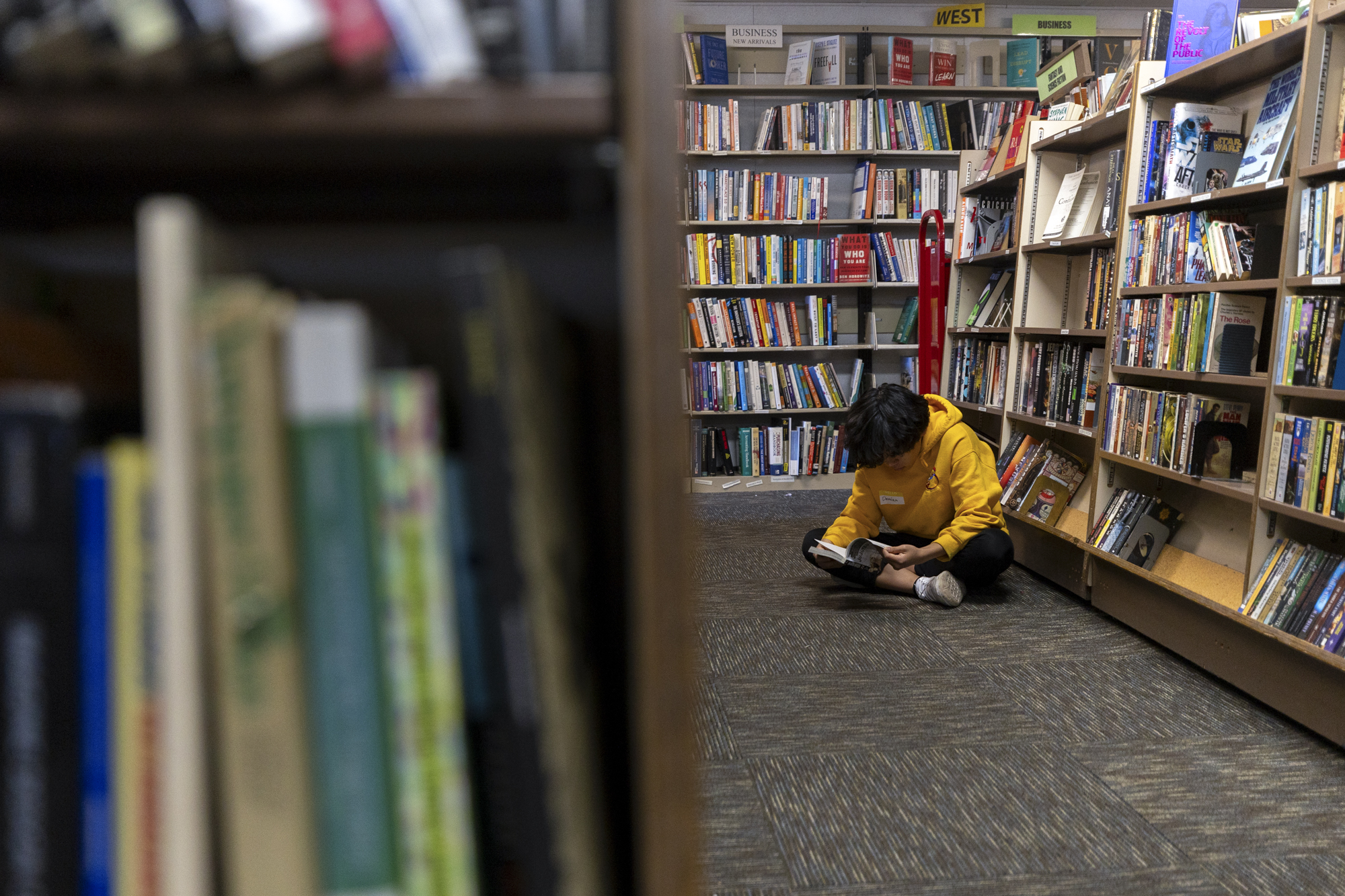
"caption": "Damian Park, 14, reads between the aisles during a quiet moment before customers arrive at a Friends of the Palo Alto Library book sale on Jan. 11, 2026, in Palo Alto. Park has volunteered with the organization for several months.",
"credit": "Gustavo Hernandez/KQED",
"altTag": null,
"description": null,
"imgSizes": {
"thumbnail": {
"file": "https://cdn.kqed.org/wp-content/uploads/sites/10/2026/01/01112026_BAY-AREA-PUBLIC-LIBRARY-SALES-_GH_010-KQED-160x107.jpg",
"width": 160,
"height": 107,
"mimeType": "image/jpeg"
},
"1536x1536": {
"file": "https://cdn.kqed.org/wp-content/uploads/sites/10/2026/01/01112026_BAY-AREA-PUBLIC-LIBRARY-SALES-_GH_010-KQED-1536x1024.jpg",
"width": 1536,
"height": 1024,
"mimeType": "image/jpeg"
},
"post-thumbnail": {
"file": "https://cdn.kqed.org/wp-content/uploads/sites/10/2026/01/01112026_BAY-AREA-PUBLIC-LIBRARY-SALES-_GH_010-KQED-672x372.jpg",
"width": 672,
"height": 372,
"mimeType": "image/jpeg"
},
"twentyfourteen-full-width": {
"file": "https://cdn.kqed.org/wp-content/uploads/sites/10/2026/01/01112026_BAY-AREA-PUBLIC-LIBRARY-SALES-_GH_010-KQED-1038x576.jpg",
"width": 1038,
"height": 576,
"mimeType": "image/jpeg"
},
"npr-cds-wide": {
"file": "https://cdn.kqed.org/wp-content/uploads/sites/10/2026/01/01112026_BAY-AREA-PUBLIC-LIBRARY-SALES-_GH_010-KQED-1200x675.jpg",
"width": 1200,
"height": 675,
"mimeType": "image/jpeg"
},
"kqedFullSize": {
"file": "https://cdn.kqed.org/wp-content/uploads/sites/10/2026/01/01112026_BAY-AREA-PUBLIC-LIBRARY-SALES-_GH_010-KQED.jpg",
"width": 2000,
"height": 1333
}
},
"isLoading": false,
"fetchFailed": false
},
"news_12071091": {
"type": "attachments",
"id": "news_12071091",
"meta": {
"index": "attachments_1716263798",
"site": "news",
"id": "12071091",
"found": true
},
"title": "Highwinds And Heavy Snow At Kirkwood Ski Resort",
"publishDate": 1769466553,
"status": "inherit",
"parent": 12071010,
"modified": 1788279682,
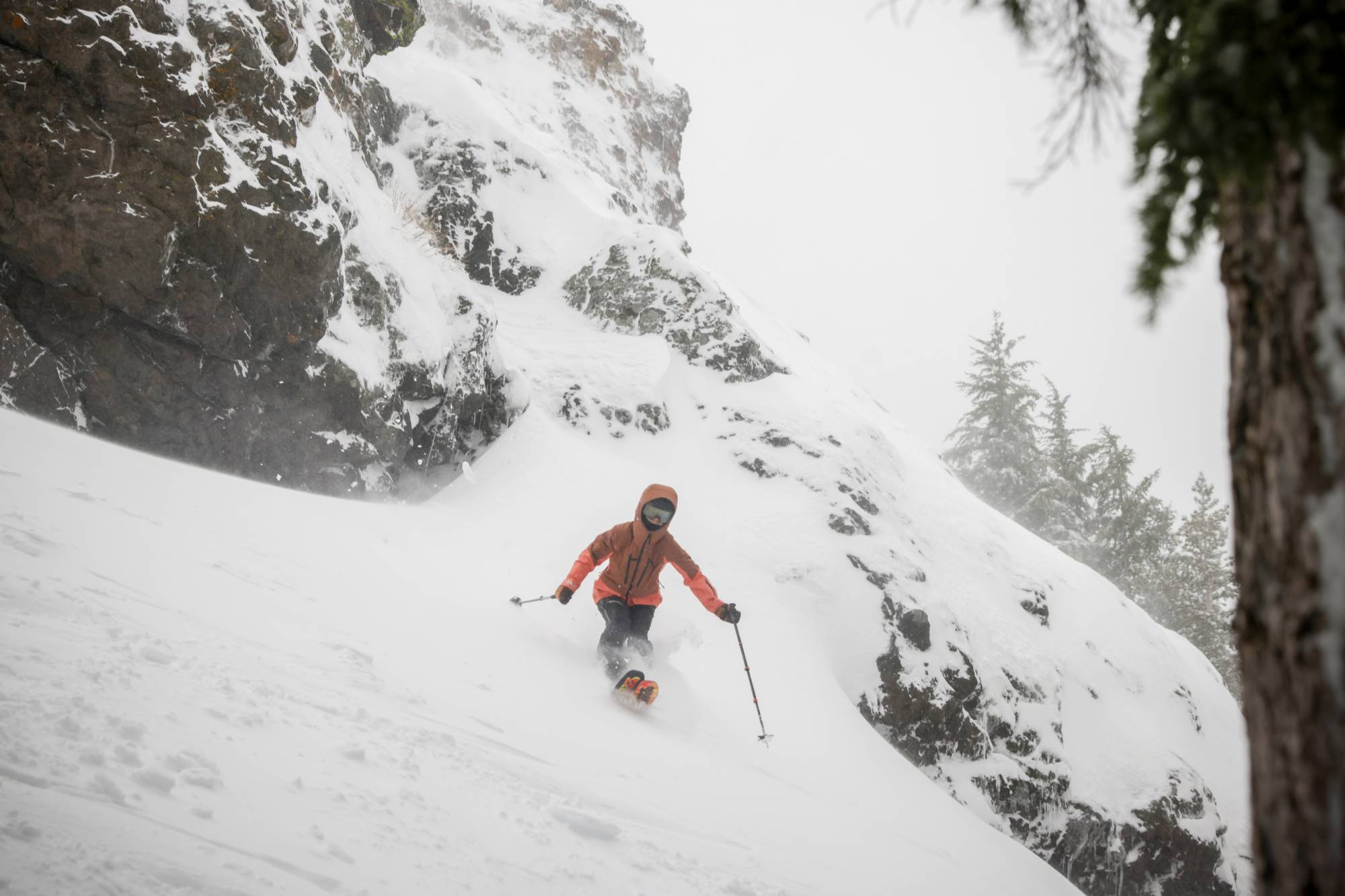
"caption": "Professional skier Molly Armanino lands Dan's Cliff at Kirkwood Ski Resort in Kirkwood, California on Saturday, Jan. 3, 2026. Heavy snowfall beckons skiers, but challenge motorists as a weather system smashes into the Tahoe region. ",
"credit": "Brontë Wittpenn/San Francisco Chronicle via Getty Images",
"altTag": null,
"description": null,
"imgSizes": {
"medium": {
"file": "https://cdn.kqed.org/wp-content/uploads/sites/10/2026/01/GettyImages-2253947921-2000x1333.jpg",
"width": 2000,
"height": 1333,
"mimeType": "image/jpeg"
},
"large": {
"file": "https://cdn.kqed.org/wp-content/uploads/sites/10/2026/01/GettyImages-2253947921-2000x1333.jpg",
"width": 2000,
"height": 1333,
"mimeType": "image/jpeg"
},
"thumbnail": {
"file": "https://cdn.kqed.org/wp-content/uploads/sites/10/2026/01/GettyImages-2253947921-160x107.jpg",
"width": 160,
"height": 107,
"mimeType": "image/jpeg"
},
"1536x1536": {
"file": "https://cdn.kqed.org/wp-content/uploads/sites/10/2026/01/GettyImages-2253947921-1536x1024.jpg",
"width": 1536,
"height": 1024,
"mimeType": "image/jpeg"
},
"2048x2048": {
"file": "https://cdn.kqed.org/wp-content/uploads/sites/10/2026/01/GettyImages-2253947921-2048x1365.jpg",
"width": 2048,
"height": 1365,
"mimeType": "image/jpeg"
},
"post-thumbnail": {
"file": "https://cdn.kqed.org/wp-content/uploads/sites/10/2026/01/GettyImages-2253947921-672x372.jpg",
"width": 672,
"height": 372,
"mimeType": "image/jpeg"
},
"twentyfourteen-full-width": {
"file": "https://cdn.kqed.org/wp-content/uploads/sites/10/2026/01/GettyImages-2253947921-1038x576.jpg",
"width": 1038,
"height": 576,
"mimeType": "image/jpeg"
},
"full-width": {
"file": "https://cdn.kqed.org/wp-content/uploads/sites/10/2026/01/GettyImages-2253947921-2000x1333.jpg",
"width": 2000,
"height": 1333,
"mimeType": "image/jpeg"
},
"npr-cds-wide": {
"file": "https://cdn.kqed.org/wp-content/uploads/sites/10/2026/01/GettyImages-2253947921-1200x675.jpg",
"width": 1200,
"height": 675,
"mimeType": "image/jpeg"
},
"kqedFullSize": {
"file": "https://cdn.kqed.org/wp-content/uploads/sites/10/2026/01/GettyImages-2253947921-scaled-e1769466571155.jpg",
"width": 2000,
"height": 1334
}
},
"isLoading": false,
"fetchFailed": false
},
"news_12070806": {
"type": "attachments",
"id": "news_12070806",
"meta": {
"index": "attachments_1716263798",
"site": "news",
"id": "12070806",
"found": true
},
"title": "Photo6Lab",
"publishDate": 1769116374,
"status": "inherit",
"parent": 12070647,
"modified": 1769117513,
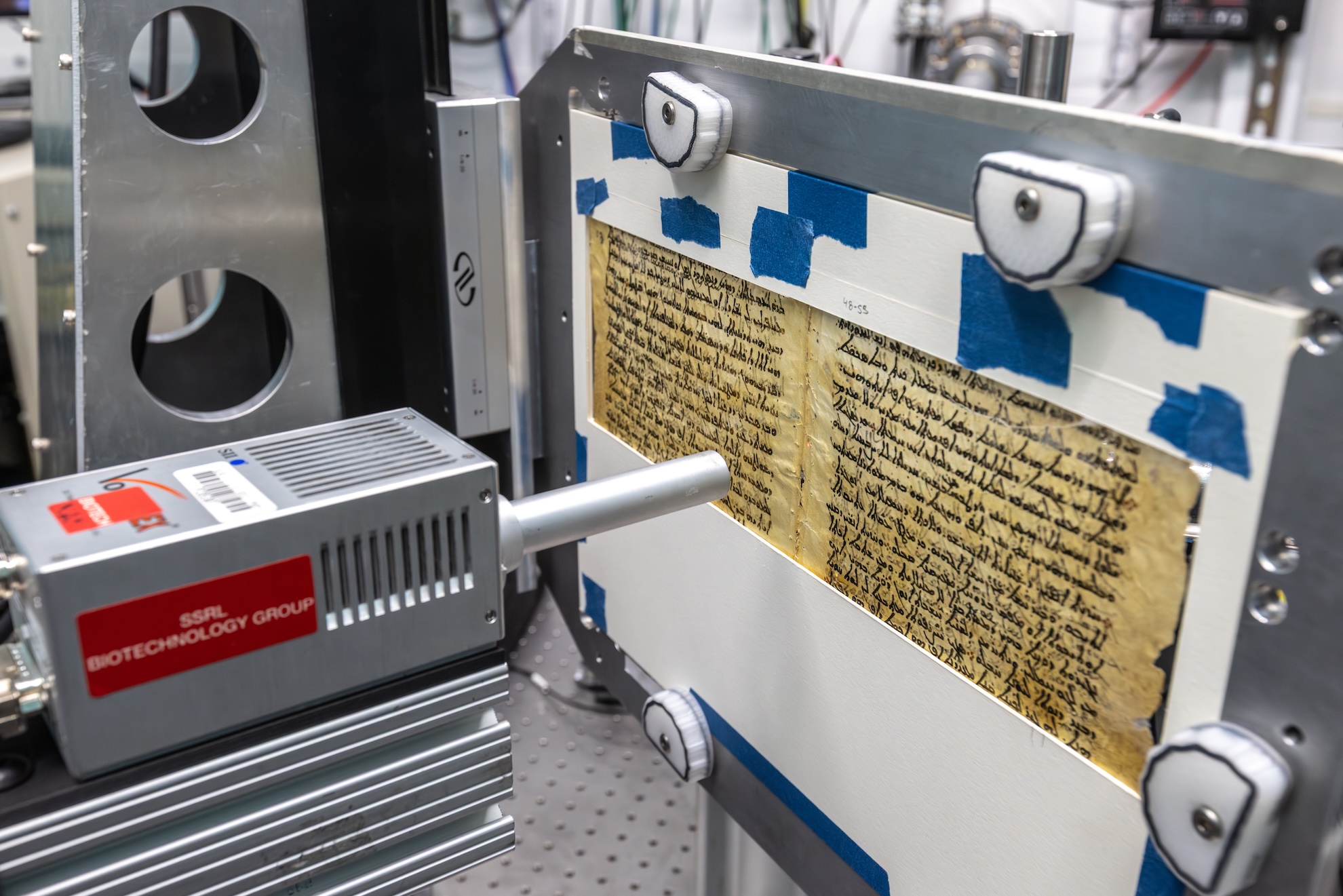
"caption": "A portion of the Codex Climaci rescriptus palimpsest, from the Museum of the Bible in Washington, D.C. ",
"credit": "Jacqueline Ramseyer Orrell/SLAC National Accelerator Laboratory",
"altTag": null,
"description": null,
"imgSizes": {
"thumbnail": {
"file": "https://cdn.kqed.org/wp-content/uploads/sites/10/2026/01/Photo6Lab-160x107.jpeg",
"width": 160,
"height": 107,
"mimeType": "image/jpeg"
},
"1536x1536": {
"file": "https://cdn.kqed.org/wp-content/uploads/sites/10/2026/01/Photo6Lab-1536x1025.jpeg",
"width": 1536,
"height": 1025,
"mimeType": "image/jpeg"
},
"post-thumbnail": {
"file": "https://cdn.kqed.org/wp-content/uploads/sites/10/2026/01/Photo6Lab-672x372.jpeg",
"width": 672,
"height": 372,
"mimeType": "image/jpeg"
},
"twentyfourteen-full-width": {
"file": "https://cdn.kqed.org/wp-content/uploads/sites/10/2026/01/Photo6Lab-1038x576.jpeg",
"width": 1038,
"height": 576,
"mimeType": "image/jpeg"
},
"npr-cds-wide": {
"file": "https://cdn.kqed.org/wp-content/uploads/sites/10/2026/01/Photo6Lab-1200x675.jpeg",
"width": 1200,
"height": 675,
"mimeType": "image/jpeg"
},
"kqedFullSize": {
"file": "https://cdn.kqed.org/wp-content/uploads/sites/10/2026/01/Photo6Lab.jpeg",
"width": 1980,
"height": 1321
}
},
"isLoading": false,
"fetchFailed": false
},
"news_12070989": {
"type": "attachments",
"id": "news_12070989",
"meta": {
"index": "attachments_1716263798",
"site": "news",
"id": "12070989",
"found": true
},
"title": "260123-PIZZATRASHCANS-05-BL_QED-KQED",
"publishDate": 1769214912,
"status": "inherit",
"parent": 0,
"modified": 1769215037,
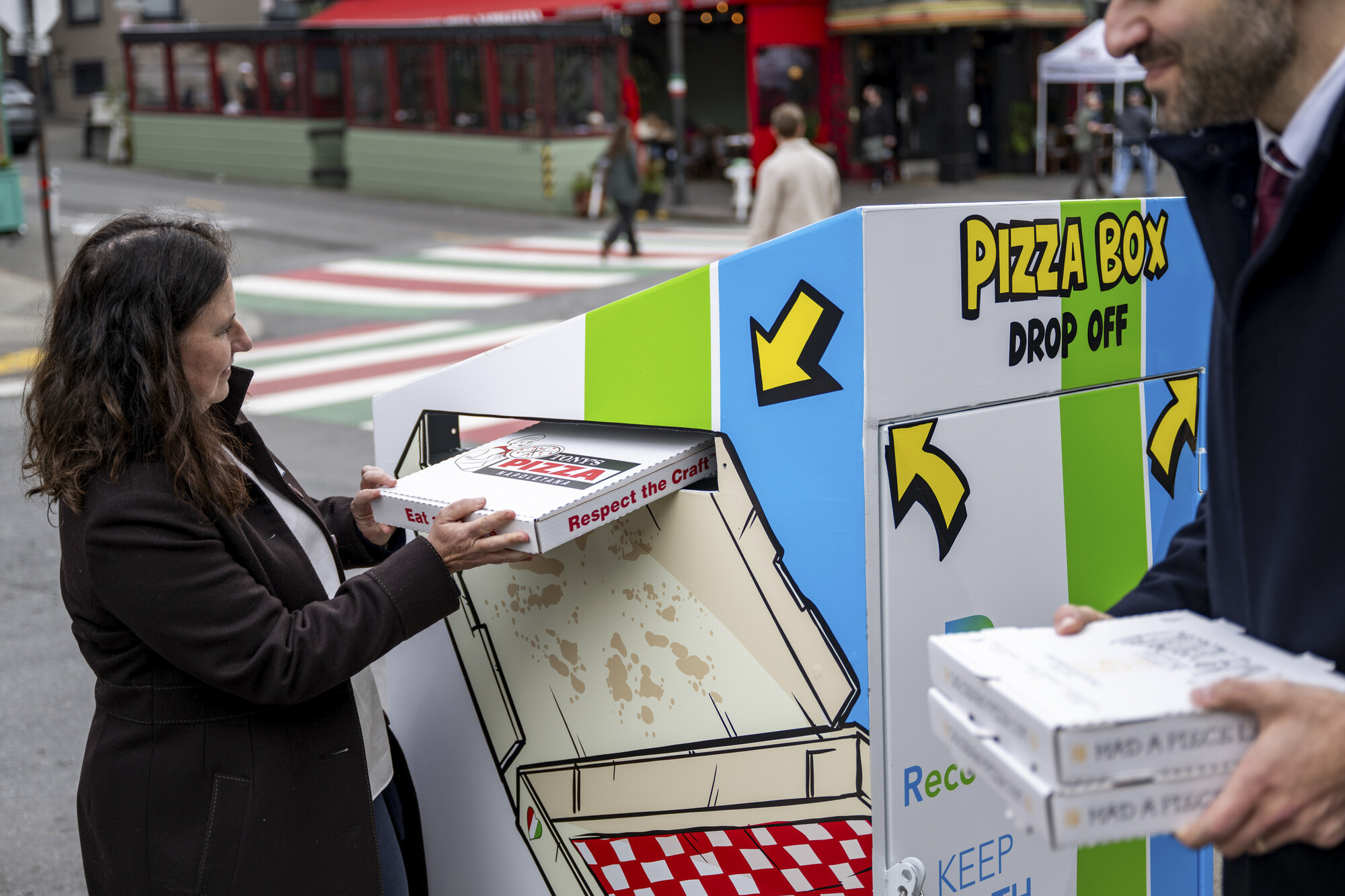
"caption": "A person drops a pizza box into a new trash can designed specifically to accommodate pizza boxes in San Francisco’s North Beach neighborhood on Jan. 23, 2026.",
"credit": "Beth LaBerge/KQED",
"altTag": null,
"description": null,
"imgSizes": {
"thumbnail": {
"file": "https://cdn.kqed.org/wp-content/uploads/sites/10/2026/01/260123-PIZZATRASHCANS-05-BL_QED-KQED-160x107.jpg",
"width": 160,
"height": 107,
"mimeType": "image/jpeg"
},
"1536x1536": {
"file": "https://cdn.kqed.org/wp-content/uploads/sites/10/2026/01/260123-PIZZATRASHCANS-05-BL_QED-KQED-1536x1024.jpg",
"width": 1536,
"height": 1024,
"mimeType": "image/jpeg"
},
"post-thumbnail": {
"file": "https://cdn.kqed.org/wp-content/uploads/sites/10/2026/01/260123-PIZZATRASHCANS-05-BL_QED-KQED-672x372.jpg",
"width": 672,
"height": 372,
"mimeType": "image/jpeg"
},
"twentyfourteen-full-width": {
"file": "https://cdn.kqed.org/wp-content/uploads/sites/10/2026/01/260123-PIZZATRASHCANS-05-BL_QED-KQED-1038x576.jpg",
"width": 1038,
"height": 576,
"mimeType": "image/jpeg"
},
"npr-cds-wide": {
"file": "https://cdn.kqed.org/wp-content/uploads/sites/10/2026/01/260123-PIZZATRASHCANS-05-BL_QED-KQED-1200x675.jpg",
"width": 1200,
"height": 675,
"mimeType": "image/jpeg"
},
"kqedFullSize": {
"file": "https://cdn.kqed.org/wp-content/uploads/sites/10/2026/01/260123-PIZZATRASHCANS-05-BL_QED-KQED.jpg",
"width": 2000,
"height": 1333
}
},
"isLoading": false,
"fetchFailed": false
},
"news_12070942": {
"type": "attachments",
"id": "news_12070942",
"meta": {
"index": "attachments_1716263798",
"site": "news",
"id": "12070942",
"found": true
},
"title": "GettyImages-2172084857-KQED",
"publishDate": 1769201605,
"status": "inherit",
"parent": 12070918,
"modified": 1769204710,
"caption": "Defensive lineman Kevin Johnson #94 of the Philadelphia Eagles looks on from the sideline during a game against the Washington Redskins at Veterans Stadium on Oct. 8, 1995, in Philadelphia, Pennsylvania. Johnson would go on to play for the Raiders in Oakland. ",
"credit": "George Gojkovich/Getty Images",
"altTag": null,
"description": null,
"imgSizes": {
"thumbnail": {
"file": "https://cdn.kqed.org/wp-content/uploads/sites/10/2026/01/GettyImages-2172084857-KQED-160x107.jpg",
"width": 160,
"height": 107,
"mimeType": "image/jpeg"
},
"1536x1536": {
"file": "https://cdn.kqed.org/wp-content/uploads/sites/10/2026/01/GettyImages-2172084857-KQED-1536x1025.jpg",
"width": 1536,
"height": 1025,
"mimeType": "image/jpeg"
},
"post-thumbnail": {
"file": "https://cdn.kqed.org/wp-content/uploads/sites/10/2026/01/GettyImages-2172084857-KQED-672x372.jpg",
"width": 672,
"height": 372,
"mimeType": "image/jpeg"
},
"twentyfourteen-full-width": {
"file": "https://cdn.kqed.org/wp-content/uploads/sites/10/2026/01/GettyImages-2172084857-KQED-1038x576.jpg",
"width": 1038,
"height": 576,
"mimeType": "image/jpeg"
},
"npr-cds-wide": {
"file": "https://cdn.kqed.org/wp-content/uploads/sites/10/2026/01/GettyImages-2172084857-KQED-1200x675.jpg",
"width": 1200,
"height": 675,
"mimeType": "image/jpeg"
},
"kqedFullSize": {
"file": "https://cdn.kqed.org/wp-content/uploads/sites/10/2026/01/GettyImages-2172084857-KQED.jpg",
"width": 2000,
"height": 1334
}
},
"isLoading": false,
"fetchFailed": false
},
"news_12051116": {
"type": "attachments",
"id": "news_12051116",
"meta": {
"index": "attachments_1716263798",
"site": "news",
"id": "12051116",
"found": true
},
"title": "An e-bike parked in Mill Valley on July 24, 2025.",
"publishDate": 1754502511,
"status": "inherit",
"parent": 12050242,
"modified": 1755641757,
"caption": "An e-bike parked in Mill Valley on July 24, 2025.",
"credit": "Martin do Nascimento/KQED",
"altTag": null,
"description": null,
"imgSizes": {
"thumbnail": {
"file": "https://cdn.kqed.org/wp-content/uploads/sites/10/2025/08/250724-MARIN-EBIKES-MD-07-KQED-160x107.jpg",
"width": 160,
"height": 107,
"mimeType": "image/jpeg"
},
"1536x1536": {
"file": "https://cdn.kqed.org/wp-content/uploads/sites/10/2025/08/250724-MARIN-EBIKES-MD-07-KQED-1536x1025.jpg",
"width": 1536,
"height": 1025,
"mimeType": "image/jpeg"
},
"post-thumbnail": {
"file": "https://cdn.kqed.org/wp-content/uploads/sites/10/2025/08/250724-MARIN-EBIKES-MD-07-KQED-672x372.jpg",
"width": 672,
"height": 372,
"mimeType": "image/jpeg"
},
"twentyfourteen-full-width": {
"file": "https://cdn.kqed.org/wp-content/uploads/sites/10/2025/08/250724-MARIN-EBIKES-MD-07-KQED-1038x576.jpg",
"width": 1038,
"height": 576,
"mimeType": "image/jpeg"
},
"kqedFullSize": {
"file": "https://cdn.kqed.org/wp-content/uploads/sites/10/2025/08/250724-MARIN-EBIKES-MD-07-KQED.jpg",
"width": 2000,
"height": 1334
}
},
"isLoading": false,
"fetchFailed": false
},
"news_12044984": {
"type": "attachments",
"id": "news_12044984",
"meta": {
"index": "attachments_1716263798",
"site": "news",
"id": "12044984",
"found": true
},
"title": "250618-NEWTEACHERHOUSING-19-BL-KQED",
"publishDate": 1750284868,
"status": "inherit",
"parent": 0,
"modified": 1769123881,
"caption": "Construction workers build at 750 Golden Gate Ave. in San Francisco on June 18, 2025, during a groundbreaking ceremony marking the start of two affordable housing projects. One will deliver 75 units prioritized for SFUSD and City College educators, and the other at 850 Turk will add 92 family apartments.",
"credit": "Beth LaBerge/KQED",
"altTag": null,
"description": null,
"imgSizes": {
"thumbnail": {
"file": "https://cdn.kqed.org/wp-content/uploads/sites/10/2025/06/250618-NEWTEACHERHOUSING-19-BL-KQED-160x107.jpg",
"width": 160,
"height": 107,
"mimeType": "image/jpeg"
},
"1536x1536": {
"file": "https://cdn.kqed.org/wp-content/uploads/sites/10/2025/06/250618-NEWTEACHERHOUSING-19-BL-KQED-1536x1024.jpg",
"width": 1536,
"height": 1024,
"mimeType": "image/jpeg"
},
"post-thumbnail": {
"file": "https://cdn.kqed.org/wp-content/uploads/sites/10/2025/06/250618-NEWTEACHERHOUSING-19-BL-KQED-672x372.jpg",
"width": 672,
"height": 372,
"mimeType": "image/jpeg"
},
"twentyfourteen-full-width": {
"file": "https://cdn.kqed.org/wp-content/uploads/sites/10/2025/06/250618-NEWTEACHERHOUSING-19-BL-KQED-1038x576.jpg",
"width": 1038,
"height": 576,
"mimeType": "image/jpeg"
},
"kqedFullSize": {
"file": "https://cdn.kqed.org/wp-content/uploads/sites/10/2025/06/250618-NEWTEACHERHOUSING-19-BL-KQED.jpg",
"width": 2000,
"height": 1333
}
},
"isLoading": false,
"fetchFailed": false
},
"news_12070963": {
"type": "attachments",
"id": "news_12070963",
"meta": {
"index": "attachments_1716263798",
"site": "news",
"id": "12070963",
"found": true
},
"title": "260123-SIGNATUREKICKOFF00248_TV-KQED",
"publishDate": 1769210890,
"status": "inherit",
"parent": 0,
"modified": 1769210943,
"caption": "Lian Chang (center), a grassroots activist for transit instructs people on how to gain signatures for California Senate Bill 63 at Embarcardero Plaza in San Francisco on January 23, 2026.",
"credit": "Tâm Vũ/KQED",
"altTag": null,
"description": null,
"imgSizes": {
"thumbnail": {
"file": "https://cdn.kqed.org/wp-content/uploads/sites/10/2026/01/260123-SIGNATUREKICKOFF00248_TV-KQED-160x107.jpg",
"width": 160,
"height": 107,
"mimeType": "image/jpeg"
},
"1536x1536": {
"file": "https://cdn.kqed.org/wp-content/uploads/sites/10/2026/01/260123-SIGNATUREKICKOFF00248_TV-KQED-1536x1024.jpg",
"width": 1536,
"height": 1024,
"mimeType": "image/jpeg"
},
"post-thumbnail": {
"file": "https://cdn.kqed.org/wp-content/uploads/sites/10/2026/01/260123-SIGNATUREKICKOFF00248_TV-KQED-672x372.jpg",
"width": 672,
"height": 372,
"mimeType": "image/jpeg"
},
"twentyfourteen-full-width": {
"file": "https://cdn.kqed.org/wp-content/uploads/sites/10/2026/01/260123-SIGNATUREKICKOFF00248_TV-KQED-1038x576.jpg",
"width": 1038,
"height": 576,
"mimeType": "image/jpeg"
},
"npr-cds-wide": {
"file": "https://cdn.kqed.org/wp-content/uploads/sites/10/2026/01/260123-SIGNATUREKICKOFF00248_TV-KQED-1200x675.jpg",
"width": 1200,
"height": 675,
"mimeType": "image/jpeg"
},
"kqedFullSize": {
"file": "https://cdn.kqed.org/wp-content/uploads/sites/10/2026/01/260123-SIGNATUREKICKOFF00248_TV-KQED.jpg",
"width": 2000,
"height": 1333
}
},
"isLoading": false,
"fetchFailed": false
},
"news_12057602": {
"type": "attachments",
"id": "news_12057602",
"meta": {
"index": "attachments_1716263798",
"site": "news",
"id": "12057602",
"found": true
},
"title": "BART employees stand outside a damaged 3-car train at the Fruitvale station in Oakland, Calif. on Thursday, July 9, 2015 after an early morning fire below the train between the Coliseum and Fruitvale stations disrupted the morning commute. At least three",
"publishDate": 1758821425,
"status": "inherit",
"parent": 12057594,
"modified": 1769128187,
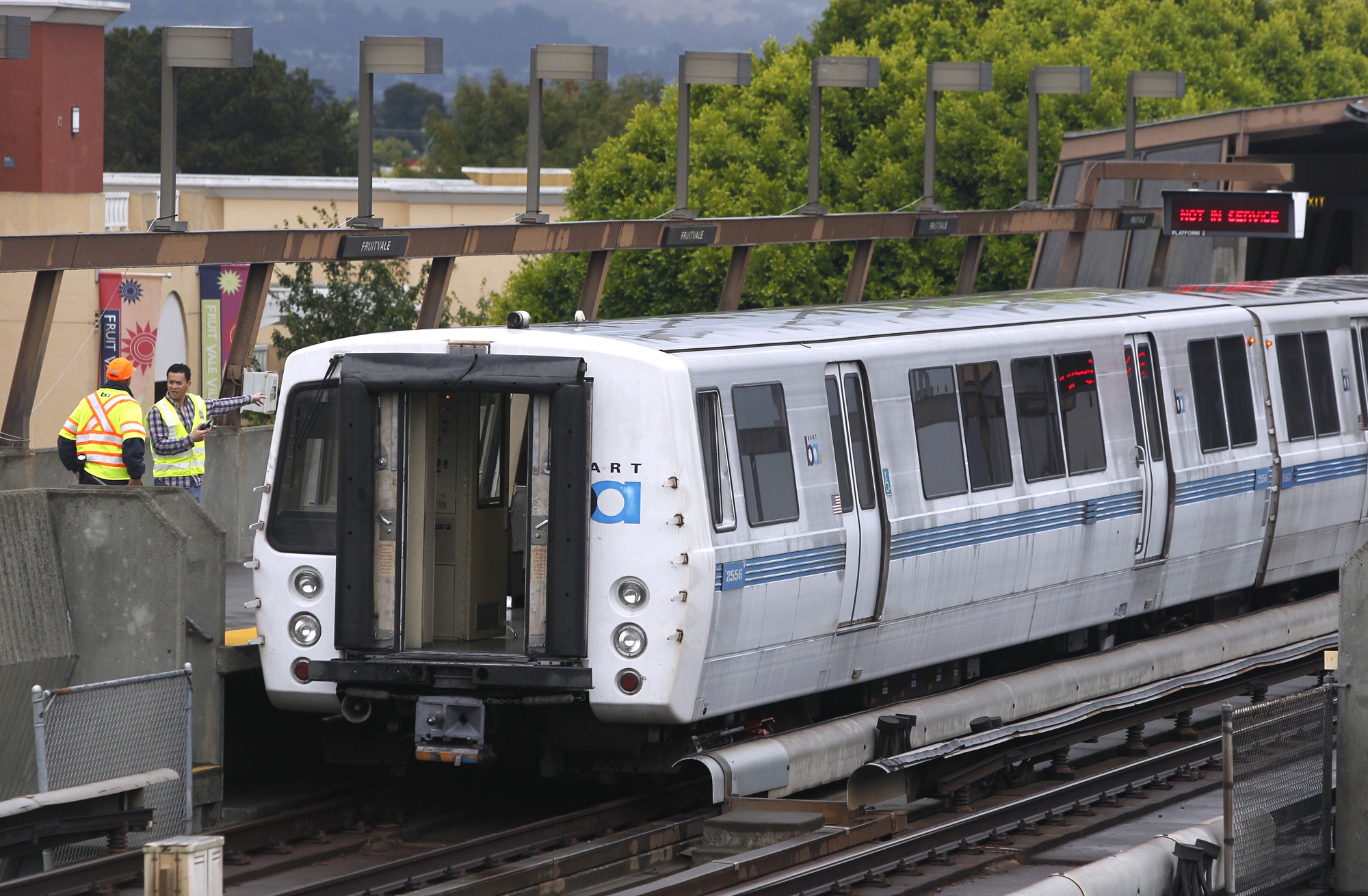
"caption": "BART employees stand outside a damaged three-car train at the Fruitvale station in Oakland, California, on July 9, 2015.",
"credit": "Paul Chinn/The San Francisco Chronicle via Getty Images",
"altTag": null,
"description": null,
"imgSizes": {
"thumbnail": {
"file": "https://cdn.kqed.org/wp-content/uploads/sites/10/2025/09/BARTEmployeesGetty-160x105.jpg",
"width": 160,
"height": 105,
"mimeType": "image/jpeg"
},
"1536x1536": {
"file": "https://cdn.kqed.org/wp-content/uploads/sites/10/2025/09/BARTEmployeesGetty-1536x1006.jpg",
"width": 1536,
"height": 1006,
"mimeType": "image/jpeg"
},
"post-thumbnail": {
"file": "https://cdn.kqed.org/wp-content/uploads/sites/10/2025/09/BARTEmployeesGetty-672x372.jpg",
"width": 672,
"height": 372,
"mimeType": "image/jpeg"
},
"twentyfourteen-full-width": {
"file": "https://cdn.kqed.org/wp-content/uploads/sites/10/2025/09/BARTEmployeesGetty-1038x576.jpg",
"width": 1038,
"height": 576,
"mimeType": "image/jpeg"
},
"kqedFullSize": {
"file": "https://cdn.kqed.org/wp-content/uploads/sites/10/2025/09/BARTEmployeesGetty.jpg",
"width": 2000,
"height": 1310
}
},
"isLoading": false,
"fetchFailed": false
},
"news_11748206": {
"type": "attachments",
"id": "news_11748206",
"meta": {
"index": "attachments_1716263798",
"site": "news",
"id": "11748206",
"found": true
},
"title": "America's Cup - Finals Races 9 & 10",
"publishDate": 1558139942,
"status": "inherit",
"parent": 11748038,
"modified": 1558140358,
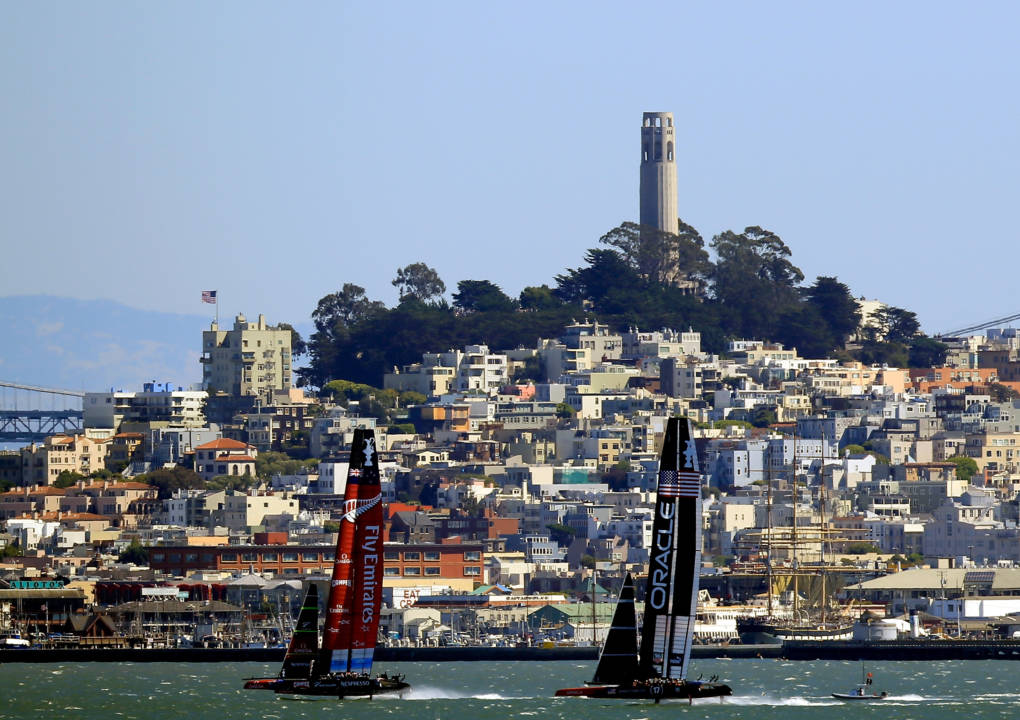
"caption": "You can see it from all over the Bay Area, but how many people who live here have actually been inside Coit Tower?",
"credit": "Jamie Squire/Getty Images",
"altTag": "You can see it from all over the Bay Area, but how many people who live here have actually been inside Coit Tower?",
"description": "You can see it from all over the Bay Area, but how many people who live here have actually been inside Coit Tower?",
"imgSizes": {
"thumbnail": {
"file": "https://cdn.kqed.org/wp-content/uploads/sites/10/2019/05/GettyImages-180658422-1-160x113.jpg",
"width": 160,
"height": 113,
"mimeType": "image/jpeg"
},
"medium": {
"file": "https://cdn.kqed.org/wp-content/uploads/sites/10/2019/05/GettyImages-180658422-1-800x565.jpg",
"width": 800,
"height": 565,
"mimeType": "image/jpeg"
},
"large": {
"file": "https://cdn.kqed.org/wp-content/uploads/sites/10/2019/05/GettyImages-180658422-1-1020x720.jpg",
"width": 1020,
"height": 720,
"mimeType": "image/jpeg"
},
"complete_open_graph": {
"file": "https://cdn.kqed.org/wp-content/uploads/sites/10/2019/05/GettyImages-180658422-1-1200x847.jpg",
"width": 1200,
"height": 847,
"mimeType": "image/jpeg"
},
"post-thumbnail": {
"file": "https://cdn.kqed.org/wp-content/uploads/sites/10/2019/05/GettyImages-180658422-1-672x372.jpg",
"width": 672,
"height": 372,
"mimeType": "image/jpeg"
},
"twentyfourteen-full-width": {
"file": "https://cdn.kqed.org/wp-content/uploads/sites/10/2019/05/GettyImages-180658422-1-1038x576.jpg",
"width": 1038,
"height": 576,
"mimeType": "image/jpeg"
},
"full-width": {
"file": "https://cdn.kqed.org/wp-content/uploads/sites/10/2019/05/GettyImages-180658422-1-1920x1355.jpg",
"width": 1920,
"height": 1355,
"mimeType": "image/jpeg"
},
"apple_news_ca_landscape_12_9": {
"file": "https://cdn.kqed.org/wp-content/uploads/sites/10/2019/05/GettyImages-180658422-1-1832x1374.jpg",
"width": 1832,
"height": 1374,
"mimeType": "image/jpeg"
},
"apple_news_ca_landscape_9_7": {
"file": "https://cdn.kqed.org/wp-content/uploads/sites/10/2019/05/GettyImages-180658422-1-1376x1032.jpg",
"width": 1376,
"height": 1032,
"mimeType": "image/jpeg"
},
"apple_news_ca_landscape_5_5": {
"file": "https://cdn.kqed.org/wp-content/uploads/sites/10/2019/05/GettyImages-180658422-1-1044x783.jpg",
"width": 1044,
"height": 783,
"mimeType": "image/jpeg"
},
"apple_news_ca_landscape_4_7": {
"file": "https://cdn.kqed.org/wp-content/uploads/sites/10/2019/05/GettyImages-180658422-1-632x474.jpg",
"width": 632,
"height": 474,
"mimeType": "image/jpeg"
},
"apple_news_ca_landscape_4_0": {
"file": "https://cdn.kqed.org/wp-content/uploads/sites/10/2019/05/GettyImages-180658422-1-536x402.jpg",
"width": 536,
"height": 402,
"mimeType": "image/jpeg"
},
"apple_news_ca_portrait_12_9": {
"file": "https://cdn.kqed.org/wp-content/uploads/sites/10/2019/05/GettyImages-180658422-1-1122x1496.jpg",
"width": 1122,
"height": 1496,
"mimeType": "image/jpeg"
},
"apple_news_ca_portrait_9_7": {
"file": "https://cdn.kqed.org/wp-content/uploads/sites/10/2019/05/GettyImages-180658422-1-840x1120.jpg",
"width": 840,
"height": 1120,
"mimeType": "image/jpeg"
},
"apple_news_ca_portrait_5_5": {
"file": "https://cdn.kqed.org/wp-content/uploads/sites/10/2019/05/GettyImages-180658422-1-687x916.jpg",
"width": 687,
"height": 916,
"mimeType": "image/jpeg"
},
"apple_news_ca_portrait_4_7": {
"file": "https://cdn.kqed.org/wp-content/uploads/sites/10/2019/05/GettyImages-180658422-1-414x552.jpg",
"width": 414,
"height": 552,
"mimeType": "image/jpeg"
},
"apple_news_ca_portrait_4_0": {
"file": "https://cdn.kqed.org/wp-content/uploads/sites/10/2019/05/GettyImages-180658422-1-354x472.jpg",
"width": 354,
"height": 472,
"mimeType": "image/jpeg"
},
"apple_news_ca_square_12_9": {
"file": "https://cdn.kqed.org/wp-content/uploads/sites/10/2019/05/GettyImages-180658422-1-1472x1472.jpg",
"width": 1472,
"height": 1472,
"mimeType": "image/jpeg"
},
"apple_news_ca_square_9_7": {
"file": "https://cdn.kqed.org/wp-content/uploads/sites/10/2019/05/GettyImages-180658422-1-1104x1104.jpg",
"width": 1104,
"height": 1104,
"mimeType": "image/jpeg"
},
"apple_news_ca_square_5_5": {
"file": "https://cdn.kqed.org/wp-content/uploads/sites/10/2019/05/GettyImages-180658422-1-912x912.jpg",
"width": 912,
"height": 912,
"mimeType": "image/jpeg"
},
"apple_news_ca_square_4_7": {
"file": "https://cdn.kqed.org/wp-content/uploads/sites/10/2019/05/GettyImages-180658422-1-550x550.jpg",
"width": 550,
"height": 550,
"mimeType": "image/jpeg"
},
"apple_news_ca_square_4_0": {
"file": "https://cdn.kqed.org/wp-content/uploads/sites/10/2019/05/GettyImages-180658422-1-470x470.jpg",
"width": 470,
"height": 470,
"mimeType": "image/jpeg"
},
"kqedFullSize": {
"file": "https://cdn.kqed.org/wp-content/uploads/sites/10/2019/05/GettyImages-180658422-1-e1769017310150.jpg",
"width": 2000,
"height": 1411
}
},
"isLoading": false,
"fetchFailed": false
},
"news_12070547": {
"type": "attachments",
"id": "news_12070547",
"meta": {
"index": "attachments_1716263798",
"site": "news",
"id": "12070547",
"found": true
},
"title": "260120-SFPROTEST00401_TV-KQED",
"publishDate": 1768964372,
"status": "inherit",
"parent": 0,
"modified": 1768964404,
"caption": "Protesters march against ICE in front of City Hall at Civic Center Plaza in San Francisco on January 20, 2026.",
"credit": "Tâm Vũ/KQED",
"altTag": null,
"description": null,
"imgSizes": {
"thumbnail": {
"file": "https://cdn.kqed.org/wp-content/uploads/sites/10/2026/01/260120-SFPROTEST00401_TV-KQED-160x107.jpg",
"width": 160,
"height": 107,
"mimeType": "image/jpeg"
},
"1536x1536": {
"file": "https://cdn.kqed.org/wp-content/uploads/sites/10/2026/01/260120-SFPROTEST00401_TV-KQED-1536x1024.jpg",
"width": 1536,
"height": 1024,
"mimeType": "image/jpeg"
},
"post-thumbnail": {
"file": "https://cdn.kqed.org/wp-content/uploads/sites/10/2026/01/260120-SFPROTEST00401_TV-KQED-672x372.jpg",
"width": 672,
"height": 372,
"mimeType": "image/jpeg"
},
"twentyfourteen-full-width": {
"file": "https://cdn.kqed.org/wp-content/uploads/sites/10/2026/01/260120-SFPROTEST00401_TV-KQED-1038x576.jpg",
"width": 1038,
"height": 576,
"mimeType": "image/jpeg"
},
"npr-cds-wide": {
"file": "https://cdn.kqed.org/wp-content/uploads/sites/10/2026/01/260120-SFPROTEST00401_TV-KQED-1200x675.jpg",
"width": 1200,
"height": 675,
"mimeType": "image/jpeg"
},
"kqedFullSize": {
"file": "https://cdn.kqed.org/wp-content/uploads/sites/10/2026/01/260120-SFPROTEST00401_TV-KQED.jpg",
"width": 2000,
"height": 1333
}
},
"isLoading": false,
"fetchFailed": false
},
"news_12069962": {
"type": "attachments",
"id": "news_12069962",
"meta": {
"index": "attachments_1716263798",
"site": "news",
"id": "12069962",
"found": true
},
"title": "20250114_Mare-Island_DMB_00333_qed",
"publishDate": 1768498657,
"status": "inherit",
"parent": 12069959,
"modified": 1768498693,
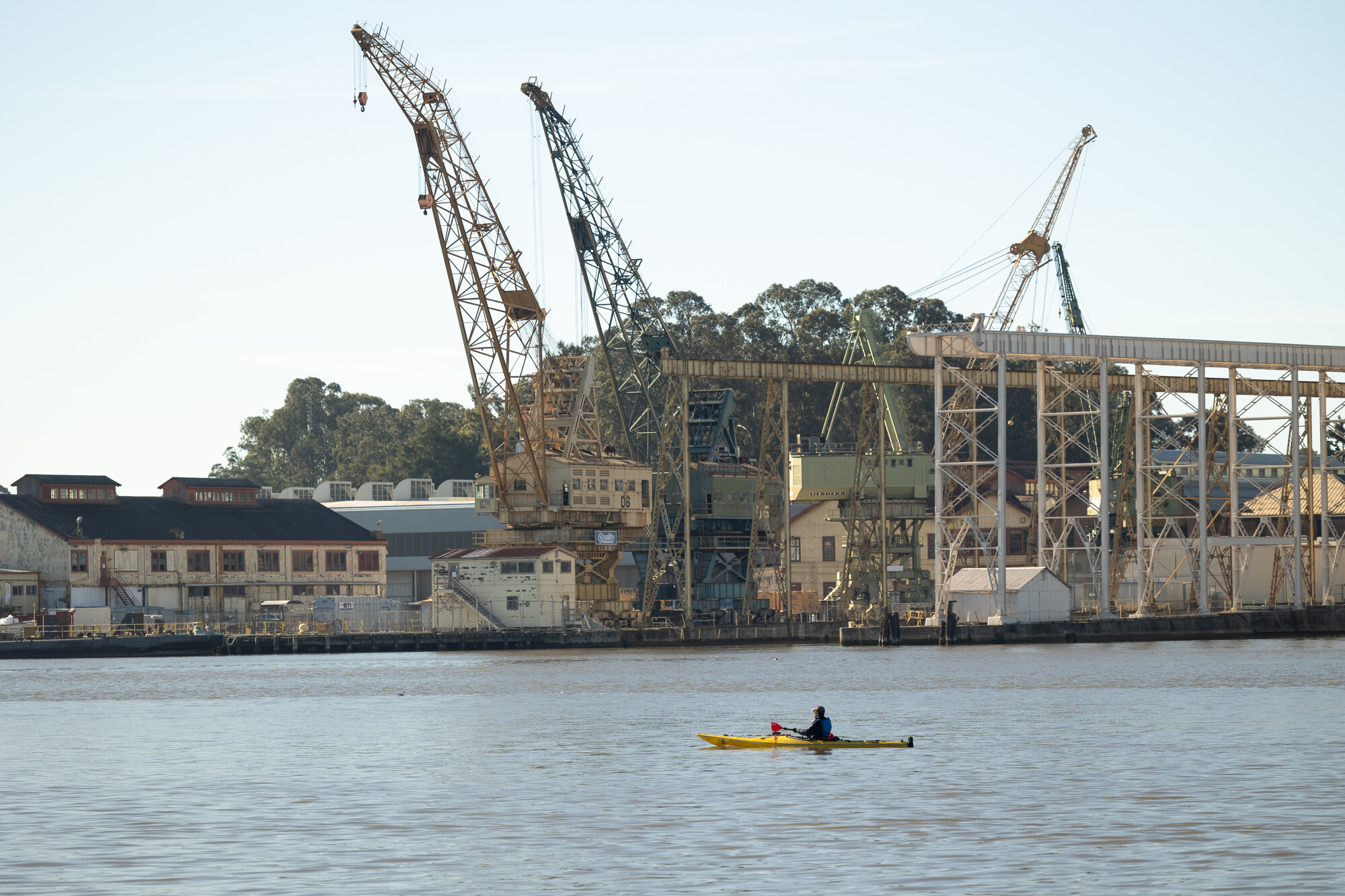
"caption": "A kayaker floats down the Napa River past the Navy Yard of Mare Island in the city of Vallejo on Jan. 14, 2025.",
"credit": "David M. Barreda/KQED",
"altTag": null,
"description": null,
"imgSizes": {
"thumbnail": {
"file": "https://cdn.kqed.org/wp-content/uploads/sites/10/2026/01/20250114_Mare-Island_DMB_00333_qed-160x107.jpg",
"width": 160,
"height": 107,
"mimeType": "image/jpeg"
},
"1536x1536": {
"file": "https://cdn.kqed.org/wp-content/uploads/sites/10/2026/01/20250114_Mare-Island_DMB_00333_qed-1536x1024.jpg",
"width": 1536,
"height": 1024,
"mimeType": "image/jpeg"
},
"post-thumbnail": {
"file": "https://cdn.kqed.org/wp-content/uploads/sites/10/2026/01/20250114_Mare-Island_DMB_00333_qed-672x372.jpg",
"width": 672,
"height": 372,
"mimeType": "image/jpeg"
},
"twentyfourteen-full-width": {
"file": "https://cdn.kqed.org/wp-content/uploads/sites/10/2026/01/20250114_Mare-Island_DMB_00333_qed-1038x576.jpg",
"width": 1038,
"height": 576,
"mimeType": "image/jpeg"
},
"npr-cds-wide": {
"file": "https://cdn.kqed.org/wp-content/uploads/sites/10/2026/01/20250114_Mare-Island_DMB_00333_qed-1200x675.jpg",
"width": 1200,
"height": 675,
"mimeType": "image/jpeg"
},
"kqedFullSize": {
"file": "https://cdn.kqed.org/wp-content/uploads/sites/10/2026/01/20250114_Mare-Island_DMB_00333_qed.jpg",
"width": 2000,
"height": 1333
}
},
"isLoading": false,
"fetchFailed": false
}
},
"audioPlayerReducer": {
"postId": "stream_live",
"isPaused": true,
"isPlaying": false,
"pfsActive": false,
"pledgeModalIsOpen": true,
"playerDrawerIsOpen": false,
"liveAudioPlayStartedAt": 0,
"liveAudioPlayContext": ""
},
"authorsReducer": {
"byline_news_12070561": {
"type": "authors",
"id": "byline_news_12070561",
"meta": {
"override": true
},
"slug": "byline_news_12070561",
"name": "KQED News and Arts Staff",
"isLoading": false
},
"abandlamudi": {
"type": "authors",
"id": "11672",
"meta": {
"index": "authors_1716337520",
"id": "11672",
"found": true
},
"name": "Adhiti Bandlamudi",
"firstName": "Adhiti",
"lastName": "Bandlamudi",
"slug": "abandlamudi",
"email": "abandlamudi@kqed.org",
"display_author_email": false,
"staff_mastheads": [
"news"
],
"title": "KQED Housing Reporter",
"bio": "Adhiti Bandlamudi reports for KQED's Housing desk. She focuses on how housing gets built across the Bay Area. Before joining KQED in 2020, she reported for WUNC in Durham, North Carolina, WABE in Atlanta, Georgia and Capital Public Radio in Sacramento. In 2017, she was awarded a Kroc Fellowship at NPR where she reported on everything from sprinkles to the Golden State Killer's arrest. When she's not reporting, she's baking new recipes in her kitchen or watching movies with friends and family. She's originally from Georgia and has strong opinions about Great British Bake Off.",
"avatar": "https://secure.gravatar.com/avatar/868129c8b257bb99a3500e2c86a65400?s=600&d=mm&r=g",
"twitter": "oddity_adhiti",
"facebook": null,
"instagram": null,
"linkedin": null,
"sites": [
{
"site": "arts",
"roles": [
"author"
]
},
{
"site": "news",
"roles": [
"editor"
]
},
{
"site": "liveblog",
"roles": [
"author"
]
}
],
"headData": {
"title": "Adhiti Bandlamudi | KQED",
"description": "KQED Housing Reporter",
"ogImgSrc": "https://secure.gravatar.com/avatar/868129c8b257bb99a3500e2c86a65400?s=600&d=mm&r=g",
"twImgSrc": "https://secure.gravatar.com/avatar/868129c8b257bb99a3500e2c86a65400?s=600&d=mm&r=g"
},
"isLoading": false,
"link": "/author/abandlamudi"
},
"adahlstromeckman": {
"type": "authors",
"id": "11785",
"meta": {
"index": "authors_1716337520",
"id": "11785",
"found": true
},
"name": "Azul Dahlstrom-Eckman",
"firstName": "Azul",
"lastName": "Dahlstrom-Eckman",
"slug": "adahlstromeckman",
"email": "adahlstrom-eckman@kqed.org",
"display_author_email": true,
"staff_mastheads": [],
"title": "Reporter",
"bio": "Azul is a reporter for KQED focusing on transportation and features. He joined KQED in 2021 as an alumna of KALW's Audio Academy radio journalism training program.",
"avatar": "https://secure.gravatar.com/avatar/9cb750298435add7815a777f55bf1f46845c1386bb8452555c60a7b820b5aba3?s=600&d=blank&r=g",
"twitter": "@zuliemann",
"bluesky": "@azul415.bsky.social",
"facebook": null,
"instagram": null,
"linkedin": null,
"sites": [
{
"site": "arts",
"roles": [
"editor"
]
},
{
"site": "news",
"roles": [
"editor"
]
},
{
"site": "science",
"roles": [
"editor"
]
},
{
"site": "liveblog",
"roles": [
"author"
]
}
],
"headData": {
"title": "Azul Dahlstrom-Eckman | KQED",
"description": "Reporter",
"ogImgSrc": "https://secure.gravatar.com/avatar/9cb750298435add7815a777f55bf1f46845c1386bb8452555c60a7b820b5aba3?s=600&d=blank&r=g",
"twImgSrc": "https://secure.gravatar.com/avatar/9cb750298435add7815a777f55bf1f46845c1386bb8452555c60a7b820b5aba3?s=600&d=blank&r=g"
},
"isLoading": false,
"link": "/author/adahlstromeckman"
},
"udursun": {
"type": "authors",
"id": "11883",
"meta": {
"index": "authors_1716337520",
"id": "11883",
"found": true
},
"name": "Ugur Dursun",
"firstName": "Ugur",
"lastName": "Dursun",
"slug": "udursun",
"email": "udursun@kqed.org",
"display_author_email": true,
"staff_mastheads": [
"arts"
],
"title": "Engagement Producer, KQED Arts & Culture",
"bio": "Ugur Dursun is a reporter and audience engagement producer for KQED Arts. Previously, her reporting has appeared on SFGate, East Bay Times, The Mercury News, KTVU, NBC Bay Area, The Stanford Daily, and other Bay Area local news outlets. In 2023, she was a recipient of Online News Association's \u003ca href=\"https://journalists.org/programs/mj-bear-fellowship/\">MJ Bear Fellowship\u003c/a>, which honors six standout journalists under the age of 30 who are pushing innovation in digital news.",
"avatar": "https://secure.gravatar.com/avatar/9c5fe6a93389635670fe02d7fa44666938055adfbfc2cfd7fffc1de9e29072a2?s=600&d=blank&r=g",
"twitter": null,
"bluesky": null,
"facebook": null,
"instagram": null,
"linkedin": null,
"sites": [
{
"site": "arts",
"roles": [
"administrator"
]
},
{
"site": "news",
"roles": [
"editor"
]
}
],
"headData": {
"title": "Ugur Dursun | KQED",
"description": "Engagement Producer, KQED Arts & Culture",
"ogImgSrc": "https://secure.gravatar.com/avatar/9c5fe6a93389635670fe02d7fa44666938055adfbfc2cfd7fffc1de9e29072a2?s=600&d=blank&r=g",
"twImgSrc": "https://secure.gravatar.com/avatar/9c5fe6a93389635670fe02d7fa44666938055adfbfc2cfd7fffc1de9e29072a2?s=600&d=blank&r=g"
},
"isLoading": false,
"link": "/author/udursun"
},
"kdebenedetti": {
"type": "authors",
"id": "11913",
"meta": {
"index": "authors_1716337520",
"id": "11913",
"found": true
},
"name": "Katie DeBenedetti",
"firstName": "Katie",
"lastName": "DeBenedetti",
"slug": "kdebenedetti",
"email": "kdebenedetti@kqed.org",
"display_author_email": false,
"staff_mastheads": [
"news",
"science"
],
"title": "KQED Contributor",
"bio": "Katie DeBenedetti is a digital reporter covering daily news for the Express Desk. Prior to joining KQED as a culture reporting intern in January 2024, she covered education and city government for the Napa Valley Register.",
"avatar": "https://secure.gravatar.com/avatar/6e31073cb8f7e4214ab03f42771d0f45?s=600&d=blank&r=g",
"twitter": null,
"facebook": null,
"instagram": null,
"linkedin": null,
"sites": [
{
"site": "news",
"roles": [
"author"
]
},
{
"site": "science",
"roles": [
"author"
]
},
{
"site": "liveblog",
"roles": [
"author"
]
}
],
"headData": {
"title": "Katie DeBenedetti | KQED",
"description": "KQED Contributor",
"ogImgSrc": "https://secure.gravatar.com/avatar/6e31073cb8f7e4214ab03f42771d0f45?s=600&d=blank&r=g",
"twImgSrc": "https://secure.gravatar.com/avatar/6e31073cb8f7e4214ab03f42771d0f45?s=600&d=blank&r=g"
},
"isLoading": false,
"link": "/author/kdebenedetti"
},
"aaliahmad": {
"type": "authors",
"id": "11986",
"meta": {
"index": "authors_1716337520",
"id": "11986",
"found": true
},
"name": "Ayah Ali-Ahmad",
"firstName": "Ayah",
"lastName": "Ali-Ahmad",
"slug": "aaliahmad",
"email": "aaliahmad@KQED.org",
"display_author_email": false,
"staff_mastheads": [],
"title": "KQED Contributor",
"bio": null,
"avatar": "https://secure.gravatar.com/avatar/1cf54f187a5e1064b2cfef3f3d2f1e4f93e453395d56912aca6382a6071ec3ed?s=600&d=blank&r=g",
"twitter": "ayahaliahmad",
"bluesky": null,
"facebook": null,
"instagram": null,
"linkedin": null,
"sites": [
{
"site": "news",
"roles": [
"subscriber"
]
}
],
"headData": {
"title": "Ayah Ali-Ahmad | KQED",
"description": "KQED Contributor",
"ogImgSrc": "https://secure.gravatar.com/avatar/1cf54f187a5e1064b2cfef3f3d2f1e4f93e453395d56912aca6382a6071ec3ed?s=600&d=blank&r=g",
"twImgSrc": "https://secure.gravatar.com/avatar/1cf54f187a5e1064b2cfef3f3d2f1e4f93e453395d56912aca6382a6071ec3ed?s=600&d=blank&r=g"
},
"isLoading": false,
"link": "/author/aaliahmad"
}
},
"pagesReducer": {
"news_tag_bay-area": {
"type": "terms",
"id": "news_1386",
"meta": {
"index": "terms_1716263798",
"site": "news",
"id": "1386",
"score": 7.788453
},
"featImg": null,
"name": "Bay Area",
"description": null,
"taxonomy": "tag",
"headData": {
"twImgId": null,
"twTitle": null,
"ogTitle": null,
"ogImgId": null,
"twDescription": null,
"description": null,
"title": "Bay Area Archives | KQED News",
"ogDescription": null
},
"ttid": 1398,
"slug": "bay-area",
"isLoading": false,
"title": "Bay Area",
"pageMeta": {
"site": "news",
"WpPageTemplate": "page-topic-editorial",
"currentPage": 36
},
"blocks": [
{
"blockName": "kqed/post-list",
"attrs": {
"layout": "cardArticle2",
"query": "posts/news?tag=bay-area",
"seeMore": false,
"paginated": true,
"page": 36
}
},
{
"blockName": "kqed/ad"
}
]
}
},
"pfsSessionReducer": {},
"postsReducer": {
"stream_live": {
"type": "live",
"id": "stream_live",
"audioUrl": "https://streams.kqed.org/kqedradio",
"title": "Live Stream",
"excerpt": "Live Stream information currently unavailable.",
"link": "/radio",
"featImg": "",
"label": {
"name": "KQED Live",
"link": "/"
}
},
"stream_kqedNewscast": {
"type": "posts",
"id": "stream_kqedNewscast",
"audioUrl": "https://www.kqed.org/.stream/anon/radio/RDnews/newscast.mp3?_=1",
"title": "KQED Newscast",
"featImg": "",
"label": {
"name": "88.5 FM",
"link": "/"
}
},
"news_12070692": {
"type": "posts",
"id": "news_12070692",
"meta": {
"index": "posts_1716263798",
"site": "news",
"id": "12070692",
"score": null,
"sort": [
1769526007000
]
},
"guestAuthors": [],
"slug": "used-book-sales-thrift-san-francisco-bay-area-public-library",
"title": "Are You a Book Lover? Check Out the Bay Area’s Public Library Sales",
"publishDate": 1769526007,
"format": "standard",
"headTitle": "Are You a Book Lover? Check Out the Bay Area’s Public Library Sales | KQED",
"labelTerm": {
"site": "news"
},
"content": "\u003cp>For all the bibliophiles in the \u003ca href=\"https://www.kqed.org/news/tag/bay-area\">Bay Area\u003c/a>, there’s a budget-friendly alternative to buying new books: used book sales, regularly held on behalf of local public libraries.\u003c/p>\n\u003cp>These sales, organized by nonprofit Friends of the Public Library groups and often run by volunteers, have become a routine avenue for the libraries to raise funds — meaning your bargain hunting goes to a good cause.\u003c/p>\n\u003cp>“Last year, we raised $150,000 for the library,” said Virginia Perry, a longtime Friends of the Palo Alto Library volunteer who noted the library uses these funds to “update their technology and support services for seniors and teens.”\u003c/p>\n\u003cul>\n\u003cli>\u003cstrong>\u003ca href=\"#sales\">Jump straight to: The upcoming used book sales in the Bay Area\u003c/a>\u003c/strong>\u003c/li>\n\u003c/ul>\n\u003cp>[ad fullwidth]\u003c/p>\n\u003cp>Sven-Erik Geddes, who previously worked for the Friends of the Oakland Public Library, now manages volunteer engagement at the Friends of the Palo Alto Library.\u003c/p>\n\u003cp>“Part of the thrill of this [job] is just meeting all the other book lovers,” he said.\u003c/p>\n\u003cfigure id=\"attachment_12069406\" class=\"wp-caption aligncenter\" style=\"max-width: 2000px\">\u003ca href=\"https://cdn.kqed.org/wp-content/uploads/sites/10/2026/01/01112026_BAY-AREA-PUBLIC-LIBRARY-SALES-_GH_014-KQED.jpg\">\u003cimg loading=\"lazy\" decoding=\"async\" class=\"size-full wp-image-12069406\" src=\"https://cdn.kqed.org/wp-content/uploads/sites/10/2026/01/01112026_BAY-AREA-PUBLIC-LIBRARY-SALES-_GH_014-KQED.jpg\" alt=\"\" width=\"2000\" height=\"1333\" srcset=\"https://cdn.kqed.org/wp-content/uploads/sites/10/2026/01/01112026_BAY-AREA-PUBLIC-LIBRARY-SALES-_GH_014-KQED.jpg 2000w, https://cdn.kqed.org/wp-content/uploads/sites/10/2026/01/01112026_BAY-AREA-PUBLIC-LIBRARY-SALES-_GH_014-KQED-160x107.jpg 160w, https://cdn.kqed.org/wp-content/uploads/sites/10/2026/01/01112026_BAY-AREA-PUBLIC-LIBRARY-SALES-_GH_014-KQED-1536x1024.jpg 1536w\" sizes=\"auto, (max-width: 2000px) 100vw, 2000px\">\u003c/a>\u003cfigcaption class=\"wp-caption-text\">A hand-painted sign directs visitors to the Friends of the Palo Alto Library book sale on Jan. 11, 2026, in Palo Alto. \u003ccite>(Gustavo Hernandez/KQED)\u003c/cite>\u003c/figcaption>\u003c/figure>\n\u003cp>The Friends of the Palo Alto Library receives up to 40 thousand donations in a typical month, Geddes said. His team of volunteers then goes through each of those donations, preparing to stock the shelves for the monthly book sale.\u003c/p>\n\u003cp>If the idea of exploring stacks of used books for sale sounds good to you, keep reading for our guide to the Bay Area’s many Friends of the Library sales — including how to maximize your chances of finding a bargain.\u003c/p>\n\u003ch2>\u003cstrong>What exactly is a “Friends of the Library” group?\u003c/strong>\u003c/h2>\n\u003cp>Friends of the Libraries are community-based, nonprofit organizations that work to support the public libraries around the country. In the Bay Area, some of the earliest examples of this concept are the Friends of the Oakland Public Library, formed in 1950, and the Friends of the San Francisco Public Library, founded in 1961.\u003c/p>\n\u003cp>If you don’t have an active Friends group for your library, \u003ca href=\"https://www.ala.org/sites/default/files/united/content/friends/orgtools/libraries-need-friends.pdf\">this toolkit\u003c/a> from the American Library Association outlines how you can either start one or revitalize an existing group.\u003c/p>\n\u003ch2>\u003cstrong>Who can shop at the Friends of the Library sales?\u003c/strong>\u003c/h2>\n\u003cp>Most of these sales are open to the public and free to enter. Some Friends organizations offer early access or steeper discounts to their members or host members-only sale events in addition to their public events.\u003c/p>\n\u003cp>If this is tempting you to join one of these organizations yourself, membership fees typically consist of small annual donations, with discounted rates for students and seniors. For example, the Friends of the Oakland Public Library membership requires a $15 donation from students and seniors, and a $25 donation from everyone else.\u003c/p>\n\u003cfigure id=\"attachment_12069402\" class=\"wp-caption aligncenter\" style=\"max-width: 2000px\">\u003ca href=\"https://cdn.kqed.org/wp-content/uploads/sites/10/2026/01/01112026_BAY-AREA-PUBLIC-LIBRARY-SALES-_GH_003-KQED.jpg\">\u003cimg loading=\"lazy\" decoding=\"async\" class=\"size-full wp-image-12069402\" src=\"https://cdn.kqed.org/wp-content/uploads/sites/10/2026/01/01112026_BAY-AREA-PUBLIC-LIBRARY-SALES-_GH_003-KQED.jpg\" alt=\"\" width=\"2000\" height=\"1333\" srcset=\"https://cdn.kqed.org/wp-content/uploads/sites/10/2026/01/01112026_BAY-AREA-PUBLIC-LIBRARY-SALES-_GH_003-KQED.jpg 2000w, https://cdn.kqed.org/wp-content/uploads/sites/10/2026/01/01112026_BAY-AREA-PUBLIC-LIBRARY-SALES-_GH_003-KQED-160x107.jpg 160w, https://cdn.kqed.org/wp-content/uploads/sites/10/2026/01/01112026_BAY-AREA-PUBLIC-LIBRARY-SALES-_GH_003-KQED-1536x1024.jpg 1536w\" sizes=\"auto, (max-width: 2000px) 100vw, 2000px\">\u003c/a>\u003cfigcaption class=\"wp-caption-text\">Customers browse through boxes of bargain-priced magazines during a Friends of the Palo Alto Library book sale on Jan. 11, 2026, in Palo Alto. \u003ccite>(Gustavo Hernandez/KQED)\u003c/cite>\u003c/figcaption>\u003c/figure>\n\u003ch2>\u003cstrong>Pro tips for attending a Friends of the Library sale\u003c/strong>\u003c/h2>\n\u003cp>\u003cstrong>Go early\u003c/strong>\u003c/p>\n\u003cp>In-demand books will be the first to get snatched, so aim to be there on the first day of the sale when it opens — especially if you are seeking out a specific title. Resellers go for these “high-value” items as soon as they’re able, so if you’re late, they’ll have already been snapped up.\u003c/p>\n\u003cp>\u003cstrong>Bring a sturdy bag\u003c/strong>\u003c/p>\n\u003cp>It’s easy to get carried away when you can pick books off the shelf knowing they’re reasonably priced. If you end up with more than a couple of books to carry home, you might regret the stylish tote bag you paired with your outfit — so this is the time to bring that unglamorous, heavy-duty bag in your closet.\u003c/p>\n\u003cp>[ad fullwidth]\u003c/p>\n\u003cp>\u003cstrong>Cash is queen\u003c/strong>\u003c/p>\n\u003cp>On the opposite end of the spectrum, if you find yourself wanting to check out with just one book, you might not be able to use a card to pay. Some sales might also be cash-only to begin with. It’s better to be prepared than to have to run to the ATM, so just as you would when heading to a flea market, make sure you bring a little cash.\u003c/p>\n\u003cp>\u003cstrong>Follow local groups on social media for latest updates\u003c/strong>\u003c/p>\n\u003cp>While more elaborate sales events are usually announced weeks or months in advance, Friends of the Library groups sometimes host impromptu sales to make room for incoming donations. Follow these organizations on the social platforms they typically make announcements on, like Instagram, so you don’t miss out.\u003c/p>\n\u003cfigure id=\"attachment_12069403\" class=\"wp-caption aligncenter\" style=\"max-width: 2000px\">\u003ca href=\"https://cdn.kqed.org/wp-content/uploads/sites/10/2026/01/01112026_BAY-AREA-PUBLIC-LIBRARY-SALES-_GH_004-KQED.jpg\">\u003cimg loading=\"lazy\" decoding=\"async\" class=\"size-full wp-image-12069403\" src=\"https://cdn.kqed.org/wp-content/uploads/sites/10/2026/01/01112026_BAY-AREA-PUBLIC-LIBRARY-SALES-_GH_004-KQED.jpg\" alt=\"\" width=\"2000\" height=\"1333\" srcset=\"https://cdn.kqed.org/wp-content/uploads/sites/10/2026/01/01112026_BAY-AREA-PUBLIC-LIBRARY-SALES-_GH_004-KQED.jpg 2000w, https://cdn.kqed.org/wp-content/uploads/sites/10/2026/01/01112026_BAY-AREA-PUBLIC-LIBRARY-SALES-_GH_004-KQED-160x107.jpg 160w, https://cdn.kqed.org/wp-content/uploads/sites/10/2026/01/01112026_BAY-AREA-PUBLIC-LIBRARY-SALES-_GH_004-KQED-1536x1024.jpg 1536w\" sizes=\"auto, (max-width: 2000px) 100vw, 2000px\">\u003c/a>\u003cfigcaption class=\"wp-caption-text\">Books labeled “Science Overflow” line a shelf as shoppers search for titles during a Friends of the Palo Alto Library book sale on Jan. 11, 2026, in Palo Alto. \u003ccite>(Gustavo Hernandez/KQED)\u003c/cite>\u003c/figcaption>\u003c/figure>\n\u003ch2>\u003cstrong>What if I want to donate my books to one of these sales?\u003c/strong>\u003c/h2>\n\u003cp>The Friends of the Public Libraries run on donated goods, but bear in mind that many of them will pause donations in the lead up to a big sale event, to focus on sorting the books they have already collected.\u003c/p>\n\u003cp>Check their websites for a list of acceptable donation items, the number of books you can donate without an appointment, and when they will be accepting donations. Some organizations will even offer to pick up your donations from your home.\u003c/p>\n\u003ch2>\u003cstrong>\u003ca id=\"sales\">\u003c/a>Upcoming used book sales around the Bay Area\u003c/strong>\u003c/h2>\n\u003cp>\u003cstrong>San Francisco\u003c/strong>\u003c/p>\n\u003cp>The Friends of the San Francisco Public Library hosts a monthly book sale at the Friends Donation Center, located in Potrero Hill at 1630 17th Street. The next announced sales are slated to take place Feb. 6-7, March 6-7 and April 3-4. \u003ca href=\"https://www.friendssfpl.org/events.html\">Details here.\u003c/a>\u003c/p>\n\u003cp>\u003cstrong>Oakland\u003c/strong>\u003c/p>\n\u003cp>The Friends of the Oakland Public Library has a bookstore, The Bookmark, in Downtown Oakland at 933 Broadway and is open daily.\u003c/p>\n\u003cp>The Bookmark hosts a monthly half-off sale on the third Saturday of every month for its members and a public 30% discount the following day, on the third Sunday of every month. \u003ca href=\"https://www.fopl.org/\">Details here.\u003c/a>\u003c/p>\n\u003cp>\u003cstrong>Palo Alto\u003c/strong>\u003c/p>\n\u003cp>The Friends of the Palo Alto Library hosts monthly sales at Cubberley Community Center (4000 Middlefield Rd.) in Palo Alto, typically on the second full weekend of every month. Their next sale takes place Feb. 14-15. \u003ca href=\"https://www.fopal.org/\">Details here.\u003c/a>\u003c/p>\n\u003cp>The Friends of the Palo Alto Library gives away books following each monthly sale, and teachers and nonprofits can get free books from their bargain room on the Sunday right after the sale ends. Everyone else can get free books from the bargain room on the Monday after a sale.\u003c/p>\n\u003cp>\u003cstrong>San José\u003c/strong>\u003c/p>\n\u003cp>The Friends of San José Public Libraries have sale events at various branches, so check your local library for times and dates. The West Valley branch of the library will hold sales this year on Feb. 7-8, May 2-3, July 11-12, Sept. 12-13 and Nov. 14-15.\u003c/p>\n\u003cp>The Bascom branch will have a sale on Feb. 21. The Almaden branch will host a book sale on Apr. 18, in addition to a monthly teen book sale on the third Saturday of every month. \u003ca href=\"https://www.sjpl.org/friends/\">Details here.\u003c/a>\u003c/p>\n\u003cp>\u003cstrong>Menlo Park\u003c/strong>\u003c/p>\n\u003cp>The Friends of the Menlo Park Library, located inside the main branch, will host their sales this year on March 20-21, July 24-25 and Nov. 13-14. \u003ca href=\"https://friendsmpl.org/\">Details here.\u003c/a>\u003c/p>\n\u003cp>\u003cstrong>Santa Rosa\u003c/strong>\u003c/p>\n\u003cp>The Friends of the Santa Rosa Libraries will host their annual sale in October at the Veterans Memorial Auditorium. \u003ca href=\"https://www.sonomalibrary.org/visit/locations/central/friends\">Details here.\u003c/a>\u003c/p>\n\u003cp>\u003cstrong>Sonoma\u003c/strong>\u003c/p>\n\u003cp>Friends of the Sonoma Valley Library has upcoming book sales on March 7-8 and Oct. 3-4 at the Sonoma Regional Library (755 W. Napa Street, Sonoma). \u003ca href=\"https://svfol.org/events/\">Details here.\u003c/a>\u003c/p>\n\u003cp>\u003cstrong>Guerneville\u003c/strong>\u003c/p>\n\u003cp>River Friends of the Guerneville Library has upcoming book & bake sales on April 25-26, Aug. 27-30 and Dec. 5. \u003ca href=\"https://events.sonomalibrary.org/events/month\">Details here.\u003c/a>\u003c/p>\n\u003cp>\u003cstrong>Napa\u003c/strong>\u003c/p>\n\u003cp>The Friends of the Napa Library will host sales during the weeks of April 18-26, Aug. 22-30 and Dec. 5-13. \u003ca href=\"https://folnapa.org/\">Details here.\u003c/a>\u003c/p>\n\u003cp>[ad floatright]\u003c/p>\n",
"blocks": [],
"excerpt": "If you love finding affordable used books, your local Friends of the Library group might have the sale for you.",
"status": "publish",
"parent": 0,
"modified": 1771011046,
"stats": {
"hasAudio": false,
"hasVideo": false,
"hasChartOrMap": false,
"iframeSrcs": [],
"hasGoogleForm": false,
"hasGallery": false,
"hasHearkenModule": false,
"hasPolis": false,
"paragraphCount": 45,
"wordCount": 1349
},
"headData": {
"title": "Are You a Book Lover? Check Out the Bay Area’s Public Library Sales | KQED",
"description": "If you love finding affordable used books, your local Friends of the Library group might have the sale for you.",
"ogTitle": "",
"ogDescription": "",
"ogImgId": "",
"twTitle": "",
"twDescription": "",
"twImgId": "",
"schema": {
"@context": "https://schema.org",
"@type": "NewsArticle",
"headline": "Are You a Book Lover? Check Out the Bay Area’s Public Library Sales",
"datePublished": "2026-01-27T07:00:07-08:00",
"dateModified": "2026-02-13T11:30:46-08:00",
"image": "https://cdn.kqed.org/wp-content/uploads/2020/02/KQED-OG-Image@1x.png",
"isAccessibleForFree": "True",
"publisher": {
"@type": "NewsMediaOrganization",
"@id": "https://www.kqed.org/#organization",
"name": "KQED",
"logo": "https://cdn.kqed.org/wp-content/uploads/2020/02/KQED-OG-Image@1x.png",
"url": "https://www.kqed.org",
"sameAs": [
"https://www.facebook.com/KQED",
"https://twitter.com/KQED",
"https://www.instagram.com/kqed/",
"https://www.tiktok.com/@kqedofficial",
"https://www.linkedin.com/company/kqed",
"https://www.youtube.com/channel/UCeC0IOo7i1P_61zVUWbJ4nw"
]
}
}
},
"primaryCategory": {
"termId": 34168,
"slug": "guides-and-explainers",
"name": "Guides and Explainers"
},
"sticky": false,
"nprStoryId": "kqed-12070692",
"templateType": "standard",
"featuredImageType": "standard",
"excludeFromSiteSearch": "Include",
"articleAge": "0",
"path": "/news/12070692/used-book-sales-thrift-san-francisco-bay-area-public-library",
"audioTrackLength": null,
"parsedContent": [
{
"type": "contentString",
"content": "\u003cdiv class=\"post-body\">\u003cp>\u003cp>For all the bibliophiles in the \u003ca href=\"https://www.kqed.org/news/tag/bay-area\">Bay Area\u003c/a>, there’s a budget-friendly alternative to buying new books: used book sales, regularly held on behalf of local public libraries.\u003c/p>\n\u003cp>These sales, organized by nonprofit Friends of the Public Library groups and often run by volunteers, have become a routine avenue for the libraries to raise funds — meaning your bargain hunting goes to a good cause.\u003c/p>\n\u003cp>“Last year, we raised $150,000 for the library,” said Virginia Perry, a longtime Friends of the Palo Alto Library volunteer who noted the library uses these funds to “update their technology and support services for seniors and teens.”\u003c/p>\n\u003cul>\n\u003cli>\u003cstrong>\u003ca href=\"#sales\">Jump straight to: The upcoming used book sales in the Bay Area\u003c/a>\u003c/strong>\u003c/li>\n\u003c/ul>\n\u003cp>\u003c/p>\u003c/div>",
"attributes": {
"named": {},
"numeric": []
}
},
{
"type": "component",
"content": "",
"name": "ad",
"attributes": {
"named": {
"label": "fullwidth"
},
"numeric": [
"fullwidth"
]
}
},
{
"type": "contentString",
"content": "\u003cdiv class=\"post-body\">\u003cp>\u003c/p>\n\u003cp>Sven-Erik Geddes, who previously worked for the Friends of the Oakland Public Library, now manages volunteer engagement at the Friends of the Palo Alto Library.\u003c/p>\n\u003cp>“Part of the thrill of this [job] is just meeting all the other book lovers,” he said.\u003c/p>\n\u003cfigure id=\"attachment_12069406\" class=\"wp-caption aligncenter\" style=\"max-width: 2000px\">\u003ca href=\"https://cdn.kqed.org/wp-content/uploads/sites/10/2026/01/01112026_BAY-AREA-PUBLIC-LIBRARY-SALES-_GH_014-KQED.jpg\">\u003cimg loading=\"lazy\" decoding=\"async\" class=\"size-full wp-image-12069406\" src=\"https://cdn.kqed.org/wp-content/uploads/sites/10/2026/01/01112026_BAY-AREA-PUBLIC-LIBRARY-SALES-_GH_014-KQED.jpg\" alt=\"\" width=\"2000\" height=\"1333\" srcset=\"https://cdn.kqed.org/wp-content/uploads/sites/10/2026/01/01112026_BAY-AREA-PUBLIC-LIBRARY-SALES-_GH_014-KQED.jpg 2000w, https://cdn.kqed.org/wp-content/uploads/sites/10/2026/01/01112026_BAY-AREA-PUBLIC-LIBRARY-SALES-_GH_014-KQED-160x107.jpg 160w, https://cdn.kqed.org/wp-content/uploads/sites/10/2026/01/01112026_BAY-AREA-PUBLIC-LIBRARY-SALES-_GH_014-KQED-1536x1024.jpg 1536w\" sizes=\"auto, (max-width: 2000px) 100vw, 2000px\">\u003c/a>\u003cfigcaption class=\"wp-caption-text\">A hand-painted sign directs visitors to the Friends of the Palo Alto Library book sale on Jan. 11, 2026, in Palo Alto. \u003ccite>(Gustavo Hernandez/KQED)\u003c/cite>\u003c/figcaption>\u003c/figure>\n\u003cp>The Friends of the Palo Alto Library receives up to 40 thousand donations in a typical month, Geddes said. His team of volunteers then goes through each of those donations, preparing to stock the shelves for the monthly book sale.\u003c/p>\n\u003cp>If the idea of exploring stacks of used books for sale sounds good to you, keep reading for our guide to the Bay Area’s many Friends of the Library sales — including how to maximize your chances of finding a bargain.\u003c/p>\n\u003ch2>\u003cstrong>What exactly is a “Friends of the Library” group?\u003c/strong>\u003c/h2>\n\u003cp>Friends of the Libraries are community-based, nonprofit organizations that work to support the public libraries around the country. In the Bay Area, some of the earliest examples of this concept are the Friends of the Oakland Public Library, formed in 1950, and the Friends of the San Francisco Public Library, founded in 1961.\u003c/p>\n\u003cp>If you don’t have an active Friends group for your library, \u003ca href=\"https://www.ala.org/sites/default/files/united/content/friends/orgtools/libraries-need-friends.pdf\">this toolkit\u003c/a> from the American Library Association outlines how you can either start one or revitalize an existing group.\u003c/p>\n\u003ch2>\u003cstrong>Who can shop at the Friends of the Library sales?\u003c/strong>\u003c/h2>\n\u003cp>Most of these sales are open to the public and free to enter. Some Friends organizations offer early access or steeper discounts to their members or host members-only sale events in addition to their public events.\u003c/p>\n\u003cp>If this is tempting you to join one of these organizations yourself, membership fees typically consist of small annual donations, with discounted rates for students and seniors. For example, the Friends of the Oakland Public Library membership requires a $15 donation from students and seniors, and a $25 donation from everyone else.\u003c/p>\n\u003cfigure id=\"attachment_12069402\" class=\"wp-caption aligncenter\" style=\"max-width: 2000px\">\u003ca href=\"https://cdn.kqed.org/wp-content/uploads/sites/10/2026/01/01112026_BAY-AREA-PUBLIC-LIBRARY-SALES-_GH_003-KQED.jpg\">\u003cimg loading=\"lazy\" decoding=\"async\" class=\"size-full wp-image-12069402\" src=\"https://cdn.kqed.org/wp-content/uploads/sites/10/2026/01/01112026_BAY-AREA-PUBLIC-LIBRARY-SALES-_GH_003-KQED.jpg\" alt=\"\" width=\"2000\" height=\"1333\" srcset=\"https://cdn.kqed.org/wp-content/uploads/sites/10/2026/01/01112026_BAY-AREA-PUBLIC-LIBRARY-SALES-_GH_003-KQED.jpg 2000w, https://cdn.kqed.org/wp-content/uploads/sites/10/2026/01/01112026_BAY-AREA-PUBLIC-LIBRARY-SALES-_GH_003-KQED-160x107.jpg 160w, https://cdn.kqed.org/wp-content/uploads/sites/10/2026/01/01112026_BAY-AREA-PUBLIC-LIBRARY-SALES-_GH_003-KQED-1536x1024.jpg 1536w\" sizes=\"auto, (max-width: 2000px) 100vw, 2000px\">\u003c/a>\u003cfigcaption class=\"wp-caption-text\">Customers browse through boxes of bargain-priced magazines during a Friends of the Palo Alto Library book sale on Jan. 11, 2026, in Palo Alto. \u003ccite>(Gustavo Hernandez/KQED)\u003c/cite>\u003c/figcaption>\u003c/figure>\n\u003ch2>\u003cstrong>Pro tips for attending a Friends of the Library sale\u003c/strong>\u003c/h2>\n\u003cp>\u003cstrong>Go early\u003c/strong>\u003c/p>\n\u003cp>In-demand books will be the first to get snatched, so aim to be there on the first day of the sale when it opens — especially if you are seeking out a specific title. Resellers go for these “high-value” items as soon as they’re able, so if you’re late, they’ll have already been snapped up.\u003c/p>\n\u003cp>\u003cstrong>Bring a sturdy bag\u003c/strong>\u003c/p>\n\u003cp>It’s easy to get carried away when you can pick books off the shelf knowing they’re reasonably priced. If you end up with more than a couple of books to carry home, you might regret the stylish tote bag you paired with your outfit — so this is the time to bring that unglamorous, heavy-duty bag in your closet.\u003c/p>\n\u003cp>\u003c/p>\u003c/div>",
"attributes": {
"named": {},
"numeric": []
}
},
{
"type": "component",
"content": "",
"name": "ad",
"attributes": {
"named": {
"label": "fullwidth"
},
"numeric": [
"fullwidth"
]
}
},
{
"type": "contentString",
"content": "\u003cdiv class=\"post-body\">\u003cp>\u003c/p>\n\u003cp>\u003cstrong>Cash is queen\u003c/strong>\u003c/p>\n\u003cp>On the opposite end of the spectrum, if you find yourself wanting to check out with just one book, you might not be able to use a card to pay. Some sales might also be cash-only to begin with. It’s better to be prepared than to have to run to the ATM, so just as you would when heading to a flea market, make sure you bring a little cash.\u003c/p>\n\u003cp>\u003cstrong>Follow local groups on social media for latest updates\u003c/strong>\u003c/p>\n\u003cp>While more elaborate sales events are usually announced weeks or months in advance, Friends of the Library groups sometimes host impromptu sales to make room for incoming donations. Follow these organizations on the social platforms they typically make announcements on, like Instagram, so you don’t miss out.\u003c/p>\n\u003cfigure id=\"attachment_12069403\" class=\"wp-caption aligncenter\" style=\"max-width: 2000px\">\u003ca href=\"https://cdn.kqed.org/wp-content/uploads/sites/10/2026/01/01112026_BAY-AREA-PUBLIC-LIBRARY-SALES-_GH_004-KQED.jpg\">\u003cimg loading=\"lazy\" decoding=\"async\" class=\"size-full wp-image-12069403\" src=\"https://cdn.kqed.org/wp-content/uploads/sites/10/2026/01/01112026_BAY-AREA-PUBLIC-LIBRARY-SALES-_GH_004-KQED.jpg\" alt=\"\" width=\"2000\" height=\"1333\" srcset=\"https://cdn.kqed.org/wp-content/uploads/sites/10/2026/01/01112026_BAY-AREA-PUBLIC-LIBRARY-SALES-_GH_004-KQED.jpg 2000w, https://cdn.kqed.org/wp-content/uploads/sites/10/2026/01/01112026_BAY-AREA-PUBLIC-LIBRARY-SALES-_GH_004-KQED-160x107.jpg 160w, https://cdn.kqed.org/wp-content/uploads/sites/10/2026/01/01112026_BAY-AREA-PUBLIC-LIBRARY-SALES-_GH_004-KQED-1536x1024.jpg 1536w\" sizes=\"auto, (max-width: 2000px) 100vw, 2000px\">\u003c/a>\u003cfigcaption class=\"wp-caption-text\">Books labeled “Science Overflow” line a shelf as shoppers search for titles during a Friends of the Palo Alto Library book sale on Jan. 11, 2026, in Palo Alto. \u003ccite>(Gustavo Hernandez/KQED)\u003c/cite>\u003c/figcaption>\u003c/figure>\n\u003ch2>\u003cstrong>What if I want to donate my books to one of these sales?\u003c/strong>\u003c/h2>\n\u003cp>The Friends of the Public Libraries run on donated goods, but bear in mind that many of them will pause donations in the lead up to a big sale event, to focus on sorting the books they have already collected.\u003c/p>\n\u003cp>Check their websites for a list of acceptable donation items, the number of books you can donate without an appointment, and when they will be accepting donations. Some organizations will even offer to pick up your donations from your home.\u003c/p>\n\u003ch2>\u003cstrong>\u003ca id=\"sales\">\u003c/a>Upcoming used book sales around the Bay Area\u003c/strong>\u003c/h2>\n\u003cp>\u003cstrong>San Francisco\u003c/strong>\u003c/p>\n\u003cp>The Friends of the San Francisco Public Library hosts a monthly book sale at the Friends Donation Center, located in Potrero Hill at 1630 17th Street. The next announced sales are slated to take place Feb. 6-7, March 6-7 and April 3-4. \u003ca href=\"https://www.friendssfpl.org/events.html\">Details here.\u003c/a>\u003c/p>\n\u003cp>\u003cstrong>Oakland\u003c/strong>\u003c/p>\n\u003cp>The Friends of the Oakland Public Library has a bookstore, The Bookmark, in Downtown Oakland at 933 Broadway and is open daily.\u003c/p>\n\u003cp>The Bookmark hosts a monthly half-off sale on the third Saturday of every month for its members and a public 30% discount the following day, on the third Sunday of every month. \u003ca href=\"https://www.fopl.org/\">Details here.\u003c/a>\u003c/p>\n\u003cp>\u003cstrong>Palo Alto\u003c/strong>\u003c/p>\n\u003cp>The Friends of the Palo Alto Library hosts monthly sales at Cubberley Community Center (4000 Middlefield Rd.) in Palo Alto, typically on the second full weekend of every month. Their next sale takes place Feb. 14-15. \u003ca href=\"https://www.fopal.org/\">Details here.\u003c/a>\u003c/p>\n\u003cp>The Friends of the Palo Alto Library gives away books following each monthly sale, and teachers and nonprofits can get free books from their bargain room on the Sunday right after the sale ends. Everyone else can get free books from the bargain room on the Monday after a sale.\u003c/p>\n\u003cp>\u003cstrong>San José\u003c/strong>\u003c/p>\n\u003cp>The Friends of San José Public Libraries have sale events at various branches, so check your local library for times and dates. The West Valley branch of the library will hold sales this year on Feb. 7-8, May 2-3, July 11-12, Sept. 12-13 and Nov. 14-15.\u003c/p>\n\u003cp>The Bascom branch will have a sale on Feb. 21. The Almaden branch will host a book sale on Apr. 18, in addition to a monthly teen book sale on the third Saturday of every month. \u003ca href=\"https://www.sjpl.org/friends/\">Details here.\u003c/a>\u003c/p>\n\u003cp>\u003cstrong>Menlo Park\u003c/strong>\u003c/p>\n\u003cp>The Friends of the Menlo Park Library, located inside the main branch, will host their sales this year on March 20-21, July 24-25 and Nov. 13-14. \u003ca href=\"https://friendsmpl.org/\">Details here.\u003c/a>\u003c/p>\n\u003cp>\u003cstrong>Santa Rosa\u003c/strong>\u003c/p>\n\u003cp>The Friends of the Santa Rosa Libraries will host their annual sale in October at the Veterans Memorial Auditorium. \u003ca href=\"https://www.sonomalibrary.org/visit/locations/central/friends\">Details here.\u003c/a>\u003c/p>\n\u003cp>\u003cstrong>Sonoma\u003c/strong>\u003c/p>\n\u003cp>Friends of the Sonoma Valley Library has upcoming book sales on March 7-8 and Oct. 3-4 at the Sonoma Regional Library (755 W. Napa Street, Sonoma). \u003ca href=\"https://svfol.org/events/\">Details here.\u003c/a>\u003c/p>\n\u003cp>\u003cstrong>Guerneville\u003c/strong>\u003c/p>\n\u003cp>River Friends of the Guerneville Library has upcoming book & bake sales on April 25-26, Aug. 27-30 and Dec. 5. \u003ca href=\"https://events.sonomalibrary.org/events/month\">Details here.\u003c/a>\u003c/p>\n\u003cp>\u003cstrong>Napa\u003c/strong>\u003c/p>\n\u003cp>The Friends of the Napa Library will host sales during the weeks of April 18-26, Aug. 22-30 and Dec. 5-13. \u003ca href=\"https://folnapa.org/\">Details here.\u003c/a>\u003c/p>\n\u003cp>\u003c/p>\u003c/div>",
"attributes": {
"named": {},
"numeric": []
}
},
{
"type": "component",
"content": "",
"name": "ad",
"attributes": {
"named": {
"label": "floatright"
},
"numeric": [
"floatright"
]
}
},
{
"type": "contentString",
"content": "\u003cdiv class=\"post-body\">\u003cp>\u003c/p>\n\u003c/div>\u003c/p>",
"attributes": {
"named": {},
"numeric": []
}
}
],
"link": "/news/12070692/used-book-sales-thrift-san-francisco-bay-area-public-library",
"authors": [
"11883"
],
"categories": [
"news_34168",
"news_28250",
"news_8"
],
"tags": [
"news_19133",
"news_32662",
"news_32707",
"news_1386",
"news_34081",
"news_30924",
"news_35888",
"news_28147",
"news_35434",
"news_18500"
],
"featImg": "news_12069405",
"label": "news"
},
"news_12071010": {
"type": "posts",
"id": "news_12071010",
"meta": {
"index": "posts_1716263798",
"site": "news",
"id": "12071010",
"score": null,
"sort": [
1769466757000
]
},
"guestAuthors": [],
"slug": "will-the-bay-areas-dry-winter-flip-not-just-yet-but-storms-could-be-coming",
"title": "Will the Bay Area’s Dry Winter Flip? Not Just Yet, But Storms Could Be Coming",
"publishDate": 1769466757,
"format": "standard",
"headTitle": "Will the Bay Area’s Dry Winter Flip? Not Just Yet, But Storms Could Be Coming | KQED",
"labelTerm": {
"site": "news"
},
"content": "\u003cp>After weeks without rain, the \u003ca href=\"https://www.kqed.org/news/tag/bay-area-weather\">Bay Area\u003c/a> could see a bit this week. No need to pull out the rain gear too quickly, though — the weather system isn’t expected to end the region’s dry spell just yet.\u003c/p>\n\u003cp>Only light showers are expected through the northern and coastal Bay Area from Tuesday night into Wednesday morning, according to National Weather Service meteorologist Dalton Behringer. But, he said, it could be a foreshadowing of a more stormy February to come.\u003c/p>\n\u003cp>“We do have some hints of some storms coming up for the start of next month,” he said. “Pretty much starting the First of February, there’s a chance for rain.”\u003c/p>\n\u003cp>[ad fullwidth]\u003c/p>\n\u003cp>This week’s showers, which are expected to roll through the North Bay beginning Tuesday evening, could produce measurable rainfall in Sonoma County and down the coast of the Bay Area, through San Francisco and the Peninsula. The rest of the region will likely remain dry after the storm system shifted slightly north, toward Humboldt and Mendocino.\u003c/p>\n\u003cp>The last few weeks of dry, if chilly, weather have been a welcome reprieve for many in the Bay Area, after a \u003ca href=\"https://www.kqed.org/news/12068635/bay-area-rain-finally-lets-up-with-colder-temperatures-ahead\">wave of heavy rains\u003c/a> in December and early January dumped record rainfall and led to widespread flooding and power disruptions.[aside postID=news_12070647 hero='https://cdn.kqed.org/wp-content/uploads/sites/10/2026/01/Photo6Lab.jpeg']The month of steady storms made up for a slow start to the water year, delivering more than 6 feet of snow to the Sierra, where ski resorts had delayed openings for weeks. The region’s snowpack jumped \u003ca href=\"https://www.sfgate.com/bayarea/article/northern-california-snowpack-50-percent-of-average-21269906.php\">600% in the last week of December\u003c/a>, bringing Northern California’s levels to about \u003ca href=\"https://snow.water.ca.gov/\">75% of the annual norm\u003c/a>.\u003c/p>\n\u003cp>That’s dropped to about 40% in the last few weeks of dry weather, according to California Department of Water Resources’ snow surveys.\u003c/p>\n\u003cp>Throughout the stop-and-start, the Bay Area’s rainfall totals have also leveled out. San Francisco is at 96% of its annual average, while Petaluma in Sonoma County is around 85%, according to National Weather Service data.\u003c/p>\n\u003cp>Still, Behringer said, “as long as we don’t stay dry for too long, we are still okay.”\u003c/p>\n\u003cp>“It can be kind of typical for us to have a midseason lull,” he said. “It’s hard to say how much longer it’s going to last. There’s still a good chance we could pick up for the rest of the season.”\u003c/p>\n\u003cp>He said there’s still a good amount of uncertainty regarding any storms on the forecast so far out, but rain is expected over the weekend, and again beginning Feb. 8.\u003c/p>\n\u003cp>Behringer said weeks of dry weather can raise fire risk, since some of the lighter fuels like brush and grass have started to dry out. But in terms of water supply, most of California’s reservoirs remain unseasonably high: Santa Barbara County’s Cachuma reservoir is at \u003ca href=\"https://cdec.water.ca.gov/resapp/RescondMain\">150% of its historic average\u003c/a> as of Sunday, and Shasta Lake, the state’s largest reservoir, is at \u003ca href=\"https://cdec.water.ca.gov/resapp/RescondMain\">125%\u003c/a>.\u003c/p>\n\u003cp>\u003c/p>\n",
"blocks": [],
"excerpt": "After weeks without rain, parts of the Bay Area are expected to see light showers this week. Next month, there are signs of some storms in the forecast.",
"status": "publish",
"parent": 0,
"modified": 1769467483,
"stats": {
"hasAudio": false,
"hasVideo": false,
"hasChartOrMap": false,
"iframeSrcs": [],
"hasGoogleForm": false,
"hasGallery": false,
"hasHearkenModule": false,
"hasPolis": false,
"paragraphCount": 13,
"wordCount": 534
},
"headData": {
"title": "Will the Bay Area’s Dry Winter Flip? Not Just Yet, But Storms Could Be Coming | KQED",
"description": "After weeks without rain, parts of the Bay Area are expected to see light showers this week. Next month, there are signs of some storms in the forecast.",
"ogTitle": "",
"ogDescription": "",
"ogImgId": "",
"twTitle": "",
"twDescription": "",
"twImgId": "",
"schema": {
"@context": "https://schema.org",
"@type": "NewsArticle",
"headline": "Will the Bay Area’s Dry Winter Flip? Not Just Yet, But Storms Could Be Coming",
"datePublished": "2026-01-26T14:32:37-08:00",
"dateModified": "2026-01-26T14:44:43-08:00",
"image": "https://cdn.kqed.org/wp-content/uploads/2020/02/KQED-OG-Image@1x.png",
"isAccessibleForFree": "True",
"publisher": {
"@type": "NewsMediaOrganization",
"@id": "https://www.kqed.org/#organization",
"name": "KQED",
"logo": "https://cdn.kqed.org/wp-content/uploads/2020/02/KQED-OG-Image@1x.png",
"url": "https://www.kqed.org",
"sameAs": [
"https://www.facebook.com/KQED",
"https://twitter.com/KQED",
"https://www.instagram.com/kqed/",
"https://www.tiktok.com/@kqedofficial",
"https://www.linkedin.com/company/kqed",
"https://www.youtube.com/channel/UCeC0IOo7i1P_61zVUWbJ4nw"
]
}
}
},
"primaryCategory": {
"termId": 34165,
"slug": "climate",
"name": "Climate"
},
"sticky": false,
"nprStoryId": "kqed-12071010",
"templateType": "standard",
"featuredImageType": "standard",
"excludeFromSiteSearch": "Include",
"articleAge": "0",
"path": "/news/12071010/will-the-bay-areas-dry-winter-flip-not-just-yet-but-storms-could-be-coming",
"audioTrackLength": null,
"parsedContent": [
{
"type": "contentString",
"content": "\u003cdiv class=\"post-body\">\u003cp>\u003cp>After weeks without rain, the \u003ca href=\"https://www.kqed.org/news/tag/bay-area-weather\">Bay Area\u003c/a> could see a bit this week. No need to pull out the rain gear too quickly, though — the weather system isn’t expected to end the region’s dry spell just yet.\u003c/p>\n\u003cp>Only light showers are expected through the northern and coastal Bay Area from Tuesday night into Wednesday morning, according to National Weather Service meteorologist Dalton Behringer. But, he said, it could be a foreshadowing of a more stormy February to come.\u003c/p>\n\u003cp>“We do have some hints of some storms coming up for the start of next month,” he said. “Pretty much starting the First of February, there’s a chance for rain.”\u003c/p>\n\u003cp>\u003c/p>\u003c/div>",
"attributes": {
"named": {},
"numeric": []
}
},
{
"type": "component",
"content": "",
"name": "ad",
"attributes": {
"named": {
"label": "fullwidth"
},
"numeric": [
"fullwidth"
]
}
},
{
"type": "contentString",
"content": "\u003cdiv class=\"post-body\">\u003cp>\u003c/p>\n\u003cp>This week’s showers, which are expected to roll through the North Bay beginning Tuesday evening, could produce measurable rainfall in Sonoma County and down the coast of the Bay Area, through San Francisco and the Peninsula. The rest of the region will likely remain dry after the storm system shifted slightly north, toward Humboldt and Mendocino.\u003c/p>\n\u003cp>The last few weeks of dry, if chilly, weather have been a welcome reprieve for many in the Bay Area, after a \u003ca href=\"https://www.kqed.org/news/12068635/bay-area-rain-finally-lets-up-with-colder-temperatures-ahead\">wave of heavy rains\u003c/a> in December and early January dumped record rainfall and led to widespread flooding and power disruptions.\u003c/p>\u003c/div>",
"attributes": {
"named": {},
"numeric": []
}
},
{
"type": "component",
"content": "",
"name": "aside",
"attributes": {
"named": {
"postid": "news_12070647",
"hero": "https://cdn.kqed.org/wp-content/uploads/sites/10/2026/01/Photo6Lab.jpeg",
"label": ""
},
"numeric": []
}
},
{
"type": "contentString",
"content": "\u003cdiv class=\"post-body\">\u003cp>The month of steady storms made up for a slow start to the water year, delivering more than 6 feet of snow to the Sierra, where ski resorts had delayed openings for weeks. The region’s snowpack jumped \u003ca href=\"https://www.sfgate.com/bayarea/article/northern-california-snowpack-50-percent-of-average-21269906.php\">600% in the last week of December\u003c/a>, bringing Northern California’s levels to about \u003ca href=\"https://snow.water.ca.gov/\">75% of the annual norm\u003c/a>.\u003c/p>\n\u003cp>That’s dropped to about 40% in the last few weeks of dry weather, according to California Department of Water Resources’ snow surveys.\u003c/p>\n\u003cp>Throughout the stop-and-start, the Bay Area’s rainfall totals have also leveled out. San Francisco is at 96% of its annual average, while Petaluma in Sonoma County is around 85%, according to National Weather Service data.\u003c/p>\n\u003cp>Still, Behringer said, “as long as we don’t stay dry for too long, we are still okay.”\u003c/p>\n\u003cp>“It can be kind of typical for us to have a midseason lull,” he said. “It’s hard to say how much longer it’s going to last. There’s still a good chance we could pick up for the rest of the season.”\u003c/p>\n\u003cp>He said there’s still a good amount of uncertainty regarding any storms on the forecast so far out, but rain is expected over the weekend, and again beginning Feb. 8.\u003c/p>\n\u003cp>Behringer said weeks of dry weather can raise fire risk, since some of the lighter fuels like brush and grass have started to dry out. But in terms of water supply, most of California’s reservoirs remain unseasonably high: Santa Barbara County’s Cachuma reservoir is at \u003ca href=\"https://cdec.water.ca.gov/resapp/RescondMain\">150% of its historic average\u003c/a> as of Sunday, and Shasta Lake, the state’s largest reservoir, is at \u003ca href=\"https://cdec.water.ca.gov/resapp/RescondMain\">125%\u003c/a>.\u003c/p>\n\u003cp>\u003c/p>\n\u003c/div>\u003c/p>",
"attributes": {
"named": {},
"numeric": []
}
}
],
"link": "/news/12071010/will-the-bay-areas-dry-winter-flip-not-just-yet-but-storms-could-be-coming",
"authors": [
"11913"
],
"categories": [
"news_34165",
"news_28250",
"news_8"
],
"tags": [
"news_1386",
"news_34945",
"news_19204",
"news_465",
"news_1083",
"news_3"
],
"featImg": "news_12071091",
"label": "news"
},
"news_12070647": {
"type": "posts",
"id": "news_12070647",
"meta": {
"index": "posts_1716263798",
"site": "news",
"id": "12070647",
"score": null,
"sort": [
1769256010000
]
},
"guestAuthors": [],
"slug": "stanford-scientists-reveal-oldest-map-of-the-night-sky-previously-lost-to-time",
"title": "Stanford Scientists Reveal Oldest Map of the Night Sky, Previously Lost to Time",
"publishDate": 1769256010,
"format": "standard",
"headTitle": "Stanford Scientists Reveal Oldest Map of the Night Sky, Previously Lost to Time | KQED",
"labelTerm": {
"site": "news"
},
"content": "\u003cp>A piece of thousand-year-old parchment is finally giving up its secrets.\u003c/p>\n\u003cp>In a major breakthrough this week, researchers at the \u003ca href=\"https://www.kqed.org/news/11978051/unraveling-the-mysteries-of-the-universe-inside-slac\">SLAC National Accelerator Laboratory\u003c/a> in Menlo Park used X-ray beams to uncover a long-lost map of the universe — the latest in a decade-long effort to recover the work of Hipparchus, the second-century B.C. mathematician, known as the father of astronomy.\u003c/p>\n\u003cp>The ancient astronomer’s star coordinates, which represent the oldest-known attempt to catalog the entire night sky, were thought to be lost for good.\u003c/p>\n\u003cp>[ad fullwidth]\u003c/p>\n\u003cp>However, as of Tuesday, scientists with the Stanford Synchrotron Radiation Lightsource — a research facility dedicated to studying the world at the atomic level — have begun looking for answers in an unlikely place: under the layers of a medieval religious text.\u003c/p>\n\u003cp>“The goal is to recover as many of these coordinates as possible,” said Victor Gysembergh, the lead scholar on the experiment. “And this will help us answer some of the biggest questions on the birth of science.” Why did they start doing science 2,000 and more years ago? How did they get so good at it so fast? Because the coordinates we are finding are incredibly accurate for something that is done with the naked eye.”\u003c/p>\n\u003cfigure id=\"attachment_12070809\" class=\"wp-caption aligncenter\" style=\"max-width: 1944px\">\u003cimg loading=\"lazy\" decoding=\"async\" class=\"size-full wp-image-12070809\" src=\"https://cdn.kqed.org/wp-content/uploads/sites/10/2026/01/Photo1AliAhmad.jpg\" alt=\"\" width=\"1944\" height=\"1458\" srcset=\"https://cdn.kqed.org/wp-content/uploads/sites/10/2026/01/Photo1AliAhmad.jpg 1944w, https://cdn.kqed.org/wp-content/uploads/sites/10/2026/01/Photo1AliAhmad-160x120.jpg 160w, https://cdn.kqed.org/wp-content/uploads/sites/10/2026/01/Photo1AliAhmad-1536x1152.jpg 1536w\" sizes=\"auto, (max-width: 1944px) 100vw, 1944px\">\u003cfigcaption class=\"wp-caption-text\">Dual monitors at the SLAC National Accelerator Laboratory show early results from a scan of the Codex Climaci Rescriptus on Wednesday, Jan. 21, 2026. The screen on the left displays hidden ancient Greek lettering from a star catalog in the bottom corner with religious overtext appearing above, while the screen on the right shows the physical parchment as it appears to the naked eye. \u003ccite>(Ayah Ali-Ahmad/KQED)\u003c/cite>\u003c/figcaption>\u003c/figure>\n\u003cp>The manuscript, known as the Codex Climaci Rescriptus, is a palimpsest, or a page in which text has been scraped off or overwritten, according to Brian Hyland, senior curator at the Museum of the Bible.\u003c/p>\n\u003cp>Parchment was incredibly expensive in the Middle Ages — one book could require a whole herd of sheep — so monks at Saint Catherine’s Monastery, the world’s oldest continuously inhabited Christian monastery located in the Sinai Desert in Egypt, often recycled materials.[aside postID=science_1999837 hero='https://cdn.kqed.org/wp-content/uploads/sites/35/2026/01/CalacademyDiscovery.jpg']The monks soaked the animal-skin parchments in milk or lemon juice, scraped them with pumice stones and sprinkled them with flour to create a fresh surface for new writing, according to Uwe Bergmann, a visiting professor of X-ray science at SLAC.\u003c/p>\n\u003cp>In this case, the original Greek astronomical notes were erased to make way for a Syriac translation of works by St. John Climacus, a 6th-7th century monk. While the religious text is easily visible to the naked eye, the ancient coordinates for the stars and notes on Hipparchus’ work remained a series of invisible smudges for centuries.\u003c/p>\n\u003cp>Late Tuesday, the team at SLAC began scanning 11 pages of the manuscript provided by the Museum of the Bible. By Wednesday morning, the monitors were showing line after line of ancient Greek.\u003c/p>\n\u003cp>The process relies on the specific chemistry of the inks used across different eras, physics Ph.D. student Minhal Gardezi said. The top layer of ink used by the monks is rich in iron, while the underlying Greek text contains a strong calcium signal.\u003c/p>\n\u003cp>By tuning the X-ray beam, researchers can create elemental maps that separate the layers. This allows them to effectively “see” the underlying layer — without the top layer obscuring the view.\u003c/p>\n\u003cfigure id=\"attachment_12070811\" class=\"wp-caption aligncenter\" style=\"max-width: 1987px\">\u003cimg loading=\"lazy\" decoding=\"async\" class=\"size-full wp-image-12070811\" src=\"https://cdn.kqed.org/wp-content/uploads/sites/10/2026/01/Photo4AliAhmad.jpg\" alt=\"\" width=\"1987\" height=\"1490\" srcset=\"https://cdn.kqed.org/wp-content/uploads/sites/10/2026/01/Photo4AliAhmad.jpg 1987w, https://cdn.kqed.org/wp-content/uploads/sites/10/2026/01/Photo4AliAhmad-160x120.jpg 160w, https://cdn.kqed.org/wp-content/uploads/sites/10/2026/01/Photo4AliAhmad-1536x1152.jpg 1536w\" sizes=\"auto, (max-width: 1987px) 100vw, 1987px\">\u003cfigcaption class=\"wp-caption-text\">Elizabeth Hayslett, a conservator from the Museum of the Bible, demonstrates the custom matting and frames used to keep 11 ancient parchment pages flat during high-speed X-ray scanning at the SLAC National Accelerator Laboratory in Menlo Park on Jan. 21, 2026. \u003ccite>(Ayah Ali-Ahmad/KQED)\u003c/cite>\u003c/figcaption>\u003c/figure>\n\u003cp>By Wednesday morning, the team had already identified the word for “Aquarius” and descriptions of “bright” stars within that constellation, Gysembergh said. The researcher said he’s been waiting four years for this experiment, which followed his earlier publications on the manuscript.\u003c/p>\n\u003cp>“I am at the peak of my excitement right now … because of this new scan that we started, line after line of text showing up in ancient Greek from the astronomical manuscript,” Gysembergh said.\u003c/p>\n\u003cp>While multispectral imaging had previously revealed some fragments, the X-ray fluorescence technology at SLAC allows for much higher resolution. Gysembergh and his colleagues can now use these coordinates to answer fundamental questions about how ancient astronomers achieved such high precision without magnifying instruments.\u003c/p>\n\u003cp>“What the Greeks knew about our world was unbelievable,” Bergmann said. “Knowing about these great thinkers from ancient Greece, going into the most modern advanced science of today, for me, it has become really, really fascinating.”\u003c/p>\n\u003cfigure id=\"attachment_12070812\" class=\"wp-caption aligncenter\" style=\"max-width: 1980px\">\u003cimg loading=\"lazy\" decoding=\"async\" class=\"size-full wp-image-12070812\" src=\"https://cdn.kqed.org/wp-content/uploads/sites/10/2026/01/Photo8bylab.jpeg\" alt=\"\" width=\"1980\" height=\"1357\" srcset=\"https://cdn.kqed.org/wp-content/uploads/sites/10/2026/01/Photo8bylab.jpeg 1980w, https://cdn.kqed.org/wp-content/uploads/sites/10/2026/01/Photo8bylab-160x110.jpeg 160w, https://cdn.kqed.org/wp-content/uploads/sites/10/2026/01/Photo8bylab-1536x1053.jpeg 1536w\" sizes=\"auto, (max-width: 1980px) 100vw, 1980px\">\u003cfigcaption class=\"wp-caption-text\">From left, conservator Elizabeth Hayslett, scholar Victor Gysembergh and physicist Uwe Bergmann place a manuscript page into a scanning apparatus at the SLAC National Accelerator Laboratory on Jan. 21, 2026. The interdisciplinary team is collaborating to recover the oldest known numerical catalog of the stars. \u003ccite>(Jacqueline Ramseyer Orrell/SLAC National Accelerator Laboratory)\u003c/cite>\u003c/figcaption>\u003c/figure>\n\u003cp>The technical side of the study is a massive interdisciplinary feat, according to Sam Webb, a lead scientist at SLAC. Webb built the instrumentation and experimental hutch that houses the world’s brightest X-rays.\u003c/p>\n\u003cp>The process involves a synchrotron, or a particle accelerator, which propels electrons to nearly the speed of light. As these electrons are “wiggled” by magnets, they shed off X-rays that are used to illuminate the manuscript, Bergmann said.\u003c/p>\n\u003cp>Bergmann said that to ensure the safety of the fragile parchment, each 10-millisecond pulse of X-ray light hits a spot the width of a human hair. Bergmann said the team is careful to keep the “dose” of radiation well below a safe limit, much like a medical X-ray.\u003c/p>\n\u003cp>Elizabeth Hayslett, a conservator from the Museum of the Bible, spent weeks preparing the 11 folios for the journey. The pages traveled in humidity-controlled cases under a strict hand-carry policy to prevent any damage. During the scanning process, the team keeps the lights low in the experimental hutch to prevent further fading of the ink.\u003c/p>\n\u003cfigure id=\"attachment_12070813\" class=\"wp-caption aligncenter\" style=\"max-width: 1980px\">\u003cimg loading=\"lazy\" decoding=\"async\" class=\"size-full wp-image-12070813\" src=\"https://cdn.kqed.org/wp-content/uploads/sites/10/2026/01/Photo9bylab.jpeg\" alt=\"\" width=\"1980\" height=\"1215\" srcset=\"https://cdn.kqed.org/wp-content/uploads/sites/10/2026/01/Photo9bylab.jpeg 1980w, https://cdn.kqed.org/wp-content/uploads/sites/10/2026/01/Photo9bylab-160x98.jpeg 160w, https://cdn.kqed.org/wp-content/uploads/sites/10/2026/01/Photo9bylab-1536x943.jpeg 1536w\" sizes=\"auto, (max-width: 1980px) 100vw, 1980px\">\u003cfigcaption class=\"wp-caption-text\">Physicist Uwe Bergmann examines a piece of the Codex Climaci Rescriptus in a darkened hutch at the SLAC National Accelerator Laboratory on Jan. 21, 2026. Researchers keep ambient light low during the imaging process to protect the fragile parchment and sensitive X-ray equipment. \u003ccite>(Jacqueline Ramseyer Orrell/SLAC National Accelerator Laboratory)\u003c/cite>\u003c/figcaption>\u003c/figure>\n\u003cp>These pages are part of a larger 200-page codex. While this specific set of pages is held in Washington, D.C., other parts of the manuscript are scattered globally.\u003c/p>\n\u003cp>Beyond the excitement of the hunt, the findings carry significant weight for the history of science. According to Gysembergh, historians debated for years whether the Roman astronomer Ptolemy had plagiarized Hipparchus’ star catalog.\u003c/p>\n\u003cp>Gysembergh said that by comparing the new data from the SLAC scans with Ptolemy’s preserved records, they can now prove that Ptolemy did not simply copy the work.\u003c/p>\n\u003cp>“We can show that Ptolemy did indeed sometimes use Hipparchus’ data, but he also used other sources. So, that’s not plagiarism. That’s actual science,” Gysembergh said. “That’s what we still do today to combine data sources to get the best data possible.”\u003c/p>\n\u003cp>Keith Knox, an imaging scientist with the Early Manuscripts Electronic Library who has worked on similar projects for 30 years, said the goal is to enhance the writing so that scholars can finally read it. Knox previously worked on the famous Archimedes Palimpsest and said that the star-map project is the latest step in a decades-long effort to recover secrets from the past.\u003c/p>\n\u003cfigure id=\"attachment_12070814\" class=\"wp-caption aligncenter\" style=\"max-width: 1980px\">\u003cimg loading=\"lazy\" decoding=\"async\" class=\"size-full wp-image-12070814\" src=\"https://cdn.kqed.org/wp-content/uploads/sites/10/2026/01/GettyImages-612208334.jpg\" alt=\"\" width=\"1980\" height=\"1320\" srcset=\"https://cdn.kqed.org/wp-content/uploads/sites/10/2026/01/GettyImages-612208334.jpg 1980w, https://cdn.kqed.org/wp-content/uploads/sites/10/2026/01/GettyImages-612208334-160x107.jpg 160w, https://cdn.kqed.org/wp-content/uploads/sites/10/2026/01/GettyImages-612208334-1536x1024.jpg 1536w\" sizes=\"auto, (max-width: 1980px) 100vw, 1980px\">\u003cfigcaption class=\"wp-caption-text\">Professor Judson Herrman, with colleagues Roger Easton, William Christens-Barry, and Keith Knox, looking over data from the Archimedes Palimpsest in Baltimore. \u003ccite>(Ken Cedeno via Getty Images)\u003c/cite>\u003c/figcaption>\u003c/figure>\n\u003cp>“This is just the latest event of working on this one manuscript, trying to recover the secrets of the writing that was erased a long time ago,” Knox said.\u003c/p>\n\u003cp>Because the X-rays see through both sides of the page simultaneously, Knox and Ph.D. students use advanced data processing to statistically separate the front and back text. On some pages, there may be as many as six layers of ink to untangle.\u003c/p>\n\u003cp>“If we can show how useful — and how informative — the science can be, the hope is that then more scholars who might have interesting documents, interesting artifacts, would then come to us and we can learn more about those,” chemistry Ph.D. student Sophia Vogelsang said.\u003c/p>\n\u003cp>The next phase will involve scholars of ancient Greek, who will painstakingly translate the coordinates and descriptions to fully reconstruct the father of astronomy’s lost catalog.\u003c/p>\n\u003cp>[ad floatright]\u003c/p>\n",
"blocks": [],
"excerpt": "SLAC researchers used X-ray beams and the particle accelerator to recover the work of an ancient astronomer, who made the earliest known attempt to log the stars.",
"status": "publish",
"parent": 0,
"modified": 1769118906,
"stats": {
"hasAudio": false,
"hasVideo": false,
"hasChartOrMap": false,
"iframeSrcs": [],
"hasGoogleForm": false,
"hasGallery": false,
"hasHearkenModule": false,
"hasPolis": false,
"paragraphCount": 30,
"wordCount": 1498
},
"headData": {
"title": "Stanford Scientists Reveal Oldest Map of the Night Sky, Previously Lost to Time | KQED",
"description": "SLAC researchers used X-ray beams and the particle accelerator to recover the work of an ancient astronomer, who made the earliest known attempt to log the stars.",
"ogTitle": "",
"ogDescription": "",
"ogImgId": "",
"twTitle": "",
"twDescription": "",
"twImgId": "",
"schema": {
"@context": "https://schema.org",
"@type": "NewsArticle",
"headline": "Stanford Scientists Reveal Oldest Map of the Night Sky, Previously Lost to Time",
"datePublished": "2026-01-24T04:00:10-08:00",
"dateModified": "2026-01-22T13:55:06-08:00",
"image": "https://cdn.kqed.org/wp-content/uploads/2020/02/KQED-OG-Image@1x.png",
"isAccessibleForFree": "True",
"publisher": {
"@type": "NewsMediaOrganization",
"@id": "https://www.kqed.org/#organization",
"name": "KQED",
"logo": "https://cdn.kqed.org/wp-content/uploads/2020/02/KQED-OG-Image@1x.png",
"url": "https://www.kqed.org",
"sameAs": [
"https://www.facebook.com/KQED",
"https://twitter.com/KQED",
"https://www.instagram.com/kqed/",
"https://www.tiktok.com/@kqedofficial",
"https://www.linkedin.com/company/kqed",
"https://www.youtube.com/channel/UCeC0IOo7i1P_61zVUWbJ4nw"
]
}
}
},
"primaryCategory": {
"termId": 248,
"slug": "technology",
"name": "Technology"
},
"sticky": false,
"templateType": "standard",
"featuredImageType": "standard",
"excludeFromSiteSearch": "Include",
"articleAge": "0",
"path": "/news/12070647/stanford-scientists-reveal-oldest-map-of-the-night-sky-previously-lost-to-time",
"audioTrackLength": null,
"parsedContent": [
{
"type": "contentString",
"content": "\u003cdiv class=\"post-body\">\u003cp>\u003cp>A piece of thousand-year-old parchment is finally giving up its secrets.\u003c/p>\n\u003cp>In a major breakthrough this week, researchers at the \u003ca href=\"https://www.kqed.org/news/11978051/unraveling-the-mysteries-of-the-universe-inside-slac\">SLAC National Accelerator Laboratory\u003c/a> in Menlo Park used X-ray beams to uncover a long-lost map of the universe — the latest in a decade-long effort to recover the work of Hipparchus, the second-century B.C. mathematician, known as the father of astronomy.\u003c/p>\n\u003cp>The ancient astronomer’s star coordinates, which represent the oldest-known attempt to catalog the entire night sky, were thought to be lost for good.\u003c/p>\n\u003cp>\u003c/p>\u003c/div>",
"attributes": {
"named": {},
"numeric": []
}
},
{
"type": "component",
"content": "",
"name": "ad",
"attributes": {
"named": {
"label": "fullwidth"
},
"numeric": [
"fullwidth"
]
}
},
{
"type": "contentString",
"content": "\u003cdiv class=\"post-body\">\u003cp>\u003c/p>\n\u003cp>However, as of Tuesday, scientists with the Stanford Synchrotron Radiation Lightsource — a research facility dedicated to studying the world at the atomic level — have begun looking for answers in an unlikely place: under the layers of a medieval religious text.\u003c/p>\n\u003cp>“The goal is to recover as many of these coordinates as possible,” said Victor Gysembergh, the lead scholar on the experiment. “And this will help us answer some of the biggest questions on the birth of science.” Why did they start doing science 2,000 and more years ago? How did they get so good at it so fast? Because the coordinates we are finding are incredibly accurate for something that is done with the naked eye.”\u003c/p>\n\u003cfigure id=\"attachment_12070809\" class=\"wp-caption aligncenter\" style=\"max-width: 1944px\">\u003cimg loading=\"lazy\" decoding=\"async\" class=\"size-full wp-image-12070809\" src=\"https://cdn.kqed.org/wp-content/uploads/sites/10/2026/01/Photo1AliAhmad.jpg\" alt=\"\" width=\"1944\" height=\"1458\" srcset=\"https://cdn.kqed.org/wp-content/uploads/sites/10/2026/01/Photo1AliAhmad.jpg 1944w, https://cdn.kqed.org/wp-content/uploads/sites/10/2026/01/Photo1AliAhmad-160x120.jpg 160w, https://cdn.kqed.org/wp-content/uploads/sites/10/2026/01/Photo1AliAhmad-1536x1152.jpg 1536w\" sizes=\"auto, (max-width: 1944px) 100vw, 1944px\">\u003cfigcaption class=\"wp-caption-text\">Dual monitors at the SLAC National Accelerator Laboratory show early results from a scan of the Codex Climaci Rescriptus on Wednesday, Jan. 21, 2026. The screen on the left displays hidden ancient Greek lettering from a star catalog in the bottom corner with religious overtext appearing above, while the screen on the right shows the physical parchment as it appears to the naked eye. \u003ccite>(Ayah Ali-Ahmad/KQED)\u003c/cite>\u003c/figcaption>\u003c/figure>\n\u003cp>The manuscript, known as the Codex Climaci Rescriptus, is a palimpsest, or a page in which text has been scraped off or overwritten, according to Brian Hyland, senior curator at the Museum of the Bible.\u003c/p>\n\u003cp>Parchment was incredibly expensive in the Middle Ages — one book could require a whole herd of sheep — so monks at Saint Catherine’s Monastery, the world’s oldest continuously inhabited Christian monastery located in the Sinai Desert in Egypt, often recycled materials.\u003c/p>\u003c/div>",
"attributes": {
"named": {},
"numeric": []
}
},
{
"type": "component",
"content": "",
"name": "aside",
"attributes": {
"named": {
"postid": "science_1999837",
"hero": "https://cdn.kqed.org/wp-content/uploads/sites/35/2026/01/CalacademyDiscovery.jpg",
"label": ""
},
"numeric": []
}
},
{
"type": "contentString",
"content": "\u003cdiv class=\"post-body\">\u003cp>The monks soaked the animal-skin parchments in milk or lemon juice, scraped them with pumice stones and sprinkled them with flour to create a fresh surface for new writing, according to Uwe Bergmann, a visiting professor of X-ray science at SLAC.\u003c/p>\n\u003cp>In this case, the original Greek astronomical notes were erased to make way for a Syriac translation of works by St. John Climacus, a 6th-7th century monk. While the religious text is easily visible to the naked eye, the ancient coordinates for the stars and notes on Hipparchus’ work remained a series of invisible smudges for centuries.\u003c/p>\n\u003cp>Late Tuesday, the team at SLAC began scanning 11 pages of the manuscript provided by the Museum of the Bible. By Wednesday morning, the monitors were showing line after line of ancient Greek.\u003c/p>\n\u003cp>The process relies on the specific chemistry of the inks used across different eras, physics Ph.D. student Minhal Gardezi said. The top layer of ink used by the monks is rich in iron, while the underlying Greek text contains a strong calcium signal.\u003c/p>\n\u003cp>By tuning the X-ray beam, researchers can create elemental maps that separate the layers. This allows them to effectively “see” the underlying layer — without the top layer obscuring the view.\u003c/p>\n\u003cfigure id=\"attachment_12070811\" class=\"wp-caption aligncenter\" style=\"max-width: 1987px\">\u003cimg loading=\"lazy\" decoding=\"async\" class=\"size-full wp-image-12070811\" src=\"https://cdn.kqed.org/wp-content/uploads/sites/10/2026/01/Photo4AliAhmad.jpg\" alt=\"\" width=\"1987\" height=\"1490\" srcset=\"https://cdn.kqed.org/wp-content/uploads/sites/10/2026/01/Photo4AliAhmad.jpg 1987w, https://cdn.kqed.org/wp-content/uploads/sites/10/2026/01/Photo4AliAhmad-160x120.jpg 160w, https://cdn.kqed.org/wp-content/uploads/sites/10/2026/01/Photo4AliAhmad-1536x1152.jpg 1536w\" sizes=\"auto, (max-width: 1987px) 100vw, 1987px\">\u003cfigcaption class=\"wp-caption-text\">Elizabeth Hayslett, a conservator from the Museum of the Bible, demonstrates the custom matting and frames used to keep 11 ancient parchment pages flat during high-speed X-ray scanning at the SLAC National Accelerator Laboratory in Menlo Park on Jan. 21, 2026. \u003ccite>(Ayah Ali-Ahmad/KQED)\u003c/cite>\u003c/figcaption>\u003c/figure>\n\u003cp>By Wednesday morning, the team had already identified the word for “Aquarius” and descriptions of “bright” stars within that constellation, Gysembergh said. The researcher said he’s been waiting four years for this experiment, which followed his earlier publications on the manuscript.\u003c/p>\n\u003cp>“I am at the peak of my excitement right now … because of this new scan that we started, line after line of text showing up in ancient Greek from the astronomical manuscript,” Gysembergh said.\u003c/p>\n\u003cp>While multispectral imaging had previously revealed some fragments, the X-ray fluorescence technology at SLAC allows for much higher resolution. Gysembergh and his colleagues can now use these coordinates to answer fundamental questions about how ancient astronomers achieved such high precision without magnifying instruments.\u003c/p>\n\u003cp>“What the Greeks knew about our world was unbelievable,” Bergmann said. “Knowing about these great thinkers from ancient Greece, going into the most modern advanced science of today, for me, it has become really, really fascinating.”\u003c/p>\n\u003cfigure id=\"attachment_12070812\" class=\"wp-caption aligncenter\" style=\"max-width: 1980px\">\u003cimg loading=\"lazy\" decoding=\"async\" class=\"size-full wp-image-12070812\" src=\"https://cdn.kqed.org/wp-content/uploads/sites/10/2026/01/Photo8bylab.jpeg\" alt=\"\" width=\"1980\" height=\"1357\" srcset=\"https://cdn.kqed.org/wp-content/uploads/sites/10/2026/01/Photo8bylab.jpeg 1980w, https://cdn.kqed.org/wp-content/uploads/sites/10/2026/01/Photo8bylab-160x110.jpeg 160w, https://cdn.kqed.org/wp-content/uploads/sites/10/2026/01/Photo8bylab-1536x1053.jpeg 1536w\" sizes=\"auto, (max-width: 1980px) 100vw, 1980px\">\u003cfigcaption class=\"wp-caption-text\">From left, conservator Elizabeth Hayslett, scholar Victor Gysembergh and physicist Uwe Bergmann place a manuscript page into a scanning apparatus at the SLAC National Accelerator Laboratory on Jan. 21, 2026. The interdisciplinary team is collaborating to recover the oldest known numerical catalog of the stars. \u003ccite>(Jacqueline Ramseyer Orrell/SLAC National Accelerator Laboratory)\u003c/cite>\u003c/figcaption>\u003c/figure>\n\u003cp>The technical side of the study is a massive interdisciplinary feat, according to Sam Webb, a lead scientist at SLAC. Webb built the instrumentation and experimental hutch that houses the world’s brightest X-rays.\u003c/p>\n\u003cp>The process involves a synchrotron, or a particle accelerator, which propels electrons to nearly the speed of light. As these electrons are “wiggled” by magnets, they shed off X-rays that are used to illuminate the manuscript, Bergmann said.\u003c/p>\n\u003cp>Bergmann said that to ensure the safety of the fragile parchment, each 10-millisecond pulse of X-ray light hits a spot the width of a human hair. Bergmann said the team is careful to keep the “dose” of radiation well below a safe limit, much like a medical X-ray.\u003c/p>\n\u003cp>Elizabeth Hayslett, a conservator from the Museum of the Bible, spent weeks preparing the 11 folios for the journey. The pages traveled in humidity-controlled cases under a strict hand-carry policy to prevent any damage. During the scanning process, the team keeps the lights low in the experimental hutch to prevent further fading of the ink.\u003c/p>\n\u003cfigure id=\"attachment_12070813\" class=\"wp-caption aligncenter\" style=\"max-width: 1980px\">\u003cimg loading=\"lazy\" decoding=\"async\" class=\"size-full wp-image-12070813\" src=\"https://cdn.kqed.org/wp-content/uploads/sites/10/2026/01/Photo9bylab.jpeg\" alt=\"\" width=\"1980\" height=\"1215\" srcset=\"https://cdn.kqed.org/wp-content/uploads/sites/10/2026/01/Photo9bylab.jpeg 1980w, https://cdn.kqed.org/wp-content/uploads/sites/10/2026/01/Photo9bylab-160x98.jpeg 160w, https://cdn.kqed.org/wp-content/uploads/sites/10/2026/01/Photo9bylab-1536x943.jpeg 1536w\" sizes=\"auto, (max-width: 1980px) 100vw, 1980px\">\u003cfigcaption class=\"wp-caption-text\">Physicist Uwe Bergmann examines a piece of the Codex Climaci Rescriptus in a darkened hutch at the SLAC National Accelerator Laboratory on Jan. 21, 2026. Researchers keep ambient light low during the imaging process to protect the fragile parchment and sensitive X-ray equipment. \u003ccite>(Jacqueline Ramseyer Orrell/SLAC National Accelerator Laboratory)\u003c/cite>\u003c/figcaption>\u003c/figure>\n\u003cp>These pages are part of a larger 200-page codex. While this specific set of pages is held in Washington, D.C., other parts of the manuscript are scattered globally.\u003c/p>\n\u003cp>Beyond the excitement of the hunt, the findings carry significant weight for the history of science. According to Gysembergh, historians debated for years whether the Roman astronomer Ptolemy had plagiarized Hipparchus’ star catalog.\u003c/p>\n\u003cp>Gysembergh said that by comparing the new data from the SLAC scans with Ptolemy’s preserved records, they can now prove that Ptolemy did not simply copy the work.\u003c/p>\n\u003cp>“We can show that Ptolemy did indeed sometimes use Hipparchus’ data, but he also used other sources. So, that’s not plagiarism. That’s actual science,” Gysembergh said. “That’s what we still do today to combine data sources to get the best data possible.”\u003c/p>\n\u003cp>Keith Knox, an imaging scientist with the Early Manuscripts Electronic Library who has worked on similar projects for 30 years, said the goal is to enhance the writing so that scholars can finally read it. Knox previously worked on the famous Archimedes Palimpsest and said that the star-map project is the latest step in a decades-long effort to recover secrets from the past.\u003c/p>\n\u003cfigure id=\"attachment_12070814\" class=\"wp-caption aligncenter\" style=\"max-width: 1980px\">\u003cimg loading=\"lazy\" decoding=\"async\" class=\"size-full wp-image-12070814\" src=\"https://cdn.kqed.org/wp-content/uploads/sites/10/2026/01/GettyImages-612208334.jpg\" alt=\"\" width=\"1980\" height=\"1320\" srcset=\"https://cdn.kqed.org/wp-content/uploads/sites/10/2026/01/GettyImages-612208334.jpg 1980w, https://cdn.kqed.org/wp-content/uploads/sites/10/2026/01/GettyImages-612208334-160x107.jpg 160w, https://cdn.kqed.org/wp-content/uploads/sites/10/2026/01/GettyImages-612208334-1536x1024.jpg 1536w\" sizes=\"auto, (max-width: 1980px) 100vw, 1980px\">\u003cfigcaption class=\"wp-caption-text\">Professor Judson Herrman, with colleagues Roger Easton, William Christens-Barry, and Keith Knox, looking over data from the Archimedes Palimpsest in Baltimore. \u003ccite>(Ken Cedeno via Getty Images)\u003c/cite>\u003c/figcaption>\u003c/figure>\n\u003cp>“This is just the latest event of working on this one manuscript, trying to recover the secrets of the writing that was erased a long time ago,” Knox said.\u003c/p>\n\u003cp>Because the X-rays see through both sides of the page simultaneously, Knox and Ph.D. students use advanced data processing to statistically separate the front and back text. On some pages, there may be as many as six layers of ink to untangle.\u003c/p>\n\u003cp>“If we can show how useful — and how informative — the science can be, the hope is that then more scholars who might have interesting documents, interesting artifacts, would then come to us and we can learn more about those,” chemistry Ph.D. student Sophia Vogelsang said.\u003c/p>\n\u003cp>The next phase will involve scholars of ancient Greek, who will painstakingly translate the coordinates and descriptions to fully reconstruct the father of astronomy’s lost catalog.\u003c/p>\n\u003cp>\u003c/p>\u003c/div>",
"attributes": {
"named": {},
"numeric": []
}
},
{
"type": "component",
"content": "",
"name": "ad",
"attributes": {
"named": {
"label": "floatright"
},
"numeric": [
"floatright"
]
}
},
{
"type": "contentString",
"content": "\u003cdiv class=\"post-body\">\u003cp>\u003c/p>\n\u003c/div>\u003c/p>",
"attributes": {
"named": {},
"numeric": []
}
}
],
"link": "/news/12070647/stanford-scientists-reveal-oldest-map-of-the-night-sky-previously-lost-to-time",
"authors": [
"11986"
],
"categories": [
"news_31795",
"news_28250",
"news_8",
"news_356",
"news_248"
],
"tags": [
"news_442",
"news_1386",
"news_21973",
"news_27626",
"news_28199",
"news_160",
"news_17996",
"news_3187",
"news_1770",
"news_35696"
],
"featImg": "news_12070806",
"label": "news"
},
"news_12070699": {
"type": "posts",
"id": "news_12070699",
"meta": {
"index": "posts_1716263798",
"site": "news",
"id": "12070699",
"score": null,
"sort": [
1769214466000
]
},
"guestAuthors": [],
"slug": "pizza-boxes-pile-up-in-sfs-north-beach-these-trash-cans-were-designed-just-for-them",
"title": "Pizza Boxes Pile Up in SF’s North Beach. These Trash Cans Were Designed Just for Them",
"publishDate": 1769214466,
"format": "standard",
"headTitle": "Pizza Boxes Pile Up in SF’s North Beach. These Trash Cans Were Designed Just for Them | KQED",
"labelTerm": {
"site": "news"
},
"content": "\u003cp>In San Francisco’s historic \u003ca href=\"https://www.kqed.org/news/tag/north-beach\">North Beach\u003c/a> neighborhood, city officials are finally addressing one of residents’ most pressing concerns — pizza boxes.\u003c/p>\n\u003cp>Among the tourists and locals alike who flock to Washington Square Park, many come with boxes of fresh, steaming pizza from nearby Tony’s Pizza Napoletana or \u003ca href=\"https://www.kqed.org/arts/13959808/golden-boy-pizza-north-beach-sf-late-nig\">Golden Boy\u003c/a>. But upon finishing the delicious pie, a struggle often ensues: Diners’ now-empty cardboard containers can’t be easily tossed into city trash cans.\u003c/p>\n\u003cp>For years, pizza eaters have had to bend or flatten and squash the cumbersome boxes into circular metal bins — and some, neighbors said, just dump them instead — but no longer. Beginning Friday, the park’s corners have brand new receptacles designed specifically to tackle the cheesy challenge.\u003c/p>\n\u003cp>[ad fullwidth]\u003c/p>\n\u003cp>“In North Beach, pizza, that’s serious business,” said Sal Coniglio, CEO of Recology, the city’s waste management contractor.\u003c/p>\n\u003cp>The company is partnering with San Francisco’s Department of Public Works on the pilot project, which includes two of the specialty bins installed at the park’s edge on Stockton Street at both Union and Filbert streets on Friday.\u003c/p>\n\u003cfigure id=\"attachment_12070983\" class=\"wp-caption aligncenter\" style=\"max-width: 2000px\">\u003ca href=\"https://cdn.kqed.org/wp-content/uploads/sites/10/2026/01/260123-PIZZATRASHCANS-09-BL_QED-KQED.jpg\">\u003cimg loading=\"lazy\" decoding=\"async\" class=\"size-full wp-image-12070983\" src=\"https://cdn.kqed.org/wp-content/uploads/sites/10/2026/01/260123-PIZZATRASHCANS-09-BL_QED-KQED.jpg\" alt=\"\" width=\"2000\" height=\"1334\" srcset=\"https://cdn.kqed.org/wp-content/uploads/sites/10/2026/01/260123-PIZZATRASHCANS-09-BL_QED-KQED.jpg 2000w, https://cdn.kqed.org/wp-content/uploads/sites/10/2026/01/260123-PIZZATRASHCANS-09-BL_QED-KQED-160x107.jpg 160w, https://cdn.kqed.org/wp-content/uploads/sites/10/2026/01/260123-PIZZATRASHCANS-09-BL_QED-KQED-1536x1025.jpg 1536w\" sizes=\"auto, (max-width: 2000px) 100vw, 2000px\">\u003c/a>\u003cfigcaption class=\"wp-caption-text\">Attendees eat pizza during the unveiling of a new trash can designed specifically to accommodate pizza boxes on the corner of Washington Square Park in San Francisco’s North Beach neighborhood on Jan. 23, 2026. \u003ccite>(Beth LaBerge/KQED)\u003c/cite>\u003c/figcaption>\u003c/figure>\n\u003cp>The new metal bins are hard to miss, reading “pizza drop off” and wrapped in blue and green designs by San Francisco \u003ca href=\"https://www.kqed.org/pop/102978/a-guide-to-san-francisco-murals-and-the-artists-who-make-them\">muralist Sirron Norris\u003c/a>. Three sides of each have slits designed specifically to accommodate pizza boxes — at least those from Slice House, Flour + Water, Golden Boy and Tony’s, all of which christened the bin on Friday.\u003c/p>\n\u003cp>The cans address a significant gripe of nearby business owners and neighbors. Pizza boxes often get dumped on sidewalks and park benches, or piled up on trash cans, contributing to more residual litter, said Peter Kwan, a longtime resident and board member of North Beach Neighbors, who has countless photos to prove it.\u003c/p>\n\u003cp>“If you come out to this park, especially in the summer, every single weekend, it is well enjoyed and well loved,” said San Francisco Supervisor Danny Sauter, whose district includes North Beach. “But the problem with that is that means after the weekend, you’re going to see this park littered with pizza boxes.”\u003c/p>\n\u003cp>Director of Public Works Carla Short said that when people try to throw away boxes, they often clog the city’s standard green bins.[aside postID=news_12069424 hero='https://cdn.kqed.org/wp-content/uploads/sites/10/2025/09/250908-VAILLANCOURTFOUNTAINREMOVAL-10-BL-KQED.jpg']“Then that can starts to overflow, and then we end up with trash around it and that spreads,” she said. “North Beach is a vibrant neighborhood in San Francisco, and we want our city to look its best. We want to make sure that we can make it easy for [people] to do the right thing.”\u003c/p>\n\u003cp>Longtime city residents might shudder at the mention of a new trash can solution, given the city’s \u003ca href=\"https://www.kqed.org/news/11906815/the-sordid-saga-of-san-franciscos-trash-cans\">long and expensive history\u003c/a> of failed attempts to tackle littered streets. In 2007, then-Mayor Gavin Newsom declared the city had “too many” bins, vowing to remove half. A decade later, the city determined there were too few, and opted to place — or replace — almost 40 on streets in the Mission District, to the tune of $1,600 each.\u003c/p>\n\u003cp>And, since 2021, city officials have been working on a garbage bin redesign, which first made headlines after three custom prototypes cost \u003ca href=\"https://www.sfchronicle.com/bayarea/article/20-000-trash-cans-No-kidding-S-F-looks-to-16331284.php\">$12,000 to $20,000 a piece\u003c/a>. In 2022, they selected the “Slim Silhouette,” a futuristic-looking canister with stainless-steel rods and small openings for trash and recyclables, which will cost an estimated \u003ca href=\"https://missionlocal.org/2025/09/s-f-awards-trash-can-contract-worth-up-to-10m-to-only-qualified-bidder/\">$1,375\u003c/a> each to mass produce.\u003c/p>\n\u003cp>The saga has racked up a bill of more than \u003ca href=\"https://www.sfgate.com/bayarea/article/sf-may-halt-rollout-of-new-trash-cans-18621606.php\">half a million dollars\u003c/a> already, not including the \u003ca href=\"https://newspack-missionlocal.s3.amazonaws.com/mission/wp-content/uploads/2025/09/SE10558-Notice-of-Intent-to-Award.pdf\">$10 million contract\u003c/a> awarded last year to actually produce the new bins.\u003c/p>\n\u003cp>But North Beach’s new designer receptacles aren’t expected to significantly cost the city, which is currently facing a nearly $1 billion budget deficit.\u003c/p>\n\u003cfigure id=\"attachment_12070982\" class=\"wp-caption aligncenter\" style=\"max-width: 2000px\">\u003ca href=\"https://cdn.kqed.org/wp-content/uploads/sites/10/2026/01/260123-PIZZATRASHCANS-04-BL_QED-KQED.jpg\">\u003cimg loading=\"lazy\" decoding=\"async\" class=\"size-full wp-image-12070982\" src=\"https://cdn.kqed.org/wp-content/uploads/sites/10/2026/01/260123-PIZZATRASHCANS-04-BL_QED-KQED.jpg\" alt=\"\" width=\"2000\" height=\"1334\" srcset=\"https://cdn.kqed.org/wp-content/uploads/sites/10/2026/01/260123-PIZZATRASHCANS-04-BL_QED-KQED.jpg 2000w, https://cdn.kqed.org/wp-content/uploads/sites/10/2026/01/260123-PIZZATRASHCANS-04-BL_QED-KQED-160x107.jpg 160w, https://cdn.kqed.org/wp-content/uploads/sites/10/2026/01/260123-PIZZATRASHCANS-04-BL_QED-KQED-1536x1025.jpg 1536w\" sizes=\"auto, (max-width: 2000px) 100vw, 2000px\">\u003c/a>\u003cfigcaption class=\"wp-caption-text\">Supervisor Danny Sauter speaks during the unveiling of a new trash can designed specifically to accommodate pizza boxes on the corner of Washington Square Park in San Francisco’s North Beach neighborhood on Jan. 23, 2026. \u003ccite>(Beth LaBerge/KQED)\u003c/cite>\u003c/figcaption>\u003c/figure>\n\u003cp>Recology, which designed the bins, also paid for their fabrication. The city will only cover installation costs and routine collection services, which Sauter’s office said don’t require any additional budget allocation.\u003c/p>\n\u003cp>Short said the project is currently in a pilot phase, but depending on how well-used and effective it is, it could be expanded in the future.\u003c/p>\n\u003cp>So far, it seems like residents are enjoying the novelty. After Jeff Garfield finished his slice around 1 p.m. Friday, he dropped his empty container in one of the brand-new bins.\u003c/p>\n\u003cp>“It made a very pleasant plop sound, sort of similar to the plop sound that the pizza made from Tony’s that went right down into my stomach,” he said. “It just plopped right in there and settled down.”\u003c/p>\n\u003cp>\u003c/p>\n",
"blocks": [],
"excerpt": "For years, San Francisco pizza eaters have had to bend and squash their pizza boxes into circular metal bins, like a square peg in a round hole. No longer. ",
"status": "publish",
"parent": 0,
"modified": 1769793966,
"stats": {
"hasAudio": false,
"hasVideo": false,
"hasChartOrMap": false,
"iframeSrcs": [],
"hasGoogleForm": false,
"hasGallery": false,
"hasHearkenModule": false,
"hasPolis": false,
"paragraphCount": 19,
"wordCount": 899
},
"headData": {
"title": "Pizza Boxes Pile Up in SF’s North Beach. These Trash Cans Were Designed Just for Them | KQED",
"description": "For years, San Francisco pizza eaters have had to bend and squash their pizza boxes into circular metal bins, like a square peg in a round hole. No longer. ",
"ogTitle": "",
"ogDescription": "",
"ogImgId": "",
"twTitle": "",
"twDescription": "",
"twImgId": "",
"schema": {
"@context": "https://schema.org",
"@type": "NewsArticle",
"headline": "Pizza Boxes Pile Up in SF’s North Beach. These Trash Cans Were Designed Just for Them",
"datePublished": "2026-01-23T16:27:46-08:00",
"dateModified": "2026-01-30T09:26:06-08:00",
"image": "https://cdn.kqed.org/wp-content/uploads/2020/02/KQED-OG-Image@1x.png",
"isAccessibleForFree": "True",
"publisher": {
"@type": "NewsMediaOrganization",
"@id": "https://www.kqed.org/#organization",
"name": "KQED",
"logo": "https://cdn.kqed.org/wp-content/uploads/2020/02/KQED-OG-Image@1x.png",
"url": "https://www.kqed.org",
"sameAs": [
"https://www.facebook.com/KQED",
"https://twitter.com/KQED",
"https://www.instagram.com/kqed/",
"https://www.tiktok.com/@kqedofficial",
"https://www.linkedin.com/company/kqed",
"https://www.youtube.com/channel/UCeC0IOo7i1P_61zVUWbJ4nw"
]
}
}
},
"primaryCategory": {
"termId": 24114,
"slug": "food",
"name": "Food"
},
"audioUrl": "https://traffic.omny.fm/d/clips/0af137ef-751e-4b19-a055-aaef00d2d578/ffca7e9f-6831-41c5-bcaf-aaef00f5a073/31eda811-4b65-4878-9a98-b3e1011a49cc/audio.mp3",
"sticky": false,
"nprStoryId": "kqed-12070699",
"templateType": "standard",
"featuredImageType": "standard",
"excludeFromSiteSearch": "Include",
"articleAge": "0",
"path": "/news/12070699/pizza-boxes-pile-up-in-sfs-north-beach-these-trash-cans-were-designed-just-for-them",
"audioTrackLength": null,
"parsedContent": [
{
"type": "contentString",
"content": "\u003cdiv class=\"post-body\">\u003cp>\u003cp>In San Francisco’s historic \u003ca href=\"https://www.kqed.org/news/tag/north-beach\">North Beach\u003c/a> neighborhood, city officials are finally addressing one of residents’ most pressing concerns — pizza boxes.\u003c/p>\n\u003cp>Among the tourists and locals alike who flock to Washington Square Park, many come with boxes of fresh, steaming pizza from nearby Tony’s Pizza Napoletana or \u003ca href=\"https://www.kqed.org/arts/13959808/golden-boy-pizza-north-beach-sf-late-nig\">Golden Boy\u003c/a>. But upon finishing the delicious pie, a struggle often ensues: Diners’ now-empty cardboard containers can’t be easily tossed into city trash cans.\u003c/p>\n\u003cp>For years, pizza eaters have had to bend or flatten and squash the cumbersome boxes into circular metal bins — and some, neighbors said, just dump them instead — but no longer. Beginning Friday, the park’s corners have brand new receptacles designed specifically to tackle the cheesy challenge.\u003c/p>\n\u003cp>\u003c/p>\u003c/div>",
"attributes": {
"named": {},
"numeric": []
}
},
{
"type": "component",
"content": "",
"name": "ad",
"attributes": {
"named": {
"label": "fullwidth"
},
"numeric": [
"fullwidth"
]
}
},
{
"type": "contentString",
"content": "\u003cdiv class=\"post-body\">\u003cp>\u003c/p>\n\u003cp>“In North Beach, pizza, that’s serious business,” said Sal Coniglio, CEO of Recology, the city’s waste management contractor.\u003c/p>\n\u003cp>The company is partnering with San Francisco’s Department of Public Works on the pilot project, which includes two of the specialty bins installed at the park’s edge on Stockton Street at both Union and Filbert streets on Friday.\u003c/p>\n\u003cfigure id=\"attachment_12070983\" class=\"wp-caption aligncenter\" style=\"max-width: 2000px\">\u003ca href=\"https://cdn.kqed.org/wp-content/uploads/sites/10/2026/01/260123-PIZZATRASHCANS-09-BL_QED-KQED.jpg\">\u003cimg loading=\"lazy\" decoding=\"async\" class=\"size-full wp-image-12070983\" src=\"https://cdn.kqed.org/wp-content/uploads/sites/10/2026/01/260123-PIZZATRASHCANS-09-BL_QED-KQED.jpg\" alt=\"\" width=\"2000\" height=\"1334\" srcset=\"https://cdn.kqed.org/wp-content/uploads/sites/10/2026/01/260123-PIZZATRASHCANS-09-BL_QED-KQED.jpg 2000w, https://cdn.kqed.org/wp-content/uploads/sites/10/2026/01/260123-PIZZATRASHCANS-09-BL_QED-KQED-160x107.jpg 160w, https://cdn.kqed.org/wp-content/uploads/sites/10/2026/01/260123-PIZZATRASHCANS-09-BL_QED-KQED-1536x1025.jpg 1536w\" sizes=\"auto, (max-width: 2000px) 100vw, 2000px\">\u003c/a>\u003cfigcaption class=\"wp-caption-text\">Attendees eat pizza during the unveiling of a new trash can designed specifically to accommodate pizza boxes on the corner of Washington Square Park in San Francisco’s North Beach neighborhood on Jan. 23, 2026. \u003ccite>(Beth LaBerge/KQED)\u003c/cite>\u003c/figcaption>\u003c/figure>\n\u003cp>The new metal bins are hard to miss, reading “pizza drop off” and wrapped in blue and green designs by San Francisco \u003ca href=\"https://www.kqed.org/pop/102978/a-guide-to-san-francisco-murals-and-the-artists-who-make-them\">muralist Sirron Norris\u003c/a>. Three sides of each have slits designed specifically to accommodate pizza boxes — at least those from Slice House, Flour + Water, Golden Boy and Tony’s, all of which christened the bin on Friday.\u003c/p>\n\u003cp>The cans address a significant gripe of nearby business owners and neighbors. Pizza boxes often get dumped on sidewalks and park benches, or piled up on trash cans, contributing to more residual litter, said Peter Kwan, a longtime resident and board member of North Beach Neighbors, who has countless photos to prove it.\u003c/p>\n\u003cp>“If you come out to this park, especially in the summer, every single weekend, it is well enjoyed and well loved,” said San Francisco Supervisor Danny Sauter, whose district includes North Beach. “But the problem with that is that means after the weekend, you’re going to see this park littered with pizza boxes.”\u003c/p>\n\u003cp>Director of Public Works Carla Short said that when people try to throw away boxes, they often clog the city’s standard green bins.\u003c/p>\u003c/div>",
"attributes": {
"named": {},
"numeric": []
}
},
{
"type": "component",
"content": "",
"name": "aside",
"attributes": {
"named": {
"postid": "news_12069424",
"hero": "https://cdn.kqed.org/wp-content/uploads/sites/10/2025/09/250908-VAILLANCOURTFOUNTAINREMOVAL-10-BL-KQED.jpg",
"label": ""
},
"numeric": []
}
},
{
"type": "contentString",
"content": "\u003cdiv class=\"post-body\">\u003cp>“Then that can starts to overflow, and then we end up with trash around it and that spreads,” she said. “North Beach is a vibrant neighborhood in San Francisco, and we want our city to look its best. We want to make sure that we can make it easy for [people] to do the right thing.”\u003c/p>\n\u003cp>Longtime city residents might shudder at the mention of a new trash can solution, given the city’s \u003ca href=\"https://www.kqed.org/news/11906815/the-sordid-saga-of-san-franciscos-trash-cans\">long and expensive history\u003c/a> of failed attempts to tackle littered streets. In 2007, then-Mayor Gavin Newsom declared the city had “too many” bins, vowing to remove half. A decade later, the city determined there were too few, and opted to place — or replace — almost 40 on streets in the Mission District, to the tune of $1,600 each.\u003c/p>\n\u003cp>And, since 2021, city officials have been working on a garbage bin redesign, which first made headlines after three custom prototypes cost \u003ca href=\"https://www.sfchronicle.com/bayarea/article/20-000-trash-cans-No-kidding-S-F-looks-to-16331284.php\">$12,000 to $20,000 a piece\u003c/a>. In 2022, they selected the “Slim Silhouette,” a futuristic-looking canister with stainless-steel rods and small openings for trash and recyclables, which will cost an estimated \u003ca href=\"https://missionlocal.org/2025/09/s-f-awards-trash-can-contract-worth-up-to-10m-to-only-qualified-bidder/\">$1,375\u003c/a> each to mass produce.\u003c/p>\n\u003cp>The saga has racked up a bill of more than \u003ca href=\"https://www.sfgate.com/bayarea/article/sf-may-halt-rollout-of-new-trash-cans-18621606.php\">half a million dollars\u003c/a> already, not including the \u003ca href=\"https://newspack-missionlocal.s3.amazonaws.com/mission/wp-content/uploads/2025/09/SE10558-Notice-of-Intent-to-Award.pdf\">$10 million contract\u003c/a> awarded last year to actually produce the new bins.\u003c/p>\n\u003cp>But North Beach’s new designer receptacles aren’t expected to significantly cost the city, which is currently facing a nearly $1 billion budget deficit.\u003c/p>\n\u003cfigure id=\"attachment_12070982\" class=\"wp-caption aligncenter\" style=\"max-width: 2000px\">\u003ca href=\"https://cdn.kqed.org/wp-content/uploads/sites/10/2026/01/260123-PIZZATRASHCANS-04-BL_QED-KQED.jpg\">\u003cimg loading=\"lazy\" decoding=\"async\" class=\"size-full wp-image-12070982\" src=\"https://cdn.kqed.org/wp-content/uploads/sites/10/2026/01/260123-PIZZATRASHCANS-04-BL_QED-KQED.jpg\" alt=\"\" width=\"2000\" height=\"1334\" srcset=\"https://cdn.kqed.org/wp-content/uploads/sites/10/2026/01/260123-PIZZATRASHCANS-04-BL_QED-KQED.jpg 2000w, https://cdn.kqed.org/wp-content/uploads/sites/10/2026/01/260123-PIZZATRASHCANS-04-BL_QED-KQED-160x107.jpg 160w, https://cdn.kqed.org/wp-content/uploads/sites/10/2026/01/260123-PIZZATRASHCANS-04-BL_QED-KQED-1536x1025.jpg 1536w\" sizes=\"auto, (max-width: 2000px) 100vw, 2000px\">\u003c/a>\u003cfigcaption class=\"wp-caption-text\">Supervisor Danny Sauter speaks during the unveiling of a new trash can designed specifically to accommodate pizza boxes on the corner of Washington Square Park in San Francisco’s North Beach neighborhood on Jan. 23, 2026. \u003ccite>(Beth LaBerge/KQED)\u003c/cite>\u003c/figcaption>\u003c/figure>\n\u003cp>Recology, which designed the bins, also paid for their fabrication. The city will only cover installation costs and routine collection services, which Sauter’s office said don’t require any additional budget allocation.\u003c/p>\n\u003cp>Short said the project is currently in a pilot phase, but depending on how well-used and effective it is, it could be expanded in the future.\u003c/p>\n\u003cp>So far, it seems like residents are enjoying the novelty. After Jeff Garfield finished his slice around 1 p.m. Friday, he dropped his empty container in one of the brand-new bins.\u003c/p>\n\u003cp>“It made a very pleasant plop sound, sort of similar to the plop sound that the pizza made from Tony’s that went right down into my stomach,” he said. “It just plopped right in there and settled down.”\u003c/p>\n\u003cp>\u003c/p>\n\u003c/div>\u003c/p>",
"attributes": {
"named": {},
"numeric": []
}
}
],
"link": "/news/12070699/pizza-boxes-pile-up-in-sfs-north-beach-these-trash-cans-were-designed-just-for-them",
"authors": [
"11913"
],
"categories": [
"news_24114",
"news_28250",
"news_8"
],
"tags": [
"news_1386",
"news_27626",
"news_333",
"news_1198",
"news_382",
"news_38",
"news_1568"
],
"featImg": "news_12070989",
"label": "news"
},
"news_12070918": {
"type": "posts",
"id": "news_12070918",
"meta": {
"index": "posts_1716263798",
"site": "news",
"id": "12070918",
"score": null,
"sort": [
1769200242000
]
},
"guestAuthors": [],
"slug": "former-oakland-raider-kevin-johnson-is-killed-at-la-encampment",
"title": "Former Oakland Raider Kevin Johnson Is Killed at LA Encampment",
"publishDate": 1769200242,
"format": "aside",
"headTitle": "Former Oakland Raider Kevin Johnson Is Killed at LA Encampment | KQED",
"labelTerm": {
"site": "news"
},
"content": "\u003cdiv class=\"mceTemp\">\u003c/div>\n\u003cfigure id=\"attachment_12070938\" class=\"wp-caption aligncenter\" style=\"max-width: 1656px\">\u003cimg loading=\"lazy\" decoding=\"async\" class=\"size-full wp-image-12070938\" src=\"https://cdn.kqed.org/wp-content/uploads/sites/10/2026/01/GETTYIMAGES-1359135581-KQED-1.jpg\" alt=\"\" width=\"1656\" height=\"1861\" srcset=\"https://cdn.kqed.org/wp-content/uploads/sites/10/2026/01/GETTYIMAGES-1359135581-KQED-1.jpg 1656w, https://cdn.kqed.org/wp-content/uploads/sites/10/2026/01/GETTYIMAGES-1359135581-KQED-1-160x180.jpg 160w, https://cdn.kqed.org/wp-content/uploads/sites/10/2026/01/GETTYIMAGES-1359135581-KQED-1-1367x1536.jpg 1367w\" sizes=\"auto, (max-width: 1656px) 100vw, 1656px\">\u003cfigcaption class=\"wp-caption-text\">Raiders DT Kevin Johnson hauls down Broncos QB John Elway on Oct. 19, 1997. Johnson was believed to have been living at a Los Angeles homeless encampment when he was found dead in January 2026 with stab wounds. \u003ccite>(Meri Simon/MediaNews Group/Mercury News via Getty Images)\u003c/cite>\u003c/figcaption>\u003c/figure>\n\u003cp>A former \u003ca href=\"https://www.kqed.org/news/tag/oakland\">Oakland\u003c/a> Raiders player was stabbed to death at a Los Angeles homeless encampment this week, authorities said Friday.\u003c/p>\n\u003cp>Investigators found the body of Kevin Johnson, who played one season with the Raiders in the late ’90s, unconscious near the encampment on Wednesday morning, suffering from stab wounds and blunt head trauma. Johnson was identified on Friday, and his death is being investigated as a homicide, according to the Los Angeles County medical examiner’s office.\u003c/p>\n\u003cp>Johnson, who grew up in Los Angeles, played as a defensive tackle for the Philadelphia Eagles for two years before joining the Raiders for 15 games in 1997.\u003c/p>\n\u003cp>[ad fullwidth]\u003c/p>\n\u003cp>Investigators believe that he had been living at the encampment in the unincorporated Willowbrook area of South Los Angeles. \u003cem>The Associated Press\u003c/em> reported that friends said Johnson had health issues later in life that contributed to his situation.\u003c/p>\n\u003cp>Some told \u003ca href=\"https://abc7.com/post/former-nfl-player-kevin-johnson-found-dead-la-homeless-encampment-apparent-murder/18452626/\">\u003cem>ABC7\u003c/em> in Los Angeles\u003c/a> that they believed those issues could have been the result of chronic traumatic encephalopathy (CTE), a degenerative brain disease that’s become common among former football players.\u003c/p>\n\u003cfigure id=\"attachment_12070930\" class=\"wp-caption alignright\" style=\"max-width: 1252px\">\u003cimg loading=\"lazy\" decoding=\"async\" class=\"wp-image-12070930 size-full\" src=\"https://cdn.kqed.org/wp-content/uploads/sites/10/2026/01/GettyImages-2172084857-scaled-e1769200104311.jpg\" alt=\"\" width=\"1252\" height=\"2000\">\u003cfigcaption class=\"wp-caption-text\">Defensive lineman Kevin Johnson #94 of the Philadelphia Eagles looks on from the sideline during a game against the Washington Redskins at Veterans Stadium on Oct. 8, 1995, in Philadelphia, Pennsylvania. Johnson would go on to play for the Raiders in Oakland. \u003ccite>(George Gojkovich/Getty Images)\u003c/cite>\u003c/figcaption>\u003c/figure>\n\u003cp>The condition is the result of repeated traumatic brain injuries, which can happen repeatedly over the course of a football season. According to Dr. Daniel Daneshvar, a Harvard University professor and co-director of sports concussion at Mass General Brigham in Boston, CTE easily flies under the radar because it can only be diagnosed via brain analysis after a person’s death.\u003c/p>\n\u003cp>After another former Raiders player, Doug Martin, \u003ca href=\"https://www.kqed.org/news/12060707/reported-death-of-ex-raider-doug-martin-in-oakland-police-custody-raises-questions\">died in Oakland police custody\u003c/a> in October, investigators told \u003ca href=\"https://www.mercurynews.com/2025/10/21/former-nfl-running-back-doug-martins-brain-to-be-tested-for-cte-authorities-confirm/\">\u003cem>the Mercury News\u003c/em>\u003c/a> that his brain was being preserved for CTE testing.\u003c/p>\n\u003cp>Before his death, Martin had experienced mental health challenges that affected his personal and professional life, according to his former agent Brian Murphy. On the night of his arrest, his parents had been seeking medical assistance for him. He fled his home and entered a neighbor’s two doors down, where he was taken into police custody.\u003c/p>\n\u003cp>Daneshvar told KQED at the time that it’s common for people suffering from CTE to experience depression or emotional dysregulation. In addition to mental health challenges, CTE can cause problems with thinking, decision-making and memory.\u003c/p>\n\u003cp>“The areas of the brain that are affected with CTE are the areas responsible for our thinking and our behavior and our mood,” he said.\u003c/p>\n\u003cp>It’s not clear if Johnson will be evaluated for CTE. No motive for his killing or potential suspect information has been released at this time.\u003c/p>\n\u003cp>\u003c/p>\n",
"blocks": [],
"excerpt": "Johnson, who was found suffering from stab wounds and blunt head trauma, was believed to have been living at the encampment. Some friends said he may have had CTE.",
"status": "publish",
"parent": 0,
"modified": 1769204712,
"stats": {
"hasAudio": false,
"hasVideo": false,
"hasChartOrMap": false,
"iframeSrcs": [],
"hasGoogleForm": false,
"hasGallery": false,
"hasHearkenModule": false,
"hasPolis": false,
"paragraphCount": 13,
"wordCount": 515
},
"headData": {
"title": "Former Oakland Raider Kevin Johnson Is Killed at LA Encampment | KQED",
"description": "Johnson, who was found suffering from stab wounds and blunt head trauma, was believed to have been living at the encampment. Some friends said he may have had CTE.",
"ogTitle": "",
"ogDescription": "",
"ogImgId": "",
"twTitle": "",
"twDescription": "",
"twImgId": "",
"schema": {
"@context": "https://schema.org",
"@type": "NewsArticle",
"headline": "Former Oakland Raider Kevin Johnson Is Killed at LA Encampment",
"datePublished": "2026-01-23T12:30:42-08:00",
"dateModified": "2026-01-23T13:45:12-08:00",
"image": "https://cdn.kqed.org/wp-content/uploads/2020/02/KQED-OG-Image@1x.png",
"isAccessibleForFree": "True",
"publisher": {
"@type": "NewsMediaOrganization",
"@id": "https://www.kqed.org/#organization",
"name": "KQED",
"logo": "https://cdn.kqed.org/wp-content/uploads/2020/02/KQED-OG-Image@1x.png",
"url": "https://www.kqed.org",
"sameAs": [
"https://www.facebook.com/KQED",
"https://twitter.com/KQED",
"https://www.instagram.com/kqed/",
"https://www.tiktok.com/@kqedofficial",
"https://www.linkedin.com/company/kqed",
"https://www.youtube.com/channel/UCeC0IOo7i1P_61zVUWbJ4nw"
]
}
}
},
"primaryCategory": {
"termId": 34167,
"slug": "criminal-justice",
"name": "Criminal Justice"
},
"sticky": false,
"nprStoryId": "kqed-12070918",
"templateType": "standard",
"featuredImageType": "standard",
"excludeFromSiteSearch": "Include",
"articleAge": "0",
"path": "/news/12070918/former-oakland-raider-kevin-johnson-is-killed-at-la-encampment",
"audioTrackLength": null,
"parsedContent": [
{
"type": "contentString",
"content": "\u003cdiv class=\"post-body\">\u003cp>\u003cdiv class=\"mceTemp\">\u003c/div>\n\u003cfigure id=\"attachment_12070938\" class=\"wp-caption aligncenter\" style=\"max-width: 1656px\">\u003cimg loading=\"lazy\" decoding=\"async\" class=\"size-full wp-image-12070938\" src=\"https://cdn.kqed.org/wp-content/uploads/sites/10/2026/01/GETTYIMAGES-1359135581-KQED-1.jpg\" alt=\"\" width=\"1656\" height=\"1861\" srcset=\"https://cdn.kqed.org/wp-content/uploads/sites/10/2026/01/GETTYIMAGES-1359135581-KQED-1.jpg 1656w, https://cdn.kqed.org/wp-content/uploads/sites/10/2026/01/GETTYIMAGES-1359135581-KQED-1-160x180.jpg 160w, https://cdn.kqed.org/wp-content/uploads/sites/10/2026/01/GETTYIMAGES-1359135581-KQED-1-1367x1536.jpg 1367w\" sizes=\"auto, (max-width: 1656px) 100vw, 1656px\">\u003cfigcaption class=\"wp-caption-text\">Raiders DT Kevin Johnson hauls down Broncos QB John Elway on Oct. 19, 1997. Johnson was believed to have been living at a Los Angeles homeless encampment when he was found dead in January 2026 with stab wounds. \u003ccite>(Meri Simon/MediaNews Group/Mercury News via Getty Images)\u003c/cite>\u003c/figcaption>\u003c/figure>\n\u003cp>A former \u003ca href=\"https://www.kqed.org/news/tag/oakland\">Oakland\u003c/a> Raiders player was stabbed to death at a Los Angeles homeless encampment this week, authorities said Friday.\u003c/p>\n\u003cp>Investigators found the body of Kevin Johnson, who played one season with the Raiders in the late ’90s, unconscious near the encampment on Wednesday morning, suffering from stab wounds and blunt head trauma. Johnson was identified on Friday, and his death is being investigated as a homicide, according to the Los Angeles County medical examiner’s office.\u003c/p>\n\u003cp>Johnson, who grew up in Los Angeles, played as a defensive tackle for the Philadelphia Eagles for two years before joining the Raiders for 15 games in 1997.\u003c/p>\n\u003cp>\u003c/p>\u003c/div>",
"attributes": {
"named": {},
"numeric": []
}
},
{
"type": "component",
"content": "",
"name": "ad",
"attributes": {
"named": {
"label": "fullwidth"
},
"numeric": [
"fullwidth"
]
}
},
{
"type": "contentString",
"content": "\u003cdiv class=\"post-body\">\u003cp>\u003c/p>\n\u003cp>Investigators believe that he had been living at the encampment in the unincorporated Willowbrook area of South Los Angeles. \u003cem>The Associated Press\u003c/em> reported that friends said Johnson had health issues later in life that contributed to his situation.\u003c/p>\n\u003cp>Some told \u003ca href=\"https://abc7.com/post/former-nfl-player-kevin-johnson-found-dead-la-homeless-encampment-apparent-murder/18452626/\">\u003cem>ABC7\u003c/em> in Los Angeles\u003c/a> that they believed those issues could have been the result of chronic traumatic encephalopathy (CTE), a degenerative brain disease that’s become common among former football players.\u003c/p>\n\u003cfigure id=\"attachment_12070930\" class=\"wp-caption alignright\" style=\"max-width: 1252px\">\u003cimg loading=\"lazy\" decoding=\"async\" class=\"wp-image-12070930 size-full\" src=\"https://cdn.kqed.org/wp-content/uploads/sites/10/2026/01/GettyImages-2172084857-scaled-e1769200104311.jpg\" alt=\"\" width=\"1252\" height=\"2000\">\u003cfigcaption class=\"wp-caption-text\">Defensive lineman Kevin Johnson #94 of the Philadelphia Eagles looks on from the sideline during a game against the Washington Redskins at Veterans Stadium on Oct. 8, 1995, in Philadelphia, Pennsylvania. Johnson would go on to play for the Raiders in Oakland. \u003ccite>(George Gojkovich/Getty Images)\u003c/cite>\u003c/figcaption>\u003c/figure>\n\u003cp>The condition is the result of repeated traumatic brain injuries, which can happen repeatedly over the course of a football season. According to Dr. Daniel Daneshvar, a Harvard University professor and co-director of sports concussion at Mass General Brigham in Boston, CTE easily flies under the radar because it can only be diagnosed via brain analysis after a person’s death.\u003c/p>\n\u003cp>After another former Raiders player, Doug Martin, \u003ca href=\"https://www.kqed.org/news/12060707/reported-death-of-ex-raider-doug-martin-in-oakland-police-custody-raises-questions\">died in Oakland police custody\u003c/a> in October, investigators told \u003ca href=\"https://www.mercurynews.com/2025/10/21/former-nfl-running-back-doug-martins-brain-to-be-tested-for-cte-authorities-confirm/\">\u003cem>the Mercury News\u003c/em>\u003c/a> that his brain was being preserved for CTE testing.\u003c/p>\n\u003cp>Before his death, Martin had experienced mental health challenges that affected his personal and professional life, according to his former agent Brian Murphy. On the night of his arrest, his parents had been seeking medical assistance for him. He fled his home and entered a neighbor’s two doors down, where he was taken into police custody.\u003c/p>\n\u003cp>Daneshvar told KQED at the time that it’s common for people suffering from CTE to experience depression or emotional dysregulation. In addition to mental health challenges, CTE can cause problems with thinking, decision-making and memory.\u003c/p>\n\u003cp>“The areas of the brain that are affected with CTE are the areas responsible for our thinking and our behavior and our mood,” he said.\u003c/p>\n\u003cp>It’s not clear if Johnson will be evaluated for CTE. No motive for his killing or potential suspect information has been released at this time.\u003c/p>\n\u003cp>\u003c/p>\n\u003c/div>\u003c/p>",
"attributes": {
"named": {},
"numeric": []
}
}
],
"link": "/news/12070918/former-oakland-raider-kevin-johnson-is-killed-at-la-encampment",
"authors": [
"11913"
],
"categories": [
"news_34167",
"news_6188",
"news_8",
"news_13"
],
"tags": [
"news_1386",
"news_17725",
"news_18352",
"news_4020",
"news_4",
"news_34054",
"news_366"
],
"featImg": "news_12070942",
"label": "news"
},
"news_12070694": {
"type": "posts",
"id": "news_12070694",
"meta": {
"index": "posts_1716263798",
"site": "news",
"id": "12070694",
"score": null,
"sort": [
1769193666000
]
},
"guestAuthors": [],
"slug": "these-bay-area-researchers-say-the-e-bike-problem-may-be-an-e-moto-problem",
"title": "These Bay Area Researchers Say the E-Bike Problem May Be an E-Moto Problem",
"publishDate": 1769193666,
"format": "standard",
"headTitle": "These Bay Area Researchers Say the E-Bike Problem May Be an E-Moto Problem | KQED",
"labelTerm": {
"site": "news"
},
"content": "\u003cp>As the \u003ca href=\"https://www.kqed.org/news/12050242/marin-moves-forward-with-ban-on-some-e-bikes-for-youth-as-research-into-safety-continues\">popularity of e-bikes\u003c/a> surges across California, the number of doppelgangers, like e-mopeds and e-motorcycles, capable of reaching speeds beyond legal limits, complicate efforts to improve safety and reduce related accidents, according to \u003ca href=\"https://transweb.sjsu.edu/research/2423-Electric-Bicycle-Safety-Data-Policy\">a recent report\u003c/a> commissioned by the California Legislature.\u003c/p>\n\u003cp>In \u003cem>Exploring Electric Bicycle Safety Performance Data and Policy Options for California\u003c/em>, published by the Mineta Transportation Institute at San José State University, researchers sought to provide recommendations to state lawmakers that would expand e-bike use and protect public safety.\u003c/p>\n\u003cp>But as researchers studied the safety risks of riding e-bikes relative to other modes of travel, they encountered a “major stumbling block”: It’s highly likely that many of the electric bicycles involved in crashes aren’t legal e-bikes, but rather would be classified as e-motorcycles and e-mopeds, which can reach speeds of around 38 mph, according to Asha Weinstein Agrawal, a professor of urban and regional planning at SJSU and one of the report’s authors.\u003c/p>\n\u003cp>[ad fullwidth]\u003c/p>\n\u003cp>“ There are all kinds of devices out there, and some of them fit California’s very specific legal definition of what an e-bike is, but many of them don’t,” Agrawal said.\u003c/p>\n\u003cp>E-bikes in California are divided into three categories: Class I, II and III, based on the motor’s maximum speed (20 or 28 miles per hour) and how the rider engages the motor, either by pedaling or using a throttle.\u003c/p>\n\u003cfigure id=\"attachment_12051119\" class=\"wp-caption aligncenter\" style=\"max-width: 2000px\">\u003ca href=\"https://cdn.kqed.org/wp-content/uploads/sites/10/2025/08/250731-MARINEBIKES-01-KQED.jpg\">\u003cimg loading=\"lazy\" decoding=\"async\" class=\"size-full wp-image-12051119\" src=\"https://cdn.kqed.org/wp-content/uploads/sites/10/2025/08/250731-MARINEBIKES-01-KQED.jpg\" alt=\"\" width=\"2000\" height=\"1333\" srcset=\"https://cdn.kqed.org/wp-content/uploads/sites/10/2025/08/250731-MARINEBIKES-01-KQED.jpg 2000w, https://cdn.kqed.org/wp-content/uploads/sites/10/2025/08/250731-MARINEBIKES-01-KQED-160x107.jpg 160w, https://cdn.kqed.org/wp-content/uploads/sites/10/2025/08/250731-MARINEBIKES-01-KQED-1536x1024.jpg 1536w\" sizes=\"auto, (max-width: 2000px) 100vw, 2000px\">\u003c/a>\u003cfigcaption class=\"wp-caption-text\">Professor Asha Weinstein Agrawal stands near her home in Palo Alto on July 31, 2025. She researches e-bike safety and policy as part of her work at San José State University’s Mineta Transportation Institute. \u003ccite>(Beth LaBerge/KQED)\u003c/cite>\u003c/figcaption>\u003c/figure>\n\u003cp>Agrawal said the classification issue makes any data on e-bike collisions far from perfect.\u003c/p>\n\u003cp>“All kinds of devices that are probably not legal e-bikes are getting classified as e-bike crashes,” she added.\u003c/p>\n\u003cp>The report is a result of \u003ca href=\"https://leginfo.legislature.ca.gov/faces/billTextClient.xhtml?bill_id=202320240SB381\">SB 381\u003c/a>, a 2023 bill introduced by Rep. Dave Min, an Orange County Democrat, who at the time was a state senator.\u003c/p>\n\u003cp>“E-bikes are convenient and play an important role in helping to reduce carbon emissions,” Min wrote in a legislative analysis of the bill. “But, the rise in the popularity and use of e-bikes also creates new challenges, which requires us to rethink the rules that keep our roads safe. It is imperative that we get this right for e-bike enthusiasts of all ages, and also for the local communities looking to the state for guidance.”\u003c/p>\n\u003cp>Min did not respond to an interview request about the SJSU report.\u003c/p>\n\u003cfigure id=\"attachment_12070902\" class=\"wp-caption aligncenter\" style=\"max-width: 1983px\">\u003ca href=\"https://cdn.kqed.org/wp-content/uploads/sites/10/2026/01/2423-AGRAWAL-ELECTRIC-BICYCLE-SAFETY-DATA-POLICY_PAGE_023-KQED-1.jpg\">\u003cimg loading=\"lazy\" decoding=\"async\" class=\"size-full wp-image-12070902\" src=\"https://cdn.kqed.org/wp-content/uploads/sites/10/2026/01/2423-AGRAWAL-ELECTRIC-BICYCLE-SAFETY-DATA-POLICY_PAGE_023-KQED-1.jpg\" alt=\"\" width=\"1983\" height=\"2000\" srcset=\"https://cdn.kqed.org/wp-content/uploads/sites/10/2026/01/2423-AGRAWAL-ELECTRIC-BICYCLE-SAFETY-DATA-POLICY_PAGE_023-KQED-1.jpg 1983w, https://cdn.kqed.org/wp-content/uploads/sites/10/2026/01/2423-AGRAWAL-ELECTRIC-BICYCLE-SAFETY-DATA-POLICY_PAGE_023-KQED-1-160x161.jpg 160w, https://cdn.kqed.org/wp-content/uploads/sites/10/2026/01/2423-AGRAWAL-ELECTRIC-BICYCLE-SAFETY-DATA-POLICY_PAGE_023-KQED-1-1523x1536.jpg 1523w\" sizes=\"auto, (max-width: 1983px) 100vw, 1983px\">\u003c/a>\u003cfigcaption class=\"wp-caption-text\">Screenshot from San José State University report “Exploring Electric Bicycle Safety Performance Data and Policy Options for California.” \u003ccite>(Courtesy SJSU)\u003c/cite>\u003c/figcaption>\u003c/figure>\n\u003cp>The findings include analysis of hospital data on e-bike crashes, injuries and deaths, but Agrawal acknowledged that this data “probably show us much higher numbers than are actually out there,” because the people reporting data in hospitals “don’t have a precise definition of what an e-bike is.”\u003c/p>\n\u003cp>Data quality issues aside, the report found that e-bike crashes, injuries and fatalities are less common than incidents involving conventional bicycles. The report analyzed California emergency room data from 2023 and found that for each reported e-bike injury, there were nine times more people injured by conventional bikes and 60 times more people injured in motor vehicle incidents.\u003c/p>\n\u003cp>When e-bike injuries do occur, riders have somewhat more severe outcomes than those on conventional bicycles on average, and people injured and killed on e-bikes tend to be older than those in incidents with conventional bicycles, according to the report.\u003c/p>\n\u003cp>Bob Mittelstaedt, co-founder of the e-bike advocacy group \u003ca href=\"https://www.ebikeaccess.org/\">E-bike Access\u003c/a>, called these high-powered devices “e-motorcycles.” He said safety concerns associated with these e-motos lead to “bike-lash,” or whiplash, against e-bikes.[aside postID=news_12050242 hero='https://cdn.kqed.org/wp-content/uploads/sites/10/2025/08/250805-MARINEBIKES-03-KQED-1.jpg']Last year, Mittelstaedt conducted surveys of the kinds of e-bikes parked at 19 different middle and high schools in Marin and San Mateo County. His findings, in coordination with the San Mateo County Office of Education Safe Routes to School Program, showed that 88% of the electric devices parked at schools did not comply with California’s three-class system for e-bikes, meaning they had more power than legally allowed, and more closely resembled e-motorcycles or e-mopeds.\u003c/p>\n\u003cp>“It’s not just a technical, legal issue. It’s a matter of literally life and death for these kids,” said Mittelstaedt, who owns two e-bikes himself, and whose work was featured in the state report.\u003c/p>\n\u003cp>Last year, \u003ca href=\"https://www.kqed.org/news/12050242/marin-moves-forward-with-ban-on-some-e-bikes-for-youth-as-research-into-safety-continues\">Marin County began enforcing a pilot program\u003c/a> that bans children under 16 years old from operating a class II e-bike, after a reported rise in e-bike crashes among youth in the county. County officials and public health professionals in Marin County have brought attention to a spike in e-bike-related crashes in the county in recent years.\u003c/p>\n\u003cp>The crux of efforts to address e-bike safety lies in the classification of e-bikes and related devices, said Ash Lovell, vice president of government relations at People for Bikes, the trade association for the bicycle industry in the United States.\u003c/p>\n\u003cp>“Our main offensive state-level policy priority right now is defining what is not an e-bike,” Lovell said.\u003c/p>\n\u003cp>People for Bikes is developing model legislation that would define and regulate an e-motorcycle, and legislators from 15 states, including California, have expressed interest, Lovell said.\u003c/p>\n\u003cp>The SJSU report makes several recommendations aimed at improving safety — including restrictions on the capabilities of e-bikes sold in the state, driver’s license requirements for e-motos or e-mopeds, disclosure requirements for retailers and producing more high-quality bicycle infrastructure in the state.\u003c/p>\n\u003cp>“ I strongly believe we should allow e-bikes,” Agrawal said. “But we need to clarify what we mean by e-bike and define it in a way that is safe for everybody to ride.”\u003c/p>\n\u003cp>\u003c/p>\n",
"blocks": [],
"excerpt": "A report commissioned by the California Legislature on e-bike safety finds it likely that many so-called “e-bikes” far exceed the legal limits for speed and power.",
"status": "publish",
"parent": 0,
"modified": 1769198403,
"stats": {
"hasAudio": false,
"hasVideo": false,
"hasChartOrMap": false,
"iframeSrcs": [],
"hasGoogleForm": false,
"hasGallery": false,
"hasHearkenModule": false,
"hasPolis": false,
"paragraphCount": 23,
"wordCount": 1060
},
"headData": {
"title": "These Bay Area Researchers Say the E-Bike Problem May Be an E-Moto Problem | KQED",
"description": "A report commissioned by the California Legislature on e-bike safety finds it likely that many so-called “e-bikes” far exceed the legal limits for speed and power.",
"ogTitle": "",
"ogDescription": "",
"ogImgId": "",
"twTitle": "",
"twDescription": "",
"twImgId": "",
"schema": {
"@context": "https://schema.org",
"@type": "NewsArticle",
"headline": "These Bay Area Researchers Say the E-Bike Problem May Be an E-Moto Problem",
"datePublished": "2026-01-23T10:41:06-08:00",
"dateModified": "2026-01-23T12:00:03-08:00",
"image": "https://cdn.kqed.org/wp-content/uploads/2020/02/KQED-OG-Image@1x.png",
"isAccessibleForFree": "True",
"publisher": {
"@type": "NewsMediaOrganization",
"@id": "https://www.kqed.org/#organization",
"name": "KQED",
"logo": "https://cdn.kqed.org/wp-content/uploads/2020/02/KQED-OG-Image@1x.png",
"url": "https://www.kqed.org",
"sameAs": [
"https://www.facebook.com/KQED",
"https://twitter.com/KQED",
"https://www.instagram.com/kqed/",
"https://www.tiktok.com/@kqedofficial",
"https://www.linkedin.com/company/kqed",
"https://www.youtube.com/channel/UCeC0IOo7i1P_61zVUWbJ4nw"
]
}
}
},
"primaryCategory": {
"termId": 1397,
"slug": "transportation",
"name": "Transportation"
},
"audioUrl": "https://traffic.omny.fm/d/clips/0af137ef-751e-4b19-a055-aaef00d2d578/ffca7e9f-6831-4[…]f-aaef00f5a073/46c26f46-3a4c-4fbf-b006-b3db011cb605/audio.mp3",
"sticky": false,
"nprStoryId": "kqed-12070694",
"templateType": "standard",
"featuredImageType": "standard",
"excludeFromSiteSearch": "Include",
"articleAge": "0",
"path": "/news/12070694/these-bay-area-researchers-say-the-e-bike-problem-may-be-an-e-moto-problem",
"audioTrackLength": null,
"parsedContent": [
{
"type": "contentString",
"content": "\u003cdiv class=\"post-body\">\u003cp>\u003cp>As the \u003ca href=\"https://www.kqed.org/news/12050242/marin-moves-forward-with-ban-on-some-e-bikes-for-youth-as-research-into-safety-continues\">popularity of e-bikes\u003c/a> surges across California, the number of doppelgangers, like e-mopeds and e-motorcycles, capable of reaching speeds beyond legal limits, complicate efforts to improve safety and reduce related accidents, according to \u003ca href=\"https://transweb.sjsu.edu/research/2423-Electric-Bicycle-Safety-Data-Policy\">a recent report\u003c/a> commissioned by the California Legislature.\u003c/p>\n\u003cp>In \u003cem>Exploring Electric Bicycle Safety Performance Data and Policy Options for California\u003c/em>, published by the Mineta Transportation Institute at San José State University, researchers sought to provide recommendations to state lawmakers that would expand e-bike use and protect public safety.\u003c/p>\n\u003cp>But as researchers studied the safety risks of riding e-bikes relative to other modes of travel, they encountered a “major stumbling block”: It’s highly likely that many of the electric bicycles involved in crashes aren’t legal e-bikes, but rather would be classified as e-motorcycles and e-mopeds, which can reach speeds of around 38 mph, according to Asha Weinstein Agrawal, a professor of urban and regional planning at SJSU and one of the report’s authors.\u003c/p>\n\u003cp>\u003c/p>\u003c/div>",
"attributes": {
"named": {},
"numeric": []
}
},
{
"type": "component",
"content": "",
"name": "ad",
"attributes": {
"named": {
"label": "fullwidth"
},
"numeric": [
"fullwidth"
]
}
},
{
"type": "contentString",
"content": "\u003cdiv class=\"post-body\">\u003cp>\u003c/p>\n\u003cp>“ There are all kinds of devices out there, and some of them fit California’s very specific legal definition of what an e-bike is, but many of them don’t,” Agrawal said.\u003c/p>\n\u003cp>E-bikes in California are divided into three categories: Class I, II and III, based on the motor’s maximum speed (20 or 28 miles per hour) and how the rider engages the motor, either by pedaling or using a throttle.\u003c/p>\n\u003cfigure id=\"attachment_12051119\" class=\"wp-caption aligncenter\" style=\"max-width: 2000px\">\u003ca href=\"https://cdn.kqed.org/wp-content/uploads/sites/10/2025/08/250731-MARINEBIKES-01-KQED.jpg\">\u003cimg loading=\"lazy\" decoding=\"async\" class=\"size-full wp-image-12051119\" src=\"https://cdn.kqed.org/wp-content/uploads/sites/10/2025/08/250731-MARINEBIKES-01-KQED.jpg\" alt=\"\" width=\"2000\" height=\"1333\" srcset=\"https://cdn.kqed.org/wp-content/uploads/sites/10/2025/08/250731-MARINEBIKES-01-KQED.jpg 2000w, https://cdn.kqed.org/wp-content/uploads/sites/10/2025/08/250731-MARINEBIKES-01-KQED-160x107.jpg 160w, https://cdn.kqed.org/wp-content/uploads/sites/10/2025/08/250731-MARINEBIKES-01-KQED-1536x1024.jpg 1536w\" sizes=\"auto, (max-width: 2000px) 100vw, 2000px\">\u003c/a>\u003cfigcaption class=\"wp-caption-text\">Professor Asha Weinstein Agrawal stands near her home in Palo Alto on July 31, 2025. She researches e-bike safety and policy as part of her work at San José State University’s Mineta Transportation Institute. \u003ccite>(Beth LaBerge/KQED)\u003c/cite>\u003c/figcaption>\u003c/figure>\n\u003cp>Agrawal said the classification issue makes any data on e-bike collisions far from perfect.\u003c/p>\n\u003cp>“All kinds of devices that are probably not legal e-bikes are getting classified as e-bike crashes,” she added.\u003c/p>\n\u003cp>The report is a result of \u003ca href=\"https://leginfo.legislature.ca.gov/faces/billTextClient.xhtml?bill_id=202320240SB381\">SB 381\u003c/a>, a 2023 bill introduced by Rep. Dave Min, an Orange County Democrat, who at the time was a state senator.\u003c/p>\n\u003cp>“E-bikes are convenient and play an important role in helping to reduce carbon emissions,” Min wrote in a legislative analysis of the bill. “But, the rise in the popularity and use of e-bikes also creates new challenges, which requires us to rethink the rules that keep our roads safe. It is imperative that we get this right for e-bike enthusiasts of all ages, and also for the local communities looking to the state for guidance.”\u003c/p>\n\u003cp>Min did not respond to an interview request about the SJSU report.\u003c/p>\n\u003cfigure id=\"attachment_12070902\" class=\"wp-caption aligncenter\" style=\"max-width: 1983px\">\u003ca href=\"https://cdn.kqed.org/wp-content/uploads/sites/10/2026/01/2423-AGRAWAL-ELECTRIC-BICYCLE-SAFETY-DATA-POLICY_PAGE_023-KQED-1.jpg\">\u003cimg loading=\"lazy\" decoding=\"async\" class=\"size-full wp-image-12070902\" src=\"https://cdn.kqed.org/wp-content/uploads/sites/10/2026/01/2423-AGRAWAL-ELECTRIC-BICYCLE-SAFETY-DATA-POLICY_PAGE_023-KQED-1.jpg\" alt=\"\" width=\"1983\" height=\"2000\" srcset=\"https://cdn.kqed.org/wp-content/uploads/sites/10/2026/01/2423-AGRAWAL-ELECTRIC-BICYCLE-SAFETY-DATA-POLICY_PAGE_023-KQED-1.jpg 1983w, https://cdn.kqed.org/wp-content/uploads/sites/10/2026/01/2423-AGRAWAL-ELECTRIC-BICYCLE-SAFETY-DATA-POLICY_PAGE_023-KQED-1-160x161.jpg 160w, https://cdn.kqed.org/wp-content/uploads/sites/10/2026/01/2423-AGRAWAL-ELECTRIC-BICYCLE-SAFETY-DATA-POLICY_PAGE_023-KQED-1-1523x1536.jpg 1523w\" sizes=\"auto, (max-width: 1983px) 100vw, 1983px\">\u003c/a>\u003cfigcaption class=\"wp-caption-text\">Screenshot from San José State University report “Exploring Electric Bicycle Safety Performance Data and Policy Options for California.” \u003ccite>(Courtesy SJSU)\u003c/cite>\u003c/figcaption>\u003c/figure>\n\u003cp>The findings include analysis of hospital data on e-bike crashes, injuries and deaths, but Agrawal acknowledged that this data “probably show us much higher numbers than are actually out there,” because the people reporting data in hospitals “don’t have a precise definition of what an e-bike is.”\u003c/p>\n\u003cp>Data quality issues aside, the report found that e-bike crashes, injuries and fatalities are less common than incidents involving conventional bicycles. The report analyzed California emergency room data from 2023 and found that for each reported e-bike injury, there were nine times more people injured by conventional bikes and 60 times more people injured in motor vehicle incidents.\u003c/p>\n\u003cp>When e-bike injuries do occur, riders have somewhat more severe outcomes than those on conventional bicycles on average, and people injured and killed on e-bikes tend to be older than those in incidents with conventional bicycles, according to the report.\u003c/p>\n\u003cp>Bob Mittelstaedt, co-founder of the e-bike advocacy group \u003ca href=\"https://www.ebikeaccess.org/\">E-bike Access\u003c/a>, called these high-powered devices “e-motorcycles.” He said safety concerns associated with these e-motos lead to “bike-lash,” or whiplash, against e-bikes.\u003c/p>\u003c/div>",
"attributes": {
"named": {},
"numeric": []
}
},
{
"type": "component",
"content": "",
"name": "aside",
"attributes": {
"named": {
"postid": "news_12050242",
"hero": "https://cdn.kqed.org/wp-content/uploads/sites/10/2025/08/250805-MARINEBIKES-03-KQED-1.jpg",
"label": ""
},
"numeric": []
}
},
{
"type": "contentString",
"content": "\u003cdiv class=\"post-body\">\u003cp>Last year, Mittelstaedt conducted surveys of the kinds of e-bikes parked at 19 different middle and high schools in Marin and San Mateo County. His findings, in coordination with the San Mateo County Office of Education Safe Routes to School Program, showed that 88% of the electric devices parked at schools did not comply with California’s three-class system for e-bikes, meaning they had more power than legally allowed, and more closely resembled e-motorcycles or e-mopeds.\u003c/p>\n\u003cp>“It’s not just a technical, legal issue. It’s a matter of literally life and death for these kids,” said Mittelstaedt, who owns two e-bikes himself, and whose work was featured in the state report.\u003c/p>\n\u003cp>Last year, \u003ca href=\"https://www.kqed.org/news/12050242/marin-moves-forward-with-ban-on-some-e-bikes-for-youth-as-research-into-safety-continues\">Marin County began enforcing a pilot program\u003c/a> that bans children under 16 years old from operating a class II e-bike, after a reported rise in e-bike crashes among youth in the county. County officials and public health professionals in Marin County have brought attention to a spike in e-bike-related crashes in the county in recent years.\u003c/p>\n\u003cp>The crux of efforts to address e-bike safety lies in the classification of e-bikes and related devices, said Ash Lovell, vice president of government relations at People for Bikes, the trade association for the bicycle industry in the United States.\u003c/p>\n\u003cp>“Our main offensive state-level policy priority right now is defining what is not an e-bike,” Lovell said.\u003c/p>\n\u003cp>People for Bikes is developing model legislation that would define and regulate an e-motorcycle, and legislators from 15 states, including California, have expressed interest, Lovell said.\u003c/p>\n\u003cp>The SJSU report makes several recommendations aimed at improving safety — including restrictions on the capabilities of e-bikes sold in the state, driver’s license requirements for e-motos or e-mopeds, disclosure requirements for retailers and producing more high-quality bicycle infrastructure in the state.\u003c/p>\n\u003cp>“ I strongly believe we should allow e-bikes,” Agrawal said. “But we need to clarify what we mean by e-bike and define it in a way that is safe for everybody to ride.”\u003c/p>\n\u003cp>\u003c/p>\n\u003c/div>\u003c/p>",
"attributes": {
"named": {},
"numeric": []
}
}
],
"link": "/news/12070694/these-bay-area-researchers-say-the-e-bike-problem-may-be-an-e-moto-problem",
"authors": [
"11785"
],
"categories": [
"news_31795",
"news_8",
"news_1397"
],
"tags": [
"news_1386",
"news_18956",
"news_18538",
"news_36306",
"news_27626",
"news_22456",
"news_20517"
],
"featImg": "news_12051116",
"label": "news"
},
"news_12070650": {
"type": "posts",
"id": "news_12070650",
"meta": {
"index": "posts_1716263798",
"site": "news",
"id": "12070650",
"score": null,
"sort": [
1769180432000
]
},
"guestAuthors": [],
"slug": "these-fees-make-affordable-housing-more-expensive-developers-want-to-slash-them",
"title": "These Fees Make Affordable Housing More Expensive. Developers Want to Slash Them",
"publishDate": 1769180432,
"format": "standard",
"headTitle": "These Fees Make Affordable Housing More Expensive. Developers Want to Slash Them | KQED",
"labelTerm": {
"site": "news"
},
"content": "\u003cp>\u003ca href=\"https://www.kqed.org/housing\">Affordable housing\u003c/a> developers in California are met with a lot of demands: pay for sidewalks and extra sewer lines, make sure there’s money for parks and art projects, don’t forget schools and subways.\u003c/p>\n\u003cp>All those demands add up — contributing to about $20,000 per apartment, on average, or $2 million for a 100-unit building, according to a \u003ca href=\"https://ternercenter.berkeley.edu/blog/assessing-the-cost-of-impact-fees-on-affordable-housing-an-analysis-of-low-income-housing-tax-credit-projects-in-california/\">new report\u003c/a> from UC Berkeley’s Terner Center for Housing Innovation.\u003c/p>\n\u003cp>The report, released Thursday, looked at some 700 projects across the state built between 2020 and 2023 and found those fees totaled a whopping $1.2 billion — money the report’s author, Ben Metcalf, said could be better spent building more housing.\u003c/p>\n\u003cp>[ad fullwidth]\u003c/p>\n\u003cp>“If we could have instead reinvested that $1.2 billion into new affordable housing, that could have been 5,000 families that would be off the streets or stably housed or in a much better condition,” said Metcalf, who is also the managing director for the center. “There’s a trade-off that we’re making.”\u003c/p>\n\u003cp>The findings come as the state and federal government look for ways to spur housing construction and make it cheaper to build and buy homes.\u003c/p>\n\u003cp>President Donald Trump has \u003ca href=\"https://www.npr.org/2026/01/13/nx-s1-5674777/trump-federal-reserve-jerome-powell\">aggressively pushed\u003c/a> the Federal Reserve to lower interest rates, which he claimed would \u003ca href=\"https://www.nytimes.com/2026/01/13/us/politics/trump-housing-costs.html\">make homeownership more affordable\u003c/a>. And during his \u003ca href=\"https://www.kqed.org/news/12069094/in-final-state-of-state-speech-gov-newsom-says-california-offers-model-for-the-nation\">State of the State\u003c/a> address earlier this month, Gov. Gavin Newsom announced he would focus on the cost of construction during his final term.\u003c/p>\n\u003cfigure id=\"attachment_12044986\" class=\"wp-caption aligncenter\" style=\"max-width: 2000px\">\u003cimg loading=\"lazy\" decoding=\"async\" class=\"size-full wp-image-12044986\" src=\"https://cdn.kqed.org/wp-content/uploads/sites/10/2025/06/250618-NEWTEACHERHOUSING-25-BL-KQED.jpg\" alt=\"\" width=\"2000\" height=\"1333\" srcset=\"https://cdn.kqed.org/wp-content/uploads/sites/10/2025/06/250618-NEWTEACHERHOUSING-25-BL-KQED.jpg 2000w, https://cdn.kqed.org/wp-content/uploads/sites/10/2025/06/250618-NEWTEACHERHOUSING-25-BL-KQED-160x107.jpg 160w, https://cdn.kqed.org/wp-content/uploads/sites/10/2025/06/250618-NEWTEACHERHOUSING-25-BL-KQED-1536x1024.jpg 1536w\" sizes=\"auto, (max-width: 2000px) 100vw, 2000px\">\u003cfigcaption class=\"wp-caption-text\">Construction workers build at 750 Golden Gate Ave. in San Francisco on June 18, 2025, during a groundbreaking ceremony marking the start of two affordable housing projects. One will deliver 75 units prioritized for SFUSD and City College educators, and the other at 850 Turk will add 92 family apartments. \u003ccite>(Beth LaBerge/KQED)\u003c/cite>\u003c/figcaption>\u003c/figure>\n\u003cp>But many of the biggest construction costs, including labor, material and — despite the president’s attempts — interest rates are virtually immovable. Experts say the fees local municipalities charge developers are one lever left to pull.\u003c/p>\n\u003cp>Pulling that lever, however, may be easier said than done. Known as “\u003ca href=\"https://www.kqed.org/news/12017695/san-francisco-wants-to-make-it-cheaper-for-developers-to-build-housing-downtown\">impact fees\u003c/a>” or “developer fees,” the money helps fund infrastructure and municipal services cities argue are needed to support the new residents of the development, including schools, parks, streets, sewage, electricity and public art.\u003c/p>\n\u003cp>Apart from local bonds and sales tax measures, impact fees are one of the few ways local governments can generate tax revenue.[aside postID=news_12069513 hero='https://cdn.kqed.org/wp-content/uploads/sites/10/2026/01/IMG_9694.JPG_qed.jpg']That’s largely a result of Prop 13, a landmark 1978 ballot measure that capped property taxes and limited how much they can increase each year.\u003c/p>\n\u003cp>Many cities have become increasingly hamstrung in raising revenues to pay for services, and they’re not eager to forgo the extra fees they say are necessary to maintain basic public facilities and services.\u003c/p>\n\u003cp>“We don’t make money on these fees,” said Jason Rhine, senior director of legislative affairs for the League of California Cities. “They literally go directly back to the services and facilities … not to support anything else.”\u003c/p>\n\u003cp>Indeed, the Terner Center’s report found that impact fees, on average, accounted for around 1% of cities’ total revenue. And many cities aren’t generating fee revenue on affordable housing at all because they’re not building any.\u003c/p>\n\u003cp>The report looked specifically at projects built using the Low Income Housing Tax Program (LIHTC), a federal effort to \u003ca href=\"https://www.congress.gov/crs-product/RS22389\">encourage affordable housing construction\u003c/a> by awarding developers tax credits to offset construction costs.\u003c/p>\n\u003cfigure id=\"attachment_12062182\" class=\"wp-caption aligncenter\" style=\"max-width: 2000px\">\u003cimg loading=\"lazy\" decoding=\"async\" class=\"size-full wp-image-12062182\" src=\"https://cdn.kqed.org/wp-content/uploads/sites/10/2025/10/250519-AffordableHousingFile-13-BL_qed-1.jpg\" alt=\"\" width=\"2000\" height=\"1333\" srcset=\"https://cdn.kqed.org/wp-content/uploads/sites/10/2025/10/250519-AffordableHousingFile-13-BL_qed-1.jpg 2000w, https://cdn.kqed.org/wp-content/uploads/sites/10/2025/10/250519-AffordableHousingFile-13-BL_qed-1-160x107.jpg 160w, https://cdn.kqed.org/wp-content/uploads/sites/10/2025/10/250519-AffordableHousingFile-13-BL_qed-1-1536x1024.jpg 1536w\" sizes=\"auto, (max-width: 2000px) 100vw, 2000px\">\u003cfigcaption class=\"wp-caption-text\">Construction is underway on an affordable housing apartment building at 2550 Irving St. in San Francisco’s Sunset District on May 19, 2025. \u003ccite>(Beth LaBerge/KQED)\u003c/cite>\u003c/figcaption>\u003c/figure>\n\u003cp>Out of the 482 cities studied, a little more than half didn’t receive a single LIHTC award between 2020 and 2023.\u003c/p>\n\u003cp>Unlike market-rate housing, affordable housing developments are exempt from some impact fees. Still, the Terner Center’s report argues, a fee is a fee. And with affordable housing, it has to be covered by taxpayers.\u003c/p>\n\u003cp>Those fees can vary depending on the type of project and where it’s built. On average, family housing projects were charged around $24,000 in impact fees, while senior housing and housing for people with special needs were charged about $19,100 and $13,800, respectively.\u003c/p>\n\u003cp>Smaller, more suburban cities, where the project necessitated new infrastructure, such as roads and utility lines, tended to charge higher impact fees, while cities with larger populations usually charged lower fees.[aside postID=news_12068746 hero='https://cdn.kqed.org/wp-content/uploads/sites/10/2026/01/250618-NewTeacherHousing-18-BL_qed.jpg']“If the infrastructure doesn’t exist, you have to create that infrastructure,” Rhine said. “And since we’re limited in how we can charge or generate revenue to fund that infrastructure, it really falls on the development community.”\u003c/p>\n\u003cp>Developers said these fees don’t necessarily break a project, but they can shape what it looks like, what amenities are included and how quickly it can be built.\u003c/p>\n\u003cp>Nick Friend is the chief lending officer at Housing Trust Silicon Valley, a financial institution that provides loans for affordable housing projects across the Bay Area.\u003c/p>\n\u003cp>He said higher impact fees can affect the number of family-sized apartments versus studios and one-bedrooms in a development. It can also mean using cheaper building materials and reducing the amount of common space.\u003c/p>\n\u003cp>That can result in projects sometimes looking half-built with “spaces for amenities yet to come,” he said. “Spaces might be left empty, when they are imagined [to be], say, a playground or a landscape design feature or something.”\u003c/p>\n\u003cfigure id=\"attachment_12059485\" class=\"wp-caption aligncenter\" style=\"max-width: 2000px\">\u003cimg loading=\"lazy\" decoding=\"async\" class=\"size-full wp-image-12059485\" src=\"https://cdn.kqed.org/wp-content/uploads/sites/10/2025/10/251007-SACRAMENTOMIDDLEHOUSING_00195_TV-KQED.jpg\" alt=\"\" width=\"2000\" height=\"1333\" srcset=\"https://cdn.kqed.org/wp-content/uploads/sites/10/2025/10/251007-SACRAMENTOMIDDLEHOUSING_00195_TV-KQED.jpg 2000w, https://cdn.kqed.org/wp-content/uploads/sites/10/2025/10/251007-SACRAMENTOMIDDLEHOUSING_00195_TV-KQED-160x107.jpg 160w, https://cdn.kqed.org/wp-content/uploads/sites/10/2025/10/251007-SACRAMENTOMIDDLEHOUSING_00195_TV-KQED-1536x1024.jpg 1536w\" sizes=\"auto, (max-width: 2000px) 100vw, 2000px\">\u003cfigcaption class=\"wp-caption-text\">A site of new middle housing units is under construction at 2824 D St. in Sacramento on October 7, 2025. Developers are reviving “middle housing” such as duplexes and cottage clusters, but say California’s rollout of the new rules has been anything but smooth. \u003ccite>(Tâm Vũ/KQED)\u003c/cite>\u003c/figcaption>\u003c/figure>\n\u003cp>To avoid those compromises, some developers told KQED they try to work with cities to waive the fees or wait to pay them until tenants are ready to move in. The city of Palo Alto waived the impact fees for \u003ca href=\"https://edenhousing.org/properties/mitchell-park-place/\">Mitchell Park Place\u003c/a>, a \u003ca href=\"https://www.paloaltoonline.com/housing/2025/12/19/mitchell-park-place-begins-to-welcome-tenants-into-affordable-housing\">recently completed\u003c/a> affordable apartment building with 50 units, including some set aside for people with disabilities.\u003c/p>\n\u003cp>The waiver meant more than $3 million in cost savings for Eden Housing, the developer. “Most of the cities would like to build the housing, so they’d like to find a solution, particularly [for] affordable housing,” said Linda Mandolini, president and CEO of the nonprofit.\u003c/p>\n\u003cp>But some developers and housing activists argue there are other cities that impose hefty impact fees as a way to shut out development entirely.\u003c/p>\n\u003cp>The \u003ca href=\"https://mailchi.mp/housingactioncoalition/news-from-hac-xvlkxure9o-13363216\">Housing Action Coalition\u003c/a> recently announced it had sent a letter to the Manhattan Beach City Council and had complained to the state’s housing agency after the city proposed increasing its impact fees for multifamily housing by almost three times more per square foot than for single-family homes.\u003c/p>\n\u003cfigure id=\"attachment_12066836\" class=\"wp-caption aligncenter\" style=\"max-width: 2000px\">\u003cimg loading=\"lazy\" decoding=\"async\" class=\"size-full wp-image-12066836\" src=\"https://cdn.kqed.org/wp-content/uploads/sites/10/2025/12/251211-PEOPLES-PARK-RENDERINGS-02-KQED.jpg\" alt=\"\" width=\"2000\" height=\"1134\" srcset=\"https://cdn.kqed.org/wp-content/uploads/sites/10/2025/12/251211-PEOPLES-PARK-RENDERINGS-02-KQED.jpg 2000w, https://cdn.kqed.org/wp-content/uploads/sites/10/2025/12/251211-PEOPLES-PARK-RENDERINGS-02-KQED-160x91.jpg 160w, https://cdn.kqed.org/wp-content/uploads/sites/10/2025/12/251211-PEOPLES-PARK-RENDERINGS-02-KQED-1536x871.jpg 1536w\" sizes=\"auto, (max-width: 2000px) 100vw, 2000px\">\u003cfigcaption class=\"wp-caption-text\">The university will work with Satellite Affordable Housing Associates, a Bay Area nonprofit, to build the permanent supportive housing project on Berkeley’s People’s Park. A rendering of the proposed permanent supportive housing project that will include at least 100 units for people exiting homelessness and for low-income residents. \u003ccite>(LMS Architects/Hood Design Studio)\u003c/cite>\u003c/figcaption>\u003c/figure>\n\u003cp>“Manhattan Beach can plan for infrastructure needs without adopting policies to deter the multifamily and below-market housing it is required to encourage [under state law],” Jesse Zwick, the coalition’s southern California director, wrote in the letter.\u003c/p>\n\u003cp>To spur housing construction and make sure cities can reach their state-mandated housing goals, lawmakers have recently passed laws aiming to lessen the burden of impact fees. The new rules require cities to provide an \u003ca href=\"https://leginfo.legislature.ca.gov/faces/billNavClient.xhtml?bill_id=202320240AB1820\">estimate of the fees\u003c/a> early in the development process and allow \u003ca href=\"https://leginfo.legislature.ca.gov/faces/billNavClient.xhtml?bill_id=202320240SB937\">certain types of projects\u003c/a> to pay them once construction and inspections are complete.\u003c/p>\n\u003cp>Cities are under more scrutiny to approve and build housing as the state’s affordability crisis worsens. Developers argue that if it’s easier for them to build housing, the cities can meet their goals faster. But for many cities with already-tight budgets and few resources on hand, forgoing impact fees is not necessarily a win-win.\u003c/p>\n\u003cp>“Ideally, we’d have a state fund that would fund impact fees or development fees on behalf of affordable housing developers,” Rhine said. “Right now, the bit of the trade-off really is if a developer is not going to pay those fees, somebody’s going to go without a park or a library or a service.”\u003c/p>\n\u003cp>[ad floatright]\u003c/p>\n",
"blocks": [],
"excerpt": "A new report found fees tacked onto affordable housing developments added thousands of dollars to the cost of a single apartment.",
"status": "publish",
"parent": 0,
"modified": 1770228938,
"stats": {
"hasAudio": false,
"hasVideo": false,
"hasChartOrMap": false,
"iframeSrcs": [],
"hasGoogleForm": false,
"hasGallery": false,
"hasHearkenModule": false,
"hasPolis": false,
"paragraphCount": 31,
"wordCount": 1505
},
"headData": {
"title": "These Fees Make Affordable Housing More Expensive. Developers Want to Slash Them | KQED",
"description": "A new report found fees tacked onto affordable housing developments added thousands of dollars to the cost of a single apartment.",
"ogTitle": "",
"ogDescription": "",
"ogImgId": "",
"twTitle": "",
"twDescription": "",
"twImgId": "",
"schema": {
"@context": "https://schema.org",
"@type": "NewsArticle",
"headline": "These Fees Make Affordable Housing More Expensive. Developers Want to Slash Them",
"datePublished": "2026-01-23T07:00:32-08:00",
"dateModified": "2026-02-04T10:15:38-08:00",
"image": "https://cdn.kqed.org/wp-content/uploads/2020/02/KQED-OG-Image@1x.png",
"isAccessibleForFree": "True",
"publisher": {
"@type": "NewsMediaOrganization",
"@id": "https://www.kqed.org/#organization",
"name": "KQED",
"logo": "https://cdn.kqed.org/wp-content/uploads/2020/02/KQED-OG-Image@1x.png",
"url": "https://www.kqed.org",
"sameAs": [
"https://www.facebook.com/KQED",
"https://twitter.com/KQED",
"https://www.instagram.com/kqed/",
"https://www.tiktok.com/@kqedofficial",
"https://www.linkedin.com/company/kqed",
"https://www.youtube.com/channel/UCeC0IOo7i1P_61zVUWbJ4nw"
]
}
}
},
"primaryCategory": {
"termId": 6266,
"slug": "housing",
"name": "Housing"
},
"audioUrl": "https://traffic.omny.fm/d/clips/0af137ef-751e-4b19-a055-aaef00d2d578/ffca7e9f-6831-41c5-bcaf-aaef00f5a073/24dec222-ad35-46a0-af65-b3e7011f396e/audio.mp3",
"sticky": false,
"nprStoryId": "kqed-12070650",
"templateType": "standard",
"featuredImageType": "standard",
"excludeFromSiteSearch": "Include",
"articleAge": "0",
"path": "/news/12070650/these-fees-make-affordable-housing-more-expensive-developers-want-to-slash-them",
"audioTrackLength": null,
"parsedContent": [
{
"type": "contentString",
"content": "\u003cdiv class=\"post-body\">\u003cp>\u003cp>\u003ca href=\"https://www.kqed.org/housing\">Affordable housing\u003c/a> developers in California are met with a lot of demands: pay for sidewalks and extra sewer lines, make sure there’s money for parks and art projects, don’t forget schools and subways.\u003c/p>\n\u003cp>All those demands add up — contributing to about $20,000 per apartment, on average, or $2 million for a 100-unit building, according to a \u003ca href=\"https://ternercenter.berkeley.edu/blog/assessing-the-cost-of-impact-fees-on-affordable-housing-an-analysis-of-low-income-housing-tax-credit-projects-in-california/\">new report\u003c/a> from UC Berkeley’s Terner Center for Housing Innovation.\u003c/p>\n\u003cp>The report, released Thursday, looked at some 700 projects across the state built between 2020 and 2023 and found those fees totaled a whopping $1.2 billion — money the report’s author, Ben Metcalf, said could be better spent building more housing.\u003c/p>\n\u003cp>\u003c/p>\u003c/div>",
"attributes": {
"named": {},
"numeric": []
}
},
{
"type": "component",
"content": "",
"name": "ad",
"attributes": {
"named": {
"label": "fullwidth"
},
"numeric": [
"fullwidth"
]
}
},
{
"type": "contentString",
"content": "\u003cdiv class=\"post-body\">\u003cp>\u003c/p>\n\u003cp>“If we could have instead reinvested that $1.2 billion into new affordable housing, that could have been 5,000 families that would be off the streets or stably housed or in a much better condition,” said Metcalf, who is also the managing director for the center. “There’s a trade-off that we’re making.”\u003c/p>\n\u003cp>The findings come as the state and federal government look for ways to spur housing construction and make it cheaper to build and buy homes.\u003c/p>\n\u003cp>President Donald Trump has \u003ca href=\"https://www.npr.org/2026/01/13/nx-s1-5674777/trump-federal-reserve-jerome-powell\">aggressively pushed\u003c/a> the Federal Reserve to lower interest rates, which he claimed would \u003ca href=\"https://www.nytimes.com/2026/01/13/us/politics/trump-housing-costs.html\">make homeownership more affordable\u003c/a>. And during his \u003ca href=\"https://www.kqed.org/news/12069094/in-final-state-of-state-speech-gov-newsom-says-california-offers-model-for-the-nation\">State of the State\u003c/a> address earlier this month, Gov. Gavin Newsom announced he would focus on the cost of construction during his final term.\u003c/p>\n\u003cfigure id=\"attachment_12044986\" class=\"wp-caption aligncenter\" style=\"max-width: 2000px\">\u003cimg loading=\"lazy\" decoding=\"async\" class=\"size-full wp-image-12044986\" src=\"https://cdn.kqed.org/wp-content/uploads/sites/10/2025/06/250618-NEWTEACHERHOUSING-25-BL-KQED.jpg\" alt=\"\" width=\"2000\" height=\"1333\" srcset=\"https://cdn.kqed.org/wp-content/uploads/sites/10/2025/06/250618-NEWTEACHERHOUSING-25-BL-KQED.jpg 2000w, https://cdn.kqed.org/wp-content/uploads/sites/10/2025/06/250618-NEWTEACHERHOUSING-25-BL-KQED-160x107.jpg 160w, https://cdn.kqed.org/wp-content/uploads/sites/10/2025/06/250618-NEWTEACHERHOUSING-25-BL-KQED-1536x1024.jpg 1536w\" sizes=\"auto, (max-width: 2000px) 100vw, 2000px\">\u003cfigcaption class=\"wp-caption-text\">Construction workers build at 750 Golden Gate Ave. in San Francisco on June 18, 2025, during a groundbreaking ceremony marking the start of two affordable housing projects. One will deliver 75 units prioritized for SFUSD and City College educators, and the other at 850 Turk will add 92 family apartments. \u003ccite>(Beth LaBerge/KQED)\u003c/cite>\u003c/figcaption>\u003c/figure>\n\u003cp>But many of the biggest construction costs, including labor, material and — despite the president’s attempts — interest rates are virtually immovable. Experts say the fees local municipalities charge developers are one lever left to pull.\u003c/p>\n\u003cp>Pulling that lever, however, may be easier said than done. Known as “\u003ca href=\"https://www.kqed.org/news/12017695/san-francisco-wants-to-make-it-cheaper-for-developers-to-build-housing-downtown\">impact fees\u003c/a>” or “developer fees,” the money helps fund infrastructure and municipal services cities argue are needed to support the new residents of the development, including schools, parks, streets, sewage, electricity and public art.\u003c/p>\n\u003cp>Apart from local bonds and sales tax measures, impact fees are one of the few ways local governments can generate tax revenue.\u003c/p>\u003c/div>",
"attributes": {
"named": {},
"numeric": []
}
},
{
"type": "component",
"content": "",
"name": "aside",
"attributes": {
"named": {
"postid": "news_12069513",
"hero": "https://cdn.kqed.org/wp-content/uploads/sites/10/2026/01/IMG_9694.JPG_qed.jpg",
"label": ""
},
"numeric": []
}
},
{
"type": "contentString",
"content": "\u003cdiv class=\"post-body\">\u003cp>That’s largely a result of Prop 13, a landmark 1978 ballot measure that capped property taxes and limited how much they can increase each year.\u003c/p>\n\u003cp>Many cities have become increasingly hamstrung in raising revenues to pay for services, and they’re not eager to forgo the extra fees they say are necessary to maintain basic public facilities and services.\u003c/p>\n\u003cp>“We don’t make money on these fees,” said Jason Rhine, senior director of legislative affairs for the League of California Cities. “They literally go directly back to the services and facilities … not to support anything else.”\u003c/p>\n\u003cp>Indeed, the Terner Center’s report found that impact fees, on average, accounted for around 1% of cities’ total revenue. And many cities aren’t generating fee revenue on affordable housing at all because they’re not building any.\u003c/p>\n\u003cp>The report looked specifically at projects built using the Low Income Housing Tax Program (LIHTC), a federal effort to \u003ca href=\"https://www.congress.gov/crs-product/RS22389\">encourage affordable housing construction\u003c/a> by awarding developers tax credits to offset construction costs.\u003c/p>\n\u003cfigure id=\"attachment_12062182\" class=\"wp-caption aligncenter\" style=\"max-width: 2000px\">\u003cimg loading=\"lazy\" decoding=\"async\" class=\"size-full wp-image-12062182\" src=\"https://cdn.kqed.org/wp-content/uploads/sites/10/2025/10/250519-AffordableHousingFile-13-BL_qed-1.jpg\" alt=\"\" width=\"2000\" height=\"1333\" srcset=\"https://cdn.kqed.org/wp-content/uploads/sites/10/2025/10/250519-AffordableHousingFile-13-BL_qed-1.jpg 2000w, https://cdn.kqed.org/wp-content/uploads/sites/10/2025/10/250519-AffordableHousingFile-13-BL_qed-1-160x107.jpg 160w, https://cdn.kqed.org/wp-content/uploads/sites/10/2025/10/250519-AffordableHousingFile-13-BL_qed-1-1536x1024.jpg 1536w\" sizes=\"auto, (max-width: 2000px) 100vw, 2000px\">\u003cfigcaption class=\"wp-caption-text\">Construction is underway on an affordable housing apartment building at 2550 Irving St. in San Francisco’s Sunset District on May 19, 2025. \u003ccite>(Beth LaBerge/KQED)\u003c/cite>\u003c/figcaption>\u003c/figure>\n\u003cp>Out of the 482 cities studied, a little more than half didn’t receive a single LIHTC award between 2020 and 2023.\u003c/p>\n\u003cp>Unlike market-rate housing, affordable housing developments are exempt from some impact fees. Still, the Terner Center’s report argues, a fee is a fee. And with affordable housing, it has to be covered by taxpayers.\u003c/p>\n\u003cp>Those fees can vary depending on the type of project and where it’s built. On average, family housing projects were charged around $24,000 in impact fees, while senior housing and housing for people with special needs were charged about $19,100 and $13,800, respectively.\u003c/p>\n\u003cp>Smaller, more suburban cities, where the project necessitated new infrastructure, such as roads and utility lines, tended to charge higher impact fees, while cities with larger populations usually charged lower fees.\u003c/p>\u003c/div>",
"attributes": {
"named": {},
"numeric": []
}
},
{
"type": "component",
"content": "",
"name": "aside",
"attributes": {
"named": {
"postid": "news_12068746",
"hero": "https://cdn.kqed.org/wp-content/uploads/sites/10/2026/01/250618-NewTeacherHousing-18-BL_qed.jpg",
"label": ""
},
"numeric": []
}
},
{
"type": "contentString",
"content": "\u003cdiv class=\"post-body\">\u003cp>“If the infrastructure doesn’t exist, you have to create that infrastructure,” Rhine said. “And since we’re limited in how we can charge or generate revenue to fund that infrastructure, it really falls on the development community.”\u003c/p>\n\u003cp>Developers said these fees don’t necessarily break a project, but they can shape what it looks like, what amenities are included and how quickly it can be built.\u003c/p>\n\u003cp>Nick Friend is the chief lending officer at Housing Trust Silicon Valley, a financial institution that provides loans for affordable housing projects across the Bay Area.\u003c/p>\n\u003cp>He said higher impact fees can affect the number of family-sized apartments versus studios and one-bedrooms in a development. It can also mean using cheaper building materials and reducing the amount of common space.\u003c/p>\n\u003cp>That can result in projects sometimes looking half-built with “spaces for amenities yet to come,” he said. “Spaces might be left empty, when they are imagined [to be], say, a playground or a landscape design feature or something.”\u003c/p>\n\u003cfigure id=\"attachment_12059485\" class=\"wp-caption aligncenter\" style=\"max-width: 2000px\">\u003cimg loading=\"lazy\" decoding=\"async\" class=\"size-full wp-image-12059485\" src=\"https://cdn.kqed.org/wp-content/uploads/sites/10/2025/10/251007-SACRAMENTOMIDDLEHOUSING_00195_TV-KQED.jpg\" alt=\"\" width=\"2000\" height=\"1333\" srcset=\"https://cdn.kqed.org/wp-content/uploads/sites/10/2025/10/251007-SACRAMENTOMIDDLEHOUSING_00195_TV-KQED.jpg 2000w, https://cdn.kqed.org/wp-content/uploads/sites/10/2025/10/251007-SACRAMENTOMIDDLEHOUSING_00195_TV-KQED-160x107.jpg 160w, https://cdn.kqed.org/wp-content/uploads/sites/10/2025/10/251007-SACRAMENTOMIDDLEHOUSING_00195_TV-KQED-1536x1024.jpg 1536w\" sizes=\"auto, (max-width: 2000px) 100vw, 2000px\">\u003cfigcaption class=\"wp-caption-text\">A site of new middle housing units is under construction at 2824 D St. in Sacramento on October 7, 2025. Developers are reviving “middle housing” such as duplexes and cottage clusters, but say California’s rollout of the new rules has been anything but smooth. \u003ccite>(Tâm Vũ/KQED)\u003c/cite>\u003c/figcaption>\u003c/figure>\n\u003cp>To avoid those compromises, some developers told KQED they try to work with cities to waive the fees or wait to pay them until tenants are ready to move in. The city of Palo Alto waived the impact fees for \u003ca href=\"https://edenhousing.org/properties/mitchell-park-place/\">Mitchell Park Place\u003c/a>, a \u003ca href=\"https://www.paloaltoonline.com/housing/2025/12/19/mitchell-park-place-begins-to-welcome-tenants-into-affordable-housing\">recently completed\u003c/a> affordable apartment building with 50 units, including some set aside for people with disabilities.\u003c/p>\n\u003cp>The waiver meant more than $3 million in cost savings for Eden Housing, the developer. “Most of the cities would like to build the housing, so they’d like to find a solution, particularly [for] affordable housing,” said Linda Mandolini, president and CEO of the nonprofit.\u003c/p>\n\u003cp>But some developers and housing activists argue there are other cities that impose hefty impact fees as a way to shut out development entirely.\u003c/p>\n\u003cp>The \u003ca href=\"https://mailchi.mp/housingactioncoalition/news-from-hac-xvlkxure9o-13363216\">Housing Action Coalition\u003c/a> recently announced it had sent a letter to the Manhattan Beach City Council and had complained to the state’s housing agency after the city proposed increasing its impact fees for multifamily housing by almost three times more per square foot than for single-family homes.\u003c/p>\n\u003cfigure id=\"attachment_12066836\" class=\"wp-caption aligncenter\" style=\"max-width: 2000px\">\u003cimg loading=\"lazy\" decoding=\"async\" class=\"size-full wp-image-12066836\" src=\"https://cdn.kqed.org/wp-content/uploads/sites/10/2025/12/251211-PEOPLES-PARK-RENDERINGS-02-KQED.jpg\" alt=\"\" width=\"2000\" height=\"1134\" srcset=\"https://cdn.kqed.org/wp-content/uploads/sites/10/2025/12/251211-PEOPLES-PARK-RENDERINGS-02-KQED.jpg 2000w, https://cdn.kqed.org/wp-content/uploads/sites/10/2025/12/251211-PEOPLES-PARK-RENDERINGS-02-KQED-160x91.jpg 160w, https://cdn.kqed.org/wp-content/uploads/sites/10/2025/12/251211-PEOPLES-PARK-RENDERINGS-02-KQED-1536x871.jpg 1536w\" sizes=\"auto, (max-width: 2000px) 100vw, 2000px\">\u003cfigcaption class=\"wp-caption-text\">The university will work with Satellite Affordable Housing Associates, a Bay Area nonprofit, to build the permanent supportive housing project on Berkeley’s People’s Park. A rendering of the proposed permanent supportive housing project that will include at least 100 units for people exiting homelessness and for low-income residents. \u003ccite>(LMS Architects/Hood Design Studio)\u003c/cite>\u003c/figcaption>\u003c/figure>\n\u003cp>“Manhattan Beach can plan for infrastructure needs without adopting policies to deter the multifamily and below-market housing it is required to encourage [under state law],” Jesse Zwick, the coalition’s southern California director, wrote in the letter.\u003c/p>\n\u003cp>To spur housing construction and make sure cities can reach their state-mandated housing goals, lawmakers have recently passed laws aiming to lessen the burden of impact fees. The new rules require cities to provide an \u003ca href=\"https://leginfo.legislature.ca.gov/faces/billNavClient.xhtml?bill_id=202320240AB1820\">estimate of the fees\u003c/a> early in the development process and allow \u003ca href=\"https://leginfo.legislature.ca.gov/faces/billNavClient.xhtml?bill_id=202320240SB937\">certain types of projects\u003c/a> to pay them once construction and inspections are complete.\u003c/p>\n\u003cp>Cities are under more scrutiny to approve and build housing as the state’s affordability crisis worsens. Developers argue that if it’s easier for them to build housing, the cities can meet their goals faster. But for many cities with already-tight budgets and few resources on hand, forgoing impact fees is not necessarily a win-win.\u003c/p>\n\u003cp>“Ideally, we’d have a state fund that would fund impact fees or development fees on behalf of affordable housing developers,” Rhine said. “Right now, the bit of the trade-off really is if a developer is not going to pay those fees, somebody’s going to go without a park or a library or a service.”\u003c/p>\n\u003cp>\u003c/p>\u003c/div>",
"attributes": {
"named": {},
"numeric": []
}
},
{
"type": "component",
"content": "",
"name": "ad",
"attributes": {
"named": {
"label": "floatright"
},
"numeric": [
"floatright"
]
}
},
{
"type": "contentString",
"content": "\u003cdiv class=\"post-body\">\u003cp>\u003c/p>\n\u003c/div>\u003c/p>",
"attributes": {
"named": {},
"numeric": []
}
}
],
"link": "/news/12070650/these-fees-make-affordable-housing-more-expensive-developers-want-to-slash-them",
"authors": [
"11672"
],
"categories": [
"news_31795",
"news_1758",
"news_6266",
"news_8"
],
"tags": [
"news_3921",
"news_1386",
"news_18538",
"news_18545",
"news_34388",
"news_1775",
"news_21308",
"news_17996"
],
"featImg": "news_12044984",
"label": "news"
},
"news_12070685": {
"type": "posts",
"id": "news_12070685",
"meta": {
"index": "posts_1716263798",
"site": "news",
"id": "12070685",
"score": null,
"sort": [
1769173205000
]
},
"guestAuthors": [],
"slug": "campaign-to-avert-bay-area-public-transit-death-spiral-gets-underway",
"title": "Campaign to Avert Bay Area Public Transit Death Spiral Gets Underway",
"publishDate": 1769173205,
"format": "standard",
"headTitle": "Campaign to Avert Bay Area Public Transit Death Spiral Gets Underway | KQED",
"labelTerm": {
"site": "news"
},
"content": "\u003cp>Flanked by dozens of train and bus advocates carrying signs reading, “Fund The Bus” and “Transit Reduces Traffic,” local politicians from across the \u003ca href=\"https://www.kqed.org/news/tag/bay-area\">Bay Area\u003c/a> on Friday marked the start of a campaign to save the region’s public transit.\u003c/p>\n\u003cp>“ We are truly at a crossroads where our region is going to decide, do we want to continue to have strong, robust public transportation so that people can get where they’re going?” said state Sen. Scott Wiener (D — San Francisco.) “And we need to be very clear that if we do nothing, these systems are going to unravel.”\u003c/p>\n\u003cp>The celebration and rally at the Embarcadero Plaza in San Francisco served as the start for boots hitting the ground to drum up support for the Connect Bay Area Transit Initiative — a measure years in the making to qualify a regional sales tax for this November’s ballot. The proposed tax would raise around $1 billion annually in a bid to rescue \u003ca href=\"https://www.kqed.org/news/tag/public-transit\">Bay Area public transit\u003c/a> agencies from precipitous fiscal cliffs and severe service cuts that would all but cripple the region.\u003c/p>\n\u003cp>[ad fullwidth]\u003c/p>\n\u003cp>Armed with petitions and pens, volunteers — and some paid canvassers –- fanned out through five Bay Area counties and began collecting the 186,000 signatures they need to qualify the measure for the ballot.\u003c/p>\n\u003cp>Glynnis Fowler was among them and said she decided to volunteer for traffic safety initiatives after witnessing a crash which killed\u003ca href=\"https://www.kqed.org/news/11958918/advocates-rally-at-fatal-crash-site-in-soma-demand-safety-changes\"> a 4-year old girl in a stroller \u003c/a>at 4th and King Streets in San Francisco in 2023.\u003c/p>\n\u003cp>“There’s so many people with different abilities that need to cross the street safely, and the more we get people out of cars and into transit, the safer everyone’s going to gonna be,” Fowler said, before heading off to gather signatures for the campaign.\u003c/p>\n\u003cfigure id=\"attachment_12070971\" class=\"wp-caption aligncenter\" style=\"max-width: 2000px\">\u003ca href=\"https://cdn.kqed.org/wp-content/uploads/sites/10/2026/01/260123-signaturekickoff00066_TV_qed.jpg\">\u003cimg loading=\"lazy\" decoding=\"async\" class=\"size-full wp-image-12070971\" src=\"https://cdn.kqed.org/wp-content/uploads/sites/10/2026/01/260123-signaturekickoff00066_TV_qed.jpg\" alt=\"\" width=\"2000\" height=\"1333\" srcset=\"https://cdn.kqed.org/wp-content/uploads/sites/10/2026/01/260123-signaturekickoff00066_TV_qed.jpg 2000w, https://cdn.kqed.org/wp-content/uploads/sites/10/2026/01/260123-signaturekickoff00066_TV_qed-160x107.jpg 160w, https://cdn.kqed.org/wp-content/uploads/sites/10/2026/01/260123-signaturekickoff00066_TV_qed-1536x1024.jpg 1536w\" sizes=\"auto, (max-width: 2000px) 100vw, 2000px\">\u003c/a>\u003cfigcaption class=\"wp-caption-text\">City officials and supporters of public transit attend a press conference about California Senate Bill 63 at Embarcardero Plaza in San Francisco on January 23, 2026. \u003ccite>(Tam Vu/KQED)\u003c/cite>\u003c/figcaption>\u003c/figure>\n\u003cp>The Bay Area’s four largest transit operators — MUNI, BART, Caltrain, and AC Transit, which collectively represent 80% of public transit ridership in the region — are in serious financial trouble. A massive decline in ridership which began during the COVID-19 pandemic has failed to rebound to pre-pandemic levels. With federal and state emergency funding set to run out this year, MUNI and BART are projecting budget deficits in fiscal year 2027 of over $300 million each. The deficit for Caltrain and AC Transit for fiscal year 2027 is as much as $75 million and $74 million, respectively, according to statements from those agencies.\u003c/p>\n\u003cp>Barring passage of the proposed sales tax, some agencies are warning they could need to enact drastic service cuts as soon as next summer that would dramatically lengthen commute times, worsen air pollution and hamper the local economy.\u003c/p>\n\u003cp>In order to close its budget deficit, representatives from BART said the agency could be forced to eliminate weekend service or cut two entire lines entirely. MUNI may make 50% cuts to major bus and metro lines. Caltrain could reduce weekday service to once an hour, and AC Transit could cut 37% of its overall service.\u003c/p>\n\u003cp>State Sen. Jesse Arreguín (D-Berkeley) said those cuts would have far-reaching effects on the state’s long-term budget outlook, in addition to snarling transit — and making traffic worse.\u003c/p>\n\u003cp>“If the Bay Area’s economy fails because transit implodes, then that impacts the state’s economy, and it impacts the state’s budget,” Arreguín said.[aside postID=news_12070694 hero='https://cdn.kqed.org/wp-content/uploads/sites/10/2025/08/250724-MARIN-EBIKES-MD-07-KQED.jpg']Friday’s rally included representatives from organized labor, the Bay Area business community and a smattering of grassroots transportation advocacy groups.\u003c/p>\n\u003cp>“Previous generations built the transit systems that power this region. Now it’s our turn, not just to preserve what they built, but to make sure it’s strong enough for the next generation,” said John Grubb, interim President and CEO of the Bay Area Council.\u003c/p>\n\u003cp>If passed, the measure would create a half-cent sales tax in Alameda, Contra Costa, San Mateo and Santa Clara counties, and a one-cent sales tax in San Francisco County for a period of 14 years, after which the tax will expire.\u003c/p>\n\u003cp>The lion’s share of revenue would go to the main four transit agencies, with a much smaller portion distributed to smaller ones, including the SF Bay Ferry and Golden Gate Transit, among others. The revenue would wash away the budget deficits for the main four operators with the exception of MUNI, which would only get about half of the money it needs to shore up its budget deficit. \u003ca href=\"https://www.kqed.org/news/12070484/tune-in-tonight-san-francisco-mayor-daniel-lurie-live-on-kqed\">San Francisco Mayor Daniel Lurie\u003c/a> is proposing a separate parcel tax measure for the November ballot to make up the difference.\u003c/p>\n\u003cp>While this campaign to secure long-term funding for public transit kicks off, \u003ca href=\"https://www.kqed.org/news/12055129/riders-rally-to-keep-bay-area-transit-loan-running-on-time\">a promised $750 million loan\u003c/a> from the state to provide short-term financial relief to transit agencies is still being negotiated. Even if the Connect Bay Area Transit Initiative makes it to the ballot and is approved by voters, money won’t start flowing to Bay Area agencies until early summer 2027.\u003c/p>\n\u003cp>That’s far too late for the main four agencies, which will hit their fiscal cliffs by early 2027 at the latest, triggering service cuts.\u003c/p>\n\u003cp>“Unless the state steps in and provides funding, these transit operators are going to have to make difficult decisions, and it’s going to really harm people in the Bay Area,” Arreguín said.\u003c/p>\n\u003cfigure id=\"attachment_12070961\" class=\"wp-caption aligncenter\" style=\"max-width: 2000px\">\u003ca href=\"https://cdn.kqed.org/wp-content/uploads/sites/10/2026/01/260123-SIGNATUREKICKOFF00063_TV-KQED.jpg\">\u003cimg loading=\"lazy\" decoding=\"async\" class=\"size-full wp-image-12070961\" src=\"https://cdn.kqed.org/wp-content/uploads/sites/10/2026/01/260123-SIGNATUREKICKOFF00063_TV-KQED.jpg\" alt=\"\" width=\"2000\" height=\"1333\" srcset=\"https://cdn.kqed.org/wp-content/uploads/sites/10/2026/01/260123-SIGNATUREKICKOFF00063_TV-KQED.jpg 2000w, https://cdn.kqed.org/wp-content/uploads/sites/10/2026/01/260123-SIGNATUREKICKOFF00063_TV-KQED-160x107.jpg 160w, https://cdn.kqed.org/wp-content/uploads/sites/10/2026/01/260123-SIGNATUREKICKOFF00063_TV-KQED-1536x1024.jpg 1536w\" sizes=\"auto, (max-width: 2000px) 100vw, 2000px\">\u003c/a>\u003cfigcaption class=\"wp-caption-text\">Senator Scott Wiener speaks on his support for California Senate Bill 63 at a press conference at Embarcardero Plaza in San Francisco on January 23, 2026. \u003ccite>(Tâm Vũ/KQED)\u003c/cite>\u003c/figcaption>\u003c/figure>\n\u003cp>State legislators approved a $750 million loan for Bay Area transit operators in last year’s budget, and the terms were intended to be agreed upon by last summer. But months later, there’s still no deal.\u003c/p>\n\u003cp>Local transit officials and the state Department of Finance are still wrangling over where the money will come from. It was originally intended to come out of the state’s general fund, but Gov. Gavin Newsom’s administration walked back that promise, and the parties are currently negotiating a proposal to cannibalize budgets for transit capital projects to fund the loan.\u003c/p>\n\u003cp>Over a dozen state legislators have signed a joint letter penned by Arreguín imploring the Department of Finance to resolve the issue by the end of the month.\u003c/p>\n\u003cp>“This loan is critically important to bridge us from here until next year so that we do not have service cuts,” Wiener said. “That is the last thing the Bay Area needs.”\u003c/p>\n\u003cp>Despite the loan still up in the air, representatives from the Connect Bay Area campaign said the ballot initiative is moving full steam ahead.[aside postID=news_12070756 hero='https://cdn.kqed.org/wp-content/uploads/sites/10/2025/09/BARTEmployeesGetty.jpg']“We don’t have a choice on waiting for the long-term funding. We have to put this together regardless of what happens with the loan,” said campaign spokesperson Jeff Cretan. “This is going to be the sustainable future for public transit in the Bay Area.”\u003c/p>\n\u003cp>The campaign has so far raised nearly $3 million to support its signature gathering efforts. Major early donors include technology company Ripple co-founder Chris Larsen, Genentech and the Service Employees International Union, SEIU 1021.\u003c/p>\n\u003cp>Lian Chang, an organizer with the Connect Bay Area campaign, said volunteers were “beating down our door asking how they can get involved.”\u003c/p>\n\u003cp>Chang, who primarily gets around by bike, said she came to rely heavily on public transit after she tore her achilles tendon a few years ago.\u003c/p>\n\u003cp>“I have really seen in my own life how essential transit is, even if I don’t think of myself as a rider on a day-to-day basis. Anyone can suddenly be super dependent on transit for any kind of reason,” Chang said.\u003c/p>\n\u003cp>She likened public transit to a library: “We’re all super glad they’re there, whether or not we personally go every single day.”\u003c/p>\n\u003cp>[ad floatright]\u003c/p>\n",
"blocks": [],
"excerpt": "The Connect Bay Area Campaign must collect 186,000 signatures by early June to qualify a regional sales tax measure for the November ballot to fund regional transit. ",
"status": "publish",
"parent": 0,
"modified": 1769458432,
"stats": {
"hasAudio": false,
"hasVideo": false,
"hasChartOrMap": false,
"iframeSrcs": [],
"hasGoogleForm": false,
"hasGallery": false,
"hasHearkenModule": false,
"hasPolis": false,
"paragraphCount": 29,
"wordCount": 1434
},
"headData": {
"title": "Campaign to Avert Bay Area Public Transit Death Spiral Gets Underway | KQED",
"description": "The Connect Bay Area Campaign must collect 186,000 signatures by early June to qualify a regional sales tax measure for the November ballot to fund regional transit. ",
"ogTitle": "",
"ogDescription": "",
"ogImgId": "",
"twTitle": "",
"twDescription": "",
"twImgId": "",
"schema": {
"@context": "https://schema.org",
"@type": "NewsArticle",
"headline": "Campaign to Avert Bay Area Public Transit Death Spiral Gets Underway",
"datePublished": "2026-01-23T05:00:05-08:00",
"dateModified": "2026-01-26T12:13:52-08:00",
"image": "https://cdn.kqed.org/wp-content/uploads/2020/02/KQED-OG-Image@1x.png",
"isAccessibleForFree": "True",
"publisher": {
"@type": "NewsMediaOrganization",
"@id": "https://www.kqed.org/#organization",
"name": "KQED",
"logo": "https://cdn.kqed.org/wp-content/uploads/2020/02/KQED-OG-Image@1x.png",
"url": "https://www.kqed.org",
"sameAs": [
"https://www.facebook.com/KQED",
"https://twitter.com/KQED",
"https://www.instagram.com/kqed/",
"https://www.tiktok.com/@kqedofficial",
"https://www.linkedin.com/company/kqed",
"https://www.youtube.com/channel/UCeC0IOo7i1P_61zVUWbJ4nw"
]
}
}
},
"primaryCategory": {
"termId": 1397,
"slug": "transportation",
"name": "Transportation"
},
"sticky": false,
"nprStoryId": "kqed-12070685",
"templateType": "standard",
"featuredImageType": "standard",
"excludeFromSiteSearch": "Include",
"articleAge": "0",
"path": "/news/12070685/campaign-to-avert-bay-area-public-transit-death-spiral-gets-underway",
"audioTrackLength": null,
"parsedContent": [
{
"type": "contentString",
"content": "\u003cdiv class=\"post-body\">\u003cp>\u003cp>Flanked by dozens of train and bus advocates carrying signs reading, “Fund The Bus” and “Transit Reduces Traffic,” local politicians from across the \u003ca href=\"https://www.kqed.org/news/tag/bay-area\">Bay Area\u003c/a> on Friday marked the start of a campaign to save the region’s public transit.\u003c/p>\n\u003cp>“ We are truly at a crossroads where our region is going to decide, do we want to continue to have strong, robust public transportation so that people can get where they’re going?” said state Sen. Scott Wiener (D — San Francisco.) “And we need to be very clear that if we do nothing, these systems are going to unravel.”\u003c/p>\n\u003cp>The celebration and rally at the Embarcadero Plaza in San Francisco served as the start for boots hitting the ground to drum up support for the Connect Bay Area Transit Initiative — a measure years in the making to qualify a regional sales tax for this November’s ballot. The proposed tax would raise around $1 billion annually in a bid to rescue \u003ca href=\"https://www.kqed.org/news/tag/public-transit\">Bay Area public transit\u003c/a> agencies from precipitous fiscal cliffs and severe service cuts that would all but cripple the region.\u003c/p>\n\u003cp>\u003c/p>\u003c/div>",
"attributes": {
"named": {},
"numeric": []
}
},
{
"type": "component",
"content": "",
"name": "ad",
"attributes": {
"named": {
"label": "fullwidth"
},
"numeric": [
"fullwidth"
]
}
},
{
"type": "contentString",
"content": "\u003cdiv class=\"post-body\">\u003cp>\u003c/p>\n\u003cp>Armed with petitions and pens, volunteers — and some paid canvassers –- fanned out through five Bay Area counties and began collecting the 186,000 signatures they need to qualify the measure for the ballot.\u003c/p>\n\u003cp>Glynnis Fowler was among them and said she decided to volunteer for traffic safety initiatives after witnessing a crash which killed\u003ca href=\"https://www.kqed.org/news/11958918/advocates-rally-at-fatal-crash-site-in-soma-demand-safety-changes\"> a 4-year old girl in a stroller \u003c/a>at 4th and King Streets in San Francisco in 2023.\u003c/p>\n\u003cp>“There’s so many people with different abilities that need to cross the street safely, and the more we get people out of cars and into transit, the safer everyone’s going to gonna be,” Fowler said, before heading off to gather signatures for the campaign.\u003c/p>\n\u003cfigure id=\"attachment_12070971\" class=\"wp-caption aligncenter\" style=\"max-width: 2000px\">\u003ca href=\"https://cdn.kqed.org/wp-content/uploads/sites/10/2026/01/260123-signaturekickoff00066_TV_qed.jpg\">\u003cimg loading=\"lazy\" decoding=\"async\" class=\"size-full wp-image-12070971\" src=\"https://cdn.kqed.org/wp-content/uploads/sites/10/2026/01/260123-signaturekickoff00066_TV_qed.jpg\" alt=\"\" width=\"2000\" height=\"1333\" srcset=\"https://cdn.kqed.org/wp-content/uploads/sites/10/2026/01/260123-signaturekickoff00066_TV_qed.jpg 2000w, https://cdn.kqed.org/wp-content/uploads/sites/10/2026/01/260123-signaturekickoff00066_TV_qed-160x107.jpg 160w, https://cdn.kqed.org/wp-content/uploads/sites/10/2026/01/260123-signaturekickoff00066_TV_qed-1536x1024.jpg 1536w\" sizes=\"auto, (max-width: 2000px) 100vw, 2000px\">\u003c/a>\u003cfigcaption class=\"wp-caption-text\">City officials and supporters of public transit attend a press conference about California Senate Bill 63 at Embarcardero Plaza in San Francisco on January 23, 2026. \u003ccite>(Tam Vu/KQED)\u003c/cite>\u003c/figcaption>\u003c/figure>\n\u003cp>The Bay Area’s four largest transit operators — MUNI, BART, Caltrain, and AC Transit, which collectively represent 80% of public transit ridership in the region — are in serious financial trouble. A massive decline in ridership which began during the COVID-19 pandemic has failed to rebound to pre-pandemic levels. With federal and state emergency funding set to run out this year, MUNI and BART are projecting budget deficits in fiscal year 2027 of over $300 million each. The deficit for Caltrain and AC Transit for fiscal year 2027 is as much as $75 million and $74 million, respectively, according to statements from those agencies.\u003c/p>\n\u003cp>Barring passage of the proposed sales tax, some agencies are warning they could need to enact drastic service cuts as soon as next summer that would dramatically lengthen commute times, worsen air pollution and hamper the local economy.\u003c/p>\n\u003cp>In order to close its budget deficit, representatives from BART said the agency could be forced to eliminate weekend service or cut two entire lines entirely. MUNI may make 50% cuts to major bus and metro lines. Caltrain could reduce weekday service to once an hour, and AC Transit could cut 37% of its overall service.\u003c/p>\n\u003cp>State Sen. Jesse Arreguín (D-Berkeley) said those cuts would have far-reaching effects on the state’s long-term budget outlook, in addition to snarling transit — and making traffic worse.\u003c/p>\n\u003cp>“If the Bay Area’s economy fails because transit implodes, then that impacts the state’s economy, and it impacts the state’s budget,” Arreguín said.\u003c/p>\u003c/div>",
"attributes": {
"named": {},
"numeric": []
}
},
{
"type": "component",
"content": "",
"name": "aside",
"attributes": {
"named": {
"postid": "news_12070694",
"hero": "https://cdn.kqed.org/wp-content/uploads/sites/10/2025/08/250724-MARIN-EBIKES-MD-07-KQED.jpg",
"label": ""
},
"numeric": []
}
},
{
"type": "contentString",
"content": "\u003cdiv class=\"post-body\">\u003cp>Friday’s rally included representatives from organized labor, the Bay Area business community and a smattering of grassroots transportation advocacy groups.\u003c/p>\n\u003cp>“Previous generations built the transit systems that power this region. Now it’s our turn, not just to preserve what they built, but to make sure it’s strong enough for the next generation,” said John Grubb, interim President and CEO of the Bay Area Council.\u003c/p>\n\u003cp>If passed, the measure would create a half-cent sales tax in Alameda, Contra Costa, San Mateo and Santa Clara counties, and a one-cent sales tax in San Francisco County for a period of 14 years, after which the tax will expire.\u003c/p>\n\u003cp>The lion’s share of revenue would go to the main four transit agencies, with a much smaller portion distributed to smaller ones, including the SF Bay Ferry and Golden Gate Transit, among others. The revenue would wash away the budget deficits for the main four operators with the exception of MUNI, which would only get about half of the money it needs to shore up its budget deficit. \u003ca href=\"https://www.kqed.org/news/12070484/tune-in-tonight-san-francisco-mayor-daniel-lurie-live-on-kqed\">San Francisco Mayor Daniel Lurie\u003c/a> is proposing a separate parcel tax measure for the November ballot to make up the difference.\u003c/p>\n\u003cp>While this campaign to secure long-term funding for public transit kicks off, \u003ca href=\"https://www.kqed.org/news/12055129/riders-rally-to-keep-bay-area-transit-loan-running-on-time\">a promised $750 million loan\u003c/a> from the state to provide short-term financial relief to transit agencies is still being negotiated. Even if the Connect Bay Area Transit Initiative makes it to the ballot and is approved by voters, money won’t start flowing to Bay Area agencies until early summer 2027.\u003c/p>\n\u003cp>That’s far too late for the main four agencies, which will hit their fiscal cliffs by early 2027 at the latest, triggering service cuts.\u003c/p>\n\u003cp>“Unless the state steps in and provides funding, these transit operators are going to have to make difficult decisions, and it’s going to really harm people in the Bay Area,” Arreguín said.\u003c/p>\n\u003cfigure id=\"attachment_12070961\" class=\"wp-caption aligncenter\" style=\"max-width: 2000px\">\u003ca href=\"https://cdn.kqed.org/wp-content/uploads/sites/10/2026/01/260123-SIGNATUREKICKOFF00063_TV-KQED.jpg\">\u003cimg loading=\"lazy\" decoding=\"async\" class=\"size-full wp-image-12070961\" src=\"https://cdn.kqed.org/wp-content/uploads/sites/10/2026/01/260123-SIGNATUREKICKOFF00063_TV-KQED.jpg\" alt=\"\" width=\"2000\" height=\"1333\" srcset=\"https://cdn.kqed.org/wp-content/uploads/sites/10/2026/01/260123-SIGNATUREKICKOFF00063_TV-KQED.jpg 2000w, https://cdn.kqed.org/wp-content/uploads/sites/10/2026/01/260123-SIGNATUREKICKOFF00063_TV-KQED-160x107.jpg 160w, https://cdn.kqed.org/wp-content/uploads/sites/10/2026/01/260123-SIGNATUREKICKOFF00063_TV-KQED-1536x1024.jpg 1536w\" sizes=\"auto, (max-width: 2000px) 100vw, 2000px\">\u003c/a>\u003cfigcaption class=\"wp-caption-text\">Senator Scott Wiener speaks on his support for California Senate Bill 63 at a press conference at Embarcardero Plaza in San Francisco on January 23, 2026. \u003ccite>(Tâm Vũ/KQED)\u003c/cite>\u003c/figcaption>\u003c/figure>\n\u003cp>State legislators approved a $750 million loan for Bay Area transit operators in last year’s budget, and the terms were intended to be agreed upon by last summer. But months later, there’s still no deal.\u003c/p>\n\u003cp>Local transit officials and the state Department of Finance are still wrangling over where the money will come from. It was originally intended to come out of the state’s general fund, but Gov. Gavin Newsom’s administration walked back that promise, and the parties are currently negotiating a proposal to cannibalize budgets for transit capital projects to fund the loan.\u003c/p>\n\u003cp>Over a dozen state legislators have signed a joint letter penned by Arreguín imploring the Department of Finance to resolve the issue by the end of the month.\u003c/p>\n\u003cp>“This loan is critically important to bridge us from here until next year so that we do not have service cuts,” Wiener said. “That is the last thing the Bay Area needs.”\u003c/p>\n\u003cp>Despite the loan still up in the air, representatives from the Connect Bay Area campaign said the ballot initiative is moving full steam ahead.\u003c/p>\u003c/div>",
"attributes": {
"named": {},
"numeric": []
}
},
{
"type": "component",
"content": "",
"name": "aside",
"attributes": {
"named": {
"postid": "news_12070756",
"hero": "https://cdn.kqed.org/wp-content/uploads/sites/10/2025/09/BARTEmployeesGetty.jpg",
"label": ""
},
"numeric": []
}
},
{
"type": "contentString",
"content": "\u003cdiv class=\"post-body\">\u003cp>“We don’t have a choice on waiting for the long-term funding. We have to put this together regardless of what happens with the loan,” said campaign spokesperson Jeff Cretan. “This is going to be the sustainable future for public transit in the Bay Area.”\u003c/p>\n\u003cp>The campaign has so far raised nearly $3 million to support its signature gathering efforts. Major early donors include technology company Ripple co-founder Chris Larsen, Genentech and the Service Employees International Union, SEIU 1021.\u003c/p>\n\u003cp>Lian Chang, an organizer with the Connect Bay Area campaign, said volunteers were “beating down our door asking how they can get involved.”\u003c/p>\n\u003cp>Chang, who primarily gets around by bike, said she came to rely heavily on public transit after she tore her achilles tendon a few years ago.\u003c/p>\n\u003cp>“I have really seen in my own life how essential transit is, even if I don’t think of myself as a rider on a day-to-day basis. Anyone can suddenly be super dependent on transit for any kind of reason,” Chang said.\u003c/p>\n\u003cp>She likened public transit to a library: “We’re all super glad they’re there, whether or not we personally go every single day.”\u003c/p>\n\u003cp>\u003c/p>\u003c/div>",
"attributes": {
"named": {},
"numeric": []
}
},
{
"type": "component",
"content": "",
"name": "ad",
"attributes": {
"named": {
"label": "floatright"
},
"numeric": [
"floatright"
]
}
},
{
"type": "contentString",
"content": "\u003cdiv class=\"post-body\">\u003cp>\u003c/p>\n\u003c/div>\u003c/p>",
"attributes": {
"named": {},
"numeric": []
}
}
],
"link": "/news/12070685/campaign-to-avert-bay-area-public-transit-death-spiral-gets-underway",
"authors": [
"11785"
],
"categories": [
"news_28250",
"news_8",
"news_1397"
],
"tags": [
"news_269",
"news_1386",
"news_18538",
"news_34388",
"news_320",
"news_1764",
"news_1533",
"news_34336",
"news_20517"
],
"featImg": "news_12070963",
"label": "news"
},
"news_12070756": {
"type": "posts",
"id": "news_12070756",
"meta": {
"index": "posts_1716263798",
"site": "news",
"id": "12070756",
"score": null,
"sort": [
1769128053000
]
},
"guestAuthors": [],
"slug": "frustrating-bart-board-directors-react-to-inconclusive-report-on-systemwide-delays",
"title": "‘Frustrating’: BART Board Directors React to Inconclusive Report on Systemwide Delays",
"publishDate": 1769128053,
"format": "standard",
"headTitle": "‘Frustrating’: BART Board Directors React to Inconclusive Report on Systemwide Delays | KQED",
"labelTerm": {
"site": "news"
},
"content": "\u003cp>After months of service meltdowns, BART this week released an investigation into nine major incidents throughout the fall that stalled trains and slowed commutes.\u003c/p>\n\u003cp>But its findings appeared far from conclusive — hypothesizing instead that most of the incidents could have been the result of a combination of issues afflicting the struggling transit system.\u003c/p>\n\u003cp>The dense report by consultants at Parsons Corporation — which cost almost $1.5 million and more than 15,000 hours to produce — found that factors ranging from debris on train tracks to unexpected fluctuations in voltage across BART’s power system could have contributed to the series of meltdowns between August and December, including three that at least partly shuttered the Transbay Tube.\u003c/p>\n\u003cp>[ad fullwidth]\u003c/p>\n\u003cp>The underground tracks are an essential route that connects San Francisco to the East Bay. But ultimately, the report found that further analysis is needed to determine what’s going wrong, a result that BART Board Director Edward Wright said was “frustrating, but honest.”\u003c/p>\n\u003cp>“We don’t have a sure or short answer to what’s causing this, because this is lots of different things at different times, in different places, and this is a really complex system,” he said during Thursday’s Board of Directors meeting, adding that he hoped there would be a clear timeframe established for next steps to continue investigating the issues and a final report when more information is known.\u003c/p>\n\u003cfigure id=\"attachment_11950411\" class=\"wp-caption aligncenter\" style=\"max-width: 1920px\">\u003cimg loading=\"lazy\" decoding=\"async\" class=\"size-full wp-image-11950411\" src=\"https://cdn.kqed.org/wp-content/uploads/sites/10/2023/05/RS41957_007_KQED_PublicTransit_03102020_6511-qut.jpg\" alt=\"A shot of a BART train inside the Civic Center stop.\" width=\"1920\" height=\"1280\" srcset=\"https://cdn.kqed.org/wp-content/uploads/sites/10/2023/05/RS41957_007_KQED_PublicTransit_03102020_6511-qut.jpg 1920w, https://cdn.kqed.org/wp-content/uploads/sites/10/2023/05/RS41957_007_KQED_PublicTransit_03102020_6511-qut-800x533.jpg 800w, https://cdn.kqed.org/wp-content/uploads/sites/10/2023/05/RS41957_007_KQED_PublicTransit_03102020_6511-qut-1020x680.jpg 1020w, https://cdn.kqed.org/wp-content/uploads/sites/10/2023/05/RS41957_007_KQED_PublicTransit_03102020_6511-qut-160x107.jpg 160w, https://cdn.kqed.org/wp-content/uploads/sites/10/2023/05/RS41957_007_KQED_PublicTransit_03102020_6511-qut-1536x1024.jpg 1536w\" sizes=\"auto, (max-width: 1920px) 100vw, 1920px\">\u003cfigcaption class=\"wp-caption-text\">Civic Center station in San Francisco during the afternoon on Tuesday, Mar. 10, 2020. \u003ccite>(Beth LaBerge/KQED)\u003c/cite>\u003c/figcaption>\u003c/figure>\n\u003cp>The report comes as BART struggles to end a series of months of repeated interruptions, rider frustration and ridership that’s only slowly bouncing back toward pre-pandemic levels.\u003c/p>\n\u003cp>It said the agency is facing a “fiscal cliff,” with annual budget deficits of up to $400 million beginning next year.\u003c/p>\n\u003cp>Last year, agency officials announced $35 million in budget cuts and cost controls, and said it was operating on emergency funds that could run out in a matter of months.\u003c/p>\n\u003cp>Throughout 2025, BART riders woke up multiple mornings to find trains not running or massively delayed. The number of disruptions marked a significant increase from previous years and included the biggest systemwide outage since 2019.[aside postID=news_12066245 hero='https://cdn.kqed.org/wp-content/uploads/sites/10/2025/12/251208-BART-SILICON-VALLEY-TOUR-MD-03-KQED.jpg']The report excluded two systemwide \u003ca href=\"https://www.kqed.org/news/12039472/bart-shuts-down-entire-train-service-due-to-computer-networking-problem\">incidents on May 9\u003c/a> and \u003ca href=\"https://www.kqed.org/news/12054754/bart-outage-shuts-down-entire-system-for-2nd-time-in-months\">Sept. 5\u003c/a>. It focused instead on nine problems that all caused partial interruptions between Aug. 29 and Dec. 8.\u003c/p>\n\u003cp>During that period, transbay travel was paused for hours multiple times, including in late August after an insulator exploded and sent smoke into a train. In December, BART’s Green and Red Lines, which run from Berryessa to Daly City and Richmond to San Francisco International Airport, respectively, came to a halt after another insulator issue.\u003c/p>\n\u003cp>While the report didn’t issue conclusive causes for many of the incidents, one of the most common hypotheses was that, on multiple occasions, power issues caused momentary fluctuations in the voltage flowing from power substations.\u003c/p>\n\u003cp>Another suggestion pointed to environmental factors, like dust collecting on surfaces inside tunnels, moisture from elevated humidity in underground stations or puddling on trackways.\u003c/p>\n\u003cp>Officials on Thursday shared a number of improvements they plan to make based on the report, and ones that have already been addressed. Those changes have included cleaning and replacing a number of insulators between Embarcadero and Civic Center stations in San Francisco, clearing debris from the tunnel and station platforms, and restoring crossbonds, cables that help return current flow back to substations across two tracks that were removed from the Transbay Tube in 2020 during a retrofitting project and never restored.\u003c/p>\n\u003cfigure id=\"attachment_10610191\" class=\"wp-caption aligncenter\" style=\"max-width: 1920px\">\u003cimg loading=\"lazy\" decoding=\"async\" class=\"size-full wp-image-10610191\" src=\"https://cdn.kqed.org/wp-content/uploads/sites/10/2015/07/RS16095_M15-Gate-A-D-qut.jpg\" alt='An \"interlocking\" mechanism near West Oakland Station that allows BART trains to switch tracks before entering and after emerging from the Transbay Tube.' width=\"1920\" height=\"1442\" srcset=\"https://cdn.kqed.org/wp-content/uploads/sites/10/2015/07/RS16095_M15-Gate-A-D-qut.jpg 1920w, https://cdn.kqed.org/wp-content/uploads/sites/10/2015/07/RS16095_M15-Gate-A-D-qut-400x300.jpg 400w, https://cdn.kqed.org/wp-content/uploads/sites/10/2015/07/RS16095_M15-Gate-A-D-qut-800x601.jpg 800w, https://cdn.kqed.org/wp-content/uploads/sites/10/2015/07/RS16095_M15-Gate-A-D-qut-1440x1082.jpg 1440w, https://cdn.kqed.org/wp-content/uploads/sites/10/2015/07/RS16095_M15-Gate-A-D-qut-1400x1051.jpg 1400w, https://cdn.kqed.org/wp-content/uploads/sites/10/2015/07/RS16095_M15-Gate-A-D-qut-1180x886.jpg 1180w, https://cdn.kqed.org/wp-content/uploads/sites/10/2015/07/RS16095_M15-Gate-A-D-qut-960x721.jpg 960w\" sizes=\"auto, (max-width: 1920px) 100vw, 1920px\">\u003cfigcaption class=\"wp-caption-text\">An interlocking mechanism near West Oakland Station that allows BART trains to switch tracks before entering and after emerging from the Transbay Tube. \u003ccite>(Courtesy of BART)\u003c/cite>\u003c/figcaption>\u003c/figure>\n\u003cp>“This allows me a degree of optimism that we’re doing our best to protect our passengers from harm or delay,” BART Director Robert Raburn said during Thursday’s meeting.\u003c/p>\n\u003cp>Adina Levin, with the advocacy group Transbay Coalition, said the report shows that BART is taking system issues seriously and said it speaks to the money — and maintenance — needed to maintain the agency’s aging infrastructure.\u003c/p>\n\u003cp>“BART is complicated, and it’s got a lot of pieces that are old,” she said. “That is something we can’t afford not to maintain.”\u003c/p>\n\u003cp>Finding the funding to do that maintenance is an ongoing challenge, though.\u003c/p>\n\u003cp>Since the pandemic, BART has said revenue has dropped significantly, in large part due to the rise in remote work. While passenger fares and parking fees covered 70% of its operating costs prior to the pandemic, it’s now down to 25%.\u003c/p>\n\u003cfigure id=\"attachment_12051374\" class=\"wp-caption aligncenter\" style=\"max-width: 2000px\">\u003cimg loading=\"lazy\" decoding=\"async\" class=\"size-full wp-image-12051374\" src=\"https://cdn.kqed.org/wp-content/uploads/sites/10/2025/08/20241204-BART-JY-002_qed.jpg\" alt=\"\" width=\"2000\" height=\"1333\" srcset=\"https://cdn.kqed.org/wp-content/uploads/sites/10/2025/08/20241204-BART-JY-002_qed.jpg 2000w, https://cdn.kqed.org/wp-content/uploads/sites/10/2025/08/20241204-BART-JY-002_qed-160x107.jpg 160w, https://cdn.kqed.org/wp-content/uploads/sites/10/2025/08/20241204-BART-JY-002_qed-1536x1024.jpg 1536w\" sizes=\"auto, (max-width: 2000px) 100vw, 2000px\">\u003cfigcaption class=\"wp-caption-text\">A BART car approaches the platform at Daly City Station in Daly City, on Dec. 4, 2024. \u003ccite>(Juliana Yamada/KQED)\u003c/cite>\u003c/figcaption>\u003c/figure>\n\u003cp>The agency said without new ways to bring in cash, it could have to cut weekend service, close stations, shut down lines or reduce the number of trains it runs per hour.\u003c/p>\n\u003cp>One new funding source could be a sales tax measure that’s hoping to qualify for the November ballot, which would generate up to $980 million a year for transit agencies around the Bay Area. But continued service meltdowns and a lack of answers might make it difficult for BART to convince voters to direct substantial new funding its way.\u003c/p>\n\u003cp>To Levin, though, smaller service meltdowns are proof of how integral BART’s services are.\u003c/p>\n\u003cp>“This is a very small taste of a dire future, and a reminder of how important it is to provide the funding to make sure that BART and other transit systems keep running,” she said.\u003c/p>\n\u003cp>\u003c/p>\n",
"blocks": [],
"excerpt": "The $1.5 million report investigated a series of major meltdowns last fall at the Bay Area transit agency.",
"status": "publish",
"parent": 0,
"modified": 1769128747,
"stats": {
"hasAudio": false,
"hasVideo": false,
"hasChartOrMap": false,
"iframeSrcs": [],
"hasGoogleForm": false,
"hasGallery": false,
"hasHearkenModule": false,
"hasPolis": false,
"paragraphCount": 24,
"wordCount": 985
},
"headData": {
"title": "‘Frustrating’: BART Board Directors React to Inconclusive Report on Systemwide Delays | KQED",
"description": "The $1.5 million report investigated a series of major meltdowns last fall at the Bay Area transit agency.",
"ogTitle": "",
"ogDescription": "",
"ogImgId": "",
"twTitle": "",
"twDescription": "",
"twImgId": "",
"schema": {
"@context": "https://schema.org",
"@type": "NewsArticle",
"headline": "‘Frustrating’: BART Board Directors React to Inconclusive Report on Systemwide Delays",
"datePublished": "2026-01-22T16:27:33-08:00",
"dateModified": "2026-01-22T16:39:07-08:00",
"image": "https://cdn.kqed.org/wp-content/uploads/2020/02/KQED-OG-Image@1x.png",
"isAccessibleForFree": "True",
"publisher": {
"@type": "NewsMediaOrganization",
"@id": "https://www.kqed.org/#organization",
"name": "KQED",
"logo": "https://cdn.kqed.org/wp-content/uploads/2020/02/KQED-OG-Image@1x.png",
"url": "https://www.kqed.org",
"sameAs": [
"https://www.facebook.com/KQED",
"https://twitter.com/KQED",
"https://www.instagram.com/kqed/",
"https://www.tiktok.com/@kqedofficial",
"https://www.linkedin.com/company/kqed",
"https://www.youtube.com/channel/UCeC0IOo7i1P_61zVUWbJ4nw"
]
}
}
},
"primaryCategory": {
"termId": 1397,
"slug": "transportation",
"name": "Transportation"
},
"sticky": false,
"nprStoryId": "kqed-12070756",
"templateType": "standard",
"featuredImageType": "standard",
"excludeFromSiteSearch": "Include",
"articleAge": "0",
"path": "/news/12070756/frustrating-bart-board-directors-react-to-inconclusive-report-on-systemwide-delays",
"audioTrackLength": null,
"parsedContent": [
{
"type": "contentString",
"content": "\u003cdiv class=\"post-body\">\u003cp>\u003cp>After months of service meltdowns, BART this week released an investigation into nine major incidents throughout the fall that stalled trains and slowed commutes.\u003c/p>\n\u003cp>But its findings appeared far from conclusive — hypothesizing instead that most of the incidents could have been the result of a combination of issues afflicting the struggling transit system.\u003c/p>\n\u003cp>The dense report by consultants at Parsons Corporation — which cost almost $1.5 million and more than 15,000 hours to produce — found that factors ranging from debris on train tracks to unexpected fluctuations in voltage across BART’s power system could have contributed to the series of meltdowns between August and December, including three that at least partly shuttered the Transbay Tube.\u003c/p>\n\u003cp>\u003c/p>\u003c/div>",
"attributes": {
"named": {},
"numeric": []
}
},
{
"type": "component",
"content": "",
"name": "ad",
"attributes": {
"named": {
"label": "fullwidth"
},
"numeric": [
"fullwidth"
]
}
},
{
"type": "contentString",
"content": "\u003cdiv class=\"post-body\">\u003cp>\u003c/p>\n\u003cp>The underground tracks are an essential route that connects San Francisco to the East Bay. But ultimately, the report found that further analysis is needed to determine what’s going wrong, a result that BART Board Director Edward Wright said was “frustrating, but honest.”\u003c/p>\n\u003cp>“We don’t have a sure or short answer to what’s causing this, because this is lots of different things at different times, in different places, and this is a really complex system,” he said during Thursday’s Board of Directors meeting, adding that he hoped there would be a clear timeframe established for next steps to continue investigating the issues and a final report when more information is known.\u003c/p>\n\u003cfigure id=\"attachment_11950411\" class=\"wp-caption aligncenter\" style=\"max-width: 1920px\">\u003cimg loading=\"lazy\" decoding=\"async\" class=\"size-full wp-image-11950411\" src=\"https://cdn.kqed.org/wp-content/uploads/sites/10/2023/05/RS41957_007_KQED_PublicTransit_03102020_6511-qut.jpg\" alt=\"A shot of a BART train inside the Civic Center stop.\" width=\"1920\" height=\"1280\" srcset=\"https://cdn.kqed.org/wp-content/uploads/sites/10/2023/05/RS41957_007_KQED_PublicTransit_03102020_6511-qut.jpg 1920w, https://cdn.kqed.org/wp-content/uploads/sites/10/2023/05/RS41957_007_KQED_PublicTransit_03102020_6511-qut-800x533.jpg 800w, https://cdn.kqed.org/wp-content/uploads/sites/10/2023/05/RS41957_007_KQED_PublicTransit_03102020_6511-qut-1020x680.jpg 1020w, https://cdn.kqed.org/wp-content/uploads/sites/10/2023/05/RS41957_007_KQED_PublicTransit_03102020_6511-qut-160x107.jpg 160w, https://cdn.kqed.org/wp-content/uploads/sites/10/2023/05/RS41957_007_KQED_PublicTransit_03102020_6511-qut-1536x1024.jpg 1536w\" sizes=\"auto, (max-width: 1920px) 100vw, 1920px\">\u003cfigcaption class=\"wp-caption-text\">Civic Center station in San Francisco during the afternoon on Tuesday, Mar. 10, 2020. \u003ccite>(Beth LaBerge/KQED)\u003c/cite>\u003c/figcaption>\u003c/figure>\n\u003cp>The report comes as BART struggles to end a series of months of repeated interruptions, rider frustration and ridership that’s only slowly bouncing back toward pre-pandemic levels.\u003c/p>\n\u003cp>It said the agency is facing a “fiscal cliff,” with annual budget deficits of up to $400 million beginning next year.\u003c/p>\n\u003cp>Last year, agency officials announced $35 million in budget cuts and cost controls, and said it was operating on emergency funds that could run out in a matter of months.\u003c/p>\n\u003cp>Throughout 2025, BART riders woke up multiple mornings to find trains not running or massively delayed. The number of disruptions marked a significant increase from previous years and included the biggest systemwide outage since 2019.\u003c/p>\u003c/div>",
"attributes": {
"named": {},
"numeric": []
}
},
{
"type": "component",
"content": "",
"name": "aside",
"attributes": {
"named": {
"postid": "news_12066245",
"hero": "https://cdn.kqed.org/wp-content/uploads/sites/10/2025/12/251208-BART-SILICON-VALLEY-TOUR-MD-03-KQED.jpg",
"label": ""
},
"numeric": []
}
},
{
"type": "contentString",
"content": "\u003cdiv class=\"post-body\">\u003cp>The report excluded two systemwide \u003ca href=\"https://www.kqed.org/news/12039472/bart-shuts-down-entire-train-service-due-to-computer-networking-problem\">incidents on May 9\u003c/a> and \u003ca href=\"https://www.kqed.org/news/12054754/bart-outage-shuts-down-entire-system-for-2nd-time-in-months\">Sept. 5\u003c/a>. It focused instead on nine problems that all caused partial interruptions between Aug. 29 and Dec. 8.\u003c/p>\n\u003cp>During that period, transbay travel was paused for hours multiple times, including in late August after an insulator exploded and sent smoke into a train. In December, BART’s Green and Red Lines, which run from Berryessa to Daly City and Richmond to San Francisco International Airport, respectively, came to a halt after another insulator issue.\u003c/p>\n\u003cp>While the report didn’t issue conclusive causes for many of the incidents, one of the most common hypotheses was that, on multiple occasions, power issues caused momentary fluctuations in the voltage flowing from power substations.\u003c/p>\n\u003cp>Another suggestion pointed to environmental factors, like dust collecting on surfaces inside tunnels, moisture from elevated humidity in underground stations or puddling on trackways.\u003c/p>\n\u003cp>Officials on Thursday shared a number of improvements they plan to make based on the report, and ones that have already been addressed. Those changes have included cleaning and replacing a number of insulators between Embarcadero and Civic Center stations in San Francisco, clearing debris from the tunnel and station platforms, and restoring crossbonds, cables that help return current flow back to substations across two tracks that were removed from the Transbay Tube in 2020 during a retrofitting project and never restored.\u003c/p>\n\u003cfigure id=\"attachment_10610191\" class=\"wp-caption aligncenter\" style=\"max-width: 1920px\">\u003cimg loading=\"lazy\" decoding=\"async\" class=\"size-full wp-image-10610191\" src=\"https://cdn.kqed.org/wp-content/uploads/sites/10/2015/07/RS16095_M15-Gate-A-D-qut.jpg\" alt='An \"interlocking\" mechanism near West Oakland Station that allows BART trains to switch tracks before entering and after emerging from the Transbay Tube.' width=\"1920\" height=\"1442\" srcset=\"https://cdn.kqed.org/wp-content/uploads/sites/10/2015/07/RS16095_M15-Gate-A-D-qut.jpg 1920w, https://cdn.kqed.org/wp-content/uploads/sites/10/2015/07/RS16095_M15-Gate-A-D-qut-400x300.jpg 400w, https://cdn.kqed.org/wp-content/uploads/sites/10/2015/07/RS16095_M15-Gate-A-D-qut-800x601.jpg 800w, https://cdn.kqed.org/wp-content/uploads/sites/10/2015/07/RS16095_M15-Gate-A-D-qut-1440x1082.jpg 1440w, https://cdn.kqed.org/wp-content/uploads/sites/10/2015/07/RS16095_M15-Gate-A-D-qut-1400x1051.jpg 1400w, https://cdn.kqed.org/wp-content/uploads/sites/10/2015/07/RS16095_M15-Gate-A-D-qut-1180x886.jpg 1180w, https://cdn.kqed.org/wp-content/uploads/sites/10/2015/07/RS16095_M15-Gate-A-D-qut-960x721.jpg 960w\" sizes=\"auto, (max-width: 1920px) 100vw, 1920px\">\u003cfigcaption class=\"wp-caption-text\">An interlocking mechanism near West Oakland Station that allows BART trains to switch tracks before entering and after emerging from the Transbay Tube. \u003ccite>(Courtesy of BART)\u003c/cite>\u003c/figcaption>\u003c/figure>\n\u003cp>“This allows me a degree of optimism that we’re doing our best to protect our passengers from harm or delay,” BART Director Robert Raburn said during Thursday’s meeting.\u003c/p>\n\u003cp>Adina Levin, with the advocacy group Transbay Coalition, said the report shows that BART is taking system issues seriously and said it speaks to the money — and maintenance — needed to maintain the agency’s aging infrastructure.\u003c/p>\n\u003cp>“BART is complicated, and it’s got a lot of pieces that are old,” she said. “That is something we can’t afford not to maintain.”\u003c/p>\n\u003cp>Finding the funding to do that maintenance is an ongoing challenge, though.\u003c/p>\n\u003cp>Since the pandemic, BART has said revenue has dropped significantly, in large part due to the rise in remote work. While passenger fares and parking fees covered 70% of its operating costs prior to the pandemic, it’s now down to 25%.\u003c/p>\n\u003cfigure id=\"attachment_12051374\" class=\"wp-caption aligncenter\" style=\"max-width: 2000px\">\u003cimg loading=\"lazy\" decoding=\"async\" class=\"size-full wp-image-12051374\" src=\"https://cdn.kqed.org/wp-content/uploads/sites/10/2025/08/20241204-BART-JY-002_qed.jpg\" alt=\"\" width=\"2000\" height=\"1333\" srcset=\"https://cdn.kqed.org/wp-content/uploads/sites/10/2025/08/20241204-BART-JY-002_qed.jpg 2000w, https://cdn.kqed.org/wp-content/uploads/sites/10/2025/08/20241204-BART-JY-002_qed-160x107.jpg 160w, https://cdn.kqed.org/wp-content/uploads/sites/10/2025/08/20241204-BART-JY-002_qed-1536x1024.jpg 1536w\" sizes=\"auto, (max-width: 2000px) 100vw, 2000px\">\u003cfigcaption class=\"wp-caption-text\">A BART car approaches the platform at Daly City Station in Daly City, on Dec. 4, 2024. \u003ccite>(Juliana Yamada/KQED)\u003c/cite>\u003c/figcaption>\u003c/figure>\n\u003cp>The agency said without new ways to bring in cash, it could have to cut weekend service, close stations, shut down lines or reduce the number of trains it runs per hour.\u003c/p>\n\u003cp>One new funding source could be a sales tax measure that’s hoping to qualify for the November ballot, which would generate up to $980 million a year for transit agencies around the Bay Area. But continued service meltdowns and a lack of answers might make it difficult for BART to convince voters to direct substantial new funding its way.\u003c/p>\n\u003cp>To Levin, though, smaller service meltdowns are proof of how integral BART’s services are.\u003c/p>\n\u003cp>“This is a very small taste of a dire future, and a reminder of how important it is to provide the funding to make sure that BART and other transit systems keep running,” she said.\u003c/p>\n\u003cp>\u003c/p>\n\u003c/div>\u003c/p>",
"attributes": {
"named": {},
"numeric": []
}
}
],
"link": "/news/12070756/frustrating-bart-board-directors-react-to-inconclusive-report-on-systemwide-delays",
"authors": [
"11913"
],
"categories": [
"news_28250",
"news_8",
"news_1397"
],
"tags": [
"news_269",
"news_5226",
"news_1386",
"news_18538",
"news_17996",
"news_1533"
],
"featImg": "news_12057602",
"label": "news"
},
"news_12070561": {
"type": "posts",
"id": "news_12070561",
"meta": {
"index": "posts_1716263798",
"site": "news",
"id": "12070561",
"score": null,
"sort": [
1769018668000
]
},
"guestAuthors": [],
"slug": "free-things-to-do-san-francisco-bay-area-kids-hikes-museums",
"title": "More Free Things to Do in the Bay Area in 2026",
"publishDate": 1769018668,
"format": "standard",
"headTitle": "More Free Things to Do in the Bay Area in 2026 | KQED",
"labelTerm": {
"site": "news"
},
"content": "\u003cp>The first weeks of \u003ca href=\"https://www.kqed.org/news/12069387/no-alcohol-tips-stop-drinking-dry-january-good-for-you-timeline\">the new year \u003c/a>can feel tough in many ways — not least financially. And if your wallet continues to feel the strain after the holiday season, rest assured, you’re not alone.\u003c/p>\n\u003cp>While \u003ca href=\"https://www.sfgate.com/local/article/bay-area-cities-dominate-list-expensive-places-20238581.php\">the cost of living here \u003c/a>\u003cem>is \u003c/em>an ever-present concern for so many in the Bay Area — and some days it feels like just leaving your home costs money — luckily, this region still offers a surprising amount of \u003ca href=\"https://www.kqed.org/news/12022427/things-to-do-in-the-bay-area-families-events-live-music-listings-newsletters\">things to do that are 100% free.\u003c/a>\u003c/p>\n\u003cp>So if you find you’ve exhausted all the usual options for free activities around the Bay Area, we’ve rounded up some extra ideas for things to do in San Francisco and beyond in the coming week that require no admission fee.\u003c/p>\n\u003cp>[ad fullwidth]\u003c/p>\n\u003cp>\u003cstrong>Jump straight to free activities in:\u003c/strong>\u003c/p>\n\u003cul>\n\u003cli>\u003cstrong>\u003ca href=\"#EastBay\">East Bay\u003c/a>\u003c/strong>\u003c/li>\n\u003cli>\u003cstrong>\u003ca href=\"#NorthBay\">North Bay\u003c/a>\u003c/strong>\u003c/li>\n\u003cli>\u003cstrong>\u003ca href=\"#SouthBayandPeninsula\">South Bay and Peninsula\u003c/a>\u003c/strong>\u003c/li>\n\u003c/ul>\n\u003ch2>A few free things to do in San Francisco this winter\u003c/h2>\n\u003cp>\u003cstrong>Explore Fort Point\u003cbr>\n\u003c/strong>\u003c/p>\n\u003cp>There’s \u003ca href=\"https://www.nps.gov/fopo/planyourvisit/fees.htm\">no entrance fee required \u003c/a>to tour this San Francisco national park structure that dates from 1853, most famous today as a filming location for Alfred Hitchcock’s 1958 thriller \u003cem>Vertigo\u003c/em>. The parking lot is free, too.\u003c/p>\n\u003cfigure id=\"attachment_12058363\" class=\"wp-caption aligncenter\" style=\"max-width: 2000px\">\u003cimg loading=\"lazy\" decoding=\"async\" class=\"size-full wp-image-12058363\" src=\"https://cdn.kqed.org/wp-content/uploads/sites/10/2025/10/GGBridgeGetty.jpg\" alt=\"\" width=\"2000\" height=\"1333\" srcset=\"https://cdn.kqed.org/wp-content/uploads/sites/10/2025/10/GGBridgeGetty.jpg 2000w, https://cdn.kqed.org/wp-content/uploads/sites/10/2025/10/GGBridgeGetty-160x107.jpg 160w, https://cdn.kqed.org/wp-content/uploads/sites/10/2025/10/GGBridgeGetty-1536x1024.jpg 1536w\" sizes=\"auto, (max-width: 2000px) 100vw, 2000px\">\u003cfigcaption class=\"wp-caption-text\">Fort Point, a signature landmark located beneath the Golden Gate Bridge in San Francisco, California, on April 16, 2025. \u003ccite>(EyeEm Mobile GmbH/iStock via Getty Images)\u003c/cite>\u003c/figcaption>\u003c/figure>\n\u003cp>\u003cstrong>Make the most of a museum free day \u003c/strong>\u003c/p>\n\u003cp>Many local museums have regular monthly free days; for example, the de Young Museum and the Legion of Honor both offer free admission for Bay Area residents every Saturday. You can also get free access to many museums with your EBT card or to certain local locations every first full weekend of the month with a Bank of America or Merrill bank card. For more, check out \u003ca href=\"https://www.kqed.org/news/11943906/how-to-find-free-museum-tickets-in-the-bay-area\">our full list of Bay Area museums’ free days.\u003c/a>\u003c/p>\n\u003cp>\u003cstrong>Sketch in a gallery \u003c/strong>\u003c/p>\n\u003cp>Speaking of the de Young Museum, you’ll find \u003ca href=\"https://www.famsf.org/events/sketching-in-the-galleries\">free art materials – and a stool – provided on certain Saturdays\u003c/a> as part of their Sketching in the Galleries program.\u003c/p>\n\u003cp>\u003cstrong>Take a tour of the Coit Tower Murals \u003c/strong>\u003c/p>\n\u003cp>Start your Saturday or Wednesday morning with \u003ca href=\"https://sfcityguides.org/tour/coit-tower-murals/\">an in-depth guided tour, courtesy of SF City Guides, to Coit Tower’s stunning murals \u003c/a>honoring the working people of 1930s California. Learn more about the 26 contributing artists, Lillie Coit herself and the folks who’ve taken care of the art over the years (sign-up in advance is required).\u003c/p>\n\u003cp>\u003cstrong>Visit Golden Gate Park’s Bison Paddock \u003c/strong>\u003c/p>\n\u003cp>Head to the western end of John F. Kennedy Drive and marvel at the majestic ladies of \u003ca href=\"https://sfrecpark.org/facilities/facility/details/bison-paddock-224\">the Bison Paddock\u003c/a>. (The herd has been all-female since the 1990s, after multiple escapes led by males.) \u003ca href=\"https://www.kqed.org/news/11495697/whats-with-the-bison-in-golden-gate-park\">A mainstay of Golden Gate Park since 1891\u003c/a>, these San Francisco icons offer a glimpse into America’s wild history.\u003c/p>\n\u003cfigure id=\"attachment_11497001\" class=\"wp-caption aligncenter\" style=\"max-width: 1920px\">\u003cimg loading=\"lazy\" decoding=\"async\" class=\"wp-image-11497001 size-full\" src=\"https://cdn.kqed.org/wp-content/uploads/sites/10/2017/06/Bison_3.jpg\" alt=\"A bison at Golden Gate Park\" width=\"1920\" height=\"1080\" srcset=\"https://cdn.kqed.org/wp-content/uploads/sites/10/2017/06/Bison_3.jpg 1920w, https://cdn.kqed.org/wp-content/uploads/sites/10/2017/06/Bison_3-160x90.jpg 160w, https://cdn.kqed.org/wp-content/uploads/sites/10/2017/06/Bison_3-800x450.jpg 800w, https://cdn.kqed.org/wp-content/uploads/sites/10/2017/06/Bison_3-1020x574.jpg 1020w, https://cdn.kqed.org/wp-content/uploads/sites/10/2017/06/Bison_3-1180x664.jpg 1180w, https://cdn.kqed.org/wp-content/uploads/sites/10/2017/06/Bison_3-960x540.jpg 960w, https://cdn.kqed.org/wp-content/uploads/sites/10/2017/06/Bison_3-240x135.jpg 240w, https://cdn.kqed.org/wp-content/uploads/sites/10/2017/06/Bison_3-375x211.jpg 375w, https://cdn.kqed.org/wp-content/uploads/sites/10/2017/06/Bison_3-520x293.jpg 520w\" sizes=\"auto, (max-width: 1920px) 100vw, 1920px\">\u003cfigcaption class=\"wp-caption-text\">A bison at Golden Gate Park. \u003ccite>(Erasmo Martinez/KQED)\u003c/cite>\u003c/figcaption>\u003c/figure>\n\u003cp>\u003cstrong>Tour the Mission District’s free art galleries …\u003c/strong>\u003c/p>\n\u003cp>The Mission is peppered with fantastic independent small galleries that highlight the work of local artists and are free for all to visit. This very walkable list includes: The Drawing Room, City Art Cooperative Gallery, Rossi Mission SF, Incline Gallery, Voss Gallery, Artist’s Television Access, MRKT Gallery and Luna Rienne.\u003c/p>\n\u003cp>\u003cstrong>… and then go for a stroll through the Mission’s alley murals\u003c/strong>\u003c/p>\n\u003cp>[ad fullwidth]\u003c/p>\n\u003cp>For decades, muralists, graffiti artists and other community members have collectively covered the walls of many of the neighborhood’s alleyways — with different alleys developing specific themes. You can learn about the migration history of the Mission’s various diasporas at Balmy Alley (accessible on 24th Street between Treat Avenue and Harrison Street), get a walkthrough of the many social justice movements present in the Bay Area at Clarion Alley (accessible on Mission Street between 17th and 18th streets) and see how different generations of the city’s graffiti artists have covered large parts of both Lilac and Cypress Streets, along 24th Street.\u003c/p>\n\u003cfigure id=\"attachment_11931036\" class=\"wp-caption aligncenter\" style=\"max-width: 2000px\">\u003cimg loading=\"lazy\" decoding=\"async\" class=\"size-full wp-image-11931036\" src=\"https://cdn.kqed.org/wp-content/uploads/sites/10/2022/11/012_Calle24_PaseoArtistico_12092017_7693-scaled-e1769018300454.jpg\" alt=\"Aztec dancer in traditional dresswith head raised dances with others in a Mission District alley surrounded by colorful murals\" width=\"2000\" height=\"1330\">\u003cfigcaption class=\"wp-caption-text\">Louie Gutierrez (foreground), director of Danza Azteca Coyolxauhqui, and other Aztec dancers commemorate the Day of the Virgin Guadalupe by dancing in front of murals depicting the Virgin of Guadalupe around the Mission District during Paseo Artistico on Dec. 9, 2017. \u003ccite>(Beth LaBerge/KQED)\u003c/cite>\u003c/figcaption>\u003c/figure>\n\u003cp>\u003cstrong>Watch the sunset from Bernal Hill \u003c/strong>\u003c/p>\n\u003cp>Watch as the setting sun lights up each corner of San Francisco from above at \u003ca href=\"https://sfrecpark.org/facilities/facility/details/Bernal-Heights-Park-151\">Bernal Hill\u003c/a>, with vistas of the Golden Gate Bridge, San Bruno Mountain and across the bay on clear days. The park is free, small and easy to navigate, but never feels overly crowded with visitors, plus it’s dog-friendly.\u003c/p>\n\u003cp>\u003cstrong>Take a free dance class \u003c/strong>\u003c/p>\n\u003cp>San Francisco’s UN Plaza hosts \u003ca href=\"https://sfciviccenter.org/event/un-plaza-fitness-classes-dance-yoga-strength-more/\">free dance classes\u003c/a> soundtracked to all different types of genres, from salsa to K-pop, but be aware that RSVPs are usually required. ODC in the Mission District also has \u003ca href=\"https://odc.dance/dance101\">free dance classes\u003c/a>, taught through Zoom.\u003c/p>\n\u003cp>\u003cstrong>Visit the San Francisco Cable Car Museum \u003c/strong>\u003c/p>\n\u003cp>See historic cable cars and learn how they operate at this small-but-worth-a-visit free museum on Nob Hill’s Mason Street. After your visit, you can stroll into neighboring Chinatown.\u003c/p>\n\u003cp>\u003cstrong>Go to Musee Mecanique\u003c/strong>\u003c/p>\n\u003cp>This pick counts as \u003cem>almost\u003c/em>-free, since the Musee’s array of old-timey arcade games, attractions and photo booths admittedly require varying levels of quarters (available from the change machines) — but entry is no-cost, and even just wandering this sprawling Fisherman’s Wharf warehouse is a vibe.\u003c/p>\n\u003ch2>\u003ca id=\"EastBay\">\u003c/a>A few free things to do in the East Bay this winter\u003c/h2>\n\u003cp>\u003cstrong>Get a free workout in Claremont Canyon \u003c/strong>\u003c/p>\n\u003cp>When the costs of a gym membership or class feel prohibitive, it’s good to remember that the Bay Area is blessed with many steep trails that offer a semi-punishing workout with a glorious view at the end as your reward. \u003ca href=\"https://www.alltrails.com/trail/us/california/stonewall-panoramic-trail-to-viewpoint\">The Stonewall-Panoramic Trail in Berkeley’s Claremont Canyon\u003c/a> is, rightly, a classic example.\u003c/p>\n\u003cfigure id=\"attachment_12022193\" class=\"wp-caption aligncenter\" style=\"max-width: 2000px\">\u003cimg loading=\"lazy\" decoding=\"async\" class=\"wp-image-12022193 size-full\" src=\"https://cdn.kqed.org/wp-content/uploads/sites/10/2025/01/20250113_Oakland-Fires_DMB_02798.jpg\" alt=\"\" width=\"2000\" height=\"1333\" srcset=\"https://cdn.kqed.org/wp-content/uploads/sites/10/2025/01/20250113_Oakland-Fires_DMB_02798.jpg 2000w, https://cdn.kqed.org/wp-content/uploads/sites/10/2025/01/20250113_Oakland-Fires_DMB_02798-800x533.jpg 800w, https://cdn.kqed.org/wp-content/uploads/sites/10/2025/01/20250113_Oakland-Fires_DMB_02798-1020x680.jpg 1020w, https://cdn.kqed.org/wp-content/uploads/sites/10/2025/01/20250113_Oakland-Fires_DMB_02798-160x107.jpg 160w, https://cdn.kqed.org/wp-content/uploads/sites/10/2025/01/20250113_Oakland-Fires_DMB_02798-1536x1024.jpg 1536w, https://cdn.kqed.org/wp-content/uploads/sites/10/2025/01/20250113_Oakland-Fires_DMB_02798-1920x1280.jpg 1920w\" sizes=\"auto, (max-width: 2000px) 100vw, 2000px\">\u003cfigcaption class=\"wp-caption-text\">The Golden Gate, as seen from Claremont Canyon Regional Preserve. \u003ccite>(David M. Barreda/KQED)\u003c/cite>\u003c/figcaption>\u003c/figure>\n\u003cp>\u003cstrong>Explore Mountain View Cemetery\u003c/strong>\u003c/p>\n\u003cp>Not only is this historic Oakland cemetery full of picturesque views and elaborate crypts, but it also offers the chance to pay your respects to a plethora of Bay Area legends, including Black Panther Bobby Hutton, poet Ina Coolbrith, architect \u003ca href=\"https://www.kqed.org/arts/13886781/californias-trailblazing-female-architect-built-lavishly-lived-simply\">Julia Morgan\u003c/a>, rapper \u003ca href=\"https://www.kqed.org/arts/13967351/mac-dre-20-years-death-furly-ghost-bay-area\">Mac Dre\u003c/a> and actor \u003ca href=\"https://www.kqed.org/arts/13932485/tributes-angus-cloud-euphoria-oakland-osa-kehlani-zendaya-kev-choice-jwalt\">Angus Cloud\u003c/a>. It’s also the final resting place of Elizabeth Short, aka \u003ca href=\"https://en.wikipedia.org/wiki/Black_Dahlia\">the Black Dahlia\u003c/a>.\u003c/p>\n\u003cp>[ad fullwidth]\u003c/p>\n\u003cp>\u003cstrong>Pay a visit to Rosie the Riveter \u003c/strong>\u003c/p>\n\u003cp>This museum on the Richmond waterfront — \u003ca href=\"https://www.nps.gov/rori/planyourvisit/fees.htm\">the Rosie the Riveter WWII Home Front National Historical Park\u003c/a>, to acknowledge its full name — explores the lives of local people on the WWII home front, and has no entry fee.\u003c/p>\n\u003ch2>\u003ca id=\"SouthBayandPeninsula\">\u003c/a>A few free things to do in the South Bay and the Peninsula this winter\u003c/h2>\n\u003cp>\u003cstrong>Birdwatch at the Baylands \u003c/strong>\u003c/p>\n\u003cp>Winter is one of the best times to get into birdwatching, and \u003ca href=\"https://www.paloalto.gov/Departments/Community-Services/Parks-Open-Space-Golf-Division/Neighborhood-Parks/Baylands-Nature-Preserve\">Palo Alto’s Baylands Nature Preserve\u003c/a> boasts hundreds of bird species that call its nearly 2,000 acres of marshland home. The preserve is entirely free to enter.\u003c/p>\n\u003cfigure id=\"attachment_12040916\" class=\"wp-caption aligncenter\" style=\"max-width: 2000px\">\u003cimg loading=\"lazy\" decoding=\"async\" class=\"size-full wp-image-12040916\" src=\"https://cdn.kqed.org/wp-content/uploads/sites/10/2025/05/BaylandsGetty.jpg\" alt=\"\" width=\"2000\" height=\"1278\" srcset=\"https://cdn.kqed.org/wp-content/uploads/sites/10/2025/05/BaylandsGetty.jpg 2000w, https://cdn.kqed.org/wp-content/uploads/sites/10/2025/05/BaylandsGetty-800x511.jpg 800w, https://cdn.kqed.org/wp-content/uploads/sites/10/2025/05/BaylandsGetty-1020x652.jpg 1020w, https://cdn.kqed.org/wp-content/uploads/sites/10/2025/05/BaylandsGetty-160x102.jpg 160w, https://cdn.kqed.org/wp-content/uploads/sites/10/2025/05/BaylandsGetty-1536x982.jpg 1536w, https://cdn.kqed.org/wp-content/uploads/sites/10/2025/05/BaylandsGetty-1920x1227.jpg 1920w\" sizes=\"auto, (max-width: 2000px) 100vw, 2000px\">\u003cfigcaption class=\"wp-caption-text\">Sixth graders from Jane Lathrop Middle School in Palo Alto line the banks of San Francisquito Creek to help plant 500 native wetland seedlings as part of a “Save The Bay” restoration project at the Palo Alto Baylands Nature Preserve. \u003ccite>(Michael Macor/The San Francisco Chronicle via Getty Images)\u003c/cite>\u003c/figcaption>\u003c/figure>\n\u003cp>\u003cstrong>Bring a picnic to the Pulgas Water Temple \u003c/strong>\u003c/p>\n\u003cp>Don’t want to spring for\u003ca href=\"https://filoli.org/\"> a visit to Filoli\u003c/a>? The \u003ca href=\"https://www.sfpuc.gov/learning/come-visit/pulgas-water-temple\">Pulgas Water Temple\u003c/a> is a small slice of garden heaven that’s completely free, with a serene tree-lined pool and Instagram-worthy Corinthian design that pays tribute to the extensive network that brings fresh mountain water all the way from Hetch Hetchy Reservoir in the Sierra Nevada mountains to the Bay Area. Monday through Friday, the parking lot is open and free to enter — but on weekends, you’ll have to walk or bike around half a mile to the grounds via Cañada Road from Highway 92 or Edgewood Road.\u003c/p>\n\u003ch2>\u003ca id=\"NorthBay\">\u003c/a>A few free things to do in the North Bay this winter\u003c/h2>\n\u003cp>\u003cstrong>Try magnet fishing in Santa Rosa’s Lake Ralphine …\u003c/strong>\u003c/p>\n\u003cp>… or anywhere you feel like dropping a cheap neodymium magnet attached to a long rope (note: check for any local prohibitions in that area first) and seeing what ancient metal objects you can pull out of the water. It’s that simple — but sure, you can read \u003ca href=\"https://www.popularmechanics.com/adventure/outdoor-gear/a39679643/everything-you-need-to-get-started-in-magnet-fishing/\">a long explainer\u003c/a> if you’d like.[aside postID=news_11943906 hero='https://cdn.kqed.org/wp-content/uploads/sites/10/2022/05/RS47523_009_SanFrancisco_SkyStarWheel_03042021-qut-1020x680.jpg']\u003cstrong>Bring a picnic to Bartholomew \u003c/strong>\u003c/p>\n\u003cp>Craft a picnic according to your personal budget and take it to the Bartholomew Estate just outside the town of Sonoma.\u003c/p>\n\u003cp>While outside food isn’t permitted in the patio or grounds directly outside the winery, there is a whole hillside of spots with picnic tables — and trails — \u003ca href=\"https://www.bartholomewestate.com/hiking/\">across the street in Bartholomew Park\u003c/a>, where you get the same fancy view without buying a bottle (although you can do that too, of course.)\u003c/p>\n\u003cp>\u003cstrong>Gravity Hill\u003c/strong>\u003c/p>\n\u003cp>Put your car in neutral on \u003ca href=\"https://maps.app.goo.gl/8AiVX2qj73d7yUg56\">Lichau Road in rural Sonoma County\u003c/a> just east of Rohnert Park, and then question reality as you watch it slowly roll uphill. Yes, \u003cem>uphill\u003c/em>!\u003c/p>\n\u003cp>\u003cem>KQED’s Carly Severn, Rae Alexandra, Gabe Meline, Sarah Wright, Carlos Cabrera-Lomelí, Nisa Khan and Emily DeRuy contributed reporting to this story.\u003c/em>\u003c/p>\n\u003cp>[ad floatright]\u003c/p>\n",
"blocks": [],
"excerpt": "Wallet still hurting after the holidays? We have free things to do around the San Francisco Bay Area — beyond the usual suspects.",
"status": "publish",
"parent": 0,
"modified": 1772477530,
"stats": {
"hasAudio": false,
"hasVideo": false,
"hasChartOrMap": false,
"iframeSrcs": [],
"hasGoogleForm": false,
"hasGallery": false,
"hasHearkenModule": false,
"hasPolis": false,
"paragraphCount": 47,
"wordCount": 1610
},
"headData": {
"title": "More Free Things to Do in the Bay Area in 2026 | KQED",
"description": "Wallet still hurting after the holidays? We have free things to do around the San Francisco Bay Area — beyond the usual suspects.",
"ogTitle": "",
"ogDescription": "",
"ogImgId": "",
"twTitle": "",
"twDescription": "",
"twImgId": "",
"schema": {
"@context": "https://schema.org",
"@type": "NewsArticle",
"headline": "More Free Things to Do in the Bay Area in 2026",
"datePublished": "2026-01-21T10:04:28-08:00",
"dateModified": "2026-03-02T10:52:10-08:00",
"image": "https://cdn.kqed.org/wp-content/uploads/2020/02/KQED-OG-Image@1x.png",
"isAccessibleForFree": "True",
"publisher": {
"@type": "NewsMediaOrganization",
"@id": "https://www.kqed.org/#organization",
"name": "KQED",
"logo": "https://cdn.kqed.org/wp-content/uploads/2020/02/KQED-OG-Image@1x.png",
"url": "https://www.kqed.org",
"sameAs": [
"https://www.facebook.com/KQED",
"https://twitter.com/KQED",
"https://www.instagram.com/kqed/",
"https://www.tiktok.com/@kqedofficial",
"https://www.linkedin.com/company/kqed",
"https://www.youtube.com/channel/UCeC0IOo7i1P_61zVUWbJ4nw"
]
}
}
},
"primaryCategory": {
"termId": 34168,
"slug": "guides-and-explainers",
"name": "Guides and Explainers"
},
"sticky": false,
"nprByline": "KQED News and Arts Staff",
"nprStoryId": "kqed-12070561",
"templateType": "standard",
"featuredImageType": "standard",
"excludeFromSiteSearch": "Include",
"showOnAuthorArchivePages": "No",
"articleAge": "0",
"path": "/news/12070561/free-things-to-do-san-francisco-bay-area-kids-hikes-museums",
"audioTrackLength": null,
"parsedContent": [
{
"type": "contentString",
"content": "\u003cdiv class=\"post-body\">\u003cp>\u003cp>The first weeks of \u003ca href=\"https://www.kqed.org/news/12069387/no-alcohol-tips-stop-drinking-dry-january-good-for-you-timeline\">the new year \u003c/a>can feel tough in many ways — not least financially. And if your wallet continues to feel the strain after the holiday season, rest assured, you’re not alone.\u003c/p>\n\u003cp>While \u003ca href=\"https://www.sfgate.com/local/article/bay-area-cities-dominate-list-expensive-places-20238581.php\">the cost of living here \u003c/a>\u003cem>is \u003c/em>an ever-present concern for so many in the Bay Area — and some days it feels like just leaving your home costs money — luckily, this region still offers a surprising amount of \u003ca href=\"https://www.kqed.org/news/12022427/things-to-do-in-the-bay-area-families-events-live-music-listings-newsletters\">things to do that are 100% free.\u003c/a>\u003c/p>\n\u003cp>So if you find you’ve exhausted all the usual options for free activities around the Bay Area, we’ve rounded up some extra ideas for things to do in San Francisco and beyond in the coming week that require no admission fee.\u003c/p>\n\u003cp>\u003c/p>\u003c/div>",
"attributes": {
"named": {},
"numeric": []
}
},
{
"type": "component",
"content": "",
"name": "ad",
"attributes": {
"named": {
"label": "fullwidth"
},
"numeric": [
"fullwidth"
]
}
},
{
"type": "contentString",
"content": "\u003cdiv class=\"post-body\">\u003cp>\u003c/p>\n\u003cp>\u003cstrong>Jump straight to free activities in:\u003c/strong>\u003c/p>\n\u003cul>\n\u003cli>\u003cstrong>\u003ca href=\"#EastBay\">East Bay\u003c/a>\u003c/strong>\u003c/li>\n\u003cli>\u003cstrong>\u003ca href=\"#NorthBay\">North Bay\u003c/a>\u003c/strong>\u003c/li>\n\u003cli>\u003cstrong>\u003ca href=\"#SouthBayandPeninsula\">South Bay and Peninsula\u003c/a>\u003c/strong>\u003c/li>\n\u003c/ul>\n\u003ch2>A few free things to do in San Francisco this winter\u003c/h2>\n\u003cp>\u003cstrong>Explore Fort Point\u003cbr>\n\u003c/strong>\u003c/p>\n\u003cp>There’s \u003ca href=\"https://www.nps.gov/fopo/planyourvisit/fees.htm\">no entrance fee required \u003c/a>to tour this San Francisco national park structure that dates from 1853, most famous today as a filming location for Alfred Hitchcock’s 1958 thriller \u003cem>Vertigo\u003c/em>. The parking lot is free, too.\u003c/p>\n\u003cfigure id=\"attachment_12058363\" class=\"wp-caption aligncenter\" style=\"max-width: 2000px\">\u003cimg loading=\"lazy\" decoding=\"async\" class=\"size-full wp-image-12058363\" src=\"https://cdn.kqed.org/wp-content/uploads/sites/10/2025/10/GGBridgeGetty.jpg\" alt=\"\" width=\"2000\" height=\"1333\" srcset=\"https://cdn.kqed.org/wp-content/uploads/sites/10/2025/10/GGBridgeGetty.jpg 2000w, https://cdn.kqed.org/wp-content/uploads/sites/10/2025/10/GGBridgeGetty-160x107.jpg 160w, https://cdn.kqed.org/wp-content/uploads/sites/10/2025/10/GGBridgeGetty-1536x1024.jpg 1536w\" sizes=\"auto, (max-width: 2000px) 100vw, 2000px\">\u003cfigcaption class=\"wp-caption-text\">Fort Point, a signature landmark located beneath the Golden Gate Bridge in San Francisco, California, on April 16, 2025. \u003ccite>(EyeEm Mobile GmbH/iStock via Getty Images)\u003c/cite>\u003c/figcaption>\u003c/figure>\n\u003cp>\u003cstrong>Make the most of a museum free day \u003c/strong>\u003c/p>\n\u003cp>Many local museums have regular monthly free days; for example, the de Young Museum and the Legion of Honor both offer free admission for Bay Area residents every Saturday. You can also get free access to many museums with your EBT card or to certain local locations every first full weekend of the month with a Bank of America or Merrill bank card. For more, check out \u003ca href=\"https://www.kqed.org/news/11943906/how-to-find-free-museum-tickets-in-the-bay-area\">our full list of Bay Area museums’ free days.\u003c/a>\u003c/p>\n\u003cp>\u003cstrong>Sketch in a gallery \u003c/strong>\u003c/p>\n\u003cp>Speaking of the de Young Museum, you’ll find \u003ca href=\"https://www.famsf.org/events/sketching-in-the-galleries\">free art materials – and a stool – provided on certain Saturdays\u003c/a> as part of their Sketching in the Galleries program.\u003c/p>\n\u003cp>\u003cstrong>Take a tour of the Coit Tower Murals \u003c/strong>\u003c/p>\n\u003cp>Start your Saturday or Wednesday morning with \u003ca href=\"https://sfcityguides.org/tour/coit-tower-murals/\">an in-depth guided tour, courtesy of SF City Guides, to Coit Tower’s stunning murals \u003c/a>honoring the working people of 1930s California. Learn more about the 26 contributing artists, Lillie Coit herself and the folks who’ve taken care of the art over the years (sign-up in advance is required).\u003c/p>\n\u003cp>\u003cstrong>Visit Golden Gate Park’s Bison Paddock \u003c/strong>\u003c/p>\n\u003cp>Head to the western end of John F. Kennedy Drive and marvel at the majestic ladies of \u003ca href=\"https://sfrecpark.org/facilities/facility/details/bison-paddock-224\">the Bison Paddock\u003c/a>. (The herd has been all-female since the 1990s, after multiple escapes led by males.) \u003ca href=\"https://www.kqed.org/news/11495697/whats-with-the-bison-in-golden-gate-park\">A mainstay of Golden Gate Park since 1891\u003c/a>, these San Francisco icons offer a glimpse into America’s wild history.\u003c/p>\n\u003cfigure id=\"attachment_11497001\" class=\"wp-caption aligncenter\" style=\"max-width: 1920px\">\u003cimg loading=\"lazy\" decoding=\"async\" class=\"wp-image-11497001 size-full\" src=\"https://cdn.kqed.org/wp-content/uploads/sites/10/2017/06/Bison_3.jpg\" alt=\"A bison at Golden Gate Park\" width=\"1920\" height=\"1080\" srcset=\"https://cdn.kqed.org/wp-content/uploads/sites/10/2017/06/Bison_3.jpg 1920w, https://cdn.kqed.org/wp-content/uploads/sites/10/2017/06/Bison_3-160x90.jpg 160w, https://cdn.kqed.org/wp-content/uploads/sites/10/2017/06/Bison_3-800x450.jpg 800w, https://cdn.kqed.org/wp-content/uploads/sites/10/2017/06/Bison_3-1020x574.jpg 1020w, https://cdn.kqed.org/wp-content/uploads/sites/10/2017/06/Bison_3-1180x664.jpg 1180w, https://cdn.kqed.org/wp-content/uploads/sites/10/2017/06/Bison_3-960x540.jpg 960w, https://cdn.kqed.org/wp-content/uploads/sites/10/2017/06/Bison_3-240x135.jpg 240w, https://cdn.kqed.org/wp-content/uploads/sites/10/2017/06/Bison_3-375x211.jpg 375w, https://cdn.kqed.org/wp-content/uploads/sites/10/2017/06/Bison_3-520x293.jpg 520w\" sizes=\"auto, (max-width: 1920px) 100vw, 1920px\">\u003cfigcaption class=\"wp-caption-text\">A bison at Golden Gate Park. \u003ccite>(Erasmo Martinez/KQED)\u003c/cite>\u003c/figcaption>\u003c/figure>\n\u003cp>\u003cstrong>Tour the Mission District’s free art galleries …\u003c/strong>\u003c/p>\n\u003cp>The Mission is peppered with fantastic independent small galleries that highlight the work of local artists and are free for all to visit. This very walkable list includes: The Drawing Room, City Art Cooperative Gallery, Rossi Mission SF, Incline Gallery, Voss Gallery, Artist’s Television Access, MRKT Gallery and Luna Rienne.\u003c/p>\n\u003cp>\u003cstrong>… and then go for a stroll through the Mission’s alley murals\u003c/strong>\u003c/p>\n\u003cp>\u003c/p>\u003c/div>",
"attributes": {
"named": {},
"numeric": []
}
},
{
"type": "component",
"content": "",
"name": "ad",
"attributes": {
"named": {
"label": "fullwidth"
},
"numeric": [
"fullwidth"
]
}
},
{
"type": "contentString",
"content": "\u003cdiv class=\"post-body\">\u003cp>\u003c/p>\n\u003cp>For decades, muralists, graffiti artists and other community members have collectively covered the walls of many of the neighborhood’s alleyways — with different alleys developing specific themes. You can learn about the migration history of the Mission’s various diasporas at Balmy Alley (accessible on 24th Street between Treat Avenue and Harrison Street), get a walkthrough of the many social justice movements present in the Bay Area at Clarion Alley (accessible on Mission Street between 17th and 18th streets) and see how different generations of the city’s graffiti artists have covered large parts of both Lilac and Cypress Streets, along 24th Street.\u003c/p>\n\u003cfigure id=\"attachment_11931036\" class=\"wp-caption aligncenter\" style=\"max-width: 2000px\">\u003cimg loading=\"lazy\" decoding=\"async\" class=\"size-full wp-image-11931036\" src=\"https://cdn.kqed.org/wp-content/uploads/sites/10/2022/11/012_Calle24_PaseoArtistico_12092017_7693-scaled-e1769018300454.jpg\" alt=\"Aztec dancer in traditional dresswith head raised dances with others in a Mission District alley surrounded by colorful murals\" width=\"2000\" height=\"1330\">\u003cfigcaption class=\"wp-caption-text\">Louie Gutierrez (foreground), director of Danza Azteca Coyolxauhqui, and other Aztec dancers commemorate the Day of the Virgin Guadalupe by dancing in front of murals depicting the Virgin of Guadalupe around the Mission District during Paseo Artistico on Dec. 9, 2017. \u003ccite>(Beth LaBerge/KQED)\u003c/cite>\u003c/figcaption>\u003c/figure>\n\u003cp>\u003cstrong>Watch the sunset from Bernal Hill \u003c/strong>\u003c/p>\n\u003cp>Watch as the setting sun lights up each corner of San Francisco from above at \u003ca href=\"https://sfrecpark.org/facilities/facility/details/Bernal-Heights-Park-151\">Bernal Hill\u003c/a>, with vistas of the Golden Gate Bridge, San Bruno Mountain and across the bay on clear days. The park is free, small and easy to navigate, but never feels overly crowded with visitors, plus it’s dog-friendly.\u003c/p>\n\u003cp>\u003cstrong>Take a free dance class \u003c/strong>\u003c/p>\n\u003cp>San Francisco’s UN Plaza hosts \u003ca href=\"https://sfciviccenter.org/event/un-plaza-fitness-classes-dance-yoga-strength-more/\">free dance classes\u003c/a> soundtracked to all different types of genres, from salsa to K-pop, but be aware that RSVPs are usually required. ODC in the Mission District also has \u003ca href=\"https://odc.dance/dance101\">free dance classes\u003c/a>, taught through Zoom.\u003c/p>\n\u003cp>\u003cstrong>Visit the San Francisco Cable Car Museum \u003c/strong>\u003c/p>\n\u003cp>See historic cable cars and learn how they operate at this small-but-worth-a-visit free museum on Nob Hill’s Mason Street. After your visit, you can stroll into neighboring Chinatown.\u003c/p>\n\u003cp>\u003cstrong>Go to Musee Mecanique\u003c/strong>\u003c/p>\n\u003cp>This pick counts as \u003cem>almost\u003c/em>-free, since the Musee’s array of old-timey arcade games, attractions and photo booths admittedly require varying levels of quarters (available from the change machines) — but entry is no-cost, and even just wandering this sprawling Fisherman’s Wharf warehouse is a vibe.\u003c/p>\n\u003ch2>\u003ca id=\"EastBay\">\u003c/a>A few free things to do in the East Bay this winter\u003c/h2>\n\u003cp>\u003cstrong>Get a free workout in Claremont Canyon \u003c/strong>\u003c/p>\n\u003cp>When the costs of a gym membership or class feel prohibitive, it’s good to remember that the Bay Area is blessed with many steep trails that offer a semi-punishing workout with a glorious view at the end as your reward. \u003ca href=\"https://www.alltrails.com/trail/us/california/stonewall-panoramic-trail-to-viewpoint\">The Stonewall-Panoramic Trail in Berkeley’s Claremont Canyon\u003c/a> is, rightly, a classic example.\u003c/p>\n\u003cfigure id=\"attachment_12022193\" class=\"wp-caption aligncenter\" style=\"max-width: 2000px\">\u003cimg loading=\"lazy\" decoding=\"async\" class=\"wp-image-12022193 size-full\" src=\"https://cdn.kqed.org/wp-content/uploads/sites/10/2025/01/20250113_Oakland-Fires_DMB_02798.jpg\" alt=\"\" width=\"2000\" height=\"1333\" srcset=\"https://cdn.kqed.org/wp-content/uploads/sites/10/2025/01/20250113_Oakland-Fires_DMB_02798.jpg 2000w, https://cdn.kqed.org/wp-content/uploads/sites/10/2025/01/20250113_Oakland-Fires_DMB_02798-800x533.jpg 800w, https://cdn.kqed.org/wp-content/uploads/sites/10/2025/01/20250113_Oakland-Fires_DMB_02798-1020x680.jpg 1020w, https://cdn.kqed.org/wp-content/uploads/sites/10/2025/01/20250113_Oakland-Fires_DMB_02798-160x107.jpg 160w, https://cdn.kqed.org/wp-content/uploads/sites/10/2025/01/20250113_Oakland-Fires_DMB_02798-1536x1024.jpg 1536w, https://cdn.kqed.org/wp-content/uploads/sites/10/2025/01/20250113_Oakland-Fires_DMB_02798-1920x1280.jpg 1920w\" sizes=\"auto, (max-width: 2000px) 100vw, 2000px\">\u003cfigcaption class=\"wp-caption-text\">The Golden Gate, as seen from Claremont Canyon Regional Preserve. \u003ccite>(David M. Barreda/KQED)\u003c/cite>\u003c/figcaption>\u003c/figure>\n\u003cp>\u003cstrong>Explore Mountain View Cemetery\u003c/strong>\u003c/p>\n\u003cp>Not only is this historic Oakland cemetery full of picturesque views and elaborate crypts, but it also offers the chance to pay your respects to a plethora of Bay Area legends, including Black Panther Bobby Hutton, poet Ina Coolbrith, architect \u003ca href=\"https://www.kqed.org/arts/13886781/californias-trailblazing-female-architect-built-lavishly-lived-simply\">Julia Morgan\u003c/a>, rapper \u003ca href=\"https://www.kqed.org/arts/13967351/mac-dre-20-years-death-furly-ghost-bay-area\">Mac Dre\u003c/a> and actor \u003ca href=\"https://www.kqed.org/arts/13932485/tributes-angus-cloud-euphoria-oakland-osa-kehlani-zendaya-kev-choice-jwalt\">Angus Cloud\u003c/a>. It’s also the final resting place of Elizabeth Short, aka \u003ca href=\"https://en.wikipedia.org/wiki/Black_Dahlia\">the Black Dahlia\u003c/a>.\u003c/p>\n\u003cp>\u003c/p>\u003c/div>",
"attributes": {
"named": {},
"numeric": []
}
},
{
"type": "component",
"content": "",
"name": "ad",
"attributes": {
"named": {
"label": "fullwidth"
},
"numeric": [
"fullwidth"
]
}
},
{
"type": "contentString",
"content": "\u003cdiv class=\"post-body\">\u003cp>\u003c/p>\n\u003cp>\u003cstrong>Pay a visit to Rosie the Riveter \u003c/strong>\u003c/p>\n\u003cp>This museum on the Richmond waterfront — \u003ca href=\"https://www.nps.gov/rori/planyourvisit/fees.htm\">the Rosie the Riveter WWII Home Front National Historical Park\u003c/a>, to acknowledge its full name — explores the lives of local people on the WWII home front, and has no entry fee.\u003c/p>\n\u003ch2>\u003ca id=\"SouthBayandPeninsula\">\u003c/a>A few free things to do in the South Bay and the Peninsula this winter\u003c/h2>\n\u003cp>\u003cstrong>Birdwatch at the Baylands \u003c/strong>\u003c/p>\n\u003cp>Winter is one of the best times to get into birdwatching, and \u003ca href=\"https://www.paloalto.gov/Departments/Community-Services/Parks-Open-Space-Golf-Division/Neighborhood-Parks/Baylands-Nature-Preserve\">Palo Alto’s Baylands Nature Preserve\u003c/a> boasts hundreds of bird species that call its nearly 2,000 acres of marshland home. The preserve is entirely free to enter.\u003c/p>\n\u003cfigure id=\"attachment_12040916\" class=\"wp-caption aligncenter\" style=\"max-width: 2000px\">\u003cimg loading=\"lazy\" decoding=\"async\" class=\"size-full wp-image-12040916\" src=\"https://cdn.kqed.org/wp-content/uploads/sites/10/2025/05/BaylandsGetty.jpg\" alt=\"\" width=\"2000\" height=\"1278\" srcset=\"https://cdn.kqed.org/wp-content/uploads/sites/10/2025/05/BaylandsGetty.jpg 2000w, https://cdn.kqed.org/wp-content/uploads/sites/10/2025/05/BaylandsGetty-800x511.jpg 800w, https://cdn.kqed.org/wp-content/uploads/sites/10/2025/05/BaylandsGetty-1020x652.jpg 1020w, https://cdn.kqed.org/wp-content/uploads/sites/10/2025/05/BaylandsGetty-160x102.jpg 160w, https://cdn.kqed.org/wp-content/uploads/sites/10/2025/05/BaylandsGetty-1536x982.jpg 1536w, https://cdn.kqed.org/wp-content/uploads/sites/10/2025/05/BaylandsGetty-1920x1227.jpg 1920w\" sizes=\"auto, (max-width: 2000px) 100vw, 2000px\">\u003cfigcaption class=\"wp-caption-text\">Sixth graders from Jane Lathrop Middle School in Palo Alto line the banks of San Francisquito Creek to help plant 500 native wetland seedlings as part of a “Save The Bay” restoration project at the Palo Alto Baylands Nature Preserve. \u003ccite>(Michael Macor/The San Francisco Chronicle via Getty Images)\u003c/cite>\u003c/figcaption>\u003c/figure>\n\u003cp>\u003cstrong>Bring a picnic to the Pulgas Water Temple \u003c/strong>\u003c/p>\n\u003cp>Don’t want to spring for\u003ca href=\"https://filoli.org/\"> a visit to Filoli\u003c/a>? The \u003ca href=\"https://www.sfpuc.gov/learning/come-visit/pulgas-water-temple\">Pulgas Water Temple\u003c/a> is a small slice of garden heaven that’s completely free, with a serene tree-lined pool and Instagram-worthy Corinthian design that pays tribute to the extensive network that brings fresh mountain water all the way from Hetch Hetchy Reservoir in the Sierra Nevada mountains to the Bay Area. Monday through Friday, the parking lot is open and free to enter — but on weekends, you’ll have to walk or bike around half a mile to the grounds via Cañada Road from Highway 92 or Edgewood Road.\u003c/p>\n\u003ch2>\u003ca id=\"NorthBay\">\u003c/a>A few free things to do in the North Bay this winter\u003c/h2>\n\u003cp>\u003cstrong>Try magnet fishing in Santa Rosa’s Lake Ralphine …\u003c/strong>\u003c/p>\n\u003cp>… or anywhere you feel like dropping a cheap neodymium magnet attached to a long rope (note: check for any local prohibitions in that area first) and seeing what ancient metal objects you can pull out of the water. It’s that simple — but sure, you can read \u003ca href=\"https://www.popularmechanics.com/adventure/outdoor-gear/a39679643/everything-you-need-to-get-started-in-magnet-fishing/\">a long explainer\u003c/a> if you’d like.\u003c/p>\u003c/div>",
"attributes": {
"named": {},
"numeric": []
}
},
{
"type": "component",
"content": "",
"name": "aside",
"attributes": {
"named": {
"postid": "news_11943906",
"hero": "https://cdn.kqed.org/wp-content/uploads/sites/10/2022/05/RS47523_009_SanFrancisco_SkyStarWheel_03042021-qut-1020x680.jpg",
"label": ""
},
"numeric": []
}
},
{
"type": "contentString",
"content": "\u003cdiv class=\"post-body\">\u003cp>\u003cstrong>Bring a picnic to Bartholomew \u003c/strong>\u003c/p>\n\u003cp>Craft a picnic according to your personal budget and take it to the Bartholomew Estate just outside the town of Sonoma.\u003c/p>\n\u003cp>While outside food isn’t permitted in the patio or grounds directly outside the winery, there is a whole hillside of spots with picnic tables — and trails — \u003ca href=\"https://www.bartholomewestate.com/hiking/\">across the street in Bartholomew Park\u003c/a>, where you get the same fancy view without buying a bottle (although you can do that too, of course.)\u003c/p>\n\u003cp>\u003cstrong>Gravity Hill\u003c/strong>\u003c/p>\n\u003cp>Put your car in neutral on \u003ca href=\"https://maps.app.goo.gl/8AiVX2qj73d7yUg56\">Lichau Road in rural Sonoma County\u003c/a> just east of Rohnert Park, and then question reality as you watch it slowly roll uphill. Yes, \u003cem>uphill\u003c/em>!\u003c/p>\n\u003cp>\u003cem>KQED’s Carly Severn, Rae Alexandra, Gabe Meline, Sarah Wright, Carlos Cabrera-Lomelí, Nisa Khan and Emily DeRuy contributed reporting to this story.\u003c/em>\u003c/p>\n\u003cp>\u003c/p>\u003c/div>",
"attributes": {
"named": {},
"numeric": []
}
},
{
"type": "component",
"content": "",
"name": "ad",
"attributes": {
"named": {
"label": "floatright"
},
"numeric": [
"floatright"
]
}
},
{
"type": "contentString",
"content": "\u003cdiv class=\"post-body\">\u003cp>\u003c/p>\n\u003c/div>\u003c/p>",
"attributes": {
"named": {},
"numeric": []
}
}
],
"link": "/news/12070561/free-things-to-do-san-francisco-bay-area-kids-hikes-museums",
"authors": [
"byline_news_12070561"
],
"categories": [
"news_29992",
"news_31795",
"news_34168",
"news_28250",
"news_8"
],
"tags": [
"news_19133",
"news_32662",
"news_32707",
"news_1386",
"news_18352",
"news_34081",
"news_35888",
"news_1247",
"news_6615",
"news_34054",
"news_1259",
"news_38",
"news_21285",
"news_35466",
"news_3868"
],
"featImg": "news_11748206",
"label": "news"
},
"news_12070474": {
"type": "posts",
"id": "news_12070474",
"meta": {
"index": "posts_1716263798",
"site": "news",
"id": "12070474",
"score": null,
"sort": [
1768952368000
]
},
"guestAuthors": [],
"slug": "bay-area-free-america-protests-mark-first-year-of-trump-2-0",
"title": "Bay Area ‘Free America’ Protests Mark First Year of Trump 2.0",
"publishDate": 1768952368,
"format": "standard",
"headTitle": "Bay Area ‘Free America’ Protests Mark First Year of Trump 2.0 | KQED",
"labelTerm": {
"site": "news"
},
"content": "\u003cp>It’s been one year since \u003ca href=\"https://www.kqed.org/news/tag/donald-trump\">President Donald Trump’s\u003c/a> second term began.\u003c/p>\n\u003cp>In the Bay Area, those 12 months have brought \u003ca href=\"https://www.kqed.org/news/12061191/activists-federal-agents-clash-at-coast-guard-base-during-immigration-crackdown\">clashes with federal officers\u003c/a>, threats to local landmarks like \u003ca href=\"https://www.kqed.org/news/12048367/can-trump-really-reopen-alcatraz-delegation-heads-to-island-to-make-case\">Alcatraz \u003c/a>and the \u003ca href=\"https://www.kqed.org/news/12027864/trump-moves-slash-presidio-trust-agency-runs-historic-sf-park\">Presidio\u003c/a>, \u003ca href=\"https://www.kqed.org/news/12052452/you-cant-trust-anyone-in-oakland-fear-of-ice-raids-grips-day-laborers\">fear of deportation\u003c/a> to many immigrant communities and \u003ca href=\"https://www.kqed.org/news/12060511/massive-no-kings-crowds-return-to-bay-area-streets-rebuking-trump\">plenty of protests\u003c/a> here in the Bay Area.\u003c/p>\n\u003cp>On the anniversary of Trump’s second inauguration, people across the Bay Area joined \u003ca href=\"https://action.womensmarch.com/calendars/free-america-weekend?page=4\">hundreds of walkouts\u003c/a> nationwide organized by Women’s March — a movement that began with the feminist protests in 2017.\u003c/p>\n\u003cp>[ad fullwidth]\u003c/p>\n\u003cp>Hundreds gathered Tuesday afternoon at Civic Center Plaza in downtown San Francisco to protest what organizers described as the administration’s violent actions in Venezuela, harsh immigration enforcement and authoritarian rule.\u003c/p>\n\u003cp>Karen Brooks came with more than a dozen members of her church, the First Unitarian Universalist Fellowship of San Francisco, each wearing a photo of a person who recently died in ICE custody around their necks.\u003c/p>\n\u003cp>“It’s just a really sad story that people are being picked up and they’re not taken care of correctly and they’re dying in ICE custody,” Brooks said, adding that she “just wants the Trump administration to follow the law.”\u003c/p>\n\u003cfigure id=\"attachment_12070541\" class=\"wp-caption aligncenter\" style=\"max-width: 2000px\">\u003cimg loading=\"lazy\" decoding=\"async\" class=\"size-full wp-image-12070541\" src=\"https://cdn.kqed.org/wp-content/uploads/sites/10/2026/01/260120-SFPROTEST00101_TV-KQED.jpg\" alt=\"\" width=\"2000\" height=\"1333\" srcset=\"https://cdn.kqed.org/wp-content/uploads/sites/10/2026/01/260120-SFPROTEST00101_TV-KQED.jpg 2000w, https://cdn.kqed.org/wp-content/uploads/sites/10/2026/01/260120-SFPROTEST00101_TV-KQED-160x107.jpg 160w, https://cdn.kqed.org/wp-content/uploads/sites/10/2026/01/260120-SFPROTEST00101_TV-KQED-1536x1024.jpg 1536w\" sizes=\"auto, (max-width: 2000px) 100vw, 2000px\">\u003cfigcaption class=\"wp-caption-text\">Ryan Van Soelen (left) and Tamika Bowman (right) chant against ICE in front of City Hall at Civic Center Plaza on Jan. 20, 2026. \u003ccite>(Tâm Vũ/KQED)\u003c/cite>\u003c/figcaption>\u003c/figure>\n\u003cp>Thirty-two people \u003ca href=\"https://www.theguardian.com/us-news/ng-interactive/2026/jan/04/ice-2025-deaths-timeline\">died in ICE custody in 2025\u003c/a>, the most in two decades, according to an analysis by \u003cem>The Guardian\u003c/em>.\u003c/p>\n\u003cp>Dressed in an inflatable frog costume — a symbol of resistance to immigration agents \u003ca href=\"https://www.bbc.com/news/articles/cn987yqnee9o\">popularized at protests\u003c/a> in Portland, Oregon, last year — Judy Wedekind carried a sign that read, “ICE are the domestic terrorists.”\u003c/p>\n\u003cp>“I’m very inspired by the Portland frog. I think he deserves the Nobel Peace Prize,” Wedekind said.\u003c/p>\n\u003cp>She said attending the rally was her way of “doing her part to support the resistance.”\u003c/p>\n\u003cp>Participants said the rally was part of a broader effort to show solidarity and take action on issues related to immigration enforcement.\u003c/p>\n\u003cp>“We want to make sure that folks from Venezuela to Minnesota know that they’re not alone,” said Jane Martin, organizing director at Bay Resistance, one of the groups organizing the San Francisco rally. “We want to give folks here in the Bay who are outraged and upset about what’s happening a place to come and take action.”\u003c/p>\n\u003cfigure id=\"attachment_12070546\" class=\"wp-caption aligncenter\" style=\"max-width: 2000px\">\u003cimg loading=\"lazy\" decoding=\"async\" class=\"size-full wp-image-12070546\" src=\"https://cdn.kqed.org/wp-content/uploads/sites/10/2026/01/260120-SFPROTEST00355_TV-KQED.jpg\" alt=\"\" width=\"2000\" height=\"1333\" srcset=\"https://cdn.kqed.org/wp-content/uploads/sites/10/2026/01/260120-SFPROTEST00355_TV-KQED.jpg 2000w, https://cdn.kqed.org/wp-content/uploads/sites/10/2026/01/260120-SFPROTEST00355_TV-KQED-160x107.jpg 160w, https://cdn.kqed.org/wp-content/uploads/sites/10/2026/01/260120-SFPROTEST00355_TV-KQED-1536x1024.jpg 1536w\" sizes=\"auto, (max-width: 2000px) 100vw, 2000px\">\u003cfigcaption class=\"wp-caption-text\">A crowd protests against ICE in front of City Hall at Civic Center Plaza on Jan. 20, 2026, calling attention to immigration enforcement, U.S. actions in Venezuela, and what organizers described as authoritarian rule. \u003ccite>(Tâm Vũ/KQED)\u003c/cite>\u003c/figcaption>\u003c/figure>\n\u003cp>Martin said Tuesday’s march represents a new strategy in resisting the Trump administration, beyond marching and “symbolic action.”\u003c/p>\n\u003cp>“ What we’re trying to move towards now is actually more non-cooperation and disruptive action that can actually prevent this regime from continuing to attack our communities,” Martin said.\u003c/p>\n\u003cp>Martin pointed to a planned \u003ca href=\"https://www.iceoutnowmn.com/\">general strike \u003c/a>in Minneapolis on Friday, in protest of the ongoing \u003ca href=\"https://www.kqed.org/news/12070016/why-a-bay-area-attorney-says-immigrants-rights-are-being-violated-in-minneapolis\">immigration enforcement crackdown\u003c/a> by the Trump administration there, as an example. She said Tuesday’s walkout was part of “building up and flexing those muscles,” with a goal of organizing “as big of an action as we can this May Day.”[aside postID=news_12070016 hero='https://cdn.kqed.org/wp-content/uploads/sites/10/2026/01/260115-JAMES-COOK-EF-01-KQED.jpg']Recent polling indicates that a majority of Americans disapprove of how U.S. Immigration and Customs Enforcement operates.\u003c/p>\n\u003cp>A recent \u003ca href=\"https://d3nkl3psvxxpe9.cloudfront.net/documents/econTabReport_qsNv5iE.pdf\">poll\u003c/a> of U.S. adults by The Economist and YouGov showed that 47% of respondents said they believed ICE was making Americans less safe, as opposed to 34% who said ICE made Americans safer. In a recent Quinnipiac University National \u003ca href=\"https://poll.qu.edu/poll-release?releaseid=3944\">poll\u003c/a>, 53% of U.S. voters said they thought the fatal shooting of Renee Good by ICE officers in Minneapolis earlier this month was not justified, while 35% thought it was justified.\u003c/p>\n\u003cp>Good’s death led to \u003ca href=\"https://www.kqed.org/news/12069104/bay-area-immigrant-defense-groups-report-surge-in-support-after-minneapolis-ice-killing\">surges in support and interest\u003c/a> in rapid response and immigration enforcement legal observer training in the Bay Area.\u003c/p>\n\u003cp>Francisco Herrera, the co-director of the Nuevo Sol Day Labor and Domestic Workers Center in San Francisco — which is co-organizing Tuesday’s march — called the killing a “public execution,” and a “deliberate attack to intimidate our communities right out of the workbook for dictators in Latin America.”\u003c/p>\n\u003cfigure id=\"attachment_12070545\" class=\"wp-caption aligncenter\" style=\"max-width: 2000px\">\u003cimg loading=\"lazy\" decoding=\"async\" class=\"size-full wp-image-12070545\" src=\"https://cdn.kqed.org/wp-content/uploads/sites/10/2026/01/260120-SFPROTEST00340_TV-KQED.jpg\" alt=\"\" width=\"2000\" height=\"1333\" srcset=\"https://cdn.kqed.org/wp-content/uploads/sites/10/2026/01/260120-SFPROTEST00340_TV-KQED.jpg 2000w, https://cdn.kqed.org/wp-content/uploads/sites/10/2026/01/260120-SFPROTEST00340_TV-KQED-160x107.jpg 160w, https://cdn.kqed.org/wp-content/uploads/sites/10/2026/01/260120-SFPROTEST00340_TV-KQED-1536x1024.jpg 1536w\" sizes=\"auto, (max-width: 2000px) 100vw, 2000px\">\u003cfigcaption class=\"wp-caption-text\">Francisco Xavier Martín del Campo wears a pin that says “No to Empire” at an ICE protest in front of City Hall on Jan. 20, 2026. \u003ccite>(Tâm Vũ/KQED)\u003c/cite>\u003c/figcaption>\u003c/figure>\n\u003cp>Although Trump called off a \u003ca href=\"https://www.kqed.org/news/12061209/lurie-trump-is-calling-off-plans-to-send-federal-troops-to-san-francisco\">planned immigration enforcement surge\u003c/a> in the Bay Area last October after San Francisco Mayor Daniel Lurie urged him to “rethink” the plan, Herrera said immigrant communities here are still living in fear.\u003c/p>\n\u003cp>“ What we’re seeing is people not willing to go out in the neighborhood because now you just need to be brown and you’re going to be picked up,” Herrera said. “ There’s a tremendous drop in the local economy because people are afraid to go to a restaurant or go shopping. So, it’s having a ripple effect that is harshly damaging our community.”\u003c/p>\n\u003cp>Herrera said he is grateful for the wider community that has stepped up to support immigrant communities through programs like\u003ca href=\"https://www.kqed.org/news/12055084/california-volunteers-stand-guard-at-day-laborer-corners-amid-ice-sweeps\"> Adopt-A-Corner\u003c/a>, which help protect day laborers from immigration enforcement.\u003c/p>\n\u003cp>“More than a resistance, I think we are moving forward and pressing for democracy,” Herrera said.\u003c/p>\n\u003cp>Sanika Mahajan, a co-organizer of the rally, said activists across the country are looking to places like the Bay Area and Minneapolis to see how they respond to the Trump administration.\u003c/p>\n\u003cp>“So I think it’s really about learning from each other. Right now, we’re all looking to Minneapolis and how they’re calling for a general strike on Friday,” Mahajan said. “We’re going to see what happens and how that might even have the potential to spread across the country.”\u003c/p>\n\u003cp>\u003c/p>\n",
"blocks": [],
"excerpt": "Demonstrators in San Francisco and other cities join a national walkout to speak out against the administration’s immigration agenda and assault on Venezuela.",
"status": "publish",
"parent": 0,
"modified": 1769027681,
"stats": {
"hasAudio": false,
"hasVideo": false,
"hasChartOrMap": false,
"iframeSrcs": [],
"hasGoogleForm": false,
"hasGallery": false,
"hasHearkenModule": false,
"hasPolis": false,
"paragraphCount": 26,
"wordCount": 1067
},
"headData": {
"title": "Bay Area ‘Free America’ Protests Mark First Year of Trump 2.0 | KQED",
"description": "Demonstrators in San Francisco and other cities join a national walkout to speak out against the administration’s immigration agenda and assault on Venezuela.",
"ogTitle": "",
"ogDescription": "",
"ogImgId": "",
"twTitle": "",
"twDescription": "",
"twImgId": "",
"schema": {
"@context": "https://schema.org",
"@type": "NewsArticle",
"headline": "Bay Area ‘Free America’ Protests Mark First Year of Trump 2.0",
"datePublished": "2026-01-20T15:39:28-08:00",
"dateModified": "2026-01-21T12:34:41-08:00",
"image": "https://cdn.kqed.org/wp-content/uploads/2020/02/KQED-OG-Image@1x.png",
"isAccessibleForFree": "True",
"publisher": {
"@type": "NewsMediaOrganization",
"@id": "https://www.kqed.org/#organization",
"name": "KQED",
"logo": "https://cdn.kqed.org/wp-content/uploads/2020/02/KQED-OG-Image@1x.png",
"url": "https://www.kqed.org",
"sameAs": [
"https://www.facebook.com/KQED",
"https://twitter.com/KQED",
"https://www.instagram.com/kqed/",
"https://www.tiktok.com/@kqedofficial",
"https://www.linkedin.com/company/kqed",
"https://www.youtube.com/channel/UCeC0IOo7i1P_61zVUWbJ4nw"
]
}
}
},
"primaryCategory": {
"termId": 1169,
"slug": "immigration",
"name": "Immigration"
},
"audioUrl": "https://traffic.omny.fm/d/clips/0af137ef-751e-4b19-a055-aaef00d2d578/ffca7e9f-6831-41c5-bcaf-aaef00f5a073/c6625f84-cacd-4ffe-a894-b3d90127c21a/audio.mp3",
"sticky": false,
"nprStoryId": "kqed-12070474",
"templateType": "standard",
"featuredImageType": "standard",
"excludeFromSiteSearch": "Include",
"articleAge": "0",
"path": "/news/12070474/bay-area-free-america-protests-mark-first-year-of-trump-2-0",
"audioTrackLength": null,
"parsedContent": [
{
"type": "contentString",
"content": "\u003cdiv class=\"post-body\">\u003cp>\u003cp>It’s been one year since \u003ca href=\"https://www.kqed.org/news/tag/donald-trump\">President Donald Trump’s\u003c/a> second term began.\u003c/p>\n\u003cp>In the Bay Area, those 12 months have brought \u003ca href=\"https://www.kqed.org/news/12061191/activists-federal-agents-clash-at-coast-guard-base-during-immigration-crackdown\">clashes with federal officers\u003c/a>, threats to local landmarks like \u003ca href=\"https://www.kqed.org/news/12048367/can-trump-really-reopen-alcatraz-delegation-heads-to-island-to-make-case\">Alcatraz \u003c/a>and the \u003ca href=\"https://www.kqed.org/news/12027864/trump-moves-slash-presidio-trust-agency-runs-historic-sf-park\">Presidio\u003c/a>, \u003ca href=\"https://www.kqed.org/news/12052452/you-cant-trust-anyone-in-oakland-fear-of-ice-raids-grips-day-laborers\">fear of deportation\u003c/a> to many immigrant communities and \u003ca href=\"https://www.kqed.org/news/12060511/massive-no-kings-crowds-return-to-bay-area-streets-rebuking-trump\">plenty of protests\u003c/a> here in the Bay Area.\u003c/p>\n\u003cp>On the anniversary of Trump’s second inauguration, people across the Bay Area joined \u003ca href=\"https://action.womensmarch.com/calendars/free-america-weekend?page=4\">hundreds of walkouts\u003c/a> nationwide organized by Women’s March — a movement that began with the feminist protests in 2017.\u003c/p>\n\u003cp>\u003c/p>\u003c/div>",
"attributes": {
"named": {},
"numeric": []
}
},
{
"type": "component",
"content": "",
"name": "ad",
"attributes": {
"named": {
"label": "fullwidth"
},
"numeric": [
"fullwidth"
]
}
},
{
"type": "contentString",
"content": "\u003cdiv class=\"post-body\">\u003cp>\u003c/p>\n\u003cp>Hundreds gathered Tuesday afternoon at Civic Center Plaza in downtown San Francisco to protest what organizers described as the administration’s violent actions in Venezuela, harsh immigration enforcement and authoritarian rule.\u003c/p>\n\u003cp>Karen Brooks came with more than a dozen members of her church, the First Unitarian Universalist Fellowship of San Francisco, each wearing a photo of a person who recently died in ICE custody around their necks.\u003c/p>\n\u003cp>“It’s just a really sad story that people are being picked up and they’re not taken care of correctly and they’re dying in ICE custody,” Brooks said, adding that she “just wants the Trump administration to follow the law.”\u003c/p>\n\u003cfigure id=\"attachment_12070541\" class=\"wp-caption aligncenter\" style=\"max-width: 2000px\">\u003cimg loading=\"lazy\" decoding=\"async\" class=\"size-full wp-image-12070541\" src=\"https://cdn.kqed.org/wp-content/uploads/sites/10/2026/01/260120-SFPROTEST00101_TV-KQED.jpg\" alt=\"\" width=\"2000\" height=\"1333\" srcset=\"https://cdn.kqed.org/wp-content/uploads/sites/10/2026/01/260120-SFPROTEST00101_TV-KQED.jpg 2000w, https://cdn.kqed.org/wp-content/uploads/sites/10/2026/01/260120-SFPROTEST00101_TV-KQED-160x107.jpg 160w, https://cdn.kqed.org/wp-content/uploads/sites/10/2026/01/260120-SFPROTEST00101_TV-KQED-1536x1024.jpg 1536w\" sizes=\"auto, (max-width: 2000px) 100vw, 2000px\">\u003cfigcaption class=\"wp-caption-text\">Ryan Van Soelen (left) and Tamika Bowman (right) chant against ICE in front of City Hall at Civic Center Plaza on Jan. 20, 2026. \u003ccite>(Tâm Vũ/KQED)\u003c/cite>\u003c/figcaption>\u003c/figure>\n\u003cp>Thirty-two people \u003ca href=\"https://www.theguardian.com/us-news/ng-interactive/2026/jan/04/ice-2025-deaths-timeline\">died in ICE custody in 2025\u003c/a>, the most in two decades, according to an analysis by \u003cem>The Guardian\u003c/em>.\u003c/p>\n\u003cp>Dressed in an inflatable frog costume — a symbol of resistance to immigration agents \u003ca href=\"https://www.bbc.com/news/articles/cn987yqnee9o\">popularized at protests\u003c/a> in Portland, Oregon, last year — Judy Wedekind carried a sign that read, “ICE are the domestic terrorists.”\u003c/p>\n\u003cp>“I’m very inspired by the Portland frog. I think he deserves the Nobel Peace Prize,” Wedekind said.\u003c/p>\n\u003cp>She said attending the rally was her way of “doing her part to support the resistance.”\u003c/p>\n\u003cp>Participants said the rally was part of a broader effort to show solidarity and take action on issues related to immigration enforcement.\u003c/p>\n\u003cp>“We want to make sure that folks from Venezuela to Minnesota know that they’re not alone,” said Jane Martin, organizing director at Bay Resistance, one of the groups organizing the San Francisco rally. “We want to give folks here in the Bay who are outraged and upset about what’s happening a place to come and take action.”\u003c/p>\n\u003cfigure id=\"attachment_12070546\" class=\"wp-caption aligncenter\" style=\"max-width: 2000px\">\u003cimg loading=\"lazy\" decoding=\"async\" class=\"size-full wp-image-12070546\" src=\"https://cdn.kqed.org/wp-content/uploads/sites/10/2026/01/260120-SFPROTEST00355_TV-KQED.jpg\" alt=\"\" width=\"2000\" height=\"1333\" srcset=\"https://cdn.kqed.org/wp-content/uploads/sites/10/2026/01/260120-SFPROTEST00355_TV-KQED.jpg 2000w, https://cdn.kqed.org/wp-content/uploads/sites/10/2026/01/260120-SFPROTEST00355_TV-KQED-160x107.jpg 160w, https://cdn.kqed.org/wp-content/uploads/sites/10/2026/01/260120-SFPROTEST00355_TV-KQED-1536x1024.jpg 1536w\" sizes=\"auto, (max-width: 2000px) 100vw, 2000px\">\u003cfigcaption class=\"wp-caption-text\">A crowd protests against ICE in front of City Hall at Civic Center Plaza on Jan. 20, 2026, calling attention to immigration enforcement, U.S. actions in Venezuela, and what organizers described as authoritarian rule. \u003ccite>(Tâm Vũ/KQED)\u003c/cite>\u003c/figcaption>\u003c/figure>\n\u003cp>Martin said Tuesday’s march represents a new strategy in resisting the Trump administration, beyond marching and “symbolic action.”\u003c/p>\n\u003cp>“ What we’re trying to move towards now is actually more non-cooperation and disruptive action that can actually prevent this regime from continuing to attack our communities,” Martin said.\u003c/p>\n\u003cp>Martin pointed to a planned \u003ca href=\"https://www.iceoutnowmn.com/\">general strike \u003c/a>in Minneapolis on Friday, in protest of the ongoing \u003ca href=\"https://www.kqed.org/news/12070016/why-a-bay-area-attorney-says-immigrants-rights-are-being-violated-in-minneapolis\">immigration enforcement crackdown\u003c/a> by the Trump administration there, as an example. She said Tuesday’s walkout was part of “building up and flexing those muscles,” with a goal of organizing “as big of an action as we can this May Day.”\u003c/p>\u003c/div>",
"attributes": {
"named": {},
"numeric": []
}
},
{
"type": "component",
"content": "",
"name": "aside",
"attributes": {
"named": {
"postid": "news_12070016",
"hero": "https://cdn.kqed.org/wp-content/uploads/sites/10/2026/01/260115-JAMES-COOK-EF-01-KQED.jpg",
"label": ""
},
"numeric": []
}
},
{
"type": "contentString",
"content": "\u003cdiv class=\"post-body\">\u003cp>Recent polling indicates that a majority of Americans disapprove of how U.S. Immigration and Customs Enforcement operates.\u003c/p>\n\u003cp>A recent \u003ca href=\"https://d3nkl3psvxxpe9.cloudfront.net/documents/econTabReport_qsNv5iE.pdf\">poll\u003c/a> of U.S. adults by The Economist and YouGov showed that 47% of respondents said they believed ICE was making Americans less safe, as opposed to 34% who said ICE made Americans safer. In a recent Quinnipiac University National \u003ca href=\"https://poll.qu.edu/poll-release?releaseid=3944\">poll\u003c/a>, 53% of U.S. voters said they thought the fatal shooting of Renee Good by ICE officers in Minneapolis earlier this month was not justified, while 35% thought it was justified.\u003c/p>\n\u003cp>Good’s death led to \u003ca href=\"https://www.kqed.org/news/12069104/bay-area-immigrant-defense-groups-report-surge-in-support-after-minneapolis-ice-killing\">surges in support and interest\u003c/a> in rapid response and immigration enforcement legal observer training in the Bay Area.\u003c/p>\n\u003cp>Francisco Herrera, the co-director of the Nuevo Sol Day Labor and Domestic Workers Center in San Francisco — which is co-organizing Tuesday’s march — called the killing a “public execution,” and a “deliberate attack to intimidate our communities right out of the workbook for dictators in Latin America.”\u003c/p>\n\u003cfigure id=\"attachment_12070545\" class=\"wp-caption aligncenter\" style=\"max-width: 2000px\">\u003cimg loading=\"lazy\" decoding=\"async\" class=\"size-full wp-image-12070545\" src=\"https://cdn.kqed.org/wp-content/uploads/sites/10/2026/01/260120-SFPROTEST00340_TV-KQED.jpg\" alt=\"\" width=\"2000\" height=\"1333\" srcset=\"https://cdn.kqed.org/wp-content/uploads/sites/10/2026/01/260120-SFPROTEST00340_TV-KQED.jpg 2000w, https://cdn.kqed.org/wp-content/uploads/sites/10/2026/01/260120-SFPROTEST00340_TV-KQED-160x107.jpg 160w, https://cdn.kqed.org/wp-content/uploads/sites/10/2026/01/260120-SFPROTEST00340_TV-KQED-1536x1024.jpg 1536w\" sizes=\"auto, (max-width: 2000px) 100vw, 2000px\">\u003cfigcaption class=\"wp-caption-text\">Francisco Xavier Martín del Campo wears a pin that says “No to Empire” at an ICE protest in front of City Hall on Jan. 20, 2026. \u003ccite>(Tâm Vũ/KQED)\u003c/cite>\u003c/figcaption>\u003c/figure>\n\u003cp>Although Trump called off a \u003ca href=\"https://www.kqed.org/news/12061209/lurie-trump-is-calling-off-plans-to-send-federal-troops-to-san-francisco\">planned immigration enforcement surge\u003c/a> in the Bay Area last October after San Francisco Mayor Daniel Lurie urged him to “rethink” the plan, Herrera said immigrant communities here are still living in fear.\u003c/p>\n\u003cp>“ What we’re seeing is people not willing to go out in the neighborhood because now you just need to be brown and you’re going to be picked up,” Herrera said. “ There’s a tremendous drop in the local economy because people are afraid to go to a restaurant or go shopping. So, it’s having a ripple effect that is harshly damaging our community.”\u003c/p>\n\u003cp>Herrera said he is grateful for the wider community that has stepped up to support immigrant communities through programs like\u003ca href=\"https://www.kqed.org/news/12055084/california-volunteers-stand-guard-at-day-laborer-corners-amid-ice-sweeps\"> Adopt-A-Corner\u003c/a>, which help protect day laborers from immigration enforcement.\u003c/p>\n\u003cp>“More than a resistance, I think we are moving forward and pressing for democracy,” Herrera said.\u003c/p>\n\u003cp>Sanika Mahajan, a co-organizer of the rally, said activists across the country are looking to places like the Bay Area and Minneapolis to see how they respond to the Trump administration.\u003c/p>\n\u003cp>“So I think it’s really about learning from each other. Right now, we’re all looking to Minneapolis and how they’re calling for a general strike on Friday,” Mahajan said. “We’re going to see what happens and how that might even have the potential to spread across the country.”\u003c/p>\n\u003cp>\u003c/p>\n\u003c/div>\u003c/p>",
"attributes": {
"named": {},
"numeric": []
}
}
],
"link": "/news/12070474/bay-area-free-america-protests-mark-first-year-of-trump-2-0",
"authors": [
"11785"
],
"categories": [
"news_31795",
"news_1169",
"news_8",
"news_13"
],
"tags": [
"news_1386",
"news_1323",
"news_27626",
"news_34377",
"news_35606",
"news_20202",
"news_17968",
"news_745",
"news_38",
"news_20529"
],
"featImg": "news_12070547",
"label": "news"
},
"news_12069959": {
"type": "posts",
"id": "news_12069959",
"meta": {
"index": "posts_1716263798",
"site": "news",
"id": "12069959",
"score": null,
"sort": [
1768525751000
]
},
"guestAuthors": [],
"slug": "california-forever-eyes-new-trump-initiative-to-bring-its-shipbuilding-plans-to-life",
"title": "California Forever Eyes New Trump Initiative to Bring Its Shipbuilding Plans to Life",
"publishDate": 1768525751,
"format": "standard",
"headTitle": "California Forever Eyes New Trump Initiative to Bring Its Shipbuilding Plans to Life | KQED",
"labelTerm": {
"site": "news"
},
"content": "\u003cp>\u003ca href=\"https://www.kqed.org/news/tag/california-forever\">California Forever\u003c/a>, the company behind a plan to build a new city in Solano County, announced its latest proposal on Thursday to make progress on another ambitious initiative: revitalizing the area’s shipbuilding industry with the goal of creating thousands of jobs.\u003c/p>\n\u003cp>The real estate development corporation and Nimitz Group, which owns Vallejo’s Mare Island, are urging the federal government to designate the California Delta a “Maritime Prosperity Zone,” a designation created by President Donald Trump last year. The zone would span the Sacramento and San Joaquin rivers through Suisun and San Pablo bays.\u003c/p>\n\u003cp>“This proposal responds directly to the national imperative to rebuild America’s maritime industrial base,” said Jan Sramek, founder & CEO of California Forever. “Solano County, and the broader California Delta region, are uniquely positioned to become a bridge between the past and the future of shipbuilding in California.”\u003c/p>\n\u003cp>[ad fullwidth]\u003c/p>\n\u003cp>The announcement comes as California Forever continues to pursue a deal for Suisun City to \u003ca href=\"https://www.kqed.org/news/12043295/suisun-city-proposes-annexing-most-of-california-forevers-new-city\">annex much of its land\u003c/a> where it intends to build a mega-development in rural Solano County and develop a 2,100-acre \u003ca href=\"https://www.kqed.org/news/12048321/california-forever-wants-to-build-a-manufacturing-town\">advanced manufacturing operation\u003c/a> nearby.\u003c/p>\n\u003cp>The billionaire-backed company, one of the largest landowners in the county, said designating the delta area a Maritime Prosperity Zone could mean tax incentives and coordinated federal support, along with long-term maritime and industrial investment for the region.\u003c/p>\n\u003cfigure id=\"attachment_12036285\" class=\"wp-caption aligncenter\" style=\"max-width: 2000px\">\u003cimg loading=\"lazy\" decoding=\"async\" class=\"size-full wp-image-12036285\" src=\"https://cdn.kqed.org/wp-content/uploads/sites/10/2025/04/231205-SolanoCountyFarmers-39-BL_qed.jpg\" alt=\"\" width=\"2000\" height=\"1333\" srcset=\"https://cdn.kqed.org/wp-content/uploads/sites/10/2025/04/231205-SolanoCountyFarmers-39-BL_qed.jpg 2000w, https://cdn.kqed.org/wp-content/uploads/sites/10/2025/04/231205-SolanoCountyFarmers-39-BL_qed-800x533.jpg 800w, https://cdn.kqed.org/wp-content/uploads/sites/10/2025/04/231205-SolanoCountyFarmers-39-BL_qed-1020x680.jpg 1020w, https://cdn.kqed.org/wp-content/uploads/sites/10/2025/04/231205-SolanoCountyFarmers-39-BL_qed-160x107.jpg 160w, https://cdn.kqed.org/wp-content/uploads/sites/10/2025/04/231205-SolanoCountyFarmers-39-BL_qed-1536x1024.jpg 1536w, https://cdn.kqed.org/wp-content/uploads/sites/10/2025/04/231205-SolanoCountyFarmers-39-BL_qed-1920x1280.jpg 1920w\" sizes=\"auto, (max-width: 2000px) 100vw, 2000px\">\u003cfigcaption class=\"wp-caption-text\">Jan Sramek, CEO of California Forever, speaks during a town hall meeting in Rio Vista on Dec. 5, 2023, for the proposed California city backed by Silicon Valley investors on farmland in eastern Solano County. \u003ccite>(Beth LaBerge/KQED)\u003c/cite>\u003c/figcaption>\u003c/figure>\n\u003cp>California Forever first announced its \u003ca href=\"https://www.kqed.org/news/12037142/california-forevers-shipbuilding-plans-need-more-details-solano-county-officials-say\">interest in shipbuilding\u003c/a> last March after Trump formed the White House Office of Shipbuilding.\u003c/p>\n\u003cp>In April, he signed an executive order for the purpose of “restoring America’s maritime dominance,” which called for creating a framework for Maritime Prosperity Zones and an action plan to build up shipbuilding capacity and the maritime industry.\u003c/p>\n\u003cp>The group has eyed Collinsville, a small town in an unincorporated area across the delta from Pittsburg, as a potential shipbuilding site. But partners of this week’s proposal say it extends beyond that effort.\u003c/p>\n\u003cp>“With something like shipbuilding, you really want to catalyze the entire region,” said Chris Rico, the president and CEO of Solano Economic Development Corporation, which is backing the proposal.[aside postID=news_12059985 hero='https://cdn.kqed.org/wp-content/uploads/sites/10/2025/08/250804-CALIFORNIAFOREVERSUISUNCITY-53-KQED.jpg'] “If you’re looking at Collinsville … they understand that they’re going to need Benicia and Vallejo and even across the water in Pittsburg and Bay Point and Antioch. They all rise together.”\u003c/p>\n\u003cp>That appears to address pushback California Forever got when it announced plans for the “Solano Shipyard” last year. While the county has been \u003ca href=\"https://www.kqed.org/news/12037142/california-forevers-shipbuilding-plans-need-more-details-solano-county-officials-say\">supportive of expanding the shipbuilding industry\u003c/a>, it told the organization at the time that it needed more information before it could support the project.\u003c/p>\n\u003cp>Some residents have pushed for investment to restore such operations to go toward Mare Island, which was the first naval base on the Pacific Ocean and operated for nearly 150 years before it was decommissioned in 1996.\u003c/p>\n\u003cp>Rico said building up the maritime industry throughout the county could create thousands of jobs in shipbuilding as well as industries along the supply chain. Currently, he said, 100,000 residents leave Solano County for work.\u003c/p>\n\u003cp>“To have the possibility to have those kinds of living-wage jobs here where people could live and work close to home, that’s really what we’ve been driving towards,” he said.\u003c/p>\n\u003cp>It’s not yet clear what the exact incentives of a designated Maritime Prosperity Zone would be, but Trump’s April order said the zones would provide “opportunities to incentivize and facilitate domestic and allied investment in United States maritime industries and waterfront communities.”\u003c/p>\n\u003cfigure id=\"attachment_12048457\" class=\"wp-caption aligncenter\" style=\"max-width: 2000px\">\u003cimg loading=\"lazy\" decoding=\"async\" class=\"size-full wp-image-12048457\" src=\"https://cdn.kqed.org/wp-content/uploads/sites/10/2025/07/CAForever2.jpg\" alt=\"\" width=\"2000\" height=\"1048\" srcset=\"https://cdn.kqed.org/wp-content/uploads/sites/10/2025/07/CAForever2.jpg 2000w, https://cdn.kqed.org/wp-content/uploads/sites/10/2025/07/CAForever2-160x84.jpg 160w, https://cdn.kqed.org/wp-content/uploads/sites/10/2025/07/CAForever2-1536x805.jpg 1536w\" sizes=\"auto, (max-width: 2000px) 100vw, 2000px\">\u003cfigcaption class=\"wp-caption-text\">The Solano Foundry would be located in an area previously designated for “industry and technology” within the new city. It would also be close to Collinsville, where the company wants to build a shipyard. \u003ccite>(Courtesy of California Forever)\u003c/cite>\u003c/figcaption>\u003c/figure>\n\u003cp>The zones are expected to operate similarly to \u003ca href=\"https://www.irs.gov/newsroom/opportunity-zones\">Opportunity Zones\u003c/a>, which spur investment in specific low-income areas by offering tax incentives to investors. Trump’s executive order suggests that places in a Maritime Prosperity Zone would also get regulatory relief from the federal government.\u003c/p>\n\u003cp>Bipartisan members of Congress have also introduced the SHIPS for America Act, with the goal of revitalizing shipbuilding and strengthening U.S. maritime security. That bill would establish a “\u003ca href=\"https://garamendi.house.gov/media/press-releases/garamendi-kelly-senators-young-and-kelly-introduce-ships-america-act\">Maritime Security Trust Fund,\u003c/a>” which would reinvest maritime fees into “security programs and infrastructure supporting maritime commerce.”\u003c/p>\n\u003cp>“There’s been an acknowledgement across the aisle that [the U.S.] not building ships is a national security issue, so we’re building on the backs of that work,” Rico said.\u003c/p>\n\u003cp>According to Corey Cook, the vice president and CEO of Cal Poly Maritime Academy in Vallejo, the proposal this week highlights the Bay Area’s interest in being at the forefront of that work. He said the region has a long history of shipbuilding. According to California Forever, Northern California supported more than 220,000 shipbuilding jobs during World War II.\u003c/p>\n\u003cfigure id=\"attachment_12023512\" class=\"wp-caption aligncenter\" style=\"max-width: 2000px\">\u003cimg loading=\"lazy\" decoding=\"async\" class=\"size-full wp-image-12023512\" src=\"https://cdn.kqed.org/wp-content/uploads/sites/10/2025/01/20250114_Mare-Island_DMB_00190.jpg\" alt=\"\" width=\"2000\" height=\"1333\" srcset=\"https://cdn.kqed.org/wp-content/uploads/sites/10/2025/01/20250114_Mare-Island_DMB_00190.jpg 2000w, https://cdn.kqed.org/wp-content/uploads/sites/10/2025/01/20250114_Mare-Island_DMB_00190-800x533.jpg 800w, https://cdn.kqed.org/wp-content/uploads/sites/10/2025/01/20250114_Mare-Island_DMB_00190-1020x680.jpg 1020w, https://cdn.kqed.org/wp-content/uploads/sites/10/2025/01/20250114_Mare-Island_DMB_00190-160x107.jpg 160w, https://cdn.kqed.org/wp-content/uploads/sites/10/2025/01/20250114_Mare-Island_DMB_00190-1536x1024.jpg 1536w, https://cdn.kqed.org/wp-content/uploads/sites/10/2025/01/20250114_Mare-Island_DMB_00190-1920x1280.jpg 1920w\" sizes=\"auto, (max-width: 2000px) 100vw, 2000px\">\u003cfigcaption class=\"wp-caption-text\">Sculptures and defunct cranes occupy the waterfront facing the Napa River on Mare Island in the city of Vallejo, Tuesday, Jan. 14, 2025. \u003ccite>(David M. Barreda/KQED)\u003c/cite>\u003c/figcaption>\u003c/figure>\n\u003cp>“There are active shipyards still throughout the Bay Area. We want to position ourselves so that once the Department of Commerce comes out with guidelines around the Maritime Prosperity Zones, that we’re ready to articulate our region’s interests in being designated,” he said.\u003c/p>\n\u003cp>The university, which is supporting California Forever’s proposal, expects to be a partner in preparing the workforce that a larger maritime industry will require, Cook said.\u003c/p>\n\u003cp>“We prepare Coast Guard-licensed deck officers and engineers. We also prepare students who are going to end up operating shipyards and can be involved in logistics, planning and ports and the whole realm of maritime operations,” he told KQED.\u003c/p>\n\u003cp>Cook said the school would be looking to partner with community colleges and other California State University campuses, along with K-12 schools.\u003c/p>\n\u003cp>\u003c/p>\n",
"blocks": [],
"excerpt": "The company and its partners are urging the federal government to designate the California Delta a “Maritime Prosperity Zone” aimed at creating jobs and attracting investment.",
"status": "publish",
"parent": 0,
"modified": 1768529964,
"stats": {
"hasAudio": false,
"hasVideo": false,
"hasChartOrMap": false,
"iframeSrcs": [],
"hasGoogleForm": false,
"hasGallery": false,
"hasHearkenModule": false,
"hasPolis": false,
"paragraphCount": 24,
"wordCount": 1071
},
"headData": {
"title": "California Forever Eyes New Trump Initiative to Bring Its Shipbuilding Plans to Life | KQED",
"description": "The company and its partners are urging the federal government to designate the California Delta a “Maritime Prosperity Zone” aimed at creating jobs and attracting investment.",
"ogTitle": "",
"ogDescription": "",
"ogImgId": "",
"twTitle": "",
"twDescription": "",
"twImgId": "",
"schema": {
"@context": "https://schema.org",
"@type": "NewsArticle",
"headline": "California Forever Eyes New Trump Initiative to Bring Its Shipbuilding Plans to Life",
"datePublished": "2026-01-15T17:09:11-08:00",
"dateModified": "2026-01-15T18:19:24-08:00",
"image": "https://cdn.kqed.org/wp-content/uploads/2020/02/KQED-OG-Image@1x.png",
"isAccessibleForFree": "True",
"publisher": {
"@type": "NewsMediaOrganization",
"@id": "https://www.kqed.org/#organization",
"name": "KQED",
"logo": "https://cdn.kqed.org/wp-content/uploads/2020/02/KQED-OG-Image@1x.png",
"url": "https://www.kqed.org",
"sameAs": [
"https://www.facebook.com/KQED",
"https://twitter.com/KQED",
"https://www.instagram.com/kqed/",
"https://www.tiktok.com/@kqedofficial",
"https://www.linkedin.com/company/kqed",
"https://www.youtube.com/channel/UCeC0IOo7i1P_61zVUWbJ4nw"
]
}
}
},
"primaryCategory": {
"termId": 31795,
"slug": "california",
"name": "California"
},
"sticky": false,
"nprStoryId": "kqed-12069959",
"templateType": "standard",
"featuredImageType": "standard",
"excludeFromSiteSearch": "Include",
"articleAge": "0",
"path": "/news/12069959/california-forever-eyes-new-trump-initiative-to-bring-its-shipbuilding-plans-to-life",
"audioTrackLength": null,
"parsedContent": [
{
"type": "contentString",
"content": "\u003cdiv class=\"post-body\">\u003cp>\u003cp>\u003ca href=\"https://www.kqed.org/news/tag/california-forever\">California Forever\u003c/a>, the company behind a plan to build a new city in Solano County, announced its latest proposal on Thursday to make progress on another ambitious initiative: revitalizing the area’s shipbuilding industry with the goal of creating thousands of jobs.\u003c/p>\n\u003cp>The real estate development corporation and Nimitz Group, which owns Vallejo’s Mare Island, are urging the federal government to designate the California Delta a “Maritime Prosperity Zone,” a designation created by President Donald Trump last year. The zone would span the Sacramento and San Joaquin rivers through Suisun and San Pablo bays.\u003c/p>\n\u003cp>“This proposal responds directly to the national imperative to rebuild America’s maritime industrial base,” said Jan Sramek, founder & CEO of California Forever. “Solano County, and the broader California Delta region, are uniquely positioned to become a bridge between the past and the future of shipbuilding in California.”\u003c/p>\n\u003cp>\u003c/p>\u003c/div>",
"attributes": {
"named": {},
"numeric": []
}
},
{
"type": "component",
"content": "",
"name": "ad",
"attributes": {
"named": {
"label": "fullwidth"
},
"numeric": [
"fullwidth"
]
}
},
{
"type": "contentString",
"content": "\u003cdiv class=\"post-body\">\u003cp>\u003c/p>\n\u003cp>The announcement comes as California Forever continues to pursue a deal for Suisun City to \u003ca href=\"https://www.kqed.org/news/12043295/suisun-city-proposes-annexing-most-of-california-forevers-new-city\">annex much of its land\u003c/a> where it intends to build a mega-development in rural Solano County and develop a 2,100-acre \u003ca href=\"https://www.kqed.org/news/12048321/california-forever-wants-to-build-a-manufacturing-town\">advanced manufacturing operation\u003c/a> nearby.\u003c/p>\n\u003cp>The billionaire-backed company, one of the largest landowners in the county, said designating the delta area a Maritime Prosperity Zone could mean tax incentives and coordinated federal support, along with long-term maritime and industrial investment for the region.\u003c/p>\n\u003cfigure id=\"attachment_12036285\" class=\"wp-caption aligncenter\" style=\"max-width: 2000px\">\u003cimg loading=\"lazy\" decoding=\"async\" class=\"size-full wp-image-12036285\" src=\"https://cdn.kqed.org/wp-content/uploads/sites/10/2025/04/231205-SolanoCountyFarmers-39-BL_qed.jpg\" alt=\"\" width=\"2000\" height=\"1333\" srcset=\"https://cdn.kqed.org/wp-content/uploads/sites/10/2025/04/231205-SolanoCountyFarmers-39-BL_qed.jpg 2000w, https://cdn.kqed.org/wp-content/uploads/sites/10/2025/04/231205-SolanoCountyFarmers-39-BL_qed-800x533.jpg 800w, https://cdn.kqed.org/wp-content/uploads/sites/10/2025/04/231205-SolanoCountyFarmers-39-BL_qed-1020x680.jpg 1020w, https://cdn.kqed.org/wp-content/uploads/sites/10/2025/04/231205-SolanoCountyFarmers-39-BL_qed-160x107.jpg 160w, https://cdn.kqed.org/wp-content/uploads/sites/10/2025/04/231205-SolanoCountyFarmers-39-BL_qed-1536x1024.jpg 1536w, https://cdn.kqed.org/wp-content/uploads/sites/10/2025/04/231205-SolanoCountyFarmers-39-BL_qed-1920x1280.jpg 1920w\" sizes=\"auto, (max-width: 2000px) 100vw, 2000px\">\u003cfigcaption class=\"wp-caption-text\">Jan Sramek, CEO of California Forever, speaks during a town hall meeting in Rio Vista on Dec. 5, 2023, for the proposed California city backed by Silicon Valley investors on farmland in eastern Solano County. \u003ccite>(Beth LaBerge/KQED)\u003c/cite>\u003c/figcaption>\u003c/figure>\n\u003cp>California Forever first announced its \u003ca href=\"https://www.kqed.org/news/12037142/california-forevers-shipbuilding-plans-need-more-details-solano-county-officials-say\">interest in shipbuilding\u003c/a> last March after Trump formed the White House Office of Shipbuilding.\u003c/p>\n\u003cp>In April, he signed an executive order for the purpose of “restoring America’s maritime dominance,” which called for creating a framework for Maritime Prosperity Zones and an action plan to build up shipbuilding capacity and the maritime industry.\u003c/p>\n\u003cp>The group has eyed Collinsville, a small town in an unincorporated area across the delta from Pittsburg, as a potential shipbuilding site. But partners of this week’s proposal say it extends beyond that effort.\u003c/p>\n\u003cp>“With something like shipbuilding, you really want to catalyze the entire region,” said Chris Rico, the president and CEO of Solano Economic Development Corporation, which is backing the proposal.\u003c/p>\u003c/div>",
"attributes": {
"named": {},
"numeric": []
}
},
{
"type": "component",
"content": "",
"name": "aside",
"attributes": {
"named": {
"postid": "news_12059985",
"hero": "https://cdn.kqed.org/wp-content/uploads/sites/10/2025/08/250804-CALIFORNIAFOREVERSUISUNCITY-53-KQED.jpg",
"label": ""
},
"numeric": []
}
},
{
"type": "contentString",
"content": "\u003cdiv class=\"post-body\">\u003cp> “If you’re looking at Collinsville … they understand that they’re going to need Benicia and Vallejo and even across the water in Pittsburg and Bay Point and Antioch. They all rise together.”\u003c/p>\n\u003cp>That appears to address pushback California Forever got when it announced plans for the “Solano Shipyard” last year. While the county has been \u003ca href=\"https://www.kqed.org/news/12037142/california-forevers-shipbuilding-plans-need-more-details-solano-county-officials-say\">supportive of expanding the shipbuilding industry\u003c/a>, it told the organization at the time that it needed more information before it could support the project.\u003c/p>\n\u003cp>Some residents have pushed for investment to restore such operations to go toward Mare Island, which was the first naval base on the Pacific Ocean and operated for nearly 150 years before it was decommissioned in 1996.\u003c/p>\n\u003cp>Rico said building up the maritime industry throughout the county could create thousands of jobs in shipbuilding as well as industries along the supply chain. Currently, he said, 100,000 residents leave Solano County for work.\u003c/p>\n\u003cp>“To have the possibility to have those kinds of living-wage jobs here where people could live and work close to home, that’s really what we’ve been driving towards,” he said.\u003c/p>\n\u003cp>It’s not yet clear what the exact incentives of a designated Maritime Prosperity Zone would be, but Trump’s April order said the zones would provide “opportunities to incentivize and facilitate domestic and allied investment in United States maritime industries and waterfront communities.”\u003c/p>\n\u003cfigure id=\"attachment_12048457\" class=\"wp-caption aligncenter\" style=\"max-width: 2000px\">\u003cimg loading=\"lazy\" decoding=\"async\" class=\"size-full wp-image-12048457\" src=\"https://cdn.kqed.org/wp-content/uploads/sites/10/2025/07/CAForever2.jpg\" alt=\"\" width=\"2000\" height=\"1048\" srcset=\"https://cdn.kqed.org/wp-content/uploads/sites/10/2025/07/CAForever2.jpg 2000w, https://cdn.kqed.org/wp-content/uploads/sites/10/2025/07/CAForever2-160x84.jpg 160w, https://cdn.kqed.org/wp-content/uploads/sites/10/2025/07/CAForever2-1536x805.jpg 1536w\" sizes=\"auto, (max-width: 2000px) 100vw, 2000px\">\u003cfigcaption class=\"wp-caption-text\">The Solano Foundry would be located in an area previously designated for “industry and technology” within the new city. It would also be close to Collinsville, where the company wants to build a shipyard. \u003ccite>(Courtesy of California Forever)\u003c/cite>\u003c/figcaption>\u003c/figure>\n\u003cp>The zones are expected to operate similarly to \u003ca href=\"https://www.irs.gov/newsroom/opportunity-zones\">Opportunity Zones\u003c/a>, which spur investment in specific low-income areas by offering tax incentives to investors. Trump’s executive order suggests that places in a Maritime Prosperity Zone would also get regulatory relief from the federal government.\u003c/p>\n\u003cp>Bipartisan members of Congress have also introduced the SHIPS for America Act, with the goal of revitalizing shipbuilding and strengthening U.S. maritime security. That bill would establish a “\u003ca href=\"https://garamendi.house.gov/media/press-releases/garamendi-kelly-senators-young-and-kelly-introduce-ships-america-act\">Maritime Security Trust Fund,\u003c/a>” which would reinvest maritime fees into “security programs and infrastructure supporting maritime commerce.”\u003c/p>\n\u003cp>“There’s been an acknowledgement across the aisle that [the U.S.] not building ships is a national security issue, so we’re building on the backs of that work,” Rico said.\u003c/p>\n\u003cp>According to Corey Cook, the vice president and CEO of Cal Poly Maritime Academy in Vallejo, the proposal this week highlights the Bay Area’s interest in being at the forefront of that work. He said the region has a long history of shipbuilding. According to California Forever, Northern California supported more than 220,000 shipbuilding jobs during World War II.\u003c/p>\n\u003cfigure id=\"attachment_12023512\" class=\"wp-caption aligncenter\" style=\"max-width: 2000px\">\u003cimg loading=\"lazy\" decoding=\"async\" class=\"size-full wp-image-12023512\" src=\"https://cdn.kqed.org/wp-content/uploads/sites/10/2025/01/20250114_Mare-Island_DMB_00190.jpg\" alt=\"\" width=\"2000\" height=\"1333\" srcset=\"https://cdn.kqed.org/wp-content/uploads/sites/10/2025/01/20250114_Mare-Island_DMB_00190.jpg 2000w, https://cdn.kqed.org/wp-content/uploads/sites/10/2025/01/20250114_Mare-Island_DMB_00190-800x533.jpg 800w, https://cdn.kqed.org/wp-content/uploads/sites/10/2025/01/20250114_Mare-Island_DMB_00190-1020x680.jpg 1020w, https://cdn.kqed.org/wp-content/uploads/sites/10/2025/01/20250114_Mare-Island_DMB_00190-160x107.jpg 160w, https://cdn.kqed.org/wp-content/uploads/sites/10/2025/01/20250114_Mare-Island_DMB_00190-1536x1024.jpg 1536w, https://cdn.kqed.org/wp-content/uploads/sites/10/2025/01/20250114_Mare-Island_DMB_00190-1920x1280.jpg 1920w\" sizes=\"auto, (max-width: 2000px) 100vw, 2000px\">\u003cfigcaption class=\"wp-caption-text\">Sculptures and defunct cranes occupy the waterfront facing the Napa River on Mare Island in the city of Vallejo, Tuesday, Jan. 14, 2025. \u003ccite>(David M. Barreda/KQED)\u003c/cite>\u003c/figcaption>\u003c/figure>\n\u003cp>“There are active shipyards still throughout the Bay Area. We want to position ourselves so that once the Department of Commerce comes out with guidelines around the Maritime Prosperity Zones, that we’re ready to articulate our region’s interests in being designated,” he said.\u003c/p>\n\u003cp>The university, which is supporting California Forever’s proposal, expects to be a partner in preparing the workforce that a larger maritime industry will require, Cook said.\u003c/p>\n\u003cp>“We prepare Coast Guard-licensed deck officers and engineers. We also prepare students who are going to end up operating shipyards and can be involved in logistics, planning and ports and the whole realm of maritime operations,” he told KQED.\u003c/p>\n\u003cp>Cook said the school would be looking to partner with community colleges and other California State University campuses, along with K-12 schools.\u003c/p>\n\u003cp>\u003c/p>\n\u003c/div>\u003c/p>",
"attributes": {
"named": {},
"numeric": []
}
}
],
"link": "/news/12069959/california-forever-eyes-new-trump-initiative-to-bring-its-shipbuilding-plans-to-life",
"authors": [
"11913"
],
"categories": [
"news_31795",
"news_34551",
"news_8"
],
"tags": [
"news_1386",
"news_6179",
"news_33689",
"news_21130",
"news_1323",
"news_23938"
],
"featImg": "news_12069962",
"label": "news"
}
},
"podcastsReducer": {
"isFetching": false,
"fetchFailed": false,
"hasFetched": false,
"podcasts": {}
},
"radioProgramsReducer": {
"isFetching": false,
"fetchFailed": false,
"hasFetched": false,
"radioPrograms": {}
},
"radioSearchSegmentsReducer": {},
"programsReducer": {
"all-things-considered": {
"id": "all-things-considered",
"title": "All Things Considered",
"info": "Every weekday, \u003cem>All Things Considered\u003c/em> hosts Robert Siegel, Audie Cornish, Ari Shapiro, and Kelly McEvers present the program's trademark mix of news, interviews, commentaries, reviews, and offbeat features. Michel Martin hosts on the weekends.",
"airtime": "MON-FRI 1pm-2pm, 4:30pm-6:30pm\u003cbr />SAT-SUN 5pm-6pm",
"imageSrc": "https://cdn.kqed.org/wp-content/uploads/2024/04/All-Things-Considered-Podcast-Tile-360x360-1.jpg",
"officialWebsiteLink": "https://www.npr.org/programs/all-things-considered/",
"meta": {
"site": "news",
"source": "npr"
},
"link": "/radio/program/all-things-considered"
},
"american-suburb-podcast": {
"id": "american-suburb-podcast",
"title": "American Suburb: The Podcast",
"tagline": "The flip side of gentrification, told through one town",
"info": "Gentrification is changing cities across America, forcing people from neighborhoods they have long called home. Call them the displaced. Now those priced out of the Bay Area are looking for a better life in an unlikely place. American Suburb follows this migration to one California town along the Delta, 45 miles from San Francisco. But is this once sleepy suburb ready for them?",
"imageSrc": "https://cdn.kqed.org/wp-content/uploads/2024/04/American-Suburb-Podcast-Tile-703x703-1.jpg",
"officialWebsiteLink": "/news/series/american-suburb-podcast",
"meta": {
"site": "news",
"source": "kqed",
"order": 19
},
"link": "/news/series/american-suburb-podcast/",
"subscribe": {
"npr": "https://rpb3r.app.goo.gl/RBrW",
"apple": "https://itunes.apple.com/WebObjects/MZStore.woa/wa/viewPodcast?mt=2&id=1287748328",
"tuneIn": "https://tunein.com/radio/American-Suburb-p1086805/",
"rss": "https://ww2.kqed.org/news/series/american-suburb-podcast/feed/podcast",
"google": "https://podcasts.google.com/feed/aHR0cHM6Ly9mZWVkcy5tZWdhcGhvbmUuZm0vS1FJTkMzMDExODgxNjA5"
}
},
"baycurious": {
"id": "baycurious",
"title": "Bay Curious",
"tagline": "Exploring the Bay Area, one question at a time",
"info": "KQED’s new podcast, Bay Curious, gets to the bottom of the mysteries — both profound and peculiar — that give the Bay Area its unique identity. And we’ll do it with your help! You ask the questions. You decide what Bay Curious investigates. And you join us on the journey to find the answers.",
"imageSrc": "https://cdn.kqed.org/wp-content/uploads/2024/04/Bay-Curious-Podcast-Tile-703x703-1.jpg",
"imageAlt": "KQED Bay Curious",
"officialWebsiteLink": "/news/series/baycurious",
"meta": {
"site": "news",
"source": "kqed",
"order": 3
},
"link": "/podcasts/baycurious",
"subscribe": {
"apple": "https://podcasts.apple.com/us/podcast/bay-curious/id1172473406",
"npr": "https://www.npr.org/podcasts/500557090/bay-curious",
"rss": "https://ww2.kqed.org/news/category/bay-curious-podcast/feed/podcast",
"amazon": "https://music.amazon.com/podcasts/9a90d476-aa04-455d-9a4c-0871ed6216d4/bay-curious",
"stitcher": "https://www.stitcher.com/podcast/kqed/bay-curious",
"spotify": "https://open.spotify.com/show/6O76IdmhixfijmhTZLIJ8k"
}
},
"bbc-world-service": {
"id": "bbc-world-service",
"title": "BBC World Service",
"info": "The day's top stories from BBC News compiled twice daily in the week, once at weekends.",
"airtime": "MON-FRI 9pm-10pm, TUE-FRI 1am-2am",
"imageSrc": "https://cdn.kqed.org/wp-content/uploads/2024/04/BBC-World-Service-Podcast-Tile-360x360-1.jpg",
"officialWebsiteLink": "https://www.bbc.co.uk/sounds/play/live:bbc_world_service",
"meta": {
"site": "news",
"source": "BBC World Service"
},
"link": "/radio/program/bbc-world-service",
"subscribe": {
"apple": "https://itunes.apple.com/us/podcast/global-news-podcast/id135067274?mt=2",
"tuneIn": "https://tunein.com/radio/BBC-World-Service-p455581/",
"rss": "https://podcasts.files.bbci.co.uk/p02nq0gn.rss"
}
},
"californiareport": {
"id": "californiareport",
"title": "The California Report",
"tagline": "California, day by day",
"info": "KQED’s statewide radio news program providing daily coverage of issues, trends and public policy decisions.",
"imageSrc": "https://cdn.kqed.org/wp-content/uploads/2024/04/The-California-Report-Podcast-Tile-703x703-1.jpg",
"imageAlt": "KQED The California Report",
"officialWebsiteLink": "/californiareport",
"meta": {
"site": "news",
"source": "kqed",
"order": 8
},
"link": "/californiareport",
"subscribe": {
"apple": "https://podcasts.apple.com/us/podcast/kqeds-the-california-report/id79681292",
"amazon": "https://music.amazon.com/podcasts/26099305-72af-4542-9dde-ac1807fe36d5/kqed-s-the-california-report",
"npr": "https://www.npr.org/podcasts/432285393/the-california-report",
"stitcher": "https://www.stitcher.com/podcast/kqedfm-kqeds-the-california-report-podcast-8838",
"rss": "https://ww2.kqed.org/news/tag/tcram/feed/podcast"
}
},
"californiareportmagazine": {
"id": "californiareportmagazine",
"title": "The California Report Magazine",
"tagline": "Your state, your stories",
"info": "Every week, The California Report Magazine takes you on a road trip for the ears: to visit the places and meet the people who make California unique. The in-depth storytelling podcast from the California Report.",
"airtime": "FRI 4:30pm-5pm, 6:30pm-7pm, 11pm-11:30pm",
"imageSrc": "https://cdn.kqed.org/wp-content/uploads/2024/04/The-California-Report-Magazine-Podcast-Tile-703x703-1.jpg",
"imageAlt": "KQED The California Report Magazine",
"officialWebsiteLink": "/californiareportmagazine",
"meta": {
"site": "news",
"source": "kqed",
"order": 10
},
"link": "/californiareportmagazine",
"subscribe": {
"apple": "https://podcasts.apple.com/us/podcast/the-california-report-magazine/id1314750545",
"google": "https://podcasts.google.com/feed/aHR0cHM6Ly9mZWVkcy5tZWdhcGhvbmUuZm0vS1FJTkM3NjkwNjk1OTAz",
"npr": "https://www.npr.org/podcasts/564733126/the-california-report-magazine",
"stitcher": "https://www.stitcher.com/podcast/kqed/the-california-report-magazine",
"rss": "https://ww2.kqed.org/news/tag/tcrmag/feed/podcast"
}
},
"city-arts": {
"id": "city-arts",
"title": "City Arts & Lectures",
"info": "A one-hour radio program to hear celebrated writers, artists and thinkers address contemporary ideas and values, often discussing the creative process. Please note: tapes or transcripts are not available",
"imageSrc": "https://ww2.kqed.org/radio/wp-content/uploads/sites/50/2018/05/cityartsandlecture-300x300.jpg",
"officialWebsiteLink": "https://www.cityarts.net/",
"airtime": "SUN 1pm-2pm, TUE 10pm, WED 1am",
"meta": {
"site": "news",
"source": "City Arts & Lectures"
},
"link": "https://www.cityarts.net",
"subscribe": {
"tuneIn": "https://tunein.com/radio/City-Arts-and-Lectures-p692/",
"rss": "https://www.cityarts.net/feed/"
}
},
"closealltabs": {
"id": "closealltabs",
"title": "Close All Tabs",
"tagline": "Your irreverent guide to the trends redefining our world",
"info": "Close All Tabs breaks down how digital culture shapes our world through thoughtful insights and irreverent humor.",
"imageSrc": "https://cdn.kqed.org/wp-content/uploads/2025/02/CAT_2_Tile-scaled.jpg",
"imageAlt": "KQED Close All Tabs",
"officialWebsiteLink": "/podcasts/closealltabs",
"meta": {
"site": "news",
"source": "kqed",
"order": 1
},
"link": "/podcasts/closealltabs",
"subscribe": {
"apple": "https://podcasts.apple.com/us/podcast/close-all-tabs/id214663465",
"rss": "https://feeds.megaphone.fm/KQINC6993880386",
"amazon": "https://music.amazon.com/podcasts/92d9d4ac-67a3-4eed-b10a-fb45d45b1ef2/close-all-tabs",
"spotify": "https://open.spotify.com/show/6LAJFHnGK1pYXYzv6SIol6?si=deb0cae19813417c"
}
},
"code-switch-life-kit": {
"id": "code-switch-life-kit",
"title": "Code Switch / Life Kit",
"info": "\u003cem>Code Switch\u003c/em>, which listeners will hear in the first part of the hour, has fearless and much-needed conversations about race. Hosted by journalists of color, the show tackles the subject of race head-on, exploring how it impacts every part of society — from politics and pop culture to history, sports and more.\u003cbr />\u003cbr />\u003cem>Life Kit\u003c/em>, which will be in the second part of the hour, guides you through spaces and feelings no one prepares you for — from finances to mental health, from workplace microaggressions to imposter syndrome, from relationships to parenting. The show features experts with real world experience and shares their knowledge. Because everyone needs a little help being human.\u003cbr />\u003cbr />\u003ca href=\"https://www.npr.org/podcasts/510312/codeswitch\">\u003cem>Code Switch\u003c/em> offical site and podcast\u003c/a>\u003cbr />\u003ca href=\"https://www.npr.org/lifekit\">\u003cem>Life Kit\u003c/em> offical site and podcast\u003c/a>\u003cbr />",
"airtime": "SUN 9pm-10pm",
"imageSrc": "https://cdn.kqed.org/wp-content/uploads/2024/04/Code-Switch-Life-Kit-Podcast-Tile-360x360-1.jpg",
"meta": {
"site": "radio",
"source": "npr"
},
"link": "/radio/program/code-switch-life-kit",
"subscribe": {
"apple": "https://podcasts.apple.com/podcast/1112190608?mt=2&at=11l79Y&ct=nprdirectory",
"google": "https://podcasts.google.com/feed/aHR0cHM6Ly93d3cubnByLm9yZy9yc3MvcG9kY2FzdC5waHA_aWQ9NTEwMzEy",
"spotify": "https://open.spotify.com/show/3bExJ9JQpkwNhoHvaIIuyV",
"rss": "https://feeds.npr.org/510312/podcast.xml"
}
},
"commonwealth-club": {
"id": "commonwealth-club",
"title": "Commonwealth Club of California Podcast",
"info": "The Commonwealth Club of California is the nation's oldest and largest public affairs forum. As a non-partisan forum, The Club brings to the public airwaves diverse viewpoints on important topics. The Club's weekly radio broadcast - the oldest in the U.S., dating back to 1924 - is carried across the nation on public radio stations and is now podcasting. Our website archive features audio of our recent programs, as well as selected speeches from our long and distinguished history. This podcast feed is usually updated twice a week and is always un-edited.",
"airtime": "THU 10pm, FRI 1am",
"imageSrc": "https://cdn.kqed.org/wp-content/uploads/2024/04/Commonwealth-Club-Podcast-Tile-360x360-1.jpg",
"officialWebsiteLink": "https://www.commonwealthclub.org/podcasts",
"meta": {
"site": "news",
"source": "Commonwealth Club of California"
},
"link": "/radio/program/commonwealth-club",
"subscribe": {
"apple": "https://itunes.apple.com/us/podcast/commonwealth-club-of-california-podcast/id976334034?mt=2",
"google": "https://podcasts.google.com/feed/aHR0cDovL3d3dy5jb21tb253ZWFsdGhjbHViLm9yZy9hdWRpby9wb2RjYXN0L3dlZWtseS54bWw",
"tuneIn": "https://tunein.com/radio/Commonwealth-Club-of-California-p1060/"
}
},
"forum": {
"id": "forum",
"title": "Forum",
"tagline": "The conversation starts here",
"info": "KQED’s live call-in program discussing local, state, national and international issues, as well as in-depth interviews.",
"airtime": "MON-FRI 9am-11am, 10pm-11pm",
"imageSrc": "https://cdn.kqed.org/wp-content/uploads/2024/04/Forum-Podcast-Tile-703x703-1.jpg",
"imageAlt": "KQED Forum with Mina Kim and Alexis Madrigal",
"officialWebsiteLink": "/forum",
"meta": {
"site": "news",
"source": "kqed",
"order": 9
},
"link": "/forum",
"subscribe": {
"apple": "https://podcasts.apple.com/us/podcast/kqeds-forum/id73329719",
"google": "https://podcasts.google.com/feed/aHR0cHM6Ly9mZWVkcy5tZWdhcGhvbmUuZm0vS1FJTkM5NTU3MzgxNjMz",
"npr": "https://www.npr.org/podcasts/432307980/forum",
"stitcher": "https://www.stitcher.com/podcast/kqedfm-kqeds-forum-podcast",
"rss": "https://feeds.megaphone.fm/KQINC9557381633"
}
},
"freakonomics-radio": {
"id": "freakonomics-radio",
"title": "Freakonomics Radio",
"info": "Freakonomics Radio is a one-hour award-winning podcast and public-radio project hosted by Stephen Dubner, with co-author Steve Levitt as a regular guest. It is produced in partnership with WNYC.",
"imageSrc": "https://ww2.kqed.org/news/wp-content/uploads/sites/10/2018/05/freakonomicsRadio.png",
"officialWebsiteLink": "http://freakonomics.com/",
"airtime": "SUN 1am-2am, SAT 3pm-4pm",
"meta": {
"site": "radio",
"source": "WNYC"
},
"link": "/radio/program/freakonomics-radio",
"subscribe": {
"npr": "https://rpb3r.app.goo.gl/4s8b",
"apple": "https://itunes.apple.com/us/podcast/freakonomics-radio/id354668519",
"tuneIn": "https://tunein.com/podcasts/WNYC-Podcasts/Freakonomics-Radio-p272293/",
"rss": "https://feeds.feedburner.com/freakonomicsradio"
}
},
"fresh-air": {
"id": "fresh-air",
"title": "Fresh Air",
"info": "Hosted by Terry Gross, \u003cem>Fresh Air from WHYY\u003c/em> is the Peabody Award-winning weekday magazine of contemporary arts and issues. One of public radio's most popular programs, Fresh Air features intimate conversations with today's biggest luminaries.",
"airtime": "MON-FRI 7pm-8pm",
"imageSrc": "https://cdn.kqed.org/wp-content/uploads/2024/04/Fresh-Air-Podcast-Tile-360x360-1.jpg",
"officialWebsiteLink": "https://www.npr.org/programs/fresh-air/",
"meta": {
"site": "radio",
"source": "npr"
},
"link": "/radio/program/fresh-air",
"subscribe": {
"npr": "https://rpb3r.app.goo.gl/4s8b",
"apple": "https://itunes.apple.com/WebObjects/MZStore.woa/wa/viewPodcast?s=143441&mt=2&id=214089682&at=11l79Y&ct=nprdirectory",
"tuneIn": "https://tunein.com/radio/Fresh-Air-p17/",
"rss": "https://feeds.npr.org/381444908/podcast.xml"
}
},
"here-and-now": {
"id": "here-and-now",
"title": "Here & Now",
"info": "A live production of NPR and WBUR Boston, in collaboration with stations across the country, Here & Now reflects the fluid world of news as it's happening in the middle of the day, with timely, in-depth news, interviews and conversation. Hosted by Robin Young, Jeremy Hobson and Tonya Mosley.",
"airtime": "MON-THU 11am-12pm",
"imageSrc": "https://cdn.kqed.org/wp-content/uploads/2024/04/Here-And-Now-Podcast-Tile-360x360-1.jpg",
"officialWebsiteLink": "http://www.wbur.org/hereandnow",
"meta": {
"site": "news",
"source": "npr"
},
"link": "/radio/program/here-and-now",
"subsdcribe": {
"apple": "https://itunes.apple.com/WebObjects/MZStore.woa/wa/viewPodcast?mt=2&id=426698661",
"tuneIn": "https://tunein.com/radio/Here--Now-p211/",
"rss": "https://feeds.npr.org/510051/podcast.xml"
}
},
"hidden-brain": {
"id": "hidden-brain",
"title": "Hidden Brain",
"info": "Shankar Vedantam uses science and storytelling to reveal the unconscious patterns that drive human behavior, shape our choices and direct our relationships.",
"imageSrc": "https://ww2.kqed.org/radio/wp-content/uploads/sites/50/2018/05/hiddenbrain.jpg",
"officialWebsiteLink": "https://www.npr.org/series/423302056/hidden-brain",
"airtime": "SUN 7pm-8pm",
"meta": {
"site": "news",
"source": "NPR"
},
"link": "/radio/program/hidden-brain",
"subscribe": {
"apple": "https://itunes.apple.com/us/podcast/hidden-brain/id1028908750?mt=2",
"tuneIn": "https://tunein.com/podcasts/Science-Podcasts/Hidden-Brain-p787503/",
"rss": "https://feeds.npr.org/510308/podcast.xml"
}
},
"how-i-built-this": {
"id": "how-i-built-this",
"title": "How I Built This with Guy Raz",
"info": "Guy Raz dives into the stories behind some of the world's best known companies. How I Built This weaves a narrative journey about innovators, entrepreneurs and idealists—and the movements they built.",
"imageSrc": "https://ww2.kqed.org/news/wp-content/uploads/sites/10/2018/05/howIBuiltThis.png",
"officialWebsiteLink": "https://www.npr.org/podcasts/510313/how-i-built-this",
"airtime": "SUN 7:30pm-8pm",
"meta": {
"site": "news",
"source": "npr"
},
"link": "/radio/program/how-i-built-this",
"subscribe": {
"npr": "https://rpb3r.app.goo.gl/3zxy",
"apple": "https://itunes.apple.com/us/podcast/how-i-built-this-with-guy-raz/id1150510297?mt=2",
"tuneIn": "https://tunein.com/podcasts/Arts--Culture-Podcasts/How-I-Built-This-p910896/",
"rss": "https://feeds.npr.org/510313/podcast.xml"
}
},
"hyphenacion": {
"id": "hyphenacion",
"title": "Hyphenación",
"tagline": "Where conversation and cultura meet",
"info": "What kind of no sabo word is Hyphenación? For us, it’s about living within a hyphenation. Like being a third-gen Mexican-American from the Texas border now living that Bay Area Chicano life. Like Xorje! Each week we bring together a couple of hyphenated Latinos to talk all about personal life choices: family, careers, relationships, belonging … everything is on the table. ",
"imageSrc": "https://cdn.kqed.org/wp-content/uploads/2025/03/Hyphenacion_FinalAssets_PodcastTile.png",
"imageAlt": "KQED Hyphenación",
"officialWebsiteLink": "/podcasts/hyphenacion",
"meta": {
"site": "news",
"source": "kqed",
"order": 15
},
"link": "/podcasts/hyphenacion",
"subscribe": {
"apple": "https://podcasts.apple.com/us/podcast/hyphenaci%C3%B3n/id1191591838",
"spotify": "https://open.spotify.com/show/2p3Fifq96nw9BPcmFdIq0o?si=39209f7b25774f38",
"youtube": "https://www.youtube.com/c/kqedarts",
"amazon": "https://music.amazon.com/podcasts/6c3dd23c-93fb-4aab-97ba-1725fa6315f1/hyphenaci%C3%B3n",
"rss": "https://feeds.megaphone.fm/KQINC2275451163"
}
},
"jerrybrown": {
"id": "jerrybrown",
"title": "The Political Mind of Jerry Brown",
"tagline": "Lessons from a lifetime in politics",
"info": "The Political Mind of Jerry Brown brings listeners the wisdom of the former Governor, Mayor, and presidential candidate. Scott Shafer interviewed Brown for more than 40 hours, covering the former governor's life and half-century in the political game – and Brown has some lessons he'd like to share. ",
"imageSrc": "https://cdn.kqed.org/wp-content/uploads/2024/04/The-Political-Mind-of-Jerry-Brown-Podcast-Tile-703x703-1.jpg",
"imageAlt": "KQED The Political Mind of Jerry Brown",
"officialWebsiteLink": "/podcasts/jerrybrown",
"meta": {
"site": "news",
"source": "kqed",
"order": 18
},
"link": "/podcasts/jerrybrown",
"subscribe": {
"npr": "https://www.npr.org/podcasts/790253322/the-political-mind-of-jerry-brown",
"apple": "https://itunes.apple.com/us/podcast/id1492194549",
"rss": "https://ww2.kqed.org/news/series/jerrybrown/feed/podcast/",
"tuneIn": "http://tun.in/pjGcK",
"stitcher": "https://www.stitcher.com/podcast/kqed/the-political-mind-of-jerry-brown",
"spotify": "https://open.spotify.com/show/54C1dmuyFyKMFttY6X2j6r?si=K8SgRCoISNK6ZbjpXrX5-w",
"amazon": "https://music.amazon.com/podcasts/44420f75-3b0e-4301-ab3b-16da6b09e543/the-political-mind-of-jerry-brown"
}
},
"latino-usa": {
"id": "latino-usa",
"title": "Latino USA",
"airtime": "MON 1am-2am, SUN 6pm-7pm",
"info": "Latino USA, the radio journal of news and culture, is the only national, English-language radio program produced from a Latino perspective.",
"imageSrc": "https://ww2.kqed.org/radio/wp-content/uploads/sites/50/2018/04/latinoUsa.jpg",
"officialWebsiteLink": "http://latinousa.org/",
"meta": {
"site": "news",
"source": "npr"
},
"link": "/radio/program/latino-usa",
"subscribe": {
"npr": "https://rpb3r.app.goo.gl/xtTd",
"apple": "https://itunes.apple.com/WebObjects/MZStore.woa/wa/viewPodcast?s=143441&mt=2&id=79681317&at=11l79Y&ct=nprdirectory",
"tuneIn": "https://tunein.com/radio/Latino-USA-p621/",
"rss": "https://feeds.npr.org/510016/podcast.xml"
}
},
"marketplace": {
"id": "marketplace",
"title": "Marketplace",
"info": "Our flagship program, helmed by Kai Ryssdal, examines what the day in money delivered, through stories, conversations, newsworthy numbers and more. Updated Monday through Friday at about 3:30 p.m. PT.",
"airtime": "MON-FRI 4pm-4:30pm, MON-WED 6:30pm-7pm",
"imageSrc": "https://cdn.kqed.org/wp-content/uploads/2024/04/Marketplace-Podcast-Tile-360x360-1.jpg",
"officialWebsiteLink": "https://www.marketplace.org/",
"meta": {
"site": "news",
"source": "American Public Media"
},
"link": "/radio/program/marketplace",
"subscribe": {
"apple": "https://itunes.apple.com/WebObjects/MZStore.woa/wa/viewPodcast?s=143441&mt=2&id=201853034&at=11l79Y&ct=nprdirectory",
"tuneIn": "https://tunein.com/radio/APM-Marketplace-p88/",
"rss": "https://feeds.publicradio.org/public_feeds/marketplace-pm/rss/rss"
}
},
"masters-of-scale": {
"id": "masters-of-scale",
"title": "Masters of Scale",
"info": "Masters of Scale is an original podcast in which LinkedIn co-founder and Greylock Partner Reid Hoffman sets out to describe and prove theories that explain how great entrepreneurs take their companies from zero to a gazillion in ingenious fashion.",
"airtime": "Every other Wednesday June 12 through October 16 at 8pm (repeats Thursdays at 2am)",
"imageSrc": "https://cdn.kqed.org/wp-content/uploads/2024/04/Masters-of-Scale-Podcast-Tile-360x360-1.jpg",
"officialWebsiteLink": "https://mastersofscale.com/",
"meta": {
"site": "radio",
"source": "WaitWhat"
},
"link": "/radio/program/masters-of-scale",
"subscribe": {
"apple": "http://mastersofscale.app.link/",
"rss": "https://rss.art19.com/masters-of-scale"
}
},
"mindshift": {
"id": "mindshift",
"title": "MindShift",
"tagline": "A podcast about the future of learning and how we raise our kids",
"info": "The MindShift podcast explores the innovations in education that are shaping how kids learn. Hosts Ki Sung and Katrina Schwartz introduce listeners to educators, researchers, parents and students who are developing effective ways to improve how kids learn. We cover topics like how fed-up administrators are developing surprising tactics to deal with classroom disruptions; how listening to podcasts are helping kids develop reading skills; the consequences of overparenting; and why interdisciplinary learning can engage students on all ends of the traditional achievement spectrum. This podcast is part of the MindShift education site, a division of KQED News. KQED is an NPR/PBS member station based in San Francisco. You can also visit the MindShift website for episodes and supplemental blog posts or tweet us \u003ca href=\"https://twitter.com/MindShiftKQED\">@MindShiftKQED\u003c/a> or visit us at \u003ca href=\"/mindshift\">MindShift.KQED.org\u003c/a>",
"imageSrc": "https://cdn.kqed.org/wp-content/uploads/2024/04/Mindshift-Podcast-Tile-703x703-1.jpg",
"imageAlt": "KQED MindShift: How We Will Learn",
"officialWebsiteLink": "/mindshift/",
"meta": {
"site": "news",
"source": "kqed",
"order": 12
},
"link": "/podcasts/mindshift",
"subscribe": {
"apple": "https://podcasts.apple.com/us/podcast/mindshift-podcast/id1078765985",
"google": "https://podcasts.google.com/feed/aHR0cHM6Ly9mZWVkcy5tZWdhcGhvbmUuZm0vS1FJTkM1NzY0NjAwNDI5",
"npr": "https://www.npr.org/podcasts/464615685/mind-shift-podcast",
"stitcher": "https://www.stitcher.com/podcast/kqed/stories-teachers-share",
"spotify": "https://open.spotify.com/show/0MxSpNYZKNprFLCl7eEtyx"
}
},
"morning-edition": {
"id": "morning-edition",
"title": "Morning Edition",
"info": "\u003cem>Morning Edition\u003c/em> takes listeners around the country and the world with multi-faceted stories and commentaries every weekday. Hosts Steve Inskeep, David Greene and Rachel Martin bring you the latest breaking news and features to prepare you for the day.",
"airtime": "MON-FRI 3am-9am",
"imageSrc": "https://cdn.kqed.org/wp-content/uploads/2024/04/Morning-Edition-Podcast-Tile-360x360-1.jpg",
"officialWebsiteLink": "https://www.npr.org/programs/morning-edition/",
"meta": {
"site": "news",
"source": "npr"
},
"link": "/radio/program/morning-edition"
},
"onourwatch": {
"id": "onourwatch",
"title": "On Our Watch",
"tagline": "Deeply-reported investigative journalism",
"info": "For decades, the process for how police police themselves has been inconsistent – if not opaque. In some states, like California, these proceedings were completely hidden. After a new police transparency law unsealed scores of internal affairs files, our reporters set out to examine these cases and the shadow world of police discipline. On Our Watch brings listeners into the rooms where officers are questioned and witnesses are interrogated to find out who this system is really protecting. Is it the officers, or the public they've sworn to serve?",
"imageSrc": "https://cdn.kqed.org/wp-content/uploads/2024/04/On-Our-Watch-Podcast-Tile-703x703-1.jpg",
"imageAlt": "On Our Watch from NPR and KQED",
"officialWebsiteLink": "/podcasts/onourwatch",
"meta": {
"site": "news",
"source": "kqed",
"order": 11
},
"link": "/podcasts/onourwatch",
"subscribe": {
"apple": "https://podcasts.apple.com/podcast/id1567098962",
"google": "https://podcasts.google.com/feed/aHR0cHM6Ly9mZWVkcy5ucHIub3JnLzUxMDM2MC9wb2RjYXN0LnhtbD9zYz1nb29nbGVwb2RjYXN0cw",
"npr": "https://rpb3r.app.goo.gl/onourwatch",
"spotify": "https://open.spotify.com/show/0OLWoyizopu6tY1XiuX70x",
"tuneIn": "https://tunein.com/radio/On-Our-Watch-p1436229/",
"stitcher": "https://www.stitcher.com/show/on-our-watch",
"rss": "https://feeds.npr.org/510360/podcast.xml"
}
},
"on-the-media": {
"id": "on-the-media",
"title": "On The Media",
"info": "Our weekly podcast explores how the media 'sausage' is made, casts an incisive eye on fluctuations in the marketplace of ideas, and examines threats to the freedom of information and expression in America and abroad. For one hour a week, the show tries to lift the veil from the process of \"making media,\" especially news media, because it's through that lens that we see the world and the world sees us",
"airtime": "SUN 2pm-3pm, MON 12am-1am",
"imageSrc": "https://ww2.kqed.org/radio/wp-content/uploads/sites/50/2018/04/onTheMedia.png",
"officialWebsiteLink": "https://www.wnycstudios.org/shows/otm",
"meta": {
"site": "news",
"source": "wnyc"
},
"link": "/radio/program/on-the-media",
"subscribe": {
"apple": "https://itunes.apple.com/us/podcast/on-the-media/id73330715?mt=2",
"tuneIn": "https://tunein.com/radio/On-the-Media-p69/",
"rss": "http://feeds.wnyc.org/onthemedia"
}
},
"pbs-newshour": {
"id": "pbs-newshour",
"title": "PBS NewsHour",
"info": "Analysis, background reports and updates from the PBS NewsHour putting today's news in context.",
"airtime": "MON-FRI 3pm-4pm",
"imageSrc": "https://cdn.kqed.org/wp-content/uploads/2024/04/PBS-News-Hour-Podcast-Tile-360x360-1.jpg",
"officialWebsiteLink": "https://www.pbs.org/newshour/",
"meta": {
"site": "news",
"source": "pbs"
},
"link": "/radio/program/pbs-newshour",
"subscribe": {
"apple": "https://itunes.apple.com/us/podcast/pbs-newshour-full-show/id394432287?mt=2",
"tuneIn": "https://tunein.com/radio/PBS-NewsHour---Full-Show-p425698/",
"rss": "https://www.pbs.org/newshour/feeds/rss/podcasts/show"
}
},
"perspectives": {
"id": "perspectives",
"title": "Perspectives",
"tagline": "KQED's series of daily listener commentaries since 1991",
"info": "KQED's series of daily listener commentaries since 1991.",
"imageSrc": "https://cdn.kqed.org/wp-content/uploads/2025/01/Perspectives_Tile_Final.jpg",
"imageAlt": "KQED Perspectives",
"officialWebsiteLink": "/perspectives/",
"meta": {
"site": "radio",
"source": "kqed",
"order": 14
},
"link": "/perspectives",
"subscribe": {
"apple": "https://podcasts.apple.com/us/podcast/id73801135",
"npr": "https://www.npr.org/podcasts/432309616/perspectives",
"rss": "https://ww2.kqed.org/perspectives/category/perspectives/feed/",
"google": "https://podcasts.google.com/feed/aHR0cHM6Ly93dzIua3FlZC5vcmcvcGVyc3BlY3RpdmVzL2NhdGVnb3J5L3BlcnNwZWN0aXZlcy9mZWVkLw"
}
},
"planet-money": {
"id": "planet-money",
"title": "Planet Money",
"info": "The economy explained. Imagine you could call up a friend and say, Meet me at the bar and tell me what's going on with the economy. Now imagine that's actually a fun evening.",
"airtime": "SUN 3pm-4pm",
"imageSrc": "https://ww2.kqed.org/radio/wp-content/uploads/sites/50/2018/04/planetmoney.jpg",
"officialWebsiteLink": "https://www.npr.org/sections/money/",
"meta": {
"site": "news",
"source": "npr"
},
"link": "/radio/program/planet-money",
"subscribe": {
"npr": "https://rpb3r.app.goo.gl/M4f5",
"apple": "https://itunes.apple.com/us/podcast/planet-money/id290783428?mt=2",
"tuneIn": "https://tunein.com/podcasts/Business--Economics-Podcasts/Planet-Money-p164680/",
"rss": "https://feeds.npr.org/510289/podcast.xml"
}
},
"politicalbreakdown": {
"id": "politicalbreakdown",
"title": "Political Breakdown",
"tagline": "Politics from a personal perspective",
"info": "Political Breakdown is a new series that explores the political intersection of California and the nation. Each week hosts Scott Shafer and Marisa Lagos are joined with a new special guest to unpack politics -- with personality — and offer an insider’s glimpse at how politics happens.",
"airtime": "THU 6:30pm-7pm",
"imageSrc": "https://cdn.kqed.org/wp-content/uploads/2024/04/Political-Breakdown-2024-Podcast-Tile-703x703-1.jpg",
"imageAlt": "KQED Political Breakdown",
"officialWebsiteLink": "/podcasts/politicalbreakdown",
"meta": {
"site": "radio",
"source": "kqed",
"order": 5
},
"link": "/podcasts/politicalbreakdown",
"subscribe": {
"apple": "https://podcasts.apple.com/us/podcast/political-breakdown/id1327641087",
"amazon": "https://music.amazon.com/podcasts/e0c2d153-ad36-4c8d-901d-f1da6a724824/political-breakdown",
"npr": "https://www.npr.org/podcasts/572155894/political-breakdown",
"stitcher": "https://www.stitcher.com/podcast/kqed/political-breakdown",
"spotify": "https://open.spotify.com/show/07RVyIjIdk2WDuVehvBMoN",
"rss": "https://ww2.kqed.org/news/tag/political-breakdown/feed/podcast"
}
},
"possible": {
"id": "possible",
"title": "Possible",
"info": "Possible is hosted by entrepreneur Reid Hoffman and writer Aria Finger. Together in Possible, Hoffman and Finger lead enlightening discussions about building a brighter collective future. The show features interviews with visionary guests like Trevor Noah, Sam Altman and Janette Sadik-Khan. Possible paints an optimistic portrait of the world we can create through science, policy, business, art and our shared humanity. It asks: What if everything goes right for once? How can we get there? Each episode also includes a short fiction story generated by advanced AI GPT-4, serving as a thought-provoking springboard to speculate how humanity could leverage technology for good.",
"airtime": "SUN 2pm",
"imageSrc": "https://cdn.kqed.org/wp-content/uploads/2024/04/Possible-Podcast-Tile-360x360-1.jpg",
"officialWebsiteLink": "https://www.possible.fm/",
"meta": {
"site": "news",
"source": "Possible"
},
"link": "/radio/program/possible",
"subscribe": {
"apple": "https://podcasts.apple.com/us/podcast/possible/id1677184070",
"spotify": "https://open.spotify.com/show/730YpdUSNlMyPQwNnyjp4k"
}
},
"pri-the-world": {
"id": "pri-the-world",
"title": "PRI's The World: Latest Edition",
"info": "Each weekday, host Marco Werman and his team of producers bring you the world's most interesting stories in an hour of radio that reminds us just how small our planet really is.",
"airtime": "MON-FRI 2pm-3pm",
"imageSrc": "https://cdn.kqed.org/wp-content/uploads/2024/04/The-World-Podcast-Tile-360x360-1.jpg",
"officialWebsiteLink": "https://www.pri.org/programs/the-world",
"meta": {
"site": "news",
"source": "PRI"
},
"link": "/radio/program/pri-the-world",
"subscribe": {
"apple": "https://itunes.apple.com/us/podcast/pris-the-world-latest-edition/id278196007?mt=2",
"tuneIn": "https://tunein.com/podcasts/News--Politics-Podcasts/PRIs-The-World-p24/",
"rss": "http://feeds.feedburner.com/pri/theworld"
}
},
"radiolab": {
"id": "radiolab",
"title": "Radiolab",
"info": "A two-time Peabody Award-winner, Radiolab is an investigation told through sounds and stories, and centered around one big idea. In the Radiolab world, information sounds like music and science and culture collide. Hosted by Jad Abumrad and Robert Krulwich, the show is designed for listeners who demand skepticism, but appreciate wonder. WNYC Studios is the producer of other leading podcasts including Freakonomics Radio, Death, Sex & Money, On the Media and many more.",
"airtime": "SUN 12am-1am, SAT 2pm-3pm",
"imageSrc": "https://ww2.kqed.org/radio/wp-content/uploads/sites/50/2018/04/radiolab1400.png",
"officialWebsiteLink": "https://www.wnycstudios.org/shows/radiolab/",
"meta": {
"site": "science",
"source": "WNYC"
},
"link": "/radio/program/radiolab",
"subscribe": {
"apple": "https://itunes.apple.com/us/podcast/radiolab/id152249110?mt=2",
"tuneIn": "https://tunein.com/radio/RadioLab-p68032/",
"rss": "https://feeds.wnyc.org/radiolab"
}
},
"reveal": {
"id": "reveal",
"title": "Reveal",
"info": "Created by The Center for Investigative Reporting and PRX, Reveal is public radios first one-hour weekly radio show and podcast dedicated to investigative reporting. Credible, fact based and without a partisan agenda, Reveal combines the power and artistry of driveway moment storytelling with data-rich reporting on critically important issues. The result is stories that inform and inspire, arming our listeners with information to right injustices, hold the powerful accountable and improve lives.Reveal is hosted by Al Letson and showcases the award-winning work of CIR and newsrooms large and small across the nation. In a radio and podcast market crowded with choices, Reveal focuses on important and often surprising stories that illuminate the world for our listeners.",
"airtime": "SAT 4pm-5pm",
"imageSrc": "https://ww2.kqed.org/radio/wp-content/uploads/sites/50/2018/04/reveal300px.png",
"officialWebsiteLink": "https://www.revealnews.org/episodes/",
"meta": {
"site": "news",
"source": "npr"
},
"link": "/radio/program/reveal",
"subscribe": {
"apple": "https://itunes.apple.com/us/podcast/reveal/id886009669",
"tuneIn": "https://tunein.com/radio/Reveal-p679597/",
"rss": "http://feeds.revealradio.org/revealpodcast"
}
},
"rightnowish": {
"id": "rightnowish",
"title": "Rightnowish",
"tagline": "Art is where you find it",
"info": "Rightnowish digs into life in the Bay Area right now… ish. Journalist Pendarvis Harshaw takes us to galleries painted on the sides of liquor stores in West Oakland. We'll dance in warehouses in the Bayview, make smoothies with kids in South Berkeley, and listen to classical music in a 1984 Cutlass Supreme in Richmond. Every week, Pen talks to movers and shakers about how the Bay Area shapes what they create, and how they shape the place we call home.",
"imageSrc": "https://cdn.kqed.org/wp-content/uploads/2024/04/Rightnowish-Podcast-Tile-500x500-1.jpg",
"imageAlt": "KQED Rightnowish with Pendarvis Harshaw",
"officialWebsiteLink": "/podcasts/rightnowish",
"meta": {
"site": "arts",
"source": "kqed",
"order": 16
},
"link": "/podcasts/rightnowish",
"subscribe": {
"npr": "https://www.npr.org/podcasts/721590300/rightnowish",
"rss": "https://ww2.kqed.org/arts/programs/rightnowish/feed/podcast",
"apple": "https://podcasts.apple.com/us/podcast/rightnowish/id1482187648",
"stitcher": "https://www.stitcher.com/podcast/kqed/rightnowish",
"google": "https://podcasts.google.com/feed/aHR0cHM6Ly9mZWVkcy5tZWdhcGhvbmUuZm0vS1FJTkMxMjU5MTY3NDc4",
"spotify": "https://open.spotify.com/show/7kEJuafTzTVan7B78ttz1I"
}
},
"science-friday": {
"id": "science-friday",
"title": "Science Friday",
"info": "Science Friday is a weekly science talk show, broadcast live over public radio stations nationwide. Each week, the show focuses on science topics that are in the news and tries to bring an educated, balanced discussion to bear on the scientific issues at hand. Panels of expert guests join host Ira Flatow, a veteran science journalist, to discuss science and to take questions from listeners during the call-in portion of the program.",
"airtime": "FRI 11am-1pm",
"imageSrc": "https://cdn.kqed.org/wp-content/uploads/2024/04/Science-Friday-Podcast-Tile-360x360-1.jpg",
"officialWebsiteLink": "https://www.wnycstudios.org/shows/science-friday",
"meta": {
"site": "news",
"source": "npr"
},
"link": "/radio/program/science-friday",
"subscribe": {
"apple": "https://itunes.apple.com/WebObjects/MZStore.woa/wa/viewPodcast?s=143441&mt=2&id=73329284&at=11l79Y&ct=nprdirectory",
"tuneIn": "https://tunein.com/radio/Science-Friday-p394/",
"rss": "http://feeds.wnyc.org/science-friday"
}
},
"snap-judgment": {
"id": "snap-judgment",
"title": "Snap Judgment",
"tagline": "Real stories with killer beats",
"info": "The Snap Judgment radio show and podcast mixes real stories with killer beats to produce cinematic, dramatic radio. Snap's musical brand of storytelling dares listeners to see the world through the eyes of another. This is storytelling... with a BEAT!! Snap first aired on public radio stations nationwide in July 2010. Today, Snap Judgment airs on over 450 public radio stations and is brought to the airwaves by KQED & PRX.",
"airtime": "SAT 1pm-2pm, 9pm-10pm",
"imageSrc": "https://cdn.kqed.org/wp-content/uploads/2024/05/Snap-Judgment-Podcast-Tile-703x703-1.jpg",
"imageAlt": "KQED Snap Judgment",
"officialWebsiteLink": "https://snapjudgment.org",
"meta": {
"site": "arts",
"source": "kqed",
"order": 4
},
"link": "https://snapjudgment.org",
"subscribe": {
"apple": "https://podcasts.apple.com/us/podcast/snap-judgment/id283657561",
"npr": "https://www.npr.org/podcasts/449018144/snap-judgment",
"stitcher": "https://www.pandora.com/podcast/snap-judgment/PC:241?source=stitcher-sunset",
"spotify": "https://open.spotify.com/show/3Cct7ZWmxHNAtLgBTqjC5v",
"rss": "https://snap.feed.snapjudgment.org/"
}
},
"soldout": {
"id": "soldout",
"title": "SOLD OUT: Rethinking Housing in America",
"tagline": "A new future for housing",
"info": "Sold Out: Rethinking Housing in America",
"imageSrc": "https://cdn.kqed.org/wp-content/uploads/2024/04/Sold-Out-Podcast-Tile-703x703-1.jpg",
"imageAlt": "KQED Sold Out: Rethinking Housing in America",
"officialWebsiteLink": "/podcasts/soldout",
"meta": {
"site": "news",
"source": "kqed",
"order": 13
},
"link": "/podcasts/soldout",
"subscribe": {
"npr": "https://www.npr.org/podcasts/911586047/s-o-l-d-o-u-t-a-new-future-for-housing",
"apple": "https://podcasts.apple.com/us/podcast/introducing-sold-out-rethinking-housing-in-america/id1531354937",
"rss": "https://feeds.megaphone.fm/soldout",
"spotify": "https://open.spotify.com/show/38dTBSk2ISFoPiyYNoKn1X",
"stitcher": "https://www.stitcher.com/podcast/kqed/sold-out-rethinking-housing-in-america",
"tunein": "https://tunein.com/radio/SOLD-OUT-Rethinking-Housing-in-America-p1365871/"
}
},
"spooked": {
"id": "spooked",
"title": "Spooked",
"tagline": "True-life supernatural stories",
"info": "",
"imageSrc": "https://cdn.kqed.org/wp-content/uploads/2024/10/Spooked-Podcast-Tile-703x703-1.jpg",
"imageAlt": "KQED Spooked",
"officialWebsiteLink": "https://spookedpodcast.org/",
"meta": {
"site": "news",
"source": "kqed",
"order": 7
},
"link": "https://spookedpodcast.org/",
"subscribe": {
"apple": "https://podcasts.apple.com/us/podcast/spooked/id1279361017",
"npr": "https://www.npr.org/podcasts/549547848/snap-judgment-presents-spooked",
"spotify": "https://open.spotify.com/show/76571Rfl3m7PLJQZKQIGCT",
"rss": "https://feeds.simplecast.com/TBotaapn"
}
},
"tech-nation": {
"id": "tech-nation",
"title": "Tech Nation Radio Podcast",
"info": "Tech Nation is a weekly public radio program, hosted by Dr. Moira Gunn. Founded in 1993, it has grown from a simple interview show to a multi-faceted production, featuring conversations with noted technology and science leaders, and a weekly science and technology-related commentary.",
"airtime": "FRI 10pm",
"imageSrc": "https://cdn.kqed.org/wp-content/uploads/2024/04/Tech-Nation-Radio-Podcast-Tile-360x360-1.jpg",
"officialWebsiteLink": "http://technation.podomatic.com/",
"meta": {
"site": "science",
"source": "Tech Nation Media"
},
"link": "/radio/program/tech-nation",
"subscribe": {
"rss": "https://technation.podomatic.com/rss2.xml"
}
},
"ted-radio-hour": {
"id": "ted-radio-hour",
"title": "TED Radio Hour",
"info": "The TED Radio Hour is a journey through fascinating ideas, astonishing inventions, fresh approaches to old problems, and new ways to think and create.",
"airtime": "SUN 3pm-4pm, SAT 10pm-11pm",
"imageSrc": "https://ww2.kqed.org/radio/wp-content/uploads/sites/50/2018/04/tedRadioHour.jpg",
"officialWebsiteLink": "https://www.npr.org/programs/ted-radio-hour/?showDate=2018-06-22",
"meta": {
"site": "news",
"source": "npr"
},
"link": "/radio/program/ted-radio-hour",
"subscribe": {
"npr": "https://rpb3r.app.goo.gl/8vsS",
"apple": "https://itunes.apple.com/WebObjects/MZStore.woa/wa/viewPodcast?s=143441&mt=2&id=523121474&at=11l79Y&ct=nprdirectory",
"tuneIn": "https://tunein.com/radio/TED-Radio-Hour-p418021/",
"rss": "https://feeds.npr.org/510298/podcast.xml"
}
},
"thebay": {
"id": "thebay",
"title": "The Bay",
"tagline": "Local news to keep you rooted",
"info": "Host Devin Katayama walks you through the biggest story of the day with reporters and newsmakers.",
"imageSrc": "https://cdn.kqed.org/wp-content/uploads/2024/04/The-Bay-Podcast-Tile-703x703-1.jpg",
"imageAlt": "KQED The Bay",
"officialWebsiteLink": "/podcasts/thebay",
"meta": {
"site": "radio",
"source": "kqed",
"order": 2
},
"link": "/podcasts/thebay",
"subscribe": {
"apple": "https://podcasts.apple.com/us/podcast/the-bay/id1350043452",
"amazon": "https://music.amazon.com/podcasts/d800ea4c-7a2c-42f2-b861-edaf78a5db0b/the-bay",
"npr": "https://www.npr.org/podcasts/586725995/the-bay",
"stitcher": "https://www.stitcher.com/podcast/kqed/the-bay",
"spotify": "https://open.spotify.com/show/4BIKBKIujizLHlIlBNaAqQ",
"rss": "https://feeds.megaphone.fm/KQINC8259786327"
}
},
"thelatest": {
"id": "thelatest",
"title": "The Latest",
"tagline": "Trusted local news in real time",
"info": "",
"imageSrc": "https://cdn.kqed.org/wp-content/uploads/2025/05/The-Latest-2025-Podcast-Tile-703x703-1.jpg",
"imageAlt": "KQED The Latest",
"officialWebsiteLink": "/thelatest",
"meta": {
"site": "news",
"source": "kqed",
"order": 6
},
"link": "/thelatest",
"subscribe": {
"apple": "https://podcasts.apple.com/us/podcast/the-latest-from-kqed/id1197721799",
"npr": "https://www.npr.org/podcasts/1257949365/the-latest-from-k-q-e-d",
"spotify": "https://open.spotify.com/show/5KIIXMgM9GTi5AepwOYvIZ?si=bd3053fec7244dba",
"rss": "https://feeds.megaphone.fm/KQINC9137121918"
}
},
"theleap": {
"id": "theleap",
"title": "The Leap",
"tagline": "What if you closed your eyes, and jumped?",
"info": "Stories about people making dramatic, risky changes, told by award-winning public radio reporter Judy Campbell.",
"imageSrc": "https://cdn.kqed.org/wp-content/uploads/2024/04/The-Leap-Podcast-Tile-703x703-1.jpg",
"imageAlt": "KQED The Leap",
"officialWebsiteLink": "/podcasts/theleap",
"meta": {
"site": "news",
"source": "kqed",
"order": 17
},
"link": "/podcasts/theleap",
"subscribe": {
"apple": "https://podcasts.apple.com/us/podcast/the-leap/id1046668171",
"npr": "https://www.npr.org/podcasts/447248267/the-leap",
"stitcher": "https://www.stitcher.com/podcast/kqed/the-leap",
"spotify": "https://open.spotify.com/show/3sSlVHHzU0ytLwuGs1SD1U",
"rss": "https://ww2.kqed.org/news/programs/the-leap/feed/podcast"
}
},
"the-moth-radio-hour": {
"id": "the-moth-radio-hour",
"title": "The Moth Radio Hour",
"info": "Since its launch in 1997, The Moth has presented thousands of true stories, told live and without notes, to standing-room-only crowds worldwide. Moth storytellers stand alone, under a spotlight, with only a microphone and a roomful of strangers. The storyteller and the audience embark on a high-wire act of shared experience which is both terrifying and exhilarating. Since 2008, The Moth podcast has featured many of our favorite stories told live on Moth stages around the country. For information on all of our programs and live events, visit themoth.org.",
"airtime": "SAT 8pm-9pm and SUN 11am-12pm",
"imageSrc": "https://ww2.kqed.org/radio/wp-content/uploads/sites/50/2018/04/theMoth.jpg",
"officialWebsiteLink": "https://themoth.org/",
"meta": {
"site": "arts",
"source": "prx"
},
"link": "/radio/program/the-moth-radio-hour",
"subscribe": {
"apple": "https://itunes.apple.com/us/podcast/the-moth-podcast/id275699983?mt=2",
"tuneIn": "https://tunein.com/radio/The-Moth-p273888/",
"rss": "http://feeds.themoth.org/themothpodcast"
}
},
"the-new-yorker-radio-hour": {
"id": "the-new-yorker-radio-hour",
"title": "The New Yorker Radio Hour",
"info": "The New Yorker Radio Hour is a weekly program presented by the magazine's editor, David Remnick, and produced by WNYC Studios and The New Yorker. Each episode features a diverse mix of interviews, profiles, storytelling, and an occasional burst of humor inspired by the magazine, and shaped by its writers, artists, and editors. This isn't a radio version of a magazine, but something all its own, reflecting the rich possibilities of audio storytelling and conversation. Theme music for the show was composed and performed by Merrill Garbus of tUnE-YArDs.",
"airtime": "SAT 10am-11am",
"imageSrc": "https://cdn.kqed.org/wp-content/uploads/2024/04/The-New-Yorker-Podcast-Tile-360x360-1.jpg",
"officialWebsiteLink": "https://www.wnycstudios.org/shows/tnyradiohour",
"meta": {
"site": "arts",
"source": "WNYC"
},
"link": "/radio/program/the-new-yorker-radio-hour",
"subscribe": {
"apple": "https://itunes.apple.com/us/podcast/id1050430296",
"tuneIn": "https://tunein.com/podcasts/WNYC-Podcasts/New-Yorker-Radio-Hour-p803804/",
"rss": "https://feeds.feedburner.com/newyorkerradiohour"
}
},
"the-sam-sanders-show": {
"id": "the-sam-sanders-show",
"title": "The Sam Sanders Show",
"info": "One of public radio's most dynamic voices, Sam Sanders helped launch The NPR Politics Podcast and hosted NPR's hit show It's Been A Minute. Now, the award-winning host returns with something brand new, The Sam Sanders Show. Every week, Sam Sanders and friends dig into the culture that shapes our lives: what's driving the biggest trends, how artists really think, and even the memes you can't stop scrolling past. Sam is beloved for his way of unpacking the world and bringing you up close to fresh currents and engaging conversations. The Sam Sanders Show is smart, funny and always a good time.",
"airtime": "FRI 12-1pm AND SAT 11am-12pm",
"imageSrc": "https://cdn.kqed.org/wp-content/uploads/2025/11/The-Sam-Sanders-Show-Podcast-Tile-400x400-1.jpg",
"officialWebsiteLink": "https://www.kcrw.com/shows/the-sam-sanders-show/latest",
"meta": {
"site": "arts",
"source": "KCRW"
},
"link": "https://www.kcrw.com/shows/the-sam-sanders-show/latest",
"subscribe": {
"rss": "https://feed.cdnstream1.com/zjb/feed/download/ac/28/59/ac28594c-e1d0-4231-8728-61865cdc80e8.xml"
}
},
"the-splendid-table": {
"id": "the-splendid-table",
"title": "The Splendid Table",
"info": "\u003cem>The Splendid Table\u003c/em> hosts our nation's conversations about cooking, sustainability and food culture.",
"imageSrc": "https://cdn.kqed.org/wp-content/uploads/2024/04/The-Splendid-Table-Podcast-Tile-360x360-1.jpg",
"officialWebsiteLink": "https://www.splendidtable.org/",
"airtime": "SUN 10-11 pm",
"meta": {
"site": "radio",
"source": "npr"
},
"link": "/radio/program/the-splendid-table"
},
"this-american-life": {
"id": "this-american-life",
"title": "This American Life",
"info": "This American Life is a weekly public radio show, heard by 2.2 million people on more than 500 stations. Another 2.5 million people download the weekly podcast. It is hosted by Ira Glass, produced in collaboration with Chicago Public Media, delivered to stations by PRX The Public Radio Exchange, and has won all of the major broadcasting awards.",
"airtime": "SAT 12pm-1pm, 7pm-8pm",
"imageSrc": "https://ww2.kqed.org/radio/wp-content/uploads/sites/50/2018/04/thisAmericanLife.png",
"officialWebsiteLink": "https://www.thisamericanlife.org/",
"meta": {
"site": "news",
"source": "wbez"
},
"link": "/radio/program/this-american-life",
"subscribe": {
"apple": "https://itunes.apple.com/WebObjects/MZStore.woa/wa/viewPodcast?s=143441&mt=2&id=201671138&at=11l79Y&ct=nprdirectory",
"rss": "https://www.thisamericanlife.org/podcast/rss.xml"
}
},
"tinydeskradio": {
"id": "tinydeskradio",
"title": "Tiny Desk Radio",
"info": "We're bringing the best of Tiny Desk to the airwaves, only on public radio.",
"airtime": "SUN 8pm and SAT 9pm",
"imageSrc": "https://cdn.kqed.org/wp-content/uploads/2025/04/300x300-For-Member-Station-Logo-Tiny-Desk-Radio-@2x.png",
"officialWebsiteLink": "https://www.npr.org/series/g-s1-52030/tiny-desk-radio",
"meta": {
"site": "news",
"source": "npr"
},
"link": "/radio/program/tinydeskradio",
"subscribe": {
"rss": "https://feeds.npr.org/g-s1-52030/rss.xml"
}
},
"wait-wait-dont-tell-me": {
"id": "wait-wait-dont-tell-me",
"title": "Wait Wait... Don't Tell Me!",
"info": "Peter Sagal and Bill Kurtis host the weekly NPR News quiz show alongside some of the best and brightest news and entertainment personalities.",
"airtime": "SUN 10am-11am, SAT 11am-12pm, SAT 6pm-7pm",
"imageSrc": "https://cdn.kqed.org/wp-content/uploads/2024/04/Wait-Wait-Podcast-Tile-300x300-1.jpg",
"officialWebsiteLink": "https://www.npr.org/programs/wait-wait-dont-tell-me/",
"meta": {
"site": "news",
"source": "npr"
},
"link": "/radio/program/wait-wait-dont-tell-me",
"subscribe": {
"npr": "https://rpb3r.app.goo.gl/Xogv",
"apple": "https://itunes.apple.com/WebObjects/MZStore.woa/wa/viewPodcast?s=143441&mt=2&id=121493804&at=11l79Y&ct=nprdirectory",
"tuneIn": "https://tunein.com/radio/Wait-Wait-Dont-Tell-Me-p46/",
"rss": "https://feeds.npr.org/344098539/podcast.xml"
}
},
"weekend-edition-saturday": {
"id": "weekend-edition-saturday",
"title": "Weekend Edition Saturday",
"info": "Weekend Edition Saturday wraps up the week's news and offers a mix of analysis and features on a wide range of topics, including arts, sports, entertainment, and human interest stories. The two-hour program is hosted by NPR's Peabody Award-winning Scott Simon.",
"airtime": "SAT 5am-10am",
"imageSrc": "https://cdn.kqed.org/wp-content/uploads/2024/04/Weekend-Edition-Podcast-Tile-360x360-1.jpg",
"officialWebsiteLink": "https://www.npr.org/programs/weekend-edition-saturday/",
"meta": {
"site": "news",
"source": "npr"
},
"link": "/radio/program/weekend-edition-saturday"
},
"weekend-edition-sunday": {
"id": "weekend-edition-sunday",
"title": "Weekend Edition Sunday",
"info": "Weekend Edition Sunday features interviews with newsmakers, artists, scientists, politicians, musicians, writers, theologians and historians. The program has covered news events from Nelson Mandela's 1990 release from a South African prison to the capture of Saddam Hussein.",
"airtime": "SUN 5am-10am",
"imageSrc": "https://cdn.kqed.org/wp-content/uploads/2024/04/Weekend-Edition-Podcast-Tile-360x360-1.jpg",
"officialWebsiteLink": "https://www.npr.org/programs/weekend-edition-sunday/",
"meta": {
"site": "news",
"source": "npr"
},
"link": "/radio/program/weekend-edition-sunday"
}
},
"racesReducer": {},
"racesGenElectionReducer": {},
"racesGenElection2026Reducer": {},
"radioSchedulesReducer": {},
"listsReducer": {
"posts/news?tag=bay-area": {
"isFetching": false,
"latestQuery": {
"from": 420,
"size": 12
},
"vitalsOnly": false,
"totalRequested": 12,
"isLoading": false,
"isLoadingMore": true,
"total": {
"value": 1215,
"relation": "eq"
},
"items": [
"news_12070692",
"news_12071010",
"news_12070647",
"news_12070699",
"news_12070918",
"news_12070694",
"news_12070650",
"news_12070685",
"news_12070756",
"news_12070561",
"news_12070474",
"news_12069959"
],
"complete": true
}
},
"recallGuideReducer": {
"intros": {},
"policy": {},
"candidates": {}
},
"savedArticleReducer": {
"articles": [],
"status": {}
},
"newslettersReducer": {
"isFetching": false,
"fetchFailed": false,
"hasFetched": false,
"newsletters": {},
"isSubscribing": false,
"isUnsubscribing": false,
"subscribedNewsletters": {}
},
"termsReducer": {
"about": {
"name": "About",
"type": "terms",
"id": "about",
"slug": "about",
"link": "/about",
"taxonomy": "site"
},
"arts": {
"name": "Arts & Culture",
"grouping": [
"arts",
"pop",
"trulyca"
],
"description": "KQED Arts provides daily in-depth coverage of the Bay Area's music, art, film, performing arts, literature and arts news, as well as cultural commentary and criticism.",
"type": "terms",
"id": "arts",
"slug": "arts",
"link": "/arts",
"taxonomy": "site"
},
"artschool": {
"name": "Art School",
"parent": "arts",
"type": "terms",
"id": "artschool",
"slug": "artschool",
"link": "/artschool",
"taxonomy": "site"
},
"bayareabites": {
"name": "KQED food",
"grouping": [
"food",
"bayareabites",
"checkplease"
],
"parent": "food",
"type": "terms",
"id": "bayareabites",
"slug": "bayareabites",
"link": "/food",
"taxonomy": "site"
},
"bayareahiphop": {
"name": "Bay Area Hiphop",
"type": "terms",
"id": "bayareahiphop",
"slug": "bayareahiphop",
"link": "/bayareahiphop",
"taxonomy": "site"
},
"campaign21": {
"name": "Campaign 21",
"type": "terms",
"id": "campaign21",
"slug": "campaign21",
"link": "/campaign21",
"taxonomy": "site"
},
"careers": {
"name": "Careers",
"type": "terms",
"id": "careers",
"slug": "careers",
"link": "/careers",
"taxonomy": "site"
},
"checkplease": {
"name": "KQED food",
"grouping": [
"food",
"bayareabites",
"checkplease"
],
"parent": "food",
"type": "terms",
"id": "checkplease",
"slug": "checkplease",
"link": "/food",
"taxonomy": "site"
},
"education": {
"name": "Education",
"grouping": [
"education"
],
"type": "terms",
"id": "education",
"slug": "education",
"link": "/education",
"taxonomy": "site"
},
"elections": {
"name": "Elections",
"type": "terms",
"id": "elections",
"slug": "elections",
"link": "/elections",
"taxonomy": "site"
},
"events": {
"name": "Events",
"type": "terms",
"id": "events",
"slug": "events",
"link": "/events",
"taxonomy": "site"
},
"event": {
"name": "Event",
"alias": "events",
"type": "terms",
"id": "event",
"slug": "event",
"link": "/event",
"taxonomy": "site"
},
"filmschoolshorts": {
"name": "Film School Shorts",
"type": "terms",
"id": "filmschoolshorts",
"slug": "filmschoolshorts",
"link": "/filmschoolshorts",
"taxonomy": "site"
},
"food": {
"name": "KQED food",
"grouping": [
"food",
"bayareabites",
"checkplease"
],
"type": "terms",
"id": "food",
"slug": "food",
"link": "/food",
"taxonomy": "site"
},
"forum": {
"name": "Forum",
"relatedContentQuery": "posts/forum?",
"parent": "news",
"type": "terms",
"id": "forum",
"slug": "forum",
"link": "/forum",
"taxonomy": "site"
},
"futureofyou": {
"name": "Future of You",
"grouping": [
"science",
"futureofyou"
],
"parent": "science",
"type": "terms",
"id": "futureofyou",
"slug": "futureofyou",
"link": "/futureofyou",
"taxonomy": "site"
},
"jpepinheart": {
"name": "KQED food",
"relatedContentQuery": "posts/food,bayareabites,checkplease",
"parent": "food",
"type": "terms",
"id": "jpepinheart",
"slug": "jpepinheart",
"link": "/food",
"taxonomy": "site"
},
"liveblog": {
"name": "Live Blog",
"type": "terms",
"id": "liveblog",
"slug": "liveblog",
"link": "/liveblog",
"taxonomy": "site"
},
"livetv": {
"name": "Live TV",
"parent": "tv",
"type": "terms",
"id": "livetv",
"slug": "livetv",
"link": "/livetv",
"taxonomy": "site"
},
"lowdown": {
"name": "The Lowdown",
"relatedContentQuery": "posts/lowdown?",
"parent": "news",
"type": "terms",
"id": "lowdown",
"slug": "lowdown",
"link": "/lowdown",
"taxonomy": "site"
},
"mindshift": {
"name": "Mindshift",
"parent": "news",
"description": "MindShift explores the future of education by highlighting the innovative – and sometimes counterintuitive – ways educators and parents are helping all children succeed.",
"type": "terms",
"id": "mindshift",
"slug": "mindshift",
"link": "/mindshift",
"taxonomy": "site"
},
"news": {
"name": "News",
"grouping": [
"news",
"forum"
],
"type": "terms",
"id": "news",
"slug": "news",
"link": "/news",
"taxonomy": "site"
},
"newsletters": {
"name": "newsletters",
"type": "terms",
"id": "newsletters",
"slug": "newsletters",
"link": "/newsletters",
"taxonomy": "site"
},
"perspectives": {
"name": "Perspectives",
"parent": "radio",
"type": "terms",
"id": "perspectives",
"slug": "perspectives",
"link": "/perspectives",
"taxonomy": "site"
},
"podcasts": {
"name": "Podcasts",
"type": "terms",
"id": "podcasts",
"slug": "podcasts",
"link": "/podcasts",
"taxonomy": "site"
},
"pop": {
"name": "Pop",
"parent": "arts",
"type": "terms",
"id": "pop",
"slug": "pop",
"link": "/pop",
"taxonomy": "site"
},
"pressroom": {
"name": "Pressroom",
"type": "terms",
"id": "pressroom",
"slug": "pressroom",
"link": "/pressroom",
"taxonomy": "site"
},
"quest": {
"name": "Quest",
"parent": "science",
"type": "terms",
"id": "quest",
"slug": "quest",
"link": "/quest",
"taxonomy": "site"
},
"radio": {
"name": "Radio",
"grouping": [
"forum",
"perspectives"
],
"description": "Listen to KQED Public Radio – home of Forum and The California Report – on 88.5 FM in San Francisco, 89.3 FM in Sacramento, 88.3 FM in Santa Rosa and 88.1 FM in Martinez.",
"type": "terms",
"id": "radio",
"slug": "radio",
"link": "/radio",
"taxonomy": "site"
},
"root": {
"name": "KQED",
"image": "https://ww2.kqed.org/app/uploads/2020/02/KQED-OG-Image@1x.png",
"imageWidth": 1200,
"imageHeight": 630,
"headData": {
"title": "KQED | News, Radio, Podcasts, TV | Public Media for Northern California",
"description": "KQED provides public radio, television, and independent reporting on issues that matter to the Bay Area. We’re the NPR and PBS member station for Northern California."
},
"type": "terms",
"id": "root",
"slug": "root",
"link": "/root",
"taxonomy": "site"
},
"science": {
"name": "Science",
"grouping": [
"science",
"futureofyou"
],
"description": "KQED Science brings you award-winning science and environment coverage from the Bay Area and beyond.",
"type": "terms",
"id": "science",
"slug": "science",
"link": "/science",
"taxonomy": "site"
},
"stateofhealth": {
"name": "State of Health",
"parent": "science",
"type": "terms",
"id": "stateofhealth",
"slug": "stateofhealth",
"link": "/stateofhealth",
"taxonomy": "site"
},
"support": {
"name": "Support",
"type": "terms",
"id": "support",
"slug": "support",
"link": "/support",
"taxonomy": "site"
},
"thedolist": {
"name": "The Do List",
"parent": "arts",
"type": "terms",
"id": "thedolist",
"slug": "thedolist",
"link": "/thedolist",
"taxonomy": "site"
},
"trulyca": {
"name": "Truly CA",
"grouping": [
"arts",
"pop",
"trulyca"
],
"parent": "arts",
"type": "terms",
"id": "trulyca",
"slug": "trulyca",
"link": "/trulyca",
"taxonomy": "site"
},
"tv": {
"name": "TV",
"type": "terms",
"id": "tv",
"slug": "tv",
"link": "/tv",
"taxonomy": "site"
},
"voterguide": {
"name": "Voter Guide",
"parent": "elections",
"alias": "elections",
"type": "terms",
"id": "voterguide",
"slug": "voterguide",
"link": "/voterguide",
"taxonomy": "site"
},
"guiaelectoral": {
"name": "Guia Electoral",
"parent": "elections",
"alias": "elections",
"type": "terms",
"id": "guiaelectoral",
"slug": "guiaelectoral",
"link": "/guiaelectoral",
"taxonomy": "site"
},
"news_tag_bay-area": {
"isLoading": true
},
"news_1386": {
"type": "terms",
"id": "news_1386",
"meta": {
"index": "terms_1716263798",
"site": "news",
"id": "1386",
"found": true
},
"relationships": {},
"featImg": null,
"name": "Bay Area",
"description": null,
"taxonomy": "tag",
"headData": {
"twImgId": null,
"twTitle": null,
"ogTitle": null,
"ogImgId": null,
"twDescription": null,
"description": null,
"title": "Bay Area Archives | KQED News",
"ogDescription": null
},
"ttid": 1398,
"slug": "bay-area",
"isLoading": false,
"link": "/news/tag/bay-area"
},
"news_34168": {
"type": "terms",
"id": "news_34168",
"meta": {
"index": "terms_1716263798",
"site": "news",
"id": "34168",
"found": true
},
"relationships": {},
"name": "Guides and Explainers",
"slug": "guides-and-explainers",
"taxonomy": "category",
"description": null,
"featImg": null,
"headData": {
"title": "Guides and Explainers Archives | KQED News",
"description": null,
"ogTitle": null,
"ogDescription": null,
"ogImgId": null,
"twTitle": null,
"twDescription": null,
"twImgId": null
},
"ttid": 34185,
"isLoading": false,
"link": "/news/category/guides-and-explainers"
},
"news_28250": {
"type": "terms",
"id": "news_28250",
"meta": {
"index": "terms_1716263798",
"site": "news",
"id": "28250",
"found": true
},
"relationships": {},
"featImg": null,
"name": "Local",
"description": null,
"taxonomy": "category",
"headData": {
"twImgId": null,
"twTitle": null,
"ogTitle": null,
"ogImgId": null,
"twDescription": null,
"description": null,
"title": "Local Archives | KQED News",
"ogDescription": null
},
"ttid": 28267,
"slug": "local",
"isLoading": false,
"link": "/news/category/local"
},
"news_8": {
"type": "terms",
"id": "news_8",
"meta": {
"index": "terms_1716263798",
"site": "news",
"id": "8",
"found": true
},
"relationships": {},
"featImg": null,
"name": "News",
"description": null,
"taxonomy": "category",
"headData": {
"twImgId": null,
"twTitle": null,
"ogTitle": null,
"ogImgId": null,
"twDescription": null,
"description": null,
"title": "News Archives | KQED News",
"ogDescription": null
},
"ttid": 8,
"slug": "news",
"isLoading": false,
"link": "/news/category/news"
},
"news_19133": {
"type": "terms",
"id": "news_19133",
"meta": {
"index": "terms_1716263798",
"site": "news",
"id": "19133",
"found": true
},
"relationships": {},
"featImg": null,
"name": "Arts",
"description": null,
"taxonomy": "tag",
"headData": {
"twImgId": null,
"twTitle": null,
"ogTitle": null,
"ogImgId": null,
"twDescription": null,
"description": null,
"title": "Arts Archives | KQED News",
"ogDescription": null
},
"ttid": 19150,
"slug": "arts",
"isLoading": false,
"link": "/news/tag/arts"
},
"news_32662": {
"type": "terms",
"id": "news_32662",
"meta": {
"index": "terms_1716263798",
"site": "news",
"id": "32662",
"found": true
},
"relationships": {},
"featImg": null,
"name": "arts and culture",
"description": null,
"taxonomy": "tag",
"headData": {
"twImgId": null,
"twTitle": null,
"ogTitle": null,
"ogImgId": null,
"twDescription": null,
"description": null,
"title": "arts and culture Archives | KQED News",
"ogDescription": null
},
"ttid": 32679,
"slug": "arts-and-culture",
"isLoading": false,
"link": "/news/tag/arts-and-culture"
},
"news_32707": {
"type": "terms",
"id": "news_32707",
"meta": {
"index": "terms_1716263798",
"site": "news",
"id": "32707",
"found": true
},
"relationships": {},
"featImg": null,
"name": "audience-news",
"description": null,
"taxonomy": "tag",
"headData": {
"twImgId": null,
"twTitle": null,
"ogTitle": null,
"ogImgId": null,
"twDescription": null,
"description": null,
"title": "audience-news Archives | KQED News",
"ogDescription": null
},
"ttid": 32724,
"slug": "audience-news",
"isLoading": false,
"link": "/news/tag/audience-news"
},
"news_34081": {
"type": "terms",
"id": "news_34081",
"meta": {
"index": "terms_1716263798",
"site": "news",
"id": "34081",
"found": true
},
"relationships": {},
"featImg": null,
"name": "events",
"description": null,
"taxonomy": "tag",
"headData": {
"twImgId": null,
"twTitle": null,
"ogTitle": null,
"ogImgId": null,
"twDescription": null,
"description": null,
"title": "events Archives | KQED News",
"ogDescription": null
},
"ttid": 34098,
"slug": "events",
"isLoading": false,
"link": "/news/tag/events"
},
"news_30924": {
"type": "terms",
"id": "news_30924",
"meta": {
"index": "terms_1716263798",
"site": "news",
"id": "30924",
"found": true
},
"relationships": {},
"featImg": null,
"name": "featured-arts",
"description": null,
"taxonomy": "tag",
"headData": {
"twImgId": null,
"twTitle": null,
"ogTitle": null,
"ogImgId": null,
"twDescription": null,
"description": null,
"title": "featured-arts Archives | KQED News",
"ogDescription": null
},
"ttid": 30941,
"slug": "featured-arts",
"isLoading": false,
"link": "/news/tag/featured-arts"
},
"news_35888": {
"type": "terms",
"id": "news_35888",
"meta": {
"index": "terms_1716263798",
"site": "news",
"id": "35888",
"found": true
},
"relationships": {},
"name": "featured-audience-news",
"slug": "featured-audience-news",
"taxonomy": "tag",
"description": null,
"featImg": null,
"headData": {
"title": "featured-audience-news | KQED News",
"description": null,
"ogTitle": null,
"ogDescription": null,
"ogImgId": null,
"twTitle": null,
"twDescription": null,
"twImgId": null
},
"ttid": 35905,
"isLoading": false,
"link": "/news/tag/featured-audience-news"
},
"news_28147": {
"type": "terms",
"id": "news_28147",
"meta": {
"index": "terms_1716263798",
"site": "news",
"id": "28147",
"found": true
},
"relationships": {},
"featImg": null,
"name": "library",
"description": null,
"taxonomy": "tag",
"headData": {
"twImgId": null,
"twTitle": null,
"ogTitle": null,
"ogImgId": null,
"twDescription": null,
"description": null,
"title": "library Archives | KQED News",
"ogDescription": null
},
"ttid": 28164,
"slug": "library",
"isLoading": false,
"link": "/news/tag/library"
},
"news_35434": {
"type": "terms",
"id": "news_35434",
"meta": {
"index": "terms_1716263798",
"site": "news",
"id": "35434",
"found": true
},
"relationships": {},
"name": "public libraries",
"slug": "public-libraries",
"taxonomy": "tag",
"description": null,
"featImg": null,
"headData": {
"title": "public libraries | KQED News",
"description": null,
"ogTitle": null,
"ogDescription": null,
"ogImgId": null,
"twTitle": null,
"twDescription": null,
"twImgId": null
},
"ttid": 35451,
"isLoading": false,
"link": "/news/tag/public-libraries"
},
"news_18500": {
"type": "terms",
"id": "news_18500",
"meta": {
"index": "terms_1716263798",
"site": "news",
"id": "18500",
"found": true
},
"relationships": {},
"featImg": null,
"name": "reading",
"description": null,
"taxonomy": "tag",
"headData": {
"twImgId": null,
"twTitle": null,
"ogTitle": null,
"ogImgId": null,
"twDescription": null,
"description": null,
"title": "reading Archives | KQED News",
"ogDescription": null
},
"ttid": 18534,
"slug": "reading",
"isLoading": false,
"link": "/news/tag/reading"
},
"news_33740": {
"type": "terms",
"id": "news_33740",
"meta": {
"index": "terms_1716263798",
"site": "news",
"id": "33740",
"found": true
},
"relationships": {},
"featImg": null,
"name": "Events",
"description": null,
"taxonomy": "interest",
"headData": {
"twImgId": null,
"twTitle": null,
"ogTitle": null,
"ogImgId": null,
"twDescription": null,
"description": null,
"title": "Events Archives | KQED News",
"ogDescription": null
},
"ttid": 33757,
"slug": "events",
"isLoading": false,
"link": "/news/interest/events"
},
"news_33733": {
"type": "terms",
"id": "news_33733",
"meta": {
"index": "terms_1716263798",
"site": "news",
"id": "33733",
"found": true
},
"relationships": {},
"featImg": null,
"name": "News",
"description": null,
"taxonomy": "interest",
"headData": {
"twImgId": null,
"twTitle": null,
"ogTitle": null,
"ogImgId": null,
"twDescription": null,
"description": null,
"title": "News Archives | KQED News",
"ogDescription": null
},
"ttid": 33750,
"slug": "news",
"isLoading": false,
"link": "/news/interest/news"
},
"news_34165": {
"type": "terms",
"id": "news_34165",
"meta": {
"index": "terms_1716263798",
"site": "news",
"id": "34165",
"found": true
},
"relationships": {},
"name": "Climate",
"slug": "climate",
"taxonomy": "category",
"description": null,
"featImg": null,
"headData": {
"title": "Climate Archives | KQED News",
"description": null,
"ogTitle": null,
"ogDescription": null,
"ogImgId": null,
"twTitle": null,
"twDescription": null,
"twImgId": null
},
"ttid": 34182,
"isLoading": false,
"link": "/news/category/climate"
},
"news_34945": {
"type": "terms",
"id": "news_34945",
"meta": {
"index": "terms_1716263798",
"site": "news",
"id": "34945",
"found": true
},
"relationships": {},
"name": "bay area weather",
"slug": "bay-area-weather",
"taxonomy": "tag",
"description": null,
"featImg": null,
"headData": {
"title": "bay area weather | KQED News",
"description": null,
"ogTitle": null,
"ogDescription": null,
"ogImgId": null,
"twTitle": null,
"twDescription": null,
"twImgId": null
},
"ttid": 34962,
"isLoading": false,
"link": "/news/tag/bay-area-weather"
},
"news_19204": {
"type": "terms",
"id": "news_19204",
"meta": {
"index": "terms_1716263798",
"site": "news",
"id": "19204",
"found": true
},
"relationships": {},
"featImg": null,
"name": "climate",
"description": null,
"taxonomy": "tag",
"headData": {
"twImgId": null,
"twTitle": null,
"ogTitle": null,
"ogImgId": null,
"twDescription": null,
"description": null,
"title": "climate Archives | KQED News",
"ogDescription": null
},
"ttid": 19221,
"slug": "climate",
"isLoading": false,
"link": "/news/tag/climate"
},
"news_465": {
"type": "terms",
"id": "news_465",
"meta": {
"index": "terms_1716263798",
"site": "news",
"id": "465",
"found": true
},
"relationships": {},
"featImg": null,
"name": "rain",
"description": null,
"taxonomy": "tag",
"headData": {
"twImgId": null,
"twTitle": null,
"ogTitle": null,
"ogImgId": null,
"twDescription": null,
"description": null,
"title": "rain Archives | KQED News",
"ogDescription": null
},
"ttid": 474,
"slug": "rain",
"isLoading": false,
"link": "/news/tag/rain"
},
"news_1083": {
"type": "terms",
"id": "news_1083",
"meta": {
"index": "terms_1716263798",
"site": "news",
"id": "1083",
"found": true
},
"relationships": {},
"featImg": null,
"name": "storm",
"description": null,
"taxonomy": "tag",
"headData": {
"twImgId": null,
"twTitle": null,
"ogTitle": null,
"ogImgId": null,
"twDescription": null,
"description": null,
"title": "storm Archives | KQED News",
"ogDescription": null
},
"ttid": 1094,
"slug": "storm",
"isLoading": false,
"link": "/news/tag/storm"
},
"news_3": {
"type": "terms",
"id": "news_3",
"meta": {
"index": "terms_1716263798",
"site": "news",
"id": "3",
"found": true
},
"relationships": {},
"featImg": null,
"name": "weather",
"description": null,
"taxonomy": "tag",
"headData": {
"twImgId": null,
"twTitle": null,
"ogTitle": null,
"ogImgId": null,
"twDescription": null,
"description": null,
"title": "weather Archives | KQED News",
"ogDescription": null
},
"ttid": 3,
"slug": "weather",
"isLoading": false,
"link": "/news/tag/weather"
},
"news_33738": {
"type": "terms",
"id": "news_33738",
"meta": {
"index": "terms_1716263798",
"site": "news",
"id": "33738",
"found": true
},
"relationships": {},
"featImg": null,
"name": "California",
"description": null,
"taxonomy": "interest",
"headData": {
"twImgId": null,
"twTitle": null,
"ogTitle": null,
"ogImgId": null,
"twDescription": null,
"description": null,
"title": "California Archives | KQED News",
"ogDescription": null
},
"ttid": 33755,
"slug": "california",
"isLoading": false,
"link": "/news/interest/california"
},
"news_33750": {
"type": "terms",
"id": "news_33750",
"meta": {
"index": "terms_1716263798",
"site": "news",
"id": "33750",
"found": true
},
"relationships": {},
"featImg": null,
"name": "Climate",
"description": null,
"taxonomy": "interest",
"headData": {
"twImgId": null,
"twTitle": null,
"ogTitle": null,
"ogImgId": null,
"twDescription": null,
"description": null,
"title": "Climate Archives | KQED News",
"ogDescription": null
},
"ttid": 33767,
"slug": "climate",
"isLoading": false,
"link": "/news/interest/climate"
},
"news_31795": {
"type": "terms",
"id": "news_31795",
"meta": {
"index": "terms_1716263798",
"site": "news",
"id": "31795",
"found": true
},
"relationships": {},
"featImg": null,
"name": "California",
"description": null,
"taxonomy": "category",
"headData": {
"twImgId": null,
"twTitle": null,
"ogTitle": null,
"ogImgId": null,
"twDescription": null,
"description": null,
"title": "California Archives | KQED News",
"ogDescription": null
},
"ttid": 31812,
"slug": "california",
"isLoading": false,
"link": "/news/category/california"
},
"news_356": {
"type": "terms",
"id": "news_356",
"meta": {
"index": "terms_1716263798",
"site": "news",
"id": "356",
"found": true
},
"relationships": {},
"featImg": null,
"name": "Science",
"description": null,
"taxonomy": "category",
"headData": {
"twImgId": null,
"twTitle": null,
"ogTitle": null,
"ogImgId": null,
"twDescription": null,
"description": null,
"title": "Science Archives | KQED News",
"ogDescription": null
},
"ttid": 364,
"slug": "science",
"isLoading": false,
"link": "/news/category/science"
},
"news_248": {
"type": "terms",
"id": "news_248",
"meta": {
"index": "terms_1716263798",
"site": "news",
"id": "248",
"found": true
},
"relationships": {},
"featImg": null,
"name": "Technology",
"description": null,
"taxonomy": "category",
"headData": {
"twImgId": null,
"twTitle": null,
"ogTitle": null,
"ogImgId": null,
"twDescription": null,
"description": null,
"title": "Technology Archives | KQED News",
"ogDescription": null
},
"ttid": 256,
"slug": "technology",
"isLoading": false,
"link": "/news/category/technology"
},
"news_442": {
"type": "terms",
"id": "news_442",
"meta": {
"index": "terms_1716263798",
"site": "news",
"id": "442",
"found": true
},
"relationships": {},
"featImg": null,
"name": "astronomy",
"description": null,
"taxonomy": "tag",
"headData": {
"twImgId": null,
"twTitle": null,
"ogTitle": null,
"ogImgId": null,
"twDescription": null,
"description": null,
"title": "astronomy Archives | KQED News",
"ogDescription": null
},
"ttid": 451,
"slug": "astronomy",
"isLoading": false,
"link": "/news/tag/astronomy"
},
"news_21973": {
"type": "terms",
"id": "news_21973",
"meta": {
"index": "terms_1716263798",
"site": "news",
"id": "21973",
"found": true
},
"relationships": {},
"featImg": null,
"name": "energy",
"description": null,
"taxonomy": "tag",
"headData": {
"twImgId": null,
"twTitle": null,
"ogTitle": null,
"ogImgId": null,
"twDescription": null,
"description": null,
"title": "energy Archives | KQED News",
"ogDescription": null
},
"ttid": 21990,
"slug": "energy",
"isLoading": false,
"link": "/news/tag/energy"
},
"news_27626": {
"type": "terms",
"id": "news_27626",
"meta": {
"index": "terms_1716263798",
"site": "news",
"id": "27626",
"found": true
},
"relationships": {},
"featImg": null,
"name": "featured-news",
"description": null,
"taxonomy": "tag",
"headData": {
"twImgId": null,
"twTitle": null,
"ogTitle": null,
"ogImgId": null,
"twDescription": null,
"description": null,
"title": "featured-news Archives | KQED News",
"ogDescription": null
},
"ttid": 27643,
"slug": "featured-news",
"isLoading": false,
"link": "/news/tag/featured-news"
},
"news_28199": {
"type": "terms",
"id": "news_28199",
"meta": {
"index": "terms_1716263798",
"site": "news",
"id": "28199",
"found": true
},
"relationships": {},
"featImg": null,
"name": "featured-science",
"description": null,
"taxonomy": "tag",
"headData": {
"twImgId": null,
"twTitle": null,
"ogTitle": null,
"ogImgId": null,
"twDescription": null,
"description": null,
"title": "featured-science Archives | KQED News",
"ogDescription": null
},
"ttid": 28216,
"slug": "featured-science",
"isLoading": false,
"link": "/news/tag/featured-science"
},
"news_160": {
"type": "terms",
"id": "news_160",
"meta": {
"index": "terms_1716263798",
"site": "news",
"id": "160",
"found": true
},
"relationships": {},
"featImg": null,
"name": "history",
"description": null,
"taxonomy": "tag",
"headData": {
"twImgId": null,
"twTitle": null,
"ogTitle": null,
"ogImgId": null,
"twDescription": null,
"description": null,
"title": "history Archives | KQED News",
"ogDescription": null
},
"ttid": 167,
"slug": "history",
"isLoading": false,
"link": "/news/tag/history"
},
"news_17996": {
"type": "terms",
"id": "news_17996",
"meta": {
"index": "terms_1716263798",
"site": "news",
"id": "17996",
"found": true
},
"relationships": {},
"featImg": null,
"name": "News",
"description": null,
"taxonomy": "tag",
"headData": {
"twImgId": null,
"twTitle": null,
"ogTitle": null,
"ogImgId": null,
"twDescription": null,
"description": null,
"title": "News Archives | KQED News",
"ogDescription": null
},
"ttid": 18030,
"slug": "news",
"isLoading": false,
"link": "/news/tag/news"
},
"news_3187": {
"type": "terms",
"id": "news_3187",
"meta": {
"index": "terms_1716263798",
"site": "news",
"id": "3187",
"found": true
},
"relationships": {},
"featImg": null,
"name": "science",
"description": null,
"taxonomy": "tag",
"headData": {
"twImgId": null,
"twTitle": null,
"ogTitle": null,
"ogImgId": null,
"twDescription": null,
"description": null,
"title": "science Archives | KQED News",
"ogDescription": null
},
"ttid": 3205,
"slug": "science-2",
"isLoading": false,
"link": "/news/tag/science-2"
},
"news_1770": {
"type": "terms",
"id": "news_1770",
"meta": {
"index": "terms_1716263798",
"site": "news",
"id": "1770",
"found": true
},
"relationships": {},
"featImg": null,
"name": "space",
"description": null,
"taxonomy": "tag",
"headData": {
"twImgId": null,
"twTitle": null,
"ogTitle": null,
"ogImgId": null,
"twDescription": null,
"description": null,
"title": "space Archives | KQED News",
"ogDescription": null
},
"ttid": 1785,
"slug": "space",
"isLoading": false,
"link": "/news/tag/space"
},
"news_35696": {
"type": "terms",
"id": "news_35696",
"meta": {
"index": "terms_1716263798",
"site": "news",
"id": "35696",
"found": true
},
"relationships": {},
"name": "stars",
"slug": "stars",
"taxonomy": "tag",
"description": null,
"featImg": null,
"headData": {
"title": "stars | KQED News",
"description": null,
"ogTitle": null,
"ogDescription": null,
"ogImgId": null,
"twTitle": null,
"twDescription": null,
"twImgId": null
},
"ttid": 35713,
"isLoading": false,
"link": "/news/tag/stars"
},
"news_33744": {
"type": "terms",
"id": "news_33744",
"meta": {
"index": "terms_1716263798",
"site": "news",
"id": "33744",
"found": true
},
"relationships": {},
"featImg": null,
"name": "Peninsula",
"description": null,
"taxonomy": "interest",
"headData": {
"twImgId": null,
"twTitle": null,
"ogTitle": null,
"ogImgId": null,
"twDescription": null,
"description": null,
"title": "Peninsula Archives | KQED News",
"ogDescription": null
},
"ttid": 33761,
"slug": "peninsula",
"isLoading": false,
"link": "/news/interest/peninsula"
},
"news_33737": {
"type": "terms",
"id": "news_33737",
"meta": {
"index": "terms_1716263798",
"site": "news",
"id": "33737",
"found": true
},
"relationships": {},
"featImg": null,
"name": "Science",
"description": null,
"taxonomy": "interest",
"headData": {
"twImgId": null,
"twTitle": null,
"ogTitle": null,
"ogImgId": null,
"twDescription": null,
"description": null,
"title": "Science Archives | KQED News",
"ogDescription": null
},
"ttid": 33754,
"slug": "science",
"isLoading": false,
"link": "/news/interest/science"
},
"news_24114": {
"type": "terms",
"id": "news_24114",
"meta": {
"index": "terms_1716263798",
"site": "news",
"id": "24114",
"found": true
},
"relationships": {},
"featImg": null,
"name": "Food",
"description": null,
"taxonomy": "category",
"headData": {
"twImgId": null,
"twTitle": null,
"ogTitle": null,
"ogImgId": null,
"twDescription": null,
"description": null,
"title": "Food Archives | KQED News",
"ogDescription": null
},
"ttid": 24131,
"slug": "food",
"isLoading": false,
"link": "/news/category/food"
},
"news_333": {
"type": "terms",
"id": "news_333",
"meta": {
"index": "terms_1716263798",
"site": "news",
"id": "333",
"found": true
},
"relationships": {},
"featImg": null,
"name": "Food",
"description": null,
"taxonomy": "tag",
"headData": {
"twImgId": null,
"twTitle": null,
"ogTitle": null,
"ogImgId": null,
"twDescription": null,
"description": null,
"title": "Food Archives | KQED News",
"ogDescription": null
},
"ttid": 341,
"slug": "food",
"isLoading": false,
"link": "/news/tag/food"
},
"news_1198": {
"type": "terms",
"id": "news_1198",
"meta": {
"index": "terms_1716263798",
"site": "news",
"id": "1198",
"found": true
},
"relationships": {},
"featImg": null,
"name": "North Beach",
"description": null,
"taxonomy": "tag",
"headData": {
"twImgId": null,
"twTitle": null,
"ogTitle": null,
"ogImgId": null,
"twDescription": null,
"description": null,
"title": "North Beach Archives | KQED News",
"ogDescription": null
},
"ttid": 1210,
"slug": "north-beach",
"isLoading": false,
"link": "/news/tag/north-beach"
},
"news_382": {
"type": "terms",
"id": "news_382",
"meta": {
"index": "terms_1716263798",
"site": "news",
"id": "382",
"found": true
},
"relationships": {},
"featImg": null,
"name": "recycling",
"description": null,
"taxonomy": "tag",
"headData": {
"twImgId": null,
"twTitle": null,
"ogTitle": null,
"ogImgId": null,
"twDescription": null,
"description": null,
"title": "recycling Archives | KQED News",
"ogDescription": null
},
"ttid": 390,
"slug": "recycling",
"isLoading": false,
"link": "/news/tag/recycling"
},
"news_38": {
"type": "terms",
"id": "news_38",
"meta": {
"index": "terms_1716263798",
"site": "news",
"id": "38",
"found": true
},
"relationships": {},
"featImg": null,
"name": "San Francisco",
"description": null,
"taxonomy": "tag",
"headData": {
"twImgId": null,
"twTitle": null,
"ogTitle": null,
"ogImgId": null,
"twDescription": null,
"description": null,
"title": "San Francisco Archives | KQED News",
"ogDescription": null
},
"ttid": 58,
"slug": "san-francisco",
"isLoading": false,
"link": "/news/tag/san-francisco"
},
"news_1568": {
"type": "terms",
"id": "news_1568",
"meta": {
"index": "terms_1716263798",
"site": "news",
"id": "1568",
"found": true
},
"relationships": {},
"featImg": null,
"name": "trash",
"description": null,
"taxonomy": "tag",
"headData": {
"twImgId": null,
"twTitle": null,
"ogTitle": null,
"ogImgId": null,
"twDescription": null,
"description": null,
"title": "trash Archives | KQED News",
"ogDescription": null
},
"ttid": 1580,
"slug": "trash",
"isLoading": false,
"link": "/news/tag/trash"
},
"news_33735": {
"type": "terms",
"id": "news_33735",
"meta": {
"index": "terms_1716263798",
"site": "news",
"id": "33735",
"found": true
},
"relationships": {},
"featImg": null,
"name": "Food and Drink",
"description": null,
"taxonomy": "interest",
"headData": {
"twImgId": null,
"twTitle": null,
"ogTitle": null,
"ogImgId": null,
"twDescription": null,
"description": null,
"title": "Food and Drink Archives | KQED News",
"ogDescription": null
},
"ttid": 33752,
"slug": "food-and-drink",
"isLoading": false,
"link": "/news/interest/food-and-drink"
},
"news_33729": {
"type": "terms",
"id": "news_33729",
"meta": {
"index": "terms_1716263798",
"site": "news",
"id": "33729",
"found": true
},
"relationships": {},
"featImg": null,
"name": "San Francisco",
"description": null,
"taxonomy": "interest",
"headData": {
"twImgId": null,
"twTitle": null,
"ogTitle": null,
"ogImgId": null,
"twDescription": null,
"description": null,
"title": "San Francisco Archives | KQED News",
"ogDescription": null
},
"ttid": 33746,
"slug": "san-francisco",
"isLoading": false,
"link": "/news/interest/san-francisco"
},
"news_34167": {
"type": "terms",
"id": "news_34167",
"meta": {
"index": "terms_1716263798",
"site": "news",
"id": "34167",
"found": true
},
"relationships": {},
"name": "Criminal Justice",
"slug": "criminal-justice",
"taxonomy": "category",
"description": null,
"featImg": null,
"headData": {
"title": "Criminal Justice Archives | KQED News",
"description": null,
"ogTitle": null,
"ogDescription": null,
"ogImgId": null,
"twTitle": null,
"twDescription": null,
"twImgId": null
},
"ttid": 34184,
"isLoading": false,
"link": "/news/category/criminal-justice"
},
"news_6188": {
"type": "terms",
"id": "news_6188",
"meta": {
"index": "terms_1716263798",
"site": "news",
"id": "6188",
"found": true
},
"relationships": {},
"featImg": null,
"name": "Law and Justice",
"description": null,
"taxonomy": "category",
"headData": {
"twImgId": null,
"twTitle": null,
"ogTitle": null,
"ogImgId": null,
"twDescription": null,
"description": null,
"title": "Law and Justice Archives | KQED News",
"ogDescription": null
},
"ttid": 6212,
"slug": "law-and-justice",
"isLoading": false,
"link": "/news/category/law-and-justice"
},
"news_13": {
"type": "terms",
"id": "news_13",
"meta": {
"index": "terms_1716263798",
"site": "news",
"id": "13",
"found": true
},
"relationships": {},
"name": "Politics",
"slug": "politics",
"taxonomy": "category",
"description": null,
"featImg": null,
"headData": {
"title": "Politics | KQED News",
"description": null,
"ogTitle": null,
"ogDescription": null,
"ogImgId": null,
"twTitle": null,
"twDescription": null,
"twImgId": null
},
"ttid": 13,
"isLoading": false,
"link": "/news/category/politics"
},
"news_17725": {
"type": "terms",
"id": "news_17725",
"meta": {
"index": "terms_1716263798",
"site": "news",
"id": "17725",
"found": true
},
"relationships": {},
"featImg": null,
"name": "criminal justice",
"description": null,
"taxonomy": "tag",
"headData": {
"twImgId": null,
"twTitle": null,
"ogTitle": null,
"ogImgId": null,
"twDescription": null,
"description": null,
"title": "criminal justice Archives | KQED News",
"ogDescription": null
},
"ttid": 17759,
"slug": "criminal-justice",
"isLoading": false,
"link": "/news/tag/criminal-justice"
},
"news_18352": {
"type": "terms",
"id": "news_18352",
"meta": {
"index": "terms_1716263798",
"site": "news",
"id": "18352",
"found": true
},
"relationships": {},
"featImg": null,
"name": "East Bay",
"description": null,
"taxonomy": "tag",
"headData": {
"twImgId": null,
"twTitle": null,
"ogTitle": null,
"ogImgId": null,
"twDescription": null,
"description": null,
"title": "East Bay Archives | KQED News",
"ogDescription": null
},
"ttid": 18386,
"slug": "east-bay",
"isLoading": false,
"link": "/news/tag/east-bay"
},
"news_4020": {
"type": "terms",
"id": "news_4020",
"meta": {
"index": "terms_1716263798",
"site": "news",
"id": "4020",
"found": true
},
"relationships": {},
"name": "Homelessness",
"slug": "homelessness",
"taxonomy": "tag",
"description": null,
"featImg": null,
"headData": {
"title": "Homelessness | KQED News",
"description": null,
"ogTitle": null,
"ogDescription": null,
"ogImgId": null,
"twTitle": null,
"twDescription": null,
"twImgId": null,
"metaRobotsNoIndex": "index"
},
"ttid": 4039,
"isLoading": false,
"link": "/news/tag/homelessness"
},
"news_4": {
"type": "terms",
"id": "news_4",
"meta": {
"index": "terms_1716263798",
"site": "news",
"id": "4",
"found": true
},
"relationships": {},
"featImg": null,
"name": "los angeles",
"description": null,
"taxonomy": "tag",
"headData": {
"twImgId": null,
"twTitle": null,
"ogTitle": null,
"ogImgId": null,
"twDescription": null,
"description": null,
"title": "los angeles Archives | KQED News",
"ogDescription": null
},
"ttid": 4,
"slug": "los-angeles",
"isLoading": false,
"link": "/news/tag/los-angeles"
},
"news_34054": {
"type": "terms",
"id": "news_34054",
"meta": {
"index": "terms_1716263798",
"site": "news",
"id": "34054",
"found": true
},
"relationships": {},
"featImg": null,
"name": "oakland",
"description": null,
"taxonomy": "tag",
"headData": {
"twImgId": null,
"twTitle": null,
"ogTitle": null,
"ogImgId": null,
"twDescription": null,
"description": null,
"title": "oakland Archives | KQED News",
"ogDescription": null
},
"ttid": 34071,
"slug": "oakland",
"isLoading": false,
"link": "/news/tag/oakland"
},
"news_366": {
"type": "terms",
"id": "news_366",
"meta": {
"index": "terms_1716263798",
"site": "news",
"id": "366",
"found": true
},
"relationships": {},
"featImg": null,
"name": "Oakland Raiders",
"description": null,
"taxonomy": "tag",
"headData": {
"twImgId": null,
"twTitle": null,
"ogTitle": null,
"ogImgId": null,
"twDescription": null,
"description": null,
"title": "Oakland Raiders Archives | KQED News",
"ogDescription": null
},
"ttid": 374,
"slug": "oakland-raiders",
"isLoading": false,
"link": "/news/tag/oakland-raiders"
},
"news_33745": {
"type": "terms",
"id": "news_33745",
"meta": {
"index": "terms_1716263798",
"site": "news",
"id": "33745",
"found": true
},
"relationships": {},
"featImg": null,
"name": "Criminal Justice",
"description": null,
"taxonomy": "interest",
"headData": {
"twImgId": null,
"twTitle": null,
"ogTitle": null,
"ogImgId": null,
"twDescription": null,
"description": null,
"title": "Criminal Justice Archives | KQED News",
"ogDescription": null
},
"ttid": 33762,
"slug": "criminal-justice",
"isLoading": false,
"link": "/news/interest/criminal-justice"
},
"news_33741": {
"type": "terms",
"id": "news_33741",
"meta": {
"index": "terms_1716263798",
"site": "news",
"id": "33741",
"found": true
},
"relationships": {},
"featImg": null,
"name": "East Bay",
"description": null,
"taxonomy": "interest",
"headData": {
"twImgId": null,
"twTitle": null,
"ogTitle": null,
"ogImgId": null,
"twDescription": null,
"description": null,
"title": "East Bay Archives | KQED News",
"ogDescription": null
},
"ttid": 33758,
"slug": "east-bay",
"isLoading": false,
"link": "/news/interest/east-bay"
},
"news_1397": {
"type": "terms",
"id": "news_1397",
"meta": {
"index": "terms_1716263798",
"site": "news",
"id": "1397",
"found": true
},
"relationships": {},
"featImg": null,
"name": "Transportation",
"description": null,
"taxonomy": "category",
"headData": {
"twImgId": null,
"twTitle": null,
"ogTitle": null,
"ogImgId": null,
"twDescription": null,
"description": null,
"title": "Transportation Archives | KQED News",
"ogDescription": null
},
"ttid": 1409,
"slug": "transportation",
"isLoading": false,
"link": "/news/category/transportation"
},
"news_18956": {
"type": "terms",
"id": "news_18956",
"meta": {
"index": "terms_1716263798",
"site": "news",
"id": "18956",
"found": true
},
"relationships": {},
"featImg": null,
"name": "bike safety",
"description": null,
"taxonomy": "tag",
"headData": {
"twImgId": null,
"twTitle": null,
"ogTitle": null,
"ogImgId": null,
"twDescription": null,
"description": null,
"title": "bike safety Archives | KQED News",
"ogDescription": null
},
"ttid": 18973,
"slug": "bike-safety",
"isLoading": false,
"link": "/news/tag/bike-safety"
},
"news_18538": {
"type": "terms",
"id": "news_18538",
"meta": {
"index": "terms_1716263798",
"site": "news",
"id": "18538",
"found": true
},
"relationships": {},
"featImg": null,
"name": "California",
"description": null,
"taxonomy": "tag",
"headData": {
"twImgId": null,
"twTitle": null,
"ogTitle": null,
"ogImgId": null,
"twDescription": null,
"description": null,
"title": "California Archives | KQED News",
"ogDescription": null
},
"ttid": 31,
"slug": "california",
"isLoading": false,
"link": "/news/tag/california"
},
"news_36306": {
"type": "terms",
"id": "news_36306",
"meta": {
"index": "terms_1716263798",
"site": "news",
"id": "36306",
"found": true
},
"relationships": {},
"name": "e-bikes",
"slug": "e-bikes",
"taxonomy": "tag",
"description": null,
"featImg": null,
"headData": {
"title": "e-bikes | KQED News",
"description": null,
"ogTitle": null,
"ogDescription": null,
"ogImgId": null,
"twTitle": null,
"twDescription": null,
"twImgId": null
},
"ttid": 36323,
"isLoading": false,
"link": "/news/tag/e-bikes"
},
"news_22456": {
"type": "terms",
"id": "news_22456",
"meta": {
"index": "terms_1716263798",
"site": "news",
"id": "22456",
"found": true
},
"relationships": {},
"featImg": null,
"name": "public safety",
"description": null,
"taxonomy": "tag",
"headData": {
"twImgId": null,
"twTitle": null,
"ogTitle": null,
"ogImgId": null,
"twDescription": null,
"description": null,
"title": "public safety Archives | KQED News",
"ogDescription": null
},
"ttid": 22473,
"slug": "public-safety",
"isLoading": false,
"link": "/news/tag/public-safety"
},
"news_20517": {
"type": "terms",
"id": "news_20517",
"meta": {
"index": "terms_1716263798",
"site": "news",
"id": "20517",
"found": true
},
"relationships": {},
"featImg": null,
"name": "transportation",
"description": null,
"taxonomy": "tag",
"headData": {
"twImgId": null,
"twTitle": null,
"ogTitle": null,
"ogImgId": null,
"twDescription": null,
"description": null,
"title": "transportation Archives | KQED News",
"ogDescription": null
},
"ttid": 20534,
"slug": "transportation",
"isLoading": false,
"link": "/news/tag/transportation"
},
"news_1758": {
"type": "terms",
"id": "news_1758",
"meta": {
"index": "terms_1716263798",
"site": "news",
"id": "1758",
"found": true
},
"relationships": {},
"featImg": null,
"name": "Economy",
"description": null,
"taxonomy": "category",
"headData": {
"twImgId": null,
"twTitle": null,
"ogTitle": null,
"ogImgId": null,
"twDescription": null,
"description": "Full coverage of the economy",
"title": "Economy Archives | KQED News",
"ogDescription": null
},
"ttid": 2648,
"slug": "economy",
"isLoading": false,
"link": "/news/category/economy"
},
"news_6266": {
"type": "terms",
"id": "news_6266",
"meta": {
"index": "terms_1716263798",
"site": "news",
"id": "6266",
"found": true
},
"relationships": {},
"featImg": null,
"name": "Housing",
"description": null,
"taxonomy": "category",
"headData": {
"twImgId": null,
"twTitle": null,
"ogTitle": null,
"ogImgId": null,
"twDescription": null,
"description": null,
"title": "Housing Archives | KQED News",
"ogDescription": null
},
"ttid": 6290,
"slug": "housing",
"isLoading": false,
"link": "/news/category/housing"
},
"news_3921": {
"type": "terms",
"id": "news_3921",
"meta": {
"index": "terms_1716263798",
"site": "news",
"id": "3921",
"found": true
},
"relationships": {},
"featImg": null,
"name": "affordable housing",
"description": null,
"taxonomy": "tag",
"headData": {
"twImgId": null,
"twTitle": null,
"ogTitle": null,
"ogImgId": null,
"twDescription": null,
"description": null,
"title": "affordable housing Archives | KQED News",
"ogDescription": null
},
"ttid": 3940,
"slug": "affordable-housing",
"isLoading": false,
"link": "/news/tag/affordable-housing"
},
"news_18545": {
"type": "terms",
"id": "news_18545",
"meta": {
"index": "terms_1716263798",
"site": "news",
"id": "18545",
"found": true
},
"relationships": {},
"featImg": null,
"name": "Economy",
"description": null,
"taxonomy": "tag",
"headData": {
"twImgId": null,
"twTitle": null,
"ogTitle": null,
"ogImgId": null,
"twDescription": null,
"description": null,
"title": "Economy Archives | KQED News",
"ogDescription": null
},
"ttid": 1771,
"slug": "economy",
"isLoading": false,
"link": "/news/tag/economy"
},
"news_34388": {
"type": "terms",
"id": "news_34388",
"meta": {
"index": "terms_1716263798",
"site": "news",
"id": "34388",
"found": true
},
"relationships": {},
"name": "funding",
"slug": "funding",
"taxonomy": "tag",
"description": null,
"featImg": null,
"headData": {
"title": "funding Archives | KQED News",
"description": null,
"ogTitle": null,
"ogDescription": null,
"ogImgId": null,
"twTitle": null,
"twDescription": null,
"twImgId": null
},
"ttid": 34405,
"isLoading": false,
"link": "/news/tag/funding"
},
"news_1775": {
"type": "terms",
"id": "news_1775",
"meta": {
"index": "terms_1716263798",
"site": "news",
"id": "1775",
"found": true
},
"relationships": {},
"featImg": null,
"name": "housing",
"description": null,
"taxonomy": "tag",
"headData": {
"twImgId": null,
"twTitle": null,
"ogTitle": null,
"ogImgId": null,
"twDescription": null,
"description": null,
"title": "housing Archives | KQED News",
"ogDescription": null
},
"ttid": 1790,
"slug": "housing",
"isLoading": false,
"link": "/news/tag/housing"
},
"news_21308": {
"type": "terms",
"id": "news_21308",
"meta": {
"index": "terms_1716263798",
"site": "news",
"id": "21308",
"found": true
},
"relationships": {},
"featImg": null,
"name": "low-income",
"description": null,
"taxonomy": "tag",
"headData": {
"twImgId": null,
"twTitle": null,
"ogTitle": null,
"ogImgId": null,
"twDescription": null,
"description": null,
"title": "low-income Archives | KQED News",
"ogDescription": null
},
"ttid": 21325,
"slug": "low-income",
"isLoading": false,
"link": "/news/tag/low-income"
},
"news_33739": {
"type": "terms",
"id": "news_33739",
"meta": {
"index": "terms_1716263798",
"site": "news",
"id": "33739",
"found": true
},
"relationships": {},
"featImg": null,
"name": "Housing",
"description": null,
"taxonomy": "interest",
"headData": {
"twImgId": null,
"twTitle": null,
"ogTitle": null,
"ogImgId": null,
"twDescription": null,
"description": null,
"title": "Housing Archives | KQED News",
"ogDescription": null
},
"ttid": 33756,
"slug": "housing",
"isLoading": false,
"link": "/news/interest/housing"
},
"news_269": {
"type": "terms",
"id": "news_269",
"meta": {
"index": "terms_1716263798",
"site": "news",
"id": "269",
"found": true
},
"relationships": {},
"featImg": null,
"name": "BART",
"description": null,
"taxonomy": "tag",
"headData": {
"twImgId": null,
"twTitle": null,
"ogTitle": null,
"ogImgId": null,
"twDescription": null,
"description": null,
"title": "BART Archives | KQED News",
"ogDescription": null
},
"ttid": 277,
"slug": "bart",
"isLoading": false,
"link": "/news/tag/bart"
},
"news_320": {
"type": "terms",
"id": "news_320",
"meta": {
"index": "terms_1716263798",
"site": "news",
"id": "320",
"found": true
},
"relationships": {},
"featImg": null,
"name": "Muni",
"description": null,
"taxonomy": "tag",
"headData": {
"twImgId": null,
"twTitle": null,
"ogTitle": null,
"ogImgId": null,
"twDescription": null,
"description": null,
"title": "Muni Archives | KQED News",
"ogDescription": null
},
"ttid": 328,
"slug": "muni",
"isLoading": false,
"link": "/news/tag/muni"
},
"news_1764": {
"type": "terms",
"id": "news_1764",
"meta": {
"index": "terms_1716263798",
"site": "news",
"id": "1764",
"found": true
},
"relationships": {},
"featImg": null,
"name": "public transit",
"description": null,
"taxonomy": "tag",
"headData": {
"twImgId": null,
"twTitle": null,
"ogTitle": null,
"ogImgId": null,
"twDescription": null,
"description": null,
"title": "public transit Archives | KQED News",
"ogDescription": null
},
"ttid": 1777,
"slug": "public-transit",
"isLoading": false,
"link": "/news/tag/public-transit"
},
"news_1533": {
"type": "terms",
"id": "news_1533",
"meta": {
"index": "terms_1716263798",
"site": "news",
"id": "1533",
"found": true
},
"relationships": {},
"featImg": null,
"name": "public transportation",
"description": null,
"taxonomy": "tag",
"headData": {
"twImgId": null,
"twTitle": null,
"ogTitle": null,
"ogImgId": null,
"twDescription": null,
"description": null,
"title": "public transportation Archives | KQED News",
"ogDescription": null
},
"ttid": 1545,
"slug": "public-transportation",
"isLoading": false,
"link": "/news/tag/public-transportation"
},
"news_34336": {
"type": "terms",
"id": "news_34336",
"meta": {
"index": "terms_1716263798",
"site": "news",
"id": "34336",
"found": true
},
"relationships": {},
"name": "San Francisco Bay Rapid Transit",
"slug": "san-francisco-bay-rapid-transit",
"taxonomy": "tag",
"description": null,
"featImg": null,
"headData": {
"title": "San Francisco Bay Rapid Transit Archives | KQED News",
"description": null,
"ogTitle": null,
"ogDescription": null,
"ogImgId": null,
"twTitle": null,
"twDescription": null,
"twImgId": null
},
"ttid": 34353,
"isLoading": false,
"link": "/news/tag/san-francisco-bay-rapid-transit"
},
"news_5226": {
"type": "terms",
"id": "news_5226",
"meta": {
"index": "terms_1716263798",
"site": "news",
"id": "5226",
"found": true
},
"relationships": {},
"featImg": null,
"name": "BART delays",
"description": null,
"taxonomy": "tag",
"headData": {
"twImgId": null,
"twTitle": null,
"ogTitle": null,
"ogImgId": null,
"twDescription": null,
"description": null,
"title": "BART delays Archives | KQED News",
"ogDescription": null
},
"ttid": 5247,
"slug": "bart-delays",
"isLoading": false,
"link": "/news/tag/bart-delays"
},
"news_29992": {
"type": "terms",
"id": "news_29992",
"meta": {
"index": "terms_1716263798",
"site": "news",
"id": "29992",
"found": true
},
"relationships": {},
"featImg": null,
"name": "Arts",
"description": null,
"taxonomy": "category",
"headData": {
"twImgId": null,
"twTitle": null,
"ogTitle": null,
"ogImgId": null,
"twDescription": null,
"description": null,
"title": "Arts Archives | KQED News",
"ogDescription": null
},
"ttid": 30009,
"slug": "arts",
"isLoading": false,
"link": "/news/category/arts"
},
"news_1247": {
"type": "terms",
"id": "news_1247",
"meta": {
"index": "terms_1716263798",
"site": "news",
"id": "1247",
"found": true
},
"relationships": {},
"featImg": null,
"name": "mural",
"description": null,
"taxonomy": "tag",
"headData": {
"twImgId": null,
"twTitle": null,
"ogTitle": null,
"ogImgId": null,
"twDescription": null,
"description": null,
"title": "mural Archives | KQED News",
"ogDescription": null
},
"ttid": 1259,
"slug": "mural",
"isLoading": false,
"link": "/news/tag/mural"
},
"news_6615": {
"type": "terms",
"id": "news_6615",
"meta": {
"index": "terms_1716263798",
"site": "news",
"id": "6615",
"found": true
},
"relationships": {},
"featImg": null,
"name": "North Bay",
"description": null,
"taxonomy": "tag",
"headData": {
"twImgId": null,
"twTitle": null,
"ogTitle": null,
"ogImgId": null,
"twDescription": null,
"description": null,
"title": "North Bay Archives | KQED News",
"ogDescription": null
},
"ttid": 6639,
"slug": "north-bay",
"isLoading": false,
"link": "/news/tag/north-bay"
},
"news_1259": {
"type": "terms",
"id": "news_1259",
"meta": {
"index": "terms_1716263798",
"site": "news",
"id": "1259",
"found": true
},
"relationships": {},
"featImg": null,
"name": "Peninsula",
"description": null,
"taxonomy": "tag",
"headData": {
"twImgId": null,
"twTitle": null,
"ogTitle": null,
"ogImgId": null,
"twDescription": null,
"description": null,
"title": "Peninsula Archives | KQED News",
"ogDescription": null
},
"ttid": 1271,
"slug": "peninsula",
"isLoading": false,
"link": "/news/tag/peninsula"
},
"news_21285": {
"type": "terms",
"id": "news_21285",
"meta": {
"index": "terms_1716263798",
"site": "news",
"id": "21285",
"found": true
},
"relationships": {},
"featImg": null,
"name": "South Bay",
"description": null,
"taxonomy": "tag",
"headData": {
"twImgId": null,
"twTitle": null,
"ogTitle": null,
"ogImgId": null,
"twDescription": null,
"description": null,
"title": "South Bay Archives | KQED News",
"ogDescription": null
},
"ttid": 21302,
"slug": "south-bay",
"isLoading": false,
"link": "/news/tag/south-bay"
},
"news_35466": {
"type": "terms",
"id": "news_35466",
"meta": {
"index": "terms_1716263798",
"site": "news",
"id": "35466",
"found": true
},
"relationships": {},
"name": "thedolist",
"slug": "thedolist",
"taxonomy": "tag",
"description": null,
"featImg": null,
"headData": {
"title": "thedolist | KQED News",
"description": null,
"ogTitle": null,
"ogDescription": null,
"ogImgId": null,
"twTitle": null,
"twDescription": null,
"twImgId": null
},
"ttid": 35483,
"isLoading": false,
"link": "/news/tag/thedolist"
},
"news_3868": {
"type": "terms",
"id": "news_3868",
"meta": {
"index": "terms_1716263798",
"site": "news",
"id": "3868",
"found": true
},
"relationships": {},
"featImg": null,
"name": "winter",
"description": null,
"taxonomy": "tag",
"headData": {
"twImgId": null,
"twTitle": null,
"ogTitle": null,
"ogImgId": null,
"twDescription": null,
"description": null,
"title": "winter Archives | KQED News",
"ogDescription": null
},
"ttid": 3887,
"slug": "winter",
"isLoading": false,
"link": "/news/tag/winter"
},
"news_33749": {
"type": "terms",
"id": "news_33749",
"meta": {
"index": "terms_1716263798",
"site": "news",
"id": "33749",
"found": true
},
"relationships": {},
"featImg": null,
"name": "Entertainment",
"description": null,
"taxonomy": "interest",
"headData": {
"twImgId": null,
"twTitle": null,
"ogTitle": null,
"ogImgId": null,
"twDescription": null,
"description": null,
"title": "Entertainment Archives | KQED News",
"ogDescription": null
},
"ttid": 33766,
"slug": "entertainment",
"isLoading": false,
"link": "/news/interest/entertainment"
},
"news_1169": {
"type": "terms",
"id": "news_1169",
"meta": {
"index": "terms_1716263798",
"site": "news",
"id": "1169",
"found": true
},
"relationships": {},
"featImg": null,
"name": "Immigration",
"description": null,
"taxonomy": "category",
"headData": {
"twImgId": null,
"twTitle": null,
"ogTitle": null,
"ogImgId": null,
"twDescription": null,
"description": null,
"title": "Immigration Archives | KQED News",
"ogDescription": null
},
"ttid": 1180,
"slug": "immigration",
"isLoading": false,
"link": "/news/category/immigration"
},
"news_1323": {
"type": "terms",
"id": "news_1323",
"meta": {
"index": "terms_1716263798",
"site": "news",
"id": "1323",
"found": true
},
"relationships": {},
"featImg": null,
"name": "Donald Trump",
"description": null,
"taxonomy": "tag",
"headData": {
"twImgId": null,
"twTitle": null,
"ogTitle": null,
"ogImgId": null,
"twDescription": null,
"description": null,
"title": "Donald Trump Archives | KQED News",
"ogDescription": null
},
"ttid": 1335,
"slug": "donald-trump",
"isLoading": false,
"link": "/news/tag/donald-trump"
},
"news_34377": {
"type": "terms",
"id": "news_34377",
"meta": {
"index": "terms_1716263798",
"site": "news",
"id": "34377",
"found": true
},
"relationships": {},
"name": "featured-politics",
"slug": "featured-politics",
"taxonomy": "tag",
"description": null,
"featImg": null,
"headData": {
"title": "featured-politics Archives | KQED News",
"description": null,
"ogTitle": null,
"ogDescription": null,
"ogImgId": null,
"twTitle": null,
"twDescription": null,
"twImgId": null
},
"ttid": 34394,
"isLoading": false,
"link": "/news/tag/featured-politics"
},
"news_35606": {
"type": "terms",
"id": "news_35606",
"meta": {
"index": "terms_1716263798",
"site": "news",
"id": "35606",
"found": true
},
"relationships": {},
"name": "ICE raids",
"slug": "ice-raids",
"taxonomy": "tag",
"description": null,
"featImg": null,
"headData": {
"title": "ICE raids | KQED News",
"description": null,
"ogTitle": null,
"ogDescription": null,
"ogImgId": null,
"twTitle": null,
"twDescription": null,
"twImgId": null
},
"ttid": 35623,
"isLoading": false,
"link": "/news/tag/ice-raids"
},
"news_20202": {
"type": "terms",
"id": "news_20202",
"meta": {
"index": "terms_1716263798",
"site": "news",
"id": "20202",
"found": true
},
"relationships": {},
"featImg": null,
"name": "immigration",
"description": null,
"taxonomy": "tag",
"headData": {
"twImgId": null,
"twTitle": null,
"ogTitle": null,
"ogImgId": null,
"twDescription": null,
"description": null,
"title": "immigration Archives | KQED News",
"ogDescription": null
},
"ttid": 20219,
"slug": "immigration",
"isLoading": false,
"link": "/news/tag/immigration"
},
"news_17968": {
"type": "terms",
"id": "news_17968",
"meta": {
"index": "terms_1716263798",
"site": "news",
"id": "17968",
"found": true
},
"relationships": {},
"name": "Politics",
"slug": "politics",
"taxonomy": "tag",
"description": null,
"featImg": null,
"headData": {
"title": "Politics | KQED News",
"description": null,
"ogTitle": null,
"ogDescription": null,
"ogImgId": null,
"twTitle": null,
"twDescription": null,
"twImgId": null
},
"ttid": 18002,
"isLoading": false,
"link": "/news/tag/politics"
},
"news_745": {
"type": "terms",
"id": "news_745",
"meta": {
"index": "terms_1716263798",
"site": "news",
"id": "745",
"found": true
},
"relationships": {},
"featImg": null,
"name": "protests",
"description": null,
"taxonomy": "tag",
"headData": {
"twImgId": null,
"twTitle": null,
"ogTitle": null,
"ogImgId": null,
"twDescription": null,
"description": null,
"title": "protests Archives | KQED News",
"ogDescription": null
},
"ttid": 754,
"slug": "protests",
"isLoading": false,
"link": "/news/tag/protests"
},
"news_20529": {
"type": "terms",
"id": "news_20529",
"meta": {
"index": "terms_1716263798",
"site": "news",
"id": "20529",
"found": true
},
"relationships": {},
"featImg": null,
"name": "U.S. Immigration and Customs Enforcement",
"description": null,
"taxonomy": "tag",
"headData": {
"twImgId": null,
"twTitle": null,
"ogTitle": null,
"ogImgId": null,
"twDescription": null,
"description": null,
"title": "U.S. Immigration and Customs Enforcement Archives | KQED News",
"ogDescription": null
},
"ttid": 20546,
"slug": "u-s-immigration-and-customs-enforcement",
"isLoading": false,
"link": "/news/tag/u-s-immigration-and-customs-enforcement"
},
"news_33748": {
"type": "terms",
"id": "news_33748",
"meta": {
"index": "terms_1716263798",
"site": "news",
"id": "33748",
"found": true
},
"relationships": {},
"featImg": null,
"name": "Immigration",
"description": null,
"taxonomy": "interest",
"headData": {
"twImgId": null,
"twTitle": null,
"ogTitle": null,
"ogImgId": null,
"twDescription": null,
"description": null,
"title": "Immigration Archives | KQED News",
"ogDescription": null
},
"ttid": 33765,
"slug": "immigration",
"isLoading": false,
"link": "/news/interest/immigration"
},
"news_34551": {
"type": "terms",
"id": "news_34551",
"meta": {
"index": "terms_1716263798",
"site": "news",
"id": "34551",
"found": true
},
"relationships": {},
"name": "Labor",
"slug": "labor",
"taxonomy": "category",
"description": "We examine worker safety, workplace regulation, employment trends and union organizing.",
"featImg": null,
"headData": {
"title": "Labor | KQED News",
"description": "We examine worker safety, workplace regulation, employment trends and union organizing.",
"ogTitle": null,
"ogDescription": null,
"ogImgId": null,
"twTitle": null,
"twDescription": null,
"twImgId": null
},
"ttid": 34568,
"isLoading": false,
"link": "/news/category/labor"
},
"news_6179": {
"type": "terms",
"id": "news_6179",
"meta": {
"index": "terms_1716263798",
"site": "news",
"id": "6179",
"found": true
},
"relationships": {},
"featImg": null,
"name": "california delta",
"description": null,
"taxonomy": "tag",
"headData": {
"twImgId": null,
"twTitle": null,
"ogTitle": null,
"ogImgId": null,
"twDescription": null,
"description": null,
"title": "california delta Archives | KQED News",
"ogDescription": null
},
"ttid": 6203,
"slug": "california-delta",
"isLoading": false,
"link": "/news/tag/california-delta"
},
"news_33689": {
"type": "terms",
"id": "news_33689",
"meta": {
"index": "terms_1716263798",
"site": "news",
"id": "33689",
"found": true
},
"relationships": {},
"featImg": null,
"name": "california forever",
"description": null,
"taxonomy": "tag",
"headData": {
"twImgId": null,
"twTitle": null,
"ogTitle": null,
"ogImgId": null,
"twDescription": null,
"description": null,
"title": "california forever Archives | KQED News",
"ogDescription": null
},
"ttid": 33706,
"slug": "california-forever",
"isLoading": false,
"link": "/news/tag/california-forever"
},
"news_21130": {
"type": "terms",
"id": "news_21130",
"meta": {
"index": "terms_1716263798",
"site": "news",
"id": "21130",
"found": true
},
"relationships": {},
"name": "Coast Guard",
"slug": "coast-guard",
"taxonomy": "tag",
"description": null,
"featImg": null,
"headData": {
"title": "Coast Guard | KQED News",
"description": null,
"ogTitle": null,
"ogDescription": null,
"ogImgId": null,
"twTitle": null,
"twDescription": null,
"twImgId": null,
"metaRobotsNoIndex": "noindex"
},
"ttid": 21147,
"isLoading": false,
"link": "/news/tag/coast-guard"
},
"news_23938": {
"type": "terms",
"id": "news_23938",
"meta": {
"index": "terms_1716263798",
"site": "news",
"id": "23938",
"found": true
},
"relationships": {},
"featImg": null,
"name": "Solano County",
"description": null,
"taxonomy": "tag",
"headData": {
"twImgId": null,
"twTitle": null,
"ogTitle": null,
"ogImgId": null,
"twDescription": null,
"description": null,
"title": "Solano County Archives | KQED News",
"ogDescription": null
},
"ttid": 23955,
"slug": "solano-county",
"isLoading": false,
"link": "/news/tag/solano-county"
}
},
"userPermissionsReducer": {
"wpLoggedIn": false
},
"eventsReducer": {},
"fssReducer": {},
"tvDailyScheduleReducer": {},
"tvWeeklyScheduleReducer": {},
"tvPrimetimeScheduleReducer": {},
"tvMonthlyScheduleReducer": {},
"userAccountReducer": {
"user": {
"email": null,
"emailStatus": "EMAIL_UNVALIDATED",
"loggedStatus": "LOGGED_OUT",
"loggingChecked": false,
"articles": [],
"firstName": null,
"lastName": null,
"phoneNumber": null,
"fetchingMembership": false,
"membershipError": false,
"memberships": [
{
"id": null,
"startDate": null,
"firstName": null,
"lastName": null,
"familyNumber": null,
"memberNumber": null,
"memberSince": null,
"expirationDate": null,
"pfsEligible": false,
"isSustaining": false,
"membershipLevel": "Prospect",
"membershipStatus": "Non Member",
"lastGiftDate": null,
"renewalDate": null,
"lastDonationAmount": null
}
]
},
"authModal": {
"isOpen": false,
"view": "LANDING_VIEW"
},
"error": null
},
"youthMediaReducer": {},
"checkPleaseReducer": {
"filterData": {
"region": {
"key": "Restaurant Region",
"filters": [
"Any Region"
]
},
"cuisine": {
"key": "Restaurant Cuisine",
"filters": [
"Any Cuisine"
]
}
},
"restaurantDataById": {},
"restaurantIdsSorted": [],
"error": null
},
"userAgentReducer": {
"userAgent": "Mozilla/5.0 AppleWebKit/537.36 (KHTML, like Gecko; compatible; ClaudeBot/1.0; +claudebot@anthropic.com)",
"isBot": true
},
"requestOutcomesReducer": {
"notFound": []
}
}