window.__IS_SSR__=true
window.__INITIAL_STATE__={
"attachmentsReducer": {
"audio_0": {
"type": "attachments",
"id": "audio_0",
"imgSizes": {
"kqedFullSize": {
"file": "https://ww2.kqed.org/news/wp-content/themes/KQED-unified/img/audio_bgs/background0.jpg"
}
}
},
"audio_1": {
"type": "attachments",
"id": "audio_1",
"imgSizes": {
"kqedFullSize": {
"file": "https://ww2.kqed.org/news/wp-content/themes/KQED-unified/img/audio_bgs/background1.jpg"
}
}
},
"audio_2": {
"type": "attachments",
"id": "audio_2",
"imgSizes": {
"kqedFullSize": {
"file": "https://ww2.kqed.org/news/wp-content/themes/KQED-unified/img/audio_bgs/background2.jpg"
}
}
},
"audio_3": {
"type": "attachments",
"id": "audio_3",
"imgSizes": {
"kqedFullSize": {
"file": "https://ww2.kqed.org/news/wp-content/themes/KQED-unified/img/audio_bgs/background3.jpg"
}
}
},
"audio_4": {
"type": "attachments",
"id": "audio_4",
"imgSizes": {
"kqedFullSize": {
"file": "https://ww2.kqed.org/news/wp-content/themes/KQED-unified/img/audio_bgs/background4.jpg"
}
}
},
"placeholder": {
"type": "attachments",
"id": "placeholder",
"imgSizes": {
"thumbnail": {
"file": "https://cdn.kqed.org/wp-content/uploads/2024/12/KQED-Default-Image-816638274-2000x1333-1-160x107.jpg",
"width": 160,
"height": 107,
"mimeType": "image/jpeg"
},
"medium": {
"file": "https://cdn.kqed.org/wp-content/uploads/2024/12/KQED-Default-Image-816638274-2000x1333-1-800x533.jpg",
"width": 800,
"height": 533,
"mimeType": "image/jpeg"
},
"medium_large": {
"file": "https://cdn.kqed.org/wp-content/uploads/2024/12/KQED-Default-Image-816638274-2000x1333-1-768x512.jpg",
"width": 768,
"height": 512,
"mimeType": "image/jpeg"
},
"large": {
"file": "https://cdn.kqed.org/wp-content/uploads/2024/12/KQED-Default-Image-816638274-2000x1333-1-1020x680.jpg",
"width": 1020,
"height": 680,
"mimeType": "image/jpeg"
},
"1536x1536": {
"file": "https://cdn.kqed.org/wp-content/uploads/2024/12/KQED-Default-Image-816638274-2000x1333-1-1536x1024.jpg",
"width": 1536,
"height": 1024,
"mimeType": "image/jpeg"
},
"fd-lrg": {
"file": "https://cdn.kqed.org/wp-content/uploads/2024/12/KQED-Default-Image-816638274-2000x1333-1-1536x1024.jpg",
"width": 1536,
"height": 1024,
"mimeType": "image/jpeg"
},
"fd-med": {
"file": "https://cdn.kqed.org/wp-content/uploads/2024/12/KQED-Default-Image-816638274-2000x1333-1-1020x680.jpg",
"width": 1020,
"height": 680,
"mimeType": "image/jpeg"
},
"fd-sm": {
"file": "https://cdn.kqed.org/wp-content/uploads/2024/12/KQED-Default-Image-816638274-2000x1333-1-800x533.jpg",
"width": 800,
"height": 533,
"mimeType": "image/jpeg"
},
"post-thumbnail": {
"file": "https://cdn.kqed.org/wp-content/uploads/2024/12/KQED-Default-Image-816638274-2000x1333-1-672x372.jpg",
"width": 672,
"height": 372,
"mimeType": "image/jpeg"
},
"twentyfourteen-full-width": {
"file": "https://cdn.kqed.org/wp-content/uploads/2024/12/KQED-Default-Image-816638274-2000x1333-1-1038x576.jpg",
"width": 1038,
"height": 576,
"mimeType": "image/jpeg"
},
"xxsmall": {
"file": "https://cdn.kqed.org/wp-content/uploads/2024/12/KQED-Default-Image-816638274-2000x1333-1-160x107.jpg",
"width": 160,
"height": 107,
"mimeType": "image/jpeg"
},
"xsmall": {
"file": "https://cdn.kqed.org/wp-content/uploads/2024/12/KQED-Default-Image-816638274-2000x1333-1-672x372.jpg",
"width": 672,
"height": 372,
"mimeType": "image/jpeg"
},
"small": {
"file": "https://cdn.kqed.org/wp-content/uploads/2024/12/KQED-Default-Image-816638274-2000x1333-1-672x372.jpg",
"width": 672,
"height": 372,
"mimeType": "image/jpeg"
},
"xlarge": {
"file": "https://cdn.kqed.org/wp-content/uploads/2024/12/KQED-Default-Image-816638274-2000x1333-1-1020x680.jpg",
"width": 1020,
"height": 680,
"mimeType": "image/jpeg"
},
"full-width": {
"file": "https://cdn.kqed.org/wp-content/uploads/2024/12/KQED-Default-Image-816638274-2000x1333-1-1920x1280.jpg",
"width": 1920,
"height": 1280,
"mimeType": "image/jpeg"
},
"guest-author-32": {
"file": "https://cdn.kqed.org/wp-content/uploads/2025/01/KQED-Default-Image-816638274-1333x1333-1-160x160.jpg",
"width": 32,
"height": 32,
"mimeType": "image/jpeg"
},
"guest-author-50": {
"file": "https://cdn.kqed.org/wp-content/uploads/2025/01/KQED-Default-Image-816638274-1333x1333-1-160x160.jpg",
"width": 50,
"height": 50,
"mimeType": "image/jpeg"
},
"guest-author-64": {
"file": "https://cdn.kqed.org/wp-content/uploads/2025/01/KQED-Default-Image-816638274-1333x1333-1-160x160.jpg",
"width": 64,
"height": 64,
"mimeType": "image/jpeg"
},
"guest-author-96": {
"file": "https://cdn.kqed.org/wp-content/uploads/2025/01/KQED-Default-Image-816638274-1333x1333-1-160x160.jpg",
"width": 96,
"height": 96,
"mimeType": "image/jpeg"
},
"guest-author-128": {
"file": "https://cdn.kqed.org/wp-content/uploads/2025/01/KQED-Default-Image-816638274-1333x1333-1-160x160.jpg",
"width": 128,
"height": 128,
"mimeType": "image/jpeg"
},
"detail": {
"file": "https://cdn.kqed.org/wp-content/uploads/2025/01/KQED-Default-Image-816638274-1333x1333-1-160x160.jpg",
"width": 160,
"height": 160,
"mimeType": "image/jpeg"
},
"kqedFullSize": {
"file": "https://cdn.kqed.org/wp-content/uploads/2024/12/KQED-Default-Image-816638274-2000x1333-1.jpg",
"width": 2000,
"height": 1333
}
}
},
"news_11992098": {
"type": "attachments",
"id": "news_11992098",
"meta": {
"index": "attachments_1716263798",
"site": "news",
"id": "11992098",
"found": true
},
"title": "240313-BART CRISIS INTERVENTION UNIT-MD-15",
"publishDate": 1719434084,
"status": "inherit",
"parent": 11992041,
"modified": 1726695343,
"caption": "A passenger watches a train go by at the Lake Merritt BART station on March 13, 2024.",
"credit": "Martin do Nascimento/KQED",
"altTag": "A man stands at a train platform as a train leaves the station. A sign above says \"Lake Merritt.\"",
"description": null,
"imgSizes": {
"medium": {
"file": "https://cdn.kqed.org/wp-content/uploads/sites/10/2024/06/240313-BART-CRISIS-INTERVENTION-UNIT-MD-15-800x533.jpg",
"width": 800,
"height": 533,
"mimeType": "image/jpeg"
},
"large": {
"file": "https://cdn.kqed.org/wp-content/uploads/sites/10/2024/06/240313-BART-CRISIS-INTERVENTION-UNIT-MD-15-1020x679.jpg",
"width": 1020,
"height": 679,
"mimeType": "image/jpeg"
},
"thumbnail": {
"file": "https://cdn.kqed.org/wp-content/uploads/sites/10/2024/06/240313-BART-CRISIS-INTERVENTION-UNIT-MD-15-160x107.jpg",
"width": 160,
"height": 107,
"mimeType": "image/jpeg"
},
"1536x1536": {
"file": "https://cdn.kqed.org/wp-content/uploads/sites/10/2024/06/240313-BART-CRISIS-INTERVENTION-UNIT-MD-15-1536x1023.jpg",
"width": 1536,
"height": 1023,
"mimeType": "image/jpeg"
},
"post-thumbnail": {
"file": "https://cdn.kqed.org/wp-content/uploads/sites/10/2024/06/240313-BART-CRISIS-INTERVENTION-UNIT-MD-15-672x372.jpg",
"width": 672,
"height": 372,
"mimeType": "image/jpeg"
},
"twentyfourteen-full-width": {
"file": "https://cdn.kqed.org/wp-content/uploads/sites/10/2024/06/240313-BART-CRISIS-INTERVENTION-UNIT-MD-15-1038x576.jpg",
"width": 1038,
"height": 576,
"mimeType": "image/jpeg"
},
"kqedFullSize": {
"file": "https://cdn.kqed.org/wp-content/uploads/sites/10/2024/06/240313-BART-CRISIS-INTERVENTION-UNIT-MD-15.jpg",
"width": 1920,
"height": 1279
}
},
"isLoading": false,
"fetchFailed": false
},
"news_11990515": {
"type": "attachments",
"id": "news_11990515",
"meta": {
"index": "attachments_1716263798",
"site": "news",
"id": "11990515",
"found": true
},
"title": "240614-VTAGROUNDBREAKING-JG-01_qut",
"publishDate": 1718404276,
"status": "inherit",
"parent": 0,
"modified": 1749491424,
"caption": "South Bay leaders, transit officials and regional boosters take part in a ceremonial groundbreaking for VTA's BART Silicon Valley Phase II project in Santa Clara in June 2024.",
"credit": "Joseph Geha/KQED",
"altTag": null,
"description": null,
"imgSizes": {
"medium": {
"file": "https://cdn.kqed.org/wp-content/uploads/sites/10/2024/06/240614-VTAGROUNDBREAKING-JG-01_qut-800x533.jpg",
"width": 800,
"height": 533,
"mimeType": "image/jpeg"
},
"large": {
"file": "https://cdn.kqed.org/wp-content/uploads/sites/10/2024/06/240614-VTAGROUNDBREAKING-JG-01_qut-1020x680.jpg",
"width": 1020,
"height": 680,
"mimeType": "image/jpeg"
},
"thumbnail": {
"file": "https://cdn.kqed.org/wp-content/uploads/sites/10/2024/06/240614-VTAGROUNDBREAKING-JG-01_qut-160x107.jpg",
"width": 160,
"height": 107,
"mimeType": "image/jpeg"
},
"1536x1536": {
"file": "https://cdn.kqed.org/wp-content/uploads/sites/10/2024/06/240614-VTAGROUNDBREAKING-JG-01_qut-1536x1024.jpg",
"width": 1536,
"height": 1024,
"mimeType": "image/jpeg"
},
"post-thumbnail": {
"file": "https://cdn.kqed.org/wp-content/uploads/sites/10/2024/06/240614-VTAGROUNDBREAKING-JG-01_qut-672x372.jpg",
"width": 672,
"height": 372,
"mimeType": "image/jpeg"
},
"twentyfourteen-full-width": {
"file": "https://cdn.kqed.org/wp-content/uploads/sites/10/2024/06/240614-VTAGROUNDBREAKING-JG-01_qut-1038x576.jpg",
"width": 1038,
"height": 576,
"mimeType": "image/jpeg"
},
"kqedFullSize": {
"file": "https://cdn.kqed.org/wp-content/uploads/sites/10/2024/06/240614-VTAGROUNDBREAKING-JG-01_qut.jpg",
"width": 1920,
"height": 1280
}
},
"isLoading": false,
"fetchFailed": false
},
"news_11941203": {
"type": "attachments",
"id": "news_11941203",
"meta": {
"index": "attachments_1716263798",
"site": "news",
"id": "11941203",
"found": true
},
"parent": 11941191,
"imgSizes": {
"twentyfourteen-full-width": {
"file": "https://ww2.kqed.org/app/uploads/sites/10/2023/02/GettyImages-1298460702-1024x576.jpg",
"width": 1024,
"mimeType": "image/jpeg",
"height": 576
},
"thumbnail": {
"file": "https://ww2.kqed.org/app/uploads/sites/10/2023/02/GettyImages-1298460702-160x107.jpg",
"width": 160,
"mimeType": "image/jpeg",
"height": 107
},
"post-thumbnail": {
"file": "https://ww2.kqed.org/app/uploads/sites/10/2023/02/GettyImages-1298460702-672x372.jpg",
"width": 672,
"mimeType": "image/jpeg",
"height": 372
},
"kqedFullSize": {
"file": "https://ww2.kqed.org/app/uploads/sites/10/2023/02/GettyImages-1298460702.jpg",
"width": 1024,
"height": 683
},
"large": {
"file": "https://ww2.kqed.org/app/uploads/sites/10/2023/02/GettyImages-1298460702-1020x680.jpg",
"width": 1020,
"mimeType": "image/jpeg",
"height": 680
},
"medium": {
"file": "https://ww2.kqed.org/app/uploads/sites/10/2023/02/GettyImages-1298460702-800x534.jpg",
"width": 800,
"mimeType": "image/jpeg",
"height": 534
}
},
"publishDate": 1676573338,
"modified": 1677009696,
"caption": "A partially filled train readies to leave the BART Powell Street station in San Francisco, on Feb. 11, 2020.",
"description": null,
"title": "A partially filled train readies to leave BART Powell Street station in San Francisco, Calif., on Tuesday, February 11, 2020.",
"credit": "Scott Strazzante/San Francisco Chronicle via Getty Images",
"status": "inherit",
"altTag": "A BART train at a platform with sliding doors open and a passenger sitting inside.",
"isLoading": false,
"fetchFailed": false
},
"news_11979247": {
"type": "attachments",
"id": "news_11979247",
"meta": {
"index": "attachments_1716263798",
"site": "news",
"id": "11979247",
"found": true
},
"parent": 0,
"imgSizes": {
"twentyfourteen-full-width": {
"file": "https://cdn.kqed.org/wp-content/uploads/sites/10/2024/03/240313-BART-CRISIS-INTERVENTION-UNIT-MD-10-KQED-1038x576.jpg",
"width": 1038,
"mimeType": "image/jpeg",
"height": 576
},
"thumbnail": {
"file": "https://cdn.kqed.org/wp-content/uploads/sites/10/2024/03/240313-BART-CRISIS-INTERVENTION-UNIT-MD-10-KQED-160x107.jpg",
"width": 160,
"mimeType": "image/jpeg",
"height": 107
},
"post-thumbnail": {
"file": "https://cdn.kqed.org/wp-content/uploads/sites/10/2024/03/240313-BART-CRISIS-INTERVENTION-UNIT-MD-10-KQED-672x372.jpg",
"width": 672,
"mimeType": "image/jpeg",
"height": 372
},
"kqedFullSize": {
"file": "https://cdn.kqed.org/wp-content/uploads/sites/10/2024/03/240313-BART-CRISIS-INTERVENTION-UNIT-MD-10-KQED.jpg",
"width": 2000,
"height": 1333
},
"large": {
"file": "https://cdn.kqed.org/wp-content/uploads/sites/10/2024/03/240313-BART-CRISIS-INTERVENTION-UNIT-MD-10-KQED-1020x680.jpg",
"width": 1020,
"mimeType": "image/jpeg",
"height": 680
},
"1536x1536": {
"file": "https://cdn.kqed.org/wp-content/uploads/sites/10/2024/03/240313-BART-CRISIS-INTERVENTION-UNIT-MD-10-KQED-1536x1024.jpg",
"width": 1536,
"mimeType": "image/jpeg",
"height": 1024
},
"full-width": {
"file": "https://cdn.kqed.org/wp-content/uploads/sites/10/2024/03/240313-BART-CRISIS-INTERVENTION-UNIT-MD-10-KQED-1920x1280.jpg",
"width": 1920,
"mimeType": "image/jpeg",
"height": 1280
},
"medium": {
"file": "https://cdn.kqed.org/wp-content/uploads/sites/10/2024/03/240313-BART-CRISIS-INTERVENTION-UNIT-MD-10-KQED-800x533.jpg",
"width": 800,
"mimeType": "image/jpeg",
"height": 533
}
},
"publishDate": 1710354016,
"modified": 1710354062,
"caption": "BART Crisis Intervention Specialist Stephine Barnes shakes hands and introduces herself to Cat Cheatham, an unhoused person outside of the San Leandro BART station on March 13, 2024.",
"description": null,
"title": "240313-BART CRISIS INTERVENTION UNIT-MD-10-KQED",
"credit": "Martin do Nascimento/KQED",
"status": "inherit",
"altTag": null,
"isLoading": false,
"fetchFailed": false
},
"news_11986231": {
"type": "attachments",
"id": "news_11986231",
"meta": {
"index": "attachments_1716263798",
"site": "news",
"id": "11986231",
"found": true
},
"parent": 11986396,
"imgSizes": {
"twentyfourteen-full-width": {
"file": "https://cdn.kqed.org/wp-content/uploads/sites/10/2024/05/240514-EMINENTDOMAIN-25-BL-KQED-1038x576.jpg",
"width": 1038,
"mimeType": "image/jpeg",
"height": 576
},
"thumbnail": {
"file": "https://cdn.kqed.org/wp-content/uploads/sites/10/2024/05/240514-EMINENTDOMAIN-25-BL-KQED-160x107.jpg",
"width": 160,
"mimeType": "image/jpeg",
"height": 107
},
"post-thumbnail": {
"file": "https://cdn.kqed.org/wp-content/uploads/sites/10/2024/05/240514-EMINENTDOMAIN-25-BL-KQED-672x372.jpg",
"width": 672,
"mimeType": "image/jpeg",
"height": 372
},
"kqedFullSize": {
"file": "https://cdn.kqed.org/wp-content/uploads/sites/10/2024/05/240514-EMINENTDOMAIN-25-BL-KQED.jpg",
"width": 2000,
"height": 1333
},
"large": {
"file": "https://cdn.kqed.org/wp-content/uploads/sites/10/2024/05/240514-EMINENTDOMAIN-25-BL-KQED-1020x680.jpg",
"width": 1020,
"mimeType": "image/jpeg",
"height": 680
},
"1536x1536": {
"file": "https://cdn.kqed.org/wp-content/uploads/sites/10/2024/05/240514-EMINENTDOMAIN-25-BL-KQED-1536x1024.jpg",
"width": 1536,
"mimeType": "image/jpeg",
"height": 1024
},
"full-width": {
"file": "https://cdn.kqed.org/wp-content/uploads/sites/10/2024/05/240514-EMINENTDOMAIN-25-BL-KQED-1920x1280.jpg",
"width": 1920,
"mimeType": "image/jpeg",
"height": 1280
},
"medium": {
"file": "https://cdn.kqed.org/wp-content/uploads/sites/10/2024/05/240514-EMINENTDOMAIN-25-BL-KQED-800x533.jpg",
"width": 800,
"mimeType": "image/jpeg",
"height": 533
}
},
"publishDate": 1715730719,
"modified": 1715811820,
"caption": "A BART train runs along the tracks at 59th Street and Martin Luther King Jr Way in Oakland on May 14, 2024.",
"description": null,
"title": "240514-EMINENTDOMAIN-25-BL-KQED",
"credit": "Beth LaBerge/KQED",
"status": "inherit",
"altTag": "A BART train above two streets intersecting",
"isLoading": false,
"fetchFailed": false
},
"news_11986229": {
"type": "attachments",
"id": "news_11986229",
"meta": {
"index": "attachments_1716263798",
"site": "news",
"id": "11986229",
"found": true
},
"parent": 0,
"imgSizes": {
"twentyfourteen-full-width": {
"file": "https://cdn.kqed.org/wp-content/uploads/sites/10/2024/05/240514-EMINENTDOMAIN-02-BL-KQED-1038x576.jpg",
"width": 1038,
"mimeType": "image/jpeg",
"height": 576
},
"thumbnail": {
"file": "https://cdn.kqed.org/wp-content/uploads/sites/10/2024/05/240514-EMINENTDOMAIN-02-BL-KQED-160x107.jpg",
"width": 160,
"mimeType": "image/jpeg",
"height": 107
},
"post-thumbnail": {
"file": "https://cdn.kqed.org/wp-content/uploads/sites/10/2024/05/240514-EMINENTDOMAIN-02-BL-KQED-672x372.jpg",
"width": 672,
"mimeType": "image/jpeg",
"height": 372
},
"kqedFullSize": {
"file": "https://cdn.kqed.org/wp-content/uploads/sites/10/2024/05/240514-EMINENTDOMAIN-02-BL-KQED.jpg",
"width": 2000,
"height": 1333
},
"large": {
"file": "https://cdn.kqed.org/wp-content/uploads/sites/10/2024/05/240514-EMINENTDOMAIN-02-BL-KQED-1020x680.jpg",
"width": 1020,
"mimeType": "image/jpeg",
"height": 680
},
"1536x1536": {
"file": "https://cdn.kqed.org/wp-content/uploads/sites/10/2024/05/240514-EMINENTDOMAIN-02-BL-KQED-1536x1024.jpg",
"width": 1536,
"mimeType": "image/jpeg",
"height": 1024
},
"full-width": {
"file": "https://cdn.kqed.org/wp-content/uploads/sites/10/2024/05/240514-EMINENTDOMAIN-02-BL-KQED-1920x1280.jpg",
"width": 1920,
"mimeType": "image/jpeg",
"height": 1280
},
"medium": {
"file": "https://cdn.kqed.org/wp-content/uploads/sites/10/2024/05/240514-EMINENTDOMAIN-02-BL-KQED-800x533.jpg",
"width": 800,
"mimeType": "image/jpeg",
"height": 533
}
},
"publishDate": 1715730712,
"modified": 1715818775,
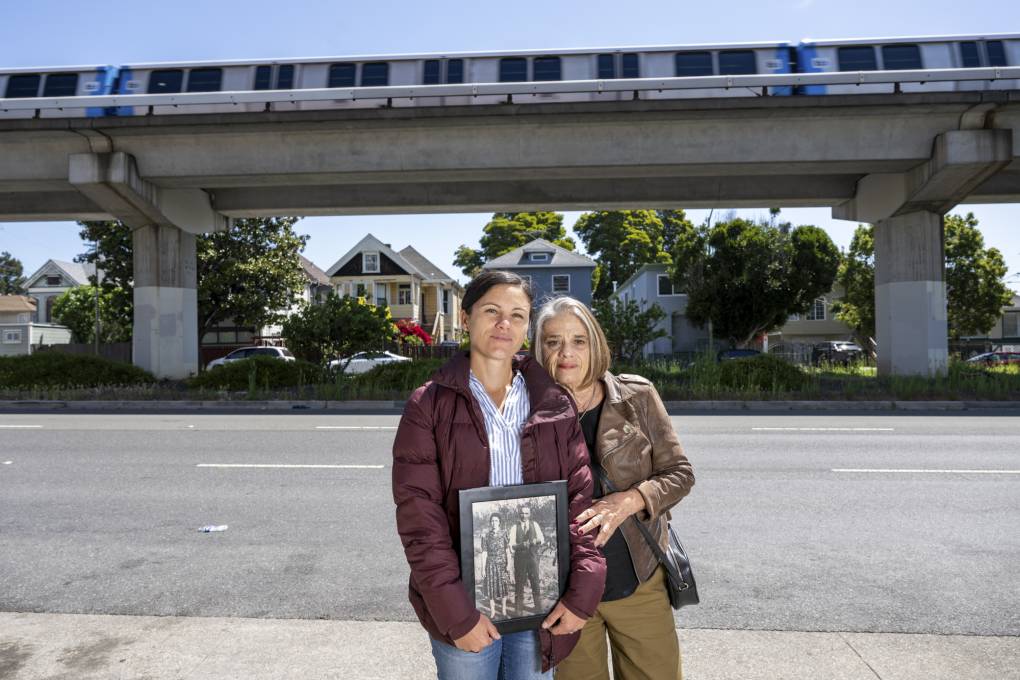
"caption": "Janine Dictor (left) stands with her mother, Johanne Dictor, as she holds a photo of her great grandparents, Vito and Elizabeth Campilongo, on 59th Street and Martin Luther King Jr. Way in Oakland — in front of where the Campilongo's house stood before they sold it to BART.",
"description": null,
"title": "240514-EMINENTDOMAIN-02-BL-KQED",
"credit": "Beth LaBerge/KQED",
"status": "inherit",
"altTag": "A younger woman and an older woman stand in front of a train track, holding a black and white photo.",
"isLoading": false,
"fetchFailed": false
},
"news_11979244": {
"type": "attachments",
"id": "news_11979244",
"meta": {
"index": "attachments_1716263798",
"site": "news",
"id": "11979244",
"found": true
},
"parent": 0,
"imgSizes": {
"twentyfourteen-full-width": {
"file": "https://cdn.kqed.org/wp-content/uploads/sites/10/2024/03/240313-BART-CRISIS-INTERVENTION-UNIT-MD-05-KQED-1038x576.jpg",
"width": 1038,
"mimeType": "image/jpeg",
"height": 576
},
"thumbnail": {
"file": "https://cdn.kqed.org/wp-content/uploads/sites/10/2024/03/240313-BART-CRISIS-INTERVENTION-UNIT-MD-05-KQED-160x107.jpg",
"width": 160,
"mimeType": "image/jpeg",
"height": 107
},
"post-thumbnail": {
"file": "https://cdn.kqed.org/wp-content/uploads/sites/10/2024/03/240313-BART-CRISIS-INTERVENTION-UNIT-MD-05-KQED-672x372.jpg",
"width": 672,
"mimeType": "image/jpeg",
"height": 372
},
"kqedFullSize": {
"file": "https://cdn.kqed.org/wp-content/uploads/sites/10/2024/03/240313-BART-CRISIS-INTERVENTION-UNIT-MD-05-KQED.jpg",
"width": 2000,
"height": 1333
},
"large": {
"file": "https://cdn.kqed.org/wp-content/uploads/sites/10/2024/03/240313-BART-CRISIS-INTERVENTION-UNIT-MD-05-KQED-1020x680.jpg",
"width": 1020,
"mimeType": "image/jpeg",
"height": 680
},
"1536x1536": {
"file": "https://cdn.kqed.org/wp-content/uploads/sites/10/2024/03/240313-BART-CRISIS-INTERVENTION-UNIT-MD-05-KQED-1536x1024.jpg",
"width": 1536,
"mimeType": "image/jpeg",
"height": 1024
},
"full-width": {
"file": "https://cdn.kqed.org/wp-content/uploads/sites/10/2024/03/240313-BART-CRISIS-INTERVENTION-UNIT-MD-05-KQED-1920x1280.jpg",
"width": 1920,
"mimeType": "image/jpeg",
"height": 1280
},
"medium": {
"file": "https://cdn.kqed.org/wp-content/uploads/sites/10/2024/03/240313-BART-CRISIS-INTERVENTION-UNIT-MD-05-KQED-800x533.jpg",
"width": 800,
"mimeType": "image/jpeg",
"height": 533
}
},
"publishDate": 1710354005,
"modified": 1715715709,
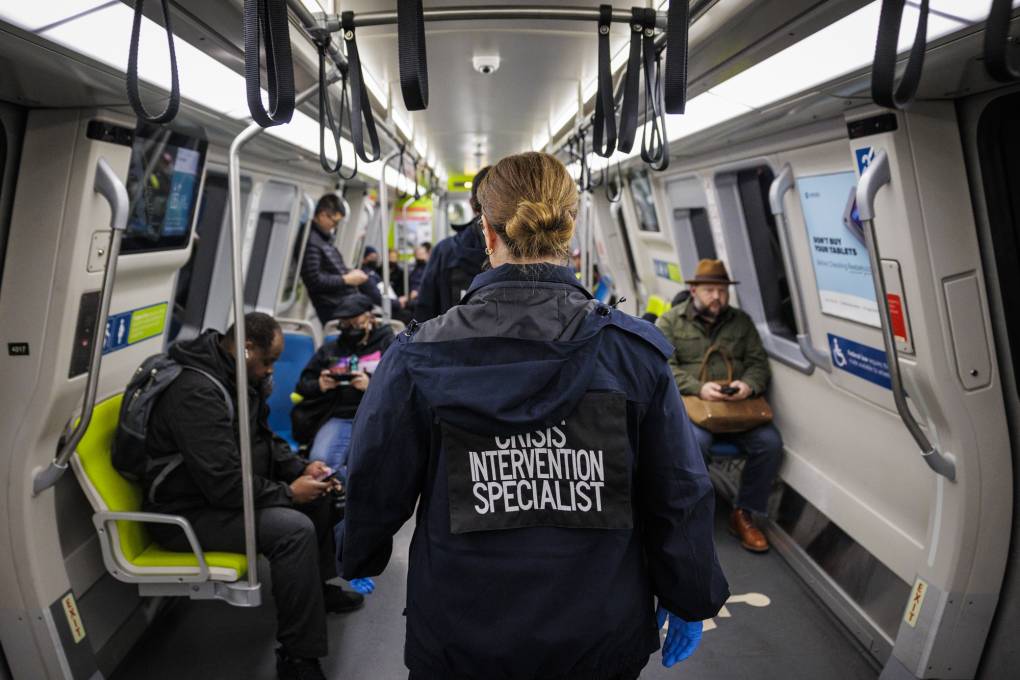
"caption": "BART Crisis Intervention Specialist Natalie Robinson walks through a Dublin/Pleasanton-bound BART train near Lake Merritt station on March 13, 2024, looking for people in distress.",
"description": null,
"title": "240313-BART CRISIS INTERVENTION UNIT-MD-05-KQED",
"credit": "Martin do Nascimento/KQED",
"status": "inherit",
"altTag": "A woman in a dark-blue jacket that says 'Crisis Intervention Specialist' on the back walks through a BART train.",
"isLoading": false,
"fetchFailed": false
},
"news_11980183": {
"type": "attachments",
"id": "news_11980183",
"meta": {
"index": "attachments_1716263798",
"site": "news",
"id": "11980183",
"found": true
},
"parent": 11980161,
"imgSizes": {
"twentyfourteen-full-width": {
"file": "https://cdn.kqed.org/wp-content/uploads/sites/10/2024/03/240313-BART-CRISIS-INTERVENTION-UNIT-MD-16_qut-1038x576.jpg",
"width": 1038,
"mimeType": "image/jpeg",
"height": 576
},
"thumbnail": {
"file": "https://cdn.kqed.org/wp-content/uploads/sites/10/2024/03/240313-BART-CRISIS-INTERVENTION-UNIT-MD-16_qut-160x107.jpg",
"width": 160,
"mimeType": "image/jpeg",
"height": 107
},
"post-thumbnail": {
"file": "https://cdn.kqed.org/wp-content/uploads/sites/10/2024/03/240313-BART-CRISIS-INTERVENTION-UNIT-MD-16_qut-672x372.jpg",
"width": 672,
"mimeType": "image/jpeg",
"height": 372
},
"kqedFullSize": {
"file": "https://cdn.kqed.org/wp-content/uploads/sites/10/2024/03/240313-BART-CRISIS-INTERVENTION-UNIT-MD-16_qut.jpg",
"width": 1920,
"height": 1280
},
"large": {
"file": "https://cdn.kqed.org/wp-content/uploads/sites/10/2024/03/240313-BART-CRISIS-INTERVENTION-UNIT-MD-16_qut-1020x680.jpg",
"width": 1020,
"mimeType": "image/jpeg",
"height": 680
},
"1536x1536": {
"file": "https://cdn.kqed.org/wp-content/uploads/sites/10/2024/03/240313-BART-CRISIS-INTERVENTION-UNIT-MD-16_qut-1536x1024.jpg",
"width": 1536,
"mimeType": "image/jpeg",
"height": 1024
},
"medium": {
"file": "https://cdn.kqed.org/wp-content/uploads/sites/10/2024/03/240313-BART-CRISIS-INTERVENTION-UNIT-MD-16_qut-800x533.jpg",
"width": 800,
"mimeType": "image/jpeg",
"height": 533
}
},
"publishDate": 1710975708,
"modified": 1710975788,
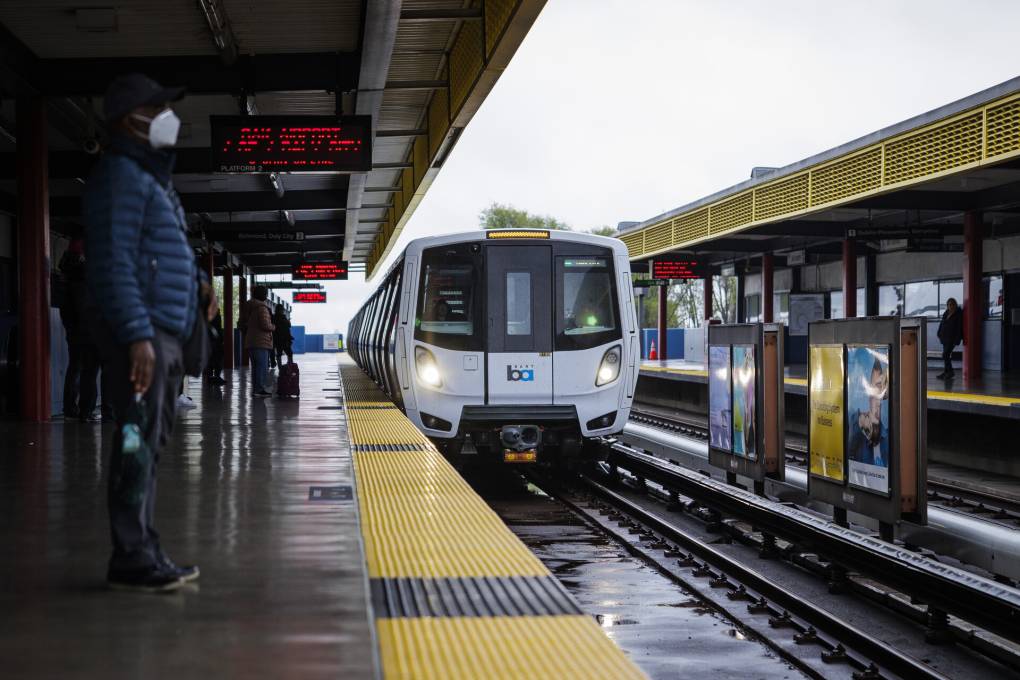
"caption": "A train approaches the station at the San Leandro BART station on March 13, 2024.",
"description": null,
"title": "240313-BART CRISIS INTERVENTION UNIT-MD-16_qut",
"credit": "Martin do Nascimento/KQED",
"status": "inherit",
"altTag": "A train approaches the station with people waiting.",
"isLoading": false,
"fetchFailed": false
},
"news_11971333": {
"type": "attachments",
"id": "news_11971333",
"meta": {
"index": "attachments_1716263798",
"site": "news",
"id": "11971333",
"found": true
},
"parent": 11971332,
"imgSizes": {
"twentyfourteen-full-width": {
"file": "https://cdn.kqed.org/wp-content/uploads/sites/10/2024/01/BART-Fire-240101-1038x576.jpeg",
"width": 1038,
"mimeType": "image/jpeg",
"height": 576
},
"thumbnail": {
"file": "https://cdn.kqed.org/wp-content/uploads/sites/10/2024/01/BART-Fire-240101-160x120.jpeg",
"width": 160,
"mimeType": "image/jpeg",
"height": 120
},
"post-thumbnail": {
"file": "https://cdn.kqed.org/wp-content/uploads/sites/10/2024/01/BART-Fire-240101-672x372.jpeg",
"width": 672,
"mimeType": "image/jpeg",
"height": 372
},
"kqedFullSize": {
"file": "https://cdn.kqed.org/wp-content/uploads/sites/10/2024/01/BART-Fire-240101.jpeg",
"width": 2048,
"height": 1536
},
"large": {
"file": "https://cdn.kqed.org/wp-content/uploads/sites/10/2024/01/BART-Fire-240101-1020x765.jpeg",
"width": 1020,
"mimeType": "image/jpeg",
"height": 765
},
"1536x1536": {
"file": "https://cdn.kqed.org/wp-content/uploads/sites/10/2024/01/BART-Fire-240101-1536x1152.jpeg",
"width": 1536,
"mimeType": "image/jpeg",
"height": 1152
},
"full-width": {
"file": "https://cdn.kqed.org/wp-content/uploads/sites/10/2024/01/BART-Fire-240101-1920x1440.jpeg",
"width": 1920,
"mimeType": "image/jpeg",
"height": 1440
},
"medium": {
"file": "https://cdn.kqed.org/wp-content/uploads/sites/10/2024/01/BART-Fire-240101-800x600.jpeg",
"width": 800,
"mimeType": "image/jpeg",
"height": 600
}
},
"publishDate": 1704133704,
"modified": 1704133811,
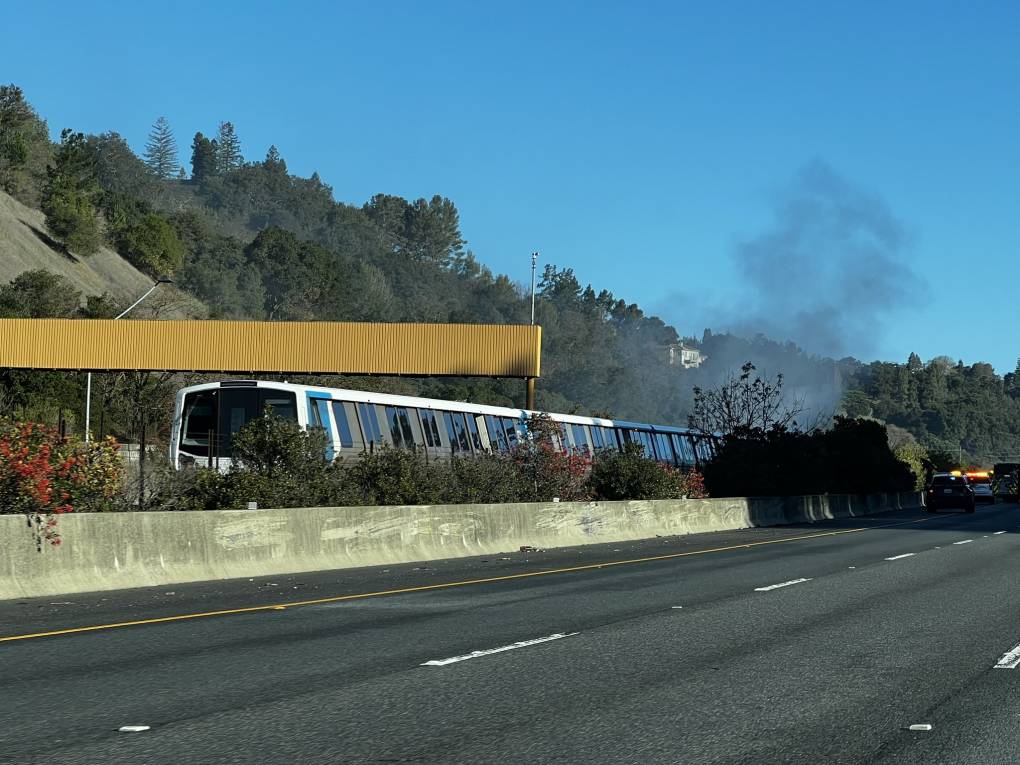
"caption": "Smoke rises from a BART train along Highway 24 just east of the Orinda station after a derailment Monday morning. ",
"description": null,
"title": "BART Fire 240101",
"credit": "Courtesy of Craig Church",
"status": "inherit",
"altTag": "Smoke rises from a BART train.",
"isLoading": false,
"fetchFailed": false
},
"news_11968489": {
"type": "attachments",
"id": "news_11968489",
"meta": {
"index": "attachments_1716263798",
"site": "news",
"id": "11968489",
"found": true
},
"parent": 11968486,
"imgSizes": {
"twentyfourteen-full-width": {
"file": "https://ww2.kqed.org/app/uploads/sites/10/2023/11/TheBay_iTunesTile_01-1020x1020-1-big-1020x576.jpeg",
"width": 1020,
"mimeType": "image/jpeg",
"height": 576
},
"thumbnail": {
"file": "https://ww2.kqed.org/app/uploads/sites/10/2023/11/TheBay_iTunesTile_01-1020x1020-1-big-160x160.jpeg",
"width": 160,
"mimeType": "image/jpeg",
"height": 160
},
"post-thumbnail": {
"file": "https://ww2.kqed.org/app/uploads/sites/10/2023/11/TheBay_iTunesTile_01-1020x1020-1-big-672x372.jpeg",
"width": 672,
"mimeType": "image/jpeg",
"height": 372
},
"kqedFullSize": {
"file": "https://ww2.kqed.org/app/uploads/sites/10/2023/11/TheBay_iTunesTile_01-1020x1020-1-big.jpeg",
"width": 1020,
"height": 1020
},
"medium": {
"file": "https://ww2.kqed.org/app/uploads/sites/10/2023/11/TheBay_iTunesTile_01-1020x1020-1-big-800x800.jpeg",
"width": 800,
"mimeType": "image/jpeg",
"height": 800
}
},
"publishDate": 1701208049,
"modified": 1701208065,
"caption": null,
"description": null,
"title": "The-Bay-Tile",
"credit": null,
"status": "inherit",
"altTag": null,
"isLoading": false,
"fetchFailed": false
},
"news_11959064": {
"type": "attachments",
"id": "news_11959064",
"meta": {
"index": "attachments_1716263798",
"site": "news",
"id": "11959064",
"found": true
},
"parent": 0,
"imgSizes": {
"twentyfourteen-full-width": {
"file": "https://ww2.kqed.org/app/uploads/sites/10/2023/08/230824-BART-Getty-PC-KQED-1038x576.jpg",
"width": 1038,
"mimeType": "image/jpeg",
"height": 576
},
"thumbnail": {
"file": "https://ww2.kqed.org/app/uploads/sites/10/2023/08/230824-BART-Getty-PC-KQED-160x107.jpg",
"width": 160,
"mimeType": "image/jpeg",
"height": 107
},
"post-thumbnail": {
"file": "https://ww2.kqed.org/app/uploads/sites/10/2023/08/230824-BART-Getty-PC-KQED-672x372.jpg",
"width": 672,
"mimeType": "image/jpeg",
"height": 372
},
"kqedFullSize": {
"file": "https://ww2.kqed.org/app/uploads/sites/10/2023/08/230824-BART-Getty-PC-KQED.jpg",
"width": 2000,
"height": 1333
},
"large": {
"file": "https://ww2.kqed.org/app/uploads/sites/10/2023/08/230824-BART-Getty-PC-KQED-1020x680.jpg",
"width": 1020,
"mimeType": "image/jpeg",
"height": 680
},
"1536x1536": {
"file": "https://ww2.kqed.org/app/uploads/sites/10/2023/08/230824-BART-Getty-PC-KQED-1536x1024.jpg",
"width": 1536,
"mimeType": "image/jpeg",
"height": 1024
},
"full-width": {
"file": "https://ww2.kqed.org/app/uploads/sites/10/2023/08/230824-BART-Getty-PC-KQED-1920x1280.jpg",
"width": 1920,
"mimeType": "image/jpeg",
"height": 1280
},
"medium": {
"file": "https://ww2.kqed.org/app/uploads/sites/10/2023/08/230824-BART-Getty-PC-KQED-800x533.jpg",
"width": 800,
"mimeType": "image/jpeg",
"height": 533
}
},
"publishDate": 1692905501,
"modified": 1694533777,
"caption": "Passengers aboard a San Francisco bound train wait for the doors to close at the 19th Street BART station in Oakland on Aug. 2, 2018.",
"description": null,
"title": "new-bart-schedule",
"credit": "Paul Chinn/The San Francisco Chronicle via Getty Images",
"status": "inherit",
"altTag": "People are seen through the open doorway of a train car.",
"isLoading": false,
"fetchFailed": false
}
},
"audioPlayerReducer": {
"postId": "stream_live",
"isPaused": true,
"isPlaying": false,
"pfsActive": false,
"pledgeModalIsOpen": true,
"playerDrawerIsOpen": false,
"liveAudioPlayStartedAt": 0,
"liveAudioPlayContext": ""
},
"authorsReducer": {
"byline_news_11987874": {
"type": "authors",
"id": "byline_news_11987874",
"meta": {
"override": true
},
"slug": "byline_news_11987874",
"name": "Ericka Cruz Guevarra, Matthew Green, Alan Montecillo, Ellie Prickett-Morgan, and Tamuna Chkareuli",
"isLoading": false
},
"ohubertallen": {
"type": "authors",
"id": "102",
"meta": {
"index": "authors_1716337520",
"id": "102",
"found": true
},
"name": "Olivia Allen-Price",
"firstName": "Olivia",
"lastName": "Allen-Price",
"slug": "ohubertallen",
"email": "oallenprice@kqed.org",
"display_author_email": false,
"staff_mastheads": [
"news"
],
"title": "Senior Editor",
"bio": "Olivia Allen-Price is senior editor and host of the award-winning Bay Curious podcast. Prior to joining KQED in 2013, Olivia worked at The Baltimore Sun and The Virginian-Pilot in Norfolk, Va. She holds degrees in journalism and political science from Elon University. Her work has earned awards from the Society of Professional Journalists, the Hearst Foundation and Hearken. She loves to talk about running and curly hair.\r\n\r\nFollow: \u003ca href=\"https://twitter.com/oallenprice\">@oallenprice\u003c/a>\r\nEmail: \u003ca href=\"mailto:oallenprice@kqed.org\">oallenprice@kqed.org\u003c/a>",
"avatar": "https://secure.gravatar.com/avatar/07f7803c1f6be56f3be58ef276dfa64dce898502e0554408ef4858451a8294f7?s=600&d=blank&r=g",
"twitter": "oallenprice",
"bluesky": null,
"facebook": null,
"instagram": null,
"linkedin": null,
"sites": [
{
"site": "",
"roles": [
"editor"
]
},
{
"site": "arts",
"roles": [
"subscriber"
]
},
{
"site": "news",
"roles": [
"administrator"
]
},
{
"site": "pop",
"roles": [
"administrator"
]
},
{
"site": "bayareabites",
"roles": [
"contributor"
]
},
{
"site": "stateofhealth",
"roles": [
"administrator"
]
},
{
"site": "science",
"roles": [
"editor"
]
}
],
"headData": {
"title": "Olivia Allen-Price | KQED",
"description": "Senior Editor",
"ogImgSrc": "https://secure.gravatar.com/avatar/07f7803c1f6be56f3be58ef276dfa64dce898502e0554408ef4858451a8294f7?s=600&d=blank&r=g",
"twImgSrc": "https://secure.gravatar.com/avatar/07f7803c1f6be56f3be58ef276dfa64dce898502e0554408ef4858451a8294f7?s=600&d=blank&r=g"
},
"isLoading": false,
"link": "/author/ohubertallen"
},
"danbrekke": {
"type": "authors",
"id": "222",
"meta": {
"index": "authors_1716337520",
"id": "222",
"found": true
},
"name": "Dan Brekke",
"firstName": "Dan",
"lastName": "Brekke",
"slug": "danbrekke",
"email": "dbrekke@kqed.org",
"display_author_email": true,
"staff_mastheads": [
"news",
"science"
],
"title": "KQED Editor and Reporter",
"bio": "Dan Brekke is a reporter and editor for KQED News, responsible for coverage of topics ranging from California water issues to the Bay Area's transportation challenges. In a newsroom career that began in Chicago in 1972, Dan has worked for \u003cem>The San Francisco Examiner,\u003c/em> Wired and TechTV and has been published in The New York Times, The New York Times Magazine, Business 2.0, Salon and elsewhere.\r\n\r\nSince joining KQED in 2007, Dan has reported, edited and produced both radio and online features and breaking news pieces. He has shared as both editor and reporter in four Society of Professional Journalists Norcal Excellence in Journalism awards and one Edward R. Murrow regional award. He was chosen for a spring 2017 residency at the Mesa Refuge to advance his research on California salmon.\r\n\r\nEmail Dan at: \u003ca href=\"mailto:dbrekke@kqed.org\">dbrekke@kqed.org\u003c/a>\r\n\r\n\u003cstrong>Twitter:\u003c/strong> \u003ca href=\"https://twitter.com/danbrekke\" rel=\"noopener noreferrer\">twitter.com/danbrekke\u003c/a>\r\n\u003cstrong>Facebook:\u003c/strong> \u003ca href=\"https://www.facebook.com/danbrekke\" rel=\"noopener noreferrer\">www.facebook.com/danbrekke\u003c/a>\r\n\u003cstrong>LinkedIn:\u003c/strong> \u003ca href=\"https://www.linkedin.com/in/danbrekke\" rel=\"noopener noreferrer\">www.linkedin.com/in/danbrekke\u003c/a>",
"avatar": "https://secure.gravatar.com/avatar/8f1f0d2a978fb3b23426c922c7e2af558fa36905b49c4ce76a97dc3c72d27226?s=600&d=mm&r=g",
"twitter": "danbrekke",
"bluesky": null,
"facebook": null,
"instagram": "https://www.instagram.com/dan.brekke/",
"linkedin": "https://www.linkedin.com/in/danbrekke/",
"sites": [
{
"site": "news",
"roles": [
"administrator",
"create_posts"
]
},
{
"site": "stateofhealth",
"roles": [
"editor"
]
},
{
"site": "science",
"roles": [
"editor"
]
},
{
"site": "quest",
"roles": [
"contributor"
]
},
{
"site": "food",
"roles": [
"contributor"
]
},
{
"site": "forum",
"roles": [
"contributor"
]
},
{
"site": "elections",
"roles": [
"editor"
]
},
{
"site": "liveblog",
"roles": [
"editor"
]
}
],
"headData": {
"title": "Dan Brekke | KQED",
"description": "KQED Editor and Reporter",
"ogImgSrc": "https://secure.gravatar.com/avatar/8f1f0d2a978fb3b23426c922c7e2af558fa36905b49c4ce76a97dc3c72d27226?s=600&d=mm&r=g",
"twImgSrc": "https://secure.gravatar.com/avatar/8f1f0d2a978fb3b23426c922c7e2af558fa36905b49c4ce76a97dc3c72d27226?s=600&d=mm&r=g"
},
"isLoading": false,
"link": "/author/danbrekke"
},
"katrinaschwartz": {
"type": "authors",
"id": "234",
"meta": {
"index": "authors_1716337520",
"id": "234",
"found": true
},
"name": "Katrina Schwartz",
"firstName": "Katrina",
"lastName": "Schwartz",
"slug": "katrinaschwartz",
"email": "kschwartz@kqed.org",
"display_author_email": false,
"staff_mastheads": [
"news"
],
"title": "Producer",
"bio": "Katrina Schwartz is a journalist based in San Francisco. She's worked at KPCC public radio in LA and has reported on air and online for KQED since 2010. She covered how teaching and learning is changing for MindShift between 2012 and 2020. She is the co-host of the MindShift podcast and now produces KQED's Bay Curious podcast.",
"avatar": "https://secure.gravatar.com/avatar/edb4ee79070447a018538c9aae6eeecf28786515b8a0c30e43b6b7dce5aa44c8?s=600&d=blank&r=g",
"twitter": "kschwart",
"bluesky": null,
"facebook": null,
"instagram": null,
"linkedin": null,
"sites": [
{
"site": "",
"roles": [
"editor"
]
},
{
"site": "news",
"roles": [
"editor"
]
},
{
"site": "mindshift",
"roles": [
"administrator"
]
},
{
"site": "stateofhealth",
"roles": [
"author"
]
},
{
"site": "science",
"roles": [
"editor"
]
}
],
"headData": {
"title": "Katrina Schwartz | KQED",
"description": "Producer",
"ogImgSrc": "https://secure.gravatar.com/avatar/edb4ee79070447a018538c9aae6eeecf28786515b8a0c30e43b6b7dce5aa44c8?s=600&d=blank&r=g",
"twImgSrc": "https://secure.gravatar.com/avatar/edb4ee79070447a018538c9aae6eeecf28786515b8a0c30e43b6b7dce5aa44c8?s=600&d=blank&r=g"
},
"isLoading": false,
"link": "/author/katrinaschwartz"
},
"matthewgreen": {
"type": "authors",
"id": "1263",
"meta": {
"index": "authors_1716337520",
"id": "1263",
"found": true
},
"name": "Matthew Green",
"firstName": "Matthew",
"lastName": "Green",
"slug": "matthewgreen",
"email": "mgreen@kqed.org",
"display_author_email": false,
"staff_mastheads": [],
"title": "KQED Editor/Reporter",
"bio": "Matthew Green is a digital media producer for KQED News. He previously produced \u003ca href=\"http://www.kqed.org/lowdown\">The Lowdown\u003c/a>, KQED’s multimedia news education blog. Matthew's written for numerous Bay Area publications, including the Oakland Tribune and San Francisco Chronicle. He also taught journalism classes at Fremont High School in East Oakland.\r\n\r\nEmail: mgreen@kqed.org; Twitter: @MGreenKQED",
"avatar": "https://secure.gravatar.com/avatar/3bf498d1267ca02c8494f33d8cfc575e?s=600&d=blank&r=g",
"twitter": "MGreenKQED",
"facebook": null,
"instagram": null,
"linkedin": null,
"sites": [
{
"site": "news",
"roles": []
},
{
"site": "lowdown",
"roles": []
},
{
"site": "science",
"roles": []
},
{
"site": "education",
"roles": []
},
{
"site": "quest",
"roles": []
},
{
"site": "liveblog",
"roles": []
}
],
"headData": {
"title": "Matthew Green | KQED",
"description": "KQED Editor/Reporter",
"ogImgSrc": "https://secure.gravatar.com/avatar/3bf498d1267ca02c8494f33d8cfc575e?s=600&d=blank&r=g",
"twImgSrc": "https://secure.gravatar.com/avatar/3bf498d1267ca02c8494f33d8cfc575e?s=600&d=blank&r=g"
},
"isLoading": false,
"link": "/author/matthewgreen"
},
"ecruzguevarra": {
"type": "authors",
"id": "8654",
"meta": {
"index": "authors_1716337520",
"id": "8654",
"found": true
},
"name": "Ericka Cruz Guevarra",
"firstName": "Ericka",
"lastName": "Cruz Guevarra",
"slug": "ecruzguevarra",
"email": "ecruzguevarra@kqed.org",
"display_author_email": true,
"staff_mastheads": [
"news"
],
"title": "Producer, The Bay Podcast",
"bio": "Ericka Cruz Guevarra is host of \u003ca href=\"https://www.kqed.org/podcasts/thebay\">\u003cem>The Bay\u003c/em>\u003c/a> podcast at KQED. Before host, she was the show’s producer. Her work in that capacity includes a three-part reported series on policing in Vallejo, which won a 2020 excellence in journalism award from the Society of Professional Journalists. Ericka has worked as a breaking news reporter at Oregon Public Broadcasting, helped produce the Code Switch podcast, and was KQED’s inaugural Raul Ramirez Diversity Fund intern. She’s also an alumna of NPR’s Next Generation Radio program. Send her an email if you have strong feelings about whether Fairfield and Suisun City are the Bay. Ericka is represented by SAG-AFTRA.",
"avatar": "https://secure.gravatar.com/avatar/accefc1de4bafc7e234b69bcb9b6f6536c130fd84709bc3069ef11a78787e1bb?s=600&d=blank&r=g",
"twitter": "NotoriousECG",
"bluesky": null,
"facebook": null,
"instagram": null,
"linkedin": null,
"sites": [
{
"site": "arts",
"roles": [
"subscriber"
]
},
{
"site": "news",
"roles": [
"editor",
"manage_categories"
]
},
{
"site": "futureofyou",
"roles": [
"subscriber"
]
},
{
"site": "stateofhealth",
"roles": [
"subscriber"
]
},
{
"site": "science",
"roles": [
"editor"
]
},
{
"site": "forum",
"roles": [
"subscriber"
]
}
],
"headData": {
"title": "Ericka Cruz Guevarra | KQED",
"description": "Producer, The Bay Podcast",
"ogImgSrc": "https://secure.gravatar.com/avatar/accefc1de4bafc7e234b69bcb9b6f6536c130fd84709bc3069ef11a78787e1bb?s=600&d=blank&r=g",
"twImgSrc": "https://secure.gravatar.com/avatar/accefc1de4bafc7e234b69bcb9b6f6536c130fd84709bc3069ef11a78787e1bb?s=600&d=blank&r=g"
},
"isLoading": false,
"link": "/author/ecruzguevarra"
},
"amontecillo": {
"type": "authors",
"id": "11649",
"meta": {
"index": "authors_1716337520",
"id": "11649",
"found": true
},
"name": "Alan Montecillo",
"firstName": "Alan",
"lastName": "Montecillo",
"slug": "amontecillo",
"email": "amontecillo@kqed.org",
"display_author_email": false,
"staff_mastheads": [
"news"
],
"title": "KQED Contributor",
"bio": "Alan Montecillo is the senior editor of \u003cem>\u003ca href=\"http://kqed.org/thebay\">The Bay\u003c/a>, \u003c/em> KQED's local news podcast. Before moving to the Bay Area, he worked as a senior talk show producer for WILL in Champaign-Urbana, Illinois and at Oregon Public Broadcasting in Portland, Oregon. He has won journalism awards from the Society of Professional Journalists Northern California, the Public Media Journalists Association, The Signal Awards, and has also received a regional Edward R. Murrow award. Alan is a Filipino American from Hong Kong and a graduate of Reed College.",
"avatar": "https://secure.gravatar.com/avatar/268f53a2066899ea9efdd8a5900218b17c822d9862cbc9326cccec53ef41d349?s=600&d=blank&r=g",
"twitter": "alanmontecillo",
"bluesky": null,
"facebook": null,
"instagram": null,
"linkedin": null,
"sites": [
{
"site": "",
"roles": [
"editor"
]
},
{
"site": "news",
"roles": [
"editor",
"manage_categories"
]
}
],
"headData": {
"title": "Alan Montecillo | KQED",
"description": "KQED Contributor",
"ogImgSrc": "https://secure.gravatar.com/avatar/268f53a2066899ea9efdd8a5900218b17c822d9862cbc9326cccec53ef41d349?s=600&d=blank&r=g",
"twImgSrc": "https://secure.gravatar.com/avatar/268f53a2066899ea9efdd8a5900218b17c822d9862cbc9326cccec53ef41d349?s=600&d=blank&r=g"
},
"isLoading": false,
"link": "/author/amontecillo"
},
"adahlstromeckman": {
"type": "authors",
"id": "11785",
"meta": {
"index": "authors_1716337520",
"id": "11785",
"found": true
},
"name": "Azul Dahlstrom-Eckman",
"firstName": "Azul",
"lastName": "Dahlstrom-Eckman",
"slug": "adahlstromeckman",
"email": "adahlstrom-eckman@kqed.org",
"display_author_email": true,
"staff_mastheads": [],
"title": "Reporter",
"bio": "Azul is a reporter for KQED focusing on transportation and features. He joined KQED in 2021 as an alumna of KALW's Audio Academy radio journalism training program.",
"avatar": "https://secure.gravatar.com/avatar/9cb750298435add7815a777f55bf1f46845c1386bb8452555c60a7b820b5aba3?s=600&d=blank&r=g",
"twitter": "@zuliemann",
"bluesky": "@azul415.bsky.social",
"facebook": null,
"instagram": null,
"linkedin": null,
"sites": [
{
"site": "arts",
"roles": [
"editor"
]
},
{
"site": "news",
"roles": [
"editor"
]
},
{
"site": "science",
"roles": [
"editor"
]
},
{
"site": "liveblog",
"roles": [
"author"
]
}
],
"headData": {
"title": "Azul Dahlstrom-Eckman | KQED",
"description": "Reporter",
"ogImgSrc": "https://secure.gravatar.com/avatar/9cb750298435add7815a777f55bf1f46845c1386bb8452555c60a7b820b5aba3?s=600&d=blank&r=g",
"twImgSrc": "https://secure.gravatar.com/avatar/9cb750298435add7815a777f55bf1f46845c1386bb8452555c60a7b820b5aba3?s=600&d=blank&r=g"
},
"isLoading": false,
"link": "/author/adahlstromeckman"
},
"mesquinca": {
"type": "authors",
"id": "11802",
"meta": {
"index": "authors_1716337520",
"id": "11802",
"found": true
},
"name": "Maria Esquinca",
"firstName": "Maria",
"lastName": "Esquinca",
"slug": "mesquinca",
"email": "mesquinca@kqed.org",
"display_author_email": false,
"staff_mastheads": [],
"title": "Producer, The Bay",
"bio": "María Esquinca is a producer of The Bay. Before that, she was a New York Women’s Foundation IGNITE Fellow at Latino USA. She worked at Radio Bilingue where she covered the San Joaquin Valley. Maria has interned at WLRN, News 21, The New York Times Student Journalism Institute and at Crain’s Detroit Business as a Dow Jones News Fund Business Reporting Intern. She is an MFA graduate from the University of Miami. In 2017, she graduated from the Walter Cronkite School of Journalism and Mass Communication with a Master of Mass Communication. A fronteriza, she was born in Ciudad Juárez, Chihuahua, Mexico and grew up in El Paso, Texas.",
"avatar": "https://secure.gravatar.com/avatar/77cedba18aae91da775038ba06dcd8d0?s=600&d=blank&r=g",
"twitter": "@m_esquinca",
"facebook": null,
"instagram": null,
"linkedin": null,
"sites": [
{
"site": "news",
"roles": []
}
],
"headData": {
"title": "Maria Esquinca | KQED",
"description": "Producer, The Bay",
"ogImgSrc": "https://secure.gravatar.com/avatar/77cedba18aae91da775038ba06dcd8d0?s=600&d=blank&r=g",
"twImgSrc": "https://secure.gravatar.com/avatar/77cedba18aae91da775038ba06dcd8d0?s=600&d=blank&r=g"
},
"isLoading": false,
"link": "/author/mesquinca"
},
"jgeha": {
"type": "authors",
"id": "11906",
"meta": {
"index": "authors_1716337520",
"id": "11906",
"found": true
},
"name": "Joseph Geha",
"firstName": "Joseph",
"lastName": "Geha",
"slug": "jgeha",
"email": "jgeha@kqed.org",
"display_author_email": false,
"staff_mastheads": [
"news",
"science"
],
"title": "KQED Contributor",
"bio": null,
"avatar": "https://secure.gravatar.com/avatar/ea84d2b6dd93d6369d453edf19dd583f117cd1759d2d9c9c92f9de77017354fe?s=600&d=blank&r=g",
"twitter": null,
"bluesky": null,
"facebook": null,
"instagram": null,
"linkedin": null,
"sites": [
{
"site": "news",
"roles": [
"editor"
]
},
{
"site": "liveblog",
"roles": [
"author"
]
}
],
"headData": {
"title": "Joseph Geha | KQED",
"description": "KQED Contributor",
"ogImgSrc": "https://secure.gravatar.com/avatar/ea84d2b6dd93d6369d453edf19dd583f117cd1759d2d9c9c92f9de77017354fe?s=600&d=blank&r=g",
"twImgSrc": "https://secure.gravatar.com/avatar/ea84d2b6dd93d6369d453edf19dd583f117cd1759d2d9c9c92f9de77017354fe?s=600&d=blank&r=g"
},
"isLoading": false,
"link": "/author/jgeha"
}
},
"pagesReducer": {
"news_tag_bart": {
"type": "terms",
"id": "news_269",
"meta": {
"index": "terms_1716263798",
"site": "news",
"id": "269",
"score": 8.558313
},
"featImg": null,
"name": "BART",
"description": null,
"taxonomy": "tag",
"headData": {
"twImgId": null,
"twTitle": null,
"ogTitle": null,
"ogImgId": null,
"twDescription": null,
"description": null,
"title": "BART Archives | KQED News",
"ogDescription": null
},
"ttid": 277,
"slug": "bart",
"isLoading": false,
"title": "BART",
"pageMeta": {
"site": "news",
"WpPageTemplate": "page-topic-editorial",
"currentPage": 8
},
"blocks": [
{
"blockName": "kqed/post-list",
"attrs": {
"layout": "cardArticle2",
"query": "posts/news?tag=bart",
"seeMore": false,
"paginated": true,
"page": 8
}
},
{
"blockName": "kqed/ad"
}
]
}
},
"pfsSessionReducer": {},
"postsReducer": {
"stream_live": {
"type": "live",
"id": "stream_live",
"audioUrl": "https://streams.kqed.org/kqedradio",
"title": "Live Stream",
"excerpt": "Live Stream information currently unavailable.",
"link": "/radio",
"featImg": "",
"label": {
"name": "KQED Live",
"link": "/"
}
},
"stream_kqedNewscast": {
"type": "posts",
"id": "stream_kqedNewscast",
"audioUrl": "https://www.kqed.org/.stream/anon/radio/RDnews/newscast.mp3?_=1",
"title": "KQED Newscast",
"featImg": "",
"label": {
"name": "88.5 FM",
"link": "/"
}
},
"news_11992041": {
"type": "posts",
"id": "news_11992041",
"meta": {
"index": "posts_1716263798",
"site": "news",
"id": "11992041",
"score": null,
"sort": [
1719434476000
]
},
"guestAuthors": [],
"slug": "barts-latest-service-meltdown-comes-at-a-tricky-time-for-transit-agency",
"title": "BART's Latest Service Meltdown Comes at a Tricky Time for Transit Agency",
"publishDate": 1719434476,
"format": "standard",
"headTitle": "BART’s Latest Service Meltdown Comes at a Tricky Time for Transit Agency | KQED",
"labelTerm": {
"site": "news"
},
"content": "\u003cp>For the second time in less than 72 hours, \u003ca href=\"https://www.kqed.org/news/tag/bart\">BART\u003c/a> suffered a service meltdown on Wednesday morning due to problems along its tracks near downtown Oakland.\u003c/p>\n\u003cp>A rail maintenance vehicle derailed near Oakland’s 19th Street station around 3:30 a.m., about an hour and a half before the day’s first trains were scheduled to run through the area, the agency said.\u003c/p>\n\u003cp>The lengthy process of getting the maintenance vehicle back on the rails prompted BART to cancel service on its Red Line between Richmond, San Francisco International Airport and Millbrae.\u003c/p>\n\u003cp>[ad fullwidth]\u003c/p>\n\u003cp>Other service impacts included:\u003c/p>\n\u003cul>\n\u003cli>Passengers from the six East Bay stations the Red Line serves exclusively — Richmond, El Cerrito del Norte, El Cerrito Plaza, North Berkeley, Downtown Berkeley and Ashby — were advised to get on Orange Line/Berryessa trains and transfer to Yellow Line trains for the trip across the bay.\u003c/li>\n\u003cli>Riders needing to get to Millbrae, where they can make a direct connection to Caltrain, were told to transfer to a shuttle at SFO.\u003c/li>\n\u003cli>Trains on the southbound Orange Line running to Berryessa\u003cbr>\nstation in northeast San José were forced to detour from 12th Street in downtown Oakland to West Oakland before then turning around to continue to Lake Merritt.\u003c/li>\n\u003c/ul>\n\u003cp>BART offered no estimate of when normal service would resume.\u003c/p>\n\u003cp>Wednesday’s problems follow a major disruption on Sunday afternoon that started around 2:30 p.m. when a train suffered an equipment problem and stopped between Lake Merritt and West Oakland.\u003c/p>\n\u003cp>“The train wouldn’t move, so we coupled it with another train and towed it out of the way,” Alicia Trost, BART’s chief communications officer, said in an email.\u003c/p>\n\u003cp>But the delays weren’t over. Shortly afterward, Trost said, a rail defect was found at an interlocking — a switch point where trains can cross over from one set of tracks to another — outside West Oakland station.\u003c/p>\n\u003cp>Crews repaired that problem. Then, yet another train suffered an equipment issue, this time while traveling through the Transbay Tube.\u003c/p>\n\u003cp>Via social media, BART reported major delays for more than four hours into early Sunday evening and was forced to halt direct trains between Berryessa and San Francisco and limit service between Dublin/Pleasanton and the city.\u003c/p>\n\u003cp>https://twitter.com/SFBARTalert/status/1805045211275673729\u003c/p>\n\u003cp>The latest disruptions come at an especially sensitive time for BART, which is joining with other transit operators in a campaign to craft a 2026 tax measure that would help the agencies head off a fiscal catastrophe resulting from fare revenue lost in the wake of the COVID-19 pandemic.\u003c/p>\n\u003cp>Facing annual deficits of more than $350 million a year starting in July 2026, BART has said it would consider cutting some lines, reducing service hours and closing some stations if it doesn’t identify new sources of revenue.\u003c/p>\n\u003cp>In an email last week to a new Metropolitan Transportation Commission committee charged with crafting the tax proposal, BART General Manager Bob Powers highlighted the ambitious program of service improvements the agency has undertaken in response to long-standing rider complaints about service reliability, crime, cleanliness, fare evasion and the growing presence of people on the system suffering various modes of crisis.\u003c/p>\n\u003cp>Those improvements are partly driven by demands from state lawmakers, who agreed to approve emergency operating funds for BART and other agencies on the condition they address concerns about their service.\u003c/p>\n\u003cp>BART’s efforts have included increasing police presence, hiring crisis intervention specialists, rolling out new fare gates, a focused effort to keep trains and stations clean, a customer-friendly night and weekend schedule and operating all of its service with its new generation of train cars. The agency has even hired attendants at its busiest stations to ensure clean restrooms are available for customers.\u003c/p>\n\u003cp>But those efforts don’t appear to be luring customers back to the system, largely because of the continuing pandemic-driven shift in work habits. BART ridership has returned to just 43% of its 2019 level, and that growth has slowed dramatically in the past year.\u003c/p>\n\u003cp>In a Monday afternoon meeting of transportation agency executives, Powers warned that without a workable tax measure, BART would be forced to consider service reductions that would be felt throughout the region.\u003c/p>\n\u003cp>“I’m well on the way to do a Plan B and a Plan C,” Powers said. “… Nobody’s going to like my Plan B. … It’s going to impact every single person around this table one way or the other. And my Plan C is going to be catastrophic for many people around this table.”\u003c/p>\n\u003cp>\u003c/p>\n",
"blocks": [],
"excerpt": "BART’s Red Line service was shut down after a maintenance vehicle derailed in Oakland, which is the latest headache for a transit agency facing a fiscal crisis.",
"status": "publish",
"parent": 0,
"modified": 1719440854,
"stats": {
"hasAudio": false,
"hasVideo": false,
"hasChartOrMap": false,
"iframeSrcs": [],
"hasGoogleForm": false,
"hasGallery": false,
"hasHearkenModule": false,
"hasPolis": false,
"paragraphCount": 20,
"wordCount": 783
},
"headData": {
"title": "BART's Latest Service Meltdown Comes at a Tricky Time for Transit Agency | KQED",
"description": "BART’s Red Line service was shut down after a maintenance vehicle derailed in Oakland, which is the latest headache for a transit agency facing a fiscal crisis.",
"ogTitle": "",
"ogDescription": "",
"ogImgId": "",
"twTitle": "",
"twDescription": "",
"twImgId": "",
"schema": {
"@context": "https://schema.org",
"@type": "NewsArticle",
"headline": "BART's Latest Service Meltdown Comes at a Tricky Time for Transit Agency",
"datePublished": "2024-06-26T13:41:16-07:00",
"dateModified": "2024-06-26T15:27:34-07:00",
"image": "https://cdn.kqed.org/wp-content/uploads/2020/02/KQED-OG-Image@1x.png",
"isAccessibleForFree": "True",
"publisher": {
"@type": "NewsMediaOrganization",
"@id": "https://www.kqed.org/#organization",
"name": "KQED",
"logo": "https://cdn.kqed.org/wp-content/uploads/2020/02/KQED-OG-Image@1x.png",
"url": "https://www.kqed.org",
"sameAs": [
"https://www.facebook.com/KQED",
"https://twitter.com/KQED",
"https://www.instagram.com/kqed/",
"https://www.tiktok.com/@kqedofficial",
"https://www.linkedin.com/company/kqed",
"https://www.youtube.com/channel/UCeC0IOo7i1P_61zVUWbJ4nw"
]
}
}
},
"sticky": false,
"nprStoryId": "kqed-11992041",
"excludeFromSiteSearch": "Include",
"articleAge": "0",
"path": "/news/11992041/barts-latest-service-meltdown-comes-at-a-tricky-time-for-transit-agency",
"audioTrackLength": null,
"parsedContent": [
{
"type": "contentString",
"content": "\u003cdiv class=\"post-body\">\u003cp>\u003cp>For the second time in less than 72 hours, \u003ca href=\"https://www.kqed.org/news/tag/bart\">BART\u003c/a> suffered a service meltdown on Wednesday morning due to problems along its tracks near downtown Oakland.\u003c/p>\n\u003cp>A rail maintenance vehicle derailed near Oakland’s 19th Street station around 3:30 a.m., about an hour and a half before the day’s first trains were scheduled to run through the area, the agency said.\u003c/p>\n\u003cp>The lengthy process of getting the maintenance vehicle back on the rails prompted BART to cancel service on its Red Line between Richmond, San Francisco International Airport and Millbrae.\u003c/p>\n\u003cp>\u003c/p>\u003c/div>",
"attributes": {
"named": {},
"numeric": []
}
},
{
"type": "component",
"content": "",
"name": "ad",
"attributes": {
"named": {
"label": "fullwidth"
},
"numeric": [
"fullwidth"
]
}
},
{
"type": "contentString",
"content": "\u003cdiv class=\"post-body\">\u003cp>\u003c/p>\n\u003cp>Other service impacts included:\u003c/p>\n\u003cul>\n\u003cli>Passengers from the six East Bay stations the Red Line serves exclusively — Richmond, El Cerrito del Norte, El Cerrito Plaza, North Berkeley, Downtown Berkeley and Ashby — were advised to get on Orange Line/Berryessa trains and transfer to Yellow Line trains for the trip across the bay.\u003c/li>\n\u003cli>Riders needing to get to Millbrae, where they can make a direct connection to Caltrain, were told to transfer to a shuttle at SFO.\u003c/li>\n\u003cli>Trains on the southbound Orange Line running to Berryessa\u003cbr>\nstation in northeast San José were forced to detour from 12th Street in downtown Oakland to West Oakland before then turning around to continue to Lake Merritt.\u003c/li>\n\u003c/ul>\n\u003cp>BART offered no estimate of when normal service would resume.\u003c/p>\n\u003cp>Wednesday’s problems follow a major disruption on Sunday afternoon that started around 2:30 p.m. when a train suffered an equipment problem and stopped between Lake Merritt and West Oakland.\u003c/p>\n\u003cp>“The train wouldn’t move, so we coupled it with another train and towed it out of the way,” Alicia Trost, BART’s chief communications officer, said in an email.\u003c/p>\n\u003cp>But the delays weren’t over. Shortly afterward, Trost said, a rail defect was found at an interlocking — a switch point where trains can cross over from one set of tracks to another — outside West Oakland station.\u003c/p>\n\u003cp>Crews repaired that problem. Then, yet another train suffered an equipment issue, this time while traveling through the Transbay Tube.\u003c/p>\n\u003cp>Via social media, BART reported major delays for more than four hours into early Sunday evening and was forced to halt direct trains between Berryessa and San Francisco and limit service between Dublin/Pleasanton and the city.\u003c/p>\u003c/p>\u003c/div>",
"attributes": {
"named": {},
"numeric": []
}
},
{
"type": "component",
"content": "",
"name": "singleTwitterStatus",
"attributes": {
"named": {
"id": "1805045211275673729"
},
"numeric": []
}
},
{
"type": "contentString",
"content": "\u003cdiv class=\"post-body\">\u003cp>\n\u003cp>The latest disruptions come at an especially sensitive time for BART, which is joining with other transit operators in a campaign to craft a 2026 tax measure that would help the agencies head off a fiscal catastrophe resulting from fare revenue lost in the wake of the COVID-19 pandemic.\u003c/p>\n\u003cp>Facing annual deficits of more than $350 million a year starting in July 2026, BART has said it would consider cutting some lines, reducing service hours and closing some stations if it doesn’t identify new sources of revenue.\u003c/p>\n\u003cp>In an email last week to a new Metropolitan Transportation Commission committee charged with crafting the tax proposal, BART General Manager Bob Powers highlighted the ambitious program of service improvements the agency has undertaken in response to long-standing rider complaints about service reliability, crime, cleanliness, fare evasion and the growing presence of people on the system suffering various modes of crisis.\u003c/p>\n\u003cp>Those improvements are partly driven by demands from state lawmakers, who agreed to approve emergency operating funds for BART and other agencies on the condition they address concerns about their service.\u003c/p>\n\u003cp>BART’s efforts have included increasing police presence, hiring crisis intervention specialists, rolling out new fare gates, a focused effort to keep trains and stations clean, a customer-friendly night and weekend schedule and operating all of its service with its new generation of train cars. The agency has even hired attendants at its busiest stations to ensure clean restrooms are available for customers.\u003c/p>\n\u003cp>But those efforts don’t appear to be luring customers back to the system, largely because of the continuing pandemic-driven shift in work habits. BART ridership has returned to just 43% of its 2019 level, and that growth has slowed dramatically in the past year.\u003c/p>\n\u003cp>In a Monday afternoon meeting of transportation agency executives, Powers warned that without a workable tax measure, BART would be forced to consider service reductions that would be felt throughout the region.\u003c/p>\n\u003cp>“I’m well on the way to do a Plan B and a Plan C,” Powers said. “… Nobody’s going to like my Plan B. … It’s going to impact every single person around this table one way or the other. And my Plan C is going to be catastrophic for many people around this table.”\u003c/p>\n\u003cp>\u003c/p>\n\u003c/div>\u003c/p>",
"attributes": {
"named": {},
"numeric": []
}
}
],
"link": "/news/11992041/barts-latest-service-meltdown-comes-at-a-tricky-time-for-transit-agency",
"authors": [
"222"
],
"categories": [
"news_8",
"news_1397"
],
"tags": [
"news_269",
"news_5226",
"news_33084",
"news_34054",
"news_1764",
"news_20517"
],
"featImg": "news_11992098",
"label": "news"
},
"news_11990508": {
"type": "posts",
"id": "news_11990508",
"meta": {
"index": "posts_1716263798",
"site": "news",
"id": "11990508",
"score": null,
"sort": [
1718404258000
]
},
"guestAuthors": [],
"slug": "vta-breaks-ground-on-12-7-billion-bart-extension-through-south-bay",
"title": "VTA Breaks Ground on $12.7 Billion BART Extension Through South Bay",
"publishDate": 1718404258,
"format": "standard",
"headTitle": "VTA Breaks Ground on $12.7 Billion BART Extension Through South Bay | KQED",
"labelTerm": {
"site": "news"
},
"content": "\u003cp>The journey of a thousand miles begins with a single step, the old saying goes.\u003c/p>\n\u003cp>And on Friday, the first scoop of dirt was taken out of the ground in what has been a decadeslong journey of planning and fundraising to run six new miles of BART track through the South Bay.\u003c/p>\n\u003cp>Santa Clara Valley Transportation Authority, known as VTA, held a groundbreaking on Friday to celebrate the beginning of heavy construction work on its BART Silicon Valley Phase II project.\u003c/p>\n\u003cp>“The project is a critical step in fulfilling the longstanding vision of ringing the Bay with high-quality, green-transit passenger rail,” Carolyn Gonot, VTA’s general manager, said.\u003c/p>\n\u003cfigure id=\"attachment_11990511\" class=\"wp-caption alignnone\" style=\"max-width: 1920px\">\u003cimg loading=\"lazy\" decoding=\"async\" class=\"size-full wp-image-11990511\" src=\"https://cdn.kqed.org/wp-content/uploads/sites/10/2024/06/240614-VTAGROUNDBREAKING-JG-09_qut.jpg\" alt=\"\" width=\"1920\" height=\"1280\" srcset=\"https://cdn.kqed.org/wp-content/uploads/sites/10/2024/06/240614-VTAGROUNDBREAKING-JG-09_qut.jpg 1920w, https://cdn.kqed.org/wp-content/uploads/sites/10/2024/06/240614-VTAGROUNDBREAKING-JG-09_qut-800x533.jpg 800w, https://cdn.kqed.org/wp-content/uploads/sites/10/2024/06/240614-VTAGROUNDBREAKING-JG-09_qut-1020x680.jpg 1020w, https://cdn.kqed.org/wp-content/uploads/sites/10/2024/06/240614-VTAGROUNDBREAKING-JG-09_qut-160x107.jpg 160w, https://cdn.kqed.org/wp-content/uploads/sites/10/2024/06/240614-VTAGROUNDBREAKING-JG-09_qut-1536x1024.jpg 1536w\" sizes=\"(max-width: 1920px) 100vw, 1920px\">\u003cfigcaption class=\"wp-caption-text\">VTA General Manager Carolyn Gonot speaks during the agency’s BART Silicon Valley Phase II project groundbreaking event on Friday. \u003ccite>(Joseph Geha/KQED)\u003c/cite>\u003c/figcaption>\u003c/figure>\n\u003cp>The $12.7 billion undertaking will extend BART from its current end of the line at Berryessa Station in North San José and will run west to create four new stations: 28th Street/Little Portugal near East San José, Downtown San José, Diridon and Santa Clara.\u003c/p>\n\u003cp>“This project is more than a transit expansion. It’s a catalyst for sustainable urban development and promoting affordable housing and equitable access to education, to health care, to jobs, to opportunities and strengthening neighborhoods for generations to come,” Gonot said.\u003c/p>\n\u003cp>South Bay officials at the groundbreaking emphasized how big transportation projects require collective efforts and steadfast commitment to a vision over many years to complete.\u003c/p>\n\u003cp>[ad fullwidth]\u003c/p>\n\u003cp>San José Mayor Matt Mahan said people are still benefiting from services like Caltrain today due to forward-looking investments made in the past. He noted he used the rail line to commute to run his former business in San Francisco while living in San José and a bus line in his youth to traverse Highway 17.\u003c/p>\n\u003cp>“Transit changed my life. It allowed me to get where I needed to go again and again, and it was a gift from past generations,” Mahan said. “We need to give that same gift to the next generation, and the one after that, and the one after that. Because transit connectivity creates opportunity.”\u003c/p>\n\u003cfigure id=\"attachment_11990510\" class=\"wp-caption alignnone\" style=\"max-width: 1920px\">\u003cimg loading=\"lazy\" decoding=\"async\" class=\"size-full wp-image-11990510\" src=\"https://cdn.kqed.org/wp-content/uploads/sites/10/2024/06/240614-VTAGROUNDBREAKING-JG-11_qut.jpg\" alt=\"\" width=\"1920\" height=\"1280\" srcset=\"https://cdn.kqed.org/wp-content/uploads/sites/10/2024/06/240614-VTAGROUNDBREAKING-JG-11_qut.jpg 1920w, https://cdn.kqed.org/wp-content/uploads/sites/10/2024/06/240614-VTAGROUNDBREAKING-JG-11_qut-800x533.jpg 800w, https://cdn.kqed.org/wp-content/uploads/sites/10/2024/06/240614-VTAGROUNDBREAKING-JG-11_qut-1020x680.jpg 1020w, https://cdn.kqed.org/wp-content/uploads/sites/10/2024/06/240614-VTAGROUNDBREAKING-JG-11_qut-160x107.jpg 160w, https://cdn.kqed.org/wp-content/uploads/sites/10/2024/06/240614-VTAGROUNDBREAKING-JG-11_qut-1536x1024.jpg 1536w\" sizes=\"(max-width: 1920px) 100vw, 1920px\">\u003cfigcaption class=\"wp-caption-text\">San José Mayor Matt Mahan said transit projects take collective effort and vision to complete during a groundbreaking event for VTA’s BART Silicon Valley Phase II project in Santa Clara on Friday. \u003ccite>(Joseph Geha/KQED)\u003c/cite>\u003c/figcaption>\u003c/figure>\n\u003cp>The project has faced significant timeline delays and massive cost increases long before any of the golden-colored shovels wielded by politicians and project leaders hit the ground on Friday in the hot sun.\u003c/p>\n\u003cp>An original VTA estimate in 2014 put the project cost at $4.7 billion, hoping to open the new stations to riders by 2026, which is more than two-and-a-half times cheaper than the current estimate and about 11 years sooner.\u003c/p>\n\u003cp>Between 2020 and 2021, the cost increased to $6.9 billion, then to $9.1 billion, in part due to evaluations from federal officials overseeing the project. VTA later revised its own estimate to $12.2 billion in October 2023, and another federal estimate earlier this year pegged the current cost and timeline, which VTA has not refuted.\u003c/p>\n\u003cp>[aside label=\"Related Stories\" postID=\"news_11989983,news_11988365,news_11986396\"]But local and regional leaders have largely held firm in calling for the project to push ahead, despite the hurdles and fumbles.\u003c/p>\n\u003cp>“We can’t imagine what our valley will look like in 50 or 100 years, but we can be confident that connecting rail around the Bay and helping millions of people access the heart of Silicon Valley, where most of the region’s growth is expected to happen in the coming decades, is going to create opportunity for so many,” Mahan said.\u003c/p>\n\u003cp>In addition to a new BART station, the site of the groundbreaking in Santa Clara near the border of San José is where a huge hole will be dug to eventually allow a $76 million tunnel boring machine being assembled in Germany to be dropped into the ground.\u003c/p>\n\u003cp>Once in place, it will begin eating away at millions of cubic yards of dirt to make way for the largely underground extension. The muck removed from the tunneling effort and digging for other station construction is set to be used to help benefit tidal marsh restoration efforts in the bay.\u003c/p>\n\u003cp>Santa Clara County Supervisor Cindy Chavez said that breaking ground on projects such as the BART extension and the recent start of construction of an elevated light rail extension through a heavily trafficked part of East San José shows a commitment to advancement.\u003c/p>\n\u003cfigure id=\"attachment_11990512\" class=\"wp-caption alignnone\" style=\"max-width: 1920px\">\u003cimg loading=\"lazy\" decoding=\"async\" class=\"size-full wp-image-11990512\" src=\"https://cdn.kqed.org/wp-content/uploads/sites/10/2024/06/240614-VTAGROUNDBREAKING-JG-06_qut.jpg\" alt=\"\" width=\"1920\" height=\"1280\" srcset=\"https://cdn.kqed.org/wp-content/uploads/sites/10/2024/06/240614-VTAGROUNDBREAKING-JG-06_qut.jpg 1920w, https://cdn.kqed.org/wp-content/uploads/sites/10/2024/06/240614-VTAGROUNDBREAKING-JG-06_qut-800x533.jpg 800w, https://cdn.kqed.org/wp-content/uploads/sites/10/2024/06/240614-VTAGROUNDBREAKING-JG-06_qut-1020x680.jpg 1020w, https://cdn.kqed.org/wp-content/uploads/sites/10/2024/06/240614-VTAGROUNDBREAKING-JG-06_qut-160x107.jpg 160w, https://cdn.kqed.org/wp-content/uploads/sites/10/2024/06/240614-VTAGROUNDBREAKING-JG-06_qut-1536x1024.jpg 1536w\" sizes=\"(max-width: 1920px) 100vw, 1920px\">\u003cfigcaption class=\"wp-caption-text\">Santa Clara County Supervisor and VTA Board Chair Cindy Chavez thanks VTA General Manager Carolyn Gonot (right) for her efforts to guide the agency’s BART Silicon Valley Phase II project on Friday. \u003ccite>(Joseph Geha/KQED)\u003c/cite>\u003c/figcaption>\u003c/figure>\n\u003cp>“We deserve world-class transportation in one of the most important economic hubs in the world,” Chavez said.\u003c/p>\n\u003cp>“It is a recognition of not just the importance of this community, but a recognition that we in this region are not stopping, we’re going to keep growing,” she said. “We’re not slowing down. We’re going to continue to be the center of innovation.”\u003c/p>\n\u003cp>\u003c/p>\n",
"blocks": [],
"excerpt": "Transit leaders and regional officials celebrated the groundbreaking of the new 6-mile BART extension through Silicon Valley on Friday, and emphasized the need to remain committed to major projects to benefit the region in the long run. ",
"status": "publish",
"parent": 0,
"modified": 1729027165,
"stats": {
"hasAudio": false,
"hasVideo": false,
"hasChartOrMap": false,
"iframeSrcs": [],
"hasGoogleForm": false,
"hasGallery": false,
"hasHearkenModule": false,
"hasPolis": false,
"paragraphCount": 21,
"wordCount": 897
},
"headData": {
"title": "VTA Breaks Ground on $12.7 Billion BART Extension Through South Bay | KQED",
"description": "Transit leaders and regional officials celebrated the groundbreaking of the new 6-mile BART extension through Silicon Valley on Friday, and emphasized the need to remain committed to major projects to benefit the region in the long run. ",
"ogTitle": "",
"ogDescription": "",
"ogImgId": "",
"twTitle": "",
"twDescription": "",
"twImgId": "",
"schema": {
"@context": "https://schema.org",
"@type": "NewsArticle",
"headline": "VTA Breaks Ground on $12.7 Billion BART Extension Through South Bay",
"datePublished": "2024-06-14T15:30:58-07:00",
"dateModified": "2024-10-15T14:19:25-07:00",
"image": "https://cdn.kqed.org/wp-content/uploads/2020/02/KQED-OG-Image@1x.png",
"isAccessibleForFree": "True",
"publisher": {
"@type": "NewsMediaOrganization",
"@id": "https://www.kqed.org/#organization",
"name": "KQED",
"logo": "https://cdn.kqed.org/wp-content/uploads/2020/02/KQED-OG-Image@1x.png",
"url": "https://www.kqed.org",
"sameAs": [
"https://www.facebook.com/KQED",
"https://twitter.com/KQED",
"https://www.instagram.com/kqed/",
"https://www.tiktok.com/@kqedofficial",
"https://www.linkedin.com/company/kqed",
"https://www.youtube.com/channel/UCeC0IOo7i1P_61zVUWbJ4nw"
]
}
}
},
"sticky": false,
"nprStoryId": "kqed-11990508",
"excludeFromSiteSearch": "Include",
"articleAge": "0",
"path": "/news/11990508/vta-breaks-ground-on-12-7-billion-bart-extension-through-south-bay",
"audioTrackLength": null,
"parsedContent": [
{
"type": "contentString",
"content": "\u003cdiv class=\"post-body\">\u003cp>\u003cp>The journey of a thousand miles begins with a single step, the old saying goes.\u003c/p>\n\u003cp>And on Friday, the first scoop of dirt was taken out of the ground in what has been a decadeslong journey of planning and fundraising to run six new miles of BART track through the South Bay.\u003c/p>\n\u003cp>Santa Clara Valley Transportation Authority, known as VTA, held a groundbreaking on Friday to celebrate the beginning of heavy construction work on its BART Silicon Valley Phase II project.\u003c/p>\n\u003cp>“The project is a critical step in fulfilling the longstanding vision of ringing the Bay with high-quality, green-transit passenger rail,” Carolyn Gonot, VTA’s general manager, said.\u003c/p>\n\u003cfigure id=\"attachment_11990511\" class=\"wp-caption alignnone\" style=\"max-width: 1920px\">\u003cimg loading=\"lazy\" decoding=\"async\" class=\"size-full wp-image-11990511\" src=\"https://cdn.kqed.org/wp-content/uploads/sites/10/2024/06/240614-VTAGROUNDBREAKING-JG-09_qut.jpg\" alt=\"\" width=\"1920\" height=\"1280\" srcset=\"https://cdn.kqed.org/wp-content/uploads/sites/10/2024/06/240614-VTAGROUNDBREAKING-JG-09_qut.jpg 1920w, https://cdn.kqed.org/wp-content/uploads/sites/10/2024/06/240614-VTAGROUNDBREAKING-JG-09_qut-800x533.jpg 800w, https://cdn.kqed.org/wp-content/uploads/sites/10/2024/06/240614-VTAGROUNDBREAKING-JG-09_qut-1020x680.jpg 1020w, https://cdn.kqed.org/wp-content/uploads/sites/10/2024/06/240614-VTAGROUNDBREAKING-JG-09_qut-160x107.jpg 160w, https://cdn.kqed.org/wp-content/uploads/sites/10/2024/06/240614-VTAGROUNDBREAKING-JG-09_qut-1536x1024.jpg 1536w\" sizes=\"(max-width: 1920px) 100vw, 1920px\">\u003cfigcaption class=\"wp-caption-text\">VTA General Manager Carolyn Gonot speaks during the agency’s BART Silicon Valley Phase II project groundbreaking event on Friday. \u003ccite>(Joseph Geha/KQED)\u003c/cite>\u003c/figcaption>\u003c/figure>\n\u003cp>The $12.7 billion undertaking will extend BART from its current end of the line at Berryessa Station in North San José and will run west to create four new stations: 28th Street/Little Portugal near East San José, Downtown San José, Diridon and Santa Clara.\u003c/p>\n\u003cp>“This project is more than a transit expansion. It’s a catalyst for sustainable urban development and promoting affordable housing and equitable access to education, to health care, to jobs, to opportunities and strengthening neighborhoods for generations to come,” Gonot said.\u003c/p>\n\u003cp>South Bay officials at the groundbreaking emphasized how big transportation projects require collective efforts and steadfast commitment to a vision over many years to complete.\u003c/p>\n\u003cp>\u003c/p>\u003c/div>",
"attributes": {
"named": {},
"numeric": []
}
},
{
"type": "component",
"content": "",
"name": "ad",
"attributes": {
"named": {
"label": "fullwidth"
},
"numeric": [
"fullwidth"
]
}
},
{
"type": "contentString",
"content": "\u003cdiv class=\"post-body\">\u003cp>\u003c/p>\n\u003cp>San José Mayor Matt Mahan said people are still benefiting from services like Caltrain today due to forward-looking investments made in the past. He noted he used the rail line to commute to run his former business in San Francisco while living in San José and a bus line in his youth to traverse Highway 17.\u003c/p>\n\u003cp>“Transit changed my life. It allowed me to get where I needed to go again and again, and it was a gift from past generations,” Mahan said. “We need to give that same gift to the next generation, and the one after that, and the one after that. Because transit connectivity creates opportunity.”\u003c/p>\n\u003cfigure id=\"attachment_11990510\" class=\"wp-caption alignnone\" style=\"max-width: 1920px\">\u003cimg loading=\"lazy\" decoding=\"async\" class=\"size-full wp-image-11990510\" src=\"https://cdn.kqed.org/wp-content/uploads/sites/10/2024/06/240614-VTAGROUNDBREAKING-JG-11_qut.jpg\" alt=\"\" width=\"1920\" height=\"1280\" srcset=\"https://cdn.kqed.org/wp-content/uploads/sites/10/2024/06/240614-VTAGROUNDBREAKING-JG-11_qut.jpg 1920w, https://cdn.kqed.org/wp-content/uploads/sites/10/2024/06/240614-VTAGROUNDBREAKING-JG-11_qut-800x533.jpg 800w, https://cdn.kqed.org/wp-content/uploads/sites/10/2024/06/240614-VTAGROUNDBREAKING-JG-11_qut-1020x680.jpg 1020w, https://cdn.kqed.org/wp-content/uploads/sites/10/2024/06/240614-VTAGROUNDBREAKING-JG-11_qut-160x107.jpg 160w, https://cdn.kqed.org/wp-content/uploads/sites/10/2024/06/240614-VTAGROUNDBREAKING-JG-11_qut-1536x1024.jpg 1536w\" sizes=\"(max-width: 1920px) 100vw, 1920px\">\u003cfigcaption class=\"wp-caption-text\">San José Mayor Matt Mahan said transit projects take collective effort and vision to complete during a groundbreaking event for VTA’s BART Silicon Valley Phase II project in Santa Clara on Friday. \u003ccite>(Joseph Geha/KQED)\u003c/cite>\u003c/figcaption>\u003c/figure>\n\u003cp>The project has faced significant timeline delays and massive cost increases long before any of the golden-colored shovels wielded by politicians and project leaders hit the ground on Friday in the hot sun.\u003c/p>\n\u003cp>An original VTA estimate in 2014 put the project cost at $4.7 billion, hoping to open the new stations to riders by 2026, which is more than two-and-a-half times cheaper than the current estimate and about 11 years sooner.\u003c/p>\n\u003cp>Between 2020 and 2021, the cost increased to $6.9 billion, then to $9.1 billion, in part due to evaluations from federal officials overseeing the project. VTA later revised its own estimate to $12.2 billion in October 2023, and another federal estimate earlier this year pegged the current cost and timeline, which VTA has not refuted.\u003c/p>\n\u003cp>\u003c/p>\u003c/div>",
"attributes": {
"named": {},
"numeric": []
}
},
{
"type": "component",
"content": "",
"name": "aside",
"attributes": {
"named": {
"label": "Related Stories ",
"postid": "news_11989983,news_11988365,news_11986396"
},
"numeric": []
}
},
{
"type": "contentString",
"content": "\u003cdiv class=\"post-body\">\u003cp>But local and regional leaders have largely held firm in calling for the project to push ahead, despite the hurdles and fumbles.\u003c/p>\n\u003cp>“We can’t imagine what our valley will look like in 50 or 100 years, but we can be confident that connecting rail around the Bay and helping millions of people access the heart of Silicon Valley, where most of the region’s growth is expected to happen in the coming decades, is going to create opportunity for so many,” Mahan said.\u003c/p>\n\u003cp>In addition to a new BART station, the site of the groundbreaking in Santa Clara near the border of San José is where a huge hole will be dug to eventually allow a $76 million tunnel boring machine being assembled in Germany to be dropped into the ground.\u003c/p>\n\u003cp>Once in place, it will begin eating away at millions of cubic yards of dirt to make way for the largely underground extension. The muck removed from the tunneling effort and digging for other station construction is set to be used to help benefit tidal marsh restoration efforts in the bay.\u003c/p>\n\u003cp>Santa Clara County Supervisor Cindy Chavez said that breaking ground on projects such as the BART extension and the recent start of construction of an elevated light rail extension through a heavily trafficked part of East San José shows a commitment to advancement.\u003c/p>\n\u003cfigure id=\"attachment_11990512\" class=\"wp-caption alignnone\" style=\"max-width: 1920px\">\u003cimg loading=\"lazy\" decoding=\"async\" class=\"size-full wp-image-11990512\" src=\"https://cdn.kqed.org/wp-content/uploads/sites/10/2024/06/240614-VTAGROUNDBREAKING-JG-06_qut.jpg\" alt=\"\" width=\"1920\" height=\"1280\" srcset=\"https://cdn.kqed.org/wp-content/uploads/sites/10/2024/06/240614-VTAGROUNDBREAKING-JG-06_qut.jpg 1920w, https://cdn.kqed.org/wp-content/uploads/sites/10/2024/06/240614-VTAGROUNDBREAKING-JG-06_qut-800x533.jpg 800w, https://cdn.kqed.org/wp-content/uploads/sites/10/2024/06/240614-VTAGROUNDBREAKING-JG-06_qut-1020x680.jpg 1020w, https://cdn.kqed.org/wp-content/uploads/sites/10/2024/06/240614-VTAGROUNDBREAKING-JG-06_qut-160x107.jpg 160w, https://cdn.kqed.org/wp-content/uploads/sites/10/2024/06/240614-VTAGROUNDBREAKING-JG-06_qut-1536x1024.jpg 1536w\" sizes=\"(max-width: 1920px) 100vw, 1920px\">\u003cfigcaption class=\"wp-caption-text\">Santa Clara County Supervisor and VTA Board Chair Cindy Chavez thanks VTA General Manager Carolyn Gonot (right) for her efforts to guide the agency’s BART Silicon Valley Phase II project on Friday. \u003ccite>(Joseph Geha/KQED)\u003c/cite>\u003c/figcaption>\u003c/figure>\n\u003cp>“We deserve world-class transportation in one of the most important economic hubs in the world,” Chavez said.\u003c/p>\n\u003cp>“It is a recognition of not just the importance of this community, but a recognition that we in this region are not stopping, we’re going to keep growing,” she said. “We’re not slowing down. We’re going to continue to be the center of innovation.”\u003c/p>\n\u003cp>\u003c/p>\n\u003c/div>\u003c/p>",
"attributes": {
"named": {},
"numeric": []
}
}
],
"link": "/news/11990508/vta-breaks-ground-on-12-7-billion-bart-extension-through-south-bay",
"authors": [
"11906"
],
"categories": [
"news_8",
"news_248",
"news_1397"
],
"tags": [
"news_269",
"news_31197",
"news_18541",
"news_1749",
"news_21285",
"news_1631",
"news_20675"
],
"featImg": "news_11990515",
"label": "news"
},
"news_11988365": {
"type": "posts",
"id": "news_11988365",
"meta": {
"index": "posts_1716263798",
"site": "news",
"id": "11988365",
"score": null,
"sort": [
1717163461000
]
},
"guestAuthors": [],
"slug": "a-bill-to-save-bay-area-transit-from-fiscal-disaster-is-dead-at-least-for-now",
"title": "A Bill to Save Bay Area Transit From Fiscal Disaster Is Dead, at Least for Now",
"publishDate": 1717163461,
"format": "standard",
"headTitle": "A Bill to Save Bay Area Transit From Fiscal Disaster Is Dead, at Least for Now | KQED",
"labelTerm": {
"site": "news"
},
"content": "\u003cp>\u003cem>Updated 11:55 a.m. Friday\u003c/em>\u003c/p>\n\u003cp>An ambitious proposal for a regional tax seen as crucial to the long-term survival of Bay Area public transit agencies is dead, the casualty of a dispute over the scope of the measure and who would control the billions of dollars it would raise.\u003c/p>\n\u003cp>State Sens. Scott Wiener of San Francisco and Aisha Wahab of Hayward, the Democratic co-authors of \u003ca href=\"https://leginfo.legislature.ca.gov/faces/billTextClient.xhtml?bill_id=202320240SB1031\">SB 1031\u003c/a>, announced late Thursday they were pulling the bill from further consideration this year in the face of growing opposition across the region.\u003c/p>\n\u003cp>“We worked very hard over the course of this year to try to build consensus within the region around this measure,” Wiener said in an interview. “It became clear that we didn’t have enough time to get that done this year. There are times when you have to take a deep breath, hit the reset button and start over again.”\u003c/p>\n\u003cp>Wahab issued a statement saying the needs the bill addressed, including efficiency, agency consolidation and improved governance, are still urgent. “Riders deserve that, and stakeholders need to prioritize these efforts to save public transit,” she said.\u003c/p>\n\u003cp>[ad fullwidth]\u003c/p>\n\u003cp>The legislation, dubbed the Connect Bay Area Act, would authorize a November 2026 vote on a multicounty tax measure to raise as much as $1.5 billion a year to help pay for train, bus and ferry operations and for initiatives to help better integrate the 27 agencies that deliver those services. The bill would also pay for some street and highway work.\u003c/p>\n\u003cp>Wiener said he remains committed to crafting a plan that will allow transit agencies to head off major deficits and deep service cuts and promised to bring a new measure to the Legislature early next year. Work on a new proposal will begin immediately, he said.\u003c/p>\n\u003cp>“My hope — I can’t guarantee it — but my hope is that by late 2024 we’ll at least have a structure in place so we can be optimistic about 2025 and give the (transit) operators that same optimism” that financial help is on the way, Wiener said.\u003c/p>\n\u003cp>The bill has been seen as crucial to ensuring that BART, Muni, AC Transit, Caltrain and other agencies aren’t forced to slash service because of catastrophic deficits they’re facing in the next few years. The shortfalls are due mostly to the loss of ridership and fare revenue thanks to the pandemic and continuing shifts in work and commute patterns.\u003c/p>\n\u003cp>The legislation was also seen as a vehicle to pay for making transit more frequent, reliable and affordable across the region. It would do that not only by helping agencies purchase more vehicles, but by integrating fares and schedules among agencies and requiring large employers to subsidize all-you-can-ride transit passes for their workers.[aside postID=\"news_11985190,news_11985965\" label=\"Related Stories\"]\u003c/p>\n\u003cp>But the bill, which is just as complex as its 10,000-word length implies, drew resistance from many quarters. Progressive transportation advocates said they’d oppose the measure if it allowed funding for highway expansion projects. Officials with some transit operators, like Caltrain, didn’t like a provision that would require a study of how to consolidate at least some of the region’s 27 agencies.\u003c/p>\n\u003cp>There was also a falling out about what kind of taxes or fees the bill should allow. The proposal offered several alternatives: a half-cent sales tax, a parcel tax on property owners, a payroll tax to be paid by employers, or a future vehicle registration surcharge.\u003c/p>\n\u003cp>But business groups, including the Bay Area Council, said they’d oppose a payroll tax. Some bill supporters were cool to the idea of a sales tax, a levy that would fall most heavily on lower-income residents in an already heavily taxed region. Bill sponsors rejected a proposal from progressive transit advocates to consider a regional income tax on higher-income residents.\u003c/p>\n\u003cp>But the most significant disagreements centered on the issue of “return to source,” or how much money raised in each Bay Area county would be available to use there.\u003c/p>\n\u003cp>The bill provided that tax proceeds would be funneled through the Metropolitan Transportation Commission. It guaranteed that during the proposed tax measure’s first five years, at least 70% of revenue generated in a county would be invested in projects and programs that benefited that county. That percentage would rise to 90% after the initial five years.\u003c/p>\n\u003cp>Santa Clara County officials came out against the measure, saying that the initial 70% allocation was too low and that funds should come back directly to the county without the MTC’s involvement. Officials in the South Bay said they were also concerned that a new sales tax would interfere with several existing sales taxes that support transit operations in the county and are being used to help pay for the $12.7 billion BART extension through downtown San José.\u003c/p>\n\u003cp>That dispute came to a head last Friday when the bill made it to the State Senate floor. Sen. Dave Cortese, a San José Democrat, called the SB 1031 tax proposal “an existential threat” to Santa Clara County and complained that his proposal to send revenue from the tax directly to the counties had been “flat out rejected.”\u003c/p>\n\u003cp>“That told me that we need to organize people in my area and we need to make sure we do everything we can to put a stop to this,” Cortese said.\u003c/p>\n\u003cp>With Wiener and Wahab promising further work on the bill, the Senate approved it 26–10 and sent it to the Assembly.\u003c/p>\n\u003cp>Wiener on Thursday acknowledged Santa Clara County’s influence in the decision to pull the bill, but he said it’s crucial to find a way to put public transportation on a healthy financial footing for the long term.\u003c/p>\n\u003cp>“The challenge that we have is how do we fund these priorities in a way that all the different counties around the region feel like they’re being treated fairly and feel like they are getting a strong benefit from the measure?” he said. “If we’re asking people to pay in, we want people to be confident that they are getting a benefit.”\u003c/p>\n\u003cp>Ian Griffiths, the policy director for Seamless Bay Area, a grassroots group that was one of the bill’s chief advocates, said he was disappointed the measure has been withdrawn. But he says that creates an opportunity to better communicate the benefits a transit tax measure could deliver.\u003c/p>\n\u003cp>He said advocates could do that “by spending time over the next six months developing a clear service vision of the transit network that we’re trying to create. We’ve talked about policies like integrated fares and integrated service, but actually having a … map of service improvements across the region, really I think can help make it more real” for voters.\u003c/p>\n\u003cp>BART’s deficit in the fiscal year starting July 1, 2026, is currently projected at $385 million, with annual shortfalls of $350 million or more continuing into the foreseeable future. San Francisco’s Municipal Transportation Agency, which runs Muni transit service, expects its deficit to top $200 million during the same year.\u003c/p>\n\u003cp>Both agencies, like most other transit operators across the country, have survived on massive infusions of federal cash to replace lost fare revenue. They have warned of drastic service cuts if new operating support isn’t forthcoming.\u003c/p>\n\u003cp>SFMTA chief Jeffrey Tumlin said \u003ca href=\"https://www.sfchronicle.com/bayarea/article/bart-transit-death-spiral-19472978.php\">earlier this week\u003c/a> that major service cuts could begin next year. BART, which has said it may have to shut down two of its five lines, shutter some stations and run trains as much as 60 minutes apart, has not talked about when such steps might be taken.\u003c/p>\n\u003cp>[ad floatright]\u003c/p>\n\u003cp>Neither agency responded immediately to requests for comment on the latest legislative developments.\u003c/p>\n\n",
"blocks": [],
"excerpt": "Amid growing opposition, sponsors pull measure that would authorize regional vote on a tax that would have raised as much as $1.5 billion a year. ",
"status": "publish",
"parent": 0,
"modified": 1746901126,
"stats": {
"hasAudio": false,
"hasVideo": false,
"hasChartOrMap": false,
"iframeSrcs": [],
"hasGoogleForm": false,
"hasGallery": false,
"hasHearkenModule": false,
"hasPolis": false,
"paragraphCount": 29,
"wordCount": 1345
},
"headData": {
"title": "A Bill to Save Bay Area Transit From Fiscal Disaster Is Dead, at Least for Now | KQED",
"description": "Amid growing opposition, sponsors pull measure that would authorize regional vote on a tax that would have raised as much as $1.5 billion a year. ",
"ogTitle": "",
"ogDescription": "",
"ogImgId": "",
"twTitle": "",
"twDescription": "",
"twImgId": "",
"schema": {
"@context": "https://schema.org",
"@type": "NewsArticle",
"headline": "A Bill to Save Bay Area Transit From Fiscal Disaster Is Dead, at Least for Now",
"datePublished": "2024-05-31T06:51:01-07:00",
"dateModified": "2025-05-10T11:18:46-07:00",
"image": "https://cdn.kqed.org/wp-content/uploads/2020/02/KQED-OG-Image@1x.png",
"isAccessibleForFree": "True",
"publisher": {
"@type": "NewsMediaOrganization",
"@id": "https://www.kqed.org/#organization",
"name": "KQED",
"logo": "https://cdn.kqed.org/wp-content/uploads/2020/02/KQED-OG-Image@1x.png",
"url": "https://www.kqed.org",
"sameAs": [
"https://www.facebook.com/KQED",
"https://twitter.com/KQED",
"https://www.instagram.com/kqed/",
"https://www.tiktok.com/@kqedofficial",
"https://www.linkedin.com/company/kqed",
"https://www.youtube.com/channel/UCeC0IOo7i1P_61zVUWbJ4nw"
]
}
}
},
"sticky": false,
"nprStoryId": "kqed-11988365",
"templateType": "standard",
"featuredImageType": "standard",
"excludeFromSiteSearch": "Include",
"articleAge": "0",
"path": "/news/11988365/a-bill-to-save-bay-area-transit-from-fiscal-disaster-is-dead-at-least-for-now",
"audioTrackLength": null,
"parsedContent": [
{
"type": "contentString",
"content": "\u003cdiv class=\"post-body\">\u003cp>\u003cp>\u003cem>Updated 11:55 a.m. Friday\u003c/em>\u003c/p>\n\u003cp>An ambitious proposal for a regional tax seen as crucial to the long-term survival of Bay Area public transit agencies is dead, the casualty of a dispute over the scope of the measure and who would control the billions of dollars it would raise.\u003c/p>\n\u003cp>State Sens. Scott Wiener of San Francisco and Aisha Wahab of Hayward, the Democratic co-authors of \u003ca href=\"https://leginfo.legislature.ca.gov/faces/billTextClient.xhtml?bill_id=202320240SB1031\">SB 1031\u003c/a>, announced late Thursday they were pulling the bill from further consideration this year in the face of growing opposition across the region.\u003c/p>\n\u003cp>“We worked very hard over the course of this year to try to build consensus within the region around this measure,” Wiener said in an interview. “It became clear that we didn’t have enough time to get that done this year. There are times when you have to take a deep breath, hit the reset button and start over again.”\u003c/p>\n\u003cp>Wahab issued a statement saying the needs the bill addressed, including efficiency, agency consolidation and improved governance, are still urgent. “Riders deserve that, and stakeholders need to prioritize these efforts to save public transit,” she said.\u003c/p>\n\u003cp>\u003c/p>\u003c/div>",
"attributes": {
"named": {},
"numeric": []
}
},
{
"type": "component",
"content": "",
"name": "ad",
"attributes": {
"named": {
"label": "fullwidth"
},
"numeric": [
"fullwidth"
]
}
},
{
"type": "contentString",
"content": "\u003cdiv class=\"post-body\">\u003cp>\u003c/p>\n\u003cp>The legislation, dubbed the Connect Bay Area Act, would authorize a November 2026 vote on a multicounty tax measure to raise as much as $1.5 billion a year to help pay for train, bus and ferry operations and for initiatives to help better integrate the 27 agencies that deliver those services. The bill would also pay for some street and highway work.\u003c/p>\n\u003cp>Wiener said he remains committed to crafting a plan that will allow transit agencies to head off major deficits and deep service cuts and promised to bring a new measure to the Legislature early next year. Work on a new proposal will begin immediately, he said.\u003c/p>\n\u003cp>“My hope — I can’t guarantee it — but my hope is that by late 2024 we’ll at least have a structure in place so we can be optimistic about 2025 and give the (transit) operators that same optimism” that financial help is on the way, Wiener said.\u003c/p>\n\u003cp>The bill has been seen as crucial to ensuring that BART, Muni, AC Transit, Caltrain and other agencies aren’t forced to slash service because of catastrophic deficits they’re facing in the next few years. The shortfalls are due mostly to the loss of ridership and fare revenue thanks to the pandemic and continuing shifts in work and commute patterns.\u003c/p>\n\u003cp>The legislation was also seen as a vehicle to pay for making transit more frequent, reliable and affordable across the region. It would do that not only by helping agencies purchase more vehicles, but by integrating fares and schedules among agencies and requiring large employers to subsidize all-you-can-ride transit passes for their workers.\u003c/p>\u003c/div>",
"attributes": {
"named": {},
"numeric": []
}
},
{
"type": "component",
"content": "",
"name": "aside",
"attributes": {
"named": {
"postid": "news_11985190,news_11985965",
"label": "Related Stories "
},
"numeric": []
}
},
{
"type": "contentString",
"content": "\u003cdiv class=\"post-body\">\u003cp>\u003c/p>\n\u003cp>But the bill, which is just as complex as its 10,000-word length implies, drew resistance from many quarters. Progressive transportation advocates said they’d oppose the measure if it allowed funding for highway expansion projects. Officials with some transit operators, like Caltrain, didn’t like a provision that would require a study of how to consolidate at least some of the region’s 27 agencies.\u003c/p>\n\u003cp>There was also a falling out about what kind of taxes or fees the bill should allow. The proposal offered several alternatives: a half-cent sales tax, a parcel tax on property owners, a payroll tax to be paid by employers, or a future vehicle registration surcharge.\u003c/p>\n\u003cp>But business groups, including the Bay Area Council, said they’d oppose a payroll tax. Some bill supporters were cool to the idea of a sales tax, a levy that would fall most heavily on lower-income residents in an already heavily taxed region. Bill sponsors rejected a proposal from progressive transit advocates to consider a regional income tax on higher-income residents.\u003c/p>\n\u003cp>But the most significant disagreements centered on the issue of “return to source,” or how much money raised in each Bay Area county would be available to use there.\u003c/p>\n\u003cp>The bill provided that tax proceeds would be funneled through the Metropolitan Transportation Commission. It guaranteed that during the proposed tax measure’s first five years, at least 70% of revenue generated in a county would be invested in projects and programs that benefited that county. That percentage would rise to 90% after the initial five years.\u003c/p>\n\u003cp>Santa Clara County officials came out against the measure, saying that the initial 70% allocation was too low and that funds should come back directly to the county without the MTC’s involvement. Officials in the South Bay said they were also concerned that a new sales tax would interfere with several existing sales taxes that support transit operations in the county and are being used to help pay for the $12.7 billion BART extension through downtown San José.\u003c/p>\n\u003cp>That dispute came to a head last Friday when the bill made it to the State Senate floor. Sen. Dave Cortese, a San José Democrat, called the SB 1031 tax proposal “an existential threat” to Santa Clara County and complained that his proposal to send revenue from the tax directly to the counties had been “flat out rejected.”\u003c/p>\n\u003cp>“That told me that we need to organize people in my area and we need to make sure we do everything we can to put a stop to this,” Cortese said.\u003c/p>\n\u003cp>With Wiener and Wahab promising further work on the bill, the Senate approved it 26–10 and sent it to the Assembly.\u003c/p>\n\u003cp>Wiener on Thursday acknowledged Santa Clara County’s influence in the decision to pull the bill, but he said it’s crucial to find a way to put public transportation on a healthy financial footing for the long term.\u003c/p>\n\u003cp>“The challenge that we have is how do we fund these priorities in a way that all the different counties around the region feel like they’re being treated fairly and feel like they are getting a strong benefit from the measure?” he said. “If we’re asking people to pay in, we want people to be confident that they are getting a benefit.”\u003c/p>\n\u003cp>Ian Griffiths, the policy director for Seamless Bay Area, a grassroots group that was one of the bill’s chief advocates, said he was disappointed the measure has been withdrawn. But he says that creates an opportunity to better communicate the benefits a transit tax measure could deliver.\u003c/p>\n\u003cp>He said advocates could do that “by spending time over the next six months developing a clear service vision of the transit network that we’re trying to create. We’ve talked about policies like integrated fares and integrated service, but actually having a … map of service improvements across the region, really I think can help make it more real” for voters.\u003c/p>\n\u003cp>BART’s deficit in the fiscal year starting July 1, 2026, is currently projected at $385 million, with annual shortfalls of $350 million or more continuing into the foreseeable future. San Francisco’s Municipal Transportation Agency, which runs Muni transit service, expects its deficit to top $200 million during the same year.\u003c/p>\n\u003cp>Both agencies, like most other transit operators across the country, have survived on massive infusions of federal cash to replace lost fare revenue. They have warned of drastic service cuts if new operating support isn’t forthcoming.\u003c/p>\n\u003cp>SFMTA chief Jeffrey Tumlin said \u003ca href=\"https://www.sfchronicle.com/bayarea/article/bart-transit-death-spiral-19472978.php\">earlier this week\u003c/a> that major service cuts could begin next year. BART, which has said it may have to shut down two of its five lines, shutter some stations and run trains as much as 60 minutes apart, has not talked about when such steps might be taken.\u003c/p>\n\u003cp>\u003c/p>\u003c/div>",
"attributes": {
"named": {},
"numeric": []
}
},
{
"type": "component",
"content": "",
"name": "ad",
"attributes": {
"named": {
"label": "floatright"
},
"numeric": [
"floatright"
]
}
},
{
"type": "contentString",
"content": "\u003cdiv class=\"post-body\">\u003cp>\u003c/p>\n\u003cp>Neither agency responded immediately to requests for comment on the latest legislative developments.\u003c/p>\n\n\u003c/div>\u003c/p>",
"attributes": {
"named": {},
"numeric": []
}
}
],
"link": "/news/11988365/a-bill-to-save-bay-area-transit-from-fiscal-disaster-is-dead-at-least-for-now",
"authors": [
"222"
],
"categories": [
"news_8"
],
"tags": [
"news_24191",
"news_269",
"news_20008",
"news_320",
"news_1764",
"news_18188",
"news_1217"
],
"featImg": "news_11941203",
"label": "news"
},
"news_11987874": {
"type": "posts",
"id": "news_11987874",
"meta": {
"index": "posts_1716263798",
"site": "news",
"id": "11987874",
"score": null,
"sort": [
1716976857000
]
},
"guestAuthors": [],
"slug": "a-morning-with-barts-crisis-intervention-specialists",
"title": "A Morning with BART’s Crisis Intervention Specialists",
"publishDate": 1716976857,
"format": "audio",
"headTitle": "A Morning with BART’s Crisis Intervention Specialists | KQED",
"labelTerm": {},
"content": "\u003cp class=\"p1\">\u003ca href=\"#episode-transcript\">\u003ci>View the full episode transcript.\u003c/i>\u003c/a>\u003c/p>\n\u003cp>\u003cspan style=\"font-weight: 400\">If you ride BART, you may have seen uniformed employees with the words ‘Crisis Intervention Specialist” on their backs. \u003c/span>\u003c/p>\n\u003cp>\u003cspan style=\"font-weight: 400\">About 20 of these ‘CIS-es’ — who are not police officers — can be \u003c/span>\u003cspan style=\"font-weight: 400\">seen walking through trains\u003c/span>\u003cspan style=\"font-weight: 400\">, seeking out and offering help to the many people in the sprawling transit system struggling with lack of shelter, mental health problems or addiction. \u003c/span>\u003c/p>\n\u003cp>\u003cspan style=\"font-weight: 400\">KQED’s Matthew Green joins us to talk about what he learned about this program, and what a morning on the job was like.\u003c/span>\u003c/p>\n\u003cdiv class=\"card card--enclosed grey\">\n\u003cp id=\"embed-code\" class=\"inconsolata\">\n\u003c!-- iframe plugin v.4.3 wordpress.org/plugins/iframe/ -->\u003cbr>\n\u003ciframe loading=\"lazy\" frameborder=\"0\" height=\"200\" scrolling=\"no\" src=\"https://playlist.megaphone.fm/?e=KQINC7502978150&light=true\" width=\"100%\" class=\"iframe-class\">\u003c/iframe>\n\u003c/p>\n\u003c/div>\n\u003cp>\u003cstrong>Links:\u003c/strong>\u003c/p>\n\u003cdiv class=\"routes-Site-routes-Post-SinglePost-__SinglePost__mpost_Title\">\n\u003cdiv>\n\u003cul>\n\u003cli class=\"routes-Site-routes-Post-Title-__Title__title\">\u003ca href=\"https://www.kqed.org/news/11985965/we-approach-in-peace-are-barts-outreach-efforts-to-help-people-in-crisis-working\">‘We Approach in Peace’: Are BART’s Efforts to Help People in Crisis Working?\u003c/a>\u003c/li>\n\u003c/ul>\n\u003cp id=\"episode-transcript\">Episode Transcript\u003c/p>\n\u003cp>\u003ci>This is a computer-generated transcript. While our team has reviewed it, there may be errors.\u003c/i>\u003c/p>\n\u003cp>\u003cstrong>Ericka Cruz Guevarra: \u003c/strong>I’m Ericka Cruz Guevarra, and welcome to the Bay local news to keep you rooted. If you ride Bart, you may have seen uniformed employees with the words crisis intervention specialist on their backs.\u003c/p>\n\u003cp>\u003cstrong>Ericka Cruz Guevarra: \u003c/strong>They walk through trains equipped with latex gloves, snacks and Narcan to help reverse drug overdoses, hoping to connect those in need with social services. And they’re part of the agency’s attempt to address human crises that show up on Bart trains and platforms every day, with the goal of getting more people back on trains.\u003c/p>\n\u003cp>\u003cstrong>Stephanie Barnes: \u003c/strong>We approach in peace. It’s it’s about a greeting. It’s about, hey, how are you? How are you doing? You know, how can I best support you today?\u003c/p>\n\u003cp>\u003cstrong>Ericka Cruz Guevarra: \u003c/strong>A day in the life of the Bart crisis intervention specialist.\u003c/p>\n\u003cp>\u003cstrong>Matthew Green: \u003c/strong>The ridership levels plummeted during the pandemic and they have rebounded a little bit, but nothing like where they were.\u003c/p>\n\u003cp>\u003cstrong>Ericka Cruz Guevarra: \u003c/strong>Matthew Green is a digital editor for KQED.\u003c/p>\n\u003cp>\u003cstrong>Matthew Green: \u003c/strong>They’ve been trying a number of different approaches. They recognize that riders are particularly displeased with the way the agency has handled homelessness. They’ve tried to balance enforcement with a more social service focused approach. So creating a new agency that is not law enforcement based. That really deals with helping people in need in the system and referring them to services.\u003c/p>\n\u003cp>\u003cstrong>Ericka Cruz Guevarra: \u003c/strong>And these are known as crisis intervention specialists. Right. And I know you decided to do some reporting and actually meet up with some crisis intervention specialists. Tell me about that. Who did you meet and where did you go to meet them?\u003c/p>\n\u003cp>\u003cstrong>Matthew Green: \u003c/strong>Yeah. So I got in touch with Bart. They put me in touch with the program, and arranged for me to meet, two women who have been with the program since it started in 2021, Stephanie Barnes and Natalie Robinson.\u003c/p>\n\u003cp>\u003cstrong>Natalie Robinson: \u003c/strong>I would describe this position as, in my words. You know, we get to do God’s work out here. We’re helping people.\u003c/p>\n\u003cp>\u003cstrong>Matthew Green: \u003c/strong>They are veteran Bart workers. Natalie worked as a police dispatcher for 15 years.\u003c/p>\n\u003cp>\u003cstrong>Natalie Robinson: \u003c/strong>One of the first people to move over to the crisis intervention team.\u003c/p>\n\u003cp>\u003cstrong>Matthew Green: \u003c/strong>Stephanie said that she had worked as a station agent for. I believe she said 27 years.\u003c/p>\n\u003cp>\u003cstrong>Stephanie Barnes: \u003c/strong>Prior to coming over to this position, I was the opening station agent at the Coliseum.\u003c/p>\n\u003cp>\u003cstrong>Matthew Green: \u003c/strong>And just saw a lot of people who, in her words, needed more than a corporate card.\u003c/p>\n\u003cp>\u003cstrong>Stephanie Barnes: \u003c/strong>A lot of the problems that were happening outside the station were coming inside the station. And of course, as an agent, you see that firsthand. So this…\u003c/p>\n\u003cp>\u003cstrong>Matthew Green: \u003c/strong> And she said that when bart came up with this initiative, she thought it was an amazing opportunity. And in her words, it was kind of customer service on steroids.\u003c/p>\n\u003cp>\u003cstrong>Stephanie Barnes: \u003c/strong>We don’t have any weapons. We come in peace. We do carry Narcan and we do carry, you know, flashlights and stuff of that sort. But when we come, we come in support of you.\u003c/p>\n\u003cp>\u003cstrong>Ericka Cruz Guevarra: \u003c/strong>What are folks like Stephanie and Natalie hired to do exactly as crisis intervention specialists?\u003c/p>\n\u003cp>\u003cstrong>Matthew Green: \u003c/strong>They’re hired to look for people who they think are experiencing some kind of crisis.\u003c/p>\n\u003cp>\u003cstrong>Natalie Robinson: \u003c/strong>We’re helping people who are unhoused, who have substance abuse, issues, who have mental health, issues as well, and being able to connect them to the proper service and those who are willing to.\u003c/p>\n\u003cp>\u003cstrong>Matthew Green: \u003c/strong>And it’s their job to go up to them and make it clear that they’re not the police and offer to connect them to social services, not social services. Bart offers social services, in the community. And these are providers that Bart partners with. So I think they would say their job is to help people rewarding.\u003c/p>\n\u003cp>\u003cstrong>Natalie Robinson: \u003c/strong>See those changes happen and to build the relationships with individuals so that they can trust that you’re actually here to do good for them.\u003c/p>\n\u003cp>\u003cstrong>Ericka Cruz Guevarra: \u003c/strong>Matthew, what are the origins of these crisis intervention specialists like? When and how did this idea come about?\u003c/p>\n\u003cp>\u003cstrong>Matthew Green: \u003c/strong>The homelessness issue on Bart had been going on for a while, well before the pandemic and long before the impact of George Floyd’s murder, the protests that followed. Related to that, in terms of in terms of race and policing accountability. But, I think in the in the immediate sense, it’s Bart board of directors decided to create something called the Progressive Policing Bureau, in October 2020.\u003c/p>\n\u003cp>\u003cstrong>Matthew Green: \u003c/strong>The idea was to have a group of workers who were affiliated with the police, but not police officers, who could really go out and work directly with populations in the system who were, in their view, really becoming an overwhelming presence and very much mirroring the increase in homelessness in the communities that Bart serves.\u003c/p>\n\u003cp>\u003cstrong>Ericka Cruz Guevarra: \u003c/strong>And so, Matthew, you spent a day with Natalie and Stephanie. Where did you go first? And what did you see when you were out with them?\u003c/p>\n\u003cp>\u003cstrong>Matthew Green: \u003c/strong>So I met up with them at the Lake Merritt station at, 930 on a Tuesday morning. Now and then. We hung out there for a little bit and then sort of almost on cue, they got a call from their dispatcher that there was a disturbance happening on a train that was now stalled in that station in Lake Merritt, at Lake Merritt.\u003c/p>\n\u003cp>\u003cstrong>Matthew Green: \u003c/strong>And they talked with the train operator and found out that there had been a man in the first car of the train.\u003c/p>\n\u003cp>\u003cstrong>Natalie Robinson: \u003c/strong>Apparently, the laundry that he was going through had feces all over it. So it was all over the train cars. They said he wiped it out, but it definitely needs disinfecting.\u003c/p>\n\u003cp>\u003cstrong>Matthew Green: \u003c/strong>The man had already walked off the train and headed up the stairs toward the exit, and they tried to follow him.\u003c/p>\n\u003cp>\u003cstrong>Natalie Robinson: \u003c/strong>He has an immediate need. I know that there’s a shower and laundry truck that comes to the lake sometime, so we’ll look up that schedule and see if that’s something he might be interested in getting. But we’ll check. Where?\u003c/p>\n\u003cp>\u003cstrong>Ericka Cruz Guevarra: \u003c/strong>Did they find him?\u003c/p>\n\u003cp>\u003cstrong>Matthew Green: \u003c/strong>They didn’t. They tried though.\u003c/p>\n\u003cp>\u003cstrong>Natalie Robinson: \u003c/strong>We’ll always try to make an attempt to find someone and and offer our assistance. On the back side, the train operator has people they report to, and our dispatch has people they will call, and they’ll get those seats all cleaned up.\u003c/p>\n\u003cp>\u003cstrong>Ericka Cruz Guevarra: \u003c/strong>But yeah, it sounds like ultimately they didn’t they weren’t able to offer him those services, which it sounds like is the immediate goal. Were they able to do that at all the day that you spent with them?\u003c/p>\n\u003cp>\u003cstrong>Matthew Green: \u003c/strong>So I was with them for about two hours that morning. And we went, to a bunch of stations between San Leandro and Lake Merritt. During that time, they approached roughly ten people, and nine out of ten either kind of went away or waved them off and, you know, said they didn’t need help. The one person that they found who was interested in hearing them out was a woman who introduced herself as cat.\u003c/p>\n\u003cp>\u003cstrong>Natalie Robinson: \u003c/strong>What is it, cat. Cat? Yeah. It’s a short for something. Catherine. Okay. Yeah, I think.\u003c/p>\n\u003cp>\u003cstrong>Matthew Green: \u003c/strong>She was outside the San Leandro Bart station. She was pretty frantically grabbing a random array of belongings from one of those Bart bike lockers. There were items kind of splayed all around her, and they made clear that they were not police.\u003c/p>\n\u003cp>\u003cstrong>Matthew Green: \u003c/strong>They said they weren’t interested in rushing her out and had no intent on telling her to leave. Natalie asked. It looks like you’re on a deadline. And she said that a, Bart police officer had just told her that she needed to get all of her stuff out of there immediately.\u003c/p>\n\u003cp>\u003cstrong>Ericka Cruz Guevarra: \u003c/strong>What ultimately came out of that interaction with Kat?\u003c/p>\n\u003cp>\u003cstrong>Matthew Green: \u003c/strong>They asked if they could tell her about some services and asked a little bit about her story. She seemed somewhat tentative, but, was receptive and kind of continued pulling stuff out as she was talking.\u003c/p>\n\u003cp>\u003cstrong>Matthew Green: \u003c/strong>But told them that she and her boyfriend are from Southern California and had moved up here recently and were living in their car, nearby and keeping their stuff in his locker, and they were looking for work.\u003c/p>\n\u003cp>\u003cstrong>Matthew Green: \u003c/strong>Natalie and Stephanie started talking to them about a supportive housing service in Hayward.\u003c/p>\n\u003cp>\u003cstrong>Stephanie Barnes: \u003c/strong>Well, we can at least give you points. You in the direction if you guys are interested in getting on the list for permanent housing in Alameda County.\u003c/p>\n\u003cp>\u003cstrong>Stephanie Barnes: \u003c/strong>Yeah yeah yeah yeah yeah yeah. You know where to go. You don’t have to go running around in circles. Yeah. Because they they do it. They do it. They do. Right there. Okay.\u003c/p>\n\u003cp>\u003cstrong>Ericka Cruz Guevarra: \u003c/strong>Matthew, what did Stephanie and Natalie tell you about how the morning went?\u003c/p>\n\u003cp>\u003cstrong>Matthew Green: \u003c/strong>They were not fazed at all or didn’t seem to be faze at all when people wave them off. They just kind of kept on going. Stephanie explained to me. She’s like, you know, we don’t like we’re not going to beg to help people. We’re going to offer.\u003c/p>\n\u003cp>\u003cstrong>Matthew Green: \u003c/strong>And if they don’t want our help, then they don’t want to help, and we move on. There’s plenty of other people that will want our help. The sense I got is they didn’t see it as necessarily good or bad. It was just sort of part of the course for the the work that they do.\u003c/p>\n\u003cp>\u003cstrong>Ericka Cruz Guevarra: \u003c/strong>Coming up, we’ll talk about whether the Crisis Intervention Specialist program is working. Stay with us.\u003c/p>\n\u003cp>\u003cstrong>Ericka Cruz Guevarra: \u003c/strong>It’s hard to know for folks like Stephanie and Natalie whether those services actually get utilized in the long run. And again, this is just one person the two of them were able to make contact with in those two hours.\u003c/p>\n\u003cp>\u003cstrong>Ericka Cruz Guevarra: \u003c/strong>Is that pretty typical of these interactions with kids is that you sort of maybe get Ahold of one person, and then you sort of are left to guess whether they’ve actually were able to connect with the services.\u003c/p>\n\u003cp>\u003cstrong>Matthew Green: \u003c/strong>Every time they can connect someone experiencing a crisis with support services, they consider that to be a success. My impression is that it’s pretty common that the actual rate of success, in terms of having people be responsive and say that they will follow up on services, is pretty low.\u003c/p>\n\u003cp>\u003cstrong>Matthew Green: \u003c/strong>In the last quarter of 2023, the Progressive Policing Bureau reported their SES has had more than 4500 contacts with people, 210 of which, resulted in verifiable connections to service providers. That’s just under 5%.\u003c/p>\n\u003cp>\u003cstrong>Ericka Cruz Guevarra: \u003c/strong>So there are 20 of these crisis intervention specialists. How much is Bartz spending on this program so far?\u003c/p>\n\u003cp>\u003cstrong>Matthew Green: \u003c/strong>It says it’s spending a little over $8 million on the progressive policing program that includes the 20 cities, as are called crisis intervention specialists. And it also includes up to ten transit ambassadors. One of the big arguments they make is that for every six, you need fewer police officers.\u003c/p>\n\u003cp>\u003cstrong>Matthew Green: \u003c/strong>Are there, dealing with problems that if they weren’t there, police would have to deal with? And these aren’t issues that police should have to do. So they’re freeing up police to deal with, really dangerous situations.\u003c/p>\n\u003cp>\u003cstrong>Ericka Cruz Guevarra: \u003c/strong>Matthew, we are talking about this one single program and as you mentioned earlier, it was really a result of the uprisings we saw in 2020 where people were sort of looking for alternatives to police. But it’s 2024 now, and I feel like the pendulum has kind of swung in the opposite direction.\u003c/p>\n\u003cp>\u003cstrong>Ericka Cruz Guevarra: \u003c/strong>And I know that there are Bart surveys actually showing rioters wanting more police. And Bart has actually been simultaneously, while doing this program, been beefing up its police force. Right.\u003c/p>\n\u003cp>\u003cstrong>Matthew Green: \u003c/strong>Yeah, it is pretty aggressively recruiting. If you ride Bart with any regularity, you’ve probably seen posters announcing higher starting salaries and signing bonuses. They recently announced that in 2023, there was a 62% increase in arrests.\u003c/p>\n\u003cp>\u003cstrong>Matthew Green: \u003c/strong>So that’s a pretty significant departure from at least their stated language when they created the Progressive Policing Bureau, which was to try to address a lot of these societal problems in their system without the use of force or without the use of people who could use force.\u003c/p>\n\u003cp>\u003cstrong>Ericka Cruz Guevarra: \u003c/strong>Matthew, does everyone agree that having these crisis intervention specialists is the right way to get more people on Bart?\u003c/p>\n\u003cp>\u003cstrong>Matthew Green: \u003c/strong>No, they definitely don’t. There was, survey put out by a business group that works with Bart, that found that, pretty large majority of people surveyed, and these are people surveyed who have in the four out of the five counties that Bart services would rather Bart exclusively focus on the business of transportation, on getting people from A to B efficiently and safely and not delve into the work of social services. Leave that to outside providers and agencies.\u003c/p>\n\u003cp>\u003cstrong>Debora Allen: \u003c/strong>We should remain focused on transit.\u003c/p>\n\u003cp>\u003cstrong>Matthew Green: \u003c/strong>On the Bart board, even though, the majority of the board voted for the program and supports it, and I believe continues to support it. There’s, one pretty pronounced opponent, Bart board director Debora Allen.\u003c/p>\n\u003cp>\u003cstrong>Debora Allen: \u003c/strong>I’m trying to take a business case approach and say we are doing a very good job of even delivering the transit.\u003c/p>\n\u003cp>\u003cstrong>Matthew Green: \u003c/strong>She’s pretty focused on numbers, specifically on Bart’s financials, and has been for years now a pretty staunch proponent of more enforcement on Bart, trying to get the agency to do more to address fare evasion.\u003c/p>\n\u003cp>\u003cstrong>Debora Allen: \u003c/strong>And what I have argued all along is. It’s certainly okay to put some of those people outside of the fair gates, but our first line of defense should be to keep those people out of the system.\u003c/p>\n\u003cp>\u003cstrong>Matthew Green: \u003c/strong>She, you know, sees it as a nice idea, but something that doesn’t have proven results. And that’s costing money for a system that doesn’t have any money to spare. And that ultimately isn’t what writers want.\u003c/p>\n\u003cp>\u003cstrong>Ericka Cruz Guevarra: \u003c/strong>How do Stephanie and Natalie respond to this criticism? Like, why do they think that their jobs are actually necessary?\u003c/p>\n\u003cp>\u003cstrong>Matthew Green: \u003c/strong>One part they both truly believe that this is the way to reach certain people in the system who are not going to be responsive to the police.\u003c/p>\n\u003cp>\u003cstrong>Stephanie Barnes: \u003c/strong>Because most of the jobs here station agents, train operators, for worker supervisors, police officers. There was nothing, though, that really addressed the mental health component or the homelessness crisis that we’re experiencing in the Bay area.\u003c/p>\n\u003cp>\u003cstrong>Matthew Green: \u003c/strong>They truly believe that they’re making a difference, even if it’s at a pretty slow pace, or even if it’s not easily quantified.\u003c/p>\n\u003cp>\u003cstrong>Stephanie Barnes: \u003c/strong>Because we can be more accessible to the public than the officers can. You know, they’re responding to emergencies. They’re responding to fights. They’re responding to, someone with a weapon, and they need to talk to me for an hour. You have me for an hour.\u003c/p>\n\u003cp>\u003cstrong>Ericka Cruz Guevarra: \u003c/strong>I mean, it seems like the goal really is to to get people feeling safe to ride Bart again. So, I mean, I’m curious, what do you think, Matthew, after reporting on this story? Do Bart’s efforts to help people in crisis seem to be working in that regard?\u003c/p>\n\u003cp>\u003cstrong>Matthew Green: \u003c/strong>I mean, my sense is that when riders see Bart personnel, regardless of whether they’re police or not, they I think that it’s a that’s a net positive when they see that the Bart this is don’t have any enforcement power and aren’t armed for some people that that diminishes their confidence. That said, I think there’s also a lot of people, especially in the Bay area, who don’t want to see a lot more police on Bart. I think it’s a mixed bag.\u003c/p>\n\u003cp>\u003cstrong>Ericka Cruz Guevarra: \u003c/strong>And I mean, for Bart, it’s really about getting more people riding again. But how do you think Stephanie and Nathalie measure success in their job?\u003c/p>\n\u003cp>\u003cstrong>Matthew Green: \u003c/strong>I think it’s individual interactions. They both told me stories in which they ran into people, that they helped people who were really having a hard time were kind of at the very bottom. And they directed them to services and they basically essentially held their hand and later found out that they had followed through and that their lives had pretty significantly changed.\u003c/p>\n\u003cp>\u003cstrong>Stephanie Barnes: \u003c/strong>It’s amazing how even when people are in their worst state, they are still are very thankful that someone’s checking on them.\u003c/p>\n\u003cp>\u003cstrong>Matthew Green: \u003c/strong>I mean, I think those are the things that, that really keep them coming back to the job.\u003c/p>\n\u003cp>\u003cstrong>Natalie Robinson: \u003c/strong>It’s really rewarding, to see those changes happen and to build the relationships with individuals so that they can trust that you’re actually here to do good for them.\u003c/p>\n\u003cp>\u003cstrong>Ericka Cruz Guevarra: \u003c/strong>Well, Matthew, thank you so much for sharing your reporting with us.\u003c/p>\n\u003cp>\u003cstrong>Matthew Green: \u003c/strong>Thanks for having me.\u003c/p>\n\u003cp>\u003cstrong>Ericka Cruz Guevarra: \u003c/strong>That was Matthew Green, a digital editor for KQED. This 40 minute conversation with Matthew was cut down and edited by senior editor Alan Montecillo. I produced this episode, scored it, and added all the tape.\u003c/p>\n\u003cp>\u003cstrong>Ericka Cruz Guevarra: \u003c/strong>We got additional production support from Ellie Prickett-Morgan and to Tamuna Chkareuli. Music courtesy of the Audio Network. Where production of listener supported KQED in San Francisco. I’m Ericka Cruz Guevarra. Thanks for listening. Talk to you next time.\u003c/p>\n\u003c/div>\n\u003c/div>\n\u003cp>[ad fullwidth]\u003c/p>\u003cp>[ad floatright]\u003c/p>\n",
"blocks": [],
"excerpt": "In this episode of The Bay, KQED's Matthew Green joins 2 of BART's Crisis Intervention Specialists for a morning on the job.",
"status": "publish",
"parent": 0,
"modified": 1717717002,
"stats": {
"hasAudio": true,
"hasVideo": false,
"hasChartOrMap": false,
"iframeSrcs": [],
"hasGoogleForm": false,
"hasGallery": false,
"hasHearkenModule": false,
"hasPolis": false,
"paragraphCount": 92,
"wordCount": 3329
},
"headData": {
"title": "A Morning with BART’s Crisis Intervention Specialists | KQED",
"description": "In this episode of The Bay, KQED's Matthew Green joins 2 of BART's Crisis Intervention Specialists for a morning on the job.",
"ogTitle": "",
"ogDescription": "",
"ogImgId": "",
"twTitle": "",
"twDescription": "",
"twImgId": "",
"schema": {
"@context": "https://schema.org",
"@type": "NewsArticle",
"headline": "A Morning with BART’s Crisis Intervention Specialists",
"datePublished": "2024-05-29T03:00:57-07:00",
"dateModified": "2024-06-06T16:36:42-07:00",
"image": "https://cdn.kqed.org/wp-content/uploads/2020/02/KQED-OG-Image@1x.png",
"isAccessibleForFree": "True",
"publisher": {
"@type": "NewsMediaOrganization",
"@id": "https://www.kqed.org/#organization",
"name": "KQED",
"logo": "https://cdn.kqed.org/wp-content/uploads/2020/02/KQED-OG-Image@1x.png",
"url": "https://www.kqed.org",
"sameAs": [
"https://www.facebook.com/KQED",
"https://twitter.com/KQED",
"https://www.instagram.com/kqed/",
"https://www.tiktok.com/@kqedofficial",
"https://www.linkedin.com/company/kqed",
"https://www.youtube.com/channel/UCeC0IOo7i1P_61zVUWbJ4nw"
]
}
}
},
"source": "The Bay",
"sourceUrl": "https://www.kqed.org/podcasts/thebay",
"audioUrl": "https://www.podtrac.com/pts/redirect.mp3/chrt.fm/track/G6C7C3/traffic.megaphone.fm/KQINC7502978150.mp3?updated=1716920685",
"sticky": false,
"nprByline": "Ericka Cruz Guevarra, Matthew Green, Alan Montecillo, Ellie Prickett-Morgan, and Tamuna Chkareuli",
"nprStoryId": "kqed-11987874",
"excludeFromSiteSearch": "Include",
"showOnAuthorArchivePages": "No",
"articleAge": "0",
"path": "/news/11987874/a-morning-with-barts-crisis-intervention-specialists",
"audioTrackLength": null,
"parsedContent": [
{
"type": "contentString",
"content": "\u003cdiv class=\"post-body\">\u003cp>\u003cp class=\"p1\">\u003ca href=\"#episode-transcript\">\u003ci>View the full episode transcript.\u003c/i>\u003c/a>\u003c/p>\n\u003cp>\u003cspan style=\"font-weight: 400\">If you ride BART, you may have seen uniformed employees with the words ‘Crisis Intervention Specialist” on their backs. \u003c/span>\u003c/p>\n\u003cp>\u003cspan style=\"font-weight: 400\">About 20 of these ‘CIS-es’ — who are not police officers — can be \u003c/span>\u003cspan style=\"font-weight: 400\">seen walking through trains\u003c/span>\u003cspan style=\"font-weight: 400\">, seeking out and offering help to the many people in the sprawling transit system struggling with lack of shelter, mental health problems or addiction. \u003c/span>\u003c/p>\n\u003cp>\u003cspan style=\"font-weight: 400\">KQED’s Matthew Green joins us to talk about what he learned about this program, and what a morning on the job was like.\u003c/span>\u003c/p>\n\u003cdiv class=\"card card--enclosed grey\">\n\u003cp id=\"embed-code\" class=\"inconsolata\">\n\u003c!-- iframe plugin v.4.3 wordpress.org/plugins/iframe/ -->\u003cbr>\n\u003ciframe loading=\"lazy\" frameborder=\"0\" height=\"200\" scrolling=\"no\" src=\"https://playlist.megaphone.fm/?e=KQINC7502978150&light=true\" width=\"100%\" class=\"iframe-class\">\u003c/iframe>\n\u003c/p>\n\u003c/div>\n\u003cp>\u003cstrong>Links:\u003c/strong>\u003c/p>\n\u003cdiv class=\"routes-Site-routes-Post-SinglePost-__SinglePost__mpost_Title\">\n\u003cdiv>\n\u003cul>\n\u003cli class=\"routes-Site-routes-Post-Title-__Title__title\">\u003ca href=\"https://www.kqed.org/news/11985965/we-approach-in-peace-are-barts-outreach-efforts-to-help-people-in-crisis-working\">‘We Approach in Peace’: Are BART’s Efforts to Help People in Crisis Working?\u003c/a>\u003c/li>\n\u003c/ul>\n\u003cp id=\"episode-transcript\">Episode Transcript\u003c/p>\n\u003cp>\u003ci>This is a computer-generated transcript. While our team has reviewed it, there may be errors.\u003c/i>\u003c/p>\n\u003cp>\u003cstrong>Ericka Cruz Guevarra: \u003c/strong>I’m Ericka Cruz Guevarra, and welcome to the Bay local news to keep you rooted. If you ride Bart, you may have seen uniformed employees with the words crisis intervention specialist on their backs.\u003c/p>\n\u003cp>\u003cstrong>Ericka Cruz Guevarra: \u003c/strong>They walk through trains equipped with latex gloves, snacks and Narcan to help reverse drug overdoses, hoping to connect those in need with social services. And they’re part of the agency’s attempt to address human crises that show up on Bart trains and platforms every day, with the goal of getting more people back on trains.\u003c/p>\n\u003cp>\u003cstrong>Stephanie Barnes: \u003c/strong>We approach in peace. It’s it’s about a greeting. It’s about, hey, how are you? How are you doing? You know, how can I best support you today?\u003c/p>\n\u003cp>\u003cstrong>Ericka Cruz Guevarra: \u003c/strong>A day in the life of the Bart crisis intervention specialist.\u003c/p>\n\u003cp>\u003cstrong>Matthew Green: \u003c/strong>The ridership levels plummeted during the pandemic and they have rebounded a little bit, but nothing like where they were.\u003c/p>\n\u003cp>\u003cstrong>Ericka Cruz Guevarra: \u003c/strong>Matthew Green is a digital editor for KQED.\u003c/p>\n\u003cp>\u003cstrong>Matthew Green: \u003c/strong>They’ve been trying a number of different approaches. They recognize that riders are particularly displeased with the way the agency has handled homelessness. They’ve tried to balance enforcement with a more social service focused approach. So creating a new agency that is not law enforcement based. That really deals with helping people in need in the system and referring them to services.\u003c/p>\n\u003cp>\u003cstrong>Ericka Cruz Guevarra: \u003c/strong>And these are known as crisis intervention specialists. Right. And I know you decided to do some reporting and actually meet up with some crisis intervention specialists. Tell me about that. Who did you meet and where did you go to meet them?\u003c/p>\n\u003cp>\u003cstrong>Matthew Green: \u003c/strong>Yeah. So I got in touch with Bart. They put me in touch with the program, and arranged for me to meet, two women who have been with the program since it started in 2021, Stephanie Barnes and Natalie Robinson.\u003c/p>\n\u003cp>\u003cstrong>Natalie Robinson: \u003c/strong>I would describe this position as, in my words. You know, we get to do God’s work out here. We’re helping people.\u003c/p>\n\u003cp>\u003cstrong>Matthew Green: \u003c/strong>They are veteran Bart workers. Natalie worked as a police dispatcher for 15 years.\u003c/p>\n\u003cp>\u003cstrong>Natalie Robinson: \u003c/strong>One of the first people to move over to the crisis intervention team.\u003c/p>\n\u003cp>\u003cstrong>Matthew Green: \u003c/strong>Stephanie said that she had worked as a station agent for. I believe she said 27 years.\u003c/p>\n\u003cp>\u003cstrong>Stephanie Barnes: \u003c/strong>Prior to coming over to this position, I was the opening station agent at the Coliseum.\u003c/p>\n\u003cp>\u003cstrong>Matthew Green: \u003c/strong>And just saw a lot of people who, in her words, needed more than a corporate card.\u003c/p>\n\u003cp>\u003cstrong>Stephanie Barnes: \u003c/strong>A lot of the problems that were happening outside the station were coming inside the station. And of course, as an agent, you see that firsthand. So this…\u003c/p>\n\u003cp>\u003cstrong>Matthew Green: \u003c/strong> And she said that when bart came up with this initiative, she thought it was an amazing opportunity. And in her words, it was kind of customer service on steroids.\u003c/p>\n\u003cp>\u003cstrong>Stephanie Barnes: \u003c/strong>We don’t have any weapons. We come in peace. We do carry Narcan and we do carry, you know, flashlights and stuff of that sort. But when we come, we come in support of you.\u003c/p>\n\u003cp>\u003cstrong>Ericka Cruz Guevarra: \u003c/strong>What are folks like Stephanie and Natalie hired to do exactly as crisis intervention specialists?\u003c/p>\n\u003cp>\u003cstrong>Matthew Green: \u003c/strong>They’re hired to look for people who they think are experiencing some kind of crisis.\u003c/p>\n\u003cp>\u003cstrong>Natalie Robinson: \u003c/strong>We’re helping people who are unhoused, who have substance abuse, issues, who have mental health, issues as well, and being able to connect them to the proper service and those who are willing to.\u003c/p>\n\u003cp>\u003cstrong>Matthew Green: \u003c/strong>And it’s their job to go up to them and make it clear that they’re not the police and offer to connect them to social services, not social services. Bart offers social services, in the community. And these are providers that Bart partners with. So I think they would say their job is to help people rewarding.\u003c/p>\n\u003cp>\u003cstrong>Natalie Robinson: \u003c/strong>See those changes happen and to build the relationships with individuals so that they can trust that you’re actually here to do good for them.\u003c/p>\n\u003cp>\u003cstrong>Ericka Cruz Guevarra: \u003c/strong>Matthew, what are the origins of these crisis intervention specialists like? When and how did this idea come about?\u003c/p>\n\u003cp>\u003cstrong>Matthew Green: \u003c/strong>The homelessness issue on Bart had been going on for a while, well before the pandemic and long before the impact of George Floyd’s murder, the protests that followed. Related to that, in terms of in terms of race and policing accountability. But, I think in the in the immediate sense, it’s Bart board of directors decided to create something called the Progressive Policing Bureau, in October 2020.\u003c/p>\n\u003cp>\u003cstrong>Matthew Green: \u003c/strong>The idea was to have a group of workers who were affiliated with the police, but not police officers, who could really go out and work directly with populations in the system who were, in their view, really becoming an overwhelming presence and very much mirroring the increase in homelessness in the communities that Bart serves.\u003c/p>\n\u003cp>\u003cstrong>Ericka Cruz Guevarra: \u003c/strong>And so, Matthew, you spent a day with Natalie and Stephanie. Where did you go first? And what did you see when you were out with them?\u003c/p>\n\u003cp>\u003cstrong>Matthew Green: \u003c/strong>So I met up with them at the Lake Merritt station at, 930 on a Tuesday morning. Now and then. We hung out there for a little bit and then sort of almost on cue, they got a call from their dispatcher that there was a disturbance happening on a train that was now stalled in that station in Lake Merritt, at Lake Merritt.\u003c/p>\n\u003cp>\u003cstrong>Matthew Green: \u003c/strong>And they talked with the train operator and found out that there had been a man in the first car of the train.\u003c/p>\n\u003cp>\u003cstrong>Natalie Robinson: \u003c/strong>Apparently, the laundry that he was going through had feces all over it. So it was all over the train cars. They said he wiped it out, but it definitely needs disinfecting.\u003c/p>\n\u003cp>\u003cstrong>Matthew Green: \u003c/strong>The man had already walked off the train and headed up the stairs toward the exit, and they tried to follow him.\u003c/p>\n\u003cp>\u003cstrong>Natalie Robinson: \u003c/strong>He has an immediate need. I know that there’s a shower and laundry truck that comes to the lake sometime, so we’ll look up that schedule and see if that’s something he might be interested in getting. But we’ll check. Where?\u003c/p>\n\u003cp>\u003cstrong>Ericka Cruz Guevarra: \u003c/strong>Did they find him?\u003c/p>\n\u003cp>\u003cstrong>Matthew Green: \u003c/strong>They didn’t. They tried though.\u003c/p>\n\u003cp>\u003cstrong>Natalie Robinson: \u003c/strong>We’ll always try to make an attempt to find someone and and offer our assistance. On the back side, the train operator has people they report to, and our dispatch has people they will call, and they’ll get those seats all cleaned up.\u003c/p>\n\u003cp>\u003cstrong>Ericka Cruz Guevarra: \u003c/strong>But yeah, it sounds like ultimately they didn’t they weren’t able to offer him those services, which it sounds like is the immediate goal. Were they able to do that at all the day that you spent with them?\u003c/p>\n\u003cp>\u003cstrong>Matthew Green: \u003c/strong>So I was with them for about two hours that morning. And we went, to a bunch of stations between San Leandro and Lake Merritt. During that time, they approached roughly ten people, and nine out of ten either kind of went away or waved them off and, you know, said they didn’t need help. The one person that they found who was interested in hearing them out was a woman who introduced herself as cat.\u003c/p>\n\u003cp>\u003cstrong>Natalie Robinson: \u003c/strong>What is it, cat. Cat? Yeah. It’s a short for something. Catherine. Okay. Yeah, I think.\u003c/p>\n\u003cp>\u003cstrong>Matthew Green: \u003c/strong>She was outside the San Leandro Bart station. She was pretty frantically grabbing a random array of belongings from one of those Bart bike lockers. There were items kind of splayed all around her, and they made clear that they were not police.\u003c/p>\n\u003cp>\u003cstrong>Matthew Green: \u003c/strong>They said they weren’t interested in rushing her out and had no intent on telling her to leave. Natalie asked. It looks like you’re on a deadline. And she said that a, Bart police officer had just told her that she needed to get all of her stuff out of there immediately.\u003c/p>\n\u003cp>\u003cstrong>Ericka Cruz Guevarra: \u003c/strong>What ultimately came out of that interaction with Kat?\u003c/p>\n\u003cp>\u003cstrong>Matthew Green: \u003c/strong>They asked if they could tell her about some services and asked a little bit about her story. She seemed somewhat tentative, but, was receptive and kind of continued pulling stuff out as she was talking.\u003c/p>\n\u003cp>\u003cstrong>Matthew Green: \u003c/strong>But told them that she and her boyfriend are from Southern California and had moved up here recently and were living in their car, nearby and keeping their stuff in his locker, and they were looking for work.\u003c/p>\n\u003cp>\u003cstrong>Matthew Green: \u003c/strong>Natalie and Stephanie started talking to them about a supportive housing service in Hayward.\u003c/p>\n\u003cp>\u003cstrong>Stephanie Barnes: \u003c/strong>Well, we can at least give you points. You in the direction if you guys are interested in getting on the list for permanent housing in Alameda County.\u003c/p>\n\u003cp>\u003cstrong>Stephanie Barnes: \u003c/strong>Yeah yeah yeah yeah yeah yeah. You know where to go. You don’t have to go running around in circles. Yeah. Because they they do it. They do it. They do. Right there. Okay.\u003c/p>\n\u003cp>\u003cstrong>Ericka Cruz Guevarra: \u003c/strong>Matthew, what did Stephanie and Natalie tell you about how the morning went?\u003c/p>\n\u003cp>\u003cstrong>Matthew Green: \u003c/strong>They were not fazed at all or didn’t seem to be faze at all when people wave them off. They just kind of kept on going. Stephanie explained to me. She’s like, you know, we don’t like we’re not going to beg to help people. We’re going to offer.\u003c/p>\n\u003cp>\u003cstrong>Matthew Green: \u003c/strong>And if they don’t want our help, then they don’t want to help, and we move on. There’s plenty of other people that will want our help. The sense I got is they didn’t see it as necessarily good or bad. It was just sort of part of the course for the the work that they do.\u003c/p>\n\u003cp>\u003cstrong>Ericka Cruz Guevarra: \u003c/strong>Coming up, we’ll talk about whether the Crisis Intervention Specialist program is working. Stay with us.\u003c/p>\n\u003cp>\u003cstrong>Ericka Cruz Guevarra: \u003c/strong>It’s hard to know for folks like Stephanie and Natalie whether those services actually get utilized in the long run. And again, this is just one person the two of them were able to make contact with in those two hours.\u003c/p>\n\u003cp>\u003cstrong>Ericka Cruz Guevarra: \u003c/strong>Is that pretty typical of these interactions with kids is that you sort of maybe get Ahold of one person, and then you sort of are left to guess whether they’ve actually were able to connect with the services.\u003c/p>\n\u003cp>\u003cstrong>Matthew Green: \u003c/strong>Every time they can connect someone experiencing a crisis with support services, they consider that to be a success. My impression is that it’s pretty common that the actual rate of success, in terms of having people be responsive and say that they will follow up on services, is pretty low.\u003c/p>\n\u003cp>\u003cstrong>Matthew Green: \u003c/strong>In the last quarter of 2023, the Progressive Policing Bureau reported their SES has had more than 4500 contacts with people, 210 of which, resulted in verifiable connections to service providers. That’s just under 5%.\u003c/p>\n\u003cp>\u003cstrong>Ericka Cruz Guevarra: \u003c/strong>So there are 20 of these crisis intervention specialists. How much is Bartz spending on this program so far?\u003c/p>\n\u003cp>\u003cstrong>Matthew Green: \u003c/strong>It says it’s spending a little over $8 million on the progressive policing program that includes the 20 cities, as are called crisis intervention specialists. And it also includes up to ten transit ambassadors. One of the big arguments they make is that for every six, you need fewer police officers.\u003c/p>\n\u003cp>\u003cstrong>Matthew Green: \u003c/strong>Are there, dealing with problems that if they weren’t there, police would have to deal with? And these aren’t issues that police should have to do. So they’re freeing up police to deal with, really dangerous situations.\u003c/p>\n\u003cp>\u003cstrong>Ericka Cruz Guevarra: \u003c/strong>Matthew, we are talking about this one single program and as you mentioned earlier, it was really a result of the uprisings we saw in 2020 where people were sort of looking for alternatives to police. But it’s 2024 now, and I feel like the pendulum has kind of swung in the opposite direction.\u003c/p>\n\u003cp>\u003cstrong>Ericka Cruz Guevarra: \u003c/strong>And I know that there are Bart surveys actually showing rioters wanting more police. And Bart has actually been simultaneously, while doing this program, been beefing up its police force. Right.\u003c/p>\n\u003cp>\u003cstrong>Matthew Green: \u003c/strong>Yeah, it is pretty aggressively recruiting. If you ride Bart with any regularity, you’ve probably seen posters announcing higher starting salaries and signing bonuses. They recently announced that in 2023, there was a 62% increase in arrests.\u003c/p>\n\u003cp>\u003cstrong>Matthew Green: \u003c/strong>So that’s a pretty significant departure from at least their stated language when they created the Progressive Policing Bureau, which was to try to address a lot of these societal problems in their system without the use of force or without the use of people who could use force.\u003c/p>\n\u003cp>\u003cstrong>Ericka Cruz Guevarra: \u003c/strong>Matthew, does everyone agree that having these crisis intervention specialists is the right way to get more people on Bart?\u003c/p>\n\u003cp>\u003cstrong>Matthew Green: \u003c/strong>No, they definitely don’t. There was, survey put out by a business group that works with Bart, that found that, pretty large majority of people surveyed, and these are people surveyed who have in the four out of the five counties that Bart services would rather Bart exclusively focus on the business of transportation, on getting people from A to B efficiently and safely and not delve into the work of social services. Leave that to outside providers and agencies.\u003c/p>\n\u003cp>\u003cstrong>Debora Allen: \u003c/strong>We should remain focused on transit.\u003c/p>\n\u003cp>\u003cstrong>Matthew Green: \u003c/strong>On the Bart board, even though, the majority of the board voted for the program and supports it, and I believe continues to support it. There’s, one pretty pronounced opponent, Bart board director Debora Allen.\u003c/p>\n\u003cp>\u003cstrong>Debora Allen: \u003c/strong>I’m trying to take a business case approach and say we are doing a very good job of even delivering the transit.\u003c/p>\n\u003cp>\u003cstrong>Matthew Green: \u003c/strong>She’s pretty focused on numbers, specifically on Bart’s financials, and has been for years now a pretty staunch proponent of more enforcement on Bart, trying to get the agency to do more to address fare evasion.\u003c/p>\n\u003cp>\u003cstrong>Debora Allen: \u003c/strong>And what I have argued all along is. It’s certainly okay to put some of those people outside of the fair gates, but our first line of defense should be to keep those people out of the system.\u003c/p>\n\u003cp>\u003cstrong>Matthew Green: \u003c/strong>She, you know, sees it as a nice idea, but something that doesn’t have proven results. And that’s costing money for a system that doesn’t have any money to spare. And that ultimately isn’t what writers want.\u003c/p>\n\u003cp>\u003cstrong>Ericka Cruz Guevarra: \u003c/strong>How do Stephanie and Natalie respond to this criticism? Like, why do they think that their jobs are actually necessary?\u003c/p>\n\u003cp>\u003cstrong>Matthew Green: \u003c/strong>One part they both truly believe that this is the way to reach certain people in the system who are not going to be responsive to the police.\u003c/p>\n\u003cp>\u003cstrong>Stephanie Barnes: \u003c/strong>Because most of the jobs here station agents, train operators, for worker supervisors, police officers. There was nothing, though, that really addressed the mental health component or the homelessness crisis that we’re experiencing in the Bay area.\u003c/p>\n\u003cp>\u003cstrong>Matthew Green: \u003c/strong>They truly believe that they’re making a difference, even if it’s at a pretty slow pace, or even if it’s not easily quantified.\u003c/p>\n\u003cp>\u003cstrong>Stephanie Barnes: \u003c/strong>Because we can be more accessible to the public than the officers can. You know, they’re responding to emergencies. They’re responding to fights. They’re responding to, someone with a weapon, and they need to talk to me for an hour. You have me for an hour.\u003c/p>\n\u003cp>\u003cstrong>Ericka Cruz Guevarra: \u003c/strong>I mean, it seems like the goal really is to to get people feeling safe to ride Bart again. So, I mean, I’m curious, what do you think, Matthew, after reporting on this story? Do Bart’s efforts to help people in crisis seem to be working in that regard?\u003c/p>\n\u003cp>\u003cstrong>Matthew Green: \u003c/strong>I mean, my sense is that when riders see Bart personnel, regardless of whether they’re police or not, they I think that it’s a that’s a net positive when they see that the Bart this is don’t have any enforcement power and aren’t armed for some people that that diminishes their confidence. That said, I think there’s also a lot of people, especially in the Bay area, who don’t want to see a lot more police on Bart. I think it’s a mixed bag.\u003c/p>\n\u003cp>\u003cstrong>Ericka Cruz Guevarra: \u003c/strong>And I mean, for Bart, it’s really about getting more people riding again. But how do you think Stephanie and Nathalie measure success in their job?\u003c/p>\n\u003cp>\u003cstrong>Matthew Green: \u003c/strong>I think it’s individual interactions. They both told me stories in which they ran into people, that they helped people who were really having a hard time were kind of at the very bottom. And they directed them to services and they basically essentially held their hand and later found out that they had followed through and that their lives had pretty significantly changed.\u003c/p>\n\u003cp>\u003cstrong>Stephanie Barnes: \u003c/strong>It’s amazing how even when people are in their worst state, they are still are very thankful that someone’s checking on them.\u003c/p>\n\u003cp>\u003cstrong>Matthew Green: \u003c/strong>I mean, I think those are the things that, that really keep them coming back to the job.\u003c/p>\n\u003cp>\u003cstrong>Natalie Robinson: \u003c/strong>It’s really rewarding, to see those changes happen and to build the relationships with individuals so that they can trust that you’re actually here to do good for them.\u003c/p>\n\u003cp>\u003cstrong>Ericka Cruz Guevarra: \u003c/strong>Well, Matthew, thank you so much for sharing your reporting with us.\u003c/p>\n\u003cp>\u003cstrong>Matthew Green: \u003c/strong>Thanks for having me.\u003c/p>\n\u003cp>\u003cstrong>Ericka Cruz Guevarra: \u003c/strong>That was Matthew Green, a digital editor for KQED. This 40 minute conversation with Matthew was cut down and edited by senior editor Alan Montecillo. I produced this episode, scored it, and added all the tape.\u003c/p>\n\u003cp>\u003cstrong>Ericka Cruz Guevarra: \u003c/strong>We got additional production support from Ellie Prickett-Morgan and to Tamuna Chkareuli. Music courtesy of the Audio Network. Where production of listener supported KQED in San Francisco. I’m Ericka Cruz Guevarra. Thanks for listening. Talk to you next time.\u003c/p>\n\u003c/div>\n\u003c/div>\n\u003cp>\u003c/p>\u003c/div>",
"attributes": {
"named": {},
"numeric": []
}
},
{
"type": "component",
"content": "",
"name": "ad",
"attributes": {
"named": {
"label": "fullwidth"
},
"numeric": [
"fullwidth"
]
}
},
{
"type": "contentString",
"content": "\u003cdiv class=\"post-body\">\u003cp>\u003c/p>\u003cp>\u003c/p>\u003c/div>",
"attributes": {
"named": {},
"numeric": []
}
},
{
"type": "component",
"content": "",
"name": "ad",
"attributes": {
"named": {
"label": "floatright"
},
"numeric": [
"floatright"
]
}
},
{
"type": "contentString",
"content": "\u003cdiv class=\"post-body\">\u003cp>\u003c/p>\n\u003c/div>\u003c/p>",
"attributes": {
"named": {},
"numeric": []
}
}
],
"link": "/news/11987874/a-morning-with-barts-crisis-intervention-specialists",
"authors": [
"byline_news_11987874"
],
"programs": [
"news_28779"
],
"categories": [
"news_8"
],
"tags": [
"news_269",
"news_34113",
"news_33812",
"news_1533",
"news_22598",
"news_2684",
"news_29607"
],
"featImg": "news_11979247",
"label": "source_news_11987874"
},
"news_11986573": {
"type": "posts",
"id": "news_11986573",
"meta": {
"index": "posts_1716263798",
"site": "news",
"id": "11986573",
"score": null,
"sort": [
1715940011000
]
},
"guestAuthors": [],
"slug": "displacing-people-for-progress-the-origins-of-bart",
"title": "Displacing People for 'Progress' — the Origins of BART",
"publishDate": 1715940011,
"format": "audio",
"headTitle": "Displacing People for ‘Progress’ — the Origins of BART | KQED",
"labelTerm": {},
"content": "\u003cp>\u003cspan style=\"font-weight: 400\">Back in the ’60s, BART was just a plan in the making. And located through its path were communities of mostly low income people of color. But thanks to a legal tool known as eminent domain, many in that community were forced to sell their homes or face eviction. \u003c/span>\u003c/p>\n\u003cp>\u003c!-- iframe plugin v.4.3 wordpress.org/plugins/iframe/ -->\u003cbr>\n\u003ciframe loading=\"lazy\" frameborder=\"0\" height=\"200\" scrolling=\"no\" src=\"https://playlist.megaphone.fm/?e=KQINC6131452416&light=true\" width=\"100%\" class=\"iframe-class\">\u003c/iframe>\u003c/p>\n\u003cp>[ad fullwidth]\u003c/p>\u003cp>\u003c/p>\n",
"blocks": [],
"excerpt": "Back in the '60s, BART was just a plan in the making. And located through its path were communities of mostly lower-income people of color. But thanks to a legal tool known as eminent domain, many in that community were forced to sell their homes or face eviction.",
"status": "publish",
"parent": 0,
"modified": 1725921870,
"stats": {
"hasAudio": true,
"hasVideo": false,
"hasChartOrMap": false,
"iframeSrcs": [],
"hasGoogleForm": false,
"hasGallery": false,
"hasHearkenModule": false,
"hasPolis": false,
"paragraphCount": 4,
"wordCount": 54
},
"headData": {
"title": "Displacing People for 'Progress' — the Origins of BART | KQED",
"description": "Back in the '60s, BART was just a plan in the making. And located through its path were communities of mostly lower-income people of color. But thanks to a legal tool known as eminent domain, many in that community were forced to sell their homes or face eviction.",
"ogTitle": "",
"ogDescription": "",
"ogImgId": "",
"twTitle": "",
"twDescription": "",
"twImgId": "",
"schema": {
"@context": "https://schema.org",
"@type": "NewsArticle",
"headline": "Displacing People for 'Progress' — the Origins of BART",
"datePublished": "2024-05-17T03:00:11-07:00",
"dateModified": "2024-09-09T15:44:30-07:00",
"image": "https://cdn.kqed.org/wp-content/uploads/2020/02/KQED-OG-Image@1x.png",
"isAccessibleForFree": "True",
"publisher": {
"@type": "NewsMediaOrganization",
"@id": "https://www.kqed.org/#organization",
"name": "KQED",
"logo": "https://cdn.kqed.org/wp-content/uploads/2020/02/KQED-OG-Image@1x.png",
"url": "https://www.kqed.org",
"sameAs": [
"https://www.facebook.com/KQED",
"https://twitter.com/KQED",
"https://www.instagram.com/kqed/",
"https://www.tiktok.com/@kqedofficial",
"https://www.linkedin.com/company/kqed",
"https://www.youtube.com/channel/UCeC0IOo7i1P_61zVUWbJ4nw"
]
}
}
},
"source": "The Bay",
"sourceUrl": "https://www.kqed.org/podcasts/thebay",
"audioUrl": "https://www.podtrac.com/pts/redirect.mp3/chrt.fm/track/G6C7C3/traffic.megaphone.fm/KQINC6131452416.mp3?updated=1715893456",
"sticky": false,
"nprStoryId": "kqed-11986573",
"excludeFromSiteSearch": "Include",
"articleAge": "0",
"path": "/news/11986573/displacing-people-for-progress-the-origins-of-bart",
"audioTrackLength": null,
"parsedContent": [
{
"type": "contentString",
"content": "\u003cdiv class=\"post-body\">\u003cp>\u003cp>\u003cspan style=\"font-weight: 400\">Back in the ’60s, BART was just a plan in the making. And located through its path were communities of mostly low income people of color. But thanks to a legal tool known as eminent domain, many in that community were forced to sell their homes or face eviction. \u003c/span>\u003c/p>\n\u003cp>\u003c!-- iframe plugin v.4.3 wordpress.org/plugins/iframe/ -->\u003cbr>\n\u003ciframe loading=\"lazy\" frameborder=\"0\" height=\"200\" scrolling=\"no\" src=\"https://playlist.megaphone.fm/?e=KQINC6131452416&light=true\" width=\"100%\" class=\"iframe-class\">\u003c/iframe>\u003c/p>\n\u003cp>\u003c/p>\u003c/div>",
"attributes": {
"named": {},
"numeric": []
}
},
{
"type": "component",
"content": "",
"name": "ad",
"attributes": {
"named": {
"label": "fullwidth"
},
"numeric": [
"fullwidth"
]
}
},
{
"type": "contentString",
"content": "\u003cdiv class=\"post-body\">\u003cp>\u003c/p>\u003cp>\u003c/p>\n\u003c/div>\u003c/p>",
"attributes": {
"named": {},
"numeric": []
}
}
],
"link": "/news/11986573/displacing-people-for-progress-the-origins-of-bart",
"authors": [
"11649",
"11802",
"11785",
"102",
"234"
],
"categories": [
"news_6266",
"news_8"
],
"tags": [
"news_269",
"news_32487",
"news_1775",
"news_22598"
],
"featImg": "news_11986231",
"label": "source_news_11986573"
},
"news_11986396": {
"type": "posts",
"id": "news_11986396",
"meta": {
"index": "posts_1716263798",
"site": "news",
"id": "11986396",
"score": null,
"sort": [
1715853627000
]
},
"guestAuthors": [],
"slug": "when-bart-was-built-people-and-houses-had-to-go",
"title": "When BART Was Built, People — and Houses — Had to Go",
"publishDate": 1715853627,
"format": "standard",
"headTitle": "When BART Was Built, People — and Houses — Had to Go | KQED",
"labelTerm": {
"term": 33523,
"site": "news"
},
"content": "\u003cp>\u003ca href=\"#episode-transcript\">View the full episode transcript.\u003c/a>\u003c/p>\n\u003cp>Back in the early 1960s, when BART was just a sketch on a map, planners with the young transit agency had a task in front of them. BART had to acquire around 2,200 parcels of land in order to build the transportation system.\u003c/p>\n\u003cp>Exactly how the agency went about getting that land was something that always puzzled Janine Dictor.\u003c/p>\n\u003cp>For her, the question was also personal. Growing up, her family would tell stories about an amazing house her great-grandparents used to own in North Oakland, at 59th, and what is now Martin Luther King Jr. Way (it was called Grove Street back then). But the stories always ended with how they had to sell their home to BART.\u003c/p>\n\u003cp>[baycuriouspodcastinfo]“There was always a sad tone to the story as if they didn’t have control over it,” Dictor said.\u003c/p>\n\u003cp>Dictor’s great-grandparents, Vito and Elizabeth Campilongo, loved that house. They were both immigrants from Italy, and they kept the house full of family, friends and good food. Vito tended a bountiful garden in the backyard.\u003c/p>\n\u003cp>“My grandmother loved to cook in the basement,” said Johanne Dictor, Janine’s mother. “She had this great kitchen downstairs where she made her ravioli; she made her sausages with her women friends.”\u003c/p>\n\u003cp>It was a happy time, but it didn’t last. By the time Johanne was a teenager in the early ‘60s, one topic started to dominate their family dinners.\u003c/p>\n\u003cp>“I remember we’d be sitting at the table and they’d say, ‘They’re going to take my house, they say we have to sell it. And we have to leave everything here.’ And you know, they just were devastated,” said Johanne about her grandparents.\u003c/p>\n\u003cp>Ultimately, the Campilongos sold their house to BART and moved to San Leandro. Her grandfather planted a new garden, but he felt it was never as big or as beautiful as the one in Oakland.\u003c/p>\n\u003cp>“He’d sit on the porch in San Leandro looking so sad,” remembers Johanne.\u003c/p>\n\u003cp>All this history left Janine wondering how exactly the sale of her great-grandparents’ house went down. So she asked KQED’s Bay Curious to look into how much property BART acquired at the time of its inception and whether any homeowners challenged the agency.\u003c/p>\n\u003cp>“There must be a pretty robust story behind all of this, and it’s just odd that we never have known quite what it is,” Janine said.\u003c/p>\n\u003cfigure id=\"attachment_11986429\" class=\"wp-caption aligncenter\" style=\"max-width: 1384px\">\u003ca href=\"https://ww2.kqed.org/news/2024/05/16/when-bart-was-built-people-and-houses-had-to-go/vito_elizabeth_family/\" rel=\"attachment wp-att-11986429\">\u003cimg loading=\"lazy\" decoding=\"async\" class=\"size-full wp-image-11986429\" src=\"https://cdn.kqed.org/wp-content/uploads/sites/10/2024/05/Vito_Elizabeth_family.png\" alt=\"An old black-and-white photo of a family in their living room\" width=\"1384\" height=\"1020\" srcset=\"https://cdn.kqed.org/wp-content/uploads/sites/10/2024/05/Vito_Elizabeth_family.png 1384w, https://cdn.kqed.org/wp-content/uploads/sites/10/2024/05/Vito_Elizabeth_family-800x590.png 800w, https://cdn.kqed.org/wp-content/uploads/sites/10/2024/05/Vito_Elizabeth_family-1020x752.png 1020w, https://cdn.kqed.org/wp-content/uploads/sites/10/2024/05/Vito_Elizabeth_family-160x118.png 160w\" sizes=\"(max-width: 1384px) 100vw, 1384px\">\u003c/a>\u003cfigcaption class=\"wp-caption-text\">Vito and Elizabeth Campilongo (center) left their North Oakland home in the 1960s to make room for a BART line. \u003ccite>(Courtesy of the Campilongo family)\u003c/cite>\u003c/figcaption>\u003c/figure>\n\u003ch2>And so BART begins\u003c/h2>\n\u003cp>Like much of the country in the early 1950s, the Bay Area was in a post-war building boom. New houses were going up all over the region, in places like Concord and Fremont. City planners had to figure out how folks would get around and travel between all these developments.\u003c/p>\n\u003cp>State lawmakers began \u003ca href=\"https://www.foundsf.org/index.php?title=San_Francisco_Bay_Area_Rapid_Transit_Commission%E2%80%94The_Beginnings\">mapping out\u003c/a> a regional transportation system to connect the suburbs to the economic hubs of Oakland and San Francisco. In 1957, they passed a bill creating the Bay Area Rapid Transit District.\u003c/p>\n\u003cp>But BART needed land, including in residential areas where property was already owned and inhabited by people. As an entity charged with building public infrastructure, BART was given the power of eminent domain, a legal tool that helped it acquire the needed property.\u003c/p>\n\u003cp>According to Radhika Rao, a professor at UC San Francisco College of the Law, eminent domain allows the government to take people’s property “even if they don’t consent,” as long as it pays them fair market value for it.\u003c/p>\n\u003cp>Eminent domain is an important tool for governments, said Rao, because infrastructure projects like hospitals, public schools, highways, parks and train tracks might never be built without it.\u003c/p>\n\u003cp>“Because you could have one private property owner who says, ‘My house stands in the way, you can’t build a highway,’ and then we have no highway. So our infrastructure depends upon government having this power,” Rao said.\u003c/p>\n\u003cp>However, Rao says, historically, the use of eminent domain in California has disproportionately affected low-income people and communities of color.\u003c/p>\n\u003cp>[pullquote size=\"medium\" align=\"right\" citation=\"Radhika Rao, UC San Francisco College of Law\"]‘That just makes economic sense, right? Why would government situate your infrastructure in a place where you have to pay more?’[/pullquote]One reason, she said, is that government agencies often use eminent domain in areas with lower property values since it costs them less to acquire that property.\u003c/p>\n\u003cp>“That just makes economic sense, right? Why would government situate your infrastructure in a place where you have to pay more?” Rao said.\u003c/p>\n\u003cp>Another reason for the disproportionate impact, suggests Rao, is that government officials choose to develop areas where residents are less likely to organize against them.\u003c/p>\n\u003cp>“Who has the money to hire a lawyer and go to court saying, ‘the compensation that you’re offering me is not fair market value?’ Rao said.\u003c/p>\n\u003cp>[ad fullwidth]\u003c/p>\n\u003ch2>West Oakland residents displaced\u003c/h2>\n\u003cp>One of the places in the Bay Area hit hardest by eminent domain projects — including, but not limited to, BART construction — was West Oakland.\u003c/p>\n\u003cp>Maxine Willis Ussery was born in Shreveport, Louisiana in 1939, but her family moved to West Oakland when she was just a few years old.\u003c/p>\n\u003cp>“When I was a girl, Seventh Street and all of West Oakland was predominantly Black, owned by Black people. Beautiful old Victorians were there,” Willis Ussery said.\u003c/p>\n\u003cp>Her family, like many Black families at the time, had come from the South in search of work and a better life. Her mother and father made the journey from Louisiana and settled in West Oakland. They found jobs at the nearby Naval shipyard.\u003c/p>\n\u003cp>“They had no problems understanding that they had to develop their own businesses, their own services because that’s how they lived in the South,” Willis Ussery said.\u003c/p>\n\u003cp>She says the West Oakland community had everything they needed: drug stores, groceries, restaurants, churches, doctors, and lawyers. But starting in the 1950s, successive government infrastructure projects ripped apart the fabric of this community.\u003c/p>\n\u003cp>First, government agencies demolished homes and businesses for the Nimitz Freeway (Interstate 880) in the 1950s. Then, in the following decades, they cleared more buildings to make way for the Oakland Main Post Office and the Acorn housing projects. And then, \u003ca href=\"https://diva.sfsu.edu/collections/sfbatv/bundles/232778\">there was BART\u003c/a>. The Oakland Planning Department estimates that between 5,100 and 9,700 housing units were lost in West Oakland in the 1960s alone.\u003c/p>\n\u003cp>“It was like a dispersement of a whole community, not just taking the buildings, it was taking people who had lived there. Teachers, athletes, all of them were displaced,” Willis Ussery said.\u003c/p>\n\u003cp>The effect on the community was disastrous, she said, especially for the older folks.\u003c/p>\n\u003cp>“They were up in age, and they were moved into areas where they could afford to go with the money they were given for BART, which was not a lot,” Willis Ussery said.\u003c/p>\n\u003cp>A KQED analysis of the 1960 census reveals that the West Oakland census tracts hardest hit by eminent domain were where people of color lived — in some areas, as many as 95% of the residents were Black. Annual incomes in the development zones were also far lower than the city average. The neighborhood in North Oakland where the Campilongos lived had a higher median income but was also predominantly Black.\u003c/p>\n\u003cfigure id=\"attachment_11986231\" class=\"wp-caption aligncenter\" style=\"max-width: 2000px\">\u003ca href=\"https://ww2.kqed.org/news/240514-eminentdomain-25-bl-kqed/\">\u003cimg loading=\"lazy\" decoding=\"async\" class=\"size-full wp-image-11986231\" src=\"https://cdn.kqed.org/wp-content/uploads/sites/10/2024/05/240514-EMINENTDOMAIN-25-BL-KQED.jpg\" alt=\"A BART train above two streets intersecting\" width=\"2000\" height=\"1333\" srcset=\"https://cdn.kqed.org/wp-content/uploads/sites/10/2024/05/240514-EMINENTDOMAIN-25-BL-KQED.jpg 2000w, https://cdn.kqed.org/wp-content/uploads/sites/10/2024/05/240514-EMINENTDOMAIN-25-BL-KQED-800x533.jpg 800w, https://cdn.kqed.org/wp-content/uploads/sites/10/2024/05/240514-EMINENTDOMAIN-25-BL-KQED-1020x680.jpg 1020w, https://cdn.kqed.org/wp-content/uploads/sites/10/2024/05/240514-EMINENTDOMAIN-25-BL-KQED-160x107.jpg 160w, https://cdn.kqed.org/wp-content/uploads/sites/10/2024/05/240514-EMINENTDOMAIN-25-BL-KQED-1536x1024.jpg 1536w, https://cdn.kqed.org/wp-content/uploads/sites/10/2024/05/240514-EMINENTDOMAIN-25-BL-KQED-1920x1280.jpg 1920w\" sizes=\"(max-width: 2000px) 100vw, 2000px\">\u003c/a>\u003cfigcaption class=\"wp-caption-text\">A BART train runs along the tracks at 59th Street and Martin Luther King Jr Way in Oakland on May 14, 2024. \u003ccite>(Beth LaBerge/KQED)\u003c/cite>\u003c/figcaption>\u003c/figure>\n\u003ch2>Berkeley residents resist BART plans\u003c/h2>\n\u003cp>Some East Bay residents, such as Mable Howard of Berkeley, successfully altered BART’s path.\u003c/p>\n\u003cp>Howard argued that BART’s plan to construct raised tracks through part of the city would further divide it along racial lines. Her legal challenge was highlighted in the documentary “\u003ca href=\"https://video.kqed.org/video/welcome-to-the-neighborhood-truly-ca-zag6fb/\">Welcome to the Neighborhood\u003c/a>.”\u003c/p>\n\u003cp>As the documentary explains, in 1966, Berkeley voters approved a tax that would pay to put BART completely underground.\u003c/p>\n\u003cp>But BART proposed a design for the Ashby station that was slightly above ground. Howard felt that the design would further segregate the city. She teamed up with the late East Bay politician Ron Dellums, then a city council member, to successfully sue the agency to underground all their Berkeley infrastructure.\u003c/p>\n\u003cp>“We won the case. How do we know we won the case? Go to Berkeley. You’ll see the whole thing’s underground,” said attorney Matthew Weinberg in the film.\u003c/p>\n\u003ch2>BART spokesperson: ‘Lessons learned’\u003c/h2>\n\u003cp>These days, it is hard to imagine a Bay Area without BART. People from all over the Bay Area make millions of trips on it every month. Even the aerial tracks that tower over Martin Luther King Jr. Way, where the Campilongo house used to stand, seem to blend into the background of freeways and buildings.\u003c/p>\n\u003cp>BART’s Chief Communications Officer Alicia Trost says it’s still important for the agency to acknowledge the past harms that the agency committed.\u003c/p>\n\u003cp>“There was a lot of generational wealth that was deeply impacted, if not destroyed, because of the building of the BART system,” Trost said.\u003c/p>\n\u003cp>BART now has an Office of Civil Rights and other equity initiatives that Trost says are critical to rebuilding trust with the community.\u003c/p>\n\u003cp>[pullquote size=\"medium\" align=\"right\" citation=\"Alicia Trost, BART\"]‘There was a lot of generational wealth that was deeply impacted if not destroyed because of the building of the BART system.’[/pullquote]“Especially when we’re building on our land, we want to make sure there’s a carve-out specifically for affordable housing and that we are in a daily conversation with the community to make sure what we’re building is something that they want,” Trost said.\u003c/p>\n\u003cp>As the agency imagines future development, like building a possible second transbay tube between San Francisco and Oakland, she says they’re also developing plans to prevent the displacement of residents.\u003c/p>\n\u003cp>Trost said the uprooting of residents to create BART in the 1960s provided “lessons learned,” and mistakes that shouldn’t be repeated were made.\u003c/p>\n\u003cp>State leaders are also looking at the long-term impact that eminent domain property transfers have had on families and communities.\u003c/p>\n\u003cp>California State Senator Steven Bradford, a member of California’s \u003ca href=\"https://www.kqed.org/reparations\">Reparations Task Force\u003c/a>, introduced a bill in February that would compensate former property owners if their parcel was taken through eminent domain, but they didn’t receive just compensation due to racism or discrimination by the government.\u003c/p>\n\u003ch2>The price the Campilongos paid\u003c/h2>\n\u003cfigure id=\"attachment_11986413\" class=\"wp-caption alignright\" style=\"max-width: 800px\">\u003ca href=\"https://ww2.kqed.org/news/2024/05/16/when-bart-was-built-people-and-houses-had-to-go/campilongo_contract_page_01/\" rel=\"attachment wp-att-11986413\">\u003cimg loading=\"lazy\" decoding=\"async\" class=\"size-medium wp-image-11986413\" src=\"https://cdn.kqed.org/wp-content/uploads/sites/10/2024/05/Campilongo_contract_Page_01-800x1032.jpg\" alt=\"\" width=\"800\" height=\"1032\" srcset=\"https://cdn.kqed.org/wp-content/uploads/sites/10/2024/05/Campilongo_contract_Page_01-800x1032.jpg 800w, https://cdn.kqed.org/wp-content/uploads/sites/10/2024/05/Campilongo_contract_Page_01-1020x1316.jpg 1020w, https://cdn.kqed.org/wp-content/uploads/sites/10/2024/05/Campilongo_contract_Page_01-160x206.jpg 160w, https://cdn.kqed.org/wp-content/uploads/sites/10/2024/05/Campilongo_contract_Page_01-1190x1536.jpg 1190w, https://cdn.kqed.org/wp-content/uploads/sites/10/2024/05/Campilongo_contract_Page_01-1587x2048.jpg 1587w, https://cdn.kqed.org/wp-content/uploads/sites/10/2024/05/Campilongo_contract_Page_01.jpg 1701w\" sizes=\"(max-width: 800px) 100vw, 800px\">\u003c/a>\u003cfigcaption class=\"wp-caption-text\">The contract the Campilongos signed with BART.\u003c/figcaption>\u003c/figure>\n\u003cp>A public records request submitted by KQED reveals that the Bay Area Rapid Transit District paid Vito and Elizabeth Campilongo $25,000 for their property in North Oakland on Sept. 2, 1965. Adjusted for inflation, that’s about $245,000 today. These days, homes go for around $1 million in that neighborhood.\u003c/p>\n\u003cp>Janine and Johanne Dictor were excited to see the contract their relatives signed with BART, the physical evidence of their family history.\u003c/p>\n\u003cp>“Doesn’t that look like Nana’s handwriting?” Janine asked her mom.\u003c/p>\n\u003cp>But after the initial excitement, the mood turned somber.\u003c/p>\n\u003cp>“It’s about a lot more than what they were compensated,” Janine said. “It’s about the fact that they were forced into this, that they lost a lifestyle, that they lost a community,”\u003c/p>\n\u003cp>The premise of using eminent domain is that individual sacrifices are warranted to build public infrastructure. However, for families like the Dictors, the construction of BART was a painful turn in their history.\u003c/p>\n\u003cp>“After we lost that house, we lost the sense of our family in a way. It was kind of driven apart,” her mom, Johanne, added. “That house really brought us together.”\u003cbr>\n\u003cem>\u003cbr>\nSpecial thanks to Pam Uzzell for providing parts of her documentary “Welcome to the Neighborhood” and to KQED’s Dan Brekke for reporting support and data analysis. \u003c/em>\u003c/p>\n\u003cp>[baycuriousquestion]\u003c/p>\n\u003ch2 id=\"episode-transcript\">Episode Transcript\u003c/h2>\n\u003cp>\u003cem>Sounds of BART\u003c/em>\u003c/p>\n\u003cp>\u003cstrong>Olivia Allen-Price:\u003c/strong> Johanne Dictor points at the grassy median dividing the six lanes of Martin Luther King Junior Way in North Oakland. An elevated BART track towers overhead.\u003c/p>\n\u003cp>\u003cstrong>Johanne Dictor:\u003c/strong> I guess my grandmother’s house was right here on the, the tracks.\u003c/p>\n\u003cp>\u003cstrong>Olivia Allen-Price:\u003c/strong> Johanne’s grandparents, Vito and Elizabeth Campilongo were immigrants from Italy. They loved their home on what was then 59th and Grove street in Oakland … Grove is Martin Luther King Jr Way these days. They kept the house full of family, friends and, as is the Italian way … good food.\u003c/p>\n\u003cp>\u003cstrong>Johanne Dictor:\u003c/strong> So she, she had this great kitchen downstairs where she made her ravioli. She made her sausages with her women friends. They’d come over, and all day, they’d make sausages down there.\u003c/p>\n\u003cp>\u003cstrong>Olivia Allen-Price:\u003c/strong> And Vito grew food in the backyard.\u003c/p>\n\u003cp>Janine Dictor: Ah, garden, this master gardener with this beautiful, extensive garden that he used to cook these delicious Italian meals.\u003c/p>\n\u003cp>\u003cstrong>Olivia Allen-Price:\u003c/strong> This was a happy time. But it didn’t last. By the time Johanne was a teenager in the early ’60s, one topic started to dominate their family dinners.\u003c/p>\n\u003cp>\u003cstrong>Johanne Dictor:\u003c/strong> I remember, you know, be sitting at the table and they’d say, you know, they’re, they’re gonna take my house, they say we have to sell it. And we have to leave everything here, and you know, they just were devastated.\u003c/p>\n\u003cp>\u003cstrong>Olivia Allen-Price:\u003c/strong> Ultimately, the Campilongos sold their house to BART and moved to San Leandro. Her grandfather planted a new garden, but it was never as big or as beautiful as the one in Oakland.\u003c/p>\n\u003cp>\u003cstrong>Johanne Dictor:\u003c/strong> He’d sit on the porch like in San Leandro looking so sad, you know, (cries)\u003c/p>\n\u003cp>\u003cstrong>Olivia Allen-Price:\u003c/strong> Johanne’s daughter, Janine, grew up with this family story. But she has always thought it was odd that they didn’t know more about how it all went down.\u003c/p>\n\u003cp>\u003cstrong>Janine Dictor:\u003c/strong> How many properties were acquired? Did anybody challenge, you know, Bart’s ability to acquire their property? What was the outcome of that? Um, yeah, just there seems like there must, there must be a pretty robust story behind all of this. And it’s just odd that we never have known what, quite what it is.\u003c/p>\n\u003cp>\u003cstrong>Olivia Allen-Price:\u003c/strong> I’m Olivia Allen Price, and today on Bay Curious the story of how families like the Campilongos were uprooted to make way for BART. Theirs is a common story — people have been displaced for large infrastructure projects time and time again all across the United States. And it’s still happening today. Stay with us.\u003c/p>\n\u003cp>Bay Area Rapid Transit…better known as BART…is a fixture of life in the Bay Area today. But many families and businesses were displaced to build it. KQED reporter Azul Dahlstrom-Eckman is going to help us understand how it all went down.\u003c/p>\n\u003cp>\u003cem>Music starts\u003c/em>\u003c/p>\n\u003cp>\u003cstrong>Azul Dahlstrom-Eckman:\u003c/strong> In the early ’50s, the Bay Area, like much of the country, was in a post-war building boom. New houses were going up all over the region in places like Concord and Fremont. And a big question was how folks would get around.\u003c/p>\n\u003cp>\u003cem>Sounds of BART promo reel\u003c/em>\u003c/p>\n\u003cp>\u003cstrong>Azul Dahlstrom-Eckman:\u003c/strong> State lawmakers began planning for a regional transportation system to connect the suburbs to the economic hubs of Oakland and San Francisco. There was a lot of excitement … which you can hear in this promotional video for BART.\u003c/p>\n\u003cp>\u003cstrong>BART promo reel:\u003c/strong>…To do this by weaving into the fabric of the Bay Area an entirely new and vastly better way of getting around.\u003c/p>\n\u003cp>\u003cstrong>Azul Dahlstrom-Eckman:\u003c/strong> In 1962, voters in Alameda, Contra Costa, and San Francisco counties approved a nearly 800 million dollar bond to build the new tracks.\u003c/p>\n\u003cp>\u003cstrong>BART promo reel:\u003c/strong>… Locations of lines and stations was the first step in the long planning process.\u003c/p>\n\u003cp>\u003cstrong>Azul Dahlstrom-Eckman\u003c/strong>: But BART needed land, including in residential areas where property was already owned and inhabited by people. The Campilongos neighborhood in North Oakland was one of those areas; another was West Oakland.\u003c/p>\n\u003cp>\u003cstrong>Maxine Ussery\u003c/strong>: When I was a girl, there were… So 7th Street and all of West Oakland was predominantly black, owned by black people. Beautiful old Victorians were there.\u003c/p>\n\u003cp>\u003cstrong>Azul Dahlstrom-Eckman\u003c/strong>: Maxine Ussery was born in Oakland in 1939. Her family, like many Black families at the time, had come from the South in search of work and a better life. Maxine’s mother and father made the journey from Louisiana and settled in West Oakland. They found jobs at the nearby Naval Shipyard.\u003c/p>\n\u003cp>\u003cstrong>Maxine Ussery\u003c/strong>: They had no problems understanding that they had to, in fact, develop their own businesses, their own services, because that’s how they lived in the South.\u003c/p>\n\u003cp>\u003cstrong>Azul Dahlstrom-Eckman\u003c/strong>: She says the West Oakland community had everything they needed…drug stores, groceries, restaurants, churches, doctors and lawyers. But starting in the 1950s, successive government infrastructure projects ripped apart the fabric of this community.\u003c/p>\n\u003cp>\u003cstrong>Maxine Ussery\u003c/strong>: They forced people to move.\u003c/p>\n\u003cp>\u003cstrong>Azul Dahlstrom-Eckman\u003c/strong>: Government agencies demolished homes and businesses for the Nimitz Freeway in the ’50s. Then, in the following decades, they cleared more buildings to make way for Oakland’s Main Post Office and the Acorn housing projects. And then, there was BART. The Oakland Planning Department estimates that upwards of 5,000 units of housing were destroyed in West Oakland in the 1960s alone.\u003c/p>\n\u003cp>\u003cstrong>Maxine Ussery\u003c/strong>: It was like a disbursement of a, of a whole group of a whole community, not just, uh, taking the buildings, it was taking people and who had lived there and who, uh, uh, teachers, um, uh, uh, educate, you know, people who were athletes, all of them were displaced.\u003c/p>\n\u003cp>\u003cstrong>Azul Dahlstrom-Eckman\u003c/strong>: Maxine says the effect on the community was disastrous, especially for the older folks.\u003c/p>\n\u003cp>\u003cstrong>Maxine Ussery\u003c/strong>: They were up in age, and they were moved into areas where they, that where they could afford to go with the money they were given for BART, which was not a lot. It wasn’t enough money for them to live on.\u003c/p>\n\u003cp>\u003cstrong>Azul Dahlstrom-Eckman\u003c/strong>: Many of the infrastructure projects in West Oakland that Maxine talks about were only possible because of a legal tool known as eminent domain.\u003c/p>\n\u003cp>\u003cstrong>Radhika Rao\u003c/strong>: So that’s the part of the Constitution that gives government the power to come along and take people’s private property even if they don’t consent.\u003c/p>\n\u003cp>\u003cstrong>Azul Dahlstrom-Eckman\u003c/strong>: Radhika Rao is a professor of Law at UC San Francisco College of the Law. Eminent domain allows public agencies to buy private property at “fair market value” in order to build infrastructure that is in the public interest. Think hospitals, Public Schools, Highways, Parks, and train tracks. Radhika says without it, infrastructure projects like these might never get built.\u003c/p>\n\u003cp>\u003cstrong>Radhika Rao\u003c/strong>: Because you could have one private property owner who says, my house stands in the way; you can’t build a highway. And then we have no highway. So, our infrastructure depends upon government having this power. It’s, it’s super important.\u003c/p>\n\u003cp>\u003cstrong>Azul Dahlstrom-Eckman\u003c/strong>: But Rhadika says government agencies often target areas with lower property values because they cost less.\u003c/p>\n\u003cp>\u003cstrong>Radhika Rao\u003c/strong>: Of course! That’s, that just makes economic sense, right? Why would government situate your infrastructure in a place where you have to pay more?\u003c/p>\n\u003cp>\u003cstrong>Azul Dahlstrom-Eckman:\u003c/strong> And the government has a long history of undervaluing properties where people of color and low-income people live and work.\u003c/p>\n\u003cp>\u003cstrong>Radhika Rao\u003c/strong>: And then there are also political reasons, you know, which communities have power, um, and which communities don’t, to organize against this kind of action.\u003c/p>\n\u003cp>\u003cstrong>Azul Dahlstrom-Eckman\u003c/strong>: The 1960 census reveals the parts of West Oakland hit hardest by eminent domain projects were highly segregated … as much as 95% Black … with annual incomes far lower than the city average. The neighborhood in North Oakland that the Campilongos lived in had a higher median income but was also predominantly Black. Rhadika says these communities were vulnerable to eminent domain action and less likely to fight back.\u003c/p>\n\u003cp>\u003cstrong>Radhika Rao\u003c/strong>: Who has the money to hire a lawyer and go to court saying this, the compensation that you’re offering me is not just compensation? It’s not fair market value.\u003c/p>\n\u003cp>\u003cem>Music starts\u003c/em>\u003c/p>\n\u003cp>\u003cstrong>Azul Dahlstrom-Eckman:\u003c/strong> BART records show that the agency acquired approximately 2,200 properties in order to build its first 75 miles of track. Some people sold their parcels to BART willingly, but others had to be evicted.\u003c/p>\n\u003cp>\u003cstrong>Clip of news report: \u003c/strong>This is Seventh Street on Oakland’s west side.\u003c/p>\n\u003cp>\u003cstrong>Azul Dahlstrom-Eckman:\u003c/strong> In this KPIX news report from 1967, BART staff are evicting an elderly Black woman named Leitha Blick from the thrift store she owns.\u003c/p>\n\u003cp>\u003cstrong>News report:\u003c/strong> An admittedly blighted area, directly in the path of proposed Bay Area Rapid Transit District construction.\u003c/p>\n\u003cp>\u003cstrong>Azul Dahlstrom-Eckman:\u003c/strong> That word — blighted — is important. It’s a term that was used by urban redevelopment agencies throughout the country — including in Oakland — to describe neighborhoods that were seen as deteriorating.\u003c/p>\n\u003cp>\u003cstrong>News report:\u003c/strong> Most of the homes and businesses in this area will have to be destroyed to make room for progress, and the push of progress is not always gentle. Angry and confused, many of the residents say they can’t buy new homes with the market value prices given them for the ones they now live in. Business people face the same dilemma.\u003c/p>\n\u003cp>\u003cstrong>Azul Dahlstrom-Eckman:\u003c/strong> In the news clip, Blick stands by with her arms crossed as workers pack her things into boxes.\u003c/p>\n\u003cp>\u003cstrong>News report footage:\u003c/strong> Miss Blick, had you and the Bay Area Rapid Transit District reached any agreement before this happened?\u003cbr>\n\u003cstrong>Blick:\u003c/strong> No.\u003cbr>\n\u003cstrong>News reporter:\u003c/strong> Why?\u003cbr>\n\u003cstrong>Blick:\u003c/strong> Because, uh, the price wasn’t satisfactory.\u003cbr>\n\u003cstrong>News reporter:\u003c/strong> You didn’t think they were offering you enough money for your merchandise?\u003cbr>\n\u003cstrong>Blick:\u003c/strong> That’s correct. Moving us out, and we had no place to go, and I didn’t think they were offering enough, no way.\u003c/p>\n\u003cp>\u003cstrong>Azul Dahlstrom-Eckman:\u003c/strong> Blick tried to stop BART from taking her property…but ultimately lost. But there are some examples of people successfully altering BART’s plan.\u003cbr>\n\u003cstrong>\u003cbr>\nDocumentary footage:\u003c/strong> Berkeley was basically a segregated city. So, the whole of South Berkeley was pretty much a black neighborhood.\u003c/p>\n\u003cp>\u003cstrong>Azul Dahlstrom-Eckman: \u003c/strong>Pam Uzzell’s documentary “Welcome to the Neighborhood” chronicles one effort in Berkeley. It profiles Mable Howard, who argued that BART’s plan to put raised tracks through part of the city would divide it along racial lines.\u003c/p>\n\u003cp>\u003cstrong>Documentary footage: \u003c/strong>A woman who said, I won’t have The city of Berkeley, divided in half, there won’t be any other side of the tracks.\u003c/p>\n\u003cp>\u003cstrong>Azul Dahlstrom-Eckman:\u003c/strong> In 1966, Berkeley voters approved a tax that would pay to put BART completely underground in Berkeley. But BART proposed a design for Ashby station that was slightly above ground. So Mable Howard teamed up with Ron Dellums, then a city council member, to sue the agency. Here’s a lawyer on the case, Matthew Weinberg.\u003c/p>\n\u003cp>\u003cstrong>Matthew Weinberg:\u003c/strong> We won the case. How do we know we won the case? Go to Berkeley. You’ll see the whole thing’s underground.\u003c/p>\n\u003cp>\u003cstrong>Azul Dahlstrom-Eckman: \u003c/strong>BART acknowledges this legacy of displacement and struggle. Here’s Chief Communications Officer Alicia Trost.\u003c/p>\n\u003cp>\u003cstrong>Alicia Trost: \u003c/strong>There was a lot of generational wealth that was deeply impacted, if not destroyed, because of the building of the BART system.\u003c/p>\n\u003cp>\u003cstrong>Azul Dahlstrom-Eckman:\u003c/strong> BART now has an office of civil rights, and other equity initiatives that Trost says are critical to rebuilding trust.\u003c/p>\n\u003cp>\u003cstrong>Alicia Trost:\u003c/strong> And especially when we’re building on our land, uh, we want to make sure there’s a carve-out specifically for affordable housing and that we are in a daily conversation with the community to make sure what we’re building is something that they want.\u003c/p>\n\u003cp>\u003cstrong>Azul Dahlstrom-Eckman:\u003c/strong> As the agency imagines building a possible second transbay tube, Trost says they’re also developing anti-displacement goals.\u003c/p>\n\u003cp>\u003cstrong>Alicia Trost:\u003c/strong> Which, if that’s not lessons learned, you know, I don’t know what is.\u003c/p>\n\u003cp>\u003cstrong>Azul Dahlstrom-Eckman:\u003c/strong> I’ve gone through multiple public records requests and dozens of deeds, right-of-way contracts, and insurance policies for this story. At the end of it all, I paid another visit to Janine, our question-asker, and her mom, Johanne. I had something for them.\u003c/p>\n\u003cp>\u003cstrong>Azul Dahlstrom-Eckman, talking to the Dictors:\u003c/strong> I actually found the contract that your grandparents signed with Bart, so here it is. And so this, you can see, like it says right-of-way contract, and it has your grandparents’ names on it.\u003c/p>\n\u003cp>\u003cstrong>Johanne Dictor:\u003c/strong> Oh, is that all they, so it was just 25,000. Is that right? Oh my God. Oh my gosh.\u003c/p>\n\u003cp>\u003cstrong>Azul Dahlstrom-Eckman talking to the Dictors:\u003c/strong> We’re looking at the original contract between Vito and Elizabeth Campilongo and the Bay Area Rapid Transportation District, dated Sept. 2, 1965.\u003c/p>\n\u003cp>\u003cstrong>Janine Dictor:\u003c/strong> And it looks like my grandmother’s handwriting, too, actually.\u003c/p>\n\u003cp>\u003cstrong>Johanne Dictor:\u003c/strong> Oh, it does?\u003c/p>\n\u003cp>\u003cstrong>Azul Dahlstrom-Eckman:\u003c/strong> It shows the Campilongos agreed to sell their property for $25,000. Adjusted for inflation, that’s about 245,000 dollars today. These days, homes go for around a million in that neighborhood.\u003c/p>\n\u003cp>\u003cstrong>Janine Dictor:\u003c/strong> Doesn’t it look like Nana’s?\u003c/p>\n\u003cp>\u003cstrong>Johanne Dictor:\u003c/strong> Not really.\u003c/p>\n\u003cp>\u003cstrong>Janine Dictor: \u003c/strong>That floral?\u003c/p>\n\u003cp>\u003cstrong>Johanne Dictor:\u003c/strong> Yeah, a little bit, but hers was, yeah, she had a good penmanship, Nana. Yeah,\u003c/p>\n\u003cp>\u003cstrong>Azul Dahlstrom-Eckman:\u003c/strong> Janine and Johanne are excited to see the physical evidence of their family history. But after the initial excitement, the mood is somber.\u003c/p>\n\u003cp>\u003cstrong>Janine Dictor:\u003c/strong> Going through this process, it’s like you realize it’s like about a lot more than what they were compensated, right? It’s about the fact that they were forced into this, that they lost a lifestyle, that they lost a community, you know. So, even if they got a good price, it’s kind of like, there’s still something to mourn there right about their experience.\u003c/p>\n\u003cp>\u003cstrong>Azul Dahlstrom-Eckman:\u003c/strong> The word progress comes up a lot when talking about these kinds of projects. The idea is that progress, the greater good, justifies the sacrifice some families have to make. But for families like the Dictors, progress could feel like a step in the wrong direction. Here’s Johanne.\u003c/p>\n\u003cp>\u003cstrong>Johanne Dictor: \u003c/strong>After we lost that house, we lost the sense of our family in a way, it seemed like. It was kind of driven apart. Because that house really brought us together. More than the house in San Leandro, you know.\u003c/p>\n\u003cp>\u003cstrong>Azul Dahlstrom-Eckman:\u003c/strong> Public infrastructure is often seen as a kind of equalizer … it’s something we all pay for and that anyone can use. But the fact is … some people had to pay more than others.\u003c/p>\n\u003cp>\u003cstrong>Olivia Allen-Price:\u003c/strong> That was KQED reporter Azul Dahlstrom-Eckman.The use of eminent domain led to the displacement in some of the stories we explored today. It was often used to displace communities of color to make way for various infrastructure projects around the state. As part of its reparations efforts, California is now considering a bill that would compensate people if they can prove racism or discrimination prevented them from getting just compensation. To learn more about California’s reparations efforts, check out KQED’s coverage at KQED dot org slash reparations.\u003c/p>\n\u003cp>Special Thanks to Pam Uzzell for allowing us to use clips from her documentary “Welcome to the Neighborhood” in this story.\u003c/p>\n\u003cp>\u003cstrong>Katrina Schwartz: \u003c/strong>This episode was edited by Katrina Schwartz.\u003cbr>\n\u003cstrong>Olivia Allen-Price:\u003c/strong> Produced by Olivia Allen-Price.\u003cbr>\n\u003cstrong>Tamuna Chkareuli:\u003c/strong> Tamuna Chkareuli\u003cbr>\n\u003cstrong>Pauline Bartolone:\u003c/strong> Pauline Bartolone\u003cbr>\n\u003cstrong>Christopher Beale:\u003c/strong> And Christopher Beale.\u003c/p>\n\u003cp>\u003cstrong>Olivia Allen-Price:\u003c/strong> We get additional support from:\u003cbr>\n\u003cstrong>Jen Chien:\u003c/strong> Jen Chien\u003cbr>\n\u003cstrong>Katie Sprenger:\u003c/strong> Katie Sprenger\u003cbr>\n\u003cstrong>Cesar Saldaña:\u003c/strong> Cesar Saldaña\u003cbr>\n\u003cstrong>Maha Sanad:\u003c/strong> Maha Sanad\u003cbr>\n\u003cstrong>Xorje Olivares:\u003c/strong> Xorje Olivares:\u003cbr>\n\u003cstrong>Olivia Allen-Price:\u003c/strong> And the whole KQED family. Have a great week, everyone.\u003c/p>\n\u003cp>[ad floatright]\u003c/p>\n",
"blocks": [],
"excerpt": "Building the BART system in the 1960s required thousands of parcels of land. Decades later, memories of the homes and communities that were destroyed remain strong",
"status": "publish",
"parent": 0,
"modified": 1725920239,
"stats": {
"hasAudio": false,
"hasVideo": false,
"hasChartOrMap": false,
"iframeSrcs": [],
"hasGoogleForm": false,
"hasGallery": false,
"hasHearkenModule": true,
"hasPolis": false,
"paragraphCount": 141,
"wordCount": 4872
},
"headData": {
"title": "When BART Was Built, People — and Houses — Had to Go | KQED",
"description": "Building the BART system in the 1960s required thousands of parcels of land. Decades later, memories of the homes and communities that were destroyed remain strong",
"ogTitle": "",
"ogDescription": "",
"ogImgId": "",
"twTitle": "",
"twDescription": "",
"twImgId": "",
"schema": {
"@context": "https://schema.org",
"@type": "NewsArticle",
"headline": "When BART Was Built, People — and Houses — Had to Go",
"datePublished": "2024-05-16T03:00:27-07:00",
"dateModified": "2024-09-09T15:17:19-07:00",
"image": "https://cdn.kqed.org/wp-content/uploads/2020/02/KQED-OG-Image@1x.png",
"isAccessibleForFree": "True",
"publisher": {
"@type": "NewsMediaOrganization",
"@id": "https://www.kqed.org/#organization",
"name": "KQED",
"logo": "https://cdn.kqed.org/wp-content/uploads/2020/02/KQED-OG-Image@1x.png",
"url": "https://www.kqed.org",
"sameAs": [
"https://www.facebook.com/KQED",
"https://twitter.com/KQED",
"https://www.instagram.com/kqed/",
"https://www.tiktok.com/@kqedofficial",
"https://www.linkedin.com/company/kqed",
"https://www.youtube.com/channel/UCeC0IOo7i1P_61zVUWbJ4nw"
]
}
}
},
"audioUrl": "https://www.podtrac.com/pts/redirect.mp3/pdst.fm/e/chrt.fm/track/G6C7C3/traffic.megaphone.fm/KQINC5722041302.mp3?updated=1715818705",
"sticky": false,
"nprStoryId": "kqed-11986396",
"excludeFromSiteSearch": "Include",
"articleAge": "0",
"path": "/news/11986396/when-bart-was-built-people-and-houses-had-to-go",
"audioTrackLength": null,
"parsedContent": [
{
"type": "contentString",
"content": "\u003cdiv class=\"post-body\">\u003cp>\u003cp>\u003ca href=\"#episode-transcript\">View the full episode transcript.\u003c/a>\u003c/p>\n\u003cp>Back in the early 1960s, when BART was just a sketch on a map, planners with the young transit agency had a task in front of them. BART had to acquire around 2,200 parcels of land in order to build the transportation system.\u003c/p>\n\u003cp>Exactly how the agency went about getting that land was something that always puzzled Janine Dictor.\u003c/p>\n\u003cp>For her, the question was also personal. Growing up, her family would tell stories about an amazing house her great-grandparents used to own in North Oakland, at 59th, and what is now Martin Luther King Jr. Way (it was called Grove Street back then). But the stories always ended with how they had to sell their home to BART.\u003c/p>\n\u003cp>\u003c/p>\u003cp>\u003caside class=\"alignleft utils-parseShortcode-shortcodes-__bayCuriousPodcastShortcode__bayCurious\">\u003cimg src=https://cdn.kqed.org/wp-content/uploads/2023/02/bayCuriousLogo.png alt=\"Bay Curious Podcast\" loading=\"lazy\" />\n \u003ca href=\"/news/series/baycurious\">Bay Curious\u003c/a> is a podcast that answers your questions about the Bay Area.\n Subscribe on \u003ca href=\"https://itunes.apple.com/us/podcast/bay-curious/id1172473406\" target=\"_blank\" rel=\"noopener noreferrer\">Apple Podcasts\u003c/a>,\n \u003ca href=\"http://www.npr.org/podcasts/500557090/bay-curious\" target=\"_blank\" rel=\"noopener noreferrer\">NPR One\u003c/a> or your favorite podcast platform.\u003c/aside>\u003c/p>\u003cp>“There was always a sad tone to the story as if they didn’t have control over it,” Dictor said.\u003c/p>\n\u003cp>Dictor’s great-grandparents, Vito and Elizabeth Campilongo, loved that house. They were both immigrants from Italy, and they kept the house full of family, friends and good food. Vito tended a bountiful garden in the backyard.\u003c/p>\n\u003cp>“My grandmother loved to cook in the basement,” said Johanne Dictor, Janine’s mother. “She had this great kitchen downstairs where she made her ravioli; she made her sausages with her women friends.”\u003c/p>\n\u003cp>It was a happy time, but it didn’t last. By the time Johanne was a teenager in the early ‘60s, one topic started to dominate their family dinners.\u003c/p>\n\u003cp>“I remember we’d be sitting at the table and they’d say, ‘They’re going to take my house, they say we have to sell it. And we have to leave everything here.’ And you know, they just were devastated,” said Johanne about her grandparents.\u003c/p>\n\u003cp>Ultimately, the Campilongos sold their house to BART and moved to San Leandro. Her grandfather planted a new garden, but he felt it was never as big or as beautiful as the one in Oakland.\u003c/p>\n\u003cp>“He’d sit on the porch in San Leandro looking so sad,” remembers Johanne.\u003c/p>\n\u003cp>All this history left Janine wondering how exactly the sale of her great-grandparents’ house went down. So she asked KQED’s Bay Curious to look into how much property BART acquired at the time of its inception and whether any homeowners challenged the agency.\u003c/p>\n\u003cp>“There must be a pretty robust story behind all of this, and it’s just odd that we never have known quite what it is,” Janine said.\u003c/p>\n\u003cfigure id=\"attachment_11986429\" class=\"wp-caption aligncenter\" style=\"max-width: 1384px\">\u003ca href=\"https://ww2.kqed.org/news/2024/05/16/when-bart-was-built-people-and-houses-had-to-go/vito_elizabeth_family/\" rel=\"attachment wp-att-11986429\">\u003cimg loading=\"lazy\" decoding=\"async\" class=\"size-full wp-image-11986429\" src=\"https://cdn.kqed.org/wp-content/uploads/sites/10/2024/05/Vito_Elizabeth_family.png\" alt=\"An old black-and-white photo of a family in their living room\" width=\"1384\" height=\"1020\" srcset=\"https://cdn.kqed.org/wp-content/uploads/sites/10/2024/05/Vito_Elizabeth_family.png 1384w, https://cdn.kqed.org/wp-content/uploads/sites/10/2024/05/Vito_Elizabeth_family-800x590.png 800w, https://cdn.kqed.org/wp-content/uploads/sites/10/2024/05/Vito_Elizabeth_family-1020x752.png 1020w, https://cdn.kqed.org/wp-content/uploads/sites/10/2024/05/Vito_Elizabeth_family-160x118.png 160w\" sizes=\"(max-width: 1384px) 100vw, 1384px\">\u003c/a>\u003cfigcaption class=\"wp-caption-text\">Vito and Elizabeth Campilongo (center) left their North Oakland home in the 1960s to make room for a BART line. \u003ccite>(Courtesy of the Campilongo family)\u003c/cite>\u003c/figcaption>\u003c/figure>\n\u003ch2>And so BART begins\u003c/h2>\n\u003cp>Like much of the country in the early 1950s, the Bay Area was in a post-war building boom. New houses were going up all over the region, in places like Concord and Fremont. City planners had to figure out how folks would get around and travel between all these developments.\u003c/p>\n\u003cp>State lawmakers began \u003ca href=\"https://www.foundsf.org/index.php?title=San_Francisco_Bay_Area_Rapid_Transit_Commission%E2%80%94The_Beginnings\">mapping out\u003c/a> a regional transportation system to connect the suburbs to the economic hubs of Oakland and San Francisco. In 1957, they passed a bill creating the Bay Area Rapid Transit District.\u003c/p>\n\u003cp>But BART needed land, including in residential areas where property was already owned and inhabited by people. As an entity charged with building public infrastructure, BART was given the power of eminent domain, a legal tool that helped it acquire the needed property.\u003c/p>\n\u003cp>According to Radhika Rao, a professor at UC San Francisco College of the Law, eminent domain allows the government to take people’s property “even if they don’t consent,” as long as it pays them fair market value for it.\u003c/p>\n\u003cp>Eminent domain is an important tool for governments, said Rao, because infrastructure projects like hospitals, public schools, highways, parks and train tracks might never be built without it.\u003c/p>\n\u003cp>“Because you could have one private property owner who says, ‘My house stands in the way, you can’t build a highway,’ and then we have no highway. So our infrastructure depends upon government having this power,” Rao said.\u003c/p>\n\u003cp>However, Rao says, historically, the use of eminent domain in California has disproportionately affected low-income people and communities of color.\u003c/p>\n\u003cp>\u003c/p>\u003c/div>",
"attributes": {
"named": {},
"numeric": []
}
},
{
"type": "component",
"content": "‘That just makes economic sense, right? Why would government situate your infrastructure in a place where you have to pay more?’",
"name": "pullquote",
"attributes": {
"named": {
"size": "medium",
"align": "right",
"citation": "Radhika Rao, UC San Francisco College of Law",
"label": ""
},
"numeric": []
}
},
{
"type": "contentString",
"content": "\u003cdiv class=\"post-body\">\u003cp>One reason, she said, is that government agencies often use eminent domain in areas with lower property values since it costs them less to acquire that property.\u003c/p>\n\u003cp>“That just makes economic sense, right? Why would government situate your infrastructure in a place where you have to pay more?” Rao said.\u003c/p>\n\u003cp>Another reason for the disproportionate impact, suggests Rao, is that government officials choose to develop areas where residents are less likely to organize against them.\u003c/p>\n\u003cp>“Who has the money to hire a lawyer and go to court saying, ‘the compensation that you’re offering me is not fair market value?’ Rao said.\u003c/p>\n\u003cp>\u003c/p>\u003c/div>",
"attributes": {
"named": {},
"numeric": []
}
},
{
"type": "component",
"content": "",
"name": "ad",
"attributes": {
"named": {
"label": "fullwidth"
},
"numeric": [
"fullwidth"
]
}
},
{
"type": "contentString",
"content": "\u003cdiv class=\"post-body\">\u003cp>\u003c/p>\n\u003ch2>West Oakland residents displaced\u003c/h2>\n\u003cp>One of the places in the Bay Area hit hardest by eminent domain projects — including, but not limited to, BART construction — was West Oakland.\u003c/p>\n\u003cp>Maxine Willis Ussery was born in Shreveport, Louisiana in 1939, but her family moved to West Oakland when she was just a few years old.\u003c/p>\n\u003cp>“When I was a girl, Seventh Street and all of West Oakland was predominantly Black, owned by Black people. Beautiful old Victorians were there,” Willis Ussery said.\u003c/p>\n\u003cp>Her family, like many Black families at the time, had come from the South in search of work and a better life. Her mother and father made the journey from Louisiana and settled in West Oakland. They found jobs at the nearby Naval shipyard.\u003c/p>\n\u003cp>“They had no problems understanding that they had to develop their own businesses, their own services because that’s how they lived in the South,” Willis Ussery said.\u003c/p>\n\u003cp>She says the West Oakland community had everything they needed: drug stores, groceries, restaurants, churches, doctors, and lawyers. But starting in the 1950s, successive government infrastructure projects ripped apart the fabric of this community.\u003c/p>\n\u003cp>First, government agencies demolished homes and businesses for the Nimitz Freeway (Interstate 880) in the 1950s. Then, in the following decades, they cleared more buildings to make way for the Oakland Main Post Office and the Acorn housing projects. And then, \u003ca href=\"https://diva.sfsu.edu/collections/sfbatv/bundles/232778\">there was BART\u003c/a>. The Oakland Planning Department estimates that between 5,100 and 9,700 housing units were lost in West Oakland in the 1960s alone.\u003c/p>\n\u003cp>“It was like a dispersement of a whole community, not just taking the buildings, it was taking people who had lived there. Teachers, athletes, all of them were displaced,” Willis Ussery said.\u003c/p>\n\u003cp>The effect on the community was disastrous, she said, especially for the older folks.\u003c/p>\n\u003cp>“They were up in age, and they were moved into areas where they could afford to go with the money they were given for BART, which was not a lot,” Willis Ussery said.\u003c/p>\n\u003cp>A KQED analysis of the 1960 census reveals that the West Oakland census tracts hardest hit by eminent domain were where people of color lived — in some areas, as many as 95% of the residents were Black. Annual incomes in the development zones were also far lower than the city average. The neighborhood in North Oakland where the Campilongos lived had a higher median income but was also predominantly Black.\u003c/p>\n\u003cfigure id=\"attachment_11986231\" class=\"wp-caption aligncenter\" style=\"max-width: 2000px\">\u003ca href=\"https://ww2.kqed.org/news/240514-eminentdomain-25-bl-kqed/\">\u003cimg loading=\"lazy\" decoding=\"async\" class=\"size-full wp-image-11986231\" src=\"https://cdn.kqed.org/wp-content/uploads/sites/10/2024/05/240514-EMINENTDOMAIN-25-BL-KQED.jpg\" alt=\"A BART train above two streets intersecting\" width=\"2000\" height=\"1333\" srcset=\"https://cdn.kqed.org/wp-content/uploads/sites/10/2024/05/240514-EMINENTDOMAIN-25-BL-KQED.jpg 2000w, https://cdn.kqed.org/wp-content/uploads/sites/10/2024/05/240514-EMINENTDOMAIN-25-BL-KQED-800x533.jpg 800w, https://cdn.kqed.org/wp-content/uploads/sites/10/2024/05/240514-EMINENTDOMAIN-25-BL-KQED-1020x680.jpg 1020w, https://cdn.kqed.org/wp-content/uploads/sites/10/2024/05/240514-EMINENTDOMAIN-25-BL-KQED-160x107.jpg 160w, https://cdn.kqed.org/wp-content/uploads/sites/10/2024/05/240514-EMINENTDOMAIN-25-BL-KQED-1536x1024.jpg 1536w, https://cdn.kqed.org/wp-content/uploads/sites/10/2024/05/240514-EMINENTDOMAIN-25-BL-KQED-1920x1280.jpg 1920w\" sizes=\"(max-width: 2000px) 100vw, 2000px\">\u003c/a>\u003cfigcaption class=\"wp-caption-text\">A BART train runs along the tracks at 59th Street and Martin Luther King Jr Way in Oakland on May 14, 2024. \u003ccite>(Beth LaBerge/KQED)\u003c/cite>\u003c/figcaption>\u003c/figure>\n\u003ch2>Berkeley residents resist BART plans\u003c/h2>\n\u003cp>Some East Bay residents, such as Mable Howard of Berkeley, successfully altered BART’s path.\u003c/p>\n\u003cp>Howard argued that BART’s plan to construct raised tracks through part of the city would further divide it along racial lines. Her legal challenge was highlighted in the documentary “\u003ca href=\"https://video.kqed.org/video/welcome-to-the-neighborhood-truly-ca-zag6fb/\">Welcome to the Neighborhood\u003c/a>.”\u003c/p>\n\u003cp>As the documentary explains, in 1966, Berkeley voters approved a tax that would pay to put BART completely underground.\u003c/p>\n\u003cp>But BART proposed a design for the Ashby station that was slightly above ground. Howard felt that the design would further segregate the city. She teamed up with the late East Bay politician Ron Dellums, then a city council member, to successfully sue the agency to underground all their Berkeley infrastructure.\u003c/p>\n\u003cp>“We won the case. How do we know we won the case? Go to Berkeley. You’ll see the whole thing’s underground,” said attorney Matthew Weinberg in the film.\u003c/p>\n\u003ch2>BART spokesperson: ‘Lessons learned’\u003c/h2>\n\u003cp>These days, it is hard to imagine a Bay Area without BART. People from all over the Bay Area make millions of trips on it every month. Even the aerial tracks that tower over Martin Luther King Jr. Way, where the Campilongo house used to stand, seem to blend into the background of freeways and buildings.\u003c/p>\n\u003cp>BART’s Chief Communications Officer Alicia Trost says it’s still important for the agency to acknowledge the past harms that the agency committed.\u003c/p>\n\u003cp>“There was a lot of generational wealth that was deeply impacted, if not destroyed, because of the building of the BART system,” Trost said.\u003c/p>\n\u003cp>BART now has an Office of Civil Rights and other equity initiatives that Trost says are critical to rebuilding trust with the community.\u003c/p>\n\u003cp>\u003c/p>\u003c/div>",
"attributes": {
"named": {},
"numeric": []
}
},
{
"type": "component",
"content": "‘There was a lot of generational wealth that was deeply impacted if not destroyed because of the building of the BART system.’",
"name": "pullquote",
"attributes": {
"named": {
"size": "medium",
"align": "right",
"citation": "Alicia Trost, BART",
"label": ""
},
"numeric": []
}
},
{
"type": "contentString",
"content": "\u003cdiv class=\"post-body\">\u003cp>“Especially when we’re building on our land, we want to make sure there’s a carve-out specifically for affordable housing and that we are in a daily conversation with the community to make sure what we’re building is something that they want,” Trost said.\u003c/p>\n\u003cp>As the agency imagines future development, like building a possible second transbay tube between San Francisco and Oakland, she says they’re also developing plans to prevent the displacement of residents.\u003c/p>\n\u003cp>Trost said the uprooting of residents to create BART in the 1960s provided “lessons learned,” and mistakes that shouldn’t be repeated were made.\u003c/p>\n\u003cp>State leaders are also looking at the long-term impact that eminent domain property transfers have had on families and communities.\u003c/p>\n\u003cp>California State Senator Steven Bradford, a member of California’s \u003ca href=\"https://www.kqed.org/reparations\">Reparations Task Force\u003c/a>, introduced a bill in February that would compensate former property owners if their parcel was taken through eminent domain, but they didn’t receive just compensation due to racism or discrimination by the government.\u003c/p>\n\u003ch2>The price the Campilongos paid\u003c/h2>\n\u003cfigure id=\"attachment_11986413\" class=\"wp-caption alignright\" style=\"max-width: 800px\">\u003ca href=\"https://ww2.kqed.org/news/2024/05/16/when-bart-was-built-people-and-houses-had-to-go/campilongo_contract_page_01/\" rel=\"attachment wp-att-11986413\">\u003cimg loading=\"lazy\" decoding=\"async\" class=\"size-medium wp-image-11986413\" src=\"https://cdn.kqed.org/wp-content/uploads/sites/10/2024/05/Campilongo_contract_Page_01-800x1032.jpg\" alt=\"\" width=\"800\" height=\"1032\" srcset=\"https://cdn.kqed.org/wp-content/uploads/sites/10/2024/05/Campilongo_contract_Page_01-800x1032.jpg 800w, https://cdn.kqed.org/wp-content/uploads/sites/10/2024/05/Campilongo_contract_Page_01-1020x1316.jpg 1020w, https://cdn.kqed.org/wp-content/uploads/sites/10/2024/05/Campilongo_contract_Page_01-160x206.jpg 160w, https://cdn.kqed.org/wp-content/uploads/sites/10/2024/05/Campilongo_contract_Page_01-1190x1536.jpg 1190w, https://cdn.kqed.org/wp-content/uploads/sites/10/2024/05/Campilongo_contract_Page_01-1587x2048.jpg 1587w, https://cdn.kqed.org/wp-content/uploads/sites/10/2024/05/Campilongo_contract_Page_01.jpg 1701w\" sizes=\"(max-width: 800px) 100vw, 800px\">\u003c/a>\u003cfigcaption class=\"wp-caption-text\">The contract the Campilongos signed with BART.\u003c/figcaption>\u003c/figure>\n\u003cp>A public records request submitted by KQED reveals that the Bay Area Rapid Transit District paid Vito and Elizabeth Campilongo $25,000 for their property in North Oakland on Sept. 2, 1965. Adjusted for inflation, that’s about $245,000 today. These days, homes go for around $1 million in that neighborhood.\u003c/p>\n\u003cp>Janine and Johanne Dictor were excited to see the contract their relatives signed with BART, the physical evidence of their family history.\u003c/p>\n\u003cp>“Doesn’t that look like Nana’s handwriting?” Janine asked her mom.\u003c/p>\n\u003cp>But after the initial excitement, the mood turned somber.\u003c/p>\n\u003cp>“It’s about a lot more than what they were compensated,” Janine said. “It’s about the fact that they were forced into this, that they lost a lifestyle, that they lost a community,”\u003c/p>\n\u003cp>The premise of using eminent domain is that individual sacrifices are warranted to build public infrastructure. However, for families like the Dictors, the construction of BART was a painful turn in their history.\u003c/p>\n\u003cp>“After we lost that house, we lost the sense of our family in a way. It was kind of driven apart,” her mom, Johanne, added. “That house really brought us together.”\u003cbr>\n\u003cem>\u003cbr>\nSpecial thanks to Pam Uzzell for providing parts of her documentary “Welcome to the Neighborhood” and to KQED’s Dan Brekke for reporting support and data analysis. \u003c/em>\u003c/p>\n\u003cp>\u003c/p>\u003c/div>",
"attributes": {
"named": {},
"numeric": []
}
},
{
"type": "component",
"content": "",
"name": "baycuriousquestion",
"attributes": {
"named": {
"label": ""
},
"numeric": []
}
},
{
"type": "contentString",
"content": "\u003cdiv class=\"post-body\">\u003c/div>",
"attributes": {
"named": {},
"numeric": []
}
},
{
"type": "contentString",
"content": "\u003cdiv class=\"post-content post-body\">\u003ch2 id=\"episode-transcript\">Episode Transcript\u003c/h2>\n\u003cp>\u003cem>Sounds of BART\u003c/em>\u003c/p>\n\u003cp>\u003cstrong>Olivia Allen-Price:\u003c/strong> Johanne Dictor points at the grassy median dividing the six lanes of Martin Luther King Junior Way in North Oakland. An elevated BART track towers overhead.\u003c/p>\n\u003cp>\u003cstrong>Johanne Dictor:\u003c/strong> I guess my grandmother’s house was right here on the, the tracks.\u003c/p>\n\u003cp>\u003cstrong>Olivia Allen-Price:\u003c/strong> Johanne’s grandparents, Vito and Elizabeth Campilongo were immigrants from Italy. They loved their home on what was then 59th and Grove street in Oakland … Grove is Martin Luther King Jr Way these days. They kept the house full of family, friends and, as is the Italian way … good food.\u003c/p>\n\u003cp>\u003cstrong>Johanne Dictor:\u003c/strong> So she, she had this great kitchen downstairs where she made her ravioli. She made her sausages with her women friends. They’d come over, and all day, they’d make sausages down there.\u003c/p>\n\u003cp>\u003cstrong>Olivia Allen-Price:\u003c/strong> And Vito grew food in the backyard.\u003c/p>\n\u003cp>Janine Dictor: Ah, garden, this master gardener with this beautiful, extensive garden that he used to cook these delicious Italian meals.\u003c/p>\n\u003cp>\u003cstrong>Olivia Allen-Price:\u003c/strong> This was a happy time. But it didn’t last. By the time Johanne was a teenager in the early ’60s, one topic started to dominate their family dinners.\u003c/p>\n\u003cp>\u003cstrong>Johanne Dictor:\u003c/strong> I remember, you know, be sitting at the table and they’d say, you know, they’re, they’re gonna take my house, they say we have to sell it. And we have to leave everything here, and you know, they just were devastated.\u003c/p>\n\u003cp>\u003cstrong>Olivia Allen-Price:\u003c/strong> Ultimately, the Campilongos sold their house to BART and moved to San Leandro. Her grandfather planted a new garden, but it was never as big or as beautiful as the one in Oakland.\u003c/p>\n\u003cp>\u003cstrong>Johanne Dictor:\u003c/strong> He’d sit on the porch like in San Leandro looking so sad, you know, (cries)\u003c/p>\n\u003cp>\u003cstrong>Olivia Allen-Price:\u003c/strong> Johanne’s daughter, Janine, grew up with this family story. But she has always thought it was odd that they didn’t know more about how it all went down.\u003c/p>\n\u003cp>\u003cstrong>Janine Dictor:\u003c/strong> How many properties were acquired? Did anybody challenge, you know, Bart’s ability to acquire their property? What was the outcome of that? Um, yeah, just there seems like there must, there must be a pretty robust story behind all of this. And it’s just odd that we never have known what, quite what it is.\u003c/p>\n\u003cp>\u003cstrong>Olivia Allen-Price:\u003c/strong> I’m Olivia Allen Price, and today on Bay Curious the story of how families like the Campilongos were uprooted to make way for BART. Theirs is a common story — people have been displaced for large infrastructure projects time and time again all across the United States. And it’s still happening today. Stay with us.\u003c/p>\n\u003cp>Bay Area Rapid Transit…better known as BART…is a fixture of life in the Bay Area today. But many families and businesses were displaced to build it. KQED reporter Azul Dahlstrom-Eckman is going to help us understand how it all went down.\u003c/p>\n\u003cp>\u003cem>Music starts\u003c/em>\u003c/p>\n\u003cp>\u003cstrong>Azul Dahlstrom-Eckman:\u003c/strong> In the early ’50s, the Bay Area, like much of the country, was in a post-war building boom. New houses were going up all over the region in places like Concord and Fremont. And a big question was how folks would get around.\u003c/p>\n\u003cp>\u003cem>Sounds of BART promo reel\u003c/em>\u003c/p>\n\u003cp>\u003cstrong>Azul Dahlstrom-Eckman:\u003c/strong> State lawmakers began planning for a regional transportation system to connect the suburbs to the economic hubs of Oakland and San Francisco. There was a lot of excitement … which you can hear in this promotional video for BART.\u003c/p>\n\u003cp>\u003cstrong>BART promo reel:\u003c/strong>…To do this by weaving into the fabric of the Bay Area an entirely new and vastly better way of getting around.\u003c/p>\n\u003cp>\u003cstrong>Azul Dahlstrom-Eckman:\u003c/strong> In 1962, voters in Alameda, Contra Costa, and San Francisco counties approved a nearly 800 million dollar bond to build the new tracks.\u003c/p>\n\u003cp>\u003cstrong>BART promo reel:\u003c/strong>… Locations of lines and stations was the first step in the long planning process.\u003c/p>\n\u003cp>\u003cstrong>Azul Dahlstrom-Eckman\u003c/strong>: But BART needed land, including in residential areas where property was already owned and inhabited by people. The Campilongos neighborhood in North Oakland was one of those areas; another was West Oakland.\u003c/p>\n\u003cp>\u003cstrong>Maxine Ussery\u003c/strong>: When I was a girl, there were… So 7th Street and all of West Oakland was predominantly black, owned by black people. Beautiful old Victorians were there.\u003c/p>\n\u003cp>\u003cstrong>Azul Dahlstrom-Eckman\u003c/strong>: Maxine Ussery was born in Oakland in 1939. Her family, like many Black families at the time, had come from the South in search of work and a better life. Maxine’s mother and father made the journey from Louisiana and settled in West Oakland. They found jobs at the nearby Naval Shipyard.\u003c/p>\n\u003cp>\u003cstrong>Maxine Ussery\u003c/strong>: They had no problems understanding that they had to, in fact, develop their own businesses, their own services, because that’s how they lived in the South.\u003c/p>\n\u003cp>\u003cstrong>Azul Dahlstrom-Eckman\u003c/strong>: She says the West Oakland community had everything they needed…drug stores, groceries, restaurants, churches, doctors and lawyers. But starting in the 1950s, successive government infrastructure projects ripped apart the fabric of this community.\u003c/p>\n\u003cp>\u003cstrong>Maxine Ussery\u003c/strong>: They forced people to move.\u003c/p>\n\u003cp>\u003cstrong>Azul Dahlstrom-Eckman\u003c/strong>: Government agencies demolished homes and businesses for the Nimitz Freeway in the ’50s. Then, in the following decades, they cleared more buildings to make way for Oakland’s Main Post Office and the Acorn housing projects. And then, there was BART. The Oakland Planning Department estimates that upwards of 5,000 units of housing were destroyed in West Oakland in the 1960s alone.\u003c/p>\n\u003cp>\u003cstrong>Maxine Ussery\u003c/strong>: It was like a disbursement of a, of a whole group of a whole community, not just, uh, taking the buildings, it was taking people and who had lived there and who, uh, uh, teachers, um, uh, uh, educate, you know, people who were athletes, all of them were displaced.\u003c/p>\n\u003cp>\u003cstrong>Azul Dahlstrom-Eckman\u003c/strong>: Maxine says the effect on the community was disastrous, especially for the older folks.\u003c/p>\n\u003cp>\u003cstrong>Maxine Ussery\u003c/strong>: They were up in age, and they were moved into areas where they, that where they could afford to go with the money they were given for BART, which was not a lot. It wasn’t enough money for them to live on.\u003c/p>\n\u003cp>\u003cstrong>Azul Dahlstrom-Eckman\u003c/strong>: Many of the infrastructure projects in West Oakland that Maxine talks about were only possible because of a legal tool known as eminent domain.\u003c/p>\n\u003cp>\u003cstrong>Radhika Rao\u003c/strong>: So that’s the part of the Constitution that gives government the power to come along and take people’s private property even if they don’t consent.\u003c/p>\n\u003cp>\u003cstrong>Azul Dahlstrom-Eckman\u003c/strong>: Radhika Rao is a professor of Law at UC San Francisco College of the Law. Eminent domain allows public agencies to buy private property at “fair market value” in order to build infrastructure that is in the public interest. Think hospitals, Public Schools, Highways, Parks, and train tracks. Radhika says without it, infrastructure projects like these might never get built.\u003c/p>\n\u003cp>\u003cstrong>Radhika Rao\u003c/strong>: Because you could have one private property owner who says, my house stands in the way; you can’t build a highway. And then we have no highway. So, our infrastructure depends upon government having this power. It’s, it’s super important.\u003c/p>\n\u003cp>\u003cstrong>Azul Dahlstrom-Eckman\u003c/strong>: But Rhadika says government agencies often target areas with lower property values because they cost less.\u003c/p>\n\u003cp>\u003cstrong>Radhika Rao\u003c/strong>: Of course! That’s, that just makes economic sense, right? Why would government situate your infrastructure in a place where you have to pay more?\u003c/p>\n\u003cp>\u003cstrong>Azul Dahlstrom-Eckman:\u003c/strong> And the government has a long history of undervaluing properties where people of color and low-income people live and work.\u003c/p>\n\u003cp>\u003cstrong>Radhika Rao\u003c/strong>: And then there are also political reasons, you know, which communities have power, um, and which communities don’t, to organize against this kind of action.\u003c/p>\n\u003cp>\u003cstrong>Azul Dahlstrom-Eckman\u003c/strong>: The 1960 census reveals the parts of West Oakland hit hardest by eminent domain projects were highly segregated … as much as 95% Black … with annual incomes far lower than the city average. The neighborhood in North Oakland that the Campilongos lived in had a higher median income but was also predominantly Black. Rhadika says these communities were vulnerable to eminent domain action and less likely to fight back.\u003c/p>\n\u003cp>\u003cstrong>Radhika Rao\u003c/strong>: Who has the money to hire a lawyer and go to court saying this, the compensation that you’re offering me is not just compensation? It’s not fair market value.\u003c/p>\n\u003cp>\u003cem>Music starts\u003c/em>\u003c/p>\n\u003cp>\u003cstrong>Azul Dahlstrom-Eckman:\u003c/strong> BART records show that the agency acquired approximately 2,200 properties in order to build its first 75 miles of track. Some people sold their parcels to BART willingly, but others had to be evicted.\u003c/p>\n\u003cp>\u003cstrong>Clip of news report: \u003c/strong>This is Seventh Street on Oakland’s west side.\u003c/p>\n\u003cp>\u003cstrong>Azul Dahlstrom-Eckman:\u003c/strong> In this KPIX news report from 1967, BART staff are evicting an elderly Black woman named Leitha Blick from the thrift store she owns.\u003c/p>\n\u003cp>\u003cstrong>News report:\u003c/strong> An admittedly blighted area, directly in the path of proposed Bay Area Rapid Transit District construction.\u003c/p>\n\u003cp>\u003cstrong>Azul Dahlstrom-Eckman:\u003c/strong> That word — blighted — is important. It’s a term that was used by urban redevelopment agencies throughout the country — including in Oakland — to describe neighborhoods that were seen as deteriorating.\u003c/p>\n\u003cp>\u003cstrong>News report:\u003c/strong> Most of the homes and businesses in this area will have to be destroyed to make room for progress, and the push of progress is not always gentle. Angry and confused, many of the residents say they can’t buy new homes with the market value prices given them for the ones they now live in. Business people face the same dilemma.\u003c/p>\n\u003cp>\u003cstrong>Azul Dahlstrom-Eckman:\u003c/strong> In the news clip, Blick stands by with her arms crossed as workers pack her things into boxes.\u003c/p>\n\u003cp>\u003cstrong>News report footage:\u003c/strong> Miss Blick, had you and the Bay Area Rapid Transit District reached any agreement before this happened?\u003cbr>\n\u003cstrong>Blick:\u003c/strong> No.\u003cbr>\n\u003cstrong>News reporter:\u003c/strong> Why?\u003cbr>\n\u003cstrong>Blick:\u003c/strong> Because, uh, the price wasn’t satisfactory.\u003cbr>\n\u003cstrong>News reporter:\u003c/strong> You didn’t think they were offering you enough money for your merchandise?\u003cbr>\n\u003cstrong>Blick:\u003c/strong> That’s correct. Moving us out, and we had no place to go, and I didn’t think they were offering enough, no way.\u003c/p>\n\u003cp>\u003cstrong>Azul Dahlstrom-Eckman:\u003c/strong> Blick tried to stop BART from taking her property…but ultimately lost. But there are some examples of people successfully altering BART’s plan.\u003cbr>\n\u003cstrong>\u003cbr>\nDocumentary footage:\u003c/strong> Berkeley was basically a segregated city. So, the whole of South Berkeley was pretty much a black neighborhood.\u003c/p>\n\u003cp>\u003cstrong>Azul Dahlstrom-Eckman: \u003c/strong>Pam Uzzell’s documentary “Welcome to the Neighborhood” chronicles one effort in Berkeley. It profiles Mable Howard, who argued that BART’s plan to put raised tracks through part of the city would divide it along racial lines.\u003c/p>\n\u003cp>\u003cstrong>Documentary footage: \u003c/strong>A woman who said, I won’t have The city of Berkeley, divided in half, there won’t be any other side of the tracks.\u003c/p>\n\u003cp>\u003cstrong>Azul Dahlstrom-Eckman:\u003c/strong> In 1966, Berkeley voters approved a tax that would pay to put BART completely underground in Berkeley. But BART proposed a design for Ashby station that was slightly above ground. So Mable Howard teamed up with Ron Dellums, then a city council member, to sue the agency. Here’s a lawyer on the case, Matthew Weinberg.\u003c/p>\n\u003cp>\u003cstrong>Matthew Weinberg:\u003c/strong> We won the case. How do we know we won the case? Go to Berkeley. You’ll see the whole thing’s underground.\u003c/p>\n\u003cp>\u003cstrong>Azul Dahlstrom-Eckman: \u003c/strong>BART acknowledges this legacy of displacement and struggle. Here’s Chief Communications Officer Alicia Trost.\u003c/p>\n\u003cp>\u003cstrong>Alicia Trost: \u003c/strong>There was a lot of generational wealth that was deeply impacted, if not destroyed, because of the building of the BART system.\u003c/p>\n\u003cp>\u003cstrong>Azul Dahlstrom-Eckman:\u003c/strong> BART now has an office of civil rights, and other equity initiatives that Trost says are critical to rebuilding trust.\u003c/p>\n\u003cp>\u003cstrong>Alicia Trost:\u003c/strong> And especially when we’re building on our land, uh, we want to make sure there’s a carve-out specifically for affordable housing and that we are in a daily conversation with the community to make sure what we’re building is something that they want.\u003c/p>\n\u003cp>\u003cstrong>Azul Dahlstrom-Eckman:\u003c/strong> As the agency imagines building a possible second transbay tube, Trost says they’re also developing anti-displacement goals.\u003c/p>\n\u003cp>\u003cstrong>Alicia Trost:\u003c/strong> Which, if that’s not lessons learned, you know, I don’t know what is.\u003c/p>\n\u003cp>\u003cstrong>Azul Dahlstrom-Eckman:\u003c/strong> I’ve gone through multiple public records requests and dozens of deeds, right-of-way contracts, and insurance policies for this story. At the end of it all, I paid another visit to Janine, our question-asker, and her mom, Johanne. I had something for them.\u003c/p>\n\u003cp>\u003cstrong>Azul Dahlstrom-Eckman, talking to the Dictors:\u003c/strong> I actually found the contract that your grandparents signed with Bart, so here it is. And so this, you can see, like it says right-of-way contract, and it has your grandparents’ names on it.\u003c/p>\n\u003cp>\u003cstrong>Johanne Dictor:\u003c/strong> Oh, is that all they, so it was just 25,000. Is that right? Oh my God. Oh my gosh.\u003c/p>\n\u003cp>\u003cstrong>Azul Dahlstrom-Eckman talking to the Dictors:\u003c/strong> We’re looking at the original contract between Vito and Elizabeth Campilongo and the Bay Area Rapid Transportation District, dated Sept. 2, 1965.\u003c/p>\n\u003cp>\u003cstrong>Janine Dictor:\u003c/strong> And it looks like my grandmother’s handwriting, too, actually.\u003c/p>\n\u003cp>\u003cstrong>Johanne Dictor:\u003c/strong> Oh, it does?\u003c/p>\n\u003cp>\u003cstrong>Azul Dahlstrom-Eckman:\u003c/strong> It shows the Campilongos agreed to sell their property for $25,000. Adjusted for inflation, that’s about 245,000 dollars today. These days, homes go for around a million in that neighborhood.\u003c/p>\n\u003cp>\u003cstrong>Janine Dictor:\u003c/strong> Doesn’t it look like Nana’s?\u003c/p>\n\u003cp>\u003cstrong>Johanne Dictor:\u003c/strong> Not really.\u003c/p>\n\u003cp>\u003cstrong>Janine Dictor: \u003c/strong>That floral?\u003c/p>\n\u003cp>\u003cstrong>Johanne Dictor:\u003c/strong> Yeah, a little bit, but hers was, yeah, she had a good penmanship, Nana. Yeah,\u003c/p>\n\u003cp>\u003cstrong>Azul Dahlstrom-Eckman:\u003c/strong> Janine and Johanne are excited to see the physical evidence of their family history. But after the initial excitement, the mood is somber.\u003c/p>\n\u003cp>\u003cstrong>Janine Dictor:\u003c/strong> Going through this process, it’s like you realize it’s like about a lot more than what they were compensated, right? It’s about the fact that they were forced into this, that they lost a lifestyle, that they lost a community, you know. So, even if they got a good price, it’s kind of like, there’s still something to mourn there right about their experience.\u003c/p>\n\u003cp>\u003cstrong>Azul Dahlstrom-Eckman:\u003c/strong> The word progress comes up a lot when talking about these kinds of projects. The idea is that progress, the greater good, justifies the sacrifice some families have to make. But for families like the Dictors, progress could feel like a step in the wrong direction. Here’s Johanne.\u003c/p>\n\u003cp>\u003cstrong>Johanne Dictor: \u003c/strong>After we lost that house, we lost the sense of our family in a way, it seemed like. It was kind of driven apart. Because that house really brought us together. More than the house in San Leandro, you know.\u003c/p>\n\u003cp>\u003cstrong>Azul Dahlstrom-Eckman:\u003c/strong> Public infrastructure is often seen as a kind of equalizer … it’s something we all pay for and that anyone can use. But the fact is … some people had to pay more than others.\u003c/p>\n\u003cp>\u003cstrong>Olivia Allen-Price:\u003c/strong> That was KQED reporter Azul Dahlstrom-Eckman.The use of eminent domain led to the displacement in some of the stories we explored today. It was often used to displace communities of color to make way for various infrastructure projects around the state. As part of its reparations efforts, California is now considering a bill that would compensate people if they can prove racism or discrimination prevented them from getting just compensation. To learn more about California’s reparations efforts, check out KQED’s coverage at KQED dot org slash reparations.\u003c/p>\n\u003cp>Special Thanks to Pam Uzzell for allowing us to use clips from her documentary “Welcome to the Neighborhood” in this story.\u003c/p>\n\u003cp>\u003cstrong>Katrina Schwartz: \u003c/strong>This episode was edited by Katrina Schwartz.\u003cbr>\n\u003cstrong>Olivia Allen-Price:\u003c/strong> Produced by Olivia Allen-Price.\u003cbr>\n\u003cstrong>Tamuna Chkareuli:\u003c/strong> Tamuna Chkareuli\u003cbr>\n\u003cstrong>Pauline Bartolone:\u003c/strong> Pauline Bartolone\u003cbr>\n\u003cstrong>Christopher Beale:\u003c/strong> And Christopher Beale.\u003c/p>\n\u003cp>\u003cstrong>Olivia Allen-Price:\u003c/strong> We get additional support from:\u003cbr>\n\u003cstrong>Jen Chien:\u003c/strong> Jen Chien\u003cbr>\n\u003cstrong>Katie Sprenger:\u003c/strong> Katie Sprenger\u003cbr>\n\u003cstrong>Cesar Saldaña:\u003c/strong> Cesar Saldaña\u003cbr>\n\u003cstrong>Maha Sanad:\u003c/strong> Maha Sanad\u003cbr>\n\u003cstrong>Xorje Olivares:\u003c/strong> Xorje Olivares:\u003cbr>\n\u003cstrong>Olivia Allen-Price:\u003c/strong> And the whole KQED family. Have a great week, everyone.\u003c/p>\n\u003cp>\u003c/p>\n\u003c/div>"
}
],
"link": "/news/11986396/when-bart-was-built-people-and-houses-had-to-go",
"authors": [
"11785"
],
"programs": [
"news_33523"
],
"series": [
"news_17986",
"news_34369"
],
"categories": [
"news_8"
],
"tags": [
"news_269",
"news_30652",
"news_1764",
"news_2318"
],
"featImg": "news_11986229",
"label": "news_33523"
},
"news_11985965": {
"type": "posts",
"id": "news_11985965",
"meta": {
"index": "posts_1716263798",
"site": "news",
"id": "11985965",
"score": null,
"sort": [
1715684417000
]
},
"guestAuthors": [],
"slug": "we-approach-in-peace-are-barts-outreach-efforts-to-help-people-in-crisis-working",
"title": "'We Approach in Peace': Are BART's Efforts to Help People in Crisis Working?",
"publishDate": 1715684417,
"format": "standard",
"headTitle": "‘We Approach in Peace’: Are BART’s Efforts to Help People in Crisis Working? | KQED",
"labelTerm": {
"site": "news"
},
"content": "\u003cp>On a recent rainy morning, Stephine Barnes paces slowly through a covered outdoor walkway off the main entrance of the San Leandro BART station.\u003c/p>\n\u003cp>“People like to camp out here because you have shelter. There’s no rain, it’s dry. So people just find little nooks and crannies,” Barnes says, surveying the area. “It’s usually where we find a lot of people in the wee hours of the morning, sleeping, camped out, wandering around.”\u003c/p>\n\u003cp>Barnes is a BART crisis intervention specialist, and her job entails seeking out and offering help to the many people in the sprawling transit system struggling with lack of shelter, mental health problems or addiction. She and her partner for the day, Natalie Robinson, are part of the agency’s ambitious new efforts to address a slew of human crises that show up on BART’s trains and platforms every day — without involving the police.\u003c/p>\n\u003cp>They spot a young woman with glasses and a purple bow in her hair who is hastily pulling belongings from a bike locker. Two roller bags, a dirty blanket and a ragged stuffed octopus are among the random array of possessions splayed on the ground around her.\u003c/p>\n\u003cp>Barnes and Robinson approach cautiously, mindful of a large Rottweiler sitting nearby.\u003c/p>\n\u003cp>“We like to connect people with resources,” Robinson says. “So if you have a need for shelter, housing, anything like that, you can let us know.”\u003c/p>\n\u003cp>The woman, who gives her name as Cat, seems tentative but receptive. She tells them that she and her boyfriend arrived recently from Southern California. They had been living in their car and storing their belongings in the bike locker. But BART police had just ordered them to clear out.\u003c/p>\n\u003cp>Cat nods to the dog, which sports a black-and-white smiley face bandana around its neck. “That’s Einstein,” she says. “He’s our son.”\u003c/p>\n\u003cp>“Oh, my goodness, you’re just a sweetheart,” Barnes exclaims, patting the dog’s head.\u003c/p>\n\u003cfigure id=\"attachment_11979248\" class=\"wp-caption alignnone\" style=\"max-width: 2000px\">\u003ca href=\"https://cdn.kqed.org/wp-content/uploads/sites/10/2024/03/240313-BART-CRISIS-INTERVENTION-UNIT-MD-12-KQED.jpg\">\u003cimg loading=\"lazy\" decoding=\"async\" class=\"wp-image-11979248 size-full\" src=\"https://cdn.kqed.org/wp-content/uploads/sites/10/2024/03/240313-BART-CRISIS-INTERVENTION-UNIT-MD-12-KQED.jpg\" alt=\"A middle-aged Black woman speaks to a younger woman wearing a purple hair decoration.\" width=\"2000\" height=\"1333\" srcset=\"https://cdn.kqed.org/wp-content/uploads/sites/10/2024/03/240313-BART-CRISIS-INTERVENTION-UNIT-MD-12-KQED.jpg 2000w, https://cdn.kqed.org/wp-content/uploads/sites/10/2024/03/240313-BART-CRISIS-INTERVENTION-UNIT-MD-12-KQED-800x533.jpg 800w, https://cdn.kqed.org/wp-content/uploads/sites/10/2024/03/240313-BART-CRISIS-INTERVENTION-UNIT-MD-12-KQED-1020x680.jpg 1020w, https://cdn.kqed.org/wp-content/uploads/sites/10/2024/03/240313-BART-CRISIS-INTERVENTION-UNIT-MD-12-KQED-160x107.jpg 160w, https://cdn.kqed.org/wp-content/uploads/sites/10/2024/03/240313-BART-CRISIS-INTERVENTION-UNIT-MD-12-KQED-1536x1024.jpg 1536w, https://cdn.kqed.org/wp-content/uploads/sites/10/2024/03/240313-BART-CRISIS-INTERVENTION-UNIT-MD-12-KQED-1920x1280.jpg 1920w\" sizes=\"(max-width: 2000px) 100vw, 2000px\">\u003c/a>\u003cfigcaption class=\"wp-caption-text\">Outside the San Leandro Bart station, BART Crisis Intervention Specialist Stephine Barnes tells an unhoused person named Cat about a nearby housing assistance program. \u003ccite>(Martin do Nascimento/KQED)\u003c/cite>\u003c/figcaption>\u003c/figure>\n\u003cp>She tells Cat to take her time retrieving her belongings, and emphasizes that she and Robinson are not police officers and aren’t there to pressure her to leave.\u003c/p>\n\u003cp>“If you guys are interested in getting on the list for permanent housing in Alameda County, there’s a place called Hedco in Hayward,” Barnes tells her. “You can get coffee in the morning and all that kind of stuff. And then they put you in line on how to get these resources for housing and all of those things Alameda County offers.”\u003c/p>\n\u003cp>Robinson explains how to get there and hands Cat her card, telling her to call if she needs anything.\u003c/p>\n\u003cp>“I’m really bad with resources, honestly. So this is great,” Cat says, stuffing the card in her jacket pocket and continuing her hurried packing.\u003c/p>\n\u003cp>“You don’t have to be out here forever,” Robinson says as she and Barnes wish Cat luck and head back toward the station.\u003c/p>\n\u003cp>They’ll probably never know if she follows through.\u003c/p>\n\u003cp>“It varies widely,” Robinson says. “We could bring someone to a resource, and they literally don’t walk in the door, or we connect somebody, and they follow all the way through.”\u003c/p>\n\u003ch2>\u003cb>‘Customer service on steroids’\u003c/b>\u003c/h2>\n\u003cp>In 2021, Barnes and Robinson, both seasoned BART employees, were among the first to join the crisis intervention team, now a 20-member crew dispatched throughout the 50-station transit system to offer help to people who appear to be overtly in need of it.\u003c/p>\n\u003cp>Finding that population has gotten a good deal easier in recent years, amid a discernible uptick in the number of people on BART’s trains and platforms experiencing homelessness or suffering from serious mental health issues — a trend that mirrors \u003ca href=\"https://www.sfchronicle.com/bayarea/article/homeless-populations-surge-11-in-san-jose-and-8-17176329.php\">the overall surge\u003c/a> in the Bay Area’s unhoused population since the start of the pandemic.\u003c/p>\n\u003cp>BART realized “a lot of the problems that were happening outside the station were coming inside the station,” says Barnes, 53, who was a station agent for 27 years, most recently at the Coliseum station in Oakland, before taking this job. “And, of course, as an agent, you see that firsthand.”\u003c/p>\n\u003cp>BART’s boots-on-the-ground outreach approach, launched in the depths of the pandemic, marks a notable foray into social services for an agency whose main objective has always been getting people from point A to point B.\u003c/p>\n\u003cp>The effort comes as BART struggles to recoup ridership, which \u003ca href=\"https://www.bart.gov/sites/default/files/2024-04/202403%20MRR.pdf\">still hovers at just over 40%\u003c/a> of pre-pandemic levels, and as riders \u003ca href=\"https://www.bayareacouncil.org/press-releases/new-poll-overwhelming-support-for-more-police-on-bart-greater-focus-on-cleanliness-and-stronger-enforcement-of-rules/\">consistently say in surveys that \u003c/a>they’re most dissatisfied with how the agency addresses homelessness.\u003c/p>\n\u003cfigure id=\"attachment_11986011\" class=\"wp-caption alignnone\" style=\"max-width: 1920px\">\u003ca href=\"https://cdn.kqed.org/wp-content/uploads/sites/10/2024/05/240313-BART-CRISIS-INTERVENTION-UNIT-MD-06_qut.jpg\">\u003cimg loading=\"lazy\" decoding=\"async\" class=\"wp-image-11986011 size-full\" src=\"https://cdn.kqed.org/wp-content/uploads/sites/10/2024/05/240313-BART-CRISIS-INTERVENTION-UNIT-MD-06_qut.jpg\" alt=\"Two middle-aged women in dark-blue uniforms speak to an unseen passenger on a BART train.\" width=\"1920\" height=\"1280\" srcset=\"https://cdn.kqed.org/wp-content/uploads/sites/10/2024/05/240313-BART-CRISIS-INTERVENTION-UNIT-MD-06_qut.jpg 1920w, https://cdn.kqed.org/wp-content/uploads/sites/10/2024/05/240313-BART-CRISIS-INTERVENTION-UNIT-MD-06_qut-800x533.jpg 800w, https://cdn.kqed.org/wp-content/uploads/sites/10/2024/05/240313-BART-CRISIS-INTERVENTION-UNIT-MD-06_qut-1020x680.jpg 1020w, https://cdn.kqed.org/wp-content/uploads/sites/10/2024/05/240313-BART-CRISIS-INTERVENTION-UNIT-MD-06_qut-160x107.jpg 160w, https://cdn.kqed.org/wp-content/uploads/sites/10/2024/05/240313-BART-CRISIS-INTERVENTION-UNIT-MD-06_qut-1536x1024.jpg 1536w\" sizes=\"(max-width: 1920px) 100vw, 1920px\">\u003c/a>\u003cfigcaption class=\"wp-caption-text\">BART Crisis Intervention Specialists Natalie Robinson (left) and Stephine Barnes check on the well-being of a BART passenger they think might need help. \u003ccite>(Martin do Nascimento/KQED)\u003c/cite>\u003c/figcaption>\u003c/figure>\n\u003cp>Those factors have prompted BART’s leaders to ratchet up funding for crisis intervention and related services — to the tune of $11 million last year, \u003ca href=\"https://www.bart.gov/sites/default/files/docs/Homeless%20Action%20Plan.pdf\">according to the agency’s 2023 homeless action plan\u003c/a>.\u003c/p>\n\u003cp>“People have seen a need for something different than what everyone was doing before, which was, ‘Call the police, call the police, call the police,’” says Barnes, who describes her job as “customer service on steroids.”\u003c/p>\n\u003cp>Most jobs at BART have existed since the agency started running trains more than 50 years ago, she notes.\u003c/p>\n\u003cp>“There was nothing, though, that really addressed the mental health component or the homelessness crisis that we’re experiencing in the Bay Area,” Barnes says. “So when I first read [about the job], I thought, ‘Wow, this is like the next-level customer service.’ Because some customers need more help than just buying a Clipper Card.”\u003c/p>\n\u003cp>The CISes, as they’re called, operate under the auspices of BART’s Police Department. But they wear distinctive, labeled uniforms and roam the stations and trains of their assigned zone in pairs, unaccompanied by sworn officers.\u003c/p>\n\u003cp>They also have no enforcement power and don’t carry any weapons.\u003c/p>\n\u003cp>They’re armed, instead, with latex gloves, Narcan — used to reverse opioid overdoses — and police radios in the event they need backup. And they use electronic notepads to document and tally their interactions, data the agency hopes will eventually demonstrate the still-undetermined effectiveness of the program.\u003c/p>\n\u003cp>Some CISes, like Robinson, 49, who worked as a BART police dispatcher for 16 years, also load their pockets with snacks to hand out. Others carry extra pairs of clean socks.\u003c/p>\n\u003cp>Much of the help CISes offer comes in the form of referrals to a collection of social service and mental health nonprofits sprinkled throughout BART’s five-county service area.\u003c/p>\n\u003cp>“We get to do God’s work out here,” Robinson says. “We’re helping people who are unhoused, who have substance-abuse issues, mental health issues. And being able to connect them to the proper service — those who are willing to make changes in their life — it’s just really rewarding.”\u003c/p>\n\u003ch2>\u003cb>Signs of distress\u003c/b>\u003c/h2>\n\u003cp>On this morning, Barnes and Robinson are about midway through an 8-hour shift, one that began at 5 a.m. and has taken them back and forth multiple times across their zone, from San Leandro to Lake Merritt stations. Much of that is spent patrolling train cars and platforms, searching for telltale signs of distress.\u003c/p>\n\u003cp>“We pay attention to maybe some drug paraphernalia, someone who might be passed out, and check on their welfare,” Robinson says. “And then we’re also patrolling stations and just interacting with the public and building relationships with individuals that we see on a repeat basis.”\u003c/p>\n\u003cp>BART station agents and train operators can reach out to the CISes for help dealing with difficult but non-threatening situations, Barnes says. Passengers can also now call BART police to request help from a non-sworn officer, and dispatchers are authorized to reroute certain 911 calls to them.\u003c/p>\n\u003cfigure id=\"attachment_11979245\" class=\"wp-caption alignnone\" style=\"max-width: 2000px\">\u003ca href=\"https://cdn.kqed.org/wp-content/uploads/sites/10/2024/03/240313-BART-CRISIS-INTERVENTION-UNIT-MD-07-KQED.jpg\">\u003cimg loading=\"lazy\" decoding=\"async\" class=\"wp-image-11979245 size-full\" src=\"https://cdn.kqed.org/wp-content/uploads/sites/10/2024/03/240313-BART-CRISIS-INTERVENTION-UNIT-MD-07-KQED.jpg\" alt=\"A person in a bathrobe and slippers walks on a train platform.\" width=\"2000\" height=\"1333\" srcset=\"https://cdn.kqed.org/wp-content/uploads/sites/10/2024/03/240313-BART-CRISIS-INTERVENTION-UNIT-MD-07-KQED.jpg 2000w, https://cdn.kqed.org/wp-content/uploads/sites/10/2024/03/240313-BART-CRISIS-INTERVENTION-UNIT-MD-07-KQED-800x533.jpg 800w, https://cdn.kqed.org/wp-content/uploads/sites/10/2024/03/240313-BART-CRISIS-INTERVENTION-UNIT-MD-07-KQED-1020x680.jpg 1020w, https://cdn.kqed.org/wp-content/uploads/sites/10/2024/03/240313-BART-CRISIS-INTERVENTION-UNIT-MD-07-KQED-160x107.jpg 160w, https://cdn.kqed.org/wp-content/uploads/sites/10/2024/03/240313-BART-CRISIS-INTERVENTION-UNIT-MD-07-KQED-1536x1024.jpg 1536w, https://cdn.kqed.org/wp-content/uploads/sites/10/2024/03/240313-BART-CRISIS-INTERVENTION-UNIT-MD-07-KQED-1920x1280.jpg 1920w\" sizes=\"(max-width: 2000px) 100vw, 2000px\">\u003c/a>\u003cfigcaption class=\"wp-caption-text\">A person in a bathrobe and slippers walks along the platform of the Fruitvale BART Station — someone that Crisis Intervention Specialist Stephine Barnes says she has interacted with multiple times. \u003ccite>(Martin do Nascimento/KQED)\u003c/cite>\u003c/figcaption>\u003c/figure>\n\u003cp>“We can be more accessible to the public than the officers can. They’re responding to emergencies, they’re responding to fights, they’re responding to someone with a weapon,” Barnes says. “But we can take the time out. If you need to talk to me for an hour, you have me for an hour. If I need to escort you on the train, and I need to take you to a resource that’s 30, 40 minutes away, I have the time to do that.”\u003c/p>\n\u003cp>Even when people are in their worst state, Barnes says, they’re still generally grateful to have someone checking in on them.\u003c/p>\n\u003cp>“I mean, of course, there are times when you’re going to be called names and told ‘Get away, you’re going to get your ass kicked,’ she says. “But I got that more as a station agent than I have in this position.”[aside label=\"more on homelessness\" tag=\"homelessness\"]BART says CISes “\u003ca href=\"https://www.bart.gov/news/articles/2023/news20230103-2\">have a background in social work\u003c/a>” or related experience and receive a month-long training that focuses on conflict resolution and de-escalation techniques for people suffering from mental health, homelessness and substance-abuse issues.\u003c/p>\n\u003cp>“We’re all trained in how to come in peace. So when we approach, we approach in peace,” Barnes says. “It’s about a greeting. It’s about, ‘Hey, how are you? How are you doing? How can I best support you?’”\u003c/p>\n\u003cp>“And a lot of times, they’re very receptive to it,” she says. “But it takes time. Relationships take time.”\u003c/p>\n\u003cp>Over roughly two hours that morning, Barnes and Robinson ask about 10 people if they need some help, including several semi-conscious riders slumped over on their seats and an older man near the entrance of the Coliseum station wrapped in a dirty blanket, muttering to himself. All, except Cat, the woman they encountered at San Leandro station, wave them off.\u003c/p>\n\u003cp>In the last quarter of 2023, CISes \u003ca href=\"https://www.bart.gov/sites/default/files/2024-02/Quarterly%20Service%20Performance%20Review%20-%20Second%20Quarter%20Fiscal%20Year%202024%20-%20Presentation%20%281%29.pdf\">reported having more than 4,500 contacts\u003c/a>, of which 210 — just under 5% — resulted in verifiable connections to service providers.\u003c/p>\n\u003cp>“It’s a game of patience. It may be the first contact somebody is ready to seek that help. Sometimes it might be the 20th contact,” says Ja’Son Scott, deputy chief of BART’s nascent Progressive Policing and Community Engagement Bureau, which encompasses the CIS program.\u003c/p>\n\u003cp>Scott’s bureau was launched \u003ca href=\"https://www.sfexaminer.com/archives/unarmed-bart-ambassadors-program-formalized-with-a-focus-on-community-service/article_f74c861e-326f-585d-9014-44665369b258.html\">in the fall of 2020\u003c/a>, just months after George Floyd’s murder by Minneapolis police sparked nationwide protests for racial justice and police accountability. BART says its new approach, aimed at helping to restore ridership, came in response to mounting requests from passengers for an increased safety presence in the system but with less reliance on armed officers.\u003c/p>\n\u003cfigure id=\"attachment_11979241\" class=\"wp-caption alignnone\" style=\"max-width: 2000px\">\u003ca href=\"https://cdn.kqed.org/wp-content/uploads/sites/10/2024/03/240313-BART-CRISIS-INTERVENTION-UNIT-MD-02-KQED.jpg\">\u003cimg loading=\"lazy\" decoding=\"async\" class=\"wp-image-11979241 size-full\" src=\"https://cdn.kqed.org/wp-content/uploads/sites/10/2024/03/240313-BART-CRISIS-INTERVENTION-UNIT-MD-02-KQED.jpg\" alt=\"Two women in uniform look through an open BART train door.\" width=\"2000\" height=\"1333\" srcset=\"https://cdn.kqed.org/wp-content/uploads/sites/10/2024/03/240313-BART-CRISIS-INTERVENTION-UNIT-MD-02-KQED.jpg 2000w, https://cdn.kqed.org/wp-content/uploads/sites/10/2024/03/240313-BART-CRISIS-INTERVENTION-UNIT-MD-02-KQED-800x533.jpg 800w, https://cdn.kqed.org/wp-content/uploads/sites/10/2024/03/240313-BART-CRISIS-INTERVENTION-UNIT-MD-02-KQED-1020x680.jpg 1020w, https://cdn.kqed.org/wp-content/uploads/sites/10/2024/03/240313-BART-CRISIS-INTERVENTION-UNIT-MD-02-KQED-160x107.jpg 160w, https://cdn.kqed.org/wp-content/uploads/sites/10/2024/03/240313-BART-CRISIS-INTERVENTION-UNIT-MD-02-KQED-1536x1024.jpg 1536w, https://cdn.kqed.org/wp-content/uploads/sites/10/2024/03/240313-BART-CRISIS-INTERVENTION-UNIT-MD-02-KQED-1920x1280.jpg 1920w\" sizes=\"(max-width: 2000px) 100vw, 2000px\">\u003c/a>\u003cfigcaption class=\"wp-caption-text\">BART Crisis Intervention Specialists Natalie Robinson (left) and Stephine Barnes speak to passengers on a BART train that’s been stalled on the platform after a man reportedly flung a bag of feces-caked laundry around the first car. \u003ccite>(Martin do Nascimento/KQED)\u003c/cite>\u003c/figcaption>\u003c/figure>\n\u003cp>The initiative has an annual budget of roughly $8 million, and in addition to the 20 CISes, it includes up to 10 “transit ambassadors” who also patrol the system, reporting safety concerns and “biohazards.”\u003c/p>\n\u003cp>\u003cb>“\u003c/b>I realize we didn’t have all the tools as police officers to deal with all the issues that you see in BART, and it’s not always necessary for a police officer to do that,” Scott says. “We can’t arrest our way through these problems.”\u003c/p>\n\u003ch2>\u003cb>Outreach vs. enforcement\u003c/b>\u003c/h2>\n\u003cp>BART’s social service efforts, however, haven’t always gone smoothly. The agency’s inspector general \u003ca href=\"https://www.bart.gov/sites/default/files/docs/REPORT_%24350K%20for%20Homeless%20Outreach%20Yielded%20Unclear%20Results_Final_020323.pdf\">reported\u003c/a> last year that a $350,000 multiyear contract with the Salvation Army to address homelessness resulted in just one unsheltered person entering treatment.\u003c/p>\n\u003cp>At the same time, BART’s Police Department has ramped up enforcement, \u003ca href=\"https://www.bart.gov/news/articles/2024/news20240328\">reporting a 62% increase in arrests\u003c/a> last year while aggressively recruiting to fill vacant positions on its force by offering higher salaries and signing bonuses.\u003c/p>\n\u003cp>Those developments come as riders say they want to see more sworn officers in the system.\u003c/p>\n\u003cp>A \u003ca href=\"https://drive.zooce.com/management/builtinapps/fileoperator.aspx?child=1&a=D3B60E43-50D3-46D5-A799-2C3CECF14238&ro=1&fid=13728646727690992504_9832503603610834240\">2023 Bay Area Council poll\u003c/a> found three-fourths of respondents would make that a high priority. Four out of five agreed that people who violate BART’s code of conduct — rules that prohibit smoking, eating, and playing loud music, among other things — should be ejected from the system. And more than two-thirds of respondents said they thought BART should focus exclusively on running a clean, safe and reliable transit operation — while letting other public agencies deal with people in crisis.\u003c/p>\n\u003cp>Debora Allen, a BART Board director, is among that majority. A staunch supporter of tougher law enforcement within the system, Allen was one of just two board members who voted against forming the Progressive Policing Bureau. And she remains dubious of its benefits.\u003c/p>\n\u003cp>“Look, no one wants to help people who are down and out and in crisis more than me. I think all of us on that board have the same interest,” she says. But “transit isn’t the place to start social service programs. We have counties and cities who receive hundreds of millions of dollars each year to do this social service work. We should remain focused on transit.”\u003c/p>\n\u003cfigure id=\"attachment_11979246\" class=\"wp-caption alignnone\" style=\"max-width: 2000px\">\u003ca href=\"https://cdn.kqed.org/wp-content/uploads/sites/10/2024/03/240313-BART-CRISIS-INTERVENTION-UNIT-MD-08-KQED.jpg\">\u003cimg loading=\"lazy\" decoding=\"async\" class=\"wp-image-11979246 size-full\" src=\"https://cdn.kqed.org/wp-content/uploads/sites/10/2024/03/240313-BART-CRISIS-INTERVENTION-UNIT-MD-08-KQED.jpg\" alt=\"A Narcan case on someone's belt.\" width=\"2000\" height=\"1333\" srcset=\"https://cdn.kqed.org/wp-content/uploads/sites/10/2024/03/240313-BART-CRISIS-INTERVENTION-UNIT-MD-08-KQED.jpg 2000w, https://cdn.kqed.org/wp-content/uploads/sites/10/2024/03/240313-BART-CRISIS-INTERVENTION-UNIT-MD-08-KQED-800x533.jpg 800w, https://cdn.kqed.org/wp-content/uploads/sites/10/2024/03/240313-BART-CRISIS-INTERVENTION-UNIT-MD-08-KQED-1020x680.jpg 1020w, https://cdn.kqed.org/wp-content/uploads/sites/10/2024/03/240313-BART-CRISIS-INTERVENTION-UNIT-MD-08-KQED-160x107.jpg 160w, https://cdn.kqed.org/wp-content/uploads/sites/10/2024/03/240313-BART-CRISIS-INTERVENTION-UNIT-MD-08-KQED-1536x1024.jpg 1536w, https://cdn.kqed.org/wp-content/uploads/sites/10/2024/03/240313-BART-CRISIS-INTERVENTION-UNIT-MD-08-KQED-1920x1280.jpg 1920w\" sizes=\"(max-width: 2000px) 100vw, 2000px\">\u003c/a>\u003cfigcaption class=\"wp-caption-text\">Stephine Barnes and other crisis intervention specialists always carry Narcan, a drug used to reverse opioid overdoses. \u003ccite>(Martin do Nascimento/KQED)\u003c/cite>\u003c/figcaption>\u003c/figure>\n\u003cp>Allen argues that BART is using scarce dollars to deliver services to people inside the system, all but incentivizing them to stay there, while offering little in the way of data to show if the program is actually helping people.\u003c/p>\n\u003cp>“What I have argued all along is our first line of defense should be to keep those people out of the system,” Allen says, decrying BART’s failure to clamp down on rampant fare evasion. \u003cb>“\u003c/b>Having them wandering and sometimes even living inside of a transit system with active moving trains all the time is the most dangerous place for them to decide to live.”\u003c/p>\n\u003ch2>‘We are definitely needed’\u003c/h2>\n\u003cp>At Lake Merritt station, Barnes and Robinson are dispatched to a Dublin-Pleasanton-bound train that’s been stalled on the platform after a man reportedly flung a bag of feces-caked laundry around the first car.\u003c/p>\n\u003cp>\u003cb>“\u003c/b>So it was all over the train car. They say he wiped it out, but it definitely needs disinfecting,” Robinson says after speaking with the train operator.\u003c/p>\n\u003cp>They calmly head up the stairs and out of the station in pursuit of the man and spend about five minutes looking for him.\u003c/p>\n\u003cp>\u003cb>“\u003c/b>We don’t see him anywhere. We always make an attempt to try to find somebody,” says Robinson, who had hoped to refer him to a shower and laundry truck that serves the area.\u003c/p>\n\u003cp>To do this job successfully, she says, it’s important to not get too emotionally involved.\u003c/p>\n\u003cp>“I mean, my personal outlook and training is that, you know, this is their life, their problems, their choices,” Robinson says. “So I can’t dwell necessarily on the feelings that are so associated with seeing so much human misery.”\u003c/p>\n\u003cfigure id=\"attachment_11979243\" class=\"wp-caption alignnone\" style=\"max-width: 2000px\">\u003ca href=\"https://cdn.kqed.org/wp-content/uploads/sites/10/2024/03/240313-BART-CRISIS-INTERVENTION-UNIT-MD-04-KQED.jpg\">\u003cimg loading=\"lazy\" decoding=\"async\" class=\"size-full wp-image-11979243\" src=\"https://cdn.kqed.org/wp-content/uploads/sites/10/2024/03/240313-BART-CRISIS-INTERVENTION-UNIT-MD-04-KQED.jpg\" alt=\"Two people in dark-blue uniforms talk to a BART train conductor.\" width=\"2000\" height=\"1333\" srcset=\"https://cdn.kqed.org/wp-content/uploads/sites/10/2024/03/240313-BART-CRISIS-INTERVENTION-UNIT-MD-04-KQED.jpg 2000w, https://cdn.kqed.org/wp-content/uploads/sites/10/2024/03/240313-BART-CRISIS-INTERVENTION-UNIT-MD-04-KQED-800x533.jpg 800w, https://cdn.kqed.org/wp-content/uploads/sites/10/2024/03/240313-BART-CRISIS-INTERVENTION-UNIT-MD-04-KQED-1020x680.jpg 1020w, https://cdn.kqed.org/wp-content/uploads/sites/10/2024/03/240313-BART-CRISIS-INTERVENTION-UNIT-MD-04-KQED-160x107.jpg 160w, https://cdn.kqed.org/wp-content/uploads/sites/10/2024/03/240313-BART-CRISIS-INTERVENTION-UNIT-MD-04-KQED-1536x1024.jpg 1536w, https://cdn.kqed.org/wp-content/uploads/sites/10/2024/03/240313-BART-CRISIS-INTERVENTION-UNIT-MD-04-KQED-1920x1280.jpg 1920w\" sizes=\"(max-width: 2000px) 100vw, 2000px\">\u003c/a>\u003cfigcaption class=\"wp-caption-text\">BART Crisis Intervention Specialists Natalie Robinson (center) and Stephine Barnes speak to a BART train conductor about a man who had been causing a disturbance on the train. \u003ccite>(Martin do Nascimento/KQED)\u003c/cite>\u003c/figcaption>\u003c/figure>\n\u003cp>But Robinson says the support she and her team offer can be a game changer — if and when people actually accept it. She recounts trying to build a relationship, over months, with a young man she often saw riding the trains in her zone, obviously intoxicated.\u003c/p>\n\u003cp>“And then one day, he came and asked for us and said he was ready for recovery,” she says. “He needed somebody to dial the phone for him. He needed somebody to talk to his dad for him. He was literally at his lowest point in his life. And you need a hand in those moments.”\u003c/p>\n\u003cp>She paused, waiting for the whine of a departing train to fade.\u003c/p>\n\u003cp>“So yeah, we are definitely needed,” she says. “There needs to be a 100 of us, not just 20.”\u003cbr>\n[ad fullwidth]\u003c/p>\n\u003cp>[ad floatright]\u003c/p>\n",
"blocks": [],
"excerpt": "BART's crisis intervention team is part of the transit agency's ambitious new strategy to reach out to the many people in the sprawling transit system who struggle with lack of shelter, mental health problems or addiction — without involving the police.",
"status": "publish",
"parent": 0,
"modified": 1726004381,
"stats": {
"hasAudio": false,
"hasVideo": false,
"hasChartOrMap": false,
"iframeSrcs": [],
"hasGoogleForm": false,
"hasGallery": false,
"hasHearkenModule": false,
"hasPolis": false,
"paragraphCount": 64,
"wordCount": 2891
},
"headData": {
"title": "'We Approach in Peace': Are BART's Efforts to Help People in Crisis Working? | KQED",
"description": "BART's crisis intervention team is part of the transit agency's ambitious new strategy to reach out to the many people in the sprawling transit system who struggle with lack of shelter, mental health problems or addiction — without involving the police.",
"ogTitle": "",
"ogDescription": "",
"ogImgId": "",
"twTitle": "",
"twDescription": "",
"twImgId": "",
"schema": {
"@context": "https://schema.org",
"@type": "NewsArticle",
"headline": "'We Approach in Peace': Are BART's Efforts to Help People in Crisis Working?",
"datePublished": "2024-05-14T04:00:17-07:00",
"dateModified": "2024-09-10T14:39:41-07:00",
"image": "https://cdn.kqed.org/wp-content/uploads/2020/02/KQED-OG-Image@1x.png",
"isAccessibleForFree": "True",
"publisher": {
"@type": "NewsMediaOrganization",
"@id": "https://www.kqed.org/#organization",
"name": "KQED",
"logo": "https://cdn.kqed.org/wp-content/uploads/2020/02/KQED-OG-Image@1x.png",
"url": "https://www.kqed.org",
"sameAs": [
"https://www.facebook.com/KQED",
"https://twitter.com/KQED",
"https://www.instagram.com/kqed/",
"https://www.tiktok.com/@kqedofficial",
"https://www.linkedin.com/company/kqed",
"https://www.youtube.com/channel/UCeC0IOo7i1P_61zVUWbJ4nw"
]
}
}
},
"audioUrl": "https://traffic.omny.fm/d/clips/0af137ef-751e-4b19-a055-aaef00d2d578/ffca7e9f-6831-41c5-bcaf-aaef00f5a073/53e5a2e5-5fdd-49e6-9b42-b1bc01115944/audio.mp3?download=true",
"sticky": false,
"nprStoryId": "kqed-11985965",
"excludeFromSiteSearch": "Include",
"articleAge": "0",
"path": "/news/11985965/we-approach-in-peace-are-barts-outreach-efforts-to-help-people-in-crisis-working",
"audioTrackLength": null,
"parsedContent": [
{
"type": "contentString",
"content": "\u003cdiv class=\"post-body\">\u003cp>\u003cp>On a recent rainy morning, Stephine Barnes paces slowly through a covered outdoor walkway off the main entrance of the San Leandro BART station.\u003c/p>\n\u003cp>“People like to camp out here because you have shelter. There’s no rain, it’s dry. So people just find little nooks and crannies,” Barnes says, surveying the area. “It’s usually where we find a lot of people in the wee hours of the morning, sleeping, camped out, wandering around.”\u003c/p>\n\u003cp>Barnes is a BART crisis intervention specialist, and her job entails seeking out and offering help to the many people in the sprawling transit system struggling with lack of shelter, mental health problems or addiction. She and her partner for the day, Natalie Robinson, are part of the agency’s ambitious new efforts to address a slew of human crises that show up on BART’s trains and platforms every day — without involving the police.\u003c/p>\n\u003cp>They spot a young woman with glasses and a purple bow in her hair who is hastily pulling belongings from a bike locker. Two roller bags, a dirty blanket and a ragged stuffed octopus are among the random array of possessions splayed on the ground around her.\u003c/p>\n\u003cp>Barnes and Robinson approach cautiously, mindful of a large Rottweiler sitting nearby.\u003c/p>\n\u003cp>“We like to connect people with resources,” Robinson says. “So if you have a need for shelter, housing, anything like that, you can let us know.”\u003c/p>\n\u003cp>The woman, who gives her name as Cat, seems tentative but receptive. She tells them that she and her boyfriend arrived recently from Southern California. They had been living in their car and storing their belongings in the bike locker. But BART police had just ordered them to clear out.\u003c/p>\n\u003cp>Cat nods to the dog, which sports a black-and-white smiley face bandana around its neck. “That’s Einstein,” she says. “He’s our son.”\u003c/p>\n\u003cp>“Oh, my goodness, you’re just a sweetheart,” Barnes exclaims, patting the dog’s head.\u003c/p>\n\u003cfigure id=\"attachment_11979248\" class=\"wp-caption alignnone\" style=\"max-width: 2000px\">\u003ca href=\"https://cdn.kqed.org/wp-content/uploads/sites/10/2024/03/240313-BART-CRISIS-INTERVENTION-UNIT-MD-12-KQED.jpg\">\u003cimg loading=\"lazy\" decoding=\"async\" class=\"wp-image-11979248 size-full\" src=\"https://cdn.kqed.org/wp-content/uploads/sites/10/2024/03/240313-BART-CRISIS-INTERVENTION-UNIT-MD-12-KQED.jpg\" alt=\"A middle-aged Black woman speaks to a younger woman wearing a purple hair decoration.\" width=\"2000\" height=\"1333\" srcset=\"https://cdn.kqed.org/wp-content/uploads/sites/10/2024/03/240313-BART-CRISIS-INTERVENTION-UNIT-MD-12-KQED.jpg 2000w, https://cdn.kqed.org/wp-content/uploads/sites/10/2024/03/240313-BART-CRISIS-INTERVENTION-UNIT-MD-12-KQED-800x533.jpg 800w, https://cdn.kqed.org/wp-content/uploads/sites/10/2024/03/240313-BART-CRISIS-INTERVENTION-UNIT-MD-12-KQED-1020x680.jpg 1020w, https://cdn.kqed.org/wp-content/uploads/sites/10/2024/03/240313-BART-CRISIS-INTERVENTION-UNIT-MD-12-KQED-160x107.jpg 160w, https://cdn.kqed.org/wp-content/uploads/sites/10/2024/03/240313-BART-CRISIS-INTERVENTION-UNIT-MD-12-KQED-1536x1024.jpg 1536w, https://cdn.kqed.org/wp-content/uploads/sites/10/2024/03/240313-BART-CRISIS-INTERVENTION-UNIT-MD-12-KQED-1920x1280.jpg 1920w\" sizes=\"(max-width: 2000px) 100vw, 2000px\">\u003c/a>\u003cfigcaption class=\"wp-caption-text\">Outside the San Leandro Bart station, BART Crisis Intervention Specialist Stephine Barnes tells an unhoused person named Cat about a nearby housing assistance program. \u003ccite>(Martin do Nascimento/KQED)\u003c/cite>\u003c/figcaption>\u003c/figure>\n\u003cp>She tells Cat to take her time retrieving her belongings, and emphasizes that she and Robinson are not police officers and aren’t there to pressure her to leave.\u003c/p>\n\u003cp>“If you guys are interested in getting on the list for permanent housing in Alameda County, there’s a place called Hedco in Hayward,” Barnes tells her. “You can get coffee in the morning and all that kind of stuff. And then they put you in line on how to get these resources for housing and all of those things Alameda County offers.”\u003c/p>\n\u003cp>Robinson explains how to get there and hands Cat her card, telling her to call if she needs anything.\u003c/p>\n\u003cp>“I’m really bad with resources, honestly. So this is great,” Cat says, stuffing the card in her jacket pocket and continuing her hurried packing.\u003c/p>\n\u003cp>“You don’t have to be out here forever,” Robinson says as she and Barnes wish Cat luck and head back toward the station.\u003c/p>\n\u003cp>They’ll probably never know if she follows through.\u003c/p>\n\u003cp>“It varies widely,” Robinson says. “We could bring someone to a resource, and they literally don’t walk in the door, or we connect somebody, and they follow all the way through.”\u003c/p>\n\u003ch2>\u003cb>‘Customer service on steroids’\u003c/b>\u003c/h2>\n\u003cp>In 2021, Barnes and Robinson, both seasoned BART employees, were among the first to join the crisis intervention team, now a 20-member crew dispatched throughout the 50-station transit system to offer help to people who appear to be overtly in need of it.\u003c/p>\n\u003cp>Finding that population has gotten a good deal easier in recent years, amid a discernible uptick in the number of people on BART’s trains and platforms experiencing homelessness or suffering from serious mental health issues — a trend that mirrors \u003ca href=\"https://www.sfchronicle.com/bayarea/article/homeless-populations-surge-11-in-san-jose-and-8-17176329.php\">the overall surge\u003c/a> in the Bay Area’s unhoused population since the start of the pandemic.\u003c/p>\n\u003cp>BART realized “a lot of the problems that were happening outside the station were coming inside the station,” says Barnes, 53, who was a station agent for 27 years, most recently at the Coliseum station in Oakland, before taking this job. “And, of course, as an agent, you see that firsthand.”\u003c/p>\n\u003cp>BART’s boots-on-the-ground outreach approach, launched in the depths of the pandemic, marks a notable foray into social services for an agency whose main objective has always been getting people from point A to point B.\u003c/p>\n\u003cp>The effort comes as BART struggles to recoup ridership, which \u003ca href=\"https://www.bart.gov/sites/default/files/2024-04/202403%20MRR.pdf\">still hovers at just over 40%\u003c/a> of pre-pandemic levels, and as riders \u003ca href=\"https://www.bayareacouncil.org/press-releases/new-poll-overwhelming-support-for-more-police-on-bart-greater-focus-on-cleanliness-and-stronger-enforcement-of-rules/\">consistently say in surveys that \u003c/a>they’re most dissatisfied with how the agency addresses homelessness.\u003c/p>\n\u003cfigure id=\"attachment_11986011\" class=\"wp-caption alignnone\" style=\"max-width: 1920px\">\u003ca href=\"https://cdn.kqed.org/wp-content/uploads/sites/10/2024/05/240313-BART-CRISIS-INTERVENTION-UNIT-MD-06_qut.jpg\">\u003cimg loading=\"lazy\" decoding=\"async\" class=\"wp-image-11986011 size-full\" src=\"https://cdn.kqed.org/wp-content/uploads/sites/10/2024/05/240313-BART-CRISIS-INTERVENTION-UNIT-MD-06_qut.jpg\" alt=\"Two middle-aged women in dark-blue uniforms speak to an unseen passenger on a BART train.\" width=\"1920\" height=\"1280\" srcset=\"https://cdn.kqed.org/wp-content/uploads/sites/10/2024/05/240313-BART-CRISIS-INTERVENTION-UNIT-MD-06_qut.jpg 1920w, https://cdn.kqed.org/wp-content/uploads/sites/10/2024/05/240313-BART-CRISIS-INTERVENTION-UNIT-MD-06_qut-800x533.jpg 800w, https://cdn.kqed.org/wp-content/uploads/sites/10/2024/05/240313-BART-CRISIS-INTERVENTION-UNIT-MD-06_qut-1020x680.jpg 1020w, https://cdn.kqed.org/wp-content/uploads/sites/10/2024/05/240313-BART-CRISIS-INTERVENTION-UNIT-MD-06_qut-160x107.jpg 160w, https://cdn.kqed.org/wp-content/uploads/sites/10/2024/05/240313-BART-CRISIS-INTERVENTION-UNIT-MD-06_qut-1536x1024.jpg 1536w\" sizes=\"(max-width: 1920px) 100vw, 1920px\">\u003c/a>\u003cfigcaption class=\"wp-caption-text\">BART Crisis Intervention Specialists Natalie Robinson (left) and Stephine Barnes check on the well-being of a BART passenger they think might need help. \u003ccite>(Martin do Nascimento/KQED)\u003c/cite>\u003c/figcaption>\u003c/figure>\n\u003cp>Those factors have prompted BART’s leaders to ratchet up funding for crisis intervention and related services — to the tune of $11 million last year, \u003ca href=\"https://www.bart.gov/sites/default/files/docs/Homeless%20Action%20Plan.pdf\">according to the agency’s 2023 homeless action plan\u003c/a>.\u003c/p>\n\u003cp>“People have seen a need for something different than what everyone was doing before, which was, ‘Call the police, call the police, call the police,’” says Barnes, who describes her job as “customer service on steroids.”\u003c/p>\n\u003cp>Most jobs at BART have existed since the agency started running trains more than 50 years ago, she notes.\u003c/p>\n\u003cp>“There was nothing, though, that really addressed the mental health component or the homelessness crisis that we’re experiencing in the Bay Area,” Barnes says. “So when I first read [about the job], I thought, ‘Wow, this is like the next-level customer service.’ Because some customers need more help than just buying a Clipper Card.”\u003c/p>\n\u003cp>The CISes, as they’re called, operate under the auspices of BART’s Police Department. But they wear distinctive, labeled uniforms and roam the stations and trains of their assigned zone in pairs, unaccompanied by sworn officers.\u003c/p>\n\u003cp>They also have no enforcement power and don’t carry any weapons.\u003c/p>\n\u003cp>They’re armed, instead, with latex gloves, Narcan — used to reverse opioid overdoses — and police radios in the event they need backup. And they use electronic notepads to document and tally their interactions, data the agency hopes will eventually demonstrate the still-undetermined effectiveness of the program.\u003c/p>\n\u003cp>Some CISes, like Robinson, 49, who worked as a BART police dispatcher for 16 years, also load their pockets with snacks to hand out. Others carry extra pairs of clean socks.\u003c/p>\n\u003cp>Much of the help CISes offer comes in the form of referrals to a collection of social service and mental health nonprofits sprinkled throughout BART’s five-county service area.\u003c/p>\n\u003cp>“We get to do God’s work out here,” Robinson says. “We’re helping people who are unhoused, who have substance-abuse issues, mental health issues. And being able to connect them to the proper service — those who are willing to make changes in their life — it’s just really rewarding.”\u003c/p>\n\u003ch2>\u003cb>Signs of distress\u003c/b>\u003c/h2>\n\u003cp>On this morning, Barnes and Robinson are about midway through an 8-hour shift, one that began at 5 a.m. and has taken them back and forth multiple times across their zone, from San Leandro to Lake Merritt stations. Much of that is spent patrolling train cars and platforms, searching for telltale signs of distress.\u003c/p>\n\u003cp>“We pay attention to maybe some drug paraphernalia, someone who might be passed out, and check on their welfare,” Robinson says. “And then we’re also patrolling stations and just interacting with the public and building relationships with individuals that we see on a repeat basis.”\u003c/p>\n\u003cp>BART station agents and train operators can reach out to the CISes for help dealing with difficult but non-threatening situations, Barnes says. Passengers can also now call BART police to request help from a non-sworn officer, and dispatchers are authorized to reroute certain 911 calls to them.\u003c/p>\n\u003cfigure id=\"attachment_11979245\" class=\"wp-caption alignnone\" style=\"max-width: 2000px\">\u003ca href=\"https://cdn.kqed.org/wp-content/uploads/sites/10/2024/03/240313-BART-CRISIS-INTERVENTION-UNIT-MD-07-KQED.jpg\">\u003cimg loading=\"lazy\" decoding=\"async\" class=\"wp-image-11979245 size-full\" src=\"https://cdn.kqed.org/wp-content/uploads/sites/10/2024/03/240313-BART-CRISIS-INTERVENTION-UNIT-MD-07-KQED.jpg\" alt=\"A person in a bathrobe and slippers walks on a train platform.\" width=\"2000\" height=\"1333\" srcset=\"https://cdn.kqed.org/wp-content/uploads/sites/10/2024/03/240313-BART-CRISIS-INTERVENTION-UNIT-MD-07-KQED.jpg 2000w, https://cdn.kqed.org/wp-content/uploads/sites/10/2024/03/240313-BART-CRISIS-INTERVENTION-UNIT-MD-07-KQED-800x533.jpg 800w, https://cdn.kqed.org/wp-content/uploads/sites/10/2024/03/240313-BART-CRISIS-INTERVENTION-UNIT-MD-07-KQED-1020x680.jpg 1020w, https://cdn.kqed.org/wp-content/uploads/sites/10/2024/03/240313-BART-CRISIS-INTERVENTION-UNIT-MD-07-KQED-160x107.jpg 160w, https://cdn.kqed.org/wp-content/uploads/sites/10/2024/03/240313-BART-CRISIS-INTERVENTION-UNIT-MD-07-KQED-1536x1024.jpg 1536w, https://cdn.kqed.org/wp-content/uploads/sites/10/2024/03/240313-BART-CRISIS-INTERVENTION-UNIT-MD-07-KQED-1920x1280.jpg 1920w\" sizes=\"(max-width: 2000px) 100vw, 2000px\">\u003c/a>\u003cfigcaption class=\"wp-caption-text\">A person in a bathrobe and slippers walks along the platform of the Fruitvale BART Station — someone that Crisis Intervention Specialist Stephine Barnes says she has interacted with multiple times. \u003ccite>(Martin do Nascimento/KQED)\u003c/cite>\u003c/figcaption>\u003c/figure>\n\u003cp>“We can be more accessible to the public than the officers can. They’re responding to emergencies, they’re responding to fights, they’re responding to someone with a weapon,” Barnes says. “But we can take the time out. If you need to talk to me for an hour, you have me for an hour. If I need to escort you on the train, and I need to take you to a resource that’s 30, 40 minutes away, I have the time to do that.”\u003c/p>\n\u003cp>Even when people are in their worst state, Barnes says, they’re still generally grateful to have someone checking in on them.\u003c/p>\n\u003cp>“I mean, of course, there are times when you’re going to be called names and told ‘Get away, you’re going to get your ass kicked,’ she says. “But I got that more as a station agent than I have in this position.”\u003c/p>\u003c/div>",
"attributes": {
"named": {},
"numeric": []
}
},
{
"type": "component",
"content": "",
"name": "aside",
"attributes": {
"named": {
"label": "more on homelessness ",
"tag": "homelessness"
},
"numeric": []
}
},
{
"type": "contentString",
"content": "\u003cdiv class=\"post-body\">\u003cp>BART says CISes “\u003ca href=\"https://www.bart.gov/news/articles/2023/news20230103-2\">have a background in social work\u003c/a>” or related experience and receive a month-long training that focuses on conflict resolution and de-escalation techniques for people suffering from mental health, homelessness and substance-abuse issues.\u003c/p>\n\u003cp>“We’re all trained in how to come in peace. So when we approach, we approach in peace,” Barnes says. “It’s about a greeting. It’s about, ‘Hey, how are you? How are you doing? How can I best support you?’”\u003c/p>\n\u003cp>“And a lot of times, they’re very receptive to it,” she says. “But it takes time. Relationships take time.”\u003c/p>\n\u003cp>Over roughly two hours that morning, Barnes and Robinson ask about 10 people if they need some help, including several semi-conscious riders slumped over on their seats and an older man near the entrance of the Coliseum station wrapped in a dirty blanket, muttering to himself. All, except Cat, the woman they encountered at San Leandro station, wave them off.\u003c/p>\n\u003cp>In the last quarter of 2023, CISes \u003ca href=\"https://www.bart.gov/sites/default/files/2024-02/Quarterly%20Service%20Performance%20Review%20-%20Second%20Quarter%20Fiscal%20Year%202024%20-%20Presentation%20%281%29.pdf\">reported having more than 4,500 contacts\u003c/a>, of which 210 — just under 5% — resulted in verifiable connections to service providers.\u003c/p>\n\u003cp>“It’s a game of patience. It may be the first contact somebody is ready to seek that help. Sometimes it might be the 20th contact,” says Ja’Son Scott, deputy chief of BART’s nascent Progressive Policing and Community Engagement Bureau, which encompasses the CIS program.\u003c/p>\n\u003cp>Scott’s bureau was launched \u003ca href=\"https://www.sfexaminer.com/archives/unarmed-bart-ambassadors-program-formalized-with-a-focus-on-community-service/article_f74c861e-326f-585d-9014-44665369b258.html\">in the fall of 2020\u003c/a>, just months after George Floyd’s murder by Minneapolis police sparked nationwide protests for racial justice and police accountability. BART says its new approach, aimed at helping to restore ridership, came in response to mounting requests from passengers for an increased safety presence in the system but with less reliance on armed officers.\u003c/p>\n\u003cfigure id=\"attachment_11979241\" class=\"wp-caption alignnone\" style=\"max-width: 2000px\">\u003ca href=\"https://cdn.kqed.org/wp-content/uploads/sites/10/2024/03/240313-BART-CRISIS-INTERVENTION-UNIT-MD-02-KQED.jpg\">\u003cimg loading=\"lazy\" decoding=\"async\" class=\"wp-image-11979241 size-full\" src=\"https://cdn.kqed.org/wp-content/uploads/sites/10/2024/03/240313-BART-CRISIS-INTERVENTION-UNIT-MD-02-KQED.jpg\" alt=\"Two women in uniform look through an open BART train door.\" width=\"2000\" height=\"1333\" srcset=\"https://cdn.kqed.org/wp-content/uploads/sites/10/2024/03/240313-BART-CRISIS-INTERVENTION-UNIT-MD-02-KQED.jpg 2000w, https://cdn.kqed.org/wp-content/uploads/sites/10/2024/03/240313-BART-CRISIS-INTERVENTION-UNIT-MD-02-KQED-800x533.jpg 800w, https://cdn.kqed.org/wp-content/uploads/sites/10/2024/03/240313-BART-CRISIS-INTERVENTION-UNIT-MD-02-KQED-1020x680.jpg 1020w, https://cdn.kqed.org/wp-content/uploads/sites/10/2024/03/240313-BART-CRISIS-INTERVENTION-UNIT-MD-02-KQED-160x107.jpg 160w, https://cdn.kqed.org/wp-content/uploads/sites/10/2024/03/240313-BART-CRISIS-INTERVENTION-UNIT-MD-02-KQED-1536x1024.jpg 1536w, https://cdn.kqed.org/wp-content/uploads/sites/10/2024/03/240313-BART-CRISIS-INTERVENTION-UNIT-MD-02-KQED-1920x1280.jpg 1920w\" sizes=\"(max-width: 2000px) 100vw, 2000px\">\u003c/a>\u003cfigcaption class=\"wp-caption-text\">BART Crisis Intervention Specialists Natalie Robinson (left) and Stephine Barnes speak to passengers on a BART train that’s been stalled on the platform after a man reportedly flung a bag of feces-caked laundry around the first car. \u003ccite>(Martin do Nascimento/KQED)\u003c/cite>\u003c/figcaption>\u003c/figure>\n\u003cp>The initiative has an annual budget of roughly $8 million, and in addition to the 20 CISes, it includes up to 10 “transit ambassadors” who also patrol the system, reporting safety concerns and “biohazards.”\u003c/p>\n\u003cp>\u003cb>“\u003c/b>I realize we didn’t have all the tools as police officers to deal with all the issues that you see in BART, and it’s not always necessary for a police officer to do that,” Scott says. “We can’t arrest our way through these problems.”\u003c/p>\n\u003ch2>\u003cb>Outreach vs. enforcement\u003c/b>\u003c/h2>\n\u003cp>BART’s social service efforts, however, haven’t always gone smoothly. The agency’s inspector general \u003ca href=\"https://www.bart.gov/sites/default/files/docs/REPORT_%24350K%20for%20Homeless%20Outreach%20Yielded%20Unclear%20Results_Final_020323.pdf\">reported\u003c/a> last year that a $350,000 multiyear contract with the Salvation Army to address homelessness resulted in just one unsheltered person entering treatment.\u003c/p>\n\u003cp>At the same time, BART’s Police Department has ramped up enforcement, \u003ca href=\"https://www.bart.gov/news/articles/2024/news20240328\">reporting a 62% increase in arrests\u003c/a> last year while aggressively recruiting to fill vacant positions on its force by offering higher salaries and signing bonuses.\u003c/p>\n\u003cp>Those developments come as riders say they want to see more sworn officers in the system.\u003c/p>\n\u003cp>A \u003ca href=\"https://drive.zooce.com/management/builtinapps/fileoperator.aspx?child=1&a=D3B60E43-50D3-46D5-A799-2C3CECF14238&ro=1&fid=13728646727690992504_9832503603610834240\">2023 Bay Area Council poll\u003c/a> found three-fourths of respondents would make that a high priority. Four out of five agreed that people who violate BART’s code of conduct — rules that prohibit smoking, eating, and playing loud music, among other things — should be ejected from the system. And more than two-thirds of respondents said they thought BART should focus exclusively on running a clean, safe and reliable transit operation — while letting other public agencies deal with people in crisis.\u003c/p>\n\u003cp>Debora Allen, a BART Board director, is among that majority. A staunch supporter of tougher law enforcement within the system, Allen was one of just two board members who voted against forming the Progressive Policing Bureau. And she remains dubious of its benefits.\u003c/p>\n\u003cp>“Look, no one wants to help people who are down and out and in crisis more than me. I think all of us on that board have the same interest,” she says. But “transit isn’t the place to start social service programs. We have counties and cities who receive hundreds of millions of dollars each year to do this social service work. We should remain focused on transit.”\u003c/p>\n\u003cfigure id=\"attachment_11979246\" class=\"wp-caption alignnone\" style=\"max-width: 2000px\">\u003ca href=\"https://cdn.kqed.org/wp-content/uploads/sites/10/2024/03/240313-BART-CRISIS-INTERVENTION-UNIT-MD-08-KQED.jpg\">\u003cimg loading=\"lazy\" decoding=\"async\" class=\"wp-image-11979246 size-full\" src=\"https://cdn.kqed.org/wp-content/uploads/sites/10/2024/03/240313-BART-CRISIS-INTERVENTION-UNIT-MD-08-KQED.jpg\" alt=\"A Narcan case on someone's belt.\" width=\"2000\" height=\"1333\" srcset=\"https://cdn.kqed.org/wp-content/uploads/sites/10/2024/03/240313-BART-CRISIS-INTERVENTION-UNIT-MD-08-KQED.jpg 2000w, https://cdn.kqed.org/wp-content/uploads/sites/10/2024/03/240313-BART-CRISIS-INTERVENTION-UNIT-MD-08-KQED-800x533.jpg 800w, https://cdn.kqed.org/wp-content/uploads/sites/10/2024/03/240313-BART-CRISIS-INTERVENTION-UNIT-MD-08-KQED-1020x680.jpg 1020w, https://cdn.kqed.org/wp-content/uploads/sites/10/2024/03/240313-BART-CRISIS-INTERVENTION-UNIT-MD-08-KQED-160x107.jpg 160w, https://cdn.kqed.org/wp-content/uploads/sites/10/2024/03/240313-BART-CRISIS-INTERVENTION-UNIT-MD-08-KQED-1536x1024.jpg 1536w, https://cdn.kqed.org/wp-content/uploads/sites/10/2024/03/240313-BART-CRISIS-INTERVENTION-UNIT-MD-08-KQED-1920x1280.jpg 1920w\" sizes=\"(max-width: 2000px) 100vw, 2000px\">\u003c/a>\u003cfigcaption class=\"wp-caption-text\">Stephine Barnes and other crisis intervention specialists always carry Narcan, a drug used to reverse opioid overdoses. \u003ccite>(Martin do Nascimento/KQED)\u003c/cite>\u003c/figcaption>\u003c/figure>\n\u003cp>Allen argues that BART is using scarce dollars to deliver services to people inside the system, all but incentivizing them to stay there, while offering little in the way of data to show if the program is actually helping people.\u003c/p>\n\u003cp>“What I have argued all along is our first line of defense should be to keep those people out of the system,” Allen says, decrying BART’s failure to clamp down on rampant fare evasion. \u003cb>“\u003c/b>Having them wandering and sometimes even living inside of a transit system with active moving trains all the time is the most dangerous place for them to decide to live.”\u003c/p>\n\u003ch2>‘We are definitely needed’\u003c/h2>\n\u003cp>At Lake Merritt station, Barnes and Robinson are dispatched to a Dublin-Pleasanton-bound train that’s been stalled on the platform after a man reportedly flung a bag of feces-caked laundry around the first car.\u003c/p>\n\u003cp>\u003cb>“\u003c/b>So it was all over the train car. They say he wiped it out, but it definitely needs disinfecting,” Robinson says after speaking with the train operator.\u003c/p>\n\u003cp>They calmly head up the stairs and out of the station in pursuit of the man and spend about five minutes looking for him.\u003c/p>\n\u003cp>\u003cb>“\u003c/b>We don’t see him anywhere. We always make an attempt to try to find somebody,” says Robinson, who had hoped to refer him to a shower and laundry truck that serves the area.\u003c/p>\n\u003cp>To do this job successfully, she says, it’s important to not get too emotionally involved.\u003c/p>\n\u003cp>“I mean, my personal outlook and training is that, you know, this is their life, their problems, their choices,” Robinson says. “So I can’t dwell necessarily on the feelings that are so associated with seeing so much human misery.”\u003c/p>\n\u003cfigure id=\"attachment_11979243\" class=\"wp-caption alignnone\" style=\"max-width: 2000px\">\u003ca href=\"https://cdn.kqed.org/wp-content/uploads/sites/10/2024/03/240313-BART-CRISIS-INTERVENTION-UNIT-MD-04-KQED.jpg\">\u003cimg loading=\"lazy\" decoding=\"async\" class=\"size-full wp-image-11979243\" src=\"https://cdn.kqed.org/wp-content/uploads/sites/10/2024/03/240313-BART-CRISIS-INTERVENTION-UNIT-MD-04-KQED.jpg\" alt=\"Two people in dark-blue uniforms talk to a BART train conductor.\" width=\"2000\" height=\"1333\" srcset=\"https://cdn.kqed.org/wp-content/uploads/sites/10/2024/03/240313-BART-CRISIS-INTERVENTION-UNIT-MD-04-KQED.jpg 2000w, https://cdn.kqed.org/wp-content/uploads/sites/10/2024/03/240313-BART-CRISIS-INTERVENTION-UNIT-MD-04-KQED-800x533.jpg 800w, https://cdn.kqed.org/wp-content/uploads/sites/10/2024/03/240313-BART-CRISIS-INTERVENTION-UNIT-MD-04-KQED-1020x680.jpg 1020w, https://cdn.kqed.org/wp-content/uploads/sites/10/2024/03/240313-BART-CRISIS-INTERVENTION-UNIT-MD-04-KQED-160x107.jpg 160w, https://cdn.kqed.org/wp-content/uploads/sites/10/2024/03/240313-BART-CRISIS-INTERVENTION-UNIT-MD-04-KQED-1536x1024.jpg 1536w, https://cdn.kqed.org/wp-content/uploads/sites/10/2024/03/240313-BART-CRISIS-INTERVENTION-UNIT-MD-04-KQED-1920x1280.jpg 1920w\" sizes=\"(max-width: 2000px) 100vw, 2000px\">\u003c/a>\u003cfigcaption class=\"wp-caption-text\">BART Crisis Intervention Specialists Natalie Robinson (center) and Stephine Barnes speak to a BART train conductor about a man who had been causing a disturbance on the train. \u003ccite>(Martin do Nascimento/KQED)\u003c/cite>\u003c/figcaption>\u003c/figure>\n\u003cp>But Robinson says the support she and her team offer can be a game changer — if and when people actually accept it. She recounts trying to build a relationship, over months, with a young man she often saw riding the trains in her zone, obviously intoxicated.\u003c/p>\n\u003cp>“And then one day, he came and asked for us and said he was ready for recovery,” she says. “He needed somebody to dial the phone for him. He needed somebody to talk to his dad for him. He was literally at his lowest point in his life. And you need a hand in those moments.”\u003c/p>\n\u003cp>She paused, waiting for the whine of a departing train to fade.\u003c/p>\n\u003cp>“So yeah, we are definitely needed,” she says. “There needs to be a 100 of us, not just 20.”\u003cbr>\n\u003c/p>\u003c/div>",
"attributes": {
"named": {},
"numeric": []
}
},
{
"type": "component",
"content": "",
"name": "ad",
"attributes": {
"named": {
"label": "fullwidth"
},
"numeric": [
"fullwidth"
]
}
},
{
"type": "contentString",
"content": "\u003cdiv class=\"post-body\">\u003cp>\u003c/p>\n\u003cp>\u003c/p>\u003c/div>",
"attributes": {
"named": {},
"numeric": []
}
},
{
"type": "component",
"content": "",
"name": "ad",
"attributes": {
"named": {
"label": "floatright"
},
"numeric": [
"floatright"
]
}
},
{
"type": "contentString",
"content": "\u003cdiv class=\"post-body\">\u003cp>\u003c/p>\n\u003c/div>\u003c/p>",
"attributes": {
"named": {},
"numeric": []
}
}
],
"link": "/news/11985965/we-approach-in-peace-are-barts-outreach-efforts-to-help-people-in-crisis-working",
"authors": [
"1263"
],
"categories": [
"news_457",
"news_6266",
"news_8",
"news_1397"
],
"tags": [
"news_269",
"news_17725",
"news_27626",
"news_18543",
"news_4020",
"news_19903",
"news_20517"
],
"featImg": "news_11979244",
"label": "news"
},
"news_11980161": {
"type": "posts",
"id": "news_11980161",
"meta": {
"index": "posts_1716263798",
"site": "news",
"id": "11980161",
"score": null,
"sort": [
1710978178000
]
},
"parent": 0,
"labelTerm": {
"site": "news"
},
"blocks": [],
"publishDate": 1710978178,
"format": "standard",
"title": "BART Fraud Watchdog Uncovers Worker Time-Card Scams",
"headTitle": "BART Fraud Watchdog Uncovers Worker Time-Card Scams | KQED",
"content": "\u003cp>BART’s independent fraud watchdog said it has uncovered several new cases in which employees clocked in for work shifts but then spent their time elsewhere.\u003c/p>\n\u003cp>The agency’s inspector general’s office said in \u003ca href=\"https://www.bartoig.org/files/b17a37941/More+Time+Theft+Cases+-+Cause+for+Concern.pdf\">a report released Monday\u003c/a> that it had substantiated allegations against three workers who were not cleared to work remotely and whose jobs were “not conducive” to off-site work.\u003c/p>\n\u003cp>The report, which was accompanied by \u003ca href=\"https://youtu.be/r6m4VKTCJJ4\">a YouTube animation\u003c/a> summarizing the findings, said the workers were found to be at home “during much or portions of their paid duty hours.” The office said BART’s total monetary loss was at least $9,004 and perhaps much higher.\u003c/p>\n\u003cp>https://youtu.be/r6m4VKTCJJ4\u003c/p>\n\u003cp>“The employees claimed to be working 10-hour shifts and would report to their duty locations for brief periods but would then leave for their private residence,” the report said. It added that “despite the employees often not being at their work locations or performing their duties,” each collected regular pay, overtime and even double-time for working holidays. They also received pension, vacation time and other benefits.\u003c/p>\n\u003cp>[ad fullwidth]\u003c/p>\n\u003cp>[pullquote size=\"medium\" align=\"right\" citation=\"Claudette Biemeret, Inspector General, BART\"]‘Time theft is damaging to BART’s reputation, particularly when evidence supports it was not an isolated event.’[/pullquote]The office said one of the three workers retired when BART police confronted him with evidence of wrongdoing. That employee now faces criminal fraud charges in San Mateo County.\u003c/p>\n\u003cp>The other two employees reportedly admitted to violating agency policy before the matter was referred to police. The report said BART management is investigating their cases.\u003c/p>\n\u003cp>The watchdog’s office has found a total of five cases of “time theft” at the 3,500-worker agency since early last year. In one case, \u003ca href=\"https://www.bart.gov/sites/default/files/docs/REPORT_BART%20Employee%20Collected%20Pay%20and%20Benefits%20for%20Time%20Not%20Worked_Final_020323.pdf\">reported in February 2023\u003c/a>, the inspector general found an employee had claimed to work 80 hours or more a week despite frequently failing to report for duty. In a case reported in September, the \u003ca href=\"https://www.bartoig.org/files/6697f3629/RPT_Summary+of+Misconduct+Investigations_090823.pdf\">watchdog found\u003c/a> only that an employee had been spending their on-duty hours in their personal vehicle and not working — an issue the inspector general said the worker’s supervisor had already addressed.\u003c/p>\n\u003cp>[aside postID=\"news_11967897,news_11971332,news_11956833\" label=\"Related Stories\"]Inspector General Claudette Biemeret said in this week’s report that the latest findings “indicate a lack of sufficient oversight by supervisors and managers” who approve workers’ time reports. She called on agency management to improve its system of verifying time worked.\u003c/p>\n\u003cp>Biemeret added that time theft damages BART beyond the financial losses involved. Such misconduct erodes morale among employees who obey workplace rules and casts a shadow on BART’s public image.\u003c/p>\n\u003cp>“Time theft is damaging to BART’s reputation, particularly, when evidence supports it was not an isolated event,” Biemeret wrote. “Legislators and taxpayers are less likely to support public funding when they believe the district cannot be entrusted with their funds.”\u003c/p>\n\u003cp>Public confidence in the agency is crucial at a time when it’s facing a crushing deficit and is preparing to join in a campaign to persuade voters to pass a tax measure that will support the region’s 27 transit agencies.\u003c/p>\n\u003cp>In a formal response that was part of the inspector general’s report, BART said the affected department would issue a “standard operating procedure” including check-ins and check-outs at the beginning and end of shifts on BART property. Supervisors will also make random site visits during work shifts.\u003c/p>\n\u003cp>Alicia Trost, BART’s chief communications officer, acknowledged in a statement that time theft “undermines our credibility with the public.”\u003c/p>\n\u003cp>\u003c/p>\n\u003cp>“We are working in partnership with the Office of the Inspector General to reaffirm our commitment to respond to, and prevent, waste, fraud and abuse, Trost said. “Our employees are expected to demonstrate the highest standards of integrity and ethical conduct. The Office of the Inspector General plays a critical role in ensuring a culture of accountability.”\u003c/p>\n\n",
"stats": {
"hasVideo": false,
"hasChartOrMap": false,
"hasAudio": false,
"hasPolis": false,
"wordCount": 696,
"hasGoogleForm": false,
"hasGallery": false,
"hasHearkenModule": false,
"iframeSrcs": [],
"paragraphCount": 16
},
"modified": 1710978956,
"excerpt": "A report from the transit agency’s inspector general finds that three employees clocked in for their shifts and then spent work time at home.",
"headData": {
"twImgId": "",
"twTitle": "",
"ogTitle": "",
"ogImgId": "",
"twDescription": "",
"description": "A report from the transit agency’s inspector general finds that three employees clocked in for their shifts and then spent work time at home.",
"title": "BART Fraud Watchdog Uncovers Worker Time-Card Scams | KQED",
"ogDescription": "",
"schema": {
"@context": "https://schema.org",
"@type": "NewsArticle",
"headline": "BART Fraud Watchdog Uncovers Worker Time-Card Scams",
"datePublished": "2024-03-20T16:42:58-07:00",
"dateModified": "2024-03-20T16:55:56-07:00",
"image": "https://cdn.kqed.org/wp-content/uploads/2020/02/KQED-OG-Image@1x.png",
"isAccessibleForFree": "True",
"publisher": {
"@type": "NewsMediaOrganization",
"@id": "https://www.kqed.org/#organization",
"name": "KQED",
"logo": "https://cdn.kqed.org/wp-content/uploads/2020/02/KQED-OG-Image@1x.png",
"url": "https://www.kqed.org",
"sameAs": [
"https://www.facebook.com/KQED",
"https://twitter.com/KQED",
"https://www.instagram.com/kqed/",
"https://www.tiktok.com/@kqedofficial",
"https://www.linkedin.com/company/kqed",
"https://www.youtube.com/channel/UCeC0IOo7i1P_61zVUWbJ4nw"
]
}
}
},
"guestAuthors": [],
"slug": "bart-fraud-watchdog-uncovers-worker-time-card-scams",
"status": "publish",
"excludeFromSiteSearch": "Include",
"sticky": false,
"articleAge": "0",
"path": "/news/11980161/bart-fraud-watchdog-uncovers-worker-time-card-scams",
"audioTrackLength": null,
"parsedContent": [
{
"type": "contentString",
"content": "\u003cdiv class=\"post-body\">\u003cp>\u003cp>BART’s independent fraud watchdog said it has uncovered several new cases in which employees clocked in for work shifts but then spent their time elsewhere.\u003c/p>\n\u003cp>The agency’s inspector general’s office said in \u003ca href=\"https://www.bartoig.org/files/b17a37941/More+Time+Theft+Cases+-+Cause+for+Concern.pdf\">a report released Monday\u003c/a> that it had substantiated allegations against three workers who were not cleared to work remotely and whose jobs were “not conducive” to off-site work.\u003c/p>\n\u003cp>The report, which was accompanied by \u003ca href=\"https://youtu.be/r6m4VKTCJJ4\">a YouTube animation\u003c/a> summarizing the findings, said the workers were found to be at home “during much or portions of their paid duty hours.” The office said BART’s total monetary loss was at least $9,004 and perhaps much higher.\u003c/p>\u003c/p>\u003cp>\u003cspan class='utils-parseShortcode-shortcodes-__youtubeShortcode__embedYoutube'>\n \u003cspan class='utils-parseShortcode-shortcodes-__youtubeShortcode__embedYoutubeInside'>\n \u003ciframe\n loading='lazy'\n class='utils-parseShortcode-shortcodes-__youtubeShortcode__youtubePlayer'\n type='text/html'\n src='//www.youtube.com/embed/r6m4VKTCJJ4'\n title='//www.youtube.com/embed/r6m4VKTCJJ4'\n allowfullscreen='true'\n style='border:0;'>\u003c/iframe>\n \u003c/span>\n \u003c/span>\u003c/p>\u003cp>\u003cp>“The employees claimed to be working 10-hour shifts and would report to their duty locations for brief periods but would then leave for their private residence,” the report said. It added that “despite the employees often not being at their work locations or performing their duties,” each collected regular pay, overtime and even double-time for working holidays. They also received pension, vacation time and other benefits.\u003c/p>\n\u003cp>\u003c/p>\u003c/div>",
"attributes": {
"named": {},
"numeric": []
}
},
{
"type": "component",
"content": "",
"name": "ad",
"attributes": {
"named": {
"label": "fullwidth"
},
"numeric": [
"fullwidth"
]
}
},
{
"type": "contentString",
"content": "\u003cdiv class=\"post-body\">\u003cp>\u003c/p>\n\u003cp>\u003c/p>\u003c/div>",
"attributes": {
"named": {},
"numeric": []
}
},
{
"type": "component",
"content": "‘Time theft is damaging to BART’s reputation, particularly when evidence supports it was not an isolated event.’",
"name": "pullquote",
"attributes": {
"named": {
"size": "medium",
"align": "right",
"citation": "Claudette Biemeret, Inspector General, BART",
"label": ""
},
"numeric": []
}
},
{
"type": "contentString",
"content": "\u003cdiv class=\"post-body\">\u003cp>The office said one of the three workers retired when BART police confronted him with evidence of wrongdoing. That employee now faces criminal fraud charges in San Mateo County.\u003c/p>\n\u003cp>The other two employees reportedly admitted to violating agency policy before the matter was referred to police. The report said BART management is investigating their cases.\u003c/p>\n\u003cp>The watchdog’s office has found a total of five cases of “time theft” at the 3,500-worker agency since early last year. In one case, \u003ca href=\"https://www.bart.gov/sites/default/files/docs/REPORT_BART%20Employee%20Collected%20Pay%20and%20Benefits%20for%20Time%20Not%20Worked_Final_020323.pdf\">reported in February 2023\u003c/a>, the inspector general found an employee had claimed to work 80 hours or more a week despite frequently failing to report for duty. In a case reported in September, the \u003ca href=\"https://www.bartoig.org/files/6697f3629/RPT_Summary+of+Misconduct+Investigations_090823.pdf\">watchdog found\u003c/a> only that an employee had been spending their on-duty hours in their personal vehicle and not working — an issue the inspector general said the worker’s supervisor had already addressed.\u003c/p>\n\u003cp>\u003c/p>\u003c/div>",
"attributes": {
"named": {},
"numeric": []
}
},
{
"type": "component",
"content": "",
"name": "aside",
"attributes": {
"named": {
"postid": "news_11967897,news_11971332,news_11956833",
"label": "Related Stories "
},
"numeric": []
}
},
{
"type": "contentString",
"content": "\u003cdiv class=\"post-body\">\u003cp>Inspector General Claudette Biemeret said in this week’s report that the latest findings “indicate a lack of sufficient oversight by supervisors and managers” who approve workers’ time reports. She called on agency management to improve its system of verifying time worked.\u003c/p>\n\u003cp>Biemeret added that time theft damages BART beyond the financial losses involved. Such misconduct erodes morale among employees who obey workplace rules and casts a shadow on BART’s public image.\u003c/p>\n\u003cp>“Time theft is damaging to BART’s reputation, particularly, when evidence supports it was not an isolated event,” Biemeret wrote. “Legislators and taxpayers are less likely to support public funding when they believe the district cannot be entrusted with their funds.”\u003c/p>\n\u003cp>Public confidence in the agency is crucial at a time when it’s facing a crushing deficit and is preparing to join in a campaign to persuade voters to pass a tax measure that will support the region’s 27 transit agencies.\u003c/p>\n\u003cp>In a formal response that was part of the inspector general’s report, BART said the affected department would issue a “standard operating procedure” including check-ins and check-outs at the beginning and end of shifts on BART property. Supervisors will also make random site visits during work shifts.\u003c/p>\n\u003cp>Alicia Trost, BART’s chief communications officer, acknowledged in a statement that time theft “undermines our credibility with the public.”\u003c/p>\n\u003cp>\u003c/p>\n\u003cp>“We are working in partnership with the Office of the Inspector General to reaffirm our commitment to respond to, and prevent, waste, fraud and abuse, Trost said. “Our employees are expected to demonstrate the highest standards of integrity and ethical conduct. The Office of the Inspector General plays a critical role in ensuring a culture of accountability.”\u003c/p>\n\n\u003c/div>\u003c/p>",
"attributes": {
"named": {},
"numeric": []
}
}
],
"link": "/news/11980161/bart-fraud-watchdog-uncovers-worker-time-card-scams",
"authors": [
"222"
],
"categories": [
"news_8",
"news_1397"
],
"tags": [
"news_269",
"news_23052",
"news_4500"
],
"featImg": "news_11980183",
"label": "news"
},
"news_11971332": {
"type": "posts",
"id": "news_11971332",
"meta": {
"index": "posts_1716263798",
"site": "news",
"id": "11971332",
"score": null,
"sort": [
1704177473000
]
},
"parent": 0,
"labelTerm": {
"site": "news"
},
"blocks": [],
"publishDate": 1704177473,
"format": "standard",
"title": "BART Restores Normal Service After Derailment and Fire Near Orinda",
"headTitle": "BART Restores Normal Service After Derailment and Fire Near Orinda | KQED",
"content": "\u003cp>\u003cstrong>Update, 9 a.m. Tuesday:\u003c/strong> BART has restored service to its busiest corridor after successfully removing a pair of train cars that derailed near Orinda early Monday.\u003c/p>\n\u003cp>The derailment was followed by a brief fire that involved the two cars. They were part of an eight-car train on the first eastbound run of 2024 between San Francisco International Airport and Antioch, a route BART designates as its Yellow Line.\u003c/p>\n\u003cp>The derailment blocked westbound and eastbound tracks, forcing BART to rely on the AC Transit and County Connection bus agencies to ferry passengers between Rockridge and Walnut Creek stations and stops.\u003c/p>\n\u003cp>BART hired a massive industrial crane to “re-rail” the cars that went off the track so they could be moved, an operation that required shutting down two lanes of Highway 24 just east of Orinda until late Monday evening.\u003c/p>\n\u003cp>https://twitter.com/KCBSAMFMTraffic/status/1741992201544954179\u003c/p>\n\u003cp>[ad fullwidth]\u003c/p>\n\u003cp>In \u003ca href=\"https://www.bart.gov/news/articles/2024/news20240101\" target=\"_blank\" rel=\"noopener\">a Monday night update\u003c/a>, BART said the re-railed cars were en route to a train yard, and crews were repairing trackside damage. While the agency said it would continue to rely on local bus agencies to carry passengers in the shutdown area Monday night, “We hope for normal train service between Walnut Creek and Rockridge tomorrow.”\u003c/p>\n\u003cp>The agency announced at 4:45 a.m. on Tuesday that normal service was resuming on its Antioch-SFO route.\u003c/p>\n\u003cp>Monday’s derailment and fire occurred when a train operator attempted to manually reset a switch along the tracks just east of the Orinda station. Further details of that sequence of events, which BART said are under investigation, are reported in our original post below.\u003c/p>\n\u003cp>https://twitter.com/LuisC_Marin/status/1741875786934886429\u003c/p>\n\u003cp>\u003cem>Original post, last updated at 2:15 p.m. Monday\u003c/em>\u003c/p>\n\u003cp>Service on BART’s busiest line has been disrupted indefinitely in the wake of a Monday morning train derailment that sparked a fire aboard two train cars.\u003c/p>\n\u003cp>BART said the low-speed derailment and fire occurred just after 9 a.m. Monday, and it involved an eastbound Antioch (Yellow Line) train just east of the Orinda station.\u003c/p>\n\u003cp>BART spokesperson Jim Allison said all passengers aboard the eight-car train had been evacuated safely and that the Moraga-Orinda Fire Department had extinguished the fire. Allison said he didn’t know how many passengers were aboard the train, one of the first to run on New Year’s morning.\u003c/p>\n\u003cp>Fire agency spokesperson Dennis Rein said a total of nine people had been transported to Contra Costa County hospitals with minor injuries.\u003c/p>\n\u003cp>Rein had no information on the extent of the injuries but said reports from the scene indicated that all those affected could walk on their own.\u003c/p>\n\u003cp>Allison said the sequence of events that led to the derailment began just after the train left Orinda headed for Lafayette.\u003c/p>\n\u003cp>An unspecified problem with signaling equipment along the track between the two stations required the train to stop at an interlocking — a point where the train could cross over from one track to the other.\u003c/p>\n\u003cp>According to BART dispatch tapes, at 8:49 a.m., the train operator was instructed to climb down from the train and manually reset switches, allowing her train to pass through the interlocking.\u003c/p>\n\u003cp>That process took about 15 minutes, and after twice confirming with a train controller at the BART operations center that the equipment was correctly aligned, the operator was given clearance to pass through the interlocking.\u003c/p>\n\u003cp>The operator told the controller she sensed trouble as soon as the train moved forward.\u003c/p>\n\u003cp>“I haven’t crossed over all the way,” she told the train controller. “I’m right in the middle, but I stopped because I felt my train going the other way.”\u003c/p>\n\u003cp>While walking back through the train, the operator reported two of the cars on fire.\u003c/p>\n\u003cp>The train operator reported that the flames died down quickly. \u003ca href=\"https://abc7news.com/bart-derail-train-car-fire-orinda-fd-antioch-line-delays/14255385/\" target=\"_blank\" rel=\"noopener\">Images from a news helicopter over the scene\u003c/a> showed one car stopped at an angle across the tracks. One side of the vehicle appeared to be scorched.\u003c/p>\n\u003cp>In response to the incident, the California Highway Patrol shut down all lanes of Highway 24 adjacent to the site of the blaze to give emergency responders access to the scene. The freeway was mostly reopened by 11 a.m., with only the two left lanes in the eastbound direction remaining closed.\u003c/p>\n\u003cp>Robert Prinz, policy director for Bike East Bay, said on social media he was among those forced to evacuate the train.\u003c/p>\n\u003cp>https://twitter.com/prinzrob/status/1741876273419620376\u003c/p>\n\u003cp>In a post on X, Prinz said he heard no announcement that there was trouble on the train until “passengers from the front of the train started running through our middle car to the back and letting everyone know.”\u003c/p>\n\u003cp>“We had no idea if the train was being evacuated if we needed to leave our bikes, or what,” Prinz wrote. “Luckily, all the passengers seemed to keep their cool, and nobody panicked. But the lack of any information could have made everything much worse.”\u003c/p>\n\u003cp>https://twitter.com/prinzrob/status/1741942368360886349\u003c/p>\n\u003cp>BART was turning around westbound Antioch-SFO trains at Walnut Creek; eastbound trains were going no further than Rockridge in North Oakland. The agency said AC Transit provided a free bus bridge between Rockridge and Walnut Creek in both directions, making all station stops.\u003c/p>\n\u003cp>Because the train involved in Monday’s incident stopped in the middle of the interlocking, it’s effectively blocking both westbound and eastbound tracks.\u003c/p>\n\u003cp>Allison said the agency was still trying to decide how to move the disabled train. “It may require getting a crane from another entity,” he said.\u003c/p>\n\u003cp>“The bottom line is that we’re not going to have train service on the Yellow Line between Lafayette and Orinda until further notice,” Allison said.\u003c/p>\n\u003cp>\u003c/p>\n\u003cp>Allison said BART’s system safety department will conduct “a thorough investigation” of the incident. The California Public Utilities Commission, which regulates passenger rail services, is also expected to investigate.\u003c/p>\n\n",
"stats": {
"hasVideo": false,
"hasChartOrMap": false,
"hasAudio": false,
"hasPolis": false,
"wordCount": 1017,
"hasGoogleForm": false,
"hasGallery": false,
"hasHearkenModule": false,
"iframeSrcs": [],
"paragraphCount": 32
},
"modified": 1704226017,
"excerpt": "Nine passengers suffered minor injuries when two cars of an eastbound train left tracks near Orinda station and briefly caught fire. ",
"headData": {
"twImgId": "",
"twTitle": "",
"ogTitle": "",
"ogImgId": "",
"twDescription": "",
"description": "Nine passengers suffered minor injuries when two cars of an eastbound train left tracks near Orinda station and briefly caught fire. ",
"title": "BART Restores Normal Service After Derailment and Fire Near Orinda | KQED",
"ogDescription": "",
"schema": {
"@context": "https://schema.org",
"@type": "NewsArticle",
"headline": "BART Restores Normal Service After Derailment and Fire Near Orinda",
"datePublished": "2024-01-01T22:37:53-08:00",
"dateModified": "2024-01-02T12:06:57-08:00",
"image": "https://cdn.kqed.org/wp-content/uploads/2020/02/KQED-OG-Image@1x.png",
"isAccessibleForFree": "True",
"publisher": {
"@type": "NewsMediaOrganization",
"@id": "https://www.kqed.org/#organization",
"name": "KQED",
"logo": "https://cdn.kqed.org/wp-content/uploads/2020/02/KQED-OG-Image@1x.png",
"url": "https://www.kqed.org",
"sameAs": [
"https://www.facebook.com/KQED",
"https://twitter.com/KQED",
"https://www.instagram.com/kqed/",
"https://www.tiktok.com/@kqedofficial",
"https://www.linkedin.com/company/kqed",
"https://www.youtube.com/channel/UCeC0IOo7i1P_61zVUWbJ4nw"
]
}
}
},
"guestAuthors": [],
"slug": "bart-cars-catch-fire-after-train-derails-near-orinda-highway-24-shut-down",
"status": "publish",
"excludeFromSiteSearch": "Include",
"sticky": false,
"articleAge": "0",
"path": "/news/11971332/bart-cars-catch-fire-after-train-derails-near-orinda-highway-24-shut-down",
"audioTrackLength": null,
"parsedContent": [
{
"type": "contentString",
"content": "\u003cdiv class=\"post-body\">\u003cp>\u003cp>\u003cstrong>Update, 9 a.m. Tuesday:\u003c/strong> BART has restored service to its busiest corridor after successfully removing a pair of train cars that derailed near Orinda early Monday.\u003c/p>\n\u003cp>The derailment was followed by a brief fire that involved the two cars. They were part of an eight-car train on the first eastbound run of 2024 between San Francisco International Airport and Antioch, a route BART designates as its Yellow Line.\u003c/p>\n\u003cp>The derailment blocked westbound and eastbound tracks, forcing BART to rely on the AC Transit and County Connection bus agencies to ferry passengers between Rockridge and Walnut Creek stations and stops.\u003c/p>\n\u003cp>BART hired a massive industrial crane to “re-rail” the cars that went off the track so they could be moved, an operation that required shutting down two lanes of Highway 24 just east of Orinda until late Monday evening.\u003c/p>\u003c/p>\u003c/div>",
"attributes": {
"named": {},
"numeric": []
}
},
{
"type": "component",
"content": "",
"name": "singleTwitterStatus",
"attributes": {
"named": {
"id": "1741992201544954179"
},
"numeric": []
}
},
{
"type": "contentString",
"content": "\u003cdiv class=\"post-body\">\u003cp>\n\u003cp>\u003c/p>\u003c/div>",
"attributes": {
"named": {},
"numeric": []
}
},
{
"type": "component",
"content": "",
"name": "ad",
"attributes": {
"named": {
"label": "fullwidth"
},
"numeric": [
"fullwidth"
]
}
},
{
"type": "contentString",
"content": "\u003cdiv class=\"post-body\">\u003cp>\u003c/p>\n\u003cp>In \u003ca href=\"https://www.bart.gov/news/articles/2024/news20240101\" target=\"_blank\" rel=\"noopener\">a Monday night update\u003c/a>, BART said the re-railed cars were en route to a train yard, and crews were repairing trackside damage. While the agency said it would continue to rely on local bus agencies to carry passengers in the shutdown area Monday night, “We hope for normal train service between Walnut Creek and Rockridge tomorrow.”\u003c/p>\n\u003cp>The agency announced at 4:45 a.m. on Tuesday that normal service was resuming on its Antioch-SFO route.\u003c/p>\n\u003cp>Monday’s derailment and fire occurred when a train operator attempted to manually reset a switch along the tracks just east of the Orinda station. Further details of that sequence of events, which BART said are under investigation, are reported in our original post below.\u003c/p>\u003c/p>\u003c/div>",
"attributes": {
"named": {},
"numeric": []
}
},
{
"type": "component",
"content": "",
"name": "singleTwitterStatus",
"attributes": {
"named": {
"id": "1741875786934886429"
},
"numeric": []
}
},
{
"type": "contentString",
"content": "\u003cdiv class=\"post-body\">\u003cp>\n\u003cp>\u003cem>Original post, last updated at 2:15 p.m. Monday\u003c/em>\u003c/p>\n\u003cp>Service on BART’s busiest line has been disrupted indefinitely in the wake of a Monday morning train derailment that sparked a fire aboard two train cars.\u003c/p>\n\u003cp>BART said the low-speed derailment and fire occurred just after 9 a.m. Monday, and it involved an eastbound Antioch (Yellow Line) train just east of the Orinda station.\u003c/p>\n\u003cp>BART spokesperson Jim Allison said all passengers aboard the eight-car train had been evacuated safely and that the Moraga-Orinda Fire Department had extinguished the fire. Allison said he didn’t know how many passengers were aboard the train, one of the first to run on New Year’s morning.\u003c/p>\n\u003cp>Fire agency spokesperson Dennis Rein said a total of nine people had been transported to Contra Costa County hospitals with minor injuries.\u003c/p>\n\u003cp>Rein had no information on the extent of the injuries but said reports from the scene indicated that all those affected could walk on their own.\u003c/p>\n\u003cp>Allison said the sequence of events that led to the derailment began just after the train left Orinda headed for Lafayette.\u003c/p>\n\u003cp>An unspecified problem with signaling equipment along the track between the two stations required the train to stop at an interlocking — a point where the train could cross over from one track to the other.\u003c/p>\n\u003cp>According to BART dispatch tapes, at 8:49 a.m., the train operator was instructed to climb down from the train and manually reset switches, allowing her train to pass through the interlocking.\u003c/p>\n\u003cp>That process took about 15 minutes, and after twice confirming with a train controller at the BART operations center that the equipment was correctly aligned, the operator was given clearance to pass through the interlocking.\u003c/p>\n\u003cp>The operator told the controller she sensed trouble as soon as the train moved forward.\u003c/p>\n\u003cp>“I haven’t crossed over all the way,” she told the train controller. “I’m right in the middle, but I stopped because I felt my train going the other way.”\u003c/p>\n\u003cp>While walking back through the train, the operator reported two of the cars on fire.\u003c/p>\n\u003cp>The train operator reported that the flames died down quickly. \u003ca href=\"https://abc7news.com/bart-derail-train-car-fire-orinda-fd-antioch-line-delays/14255385/\" target=\"_blank\" rel=\"noopener\">Images from a news helicopter over the scene\u003c/a> showed one car stopped at an angle across the tracks. One side of the vehicle appeared to be scorched.\u003c/p>\n\u003cp>In response to the incident, the California Highway Patrol shut down all lanes of Highway 24 adjacent to the site of the blaze to give emergency responders access to the scene. The freeway was mostly reopened by 11 a.m., with only the two left lanes in the eastbound direction remaining closed.\u003c/p>\n\u003cp>Robert Prinz, policy director for Bike East Bay, said on social media he was among those forced to evacuate the train.\u003c/p>\u003c/p>\u003c/div>",
"attributes": {
"named": {},
"numeric": []
}
},
{
"type": "component",
"content": "",
"name": "singleTwitterStatus",
"attributes": {
"named": {
"id": "1741876273419620376"
},
"numeric": []
}
},
{
"type": "contentString",
"content": "\u003cdiv class=\"post-body\">\u003cp>\n\u003cp>In a post on X, Prinz said he heard no announcement that there was trouble on the train until “passengers from the front of the train started running through our middle car to the back and letting everyone know.”\u003c/p>\n\u003cp>“We had no idea if the train was being evacuated if we needed to leave our bikes, or what,” Prinz wrote. “Luckily, all the passengers seemed to keep their cool, and nobody panicked. But the lack of any information could have made everything much worse.”\u003c/p>\u003c/p>\u003c/div>",
"attributes": {
"named": {},
"numeric": []
}
},
{
"type": "component",
"content": "",
"name": "singleTwitterStatus",
"attributes": {
"named": {
"id": "1741942368360886349"
},
"numeric": []
}
},
{
"type": "contentString",
"content": "\u003cdiv class=\"post-body\">\u003cp>\n\u003cp>BART was turning around westbound Antioch-SFO trains at Walnut Creek; eastbound trains were going no further than Rockridge in North Oakland. The agency said AC Transit provided a free bus bridge between Rockridge and Walnut Creek in both directions, making all station stops.\u003c/p>\n\u003cp>Because the train involved in Monday’s incident stopped in the middle of the interlocking, it’s effectively blocking both westbound and eastbound tracks.\u003c/p>\n\u003cp>Allison said the agency was still trying to decide how to move the disabled train. “It may require getting a crane from another entity,” he said.\u003c/p>\n\u003cp>“The bottom line is that we’re not going to have train service on the Yellow Line between Lafayette and Orinda until further notice,” Allison said.\u003c/p>\n\u003cp>\u003c/p>\n\u003cp>Allison said BART’s system safety department will conduct “a thorough investigation” of the incident. The California Public Utilities Commission, which regulates passenger rail services, is also expected to investigate.\u003c/p>\n\n\u003c/div>\u003c/p>",
"attributes": {
"named": {},
"numeric": []
}
}
],
"link": "/news/11971332/bart-cars-catch-fire-after-train-derails-near-orinda-highway-24-shut-down",
"authors": [
"222"
],
"categories": [
"news_8"
],
"tags": [
"news_269",
"news_33701",
"news_33700",
"news_26944",
"news_33699"
],
"featImg": "news_11971333",
"label": "news"
},
"news_11968486": {
"type": "posts",
"id": "news_11968486",
"meta": {
"index": "posts_1716263798",
"site": "news",
"id": "11968486",
"score": null,
"sort": [
1701255606000
]
},
"parent": 0,
"labelTerm": {},
"blocks": [],
"publishDate": 1701255606,
"format": "audio",
"title": "The Bay’s November News Roundup: Transit Funding, Prison Wages, and Tupac Shakur Way",
"headTitle": "The Bay’s November News Roundup: Transit Funding, Prison Wages, and Tupac Shakur Way | KQED",
"content": "\u003cp>\u003ca href=\"#episode-transcript\">\u003ci>\u003cspan style=\"font-weight: 400\">View the full episode transcript.\u003c/span>\u003c/i>\u003c/a>\u003c/p>\n\u003cp>In this edition of The Bay’s monthly news roundup (our last one of the year!), Ericka, Maria and Alan talk about how public transit agencies have temporarily averted a fiscal cliff, a proposal to increase the minimum wage for incarcerated workers, and the newly unveiled Tupac Shakur Way in Oakland.\u003c/p>\n\u003cp>\u003cb>Links: \u003c/b>\u003c/p>\n\u003cul>\n\u003cli>\u003ca href=\"https://www.kqed.org/liveblog/bay-area-transportation-news#in-transit-why-a-transportation-and-transit-blog\">In Transit: Bay Area Transportation News on Everything That Moves\u003c/a>\u003c/li>\n\u003cli>\u003cb>KQED: \u003c/b>\u003ca href=\"https://www.kqed.org/news/11967728/california-prison-officials-aim-to-raise-hourly-minimum-wage-to-at-least-16-cents\">\u003cspan style=\"font-weight: 400\">California Prison Officials Aim to Raise Hourly Minimum Wage for Incarcerated Workers — to at Least 16 Cents\u003c/span>\u003c/a>\u003c/li>\n\u003cli>\u003cb>KQED:\u003c/b>\u003ca href=\"https://www.kqed.org/arts/13937563/tupac-shakur-way-oakland-street-renaming\"> \u003cspan style=\"font-weight: 400\">‘Tupac Shakur Way’ Unveiled in Oakland as Rap Icon Gets His Own Street\u003c/span>\u003c/a>\u003c/li>\n\u003c/ul>\n\u003cp>\u003c!-- iframe plugin v.4.3 wordpress.org/plugins/iframe/ -->\u003cbr>\n\u003ciframe loading=\"lazy\" frameborder=\"0\" height=\"200\" scrolling=\"no\" src=\"https://playlist.megaphone.fm/?e=KQINC9612865389\" width=\"100%\" class=\"iframe-class\">\u003c/iframe>\u003c/p>\n\u003ch2 id=\"episode-transcript\">Episode Transcript\u003c/h2>\n\u003cp>\u003ci>\u003cspan style=\"font-weight: 400\">This is a computer-generated transcript. While our team has reviewed it, there may be errors.\u003c/span>\u003c/i>\u003c/p>\n\u003cp>[ad fullwidth]\u003c/p>\n\u003cp>\u003cstrong>Ericka Cruz Guevarra: \u003c/strong>I’m Ericka Cruz Guevarra and welcome to the bay. Local news to keep you rooted. And it’s time for our November news roundup. That time of the month where I sit down with the rest of the Bay team to discuss some of the stories that we’ve been following this month. I’ll have you all introduce yourselves.\u003c/p>\n\u003cp>\u003cstrong>Alan Montecillo: \u003c/strong>Hi, this is Alan Montecillo and I’m the senior editor of the Bay.\u003c/p>\n\u003cp>\u003cstrong>Maria Esquinca: \u003c/strong>And I’m Maria Esquinca, and I’m the producer for the Bay.\u003c/p>\n\u003cp>\u003cstrong>Ericka Cruz Guevarra: \u003c/strong>And we are. I feel like in kind of the middle of holiday season, I feel like a lot of people are definitely feeling like, let’s just get to the holidays, y’all.\u003c/p>\n\u003cp>\u003cstrong>Alan Montecillo: \u003c/strong>Yeah. Another busy news month. We had APEC in town was APEC epic. I’ll let you all decide that the news cycle keeps going, but for a lot of people too, it’s it’s just trying to get through the last few weeks before the winter holidays.\u003c/p>\n\u003cp>\u003cstrong>Ericka Cruz Guevarra: \u003c/strong>And it’s cold.\u003c/p>\n\u003cp>\u003cstrong>Maria Esquinca: \u003c/strong>It’s so cold.\u003c/p>\n\u003cp>\u003cstrong>Ericka Cruz Guevarra: \u003c/strong>It is so cold. I just want to, like, stay in my bed and cuddle with my big old cat.\u003c/p>\n\u003cp>\u003cstrong>Alan Montecillo: \u003c/strong>It’s Bay Area cold, but it is cold.\u003c/p>\n\u003cp>\u003cstrong>Maria Esquinca: \u003c/strong>It’s cozy season.\u003c/p>\n\u003cp>\u003cstrong>Ericka Cruz Guevarra: \u003c/strong>It is. And this is also probably going to be our last news roundup of the year, actually. And so let’s kick it off. Alan, I want to start with you. You got some good news about Barton Muni, which I feel like we don’t get much of these days.\u003c/p>\n\u003cp>\u003cstrong>Alan Montecillo: \u003c/strong>Yeah, good news for people who like transit. Bart and the S.F. MTA and transit agencies across the region have avoided the devastating fiscal cliff for now. Basically, the state legislature approved $1.1 billion for transit agencies across the state, $352 million for Bart, $308 million for Muni for the next two fiscal years.\u003c/p>\n\u003cp>\u003cstrong>Ericka Cruz Guevarra: \u003c/strong>This is, of course, been a huge problem, especially since the pandemic, which really impacted services like Bart. So what exactly is this money going to do?\u003c/p>\n\u003cp>\u003cstrong>Alan Montecillo: \u003c/strong>Essentially my understanding is this is just there to keep services afloat. Ever since pandemic relief funding ran out and frankly, ever since the pandemic caused such a huge drop off in ridership. You know, agencies that are so reliant on fares are just facing huge budget deficits. And so without money to close those gaps, our agencies would likely have to make major cuts in service. That would probably reduce ridership, which would probably reduce revenue, which would probably result in cuts to service and on and on and on.\u003c/p>\n\u003cp>\u003cstrong>Maria Esquinca: \u003c/strong>Okay. So this sounds like a lot of money that’s going to help the agencies for now. But are there any strings attached?\u003c/p>\n\u003cp>\u003cstrong>Alan Montecillo: \u003c/strong>Yes. And I think this is the interesting part of it. In order to access these funds, all transit agencies, not just Bart and SFO, to have to do a few things. One is that they have to continue to follow through with efforts across the region to basically increase coordination among all the transit agencies. So there’s already work around things like getting the schedules integrated, changing the payment system. We’re going to be soon moving to a system where you don’t have to have a clipper card to pay. You can actually use your debit card or credit card.\u003c/p>\n\u003cp>\u003cstrong>Alan Montecillo: \u003c/strong>They also must submit reports on what they’re going to continue to do to improve public safety. As we know, that’s been a major concern among many riders. And then there’s another provision which is specific to Bart, which is that they must complete their work on replacing their fare gates, more than 700 fare gates specifically. This is a measure to stop fare evasion. So Bart is and must continue to replace them with fare gates that are bigger, that are basically harder to jump over. They have to complete that work by 2025.\u003c/p>\n\u003cp>\u003cstrong>Maria Esquinca: \u003c/strong>So these millions of dollars, they’re going to last until 2026. But what is going to happen to these agencies after that?\u003c/p>\n\u003cp>\u003cstrong>Alan Montecillo: \u003c/strong>Well, the timing of this is interesting because this money is allocated for the next two fiscal years. It’s not a long term structural solution to keeping transit agencies afloat. It kicks the can down the road. Many people, including members of the Metropolitan Transportation Commission, which is the agency that oversees transit in the Bay Area, have already floated the idea of a ballot measure in 2026 that could raise up to $1 billion for transit agencies. So essentially, Bart and Muni especially are kind of on the clock for the next few years to make these improvements, to basically make the case to the public.\u003c/p>\n\u003cp>\u003cstrong>Alan Montecillo: \u003c/strong>We’ve talked about this before, that, hey, we should continue to fund transit. Who knows, right. In 2026, maybe people will say, hey, like, you know, Bart and Muni are back, it’s clean and feel safe and maybe people will want to reward that. Or maybe it won’t. This is sort of the beginning of what I think is 2 to 3 year window for transit to really, I think, make the case to voters and to legislators that transit should continue to be funded and that taxpayers should continue to help keep the agencies afloat.\u003c/p>\n\u003cp>\u003cstrong>Ericka Cruz Guevarra: \u003c/strong>Well, definitely something we’re going to be following here on the bay. And also, I wanted to just shout out Dan Brekke, our transportation editor here at KQED, who’s actually got a new live blog about transportation news. And everything that moves in the Bay Area is called In Transit. We’ll also leave a link in our show notes to that new blog. All right, Alan, thank you so much for that one. Coming up after the break, we’re going to talk about a proposal to pay working inmates more in California prisons. And Tupac Shakur, way in Oakland. Stay with us.\u003c/p>\n\u003cp>\u003cstrong>Ericka Cruz Guevarra: \u003c/strong>Maria, I want to move on to you. What story have you been following this month?\u003c/p>\n\u003cp>\u003cstrong>Maria Esquinca: \u003c/strong>So the story that I’ve been following is a proposal by the California Department of Corrections and Rehabilitation, commonly known as CDCr. And they’re proposing to increase wages for prisoners. What they have is a piece schedule. And this pay schedule is divided based on the way they categorize skills. And they’re starting at the lowest skill from $0.08 an hour to $0.16 an hour. The highest wage increase we would see is people that get paid $0.37 an hour would get paid $0.74 an hour.\u003c/p>\n\u003cp>\u003cstrong>Alan Montecillo: \u003c/strong>What are these wages for? I assume they’re for jobs. What kinds of jobs are we talking about?\u003c/p>\n\u003cp>\u003cstrong>Maria Esquinca: \u003c/strong>Yeah, so we’re talking about jobs that people do in state prisons, and that can vary from maintenance jobs to custodial jobs to food to critical service. And based on all these different types of of jobs, people are categorized into various skill levels or specialized kind of skills and that determines their wages. And so what this proposal will do is double it for every skill level that people are categorized in.\u003c/p>\n\u003cp>\u003cstrong>Ericka Cruz Guevarra: \u003c/strong>Why is this happening?\u003c/p>\n\u003cp>\u003cstrong>Maria Esquinca: \u003c/strong>So CDCr is saying that the reason they’re proposing these wage increases is to help workers retain their jobs. That will help support their rehabilitation, that it’ll give them greater buying power. And some prisoners have to do what is called restitution payments, which is money that they pay back to the state for their crime. And so they’re also arguing that this will help them meet those payments.\u003c/p>\n\u003cp>\u003cstrong>Ericka Cruz Guevarra: \u003c/strong>Okay. So, Maria, this is what CDCr is proposing, but what do advocacy groups think of this?\u003c/p>\n\u003cp>\u003cstrong>Maria Esquinca: \u003c/strong>Farida Jhabvala Romero who reported the story for KQED, spoke to Lawrence Cox, who worked as an inmate in California state prisons for seven years.\u003c/p>\n\u003cp>\u003cstrong>Lawrence Cox: \u003c/strong>The jobs I did were behind the wall in the kitchen, helping prepare food for the entire prison complex. I did janitorial services sanitizing the area, the showers.\u003c/p>\n\u003cp>\u003cstrong>Maria Esquinca: \u003c/strong>He talks about what people use this money for.\u003c/p>\n\u003cp>\u003cstrong>Lawrence Cox: \u003c/strong>Food, I need hygiene. Of course they feed us. But if anyone knows that’s been there, the food is deplorable.\u003c/p>\n\u003cp>\u003cstrong>Maria Esquinca: \u003c/strong>And he also says that this proposal is shameful. This sort of increase is still nothing about the money that they make in prison was already not enough to cover any of these things. He talks about how people in prison want to also support their family and that the wages that they make already are not enough. And this increase is really, in his words, shameful to continue.\u003c/p>\n\u003cp>\u003cstrong>Lawrence Cox: \u003c/strong>The practices of. Exploiting individuals is deplorable. Like it’s sorry. Give me an increase in 16 cent. I still I still can’t do anything with it.\u003c/p>\n\u003cp>\u003cstrong>Ericka Cruz Guevarra: \u003c/strong>Well, I guess, what do you think we should make of this story then, Maria? I mean, we we really are still talking about nickels and dimes here, people getting paid. I mean, like not even a dollar an hour for their work.\u003c/p>\n\u003cp>\u003cstrong>Maria Esquinca: \u003c/strong>Yeah. I think I also struggled with like, how to interpret this because I think at face value it seems like in like proposal to increase someone’s wages seems like a great idea. But I think like critics who are following this story, who work in prison reform or who advocate for prisoners, call this proposal grossly insufficient. They also argue that they’re not sure how people in prison will even make more money because part of this proposal is to cut most of these full time jobs into part time jobs. There has been a lot of criticism about prisons in general, and there has been a lot of conversations about abolition.\u003c/p>\n\u003cp>\u003cstrong>Maria Esquinca: \u003c/strong>I think this story scratches at the surface of conditions that might seem to better the lives of prisoners. But at the end of the day, we’re still talking about a pay schedule that has remained unchanged for the past 30 years. And so I think we’re it sort of returns us to the same place where we began, where there’s people that are like Lauren’s that rejected the idea that this is going to better the lives of people in prison in any way. And so I think it forces us to, again, think of what would actually better the lives of people in prison and what do people in prison actually want?\u003c/p>\n\u003cp>\u003cstrong>Ericka Cruz Guevarra: \u003c/strong>And lastly, we have my story out of Oakland, where earlier this month, in a star studded ceremony, Tupac Shakur Way was unveiled near Lake Merritt along a portion of MacArthur Boulevard where Tupac Shakur lived in the early 90s. There were a bunch of folks there, E-40, M.C. Hammer and even members of Tupac Shakur’s family, including his siblings.\u003c/p>\n\u003cp>\u003cstrong>Alan Montecillo: \u003c/strong>So Tupac born in New York. But I think a lot of people also probably know about his Bay Area ties. I’m sure some of that came up at the ceremony as well.\u003c/p>\n\u003cp>\u003cstrong>Ericka Cruz Guevarra: \u003c/strong>Yeah. I mean, like you said, Tupac was born in New York City, but he lived in a bunch of different cities throughout his life, like Baltimore, famously Marin City, Santa Rosa, Richmond, Los Angeles. But Tupac kind of famously claimed Oakland in a 1993 interview as the place where he says that he learned the game.\u003c/p>\n\u003cp>\u003cstrong>Tupac Shakur: \u003c/strong>The game is now one person. The game is just end. Game is ending. It was just a rough year. Somebody just woke it up inside me, you know what I’m saying? Like the lack of religion. And I just saw it and I saw it in Oakland. I saw it living in Oakland. I saw it thriving in Oakland. And that’s that was never no other city I lived in. So I give all my love to Oakland. If I’m acclaimed somewhere, I’m a claim Oakland.\u003c/p>\n\u003cp>\u003cstrong>Ericka Cruz Guevarra: \u003c/strong>So this effort to name a street after Tupac was actually spearheaded by his sister, a council member, Carol Fife, hip hop historian Leroy McCarthy, and one of Tupac’s closest friends, Ray Love, who really talked about how Oakland had a huge influence on his artistic development and also his political mindset. His mom was part of the Black Panther Party.\u003c/p>\n\u003cp>\u003cstrong>Ericka Cruz Guevarra: \u003c/strong>His friends and family say that Oakland is really where the birth of hip hop was based for them, especially around digital underground. And also, Tupac famously sued the Oakland Police Department in 1991 after they allegedly slammed and arrested him for jaywalking. He just has a lot of roots here. And as you heard in that clip, he gives all his love to Oakland.\u003c/p>\n\u003cp>\u003cstrong>Maria Esquinca: \u003c/strong>Tupac is also really known for his political outspokenness. I’m curious how you’re thinking of him in a moment like this as well.\u003c/p>\n\u003cp>\u003cstrong>Ericka Cruz Guevarra: \u003c/strong>Yeah, I mean, we’ve seen a lot of other hip hop legends being honored in this way all around the Bay Area. We had E-40 in Vallejo. He had to store in East Oakland. And at the ceremony, you heard a lot of people really wanting to honor Tupac’s importance to Oakland, but also hip hop culture at large, especially in this 50th anniversary of hip hop this year. And Councilmember Carroll Fife actually talked about how the naming of this street honoring Tupac is really about preserving some of what Tupac was trying to tell us back in the day.\u003c/p>\n\u003cp>\u003cstrong>Carroll Fife: \u003c/strong>He said Oakland gave him his game. Right. And it’s done that for a lot of us, Right. It’s done that for a lot of us. So let’s remember the game that it gave. Let’s remember we got to pour into our city. We got to pour into solutions. We got to pour into what we know he stood for, regardless of what the press and everybody else was trying. And we loved him.\u003c/p>\n\u003cp>\u003cstrong>Ericka Cruz Guevarra: \u003c/strong>This idea of really kind of pouring into solutions at a time where there is just so much conflict going on in the world and really honoring some of the things that he really stood for.\u003c/p>\n\u003cp>\u003cem>[Music] \u003c/em>\u003c/p>\n\u003cp>\u003cstrong>Ericka Cruz Guevarra: \u003c/strong>All right. And this is, again, probably our last news roundup of the year. Maria Elena and I, we really tried a new thing with this, so we’ll probably keep doing that next year. Hope you liked them as much as we did to John. Enjoy doing these little roundups.\u003c/p>\n\u003cp>\u003cstrong>Maria Esquinca: \u003c/strong>Oh yeah.\u003c/p>\n\u003cp>\u003cstrong>Alan Montecillo: \u003c/strong>It’s fine.\u003c/p>\n\u003cp>\u003cstrong>Alan Montecillo: \u003c/strong>No, it’s been fun. It’s nice to get to shake up the format a little bit and to make more space for four more stories.\u003c/p>\n\u003cp>\u003cstrong>Maria Esquinca: \u003c/strong>Yeah. And it’s always nice talking to the two of you in person and chatting, and I hope listeners enjoy it as much as we have.\u003c/p>\n\u003cp>\u003cstrong>Alan Montecillo: \u003c/strong>Right. Alan and Maria, thank you.\u003c/p>\n\u003cp>\u003cstrong>Maria Esquinca: \u003c/strong>Thank you.\u003c/p>\n\u003cp>\u003cstrong>Alan Montecillo: \u003c/strong>Thanks.\u003c/p>\n\u003cp>[ad floatright]\u003c/p>\n\u003cp>\u003cstrong>Ericka Cruz Guevarra: \u003c/strong>And I’m Ericka Cruz Guevarra. The Bay is a production of member supported KQED in San Francisco. Thank you for listening.\u003c/p>\n\n",
"stats": {
"hasVideo": false,
"hasChartOrMap": false,
"hasAudio": true,
"hasPolis": false,
"wordCount": 2833,
"hasGoogleForm": false,
"hasGallery": false,
"hasHearkenModule": false,
"iframeSrcs": [],
"paragraphCount": 64
},
"modified": 1702492913,
"excerpt": null,
"headData": {
"twImgId": "",
"twTitle": "",
"ogTitle": "",
"ogImgId": "",
"twDescription": "",
"description": "View the full episode transcript. In this edition of The Bay's monthly news roundup (our last one of the year!), Ericka, Maria and Alan talk about how public transit agencies have temporarily averted a fiscal cliff, a proposal to increase the minimum wage for incarcerated workers, and the newly unveiled Tupac Shakur Way in Oakland. Links: In Transit: Bay Area Transportation News on Everything That Moves KQED: California Prison Officials Aim to Raise Hourly Minimum Wage for Incarcerated Workers — to at Least 16 Cents KQED: 'Tupac Shakur Way' Unveiled in Oakland as Rap Icon Gets His Own Street Episode",
"title": "The Bay’s November News Roundup: Transit Funding, Prison Wages, and Tupac Shakur Way | KQED",
"ogDescription": "",
"schema": {
"@context": "https://schema.org",
"@type": "NewsArticle",
"headline": "The Bay’s November News Roundup: Transit Funding, Prison Wages, and Tupac Shakur Way",
"datePublished": "2023-11-29T03:00:06-08:00",
"dateModified": "2023-12-13T10:41:53-08:00",
"image": "https://cdn.kqed.org/wp-content/uploads/2020/02/KQED-OG-Image@1x.png",
"isAccessibleForFree": "True",
"publisher": {
"@type": "NewsMediaOrganization",
"@id": "https://www.kqed.org/#organization",
"name": "KQED",
"logo": "https://cdn.kqed.org/wp-content/uploads/2020/02/KQED-OG-Image@1x.png",
"url": "https://www.kqed.org",
"sameAs": [
"https://www.facebook.com/KQED",
"https://twitter.com/KQED",
"https://www.instagram.com/kqed/",
"https://www.tiktok.com/@kqedofficial",
"https://www.linkedin.com/company/kqed",
"https://www.youtube.com/channel/UCeC0IOo7i1P_61zVUWbJ4nw"
]
}
}
},
"guestAuthors": [],
"slug": "the-bays-november-news-roundup-bart-bailout-prison-wages-tupac-shakur-way",
"status": "publish",
"sourceUrl": "https://www.podtrac.com/pts/redirect.mp3/chrt.fm/track/G6C7C3/traffic.megaphone.fm/KQINC9612865389.mp3?updated=1701208122",
"audioUrl": "https://www.podtrac.com/pts/redirect.mp3/chrt.fm/track/G6C7C3/traffic.megaphone.fm/KQINC9612865389.mp3?updated=1701208122",
"excludeFromSiteSearch": "Include",
"sticky": false,
"source": "The Bay",
"articleAge": "0",
"path": "/news/11968486/the-bays-november-news-roundup-bart-bailout-prison-wages-tupac-shakur-way",
"audioTrackLength": null,
"parsedContent": [
{
"type": "contentString",
"content": "\u003cdiv class=\"post-body\">\u003cp>\u003cp>\u003ca href=\"#episode-transcript\">\u003ci>\u003cspan style=\"font-weight: 400\">View the full episode transcript.\u003c/span>\u003c/i>\u003c/a>\u003c/p>\n\u003cp>In this edition of The Bay’s monthly news roundup (our last one of the year!), Ericka, Maria and Alan talk about how public transit agencies have temporarily averted a fiscal cliff, a proposal to increase the minimum wage for incarcerated workers, and the newly unveiled Tupac Shakur Way in Oakland.\u003c/p>\n\u003cp>\u003cb>Links: \u003c/b>\u003c/p>\n\u003cul>\n\u003cli>\u003ca href=\"https://www.kqed.org/liveblog/bay-area-transportation-news#in-transit-why-a-transportation-and-transit-blog\">In Transit: Bay Area Transportation News on Everything That Moves\u003c/a>\u003c/li>\n\u003cli>\u003cb>KQED: \u003c/b>\u003ca href=\"https://www.kqed.org/news/11967728/california-prison-officials-aim-to-raise-hourly-minimum-wage-to-at-least-16-cents\">\u003cspan style=\"font-weight: 400\">California Prison Officials Aim to Raise Hourly Minimum Wage for Incarcerated Workers — to at Least 16 Cents\u003c/span>\u003c/a>\u003c/li>\n\u003cli>\u003cb>KQED:\u003c/b>\u003ca href=\"https://www.kqed.org/arts/13937563/tupac-shakur-way-oakland-street-renaming\"> \u003cspan style=\"font-weight: 400\">‘Tupac Shakur Way’ Unveiled in Oakland as Rap Icon Gets His Own Street\u003c/span>\u003c/a>\u003c/li>\n\u003c/ul>\n\u003cp>\u003c!-- iframe plugin v.4.3 wordpress.org/plugins/iframe/ -->\u003cbr>\n\u003ciframe loading=\"lazy\" frameborder=\"0\" height=\"200\" scrolling=\"no\" src=\"https://playlist.megaphone.fm/?e=KQINC9612865389\" width=\"100%\" class=\"iframe-class\">\u003c/iframe>\u003c/div>",
"attributes": {
"named": {},
"numeric": []
}
},
{
"type": "contentString",
"content": "\u003cdiv class=\"post-content post-body\">\u003ch2 id=\"episode-transcript\">Episode Transcript\u003c/h2>\n\u003cp>\u003ci>\u003cspan style=\"font-weight: 400\">This is a computer-generated transcript. While our team has reviewed it, there may be errors.\u003c/span>\u003c/i>\u003c/p>\n\u003cp>\u003c/p>\n\u003cp>\u003cstrong>Ericka Cruz Guevarra: \u003c/strong>I’m Ericka Cruz Guevarra and welcome to the bay. Local news to keep you rooted. And it’s time for our November news roundup. That time of the month where I sit down with the rest of the Bay team to discuss some of the stories that we’ve been following this month. I’ll have you all introduce yourselves.\u003c/p>\n\u003cp>\u003cstrong>Alan Montecillo: \u003c/strong>Hi, this is Alan Montecillo and I’m the senior editor of the Bay.\u003c/p>\n\u003cp>\u003cstrong>Maria Esquinca: \u003c/strong>And I’m Maria Esquinca, and I’m the producer for the Bay.\u003c/p>\n\u003cp>\u003cstrong>Ericka Cruz Guevarra: \u003c/strong>And we are. I feel like in kind of the middle of holiday season, I feel like a lot of people are definitely feeling like, let’s just get to the holidays, y’all.\u003c/p>\n\u003cp>\u003cstrong>Alan Montecillo: \u003c/strong>Yeah. Another busy news month. We had APEC in town was APEC epic. I’ll let you all decide that the news cycle keeps going, but for a lot of people too, it’s it’s just trying to get through the last few weeks before the winter holidays.\u003c/p>\n\u003cp>\u003cstrong>Ericka Cruz Guevarra: \u003c/strong>And it’s cold.\u003c/p>\n\u003cp>\u003cstrong>Maria Esquinca: \u003c/strong>It’s so cold.\u003c/p>\n\u003cp>\u003cstrong>Ericka Cruz Guevarra: \u003c/strong>It is so cold. I just want to, like, stay in my bed and cuddle with my big old cat.\u003c/p>\n\u003cp>\u003cstrong>Alan Montecillo: \u003c/strong>It’s Bay Area cold, but it is cold.\u003c/p>\n\u003cp>\u003cstrong>Maria Esquinca: \u003c/strong>It’s cozy season.\u003c/p>\n\u003cp>\u003cstrong>Ericka Cruz Guevarra: \u003c/strong>It is. And this is also probably going to be our last news roundup of the year, actually. And so let’s kick it off. Alan, I want to start with you. You got some good news about Barton Muni, which I feel like we don’t get much of these days.\u003c/p>\n\u003cp>\u003cstrong>Alan Montecillo: \u003c/strong>Yeah, good news for people who like transit. Bart and the S.F. MTA and transit agencies across the region have avoided the devastating fiscal cliff for now. Basically, the state legislature approved $1.1 billion for transit agencies across the state, $352 million for Bart, $308 million for Muni for the next two fiscal years.\u003c/p>\n\u003cp>\u003cstrong>Ericka Cruz Guevarra: \u003c/strong>This is, of course, been a huge problem, especially since the pandemic, which really impacted services like Bart. So what exactly is this money going to do?\u003c/p>\n\u003cp>\u003cstrong>Alan Montecillo: \u003c/strong>Essentially my understanding is this is just there to keep services afloat. Ever since pandemic relief funding ran out and frankly, ever since the pandemic caused such a huge drop off in ridership. You know, agencies that are so reliant on fares are just facing huge budget deficits. And so without money to close those gaps, our agencies would likely have to make major cuts in service. That would probably reduce ridership, which would probably reduce revenue, which would probably result in cuts to service and on and on and on.\u003c/p>\n\u003cp>\u003cstrong>Maria Esquinca: \u003c/strong>Okay. So this sounds like a lot of money that’s going to help the agencies for now. But are there any strings attached?\u003c/p>\n\u003cp>\u003cstrong>Alan Montecillo: \u003c/strong>Yes. And I think this is the interesting part of it. In order to access these funds, all transit agencies, not just Bart and SFO, to have to do a few things. One is that they have to continue to follow through with efforts across the region to basically increase coordination among all the transit agencies. So there’s already work around things like getting the schedules integrated, changing the payment system. We’re going to be soon moving to a system where you don’t have to have a clipper card to pay. You can actually use your debit card or credit card.\u003c/p>\n\u003cp>\u003cstrong>Alan Montecillo: \u003c/strong>They also must submit reports on what they’re going to continue to do to improve public safety. As we know, that’s been a major concern among many riders. And then there’s another provision which is specific to Bart, which is that they must complete their work on replacing their fare gates, more than 700 fare gates specifically. This is a measure to stop fare evasion. So Bart is and must continue to replace them with fare gates that are bigger, that are basically harder to jump over. They have to complete that work by 2025.\u003c/p>\n\u003cp>\u003cstrong>Maria Esquinca: \u003c/strong>So these millions of dollars, they’re going to last until 2026. But what is going to happen to these agencies after that?\u003c/p>\n\u003cp>\u003cstrong>Alan Montecillo: \u003c/strong>Well, the timing of this is interesting because this money is allocated for the next two fiscal years. It’s not a long term structural solution to keeping transit agencies afloat. It kicks the can down the road. Many people, including members of the Metropolitan Transportation Commission, which is the agency that oversees transit in the Bay Area, have already floated the idea of a ballot measure in 2026 that could raise up to $1 billion for transit agencies. So essentially, Bart and Muni especially are kind of on the clock for the next few years to make these improvements, to basically make the case to the public.\u003c/p>\n\u003cp>\u003cstrong>Alan Montecillo: \u003c/strong>We’ve talked about this before, that, hey, we should continue to fund transit. Who knows, right. In 2026, maybe people will say, hey, like, you know, Bart and Muni are back, it’s clean and feel safe and maybe people will want to reward that. Or maybe it won’t. This is sort of the beginning of what I think is 2 to 3 year window for transit to really, I think, make the case to voters and to legislators that transit should continue to be funded and that taxpayers should continue to help keep the agencies afloat.\u003c/p>\n\u003cp>\u003cstrong>Ericka Cruz Guevarra: \u003c/strong>Well, definitely something we’re going to be following here on the bay. And also, I wanted to just shout out Dan Brekke, our transportation editor here at KQED, who’s actually got a new live blog about transportation news. And everything that moves in the Bay Area is called In Transit. We’ll also leave a link in our show notes to that new blog. All right, Alan, thank you so much for that one. Coming up after the break, we’re going to talk about a proposal to pay working inmates more in California prisons. And Tupac Shakur, way in Oakland. Stay with us.\u003c/p>\n\u003cp>\u003cstrong>Ericka Cruz Guevarra: \u003c/strong>Maria, I want to move on to you. What story have you been following this month?\u003c/p>\n\u003cp>\u003cstrong>Maria Esquinca: \u003c/strong>So the story that I’ve been following is a proposal by the California Department of Corrections and Rehabilitation, commonly known as CDCr. And they’re proposing to increase wages for prisoners. What they have is a piece schedule. And this pay schedule is divided based on the way they categorize skills. And they’re starting at the lowest skill from $0.08 an hour to $0.16 an hour. The highest wage increase we would see is people that get paid $0.37 an hour would get paid $0.74 an hour.\u003c/p>\n\u003cp>\u003cstrong>Alan Montecillo: \u003c/strong>What are these wages for? I assume they’re for jobs. What kinds of jobs are we talking about?\u003c/p>\n\u003cp>\u003cstrong>Maria Esquinca: \u003c/strong>Yeah, so we’re talking about jobs that people do in state prisons, and that can vary from maintenance jobs to custodial jobs to food to critical service. And based on all these different types of of jobs, people are categorized into various skill levels or specialized kind of skills and that determines their wages. And so what this proposal will do is double it for every skill level that people are categorized in.\u003c/p>\n\u003cp>\u003cstrong>Ericka Cruz Guevarra: \u003c/strong>Why is this happening?\u003c/p>\n\u003cp>\u003cstrong>Maria Esquinca: \u003c/strong>So CDCr is saying that the reason they’re proposing these wage increases is to help workers retain their jobs. That will help support their rehabilitation, that it’ll give them greater buying power. And some prisoners have to do what is called restitution payments, which is money that they pay back to the state for their crime. And so they’re also arguing that this will help them meet those payments.\u003c/p>\n\u003cp>\u003cstrong>Ericka Cruz Guevarra: \u003c/strong>Okay. So, Maria, this is what CDCr is proposing, but what do advocacy groups think of this?\u003c/p>\n\u003cp>\u003cstrong>Maria Esquinca: \u003c/strong>Farida Jhabvala Romero who reported the story for KQED, spoke to Lawrence Cox, who worked as an inmate in California state prisons for seven years.\u003c/p>\n\u003cp>\u003cstrong>Lawrence Cox: \u003c/strong>The jobs I did were behind the wall in the kitchen, helping prepare food for the entire prison complex. I did janitorial services sanitizing the area, the showers.\u003c/p>\n\u003cp>\u003cstrong>Maria Esquinca: \u003c/strong>He talks about what people use this money for.\u003c/p>\n\u003cp>\u003cstrong>Lawrence Cox: \u003c/strong>Food, I need hygiene. Of course they feed us. But if anyone knows that’s been there, the food is deplorable.\u003c/p>\n\u003cp>\u003cstrong>Maria Esquinca: \u003c/strong>And he also says that this proposal is shameful. This sort of increase is still nothing about the money that they make in prison was already not enough to cover any of these things. He talks about how people in prison want to also support their family and that the wages that they make already are not enough. And this increase is really, in his words, shameful to continue.\u003c/p>\n\u003cp>\u003cstrong>Lawrence Cox: \u003c/strong>The practices of. Exploiting individuals is deplorable. Like it’s sorry. Give me an increase in 16 cent. I still I still can’t do anything with it.\u003c/p>\n\u003cp>\u003cstrong>Ericka Cruz Guevarra: \u003c/strong>Well, I guess, what do you think we should make of this story then, Maria? I mean, we we really are still talking about nickels and dimes here, people getting paid. I mean, like not even a dollar an hour for their work.\u003c/p>\n\u003cp>\u003cstrong>Maria Esquinca: \u003c/strong>Yeah. I think I also struggled with like, how to interpret this because I think at face value it seems like in like proposal to increase someone’s wages seems like a great idea. But I think like critics who are following this story, who work in prison reform or who advocate for prisoners, call this proposal grossly insufficient. They also argue that they’re not sure how people in prison will even make more money because part of this proposal is to cut most of these full time jobs into part time jobs. There has been a lot of criticism about prisons in general, and there has been a lot of conversations about abolition.\u003c/p>\n\u003cp>\u003cstrong>Maria Esquinca: \u003c/strong>I think this story scratches at the surface of conditions that might seem to better the lives of prisoners. But at the end of the day, we’re still talking about a pay schedule that has remained unchanged for the past 30 years. And so I think we’re it sort of returns us to the same place where we began, where there’s people that are like Lauren’s that rejected the idea that this is going to better the lives of people in prison in any way. And so I think it forces us to, again, think of what would actually better the lives of people in prison and what do people in prison actually want?\u003c/p>\n\u003cp>\u003cstrong>Ericka Cruz Guevarra: \u003c/strong>And lastly, we have my story out of Oakland, where earlier this month, in a star studded ceremony, Tupac Shakur Way was unveiled near Lake Merritt along a portion of MacArthur Boulevard where Tupac Shakur lived in the early 90s. There were a bunch of folks there, E-40, M.C. Hammer and even members of Tupac Shakur’s family, including his siblings.\u003c/p>\n\u003cp>\u003cstrong>Alan Montecillo: \u003c/strong>So Tupac born in New York. But I think a lot of people also probably know about his Bay Area ties. I’m sure some of that came up at the ceremony as well.\u003c/p>\n\u003cp>\u003cstrong>Ericka Cruz Guevarra: \u003c/strong>Yeah. I mean, like you said, Tupac was born in New York City, but he lived in a bunch of different cities throughout his life, like Baltimore, famously Marin City, Santa Rosa, Richmond, Los Angeles. But Tupac kind of famously claimed Oakland in a 1993 interview as the place where he says that he learned the game.\u003c/p>\n\u003cp>\u003cstrong>Tupac Shakur: \u003c/strong>The game is now one person. The game is just end. Game is ending. It was just a rough year. Somebody just woke it up inside me, you know what I’m saying? Like the lack of religion. And I just saw it and I saw it in Oakland. I saw it living in Oakland. I saw it thriving in Oakland. And that’s that was never no other city I lived in. So I give all my love to Oakland. If I’m acclaimed somewhere, I’m a claim Oakland.\u003c/p>\n\u003cp>\u003cstrong>Ericka Cruz Guevarra: \u003c/strong>So this effort to name a street after Tupac was actually spearheaded by his sister, a council member, Carol Fife, hip hop historian Leroy McCarthy, and one of Tupac’s closest friends, Ray Love, who really talked about how Oakland had a huge influence on his artistic development and also his political mindset. His mom was part of the Black Panther Party.\u003c/p>\n\u003cp>\u003cstrong>Ericka Cruz Guevarra: \u003c/strong>His friends and family say that Oakland is really where the birth of hip hop was based for them, especially around digital underground. And also, Tupac famously sued the Oakland Police Department in 1991 after they allegedly slammed and arrested him for jaywalking. He just has a lot of roots here. And as you heard in that clip, he gives all his love to Oakland.\u003c/p>\n\u003cp>\u003cstrong>Maria Esquinca: \u003c/strong>Tupac is also really known for his political outspokenness. I’m curious how you’re thinking of him in a moment like this as well.\u003c/p>\n\u003cp>\u003cstrong>Ericka Cruz Guevarra: \u003c/strong>Yeah, I mean, we’ve seen a lot of other hip hop legends being honored in this way all around the Bay Area. We had E-40 in Vallejo. He had to store in East Oakland. And at the ceremony, you heard a lot of people really wanting to honor Tupac’s importance to Oakland, but also hip hop culture at large, especially in this 50th anniversary of hip hop this year. And Councilmember Carroll Fife actually talked about how the naming of this street honoring Tupac is really about preserving some of what Tupac was trying to tell us back in the day.\u003c/p>\n\u003cp>\u003cstrong>Carroll Fife: \u003c/strong>He said Oakland gave him his game. Right. And it’s done that for a lot of us, Right. It’s done that for a lot of us. So let’s remember the game that it gave. Let’s remember we got to pour into our city. We got to pour into solutions. We got to pour into what we know he stood for, regardless of what the press and everybody else was trying. And we loved him.\u003c/p>\n\u003cp>\u003cstrong>Ericka Cruz Guevarra: \u003c/strong>This idea of really kind of pouring into solutions at a time where there is just so much conflict going on in the world and really honoring some of the things that he really stood for.\u003c/p>\n\u003cp>\u003cem>[Music] \u003c/em>\u003c/p>\n\u003cp>\u003cstrong>Ericka Cruz Guevarra: \u003c/strong>All right. And this is, again, probably our last news roundup of the year. Maria Elena and I, we really tried a new thing with this, so we’ll probably keep doing that next year. Hope you liked them as much as we did to John. Enjoy doing these little roundups.\u003c/p>\n\u003cp>\u003cstrong>Maria Esquinca: \u003c/strong>Oh yeah.\u003c/p>\n\u003cp>\u003cstrong>Alan Montecillo: \u003c/strong>It’s fine.\u003c/p>\n\u003cp>\u003cstrong>Alan Montecillo: \u003c/strong>No, it’s been fun. It’s nice to get to shake up the format a little bit and to make more space for four more stories.\u003c/p>\n\u003cp>\u003cstrong>Maria Esquinca: \u003c/strong>Yeah. And it’s always nice talking to the two of you in person and chatting, and I hope listeners enjoy it as much as we have.\u003c/p>\n\u003cp>\u003cstrong>Alan Montecillo: \u003c/strong>Right. Alan and Maria, thank you.\u003c/p>\n\u003cp>\u003cstrong>Maria Esquinca: \u003c/strong>Thank you.\u003c/p>\n\u003cp>\u003cstrong>Alan Montecillo: \u003c/strong>Thanks.\u003c/p>\n\u003cp>\u003c/p>\n\u003cp>\u003cstrong>Ericka Cruz Guevarra: \u003c/strong>And I’m Ericka Cruz Guevarra. The Bay is a production of member supported KQED in San Francisco. Thank you for listening.\u003c/p>\n\n\u003c/div>"
}
],
"link": "/news/11968486/the-bays-november-news-roundup-bart-bailout-prison-wages-tupac-shakur-way",
"authors": [
"8654",
"11802",
"11649"
],
"categories": [
"news_8"
],
"tags": [
"news_269",
"news_616",
"news_18",
"news_22598"
],
"featImg": "news_11968489",
"label": "source_news_11968486"
},
"news_11961220": {
"type": "posts",
"id": "news_11961220",
"meta": {
"index": "posts_1716263798",
"site": "news",
"id": "11961220",
"score": null,
"sort": [
1694772034000
]
},
"guestAuthors": [],
"slug": "barts-plan-to-win-you-back",
"title": "BART's Plan to Win Us Back",
"publishDate": 1694772034,
"format": "audio",
"headTitle": "BART’s Plan to Win Us Back | KQED",
"labelTerm": {},
"content": "\u003cp>\u003cspan style=\"font-weight: 400\">\u003ca href=\"#episode-transcript\">\u003ci>View the full episode transcript.\u003c/i>\u003c/a>\u003c/span>\u003c/p>\n\u003cp>\u003cspan style=\"font-weight: 400\">On Monday, BART rolled out a new schedule and changes to its system. They’re calling it a “reimagined” service plan. Combine that with increased police and non-uniformed personnel, and it’s clear that BART is trying to make changes that woo riders back onto its trains. Will it work?\u003c/span>\u003c/p>\n\u003cp id=\"embed-code\" class=\"inconsolata\">\n\u003c!-- iframe plugin v.4.3 wordpress.org/plugins/iframe/ -->\u003cbr>\n\u003ciframe loading=\"lazy\" frameborder=\"0\" height=\"200\" scrolling=\"no\" src=\"https://playlist.megaphone.fm/?e=KQINC2679903955\" width=\"100%\" class=\"iframe-class\">\u003c/iframe>\n\u003c/p>\n\u003ch2 id=\"episode-transcript\">Episode Transcript\u003c/h2>\n\u003cp>\u003ci>\u003cspan style=\"font-weight: 400\">This is a computer-generated transcript. While our team has reviewed it, there may be errors.\u003c/span>\u003c/i>\u003c/p>\n\u003cp style=\"font-weight: 400\">\u003cstrong>Ericka Cruz Guevarra: \u003c/strong>I’m Ericka Cruz Guevarra, and welcome to The Bay. Local News to Keep You Rooted. Bad news about BART just doesn’t surprise me anymore. The system has been struggling to get people on its trains again since the pandemic and has been battling a public relations crisis around crime and safety. That plus the delays and all the other problems that regular riders are probably used to seeing.\u003c/p>\n\u003cp>[ad fullwidth]\u003c/p>\n\u003cp style=\"font-weight: 400\">\u003cstrong>Montage of listener voicemails: \u003c/strong>They often go home for Sunday dinner with the family and it’s often really delayed and it just feels inconsistent. It’s also already way too expensive. I used to actually be a regular BART right here. I do agree with a lot of the sentiment regarding the public that it’s just a little unfair.\u003c/p>\n\u003cp style=\"font-weight: 400\">\u003cstrong>Ericka Cruz Guevarra: \u003c/strong>But this week, BART made some big changes to its system and the agency is hoping that it’s enough to bring people back and riders are hoping so, too.\u003c/p>\n\u003cp style=\"font-weight: 400\">\u003cstrong>Montage of listener voicemails: \u003c/strong>I definitely have noticed the new schedule this week and it’s been a welcome change. Overall, I’d really continue to root for BART and hope that they can figure out their financing. I really hope to see BART fully recover because it is a great service, but I want it to be better and I love it because I know that it’s not the best we deserve, but I want it to be better and it’s the best we have right now. Ugh, I have mixed feelings, I love BART and I hate BART.\u003c/p>\n\u003cp style=\"font-weight: 400\">\u003cstrong>Ericka Cruz Guevarra: \u003c/strong>Today we’re talking with KQED, Dan Brakey, about all the changes BART just made to its system and the tall order. It’s got to win your heart back. Stay with us.\u003c/p>\n\u003cp style=\"font-weight: 400\">\u003cstrong>Ericka Cruz Guevarra: \u003c/strong>Dan Brekke is a transportation editor for KQED.\u003c/p>\n\u003cp style=\"font-weight: 400\">\u003cstrong>Dan Brekke: \u003c/strong>One of the changes would be that no one would ever have more than a 20 minute wait. That would happen by actually reducing some of the weekdays service on the lesser traveled lines like the line between Richmond and Barry s, for instance, there would be an increase in service on the busiest line, which is the line between Pittsburgh, Bay Point and SFO, San Francisco International Airport. Now the trade off on that line is those trains are running every 10 minutes and those other lines like from Richmond to Barry s, they’re only running every 20 minutes. And if they sort of evened everything out, you could have trains all day, every day, every 20 minutes. It’s a big change. And there are some things that people are not totally in love with yet, but it seems to be working pretty well so far.\u003c/p>\n\u003cp style=\"font-weight: 400\">\u003cstrong>Ericka Cruz Guevarra: \u003c/strong>A part of that change, too, is that they’re actually way less of the old legacy BART trains and more of the sort of new ones, right?\u003c/p>\n\u003cp style=\"font-weight: 400\">\u003cstrong>Dan Brekke: \u003c/strong>Yes, that’s exactly right. BART made a sort of big production out of what it called the final trip by a legacy fleet train. These are cars that go back to the very beginning of BART. BART is 51 years old this month, and they’re looking a little beat right now. And so as part of this change service, BART is retiring. Those from regular service, you still may see them. What the service is supposed to feature each and every day for all service hours is it’s the brand new train. You know, these new cars represent a big advance in the customer experience in a lot of ways. But there are some things that people don’t like so much. The seating configuration is different. Some people find the seats too hard and stuff like that. But anyway, you have brand new cars, better ventilation and better signage and announcements and all of that.\u003c/p>\n\u003cp style=\"font-weight: 400\">\u003cstrong>Ericka Cruz Guevarra: \u003c/strong>And then the trains are also going to be shorter, like actually fewer cars, right? What’s that about?\u003c/p>\n\u003cp style=\"font-weight: 400\">\u003cstrong>Dan Brekke: \u003c/strong>At the beginning of the pandemic, BART began running almost exclusively ten car trains. And that was because there was this concern about social distancing. There were many fewer people riding, but to make them feel comfortable, the trains were made longer than they typically had been earlier so that people could space themselves out on the cars. But BART is looking at a number of things that make it feel like it needed to change how it was managing those train lengths. So what they’ve done starting this week is to just run shorter trains on most lines like the one from Richmond to Barry S in the East Bay or from Dublin, Pleasanton to Daly City, for instance. They’re cutting the train lengths from the typical ten cars before to six cars. And then on that busy Pittsburgh Bay point to SFO line they’re cutting the train lengths to eight cars. And BART says it’s trying to do several things there. One thing running fewer cars actually saves maintenance costs and makes the system a little cheaper to run. They have fewer cars to clean. They can process a lot more of them a lot more quickly. They also say it will be easier to police the trains with both uniformed police officers, fare inspectors, crisis intervention specialists and community ambassadors that it’s easier to manage the shorter trains. And then there’s the idea that having shorter trains means, of course, the crowding is going to be more of a factor. There’s a denser population and having more people on the cars will discourage people from doing things that other passengers might not like so much. And finally, having the shorter trains means that people, when they want to ride in the front car, for instance, to be near a train operator, This is an issue for women passengers especially. They don’t have to wait all the way at the end of a lonely platform to do that. So that’s what BART’s up to with the shorter trains.\u003c/p>\n\u003cp style=\"font-weight: 400\">\u003cstrong>Ericka Cruz Guevarra: \u003c/strong>I do feel like most of the talk about BART lately has been pretty negative. I mean, everyone kind of keeps talking about these fears of safety on BART, and I want to play this one voicemail that we actually got from Jimmy from San Francisco.\u003c/p>\n\u003cp style=\"font-weight: 400\">\u003cstrong>Jimmy from San Francisco \u003c/strong>One traumatic experience I remember actually was not too long ago, I was actually at the 16th Mission BART Station, and I recalled a couple of young juveniles had walked in the train. They sat right behind me, but I started smelling something. It turns out they were just lighting things on fire. I felt very uncomfortable. That ended up having to move to a different train. But, you know, I don’t think that’s the experience that most riders want to have. And I really think that BART to step down on its feet until they fix this issue. I don’t see myself coming back on BART.\u003c/p>\n\u003cp style=\"font-weight: 400\">\u003cstrong>Ericka Cruz Guevarra: \u003c/strong>I guess coming out of hearing what Jimmy just said. Like it sounds like these changes are an attempt to bring people like Jimmy back onto bar, it sounds like.\u003c/p>\n\u003cp style=\"font-weight: 400\">\u003cstrong>Dan Brekke: \u003c/strong>Absolutely. And the thinking, moving from the abstract that I was talking about to the specific now, I mean, the thinking is that if there were a lot of people on that train car, these two people who were doing something that was disturbing and dangerous wouldn’t do that. Now, there are some people who are very bold about what they’ll do, and maybe they wouldn’t be deterred by that. But anyway, that is the theory for sure. And that is a good example, that episode that he’s talking about of the kinds of things that people say they just don’t want to see.\u003c/p>\n\u003cp style=\"font-weight: 400\">\u003cstrong>Ericka Cruz Guevarra: \u003c/strong>Can you give us a sense of what is going on in the minds of the people running the agency? Like, what is their motivation behind these changes?\u003c/p>\n\u003cp style=\"font-weight: 400\">\u003cstrong>Dan Brekke: \u003c/strong>Bottom line, they really need to get writers to return in large numbers much, much larger than they’ve seen so far. The state legislature has also weighed in on this. They want to see real improvements in public transit performance. And BART often comes up in these conversations before the state commits more money to public transit. That is really the long term thinking there. And the reason it’s so particularly important for BART is because historically it has depended on passengers to help run the railroad on a day to day basis. I mean, BART was paying, you know, depending on how you count the dollars, 60 to 70% of its operating costs from passenger fares. And, of course, that has crashed longer term. Voters in the Bay Area in all, nine counties are going to be asked at some point to pass some kind of tax measure that will provide permanent or at least very long term operating support for BART. And BART has to make the case that it’s worth a yes vote when that finally comes to the ballot, probably in 2026.\u003c/p>\n\u003cp style=\"font-weight: 400\">\u003cstrong>Ericka Cruz Guevarra: \u003c/strong>Well, I know it’s early, Dan, but do we know anything about whether these changes are actually working?\u003c/p>\n\u003cp style=\"font-weight: 400\">\u003cstrong>Dan Brekke: \u003c/strong>Well, based on the first three days of ridership numbers, it seems to be working very, very well. On Monday, they had 158,000 riders, which was the best Monday they’ve had since March 2020. On Tuesday, they had 192,000 riders, which was their best day ever since the pandemic started. And then Wednesday, they were just a hair short of 193,000. So another record. So three days in a row they’ve had what amounts to record ridership. We know that there are things going on. We don’t know the impact of Dreamforce, for instance, this big convention that Salesforce holds in San Francisco, that’s adding to ridership to some extent. We don’t know exactly how much, though.\u003c/p>\n\u003cp style=\"font-weight: 400\">\u003cstrong>Ericka Cruz Guevarra: \u003c/strong>We did hear from a listener, Michelle from Livermore, who definitely loves BART, but who is, I think, one of the people who’s starting to notice the impact of these changes.\u003c/p>\n\u003cp style=\"font-weight: 400\">\u003cstrong>Michelle from Livermore \u003c/strong>Just now tonight, I’m coming back from commuting and I know it’s Dreamforce, but with shorter, less amount of cars on the train. Oh my God. It was packed like New York City passed to where the operator had to tell people near the doors to give room so that people could leave as their stops to get out. So it’s going to take a little bit of choreography for people to understand, to move into the center as much as they can. Instead of hanging out by the doors.\u003c/p>\n\u003cp style=\"font-weight: 400\">\u003cstrong>Ericka Cruz Guevarra: \u003c/strong>I love that little bit of choreography. I feel like that’s not something people have really had to think about on board anymore. But now, I mean, I’m like, remember when people would have to take off their backpacks to make room for other people in the bar, Jane’s den.\u003c/p>\n\u003cp style=\"font-weight: 400\">\u003cstrong>Dan Brekke: \u003c/strong>That is just what I was thinking of. But what she’s talking about is, is the BART experience people had from, say, 2014 to 20 1819, especially that people didn’t love. But, you know, as Michelle said, it was reminiscent of New York. Guess what? New York is the number one transit friendly, if not entirely transit efficient city on the continent. And, you know, that’s the way you move around masses of people in a dense city. And so we’ll see. I mean, I think this is something BART is going to have to negotiate with its riders somewhat. They have already said that they’re watching crowding statistics very closely and that they will add longer trains as needed as the situation evolves, and especially if riders start to return. And even larger numbers.\u003c/p>\n\u003cp style=\"font-weight: 400\">\u003cstrong>Ericka Cruz Guevarra: \u003c/strong>People, I think, do want BART to work. And we actually got a voicemail from someone who acknowledges that like, yes, BART is a little rough around the edges, but we do just kind of want it to work. So here’s Gloria from Oakland.\u003c/p>\n\u003cp style=\"font-weight: 400\">\u003cstrong>Gloria from Oakland \u003c/strong>I have taken public transit as long as I have been getting around independently, kind of inspired by my late father, who always thought, if you want to experience the city, you’ve got to experience a public transit. So I guess I’m a bit of a BART loyalist. Sure, there are some frustrations with the system. I get super mad about delays, broken escalators, dirty cars. BART is not perfect, but I am a loyalist. I am mostly excited about the big changes, saying I hope it helps. BART gets groove back. I really can’t imagine living in the bay without BART.\u003c/p>\n\u003cp style=\"font-weight: 400\">\u003cstrong>Ericka Cruz Guevarra: \u003c/strong>I mean, it makes me feel like warm and fuzzy. Like, I don’t know. I feel like BART is such a part of Bay Area life. And I would like for it to be part of Bay Area life in the future as well.\u003c/p>\n\u003cp style=\"font-weight: 400\">\u003cstrong>Dan Brekke: \u003c/strong>And what’s really interesting to me about Gloria’s comment is that somebody who kind of is willing to take the world as it is, she’d like to like it to be a little bit better than she experiences it on BART sometimes. But she recognizes that the service is necessary beyond the simple convenience or maybe the delight that most people want to have in in their daily experiences. You know, this really isn’t just about BART. A lot of transit agencies are facing these big financial challenges, but it’s also about trying to persuade people to use transit instead of driving solo. You know, the Bay Area prides itself on being this transit rich, transit friendly area. But you know what? It really isn’t so much. Only one in 20 trips that people take in a bay area are by transit for commute trips. The most popular way of getting to work for forever has been to drive solo. And so the bigger question is how do you change that? And it’s a big deal. It’s a it’s part of the state’s climate goals. That’s a bigger challenge that is hanging over this entire discussion.\u003c/p>\n\u003cp style=\"font-weight: 400\">\u003cstrong>Ericka Cruz Guevarra: \u003c/strong>Well, what do you think, Dan? Do you think that in the long run, all these changes are going to help? Is it is it going to be enough to save BART?\u003c/p>\n\u003cp style=\"font-weight: 400\">\u003cstrong>Dan Brekke: \u003c/strong>I mean, I think BART in some form is here to stay. You know, it’ll be part of our lives to some extent, you know, ten or 20 or 30 years from now. What will it be like is the question, is it going to be a service that can handle that big commute or is it going to be something that, you know, frankly goes back to its early days where service was actually not very robust? The service was running on a shoestring, and it really isn’t part of people’s daily lives the way it has been in the more recent past. Here we are, three and a half years after that pandemic crash, and BART still isn’t at 50% of its weekday ridership. So BART’s trying to improve its public image, show that it’s responding to rider sentiment and providing the best service that people can reasonably expect.\u003c/p>\n\u003cp style=\"font-weight: 400\">\u003cstrong>Ericka Cruz Guevarra: \u003c/strong>Well, Dan, thank you so much for chatting with me about BART. I really appreciate it.\u003c/p>\n\u003cp style=\"font-weight: 400\">\u003cstrong>Dan Brekke: \u003c/strong>I really appreciate being asked to chat about it. I love talking to you.\u003c/p>\n\u003cp style=\"font-weight: 400\">\u003cstrong>Ericka Cruz Guevarra: \u003c/strong>That was Dan Brekke, a transportation editor for KQED. This 40-minute conversation with Dan was cut down and edited by producer Maria Esquinca. Alan Montecillo is our senior editor. He scored this episode and added all the tape. Also, a special shout out to all the Bay listeners who left us voicemails. I really loved hearing from Dave in Orinda. Michelle in Livermore, Denise, Gloria, Paul and Shane in Oakland and Jimmy and Zach out in San Francisco. Thank you so much for making this episode so much fuller. Thanks to your voicemails. And shout out as well to the rest of our podcast squad here at KQED. That’s Jen Chien, our director of podcasts; Katie Sprenger, our podcast operations manager; César Saldaña, our podcast engagement producer. And Holly Kernan, our Chief Content Officer. The Bay is a production of member-supported KQED in San Francisco. I’m Ericka Cruz Guevarra. Thanks so much for listening. Peace.\u003c/p>\n\u003cp>[ad floatright]\u003c/p>\n\u003cp style=\"font-weight: 400\">\n\u003c/p>\n",
"blocks": [],
"excerpt": "On Monday, BART rolled out a new schedule and changes to its system. They’re calling it a ’reimagined’ service plan.",
"status": "publish",
"parent": 0,
"modified": 1721134397,
"stats": {
"hasAudio": true,
"hasVideo": false,
"hasChartOrMap": false,
"iframeSrcs": [],
"hasGoogleForm": false,
"hasGallery": false,
"hasHearkenModule": false,
"hasPolis": false,
"paragraphCount": 5,
"wordCount": 3013
},
"headData": {
"title": "BART's Plan to Win Us Back | KQED",
"description": "On Monday, BART rolled out a new schedule and changes to its system. They’re calling it a ’reimagined’ service plan.",
"ogTitle": "",
"ogDescription": "",
"ogImgId": "",
"twTitle": "",
"twDescription": "",
"twImgId": "",
"schema": {
"@context": "https://schema.org",
"@type": "NewsArticle",
"headline": "BART's Plan to Win Us Back",
"datePublished": "2023-09-15T03:00:34-07:00",
"dateModified": "2024-07-16T05:53:17-07:00",
"image": "https://cdn.kqed.org/wp-content/uploads/2020/02/KQED-OG-Image@1x.png",
"isAccessibleForFree": "True",
"publisher": {
"@type": "NewsMediaOrganization",
"@id": "https://www.kqed.org/#organization",
"name": "KQED",
"logo": "https://cdn.kqed.org/wp-content/uploads/2020/02/KQED-OG-Image@1x.png",
"url": "https://www.kqed.org",
"sameAs": [
"https://www.facebook.com/KQED",
"https://twitter.com/KQED",
"https://www.instagram.com/kqed/",
"https://www.tiktok.com/@kqedofficial",
"https://www.linkedin.com/company/kqed",
"https://www.youtube.com/channel/UCeC0IOo7i1P_61zVUWbJ4nw"
]
}
}
},
"source": "The Bay",
"sourceUrl": "https://www.kqed.org/podcasts/thebay",
"audioUrl": "https://www.podtrac.com/pts/redirect.mp3/chrt.fm/track/G6C7C3/traffic.megaphone.fm/KQINC2679903955.mp3?updated=1694725572",
"sticky": false,
"excludeFromSiteSearch": "Include",
"articleAge": "0",
"path": "/news/11961220/barts-plan-to-win-you-back",
"audioTrackLength": null,
"parsedContent": [
{
"type": "contentString",
"content": "\u003cdiv class=\"post-body\">\u003cp>\u003cp>\u003cspan style=\"font-weight: 400\">\u003ca href=\"#episode-transcript\">\u003ci>View the full episode transcript.\u003c/i>\u003c/a>\u003c/span>\u003c/p>\n\u003cp>\u003cspan style=\"font-weight: 400\">On Monday, BART rolled out a new schedule and changes to its system. They’re calling it a “reimagined” service plan. Combine that with increased police and non-uniformed personnel, and it’s clear that BART is trying to make changes that woo riders back onto its trains. Will it work?\u003c/span>\u003c/p>\n\u003cp id=\"embed-code\" class=\"inconsolata\">\n\u003c!-- iframe plugin v.4.3 wordpress.org/plugins/iframe/ -->\u003cbr>\n\u003ciframe loading=\"lazy\" frameborder=\"0\" height=\"200\" scrolling=\"no\" src=\"https://playlist.megaphone.fm/?e=KQINC2679903955\" width=\"100%\" class=\"iframe-class\">\u003c/iframe>\u003c/div>",
"attributes": {
"named": {},
"numeric": []
}
},
{
"type": "contentString",
"content": "\u003cdiv class=\"post-content post-body\">\u003ch2 id=\"episode-transcript\">Episode Transcript\u003c/h2>\n\u003cp>\u003ci>\u003cspan style=\"font-weight: 400\">This is a computer-generated transcript. While our team has reviewed it, there may be errors.\u003c/span>\u003c/i>\u003c/p>\n\u003cp style=\"font-weight: 400\">\u003cstrong>Ericka Cruz Guevarra: \u003c/strong>I’m Ericka Cruz Guevarra, and welcome to The Bay. Local News to Keep You Rooted. Bad news about BART just doesn’t surprise me anymore. The system has been struggling to get people on its trains again since the pandemic and has been battling a public relations crisis around crime and safety. That plus the delays and all the other problems that regular riders are probably used to seeing.\u003c/p>\n\u003cp>\u003c/p>\n\u003cp style=\"font-weight: 400\">\u003cstrong>Montage of listener voicemails: \u003c/strong>They often go home for Sunday dinner with the family and it’s often really delayed and it just feels inconsistent. It’s also already way too expensive. I used to actually be a regular BART right here. I do agree with a lot of the sentiment regarding the public that it’s just a little unfair.\u003c/p>\n\u003cp style=\"font-weight: 400\">\u003cstrong>Ericka Cruz Guevarra: \u003c/strong>But this week, BART made some big changes to its system and the agency is hoping that it’s enough to bring people back and riders are hoping so, too.\u003c/p>\n\u003cp style=\"font-weight: 400\">\u003cstrong>Montage of listener voicemails: \u003c/strong>I definitely have noticed the new schedule this week and it’s been a welcome change. Overall, I’d really continue to root for BART and hope that they can figure out their financing. I really hope to see BART fully recover because it is a great service, but I want it to be better and I love it because I know that it’s not the best we deserve, but I want it to be better and it’s the best we have right now. Ugh, I have mixed feelings, I love BART and I hate BART.\u003c/p>\n\u003cp style=\"font-weight: 400\">\u003cstrong>Ericka Cruz Guevarra: \u003c/strong>Today we’re talking with KQED, Dan Brakey, about all the changes BART just made to its system and the tall order. It’s got to win your heart back. Stay with us.\u003c/p>\n\u003cp style=\"font-weight: 400\">\u003cstrong>Ericka Cruz Guevarra: \u003c/strong>Dan Brekke is a transportation editor for KQED.\u003c/p>\n\u003cp style=\"font-weight: 400\">\u003cstrong>Dan Brekke: \u003c/strong>One of the changes would be that no one would ever have more than a 20 minute wait. That would happen by actually reducing some of the weekdays service on the lesser traveled lines like the line between Richmond and Barry s, for instance, there would be an increase in service on the busiest line, which is the line between Pittsburgh, Bay Point and SFO, San Francisco International Airport. Now the trade off on that line is those trains are running every 10 minutes and those other lines like from Richmond to Barry s, they’re only running every 20 minutes. And if they sort of evened everything out, you could have trains all day, every day, every 20 minutes. It’s a big change. And there are some things that people are not totally in love with yet, but it seems to be working pretty well so far.\u003c/p>\n\u003cp style=\"font-weight: 400\">\u003cstrong>Ericka Cruz Guevarra: \u003c/strong>A part of that change, too, is that they’re actually way less of the old legacy BART trains and more of the sort of new ones, right?\u003c/p>\n\u003cp style=\"font-weight: 400\">\u003cstrong>Dan Brekke: \u003c/strong>Yes, that’s exactly right. BART made a sort of big production out of what it called the final trip by a legacy fleet train. These are cars that go back to the very beginning of BART. BART is 51 years old this month, and they’re looking a little beat right now. And so as part of this change service, BART is retiring. Those from regular service, you still may see them. What the service is supposed to feature each and every day for all service hours is it’s the brand new train. You know, these new cars represent a big advance in the customer experience in a lot of ways. But there are some things that people don’t like so much. The seating configuration is different. Some people find the seats too hard and stuff like that. But anyway, you have brand new cars, better ventilation and better signage and announcements and all of that.\u003c/p>\n\u003cp style=\"font-weight: 400\">\u003cstrong>Ericka Cruz Guevarra: \u003c/strong>And then the trains are also going to be shorter, like actually fewer cars, right? What’s that about?\u003c/p>\n\u003cp style=\"font-weight: 400\">\u003cstrong>Dan Brekke: \u003c/strong>At the beginning of the pandemic, BART began running almost exclusively ten car trains. And that was because there was this concern about social distancing. There were many fewer people riding, but to make them feel comfortable, the trains were made longer than they typically had been earlier so that people could space themselves out on the cars. But BART is looking at a number of things that make it feel like it needed to change how it was managing those train lengths. So what they’ve done starting this week is to just run shorter trains on most lines like the one from Richmond to Barry S in the East Bay or from Dublin, Pleasanton to Daly City, for instance. They’re cutting the train lengths from the typical ten cars before to six cars. And then on that busy Pittsburgh Bay point to SFO line they’re cutting the train lengths to eight cars. And BART says it’s trying to do several things there. One thing running fewer cars actually saves maintenance costs and makes the system a little cheaper to run. They have fewer cars to clean. They can process a lot more of them a lot more quickly. They also say it will be easier to police the trains with both uniformed police officers, fare inspectors, crisis intervention specialists and community ambassadors that it’s easier to manage the shorter trains. And then there’s the idea that having shorter trains means, of course, the crowding is going to be more of a factor. There’s a denser population and having more people on the cars will discourage people from doing things that other passengers might not like so much. And finally, having the shorter trains means that people, when they want to ride in the front car, for instance, to be near a train operator, This is an issue for women passengers especially. They don’t have to wait all the way at the end of a lonely platform to do that. So that’s what BART’s up to with the shorter trains.\u003c/p>\n\u003cp style=\"font-weight: 400\">\u003cstrong>Ericka Cruz Guevarra: \u003c/strong>I do feel like most of the talk about BART lately has been pretty negative. I mean, everyone kind of keeps talking about these fears of safety on BART, and I want to play this one voicemail that we actually got from Jimmy from San Francisco.\u003c/p>\n\u003cp style=\"font-weight: 400\">\u003cstrong>Jimmy from San Francisco \u003c/strong>One traumatic experience I remember actually was not too long ago, I was actually at the 16th Mission BART Station, and I recalled a couple of young juveniles had walked in the train. They sat right behind me, but I started smelling something. It turns out they were just lighting things on fire. I felt very uncomfortable. That ended up having to move to a different train. But, you know, I don’t think that’s the experience that most riders want to have. And I really think that BART to step down on its feet until they fix this issue. I don’t see myself coming back on BART.\u003c/p>\n\u003cp style=\"font-weight: 400\">\u003cstrong>Ericka Cruz Guevarra: \u003c/strong>I guess coming out of hearing what Jimmy just said. Like it sounds like these changes are an attempt to bring people like Jimmy back onto bar, it sounds like.\u003c/p>\n\u003cp style=\"font-weight: 400\">\u003cstrong>Dan Brekke: \u003c/strong>Absolutely. And the thinking, moving from the abstract that I was talking about to the specific now, I mean, the thinking is that if there were a lot of people on that train car, these two people who were doing something that was disturbing and dangerous wouldn’t do that. Now, there are some people who are very bold about what they’ll do, and maybe they wouldn’t be deterred by that. But anyway, that is the theory for sure. And that is a good example, that episode that he’s talking about of the kinds of things that people say they just don’t want to see.\u003c/p>\n\u003cp style=\"font-weight: 400\">\u003cstrong>Ericka Cruz Guevarra: \u003c/strong>Can you give us a sense of what is going on in the minds of the people running the agency? Like, what is their motivation behind these changes?\u003c/p>\n\u003cp style=\"font-weight: 400\">\u003cstrong>Dan Brekke: \u003c/strong>Bottom line, they really need to get writers to return in large numbers much, much larger than they’ve seen so far. The state legislature has also weighed in on this. They want to see real improvements in public transit performance. And BART often comes up in these conversations before the state commits more money to public transit. That is really the long term thinking there. And the reason it’s so particularly important for BART is because historically it has depended on passengers to help run the railroad on a day to day basis. I mean, BART was paying, you know, depending on how you count the dollars, 60 to 70% of its operating costs from passenger fares. And, of course, that has crashed longer term. Voters in the Bay Area in all, nine counties are going to be asked at some point to pass some kind of tax measure that will provide permanent or at least very long term operating support for BART. And BART has to make the case that it’s worth a yes vote when that finally comes to the ballot, probably in 2026.\u003c/p>\n\u003cp style=\"font-weight: 400\">\u003cstrong>Ericka Cruz Guevarra: \u003c/strong>Well, I know it’s early, Dan, but do we know anything about whether these changes are actually working?\u003c/p>\n\u003cp style=\"font-weight: 400\">\u003cstrong>Dan Brekke: \u003c/strong>Well, based on the first three days of ridership numbers, it seems to be working very, very well. On Monday, they had 158,000 riders, which was the best Monday they’ve had since March 2020. On Tuesday, they had 192,000 riders, which was their best day ever since the pandemic started. And then Wednesday, they were just a hair short of 193,000. So another record. So three days in a row they’ve had what amounts to record ridership. We know that there are things going on. We don’t know the impact of Dreamforce, for instance, this big convention that Salesforce holds in San Francisco, that’s adding to ridership to some extent. We don’t know exactly how much, though.\u003c/p>\n\u003cp style=\"font-weight: 400\">\u003cstrong>Ericka Cruz Guevarra: \u003c/strong>We did hear from a listener, Michelle from Livermore, who definitely loves BART, but who is, I think, one of the people who’s starting to notice the impact of these changes.\u003c/p>\n\u003cp style=\"font-weight: 400\">\u003cstrong>Michelle from Livermore \u003c/strong>Just now tonight, I’m coming back from commuting and I know it’s Dreamforce, but with shorter, less amount of cars on the train. Oh my God. It was packed like New York City passed to where the operator had to tell people near the doors to give room so that people could leave as their stops to get out. So it’s going to take a little bit of choreography for people to understand, to move into the center as much as they can. Instead of hanging out by the doors.\u003c/p>\n\u003cp style=\"font-weight: 400\">\u003cstrong>Ericka Cruz Guevarra: \u003c/strong>I love that little bit of choreography. I feel like that’s not something people have really had to think about on board anymore. But now, I mean, I’m like, remember when people would have to take off their backpacks to make room for other people in the bar, Jane’s den.\u003c/p>\n\u003cp style=\"font-weight: 400\">\u003cstrong>Dan Brekke: \u003c/strong>That is just what I was thinking of. But what she’s talking about is, is the BART experience people had from, say, 2014 to 20 1819, especially that people didn’t love. But, you know, as Michelle said, it was reminiscent of New York. Guess what? New York is the number one transit friendly, if not entirely transit efficient city on the continent. And, you know, that’s the way you move around masses of people in a dense city. And so we’ll see. I mean, I think this is something BART is going to have to negotiate with its riders somewhat. They have already said that they’re watching crowding statistics very closely and that they will add longer trains as needed as the situation evolves, and especially if riders start to return. And even larger numbers.\u003c/p>\n\u003cp style=\"font-weight: 400\">\u003cstrong>Ericka Cruz Guevarra: \u003c/strong>People, I think, do want BART to work. And we actually got a voicemail from someone who acknowledges that like, yes, BART is a little rough around the edges, but we do just kind of want it to work. So here’s Gloria from Oakland.\u003c/p>\n\u003cp style=\"font-weight: 400\">\u003cstrong>Gloria from Oakland \u003c/strong>I have taken public transit as long as I have been getting around independently, kind of inspired by my late father, who always thought, if you want to experience the city, you’ve got to experience a public transit. So I guess I’m a bit of a BART loyalist. Sure, there are some frustrations with the system. I get super mad about delays, broken escalators, dirty cars. BART is not perfect, but I am a loyalist. I am mostly excited about the big changes, saying I hope it helps. BART gets groove back. I really can’t imagine living in the bay without BART.\u003c/p>\n\u003cp style=\"font-weight: 400\">\u003cstrong>Ericka Cruz Guevarra: \u003c/strong>I mean, it makes me feel like warm and fuzzy. Like, I don’t know. I feel like BART is such a part of Bay Area life. And I would like for it to be part of Bay Area life in the future as well.\u003c/p>\n\u003cp style=\"font-weight: 400\">\u003cstrong>Dan Brekke: \u003c/strong>And what’s really interesting to me about Gloria’s comment is that somebody who kind of is willing to take the world as it is, she’d like to like it to be a little bit better than she experiences it on BART sometimes. But she recognizes that the service is necessary beyond the simple convenience or maybe the delight that most people want to have in in their daily experiences. You know, this really isn’t just about BART. A lot of transit agencies are facing these big financial challenges, but it’s also about trying to persuade people to use transit instead of driving solo. You know, the Bay Area prides itself on being this transit rich, transit friendly area. But you know what? It really isn’t so much. Only one in 20 trips that people take in a bay area are by transit for commute trips. The most popular way of getting to work for forever has been to drive solo. And so the bigger question is how do you change that? And it’s a big deal. It’s a it’s part of the state’s climate goals. That’s a bigger challenge that is hanging over this entire discussion.\u003c/p>\n\u003cp style=\"font-weight: 400\">\u003cstrong>Ericka Cruz Guevarra: \u003c/strong>Well, what do you think, Dan? Do you think that in the long run, all these changes are going to help? Is it is it going to be enough to save BART?\u003c/p>\n\u003cp style=\"font-weight: 400\">\u003cstrong>Dan Brekke: \u003c/strong>I mean, I think BART in some form is here to stay. You know, it’ll be part of our lives to some extent, you know, ten or 20 or 30 years from now. What will it be like is the question, is it going to be a service that can handle that big commute or is it going to be something that, you know, frankly goes back to its early days where service was actually not very robust? The service was running on a shoestring, and it really isn’t part of people’s daily lives the way it has been in the more recent past. Here we are, three and a half years after that pandemic crash, and BART still isn’t at 50% of its weekday ridership. So BART’s trying to improve its public image, show that it’s responding to rider sentiment and providing the best service that people can reasonably expect.\u003c/p>\n\u003cp style=\"font-weight: 400\">\u003cstrong>Ericka Cruz Guevarra: \u003c/strong>Well, Dan, thank you so much for chatting with me about BART. I really appreciate it.\u003c/p>\n\u003cp style=\"font-weight: 400\">\u003cstrong>Dan Brekke: \u003c/strong>I really appreciate being asked to chat about it. I love talking to you.\u003c/p>\n\u003cp style=\"font-weight: 400\">\u003cstrong>Ericka Cruz Guevarra: \u003c/strong>That was Dan Brekke, a transportation editor for KQED. This 40-minute conversation with Dan was cut down and edited by producer Maria Esquinca. Alan Montecillo is our senior editor. He scored this episode and added all the tape. Also, a special shout out to all the Bay listeners who left us voicemails. I really loved hearing from Dave in Orinda. Michelle in Livermore, Denise, Gloria, Paul and Shane in Oakland and Jimmy and Zach out in San Francisco. Thank you so much for making this episode so much fuller. Thanks to your voicemails. And shout out as well to the rest of our podcast squad here at KQED. That’s Jen Chien, our director of podcasts; Katie Sprenger, our podcast operations manager; César Saldaña, our podcast engagement producer. And Holly Kernan, our Chief Content Officer. The Bay is a production of member-supported KQED in San Francisco. I’m Ericka Cruz Guevarra. Thanks so much for listening. Peace.\u003c/p>\n\u003cp>\u003c/p>\n\u003cp style=\"font-weight: 400\">\n\u003c/p>\n\u003c/div>"
}
],
"link": "/news/11961220/barts-plan-to-win-you-back",
"authors": [
"8654",
"222",
"11649",
"11802"
],
"programs": [
"news_28779"
],
"categories": [
"news_8",
"news_33520"
],
"tags": [
"news_269",
"news_31530",
"news_1528",
"news_33084",
"news_22598"
],
"featImg": "news_11959064",
"label": "source_news_11961220"
},
"news_11959044": {
"type": "posts",
"id": "news_11959044",
"meta": {
"index": "posts_1716263798",
"site": "news",
"id": "11959044",
"score": null,
"sort": [
1694466918000
]
},
"guestAuthors": [],
"slug": "barts-big-schedule-changes-which-lines-are-getting-more-or-less-service",
"title": "BART Schedule Changes: More Frequent Trains & Shorter Waits",
"publishDate": 1694466918,
"format": "standard",
"headTitle": "BART Schedule Changes: More Frequent Trains & Shorter Waits | KQED",
"labelTerm": {
"site": "news"
},
"content": "\u003cp>Big changes have just come to BART, with the launch of \u003ca href=\"https://www.bart.gov/news/articles/2023/news20230427\">a “reimagined” service beginning Monday\u003c/a>, complete with \u003ca href=\"https://s3.documentcloud.org/documents/23924017/bart-sizing-trains-for-safety-and-efficiency-presentation.pdf\">significantly shorter trains (PDF)\u003c/a> and \u003ca href=\"https://www.bart.gov/sites/default/files/2023-08/BART%20WDAY%20Scheds%209_11_2023%20REV.pdf\">a new timetable (PDF)\u003c/a> that promises riders won’t wait more than 20 minutes for a train, no matter what time of day or what day of the week they’re traveling.\u003c/p>\n\u003cp>Trains will also run more frequently than ever — every 10 minutes — on BART’s busiest route, the Yellow Line between Pittsburg/Bay Point and San Francisco International Airport.\u003c/p>\n\u003cp>\u003cstrong>Jump straight to:\u003c/strong>\u003c/p>\n\u003cul>\n\u003cli>\u003cstrong>\u003ca href=\"#maxwait\">What are BART’s new maximum wait times?\u003c/a>\u003c/strong>\u003c/li>\n\u003cli>\u003cstrong>\u003ca href=\"#moreservice\">Which BART lines are getting more frequent weekday service?\u003c/a>\u003c/strong>\u003c/li>\n\u003cli>\u003cstrong>\u003ca href=\"#lessservice\">How is BART’s direct transbay service being reduced?\u003c/a>\u003c/strong>\u003c/li>\n\u003cli>\u003cstrong>\u003ca href=\"#shorttrains\">Why are some BART trains now shorter?\u003c/a>\u003c/strong>\u003c/li>\n\u003cli>\u003cstrong>\u003ca href=\"#timedtransfers\">How will timed transfers on BART now work?\u003c/a>\u003c/strong>\u003c/li>\n\u003c/ul>\n\u003cp>BART says the new schedule is designed to attract riders who have stayed away from the system because of the 30-minute wait times that have been standard during evenings and on weekends.\u003c/p>\n\u003cp>Beyond the schedule makeover, the revamped service now includes two other changes BART riders are certain to notice starting Monday.\u003c/p>\n\u003cp>[ad fullwidth]\u003c/p>\n\u003cp>First, \u003ca href=\"https://www.kqed.org/news/11958899/do-you-love-barts-nixon-era-train-cars-ride-now-because-theyre-about-to-go-away\">BART will be retiring its 1970s-era legacy fleet\u003c/a> from regular service. You may see some of the older cars running occasionally, but starting Monday, the agency intends to provide all service with its new “Fleet of the Future” cars.\u003c/p>\n\u003cp>Second, BART has now begun to run significantly shorter trains on all of its lines.\u003c/p>\n\u003cp>The agency has defaulted to running long trains — typically 10 cars, the maximum length the system accommodates, with some lines seeing eight-car “consists” — since the start of pandemic stay-at-home orders took effect in March 2020.[aside postID=\"news_11958899,news_11942359,news_11791910\" label=\"Related Stories\"]The idea was that the longer trains allowed room for COVID social distancing. Now the agency says that long trains and often very sparsely populated cars have come with unintended consequences.\u003c/p>\n\u003cp>“Empty spaces encourage anti-social behavior, harassment and targeted crimes,” BART management said in a presentation this week to the agency’s board. On the other hand, the document said “active spaces” — ones with plenty of people around — discourage that negative behavior.\u003c/p>\n\u003cp>“Eliminating empty and sparse train cars will create a safer, more welcoming environment for women, girls, gender non-conforming people, senior citizens, families and all riders,” the presentation concluded.\u003c/p>\n\u003cp>BART says shorter trains will bring other benefits, too: They’ll be easier to police, simpler to clean and cheaper to run.\u003c/p>\n\u003cp>The agency acknowledges riders will see more crowded trains when the changes take effect — although conditions won’t be anything close to the “crush loads” that were the norm for rush hour commuters in the years leading up to the pandemic.\u003c/p>\n\u003cp>Speaking to the board on Aug. 24, BART Chief Communications Officer Alicia Trost acknowledged that some passengers will be concerned about crowding when they see the shorter trains.\u003c/p>\n\u003cp>“When the six-car train pulls up, they’re going to be like, ‘What is BART doing to me?’ she said. But she added that the agency plans to carefully monitor any crowding that develops and is prepared to respond.\u003c/p>\n\u003cp>“We will be watching,” Trost said. “We will be holding ourselves accountable. If the train is just completely packed, we can add more cars. It’s as simple as that.”\u003c/p>\n\u003ch2>What are the big BART service and schedule changes?\u003c/h2>\n\u003cp>Here are the main features of the service changes that went into effect Monday:\u003c/p>\n\u003cp>\u003cstrong>\u003ca id=\"maxwait\">\u003c/a>Maximum wait times of 20 minutes on all lines at all hours\u003c/strong>\u003c/p>\n\u003cp>One of passengers’ major knocks on BART’s night and weekend service is the 30-minute wait between trains. Starting Monday, the maximum scheduled wait time between trains will be 20 minutes, Monday through Sunday during all operating hours.\u003c/p>\n\u003cp>\u003cstrong>\u003ca id=\"moreservice\">\u003c/a>More frequent weekday service on BART’s most heavily traveled line\u003c/strong>\u003c/p>\n\u003cp>BART is reducing headways — the time between trains — on its Antioch-SFO route, also known as its Yellow Line. BART will run six trains an hour on that line between just before 5 a.m. until 9:30 p.m. every weeknight.\u003c/p>\n\u003cp>Under the previous schedule, which predates the pandemic but has been adjusted at various points over the last three-and-a-half years, Yellow Line trains have run every 15 minutes from early morning through early evening.\u003c/p>\n\u003cp>\u003cstrong>\u003ca id=\"lessservice\">\u003c/a>Less frequent direct transbay service on BART’s less heavily traveled lines\u003c/strong>\u003c/p>\n\u003cp>To make it possible to run trains every 20 minutes during weekend and evening hours, the weekday frequency of direct trains on some lines is being reduced from every 15 minutes to every 20 minutes. This is true on the eBART (Pittsburg/Bay Point-Antioch), Red (Richmond-SFO/Millbrae), Orange (Richmond-Berryessa/North San José), Green (Berryessa/North San José-Daly City) and Blue (Dublin/Pleasanton-Daly City) lines.\u003c/p>\n\u003cp>BART advises that service from all East Bay stations to San Francisco will be available every 10 minutes until 9 p.m. each evening — with a timed transfer along the way.\u003c/p>\n\u003cp>\u003cstrong>\u003ca id=\"shorttrains\">\u003c/a>Shorter BART trains are here\u003c/strong>\u003c/p>\n\u003cp>For many years, BART has run 10-car trains during commute hours and shorter “consists” at off-peak times. Faced with concerns about social distancing at the beginning of the pandemic, BART began running as many 10-car trains as it could. That has now changed, and starting Monday the system has gone to eight-car trains on the Antioch-SFO (Yellow) line and 6-car trains on all other lines. BART says it anticipates “manageable” crowding at peak hours, but adds the benefits will more than make up for the discomfort some people might experience riding in significantly fuller cars.\u003c/p>\n\u003cp>\u003ca href=\"https://s3.documentcloud.org/documents/23924017/bart-sizing-trains-for-safety-and-efficiency-presentation.pdf\">The agency says in an Aug. 24 presentation (PDF)\u003c/a> prepared for the board that running shorter trains will make the system safer by making it easier for police and non-uniformed personnel to patrol trains. Having denser passenger loads could also discourage “anti-social behavior,” BART says, and make it easier to keep trains clean. Finally, running shorter trains will save money — an estimated $12 million a year — thus answering calls from critics who have called on BART to operate more efficiently.\u003c/p>\n\u003cp>\u003cstrong>\u003ca id=\"timedtransfers\">\u003c/a>How BART’s timed transfers are supposed to work\u003c/strong>\u003c/p>\n\u003cp>BART has used timed transfers for years during evening and weekend service to try to provide a delay-free ride for those traveling from San Francisco and the Peninsula to East Bay locations and vice versa. For instance, if you’re on an Antioch (Yellow Line) train and want to get to El Cerrito Plaza on the Richmond (Red) line, BART’s timed transfer stop is at Oakland’s 19th Street station. If the timing is working according to plan, a Richmond train should be arriving just as you get off the Antioch train.\u003c/p>\n\u003cp>That’s how the system is supposed to work. In practice, unexpected delays for either train involved in the timed transfer mean passengers will miss their connection and wind up waiting longer than anticipated to get home, or to the show or the airport.\u003c/p>\n\u003cfigure id=\"attachment_11958814\" class=\"wp-caption aligncenter\" style=\"max-width: 800px\">\u003ca href=\"https://ww2.kqed.org/app/uploads/sites/10/2023/08/BART-Timed-Train-Meets.jpg\">\u003cimg loading=\"lazy\" decoding=\"async\" class=\"size-medium wp-image-11958814\" src=\"https://ww2.kqed.org/app/uploads/sites/10/2023/08/BART-Timed-Train-Meets-800x424.jpg\" alt='A graphic showing to separate graphs and with a title that reads \"Punctuality – Timed Train Meets.\"' width=\"800\" height=\"424\" srcset=\"https://cdn.kqed.org/wp-content/uploads/sites/10/2023/08/BART-Timed-Train-Meets-800x424.jpg 800w, https://cdn.kqed.org/wp-content/uploads/sites/10/2023/08/BART-Timed-Train-Meets-1020x541.jpg 1020w, https://cdn.kqed.org/wp-content/uploads/sites/10/2023/08/BART-Timed-Train-Meets-160x85.jpg 160w, https://cdn.kqed.org/wp-content/uploads/sites/10/2023/08/BART-Timed-Train-Meets-1536x814.jpg 1536w, https://cdn.kqed.org/wp-content/uploads/sites/10/2023/08/BART-Timed-Train-Meets-2048x1086.jpg 2048w, https://cdn.kqed.org/wp-content/uploads/sites/10/2023/08/BART-Timed-Train-Meets-1920x1018.jpg 1920w\" sizes=\"auto, (max-width: 800px) 100vw, 800px\">\u003c/a>\u003cfigcaption class=\"wp-caption-text\">BART graphic showing performance of timed train meets at Oakland’s MacArthur and 19th Street stations. \u003ccite>(BART Quarterly Performance Report for Q4 FY 2023.)\u003c/cite>\u003c/figcaption>\u003c/figure>\n\u003cp>How often do the timed train meets get fouled up?\u003c/p>\n\u003cp>\u003ca href=\"https://s3.documentcloud.org/documents/23923918/bart-quarterly-service-performance-review-fourth-quarter-fiscal-year-2023.pdf\">BART’s latest quarterly performance report (PDF)\u003c/a>, covering the period from April through June, shows that trains met as scheduled between 75% and 80% of the time on weekdays and between 85% and 90% on weekends. Trains running from San Francisco and the Peninsula to the East Bay were slightly more likely to experience delays getting to the transfer stations.\u003c/p>\n\u003cp>\u003cstrong>\u003ca id=\"moreinfo\">\u003c/a>More information:\u003c/strong> \u003ca href=\"https://www.bart.gov/sites/default/files/2023-08/BART%20WDAY%20Scheds%209_11_2023%20REV.pdf\">See BART’s new timetable which has gone into effect\u003c/a> as of Monday.\u003c/p>\n\u003cp>[ad floatright]\u003c/p>\n\u003cp>\u003cem>An earlier version of this story was published on Aug. 24.\u003c/em>\u003c/p>\n\n",
"blocks": [],
"excerpt": "As of Monday, BART has a new schedule. Read more about the changes to BART, which lines are most affected, and changes to BART wait times.",
"status": "publish",
"parent": 0,
"modified": 1746621777,
"stats": {
"hasAudio": false,
"hasVideo": false,
"hasChartOrMap": false,
"iframeSrcs": [],
"hasGoogleForm": false,
"hasGallery": false,
"hasHearkenModule": false,
"hasPolis": false,
"paragraphCount": 36,
"wordCount": 1343
},
"headData": {
"title": "BART's New Schedule: What Riders Need to Know | KQED",
"description": "Explore BART's revamped service with increased train frequency, reduced wait times, and shorter trains. Learn how these changes affect your commute.",
"ogTitle": "",
"ogDescription": "",
"ogImgId": "",
"twTitle": "",
"twDescription": "",
"twImgId": "",
"socialTitle": "BART's New Schedule: What Riders Need to Know | KQED",
"socialDescription": "Explore BART's revamped service with increased train frequency, reduced wait times, and shorter trains. Learn how these changes affect your commute.",
"schema": {
"@context": "https://schema.org",
"@type": "NewsArticle",
"headline": "BART Schedule Changes: More Frequent Trains & Shorter Waits",
"datePublished": "2023-09-11T14:15:18-07:00",
"dateModified": "2025-05-07T05:42:57-07:00",
"image": "https://cdn.kqed.org/wp-content/uploads/2020/02/KQED-OG-Image@1x.png",
"isAccessibleForFree": "True",
"publisher": {
"@type": "NewsMediaOrganization",
"@id": "https://www.kqed.org/#organization",
"name": "KQED",
"logo": "https://cdn.kqed.org/wp-content/uploads/2020/02/KQED-OG-Image@1x.png",
"url": "https://www.kqed.org",
"sameAs": [
"https://www.facebook.com/KQED",
"https://twitter.com/KQED",
"https://www.instagram.com/kqed/",
"https://www.tiktok.com/@kqedofficial",
"https://www.linkedin.com/company/kqed",
"https://www.youtube.com/channel/UCeC0IOo7i1P_61zVUWbJ4nw"
]
}
}
},
"sticky": false,
"templateType": "standard",
"featuredImageType": "standard",
"excludeFromSiteSearch": "Include",
"articleAge": "0",
"path": "/news/11959044/barts-big-schedule-changes-which-lines-are-getting-more-or-less-service",
"audioTrackLength": null,
"parsedContent": [
{
"type": "contentString",
"content": "\u003cdiv class=\"post-body\">\u003cp>\u003cp>Big changes have just come to BART, with the launch of \u003ca href=\"https://www.bart.gov/news/articles/2023/news20230427\">a “reimagined” service beginning Monday\u003c/a>, complete with \u003ca href=\"https://s3.documentcloud.org/documents/23924017/bart-sizing-trains-for-safety-and-efficiency-presentation.pdf\">significantly shorter trains (PDF)\u003c/a> and \u003ca href=\"https://www.bart.gov/sites/default/files/2023-08/BART%20WDAY%20Scheds%209_11_2023%20REV.pdf\">a new timetable (PDF)\u003c/a> that promises riders won’t wait more than 20 minutes for a train, no matter what time of day or what day of the week they’re traveling.\u003c/p>\n\u003cp>Trains will also run more frequently than ever — every 10 minutes — on BART’s busiest route, the Yellow Line between Pittsburg/Bay Point and San Francisco International Airport.\u003c/p>\n\u003cp>\u003cstrong>Jump straight to:\u003c/strong>\u003c/p>\n\u003cul>\n\u003cli>\u003cstrong>\u003ca href=\"#maxwait\">What are BART’s new maximum wait times?\u003c/a>\u003c/strong>\u003c/li>\n\u003cli>\u003cstrong>\u003ca href=\"#moreservice\">Which BART lines are getting more frequent weekday service?\u003c/a>\u003c/strong>\u003c/li>\n\u003cli>\u003cstrong>\u003ca href=\"#lessservice\">How is BART’s direct transbay service being reduced?\u003c/a>\u003c/strong>\u003c/li>\n\u003cli>\u003cstrong>\u003ca href=\"#shorttrains\">Why are some BART trains now shorter?\u003c/a>\u003c/strong>\u003c/li>\n\u003cli>\u003cstrong>\u003ca href=\"#timedtransfers\">How will timed transfers on BART now work?\u003c/a>\u003c/strong>\u003c/li>\n\u003c/ul>\n\u003cp>BART says the new schedule is designed to attract riders who have stayed away from the system because of the 30-minute wait times that have been standard during evenings and on weekends.\u003c/p>\n\u003cp>Beyond the schedule makeover, the revamped service now includes two other changes BART riders are certain to notice starting Monday.\u003c/p>\n\u003cp>\u003c/p>\u003c/div>",
"attributes": {
"named": {},
"numeric": []
}
},
{
"type": "component",
"content": "",
"name": "ad",
"attributes": {
"named": {
"label": "fullwidth"
},
"numeric": [
"fullwidth"
]
}
},
{
"type": "contentString",
"content": "\u003cdiv class=\"post-body\">\u003cp>\u003c/p>\n\u003cp>First, \u003ca href=\"https://www.kqed.org/news/11958899/do-you-love-barts-nixon-era-train-cars-ride-now-because-theyre-about-to-go-away\">BART will be retiring its 1970s-era legacy fleet\u003c/a> from regular service. You may see some of the older cars running occasionally, but starting Monday, the agency intends to provide all service with its new “Fleet of the Future” cars.\u003c/p>\n\u003cp>Second, BART has now begun to run significantly shorter trains on all of its lines.\u003c/p>\n\u003cp>The agency has defaulted to running long trains — typically 10 cars, the maximum length the system accommodates, with some lines seeing eight-car “consists” — since the start of pandemic stay-at-home orders took effect in March 2020.\u003c/p>\u003c/div>",
"attributes": {
"named": {},
"numeric": []
}
},
{
"type": "component",
"content": "",
"name": "aside",
"attributes": {
"named": {
"postid": "news_11958899,news_11942359,news_11791910",
"label": "Related Stories "
},
"numeric": []
}
},
{
"type": "contentString",
"content": "\u003cdiv class=\"post-body\">\u003cp>The idea was that the longer trains allowed room for COVID social distancing. Now the agency says that long trains and often very sparsely populated cars have come with unintended consequences.\u003c/p>\n\u003cp>“Empty spaces encourage anti-social behavior, harassment and targeted crimes,” BART management said in a presentation this week to the agency’s board. On the other hand, the document said “active spaces” — ones with plenty of people around — discourage that negative behavior.\u003c/p>\n\u003cp>“Eliminating empty and sparse train cars will create a safer, more welcoming environment for women, girls, gender non-conforming people, senior citizens, families and all riders,” the presentation concluded.\u003c/p>\n\u003cp>BART says shorter trains will bring other benefits, too: They’ll be easier to police, simpler to clean and cheaper to run.\u003c/p>\n\u003cp>The agency acknowledges riders will see more crowded trains when the changes take effect — although conditions won’t be anything close to the “crush loads” that were the norm for rush hour commuters in the years leading up to the pandemic.\u003c/p>\n\u003cp>Speaking to the board on Aug. 24, BART Chief Communications Officer Alicia Trost acknowledged that some passengers will be concerned about crowding when they see the shorter trains.\u003c/p>\n\u003cp>“When the six-car train pulls up, they’re going to be like, ‘What is BART doing to me?’ she said. But she added that the agency plans to carefully monitor any crowding that develops and is prepared to respond.\u003c/p>\n\u003cp>“We will be watching,” Trost said. “We will be holding ourselves accountable. If the train is just completely packed, we can add more cars. It’s as simple as that.”\u003c/p>\n\u003ch2>What are the big BART service and schedule changes?\u003c/h2>\n\u003cp>Here are the main features of the service changes that went into effect Monday:\u003c/p>\n\u003cp>\u003cstrong>\u003ca id=\"maxwait\">\u003c/a>Maximum wait times of 20 minutes on all lines at all hours\u003c/strong>\u003c/p>\n\u003cp>One of passengers’ major knocks on BART’s night and weekend service is the 30-minute wait between trains. Starting Monday, the maximum scheduled wait time between trains will be 20 minutes, Monday through Sunday during all operating hours.\u003c/p>\n\u003cp>\u003cstrong>\u003ca id=\"moreservice\">\u003c/a>More frequent weekday service on BART’s most heavily traveled line\u003c/strong>\u003c/p>\n\u003cp>BART is reducing headways — the time between trains — on its Antioch-SFO route, also known as its Yellow Line. BART will run six trains an hour on that line between just before 5 a.m. until 9:30 p.m. every weeknight.\u003c/p>\n\u003cp>Under the previous schedule, which predates the pandemic but has been adjusted at various points over the last three-and-a-half years, Yellow Line trains have run every 15 minutes from early morning through early evening.\u003c/p>\n\u003cp>\u003cstrong>\u003ca id=\"lessservice\">\u003c/a>Less frequent direct transbay service on BART’s less heavily traveled lines\u003c/strong>\u003c/p>\n\u003cp>To make it possible to run trains every 20 minutes during weekend and evening hours, the weekday frequency of direct trains on some lines is being reduced from every 15 minutes to every 20 minutes. This is true on the eBART (Pittsburg/Bay Point-Antioch), Red (Richmond-SFO/Millbrae), Orange (Richmond-Berryessa/North San José), Green (Berryessa/North San José-Daly City) and Blue (Dublin/Pleasanton-Daly City) lines.\u003c/p>\n\u003cp>BART advises that service from all East Bay stations to San Francisco will be available every 10 minutes until 9 p.m. each evening — with a timed transfer along the way.\u003c/p>\n\u003cp>\u003cstrong>\u003ca id=\"shorttrains\">\u003c/a>Shorter BART trains are here\u003c/strong>\u003c/p>\n\u003cp>For many years, BART has run 10-car trains during commute hours and shorter “consists” at off-peak times. Faced with concerns about social distancing at the beginning of the pandemic, BART began running as many 10-car trains as it could. That has now changed, and starting Monday the system has gone to eight-car trains on the Antioch-SFO (Yellow) line and 6-car trains on all other lines. BART says it anticipates “manageable” crowding at peak hours, but adds the benefits will more than make up for the discomfort some people might experience riding in significantly fuller cars.\u003c/p>\n\u003cp>\u003ca href=\"https://s3.documentcloud.org/documents/23924017/bart-sizing-trains-for-safety-and-efficiency-presentation.pdf\">The agency says in an Aug. 24 presentation (PDF)\u003c/a> prepared for the board that running shorter trains will make the system safer by making it easier for police and non-uniformed personnel to patrol trains. Having denser passenger loads could also discourage “anti-social behavior,” BART says, and make it easier to keep trains clean. Finally, running shorter trains will save money — an estimated $12 million a year — thus answering calls from critics who have called on BART to operate more efficiently.\u003c/p>\n\u003cp>\u003cstrong>\u003ca id=\"timedtransfers\">\u003c/a>How BART’s timed transfers are supposed to work\u003c/strong>\u003c/p>\n\u003cp>BART has used timed transfers for years during evening and weekend service to try to provide a delay-free ride for those traveling from San Francisco and the Peninsula to East Bay locations and vice versa. For instance, if you’re on an Antioch (Yellow Line) train and want to get to El Cerrito Plaza on the Richmond (Red) line, BART’s timed transfer stop is at Oakland’s 19th Street station. If the timing is working according to plan, a Richmond train should be arriving just as you get off the Antioch train.\u003c/p>\n\u003cp>That’s how the system is supposed to work. In practice, unexpected delays for either train involved in the timed transfer mean passengers will miss their connection and wind up waiting longer than anticipated to get home, or to the show or the airport.\u003c/p>\n\u003cfigure id=\"attachment_11958814\" class=\"wp-caption aligncenter\" style=\"max-width: 800px\">\u003ca href=\"https://ww2.kqed.org/app/uploads/sites/10/2023/08/BART-Timed-Train-Meets.jpg\">\u003cimg loading=\"lazy\" decoding=\"async\" class=\"size-medium wp-image-11958814\" src=\"https://ww2.kqed.org/app/uploads/sites/10/2023/08/BART-Timed-Train-Meets-800x424.jpg\" alt='A graphic showing to separate graphs and with a title that reads \"Punctuality – Timed Train Meets.\"' width=\"800\" height=\"424\" srcset=\"https://cdn.kqed.org/wp-content/uploads/sites/10/2023/08/BART-Timed-Train-Meets-800x424.jpg 800w, https://cdn.kqed.org/wp-content/uploads/sites/10/2023/08/BART-Timed-Train-Meets-1020x541.jpg 1020w, https://cdn.kqed.org/wp-content/uploads/sites/10/2023/08/BART-Timed-Train-Meets-160x85.jpg 160w, https://cdn.kqed.org/wp-content/uploads/sites/10/2023/08/BART-Timed-Train-Meets-1536x814.jpg 1536w, https://cdn.kqed.org/wp-content/uploads/sites/10/2023/08/BART-Timed-Train-Meets-2048x1086.jpg 2048w, https://cdn.kqed.org/wp-content/uploads/sites/10/2023/08/BART-Timed-Train-Meets-1920x1018.jpg 1920w\" sizes=\"auto, (max-width: 800px) 100vw, 800px\">\u003c/a>\u003cfigcaption class=\"wp-caption-text\">BART graphic showing performance of timed train meets at Oakland’s MacArthur and 19th Street stations. \u003ccite>(BART Quarterly Performance Report for Q4 FY 2023.)\u003c/cite>\u003c/figcaption>\u003c/figure>\n\u003cp>How often do the timed train meets get fouled up?\u003c/p>\n\u003cp>\u003ca href=\"https://s3.documentcloud.org/documents/23923918/bart-quarterly-service-performance-review-fourth-quarter-fiscal-year-2023.pdf\">BART’s latest quarterly performance report (PDF)\u003c/a>, covering the period from April through June, shows that trains met as scheduled between 75% and 80% of the time on weekdays and between 85% and 90% on weekends. Trains running from San Francisco and the Peninsula to the East Bay were slightly more likely to experience delays getting to the transfer stations.\u003c/p>\n\u003cp>\u003cstrong>\u003ca id=\"moreinfo\">\u003c/a>More information:\u003c/strong> \u003ca href=\"https://www.bart.gov/sites/default/files/2023-08/BART%20WDAY%20Scheds%209_11_2023%20REV.pdf\">See BART’s new timetable which has gone into effect\u003c/a> as of Monday.\u003c/p>\n\u003cp>\u003c/p>\u003c/div>",
"attributes": {
"named": {},
"numeric": []
}
},
{
"type": "component",
"content": "",
"name": "ad",
"attributes": {
"named": {
"label": "floatright"
},
"numeric": [
"floatright"
]
}
},
{
"type": "contentString",
"content": "\u003cdiv class=\"post-body\">\u003cp>\u003c/p>\n\u003cp>\u003cem>An earlier version of this story was published on Aug. 24.\u003c/em>\u003c/p>\n\n\u003c/div>\u003c/p>",
"attributes": {
"named": {},
"numeric": []
}
}
],
"link": "/news/11959044/barts-big-schedule-changes-which-lines-are-getting-more-or-less-service",
"authors": [
"222"
],
"categories": [
"news_8",
"news_1397"
],
"tags": [
"news_32707",
"news_269",
"news_33084"
],
"featImg": "news_11959064",
"label": "news"
}
},
"podcastsReducer": {
"isFetching": false,
"fetchFailed": false,
"hasFetched": false,
"podcasts": {}
},
"radioProgramsReducer": {
"isFetching": false,
"fetchFailed": false,
"hasFetched": false,
"radioPrograms": {}
},
"radioSearchSegmentsReducer": {},
"programsReducer": {
"all-things-considered": {
"id": "all-things-considered",
"title": "All Things Considered",
"info": "Every weekday, \u003cem>All Things Considered\u003c/em> hosts Robert Siegel, Audie Cornish, Ari Shapiro, and Kelly McEvers present the program's trademark mix of news, interviews, commentaries, reviews, and offbeat features. Michel Martin hosts on the weekends.",
"airtime": "MON-FRI 1pm-2pm, 4:30pm-6:30pm\u003cbr />SAT-SUN 5pm-6pm",
"imageSrc": "https://cdn.kqed.org/wp-content/uploads/2024/04/All-Things-Considered-Podcast-Tile-360x360-1.jpg",
"officialWebsiteLink": "https://www.npr.org/programs/all-things-considered/",
"meta": {
"site": "news",
"source": "npr"
},
"link": "/radio/program/all-things-considered"
},
"american-suburb-podcast": {
"id": "american-suburb-podcast",
"title": "American Suburb: The Podcast",
"tagline": "The flip side of gentrification, told through one town",
"info": "Gentrification is changing cities across America, forcing people from neighborhoods they have long called home. Call them the displaced. Now those priced out of the Bay Area are looking for a better life in an unlikely place. American Suburb follows this migration to one California town along the Delta, 45 miles from San Francisco. But is this once sleepy suburb ready for them?",
"imageSrc": "https://cdn.kqed.org/wp-content/uploads/2024/04/American-Suburb-Podcast-Tile-703x703-1.jpg",
"officialWebsiteLink": "/news/series/american-suburb-podcast",
"meta": {
"site": "news",
"source": "kqed",
"order": 19
},
"link": "/news/series/american-suburb-podcast/",
"subscribe": {
"npr": "https://rpb3r.app.goo.gl/RBrW",
"apple": "https://itunes.apple.com/WebObjects/MZStore.woa/wa/viewPodcast?mt=2&id=1287748328",
"tuneIn": "https://tunein.com/radio/American-Suburb-p1086805/",
"rss": "https://ww2.kqed.org/news/series/american-suburb-podcast/feed/podcast",
"google": "https://podcasts.google.com/feed/aHR0cHM6Ly9mZWVkcy5tZWdhcGhvbmUuZm0vS1FJTkMzMDExODgxNjA5"
}
},
"baycurious": {
"id": "baycurious",
"title": "Bay Curious",
"tagline": "Exploring the Bay Area, one question at a time",
"info": "KQED’s new podcast, Bay Curious, gets to the bottom of the mysteries — both profound and peculiar — that give the Bay Area its unique identity. And we’ll do it with your help! You ask the questions. You decide what Bay Curious investigates. And you join us on the journey to find the answers.",
"imageSrc": "https://cdn.kqed.org/wp-content/uploads/2024/04/Bay-Curious-Podcast-Tile-703x703-1.jpg",
"imageAlt": "KQED Bay Curious",
"officialWebsiteLink": "/news/series/baycurious",
"meta": {
"site": "news",
"source": "kqed",
"order": 3
},
"link": "/podcasts/baycurious",
"subscribe": {
"apple": "https://podcasts.apple.com/us/podcast/bay-curious/id1172473406",
"npr": "https://www.npr.org/podcasts/500557090/bay-curious",
"rss": "https://ww2.kqed.org/news/category/bay-curious-podcast/feed/podcast",
"amazon": "https://music.amazon.com/podcasts/9a90d476-aa04-455d-9a4c-0871ed6216d4/bay-curious",
"stitcher": "https://www.stitcher.com/podcast/kqed/bay-curious",
"spotify": "https://open.spotify.com/show/6O76IdmhixfijmhTZLIJ8k"
}
},
"bbc-world-service": {
"id": "bbc-world-service",
"title": "BBC World Service",
"info": "The day's top stories from BBC News compiled twice daily in the week, once at weekends.",
"airtime": "MON-FRI 9pm-10pm, TUE-FRI 1am-2am",
"imageSrc": "https://cdn.kqed.org/wp-content/uploads/2024/04/BBC-World-Service-Podcast-Tile-360x360-1.jpg",
"officialWebsiteLink": "https://www.bbc.co.uk/sounds/play/live:bbc_world_service",
"meta": {
"site": "news",
"source": "BBC World Service"
},
"link": "/radio/program/bbc-world-service",
"subscribe": {
"apple": "https://itunes.apple.com/us/podcast/global-news-podcast/id135067274?mt=2",
"tuneIn": "https://tunein.com/radio/BBC-World-Service-p455581/",
"rss": "https://podcasts.files.bbci.co.uk/p02nq0gn.rss"
}
},
"californiareport": {
"id": "californiareport",
"title": "The California Report",
"tagline": "California, day by day",
"info": "KQED’s statewide radio news program providing daily coverage of issues, trends and public policy decisions.",
"imageSrc": "https://cdn.kqed.org/wp-content/uploads/2024/04/The-California-Report-Podcast-Tile-703x703-1.jpg",
"imageAlt": "KQED The California Report",
"officialWebsiteLink": "/californiareport",
"meta": {
"site": "news",
"source": "kqed",
"order": 8
},
"link": "/californiareport",
"subscribe": {
"apple": "https://podcasts.apple.com/us/podcast/kqeds-the-california-report/id79681292",
"amazon": "https://music.amazon.com/podcasts/26099305-72af-4542-9dde-ac1807fe36d5/kqed-s-the-california-report",
"npr": "https://www.npr.org/podcasts/432285393/the-california-report",
"stitcher": "https://www.stitcher.com/podcast/kqedfm-kqeds-the-california-report-podcast-8838",
"rss": "https://ww2.kqed.org/news/tag/tcram/feed/podcast"
}
},
"californiareportmagazine": {
"id": "californiareportmagazine",
"title": "The California Report Magazine",
"tagline": "Your state, your stories",
"info": "Every week, The California Report Magazine takes you on a road trip for the ears: to visit the places and meet the people who make California unique. The in-depth storytelling podcast from the California Report.",
"airtime": "FRI 4:30pm-5pm, 6:30pm-7pm, 11pm-11:30pm",
"imageSrc": "https://cdn.kqed.org/wp-content/uploads/2024/04/The-California-Report-Magazine-Podcast-Tile-703x703-1.jpg",
"imageAlt": "KQED The California Report Magazine",
"officialWebsiteLink": "/californiareportmagazine",
"meta": {
"site": "news",
"source": "kqed",
"order": 10
},
"link": "/californiareportmagazine",
"subscribe": {
"apple": "https://podcasts.apple.com/us/podcast/the-california-report-magazine/id1314750545",
"google": "https://podcasts.google.com/feed/aHR0cHM6Ly9mZWVkcy5tZWdhcGhvbmUuZm0vS1FJTkM3NjkwNjk1OTAz",
"npr": "https://www.npr.org/podcasts/564733126/the-california-report-magazine",
"stitcher": "https://www.stitcher.com/podcast/kqed/the-california-report-magazine",
"rss": "https://ww2.kqed.org/news/tag/tcrmag/feed/podcast"
}
},
"city-arts": {
"id": "city-arts",
"title": "City Arts & Lectures",
"info": "A one-hour radio program to hear celebrated writers, artists and thinkers address contemporary ideas and values, often discussing the creative process. Please note: tapes or transcripts are not available",
"imageSrc": "https://ww2.kqed.org/radio/wp-content/uploads/sites/50/2018/05/cityartsandlecture-300x300.jpg",
"officialWebsiteLink": "https://www.cityarts.net/",
"airtime": "SUN 1pm-2pm, TUE 10pm, WED 1am",
"meta": {
"site": "news",
"source": "City Arts & Lectures"
},
"link": "https://www.cityarts.net",
"subscribe": {
"tuneIn": "https://tunein.com/radio/City-Arts-and-Lectures-p692/",
"rss": "https://www.cityarts.net/feed/"
}
},
"closealltabs": {
"id": "closealltabs",
"title": "Close All Tabs",
"tagline": "Your irreverent guide to the trends redefining our world",
"info": "Close All Tabs breaks down how digital culture shapes our world through thoughtful insights and irreverent humor.",
"imageSrc": "https://cdn.kqed.org/wp-content/uploads/2025/02/CAT_2_Tile-scaled.jpg",
"imageAlt": "KQED Close All Tabs",
"officialWebsiteLink": "/podcasts/closealltabs",
"meta": {
"site": "news",
"source": "kqed",
"order": 1
},
"link": "/podcasts/closealltabs",
"subscribe": {
"apple": "https://podcasts.apple.com/us/podcast/close-all-tabs/id214663465",
"rss": "https://feeds.megaphone.fm/KQINC6993880386",
"amazon": "https://music.amazon.com/podcasts/92d9d4ac-67a3-4eed-b10a-fb45d45b1ef2/close-all-tabs",
"spotify": "https://open.spotify.com/show/6LAJFHnGK1pYXYzv6SIol6?si=deb0cae19813417c"
}
},
"code-switch-life-kit": {
"id": "code-switch-life-kit",
"title": "Code Switch / Life Kit",
"info": "\u003cem>Code Switch\u003c/em>, which listeners will hear in the first part of the hour, has fearless and much-needed conversations about race. Hosted by journalists of color, the show tackles the subject of race head-on, exploring how it impacts every part of society — from politics and pop culture to history, sports and more.\u003cbr />\u003cbr />\u003cem>Life Kit\u003c/em>, which will be in the second part of the hour, guides you through spaces and feelings no one prepares you for — from finances to mental health, from workplace microaggressions to imposter syndrome, from relationships to parenting. The show features experts with real world experience and shares their knowledge. Because everyone needs a little help being human.\u003cbr />\u003cbr />\u003ca href=\"https://www.npr.org/podcasts/510312/codeswitch\">\u003cem>Code Switch\u003c/em> offical site and podcast\u003c/a>\u003cbr />\u003ca href=\"https://www.npr.org/lifekit\">\u003cem>Life Kit\u003c/em> offical site and podcast\u003c/a>\u003cbr />",
"airtime": "SUN 9pm-10pm",
"imageSrc": "https://cdn.kqed.org/wp-content/uploads/2024/04/Code-Switch-Life-Kit-Podcast-Tile-360x360-1.jpg",
"meta": {
"site": "radio",
"source": "npr"
},
"link": "/radio/program/code-switch-life-kit",
"subscribe": {
"apple": "https://podcasts.apple.com/podcast/1112190608?mt=2&at=11l79Y&ct=nprdirectory",
"google": "https://podcasts.google.com/feed/aHR0cHM6Ly93d3cubnByLm9yZy9yc3MvcG9kY2FzdC5waHA_aWQ9NTEwMzEy",
"spotify": "https://open.spotify.com/show/3bExJ9JQpkwNhoHvaIIuyV",
"rss": "https://feeds.npr.org/510312/podcast.xml"
}
},
"commonwealth-club": {
"id": "commonwealth-club",
"title": "Commonwealth Club of California Podcast",
"info": "The Commonwealth Club of California is the nation's oldest and largest public affairs forum. As a non-partisan forum, The Club brings to the public airwaves diverse viewpoints on important topics. The Club's weekly radio broadcast - the oldest in the U.S., dating back to 1924 - is carried across the nation on public radio stations and is now podcasting. Our website archive features audio of our recent programs, as well as selected speeches from our long and distinguished history. This podcast feed is usually updated twice a week and is always un-edited.",
"airtime": "THU 10pm, FRI 1am",
"imageSrc": "https://cdn.kqed.org/wp-content/uploads/2024/04/Commonwealth-Club-Podcast-Tile-360x360-1.jpg",
"officialWebsiteLink": "https://www.commonwealthclub.org/podcasts",
"meta": {
"site": "news",
"source": "Commonwealth Club of California"
},
"link": "/radio/program/commonwealth-club",
"subscribe": {
"apple": "https://itunes.apple.com/us/podcast/commonwealth-club-of-california-podcast/id976334034?mt=2",
"google": "https://podcasts.google.com/feed/aHR0cDovL3d3dy5jb21tb253ZWFsdGhjbHViLm9yZy9hdWRpby9wb2RjYXN0L3dlZWtseS54bWw",
"tuneIn": "https://tunein.com/radio/Commonwealth-Club-of-California-p1060/"
}
},
"forum": {
"id": "forum",
"title": "Forum",
"tagline": "The conversation starts here",
"info": "KQED’s live call-in program discussing local, state, national and international issues, as well as in-depth interviews.",
"airtime": "MON-FRI 9am-11am, 10pm-11pm",
"imageSrc": "https://cdn.kqed.org/wp-content/uploads/2024/04/Forum-Podcast-Tile-703x703-1.jpg",
"imageAlt": "KQED Forum with Mina Kim and Alexis Madrigal",
"officialWebsiteLink": "/forum",
"meta": {
"site": "news",
"source": "kqed",
"order": 9
},
"link": "/forum",
"subscribe": {
"apple": "https://podcasts.apple.com/us/podcast/kqeds-forum/id73329719",
"google": "https://podcasts.google.com/feed/aHR0cHM6Ly9mZWVkcy5tZWdhcGhvbmUuZm0vS1FJTkM5NTU3MzgxNjMz",
"npr": "https://www.npr.org/podcasts/432307980/forum",
"stitcher": "https://www.stitcher.com/podcast/kqedfm-kqeds-forum-podcast",
"rss": "https://feeds.megaphone.fm/KQINC9557381633"
}
},
"freakonomics-radio": {
"id": "freakonomics-radio",
"title": "Freakonomics Radio",
"info": "Freakonomics Radio is a one-hour award-winning podcast and public-radio project hosted by Stephen Dubner, with co-author Steve Levitt as a regular guest. It is produced in partnership with WNYC.",
"imageSrc": "https://ww2.kqed.org/news/wp-content/uploads/sites/10/2018/05/freakonomicsRadio.png",
"officialWebsiteLink": "http://freakonomics.com/",
"airtime": "SUN 1am-2am, SAT 3pm-4pm",
"meta": {
"site": "radio",
"source": "WNYC"
},
"link": "/radio/program/freakonomics-radio",
"subscribe": {
"npr": "https://rpb3r.app.goo.gl/4s8b",
"apple": "https://itunes.apple.com/us/podcast/freakonomics-radio/id354668519",
"tuneIn": "https://tunein.com/podcasts/WNYC-Podcasts/Freakonomics-Radio-p272293/",
"rss": "https://feeds.feedburner.com/freakonomicsradio"
}
},
"fresh-air": {
"id": "fresh-air",
"title": "Fresh Air",
"info": "Hosted by Terry Gross, \u003cem>Fresh Air from WHYY\u003c/em> is the Peabody Award-winning weekday magazine of contemporary arts and issues. One of public radio's most popular programs, Fresh Air features intimate conversations with today's biggest luminaries.",
"airtime": "MON-FRI 7pm-8pm",
"imageSrc": "https://cdn.kqed.org/wp-content/uploads/2024/04/Fresh-Air-Podcast-Tile-360x360-1.jpg",
"officialWebsiteLink": "https://www.npr.org/programs/fresh-air/",
"meta": {
"site": "radio",
"source": "npr"
},
"link": "/radio/program/fresh-air",
"subscribe": {
"npr": "https://rpb3r.app.goo.gl/4s8b",
"apple": "https://itunes.apple.com/WebObjects/MZStore.woa/wa/viewPodcast?s=143441&mt=2&id=214089682&at=11l79Y&ct=nprdirectory",
"tuneIn": "https://tunein.com/radio/Fresh-Air-p17/",
"rss": "https://feeds.npr.org/381444908/podcast.xml"
}
},
"here-and-now": {
"id": "here-and-now",
"title": "Here & Now",
"info": "A live production of NPR and WBUR Boston, in collaboration with stations across the country, Here & Now reflects the fluid world of news as it's happening in the middle of the day, with timely, in-depth news, interviews and conversation. Hosted by Robin Young, Jeremy Hobson and Tonya Mosley.",
"airtime": "MON-THU 11am-12pm",
"imageSrc": "https://cdn.kqed.org/wp-content/uploads/2024/04/Here-And-Now-Podcast-Tile-360x360-1.jpg",
"officialWebsiteLink": "http://www.wbur.org/hereandnow",
"meta": {
"site": "news",
"source": "npr"
},
"link": "/radio/program/here-and-now",
"subsdcribe": {
"apple": "https://itunes.apple.com/WebObjects/MZStore.woa/wa/viewPodcast?mt=2&id=426698661",
"tuneIn": "https://tunein.com/radio/Here--Now-p211/",
"rss": "https://feeds.npr.org/510051/podcast.xml"
}
},
"hidden-brain": {
"id": "hidden-brain",
"title": "Hidden Brain",
"info": "Shankar Vedantam uses science and storytelling to reveal the unconscious patterns that drive human behavior, shape our choices and direct our relationships.",
"imageSrc": "https://ww2.kqed.org/radio/wp-content/uploads/sites/50/2018/05/hiddenbrain.jpg",
"officialWebsiteLink": "https://www.npr.org/series/423302056/hidden-brain",
"airtime": "SUN 7pm-8pm",
"meta": {
"site": "news",
"source": "NPR"
},
"link": "/radio/program/hidden-brain",
"subscribe": {
"apple": "https://itunes.apple.com/us/podcast/hidden-brain/id1028908750?mt=2",
"tuneIn": "https://tunein.com/podcasts/Science-Podcasts/Hidden-Brain-p787503/",
"rss": "https://feeds.npr.org/510308/podcast.xml"
}
},
"how-i-built-this": {
"id": "how-i-built-this",
"title": "How I Built This with Guy Raz",
"info": "Guy Raz dives into the stories behind some of the world's best known companies. How I Built This weaves a narrative journey about innovators, entrepreneurs and idealists—and the movements they built.",
"imageSrc": "https://ww2.kqed.org/news/wp-content/uploads/sites/10/2018/05/howIBuiltThis.png",
"officialWebsiteLink": "https://www.npr.org/podcasts/510313/how-i-built-this",
"airtime": "SUN 7:30pm-8pm",
"meta": {
"site": "news",
"source": "npr"
},
"link": "/radio/program/how-i-built-this",
"subscribe": {
"npr": "https://rpb3r.app.goo.gl/3zxy",
"apple": "https://itunes.apple.com/us/podcast/how-i-built-this-with-guy-raz/id1150510297?mt=2",
"tuneIn": "https://tunein.com/podcasts/Arts--Culture-Podcasts/How-I-Built-This-p910896/",
"rss": "https://feeds.npr.org/510313/podcast.xml"
}
},
"hyphenacion": {
"id": "hyphenacion",
"title": "Hyphenación",
"tagline": "Where conversation and cultura meet",
"info": "What kind of no sabo word is Hyphenación? For us, it’s about living within a hyphenation. Like being a third-gen Mexican-American from the Texas border now living that Bay Area Chicano life. Like Xorje! Each week we bring together a couple of hyphenated Latinos to talk all about personal life choices: family, careers, relationships, belonging … everything is on the table. ",
"imageSrc": "https://cdn.kqed.org/wp-content/uploads/2025/03/Hyphenacion_FinalAssets_PodcastTile.png",
"imageAlt": "KQED Hyphenación",
"officialWebsiteLink": "/podcasts/hyphenacion",
"meta": {
"site": "news",
"source": "kqed",
"order": 15
},
"link": "/podcasts/hyphenacion",
"subscribe": {
"apple": "https://podcasts.apple.com/us/podcast/hyphenaci%C3%B3n/id1191591838",
"spotify": "https://open.spotify.com/show/2p3Fifq96nw9BPcmFdIq0o?si=39209f7b25774f38",
"youtube": "https://www.youtube.com/c/kqedarts",
"amazon": "https://music.amazon.com/podcasts/6c3dd23c-93fb-4aab-97ba-1725fa6315f1/hyphenaci%C3%B3n",
"rss": "https://feeds.megaphone.fm/KQINC2275451163"
}
},
"jerrybrown": {
"id": "jerrybrown",
"title": "The Political Mind of Jerry Brown",
"tagline": "Lessons from a lifetime in politics",
"info": "The Political Mind of Jerry Brown brings listeners the wisdom of the former Governor, Mayor, and presidential candidate. Scott Shafer interviewed Brown for more than 40 hours, covering the former governor's life and half-century in the political game – and Brown has some lessons he'd like to share. ",
"imageSrc": "https://cdn.kqed.org/wp-content/uploads/2024/04/The-Political-Mind-of-Jerry-Brown-Podcast-Tile-703x703-1.jpg",
"imageAlt": "KQED The Political Mind of Jerry Brown",
"officialWebsiteLink": "/podcasts/jerrybrown",
"meta": {
"site": "news",
"source": "kqed",
"order": 18
},
"link": "/podcasts/jerrybrown",
"subscribe": {
"npr": "https://www.npr.org/podcasts/790253322/the-political-mind-of-jerry-brown",
"apple": "https://itunes.apple.com/us/podcast/id1492194549",
"rss": "https://ww2.kqed.org/news/series/jerrybrown/feed/podcast/",
"tuneIn": "http://tun.in/pjGcK",
"stitcher": "https://www.stitcher.com/podcast/kqed/the-political-mind-of-jerry-brown",
"spotify": "https://open.spotify.com/show/54C1dmuyFyKMFttY6X2j6r?si=K8SgRCoISNK6ZbjpXrX5-w",
"amazon": "https://music.amazon.com/podcasts/44420f75-3b0e-4301-ab3b-16da6b09e543/the-political-mind-of-jerry-brown"
}
},
"latino-usa": {
"id": "latino-usa",
"title": "Latino USA",
"airtime": "MON 1am-2am, SUN 6pm-7pm",
"info": "Latino USA, the radio journal of news and culture, is the only national, English-language radio program produced from a Latino perspective.",
"imageSrc": "https://ww2.kqed.org/radio/wp-content/uploads/sites/50/2018/04/latinoUsa.jpg",
"officialWebsiteLink": "http://latinousa.org/",
"meta": {
"site": "news",
"source": "npr"
},
"link": "/radio/program/latino-usa",
"subscribe": {
"npr": "https://rpb3r.app.goo.gl/xtTd",
"apple": "https://itunes.apple.com/WebObjects/MZStore.woa/wa/viewPodcast?s=143441&mt=2&id=79681317&at=11l79Y&ct=nprdirectory",
"tuneIn": "https://tunein.com/radio/Latino-USA-p621/",
"rss": "https://feeds.npr.org/510016/podcast.xml"
}
},
"marketplace": {
"id": "marketplace",
"title": "Marketplace",
"info": "Our flagship program, helmed by Kai Ryssdal, examines what the day in money delivered, through stories, conversations, newsworthy numbers and more. Updated Monday through Friday at about 3:30 p.m. PT.",
"airtime": "MON-FRI 4pm-4:30pm, MON-WED 6:30pm-7pm",
"imageSrc": "https://cdn.kqed.org/wp-content/uploads/2024/04/Marketplace-Podcast-Tile-360x360-1.jpg",
"officialWebsiteLink": "https://www.marketplace.org/",
"meta": {
"site": "news",
"source": "American Public Media"
},
"link": "/radio/program/marketplace",
"subscribe": {
"apple": "https://itunes.apple.com/WebObjects/MZStore.woa/wa/viewPodcast?s=143441&mt=2&id=201853034&at=11l79Y&ct=nprdirectory",
"tuneIn": "https://tunein.com/radio/APM-Marketplace-p88/",
"rss": "https://feeds.publicradio.org/public_feeds/marketplace-pm/rss/rss"
}
},
"masters-of-scale": {
"id": "masters-of-scale",
"title": "Masters of Scale",
"info": "Masters of Scale is an original podcast in which LinkedIn co-founder and Greylock Partner Reid Hoffman sets out to describe and prove theories that explain how great entrepreneurs take their companies from zero to a gazillion in ingenious fashion.",
"airtime": "Every other Wednesday June 12 through October 16 at 8pm (repeats Thursdays at 2am)",
"imageSrc": "https://cdn.kqed.org/wp-content/uploads/2024/04/Masters-of-Scale-Podcast-Tile-360x360-1.jpg",
"officialWebsiteLink": "https://mastersofscale.com/",
"meta": {
"site": "radio",
"source": "WaitWhat"
},
"link": "/radio/program/masters-of-scale",
"subscribe": {
"apple": "http://mastersofscale.app.link/",
"rss": "https://rss.art19.com/masters-of-scale"
}
},
"mindshift": {
"id": "mindshift",
"title": "MindShift",
"tagline": "A podcast about the future of learning and how we raise our kids",
"info": "The MindShift podcast explores the innovations in education that are shaping how kids learn. Hosts Ki Sung and Katrina Schwartz introduce listeners to educators, researchers, parents and students who are developing effective ways to improve how kids learn. We cover topics like how fed-up administrators are developing surprising tactics to deal with classroom disruptions; how listening to podcasts are helping kids develop reading skills; the consequences of overparenting; and why interdisciplinary learning can engage students on all ends of the traditional achievement spectrum. This podcast is part of the MindShift education site, a division of KQED News. KQED is an NPR/PBS member station based in San Francisco. You can also visit the MindShift website for episodes and supplemental blog posts or tweet us \u003ca href=\"https://twitter.com/MindShiftKQED\">@MindShiftKQED\u003c/a> or visit us at \u003ca href=\"/mindshift\">MindShift.KQED.org\u003c/a>",
"imageSrc": "https://cdn.kqed.org/wp-content/uploads/2024/04/Mindshift-Podcast-Tile-703x703-1.jpg",
"imageAlt": "KQED MindShift: How We Will Learn",
"officialWebsiteLink": "/mindshift/",
"meta": {
"site": "news",
"source": "kqed",
"order": 12
},
"link": "/podcasts/mindshift",
"subscribe": {
"apple": "https://podcasts.apple.com/us/podcast/mindshift-podcast/id1078765985",
"google": "https://podcasts.google.com/feed/aHR0cHM6Ly9mZWVkcy5tZWdhcGhvbmUuZm0vS1FJTkM1NzY0NjAwNDI5",
"npr": "https://www.npr.org/podcasts/464615685/mind-shift-podcast",
"stitcher": "https://www.stitcher.com/podcast/kqed/stories-teachers-share",
"spotify": "https://open.spotify.com/show/0MxSpNYZKNprFLCl7eEtyx"
}
},
"morning-edition": {
"id": "morning-edition",
"title": "Morning Edition",
"info": "\u003cem>Morning Edition\u003c/em> takes listeners around the country and the world with multi-faceted stories and commentaries every weekday. Hosts Steve Inskeep, David Greene and Rachel Martin bring you the latest breaking news and features to prepare you for the day.",
"airtime": "MON-FRI 3am-9am",
"imageSrc": "https://cdn.kqed.org/wp-content/uploads/2024/04/Morning-Edition-Podcast-Tile-360x360-1.jpg",
"officialWebsiteLink": "https://www.npr.org/programs/morning-edition/",
"meta": {
"site": "news",
"source": "npr"
},
"link": "/radio/program/morning-edition"
},
"onourwatch": {
"id": "onourwatch",
"title": "On Our Watch",
"tagline": "Deeply-reported investigative journalism",
"info": "For decades, the process for how police police themselves has been inconsistent – if not opaque. In some states, like California, these proceedings were completely hidden. After a new police transparency law unsealed scores of internal affairs files, our reporters set out to examine these cases and the shadow world of police discipline. On Our Watch brings listeners into the rooms where officers are questioned and witnesses are interrogated to find out who this system is really protecting. Is it the officers, or the public they've sworn to serve?",
"imageSrc": "https://cdn.kqed.org/wp-content/uploads/2024/04/On-Our-Watch-Podcast-Tile-703x703-1.jpg",
"imageAlt": "On Our Watch from NPR and KQED",
"officialWebsiteLink": "/podcasts/onourwatch",
"meta": {
"site": "news",
"source": "kqed",
"order": 11
},
"link": "/podcasts/onourwatch",
"subscribe": {
"apple": "https://podcasts.apple.com/podcast/id1567098962",
"google": "https://podcasts.google.com/feed/aHR0cHM6Ly9mZWVkcy5ucHIub3JnLzUxMDM2MC9wb2RjYXN0LnhtbD9zYz1nb29nbGVwb2RjYXN0cw",
"npr": "https://rpb3r.app.goo.gl/onourwatch",
"spotify": "https://open.spotify.com/show/0OLWoyizopu6tY1XiuX70x",
"tuneIn": "https://tunein.com/radio/On-Our-Watch-p1436229/",
"stitcher": "https://www.stitcher.com/show/on-our-watch",
"rss": "https://feeds.npr.org/510360/podcast.xml"
}
},
"on-the-media": {
"id": "on-the-media",
"title": "On The Media",
"info": "Our weekly podcast explores how the media 'sausage' is made, casts an incisive eye on fluctuations in the marketplace of ideas, and examines threats to the freedom of information and expression in America and abroad. For one hour a week, the show tries to lift the veil from the process of \"making media,\" especially news media, because it's through that lens that we see the world and the world sees us",
"airtime": "SUN 2pm-3pm, MON 12am-1am",
"imageSrc": "https://ww2.kqed.org/radio/wp-content/uploads/sites/50/2018/04/onTheMedia.png",
"officialWebsiteLink": "https://www.wnycstudios.org/shows/otm",
"meta": {
"site": "news",
"source": "wnyc"
},
"link": "/radio/program/on-the-media",
"subscribe": {
"apple": "https://itunes.apple.com/us/podcast/on-the-media/id73330715?mt=2",
"tuneIn": "https://tunein.com/radio/On-the-Media-p69/",
"rss": "http://feeds.wnyc.org/onthemedia"
}
},
"pbs-newshour": {
"id": "pbs-newshour",
"title": "PBS NewsHour",
"info": "Analysis, background reports and updates from the PBS NewsHour putting today's news in context.",
"airtime": "MON-FRI 3pm-4pm",
"imageSrc": "https://cdn.kqed.org/wp-content/uploads/2024/04/PBS-News-Hour-Podcast-Tile-360x360-1.jpg",
"officialWebsiteLink": "https://www.pbs.org/newshour/",
"meta": {
"site": "news",
"source": "pbs"
},
"link": "/radio/program/pbs-newshour",
"subscribe": {
"apple": "https://itunes.apple.com/us/podcast/pbs-newshour-full-show/id394432287?mt=2",
"tuneIn": "https://tunein.com/radio/PBS-NewsHour---Full-Show-p425698/",
"rss": "https://www.pbs.org/newshour/feeds/rss/podcasts/show"
}
},
"perspectives": {
"id": "perspectives",
"title": "Perspectives",
"tagline": "KQED's series of daily listener commentaries since 1991",
"info": "KQED's series of daily listener commentaries since 1991.",
"imageSrc": "https://cdn.kqed.org/wp-content/uploads/2025/01/Perspectives_Tile_Final.jpg",
"imageAlt": "KQED Perspectives",
"officialWebsiteLink": "/perspectives/",
"meta": {
"site": "radio",
"source": "kqed",
"order": 14
},
"link": "/perspectives",
"subscribe": {
"apple": "https://podcasts.apple.com/us/podcast/id73801135",
"npr": "https://www.npr.org/podcasts/432309616/perspectives",
"rss": "https://ww2.kqed.org/perspectives/category/perspectives/feed/",
"google": "https://podcasts.google.com/feed/aHR0cHM6Ly93dzIua3FlZC5vcmcvcGVyc3BlY3RpdmVzL2NhdGVnb3J5L3BlcnNwZWN0aXZlcy9mZWVkLw"
}
},
"planet-money": {
"id": "planet-money",
"title": "Planet Money",
"info": "The economy explained. Imagine you could call up a friend and say, Meet me at the bar and tell me what's going on with the economy. Now imagine that's actually a fun evening.",
"airtime": "SUN 3pm-4pm",
"imageSrc": "https://ww2.kqed.org/radio/wp-content/uploads/sites/50/2018/04/planetmoney.jpg",
"officialWebsiteLink": "https://www.npr.org/sections/money/",
"meta": {
"site": "news",
"source": "npr"
},
"link": "/radio/program/planet-money",
"subscribe": {
"npr": "https://rpb3r.app.goo.gl/M4f5",
"apple": "https://itunes.apple.com/us/podcast/planet-money/id290783428?mt=2",
"tuneIn": "https://tunein.com/podcasts/Business--Economics-Podcasts/Planet-Money-p164680/",
"rss": "https://feeds.npr.org/510289/podcast.xml"
}
},
"politicalbreakdown": {
"id": "politicalbreakdown",
"title": "Political Breakdown",
"tagline": "Politics from a personal perspective",
"info": "Political Breakdown is a new series that explores the political intersection of California and the nation. Each week hosts Scott Shafer and Marisa Lagos are joined with a new special guest to unpack politics -- with personality — and offer an insider’s glimpse at how politics happens.",
"airtime": "THU 6:30pm-7pm",
"imageSrc": "https://cdn.kqed.org/wp-content/uploads/2024/04/Political-Breakdown-2024-Podcast-Tile-703x703-1.jpg",
"imageAlt": "KQED Political Breakdown",
"officialWebsiteLink": "/podcasts/politicalbreakdown",
"meta": {
"site": "radio",
"source": "kqed",
"order": 5
},
"link": "/podcasts/politicalbreakdown",
"subscribe": {
"apple": "https://podcasts.apple.com/us/podcast/political-breakdown/id1327641087",
"amazon": "https://music.amazon.com/podcasts/e0c2d153-ad36-4c8d-901d-f1da6a724824/political-breakdown",
"npr": "https://www.npr.org/podcasts/572155894/political-breakdown",
"stitcher": "https://www.stitcher.com/podcast/kqed/political-breakdown",
"spotify": "https://open.spotify.com/show/07RVyIjIdk2WDuVehvBMoN",
"rss": "https://ww2.kqed.org/news/tag/political-breakdown/feed/podcast"
}
},
"possible": {
"id": "possible",
"title": "Possible",
"info": "Possible is hosted by entrepreneur Reid Hoffman and writer Aria Finger. Together in Possible, Hoffman and Finger lead enlightening discussions about building a brighter collective future. The show features interviews with visionary guests like Trevor Noah, Sam Altman and Janette Sadik-Khan. Possible paints an optimistic portrait of the world we can create through science, policy, business, art and our shared humanity. It asks: What if everything goes right for once? How can we get there? Each episode also includes a short fiction story generated by advanced AI GPT-4, serving as a thought-provoking springboard to speculate how humanity could leverage technology for good.",
"airtime": "SUN 2pm",
"imageSrc": "https://cdn.kqed.org/wp-content/uploads/2024/04/Possible-Podcast-Tile-360x360-1.jpg",
"officialWebsiteLink": "https://www.possible.fm/",
"meta": {
"site": "news",
"source": "Possible"
},
"link": "/radio/program/possible",
"subscribe": {
"apple": "https://podcasts.apple.com/us/podcast/possible/id1677184070",
"spotify": "https://open.spotify.com/show/730YpdUSNlMyPQwNnyjp4k"
}
},
"pri-the-world": {
"id": "pri-the-world",
"title": "PRI's The World: Latest Edition",
"info": "Each weekday, host Marco Werman and his team of producers bring you the world's most interesting stories in an hour of radio that reminds us just how small our planet really is.",
"airtime": "MON-FRI 2pm-3pm",
"imageSrc": "https://cdn.kqed.org/wp-content/uploads/2024/04/The-World-Podcast-Tile-360x360-1.jpg",
"officialWebsiteLink": "https://www.pri.org/programs/the-world",
"meta": {
"site": "news",
"source": "PRI"
},
"link": "/radio/program/pri-the-world",
"subscribe": {
"apple": "https://itunes.apple.com/us/podcast/pris-the-world-latest-edition/id278196007?mt=2",
"tuneIn": "https://tunein.com/podcasts/News--Politics-Podcasts/PRIs-The-World-p24/",
"rss": "http://feeds.feedburner.com/pri/theworld"
}
},
"radiolab": {
"id": "radiolab",
"title": "Radiolab",
"info": "A two-time Peabody Award-winner, Radiolab is an investigation told through sounds and stories, and centered around one big idea. In the Radiolab world, information sounds like music and science and culture collide. Hosted by Jad Abumrad and Robert Krulwich, the show is designed for listeners who demand skepticism, but appreciate wonder. WNYC Studios is the producer of other leading podcasts including Freakonomics Radio, Death, Sex & Money, On the Media and many more.",
"airtime": "SUN 12am-1am, SAT 2pm-3pm",
"imageSrc": "https://ww2.kqed.org/radio/wp-content/uploads/sites/50/2018/04/radiolab1400.png",
"officialWebsiteLink": "https://www.wnycstudios.org/shows/radiolab/",
"meta": {
"site": "science",
"source": "WNYC"
},
"link": "/radio/program/radiolab",
"subscribe": {
"apple": "https://itunes.apple.com/us/podcast/radiolab/id152249110?mt=2",
"tuneIn": "https://tunein.com/radio/RadioLab-p68032/",
"rss": "https://feeds.wnyc.org/radiolab"
}
},
"reveal": {
"id": "reveal",
"title": "Reveal",
"info": "Created by The Center for Investigative Reporting and PRX, Reveal is public radios first one-hour weekly radio show and podcast dedicated to investigative reporting. Credible, fact based and without a partisan agenda, Reveal combines the power and artistry of driveway moment storytelling with data-rich reporting on critically important issues. The result is stories that inform and inspire, arming our listeners with information to right injustices, hold the powerful accountable and improve lives.Reveal is hosted by Al Letson and showcases the award-winning work of CIR and newsrooms large and small across the nation. In a radio and podcast market crowded with choices, Reveal focuses on important and often surprising stories that illuminate the world for our listeners.",
"airtime": "SAT 4pm-5pm",
"imageSrc": "https://ww2.kqed.org/radio/wp-content/uploads/sites/50/2018/04/reveal300px.png",
"officialWebsiteLink": "https://www.revealnews.org/episodes/",
"meta": {
"site": "news",
"source": "npr"
},
"link": "/radio/program/reveal",
"subscribe": {
"apple": "https://itunes.apple.com/us/podcast/reveal/id886009669",
"tuneIn": "https://tunein.com/radio/Reveal-p679597/",
"rss": "http://feeds.revealradio.org/revealpodcast"
}
},
"rightnowish": {
"id": "rightnowish",
"title": "Rightnowish",
"tagline": "Art is where you find it",
"info": "Rightnowish digs into life in the Bay Area right now… ish. Journalist Pendarvis Harshaw takes us to galleries painted on the sides of liquor stores in West Oakland. We'll dance in warehouses in the Bayview, make smoothies with kids in South Berkeley, and listen to classical music in a 1984 Cutlass Supreme in Richmond. Every week, Pen talks to movers and shakers about how the Bay Area shapes what they create, and how they shape the place we call home.",
"imageSrc": "https://cdn.kqed.org/wp-content/uploads/2024/04/Rightnowish-Podcast-Tile-500x500-1.jpg",
"imageAlt": "KQED Rightnowish with Pendarvis Harshaw",
"officialWebsiteLink": "/podcasts/rightnowish",
"meta": {
"site": "arts",
"source": "kqed",
"order": 16
},
"link": "/podcasts/rightnowish",
"subscribe": {
"npr": "https://www.npr.org/podcasts/721590300/rightnowish",
"rss": "https://ww2.kqed.org/arts/programs/rightnowish/feed/podcast",
"apple": "https://podcasts.apple.com/us/podcast/rightnowish/id1482187648",
"stitcher": "https://www.stitcher.com/podcast/kqed/rightnowish",
"google": "https://podcasts.google.com/feed/aHR0cHM6Ly9mZWVkcy5tZWdhcGhvbmUuZm0vS1FJTkMxMjU5MTY3NDc4",
"spotify": "https://open.spotify.com/show/7kEJuafTzTVan7B78ttz1I"
}
},
"science-friday": {
"id": "science-friday",
"title": "Science Friday",
"info": "Science Friday is a weekly science talk show, broadcast live over public radio stations nationwide. Each week, the show focuses on science topics that are in the news and tries to bring an educated, balanced discussion to bear on the scientific issues at hand. Panels of expert guests join host Ira Flatow, a veteran science journalist, to discuss science and to take questions from listeners during the call-in portion of the program.",
"airtime": "FRI 11am-1pm",
"imageSrc": "https://cdn.kqed.org/wp-content/uploads/2024/04/Science-Friday-Podcast-Tile-360x360-1.jpg",
"officialWebsiteLink": "https://www.wnycstudios.org/shows/science-friday",
"meta": {
"site": "news",
"source": "npr"
},
"link": "/radio/program/science-friday",
"subscribe": {
"apple": "https://itunes.apple.com/WebObjects/MZStore.woa/wa/viewPodcast?s=143441&mt=2&id=73329284&at=11l79Y&ct=nprdirectory",
"tuneIn": "https://tunein.com/radio/Science-Friday-p394/",
"rss": "http://feeds.wnyc.org/science-friday"
}
},
"snap-judgment": {
"id": "snap-judgment",
"title": "Snap Judgment",
"tagline": "Real stories with killer beats",
"info": "The Snap Judgment radio show and podcast mixes real stories with killer beats to produce cinematic, dramatic radio. Snap's musical brand of storytelling dares listeners to see the world through the eyes of another. This is storytelling... with a BEAT!! Snap first aired on public radio stations nationwide in July 2010. Today, Snap Judgment airs on over 450 public radio stations and is brought to the airwaves by KQED & PRX.",
"airtime": "SAT 1pm-2pm, 9pm-10pm",
"imageSrc": "https://cdn.kqed.org/wp-content/uploads/2024/05/Snap-Judgment-Podcast-Tile-703x703-1.jpg",
"imageAlt": "KQED Snap Judgment",
"officialWebsiteLink": "https://snapjudgment.org",
"meta": {
"site": "arts",
"source": "kqed",
"order": 4
},
"link": "https://snapjudgment.org",
"subscribe": {
"apple": "https://podcasts.apple.com/us/podcast/snap-judgment/id283657561",
"npr": "https://www.npr.org/podcasts/449018144/snap-judgment",
"stitcher": "https://www.pandora.com/podcast/snap-judgment/PC:241?source=stitcher-sunset",
"spotify": "https://open.spotify.com/show/3Cct7ZWmxHNAtLgBTqjC5v",
"rss": "https://snap.feed.snapjudgment.org/"
}
},
"soldout": {
"id": "soldout",
"title": "SOLD OUT: Rethinking Housing in America",
"tagline": "A new future for housing",
"info": "Sold Out: Rethinking Housing in America",
"imageSrc": "https://cdn.kqed.org/wp-content/uploads/2024/04/Sold-Out-Podcast-Tile-703x703-1.jpg",
"imageAlt": "KQED Sold Out: Rethinking Housing in America",
"officialWebsiteLink": "/podcasts/soldout",
"meta": {
"site": "news",
"source": "kqed",
"order": 13
},
"link": "/podcasts/soldout",
"subscribe": {
"npr": "https://www.npr.org/podcasts/911586047/s-o-l-d-o-u-t-a-new-future-for-housing",
"apple": "https://podcasts.apple.com/us/podcast/introducing-sold-out-rethinking-housing-in-america/id1531354937",
"rss": "https://feeds.megaphone.fm/soldout",
"spotify": "https://open.spotify.com/show/38dTBSk2ISFoPiyYNoKn1X",
"stitcher": "https://www.stitcher.com/podcast/kqed/sold-out-rethinking-housing-in-america",
"tunein": "https://tunein.com/radio/SOLD-OUT-Rethinking-Housing-in-America-p1365871/"
}
},
"spooked": {
"id": "spooked",
"title": "Spooked",
"tagline": "True-life supernatural stories",
"info": "",
"imageSrc": "https://cdn.kqed.org/wp-content/uploads/2024/10/Spooked-Podcast-Tile-703x703-1.jpg",
"imageAlt": "KQED Spooked",
"officialWebsiteLink": "https://spookedpodcast.org/",
"meta": {
"site": "news",
"source": "kqed",
"order": 7
},
"link": "https://spookedpodcast.org/",
"subscribe": {
"apple": "https://podcasts.apple.com/us/podcast/spooked/id1279361017",
"npr": "https://www.npr.org/podcasts/549547848/snap-judgment-presents-spooked",
"spotify": "https://open.spotify.com/show/76571Rfl3m7PLJQZKQIGCT",
"rss": "https://feeds.simplecast.com/TBotaapn"
}
},
"tech-nation": {
"id": "tech-nation",
"title": "Tech Nation Radio Podcast",
"info": "Tech Nation is a weekly public radio program, hosted by Dr. Moira Gunn. Founded in 1993, it has grown from a simple interview show to a multi-faceted production, featuring conversations with noted technology and science leaders, and a weekly science and technology-related commentary.",
"airtime": "FRI 10pm",
"imageSrc": "https://cdn.kqed.org/wp-content/uploads/2024/04/Tech-Nation-Radio-Podcast-Tile-360x360-1.jpg",
"officialWebsiteLink": "http://technation.podomatic.com/",
"meta": {
"site": "science",
"source": "Tech Nation Media"
},
"link": "/radio/program/tech-nation",
"subscribe": {
"rss": "https://technation.podomatic.com/rss2.xml"
}
},
"ted-radio-hour": {
"id": "ted-radio-hour",
"title": "TED Radio Hour",
"info": "The TED Radio Hour is a journey through fascinating ideas, astonishing inventions, fresh approaches to old problems, and new ways to think and create.",
"airtime": "SUN 3pm-4pm, SAT 10pm-11pm",
"imageSrc": "https://ww2.kqed.org/radio/wp-content/uploads/sites/50/2018/04/tedRadioHour.jpg",
"officialWebsiteLink": "https://www.npr.org/programs/ted-radio-hour/?showDate=2018-06-22",
"meta": {
"site": "news",
"source": "npr"
},
"link": "/radio/program/ted-radio-hour",
"subscribe": {
"npr": "https://rpb3r.app.goo.gl/8vsS",
"apple": "https://itunes.apple.com/WebObjects/MZStore.woa/wa/viewPodcast?s=143441&mt=2&id=523121474&at=11l79Y&ct=nprdirectory",
"tuneIn": "https://tunein.com/radio/TED-Radio-Hour-p418021/",
"rss": "https://feeds.npr.org/510298/podcast.xml"
}
},
"thebay": {
"id": "thebay",
"title": "The Bay",
"tagline": "Local news to keep you rooted",
"info": "Host Devin Katayama walks you through the biggest story of the day with reporters and newsmakers.",
"imageSrc": "https://cdn.kqed.org/wp-content/uploads/2024/04/The-Bay-Podcast-Tile-703x703-1.jpg",
"imageAlt": "KQED The Bay",
"officialWebsiteLink": "/podcasts/thebay",
"meta": {
"site": "radio",
"source": "kqed",
"order": 2
},
"link": "/podcasts/thebay",
"subscribe": {
"apple": "https://podcasts.apple.com/us/podcast/the-bay/id1350043452",
"amazon": "https://music.amazon.com/podcasts/d800ea4c-7a2c-42f2-b861-edaf78a5db0b/the-bay",
"npr": "https://www.npr.org/podcasts/586725995/the-bay",
"stitcher": "https://www.stitcher.com/podcast/kqed/the-bay",
"spotify": "https://open.spotify.com/show/4BIKBKIujizLHlIlBNaAqQ",
"rss": "https://feeds.megaphone.fm/KQINC8259786327"
}
},
"thelatest": {
"id": "thelatest",
"title": "The Latest",
"tagline": "Trusted local news in real time",
"info": "",
"imageSrc": "https://cdn.kqed.org/wp-content/uploads/2025/05/The-Latest-2025-Podcast-Tile-703x703-1.jpg",
"imageAlt": "KQED The Latest",
"officialWebsiteLink": "/thelatest",
"meta": {
"site": "news",
"source": "kqed",
"order": 6
},
"link": "/thelatest",
"subscribe": {
"apple": "https://podcasts.apple.com/us/podcast/the-latest-from-kqed/id1197721799",
"npr": "https://www.npr.org/podcasts/1257949365/the-latest-from-k-q-e-d",
"spotify": "https://open.spotify.com/show/5KIIXMgM9GTi5AepwOYvIZ?si=bd3053fec7244dba",
"rss": "https://feeds.megaphone.fm/KQINC9137121918"
}
},
"theleap": {
"id": "theleap",
"title": "The Leap",
"tagline": "What if you closed your eyes, and jumped?",
"info": "Stories about people making dramatic, risky changes, told by award-winning public radio reporter Judy Campbell.",
"imageSrc": "https://cdn.kqed.org/wp-content/uploads/2024/04/The-Leap-Podcast-Tile-703x703-1.jpg",
"imageAlt": "KQED The Leap",
"officialWebsiteLink": "/podcasts/theleap",
"meta": {
"site": "news",
"source": "kqed",
"order": 17
},
"link": "/podcasts/theleap",
"subscribe": {
"apple": "https://podcasts.apple.com/us/podcast/the-leap/id1046668171",
"npr": "https://www.npr.org/podcasts/447248267/the-leap",
"stitcher": "https://www.stitcher.com/podcast/kqed/the-leap",
"spotify": "https://open.spotify.com/show/3sSlVHHzU0ytLwuGs1SD1U",
"rss": "https://ww2.kqed.org/news/programs/the-leap/feed/podcast"
}
},
"the-moth-radio-hour": {
"id": "the-moth-radio-hour",
"title": "The Moth Radio Hour",
"info": "Since its launch in 1997, The Moth has presented thousands of true stories, told live and without notes, to standing-room-only crowds worldwide. Moth storytellers stand alone, under a spotlight, with only a microphone and a roomful of strangers. The storyteller and the audience embark on a high-wire act of shared experience which is both terrifying and exhilarating. Since 2008, The Moth podcast has featured many of our favorite stories told live on Moth stages around the country. For information on all of our programs and live events, visit themoth.org.",
"airtime": "SAT 8pm-9pm and SUN 11am-12pm",
"imageSrc": "https://ww2.kqed.org/radio/wp-content/uploads/sites/50/2018/04/theMoth.jpg",
"officialWebsiteLink": "https://themoth.org/",
"meta": {
"site": "arts",
"source": "prx"
},
"link": "/radio/program/the-moth-radio-hour",
"subscribe": {
"apple": "https://itunes.apple.com/us/podcast/the-moth-podcast/id275699983?mt=2",
"tuneIn": "https://tunein.com/radio/The-Moth-p273888/",
"rss": "http://feeds.themoth.org/themothpodcast"
}
},
"the-new-yorker-radio-hour": {
"id": "the-new-yorker-radio-hour",
"title": "The New Yorker Radio Hour",
"info": "The New Yorker Radio Hour is a weekly program presented by the magazine's editor, David Remnick, and produced by WNYC Studios and The New Yorker. Each episode features a diverse mix of interviews, profiles, storytelling, and an occasional burst of humor inspired by the magazine, and shaped by its writers, artists, and editors. This isn't a radio version of a magazine, but something all its own, reflecting the rich possibilities of audio storytelling and conversation. Theme music for the show was composed and performed by Merrill Garbus of tUnE-YArDs.",
"airtime": "SAT 10am-11am",
"imageSrc": "https://cdn.kqed.org/wp-content/uploads/2024/04/The-New-Yorker-Podcast-Tile-360x360-1.jpg",
"officialWebsiteLink": "https://www.wnycstudios.org/shows/tnyradiohour",
"meta": {
"site": "arts",
"source": "WNYC"
},
"link": "/radio/program/the-new-yorker-radio-hour",
"subscribe": {
"apple": "https://itunes.apple.com/us/podcast/id1050430296",
"tuneIn": "https://tunein.com/podcasts/WNYC-Podcasts/New-Yorker-Radio-Hour-p803804/",
"rss": "https://feeds.feedburner.com/newyorkerradiohour"
}
},
"the-sam-sanders-show": {
"id": "the-sam-sanders-show",
"title": "The Sam Sanders Show",
"info": "One of public radio's most dynamic voices, Sam Sanders helped launch The NPR Politics Podcast and hosted NPR's hit show It's Been A Minute. Now, the award-winning host returns with something brand new, The Sam Sanders Show. Every week, Sam Sanders and friends dig into the culture that shapes our lives: what's driving the biggest trends, how artists really think, and even the memes you can't stop scrolling past. Sam is beloved for his way of unpacking the world and bringing you up close to fresh currents and engaging conversations. The Sam Sanders Show is smart, funny and always a good time.",
"airtime": "FRI 12-1pm AND SAT 11am-12pm",
"imageSrc": "https://cdn.kqed.org/wp-content/uploads/2025/11/The-Sam-Sanders-Show-Podcast-Tile-400x400-1.jpg",
"officialWebsiteLink": "https://www.kcrw.com/shows/the-sam-sanders-show/latest",
"meta": {
"site": "arts",
"source": "KCRW"
},
"link": "https://www.kcrw.com/shows/the-sam-sanders-show/latest",
"subscribe": {
"rss": "https://feed.cdnstream1.com/zjb/feed/download/ac/28/59/ac28594c-e1d0-4231-8728-61865cdc80e8.xml"
}
},
"the-splendid-table": {
"id": "the-splendid-table",
"title": "The Splendid Table",
"info": "\u003cem>The Splendid Table\u003c/em> hosts our nation's conversations about cooking, sustainability and food culture.",
"imageSrc": "https://cdn.kqed.org/wp-content/uploads/2024/04/The-Splendid-Table-Podcast-Tile-360x360-1.jpg",
"officialWebsiteLink": "https://www.splendidtable.org/",
"airtime": "SUN 10-11 pm",
"meta": {
"site": "radio",
"source": "npr"
},
"link": "/radio/program/the-splendid-table"
},
"this-american-life": {
"id": "this-american-life",
"title": "This American Life",
"info": "This American Life is a weekly public radio show, heard by 2.2 million people on more than 500 stations. Another 2.5 million people download the weekly podcast. It is hosted by Ira Glass, produced in collaboration with Chicago Public Media, delivered to stations by PRX The Public Radio Exchange, and has won all of the major broadcasting awards.",
"airtime": "SAT 12pm-1pm, 7pm-8pm",
"imageSrc": "https://ww2.kqed.org/radio/wp-content/uploads/sites/50/2018/04/thisAmericanLife.png",
"officialWebsiteLink": "https://www.thisamericanlife.org/",
"meta": {
"site": "news",
"source": "wbez"
},
"link": "/radio/program/this-american-life",
"subscribe": {
"apple": "https://itunes.apple.com/WebObjects/MZStore.woa/wa/viewPodcast?s=143441&mt=2&id=201671138&at=11l79Y&ct=nprdirectory",
"rss": "https://www.thisamericanlife.org/podcast/rss.xml"
}
},
"tinydeskradio": {
"id": "tinydeskradio",
"title": "Tiny Desk Radio",
"info": "We're bringing the best of Tiny Desk to the airwaves, only on public radio.",
"airtime": "SUN 8pm and SAT 9pm",
"imageSrc": "https://cdn.kqed.org/wp-content/uploads/2025/04/300x300-For-Member-Station-Logo-Tiny-Desk-Radio-@2x.png",
"officialWebsiteLink": "https://www.npr.org/series/g-s1-52030/tiny-desk-radio",
"meta": {
"site": "news",
"source": "npr"
},
"link": "/radio/program/tinydeskradio",
"subscribe": {
"rss": "https://feeds.npr.org/g-s1-52030/rss.xml"
}
},
"wait-wait-dont-tell-me": {
"id": "wait-wait-dont-tell-me",
"title": "Wait Wait... Don't Tell Me!",
"info": "Peter Sagal and Bill Kurtis host the weekly NPR News quiz show alongside some of the best and brightest news and entertainment personalities.",
"airtime": "SUN 10am-11am, SAT 11am-12pm, SAT 6pm-7pm",
"imageSrc": "https://cdn.kqed.org/wp-content/uploads/2024/04/Wait-Wait-Podcast-Tile-300x300-1.jpg",
"officialWebsiteLink": "https://www.npr.org/programs/wait-wait-dont-tell-me/",
"meta": {
"site": "news",
"source": "npr"
},
"link": "/radio/program/wait-wait-dont-tell-me",
"subscribe": {
"npr": "https://rpb3r.app.goo.gl/Xogv",
"apple": "https://itunes.apple.com/WebObjects/MZStore.woa/wa/viewPodcast?s=143441&mt=2&id=121493804&at=11l79Y&ct=nprdirectory",
"tuneIn": "https://tunein.com/radio/Wait-Wait-Dont-Tell-Me-p46/",
"rss": "https://feeds.npr.org/344098539/podcast.xml"
}
},
"weekend-edition-saturday": {
"id": "weekend-edition-saturday",
"title": "Weekend Edition Saturday",
"info": "Weekend Edition Saturday wraps up the week's news and offers a mix of analysis and features on a wide range of topics, including arts, sports, entertainment, and human interest stories. The two-hour program is hosted by NPR's Peabody Award-winning Scott Simon.",
"airtime": "SAT 5am-10am",
"imageSrc": "https://cdn.kqed.org/wp-content/uploads/2024/04/Weekend-Edition-Podcast-Tile-360x360-1.jpg",
"officialWebsiteLink": "https://www.npr.org/programs/weekend-edition-saturday/",
"meta": {
"site": "news",
"source": "npr"
},
"link": "/radio/program/weekend-edition-saturday"
},
"weekend-edition-sunday": {
"id": "weekend-edition-sunday",
"title": "Weekend Edition Sunday",
"info": "Weekend Edition Sunday features interviews with newsmakers, artists, scientists, politicians, musicians, writers, theologians and historians. The program has covered news events from Nelson Mandela's 1990 release from a South African prison to the capture of Saddam Hussein.",
"airtime": "SUN 5am-10am",
"imageSrc": "https://cdn.kqed.org/wp-content/uploads/2024/04/Weekend-Edition-Podcast-Tile-360x360-1.jpg",
"officialWebsiteLink": "https://www.npr.org/programs/weekend-edition-sunday/",
"meta": {
"site": "news",
"source": "npr"
},
"link": "/radio/program/weekend-edition-sunday"
}
},
"racesReducer": {},
"racesGenElectionReducer": {},
"racesGenElection2026Reducer": {},
"radioSchedulesReducer": {},
"listsReducer": {
"posts/news?tag=bart": {
"isFetching": false,
"latestQuery": {
"from": 84,
"size": 12
},
"vitalsOnly": false,
"totalRequested": 12,
"isLoading": false,
"isLoadingMore": true,
"total": {
"value": 481,
"relation": "eq"
},
"items": [
"news_11992041",
"news_11990508",
"news_11988365",
"news_11987874",
"news_11986573",
"news_11986396",
"news_11985965",
"news_11980161",
"news_11971332",
"news_11968486",
"news_11961220",
"news_11959044"
],
"complete": true
}
},
"recallGuideReducer": {
"intros": {},
"policy": {},
"candidates": {}
},
"savedArticleReducer": {
"articles": [],
"status": {}
},
"newslettersReducer": {
"isFetching": false,
"fetchFailed": false,
"hasFetched": false,
"newsletters": {},
"isSubscribing": false,
"isUnsubscribing": false,
"subscribedNewsletters": {}
},
"termsReducer": {
"about": {
"name": "About",
"type": "terms",
"id": "about",
"slug": "about",
"link": "/about",
"taxonomy": "site"
},
"arts": {
"name": "Arts & Culture",
"grouping": [
"arts",
"pop",
"trulyca"
],
"description": "KQED Arts provides daily in-depth coverage of the Bay Area's music, art, film, performing arts, literature and arts news, as well as cultural commentary and criticism.",
"type": "terms",
"id": "arts",
"slug": "arts",
"link": "/arts",
"taxonomy": "site"
},
"artschool": {
"name": "Art School",
"parent": "arts",
"type": "terms",
"id": "artschool",
"slug": "artschool",
"link": "/artschool",
"taxonomy": "site"
},
"bayareabites": {
"name": "KQED food",
"grouping": [
"food",
"bayareabites",
"checkplease"
],
"parent": "food",
"type": "terms",
"id": "bayareabites",
"slug": "bayareabites",
"link": "/food",
"taxonomy": "site"
},
"bayareahiphop": {
"name": "Bay Area Hiphop",
"type": "terms",
"id": "bayareahiphop",
"slug": "bayareahiphop",
"link": "/bayareahiphop",
"taxonomy": "site"
},
"campaign21": {
"name": "Campaign 21",
"type": "terms",
"id": "campaign21",
"slug": "campaign21",
"link": "/campaign21",
"taxonomy": "site"
},
"careers": {
"name": "Careers",
"type": "terms",
"id": "careers",
"slug": "careers",
"link": "/careers",
"taxonomy": "site"
},
"checkplease": {
"name": "KQED food",
"grouping": [
"food",
"bayareabites",
"checkplease"
],
"parent": "food",
"type": "terms",
"id": "checkplease",
"slug": "checkplease",
"link": "/food",
"taxonomy": "site"
},
"education": {
"name": "Education",
"grouping": [
"education"
],
"type": "terms",
"id": "education",
"slug": "education",
"link": "/education",
"taxonomy": "site"
},
"elections": {
"name": "Elections",
"type": "terms",
"id": "elections",
"slug": "elections",
"link": "/elections",
"taxonomy": "site"
},
"events": {
"name": "Events",
"type": "terms",
"id": "events",
"slug": "events",
"link": "/events",
"taxonomy": "site"
},
"event": {
"name": "Event",
"alias": "events",
"type": "terms",
"id": "event",
"slug": "event",
"link": "/event",
"taxonomy": "site"
},
"filmschoolshorts": {
"name": "Film School Shorts",
"type": "terms",
"id": "filmschoolshorts",
"slug": "filmschoolshorts",
"link": "/filmschoolshorts",
"taxonomy": "site"
},
"food": {
"name": "KQED food",
"grouping": [
"food",
"bayareabites",
"checkplease"
],
"type": "terms",
"id": "food",
"slug": "food",
"link": "/food",
"taxonomy": "site"
},
"forum": {
"name": "Forum",
"relatedContentQuery": "posts/forum?",
"parent": "news",
"type": "terms",
"id": "forum",
"slug": "forum",
"link": "/forum",
"taxonomy": "site"
},
"futureofyou": {
"name": "Future of You",
"grouping": [
"science",
"futureofyou"
],
"parent": "science",
"type": "terms",
"id": "futureofyou",
"slug": "futureofyou",
"link": "/futureofyou",
"taxonomy": "site"
},
"jpepinheart": {
"name": "KQED food",
"relatedContentQuery": "posts/food,bayareabites,checkplease",
"parent": "food",
"type": "terms",
"id": "jpepinheart",
"slug": "jpepinheart",
"link": "/food",
"taxonomy": "site"
},
"liveblog": {
"name": "Live Blog",
"type": "terms",
"id": "liveblog",
"slug": "liveblog",
"link": "/liveblog",
"taxonomy": "site"
},
"livetv": {
"name": "Live TV",
"parent": "tv",
"type": "terms",
"id": "livetv",
"slug": "livetv",
"link": "/livetv",
"taxonomy": "site"
},
"lowdown": {
"name": "The Lowdown",
"relatedContentQuery": "posts/lowdown?",
"parent": "news",
"type": "terms",
"id": "lowdown",
"slug": "lowdown",
"link": "/lowdown",
"taxonomy": "site"
},
"mindshift": {
"name": "Mindshift",
"parent": "news",
"description": "MindShift explores the future of education by highlighting the innovative – and sometimes counterintuitive – ways educators and parents are helping all children succeed.",
"type": "terms",
"id": "mindshift",
"slug": "mindshift",
"link": "/mindshift",
"taxonomy": "site"
},
"news": {
"name": "News",
"grouping": [
"news",
"forum"
],
"type": "terms",
"id": "news",
"slug": "news",
"link": "/news",
"taxonomy": "site"
},
"newsletters": {
"name": "newsletters",
"type": "terms",
"id": "newsletters",
"slug": "newsletters",
"link": "/newsletters",
"taxonomy": "site"
},
"perspectives": {
"name": "Perspectives",
"parent": "radio",
"type": "terms",
"id": "perspectives",
"slug": "perspectives",
"link": "/perspectives",
"taxonomy": "site"
},
"podcasts": {
"name": "Podcasts",
"type": "terms",
"id": "podcasts",
"slug": "podcasts",
"link": "/podcasts",
"taxonomy": "site"
},
"pop": {
"name": "Pop",
"parent": "arts",
"type": "terms",
"id": "pop",
"slug": "pop",
"link": "/pop",
"taxonomy": "site"
},
"pressroom": {
"name": "Pressroom",
"type": "terms",
"id": "pressroom",
"slug": "pressroom",
"link": "/pressroom",
"taxonomy": "site"
},
"quest": {
"name": "Quest",
"parent": "science",
"type": "terms",
"id": "quest",
"slug": "quest",
"link": "/quest",
"taxonomy": "site"
},
"radio": {
"name": "Radio",
"grouping": [
"forum",
"perspectives"
],
"description": "Listen to KQED Public Radio – home of Forum and The California Report – on 88.5 FM in San Francisco, 89.3 FM in Sacramento, 88.3 FM in Santa Rosa and 88.1 FM in Martinez.",
"type": "terms",
"id": "radio",
"slug": "radio",
"link": "/radio",
"taxonomy": "site"
},
"root": {
"name": "KQED",
"image": "https://ww2.kqed.org/app/uploads/2020/02/KQED-OG-Image@1x.png",
"imageWidth": 1200,
"imageHeight": 630,
"headData": {
"title": "KQED | News, Radio, Podcasts, TV | Public Media for Northern California",
"description": "KQED provides public radio, television, and independent reporting on issues that matter to the Bay Area. We’re the NPR and PBS member station for Northern California."
},
"type": "terms",
"id": "root",
"slug": "root",
"link": "/root",
"taxonomy": "site"
},
"science": {
"name": "Science",
"grouping": [
"science",
"futureofyou"
],
"description": "KQED Science brings you award-winning science and environment coverage from the Bay Area and beyond.",
"type": "terms",
"id": "science",
"slug": "science",
"link": "/science",
"taxonomy": "site"
},
"stateofhealth": {
"name": "State of Health",
"parent": "science",
"type": "terms",
"id": "stateofhealth",
"slug": "stateofhealth",
"link": "/stateofhealth",
"taxonomy": "site"
},
"support": {
"name": "Support",
"type": "terms",
"id": "support",
"slug": "support",
"link": "/support",
"taxonomy": "site"
},
"thedolist": {
"name": "The Do List",
"parent": "arts",
"type": "terms",
"id": "thedolist",
"slug": "thedolist",
"link": "/thedolist",
"taxonomy": "site"
},
"trulyca": {
"name": "Truly CA",
"grouping": [
"arts",
"pop",
"trulyca"
],
"parent": "arts",
"type": "terms",
"id": "trulyca",
"slug": "trulyca",
"link": "/trulyca",
"taxonomy": "site"
},
"tv": {
"name": "TV",
"type": "terms",
"id": "tv",
"slug": "tv",
"link": "/tv",
"taxonomy": "site"
},
"voterguide": {
"name": "Voter Guide",
"parent": "elections",
"alias": "elections",
"type": "terms",
"id": "voterguide",
"slug": "voterguide",
"link": "/voterguide",
"taxonomy": "site"
},
"guiaelectoral": {
"name": "Guia Electoral",
"parent": "elections",
"alias": "elections",
"type": "terms",
"id": "guiaelectoral",
"slug": "guiaelectoral",
"link": "/guiaelectoral",
"taxonomy": "site"
},
"news_tag_bart": {
"isLoading": true
},
"news_269": {
"type": "terms",
"id": "news_269",
"meta": {
"index": "terms_1716263798",
"site": "news",
"id": "269",
"found": true
},
"relationships": {},
"featImg": null,
"name": "BART",
"description": null,
"taxonomy": "tag",
"headData": {
"twImgId": null,
"twTitle": null,
"ogTitle": null,
"ogImgId": null,
"twDescription": null,
"description": null,
"title": "BART Archives | KQED News",
"ogDescription": null
},
"ttid": 277,
"slug": "bart",
"isLoading": false,
"link": "/news/tag/bart"
},
"source_news_11987874": {
"type": "terms",
"id": "source_news_11987874",
"meta": {
"override": true
},
"name": "The Bay",
"link": "https://www.kqed.org/podcasts/thebay",
"isLoading": false
},
"source_news_11986573": {
"type": "terms",
"id": "source_news_11986573",
"meta": {
"override": true
},
"name": "The Bay",
"link": "https://www.kqed.org/podcasts/thebay",
"isLoading": false
},
"source_news_11968486": {
"type": "terms",
"id": "source_news_11968486",
"meta": {
"override": true
},
"name": "The Bay",
"link": "https://www.podtrac.com/pts/redirect.mp3/chrt.fm/track/G6C7C3/traffic.megaphone.fm/KQINC9612865389.mp3?updated=1701208122",
"isLoading": false
},
"source_news_11961220": {
"type": "terms",
"id": "source_news_11961220",
"meta": {
"override": true
},
"name": "The Bay",
"link": "https://www.kqed.org/podcasts/thebay",
"isLoading": false
},
"news_8": {
"type": "terms",
"id": "news_8",
"meta": {
"index": "terms_1716263798",
"site": "news",
"id": "8",
"found": true
},
"relationships": {},
"featImg": null,
"name": "News",
"description": null,
"taxonomy": "category",
"headData": {
"twImgId": null,
"twTitle": null,
"ogTitle": null,
"ogImgId": null,
"twDescription": null,
"description": null,
"title": "News Archives | KQED News",
"ogDescription": null
},
"ttid": 8,
"slug": "news",
"isLoading": false,
"link": "/news/category/news"
},
"news_1397": {
"type": "terms",
"id": "news_1397",
"meta": {
"index": "terms_1716263798",
"site": "news",
"id": "1397",
"found": true
},
"relationships": {},
"featImg": null,
"name": "Transportation",
"description": null,
"taxonomy": "category",
"headData": {
"twImgId": null,
"twTitle": null,
"ogTitle": null,
"ogImgId": null,
"twDescription": null,
"description": null,
"title": "Transportation Archives | KQED News",
"ogDescription": null
},
"ttid": 1409,
"slug": "transportation",
"isLoading": false,
"link": "/news/category/transportation"
},
"news_5226": {
"type": "terms",
"id": "news_5226",
"meta": {
"index": "terms_1716263798",
"site": "news",
"id": "5226",
"found": true
},
"relationships": {},
"featImg": null,
"name": "BART delays",
"description": null,
"taxonomy": "tag",
"headData": {
"twImgId": null,
"twTitle": null,
"ogTitle": null,
"ogImgId": null,
"twDescription": null,
"description": null,
"title": "BART delays Archives | KQED News",
"ogDescription": null
},
"ttid": 5247,
"slug": "bart-delays",
"isLoading": false,
"link": "/news/tag/bart-delays"
},
"news_33084": {
"type": "terms",
"id": "news_33084",
"meta": {
"index": "terms_1716263798",
"site": "news",
"id": "33084",
"found": true
},
"relationships": {},
"featImg": null,
"name": "BART schedule",
"description": null,
"taxonomy": "tag",
"headData": {
"twImgId": null,
"twTitle": null,
"ogTitle": null,
"ogImgId": null,
"twDescription": null,
"description": null,
"title": "BART schedule Archives | KQED News",
"ogDescription": null
},
"ttid": 33101,
"slug": "bart-schedule",
"isLoading": false,
"link": "/news/tag/bart-schedule"
},
"news_34054": {
"type": "terms",
"id": "news_34054",
"meta": {
"index": "terms_1716263798",
"site": "news",
"id": "34054",
"found": true
},
"relationships": {},
"featImg": null,
"name": "oakland",
"description": null,
"taxonomy": "tag",
"headData": {
"twImgId": null,
"twTitle": null,
"ogTitle": null,
"ogImgId": null,
"twDescription": null,
"description": null,
"title": "oakland Archives | KQED News",
"ogDescription": null
},
"ttid": 34071,
"slug": "oakland",
"isLoading": false,
"link": "/news/tag/oakland"
},
"news_1764": {
"type": "terms",
"id": "news_1764",
"meta": {
"index": "terms_1716263798",
"site": "news",
"id": "1764",
"found": true
},
"relationships": {},
"featImg": null,
"name": "public transit",
"description": null,
"taxonomy": "tag",
"headData": {
"twImgId": null,
"twTitle": null,
"ogTitle": null,
"ogImgId": null,
"twDescription": null,
"description": null,
"title": "public transit Archives | KQED News",
"ogDescription": null
},
"ttid": 1777,
"slug": "public-transit",
"isLoading": false,
"link": "/news/tag/public-transit"
},
"news_20517": {
"type": "terms",
"id": "news_20517",
"meta": {
"index": "terms_1716263798",
"site": "news",
"id": "20517",
"found": true
},
"relationships": {},
"featImg": null,
"name": "transportation",
"description": null,
"taxonomy": "tag",
"headData": {
"twImgId": null,
"twTitle": null,
"ogTitle": null,
"ogImgId": null,
"twDescription": null,
"description": null,
"title": "transportation Archives | KQED News",
"ogDescription": null
},
"ttid": 20534,
"slug": "transportation",
"isLoading": false,
"link": "/news/tag/transportation"
},
"news_33733": {
"type": "terms",
"id": "news_33733",
"meta": {
"index": "terms_1716263798",
"site": "news",
"id": "33733",
"found": true
},
"relationships": {},
"featImg": null,
"name": "News",
"description": null,
"taxonomy": "interest",
"headData": {
"twImgId": null,
"twTitle": null,
"ogTitle": null,
"ogImgId": null,
"twDescription": null,
"description": null,
"title": "News Archives | KQED News",
"ogDescription": null
},
"ttid": 33750,
"slug": "news",
"isLoading": false,
"link": "/news/interest/news"
},
"news_33730": {
"type": "terms",
"id": "news_33730",
"meta": {
"index": "terms_1716263798",
"site": "news",
"id": "33730",
"found": true
},
"relationships": {},
"featImg": null,
"name": "Oakland",
"description": null,
"taxonomy": "interest",
"headData": {
"twImgId": null,
"twTitle": null,
"ogTitle": null,
"ogImgId": null,
"twDescription": null,
"description": null,
"title": "Oakland Archives | KQED News",
"ogDescription": null
},
"ttid": 33747,
"slug": "oakland",
"isLoading": false,
"link": "/news/interest/oakland"
},
"news_248": {
"type": "terms",
"id": "news_248",
"meta": {
"index": "terms_1716263798",
"site": "news",
"id": "248",
"found": true
},
"relationships": {},
"featImg": null,
"name": "Technology",
"description": null,
"taxonomy": "category",
"headData": {
"twImgId": null,
"twTitle": null,
"ogTitle": null,
"ogImgId": null,
"twDescription": null,
"description": null,
"title": "Technology Archives | KQED News",
"ogDescription": null
},
"ttid": 256,
"slug": "technology",
"isLoading": false,
"link": "/news/category/technology"
},
"news_31197": {
"type": "terms",
"id": "news_31197",
"meta": {
"index": "terms_1716263798",
"site": "news",
"id": "31197",
"found": true
},
"relationships": {},
"name": "Matt Mahan",
"slug": "matt-mahan",
"taxonomy": "tag",
"description": null,
"featImg": null,
"headData": {
"title": "Matt Mahan | KQED News",
"description": null,
"ogTitle": null,
"ogDescription": null,
"ogImgId": null,
"twTitle": null,
"twDescription": null,
"twImgId": null
},
"ttid": 31214,
"isLoading": false,
"link": "/news/tag/matt-mahan"
},
"news_18541": {
"type": "terms",
"id": "news_18541",
"meta": {
"index": "terms_1716263798",
"site": "news",
"id": "18541",
"found": true
},
"relationships": {},
"featImg": null,
"name": "San Jose",
"description": null,
"taxonomy": "tag",
"headData": {
"twImgId": null,
"twTitle": null,
"ogTitle": null,
"ogImgId": null,
"twDescription": null,
"description": null,
"title": "San Jose Archives | KQED News",
"ogDescription": null
},
"ttid": 91,
"slug": "san-jose",
"isLoading": false,
"link": "/news/tag/san-jose"
},
"news_1749": {
"type": "terms",
"id": "news_1749",
"meta": {
"index": "terms_1716263798",
"site": "news",
"id": "1749",
"found": true
},
"relationships": {},
"featImg": null,
"name": "Santa Clara",
"description": null,
"taxonomy": "tag",
"headData": {
"twImgId": null,
"twTitle": null,
"ogTitle": null,
"ogImgId": null,
"twDescription": null,
"description": null,
"title": "Santa Clara Archives | KQED News",
"ogDescription": null
},
"ttid": 1761,
"slug": "santa-clara",
"isLoading": false,
"link": "/news/tag/santa-clara"
},
"news_21285": {
"type": "terms",
"id": "news_21285",
"meta": {
"index": "terms_1716263798",
"site": "news",
"id": "21285",
"found": true
},
"relationships": {},
"featImg": null,
"name": "South Bay",
"description": null,
"taxonomy": "tag",
"headData": {
"twImgId": null,
"twTitle": null,
"ogTitle": null,
"ogImgId": null,
"twDescription": null,
"description": null,
"title": "South Bay Archives | KQED News",
"ogDescription": null
},
"ttid": 21302,
"slug": "south-bay",
"isLoading": false,
"link": "/news/tag/south-bay"
},
"news_1631": {
"type": "terms",
"id": "news_1631",
"meta": {
"index": "terms_1716263798",
"site": "news",
"id": "1631",
"found": true
},
"relationships": {},
"name": "Technology",
"slug": "technology",
"taxonomy": "tag",
"description": null,
"featImg": null,
"headData": {
"title": "Technology | KQED News",
"description": null,
"ogTitle": null,
"ogDescription": null,
"ogImgId": null,
"twTitle": null,
"twDescription": null,
"twImgId": null
},
"ttid": 1643,
"isLoading": false,
"link": "/news/tag/technology"
},
"news_20675": {
"type": "terms",
"id": "news_20675",
"meta": {
"index": "terms_1716263798",
"site": "news",
"id": "20675",
"found": true
},
"relationships": {},
"featImg": null,
"name": "VTA",
"description": null,
"taxonomy": "tag",
"headData": {
"twImgId": null,
"twTitle": null,
"ogTitle": null,
"ogImgId": null,
"twDescription": null,
"description": null,
"title": "VTA Archives | KQED News",
"ogDescription": null
},
"ttid": 20692,
"slug": "vta",
"isLoading": false,
"link": "/news/tag/vta"
},
"news_33731": {
"type": "terms",
"id": "news_33731",
"meta": {
"index": "terms_1716263798",
"site": "news",
"id": "33731",
"found": true
},
"relationships": {},
"featImg": null,
"name": "South Bay",
"description": null,
"taxonomy": "interest",
"headData": {
"twImgId": null,
"twTitle": null,
"ogTitle": null,
"ogImgId": null,
"twDescription": null,
"description": null,
"title": "South Bay Archives | KQED News",
"ogDescription": null
},
"ttid": 33748,
"slug": "south-bay",
"isLoading": false,
"link": "/news/interest/south-bay"
},
"news_24191": {
"type": "terms",
"id": "news_24191",
"meta": {
"index": "terms_1716263798",
"site": "news",
"id": "24191",
"found": true
},
"relationships": {},
"name": "Aisha Wahab",
"slug": "aisha-wahab",
"taxonomy": "tag",
"description": null,
"featImg": null,
"headData": {
"title": "Aisha Wahab | KQED News",
"description": null,
"ogTitle": null,
"ogDescription": null,
"ogImgId": null,
"twTitle": null,
"twDescription": null,
"twImgId": null,
"metaRobotsNoIndex": "noindex"
},
"ttid": 24208,
"isLoading": false,
"link": "/news/tag/aisha-wahab"
},
"news_20008": {
"type": "terms",
"id": "news_20008",
"meta": {
"index": "terms_1716263798",
"site": "news",
"id": "20008",
"found": true
},
"relationships": {},
"featImg": null,
"name": "Metropolitan Transportation Commission",
"description": null,
"taxonomy": "tag",
"headData": {
"twImgId": null,
"twTitle": null,
"ogTitle": null,
"ogImgId": null,
"twDescription": null,
"description": null,
"title": "Metropolitan Transportation Commission Archives | KQED News",
"ogDescription": null
},
"ttid": 20025,
"slug": "metropolitan-transportation-commission",
"isLoading": false,
"link": "/news/tag/metropolitan-transportation-commission"
},
"news_320": {
"type": "terms",
"id": "news_320",
"meta": {
"index": "terms_1716263798",
"site": "news",
"id": "320",
"found": true
},
"relationships": {},
"featImg": null,
"name": "Muni",
"description": null,
"taxonomy": "tag",
"headData": {
"twImgId": null,
"twTitle": null,
"ogTitle": null,
"ogImgId": null,
"twDescription": null,
"description": null,
"title": "Muni Archives | KQED News",
"ogDescription": null
},
"ttid": 328,
"slug": "muni",
"isLoading": false,
"link": "/news/tag/muni"
},
"news_18188": {
"type": "terms",
"id": "news_18188",
"meta": {
"index": "terms_1716263798",
"site": "news",
"id": "18188",
"found": true
},
"relationships": {},
"featImg": null,
"name": "Santa Clara County",
"description": null,
"taxonomy": "tag",
"headData": {
"twImgId": null,
"twTitle": null,
"ogTitle": null,
"ogImgId": null,
"twDescription": null,
"description": null,
"title": "Santa Clara County Archives | KQED News",
"ogDescription": null
},
"ttid": 18222,
"slug": "santa-clara-county",
"isLoading": false,
"link": "/news/tag/santa-clara-county"
},
"news_1217": {
"type": "terms",
"id": "news_1217",
"meta": {
"index": "terms_1716263798",
"site": "news",
"id": "1217",
"found": true
},
"relationships": {},
"featImg": null,
"name": "Scott Wiener",
"description": null,
"taxonomy": "tag",
"headData": {
"twImgId": null,
"twTitle": null,
"ogTitle": null,
"ogImgId": null,
"twDescription": null,
"description": null,
"title": "Scott Wiener Archives | KQED News",
"ogDescription": null
},
"ttid": 1229,
"slug": "scott-wiener",
"isLoading": false,
"link": "/news/tag/scott-wiener"
},
"news_28779": {
"type": "terms",
"id": "news_28779",
"meta": {
"index": "terms_1716263798",
"site": "news",
"id": "28779",
"found": true
},
"relationships": {},
"featImg": null,
"name": "The Bay",
"description": null,
"taxonomy": "program",
"headData": {
"twImgId": null,
"twTitle": null,
"ogTitle": null,
"ogImgId": null,
"twDescription": null,
"description": "The Bay is a daily news and culture program from KQED that covers the latest headlines, trends, and stories that matter to the Bay Area.",
"title": "The Bay Area Archives | KQED",
"ogDescription": null
},
"ttid": 28796,
"slug": "the-bay",
"isLoading": false,
"link": "/news/program/the-bay"
},
"news_34113": {
"type": "terms",
"id": "news_34113",
"meta": {
"index": "terms_1716263798",
"site": "news",
"id": "34113",
"found": true
},
"relationships": {},
"name": "Crisis Intervention",
"slug": "crisis-intervention",
"taxonomy": "tag",
"description": null,
"featImg": null,
"headData": {
"title": "Crisis Intervention | KQED News",
"description": null,
"ogTitle": null,
"ogDescription": null,
"ogImgId": null,
"twTitle": null,
"twDescription": null,
"twImgId": null,
"metaRobotsNoIndex": "noindex"
},
"ttid": 34130,
"isLoading": false,
"link": "/news/tag/crisis-intervention"
},
"news_33812": {
"type": "terms",
"id": "news_33812",
"meta": {
"index": "terms_1716263798",
"site": "news",
"id": "33812",
"found": true
},
"relationships": {},
"featImg": null,
"name": "Interests",
"description": null,
"taxonomy": "tag",
"headData": {
"twImgId": null,
"twTitle": null,
"ogTitle": null,
"ogImgId": null,
"twDescription": null,
"description": null,
"title": "Interests Archives | KQED News",
"ogDescription": null
},
"ttid": 33829,
"slug": "interests",
"isLoading": false,
"link": "/news/tag/interests"
},
"news_1533": {
"type": "terms",
"id": "news_1533",
"meta": {
"index": "terms_1716263798",
"site": "news",
"id": "1533",
"found": true
},
"relationships": {},
"featImg": null,
"name": "public transportation",
"description": null,
"taxonomy": "tag",
"headData": {
"twImgId": null,
"twTitle": null,
"ogTitle": null,
"ogImgId": null,
"twDescription": null,
"description": null,
"title": "public transportation Archives | KQED News",
"ogDescription": null
},
"ttid": 1545,
"slug": "public-transportation",
"isLoading": false,
"link": "/news/tag/public-transportation"
},
"news_22598": {
"type": "terms",
"id": "news_22598",
"meta": {
"index": "terms_1716263798",
"site": "news",
"id": "22598",
"found": true
},
"relationships": {},
"featImg": null,
"name": "The Bay",
"description": "\u003cimg class=\"alignnone size-medium wp-image-11638190\" src=\"https://ww2.kqed.org/news/wp-content/uploads/sites/10/2018/02/TheBay_1200x6301.png\" alt=\"\" />\r\n\u003cbr/>\r\n\r\nEvery good story starts local. So that’s where we start. \u003ci>The Bay\u003c/i> is storytelling for daily news. KQED host Devin Katayama talks with reporters to help us make sense of what’s happening in the Bay Area. One story. One conversation. One idea.\r\n\r\n\u003cstrong>Subscribe to The Bay:\u003c/strong>\r\n\r\n\u003ca href=\"https://itunes.apple.com/us/podcast/the-bay/id1350043452?mt=2\">\u003cimg src=\"https://ww2.kqed.org/news/wp-content/uploads/sites/10/2018/01/Listen_on_Apple_Podcasts_sRGB_US-e1515635079510.png\" />\u003c/a>",
"taxonomy": "tag",
"headData": {
"twImgId": null,
"twTitle": null,
"ogTitle": null,
"ogImgId": null,
"twDescription": null,
"description": "Every good story starts local. So that’s where we start. The Bay is storytelling for daily news. KQED host Devin Katayama talks with reporters to help us make sense of what’s happening in the Bay Area. One story. One conversation. One idea. Subscribe to The Bay:",
"title": "The Bay Archives | KQED News",
"ogDescription": null
},
"ttid": 22615,
"slug": "the-bay",
"isLoading": false,
"link": "/news/tag/the-bay"
},
"news_2684": {
"type": "terms",
"id": "news_2684",
"meta": {
"index": "terms_1716263798",
"site": "news",
"id": "2684",
"found": true
},
"relationships": {},
"featImg": null,
"name": "transit",
"description": null,
"taxonomy": "tag",
"headData": {
"twImgId": null,
"twTitle": null,
"ogTitle": null,
"ogImgId": null,
"twDescription": null,
"description": null,
"title": "transit Archives | KQED News",
"ogDescription": null
},
"ttid": 2701,
"slug": "transit",
"isLoading": false,
"link": "/news/tag/transit"
},
"news_29607": {
"type": "terms",
"id": "news_29607",
"meta": {
"index": "terms_1716263798",
"site": "news",
"id": "29607",
"found": true
},
"relationships": {},
"featImg": null,
"name": "unhoused",
"description": null,
"taxonomy": "tag",
"headData": {
"twImgId": null,
"twTitle": null,
"ogTitle": null,
"ogImgId": null,
"twDescription": null,
"description": null,
"title": "unhoused Archives | KQED News",
"ogDescription": null
},
"ttid": 29624,
"slug": "unhoused",
"isLoading": false,
"link": "/news/tag/unhoused"
},
"news_6266": {
"type": "terms",
"id": "news_6266",
"meta": {
"index": "terms_1716263798",
"site": "news",
"id": "6266",
"found": true
},
"relationships": {},
"featImg": null,
"name": "Housing",
"description": null,
"taxonomy": "category",
"headData": {
"twImgId": null,
"twTitle": null,
"ogTitle": null,
"ogImgId": null,
"twDescription": null,
"description": null,
"title": "Housing Archives | KQED News",
"ogDescription": null
},
"ttid": 6290,
"slug": "housing",
"isLoading": false,
"link": "/news/category/housing"
},
"news_32487": {
"type": "terms",
"id": "news_32487",
"meta": {
"index": "terms_1716263798",
"site": "news",
"id": "32487",
"found": true
},
"relationships": {},
"featImg": null,
"name": "Black reparations",
"description": null,
"taxonomy": "tag",
"headData": {
"twImgId": null,
"twTitle": null,
"ogTitle": null,
"ogImgId": null,
"twDescription": null,
"description": null,
"title": "Black reparations Archives | KQED News",
"ogDescription": null
},
"ttid": 32504,
"slug": "black-reparations",
"isLoading": false,
"link": "/news/tag/black-reparations"
},
"news_1775": {
"type": "terms",
"id": "news_1775",
"meta": {
"index": "terms_1716263798",
"site": "news",
"id": "1775",
"found": true
},
"relationships": {},
"featImg": null,
"name": "housing",
"description": null,
"taxonomy": "tag",
"headData": {
"twImgId": null,
"twTitle": null,
"ogTitle": null,
"ogImgId": null,
"twDescription": null,
"description": null,
"title": "housing Archives | KQED News",
"ogDescription": null
},
"ttid": 1790,
"slug": "housing",
"isLoading": false,
"link": "/news/tag/housing"
},
"news_33523": {
"type": "terms",
"id": "news_33523",
"meta": {
"index": "terms_1716263798",
"site": "news",
"id": "33523",
"found": true
},
"relationships": {},
"featImg": null,
"name": "Bay Curious",
"description": null,
"taxonomy": "program",
"headData": {
"twImgId": null,
"twTitle": null,
"ogTitle": null,
"ogImgId": null,
"twDescription": null,
"description": null,
"title": "Bay Curious Archives | KQED News",
"ogDescription": null
},
"ttid": 33540,
"slug": "bay-curious",
"isLoading": false,
"link": "/news/program/bay-curious"
},
"news_17986": {
"type": "terms",
"id": "news_17986",
"meta": {
"index": "terms_1716263798",
"site": "news",
"id": "17986",
"found": true
},
"relationships": {},
"featImg": "https://ww2.kqed.org/app/uploads/sites/10/2016/11/BayCuriousLogoFinal01-e1493662037229.png",
"name": "Bay Curious",
"description": "\u003ch2>A podcast exploring the Bay Area one question at a time\u003c/h2>\r\n\r\n\u003caside>\r\n\u003cdiv style=\"width: 100%; padding-right: 20px;\">\r\n\r\nKQED’s \u003cstrong>Bay Curious\u003c/strong> gets to the bottom of the mysteries — both profound and peculiar — that give the Bay Area its unique identity. And we’ll do it with your help! You ask the questions. You decide what Bay Curious investigates. And you join us on the journey to find the answers.\r\n\u003cbr />\r\n\u003cspan class=\"alignleft\">\u003ca href=\"https://itunes.apple.com/us/podcast/id1172473406\">\u003cimg width=\"75px\" src=\"https://ww2.kqed.org/news/wp-content/uploads/sites/10/2016/11/DownloadOniTunes_100x100.png\">\u003c/a> \u003ca href=\"https://goo.gl/app/playmusic?ibi=com.google.PlayMusic&isi=691797987&ius=googleplaymusic&link=https://play.google.com/music/m/Ipi2mc5aqfen4nr2daayiziiyuy?t%3DBay_Curious\">\u003cimg width=\"75px\" src=\"https://ww2.kqed.org/news/wp-content/uploads/sites/10/2016/11/Google_Play_100x100.png\">\u003c/a>\u003c/span>\u003c/div>\r\n\u003c/aside> \r\n\u003ch2>What's your question?\u003c/h2>\r\n\u003cdiv id=\"huxq6\" class=\"curiosity-module\" data-pym-src=\"//modules.wearehearken.com/kqed/curiosity_modules/133\">\u003c/div>\r\n\u003cscript src=\"//assets.wearehearken.com/production/thirdparty/p.m.js\">\u003c/script>\r\n\u003ch2>Bay Curious monthly newsletter\u003c/h2>\r\nWe're launching it soon! \u003ca href=\"https://docs.google.com/forms/d/e/1FAIpQLSdEtzbyNbSQkRHCCAkKhoGiAl3Bd0zWxhk0ZseJ1KH_o_ZDjQ/viewform\" target=\"_blank\">Sign up\u003c/a> so you don't miss it when it drops.\r\n",
"taxonomy": "series",
"headData": {
"twImgId": null,
"twTitle": null,
"ogTitle": null,
"ogImgId": null,
"twDescription": null,
"description": "A podcast exploring the Bay Area one question at a time KQED’s Bay Curious gets to the bottom of the mysteries — both profound and peculiar — that give the Bay Area its unique identity. And we’ll do it with your help! You ask the questions. You decide what Bay Curious investigates. And you join us on the journey to find the answers. What's your question? Bay Curious monthly newsletter We're launching it soon! Sign up so you don't miss it when it drops.",
"title": "Bay Curious Archives | KQED News",
"ogDescription": null
},
"ttid": 18020,
"slug": "baycurious",
"isLoading": false,
"link": "/news/series/baycurious"
},
"news_34369": {
"type": "terms",
"id": "news_34369",
"meta": {
"index": "terms_1716263798",
"site": "news",
"id": "34369",
"found": true
},
"relationships": {},
"name": "Reparations",
"slug": "reparations",
"taxonomy": "series",
"description": null,
"featImg": null,
"headData": {
"title": "Reparations Archives | KQED News",
"description": null,
"ogTitle": null,
"ogDescription": null,
"ogImgId": null,
"twTitle": null,
"twDescription": null,
"twImgId": null
},
"ttid": 34386,
"isLoading": false,
"link": "/news/series/reparations"
},
"news_30652": {
"type": "terms",
"id": "news_30652",
"meta": {
"index": "terms_1716263798",
"site": "news",
"id": "30652",
"found": true
},
"relationships": {},
"featImg": null,
"name": "california-reparations",
"description": null,
"taxonomy": "tag",
"headData": {
"twImgId": null,
"twTitle": null,
"ogTitle": null,
"ogImgId": null,
"twDescription": null,
"description": null,
"title": "california-reparations Archives | KQED News",
"ogDescription": null
},
"ttid": 30669,
"slug": "california-reparations",
"isLoading": false,
"link": "/news/tag/california-reparations"
},
"news_2318": {
"type": "terms",
"id": "news_2318",
"meta": {
"index": "terms_1716263798",
"site": "news",
"id": "2318",
"found": true
},
"relationships": {},
"featImg": null,
"name": "West Oakland",
"description": null,
"taxonomy": "tag",
"headData": {
"twImgId": null,
"twTitle": null,
"ogTitle": null,
"ogImgId": null,
"twDescription": null,
"description": null,
"title": "West Oakland Archives | KQED News",
"ogDescription": null
},
"ttid": 2333,
"slug": "west-oakland",
"isLoading": false,
"link": "/news/tag/west-oakland"
},
"news_457": {
"type": "terms",
"id": "news_457",
"meta": {
"index": "terms_1716263798",
"site": "news",
"id": "457",
"found": true
},
"relationships": {},
"featImg": null,
"name": "Health",
"description": null,
"taxonomy": "category",
"headData": {
"twImgId": null,
"twTitle": null,
"ogTitle": null,
"ogImgId": null,
"twDescription": null,
"description": null,
"title": "Health Archives | KQED News",
"ogDescription": null
},
"ttid": 16998,
"slug": "health",
"isLoading": false,
"link": "/news/category/health"
},
"news_17725": {
"type": "terms",
"id": "news_17725",
"meta": {
"index": "terms_1716263798",
"site": "news",
"id": "17725",
"found": true
},
"relationships": {},
"featImg": null,
"name": "criminal justice",
"description": null,
"taxonomy": "tag",
"headData": {
"twImgId": null,
"twTitle": null,
"ogTitle": null,
"ogImgId": null,
"twDescription": null,
"description": null,
"title": "criminal justice Archives | KQED News",
"ogDescription": null
},
"ttid": 17759,
"slug": "criminal-justice",
"isLoading": false,
"link": "/news/tag/criminal-justice"
},
"news_27626": {
"type": "terms",
"id": "news_27626",
"meta": {
"index": "terms_1716263798",
"site": "news",
"id": "27626",
"found": true
},
"relationships": {},
"featImg": null,
"name": "featured-news",
"description": null,
"taxonomy": "tag",
"headData": {
"twImgId": null,
"twTitle": null,
"ogTitle": null,
"ogImgId": null,
"twDescription": null,
"description": null,
"title": "featured-news Archives | KQED News",
"ogDescription": null
},
"ttid": 27643,
"slug": "featured-news",
"isLoading": false,
"link": "/news/tag/featured-news"
},
"news_18543": {
"type": "terms",
"id": "news_18543",
"meta": {
"index": "terms_1716263798",
"site": "news",
"id": "18543",
"found": true
},
"relationships": {},
"featImg": null,
"name": "Health",
"description": null,
"taxonomy": "tag",
"headData": {
"twImgId": null,
"twTitle": null,
"ogTitle": null,
"ogImgId": null,
"twDescription": null,
"description": null,
"title": "Health Archives | KQED News",
"ogDescription": null
},
"ttid": 466,
"slug": "health",
"isLoading": false,
"link": "/news/tag/health"
},
"news_4020": {
"type": "terms",
"id": "news_4020",
"meta": {
"index": "terms_1716263798",
"site": "news",
"id": "4020",
"found": true
},
"relationships": {},
"name": "Homelessness",
"slug": "homelessness",
"taxonomy": "tag",
"description": null,
"featImg": null,
"headData": {
"title": "Homelessness | KQED News",
"description": null,
"ogTitle": null,
"ogDescription": null,
"ogImgId": null,
"twTitle": null,
"twDescription": null,
"twImgId": null,
"metaRobotsNoIndex": "index"
},
"ttid": 4039,
"isLoading": false,
"link": "/news/tag/homelessness"
},
"news_19903": {
"type": "terms",
"id": "news_19903",
"meta": {
"index": "terms_1716263798",
"site": "news",
"id": "19903",
"found": true
},
"relationships": {},
"featImg": null,
"name": "law enforcement",
"description": null,
"taxonomy": "tag",
"headData": {
"twImgId": null,
"twTitle": null,
"ogTitle": null,
"ogImgId": null,
"twDescription": null,
"description": null,
"title": "law enforcement Archives | KQED News",
"ogDescription": null
},
"ttid": 19920,
"slug": "law-enforcement",
"isLoading": false,
"link": "/news/tag/law-enforcement"
},
"news_33745": {
"type": "terms",
"id": "news_33745",
"meta": {
"index": "terms_1716263798",
"site": "news",
"id": "33745",
"found": true
},
"relationships": {},
"featImg": null,
"name": "Criminal Justice",
"description": null,
"taxonomy": "interest",
"headData": {
"twImgId": null,
"twTitle": null,
"ogTitle": null,
"ogImgId": null,
"twDescription": null,
"description": null,
"title": "Criminal Justice Archives | KQED News",
"ogDescription": null
},
"ttid": 33762,
"slug": "criminal-justice",
"isLoading": false,
"link": "/news/interest/criminal-justice"
},
"news_23052": {
"type": "terms",
"id": "news_23052",
"meta": {
"index": "terms_1716263798",
"site": "news",
"id": "23052",
"found": true
},
"relationships": {},
"featImg": null,
"name": "fraud",
"description": null,
"taxonomy": "tag",
"headData": {
"twImgId": null,
"twTitle": null,
"ogTitle": null,
"ogImgId": null,
"twDescription": null,
"description": null,
"title": "fraud Archives | KQED News",
"ogDescription": null
},
"ttid": 23069,
"slug": "fraud",
"isLoading": false,
"link": "/news/tag/fraud"
},
"news_4500": {
"type": "terms",
"id": "news_4500",
"meta": {
"index": "terms_1716263798",
"site": "news",
"id": "4500",
"found": true
},
"relationships": {},
"featImg": null,
"name": "theft",
"description": null,
"taxonomy": "tag",
"headData": {
"twImgId": null,
"twTitle": null,
"ogTitle": null,
"ogImgId": null,
"twDescription": null,
"description": null,
"title": "theft Archives | KQED News",
"ogDescription": null
},
"ttid": 4519,
"slug": "theft",
"isLoading": false,
"link": "/news/tag/theft"
},
"news_33738": {
"type": "terms",
"id": "news_33738",
"meta": {
"index": "terms_1716263798",
"site": "news",
"id": "33738",
"found": true
},
"relationships": {},
"featImg": null,
"name": "California",
"description": null,
"taxonomy": "interest",
"headData": {
"twImgId": null,
"twTitle": null,
"ogTitle": null,
"ogImgId": null,
"twDescription": null,
"description": null,
"title": "California Archives | KQED News",
"ogDescription": null
},
"ttid": 33755,
"slug": "california",
"isLoading": false,
"link": "/news/interest/california"
},
"news_26944": {
"type": "terms",
"id": "news_26944",
"meta": {
"index": "terms_1716263798",
"site": "news",
"id": "26944",
"found": true
},
"relationships": {},
"featImg": null,
"name": "Orinda",
"description": null,
"taxonomy": "tag",
"headData": {
"twImgId": null,
"twTitle": null,
"ogTitle": null,
"ogImgId": null,
"twDescription": null,
"description": null,
"title": "Orinda Archives | KQED News",
"ogDescription": null
},
"ttid": 26961,
"slug": "orinda",
"isLoading": false,
"link": "/news/tag/orinda"
},
"news_616": {
"type": "terms",
"id": "news_616",
"meta": {
"index": "terms_1716263798",
"site": "news",
"id": "616",
"found": true
},
"relationships": {},
"featImg": null,
"name": "California prisons",
"description": null,
"taxonomy": "tag",
"headData": {
"twImgId": null,
"twTitle": null,
"ogTitle": null,
"ogImgId": null,
"twDescription": null,
"description": null,
"title": "California prisons Archives | KQED News",
"ogDescription": null
},
"ttid": 625,
"slug": "california-prisons",
"isLoading": false,
"link": "/news/tag/california-prisons"
},
"news_33520": {
"type": "terms",
"id": "news_33520",
"meta": {
"index": "terms_1716263798",
"site": "news",
"id": "33520",
"found": true
},
"relationships": {},
"featImg": null,
"name": "Podcast",
"description": null,
"taxonomy": "category",
"headData": {
"twImgId": null,
"twTitle": null,
"ogTitle": null,
"ogImgId": null,
"twDescription": null,
"description": null,
"title": "Podcast Archives | KQED News",
"ogDescription": null
},
"ttid": 33537,
"slug": "podcast",
"isLoading": false,
"link": "/news/category/podcast"
},
"news_31530": {
"type": "terms",
"id": "news_31530",
"meta": {
"index": "terms_1716263798",
"site": "news",
"id": "31530",
"found": true
},
"relationships": {},
"featImg": null,
"name": "BART fares",
"description": null,
"taxonomy": "tag",
"headData": {
"twImgId": null,
"twTitle": null,
"ogTitle": null,
"ogImgId": null,
"twDescription": null,
"description": null,
"title": "BART fares Archives | KQED News",
"ogDescription": null
},
"ttid": 31547,
"slug": "bart-fares",
"isLoading": false,
"link": "/news/tag/bart-fares"
},
"news_1528": {
"type": "terms",
"id": "news_1528",
"meta": {
"index": "terms_1716263798",
"site": "news",
"id": "1528",
"found": true
},
"relationships": {},
"featImg": null,
"name": "BART police",
"description": null,
"taxonomy": "tag",
"headData": {
"twImgId": null,
"twTitle": null,
"ogTitle": null,
"ogImgId": null,
"twDescription": null,
"description": null,
"title": "BART police Archives | KQED News",
"ogDescription": null
},
"ttid": 1540,
"slug": "bart-police",
"isLoading": false,
"link": "/news/tag/bart-police"
},
"news_32707": {
"type": "terms",
"id": "news_32707",
"meta": {
"index": "terms_1716263798",
"site": "news",
"id": "32707",
"found": true
},
"relationships": {},
"featImg": null,
"name": "audience-news",
"description": null,
"taxonomy": "tag",
"headData": {
"twImgId": null,
"twTitle": null,
"ogTitle": null,
"ogImgId": null,
"twDescription": null,
"description": null,
"title": "audience-news Archives | KQED News",
"ogDescription": null
},
"ttid": 32724,
"slug": "audience-news",
"isLoading": false,
"link": "/news/tag/audience-news"
}
},
"userPermissionsReducer": {
"wpLoggedIn": false
},
"eventsReducer": {},
"fssReducer": {},
"tvDailyScheduleReducer": {},
"tvWeeklyScheduleReducer": {},
"tvPrimetimeScheduleReducer": {},
"tvMonthlyScheduleReducer": {},
"userAccountReducer": {
"user": {
"email": null,
"emailStatus": "EMAIL_UNVALIDATED",
"loggedStatus": "LOGGED_OUT",
"loggingChecked": false,
"articles": [],
"firstName": null,
"lastName": null,
"phoneNumber": null,
"fetchingMembership": false,
"membershipError": false,
"memberships": [
{
"id": null,
"startDate": null,
"firstName": null,
"lastName": null,
"familyNumber": null,
"memberNumber": null,
"memberSince": null,
"expirationDate": null,
"pfsEligible": false,
"isSustaining": false,
"membershipLevel": "Prospect",
"membershipStatus": "Non Member",
"lastGiftDate": null,
"renewalDate": null,
"lastDonationAmount": null
}
]
},
"authModal": {
"isOpen": false,
"view": "LANDING_VIEW"
},
"error": null
},
"youthMediaReducer": {},
"checkPleaseReducer": {
"filterData": {
"region": {
"key": "Restaurant Region",
"filters": [
"Any Region"
]
},
"cuisine": {
"key": "Restaurant Cuisine",
"filters": [
"Any Cuisine"
]
}
},
"restaurantDataById": {},
"restaurantIdsSorted": [],
"error": null
},
"userAgentReducer": {
"userAgent": "Mozilla/5.0 AppleWebKit/537.36 (KHTML, like Gecko; compatible; ClaudeBot/1.0; +claudebot@anthropic.com)",
"isBot": true
},
"requestOutcomesReducer": {
"notFound": []
}
}