window.__IS_SSR__=true
window.__INITIAL_STATE__={
"attachmentsReducer": {
"audio_0": {
"type": "attachments",
"id": "audio_0",
"imgSizes": {
"kqedFullSize": {
"file": "https://ww2.kqed.org/news/wp-content/themes/KQED-unified/img/audio_bgs/background0.jpg"
}
}
},
"audio_1": {
"type": "attachments",
"id": "audio_1",
"imgSizes": {
"kqedFullSize": {
"file": "https://ww2.kqed.org/news/wp-content/themes/KQED-unified/img/audio_bgs/background1.jpg"
}
}
},
"audio_2": {
"type": "attachments",
"id": "audio_2",
"imgSizes": {
"kqedFullSize": {
"file": "https://ww2.kqed.org/news/wp-content/themes/KQED-unified/img/audio_bgs/background2.jpg"
}
}
},
"audio_3": {
"type": "attachments",
"id": "audio_3",
"imgSizes": {
"kqedFullSize": {
"file": "https://ww2.kqed.org/news/wp-content/themes/KQED-unified/img/audio_bgs/background3.jpg"
}
}
},
"audio_4": {
"type": "attachments",
"id": "audio_4",
"imgSizes": {
"kqedFullSize": {
"file": "https://ww2.kqed.org/news/wp-content/themes/KQED-unified/img/audio_bgs/background4.jpg"
}
}
},
"placeholder": {
"type": "attachments",
"id": "placeholder",
"imgSizes": {
"thumbnail": {
"file": "https://cdn.kqed.org/wp-content/uploads/2024/12/KQED-Default-Image-816638274-2000x1333-1-160x107.jpg",
"width": 160,
"height": 107,
"mimeType": "image/jpeg"
},
"medium": {
"file": "https://cdn.kqed.org/wp-content/uploads/2024/12/KQED-Default-Image-816638274-2000x1333-1-800x533.jpg",
"width": 800,
"height": 533,
"mimeType": "image/jpeg"
},
"medium_large": {
"file": "https://cdn.kqed.org/wp-content/uploads/2024/12/KQED-Default-Image-816638274-2000x1333-1-768x512.jpg",
"width": 768,
"height": 512,
"mimeType": "image/jpeg"
},
"large": {
"file": "https://cdn.kqed.org/wp-content/uploads/2024/12/KQED-Default-Image-816638274-2000x1333-1-1020x680.jpg",
"width": 1020,
"height": 680,
"mimeType": "image/jpeg"
},
"1536x1536": {
"file": "https://cdn.kqed.org/wp-content/uploads/2024/12/KQED-Default-Image-816638274-2000x1333-1-1536x1024.jpg",
"width": 1536,
"height": 1024,
"mimeType": "image/jpeg"
},
"fd-lrg": {
"file": "https://cdn.kqed.org/wp-content/uploads/2024/12/KQED-Default-Image-816638274-2000x1333-1-1536x1024.jpg",
"width": 1536,
"height": 1024,
"mimeType": "image/jpeg"
},
"fd-med": {
"file": "https://cdn.kqed.org/wp-content/uploads/2024/12/KQED-Default-Image-816638274-2000x1333-1-1020x680.jpg",
"width": 1020,
"height": 680,
"mimeType": "image/jpeg"
},
"fd-sm": {
"file": "https://cdn.kqed.org/wp-content/uploads/2024/12/KQED-Default-Image-816638274-2000x1333-1-800x533.jpg",
"width": 800,
"height": 533,
"mimeType": "image/jpeg"
},
"post-thumbnail": {
"file": "https://cdn.kqed.org/wp-content/uploads/2024/12/KQED-Default-Image-816638274-2000x1333-1-672x372.jpg",
"width": 672,
"height": 372,
"mimeType": "image/jpeg"
},
"twentyfourteen-full-width": {
"file": "https://cdn.kqed.org/wp-content/uploads/2024/12/KQED-Default-Image-816638274-2000x1333-1-1038x576.jpg",
"width": 1038,
"height": 576,
"mimeType": "image/jpeg"
},
"xxsmall": {
"file": "https://cdn.kqed.org/wp-content/uploads/2024/12/KQED-Default-Image-816638274-2000x1333-1-160x107.jpg",
"width": 160,
"height": 107,
"mimeType": "image/jpeg"
},
"xsmall": {
"file": "https://cdn.kqed.org/wp-content/uploads/2024/12/KQED-Default-Image-816638274-2000x1333-1-672x372.jpg",
"width": 672,
"height": 372,
"mimeType": "image/jpeg"
},
"small": {
"file": "https://cdn.kqed.org/wp-content/uploads/2024/12/KQED-Default-Image-816638274-2000x1333-1-672x372.jpg",
"width": 672,
"height": 372,
"mimeType": "image/jpeg"
},
"xlarge": {
"file": "https://cdn.kqed.org/wp-content/uploads/2024/12/KQED-Default-Image-816638274-2000x1333-1-1020x680.jpg",
"width": 1020,
"height": 680,
"mimeType": "image/jpeg"
},
"full-width": {
"file": "https://cdn.kqed.org/wp-content/uploads/2024/12/KQED-Default-Image-816638274-2000x1333-1-1920x1280.jpg",
"width": 1920,
"height": 1280,
"mimeType": "image/jpeg"
},
"guest-author-32": {
"file": "https://cdn.kqed.org/wp-content/uploads/2025/01/KQED-Default-Image-816638274-1333x1333-1-160x160.jpg",
"width": 32,
"height": 32,
"mimeType": "image/jpeg"
},
"guest-author-50": {
"file": "https://cdn.kqed.org/wp-content/uploads/2025/01/KQED-Default-Image-816638274-1333x1333-1-160x160.jpg",
"width": 50,
"height": 50,
"mimeType": "image/jpeg"
},
"guest-author-64": {
"file": "https://cdn.kqed.org/wp-content/uploads/2025/01/KQED-Default-Image-816638274-1333x1333-1-160x160.jpg",
"width": 64,
"height": 64,
"mimeType": "image/jpeg"
},
"guest-author-96": {
"file": "https://cdn.kqed.org/wp-content/uploads/2025/01/KQED-Default-Image-816638274-1333x1333-1-160x160.jpg",
"width": 96,
"height": 96,
"mimeType": "image/jpeg"
},
"guest-author-128": {
"file": "https://cdn.kqed.org/wp-content/uploads/2025/01/KQED-Default-Image-816638274-1333x1333-1-160x160.jpg",
"width": 128,
"height": 128,
"mimeType": "image/jpeg"
},
"detail": {
"file": "https://cdn.kqed.org/wp-content/uploads/2025/01/KQED-Default-Image-816638274-1333x1333-1-160x160.jpg",
"width": 160,
"height": 160,
"mimeType": "image/jpeg"
},
"kqedFullSize": {
"file": "https://cdn.kqed.org/wp-content/uploads/2024/12/KQED-Default-Image-816638274-2000x1333-1.jpg",
"width": 2000,
"height": 1333
}
}
},
"news_12004356": {
"type": "attachments",
"id": "news_12004356",
"meta": {
"index": "attachments_1716263798",
"site": "news",
"id": "12004356",
"found": true
},
"title": "People's Park in Berkeley on Feb. 19, 2021.",
"publishDate": 1726078158,
"status": "inherit",
"parent": 12004348,
"modified": 1726078180,
"caption": "People's Park in Berkeley on Feb. 19, 2021.",
"credit": "Beth LaBerge/KQED",
"altTag": null,
"description": null,
"imgSizes": {
"medium": {
"file": "https://cdn.kqed.org/wp-content/uploads/sites/10/2024/09/026_Berkeley_PeoplesPark_02192021_qed-800x533.jpg",
"width": 800,
"height": 533,
"mimeType": "image/jpeg"
},
"large": {
"file": "https://cdn.kqed.org/wp-content/uploads/sites/10/2024/09/026_Berkeley_PeoplesPark_02192021_qed-1020x680.jpg",
"width": 1020,
"height": 680,
"mimeType": "image/jpeg"
},
"thumbnail": {
"file": "https://cdn.kqed.org/wp-content/uploads/sites/10/2024/09/026_Berkeley_PeoplesPark_02192021_qed-160x107.jpg",
"width": 160,
"height": 107,
"mimeType": "image/jpeg"
},
"1536x1536": {
"file": "https://cdn.kqed.org/wp-content/uploads/sites/10/2024/09/026_Berkeley_PeoplesPark_02192021_qed-1536x1024.jpg",
"width": 1536,
"height": 1024,
"mimeType": "image/jpeg"
},
"post-thumbnail": {
"file": "https://cdn.kqed.org/wp-content/uploads/sites/10/2024/09/026_Berkeley_PeoplesPark_02192021_qed-672x372.jpg",
"width": 672,
"height": 372,
"mimeType": "image/jpeg"
},
"twentyfourteen-full-width": {
"file": "https://cdn.kqed.org/wp-content/uploads/sites/10/2024/09/026_Berkeley_PeoplesPark_02192021_qed-1038x576.jpg",
"width": 1038,
"height": 576,
"mimeType": "image/jpeg"
},
"full-width": {
"file": "https://cdn.kqed.org/wp-content/uploads/sites/10/2024/09/026_Berkeley_PeoplesPark_02192021_qed-1920x1280.jpg",
"width": 1920,
"height": 1280,
"mimeType": "image/jpeg"
},
"kqedFullSize": {
"file": "https://cdn.kqed.org/wp-content/uploads/sites/10/2024/09/026_Berkeley_PeoplesPark_02192021_qed.jpg",
"width": 2000,
"height": 1333
}
},
"isLoading": false,
"fetchFailed": false
},
"news_12003447": {
"type": "attachments",
"id": "news_12003447",
"meta": {
"index": "attachments_1716263798",
"site": "news",
"id": "12003447",
"found": true
},
"title": "California Affordable Housing Settlement",
"publishDate": 1725656828,
"status": "inherit",
"parent": 12003444,
"modified": 1733176104,
"caption": "Gov. Gavin Newsom speaks next to Attorney General Rob Bonta during a press conference on Sept. 4, 2024, in Sacramento. ",
"credit": "Sophie Austin/AP Photo",
"altTag": null,
"description": "Gov. Gavin Newsom speaks next to Attorney General Rob Bonta during a press conference on Sept. 4, 2024, in Sacramento. On Friday, Newsom announced that he vetoed AB 1840, which aimed to prevent California’s Housing Finance Agency from disqualifying applicants for the California Dream For All Shared Appreciation Loan based solely on their immigration status.",
"imgSizes": {
"medium": {
"file": "https://cdn.kqed.org/wp-content/uploads/sites/10/2024/09/GavinNewsomAP-800x533.jpg",
"width": 800,
"height": 533,
"mimeType": "image/jpeg"
},
"large": {
"file": "https://cdn.kqed.org/wp-content/uploads/sites/10/2024/09/GavinNewsomAP-1020x680.jpg",
"width": 1020,
"height": 680,
"mimeType": "image/jpeg"
},
"thumbnail": {
"file": "https://cdn.kqed.org/wp-content/uploads/sites/10/2024/09/GavinNewsomAP-160x107.jpg",
"width": 160,
"height": 107,
"mimeType": "image/jpeg"
},
"1536x1536": {
"file": "https://cdn.kqed.org/wp-content/uploads/sites/10/2024/09/GavinNewsomAP-1536x1024.jpg",
"width": 1536,
"height": 1024,
"mimeType": "image/jpeg"
},
"post-thumbnail": {
"file": "https://cdn.kqed.org/wp-content/uploads/sites/10/2024/09/GavinNewsomAP-672x372.jpg",
"width": 672,
"height": 372,
"mimeType": "image/jpeg"
},
"twentyfourteen-full-width": {
"file": "https://cdn.kqed.org/wp-content/uploads/sites/10/2024/09/GavinNewsomAP-1038x576.jpg",
"width": 1038,
"height": 576,
"mimeType": "image/jpeg"
},
"full-width": {
"file": "https://cdn.kqed.org/wp-content/uploads/sites/10/2024/09/GavinNewsomAP-1920x1280.jpg",
"width": 1920,
"height": 1280,
"mimeType": "image/jpeg"
},
"kqedFullSize": {
"file": "https://cdn.kqed.org/wp-content/uploads/sites/10/2024/09/GavinNewsomAP.jpg",
"width": 2000,
"height": 1333
}
},
"isLoading": false,
"fetchFailed": false
},
"news_12003058": {
"type": "attachments",
"id": "news_12003058",
"meta": {
"index": "attachments_1716263798",
"site": "news",
"id": "12003058",
"found": true
},
"title": "240404-District5BOSRedistricting-001-BL_qed",
"publishDate": 1725480512,
"status": "inherit",
"parent": 12003056,
"modified": 1725581147,
"caption": "A moving van is parked outside a home on Haight Street in San Francisco on April 4, 2024.",
"credit": "Beth LaBerge/KQED",
"altTag": null,
"description": null,
"imgSizes": {
"medium": {
"file": "https://cdn.kqed.org/wp-content/uploads/sites/10/2024/09/240404-District5BOSRedistricting-001-BL_qed-800x533.jpg",
"width": 800,
"height": 533,
"mimeType": "image/jpeg"
},
"large": {
"file": "https://cdn.kqed.org/wp-content/uploads/sites/10/2024/09/240404-District5BOSRedistricting-001-BL_qed-1020x680.jpg",
"width": 1020,
"height": 680,
"mimeType": "image/jpeg"
},
"thumbnail": {
"file": "https://cdn.kqed.org/wp-content/uploads/sites/10/2024/09/240404-District5BOSRedistricting-001-BL_qed-160x107.jpg",
"width": 160,
"height": 107,
"mimeType": "image/jpeg"
},
"1536x1536": {
"file": "https://cdn.kqed.org/wp-content/uploads/sites/10/2024/09/240404-District5BOSRedistricting-001-BL_qed-1536x1024.jpg",
"width": 1536,
"height": 1024,
"mimeType": "image/jpeg"
},
"post-thumbnail": {
"file": "https://cdn.kqed.org/wp-content/uploads/sites/10/2024/09/240404-District5BOSRedistricting-001-BL_qed-672x372.jpg",
"width": 672,
"height": 372,
"mimeType": "image/jpeg"
},
"twentyfourteen-full-width": {
"file": "https://cdn.kqed.org/wp-content/uploads/sites/10/2024/09/240404-District5BOSRedistricting-001-BL_qed-1038x576.jpg",
"width": 1038,
"height": 576,
"mimeType": "image/jpeg"
},
"full-width": {
"file": "https://cdn.kqed.org/wp-content/uploads/sites/10/2024/09/240404-District5BOSRedistricting-001-BL_qed-1920x1280.jpg",
"width": 1920,
"height": 1280,
"mimeType": "image/jpeg"
},
"kqedFullSize": {
"file": "https://cdn.kqed.org/wp-content/uploads/sites/10/2024/09/240404-District5BOSRedistricting-001-BL_qed.jpg",
"width": 1999,
"height": 1333
}
},
"isLoading": false,
"fetchFailed": false
},
"news_12003055": {
"type": "attachments",
"id": "news_12003055",
"meta": {
"index": "attachments_1716263798",
"site": "news",
"id": "12003055",
"found": true
},
"title": "011_KQED_Berkeley_Homelessness_03192020_9408_qed",
"publishDate": 1725479997,
"status": "inherit",
"parent": 12003051,
"modified": 1725480040,
"caption": "A tent encampment under a freeway overpass in Berkeley on March 19, 2020.",
"credit": "Beth LaBerge/KQED",
"altTag": null,
"description": null,
"imgSizes": {
"medium": {
"file": "https://cdn.kqed.org/wp-content/uploads/sites/10/2024/09/011_KQED_Berkeley_Homelessness_03192020_9408_qed-800x533.jpg",
"width": 800,
"height": 533,
"mimeType": "image/jpeg"
},
"large": {
"file": "https://cdn.kqed.org/wp-content/uploads/sites/10/2024/09/011_KQED_Berkeley_Homelessness_03192020_9408_qed-1020x680.jpg",
"width": 1020,
"height": 680,
"mimeType": "image/jpeg"
},
"thumbnail": {
"file": "https://cdn.kqed.org/wp-content/uploads/sites/10/2024/09/011_KQED_Berkeley_Homelessness_03192020_9408_qed-160x107.jpg",
"width": 160,
"height": 107,
"mimeType": "image/jpeg"
},
"1536x1536": {
"file": "https://cdn.kqed.org/wp-content/uploads/sites/10/2024/09/011_KQED_Berkeley_Homelessness_03192020_9408_qed-1536x1024.jpg",
"width": 1536,
"height": 1024,
"mimeType": "image/jpeg"
},
"post-thumbnail": {
"file": "https://cdn.kqed.org/wp-content/uploads/sites/10/2024/09/011_KQED_Berkeley_Homelessness_03192020_9408_qed-672x372.jpg",
"width": 672,
"height": 372,
"mimeType": "image/jpeg"
},
"twentyfourteen-full-width": {
"file": "https://cdn.kqed.org/wp-content/uploads/sites/10/2024/09/011_KQED_Berkeley_Homelessness_03192020_9408_qed-1038x576.jpg",
"width": 1038,
"height": 576,
"mimeType": "image/jpeg"
},
"full-width": {
"file": "https://cdn.kqed.org/wp-content/uploads/sites/10/2024/09/011_KQED_Berkeley_Homelessness_03192020_9408_qed-1920x1280.jpg",
"width": 1920,
"height": 1280,
"mimeType": "image/jpeg"
},
"kqedFullSize": {
"file": "https://cdn.kqed.org/wp-content/uploads/sites/10/2024/09/011_KQED_Berkeley_Homelessness_03192020_9408_qed.jpg",
"width": 2000,
"height": 1333
}
},
"isLoading": false,
"fetchFailed": false
},
"news_12002982": {
"type": "attachments",
"id": "news_12002982",
"meta": {
"index": "attachments_1716263798",
"site": "news",
"id": "12002982",
"found": true
},
"title": "Increase In Housing Starts At End Of Year Signals Housing Market Recovery",
"publishDate": 1725469759,
"status": "inherit",
"parent": 12002901,
"modified": 1725471299,
"caption": "A worker carries lumber as he builds a new home on January 21, 2015, in Petaluma.",
"credit": "Justin Sullivan/Getty Images",
"altTag": "Two men dressed in construction uniforms carry large pieces of wood at a construction site for a house.",
"description": null,
"imgSizes": {
"medium": {
"file": "https://cdn.kqed.org/wp-content/uploads/sites/10/2024/09/GettyImages-461907968-800x552.jpg",
"width": 800,
"height": 552,
"mimeType": "image/jpeg"
},
"large": {
"file": "https://cdn.kqed.org/wp-content/uploads/sites/10/2024/09/GettyImages-461907968-1020x703.jpg",
"width": 1020,
"height": 703,
"mimeType": "image/jpeg"
},
"thumbnail": {
"file": "https://cdn.kqed.org/wp-content/uploads/sites/10/2024/09/GettyImages-461907968-160x110.jpg",
"width": 160,
"height": 110,
"mimeType": "image/jpeg"
},
"post-thumbnail": {
"file": "https://cdn.kqed.org/wp-content/uploads/sites/10/2024/09/GettyImages-461907968-672x372.jpg",
"width": 672,
"height": 372,
"mimeType": "image/jpeg"
},
"twentyfourteen-full-width": {
"file": "https://cdn.kqed.org/wp-content/uploads/sites/10/2024/09/GettyImages-461907968-1024x576.jpg",
"width": 1024,
"height": 576,
"mimeType": "image/jpeg"
},
"kqedFullSize": {
"file": "https://cdn.kqed.org/wp-content/uploads/sites/10/2024/09/GettyImages-461907968.jpg",
"width": 1024,
"height": 706
}
},
"isLoading": false,
"fetchFailed": false
},
"news_12002137": {
"type": "attachments",
"id": "news_12002137",
"meta": {
"index": "attachments_1716263798",
"site": "news",
"id": "12002137",
"found": true
},
"title": "Residential Streets in Daly City, CA - Drone Shot",
"publishDate": 1724868581,
"status": "inherit",
"parent": 12002130,
"modified": 1724868882,
"caption": "San Mateo County supervisors approved a $14 million loan for the largest affordable housing project in the county's history — a 555-unit complex near the Cow Palace in Daly City. ",
"credit": "Hal Bergman/Getty Images",
"altTag": null,
"description": null,
"imgSizes": {
"medium": {
"file": "https://cdn.kqed.org/wp-content/uploads/sites/10/2024/08/DalyCityGetty1-800x533.jpg",
"width": 800,
"height": 533,
"mimeType": "image/jpeg"
},
"large": {
"file": "https://cdn.kqed.org/wp-content/uploads/sites/10/2024/08/DalyCityGetty1-1020x679.jpg",
"width": 1020,
"height": 679,
"mimeType": "image/jpeg"
},
"thumbnail": {
"file": "https://cdn.kqed.org/wp-content/uploads/sites/10/2024/08/DalyCityGetty1-160x107.jpg",
"width": 160,
"height": 107,
"mimeType": "image/jpeg"
},
"1536x1536": {
"file": "https://cdn.kqed.org/wp-content/uploads/sites/10/2024/08/DalyCityGetty1-1536x1023.jpg",
"width": 1536,
"height": 1023,
"mimeType": "image/jpeg"
},
"post-thumbnail": {
"file": "https://cdn.kqed.org/wp-content/uploads/sites/10/2024/08/DalyCityGetty1-672x372.jpg",
"width": 672,
"height": 372,
"mimeType": "image/jpeg"
},
"twentyfourteen-full-width": {
"file": "https://cdn.kqed.org/wp-content/uploads/sites/10/2024/08/DalyCityGetty1-1038x576.jpg",
"width": 1038,
"height": 576,
"mimeType": "image/jpeg"
},
"full-width": {
"file": "https://cdn.kqed.org/wp-content/uploads/sites/10/2024/08/DalyCityGetty1-1920x1279.jpg",
"width": 1920,
"height": 1279,
"mimeType": "image/jpeg"
},
"kqedFullSize": {
"file": "https://cdn.kqed.org/wp-content/uploads/sites/10/2024/08/DalyCityGetty1.jpg",
"width": 2000,
"height": 1332
}
},
"isLoading": false,
"fetchFailed": false
},
"news_12002105": {
"type": "attachments",
"id": "news_12002105",
"meta": {
"index": "attachments_1716263798",
"site": "news",
"id": "12002105",
"found": true
},
"title": "014_Richmond_JeanStanley_07152021_qed",
"publishDate": 1724799607,
"status": "inherit",
"parent": 12002010,
"modified": 1724800457,
"caption": "A woman holds the hotel key for a room she and her son have shared for months in Richmond on July 15, 2021. On Tuesday, Gov. Gavin Newsom signed two bills intended to ease California’s housing and homelessness crisis. One bill makes it easier for people experiencing homelessness to stay longer at a hotel or motel that has been converted into a shelter, and the other streamlines the approval process for smaller accessory dwelling units.",
"credit": "Beth LaBerge/KQED",
"altTag": null,
"description": null,
"imgSizes": {
"medium": {
"file": "https://cdn.kqed.org/wp-content/uploads/sites/10/2024/08/014_Richmond_JeanStanley_07152021_qed-800x533.jpg",
"width": 800,
"height": 533,
"mimeType": "image/jpeg"
},
"large": {
"file": "https://cdn.kqed.org/wp-content/uploads/sites/10/2024/08/014_Richmond_JeanStanley_07152021_qed-1020x680.jpg",
"width": 1020,
"height": 680,
"mimeType": "image/jpeg"
},
"thumbnail": {
"file": "https://cdn.kqed.org/wp-content/uploads/sites/10/2024/08/014_Richmond_JeanStanley_07152021_qed-160x107.jpg",
"width": 160,
"height": 107,
"mimeType": "image/jpeg"
},
"1536x1536": {
"file": "https://cdn.kqed.org/wp-content/uploads/sites/10/2024/08/014_Richmond_JeanStanley_07152021_qed-1536x1024.jpg",
"width": 1536,
"height": 1024,
"mimeType": "image/jpeg"
},
"post-thumbnail": {
"file": "https://cdn.kqed.org/wp-content/uploads/sites/10/2024/08/014_Richmond_JeanStanley_07152021_qed-672x372.jpg",
"width": 672,
"height": 372,
"mimeType": "image/jpeg"
},
"twentyfourteen-full-width": {
"file": "https://cdn.kqed.org/wp-content/uploads/sites/10/2024/08/014_Richmond_JeanStanley_07152021_qed-1038x576.jpg",
"width": 1038,
"height": 576,
"mimeType": "image/jpeg"
},
"full-width": {
"file": "https://cdn.kqed.org/wp-content/uploads/sites/10/2024/08/014_Richmond_JeanStanley_07152021_qed-1920x1280.jpg",
"width": 1920,
"height": 1280,
"mimeType": "image/jpeg"
},
"kqedFullSize": {
"file": "https://cdn.kqed.org/wp-content/uploads/sites/10/2024/08/014_Richmond_JeanStanley_07152021_qed.jpg",
"width": 2000,
"height": 1333
}
},
"isLoading": false,
"fetchFailed": false
},
"news_12001694": {
"type": "attachments",
"id": "news_12001694",
"meta": {
"index": "attachments_1716263798",
"site": "news",
"id": "12001694",
"found": true
},
"title": "Merrick Garland",
"publishDate": 1724447235,
"status": "inherit",
"parent": 12001652,
"modified": 1724452577,
"caption": "Attorney General Merrick Garland, center, speaks with reporters about an antitrust lawsuit against real estate software company RealPage during a news conference at the Department of Justice, Friday, Aug. 23, 2024, in Washington, D.C.",
"credit": "Mark Schiefelbein/AP Photo",
"altTag": null,
"description": null,
"imgSizes": {
"medium": {
"file": "https://cdn.kqed.org/wp-content/uploads/sites/10/2024/08/MerrickGarlandAntiTrustLawsuitAP-800x533.jpg",
"width": 800,
"height": 533,
"mimeType": "image/jpeg"
},
"large": {
"file": "https://cdn.kqed.org/wp-content/uploads/sites/10/2024/08/MerrickGarlandAntiTrustLawsuitAP-1020x680.jpg",
"width": 1020,
"height": 680,
"mimeType": "image/jpeg"
},
"thumbnail": {
"file": "https://cdn.kqed.org/wp-content/uploads/sites/10/2024/08/MerrickGarlandAntiTrustLawsuitAP-160x107.jpg",
"width": 160,
"height": 107,
"mimeType": "image/jpeg"
},
"1536x1536": {
"file": "https://cdn.kqed.org/wp-content/uploads/sites/10/2024/08/MerrickGarlandAntiTrustLawsuitAP-1536x1024.jpg",
"width": 1536,
"height": 1024,
"mimeType": "image/jpeg"
},
"post-thumbnail": {
"file": "https://cdn.kqed.org/wp-content/uploads/sites/10/2024/08/MerrickGarlandAntiTrustLawsuitAP-672x372.jpg",
"width": 672,
"height": 372,
"mimeType": "image/jpeg"
},
"twentyfourteen-full-width": {
"file": "https://cdn.kqed.org/wp-content/uploads/sites/10/2024/08/MerrickGarlandAntiTrustLawsuitAP-1038x576.jpg",
"width": 1038,
"height": 576,
"mimeType": "image/jpeg"
},
"full-width": {
"file": "https://cdn.kqed.org/wp-content/uploads/sites/10/2024/08/MerrickGarlandAntiTrustLawsuitAP-1920x1280.jpg",
"width": 1920,
"height": 1280,
"mimeType": "image/jpeg"
},
"kqedFullSize": {
"file": "https://cdn.kqed.org/wp-content/uploads/sites/10/2024/08/MerrickGarlandAntiTrustLawsuitAP.jpg",
"width": 2000,
"height": 1333
}
},
"isLoading": false,
"fetchFailed": false
},
"news_12001169": {
"type": "attachments",
"id": "news_12001169",
"meta": {
"index": "attachments_1716263798",
"site": "news",
"id": "12001169",
"found": true
},
"title": "Salinas, CA city sign",
"publishDate": 1724268377,
"status": "inherit",
"parent": 12001167,
"modified": 1724268558,
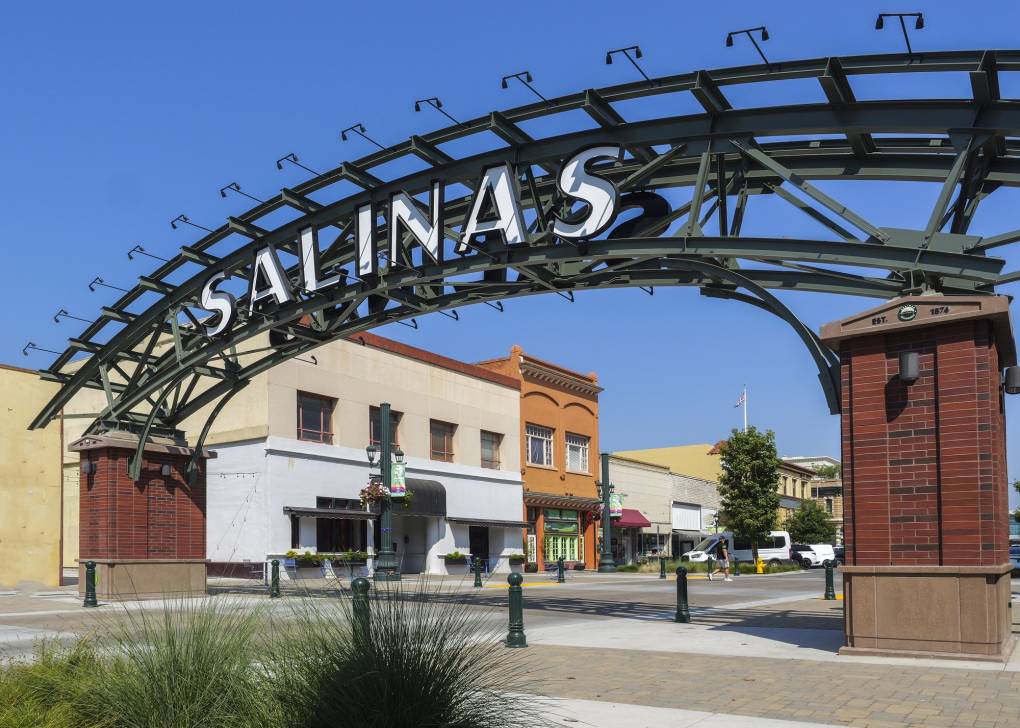
"caption": "As rental costs surge nationwide, few communities have been hit harder than Salinas, a small farmworker town near the Bay Area. Since 2000, rents there have increased sevenfold compared to incomes. On Tuesday, the Salinas City Council advanced a set of tenant protection policies, including rent control.",
"credit": "4kodiak/iStock via Getty Images",
"altTag": null,
"description": null,
"imgSizes": {
"medium": {
"file": "https://cdn.kqed.org/wp-content/uploads/sites/10/2024/08/SalinasCaliforniaGetty1-800x571.jpg",
"width": 800,
"height": 571,
"mimeType": "image/jpeg"
},
"large": {
"file": "https://cdn.kqed.org/wp-content/uploads/sites/10/2024/08/SalinasCaliforniaGetty1-1020x728.jpg",
"width": 1020,
"height": 728,
"mimeType": "image/jpeg"
},
"thumbnail": {
"file": "https://cdn.kqed.org/wp-content/uploads/sites/10/2024/08/SalinasCaliforniaGetty1-160x114.jpg",
"width": 160,
"height": 114,
"mimeType": "image/jpeg"
},
"1536x1536": {
"file": "https://cdn.kqed.org/wp-content/uploads/sites/10/2024/08/SalinasCaliforniaGetty1-1536x1096.jpg",
"width": 1536,
"height": 1096,
"mimeType": "image/jpeg"
},
"post-thumbnail": {
"file": "https://cdn.kqed.org/wp-content/uploads/sites/10/2024/08/SalinasCaliforniaGetty1-672x372.jpg",
"width": 672,
"height": 372,
"mimeType": "image/jpeg"
},
"twentyfourteen-full-width": {
"file": "https://cdn.kqed.org/wp-content/uploads/sites/10/2024/08/SalinasCaliforniaGetty1-1038x576.jpg",
"width": 1038,
"height": 576,
"mimeType": "image/jpeg"
},
"full-width": {
"file": "https://cdn.kqed.org/wp-content/uploads/sites/10/2024/08/SalinasCaliforniaGetty1-1920x1370.jpg",
"width": 1920,
"height": 1370,
"mimeType": "image/jpeg"
},
"kqedFullSize": {
"file": "https://cdn.kqed.org/wp-content/uploads/sites/10/2024/08/SalinasCaliforniaGetty1.jpg",
"width": 2000,
"height": 1427
}
},
"isLoading": false,
"fetchFailed": false
},
"news_12000943": {
"type": "attachments",
"id": "news_12000943",
"meta": {
"index": "attachments_1716263798",
"site": "news",
"id": "12000943",
"found": true
},
"title": "240406-PeskinCampaignKickoff-038-BL_qed",
"publishDate": 1724181558,
"status": "inherit",
"parent": 12000938,
"modified": 1724181594,
"caption": "Board of Supervisors president Aaron Peskin speaks during a rally to announce his campaign for mayor of San Francisco in Chinatown’s Portsmouth Square in San Francisco on April 6, 2024.",
"credit": "Beth LaBerge/KQED",
"altTag": null,
"description": null,
"imgSizes": {
"medium": {
"file": "https://cdn.kqed.org/wp-content/uploads/sites/10/2024/08/240406-PeskinCampaignKickoff-038-BL_qed-800x533.jpg",
"width": 800,
"height": 533,
"mimeType": "image/jpeg"
},
"large": {
"file": "https://cdn.kqed.org/wp-content/uploads/sites/10/2024/08/240406-PeskinCampaignKickoff-038-BL_qed-1020x680.jpg",
"width": 1020,
"height": 680,
"mimeType": "image/jpeg"
},
"thumbnail": {
"file": "https://cdn.kqed.org/wp-content/uploads/sites/10/2024/08/240406-PeskinCampaignKickoff-038-BL_qed-160x107.jpg",
"width": 160,
"height": 107,
"mimeType": "image/jpeg"
},
"1536x1536": {
"file": "https://cdn.kqed.org/wp-content/uploads/sites/10/2024/08/240406-PeskinCampaignKickoff-038-BL_qed-1536x1024.jpg",
"width": 1536,
"height": 1024,
"mimeType": "image/jpeg"
},
"post-thumbnail": {
"file": "https://cdn.kqed.org/wp-content/uploads/sites/10/2024/08/240406-PeskinCampaignKickoff-038-BL_qed-672x372.jpg",
"width": 672,
"height": 372,
"mimeType": "image/jpeg"
},
"twentyfourteen-full-width": {
"file": "https://cdn.kqed.org/wp-content/uploads/sites/10/2024/08/240406-PeskinCampaignKickoff-038-BL_qed-1038x576.jpg",
"width": 1038,
"height": 576,
"mimeType": "image/jpeg"
},
"full-width": {
"file": "https://cdn.kqed.org/wp-content/uploads/sites/10/2024/08/240406-PeskinCampaignKickoff-038-BL_qed-1920x1280.jpg",
"width": 1920,
"height": 1280,
"mimeType": "image/jpeg"
},
"kqedFullSize": {
"file": "https://cdn.kqed.org/wp-content/uploads/sites/10/2024/08/240406-PeskinCampaignKickoff-038-BL_qed.jpg",
"width": 2000,
"height": 1333
}
},
"isLoading": false,
"fetchFailed": false
},
"news_12000196": {
"type": "attachments",
"id": "news_12000196",
"meta": {
"index": "attachments_1716263798",
"site": "news",
"id": "12000196",
"found": true
},
"title": "An apartment building in the Elmwood neighborhood of Berkeley on July 18, 2024.",
"publishDate": 1723666408,
"status": "inherit",
"parent": 12000157,
"modified": 1723667801,
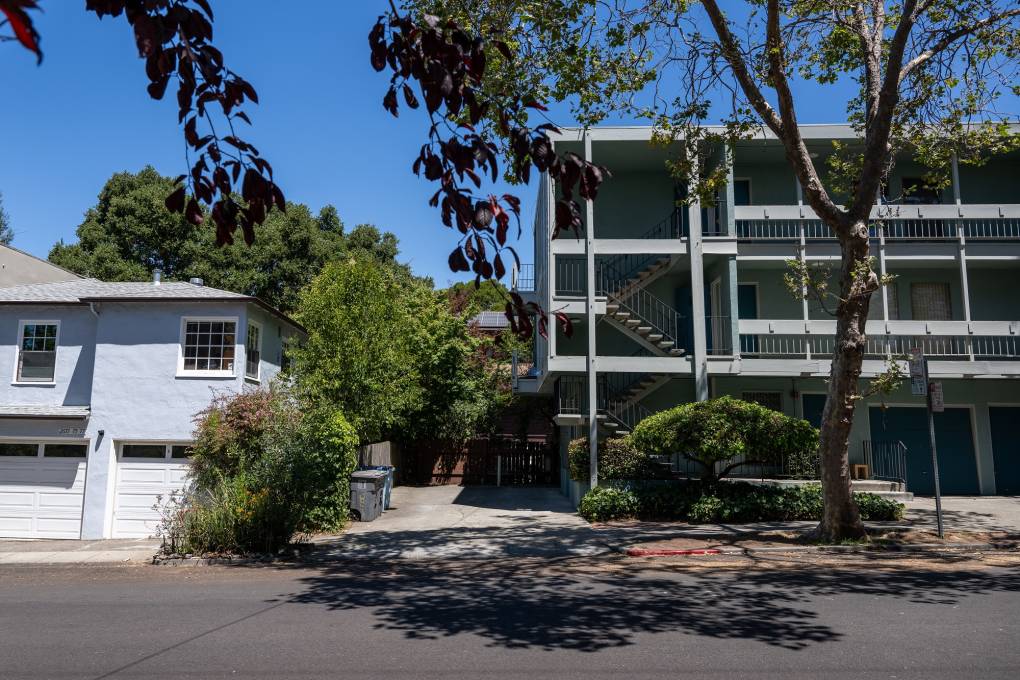
"caption": "An apartment building in the Elmwood neighborhood of Berkeley on July 18, 2024. A regional bond measure that would have authorized funding for an estimated 70,000 new subsidized apartments and homes will have to wait for a future election after it was pulled from the November ballot on Wednesday.",
"credit": "Beth LaBerge/KQED",
"altTag": null,
"description": null,
"imgSizes": {
"medium": {
"file": "https://cdn.kqed.org/wp-content/uploads/sites/10/2024/08/240718-BerkeleyMissingMiddleHousing-24-BL-800x533.jpg",
"width": 800,
"height": 533,
"mimeType": "image/jpeg"
},
"large": {
"file": "https://cdn.kqed.org/wp-content/uploads/sites/10/2024/08/240718-BerkeleyMissingMiddleHousing-24-BL-1020x680.jpg",
"width": 1020,
"height": 680,
"mimeType": "image/jpeg"
},
"thumbnail": {
"file": "https://cdn.kqed.org/wp-content/uploads/sites/10/2024/08/240718-BerkeleyMissingMiddleHousing-24-BL-160x107.jpg",
"width": 160,
"height": 107,
"mimeType": "image/jpeg"
},
"1536x1536": {
"file": "https://cdn.kqed.org/wp-content/uploads/sites/10/2024/08/240718-BerkeleyMissingMiddleHousing-24-BL-1536x1024.jpg",
"width": 1536,
"height": 1024,
"mimeType": "image/jpeg"
},
"post-thumbnail": {
"file": "https://cdn.kqed.org/wp-content/uploads/sites/10/2024/08/240718-BerkeleyMissingMiddleHousing-24-BL-672x372.jpg",
"width": 672,
"height": 372,
"mimeType": "image/jpeg"
},
"twentyfourteen-full-width": {
"file": "https://cdn.kqed.org/wp-content/uploads/sites/10/2024/08/240718-BerkeleyMissingMiddleHousing-24-BL-1038x576.jpg",
"width": 1038,
"height": 576,
"mimeType": "image/jpeg"
},
"full-width": {
"file": "https://cdn.kqed.org/wp-content/uploads/sites/10/2024/08/240718-BerkeleyMissingMiddleHousing-24-BL-1920x1280.jpg",
"width": 1920,
"height": 1280,
"mimeType": "image/jpeg"
},
"kqedFullSize": {
"file": "https://cdn.kqed.org/wp-content/uploads/sites/10/2024/08/240718-BerkeleyMissingMiddleHousing-24-BL.jpg",
"width": 2000,
"height": 1333
}
},
"isLoading": false,
"fetchFailed": false
},
"news_11996242": {
"type": "attachments",
"id": "news_11996242",
"meta": {
"index": "attachments_1716263798",
"site": "news",
"id": "11996242",
"found": true
},
"title": "240703-JAPANESE AMERICAN FAMILY FARM-MD-15-KQED",
"publishDate": 1721326800,
"status": "inherit",
"parent": 0,
"modified": 1721326971,
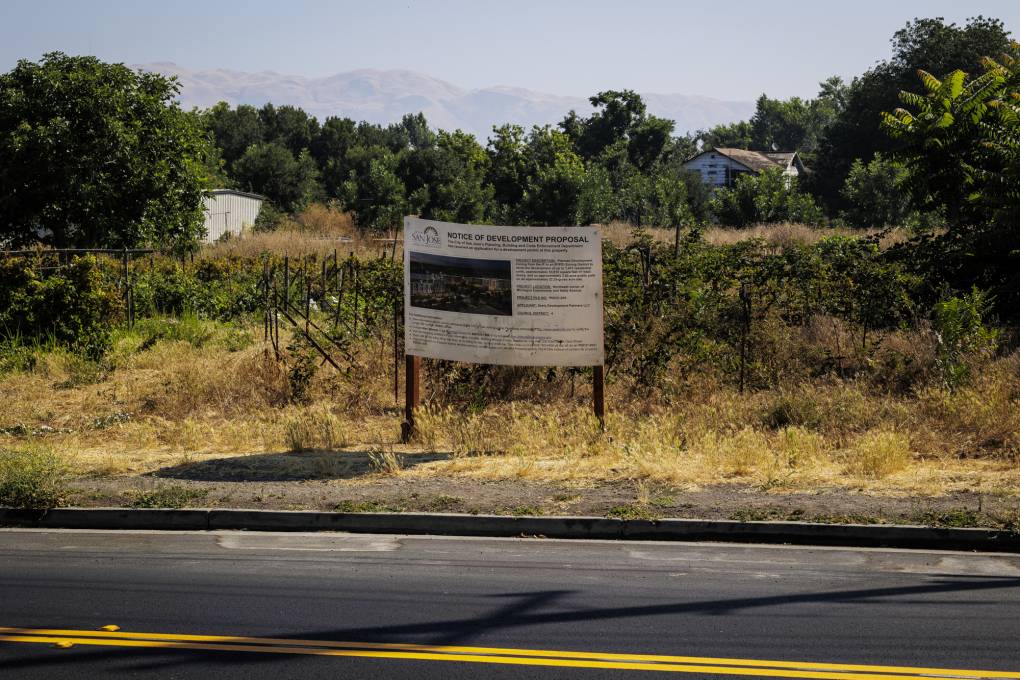
"caption": "A sign announces the proposed development of the Sakauye family farm in San José on July 10, 2024.",
"credit": "Martin do Nascimento/KQED",
"altTag": null,
"description": null,
"imgSizes": {
"medium": {
"file": "https://cdn.kqed.org/wp-content/uploads/sites/10/2024/07/240703-JAPANESE-AMERICAN-FAMILY-FARM-MD-15-KQED-800x533.jpg",
"width": 800,
"height": 533,
"mimeType": "image/jpeg"
},
"large": {
"file": "https://cdn.kqed.org/wp-content/uploads/sites/10/2024/07/240703-JAPANESE-AMERICAN-FAMILY-FARM-MD-15-KQED-1020x680.jpg",
"width": 1020,
"height": 680,
"mimeType": "image/jpeg"
},
"thumbnail": {
"file": "https://cdn.kqed.org/wp-content/uploads/sites/10/2024/07/240703-JAPANESE-AMERICAN-FAMILY-FARM-MD-15-KQED-160x107.jpg",
"width": 160,
"height": 107,
"mimeType": "image/jpeg"
},
"1536x1536": {
"file": "https://cdn.kqed.org/wp-content/uploads/sites/10/2024/07/240703-JAPANESE-AMERICAN-FAMILY-FARM-MD-15-KQED-1536x1024.jpg",
"width": 1536,
"height": 1024,
"mimeType": "image/jpeg"
},
"post-thumbnail": {
"file": "https://cdn.kqed.org/wp-content/uploads/sites/10/2024/07/240703-JAPANESE-AMERICAN-FAMILY-FARM-MD-15-KQED-672x372.jpg",
"width": 672,
"height": 372,
"mimeType": "image/jpeg"
},
"twentyfourteen-full-width": {
"file": "https://cdn.kqed.org/wp-content/uploads/sites/10/2024/07/240703-JAPANESE-AMERICAN-FAMILY-FARM-MD-15-KQED-1038x576.jpg",
"width": 1038,
"height": 576,
"mimeType": "image/jpeg"
},
"full-width": {
"file": "https://cdn.kqed.org/wp-content/uploads/sites/10/2024/07/240703-JAPANESE-AMERICAN-FAMILY-FARM-MD-15-KQED-1920x1280.jpg",
"width": 1920,
"height": 1280,
"mimeType": "image/jpeg"
},
"kqedFullSize": {
"file": "https://cdn.kqed.org/wp-content/uploads/sites/10/2024/07/240703-JAPANESE-AMERICAN-FAMILY-FARM-MD-15-KQED.jpg",
"width": 2000,
"height": 1333
}
},
"isLoading": false,
"fetchFailed": false
}
},
"audioPlayerReducer": {
"postId": "stream_live",
"isPaused": true,
"isPlaying": false,
"pfsActive": false,
"pledgeModalIsOpen": true,
"playerDrawerIsOpen": false,
"liveAudioPlayStartedAt": 0,
"liveAudioPlayContext": ""
},
"authorsReducer": {
"danbrekke": {
"type": "authors",
"id": "222",
"meta": {
"index": "authors_1716337520",
"id": "222",
"found": true
},
"name": "Dan Brekke",
"firstName": "Dan",
"lastName": "Brekke",
"slug": "danbrekke",
"email": "dbrekke@kqed.org",
"display_author_email": true,
"staff_mastheads": [
"news",
"science"
],
"title": "KQED Editor and Reporter",
"bio": "Dan Brekke is a reporter and editor for KQED News, responsible for coverage of topics ranging from California water issues to the Bay Area's transportation challenges. In a newsroom career that began in Chicago in 1972, Dan has worked for \u003cem>The San Francisco Examiner,\u003c/em> Wired and TechTV and has been published in The New York Times, The New York Times Magazine, Business 2.0, Salon and elsewhere.\r\n\r\nSince joining KQED in 2007, Dan has reported, edited and produced both radio and online features and breaking news pieces. He has shared as both editor and reporter in four Society of Professional Journalists Norcal Excellence in Journalism awards and one Edward R. Murrow regional award. He was chosen for a spring 2017 residency at the Mesa Refuge to advance his research on California salmon.\r\n\r\nEmail Dan at: \u003ca href=\"mailto:dbrekke@kqed.org\">dbrekke@kqed.org\u003c/a>\r\n\r\n\u003cstrong>Twitter:\u003c/strong> \u003ca href=\"https://twitter.com/danbrekke\" rel=\"noopener noreferrer\">twitter.com/danbrekke\u003c/a>\r\n\u003cstrong>Facebook:\u003c/strong> \u003ca href=\"https://www.facebook.com/danbrekke\" rel=\"noopener noreferrer\">www.facebook.com/danbrekke\u003c/a>\r\n\u003cstrong>LinkedIn:\u003c/strong> \u003ca href=\"https://www.linkedin.com/in/danbrekke\" rel=\"noopener noreferrer\">www.linkedin.com/in/danbrekke\u003c/a>",
"avatar": "https://secure.gravatar.com/avatar/c8126230345efca3f7aa89b1a402be45?s=600&d=mm&r=g",
"twitter": "danbrekke",
"facebook": null,
"instagram": "https://www.instagram.com/dan.brekke/",
"linkedin": "https://www.linkedin.com/in/danbrekke/",
"sites": [
{
"site": "news",
"roles": [
"administrator",
"create_posts"
]
},
{
"site": "stateofhealth",
"roles": [
"editor"
]
},
{
"site": "science",
"roles": [
"editor"
]
},
{
"site": "quest",
"roles": [
"contributor"
]
},
{
"site": "food",
"roles": [
"contributor"
]
},
{
"site": "forum",
"roles": [
"contributor"
]
},
{
"site": "liveblog",
"roles": [
"editor"
]
}
],
"headData": {
"title": "Dan Brekke | KQED",
"description": "KQED Editor and Reporter",
"ogImgSrc": "https://secure.gravatar.com/avatar/c8126230345efca3f7aa89b1a402be45?s=600&d=mm&r=g",
"twImgSrc": "https://secure.gravatar.com/avatar/c8126230345efca3f7aa89b1a402be45?s=600&d=mm&r=g"
},
"isLoading": false,
"link": "/author/danbrekke"
},
"kqed": {
"type": "authors",
"id": "236",
"meta": {
"index": "authors_1716337520",
"id": "236",
"found": true
},
"name": "KQED News Staff",
"firstName": "KQED News Staff",
"lastName": null,
"slug": "kqed",
"email": "faq@kqed.org",
"display_author_email": false,
"staff_mastheads": [],
"title": null,
"bio": null,
"avatar": "https://secure.gravatar.com/avatar/ef0e801a68c4c54afa9180db14084167?s=600&d=blank&r=g",
"twitter": null,
"facebook": null,
"instagram": null,
"linkedin": null,
"sites": [
{
"site": "arts",
"roles": [
"contributor"
]
},
{
"site": "news",
"roles": [
"editor"
]
},
{
"site": "futureofyou",
"roles": [
"author"
]
}
],
"headData": {
"title": "KQED News Staff | KQED",
"description": null,
"ogImgSrc": "https://secure.gravatar.com/avatar/ef0e801a68c4c54afa9180db14084167?s=600&d=blank&r=g",
"twImgSrc": "https://secure.gravatar.com/avatar/ef0e801a68c4c54afa9180db14084167?s=600&d=blank&r=g"
},
"isLoading": false,
"link": "/author/kqed"
},
"vrancano": {
"type": "authors",
"id": "11276",
"meta": {
"index": "authors_1716337520",
"id": "11276",
"found": true
},
"name": "Vanessa Rancaño",
"firstName": "Vanessa",
"lastName": "Rancaño",
"slug": "vrancano",
"email": "vrancano@kqed.org",
"display_author_email": false,
"staff_mastheads": [
"news"
],
"title": "Reporter",
"bio": "Vanessa Rancaño is a features reporter for KQED. She’s also covered homelessness and education for the station and reported from the Central Valley. Her work has aired across public radio, from flagship national news shows to longform narrative podcasts. Before taking up a mic, she worked as a freelance print journalist. She’s been recognized with a number of national and regional awards. Vanessa grew up in California's Central Valley. She's a former NPR Kroc Fellow, and a graduate of the UC Berkeley Graduate School of Journalism.",
"avatar": "https://secure.gravatar.com/avatar/b3a383dfb0e7ee1c17568f2cf067904ab654d6e3de9743fc661f3c788ade1bed?s=600&d=blank&r=g",
"twitter": "vanessarancano",
"bluesky": null,
"facebook": null,
"instagram": null,
"linkedin": null,
"sites": [
{
"site": "arts",
"roles": [
"editor"
]
},
{
"site": "news",
"roles": [
"editor"
]
},
{
"site": "liveblog",
"roles": [
"contributor"
]
}
],
"headData": {
"title": "Vanessa Rancaño | KQED",
"description": "Reporter",
"ogImgSrc": "https://secure.gravatar.com/avatar/b3a383dfb0e7ee1c17568f2cf067904ab654d6e3de9743fc661f3c788ade1bed?s=600&d=blank&r=g",
"twImgSrc": "https://secure.gravatar.com/avatar/b3a383dfb0e7ee1c17568f2cf067904ab654d6e3de9743fc661f3c788ade1bed?s=600&d=blank&r=g"
},
"isLoading": false,
"link": "/author/vrancano"
},
"ebaldassari": {
"type": "authors",
"id": "11652",
"meta": {
"index": "authors_1716337520",
"id": "11652",
"found": true
},
"name": "Erin Baldassari",
"firstName": "Erin",
"lastName": "Baldassari",
"slug": "ebaldassari",
"email": "ebaldassari@KQED.org",
"display_author_email": true,
"staff_mastheads": [
"news"
],
"title": "Staff Writer",
"bio": "Erin Baldassari covers housing for KQED. She's a former print journalist and most recently worked as the transportation reporter for the \u003cem>Mercury News\u003c/em> and \u003cem>East Bay Times. \u003c/em>There, she focused on how the Bay Area’s housing shortage has changed the way people move around the region. She also served on the \u003cem>East Bay Times\u003c/em>’ 2017 Pulitzer Prize-winning team for coverage of the Ghost Ship Fire in Oakland. Prior to that, Erin worked as a breaking news and general assignment reporter for a variety of outlets in the Bay Area and the greater Boston area. A Tufts University alumna, Erin grew up in the foothills of the Sierra Nevada mountains and in Sonoma County. She is a life-long KQED listener.",
"avatar": "https://secure.gravatar.com/avatar/5e95cad64a8ca08288082212e199d2b0cbeb4fd8e8ef5339395f361032bbe005?s=600&d=blank&r=g",
"twitter": "e_baldi",
"bluesky": null,
"facebook": null,
"instagram": null,
"linkedin": null,
"sites": [
{
"site": "news",
"roles": [
"edit_others_posts",
"editor"
]
},
{
"site": "science",
"roles": [
"editor"
]
},
{
"site": "liveblog",
"roles": [
"editor"
]
}
],
"headData": {
"title": "Erin Baldassari | KQED",
"description": "Staff Writer",
"ogImgSrc": "https://secure.gravatar.com/avatar/5e95cad64a8ca08288082212e199d2b0cbeb4fd8e8ef5339395f361032bbe005?s=600&d=blank&r=g",
"twImgSrc": "https://secure.gravatar.com/avatar/5e95cad64a8ca08288082212e199d2b0cbeb4fd8e8ef5339395f361032bbe005?s=600&d=blank&r=g"
},
"isLoading": false,
"link": "/author/ebaldassari"
},
"abandlamudi": {
"type": "authors",
"id": "11672",
"meta": {
"index": "authors_1716337520",
"id": "11672",
"found": true
},
"name": "Adhiti Bandlamudi",
"firstName": "Adhiti",
"lastName": "Bandlamudi",
"slug": "abandlamudi",
"email": "abandlamudi@kqed.org",
"display_author_email": false,
"staff_mastheads": [
"news"
],
"title": "KQED Housing Reporter",
"bio": "Adhiti Bandlamudi reports for KQED's Housing desk. She focuses on how housing gets built across the Bay Area. Before joining KQED in 2020, she reported for WUNC in Durham, North Carolina, WABE in Atlanta, Georgia and Capital Public Radio in Sacramento. In 2017, she was awarded a Kroc Fellowship at NPR where she reported on everything from sprinkles to the Golden State Killer's arrest. When she's not reporting, she's baking new recipes in her kitchen or watching movies with friends and family. She's originally from Georgia and has strong opinions about Great British Bake Off.",
"avatar": "https://secure.gravatar.com/avatar/868129c8b257bb99a3500e2c86a65400?s=600&d=mm&r=g",
"twitter": "oddity_adhiti",
"facebook": null,
"instagram": null,
"linkedin": null,
"sites": [
{
"site": "arts",
"roles": [
"author"
]
},
{
"site": "news",
"roles": [
"editor"
]
},
{
"site": "liveblog",
"roles": [
"author"
]
}
],
"headData": {
"title": "Adhiti Bandlamudi | KQED",
"description": "KQED Housing Reporter",
"ogImgSrc": "https://secure.gravatar.com/avatar/868129c8b257bb99a3500e2c86a65400?s=600&d=mm&r=g",
"twImgSrc": "https://secure.gravatar.com/avatar/868129c8b257bb99a3500e2c86a65400?s=600&d=mm&r=g"
},
"isLoading": false,
"link": "/author/abandlamudi"
},
"sjohnson": {
"type": "authors",
"id": "11840",
"meta": {
"index": "authors_1716337520",
"id": "11840",
"found": true
},
"name": "Sydney Johnson",
"firstName": "Sydney",
"lastName": "Johnson",
"slug": "sjohnson",
"email": "sjohnson@kqed.org",
"display_author_email": false,
"staff_mastheads": [
"news"
],
"title": "KQED Reporter",
"bio": "Sydney Johnson is a general assignment reporter at KQED. She previously reported on public health and city government at the San Francisco Examiner, and before that, she covered statewide education policy for EdSource. Her reporting has won multiple local, state and national awards. Sydney is a graduate of the University of California, Berkeley and lives in San Francisco.",
"avatar": "https://secure.gravatar.com/avatar/97855f2719b72ad6190b7c535fe642c8?s=600&d=blank&r=g",
"twitter": "sydneyfjohnson",
"facebook": null,
"instagram": null,
"linkedin": null,
"sites": [
{
"site": "news",
"roles": [
"editor"
]
}
],
"headData": {
"title": "Sydney Johnson | KQED",
"description": "KQED Reporter",
"ogImgSrc": "https://secure.gravatar.com/avatar/97855f2719b72ad6190b7c535fe642c8?s=600&d=blank&r=g",
"twImgSrc": "https://secure.gravatar.com/avatar/97855f2719b72ad6190b7c535fe642c8?s=600&d=blank&r=g"
},
"isLoading": false,
"link": "/author/sjohnson"
},
"jgeha": {
"type": "authors",
"id": "11906",
"meta": {
"index": "authors_1716337520",
"id": "11906",
"found": true
},
"name": "Joseph Geha",
"firstName": "Joseph",
"lastName": "Geha",
"slug": "jgeha",
"email": "jgeha@kqed.org",
"display_author_email": false,
"staff_mastheads": [
"news",
"science"
],
"title": "KQED Contributor",
"bio": null,
"avatar": "https://secure.gravatar.com/avatar/ea84d2b6dd93d6369d453edf19dd583f117cd1759d2d9c9c92f9de77017354fe?s=600&d=blank&r=g",
"twitter": null,
"bluesky": null,
"facebook": null,
"instagram": null,
"linkedin": null,
"sites": [
{
"site": "news",
"roles": [
"editor"
]
},
{
"site": "liveblog",
"roles": [
"author"
]
}
],
"headData": {
"title": "Joseph Geha | KQED",
"description": "KQED Contributor",
"ogImgSrc": "https://secure.gravatar.com/avatar/ea84d2b6dd93d6369d453edf19dd583f117cd1759d2d9c9c92f9de77017354fe?s=600&d=blank&r=g",
"twImgSrc": "https://secure.gravatar.com/avatar/ea84d2b6dd93d6369d453edf19dd583f117cd1759d2d9c9c92f9de77017354fe?s=600&d=blank&r=g"
},
"isLoading": false,
"link": "/author/jgeha"
},
"rcooke": {
"type": "authors",
"id": "11921",
"meta": {
"index": "authors_1716337520",
"id": "11921",
"found": true
},
"name": "Riley Cooke",
"firstName": "Riley",
"lastName": "Cooke",
"slug": "rcooke",
"email": "rcooke@kqed.org",
"display_author_email": true,
"staff_mastheads": [
"news"
],
"title": "KQED Contributor",
"bio": "Riley is a senior at UC Berkeley, where she studies political science and journalism. Her work has appeared in SFGate, NBC Bay Area, Local News Matters and more. She enjoys reporting on politics, housing and homelessness — and using as many em dashes as her editors will allow.",
"avatar": "https://secure.gravatar.com/avatar/792f98c126cc5e270a8a96f77f7224ea?s=600&d=blank&r=g",
"twitter": "rrileycooke",
"facebook": null,
"instagram": null,
"linkedin": null,
"sites": [
{
"site": "arts",
"roles": [
"author"
]
},
{
"site": "news",
"roles": [
"author"
]
}
],
"headData": {
"title": "Riley Cooke | KQED",
"description": "KQED Contributor",
"ogImgSrc": "https://secure.gravatar.com/avatar/792f98c126cc5e270a8a96f77f7224ea?s=600&d=blank&r=g",
"twImgSrc": "https://secure.gravatar.com/avatar/792f98c126cc5e270a8a96f77f7224ea?s=600&d=blank&r=g"
},
"isLoading": false,
"link": "/author/rcooke"
}
},
"pagesReducer": {
"news_tag_affordable-housing": {
"type": "terms",
"id": "news_3921",
"meta": {
"index": "terms_1716263798",
"site": "news",
"id": "3921",
"score": 9.304556
},
"featImg": null,
"name": "affordable housing",
"description": null,
"taxonomy": "tag",
"headData": {
"twImgId": null,
"twTitle": null,
"ogTitle": null,
"ogImgId": null,
"twDescription": null,
"description": null,
"title": "affordable housing Archives | KQED News",
"ogDescription": null
},
"ttid": 3940,
"slug": "affordable-housing",
"isLoading": false,
"title": "affordable housing",
"pageMeta": {
"site": "news",
"WpPageTemplate": "page-topic-editorial",
"currentPage": 18
},
"blocks": [
{
"blockName": "kqed/post-list",
"attrs": {
"layout": "cardArticle2",
"query": "posts/news?tag=affordable-housing",
"seeMore": false,
"paginated": true,
"page": 18
}
},
{
"blockName": "kqed/ad"
}
]
}
},
"pfsSessionReducer": {},
"postsReducer": {
"stream_live": {
"type": "live",
"id": "stream_live",
"audioUrl": "https://streams.kqed.org/kqedradio",
"title": "Live Stream",
"excerpt": "Live Stream information currently unavailable.",
"link": "/radio",
"featImg": "",
"label": {
"name": "KQED Live",
"link": "/"
}
},
"stream_kqedNewscast": {
"type": "posts",
"id": "stream_kqedNewscast",
"audioUrl": "https://www.kqed.org/.stream/anon/radio/RDnews/newscast.mp3?_=1",
"title": "KQED Newscast",
"featImg": "",
"label": {
"name": "88.5 FM",
"link": "/"
}
},
"news_12004348": {
"type": "posts",
"id": "news_12004348",
"meta": {
"index": "posts_1716263798",
"site": "news",
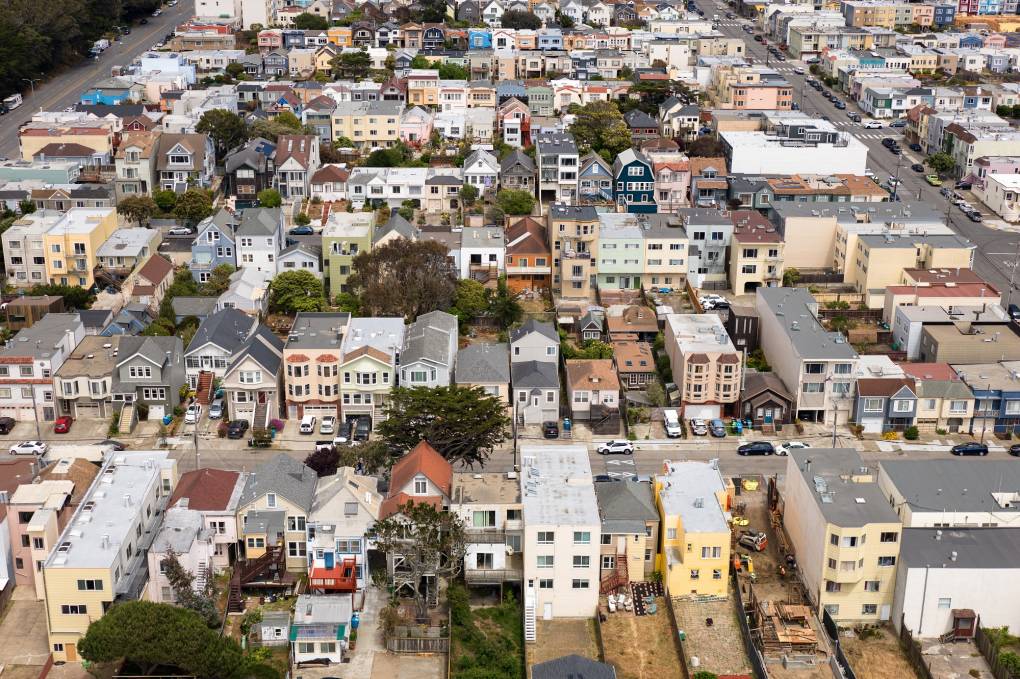
"id": "12004348",
"score": null,
"sort": [
1726097381000
]
},
"guestAuthors": [],
"slug": "berkeley-moves-to-expand-homeless-encampment-sweeps-in-more-aggressive-approach",
"title": "Berkeley Moves to Expand Homeless Encampment Sweeps in More Aggressive Approach",
"publishDate": 1726097381,
"format": "standard",
"headTitle": "Berkeley Moves to Expand Homeless Encampment Sweeps in More Aggressive Approach | KQED",
"labelTerm": {
"site": "news"
},
"content": "\u003cp>\u003ca href=\"https://www.kqed.org/news/tag/berkeley\">Berkeley\u003c/a> is set to take a more aggressive approach to homeless encampments as soon as next month after the City Council approved legislation on Tuesday allowing sweeps even when shelter isn’t available.\u003c/p>\n\u003cp>Councilmember Rashi Kesarwani, who represents northwest Berkeley, authored the resolution in response to two persistent homeless encampments in her district. It passed on an 8-1 vote, with only Councilmember Cecilia Lunaparra opposed.\u003c/p>\n\u003cp>“This is not a camping ban citywide,” Kesarwani said. “It is saying that we will enforce specific encampments when they pose a fire, serious health or safety risk. And we had to put forward a policy if we want our city staff to have the direction that they need.”\u003c/p>\n\u003cp>However, when asked during the meeting, homeless services coordinator Peter Radu said there is nowhere in Berkeley where camping would be legal under the resolution language.\u003c/p>\n\u003cp>[ad fullwidth]\u003c/p>\n\u003cp>Kesarwani’s proposal allows the city to authorize sweeps without shelter offers if an encampment poses a fire or health hazard or sits in the way of traffic or maintenance work. Previously, Berkeley had to provide shelter before being able to clear an encampment.\u003c/p>\n\u003cp>The vote came just hours after attorneys for a group of businesses and property owners filed \u003ca href=\"https://s3.documentcloud.org/documents/25119695/fieldwork-et-al-v-city-of-berkeley-street-camp-lawsuit.pdf\">a lawsuit\u003c/a> alleging the city has created a public nuisance by allowing several large encampments in West Berkeley — including those cited by Kesarwani in introducing her legislation.\u003c/p>\n\u003cp>It responds directly to a \u003ca href=\"https://www.kqed.org/news/11991340/supreme-court-says-laws-criminalizing-homeless-camping-do-not-violate-constitution\">recent Supreme Court decision\u003c/a> that allows cities greater leeway to \u003ca href=\"https://www.kqed.org/news/11983492/how-a-pivotal-case-on-homelessness-could-redefine-policies-in-california-and-the-nation\">fine or jail people\u003c/a> for camping on public property, even if there isn’t enough shelter available. While the number of shelter beds in Berkeley fluctuates, Radu said there were fewer than 20 available beds as of Tuesday morning.\u003c/p>\n\u003cfigure id=\"attachment_11970748\" class=\"wp-caption aligncenter\" style=\"max-width: 1024px\">\u003cimg loading=\"lazy\" decoding=\"async\" class=\"size-full wp-image-11970748\" src=\"https://cdn.kqed.org/wp-content/uploads/sites/10/2023/12/GettyImages-1502059460.jpg\" alt=\"tents along a street\" width=\"1024\" height=\"698\" srcset=\"https://cdn.kqed.org/wp-content/uploads/sites/10/2023/12/GettyImages-1502059460.jpg 1024w, https://cdn.kqed.org/wp-content/uploads/sites/10/2023/12/GettyImages-1502059460-800x545.jpg 800w, https://cdn.kqed.org/wp-content/uploads/sites/10/2023/12/GettyImages-1502059460-1020x695.jpg 1020w, https://cdn.kqed.org/wp-content/uploads/sites/10/2023/12/GettyImages-1502059460-160x109.jpg 160w\" sizes=\"auto, (max-width: 1024px) 100vw, 1024px\">\u003cfigcaption class=\"wp-caption-text\">Tents on 8th Street at a homeless encampment near Harrison Street in Berkeley in June 2023. \u003ccite>(Jane Tyska/Digital First Media/East Bay Times via Getty Images)\u003c/cite>\u003c/figcaption>\u003c/figure>\n\u003cp>Around \u003ca href=\"https://everyonehome.org/main/continuum-of-care/point-in-time-count-2024/\">450 Berkeley residents\u003c/a> remain unsheltered in 2024, according to the resolution.\u003c/p>\n\u003cp>Kesarwani amended a portion of the resolution on Tuesday night to remove language that explicitly refers to arrests and citations of unhoused individuals — though those options are still available.\u003c/p>\n\u003cp>“I would not support arresting or citing people for sleeping on the street, but I do believe we should hold everyone to the same standards,” said Councilmember Igor Tregub, who voted in favor of the resolution. He added that experiencing homelessness doesn’t automatically shield someone “from the consequences of unlawful behavior.”\u003c/p>\n\u003cp>The near-unanimous vote came over the fierce opposition of dozens of unhoused residents and their advocates, who condemned the council’s actions as essentially criminalizing sleeping outside. Berkeley Homeless Union officers Yesica Prado and Gordon Gilmore said they plan to take legal action against the city.\u003c/p>\n\u003cp>[aside postID=news_12003051 hero='https://cdn.kqed.org/wp-content/uploads/sites/10/2024/09/011_KQED_Berkeley_Homelessness_03192020_9408_qed-1020x680.jpg']\u003c/p>\n\u003cp>“The conditions you describe in this resolution will simply be recreated in a new place,” said Olivia deBree, a nurse who provides medical care to Berkeley’s two largest encampments.\u003c/p>\n\u003cp>In its lawsuit against the city, nine West Berkeley businesses and landlords pointed directly to lawsuits from advocates for people experiencing homelessness as one reason the city has failed to act.\u003c/p>\n\u003cp>“It was time to even the playing field and to put pressure from the other direction,” said Ilan Wurman, an attorney for the plaintiffs. “We wanted them to know that this lawsuit was going to happen and that we expect more than just talk for a change, but actual results.”\u003c/p>\n\u003cp>The timing of the suit — filed just as the City Council took up Kesarwani’s proposal — was no accident, he said.\u003c/p>\n\u003cp>It seeks an injunction requiring the city to clear three camps: one in the Harrison Street corridor, one along Codornices Creek and a third on the west end of Dwight Way.\u003c/p>\n\u003cp>The suit relies largely on the city’s own reports to argue that the camp in the Harrison Street area has, in the words of Berkeley’s city manager, “posed both very dangerous living conditions for the people living in them, and serious impacts to the neighboring businesses, residents, and general public.”\u003c/p>\n\u003cp>According to an August 2023 report from the city manager’s office, those hazards included discarded hypodermic needles, dead animals, spoiled food, human feces, bottles of urine, “and other unidentifiable liquid and waste products.” City inspectors also noted that camp structures and debris blocked sidewalks and extended into the street.\u003c/p>\n\u003cp>In addition to having to confront the conditions described in the city’s reports, the plaintiffs cite safety concerns arising from encounters with people living in the encampments.\u003c/p>\n\u003cp>“In one recent incident, a woman came into the (Fieldwork) brewery asking for free food,” the complaint reads. “When the manager on duty offered help, she left only to return two minutes later with a 10-foot metal pole swinging it at customers and employees; she was chased out of the building by customers and ultimately arrested by police.”\u003c/p>\n\u003cp>Wurman said the city has all the authority needed to take action, “and all that is missing is political will.”\u003c/p>\n\u003cp>\u003c/p>\n",
"blocks": [],
"excerpt": "The Berkeley City Council voted to allow sweeps even when shelter isn’t available, which came the same day as a lawsuit against the city over several large encampments.",
"status": "publish",
"parent": 0,
"modified": 1740527438,
"stats": {
"hasAudio": false,
"hasVideo": false,
"hasChartOrMap": false,
"iframeSrcs": [],
"hasGoogleForm": false,
"hasGallery": false,
"hasHearkenModule": false,
"hasPolis": false,
"paragraphCount": 24,
"wordCount": 880
},
"headData": {
"title": "Berkeley Moves to Expand Homeless Encampment Sweeps in More Aggressive Approach | KQED",
"description": "The Berkeley City Council voted to allow sweeps even when shelter isn’t available, which came the same day as a lawsuit against the city over several large encampments.",
"ogTitle": "",
"ogDescription": "",
"ogImgId": "",
"twTitle": "",
"twDescription": "",
"twImgId": "",
"schema": {
"@context": "https://schema.org",
"@type": "NewsArticle",
"headline": "Berkeley Moves to Expand Homeless Encampment Sweeps in More Aggressive Approach",
"datePublished": "2024-09-11T16:29:41-07:00",
"dateModified": "2025-02-25T15:50:38-08:00",
"image": "https://cdn.kqed.org/wp-content/uploads/2020/02/KQED-OG-Image@1x.png",
"isAccessibleForFree": "True",
"publisher": {
"@type": "NewsMediaOrganization",
"@id": "https://www.kqed.org/#organization",
"name": "KQED",
"logo": "https://cdn.kqed.org/wp-content/uploads/2020/02/KQED-OG-Image@1x.png",
"url": "https://www.kqed.org",
"sameAs": [
"https://www.facebook.com/KQED",
"https://twitter.com/KQED",
"https://www.instagram.com/kqed/",
"https://www.tiktok.com/@kqedofficial",
"https://www.linkedin.com/company/kqed",
"https://www.youtube.com/channel/UCeC0IOo7i1P_61zVUWbJ4nw"
]
}
}
},
"sticky": false,
"nprStoryId": "kqed-12004348",
"excludeFromSiteSearch": "Include",
"articleAge": "0",
"path": "/news/12004348/berkeley-moves-to-expand-homeless-encampment-sweeps-in-more-aggressive-approach",
"audioTrackLength": null,
"parsedContent": [
{
"type": "contentString",
"content": "\u003cdiv class=\"post-body\">\u003cp>\u003cp>\u003ca href=\"https://www.kqed.org/news/tag/berkeley\">Berkeley\u003c/a> is set to take a more aggressive approach to homeless encampments as soon as next month after the City Council approved legislation on Tuesday allowing sweeps even when shelter isn’t available.\u003c/p>\n\u003cp>Councilmember Rashi Kesarwani, who represents northwest Berkeley, authored the resolution in response to two persistent homeless encampments in her district. It passed on an 8-1 vote, with only Councilmember Cecilia Lunaparra opposed.\u003c/p>\n\u003cp>“This is not a camping ban citywide,” Kesarwani said. “It is saying that we will enforce specific encampments when they pose a fire, serious health or safety risk. And we had to put forward a policy if we want our city staff to have the direction that they need.”\u003c/p>\n\u003cp>However, when asked during the meeting, homeless services coordinator Peter Radu said there is nowhere in Berkeley where camping would be legal under the resolution language.\u003c/p>\n\u003cp>\u003c/p>\u003c/div>",
"attributes": {
"named": {},
"numeric": []
}
},
{
"type": "component",
"content": "",
"name": "ad",
"attributes": {
"named": {
"label": "fullwidth"
},
"numeric": [
"fullwidth"
]
}
},
{
"type": "contentString",
"content": "\u003cdiv class=\"post-body\">\u003cp>\u003c/p>\n\u003cp>Kesarwani’s proposal allows the city to authorize sweeps without shelter offers if an encampment poses a fire or health hazard or sits in the way of traffic or maintenance work. Previously, Berkeley had to provide shelter before being able to clear an encampment.\u003c/p>\n\u003cp>The vote came just hours after attorneys for a group of businesses and property owners filed \u003ca href=\"https://s3.documentcloud.org/documents/25119695/fieldwork-et-al-v-city-of-berkeley-street-camp-lawsuit.pdf\">a lawsuit\u003c/a> alleging the city has created a public nuisance by allowing several large encampments in West Berkeley — including those cited by Kesarwani in introducing her legislation.\u003c/p>\n\u003cp>It responds directly to a \u003ca href=\"https://www.kqed.org/news/11991340/supreme-court-says-laws-criminalizing-homeless-camping-do-not-violate-constitution\">recent Supreme Court decision\u003c/a> that allows cities greater leeway to \u003ca href=\"https://www.kqed.org/news/11983492/how-a-pivotal-case-on-homelessness-could-redefine-policies-in-california-and-the-nation\">fine or jail people\u003c/a> for camping on public property, even if there isn’t enough shelter available. While the number of shelter beds in Berkeley fluctuates, Radu said there were fewer than 20 available beds as of Tuesday morning.\u003c/p>\n\u003cfigure id=\"attachment_11970748\" class=\"wp-caption aligncenter\" style=\"max-width: 1024px\">\u003cimg loading=\"lazy\" decoding=\"async\" class=\"size-full wp-image-11970748\" src=\"https://cdn.kqed.org/wp-content/uploads/sites/10/2023/12/GettyImages-1502059460.jpg\" alt=\"tents along a street\" width=\"1024\" height=\"698\" srcset=\"https://cdn.kqed.org/wp-content/uploads/sites/10/2023/12/GettyImages-1502059460.jpg 1024w, https://cdn.kqed.org/wp-content/uploads/sites/10/2023/12/GettyImages-1502059460-800x545.jpg 800w, https://cdn.kqed.org/wp-content/uploads/sites/10/2023/12/GettyImages-1502059460-1020x695.jpg 1020w, https://cdn.kqed.org/wp-content/uploads/sites/10/2023/12/GettyImages-1502059460-160x109.jpg 160w\" sizes=\"auto, (max-width: 1024px) 100vw, 1024px\">\u003cfigcaption class=\"wp-caption-text\">Tents on 8th Street at a homeless encampment near Harrison Street in Berkeley in June 2023. \u003ccite>(Jane Tyska/Digital First Media/East Bay Times via Getty Images)\u003c/cite>\u003c/figcaption>\u003c/figure>\n\u003cp>Around \u003ca href=\"https://everyonehome.org/main/continuum-of-care/point-in-time-count-2024/\">450 Berkeley residents\u003c/a> remain unsheltered in 2024, according to the resolution.\u003c/p>\n\u003cp>Kesarwani amended a portion of the resolution on Tuesday night to remove language that explicitly refers to arrests and citations of unhoused individuals — though those options are still available.\u003c/p>\n\u003cp>“I would not support arresting or citing people for sleeping on the street, but I do believe we should hold everyone to the same standards,” said Councilmember Igor Tregub, who voted in favor of the resolution. He added that experiencing homelessness doesn’t automatically shield someone “from the consequences of unlawful behavior.”\u003c/p>\n\u003cp>The near-unanimous vote came over the fierce opposition of dozens of unhoused residents and their advocates, who condemned the council’s actions as essentially criminalizing sleeping outside. Berkeley Homeless Union officers Yesica Prado and Gordon Gilmore said they plan to take legal action against the city.\u003c/p>\n\u003cp>\u003c/p>\u003c/div>",
"attributes": {
"named": {},
"numeric": []
}
},
{
"type": "component",
"content": "",
"name": "aside",
"attributes": {
"named": {
"postid": "news_12003051",
"hero": "https://cdn.kqed.org/wp-content/uploads/sites/10/2024/09/011_KQED_Berkeley_Homelessness_03192020_9408_qed-1020x680.jpg",
"label": ""
},
"numeric": []
}
},
{
"type": "contentString",
"content": "\u003cdiv class=\"post-body\">\u003cp>\u003c/p>\n\u003cp>“The conditions you describe in this resolution will simply be recreated in a new place,” said Olivia deBree, a nurse who provides medical care to Berkeley’s two largest encampments.\u003c/p>\n\u003cp>In its lawsuit against the city, nine West Berkeley businesses and landlords pointed directly to lawsuits from advocates for people experiencing homelessness as one reason the city has failed to act.\u003c/p>\n\u003cp>“It was time to even the playing field and to put pressure from the other direction,” said Ilan Wurman, an attorney for the plaintiffs. “We wanted them to know that this lawsuit was going to happen and that we expect more than just talk for a change, but actual results.”\u003c/p>\n\u003cp>The timing of the suit — filed just as the City Council took up Kesarwani’s proposal — was no accident, he said.\u003c/p>\n\u003cp>It seeks an injunction requiring the city to clear three camps: one in the Harrison Street corridor, one along Codornices Creek and a third on the west end of Dwight Way.\u003c/p>\n\u003cp>The suit relies largely on the city’s own reports to argue that the camp in the Harrison Street area has, in the words of Berkeley’s city manager, “posed both very dangerous living conditions for the people living in them, and serious impacts to the neighboring businesses, residents, and general public.”\u003c/p>\n\u003cp>According to an August 2023 report from the city manager’s office, those hazards included discarded hypodermic needles, dead animals, spoiled food, human feces, bottles of urine, “and other unidentifiable liquid and waste products.” City inspectors also noted that camp structures and debris blocked sidewalks and extended into the street.\u003c/p>\n\u003cp>In addition to having to confront the conditions described in the city’s reports, the plaintiffs cite safety concerns arising from encounters with people living in the encampments.\u003c/p>\n\u003cp>“In one recent incident, a woman came into the (Fieldwork) brewery asking for free food,” the complaint reads. “When the manager on duty offered help, she left only to return two minutes later with a 10-foot metal pole swinging it at customers and employees; she was chased out of the building by customers and ultimately arrested by police.”\u003c/p>\n\u003cp>Wurman said the city has all the authority needed to take action, “and all that is missing is political will.”\u003c/p>\n\u003cp>\u003c/p>\n\u003c/div>\u003c/p>",
"attributes": {
"named": {},
"numeric": []
}
}
],
"link": "/news/12004348/berkeley-moves-to-expand-homeless-encampment-sweeps-in-more-aggressive-approach",
"authors": [
"11921",
"222"
],
"categories": [
"news_31795",
"news_6266",
"news_8"
],
"tags": [
"news_3921",
"news_129",
"news_673",
"news_27626",
"news_21214",
"news_1775"
],
"featImg": "news_12004356",
"label": "news"
},
"news_12003444": {
"type": "posts",
"id": "news_12003444",
"meta": {
"index": "posts_1716263798",
"site": "news",
"id": "12003444",
"score": null,
"sort": [
1725661870000
]
},
"guestAuthors": [],
"slug": "newsom-vetoes-controversial-bill-to-help-undocumented-immigrants-buy-homes",
"title": "Newsom Vetoes Controversial Bill to Help Undocumented Immigrants Buy Homes",
"publishDate": 1725661870,
"format": "standard",
"headTitle": "Newsom Vetoes Controversial Bill to Help Undocumented Immigrants Buy Homes | KQED",
"labelTerm": {
"site": "news"
},
"content": "\u003cp>Gov. Gavin Newsom announced Friday that he vetoed a controversial bill that would have allowed undocumented immigrants to access a wildly popular \u003ca href=\"https://www.kqed.org/news/11976218/california-will-help-fund-the-down-payment-for-your-first-house-heres-how-to-apply\">first-generation homeownership loan program\u003c/a>.\u003c/p>\n\u003cp>AB 1840, authored by Assemblymember Joaquin Arambula (D-Fresno), would have prohibited California’s Housing Finance Agency from disqualifying applicants from the California Dream For All Shared Appreciation Loan solely on an applicant’s immigration status.\u003c/p>\n\u003cp>Under the program, the state loans homebuyers 20% of the purchase price, or up to $150,000. Buyers repay the loan, without interest, when the home is sold, along with 20% of any appreciation on the home’s value.\u003c/p>\n\u003cp>[ad fullwidth]\u003c/p>\n\u003cp>The first round of funding in 2023 helped nearly 2,200 applicants purchase their first home. It was so popular — with the roughly $300 million in loans \u003ca href=\"https://www.kqed.org/news/11946353/californias-dream-for-all-home-loan-program-ran-through-300-million-in-11-days-who-got-the-money\">exhausted in just 11 days\u003c/a> after applications opened — that the state changed the rules for this year’s $250 million funding round and selected applicants based on a lottery.\u003c/p>\n\u003cp>So far, about 100 applicants have closed on their homes, according to CalHFA spokesperson Eric Johnson.\u003c/p>\n\u003cp>https://twitter.com/GarciaRETeam/status/1828613523494031404\u003c/p>\n\u003cp>As of Sept. 4, Johnson said about 18,000 people had applied for this year’s funding round. CalHFA predicts up to around 2,200 applicants will ultimately be awarded loans. However, with the state facing a \u003ca href=\"https://calmatters.org/housing/2024/05/may-revise-2024-homeless-housing/\">major budget deficit\u003c/a> this year, legislators declined to provide further funding in 2025.\u003c/p>\n\u003cp>“The bill that was sent to me was a program that had no money,” Newsom said. “I thought it was unnecessary and completely consistent with prior vetoes.”\u003c/p>\n\u003cp>[aside postID=news_12002972 hero='https://cdn.kqed.org/wp-content/uploads/sites/10/2024/09/240903-MARIN-SUBSTANDARD-AG-WORKER-HOUSING-MD-04-KQED-1020x680.jpg']\u003c/p>\n\u003cp>Arambula’s bill incited lively discussion between Republicans and Democrats and was often the subject of \u003ca href=\"https://thefederalist.com/2024/09/03/pelosi-celebrates-plans-for-illegal-immigrants-to-buy-homes-with-american-tax-dollars/\">race-baiting headlines\u003c/a>. In late August, the \u003ca href=\"https://src.senate.ca.gov/sites/src.senate.ca.gov/files/AB%201840%20%28Arambula%29%20Veto%20Request%20Letter_.pdf\">California Senate Republican Caucus\u003c/a> asked Newsom to veto the bill, saying, “legal California taxpayers are already struggling to purchase and maintain their homes.”\u003c/p>\n\u003cp>In Newsom’s \u003ca href=\"https://www.gov.ca.gov/wp-content/uploads/2024/09/AB-1840-Veto-Message.pdf\">veto message\u003c/a> to the California State Assembly, he noted there is “finite funding available” for such programs, and expanding eligibility “must be carefully considered within the context of the annual state budget.”\u003c/p>\n\u003cp>“I’m deeply disappointed that Gov. Newsom today vetoed AB 1840,” Arambula said in a statement Friday. “The veto doesn’t change the fact that many people — including undocumented immigrants — dream of owning a home so that generational wealth can be passed to their children.”\u003c/p>\n\u003ch2>What other housing questions do you have for KQED?\u003c/h2>\n\u003cp>Housing is one of the most crucial — and contentious — issues in the Bay Area, and here at KQED, we have a whole team dedicated to exploring \u003ca href=\"https://www.kqed.org/housing\">stories about housing affordability\u003c/a>.\u003c/p>\n\u003cp>As part of our work, we also want to bring you explainers and guides about housing in the region, offering practical advice and insight for renters, homeowners and unhoused folks on a wide range of housing situations. We also want you to send us your story ideas and tips, share your personal experience with housing in the Bay Area or volunteer to be one of the KQED readers and listeners we consult about housing stories.\u003c/p>\n\u003cp>\u003cstrong>So tell us: What housing question should we answer next?\u003c/strong>\u003c/p>\n\u003cp>You can use the comment box below to submit your question about housing in the Bay Area or California more widely. Or, maybe there’s a housing program you want to be explained or investigated. Whatever’s on your mind, use the Google Form below to talk to us. The information you provide here will be shared with the folks who work on KQED’s housing coverage, and we may follow up with you directly through the contact details you provide. (We’ll never share your information outside of KQED without your permission.) We won’t be able to reply to everyone who submits a question, but what you tell us will make our reporting stronger on KQED.org, KQED Public Radio and our social media channels.\u003c/p>\n\u003cp>https://docs.google.com/forms/d/e/1FAIpQLSfZ-ZKtuSHdeWqxooQwfEcr-oiOpdpJcf2RLZInU7aqjjQlRQ/viewform?embedded=true\u003c/p>\n\u003cp>\u003c/p>\n",
"blocks": [],
"excerpt": "Gov. Gavin Newsom vetoed a controversial bill on Friday that would have allowed undocumented immigrants to access one of the state’s first-generation homeownership loan programs. ",
"status": "publish",
"parent": 0,
"modified": 1725663657,
"stats": {
"hasAudio": false,
"hasVideo": false,
"hasChartOrMap": false,
"iframeSrcs": [],
"hasGoogleForm": true,
"hasGallery": false,
"hasHearkenModule": false,
"hasPolis": false,
"paragraphCount": 17,
"wordCount": 709
},
"headData": {
"title": "Newsom Vetoes Controversial Bill to Help Undocumented Immigrants Buy Homes | KQED",
"description": "Gov. Gavin Newsom vetoed a controversial bill on Friday that would have allowed undocumented immigrants to access one of the state’s first-generation homeownership loan programs. ",
"ogTitle": "",
"ogDescription": "",
"ogImgId": "",
"twTitle": "",
"twDescription": "",
"twImgId": "",
"schema": {
"@context": "https://schema.org",
"@type": "NewsArticle",
"headline": "Newsom Vetoes Controversial Bill to Help Undocumented Immigrants Buy Homes",
"datePublished": "2024-09-06T15:31:10-07:00",
"dateModified": "2024-09-06T16:00:57-07:00",
"image": "https://cdn.kqed.org/wp-content/uploads/2020/02/KQED-OG-Image@1x.png",
"isAccessibleForFree": "True",
"publisher": {
"@type": "NewsMediaOrganization",
"@id": "https://www.kqed.org/#organization",
"name": "KQED",
"logo": "https://cdn.kqed.org/wp-content/uploads/2020/02/KQED-OG-Image@1x.png",
"url": "https://www.kqed.org",
"sameAs": [
"https://www.facebook.com/KQED",
"https://twitter.com/KQED",
"https://www.instagram.com/kqed/",
"https://www.tiktok.com/@kqedofficial",
"https://www.linkedin.com/company/kqed",
"https://www.youtube.com/channel/UCeC0IOo7i1P_61zVUWbJ4nw"
]
}
}
},
"sticky": false,
"nprStoryId": "kqed-12003444",
"excludeFromSiteSearch": "Include",
"articleAge": "0",
"path": "/news/12003444/newsom-vetoes-controversial-bill-to-help-undocumented-immigrants-buy-homes",
"audioTrackLength": null,
"parsedContent": [
{
"type": "contentString",
"content": "\u003cdiv class=\"post-body\">\u003cp>\u003cp>Gov. Gavin Newsom announced Friday that he vetoed a controversial bill that would have allowed undocumented immigrants to access a wildly popular \u003ca href=\"https://www.kqed.org/news/11976218/california-will-help-fund-the-down-payment-for-your-first-house-heres-how-to-apply\">first-generation homeownership loan program\u003c/a>.\u003c/p>\n\u003cp>AB 1840, authored by Assemblymember Joaquin Arambula (D-Fresno), would have prohibited California’s Housing Finance Agency from disqualifying applicants from the California Dream For All Shared Appreciation Loan solely on an applicant’s immigration status.\u003c/p>\n\u003cp>Under the program, the state loans homebuyers 20% of the purchase price, or up to $150,000. Buyers repay the loan, without interest, when the home is sold, along with 20% of any appreciation on the home’s value.\u003c/p>\n\u003cp>\u003c/p>\u003c/div>",
"attributes": {
"named": {},
"numeric": []
}
},
{
"type": "component",
"content": "",
"name": "ad",
"attributes": {
"named": {
"label": "fullwidth"
},
"numeric": [
"fullwidth"
]
}
},
{
"type": "contentString",
"content": "\u003cdiv class=\"post-body\">\u003cp>\u003c/p>\n\u003cp>The first round of funding in 2023 helped nearly 2,200 applicants purchase their first home. It was so popular — with the roughly $300 million in loans \u003ca href=\"https://www.kqed.org/news/11946353/californias-dream-for-all-home-loan-program-ran-through-300-million-in-11-days-who-got-the-money\">exhausted in just 11 days\u003c/a> after applications opened — that the state changed the rules for this year’s $250 million funding round and selected applicants based on a lottery.\u003c/p>\n\u003cp>So far, about 100 applicants have closed on their homes, according to CalHFA spokesperson Eric Johnson.\u003c/p>\u003c/p>\u003c/div>",
"attributes": {
"named": {},
"numeric": []
}
},
{
"type": "component",
"content": "",
"name": "singleTwitterStatus",
"attributes": {
"named": {
"id": "1828613523494031404"
},
"numeric": []
}
},
{
"type": "contentString",
"content": "\u003cdiv class=\"post-body\">\u003cp>\n\u003cp>As of Sept. 4, Johnson said about 18,000 people had applied for this year’s funding round. CalHFA predicts up to around 2,200 applicants will ultimately be awarded loans. However, with the state facing a \u003ca href=\"https://calmatters.org/housing/2024/05/may-revise-2024-homeless-housing/\">major budget deficit\u003c/a> this year, legislators declined to provide further funding in 2025.\u003c/p>\n\u003cp>“The bill that was sent to me was a program that had no money,” Newsom said. “I thought it was unnecessary and completely consistent with prior vetoes.”\u003c/p>\n\u003cp>\u003c/p>\u003c/div>",
"attributes": {
"named": {},
"numeric": []
}
},
{
"type": "component",
"content": "",
"name": "aside",
"attributes": {
"named": {
"postid": "news_12002972",
"hero": "https://cdn.kqed.org/wp-content/uploads/sites/10/2024/09/240903-MARIN-SUBSTANDARD-AG-WORKER-HOUSING-MD-04-KQED-1020x680.jpg",
"label": ""
},
"numeric": []
}
},
{
"type": "contentString",
"content": "\u003cdiv class=\"post-body\">\u003cp>\u003c/p>\n\u003cp>Arambula’s bill incited lively discussion between Republicans and Democrats and was often the subject of \u003ca href=\"https://thefederalist.com/2024/09/03/pelosi-celebrates-plans-for-illegal-immigrants-to-buy-homes-with-american-tax-dollars/\">race-baiting headlines\u003c/a>. In late August, the \u003ca href=\"https://src.senate.ca.gov/sites/src.senate.ca.gov/files/AB%201840%20%28Arambula%29%20Veto%20Request%20Letter_.pdf\">California Senate Republican Caucus\u003c/a> asked Newsom to veto the bill, saying, “legal California taxpayers are already struggling to purchase and maintain their homes.”\u003c/p>\n\u003cp>In Newsom’s \u003ca href=\"https://www.gov.ca.gov/wp-content/uploads/2024/09/AB-1840-Veto-Message.pdf\">veto message\u003c/a> to the California State Assembly, he noted there is “finite funding available” for such programs, and expanding eligibility “must be carefully considered within the context of the annual state budget.”\u003c/p>\n\u003cp>“I’m deeply disappointed that Gov. Newsom today vetoed AB 1840,” Arambula said in a statement Friday. “The veto doesn’t change the fact that many people — including undocumented immigrants — dream of owning a home so that generational wealth can be passed to their children.”\u003c/p>\n\u003ch2>What other housing questions do you have for KQED?\u003c/h2>\n\u003cp>Housing is one of the most crucial — and contentious — issues in the Bay Area, and here at KQED, we have a whole team dedicated to exploring \u003ca href=\"https://www.kqed.org/housing\">stories about housing affordability\u003c/a>.\u003c/p>\n\u003cp>As part of our work, we also want to bring you explainers and guides about housing in the region, offering practical advice and insight for renters, homeowners and unhoused folks on a wide range of housing situations. We also want you to send us your story ideas and tips, share your personal experience with housing in the Bay Area or volunteer to be one of the KQED readers and listeners we consult about housing stories.\u003c/p>\n\u003cp>\u003cstrong>So tell us: What housing question should we answer next?\u003c/strong>\u003c/p>\n\u003cp>You can use the comment box below to submit your question about housing in the Bay Area or California more widely. Or, maybe there’s a housing program you want to be explained or investigated. Whatever’s on your mind, use the Google Form below to talk to us. The information you provide here will be shared with the folks who work on KQED’s housing coverage, and we may follow up with you directly through the contact details you provide. (We’ll never share your information outside of KQED without your permission.) We won’t be able to reply to everyone who submits a question, but what you tell us will make our reporting stronger on KQED.org, KQED Public Radio and our social media channels.\u003c/p>\u003c/p>\u003cp>\u003cdiv class='utils-parseShortcode-shortcodes-__shortcodes__shortcodeWrapper'>\n \u003ciframe\n src='https://docs.google.com/forms/d/e/1FAIpQLSfZ-ZKtuSHdeWqxooQwfEcr-oiOpdpJcf2RLZInU7aqjjQlRQ/viewform?embedded=true?embedded=true'\n title='https://docs.google.com/forms/d/e/1FAIpQLSfZ-ZKtuSHdeWqxooQwfEcr-oiOpdpJcf2RLZInU7aqjjQlRQ/viewform?embedded=true'\n width='760' height='500'\n frameborder='0'\n marginheight='0' marginwidth='0'>\u003c/iframe>\u003c/div>\u003c/p>\u003cp>\u003cp>\u003c/p>\n\u003c/div>\u003c/p>",
"attributes": {
"named": {},
"numeric": []
}
}
],
"link": "/news/12003444/newsom-vetoes-controversial-bill-to-help-undocumented-immigrants-buy-homes",
"authors": [
"11672"
],
"categories": [
"news_31795",
"news_6266",
"news_1169",
"news_8"
],
"tags": [
"news_3921",
"news_1386",
"news_18538",
"news_22307",
"news_16",
"news_1775",
"news_34502",
"news_20202"
],
"featImg": "news_12003447",
"label": "news"
},
"news_12003056": {
"type": "posts",
"id": "news_12003056",
"meta": {
"index": "posts_1716263798",
"site": "news",
"id": "12003056",
"score": null,
"sort": [
1725579596000
]
},
"guestAuthors": [],
"slug": "bay-area-rents-are-cooling-that-might-help-college-grads",
"title": "Bay Area Rents Are Cooling. That Might Help College Grads",
"publishDate": 1725579596,
"format": "standard",
"headTitle": "Bay Area Rents Are Cooling. That Might Help College Grads | KQED",
"labelTerm": {
"site": "news"
},
"content": "\u003cp>Thanks to a cooling rental market, recent college grads are finding \u003ca href=\"https://www.kqed.org/news/tag/bay-area\">Bay Area\u003c/a> rents a little more affordable, according to a \u003ca href=\"https://www.redfin.com/news/college-grad-rent-burden-2024/\">report\u003c/a> published Thursday by real estate firm Redfin.\u003c/p>\n\u003cp>Around San Jose, Redfin found the median rent in July for a two-bedroom apartment fell nearly 2% compared to last year. In San Francisco, the drop was even more dramatic, with rents declining nearly 7%. However, housing experts and advocates say that the report’s findings do not mean housing is becoming affordable for everyone.\u003c/p>\n\u003cp>“I don’t think we’re even close to that in the Bay Area,” said Jonas Bordo, CEO of rental listing company Dwellsy. “Rents are very expensive, and it’s a huge challenge for folks to be able to afford rent.”\u003c/p>\n\u003cp>[ad fullwidth]\u003c/p>\n\u003cp>Redfin’s report shows that last year, a recent college graduate in the San Jose metro area, which includes San Jose, Sunnyvale and Santa Clara, would have to spend nearly 31% of their income on rent for a two-bedroom apartment they might share with a roommate. For a studio or one-bedroom apartment, they might spend almost half of their income on rent.\u003c/p>\n\u003cp>Because the rental market has cooled, that same person today might only spend about 28% of their income for a shared two-bedroom apartment and would no longer be considered “rent-burdened” — or spending more than a third of their income on housing.\u003c/p>\n\u003cp>\u003c!-- iframe plugin v.4.3 wordpress.org/plugins/iframe/ -->\u003cbr>\n\u003ciframe loading=\"lazy\" title=\"Share of income a typical recent college grad would need to spend on a studio or 1-bedroom apartment\" aria-label=\"Grouped Bars\" id=\"datawrapper-chart-ADgCr\" src=\"https://datawrapper.dwcdn.net/ADgCr/3/\" scrolling=\"no\" frameborder=\"0\" style=\"width: 0; min-width: 100% !important; border: none;\" height=\"622\" data-external=\"1\" width=\"100%\" class=\"iframe-class\">\u003c/iframe>\u003c/p>\n\u003cp>The findings are slightly different in the San Francisco metropolitan area, which includes San Francisco, Oakland and Berkeley: A recent graduate, who might have paid just over 31% of their income on a two-bedroom apartment last year, would now spend about 27%. For a one-bedroom apartment or studio, that graduate last year would have spent more than half their income on housing. Today, they might spend just over 43%.\u003c/p>\n\u003cp>The report uses an estimated median salary of nearly $109,000 in the San Jose metro area and just over $84,000 for the San Francisco metro. Those salary figures are somewhat higher than the national average, Redfin chief economist Daryl Fairweather said, because the Bay Area leads the country in salaries for recent college graduates.\u003c/p>\n\u003cp>“If you are graduating with a degree that doesn’t bring you a high-tech income, then it will be even more difficult for you to be able to afford rent,” she said.\u003c/p>\n\u003cp>\u003c!-- iframe plugin v.4.3 wordpress.org/plugins/iframe/ -->\u003cbr>\n\u003ciframe loading=\"lazy\" title=\"Share of income a typical recent college grad would need to spend on a 2-bedroom apartment (with a roommate)\" aria-label=\"Grouped Bars\" id=\"datawrapper-chart-DXhNA\" src=\"https://datawrapper.dwcdn.net/DXhNA/6/\" scrolling=\"no\" frameborder=\"0\" style=\"width: 0; min-width: 100% !important; border: none;\" height=\"622\" data-external=\"1\" width=\"100%\" class=\"iframe-class\">\u003c/iframe>\u003c/p>\n\u003cp>UC Berkeley Labor Center organizer Brad Hirn said because rent prices increased at record rates before and during the pandemic, softening rents should not be viewed as a move toward affordability. Nationwide, rents increased nearly 21% over the past five years, according to a \u003ca href=\"https://www.jchs.harvard.edu/blog/rental-markets-are-cooling-rents-still-far-exceed-pre-pandemic-levels\">recent report\u003c/a> from Harvard’s Joint Center for Housing Studies. The same report found that rents increased only 0.2% nationwide last year, a much more modest increase than the 15% increase in early 2022.\u003c/p>\n\u003cp>“They start to argue that the market has cooled, and it’s like okay, you set it on fire and then decided to drop a few drops of water on it,” Hirn said. “It’s just kind of detached from reality.”\u003c/p>\n\u003cp>[aside postID=news_12002905 hero='https://cdn.kqed.org/wp-content/uploads/sites/10/2024/09/003_KQED_HousingSanFrancisco_02102020_qed-1020x680.jpg']\u003c/p>\n\u003cp>According to Harvard’s report, new apartment construction has helped soften rent prices. The report found that 22% more apartments were built last year compared to the year before.\u003c/p>\n\u003cp>Meanwhile, Bordo said as people are under financial pressure and delaying decisions about moving out of their parents’ homes or getting married, fewer renters are forming their own households. Coupled with new homes coming onto the market, that can also soften rent prices.\u003c/p>\n\u003cp>In the Bay Area, demand for rental apartments and homes also took a hit as \u003ca href=\"https://www.realpage.com/analytics/apartment-market-comparison-the-bay-area-trio/\">people moved out\u003c/a> of the region in favor of more affordable areas.\u003c/p>\n\u003cp>Bordo said the trends shown in Redfin’s report might help some renters, but that doesn’t necessarily equate to meaningful affordability.\u003c/p>\n\u003cp>“We’ll see some more people come into the market as a result of being able to afford things that they wouldn’t have been able to before,” he said. “But it’s not like housing is going to be regarded by any of us as inexpensive anytime soon unless something significant changes.”\u003c/p>\n\u003ch2>What other housing questions do you have for KQED?\u003c/h2>\n\u003cp>Housing is one of the most crucial — and contentious — issues in the Bay Area, and here at KQED, we have a whole team dedicated to exploring \u003ca href=\"https://www.kqed.org/housing\">stories about housing affordability\u003c/a>.\u003c/p>\n\u003cp>As part of our work, we also want to bring you explainers and guides about housing in the region, offering practical advice and insight for renters, homeowners and unhoused people on a wide range of housing situations. We also want you to send us your story ideas and tips, share your personal experience with housing in the Bay Area or volunteer to be one of the KQED readers and listeners we consult about housing stories.\u003c/p>\n\u003cp>\u003cstrong>So tell us: What housing question should we answer next?\u003c/strong>\u003c/p>\n\u003cp>You can use the comment box below to submit your question about housing in the Bay Area or California more widely. Or, maybe there’s a housing program you want to be explained or investigated. Whatever’s on your mind, use the Google Form below to talk to us. The information you provide here will be shared with the people working on KQED’s housing coverage, and we may follow up with you directly through the contact details you provide. (We’ll never share your information outside of KQED without your permission.) We won’t be able to reply to everyone who submits a question, but what you tell us will make our reporting stronger on KQED.org, KQED Public Radio and our social media channels.\u003c/p>\n\u003cp>https://docs.google.com/forms/d/e/1FAIpQLSfZ-ZKtuSHdeWqxooQwfEcr-oiOpdpJcf2RLZInU7aqjjQlRQ/viewform?embedded=true\u003c/p>\n\u003cp>\u003c/p>\n",
"blocks": [],
"excerpt": "Compared to a year ago, Bay Area college graduates might not need to spend as much of their income on rent, but prices are still unaffordable for many.",
"status": "publish",
"parent": 0,
"modified": 1740612816,
"stats": {
"hasAudio": false,
"hasVideo": false,
"hasChartOrMap": true,
"iframeSrcs": [
"https://datawrapper.dwcdn.net/ADgCr/3/",
"https://datawrapper.dwcdn.net/DXhNA/6/"
],
"hasGoogleForm": true,
"hasGallery": false,
"hasHearkenModule": false,
"hasPolis": false,
"paragraphCount": 24,
"wordCount": 1009
},
"headData": {
"title": "Bay Area Rents Are Cooling. That Might Help College Grads | KQED",
"description": "Compared to a year ago, Bay Area college graduates might not need to spend as much of their income on rent, but prices are still unaffordable for many.",
"ogTitle": "",
"ogDescription": "",
"ogImgId": "",
"twTitle": "",
"twDescription": "",
"twImgId": "",
"schema": {
"@context": "https://schema.org",
"@type": "NewsArticle",
"headline": "Bay Area Rents Are Cooling. That Might Help College Grads",
"datePublished": "2024-09-05T16:39:56-07:00",
"dateModified": "2025-02-26T15:33:36-08:00",
"image": "https://cdn.kqed.org/wp-content/uploads/2020/02/KQED-OG-Image@1x.png",
"isAccessibleForFree": "True",
"publisher": {
"@type": "NewsMediaOrganization",
"@id": "https://www.kqed.org/#organization",
"name": "KQED",
"logo": "https://cdn.kqed.org/wp-content/uploads/2020/02/KQED-OG-Image@1x.png",
"url": "https://www.kqed.org",
"sameAs": [
"https://www.facebook.com/KQED",
"https://twitter.com/KQED",
"https://www.instagram.com/kqed/",
"https://www.tiktok.com/@kqedofficial",
"https://www.linkedin.com/company/kqed",
"https://www.youtube.com/channel/UCeC0IOo7i1P_61zVUWbJ4nw"
]
}
}
},
"audioUrl": "https://traffic.omny.fm/d/clips/0af137ef-751e-4b19-a055-aaef00d2d578/ffca7e9f-6831-41c5-bcaf-aaef00f5a073/6fcf82ca-72a5-4560-b613-b1e2010574b6/audio.mp3",
"sticky": false,
"nprStoryId": "kqed-12003056",
"excludeFromSiteSearch": "Include",
"articleAge": "0",
"path": "/news/12003056/bay-area-rents-are-cooling-that-might-help-college-grads",
"audioTrackLength": null,
"parsedContent": [
{
"type": "contentString",
"content": "\u003cdiv class=\"post-body\">\u003cp>\u003cp>Thanks to a cooling rental market, recent college grads are finding \u003ca href=\"https://www.kqed.org/news/tag/bay-area\">Bay Area\u003c/a> rents a little more affordable, according to a \u003ca href=\"https://www.redfin.com/news/college-grad-rent-burden-2024/\">report\u003c/a> published Thursday by real estate firm Redfin.\u003c/p>\n\u003cp>Around San Jose, Redfin found the median rent in July for a two-bedroom apartment fell nearly 2% compared to last year. In San Francisco, the drop was even more dramatic, with rents declining nearly 7%. However, housing experts and advocates say that the report’s findings do not mean housing is becoming affordable for everyone.\u003c/p>\n\u003cp>“I don’t think we’re even close to that in the Bay Area,” said Jonas Bordo, CEO of rental listing company Dwellsy. “Rents are very expensive, and it’s a huge challenge for folks to be able to afford rent.”\u003c/p>\n\u003cp>\u003c/p>\u003c/div>",
"attributes": {
"named": {},
"numeric": []
}
},
{
"type": "component",
"content": "",
"name": "ad",
"attributes": {
"named": {
"label": "fullwidth"
},
"numeric": [
"fullwidth"
]
}
},
{
"type": "contentString",
"content": "\u003cdiv class=\"post-body\">\u003cp>\u003c/p>\n\u003cp>Redfin’s report shows that last year, a recent college graduate in the San Jose metro area, which includes San Jose, Sunnyvale and Santa Clara, would have to spend nearly 31% of their income on rent for a two-bedroom apartment they might share with a roommate. For a studio or one-bedroom apartment, they might spend almost half of their income on rent.\u003c/p>\n\u003cp>Because the rental market has cooled, that same person today might only spend about 28% of their income for a shared two-bedroom apartment and would no longer be considered “rent-burdened” — or spending more than a third of their income on housing.\u003c/p>\n\u003cp>\u003c!-- iframe plugin v.4.3 wordpress.org/plugins/iframe/ -->\u003cbr>\n\u003ciframe loading=\"lazy\" title=\"Share of income a typical recent college grad would need to spend on a studio or 1-bedroom apartment\" aria-label=\"Grouped Bars\" id=\"datawrapper-chart-ADgCr\" src=\"https://datawrapper.dwcdn.net/ADgCr/3/\" scrolling=\"no\" frameborder=\"0\" style=\"width: 0; min-width: 100% !important; border: none;\" height=\"622\" data-external=\"1\" width=\"100%\" class=\"iframe-class\">\u003c/iframe>\u003c/p>\n\u003cp>The findings are slightly different in the San Francisco metropolitan area, which includes San Francisco, Oakland and Berkeley: A recent graduate, who might have paid just over 31% of their income on a two-bedroom apartment last year, would now spend about 27%. For a one-bedroom apartment or studio, that graduate last year would have spent more than half their income on housing. Today, they might spend just over 43%.\u003c/p>\n\u003cp>The report uses an estimated median salary of nearly $109,000 in the San Jose metro area and just over $84,000 for the San Francisco metro. Those salary figures are somewhat higher than the national average, Redfin chief economist Daryl Fairweather said, because the Bay Area leads the country in salaries for recent college graduates.\u003c/p>\n\u003cp>“If you are graduating with a degree that doesn’t bring you a high-tech income, then it will be even more difficult for you to be able to afford rent,” she said.\u003c/p>\n\u003cp>\u003c!-- iframe plugin v.4.3 wordpress.org/plugins/iframe/ -->\u003cbr>\n\u003ciframe loading=\"lazy\" title=\"Share of income a typical recent college grad would need to spend on a 2-bedroom apartment (with a roommate)\" aria-label=\"Grouped Bars\" id=\"datawrapper-chart-DXhNA\" src=\"https://datawrapper.dwcdn.net/DXhNA/6/\" scrolling=\"no\" frameborder=\"0\" style=\"width: 0; min-width: 100% !important; border: none;\" height=\"622\" data-external=\"1\" width=\"100%\" class=\"iframe-class\">\u003c/iframe>\u003c/p>\n\u003cp>UC Berkeley Labor Center organizer Brad Hirn said because rent prices increased at record rates before and during the pandemic, softening rents should not be viewed as a move toward affordability. Nationwide, rents increased nearly 21% over the past five years, according to a \u003ca href=\"https://www.jchs.harvard.edu/blog/rental-markets-are-cooling-rents-still-far-exceed-pre-pandemic-levels\">recent report\u003c/a> from Harvard’s Joint Center for Housing Studies. The same report found that rents increased only 0.2% nationwide last year, a much more modest increase than the 15% increase in early 2022.\u003c/p>\n\u003cp>“They start to argue that the market has cooled, and it’s like okay, you set it on fire and then decided to drop a few drops of water on it,” Hirn said. “It’s just kind of detached from reality.”\u003c/p>\n\u003cp>\u003c/p>\u003c/div>",
"attributes": {
"named": {},
"numeric": []
}
},
{
"type": "component",
"content": "",
"name": "aside",
"attributes": {
"named": {
"postid": "news_12002905",
"hero": "https://cdn.kqed.org/wp-content/uploads/sites/10/2024/09/003_KQED_HousingSanFrancisco_02102020_qed-1020x680.jpg",
"label": ""
},
"numeric": []
}
},
{
"type": "contentString",
"content": "\u003cdiv class=\"post-body\">\u003cp>\u003c/p>\n\u003cp>According to Harvard’s report, new apartment construction has helped soften rent prices. The report found that 22% more apartments were built last year compared to the year before.\u003c/p>\n\u003cp>Meanwhile, Bordo said as people are under financial pressure and delaying decisions about moving out of their parents’ homes or getting married, fewer renters are forming their own households. Coupled with new homes coming onto the market, that can also soften rent prices.\u003c/p>\n\u003cp>In the Bay Area, demand for rental apartments and homes also took a hit as \u003ca href=\"https://www.realpage.com/analytics/apartment-market-comparison-the-bay-area-trio/\">people moved out\u003c/a> of the region in favor of more affordable areas.\u003c/p>\n\u003cp>Bordo said the trends shown in Redfin’s report might help some renters, but that doesn’t necessarily equate to meaningful affordability.\u003c/p>\n\u003cp>“We’ll see some more people come into the market as a result of being able to afford things that they wouldn’t have been able to before,” he said. “But it’s not like housing is going to be regarded by any of us as inexpensive anytime soon unless something significant changes.”\u003c/p>\n\u003ch2>What other housing questions do you have for KQED?\u003c/h2>\n\u003cp>Housing is one of the most crucial — and contentious — issues in the Bay Area, and here at KQED, we have a whole team dedicated to exploring \u003ca href=\"https://www.kqed.org/housing\">stories about housing affordability\u003c/a>.\u003c/p>\n\u003cp>As part of our work, we also want to bring you explainers and guides about housing in the region, offering practical advice and insight for renters, homeowners and unhoused people on a wide range of housing situations. We also want you to send us your story ideas and tips, share your personal experience with housing in the Bay Area or volunteer to be one of the KQED readers and listeners we consult about housing stories.\u003c/p>\n\u003cp>\u003cstrong>So tell us: What housing question should we answer next?\u003c/strong>\u003c/p>\n\u003cp>You can use the comment box below to submit your question about housing in the Bay Area or California more widely. Or, maybe there’s a housing program you want to be explained or investigated. Whatever’s on your mind, use the Google Form below to talk to us. The information you provide here will be shared with the people working on KQED’s housing coverage, and we may follow up with you directly through the contact details you provide. (We’ll never share your information outside of KQED without your permission.) We won’t be able to reply to everyone who submits a question, but what you tell us will make our reporting stronger on KQED.org, KQED Public Radio and our social media channels.\u003c/p>\u003c/p>\u003cp>\u003cdiv class='utils-parseShortcode-shortcodes-__shortcodes__shortcodeWrapper'>\n \u003ciframe\n src='https://docs.google.com/forms/d/e/1FAIpQLSfZ-ZKtuSHdeWqxooQwfEcr-oiOpdpJcf2RLZInU7aqjjQlRQ/viewform?embedded=true?embedded=true'\n title='https://docs.google.com/forms/d/e/1FAIpQLSfZ-ZKtuSHdeWqxooQwfEcr-oiOpdpJcf2RLZInU7aqjjQlRQ/viewform?embedded=true'\n width='760' height='500'\n frameborder='0'\n marginheight='0' marginwidth='0'>\u003c/iframe>\u003c/div>\u003c/p>\u003cp>\u003cp>\u003c/p>\n\u003c/div>\u003c/p>",
"attributes": {
"named": {},
"numeric": []
}
}
],
"link": "/news/12003056/bay-area-rents-are-cooling-that-might-help-college-grads",
"authors": [
"11672"
],
"categories": [
"news_31795",
"news_6266",
"news_8"
],
"tags": [
"news_3921",
"news_1386",
"news_27626",
"news_1775",
"news_20967",
"news_38",
"news_3457",
"news_27707"
],
"featImg": "news_12003058",
"label": "news"
},
"news_12003051": {
"type": "posts",
"id": "news_12003051",
"meta": {
"index": "posts_1716263798",
"site": "news",
"id": "12003051",
"score": null,
"sort": [
1725534338000
]
},
"guestAuthors": [],
"slug": "berkeley-could-sweep-homeless-encampments-without-offering-shelter-under-new-proposal",
"title": "Berkeley Could Sweep Homeless Encampments Without Offering Shelter Under New Proposal",
"publishDate": 1725534338,
"format": "standard",
"headTitle": "Berkeley Could Sweep Homeless Encampments Without Offering Shelter Under New Proposal | KQED",
"labelTerm": {
"site": "news"
},
"content": "\u003cp>\u003ca href=\"https://www.kqed.org/news/tag/berkeley\">Berkeley\u003c/a> may soon become the latest Bay Area city to \u003ca href=\"https://www.kqed.org/news/12000987/what-rights-do-unhoused-people-have-amid-heightened-sweeps\">crack down on homeless encampments\u003c/a> under expanded authority granted to local governments by a recent Supreme Court ruling.\u003c/p>\n\u003cp>Legislation proposed by Councilmember Rashi Kesarwani, who represents northwest Berkeley, would allow the city, under certain conditions, to clear encampments without providing alternative shelter. Unhoused residents could also face citation or arrest if the resolution passes.\u003c/p>\n\u003cp>“We want our staff to continue to make a shelter offer when practicable,” Kesarwani said. “But sometimes, we have encampments that have created a fire or health risk for neighboring businesses or residents, and we need to be able to address those health and safety issues by enforcing our state and local laws.”\u003c/p>\n\u003cp>Under Kesarwani’s proposal, encampments could be cleared if they pose a fire or health hazard, constitute a “public nuisance,” or sit in the way of traffic, construction or maintenance.\u003c/p>\n\u003cp>[ad fullwidth]\u003c/p>\n\u003cp>However, those exceptions are broad enough to apply to every encampment in the city, according to Andrea Henson, who provides legal counsel to the homeless advocacy group Where Do We Go Berkeley.\u003c/p>\n\u003cp>“If you want to sweep all these camps, where’s everyone going to go? Because they’re not going to leave Berkeley — a lot of them are from Berkeley. They don’t want to leave home,” Henson said.\u003c/p>\n\u003cp>Kesarwani argued that the exceptions are specific and nuanced. The legislation mentions two of the city’s largest encampments as priorities for removal — both of which are within her district.\u003c/p>\n\u003cp>One of them on Harrison Street prompts around one police call per day and has rampant health and safety violations that concern neighboring businesses and residents, Kesarwani said.\u003c/p>\n\u003cp>“It is not progressive to enable people who are in the throes of serious drug addiction to continue in their addiction without serious consequence and continue to create fire and health hazards for the surrounding neighborhood,” Kesarwani said.\u003c/p>\n\u003cfigure id=\"attachment_12003165\" class=\"wp-caption aligncenter\" style=\"max-width: 2000px\">\u003cimg loading=\"lazy\" decoding=\"async\" class=\"size-full wp-image-12003165\" src=\"https://cdn.kqed.org/wp-content/uploads/sites/10/2024/09/009_KQED_Berkeley_Homelessness_03192020__qed.jpg\" alt=\"\" width=\"2000\" height=\"1333\" srcset=\"https://cdn.kqed.org/wp-content/uploads/sites/10/2024/09/009_KQED_Berkeley_Homelessness_03192020__qed.jpg 2000w, https://cdn.kqed.org/wp-content/uploads/sites/10/2024/09/009_KQED_Berkeley_Homelessness_03192020__qed-800x533.jpg 800w, https://cdn.kqed.org/wp-content/uploads/sites/10/2024/09/009_KQED_Berkeley_Homelessness_03192020__qed-1020x680.jpg 1020w, https://cdn.kqed.org/wp-content/uploads/sites/10/2024/09/009_KQED_Berkeley_Homelessness_03192020__qed-160x107.jpg 160w, https://cdn.kqed.org/wp-content/uploads/sites/10/2024/09/009_KQED_Berkeley_Homelessness_03192020__qed-1536x1024.jpg 1536w, https://cdn.kqed.org/wp-content/uploads/sites/10/2024/09/009_KQED_Berkeley_Homelessness_03192020__qed-1920x1280.jpg 1920w\" sizes=\"auto, (max-width: 2000px) 100vw, 2000px\">\u003cfigcaption class=\"wp-caption-text\">A portable restroom at a tent encampment under a freeway overpass in Berkeley on March 19, 2020. \u003ccite>(Beth LaBerge/KQED)\u003c/cite>\u003c/figcaption>\u003c/figure>\n\u003cp>According to Kesarwani, Berkeley cut its unsheltered homeless population in half over the past two years, coinciding with the opening of several permanent and transitional housing options.\u003c/p>\n\u003cp>But there still aren’t enough beds to house the city’s remaining 445 unsheltered homeless residents. Henson said it could take years to get people into housing, adding that an independent audit of Berkeley’s shelters could identify the roadblocks to helping people off the street.\u003c/p>\n\u003cp>In the meantime, Henson said the city should prioritize options like safe parking sites instead of sweeps.\u003c/p>\n\u003cp>[aside postID=news_11996949 hero='https://cdn.kqed.org/wp-content/uploads/sites/10/2024/07/005_KQED_Housing_Berkeley_ShadowStandards_02272020__qed-1-1020x680.jpg']\u003c/p>\n\u003cp>Under a federal court ruling in 2022, sweeps were restricted and cities could not fine or jail people for camping in public if insufficient shelter was available. In June, the Supreme Court’s ruling in the City of Grants Pass, Ore. v. Gloria Johnson overturned that precedent, leading Gov. Gavin Newsom to \u003ca href=\"https://www.kqed.org/news/11997352/newsom-orders-state-agencies-to-dismantle-homeless-encampments-across-california\">direct state agencies to dismantle encampments on their property\u003c/a> and urge local officials to do the same.\u003c/p>\n\u003cp>In San Francisco, Mayor London Breed promised the city would launch \u003ca href=\"https://www.kqed.org/news/12000606/scenes-from-san-franciscos-unhoused-encampment-sweeps\">“very aggressive” sweeps\u003c/a>. Advocates and some neighbors have argued the crackdown is only \u003ca href=\"https://www.kqed.org/news/12000781/sf-encampment-crackdown-gets-tents-but-not-people-off-the-streets-neighbors-say\">moving people from place to place\u003c/a>, and a federal judge has \u003ca href=\"https://www.kqed.org/news/11999041/san-francisco-workers-clearing-homeless-encampments-need-better-training-judge-rules\">ruled the city must better train its workers\u003c/a> on how to handle unhoused people’s belongings during the sweeps.\u003c/p>\n\u003cp>Some officials in Berkeley tried to pass additional protections for unhoused residents in the wake of the Supreme Court ruling. That resolution, co-authored by Councilmember Cecilia Lunaparra, ultimately failed.\u003c/p>\n\u003cp>“I find it unconscionable to burden the most vulnerable residents of our City as a result of our regional failure in our housing shortage, insufficient anti-displacement mechanisms, and lack of shelters,” Lunaparra said in a statement. “Under no circumstance should the City effectively criminalize the status of being unhoused without providing a reasonable alternative.”\u003c/p>\n\u003cp>Kesarwani’s resolution is up for a vote before the council on Sept. 10. Homeless advocates also plan to hold a rally outside the council chambers ahead of the meeting.\u003c/p>\n\u003cp>“We’re all trying to make Berkeley a model for the state. We haven’t swept yet — let’s continue that,” Henson said.\u003c/p>\n\u003cp>\u003c/p>\n",
"blocks": [],
"excerpt": "The legislation would allow such sweeps under certain conditions, but homeless advocates argue those are overly broad.",
"status": "publish",
"parent": 0,
"modified": 1740527446,
"stats": {
"hasAudio": false,
"hasVideo": false,
"hasChartOrMap": false,
"iframeSrcs": [],
"hasGoogleForm": false,
"hasGallery": false,
"hasHearkenModule": false,
"hasPolis": false,
"paragraphCount": 21,
"wordCount": 741
},
"headData": {
"title": "Berkeley Could Sweep Homeless Encampments Without Offering Shelter Under New Proposal | KQED",
"description": "The legislation would allow such sweeps under certain conditions, but homeless advocates argue those are overly broad.",
"ogTitle": "",
"ogDescription": "",
"ogImgId": "",
"twTitle": "",
"twDescription": "",
"twImgId": "",
"schema": {
"@context": "https://schema.org",
"@type": "NewsArticle",
"headline": "Berkeley Could Sweep Homeless Encampments Without Offering Shelter Under New Proposal",
"datePublished": "2024-09-05T04:05:38-07:00",
"dateModified": "2025-02-25T15:50:46-08:00",
"image": "https://cdn.kqed.org/wp-content/uploads/2020/02/KQED-OG-Image@1x.png",
"isAccessibleForFree": "True",
"publisher": {
"@type": "NewsMediaOrganization",
"@id": "https://www.kqed.org/#organization",
"name": "KQED",
"logo": "https://cdn.kqed.org/wp-content/uploads/2020/02/KQED-OG-Image@1x.png",
"url": "https://www.kqed.org",
"sameAs": [
"https://www.facebook.com/KQED",
"https://twitter.com/KQED",
"https://www.instagram.com/kqed/",
"https://www.tiktok.com/@kqedofficial",
"https://www.linkedin.com/company/kqed",
"https://www.youtube.com/channel/UCeC0IOo7i1P_61zVUWbJ4nw"
]
}
}
},
"sticky": false,
"nprStoryId": "kqed-12003051",
"excludeFromSiteSearch": "Include",
"articleAge": "0",
"path": "/news/12003051/berkeley-could-sweep-homeless-encampments-without-offering-shelter-under-new-proposal",
"audioTrackLength": null,
"parsedContent": [
{
"type": "contentString",
"content": "\u003cdiv class=\"post-body\">\u003cp>\u003cp>\u003ca href=\"https://www.kqed.org/news/tag/berkeley\">Berkeley\u003c/a> may soon become the latest Bay Area city to \u003ca href=\"https://www.kqed.org/news/12000987/what-rights-do-unhoused-people-have-amid-heightened-sweeps\">crack down on homeless encampments\u003c/a> under expanded authority granted to local governments by a recent Supreme Court ruling.\u003c/p>\n\u003cp>Legislation proposed by Councilmember Rashi Kesarwani, who represents northwest Berkeley, would allow the city, under certain conditions, to clear encampments without providing alternative shelter. Unhoused residents could also face citation or arrest if the resolution passes.\u003c/p>\n\u003cp>“We want our staff to continue to make a shelter offer when practicable,” Kesarwani said. “But sometimes, we have encampments that have created a fire or health risk for neighboring businesses or residents, and we need to be able to address those health and safety issues by enforcing our state and local laws.”\u003c/p>\n\u003cp>Under Kesarwani’s proposal, encampments could be cleared if they pose a fire or health hazard, constitute a “public nuisance,” or sit in the way of traffic, construction or maintenance.\u003c/p>\n\u003cp>\u003c/p>\u003c/div>",
"attributes": {
"named": {},
"numeric": []
}
},
{
"type": "component",
"content": "",
"name": "ad",
"attributes": {
"named": {
"label": "fullwidth"
},
"numeric": [
"fullwidth"
]
}
},
{
"type": "contentString",
"content": "\u003cdiv class=\"post-body\">\u003cp>\u003c/p>\n\u003cp>However, those exceptions are broad enough to apply to every encampment in the city, according to Andrea Henson, who provides legal counsel to the homeless advocacy group Where Do We Go Berkeley.\u003c/p>\n\u003cp>“If you want to sweep all these camps, where’s everyone going to go? Because they’re not going to leave Berkeley — a lot of them are from Berkeley. They don’t want to leave home,” Henson said.\u003c/p>\n\u003cp>Kesarwani argued that the exceptions are specific and nuanced. The legislation mentions two of the city’s largest encampments as priorities for removal — both of which are within her district.\u003c/p>\n\u003cp>One of them on Harrison Street prompts around one police call per day and has rampant health and safety violations that concern neighboring businesses and residents, Kesarwani said.\u003c/p>\n\u003cp>“It is not progressive to enable people who are in the throes of serious drug addiction to continue in their addiction without serious consequence and continue to create fire and health hazards for the surrounding neighborhood,” Kesarwani said.\u003c/p>\n\u003cfigure id=\"attachment_12003165\" class=\"wp-caption aligncenter\" style=\"max-width: 2000px\">\u003cimg loading=\"lazy\" decoding=\"async\" class=\"size-full wp-image-12003165\" src=\"https://cdn.kqed.org/wp-content/uploads/sites/10/2024/09/009_KQED_Berkeley_Homelessness_03192020__qed.jpg\" alt=\"\" width=\"2000\" height=\"1333\" srcset=\"https://cdn.kqed.org/wp-content/uploads/sites/10/2024/09/009_KQED_Berkeley_Homelessness_03192020__qed.jpg 2000w, https://cdn.kqed.org/wp-content/uploads/sites/10/2024/09/009_KQED_Berkeley_Homelessness_03192020__qed-800x533.jpg 800w, https://cdn.kqed.org/wp-content/uploads/sites/10/2024/09/009_KQED_Berkeley_Homelessness_03192020__qed-1020x680.jpg 1020w, https://cdn.kqed.org/wp-content/uploads/sites/10/2024/09/009_KQED_Berkeley_Homelessness_03192020__qed-160x107.jpg 160w, https://cdn.kqed.org/wp-content/uploads/sites/10/2024/09/009_KQED_Berkeley_Homelessness_03192020__qed-1536x1024.jpg 1536w, https://cdn.kqed.org/wp-content/uploads/sites/10/2024/09/009_KQED_Berkeley_Homelessness_03192020__qed-1920x1280.jpg 1920w\" sizes=\"auto, (max-width: 2000px) 100vw, 2000px\">\u003cfigcaption class=\"wp-caption-text\">A portable restroom at a tent encampment under a freeway overpass in Berkeley on March 19, 2020. \u003ccite>(Beth LaBerge/KQED)\u003c/cite>\u003c/figcaption>\u003c/figure>\n\u003cp>According to Kesarwani, Berkeley cut its unsheltered homeless population in half over the past two years, coinciding with the opening of several permanent and transitional housing options.\u003c/p>\n\u003cp>But there still aren’t enough beds to house the city’s remaining 445 unsheltered homeless residents. Henson said it could take years to get people into housing, adding that an independent audit of Berkeley’s shelters could identify the roadblocks to helping people off the street.\u003c/p>\n\u003cp>In the meantime, Henson said the city should prioritize options like safe parking sites instead of sweeps.\u003c/p>\n\u003cp>\u003c/p>\u003c/div>",
"attributes": {
"named": {},
"numeric": []
}
},
{
"type": "component",
"content": "",
"name": "aside",
"attributes": {
"named": {
"postid": "news_11996949",
"hero": "https://cdn.kqed.org/wp-content/uploads/sites/10/2024/07/005_KQED_Housing_Berkeley_ShadowStandards_02272020__qed-1-1020x680.jpg",
"label": ""
},
"numeric": []
}
},
{
"type": "contentString",
"content": "\u003cdiv class=\"post-body\">\u003cp>\u003c/p>\n\u003cp>Under a federal court ruling in 2022, sweeps were restricted and cities could not fine or jail people for camping in public if insufficient shelter was available. In June, the Supreme Court’s ruling in the City of Grants Pass, Ore. v. Gloria Johnson overturned that precedent, leading Gov. Gavin Newsom to \u003ca href=\"https://www.kqed.org/news/11997352/newsom-orders-state-agencies-to-dismantle-homeless-encampments-across-california\">direct state agencies to dismantle encampments on their property\u003c/a> and urge local officials to do the same.\u003c/p>\n\u003cp>In San Francisco, Mayor London Breed promised the city would launch \u003ca href=\"https://www.kqed.org/news/12000606/scenes-from-san-franciscos-unhoused-encampment-sweeps\">“very aggressive” sweeps\u003c/a>. Advocates and some neighbors have argued the crackdown is only \u003ca href=\"https://www.kqed.org/news/12000781/sf-encampment-crackdown-gets-tents-but-not-people-off-the-streets-neighbors-say\">moving people from place to place\u003c/a>, and a federal judge has \u003ca href=\"https://www.kqed.org/news/11999041/san-francisco-workers-clearing-homeless-encampments-need-better-training-judge-rules\">ruled the city must better train its workers\u003c/a> on how to handle unhoused people’s belongings during the sweeps.\u003c/p>\n\u003cp>Some officials in Berkeley tried to pass additional protections for unhoused residents in the wake of the Supreme Court ruling. That resolution, co-authored by Councilmember Cecilia Lunaparra, ultimately failed.\u003c/p>\n\u003cp>“I find it unconscionable to burden the most vulnerable residents of our City as a result of our regional failure in our housing shortage, insufficient anti-displacement mechanisms, and lack of shelters,” Lunaparra said in a statement. “Under no circumstance should the City effectively criminalize the status of being unhoused without providing a reasonable alternative.”\u003c/p>\n\u003cp>Kesarwani’s resolution is up for a vote before the council on Sept. 10. Homeless advocates also plan to hold a rally outside the council chambers ahead of the meeting.\u003c/p>\n\u003cp>“We’re all trying to make Berkeley a model for the state. We haven’t swept yet — let’s continue that,” Henson said.\u003c/p>\n\u003cp>\u003c/p>\n\u003c/div>\u003c/p>",
"attributes": {
"named": {},
"numeric": []
}
}
],
"link": "/news/12003051/berkeley-could-sweep-homeless-encampments-without-offering-shelter-under-new-proposal",
"authors": [
"11921"
],
"categories": [
"news_31795",
"news_6266",
"news_8"
],
"tags": [
"news_3921",
"news_1386",
"news_129",
"news_18538",
"news_27626",
"news_21214",
"news_4020",
"news_1775",
"news_2960"
],
"featImg": "news_12003055",
"label": "news"
},
"news_12002901": {
"type": "posts",
"id": "news_12002901",
"meta": {
"index": "posts_1716263798",
"site": "news",
"id": "12002901",
"score": null,
"sort": [
1725476417000
]
},
"guestAuthors": [],
"slug": "housing-bay-area-california-your-questions",
"title": "Housing: You've Got Questions. We Want to Answer Them",
"publishDate": 1725476417,
"format": "standard",
"headTitle": "Housing: You’ve Got Questions. We Want to Answer Them | KQED",
"labelTerm": {
"site": "news"
},
"content": "\u003cp>Housing is one of the most crucial — and contentious — issues in the Bay Area, and here at KQED, we have a whole team dedicated to exploring \u003ca href=\"https://www.kqed.org/housing\">stories about housing affordability\u003c/a>.\u003c/p>\n\u003cp>As part of our work, we also want to bring you explainers and guides about housing in the region, offering practical advice and insight for renters, homeowners and unhoused folks on a wide range of housing situations. We also want you to send us your story ideas and tips, share your personal experience with housing in the Bay Area or volunteer to be one of the KQED readers and listeners we consult about housing stories.\u003c/p>\n\u003cp>\u003cstrong>So tell us: What housing question should we answer next?\u003c/strong>\u003c/p>\n\u003cp>You can use the comment box below to submit your question about housing in the Bay Area or California more widely. Or, maybe there’s a housing program you want explained or investigated. Whatever’s on your mind, use the Google Form below to talk to us.\u003c/p>\n\u003cp>Maybe you want to know:\u003c/p>\n\u003cul>\n\u003cli>How can I get my security deposit back from an unwilling landlord?\u003c/li>\n\u003cli>How have the rules around buying and selling a home changed?\u003c/li>\n\u003cli>What housing laws are most effective?\u003c/li>\n\u003c/ul>\n\u003cp>Need more inspiration? Here are some recent explainers and guides we’ve published around housing from KQED to give you an idea of the kind of stories we’d like to publish for you:\u003c/p>\n\u003cul>\n\u003cli>\u003ca href=\"https://www.kqed.org/news/11976218/california-will-help-fund-the-down-payment-for-your-first-house-heres-how-to-apply\">\u003cstrong>California Will Help Fund the Down Payment for Your First House. Here’s How to Apply\u003c/strong>\u003c/a>\u003c/li>\n\u003cli>\u003cstrong>\u003ca href=\"https://www.kqed.org/news/11938251/renters-was-your-home-damaged-by-rain-or-floods-heres-what-to-do\">Renters: Was Your Home Damaged by Rain or Floods? Here’s What to Do\u003c/a>\u003c/strong>\u003c/li>\n\u003cli>\u003cstrong>\u003ca href=\"https://www.kqed.org/news/12000987/what-rights-do-unhoused-people-have-amid-heightened-sweeps\">What Rights Do Unhoused People Have Amid Heightened Sweeps?\u003c/a>\u003c/strong>\u003c/li>\n\u003cli>\u003cstrong>\u003ca href=\"https://www.kqed.org/news/11956396/could-this-new-tool-help-you-find-affordable-housing-listings-in-the-bay-area\">Could This New Tool Help You Find Affordable Housing Listings in the Bay Area?\u003c/a>\u003c/strong>\u003c/li>\n\u003cli>\u003cstrong>\u003ca href=\"https://www.kqed.org/news/11980019/national-association-realtors-class-action-lawsuit-buy-sell-house-california-is-about-to-change-heres-how\">Buying and Selling a Home in California Is About to Change: Here’s How\u003c/a>\u003c/strong>\u003c/li>\n\u003cli>\u003cstrong>\u003ca href=\"https://www.kqed.org/news/11975582/inheriting-a-home-in-california-heres-what-you-need-to-know\">Inheriting a Home in California? Here’s What You Need to Know\u003c/a>\u003c/strong>\u003c/li>\n\u003c/ul>\n\u003cp>The information you provide here will be shared with the folks who work on KQED’s housing coverage, and we may follow up with you directly through the contact details you provide. (We’ll never share your information outside of KQED without your permission.) We won’t be able to reply to everyone who submits a question, but what you tell us will make our reporting stronger on KQED.org, KQED Public Radio and our social media channels.\u003c/p>\n\u003cp>https://docs.google.com/forms/d/e/1FAIpQLSfZ-ZKtuSHdeWqxooQwfEcr-oiOpdpJcf2RLZInU7aqjjQlRQ/viewform?embedded=true\u003c/p>\n\u003cp>[ad fullwidth]\u003c/p>\n\u003cp>\u003c/p>\n",
"blocks": [],
"excerpt": "KQED is here to answer your housing questions. Send us your story ideas and tips, share your personal experience with housing in the Bay Area or volunteer to be one of the KQED readers and listeners we consult about housing stories.",
"status": "publish",
"parent": 0,
"modified": 1726011683,
"stats": {
"hasAudio": false,
"hasVideo": false,
"hasChartOrMap": false,
"iframeSrcs": [],
"hasGoogleForm": true,
"hasGallery": false,
"hasHearkenModule": false,
"hasPolis": false,
"paragraphCount": 9,
"wordCount": 415
},
"headData": {
"title": "Housing: You've Got Questions. We Want to Answer Them | KQED",
"description": "KQED is here to answer your housing questions. Send us your story ideas and tips, share your personal experience with housing in the Bay Area or volunteer to be one of the KQED readers and listeners we consult about housing stories.",
"ogTitle": "",
"ogDescription": "",
"ogImgId": "",
"twTitle": "",
"twDescription": "",
"twImgId": "",
"schema": {
"@context": "https://schema.org",
"@type": "NewsArticle",
"headline": "Housing: You've Got Questions. We Want to Answer Them",
"datePublished": "2024-09-04T12:00:17-07:00",
"dateModified": "2024-09-10T16:41:23-07:00",
"image": "https://cdn.kqed.org/wp-content/uploads/2020/02/KQED-OG-Image@1x.png",
"isAccessibleForFree": "True",
"publisher": {
"@type": "NewsMediaOrganization",
"@id": "https://www.kqed.org/#organization",
"name": "KQED",
"logo": "https://cdn.kqed.org/wp-content/uploads/2020/02/KQED-OG-Image@1x.png",
"url": "https://www.kqed.org",
"sameAs": [
"https://www.facebook.com/KQED",
"https://twitter.com/KQED",
"https://www.instagram.com/kqed/",
"https://www.tiktok.com/@kqedofficial",
"https://www.linkedin.com/company/kqed",
"https://www.youtube.com/channel/UCeC0IOo7i1P_61zVUWbJ4nw"
]
}
}
},
"sticky": false,
"nprStoryId": "kqed-12002901",
"excludeFromSiteSearch": "Include",
"articleAge": "0",
"path": "/news/12002901/housing-bay-area-california-your-questions",
"audioTrackLength": null,
"parsedContent": [
{
"type": "contentString",
"content": "\u003cdiv class=\"post-body\">\u003cp>\u003cp>Housing is one of the most crucial — and contentious — issues in the Bay Area, and here at KQED, we have a whole team dedicated to exploring \u003ca href=\"https://www.kqed.org/housing\">stories about housing affordability\u003c/a>.\u003c/p>\n\u003cp>As part of our work, we also want to bring you explainers and guides about housing in the region, offering practical advice and insight for renters, homeowners and unhoused folks on a wide range of housing situations. We also want you to send us your story ideas and tips, share your personal experience with housing in the Bay Area or volunteer to be one of the KQED readers and listeners we consult about housing stories.\u003c/p>\n\u003cp>\u003cstrong>So tell us: What housing question should we answer next?\u003c/strong>\u003c/p>\n\u003cp>You can use the comment box below to submit your question about housing in the Bay Area or California more widely. Or, maybe there’s a housing program you want explained or investigated. Whatever’s on your mind, use the Google Form below to talk to us.\u003c/p>\n\u003cp>Maybe you want to know:\u003c/p>\n\u003cul>\n\u003cli>How can I get my security deposit back from an unwilling landlord?\u003c/li>\n\u003cli>How have the rules around buying and selling a home changed?\u003c/li>\n\u003cli>What housing laws are most effective?\u003c/li>\n\u003c/ul>\n\u003cp>Need more inspiration? Here are some recent explainers and guides we’ve published around housing from KQED to give you an idea of the kind of stories we’d like to publish for you:\u003c/p>\n\u003cul>\n\u003cli>\u003ca href=\"https://www.kqed.org/news/11976218/california-will-help-fund-the-down-payment-for-your-first-house-heres-how-to-apply\">\u003cstrong>California Will Help Fund the Down Payment for Your First House. Here’s How to Apply\u003c/strong>\u003c/a>\u003c/li>\n\u003cli>\u003cstrong>\u003ca href=\"https://www.kqed.org/news/11938251/renters-was-your-home-damaged-by-rain-or-floods-heres-what-to-do\">Renters: Was Your Home Damaged by Rain or Floods? Here’s What to Do\u003c/a>\u003c/strong>\u003c/li>\n\u003cli>\u003cstrong>\u003ca href=\"https://www.kqed.org/news/12000987/what-rights-do-unhoused-people-have-amid-heightened-sweeps\">What Rights Do Unhoused People Have Amid Heightened Sweeps?\u003c/a>\u003c/strong>\u003c/li>\n\u003cli>\u003cstrong>\u003ca href=\"https://www.kqed.org/news/11956396/could-this-new-tool-help-you-find-affordable-housing-listings-in-the-bay-area\">Could This New Tool Help You Find Affordable Housing Listings in the Bay Area?\u003c/a>\u003c/strong>\u003c/li>\n\u003cli>\u003cstrong>\u003ca href=\"https://www.kqed.org/news/11980019/national-association-realtors-class-action-lawsuit-buy-sell-house-california-is-about-to-change-heres-how\">Buying and Selling a Home in California Is About to Change: Here’s How\u003c/a>\u003c/strong>\u003c/li>\n\u003cli>\u003cstrong>\u003ca href=\"https://www.kqed.org/news/11975582/inheriting-a-home-in-california-heres-what-you-need-to-know\">Inheriting a Home in California? Here’s What You Need to Know\u003c/a>\u003c/strong>\u003c/li>\n\u003c/ul>\n\u003cp>The information you provide here will be shared with the folks who work on KQED’s housing coverage, and we may follow up with you directly through the contact details you provide. (We’ll never share your information outside of KQED without your permission.) We won’t be able to reply to everyone who submits a question, but what you tell us will make our reporting stronger on KQED.org, KQED Public Radio and our social media channels.\u003c/p>\u003c/p>\u003cp>\u003cdiv class='utils-parseShortcode-shortcodes-__shortcodes__shortcodeWrapper'>\n \u003ciframe\n src='https://docs.google.com/forms/d/e/1FAIpQLSfZ-ZKtuSHdeWqxooQwfEcr-oiOpdpJcf2RLZInU7aqjjQlRQ/viewform?embedded=true?embedded=true'\n title='https://docs.google.com/forms/d/e/1FAIpQLSfZ-ZKtuSHdeWqxooQwfEcr-oiOpdpJcf2RLZInU7aqjjQlRQ/viewform?embedded=true'\n width='760' height='500'\n frameborder='0'\n marginheight='0' marginwidth='0'>\u003c/iframe>\u003c/div>\u003c/p>\u003cp>\u003cp>\u003c/p>\u003c/div>",
"attributes": {
"named": {},
"numeric": []
}
},
{
"type": "component",
"content": "",
"name": "ad",
"attributes": {
"named": {
"label": "fullwidth"
},
"numeric": [
"fullwidth"
]
}
},
{
"type": "contentString",
"content": "\u003cdiv class=\"post-body\">\u003cp>\u003c/p>\n\u003cp>\u003c/p>\n\u003c/div>\u003c/p>",
"attributes": {
"named": {},
"numeric": []
}
}
],
"link": "/news/12002901/housing-bay-area-california-your-questions",
"authors": [
"236"
],
"categories": [
"news_34168",
"news_6266",
"news_8"
],
"tags": [
"news_3921",
"news_32707",
"news_1775"
],
"featImg": "news_12002982",
"label": "news"
},
"news_12002130": {
"type": "posts",
"id": "news_12002130",
"meta": {
"index": "posts_1716263798",
"site": "news",
"id": "12002130",
"score": null,
"sort": [
1724884917000
]
},
"guestAuthors": [],
"slug": "largest-affordable-housing-project-in-san-mateo-county-history-clears-key-funding-step",
"title": "Largest Affordable Housing Project in San Mateo County History Clears Key Funding Step",
"publishDate": 1724884917,
"format": "standard",
"headTitle": "Largest Affordable Housing Project in San Mateo County History Clears Key Funding Step | KQED",
"labelTerm": {
"site": "news"
},
"content": "\u003cp>\u003ca href=\"https://www.kqed.org/news/tag/san-mateo-county\">San Mateo County\u003c/a>’s largest affordable housing development to date is set to rise on a 16-acre site with a long history in Daly City after supervisors on Tuesday approved a $14 million loan to continue construction.\u003c/p>\n\u003cp>The funding represents a key step for Midway Village, a 555-unit housing project that will include a childcare facility and a new park for the Bayshore neighborhood.\u003c/p>\n\u003cp>“This area in particular needs a lot of help,” board vice president David Canepa, whose district includes the development, said in a statement. “We’ve talked about the needs for affordable housing. This is really going to do that.”\u003c/p>\n\u003cp>[ad fullwidth]\u003c/p>\n\u003cp>The Midway Village property was originally used for a manufactured gas plant that was later relocated directly north of the project site. During World War II, the federal government used some of the land to house naval officers.\u003c/p>\n\u003cp>In 1977, the Midway Village housing complex was built in its place, with 150 homes for low-income families. \u003ca href=\"https://www.midpen-housing.org/property/midway-village-i/\">The current plan \u003c/a>will redevelop those homes, which are now outdated and falling into disrepair, and will add 405 new ones.\u003c/p>\n\u003cfigure id=\"attachment_12002181\" class=\"wp-caption aligncenter\" style=\"max-width: 2000px\">\u003cimg loading=\"lazy\" decoding=\"async\" class=\"size-full wp-image-12002181\" src=\"https://cdn.kqed.org/wp-content/uploads/sites/10/2024/08/DalyCityRendering1.jpg\" alt=\"\" width=\"2000\" height=\"1125\" srcset=\"https://cdn.kqed.org/wp-content/uploads/sites/10/2024/08/DalyCityRendering1.jpg 2000w, https://cdn.kqed.org/wp-content/uploads/sites/10/2024/08/DalyCityRendering1-800x450.jpg 800w, https://cdn.kqed.org/wp-content/uploads/sites/10/2024/08/DalyCityRendering1-1020x574.jpg 1020w, https://cdn.kqed.org/wp-content/uploads/sites/10/2024/08/DalyCityRendering1-160x90.jpg 160w, https://cdn.kqed.org/wp-content/uploads/sites/10/2024/08/DalyCityRendering1-1536x864.jpg 1536w, https://cdn.kqed.org/wp-content/uploads/sites/10/2024/08/DalyCityRendering1-1920x1080.jpg 1920w\" sizes=\"(max-width: 2000px) 100vw, 2000px\">\u003cfigcaption class=\"wp-caption-text\">San Mateo County supervisors approved a $14 million loan to go toward constructing Phase 2 of Midway Village, an affordable housing development with 555 units. MidPen Housing will construct 113 of those units and a child care center starting in March 2025. \u003ccite>(Courtesy David Baker Architects)\u003c/cite>\u003c/figcaption>\u003c/figure>\n\u003cp>“This is obviously an aggressive intensification of the use of this site — we’re going from 150 to 555 homes,” said Matt Franklin, CEO of affordable housing developer MidPen Housing. “Daly City has been a tremendous supporter of this development.”\u003c/p>\n\u003cp>Officials are relying on Midway Village to help Daly City reach its share of 4,838 new homes, part of the state’s mandate for San Mateo County cities to build more than 47,000 new homes by 2031.\u003c/p>\n\u003cp>The project, broken up into phases, has already completed construction on its first stage of 147 homes held for people who earn 15% to 60% of the area median income, or $114,910 per year.\u003c/p>\n\u003cp>Tenants, many of whom were living in the 1970s-era housing, moved into the refurbished units in May. Construction on the next phase, which will commence in March, will include 113 affordable homes, along with a childcare center that can serve more than 100 children.\u003c/p>\n\u003cp>[aside postID=news_12002010 hero='https://cdn.kqed.org/wp-content/uploads/sites/10/2024/08/014_Richmond_JeanStanley_07152021_qed-1020x680.jpg']\u003c/p>\n\u003cp>Franklin said the funding for Phase 2 includes $60 million in federal tax credits, but that funding was contingent on the county chipping in its share.\u003c/p>\n\u003cp>“This last $14 million is the last piece of the financial puzzle,” he said.\u003c/p>\n\u003cp>Once fully built out, the project will also include townhomes available for purchase, behavioral healthcare services and a large public park with athletic fields and a playground operated by the city.\u003c/p>\n\u003cp>San Mateo County officials are pursuing other options for affordable housing, including using \u003ca href=\"https://homeforallsmc.org/progress/department-of-housing/homekey/\">Gov. Gavin Newsom’s Homekey grant\u003c/a> program to convert hotels into permanent supportive housing.\u003c/p>\n\u003cp>\u003ca href=\"https://www.hcd.ca.gov/about-hcd/newsroom/california-awards-nine-homekey-projects-to-create-533-new-permanent-supportive-homes\">In early August\u003c/a>, the county was awarded $13 million to convert a Ramada Inn near San Francisco International Airport into a 45-unit permanent supportive housing facility. Another project in Millbrae, \u003ca href=\"https://www.kqed.org/news/11997219/millbrae-voters-recall-council-members-who-didnt-oppose-affordable-housing\">currently facing legal challenges\u003c/a> from the city and neighbors opposing the project, seeks to transform a sleepy La Quinta Inn into a 75-unit complex.\u003c/p>\n\u003cp>Unlike the Millbrae project, which does not have support from local officials, Franklin said Daly City embraced the new apartments and homes Midway Village will bring.\u003c/p>\n\u003cp>“They were unflinching in really wanting to put this site to a much greater use to serve the community than it had in the past,” he said. “That’s what we need — we need more municipalities with that posture if we’re going to work our way out of the hole we’ve dug when it comes to housing in the region.”\u003c/p>\n\u003cp>\u003c/p>\n",
"blocks": [],
"excerpt": "San Mateo County supervisors approved a $14 million loan for Midway Village, which could help the county reach its goal of building nearly 47,000 new homes by 2031.",
"status": "publish",
"parent": 0,
"modified": 1724890648,
"stats": {
"hasAudio": false,
"hasVideo": false,
"hasChartOrMap": false,
"iframeSrcs": [],
"hasGoogleForm": false,
"hasGallery": false,
"hasHearkenModule": false,
"hasPolis": false,
"paragraphCount": 19,
"wordCount": 674
},
"headData": {
"title": "Largest Affordable Housing Project in San Mateo County History Clears Key Funding Step | KQED",
"description": "San Mateo County supervisors approved a $14 million loan for Midway Village, which could help the county reach its goal of building nearly 47,000 new homes by 2031.",
"ogTitle": "",
"ogDescription": "",
"ogImgId": "",
"twTitle": "",
"twDescription": "",
"twImgId": "",
"schema": {
"@context": "https://schema.org",
"@type": "NewsArticle",
"headline": "Largest Affordable Housing Project in San Mateo County History Clears Key Funding Step",
"datePublished": "2024-08-28T15:41:57-07:00",
"dateModified": "2024-08-28T17:17:28-07:00",
"image": "https://cdn.kqed.org/wp-content/uploads/2020/02/KQED-OG-Image@1x.png",
"isAccessibleForFree": "True",
"publisher": {
"@type": "NewsMediaOrganization",
"@id": "https://www.kqed.org/#organization",
"name": "KQED",
"logo": "https://cdn.kqed.org/wp-content/uploads/2020/02/KQED-OG-Image@1x.png",
"url": "https://www.kqed.org",
"sameAs": [
"https://www.facebook.com/KQED",
"https://twitter.com/KQED",
"https://www.instagram.com/kqed/",
"https://www.tiktok.com/@kqedofficial",
"https://www.linkedin.com/company/kqed",
"https://www.youtube.com/channel/UCeC0IOo7i1P_61zVUWbJ4nw"
]
}
}
},
"sticky": false,
"nprStoryId": "kqed-12002130",
"excludeFromSiteSearch": "Include",
"articleAge": "0",
"path": "/news/12002130/largest-affordable-housing-project-in-san-mateo-county-history-clears-key-funding-step",
"audioTrackLength": null,
"parsedContent": [
{
"type": "contentString",
"content": "\u003cdiv class=\"post-body\">\u003cp>\u003cp>\u003ca href=\"https://www.kqed.org/news/tag/san-mateo-county\">San Mateo County\u003c/a>’s largest affordable housing development to date is set to rise on a 16-acre site with a long history in Daly City after supervisors on Tuesday approved a $14 million loan to continue construction.\u003c/p>\n\u003cp>The funding represents a key step for Midway Village, a 555-unit housing project that will include a childcare facility and a new park for the Bayshore neighborhood.\u003c/p>\n\u003cp>“This area in particular needs a lot of help,” board vice president David Canepa, whose district includes the development, said in a statement. “We’ve talked about the needs for affordable housing. This is really going to do that.”\u003c/p>\n\u003cp>\u003c/p>\u003c/div>",
"attributes": {
"named": {},
"numeric": []
}
},
{
"type": "component",
"content": "",
"name": "ad",
"attributes": {
"named": {
"label": "fullwidth"
},
"numeric": [
"fullwidth"
]
}
},
{
"type": "contentString",
"content": "\u003cdiv class=\"post-body\">\u003cp>\u003c/p>\n\u003cp>The Midway Village property was originally used for a manufactured gas plant that was later relocated directly north of the project site. During World War II, the federal government used some of the land to house naval officers.\u003c/p>\n\u003cp>In 1977, the Midway Village housing complex was built in its place, with 150 homes for low-income families. \u003ca href=\"https://www.midpen-housing.org/property/midway-village-i/\">The current plan \u003c/a>will redevelop those homes, which are now outdated and falling into disrepair, and will add 405 new ones.\u003c/p>\n\u003cfigure id=\"attachment_12002181\" class=\"wp-caption aligncenter\" style=\"max-width: 2000px\">\u003cimg loading=\"lazy\" decoding=\"async\" class=\"size-full wp-image-12002181\" src=\"https://cdn.kqed.org/wp-content/uploads/sites/10/2024/08/DalyCityRendering1.jpg\" alt=\"\" width=\"2000\" height=\"1125\" srcset=\"https://cdn.kqed.org/wp-content/uploads/sites/10/2024/08/DalyCityRendering1.jpg 2000w, https://cdn.kqed.org/wp-content/uploads/sites/10/2024/08/DalyCityRendering1-800x450.jpg 800w, https://cdn.kqed.org/wp-content/uploads/sites/10/2024/08/DalyCityRendering1-1020x574.jpg 1020w, https://cdn.kqed.org/wp-content/uploads/sites/10/2024/08/DalyCityRendering1-160x90.jpg 160w, https://cdn.kqed.org/wp-content/uploads/sites/10/2024/08/DalyCityRendering1-1536x864.jpg 1536w, https://cdn.kqed.org/wp-content/uploads/sites/10/2024/08/DalyCityRendering1-1920x1080.jpg 1920w\" sizes=\"(max-width: 2000px) 100vw, 2000px\">\u003cfigcaption class=\"wp-caption-text\">San Mateo County supervisors approved a $14 million loan to go toward constructing Phase 2 of Midway Village, an affordable housing development with 555 units. MidPen Housing will construct 113 of those units and a child care center starting in March 2025. \u003ccite>(Courtesy David Baker Architects)\u003c/cite>\u003c/figcaption>\u003c/figure>\n\u003cp>“This is obviously an aggressive intensification of the use of this site — we’re going from 150 to 555 homes,” said Matt Franklin, CEO of affordable housing developer MidPen Housing. “Daly City has been a tremendous supporter of this development.”\u003c/p>\n\u003cp>Officials are relying on Midway Village to help Daly City reach its share of 4,838 new homes, part of the state’s mandate for San Mateo County cities to build more than 47,000 new homes by 2031.\u003c/p>\n\u003cp>The project, broken up into phases, has already completed construction on its first stage of 147 homes held for people who earn 15% to 60% of the area median income, or $114,910 per year.\u003c/p>\n\u003cp>Tenants, many of whom were living in the 1970s-era housing, moved into the refurbished units in May. Construction on the next phase, which will commence in March, will include 113 affordable homes, along with a childcare center that can serve more than 100 children.\u003c/p>\n\u003cp>\u003c/p>\u003c/div>",
"attributes": {
"named": {},
"numeric": []
}
},
{
"type": "component",
"content": "",
"name": "aside",
"attributes": {
"named": {
"postid": "news_12002010",
"hero": "https://cdn.kqed.org/wp-content/uploads/sites/10/2024/08/014_Richmond_JeanStanley_07152021_qed-1020x680.jpg",
"label": ""
},
"numeric": []
}
},
{
"type": "contentString",
"content": "\u003cdiv class=\"post-body\">\u003cp>\u003c/p>\n\u003cp>Franklin said the funding for Phase 2 includes $60 million in federal tax credits, but that funding was contingent on the county chipping in its share.\u003c/p>\n\u003cp>“This last $14 million is the last piece of the financial puzzle,” he said.\u003c/p>\n\u003cp>Once fully built out, the project will also include townhomes available for purchase, behavioral healthcare services and a large public park with athletic fields and a playground operated by the city.\u003c/p>\n\u003cp>San Mateo County officials are pursuing other options for affordable housing, including using \u003ca href=\"https://homeforallsmc.org/progress/department-of-housing/homekey/\">Gov. Gavin Newsom’s Homekey grant\u003c/a> program to convert hotels into permanent supportive housing.\u003c/p>\n\u003cp>\u003ca href=\"https://www.hcd.ca.gov/about-hcd/newsroom/california-awards-nine-homekey-projects-to-create-533-new-permanent-supportive-homes\">In early August\u003c/a>, the county was awarded $13 million to convert a Ramada Inn near San Francisco International Airport into a 45-unit permanent supportive housing facility. Another project in Millbrae, \u003ca href=\"https://www.kqed.org/news/11997219/millbrae-voters-recall-council-members-who-didnt-oppose-affordable-housing\">currently facing legal challenges\u003c/a> from the city and neighbors opposing the project, seeks to transform a sleepy La Quinta Inn into a 75-unit complex.\u003c/p>\n\u003cp>Unlike the Millbrae project, which does not have support from local officials, Franklin said Daly City embraced the new apartments and homes Midway Village will bring.\u003c/p>\n\u003cp>“They were unflinching in really wanting to put this site to a much greater use to serve the community than it had in the past,” he said. “That’s what we need — we need more municipalities with that posture if we’re going to work our way out of the hole we’ve dug when it comes to housing in the region.”\u003c/p>\n\u003cp>\u003c/p>\n\u003c/div>\u003c/p>",
"attributes": {
"named": {},
"numeric": []
}
}
],
"link": "/news/12002130/largest-affordable-housing-project-in-san-mateo-county-history-clears-key-funding-step",
"authors": [
"11672"
],
"categories": [
"news_31795",
"news_6266",
"news_8"
],
"tags": [
"news_3921",
"news_2567",
"news_27626",
"news_1775",
"news_19192",
"news_551",
"news_33628"
],
"featImg": "news_12002137",
"label": "news"
},
"news_12002010": {
"type": "posts",
"id": "news_12002010",
"meta": {
"index": "posts_1716263798",
"site": "news",
"id": "12002010",
"score": null,
"sort": [
1724800284000
]
},
"guestAuthors": [],
"slug": "newsom-signs-2-bills-aimed-at-solving-californias-housing-crisis",
"title": "Newsom Signs 2 Bills Aimed at Solving California’s Housing Crisis",
"publishDate": 1724800284,
"format": "standard",
"headTitle": "Newsom Signs 2 Bills Aimed at Solving California’s Housing Crisis | KQED",
"labelTerm": {
"site": "news"
},
"content": "\u003cp>Gov. \u003ca href=\"https://www.kqed.org/news/tag/gavin-newsom\">Gavin Newsom\u003c/a> on Tuesday signed two bills intended to ease California’s housing and homelessness crisis amid increased pressure from voters to address the growing number of unhoused people across the state.\u003c/p>\n\u003cp>One bill makes it easier for people experiencing homelessness to stay longer at a hotel or motel that has been converted into a shelter, and the other streamlines the approval process for smaller accessory dwelling units — often called “granny flats” or “in-law” apartments.\u003c/p>\n\u003cp>“The homelessness crisis demands immediate and innovative action, not the status quo,” Newsom \u003ca href=\"https://www.gov.ca.gov/2024/08/27/governor-newsom-signs-new-laws-to-help-communities-further-address-homelessness/\">said in a statement\u003c/a>. “With these new laws, local governments have even more tools to provide housing.”\u003c/p>\n\u003cp>[ad fullwidth]\u003c/p>\n\u003cp>During the pandemic, many hotels and motels were \u003ca href=\"https://www.kqed.org/news/11921155/last-days-at-the-radisson-as-state-shelter-program-shutters-formerly-unhoused-residents-in-oakland-brace-for-next-steps\">transformed into temporary shelters\u003c/a> for people experiencing homelessness. Although \u003ca href=\"https://www.kqed.org/news/11877000/californias-homekey-is-revolutionizing-homeless-housing-but-can-it-last\">Newsom’s Homekey grant program \u003c/a>converted some of those shelters into permanent housing, some cities have continued to use the hotels and motels as temporary housing.\u003c/p>\n\u003cp>One problem: When people stay at these types of shelters for longer than 30 days, they could be considered tenants and afforded certain rights under landlord-tenant law. To avoid that, building owners then shuffle people staying there every four weeks, which can be disruptive.\u003c/p>\n\u003cp>\u003ca href=\"https://legiscan.com/CA/text/AB2835/id/2957405\">AB 2835\u003c/a>, introduced by Assemblymember Jesse Gabriel (D-Encino), would allow these shelters to continue providing services for longer than 30 days without the landlord-tenant laws kicking in.\u003c/p>\n\u003cfigure id=\"attachment_11991885\" class=\"wp-caption aligncenter\" style=\"max-width: 1024px\">\u003cimg loading=\"lazy\" decoding=\"async\" class=\"wp-image-11991885 size-full\" src=\"https://cdn.kqed.org/wp-content/uploads/sites/10/2024/06/GettyImages-1252545130.jpg\" alt=\"\" width=\"1024\" height=\"682\" srcset=\"https://cdn.kqed.org/wp-content/uploads/sites/10/2024/06/GettyImages-1252545130.jpg 1024w, https://cdn.kqed.org/wp-content/uploads/sites/10/2024/06/GettyImages-1252545130-800x533.jpg 800w, https://cdn.kqed.org/wp-content/uploads/sites/10/2024/06/GettyImages-1252545130-1020x679.jpg 1020w, https://cdn.kqed.org/wp-content/uploads/sites/10/2024/06/GettyImages-1252545130-160x107.jpg 160w\" sizes=\"(max-width: 1024px) 100vw, 1024px\">\u003cfigcaption class=\"wp-caption-text\">“The homelessness crisis demands immediate and innovative action, not the status quo,” Gov. Gavin Newsom said in a statement on Tuesday. “With these new laws, local governments have even more tools to provide housing.” \u003ccite>(Patrick T. Fallon/AFP via Getty Images)\u003c/cite>\u003c/figcaption>\u003c/figure>\n\u003cp>“We need solutions to our homelessness crisis that are both compassionate and effective,” he said. “AB 2835 will deliver on both fronts by providing much-needed stability to kids and families experiencing homelessness.”\u003c/p>\n\u003cp>On the supply side of housing politics, Newsom signed \u003ca href=\"https://legiscan.com/CA/text/AB3057/id/2932367\">AB 3057\u003c/a>, which would streamline the permit and approval process for junior accessory dwelling units, smaller versions of the increasingly popular granny flat or in-law unit.\u003c/p>\n\u003cp>[aside postID=news_12001621 hero='https://cdn.kqed.org/wp-content/uploads/sites/10/2024/08/006_KQED_AlamedaAffordableHousing_01122023_qed-1020x680.jpg']\u003c/p>\n\u003cp>Granny flats have allowed cities to add a new option for homeowners to build housing, but they can cost \u003ca href=\"https://boxconstructioncorp.com/how-much-does-an-adu-cost-in-california/\">$500,000 or more\u003c/a> to build. Junior ADUs are much smaller — \u003ca href=\"https://www.hcd.ca.gov/policy-research/docs/faqsadujr.pdf\">only a maximum of 500 square feet by state law\u003c/a>, as opposed to an ADU’s 1,200 square foot size — making them cheaper to construct and a potentially more affordable option for renters.\u003c/p>\n\u003cp>Junior ADUs have to include a kitchen, but \u003ca href=\"https://www.hcd.ca.gov/policy-research/docs/faqsadujr.pdf\">not necessarily a bathroom\u003c/a> or parking. And many local ordinances governing junior ADUs require the owner to live on the property, unlike with granny flats.\u003c/p>\n\u003cp>Authored by Assemblymember Lori Wilson (D-Fairfield), AB 3057 would exempt junior ADUs from the California Environmental Quality Act, a controversial law that some argue blocks new developments from being added to the state’s housing stock.\u003c/p>\n\u003cp>Accessory dwelling units are exempt from this law due to their small size and construction on a property that already has housing on it, but state law does not specifically exempt junior ADUs from CEQA.\u003c/p>\n\u003cp>“AB 3057 represents a small but significant technical change that offers Californians more accessible and efficient options to build affordable housing solutions,” Wilson said.\u003c/p>\n\u003cp>\u003c/p>\n",
"blocks": [],
"excerpt": "One bill focuses on short-term solutions through hotels used as shelters, while the other attempts to create more affordable housing in junior ADUs.",
"status": "publish",
"parent": 0,
"modified": 1724801344,
"stats": {
"hasAudio": false,
"hasVideo": false,
"hasChartOrMap": false,
"iframeSrcs": [],
"hasGoogleForm": false,
"hasGallery": false,
"hasHearkenModule": false,
"hasPolis": false,
"paragraphCount": 16,
"wordCount": 572
},
"headData": {
"title": "Newsom Signs 2 Bills Aimed at Solving California’s Housing Crisis | KQED",
"description": "One bill focuses on short-term solutions through hotels used as shelters, while the other attempts to create more affordable housing in junior ADUs.",
"ogTitle": "",
"ogDescription": "",
"ogImgId": "",
"twTitle": "",
"twDescription": "",
"twImgId": "",
"schema": {
"@context": "https://schema.org",
"@type": "NewsArticle",
"headline": "Newsom Signs 2 Bills Aimed at Solving California’s Housing Crisis",
"datePublished": "2024-08-27T16:11:24-07:00",
"dateModified": "2024-08-27T16:29:04-07:00",
"image": "https://cdn.kqed.org/wp-content/uploads/2020/02/KQED-OG-Image@1x.png",
"isAccessibleForFree": "True",
"publisher": {
"@type": "NewsMediaOrganization",
"@id": "https://www.kqed.org/#organization",
"name": "KQED",
"logo": "https://cdn.kqed.org/wp-content/uploads/2020/02/KQED-OG-Image@1x.png",
"url": "https://www.kqed.org",
"sameAs": [
"https://www.facebook.com/KQED",
"https://twitter.com/KQED",
"https://www.instagram.com/kqed/",
"https://www.tiktok.com/@kqedofficial",
"https://www.linkedin.com/company/kqed",
"https://www.youtube.com/channel/UCeC0IOo7i1P_61zVUWbJ4nw"
]
}
}
},
"sticky": false,
"nprStoryId": "kqed-12002010",
"excludeFromSiteSearch": "Include",
"articleAge": "0",
"path": "/news/12002010/newsom-signs-2-bills-aimed-at-solving-californias-housing-crisis",
"audioTrackLength": null,
"parsedContent": [
{
"type": "contentString",
"content": "\u003cdiv class=\"post-body\">\u003cp>\u003cp>Gov. \u003ca href=\"https://www.kqed.org/news/tag/gavin-newsom\">Gavin Newsom\u003c/a> on Tuesday signed two bills intended to ease California’s housing and homelessness crisis amid increased pressure from voters to address the growing number of unhoused people across the state.\u003c/p>\n\u003cp>One bill makes it easier for people experiencing homelessness to stay longer at a hotel or motel that has been converted into a shelter, and the other streamlines the approval process for smaller accessory dwelling units — often called “granny flats” or “in-law” apartments.\u003c/p>\n\u003cp>“The homelessness crisis demands immediate and innovative action, not the status quo,” Newsom \u003ca href=\"https://www.gov.ca.gov/2024/08/27/governor-newsom-signs-new-laws-to-help-communities-further-address-homelessness/\">said in a statement\u003c/a>. “With these new laws, local governments have even more tools to provide housing.”\u003c/p>\n\u003cp>\u003c/p>\u003c/div>",
"attributes": {
"named": {},
"numeric": []
}
},
{
"type": "component",
"content": "",
"name": "ad",
"attributes": {
"named": {
"label": "fullwidth"
},
"numeric": [
"fullwidth"
]
}
},
{
"type": "contentString",
"content": "\u003cdiv class=\"post-body\">\u003cp>\u003c/p>\n\u003cp>During the pandemic, many hotels and motels were \u003ca href=\"https://www.kqed.org/news/11921155/last-days-at-the-radisson-as-state-shelter-program-shutters-formerly-unhoused-residents-in-oakland-brace-for-next-steps\">transformed into temporary shelters\u003c/a> for people experiencing homelessness. Although \u003ca href=\"https://www.kqed.org/news/11877000/californias-homekey-is-revolutionizing-homeless-housing-but-can-it-last\">Newsom’s Homekey grant program \u003c/a>converted some of those shelters into permanent housing, some cities have continued to use the hotels and motels as temporary housing.\u003c/p>\n\u003cp>One problem: When people stay at these types of shelters for longer than 30 days, they could be considered tenants and afforded certain rights under landlord-tenant law. To avoid that, building owners then shuffle people staying there every four weeks, which can be disruptive.\u003c/p>\n\u003cp>\u003ca href=\"https://legiscan.com/CA/text/AB2835/id/2957405\">AB 2835\u003c/a>, introduced by Assemblymember Jesse Gabriel (D-Encino), would allow these shelters to continue providing services for longer than 30 days without the landlord-tenant laws kicking in.\u003c/p>\n\u003cfigure id=\"attachment_11991885\" class=\"wp-caption aligncenter\" style=\"max-width: 1024px\">\u003cimg loading=\"lazy\" decoding=\"async\" class=\"wp-image-11991885 size-full\" src=\"https://cdn.kqed.org/wp-content/uploads/sites/10/2024/06/GettyImages-1252545130.jpg\" alt=\"\" width=\"1024\" height=\"682\" srcset=\"https://cdn.kqed.org/wp-content/uploads/sites/10/2024/06/GettyImages-1252545130.jpg 1024w, https://cdn.kqed.org/wp-content/uploads/sites/10/2024/06/GettyImages-1252545130-800x533.jpg 800w, https://cdn.kqed.org/wp-content/uploads/sites/10/2024/06/GettyImages-1252545130-1020x679.jpg 1020w, https://cdn.kqed.org/wp-content/uploads/sites/10/2024/06/GettyImages-1252545130-160x107.jpg 160w\" sizes=\"(max-width: 1024px) 100vw, 1024px\">\u003cfigcaption class=\"wp-caption-text\">“The homelessness crisis demands immediate and innovative action, not the status quo,” Gov. Gavin Newsom said in a statement on Tuesday. “With these new laws, local governments have even more tools to provide housing.” \u003ccite>(Patrick T. Fallon/AFP via Getty Images)\u003c/cite>\u003c/figcaption>\u003c/figure>\n\u003cp>“We need solutions to our homelessness crisis that are both compassionate and effective,” he said. “AB 2835 will deliver on both fronts by providing much-needed stability to kids and families experiencing homelessness.”\u003c/p>\n\u003cp>On the supply side of housing politics, Newsom signed \u003ca href=\"https://legiscan.com/CA/text/AB3057/id/2932367\">AB 3057\u003c/a>, which would streamline the permit and approval process for junior accessory dwelling units, smaller versions of the increasingly popular granny flat or in-law unit.\u003c/p>\n\u003cp>\u003c/p>\u003c/div>",
"attributes": {
"named": {},
"numeric": []
}
},
{
"type": "component",
"content": "",
"name": "aside",
"attributes": {
"named": {
"postid": "news_12001621",
"hero": "https://cdn.kqed.org/wp-content/uploads/sites/10/2024/08/006_KQED_AlamedaAffordableHousing_01122023_qed-1020x680.jpg",
"label": ""
},
"numeric": []
}
},
{
"type": "contentString",
"content": "\u003cdiv class=\"post-body\">\u003cp>\u003c/p>\n\u003cp>Granny flats have allowed cities to add a new option for homeowners to build housing, but they can cost \u003ca href=\"https://boxconstructioncorp.com/how-much-does-an-adu-cost-in-california/\">$500,000 or more\u003c/a> to build. Junior ADUs are much smaller — \u003ca href=\"https://www.hcd.ca.gov/policy-research/docs/faqsadujr.pdf\">only a maximum of 500 square feet by state law\u003c/a>, as opposed to an ADU’s 1,200 square foot size — making them cheaper to construct and a potentially more affordable option for renters.\u003c/p>\n\u003cp>Junior ADUs have to include a kitchen, but \u003ca href=\"https://www.hcd.ca.gov/policy-research/docs/faqsadujr.pdf\">not necessarily a bathroom\u003c/a> or parking. And many local ordinances governing junior ADUs require the owner to live on the property, unlike with granny flats.\u003c/p>\n\u003cp>Authored by Assemblymember Lori Wilson (D-Fairfield), AB 3057 would exempt junior ADUs from the California Environmental Quality Act, a controversial law that some argue blocks new developments from being added to the state’s housing stock.\u003c/p>\n\u003cp>Accessory dwelling units are exempt from this law due to their small size and construction on a property that already has housing on it, but state law does not specifically exempt junior ADUs from CEQA.\u003c/p>\n\u003cp>“AB 3057 represents a small but significant technical change that offers Californians more accessible and efficient options to build affordable housing solutions,” Wilson said.\u003c/p>\n\u003cp>\u003c/p>\n\u003c/div>\u003c/p>",
"attributes": {
"named": {},
"numeric": []
}
}
],
"link": "/news/12002010/newsom-signs-2-bills-aimed-at-solving-californias-housing-crisis",
"authors": [
"11672"
],
"categories": [
"news_31795",
"news_6266",
"news_8"
],
"tags": [
"news_3921",
"news_18538",
"news_22307",
"news_16",
"news_21214",
"news_4020",
"news_1775"
],
"featImg": "news_12002105",
"label": "news"
},
"news_12001652": {
"type": "posts",
"id": "news_12001652",
"meta": {
"index": "posts_1716263798",
"site": "news",
"id": "12001652",
"score": null,
"sort": [
1724447499000
]
},
"guestAuthors": [],
"slug": "california-joins-doj-antitrust-lawsuit-alleges-price-fixing-software-drives-up-rent",
"title": "California Joins DOJ Antitrust Lawsuit, Alleges Price-Fixing Software Drives Up Rent",
"publishDate": 1724447499,
"format": "standard",
"headTitle": "California Joins DOJ Antitrust Lawsuit, Alleges Price-Fixing Software Drives Up Rent | KQED",
"labelTerm": {
"site": "news"
},
"content": "\u003cp>California joined seven other states and the U.S. Department of Justice on Friday in a federal antitrust lawsuit against the real estate software company, RealPage Inc., accusing it of enabling landlords to illegally drive up rents.\u003c/p>\n\u003cp>The software lets property management companies and landlords voluntarily input rent prices and other lease terms and then provides “recommendations” for how much to charge tenants, \u003ca href=\"https://www.justice.gov/opa/media/1364976/dl?inline\">according to the complaint\u003c/a>. That allows landlords to “move in unison versus against each other,” as RealPage’s vice president of Revenue Management Advisory Services allegedly described it, according to the suit, which stifles competition and artificially inflates prices.\u003c/p>\n\u003cp>“Americans should not have to pay more in rent because a company has found a new way to scheme with landlords to break the law,” Attorney General Merrick Garland \u003ca href=\"https://www.justice.gov/opa/pr/justice-department-sues-realpage-algorithmic-pricing-scheme-harms-millions-american-renters\">said in a statement\u003c/a> on Friday.\u003c/p>\n\u003cp>[ad fullwidth]\u003c/p>\n\u003cp>RealPage did not respond to KQED’s request for comment, but it has \u003ca href=\"https://www.reuters.com/legal/litigation/first-settlements-reached-realpage-rental-price-fixing-lawsuits-2024-02-05/\">denied wrongdoing\u003c/a> in other class action suits.\u003c/p>\n\u003cp>Nationally, some 16 million renters live in properties controlled by companies that use RealPage’s software, according to RealPage’s own estimates, as detailed in the lawsuit. The suit comes as shelter costs have continued to drive up total household costs, contributing to nearly \u003ca href=\"https://www.bls.gov/news.release/cpi.nr0.htm\">90% of the increase\u003c/a> last month, even as \u003ca href=\"https://ycharts.com/indicators/us_inflation_rate#:~:text=US%20Inflation%20Rate%20(I%3AUSIR)&text=US%20Inflation%20Rate%20is%20at,in%20price%20over%20a%20year.\">inflation overall has ebbed\u003c/a>, according to the U.S. Bureau of Labor Statistics.\u003c/p>\n\u003cp>[aside postID=news_11999481 hero='https://cdn.kqed.org/wp-content/uploads/sites/10/2024/08/020_KQED_OneLoveBlackCommunity_11132022_qed-1020x680.jpg']\u003c/p>\n\u003cp>Meanwhile, corporate landlords are under pressure to lower rents nationally. Last month, President Joe Biden called on Congress to pass new legislation to force landlords with 50 or more units to \u003ca href=\"https://www.whitehouse.gov/briefing-room/statements-releases/2024/07/16/fact-sheet-president-biden-announces-major-new-actions-to-lower-housing-costs-by-limiting-rent-increases-and-building-more-homes/\">cap annual rent increases at 5%\u003c/a> or risk losing certain federal tax breaks. In her first major campaign event, Vice President and Democratic presidential nominee Kamala Harris \u003ca href=\"https://x.com/KamalaHQ/status/1818428966559944924\">pledged\u003c/a> to “take on corporate landlords and cap unfair rent increases.”\u003c/p>\n\u003cp>Liz Zelnick, director of the Economic Security & Corporate Power Program at the consumer watchdog group, Accountable.us, said her organization \u003ca href=\"https://accountable.us/report-top-corporate-landlords-see-profits-soar-amid-rent-hikes-and-fees/\">has been investigating\u003c/a> RealPage for years after it began noticing a pattern: Corporate landlords were posting record profits while raising rents, not just in high-priced cities like Boston and San Francisco, but across the country.\u003c/p>\n\u003cp>“We recognized that it wasn’t just plain corporate greed; it was corporate greed meets price fixing,” she said. “This is really artificially raising rates across the country in different cities and towns and making it nearly impossible for tenants to find a cheaper building in the city in which they were looking because a lot of these landlords were colluding with one another, within those same cities.”\u003c/p>\n\u003cp>In California, Attorney General Rob Bonta said in a statement on Friday that renters in Southern California are particularly impacted by companies that use RealPage. As home prices and rents rise, he said, renters have “no other choice” but to pay.\u003c/p>\n\u003cp>“This means that even if rental home supply was high, rent prices stayed the same, and in some cases, rents went up,” Bonta said. “This conduct is unacceptable and illegal.”\u003c/p>\n\u003cp>The National Apartment Association declined to comment on the case, citing the pending litigation. For its part, the California Apartment Association said it remains committed to educating its members “about compliance with all relevant laws and regulations.”\u003c/p>\n\u003cp>[aside postID=news_11998121 hero='https://cdn.kqed.org/wp-content/uploads/sites/10/2024/04/240403-AARONPESKIN-003-BL-KQED-1020x680.jpg']\u003c/p>\n\u003cp>“We believe in fair competition and responsible practices in the rental market,” Mike Nemeth, a spokesperson for the association, said in an email to KQED. “We’re aware of the lawsuit filed by the DOJ and Attorney General Bonta against RealPage, and we’ll be monitoring the case closely to assess its impact on California’s housing providers and renters.”\u003c/p>\n\u003cp>In the Bay Area, a \u003ca href=\"https://accountable.us/report-top-corporate-landlords-see-profits-soar-amid-rent-hikes-and-fees/\">study\u003c/a> by Accountable.us \u003ca href=\"https://accountable.us/wp-content/uploads/2024/06/2024-06-13-Housing-Location-Tracking-Spreadsheet-Sheet1.pdf\">found\u003c/a> that six real estate companies that use RealPage’s software controlled more than 18,300 units in San Francisco; over 8,600 units in Santa Clara County; nearly 4,000 units in Alameda County; and more than 2,600 units in Contra Costa County.\u003c/p>\n\u003cp>San Francisco Board of Supervisors President and mayoral candidate Aaron Peskin \u003ca href=\"https://www.kqed.org/news/11995878/ai-raising-the-rent-san-francisco-could-be-the-first-city-to-ban-the-practice\">recently introduced legislation\u003c/a> prohibiting property owners and managers from using algorithm-based tools. In a statement Friday to KQED, he lauded the federal antitrust lawsuit.\u003c/p>\n\u003cp>“Once again, San Francisco is a model for the nation,” he said. “The rent’s too high, and that’s why I’m banning the corporate software that enables tenant price gouging here in San Francisco.”\u003c/p>\n\u003cp>While California has its \u003ca href=\"https://www.kqed.org/news/11773508/california-senate-approves-bill-to-cap-rent-increases\">own laws\u003c/a> prohibiting rental increases of more than 10% annually, Leah Simon-Weisberg, an attorney with the nonprofit California Center for Movement Legal Services, said this suit is evidence more regulation is needed. Her organization is advocating for a measure on the Berkeley ballot that would \u003ca href=\"https://www.kqed.org/news/11980492/berkeley-voters-could-face-competing-tenant-protection-measures-in-november\">strengthen tenant protections\u003c/a>.\u003c/p>\n\u003cp>“We need to stop pretending that there is a free market and stop pretending that a free market is going to solve anything,” she said. “We need regulation.”\u003c/p>\n\u003cp>\u003c/p>\n",
"blocks": [],
"excerpt": "In a federal antitrust lawsuit filed Friday, attorneys from the U.S. Department of Justice allege RealPage and its software, YieldStar, allow landlords to indirectly cooperate to maintain high rents and maximize profits.",
"status": "publish",
"parent": 0,
"modified": 1738787233,
"stats": {
"hasAudio": false,
"hasVideo": false,
"hasChartOrMap": false,
"iframeSrcs": [],
"hasGoogleForm": false,
"hasGallery": false,
"hasHearkenModule": false,
"hasPolis": false,
"paragraphCount": 21,
"wordCount": 877
},
"headData": {
"title": "California Joins DOJ Antitrust Lawsuit, Alleges Price-Fixing Software Drives Up Rent | KQED",
"description": "In a federal antitrust lawsuit filed Friday, attorneys from the U.S. Department of Justice allege RealPage and its software, YieldStar, allow landlords to indirectly cooperate to maintain high rents and maximize profits.",
"ogTitle": "",
"ogDescription": "",
"ogImgId": "",
"twTitle": "",
"twDescription": "",
"twImgId": "",
"schema": {
"@context": "https://schema.org",
"@type": "NewsArticle",
"headline": "California Joins DOJ Antitrust Lawsuit, Alleges Price-Fixing Software Drives Up Rent",
"datePublished": "2024-08-23T14:11:39-07:00",
"dateModified": "2025-02-05T12:27:13-08:00",
"image": "https://cdn.kqed.org/wp-content/uploads/2020/02/KQED-OG-Image@1x.png",
"isAccessibleForFree": "True",
"publisher": {
"@type": "NewsMediaOrganization",
"@id": "https://www.kqed.org/#organization",
"name": "KQED",
"logo": "https://cdn.kqed.org/wp-content/uploads/2020/02/KQED-OG-Image@1x.png",
"url": "https://www.kqed.org",
"sameAs": [
"https://www.facebook.com/KQED",
"https://twitter.com/KQED",
"https://www.instagram.com/kqed/",
"https://www.tiktok.com/@kqedofficial",
"https://www.linkedin.com/company/kqed",
"https://www.youtube.com/channel/UCeC0IOo7i1P_61zVUWbJ4nw"
]
}
}
},
"sticky": false,
"nprStoryId": "kqed-12001652",
"excludeFromSiteSearch": "Include",
"articleAge": "0",
"path": "/news/12001652/california-joins-doj-antitrust-lawsuit-alleges-price-fixing-software-drives-up-rent",
"audioTrackLength": null,
"parsedContent": [
{
"type": "contentString",
"content": "\u003cdiv class=\"post-body\">\u003cp>\u003cp>California joined seven other states and the U.S. Department of Justice on Friday in a federal antitrust lawsuit against the real estate software company, RealPage Inc., accusing it of enabling landlords to illegally drive up rents.\u003c/p>\n\u003cp>The software lets property management companies and landlords voluntarily input rent prices and other lease terms and then provides “recommendations” for how much to charge tenants, \u003ca href=\"https://www.justice.gov/opa/media/1364976/dl?inline\">according to the complaint\u003c/a>. That allows landlords to “move in unison versus against each other,” as RealPage’s vice president of Revenue Management Advisory Services allegedly described it, according to the suit, which stifles competition and artificially inflates prices.\u003c/p>\n\u003cp>“Americans should not have to pay more in rent because a company has found a new way to scheme with landlords to break the law,” Attorney General Merrick Garland \u003ca href=\"https://www.justice.gov/opa/pr/justice-department-sues-realpage-algorithmic-pricing-scheme-harms-millions-american-renters\">said in a statement\u003c/a> on Friday.\u003c/p>\n\u003cp>\u003c/p>\u003c/div>",
"attributes": {
"named": {},
"numeric": []
}
},
{
"type": "component",
"content": "",
"name": "ad",
"attributes": {
"named": {
"label": "fullwidth"
},
"numeric": [
"fullwidth"
]
}
},
{
"type": "contentString",
"content": "\u003cdiv class=\"post-body\">\u003cp>\u003c/p>\n\u003cp>RealPage did not respond to KQED’s request for comment, but it has \u003ca href=\"https://www.reuters.com/legal/litigation/first-settlements-reached-realpage-rental-price-fixing-lawsuits-2024-02-05/\">denied wrongdoing\u003c/a> in other class action suits.\u003c/p>\n\u003cp>Nationally, some 16 million renters live in properties controlled by companies that use RealPage’s software, according to RealPage’s own estimates, as detailed in the lawsuit. The suit comes as shelter costs have continued to drive up total household costs, contributing to nearly \u003ca href=\"https://www.bls.gov/news.release/cpi.nr0.htm\">90% of the increase\u003c/a> last month, even as \u003ca href=\"https://ycharts.com/indicators/us_inflation_rate#:~:text=US%20Inflation%20Rate%20(I%3AUSIR)&text=US%20Inflation%20Rate%20is%20at,in%20price%20over%20a%20year.\">inflation overall has ebbed\u003c/a>, according to the U.S. Bureau of Labor Statistics.\u003c/p>\n\u003cp>\u003c/p>\u003c/div>",
"attributes": {
"named": {},
"numeric": []
}
},
{
"type": "component",
"content": "",
"name": "aside",
"attributes": {
"named": {
"postid": "news_11999481",
"hero": "https://cdn.kqed.org/wp-content/uploads/sites/10/2024/08/020_KQED_OneLoveBlackCommunity_11132022_qed-1020x680.jpg",
"label": ""
},
"numeric": []
}
},
{
"type": "contentString",
"content": "\u003cdiv class=\"post-body\">\u003cp>\u003c/p>\n\u003cp>Meanwhile, corporate landlords are under pressure to lower rents nationally. Last month, President Joe Biden called on Congress to pass new legislation to force landlords with 50 or more units to \u003ca href=\"https://www.whitehouse.gov/briefing-room/statements-releases/2024/07/16/fact-sheet-president-biden-announces-major-new-actions-to-lower-housing-costs-by-limiting-rent-increases-and-building-more-homes/\">cap annual rent increases at 5%\u003c/a> or risk losing certain federal tax breaks. In her first major campaign event, Vice President and Democratic presidential nominee Kamala Harris \u003ca href=\"https://x.com/KamalaHQ/status/1818428966559944924\">pledged\u003c/a> to “take on corporate landlords and cap unfair rent increases.”\u003c/p>\n\u003cp>Liz Zelnick, director of the Economic Security & Corporate Power Program at the consumer watchdog group, Accountable.us, said her organization \u003ca href=\"https://accountable.us/report-top-corporate-landlords-see-profits-soar-amid-rent-hikes-and-fees/\">has been investigating\u003c/a> RealPage for years after it began noticing a pattern: Corporate landlords were posting record profits while raising rents, not just in high-priced cities like Boston and San Francisco, but across the country.\u003c/p>\n\u003cp>“We recognized that it wasn’t just plain corporate greed; it was corporate greed meets price fixing,” she said. “This is really artificially raising rates across the country in different cities and towns and making it nearly impossible for tenants to find a cheaper building in the city in which they were looking because a lot of these landlords were colluding with one another, within those same cities.”\u003c/p>\n\u003cp>In California, Attorney General Rob Bonta said in a statement on Friday that renters in Southern California are particularly impacted by companies that use RealPage. As home prices and rents rise, he said, renters have “no other choice” but to pay.\u003c/p>\n\u003cp>“This means that even if rental home supply was high, rent prices stayed the same, and in some cases, rents went up,” Bonta said. “This conduct is unacceptable and illegal.”\u003c/p>\n\u003cp>The National Apartment Association declined to comment on the case, citing the pending litigation. For its part, the California Apartment Association said it remains committed to educating its members “about compliance with all relevant laws and regulations.”\u003c/p>\n\u003cp>\u003c/p>\u003c/div>",
"attributes": {
"named": {},
"numeric": []
}
},
{
"type": "component",
"content": "",
"name": "aside",
"attributes": {
"named": {
"postid": "news_11998121",
"hero": "https://cdn.kqed.org/wp-content/uploads/sites/10/2024/04/240403-AARONPESKIN-003-BL-KQED-1020x680.jpg",
"label": ""
},
"numeric": []
}
},
{
"type": "contentString",
"content": "\u003cdiv class=\"post-body\">\u003cp>\u003c/p>\n\u003cp>“We believe in fair competition and responsible practices in the rental market,” Mike Nemeth, a spokesperson for the association, said in an email to KQED. “We’re aware of the lawsuit filed by the DOJ and Attorney General Bonta against RealPage, and we’ll be monitoring the case closely to assess its impact on California’s housing providers and renters.”\u003c/p>\n\u003cp>In the Bay Area, a \u003ca href=\"https://accountable.us/report-top-corporate-landlords-see-profits-soar-amid-rent-hikes-and-fees/\">study\u003c/a> by Accountable.us \u003ca href=\"https://accountable.us/wp-content/uploads/2024/06/2024-06-13-Housing-Location-Tracking-Spreadsheet-Sheet1.pdf\">found\u003c/a> that six real estate companies that use RealPage’s software controlled more than 18,300 units in San Francisco; over 8,600 units in Santa Clara County; nearly 4,000 units in Alameda County; and more than 2,600 units in Contra Costa County.\u003c/p>\n\u003cp>San Francisco Board of Supervisors President and mayoral candidate Aaron Peskin \u003ca href=\"https://www.kqed.org/news/11995878/ai-raising-the-rent-san-francisco-could-be-the-first-city-to-ban-the-practice\">recently introduced legislation\u003c/a> prohibiting property owners and managers from using algorithm-based tools. In a statement Friday to KQED, he lauded the federal antitrust lawsuit.\u003c/p>\n\u003cp>“Once again, San Francisco is a model for the nation,” he said. “The rent’s too high, and that’s why I’m banning the corporate software that enables tenant price gouging here in San Francisco.”\u003c/p>\n\u003cp>While California has its \u003ca href=\"https://www.kqed.org/news/11773508/california-senate-approves-bill-to-cap-rent-increases\">own laws\u003c/a> prohibiting rental increases of more than 10% annually, Leah Simon-Weisberg, an attorney with the nonprofit California Center for Movement Legal Services, said this suit is evidence more regulation is needed. Her organization is advocating for a measure on the Berkeley ballot that would \u003ca href=\"https://www.kqed.org/news/11980492/berkeley-voters-could-face-competing-tenant-protection-measures-in-november\">strengthen tenant protections\u003c/a>.\u003c/p>\n\u003cp>“We need to stop pretending that there is a free market and stop pretending that a free market is going to solve anything,” she said. “We need regulation.”\u003c/p>\n\u003cp>\u003c/p>\n\u003c/div>\u003c/p>",
"attributes": {
"named": {},
"numeric": []
}
}
],
"link": "/news/12001652/california-joins-doj-antitrust-lawsuit-alleges-price-fixing-software-drives-up-rent",
"authors": [
"11652"
],
"categories": [
"news_6266",
"news_8"
],
"tags": [
"news_3921",
"news_25184",
"news_32664",
"news_1386",
"news_18538",
"news_1775",
"news_20967",
"news_3924",
"news_38",
"news_1631"
],
"featImg": "news_12001694",
"label": "news"
},
"news_12001167": {
"type": "posts",
"id": "news_12001167",
"meta": {
"index": "posts_1716263798",
"site": "news",
"id": "12001167",
"score": null,
"sort": [
1724276760000
]
},
"guestAuthors": [],
"slug": "salinas-is-set-to-cap-rent-hikes-a-historic-step-for-monterey-county-and-farmworker-towns",
"title": "Salinas Is Set to Cap Rent Hikes, a Historic Step for Monterey County and Farmworker Towns",
"publishDate": 1724276760,
"format": "standard",
"headTitle": "Salinas Is Set to Cap Rent Hikes, a Historic Step for Monterey County and Farmworker Towns | KQED",
"labelTerm": {
"site": "news"
},
"content": "\u003cp>In a first for Monterey County, the farmworker community of \u003ca href=\"https://www.kqed.org/news/tag/salinas\">Salinas\u003c/a> is poised to cap rent increases and adopt additional renter protections.\u003c/p>\n\u003cp>On Tuesday night, the Salinas City Council voted to move forward with three measures: rent stabilization, just cause for eviction, and tenant anti-harassment ordinances.\u003c/p>\n\u003cp>The movement comes after over a year of organizing by residents in the majority-renter, majority-Latinx city, and it reflects a growing momentum behind tenant-friendly policies both locally and nationally. Vice President Kamala Harris has embraced the cause, vowing at a rally for her presidential campaign to “take on corporate landlords and cap unfair rent increases.”\u003c/p>\n\u003cp>Even as the list of California cities with rent control gets longer, Salinas stands out for its rural nature and heavily immigrant population.\u003c/p>\n\u003cp>[ad fullwidth]\u003c/p>\n\u003cp>“It’s really historic for a city like Salinas to move forward with these protections,” said Suzanne Dershowitz, senior staff attorney with Public Advocates, a legal advocacy organization that’s supporting the effort.\u003c/p>\n\u003cp>Historically, large cities have borne the brunt of the housing crisis, but as it worsens, it’s spread to rural communities.\u003c/p>\n\u003cp>“The struggle for housing has been evident since before the pandemic, the pandemic just intensified that tenfold,” said “xago” Juarez, an organizer with Building Healthy Communities Monterey County who’s been campaigning for renter protections in Salinas. “This is beyond crisis.”\u003c/p>\n\u003cp>Advocates argue the policies would help prevent homelessness and displacement in a city where rents increased more than seven times as much as renter incomes between 2000 and 2022 and where the number of rent-burdened households spiked by nearly 60% over the same period.\u003c/p>\n\u003cp>Over half of households in Salinas rent, and half of those renters spend more than 30% of their income on housing costs. The median rent in Salinas is $2,400, according to Zillow.\u003c/p>\n\u003cp>\u003cspan style=\"font-weight: 400\">[aside postID=news_12000938 hero='https://cdn.kqed.org/wp-content/uploads/sites/10/2024/08/240406-PeskinCampaignKickoff-038-BL_qed-1020x680.jpg']\u003c/span>\u003c/p>\n\u003cp>As cities struggle to rein in housing costs, they increasingly turn to rent caps and other tenant protections. At least 29 cities in California have rent control measures in place, according to a tally by Tenants Together. Only one of those — Oxnard — is a farmworker community.\u003c/p>\n\u003cp>In the Bay Area, measures that would enact rent control or strengthen existing policies are on the ballot in San Anselmo, Larkspur and Berkeley in November. \u003ca href=\"https://www.kqed.org/news/11975969/concord-tenants-claim-victory-with-passage-of-new-renter-protections\">Concord\u003c/a>, Antioch and Fairfax recently adopted rent caps, while efforts to put them on the ballot in Redwood City, Pittsburg and San Pablo failed.\u003c/p>\n\u003cp>\u003ca href=\"https://dornsife.usc.edu/eri/publications/rent-matters/\">Researchers have reached\u003c/a> mixed \u003ca href=\"https://www.urban.org/sites/default/files/publication/99646/rent_control._what_does_the_research_tell_us_about_the_effectiveness_of_local_action_1.pdf\">conclusions on the subject (PDF)\u003c/a>. \u003ca href=\"https://www.gsb.stanford.edu/faculty-research/publications/effects-rent-control-expansion-tenants-landlords-inequality-evidence\">Some studies\u003c/a> find rent control reduces tenant displacement in the short run but deters\u003ca href=\"https://www.sciencedirect.com/science/article/abs/pii/S0166046213000641\"> landlords from investing in maintenance\u003c/a> and drives up rents in the long term; others find \u003ca href=\"https://www.sciencedirect.com/science/article/abs/pii/S0264275115001122\">no impact on housing markets\u003c/a>; some \u003ca href=\"https://www.gsb.stanford.edu/faculty-research/publications/effects-rent-control-expansion-tenants-landlords-inequality-evidence\">find people of color are more likely to benefit\u003c/a>, while others conclude \u003ca href=\"https://ideas.repec.org/a/bpj/bejeap/v11y2011i1n27.html\">white, wealthier people are\u003c/a>.\u003c/p>\n\u003cp>While California cities and counties have the authority to enact rent control laws, the Costa-Hawkins Rental Housing Act prohibits them from imposing rent control on single-family homes, condominiums, properties built after 1995, and new tenants. In November, voters will weigh in on Proposition 33, which would repeal that law and prevent the state from taking actions to limit local rent control in the future.\u003c/p>\n\u003cp>In Salinas, the sustained pressure from residents on city leaders to enact renter protections is especially striking given it’s a largely immigrant community where language barriers, legal and economic status present hurdles to influencing policy.\u003c/p>\n\u003cp>“There’s all these barriers, things that work against them,” Juarez said. “They don’t have the privilege of having their complaints heard.”\u003c/p>\n\u003cp>For two years, Juarez has been helping to teach farmworker families about city government and how to participate in public meetings. “A focus of that work is them recognizing their power as residents, regardless of documentation, citizenship status, education,” he said. “If they live in Salinas, then they belong in Salinas.”\u003c/p>\n\u003cp>The Salinas rent control plan would cap annual rent increases at 2.75% or 75% of the Consumer Price Index, whichever is lower. It would apply to multi-family residences built before Feb. 1, 1995, per state law.\u003c/p>\n\u003cp>The eviction ordinance would strengthen protections for renters who are kicked out for no fault of their own, including if the owner wants to move in, take the unit off the market or remodel it. In the case of fault evictions, the policy would require landlords to provide the equivalent of three months’ rent as relocation assistance, and if they put the property back on the market within five years, they would have to offer it to the evicted tenant first.\u003c/p>\n\u003cp>The third ordinance would expand renters’ protections against harassment by landlords, adding prohibitions against actions like failing to provide maintenance.\u003c/p>\n\u003cp>The Salinas City Council is set to vote on adopting the policies by the end of September.\u003c/p>\n\u003cp>\u003c/p>\n",
"blocks": [],
"excerpt": "Leaders in the majority-renter, majority-Latinx community voted to advance rent stabilization, just cause for eviction and tenant anti-harassment ordinances.",
"status": "publish",
"parent": 0,
"modified": 1738787240,
"stats": {
"hasAudio": false,
"hasVideo": false,
"hasChartOrMap": false,
"iframeSrcs": [],
"hasGoogleForm": false,
"hasGallery": false,
"hasHearkenModule": false,
"hasPolis": false,
"paragraphCount": 23,
"wordCount": 841
},
"headData": {
"title": "Salinas Is Set to Cap Rent Hikes, a Historic Step for Monterey County and Farmworker Towns | KQED",
"description": "Leaders in the majority-renter, majority-Latinx community voted to advance rent stabilization, just cause for eviction and tenant anti-harassment ordinances.",
"ogTitle": "",
"ogDescription": "",
"ogImgId": "",
"twTitle": "",
"twDescription": "",
"twImgId": "",
"schema": {
"@context": "https://schema.org",
"@type": "NewsArticle",
"headline": "Salinas Is Set to Cap Rent Hikes, a Historic Step for Monterey County and Farmworker Towns",
"datePublished": "2024-08-21T14:46:00-07:00",
"dateModified": "2025-02-05T12:27:20-08:00",
"image": "https://cdn.kqed.org/wp-content/uploads/2020/02/KQED-OG-Image@1x.png",
"isAccessibleForFree": "True",
"publisher": {
"@type": "NewsMediaOrganization",
"@id": "https://www.kqed.org/#organization",
"name": "KQED",
"logo": "https://cdn.kqed.org/wp-content/uploads/2020/02/KQED-OG-Image@1x.png",
"url": "https://www.kqed.org",
"sameAs": [
"https://www.facebook.com/KQED",
"https://twitter.com/KQED",
"https://www.instagram.com/kqed/",
"https://www.tiktok.com/@kqedofficial",
"https://www.linkedin.com/company/kqed",
"https://www.youtube.com/channel/UCeC0IOo7i1P_61zVUWbJ4nw"
]
}
}
},
"sticky": false,
"nprStoryId": "kqed-12001167",
"excludeFromSiteSearch": "Include",
"articleAge": "0",
"path": "/news/12001167/salinas-is-set-to-cap-rent-hikes-a-historic-step-for-monterey-county-and-farmworker-towns",
"audioTrackLength": null,
"parsedContent": [
{
"type": "contentString",
"content": "\u003cdiv class=\"post-body\">\u003cp>\u003cp>In a first for Monterey County, the farmworker community of \u003ca href=\"https://www.kqed.org/news/tag/salinas\">Salinas\u003c/a> is poised to cap rent increases and adopt additional renter protections.\u003c/p>\n\u003cp>On Tuesday night, the Salinas City Council voted to move forward with three measures: rent stabilization, just cause for eviction, and tenant anti-harassment ordinances.\u003c/p>\n\u003cp>The movement comes after over a year of organizing by residents in the majority-renter, majority-Latinx city, and it reflects a growing momentum behind tenant-friendly policies both locally and nationally. Vice President Kamala Harris has embraced the cause, vowing at a rally for her presidential campaign to “take on corporate landlords and cap unfair rent increases.”\u003c/p>\n\u003cp>Even as the list of California cities with rent control gets longer, Salinas stands out for its rural nature and heavily immigrant population.\u003c/p>\n\u003cp>\u003c/p>\u003c/div>",
"attributes": {
"named": {},
"numeric": []
}
},
{
"type": "component",
"content": "",
"name": "ad",
"attributes": {
"named": {
"label": "fullwidth"
},
"numeric": [
"fullwidth"
]
}
},
{
"type": "contentString",
"content": "\u003cdiv class=\"post-body\">\u003cp>\u003c/p>\n\u003cp>“It’s really historic for a city like Salinas to move forward with these protections,” said Suzanne Dershowitz, senior staff attorney with Public Advocates, a legal advocacy organization that’s supporting the effort.\u003c/p>\n\u003cp>Historically, large cities have borne the brunt of the housing crisis, but as it worsens, it’s spread to rural communities.\u003c/p>\n\u003cp>“The struggle for housing has been evident since before the pandemic, the pandemic just intensified that tenfold,” said “xago” Juarez, an organizer with Building Healthy Communities Monterey County who’s been campaigning for renter protections in Salinas. “This is beyond crisis.”\u003c/p>\n\u003cp>Advocates argue the policies would help prevent homelessness and displacement in a city where rents increased more than seven times as much as renter incomes between 2000 and 2022 and where the number of rent-burdened households spiked by nearly 60% over the same period.\u003c/p>\n\u003cp>Over half of households in Salinas rent, and half of those renters spend more than 30% of their income on housing costs. The median rent in Salinas is $2,400, according to Zillow.\u003c/p>\n\u003cp>\u003cspan style=\"font-weight: 400\">\u003c/p>\u003c/div>",
"attributes": {
"named": {},
"numeric": []
}
},
{
"type": "component",
"content": "",
"name": "aside",
"attributes": {
"named": {
"postid": "news_12000938",
"hero": "https://cdn.kqed.org/wp-content/uploads/sites/10/2024/08/240406-PeskinCampaignKickoff-038-BL_qed-1020x680.jpg",
"label": ""
},
"numeric": []
}
},
{
"type": "contentString",
"content": "\u003cdiv class=\"post-body\">\u003cp>\u003c/span>\u003c/p>\n\u003cp>As cities struggle to rein in housing costs, they increasingly turn to rent caps and other tenant protections. At least 29 cities in California have rent control measures in place, according to a tally by Tenants Together. Only one of those — Oxnard — is a farmworker community.\u003c/p>\n\u003cp>In the Bay Area, measures that would enact rent control or strengthen existing policies are on the ballot in San Anselmo, Larkspur and Berkeley in November. \u003ca href=\"https://www.kqed.org/news/11975969/concord-tenants-claim-victory-with-passage-of-new-renter-protections\">Concord\u003c/a>, Antioch and Fairfax recently adopted rent caps, while efforts to put them on the ballot in Redwood City, Pittsburg and San Pablo failed.\u003c/p>\n\u003cp>\u003ca href=\"https://dornsife.usc.edu/eri/publications/rent-matters/\">Researchers have reached\u003c/a> mixed \u003ca href=\"https://www.urban.org/sites/default/files/publication/99646/rent_control._what_does_the_research_tell_us_about_the_effectiveness_of_local_action_1.pdf\">conclusions on the subject (PDF)\u003c/a>. \u003ca href=\"https://www.gsb.stanford.edu/faculty-research/publications/effects-rent-control-expansion-tenants-landlords-inequality-evidence\">Some studies\u003c/a> find rent control reduces tenant displacement in the short run but deters\u003ca href=\"https://www.sciencedirect.com/science/article/abs/pii/S0166046213000641\"> landlords from investing in maintenance\u003c/a> and drives up rents in the long term; others find \u003ca href=\"https://www.sciencedirect.com/science/article/abs/pii/S0264275115001122\">no impact on housing markets\u003c/a>; some \u003ca href=\"https://www.gsb.stanford.edu/faculty-research/publications/effects-rent-control-expansion-tenants-landlords-inequality-evidence\">find people of color are more likely to benefit\u003c/a>, while others conclude \u003ca href=\"https://ideas.repec.org/a/bpj/bejeap/v11y2011i1n27.html\">white, wealthier people are\u003c/a>.\u003c/p>\n\u003cp>While California cities and counties have the authority to enact rent control laws, the Costa-Hawkins Rental Housing Act prohibits them from imposing rent control on single-family homes, condominiums, properties built after 1995, and new tenants. In November, voters will weigh in on Proposition 33, which would repeal that law and prevent the state from taking actions to limit local rent control in the future.\u003c/p>\n\u003cp>In Salinas, the sustained pressure from residents on city leaders to enact renter protections is especially striking given it’s a largely immigrant community where language barriers, legal and economic status present hurdles to influencing policy.\u003c/p>\n\u003cp>“There’s all these barriers, things that work against them,” Juarez said. “They don’t have the privilege of having their complaints heard.”\u003c/p>\n\u003cp>For two years, Juarez has been helping to teach farmworker families about city government and how to participate in public meetings. “A focus of that work is them recognizing their power as residents, regardless of documentation, citizenship status, education,” he said. “If they live in Salinas, then they belong in Salinas.”\u003c/p>\n\u003cp>The Salinas rent control plan would cap annual rent increases at 2.75% or 75% of the Consumer Price Index, whichever is lower. It would apply to multi-family residences built before Feb. 1, 1995, per state law.\u003c/p>\n\u003cp>The eviction ordinance would strengthen protections for renters who are kicked out for no fault of their own, including if the owner wants to move in, take the unit off the market or remodel it. In the case of fault evictions, the policy would require landlords to provide the equivalent of three months’ rent as relocation assistance, and if they put the property back on the market within five years, they would have to offer it to the evicted tenant first.\u003c/p>\n\u003cp>The third ordinance would expand renters’ protections against harassment by landlords, adding prohibitions against actions like failing to provide maintenance.\u003c/p>\n\u003cp>The Salinas City Council is set to vote on adopting the policies by the end of September.\u003c/p>\n\u003cp>\u003c/p>\n\u003c/div>\u003c/p>",
"attributes": {
"named": {},
"numeric": []
}
}
],
"link": "/news/12001167/salinas-is-set-to-cap-rent-hikes-a-historic-step-for-monterey-county-and-farmworker-towns",
"authors": [
"11276"
],
"categories": [
"news_6266",
"news_8"
],
"tags": [
"news_3921",
"news_18538",
"news_1775",
"news_20967",
"news_3924",
"news_4889"
],
"featImg": "news_12001169",
"label": "news"
},
"news_12000938": {
"type": "posts",
"id": "news_12000938",
"meta": {
"index": "posts_1716263798",
"site": "news",
"id": "12000938",
"score": null,
"sort": [
1724192939000
]
},
"guestAuthors": [],
"slug": "to-fight-homelessness-san-francisco-is-ramping-up-sweeps-aaron-peskin-has-another-plan",
"title": "To Fight Homelessness, San Francisco Is Ramping Up Sweeps. Aaron Peskin Has Another Plan",
"publishDate": 1724192939,
"format": "standard",
"headTitle": "To Fight Homelessness, San Francisco Is Ramping Up Sweeps. Aaron Peskin Has Another Plan | KQED",
"labelTerm": {
"site": "news"
},
"content": "\u003cp>Board of Supervisors President Aaron Peskin is drawing a line in the sand on his approach to homelessness versus that of \u003ca href=\"https://www.kqed.org/news/11998871/the-rhetoric-is-amplified-sf-homeless-sweeps-a-focal-point-of-mayors-race\">his opponents running for mayor of San Francisco\u003c/a>.\u003c/p>\n\u003cp>Peskin announced his plan, called From Crisis to Care, on Tuesday, taking a chance to criticize Mayor London Breed’s crackdown and promises from his opponents that their administrations will prioritize \u003ca href=\"https://www.kqed.org/news/12000606/scenes-from-san-franciscos-unhoused-encampment-sweeps\">clearing homeless encampments\u003c/a> after a Supreme Court ruling gave local governments expanded authority to do so.\u003c/p>\n\u003cp>“All these sweeps are doing is moving homelessness from one neighborhood to another,” Peskin said. “These are not actual solutions; these are election-year gimmicks.”\u003c/p>\n\u003cp>Peskin said his plan would expand the shelter system so 2,000 fewer people have to sleep outside every night.\u003c/p>\n\u003cp>[ad fullwidth]\u003c/p>\n\u003cp>The latest federal survey counted \u003ca href=\"https://www.kqed.org/news/11986620/san-francisco-homelessness-up-7-despite-decline-in-street-camping\">more than 8,000 people experiencing homelessness\u003c/a> in San Francisco, but the city has fewer than 4,000 shelter beds to offer, and those are typically around 90% full. There were 198 people on the Department of Homelessness and Supportive Housing’s online waitlist for shelter on Tuesday morning.\u003c/p>\n\u003cp>Peskin pointed to places like the now-full family homeless shelter at Buena Vista Horace Mann K–8 Community School as examples of the work he wants to uplift as mayor.\u003c/p>\n\u003cfigure id=\"attachment_11998571\" class=\"wp-caption aligncenter\" style=\"max-width: 2000px\">\u003cimg loading=\"lazy\" decoding=\"async\" class=\"size-full wp-image-11998571\" src=\"https://cdn.kqed.org/wp-content/uploads/sites/10/2024/08/240801-ENCAMPMENT-SWEEPS-MD-02-KQED.jpg\" alt=\"\" width=\"2000\" height=\"1333\" srcset=\"https://cdn.kqed.org/wp-content/uploads/sites/10/2024/08/240801-ENCAMPMENT-SWEEPS-MD-02-KQED.jpg 2000w, https://cdn.kqed.org/wp-content/uploads/sites/10/2024/08/240801-ENCAMPMENT-SWEEPS-MD-02-KQED-800x533.jpg 800w, https://cdn.kqed.org/wp-content/uploads/sites/10/2024/08/240801-ENCAMPMENT-SWEEPS-MD-02-KQED-1020x680.jpg 1020w, https://cdn.kqed.org/wp-content/uploads/sites/10/2024/08/240801-ENCAMPMENT-SWEEPS-MD-02-KQED-160x107.jpg 160w, https://cdn.kqed.org/wp-content/uploads/sites/10/2024/08/240801-ENCAMPMENT-SWEEPS-MD-02-KQED-1536x1024.jpg 1536w, https://cdn.kqed.org/wp-content/uploads/sites/10/2024/08/240801-ENCAMPMENT-SWEEPS-MD-02-KQED-1920x1280.jpg 1920w\" sizes=\"auto, (max-width: 2000px) 100vw, 2000px\">\u003cfigcaption class=\"wp-caption-text\">An unhoused man relocates his belongings to a new site in anticipation of an encampment sweep by San Francisco’s Department of Public Works near Showplace Square in San Francisco on Aug. 1. \u003ccite>(Martin do Nascimento/KQED)\u003c/cite>\u003c/figcaption>\u003c/figure>\n\u003cp>“This is a dire situation across the school district,” said Anabel Ibanez, a teacher at Buena Vista Horace Mann who helps oversee the homelessness program. “Currently, there is a waitlist in the stayover program that’s housed here at my school. In other words, a waitlist for basic security and dignity.”\u003c/p>\n\u003cp>Peskin’s plan would use existing funding sources — a statewide mental health bond and a San Francisco tax to fund homeless services — to open new housing and treatment beds in reactivated state and county-run hospitals and treatment centers. He is also backing Proposition G on the November ballot, which would amend the city’s charter to use general funds to subsidize housing for extremely low-income residents.\u003c/p>\n\u003cp>Reducing evictions and keeping tenants in their homes is another pillar of the plan. Peskin said he would expand rent control to about 40% more San Francisco apartments that currently don’t have it, create a fund for emergency loans of up to $2,000 for people facing eviction, and expand other rent-relief programs for families facing eviction.\u003c/p>\n\u003cp>“This is not pie in the sky. And I am ready to implement it on day one to make significant progress on day one in the area of homelessness, which is the most important issue that San Francisco faces for both our housed residents and unhoused residents,” Peskin said.\u003c/p>\n\u003cp>Former Mayor Art Agnos endorsed Peskin’s plan on Tuesday.\u003c/p>\n\u003cp>\u003cspan style=\"font-weight: 400\">[aside postID=news_12000285 hero='https://cdn.kqed.org/wp-content/uploads/sites/10/2024/08/231017-LakeMercedRVs-019-BL_qed-1020x680.jpg']\u003c/span>\u003c/p>\n\u003cp>“Each mayor comes up with their own program depending on the politics of the times they are in office rather than what’s in the best interest of the homeless,” Agnos said. “This complicated, unpopular social challenge needs smart management with services aimed at strengthening our current system to honestly help people.”\u003c/p>\n\u003cp>Peskin’s plan comes as San Francisco ramps up citations and sweeps of unhoused people who refuse to move from city streets. Breed \u003ca href=\"https://www.kqed.org/news/11996234/sf-mayor-says-very-aggressive-encampment-sweeps-will-start-in-august\">promised the crackdown\u003c/a> after the conservative-majority U.S. Supreme Court ruled in June that cities can remove tent encampments on sidewalks and other public places and force people to move even if there is no alternative place for them to go, like a temporary shelter.\u003c/p>\n\u003cp>She recently directed street crews that clear encampments to \u003ca href=\"https://www.kqed.org/news/11998474/breed-orders-sf-homeless-outreach-workers-to-offer-relocation-out-of-city-before-shelter\">first offer people bus tickets home\u003c/a>, a resource the city has had since 2005 but recently began promoting again. Peskin said he would broaden that program, too.\u003c/p>\n\u003cp>Breed has also been working for years to open up places for unhoused people to go. Since 2018, when she entered office, San Francisco’s shelter slots have expanded by over 60% and housing for formerly homeless people has increased by more than 50%, according to the mayor’s office.\u003c/p>\n\u003cp>However, without enough places for people to go, Peskin and advocates for unhoused residents say the recent crackdown has mostly amounted to \u003ca href=\"https://www.kqed.org/news/12000781/sf-encampment-crackdown-gets-tents-but-not-people-off-the-streets-neighbors-say\">moving people around from block to block\u003c/a> rather than helping people exit the streets for longer-term housing.\u003c/p>\n\u003cp>“I have received as a supervisor more complaints about homelessness in the last 10 days than I have in the last several years,” Peskin said, adding, “I have never gotten complaints about homelessness on Pacific and Leavenworth. I’m getting them now.”\u003c/p>\n\u003cp>\u003c/p>\n",
"blocks": [],
"excerpt": "The progressive mayoral candidate, taking on his opponents’ rhetoric around clearing tents, vows to open up more shelter and affordable housing.",
"status": "publish",
"parent": 0,
"modified": 1740527449,
"stats": {
"hasAudio": false,
"hasVideo": false,
"hasChartOrMap": false,
"iframeSrcs": [],
"hasGoogleForm": false,
"hasGallery": false,
"hasHearkenModule": false,
"hasPolis": false,
"paragraphCount": 20,
"wordCount": 827
},
"headData": {
"title": "To Fight Homelessness, San Francisco Is Ramping Up Sweeps. Aaron Peskin Has Another Plan | KQED",
"description": "The progressive mayoral candidate, taking on his opponents’ rhetoric around clearing tents, vows to open up more shelter and affordable housing.",
"ogTitle": "",
"ogDescription": "",
"ogImgId": "",
"twTitle": "",
"twDescription": "",
"twImgId": "",
"schema": {
"@context": "https://schema.org",
"@type": "NewsArticle",
"headline": "To Fight Homelessness, San Francisco Is Ramping Up Sweeps. Aaron Peskin Has Another Plan",
"datePublished": "2024-08-20T15:28:59-07:00",
"dateModified": "2025-02-25T15:50:49-08:00",
"image": "https://cdn.kqed.org/wp-content/uploads/2020/02/KQED-OG-Image@1x.png",
"isAccessibleForFree": "True",
"publisher": {
"@type": "NewsMediaOrganization",
"@id": "https://www.kqed.org/#organization",
"name": "KQED",
"logo": "https://cdn.kqed.org/wp-content/uploads/2020/02/KQED-OG-Image@1x.png",
"url": "https://www.kqed.org",
"sameAs": [
"https://www.facebook.com/KQED",
"https://twitter.com/KQED",
"https://www.instagram.com/kqed/",
"https://www.tiktok.com/@kqedofficial",
"https://www.linkedin.com/company/kqed",
"https://www.youtube.com/channel/UCeC0IOo7i1P_61zVUWbJ4nw"
]
}
}
},
"sticky": false,
"nprStoryId": "kqed-12000938",
"excludeFromSiteSearch": "Include",
"articleAge": "0",
"path": "/news/12000938/to-fight-homelessness-san-francisco-is-ramping-up-sweeps-aaron-peskin-has-another-plan",
"audioTrackLength": null,
"parsedContent": [
{
"type": "contentString",
"content": "\u003cdiv class=\"post-body\">\u003cp>\u003cp>Board of Supervisors President Aaron Peskin is drawing a line in the sand on his approach to homelessness versus that of \u003ca href=\"https://www.kqed.org/news/11998871/the-rhetoric-is-amplified-sf-homeless-sweeps-a-focal-point-of-mayors-race\">his opponents running for mayor of San Francisco\u003c/a>.\u003c/p>\n\u003cp>Peskin announced his plan, called From Crisis to Care, on Tuesday, taking a chance to criticize Mayor London Breed’s crackdown and promises from his opponents that their administrations will prioritize \u003ca href=\"https://www.kqed.org/news/12000606/scenes-from-san-franciscos-unhoused-encampment-sweeps\">clearing homeless encampments\u003c/a> after a Supreme Court ruling gave local governments expanded authority to do so.\u003c/p>\n\u003cp>“All these sweeps are doing is moving homelessness from one neighborhood to another,” Peskin said. “These are not actual solutions; these are election-year gimmicks.”\u003c/p>\n\u003cp>Peskin said his plan would expand the shelter system so 2,000 fewer people have to sleep outside every night.\u003c/p>\n\u003cp>\u003c/p>\u003c/div>",
"attributes": {
"named": {},
"numeric": []
}
},
{
"type": "component",
"content": "",
"name": "ad",
"attributes": {
"named": {
"label": "fullwidth"
},
"numeric": [
"fullwidth"
]
}
},
{
"type": "contentString",
"content": "\u003cdiv class=\"post-body\">\u003cp>\u003c/p>\n\u003cp>The latest federal survey counted \u003ca href=\"https://www.kqed.org/news/11986620/san-francisco-homelessness-up-7-despite-decline-in-street-camping\">more than 8,000 people experiencing homelessness\u003c/a> in San Francisco, but the city has fewer than 4,000 shelter beds to offer, and those are typically around 90% full. There were 198 people on the Department of Homelessness and Supportive Housing’s online waitlist for shelter on Tuesday morning.\u003c/p>\n\u003cp>Peskin pointed to places like the now-full family homeless shelter at Buena Vista Horace Mann K–8 Community School as examples of the work he wants to uplift as mayor.\u003c/p>\n\u003cfigure id=\"attachment_11998571\" class=\"wp-caption aligncenter\" style=\"max-width: 2000px\">\u003cimg loading=\"lazy\" decoding=\"async\" class=\"size-full wp-image-11998571\" src=\"https://cdn.kqed.org/wp-content/uploads/sites/10/2024/08/240801-ENCAMPMENT-SWEEPS-MD-02-KQED.jpg\" alt=\"\" width=\"2000\" height=\"1333\" srcset=\"https://cdn.kqed.org/wp-content/uploads/sites/10/2024/08/240801-ENCAMPMENT-SWEEPS-MD-02-KQED.jpg 2000w, https://cdn.kqed.org/wp-content/uploads/sites/10/2024/08/240801-ENCAMPMENT-SWEEPS-MD-02-KQED-800x533.jpg 800w, https://cdn.kqed.org/wp-content/uploads/sites/10/2024/08/240801-ENCAMPMENT-SWEEPS-MD-02-KQED-1020x680.jpg 1020w, https://cdn.kqed.org/wp-content/uploads/sites/10/2024/08/240801-ENCAMPMENT-SWEEPS-MD-02-KQED-160x107.jpg 160w, https://cdn.kqed.org/wp-content/uploads/sites/10/2024/08/240801-ENCAMPMENT-SWEEPS-MD-02-KQED-1536x1024.jpg 1536w, https://cdn.kqed.org/wp-content/uploads/sites/10/2024/08/240801-ENCAMPMENT-SWEEPS-MD-02-KQED-1920x1280.jpg 1920w\" sizes=\"auto, (max-width: 2000px) 100vw, 2000px\">\u003cfigcaption class=\"wp-caption-text\">An unhoused man relocates his belongings to a new site in anticipation of an encampment sweep by San Francisco’s Department of Public Works near Showplace Square in San Francisco on Aug. 1. \u003ccite>(Martin do Nascimento/KQED)\u003c/cite>\u003c/figcaption>\u003c/figure>\n\u003cp>“This is a dire situation across the school district,” said Anabel Ibanez, a teacher at Buena Vista Horace Mann who helps oversee the homelessness program. “Currently, there is a waitlist in the stayover program that’s housed here at my school. In other words, a waitlist for basic security and dignity.”\u003c/p>\n\u003cp>Peskin’s plan would use existing funding sources — a statewide mental health bond and a San Francisco tax to fund homeless services — to open new housing and treatment beds in reactivated state and county-run hospitals and treatment centers. He is also backing Proposition G on the November ballot, which would amend the city’s charter to use general funds to subsidize housing for extremely low-income residents.\u003c/p>\n\u003cp>Reducing evictions and keeping tenants in their homes is another pillar of the plan. Peskin said he would expand rent control to about 40% more San Francisco apartments that currently don’t have it, create a fund for emergency loans of up to $2,000 for people facing eviction, and expand other rent-relief programs for families facing eviction.\u003c/p>\n\u003cp>“This is not pie in the sky. And I am ready to implement it on day one to make significant progress on day one in the area of homelessness, which is the most important issue that San Francisco faces for both our housed residents and unhoused residents,” Peskin said.\u003c/p>\n\u003cp>Former Mayor Art Agnos endorsed Peskin’s plan on Tuesday.\u003c/p>\n\u003cp>\u003cspan style=\"font-weight: 400\">\u003c/p>\u003c/div>",
"attributes": {
"named": {},
"numeric": []
}
},
{
"type": "component",
"content": "",
"name": "aside",
"attributes": {
"named": {
"postid": "news_12000285",
"hero": "https://cdn.kqed.org/wp-content/uploads/sites/10/2024/08/231017-LakeMercedRVs-019-BL_qed-1020x680.jpg",
"label": ""
},
"numeric": []
}
},
{
"type": "contentString",
"content": "\u003cdiv class=\"post-body\">\u003cp>\u003c/span>\u003c/p>\n\u003cp>“Each mayor comes up with their own program depending on the politics of the times they are in office rather than what’s in the best interest of the homeless,” Agnos said. “This complicated, unpopular social challenge needs smart management with services aimed at strengthening our current system to honestly help people.”\u003c/p>\n\u003cp>Peskin’s plan comes as San Francisco ramps up citations and sweeps of unhoused people who refuse to move from city streets. Breed \u003ca href=\"https://www.kqed.org/news/11996234/sf-mayor-says-very-aggressive-encampment-sweeps-will-start-in-august\">promised the crackdown\u003c/a> after the conservative-majority U.S. Supreme Court ruled in June that cities can remove tent encampments on sidewalks and other public places and force people to move even if there is no alternative place for them to go, like a temporary shelter.\u003c/p>\n\u003cp>She recently directed street crews that clear encampments to \u003ca href=\"https://www.kqed.org/news/11998474/breed-orders-sf-homeless-outreach-workers-to-offer-relocation-out-of-city-before-shelter\">first offer people bus tickets home\u003c/a>, a resource the city has had since 2005 but recently began promoting again. Peskin said he would broaden that program, too.\u003c/p>\n\u003cp>Breed has also been working for years to open up places for unhoused people to go. Since 2018, when she entered office, San Francisco’s shelter slots have expanded by over 60% and housing for formerly homeless people has increased by more than 50%, according to the mayor’s office.\u003c/p>\n\u003cp>However, without enough places for people to go, Peskin and advocates for unhoused residents say the recent crackdown has mostly amounted to \u003ca href=\"https://www.kqed.org/news/12000781/sf-encampment-crackdown-gets-tents-but-not-people-off-the-streets-neighbors-say\">moving people around from block to block\u003c/a> rather than helping people exit the streets for longer-term housing.\u003c/p>\n\u003cp>“I have received as a supervisor more complaints about homelessness in the last 10 days than I have in the last several years,” Peskin said, adding, “I have never gotten complaints about homelessness on Pacific and Leavenworth. I’m getting them now.”\u003c/p>\n\u003cp>\u003c/p>\n\u003c/div>\u003c/p>",
"attributes": {
"named": {},
"numeric": []
}
}
],
"link": "/news/12000938/to-fight-homelessness-san-francisco-is-ramping-up-sweeps-aaron-peskin-has-another-plan",
"authors": [
"11840"
],
"categories": [
"news_6266",
"news_8"
],
"tags": [
"news_195",
"news_3921",
"news_27626",
"news_34377",
"news_21214",
"news_4020",
"news_1775",
"news_17968",
"news_38"
],
"featImg": "news_12000943",
"label": "news"
},
"news_12000157": {
"type": "posts",
"id": "news_12000157",
"meta": {
"index": "posts_1716263798",
"site": "news",
"id": "12000157",
"score": null,
"sort": [
1723667613000
]
},
"guestAuthors": [],
"slug": "bay-areas-20-billion-housing-bond-pulled-from-ballots-leaving-advocates-heartbroken",
"title": "Bay Area’s $20 Billion Housing Bond Pulled From Ballots, Leaving Advocates ‘Heartbroken’",
"publishDate": 1723667613,
"format": "standard",
"headTitle": "Bay Area’s $20 Billion Housing Bond Pulled From Ballots, Leaving Advocates ‘Heartbroken’ | KQED",
"labelTerm": {
"site": "news"
},
"content": "\u003cp>\u003ci data-stringify-type=\"italic\">This report contains a correction.\u003c/i>\u003c/p>\n\u003cp>A proposed $20 billion \u003ca href=\"https://www.kqed.org/news/11992046/20-billion-affordable-housing-bond-heads-to-bay-area-voters\">affordable housing bond measure\u003c/a> for the Bay Area will have to wait for a future election after it was pulled from the November ballot on Wednesday.\u003c/p>\n\u003cp>The proposal, called Regional Measure 4, was more than four years in the making and would have authorized funding for an estimated 70,000 new subsidized apartments and homes. It was ultimately imperiled, however, by a lawsuit challenging a \u003ca href=\"https://baha.granicus.com/DocumentViewer.php?file=baha_c8c913d24620c401da177ea1291f3cb6.pdf&view=1\">“mathematical error”\u003c/a> in the cost of repaying the bond, as well as by a desire to focus advocacy efforts on a related statewide proposition.\u003c/p>\n\u003cp>The Bay Area Housing Finance Authority, which introduced the measure, voted unanimously Wednesday to remove it from ballots in all nine counties.\u003c/p>\n\u003cp>Advocates for the regional measure said they were “heartbroken” by the decision.\u003c/p>\n\u003cp>“This is a really difficult day for the campaign side,” said Heather Hood, a vice president at the affordable housing builder Enterprise Community Partners. She teared up while recommending the authority pull the measure. “I really, deeply regret this.”\u003c/p>\n\u003cp>[ad fullwidth]\u003c/p>\n\u003cp>Authority officials estimated the measure would have raised property taxes by around \u003ca href=\"https://mtc.ca.gov/sites/default/files/documents/2024-07/7c_Resolution_0034_Attachment_B_Tax_Rate_Statement.pdf\">$19 on average\u003c/a> for every $100,000 of assessed home value, generating roughly $670 million a year. However, in a \u003ca href=\"https://newspack-missionlocal.s3.amazonaws.com/mission/wp-content/uploads/2024/08/BAHFA-Suit-Khamis-v.-Moreles-Petition-for-Writ-Mandate-Aug-7-2024.pdf\">lawsuit\u003c/a> filed on Aug. 8, a group of residents contested that assertion, saying the total cost of the bond — nearly $48.3 billion, spread out over roughly 50 years — would have actually generated nearly $911 million annually, costing taxpayers more money than the authority had stated.\u003c/p>\n\u003cp>“And most of that money would have gone towards financing costs,” said Jason Bezis, an attorney for the plaintiffs.\u003c/p>\n\u003cp>The authority \u003ca href=\"https://baha.granicus.com/DocumentViewer.php?file=baha_c8c913d24620c401da177ea1291f3cb6.pdf&view=1\">amended the measure\u003c/a>, and advocates said they were confident in defending against other allegations in the complaint that challenged the wording of its 75-word ballot question. Both sides were due to appear in court for a hearing on Wednesday.\u003c/p>\n\u003cp>The larger issue for advocates, however, was polling results that revealed a narrow path to victory for the regional measure, which depended largely on a separate statewide proposition passing to buoy the bond’s chance of success.\u003c/p>\n\u003cp>Currently, infrastructure and housing bonds require a two-thirds supermajority to pass. \u003ca href=\"https://ballotpedia.org/California_Proposition_5,_Lower_Supermajority_Requirement_to_55%25_for_Local_Bond_Measures_to_Fund_Housing_and_Public_Infrastructure_Amendment_(2024)\">Proposition 5\u003c/a>, which is still slated to appear before voters in November, proposes to amend the California Constitution by lowering the voting threshold for infrastructure and housing bonds from a two-thirds supermajority to 55%. If voters approve Prop 5, the regional bond would have been subject to the lower threshold.\u003c/p>\n\u003cp>“The yes vote, including ‘lean yes,’ was 52/54 percent (depending on wording) and 50 percent, respectively,” the staff report reads. “Given voter attitudes, it has been clear for several years that the Bay Area affordable housing bond’s viability is inextricably linked to passage of an amendment to the state’s constitution to adjust the vote threshold.”\u003c/p>\n\u003cp>[aside label='More Housing Coverage' tag='housing']A \u003ca href=\"https://www.courthousenews.com/wp-content/uploads/2024/08/proposition-5-lawsuit.pdf\">separate lawsuit\u003c/a>, filed this month by the Howard Jarvis Taxpayers Association, had challenged the label that will appear on the ballot for the statewide proposition because it does not specify that the threshold would be reduced. The ballot label — a condensed version of the ballot title and summary — states instead that the proposition “[a]llows approval of local infrastructure and housing bonds for low- and middle-income Californians with 55% vote.”\u003c/p>\n\u003cp>However, the association lost on appeal. Laura Dougherty, director of legal affairs for the association, said the label will remain as is.\u003c/p>\n\u003cp>“It’s unfortunate for the voters,” Dougherty said, adding that if the proposition passes, “It allows an increase in property taxes that is not consistent with the spirit of Proposition 13 and is not consistent with the protection that we’ve had since 1879, which is to make sure that bonds require two-thirds voter approval.”\u003c/p>\n\u003cp>At the meeting on Wednesday, many supporters of Regional Measure 4 vowed to turn their attention to Proposition 5.\u003c/p>\n\u003cp>“We need to focus all of our efforts there to getting [Proposition 5] passed,” said Amie Fishman, executive director of the Non-Profit Housing Association of Northern California. “We knew that doing them both together would be hard. And right now, we have to pivot to a sequential plan.”\u003c/p>\n\u003cp>Critics, on the other hand, lauded the authority’s decision to pull the measure. San Mateo County Supervisor Ray Mueller said now was not the time to ask residents to dig into their pockets.\u003c/p>\n\u003cp>“Inflation is crushing our region’s residents. There’s a reason the polling for this measure has been negative,” he said. “It simply is a terrible time to ask residents to pay more taxes.”\u003c/p>\n\u003cp>Johnny Khamis, a former San Jose city council member and lead plaintiff in the lawsuit against the housing finance authority, pointed to a \u003ca href=\"https://www.kqed.org/news/11982237/california-audit-questions-state-homelessness-spending-san-jose\">recent state audit,\u003c/a> which blasted the city for failing to adequately track whether its current spending to address homelessness is actually working.\u003c/p>\n\u003cp>“Governments, even when they have money, have not proven to be good stewards of their money,” Khamis told KQED. “There’s no accountability here.”\u003c/p>\n\u003cp>Members of the authority said they planned to reintroduce some version of the bond measure in 2026.\u003c/p>\n\u003cdiv class=\"c-message_kit__gutter\">\n\u003cdiv class=\"c-message_kit__gutter__right\" role=\"presentation\" data-qa=\"message_content\">\n\u003cdiv class=\"c-message_kit__blocks c-message_kit__blocks--rich_text\">\n\u003cdiv class=\"c-message__message_blocks c-message__message_blocks--rich_text\" data-qa=\"message-text\">\n\u003cdiv class=\"p-block_kit_renderer\" data-qa=\"block-kit-renderer\">\n\u003cdiv class=\"p-block_kit_renderer__block_wrapper p-block_kit_renderer__block_wrapper--first\">\n\u003cdiv class=\"p-rich_text_block\" dir=\"auto\">\n\u003cdiv class=\"p-rich_text_section\">\u003ci data-stringify-type=\"italic\">Aug. 15: An earlier version of this report incorrectly stated a judge agreed with a lawsuit against the bond measure. There was no ruling on the measure, and the housing finance authority amended its ballot initiative voluntarily. \u003c/i>\u003c/div>\n\u003c/div>\n\u003c/div>\n\u003c/div>\n\u003c/div>\n\u003c/div>\n\u003c/div>\n\u003c/div>\n\u003cp>\u003c/p>\n",
"blocks": [],
"excerpt": "A “clerical error” and lawsuit against a related statewide measure imperiled the proposed affordable housing bond, campaign advocates said.",
"status": "publish",
"parent": 0,
"modified": 1723745816,
"stats": {
"hasAudio": false,
"hasVideo": false,
"hasChartOrMap": false,
"iframeSrcs": [],
"hasGoogleForm": false,
"hasGallery": false,
"hasHearkenModule": false,
"hasPolis": false,
"paragraphCount": 24,
"wordCount": 936
},
"headData": {
"title": "Bay Area’s $20 Billion Housing Bond Pulled From Ballots, Leaving Advocates ‘Heartbroken’ | KQED",
"description": "A “clerical error” and lawsuit against a related statewide measure imperiled the proposed affordable housing bond, campaign advocates said.",
"ogTitle": "",
"ogDescription": "",
"ogImgId": "",
"twTitle": "",
"twDescription": "",
"twImgId": "",
"schema": {
"@context": "https://schema.org",
"@type": "NewsArticle",
"headline": "Bay Area’s $20 Billion Housing Bond Pulled From Ballots, Leaving Advocates ‘Heartbroken’",
"datePublished": "2024-08-14T13:33:33-07:00",
"dateModified": "2024-08-15T11:16:56-07:00",
"image": "https://cdn.kqed.org/wp-content/uploads/2020/02/KQED-OG-Image@1x.png",
"isAccessibleForFree": "True",
"publisher": {
"@type": "NewsMediaOrganization",
"@id": "https://www.kqed.org/#organization",
"name": "KQED",
"logo": "https://cdn.kqed.org/wp-content/uploads/2020/02/KQED-OG-Image@1x.png",
"url": "https://www.kqed.org",
"sameAs": [
"https://www.facebook.com/KQED",
"https://twitter.com/KQED",
"https://www.instagram.com/kqed/",
"https://www.tiktok.com/@kqedofficial",
"https://www.linkedin.com/company/kqed",
"https://www.youtube.com/channel/UCeC0IOo7i1P_61zVUWbJ4nw"
]
}
}
},
"sticky": false,
"nprStoryId": "kqed-12000157",
"excludeFromSiteSearch": "Include",
"articleAge": "0",
"path": "/news/12000157/bay-areas-20-billion-housing-bond-pulled-from-ballots-leaving-advocates-heartbroken",
"audioTrackLength": null,
"parsedContent": [
{
"type": "contentString",
"content": "\u003cdiv class=\"post-body\">\u003cp>\u003cp>\u003ci data-stringify-type=\"italic\">This report contains a correction.\u003c/i>\u003c/p>\n\u003cp>A proposed $20 billion \u003ca href=\"https://www.kqed.org/news/11992046/20-billion-affordable-housing-bond-heads-to-bay-area-voters\">affordable housing bond measure\u003c/a> for the Bay Area will have to wait for a future election after it was pulled from the November ballot on Wednesday.\u003c/p>\n\u003cp>The proposal, called Regional Measure 4, was more than four years in the making and would have authorized funding for an estimated 70,000 new subsidized apartments and homes. It was ultimately imperiled, however, by a lawsuit challenging a \u003ca href=\"https://baha.granicus.com/DocumentViewer.php?file=baha_c8c913d24620c401da177ea1291f3cb6.pdf&view=1\">“mathematical error”\u003c/a> in the cost of repaying the bond, as well as by a desire to focus advocacy efforts on a related statewide proposition.\u003c/p>\n\u003cp>The Bay Area Housing Finance Authority, which introduced the measure, voted unanimously Wednesday to remove it from ballots in all nine counties.\u003c/p>\n\u003cp>Advocates for the regional measure said they were “heartbroken” by the decision.\u003c/p>\n\u003cp>“This is a really difficult day for the campaign side,” said Heather Hood, a vice president at the affordable housing builder Enterprise Community Partners. She teared up while recommending the authority pull the measure. “I really, deeply regret this.”\u003c/p>\n\u003cp>\u003c/p>\u003c/div>",
"attributes": {
"named": {},
"numeric": []
}
},
{
"type": "component",
"content": "",
"name": "ad",
"attributes": {
"named": {
"label": "fullwidth"
},
"numeric": [
"fullwidth"
]
}
},
{
"type": "contentString",
"content": "\u003cdiv class=\"post-body\">\u003cp>\u003c/p>\n\u003cp>Authority officials estimated the measure would have raised property taxes by around \u003ca href=\"https://mtc.ca.gov/sites/default/files/documents/2024-07/7c_Resolution_0034_Attachment_B_Tax_Rate_Statement.pdf\">$19 on average\u003c/a> for every $100,000 of assessed home value, generating roughly $670 million a year. However, in a \u003ca href=\"https://newspack-missionlocal.s3.amazonaws.com/mission/wp-content/uploads/2024/08/BAHFA-Suit-Khamis-v.-Moreles-Petition-for-Writ-Mandate-Aug-7-2024.pdf\">lawsuit\u003c/a> filed on Aug. 8, a group of residents contested that assertion, saying the total cost of the bond — nearly $48.3 billion, spread out over roughly 50 years — would have actually generated nearly $911 million annually, costing taxpayers more money than the authority had stated.\u003c/p>\n\u003cp>“And most of that money would have gone towards financing costs,” said Jason Bezis, an attorney for the plaintiffs.\u003c/p>\n\u003cp>The authority \u003ca href=\"https://baha.granicus.com/DocumentViewer.php?file=baha_c8c913d24620c401da177ea1291f3cb6.pdf&view=1\">amended the measure\u003c/a>, and advocates said they were confident in defending against other allegations in the complaint that challenged the wording of its 75-word ballot question. Both sides were due to appear in court for a hearing on Wednesday.\u003c/p>\n\u003cp>The larger issue for advocates, however, was polling results that revealed a narrow path to victory for the regional measure, which depended largely on a separate statewide proposition passing to buoy the bond’s chance of success.\u003c/p>\n\u003cp>Currently, infrastructure and housing bonds require a two-thirds supermajority to pass. \u003ca href=\"https://ballotpedia.org/California_Proposition_5,_Lower_Supermajority_Requirement_to_55%25_for_Local_Bond_Measures_to_Fund_Housing_and_Public_Infrastructure_Amendment_(2024)\">Proposition 5\u003c/a>, which is still slated to appear before voters in November, proposes to amend the California Constitution by lowering the voting threshold for infrastructure and housing bonds from a two-thirds supermajority to 55%. If voters approve Prop 5, the regional bond would have been subject to the lower threshold.\u003c/p>\n\u003cp>“The yes vote, including ‘lean yes,’ was 52/54 percent (depending on wording) and 50 percent, respectively,” the staff report reads. “Given voter attitudes, it has been clear for several years that the Bay Area affordable housing bond’s viability is inextricably linked to passage of an amendment to the state’s constitution to adjust the vote threshold.”\u003c/p>\n\u003cp>\u003c/p>\u003c/div>",
"attributes": {
"named": {},
"numeric": []
}
},
{
"type": "component",
"content": "",
"name": "aside",
"attributes": {
"named": {
"label": "More Housing Coverage ",
"tag": "housing"
},
"numeric": []
}
},
{
"type": "contentString",
"content": "\u003cdiv class=\"post-body\">\u003cp>A \u003ca href=\"https://www.courthousenews.com/wp-content/uploads/2024/08/proposition-5-lawsuit.pdf\">separate lawsuit\u003c/a>, filed this month by the Howard Jarvis Taxpayers Association, had challenged the label that will appear on the ballot for the statewide proposition because it does not specify that the threshold would be reduced. The ballot label — a condensed version of the ballot title and summary — states instead that the proposition “[a]llows approval of local infrastructure and housing bonds for low- and middle-income Californians with 55% vote.”\u003c/p>\n\u003cp>However, the association lost on appeal. Laura Dougherty, director of legal affairs for the association, said the label will remain as is.\u003c/p>\n\u003cp>“It’s unfortunate for the voters,” Dougherty said, adding that if the proposition passes, “It allows an increase in property taxes that is not consistent with the spirit of Proposition 13 and is not consistent with the protection that we’ve had since 1879, which is to make sure that bonds require two-thirds voter approval.”\u003c/p>\n\u003cp>At the meeting on Wednesday, many supporters of Regional Measure 4 vowed to turn their attention to Proposition 5.\u003c/p>\n\u003cp>“We need to focus all of our efforts there to getting [Proposition 5] passed,” said Amie Fishman, executive director of the Non-Profit Housing Association of Northern California. “We knew that doing them both together would be hard. And right now, we have to pivot to a sequential plan.”\u003c/p>\n\u003cp>Critics, on the other hand, lauded the authority’s decision to pull the measure. San Mateo County Supervisor Ray Mueller said now was not the time to ask residents to dig into their pockets.\u003c/p>\n\u003cp>“Inflation is crushing our region’s residents. There’s a reason the polling for this measure has been negative,” he said. “It simply is a terrible time to ask residents to pay more taxes.”\u003c/p>\n\u003cp>Johnny Khamis, a former San Jose city council member and lead plaintiff in the lawsuit against the housing finance authority, pointed to a \u003ca href=\"https://www.kqed.org/news/11982237/california-audit-questions-state-homelessness-spending-san-jose\">recent state audit,\u003c/a> which blasted the city for failing to adequately track whether its current spending to address homelessness is actually working.\u003c/p>\n\u003cp>“Governments, even when they have money, have not proven to be good stewards of their money,” Khamis told KQED. “There’s no accountability here.”\u003c/p>\n\u003cp>Members of the authority said they planned to reintroduce some version of the bond measure in 2026.\u003c/p>\n\u003cdiv class=\"c-message_kit__gutter\">\n\u003cdiv class=\"c-message_kit__gutter__right\" role=\"presentation\" data-qa=\"message_content\">\n\u003cdiv class=\"c-message_kit__blocks c-message_kit__blocks--rich_text\">\n\u003cdiv class=\"c-message__message_blocks c-message__message_blocks--rich_text\" data-qa=\"message-text\">\n\u003cdiv class=\"p-block_kit_renderer\" data-qa=\"block-kit-renderer\">\n\u003cdiv class=\"p-block_kit_renderer__block_wrapper p-block_kit_renderer__block_wrapper--first\">\n\u003cdiv class=\"p-rich_text_block\" dir=\"auto\">\n\u003cdiv class=\"p-rich_text_section\">\u003ci data-stringify-type=\"italic\">Aug. 15: An earlier version of this report incorrectly stated a judge agreed with a lawsuit against the bond measure. There was no ruling on the measure, and the housing finance authority amended its ballot initiative voluntarily. \u003c/i>\u003c/div>\n\u003c/div>\n\u003c/div>\n\u003c/div>\n\u003c/div>\n\u003c/div>\n\u003c/div>\n\u003c/div>\n\u003cp>\u003c/p>\n\u003c/div>\u003c/p>",
"attributes": {
"named": {},
"numeric": []
}
}
],
"link": "/news/12000157/bay-areas-20-billion-housing-bond-pulled-from-ballots-leaving-advocates-heartbroken",
"authors": [
"11652"
],
"categories": [
"news_6266",
"news_8",
"news_13"
],
"tags": [
"news_3921",
"news_18862",
"news_1386",
"news_32945",
"news_21863",
"news_32839",
"news_27626",
"news_1775",
"news_17968"
],
"featImg": "news_12000196",
"label": "news"
},
"news_11999500": {
"type": "posts",
"id": "news_11999500",
"meta": {
"index": "posts_1716263798",
"site": "news",
"id": "11999500",
"score": null,
"sort": [
1723201232000
]
},
"guestAuthors": [],
"slug": "historic-japanese-american-family-farm-is-about-to-fade-into-much-needed-housing-in-san-jose",
"title": "Historic Japanese American Family Farm Is About to Fade Into Much-Needed Housing in San José",
"publishDate": 1723201232,
"format": "standard",
"headTitle": "Historic Japanese American Family Farm Is About to Fade Into Much-Needed Housing in San José | KQED",
"labelTerm": {
"site": "news"
},
"content": "\u003cp>[dropcap]W[/dropcap]hile James Tsukuda doesn’t say too much about his farm work, his attention to detail makes his care for the craft apparent.\u003c/p>\n\u003cp>For harvesting raspberries — some so deeply red in color they appear purple in the right light — he keeps a small metal coffee can tied around his midsection where he collects them.\u003c/p>\n\u003cp>For growing heirloom tomatoes, he ties the branches to stakes to help support the weight of the fruit. It’s extra work, but the twine is more effective than tomato cages, he said.\u003c/p>\n\u003cp>“If the tomatoes sit on the ground, the slugs will put a lot of holes in them,” he said.\u003c/p>\n\u003cp>The farm and the Tsukuda’s stand — located on a plot of land bordered by the busy Montague Expressway near the corner of Seely Avenue — are an unusual sight in San José. Surrounded by tech company office buildings, Tsukuda harvests fruits and vegetables for the day starting at dawn.\u003c/p>\n\u003cfigure id=\"attachment_11996299\" class=\"wp-caption alignnone\" style=\"max-width: 1999px\">\u003cimg loading=\"lazy\" decoding=\"async\" class=\"size-full wp-image-11996299\" src=\"https://cdn.kqed.org/wp-content/uploads/sites/10/2024/07/240703-JAPANESE-AMERICAN-FAMILY-FARM-MD-26_qed.jpg\" alt=\"\" width=\"1999\" height=\"1333\" srcset=\"https://cdn.kqed.org/wp-content/uploads/sites/10/2024/07/240703-JAPANESE-AMERICAN-FAMILY-FARM-MD-26_qed.jpg 1999w, https://cdn.kqed.org/wp-content/uploads/sites/10/2024/07/240703-JAPANESE-AMERICAN-FAMILY-FARM-MD-26_qed-800x533.jpg 800w, https://cdn.kqed.org/wp-content/uploads/sites/10/2024/07/240703-JAPANESE-AMERICAN-FAMILY-FARM-MD-26_qed-1020x680.jpg 1020w, https://cdn.kqed.org/wp-content/uploads/sites/10/2024/07/240703-JAPANESE-AMERICAN-FAMILY-FARM-MD-26_qed-160x107.jpg 160w, https://cdn.kqed.org/wp-content/uploads/sites/10/2024/07/240703-JAPANESE-AMERICAN-FAMILY-FARM-MD-26_qed-1536x1024.jpg 1536w, https://cdn.kqed.org/wp-content/uploads/sites/10/2024/07/240703-JAPANESE-AMERICAN-FAMILY-FARM-MD-26_qed-1920x1280.jpg 1920w\" sizes=\"(max-width: 1999px) 100vw, 1999px\">\u003cfigcaption class=\"wp-caption-text\">James Tsukuda harvests zucchini in front of the Tsukuda Fruit Stand in San José on July 10, 2024. \u003ccite>(Martin do Nascimento/KQED)\u003c/cite>\u003c/figcaption>\u003c/figure>\n\u003cp>The Tsukudas started leasing the farmland after James’ father, Eiji Tsukuda, and his family lost some of their own farmland off Oakland Road four decades ago through the eminent domain process. The forced sale allowed the Orchard School District to purchase the land and build its facilities there.\u003c/p>\n\u003cp>James Tsukuda took over the lion’s share of the planting and harvesting work nearly 20 years ago after his father was diagnosed with cancer and died. His mother, Miyo, might be an octogenarian but said her age is “a secret.” She helps at the stand — which is not much more than a set of bright yellow tables under wooden arbors.\u003c/p>\n\u003cp>As active Japanese American farmers, the Tsukudas are a rarity in the South Bay. But after the fall season’s popular persimmon harvest, they will close up shop.\u003c/p>\n\u003cp>Why?\u003c/p>\n\u003cp>The family that owns the land under the stand, the Sakauyes, is preparing to sell it to a developer. And with the sale, a significant piece of Japanese American history is at risk of disappearing. A decision on the fate of the land is expected to be made Tuesday by the San José City Council.\u003c/p>\n\u003cp>“I feel sad. I’m going to miss this work,” Miyo Tsukuda said while working the stand, tossing extra raspberries into a basket for a customer. “What am I going to do now? I’m going to miss all these people coming here.”\u003c/p>\n\u003cfigure id=\"attachment_11996241\" class=\"wp-caption alignnone\" style=\"max-width: 2000px\">\u003cimg loading=\"lazy\" decoding=\"async\" class=\"size-full wp-image-11996241\" src=\"https://cdn.kqed.org/wp-content/uploads/sites/10/2024/07/240703-JAPANESE-AMERICAN-FAMILY-FARM-MD-14-KQED.jpg\" alt=\"\" width=\"2000\" height=\"1333\" srcset=\"https://cdn.kqed.org/wp-content/uploads/sites/10/2024/07/240703-JAPANESE-AMERICAN-FAMILY-FARM-MD-14-KQED.jpg 2000w, https://cdn.kqed.org/wp-content/uploads/sites/10/2024/07/240703-JAPANESE-AMERICAN-FAMILY-FARM-MD-14-KQED-800x533.jpg 800w, https://cdn.kqed.org/wp-content/uploads/sites/10/2024/07/240703-JAPANESE-AMERICAN-FAMILY-FARM-MD-14-KQED-1020x680.jpg 1020w, https://cdn.kqed.org/wp-content/uploads/sites/10/2024/07/240703-JAPANESE-AMERICAN-FAMILY-FARM-MD-14-KQED-160x107.jpg 160w, https://cdn.kqed.org/wp-content/uploads/sites/10/2024/07/240703-JAPANESE-AMERICAN-FAMILY-FARM-MD-14-KQED-1536x1024.jpg 1536w, https://cdn.kqed.org/wp-content/uploads/sites/10/2024/07/240703-JAPANESE-AMERICAN-FAMILY-FARM-MD-14-KQED-1920x1280.jpg 1920w\" sizes=\"(max-width: 2000px) 100vw, 2000px\">\u003cfigcaption class=\"wp-caption-text\">Miyo Tsukuda (center) chats with a customer at the Tsukuda family fruit stand in San José on July 3, 2024. \u003ccite>(Martin do Nascimento/KQED)\u003c/cite>\u003c/figcaption>\u003c/figure>\n\u003ch2>\u003cstrong>Japanese American family history \u003c/strong>\u003c/h2>\n\u003cp>The 22.8-acre plot of land is steeped in history and has been owned by the Sakauyes — a Japanese American family with a long farming legacy — for roughly 120 continuous years. While many Japanese American families \u003ca href=\"https://www.kqed.org/news/10459596/hard-row-to-hoe-japanese-farming-in-the-santa-clara-valley\">lost their property during World War II\u003c/a>, the Sakauyes were able to retain their land due to the stewardship of a white neighbor. (A fire broke out Thursday, burning 3–5 acres and a barn not considered historically significant before San José Fire Department crews stopped it.)\u003c/p>\n\u003cp>The land was first brought into the family after Japanese immigrant Yuwakichi Sakauye bought the initial plots in 1907, only several years before the Alien Land Act would have prevented an Asian immigrant from owning such property. It was later managed by his eldest son, Eiichi Edward Sakauye.\u003c/p>\n\u003cp>[ad fullwidth]\u003c/p>\n\u003cp>Eiichi Sakauye became a prominent farmer and civic figure serving on local boards and commissions. He was also a steadfast booster and advocate for the preservation of Japanese American history in the region.\u003c/p>\n\u003cp>The farm is one of only a handful of remaining active farming and orchard sites in the city’s boundaries and represents the last patch of agricultural land owned in the immediate area by the Sakauyes.\u003c/p>\n\u003cfigure id=\"attachment_11999082\" class=\"wp-caption alignright\" style=\"max-width: 800px\">\u003cimg loading=\"lazy\" decoding=\"async\" class=\"wp-image-11999082 size-medium\" src=\"https://cdn.kqed.org/wp-content/uploads/sites/10/2024/08/JAPANESE-AMERICAN-FAMILY-FARM-ARCHIVAL-03-KQED-800x800.jpg\" alt=\"\" width=\"800\" height=\"800\" srcset=\"https://cdn.kqed.org/wp-content/uploads/sites/10/2024/08/JAPANESE-AMERICAN-FAMILY-FARM-ARCHIVAL-03-KQED-800x800.jpg 800w, https://cdn.kqed.org/wp-content/uploads/sites/10/2024/08/JAPANESE-AMERICAN-FAMILY-FARM-ARCHIVAL-03-KQED-160x160.jpg 160w, https://cdn.kqed.org/wp-content/uploads/sites/10/2024/08/JAPANESE-AMERICAN-FAMILY-FARM-ARCHIVAL-03-KQED.jpg 944w\" sizes=\"(max-width: 800px) 100vw, 800px\">\u003cfigcaption class=\"wp-caption-text\">Eiichi Sakauye is photographed with a pear tree following his return to his farm in San José from the Heart Mountain Relocation Center in Wyoming on July 9, 1945. \u003ccite>(Hikaru Iwasaki courtesy of Calisphere)\u003c/cite>\u003c/figcaption>\u003c/figure>\n\u003cp>The family once grew the plots under their control into a veritable farming empire of around 200 acres in the region, despite facing severe hurdles, including entrenched racism against Asian immigrants; government-sanctioned discrimination such as the Alien Land Act and Asian Exclusion Act; two World Wars, including four years during WWII when the family was sent to a concentration camp at \u003ca href=\"https://www.kqed.org/news/10459596/hard-row-to-hoe-japanese-farming-in-the-santa-clara-valley\">Heart Mountain, Wyoming\u003c/a>; and a technological revolution that collapsed the agriculture and canning industry here.\u003c/p>\n\u003cp>The Sakauyes, led by Eiichi Sakauye’s son Ron, planned to develop or sell off much of the acreage they once owned beginning in the 1980s, and indeed, a pair of large commercial offices sit today on nearby land owned by some of the family members.\u003c/p>\n\u003cp>However, Eiichi Sakauye painted a more complicated picture of what happened to the rest of their farmland in a \u003ca href=\"https://ddr.densho.org/interviews/ddr-jamsj-2-7-1/?tableft=segments\">February 2005 interview\u003c/a> with the Japanese American Museum of San Jose, alluding to disagreements with in-laws.\u003c/p>\n\u003cp>“It’s a sad story. We had family disputes, so gradually, we got in debt and lost it,” he said. He died later that year at the age of 93.\u003c/p>\n\u003cp>But over the decades, the family has held onto this cleaver-shaped parcel the longest, part of the original farmland worked by the patriarch, Yuwakichi Sakauye in the early 1900s, and now farmed largely by James and Miyo Tsukuda.\u003c/p>\n\u003ch2>\u003cstrong>Historical Sites into housing\u003c/strong>\u003c/h2>\n\u003cp>About half of the site is eligible to be listed as an entire historic district in the state’s Register of Historic Resources, according to a consultant report commissioned by the developer. On the site are several buildings — such as barns and pump houses — in addition to the rows of crops, dirt roads and fruit trees.\u003c/p>\n\u003cp>One of those buildings is an adobe home with a red clay tile roof built around 1920. This home is where Eiichi Sakauye lived his entire life, save for the years he was interned during World War II. It is eligible on its own for listing in the register.\u003c/p>\n\u003cfigure id=\"attachment_11996245\" class=\"wp-caption aligncenter\" style=\"max-width: 2000px\">\u003cimg loading=\"lazy\" decoding=\"async\" class=\"wp-image-11996245 size-full\" src=\"https://cdn.kqed.org/wp-content/uploads/sites/10/2024/07/240703-JAPANESE-AMERICAN-FAMILY-FARM-MD-22-KQED.jpg\" alt=\"\" width=\"2000\" height=\"1333\" srcset=\"https://cdn.kqed.org/wp-content/uploads/sites/10/2024/07/240703-JAPANESE-AMERICAN-FAMILY-FARM-MD-22-KQED.jpg 2000w, https://cdn.kqed.org/wp-content/uploads/sites/10/2024/07/240703-JAPANESE-AMERICAN-FAMILY-FARM-MD-22-KQED-800x533.jpg 800w, https://cdn.kqed.org/wp-content/uploads/sites/10/2024/07/240703-JAPANESE-AMERICAN-FAMILY-FARM-MD-22-KQED-1020x680.jpg 1020w, https://cdn.kqed.org/wp-content/uploads/sites/10/2024/07/240703-JAPANESE-AMERICAN-FAMILY-FARM-MD-22-KQED-160x107.jpg 160w, https://cdn.kqed.org/wp-content/uploads/sites/10/2024/07/240703-JAPANESE-AMERICAN-FAMILY-FARM-MD-22-KQED-1536x1024.jpg 1536w, https://cdn.kqed.org/wp-content/uploads/sites/10/2024/07/240703-JAPANESE-AMERICAN-FAMILY-FARM-MD-22-KQED-1920x1280.jpg 1920w\" sizes=\"(max-width: 2000px) 100vw, 2000px\">\u003cfigcaption class=\"wp-caption-text\">James Tsukuda picks cucumbers in front of an old building on the Sakauye family farm in San José on July 10, 2024. \u003ccite>(Martin do Nascimento/KQED)\u003c/cite>\u003c/figcaption>\u003c/figure>\n\u003cp>Now, a contract is in place for the Sakauyes to sell the land to the Hanover Company, a Houston-based developer that has mapped out plans to level the entire site to build nearly 1,500 apartments and townhomes, as well as a 2.5-acre public park.\u003c/p>\n\u003cp>The San José City Council will consider the proposal at its Aug. 13 meeting.\u003c/p>\n\u003ch2>\u003cstrong>Not worth preservation, according to family\u003c/strong>\u003c/h2>\n\u003cp>While no one disagrees that housing is sorely needed in the region, some in the city are concerned about the apparent ease with which city officials, the Sakauye family and the developer are willing to allow the historic structures to be leveled.\u003c/p>\n\u003cp>In letters to the city, family members said they are proud of their father’s accomplishments and contributions in the community but don’t care about saving his former home.\u003c/p>\n\u003cfigure id=\"attachment_11999081\" class=\"wp-caption alignright\" style=\"max-width: 800px\">\u003cimg loading=\"lazy\" decoding=\"async\" class=\"wp-image-11999081 size-medium\" src=\"https://cdn.kqed.org/wp-content/uploads/sites/10/2024/08/JAPANESE-AMERICAN-FAMILY-FARM-ARCHIVAL-02-KQED-800x800.jpg\" alt=\"\" width=\"800\" height=\"800\" srcset=\"https://cdn.kqed.org/wp-content/uploads/sites/10/2024/08/JAPANESE-AMERICAN-FAMILY-FARM-ARCHIVAL-02-KQED-800x800.jpg 800w, https://cdn.kqed.org/wp-content/uploads/sites/10/2024/08/JAPANESE-AMERICAN-FAMILY-FARM-ARCHIVAL-02-KQED-160x160.jpg 160w, https://cdn.kqed.org/wp-content/uploads/sites/10/2024/08/JAPANESE-AMERICAN-FAMILY-FARM-ARCHIVAL-02-KQED.jpg 940w\" sizes=\"(max-width: 800px) 100vw, 800px\">\u003cfigcaption class=\"wp-caption-text\">The Sakauye family outside their home in San José following their return from the Heart Mountain Relocation Center in Wyoming on July 9, 1945. \u003ccite>(Hikaru Iwasaki courtesy of Calisphere)\u003c/cite>\u003c/figcaption>\u003c/figure>\n\u003cp>“While Carolyn Sakauye and Jane May, the children of Eiichi Edward Sakauye, have very fond memories of growing up and spending their childhoods in that family farmhouse, they do not think it is worth trying to preserve it,” their attorney, Sam Farb, wrote to the city in June. The sisters declined to be interviewed for this story, citing advice from their attorney.\u003c/p>\n\u003cp>Scott Youdall, a development partner at Hanover, told city officials the public park will include a prominently featured historic interpretation area with embedded storyboards that would tell the story of Eiichi Sakauye’s life in San José, his internment, and his contributions to agriculture. Youdall did not respond to requests for comment for this story.\u003c/p>\n\u003cp>“It’s hard to see this last patch of the farm and orchard land be converted into apartment buildings. It’s very difficult to see,” said Vanessa Hatakeyama, the acting director of the \u003ca href=\"https://www.jamsj.org/\">Japanese American Museum of San José\u003c/a>.\u003c/p>\n\u003cp>“There are very few Japanese American farms. And so I think to see one of the last ones in this area go, it is a little bit painful,” she said, citing the once large cultural influence on farming by Japanese Americans.\u003c/p>\n\u003cp>Hatakeyama said the museum is in a tough spot. The organization is dedicated to preserving and perpetuating the stories of Japanese Americans in the South Bay but also wants to respect the wishes of the family members who have decided to sell the land.\u003c/p>\n\u003cp>Eiichi Sakauye seemed resigned to the fate of farms like his even decades ago. In a 1982 feature story in the San José \u003cem>Mercury News\u003c/em> about the changing of the guard in his family, he described his farming in the area at the time as a hobby.\u003c/p>\n\u003cp>“I hate to see it going like this, but there’s no way you can save the valley. It’s too far gone already. All the canners and packers have moved out, all the equipment people have moved out, all the cold storage people have moved out,” he said at the time.\u003c/p>\n\u003cfigure id=\"attachment_11996249\" class=\"wp-caption aligncenter\" style=\"max-width: 2000px\">\u003cimg loading=\"lazy\" decoding=\"async\" class=\"wp-image-11996249 size-full\" src=\"https://cdn.kqed.org/wp-content/uploads/sites/10/2024/07/240703-JAPANESE-AMERICAN-FAMILY-FARM-MD-27-KQED.jpg\" alt=\"\" width=\"2000\" height=\"1333\" srcset=\"https://cdn.kqed.org/wp-content/uploads/sites/10/2024/07/240703-JAPANESE-AMERICAN-FAMILY-FARM-MD-27-KQED.jpg 2000w, https://cdn.kqed.org/wp-content/uploads/sites/10/2024/07/240703-JAPANESE-AMERICAN-FAMILY-FARM-MD-27-KQED-800x533.jpg 800w, https://cdn.kqed.org/wp-content/uploads/sites/10/2024/07/240703-JAPANESE-AMERICAN-FAMILY-FARM-MD-27-KQED-1020x680.jpg 1020w, https://cdn.kqed.org/wp-content/uploads/sites/10/2024/07/240703-JAPANESE-AMERICAN-FAMILY-FARM-MD-27-KQED-160x107.jpg 160w, https://cdn.kqed.org/wp-content/uploads/sites/10/2024/07/240703-JAPANESE-AMERICAN-FAMILY-FARM-MD-27-KQED-1536x1024.jpg 1536w, https://cdn.kqed.org/wp-content/uploads/sites/10/2024/07/240703-JAPANESE-AMERICAN-FAMILY-FARM-MD-27-KQED-1920x1280.jpg 1920w\" sizes=\"(max-width: 2000px) 100vw, 2000px\">\u003cfigcaption class=\"wp-caption-text\">A modern office park for Cadence Design Systems is located across the street from the Tsukuda Fruit Stand and the farm owned by the Sakauye family in San José on July 10, 2024. \u003ccite>(Martin do Nascimento/KQED)\u003c/cite>\u003c/figcaption>\u003c/figure>\n\u003cp>Then, in the 2005 videotaped interview with the local museum, Eiichi was asked what he thought of the future for Japanese Americans in agriculture in Santa Clara Valley.\u003c/p>\n\u003cp>“I believe there’s none,” he said. “Because there’s very few of us in agriculture, and those very few are not producing as much.”\u003c/p>\n\u003ch2>\u003cstrong>Eiichi Sakauye’s legacy \u003c/strong>\u003c/h2>\n\u003cp>Hatakeyama noted that Eiichi Sakauye purchased a home on Fifth Street in San José and generously donated it to the Japanese American Resource Center in 1998, an organization he helped found, which later became the first iteration of the museum.\u003c/p>\n\u003cp>[aside label=\"Related Stories\" postID=\"news_11979430,news_11857895,news_11969746\"]\u003c/p>\n\u003cp>The family also donated many other farm tools, equipment and artifacts that support the museum’s exhibit on Japanese American agriculture in the valley, including a pear sorting machine that Eiichi and his brothers engineered. Carolyn Sakauye and Jane May are also members of the museum’s advisory board.\u003c/p>\n\u003cp>“Their contributions were really huge already as a family. So even though it’s difficult, and even though we always like to preserve things … sometimes you have to remember that these are people’s personal stories and their personal lives,” Hatakeyama said. “It is their story to tell, and it is their property to control.”\u003c/p>\n\u003cp>The museum has advocated for the public park to be named after Eiichi Sakauye, not just the family name, Hatakeyama said, so people will remember his unique story and contributions, including his force of spirit while incarcerated.\u003c/p>\n\u003cp>Eiichi, while with his family at Heart Mountain, took on a variety of roles, such as block manager and activities coordinator, and he was assigned to be the assistant superintendent of agriculture because of his depth of farming knowledge.\u003c/p>\n\u003cp>He recruited other farmers interned there and together they helped produce bounties for thousands of people forcibly living at the camp, according to city and museum records. He led the construction of a \u003ca href=\"https://www.powelltribune.com/stories/heart-mountain-miracle,134795\">root cellar\u003c/a>, which was preserved and \u003ca href=\"https://www.powelltribune.com/stories/annual-heart-mountain-pilgrimage-highlights-lessons-from-the-past,3125\">dedicated\u003c/a> there in 2015.\u003c/p>\n\u003cfigure id=\"attachment_11999518\" class=\"wp-caption aligncenter\" style=\"max-width: 2249px\">\u003cimg loading=\"lazy\" decoding=\"async\" class=\"wp-image-11999518 size-full\" src=\"https://cdn.kqed.org/wp-content/uploads/sites/10/2024/08/Japanese-American-Family-Farm-Diptych-2.jpg\" alt=\"\" width=\"2249\" height=\"997\" srcset=\"https://cdn.kqed.org/wp-content/uploads/sites/10/2024/08/Japanese-American-Family-Farm-Diptych-2.jpg 2249w, https://cdn.kqed.org/wp-content/uploads/sites/10/2024/08/Japanese-American-Family-Farm-Diptych-2-800x355.jpg 800w, https://cdn.kqed.org/wp-content/uploads/sites/10/2024/08/Japanese-American-Family-Farm-Diptych-2-1020x452.jpg 1020w, https://cdn.kqed.org/wp-content/uploads/sites/10/2024/08/Japanese-American-Family-Farm-Diptych-2-160x71.jpg 160w, https://cdn.kqed.org/wp-content/uploads/sites/10/2024/08/Japanese-American-Family-Farm-Diptych-2-1536x681.jpg 1536w, https://cdn.kqed.org/wp-content/uploads/sites/10/2024/08/Japanese-American-Family-Farm-Diptych-2-2048x908.jpg 2048w, https://cdn.kqed.org/wp-content/uploads/sites/10/2024/08/Japanese-American-Family-Farm-Diptych-2-1920x851.jpg 1920w\" sizes=\"(max-width: 2249px) 100vw, 2249px\">\u003cfigcaption class=\"wp-caption-text\">Left: Eiichi Sakauye operates a bean thrasher on the farm at the Heart Mountain Relocation Center in Wyoming on Nov. 22, 1943. Right: Eiichi Sakauye checks the moisture of the soil on the farm at the Heart Mountain Relocation Center in Wyoming on March 10, 1944. \u003ccite>(Hikaru Iwasaki courtesy of Calisphere)\u003c/cite>\u003c/figcaption>\u003c/figure>\n\u003cp>With a camera he managed to bring into the camp, Eiichi documented life at Heart Mountain in photographs and \u003ca href=\"https://ddr.densho.org/interviews/ddr-densho-1005-1-1/\">video footage\u003c/a>, which were used in a national television documentary in the 1960s. In 2000, he published a \u003ca href=\"https://asianamericanbooks.com/books/2892.htm\">photo book\u003c/a> called \u003cem>Heart Mountain: A Reflection of the Heart Mountain Relocation Center\u003c/em>.\u003c/p>\n\u003cp>Hatakeyama said the property in North San José is visible evidence of not only Japanese American lineage and the journey of an entire community but also of allyship and of \u003cem>gaman\u003c/em>, a Japanese term meaning to persevere and endure through difficult times.\u003c/p>\n\u003cp>Eiichi and his father were able to preserve the land in part because of a close friendship with their neighbors, the Seely family, from whom Yuwakichi first bought the land. During World War I, which lasted from 1914–18, the Sakauyes helped take care of the Seely farm and Edward Seely’s ill mother while Edward Seely served in the military, according to city reports and museum accounts.\u003c/p>\n\u003cp>During WWII, when the Sakauye family was incarcerated, the Seelys took ownership of the Sakauye family’s land and protected it for them until they returned, then handed it back, while many other Japanese Americans lost their land, homes and possessions during that time.\u003c/p>\n\u003cp>“They persevered, and they endured, and they managed to hold on to that farm and make it thrive even after resettling in the area,” Hatakeyama said.\u003c/p>\n\u003ch2>\u003cstrong>Losing history for good?\u003c/strong>\u003c/h2>\n\u003cp>Members of Preservation Action Council San Jose are hoping city officials will push for a rejiggering of the plans to allow at least the home that Eiichi Sakauye grew up in to be preserved on the site and incorporated into the development, and possibly some of the remaining orchard trees.\u003c/p>\n\u003cp>“We don’t have a lot of sites that really tell such a compelling story,” Ben Leech, the president of the action council, told KQED.\u003c/p>\n\u003cp>“Here’s a major preservationist [Eiichi Sakauye] telling a major San José story, and his own house is now threatened,” Leech said. “That just seemed like we needed to speak up and say, there’s got to be a better way to treat this as a development site.”\u003c/p>\n\u003cp>Leech said his organization has had conversations with the developer and the city, but overall, his organization’s requests are being met with apathy, with no one yet willing to take responsibility for the home.\u003c/p>\n\u003cp>“I like plaques as much as the next person, but this still exists. And it is being proposed as if this was a blank slate, and it’s not a blank slate. It’s actually an incredible site,” Leech said.\u003c/p>\n\u003cfigure id=\"attachment_11996244\" class=\"wp-caption aligncenter\" style=\"max-width: 2000px\">\u003cimg loading=\"lazy\" decoding=\"async\" class=\"wp-image-11996244 size-full\" src=\"https://cdn.kqed.org/wp-content/uploads/sites/10/2024/07/240703-JAPANESE-AMERICAN-FAMILY-FARM-MD-19-KQED.jpg\" alt=\"\" width=\"2000\" height=\"1333\" srcset=\"https://cdn.kqed.org/wp-content/uploads/sites/10/2024/07/240703-JAPANESE-AMERICAN-FAMILY-FARM-MD-19-KQED.jpg 2000w, https://cdn.kqed.org/wp-content/uploads/sites/10/2024/07/240703-JAPANESE-AMERICAN-FAMILY-FARM-MD-19-KQED-800x533.jpg 800w, https://cdn.kqed.org/wp-content/uploads/sites/10/2024/07/240703-JAPANESE-AMERICAN-FAMILY-FARM-MD-19-KQED-1020x680.jpg 1020w, https://cdn.kqed.org/wp-content/uploads/sites/10/2024/07/240703-JAPANESE-AMERICAN-FAMILY-FARM-MD-19-KQED-160x107.jpg 160w, https://cdn.kqed.org/wp-content/uploads/sites/10/2024/07/240703-JAPANESE-AMERICAN-FAMILY-FARM-MD-19-KQED-1536x1024.jpg 1536w, https://cdn.kqed.org/wp-content/uploads/sites/10/2024/07/240703-JAPANESE-AMERICAN-FAMILY-FARM-MD-19-KQED-1920x1280.jpg 1920w\" sizes=\"(max-width: 2000px) 100vw, 2000px\">\u003cfigcaption class=\"wp-caption-text\">James Tsukuda harvests produce for the Tsukuda Fruit Stand beside the Montague Expressway in San José on July 10, 2024. \u003ccite>(Martin do Nascimento/KQED)\u003c/cite>\u003c/figcaption>\u003c/figure>\n\u003cp>While Carolyn Sakauye and Jane May’s attorney said they don’t believe the developer nor the city should have to bear the costs of preserving their father’s home, Leech thinks it can be done without affecting the bottom line of the deal for the family and developer.\u003c/p>\n\u003cp>“Sometimes the site and the story transcend the personal interests of the people involved in a positive way,” Leech said.\u003c/p>\n\u003cp>“As much as it is significant that two of the daughters aren’t championing preservation, it doesn’t mean that preservation isn’t important to the larger community. In the future, 50 years from now, 100 years from now, people will forget who was for and who was against saving this thing. They’ll just be glad that it’s still around.”\u003c/p>\n\u003cp>Hatakeyama also worries about what else is lost when something is gone.\u003c/p>\n\u003cp>“I think the loss that might come with this transformation of the property, it might be one that we don’t realize immediately off the bat,” she said. “There is something that can be very, very magical about being able to actually stand in a space that is still full of generations of history.”\u003c/p>\n\u003ch2>\u003cstrong>The future of San José family farming\u003c/strong>\u003c/h2>\n\u003cp>Some customers of the Tsukuda fruit stand share a similar sentiment.\u003c/p>\n\u003cp>“Before my time here, I heard there were orchards everywhere,” said Rich Buttrey, a customer for the last two years, as he loaded his haul from the fruit stand into his car. “And this is one of the last remaining ones, and we’re very fortunate to have it.”\u003c/p>\n\u003cp>“They’re wonderful people, really make you feel at home, and they have really good food,” Buttrey said of James Tsukuda and his mother.\u003c/p>\n\u003cfigure id=\"attachment_11999524\" class=\"wp-caption aligncenter\" style=\"max-width: 2500px\">\u003cimg loading=\"lazy\" decoding=\"async\" class=\"wp-image-11999524 size-full\" src=\"https://cdn.kqed.org/wp-content/uploads/sites/10/2024/08/Japanese-American-Family-Farm-Diptych-3-1.jpg\" alt=\"\" width=\"2500\" height=\"855\" srcset=\"https://cdn.kqed.org/wp-content/uploads/sites/10/2024/08/Japanese-American-Family-Farm-Diptych-3-1.jpg 2500w, https://cdn.kqed.org/wp-content/uploads/sites/10/2024/08/Japanese-American-Family-Farm-Diptych-3-1-800x274.jpg 800w, https://cdn.kqed.org/wp-content/uploads/sites/10/2024/08/Japanese-American-Family-Farm-Diptych-3-1-1020x349.jpg 1020w, https://cdn.kqed.org/wp-content/uploads/sites/10/2024/08/Japanese-American-Family-Farm-Diptych-3-1-160x55.jpg 160w, https://cdn.kqed.org/wp-content/uploads/sites/10/2024/08/Japanese-American-Family-Farm-Diptych-3-1-1536x525.jpg 1536w, https://cdn.kqed.org/wp-content/uploads/sites/10/2024/08/Japanese-American-Family-Farm-Diptych-3-1-2048x700.jpg 2048w, https://cdn.kqed.org/wp-content/uploads/sites/10/2024/08/Japanese-American-Family-Farm-Diptych-3-1-1920x657.jpg 1920w\" sizes=\"(max-width: 2500px) 100vw, 2500px\">\u003cfigcaption class=\"wp-caption-text\">Left: Inez Lismonde (left) and Rich Buttrey (right) chat at the Tsukuda fruit stand. Right: Produce for sale at the Tsukuda fruit stand. \u003ccite>(Martin do Nascimento/KQED)\u003c/cite>\u003c/figcaption>\u003c/figure>\n\u003cp>Another grower in the region, Phil Cosentino, along with his daughters, still maintains the 2-acre \u003ca href=\"https://cosentinofamilyfarm.com/\">J&P Cosentino Family Farm\u003c/a> near Highway 85 in South San José that was started in the 1940s by his father, Dominic Cosentino.\u003c/p>\n\u003cp>Phil Cosentino said he’s saddened but not surprised to see the paving over of another patch of what he calls the “most fertile fruit-producing region” in the state.\u003c/p>\n\u003cp>“But what are you going to do? Money talks. Nothing else seems to matter anymore,” he said. “History and all that, what there was here in the valley, is meaningless. Money is the only thing that means anything, and nothing else matters.”\u003c/p>\n\u003cp>James Tsukuda said he doesn’t know what he’s going to do next after his time working the farmland here comes to an end. The Tsukudas say they likely won’t continue their business elsewhere after they close, especially given the exorbitant prices for land in the area.\u003c/p>\n\u003cfigure id=\"attachment_11996250\" class=\"wp-caption alignnone\" style=\"max-width: 2000px\">\u003cimg loading=\"lazy\" decoding=\"async\" class=\"size-full wp-image-11996250\" src=\"https://cdn.kqed.org/wp-content/uploads/sites/10/2024/07/240703-JAPANESE-AMERICAN-FAMILY-FARM-MD-28-KQED.jpg\" alt=\"\" width=\"2000\" height=\"1333\" srcset=\"https://cdn.kqed.org/wp-content/uploads/sites/10/2024/07/240703-JAPANESE-AMERICAN-FAMILY-FARM-MD-28-KQED.jpg 2000w, https://cdn.kqed.org/wp-content/uploads/sites/10/2024/07/240703-JAPANESE-AMERICAN-FAMILY-FARM-MD-28-KQED-800x533.jpg 800w, https://cdn.kqed.org/wp-content/uploads/sites/10/2024/07/240703-JAPANESE-AMERICAN-FAMILY-FARM-MD-28-KQED-1020x680.jpg 1020w, https://cdn.kqed.org/wp-content/uploads/sites/10/2024/07/240703-JAPANESE-AMERICAN-FAMILY-FARM-MD-28-KQED-160x107.jpg 160w, https://cdn.kqed.org/wp-content/uploads/sites/10/2024/07/240703-JAPANESE-AMERICAN-FAMILY-FARM-MD-28-KQED-1536x1024.jpg 1536w, https://cdn.kqed.org/wp-content/uploads/sites/10/2024/07/240703-JAPANESE-AMERICAN-FAMILY-FARM-MD-28-KQED-1920x1280.jpg 1920w\" sizes=\"(max-width: 2000px) 100vw, 2000px\">\u003cfigcaption class=\"wp-caption-text\">James Tsukuda on the Sakauye family farm in San José on July 10, 2024. \u003ccite>(Martin do Nascimento/KQED)\u003c/cite>\u003c/figcaption>\u003c/figure>\n\u003cp>“We’ve gone through this before. So for me, this is roughly the same experience or a similar experience,” he said. “Once we’re done, I think I’ll miss it.”\u003c/p>\n\u003cp>One thing he’s sure of: he won’t be visiting the area to gaze at the multi-story apartment buildings about to replace the rows of crops he’s worked in for years.\u003c/p>\n\u003cp>“It’s not for me. I might come and take a look at the development once after they finish,” James Tsukuda said. “And I’ll probably never come back here again.”\u003c/p>\n\u003cp>[ad floatright]\u003c/p>\n",
"blocks": [],
"excerpt": "After surviving through wars, racist laws and a tech boom, a piece of San José farmland held by one Japanese American family is set to be sold and developed with nearly 1,500 apartments and homes.",
"status": "publish",
"parent": 0,
"modified": 1725111682,
"stats": {
"hasAudio": false,
"hasVideo": false,
"hasChartOrMap": false,
"iframeSrcs": [],
"hasGoogleForm": false,
"hasGallery": false,
"hasHearkenModule": false,
"hasPolis": false,
"paragraphCount": 69,
"wordCount": 3173
},
"headData": {
"title": "Historic Japanese American Family Farm Is About to Fade Into Much-Needed Housing in San José | KQED",
"description": "After surviving through wars, racist laws and a tech boom, a piece of San José farmland held by one Japanese American family is set to be sold and developed with nearly 1,500 apartments and homes.",
"ogTitle": "",
"ogDescription": "",
"ogImgId": "",
"twTitle": "",
"twDescription": "",
"twImgId": "",
"schema": {
"@context": "https://schema.org",
"@type": "NewsArticle",
"headline": "Historic Japanese American Family Farm Is About to Fade Into Much-Needed Housing in San José",
"datePublished": "2024-08-09T04:00:32-07:00",
"dateModified": "2024-08-31T06:41:22-07:00",
"image": "https://cdn.kqed.org/wp-content/uploads/2020/02/KQED-OG-Image@1x.png",
"isAccessibleForFree": "True",
"publisher": {
"@type": "NewsMediaOrganization",
"@id": "https://www.kqed.org/#organization",
"name": "KQED",
"logo": "https://cdn.kqed.org/wp-content/uploads/2020/02/KQED-OG-Image@1x.png",
"url": "https://www.kqed.org",
"sameAs": [
"https://www.facebook.com/KQED",
"https://twitter.com/KQED",
"https://www.instagram.com/kqed/",
"https://www.tiktok.com/@kqedofficial",
"https://www.linkedin.com/company/kqed",
"https://www.youtube.com/channel/UCeC0IOo7i1P_61zVUWbJ4nw"
]
}
}
},
"audioUrl": "https://traffic.omny.fm/d/clips/0af137ef-751e-4b19-a055-aaef00d2d578/ffca7e9f-6831-41c5-bcaf-aaef00f5a073/9e6b7cb0-e619-4c03-879f-b1cb0105947d/audio.mp3",
"sticky": false,
"nprStoryId": "kqed-11999500",
"excludeFromSiteSearch": "Include",
"articleAge": "0",
"path": "/news/11999500/historic-japanese-american-family-farm-is-about-to-fade-into-much-needed-housing-in-san-jose",
"audioTrackLength": null,
"parsedContent": [
{
"type": "contentString",
"content": "\u003cdiv class=\"post-body\">\u003cp>\u003cp>\u003c/p>\u003cp>\u003cspan class=\"utils-parseShortcode-shortcodes-__dropcapShortcode__dropcap\">W\u003c/span>\u003c/p>\u003cp>hile James Tsukuda doesn’t say too much about his farm work, his attention to detail makes his care for the craft apparent.\u003c/p>\n\u003cp>For harvesting raspberries — some so deeply red in color they appear purple in the right light — he keeps a small metal coffee can tied around his midsection where he collects them.\u003c/p>\n\u003cp>For growing heirloom tomatoes, he ties the branches to stakes to help support the weight of the fruit. It’s extra work, but the twine is more effective than tomato cages, he said.\u003c/p>\n\u003cp>“If the tomatoes sit on the ground, the slugs will put a lot of holes in them,” he said.\u003c/p>\n\u003cp>The farm and the Tsukuda’s stand — located on a plot of land bordered by the busy Montague Expressway near the corner of Seely Avenue — are an unusual sight in San José. Surrounded by tech company office buildings, Tsukuda harvests fruits and vegetables for the day starting at dawn.\u003c/p>\n\u003cfigure id=\"attachment_11996299\" class=\"wp-caption alignnone\" style=\"max-width: 1999px\">\u003cimg loading=\"lazy\" decoding=\"async\" class=\"size-full wp-image-11996299\" src=\"https://cdn.kqed.org/wp-content/uploads/sites/10/2024/07/240703-JAPANESE-AMERICAN-FAMILY-FARM-MD-26_qed.jpg\" alt=\"\" width=\"1999\" height=\"1333\" srcset=\"https://cdn.kqed.org/wp-content/uploads/sites/10/2024/07/240703-JAPANESE-AMERICAN-FAMILY-FARM-MD-26_qed.jpg 1999w, https://cdn.kqed.org/wp-content/uploads/sites/10/2024/07/240703-JAPANESE-AMERICAN-FAMILY-FARM-MD-26_qed-800x533.jpg 800w, https://cdn.kqed.org/wp-content/uploads/sites/10/2024/07/240703-JAPANESE-AMERICAN-FAMILY-FARM-MD-26_qed-1020x680.jpg 1020w, https://cdn.kqed.org/wp-content/uploads/sites/10/2024/07/240703-JAPANESE-AMERICAN-FAMILY-FARM-MD-26_qed-160x107.jpg 160w, https://cdn.kqed.org/wp-content/uploads/sites/10/2024/07/240703-JAPANESE-AMERICAN-FAMILY-FARM-MD-26_qed-1536x1024.jpg 1536w, https://cdn.kqed.org/wp-content/uploads/sites/10/2024/07/240703-JAPANESE-AMERICAN-FAMILY-FARM-MD-26_qed-1920x1280.jpg 1920w\" sizes=\"(max-width: 1999px) 100vw, 1999px\">\u003cfigcaption class=\"wp-caption-text\">James Tsukuda harvests zucchini in front of the Tsukuda Fruit Stand in San José on July 10, 2024. \u003ccite>(Martin do Nascimento/KQED)\u003c/cite>\u003c/figcaption>\u003c/figure>\n\u003cp>The Tsukudas started leasing the farmland after James’ father, Eiji Tsukuda, and his family lost some of their own farmland off Oakland Road four decades ago through the eminent domain process. The forced sale allowed the Orchard School District to purchase the land and build its facilities there.\u003c/p>\n\u003cp>James Tsukuda took over the lion’s share of the planting and harvesting work nearly 20 years ago after his father was diagnosed with cancer and died. His mother, Miyo, might be an octogenarian but said her age is “a secret.” She helps at the stand — which is not much more than a set of bright yellow tables under wooden arbors.\u003c/p>\n\u003cp>As active Japanese American farmers, the Tsukudas are a rarity in the South Bay. But after the fall season’s popular persimmon harvest, they will close up shop.\u003c/p>\n\u003cp>Why?\u003c/p>\n\u003cp>The family that owns the land under the stand, the Sakauyes, is preparing to sell it to a developer. And with the sale, a significant piece of Japanese American history is at risk of disappearing. A decision on the fate of the land is expected to be made Tuesday by the San José City Council.\u003c/p>\n\u003cp>“I feel sad. I’m going to miss this work,” Miyo Tsukuda said while working the stand, tossing extra raspberries into a basket for a customer. “What am I going to do now? I’m going to miss all these people coming here.”\u003c/p>\n\u003cfigure id=\"attachment_11996241\" class=\"wp-caption alignnone\" style=\"max-width: 2000px\">\u003cimg loading=\"lazy\" decoding=\"async\" class=\"size-full wp-image-11996241\" src=\"https://cdn.kqed.org/wp-content/uploads/sites/10/2024/07/240703-JAPANESE-AMERICAN-FAMILY-FARM-MD-14-KQED.jpg\" alt=\"\" width=\"2000\" height=\"1333\" srcset=\"https://cdn.kqed.org/wp-content/uploads/sites/10/2024/07/240703-JAPANESE-AMERICAN-FAMILY-FARM-MD-14-KQED.jpg 2000w, https://cdn.kqed.org/wp-content/uploads/sites/10/2024/07/240703-JAPANESE-AMERICAN-FAMILY-FARM-MD-14-KQED-800x533.jpg 800w, https://cdn.kqed.org/wp-content/uploads/sites/10/2024/07/240703-JAPANESE-AMERICAN-FAMILY-FARM-MD-14-KQED-1020x680.jpg 1020w, https://cdn.kqed.org/wp-content/uploads/sites/10/2024/07/240703-JAPANESE-AMERICAN-FAMILY-FARM-MD-14-KQED-160x107.jpg 160w, https://cdn.kqed.org/wp-content/uploads/sites/10/2024/07/240703-JAPANESE-AMERICAN-FAMILY-FARM-MD-14-KQED-1536x1024.jpg 1536w, https://cdn.kqed.org/wp-content/uploads/sites/10/2024/07/240703-JAPANESE-AMERICAN-FAMILY-FARM-MD-14-KQED-1920x1280.jpg 1920w\" sizes=\"(max-width: 2000px) 100vw, 2000px\">\u003cfigcaption class=\"wp-caption-text\">Miyo Tsukuda (center) chats with a customer at the Tsukuda family fruit stand in San José on July 3, 2024. \u003ccite>(Martin do Nascimento/KQED)\u003c/cite>\u003c/figcaption>\u003c/figure>\n\u003ch2>\u003cstrong>Japanese American family history \u003c/strong>\u003c/h2>\n\u003cp>The 22.8-acre plot of land is steeped in history and has been owned by the Sakauyes — a Japanese American family with a long farming legacy — for roughly 120 continuous years. While many Japanese American families \u003ca href=\"https://www.kqed.org/news/10459596/hard-row-to-hoe-japanese-farming-in-the-santa-clara-valley\">lost their property during World War II\u003c/a>, the Sakauyes were able to retain their land due to the stewardship of a white neighbor. (A fire broke out Thursday, burning 3–5 acres and a barn not considered historically significant before San José Fire Department crews stopped it.)\u003c/p>\n\u003cp>The land was first brought into the family after Japanese immigrant Yuwakichi Sakauye bought the initial plots in 1907, only several years before the Alien Land Act would have prevented an Asian immigrant from owning such property. It was later managed by his eldest son, Eiichi Edward Sakauye.\u003c/p>\n\u003cp>\u003c/p>\u003c/div>",
"attributes": {
"named": {},
"numeric": []
}
},
{
"type": "component",
"content": "",
"name": "ad",
"attributes": {
"named": {
"label": "fullwidth"
},
"numeric": [
"fullwidth"
]
}
},
{
"type": "contentString",
"content": "\u003cdiv class=\"post-body\">\u003cp>\u003c/p>\n\u003cp>Eiichi Sakauye became a prominent farmer and civic figure serving on local boards and commissions. He was also a steadfast booster and advocate for the preservation of Japanese American history in the region.\u003c/p>\n\u003cp>The farm is one of only a handful of remaining active farming and orchard sites in the city’s boundaries and represents the last patch of agricultural land owned in the immediate area by the Sakauyes.\u003c/p>\n\u003cfigure id=\"attachment_11999082\" class=\"wp-caption alignright\" style=\"max-width: 800px\">\u003cimg loading=\"lazy\" decoding=\"async\" class=\"wp-image-11999082 size-medium\" src=\"https://cdn.kqed.org/wp-content/uploads/sites/10/2024/08/JAPANESE-AMERICAN-FAMILY-FARM-ARCHIVAL-03-KQED-800x800.jpg\" alt=\"\" width=\"800\" height=\"800\" srcset=\"https://cdn.kqed.org/wp-content/uploads/sites/10/2024/08/JAPANESE-AMERICAN-FAMILY-FARM-ARCHIVAL-03-KQED-800x800.jpg 800w, https://cdn.kqed.org/wp-content/uploads/sites/10/2024/08/JAPANESE-AMERICAN-FAMILY-FARM-ARCHIVAL-03-KQED-160x160.jpg 160w, https://cdn.kqed.org/wp-content/uploads/sites/10/2024/08/JAPANESE-AMERICAN-FAMILY-FARM-ARCHIVAL-03-KQED.jpg 944w\" sizes=\"(max-width: 800px) 100vw, 800px\">\u003cfigcaption class=\"wp-caption-text\">Eiichi Sakauye is photographed with a pear tree following his return to his farm in San José from the Heart Mountain Relocation Center in Wyoming on July 9, 1945. \u003ccite>(Hikaru Iwasaki courtesy of Calisphere)\u003c/cite>\u003c/figcaption>\u003c/figure>\n\u003cp>The family once grew the plots under their control into a veritable farming empire of around 200 acres in the region, despite facing severe hurdles, including entrenched racism against Asian immigrants; government-sanctioned discrimination such as the Alien Land Act and Asian Exclusion Act; two World Wars, including four years during WWII when the family was sent to a concentration camp at \u003ca href=\"https://www.kqed.org/news/10459596/hard-row-to-hoe-japanese-farming-in-the-santa-clara-valley\">Heart Mountain, Wyoming\u003c/a>; and a technological revolution that collapsed the agriculture and canning industry here.\u003c/p>\n\u003cp>The Sakauyes, led by Eiichi Sakauye’s son Ron, planned to develop or sell off much of the acreage they once owned beginning in the 1980s, and indeed, a pair of large commercial offices sit today on nearby land owned by some of the family members.\u003c/p>\n\u003cp>However, Eiichi Sakauye painted a more complicated picture of what happened to the rest of their farmland in a \u003ca href=\"https://ddr.densho.org/interviews/ddr-jamsj-2-7-1/?tableft=segments\">February 2005 interview\u003c/a> with the Japanese American Museum of San Jose, alluding to disagreements with in-laws.\u003c/p>\n\u003cp>“It’s a sad story. We had family disputes, so gradually, we got in debt and lost it,” he said. He died later that year at the age of 93.\u003c/p>\n\u003cp>But over the decades, the family has held onto this cleaver-shaped parcel the longest, part of the original farmland worked by the patriarch, Yuwakichi Sakauye in the early 1900s, and now farmed largely by James and Miyo Tsukuda.\u003c/p>\n\u003ch2>\u003cstrong>Historical Sites into housing\u003c/strong>\u003c/h2>\n\u003cp>About half of the site is eligible to be listed as an entire historic district in the state’s Register of Historic Resources, according to a consultant report commissioned by the developer. On the site are several buildings — such as barns and pump houses — in addition to the rows of crops, dirt roads and fruit trees.\u003c/p>\n\u003cp>One of those buildings is an adobe home with a red clay tile roof built around 1920. This home is where Eiichi Sakauye lived his entire life, save for the years he was interned during World War II. It is eligible on its own for listing in the register.\u003c/p>\n\u003cfigure id=\"attachment_11996245\" class=\"wp-caption aligncenter\" style=\"max-width: 2000px\">\u003cimg loading=\"lazy\" decoding=\"async\" class=\"wp-image-11996245 size-full\" src=\"https://cdn.kqed.org/wp-content/uploads/sites/10/2024/07/240703-JAPANESE-AMERICAN-FAMILY-FARM-MD-22-KQED.jpg\" alt=\"\" width=\"2000\" height=\"1333\" srcset=\"https://cdn.kqed.org/wp-content/uploads/sites/10/2024/07/240703-JAPANESE-AMERICAN-FAMILY-FARM-MD-22-KQED.jpg 2000w, https://cdn.kqed.org/wp-content/uploads/sites/10/2024/07/240703-JAPANESE-AMERICAN-FAMILY-FARM-MD-22-KQED-800x533.jpg 800w, https://cdn.kqed.org/wp-content/uploads/sites/10/2024/07/240703-JAPANESE-AMERICAN-FAMILY-FARM-MD-22-KQED-1020x680.jpg 1020w, https://cdn.kqed.org/wp-content/uploads/sites/10/2024/07/240703-JAPANESE-AMERICAN-FAMILY-FARM-MD-22-KQED-160x107.jpg 160w, https://cdn.kqed.org/wp-content/uploads/sites/10/2024/07/240703-JAPANESE-AMERICAN-FAMILY-FARM-MD-22-KQED-1536x1024.jpg 1536w, https://cdn.kqed.org/wp-content/uploads/sites/10/2024/07/240703-JAPANESE-AMERICAN-FAMILY-FARM-MD-22-KQED-1920x1280.jpg 1920w\" sizes=\"(max-width: 2000px) 100vw, 2000px\">\u003cfigcaption class=\"wp-caption-text\">James Tsukuda picks cucumbers in front of an old building on the Sakauye family farm in San José on July 10, 2024. \u003ccite>(Martin do Nascimento/KQED)\u003c/cite>\u003c/figcaption>\u003c/figure>\n\u003cp>Now, a contract is in place for the Sakauyes to sell the land to the Hanover Company, a Houston-based developer that has mapped out plans to level the entire site to build nearly 1,500 apartments and townhomes, as well as a 2.5-acre public park.\u003c/p>\n\u003cp>The San José City Council will consider the proposal at its Aug. 13 meeting.\u003c/p>\n\u003ch2>\u003cstrong>Not worth preservation, according to family\u003c/strong>\u003c/h2>\n\u003cp>While no one disagrees that housing is sorely needed in the region, some in the city are concerned about the apparent ease with which city officials, the Sakauye family and the developer are willing to allow the historic structures to be leveled.\u003c/p>\n\u003cp>In letters to the city, family members said they are proud of their father’s accomplishments and contributions in the community but don’t care about saving his former home.\u003c/p>\n\u003cfigure id=\"attachment_11999081\" class=\"wp-caption alignright\" style=\"max-width: 800px\">\u003cimg loading=\"lazy\" decoding=\"async\" class=\"wp-image-11999081 size-medium\" src=\"https://cdn.kqed.org/wp-content/uploads/sites/10/2024/08/JAPANESE-AMERICAN-FAMILY-FARM-ARCHIVAL-02-KQED-800x800.jpg\" alt=\"\" width=\"800\" height=\"800\" srcset=\"https://cdn.kqed.org/wp-content/uploads/sites/10/2024/08/JAPANESE-AMERICAN-FAMILY-FARM-ARCHIVAL-02-KQED-800x800.jpg 800w, https://cdn.kqed.org/wp-content/uploads/sites/10/2024/08/JAPANESE-AMERICAN-FAMILY-FARM-ARCHIVAL-02-KQED-160x160.jpg 160w, https://cdn.kqed.org/wp-content/uploads/sites/10/2024/08/JAPANESE-AMERICAN-FAMILY-FARM-ARCHIVAL-02-KQED.jpg 940w\" sizes=\"(max-width: 800px) 100vw, 800px\">\u003cfigcaption class=\"wp-caption-text\">The Sakauye family outside their home in San José following their return from the Heart Mountain Relocation Center in Wyoming on July 9, 1945. \u003ccite>(Hikaru Iwasaki courtesy of Calisphere)\u003c/cite>\u003c/figcaption>\u003c/figure>\n\u003cp>“While Carolyn Sakauye and Jane May, the children of Eiichi Edward Sakauye, have very fond memories of growing up and spending their childhoods in that family farmhouse, they do not think it is worth trying to preserve it,” their attorney, Sam Farb, wrote to the city in June. The sisters declined to be interviewed for this story, citing advice from their attorney.\u003c/p>\n\u003cp>Scott Youdall, a development partner at Hanover, told city officials the public park will include a prominently featured historic interpretation area with embedded storyboards that would tell the story of Eiichi Sakauye’s life in San José, his internment, and his contributions to agriculture. Youdall did not respond to requests for comment for this story.\u003c/p>\n\u003cp>“It’s hard to see this last patch of the farm and orchard land be converted into apartment buildings. It’s very difficult to see,” said Vanessa Hatakeyama, the acting director of the \u003ca href=\"https://www.jamsj.org/\">Japanese American Museum of San José\u003c/a>.\u003c/p>\n\u003cp>“There are very few Japanese American farms. And so I think to see one of the last ones in this area go, it is a little bit painful,” she said, citing the once large cultural influence on farming by Japanese Americans.\u003c/p>\n\u003cp>Hatakeyama said the museum is in a tough spot. The organization is dedicated to preserving and perpetuating the stories of Japanese Americans in the South Bay but also wants to respect the wishes of the family members who have decided to sell the land.\u003c/p>\n\u003cp>Eiichi Sakauye seemed resigned to the fate of farms like his even decades ago. In a 1982 feature story in the San José \u003cem>Mercury News\u003c/em> about the changing of the guard in his family, he described his farming in the area at the time as a hobby.\u003c/p>\n\u003cp>“I hate to see it going like this, but there’s no way you can save the valley. It’s too far gone already. All the canners and packers have moved out, all the equipment people have moved out, all the cold storage people have moved out,” he said at the time.\u003c/p>\n\u003cfigure id=\"attachment_11996249\" class=\"wp-caption aligncenter\" style=\"max-width: 2000px\">\u003cimg loading=\"lazy\" decoding=\"async\" class=\"wp-image-11996249 size-full\" src=\"https://cdn.kqed.org/wp-content/uploads/sites/10/2024/07/240703-JAPANESE-AMERICAN-FAMILY-FARM-MD-27-KQED.jpg\" alt=\"\" width=\"2000\" height=\"1333\" srcset=\"https://cdn.kqed.org/wp-content/uploads/sites/10/2024/07/240703-JAPANESE-AMERICAN-FAMILY-FARM-MD-27-KQED.jpg 2000w, https://cdn.kqed.org/wp-content/uploads/sites/10/2024/07/240703-JAPANESE-AMERICAN-FAMILY-FARM-MD-27-KQED-800x533.jpg 800w, https://cdn.kqed.org/wp-content/uploads/sites/10/2024/07/240703-JAPANESE-AMERICAN-FAMILY-FARM-MD-27-KQED-1020x680.jpg 1020w, https://cdn.kqed.org/wp-content/uploads/sites/10/2024/07/240703-JAPANESE-AMERICAN-FAMILY-FARM-MD-27-KQED-160x107.jpg 160w, https://cdn.kqed.org/wp-content/uploads/sites/10/2024/07/240703-JAPANESE-AMERICAN-FAMILY-FARM-MD-27-KQED-1536x1024.jpg 1536w, https://cdn.kqed.org/wp-content/uploads/sites/10/2024/07/240703-JAPANESE-AMERICAN-FAMILY-FARM-MD-27-KQED-1920x1280.jpg 1920w\" sizes=\"(max-width: 2000px) 100vw, 2000px\">\u003cfigcaption class=\"wp-caption-text\">A modern office park for Cadence Design Systems is located across the street from the Tsukuda Fruit Stand and the farm owned by the Sakauye family in San José on July 10, 2024. \u003ccite>(Martin do Nascimento/KQED)\u003c/cite>\u003c/figcaption>\u003c/figure>\n\u003cp>Then, in the 2005 videotaped interview with the local museum, Eiichi was asked what he thought of the future for Japanese Americans in agriculture in Santa Clara Valley.\u003c/p>\n\u003cp>“I believe there’s none,” he said. “Because there’s very few of us in agriculture, and those very few are not producing as much.”\u003c/p>\n\u003ch2>\u003cstrong>Eiichi Sakauye’s legacy \u003c/strong>\u003c/h2>\n\u003cp>Hatakeyama noted that Eiichi Sakauye purchased a home on Fifth Street in San José and generously donated it to the Japanese American Resource Center in 1998, an organization he helped found, which later became the first iteration of the museum.\u003c/p>\n\u003cp>\u003c/p>\u003c/div>",
"attributes": {
"named": {},
"numeric": []
}
},
{
"type": "component",
"content": "",
"name": "aside",
"attributes": {
"named": {
"label": "Related Stories ",
"postid": "news_11979430,news_11857895,news_11969746"
},
"numeric": []
}
},
{
"type": "contentString",
"content": "\u003cdiv class=\"post-body\">\u003cp>\u003c/p>\n\u003cp>The family also donated many other farm tools, equipment and artifacts that support the museum’s exhibit on Japanese American agriculture in the valley, including a pear sorting machine that Eiichi and his brothers engineered. Carolyn Sakauye and Jane May are also members of the museum’s advisory board.\u003c/p>\n\u003cp>“Their contributions were really huge already as a family. So even though it’s difficult, and even though we always like to preserve things … sometimes you have to remember that these are people’s personal stories and their personal lives,” Hatakeyama said. “It is their story to tell, and it is their property to control.”\u003c/p>\n\u003cp>The museum has advocated for the public park to be named after Eiichi Sakauye, not just the family name, Hatakeyama said, so people will remember his unique story and contributions, including his force of spirit while incarcerated.\u003c/p>\n\u003cp>Eiichi, while with his family at Heart Mountain, took on a variety of roles, such as block manager and activities coordinator, and he was assigned to be the assistant superintendent of agriculture because of his depth of farming knowledge.\u003c/p>\n\u003cp>He recruited other farmers interned there and together they helped produce bounties for thousands of people forcibly living at the camp, according to city and museum records. He led the construction of a \u003ca href=\"https://www.powelltribune.com/stories/heart-mountain-miracle,134795\">root cellar\u003c/a>, which was preserved and \u003ca href=\"https://www.powelltribune.com/stories/annual-heart-mountain-pilgrimage-highlights-lessons-from-the-past,3125\">dedicated\u003c/a> there in 2015.\u003c/p>\n\u003cfigure id=\"attachment_11999518\" class=\"wp-caption aligncenter\" style=\"max-width: 2249px\">\u003cimg loading=\"lazy\" decoding=\"async\" class=\"wp-image-11999518 size-full\" src=\"https://cdn.kqed.org/wp-content/uploads/sites/10/2024/08/Japanese-American-Family-Farm-Diptych-2.jpg\" alt=\"\" width=\"2249\" height=\"997\" srcset=\"https://cdn.kqed.org/wp-content/uploads/sites/10/2024/08/Japanese-American-Family-Farm-Diptych-2.jpg 2249w, https://cdn.kqed.org/wp-content/uploads/sites/10/2024/08/Japanese-American-Family-Farm-Diptych-2-800x355.jpg 800w, https://cdn.kqed.org/wp-content/uploads/sites/10/2024/08/Japanese-American-Family-Farm-Diptych-2-1020x452.jpg 1020w, https://cdn.kqed.org/wp-content/uploads/sites/10/2024/08/Japanese-American-Family-Farm-Diptych-2-160x71.jpg 160w, https://cdn.kqed.org/wp-content/uploads/sites/10/2024/08/Japanese-American-Family-Farm-Diptych-2-1536x681.jpg 1536w, https://cdn.kqed.org/wp-content/uploads/sites/10/2024/08/Japanese-American-Family-Farm-Diptych-2-2048x908.jpg 2048w, https://cdn.kqed.org/wp-content/uploads/sites/10/2024/08/Japanese-American-Family-Farm-Diptych-2-1920x851.jpg 1920w\" sizes=\"(max-width: 2249px) 100vw, 2249px\">\u003cfigcaption class=\"wp-caption-text\">Left: Eiichi Sakauye operates a bean thrasher on the farm at the Heart Mountain Relocation Center in Wyoming on Nov. 22, 1943. Right: Eiichi Sakauye checks the moisture of the soil on the farm at the Heart Mountain Relocation Center in Wyoming on March 10, 1944. \u003ccite>(Hikaru Iwasaki courtesy of Calisphere)\u003c/cite>\u003c/figcaption>\u003c/figure>\n\u003cp>With a camera he managed to bring into the camp, Eiichi documented life at Heart Mountain in photographs and \u003ca href=\"https://ddr.densho.org/interviews/ddr-densho-1005-1-1/\">video footage\u003c/a>, which were used in a national television documentary in the 1960s. In 2000, he published a \u003ca href=\"https://asianamericanbooks.com/books/2892.htm\">photo book\u003c/a> called \u003cem>Heart Mountain: A Reflection of the Heart Mountain Relocation Center\u003c/em>.\u003c/p>\n\u003cp>Hatakeyama said the property in North San José is visible evidence of not only Japanese American lineage and the journey of an entire community but also of allyship and of \u003cem>gaman\u003c/em>, a Japanese term meaning to persevere and endure through difficult times.\u003c/p>\n\u003cp>Eiichi and his father were able to preserve the land in part because of a close friendship with their neighbors, the Seely family, from whom Yuwakichi first bought the land. During World War I, which lasted from 1914–18, the Sakauyes helped take care of the Seely farm and Edward Seely’s ill mother while Edward Seely served in the military, according to city reports and museum accounts.\u003c/p>\n\u003cp>During WWII, when the Sakauye family was incarcerated, the Seelys took ownership of the Sakauye family’s land and protected it for them until they returned, then handed it back, while many other Japanese Americans lost their land, homes and possessions during that time.\u003c/p>\n\u003cp>“They persevered, and they endured, and they managed to hold on to that farm and make it thrive even after resettling in the area,” Hatakeyama said.\u003c/p>\n\u003ch2>\u003cstrong>Losing history for good?\u003c/strong>\u003c/h2>\n\u003cp>Members of Preservation Action Council San Jose are hoping city officials will push for a rejiggering of the plans to allow at least the home that Eiichi Sakauye grew up in to be preserved on the site and incorporated into the development, and possibly some of the remaining orchard trees.\u003c/p>\n\u003cp>“We don’t have a lot of sites that really tell such a compelling story,” Ben Leech, the president of the action council, told KQED.\u003c/p>\n\u003cp>“Here’s a major preservationist [Eiichi Sakauye] telling a major San José story, and his own house is now threatened,” Leech said. “That just seemed like we needed to speak up and say, there’s got to be a better way to treat this as a development site.”\u003c/p>\n\u003cp>Leech said his organization has had conversations with the developer and the city, but overall, his organization’s requests are being met with apathy, with no one yet willing to take responsibility for the home.\u003c/p>\n\u003cp>“I like plaques as much as the next person, but this still exists. And it is being proposed as if this was a blank slate, and it’s not a blank slate. It’s actually an incredible site,” Leech said.\u003c/p>\n\u003cfigure id=\"attachment_11996244\" class=\"wp-caption aligncenter\" style=\"max-width: 2000px\">\u003cimg loading=\"lazy\" decoding=\"async\" class=\"wp-image-11996244 size-full\" src=\"https://cdn.kqed.org/wp-content/uploads/sites/10/2024/07/240703-JAPANESE-AMERICAN-FAMILY-FARM-MD-19-KQED.jpg\" alt=\"\" width=\"2000\" height=\"1333\" srcset=\"https://cdn.kqed.org/wp-content/uploads/sites/10/2024/07/240703-JAPANESE-AMERICAN-FAMILY-FARM-MD-19-KQED.jpg 2000w, https://cdn.kqed.org/wp-content/uploads/sites/10/2024/07/240703-JAPANESE-AMERICAN-FAMILY-FARM-MD-19-KQED-800x533.jpg 800w, https://cdn.kqed.org/wp-content/uploads/sites/10/2024/07/240703-JAPANESE-AMERICAN-FAMILY-FARM-MD-19-KQED-1020x680.jpg 1020w, https://cdn.kqed.org/wp-content/uploads/sites/10/2024/07/240703-JAPANESE-AMERICAN-FAMILY-FARM-MD-19-KQED-160x107.jpg 160w, https://cdn.kqed.org/wp-content/uploads/sites/10/2024/07/240703-JAPANESE-AMERICAN-FAMILY-FARM-MD-19-KQED-1536x1024.jpg 1536w, https://cdn.kqed.org/wp-content/uploads/sites/10/2024/07/240703-JAPANESE-AMERICAN-FAMILY-FARM-MD-19-KQED-1920x1280.jpg 1920w\" sizes=\"(max-width: 2000px) 100vw, 2000px\">\u003cfigcaption class=\"wp-caption-text\">James Tsukuda harvests produce for the Tsukuda Fruit Stand beside the Montague Expressway in San José on July 10, 2024. \u003ccite>(Martin do Nascimento/KQED)\u003c/cite>\u003c/figcaption>\u003c/figure>\n\u003cp>While Carolyn Sakauye and Jane May’s attorney said they don’t believe the developer nor the city should have to bear the costs of preserving their father’s home, Leech thinks it can be done without affecting the bottom line of the deal for the family and developer.\u003c/p>\n\u003cp>“Sometimes the site and the story transcend the personal interests of the people involved in a positive way,” Leech said.\u003c/p>\n\u003cp>“As much as it is significant that two of the daughters aren’t championing preservation, it doesn’t mean that preservation isn’t important to the larger community. In the future, 50 years from now, 100 years from now, people will forget who was for and who was against saving this thing. They’ll just be glad that it’s still around.”\u003c/p>\n\u003cp>Hatakeyama also worries about what else is lost when something is gone.\u003c/p>\n\u003cp>“I think the loss that might come with this transformation of the property, it might be one that we don’t realize immediately off the bat,” she said. “There is something that can be very, very magical about being able to actually stand in a space that is still full of generations of history.”\u003c/p>\n\u003ch2>\u003cstrong>The future of San José family farming\u003c/strong>\u003c/h2>\n\u003cp>Some customers of the Tsukuda fruit stand share a similar sentiment.\u003c/p>\n\u003cp>“Before my time here, I heard there were orchards everywhere,” said Rich Buttrey, a customer for the last two years, as he loaded his haul from the fruit stand into his car. “And this is one of the last remaining ones, and we’re very fortunate to have it.”\u003c/p>\n\u003cp>“They’re wonderful people, really make you feel at home, and they have really good food,” Buttrey said of James Tsukuda and his mother.\u003c/p>\n\u003cfigure id=\"attachment_11999524\" class=\"wp-caption aligncenter\" style=\"max-width: 2500px\">\u003cimg loading=\"lazy\" decoding=\"async\" class=\"wp-image-11999524 size-full\" src=\"https://cdn.kqed.org/wp-content/uploads/sites/10/2024/08/Japanese-American-Family-Farm-Diptych-3-1.jpg\" alt=\"\" width=\"2500\" height=\"855\" srcset=\"https://cdn.kqed.org/wp-content/uploads/sites/10/2024/08/Japanese-American-Family-Farm-Diptych-3-1.jpg 2500w, https://cdn.kqed.org/wp-content/uploads/sites/10/2024/08/Japanese-American-Family-Farm-Diptych-3-1-800x274.jpg 800w, https://cdn.kqed.org/wp-content/uploads/sites/10/2024/08/Japanese-American-Family-Farm-Diptych-3-1-1020x349.jpg 1020w, https://cdn.kqed.org/wp-content/uploads/sites/10/2024/08/Japanese-American-Family-Farm-Diptych-3-1-160x55.jpg 160w, https://cdn.kqed.org/wp-content/uploads/sites/10/2024/08/Japanese-American-Family-Farm-Diptych-3-1-1536x525.jpg 1536w, https://cdn.kqed.org/wp-content/uploads/sites/10/2024/08/Japanese-American-Family-Farm-Diptych-3-1-2048x700.jpg 2048w, https://cdn.kqed.org/wp-content/uploads/sites/10/2024/08/Japanese-American-Family-Farm-Diptych-3-1-1920x657.jpg 1920w\" sizes=\"(max-width: 2500px) 100vw, 2500px\">\u003cfigcaption class=\"wp-caption-text\">Left: Inez Lismonde (left) and Rich Buttrey (right) chat at the Tsukuda fruit stand. Right: Produce for sale at the Tsukuda fruit stand. \u003ccite>(Martin do Nascimento/KQED)\u003c/cite>\u003c/figcaption>\u003c/figure>\n\u003cp>Another grower in the region, Phil Cosentino, along with his daughters, still maintains the 2-acre \u003ca href=\"https://cosentinofamilyfarm.com/\">J&P Cosentino Family Farm\u003c/a> near Highway 85 in South San José that was started in the 1940s by his father, Dominic Cosentino.\u003c/p>\n\u003cp>Phil Cosentino said he’s saddened but not surprised to see the paving over of another patch of what he calls the “most fertile fruit-producing region” in the state.\u003c/p>\n\u003cp>“But what are you going to do? Money talks. Nothing else seems to matter anymore,” he said. “History and all that, what there was here in the valley, is meaningless. Money is the only thing that means anything, and nothing else matters.”\u003c/p>\n\u003cp>James Tsukuda said he doesn’t know what he’s going to do next after his time working the farmland here comes to an end. The Tsukudas say they likely won’t continue their business elsewhere after they close, especially given the exorbitant prices for land in the area.\u003c/p>\n\u003cfigure id=\"attachment_11996250\" class=\"wp-caption alignnone\" style=\"max-width: 2000px\">\u003cimg loading=\"lazy\" decoding=\"async\" class=\"size-full wp-image-11996250\" src=\"https://cdn.kqed.org/wp-content/uploads/sites/10/2024/07/240703-JAPANESE-AMERICAN-FAMILY-FARM-MD-28-KQED.jpg\" alt=\"\" width=\"2000\" height=\"1333\" srcset=\"https://cdn.kqed.org/wp-content/uploads/sites/10/2024/07/240703-JAPANESE-AMERICAN-FAMILY-FARM-MD-28-KQED.jpg 2000w, https://cdn.kqed.org/wp-content/uploads/sites/10/2024/07/240703-JAPANESE-AMERICAN-FAMILY-FARM-MD-28-KQED-800x533.jpg 800w, https://cdn.kqed.org/wp-content/uploads/sites/10/2024/07/240703-JAPANESE-AMERICAN-FAMILY-FARM-MD-28-KQED-1020x680.jpg 1020w, https://cdn.kqed.org/wp-content/uploads/sites/10/2024/07/240703-JAPANESE-AMERICAN-FAMILY-FARM-MD-28-KQED-160x107.jpg 160w, https://cdn.kqed.org/wp-content/uploads/sites/10/2024/07/240703-JAPANESE-AMERICAN-FAMILY-FARM-MD-28-KQED-1536x1024.jpg 1536w, https://cdn.kqed.org/wp-content/uploads/sites/10/2024/07/240703-JAPANESE-AMERICAN-FAMILY-FARM-MD-28-KQED-1920x1280.jpg 1920w\" sizes=\"(max-width: 2000px) 100vw, 2000px\">\u003cfigcaption class=\"wp-caption-text\">James Tsukuda on the Sakauye family farm in San José on July 10, 2024. \u003ccite>(Martin do Nascimento/KQED)\u003c/cite>\u003c/figcaption>\u003c/figure>\n\u003cp>“We’ve gone through this before. So for me, this is roughly the same experience or a similar experience,” he said. “Once we’re done, I think I’ll miss it.”\u003c/p>\n\u003cp>One thing he’s sure of: he won’t be visiting the area to gaze at the multi-story apartment buildings about to replace the rows of crops he’s worked in for years.\u003c/p>\n\u003cp>“It’s not for me. I might come and take a look at the development once after they finish,” James Tsukuda said. “And I’ll probably never come back here again.”\u003c/p>\n\u003cp>\u003c/p>\u003c/div>",
"attributes": {
"named": {},
"numeric": []
}
},
{
"type": "component",
"content": "",
"name": "ad",
"attributes": {
"named": {
"label": "floatright"
},
"numeric": [
"floatright"
]
}
},
{
"type": "contentString",
"content": "\u003cdiv class=\"post-body\">\u003cp>\u003c/p>\n\u003c/div>\u003c/p>",
"attributes": {
"named": {},
"numeric": []
}
}
],
"link": "/news/11999500/historic-japanese-american-family-farm-is-about-to-fade-into-much-needed-housing-in-san-jose",
"authors": [
"11906"
],
"categories": [
"news_31795",
"news_6266",
"news_1169",
"news_8",
"news_34199"
],
"tags": [
"news_3921",
"news_27626",
"news_1775",
"news_17856",
"news_2672",
"news_21285"
],
"featImg": "news_11996242",
"label": "news"
}
},
"podcastsReducer": {
"isFetching": false,
"fetchFailed": false,
"hasFetched": false,
"podcasts": {}
},
"radioProgramsReducer": {
"isFetching": false,
"fetchFailed": false,
"hasFetched": false,
"radioPrograms": {}
},
"radioSearchSegmentsReducer": {},
"programsReducer": {
"all-things-considered": {
"id": "all-things-considered",
"title": "All Things Considered",
"info": "Every weekday, \u003cem>All Things Considered\u003c/em> hosts Robert Siegel, Audie Cornish, Ari Shapiro, and Kelly McEvers present the program's trademark mix of news, interviews, commentaries, reviews, and offbeat features. Michel Martin hosts on the weekends.",
"airtime": "MON-FRI 1pm-2pm, 4:30pm-6:30pm\u003cbr />SAT-SUN 5pm-6pm",
"imageSrc": "https://cdn.kqed.org/wp-content/uploads/2024/04/All-Things-Considered-Podcast-Tile-360x360-1.jpg",
"officialWebsiteLink": "https://www.npr.org/programs/all-things-considered/",
"meta": {
"site": "news",
"source": "npr"
},
"link": "/radio/program/all-things-considered"
},
"american-suburb-podcast": {
"id": "american-suburb-podcast",
"title": "American Suburb: The Podcast",
"tagline": "The flip side of gentrification, told through one town",
"info": "Gentrification is changing cities across America, forcing people from neighborhoods they have long called home. Call them the displaced. Now those priced out of the Bay Area are looking for a better life in an unlikely place. American Suburb follows this migration to one California town along the Delta, 45 miles from San Francisco. But is this once sleepy suburb ready for them?",
"imageSrc": "https://cdn.kqed.org/wp-content/uploads/2024/04/American-Suburb-Podcast-Tile-703x703-1.jpg",
"officialWebsiteLink": "/news/series/american-suburb-podcast",
"meta": {
"site": "news",
"source": "kqed",
"order": 19
},
"link": "/news/series/american-suburb-podcast/",
"subscribe": {
"npr": "https://rpb3r.app.goo.gl/RBrW",
"apple": "https://itunes.apple.com/WebObjects/MZStore.woa/wa/viewPodcast?mt=2&id=1287748328",
"tuneIn": "https://tunein.com/radio/American-Suburb-p1086805/",
"rss": "https://ww2.kqed.org/news/series/american-suburb-podcast/feed/podcast",
"google": "https://podcasts.google.com/feed/aHR0cHM6Ly9mZWVkcy5tZWdhcGhvbmUuZm0vS1FJTkMzMDExODgxNjA5"
}
},
"baycurious": {
"id": "baycurious",
"title": "Bay Curious",
"tagline": "Exploring the Bay Area, one question at a time",
"info": "KQED’s new podcast, Bay Curious, gets to the bottom of the mysteries — both profound and peculiar — that give the Bay Area its unique identity. And we’ll do it with your help! You ask the questions. You decide what Bay Curious investigates. And you join us on the journey to find the answers.",
"imageSrc": "https://cdn.kqed.org/wp-content/uploads/2024/04/Bay-Curious-Podcast-Tile-703x703-1.jpg",
"imageAlt": "KQED Bay Curious",
"officialWebsiteLink": "/news/series/baycurious",
"meta": {
"site": "news",
"source": "kqed",
"order": 3
},
"link": "/podcasts/baycurious",
"subscribe": {
"apple": "https://podcasts.apple.com/us/podcast/bay-curious/id1172473406",
"npr": "https://www.npr.org/podcasts/500557090/bay-curious",
"rss": "https://ww2.kqed.org/news/category/bay-curious-podcast/feed/podcast",
"amazon": "https://music.amazon.com/podcasts/9a90d476-aa04-455d-9a4c-0871ed6216d4/bay-curious",
"stitcher": "https://www.stitcher.com/podcast/kqed/bay-curious",
"spotify": "https://open.spotify.com/show/6O76IdmhixfijmhTZLIJ8k"
}
},
"bbc-world-service": {
"id": "bbc-world-service",
"title": "BBC World Service",
"info": "The day's top stories from BBC News compiled twice daily in the week, once at weekends.",
"airtime": "MON-FRI 9pm-10pm, TUE-FRI 1am-2am",
"imageSrc": "https://cdn.kqed.org/wp-content/uploads/2024/04/BBC-World-Service-Podcast-Tile-360x360-1.jpg",
"officialWebsiteLink": "https://www.bbc.co.uk/sounds/play/live:bbc_world_service",
"meta": {
"site": "news",
"source": "BBC World Service"
},
"link": "/radio/program/bbc-world-service",
"subscribe": {
"apple": "https://itunes.apple.com/us/podcast/global-news-podcast/id135067274?mt=2",
"tuneIn": "https://tunein.com/radio/BBC-World-Service-p455581/",
"rss": "https://podcasts.files.bbci.co.uk/p02nq0gn.rss"
}
},
"californiareport": {
"id": "californiareport",
"title": "The California Report",
"tagline": "California, day by day",
"info": "KQED’s statewide radio news program providing daily coverage of issues, trends and public policy decisions.",
"imageSrc": "https://cdn.kqed.org/wp-content/uploads/2024/04/The-California-Report-Podcast-Tile-703x703-1.jpg",
"imageAlt": "KQED The California Report",
"officialWebsiteLink": "/californiareport",
"meta": {
"site": "news",
"source": "kqed",
"order": 8
},
"link": "/californiareport",
"subscribe": {
"apple": "https://podcasts.apple.com/us/podcast/kqeds-the-california-report/id79681292",
"amazon": "https://music.amazon.com/podcasts/26099305-72af-4542-9dde-ac1807fe36d5/kqed-s-the-california-report",
"npr": "https://www.npr.org/podcasts/432285393/the-california-report",
"stitcher": "https://www.stitcher.com/podcast/kqedfm-kqeds-the-california-report-podcast-8838",
"rss": "https://ww2.kqed.org/news/tag/tcram/feed/podcast"
}
},
"californiareportmagazine": {
"id": "californiareportmagazine",
"title": "The California Report Magazine",
"tagline": "Your state, your stories",
"info": "Every week, The California Report Magazine takes you on a road trip for the ears: to visit the places and meet the people who make California unique. The in-depth storytelling podcast from the California Report.",
"airtime": "FRI 4:30pm-5pm, 6:30pm-7pm, 11pm-11:30pm",
"imageSrc": "https://cdn.kqed.org/wp-content/uploads/2024/04/The-California-Report-Magazine-Podcast-Tile-703x703-1.jpg",
"imageAlt": "KQED The California Report Magazine",
"officialWebsiteLink": "/californiareportmagazine",
"meta": {
"site": "news",
"source": "kqed",
"order": 10
},
"link": "/californiareportmagazine",
"subscribe": {
"apple": "https://podcasts.apple.com/us/podcast/the-california-report-magazine/id1314750545",
"google": "https://podcasts.google.com/feed/aHR0cHM6Ly9mZWVkcy5tZWdhcGhvbmUuZm0vS1FJTkM3NjkwNjk1OTAz",
"npr": "https://www.npr.org/podcasts/564733126/the-california-report-magazine",
"stitcher": "https://www.stitcher.com/podcast/kqed/the-california-report-magazine",
"rss": "https://ww2.kqed.org/news/tag/tcrmag/feed/podcast"
}
},
"city-arts": {
"id": "city-arts",
"title": "City Arts & Lectures",
"info": "A one-hour radio program to hear celebrated writers, artists and thinkers address contemporary ideas and values, often discussing the creative process. Please note: tapes or transcripts are not available",
"imageSrc": "https://ww2.kqed.org/radio/wp-content/uploads/sites/50/2018/05/cityartsandlecture-300x300.jpg",
"officialWebsiteLink": "https://www.cityarts.net/",
"airtime": "SUN 1pm-2pm, TUE 10pm, WED 1am",
"meta": {
"site": "news",
"source": "City Arts & Lectures"
},
"link": "https://www.cityarts.net",
"subscribe": {
"tuneIn": "https://tunein.com/radio/City-Arts-and-Lectures-p692/",
"rss": "https://www.cityarts.net/feed/"
}
},
"closealltabs": {
"id": "closealltabs",
"title": "Close All Tabs",
"tagline": "Your irreverent guide to the trends redefining our world",
"info": "Close All Tabs breaks down how digital culture shapes our world through thoughtful insights and irreverent humor.",
"imageSrc": "https://cdn.kqed.org/wp-content/uploads/2025/02/CAT_2_Tile-scaled.jpg",
"imageAlt": "KQED Close All Tabs",
"officialWebsiteLink": "/podcasts/closealltabs",
"meta": {
"site": "news",
"source": "kqed",
"order": 1
},
"link": "/podcasts/closealltabs",
"subscribe": {
"apple": "https://podcasts.apple.com/us/podcast/close-all-tabs/id214663465",
"rss": "https://feeds.megaphone.fm/KQINC6993880386",
"amazon": "https://music.amazon.com/podcasts/92d9d4ac-67a3-4eed-b10a-fb45d45b1ef2/close-all-tabs",
"spotify": "https://open.spotify.com/show/6LAJFHnGK1pYXYzv6SIol6?si=deb0cae19813417c"
}
},
"code-switch-life-kit": {
"id": "code-switch-life-kit",
"title": "Code Switch / Life Kit",
"info": "\u003cem>Code Switch\u003c/em>, which listeners will hear in the first part of the hour, has fearless and much-needed conversations about race. Hosted by journalists of color, the show tackles the subject of race head-on, exploring how it impacts every part of society — from politics and pop culture to history, sports and more.\u003cbr />\u003cbr />\u003cem>Life Kit\u003c/em>, which will be in the second part of the hour, guides you through spaces and feelings no one prepares you for — from finances to mental health, from workplace microaggressions to imposter syndrome, from relationships to parenting. The show features experts with real world experience and shares their knowledge. Because everyone needs a little help being human.\u003cbr />\u003cbr />\u003ca href=\"https://www.npr.org/podcasts/510312/codeswitch\">\u003cem>Code Switch\u003c/em> offical site and podcast\u003c/a>\u003cbr />\u003ca href=\"https://www.npr.org/lifekit\">\u003cem>Life Kit\u003c/em> offical site and podcast\u003c/a>\u003cbr />",
"airtime": "SUN 9pm-10pm",
"imageSrc": "https://cdn.kqed.org/wp-content/uploads/2024/04/Code-Switch-Life-Kit-Podcast-Tile-360x360-1.jpg",
"meta": {
"site": "radio",
"source": "npr"
},
"link": "/radio/program/code-switch-life-kit",
"subscribe": {
"apple": "https://podcasts.apple.com/podcast/1112190608?mt=2&at=11l79Y&ct=nprdirectory",
"google": "https://podcasts.google.com/feed/aHR0cHM6Ly93d3cubnByLm9yZy9yc3MvcG9kY2FzdC5waHA_aWQ9NTEwMzEy",
"spotify": "https://open.spotify.com/show/3bExJ9JQpkwNhoHvaIIuyV",
"rss": "https://feeds.npr.org/510312/podcast.xml"
}
},
"commonwealth-club": {
"id": "commonwealth-club",
"title": "Commonwealth Club of California Podcast",
"info": "The Commonwealth Club of California is the nation's oldest and largest public affairs forum. As a non-partisan forum, The Club brings to the public airwaves diverse viewpoints on important topics. The Club's weekly radio broadcast - the oldest in the U.S., dating back to 1924 - is carried across the nation on public radio stations and is now podcasting. Our website archive features audio of our recent programs, as well as selected speeches from our long and distinguished history. This podcast feed is usually updated twice a week and is always un-edited.",
"airtime": "THU 10pm, FRI 1am",
"imageSrc": "https://cdn.kqed.org/wp-content/uploads/2024/04/Commonwealth-Club-Podcast-Tile-360x360-1.jpg",
"officialWebsiteLink": "https://www.commonwealthclub.org/podcasts",
"meta": {
"site": "news",
"source": "Commonwealth Club of California"
},
"link": "/radio/program/commonwealth-club",
"subscribe": {
"apple": "https://itunes.apple.com/us/podcast/commonwealth-club-of-california-podcast/id976334034?mt=2",
"google": "https://podcasts.google.com/feed/aHR0cDovL3d3dy5jb21tb253ZWFsdGhjbHViLm9yZy9hdWRpby9wb2RjYXN0L3dlZWtseS54bWw",
"tuneIn": "https://tunein.com/radio/Commonwealth-Club-of-California-p1060/"
}
},
"forum": {
"id": "forum",
"title": "Forum",
"tagline": "The conversation starts here",
"info": "KQED’s live call-in program discussing local, state, national and international issues, as well as in-depth interviews.",
"airtime": "MON-FRI 9am-11am, 10pm-11pm",
"imageSrc": "https://cdn.kqed.org/wp-content/uploads/2024/04/Forum-Podcast-Tile-703x703-1.jpg",
"imageAlt": "KQED Forum with Mina Kim and Alexis Madrigal",
"officialWebsiteLink": "/forum",
"meta": {
"site": "news",
"source": "kqed",
"order": 9
},
"link": "/forum",
"subscribe": {
"apple": "https://podcasts.apple.com/us/podcast/kqeds-forum/id73329719",
"google": "https://podcasts.google.com/feed/aHR0cHM6Ly9mZWVkcy5tZWdhcGhvbmUuZm0vS1FJTkM5NTU3MzgxNjMz",
"npr": "https://www.npr.org/podcasts/432307980/forum",
"stitcher": "https://www.stitcher.com/podcast/kqedfm-kqeds-forum-podcast",
"rss": "https://feeds.megaphone.fm/KQINC9557381633"
}
},
"freakonomics-radio": {
"id": "freakonomics-radio",
"title": "Freakonomics Radio",
"info": "Freakonomics Radio is a one-hour award-winning podcast and public-radio project hosted by Stephen Dubner, with co-author Steve Levitt as a regular guest. It is produced in partnership with WNYC.",
"imageSrc": "https://ww2.kqed.org/news/wp-content/uploads/sites/10/2018/05/freakonomicsRadio.png",
"officialWebsiteLink": "http://freakonomics.com/",
"airtime": "SUN 1am-2am, SAT 3pm-4pm",
"meta": {
"site": "radio",
"source": "WNYC"
},
"link": "/radio/program/freakonomics-radio",
"subscribe": {
"npr": "https://rpb3r.app.goo.gl/4s8b",
"apple": "https://itunes.apple.com/us/podcast/freakonomics-radio/id354668519",
"tuneIn": "https://tunein.com/podcasts/WNYC-Podcasts/Freakonomics-Radio-p272293/",
"rss": "https://feeds.feedburner.com/freakonomicsradio"
}
},
"fresh-air": {
"id": "fresh-air",
"title": "Fresh Air",
"info": "Hosted by Terry Gross, \u003cem>Fresh Air from WHYY\u003c/em> is the Peabody Award-winning weekday magazine of contemporary arts and issues. One of public radio's most popular programs, Fresh Air features intimate conversations with today's biggest luminaries.",
"airtime": "MON-FRI 7pm-8pm",
"imageSrc": "https://cdn.kqed.org/wp-content/uploads/2024/04/Fresh-Air-Podcast-Tile-360x360-1.jpg",
"officialWebsiteLink": "https://www.npr.org/programs/fresh-air/",
"meta": {
"site": "radio",
"source": "npr"
},
"link": "/radio/program/fresh-air",
"subscribe": {
"npr": "https://rpb3r.app.goo.gl/4s8b",
"apple": "https://itunes.apple.com/WebObjects/MZStore.woa/wa/viewPodcast?s=143441&mt=2&id=214089682&at=11l79Y&ct=nprdirectory",
"tuneIn": "https://tunein.com/radio/Fresh-Air-p17/",
"rss": "https://feeds.npr.org/381444908/podcast.xml"
}
},
"here-and-now": {
"id": "here-and-now",
"title": "Here & Now",
"info": "A live production of NPR and WBUR Boston, in collaboration with stations across the country, Here & Now reflects the fluid world of news as it's happening in the middle of the day, with timely, in-depth news, interviews and conversation. Hosted by Robin Young, Jeremy Hobson and Tonya Mosley.",
"airtime": "MON-THU 11am-12pm",
"imageSrc": "https://cdn.kqed.org/wp-content/uploads/2024/04/Here-And-Now-Podcast-Tile-360x360-1.jpg",
"officialWebsiteLink": "http://www.wbur.org/hereandnow",
"meta": {
"site": "news",
"source": "npr"
},
"link": "/radio/program/here-and-now",
"subsdcribe": {
"apple": "https://itunes.apple.com/WebObjects/MZStore.woa/wa/viewPodcast?mt=2&id=426698661",
"tuneIn": "https://tunein.com/radio/Here--Now-p211/",
"rss": "https://feeds.npr.org/510051/podcast.xml"
}
},
"hidden-brain": {
"id": "hidden-brain",
"title": "Hidden Brain",
"info": "Shankar Vedantam uses science and storytelling to reveal the unconscious patterns that drive human behavior, shape our choices and direct our relationships.",
"imageSrc": "https://ww2.kqed.org/radio/wp-content/uploads/sites/50/2018/05/hiddenbrain.jpg",
"officialWebsiteLink": "https://www.npr.org/series/423302056/hidden-brain",
"airtime": "SUN 7pm-8pm",
"meta": {
"site": "news",
"source": "NPR"
},
"link": "/radio/program/hidden-brain",
"subscribe": {
"apple": "https://itunes.apple.com/us/podcast/hidden-brain/id1028908750?mt=2",
"tuneIn": "https://tunein.com/podcasts/Science-Podcasts/Hidden-Brain-p787503/",
"rss": "https://feeds.npr.org/510308/podcast.xml"
}
},
"how-i-built-this": {
"id": "how-i-built-this",
"title": "How I Built This with Guy Raz",
"info": "Guy Raz dives into the stories behind some of the world's best known companies. How I Built This weaves a narrative journey about innovators, entrepreneurs and idealists—and the movements they built.",
"imageSrc": "https://ww2.kqed.org/news/wp-content/uploads/sites/10/2018/05/howIBuiltThis.png",
"officialWebsiteLink": "https://www.npr.org/podcasts/510313/how-i-built-this",
"airtime": "SUN 7:30pm-8pm",
"meta": {
"site": "news",
"source": "npr"
},
"link": "/radio/program/how-i-built-this",
"subscribe": {
"npr": "https://rpb3r.app.goo.gl/3zxy",
"apple": "https://itunes.apple.com/us/podcast/how-i-built-this-with-guy-raz/id1150510297?mt=2",
"tuneIn": "https://tunein.com/podcasts/Arts--Culture-Podcasts/How-I-Built-This-p910896/",
"rss": "https://feeds.npr.org/510313/podcast.xml"
}
},
"hyphenacion": {
"id": "hyphenacion",
"title": "Hyphenación",
"tagline": "Where conversation and cultura meet",
"info": "What kind of no sabo word is Hyphenación? For us, it’s about living within a hyphenation. Like being a third-gen Mexican-American from the Texas border now living that Bay Area Chicano life. Like Xorje! Each week we bring together a couple of hyphenated Latinos to talk all about personal life choices: family, careers, relationships, belonging … everything is on the table. ",
"imageSrc": "https://cdn.kqed.org/wp-content/uploads/2025/03/Hyphenacion_FinalAssets_PodcastTile.png",
"imageAlt": "KQED Hyphenación",
"officialWebsiteLink": "/podcasts/hyphenacion",
"meta": {
"site": "news",
"source": "kqed",
"order": 15
},
"link": "/podcasts/hyphenacion",
"subscribe": {
"apple": "https://podcasts.apple.com/us/podcast/hyphenaci%C3%B3n/id1191591838",
"spotify": "https://open.spotify.com/show/2p3Fifq96nw9BPcmFdIq0o?si=39209f7b25774f38",
"youtube": "https://www.youtube.com/c/kqedarts",
"amazon": "https://music.amazon.com/podcasts/6c3dd23c-93fb-4aab-97ba-1725fa6315f1/hyphenaci%C3%B3n",
"rss": "https://feeds.megaphone.fm/KQINC2275451163"
}
},
"jerrybrown": {
"id": "jerrybrown",
"title": "The Political Mind of Jerry Brown",
"tagline": "Lessons from a lifetime in politics",
"info": "The Political Mind of Jerry Brown brings listeners the wisdom of the former Governor, Mayor, and presidential candidate. Scott Shafer interviewed Brown for more than 40 hours, covering the former governor's life and half-century in the political game – and Brown has some lessons he'd like to share. ",
"imageSrc": "https://cdn.kqed.org/wp-content/uploads/2024/04/The-Political-Mind-of-Jerry-Brown-Podcast-Tile-703x703-1.jpg",
"imageAlt": "KQED The Political Mind of Jerry Brown",
"officialWebsiteLink": "/podcasts/jerrybrown",
"meta": {
"site": "news",
"source": "kqed",
"order": 18
},
"link": "/podcasts/jerrybrown",
"subscribe": {
"npr": "https://www.npr.org/podcasts/790253322/the-political-mind-of-jerry-brown",
"apple": "https://itunes.apple.com/us/podcast/id1492194549",
"rss": "https://ww2.kqed.org/news/series/jerrybrown/feed/podcast/",
"tuneIn": "http://tun.in/pjGcK",
"stitcher": "https://www.stitcher.com/podcast/kqed/the-political-mind-of-jerry-brown",
"spotify": "https://open.spotify.com/show/54C1dmuyFyKMFttY6X2j6r?si=K8SgRCoISNK6ZbjpXrX5-w",
"amazon": "https://music.amazon.com/podcasts/44420f75-3b0e-4301-ab3b-16da6b09e543/the-political-mind-of-jerry-brown"
}
},
"latino-usa": {
"id": "latino-usa",
"title": "Latino USA",
"airtime": "MON 1am-2am, SUN 6pm-7pm",
"info": "Latino USA, the radio journal of news and culture, is the only national, English-language radio program produced from a Latino perspective.",
"imageSrc": "https://ww2.kqed.org/radio/wp-content/uploads/sites/50/2018/04/latinoUsa.jpg",
"officialWebsiteLink": "http://latinousa.org/",
"meta": {
"site": "news",
"source": "npr"
},
"link": "/radio/program/latino-usa",
"subscribe": {
"npr": "https://rpb3r.app.goo.gl/xtTd",
"apple": "https://itunes.apple.com/WebObjects/MZStore.woa/wa/viewPodcast?s=143441&mt=2&id=79681317&at=11l79Y&ct=nprdirectory",
"tuneIn": "https://tunein.com/radio/Latino-USA-p621/",
"rss": "https://feeds.npr.org/510016/podcast.xml"
}
},
"marketplace": {
"id": "marketplace",
"title": "Marketplace",
"info": "Our flagship program, helmed by Kai Ryssdal, examines what the day in money delivered, through stories, conversations, newsworthy numbers and more. Updated Monday through Friday at about 3:30 p.m. PT.",
"airtime": "MON-FRI 4pm-4:30pm, MON-WED 6:30pm-7pm",
"imageSrc": "https://cdn.kqed.org/wp-content/uploads/2024/04/Marketplace-Podcast-Tile-360x360-1.jpg",
"officialWebsiteLink": "https://www.marketplace.org/",
"meta": {
"site": "news",
"source": "American Public Media"
},
"link": "/radio/program/marketplace",
"subscribe": {
"apple": "https://itunes.apple.com/WebObjects/MZStore.woa/wa/viewPodcast?s=143441&mt=2&id=201853034&at=11l79Y&ct=nprdirectory",
"tuneIn": "https://tunein.com/radio/APM-Marketplace-p88/",
"rss": "https://feeds.publicradio.org/public_feeds/marketplace-pm/rss/rss"
}
},
"masters-of-scale": {
"id": "masters-of-scale",
"title": "Masters of Scale",
"info": "Masters of Scale is an original podcast in which LinkedIn co-founder and Greylock Partner Reid Hoffman sets out to describe and prove theories that explain how great entrepreneurs take their companies from zero to a gazillion in ingenious fashion.",
"airtime": "Every other Wednesday June 12 through October 16 at 8pm (repeats Thursdays at 2am)",
"imageSrc": "https://cdn.kqed.org/wp-content/uploads/2024/04/Masters-of-Scale-Podcast-Tile-360x360-1.jpg",
"officialWebsiteLink": "https://mastersofscale.com/",
"meta": {
"site": "radio",
"source": "WaitWhat"
},
"link": "/radio/program/masters-of-scale",
"subscribe": {
"apple": "http://mastersofscale.app.link/",
"rss": "https://rss.art19.com/masters-of-scale"
}
},
"mindshift": {
"id": "mindshift",
"title": "MindShift",
"tagline": "A podcast about the future of learning and how we raise our kids",
"info": "The MindShift podcast explores the innovations in education that are shaping how kids learn. Hosts Ki Sung and Katrina Schwartz introduce listeners to educators, researchers, parents and students who are developing effective ways to improve how kids learn. We cover topics like how fed-up administrators are developing surprising tactics to deal with classroom disruptions; how listening to podcasts are helping kids develop reading skills; the consequences of overparenting; and why interdisciplinary learning can engage students on all ends of the traditional achievement spectrum. This podcast is part of the MindShift education site, a division of KQED News. KQED is an NPR/PBS member station based in San Francisco. You can also visit the MindShift website for episodes and supplemental blog posts or tweet us \u003ca href=\"https://twitter.com/MindShiftKQED\">@MindShiftKQED\u003c/a> or visit us at \u003ca href=\"/mindshift\">MindShift.KQED.org\u003c/a>",
"imageSrc": "https://cdn.kqed.org/wp-content/uploads/2024/04/Mindshift-Podcast-Tile-703x703-1.jpg",
"imageAlt": "KQED MindShift: How We Will Learn",
"officialWebsiteLink": "/mindshift/",
"meta": {
"site": "news",
"source": "kqed",
"order": 12
},
"link": "/podcasts/mindshift",
"subscribe": {
"apple": "https://podcasts.apple.com/us/podcast/mindshift-podcast/id1078765985",
"google": "https://podcasts.google.com/feed/aHR0cHM6Ly9mZWVkcy5tZWdhcGhvbmUuZm0vS1FJTkM1NzY0NjAwNDI5",
"npr": "https://www.npr.org/podcasts/464615685/mind-shift-podcast",
"stitcher": "https://www.stitcher.com/podcast/kqed/stories-teachers-share",
"spotify": "https://open.spotify.com/show/0MxSpNYZKNprFLCl7eEtyx"
}
},
"morning-edition": {
"id": "morning-edition",
"title": "Morning Edition",
"info": "\u003cem>Morning Edition\u003c/em> takes listeners around the country and the world with multi-faceted stories and commentaries every weekday. Hosts Steve Inskeep, David Greene and Rachel Martin bring you the latest breaking news and features to prepare you for the day.",
"airtime": "MON-FRI 3am-9am",
"imageSrc": "https://cdn.kqed.org/wp-content/uploads/2024/04/Morning-Edition-Podcast-Tile-360x360-1.jpg",
"officialWebsiteLink": "https://www.npr.org/programs/morning-edition/",
"meta": {
"site": "news",
"source": "npr"
},
"link": "/radio/program/morning-edition"
},
"onourwatch": {
"id": "onourwatch",
"title": "On Our Watch",
"tagline": "Deeply-reported investigative journalism",
"info": "For decades, the process for how police police themselves has been inconsistent – if not opaque. In some states, like California, these proceedings were completely hidden. After a new police transparency law unsealed scores of internal affairs files, our reporters set out to examine these cases and the shadow world of police discipline. On Our Watch brings listeners into the rooms where officers are questioned and witnesses are interrogated to find out who this system is really protecting. Is it the officers, or the public they've sworn to serve?",
"imageSrc": "https://cdn.kqed.org/wp-content/uploads/2024/04/On-Our-Watch-Podcast-Tile-703x703-1.jpg",
"imageAlt": "On Our Watch from NPR and KQED",
"officialWebsiteLink": "/podcasts/onourwatch",
"meta": {
"site": "news",
"source": "kqed",
"order": 11
},
"link": "/podcasts/onourwatch",
"subscribe": {
"apple": "https://podcasts.apple.com/podcast/id1567098962",
"google": "https://podcasts.google.com/feed/aHR0cHM6Ly9mZWVkcy5ucHIub3JnLzUxMDM2MC9wb2RjYXN0LnhtbD9zYz1nb29nbGVwb2RjYXN0cw",
"npr": "https://rpb3r.app.goo.gl/onourwatch",
"spotify": "https://open.spotify.com/show/0OLWoyizopu6tY1XiuX70x",
"tuneIn": "https://tunein.com/radio/On-Our-Watch-p1436229/",
"stitcher": "https://www.stitcher.com/show/on-our-watch",
"rss": "https://feeds.npr.org/510360/podcast.xml"
}
},
"on-the-media": {
"id": "on-the-media",
"title": "On The Media",
"info": "Our weekly podcast explores how the media 'sausage' is made, casts an incisive eye on fluctuations in the marketplace of ideas, and examines threats to the freedom of information and expression in America and abroad. For one hour a week, the show tries to lift the veil from the process of \"making media,\" especially news media, because it's through that lens that we see the world and the world sees us",
"airtime": "SUN 2pm-3pm, MON 12am-1am",
"imageSrc": "https://ww2.kqed.org/radio/wp-content/uploads/sites/50/2018/04/onTheMedia.png",
"officialWebsiteLink": "https://www.wnycstudios.org/shows/otm",
"meta": {
"site": "news",
"source": "wnyc"
},
"link": "/radio/program/on-the-media",
"subscribe": {
"apple": "https://itunes.apple.com/us/podcast/on-the-media/id73330715?mt=2",
"tuneIn": "https://tunein.com/radio/On-the-Media-p69/",
"rss": "http://feeds.wnyc.org/onthemedia"
}
},
"pbs-newshour": {
"id": "pbs-newshour",
"title": "PBS NewsHour",
"info": "Analysis, background reports and updates from the PBS NewsHour putting today's news in context.",
"airtime": "MON-FRI 3pm-4pm",
"imageSrc": "https://cdn.kqed.org/wp-content/uploads/2024/04/PBS-News-Hour-Podcast-Tile-360x360-1.jpg",
"officialWebsiteLink": "https://www.pbs.org/newshour/",
"meta": {
"site": "news",
"source": "pbs"
},
"link": "/radio/program/pbs-newshour",
"subscribe": {
"apple": "https://itunes.apple.com/us/podcast/pbs-newshour-full-show/id394432287?mt=2",
"tuneIn": "https://tunein.com/radio/PBS-NewsHour---Full-Show-p425698/",
"rss": "https://www.pbs.org/newshour/feeds/rss/podcasts/show"
}
},
"perspectives": {
"id": "perspectives",
"title": "Perspectives",
"tagline": "KQED's series of daily listener commentaries since 1991",
"info": "KQED's series of daily listener commentaries since 1991.",
"imageSrc": "https://cdn.kqed.org/wp-content/uploads/2025/01/Perspectives_Tile_Final.jpg",
"imageAlt": "KQED Perspectives",
"officialWebsiteLink": "/perspectives/",
"meta": {
"site": "radio",
"source": "kqed",
"order": 14
},
"link": "/perspectives",
"subscribe": {
"apple": "https://podcasts.apple.com/us/podcast/id73801135",
"npr": "https://www.npr.org/podcasts/432309616/perspectives",
"rss": "https://ww2.kqed.org/perspectives/category/perspectives/feed/",
"google": "https://podcasts.google.com/feed/aHR0cHM6Ly93dzIua3FlZC5vcmcvcGVyc3BlY3RpdmVzL2NhdGVnb3J5L3BlcnNwZWN0aXZlcy9mZWVkLw"
}
},
"planet-money": {
"id": "planet-money",
"title": "Planet Money",
"info": "The economy explained. Imagine you could call up a friend and say, Meet me at the bar and tell me what's going on with the economy. Now imagine that's actually a fun evening.",
"airtime": "SUN 3pm-4pm",
"imageSrc": "https://ww2.kqed.org/radio/wp-content/uploads/sites/50/2018/04/planetmoney.jpg",
"officialWebsiteLink": "https://www.npr.org/sections/money/",
"meta": {
"site": "news",
"source": "npr"
},
"link": "/radio/program/planet-money",
"subscribe": {
"npr": "https://rpb3r.app.goo.gl/M4f5",
"apple": "https://itunes.apple.com/us/podcast/planet-money/id290783428?mt=2",
"tuneIn": "https://tunein.com/podcasts/Business--Economics-Podcasts/Planet-Money-p164680/",
"rss": "https://feeds.npr.org/510289/podcast.xml"
}
},
"politicalbreakdown": {
"id": "politicalbreakdown",
"title": "Political Breakdown",
"tagline": "Politics from a personal perspective",
"info": "Political Breakdown is a new series that explores the political intersection of California and the nation. Each week hosts Scott Shafer and Marisa Lagos are joined with a new special guest to unpack politics -- with personality — and offer an insider’s glimpse at how politics happens.",
"airtime": "THU 6:30pm-7pm",
"imageSrc": "https://cdn.kqed.org/wp-content/uploads/2024/04/Political-Breakdown-2024-Podcast-Tile-703x703-1.jpg",
"imageAlt": "KQED Political Breakdown",
"officialWebsiteLink": "/podcasts/politicalbreakdown",
"meta": {
"site": "radio",
"source": "kqed",
"order": 5
},
"link": "/podcasts/politicalbreakdown",
"subscribe": {
"apple": "https://podcasts.apple.com/us/podcast/political-breakdown/id1327641087",
"amazon": "https://music.amazon.com/podcasts/e0c2d153-ad36-4c8d-901d-f1da6a724824/political-breakdown",
"npr": "https://www.npr.org/podcasts/572155894/political-breakdown",
"stitcher": "https://www.stitcher.com/podcast/kqed/political-breakdown",
"spotify": "https://open.spotify.com/show/07RVyIjIdk2WDuVehvBMoN",
"rss": "https://ww2.kqed.org/news/tag/political-breakdown/feed/podcast"
}
},
"possible": {
"id": "possible",
"title": "Possible",
"info": "Possible is hosted by entrepreneur Reid Hoffman and writer Aria Finger. Together in Possible, Hoffman and Finger lead enlightening discussions about building a brighter collective future. The show features interviews with visionary guests like Trevor Noah, Sam Altman and Janette Sadik-Khan. Possible paints an optimistic portrait of the world we can create through science, policy, business, art and our shared humanity. It asks: What if everything goes right for once? How can we get there? Each episode also includes a short fiction story generated by advanced AI GPT-4, serving as a thought-provoking springboard to speculate how humanity could leverage technology for good.",
"airtime": "SUN 2pm",
"imageSrc": "https://cdn.kqed.org/wp-content/uploads/2024/04/Possible-Podcast-Tile-360x360-1.jpg",
"officialWebsiteLink": "https://www.possible.fm/",
"meta": {
"site": "news",
"source": "Possible"
},
"link": "/radio/program/possible",
"subscribe": {
"apple": "https://podcasts.apple.com/us/podcast/possible/id1677184070",
"spotify": "https://open.spotify.com/show/730YpdUSNlMyPQwNnyjp4k"
}
},
"pri-the-world": {
"id": "pri-the-world",
"title": "PRI's The World: Latest Edition",
"info": "Each weekday, host Marco Werman and his team of producers bring you the world's most interesting stories in an hour of radio that reminds us just how small our planet really is.",
"airtime": "MON-FRI 2pm-3pm",
"imageSrc": "https://cdn.kqed.org/wp-content/uploads/2024/04/The-World-Podcast-Tile-360x360-1.jpg",
"officialWebsiteLink": "https://www.pri.org/programs/the-world",
"meta": {
"site": "news",
"source": "PRI"
},
"link": "/radio/program/pri-the-world",
"subscribe": {
"apple": "https://itunes.apple.com/us/podcast/pris-the-world-latest-edition/id278196007?mt=2",
"tuneIn": "https://tunein.com/podcasts/News--Politics-Podcasts/PRIs-The-World-p24/",
"rss": "http://feeds.feedburner.com/pri/theworld"
}
},
"radiolab": {
"id": "radiolab",
"title": "Radiolab",
"info": "A two-time Peabody Award-winner, Radiolab is an investigation told through sounds and stories, and centered around one big idea. In the Radiolab world, information sounds like music and science and culture collide. Hosted by Jad Abumrad and Robert Krulwich, the show is designed for listeners who demand skepticism, but appreciate wonder. WNYC Studios is the producer of other leading podcasts including Freakonomics Radio, Death, Sex & Money, On the Media and many more.",
"airtime": "SUN 12am-1am, SAT 2pm-3pm",
"imageSrc": "https://ww2.kqed.org/radio/wp-content/uploads/sites/50/2018/04/radiolab1400.png",
"officialWebsiteLink": "https://www.wnycstudios.org/shows/radiolab/",
"meta": {
"site": "science",
"source": "WNYC"
},
"link": "/radio/program/radiolab",
"subscribe": {
"apple": "https://itunes.apple.com/us/podcast/radiolab/id152249110?mt=2",
"tuneIn": "https://tunein.com/radio/RadioLab-p68032/",
"rss": "https://feeds.wnyc.org/radiolab"
}
},
"reveal": {
"id": "reveal",
"title": "Reveal",
"info": "Created by The Center for Investigative Reporting and PRX, Reveal is public radios first one-hour weekly radio show and podcast dedicated to investigative reporting. Credible, fact based and without a partisan agenda, Reveal combines the power and artistry of driveway moment storytelling with data-rich reporting on critically important issues. The result is stories that inform and inspire, arming our listeners with information to right injustices, hold the powerful accountable and improve lives.Reveal is hosted by Al Letson and showcases the award-winning work of CIR and newsrooms large and small across the nation. In a radio and podcast market crowded with choices, Reveal focuses on important and often surprising stories that illuminate the world for our listeners.",
"airtime": "SAT 4pm-5pm",
"imageSrc": "https://ww2.kqed.org/radio/wp-content/uploads/sites/50/2018/04/reveal300px.png",
"officialWebsiteLink": "https://www.revealnews.org/episodes/",
"meta": {
"site": "news",
"source": "npr"
},
"link": "/radio/program/reveal",
"subscribe": {
"apple": "https://itunes.apple.com/us/podcast/reveal/id886009669",
"tuneIn": "https://tunein.com/radio/Reveal-p679597/",
"rss": "http://feeds.revealradio.org/revealpodcast"
}
},
"rightnowish": {
"id": "rightnowish",
"title": "Rightnowish",
"tagline": "Art is where you find it",
"info": "Rightnowish digs into life in the Bay Area right now… ish. Journalist Pendarvis Harshaw takes us to galleries painted on the sides of liquor stores in West Oakland. We'll dance in warehouses in the Bayview, make smoothies with kids in South Berkeley, and listen to classical music in a 1984 Cutlass Supreme in Richmond. Every week, Pen talks to movers and shakers about how the Bay Area shapes what they create, and how they shape the place we call home.",
"imageSrc": "https://cdn.kqed.org/wp-content/uploads/2024/04/Rightnowish-Podcast-Tile-500x500-1.jpg",
"imageAlt": "KQED Rightnowish with Pendarvis Harshaw",
"officialWebsiteLink": "/podcasts/rightnowish",
"meta": {
"site": "arts",
"source": "kqed",
"order": 16
},
"link": "/podcasts/rightnowish",
"subscribe": {
"npr": "https://www.npr.org/podcasts/721590300/rightnowish",
"rss": "https://ww2.kqed.org/arts/programs/rightnowish/feed/podcast",
"apple": "https://podcasts.apple.com/us/podcast/rightnowish/id1482187648",
"stitcher": "https://www.stitcher.com/podcast/kqed/rightnowish",
"google": "https://podcasts.google.com/feed/aHR0cHM6Ly9mZWVkcy5tZWdhcGhvbmUuZm0vS1FJTkMxMjU5MTY3NDc4",
"spotify": "https://open.spotify.com/show/7kEJuafTzTVan7B78ttz1I"
}
},
"science-friday": {
"id": "science-friday",
"title": "Science Friday",
"info": "Science Friday is a weekly science talk show, broadcast live over public radio stations nationwide. Each week, the show focuses on science topics that are in the news and tries to bring an educated, balanced discussion to bear on the scientific issues at hand. Panels of expert guests join host Ira Flatow, a veteran science journalist, to discuss science and to take questions from listeners during the call-in portion of the program.",
"airtime": "FRI 11am-1pm",
"imageSrc": "https://cdn.kqed.org/wp-content/uploads/2024/04/Science-Friday-Podcast-Tile-360x360-1.jpg",
"officialWebsiteLink": "https://www.wnycstudios.org/shows/science-friday",
"meta": {
"site": "news",
"source": "npr"
},
"link": "/radio/program/science-friday",
"subscribe": {
"apple": "https://itunes.apple.com/WebObjects/MZStore.woa/wa/viewPodcast?s=143441&mt=2&id=73329284&at=11l79Y&ct=nprdirectory",
"tuneIn": "https://tunein.com/radio/Science-Friday-p394/",
"rss": "http://feeds.wnyc.org/science-friday"
}
},
"snap-judgment": {
"id": "snap-judgment",
"title": "Snap Judgment",
"tagline": "Real stories with killer beats",
"info": "The Snap Judgment radio show and podcast mixes real stories with killer beats to produce cinematic, dramatic radio. Snap's musical brand of storytelling dares listeners to see the world through the eyes of another. This is storytelling... with a BEAT!! Snap first aired on public radio stations nationwide in July 2010. Today, Snap Judgment airs on over 450 public radio stations and is brought to the airwaves by KQED & PRX.",
"airtime": "SAT 1pm-2pm, 9pm-10pm",
"imageSrc": "https://cdn.kqed.org/wp-content/uploads/2024/05/Snap-Judgment-Podcast-Tile-703x703-1.jpg",
"imageAlt": "KQED Snap Judgment",
"officialWebsiteLink": "https://snapjudgment.org",
"meta": {
"site": "arts",
"source": "kqed",
"order": 4
},
"link": "https://snapjudgment.org",
"subscribe": {
"apple": "https://podcasts.apple.com/us/podcast/snap-judgment/id283657561",
"npr": "https://www.npr.org/podcasts/449018144/snap-judgment",
"stitcher": "https://www.pandora.com/podcast/snap-judgment/PC:241?source=stitcher-sunset",
"spotify": "https://open.spotify.com/show/3Cct7ZWmxHNAtLgBTqjC5v",
"rss": "https://snap.feed.snapjudgment.org/"
}
},
"soldout": {
"id": "soldout",
"title": "SOLD OUT: Rethinking Housing in America",
"tagline": "A new future for housing",
"info": "Sold Out: Rethinking Housing in America",
"imageSrc": "https://cdn.kqed.org/wp-content/uploads/2024/04/Sold-Out-Podcast-Tile-703x703-1.jpg",
"imageAlt": "KQED Sold Out: Rethinking Housing in America",
"officialWebsiteLink": "/podcasts/soldout",
"meta": {
"site": "news",
"source": "kqed",
"order": 13
},
"link": "/podcasts/soldout",
"subscribe": {
"npr": "https://www.npr.org/podcasts/911586047/s-o-l-d-o-u-t-a-new-future-for-housing",
"apple": "https://podcasts.apple.com/us/podcast/introducing-sold-out-rethinking-housing-in-america/id1531354937",
"rss": "https://feeds.megaphone.fm/soldout",
"spotify": "https://open.spotify.com/show/38dTBSk2ISFoPiyYNoKn1X",
"stitcher": "https://www.stitcher.com/podcast/kqed/sold-out-rethinking-housing-in-america",
"tunein": "https://tunein.com/radio/SOLD-OUT-Rethinking-Housing-in-America-p1365871/"
}
},
"spooked": {
"id": "spooked",
"title": "Spooked",
"tagline": "True-life supernatural stories",
"info": "",
"imageSrc": "https://cdn.kqed.org/wp-content/uploads/2024/10/Spooked-Podcast-Tile-703x703-1.jpg",
"imageAlt": "KQED Spooked",
"officialWebsiteLink": "https://spookedpodcast.org/",
"meta": {
"site": "news",
"source": "kqed",
"order": 7
},
"link": "https://spookedpodcast.org/",
"subscribe": {
"apple": "https://podcasts.apple.com/us/podcast/spooked/id1279361017",
"npr": "https://www.npr.org/podcasts/549547848/snap-judgment-presents-spooked",
"spotify": "https://open.spotify.com/show/76571Rfl3m7PLJQZKQIGCT",
"rss": "https://feeds.simplecast.com/TBotaapn"
}
},
"tech-nation": {
"id": "tech-nation",
"title": "Tech Nation Radio Podcast",
"info": "Tech Nation is a weekly public radio program, hosted by Dr. Moira Gunn. Founded in 1993, it has grown from a simple interview show to a multi-faceted production, featuring conversations with noted technology and science leaders, and a weekly science and technology-related commentary.",
"airtime": "FRI 10pm",
"imageSrc": "https://cdn.kqed.org/wp-content/uploads/2024/04/Tech-Nation-Radio-Podcast-Tile-360x360-1.jpg",
"officialWebsiteLink": "http://technation.podomatic.com/",
"meta": {
"site": "science",
"source": "Tech Nation Media"
},
"link": "/radio/program/tech-nation",
"subscribe": {
"rss": "https://technation.podomatic.com/rss2.xml"
}
},
"ted-radio-hour": {
"id": "ted-radio-hour",
"title": "TED Radio Hour",
"info": "The TED Radio Hour is a journey through fascinating ideas, astonishing inventions, fresh approaches to old problems, and new ways to think and create.",
"airtime": "SUN 3pm-4pm, SAT 10pm-11pm",
"imageSrc": "https://ww2.kqed.org/radio/wp-content/uploads/sites/50/2018/04/tedRadioHour.jpg",
"officialWebsiteLink": "https://www.npr.org/programs/ted-radio-hour/?showDate=2018-06-22",
"meta": {
"site": "news",
"source": "npr"
},
"link": "/radio/program/ted-radio-hour",
"subscribe": {
"npr": "https://rpb3r.app.goo.gl/8vsS",
"apple": "https://itunes.apple.com/WebObjects/MZStore.woa/wa/viewPodcast?s=143441&mt=2&id=523121474&at=11l79Y&ct=nprdirectory",
"tuneIn": "https://tunein.com/radio/TED-Radio-Hour-p418021/",
"rss": "https://feeds.npr.org/510298/podcast.xml"
}
},
"thebay": {
"id": "thebay",
"title": "The Bay",
"tagline": "Local news to keep you rooted",
"info": "Host Devin Katayama walks you through the biggest story of the day with reporters and newsmakers.",
"imageSrc": "https://cdn.kqed.org/wp-content/uploads/2024/04/The-Bay-Podcast-Tile-703x703-1.jpg",
"imageAlt": "KQED The Bay",
"officialWebsiteLink": "/podcasts/thebay",
"meta": {
"site": "radio",
"source": "kqed",
"order": 2
},
"link": "/podcasts/thebay",
"subscribe": {
"apple": "https://podcasts.apple.com/us/podcast/the-bay/id1350043452",
"amazon": "https://music.amazon.com/podcasts/d800ea4c-7a2c-42f2-b861-edaf78a5db0b/the-bay",
"npr": "https://www.npr.org/podcasts/586725995/the-bay",
"stitcher": "https://www.stitcher.com/podcast/kqed/the-bay",
"spotify": "https://open.spotify.com/show/4BIKBKIujizLHlIlBNaAqQ",
"rss": "https://feeds.megaphone.fm/KQINC8259786327"
}
},
"thelatest": {
"id": "thelatest",
"title": "The Latest",
"tagline": "Trusted local news in real time",
"info": "",
"imageSrc": "https://cdn.kqed.org/wp-content/uploads/2025/05/The-Latest-2025-Podcast-Tile-703x703-1.jpg",
"imageAlt": "KQED The Latest",
"officialWebsiteLink": "/thelatest",
"meta": {
"site": "news",
"source": "kqed",
"order": 6
},
"link": "/thelatest",
"subscribe": {
"apple": "https://podcasts.apple.com/us/podcast/the-latest-from-kqed/id1197721799",
"npr": "https://www.npr.org/podcasts/1257949365/the-latest-from-k-q-e-d",
"spotify": "https://open.spotify.com/show/5KIIXMgM9GTi5AepwOYvIZ?si=bd3053fec7244dba",
"rss": "https://feeds.megaphone.fm/KQINC9137121918"
}
},
"theleap": {
"id": "theleap",
"title": "The Leap",
"tagline": "What if you closed your eyes, and jumped?",
"info": "Stories about people making dramatic, risky changes, told by award-winning public radio reporter Judy Campbell.",
"imageSrc": "https://cdn.kqed.org/wp-content/uploads/2024/04/The-Leap-Podcast-Tile-703x703-1.jpg",
"imageAlt": "KQED The Leap",
"officialWebsiteLink": "/podcasts/theleap",
"meta": {
"site": "news",
"source": "kqed",
"order": 17
},
"link": "/podcasts/theleap",
"subscribe": {
"apple": "https://podcasts.apple.com/us/podcast/the-leap/id1046668171",
"npr": "https://www.npr.org/podcasts/447248267/the-leap",
"stitcher": "https://www.stitcher.com/podcast/kqed/the-leap",
"spotify": "https://open.spotify.com/show/3sSlVHHzU0ytLwuGs1SD1U",
"rss": "https://ww2.kqed.org/news/programs/the-leap/feed/podcast"
}
},
"the-moth-radio-hour": {
"id": "the-moth-radio-hour",
"title": "The Moth Radio Hour",
"info": "Since its launch in 1997, The Moth has presented thousands of true stories, told live and without notes, to standing-room-only crowds worldwide. Moth storytellers stand alone, under a spotlight, with only a microphone and a roomful of strangers. The storyteller and the audience embark on a high-wire act of shared experience which is both terrifying and exhilarating. Since 2008, The Moth podcast has featured many of our favorite stories told live on Moth stages around the country. For information on all of our programs and live events, visit themoth.org.",
"airtime": "SAT 8pm-9pm and SUN 11am-12pm",
"imageSrc": "https://ww2.kqed.org/radio/wp-content/uploads/sites/50/2018/04/theMoth.jpg",
"officialWebsiteLink": "https://themoth.org/",
"meta": {
"site": "arts",
"source": "prx"
},
"link": "/radio/program/the-moth-radio-hour",
"subscribe": {
"apple": "https://itunes.apple.com/us/podcast/the-moth-podcast/id275699983?mt=2",
"tuneIn": "https://tunein.com/radio/The-Moth-p273888/",
"rss": "http://feeds.themoth.org/themothpodcast"
}
},
"the-new-yorker-radio-hour": {
"id": "the-new-yorker-radio-hour",
"title": "The New Yorker Radio Hour",
"info": "The New Yorker Radio Hour is a weekly program presented by the magazine's editor, David Remnick, and produced by WNYC Studios and The New Yorker. Each episode features a diverse mix of interviews, profiles, storytelling, and an occasional burst of humor inspired by the magazine, and shaped by its writers, artists, and editors. This isn't a radio version of a magazine, but something all its own, reflecting the rich possibilities of audio storytelling and conversation. Theme music for the show was composed and performed by Merrill Garbus of tUnE-YArDs.",
"airtime": "SAT 10am-11am",
"imageSrc": "https://cdn.kqed.org/wp-content/uploads/2024/04/The-New-Yorker-Podcast-Tile-360x360-1.jpg",
"officialWebsiteLink": "https://www.wnycstudios.org/shows/tnyradiohour",
"meta": {
"site": "arts",
"source": "WNYC"
},
"link": "/radio/program/the-new-yorker-radio-hour",
"subscribe": {
"apple": "https://itunes.apple.com/us/podcast/id1050430296",
"tuneIn": "https://tunein.com/podcasts/WNYC-Podcasts/New-Yorker-Radio-Hour-p803804/",
"rss": "https://feeds.feedburner.com/newyorkerradiohour"
}
},
"the-sam-sanders-show": {
"id": "the-sam-sanders-show",
"title": "The Sam Sanders Show",
"info": "One of public radio's most dynamic voices, Sam Sanders helped launch The NPR Politics Podcast and hosted NPR's hit show It's Been A Minute. Now, the award-winning host returns with something brand new, The Sam Sanders Show. Every week, Sam Sanders and friends dig into the culture that shapes our lives: what's driving the biggest trends, how artists really think, and even the memes you can't stop scrolling past. Sam is beloved for his way of unpacking the world and bringing you up close to fresh currents and engaging conversations. The Sam Sanders Show is smart, funny and always a good time.",
"airtime": "FRI 12-1pm AND SAT 11am-12pm",
"imageSrc": "https://cdn.kqed.org/wp-content/uploads/2025/11/The-Sam-Sanders-Show-Podcast-Tile-400x400-1.jpg",
"officialWebsiteLink": "https://www.kcrw.com/shows/the-sam-sanders-show/latest",
"meta": {
"site": "arts",
"source": "KCRW"
},
"link": "https://www.kcrw.com/shows/the-sam-sanders-show/latest",
"subscribe": {
"rss": "https://feed.cdnstream1.com/zjb/feed/download/ac/28/59/ac28594c-e1d0-4231-8728-61865cdc80e8.xml"
}
},
"the-splendid-table": {
"id": "the-splendid-table",
"title": "The Splendid Table",
"info": "\u003cem>The Splendid Table\u003c/em> hosts our nation's conversations about cooking, sustainability and food culture.",
"imageSrc": "https://cdn.kqed.org/wp-content/uploads/2024/04/The-Splendid-Table-Podcast-Tile-360x360-1.jpg",
"officialWebsiteLink": "https://www.splendidtable.org/",
"airtime": "SUN 10-11 pm",
"meta": {
"site": "radio",
"source": "npr"
},
"link": "/radio/program/the-splendid-table"
},
"this-american-life": {
"id": "this-american-life",
"title": "This American Life",
"info": "This American Life is a weekly public radio show, heard by 2.2 million people on more than 500 stations. Another 2.5 million people download the weekly podcast. It is hosted by Ira Glass, produced in collaboration with Chicago Public Media, delivered to stations by PRX The Public Radio Exchange, and has won all of the major broadcasting awards.",
"airtime": "SAT 12pm-1pm, 7pm-8pm",
"imageSrc": "https://ww2.kqed.org/radio/wp-content/uploads/sites/50/2018/04/thisAmericanLife.png",
"officialWebsiteLink": "https://www.thisamericanlife.org/",
"meta": {
"site": "news",
"source": "wbez"
},
"link": "/radio/program/this-american-life",
"subscribe": {
"apple": "https://itunes.apple.com/WebObjects/MZStore.woa/wa/viewPodcast?s=143441&mt=2&id=201671138&at=11l79Y&ct=nprdirectory",
"rss": "https://www.thisamericanlife.org/podcast/rss.xml"
}
},
"tinydeskradio": {
"id": "tinydeskradio",
"title": "Tiny Desk Radio",
"info": "We're bringing the best of Tiny Desk to the airwaves, only on public radio.",
"airtime": "SUN 8pm and SAT 9pm",
"imageSrc": "https://cdn.kqed.org/wp-content/uploads/2025/04/300x300-For-Member-Station-Logo-Tiny-Desk-Radio-@2x.png",
"officialWebsiteLink": "https://www.npr.org/series/g-s1-52030/tiny-desk-radio",
"meta": {
"site": "news",
"source": "npr"
},
"link": "/radio/program/tinydeskradio",
"subscribe": {
"rss": "https://feeds.npr.org/g-s1-52030/rss.xml"
}
},
"wait-wait-dont-tell-me": {
"id": "wait-wait-dont-tell-me",
"title": "Wait Wait... Don't Tell Me!",
"info": "Peter Sagal and Bill Kurtis host the weekly NPR News quiz show alongside some of the best and brightest news and entertainment personalities.",
"airtime": "SUN 10am-11am, SAT 11am-12pm, SAT 6pm-7pm",
"imageSrc": "https://cdn.kqed.org/wp-content/uploads/2024/04/Wait-Wait-Podcast-Tile-300x300-1.jpg",
"officialWebsiteLink": "https://www.npr.org/programs/wait-wait-dont-tell-me/",
"meta": {
"site": "news",
"source": "npr"
},
"link": "/radio/program/wait-wait-dont-tell-me",
"subscribe": {
"npr": "https://rpb3r.app.goo.gl/Xogv",
"apple": "https://itunes.apple.com/WebObjects/MZStore.woa/wa/viewPodcast?s=143441&mt=2&id=121493804&at=11l79Y&ct=nprdirectory",
"tuneIn": "https://tunein.com/radio/Wait-Wait-Dont-Tell-Me-p46/",
"rss": "https://feeds.npr.org/344098539/podcast.xml"
}
},
"weekend-edition-saturday": {
"id": "weekend-edition-saturday",
"title": "Weekend Edition Saturday",
"info": "Weekend Edition Saturday wraps up the week's news and offers a mix of analysis and features on a wide range of topics, including arts, sports, entertainment, and human interest stories. The two-hour program is hosted by NPR's Peabody Award-winning Scott Simon.",
"airtime": "SAT 5am-10am",
"imageSrc": "https://cdn.kqed.org/wp-content/uploads/2024/04/Weekend-Edition-Podcast-Tile-360x360-1.jpg",
"officialWebsiteLink": "https://www.npr.org/programs/weekend-edition-saturday/",
"meta": {
"site": "news",
"source": "npr"
},
"link": "/radio/program/weekend-edition-saturday"
},
"weekend-edition-sunday": {
"id": "weekend-edition-sunday",
"title": "Weekend Edition Sunday",
"info": "Weekend Edition Sunday features interviews with newsmakers, artists, scientists, politicians, musicians, writers, theologians and historians. The program has covered news events from Nelson Mandela's 1990 release from a South African prison to the capture of Saddam Hussein.",
"airtime": "SUN 5am-10am",
"imageSrc": "https://cdn.kqed.org/wp-content/uploads/2024/04/Weekend-Edition-Podcast-Tile-360x360-1.jpg",
"officialWebsiteLink": "https://www.npr.org/programs/weekend-edition-sunday/",
"meta": {
"site": "news",
"source": "npr"
},
"link": "/radio/program/weekend-edition-sunday"
}
},
"racesReducer": {},
"racesGenElectionReducer": {},
"racesGenElection2026Reducer": {},
"radioSchedulesReducer": {},
"listsReducer": {
"posts/news?tag=affordable-housing": {
"isFetching": false,
"latestQuery": {
"from": 204,
"size": 12
},
"vitalsOnly": false,
"totalRequested": 12,
"isLoading": false,
"isLoadingMore": true,
"total": {
"value": 645,
"relation": "eq"
},
"items": [
"news_12004348",
"news_12003444",
"news_12003056",
"news_12003051",
"news_12002901",
"news_12002130",
"news_12002010",
"news_12001652",
"news_12001167",
"news_12000938",
"news_12000157",
"news_11999500"
],
"complete": true
}
},
"recallGuideReducer": {
"intros": {},
"policy": {},
"candidates": {}
},
"savedArticleReducer": {
"articles": [],
"status": {}
},
"newslettersReducer": {
"isFetching": false,
"fetchFailed": false,
"hasFetched": false,
"newsletters": {},
"isSubscribing": false,
"isUnsubscribing": false,
"subscribedNewsletters": {}
},
"termsReducer": {
"about": {
"name": "About",
"type": "terms",
"id": "about",
"slug": "about",
"link": "/about",
"taxonomy": "site"
},
"arts": {
"name": "Arts & Culture",
"grouping": [
"arts",
"pop",
"trulyca"
],
"description": "KQED Arts provides daily in-depth coverage of the Bay Area's music, art, film, performing arts, literature and arts news, as well as cultural commentary and criticism.",
"type": "terms",
"id": "arts",
"slug": "arts",
"link": "/arts",
"taxonomy": "site"
},
"artschool": {
"name": "Art School",
"parent": "arts",
"type": "terms",
"id": "artschool",
"slug": "artschool",
"link": "/artschool",
"taxonomy": "site"
},
"bayareabites": {
"name": "KQED food",
"grouping": [
"food",
"bayareabites",
"checkplease"
],
"parent": "food",
"type": "terms",
"id": "bayareabites",
"slug": "bayareabites",
"link": "/food",
"taxonomy": "site"
},
"bayareahiphop": {
"name": "Bay Area Hiphop",
"type": "terms",
"id": "bayareahiphop",
"slug": "bayareahiphop",
"link": "/bayareahiphop",
"taxonomy": "site"
},
"campaign21": {
"name": "Campaign 21",
"type": "terms",
"id": "campaign21",
"slug": "campaign21",
"link": "/campaign21",
"taxonomy": "site"
},
"careers": {
"name": "Careers",
"type": "terms",
"id": "careers",
"slug": "careers",
"link": "/careers",
"taxonomy": "site"
},
"checkplease": {
"name": "KQED food",
"grouping": [
"food",
"bayareabites",
"checkplease"
],
"parent": "food",
"type": "terms",
"id": "checkplease",
"slug": "checkplease",
"link": "/food",
"taxonomy": "site"
},
"education": {
"name": "Education",
"grouping": [
"education"
],
"type": "terms",
"id": "education",
"slug": "education",
"link": "/education",
"taxonomy": "site"
},
"elections": {
"name": "Elections",
"type": "terms",
"id": "elections",
"slug": "elections",
"link": "/elections",
"taxonomy": "site"
},
"events": {
"name": "Events",
"type": "terms",
"id": "events",
"slug": "events",
"link": "/events",
"taxonomy": "site"
},
"event": {
"name": "Event",
"alias": "events",
"type": "terms",
"id": "event",
"slug": "event",
"link": "/event",
"taxonomy": "site"
},
"filmschoolshorts": {
"name": "Film School Shorts",
"type": "terms",
"id": "filmschoolshorts",
"slug": "filmschoolshorts",
"link": "/filmschoolshorts",
"taxonomy": "site"
},
"food": {
"name": "KQED food",
"grouping": [
"food",
"bayareabites",
"checkplease"
],
"type": "terms",
"id": "food",
"slug": "food",
"link": "/food",
"taxonomy": "site"
},
"forum": {
"name": "Forum",
"relatedContentQuery": "posts/forum?",
"parent": "news",
"type": "terms",
"id": "forum",
"slug": "forum",
"link": "/forum",
"taxonomy": "site"
},
"futureofyou": {
"name": "Future of You",
"grouping": [
"science",
"futureofyou"
],
"parent": "science",
"type": "terms",
"id": "futureofyou",
"slug": "futureofyou",
"link": "/futureofyou",
"taxonomy": "site"
},
"jpepinheart": {
"name": "KQED food",
"relatedContentQuery": "posts/food,bayareabites,checkplease",
"parent": "food",
"type": "terms",
"id": "jpepinheart",
"slug": "jpepinheart",
"link": "/food",
"taxonomy": "site"
},
"liveblog": {
"name": "Live Blog",
"type": "terms",
"id": "liveblog",
"slug": "liveblog",
"link": "/liveblog",
"taxonomy": "site"
},
"livetv": {
"name": "Live TV",
"parent": "tv",
"type": "terms",
"id": "livetv",
"slug": "livetv",
"link": "/livetv",
"taxonomy": "site"
},
"lowdown": {
"name": "The Lowdown",
"relatedContentQuery": "posts/lowdown?",
"parent": "news",
"type": "terms",
"id": "lowdown",
"slug": "lowdown",
"link": "/lowdown",
"taxonomy": "site"
},
"mindshift": {
"name": "Mindshift",
"parent": "news",
"description": "MindShift explores the future of education by highlighting the innovative – and sometimes counterintuitive – ways educators and parents are helping all children succeed.",
"type": "terms",
"id": "mindshift",
"slug": "mindshift",
"link": "/mindshift",
"taxonomy": "site"
},
"news": {
"name": "News",
"grouping": [
"news",
"forum"
],
"type": "terms",
"id": "news",
"slug": "news",
"link": "/news",
"taxonomy": "site"
},
"newsletters": {
"name": "newsletters",
"type": "terms",
"id": "newsletters",
"slug": "newsletters",
"link": "/newsletters",
"taxonomy": "site"
},
"perspectives": {
"name": "Perspectives",
"parent": "radio",
"type": "terms",
"id": "perspectives",
"slug": "perspectives",
"link": "/perspectives",
"taxonomy": "site"
},
"podcasts": {
"name": "Podcasts",
"type": "terms",
"id": "podcasts",
"slug": "podcasts",
"link": "/podcasts",
"taxonomy": "site"
},
"pop": {
"name": "Pop",
"parent": "arts",
"type": "terms",
"id": "pop",
"slug": "pop",
"link": "/pop",
"taxonomy": "site"
},
"pressroom": {
"name": "Pressroom",
"type": "terms",
"id": "pressroom",
"slug": "pressroom",
"link": "/pressroom",
"taxonomy": "site"
},
"quest": {
"name": "Quest",
"parent": "science",
"type": "terms",
"id": "quest",
"slug": "quest",
"link": "/quest",
"taxonomy": "site"
},
"radio": {
"name": "Radio",
"grouping": [
"forum",
"perspectives"
],
"description": "Listen to KQED Public Radio – home of Forum and The California Report – on 88.5 FM in San Francisco, 89.3 FM in Sacramento, 88.3 FM in Santa Rosa and 88.1 FM in Martinez.",
"type": "terms",
"id": "radio",
"slug": "radio",
"link": "/radio",
"taxonomy": "site"
},
"root": {
"name": "KQED",
"image": "https://ww2.kqed.org/app/uploads/2020/02/KQED-OG-Image@1x.png",
"imageWidth": 1200,
"imageHeight": 630,
"headData": {
"title": "KQED | News, Radio, Podcasts, TV | Public Media for Northern California",
"description": "KQED provides public radio, television, and independent reporting on issues that matter to the Bay Area. We’re the NPR and PBS member station for Northern California."
},
"type": "terms",
"id": "root",
"slug": "root",
"link": "/root",
"taxonomy": "site"
},
"science": {
"name": "Science",
"grouping": [
"science",
"futureofyou"
],
"description": "KQED Science brings you award-winning science and environment coverage from the Bay Area and beyond.",
"type": "terms",
"id": "science",
"slug": "science",
"link": "/science",
"taxonomy": "site"
},
"stateofhealth": {
"name": "State of Health",
"parent": "science",
"type": "terms",
"id": "stateofhealth",
"slug": "stateofhealth",
"link": "/stateofhealth",
"taxonomy": "site"
},
"support": {
"name": "Support",
"type": "terms",
"id": "support",
"slug": "support",
"link": "/support",
"taxonomy": "site"
},
"thedolist": {
"name": "The Do List",
"parent": "arts",
"type": "terms",
"id": "thedolist",
"slug": "thedolist",
"link": "/thedolist",
"taxonomy": "site"
},
"trulyca": {
"name": "Truly CA",
"grouping": [
"arts",
"pop",
"trulyca"
],
"parent": "arts",
"type": "terms",
"id": "trulyca",
"slug": "trulyca",
"link": "/trulyca",
"taxonomy": "site"
},
"tv": {
"name": "TV",
"type": "terms",
"id": "tv",
"slug": "tv",
"link": "/tv",
"taxonomy": "site"
},
"voterguide": {
"name": "Voter Guide",
"parent": "elections",
"alias": "elections",
"type": "terms",
"id": "voterguide",
"slug": "voterguide",
"link": "/voterguide",
"taxonomy": "site"
},
"guiaelectoral": {
"name": "Guia Electoral",
"parent": "elections",
"alias": "elections",
"type": "terms",
"id": "guiaelectoral",
"slug": "guiaelectoral",
"link": "/guiaelectoral",
"taxonomy": "site"
},
"news_tag_affordable-housing": {
"isLoading": true
},
"news_3921": {
"type": "terms",
"id": "news_3921",
"meta": {
"index": "terms_1716263798",
"site": "news",
"id": "3921",
"found": true
},
"relationships": {},
"featImg": null,
"name": "affordable housing",
"description": null,
"taxonomy": "tag",
"headData": {
"twImgId": null,
"twTitle": null,
"ogTitle": null,
"ogImgId": null,
"twDescription": null,
"description": null,
"title": "affordable housing Archives | KQED News",
"ogDescription": null
},
"ttid": 3940,
"slug": "affordable-housing",
"isLoading": false,
"link": "/news/tag/affordable-housing"
},
"news_31795": {
"type": "terms",
"id": "news_31795",
"meta": {
"index": "terms_1716263798",
"site": "news",
"id": "31795",
"found": true
},
"relationships": {},
"featImg": null,
"name": "California",
"description": null,
"taxonomy": "category",
"headData": {
"twImgId": null,
"twTitle": null,
"ogTitle": null,
"ogImgId": null,
"twDescription": null,
"description": null,
"title": "California Archives | KQED News",
"ogDescription": null
},
"ttid": 31812,
"slug": "california",
"isLoading": false,
"link": "/news/category/california"
},
"news_6266": {
"type": "terms",
"id": "news_6266",
"meta": {
"index": "terms_1716263798",
"site": "news",
"id": "6266",
"found": true
},
"relationships": {},
"featImg": null,
"name": "Housing",
"description": null,
"taxonomy": "category",
"headData": {
"twImgId": null,
"twTitle": null,
"ogTitle": null,
"ogImgId": null,
"twDescription": null,
"description": null,
"title": "Housing Archives | KQED News",
"ogDescription": null
},
"ttid": 6290,
"slug": "housing",
"isLoading": false,
"link": "/news/category/housing"
},
"news_8": {
"type": "terms",
"id": "news_8",
"meta": {
"index": "terms_1716263798",
"site": "news",
"id": "8",
"found": true
},
"relationships": {},
"featImg": null,
"name": "News",
"description": null,
"taxonomy": "category",
"headData": {
"twImgId": null,
"twTitle": null,
"ogTitle": null,
"ogImgId": null,
"twDescription": null,
"description": null,
"title": "News Archives | KQED News",
"ogDescription": null
},
"ttid": 8,
"slug": "news",
"isLoading": false,
"link": "/news/category/news"
},
"news_129": {
"type": "terms",
"id": "news_129",
"meta": {
"index": "terms_1716263798",
"site": "news",
"id": "129",
"found": true
},
"relationships": {},
"featImg": null,
"name": "Berkeley",
"description": null,
"taxonomy": "tag",
"headData": {
"twImgId": null,
"twTitle": null,
"ogTitle": null,
"ogImgId": null,
"twDescription": null,
"description": null,
"title": "Berkeley Archives | KQED News",
"ogDescription": null
},
"ttid": 133,
"slug": "berkeley",
"isLoading": false,
"link": "/news/tag/berkeley"
},
"news_673": {
"type": "terms",
"id": "news_673",
"meta": {
"index": "terms_1716263798",
"site": "news",
"id": "673",
"found": true
},
"relationships": {},
"featImg": null,
"name": "Berkeley City Council",
"description": null,
"taxonomy": "tag",
"headData": {
"twImgId": null,
"twTitle": null,
"ogTitle": null,
"ogImgId": null,
"twDescription": null,
"description": null,
"title": "Berkeley City Council Archives | KQED News",
"ogDescription": null
},
"ttid": 682,
"slug": "berkeley-city-council",
"isLoading": false,
"link": "/news/tag/berkeley-city-council"
},
"news_27626": {
"type": "terms",
"id": "news_27626",
"meta": {
"index": "terms_1716263798",
"site": "news",
"id": "27626",
"found": true
},
"relationships": {},
"featImg": null,
"name": "featured-news",
"description": null,
"taxonomy": "tag",
"headData": {
"twImgId": null,
"twTitle": null,
"ogTitle": null,
"ogImgId": null,
"twDescription": null,
"description": null,
"title": "featured-news Archives | KQED News",
"ogDescription": null
},
"ttid": 27643,
"slug": "featured-news",
"isLoading": false,
"link": "/news/tag/featured-news"
},
"news_21214": {
"type": "terms",
"id": "news_21214",
"meta": {
"index": "terms_1716263798",
"site": "news",
"id": "21214",
"found": true
},
"relationships": {},
"featImg": null,
"name": "homeless encampments",
"description": null,
"taxonomy": "tag",
"headData": {
"twImgId": null,
"twTitle": null,
"ogTitle": null,
"ogImgId": null,
"twDescription": null,
"description": null,
"title": "homeless encampments Archives | KQED News",
"ogDescription": null
},
"ttid": 21231,
"slug": "homeless-encampments",
"isLoading": false,
"link": "/news/tag/homeless-encampments"
},
"news_1775": {
"type": "terms",
"id": "news_1775",
"meta": {
"index": "terms_1716263798",
"site": "news",
"id": "1775",
"found": true
},
"relationships": {},
"featImg": null,
"name": "housing",
"description": null,
"taxonomy": "tag",
"headData": {
"twImgId": null,
"twTitle": null,
"ogTitle": null,
"ogImgId": null,
"twDescription": null,
"description": null,
"title": "housing Archives | KQED News",
"ogDescription": null
},
"ttid": 1790,
"slug": "housing",
"isLoading": false,
"link": "/news/tag/housing"
},
"news_33742": {
"type": "terms",
"id": "news_33742",
"meta": {
"index": "terms_1716263798",
"site": "news",
"id": "33742",
"found": true
},
"relationships": {},
"featImg": null,
"name": "Berkeley",
"description": null,
"taxonomy": "interest",
"headData": {
"twImgId": null,
"twTitle": null,
"ogTitle": null,
"ogImgId": null,
"twDescription": null,
"description": null,
"title": "Berkeley Archives | KQED News",
"ogDescription": null
},
"ttid": 33759,
"slug": "berkeley",
"isLoading": false,
"link": "/news/interest/berkeley"
},
"news_33739": {
"type": "terms",
"id": "news_33739",
"meta": {
"index": "terms_1716263798",
"site": "news",
"id": "33739",
"found": true
},
"relationships": {},
"featImg": null,
"name": "Housing",
"description": null,
"taxonomy": "interest",
"headData": {
"twImgId": null,
"twTitle": null,
"ogTitle": null,
"ogImgId": null,
"twDescription": null,
"description": null,
"title": "Housing Archives | KQED News",
"ogDescription": null
},
"ttid": 33756,
"slug": "housing",
"isLoading": false,
"link": "/news/interest/housing"
},
"news_33733": {
"type": "terms",
"id": "news_33733",
"meta": {
"index": "terms_1716263798",
"site": "news",
"id": "33733",
"found": true
},
"relationships": {},
"featImg": null,
"name": "News",
"description": null,
"taxonomy": "interest",
"headData": {
"twImgId": null,
"twTitle": null,
"ogTitle": null,
"ogImgId": null,
"twDescription": null,
"description": null,
"title": "News Archives | KQED News",
"ogDescription": null
},
"ttid": 33750,
"slug": "news",
"isLoading": false,
"link": "/news/interest/news"
},
"news_1169": {
"type": "terms",
"id": "news_1169",
"meta": {
"index": "terms_1716263798",
"site": "news",
"id": "1169",
"found": true
},
"relationships": {},
"featImg": null,
"name": "Immigration",
"description": null,
"taxonomy": "category",
"headData": {
"twImgId": null,
"twTitle": null,
"ogTitle": null,
"ogImgId": null,
"twDescription": null,
"description": null,
"title": "Immigration Archives | KQED News",
"ogDescription": null
},
"ttid": 1180,
"slug": "immigration",
"isLoading": false,
"link": "/news/category/immigration"
},
"news_1386": {
"type": "terms",
"id": "news_1386",
"meta": {
"index": "terms_1716263798",
"site": "news",
"id": "1386",
"found": true
},
"relationships": {},
"featImg": null,
"name": "Bay Area",
"description": null,
"taxonomy": "tag",
"headData": {
"twImgId": null,
"twTitle": null,
"ogTitle": null,
"ogImgId": null,
"twDescription": null,
"description": null,
"title": "Bay Area Archives | KQED News",
"ogDescription": null
},
"ttid": 1398,
"slug": "bay-area",
"isLoading": false,
"link": "/news/tag/bay-area"
},
"news_18538": {
"type": "terms",
"id": "news_18538",
"meta": {
"index": "terms_1716263798",
"site": "news",
"id": "18538",
"found": true
},
"relationships": {},
"featImg": null,
"name": "California",
"description": null,
"taxonomy": "tag",
"headData": {
"twImgId": null,
"twTitle": null,
"ogTitle": null,
"ogImgId": null,
"twDescription": null,
"description": null,
"title": "California Archives | KQED News",
"ogDescription": null
},
"ttid": 31,
"slug": "california",
"isLoading": false,
"link": "/news/tag/california"
},
"news_22307": {
"type": "terms",
"id": "news_22307",
"meta": {
"index": "terms_1716263798",
"site": "news",
"id": "22307",
"found": true
},
"relationships": {},
"featImg": null,
"name": "california laws",
"description": null,
"taxonomy": "tag",
"headData": {
"twImgId": null,
"twTitle": null,
"ogTitle": null,
"ogImgId": null,
"twDescription": null,
"description": null,
"title": "california laws Archives | KQED News",
"ogDescription": null
},
"ttid": 22324,
"slug": "california-laws",
"isLoading": false,
"link": "/news/tag/california-laws"
},
"news_16": {
"type": "terms",
"id": "news_16",
"meta": {
"index": "terms_1716263798",
"site": "news",
"id": "16",
"found": true
},
"relationships": {},
"featImg": null,
"name": "Gavin Newsom",
"description": null,
"taxonomy": "tag",
"headData": {
"twImgId": null,
"twTitle": null,
"ogTitle": null,
"ogImgId": null,
"twDescription": null,
"description": null,
"title": "Gavin Newsom Archives | KQED News",
"ogDescription": null
},
"ttid": 16,
"slug": "gavin-newsom",
"isLoading": false,
"link": "/news/tag/gavin-newsom"
},
"news_34502": {
"type": "terms",
"id": "news_34502",
"meta": {
"index": "terms_1716263798",
"site": "news",
"id": "34502",
"found": true
},
"relationships": {},
"name": "housing laws",
"slug": "housing-laws",
"taxonomy": "tag",
"description": null,
"featImg": null,
"headData": {
"title": "housing laws | KQED News",
"description": null,
"ogTitle": null,
"ogDescription": null,
"ogImgId": null,
"twTitle": null,
"twDescription": null,
"twImgId": null
},
"ttid": 34519,
"isLoading": false,
"link": "/news/tag/housing-laws"
},
"news_20202": {
"type": "terms",
"id": "news_20202",
"meta": {
"index": "terms_1716263798",
"site": "news",
"id": "20202",
"found": true
},
"relationships": {},
"featImg": null,
"name": "immigration",
"description": null,
"taxonomy": "tag",
"headData": {
"twImgId": null,
"twTitle": null,
"ogTitle": null,
"ogImgId": null,
"twDescription": null,
"description": null,
"title": "immigration Archives | KQED News",
"ogDescription": null
},
"ttid": 20219,
"slug": "immigration",
"isLoading": false,
"link": "/news/tag/immigration"
},
"news_33738": {
"type": "terms",
"id": "news_33738",
"meta": {
"index": "terms_1716263798",
"site": "news",
"id": "33738",
"found": true
},
"relationships": {},
"featImg": null,
"name": "California",
"description": null,
"taxonomy": "interest",
"headData": {
"twImgId": null,
"twTitle": null,
"ogTitle": null,
"ogImgId": null,
"twDescription": null,
"description": null,
"title": "California Archives | KQED News",
"ogDescription": null
},
"ttid": 33755,
"slug": "california",
"isLoading": false,
"link": "/news/interest/california"
},
"news_20967": {
"type": "terms",
"id": "news_20967",
"meta": {
"index": "terms_1716263798",
"site": "news",
"id": "20967",
"found": true
},
"relationships": {},
"featImg": null,
"name": "Rent",
"description": null,
"taxonomy": "tag",
"headData": {
"twImgId": null,
"twTitle": null,
"ogTitle": null,
"ogImgId": null,
"twDescription": null,
"description": null,
"title": "Rent Archives | KQED News",
"ogDescription": null
},
"ttid": 20984,
"slug": "rent",
"isLoading": false,
"link": "/news/tag/rent"
},
"news_38": {
"type": "terms",
"id": "news_38",
"meta": {
"index": "terms_1716263798",
"site": "news",
"id": "38",
"found": true
},
"relationships": {},
"featImg": null,
"name": "San Francisco",
"description": null,
"taxonomy": "tag",
"headData": {
"twImgId": null,
"twTitle": null,
"ogTitle": null,
"ogImgId": null,
"twDescription": null,
"description": null,
"title": "San Francisco Archives | KQED News",
"ogDescription": null
},
"ttid": 58,
"slug": "san-francisco",
"isLoading": false,
"link": "/news/tag/san-francisco"
},
"news_3457": {
"type": "terms",
"id": "news_3457",
"meta": {
"index": "terms_1716263798",
"site": "news",
"id": "3457",
"found": true
},
"relationships": {},
"name": "Students",
"slug": "students",
"taxonomy": "tag",
"description": null,
"featImg": null,
"headData": {
"title": "Students | KQED News",
"description": null,
"ogTitle": null,
"ogDescription": null,
"ogImgId": null,
"twTitle": null,
"twDescription": null,
"twImgId": null
},
"ttid": 3475,
"isLoading": false,
"link": "/news/tag/students"
},
"news_27707": {
"type": "terms",
"id": "news_27707",
"meta": {
"index": "terms_1716263798",
"site": "news",
"id": "27707",
"found": true
},
"relationships": {},
"featImg": null,
"name": "tenants",
"description": null,
"taxonomy": "tag",
"headData": {
"twImgId": null,
"twTitle": null,
"ogTitle": null,
"ogImgId": null,
"twDescription": null,
"description": null,
"title": "tenants Archives | KQED News",
"ogDescription": null
},
"ttid": 27724,
"slug": "tenants",
"isLoading": false,
"link": "/news/tag/tenants"
},
"news_33729": {
"type": "terms",
"id": "news_33729",
"meta": {
"index": "terms_1716263798",
"site": "news",
"id": "33729",
"found": true
},
"relationships": {},
"featImg": null,
"name": "San Francisco",
"description": null,
"taxonomy": "interest",
"headData": {
"twImgId": null,
"twTitle": null,
"ogTitle": null,
"ogImgId": null,
"twDescription": null,
"description": null,
"title": "San Francisco Archives | KQED News",
"ogDescription": null
},
"ttid": 33746,
"slug": "san-francisco",
"isLoading": false,
"link": "/news/interest/san-francisco"
},
"news_4020": {
"type": "terms",
"id": "news_4020",
"meta": {
"index": "terms_1716263798",
"site": "news",
"id": "4020",
"found": true
},
"relationships": {},
"name": "Homelessness",
"slug": "homelessness",
"taxonomy": "tag",
"description": null,
"featImg": null,
"headData": {
"title": "Homelessness | KQED News",
"description": null,
"ogTitle": null,
"ogDescription": null,
"ogImgId": null,
"twTitle": null,
"twDescription": null,
"twImgId": null,
"metaRobotsNoIndex": "index"
},
"ttid": 4039,
"isLoading": false,
"link": "/news/tag/homelessness"
},
"news_2960": {
"type": "terms",
"id": "news_2960",
"meta": {
"index": "terms_1716263798",
"site": "news",
"id": "2960",
"found": true
},
"relationships": {},
"featImg": null,
"name": "legislation",
"description": null,
"taxonomy": "tag",
"headData": {
"twImgId": null,
"twTitle": null,
"ogTitle": null,
"ogImgId": null,
"twDescription": null,
"description": null,
"title": "legislation Archives | KQED News",
"ogDescription": null
},
"ttid": 2978,
"slug": "legislation",
"isLoading": false,
"link": "/news/tag/legislation"
},
"news_34168": {
"type": "terms",
"id": "news_34168",
"meta": {
"index": "terms_1716263798",
"site": "news",
"id": "34168",
"found": true
},
"relationships": {},
"name": "Guides and Explainers",
"slug": "guides-and-explainers",
"taxonomy": "category",
"description": null,
"featImg": null,
"headData": {
"title": "Guides and Explainers Archives | KQED News",
"description": null,
"ogTitle": null,
"ogDescription": null,
"ogImgId": null,
"twTitle": null,
"twDescription": null,
"twImgId": null
},
"ttid": 34185,
"isLoading": false,
"link": "/news/category/guides-and-explainers"
},
"news_32707": {
"type": "terms",
"id": "news_32707",
"meta": {
"index": "terms_1716263798",
"site": "news",
"id": "32707",
"found": true
},
"relationships": {},
"featImg": null,
"name": "audience-news",
"description": null,
"taxonomy": "tag",
"headData": {
"twImgId": null,
"twTitle": null,
"ogTitle": null,
"ogImgId": null,
"twDescription": null,
"description": null,
"title": "audience-news Archives | KQED News",
"ogDescription": null
},
"ttid": 32724,
"slug": "audience-news",
"isLoading": false,
"link": "/news/tag/audience-news"
},
"news_2567": {
"type": "terms",
"id": "news_2567",
"meta": {
"index": "terms_1716263798",
"site": "news",
"id": "2567",
"found": true
},
"relationships": {},
"featImg": null,
"name": "Daly City",
"description": null,
"taxonomy": "tag",
"headData": {
"twImgId": null,
"twTitle": null,
"ogTitle": null,
"ogImgId": null,
"twDescription": null,
"description": null,
"title": "Daly City Archives | KQED News",
"ogDescription": null
},
"ttid": 2582,
"slug": "daly-city",
"isLoading": false,
"link": "/news/tag/daly-city"
},
"news_19192": {
"type": "terms",
"id": "news_19192",
"meta": {
"index": "terms_1716263798",
"site": "news",
"id": "19192",
"found": true
},
"relationships": {},
"featImg": null,
"name": "San Mateo",
"description": null,
"taxonomy": "tag",
"headData": {
"twImgId": null,
"twTitle": null,
"ogTitle": null,
"ogImgId": null,
"twDescription": null,
"description": null,
"title": "San Mateo Archives | KQED News",
"ogDescription": null
},
"ttid": 19209,
"slug": "san-mateo",
"isLoading": false,
"link": "/news/tag/san-mateo"
},
"news_551": {
"type": "terms",
"id": "news_551",
"meta": {
"index": "terms_1716263798",
"site": "news",
"id": "551",
"found": true
},
"relationships": {},
"featImg": null,
"name": "San Mateo County",
"description": null,
"taxonomy": "tag",
"headData": {
"twImgId": null,
"twTitle": null,
"ogTitle": null,
"ogImgId": null,
"twDescription": null,
"description": null,
"title": "San Mateo County Archives | KQED News",
"ogDescription": null
},
"ttid": 560,
"slug": "san-mateo-county",
"isLoading": false,
"link": "/news/tag/san-mateo-county"
},
"news_33628": {
"type": "terms",
"id": "news_33628",
"meta": {
"index": "terms_1716263798",
"site": "news",
"id": "33628",
"found": true
},
"relationships": {},
"featImg": null,
"name": "San Mateo County Board of Supervisors",
"description": null,
"taxonomy": "tag",
"headData": {
"twImgId": null,
"twTitle": null,
"ogTitle": null,
"ogImgId": null,
"twDescription": null,
"description": null,
"title": "San Mateo County Board of Supervisors Archives | KQED News",
"ogDescription": null
},
"ttid": 33645,
"slug": "san-mateo-county-board-of-supervisors",
"isLoading": false,
"link": "/news/tag/san-mateo-county-board-of-supervisors"
},
"news_25184": {
"type": "terms",
"id": "news_25184",
"meta": {
"index": "terms_1716263798",
"site": "news",
"id": "25184",
"found": true
},
"relationships": {},
"featImg": null,
"name": "AI",
"description": null,
"taxonomy": "tag",
"headData": {
"twImgId": null,
"twTitle": null,
"ogTitle": null,
"ogImgId": null,
"twDescription": null,
"description": null,
"title": "AI Archives | KQED News",
"ogDescription": null
},
"ttid": 25201,
"slug": "ai",
"isLoading": false,
"link": "/news/tag/ai"
},
"news_32664": {
"type": "terms",
"id": "news_32664",
"meta": {
"index": "terms_1716263798",
"site": "news",
"id": "32664",
"found": true
},
"relationships": {},
"name": "AI software",
"slug": "ai-software",
"taxonomy": "tag",
"description": null,
"featImg": null,
"headData": {
"title": "AI software | KQED News",
"description": null,
"ogTitle": null,
"ogDescription": null,
"ogImgId": null,
"twTitle": null,
"twDescription": null,
"twImgId": null
},
"ttid": 32681,
"isLoading": false,
"link": "/news/tag/ai-software"
},
"news_3924": {
"type": "terms",
"id": "news_3924",
"meta": {
"index": "terms_1716263798",
"site": "news",
"id": "3924",
"found": true
},
"relationships": {},
"name": "Rent Control",
"slug": "rent-control",
"taxonomy": "tag",
"description": null,
"featImg": null,
"headData": {
"title": "Rent Control | KQED News",
"description": null,
"ogTitle": null,
"ogDescription": null,
"ogImgId": null,
"twTitle": null,
"twDescription": null,
"twImgId": null
},
"ttid": 3943,
"isLoading": false,
"link": "/news/tag/rent-control"
},
"news_1631": {
"type": "terms",
"id": "news_1631",
"meta": {
"index": "terms_1716263798",
"site": "news",
"id": "1631",
"found": true
},
"relationships": {},
"name": "Technology",
"slug": "technology",
"taxonomy": "tag",
"description": null,
"featImg": null,
"headData": {
"title": "Technology | KQED News",
"description": null,
"ogTitle": null,
"ogDescription": null,
"ogImgId": null,
"twTitle": null,
"twDescription": null,
"twImgId": null
},
"ttid": 1643,
"isLoading": false,
"link": "/news/tag/technology"
},
"news_4889": {
"type": "terms",
"id": "news_4889",
"meta": {
"index": "terms_1716263798",
"site": "news",
"id": "4889",
"found": true
},
"relationships": {},
"featImg": null,
"name": "Salinas",
"description": null,
"taxonomy": "tag",
"headData": {
"twImgId": null,
"twTitle": null,
"ogTitle": null,
"ogImgId": null,
"twDescription": null,
"description": null,
"title": "Salinas Archives | KQED News",
"ogDescription": null
},
"ttid": 4908,
"slug": "salinas",
"isLoading": false,
"link": "/news/tag/salinas"
},
"news_195": {
"type": "terms",
"id": "news_195",
"meta": {
"index": "terms_1716263798",
"site": "news",
"id": "195",
"found": true
},
"relationships": {},
"featImg": null,
"name": "Aaron Peskin",
"description": null,
"taxonomy": "tag",
"headData": {
"twImgId": null,
"twTitle": null,
"ogTitle": null,
"ogImgId": null,
"twDescription": null,
"description": null,
"title": "Aaron Peskin Archives | KQED News",
"ogDescription": null
},
"ttid": 203,
"slug": "aaron-peskin",
"isLoading": false,
"link": "/news/tag/aaron-peskin"
},
"news_34377": {
"type": "terms",
"id": "news_34377",
"meta": {
"index": "terms_1716263798",
"site": "news",
"id": "34377",
"found": true
},
"relationships": {},
"name": "featured-politics",
"slug": "featured-politics",
"taxonomy": "tag",
"description": null,
"featImg": null,
"headData": {
"title": "featured-politics Archives | KQED News",
"description": null,
"ogTitle": null,
"ogDescription": null,
"ogImgId": null,
"twTitle": null,
"twDescription": null,
"twImgId": null
},
"ttid": 34394,
"isLoading": false,
"link": "/news/tag/featured-politics"
},
"news_17968": {
"type": "terms",
"id": "news_17968",
"meta": {
"index": "terms_1716263798",
"site": "news",
"id": "17968",
"found": true
},
"relationships": {},
"name": "Politics",
"slug": "politics",
"taxonomy": "tag",
"description": null,
"featImg": null,
"headData": {
"title": "Politics | KQED News",
"description": null,
"ogTitle": null,
"ogDescription": null,
"ogImgId": null,
"twTitle": null,
"twDescription": null,
"twImgId": null
},
"ttid": 18002,
"isLoading": false,
"link": "/news/tag/politics"
},
"news_33734": {
"type": "terms",
"id": "news_33734",
"meta": {
"index": "terms_1716263798",
"site": "news",
"id": "33734",
"found": true
},
"relationships": {},
"featImg": null,
"name": "Local Politics",
"description": null,
"taxonomy": "interest",
"headData": {
"twImgId": null,
"twTitle": null,
"ogTitle": null,
"ogImgId": null,
"twDescription": null,
"description": null,
"title": "Local Politics Archives | KQED News",
"ogDescription": null
},
"ttid": 33751,
"slug": "local-politics",
"isLoading": false,
"link": "/news/interest/local-politics"
},
"news_13": {
"type": "terms",
"id": "news_13",
"meta": {
"index": "terms_1716263798",
"site": "news",
"id": "13",
"found": true
},
"relationships": {},
"name": "Politics",
"slug": "politics",
"taxonomy": "category",
"description": null,
"featImg": null,
"headData": {
"title": "Politics | KQED News",
"description": null,
"ogTitle": null,
"ogDescription": null,
"ogImgId": null,
"twTitle": null,
"twDescription": null,
"twImgId": null
},
"ttid": 13,
"isLoading": false,
"link": "/news/category/politics"
},
"news_18862": {
"type": "terms",
"id": "news_18862",
"meta": {
"index": "terms_1716263798",
"site": "news",
"id": "18862",
"found": true
},
"relationships": {},
"featImg": null,
"name": "ballot measures",
"description": null,
"taxonomy": "tag",
"headData": {
"twImgId": null,
"twTitle": null,
"ogTitle": null,
"ogImgId": null,
"twDescription": null,
"description": null,
"title": "ballot measures Archives | KQED News",
"ogDescription": null
},
"ttid": 18879,
"slug": "ballot-measures",
"isLoading": false,
"link": "/news/tag/ballot-measures"
},
"news_32945": {
"type": "terms",
"id": "news_32945",
"meta": {
"index": "terms_1716263798",
"site": "news",
"id": "32945",
"found": true
},
"relationships": {},
"featImg": null,
"name": "bay area housing",
"description": null,
"taxonomy": "tag",
"headData": {
"twImgId": null,
"twTitle": null,
"ogTitle": null,
"ogImgId": null,
"twDescription": null,
"description": null,
"title": "bay area housing Archives | KQED News",
"ogDescription": null
},
"ttid": 32962,
"slug": "bay-area-housing",
"isLoading": false,
"link": "/news/tag/bay-area-housing"
},
"news_21863": {
"type": "terms",
"id": "news_21863",
"meta": {
"index": "terms_1716263798",
"site": "news",
"id": "21863",
"found": true
},
"relationships": {},
"featImg": null,
"name": "development",
"description": null,
"taxonomy": "tag",
"headData": {
"twImgId": null,
"twTitle": null,
"ogTitle": null,
"ogImgId": null,
"twDescription": null,
"description": null,
"title": "development Archives | KQED News",
"ogDescription": null
},
"ttid": 21880,
"slug": "development",
"isLoading": false,
"link": "/news/tag/development"
},
"news_32839": {
"type": "terms",
"id": "news_32839",
"meta": {
"index": "terms_1716263798",
"site": "news",
"id": "32839",
"found": true
},
"relationships": {},
"featImg": null,
"name": "Election 2024",
"description": null,
"taxonomy": "tag",
"headData": {
"twImgId": null,
"twTitle": null,
"ogTitle": null,
"ogImgId": null,
"twDescription": null,
"description": null,
"title": "Election 2024 Archives | KQED News",
"ogDescription": null
},
"ttid": 32856,
"slug": "election-2024",
"isLoading": false,
"link": "/news/tag/election-2024"
},
"news_34199": {
"type": "terms",
"id": "news_34199",
"meta": {
"index": "terms_1716263798",
"site": "news",
"id": "34199",
"found": true
},
"relationships": {},
"name": "Reparations",
"slug": "reparations",
"taxonomy": "category",
"description": null,
"featImg": null,
"headData": {
"title": "Reparations Archives | KQED News",
"description": null,
"ogTitle": null,
"ogDescription": null,
"ogImgId": null,
"twTitle": null,
"twDescription": null,
"twImgId": null
},
"ttid": 34216,
"isLoading": false,
"link": "/news/category/reparations"
},
"news_17856": {
"type": "terms",
"id": "news_17856",
"meta": {
"index": "terms_1716263798",
"site": "news",
"id": "17856",
"found": true
},
"relationships": {},
"featImg": null,
"name": "Japanese Americans",
"description": null,
"taxonomy": "tag",
"headData": {
"twImgId": null,
"twTitle": null,
"ogTitle": null,
"ogImgId": null,
"twDescription": null,
"description": null,
"title": "Japanese Americans Archives | KQED News",
"ogDescription": null
},
"ttid": 17890,
"slug": "japanese-americans",
"isLoading": false,
"link": "/news/tag/japanese-americans"
},
"news_2672": {
"type": "terms",
"id": "news_2672",
"meta": {
"index": "terms_1716263798",
"site": "news",
"id": "2672",
"found": true
},
"relationships": {},
"featImg": null,
"name": "Photography",
"description": "Witness the Bay Area through captivating images and compelling narratives. Explore the latest visually-driven storytelling by KQED and immerse yourself in the heart of our community.",
"taxonomy": "tag",
"headData": {
"twImgId": null,
"twTitle": null,
"ogTitle": null,
"ogImgId": null,
"twDescription": null,
"description": "Witness the Bay Area through captivating images and compelling narratives. Explore the latest visually-driven storytelling by KQED and immerse yourself in the heart of our community.",
"title": "Photography Archives | KQED News",
"ogDescription": null
},
"ttid": 2689,
"slug": "photography",
"isLoading": false,
"link": "/news/tag/photography"
},
"news_21285": {
"type": "terms",
"id": "news_21285",
"meta": {
"index": "terms_1716263798",
"site": "news",
"id": "21285",
"found": true
},
"relationships": {},
"featImg": null,
"name": "South Bay",
"description": null,
"taxonomy": "tag",
"headData": {
"twImgId": null,
"twTitle": null,
"ogTitle": null,
"ogImgId": null,
"twDescription": null,
"description": null,
"title": "South Bay Archives | KQED News",
"ogDescription": null
},
"ttid": 21302,
"slug": "south-bay",
"isLoading": false,
"link": "/news/tag/south-bay"
},
"news_33736": {
"type": "terms",
"id": "news_33736",
"meta": {
"index": "terms_1716263798",
"site": "news",
"id": "33736",
"found": true
},
"relationships": {},
"featImg": null,
"name": "Arts and Culture",
"description": null,
"taxonomy": "interest",
"headData": {
"twImgId": null,
"twTitle": null,
"ogTitle": null,
"ogImgId": null,
"twDescription": null,
"description": null,
"title": "Arts and Culture Archives | KQED News",
"ogDescription": null
},
"ttid": 33753,
"slug": "arts-and-culture",
"isLoading": false,
"link": "/news/interest/arts-and-culture"
},
"news_33745": {
"type": "terms",
"id": "news_33745",
"meta": {
"index": "terms_1716263798",
"site": "news",
"id": "33745",
"found": true
},
"relationships": {},
"featImg": null,
"name": "Criminal Justice",
"description": null,
"taxonomy": "interest",
"headData": {
"twImgId": null,
"twTitle": null,
"ogTitle": null,
"ogImgId": null,
"twDescription": null,
"description": null,
"title": "Criminal Justice Archives | KQED News",
"ogDescription": null
},
"ttid": 33762,
"slug": "criminal-justice",
"isLoading": false,
"link": "/news/interest/criminal-justice"
},
"news_33731": {
"type": "terms",
"id": "news_33731",
"meta": {
"index": "terms_1716263798",
"site": "news",
"id": "33731",
"found": true
},
"relationships": {},
"featImg": null,
"name": "South Bay",
"description": null,
"taxonomy": "interest",
"headData": {
"twImgId": null,
"twTitle": null,
"ogTitle": null,
"ogImgId": null,
"twDescription": null,
"description": null,
"title": "South Bay Archives | KQED News",
"ogDescription": null
},
"ttid": 33748,
"slug": "south-bay",
"isLoading": false,
"link": "/news/interest/south-bay"
}
},
"userPermissionsReducer": {
"wpLoggedIn": false
},
"eventsReducer": {},
"fssReducer": {},
"tvDailyScheduleReducer": {},
"tvWeeklyScheduleReducer": {},
"tvPrimetimeScheduleReducer": {},
"tvMonthlyScheduleReducer": {},
"userAccountReducer": {
"user": {
"email": null,
"emailStatus": "EMAIL_UNVALIDATED",
"loggedStatus": "LOGGED_OUT",
"loggingChecked": false,
"articles": [],
"firstName": null,
"lastName": null,
"phoneNumber": null,
"fetchingMembership": false,
"membershipError": false,
"memberships": [
{
"id": null,
"startDate": null,
"firstName": null,
"lastName": null,
"familyNumber": null,
"memberNumber": null,
"memberSince": null,
"expirationDate": null,
"pfsEligible": false,
"isSustaining": false,
"membershipLevel": "Prospect",
"membershipStatus": "Non Member",
"lastGiftDate": null,
"renewalDate": null,
"lastDonationAmount": null
}
]
},
"authModal": {
"isOpen": false,
"view": "LANDING_VIEW"
},
"error": null
},
"youthMediaReducer": {},
"checkPleaseReducer": {
"filterData": {
"region": {
"key": "Restaurant Region",
"filters": [
"Any Region"
]
},
"cuisine": {
"key": "Restaurant Cuisine",
"filters": [
"Any Cuisine"
]
}
},
"restaurantDataById": {},
"restaurantIdsSorted": [],
"error": null
},
"userAgentReducer": {
"userAgent": "Mozilla/5.0 AppleWebKit/537.36 (KHTML, like Gecko; compatible; ClaudeBot/1.0; +claudebot@anthropic.com)",
"isBot": true
},
"requestOutcomesReducer": {
"notFound": []
}
}