window.__IS_SSR__=true
window.__INITIAL_STATE__={
"attachmentsReducer": {
"audio_0": {
"type": "attachments",
"id": "audio_0",
"imgSizes": {
"kqedFullSize": {
"file": "https://ww2.kqed.org/news/wp-content/themes/KQED-unified/img/audio_bgs/background0.jpg"
}
}
},
"audio_1": {
"type": "attachments",
"id": "audio_1",
"imgSizes": {
"kqedFullSize": {
"file": "https://ww2.kqed.org/news/wp-content/themes/KQED-unified/img/audio_bgs/background1.jpg"
}
}
},
"audio_2": {
"type": "attachments",
"id": "audio_2",
"imgSizes": {
"kqedFullSize": {
"file": "https://ww2.kqed.org/news/wp-content/themes/KQED-unified/img/audio_bgs/background2.jpg"
}
}
},
"audio_3": {
"type": "attachments",
"id": "audio_3",
"imgSizes": {
"kqedFullSize": {
"file": "https://ww2.kqed.org/news/wp-content/themes/KQED-unified/img/audio_bgs/background3.jpg"
}
}
},
"audio_4": {
"type": "attachments",
"id": "audio_4",
"imgSizes": {
"kqedFullSize": {
"file": "https://ww2.kqed.org/news/wp-content/themes/KQED-unified/img/audio_bgs/background4.jpg"
}
}
},
"placeholder": {
"type": "attachments",
"id": "placeholder",
"imgSizes": {
"thumbnail": {
"file": "https://cdn.kqed.org/wp-content/uploads/2024/12/KQED-Default-Image-816638274-2000x1333-1-160x107.jpg",
"width": 160,
"height": 107,
"mimeType": "image/jpeg"
},
"medium": {
"file": "https://cdn.kqed.org/wp-content/uploads/2024/12/KQED-Default-Image-816638274-2000x1333-1-800x533.jpg",
"width": 800,
"height": 533,
"mimeType": "image/jpeg"
},
"medium_large": {
"file": "https://cdn.kqed.org/wp-content/uploads/2024/12/KQED-Default-Image-816638274-2000x1333-1-768x512.jpg",
"width": 768,
"height": 512,
"mimeType": "image/jpeg"
},
"large": {
"file": "https://cdn.kqed.org/wp-content/uploads/2024/12/KQED-Default-Image-816638274-2000x1333-1-1020x680.jpg",
"width": 1020,
"height": 680,
"mimeType": "image/jpeg"
},
"1536x1536": {
"file": "https://cdn.kqed.org/wp-content/uploads/2024/12/KQED-Default-Image-816638274-2000x1333-1-1536x1024.jpg",
"width": 1536,
"height": 1024,
"mimeType": "image/jpeg"
},
"fd-lrg": {
"file": "https://cdn.kqed.org/wp-content/uploads/2024/12/KQED-Default-Image-816638274-2000x1333-1-1536x1024.jpg",
"width": 1536,
"height": 1024,
"mimeType": "image/jpeg"
},
"fd-med": {
"file": "https://cdn.kqed.org/wp-content/uploads/2024/12/KQED-Default-Image-816638274-2000x1333-1-1020x680.jpg",
"width": 1020,
"height": 680,
"mimeType": "image/jpeg"
},
"fd-sm": {
"file": "https://cdn.kqed.org/wp-content/uploads/2024/12/KQED-Default-Image-816638274-2000x1333-1-800x533.jpg",
"width": 800,
"height": 533,
"mimeType": "image/jpeg"
},
"post-thumbnail": {
"file": "https://cdn.kqed.org/wp-content/uploads/2024/12/KQED-Default-Image-816638274-2000x1333-1-672x372.jpg",
"width": 672,
"height": 372,
"mimeType": "image/jpeg"
},
"twentyfourteen-full-width": {
"file": "https://cdn.kqed.org/wp-content/uploads/2024/12/KQED-Default-Image-816638274-2000x1333-1-1038x576.jpg",
"width": 1038,
"height": 576,
"mimeType": "image/jpeg"
},
"xxsmall": {
"file": "https://cdn.kqed.org/wp-content/uploads/2024/12/KQED-Default-Image-816638274-2000x1333-1-160x107.jpg",
"width": 160,
"height": 107,
"mimeType": "image/jpeg"
},
"xsmall": {
"file": "https://cdn.kqed.org/wp-content/uploads/2024/12/KQED-Default-Image-816638274-2000x1333-1-672x372.jpg",
"width": 672,
"height": 372,
"mimeType": "image/jpeg"
},
"small": {
"file": "https://cdn.kqed.org/wp-content/uploads/2024/12/KQED-Default-Image-816638274-2000x1333-1-672x372.jpg",
"width": 672,
"height": 372,
"mimeType": "image/jpeg"
},
"xlarge": {
"file": "https://cdn.kqed.org/wp-content/uploads/2024/12/KQED-Default-Image-816638274-2000x1333-1-1020x680.jpg",
"width": 1020,
"height": 680,
"mimeType": "image/jpeg"
},
"full-width": {
"file": "https://cdn.kqed.org/wp-content/uploads/2024/12/KQED-Default-Image-816638274-2000x1333-1-1920x1280.jpg",
"width": 1920,
"height": 1280,
"mimeType": "image/jpeg"
},
"guest-author-32": {
"file": "https://cdn.kqed.org/wp-content/uploads/2025/01/KQED-Default-Image-816638274-1333x1333-1-160x160.jpg",
"width": 32,
"height": 32,
"mimeType": "image/jpeg"
},
"guest-author-50": {
"file": "https://cdn.kqed.org/wp-content/uploads/2025/01/KQED-Default-Image-816638274-1333x1333-1-160x160.jpg",
"width": 50,
"height": 50,
"mimeType": "image/jpeg"
},
"guest-author-64": {
"file": "https://cdn.kqed.org/wp-content/uploads/2025/01/KQED-Default-Image-816638274-1333x1333-1-160x160.jpg",
"width": 64,
"height": 64,
"mimeType": "image/jpeg"
},
"guest-author-96": {
"file": "https://cdn.kqed.org/wp-content/uploads/2025/01/KQED-Default-Image-816638274-1333x1333-1-160x160.jpg",
"width": 96,
"height": 96,
"mimeType": "image/jpeg"
},
"guest-author-128": {
"file": "https://cdn.kqed.org/wp-content/uploads/2025/01/KQED-Default-Image-816638274-1333x1333-1-160x160.jpg",
"width": 128,
"height": 128,
"mimeType": "image/jpeg"
},
"detail": {
"file": "https://cdn.kqed.org/wp-content/uploads/2025/01/KQED-Default-Image-816638274-1333x1333-1-160x160.jpg",
"width": 160,
"height": 160,
"mimeType": "image/jpeg"
},
"kqedFullSize": {
"file": "https://cdn.kqed.org/wp-content/uploads/2024/12/KQED-Default-Image-816638274-2000x1333-1.jpg",
"width": 2000,
"height": 1333
}
}
},
"news_12042509": {
"type": "attachments",
"id": "news_12042509",
"meta": {
"index": "attachments_1716263798",
"site": "news",
"id": "12042509",
"found": true
},
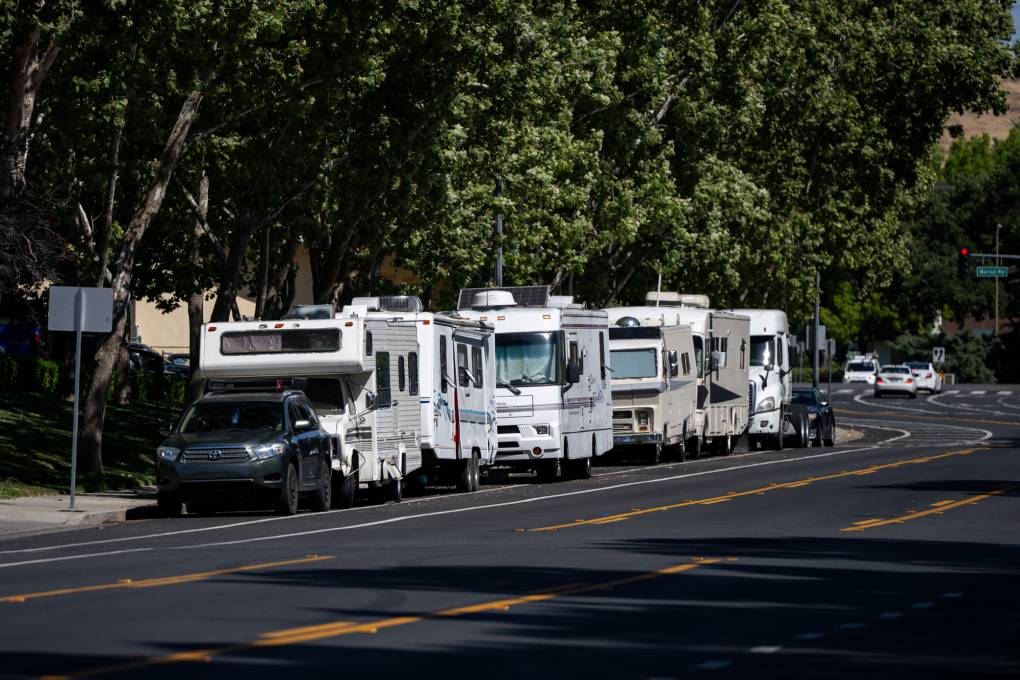
"title": "RVs line Vía Del Oro Drive in San José on May 29, 2025.",
"publishDate": 1748970624,
"status": "inherit",
"parent": 12042370,
"modified": 1749156449,
"caption": "RVs line Vía Del Oro Drive in San José on May 29, 2025.",
"credit": "Beth LaBerge/KQED",
"altTag": null,
"description": null,
"imgSizes": {
"medium": {
"file": "https://cdn.kqed.org/wp-content/uploads/sites/10/2025/06/250529-SJARRESTSHELTERVOTE-22-BL-KQED-800x533.jpg",
"width": 800,
"height": 533,
"mimeType": "image/jpeg"
},
"large": {
"file": "https://cdn.kqed.org/wp-content/uploads/sites/10/2025/06/250529-SJARRESTSHELTERVOTE-22-BL-KQED-1020x680.jpg",
"width": 1020,
"height": 680,
"mimeType": "image/jpeg"
},
"thumbnail": {
"file": "https://cdn.kqed.org/wp-content/uploads/sites/10/2025/06/250529-SJARRESTSHELTERVOTE-22-BL-KQED-160x107.jpg",
"width": 160,
"height": 107,
"mimeType": "image/jpeg"
},
"1536x1536": {
"file": "https://cdn.kqed.org/wp-content/uploads/sites/10/2025/06/250529-SJARRESTSHELTERVOTE-22-BL-KQED-1536x1024.jpg",
"width": 1536,
"height": 1024,
"mimeType": "image/jpeg"
},
"post-thumbnail": {
"file": "https://cdn.kqed.org/wp-content/uploads/sites/10/2025/06/250529-SJARRESTSHELTERVOTE-22-BL-KQED-672x372.jpg",
"width": 672,
"height": 372,
"mimeType": "image/jpeg"
},
"twentyfourteen-full-width": {
"file": "https://cdn.kqed.org/wp-content/uploads/sites/10/2025/06/250529-SJARRESTSHELTERVOTE-22-BL-KQED-1038x576.jpg",
"width": 1038,
"height": 576,
"mimeType": "image/jpeg"
},
"full-width": {
"file": "https://cdn.kqed.org/wp-content/uploads/sites/10/2025/06/250529-SJARRESTSHELTERVOTE-22-BL-KQED-1920x1280.jpg",
"width": 1920,
"height": 1280,
"mimeType": "image/jpeg"
},
"kqedFullSize": {
"file": "https://cdn.kqed.org/wp-content/uploads/sites/10/2025/06/250529-SJARRESTSHELTERVOTE-22-BL-KQED.jpg",
"width": 2000,
"height": 1333
}
},
"isLoading": false,
"fetchFailed": false
},
"news_12043580": {
"type": "attachments",
"id": "news_12043580",
"meta": {
"index": "attachments_1716263798",
"site": "news",
"id": "12043580",
"found": true
},
"title": "240130-HomelessCount-46-BL_qed",
"publishDate": 1749584410,
"status": "inherit",
"parent": 12043568,
"modified": 1749600668,
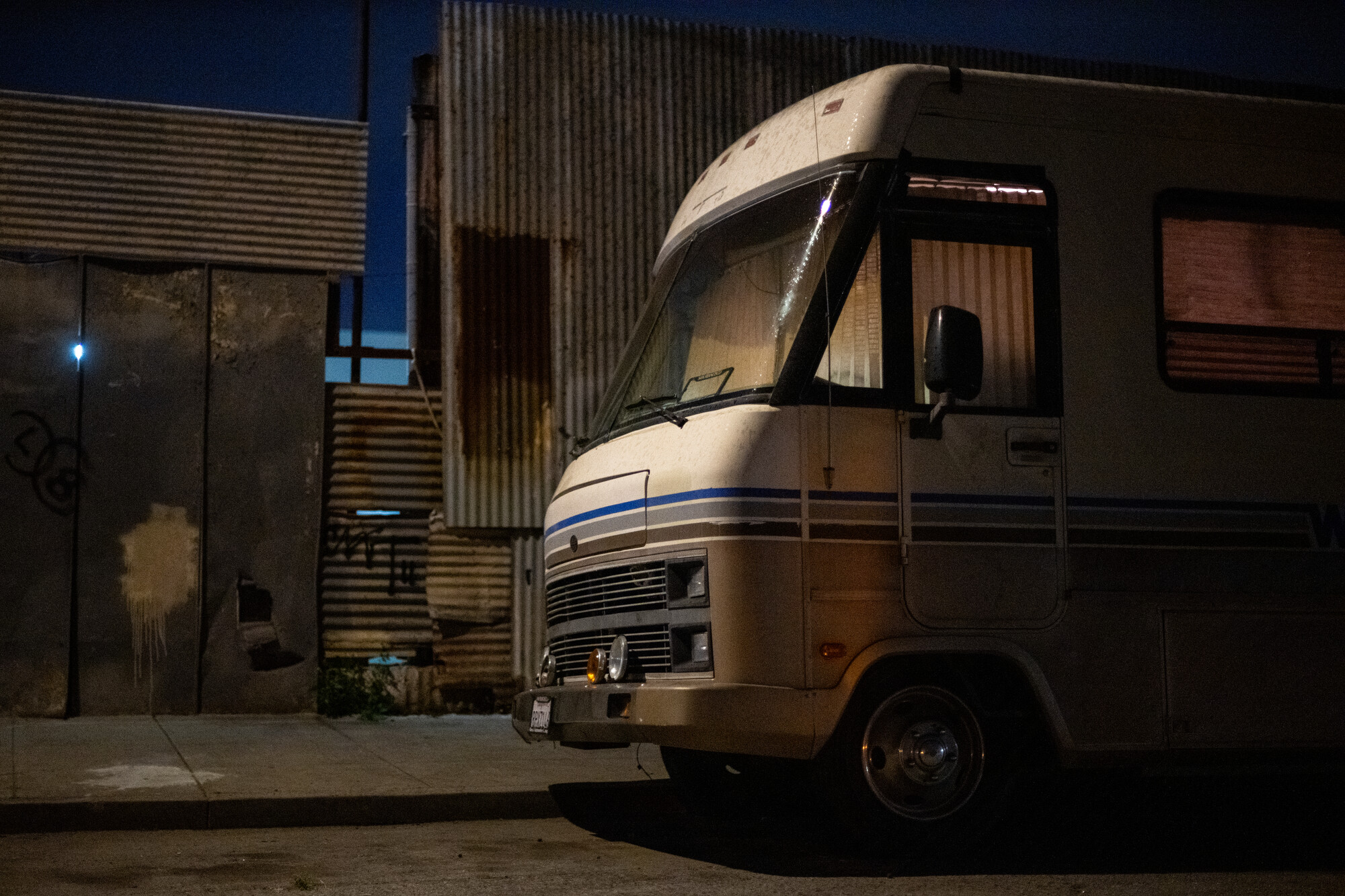
"caption": "San Francisco Homeless Outreach Team members look for vehicles and RVs serving as shelters during a point-in-time homeless population count in the Bayview-Hunters Point neighborhood in San Francisco on Jan. 30, 2024. Teams spread out through San Francisco to count sheltered and unsheltered people experiencing homelessness on a single night.",
"credit": "Beth LaBerge/KQED",
"altTag": null,
"description": null,
"imgSizes": {
"thumbnail": {
"file": "https://cdn.kqed.org/wp-content/uploads/sites/10/2025/06/240130-HomelessCount-46-BL_qed-160x107.jpg",
"width": 160,
"height": 107,
"mimeType": "image/jpeg"
},
"1536x1536": {
"file": "https://cdn.kqed.org/wp-content/uploads/sites/10/2025/06/240130-HomelessCount-46-BL_qed-1536x1024.jpg",
"width": 1536,
"height": 1024,
"mimeType": "image/jpeg"
},
"post-thumbnail": {
"file": "https://cdn.kqed.org/wp-content/uploads/sites/10/2025/06/240130-HomelessCount-46-BL_qed-672x372.jpg",
"width": 672,
"height": 372,
"mimeType": "image/jpeg"
},
"twentyfourteen-full-width": {
"file": "https://cdn.kqed.org/wp-content/uploads/sites/10/2025/06/240130-HomelessCount-46-BL_qed-1038x576.jpg",
"width": 1038,
"height": 576,
"mimeType": "image/jpeg"
},
"kqedFullSize": {
"file": "https://cdn.kqed.org/wp-content/uploads/sites/10/2025/06/240130-HomelessCount-46-BL_qed.jpg",
"width": 2000,
"height": 1333
}
},
"isLoading": false,
"fetchFailed": false
},
"news_12043297": {
"type": "attachments",
"id": "news_12043297",
"meta": {
"index": "attachments_1716263798",
"site": "news",
"id": "12043297",
"found": true
},
"title": "Wind turbines in Solano County outside of Suisun City on May 13, 2025.",
"publishDate": 1749487308,
"status": "inherit",
"parent": 12043295,
"modified": 1749487326,
"caption": "Wind turbines in Solano County outside of Suisun City on May 13, 2025.",
"credit": "Beth LaBerge/KQED",
"altTag": null,
"description": null,
"imgSizes": {
"thumbnail": {
"file": "https://cdn.kqed.org/wp-content/uploads/sites/10/2025/06/250513-CaliforniaForeverAnnexExplainer-38-BL_qed-160x107.jpg",
"width": 160,
"height": 107,
"mimeType": "image/jpeg"
},
"1536x1536": {
"file": "https://cdn.kqed.org/wp-content/uploads/sites/10/2025/06/250513-CaliforniaForeverAnnexExplainer-38-BL_qed-1536x1024.jpg",
"width": 1536,
"height": 1024,
"mimeType": "image/jpeg"
},
"post-thumbnail": {
"file": "https://cdn.kqed.org/wp-content/uploads/sites/10/2025/06/250513-CaliforniaForeverAnnexExplainer-38-BL_qed-672x372.jpg",
"width": 672,
"height": 372,
"mimeType": "image/jpeg"
},
"twentyfourteen-full-width": {
"file": "https://cdn.kqed.org/wp-content/uploads/sites/10/2025/06/250513-CaliforniaForeverAnnexExplainer-38-BL_qed-1038x576.jpg",
"width": 1038,
"height": 576,
"mimeType": "image/jpeg"
},
"kqedFullSize": {
"file": "https://cdn.kqed.org/wp-content/uploads/sites/10/2025/06/250513-CaliforniaForeverAnnexExplainer-38-BL_qed.jpg",
"width": 2000,
"height": 1333
}
},
"isLoading": false,
"fetchFailed": false
},
"news_12042927": {
"type": "attachments",
"id": "news_12042927",
"meta": {
"index": "attachments_1716263798",
"site": "news",
"id": "12042927",
"found": true
},
"title": "250520-BerkeleyRVBuyBack-38-BL_qed",
"publishDate": 1749152043,
"status": "inherit",
"parent": 12042901,
"modified": 1749237274,
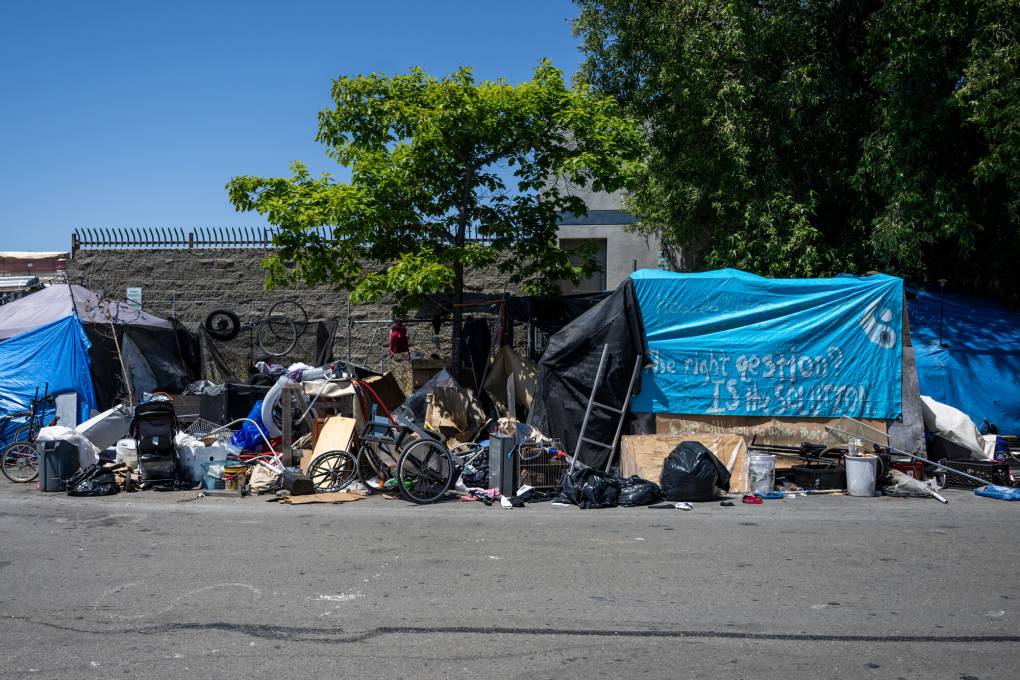
"caption": "A stretch of Harrison Street in northwest Berkeley on May 20, 2025, is home to an unhoused population.",
"credit": "Beth LaBerge/KQED",
"altTag": null,
"description": null,
"imgSizes": {
"medium": {
"file": "https://cdn.kqed.org/wp-content/uploads/sites/10/2025/06/250520-BerkeleyRVBuyBack-38-BL_qed-800x533.jpg",
"width": 800,
"height": 533,
"mimeType": "image/jpeg"
},
"large": {
"file": "https://cdn.kqed.org/wp-content/uploads/sites/10/2025/06/250520-BerkeleyRVBuyBack-38-BL_qed-1020x680.jpg",
"width": 1020,
"height": 680,
"mimeType": "image/jpeg"
},
"thumbnail": {
"file": "https://cdn.kqed.org/wp-content/uploads/sites/10/2025/06/250520-BerkeleyRVBuyBack-38-BL_qed-160x107.jpg",
"width": 160,
"height": 107,
"mimeType": "image/jpeg"
},
"1536x1536": {
"file": "https://cdn.kqed.org/wp-content/uploads/sites/10/2025/06/250520-BerkeleyRVBuyBack-38-BL_qed-1536x1024.jpg",
"width": 1536,
"height": 1024,
"mimeType": "image/jpeg"
},
"post-thumbnail": {
"file": "https://cdn.kqed.org/wp-content/uploads/sites/10/2025/06/250520-BerkeleyRVBuyBack-38-BL_qed-672x372.jpg",
"width": 672,
"height": 372,
"mimeType": "image/jpeg"
},
"twentyfourteen-full-width": {
"file": "https://cdn.kqed.org/wp-content/uploads/sites/10/2025/06/250520-BerkeleyRVBuyBack-38-BL_qed-1038x576.jpg",
"width": 1038,
"height": 576,
"mimeType": "image/jpeg"
},
"full-width": {
"file": "https://cdn.kqed.org/wp-content/uploads/sites/10/2025/06/250520-BerkeleyRVBuyBack-38-BL_qed-1920x1280.jpg",
"width": 1920,
"height": 1280,
"mimeType": "image/jpeg"
},
"kqedFullSize": {
"file": "https://cdn.kqed.org/wp-content/uploads/sites/10/2025/06/250520-BerkeleyRVBuyBack-38-BL_qed.jpg",
"width": 1999,
"height": 1333
}
},
"isLoading": false,
"fetchFailed": false
},
"news_12042504": {
"type": "attachments",
"id": "news_12042504",
"meta": {
"index": "attachments_1716263798",
"site": "news",
"id": "12042504",
"found": true
},
"title": "An unhoused community near the Guadalupe River in San José on May 29, 2025.",
"publishDate": 1748970599,
"status": "inherit",
"parent": 0,
"modified": 1749155543,
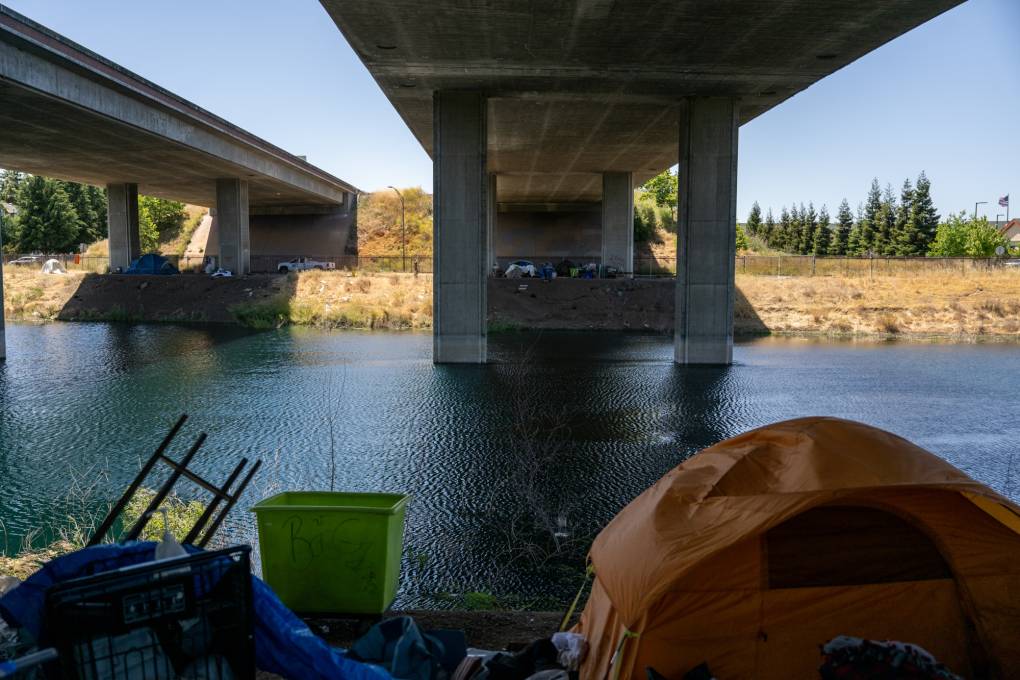
"caption": "An unhoused community near the Guadalupe River in San José on May 29, 2025.",
"credit": "Beth LaBerge/KQED",
"altTag": null,
"description": null,
"imgSizes": {
"medium": {
"file": "https://cdn.kqed.org/wp-content/uploads/sites/10/2025/06/250529-SJARRESTSHELTERVOTE-06-BL-KQED-800x533.jpg",
"width": 800,
"height": 533,
"mimeType": "image/jpeg"
},
"large": {
"file": "https://cdn.kqed.org/wp-content/uploads/sites/10/2025/06/250529-SJARRESTSHELTERVOTE-06-BL-KQED-1020x680.jpg",
"width": 1020,
"height": 680,
"mimeType": "image/jpeg"
},
"thumbnail": {
"file": "https://cdn.kqed.org/wp-content/uploads/sites/10/2025/06/250529-SJARRESTSHELTERVOTE-06-BL-KQED-160x107.jpg",
"width": 160,
"height": 107,
"mimeType": "image/jpeg"
},
"1536x1536": {
"file": "https://cdn.kqed.org/wp-content/uploads/sites/10/2025/06/250529-SJARRESTSHELTERVOTE-06-BL-KQED-1536x1024.jpg",
"width": 1536,
"height": 1024,
"mimeType": "image/jpeg"
},
"post-thumbnail": {
"file": "https://cdn.kqed.org/wp-content/uploads/sites/10/2025/06/250529-SJARRESTSHELTERVOTE-06-BL-KQED-672x372.jpg",
"width": 672,
"height": 372,
"mimeType": "image/jpeg"
},
"twentyfourteen-full-width": {
"file": "https://cdn.kqed.org/wp-content/uploads/sites/10/2025/06/250529-SJARRESTSHELTERVOTE-06-BL-KQED-1038x576.jpg",
"width": 1038,
"height": 576,
"mimeType": "image/jpeg"
},
"full-width": {
"file": "https://cdn.kqed.org/wp-content/uploads/sites/10/2025/06/250529-SJARRESTSHELTERVOTE-06-BL-KQED-1920x1280.jpg",
"width": 1920,
"height": 1280,
"mimeType": "image/jpeg"
},
"kqedFullSize": {
"file": "https://cdn.kqed.org/wp-content/uploads/sites/10/2025/06/250529-SJARRESTSHELTERVOTE-06-BL-KQED.jpg",
"width": 2000,
"height": 1333
}
},
"isLoading": false,
"fetchFailed": false
},
"news_11984099": {
"type": "attachments",
"id": "news_11984099",
"meta": {
"index": "attachments_1716263798",
"site": "news",
"id": "11984099",
"found": true
},
"title": "San Jose License Plate Readers-08",
"publishDate": 1714087373,
"status": "inherit",
"parent": 11983813,
"modified": 1749081108,
"caption": "San José Mayor Matt Mahan at the press conference on April 25, 2024.",
"credit": "Joseph Geha/KQED",
"altTag": "A white middle-aged man speaks into microphones wearing a blue suit and a white collared shirt with no tie.",
"description": null,
"imgSizes": {
"medium": {
"file": "https://cdn.kqed.org/wp-content/uploads/sites/10/2024/04/San-Jose-License-Plate-Readers-08-800x533.jpg",
"width": 800,
"height": 533,
"mimeType": "image/jpeg"
},
"large": {
"file": "https://cdn.kqed.org/wp-content/uploads/sites/10/2024/04/San-Jose-License-Plate-Readers-08-1020x680.jpg",
"width": 1020,
"height": 680,
"mimeType": "image/jpeg"
},
"thumbnail": {
"file": "https://cdn.kqed.org/wp-content/uploads/sites/10/2024/04/San-Jose-License-Plate-Readers-08-160x107.jpg",
"width": 160,
"height": 107,
"mimeType": "image/jpeg"
},
"1536x1536": {
"file": "https://cdn.kqed.org/wp-content/uploads/sites/10/2024/04/San-Jose-License-Plate-Readers-08-1536x1024.jpg",
"width": 1536,
"height": 1024,
"mimeType": "image/jpeg"
},
"post-thumbnail": {
"file": "https://cdn.kqed.org/wp-content/uploads/sites/10/2024/04/San-Jose-License-Plate-Readers-08-672x372.jpg",
"width": 672,
"height": 372,
"mimeType": "image/jpeg"
},
"twentyfourteen-full-width": {
"file": "https://cdn.kqed.org/wp-content/uploads/sites/10/2024/04/San-Jose-License-Plate-Readers-08-1038x576.jpg",
"width": 1038,
"height": 576,
"mimeType": "image/jpeg"
},
"full-width": {
"file": "https://cdn.kqed.org/wp-content/uploads/sites/10/2024/04/San-Jose-License-Plate-Readers-08-1920x1280.jpg",
"width": 1920,
"height": 1280,
"mimeType": "image/jpeg"
},
"kqedFullSize": {
"file": "https://cdn.kqed.org/wp-content/uploads/sites/10/2024/04/San-Jose-License-Plate-Readers-08.jpg",
"width": 2000,
"height": 1333
}
},
"isLoading": false,
"fetchFailed": false
},
"news_12042674": {
"type": "attachments",
"id": "news_12042674",
"meta": {
"index": "attachments_1716263798",
"site": "news",
"id": "12042674",
"found": true
},
"title": "008_KQED_Housing_Oakland_02212020_3485_qed",
"publishDate": 1749053781,
"status": "inherit",
"parent": 12042670,
"modified": 1749053816,
"caption": "Apartment buildings under construction near Macarthur BART station in Oakland, on Feb. 21, 2020.",
"credit": "Beth LaBerge/KQED",
"altTag": null,
"description": null,
"imgSizes": {
"medium": {
"file": "https://cdn.kqed.org/wp-content/uploads/sites/10/2025/06/008_KQED_Housing_Oakland_02212020_3485_qed-800x533.jpg",
"width": 800,
"height": 533,
"mimeType": "image/jpeg"
},
"large": {
"file": "https://cdn.kqed.org/wp-content/uploads/sites/10/2025/06/008_KQED_Housing_Oakland_02212020_3485_qed-1020x680.jpg",
"width": 1020,
"height": 680,
"mimeType": "image/jpeg"
},
"thumbnail": {
"file": "https://cdn.kqed.org/wp-content/uploads/sites/10/2025/06/008_KQED_Housing_Oakland_02212020_3485_qed-160x107.jpg",
"width": 160,
"height": 107,
"mimeType": "image/jpeg"
},
"1536x1536": {
"file": "https://cdn.kqed.org/wp-content/uploads/sites/10/2025/06/008_KQED_Housing_Oakland_02212020_3485_qed-1536x1024.jpg",
"width": 1536,
"height": 1024,
"mimeType": "image/jpeg"
},
"post-thumbnail": {
"file": "https://cdn.kqed.org/wp-content/uploads/sites/10/2025/06/008_KQED_Housing_Oakland_02212020_3485_qed-672x372.jpg",
"width": 672,
"height": 372,
"mimeType": "image/jpeg"
},
"twentyfourteen-full-width": {
"file": "https://cdn.kqed.org/wp-content/uploads/sites/10/2025/06/008_KQED_Housing_Oakland_02212020_3485_qed-1038x576.jpg",
"width": 1038,
"height": 576,
"mimeType": "image/jpeg"
},
"full-width": {
"file": "https://cdn.kqed.org/wp-content/uploads/sites/10/2025/06/008_KQED_Housing_Oakland_02212020_3485_qed-1920x1280.jpg",
"width": 1920,
"height": 1280,
"mimeType": "image/jpeg"
},
"kqedFullSize": {
"file": "https://cdn.kqed.org/wp-content/uploads/sites/10/2025/06/008_KQED_Housing_Oakland_02212020_3485_qed.jpg",
"width": 2000,
"height": 1333
}
},
"isLoading": false,
"fetchFailed": false
},
"news_12040001": {
"type": "attachments",
"id": "news_12040001",
"meta": {
"index": "attachments_1716263798",
"site": "news",
"id": "12040001",
"found": true
},
"title": "250513-HUD FUNDS-MD-05-KQED",
"publishDate": 1747191099,
"status": "inherit",
"parent": 0,
"modified": 1747785109,
"caption": "The courtyard at the Bishop Swing Community House supportive housing center in San Francisco, on May 13, 2025.",
"credit": "Martin do Nascimento/KQED",
"altTag": null,
"description": null,
"imgSizes": {
"medium": {
"file": "https://cdn.kqed.org/wp-content/uploads/sites/10/2025/05/250513-HUD-FUNDS-MD-05-KQED-800x534.jpg",
"width": 800,
"height": 534,
"mimeType": "image/jpeg"
},
"large": {
"file": "https://cdn.kqed.org/wp-content/uploads/sites/10/2025/05/250513-HUD-FUNDS-MD-05-KQED-1020x680.jpg",
"width": 1020,
"height": 680,
"mimeType": "image/jpeg"
},
"thumbnail": {
"file": "https://cdn.kqed.org/wp-content/uploads/sites/10/2025/05/250513-HUD-FUNDS-MD-05-KQED-160x107.jpg",
"width": 160,
"height": 107,
"mimeType": "image/jpeg"
},
"1536x1536": {
"file": "https://cdn.kqed.org/wp-content/uploads/sites/10/2025/05/250513-HUD-FUNDS-MD-05-KQED-1536x1025.jpg",
"width": 1536,
"height": 1025,
"mimeType": "image/jpeg"
},
"post-thumbnail": {
"file": "https://cdn.kqed.org/wp-content/uploads/sites/10/2025/05/250513-HUD-FUNDS-MD-05-KQED-672x372.jpg",
"width": 672,
"height": 372,
"mimeType": "image/jpeg"
},
"twentyfourteen-full-width": {
"file": "https://cdn.kqed.org/wp-content/uploads/sites/10/2025/05/250513-HUD-FUNDS-MD-05-KQED-1038x576.jpg",
"width": 1038,
"height": 576,
"mimeType": "image/jpeg"
},
"full-width": {
"file": "https://cdn.kqed.org/wp-content/uploads/sites/10/2025/05/250513-HUD-FUNDS-MD-05-KQED-1920x1281.jpg",
"width": 1920,
"height": 1281,
"mimeType": "image/jpeg"
},
"kqedFullSize": {
"file": "https://cdn.kqed.org/wp-content/uploads/sites/10/2025/05/250513-HUD-FUNDS-MD-05-KQED.jpg",
"width": 2000,
"height": 1334
}
},
"isLoading": false,
"fetchFailed": false
},
"news_12040008": {
"type": "attachments",
"id": "news_12040008",
"meta": {
"index": "attachments_1716263798",
"site": "news",
"id": "12040008",
"found": true
},
"title": "250513-CALIFORNIAFOREVERANNEXEXPLAINER-17-BL-KQED",
"publishDate": 1747228522,
"status": "inherit",
"parent": 0,
"modified": 1747228666,
"caption": "The intersection of Highway 12 and Highway 113 in Solano County outside of Suisun City on May 13, 2025.",
"credit": "Beth LaBerge/KQED",
"altTag": null,
"description": null,
"imgSizes": {
"medium": {
"file": "https://cdn.kqed.org/wp-content/uploads/sites/10/2025/05/250513-CALIFORNIAFOREVERANNEXEXPLAINER-17-BL-KQED-800x533.jpg",
"width": 800,
"height": 533,
"mimeType": "image/jpeg"
},
"large": {
"file": "https://cdn.kqed.org/wp-content/uploads/sites/10/2025/05/250513-CALIFORNIAFOREVERANNEXEXPLAINER-17-BL-KQED-1020x680.jpg",
"width": 1020,
"height": 680,
"mimeType": "image/jpeg"
},
"thumbnail": {
"file": "https://cdn.kqed.org/wp-content/uploads/sites/10/2025/05/250513-CALIFORNIAFOREVERANNEXEXPLAINER-17-BL-KQED-160x107.jpg",
"width": 160,
"height": 107,
"mimeType": "image/jpeg"
},
"1536x1536": {
"file": "https://cdn.kqed.org/wp-content/uploads/sites/10/2025/05/250513-CALIFORNIAFOREVERANNEXEXPLAINER-17-BL-KQED-1536x1024.jpg",
"width": 1536,
"height": 1024,
"mimeType": "image/jpeg"
},
"post-thumbnail": {
"file": "https://cdn.kqed.org/wp-content/uploads/sites/10/2025/05/250513-CALIFORNIAFOREVERANNEXEXPLAINER-17-BL-KQED-672x372.jpg",
"width": 672,
"height": 372,
"mimeType": "image/jpeg"
},
"twentyfourteen-full-width": {
"file": "https://cdn.kqed.org/wp-content/uploads/sites/10/2025/05/250513-CALIFORNIAFOREVERANNEXEXPLAINER-17-BL-KQED-1038x576.jpg",
"width": 1038,
"height": 576,
"mimeType": "image/jpeg"
},
"full-width": {
"file": "https://cdn.kqed.org/wp-content/uploads/sites/10/2025/05/250513-CALIFORNIAFOREVERANNEXEXPLAINER-17-BL-KQED-1920x1280.jpg",
"width": 1920,
"height": 1280,
"mimeType": "image/jpeg"
},
"kqedFullSize": {
"file": "https://cdn.kqed.org/wp-content/uploads/sites/10/2025/05/250513-CALIFORNIAFOREVERANNEXEXPLAINER-17-BL-KQED.jpg",
"width": 2000,
"height": 1333
}
},
"isLoading": false,
"fetchFailed": false
},
"news_12040030": {
"type": "attachments",
"id": "news_12040030",
"meta": {
"index": "attachments_1716263798",
"site": "news",
"id": "12040030",
"found": true
},
"title": "031_KQED_SanFrancisco_COVIDShutdown_12062020_qed",
"publishDate": 1747241123,
"status": "inherit",
"parent": 12040028,
"modified": 1747241147,
"caption": "A \"Now Renting\" sign on an apartment building on Market Street in San Francisco on Dec. 6, 2020.",
"credit": "Beth LaBerge/KQED",
"altTag": null,
"description": null,
"imgSizes": {
"medium": {
"file": "https://cdn.kqed.org/wp-content/uploads/sites/10/2025/05/031_KQED_SanFrancisco_COVIDShutdown_12062020_qed-800x533.jpg",
"width": 800,
"height": 533,
"mimeType": "image/jpeg"
},
"large": {
"file": "https://cdn.kqed.org/wp-content/uploads/sites/10/2025/05/031_KQED_SanFrancisco_COVIDShutdown_12062020_qed-1020x680.jpg",
"width": 1020,
"height": 680,
"mimeType": "image/jpeg"
},
"thumbnail": {
"file": "https://cdn.kqed.org/wp-content/uploads/sites/10/2025/05/031_KQED_SanFrancisco_COVIDShutdown_12062020_qed-160x107.jpg",
"width": 160,
"height": 107,
"mimeType": "image/jpeg"
},
"1536x1536": {
"file": "https://cdn.kqed.org/wp-content/uploads/sites/10/2025/05/031_KQED_SanFrancisco_COVIDShutdown_12062020_qed-1536x1024.jpg",
"width": 1536,
"height": 1024,
"mimeType": "image/jpeg"
},
"post-thumbnail": {
"file": "https://cdn.kqed.org/wp-content/uploads/sites/10/2025/05/031_KQED_SanFrancisco_COVIDShutdown_12062020_qed-672x372.jpg",
"width": 672,
"height": 372,
"mimeType": "image/jpeg"
},
"twentyfourteen-full-width": {
"file": "https://cdn.kqed.org/wp-content/uploads/sites/10/2025/05/031_KQED_SanFrancisco_COVIDShutdown_12062020_qed-1038x576.jpg",
"width": 1038,
"height": 576,
"mimeType": "image/jpeg"
},
"full-width": {
"file": "https://cdn.kqed.org/wp-content/uploads/sites/10/2025/05/031_KQED_SanFrancisco_COVIDShutdown_12062020_qed-1920x1280.jpg",
"width": 1920,
"height": 1280,
"mimeType": "image/jpeg"
},
"kqedFullSize": {
"file": "https://cdn.kqed.org/wp-content/uploads/sites/10/2025/05/031_KQED_SanFrancisco_COVIDShutdown_12062020_qed.jpg",
"width": 1999,
"height": 1333
}
},
"isLoading": false,
"fetchFailed": false
},
"news_12039883": {
"type": "attachments",
"id": "news_12039883",
"meta": {
"index": "attachments_1716263798",
"site": "news",
"id": "12039883",
"found": true
},
"title": "Homeless Seniors",
"publishDate": 1747142496,
"status": "inherit",
"parent": 12039878,
"modified": 1747142652,
"caption": "Tents in a Park in Grants Pass (Jane Vaughan/Jefferson Public Radio)",
"credit": null,
"altTag": null,
"description": null,
"imgSizes": {
"medium": {
"file": "https://cdn.kqed.org/wp-content/uploads/sites/10/2025/05/homeless-seniors-68232b1b5d13d-800x600.jpg",
"width": 800,
"height": 600,
"mimeType": "image/jpeg"
},
"large": {
"file": "https://cdn.kqed.org/wp-content/uploads/sites/10/2025/05/homeless-seniors-68232b1b5d13d-1020x765.jpg",
"width": 1020,
"height": 765,
"mimeType": "image/jpeg"
},
"thumbnail": {
"file": "https://cdn.kqed.org/wp-content/uploads/sites/10/2025/05/homeless-seniors-68232b1b5d13d-160x120.jpg",
"width": 160,
"height": 120,
"mimeType": "image/jpeg"
},
"1536x1536": {
"file": "https://cdn.kqed.org/wp-content/uploads/sites/10/2025/05/homeless-seniors-68232b1b5d13d-1536x1152.jpg",
"width": 1536,
"height": 1152,
"mimeType": "image/jpeg"
},
"post-thumbnail": {
"file": "https://cdn.kqed.org/wp-content/uploads/sites/10/2025/05/homeless-seniors-68232b1b5d13d-672x372.jpg",
"width": 672,
"height": 372,
"mimeType": "image/jpeg"
},
"twentyfourteen-full-width": {
"file": "https://cdn.kqed.org/wp-content/uploads/sites/10/2025/05/homeless-seniors-68232b1b5d13d-1038x576.jpg",
"width": 1038,
"height": 576,
"mimeType": "image/jpeg"
},
"kqedFullSize": {
"file": "https://cdn.kqed.org/wp-content/uploads/sites/10/2025/05/homeless-seniors-68232b1b5d13d.jpg",
"width": 1760,
"height": 1320
}
},
"isLoading": false,
"fetchFailed": false
},
"news_12000354": {
"type": "attachments",
"id": "news_12000354",
"meta": {
"index": "attachments_1716263798",
"site": "news",
"id": "12000354",
"found": true
},
"title": "080924-ENCAMPMENT SWEEP-MD-01-KQED",
"publishDate": 1723743099,
"status": "inherit",
"parent": 12000606,
"modified": 1747068054,
"caption": "Gary Lai carefully folds a blanket while packing up his encampment in the Tenderloin in San Francisco on Aug. 8, 2024. ",
"credit": "Martin do Nascimento/KQED",
"altTag": null,
"description": null,
"imgSizes": {
"medium": {
"file": "https://cdn.kqed.org/wp-content/uploads/sites/10/2024/08/080924-ENCAMPMENT-SWEEP-MD-01-KQED-800x533.jpg",
"width": 800,
"height": 533,
"mimeType": "image/jpeg"
},
"large": {
"file": "https://cdn.kqed.org/wp-content/uploads/sites/10/2024/08/080924-ENCAMPMENT-SWEEP-MD-01-KQED-1020x680.jpg",
"width": 1020,
"height": 680,
"mimeType": "image/jpeg"
},
"thumbnail": {
"file": "https://cdn.kqed.org/wp-content/uploads/sites/10/2024/08/080924-ENCAMPMENT-SWEEP-MD-01-KQED-160x107.jpg",
"width": 160,
"height": 107,
"mimeType": "image/jpeg"
},
"1536x1536": {
"file": "https://cdn.kqed.org/wp-content/uploads/sites/10/2024/08/080924-ENCAMPMENT-SWEEP-MD-01-KQED-1536x1024.jpg",
"width": 1536,
"height": 1024,
"mimeType": "image/jpeg"
},
"post-thumbnail": {
"file": "https://cdn.kqed.org/wp-content/uploads/sites/10/2024/08/080924-ENCAMPMENT-SWEEP-MD-01-KQED-672x372.jpg",
"width": 672,
"height": 372,
"mimeType": "image/jpeg"
},
"twentyfourteen-full-width": {
"file": "https://cdn.kqed.org/wp-content/uploads/sites/10/2024/08/080924-ENCAMPMENT-SWEEP-MD-01-KQED-1038x576.jpg",
"width": 1038,
"height": 576,
"mimeType": "image/jpeg"
},
"full-width": {
"file": "https://cdn.kqed.org/wp-content/uploads/sites/10/2024/08/080924-ENCAMPMENT-SWEEP-MD-01-KQED-1920x1280.jpg",
"width": 1920,
"height": 1280,
"mimeType": "image/jpeg"
},
"kqedFullSize": {
"file": "https://cdn.kqed.org/wp-content/uploads/sites/10/2024/08/080924-ENCAMPMENT-SWEEP-MD-01-KQED.jpg",
"width": 2000,
"height": 1333
}
},
"isLoading": false,
"fetchFailed": false
}
},
"audioPlayerReducer": {
"postId": "stream_live",
"isPaused": true,
"isPlaying": false,
"pfsActive": false,
"pledgeModalIsOpen": true,
"playerDrawerIsOpen": false,
"liveAudioPlayStartedAt": 0,
"liveAudioPlayContext": ""
},
"authorsReducer": {
"gmarzorati": {
"type": "authors",
"id": "227",
"meta": {
"index": "authors_1716337520",
"id": "227",
"found": true
},
"name": "Guy Marzorati",
"firstName": "Guy",
"lastName": "Marzorati",
"slug": "gmarzorati",
"email": "gmarzorati@KQED.org",
"display_author_email": true,
"staff_mastheads": [
"news"
],
"title": "Correspondent",
"bio": "Guy Marzorati is a correspondent on KQED's California Politics and Government Desk, based in San Jose. A graduate of Santa Clara University, Guy joined KQED in 2013. He reports on state and local politics and produces KQED's digital voter guide.",
"avatar": "https://secure.gravatar.com/avatar/e7038b8dbfd55b104369b76b1cd0b9de?s=600&d=blank&r=g",
"twitter": "guymarzorati",
"facebook": null,
"instagram": null,
"linkedin": null,
"sites": [
{
"site": "",
"roles": [
"editor"
]
},
{
"site": "news",
"roles": [
"editor"
]
},
{
"site": "science",
"roles": [
"editor"
]
},
{
"site": "forum",
"roles": [
"editor"
]
},
{
"site": "elections",
"roles": [
"editor"
]
},
{
"site": "liveblog",
"roles": [
"editor"
]
}
],
"headData": {
"title": "Guy Marzorati | KQED",
"description": "Correspondent",
"ogImgSrc": "https://secure.gravatar.com/avatar/e7038b8dbfd55b104369b76b1cd0b9de?s=600&d=blank&r=g",
"twImgSrc": "https://secure.gravatar.com/avatar/e7038b8dbfd55b104369b76b1cd0b9de?s=600&d=blank&r=g"
},
"isLoading": false,
"link": "/author/gmarzorati"
},
"kqed": {
"type": "authors",
"id": "236",
"meta": {
"index": "authors_1716337520",
"id": "236",
"found": true
},
"name": "KQED News Staff",
"firstName": "KQED News Staff",
"lastName": null,
"slug": "kqed",
"email": "faq@kqed.org",
"display_author_email": false,
"staff_mastheads": [],
"title": null,
"bio": null,
"avatar": "https://secure.gravatar.com/avatar/ef0e801a68c4c54afa9180db14084167?s=600&d=blank&r=g",
"twitter": null,
"facebook": null,
"instagram": null,
"linkedin": null,
"sites": [
{
"site": "arts",
"roles": [
"contributor"
]
},
{
"site": "news",
"roles": [
"editor"
]
},
{
"site": "futureofyou",
"roles": [
"author"
]
}
],
"headData": {
"title": "KQED News Staff | KQED",
"description": null,
"ogImgSrc": "https://secure.gravatar.com/avatar/ef0e801a68c4c54afa9180db14084167?s=600&d=blank&r=g",
"twImgSrc": "https://secure.gravatar.com/avatar/ef0e801a68c4c54afa9180db14084167?s=600&d=blank&r=g"
},
"isLoading": false,
"link": "/author/kqed"
},
"mlagos": {
"type": "authors",
"id": "3239",
"meta": {
"index": "authors_1716337520",
"id": "3239",
"found": true
},
"name": "Marisa Lagos",
"firstName": "Marisa",
"lastName": "Lagos",
"slug": "mlagos",
"email": "mlagos@kqed.org",
"display_author_email": false,
"staff_mastheads": [
"news"
],
"title": "KQED Contributor",
"bio": "Marisa Lagos is a correspondent for KQED’s California Politics and Government Desk and co-hosts the award-winning show and podcast, Political Breakdown. At KQED, Lagos also conducts reporting, analysis and investigations into state, local and national politics for radio, TV, online and onstage. In 2022, she and co-host, Scott Shafer, moderated the only gubernatorial debate in California. In 2020, the \u003ci>Washington Post\u003c/i> named her one of the top political journalists in California; she was nominated for a Peabody and won several other awards for her work investigating the 2017 California wildfires. She has worked at the \u003ci>San Francisco Chronicle\u003c/i>, \u003ci>San Francisco Examiner\u003c/i> and \u003ci>Los Angeles Times\u003c/i>. A UC Santa Barbara graduate, she lives in San Francisco with her two sons and husband.",
"avatar": "https://secure.gravatar.com/avatar/a261a0d3696fc066871ef96b85b5e7d2?s=600&d=blank&r=g",
"twitter": "@mlagos",
"facebook": null,
"instagram": null,
"linkedin": null,
"sites": [
{
"site": "arts",
"roles": [
"author"
]
},
{
"site": "news",
"roles": [
"editor"
]
},
{
"site": "science",
"roles": [
"editor"
]
},
{
"site": "forum",
"roles": [
"author"
]
},
{
"site": "liveblog",
"roles": [
"author"
]
}
],
"headData": {
"title": "Marisa Lagos | KQED",
"description": "KQED Contributor",
"ogImgSrc": "https://secure.gravatar.com/avatar/a261a0d3696fc066871ef96b85b5e7d2?s=600&d=blank&r=g",
"twImgSrc": "https://secure.gravatar.com/avatar/a261a0d3696fc066871ef96b85b5e7d2?s=600&d=blank&r=g"
},
"isLoading": false,
"link": "/author/mlagos"
},
"vrancano": {
"type": "authors",
"id": "11276",
"meta": {
"index": "authors_1716337520",
"id": "11276",
"found": true
},
"name": "Vanessa Rancaño",
"firstName": "Vanessa",
"lastName": "Rancaño",
"slug": "vrancano",
"email": "vrancano@kqed.org",
"display_author_email": false,
"staff_mastheads": [
"news"
],
"title": "Reporter",
"bio": "Vanessa Rancaño is a features reporter for KQED. She’s also covered homelessness and education for the station and reported from the Central Valley. Her work has aired across public radio, from flagship national news shows to longform narrative podcasts. Before taking up a mic, she worked as a freelance print journalist. She’s been recognized with a number of national and regional awards. Vanessa grew up in California's Central Valley. She's a former NPR Kroc Fellow, and a graduate of the UC Berkeley Graduate School of Journalism.",
"avatar": "https://secure.gravatar.com/avatar/b3a383dfb0e7ee1c17568f2cf067904ab654d6e3de9743fc661f3c788ade1bed?s=600&d=blank&r=g",
"twitter": "vanessarancano",
"bluesky": null,
"facebook": null,
"instagram": null,
"linkedin": null,
"sites": [
{
"site": "arts",
"roles": [
"editor"
]
},
{
"site": "news",
"roles": [
"editor"
]
},
{
"site": "liveblog",
"roles": [
"contributor"
]
}
],
"headData": {
"title": "Vanessa Rancaño | KQED",
"description": "Reporter",
"ogImgSrc": "https://secure.gravatar.com/avatar/b3a383dfb0e7ee1c17568f2cf067904ab654d6e3de9743fc661f3c788ade1bed?s=600&d=blank&r=g",
"twImgSrc": "https://secure.gravatar.com/avatar/b3a383dfb0e7ee1c17568f2cf067904ab654d6e3de9743fc661f3c788ade1bed?s=600&d=blank&r=g"
},
"isLoading": false,
"link": "/author/vrancano"
},
"ebaldassari": {
"type": "authors",
"id": "11652",
"meta": {
"index": "authors_1716337520",
"id": "11652",
"found": true
},
"name": "Erin Baldassari",
"firstName": "Erin",
"lastName": "Baldassari",
"slug": "ebaldassari",
"email": "ebaldassari@KQED.org",
"display_author_email": true,
"staff_mastheads": [
"news"
],
"title": "Staff Writer",
"bio": "Erin Baldassari covers housing for KQED. She's a former print journalist and most recently worked as the transportation reporter for the \u003cem>Mercury News\u003c/em> and \u003cem>East Bay Times. \u003c/em>There, she focused on how the Bay Area’s housing shortage has changed the way people move around the region. She also served on the \u003cem>East Bay Times\u003c/em>’ 2017 Pulitzer Prize-winning team for coverage of the Ghost Ship Fire in Oakland. Prior to that, Erin worked as a breaking news and general assignment reporter for a variety of outlets in the Bay Area and the greater Boston area. A Tufts University alumna, Erin grew up in the foothills of the Sierra Nevada mountains and in Sonoma County. She is a life-long KQED listener.",
"avatar": "https://secure.gravatar.com/avatar/5e95cad64a8ca08288082212e199d2b0cbeb4fd8e8ef5339395f361032bbe005?s=600&d=blank&r=g",
"twitter": "e_baldi",
"bluesky": null,
"facebook": null,
"instagram": null,
"linkedin": null,
"sites": [
{
"site": "news",
"roles": [
"edit_others_posts",
"editor"
]
},
{
"site": "science",
"roles": [
"editor"
]
},
{
"site": "liveblog",
"roles": [
"editor"
]
}
],
"headData": {
"title": "Erin Baldassari | KQED",
"description": "Staff Writer",
"ogImgSrc": "https://secure.gravatar.com/avatar/5e95cad64a8ca08288082212e199d2b0cbeb4fd8e8ef5339395f361032bbe005?s=600&d=blank&r=g",
"twImgSrc": "https://secure.gravatar.com/avatar/5e95cad64a8ca08288082212e199d2b0cbeb4fd8e8ef5339395f361032bbe005?s=600&d=blank&r=g"
},
"isLoading": false,
"link": "/author/ebaldassari"
},
"abandlamudi": {
"type": "authors",
"id": "11672",
"meta": {
"index": "authors_1716337520",
"id": "11672",
"found": true
},
"name": "Adhiti Bandlamudi",
"firstName": "Adhiti",
"lastName": "Bandlamudi",
"slug": "abandlamudi",
"email": "abandlamudi@kqed.org",
"display_author_email": false,
"staff_mastheads": [
"news"
],
"title": "KQED Housing Reporter",
"bio": "Adhiti Bandlamudi reports for KQED's Housing desk. She focuses on how housing gets built across the Bay Area. Before joining KQED in 2020, she reported for WUNC in Durham, North Carolina, WABE in Atlanta, Georgia and Capital Public Radio in Sacramento. In 2017, she was awarded a Kroc Fellowship at NPR where she reported on everything from sprinkles to the Golden State Killer's arrest. When she's not reporting, she's baking new recipes in her kitchen or watching movies with friends and family. She's originally from Georgia and has strong opinions about Great British Bake Off.",
"avatar": "https://secure.gravatar.com/avatar/868129c8b257bb99a3500e2c86a65400?s=600&d=mm&r=g",
"twitter": "oddity_adhiti",
"facebook": null,
"instagram": null,
"linkedin": null,
"sites": [
{
"site": "arts",
"roles": [
"author"
]
},
{
"site": "news",
"roles": [
"editor"
]
},
{
"site": "liveblog",
"roles": [
"author"
]
}
],
"headData": {
"title": "Adhiti Bandlamudi | KQED",
"description": "KQED Housing Reporter",
"ogImgSrc": "https://secure.gravatar.com/avatar/868129c8b257bb99a3500e2c86a65400?s=600&d=mm&r=g",
"twImgSrc": "https://secure.gravatar.com/avatar/868129c8b257bb99a3500e2c86a65400?s=600&d=mm&r=g"
},
"isLoading": false,
"link": "/author/abandlamudi"
},
"ccabreralomeli": {
"type": "authors",
"id": "11708",
"meta": {
"index": "authors_1716337520",
"id": "11708",
"found": true
},
"name": "Carlos Cabrera-Lomelí",
"firstName": "Carlos",
"lastName": "Cabrera-Lomelí",
"slug": "ccabreralomeli",
"email": "ccabreralomeli@KQED.org",
"display_author_email": true,
"staff_mastheads": [
"news"
],
"title": "Community Reporter",
"bio": "Carlos Cabrera-Lomelí is a community reporter with KQED's digital engagement team. He also reports and co-produces for KQED's bilingual news hub KQED en Español. He grew up in San Francisco's Mission District and has previously worked with Univision, 48 Hills and REFORMA in Mexico City.",
"avatar": "https://secure.gravatar.com/avatar/c309be9665e484f887b818c89e273ecc673004f426f36b24d00a4d813a2e0518?s=600&d=blank&r=g",
"twitter": "@LomeliCabrera",
"bluesky": null,
"facebook": null,
"instagram": null,
"linkedin": null,
"sites": [
{
"site": "arts",
"roles": [
"editor"
]
},
{
"site": "news",
"roles": [
"editor"
]
},
{
"site": "about",
"roles": [
"editor"
]
},
{
"site": "science",
"roles": [
"editor"
]
},
{
"site": "perspectives",
"roles": [
"editor"
]
},
{
"site": "elections",
"roles": [
"editor"
]
},
{
"site": "liveblog",
"roles": [
"contributor"
]
}
],
"headData": {
"title": "Carlos Cabrera-Lomelí | KQED",
"description": "Community Reporter",
"ogImgSrc": "https://secure.gravatar.com/avatar/c309be9665e484f887b818c89e273ecc673004f426f36b24d00a4d813a2e0518?s=600&d=blank&r=g",
"twImgSrc": "https://secure.gravatar.com/avatar/c309be9665e484f887b818c89e273ecc673004f426f36b24d00a4d813a2e0518?s=600&d=blank&r=g"
},
"isLoading": false,
"link": "/author/ccabreralomeli"
},
"gzada": {
"type": "authors",
"id": "11929",
"meta": {
"index": "authors_1716337520",
"id": "11929",
"found": true
},
"name": "Gilare Zada",
"firstName": "Gilare",
"lastName": "Zada",
"slug": "gzada",
"email": "gzada@kqed.org",
"display_author_email": true,
"staff_mastheads": [
"news"
],
"title": null,
"bio": "Gilare Zada is a Kurdish-American from San Diego, CA. Storytelling, fitness, and binge reading are some of her passions outside of news reporting. Her work has appeared in Mission Local, the Peninsula Press, the San Francisco Press Club, and more. She also writes as a class correspondent for the Stanford Magazine - go Card!",
"avatar": "https://secure.gravatar.com/avatar/33a75f2b947669a488a805edec3fbf3838c1cedaedda710e983770633b4d6a75?s=600&d=blank&r=g",
"twitter": null,
"bluesky": null,
"facebook": null,
"instagram": null,
"linkedin": null,
"sites": [
{
"site": "arts",
"roles": [
"editor"
]
},
{
"site": "news",
"roles": [
"administrator"
]
},
{
"site": "science",
"roles": [
"editor"
]
}
],
"headData": {
"title": "Gilare Zada | KQED",
"description": null,
"ogImgSrc": "https://secure.gravatar.com/avatar/33a75f2b947669a488a805edec3fbf3838c1cedaedda710e983770633b4d6a75?s=600&d=blank&r=g",
"twImgSrc": "https://secure.gravatar.com/avatar/33a75f2b947669a488a805edec3fbf3838c1cedaedda710e983770633b4d6a75?s=600&d=blank&r=g"
},
"isLoading": false,
"link": "/author/gzada"
}
},
"pagesReducer": {
"news_tag_affordable-housing": {
"type": "terms",
"id": "news_3921",
"meta": {
"index": "terms_1716263798",
"site": "news",
"id": "3921",
"score": 9.304576
},
"featImg": null,
"name": "affordable housing",
"description": null,
"taxonomy": "tag",
"headData": {
"twImgId": null,
"twTitle": null,
"ogTitle": null,
"ogImgId": null,
"twDescription": null,
"description": null,
"title": "affordable housing Archives | KQED News",
"ogDescription": null
},
"ttid": 3940,
"slug": "affordable-housing",
"isLoading": false,
"title": "affordable housing",
"pageMeta": {
"site": "news",
"WpPageTemplate": "page-topic-editorial",
"currentPage": 12
},
"blocks": [
{
"blockName": "kqed/post-list",
"attrs": {
"layout": "cardArticle2",
"query": "posts/news?tag=affordable-housing",
"seeMore": false,
"paginated": true,
"page": 12
}
},
{
"blockName": "kqed/ad"
}
]
}
},
"pfsSessionReducer": {},
"postsReducer": {
"stream_live": {
"type": "live",
"id": "stream_live",
"audioUrl": "https://streams.kqed.org/kqedradio",
"title": "Live Stream",
"excerpt": "Live Stream information currently unavailable.",
"link": "/radio",
"featImg": "",
"label": {
"name": "KQED Live",
"link": "/"
}
},
"stream_kqedNewscast": {
"type": "posts",
"id": "stream_kqedNewscast",
"audioUrl": "https://www.kqed.org/.stream/anon/radio/RDnews/newscast.mp3?_=1",
"title": "KQED Newscast",
"featImg": "",
"label": {
"name": "88.5 FM",
"link": "/"
}
},
"news_12043418": {
"type": "posts",
"id": "news_12043418",
"meta": {
"index": "posts_1716263798",
"site": "news",
"id": "12043418",
"score": null,
"sort": [
1749605975000
]
},
"guestAuthors": [],
"slug": "san-jose-council-approves-mahans-shelter-enforcement-plan",
"title": "San José Council Approves Mahan’s Shelter Enforcement Plan",
"publishDate": 1749605975,
"format": "standard",
"headTitle": "San José Council Approves Mahan’s Shelter Enforcement Plan | KQED",
"labelTerm": {
"site": "news"
},
"content": "\u003cp>The San José City Council \u003ca href=\"https://www.kqed.org/news/12042370/in-san-jose-a-controversial-choice-for-unhoused-shelter-or-arrest\">approved a controversial plan\u003c/a> to potentially arrest unhoused people who refuse multiple offers of shelter — part of a series of votes on Tuesday that delivered a sweeping victory for San José Mayor Matt Mahan and his agenda for reducing homelessness in the city.\u003c/p>\n\u003cp>With city finances on a stable course, Mahan used the budget process to \u003ca href=\"https://www.kqed.org/news/12042688/mahan-unveils-final-san-jose-budget-plan\">advance ambitious policy priorities\u003c/a>, particularly a more aggressive, shelter-focused approach. That included the shelter-or-arrest plan and an effort to prioritize city homeless funding for temporary housing.\u003c/p>\n\u003cp>“This will help us end the era of encampments,” Mahan told KQED. “It’s not a silver bullet, but it’s a step in the right direction.”\u003c/p>\n\u003cp>[ad fullwidth]\u003c/p>\n\u003cp>The votes came as the council balanced a $1.7 billion general fund budget without large workforce cuts, and made a historic investment in legal defense in preparation for increased federal immigration enforcement. Mahan didn’t win support for his entire agenda, as his push to tie a portion of council and mayoral pay to the city’s performance on a variety of metrics was rejected by the council.\u003c/p>\n\u003cp>As cities across California are weighing more aggressive action on homelessness after the \u003ca href=\"https://www.kqed.org/news/11983492/how-a-pivotal-case-on-homelessness-could-redefine-policies-in-california-and-the-nation\">U.S. Supreme Court decision\u003c/a> gave local officials more powers to sweep encampments, Mahan pitched his Responsibility to Shelter plan as a more humane alternative to simply clearing camps without offering shelter.[aside postID=news_12042370 hero='https://cdn.kqed.org/wp-content/uploads/sites/10/2025/06/250529-SJARRESTSHELTERVOTE-06-BL-KQED-1020x680.jpg']\u003c/p>\n\u003cp>The measure, which passed the council on a 9–2 vote, would add an expectation of accepting shelter to the city’s Code of Conduct for Encampments.\u003c/p>\n\u003cp>“I don’t think it’s humane or compassionate to allow people to live or die on our streets when they are unable or unwilling to accept the help the city is able to offer,” Mahan said.\u003c/p>\n\u003cp>San José’s police chief said violations of the code, which include camping near a shelter site, would guide police to prioritize specific encampments for outreach, and eventually arrests, such as for trespassing or illegal dumping.\u003c/p>\n\u003cp>The measure will also create new police and housing units for outreach and enforcement. Mahan said he hoped to use arrests to compel unsheltered residents into court-ordered treatment.\u003c/p>\n\u003cp>Responsibility to Shelter faced widespread skepticism from Santa Clara County officials — including members of the board of supervisors, the district attorney and the county sheriff — who argued the measure will push unhoused people into the criminal justice system without adding more housing for them while they receive treatment.\u003c/p>\n\u003cfigure id=\"attachment_11987727\" class=\"wp-caption aligncenter\" style=\"max-width: 1920px\">\u003cimg loading=\"lazy\" decoding=\"async\" class=\"size-full wp-image-11987727\" src=\"https://cdn.kqed.org/wp-content/uploads/sites/10/2024/05/240524-REGIONALMEDICAL-JG-5_qut.jpg\" alt=\"\" width=\"1920\" height=\"1280\" srcset=\"https://cdn.kqed.org/wp-content/uploads/sites/10/2024/05/240524-REGIONALMEDICAL-JG-5_qut.jpg 1920w, https://cdn.kqed.org/wp-content/uploads/sites/10/2024/05/240524-REGIONALMEDICAL-JG-5_qut-800x533.jpg 800w, https://cdn.kqed.org/wp-content/uploads/sites/10/2024/05/240524-REGIONALMEDICAL-JG-5_qut-1020x680.jpg 1020w, https://cdn.kqed.org/wp-content/uploads/sites/10/2024/05/240524-REGIONALMEDICAL-JG-5_qut-160x107.jpg 160w, https://cdn.kqed.org/wp-content/uploads/sites/10/2024/05/240524-REGIONALMEDICAL-JG-5_qut-1536x1024.jpg 1536w\" sizes=\"auto, (max-width: 1920px) 100vw, 1920px\">\u003cfigcaption class=\"wp-caption-text\">San José City Councilmember Peter Ortiz speaks during a rally outside the Regional Medical Center in East San José on May 24. Ortiz opposed the shelter enforcement plan, joined by Councilmember Pamela Campos. \u003ccite>(Joseph Geha/KQED)\u003c/cite>\u003c/figcaption>\u003c/figure>\n\u003cp>Councilmember Peter Ortiz, who joined Councilmember Pamela Campos in opposition to the shelter enforcement plan, said the measure unfairly assumes that everyone who refuses shelter is suffering from addiction or mental health challenges.\u003c/p>\n\u003cp>“Someone who simply declines shelter could be susceptible to being arrested, when many reasons for denying [shelter] are relevant and should be taken into consideration,” Ortiz said.\u003c/p>\n\u003cp>The enforcement plan is likely to be carried out primarily in areas around interim housing sites, where the city has established no-encampment zones. Mahan argued that compelling unhoused people to accept shelter will help improve conditions on the streets around new shelters, which he views as key for maintaining political support for the interim housing program.\u003c/p>\n\u003cp>To pay for that program’s ongoing costs, the council voted to \u003ca href=\"https://www.kqed.org/news/12026437/san-jose-mayor-proposes-permanent-shift-homeless-funding-from-housing-shelter\">permanently\u003c/a> earmark the lion’s share of tax revenue raised through \u003ca href=\"https://www.kqed.org/news/11989926/san-jose-council-approves-budget-with-historic-shift-in-unhoused-spending\">Measure E\u003c/a>, a tax on property sales, for temporary housing and shelter. The new Measure E spending plan sets aside 90% for shelter costs ($47 million in 2025–26) and 10% ($5.2 million) for homeless prevention programs such as rental assistance.\u003c/p>\n\u003cp>Campos pushed to increase the prevention funding to 15%, but a majority of the council rejected that idea.\u003c/p>\n\u003cp>“When you are put in this predicament of having to do a lot with less, prevention just makes sense,” she said.\u003c/p>\n\u003cfigure id=\"attachment_12015960\" class=\"wp-caption aligncenter\" style=\"max-width: 2000px\">\u003cimg loading=\"lazy\" decoding=\"async\" class=\"size-full wp-image-12015960\" src=\"https://cdn.kqed.org/wp-content/uploads/sites/10/2024/11/SantaClaraCountyHomelessnessGetty1.jpg\" alt=\"\" width=\"2000\" height=\"1333\" srcset=\"https://cdn.kqed.org/wp-content/uploads/sites/10/2024/11/SantaClaraCountyHomelessnessGetty1.jpg 2000w, https://cdn.kqed.org/wp-content/uploads/sites/10/2024/11/SantaClaraCountyHomelessnessGetty1-800x533.jpg 800w, https://cdn.kqed.org/wp-content/uploads/sites/10/2024/11/SantaClaraCountyHomelessnessGetty1-1020x680.jpg 1020w, https://cdn.kqed.org/wp-content/uploads/sites/10/2024/11/SantaClaraCountyHomelessnessGetty1-160x107.jpg 160w, https://cdn.kqed.org/wp-content/uploads/sites/10/2024/11/SantaClaraCountyHomelessnessGetty1-1536x1024.jpg 1536w, https://cdn.kqed.org/wp-content/uploads/sites/10/2024/11/SantaClaraCountyHomelessnessGetty1-1920x1280.jpg 1920w\" sizes=\"auto, (max-width: 2000px) 100vw, 2000px\">\u003cfigcaption class=\"wp-caption-text\">Clusters of tents belonging to unhoused residents line the banks of Coyote Creek near Tully Road in San José on Jan. 4, 2023. \u003ccite>(Dai Sugano/MediaNews Group/The Mercury News via Getty Images)\u003c/cite>\u003c/figcaption>\u003c/figure>\n\u003cp>By covering interim housing costs with the Measure E fund, rather than the general fund, the council erased a $35.6 million budget shortfall — and avoided the need for the large staffing cuts needed to balance municipal budgets in \u003ca href=\"https://www.kqed.org/news/12041773/san-francisco-mayor-daniel-lurie-plans-to-cut-1400-jobs-in-city-budget-proposal\">San Francisco\u003c/a> and Oakland.\u003c/p>\n\u003cp>“It preserves our staffing, which is really, really important,” Councilmember Pam Foley said. “Because they’re the ones who provide the services that we need to do the work in the city that our residents depend upon.”\u003c/p>\n\u003cp>With the added fiscal breathing room, the council approved a memo from Ortiz to spend at least $1 million on immigration services, including on-call lawyers and programs to educate undocumented residents about their rights.[aside postID=news_12043568 hero='https://cdn.kqed.org/wp-content/uploads/sites/10/2025/06/240130-HomelessCount-46-BL_qed.jpg']\u003c/p>\n\u003cp>“We’re seeing our families being unfortunately hunted down by the federal government,” Ortiz said. “This is more than a budget line, it’s recognition of the vital role our undocumented neighbors play in the vibrancy and resiliency of the city of San José.”\u003c/p>\n\u003cp>The council also set aside $27 million in reserves to reduce an anticipated shortfall in the 2026–27 fiscal year from $52.9 million to $25.9 million.\u003c/p>\n\u003cp>Mahan found little support for his idea to withhold 5% of mayor and council pay, dispersing the money only if the city achieved council-approved goals.\u003c/p>\n\u003cp>Mahan argued the proposal would drive greater council focus to achieve benchmarks such as lower crime and homelessness rates. But many council members said the goals could be easily manipulated to achieve success — or alternatively push council members to pursue goals not supported by their district’s constituents.\u003c/p>\n\u003cp>“Our job performance is judged by the ballot box,” Councilmember Bien Doan said. He said the plan “hands decision-making power to whoever controls the metric, not the people we serve.”\u003c/p>\n\u003cp>\u003c/p>\n",
"blocks": [],
"excerpt": "The Council approved the city budget and delivered a sweeping victory for San José Mayor Matt Mahan and his agenda for reducing homelessness in the city.",
"status": "publish",
"parent": 0,
"modified": 1749668155,
"stats": {
"hasAudio": false,
"hasVideo": false,
"hasChartOrMap": false,
"iframeSrcs": [],
"hasGoogleForm": false,
"hasGallery": false,
"hasHearkenModule": false,
"hasPolis": false,
"paragraphCount": 26,
"wordCount": 1085
},
"headData": {
"title": "San José Council Approves Mahan’s Shelter Enforcement Plan | KQED",
"description": "The Council approved the city budget and delivered a sweeping victory for San José Mayor Matt Mahan and his agenda for reducing homelessness in the city.",
"ogTitle": "",
"ogDescription": "",
"ogImgId": "",
"twTitle": "",
"twDescription": "",
"twImgId": "",
"schema": {
"@context": "https://schema.org",
"@type": "NewsArticle",
"headline": "San José Council Approves Mahan’s Shelter Enforcement Plan",
"datePublished": "2025-06-10T18:39:35-07:00",
"dateModified": "2025-06-11T11:55:55-07:00",
"image": "https://cdn.kqed.org/wp-content/uploads/2020/02/KQED-OG-Image@1x.png",
"isAccessibleForFree": "True",
"publisher": {
"@type": "NewsMediaOrganization",
"@id": "https://www.kqed.org/#organization",
"name": "KQED",
"logo": "https://cdn.kqed.org/wp-content/uploads/2020/02/KQED-OG-Image@1x.png",
"url": "https://www.kqed.org",
"sameAs": [
"https://www.facebook.com/KQED",
"https://twitter.com/KQED",
"https://www.instagram.com/kqed/",
"https://www.tiktok.com/@kqedofficial",
"https://www.linkedin.com/company/kqed",
"https://www.youtube.com/channel/UCeC0IOo7i1P_61zVUWbJ4nw"
]
}
}
},
"audioUrl": "https://traffic.omny.fm/d/clips/0af137ef-751e-4b19-a055-aaef00d2d578/ffca7e9f-6831-41c5-bcaf-aaef00f5a073/33d9f4a0-ed8c-4740-9f3f-b2f90135df20/audio.mp3",
"sticky": false,
"nprStoryId": "kqed-12043418",
"templateType": "standard",
"featuredImageType": "standard",
"excludeFromSiteSearch": "Include",
"articleAge": "0",
"path": "/news/12043418/san-jose-council-approves-mahans-shelter-enforcement-plan",
"audioTrackLength": null,
"parsedContent": [
{
"type": "contentString",
"content": "\u003cdiv class=\"post-body\">\u003cp>\u003cp>The San José City Council \u003ca href=\"https://www.kqed.org/news/12042370/in-san-jose-a-controversial-choice-for-unhoused-shelter-or-arrest\">approved a controversial plan\u003c/a> to potentially arrest unhoused people who refuse multiple offers of shelter — part of a series of votes on Tuesday that delivered a sweeping victory for San José Mayor Matt Mahan and his agenda for reducing homelessness in the city.\u003c/p>\n\u003cp>With city finances on a stable course, Mahan used the budget process to \u003ca href=\"https://www.kqed.org/news/12042688/mahan-unveils-final-san-jose-budget-plan\">advance ambitious policy priorities\u003c/a>, particularly a more aggressive, shelter-focused approach. That included the shelter-or-arrest plan and an effort to prioritize city homeless funding for temporary housing.\u003c/p>\n\u003cp>“This will help us end the era of encampments,” Mahan told KQED. “It’s not a silver bullet, but it’s a step in the right direction.”\u003c/p>\n\u003cp>\u003c/p>\u003c/div>",
"attributes": {
"named": {},
"numeric": []
}
},
{
"type": "component",
"content": "",
"name": "ad",
"attributes": {
"named": {
"label": "fullwidth"
},
"numeric": [
"fullwidth"
]
}
},
{
"type": "contentString",
"content": "\u003cdiv class=\"post-body\">\u003cp>\u003c/p>\n\u003cp>The votes came as the council balanced a $1.7 billion general fund budget without large workforce cuts, and made a historic investment in legal defense in preparation for increased federal immigration enforcement. Mahan didn’t win support for his entire agenda, as his push to tie a portion of council and mayoral pay to the city’s performance on a variety of metrics was rejected by the council.\u003c/p>\n\u003cp>As cities across California are weighing more aggressive action on homelessness after the \u003ca href=\"https://www.kqed.org/news/11983492/how-a-pivotal-case-on-homelessness-could-redefine-policies-in-california-and-the-nation\">U.S. Supreme Court decision\u003c/a> gave local officials more powers to sweep encampments, Mahan pitched his Responsibility to Shelter plan as a more humane alternative to simply clearing camps without offering shelter.\u003c/p>\u003c/div>",
"attributes": {
"named": {},
"numeric": []
}
},
{
"type": "component",
"content": "",
"name": "aside",
"attributes": {
"named": {
"postid": "news_12042370",
"hero": "https://cdn.kqed.org/wp-content/uploads/sites/10/2025/06/250529-SJARRESTSHELTERVOTE-06-BL-KQED-1020x680.jpg",
"label": ""
},
"numeric": []
}
},
{
"type": "contentString",
"content": "\u003cdiv class=\"post-body\">\u003cp>\u003c/p>\n\u003cp>The measure, which passed the council on a 9–2 vote, would add an expectation of accepting shelter to the city’s Code of Conduct for Encampments.\u003c/p>\n\u003cp>“I don’t think it’s humane or compassionate to allow people to live or die on our streets when they are unable or unwilling to accept the help the city is able to offer,” Mahan said.\u003c/p>\n\u003cp>San José’s police chief said violations of the code, which include camping near a shelter site, would guide police to prioritize specific encampments for outreach, and eventually arrests, such as for trespassing or illegal dumping.\u003c/p>\n\u003cp>The measure will also create new police and housing units for outreach and enforcement. Mahan said he hoped to use arrests to compel unsheltered residents into court-ordered treatment.\u003c/p>\n\u003cp>Responsibility to Shelter faced widespread skepticism from Santa Clara County officials — including members of the board of supervisors, the district attorney and the county sheriff — who argued the measure will push unhoused people into the criminal justice system without adding more housing for them while they receive treatment.\u003c/p>\n\u003cfigure id=\"attachment_11987727\" class=\"wp-caption aligncenter\" style=\"max-width: 1920px\">\u003cimg loading=\"lazy\" decoding=\"async\" class=\"size-full wp-image-11987727\" src=\"https://cdn.kqed.org/wp-content/uploads/sites/10/2024/05/240524-REGIONALMEDICAL-JG-5_qut.jpg\" alt=\"\" width=\"1920\" height=\"1280\" srcset=\"https://cdn.kqed.org/wp-content/uploads/sites/10/2024/05/240524-REGIONALMEDICAL-JG-5_qut.jpg 1920w, https://cdn.kqed.org/wp-content/uploads/sites/10/2024/05/240524-REGIONALMEDICAL-JG-5_qut-800x533.jpg 800w, https://cdn.kqed.org/wp-content/uploads/sites/10/2024/05/240524-REGIONALMEDICAL-JG-5_qut-1020x680.jpg 1020w, https://cdn.kqed.org/wp-content/uploads/sites/10/2024/05/240524-REGIONALMEDICAL-JG-5_qut-160x107.jpg 160w, https://cdn.kqed.org/wp-content/uploads/sites/10/2024/05/240524-REGIONALMEDICAL-JG-5_qut-1536x1024.jpg 1536w\" sizes=\"auto, (max-width: 1920px) 100vw, 1920px\">\u003cfigcaption class=\"wp-caption-text\">San José City Councilmember Peter Ortiz speaks during a rally outside the Regional Medical Center in East San José on May 24. Ortiz opposed the shelter enforcement plan, joined by Councilmember Pamela Campos. \u003ccite>(Joseph Geha/KQED)\u003c/cite>\u003c/figcaption>\u003c/figure>\n\u003cp>Councilmember Peter Ortiz, who joined Councilmember Pamela Campos in opposition to the shelter enforcement plan, said the measure unfairly assumes that everyone who refuses shelter is suffering from addiction or mental health challenges.\u003c/p>\n\u003cp>“Someone who simply declines shelter could be susceptible to being arrested, when many reasons for denying [shelter] are relevant and should be taken into consideration,” Ortiz said.\u003c/p>\n\u003cp>The enforcement plan is likely to be carried out primarily in areas around interim housing sites, where the city has established no-encampment zones. Mahan argued that compelling unhoused people to accept shelter will help improve conditions on the streets around new shelters, which he views as key for maintaining political support for the interim housing program.\u003c/p>\n\u003cp>To pay for that program’s ongoing costs, the council voted to \u003ca href=\"https://www.kqed.org/news/12026437/san-jose-mayor-proposes-permanent-shift-homeless-funding-from-housing-shelter\">permanently\u003c/a> earmark the lion’s share of tax revenue raised through \u003ca href=\"https://www.kqed.org/news/11989926/san-jose-council-approves-budget-with-historic-shift-in-unhoused-spending\">Measure E\u003c/a>, a tax on property sales, for temporary housing and shelter. The new Measure E spending plan sets aside 90% for shelter costs ($47 million in 2025–26) and 10% ($5.2 million) for homeless prevention programs such as rental assistance.\u003c/p>\n\u003cp>Campos pushed to increase the prevention funding to 15%, but a majority of the council rejected that idea.\u003c/p>\n\u003cp>“When you are put in this predicament of having to do a lot with less, prevention just makes sense,” she said.\u003c/p>\n\u003cfigure id=\"attachment_12015960\" class=\"wp-caption aligncenter\" style=\"max-width: 2000px\">\u003cimg loading=\"lazy\" decoding=\"async\" class=\"size-full wp-image-12015960\" src=\"https://cdn.kqed.org/wp-content/uploads/sites/10/2024/11/SantaClaraCountyHomelessnessGetty1.jpg\" alt=\"\" width=\"2000\" height=\"1333\" srcset=\"https://cdn.kqed.org/wp-content/uploads/sites/10/2024/11/SantaClaraCountyHomelessnessGetty1.jpg 2000w, https://cdn.kqed.org/wp-content/uploads/sites/10/2024/11/SantaClaraCountyHomelessnessGetty1-800x533.jpg 800w, https://cdn.kqed.org/wp-content/uploads/sites/10/2024/11/SantaClaraCountyHomelessnessGetty1-1020x680.jpg 1020w, https://cdn.kqed.org/wp-content/uploads/sites/10/2024/11/SantaClaraCountyHomelessnessGetty1-160x107.jpg 160w, https://cdn.kqed.org/wp-content/uploads/sites/10/2024/11/SantaClaraCountyHomelessnessGetty1-1536x1024.jpg 1536w, https://cdn.kqed.org/wp-content/uploads/sites/10/2024/11/SantaClaraCountyHomelessnessGetty1-1920x1280.jpg 1920w\" sizes=\"auto, (max-width: 2000px) 100vw, 2000px\">\u003cfigcaption class=\"wp-caption-text\">Clusters of tents belonging to unhoused residents line the banks of Coyote Creek near Tully Road in San José on Jan. 4, 2023. \u003ccite>(Dai Sugano/MediaNews Group/The Mercury News via Getty Images)\u003c/cite>\u003c/figcaption>\u003c/figure>\n\u003cp>By covering interim housing costs with the Measure E fund, rather than the general fund, the council erased a $35.6 million budget shortfall — and avoided the need for the large staffing cuts needed to balance municipal budgets in \u003ca href=\"https://www.kqed.org/news/12041773/san-francisco-mayor-daniel-lurie-plans-to-cut-1400-jobs-in-city-budget-proposal\">San Francisco\u003c/a> and Oakland.\u003c/p>\n\u003cp>“It preserves our staffing, which is really, really important,” Councilmember Pam Foley said. “Because they’re the ones who provide the services that we need to do the work in the city that our residents depend upon.”\u003c/p>\n\u003cp>With the added fiscal breathing room, the council approved a memo from Ortiz to spend at least $1 million on immigration services, including on-call lawyers and programs to educate undocumented residents about their rights.\u003c/p>\u003c/div>",
"attributes": {
"named": {},
"numeric": []
}
},
{
"type": "component",
"content": "",
"name": "aside",
"attributes": {
"named": {
"postid": "news_12043568",
"hero": "https://cdn.kqed.org/wp-content/uploads/sites/10/2025/06/240130-HomelessCount-46-BL_qed.jpg",
"label": ""
},
"numeric": []
}
},
{
"type": "contentString",
"content": "\u003cdiv class=\"post-body\">\u003cp>\u003c/p>\n\u003cp>“We’re seeing our families being unfortunately hunted down by the federal government,” Ortiz said. “This is more than a budget line, it’s recognition of the vital role our undocumented neighbors play in the vibrancy and resiliency of the city of San José.”\u003c/p>\n\u003cp>The council also set aside $27 million in reserves to reduce an anticipated shortfall in the 2026–27 fiscal year from $52.9 million to $25.9 million.\u003c/p>\n\u003cp>Mahan found little support for his idea to withhold 5% of mayor and council pay, dispersing the money only if the city achieved council-approved goals.\u003c/p>\n\u003cp>Mahan argued the proposal would drive greater council focus to achieve benchmarks such as lower crime and homelessness rates. But many council members said the goals could be easily manipulated to achieve success — or alternatively push council members to pursue goals not supported by their district’s constituents.\u003c/p>\n\u003cp>“Our job performance is judged by the ballot box,” Councilmember Bien Doan said. He said the plan “hands decision-making power to whoever controls the metric, not the people we serve.”\u003c/p>\n\u003cp>\u003c/p>\n\u003c/div>\u003c/p>",
"attributes": {
"named": {},
"numeric": []
}
}
],
"link": "/news/12043418/san-jose-council-approves-mahans-shelter-enforcement-plan",
"authors": [
"227"
],
"categories": [
"news_6266",
"news_28250",
"news_8"
],
"tags": [
"news_3921",
"news_27626",
"news_21214",
"news_35213",
"news_4020",
"news_1775",
"news_31197",
"news_18541",
"news_3327",
"news_21285"
],
"featImg": "news_12042509",
"label": "news"
},
"news_12043568": {
"type": "posts",
"id": "news_12043568",
"meta": {
"index": "posts_1716263798",
"site": "news",
"id": "12043568",
"score": null,
"sort": [
1749599313000
]
},
"guestAuthors": [],
"slug": "san-francisco-mayor-proposes-to-ban-rvs-from-long-term-street-parking",
"title": "San Francisco Mayor Proposes to Ban RVs from Long-Term Street Parking",
"publishDate": 1749599313,
"format": "standard",
"headTitle": "San Francisco Mayor Proposes to Ban RVs from Long-Term Street Parking | KQED",
"labelTerm": {
"site": "news"
},
"content": "\u003cp>Facing mounting pressure from residents, San Francisco Mayor Daniel Lurie introduced a plan on Tuesday to ban large vehicles and RVs from parking for longer than two hours on city streets.\u003c/p>\n\u003cp>The proposal, which is part of his March “Breaking the Cycle” \u003ca href=\"https://www.sf.gov/news-mayor-lurie-unveils-breaking-the-cycle-vision-for-tackling-san-franciscos-homelessness-and-behavioral-health-crisis\">initiative\u003c/a>, would subject unauthorized oversized vehicles to citations and towing if not moved within the new time limit.\u003c/p>\n\u003cp>“No child should grow up in San Francisco forced to live in a car,” Lurie said at a press conference on Tuesday. “And no parent should have to raise their children in those conditions.”\u003c/p>\n\u003cp>[ad fullwidth]\u003c/p>\n\u003cp>As part of the program, Lurie is proposing to devote nearly $13 million to enforcement, outreach and housing subsidies, with city workers offering residents living in large vehicles the chance to receive stable housing. Lurie also intends to offer RV dwellers a “vehicle buyback” incentive — essentially a cash offer to encourage residents to relinquish their large vehicles.\u003c/p>\n\u003cp>The move comes just six months after former Mayor London Breed’s own plan for banning RV street parking was \u003ca href=\"https://www.kqed.org/news/12017544/sf-supes-reverse-citys-controversial-rv-parking-ban\">reversed\u003c/a> by the Board of Supervisors, due to mounting criticism from homeless advocates.\u003c/p>\n\u003cfigure id=\"attachment_11974365\" class=\"wp-caption aligncenter\" style=\"max-width: 2000px\">\u003ca href=\"https://cdn.kqed.org/wp-content/uploads/sites/10/2024/01/240130-HOMELESSCOUNT-12-BL-KQED.jpg\">\u003cimg loading=\"lazy\" decoding=\"async\" class=\"size-full wp-image-11974365\" src=\"https://cdn.kqed.org/wp-content/uploads/sites/10/2024/01/240130-HOMELESSCOUNT-12-BL-KQED.jpg\" alt=\"a line of RVs in a car mirror\" width=\"2000\" height=\"1333\" srcset=\"https://cdn.kqed.org/wp-content/uploads/sites/10/2024/01/240130-HOMELESSCOUNT-12-BL-KQED.jpg 2000w, https://cdn.kqed.org/wp-content/uploads/sites/10/2024/01/240130-HOMELESSCOUNT-12-BL-KQED-800x533.jpg 800w, https://cdn.kqed.org/wp-content/uploads/sites/10/2024/01/240130-HOMELESSCOUNT-12-BL-KQED-1020x680.jpg 1020w, https://cdn.kqed.org/wp-content/uploads/sites/10/2024/01/240130-HOMELESSCOUNT-12-BL-KQED-160x107.jpg 160w, https://cdn.kqed.org/wp-content/uploads/sites/10/2024/01/240130-HOMELESSCOUNT-12-BL-KQED-1536x1024.jpg 1536w, https://cdn.kqed.org/wp-content/uploads/sites/10/2024/01/240130-HOMELESSCOUNT-12-BL-KQED-1920x1280.jpg 1920w\" sizes=\"auto, (max-width: 2000px) 100vw, 2000px\">\u003c/a>\u003cfigcaption class=\"wp-caption-text\">San Francisco Homeless Outreach Team members look for vehicles and RVs serving as shelters, but many have to make judgment calls as they count. \u003ccite>(Beth LaBerge/KQED)\u003c/cite>\u003c/figcaption>\u003c/figure>\n\u003cp>Breed’s plan would have allowed officials with the San Francisco Municipal Transportation Agency to tow vehicles if RV dwellers rejected the city’s offers of shelter or services. However, the End Poverty Tows Coalition successfully \u003ca href=\"https://sfgov.legistar.com/View.ashx?M=F&ID=13531123&GUID=EE66C5B2-A7B2-4941-B9E6-1F0B62A1DC95\">appealed\u003c/a>.\u003c/p>\n\u003cp>Some members of that coalition are blasting Lurie’s current plan, while others say it has some merit, but lacks clarity about who specifically should be prioritized for rehousing.\u003c/p>\n\u003cp>Eleana Binder, the director of public policy at the GLIDE Center for Social Justice and a member of the coalition, said the most troubling part of the plan is the city’s estimate that it could provide funding to rehouse only 115 families, or roughly a quarter of the 437 households estimated to live in large vehicles citywide.\u003c/p>\n\u003cp>“The difference between 115 and 437 is concerning,” Binder said. “Those who are not immediately connected with housing subsidies will have some protection from the two-hour parking restrictions, but we’ll still be at risk of ticketing and towing for other violations.”\u003c/p>\n\u003cp>[aside postID=news_12017544 hero='https://cdn.kqed.org/wp-content/uploads/sites/10/2024/12/231017-LakeMercedRVs-020-BL_qed-1020x680.jpg']\u003c/p>\n\u003cp>Lurie’s proposal includes some exceptions for residents actively awaiting their placement into housing; they’ll be eligible for a temporary permit that allows them to remain parked until they can relocate.\u003c/p>\n\u003cp>Binder said she believes this plan could make it harder for people who are already in the queue for housing to get the resources they need.\u003c/p>\n\u003cp>“Those folks might experience further bottlenecking in the system if the few resources that are available are dedicated only to families who are living in RVs,” Binder said.\u003c/p>\n\u003cp>But Binder said the coalition isn’t staunchly opposed to what Lurie has proposed so far. Still, she would like to see changes to the vehicle buyback program, which she said “needs to be actually adequate and a true recognition of the value of the vehicle\u003cem>.\u003c/em>” The city did not immediately respond to a question about how much money would be offered for each vehicle.\u003c/p>\n\u003cp>Lukas Illa, a human rights organizer with the San Francisco Coalition on Homelessness, however, called Lurie’s plan “draconian” and described the buyback program as “coercive in nature.”\u003c/p>\n\u003cp>“[It’s] being framed as a benevolent act, but with the threat of towing and impounding and scrapping of their vehicle if they refuse the ‘services’ they’re being offered,” he said.\u003c/p>\n\u003cp>On Tuesday, Lurie said his proposal has the support of five county supervisors, the majority needed for the board to approve his plan.\u003c/p>\n\u003cp>The board will likely take its first vote on the proposal in September, according to Emily Cohen, a spokesperson for the Department of Homelessness and Supportive Housing. The plan would also have to be approved as part of the city’s budget.\u003c/p>\n\u003cp>“Given those two steps, we anticipate that implementation will begin to roll out in the fall,” she said.\u003c/p>\n\u003cp>\u003c/p>\n",
"blocks": [],
"excerpt": "Under the new proposal, RVs will only be able to park for two hours before becoming subject to citations and towing; his office estimates over 400 households live in large vehicles throughout the city.",
"status": "publish",
"parent": 0,
"modified": 1749602935,
"stats": {
"hasAudio": false,
"hasVideo": false,
"hasChartOrMap": false,
"iframeSrcs": [],
"hasGoogleForm": false,
"hasGallery": false,
"hasHearkenModule": false,
"hasPolis": false,
"paragraphCount": 21,
"wordCount": 735
},
"headData": {
"title": "San Francisco Mayor Proposes to Ban RVs from Long-Term Street Parking | KQED",
"description": "Under the new proposal, RVs will only be able to park for two hours before becoming subject to citations and towing; his office estimates over 400 households live in large vehicles throughout the city.",
"ogTitle": "",
"ogDescription": "",
"ogImgId": "",
"twTitle": "",
"twDescription": "",
"twImgId": "",
"schema": {
"@context": "https://schema.org",
"@type": "NewsArticle",
"headline": "San Francisco Mayor Proposes to Ban RVs from Long-Term Street Parking",
"datePublished": "2025-06-10T16:48:33-07:00",
"dateModified": "2025-06-10T17:48:55-07:00",
"image": "https://cdn.kqed.org/wp-content/uploads/2020/02/KQED-OG-Image@1x.png",
"isAccessibleForFree": "True",
"publisher": {
"@type": "NewsMediaOrganization",
"@id": "https://www.kqed.org/#organization",
"name": "KQED",
"logo": "https://cdn.kqed.org/wp-content/uploads/2020/02/KQED-OG-Image@1x.png",
"url": "https://www.kqed.org",
"sameAs": [
"https://www.facebook.com/KQED",
"https://twitter.com/KQED",
"https://www.instagram.com/kqed/",
"https://www.tiktok.com/@kqedofficial",
"https://www.linkedin.com/company/kqed",
"https://www.youtube.com/channel/UCeC0IOo7i1P_61zVUWbJ4nw"
]
}
}
},
"sticky": false,
"nprStoryId": "kqed-12043568",
"templateType": "standard",
"featuredImageType": "standard",
"excludeFromSiteSearch": "Include",
"articleAge": "0",
"path": "/news/12043568/san-francisco-mayor-proposes-to-ban-rvs-from-long-term-street-parking",
"audioTrackLength": null,
"parsedContent": [
{
"type": "contentString",
"content": "\u003cdiv class=\"post-body\">\u003cp>\u003cp>Facing mounting pressure from residents, San Francisco Mayor Daniel Lurie introduced a plan on Tuesday to ban large vehicles and RVs from parking for longer than two hours on city streets.\u003c/p>\n\u003cp>The proposal, which is part of his March “Breaking the Cycle” \u003ca href=\"https://www.sf.gov/news-mayor-lurie-unveils-breaking-the-cycle-vision-for-tackling-san-franciscos-homelessness-and-behavioral-health-crisis\">initiative\u003c/a>, would subject unauthorized oversized vehicles to citations and towing if not moved within the new time limit.\u003c/p>\n\u003cp>“No child should grow up in San Francisco forced to live in a car,” Lurie said at a press conference on Tuesday. “And no parent should have to raise their children in those conditions.”\u003c/p>\n\u003cp>\u003c/p>\u003c/div>",
"attributes": {
"named": {},
"numeric": []
}
},
{
"type": "component",
"content": "",
"name": "ad",
"attributes": {
"named": {
"label": "fullwidth"
},
"numeric": [
"fullwidth"
]
}
},
{
"type": "contentString",
"content": "\u003cdiv class=\"post-body\">\u003cp>\u003c/p>\n\u003cp>As part of the program, Lurie is proposing to devote nearly $13 million to enforcement, outreach and housing subsidies, with city workers offering residents living in large vehicles the chance to receive stable housing. Lurie also intends to offer RV dwellers a “vehicle buyback” incentive — essentially a cash offer to encourage residents to relinquish their large vehicles.\u003c/p>\n\u003cp>The move comes just six months after former Mayor London Breed’s own plan for banning RV street parking was \u003ca href=\"https://www.kqed.org/news/12017544/sf-supes-reverse-citys-controversial-rv-parking-ban\">reversed\u003c/a> by the Board of Supervisors, due to mounting criticism from homeless advocates.\u003c/p>\n\u003cfigure id=\"attachment_11974365\" class=\"wp-caption aligncenter\" style=\"max-width: 2000px\">\u003ca href=\"https://cdn.kqed.org/wp-content/uploads/sites/10/2024/01/240130-HOMELESSCOUNT-12-BL-KQED.jpg\">\u003cimg loading=\"lazy\" decoding=\"async\" class=\"size-full wp-image-11974365\" src=\"https://cdn.kqed.org/wp-content/uploads/sites/10/2024/01/240130-HOMELESSCOUNT-12-BL-KQED.jpg\" alt=\"a line of RVs in a car mirror\" width=\"2000\" height=\"1333\" srcset=\"https://cdn.kqed.org/wp-content/uploads/sites/10/2024/01/240130-HOMELESSCOUNT-12-BL-KQED.jpg 2000w, https://cdn.kqed.org/wp-content/uploads/sites/10/2024/01/240130-HOMELESSCOUNT-12-BL-KQED-800x533.jpg 800w, https://cdn.kqed.org/wp-content/uploads/sites/10/2024/01/240130-HOMELESSCOUNT-12-BL-KQED-1020x680.jpg 1020w, https://cdn.kqed.org/wp-content/uploads/sites/10/2024/01/240130-HOMELESSCOUNT-12-BL-KQED-160x107.jpg 160w, https://cdn.kqed.org/wp-content/uploads/sites/10/2024/01/240130-HOMELESSCOUNT-12-BL-KQED-1536x1024.jpg 1536w, https://cdn.kqed.org/wp-content/uploads/sites/10/2024/01/240130-HOMELESSCOUNT-12-BL-KQED-1920x1280.jpg 1920w\" sizes=\"auto, (max-width: 2000px) 100vw, 2000px\">\u003c/a>\u003cfigcaption class=\"wp-caption-text\">San Francisco Homeless Outreach Team members look for vehicles and RVs serving as shelters, but many have to make judgment calls as they count. \u003ccite>(Beth LaBerge/KQED)\u003c/cite>\u003c/figcaption>\u003c/figure>\n\u003cp>Breed’s plan would have allowed officials with the San Francisco Municipal Transportation Agency to tow vehicles if RV dwellers rejected the city’s offers of shelter or services. However, the End Poverty Tows Coalition successfully \u003ca href=\"https://sfgov.legistar.com/View.ashx?M=F&ID=13531123&GUID=EE66C5B2-A7B2-4941-B9E6-1F0B62A1DC95\">appealed\u003c/a>.\u003c/p>\n\u003cp>Some members of that coalition are blasting Lurie’s current plan, while others say it has some merit, but lacks clarity about who specifically should be prioritized for rehousing.\u003c/p>\n\u003cp>Eleana Binder, the director of public policy at the GLIDE Center for Social Justice and a member of the coalition, said the most troubling part of the plan is the city’s estimate that it could provide funding to rehouse only 115 families, or roughly a quarter of the 437 households estimated to live in large vehicles citywide.\u003c/p>\n\u003cp>“The difference between 115 and 437 is concerning,” Binder said. “Those who are not immediately connected with housing subsidies will have some protection from the two-hour parking restrictions, but we’ll still be at risk of ticketing and towing for other violations.”\u003c/p>\n\u003cp>\u003c/p>\u003c/div>",
"attributes": {
"named": {},
"numeric": []
}
},
{
"type": "component",
"content": "",
"name": "aside",
"attributes": {
"named": {
"postid": "news_12017544",
"hero": "https://cdn.kqed.org/wp-content/uploads/sites/10/2024/12/231017-LakeMercedRVs-020-BL_qed-1020x680.jpg",
"label": ""
},
"numeric": []
}
},
{
"type": "contentString",
"content": "\u003cdiv class=\"post-body\">\u003cp>\u003c/p>\n\u003cp>Lurie’s proposal includes some exceptions for residents actively awaiting their placement into housing; they’ll be eligible for a temporary permit that allows them to remain parked until they can relocate.\u003c/p>\n\u003cp>Binder said she believes this plan could make it harder for people who are already in the queue for housing to get the resources they need.\u003c/p>\n\u003cp>“Those folks might experience further bottlenecking in the system if the few resources that are available are dedicated only to families who are living in RVs,” Binder said.\u003c/p>\n\u003cp>But Binder said the coalition isn’t staunchly opposed to what Lurie has proposed so far. Still, she would like to see changes to the vehicle buyback program, which she said “needs to be actually adequate and a true recognition of the value of the vehicle\u003cem>.\u003c/em>” The city did not immediately respond to a question about how much money would be offered for each vehicle.\u003c/p>\n\u003cp>Lukas Illa, a human rights organizer with the San Francisco Coalition on Homelessness, however, called Lurie’s plan “draconian” and described the buyback program as “coercive in nature.”\u003c/p>\n\u003cp>“[It’s] being framed as a benevolent act, but with the threat of towing and impounding and scrapping of their vehicle if they refuse the ‘services’ they’re being offered,” he said.\u003c/p>\n\u003cp>On Tuesday, Lurie said his proposal has the support of five county supervisors, the majority needed for the board to approve his plan.\u003c/p>\n\u003cp>The board will likely take its first vote on the proposal in September, according to Emily Cohen, a spokesperson for the Department of Homelessness and Supportive Housing. The plan would also have to be approved as part of the city’s budget.\u003c/p>\n\u003cp>“Given those two steps, we anticipate that implementation will begin to roll out in the fall,” she said.\u003c/p>\n\u003cp>\u003c/p>\n\u003c/div>\u003c/p>",
"attributes": {
"named": {},
"numeric": []
}
}
],
"link": "/news/12043568/san-francisco-mayor-proposes-to-ban-rvs-from-long-term-street-parking",
"authors": [
"11929"
],
"categories": [
"news_31795",
"news_6266",
"news_8"
],
"tags": [
"news_3921",
"news_34055",
"news_4020",
"news_1775",
"news_24635",
"news_38"
],
"featImg": "news_12043580",
"label": "news"
},
"news_12043295": {
"type": "posts",
"id": "news_12043295",
"meta": {
"index": "posts_1716263798",
"site": "news",
"id": "12043295",
"score": null,
"sort": [
1749489774000
]
},
"guestAuthors": [],
"slug": "suisun-city-proposes-annexing-most-of-california-forevers-new-city",
"title": "Suisun City Proposes Annexing Most of California Forever’s New City",
"publishDate": 1749489774,
"format": "standard",
"headTitle": "Suisun City Proposes Annexing Most of California Forever’s New City | KQED",
"labelTerm": {
"site": "news"
},
"content": "\u003cp>For months, Suisun City officials have been considering whether to \u003ca href=\"https://www.kqed.org/news/12031818/another-solano-county-city-wants-annex-some-california-forevers-land\">annex a piece of California Forever’s land\u003c/a>, where the company has \u003ca href=\"https://www.kqed.org/news/11972769/not-just-a-crazy-idea-california-forever-releases-ballot-details-for-new-bay-area-city\">proposed building a new city\u003c/a> from farmland. Now, Suisun City staff are back with a plan for nearly the whole pie.\u003c/p>\n\u003cp>According to \u003ca href=\"https://legistarweb-production.s3.amazonaws.com/uploads/attachment/pdf/3395490/Aattachment_2_-_Reimbursement_Agreement_FINAL_129142440.1_.pdf\">city documents\u003c/a> released Friday, staff are recommending the city annex almost 23,000 acres of company-owned land, largely located where California Forever wants to build its walkable city. The move comes nearly a year after the company \u003ca href=\"https://www.kqed.org/news/11996747/california-forever-pulls-bid-to-build-new-city-from-this-years-ballot\">pulled an initiative\u003c/a> seeking voter approval for the project from the November 2024 ballot.\u003c/p>\n\u003cp>The city’s plan looks strikingly similar to what the \u003ca href=\"https://californiaforever.com/plan-overview/\">company proposed\u003c/a> last year, when it promised to bring thousands of new homes and jobs to Solano County. But the project faced backlash from county residents and local leaders, who called for more information and were skeptical of the company’s \u003ca href=\"https://www.kqed.org/news/11986569/california-forever-says-12-start-ups-will-open-workplaces-in-its-new-city\">myriad \u003c/a>“guarantees,” including for a \u003ca href=\"https://californiaforever.com/announcing-the-formation-of-a-community-working-group-to-co-design-a-new-regional-sports-complex-for-solano-county/\">sports complex\u003c/a> and a \u003ca href=\"https://californiaforever.com/bringing-the-beach-to-solano-county-with-a-beautiful-beach-like-lagoon-that-uses-25-times-less-water-than-an-average-18-hole-golf-course/\">water park\u003c/a>.\u003c/p>\n\u003cp>[ad fullwidth]\u003c/p>\n\u003cp>Last July, California Forever CEO Jan Sramek said he would bring the initiative back to voters in 2026 after completing an environmental impact report and ironing out a development agreement with the county. But now that Suisun City officials want to incorporate California Forever’s massive proposed development into their city, it is unclear whether voters will get a say in what gets built in their county.\u003c/p>\n\u003cp>The Suisun City Council \u003ca href=\"https://docs.google.com/gview?url=https%3A%2F%2Fgranicus_production_attachments.s3.amazonaws.com%2Fsuisuncityca%2F396c813660b47d9c313fe2ba198f1ed20.pdf&embedded=true\">is scheduled to vote\u003c/a> Tuesday on a reimbursement agreement with California Forever that would allow the city to continue exploring the proposal. California Forever declined to comment on that agreement.\u003c/p>\n\u003cfigure id=\"attachment_12043300\" class=\"wp-caption aligncenter\" style=\"max-width: 2000px\">\u003cimg loading=\"lazy\" decoding=\"async\" class=\"size-full wp-image-12043300\" src=\"https://cdn.kqed.org/wp-content/uploads/sites/10/2025/06/250513-CaliforniaForeverAnnexExplainer-02-BL_qed.jpg\" alt=\"\" width=\"2000\" height=\"1333\" srcset=\"https://cdn.kqed.org/wp-content/uploads/sites/10/2025/06/250513-CaliforniaForeverAnnexExplainer-02-BL_qed.jpg 2000w, https://cdn.kqed.org/wp-content/uploads/sites/10/2025/06/250513-CaliforniaForeverAnnexExplainer-02-BL_qed-160x107.jpg 160w, https://cdn.kqed.org/wp-content/uploads/sites/10/2025/06/250513-CaliforniaForeverAnnexExplainer-02-BL_qed-1536x1024.jpg 1536w\" sizes=\"auto, (max-width: 2000px) 100vw, 2000px\">\u003cfigcaption class=\"wp-caption-text\">A sign says, ‘Welcome to Suisun City’ on Highway 12 in Suisun City on May 13, 2025. \u003ccite>(Beth LaBerge/KQED)\u003c/cite>\u003c/figcaption>\u003c/figure>\n\u003cp>Sadie Wilson, director of planning and research at the Greenbelt Alliance and a member of the group Solano Together, said the opportunity for public engagement is an important one for a project of this size and questioned whether the annexation process would usurp voters’ ability to weigh in.\u003c/p>\n\u003cp>“While we might see what’s going on in the process from an advocacy or public standpoint, there aren’t the same ways to actually have your voice heard,” she said.\u003c/p>\n\u003cp>But Suisun City Manager Bret Prebula rejected that idea.\u003c/p>\n\u003cp>“Is this a trick that someone’s trying to do backdoor things? The answer is no,” he said. “Why is this beneficial? Because [California Forever gets] a governance and a culture from cities that is hard to do when you just do master-planned communities without it.”\u003c/p>\n\u003cp>Prebula said the development could also benefit Suisun City, which has faced a structural budget deficit for years.\u003c/p>\n\u003cp>“Some don’t want any expansion, but that’s unrealistic in our state,” he said. “We’re gonna have this balance that happens between the need for commercial viability, jobs and housing stock expansion that will benefit the state, that will benefit the region, and it’ll benefit the environment, too, because we’re going to be able to keep people closer to their families [and] jobs here.”\u003c/p>\n\u003cp>Of the 22,873 acres Suisun City wants to incorporate, about a quarter of the land would be preserved as a buffer zone between the new development and nearby Travis Air Force Base. Two-thirds of the annexed land would be reserved for new neighborhoods, office and commercial buildings and open space, with another 1,410 acres for an industrial park.\u003c/p>\n\u003cfigure id=\"attachment_12043303\" class=\"wp-caption aligncenter\" style=\"max-width: 2350px\">\u003cimg loading=\"lazy\" decoding=\"async\" class=\"wp-image-12043303 size-full\" src=\"https://cdn.kqed.org/wp-content/uploads/sites/10/2025/06/CAForeverMaps.jpg\" alt=\"\" width=\"2350\" height=\"763\" srcset=\"https://cdn.kqed.org/wp-content/uploads/sites/10/2025/06/CAForeverMaps.jpg 2350w, https://cdn.kqed.org/wp-content/uploads/sites/10/2025/06/CAForeverMaps-2000x649.jpg 2000w, https://cdn.kqed.org/wp-content/uploads/sites/10/2025/06/CAForeverMaps-160x52.jpg 160w, https://cdn.kqed.org/wp-content/uploads/sites/10/2025/06/CAForeverMaps-1536x499.jpg 1536w, https://cdn.kqed.org/wp-content/uploads/sites/10/2025/06/CAForeverMaps-2048x665.jpg 2048w\" sizes=\"auto, (max-width: 2350px) 100vw, 2350px\">\u003cfigcaption class=\"wp-caption-text\">Suisun City’s annexation plans (right) look very similar to what California Forever proposed (left) for its new city last year. City staff are considering annexing nearly 23,000 acres of company-owned land and setting aside two-thirds of it for new homes, office and commercial space and open space. \u003ccite>(Courtesy of California Forever, City of Suisun City)\u003c/cite>\u003c/figcaption>\u003c/figure>\n\u003cp>With a \u003ca href=\"https://catc.ca.gov/-/media/ctc-media/documents/ctc-committees/road-charge/2024-11/tab-08-presentation-updated-road-charge-program-update-super-commuters-2024.pdf\">large share of county residents\u003c/a> currently commuting outside the county for work, Suisun City Mayor Alma Hernandez called the prospect of adding jobs and housing a “generational opportunity that will most likely never come again.”\u003c/p>\n\u003cp>She said the proposal before the council is just the first step in a lengthy public process to determine what will be best for both her city and Rio Vista, which neighbors Suisun City and is also exploring annexing some of the company’s land. In April, \u003ca href=\"https://www.kqed.org/news/12035971/california-forever-2-solano-cities-team-up-annexation-talks-move-forward\">the two cities agreed to work together\u003c/a> as both consider expanding their respective boundaries.\u003c/p>\n\u003cp>“Our position at this time is really, this is a starting point,” she said. “We’re very clear about it for ourselves: How do you build a community and expand in the right way? That is our position.”\u003c/p>\n\u003cp>Rio Vista Mayor Edwin Okamura said he could not comment on his city’s progress in those discussions or on Suisun City’s plans because he and other officials were in the middle of negotiations themselves.[aside postID=news_12040357 hero='https://cdn.kqed.org/wp-content/uploads/sites/10/2025/05/250513-CALIFORNIAFOREVERANNEXEXPLAINER-17-BL-KQED-1020x680.jpg']After the Suisun City Council approves the reimbursement agreement, it will enter into an \u003ca href=\"https://www.kqed.org/news/12040357/2-solano-cities-could-annex-some-california-forevers-land-heres-how\">extensive process\u003c/a> which can take years — sometimes a decade — to complete. The city and developer will have to compile multiple reports detailing the financial burdens of annexing the land, what public services and infrastructure are needed to support it, and how the city will manage it. The proposal will have to be compliant with the California Environmental Quality Act and reviewed for possible environmental impacts.\u003c/p>\n\u003cp>Ultimately, the decision of whether Suisun City should annex that land will lie in the hands of the Solano Local Agency Formation Commission (LAFCO), an independent body of elected and appointed officials from across the county.\u003c/p>\n\u003cp>Alex Schafran, a land use expert who has raised questions about California Forever’s project, said the company pursuing its new city through annexation could be “a less bad way” of getting a new development approved than through a ballot initiative. He said new cities should be built through conversation and negotiation with multiple stakeholders, not a yes or no vote.\u003c/p>\n\u003cp>“Where this thing belongs is being negotiated and debated between agencies, public entities, private entities,” Schafran said. “We have a system that is designed to do governance, and now it is in that system, and that’s where it should be.”\u003c/p>\n\u003cp>Whether the proposal will get through the system is another matter entirely. As part of the annexation process, Suisun City will have to meet with county officials to hear what they think of the plan and decide how both municipalities will share the tax revenue generated there.\u003c/p>\n\u003cfigure id=\"attachment_12043307\" class=\"wp-caption aligncenter\" style=\"max-width: 1999px\">\u003cimg loading=\"lazy\" decoding=\"async\" class=\"size-full wp-image-12043307\" src=\"https://cdn.kqed.org/wp-content/uploads/sites/10/2025/06/250513-CaliforniaForeverAnnexExplainer-08-BL_qed.jpg\" alt=\"\" width=\"1999\" height=\"1333\" srcset=\"https://cdn.kqed.org/wp-content/uploads/sites/10/2025/06/250513-CaliforniaForeverAnnexExplainer-08-BL_qed.jpg 1999w, https://cdn.kqed.org/wp-content/uploads/sites/10/2025/06/250513-CaliforniaForeverAnnexExplainer-08-BL_qed-160x107.jpg 160w, https://cdn.kqed.org/wp-content/uploads/sites/10/2025/06/250513-CaliforniaForeverAnnexExplainer-08-BL_qed-1536x1024.jpg 1536w\" sizes=\"auto, (max-width: 1999px) 100vw, 1999px\">\u003cfigcaption class=\"wp-caption-text\">The intersection of Highway 12 and Highway 113 in Solano County outside of Suisun City on May 13, 2025. \u003ccite>(Beth LaBerge/KQED)\u003c/cite>\u003c/figcaption>\u003c/figure>\n\u003cp>County Administrator Bill Emlen did not immediately respond to KQED’s request for comment, but he has previously said a city annexing large swaths of land in unincorporated Solano County would not align with the county’s current general plan.\u003c/p>\n\u003cp>Suisun City Councilmember Princess Washington, a staunch critic of the company and its project, said the large scope of the annexation is why she has consistently voted against efforts to explore it. She wants the city to first focus on building within its existing borders before pursuing development outside of it.\u003c/p>\n\u003cp>Last week, California Forever \u003ca href=\"https://www.suisun.com/files/sharedassets/suisuncity/v/1/departments/city-manager/cf/2025-06-03-letter-to-suisun-city.pdf?utm_medium=email&utm_source=govdelivery\">offered to purchase $1.5 million\u003c/a> worth of city-owned land in Suisun City’s downtown area. If the city accepts that offer, it would help close its \u003ca href=\"https://d3n9y02raazwpg.cloudfront.net/suisuncityca/43e10f19-2f74-11f0-856f-005056a89546-5360f717-96cd-4307-943a-c7dc7bb46276-1747086358.pdf\">budget shortfall of between $1.3 million and $1.8 million\u003c/a>. The offer, not contingent on the annexation talks, also included a $55,000 grant to support city-sponsored entertainment events that were slated to be cancelled because of the deficit.\u003c/p>\n\u003cp>Washington said she welcomed those proposals because they are aligned with what she wants for her city, but remains skeptical about the annexation and whether it will solve the structural deficit.[aside postID=news_12035971 hero='https://cdn.kqed.org/wp-content/uploads/sites/10/2025/04/240502-CaliforniaForever-96-BL_qed-1020x680.jpg']“That’s my hesitation as well with the annexation — not just the sheer landmass, but the amount of time and whether or not it’ll pencil out because there are studies that show just because you grow out does not mean that you solve your structural deficits or you solve your fiscal problems,” she said. “We can want to grow, but do we actually need to?”\u003c/p>\n\u003cp>But she noted that the city had been in this position when it had the opportunity to annex land that later became home to the Jelly Belly Factory and a Budweiser brewery, before \u003ca href=\"https://www.thereporter.com/2025/04/03/california-forever-to-officially-explore-annexation/\">Fairfield annexed\u003c/a> it.\u003c/p>\n\u003cp>“We could have had that factory and industry, and we would have been in a better position, at least on paper. So I understand the need to explore,” she said. “I’m curious to see how it happens. I mean, this is going to really be the greatest political exercise in California history.”\u003c/p>\n\u003cp>But Wilson said the same issues her organization had with California Forever’s original plan still remain. Developing on farmland has environmental impacts that cannot be avoided, she said.\u003c/p>\n\u003cp>“The environmental impacts of developing in this area near the delta resources, near the Jepson Prairie, I think those [concerns are] still there,” she said. “Paving over our farmland and unincorporated areas is something we can never get back.”\u003c/p>\n\u003cp>Prebula does not see it that way. He said whatever is ultimately built on the unincorporated land would have to be balanced between protecting the environment and allowing responsible growth. And that something has to be done about the state’s dire housing shortage.\u003c/p>\n\u003cp>“We have not done well, and it’s largely because I think we have been stuck on these archaic policies and ways of operating,” he said. “We could be a way to show the state: Here’s how you expand to an older city and make it lift up itself and the region at the same time.”\u003c/p>\n\u003cp>[ad floatright]\u003c/p>\n",
"blocks": [],
"excerpt": "Suisun City’s recent proposal to annex a portion of California Forever’s land is raising questions from residents as to whether they will have a say in whether the new city gets built. ",
"status": "publish",
"parent": 0,
"modified": 1750958441,
"stats": {
"hasAudio": false,
"hasVideo": false,
"hasChartOrMap": false,
"iframeSrcs": [],
"hasGoogleForm": false,
"hasGallery": false,
"hasHearkenModule": false,
"hasPolis": false,
"paragraphCount": 32,
"wordCount": 1720
},
"headData": {
"title": "Suisun City Proposes Annexing Most of California Forever’s New City | KQED",
"description": "Suisun City’s recent proposal to annex a portion of California Forever’s land is raising questions from residents as to whether they will have a say in whether the new city gets built. ",
"ogTitle": "",
"ogDescription": "",
"ogImgId": "",
"twTitle": "",
"twDescription": "",
"twImgId": "",
"schema": {
"@context": "https://schema.org",
"@type": "NewsArticle",
"headline": "Suisun City Proposes Annexing Most of California Forever’s New City",
"datePublished": "2025-06-09T10:22:54-07:00",
"dateModified": "2025-06-26T10:20:41-07:00",
"image": "https://cdn.kqed.org/wp-content/uploads/2020/02/KQED-OG-Image@1x.png",
"isAccessibleForFree": "True",
"publisher": {
"@type": "NewsMediaOrganization",
"@id": "https://www.kqed.org/#organization",
"name": "KQED",
"logo": "https://cdn.kqed.org/wp-content/uploads/2020/02/KQED-OG-Image@1x.png",
"url": "https://www.kqed.org",
"sameAs": [
"https://www.facebook.com/KQED",
"https://twitter.com/KQED",
"https://www.instagram.com/kqed/",
"https://www.tiktok.com/@kqedofficial",
"https://www.linkedin.com/company/kqed",
"https://www.youtube.com/channel/UCeC0IOo7i1P_61zVUWbJ4nw"
]
}
}
},
"primaryCategory": {
"termId": 8,
"slug": "news",
"name": "News"
},
"audioUrl": "https://traffic.omny.fm/d/clips/0af137ef-751e-4b19-a055-aaef00d2d578/ffca7e9f-6831-4[…]f-aaef00f5a073/a250e0e7-89aa-43d8-94b7-b2fa010455ee/audio.mp3",
"sticky": false,
"nprStoryId": "kqed-12043295",
"templateType": "standard",
"featuredImageType": "standard",
"excludeFromSiteSearch": "Include",
"articleAge": "0",
"path": "/news/12043295/suisun-city-proposes-annexing-most-of-california-forevers-new-city",
"audioTrackLength": null,
"parsedContent": [
{
"type": "contentString",
"content": "\u003cdiv class=\"post-body\">\u003cp>\u003cp>For months, Suisun City officials have been considering whether to \u003ca href=\"https://www.kqed.org/news/12031818/another-solano-county-city-wants-annex-some-california-forevers-land\">annex a piece of California Forever’s land\u003c/a>, where the company has \u003ca href=\"https://www.kqed.org/news/11972769/not-just-a-crazy-idea-california-forever-releases-ballot-details-for-new-bay-area-city\">proposed building a new city\u003c/a> from farmland. Now, Suisun City staff are back with a plan for nearly the whole pie.\u003c/p>\n\u003cp>According to \u003ca href=\"https://legistarweb-production.s3.amazonaws.com/uploads/attachment/pdf/3395490/Aattachment_2_-_Reimbursement_Agreement_FINAL_129142440.1_.pdf\">city documents\u003c/a> released Friday, staff are recommending the city annex almost 23,000 acres of company-owned land, largely located where California Forever wants to build its walkable city. The move comes nearly a year after the company \u003ca href=\"https://www.kqed.org/news/11996747/california-forever-pulls-bid-to-build-new-city-from-this-years-ballot\">pulled an initiative\u003c/a> seeking voter approval for the project from the November 2024 ballot.\u003c/p>\n\u003cp>The city’s plan looks strikingly similar to what the \u003ca href=\"https://californiaforever.com/plan-overview/\">company proposed\u003c/a> last year, when it promised to bring thousands of new homes and jobs to Solano County. But the project faced backlash from county residents and local leaders, who called for more information and were skeptical of the company’s \u003ca href=\"https://www.kqed.org/news/11986569/california-forever-says-12-start-ups-will-open-workplaces-in-its-new-city\">myriad \u003c/a>“guarantees,” including for a \u003ca href=\"https://californiaforever.com/announcing-the-formation-of-a-community-working-group-to-co-design-a-new-regional-sports-complex-for-solano-county/\">sports complex\u003c/a> and a \u003ca href=\"https://californiaforever.com/bringing-the-beach-to-solano-county-with-a-beautiful-beach-like-lagoon-that-uses-25-times-less-water-than-an-average-18-hole-golf-course/\">water park\u003c/a>.\u003c/p>\n\u003cp>\u003c/p>\u003c/div>",
"attributes": {
"named": {},
"numeric": []
}
},
{
"type": "component",
"content": "",
"name": "ad",
"attributes": {
"named": {
"label": "fullwidth"
},
"numeric": [
"fullwidth"
]
}
},
{
"type": "contentString",
"content": "\u003cdiv class=\"post-body\">\u003cp>\u003c/p>\n\u003cp>Last July, California Forever CEO Jan Sramek said he would bring the initiative back to voters in 2026 after completing an environmental impact report and ironing out a development agreement with the county. But now that Suisun City officials want to incorporate California Forever’s massive proposed development into their city, it is unclear whether voters will get a say in what gets built in their county.\u003c/p>\n\u003cp>The Suisun City Council \u003ca href=\"https://docs.google.com/gview?url=https%3A%2F%2Fgranicus_production_attachments.s3.amazonaws.com%2Fsuisuncityca%2F396c813660b47d9c313fe2ba198f1ed20.pdf&embedded=true\">is scheduled to vote\u003c/a> Tuesday on a reimbursement agreement with California Forever that would allow the city to continue exploring the proposal. California Forever declined to comment on that agreement.\u003c/p>\n\u003cfigure id=\"attachment_12043300\" class=\"wp-caption aligncenter\" style=\"max-width: 2000px\">\u003cimg loading=\"lazy\" decoding=\"async\" class=\"size-full wp-image-12043300\" src=\"https://cdn.kqed.org/wp-content/uploads/sites/10/2025/06/250513-CaliforniaForeverAnnexExplainer-02-BL_qed.jpg\" alt=\"\" width=\"2000\" height=\"1333\" srcset=\"https://cdn.kqed.org/wp-content/uploads/sites/10/2025/06/250513-CaliforniaForeverAnnexExplainer-02-BL_qed.jpg 2000w, https://cdn.kqed.org/wp-content/uploads/sites/10/2025/06/250513-CaliforniaForeverAnnexExplainer-02-BL_qed-160x107.jpg 160w, https://cdn.kqed.org/wp-content/uploads/sites/10/2025/06/250513-CaliforniaForeverAnnexExplainer-02-BL_qed-1536x1024.jpg 1536w\" sizes=\"auto, (max-width: 2000px) 100vw, 2000px\">\u003cfigcaption class=\"wp-caption-text\">A sign says, ‘Welcome to Suisun City’ on Highway 12 in Suisun City on May 13, 2025. \u003ccite>(Beth LaBerge/KQED)\u003c/cite>\u003c/figcaption>\u003c/figure>\n\u003cp>Sadie Wilson, director of planning and research at the Greenbelt Alliance and a member of the group Solano Together, said the opportunity for public engagement is an important one for a project of this size and questioned whether the annexation process would usurp voters’ ability to weigh in.\u003c/p>\n\u003cp>“While we might see what’s going on in the process from an advocacy or public standpoint, there aren’t the same ways to actually have your voice heard,” she said.\u003c/p>\n\u003cp>But Suisun City Manager Bret Prebula rejected that idea.\u003c/p>\n\u003cp>“Is this a trick that someone’s trying to do backdoor things? The answer is no,” he said. “Why is this beneficial? Because [California Forever gets] a governance and a culture from cities that is hard to do when you just do master-planned communities without it.”\u003c/p>\n\u003cp>Prebula said the development could also benefit Suisun City, which has faced a structural budget deficit for years.\u003c/p>\n\u003cp>“Some don’t want any expansion, but that’s unrealistic in our state,” he said. “We’re gonna have this balance that happens between the need for commercial viability, jobs and housing stock expansion that will benefit the state, that will benefit the region, and it’ll benefit the environment, too, because we’re going to be able to keep people closer to their families [and] jobs here.”\u003c/p>\n\u003cp>Of the 22,873 acres Suisun City wants to incorporate, about a quarter of the land would be preserved as a buffer zone between the new development and nearby Travis Air Force Base. Two-thirds of the annexed land would be reserved for new neighborhoods, office and commercial buildings and open space, with another 1,410 acres for an industrial park.\u003c/p>\n\u003cfigure id=\"attachment_12043303\" class=\"wp-caption aligncenter\" style=\"max-width: 2350px\">\u003cimg loading=\"lazy\" decoding=\"async\" class=\"wp-image-12043303 size-full\" src=\"https://cdn.kqed.org/wp-content/uploads/sites/10/2025/06/CAForeverMaps.jpg\" alt=\"\" width=\"2350\" height=\"763\" srcset=\"https://cdn.kqed.org/wp-content/uploads/sites/10/2025/06/CAForeverMaps.jpg 2350w, https://cdn.kqed.org/wp-content/uploads/sites/10/2025/06/CAForeverMaps-2000x649.jpg 2000w, https://cdn.kqed.org/wp-content/uploads/sites/10/2025/06/CAForeverMaps-160x52.jpg 160w, https://cdn.kqed.org/wp-content/uploads/sites/10/2025/06/CAForeverMaps-1536x499.jpg 1536w, https://cdn.kqed.org/wp-content/uploads/sites/10/2025/06/CAForeverMaps-2048x665.jpg 2048w\" sizes=\"auto, (max-width: 2350px) 100vw, 2350px\">\u003cfigcaption class=\"wp-caption-text\">Suisun City’s annexation plans (right) look very similar to what California Forever proposed (left) for its new city last year. City staff are considering annexing nearly 23,000 acres of company-owned land and setting aside two-thirds of it for new homes, office and commercial space and open space. \u003ccite>(Courtesy of California Forever, City of Suisun City)\u003c/cite>\u003c/figcaption>\u003c/figure>\n\u003cp>With a \u003ca href=\"https://catc.ca.gov/-/media/ctc-media/documents/ctc-committees/road-charge/2024-11/tab-08-presentation-updated-road-charge-program-update-super-commuters-2024.pdf\">large share of county residents\u003c/a> currently commuting outside the county for work, Suisun City Mayor Alma Hernandez called the prospect of adding jobs and housing a “generational opportunity that will most likely never come again.”\u003c/p>\n\u003cp>She said the proposal before the council is just the first step in a lengthy public process to determine what will be best for both her city and Rio Vista, which neighbors Suisun City and is also exploring annexing some of the company’s land. In April, \u003ca href=\"https://www.kqed.org/news/12035971/california-forever-2-solano-cities-team-up-annexation-talks-move-forward\">the two cities agreed to work together\u003c/a> as both consider expanding their respective boundaries.\u003c/p>\n\u003cp>“Our position at this time is really, this is a starting point,” she said. “We’re very clear about it for ourselves: How do you build a community and expand in the right way? That is our position.”\u003c/p>\n\u003cp>Rio Vista Mayor Edwin Okamura said he could not comment on his city’s progress in those discussions or on Suisun City’s plans because he and other officials were in the middle of negotiations themselves.\u003c/p>\u003c/div>",
"attributes": {
"named": {},
"numeric": []
}
},
{
"type": "component",
"content": "",
"name": "aside",
"attributes": {
"named": {
"postid": "news_12040357",
"hero": "https://cdn.kqed.org/wp-content/uploads/sites/10/2025/05/250513-CALIFORNIAFOREVERANNEXEXPLAINER-17-BL-KQED-1020x680.jpg",
"label": ""
},
"numeric": []
}
},
{
"type": "contentString",
"content": "\u003cdiv class=\"post-body\">\u003cp>After the Suisun City Council approves the reimbursement agreement, it will enter into an \u003ca href=\"https://www.kqed.org/news/12040357/2-solano-cities-could-annex-some-california-forevers-land-heres-how\">extensive process\u003c/a> which can take years — sometimes a decade — to complete. The city and developer will have to compile multiple reports detailing the financial burdens of annexing the land, what public services and infrastructure are needed to support it, and how the city will manage it. The proposal will have to be compliant with the California Environmental Quality Act and reviewed for possible environmental impacts.\u003c/p>\n\u003cp>Ultimately, the decision of whether Suisun City should annex that land will lie in the hands of the Solano Local Agency Formation Commission (LAFCO), an independent body of elected and appointed officials from across the county.\u003c/p>\n\u003cp>Alex Schafran, a land use expert who has raised questions about California Forever’s project, said the company pursuing its new city through annexation could be “a less bad way” of getting a new development approved than through a ballot initiative. He said new cities should be built through conversation and negotiation with multiple stakeholders, not a yes or no vote.\u003c/p>\n\u003cp>“Where this thing belongs is being negotiated and debated between agencies, public entities, private entities,” Schafran said. “We have a system that is designed to do governance, and now it is in that system, and that’s where it should be.”\u003c/p>\n\u003cp>Whether the proposal will get through the system is another matter entirely. As part of the annexation process, Suisun City will have to meet with county officials to hear what they think of the plan and decide how both municipalities will share the tax revenue generated there.\u003c/p>\n\u003cfigure id=\"attachment_12043307\" class=\"wp-caption aligncenter\" style=\"max-width: 1999px\">\u003cimg loading=\"lazy\" decoding=\"async\" class=\"size-full wp-image-12043307\" src=\"https://cdn.kqed.org/wp-content/uploads/sites/10/2025/06/250513-CaliforniaForeverAnnexExplainer-08-BL_qed.jpg\" alt=\"\" width=\"1999\" height=\"1333\" srcset=\"https://cdn.kqed.org/wp-content/uploads/sites/10/2025/06/250513-CaliforniaForeverAnnexExplainer-08-BL_qed.jpg 1999w, https://cdn.kqed.org/wp-content/uploads/sites/10/2025/06/250513-CaliforniaForeverAnnexExplainer-08-BL_qed-160x107.jpg 160w, https://cdn.kqed.org/wp-content/uploads/sites/10/2025/06/250513-CaliforniaForeverAnnexExplainer-08-BL_qed-1536x1024.jpg 1536w\" sizes=\"auto, (max-width: 1999px) 100vw, 1999px\">\u003cfigcaption class=\"wp-caption-text\">The intersection of Highway 12 and Highway 113 in Solano County outside of Suisun City on May 13, 2025. \u003ccite>(Beth LaBerge/KQED)\u003c/cite>\u003c/figcaption>\u003c/figure>\n\u003cp>County Administrator Bill Emlen did not immediately respond to KQED’s request for comment, but he has previously said a city annexing large swaths of land in unincorporated Solano County would not align with the county’s current general plan.\u003c/p>\n\u003cp>Suisun City Councilmember Princess Washington, a staunch critic of the company and its project, said the large scope of the annexation is why she has consistently voted against efforts to explore it. She wants the city to first focus on building within its existing borders before pursuing development outside of it.\u003c/p>\n\u003cp>Last week, California Forever \u003ca href=\"https://www.suisun.com/files/sharedassets/suisuncity/v/1/departments/city-manager/cf/2025-06-03-letter-to-suisun-city.pdf?utm_medium=email&utm_source=govdelivery\">offered to purchase $1.5 million\u003c/a> worth of city-owned land in Suisun City’s downtown area. If the city accepts that offer, it would help close its \u003ca href=\"https://d3n9y02raazwpg.cloudfront.net/suisuncityca/43e10f19-2f74-11f0-856f-005056a89546-5360f717-96cd-4307-943a-c7dc7bb46276-1747086358.pdf\">budget shortfall of between $1.3 million and $1.8 million\u003c/a>. The offer, not contingent on the annexation talks, also included a $55,000 grant to support city-sponsored entertainment events that were slated to be cancelled because of the deficit.\u003c/p>\n\u003cp>Washington said she welcomed those proposals because they are aligned with what she wants for her city, but remains skeptical about the annexation and whether it will solve the structural deficit.\u003c/p>\u003c/div>",
"attributes": {
"named": {},
"numeric": []
}
},
{
"type": "component",
"content": "",
"name": "aside",
"attributes": {
"named": {
"postid": "news_12035971",
"hero": "https://cdn.kqed.org/wp-content/uploads/sites/10/2025/04/240502-CaliforniaForever-96-BL_qed-1020x680.jpg",
"label": ""
},
"numeric": []
}
},
{
"type": "contentString",
"content": "\u003cdiv class=\"post-body\">\u003cp>“That’s my hesitation as well with the annexation — not just the sheer landmass, but the amount of time and whether or not it’ll pencil out because there are studies that show just because you grow out does not mean that you solve your structural deficits or you solve your fiscal problems,” she said. “We can want to grow, but do we actually need to?”\u003c/p>\n\u003cp>But she noted that the city had been in this position when it had the opportunity to annex land that later became home to the Jelly Belly Factory and a Budweiser brewery, before \u003ca href=\"https://www.thereporter.com/2025/04/03/california-forever-to-officially-explore-annexation/\">Fairfield annexed\u003c/a> it.\u003c/p>\n\u003cp>“We could have had that factory and industry, and we would have been in a better position, at least on paper. So I understand the need to explore,” she said. “I’m curious to see how it happens. I mean, this is going to really be the greatest political exercise in California history.”\u003c/p>\n\u003cp>But Wilson said the same issues her organization had with California Forever’s original plan still remain. Developing on farmland has environmental impacts that cannot be avoided, she said.\u003c/p>\n\u003cp>“The environmental impacts of developing in this area near the delta resources, near the Jepson Prairie, I think those [concerns are] still there,” she said. “Paving over our farmland and unincorporated areas is something we can never get back.”\u003c/p>\n\u003cp>Prebula does not see it that way. He said whatever is ultimately built on the unincorporated land would have to be balanced between protecting the environment and allowing responsible growth. And that something has to be done about the state’s dire housing shortage.\u003c/p>\n\u003cp>“We have not done well, and it’s largely because I think we have been stuck on these archaic policies and ways of operating,” he said. “We could be a way to show the state: Here’s how you expand to an older city and make it lift up itself and the region at the same time.”\u003c/p>\n\u003cp>\u003c/p>\u003c/div>",
"attributes": {
"named": {},
"numeric": []
}
},
{
"type": "component",
"content": "",
"name": "ad",
"attributes": {
"named": {
"label": "floatright"
},
"numeric": [
"floatright"
]
}
},
{
"type": "contentString",
"content": "\u003cdiv class=\"post-body\">\u003cp>\u003c/p>\n\u003c/div>\u003c/p>",
"attributes": {
"named": {},
"numeric": []
}
}
],
"link": "/news/12043295/suisun-city-proposes-annexing-most-of-california-forevers-new-city",
"authors": [
"11672"
],
"categories": [
"news_31795",
"news_6266",
"news_8"
],
"tags": [
"news_3921",
"news_1386",
"news_34061",
"news_18538",
"news_33689",
"news_1775"
],
"featImg": "news_12043297",
"label": "news"
},
"news_12042901": {
"type": "posts",
"id": "news_12042901",
"meta": {
"index": "posts_1716263798",
"site": "news",
"id": "12042901",
"score": null,
"sort": [
1749236825000
]
},
"guestAuthors": [],
"slug": "berkeley-police-threaten-homeless-residents-with-less-lethal-weapons-at-encampment-cleanup",
"title": "Berkeley Police Threaten Homeless Residents With Less-Lethal Weapons at Encampment Cleanup",
"publishDate": 1749236825,
"format": "standard",
"headTitle": "Berkeley Police Threaten Homeless Residents With Less-Lethal Weapons at Encampment Cleanup | KQED",
"labelTerm": {
"site": "news"
},
"content": "\u003cp>Witnesses say \u003ca href=\"https://www.kqed.org/news/tag/berkeley-police\">Berkeley police\u003c/a> threatened residents with less lethal weapons during a cleanup on Wednesday of an encampment that has been the source of conflict for years.\u003c/p>\n\u003cp>The encampment at Harrison and Eighth streets, which is home to roughly 40 people, is the subject of multiple lawsuits. Business owners \u003ca href=\"https://www.kqed.org/news/12004348/berkeley-moves-to-expand-homeless-encampment-sweeps-in-more-aggressive-approach\">sued last year\u003c/a> to force the city to clean it up, while camp residents have multiple suits pending against the city.\u003c/p>\n\u003cp>\u003ca href=\"https://www.instagram.com/p/DKfUK7aSel5/?utm_source=ig_web_copy_link&igsh=MXJqY213amMxcXY2Zg%3D%3D\">Video of the sweep\u003c/a> posted by the publication \u003ca href=\"https://thestreetspirit.org/\">Street Spirit\u003c/a> shows an officer pointing a less lethal rifle at a tent and saying, “Get out now. You’re going to be shot with less lethal.”\u003c/p>\n\u003cp>[ad fullwidth]\u003c/p>\n\u003cp>Yesica Prado, who took the video and has been living at the encampment for seven years, said the incident happened shortly after officers showed up around 6 a.m. She said police officers were dropping smoke-emitting devices into the areas where people were sleeping.\u003c/p>\n\u003cp>One man was “really, really scared and worked up, and he was just trying to stay inside,” Prado said. “And I think that’s when a bunch of cops just started swarming around his tent and telling him that he needed to get out.”\u003c/p>\n\u003cfigure id=\"attachment_12042928\" class=\"wp-caption aligncenter\" style=\"max-width: 2000px\">\u003cimg loading=\"lazy\" decoding=\"async\" class=\"size-full wp-image-12042928\" src=\"https://cdn.kqed.org/wp-content/uploads/sites/10/2025/06/250520-BerkeleyRVBuyBack-43-BL_qed.jpg\" alt=\"\" width=\"2000\" height=\"1333\" srcset=\"https://cdn.kqed.org/wp-content/uploads/sites/10/2025/06/250520-BerkeleyRVBuyBack-43-BL_qed.jpg 2000w, https://cdn.kqed.org/wp-content/uploads/sites/10/2025/06/250520-BerkeleyRVBuyBack-43-BL_qed-800x533.jpg 800w, https://cdn.kqed.org/wp-content/uploads/sites/10/2025/06/250520-BerkeleyRVBuyBack-43-BL_qed-1020x680.jpg 1020w, https://cdn.kqed.org/wp-content/uploads/sites/10/2025/06/250520-BerkeleyRVBuyBack-43-BL_qed-160x107.jpg 160w, https://cdn.kqed.org/wp-content/uploads/sites/10/2025/06/250520-BerkeleyRVBuyBack-43-BL_qed-1536x1024.jpg 1536w, https://cdn.kqed.org/wp-content/uploads/sites/10/2025/06/250520-BerkeleyRVBuyBack-43-BL_qed-1920x1280.jpg 1920w\" sizes=\"auto, (max-width: 2000px) 100vw, 2000px\">\u003cfigcaption class=\"wp-caption-text\">A stretch of Harrison Street in northwest Berkeley on May 20, 2025, home to an unhoused population. \u003ccite>(Beth LaBerge/KQED)\u003c/cite>\u003c/figcaption>\u003c/figure>\n\u003cp>Prado, who is also a representative with the Berkeley Homeless Union, said the officers threw one of the smoke devices into the man’s living area, and he threw it back at them. At that point, an officer pointed a non-lethal weapon at him, she said.\u003c/p>\n\u003cp>“This is the first sweep that I’ve seen them come with such force,” Prado said.\u003c/p>\n\u003cp>Another video, \u003ca href=\"https://www.instagram.com/reel/DKglqBmOwwe/?utm_source=ig_web_copy_link&igsh=cnQzbWM4b29zb3Ns\">posted by Berkeley Copwatch\u003c/a>, shows the same man pushed to the ground and pinned by officers after crossing a police line, seemingly inadvertently, during an altercation later that morning. “I did nothing wrong, you backed me into here,” the man said, while the police pleaded with him to cooperate.\u003c/p>\n\u003cp>“More and more cops came. We counted 10 on top of him at one point,” said Andrea Prichett of Copwatch, who shot the video. “He was saying he couldn’t breathe.”[aside postID=news_12041026 hero='https://cdn.kqed.org/wp-content/uploads/sites/10/2025/05/250513-HUD-FUNDS-MD-05-KQED-1020x680.jpg']A spokesperson for the police department confirmed one person was arrested during the sweep, but directed all questions about use of force to the city, which did not respond to multiple requests for comment.\u003c/p>\n\u003cp>In a statement, Mayor Adena Ishii said, though the details are still emerging, “the video circulating on social media is upsetting, particularly during such a traumatic moment for people.”\u003c/p>\n\u003cp>She added that she is “committed to ensuring that our city approaches clearings of encampments with as much care and empathy as possible while ensuring everyone’s safety and well-being.”\u003c/p>\n\u003cp>The city had moved to close the encampment earlier this year, citing health hazards and public nuisance, including rodents, loose syringes, rotting food and human waste, but the Berkeley Homeless Union and residents sued and won a temporary restraining order. That order expired on May 23, after an attorney for the union missed a filing deadline for a preliminary injunction.\u003c/p>\n\u003cp>On Wednesday, several hours after the city started dismantling the camp, Senior District Judge Edward Chen ordered the city to stop, citing due process concerns.\u003c/p>\n\u003cfigure id=\"attachment_11970748\" class=\"wp-caption aligncenter\" style=\"max-width: 1024px\">\u003cimg loading=\"lazy\" decoding=\"async\" class=\"size-full wp-image-11970748\" src=\"https://cdn.kqed.org/wp-content/uploads/sites/10/2023/12/GettyImages-1502059460.jpg\" alt=\"tents along a street\" width=\"1024\" height=\"698\" srcset=\"https://cdn.kqed.org/wp-content/uploads/sites/10/2023/12/GettyImages-1502059460.jpg 1024w, https://cdn.kqed.org/wp-content/uploads/sites/10/2023/12/GettyImages-1502059460-800x545.jpg 800w, https://cdn.kqed.org/wp-content/uploads/sites/10/2023/12/GettyImages-1502059460-1020x695.jpg 1020w, https://cdn.kqed.org/wp-content/uploads/sites/10/2023/12/GettyImages-1502059460-160x109.jpg 160w\" sizes=\"auto, (max-width: 1024px) 100vw, 1024px\">\u003cfigcaption class=\"wp-caption-text\">Tents on Eighth Street at a homeless encampment near Harrison Street in Berkeley in June 2023. \u003ccite>(Jane Tyska/Digital First Media/East Bay Times via Getty Images)\u003c/cite>\u003c/figcaption>\u003c/figure>\n\u003cp>Councilmember Rashi Kesarwani, whose district includes Harrison Street, expressed support for the city’s action.\u003c/p>\n\u003cp>“The Berkeley Homeless Union is exploiting the legal system to keep the dangerous, unsafe encampment on Harrison Street open, which is a known magnet for criminal activity and open illicit drug use,” she wrote in an email to KQED. ”I applaud our city staff who conducted vital, difficult work on Wednesday to close the Harrison encampment after we were legally cleared to do so and had issued notice for closure in January before litigation delayed the closure process. The city will now follow the restraining order issued by Judge Chen.”\u003c/p>\n\u003cp>Brigitte Nicoletti, an attorney with the East Bay Community Law Center who represents some camp residents, said residents had been caught off guard. The city did not provide advance notice of the sweep and gave people less than 30 minutes to retrieve their belongings before heavy machinery moved in to crush and remove what remained.\u003c/p>\n\u003cp>“They wouldn’t even let me cross the lines to talk to clients,” Nicoletti added, referring to a large area cordoned off by the police. “It’s very, very concerning and a real escalation in tactics.”\u003c/p>\n\u003cfigure id=\"attachment_12042929\" class=\"wp-caption aligncenter\" style=\"max-width: 2000px\">\u003cimg loading=\"lazy\" decoding=\"async\" class=\"size-full wp-image-12042929\" src=\"https://cdn.kqed.org/wp-content/uploads/sites/10/2025/06/250520-BerkeleyRVBuyBack-40-BL_qed.jpg\" alt=\"\" width=\"2000\" height=\"1333\" srcset=\"https://cdn.kqed.org/wp-content/uploads/sites/10/2025/06/250520-BerkeleyRVBuyBack-40-BL_qed.jpg 2000w, https://cdn.kqed.org/wp-content/uploads/sites/10/2025/06/250520-BerkeleyRVBuyBack-40-BL_qed-800x533.jpg 800w, https://cdn.kqed.org/wp-content/uploads/sites/10/2025/06/250520-BerkeleyRVBuyBack-40-BL_qed-1020x680.jpg 1020w, https://cdn.kqed.org/wp-content/uploads/sites/10/2025/06/250520-BerkeleyRVBuyBack-40-BL_qed-160x107.jpg 160w, https://cdn.kqed.org/wp-content/uploads/sites/10/2025/06/250520-BerkeleyRVBuyBack-40-BL_qed-1536x1024.jpg 1536w, https://cdn.kqed.org/wp-content/uploads/sites/10/2025/06/250520-BerkeleyRVBuyBack-40-BL_qed-1920x1280.jpg 1920w\" sizes=\"auto, (max-width: 2000px) 100vw, 2000px\">\u003cfigcaption class=\"wp-caption-text\">A stretch of Harrison Street in northwest Berkeley on May 20, 2025, home to an unhoused population. \u003ccite>(Beth LaBerge/KQED)\u003c/cite>\u003c/figcaption>\u003c/figure>\n\u003cp>“It doesn’t take all that,” said Shareef Muwwakkil, who’d been living in a tent in the area for a couple of years. “Most people out here are malnutritioned; they don’t even have the energy to put up significant resistance. It’s just overkill. It’s showboating.”\u003c/p>\n\u003cp>Advocates at the scene were handing out new tents and sleeping bags to residents who’d lost theirs.\u003c/p>\n\u003cp>“It just knocks the wind out of me,” Muwwakkil said of losing books, audio equipment, clothes and other belongings. “This is not OK for me to go through anymore. It’s wearing me out.”[aside postID=news_12042370 hero='https://cdn.kqed.org/wp-content/uploads/sites/10/2025/06/250529-SJARRESTSHELTERVOTE-06-BL-KQED-1020x680.jpg']At an emergency hearing on Wednesday, Chen asked lawyers for the city why they hadn’t provided notice ahead of the sweep. “What was the problem with giving reasonable notice?” he said. “Was it to avoid any possible intervention by this court?”\u003c/p>\n\u003cp>“The city has consistently stated it intends to proceed with this abatement,” Deputy City Attorney Laura Iris Mattes said. “We’ve given them five months’ worth of notice … folks have the opportunity to leave at any time …They have had since the city posted this notice in January to move.”\u003c/p>\n\u003cp>Chen didn’t buy that. “Anybody would have expected there would be some notice … It just seems like, as a matter of fairness and due process, there’d be notice,” he said.\u003c/p>\n\u003cp>In asking the judge to halt the sweep, Anthony Prince, the attorney representing the Berkeley Homeless Union, acknowledged the harm was already done. “The toothpaste is out of the tube,” he said.\u003c/p>\n\u003cp>“All I can do is halt this now,” Chen said. “I’m not in a position to put the toothpaste back in the tube.”\u003c/p>\n\u003cp>Chen ordered the city to pause abatement until further notice. The next hearing in the case is set for June 10.\u003c/p>\n\u003cp>[ad floatright]\u003c/p>\n",
"blocks": [],
"excerpt": "The city moved in without giving residents advanced notice, leading a judge to order the city to stop the sweep, citing due process concerns.",
"status": "publish",
"parent": 0,
"modified": 1749498818,
"stats": {
"hasAudio": false,
"hasVideo": false,
"hasChartOrMap": false,
"iframeSrcs": [],
"hasGoogleForm": false,
"hasGallery": false,
"hasHearkenModule": false,
"hasPolis": false,
"paragraphCount": 27,
"wordCount": 1207
},
"headData": {
"title": "Berkeley Police Threaten Homeless Residents With Less-Lethal Weapons at Encampment Cleanup | KQED",
"description": "The city moved in without giving residents advanced notice, leading a judge to order the city to stop the sweep, citing due process concerns.",
"ogTitle": "",
"ogDescription": "",
"ogImgId": "",
"twTitle": "",
"twDescription": "",
"twImgId": "",
"schema": {
"@context": "https://schema.org",
"@type": "NewsArticle",
"headline": "Berkeley Police Threaten Homeless Residents With Less-Lethal Weapons at Encampment Cleanup",
"datePublished": "2025-06-06T12:07:05-07:00",
"dateModified": "2025-06-09T12:53:38-07:00",
"image": "https://cdn.kqed.org/wp-content/uploads/2020/02/KQED-OG-Image@1x.png",
"isAccessibleForFree": "True",
"publisher": {
"@type": "NewsMediaOrganization",
"@id": "https://www.kqed.org/#organization",
"name": "KQED",
"logo": "https://cdn.kqed.org/wp-content/uploads/2020/02/KQED-OG-Image@1x.png",
"url": "https://www.kqed.org",
"sameAs": [
"https://www.facebook.com/KQED",
"https://twitter.com/KQED",
"https://www.instagram.com/kqed/",
"https://www.tiktok.com/@kqedofficial",
"https://www.linkedin.com/company/kqed",
"https://www.youtube.com/channel/UCeC0IOo7i1P_61zVUWbJ4nw"
]
}
}
},
"sticky": false,
"nprStoryId": "kqed-12042901",
"templateType": "standard",
"featuredImageType": "standard",
"excludeFromSiteSearch": "Include",
"articleAge": "0",
"path": "/news/12042901/berkeley-police-threaten-homeless-residents-with-less-lethal-weapons-at-encampment-cleanup",
"audioTrackLength": null,
"parsedContent": [
{
"type": "contentString",
"content": "\u003cdiv class=\"post-body\">\u003cp>\u003cp>Witnesses say \u003ca href=\"https://www.kqed.org/news/tag/berkeley-police\">Berkeley police\u003c/a> threatened residents with less lethal weapons during a cleanup on Wednesday of an encampment that has been the source of conflict for years.\u003c/p>\n\u003cp>The encampment at Harrison and Eighth streets, which is home to roughly 40 people, is the subject of multiple lawsuits. Business owners \u003ca href=\"https://www.kqed.org/news/12004348/berkeley-moves-to-expand-homeless-encampment-sweeps-in-more-aggressive-approach\">sued last year\u003c/a> to force the city to clean it up, while camp residents have multiple suits pending against the city.\u003c/p>\n\u003cp>\u003ca href=\"https://www.instagram.com/p/DKfUK7aSel5/?utm_source=ig_web_copy_link&igsh=MXJqY213amMxcXY2Zg%3D%3D\">Video of the sweep\u003c/a> posted by the publication \u003ca href=\"https://thestreetspirit.org/\">Street Spirit\u003c/a> shows an officer pointing a less lethal rifle at a tent and saying, “Get out now. You’re going to be shot with less lethal.”\u003c/p>\n\u003cp>\u003c/p>\u003c/div>",
"attributes": {
"named": {},
"numeric": []
}
},
{
"type": "component",
"content": "",
"name": "ad",
"attributes": {
"named": {
"label": "fullwidth"
},
"numeric": [
"fullwidth"
]
}
},
{
"type": "contentString",
"content": "\u003cdiv class=\"post-body\">\u003cp>\u003c/p>\n\u003cp>Yesica Prado, who took the video and has been living at the encampment for seven years, said the incident happened shortly after officers showed up around 6 a.m. She said police officers were dropping smoke-emitting devices into the areas where people were sleeping.\u003c/p>\n\u003cp>One man was “really, really scared and worked up, and he was just trying to stay inside,” Prado said. “And I think that’s when a bunch of cops just started swarming around his tent and telling him that he needed to get out.”\u003c/p>\n\u003cfigure id=\"attachment_12042928\" class=\"wp-caption aligncenter\" style=\"max-width: 2000px\">\u003cimg loading=\"lazy\" decoding=\"async\" class=\"size-full wp-image-12042928\" src=\"https://cdn.kqed.org/wp-content/uploads/sites/10/2025/06/250520-BerkeleyRVBuyBack-43-BL_qed.jpg\" alt=\"\" width=\"2000\" height=\"1333\" srcset=\"https://cdn.kqed.org/wp-content/uploads/sites/10/2025/06/250520-BerkeleyRVBuyBack-43-BL_qed.jpg 2000w, https://cdn.kqed.org/wp-content/uploads/sites/10/2025/06/250520-BerkeleyRVBuyBack-43-BL_qed-800x533.jpg 800w, https://cdn.kqed.org/wp-content/uploads/sites/10/2025/06/250520-BerkeleyRVBuyBack-43-BL_qed-1020x680.jpg 1020w, https://cdn.kqed.org/wp-content/uploads/sites/10/2025/06/250520-BerkeleyRVBuyBack-43-BL_qed-160x107.jpg 160w, https://cdn.kqed.org/wp-content/uploads/sites/10/2025/06/250520-BerkeleyRVBuyBack-43-BL_qed-1536x1024.jpg 1536w, https://cdn.kqed.org/wp-content/uploads/sites/10/2025/06/250520-BerkeleyRVBuyBack-43-BL_qed-1920x1280.jpg 1920w\" sizes=\"auto, (max-width: 2000px) 100vw, 2000px\">\u003cfigcaption class=\"wp-caption-text\">A stretch of Harrison Street in northwest Berkeley on May 20, 2025, home to an unhoused population. \u003ccite>(Beth LaBerge/KQED)\u003c/cite>\u003c/figcaption>\u003c/figure>\n\u003cp>Prado, who is also a representative with the Berkeley Homeless Union, said the officers threw one of the smoke devices into the man’s living area, and he threw it back at them. At that point, an officer pointed a non-lethal weapon at him, she said.\u003c/p>\n\u003cp>“This is the first sweep that I’ve seen them come with such force,” Prado said.\u003c/p>\n\u003cp>Another video, \u003ca href=\"https://www.instagram.com/reel/DKglqBmOwwe/?utm_source=ig_web_copy_link&igsh=cnQzbWM4b29zb3Ns\">posted by Berkeley Copwatch\u003c/a>, shows the same man pushed to the ground and pinned by officers after crossing a police line, seemingly inadvertently, during an altercation later that morning. “I did nothing wrong, you backed me into here,” the man said, while the police pleaded with him to cooperate.\u003c/p>\n\u003cp>“More and more cops came. We counted 10 on top of him at one point,” said Andrea Prichett of Copwatch, who shot the video. “He was saying he couldn’t breathe.”\u003c/p>\u003c/div>",
"attributes": {
"named": {},
"numeric": []
}
},
{
"type": "component",
"content": "",
"name": "aside",
"attributes": {
"named": {
"postid": "news_12041026",
"hero": "https://cdn.kqed.org/wp-content/uploads/sites/10/2025/05/250513-HUD-FUNDS-MD-05-KQED-1020x680.jpg",
"label": ""
},
"numeric": []
}
},
{
"type": "contentString",
"content": "\u003cdiv class=\"post-body\">\u003cp>A spokesperson for the police department confirmed one person was arrested during the sweep, but directed all questions about use of force to the city, which did not respond to multiple requests for comment.\u003c/p>\n\u003cp>In a statement, Mayor Adena Ishii said, though the details are still emerging, “the video circulating on social media is upsetting, particularly during such a traumatic moment for people.”\u003c/p>\n\u003cp>She added that she is “committed to ensuring that our city approaches clearings of encampments with as much care and empathy as possible while ensuring everyone’s safety and well-being.”\u003c/p>\n\u003cp>The city had moved to close the encampment earlier this year, citing health hazards and public nuisance, including rodents, loose syringes, rotting food and human waste, but the Berkeley Homeless Union and residents sued and won a temporary restraining order. That order expired on May 23, after an attorney for the union missed a filing deadline for a preliminary injunction.\u003c/p>\n\u003cp>On Wednesday, several hours after the city started dismantling the camp, Senior District Judge Edward Chen ordered the city to stop, citing due process concerns.\u003c/p>\n\u003cfigure id=\"attachment_11970748\" class=\"wp-caption aligncenter\" style=\"max-width: 1024px\">\u003cimg loading=\"lazy\" decoding=\"async\" class=\"size-full wp-image-11970748\" src=\"https://cdn.kqed.org/wp-content/uploads/sites/10/2023/12/GettyImages-1502059460.jpg\" alt=\"tents along a street\" width=\"1024\" height=\"698\" srcset=\"https://cdn.kqed.org/wp-content/uploads/sites/10/2023/12/GettyImages-1502059460.jpg 1024w, https://cdn.kqed.org/wp-content/uploads/sites/10/2023/12/GettyImages-1502059460-800x545.jpg 800w, https://cdn.kqed.org/wp-content/uploads/sites/10/2023/12/GettyImages-1502059460-1020x695.jpg 1020w, https://cdn.kqed.org/wp-content/uploads/sites/10/2023/12/GettyImages-1502059460-160x109.jpg 160w\" sizes=\"auto, (max-width: 1024px) 100vw, 1024px\">\u003cfigcaption class=\"wp-caption-text\">Tents on Eighth Street at a homeless encampment near Harrison Street in Berkeley in June 2023. \u003ccite>(Jane Tyska/Digital First Media/East Bay Times via Getty Images)\u003c/cite>\u003c/figcaption>\u003c/figure>\n\u003cp>Councilmember Rashi Kesarwani, whose district includes Harrison Street, expressed support for the city’s action.\u003c/p>\n\u003cp>“The Berkeley Homeless Union is exploiting the legal system to keep the dangerous, unsafe encampment on Harrison Street open, which is a known magnet for criminal activity and open illicit drug use,” she wrote in an email to KQED. ”I applaud our city staff who conducted vital, difficult work on Wednesday to close the Harrison encampment after we were legally cleared to do so and had issued notice for closure in January before litigation delayed the closure process. The city will now follow the restraining order issued by Judge Chen.”\u003c/p>\n\u003cp>Brigitte Nicoletti, an attorney with the East Bay Community Law Center who represents some camp residents, said residents had been caught off guard. The city did not provide advance notice of the sweep and gave people less than 30 minutes to retrieve their belongings before heavy machinery moved in to crush and remove what remained.\u003c/p>\n\u003cp>“They wouldn’t even let me cross the lines to talk to clients,” Nicoletti added, referring to a large area cordoned off by the police. “It’s very, very concerning and a real escalation in tactics.”\u003c/p>\n\u003cfigure id=\"attachment_12042929\" class=\"wp-caption aligncenter\" style=\"max-width: 2000px\">\u003cimg loading=\"lazy\" decoding=\"async\" class=\"size-full wp-image-12042929\" src=\"https://cdn.kqed.org/wp-content/uploads/sites/10/2025/06/250520-BerkeleyRVBuyBack-40-BL_qed.jpg\" alt=\"\" width=\"2000\" height=\"1333\" srcset=\"https://cdn.kqed.org/wp-content/uploads/sites/10/2025/06/250520-BerkeleyRVBuyBack-40-BL_qed.jpg 2000w, https://cdn.kqed.org/wp-content/uploads/sites/10/2025/06/250520-BerkeleyRVBuyBack-40-BL_qed-800x533.jpg 800w, https://cdn.kqed.org/wp-content/uploads/sites/10/2025/06/250520-BerkeleyRVBuyBack-40-BL_qed-1020x680.jpg 1020w, https://cdn.kqed.org/wp-content/uploads/sites/10/2025/06/250520-BerkeleyRVBuyBack-40-BL_qed-160x107.jpg 160w, https://cdn.kqed.org/wp-content/uploads/sites/10/2025/06/250520-BerkeleyRVBuyBack-40-BL_qed-1536x1024.jpg 1536w, https://cdn.kqed.org/wp-content/uploads/sites/10/2025/06/250520-BerkeleyRVBuyBack-40-BL_qed-1920x1280.jpg 1920w\" sizes=\"auto, (max-width: 2000px) 100vw, 2000px\">\u003cfigcaption class=\"wp-caption-text\">A stretch of Harrison Street in northwest Berkeley on May 20, 2025, home to an unhoused population. \u003ccite>(Beth LaBerge/KQED)\u003c/cite>\u003c/figcaption>\u003c/figure>\n\u003cp>“It doesn’t take all that,” said Shareef Muwwakkil, who’d been living in a tent in the area for a couple of years. “Most people out here are malnutritioned; they don’t even have the energy to put up significant resistance. It’s just overkill. It’s showboating.”\u003c/p>\n\u003cp>Advocates at the scene were handing out new tents and sleeping bags to residents who’d lost theirs.\u003c/p>\n\u003cp>“It just knocks the wind out of me,” Muwwakkil said of losing books, audio equipment, clothes and other belongings. “This is not OK for me to go through anymore. It’s wearing me out.”\u003c/p>\u003c/div>",
"attributes": {
"named": {},
"numeric": []
}
},
{
"type": "component",
"content": "",
"name": "aside",
"attributes": {
"named": {
"postid": "news_12042370",
"hero": "https://cdn.kqed.org/wp-content/uploads/sites/10/2025/06/250529-SJARRESTSHELTERVOTE-06-BL-KQED-1020x680.jpg",
"label": ""
},
"numeric": []
}
},
{
"type": "contentString",
"content": "\u003cdiv class=\"post-body\">\u003cp>At an emergency hearing on Wednesday, Chen asked lawyers for the city why they hadn’t provided notice ahead of the sweep. “What was the problem with giving reasonable notice?” he said. “Was it to avoid any possible intervention by this court?”\u003c/p>\n\u003cp>“The city has consistently stated it intends to proceed with this abatement,” Deputy City Attorney Laura Iris Mattes said. “We’ve given them five months’ worth of notice … folks have the opportunity to leave at any time …They have had since the city posted this notice in January to move.”\u003c/p>\n\u003cp>Chen didn’t buy that. “Anybody would have expected there would be some notice … It just seems like, as a matter of fairness and due process, there’d be notice,” he said.\u003c/p>\n\u003cp>In asking the judge to halt the sweep, Anthony Prince, the attorney representing the Berkeley Homeless Union, acknowledged the harm was already done. “The toothpaste is out of the tube,” he said.\u003c/p>\n\u003cp>“All I can do is halt this now,” Chen said. “I’m not in a position to put the toothpaste back in the tube.”\u003c/p>\n\u003cp>Chen ordered the city to pause abatement until further notice. The next hearing in the case is set for June 10.\u003c/p>\n\u003cp>\u003c/p>\u003c/div>",
"attributes": {
"named": {},
"numeric": []
}
},
{
"type": "component",
"content": "",
"name": "ad",
"attributes": {
"named": {
"label": "floatright"
},
"numeric": [
"floatright"
]
}
},
{
"type": "contentString",
"content": "\u003cdiv class=\"post-body\">\u003cp>\u003c/p>\n\u003c/div>\u003c/p>",
"attributes": {
"named": {},
"numeric": []
}
}
],
"link": "/news/12042901/berkeley-police-threaten-homeless-residents-with-less-lethal-weapons-at-encampment-cleanup",
"authors": [
"11276"
],
"categories": [
"news_6266",
"news_28250",
"news_8"
],
"tags": [
"news_3921",
"news_129",
"news_18352",
"news_35095",
"news_27626",
"news_21214",
"news_4020",
"news_1775"
],
"featImg": "news_12042927",
"label": "news"
},
"news_12042370": {
"type": "posts",
"id": "news_12042370",
"meta": {
"index": "posts_1716263798",
"site": "news",
"id": "12042370",
"score": null,
"sort": [
1749156859000
]
},
"guestAuthors": [],
"slug": "in-san-jose-a-controversial-choice-for-unhoused-shelter-or-arrest",
"title": "In San José, a Controversial Choice for Unhoused: Shelter or Arrest?",
"publishDate": 1749156859,
"format": "standard",
"headTitle": "In San José, a Controversial Choice for Unhoused: Shelter or Arrest? | KQED",
"labelTerm": {
"site": "news"
},
"content": "\u003cp>On a warm May afternoon, Butch Larson and David Garcia leaned intently over a makeshift workbench outside Larson’s tent, one of a dozen lining the Guadalupe River Trail in South \u003ca href=\"https://www.kqed.org/news/tag/san-jose\">San José\u003c/a>.\u003c/p>\n\u003cp>Above them, cars roared along an overpass on Highway 85, enveloping the encampment in an unceasing din, but providing the pair a break from the midday sun.\u003c/p>\n\u003cp>Larson tinkered with the underside of a small skateboard. He worked slowly, still recovering mobility in his right arm after suffering a stroke last year. Larson has been unhoused since 2012, living for the last four years in this encampment off Cherry Avenue. Garcia arrived a year or two later.\u003c/p>\n\u003cp>[ad fullwidth]\u003c/p>\n\u003cp>Just a hundred yards away, a construction crew worked on what San José officials hope will be future homes for Larson and Garcia: a 128-unit tiny home village set to open this fall. People experiencing homelessness in the immediate area will be offered first preference for a private room.\u003c/p>\n\u003cp>But Larson and Garcia aren’t interested, at least not right now. Both said the facilities have too many rules and too little space for their tools.\u003c/p>\n\u003cp>“We don’t want those,” Garcia said. “They should give us a hotel room.”\u003c/p>\n\u003cfigure id=\"attachment_12042505\" class=\"wp-caption aligncenter\" style=\"max-width: 2000px\">\u003cimg loading=\"lazy\" decoding=\"async\" class=\"size-full wp-image-12042505\" src=\"https://cdn.kqed.org/wp-content/uploads/sites/10/2025/06/250529-SJARRESTSHELTERVOTE-09-BL-KQED.jpg\" alt=\"\" width=\"2000\" height=\"1333\" srcset=\"https://cdn.kqed.org/wp-content/uploads/sites/10/2025/06/250529-SJARRESTSHELTERVOTE-09-BL-KQED.jpg 2000w, https://cdn.kqed.org/wp-content/uploads/sites/10/2025/06/250529-SJARRESTSHELTERVOTE-09-BL-KQED-800x533.jpg 800w, https://cdn.kqed.org/wp-content/uploads/sites/10/2025/06/250529-SJARRESTSHELTERVOTE-09-BL-KQED-1020x680.jpg 1020w, https://cdn.kqed.org/wp-content/uploads/sites/10/2025/06/250529-SJARRESTSHELTERVOTE-09-BL-KQED-160x107.jpg 160w, https://cdn.kqed.org/wp-content/uploads/sites/10/2025/06/250529-SJARRESTSHELTERVOTE-09-BL-KQED-1536x1024.jpg 1536w, https://cdn.kqed.org/wp-content/uploads/sites/10/2025/06/250529-SJARRESTSHELTERVOTE-09-BL-KQED-1920x1280.jpg 1920w\" sizes=\"auto, (max-width: 2000px) 100vw, 2000px\">\u003cfigcaption class=\"wp-caption-text\">Butch Larson repairs a bicycle near the place he lives along the Guadalupe River in San José on May 29, 2025. \u003ccite>(Beth LaBerge/KQED)\u003c/cite>\u003c/figcaption>\u003c/figure>\n\u003cp>Larson doesn’t want that either. He lived briefly in a former downtown motel that was converted into a temporary housing unit, and said it felt “like a jail.”\u003c/p>\n\u003cp>“I couldn’t smoke no marijuana or drink alcohol there,” he said. “I couldn’t have my tools, I couldn’t have my electric bike, I couldn’t have my motorbike, I couldn’t have my electric skateboard.”\u003c/p>\n\u003cp>But Larson, Garcia and others living in encampments near interim housing sites could soon face new pressure to move indoors.\u003c/p>\n\u003cp>The San José City Council will vote next week on a \u003ca href=\"https://www.kqed.org/news/12031813/san-jose-council-gives-initial-approval-mayors-controversial-homelessness-pay-plans\">controversial plan\u003c/a> authored by Mayor Matt Mahan to arrest unhoused people who refuse multiple offers of shelter. The proposal, called Responsibility to Shelter, is aimed at getting unhoused people into temporary housing or a court-ordered behavioral health treatment program.[aside postID=news_12029843 hero='https://cdn.kqed.org/wp-content/uploads/sites/10/2025/03/240620-AffordableHousingPresser-10-BL_qed-1-1020x680.jpg']Mahan is leading a call echoed by mayors across California, and recently \u003ca href=\"https://www.kqed.org/news/12039730/newsom-pushes-cities-ban-homeless-encampments-across-california\">by Gov. Gavin Newsom:\u003c/a> if shelter space is available, living in often unsafe and unsanitary encampments cannot be an acceptable alternative. If encampments persist after the city has\u003ca href=\"https://www.kqed.org/news/11989926/san-jose-council-approves-budget-with-historic-shift-in-unhoused-spending\"> spent millions\u003c/a> of taxpayer dollars on temporary housing, Mahan argued, winning support for future shelter in San José will prove impossible.\u003c/p>\n\u003cp>“In addition to our moral responsibility to intervene in cycles of addiction and mental illness and get people indoors into treatment, we have a duty and really a political necessity to bring the whole community along,” Mahan told KQED.\u003c/p>\n\u003cp>Critics of the mayor’s plan argue that such enforcement is premature. City data shows most unhoused people in San José accept shelter when offered. And even if every person living outdoors wanted a bed, the city is still far from being able to offer one: while there are more than 3,000 city and county-run shelter units in San José, an estimated 5,477 people are \u003ca href=\"https://www.kqed.org/news/12026630/san-jose-has-an-idea-to-bring-street-homelessness-to-functional-zero-can-it-work\">living without shelter\u003c/a>.\u003c/p>\n\u003cp>Santa Clara County officials, whose collaboration would be required once an arrest is made, are deeply skeptical. Without additional treatment beds, they warn, the plan could push more people through a revolving door between the courthouse, the jailhouse and the streets.\u003c/p>\n\u003cp>Back at the encampment near Cherry Avenue, Larson and Garcia said the threat of arrest would do little to change their mind.\u003c/p>\n\u003cp>“I’ve been telling everybody out here, I’ll probably be the first person to go to jail over this s–t,” Larson said.\u003c/p>\n\u003ch2>New police and outreach units\u003c/h2>\n\u003cp>Both supporters and opponents of the plan agree that unhoused people who are arrested won’t be spending nights in jail, at least not initially.\u003c/p>\n\u003cp>The plan before the council on Tuesday would add an expectation to accept shelter to the city’s encampment code of conduct. That code of conduct also prohibits camping in a “no encampment zone,” which includes the two-block radius around existing temporary housing sites.\u003c/p>\n\u003cfigure id=\"attachment_12042510\" class=\"wp-caption aligncenter\" style=\"max-width: 2000px\">\u003cimg loading=\"lazy\" decoding=\"async\" class=\"wp-image-12042510 size-full\" src=\"https://cdn.kqed.org/wp-content/uploads/sites/10/2025/06/250529-SJARRESTSHELTERVOTE-26-BL-KQED.jpg\" alt=\"\" width=\"2000\" height=\"1333\" srcset=\"https://cdn.kqed.org/wp-content/uploads/sites/10/2025/06/250529-SJARRESTSHELTERVOTE-26-BL-KQED.jpg 2000w, https://cdn.kqed.org/wp-content/uploads/sites/10/2025/06/250529-SJARRESTSHELTERVOTE-26-BL-KQED-800x533.jpg 800w, https://cdn.kqed.org/wp-content/uploads/sites/10/2025/06/250529-SJARRESTSHELTERVOTE-26-BL-KQED-1020x680.jpg 1020w, https://cdn.kqed.org/wp-content/uploads/sites/10/2025/06/250529-SJARRESTSHELTERVOTE-26-BL-KQED-160x107.jpg 160w, https://cdn.kqed.org/wp-content/uploads/sites/10/2025/06/250529-SJARRESTSHELTERVOTE-26-BL-KQED-1536x1024.jpg 1536w, https://cdn.kqed.org/wp-content/uploads/sites/10/2025/06/250529-SJARRESTSHELTERVOTE-26-BL-KQED-1920x1280.jpg 1920w\" sizes=\"auto, (max-width: 2000px) 100vw, 2000px\">\u003cfigcaption class=\"wp-caption-text\">A sign in front of the Via del Oro interim housing site in San José on May 29, 2025, announces a no-encampment zone. \u003ccite>(Beth LaBerge/KQED)\u003c/cite>\u003c/figcaption>\u003c/figure>\n\u003cp>But the code of conduct is not enforceable by arrest, San José Chief of Police Paul Joseph told the city council last month. Instead, violations would be used “to prioritize which campsites are in need of abatement and which can wait.”\u003c/p>\n\u003cp>That means encampments near the city’s interim housing communities, such as the Cherry Avenue site, will be prioritized for enforcement.\u003c/p>\n\u003cp>Riley, who declined to share his last name, has lived there for two and a half years. He flashed a bright smile underneath a pair of black Ray-Ban sunglasses, but said frankly, “It’s hard out here.”[aside postID=news_12031813 hero='https://cdn.kqed.org/wp-content/uploads/sites/10/2025/03/240409-SJEncampmentBan-045-BL_qed-1020x680.jpg']“I mean, with no air conditioning and your stuff gets stolen,” he said. “That’s the biggest thing, actually, because I like nice clothes, but it gets stolen. It gets stolen a lot.”\u003c/p>\n\u003cp>Asked about the mayor’s enforcement plan, Riley said it didn’t sound too extreme.\u003c/p>\n\u003cp>“Honestly, I feel like if you don’t want to be homeless, then you should accept the resources, even if it’s not a mansion,” he added, gesturing at the nearby tiny homes under construction behind a chain-link fence. “If they gave me a chance right now, once they’re done, I would do it.”\u003c/p>\n\u003cp>Under the proposal, that offer will come from a new seven-person team of housing and parks workers, who will spend time building relationships with people in encampments.\u003c/p>\n\u003cp>These offers of housing distinguish Responsibility to Shelter from encampment laws being rolled out in other California cities. After the Supreme Court ruled last year in the Grants Pass decision that jurisdictions\u003ca href=\"https://www.kqed.org/news/11983492/how-a-pivotal-case-on-homelessness-could-redefine-policies-in-california-and-the-nation\"> could legally clear tents\u003c/a> without offering shelter, cities \u003ca href=\"https://www.kqed.org/news/12026580/this-bay-area-city-just-passed-the-most-extreme-encampment-ban-in-california\">such as Fremont\u003c/a> and Fresno \u003ca href=\"https://www.kqed.org/news/12019944/in-fresno-one-of-californias-toughest-new-camping-bans-comes-into-focus\">have passed \u003c/a>outright bans on camping.\u003c/p>\n\u003cp>Once the housing team has made several offers of shelter (originally proposed by Mahan as three offers but revised to give discretion to outreach workers), a new “Neighborhood Quality of Life” police unit could be dispatched. That unit, made up of one sergeant and six officers, would make arrests for any misdemeanor violations at the site, such as trespassing or illegal dumping.\u003c/p>\n\u003cfigure id=\"attachment_12026470\" class=\"wp-caption aligncenter\" style=\"max-width: 2000px\">\u003cimg loading=\"lazy\" decoding=\"async\" class=\"wp-image-12026470 size-full\" src=\"https://cdn.kqed.org/wp-content/uploads/sites/10/2025/02/240620-AffordableHousingPresser-16-BL_qed.jpg\" alt=\"\" width=\"2000\" height=\"1333\" srcset=\"https://cdn.kqed.org/wp-content/uploads/sites/10/2025/02/240620-AffordableHousingPresser-16-BL_qed.jpg 2000w, https://cdn.kqed.org/wp-content/uploads/sites/10/2025/02/240620-AffordableHousingPresser-16-BL_qed-800x533.jpg 800w, https://cdn.kqed.org/wp-content/uploads/sites/10/2025/02/240620-AffordableHousingPresser-16-BL_qed-1020x680.jpg 1020w, https://cdn.kqed.org/wp-content/uploads/sites/10/2025/02/240620-AffordableHousingPresser-16-BL_qed-160x107.jpg 160w, https://cdn.kqed.org/wp-content/uploads/sites/10/2025/02/240620-AffordableHousingPresser-16-BL_qed-1536x1024.jpg 1536w, https://cdn.kqed.org/wp-content/uploads/sites/10/2025/02/240620-AffordableHousingPresser-16-BL_qed-1920x1280.jpg 1920w\" sizes=\"auto, (max-width: 2000px) 100vw, 2000px\">\u003cfigcaption class=\"wp-caption-text\">San José Mayor Matt Mahan speaks at a press conference in San Francisco on June 20, 2024. \u003ccite>(Beth LaBerge/KQED)\u003c/cite>\u003c/figcaption>\u003c/figure>\n\u003cp>Mahan sees the arrests as a pathway to services that only the county can provide — a forcing function for judges to order participation in mental health or substance use programs, and to pressure the county to fund more housing for people enrolled in such treatment.\u003c/p>\n\u003cp>“For those individuals who are a subset of the population, but our most vulnerable neighbors and, frankly, the most impactful on the rest of society, success is getting into treatment,” he said.\u003c/p>\n\u003cp>But Jamie Chang, associate professor of social welfare at UC Berkeley, said there’s little evidence that arrests will make a positive difference in the life of someone experiencing homelessness. She questions the premise that people who are resisting shelter are necessarily in need of mental health or substance use treatment.\u003c/p>\n\u003cp>“I’m very concerned about people who are not accepting shelter for various reasons, because they have disabilities, because they have too much stuff,” she said. “I think it’s very clear that people experiencing homelessness have many, and oftentimes very valid reasons for refusing shelter.”\u003c/p>\n\u003ch2>County says plan is ‘unnecessary and ineffective’\u003c/h2>\n\u003cp>For people who are arrested under the Responsibility to Shelter plan, the path to treatment is not straightforward.\u003c/p>\n\u003cp>San José officials want police to bring arrestees to a county facility where people under the influence of drugs or alcohol or those experiencing a mental health crisis can stay up to 24 hours — but they haven’t reached an agreement with the county to make that happen.\u003c/p>\n\u003cp>In the absence of a deal, San José police will bring the unhoused person they arrest to the county jail, where they will be immediately released with a citation to appear in court, a sheriff’s office spokesperson said, citing a state law that prohibits jailings for most misdemeanors.\u003c/p>\n\u003cfigure id=\"attachment_12042508\" class=\"wp-caption aligncenter\" style=\"max-width: 2000px\">\u003cimg loading=\"lazy\" decoding=\"async\" class=\"size-full wp-image-12042508\" src=\"https://cdn.kqed.org/wp-content/uploads/sites/10/2025/06/250529-SJARRESTSHELTERVOTE-20-BL-KQED.jpg\" alt=\"\" width=\"2000\" height=\"1333\" srcset=\"https://cdn.kqed.org/wp-content/uploads/sites/10/2025/06/250529-SJARRESTSHELTERVOTE-20-BL-KQED.jpg 2000w, https://cdn.kqed.org/wp-content/uploads/sites/10/2025/06/250529-SJARRESTSHELTERVOTE-20-BL-KQED-800x533.jpg 800w, https://cdn.kqed.org/wp-content/uploads/sites/10/2025/06/250529-SJARRESTSHELTERVOTE-20-BL-KQED-1020x680.jpg 1020w, https://cdn.kqed.org/wp-content/uploads/sites/10/2025/06/250529-SJARRESTSHELTERVOTE-20-BL-KQED-160x107.jpg 160w, https://cdn.kqed.org/wp-content/uploads/sites/10/2025/06/250529-SJARRESTSHELTERVOTE-20-BL-KQED-1536x1024.jpg 1536w, https://cdn.kqed.org/wp-content/uploads/sites/10/2025/06/250529-SJARRESTSHELTERVOTE-20-BL-KQED-1920x1280.jpg 1920w\" sizes=\"auto, (max-width: 2000px) 100vw, 2000px\">\u003cfigcaption class=\"wp-caption-text\">Signs posted in the Santa Teresa neighborhood of San José on May 29, 2025, announce that video surveillance is in use. \u003ccite>(Beth LaBerge/KQED)\u003c/cite>\u003c/figcaption>\u003c/figure>\n\u003cp>Damon Silver, Santa Clara County’s acting public defender, said it’s unlikely at that point for the person experiencing homelessness — just released from county jail and likely separated from their belongings — to navigate the path to treatment.\u003c/p>\n\u003cp>“They’re struggling to survive,” Silver said. “And for us to expect that they’re likely going to be able to manage both the transportation, the monitoring of when their court date is and then arrive successfully at court? I think we’re going to anticipate a large failure-to-appear rate.”\u003c/p>\n\u003cp>That failure to appear could lead a judge to issue a bench warrant, which raises the chances that the unhoused person would have to spend time in jail until their next court appearance.[aside postID=news_12026437 hero='https://cdn.kqed.org/wp-content/uploads/sites/10/2025/02/240620-AffordableHousingPresser-16-BL_qed-1020x680.jpg']If the person experiencing homelessness does appear for their arraignment, San José’s city attorney will ask that the case be referred to the county behavioral health court. The public defender might push back on the terms of a proposed treatment plan or ask that the judge dismiss the case.\u003c/p>\n\u003cp>If placed in a diversion program, the unhoused person could be connected to therapy, treatment or counseling. But judges, lawyers and service providers who work in the county’s diversion system all agreed: without housing, treatment will fail.\u003c/p>\n\u003cp>“We don’t have enough housing beds for people in this county,” Silver said. “We don’t frankly have enough mental health beds for people in this county, and we don’t have enough substance abuse beds and treatment for people in this county.”\u003c/p>\n\u003cp>The public defender’s skepticism has been echoed by top Santa Clara County brass. In a \u003ca href=\"https://cdn.kqed.org/wp-content/uploads/sites/10/2025/06/Letter-to-CSJ-re-Arrests-of-Unhoused-Individuals-for-Nonviolent-Misdemeanors-5.12.pdf\" target=\"_blank\" rel=\"noopener\">May 12 letter\u003c/a> addressed to San José leaders, Board of Supervisors President Otto Lee, District Attorney Jeff Rosen, Sheriff Robert Jonsen and County Executive James R. Williams called the potential homeless arrests “unnecessary and ineffective.”\u003c/p>\n\u003cp>“At a time of tremendous budgetary challenges, City policies should not divert limited public safety resources to address what is ultimately a problem caused by the lack of affordable housing in our cities,” they said.\u003c/p>\n\u003ch2>Mayor: Encampments ‘undermine’ support for housing\u003c/h2>\n\u003cp>Two days after the letter was sent, newly elected District 10 Councilmember George Casey fired back against county leadership during a hearing on the city budget.\u003c/p>\n\u003cp>It is members of the city council, Casey argued, not the county government, who field the brunt of complaints from residents about persistent street homelessness.\u003c/p>\n\u003cp>“Most people don’t know who their county supervisor is or what the county is responsible for, and we’re the ones that catch hell,” Casey said. “So they get to sit back in the cuts and do nothing, and they’ve done nothing. And so the idea that we’re going to let that letter or whatever they are willing to do or not do dictate what we do is ridiculous.”\u003c/p>\n\u003cfigure id=\"attachment_12042506\" class=\"wp-caption aligncenter\" style=\"max-width: 2000px\">\u003cimg loading=\"lazy\" decoding=\"async\" class=\"size-full wp-image-12042506\" src=\"https://cdn.kqed.org/wp-content/uploads/sites/10/2025/06/250529-SJARRESTSHELTERVOTE-14-BL-KQED.jpg\" alt=\"\" width=\"2000\" height=\"1333\" srcset=\"https://cdn.kqed.org/wp-content/uploads/sites/10/2025/06/250529-SJARRESTSHELTERVOTE-14-BL-KQED.jpg 2000w, https://cdn.kqed.org/wp-content/uploads/sites/10/2025/06/250529-SJARRESTSHELTERVOTE-14-BL-KQED-800x533.jpg 800w, https://cdn.kqed.org/wp-content/uploads/sites/10/2025/06/250529-SJARRESTSHELTERVOTE-14-BL-KQED-1020x680.jpg 1020w, https://cdn.kqed.org/wp-content/uploads/sites/10/2025/06/250529-SJARRESTSHELTERVOTE-14-BL-KQED-160x107.jpg 160w, https://cdn.kqed.org/wp-content/uploads/sites/10/2025/06/250529-SJARRESTSHELTERVOTE-14-BL-KQED-1536x1024.jpg 1536w, https://cdn.kqed.org/wp-content/uploads/sites/10/2025/06/250529-SJARRESTSHELTERVOTE-14-BL-KQED-1920x1280.jpg 1920w\" sizes=\"auto, (max-width: 2000px) 100vw, 2000px\">\u003cfigcaption class=\"wp-caption-text\">An interim housing site is built near an unhoused community along the Guadalupe River in San José on May 29, 2025. \u003ccite>(Beth LaBerge/KQED)\u003c/cite>\u003c/figcaption>\u003c/figure>\n\u003cp>Casey is intimately familiar with the politics of homeless housing. Five of the city’s 13 interim housing communities lie along a stretch of Monterey Road that straddles District 10 and District 2.\u003c/p>\n\u003cp>As the council has approved more temporary housing projects in South San José, they have layered on incentives to ameliorate concerns from residents living near the sites: the no encampment zones within a two-block radius, first preference for beds to people experiencing homelessness in the immediate area and a Community Advisory Committee to solicit feedback from nearby residents after the housing opens.\u003c/p>\n\u003cp>Issa Ajlouny leads the Community Advisory Committee for the recently opened Via del Oro interim housing complex. The site has been open for less than two months, but Ajlouny said he has already fielded complaints from neighbors about lingering encampments, fires and reported thefts.\u003c/p>\n\u003cfigure id=\"attachment_12042507\" class=\"wp-caption aligncenter\" style=\"max-width: 2000px\">\u003cimg loading=\"lazy\" decoding=\"async\" class=\"size-full wp-image-12042507\" src=\"https://cdn.kqed.org/wp-content/uploads/sites/10/2025/06/250529-SJARRESTSHELTERVOTE-16-BL-KQED.jpg\" alt=\"\" width=\"2000\" height=\"1333\" srcset=\"https://cdn.kqed.org/wp-content/uploads/sites/10/2025/06/250529-SJARRESTSHELTERVOTE-16-BL-KQED.jpg 2000w, https://cdn.kqed.org/wp-content/uploads/sites/10/2025/06/250529-SJARRESTSHELTERVOTE-16-BL-KQED-800x533.jpg 800w, https://cdn.kqed.org/wp-content/uploads/sites/10/2025/06/250529-SJARRESTSHELTERVOTE-16-BL-KQED-1020x680.jpg 1020w, https://cdn.kqed.org/wp-content/uploads/sites/10/2025/06/250529-SJARRESTSHELTERVOTE-16-BL-KQED-160x107.jpg 160w, https://cdn.kqed.org/wp-content/uploads/sites/10/2025/06/250529-SJARRESTSHELTERVOTE-16-BL-KQED-1536x1024.jpg 1536w, https://cdn.kqed.org/wp-content/uploads/sites/10/2025/06/250529-SJARRESTSHELTERVOTE-16-BL-KQED-1920x1280.jpg 1920w\" sizes=\"auto, (max-width: 2000px) 100vw, 2000px\">\u003cfigcaption class=\"wp-caption-text\">Issa Ajlouny, founder and president of SAFER San José (Safety Advocate For Empowering Residents), sits at his home in San José on May 29, 2025. \u003ccite>(Beth LaBerge/KQED)\u003c/cite>\u003c/figcaption>\u003c/figure>\n\u003cp>“I feel like I’m the mediator,” he said. “I’m trying to be the person that says, ‘Hey, neighborhood, we need to be good neighbors to [the unhoused] and try to help them, our tax dollars are going towards it, we might as well do that.’ But in turn, we needed to be treated as good neighbors … and that actually is not happening right now.”\u003c/p>\n\u003cp>Ajlouny wants to see tougher enforcement and larger no-encampment zones — and he supports the Responsibility to Shelter plan, which would be enforced primarily in neighborhoods like his, near interim housing sites.\u003c/p>\n\u003cp>The message from the city when Via del Oro was approved was “We’ll throw you a bone,” Ajlouny said. “And the bone hasn’t landed yet.”\u003c/p>\n\u003cp>San José is operating more than 1,200 temporary units with on-site services — including private rooms and prefabricated apartments in tiny home villages, converted motel rooms and parking spaces for RVs. More than 500 additional shelter spaces are expected to open later this year.\u003c/p>\n\u003cp>A 2023 \u003ca href=\"https://www.kqed.org/news/11942734/emergency-calls-complaints-are-down-near-san-joses-temporary-housing-sites-so-why-are-they-still-so-politically-risky\">KQED analysis\u003c/a> found that neighborhood fears about the city’s first five interim housing sites never came to pass. But Mahan believes that the future of homeless housing in San José is predicated on residents like Ajlouny seeing meaningful improvements in their neighborhoods.\u003c/p>\n\u003cp>“We can’t do that if 10%, 20%, 30% of people are saying, ‘No thanks, I want to stay right here, continuing with my lifestyle in my tent,’” Mahan said. “It completely undermines the rationale for the work and the political support that the community is willing to give to these efforts.”\u003c/p>\n\u003ch2>‘We haven’t necessarily solved the problem’\u003c/h2>\n\u003cp>In early March, a parking lot for RV-dwellers opened on Berryessa Road in north San José, with on-site bathrooms and showers, along with case managers and hot meals.\u003c/p>\n\u003cp>The opening was preceded by months of messaging, both to people staying in their vehicles nearby and people living in the neighborhood, that RVs would be cleared from the area once the safe parking lot launched.\u003c/p>\n\u003cp>Councilmember David Cohen said there were about 20 RVs on nearby streets when the site opened. A month later, about half remained. Now, the streets are clear.\u003c/p>\n\u003cfigure id=\"attachment_12042509\" class=\"wp-caption aligncenter\" style=\"max-width: 2000px\">\u003cimg loading=\"lazy\" decoding=\"async\" class=\"size-full wp-image-12042509\" src=\"https://cdn.kqed.org/wp-content/uploads/sites/10/2025/06/250529-SJARRESTSHELTERVOTE-22-BL-KQED.jpg\" alt=\"\" width=\"2000\" height=\"1333\" srcset=\"https://cdn.kqed.org/wp-content/uploads/sites/10/2025/06/250529-SJARRESTSHELTERVOTE-22-BL-KQED.jpg 2000w, https://cdn.kqed.org/wp-content/uploads/sites/10/2025/06/250529-SJARRESTSHELTERVOTE-22-BL-KQED-800x533.jpg 800w, https://cdn.kqed.org/wp-content/uploads/sites/10/2025/06/250529-SJARRESTSHELTERVOTE-22-BL-KQED-1020x680.jpg 1020w, https://cdn.kqed.org/wp-content/uploads/sites/10/2025/06/250529-SJARRESTSHELTERVOTE-22-BL-KQED-160x107.jpg 160w, https://cdn.kqed.org/wp-content/uploads/sites/10/2025/06/250529-SJARRESTSHELTERVOTE-22-BL-KQED-1536x1024.jpg 1536w, https://cdn.kqed.org/wp-content/uploads/sites/10/2025/06/250529-SJARRESTSHELTERVOTE-22-BL-KQED-1920x1280.jpg 1920w\" sizes=\"auto, (max-width: 2000px) 100vw, 2000px\">\u003cfigcaption class=\"wp-caption-text\">RVs line Vía Del Oro Drive in San José on May 29, 2025. \u003ccite>(Beth LaBerge/KQED)\u003c/cite>\u003c/figcaption>\u003c/figure>\n\u003cp>“People who moved in early went back, and spoke to some of the people they knew on the [streets] and said ‘Actually it’s a pretty nice place,’” Cohen said. “As we build more of these sites and people see how they work, I believe more and more people will be accepting of the service and fewer will be service-resistant.”\u003c/p>\n\u003cp>But the story didn’t end with the cleared streets.\u003c/p>\n\u003cp>“Now we have another street a couple blocks away that has RVs on it that didn’t before,” Cohen said.\u003c/p>\n\u003cp>Cohen said he’ll wait for any amendments to the Responsibility to Shelter plan on Tuesday before making a final decision on his vote.\u003c/p>\n\u003cp>He agrees with the mayor that the city can’t wait until there is a bed available for every unhoused person in San José before clearing tents or lived-in vehicles — that there’s value in showing neighborhoods that new shelter sites will come with clean streets.\u003c/p>\n\u003cp>“But we have to understand that when we don’t have enough beds for everybody, we haven’t necessarily solved the problem,” he said. “We’ve just moved the problem.”\u003c/p>\n\u003cp>[ad floatright]\u003c/p>\n",
"blocks": [],
"excerpt": "Mayor Matt Mahan says the threat of arrest after multiple offers of shelter could help clear encampments and open paths to treatment. But Santa Clara County officials are skeptical. ",
"status": "publish",
"parent": 0,
"modified": 1749499330,
"stats": {
"hasAudio": false,
"hasVideo": false,
"hasChartOrMap": false,
"iframeSrcs": [],
"hasGoogleForm": false,
"hasGallery": false,
"hasHearkenModule": false,
"hasPolis": false,
"paragraphCount": 62,
"wordCount": 2893
},
"headData": {
"title": "In San José, a Controversial Choice for Unhoused: Shelter or Arrest? | KQED",
"description": "Mayor Matt Mahan says the threat of arrest after multiple offers of shelter could help clear encampments and open paths to treatment. But Santa Clara County officials are skeptical. ",
"ogTitle": "",
"ogDescription": "",
"ogImgId": "",
"twTitle": "",
"twDescription": "",
"twImgId": "",
"schema": {
"@context": "https://schema.org",
"@type": "NewsArticle",
"headline": "In San José, a Controversial Choice for Unhoused: Shelter or Arrest?",
"datePublished": "2025-06-05T13:54:19-07:00",
"dateModified": "2025-06-09T13:02:10-07:00",
"image": "https://cdn.kqed.org/wp-content/uploads/2020/02/KQED-OG-Image@1x.png",
"isAccessibleForFree": "True",
"publisher": {
"@type": "NewsMediaOrganization",
"@id": "https://www.kqed.org/#organization",
"name": "KQED",
"logo": "https://cdn.kqed.org/wp-content/uploads/2020/02/KQED-OG-Image@1x.png",
"url": "https://www.kqed.org",
"sameAs": [
"https://www.facebook.com/KQED",
"https://twitter.com/KQED",
"https://www.instagram.com/kqed/",
"https://www.tiktok.com/@kqedofficial",
"https://www.linkedin.com/company/kqed",
"https://www.youtube.com/channel/UCeC0IOo7i1P_61zVUWbJ4nw"
]
}
}
},
"audioUrl": "https://traffic.omny.fm/d/clips/0af137ef-751e-4b19-a055-aaef00d2d578/ffca7e9f-6831-41c5-bcaf-aaef00f5a073/315d26b3-3e2a-4021-bd52-b2f70113dc2e/audio.mp3",
"sticky": false,
"nprStoryId": "kqed-12042370",
"templateType": "standard",
"featuredImageType": "standard",
"excludeFromSiteSearch": "Include",
"articleAge": "0",
"path": "/news/12042370/in-san-jose-a-controversial-choice-for-unhoused-shelter-or-arrest",
"audioTrackLength": null,
"parsedContent": [
{
"type": "contentString",
"content": "\u003cdiv class=\"post-body\">\u003cp>\u003cp>On a warm May afternoon, Butch Larson and David Garcia leaned intently over a makeshift workbench outside Larson’s tent, one of a dozen lining the Guadalupe River Trail in South \u003ca href=\"https://www.kqed.org/news/tag/san-jose\">San José\u003c/a>.\u003c/p>\n\u003cp>Above them, cars roared along an overpass on Highway 85, enveloping the encampment in an unceasing din, but providing the pair a break from the midday sun.\u003c/p>\n\u003cp>Larson tinkered with the underside of a small skateboard. He worked slowly, still recovering mobility in his right arm after suffering a stroke last year. Larson has been unhoused since 2012, living for the last four years in this encampment off Cherry Avenue. Garcia arrived a year or two later.\u003c/p>\n\u003cp>\u003c/p>\u003c/div>",
"attributes": {
"named": {},
"numeric": []
}
},
{
"type": "component",
"content": "",
"name": "ad",
"attributes": {
"named": {
"label": "fullwidth"
},
"numeric": [
"fullwidth"
]
}
},
{
"type": "contentString",
"content": "\u003cdiv class=\"post-body\">\u003cp>\u003c/p>\n\u003cp>Just a hundred yards away, a construction crew worked on what San José officials hope will be future homes for Larson and Garcia: a 128-unit tiny home village set to open this fall. People experiencing homelessness in the immediate area will be offered first preference for a private room.\u003c/p>\n\u003cp>But Larson and Garcia aren’t interested, at least not right now. Both said the facilities have too many rules and too little space for their tools.\u003c/p>\n\u003cp>“We don’t want those,” Garcia said. “They should give us a hotel room.”\u003c/p>\n\u003cfigure id=\"attachment_12042505\" class=\"wp-caption aligncenter\" style=\"max-width: 2000px\">\u003cimg loading=\"lazy\" decoding=\"async\" class=\"size-full wp-image-12042505\" src=\"https://cdn.kqed.org/wp-content/uploads/sites/10/2025/06/250529-SJARRESTSHELTERVOTE-09-BL-KQED.jpg\" alt=\"\" width=\"2000\" height=\"1333\" srcset=\"https://cdn.kqed.org/wp-content/uploads/sites/10/2025/06/250529-SJARRESTSHELTERVOTE-09-BL-KQED.jpg 2000w, https://cdn.kqed.org/wp-content/uploads/sites/10/2025/06/250529-SJARRESTSHELTERVOTE-09-BL-KQED-800x533.jpg 800w, https://cdn.kqed.org/wp-content/uploads/sites/10/2025/06/250529-SJARRESTSHELTERVOTE-09-BL-KQED-1020x680.jpg 1020w, https://cdn.kqed.org/wp-content/uploads/sites/10/2025/06/250529-SJARRESTSHELTERVOTE-09-BL-KQED-160x107.jpg 160w, https://cdn.kqed.org/wp-content/uploads/sites/10/2025/06/250529-SJARRESTSHELTERVOTE-09-BL-KQED-1536x1024.jpg 1536w, https://cdn.kqed.org/wp-content/uploads/sites/10/2025/06/250529-SJARRESTSHELTERVOTE-09-BL-KQED-1920x1280.jpg 1920w\" sizes=\"auto, (max-width: 2000px) 100vw, 2000px\">\u003cfigcaption class=\"wp-caption-text\">Butch Larson repairs a bicycle near the place he lives along the Guadalupe River in San José on May 29, 2025. \u003ccite>(Beth LaBerge/KQED)\u003c/cite>\u003c/figcaption>\u003c/figure>\n\u003cp>Larson doesn’t want that either. He lived briefly in a former downtown motel that was converted into a temporary housing unit, and said it felt “like a jail.”\u003c/p>\n\u003cp>“I couldn’t smoke no marijuana or drink alcohol there,” he said. “I couldn’t have my tools, I couldn’t have my electric bike, I couldn’t have my motorbike, I couldn’t have my electric skateboard.”\u003c/p>\n\u003cp>But Larson, Garcia and others living in encampments near interim housing sites could soon face new pressure to move indoors.\u003c/p>\n\u003cp>The San José City Council will vote next week on a \u003ca href=\"https://www.kqed.org/news/12031813/san-jose-council-gives-initial-approval-mayors-controversial-homelessness-pay-plans\">controversial plan\u003c/a> authored by Mayor Matt Mahan to arrest unhoused people who refuse multiple offers of shelter. The proposal, called Responsibility to Shelter, is aimed at getting unhoused people into temporary housing or a court-ordered behavioral health treatment program.\u003c/p>\u003c/div>",
"attributes": {
"named": {},
"numeric": []
}
},
{
"type": "component",
"content": "",
"name": "aside",
"attributes": {
"named": {
"postid": "news_12029843",
"hero": "https://cdn.kqed.org/wp-content/uploads/sites/10/2025/03/240620-AffordableHousingPresser-10-BL_qed-1-1020x680.jpg",
"label": ""
},
"numeric": []
}
},
{
"type": "contentString",
"content": "\u003cdiv class=\"post-body\">\u003cp>Mahan is leading a call echoed by mayors across California, and recently \u003ca href=\"https://www.kqed.org/news/12039730/newsom-pushes-cities-ban-homeless-encampments-across-california\">by Gov. Gavin Newsom:\u003c/a> if shelter space is available, living in often unsafe and unsanitary encampments cannot be an acceptable alternative. If encampments persist after the city has\u003ca href=\"https://www.kqed.org/news/11989926/san-jose-council-approves-budget-with-historic-shift-in-unhoused-spending\"> spent millions\u003c/a> of taxpayer dollars on temporary housing, Mahan argued, winning support for future shelter in San José will prove impossible.\u003c/p>\n\u003cp>“In addition to our moral responsibility to intervene in cycles of addiction and mental illness and get people indoors into treatment, we have a duty and really a political necessity to bring the whole community along,” Mahan told KQED.\u003c/p>\n\u003cp>Critics of the mayor’s plan argue that such enforcement is premature. City data shows most unhoused people in San José accept shelter when offered. And even if every person living outdoors wanted a bed, the city is still far from being able to offer one: while there are more than 3,000 city and county-run shelter units in San José, an estimated 5,477 people are \u003ca href=\"https://www.kqed.org/news/12026630/san-jose-has-an-idea-to-bring-street-homelessness-to-functional-zero-can-it-work\">living without shelter\u003c/a>.\u003c/p>\n\u003cp>Santa Clara County officials, whose collaboration would be required once an arrest is made, are deeply skeptical. Without additional treatment beds, they warn, the plan could push more people through a revolving door between the courthouse, the jailhouse and the streets.\u003c/p>\n\u003cp>Back at the encampment near Cherry Avenue, Larson and Garcia said the threat of arrest would do little to change their mind.\u003c/p>\n\u003cp>“I’ve been telling everybody out here, I’ll probably be the first person to go to jail over this s–t,” Larson said.\u003c/p>\n\u003ch2>New police and outreach units\u003c/h2>\n\u003cp>Both supporters and opponents of the plan agree that unhoused people who are arrested won’t be spending nights in jail, at least not initially.\u003c/p>\n\u003cp>The plan before the council on Tuesday would add an expectation to accept shelter to the city’s encampment code of conduct. That code of conduct also prohibits camping in a “no encampment zone,” which includes the two-block radius around existing temporary housing sites.\u003c/p>\n\u003cfigure id=\"attachment_12042510\" class=\"wp-caption aligncenter\" style=\"max-width: 2000px\">\u003cimg loading=\"lazy\" decoding=\"async\" class=\"wp-image-12042510 size-full\" src=\"https://cdn.kqed.org/wp-content/uploads/sites/10/2025/06/250529-SJARRESTSHELTERVOTE-26-BL-KQED.jpg\" alt=\"\" width=\"2000\" height=\"1333\" srcset=\"https://cdn.kqed.org/wp-content/uploads/sites/10/2025/06/250529-SJARRESTSHELTERVOTE-26-BL-KQED.jpg 2000w, https://cdn.kqed.org/wp-content/uploads/sites/10/2025/06/250529-SJARRESTSHELTERVOTE-26-BL-KQED-800x533.jpg 800w, https://cdn.kqed.org/wp-content/uploads/sites/10/2025/06/250529-SJARRESTSHELTERVOTE-26-BL-KQED-1020x680.jpg 1020w, https://cdn.kqed.org/wp-content/uploads/sites/10/2025/06/250529-SJARRESTSHELTERVOTE-26-BL-KQED-160x107.jpg 160w, https://cdn.kqed.org/wp-content/uploads/sites/10/2025/06/250529-SJARRESTSHELTERVOTE-26-BL-KQED-1536x1024.jpg 1536w, https://cdn.kqed.org/wp-content/uploads/sites/10/2025/06/250529-SJARRESTSHELTERVOTE-26-BL-KQED-1920x1280.jpg 1920w\" sizes=\"auto, (max-width: 2000px) 100vw, 2000px\">\u003cfigcaption class=\"wp-caption-text\">A sign in front of the Via del Oro interim housing site in San José on May 29, 2025, announces a no-encampment zone. \u003ccite>(Beth LaBerge/KQED)\u003c/cite>\u003c/figcaption>\u003c/figure>\n\u003cp>But the code of conduct is not enforceable by arrest, San José Chief of Police Paul Joseph told the city council last month. Instead, violations would be used “to prioritize which campsites are in need of abatement and which can wait.”\u003c/p>\n\u003cp>That means encampments near the city’s interim housing communities, such as the Cherry Avenue site, will be prioritized for enforcement.\u003c/p>\n\u003cp>Riley, who declined to share his last name, has lived there for two and a half years. He flashed a bright smile underneath a pair of black Ray-Ban sunglasses, but said frankly, “It’s hard out here.”\u003c/p>\u003c/div>",
"attributes": {
"named": {},
"numeric": []
}
},
{
"type": "component",
"content": "",
"name": "aside",
"attributes": {
"named": {
"postid": "news_12031813",
"hero": "https://cdn.kqed.org/wp-content/uploads/sites/10/2025/03/240409-SJEncampmentBan-045-BL_qed-1020x680.jpg",
"label": ""
},
"numeric": []
}
},
{
"type": "contentString",
"content": "\u003cdiv class=\"post-body\">\u003cp>“I mean, with no air conditioning and your stuff gets stolen,” he said. “That’s the biggest thing, actually, because I like nice clothes, but it gets stolen. It gets stolen a lot.”\u003c/p>\n\u003cp>Asked about the mayor’s enforcement plan, Riley said it didn’t sound too extreme.\u003c/p>\n\u003cp>“Honestly, I feel like if you don’t want to be homeless, then you should accept the resources, even if it’s not a mansion,” he added, gesturing at the nearby tiny homes under construction behind a chain-link fence. “If they gave me a chance right now, once they’re done, I would do it.”\u003c/p>\n\u003cp>Under the proposal, that offer will come from a new seven-person team of housing and parks workers, who will spend time building relationships with people in encampments.\u003c/p>\n\u003cp>These offers of housing distinguish Responsibility to Shelter from encampment laws being rolled out in other California cities. After the Supreme Court ruled last year in the Grants Pass decision that jurisdictions\u003ca href=\"https://www.kqed.org/news/11983492/how-a-pivotal-case-on-homelessness-could-redefine-policies-in-california-and-the-nation\"> could legally clear tents\u003c/a> without offering shelter, cities \u003ca href=\"https://www.kqed.org/news/12026580/this-bay-area-city-just-passed-the-most-extreme-encampment-ban-in-california\">such as Fremont\u003c/a> and Fresno \u003ca href=\"https://www.kqed.org/news/12019944/in-fresno-one-of-californias-toughest-new-camping-bans-comes-into-focus\">have passed \u003c/a>outright bans on camping.\u003c/p>\n\u003cp>Once the housing team has made several offers of shelter (originally proposed by Mahan as three offers but revised to give discretion to outreach workers), a new “Neighborhood Quality of Life” police unit could be dispatched. That unit, made up of one sergeant and six officers, would make arrests for any misdemeanor violations at the site, such as trespassing or illegal dumping.\u003c/p>\n\u003cfigure id=\"attachment_12026470\" class=\"wp-caption aligncenter\" style=\"max-width: 2000px\">\u003cimg loading=\"lazy\" decoding=\"async\" class=\"wp-image-12026470 size-full\" src=\"https://cdn.kqed.org/wp-content/uploads/sites/10/2025/02/240620-AffordableHousingPresser-16-BL_qed.jpg\" alt=\"\" width=\"2000\" height=\"1333\" srcset=\"https://cdn.kqed.org/wp-content/uploads/sites/10/2025/02/240620-AffordableHousingPresser-16-BL_qed.jpg 2000w, https://cdn.kqed.org/wp-content/uploads/sites/10/2025/02/240620-AffordableHousingPresser-16-BL_qed-800x533.jpg 800w, https://cdn.kqed.org/wp-content/uploads/sites/10/2025/02/240620-AffordableHousingPresser-16-BL_qed-1020x680.jpg 1020w, https://cdn.kqed.org/wp-content/uploads/sites/10/2025/02/240620-AffordableHousingPresser-16-BL_qed-160x107.jpg 160w, https://cdn.kqed.org/wp-content/uploads/sites/10/2025/02/240620-AffordableHousingPresser-16-BL_qed-1536x1024.jpg 1536w, https://cdn.kqed.org/wp-content/uploads/sites/10/2025/02/240620-AffordableHousingPresser-16-BL_qed-1920x1280.jpg 1920w\" sizes=\"auto, (max-width: 2000px) 100vw, 2000px\">\u003cfigcaption class=\"wp-caption-text\">San José Mayor Matt Mahan speaks at a press conference in San Francisco on June 20, 2024. \u003ccite>(Beth LaBerge/KQED)\u003c/cite>\u003c/figcaption>\u003c/figure>\n\u003cp>Mahan sees the arrests as a pathway to services that only the county can provide — a forcing function for judges to order participation in mental health or substance use programs, and to pressure the county to fund more housing for people enrolled in such treatment.\u003c/p>\n\u003cp>“For those individuals who are a subset of the population, but our most vulnerable neighbors and, frankly, the most impactful on the rest of society, success is getting into treatment,” he said.\u003c/p>\n\u003cp>But Jamie Chang, associate professor of social welfare at UC Berkeley, said there’s little evidence that arrests will make a positive difference in the life of someone experiencing homelessness. She questions the premise that people who are resisting shelter are necessarily in need of mental health or substance use treatment.\u003c/p>\n\u003cp>“I’m very concerned about people who are not accepting shelter for various reasons, because they have disabilities, because they have too much stuff,” she said. “I think it’s very clear that people experiencing homelessness have many, and oftentimes very valid reasons for refusing shelter.”\u003c/p>\n\u003ch2>County says plan is ‘unnecessary and ineffective’\u003c/h2>\n\u003cp>For people who are arrested under the Responsibility to Shelter plan, the path to treatment is not straightforward.\u003c/p>\n\u003cp>San José officials want police to bring arrestees to a county facility where people under the influence of drugs or alcohol or those experiencing a mental health crisis can stay up to 24 hours — but they haven’t reached an agreement with the county to make that happen.\u003c/p>\n\u003cp>In the absence of a deal, San José police will bring the unhoused person they arrest to the county jail, where they will be immediately released with a citation to appear in court, a sheriff’s office spokesperson said, citing a state law that prohibits jailings for most misdemeanors.\u003c/p>\n\u003cfigure id=\"attachment_12042508\" class=\"wp-caption aligncenter\" style=\"max-width: 2000px\">\u003cimg loading=\"lazy\" decoding=\"async\" class=\"size-full wp-image-12042508\" src=\"https://cdn.kqed.org/wp-content/uploads/sites/10/2025/06/250529-SJARRESTSHELTERVOTE-20-BL-KQED.jpg\" alt=\"\" width=\"2000\" height=\"1333\" srcset=\"https://cdn.kqed.org/wp-content/uploads/sites/10/2025/06/250529-SJARRESTSHELTERVOTE-20-BL-KQED.jpg 2000w, https://cdn.kqed.org/wp-content/uploads/sites/10/2025/06/250529-SJARRESTSHELTERVOTE-20-BL-KQED-800x533.jpg 800w, https://cdn.kqed.org/wp-content/uploads/sites/10/2025/06/250529-SJARRESTSHELTERVOTE-20-BL-KQED-1020x680.jpg 1020w, https://cdn.kqed.org/wp-content/uploads/sites/10/2025/06/250529-SJARRESTSHELTERVOTE-20-BL-KQED-160x107.jpg 160w, https://cdn.kqed.org/wp-content/uploads/sites/10/2025/06/250529-SJARRESTSHELTERVOTE-20-BL-KQED-1536x1024.jpg 1536w, https://cdn.kqed.org/wp-content/uploads/sites/10/2025/06/250529-SJARRESTSHELTERVOTE-20-BL-KQED-1920x1280.jpg 1920w\" sizes=\"auto, (max-width: 2000px) 100vw, 2000px\">\u003cfigcaption class=\"wp-caption-text\">Signs posted in the Santa Teresa neighborhood of San José on May 29, 2025, announce that video surveillance is in use. \u003ccite>(Beth LaBerge/KQED)\u003c/cite>\u003c/figcaption>\u003c/figure>\n\u003cp>Damon Silver, Santa Clara County’s acting public defender, said it’s unlikely at that point for the person experiencing homelessness — just released from county jail and likely separated from their belongings — to navigate the path to treatment.\u003c/p>\n\u003cp>“They’re struggling to survive,” Silver said. “And for us to expect that they’re likely going to be able to manage both the transportation, the monitoring of when their court date is and then arrive successfully at court? I think we’re going to anticipate a large failure-to-appear rate.”\u003c/p>\n\u003cp>That failure to appear could lead a judge to issue a bench warrant, which raises the chances that the unhoused person would have to spend time in jail until their next court appearance.\u003c/p>\u003c/div>",
"attributes": {
"named": {},
"numeric": []
}
},
{
"type": "component",
"content": "",
"name": "aside",
"attributes": {
"named": {
"postid": "news_12026437",
"hero": "https://cdn.kqed.org/wp-content/uploads/sites/10/2025/02/240620-AffordableHousingPresser-16-BL_qed-1020x680.jpg",
"label": ""
},
"numeric": []
}
},
{
"type": "contentString",
"content": "\u003cdiv class=\"post-body\">\u003cp>If the person experiencing homelessness does appear for their arraignment, San José’s city attorney will ask that the case be referred to the county behavioral health court. The public defender might push back on the terms of a proposed treatment plan or ask that the judge dismiss the case.\u003c/p>\n\u003cp>If placed in a diversion program, the unhoused person could be connected to therapy, treatment or counseling. But judges, lawyers and service providers who work in the county’s diversion system all agreed: without housing, treatment will fail.\u003c/p>\n\u003cp>“We don’t have enough housing beds for people in this county,” Silver said. “We don’t frankly have enough mental health beds for people in this county, and we don’t have enough substance abuse beds and treatment for people in this county.”\u003c/p>\n\u003cp>The public defender’s skepticism has been echoed by top Santa Clara County brass. In a \u003ca href=\"https://cdn.kqed.org/wp-content/uploads/sites/10/2025/06/Letter-to-CSJ-re-Arrests-of-Unhoused-Individuals-for-Nonviolent-Misdemeanors-5.12.pdf\" target=\"_blank\" rel=\"noopener\">May 12 letter\u003c/a> addressed to San José leaders, Board of Supervisors President Otto Lee, District Attorney Jeff Rosen, Sheriff Robert Jonsen and County Executive James R. Williams called the potential homeless arrests “unnecessary and ineffective.”\u003c/p>\n\u003cp>“At a time of tremendous budgetary challenges, City policies should not divert limited public safety resources to address what is ultimately a problem caused by the lack of affordable housing in our cities,” they said.\u003c/p>\n\u003ch2>Mayor: Encampments ‘undermine’ support for housing\u003c/h2>\n\u003cp>Two days after the letter was sent, newly elected District 10 Councilmember George Casey fired back against county leadership during a hearing on the city budget.\u003c/p>\n\u003cp>It is members of the city council, Casey argued, not the county government, who field the brunt of complaints from residents about persistent street homelessness.\u003c/p>\n\u003cp>“Most people don’t know who their county supervisor is or what the county is responsible for, and we’re the ones that catch hell,” Casey said. “So they get to sit back in the cuts and do nothing, and they’ve done nothing. And so the idea that we’re going to let that letter or whatever they are willing to do or not do dictate what we do is ridiculous.”\u003c/p>\n\u003cfigure id=\"attachment_12042506\" class=\"wp-caption aligncenter\" style=\"max-width: 2000px\">\u003cimg loading=\"lazy\" decoding=\"async\" class=\"size-full wp-image-12042506\" src=\"https://cdn.kqed.org/wp-content/uploads/sites/10/2025/06/250529-SJARRESTSHELTERVOTE-14-BL-KQED.jpg\" alt=\"\" width=\"2000\" height=\"1333\" srcset=\"https://cdn.kqed.org/wp-content/uploads/sites/10/2025/06/250529-SJARRESTSHELTERVOTE-14-BL-KQED.jpg 2000w, https://cdn.kqed.org/wp-content/uploads/sites/10/2025/06/250529-SJARRESTSHELTERVOTE-14-BL-KQED-800x533.jpg 800w, https://cdn.kqed.org/wp-content/uploads/sites/10/2025/06/250529-SJARRESTSHELTERVOTE-14-BL-KQED-1020x680.jpg 1020w, https://cdn.kqed.org/wp-content/uploads/sites/10/2025/06/250529-SJARRESTSHELTERVOTE-14-BL-KQED-160x107.jpg 160w, https://cdn.kqed.org/wp-content/uploads/sites/10/2025/06/250529-SJARRESTSHELTERVOTE-14-BL-KQED-1536x1024.jpg 1536w, https://cdn.kqed.org/wp-content/uploads/sites/10/2025/06/250529-SJARRESTSHELTERVOTE-14-BL-KQED-1920x1280.jpg 1920w\" sizes=\"auto, (max-width: 2000px) 100vw, 2000px\">\u003cfigcaption class=\"wp-caption-text\">An interim housing site is built near an unhoused community along the Guadalupe River in San José on May 29, 2025. \u003ccite>(Beth LaBerge/KQED)\u003c/cite>\u003c/figcaption>\u003c/figure>\n\u003cp>Casey is intimately familiar with the politics of homeless housing. Five of the city’s 13 interim housing communities lie along a stretch of Monterey Road that straddles District 10 and District 2.\u003c/p>\n\u003cp>As the council has approved more temporary housing projects in South San José, they have layered on incentives to ameliorate concerns from residents living near the sites: the no encampment zones within a two-block radius, first preference for beds to people experiencing homelessness in the immediate area and a Community Advisory Committee to solicit feedback from nearby residents after the housing opens.\u003c/p>\n\u003cp>Issa Ajlouny leads the Community Advisory Committee for the recently opened Via del Oro interim housing complex. The site has been open for less than two months, but Ajlouny said he has already fielded complaints from neighbors about lingering encampments, fires and reported thefts.\u003c/p>\n\u003cfigure id=\"attachment_12042507\" class=\"wp-caption aligncenter\" style=\"max-width: 2000px\">\u003cimg loading=\"lazy\" decoding=\"async\" class=\"size-full wp-image-12042507\" src=\"https://cdn.kqed.org/wp-content/uploads/sites/10/2025/06/250529-SJARRESTSHELTERVOTE-16-BL-KQED.jpg\" alt=\"\" width=\"2000\" height=\"1333\" srcset=\"https://cdn.kqed.org/wp-content/uploads/sites/10/2025/06/250529-SJARRESTSHELTERVOTE-16-BL-KQED.jpg 2000w, https://cdn.kqed.org/wp-content/uploads/sites/10/2025/06/250529-SJARRESTSHELTERVOTE-16-BL-KQED-800x533.jpg 800w, https://cdn.kqed.org/wp-content/uploads/sites/10/2025/06/250529-SJARRESTSHELTERVOTE-16-BL-KQED-1020x680.jpg 1020w, https://cdn.kqed.org/wp-content/uploads/sites/10/2025/06/250529-SJARRESTSHELTERVOTE-16-BL-KQED-160x107.jpg 160w, https://cdn.kqed.org/wp-content/uploads/sites/10/2025/06/250529-SJARRESTSHELTERVOTE-16-BL-KQED-1536x1024.jpg 1536w, https://cdn.kqed.org/wp-content/uploads/sites/10/2025/06/250529-SJARRESTSHELTERVOTE-16-BL-KQED-1920x1280.jpg 1920w\" sizes=\"auto, (max-width: 2000px) 100vw, 2000px\">\u003cfigcaption class=\"wp-caption-text\">Issa Ajlouny, founder and president of SAFER San José (Safety Advocate For Empowering Residents), sits at his home in San José on May 29, 2025. \u003ccite>(Beth LaBerge/KQED)\u003c/cite>\u003c/figcaption>\u003c/figure>\n\u003cp>“I feel like I’m the mediator,” he said. “I’m trying to be the person that says, ‘Hey, neighborhood, we need to be good neighbors to [the unhoused] and try to help them, our tax dollars are going towards it, we might as well do that.’ But in turn, we needed to be treated as good neighbors … and that actually is not happening right now.”\u003c/p>\n\u003cp>Ajlouny wants to see tougher enforcement and larger no-encampment zones — and he supports the Responsibility to Shelter plan, which would be enforced primarily in neighborhoods like his, near interim housing sites.\u003c/p>\n\u003cp>The message from the city when Via del Oro was approved was “We’ll throw you a bone,” Ajlouny said. “And the bone hasn’t landed yet.”\u003c/p>\n\u003cp>San José is operating more than 1,200 temporary units with on-site services — including private rooms and prefabricated apartments in tiny home villages, converted motel rooms and parking spaces for RVs. More than 500 additional shelter spaces are expected to open later this year.\u003c/p>\n\u003cp>A 2023 \u003ca href=\"https://www.kqed.org/news/11942734/emergency-calls-complaints-are-down-near-san-joses-temporary-housing-sites-so-why-are-they-still-so-politically-risky\">KQED analysis\u003c/a> found that neighborhood fears about the city’s first five interim housing sites never came to pass. But Mahan believes that the future of homeless housing in San José is predicated on residents like Ajlouny seeing meaningful improvements in their neighborhoods.\u003c/p>\n\u003cp>“We can’t do that if 10%, 20%, 30% of people are saying, ‘No thanks, I want to stay right here, continuing with my lifestyle in my tent,’” Mahan said. “It completely undermines the rationale for the work and the political support that the community is willing to give to these efforts.”\u003c/p>\n\u003ch2>‘We haven’t necessarily solved the problem’\u003c/h2>\n\u003cp>In early March, a parking lot for RV-dwellers opened on Berryessa Road in north San José, with on-site bathrooms and showers, along with case managers and hot meals.\u003c/p>\n\u003cp>The opening was preceded by months of messaging, both to people staying in their vehicles nearby and people living in the neighborhood, that RVs would be cleared from the area once the safe parking lot launched.\u003c/p>\n\u003cp>Councilmember David Cohen said there were about 20 RVs on nearby streets when the site opened. A month later, about half remained. Now, the streets are clear.\u003c/p>\n\u003cfigure id=\"attachment_12042509\" class=\"wp-caption aligncenter\" style=\"max-width: 2000px\">\u003cimg loading=\"lazy\" decoding=\"async\" class=\"size-full wp-image-12042509\" src=\"https://cdn.kqed.org/wp-content/uploads/sites/10/2025/06/250529-SJARRESTSHELTERVOTE-22-BL-KQED.jpg\" alt=\"\" width=\"2000\" height=\"1333\" srcset=\"https://cdn.kqed.org/wp-content/uploads/sites/10/2025/06/250529-SJARRESTSHELTERVOTE-22-BL-KQED.jpg 2000w, https://cdn.kqed.org/wp-content/uploads/sites/10/2025/06/250529-SJARRESTSHELTERVOTE-22-BL-KQED-800x533.jpg 800w, https://cdn.kqed.org/wp-content/uploads/sites/10/2025/06/250529-SJARRESTSHELTERVOTE-22-BL-KQED-1020x680.jpg 1020w, https://cdn.kqed.org/wp-content/uploads/sites/10/2025/06/250529-SJARRESTSHELTERVOTE-22-BL-KQED-160x107.jpg 160w, https://cdn.kqed.org/wp-content/uploads/sites/10/2025/06/250529-SJARRESTSHELTERVOTE-22-BL-KQED-1536x1024.jpg 1536w, https://cdn.kqed.org/wp-content/uploads/sites/10/2025/06/250529-SJARRESTSHELTERVOTE-22-BL-KQED-1920x1280.jpg 1920w\" sizes=\"auto, (max-width: 2000px) 100vw, 2000px\">\u003cfigcaption class=\"wp-caption-text\">RVs line Vía Del Oro Drive in San José on May 29, 2025. \u003ccite>(Beth LaBerge/KQED)\u003c/cite>\u003c/figcaption>\u003c/figure>\n\u003cp>“People who moved in early went back, and spoke to some of the people they knew on the [streets] and said ‘Actually it’s a pretty nice place,’” Cohen said. “As we build more of these sites and people see how they work, I believe more and more people will be accepting of the service and fewer will be service-resistant.”\u003c/p>\n\u003cp>But the story didn’t end with the cleared streets.\u003c/p>\n\u003cp>“Now we have another street a couple blocks away that has RVs on it that didn’t before,” Cohen said.\u003c/p>\n\u003cp>Cohen said he’ll wait for any amendments to the Responsibility to Shelter plan on Tuesday before making a final decision on his vote.\u003c/p>\n\u003cp>He agrees with the mayor that the city can’t wait until there is a bed available for every unhoused person in San José before clearing tents or lived-in vehicles — that there’s value in showing neighborhoods that new shelter sites will come with clean streets.\u003c/p>\n\u003cp>“But we have to understand that when we don’t have enough beds for everybody, we haven’t necessarily solved the problem,” he said. “We’ve just moved the problem.”\u003c/p>\n\u003cp>\u003c/p>\u003c/div>",
"attributes": {
"named": {},
"numeric": []
}
},
{
"type": "component",
"content": "",
"name": "ad",
"attributes": {
"named": {
"label": "floatright"
},
"numeric": [
"floatright"
]
}
},
{
"type": "contentString",
"content": "\u003cdiv class=\"post-body\">\u003cp>\u003c/p>\n\u003c/div>\u003c/p>",
"attributes": {
"named": {},
"numeric": []
}
}
],
"link": "/news/12042370/in-san-jose-a-controversial-choice-for-unhoused-shelter-or-arrest",
"authors": [
"227"
],
"categories": [
"news_6266",
"news_28250",
"news_8",
"news_13"
],
"tags": [
"news_3921",
"news_27626",
"news_34377",
"news_35213",
"news_1775",
"news_31197",
"news_2672",
"news_17968",
"news_18541",
"news_21285"
],
"featImg": "news_12042504",
"label": "news"
},
"news_12042688": {
"type": "posts",
"id": "news_12042688",
"meta": {
"index": "posts_1716263798",
"site": "news",
"id": "12042688",
"score": null,
"sort": [
1749143590000
]
},
"guestAuthors": [],
"slug": "mahan-unveils-final-san-jose-budget-plan",
"title": "Mahan’s Final San José Budget Focused on Controversial Homelessness and Pay Plans",
"publishDate": 1749143590,
"format": "standard",
"headTitle": "Mahan’s Final San José Budget Focused on Controversial Homelessness and Pay Plans | KQED",
"labelTerm": {
"site": "news"
},
"content": "\u003cp>San José Mayor Matt Mahan on Wednesday unveiled his final city budget plan, setting up a handful of contentious votes next week on city spending, \u003ca href=\"https://www.kqed.org/news/12031266/san-jose-mayor-matt-mahans-aggressive-plan-to-tackle-homelessness\">homelessness \u003c/a>and council pay.\u003c/p>\n\u003cp>In his June Budget Message, the mayor asked the council to \u003ca href=\"https://www.kqed.org/news/12026437/san-jose-mayor-proposes-permanent-shift-homeless-funding-from-housing-shelter\">shift city funds\u003c/a> toward interim housing and shelter, in order to fill a $35.6 million budget shortfall in the fiscal year beginning July 1. The council will vote on that idea on Tuesday, along with a pair of ambitious Mahan proposals: one to \u003ca href=\"https://www.kqed.org/news/12031813/san-jose-council-gives-initial-approval-mayors-controversial-homelessness-pay-plans\">potentially arrest\u003c/a> unhoused people who refuse multiple offers of shelter and another that would tie the pay of city leaders to a series of performance metrics.\u003c/p>\n\u003cp>“This budget message is all about focusing on the basics and increasing accountability for results,” Mahan told KQED. “I think accountability for the leadership at city hall is important, I’m calling on the city and county to be accountable for expanding shelter … and I’m saying that individuals in our community should be held accountable for coming indoors when there’s an appropriate shelter or treatment placement that is repeatedly offered to them.”\u003c/p>\n\u003cp>[ad fullwidth]\u003c/p>\n\u003cp>San José’s budget is in relatively good shape compared to the large deficits faced by city leaders in \u003ca href=\"https://www.kqed.org/news/12041773/san-francisco-mayor-daniel-lurie-plans-to-cut-1400-jobs-in-city-budget-proposal\">San Francisco\u003c/a> and \u003ca href=\"https://www.kqed.org/news/12038739/oakland-budget-keeps-fire-stations-closed-police-cuts-in-place-despite-new-sales-tax\">Oakland\u003c/a>. As a result, Mahan wrote that the balancing plan “avoids virtually all layoffs,” and adds five new positions to the city workforce.\u003c/p>\n\u003cp>The budget plan also sets aside $27 million in reserves, in anticipation of a larger $52.9 million deficit in the fiscal year beginning July 1, 2026.\u003c/p>\n\u003cp>The balanced budget this year was largely achieved by using revenue raised from a tax on property sales of $2 million or more — approved by voters through Measure E in 2020 — to pay for the interim housing the city uses to shelter people experiencing homelessness.\u003c/p>\n\u003cfigure id=\"attachment_12042506\" class=\"wp-caption aligncenter\" style=\"max-width: 2000px\">\u003cimg loading=\"lazy\" decoding=\"async\" class=\"size-full wp-image-12042506\" src=\"https://cdn.kqed.org/wp-content/uploads/sites/10/2025/06/250529-SJARRESTSHELTERVOTE-14-BL-KQED.jpg\" alt=\"\" width=\"2000\" height=\"1333\" srcset=\"https://cdn.kqed.org/wp-content/uploads/sites/10/2025/06/250529-SJARRESTSHELTERVOTE-14-BL-KQED.jpg 2000w, https://cdn.kqed.org/wp-content/uploads/sites/10/2025/06/250529-SJARRESTSHELTERVOTE-14-BL-KQED-800x533.jpg 800w, https://cdn.kqed.org/wp-content/uploads/sites/10/2025/06/250529-SJARRESTSHELTERVOTE-14-BL-KQED-1020x680.jpg 1020w, https://cdn.kqed.org/wp-content/uploads/sites/10/2025/06/250529-SJARRESTSHELTERVOTE-14-BL-KQED-160x107.jpg 160w, https://cdn.kqed.org/wp-content/uploads/sites/10/2025/06/250529-SJARRESTSHELTERVOTE-14-BL-KQED-1536x1024.jpg 1536w, https://cdn.kqed.org/wp-content/uploads/sites/10/2025/06/250529-SJARRESTSHELTERVOTE-14-BL-KQED-1920x1280.jpg 1920w\" sizes=\"auto, (max-width: 2000px) 100vw, 2000px\">\u003cfigcaption class=\"wp-caption-text\">An interim housing site is built near an unhoused community along the Guadalupe River in San José on May 29, 2025. \u003ccite>(Beth LaBerge/KQED)\u003c/cite>\u003c/figcaption>\u003c/figure>\n\u003cp>By default, three-quarters of the money raised through Measure E goes to build new permanently affordable housing. Mahan \u003ca href=\"https://www.kqed.org/news/11989926/san-jose-council-approves-budget-with-historic-shift-in-unhoused-spending\">successfully\u003c/a> pushed to shift more of that money toward temporary housing in his first two budgets.\u003c/p>\n\u003cp>This year, he proposed to spend up to 90% of Measure E revenue on shelter — a nearly $40 million shift that will cover the ongoing costs of the city’s interim housing units and erase the deficit — and to make that change permanent.\u003c/p>\n\u003cp>The move has drawn criticism from affordable housing advocates and some council members who argue a permanent funding shift will make it harder for new affordable apartments to get off the ground.\u003c/p>\n\u003cp>“When we create opportunities for folks to come indoors through shelter, we need a place for folks who have stability to then transition and move forward,” Councilmember Pamela Campos told KQED. She called for investments “both in creating shelter opportunities and creating the outflow of affordable housing that allows people to continue on their journey to improving their lives.”[aside postID=news_12031813 hero='https://cdn.kqed.org/wp-content/uploads/sites/10/2025/03/240409-SJEncampmentBan-045-BL_qed-1020x680.jpg']Campos also said the city should be spending more on programs that prevent homelessness (which receive 10% of Measure E funds ), such as rental assistance. She said that revenue would be a targeted investment to reduce the “hidden homelessness” experienced by 2,200 students in the city.\u003c/p>\n\u003cp>“Our prevention dollars are one of the most impactful ways that we can stop the inflow of individuals, families, young adults and seniors on a limited income who are becoming homeless,” Campos said.\u003c/p>\n\u003cp>The council will also vote Tuesday on \u003ca href=\"https://www.kqed.org/news/12029843/san-jose-mayor-pushes-to-arrest-unhoused-who-refuse-shelter\">Mahan’s plan\u003c/a> to arrest people experiencing homelessness who have turned down multiple offers of shelter. The mayor has said the plan would open pathways for unhoused people into court-ordered treatment and encourage people experiencing homelessness near shelters to come indoors. County leaders have come out against the idea, arguing it will lead to a revolving door of citations and releases given the local shortage of shelter, affordable housing and treatment beds.\u003c/p>\n\u003cp>Mahan is also asking the council to withhold 5% of the mayor and council members’ salaries, to be paid or proportionally reduced based on whether the city meets a series of council-approved goals, such as reducing homelessness or crime. Mahan has billed the idea as building a greater level of accountability into city leadership, while some council members say it will restrict their flexibility and incentive to respond to emerging issues such as a wildfire or earthquake.\u003c/p>\n\u003cp>The Measure E allocation and Mahan’s Responsibility to Shelter and Pay for Performance initiatives will each be voted on separately from the overall budget at Tuesday’s meeting. On Monday, the council will hold a hearing to solicit public comment on the city’s spending plan.\u003c/p>\n\u003cp>\u003c/p>\n",
"blocks": [],
"excerpt": "The San José mayor’s plans to fill a $35.6 million shortfall, along with controversial proposals on homelessness and city pay, face a Tuesday vote.",
"status": "publish",
"parent": 0,
"modified": 1749143589,
"stats": {
"hasAudio": false,
"hasVideo": false,
"hasChartOrMap": false,
"iframeSrcs": [],
"hasGoogleForm": false,
"hasGallery": false,
"hasHearkenModule": false,
"hasPolis": false,
"paragraphCount": 16,
"wordCount": 834
},
"headData": {
"title": "Mahan’s Final San José Budget Focused on Controversial Homelessness and Pay Plans | KQED",
"description": "The San José mayor’s plans to fill a $35.6 million shortfall, along with controversial proposals on homelessness and city pay, face a Tuesday vote.",
"ogTitle": "",
"ogDescription": "",
"ogImgId": "",
"twTitle": "",
"twDescription": "",
"twImgId": "",
"schema": {
"@context": "https://schema.org",
"@type": "NewsArticle",
"headline": "Mahan’s Final San José Budget Focused on Controversial Homelessness and Pay Plans",
"datePublished": "2025-06-05T10:13:10-07:00",
"dateModified": "2025-06-05T10:13:09-07:00",
"image": "https://cdn.kqed.org/wp-content/uploads/2020/02/KQED-OG-Image@1x.png",
"isAccessibleForFree": "True",
"publisher": {
"@type": "NewsMediaOrganization",
"@id": "https://www.kqed.org/#organization",
"name": "KQED",
"logo": "https://cdn.kqed.org/wp-content/uploads/2020/02/KQED-OG-Image@1x.png",
"url": "https://www.kqed.org",
"sameAs": [
"https://www.facebook.com/KQED",
"https://twitter.com/KQED",
"https://www.instagram.com/kqed/",
"https://www.tiktok.com/@kqedofficial",
"https://www.linkedin.com/company/kqed",
"https://www.youtube.com/channel/UCeC0IOo7i1P_61zVUWbJ4nw"
]
}
}
},
"sticky": false,
"nprStoryId": "kqed-12042688",
"templateType": "standard",
"featuredImageType": "standard",
"excludeFromSiteSearch": "Include",
"articleAge": "0",
"path": "/news/12042688/mahan-unveils-final-san-jose-budget-plan",
"audioTrackLength": null,
"parsedContent": [
{
"type": "contentString",
"content": "\u003cdiv class=\"post-body\">\u003cp>\u003cp>San José Mayor Matt Mahan on Wednesday unveiled his final city budget plan, setting up a handful of contentious votes next week on city spending, \u003ca href=\"https://www.kqed.org/news/12031266/san-jose-mayor-matt-mahans-aggressive-plan-to-tackle-homelessness\">homelessness \u003c/a>and council pay.\u003c/p>\n\u003cp>In his June Budget Message, the mayor asked the council to \u003ca href=\"https://www.kqed.org/news/12026437/san-jose-mayor-proposes-permanent-shift-homeless-funding-from-housing-shelter\">shift city funds\u003c/a> toward interim housing and shelter, in order to fill a $35.6 million budget shortfall in the fiscal year beginning July 1. The council will vote on that idea on Tuesday, along with a pair of ambitious Mahan proposals: one to \u003ca href=\"https://www.kqed.org/news/12031813/san-jose-council-gives-initial-approval-mayors-controversial-homelessness-pay-plans\">potentially arrest\u003c/a> unhoused people who refuse multiple offers of shelter and another that would tie the pay of city leaders to a series of performance metrics.\u003c/p>\n\u003cp>“This budget message is all about focusing on the basics and increasing accountability for results,” Mahan told KQED. “I think accountability for the leadership at city hall is important, I’m calling on the city and county to be accountable for expanding shelter … and I’m saying that individuals in our community should be held accountable for coming indoors when there’s an appropriate shelter or treatment placement that is repeatedly offered to them.”\u003c/p>\n\u003cp>\u003c/p>\u003c/div>",
"attributes": {
"named": {},
"numeric": []
}
},
{
"type": "component",
"content": "",
"name": "ad",
"attributes": {
"named": {
"label": "fullwidth"
},
"numeric": [
"fullwidth"
]
}
},
{
"type": "contentString",
"content": "\u003cdiv class=\"post-body\">\u003cp>\u003c/p>\n\u003cp>San José’s budget is in relatively good shape compared to the large deficits faced by city leaders in \u003ca href=\"https://www.kqed.org/news/12041773/san-francisco-mayor-daniel-lurie-plans-to-cut-1400-jobs-in-city-budget-proposal\">San Francisco\u003c/a> and \u003ca href=\"https://www.kqed.org/news/12038739/oakland-budget-keeps-fire-stations-closed-police-cuts-in-place-despite-new-sales-tax\">Oakland\u003c/a>. As a result, Mahan wrote that the balancing plan “avoids virtually all layoffs,” and adds five new positions to the city workforce.\u003c/p>\n\u003cp>The budget plan also sets aside $27 million in reserves, in anticipation of a larger $52.9 million deficit in the fiscal year beginning July 1, 2026.\u003c/p>\n\u003cp>The balanced budget this year was largely achieved by using revenue raised from a tax on property sales of $2 million or more — approved by voters through Measure E in 2020 — to pay for the interim housing the city uses to shelter people experiencing homelessness.\u003c/p>\n\u003cfigure id=\"attachment_12042506\" class=\"wp-caption aligncenter\" style=\"max-width: 2000px\">\u003cimg loading=\"lazy\" decoding=\"async\" class=\"size-full wp-image-12042506\" src=\"https://cdn.kqed.org/wp-content/uploads/sites/10/2025/06/250529-SJARRESTSHELTERVOTE-14-BL-KQED.jpg\" alt=\"\" width=\"2000\" height=\"1333\" srcset=\"https://cdn.kqed.org/wp-content/uploads/sites/10/2025/06/250529-SJARRESTSHELTERVOTE-14-BL-KQED.jpg 2000w, https://cdn.kqed.org/wp-content/uploads/sites/10/2025/06/250529-SJARRESTSHELTERVOTE-14-BL-KQED-800x533.jpg 800w, https://cdn.kqed.org/wp-content/uploads/sites/10/2025/06/250529-SJARRESTSHELTERVOTE-14-BL-KQED-1020x680.jpg 1020w, https://cdn.kqed.org/wp-content/uploads/sites/10/2025/06/250529-SJARRESTSHELTERVOTE-14-BL-KQED-160x107.jpg 160w, https://cdn.kqed.org/wp-content/uploads/sites/10/2025/06/250529-SJARRESTSHELTERVOTE-14-BL-KQED-1536x1024.jpg 1536w, https://cdn.kqed.org/wp-content/uploads/sites/10/2025/06/250529-SJARRESTSHELTERVOTE-14-BL-KQED-1920x1280.jpg 1920w\" sizes=\"auto, (max-width: 2000px) 100vw, 2000px\">\u003cfigcaption class=\"wp-caption-text\">An interim housing site is built near an unhoused community along the Guadalupe River in San José on May 29, 2025. \u003ccite>(Beth LaBerge/KQED)\u003c/cite>\u003c/figcaption>\u003c/figure>\n\u003cp>By default, three-quarters of the money raised through Measure E goes to build new permanently affordable housing. Mahan \u003ca href=\"https://www.kqed.org/news/11989926/san-jose-council-approves-budget-with-historic-shift-in-unhoused-spending\">successfully\u003c/a> pushed to shift more of that money toward temporary housing in his first two budgets.\u003c/p>\n\u003cp>This year, he proposed to spend up to 90% of Measure E revenue on shelter — a nearly $40 million shift that will cover the ongoing costs of the city’s interim housing units and erase the deficit — and to make that change permanent.\u003c/p>\n\u003cp>The move has drawn criticism from affordable housing advocates and some council members who argue a permanent funding shift will make it harder for new affordable apartments to get off the ground.\u003c/p>\n\u003cp>“When we create opportunities for folks to come indoors through shelter, we need a place for folks who have stability to then transition and move forward,” Councilmember Pamela Campos told KQED. She called for investments “both in creating shelter opportunities and creating the outflow of affordable housing that allows people to continue on their journey to improving their lives.”\u003c/p>\u003c/div>",
"attributes": {
"named": {},
"numeric": []
}
},
{
"type": "component",
"content": "",
"name": "aside",
"attributes": {
"named": {
"postid": "news_12031813",
"hero": "https://cdn.kqed.org/wp-content/uploads/sites/10/2025/03/240409-SJEncampmentBan-045-BL_qed-1020x680.jpg",
"label": ""
},
"numeric": []
}
},
{
"type": "contentString",
"content": "\u003cdiv class=\"post-body\">\u003cp>Campos also said the city should be spending more on programs that prevent homelessness (which receive 10% of Measure E funds ), such as rental assistance. She said that revenue would be a targeted investment to reduce the “hidden homelessness” experienced by 2,200 students in the city.\u003c/p>\n\u003cp>“Our prevention dollars are one of the most impactful ways that we can stop the inflow of individuals, families, young adults and seniors on a limited income who are becoming homeless,” Campos said.\u003c/p>\n\u003cp>The council will also vote Tuesday on \u003ca href=\"https://www.kqed.org/news/12029843/san-jose-mayor-pushes-to-arrest-unhoused-who-refuse-shelter\">Mahan’s plan\u003c/a> to arrest people experiencing homelessness who have turned down multiple offers of shelter. The mayor has said the plan would open pathways for unhoused people into court-ordered treatment and encourage people experiencing homelessness near shelters to come indoors. County leaders have come out against the idea, arguing it will lead to a revolving door of citations and releases given the local shortage of shelter, affordable housing and treatment beds.\u003c/p>\n\u003cp>Mahan is also asking the council to withhold 5% of the mayor and council members’ salaries, to be paid or proportionally reduced based on whether the city meets a series of council-approved goals, such as reducing homelessness or crime. Mahan has billed the idea as building a greater level of accountability into city leadership, while some council members say it will restrict their flexibility and incentive to respond to emerging issues such as a wildfire or earthquake.\u003c/p>\n\u003cp>The Measure E allocation and Mahan’s Responsibility to Shelter and Pay for Performance initiatives will each be voted on separately from the overall budget at Tuesday’s meeting. On Monday, the council will hold a hearing to solicit public comment on the city’s spending plan.\u003c/p>\n\u003cp>\u003c/p>\n\u003c/div>\u003c/p>",
"attributes": {
"named": {},
"numeric": []
}
}
],
"link": "/news/12042688/mahan-unveils-final-san-jose-budget-plan",
"authors": [
"227"
],
"categories": [
"news_28250",
"news_8",
"news_13"
],
"tags": [
"news_3921",
"news_32983",
"news_34377",
"news_35213",
"news_4020",
"news_1775",
"news_31197",
"news_17968",
"news_18541",
"news_3327"
],
"featImg": "news_11984099",
"label": "news"
},
"news_12042670": {
"type": "posts",
"id": "news_12042670",
"meta": {
"index": "posts_1716263798",
"site": "news",
"id": "12042670",
"score": null,
"sort": [
1749059549000
]
},
"guestAuthors": [],
"slug": "controversial-housing-near-transit-bill-advances-to-next-stop-in-legislature",
"title": "Controversial Housing-Near-Transit Bill Advances to Next Stop in Legislature",
"publishDate": 1749059549,
"format": "standard",
"headTitle": "Controversial Housing-Near-Transit Bill Advances to Next Stop in Legislature | KQED",
"labelTerm": {
"site": "news"
},
"content": "\u003cp>A controversial bill that would allow \u003ca href=\"https://www.kqed.org/news/12031302/wieners-controversial-bill-to-allow-housing-near-transit-is-back\">more apartments near public transit\u003c/a> stations throughout California narrowly squeaked through the state Senate on Tuesday.\u003c/p>\n\u003cp>The bill, \u003ca href=\"https://leginfo.legislature.ca.gov/faces/billTextClient.xhtml?bill_id=202520260SB79\">SB 79\u003c/a>, needed 21 “yes” votes to pass, and it had none to spare, with senators voting 21–13 to advance it to the Assembly. Authored by Sen. Scott Wiener, D-San Francisco, SB 79 would enable the construction of buildings between four and nine stories tall near certain high-frequency bus stations, train and ferry stops. Wiener said the goals of the bill are twofold: to buoy beleaguered public transit agencies still recovering from \u003ca href=\"https://www.metro.net/about/la-metro-kicks-off-2025-with-continued-ridership-growth/#:~:text=January%20year%2Dover%2Dyear%20ridership,of%20its%20pre%2Dpandemic%20level.\">pandemic-era\u003c/a> ridership dips and to boost housing construction.\u003c/p>\n\u003cp>“We see that we do have [transit] systems in California that don’t have a lot of housing around it, and they have low ridership as a result,” Wiener said on the Senate floor on Tuesday. “And so the purpose of this bill is to say, ‘Let’s focus more housing around the highest-quality public transportation, where we have made significant public investments of tax dollars.”\u003c/p>\n\u003cp>[ad fullwidth]\u003c/p>\n\u003cp>Previous attempts to pass similar measures — most recently \u003ca href=\"https://www.kqed.org/news/11798945/__trashed-4\">SB 50 in 2020\u003c/a> and its predecessor, SB 857, which was first introduced in 2018 — died in the legislature before making it to the governor’s desk. The latest iteration comes as the state’s Democratic legislature, reeling from the results of the 2024 national election, has \u003ca href=\"https://calmatters.org/politics/2025/02/california-affordability-housing-costs-legislation/#:~:text=At%20least%20250%20of%20the,improve%20services%2C%E2%80%9D%20Miller%20said.\">vowed to take on the issue of affordability\u003c/a>, but \u003ca href=\"https://www.kqed.org/news/12031302/wieners-controversial-bill-to-allow-housing-near-transit-is-back\">without a clear consensus\u003c/a> on just how to achieve it.\u003c/p>\n\u003cp>On the Senate floor on Tuesday, those differences were on display, with opponents of the bill claiming it lacks clear affordability requirements and supporters pointing to the state’s \u003ca href=\"https://www.ppic.org/blog/new-housing-fails-to-make-up-for-decades-of-undersupply/\">housing shortage\u003c/a> as the primary driver of \u003ca href=\"https://lao.ca.gov/LAOEconTax/Article/Detail/793\">rising home costs\u003c/a>.\u003c/p>\n\u003cfigure id=\"attachment_12042698\" class=\"wp-caption aligncenter\" style=\"max-width: 1920px\">\u003cimg loading=\"lazy\" decoding=\"async\" class=\"size-full wp-image-12042698\" src=\"https://cdn.kqed.org/wp-content/uploads/sites/10/2025/06/Housing_5.jpg\" alt=\"\" width=\"1920\" height=\"1240\" srcset=\"https://cdn.kqed.org/wp-content/uploads/sites/10/2025/06/Housing_5.jpg 1920w, https://cdn.kqed.org/wp-content/uploads/sites/10/2025/06/Housing_5-800x517.jpg 800w, https://cdn.kqed.org/wp-content/uploads/sites/10/2025/06/Housing_5-1020x659.jpg 1020w, https://cdn.kqed.org/wp-content/uploads/sites/10/2025/06/Housing_5-160x103.jpg 160w, https://cdn.kqed.org/wp-content/uploads/sites/10/2025/06/Housing_5-1536x992.jpg 1536w\" sizes=\"auto, (max-width: 1920px) 100vw, 1920px\">\u003cfigcaption class=\"wp-caption-text\">Under SB 79, transit stops would be separated into “tiers” based on the frequency of the service and location. Heavy rail lines, such as BART and Caltrain, could see taller apartments, and lower-frequency commuter lines, such as SMART Rail and ferry stops, would see less intensive development. \u003ccite>(Illustration by Darren Tu/KQED)\u003c/cite>\u003c/figcaption>\u003c/figure>\n\u003cp>Sen. Lola Smallwood Cuevas, D-Los Angeles, agreed with the bill’s basic premise to prioritize new housing around transit, but worried that without stronger anti-displacement measures, it would allow new development to push out lower-income residents, who are also most likely to \u003ca href=\"https://calmatters.org/housing/2025/05/la-gentrification-public-transit/\">ride public transportation\u003c/a>.\u003c/p>\n\u003cp>“And I don’t see enough opportunity in this bill to stop the massive displacement,” she said before ultimately abstaining from a vote. “There is no mention of community benefits. There’s no mention in terms of — how do we ensure that our most vulnerable communities, that are at the most risk of being displaced, how do we ensure that they have an opportunity to fully participate?”\u003c/p>\n\u003cp>The bill requires developers to abide by local inclusionary housing mandates and allows them to take advantage of existing \u003ca href=\"https://leginfo.legislature.ca.gov/faces/billNavClient.xhtml?bill_id=202320240SB423\">permit streamlining\u003c/a> and \u003ca href=\"https://leginfo.legislature.ca.gov/faces/codes_displaySection.xhtml?sectionNum=65915&lawCode=GOV\">density bonus\u003c/a> laws, which would trigger built-in affordability requirements, Wiener noted. If developers opt out, they would have to go through the same public process they undergo now. But he added, the bill’s premise — to allow apartments in areas where they wouldn’t otherwise be permitted — also makes affordable housing easier to build.[aside postID=news_12031302 hero='https://cdn.kqed.org/wp-content/uploads/sites/10/2024/06/010_KQED_AlamedaAffordableHousing_01122023-1020x680.jpg']“Low-density housing means no affordable housing because you’re not going to have affordable housing unless you have a certain level of multi-unit density,” he said, noting that the Nonprofit Housing Association of Northern California, which had earlier been opposed to the bill, was now in \u003ca href=\"https://leginfo.legislature.ca.gov/faces/billAnalysisClient.xhtml?bill_id=202520260SB79\">support\u003c/a>.\u003c/p>\n\u003cp>The bill also faced bipartisan opposition from senators who said it would override cities’ ability to plan for housing in their communities by allowing transit agencies to have more control over what gets built near stations.\u003c/p>\n\u003cp>“The bill also allows transit agencies to become de facto land developers,” Sen. Kelly Seyarto, R-Murrieta, said. “And the need to make land use decisions based on agency fiscal needs will taint the need to act in the best interest of the public and the community.”\u003c/p>\n\u003cp>Under \u003ca href=\"https://cayimby.org/wp-content/uploads/2025/05/SB-79-Wiener-Fact-Sheet-5.14.25.pdf\">the proposed legislation\u003c/a>, apartment buildings would be the tallest directly adjacent to a transit stop, stepping down with a quarter-mile and again within a half-mile. The transit systems would be further separated into “tiers” based on the type of system, frequency of service and where the transit agencies are located.\u003c/p>\n\u003cp>Heavy rail and high-frequency commuter trains — such as BART, Caltrain and LA Metro’s B and D lines — would have the most intensive housing development near stations and ferry stops or commuter rail, such as the SMART Rail, having the least.\u003c/p>\n\u003cfigure id=\"attachment_12042675\" class=\"wp-caption aligncenter\" style=\"max-width: 2000px\">\u003cimg loading=\"lazy\" decoding=\"async\" class=\"size-full wp-image-12042675\" src=\"https://cdn.kqed.org/wp-content/uploads/sites/10/2025/06/002_KQED_Housing_Oakland_02212020_3417_qed.jpg\" alt=\"\" width=\"2000\" height=\"1333\" srcset=\"https://cdn.kqed.org/wp-content/uploads/sites/10/2025/06/002_KQED_Housing_Oakland_02212020_3417_qed.jpg 2000w, https://cdn.kqed.org/wp-content/uploads/sites/10/2025/06/002_KQED_Housing_Oakland_02212020_3417_qed-800x533.jpg 800w, https://cdn.kqed.org/wp-content/uploads/sites/10/2025/06/002_KQED_Housing_Oakland_02212020_3417_qed-1020x680.jpg 1020w, https://cdn.kqed.org/wp-content/uploads/sites/10/2025/06/002_KQED_Housing_Oakland_02212020_3417_qed-160x107.jpg 160w, https://cdn.kqed.org/wp-content/uploads/sites/10/2025/06/002_KQED_Housing_Oakland_02212020_3417_qed-1536x1024.jpg 1536w, https://cdn.kqed.org/wp-content/uploads/sites/10/2025/06/002_KQED_Housing_Oakland_02212020_3417_qed-1920x1280.jpg 1920w\" sizes=\"auto, (max-width: 2000px) 100vw, 2000px\">\u003cfigcaption class=\"wp-caption-text\">Apartment buildings under construction near Macarthur BART station in Oakland, on Feb. 21, 2020. \u003ccite>(Beth LaBerge/KQED)\u003c/cite>\u003c/figcaption>\u003c/figure>\n\u003cp>Transit stops located in counties with fewer than 15 rail stations would be subject to the least intensive development standards.\u003c/p>\n\u003cp>Sen. Josh Becker, D-Menlo Park, who ultimately voted in support of the measure, said he was concerned that cities are already required to demonstrate to the state how they plan to accommodate new housing in their communities through a process called the \u003ca href=\"https://www.hcd.ca.gov/planning-and-community-development/regional-housing-needs-allocation\">Regional Housing Needs Allocation\u003c/a>, and this bill undermines it.\u003c/p>\n\u003cp>“Many cities only recently completed those [plans], where we told them, ‘Hey, you pick where you zone,’” he said. “And then, here, we’re coming along and saying, ‘Hey, and by the way, we’re gonna choose for you in these areas.’”\u003c/p>\n\u003cp>A recent amendment to the bill allows jurisdictions to present their own proposals to the state’s housing department to increase density around transit stops. That could mean allowing more housing near one station within a city and less around another, or building taller apartments on one side of a station.\u003c/p>\n\u003cp>“It is very important to me to give cities additional flexibility to say, ‘We understand what you’re trying to do. We want to do it in a somewhat different way,’” Wiener said, adding that flexibility is already written into the bill. “I know we can make it even better, and I’m committed to doing that work.”\u003c/p>\n\u003cp>\u003c/p>\n",
"blocks": [],
"excerpt": "The bill, SB 79, by state Sen. Scott Wiener, would allow buildings between four and seven stories tall around certain bus, ferry and train stations across California. ",
"status": "publish",
"parent": 0,
"modified": 1749675779,
"stats": {
"hasAudio": false,
"hasVideo": false,
"hasChartOrMap": false,
"iframeSrcs": [],
"hasGoogleForm": false,
"hasGallery": false,
"hasHearkenModule": false,
"hasPolis": false,
"paragraphCount": 19,
"wordCount": 1081
},
"headData": {
"title": "Controversial Housing-Near-Transit Bill Advances to Next Stop in Legislature | KQED",
"description": "The bill, SB 79, by state Sen. Scott Wiener, would allow buildings between four and seven stories tall around certain bus, ferry and train stations across California. ",
"ogTitle": "",
"ogDescription": "",
"ogImgId": "",
"twTitle": "",
"twDescription": "",
"twImgId": "",
"schema": {
"@context": "https://schema.org",
"@type": "NewsArticle",
"headline": "Controversial Housing-Near-Transit Bill Advances to Next Stop in Legislature",
"datePublished": "2025-06-04T10:52:29-07:00",
"dateModified": "2025-06-11T14:02:59-07:00",
"image": "https://cdn.kqed.org/wp-content/uploads/2020/02/KQED-OG-Image@1x.png",
"isAccessibleForFree": "True",
"publisher": {
"@type": "NewsMediaOrganization",
"@id": "https://www.kqed.org/#organization",
"name": "KQED",
"logo": "https://cdn.kqed.org/wp-content/uploads/2020/02/KQED-OG-Image@1x.png",
"url": "https://www.kqed.org",
"sameAs": [
"https://www.facebook.com/KQED",
"https://twitter.com/KQED",
"https://www.instagram.com/kqed/",
"https://www.tiktok.com/@kqedofficial",
"https://www.linkedin.com/company/kqed",
"https://www.youtube.com/channel/UCeC0IOo7i1P_61zVUWbJ4nw"
]
}
}
},
"audioUrl": "https://traffic.omny.fm/d/clips/0af137ef-751e-4b19-a055-aaef00d2d578/ffca7e9f-6831-41c5-bcaf-aaef00f5a073/251ffc03-0618-43c2-aa96-b2f901049229/audio.mp3",
"sticky": false,
"nprStoryId": "kqed-12042670",
"templateType": "standard",
"featuredImageType": "standard",
"excludeFromSiteSearch": "Include",
"articleAge": "0",
"path": "/news/12042670/controversial-housing-near-transit-bill-advances-to-next-stop-in-legislature",
"audioTrackLength": null,
"parsedContent": [
{
"type": "contentString",
"content": "\u003cdiv class=\"post-body\">\u003cp>\u003cp>A controversial bill that would allow \u003ca href=\"https://www.kqed.org/news/12031302/wieners-controversial-bill-to-allow-housing-near-transit-is-back\">more apartments near public transit\u003c/a> stations throughout California narrowly squeaked through the state Senate on Tuesday.\u003c/p>\n\u003cp>The bill, \u003ca href=\"https://leginfo.legislature.ca.gov/faces/billTextClient.xhtml?bill_id=202520260SB79\">SB 79\u003c/a>, needed 21 “yes” votes to pass, and it had none to spare, with senators voting 21–13 to advance it to the Assembly. Authored by Sen. Scott Wiener, D-San Francisco, SB 79 would enable the construction of buildings between four and nine stories tall near certain high-frequency bus stations, train and ferry stops. Wiener said the goals of the bill are twofold: to buoy beleaguered public transit agencies still recovering from \u003ca href=\"https://www.metro.net/about/la-metro-kicks-off-2025-with-continued-ridership-growth/#:~:text=January%20year%2Dover%2Dyear%20ridership,of%20its%20pre%2Dpandemic%20level.\">pandemic-era\u003c/a> ridership dips and to boost housing construction.\u003c/p>\n\u003cp>“We see that we do have [transit] systems in California that don’t have a lot of housing around it, and they have low ridership as a result,” Wiener said on the Senate floor on Tuesday. “And so the purpose of this bill is to say, ‘Let’s focus more housing around the highest-quality public transportation, where we have made significant public investments of tax dollars.”\u003c/p>\n\u003cp>\u003c/p>\u003c/div>",
"attributes": {
"named": {},
"numeric": []
}
},
{
"type": "component",
"content": "",
"name": "ad",
"attributes": {
"named": {
"label": "fullwidth"
},
"numeric": [
"fullwidth"
]
}
},
{
"type": "contentString",
"content": "\u003cdiv class=\"post-body\">\u003cp>\u003c/p>\n\u003cp>Previous attempts to pass similar measures — most recently \u003ca href=\"https://www.kqed.org/news/11798945/__trashed-4\">SB 50 in 2020\u003c/a> and its predecessor, SB 857, which was first introduced in 2018 — died in the legislature before making it to the governor’s desk. The latest iteration comes as the state’s Democratic legislature, reeling from the results of the 2024 national election, has \u003ca href=\"https://calmatters.org/politics/2025/02/california-affordability-housing-costs-legislation/#:~:text=At%20least%20250%20of%20the,improve%20services%2C%E2%80%9D%20Miller%20said.\">vowed to take on the issue of affordability\u003c/a>, but \u003ca href=\"https://www.kqed.org/news/12031302/wieners-controversial-bill-to-allow-housing-near-transit-is-back\">without a clear consensus\u003c/a> on just how to achieve it.\u003c/p>\n\u003cp>On the Senate floor on Tuesday, those differences were on display, with opponents of the bill claiming it lacks clear affordability requirements and supporters pointing to the state’s \u003ca href=\"https://www.ppic.org/blog/new-housing-fails-to-make-up-for-decades-of-undersupply/\">housing shortage\u003c/a> as the primary driver of \u003ca href=\"https://lao.ca.gov/LAOEconTax/Article/Detail/793\">rising home costs\u003c/a>.\u003c/p>\n\u003cfigure id=\"attachment_12042698\" class=\"wp-caption aligncenter\" style=\"max-width: 1920px\">\u003cimg loading=\"lazy\" decoding=\"async\" class=\"size-full wp-image-12042698\" src=\"https://cdn.kqed.org/wp-content/uploads/sites/10/2025/06/Housing_5.jpg\" alt=\"\" width=\"1920\" height=\"1240\" srcset=\"https://cdn.kqed.org/wp-content/uploads/sites/10/2025/06/Housing_5.jpg 1920w, https://cdn.kqed.org/wp-content/uploads/sites/10/2025/06/Housing_5-800x517.jpg 800w, https://cdn.kqed.org/wp-content/uploads/sites/10/2025/06/Housing_5-1020x659.jpg 1020w, https://cdn.kqed.org/wp-content/uploads/sites/10/2025/06/Housing_5-160x103.jpg 160w, https://cdn.kqed.org/wp-content/uploads/sites/10/2025/06/Housing_5-1536x992.jpg 1536w\" sizes=\"auto, (max-width: 1920px) 100vw, 1920px\">\u003cfigcaption class=\"wp-caption-text\">Under SB 79, transit stops would be separated into “tiers” based on the frequency of the service and location. Heavy rail lines, such as BART and Caltrain, could see taller apartments, and lower-frequency commuter lines, such as SMART Rail and ferry stops, would see less intensive development. \u003ccite>(Illustration by Darren Tu/KQED)\u003c/cite>\u003c/figcaption>\u003c/figure>\n\u003cp>Sen. Lola Smallwood Cuevas, D-Los Angeles, agreed with the bill’s basic premise to prioritize new housing around transit, but worried that without stronger anti-displacement measures, it would allow new development to push out lower-income residents, who are also most likely to \u003ca href=\"https://calmatters.org/housing/2025/05/la-gentrification-public-transit/\">ride public transportation\u003c/a>.\u003c/p>\n\u003cp>“And I don’t see enough opportunity in this bill to stop the massive displacement,” she said before ultimately abstaining from a vote. “There is no mention of community benefits. There’s no mention in terms of — how do we ensure that our most vulnerable communities, that are at the most risk of being displaced, how do we ensure that they have an opportunity to fully participate?”\u003c/p>\n\u003cp>The bill requires developers to abide by local inclusionary housing mandates and allows them to take advantage of existing \u003ca href=\"https://leginfo.legislature.ca.gov/faces/billNavClient.xhtml?bill_id=202320240SB423\">permit streamlining\u003c/a> and \u003ca href=\"https://leginfo.legislature.ca.gov/faces/codes_displaySection.xhtml?sectionNum=65915&lawCode=GOV\">density bonus\u003c/a> laws, which would trigger built-in affordability requirements, Wiener noted. If developers opt out, they would have to go through the same public process they undergo now. But he added, the bill’s premise — to allow apartments in areas where they wouldn’t otherwise be permitted — also makes affordable housing easier to build.\u003c/p>\u003c/div>",
"attributes": {
"named": {},
"numeric": []
}
},
{
"type": "component",
"content": "",
"name": "aside",
"attributes": {
"named": {
"postid": "news_12031302",
"hero": "https://cdn.kqed.org/wp-content/uploads/sites/10/2024/06/010_KQED_AlamedaAffordableHousing_01122023-1020x680.jpg",
"label": ""
},
"numeric": []
}
},
{
"type": "contentString",
"content": "\u003cdiv class=\"post-body\">\u003cp>“Low-density housing means no affordable housing because you’re not going to have affordable housing unless you have a certain level of multi-unit density,” he said, noting that the Nonprofit Housing Association of Northern California, which had earlier been opposed to the bill, was now in \u003ca href=\"https://leginfo.legislature.ca.gov/faces/billAnalysisClient.xhtml?bill_id=202520260SB79\">support\u003c/a>.\u003c/p>\n\u003cp>The bill also faced bipartisan opposition from senators who said it would override cities’ ability to plan for housing in their communities by allowing transit agencies to have more control over what gets built near stations.\u003c/p>\n\u003cp>“The bill also allows transit agencies to become de facto land developers,” Sen. Kelly Seyarto, R-Murrieta, said. “And the need to make land use decisions based on agency fiscal needs will taint the need to act in the best interest of the public and the community.”\u003c/p>\n\u003cp>Under \u003ca href=\"https://cayimby.org/wp-content/uploads/2025/05/SB-79-Wiener-Fact-Sheet-5.14.25.pdf\">the proposed legislation\u003c/a>, apartment buildings would be the tallest directly adjacent to a transit stop, stepping down with a quarter-mile and again within a half-mile. The transit systems would be further separated into “tiers” based on the type of system, frequency of service and where the transit agencies are located.\u003c/p>\n\u003cp>Heavy rail and high-frequency commuter trains — such as BART, Caltrain and LA Metro’s B and D lines — would have the most intensive housing development near stations and ferry stops or commuter rail, such as the SMART Rail, having the least.\u003c/p>\n\u003cfigure id=\"attachment_12042675\" class=\"wp-caption aligncenter\" style=\"max-width: 2000px\">\u003cimg loading=\"lazy\" decoding=\"async\" class=\"size-full wp-image-12042675\" src=\"https://cdn.kqed.org/wp-content/uploads/sites/10/2025/06/002_KQED_Housing_Oakland_02212020_3417_qed.jpg\" alt=\"\" width=\"2000\" height=\"1333\" srcset=\"https://cdn.kqed.org/wp-content/uploads/sites/10/2025/06/002_KQED_Housing_Oakland_02212020_3417_qed.jpg 2000w, https://cdn.kqed.org/wp-content/uploads/sites/10/2025/06/002_KQED_Housing_Oakland_02212020_3417_qed-800x533.jpg 800w, https://cdn.kqed.org/wp-content/uploads/sites/10/2025/06/002_KQED_Housing_Oakland_02212020_3417_qed-1020x680.jpg 1020w, https://cdn.kqed.org/wp-content/uploads/sites/10/2025/06/002_KQED_Housing_Oakland_02212020_3417_qed-160x107.jpg 160w, https://cdn.kqed.org/wp-content/uploads/sites/10/2025/06/002_KQED_Housing_Oakland_02212020_3417_qed-1536x1024.jpg 1536w, https://cdn.kqed.org/wp-content/uploads/sites/10/2025/06/002_KQED_Housing_Oakland_02212020_3417_qed-1920x1280.jpg 1920w\" sizes=\"auto, (max-width: 2000px) 100vw, 2000px\">\u003cfigcaption class=\"wp-caption-text\">Apartment buildings under construction near Macarthur BART station in Oakland, on Feb. 21, 2020. \u003ccite>(Beth LaBerge/KQED)\u003c/cite>\u003c/figcaption>\u003c/figure>\n\u003cp>Transit stops located in counties with fewer than 15 rail stations would be subject to the least intensive development standards.\u003c/p>\n\u003cp>Sen. Josh Becker, D-Menlo Park, who ultimately voted in support of the measure, said he was concerned that cities are already required to demonstrate to the state how they plan to accommodate new housing in their communities through a process called the \u003ca href=\"https://www.hcd.ca.gov/planning-and-community-development/regional-housing-needs-allocation\">Regional Housing Needs Allocation\u003c/a>, and this bill undermines it.\u003c/p>\n\u003cp>“Many cities only recently completed those [plans], where we told them, ‘Hey, you pick where you zone,’” he said. “And then, here, we’re coming along and saying, ‘Hey, and by the way, we’re gonna choose for you in these areas.’”\u003c/p>\n\u003cp>A recent amendment to the bill allows jurisdictions to present their own proposals to the state’s housing department to increase density around transit stops. That could mean allowing more housing near one station within a city and less around another, or building taller apartments on one side of a station.\u003c/p>\n\u003cp>“It is very important to me to give cities additional flexibility to say, ‘We understand what you’re trying to do. We want to do it in a somewhat different way,’” Wiener said, adding that flexibility is already written into the bill. “I know we can make it even better, and I’m committed to doing that work.”\u003c/p>\n\u003cp>\u003c/p>\n\u003c/div>\u003c/p>",
"attributes": {
"named": {},
"numeric": []
}
}
],
"link": "/news/12042670/controversial-housing-near-transit-bill-advances-to-next-stop-in-legislature",
"authors": [
"11652"
],
"categories": [
"news_31795",
"news_6266",
"news_8"
],
"tags": [
"news_3921",
"news_269",
"news_18538",
"news_510",
"news_27626",
"news_16",
"news_1775",
"news_1764",
"news_1217"
],
"featImg": "news_12042674",
"label": "news"
},
"news_12041026": {
"type": "posts",
"id": "news_12041026",
"meta": {
"index": "posts_1716263798",
"site": "news",
"id": "12041026",
"score": null,
"sort": [
1747836035000
]
},
"guestAuthors": [],
"slug": "new-trump-administration-rules-could-cut-off-crucial-federal-homelessness-funding",
"title": "New Trump Administration Rules Could Cut Off Crucial Federal Homelessness Funding",
"publishDate": 1747836035,
"format": "standard",
"headTitle": "New Trump Administration Rules Could Cut Off Crucial Federal Homelessness Funding | KQED",
"labelTerm": {
"site": "news"
},
"content": "\u003cp>Since taking office in January, \u003ca href=\"https://www.kqed.org/news/tag/donald-trump\">President Donald Trump\u003c/a> and his administration \u003ca href=\"https://www.kqed.org/news/12024387/california-22-other-states-sue-to-block-trumps-federal-funding-freeze\">have repeatedly\u003c/a> moved \u003ca href=\"https://www.kqed.org/news/12037376/sf-santa-clara-counties-ask-us-court-halt-trumps-sanctuary-city-funding-freeze\">to cut off funding\u003c/a> to \u003ca href=\"https://www.kqed.org/arts/13975661/national-endowment-for-the-arts-grants-canceled-nonprofits\">cities and counties\u003c/a> that have \u003ca href=\"https://www.kqed.org/news/12027607/sfs-long-history-as-sanctuary-city-faces-renewed-challenges-under-trump\">policies counter\u003c/a> to the president’s agenda — leaving people like R.J. Sloan caught in the middle.\u003c/p>\n\u003cp>Twenty years ago, Sloan didn’t think he would need government help to keep his life on track. He was living the American Dream: working for a giant pharmaceutical company and owning two homes. Then a health issue triggered a bout of depression that led to more serious mental health challenges — and eventually, a psychotic break.\u003c/p>\n\u003cp>“I started running away from helicopters, trying to read my thoughts, I was certain they were the CIA,” he recalled. “I left my apartment, lost everything, including my two dogs. … And I started running around San Francisco, living in Golden Gate Park, eating out of trash cans.”\u003c/p>\n\u003cp>[ad fullwidth]\u003c/p>\n\u003cp>After several years living on the streets, Sloan, now age 60, connected with Episcopal Community Services, a nonprofit that operates 23 permanent supportive housing sites around the Bay Area, serving more than 2,300 people.\u003c/p>\n\u003cp>He secured an apartment at Bishop Swing Community House, a 134-unit supportive housing development in San Francisco’s South of Market District.\u003c/p>\n\u003cp>Initially, just surviving was a struggle.\u003c/p>\n\u003cp>“My first five years here, I wore the same clothes every single day. I never changed my clothes. I rarely showered or brushed my teeth. I was in such a bottomed-out phase of life,” he said.\u003c/p>\n\u003cfigure id=\"attachment_12040771\" class=\"wp-caption aligncenter\" style=\"max-width: 2000px\">\u003cimg loading=\"lazy\" decoding=\"async\" class=\"size-full wp-image-12040771\" src=\"https://cdn.kqed.org/wp-content/uploads/sites/10/2025/05/250513-HUD-FUNDS-MD-11-KQED-1.jpg\" alt=\"\" width=\"2000\" height=\"1334\" srcset=\"https://cdn.kqed.org/wp-content/uploads/sites/10/2025/05/250513-HUD-FUNDS-MD-11-KQED-1.jpg 2000w, https://cdn.kqed.org/wp-content/uploads/sites/10/2025/05/250513-HUD-FUNDS-MD-11-KQED-1-800x534.jpg 800w, https://cdn.kqed.org/wp-content/uploads/sites/10/2025/05/250513-HUD-FUNDS-MD-11-KQED-1-1020x680.jpg 1020w, https://cdn.kqed.org/wp-content/uploads/sites/10/2025/05/250513-HUD-FUNDS-MD-11-KQED-1-160x107.jpg 160w, https://cdn.kqed.org/wp-content/uploads/sites/10/2025/05/250513-HUD-FUNDS-MD-11-KQED-1-1536x1025.jpg 1536w, https://cdn.kqed.org/wp-content/uploads/sites/10/2025/05/250513-HUD-FUNDS-MD-11-KQED-1-1920x1281.jpg 1920w\" sizes=\"auto, (max-width: 2000px) 100vw, 2000px\">\u003cfigcaption class=\"wp-caption-text\">R. J. Sloan, who requested that his face not be shown, stands in the patio of the Bishop Swing Community House supportive housing center in San Francisco on May 13, 2025. \u003ccite>(Martin do Nascimento/KQED)\u003c/cite>\u003c/figcaption>\u003c/figure>\n\u003cp>But over time — and with a lot of help — Sloan said he’s been able to rebuild his life. He credits the resources available at Bishop Swing Community House.\u003c/p>\n\u003cp>These kinds of supportive housing developments don’t just provide a safe place to live: they offer mental health services, medical care, and, crucially for Sloan, case managers who encouraged him to move forward — when he was ready.\u003c/p>\n\u003cp>“The supportive part of supportive housing is crucial,” he said. ”You’re encouraged to make your appointments and you’re encouraged to keep up with the goals that you set. Every six months, we set new goals. You know, what are you capable of now, R.J.? Of course, you couldn’t do this 10 years ago, but you know what, I have a feeling you could do this now.”[aside postID=news_12039730 hero='https://cdn.kqed.org/wp-content/uploads/sites/10/2024/08/080924-ENCAMPMENT-SWEEP-MD-01-KQED-1020x680.jpg']Eventually, Sloan started working part-time as a front desk clerk at a nearby homeless shelter — work that now helps pay for his apartment. However, the bulk of his rent is covered by the federal government through a U.S. Department of Housing and Urban Development program known as \u003ca href=\"https://www.hudexchange.info/programs/coc/\">Continuum of Care\u003c/a> — a key source of funding for local governments and nonprofits trying to tackle homelessness.\u003c/p>\n\u003cp>The program helps cover housing costs and support services for thousands of homeless individuals like Sloan.\u003c/p>\n\u003cp>Santa Clara County receives around $34 million a year. San Francisco gets about $50 million annually.\u003c/p>\n\u003cp>However, that funding is now at risk as the Trump administration moves to impose new conditions on the federal money. It’s part of a \u003ca href=\"https://www.kqed.org/news/12026179/san-francisco-leads-lawsuit-against-trumps-threats-to-punish-sanctuary-cities\">broader pattern of the Trump administration seeking to withhold money\u003c/a> to pressure democratically led cities and counties to change policies the administration doesn’t like.\u003c/p>\n\u003cp>Earlier this year, when HUD sent out grant applications, local officials balked. Under the new rules, local governments must certify that they do not have diversity, equity and inclusion (DEI) programs, don’t promote “gender ideology,” and don’t have sanctuary immigration policies.\u003c/p>\n\u003cfigure id=\"attachment_12039999\" class=\"wp-caption aligncenter\" style=\"max-width: 2000px\">\u003cimg loading=\"lazy\" decoding=\"async\" class=\"size-full wp-image-12039999\" src=\"https://cdn.kqed.org/wp-content/uploads/sites/10/2025/05/250513-HUD-FUNDS-MD-02-KQED.jpg\" alt=\"\" width=\"2000\" height=\"1334\" srcset=\"https://cdn.kqed.org/wp-content/uploads/sites/10/2025/05/250513-HUD-FUNDS-MD-02-KQED.jpg 2000w, https://cdn.kqed.org/wp-content/uploads/sites/10/2025/05/250513-HUD-FUNDS-MD-02-KQED-800x534.jpg 800w, https://cdn.kqed.org/wp-content/uploads/sites/10/2025/05/250513-HUD-FUNDS-MD-02-KQED-1020x680.jpg 1020w, https://cdn.kqed.org/wp-content/uploads/sites/10/2025/05/250513-HUD-FUNDS-MD-02-KQED-160x107.jpg 160w, https://cdn.kqed.org/wp-content/uploads/sites/10/2025/05/250513-HUD-FUNDS-MD-02-KQED-1536x1025.jpg 1536w, https://cdn.kqed.org/wp-content/uploads/sites/10/2025/05/250513-HUD-FUNDS-MD-02-KQED-1920x1281.jpg 1920w\" sizes=\"auto, (max-width: 2000px) 100vw, 2000px\">\u003cfigcaption class=\"wp-caption-text\">A studio unit in the Bishop Swing Community House supportive housing center in San Francisco on May 13, 2025. \u003ccite>(Martin do Nascimento/KQED)\u003c/cite>\u003c/figcaption>\u003c/figure>\n\u003cp>San Francisco and Santa Clara joined six other counties in suing the Trump administration over these new conditions. Earlier this month, they won a temporary restraining order halting the new grant conditions. Today, the counties return to court where the same judge will consider a permanent injunction as the case moves forward.\u003c/p>\n\u003cp>“We’ve seen this kind of dynamic with the Trump administration again and again, where they’re placing unlawful and unconstitutional conditions on federal funding,” Santa Clara County Counsel Tony LoPresti said. “They’re essentially weaponizing federal funding to force locals to take action that they cannot force local governments to take.”\u003c/p>\n\u003cp>HUD did not respond to a request for comment, but in March, HUD Secretary Scott Turner \u003ca href=\"https://x.com/SecretaryTurner/status/1900257331184570703\">defended the change on the social media site X\u003c/a>.\u003c/p>\n\u003cp>“HUD’s Continuum of Care Program was meant to provide funds to end homelessness, unfortunately, it was used as a tool by the left to push a woke agenda at the expense of people in need,” Turner wrote.\u003c/p>\n\u003cp>LoPresti, however, insists that the new conditions are illegal, partly because they exceed what Congress outlined when authorizing the program. He also notes that many of the requirements are so vague that they’re impossible to comply with.\u003c/p>\n\u003cfigure id=\"attachment_12039998\" class=\"wp-caption aligncenter\" style=\"max-width: 2000px\">\u003cimg loading=\"lazy\" decoding=\"async\" class=\"size-full wp-image-12039998\" src=\"https://cdn.kqed.org/wp-content/uploads/sites/10/2025/05/250513-HUD-FUNDS-MD-01-KQED.jpg\" alt=\"\" width=\"2000\" height=\"1334\" srcset=\"https://cdn.kqed.org/wp-content/uploads/sites/10/2025/05/250513-HUD-FUNDS-MD-01-KQED.jpg 2000w, https://cdn.kqed.org/wp-content/uploads/sites/10/2025/05/250513-HUD-FUNDS-MD-01-KQED-800x534.jpg 800w, https://cdn.kqed.org/wp-content/uploads/sites/10/2025/05/250513-HUD-FUNDS-MD-01-KQED-1020x680.jpg 1020w, https://cdn.kqed.org/wp-content/uploads/sites/10/2025/05/250513-HUD-FUNDS-MD-01-KQED-160x107.jpg 160w, https://cdn.kqed.org/wp-content/uploads/sites/10/2025/05/250513-HUD-FUNDS-MD-01-KQED-1536x1025.jpg 1536w, https://cdn.kqed.org/wp-content/uploads/sites/10/2025/05/250513-HUD-FUNDS-MD-01-KQED-1920x1281.jpg 1920w\" sizes=\"auto, (max-width: 2000px) 100vw, 2000px\">\u003cfigcaption class=\"wp-caption-text\">The Bishop Swing Community House supportive housing center in San Francisco on May 13, 2025. \u003ccite>(Martin do Nascimento/KQED)\u003c/cite>\u003c/figcaption>\u003c/figure>\n\u003cp>“The ongoing focus around diversity, equity, and inclusion is a great example of that,” he said, noting that there’s no clear definition of what qualifies as DEI.\u003c/p>\n\u003cp>The lawsuit also highlights that while the new grants prohibit recipients from recognizing transgender people, “HUD’s own regulations mandate ‘equal access’ to CoC ‘programs, shelters, other buildings and facilities, benefits, services, and accommodations is provided to an individual in accordance with the individual’s gender identity.’”\u003c/p>\n\u003cp>LoPresti said the stakes are incredibly high.\u003c/p>\n\u003cp>“Our ability to really make progress in combating homelessness and making sure that those families have not only shelter, but the services that they need, really hinges in large part on our ability to access these federal funds,” he said.\u003c/p>\n\u003cp>Homelessness in the expensive Bay Area is a problem that leaders have struggled to address for decades. \u003ca href=\"https://www.kqed.org/news/11986620/san-francisco-homelessness-up-7-despite-decline-in-street-camping#:~:text=The%20overall%20number%20of%20people,the%20Point%20in%20Time%20Count.\">More than 8,000 people are unhoused in San Francisco\u003c/a>, a number that’s ticked up slightly in recent years. Santa Clara County \u003ca href=\"https://www.kqed.org/news/11977258/despite-progress-santa-clara-county-sees-sharp-rise-in-first-time-homelessness\">has also struggled to curb homelessness\u003c/a> and saw a sizable increase in the number of unhoused people in its last count in 2024.\u003c/p>\n\u003cp>Beth Stokes, executive director of Episcopal Community Services, warned that cutting off funding to developments like Bishop Swing Community House would be incredibly shortsighted.\u003c/p>\n\u003cfigure id=\"attachment_12040747\" class=\"wp-caption aligncenter\" style=\"max-width: 2000px\">\u003cimg loading=\"lazy\" decoding=\"async\" class=\"size-full wp-image-12040747\" src=\"https://cdn.kqed.org/wp-content/uploads/sites/10/2025/05/250513-HUD-FUNDS-MD-08-KQED-1.jpg\" alt=\"\" width=\"2000\" height=\"1334\" srcset=\"https://cdn.kqed.org/wp-content/uploads/sites/10/2025/05/250513-HUD-FUNDS-MD-08-KQED-1.jpg 2000w, https://cdn.kqed.org/wp-content/uploads/sites/10/2025/05/250513-HUD-FUNDS-MD-08-KQED-1-800x534.jpg 800w, https://cdn.kqed.org/wp-content/uploads/sites/10/2025/05/250513-HUD-FUNDS-MD-08-KQED-1-1020x680.jpg 1020w, https://cdn.kqed.org/wp-content/uploads/sites/10/2025/05/250513-HUD-FUNDS-MD-08-KQED-1-160x107.jpg 160w, https://cdn.kqed.org/wp-content/uploads/sites/10/2025/05/250513-HUD-FUNDS-MD-08-KQED-1-1536x1025.jpg 1536w, https://cdn.kqed.org/wp-content/uploads/sites/10/2025/05/250513-HUD-FUNDS-MD-08-KQED-1-1920x1281.jpg 1920w\" sizes=\"auto, (max-width: 2000px) 100vw, 2000px\">\u003cfigcaption class=\"wp-caption-text\">Beth Stokes, Executive Director at Episcopal Community Services, at the Bishop Swing Community House supportive housing center run in San Francisco on May 13, 2025. \u003ccite>(Martin do Nascimento/KQED)\u003c/cite>\u003c/figcaption>\u003c/figure>\n\u003cp>“Would you rather have people on the street, suffering, their health completely deteriorating, with no quality of life?” she asked, “Versus being here — this is stable. This is peaceful. People get well here. And it’s actually a better bargain for the taxpayers.”\u003c/p>\n\u003cp>Stokes said if the new grant conditions go through, she is hopeful that her organization will be able to find other funding sources to help cover Sloan and other residents’ rent. However, she acknowledged that they might have to delay other projects aimed at getting even more homeless people off the streets.\u003c/p>\n\u003cp>Sloan, the Bishop Swing Community House resident, said he cannot imagine a world without the supportive housing he’s relied on for 15 years.\u003c/p>\n\u003cp>Without it, he said, “I would have entered homelessness, exited and entered and exited, and entered homelessness many, many times.”\u003c/p>\n\u003cp>“I can’t imagine not living here, to be honest with you. I’m scared to death of that third psychotic break. I don’t know what caused the first two. So I think I’d like to age in place right here,” he said.\u003c/p>\n\u003cp>[ad floatright]\u003c/p>\n",
"blocks": [],
"excerpt": "The Trump administration wants blue cities and counties to renounce DEI and immigration policies or lose crucial homelessness funding. Formerly unhoused people like R.J. Sloan are the ones who would suffer.",
"status": "publish",
"parent": 0,
"modified": 1747848759,
"stats": {
"hasAudio": false,
"hasVideo": false,
"hasChartOrMap": false,
"iframeSrcs": [],
"hasGoogleForm": false,
"hasGallery": false,
"hasHearkenModule": false,
"hasPolis": false,
"paragraphCount": 32,
"wordCount": 1377
},
"headData": {
"title": "New Trump Administration Rules Could Cut Off Crucial Federal Homelessness Funding | KQED",
"description": "The Trump administration wants blue cities and counties to renounce DEI and immigration policies or lose crucial homelessness funding. Formerly unhoused people like R.J. Sloan are the ones who would suffer.",
"ogTitle": "",
"ogDescription": "",
"ogImgId": "",
"twTitle": "",
"twDescription": "",
"twImgId": "",
"schema": {
"@context": "https://schema.org",
"@type": "NewsArticle",
"headline": "New Trump Administration Rules Could Cut Off Crucial Federal Homelessness Funding",
"datePublished": "2025-05-21T07:00:35-07:00",
"dateModified": "2025-05-21T10:32:39-07:00",
"image": "https://cdn.kqed.org/wp-content/uploads/2020/02/KQED-OG-Image@1x.png",
"isAccessibleForFree": "True",
"publisher": {
"@type": "NewsMediaOrganization",
"@id": "https://www.kqed.org/#organization",
"name": "KQED",
"logo": "https://cdn.kqed.org/wp-content/uploads/2020/02/KQED-OG-Image@1x.png",
"url": "https://www.kqed.org",
"sameAs": [
"https://www.facebook.com/KQED",
"https://twitter.com/KQED",
"https://www.instagram.com/kqed/",
"https://www.tiktok.com/@kqedofficial",
"https://www.linkedin.com/company/kqed",
"https://www.youtube.com/channel/UCeC0IOo7i1P_61zVUWbJ4nw"
]
}
}
},
"audioUrl": "https://traffic.omny.fm/d/clips/0af137ef-751e-4b19-a055-aaef00d2d578/ffca7e9f-6831-4[…]f-aaef00f5a073/dbd629e8-0a3b-4b03-8199-b2e40104a3d6/audio.mp3",
"sticky": false,
"nprStoryId": "kqed-12041026",
"templateType": "standard",
"featuredImageType": "standard",
"excludeFromSiteSearch": "Include",
"articleAge": "0",
"path": "/news/12041026/new-trump-administration-rules-could-cut-off-crucial-federal-homelessness-funding",
"audioTrackLength": null,
"parsedContent": [
{
"type": "contentString",
"content": "\u003cdiv class=\"post-body\">\u003cp>\u003cp>Since taking office in January, \u003ca href=\"https://www.kqed.org/news/tag/donald-trump\">President Donald Trump\u003c/a> and his administration \u003ca href=\"https://www.kqed.org/news/12024387/california-22-other-states-sue-to-block-trumps-federal-funding-freeze\">have repeatedly\u003c/a> moved \u003ca href=\"https://www.kqed.org/news/12037376/sf-santa-clara-counties-ask-us-court-halt-trumps-sanctuary-city-funding-freeze\">to cut off funding\u003c/a> to \u003ca href=\"https://www.kqed.org/arts/13975661/national-endowment-for-the-arts-grants-canceled-nonprofits\">cities and counties\u003c/a> that have \u003ca href=\"https://www.kqed.org/news/12027607/sfs-long-history-as-sanctuary-city-faces-renewed-challenges-under-trump\">policies counter\u003c/a> to the president’s agenda — leaving people like R.J. Sloan caught in the middle.\u003c/p>\n\u003cp>Twenty years ago, Sloan didn’t think he would need government help to keep his life on track. He was living the American Dream: working for a giant pharmaceutical company and owning two homes. Then a health issue triggered a bout of depression that led to more serious mental health challenges — and eventually, a psychotic break.\u003c/p>\n\u003cp>“I started running away from helicopters, trying to read my thoughts, I was certain they were the CIA,” he recalled. “I left my apartment, lost everything, including my two dogs. … And I started running around San Francisco, living in Golden Gate Park, eating out of trash cans.”\u003c/p>\n\u003cp>\u003c/p>\u003c/div>",
"attributes": {
"named": {},
"numeric": []
}
},
{
"type": "component",
"content": "",
"name": "ad",
"attributes": {
"named": {
"label": "fullwidth"
},
"numeric": [
"fullwidth"
]
}
},
{
"type": "contentString",
"content": "\u003cdiv class=\"post-body\">\u003cp>\u003c/p>\n\u003cp>After several years living on the streets, Sloan, now age 60, connected with Episcopal Community Services, a nonprofit that operates 23 permanent supportive housing sites around the Bay Area, serving more than 2,300 people.\u003c/p>\n\u003cp>He secured an apartment at Bishop Swing Community House, a 134-unit supportive housing development in San Francisco’s South of Market District.\u003c/p>\n\u003cp>Initially, just surviving was a struggle.\u003c/p>\n\u003cp>“My first five years here, I wore the same clothes every single day. I never changed my clothes. I rarely showered or brushed my teeth. I was in such a bottomed-out phase of life,” he said.\u003c/p>\n\u003cfigure id=\"attachment_12040771\" class=\"wp-caption aligncenter\" style=\"max-width: 2000px\">\u003cimg loading=\"lazy\" decoding=\"async\" class=\"size-full wp-image-12040771\" src=\"https://cdn.kqed.org/wp-content/uploads/sites/10/2025/05/250513-HUD-FUNDS-MD-11-KQED-1.jpg\" alt=\"\" width=\"2000\" height=\"1334\" srcset=\"https://cdn.kqed.org/wp-content/uploads/sites/10/2025/05/250513-HUD-FUNDS-MD-11-KQED-1.jpg 2000w, https://cdn.kqed.org/wp-content/uploads/sites/10/2025/05/250513-HUD-FUNDS-MD-11-KQED-1-800x534.jpg 800w, https://cdn.kqed.org/wp-content/uploads/sites/10/2025/05/250513-HUD-FUNDS-MD-11-KQED-1-1020x680.jpg 1020w, https://cdn.kqed.org/wp-content/uploads/sites/10/2025/05/250513-HUD-FUNDS-MD-11-KQED-1-160x107.jpg 160w, https://cdn.kqed.org/wp-content/uploads/sites/10/2025/05/250513-HUD-FUNDS-MD-11-KQED-1-1536x1025.jpg 1536w, https://cdn.kqed.org/wp-content/uploads/sites/10/2025/05/250513-HUD-FUNDS-MD-11-KQED-1-1920x1281.jpg 1920w\" sizes=\"auto, (max-width: 2000px) 100vw, 2000px\">\u003cfigcaption class=\"wp-caption-text\">R. J. Sloan, who requested that his face not be shown, stands in the patio of the Bishop Swing Community House supportive housing center in San Francisco on May 13, 2025. \u003ccite>(Martin do Nascimento/KQED)\u003c/cite>\u003c/figcaption>\u003c/figure>\n\u003cp>But over time — and with a lot of help — Sloan said he’s been able to rebuild his life. He credits the resources available at Bishop Swing Community House.\u003c/p>\n\u003cp>These kinds of supportive housing developments don’t just provide a safe place to live: they offer mental health services, medical care, and, crucially for Sloan, case managers who encouraged him to move forward — when he was ready.\u003c/p>\n\u003cp>“The supportive part of supportive housing is crucial,” he said. ”You’re encouraged to make your appointments and you’re encouraged to keep up with the goals that you set. Every six months, we set new goals. You know, what are you capable of now, R.J.? Of course, you couldn’t do this 10 years ago, but you know what, I have a feeling you could do this now.”\u003c/p>\u003c/div>",
"attributes": {
"named": {},
"numeric": []
}
},
{
"type": "component",
"content": "",
"name": "aside",
"attributes": {
"named": {
"postid": "news_12039730",
"hero": "https://cdn.kqed.org/wp-content/uploads/sites/10/2024/08/080924-ENCAMPMENT-SWEEP-MD-01-KQED-1020x680.jpg",
"label": ""
},
"numeric": []
}
},
{
"type": "contentString",
"content": "\u003cdiv class=\"post-body\">\u003cp>Eventually, Sloan started working part-time as a front desk clerk at a nearby homeless shelter — work that now helps pay for his apartment. However, the bulk of his rent is covered by the federal government through a U.S. Department of Housing and Urban Development program known as \u003ca href=\"https://www.hudexchange.info/programs/coc/\">Continuum of Care\u003c/a> — a key source of funding for local governments and nonprofits trying to tackle homelessness.\u003c/p>\n\u003cp>The program helps cover housing costs and support services for thousands of homeless individuals like Sloan.\u003c/p>\n\u003cp>Santa Clara County receives around $34 million a year. San Francisco gets about $50 million annually.\u003c/p>\n\u003cp>However, that funding is now at risk as the Trump administration moves to impose new conditions on the federal money. It’s part of a \u003ca href=\"https://www.kqed.org/news/12026179/san-francisco-leads-lawsuit-against-trumps-threats-to-punish-sanctuary-cities\">broader pattern of the Trump administration seeking to withhold money\u003c/a> to pressure democratically led cities and counties to change policies the administration doesn’t like.\u003c/p>\n\u003cp>Earlier this year, when HUD sent out grant applications, local officials balked. Under the new rules, local governments must certify that they do not have diversity, equity and inclusion (DEI) programs, don’t promote “gender ideology,” and don’t have sanctuary immigration policies.\u003c/p>\n\u003cfigure id=\"attachment_12039999\" class=\"wp-caption aligncenter\" style=\"max-width: 2000px\">\u003cimg loading=\"lazy\" decoding=\"async\" class=\"size-full wp-image-12039999\" src=\"https://cdn.kqed.org/wp-content/uploads/sites/10/2025/05/250513-HUD-FUNDS-MD-02-KQED.jpg\" alt=\"\" width=\"2000\" height=\"1334\" srcset=\"https://cdn.kqed.org/wp-content/uploads/sites/10/2025/05/250513-HUD-FUNDS-MD-02-KQED.jpg 2000w, https://cdn.kqed.org/wp-content/uploads/sites/10/2025/05/250513-HUD-FUNDS-MD-02-KQED-800x534.jpg 800w, https://cdn.kqed.org/wp-content/uploads/sites/10/2025/05/250513-HUD-FUNDS-MD-02-KQED-1020x680.jpg 1020w, https://cdn.kqed.org/wp-content/uploads/sites/10/2025/05/250513-HUD-FUNDS-MD-02-KQED-160x107.jpg 160w, https://cdn.kqed.org/wp-content/uploads/sites/10/2025/05/250513-HUD-FUNDS-MD-02-KQED-1536x1025.jpg 1536w, https://cdn.kqed.org/wp-content/uploads/sites/10/2025/05/250513-HUD-FUNDS-MD-02-KQED-1920x1281.jpg 1920w\" sizes=\"auto, (max-width: 2000px) 100vw, 2000px\">\u003cfigcaption class=\"wp-caption-text\">A studio unit in the Bishop Swing Community House supportive housing center in San Francisco on May 13, 2025. \u003ccite>(Martin do Nascimento/KQED)\u003c/cite>\u003c/figcaption>\u003c/figure>\n\u003cp>San Francisco and Santa Clara joined six other counties in suing the Trump administration over these new conditions. Earlier this month, they won a temporary restraining order halting the new grant conditions. Today, the counties return to court where the same judge will consider a permanent injunction as the case moves forward.\u003c/p>\n\u003cp>“We’ve seen this kind of dynamic with the Trump administration again and again, where they’re placing unlawful and unconstitutional conditions on federal funding,” Santa Clara County Counsel Tony LoPresti said. “They’re essentially weaponizing federal funding to force locals to take action that they cannot force local governments to take.”\u003c/p>\n\u003cp>HUD did not respond to a request for comment, but in March, HUD Secretary Scott Turner \u003ca href=\"https://x.com/SecretaryTurner/status/1900257331184570703\">defended the change on the social media site X\u003c/a>.\u003c/p>\n\u003cp>“HUD’s Continuum of Care Program was meant to provide funds to end homelessness, unfortunately, it was used as a tool by the left to push a woke agenda at the expense of people in need,” Turner wrote.\u003c/p>\n\u003cp>LoPresti, however, insists that the new conditions are illegal, partly because they exceed what Congress outlined when authorizing the program. He also notes that many of the requirements are so vague that they’re impossible to comply with.\u003c/p>\n\u003cfigure id=\"attachment_12039998\" class=\"wp-caption aligncenter\" style=\"max-width: 2000px\">\u003cimg loading=\"lazy\" decoding=\"async\" class=\"size-full wp-image-12039998\" src=\"https://cdn.kqed.org/wp-content/uploads/sites/10/2025/05/250513-HUD-FUNDS-MD-01-KQED.jpg\" alt=\"\" width=\"2000\" height=\"1334\" srcset=\"https://cdn.kqed.org/wp-content/uploads/sites/10/2025/05/250513-HUD-FUNDS-MD-01-KQED.jpg 2000w, https://cdn.kqed.org/wp-content/uploads/sites/10/2025/05/250513-HUD-FUNDS-MD-01-KQED-800x534.jpg 800w, https://cdn.kqed.org/wp-content/uploads/sites/10/2025/05/250513-HUD-FUNDS-MD-01-KQED-1020x680.jpg 1020w, https://cdn.kqed.org/wp-content/uploads/sites/10/2025/05/250513-HUD-FUNDS-MD-01-KQED-160x107.jpg 160w, https://cdn.kqed.org/wp-content/uploads/sites/10/2025/05/250513-HUD-FUNDS-MD-01-KQED-1536x1025.jpg 1536w, https://cdn.kqed.org/wp-content/uploads/sites/10/2025/05/250513-HUD-FUNDS-MD-01-KQED-1920x1281.jpg 1920w\" sizes=\"auto, (max-width: 2000px) 100vw, 2000px\">\u003cfigcaption class=\"wp-caption-text\">The Bishop Swing Community House supportive housing center in San Francisco on May 13, 2025. \u003ccite>(Martin do Nascimento/KQED)\u003c/cite>\u003c/figcaption>\u003c/figure>\n\u003cp>“The ongoing focus around diversity, equity, and inclusion is a great example of that,” he said, noting that there’s no clear definition of what qualifies as DEI.\u003c/p>\n\u003cp>The lawsuit also highlights that while the new grants prohibit recipients from recognizing transgender people, “HUD’s own regulations mandate ‘equal access’ to CoC ‘programs, shelters, other buildings and facilities, benefits, services, and accommodations is provided to an individual in accordance with the individual’s gender identity.’”\u003c/p>\n\u003cp>LoPresti said the stakes are incredibly high.\u003c/p>\n\u003cp>“Our ability to really make progress in combating homelessness and making sure that those families have not only shelter, but the services that they need, really hinges in large part on our ability to access these federal funds,” he said.\u003c/p>\n\u003cp>Homelessness in the expensive Bay Area is a problem that leaders have struggled to address for decades. \u003ca href=\"https://www.kqed.org/news/11986620/san-francisco-homelessness-up-7-despite-decline-in-street-camping#:~:text=The%20overall%20number%20of%20people,the%20Point%20in%20Time%20Count.\">More than 8,000 people are unhoused in San Francisco\u003c/a>, a number that’s ticked up slightly in recent years. Santa Clara County \u003ca href=\"https://www.kqed.org/news/11977258/despite-progress-santa-clara-county-sees-sharp-rise-in-first-time-homelessness\">has also struggled to curb homelessness\u003c/a> and saw a sizable increase in the number of unhoused people in its last count in 2024.\u003c/p>\n\u003cp>Beth Stokes, executive director of Episcopal Community Services, warned that cutting off funding to developments like Bishop Swing Community House would be incredibly shortsighted.\u003c/p>\n\u003cfigure id=\"attachment_12040747\" class=\"wp-caption aligncenter\" style=\"max-width: 2000px\">\u003cimg loading=\"lazy\" decoding=\"async\" class=\"size-full wp-image-12040747\" src=\"https://cdn.kqed.org/wp-content/uploads/sites/10/2025/05/250513-HUD-FUNDS-MD-08-KQED-1.jpg\" alt=\"\" width=\"2000\" height=\"1334\" srcset=\"https://cdn.kqed.org/wp-content/uploads/sites/10/2025/05/250513-HUD-FUNDS-MD-08-KQED-1.jpg 2000w, https://cdn.kqed.org/wp-content/uploads/sites/10/2025/05/250513-HUD-FUNDS-MD-08-KQED-1-800x534.jpg 800w, https://cdn.kqed.org/wp-content/uploads/sites/10/2025/05/250513-HUD-FUNDS-MD-08-KQED-1-1020x680.jpg 1020w, https://cdn.kqed.org/wp-content/uploads/sites/10/2025/05/250513-HUD-FUNDS-MD-08-KQED-1-160x107.jpg 160w, https://cdn.kqed.org/wp-content/uploads/sites/10/2025/05/250513-HUD-FUNDS-MD-08-KQED-1-1536x1025.jpg 1536w, https://cdn.kqed.org/wp-content/uploads/sites/10/2025/05/250513-HUD-FUNDS-MD-08-KQED-1-1920x1281.jpg 1920w\" sizes=\"auto, (max-width: 2000px) 100vw, 2000px\">\u003cfigcaption class=\"wp-caption-text\">Beth Stokes, Executive Director at Episcopal Community Services, at the Bishop Swing Community House supportive housing center run in San Francisco on May 13, 2025. \u003ccite>(Martin do Nascimento/KQED)\u003c/cite>\u003c/figcaption>\u003c/figure>\n\u003cp>“Would you rather have people on the street, suffering, their health completely deteriorating, with no quality of life?” she asked, “Versus being here — this is stable. This is peaceful. People get well here. And it’s actually a better bargain for the taxpayers.”\u003c/p>\n\u003cp>Stokes said if the new grant conditions go through, she is hopeful that her organization will be able to find other funding sources to help cover Sloan and other residents’ rent. However, she acknowledged that they might have to delay other projects aimed at getting even more homeless people off the streets.\u003c/p>\n\u003cp>Sloan, the Bishop Swing Community House resident, said he cannot imagine a world without the supportive housing he’s relied on for 15 years.\u003c/p>\n\u003cp>Without it, he said, “I would have entered homelessness, exited and entered and exited, and entered homelessness many, many times.”\u003c/p>\n\u003cp>“I can’t imagine not living here, to be honest with you. I’m scared to death of that third psychotic break. I don’t know what caused the first two. So I think I’d like to age in place right here,” he said.\u003c/p>\n\u003cp>\u003c/p>\u003c/div>",
"attributes": {
"named": {},
"numeric": []
}
},
{
"type": "component",
"content": "",
"name": "ad",
"attributes": {
"named": {
"label": "floatright"
},
"numeric": [
"floatright"
]
}
},
{
"type": "contentString",
"content": "\u003cdiv class=\"post-body\">\u003cp>\u003c/p>\n\u003c/div>\u003c/p>",
"attributes": {
"named": {},
"numeric": []
}
}
],
"link": "/news/12041026/new-trump-administration-rules-could-cut-off-crucial-federal-homelessness-funding",
"authors": [
"3239"
],
"categories": [
"news_31795",
"news_6266",
"news_8",
"news_13"
],
"tags": [
"news_3921",
"news_18538",
"news_1323",
"news_35095",
"news_20466",
"news_34377",
"news_35063",
"news_35129",
"news_4020",
"news_1775",
"news_17968"
],
"featImg": "news_12040001",
"label": "news"
},
"news_12040357": {
"type": "posts",
"id": "news_12040357",
"meta": {
"index": "posts_1716263798",
"site": "news",
"id": "12040357",
"score": null,
"sort": [
1747760451000
]
},
"guestAuthors": [],
"slug": "2-solano-cities-could-annex-some-california-forevers-land-heres-how",
"title": "2 Solano Cities Could Annex Some of California Forever’s Land. Here’s How",
"publishDate": 1747760451,
"format": "standard",
"headTitle": "2 Solano Cities Could Annex Some of California Forever’s Land. Here’s How | KQED",
"labelTerm": {
"site": "news"
},
"content": "\u003cp>\u003ca href=\"https://www.kqed.org/news/12035971/california-forever-2-solano-cities-team-up-annexation-talks-move-forward\">Two of Solano County’s smallest cities\u003c/a> are exploring whether to get bigger — by taking over portions of California Forever’s property.\u003c/p>\n\u003cp>The company is behind a \u003ca href=\"https://www.kqed.org/news/11972769/not-just-a-crazy-idea-california-forever-releases-ballot-details-for-new-bay-area-city\">proposed ballot initiative\u003c/a> that, if approved, would allow it to eventually build an \u003ca href=\"https://californiaforever.com/the-bold-city-project-of-the-tech-elite/\">Oakland-sized city\u003c/a> from scratch over what is currently farmland. Earlier this year, elected officials in \u003ca href=\"https://www.kqed.org/news/12031818/another-solano-county-city-wants-annex-some-california-forevers-land\">Suisun City\u003c/a> and \u003ca href=\"https://www.kqed.org/news/12029950/rio-vista-explores-annexing-some-california-forevers-land\">Rio Vista\u003c/a>, two of California Forever’s closest neighbors, directed staff in their respective cities to explore annexing some of the company’s 60,000 acres of unincorporated land.\u003c/p>\n\u003cp>Since news of the potential annexations broke, county residents have raised questions about the process, how it could impact their cities and the county, and whether voters will be able to weigh in on the proposed ballot initiative, expected to go before voters in November 2026.\u003c/p>\n\u003cp>We break it all down: why the cities are considering annexation, what that process could look like and how it might impact the company’s proposal.\u003c/p>\n\u003cp>[ad fullwidth]\u003c/p>\n\u003ch2>Why would Suisun City and Rio Vista want to annex California Forever’s land?\u003c/h2>\n\u003cp>At just 4 and 6.6 square miles, respectively, Suisun City and Rio Vista are the smallest cities in the county, geographically speaking. And staff from both cities have said they want to explore annexation to broaden their cities’ tax bases.\u003c/p>\n\u003cfigure id=\"attachment_12040857\" class=\"wp-caption aligncenter\" style=\"max-width: 1999px\">\u003cimg loading=\"lazy\" decoding=\"async\" class=\"size-full wp-image-12040857\" src=\"https://cdn.kqed.org/wp-content/uploads/sites/10/2025/05/250513-CaliforniaForeverAnnexExplainer-42-BL_qed.jpg\" alt=\"\" width=\"1999\" height=\"1333\" srcset=\"https://cdn.kqed.org/wp-content/uploads/sites/10/2025/05/250513-CaliforniaForeverAnnexExplainer-42-BL_qed.jpg 1999w, https://cdn.kqed.org/wp-content/uploads/sites/10/2025/05/250513-CaliforniaForeverAnnexExplainer-42-BL_qed-800x533.jpg 800w, https://cdn.kqed.org/wp-content/uploads/sites/10/2025/05/250513-CaliforniaForeverAnnexExplainer-42-BL_qed-1020x680.jpg 1020w, https://cdn.kqed.org/wp-content/uploads/sites/10/2025/05/250513-CaliforniaForeverAnnexExplainer-42-BL_qed-160x107.jpg 160w, https://cdn.kqed.org/wp-content/uploads/sites/10/2025/05/250513-CaliforniaForeverAnnexExplainer-42-BL_qed-1536x1024.jpg 1536w, https://cdn.kqed.org/wp-content/uploads/sites/10/2025/05/250513-CaliforniaForeverAnnexExplainer-42-BL_qed-1920x1280.jpg 1920w\" sizes=\"auto, (max-width: 1999px) 100vw, 1999px\">\u003cfigcaption class=\"wp-caption-text\">The town of Collinsville in Solano County on May 13, 2025. \u003ccite>(Beth LaBerge/KQED)\u003c/cite>\u003c/figcaption>\u003c/figure>\n\u003cp>However, in Rio Vista, staff have also said they want to maintain the city’s character as a “\u003ca href=\"https://riovista-ca.granicus.com/MetaViewer.php?view_id=1&event_id=2363&meta_id=59354\">quaint river town\u003c/a>.” They hope, by controlling some of California Forever’s land, they can influence what eventually gets built there.\u003c/p>\n\u003cp>City managers from both Suisun City and Rio Vista have not said how much land either city might annex. They’re both in the process of drafting reimbursement agreements with California Forever that would allow them to explore annexation on the company’s dime.\u003c/p>\n\u003ch2>What’s in it for California Forever?\u003c/h2>\n\u003cp>The company said it isn’t sure yet. Representatives have repeatedly told KQED they are interested in working with both cities as they explore annexation.\u003c/p>\n\u003cp>“This is still early innings and there are important procedural steps to work through, but we’re looking forward to getting a reimbursement agreement signed with the cities and getting into discussions of what could be possible,” California Forever CEO Jan Sramek told KQED in a statement.\u003c/p>\n\u003cp>Apart from the company’s specific motivations, there are myriad reasons a landowner might want to incorporate into a city, said Jim Burling, vice president of legal affairs with the Pacific Legal Foundation and a property rights expert. He said annexation talks usually start after a developer or landowner approaches a city with a plan to build something in an unincorporated area. In this case, the situation was reversed, with Suisun City and Rio Vista initiating the discussions.\u003c/p>\n\u003cp>“The landowner may not have access to various city services: water, sewer, utilities, police departments — that kind of thing — and the landowner might want to become part of the city in order to get those kinds of services,” he said. “The city might want to get the development, especially if it’s a commercial development, because the city can acquire the tax revenues.”\u003c/p>\n\u003cp>Not all landowners want to be annexed. When Suisun City reached out to other nearby property holders, some said \u003ca href=\"https://legistarweb-production.s3.amazonaws.com/uploads/attachment/pdf/3265707/Attachment_2_-_Response_Letters.pdf\">they weren’t interested\u003c/a> because they already have their own trash, water and septic services and didn’t want their property taxes to increase.\u003c/p>\n\u003ch2>Who gets to decide?\u003c/h2>\n\u003cp>In California, the ultimate decision of whether land can be incorporated into a city lies in the hands of the Local Agency Formation Commissions. LAFCOs are independent government agencies made up of elected and appointed officials from cities, the county and the general public.\u003c/p>\n\u003cp>The agencies were created in 2000 under the \u003ca href=\"https://alcl.assembly.ca.gov/system/files/2024-11/4416-ckh-guide-2023-final.pdf\">Cortese-Knox-Hertzberg Act\u003c/a> to manage city growth and make sure they could provide services to areas under their jurisdictions. According to urbanist and land use expert Alex Schafran, that’s because during the 1940s and ’50s, California experienced a huge boom in population following a \u003ca href=\"https://www.contracostalafco.org/documents/handbook/ii%20Why%20LAFCO%20final%205-07.pdf\">surge in land speculation and development\u003c/a>. Cities across the state grew aggressively and ate up farmland in the process.[aside postID=news_12035971 hero='https://cdn.kqed.org/wp-content/uploads/sites/10/2025/04/240502-CaliforniaForever-96-BL_qed-1020x680.jpg']That was the case in Solano County, as well, with cities growing rapidly from the 1970s through the early 2000s, County Administrator Bill Emlen said.\u003c/p>\n\u003cp>But Schafran said some cities, such as Richmond, grew and annexed land that was geographically disconnected from other parts of the city.\u003c/p>\n\u003cp>The “checkerboard” nature of city growth made it difficult to provide municipal services and infrastructure to all the areas the city controlled. As a result, some counties were left with their own checkerboard of less valuable unincorporated land.\u003c/p>\n\u003cp>“LAFCO was created to rein in this crazy annexation wave and, in particular, to put some guardrails around it so that you weren’t leaving the county with islands of less valuable land that it was on the hook to somehow maintain and provide services to,” Schafran said.\u003c/p>\n\u003cp>Apart from Suisun and Rio Vista in Solano County, Emlen sees a new wave of cities, including Dixon and Vacaville, that are also interested in further expanding their boundaries.\u003c/p>\n\u003ch2>How does annexation work?\u003c/h2>\n\u003cp>The short answer is that a city will put together an application to present to LAFCO, and then the commission votes to approve or deny the annexation. But the process of just getting to the application phase is incredibly lengthy and involves dozens of hearings, negotiations and reports.\u003c/p>\n\u003cp>The first report is a \u003ca href=\"https://storage.googleapis.com/proudcity/solanocountylafcoca/2024/10/MSR-Guidelines.pdf\">municipal services review\u003c/a>, which outlines the infrastructure and public services that would be needed in the incorporated area and how the city has managed those services within its current boundaries.\u003c/p>\n\u003cfigure id=\"attachment_12040859\" class=\"wp-caption aligncenter\" style=\"max-width: 2000px\">\u003cimg loading=\"lazy\" decoding=\"async\" class=\"size-full wp-image-12040859\" src=\"https://cdn.kqed.org/wp-content/uploads/sites/10/2025/05/250513-CaliforniaForeverAnnexExplainer-15-BL_qed.jpg\" alt=\"\" width=\"2000\" height=\"1333\" srcset=\"https://cdn.kqed.org/wp-content/uploads/sites/10/2025/05/250513-CaliforniaForeverAnnexExplainer-15-BL_qed.jpg 2000w, https://cdn.kqed.org/wp-content/uploads/sites/10/2025/05/250513-CaliforniaForeverAnnexExplainer-15-BL_qed-800x533.jpg 800w, https://cdn.kqed.org/wp-content/uploads/sites/10/2025/05/250513-CaliforniaForeverAnnexExplainer-15-BL_qed-1020x680.jpg 1020w, https://cdn.kqed.org/wp-content/uploads/sites/10/2025/05/250513-CaliforniaForeverAnnexExplainer-15-BL_qed-160x107.jpg 160w, https://cdn.kqed.org/wp-content/uploads/sites/10/2025/05/250513-CaliforniaForeverAnnexExplainer-15-BL_qed-1536x1024.jpg 1536w, https://cdn.kqed.org/wp-content/uploads/sites/10/2025/05/250513-CaliforniaForeverAnnexExplainer-15-BL_qed-1920x1280.jpg 1920w\" sizes=\"auto, (max-width: 2000px) 100vw, 2000px\">\u003cfigcaption class=\"wp-caption-text\">The intersection of Highway 12 and Highway 113 in Solano County outside of Suisun City on May 13, 2025. \u003ccite>(Beth LaBerge/KQED)\u003c/cite>\u003c/figcaption>\u003c/figure>\n\u003cp>Then comes the “\u003ca href=\"https://storage.googleapis.com/proudcity/solanocountylafcoca/uploads/2023/05/Standards-and-Procedures-June-2019.pdf\">Sphere of Influence\u003c/a>” report, which lays out what the annexed land will be used for — whether it will remain farmland, for instance, or be redeveloped into homes, retail or office space. It also establishes a physical boundary for the annexed land.\u003c/p>\n\u003cp>The annexation proposal has to be compliant with the California Environmental Quality Act and reviewed for potential impacts to the environment.\u003c/p>\n\u003cp>And if a developer wants to build something on the annexed land, it might also enter into a development agreement with the city to clarify what the project would include and how it could impact the city. Burling said this agreement can also assure the developer that its project can be built on the annexed land after it becomes part of the city.\u003c/p>\n\u003cp>Once a city completes the necessary reviews to submit an application to LAFCO, the agency reviews it and conducts studies of its own, if necessary, on how the city will service the unincorporated land. The \u003ca href=\"https://www.solanolafco.com/\">commission\u003c/a> then votes on whether the annexation can move forward.\u003c/p>\n\u003ch2>When can the public weigh in?\u003c/h2>\n\u003cp>Most of the reports included in the annexation process will be presented during public meetings, where residents can voice opinions in support or opposition of incorporating the land into the city.\u003c/p>\n\u003cp>If there are landowners or registered voters in the unincorporated area who don’t want their land to be annexed, they can file documentation asking for a protest hearing. If enough landowners are opposed, the proposal either dies or goes to an election among residents in the area slated to be annexed.\u003c/p>\n\u003cp>However, Christina Love, the deputy executive director for Solano LAFCO, who worked in the city of Vacaville for 13 years, said protest hearings are unusual.\u003c/p>\n\u003cp>“Speaking from my experience from the city-side of it, the developers have done their homework and either work with the property owners or own the land, so a protest hearing is usually not a big deal,” she said.\u003c/p>\n\u003ch2>How soon could this all happen?\u003c/h2>\n\u003cp>On average, it can take two to five years, but in extreme cases, it can take up to a decade to complete.\u003c/p>\n\u003ch2>How would annexation impact California Forever’s proposal?\u003c/h2>\n\u003cp>We don’t know yet.\u003c/p>\n\u003cp>Because Rio Vista and Suisun City have not decided how much land they will each annex, or where the annexed land could be located in relation to California Forever’s proposed new city, it’s still unclear how annexation could affect the plan.\u003c/p>\n\u003cfigure id=\"attachment_12040012\" class=\"wp-caption aligncenter\" style=\"max-width: 2000px\">\u003cimg loading=\"lazy\" decoding=\"async\" class=\"size-full wp-image-12040012\" src=\"https://cdn.kqed.org/wp-content/uploads/sites/10/2025/05/250513-CALIFORNIAFOREVERANNEXEXPLAINER-39-BL-KQED.jpg\" alt=\"\" width=\"2000\" height=\"1333\" srcset=\"https://cdn.kqed.org/wp-content/uploads/sites/10/2025/05/250513-CALIFORNIAFOREVERANNEXEXPLAINER-39-BL-KQED.jpg 2000w, https://cdn.kqed.org/wp-content/uploads/sites/10/2025/05/250513-CALIFORNIAFOREVERANNEXEXPLAINER-39-BL-KQED-800x533.jpg 800w, https://cdn.kqed.org/wp-content/uploads/sites/10/2025/05/250513-CALIFORNIAFOREVERANNEXEXPLAINER-39-BL-KQED-1020x680.jpg 1020w, https://cdn.kqed.org/wp-content/uploads/sites/10/2025/05/250513-CALIFORNIAFOREVERANNEXEXPLAINER-39-BL-KQED-160x107.jpg 160w, https://cdn.kqed.org/wp-content/uploads/sites/10/2025/05/250513-CALIFORNIAFOREVERANNEXEXPLAINER-39-BL-KQED-1536x1024.jpg 1536w, https://cdn.kqed.org/wp-content/uploads/sites/10/2025/05/250513-CALIFORNIAFOREVERANNEXEXPLAINER-39-BL-KQED-1920x1280.jpg 1920w\" sizes=\"auto, (max-width: 2000px) 100vw, 2000px\">\u003cfigcaption class=\"wp-caption-text\">A barn stands along the road near Birds Landing in Solano County on May 13, 2025. \u003ccite>(Beth LaBerge/KQED)\u003c/cite>\u003c/figcaption>\u003c/figure>\n\u003cp>The company has also not stated whether it will delay placing its initiative on the 2026 ballot if annexation talks move forward, though both processes could happen simultaneously if the proposed city remains in an unincorporated part of the county. Although California Forever owns some 60,000 acres, its proposed city would sit on only 17,500 acres, with the rest preserved as a buffer zone for the nearby Travis Air Force Base, agricultural land and open space.\u003c/p>\n\u003cp>Emlen has previously indicated that if either city were successful in annexing all of the land for the new city, California Forever would not be required to present its plan to Solano voters because the company would no longer be building in an unincorporated area and would not be subject to the county’s Orderly Growth Ordinance. The \u003ca href=\"https://www.solanocounty.com/civicax/filebank/blobdload.aspx?BlobID=6506\">county law\u003c/a> requires voter approval to build on agricultural land.\u003c/p>\n\u003cp>But he said it is unlikely that would happen because LAFCO would require the cities to be able to provide services to the new community, and right now, neither city has that capacity.\u003c/p>\n\u003ch2>Do counties have any say?\u003c/h2>\n\u003cp>The county enters the group chat pretty early.\u003c/p>\n\u003cp>While a city updates its “sphere of influence” plan, the county must sign off and make sure it is consistent with its own general plan. Love said that if the county and city can agree on the sphere of influence, it makes her job a lot easier.\u003c/p>\n\u003cp>If not, LAFCO would have to prepare an analysis, including a list of pros and cons for how annexation would impact the county and the city. The commission would have to consider that for its final vote.[aside postID=news_12031818 hero='https://cdn.kqed.org/wp-content/uploads/sites/10/2025/03/240502-CaliforniaForever-43-BL_qed-1020x680.jpg']While an area of the county is unincorporated, it’s the county’s responsibility to provide services there. It also receives taxes from landowners on properties within its jurisdiction. During the annexation process, the county and city have to agree on how both parties will split the tax revenue.\u003c/p>\n\u003cp>“The county is going to be losing [its] portion of the property tax,” she said. “So, there is an impact.”\u003c/p>\n\u003cp>Last July, Solano County officials \u003ca href=\"https://cdn.kqed.org/wp-content/uploads/sites/10/2024/07/SolanoCountyReport.pdf\">released a damning report\u003c/a> on California Forever’s proposed new town and predicted it would cost the county more than it would bring in revenue. Emlen said the county has not established a position on the potential annexations because he and other staff have not seen a specific proposal.\u003c/p>\n\u003cp>Burling said it will likely take years to get answers to the many questions surrounding annexation and California Forever’s project.\u003c/p>\n\u003cp>“Something of the magnitude of California Forever is not going to happen in the blink of an eye,” he said. “I would suspect that you’re going to have an army of lawyers from both sides negotiating this stuff for quite a bit of time. It’s not going to happen overnight.”\u003c/p>\n\u003cp>[ad floatright]\u003c/p>\n",
"blocks": [],
"excerpt": "Elected officials in Suisun City and Rio Vista have expressed interest in annexing some of California Forever’s land. We break down how that process would work. ",
"status": "publish",
"parent": 0,
"modified": 1747768495,
"stats": {
"hasAudio": false,
"hasVideo": false,
"hasChartOrMap": false,
"iframeSrcs": [],
"hasGoogleForm": false,
"hasGallery": false,
"hasHearkenModule": false,
"hasPolis": false,
"paragraphCount": 43,
"wordCount": 1977
},
"headData": {
"title": "2 Solano Cities Could Annex Some of California Forever’s Land. Here’s How | KQED",
"description": "Elected officials in Suisun City and Rio Vista have expressed interest in annexing some of California Forever’s land. We break down how that process would work. ",
"ogTitle": "",
"ogDescription": "",
"ogImgId": "",
"twTitle": "",
"twDescription": "",
"twImgId": "",
"schema": {
"@context": "https://schema.org",
"@type": "NewsArticle",
"headline": "2 Solano Cities Could Annex Some of California Forever’s Land. Here’s How",
"datePublished": "2025-05-20T10:00:51-07:00",
"dateModified": "2025-05-20T12:14:55-07:00",
"image": "https://cdn.kqed.org/wp-content/uploads/2020/02/KQED-OG-Image@1x.png",
"isAccessibleForFree": "True",
"publisher": {
"@type": "NewsMediaOrganization",
"@id": "https://www.kqed.org/#organization",
"name": "KQED",
"logo": "https://cdn.kqed.org/wp-content/uploads/2020/02/KQED-OG-Image@1x.png",
"url": "https://www.kqed.org",
"sameAs": [
"https://www.facebook.com/KQED",
"https://twitter.com/KQED",
"https://www.instagram.com/kqed/",
"https://www.tiktok.com/@kqedofficial",
"https://www.linkedin.com/company/kqed",
"https://www.youtube.com/channel/UCeC0IOo7i1P_61zVUWbJ4nw"
]
}
}
},
"audioUrl": "https://traffic.omny.fm/d/clips/0af137ef-751e-4b19-a055-aaef00d2d578/ffca7e9f-6831-4[…]f-aaef00f5a073/9c2b7375-c38b-47c2-9949-b2e2010029c4/audio.mp3",
"sticky": false,
"nprStoryId": "kqed-12040357",
"templateType": "standard",
"featuredImageType": "standard",
"excludeFromSiteSearch": "Include",
"articleAge": "0",
"path": "/news/12040357/2-solano-cities-could-annex-some-california-forevers-land-heres-how",
"audioTrackLength": null,
"parsedContent": [
{
"type": "contentString",
"content": "\u003cdiv class=\"post-body\">\u003cp>\u003cp>\u003ca href=\"https://www.kqed.org/news/12035971/california-forever-2-solano-cities-team-up-annexation-talks-move-forward\">Two of Solano County’s smallest cities\u003c/a> are exploring whether to get bigger — by taking over portions of California Forever’s property.\u003c/p>\n\u003cp>The company is behind a \u003ca href=\"https://www.kqed.org/news/11972769/not-just-a-crazy-idea-california-forever-releases-ballot-details-for-new-bay-area-city\">proposed ballot initiative\u003c/a> that, if approved, would allow it to eventually build an \u003ca href=\"https://californiaforever.com/the-bold-city-project-of-the-tech-elite/\">Oakland-sized city\u003c/a> from scratch over what is currently farmland. Earlier this year, elected officials in \u003ca href=\"https://www.kqed.org/news/12031818/another-solano-county-city-wants-annex-some-california-forevers-land\">Suisun City\u003c/a> and \u003ca href=\"https://www.kqed.org/news/12029950/rio-vista-explores-annexing-some-california-forevers-land\">Rio Vista\u003c/a>, two of California Forever’s closest neighbors, directed staff in their respective cities to explore annexing some of the company’s 60,000 acres of unincorporated land.\u003c/p>\n\u003cp>Since news of the potential annexations broke, county residents have raised questions about the process, how it could impact their cities and the county, and whether voters will be able to weigh in on the proposed ballot initiative, expected to go before voters in November 2026.\u003c/p>\n\u003cp>We break it all down: why the cities are considering annexation, what that process could look like and how it might impact the company’s proposal.\u003c/p>\n\u003cp>\u003c/p>\u003c/div>",
"attributes": {
"named": {},
"numeric": []
}
},
{
"type": "component",
"content": "",
"name": "ad",
"attributes": {
"named": {
"label": "fullwidth"
},
"numeric": [
"fullwidth"
]
}
},
{
"type": "contentString",
"content": "\u003cdiv class=\"post-body\">\u003cp>\u003c/p>\n\u003ch2>Why would Suisun City and Rio Vista want to annex California Forever’s land?\u003c/h2>\n\u003cp>At just 4 and 6.6 square miles, respectively, Suisun City and Rio Vista are the smallest cities in the county, geographically speaking. And staff from both cities have said they want to explore annexation to broaden their cities’ tax bases.\u003c/p>\n\u003cfigure id=\"attachment_12040857\" class=\"wp-caption aligncenter\" style=\"max-width: 1999px\">\u003cimg loading=\"lazy\" decoding=\"async\" class=\"size-full wp-image-12040857\" src=\"https://cdn.kqed.org/wp-content/uploads/sites/10/2025/05/250513-CaliforniaForeverAnnexExplainer-42-BL_qed.jpg\" alt=\"\" width=\"1999\" height=\"1333\" srcset=\"https://cdn.kqed.org/wp-content/uploads/sites/10/2025/05/250513-CaliforniaForeverAnnexExplainer-42-BL_qed.jpg 1999w, https://cdn.kqed.org/wp-content/uploads/sites/10/2025/05/250513-CaliforniaForeverAnnexExplainer-42-BL_qed-800x533.jpg 800w, https://cdn.kqed.org/wp-content/uploads/sites/10/2025/05/250513-CaliforniaForeverAnnexExplainer-42-BL_qed-1020x680.jpg 1020w, https://cdn.kqed.org/wp-content/uploads/sites/10/2025/05/250513-CaliforniaForeverAnnexExplainer-42-BL_qed-160x107.jpg 160w, https://cdn.kqed.org/wp-content/uploads/sites/10/2025/05/250513-CaliforniaForeverAnnexExplainer-42-BL_qed-1536x1024.jpg 1536w, https://cdn.kqed.org/wp-content/uploads/sites/10/2025/05/250513-CaliforniaForeverAnnexExplainer-42-BL_qed-1920x1280.jpg 1920w\" sizes=\"auto, (max-width: 1999px) 100vw, 1999px\">\u003cfigcaption class=\"wp-caption-text\">The town of Collinsville in Solano County on May 13, 2025. \u003ccite>(Beth LaBerge/KQED)\u003c/cite>\u003c/figcaption>\u003c/figure>\n\u003cp>However, in Rio Vista, staff have also said they want to maintain the city’s character as a “\u003ca href=\"https://riovista-ca.granicus.com/MetaViewer.php?view_id=1&event_id=2363&meta_id=59354\">quaint river town\u003c/a>.” They hope, by controlling some of California Forever’s land, they can influence what eventually gets built there.\u003c/p>\n\u003cp>City managers from both Suisun City and Rio Vista have not said how much land either city might annex. They’re both in the process of drafting reimbursement agreements with California Forever that would allow them to explore annexation on the company’s dime.\u003c/p>\n\u003ch2>What’s in it for California Forever?\u003c/h2>\n\u003cp>The company said it isn’t sure yet. Representatives have repeatedly told KQED they are interested in working with both cities as they explore annexation.\u003c/p>\n\u003cp>“This is still early innings and there are important procedural steps to work through, but we’re looking forward to getting a reimbursement agreement signed with the cities and getting into discussions of what could be possible,” California Forever CEO Jan Sramek told KQED in a statement.\u003c/p>\n\u003cp>Apart from the company’s specific motivations, there are myriad reasons a landowner might want to incorporate into a city, said Jim Burling, vice president of legal affairs with the Pacific Legal Foundation and a property rights expert. He said annexation talks usually start after a developer or landowner approaches a city with a plan to build something in an unincorporated area. In this case, the situation was reversed, with Suisun City and Rio Vista initiating the discussions.\u003c/p>\n\u003cp>“The landowner may not have access to various city services: water, sewer, utilities, police departments — that kind of thing — and the landowner might want to become part of the city in order to get those kinds of services,” he said. “The city might want to get the development, especially if it’s a commercial development, because the city can acquire the tax revenues.”\u003c/p>\n\u003cp>Not all landowners want to be annexed. When Suisun City reached out to other nearby property holders, some said \u003ca href=\"https://legistarweb-production.s3.amazonaws.com/uploads/attachment/pdf/3265707/Attachment_2_-_Response_Letters.pdf\">they weren’t interested\u003c/a> because they already have their own trash, water and septic services and didn’t want their property taxes to increase.\u003c/p>\n\u003ch2>Who gets to decide?\u003c/h2>\n\u003cp>In California, the ultimate decision of whether land can be incorporated into a city lies in the hands of the Local Agency Formation Commissions. LAFCOs are independent government agencies made up of elected and appointed officials from cities, the county and the general public.\u003c/p>\n\u003cp>The agencies were created in 2000 under the \u003ca href=\"https://alcl.assembly.ca.gov/system/files/2024-11/4416-ckh-guide-2023-final.pdf\">Cortese-Knox-Hertzberg Act\u003c/a> to manage city growth and make sure they could provide services to areas under their jurisdictions. According to urbanist and land use expert Alex Schafran, that’s because during the 1940s and ’50s, California experienced a huge boom in population following a \u003ca href=\"https://www.contracostalafco.org/documents/handbook/ii%20Why%20LAFCO%20final%205-07.pdf\">surge in land speculation and development\u003c/a>. Cities across the state grew aggressively and ate up farmland in the process.\u003c/p>\u003c/div>",
"attributes": {
"named": {},
"numeric": []
}
},
{
"type": "component",
"content": "",
"name": "aside",
"attributes": {
"named": {
"postid": "news_12035971",
"hero": "https://cdn.kqed.org/wp-content/uploads/sites/10/2025/04/240502-CaliforniaForever-96-BL_qed-1020x680.jpg",
"label": ""
},
"numeric": []
}
},
{
"type": "contentString",
"content": "\u003cdiv class=\"post-body\">\u003cp>That was the case in Solano County, as well, with cities growing rapidly from the 1970s through the early 2000s, County Administrator Bill Emlen said.\u003c/p>\n\u003cp>But Schafran said some cities, such as Richmond, grew and annexed land that was geographically disconnected from other parts of the city.\u003c/p>\n\u003cp>The “checkerboard” nature of city growth made it difficult to provide municipal services and infrastructure to all the areas the city controlled. As a result, some counties were left with their own checkerboard of less valuable unincorporated land.\u003c/p>\n\u003cp>“LAFCO was created to rein in this crazy annexation wave and, in particular, to put some guardrails around it so that you weren’t leaving the county with islands of less valuable land that it was on the hook to somehow maintain and provide services to,” Schafran said.\u003c/p>\n\u003cp>Apart from Suisun and Rio Vista in Solano County, Emlen sees a new wave of cities, including Dixon and Vacaville, that are also interested in further expanding their boundaries.\u003c/p>\n\u003ch2>How does annexation work?\u003c/h2>\n\u003cp>The short answer is that a city will put together an application to present to LAFCO, and then the commission votes to approve or deny the annexation. But the process of just getting to the application phase is incredibly lengthy and involves dozens of hearings, negotiations and reports.\u003c/p>\n\u003cp>The first report is a \u003ca href=\"https://storage.googleapis.com/proudcity/solanocountylafcoca/2024/10/MSR-Guidelines.pdf\">municipal services review\u003c/a>, which outlines the infrastructure and public services that would be needed in the incorporated area and how the city has managed those services within its current boundaries.\u003c/p>\n\u003cfigure id=\"attachment_12040859\" class=\"wp-caption aligncenter\" style=\"max-width: 2000px\">\u003cimg loading=\"lazy\" decoding=\"async\" class=\"size-full wp-image-12040859\" src=\"https://cdn.kqed.org/wp-content/uploads/sites/10/2025/05/250513-CaliforniaForeverAnnexExplainer-15-BL_qed.jpg\" alt=\"\" width=\"2000\" height=\"1333\" srcset=\"https://cdn.kqed.org/wp-content/uploads/sites/10/2025/05/250513-CaliforniaForeverAnnexExplainer-15-BL_qed.jpg 2000w, https://cdn.kqed.org/wp-content/uploads/sites/10/2025/05/250513-CaliforniaForeverAnnexExplainer-15-BL_qed-800x533.jpg 800w, https://cdn.kqed.org/wp-content/uploads/sites/10/2025/05/250513-CaliforniaForeverAnnexExplainer-15-BL_qed-1020x680.jpg 1020w, https://cdn.kqed.org/wp-content/uploads/sites/10/2025/05/250513-CaliforniaForeverAnnexExplainer-15-BL_qed-160x107.jpg 160w, https://cdn.kqed.org/wp-content/uploads/sites/10/2025/05/250513-CaliforniaForeverAnnexExplainer-15-BL_qed-1536x1024.jpg 1536w, https://cdn.kqed.org/wp-content/uploads/sites/10/2025/05/250513-CaliforniaForeverAnnexExplainer-15-BL_qed-1920x1280.jpg 1920w\" sizes=\"auto, (max-width: 2000px) 100vw, 2000px\">\u003cfigcaption class=\"wp-caption-text\">The intersection of Highway 12 and Highway 113 in Solano County outside of Suisun City on May 13, 2025. \u003ccite>(Beth LaBerge/KQED)\u003c/cite>\u003c/figcaption>\u003c/figure>\n\u003cp>Then comes the “\u003ca href=\"https://storage.googleapis.com/proudcity/solanocountylafcoca/uploads/2023/05/Standards-and-Procedures-June-2019.pdf\">Sphere of Influence\u003c/a>” report, which lays out what the annexed land will be used for — whether it will remain farmland, for instance, or be redeveloped into homes, retail or office space. It also establishes a physical boundary for the annexed land.\u003c/p>\n\u003cp>The annexation proposal has to be compliant with the California Environmental Quality Act and reviewed for potential impacts to the environment.\u003c/p>\n\u003cp>And if a developer wants to build something on the annexed land, it might also enter into a development agreement with the city to clarify what the project would include and how it could impact the city. Burling said this agreement can also assure the developer that its project can be built on the annexed land after it becomes part of the city.\u003c/p>\n\u003cp>Once a city completes the necessary reviews to submit an application to LAFCO, the agency reviews it and conducts studies of its own, if necessary, on how the city will service the unincorporated land. The \u003ca href=\"https://www.solanolafco.com/\">commission\u003c/a> then votes on whether the annexation can move forward.\u003c/p>\n\u003ch2>When can the public weigh in?\u003c/h2>\n\u003cp>Most of the reports included in the annexation process will be presented during public meetings, where residents can voice opinions in support or opposition of incorporating the land into the city.\u003c/p>\n\u003cp>If there are landowners or registered voters in the unincorporated area who don’t want their land to be annexed, they can file documentation asking for a protest hearing. If enough landowners are opposed, the proposal either dies or goes to an election among residents in the area slated to be annexed.\u003c/p>\n\u003cp>However, Christina Love, the deputy executive director for Solano LAFCO, who worked in the city of Vacaville for 13 years, said protest hearings are unusual.\u003c/p>\n\u003cp>“Speaking from my experience from the city-side of it, the developers have done their homework and either work with the property owners or own the land, so a protest hearing is usually not a big deal,” she said.\u003c/p>\n\u003ch2>How soon could this all happen?\u003c/h2>\n\u003cp>On average, it can take two to five years, but in extreme cases, it can take up to a decade to complete.\u003c/p>\n\u003ch2>How would annexation impact California Forever’s proposal?\u003c/h2>\n\u003cp>We don’t know yet.\u003c/p>\n\u003cp>Because Rio Vista and Suisun City have not decided how much land they will each annex, or where the annexed land could be located in relation to California Forever’s proposed new city, it’s still unclear how annexation could affect the plan.\u003c/p>\n\u003cfigure id=\"attachment_12040012\" class=\"wp-caption aligncenter\" style=\"max-width: 2000px\">\u003cimg loading=\"lazy\" decoding=\"async\" class=\"size-full wp-image-12040012\" src=\"https://cdn.kqed.org/wp-content/uploads/sites/10/2025/05/250513-CALIFORNIAFOREVERANNEXEXPLAINER-39-BL-KQED.jpg\" alt=\"\" width=\"2000\" height=\"1333\" srcset=\"https://cdn.kqed.org/wp-content/uploads/sites/10/2025/05/250513-CALIFORNIAFOREVERANNEXEXPLAINER-39-BL-KQED.jpg 2000w, https://cdn.kqed.org/wp-content/uploads/sites/10/2025/05/250513-CALIFORNIAFOREVERANNEXEXPLAINER-39-BL-KQED-800x533.jpg 800w, https://cdn.kqed.org/wp-content/uploads/sites/10/2025/05/250513-CALIFORNIAFOREVERANNEXEXPLAINER-39-BL-KQED-1020x680.jpg 1020w, https://cdn.kqed.org/wp-content/uploads/sites/10/2025/05/250513-CALIFORNIAFOREVERANNEXEXPLAINER-39-BL-KQED-160x107.jpg 160w, https://cdn.kqed.org/wp-content/uploads/sites/10/2025/05/250513-CALIFORNIAFOREVERANNEXEXPLAINER-39-BL-KQED-1536x1024.jpg 1536w, https://cdn.kqed.org/wp-content/uploads/sites/10/2025/05/250513-CALIFORNIAFOREVERANNEXEXPLAINER-39-BL-KQED-1920x1280.jpg 1920w\" sizes=\"auto, (max-width: 2000px) 100vw, 2000px\">\u003cfigcaption class=\"wp-caption-text\">A barn stands along the road near Birds Landing in Solano County on May 13, 2025. \u003ccite>(Beth LaBerge/KQED)\u003c/cite>\u003c/figcaption>\u003c/figure>\n\u003cp>The company has also not stated whether it will delay placing its initiative on the 2026 ballot if annexation talks move forward, though both processes could happen simultaneously if the proposed city remains in an unincorporated part of the county. Although California Forever owns some 60,000 acres, its proposed city would sit on only 17,500 acres, with the rest preserved as a buffer zone for the nearby Travis Air Force Base, agricultural land and open space.\u003c/p>\n\u003cp>Emlen has previously indicated that if either city were successful in annexing all of the land for the new city, California Forever would not be required to present its plan to Solano voters because the company would no longer be building in an unincorporated area and would not be subject to the county’s Orderly Growth Ordinance. The \u003ca href=\"https://www.solanocounty.com/civicax/filebank/blobdload.aspx?BlobID=6506\">county law\u003c/a> requires voter approval to build on agricultural land.\u003c/p>\n\u003cp>But he said it is unlikely that would happen because LAFCO would require the cities to be able to provide services to the new community, and right now, neither city has that capacity.\u003c/p>\n\u003ch2>Do counties have any say?\u003c/h2>\n\u003cp>The county enters the group chat pretty early.\u003c/p>\n\u003cp>While a city updates its “sphere of influence” plan, the county must sign off and make sure it is consistent with its own general plan. Love said that if the county and city can agree on the sphere of influence, it makes her job a lot easier.\u003c/p>\n\u003cp>If not, LAFCO would have to prepare an analysis, including a list of pros and cons for how annexation would impact the county and the city. The commission would have to consider that for its final vote.\u003c/p>\u003c/div>",
"attributes": {
"named": {},
"numeric": []
}
},
{
"type": "component",
"content": "",
"name": "aside",
"attributes": {
"named": {
"postid": "news_12031818",
"hero": "https://cdn.kqed.org/wp-content/uploads/sites/10/2025/03/240502-CaliforniaForever-43-BL_qed-1020x680.jpg",
"label": ""
},
"numeric": []
}
},
{
"type": "contentString",
"content": "\u003cdiv class=\"post-body\">\u003cp>While an area of the county is unincorporated, it’s the county’s responsibility to provide services there. It also receives taxes from landowners on properties within its jurisdiction. During the annexation process, the county and city have to agree on how both parties will split the tax revenue.\u003c/p>\n\u003cp>“The county is going to be losing [its] portion of the property tax,” she said. “So, there is an impact.”\u003c/p>\n\u003cp>Last July, Solano County officials \u003ca href=\"https://cdn.kqed.org/wp-content/uploads/sites/10/2024/07/SolanoCountyReport.pdf\">released a damning report\u003c/a> on California Forever’s proposed new town and predicted it would cost the county more than it would bring in revenue. Emlen said the county has not established a position on the potential annexations because he and other staff have not seen a specific proposal.\u003c/p>\n\u003cp>Burling said it will likely take years to get answers to the many questions surrounding annexation and California Forever’s project.\u003c/p>\n\u003cp>“Something of the magnitude of California Forever is not going to happen in the blink of an eye,” he said. “I would suspect that you’re going to have an army of lawyers from both sides negotiating this stuff for quite a bit of time. It’s not going to happen overnight.”\u003c/p>\n\u003cp>\u003c/p>\u003c/div>",
"attributes": {
"named": {},
"numeric": []
}
},
{
"type": "component",
"content": "",
"name": "ad",
"attributes": {
"named": {
"label": "floatright"
},
"numeric": [
"floatright"
]
}
},
{
"type": "contentString",
"content": "\u003cdiv class=\"post-body\">\u003cp>\u003c/p>\n\u003c/div>\u003c/p>",
"attributes": {
"named": {},
"numeric": []
}
}
],
"link": "/news/12040357/2-solano-cities-could-annex-some-california-forevers-land-heres-how",
"authors": [
"11672"
],
"categories": [
"news_31795",
"news_6266",
"news_8"
],
"tags": [
"news_3921",
"news_34061",
"news_18538",
"news_33689",
"news_27626",
"news_1775",
"news_23938"
],
"featImg": "news_12040008",
"label": "news"
},
"news_12040028": {
"type": "posts",
"id": "news_12040028",
"meta": {
"index": "posts_1716263798",
"site": "news",
"id": "12040028",
"score": null,
"sort": [
1747306810000
]
},
"guestAuthors": [],
"slug": "paying-rent-in-california-it-could-now-help-your-credit-score",
"title": "Paying Rent in California? It Could Now Help Your Credit Score",
"publishDate": 1747306810,
"format": "standard",
"headTitle": "Paying Rent in California? It Could Now Help Your Credit Score | KQED",
"labelTerm": {
"site": "news"
},
"content": "\u003cp>As buying a home becomes \u003ca href=\"https://lao.ca.gov/LAOEconTax/Article/Detail/793\">more expensive each year\u003c/a>, families in California are renting for longer periods of time. According to the most recently available data, more than 40% of Californians are \u003ca href=\"https://www.kqed.org/news/tag/housing\">renters\u003c/a> — a higher proportion \u003ca href=\"https://www.ppic.org/blog/californias-renters/#:~:text=Renters%20make%20up%20a%20much%20larger%20share,remarkably%20consistent%20over%20the%20last%20six%20decades\">than any other state in the country\u003c/a> except New York.\u003c/p>\n\u003cp>One of the many economic benefits of owning your own home, in addition to boosting your family’s wealth and long-term stability, is building credit through mortgage payments. Now, a recently enacted California law also offers renters a way to use their \u003cem>rent \u003c/em>payments to do the same thing — as long as they pay on time.\u003c/p>\n\u003cp>With the passage of \u003ca href=\"https://leginfo.legislature.ca.gov/faces/billTextClient.xhtml?bill_id=202320240AB2747\">Assembly Bill 2747\u003c/a>, tenants can ask their landlord to share rent payments made on time — however, their lease defines that timeframe — to at least one credit bureau. Assemblymember Matt Haney, D-San Francisco, authored AB 2747 to give tenants an additional tool to boost their credit score, said Nate Allbee, Haney’s communications director.\u003c/p>\n\u003cp>[ad fullwidth]\u003c/p>\n\u003cp>“People take paying rent seriously,” Allbee said. “What we’re hoping is that people who are making this financial commitment and doing the right thing, see their credit increase.”\u003c/p>\n\u003cp>So, how does sharing your rent payments with credit bureaus work if you choose to take advantage of this new law? Keep reading to learn what’s expected of landlords and what tenants should know before they make a decision about sharing this information.\u003c/p>\n\u003ch2>How does reporting rent payments to credit bureaus work?\u003c/h2>\n\u003cp>In the United States, three major credit bureaus — Equifax, TransUnion and Experian — \u003ca href=\"https://www.consumerfinance.gov/consumer-tools/credit-reports-and-scores/consumer-reporting-companies/companies-list/\">collect data on individual consumers\u003c/a> who take out loans or use credit cards. These companies then use that information to calculate a person’s credit score: a number that impacts their ability to take out a major loan, like a mortgage, or even to secure their next apartment.\u003c/p>\n\u003cp>Each credit bureau \u003ca href=\"https://www.consumerfinance.gov/ask-cfpb/what-is-a-credit-score-en-315/\">has different ways of calculating somebody’s credit score\u003c/a> and may prioritize payments for certain loans — like a mortgage or car payment — more than others. But generally, the better you are at paying back your loans and other financial obligations on time, the easier it will be for you \u003ca href=\"https://www.consumerfinance.gov/ask-cfpb/how-do-i-get-and-keep-a-good-credit-score-en-318/\">to increase your credit score\u003c/a> and have access to more credit — and larger loans — in the future.\u003c/p>\n\u003cfigure id=\"attachment_12040032\" class=\"wp-caption aligncenter\" style=\"max-width: 2000px\">\u003cimg loading=\"lazy\" decoding=\"async\" class=\"size-full wp-image-12040032\" src=\"https://cdn.kqed.org/wp-content/uploads/sites/10/2025/05/88900824_qed.jpg\" alt=\"\" width=\"2000\" height=\"1305\" srcset=\"https://cdn.kqed.org/wp-content/uploads/sites/10/2025/05/88900824_qed.jpg 2000w, https://cdn.kqed.org/wp-content/uploads/sites/10/2025/05/88900824_qed-800x522.jpg 800w, https://cdn.kqed.org/wp-content/uploads/sites/10/2025/05/88900824_qed-1020x666.jpg 1020w, https://cdn.kqed.org/wp-content/uploads/sites/10/2025/05/88900824_qed-160x104.jpg 160w, https://cdn.kqed.org/wp-content/uploads/sites/10/2025/05/88900824_qed-1536x1002.jpg 1536w, https://cdn.kqed.org/wp-content/uploads/sites/10/2025/05/88900824_qed-1920x1253.jpg 1920w\" sizes=\"auto, (max-width: 2000px) 100vw, 2000px\">\u003cfigcaption class=\"wp-caption-text\">A sign advertising an apartment for rent hangs from a fire escape in front of an apartment building on July 8, 2009, in San Francisco, California. \u003ccite>(Justin Sullivan/Getty Images)\u003c/cite>\u003c/figcaption>\u003c/figure>\n\u003cp>Landlords can already share \u003cem>late \u003c/em>rent payments with credit bureaus, which ends up hurting tenants’ credit scores. However, under AB 2747, a tenant can choose for at least one of these credit bureaus to be notified when they make an on-time rent payment. However, it’s the responsibility of the landlord — not the tenant — to make sure that credit bureaus receive this information.\u003c/p>\n\u003cp>As of April 1, the law said California landlords must offer their tenants the option to share on-time payments with credit bureaus at the time of signing the lease. And even if the tenant declines at the time, the landlord is expected to then offer this option again at least once a year.\u003c/p>\n\u003cp>If you’re a tenant on an existing lease, according to the law, your landlord should have spoken to you by now about this option — specifically, at least once between the time span of Jan. 1 and April 1.\u003c/p>\n\u003cp>If your landlord didn’t do this, the law doesn’t specify any penalties for landlords that failed to have these conversations during that time period — but as a tenant, you can still bring them up now.\u003c/p>\n\u003cp>“We want people to feel empowered and strong — the law is on your side here,” said Allbee, adding that landlords have “a responsibility to be updated with the laws of the state of California.”\u003c/p>\n\u003ch2>Tenants: Before you make a decision …\u003c/h2>\n\u003cp>The goal behind AB 2747 is to help tenants improve their credit scores. But just how a credit score is calculated \u003ca href=\"https://www.consumerfinance.gov/ask-cfpb/what-is-a-credit-score-en-315/\">is pretty complicated\u003c/a> — and can change depending on the credit bureau you’re looking at.\u003c/p>\n\u003cp>“There are so many different factors that go into your credit score,” said Lily Liu, CEO of Piñata, which has \u003ca href=\"https://www.pinata.ai/california-rent-reporting-ab2747/\">an online system where California landlords can share on-time rent payment history\u003c/a> with all three credit bureaus at once. These factors include “consistency of payments and history of \u003ca href=\"https://www.americanexpress.com/en-us/credit-cards/credit-intel/credit-tradelines/\">tradelines,\u003c/a>” she said.\u003c/p>\n\u003cp>[aside postID=news_12039595 hero='https://cdn.kqed.org/wp-content/uploads/sites/10/2025/05/GettyImages-1778666769-1020x765.jpg']\u003c/p>\n\u003cp>If you’re concerned about your ability to keep up these consistent, on-time payments over a longer period of time, you should factor this in before making a decision regarding AB 2747, said Leah Simon-Weisberg, legal director for the tenants rights group \u003ca href=\"https://www.acceaction.org/renterhelp\">Alliance of Californians for Community Empowerment (ACCE)\u003c/a>.\u003c/p>\n\u003cp>“Are you ready to make a long-term commitment to not only paying on time, but also paying for this reporting?” she said. Simon-Weisberg has joined other housing advocates in criticizing AB 2747 for having tenants themselves cover the costs of sharing payment information with credit bureaus.\u003c/p>\n\u003cp>“Tenants shouldn’t have to pay for credit reporting, because you don’t pay your credit card company to do the same,” she said.\u003c/p>\n\u003cp>It’s still unclear how credit bureaus will process on-time rent payment data from tenants, she said. But she urged those who \u003cem>do\u003c/em> decide to move forward with sharing their information to take the long view.\u003c/p>\n\u003cp>“Make a long-term commitment in doing it,” she said. “Because if you’re only reporting positive payments, and then there’s nothing, [credit bureaus] are going to assume that it’s negative.”\u003c/p>\n\u003ch2>Who is exempt from this new law?\u003c/h2>\n\u003cp>Individual landlords who own a property with 15 or fewer units are excluded from this new requirement.\u003c/p>\n\u003cp>But if your landlord owns 15 or less units as either a corporation, an LLC or real estate investment trust — rather than as an individual — they \u003cem>will\u003c/em> have to offer tenants the option to share on-time payments with credit bureaus.\u003c/p>\n\u003cfigure id=\"attachment_12011966\" class=\"wp-caption aligncenter\" style=\"max-width: 2000px\">\u003cimg loading=\"lazy\" decoding=\"async\" class=\"size-full wp-image-12011966\" src=\"https://cdn.kqed.org/wp-content/uploads/sites/10/2024/10/GETTYIMAGES-1244095544-KQED.jpg\" alt=\"\" width=\"2000\" height=\"1333\" srcset=\"https://cdn.kqed.org/wp-content/uploads/sites/10/2024/10/GETTYIMAGES-1244095544-KQED.jpg 2000w, https://cdn.kqed.org/wp-content/uploads/sites/10/2024/10/GETTYIMAGES-1244095544-KQED-800x533.jpg 800w, https://cdn.kqed.org/wp-content/uploads/sites/10/2024/10/GETTYIMAGES-1244095544-KQED-1020x680.jpg 1020w, https://cdn.kqed.org/wp-content/uploads/sites/10/2024/10/GETTYIMAGES-1244095544-KQED-160x107.jpg 160w, https://cdn.kqed.org/wp-content/uploads/sites/10/2024/10/GETTYIMAGES-1244095544-KQED-1536x1024.jpg 1536w, https://cdn.kqed.org/wp-content/uploads/sites/10/2024/10/GETTYIMAGES-1244095544-KQED-1920x1280.jpg 1920w\" sizes=\"auto, (max-width: 2000px) 100vw, 2000px\">\u003cfigcaption class=\"wp-caption-text\">An apartment for rent sign is posted in South Pasadena, California, on Oct. 19, 2022. \u003ccite>(Frederic J. Brown/AFP via Getty Images)\u003c/cite>\u003c/figcaption>\u003c/figure>\n\u003cp>So, to give real-world examples, if you’re renting a room at a friend or family member’s house and that’s the only home they own, this law does not apply to your situation. However, if your landlord is a corporation that owns three different apartment buildings throughout the city, they must follow AB 2747.\u003c/p>\n\u003ch2>What should tenants and landlords know about complying with AB 2747?\u003c/h2>\n\u003cp>\u003cstrong>If you’re a tenant …\u003c/strong>\u003c/p>\n\u003cp>If you decide that you \u003cem>do\u003c/em> want your landlord to share your on-time rent payments to a credit bureau, you are expected to pay your landlord an additional $10 \u003cem>each time\u003c/em> you want your information shared.\u003c/p>\n\u003cp>This fee is meant to cover the costs for the landlord to pass this information on to a credit bureau, and is intended to cover the costs of their time and any fees charged by the company itself. However, the fee cannot be greater than $10 each month.\u003c/p>\n\u003cp>The tenant gets to choose when they want their on-time rent payments shared, and how frequently. For example, even if you pay your rent on time every month, you could tell your landlord to report only your payments during the first six months of the year — and you’d only have to pay your landlord the $10 fee for those six months.\u003c/p>\n\u003cp>Your landlord also cannot penalize you for not paying the $10 fee, and they can’t take it from your deposit or add it to your rent payment. Conversely, if a tenant fails to pay the $10 fee, the landlord is not obligated to report their payment information that month — even if it’s on time.\u003c/p>\n\u003cp>What if you want to stop having your landlord share your rent payments with credit bureaus? You can opt out at any time, but the law requires you to wait at least six months before you request to have your on-time payments shared once again.\u003c/p>\n\u003cp>\u003cstrong>If you’re a landlord …\u003c/strong>\u003c/p>\n\u003cp>If your tenant wants you to report their on-time payments to a credit bureau, you’ll have to provide them with a contract that specifies:\u003c/p>\n\u003cul>\n\u003cli>Which credit bureau you’ll be sharing their information with\u003c/li>\n\u003cli>The monthly fee you’ll charge them for doing so (which cannot exceed $10)\u003c/li>\n\u003cli>Instructions on how to opt out in the future.\u003c/li>\n\u003c/ul>\n\u003cp>The California Apartment Association (CAA) offers its members sample versions of these contracts for both \u003ca href=\"https://caanet.org/kb/notice-of-offer-of-positive-rental-payment-information-reporting/\">new tenants\u003c/a> and \u003ca href=\"https://caanet.org/kb/offer-of-positive-rental-payment-information-reporting-addendum/\">existing tenants\u003c/a>. [aside postID=news_12039317 hero='https://cdn.kqed.org/wp-content/uploads/sites/10/2021/10/IMG_1625-1020x765.jpg']CAA has \u003ca href=\"https://caanet.org/april-1-is-fast-approaching-get-ready-for-new-rent-reporting-and-security-deposit-photo-requirements/\">additional guidance for landlords on complying with AB 2747\u003c/a>.\u003c/p>\n\u003cp>As for passing on your tenants’ information to a credit bureau, each credit bureau \u003ca href=\"https://osbornehomes.com/how-to-report-tenants-to-credit-agencies-in-california/\">has different rules on submitting this type of data\u003c/a>. Landlords can also use a paid platform like Piñata, which helps landlords comply with this part of the law.\u003c/p>\n\u003cp>“Typically, we’re plugging straight into their rent payment processing system or property management software,” said Liu.\u003c/p>\n\u003ch2>What other questions do you have about housing?\u003c/h2>\n\u003cp>Housing is one of the most crucial — and contentious — issues in the Bay Area, and here at KQED, we have \u003ca href=\"https://www.kqed.org/housing\">a whole team dedicated to exploring stories about housing affordability\u003c/a>.\u003c/p>\n\u003cp>As part of our work, we also want to bring you explainers and guides about housing in the region, offering practical advice and insight for renters, homeowners and unhoused folks on a wide range of housing situations. We also want you to send us your story ideas and tips, share your personal experience with housing in the Bay Area or volunteer to be one of the KQED readers and listeners we consult about housing stories.\u003c/p>\n\u003cp>You can use the comment box below to submit your question about housing in the Bay Area or California more widely. The information you provide here will be shared with the folks who work on KQED’s housing coverage, and we may follow up with you directly through the contact details you provide. (We’ll never share your information outside of KQED without your permission.) We won’t be able to reply to everyone who submits a question, but what you tell us will make our reporting stronger on KQED.org, KQED Public Radio and our social media channels.\u003c/p>\n\u003cp>https://docs.google.com/forms/d/e/1FAIpQLSfZ-ZKtuSHdeWqxooQwfEcr-oiOpdpJcf2RLZInU7aqjjQlRQ/viewform?embedded=true\u003c/p>\n\u003cp>[ad floatright]\u003c/p>\n",
"blocks": [],
"excerpt": "In California, AB 2747 now requires landlords to give tenants the option to share on-time rent payments with credit bureaus.\r\n",
"status": "publish",
"parent": 0,
"modified": 1747418460,
"stats": {
"hasAudio": false,
"hasVideo": false,
"hasChartOrMap": false,
"iframeSrcs": [],
"hasGoogleForm": true,
"hasGallery": false,
"hasHearkenModule": false,
"hasPolis": false,
"paragraphCount": 39,
"wordCount": 1834
},
"headData": {
"title": "Paying Rent in California? It Could Now Help Your Credit Score | KQED",
"description": "In California, AB 2747 now requires landlords to give tenants the option to share on-time rent payments with credit bureaus.\r\n",
"ogTitle": "",
"ogDescription": "",
"ogImgId": "",
"twTitle": "",
"twDescription": "",
"twImgId": "",
"schema": {
"@context": "https://schema.org",
"@type": "NewsArticle",
"headline": "Paying Rent in California? It Could Now Help Your Credit Score",
"datePublished": "2025-05-15T04:00:10-07:00",
"dateModified": "2025-05-16T11:01:00-07:00",
"image": "https://cdn.kqed.org/wp-content/uploads/2020/02/KQED-OG-Image@1x.png",
"isAccessibleForFree": "True",
"publisher": {
"@type": "NewsMediaOrganization",
"@id": "https://www.kqed.org/#organization",
"name": "KQED",
"logo": "https://cdn.kqed.org/wp-content/uploads/2020/02/KQED-OG-Image@1x.png",
"url": "https://www.kqed.org",
"sameAs": [
"https://www.facebook.com/KQED",
"https://twitter.com/KQED",
"https://www.instagram.com/kqed/",
"https://www.tiktok.com/@kqedofficial",
"https://www.linkedin.com/company/kqed",
"https://www.youtube.com/channel/UCeC0IOo7i1P_61zVUWbJ4nw"
]
}
}
},
"sticky": false,
"nprStoryId": "kqed-12040028",
"templateType": "standard",
"featuredImageType": "standard",
"excludeFromSiteSearch": "Include",
"articleAge": "0",
"path": "/news/12040028/paying-rent-in-california-it-could-now-help-your-credit-score",
"audioTrackLength": null,
"parsedContent": [
{
"type": "contentString",
"content": "\u003cdiv class=\"post-body\">\u003cp>\u003cp>As buying a home becomes \u003ca href=\"https://lao.ca.gov/LAOEconTax/Article/Detail/793\">more expensive each year\u003c/a>, families in California are renting for longer periods of time. According to the most recently available data, more than 40% of Californians are \u003ca href=\"https://www.kqed.org/news/tag/housing\">renters\u003c/a> — a higher proportion \u003ca href=\"https://www.ppic.org/blog/californias-renters/#:~:text=Renters%20make%20up%20a%20much%20larger%20share,remarkably%20consistent%20over%20the%20last%20six%20decades\">than any other state in the country\u003c/a> except New York.\u003c/p>\n\u003cp>One of the many economic benefits of owning your own home, in addition to boosting your family’s wealth and long-term stability, is building credit through mortgage payments. Now, a recently enacted California law also offers renters a way to use their \u003cem>rent \u003c/em>payments to do the same thing — as long as they pay on time.\u003c/p>\n\u003cp>With the passage of \u003ca href=\"https://leginfo.legislature.ca.gov/faces/billTextClient.xhtml?bill_id=202320240AB2747\">Assembly Bill 2747\u003c/a>, tenants can ask their landlord to share rent payments made on time — however, their lease defines that timeframe — to at least one credit bureau. Assemblymember Matt Haney, D-San Francisco, authored AB 2747 to give tenants an additional tool to boost their credit score, said Nate Allbee, Haney’s communications director.\u003c/p>\n\u003cp>\u003c/p>\u003c/div>",
"attributes": {
"named": {},
"numeric": []
}
},
{
"type": "component",
"content": "",
"name": "ad",
"attributes": {
"named": {
"label": "fullwidth"
},
"numeric": [
"fullwidth"
]
}
},
{
"type": "contentString",
"content": "\u003cdiv class=\"post-body\">\u003cp>\u003c/p>\n\u003cp>“People take paying rent seriously,” Allbee said. “What we’re hoping is that people who are making this financial commitment and doing the right thing, see their credit increase.”\u003c/p>\n\u003cp>So, how does sharing your rent payments with credit bureaus work if you choose to take advantage of this new law? Keep reading to learn what’s expected of landlords and what tenants should know before they make a decision about sharing this information.\u003c/p>\n\u003ch2>How does reporting rent payments to credit bureaus work?\u003c/h2>\n\u003cp>In the United States, three major credit bureaus — Equifax, TransUnion and Experian — \u003ca href=\"https://www.consumerfinance.gov/consumer-tools/credit-reports-and-scores/consumer-reporting-companies/companies-list/\">collect data on individual consumers\u003c/a> who take out loans or use credit cards. These companies then use that information to calculate a person’s credit score: a number that impacts their ability to take out a major loan, like a mortgage, or even to secure their next apartment.\u003c/p>\n\u003cp>Each credit bureau \u003ca href=\"https://www.consumerfinance.gov/ask-cfpb/what-is-a-credit-score-en-315/\">has different ways of calculating somebody’s credit score\u003c/a> and may prioritize payments for certain loans — like a mortgage or car payment — more than others. But generally, the better you are at paying back your loans and other financial obligations on time, the easier it will be for you \u003ca href=\"https://www.consumerfinance.gov/ask-cfpb/how-do-i-get-and-keep-a-good-credit-score-en-318/\">to increase your credit score\u003c/a> and have access to more credit — and larger loans — in the future.\u003c/p>\n\u003cfigure id=\"attachment_12040032\" class=\"wp-caption aligncenter\" style=\"max-width: 2000px\">\u003cimg loading=\"lazy\" decoding=\"async\" class=\"size-full wp-image-12040032\" src=\"https://cdn.kqed.org/wp-content/uploads/sites/10/2025/05/88900824_qed.jpg\" alt=\"\" width=\"2000\" height=\"1305\" srcset=\"https://cdn.kqed.org/wp-content/uploads/sites/10/2025/05/88900824_qed.jpg 2000w, https://cdn.kqed.org/wp-content/uploads/sites/10/2025/05/88900824_qed-800x522.jpg 800w, https://cdn.kqed.org/wp-content/uploads/sites/10/2025/05/88900824_qed-1020x666.jpg 1020w, https://cdn.kqed.org/wp-content/uploads/sites/10/2025/05/88900824_qed-160x104.jpg 160w, https://cdn.kqed.org/wp-content/uploads/sites/10/2025/05/88900824_qed-1536x1002.jpg 1536w, https://cdn.kqed.org/wp-content/uploads/sites/10/2025/05/88900824_qed-1920x1253.jpg 1920w\" sizes=\"auto, (max-width: 2000px) 100vw, 2000px\">\u003cfigcaption class=\"wp-caption-text\">A sign advertising an apartment for rent hangs from a fire escape in front of an apartment building on July 8, 2009, in San Francisco, California. \u003ccite>(Justin Sullivan/Getty Images)\u003c/cite>\u003c/figcaption>\u003c/figure>\n\u003cp>Landlords can already share \u003cem>late \u003c/em>rent payments with credit bureaus, which ends up hurting tenants’ credit scores. However, under AB 2747, a tenant can choose for at least one of these credit bureaus to be notified when they make an on-time rent payment. However, it’s the responsibility of the landlord — not the tenant — to make sure that credit bureaus receive this information.\u003c/p>\n\u003cp>As of April 1, the law said California landlords must offer their tenants the option to share on-time payments with credit bureaus at the time of signing the lease. And even if the tenant declines at the time, the landlord is expected to then offer this option again at least once a year.\u003c/p>\n\u003cp>If you’re a tenant on an existing lease, according to the law, your landlord should have spoken to you by now about this option — specifically, at least once between the time span of Jan. 1 and April 1.\u003c/p>\n\u003cp>If your landlord didn’t do this, the law doesn’t specify any penalties for landlords that failed to have these conversations during that time period — but as a tenant, you can still bring them up now.\u003c/p>\n\u003cp>“We want people to feel empowered and strong — the law is on your side here,” said Allbee, adding that landlords have “a responsibility to be updated with the laws of the state of California.”\u003c/p>\n\u003ch2>Tenants: Before you make a decision …\u003c/h2>\n\u003cp>The goal behind AB 2747 is to help tenants improve their credit scores. But just how a credit score is calculated \u003ca href=\"https://www.consumerfinance.gov/ask-cfpb/what-is-a-credit-score-en-315/\">is pretty complicated\u003c/a> — and can change depending on the credit bureau you’re looking at.\u003c/p>\n\u003cp>“There are so many different factors that go into your credit score,” said Lily Liu, CEO of Piñata, which has \u003ca href=\"https://www.pinata.ai/california-rent-reporting-ab2747/\">an online system where California landlords can share on-time rent payment history\u003c/a> with all three credit bureaus at once. These factors include “consistency of payments and history of \u003ca href=\"https://www.americanexpress.com/en-us/credit-cards/credit-intel/credit-tradelines/\">tradelines,\u003c/a>” she said.\u003c/p>\n\u003cp>\u003c/p>\u003c/div>",
"attributes": {
"named": {},
"numeric": []
}
},
{
"type": "component",
"content": "",
"name": "aside",
"attributes": {
"named": {
"postid": "news_12039595",
"hero": "https://cdn.kqed.org/wp-content/uploads/sites/10/2025/05/GettyImages-1778666769-1020x765.jpg",
"label": ""
},
"numeric": []
}
},
{
"type": "contentString",
"content": "\u003cdiv class=\"post-body\">\u003cp>\u003c/p>\n\u003cp>If you’re concerned about your ability to keep up these consistent, on-time payments over a longer period of time, you should factor this in before making a decision regarding AB 2747, said Leah Simon-Weisberg, legal director for the tenants rights group \u003ca href=\"https://www.acceaction.org/renterhelp\">Alliance of Californians for Community Empowerment (ACCE)\u003c/a>.\u003c/p>\n\u003cp>“Are you ready to make a long-term commitment to not only paying on time, but also paying for this reporting?” she said. Simon-Weisberg has joined other housing advocates in criticizing AB 2747 for having tenants themselves cover the costs of sharing payment information with credit bureaus.\u003c/p>\n\u003cp>“Tenants shouldn’t have to pay for credit reporting, because you don’t pay your credit card company to do the same,” she said.\u003c/p>\n\u003cp>It’s still unclear how credit bureaus will process on-time rent payment data from tenants, she said. But she urged those who \u003cem>do\u003c/em> decide to move forward with sharing their information to take the long view.\u003c/p>\n\u003cp>“Make a long-term commitment in doing it,” she said. “Because if you’re only reporting positive payments, and then there’s nothing, [credit bureaus] are going to assume that it’s negative.”\u003c/p>\n\u003ch2>Who is exempt from this new law?\u003c/h2>\n\u003cp>Individual landlords who own a property with 15 or fewer units are excluded from this new requirement.\u003c/p>\n\u003cp>But if your landlord owns 15 or less units as either a corporation, an LLC or real estate investment trust — rather than as an individual — they \u003cem>will\u003c/em> have to offer tenants the option to share on-time payments with credit bureaus.\u003c/p>\n\u003cfigure id=\"attachment_12011966\" class=\"wp-caption aligncenter\" style=\"max-width: 2000px\">\u003cimg loading=\"lazy\" decoding=\"async\" class=\"size-full wp-image-12011966\" src=\"https://cdn.kqed.org/wp-content/uploads/sites/10/2024/10/GETTYIMAGES-1244095544-KQED.jpg\" alt=\"\" width=\"2000\" height=\"1333\" srcset=\"https://cdn.kqed.org/wp-content/uploads/sites/10/2024/10/GETTYIMAGES-1244095544-KQED.jpg 2000w, https://cdn.kqed.org/wp-content/uploads/sites/10/2024/10/GETTYIMAGES-1244095544-KQED-800x533.jpg 800w, https://cdn.kqed.org/wp-content/uploads/sites/10/2024/10/GETTYIMAGES-1244095544-KQED-1020x680.jpg 1020w, https://cdn.kqed.org/wp-content/uploads/sites/10/2024/10/GETTYIMAGES-1244095544-KQED-160x107.jpg 160w, https://cdn.kqed.org/wp-content/uploads/sites/10/2024/10/GETTYIMAGES-1244095544-KQED-1536x1024.jpg 1536w, https://cdn.kqed.org/wp-content/uploads/sites/10/2024/10/GETTYIMAGES-1244095544-KQED-1920x1280.jpg 1920w\" sizes=\"auto, (max-width: 2000px) 100vw, 2000px\">\u003cfigcaption class=\"wp-caption-text\">An apartment for rent sign is posted in South Pasadena, California, on Oct. 19, 2022. \u003ccite>(Frederic J. Brown/AFP via Getty Images)\u003c/cite>\u003c/figcaption>\u003c/figure>\n\u003cp>So, to give real-world examples, if you’re renting a room at a friend or family member’s house and that’s the only home they own, this law does not apply to your situation. However, if your landlord is a corporation that owns three different apartment buildings throughout the city, they must follow AB 2747.\u003c/p>\n\u003ch2>What should tenants and landlords know about complying with AB 2747?\u003c/h2>\n\u003cp>\u003cstrong>If you’re a tenant …\u003c/strong>\u003c/p>\n\u003cp>If you decide that you \u003cem>do\u003c/em> want your landlord to share your on-time rent payments to a credit bureau, you are expected to pay your landlord an additional $10 \u003cem>each time\u003c/em> you want your information shared.\u003c/p>\n\u003cp>This fee is meant to cover the costs for the landlord to pass this information on to a credit bureau, and is intended to cover the costs of their time and any fees charged by the company itself. However, the fee cannot be greater than $10 each month.\u003c/p>\n\u003cp>The tenant gets to choose when they want their on-time rent payments shared, and how frequently. For example, even if you pay your rent on time every month, you could tell your landlord to report only your payments during the first six months of the year — and you’d only have to pay your landlord the $10 fee for those six months.\u003c/p>\n\u003cp>Your landlord also cannot penalize you for not paying the $10 fee, and they can’t take it from your deposit or add it to your rent payment. Conversely, if a tenant fails to pay the $10 fee, the landlord is not obligated to report their payment information that month — even if it’s on time.\u003c/p>\n\u003cp>What if you want to stop having your landlord share your rent payments with credit bureaus? You can opt out at any time, but the law requires you to wait at least six months before you request to have your on-time payments shared once again.\u003c/p>\n\u003cp>\u003cstrong>If you’re a landlord …\u003c/strong>\u003c/p>\n\u003cp>If your tenant wants you to report their on-time payments to a credit bureau, you’ll have to provide them with a contract that specifies:\u003c/p>\n\u003cul>\n\u003cli>Which credit bureau you’ll be sharing their information with\u003c/li>\n\u003cli>The monthly fee you’ll charge them for doing so (which cannot exceed $10)\u003c/li>\n\u003cli>Instructions on how to opt out in the future.\u003c/li>\n\u003c/ul>\n\u003cp>The California Apartment Association (CAA) offers its members sample versions of these contracts for both \u003ca href=\"https://caanet.org/kb/notice-of-offer-of-positive-rental-payment-information-reporting/\">new tenants\u003c/a> and \u003ca href=\"https://caanet.org/kb/offer-of-positive-rental-payment-information-reporting-addendum/\">existing tenants\u003c/a>. \u003c/p>\u003c/div>",
"attributes": {
"named": {},
"numeric": []
}
},
{
"type": "component",
"content": "",
"name": "aside",
"attributes": {
"named": {
"postid": "news_12039317",
"hero": "https://cdn.kqed.org/wp-content/uploads/sites/10/2021/10/IMG_1625-1020x765.jpg",
"label": ""
},
"numeric": []
}
},
{
"type": "contentString",
"content": "\u003cdiv class=\"post-body\">\u003cp>CAA has \u003ca href=\"https://caanet.org/april-1-is-fast-approaching-get-ready-for-new-rent-reporting-and-security-deposit-photo-requirements/\">additional guidance for landlords on complying with AB 2747\u003c/a>.\u003c/p>\n\u003cp>As for passing on your tenants’ information to a credit bureau, each credit bureau \u003ca href=\"https://osbornehomes.com/how-to-report-tenants-to-credit-agencies-in-california/\">has different rules on submitting this type of data\u003c/a>. Landlords can also use a paid platform like Piñata, which helps landlords comply with this part of the law.\u003c/p>\n\u003cp>“Typically, we’re plugging straight into their rent payment processing system or property management software,” said Liu.\u003c/p>\n\u003ch2>What other questions do you have about housing?\u003c/h2>\n\u003cp>Housing is one of the most crucial — and contentious — issues in the Bay Area, and here at KQED, we have \u003ca href=\"https://www.kqed.org/housing\">a whole team dedicated to exploring stories about housing affordability\u003c/a>.\u003c/p>\n\u003cp>As part of our work, we also want to bring you explainers and guides about housing in the region, offering practical advice and insight for renters, homeowners and unhoused folks on a wide range of housing situations. We also want you to send us your story ideas and tips, share your personal experience with housing in the Bay Area or volunteer to be one of the KQED readers and listeners we consult about housing stories.\u003c/p>\n\u003cp>You can use the comment box below to submit your question about housing in the Bay Area or California more widely. The information you provide here will be shared with the folks who work on KQED’s housing coverage, and we may follow up with you directly through the contact details you provide. (We’ll never share your information outside of KQED without your permission.) We won’t be able to reply to everyone who submits a question, but what you tell us will make our reporting stronger on KQED.org, KQED Public Radio and our social media channels.\u003c/p>\u003c/p>\u003cp>\u003cdiv class='utils-parseShortcode-shortcodes-__shortcodes__shortcodeWrapper'>\n \u003ciframe\n src='https://docs.google.com/forms/d/e/1FAIpQLSfZ-ZKtuSHdeWqxooQwfEcr-oiOpdpJcf2RLZInU7aqjjQlRQ/viewform?embedded=true?embedded=true'\n title='https://docs.google.com/forms/d/e/1FAIpQLSfZ-ZKtuSHdeWqxooQwfEcr-oiOpdpJcf2RLZInU7aqjjQlRQ/viewform?embedded=true'\n width='760' height='500'\n frameborder='0'\n marginheight='0' marginwidth='0'>\u003c/iframe>\u003c/div>\u003c/p>\u003cp>\u003cp>\u003c/p>\u003c/div>",
"attributes": {
"named": {},
"numeric": []
}
},
{
"type": "component",
"content": "",
"name": "ad",
"attributes": {
"named": {
"label": "floatright"
},
"numeric": [
"floatright"
]
}
},
{
"type": "contentString",
"content": "\u003cdiv class=\"post-body\">\u003cp>\u003c/p>\n\u003c/div>\u003c/p>",
"attributes": {
"named": {},
"numeric": []
}
}
],
"link": "/news/12040028/paying-rent-in-california-it-could-now-help-your-credit-score",
"authors": [
"11708"
],
"categories": [
"news_31795",
"news_6266",
"news_8"
],
"tags": [
"news_3921",
"news_32707",
"news_1386",
"news_18538",
"news_34571",
"news_27626",
"news_1775",
"news_20967"
],
"featImg": "news_12040030",
"label": "news"
},
"news_12039878": {
"type": "posts",
"id": "news_12039878",
"meta": {
"index": "posts_1716263798",
"site": "news",
"id": "12039878",
"score": null,
"sort": [
1747153904000
]
},
"guestAuthors": [],
"slug": "an-aging-homeless-population-amidst-a-push-by-newsom-to-ban-encampments",
"title": "An Aging Homeless Population Amidst A Push by Newsom to Ban Encampments",
"publishDate": 1747153904,
"format": "audio",
"headTitle": "An Aging Homeless Population Amidst A Push by Newsom to Ban Encampments | KQED",
"labelTerm": {},
"content": "\u003cp>\u003cb>Here are the morning’s top stories on Tuesday, May 13, 2025…\u003c/b>\u003c/p>\n\u003cul>\n\u003cli style=\"font-weight: 400\">\u003cspan style=\"font-weight: 400\">The Trump administration has launched an investigation into California’s Cash Assistance Program for Immigrants. The program provides monthly aid to a small number of aged, blind and disabled noncitizens with legal protections who do NOT qualify for Social Security due to their immigration status. It’s funded through the state.\u003c/span>\u003c/li>\n\u003c/ul>\n\u003ch2>\u003cb>Newsom Pushes CA Cities to Ban Homeless Encampments\u003c/b>\u003c/h2>\n\u003cp>On \u003ca href=\"https://www.kqed.org/news/12039730/newsom-pushes-cities-ban-homeless-encampments-across-california\">Monday\u003c/a>, California Governor Gavin Newsom released a \u003ca href=\"https://www.gov.ca.gov/wp-content/uploads/2025/05/Encampment-Ordinance-formatted.pdf\">model ordinance\u003c/a> for California cities and counties to use as a template for banning camping on public property. The ordinance prohibits tents and other structures from blocking sidewalks. It also prohibits camping or sleeping on public property for more than three days.\u003c/p>\n\u003cp>The new template requires officials to give notice and make reasonable attempts to house people before clearing camps. It also encourages local governments to follow basic principles, like not arresting people for sleeping outside when there’s no other option.\u003c/p>\n\u003cp>This ordinance is being paired with $3.3 billion from \u003ca href=\"https://www.kqed.org/news/11980236/california-voters-pass-proposition-1-requiring-counties-to-fund-programs-tackling-homelessness\">Proposition 1\u003c/a> funding. Prop 1, which helps fund supportive housing, mental health and substance use treatment, was passed last year.\u003c/p>\n\u003cp>Advocates with the Cicero Institute, which promotes camping bans, call this ordinance it a step in the right direction. But\u003ca href=\"https://apnews.com/article/california-homelessness-initiative-mental-health-3e6765a30343f7cc0147efd40f5a2f2f\"> some homeless advocates\u003c/a> say this would just make things worse.\u003c/p>\n\u003cp>[ad fullwidth]\u003c/p>\n\u003cp>The model is more of a suggestion than a rule, as Newsom cannot force cities to adopt laws.\u003c/p>\n\u003ch2>\u003cb>More Older Adults are Becoming Homeless \u003c/b>\u003c/h2>\n\u003cp>\u003ca href=\"https://www.ijpr.org/poverty-and-homelessness/2025-05-01/i-couldnt-afford-it-older-adults-are-being-priced-out-and-ending-up-homeless\">Older adults\u003c/a> who once were able to afford housing are increasingly becoming homeless. \u003ca href=\"https://www.huduser.gov/portal/sites/default/files/pdf/2024-AHAR-Part-1.pdf\">Nationally,\u003c/a> nearly 20% of homeless people are 55 or older.\u003c/p>\n\u003cp>And once an older person becomes homeless, it can be hard to get back into housing. Older homeless adults can often have certain accessibility requirements that make some housing impractical, or impossible for them to live in. So the options for housing get less and less.\u003c/p>\n\u003cp>But while the state grapples with an aging homeless population, some are stepping up themselves to improve the living and housing conditions of older individuals. The nonprofit, \u003ca href=\"https://heartswithamission.org/hearts-for-seniors/\">Hearts for Seniors,\u003c/a> focuses on improving the lives of older people, from getting food to fixing houses. Their goal is to encourage independent living and support seniors by making their home more livable. But many seniors are experiencing homeless for the \u003ca href=\"https://calmatters.org/health/2023/02/california-homeless-seniors/\">first time\u003c/a> in their life.\u003c/p>\n\u003cp>\u003c/p>\n\u003cp> \u003c/p>\n\n",
"blocks": [],
"excerpt": null,
"status": "publish",
"parent": 0,
"modified": 1747154044,
"stats": {
"hasAudio": false,
"hasVideo": false,
"hasChartOrMap": false,
"iframeSrcs": [],
"hasGoogleForm": false,
"hasGallery": false,
"hasHearkenModule": false,
"hasPolis": false,
"paragraphCount": 11,
"wordCount": 398
},
"headData": {
"title": "An Aging Homeless Population Amidst A Push by Newsom to Ban Encampments | KQED",
"description": "Here are the morning's top stories on Tuesday, May 13, 2025... The Trump administration has launched an investigation into California's Cash Assistance Program for Immigrants. The program provides monthly aid to a small number of aged, blind and disabled noncitizens with legal protections who do NOT qualify for Social Security due to their immigration status. It's funded through the state. Newsom Pushes CA Cities to Ban Homeless Encampments On Monday, California Governor Gavin Newsom released a model ordinance for California cities and counties to use as a template for banning camping on public property. The ordinance prohibits tents and other",
"ogTitle": "",
"ogDescription": "",
"ogImgId": "",
"twTitle": "",
"twDescription": "",
"twImgId": "",
"schema": {
"@context": "https://schema.org",
"@type": "NewsArticle",
"headline": "An Aging Homeless Population Amidst A Push by Newsom to Ban Encampments",
"datePublished": "2025-05-13T09:31:44-07:00",
"dateModified": "2025-05-13T09:34:04-07:00",
"image": "https://cdn.kqed.org/wp-content/uploads/2020/02/KQED-OG-Image@1x.png",
"isAccessibleForFree": "True",
"publisher": {
"@type": "NewsMediaOrganization",
"@id": "https://www.kqed.org/#organization",
"name": "KQED",
"logo": "https://cdn.kqed.org/wp-content/uploads/2020/02/KQED-OG-Image@1x.png",
"url": "https://www.kqed.org",
"sameAs": [
"https://www.facebook.com/KQED",
"https://twitter.com/KQED",
"https://www.instagram.com/kqed/",
"https://www.tiktok.com/@kqedofficial",
"https://www.linkedin.com/company/kqed",
"https://www.youtube.com/channel/UCeC0IOo7i1P_61zVUWbJ4nw"
]
}
}
},
"source": "The California Report",
"sourceUrl": "https://www.kqed.org/news/tag/tcrarchive/",
"audioUrl": "https://www.podtrac.com/pts/redirect.mp3/chrt.fm/track/G6C7C3/traffic.megaphone.fm/KQINC2750420223.mp3?updated=1747143947",
"sticky": false,
"nprStoryId": "kqed-12039878",
"templateType": "standard",
"featuredImageType": "standard",
"excludeFromSiteSearch": "Include",
"episodeImage": "12039883",
"articleAge": "0",
"path": "/news/12039878/an-aging-homeless-population-amidst-a-push-by-newsom-to-ban-encampments",
"audioTrackLength": null,
"parsedContent": [
{
"type": "contentString",
"content": "\u003cdiv class=\"post-body\">\u003cp>\u003cp>\u003cb>Here are the morning’s top stories on Tuesday, May 13, 2025…\u003c/b>\u003c/p>\n\u003cul>\n\u003cli style=\"font-weight: 400\">\u003cspan style=\"font-weight: 400\">The Trump administration has launched an investigation into California’s Cash Assistance Program for Immigrants. The program provides monthly aid to a small number of aged, blind and disabled noncitizens with legal protections who do NOT qualify for Social Security due to their immigration status. It’s funded through the state.\u003c/span>\u003c/li>\n\u003c/ul>\n\u003ch2>\u003cb>Newsom Pushes CA Cities to Ban Homeless Encampments\u003c/b>\u003c/h2>\n\u003cp>On \u003ca href=\"https://www.kqed.org/news/12039730/newsom-pushes-cities-ban-homeless-encampments-across-california\">Monday\u003c/a>, California Governor Gavin Newsom released a \u003ca href=\"https://www.gov.ca.gov/wp-content/uploads/2025/05/Encampment-Ordinance-formatted.pdf\">model ordinance\u003c/a> for California cities and counties to use as a template for banning camping on public property. The ordinance prohibits tents and other structures from blocking sidewalks. It also prohibits camping or sleeping on public property for more than three days.\u003c/p>\n\u003cp>The new template requires officials to give notice and make reasonable attempts to house people before clearing camps. It also encourages local governments to follow basic principles, like not arresting people for sleeping outside when there’s no other option.\u003c/p>\n\u003cp>This ordinance is being paired with $3.3 billion from \u003ca href=\"https://www.kqed.org/news/11980236/california-voters-pass-proposition-1-requiring-counties-to-fund-programs-tackling-homelessness\">Proposition 1\u003c/a> funding. Prop 1, which helps fund supportive housing, mental health and substance use treatment, was passed last year.\u003c/p>\n\u003cp>Advocates with the Cicero Institute, which promotes camping bans, call this ordinance it a step in the right direction. But\u003ca href=\"https://apnews.com/article/california-homelessness-initiative-mental-health-3e6765a30343f7cc0147efd40f5a2f2f\"> some homeless advocates\u003c/a> say this would just make things worse.\u003c/p>\n\u003cp>\u003c/p>\u003c/div>",
"attributes": {
"named": {},
"numeric": []
}
},
{
"type": "component",
"content": "",
"name": "ad",
"attributes": {
"named": {
"label": "fullwidth"
},
"numeric": [
"fullwidth"
]
}
},
{
"type": "contentString",
"content": "\u003cdiv class=\"post-body\">\u003cp>\u003c/p>\n\u003cp>The model is more of a suggestion than a rule, as Newsom cannot force cities to adopt laws.\u003c/p>\n\u003ch2>\u003cb>More Older Adults are Becoming Homeless \u003c/b>\u003c/h2>\n\u003cp>\u003ca href=\"https://www.ijpr.org/poverty-and-homelessness/2025-05-01/i-couldnt-afford-it-older-adults-are-being-priced-out-and-ending-up-homeless\">Older adults\u003c/a> who once were able to afford housing are increasingly becoming homeless. \u003ca href=\"https://www.huduser.gov/portal/sites/default/files/pdf/2024-AHAR-Part-1.pdf\">Nationally,\u003c/a> nearly 20% of homeless people are 55 or older.\u003c/p>\n\u003cp>And once an older person becomes homeless, it can be hard to get back into housing. Older homeless adults can often have certain accessibility requirements that make some housing impractical, or impossible for them to live in. So the options for housing get less and less.\u003c/p>\n\u003cp>But while the state grapples with an aging homeless population, some are stepping up themselves to improve the living and housing conditions of older individuals. The nonprofit, \u003ca href=\"https://heartswithamission.org/hearts-for-seniors/\">Hearts for Seniors,\u003c/a> focuses on improving the lives of older people, from getting food to fixing houses. Their goal is to encourage independent living and support seniors by making their home more livable. But many seniors are experiencing homeless for the \u003ca href=\"https://calmatters.org/health/2023/02/california-homeless-seniors/\">first time\u003c/a> in their life.\u003c/p>\n\u003cp>\u003c/p>\n\u003cp> \u003c/p>\n\n\u003c/div>\u003c/p>",
"attributes": {
"named": {},
"numeric": []
}
}
],
"link": "/news/12039878/an-aging-homeless-population-amidst-a-push-by-newsom-to-ban-encampments",
"authors": [
"236"
],
"programs": [
"news_72"
],
"categories": [
"news_33520",
"news_34018"
],
"tags": [
"news_3921",
"news_22072",
"news_35094",
"news_16",
"news_35129",
"news_17286",
"news_21998",
"news_21268"
],
"featImg": "news_12039883",
"label": "source_news_12039878"
},
"news_12039730": {
"type": "posts",
"id": "news_12039730",
"meta": {
"index": "posts_1716263798",
"site": "news",
"id": "12039730",
"score": null,
"sort": [
1747069225000
]
},
"guestAuthors": [],
"slug": "newsom-pushes-cities-ban-homeless-encampments-across-california",
"title": "Newsom Pushes Cities to Ban Homeless Encampments Across California",
"publishDate": 1747069225,
"format": "standard",
"headTitle": "Newsom Pushes Cities to Ban Homeless Encampments Across California | KQED",
"labelTerm": {
"site": "news"
},
"content": "\u003cp>\u003cem>Updated at 4:56 p.m.\u003c/em>\u003c/p>\n\u003cp>Gov. Gavin Newsom is making his most aggressive salvo yet in an increasingly contentious \u003ca href=\"https://www.kqed.org/news/11997352/newsom-orders-state-agencies-to-dismantle-homeless-encampments-across-california\">war on visible homelessness\u003c/a> across the Golden State.\u003c/p>\n\u003cp>On Monday, in an effort to urge more \u003ca href=\"https://www.gov.ca.gov/2025/05/12/governor-newsom-releases-state-model-for-cities-and-counties-to-immediately-address-encampments-with-urgency-and-dignity/\">California cities and counties\u003c/a> to ban encampments, he released a \u003ca href=\"https://www.gov.ca.gov/wp-content/uploads/2025/05/Encampment-Ordinance-formatted.pdf\">model ordinance\u003c/a> to use as a template for barring camping on public property.\u003c/p>\n\u003cp>“It’s time to take back the streets,” Newsom said during a Monday press conference. “It cannot be a way of life — living out on the streets and sidewalk in what have almost become permanent structures.”\u003c/p>\n\u003cp>[ad fullwidth]\u003c/p>\n\u003cp>Newsom can’t force cities to adopt the template, but the new guidance is paired with the release of $3.3 billion in new funding from Proposition 1, \u003ca href=\"https://www.kqed.org/news/11980236/california-voters-pass-proposition-1-requiring-counties-to-fund-programs-tackling-homelessness\">which voters passed last year\u003c/a> to fund supportive housing, mental health and substance use treatment.\u003c/p>\n\u003cp>Though he hasn’t yet explicitly called for withholding Prop. 1 funds from cities that don’t comply, \u003ca href=\"https://www.kqed.org/news/12011525/newsom-announces-830-million-in-homelessness-spending-with-strings\">he has threatened in the past\u003c/a> to hold back other state grants from cities that don’t take action to reduce homelessness. Asked why he introduced the proposal with no accountability measures built in, Newsom said it was about setting “basic expectations.”\u003c/p>\n\u003cp>“We’re also previewing expectations moving forward in terms of what we’ve been saying privately to cities and counties and our mayors and to what now we are socializing much more publicly,” he said.\u003c/p>\n\u003cfigure id=\"attachment_12030729\" class=\"wp-caption aligncenter\" style=\"max-width: 2000px\">\u003ca href=\"https://cdn.kqed.org/wp-content/uploads/sites/10/2025/03/241203-FresnoCampingBan-67-BL_qed.jpg\">\u003cimg loading=\"lazy\" decoding=\"async\" class=\"size-full wp-image-12030729\" src=\"https://cdn.kqed.org/wp-content/uploads/sites/10/2025/03/241203-FresnoCampingBan-67-BL_qed.jpg\" alt=\"\" width=\"2000\" height=\"1333\" srcset=\"https://cdn.kqed.org/wp-content/uploads/sites/10/2025/03/241203-FresnoCampingBan-67-BL_qed.jpg 2000w, https://cdn.kqed.org/wp-content/uploads/sites/10/2025/03/241203-FresnoCampingBan-67-BL_qed-800x533.jpg 800w, https://cdn.kqed.org/wp-content/uploads/sites/10/2025/03/241203-FresnoCampingBan-67-BL_qed-1020x680.jpg 1020w, https://cdn.kqed.org/wp-content/uploads/sites/10/2025/03/241203-FresnoCampingBan-67-BL_qed-160x107.jpg 160w, https://cdn.kqed.org/wp-content/uploads/sites/10/2025/03/241203-FresnoCampingBan-67-BL_qed-1536x1024.jpg 1536w, https://cdn.kqed.org/wp-content/uploads/sites/10/2025/03/241203-FresnoCampingBan-67-BL_qed-1920x1280.jpg 1920w\" sizes=\"auto, (max-width: 2000px) 100vw, 2000px\">\u003c/a>\u003cfigcaption class=\"wp-caption-text\">A sign says, “Homeless and Hungery” near an encampment in Fresno, California, on Dec. 3, 2024. \u003ccite>(Beth LaBerge/KQED)\u003c/cite>\u003c/figcaption>\u003c/figure>\n\u003cp>League of California Cities Executive Director and CEO Carolyn Coleman seized on the announcement to reiterate calls for increased and ongoing funding to address homelessness. Like other critics of the approach, she highlighted funding cuts in the governor’s budget proposal as a threat to cities’ ability to make progress on the issue. The governor is expected to release a revised budget proposal on Wednesday.\u003c/p>\n\u003cp>“Clearing encampments may be the most visible part of this crisis, but without addressing the underlying root causes of homelessness, the cycle will only repeat itself,” Coleman said in a statement. “We have the blueprint to drive real solutions…sustained funding leads to decreases in homelessness.”\u003c/p>\n\u003cp>While conservative activists are lauding the announcement, advocates for people experiencing homelessness are condemning it as cruel and counterproductive.\u003c/p>\n\u003cp>“This ordinance is no model,” said Alex Visotzy, senior California policy fellow for the National Alliance to End Homelessness. “The proven model for reducing encampments is by bringing services and connections to housing to folks that are in encampments. That has to be coupled with taking the time to build trust and understand what people’s needs are.”\u003c/p>\n\u003cp>However, Paul Webster, a California-based fellow with the Cicero Institute, said in a statement that the proposal did not go far enough, calling it “a step in the right direction,” but also a “half-measure.”\u003c/p>\n\u003cp>“He could easily ban deadly encampments statewide,” Webster said, pointing to a handful of other states that have implemented statewide bans, which \u003ca href=\"https://ciceroinstitute.org/issues/homelessness/protecting-public-spaces/\">Cicero has promoted\u003c/a>, as examples.\u003c/p>\n\u003cp>Under Newsom’s leadership, the state has invested some $27 billion to address affordable housing and homelessness, but frustrated with slow progress, he’s become a leading champion for cracking down on encampments. California’s homeless population is still the largest in the country, with more than 187,000 people \u003ca href=\"https://www.huduser.gov/portal/sites/default/files/pdf/2024-AHAR-Part-1.pdf\">at last count\u003c/a>.[aside postID=news_12039111 hero='https://cdn.kqed.org/wp-content/uploads/sites/10/2025/05/250507-ALEXANDRIA-THEATER-MD-02-KQED-1-1020x680.jpg']After the \u003ca href=\"https://www.kqed.org/news/11991340/supreme-court-says-laws-criminalizing-homeless-camping-do-not-violate-constitution\">Supreme Court \u003c/a>\u003cspan style=\"margin: 0px;padding: 0px\">\u003ca href=\"https://www.kqed.org/news/11991340/supreme-court-says-laws-criminalizing-homeless-camping-do-not-violate-constitution\" target=\"_blank\" rel=\"noopener\">cleared the way\u003c/a> for cities to enforce camping bans last year\u003c/span>, \u003ca href=\"https://www.gov.ca.gov/wp-content/uploads/2024/07/2024-Encampments-EO-7-24.pdf\">Newsom directed state agencies\u003c/a> to institute policies to remove encampments and encouraged cities to follow suit. Since then, dozens of cities and counties in California have passed new laws or begun enforcing existing bans governing homelessness, according to the National Homelessness Law Center.\u003c/p>\n\u003cp>Eric Tars, senior policy director for the center, drew a parallel between Newsom’s approach and President Donald Trump’s.\u003c/p>\n\u003cp>“Politicians want to blame and punish people for being poor and sleeping outside in a country where more and more people struggle to make ends meet,” he said in a statement, noting that high housing costs are a key driver of homelessness. “Newson’s ordinance, like Trump’s budget cuts and bad policies, will make homelessness worse.”\u003c/p>\n\u003cp>The state’s new template ordinance prohibits public camping that blocks sidewalks or remains in the same place for more than three days — an approach Visotzky described as “a recipe for creating chaos and confusion.”\u003c/p>\n\u003cp>“It’s a recipe for making it harder for outreach workers and case managers to stay in touch with the folks they’re trying to get inside. It’s a recipe for confusion between local jurisdictions,” he said. “So, I’m hard-pressed to believe that many local jurisdictions are going to see this model and think it’s workable for their jurisdiction.\u003c/p>\n\u003cp>The model encourages local governments to tailor policies to their needs, but calls on them to follow basic principles, including limits on criminal punishment for sleeping outside when no alternatives exist.\u003c/p>\n\u003cp>[aside postID=news_12037895 hero='https://cdn.kqed.org/wp-content/uploads/sites/10/2025/05/250505-SFSHELTEREQUITY-13-BL-KQED-1020x680.jpg']\u003c/p>\n\u003cp>“Policies that prohibit individuals from sleeping outside anywhere in the jurisdiction without offering adequate indoor shelter, effectively banishing homeless individuals from the jurisdiction’s borders, are both inhumane and impose externalities on neighboring jurisdictions, which must face the costs and challenges of an increased unsheltered homeless population,” the template states.\u003c/p>\n\u003cp>It also requires officials to give notice and make reasonable attempts to house people before clearing camps, to “prioritize shelter and services” and ensure unhoused people and their belongings “are treated with respect.”\u003c/p>\n\u003cp>“It’s great to have the governor pushing alongside us to end the era of encampments,” San Jose Mayor Matt Mahan said in a statement. Mahan has invested heavily in emergency shelter to move people off the streets and is now pursuing a policy of \u003ca href=\"https://www.kqed.org/news/12029843/san-jose-mayor-pushes-to-arrest-unhoused-who-refuse-shelter\">arresting unhoused people who refuse multiple offers of shelter\u003c/a>.\u003c/p>\n\u003cp>He said the long-term success of Newsom’s approach requires ensuring local governments share the responsibility of providing shelter and treatment.\u003c/p>\n\u003cp>“Without sufficient beds and a requirement that people use them, we end up spending millions of dollars simply shuffling vulnerable people across jurisdictional lines,” Mahan said.\u003c/p>\n\u003cp>[ad floatright]\u003c/p>\n",
"blocks": [],
"excerpt": "To urge more California cities and counties to ban encampments, Gov. Gavin Newsom released a model ordinance on Monday to use as a template for barring camping on public property. ",
"status": "publish",
"parent": 0,
"modified": 1747161857,
"stats": {
"hasAudio": false,
"hasVideo": false,
"hasChartOrMap": false,
"iframeSrcs": [],
"hasGoogleForm": false,
"hasGallery": false,
"hasHearkenModule": false,
"hasPolis": false,
"paragraphCount": 27,
"wordCount": 1128
},
"headData": {
"title": "Newsom Pushes Cities to Ban Homeless Encampments Across California | KQED",
"description": "To urge more California cities and counties to ban encampments, Gov. Gavin Newsom released a model ordinance on Monday to use as a template for barring camping on public property. ",
"ogTitle": "",
"ogDescription": "",
"ogImgId": "",
"twTitle": "",
"twDescription": "",
"twImgId": "",
"schema": {
"@context": "https://schema.org",
"@type": "NewsArticle",
"headline": "Newsom Pushes Cities to Ban Homeless Encampments Across California",
"datePublished": "2025-05-12T10:00:25-07:00",
"dateModified": "2025-05-13T11:44:17-07:00",
"image": "https://cdn.kqed.org/wp-content/uploads/2020/02/KQED-OG-Image@1x.png",
"isAccessibleForFree": "True",
"publisher": {
"@type": "NewsMediaOrganization",
"@id": "https://www.kqed.org/#organization",
"name": "KQED",
"logo": "https://cdn.kqed.org/wp-content/uploads/2020/02/KQED-OG-Image@1x.png",
"url": "https://www.kqed.org",
"sameAs": [
"https://www.facebook.com/KQED",
"https://twitter.com/KQED",
"https://www.instagram.com/kqed/",
"https://www.tiktok.com/@kqedofficial",
"https://www.linkedin.com/company/kqed",
"https://www.youtube.com/channel/UCeC0IOo7i1P_61zVUWbJ4nw"
]
}
}
},
"sticky": false,
"nprStoryId": "kqed-12039730",
"templateType": "standard",
"featuredImageType": "standard",
"excludeFromSiteSearch": "Include",
"articleAge": "0",
"path": "/news/12039730/newsom-pushes-cities-ban-homeless-encampments-across-california",
"audioTrackLength": null,
"parsedContent": [
{
"type": "contentString",
"content": "\u003cdiv class=\"post-body\">\u003cp>\u003cp>\u003cem>Updated at 4:56 p.m.\u003c/em>\u003c/p>\n\u003cp>Gov. Gavin Newsom is making his most aggressive salvo yet in an increasingly contentious \u003ca href=\"https://www.kqed.org/news/11997352/newsom-orders-state-agencies-to-dismantle-homeless-encampments-across-california\">war on visible homelessness\u003c/a> across the Golden State.\u003c/p>\n\u003cp>On Monday, in an effort to urge more \u003ca href=\"https://www.gov.ca.gov/2025/05/12/governor-newsom-releases-state-model-for-cities-and-counties-to-immediately-address-encampments-with-urgency-and-dignity/\">California cities and counties\u003c/a> to ban encampments, he released a \u003ca href=\"https://www.gov.ca.gov/wp-content/uploads/2025/05/Encampment-Ordinance-formatted.pdf\">model ordinance\u003c/a> to use as a template for barring camping on public property.\u003c/p>\n\u003cp>“It’s time to take back the streets,” Newsom said during a Monday press conference. “It cannot be a way of life — living out on the streets and sidewalk in what have almost become permanent structures.”\u003c/p>\n\u003cp>\u003c/p>\u003c/div>",
"attributes": {
"named": {},
"numeric": []
}
},
{
"type": "component",
"content": "",
"name": "ad",
"attributes": {
"named": {
"label": "fullwidth"
},
"numeric": [
"fullwidth"
]
}
},
{
"type": "contentString",
"content": "\u003cdiv class=\"post-body\">\u003cp>\u003c/p>\n\u003cp>Newsom can’t force cities to adopt the template, but the new guidance is paired with the release of $3.3 billion in new funding from Proposition 1, \u003ca href=\"https://www.kqed.org/news/11980236/california-voters-pass-proposition-1-requiring-counties-to-fund-programs-tackling-homelessness\">which voters passed last year\u003c/a> to fund supportive housing, mental health and substance use treatment.\u003c/p>\n\u003cp>Though he hasn’t yet explicitly called for withholding Prop. 1 funds from cities that don’t comply, \u003ca href=\"https://www.kqed.org/news/12011525/newsom-announces-830-million-in-homelessness-spending-with-strings\">he has threatened in the past\u003c/a> to hold back other state grants from cities that don’t take action to reduce homelessness. Asked why he introduced the proposal with no accountability measures built in, Newsom said it was about setting “basic expectations.”\u003c/p>\n\u003cp>“We’re also previewing expectations moving forward in terms of what we’ve been saying privately to cities and counties and our mayors and to what now we are socializing much more publicly,” he said.\u003c/p>\n\u003cfigure id=\"attachment_12030729\" class=\"wp-caption aligncenter\" style=\"max-width: 2000px\">\u003ca href=\"https://cdn.kqed.org/wp-content/uploads/sites/10/2025/03/241203-FresnoCampingBan-67-BL_qed.jpg\">\u003cimg loading=\"lazy\" decoding=\"async\" class=\"size-full wp-image-12030729\" src=\"https://cdn.kqed.org/wp-content/uploads/sites/10/2025/03/241203-FresnoCampingBan-67-BL_qed.jpg\" alt=\"\" width=\"2000\" height=\"1333\" srcset=\"https://cdn.kqed.org/wp-content/uploads/sites/10/2025/03/241203-FresnoCampingBan-67-BL_qed.jpg 2000w, https://cdn.kqed.org/wp-content/uploads/sites/10/2025/03/241203-FresnoCampingBan-67-BL_qed-800x533.jpg 800w, https://cdn.kqed.org/wp-content/uploads/sites/10/2025/03/241203-FresnoCampingBan-67-BL_qed-1020x680.jpg 1020w, https://cdn.kqed.org/wp-content/uploads/sites/10/2025/03/241203-FresnoCampingBan-67-BL_qed-160x107.jpg 160w, https://cdn.kqed.org/wp-content/uploads/sites/10/2025/03/241203-FresnoCampingBan-67-BL_qed-1536x1024.jpg 1536w, https://cdn.kqed.org/wp-content/uploads/sites/10/2025/03/241203-FresnoCampingBan-67-BL_qed-1920x1280.jpg 1920w\" sizes=\"auto, (max-width: 2000px) 100vw, 2000px\">\u003c/a>\u003cfigcaption class=\"wp-caption-text\">A sign says, “Homeless and Hungery” near an encampment in Fresno, California, on Dec. 3, 2024. \u003ccite>(Beth LaBerge/KQED)\u003c/cite>\u003c/figcaption>\u003c/figure>\n\u003cp>League of California Cities Executive Director and CEO Carolyn Coleman seized on the announcement to reiterate calls for increased and ongoing funding to address homelessness. Like other critics of the approach, she highlighted funding cuts in the governor’s budget proposal as a threat to cities’ ability to make progress on the issue. The governor is expected to release a revised budget proposal on Wednesday.\u003c/p>\n\u003cp>“Clearing encampments may be the most visible part of this crisis, but without addressing the underlying root causes of homelessness, the cycle will only repeat itself,” Coleman said in a statement. “We have the blueprint to drive real solutions…sustained funding leads to decreases in homelessness.”\u003c/p>\n\u003cp>While conservative activists are lauding the announcement, advocates for people experiencing homelessness are condemning it as cruel and counterproductive.\u003c/p>\n\u003cp>“This ordinance is no model,” said Alex Visotzy, senior California policy fellow for the National Alliance to End Homelessness. “The proven model for reducing encampments is by bringing services and connections to housing to folks that are in encampments. That has to be coupled with taking the time to build trust and understand what people’s needs are.”\u003c/p>\n\u003cp>However, Paul Webster, a California-based fellow with the Cicero Institute, said in a statement that the proposal did not go far enough, calling it “a step in the right direction,” but also a “half-measure.”\u003c/p>\n\u003cp>“He could easily ban deadly encampments statewide,” Webster said, pointing to a handful of other states that have implemented statewide bans, which \u003ca href=\"https://ciceroinstitute.org/issues/homelessness/protecting-public-spaces/\">Cicero has promoted\u003c/a>, as examples.\u003c/p>\n\u003cp>Under Newsom’s leadership, the state has invested some $27 billion to address affordable housing and homelessness, but frustrated with slow progress, he’s become a leading champion for cracking down on encampments. California’s homeless population is still the largest in the country, with more than 187,000 people \u003ca href=\"https://www.huduser.gov/portal/sites/default/files/pdf/2024-AHAR-Part-1.pdf\">at last count\u003c/a>.\u003c/p>\u003c/div>",
"attributes": {
"named": {},
"numeric": []
}
},
{
"type": "component",
"content": "",
"name": "aside",
"attributes": {
"named": {
"postid": "news_12039111",
"hero": "https://cdn.kqed.org/wp-content/uploads/sites/10/2025/05/250507-ALEXANDRIA-THEATER-MD-02-KQED-1-1020x680.jpg",
"label": ""
},
"numeric": []
}
},
{
"type": "contentString",
"content": "\u003cdiv class=\"post-body\">\u003cp>After the \u003ca href=\"https://www.kqed.org/news/11991340/supreme-court-says-laws-criminalizing-homeless-camping-do-not-violate-constitution\">Supreme Court \u003c/a>\u003cspan style=\"margin: 0px;padding: 0px\">\u003ca href=\"https://www.kqed.org/news/11991340/supreme-court-says-laws-criminalizing-homeless-camping-do-not-violate-constitution\" target=\"_blank\" rel=\"noopener\">cleared the way\u003c/a> for cities to enforce camping bans last year\u003c/span>, \u003ca href=\"https://www.gov.ca.gov/wp-content/uploads/2024/07/2024-Encampments-EO-7-24.pdf\">Newsom directed state agencies\u003c/a> to institute policies to remove encampments and encouraged cities to follow suit. Since then, dozens of cities and counties in California have passed new laws or begun enforcing existing bans governing homelessness, according to the National Homelessness Law Center.\u003c/p>\n\u003cp>Eric Tars, senior policy director for the center, drew a parallel between Newsom’s approach and President Donald Trump’s.\u003c/p>\n\u003cp>“Politicians want to blame and punish people for being poor and sleeping outside in a country where more and more people struggle to make ends meet,” he said in a statement, noting that high housing costs are a key driver of homelessness. “Newson’s ordinance, like Trump’s budget cuts and bad policies, will make homelessness worse.”\u003c/p>\n\u003cp>The state’s new template ordinance prohibits public camping that blocks sidewalks or remains in the same place for more than three days — an approach Visotzky described as “a recipe for creating chaos and confusion.”\u003c/p>\n\u003cp>“It’s a recipe for making it harder for outreach workers and case managers to stay in touch with the folks they’re trying to get inside. It’s a recipe for confusion between local jurisdictions,” he said. “So, I’m hard-pressed to believe that many local jurisdictions are going to see this model and think it’s workable for their jurisdiction.\u003c/p>\n\u003cp>The model encourages local governments to tailor policies to their needs, but calls on them to follow basic principles, including limits on criminal punishment for sleeping outside when no alternatives exist.\u003c/p>\n\u003cp>\u003c/p>\u003c/div>",
"attributes": {
"named": {},
"numeric": []
}
},
{
"type": "component",
"content": "",
"name": "aside",
"attributes": {
"named": {
"postid": "news_12037895",
"hero": "https://cdn.kqed.org/wp-content/uploads/sites/10/2025/05/250505-SFSHELTEREQUITY-13-BL-KQED-1020x680.jpg",
"label": ""
},
"numeric": []
}
},
{
"type": "contentString",
"content": "\u003cdiv class=\"post-body\">\u003cp>\u003c/p>\n\u003cp>“Policies that prohibit individuals from sleeping outside anywhere in the jurisdiction without offering adequate indoor shelter, effectively banishing homeless individuals from the jurisdiction’s borders, are both inhumane and impose externalities on neighboring jurisdictions, which must face the costs and challenges of an increased unsheltered homeless population,” the template states.\u003c/p>\n\u003cp>It also requires officials to give notice and make reasonable attempts to house people before clearing camps, to “prioritize shelter and services” and ensure unhoused people and their belongings “are treated with respect.”\u003c/p>\n\u003cp>“It’s great to have the governor pushing alongside us to end the era of encampments,” San Jose Mayor Matt Mahan said in a statement. Mahan has invested heavily in emergency shelter to move people off the streets and is now pursuing a policy of \u003ca href=\"https://www.kqed.org/news/12029843/san-jose-mayor-pushes-to-arrest-unhoused-who-refuse-shelter\">arresting unhoused people who refuse multiple offers of shelter\u003c/a>.\u003c/p>\n\u003cp>He said the long-term success of Newsom’s approach requires ensuring local governments share the responsibility of providing shelter and treatment.\u003c/p>\n\u003cp>“Without sufficient beds and a requirement that people use them, we end up spending millions of dollars simply shuffling vulnerable people across jurisdictional lines,” Mahan said.\u003c/p>\n\u003cp>\u003c/p>\u003c/div>",
"attributes": {
"named": {},
"numeric": []
}
},
{
"type": "component",
"content": "",
"name": "ad",
"attributes": {
"named": {
"label": "floatright"
},
"numeric": [
"floatright"
]
}
},
{
"type": "contentString",
"content": "\u003cdiv class=\"post-body\">\u003cp>\u003c/p>\n\u003c/div>\u003c/p>",
"attributes": {
"named": {},
"numeric": []
}
}
],
"link": "/news/12039730/newsom-pushes-cities-ban-homeless-encampments-across-california",
"authors": [
"11276"
],
"categories": [
"news_31795",
"news_6266",
"news_8"
],
"tags": [
"news_3921",
"news_18538",
"news_16",
"news_21214",
"news_4020",
"news_1775"
],
"featImg": "news_12000354",
"label": "news"
}
},
"podcastsReducer": {
"isFetching": false,
"fetchFailed": false,
"hasFetched": false,
"podcasts": {}
},
"radioProgramsReducer": {
"isFetching": false,
"fetchFailed": false,
"hasFetched": false,
"radioPrograms": {}
},
"radioSearchSegmentsReducer": {},
"programsReducer": {
"all-things-considered": {
"id": "all-things-considered",
"title": "All Things Considered",
"info": "Every weekday, \u003cem>All Things Considered\u003c/em> hosts Robert Siegel, Audie Cornish, Ari Shapiro, and Kelly McEvers present the program's trademark mix of news, interviews, commentaries, reviews, and offbeat features. Michel Martin hosts on the weekends.",
"airtime": "MON-FRI 1pm-2pm, 4:30pm-6:30pm\u003cbr />SAT-SUN 5pm-6pm",
"imageSrc": "https://cdn.kqed.org/wp-content/uploads/2024/04/All-Things-Considered-Podcast-Tile-360x360-1.jpg",
"officialWebsiteLink": "https://www.npr.org/programs/all-things-considered/",
"meta": {
"site": "news",
"source": "npr"
},
"link": "/radio/program/all-things-considered"
},
"american-suburb-podcast": {
"id": "american-suburb-podcast",
"title": "American Suburb: The Podcast",
"tagline": "The flip side of gentrification, told through one town",
"info": "Gentrification is changing cities across America, forcing people from neighborhoods they have long called home. Call them the displaced. Now those priced out of the Bay Area are looking for a better life in an unlikely place. American Suburb follows this migration to one California town along the Delta, 45 miles from San Francisco. But is this once sleepy suburb ready for them?",
"imageSrc": "https://cdn.kqed.org/wp-content/uploads/2024/04/American-Suburb-Podcast-Tile-703x703-1.jpg",
"officialWebsiteLink": "/news/series/american-suburb-podcast",
"meta": {
"site": "news",
"source": "kqed",
"order": 19
},
"link": "/news/series/american-suburb-podcast/",
"subscribe": {
"npr": "https://rpb3r.app.goo.gl/RBrW",
"apple": "https://itunes.apple.com/WebObjects/MZStore.woa/wa/viewPodcast?mt=2&id=1287748328",
"tuneIn": "https://tunein.com/radio/American-Suburb-p1086805/",
"rss": "https://ww2.kqed.org/news/series/american-suburb-podcast/feed/podcast",
"google": "https://podcasts.google.com/feed/aHR0cHM6Ly9mZWVkcy5tZWdhcGhvbmUuZm0vS1FJTkMzMDExODgxNjA5"
}
},
"baycurious": {
"id": "baycurious",
"title": "Bay Curious",
"tagline": "Exploring the Bay Area, one question at a time",
"info": "KQED’s new podcast, Bay Curious, gets to the bottom of the mysteries — both profound and peculiar — that give the Bay Area its unique identity. And we’ll do it with your help! You ask the questions. You decide what Bay Curious investigates. And you join us on the journey to find the answers.",
"imageSrc": "https://cdn.kqed.org/wp-content/uploads/2024/04/Bay-Curious-Podcast-Tile-703x703-1.jpg",
"imageAlt": "KQED Bay Curious",
"officialWebsiteLink": "/news/series/baycurious",
"meta": {
"site": "news",
"source": "kqed",
"order": 3
},
"link": "/podcasts/baycurious",
"subscribe": {
"apple": "https://podcasts.apple.com/us/podcast/bay-curious/id1172473406",
"npr": "https://www.npr.org/podcasts/500557090/bay-curious",
"rss": "https://ww2.kqed.org/news/category/bay-curious-podcast/feed/podcast",
"amazon": "https://music.amazon.com/podcasts/9a90d476-aa04-455d-9a4c-0871ed6216d4/bay-curious",
"stitcher": "https://www.stitcher.com/podcast/kqed/bay-curious",
"spotify": "https://open.spotify.com/show/6O76IdmhixfijmhTZLIJ8k"
}
},
"bbc-world-service": {
"id": "bbc-world-service",
"title": "BBC World Service",
"info": "The day's top stories from BBC News compiled twice daily in the week, once at weekends.",
"airtime": "MON-FRI 9pm-10pm, TUE-FRI 1am-2am",
"imageSrc": "https://cdn.kqed.org/wp-content/uploads/2024/04/BBC-World-Service-Podcast-Tile-360x360-1.jpg",
"officialWebsiteLink": "https://www.bbc.co.uk/sounds/play/live:bbc_world_service",
"meta": {
"site": "news",
"source": "BBC World Service"
},
"link": "/radio/program/bbc-world-service",
"subscribe": {
"apple": "https://itunes.apple.com/us/podcast/global-news-podcast/id135067274?mt=2",
"tuneIn": "https://tunein.com/radio/BBC-World-Service-p455581/",
"rss": "https://podcasts.files.bbci.co.uk/p02nq0gn.rss"
}
},
"californiareport": {
"id": "californiareport",
"title": "The California Report",
"tagline": "California, day by day",
"info": "KQED’s statewide radio news program providing daily coverage of issues, trends and public policy decisions.",
"imageSrc": "https://cdn.kqed.org/wp-content/uploads/2024/04/The-California-Report-Podcast-Tile-703x703-1.jpg",
"imageAlt": "KQED The California Report",
"officialWebsiteLink": "/californiareport",
"meta": {
"site": "news",
"source": "kqed",
"order": 8
},
"link": "/californiareport",
"subscribe": {
"apple": "https://podcasts.apple.com/us/podcast/kqeds-the-california-report/id79681292",
"amazon": "https://music.amazon.com/podcasts/26099305-72af-4542-9dde-ac1807fe36d5/kqed-s-the-california-report",
"npr": "https://www.npr.org/podcasts/432285393/the-california-report",
"stitcher": "https://www.stitcher.com/podcast/kqedfm-kqeds-the-california-report-podcast-8838",
"rss": "https://ww2.kqed.org/news/tag/tcram/feed/podcast"
}
},
"californiareportmagazine": {
"id": "californiareportmagazine",
"title": "The California Report Magazine",
"tagline": "Your state, your stories",
"info": "Every week, The California Report Magazine takes you on a road trip for the ears: to visit the places and meet the people who make California unique. The in-depth storytelling podcast from the California Report.",
"airtime": "FRI 4:30pm-5pm, 6:30pm-7pm, 11pm-11:30pm",
"imageSrc": "https://cdn.kqed.org/wp-content/uploads/2024/04/The-California-Report-Magazine-Podcast-Tile-703x703-1.jpg",
"imageAlt": "KQED The California Report Magazine",
"officialWebsiteLink": "/californiareportmagazine",
"meta": {
"site": "news",
"source": "kqed",
"order": 10
},
"link": "/californiareportmagazine",
"subscribe": {
"apple": "https://podcasts.apple.com/us/podcast/the-california-report-magazine/id1314750545",
"google": "https://podcasts.google.com/feed/aHR0cHM6Ly9mZWVkcy5tZWdhcGhvbmUuZm0vS1FJTkM3NjkwNjk1OTAz",
"npr": "https://www.npr.org/podcasts/564733126/the-california-report-magazine",
"stitcher": "https://www.stitcher.com/podcast/kqed/the-california-report-magazine",
"rss": "https://ww2.kqed.org/news/tag/tcrmag/feed/podcast"
}
},
"city-arts": {
"id": "city-arts",
"title": "City Arts & Lectures",
"info": "A one-hour radio program to hear celebrated writers, artists and thinkers address contemporary ideas and values, often discussing the creative process. Please note: tapes or transcripts are not available",
"imageSrc": "https://ww2.kqed.org/radio/wp-content/uploads/sites/50/2018/05/cityartsandlecture-300x300.jpg",
"officialWebsiteLink": "https://www.cityarts.net/",
"airtime": "SUN 1pm-2pm, TUE 10pm, WED 1am",
"meta": {
"site": "news",
"source": "City Arts & Lectures"
},
"link": "https://www.cityarts.net",
"subscribe": {
"tuneIn": "https://tunein.com/radio/City-Arts-and-Lectures-p692/",
"rss": "https://www.cityarts.net/feed/"
}
},
"closealltabs": {
"id": "closealltabs",
"title": "Close All Tabs",
"tagline": "Your irreverent guide to the trends redefining our world",
"info": "Close All Tabs breaks down how digital culture shapes our world through thoughtful insights and irreverent humor.",
"imageSrc": "https://cdn.kqed.org/wp-content/uploads/2025/02/CAT_2_Tile-scaled.jpg",
"imageAlt": "KQED Close All Tabs",
"officialWebsiteLink": "/podcasts/closealltabs",
"meta": {
"site": "news",
"source": "kqed",
"order": 1
},
"link": "/podcasts/closealltabs",
"subscribe": {
"apple": "https://podcasts.apple.com/us/podcast/close-all-tabs/id214663465",
"rss": "https://feeds.megaphone.fm/KQINC6993880386",
"amazon": "https://music.amazon.com/podcasts/92d9d4ac-67a3-4eed-b10a-fb45d45b1ef2/close-all-tabs",
"spotify": "https://open.spotify.com/show/6LAJFHnGK1pYXYzv6SIol6?si=deb0cae19813417c"
}
},
"code-switch-life-kit": {
"id": "code-switch-life-kit",
"title": "Code Switch / Life Kit",
"info": "\u003cem>Code Switch\u003c/em>, which listeners will hear in the first part of the hour, has fearless and much-needed conversations about race. Hosted by journalists of color, the show tackles the subject of race head-on, exploring how it impacts every part of society — from politics and pop culture to history, sports and more.\u003cbr />\u003cbr />\u003cem>Life Kit\u003c/em>, which will be in the second part of the hour, guides you through spaces and feelings no one prepares you for — from finances to mental health, from workplace microaggressions to imposter syndrome, from relationships to parenting. The show features experts with real world experience and shares their knowledge. Because everyone needs a little help being human.\u003cbr />\u003cbr />\u003ca href=\"https://www.npr.org/podcasts/510312/codeswitch\">\u003cem>Code Switch\u003c/em> offical site and podcast\u003c/a>\u003cbr />\u003ca href=\"https://www.npr.org/lifekit\">\u003cem>Life Kit\u003c/em> offical site and podcast\u003c/a>\u003cbr />",
"airtime": "SUN 9pm-10pm",
"imageSrc": "https://cdn.kqed.org/wp-content/uploads/2024/04/Code-Switch-Life-Kit-Podcast-Tile-360x360-1.jpg",
"meta": {
"site": "radio",
"source": "npr"
},
"link": "/radio/program/code-switch-life-kit",
"subscribe": {
"apple": "https://podcasts.apple.com/podcast/1112190608?mt=2&at=11l79Y&ct=nprdirectory",
"google": "https://podcasts.google.com/feed/aHR0cHM6Ly93d3cubnByLm9yZy9yc3MvcG9kY2FzdC5waHA_aWQ9NTEwMzEy",
"spotify": "https://open.spotify.com/show/3bExJ9JQpkwNhoHvaIIuyV",
"rss": "https://feeds.npr.org/510312/podcast.xml"
}
},
"commonwealth-club": {
"id": "commonwealth-club",
"title": "Commonwealth Club of California Podcast",
"info": "The Commonwealth Club of California is the nation's oldest and largest public affairs forum. As a non-partisan forum, The Club brings to the public airwaves diverse viewpoints on important topics. The Club's weekly radio broadcast - the oldest in the U.S., dating back to 1924 - is carried across the nation on public radio stations and is now podcasting. Our website archive features audio of our recent programs, as well as selected speeches from our long and distinguished history. This podcast feed is usually updated twice a week and is always un-edited.",
"airtime": "THU 10pm, FRI 1am",
"imageSrc": "https://cdn.kqed.org/wp-content/uploads/2024/04/Commonwealth-Club-Podcast-Tile-360x360-1.jpg",
"officialWebsiteLink": "https://www.commonwealthclub.org/podcasts",
"meta": {
"site": "news",
"source": "Commonwealth Club of California"
},
"link": "/radio/program/commonwealth-club",
"subscribe": {
"apple": "https://itunes.apple.com/us/podcast/commonwealth-club-of-california-podcast/id976334034?mt=2",
"google": "https://podcasts.google.com/feed/aHR0cDovL3d3dy5jb21tb253ZWFsdGhjbHViLm9yZy9hdWRpby9wb2RjYXN0L3dlZWtseS54bWw",
"tuneIn": "https://tunein.com/radio/Commonwealth-Club-of-California-p1060/"
}
},
"forum": {
"id": "forum",
"title": "Forum",
"tagline": "The conversation starts here",
"info": "KQED’s live call-in program discussing local, state, national and international issues, as well as in-depth interviews.",
"airtime": "MON-FRI 9am-11am, 10pm-11pm",
"imageSrc": "https://cdn.kqed.org/wp-content/uploads/2024/04/Forum-Podcast-Tile-703x703-1.jpg",
"imageAlt": "KQED Forum with Mina Kim and Alexis Madrigal",
"officialWebsiteLink": "/forum",
"meta": {
"site": "news",
"source": "kqed",
"order": 9
},
"link": "/forum",
"subscribe": {
"apple": "https://podcasts.apple.com/us/podcast/kqeds-forum/id73329719",
"google": "https://podcasts.google.com/feed/aHR0cHM6Ly9mZWVkcy5tZWdhcGhvbmUuZm0vS1FJTkM5NTU3MzgxNjMz",
"npr": "https://www.npr.org/podcasts/432307980/forum",
"stitcher": "https://www.stitcher.com/podcast/kqedfm-kqeds-forum-podcast",
"rss": "https://feeds.megaphone.fm/KQINC9557381633"
}
},
"freakonomics-radio": {
"id": "freakonomics-radio",
"title": "Freakonomics Radio",
"info": "Freakonomics Radio is a one-hour award-winning podcast and public-radio project hosted by Stephen Dubner, with co-author Steve Levitt as a regular guest. It is produced in partnership with WNYC.",
"imageSrc": "https://ww2.kqed.org/news/wp-content/uploads/sites/10/2018/05/freakonomicsRadio.png",
"officialWebsiteLink": "http://freakonomics.com/",
"airtime": "SUN 1am-2am, SAT 3pm-4pm",
"meta": {
"site": "radio",
"source": "WNYC"
},
"link": "/radio/program/freakonomics-radio",
"subscribe": {
"npr": "https://rpb3r.app.goo.gl/4s8b",
"apple": "https://itunes.apple.com/us/podcast/freakonomics-radio/id354668519",
"tuneIn": "https://tunein.com/podcasts/WNYC-Podcasts/Freakonomics-Radio-p272293/",
"rss": "https://feeds.feedburner.com/freakonomicsradio"
}
},
"fresh-air": {
"id": "fresh-air",
"title": "Fresh Air",
"info": "Hosted by Terry Gross, \u003cem>Fresh Air from WHYY\u003c/em> is the Peabody Award-winning weekday magazine of contemporary arts and issues. One of public radio's most popular programs, Fresh Air features intimate conversations with today's biggest luminaries.",
"airtime": "MON-FRI 7pm-8pm",
"imageSrc": "https://cdn.kqed.org/wp-content/uploads/2024/04/Fresh-Air-Podcast-Tile-360x360-1.jpg",
"officialWebsiteLink": "https://www.npr.org/programs/fresh-air/",
"meta": {
"site": "radio",
"source": "npr"
},
"link": "/radio/program/fresh-air",
"subscribe": {
"npr": "https://rpb3r.app.goo.gl/4s8b",
"apple": "https://itunes.apple.com/WebObjects/MZStore.woa/wa/viewPodcast?s=143441&mt=2&id=214089682&at=11l79Y&ct=nprdirectory",
"tuneIn": "https://tunein.com/radio/Fresh-Air-p17/",
"rss": "https://feeds.npr.org/381444908/podcast.xml"
}
},
"here-and-now": {
"id": "here-and-now",
"title": "Here & Now",
"info": "A live production of NPR and WBUR Boston, in collaboration with stations across the country, Here & Now reflects the fluid world of news as it's happening in the middle of the day, with timely, in-depth news, interviews and conversation. Hosted by Robin Young, Jeremy Hobson and Tonya Mosley.",
"airtime": "MON-THU 11am-12pm",
"imageSrc": "https://cdn.kqed.org/wp-content/uploads/2024/04/Here-And-Now-Podcast-Tile-360x360-1.jpg",
"officialWebsiteLink": "http://www.wbur.org/hereandnow",
"meta": {
"site": "news",
"source": "npr"
},
"link": "/radio/program/here-and-now",
"subsdcribe": {
"apple": "https://itunes.apple.com/WebObjects/MZStore.woa/wa/viewPodcast?mt=2&id=426698661",
"tuneIn": "https://tunein.com/radio/Here--Now-p211/",
"rss": "https://feeds.npr.org/510051/podcast.xml"
}
},
"hidden-brain": {
"id": "hidden-brain",
"title": "Hidden Brain",
"info": "Shankar Vedantam uses science and storytelling to reveal the unconscious patterns that drive human behavior, shape our choices and direct our relationships.",
"imageSrc": "https://ww2.kqed.org/radio/wp-content/uploads/sites/50/2018/05/hiddenbrain.jpg",
"officialWebsiteLink": "https://www.npr.org/series/423302056/hidden-brain",
"airtime": "SUN 7pm-8pm",
"meta": {
"site": "news",
"source": "NPR"
},
"link": "/radio/program/hidden-brain",
"subscribe": {
"apple": "https://itunes.apple.com/us/podcast/hidden-brain/id1028908750?mt=2",
"tuneIn": "https://tunein.com/podcasts/Science-Podcasts/Hidden-Brain-p787503/",
"rss": "https://feeds.npr.org/510308/podcast.xml"
}
},
"how-i-built-this": {
"id": "how-i-built-this",
"title": "How I Built This with Guy Raz",
"info": "Guy Raz dives into the stories behind some of the world's best known companies. How I Built This weaves a narrative journey about innovators, entrepreneurs and idealists—and the movements they built.",
"imageSrc": "https://ww2.kqed.org/news/wp-content/uploads/sites/10/2018/05/howIBuiltThis.png",
"officialWebsiteLink": "https://www.npr.org/podcasts/510313/how-i-built-this",
"airtime": "SUN 7:30pm-8pm",
"meta": {
"site": "news",
"source": "npr"
},
"link": "/radio/program/how-i-built-this",
"subscribe": {
"npr": "https://rpb3r.app.goo.gl/3zxy",
"apple": "https://itunes.apple.com/us/podcast/how-i-built-this-with-guy-raz/id1150510297?mt=2",
"tuneIn": "https://tunein.com/podcasts/Arts--Culture-Podcasts/How-I-Built-This-p910896/",
"rss": "https://feeds.npr.org/510313/podcast.xml"
}
},
"hyphenacion": {
"id": "hyphenacion",
"title": "Hyphenación",
"tagline": "Where conversation and cultura meet",
"info": "What kind of no sabo word is Hyphenación? For us, it’s about living within a hyphenation. Like being a third-gen Mexican-American from the Texas border now living that Bay Area Chicano life. Like Xorje! Each week we bring together a couple of hyphenated Latinos to talk all about personal life choices: family, careers, relationships, belonging … everything is on the table. ",
"imageSrc": "https://cdn.kqed.org/wp-content/uploads/2025/03/Hyphenacion_FinalAssets_PodcastTile.png",
"imageAlt": "KQED Hyphenación",
"officialWebsiteLink": "/podcasts/hyphenacion",
"meta": {
"site": "news",
"source": "kqed",
"order": 15
},
"link": "/podcasts/hyphenacion",
"subscribe": {
"apple": "https://podcasts.apple.com/us/podcast/hyphenaci%C3%B3n/id1191591838",
"spotify": "https://open.spotify.com/show/2p3Fifq96nw9BPcmFdIq0o?si=39209f7b25774f38",
"youtube": "https://www.youtube.com/c/kqedarts",
"amazon": "https://music.amazon.com/podcasts/6c3dd23c-93fb-4aab-97ba-1725fa6315f1/hyphenaci%C3%B3n",
"rss": "https://feeds.megaphone.fm/KQINC2275451163"
}
},
"jerrybrown": {
"id": "jerrybrown",
"title": "The Political Mind of Jerry Brown",
"tagline": "Lessons from a lifetime in politics",
"info": "The Political Mind of Jerry Brown brings listeners the wisdom of the former Governor, Mayor, and presidential candidate. Scott Shafer interviewed Brown for more than 40 hours, covering the former governor's life and half-century in the political game – and Brown has some lessons he'd like to share. ",
"imageSrc": "https://cdn.kqed.org/wp-content/uploads/2024/04/The-Political-Mind-of-Jerry-Brown-Podcast-Tile-703x703-1.jpg",
"imageAlt": "KQED The Political Mind of Jerry Brown",
"officialWebsiteLink": "/podcasts/jerrybrown",
"meta": {
"site": "news",
"source": "kqed",
"order": 18
},
"link": "/podcasts/jerrybrown",
"subscribe": {
"npr": "https://www.npr.org/podcasts/790253322/the-political-mind-of-jerry-brown",
"apple": "https://itunes.apple.com/us/podcast/id1492194549",
"rss": "https://ww2.kqed.org/news/series/jerrybrown/feed/podcast/",
"tuneIn": "http://tun.in/pjGcK",
"stitcher": "https://www.stitcher.com/podcast/kqed/the-political-mind-of-jerry-brown",
"spotify": "https://open.spotify.com/show/54C1dmuyFyKMFttY6X2j6r?si=K8SgRCoISNK6ZbjpXrX5-w",
"amazon": "https://music.amazon.com/podcasts/44420f75-3b0e-4301-ab3b-16da6b09e543/the-political-mind-of-jerry-brown"
}
},
"latino-usa": {
"id": "latino-usa",
"title": "Latino USA",
"airtime": "MON 1am-2am, SUN 6pm-7pm",
"info": "Latino USA, the radio journal of news and culture, is the only national, English-language radio program produced from a Latino perspective.",
"imageSrc": "https://ww2.kqed.org/radio/wp-content/uploads/sites/50/2018/04/latinoUsa.jpg",
"officialWebsiteLink": "http://latinousa.org/",
"meta": {
"site": "news",
"source": "npr"
},
"link": "/radio/program/latino-usa",
"subscribe": {
"npr": "https://rpb3r.app.goo.gl/xtTd",
"apple": "https://itunes.apple.com/WebObjects/MZStore.woa/wa/viewPodcast?s=143441&mt=2&id=79681317&at=11l79Y&ct=nprdirectory",
"tuneIn": "https://tunein.com/radio/Latino-USA-p621/",
"rss": "https://feeds.npr.org/510016/podcast.xml"
}
},
"marketplace": {
"id": "marketplace",
"title": "Marketplace",
"info": "Our flagship program, helmed by Kai Ryssdal, examines what the day in money delivered, through stories, conversations, newsworthy numbers and more. Updated Monday through Friday at about 3:30 p.m. PT.",
"airtime": "MON-FRI 4pm-4:30pm, MON-WED 6:30pm-7pm",
"imageSrc": "https://cdn.kqed.org/wp-content/uploads/2024/04/Marketplace-Podcast-Tile-360x360-1.jpg",
"officialWebsiteLink": "https://www.marketplace.org/",
"meta": {
"site": "news",
"source": "American Public Media"
},
"link": "/radio/program/marketplace",
"subscribe": {
"apple": "https://itunes.apple.com/WebObjects/MZStore.woa/wa/viewPodcast?s=143441&mt=2&id=201853034&at=11l79Y&ct=nprdirectory",
"tuneIn": "https://tunein.com/radio/APM-Marketplace-p88/",
"rss": "https://feeds.publicradio.org/public_feeds/marketplace-pm/rss/rss"
}
},
"masters-of-scale": {
"id": "masters-of-scale",
"title": "Masters of Scale",
"info": "Masters of Scale is an original podcast in which LinkedIn co-founder and Greylock Partner Reid Hoffman sets out to describe and prove theories that explain how great entrepreneurs take their companies from zero to a gazillion in ingenious fashion.",
"airtime": "Every other Wednesday June 12 through October 16 at 8pm (repeats Thursdays at 2am)",
"imageSrc": "https://cdn.kqed.org/wp-content/uploads/2024/04/Masters-of-Scale-Podcast-Tile-360x360-1.jpg",
"officialWebsiteLink": "https://mastersofscale.com/",
"meta": {
"site": "radio",
"source": "WaitWhat"
},
"link": "/radio/program/masters-of-scale",
"subscribe": {
"apple": "http://mastersofscale.app.link/",
"rss": "https://rss.art19.com/masters-of-scale"
}
},
"mindshift": {
"id": "mindshift",
"title": "MindShift",
"tagline": "A podcast about the future of learning and how we raise our kids",
"info": "The MindShift podcast explores the innovations in education that are shaping how kids learn. Hosts Ki Sung and Katrina Schwartz introduce listeners to educators, researchers, parents and students who are developing effective ways to improve how kids learn. We cover topics like how fed-up administrators are developing surprising tactics to deal with classroom disruptions; how listening to podcasts are helping kids develop reading skills; the consequences of overparenting; and why interdisciplinary learning can engage students on all ends of the traditional achievement spectrum. This podcast is part of the MindShift education site, a division of KQED News. KQED is an NPR/PBS member station based in San Francisco. You can also visit the MindShift website for episodes and supplemental blog posts or tweet us \u003ca href=\"https://twitter.com/MindShiftKQED\">@MindShiftKQED\u003c/a> or visit us at \u003ca href=\"/mindshift\">MindShift.KQED.org\u003c/a>",
"imageSrc": "https://cdn.kqed.org/wp-content/uploads/2024/04/Mindshift-Podcast-Tile-703x703-1.jpg",
"imageAlt": "KQED MindShift: How We Will Learn",
"officialWebsiteLink": "/mindshift/",
"meta": {
"site": "news",
"source": "kqed",
"order": 12
},
"link": "/podcasts/mindshift",
"subscribe": {
"apple": "https://podcasts.apple.com/us/podcast/mindshift-podcast/id1078765985",
"google": "https://podcasts.google.com/feed/aHR0cHM6Ly9mZWVkcy5tZWdhcGhvbmUuZm0vS1FJTkM1NzY0NjAwNDI5",
"npr": "https://www.npr.org/podcasts/464615685/mind-shift-podcast",
"stitcher": "https://www.stitcher.com/podcast/kqed/stories-teachers-share",
"spotify": "https://open.spotify.com/show/0MxSpNYZKNprFLCl7eEtyx"
}
},
"morning-edition": {
"id": "morning-edition",
"title": "Morning Edition",
"info": "\u003cem>Morning Edition\u003c/em> takes listeners around the country and the world with multi-faceted stories and commentaries every weekday. Hosts Steve Inskeep, David Greene and Rachel Martin bring you the latest breaking news and features to prepare you for the day.",
"airtime": "MON-FRI 3am-9am",
"imageSrc": "https://cdn.kqed.org/wp-content/uploads/2024/04/Morning-Edition-Podcast-Tile-360x360-1.jpg",
"officialWebsiteLink": "https://www.npr.org/programs/morning-edition/",
"meta": {
"site": "news",
"source": "npr"
},
"link": "/radio/program/morning-edition"
},
"onourwatch": {
"id": "onourwatch",
"title": "On Our Watch",
"tagline": "Deeply-reported investigative journalism",
"info": "For decades, the process for how police police themselves has been inconsistent – if not opaque. In some states, like California, these proceedings were completely hidden. After a new police transparency law unsealed scores of internal affairs files, our reporters set out to examine these cases and the shadow world of police discipline. On Our Watch brings listeners into the rooms where officers are questioned and witnesses are interrogated to find out who this system is really protecting. Is it the officers, or the public they've sworn to serve?",
"imageSrc": "https://cdn.kqed.org/wp-content/uploads/2024/04/On-Our-Watch-Podcast-Tile-703x703-1.jpg",
"imageAlt": "On Our Watch from NPR and KQED",
"officialWebsiteLink": "/podcasts/onourwatch",
"meta": {
"site": "news",
"source": "kqed",
"order": 11
},
"link": "/podcasts/onourwatch",
"subscribe": {
"apple": "https://podcasts.apple.com/podcast/id1567098962",
"google": "https://podcasts.google.com/feed/aHR0cHM6Ly9mZWVkcy5ucHIub3JnLzUxMDM2MC9wb2RjYXN0LnhtbD9zYz1nb29nbGVwb2RjYXN0cw",
"npr": "https://rpb3r.app.goo.gl/onourwatch",
"spotify": "https://open.spotify.com/show/0OLWoyizopu6tY1XiuX70x",
"tuneIn": "https://tunein.com/radio/On-Our-Watch-p1436229/",
"stitcher": "https://www.stitcher.com/show/on-our-watch",
"rss": "https://feeds.npr.org/510360/podcast.xml"
}
},
"on-the-media": {
"id": "on-the-media",
"title": "On The Media",
"info": "Our weekly podcast explores how the media 'sausage' is made, casts an incisive eye on fluctuations in the marketplace of ideas, and examines threats to the freedom of information and expression in America and abroad. For one hour a week, the show tries to lift the veil from the process of \"making media,\" especially news media, because it's through that lens that we see the world and the world sees us",
"airtime": "SUN 2pm-3pm, MON 12am-1am",
"imageSrc": "https://ww2.kqed.org/radio/wp-content/uploads/sites/50/2018/04/onTheMedia.png",
"officialWebsiteLink": "https://www.wnycstudios.org/shows/otm",
"meta": {
"site": "news",
"source": "wnyc"
},
"link": "/radio/program/on-the-media",
"subscribe": {
"apple": "https://itunes.apple.com/us/podcast/on-the-media/id73330715?mt=2",
"tuneIn": "https://tunein.com/radio/On-the-Media-p69/",
"rss": "http://feeds.wnyc.org/onthemedia"
}
},
"pbs-newshour": {
"id": "pbs-newshour",
"title": "PBS NewsHour",
"info": "Analysis, background reports and updates from the PBS NewsHour putting today's news in context.",
"airtime": "MON-FRI 3pm-4pm",
"imageSrc": "https://cdn.kqed.org/wp-content/uploads/2024/04/PBS-News-Hour-Podcast-Tile-360x360-1.jpg",
"officialWebsiteLink": "https://www.pbs.org/newshour/",
"meta": {
"site": "news",
"source": "pbs"
},
"link": "/radio/program/pbs-newshour",
"subscribe": {
"apple": "https://itunes.apple.com/us/podcast/pbs-newshour-full-show/id394432287?mt=2",
"tuneIn": "https://tunein.com/radio/PBS-NewsHour---Full-Show-p425698/",
"rss": "https://www.pbs.org/newshour/feeds/rss/podcasts/show"
}
},
"perspectives": {
"id": "perspectives",
"title": "Perspectives",
"tagline": "KQED's series of daily listener commentaries since 1991",
"info": "KQED's series of daily listener commentaries since 1991.",
"imageSrc": "https://cdn.kqed.org/wp-content/uploads/2025/01/Perspectives_Tile_Final.jpg",
"imageAlt": "KQED Perspectives",
"officialWebsiteLink": "/perspectives/",
"meta": {
"site": "radio",
"source": "kqed",
"order": 14
},
"link": "/perspectives",
"subscribe": {
"apple": "https://podcasts.apple.com/us/podcast/id73801135",
"npr": "https://www.npr.org/podcasts/432309616/perspectives",
"rss": "https://ww2.kqed.org/perspectives/category/perspectives/feed/",
"google": "https://podcasts.google.com/feed/aHR0cHM6Ly93dzIua3FlZC5vcmcvcGVyc3BlY3RpdmVzL2NhdGVnb3J5L3BlcnNwZWN0aXZlcy9mZWVkLw"
}
},
"planet-money": {
"id": "planet-money",
"title": "Planet Money",
"info": "The economy explained. Imagine you could call up a friend and say, Meet me at the bar and tell me what's going on with the economy. Now imagine that's actually a fun evening.",
"airtime": "SUN 3pm-4pm",
"imageSrc": "https://ww2.kqed.org/radio/wp-content/uploads/sites/50/2018/04/planetmoney.jpg",
"officialWebsiteLink": "https://www.npr.org/sections/money/",
"meta": {
"site": "news",
"source": "npr"
},
"link": "/radio/program/planet-money",
"subscribe": {
"npr": "https://rpb3r.app.goo.gl/M4f5",
"apple": "https://itunes.apple.com/us/podcast/planet-money/id290783428?mt=2",
"tuneIn": "https://tunein.com/podcasts/Business--Economics-Podcasts/Planet-Money-p164680/",
"rss": "https://feeds.npr.org/510289/podcast.xml"
}
},
"politicalbreakdown": {
"id": "politicalbreakdown",
"title": "Political Breakdown",
"tagline": "Politics from a personal perspective",
"info": "Political Breakdown is a new series that explores the political intersection of California and the nation. Each week hosts Scott Shafer and Marisa Lagos are joined with a new special guest to unpack politics -- with personality — and offer an insider’s glimpse at how politics happens.",
"airtime": "THU 6:30pm-7pm",
"imageSrc": "https://cdn.kqed.org/wp-content/uploads/2024/04/Political-Breakdown-2024-Podcast-Tile-703x703-1.jpg",
"imageAlt": "KQED Political Breakdown",
"officialWebsiteLink": "/podcasts/politicalbreakdown",
"meta": {
"site": "radio",
"source": "kqed",
"order": 5
},
"link": "/podcasts/politicalbreakdown",
"subscribe": {
"apple": "https://podcasts.apple.com/us/podcast/political-breakdown/id1327641087",
"amazon": "https://music.amazon.com/podcasts/e0c2d153-ad36-4c8d-901d-f1da6a724824/political-breakdown",
"npr": "https://www.npr.org/podcasts/572155894/political-breakdown",
"stitcher": "https://www.stitcher.com/podcast/kqed/political-breakdown",
"spotify": "https://open.spotify.com/show/07RVyIjIdk2WDuVehvBMoN",
"rss": "https://ww2.kqed.org/news/tag/political-breakdown/feed/podcast"
}
},
"possible": {
"id": "possible",
"title": "Possible",
"info": "Possible is hosted by entrepreneur Reid Hoffman and writer Aria Finger. Together in Possible, Hoffman and Finger lead enlightening discussions about building a brighter collective future. The show features interviews with visionary guests like Trevor Noah, Sam Altman and Janette Sadik-Khan. Possible paints an optimistic portrait of the world we can create through science, policy, business, art and our shared humanity. It asks: What if everything goes right for once? How can we get there? Each episode also includes a short fiction story generated by advanced AI GPT-4, serving as a thought-provoking springboard to speculate how humanity could leverage technology for good.",
"airtime": "SUN 2pm",
"imageSrc": "https://cdn.kqed.org/wp-content/uploads/2024/04/Possible-Podcast-Tile-360x360-1.jpg",
"officialWebsiteLink": "https://www.possible.fm/",
"meta": {
"site": "news",
"source": "Possible"
},
"link": "/radio/program/possible",
"subscribe": {
"apple": "https://podcasts.apple.com/us/podcast/possible/id1677184070",
"spotify": "https://open.spotify.com/show/730YpdUSNlMyPQwNnyjp4k"
}
},
"pri-the-world": {
"id": "pri-the-world",
"title": "PRI's The World: Latest Edition",
"info": "Each weekday, host Marco Werman and his team of producers bring you the world's most interesting stories in an hour of radio that reminds us just how small our planet really is.",
"airtime": "MON-FRI 2pm-3pm",
"imageSrc": "https://cdn.kqed.org/wp-content/uploads/2024/04/The-World-Podcast-Tile-360x360-1.jpg",
"officialWebsiteLink": "https://www.pri.org/programs/the-world",
"meta": {
"site": "news",
"source": "PRI"
},
"link": "/radio/program/pri-the-world",
"subscribe": {
"apple": "https://itunes.apple.com/us/podcast/pris-the-world-latest-edition/id278196007?mt=2",
"tuneIn": "https://tunein.com/podcasts/News--Politics-Podcasts/PRIs-The-World-p24/",
"rss": "http://feeds.feedburner.com/pri/theworld"
}
},
"radiolab": {
"id": "radiolab",
"title": "Radiolab",
"info": "A two-time Peabody Award-winner, Radiolab is an investigation told through sounds and stories, and centered around one big idea. In the Radiolab world, information sounds like music and science and culture collide. Hosted by Jad Abumrad and Robert Krulwich, the show is designed for listeners who demand skepticism, but appreciate wonder. WNYC Studios is the producer of other leading podcasts including Freakonomics Radio, Death, Sex & Money, On the Media and many more.",
"airtime": "SUN 12am-1am, SAT 2pm-3pm",
"imageSrc": "https://ww2.kqed.org/radio/wp-content/uploads/sites/50/2018/04/radiolab1400.png",
"officialWebsiteLink": "https://www.wnycstudios.org/shows/radiolab/",
"meta": {
"site": "science",
"source": "WNYC"
},
"link": "/radio/program/radiolab",
"subscribe": {
"apple": "https://itunes.apple.com/us/podcast/radiolab/id152249110?mt=2",
"tuneIn": "https://tunein.com/radio/RadioLab-p68032/",
"rss": "https://feeds.wnyc.org/radiolab"
}
},
"reveal": {
"id": "reveal",
"title": "Reveal",
"info": "Created by The Center for Investigative Reporting and PRX, Reveal is public radios first one-hour weekly radio show and podcast dedicated to investigative reporting. Credible, fact based and without a partisan agenda, Reveal combines the power and artistry of driveway moment storytelling with data-rich reporting on critically important issues. The result is stories that inform and inspire, arming our listeners with information to right injustices, hold the powerful accountable and improve lives.Reveal is hosted by Al Letson and showcases the award-winning work of CIR and newsrooms large and small across the nation. In a radio and podcast market crowded with choices, Reveal focuses on important and often surprising stories that illuminate the world for our listeners.",
"airtime": "SAT 4pm-5pm",
"imageSrc": "https://ww2.kqed.org/radio/wp-content/uploads/sites/50/2018/04/reveal300px.png",
"officialWebsiteLink": "https://www.revealnews.org/episodes/",
"meta": {
"site": "news",
"source": "npr"
},
"link": "/radio/program/reveal",
"subscribe": {
"apple": "https://itunes.apple.com/us/podcast/reveal/id886009669",
"tuneIn": "https://tunein.com/radio/Reveal-p679597/",
"rss": "http://feeds.revealradio.org/revealpodcast"
}
},
"rightnowish": {
"id": "rightnowish",
"title": "Rightnowish",
"tagline": "Art is where you find it",
"info": "Rightnowish digs into life in the Bay Area right now… ish. Journalist Pendarvis Harshaw takes us to galleries painted on the sides of liquor stores in West Oakland. We'll dance in warehouses in the Bayview, make smoothies with kids in South Berkeley, and listen to classical music in a 1984 Cutlass Supreme in Richmond. Every week, Pen talks to movers and shakers about how the Bay Area shapes what they create, and how they shape the place we call home.",
"imageSrc": "https://cdn.kqed.org/wp-content/uploads/2024/04/Rightnowish-Podcast-Tile-500x500-1.jpg",
"imageAlt": "KQED Rightnowish with Pendarvis Harshaw",
"officialWebsiteLink": "/podcasts/rightnowish",
"meta": {
"site": "arts",
"source": "kqed",
"order": 16
},
"link": "/podcasts/rightnowish",
"subscribe": {
"npr": "https://www.npr.org/podcasts/721590300/rightnowish",
"rss": "https://ww2.kqed.org/arts/programs/rightnowish/feed/podcast",
"apple": "https://podcasts.apple.com/us/podcast/rightnowish/id1482187648",
"stitcher": "https://www.stitcher.com/podcast/kqed/rightnowish",
"google": "https://podcasts.google.com/feed/aHR0cHM6Ly9mZWVkcy5tZWdhcGhvbmUuZm0vS1FJTkMxMjU5MTY3NDc4",
"spotify": "https://open.spotify.com/show/7kEJuafTzTVan7B78ttz1I"
}
},
"science-friday": {
"id": "science-friday",
"title": "Science Friday",
"info": "Science Friday is a weekly science talk show, broadcast live over public radio stations nationwide. Each week, the show focuses on science topics that are in the news and tries to bring an educated, balanced discussion to bear on the scientific issues at hand. Panels of expert guests join host Ira Flatow, a veteran science journalist, to discuss science and to take questions from listeners during the call-in portion of the program.",
"airtime": "FRI 11am-1pm",
"imageSrc": "https://cdn.kqed.org/wp-content/uploads/2024/04/Science-Friday-Podcast-Tile-360x360-1.jpg",
"officialWebsiteLink": "https://www.wnycstudios.org/shows/science-friday",
"meta": {
"site": "news",
"source": "npr"
},
"link": "/radio/program/science-friday",
"subscribe": {
"apple": "https://itunes.apple.com/WebObjects/MZStore.woa/wa/viewPodcast?s=143441&mt=2&id=73329284&at=11l79Y&ct=nprdirectory",
"tuneIn": "https://tunein.com/radio/Science-Friday-p394/",
"rss": "http://feeds.wnyc.org/science-friday"
}
},
"snap-judgment": {
"id": "snap-judgment",
"title": "Snap Judgment",
"tagline": "Real stories with killer beats",
"info": "The Snap Judgment radio show and podcast mixes real stories with killer beats to produce cinematic, dramatic radio. Snap's musical brand of storytelling dares listeners to see the world through the eyes of another. This is storytelling... with a BEAT!! Snap first aired on public radio stations nationwide in July 2010. Today, Snap Judgment airs on over 450 public radio stations and is brought to the airwaves by KQED & PRX.",
"airtime": "SAT 1pm-2pm, 9pm-10pm",
"imageSrc": "https://cdn.kqed.org/wp-content/uploads/2024/05/Snap-Judgment-Podcast-Tile-703x703-1.jpg",
"imageAlt": "KQED Snap Judgment",
"officialWebsiteLink": "https://snapjudgment.org",
"meta": {
"site": "arts",
"source": "kqed",
"order": 4
},
"link": "https://snapjudgment.org",
"subscribe": {
"apple": "https://podcasts.apple.com/us/podcast/snap-judgment/id283657561",
"npr": "https://www.npr.org/podcasts/449018144/snap-judgment",
"stitcher": "https://www.pandora.com/podcast/snap-judgment/PC:241?source=stitcher-sunset",
"spotify": "https://open.spotify.com/show/3Cct7ZWmxHNAtLgBTqjC5v",
"rss": "https://snap.feed.snapjudgment.org/"
}
},
"soldout": {
"id": "soldout",
"title": "SOLD OUT: Rethinking Housing in America",
"tagline": "A new future for housing",
"info": "Sold Out: Rethinking Housing in America",
"imageSrc": "https://cdn.kqed.org/wp-content/uploads/2024/04/Sold-Out-Podcast-Tile-703x703-1.jpg",
"imageAlt": "KQED Sold Out: Rethinking Housing in America",
"officialWebsiteLink": "/podcasts/soldout",
"meta": {
"site": "news",
"source": "kqed",
"order": 13
},
"link": "/podcasts/soldout",
"subscribe": {
"npr": "https://www.npr.org/podcasts/911586047/s-o-l-d-o-u-t-a-new-future-for-housing",
"apple": "https://podcasts.apple.com/us/podcast/introducing-sold-out-rethinking-housing-in-america/id1531354937",
"rss": "https://feeds.megaphone.fm/soldout",
"spotify": "https://open.spotify.com/show/38dTBSk2ISFoPiyYNoKn1X",
"stitcher": "https://www.stitcher.com/podcast/kqed/sold-out-rethinking-housing-in-america",
"tunein": "https://tunein.com/radio/SOLD-OUT-Rethinking-Housing-in-America-p1365871/"
}
},
"spooked": {
"id": "spooked",
"title": "Spooked",
"tagline": "True-life supernatural stories",
"info": "",
"imageSrc": "https://cdn.kqed.org/wp-content/uploads/2024/10/Spooked-Podcast-Tile-703x703-1.jpg",
"imageAlt": "KQED Spooked",
"officialWebsiteLink": "https://spookedpodcast.org/",
"meta": {
"site": "news",
"source": "kqed",
"order": 7
},
"link": "https://spookedpodcast.org/",
"subscribe": {
"apple": "https://podcasts.apple.com/us/podcast/spooked/id1279361017",
"npr": "https://www.npr.org/podcasts/549547848/snap-judgment-presents-spooked",
"spotify": "https://open.spotify.com/show/76571Rfl3m7PLJQZKQIGCT",
"rss": "https://feeds.simplecast.com/TBotaapn"
}
},
"tech-nation": {
"id": "tech-nation",
"title": "Tech Nation Radio Podcast",
"info": "Tech Nation is a weekly public radio program, hosted by Dr. Moira Gunn. Founded in 1993, it has grown from a simple interview show to a multi-faceted production, featuring conversations with noted technology and science leaders, and a weekly science and technology-related commentary.",
"airtime": "FRI 10pm",
"imageSrc": "https://cdn.kqed.org/wp-content/uploads/2024/04/Tech-Nation-Radio-Podcast-Tile-360x360-1.jpg",
"officialWebsiteLink": "http://technation.podomatic.com/",
"meta": {
"site": "science",
"source": "Tech Nation Media"
},
"link": "/radio/program/tech-nation",
"subscribe": {
"rss": "https://technation.podomatic.com/rss2.xml"
}
},
"ted-radio-hour": {
"id": "ted-radio-hour",
"title": "TED Radio Hour",
"info": "The TED Radio Hour is a journey through fascinating ideas, astonishing inventions, fresh approaches to old problems, and new ways to think and create.",
"airtime": "SUN 3pm-4pm, SAT 10pm-11pm",
"imageSrc": "https://ww2.kqed.org/radio/wp-content/uploads/sites/50/2018/04/tedRadioHour.jpg",
"officialWebsiteLink": "https://www.npr.org/programs/ted-radio-hour/?showDate=2018-06-22",
"meta": {
"site": "news",
"source": "npr"
},
"link": "/radio/program/ted-radio-hour",
"subscribe": {
"npr": "https://rpb3r.app.goo.gl/8vsS",
"apple": "https://itunes.apple.com/WebObjects/MZStore.woa/wa/viewPodcast?s=143441&mt=2&id=523121474&at=11l79Y&ct=nprdirectory",
"tuneIn": "https://tunein.com/radio/TED-Radio-Hour-p418021/",
"rss": "https://feeds.npr.org/510298/podcast.xml"
}
},
"thebay": {
"id": "thebay",
"title": "The Bay",
"tagline": "Local news to keep you rooted",
"info": "Host Devin Katayama walks you through the biggest story of the day with reporters and newsmakers.",
"imageSrc": "https://cdn.kqed.org/wp-content/uploads/2024/04/The-Bay-Podcast-Tile-703x703-1.jpg",
"imageAlt": "KQED The Bay",
"officialWebsiteLink": "/podcasts/thebay",
"meta": {
"site": "radio",
"source": "kqed",
"order": 2
},
"link": "/podcasts/thebay",
"subscribe": {
"apple": "https://podcasts.apple.com/us/podcast/the-bay/id1350043452",
"amazon": "https://music.amazon.com/podcasts/d800ea4c-7a2c-42f2-b861-edaf78a5db0b/the-bay",
"npr": "https://www.npr.org/podcasts/586725995/the-bay",
"stitcher": "https://www.stitcher.com/podcast/kqed/the-bay",
"spotify": "https://open.spotify.com/show/4BIKBKIujizLHlIlBNaAqQ",
"rss": "https://feeds.megaphone.fm/KQINC8259786327"
}
},
"thelatest": {
"id": "thelatest",
"title": "The Latest",
"tagline": "Trusted local news in real time",
"info": "",
"imageSrc": "https://cdn.kqed.org/wp-content/uploads/2025/05/The-Latest-2025-Podcast-Tile-703x703-1.jpg",
"imageAlt": "KQED The Latest",
"officialWebsiteLink": "/thelatest",
"meta": {
"site": "news",
"source": "kqed",
"order": 6
},
"link": "/thelatest",
"subscribe": {
"apple": "https://podcasts.apple.com/us/podcast/the-latest-from-kqed/id1197721799",
"npr": "https://www.npr.org/podcasts/1257949365/the-latest-from-k-q-e-d",
"spotify": "https://open.spotify.com/show/5KIIXMgM9GTi5AepwOYvIZ?si=bd3053fec7244dba",
"rss": "https://feeds.megaphone.fm/KQINC9137121918"
}
},
"theleap": {
"id": "theleap",
"title": "The Leap",
"tagline": "What if you closed your eyes, and jumped?",
"info": "Stories about people making dramatic, risky changes, told by award-winning public radio reporter Judy Campbell.",
"imageSrc": "https://cdn.kqed.org/wp-content/uploads/2024/04/The-Leap-Podcast-Tile-703x703-1.jpg",
"imageAlt": "KQED The Leap",
"officialWebsiteLink": "/podcasts/theleap",
"meta": {
"site": "news",
"source": "kqed",
"order": 17
},
"link": "/podcasts/theleap",
"subscribe": {
"apple": "https://podcasts.apple.com/us/podcast/the-leap/id1046668171",
"npr": "https://www.npr.org/podcasts/447248267/the-leap",
"stitcher": "https://www.stitcher.com/podcast/kqed/the-leap",
"spotify": "https://open.spotify.com/show/3sSlVHHzU0ytLwuGs1SD1U",
"rss": "https://ww2.kqed.org/news/programs/the-leap/feed/podcast"
}
},
"the-moth-radio-hour": {
"id": "the-moth-radio-hour",
"title": "The Moth Radio Hour",
"info": "Since its launch in 1997, The Moth has presented thousands of true stories, told live and without notes, to standing-room-only crowds worldwide. Moth storytellers stand alone, under a spotlight, with only a microphone and a roomful of strangers. The storyteller and the audience embark on a high-wire act of shared experience which is both terrifying and exhilarating. Since 2008, The Moth podcast has featured many of our favorite stories told live on Moth stages around the country. For information on all of our programs and live events, visit themoth.org.",
"airtime": "SAT 8pm-9pm and SUN 11am-12pm",
"imageSrc": "https://ww2.kqed.org/radio/wp-content/uploads/sites/50/2018/04/theMoth.jpg",
"officialWebsiteLink": "https://themoth.org/",
"meta": {
"site": "arts",
"source": "prx"
},
"link": "/radio/program/the-moth-radio-hour",
"subscribe": {
"apple": "https://itunes.apple.com/us/podcast/the-moth-podcast/id275699983?mt=2",
"tuneIn": "https://tunein.com/radio/The-Moth-p273888/",
"rss": "http://feeds.themoth.org/themothpodcast"
}
},
"the-new-yorker-radio-hour": {
"id": "the-new-yorker-radio-hour",
"title": "The New Yorker Radio Hour",
"info": "The New Yorker Radio Hour is a weekly program presented by the magazine's editor, David Remnick, and produced by WNYC Studios and The New Yorker. Each episode features a diverse mix of interviews, profiles, storytelling, and an occasional burst of humor inspired by the magazine, and shaped by its writers, artists, and editors. This isn't a radio version of a magazine, but something all its own, reflecting the rich possibilities of audio storytelling and conversation. Theme music for the show was composed and performed by Merrill Garbus of tUnE-YArDs.",
"airtime": "SAT 10am-11am",
"imageSrc": "https://cdn.kqed.org/wp-content/uploads/2024/04/The-New-Yorker-Podcast-Tile-360x360-1.jpg",
"officialWebsiteLink": "https://www.wnycstudios.org/shows/tnyradiohour",
"meta": {
"site": "arts",
"source": "WNYC"
},
"link": "/radio/program/the-new-yorker-radio-hour",
"subscribe": {
"apple": "https://itunes.apple.com/us/podcast/id1050430296",
"tuneIn": "https://tunein.com/podcasts/WNYC-Podcasts/New-Yorker-Radio-Hour-p803804/",
"rss": "https://feeds.feedburner.com/newyorkerradiohour"
}
},
"the-sam-sanders-show": {
"id": "the-sam-sanders-show",
"title": "The Sam Sanders Show",
"info": "One of public radio's most dynamic voices, Sam Sanders helped launch The NPR Politics Podcast and hosted NPR's hit show It's Been A Minute. Now, the award-winning host returns with something brand new, The Sam Sanders Show. Every week, Sam Sanders and friends dig into the culture that shapes our lives: what's driving the biggest trends, how artists really think, and even the memes you can't stop scrolling past. Sam is beloved for his way of unpacking the world and bringing you up close to fresh currents and engaging conversations. The Sam Sanders Show is smart, funny and always a good time.",
"airtime": "FRI 12-1pm AND SAT 11am-12pm",
"imageSrc": "https://cdn.kqed.org/wp-content/uploads/2025/11/The-Sam-Sanders-Show-Podcast-Tile-400x400-1.jpg",
"officialWebsiteLink": "https://www.kcrw.com/shows/the-sam-sanders-show/latest",
"meta": {
"site": "arts",
"source": "KCRW"
},
"link": "https://www.kcrw.com/shows/the-sam-sanders-show/latest",
"subscribe": {
"rss": "https://feed.cdnstream1.com/zjb/feed/download/ac/28/59/ac28594c-e1d0-4231-8728-61865cdc80e8.xml"
}
},
"the-splendid-table": {
"id": "the-splendid-table",
"title": "The Splendid Table",
"info": "\u003cem>The Splendid Table\u003c/em> hosts our nation's conversations about cooking, sustainability and food culture.",
"imageSrc": "https://cdn.kqed.org/wp-content/uploads/2024/04/The-Splendid-Table-Podcast-Tile-360x360-1.jpg",
"officialWebsiteLink": "https://www.splendidtable.org/",
"airtime": "SUN 10-11 pm",
"meta": {
"site": "radio",
"source": "npr"
},
"link": "/radio/program/the-splendid-table"
},
"this-american-life": {
"id": "this-american-life",
"title": "This American Life",
"info": "This American Life is a weekly public radio show, heard by 2.2 million people on more than 500 stations. Another 2.5 million people download the weekly podcast. It is hosted by Ira Glass, produced in collaboration with Chicago Public Media, delivered to stations by PRX The Public Radio Exchange, and has won all of the major broadcasting awards.",
"airtime": "SAT 12pm-1pm, 7pm-8pm",
"imageSrc": "https://ww2.kqed.org/radio/wp-content/uploads/sites/50/2018/04/thisAmericanLife.png",
"officialWebsiteLink": "https://www.thisamericanlife.org/",
"meta": {
"site": "news",
"source": "wbez"
},
"link": "/radio/program/this-american-life",
"subscribe": {
"apple": "https://itunes.apple.com/WebObjects/MZStore.woa/wa/viewPodcast?s=143441&mt=2&id=201671138&at=11l79Y&ct=nprdirectory",
"rss": "https://www.thisamericanlife.org/podcast/rss.xml"
}
},
"tinydeskradio": {
"id": "tinydeskradio",
"title": "Tiny Desk Radio",
"info": "We're bringing the best of Tiny Desk to the airwaves, only on public radio.",
"airtime": "SUN 8pm and SAT 9pm",
"imageSrc": "https://cdn.kqed.org/wp-content/uploads/2025/04/300x300-For-Member-Station-Logo-Tiny-Desk-Radio-@2x.png",
"officialWebsiteLink": "https://www.npr.org/series/g-s1-52030/tiny-desk-radio",
"meta": {
"site": "news",
"source": "npr"
},
"link": "/radio/program/tinydeskradio",
"subscribe": {
"rss": "https://feeds.npr.org/g-s1-52030/rss.xml"
}
},
"wait-wait-dont-tell-me": {
"id": "wait-wait-dont-tell-me",
"title": "Wait Wait... Don't Tell Me!",
"info": "Peter Sagal and Bill Kurtis host the weekly NPR News quiz show alongside some of the best and brightest news and entertainment personalities.",
"airtime": "SUN 10am-11am, SAT 11am-12pm, SAT 6pm-7pm",
"imageSrc": "https://cdn.kqed.org/wp-content/uploads/2024/04/Wait-Wait-Podcast-Tile-300x300-1.jpg",
"officialWebsiteLink": "https://www.npr.org/programs/wait-wait-dont-tell-me/",
"meta": {
"site": "news",
"source": "npr"
},
"link": "/radio/program/wait-wait-dont-tell-me",
"subscribe": {
"npr": "https://rpb3r.app.goo.gl/Xogv",
"apple": "https://itunes.apple.com/WebObjects/MZStore.woa/wa/viewPodcast?s=143441&mt=2&id=121493804&at=11l79Y&ct=nprdirectory",
"tuneIn": "https://tunein.com/radio/Wait-Wait-Dont-Tell-Me-p46/",
"rss": "https://feeds.npr.org/344098539/podcast.xml"
}
},
"weekend-edition-saturday": {
"id": "weekend-edition-saturday",
"title": "Weekend Edition Saturday",
"info": "Weekend Edition Saturday wraps up the week's news and offers a mix of analysis and features on a wide range of topics, including arts, sports, entertainment, and human interest stories. The two-hour program is hosted by NPR's Peabody Award-winning Scott Simon.",
"airtime": "SAT 5am-10am",
"imageSrc": "https://cdn.kqed.org/wp-content/uploads/2024/04/Weekend-Edition-Podcast-Tile-360x360-1.jpg",
"officialWebsiteLink": "https://www.npr.org/programs/weekend-edition-saturday/",
"meta": {
"site": "news",
"source": "npr"
},
"link": "/radio/program/weekend-edition-saturday"
},
"weekend-edition-sunday": {
"id": "weekend-edition-sunday",
"title": "Weekend Edition Sunday",
"info": "Weekend Edition Sunday features interviews with newsmakers, artists, scientists, politicians, musicians, writers, theologians and historians. The program has covered news events from Nelson Mandela's 1990 release from a South African prison to the capture of Saddam Hussein.",
"airtime": "SUN 5am-10am",
"imageSrc": "https://cdn.kqed.org/wp-content/uploads/2024/04/Weekend-Edition-Podcast-Tile-360x360-1.jpg",
"officialWebsiteLink": "https://www.npr.org/programs/weekend-edition-sunday/",
"meta": {
"site": "news",
"source": "npr"
},
"link": "/radio/program/weekend-edition-sunday"
}
},
"racesReducer": {},
"racesGenElectionReducer": {},
"racesGenElection2026Reducer": {},
"radioSchedulesReducer": {},
"listsReducer": {
"posts/news?tag=affordable-housing": {
"isFetching": false,
"latestQuery": {
"from": 132,
"size": 12
},
"vitalsOnly": false,
"totalRequested": 12,
"isLoading": false,
"isLoadingMore": true,
"total": {
"value": 645,
"relation": "eq"
},
"items": [
"news_12043418",
"news_12043568",
"news_12043295",
"news_12042901",
"news_12042370",
"news_12042688",
"news_12042670",
"news_12041026",
"news_12040357",
"news_12040028",
"news_12039878",
"news_12039730"
],
"complete": true
}
},
"recallGuideReducer": {
"intros": {},
"policy": {},
"candidates": {}
},
"savedArticleReducer": {
"articles": [],
"status": {}
},
"newslettersReducer": {
"isFetching": false,
"fetchFailed": false,
"hasFetched": false,
"newsletters": {},
"isSubscribing": false,
"isUnsubscribing": false,
"subscribedNewsletters": {}
},
"termsReducer": {
"about": {
"name": "About",
"type": "terms",
"id": "about",
"slug": "about",
"link": "/about",
"taxonomy": "site"
},
"arts": {
"name": "Arts & Culture",
"grouping": [
"arts",
"pop",
"trulyca"
],
"description": "KQED Arts provides daily in-depth coverage of the Bay Area's music, art, film, performing arts, literature and arts news, as well as cultural commentary and criticism.",
"type": "terms",
"id": "arts",
"slug": "arts",
"link": "/arts",
"taxonomy": "site"
},
"artschool": {
"name": "Art School",
"parent": "arts",
"type": "terms",
"id": "artschool",
"slug": "artschool",
"link": "/artschool",
"taxonomy": "site"
},
"bayareabites": {
"name": "KQED food",
"grouping": [
"food",
"bayareabites",
"checkplease"
],
"parent": "food",
"type": "terms",
"id": "bayareabites",
"slug": "bayareabites",
"link": "/food",
"taxonomy": "site"
},
"bayareahiphop": {
"name": "Bay Area Hiphop",
"type": "terms",
"id": "bayareahiphop",
"slug": "bayareahiphop",
"link": "/bayareahiphop",
"taxonomy": "site"
},
"campaign21": {
"name": "Campaign 21",
"type": "terms",
"id": "campaign21",
"slug": "campaign21",
"link": "/campaign21",
"taxonomy": "site"
},
"careers": {
"name": "Careers",
"type": "terms",
"id": "careers",
"slug": "careers",
"link": "/careers",
"taxonomy": "site"
},
"checkplease": {
"name": "KQED food",
"grouping": [
"food",
"bayareabites",
"checkplease"
],
"parent": "food",
"type": "terms",
"id": "checkplease",
"slug": "checkplease",
"link": "/food",
"taxonomy": "site"
},
"education": {
"name": "Education",
"grouping": [
"education"
],
"type": "terms",
"id": "education",
"slug": "education",
"link": "/education",
"taxonomy": "site"
},
"elections": {
"name": "Elections",
"type": "terms",
"id": "elections",
"slug": "elections",
"link": "/elections",
"taxonomy": "site"
},
"events": {
"name": "Events",
"type": "terms",
"id": "events",
"slug": "events",
"link": "/events",
"taxonomy": "site"
},
"event": {
"name": "Event",
"alias": "events",
"type": "terms",
"id": "event",
"slug": "event",
"link": "/event",
"taxonomy": "site"
},
"filmschoolshorts": {
"name": "Film School Shorts",
"type": "terms",
"id": "filmschoolshorts",
"slug": "filmschoolshorts",
"link": "/filmschoolshorts",
"taxonomy": "site"
},
"food": {
"name": "KQED food",
"grouping": [
"food",
"bayareabites",
"checkplease"
],
"type": "terms",
"id": "food",
"slug": "food",
"link": "/food",
"taxonomy": "site"
},
"forum": {
"name": "Forum",
"relatedContentQuery": "posts/forum?",
"parent": "news",
"type": "terms",
"id": "forum",
"slug": "forum",
"link": "/forum",
"taxonomy": "site"
},
"futureofyou": {
"name": "Future of You",
"grouping": [
"science",
"futureofyou"
],
"parent": "science",
"type": "terms",
"id": "futureofyou",
"slug": "futureofyou",
"link": "/futureofyou",
"taxonomy": "site"
},
"jpepinheart": {
"name": "KQED food",
"relatedContentQuery": "posts/food,bayareabites,checkplease",
"parent": "food",
"type": "terms",
"id": "jpepinheart",
"slug": "jpepinheart",
"link": "/food",
"taxonomy": "site"
},
"liveblog": {
"name": "Live Blog",
"type": "terms",
"id": "liveblog",
"slug": "liveblog",
"link": "/liveblog",
"taxonomy": "site"
},
"livetv": {
"name": "Live TV",
"parent": "tv",
"type": "terms",
"id": "livetv",
"slug": "livetv",
"link": "/livetv",
"taxonomy": "site"
},
"lowdown": {
"name": "The Lowdown",
"relatedContentQuery": "posts/lowdown?",
"parent": "news",
"type": "terms",
"id": "lowdown",
"slug": "lowdown",
"link": "/lowdown",
"taxonomy": "site"
},
"mindshift": {
"name": "Mindshift",
"parent": "news",
"description": "MindShift explores the future of education by highlighting the innovative – and sometimes counterintuitive – ways educators and parents are helping all children succeed.",
"type": "terms",
"id": "mindshift",
"slug": "mindshift",
"link": "/mindshift",
"taxonomy": "site"
},
"news": {
"name": "News",
"grouping": [
"news",
"forum"
],
"type": "terms",
"id": "news",
"slug": "news",
"link": "/news",
"taxonomy": "site"
},
"newsletters": {
"name": "newsletters",
"type": "terms",
"id": "newsletters",
"slug": "newsletters",
"link": "/newsletters",
"taxonomy": "site"
},
"perspectives": {
"name": "Perspectives",
"parent": "radio",
"type": "terms",
"id": "perspectives",
"slug": "perspectives",
"link": "/perspectives",
"taxonomy": "site"
},
"podcasts": {
"name": "Podcasts",
"type": "terms",
"id": "podcasts",
"slug": "podcasts",
"link": "/podcasts",
"taxonomy": "site"
},
"pop": {
"name": "Pop",
"parent": "arts",
"type": "terms",
"id": "pop",
"slug": "pop",
"link": "/pop",
"taxonomy": "site"
},
"pressroom": {
"name": "Pressroom",
"type": "terms",
"id": "pressroom",
"slug": "pressroom",
"link": "/pressroom",
"taxonomy": "site"
},
"quest": {
"name": "Quest",
"parent": "science",
"type": "terms",
"id": "quest",
"slug": "quest",
"link": "/quest",
"taxonomy": "site"
},
"radio": {
"name": "Radio",
"grouping": [
"forum",
"perspectives"
],
"description": "Listen to KQED Public Radio – home of Forum and The California Report – on 88.5 FM in San Francisco, 89.3 FM in Sacramento, 88.3 FM in Santa Rosa and 88.1 FM in Martinez.",
"type": "terms",
"id": "radio",
"slug": "radio",
"link": "/radio",
"taxonomy": "site"
},
"root": {
"name": "KQED",
"image": "https://ww2.kqed.org/app/uploads/2020/02/KQED-OG-Image@1x.png",
"imageWidth": 1200,
"imageHeight": 630,
"headData": {
"title": "KQED | News, Radio, Podcasts, TV | Public Media for Northern California",
"description": "KQED provides public radio, television, and independent reporting on issues that matter to the Bay Area. We’re the NPR and PBS member station for Northern California."
},
"type": "terms",
"id": "root",
"slug": "root",
"link": "/root",
"taxonomy": "site"
},
"science": {
"name": "Science",
"grouping": [
"science",
"futureofyou"
],
"description": "KQED Science brings you award-winning science and environment coverage from the Bay Area and beyond.",
"type": "terms",
"id": "science",
"slug": "science",
"link": "/science",
"taxonomy": "site"
},
"stateofhealth": {
"name": "State of Health",
"parent": "science",
"type": "terms",
"id": "stateofhealth",
"slug": "stateofhealth",
"link": "/stateofhealth",
"taxonomy": "site"
},
"support": {
"name": "Support",
"type": "terms",
"id": "support",
"slug": "support",
"link": "/support",
"taxonomy": "site"
},
"thedolist": {
"name": "The Do List",
"parent": "arts",
"type": "terms",
"id": "thedolist",
"slug": "thedolist",
"link": "/thedolist",
"taxonomy": "site"
},
"trulyca": {
"name": "Truly CA",
"grouping": [
"arts",
"pop",
"trulyca"
],
"parent": "arts",
"type": "terms",
"id": "trulyca",
"slug": "trulyca",
"link": "/trulyca",
"taxonomy": "site"
},
"tv": {
"name": "TV",
"type": "terms",
"id": "tv",
"slug": "tv",
"link": "/tv",
"taxonomy": "site"
},
"voterguide": {
"name": "Voter Guide",
"parent": "elections",
"alias": "elections",
"type": "terms",
"id": "voterguide",
"slug": "voterguide",
"link": "/voterguide",
"taxonomy": "site"
},
"guiaelectoral": {
"name": "Guia Electoral",
"parent": "elections",
"alias": "elections",
"type": "terms",
"id": "guiaelectoral",
"slug": "guiaelectoral",
"link": "/guiaelectoral",
"taxonomy": "site"
},
"news_tag_affordable-housing": {
"isLoading": true
},
"news_3921": {
"type": "terms",
"id": "news_3921",
"meta": {
"index": "terms_1716263798",
"site": "news",
"id": "3921",
"found": true
},
"relationships": {},
"featImg": null,
"name": "affordable housing",
"description": null,
"taxonomy": "tag",
"headData": {
"twImgId": null,
"twTitle": null,
"ogTitle": null,
"ogImgId": null,
"twDescription": null,
"description": null,
"title": "affordable housing Archives | KQED News",
"ogDescription": null
},
"ttid": 3940,
"slug": "affordable-housing",
"isLoading": false,
"link": "/news/tag/affordable-housing"
},
"source_news_12039878": {
"type": "terms",
"id": "source_news_12039878",
"meta": {
"override": true
},
"name": "The California Report",
"link": "https://www.kqed.org/news/tag/tcrarchive/",
"isLoading": false
},
"news_6266": {
"type": "terms",
"id": "news_6266",
"meta": {
"index": "terms_1716263798",
"site": "news",
"id": "6266",
"found": true
},
"relationships": {},
"featImg": null,
"name": "Housing",
"description": null,
"taxonomy": "category",
"headData": {
"twImgId": null,
"twTitle": null,
"ogTitle": null,
"ogImgId": null,
"twDescription": null,
"description": null,
"title": "Housing Archives | KQED News",
"ogDescription": null
},
"ttid": 6290,
"slug": "housing",
"isLoading": false,
"link": "/news/category/housing"
},
"news_28250": {
"type": "terms",
"id": "news_28250",
"meta": {
"index": "terms_1716263798",
"site": "news",
"id": "28250",
"found": true
},
"relationships": {},
"featImg": null,
"name": "Local",
"description": null,
"taxonomy": "category",
"headData": {
"twImgId": null,
"twTitle": null,
"ogTitle": null,
"ogImgId": null,
"twDescription": null,
"description": null,
"title": "Local Archives | KQED News",
"ogDescription": null
},
"ttid": 28267,
"slug": "local",
"isLoading": false,
"link": "/news/category/local"
},
"news_8": {
"type": "terms",
"id": "news_8",
"meta": {
"index": "terms_1716263798",
"site": "news",
"id": "8",
"found": true
},
"relationships": {},
"featImg": null,
"name": "News",
"description": null,
"taxonomy": "category",
"headData": {
"twImgId": null,
"twTitle": null,
"ogTitle": null,
"ogImgId": null,
"twDescription": null,
"description": null,
"title": "News Archives | KQED News",
"ogDescription": null
},
"ttid": 8,
"slug": "news",
"isLoading": false,
"link": "/news/category/news"
},
"news_27626": {
"type": "terms",
"id": "news_27626",
"meta": {
"index": "terms_1716263798",
"site": "news",
"id": "27626",
"found": true
},
"relationships": {},
"featImg": null,
"name": "featured-news",
"description": null,
"taxonomy": "tag",
"headData": {
"twImgId": null,
"twTitle": null,
"ogTitle": null,
"ogImgId": null,
"twDescription": null,
"description": null,
"title": "featured-news Archives | KQED News",
"ogDescription": null
},
"ttid": 27643,
"slug": "featured-news",
"isLoading": false,
"link": "/news/tag/featured-news"
},
"news_21214": {
"type": "terms",
"id": "news_21214",
"meta": {
"index": "terms_1716263798",
"site": "news",
"id": "21214",
"found": true
},
"relationships": {},
"featImg": null,
"name": "homeless encampments",
"description": null,
"taxonomy": "tag",
"headData": {
"twImgId": null,
"twTitle": null,
"ogTitle": null,
"ogImgId": null,
"twDescription": null,
"description": null,
"title": "homeless encampments Archives | KQED News",
"ogDescription": null
},
"ttid": 21231,
"slug": "homeless-encampments",
"isLoading": false,
"link": "/news/tag/homeless-encampments"
},
"news_35213": {
"type": "terms",
"id": "news_35213",
"meta": {
"index": "terms_1716263798",
"site": "news",
"id": "35213",
"found": true
},
"relationships": {},
"name": "homeless shelters",
"slug": "homeless-shelters",
"taxonomy": "tag",
"description": null,
"featImg": null,
"headData": {
"title": "homeless shelters | KQED News",
"description": null,
"ogTitle": null,
"ogDescription": null,
"ogImgId": null,
"twTitle": null,
"twDescription": null,
"twImgId": null
},
"ttid": 35230,
"isLoading": false,
"link": "/news/tag/homeless-shelters"
},
"news_4020": {
"type": "terms",
"id": "news_4020",
"meta": {
"index": "terms_1716263798",
"site": "news",
"id": "4020",
"found": true
},
"relationships": {},
"name": "Homelessness",
"slug": "homelessness",
"taxonomy": "tag",
"description": null,
"featImg": null,
"headData": {
"title": "Homelessness | KQED News",
"description": null,
"ogTitle": null,
"ogDescription": null,
"ogImgId": null,
"twTitle": null,
"twDescription": null,
"twImgId": null,
"metaRobotsNoIndex": "index"
},
"ttid": 4039,
"isLoading": false,
"link": "/news/tag/homelessness"
},
"news_1775": {
"type": "terms",
"id": "news_1775",
"meta": {
"index": "terms_1716263798",
"site": "news",
"id": "1775",
"found": true
},
"relationships": {},
"featImg": null,
"name": "housing",
"description": null,
"taxonomy": "tag",
"headData": {
"twImgId": null,
"twTitle": null,
"ogTitle": null,
"ogImgId": null,
"twDescription": null,
"description": null,
"title": "housing Archives | KQED News",
"ogDescription": null
},
"ttid": 1790,
"slug": "housing",
"isLoading": false,
"link": "/news/tag/housing"
},
"news_31197": {
"type": "terms",
"id": "news_31197",
"meta": {
"index": "terms_1716263798",
"site": "news",
"id": "31197",
"found": true
},
"relationships": {},
"name": "Matt Mahan",
"slug": "matt-mahan",
"taxonomy": "tag",
"description": null,
"featImg": null,
"headData": {
"title": "Matt Mahan | KQED News",
"description": null,
"ogTitle": null,
"ogDescription": null,
"ogImgId": null,
"twTitle": null,
"twDescription": null,
"twImgId": null
},
"ttid": 31214,
"isLoading": false,
"link": "/news/tag/matt-mahan"
},
"news_18541": {
"type": "terms",
"id": "news_18541",
"meta": {
"index": "terms_1716263798",
"site": "news",
"id": "18541",
"found": true
},
"relationships": {},
"featImg": null,
"name": "San Jose",
"description": null,
"taxonomy": "tag",
"headData": {
"twImgId": null,
"twTitle": null,
"ogTitle": null,
"ogImgId": null,
"twDescription": null,
"description": null,
"title": "San Jose Archives | KQED News",
"ogDescription": null
},
"ttid": 91,
"slug": "san-jose",
"isLoading": false,
"link": "/news/tag/san-jose"
},
"news_3327": {
"type": "terms",
"id": "news_3327",
"meta": {
"index": "terms_1716263798",
"site": "news",
"id": "3327",
"found": true
},
"relationships": {},
"featImg": null,
"name": "shelter",
"description": null,
"taxonomy": "tag",
"headData": {
"twImgId": null,
"twTitle": null,
"ogTitle": null,
"ogImgId": null,
"twDescription": null,
"description": null,
"title": "shelter Archives | KQED News",
"ogDescription": null
},
"ttid": 3345,
"slug": "shelter",
"isLoading": false,
"link": "/news/tag/shelter"
},
"news_21285": {
"type": "terms",
"id": "news_21285",
"meta": {
"index": "terms_1716263798",
"site": "news",
"id": "21285",
"found": true
},
"relationships": {},
"featImg": null,
"name": "South Bay",
"description": null,
"taxonomy": "tag",
"headData": {
"twImgId": null,
"twTitle": null,
"ogTitle": null,
"ogImgId": null,
"twDescription": null,
"description": null,
"title": "South Bay Archives | KQED News",
"ogDescription": null
},
"ttid": 21302,
"slug": "south-bay",
"isLoading": false,
"link": "/news/tag/south-bay"
},
"news_33739": {
"type": "terms",
"id": "news_33739",
"meta": {
"index": "terms_1716263798",
"site": "news",
"id": "33739",
"found": true
},
"relationships": {},
"featImg": null,
"name": "Housing",
"description": null,
"taxonomy": "interest",
"headData": {
"twImgId": null,
"twTitle": null,
"ogTitle": null,
"ogImgId": null,
"twDescription": null,
"description": null,
"title": "Housing Archives | KQED News",
"ogDescription": null
},
"ttid": 33756,
"slug": "housing",
"isLoading": false,
"link": "/news/interest/housing"
},
"news_33733": {
"type": "terms",
"id": "news_33733",
"meta": {
"index": "terms_1716263798",
"site": "news",
"id": "33733",
"found": true
},
"relationships": {},
"featImg": null,
"name": "News",
"description": null,
"taxonomy": "interest",
"headData": {
"twImgId": null,
"twTitle": null,
"ogTitle": null,
"ogImgId": null,
"twDescription": null,
"description": null,
"title": "News Archives | KQED News",
"ogDescription": null
},
"ttid": 33750,
"slug": "news",
"isLoading": false,
"link": "/news/interest/news"
},
"news_33731": {
"type": "terms",
"id": "news_33731",
"meta": {
"index": "terms_1716263798",
"site": "news",
"id": "33731",
"found": true
},
"relationships": {},
"featImg": null,
"name": "South Bay",
"description": null,
"taxonomy": "interest",
"headData": {
"twImgId": null,
"twTitle": null,
"ogTitle": null,
"ogImgId": null,
"twDescription": null,
"description": null,
"title": "South Bay Archives | KQED News",
"ogDescription": null
},
"ttid": 33748,
"slug": "south-bay",
"isLoading": false,
"link": "/news/interest/south-bay"
},
"news_31795": {
"type": "terms",
"id": "news_31795",
"meta": {
"index": "terms_1716263798",
"site": "news",
"id": "31795",
"found": true
},
"relationships": {},
"featImg": null,
"name": "California",
"description": null,
"taxonomy": "category",
"headData": {
"twImgId": null,
"twTitle": null,
"ogTitle": null,
"ogImgId": null,
"twDescription": null,
"description": null,
"title": "California Archives | KQED News",
"ogDescription": null
},
"ttid": 31812,
"slug": "california",
"isLoading": false,
"link": "/news/category/california"
},
"news_34055": {
"type": "terms",
"id": "news_34055",
"meta": {
"index": "terms_1716263798",
"site": "news",
"id": "34055",
"found": true
},
"relationships": {},
"name": "Daniel Lurie",
"slug": "daniel-lurie",
"taxonomy": "tag",
"description": null,
"featImg": null,
"headData": {
"title": "Daniel Lurie | KQED News",
"description": null,
"ogTitle": null,
"ogDescription": null,
"ogImgId": null,
"twTitle": null,
"twDescription": null,
"twImgId": null
},
"ttid": 34072,
"isLoading": false,
"link": "/news/tag/daniel-lurie"
},
"news_24635": {
"type": "terms",
"id": "news_24635",
"meta": {
"index": "terms_1716263798",
"site": "news",
"id": "24635",
"found": true
},
"relationships": {},
"featImg": null,
"name": "RVs",
"description": null,
"taxonomy": "tag",
"headData": {
"twImgId": null,
"twTitle": null,
"ogTitle": null,
"ogImgId": null,
"twDescription": null,
"description": null,
"title": "RVs Archives | KQED News",
"ogDescription": null
},
"ttid": 24652,
"slug": "rvs",
"isLoading": false,
"link": "/news/tag/rvs"
},
"news_38": {
"type": "terms",
"id": "news_38",
"meta": {
"index": "terms_1716263798",
"site": "news",
"id": "38",
"found": true
},
"relationships": {},
"featImg": null,
"name": "San Francisco",
"description": null,
"taxonomy": "tag",
"headData": {
"twImgId": null,
"twTitle": null,
"ogTitle": null,
"ogImgId": null,
"twDescription": null,
"description": null,
"title": "San Francisco Archives | KQED News",
"ogDescription": null
},
"ttid": 58,
"slug": "san-francisco",
"isLoading": false,
"link": "/news/tag/san-francisco"
},
"news_33729": {
"type": "terms",
"id": "news_33729",
"meta": {
"index": "terms_1716263798",
"site": "news",
"id": "33729",
"found": true
},
"relationships": {},
"featImg": null,
"name": "San Francisco",
"description": null,
"taxonomy": "interest",
"headData": {
"twImgId": null,
"twTitle": null,
"ogTitle": null,
"ogImgId": null,
"twDescription": null,
"description": null,
"title": "San Francisco Archives | KQED News",
"ogDescription": null
},
"ttid": 33746,
"slug": "san-francisco",
"isLoading": false,
"link": "/news/interest/san-francisco"
},
"news_1386": {
"type": "terms",
"id": "news_1386",
"meta": {
"index": "terms_1716263798",
"site": "news",
"id": "1386",
"found": true
},
"relationships": {},
"featImg": null,
"name": "Bay Area",
"description": null,
"taxonomy": "tag",
"headData": {
"twImgId": null,
"twTitle": null,
"ogTitle": null,
"ogImgId": null,
"twDescription": null,
"description": null,
"title": "Bay Area Archives | KQED News",
"ogDescription": null
},
"ttid": 1398,
"slug": "bay-area",
"isLoading": false,
"link": "/news/tag/bay-area"
},
"news_34061": {
"type": "terms",
"id": "news_34061",
"meta": {
"index": "terms_1716263798",
"site": "news",
"id": "34061",
"found": true
},
"relationships": {},
"featImg": null,
"name": "billionaires",
"description": null,
"taxonomy": "tag",
"headData": {
"twImgId": null,
"twTitle": null,
"ogTitle": null,
"ogImgId": null,
"twDescription": null,
"description": null,
"title": "billionaires Archives | KQED News",
"ogDescription": null
},
"ttid": 34078,
"slug": "billionaires",
"isLoading": false,
"link": "/news/tag/billionaires"
},
"news_18538": {
"type": "terms",
"id": "news_18538",
"meta": {
"index": "terms_1716263798",
"site": "news",
"id": "18538",
"found": true
},
"relationships": {},
"featImg": null,
"name": "California",
"description": null,
"taxonomy": "tag",
"headData": {
"twImgId": null,
"twTitle": null,
"ogTitle": null,
"ogImgId": null,
"twDescription": null,
"description": null,
"title": "California Archives | KQED News",
"ogDescription": null
},
"ttid": 31,
"slug": "california",
"isLoading": false,
"link": "/news/tag/california"
},
"news_33689": {
"type": "terms",
"id": "news_33689",
"meta": {
"index": "terms_1716263798",
"site": "news",
"id": "33689",
"found": true
},
"relationships": {},
"featImg": null,
"name": "california forever",
"description": null,
"taxonomy": "tag",
"headData": {
"twImgId": null,
"twTitle": null,
"ogTitle": null,
"ogImgId": null,
"twDescription": null,
"description": null,
"title": "california forever Archives | KQED News",
"ogDescription": null
},
"ttid": 33706,
"slug": "california-forever",
"isLoading": false,
"link": "/news/tag/california-forever"
},
"news_33738": {
"type": "terms",
"id": "news_33738",
"meta": {
"index": "terms_1716263798",
"site": "news",
"id": "33738",
"found": true
},
"relationships": {},
"featImg": null,
"name": "California",
"description": null,
"taxonomy": "interest",
"headData": {
"twImgId": null,
"twTitle": null,
"ogTitle": null,
"ogImgId": null,
"twDescription": null,
"description": null,
"title": "California Archives | KQED News",
"ogDescription": null
},
"ttid": 33755,
"slug": "california",
"isLoading": false,
"link": "/news/interest/california"
},
"news_129": {
"type": "terms",
"id": "news_129",
"meta": {
"index": "terms_1716263798",
"site": "news",
"id": "129",
"found": true
},
"relationships": {},
"featImg": null,
"name": "Berkeley",
"description": null,
"taxonomy": "tag",
"headData": {
"twImgId": null,
"twTitle": null,
"ogTitle": null,
"ogImgId": null,
"twDescription": null,
"description": null,
"title": "Berkeley Archives | KQED News",
"ogDescription": null
},
"ttid": 133,
"slug": "berkeley",
"isLoading": false,
"link": "/news/tag/berkeley"
},
"news_18352": {
"type": "terms",
"id": "news_18352",
"meta": {
"index": "terms_1716263798",
"site": "news",
"id": "18352",
"found": true
},
"relationships": {},
"featImg": null,
"name": "East Bay",
"description": null,
"taxonomy": "tag",
"headData": {
"twImgId": null,
"twTitle": null,
"ogTitle": null,
"ogImgId": null,
"twDescription": null,
"description": null,
"title": "East Bay Archives | KQED News",
"ogDescription": null
},
"ttid": 18386,
"slug": "east-bay",
"isLoading": false,
"link": "/news/tag/east-bay"
},
"news_35095": {
"type": "terms",
"id": "news_35095",
"meta": {
"index": "terms_1716263798",
"site": "news",
"id": "35095",
"found": true
},
"relationships": {},
"name": "encampments",
"slug": "encampments",
"taxonomy": "tag",
"description": null,
"featImg": null,
"headData": {
"title": "encampments | KQED News",
"description": null,
"ogTitle": null,
"ogDescription": null,
"ogImgId": null,
"twTitle": null,
"twDescription": null,
"twImgId": null
},
"ttid": 35112,
"isLoading": false,
"link": "/news/tag/encampments"
},
"news_33742": {
"type": "terms",
"id": "news_33742",
"meta": {
"index": "terms_1716263798",
"site": "news",
"id": "33742",
"found": true
},
"relationships": {},
"featImg": null,
"name": "Berkeley",
"description": null,
"taxonomy": "interest",
"headData": {
"twImgId": null,
"twTitle": null,
"ogTitle": null,
"ogImgId": null,
"twDescription": null,
"description": null,
"title": "Berkeley Archives | KQED News",
"ogDescription": null
},
"ttid": 33759,
"slug": "berkeley",
"isLoading": false,
"link": "/news/interest/berkeley"
},
"news_13": {
"type": "terms",
"id": "news_13",
"meta": {
"index": "terms_1716263798",
"site": "news",
"id": "13",
"found": true
},
"relationships": {},
"name": "Politics",
"slug": "politics",
"taxonomy": "category",
"description": null,
"featImg": null,
"headData": {
"title": "Politics | KQED News",
"description": null,
"ogTitle": null,
"ogDescription": null,
"ogImgId": null,
"twTitle": null,
"twDescription": null,
"twImgId": null
},
"ttid": 13,
"isLoading": false,
"link": "/news/category/politics"
},
"news_34377": {
"type": "terms",
"id": "news_34377",
"meta": {
"index": "terms_1716263798",
"site": "news",
"id": "34377",
"found": true
},
"relationships": {},
"name": "featured-politics",
"slug": "featured-politics",
"taxonomy": "tag",
"description": null,
"featImg": null,
"headData": {
"title": "featured-politics Archives | KQED News",
"description": null,
"ogTitle": null,
"ogDescription": null,
"ogImgId": null,
"twTitle": null,
"twDescription": null,
"twImgId": null
},
"ttid": 34394,
"isLoading": false,
"link": "/news/tag/featured-politics"
},
"news_2672": {
"type": "terms",
"id": "news_2672",
"meta": {
"index": "terms_1716263798",
"site": "news",
"id": "2672",
"found": true
},
"relationships": {},
"featImg": null,
"name": "Photography",
"description": "Witness the Bay Area through captivating images and compelling narratives. Explore the latest visually-driven storytelling by KQED and immerse yourself in the heart of our community.",
"taxonomy": "tag",
"headData": {
"twImgId": null,
"twTitle": null,
"ogTitle": null,
"ogImgId": null,
"twDescription": null,
"description": "Witness the Bay Area through captivating images and compelling narratives. Explore the latest visually-driven storytelling by KQED and immerse yourself in the heart of our community.",
"title": "Photography Archives | KQED News",
"ogDescription": null
},
"ttid": 2689,
"slug": "photography",
"isLoading": false,
"link": "/news/tag/photography"
},
"news_17968": {
"type": "terms",
"id": "news_17968",
"meta": {
"index": "terms_1716263798",
"site": "news",
"id": "17968",
"found": true
},
"relationships": {},
"name": "Politics",
"slug": "politics",
"taxonomy": "tag",
"description": null,
"featImg": null,
"headData": {
"title": "Politics | KQED News",
"description": null,
"ogTitle": null,
"ogDescription": null,
"ogImgId": null,
"twTitle": null,
"twDescription": null,
"twImgId": null
},
"ttid": 18002,
"isLoading": false,
"link": "/news/tag/politics"
},
"news_33734": {
"type": "terms",
"id": "news_33734",
"meta": {
"index": "terms_1716263798",
"site": "news",
"id": "33734",
"found": true
},
"relationships": {},
"featImg": null,
"name": "Local Politics",
"description": null,
"taxonomy": "interest",
"headData": {
"twImgId": null,
"twTitle": null,
"ogTitle": null,
"ogImgId": null,
"twDescription": null,
"description": null,
"title": "Local Politics Archives | KQED News",
"ogDescription": null
},
"ttid": 33751,
"slug": "local-politics",
"isLoading": false,
"link": "/news/interest/local-politics"
},
"news_32983": {
"type": "terms",
"id": "news_32983",
"meta": {
"index": "terms_1716263798",
"site": "news",
"id": "32983",
"found": true
},
"relationships": {},
"featImg": null,
"name": "city budgets",
"description": null,
"taxonomy": "tag",
"headData": {
"twImgId": null,
"twTitle": null,
"ogTitle": null,
"ogImgId": null,
"twDescription": null,
"description": null,
"title": "city budgets Archives | KQED News",
"ogDescription": null
},
"ttid": 33000,
"slug": "city-budgets",
"isLoading": false,
"link": "/news/tag/city-budgets"
},
"news_269": {
"type": "terms",
"id": "news_269",
"meta": {
"index": "terms_1716263798",
"site": "news",
"id": "269",
"found": true
},
"relationships": {},
"featImg": null,
"name": "BART",
"description": null,
"taxonomy": "tag",
"headData": {
"twImgId": null,
"twTitle": null,
"ogTitle": null,
"ogImgId": null,
"twDescription": null,
"description": null,
"title": "BART Archives | KQED News",
"ogDescription": null
},
"ttid": 277,
"slug": "bart",
"isLoading": false,
"link": "/news/tag/bart"
},
"news_510": {
"type": "terms",
"id": "news_510",
"meta": {
"index": "terms_1716263798",
"site": "news",
"id": "510",
"found": true
},
"relationships": {},
"featImg": null,
"name": "Caltrain",
"description": null,
"taxonomy": "tag",
"headData": {
"twImgId": null,
"twTitle": null,
"ogTitle": null,
"ogImgId": null,
"twDescription": null,
"description": null,
"title": "Caltrain Archives | KQED News",
"ogDescription": null
},
"ttid": 519,
"slug": "caltrain",
"isLoading": false,
"link": "/news/tag/caltrain"
},
"news_16": {
"type": "terms",
"id": "news_16",
"meta": {
"index": "terms_1716263798",
"site": "news",
"id": "16",
"found": true
},
"relationships": {},
"featImg": null,
"name": "Gavin Newsom",
"description": null,
"taxonomy": "tag",
"headData": {
"twImgId": null,
"twTitle": null,
"ogTitle": null,
"ogImgId": null,
"twDescription": null,
"description": null,
"title": "Gavin Newsom Archives | KQED News",
"ogDescription": null
},
"ttid": 16,
"slug": "gavin-newsom",
"isLoading": false,
"link": "/news/tag/gavin-newsom"
},
"news_1764": {
"type": "terms",
"id": "news_1764",
"meta": {
"index": "terms_1716263798",
"site": "news",
"id": "1764",
"found": true
},
"relationships": {},
"featImg": null,
"name": "public transit",
"description": null,
"taxonomy": "tag",
"headData": {
"twImgId": null,
"twTitle": null,
"ogTitle": null,
"ogImgId": null,
"twDescription": null,
"description": null,
"title": "public transit Archives | KQED News",
"ogDescription": null
},
"ttid": 1777,
"slug": "public-transit",
"isLoading": false,
"link": "/news/tag/public-transit"
},
"news_1217": {
"type": "terms",
"id": "news_1217",
"meta": {
"index": "terms_1716263798",
"site": "news",
"id": "1217",
"found": true
},
"relationships": {},
"featImg": null,
"name": "Scott Wiener",
"description": null,
"taxonomy": "tag",
"headData": {
"twImgId": null,
"twTitle": null,
"ogTitle": null,
"ogImgId": null,
"twDescription": null,
"description": null,
"title": "Scott Wiener Archives | KQED News",
"ogDescription": null
},
"ttid": 1229,
"slug": "scott-wiener",
"isLoading": false,
"link": "/news/tag/scott-wiener"
},
"news_1323": {
"type": "terms",
"id": "news_1323",
"meta": {
"index": "terms_1716263798",
"site": "news",
"id": "1323",
"found": true
},
"relationships": {},
"featImg": null,
"name": "Donald Trump",
"description": null,
"taxonomy": "tag",
"headData": {
"twImgId": null,
"twTitle": null,
"ogTitle": null,
"ogImgId": null,
"twDescription": null,
"description": null,
"title": "Donald Trump Archives | KQED News",
"ogDescription": null
},
"ttid": 1335,
"slug": "donald-trump",
"isLoading": false,
"link": "/news/tag/donald-trump"
},
"news_20466": {
"type": "terms",
"id": "news_20466",
"meta": {
"index": "terms_1716263798",
"site": "news",
"id": "20466",
"found": true
},
"relationships": {},
"featImg": null,
"name": "Executive Order",
"description": null,
"taxonomy": "tag",
"headData": {
"twImgId": null,
"twTitle": null,
"ogTitle": null,
"ogImgId": null,
"twDescription": null,
"description": null,
"title": "Executive Order Archives | KQED News",
"ogDescription": null
},
"ttid": 20483,
"slug": "executive-order",
"isLoading": false,
"link": "/news/tag/executive-order"
},
"news_35063": {
"type": "terms",
"id": "news_35063",
"meta": {
"index": "terms_1716263798",
"site": "news",
"id": "35063",
"found": true
},
"relationships": {},
"name": "federal funding",
"slug": "federal-funding",
"taxonomy": "tag",
"description": null,
"featImg": null,
"headData": {
"title": "federal funding | KQED News",
"description": null,
"ogTitle": null,
"ogDescription": null,
"ogImgId": null,
"twTitle": null,
"twDescription": null,
"twImgId": null
},
"ttid": 35080,
"isLoading": false,
"link": "/news/tag/federal-funding"
},
"news_35129": {
"type": "terms",
"id": "news_35129",
"meta": {
"index": "terms_1716263798",
"site": "news",
"id": "35129",
"found": true
},
"relationships": {},
"name": "homeless",
"slug": "homeless",
"taxonomy": "tag",
"description": null,
"featImg": null,
"headData": {
"title": "homeless | KQED News",
"description": null,
"ogTitle": null,
"ogDescription": null,
"ogImgId": null,
"twTitle": null,
"twDescription": null,
"twImgId": null
},
"ttid": 35146,
"isLoading": false,
"link": "/news/tag/homeless"
},
"news_23938": {
"type": "terms",
"id": "news_23938",
"meta": {
"index": "terms_1716263798",
"site": "news",
"id": "23938",
"found": true
},
"relationships": {},
"featImg": null,
"name": "Solano County",
"description": null,
"taxonomy": "tag",
"headData": {
"twImgId": null,
"twTitle": null,
"ogTitle": null,
"ogImgId": null,
"twDescription": null,
"description": null,
"title": "Solano County Archives | KQED News",
"ogDescription": null
},
"ttid": 23955,
"slug": "solano-county",
"isLoading": false,
"link": "/news/tag/solano-county"
},
"news_32707": {
"type": "terms",
"id": "news_32707",
"meta": {
"index": "terms_1716263798",
"site": "news",
"id": "32707",
"found": true
},
"relationships": {},
"featImg": null,
"name": "audience-news",
"description": null,
"taxonomy": "tag",
"headData": {
"twImgId": null,
"twTitle": null,
"ogTitle": null,
"ogImgId": null,
"twDescription": null,
"description": null,
"title": "audience-news Archives | KQED News",
"ogDescription": null
},
"ttid": 32724,
"slug": "audience-news",
"isLoading": false,
"link": "/news/tag/audience-news"
},
"news_34571": {
"type": "terms",
"id": "news_34571",
"meta": {
"index": "terms_1716263798",
"site": "news",
"id": "34571",
"found": true
},
"relationships": {},
"name": "credit",
"slug": "credit",
"taxonomy": "tag",
"description": null,
"featImg": null,
"headData": {
"title": "credit | KQED News",
"description": null,
"ogTitle": null,
"ogDescription": null,
"ogImgId": null,
"twTitle": null,
"twDescription": null,
"twImgId": null
},
"ttid": 34588,
"isLoading": false,
"link": "/news/tag/credit"
},
"news_20967": {
"type": "terms",
"id": "news_20967",
"meta": {
"index": "terms_1716263798",
"site": "news",
"id": "20967",
"found": true
},
"relationships": {},
"featImg": null,
"name": "Rent",
"description": null,
"taxonomy": "tag",
"headData": {
"twImgId": null,
"twTitle": null,
"ogTitle": null,
"ogImgId": null,
"twDescription": null,
"description": null,
"title": "Rent Archives | KQED News",
"ogDescription": null
},
"ttid": 20984,
"slug": "rent",
"isLoading": false,
"link": "/news/tag/rent"
},
"news_72": {
"type": "terms",
"id": "news_72",
"meta": {
"index": "terms_1716263798",
"site": "news",
"id": "72",
"found": true
},
"relationships": {},
"featImg": "https://ww2.kqed.org/app/uploads/sites/10/2014/10/TCR-2-Logo-Web-Banners-03.png",
"name": "The California Report",
"description": null,
"taxonomy": "program",
"headData": {
"twImgId": null,
"twTitle": null,
"ogTitle": null,
"ogImgId": null,
"twDescription": null,
"description": null,
"title": "The California Report Archives | KQED News",
"ogDescription": null
},
"ttid": 6969,
"slug": "the-california-report",
"isLoading": false,
"link": "/news/program/the-california-report"
},
"news_33520": {
"type": "terms",
"id": "news_33520",
"meta": {
"index": "terms_1716263798",
"site": "news",
"id": "33520",
"found": true
},
"relationships": {},
"featImg": null,
"name": "Podcast",
"description": null,
"taxonomy": "category",
"headData": {
"twImgId": null,
"twTitle": null,
"ogTitle": null,
"ogImgId": null,
"twDescription": null,
"description": null,
"title": "Podcast Archives | KQED News",
"ogDescription": null
},
"ttid": 33537,
"slug": "podcast",
"isLoading": false,
"link": "/news/category/podcast"
},
"news_34018": {
"type": "terms",
"id": "news_34018",
"meta": {
"index": "terms_1716263798",
"site": "news",
"id": "34018",
"found": true
},
"relationships": {},
"featImg": null,
"name": "tcr",
"description": null,
"taxonomy": "category",
"headData": {
"twImgId": null,
"twTitle": null,
"ogTitle": null,
"ogImgId": null,
"twDescription": null,
"description": null,
"title": "tcr Archives | KQED News",
"ogDescription": null
},
"ttid": 34035,
"slug": "tcr",
"isLoading": false,
"link": "/news/category/tcr"
},
"news_22072": {
"type": "terms",
"id": "news_22072",
"meta": {
"index": "terms_1716263798",
"site": "news",
"id": "22072",
"found": true
},
"relationships": {},
"featImg": null,
"name": "elderly",
"description": null,
"taxonomy": "tag",
"headData": {
"twImgId": null,
"twTitle": null,
"ogTitle": null,
"ogImgId": null,
"twDescription": null,
"description": null,
"title": "elderly Archives | KQED News",
"ogDescription": null
},
"ttid": 22089,
"slug": "elderly",
"isLoading": false,
"link": "/news/tag/elderly"
},
"news_35094": {
"type": "terms",
"id": "news_35094",
"meta": {
"index": "terms_1716263798",
"site": "news",
"id": "35094",
"found": true
},
"relationships": {},
"name": "encampment sweeps",
"slug": "encampment-sweeps",
"taxonomy": "tag",
"description": null,
"featImg": null,
"headData": {
"title": "encampment sweeps | KQED News",
"description": null,
"ogTitle": null,
"ogDescription": null,
"ogImgId": null,
"twTitle": null,
"twDescription": null,
"twImgId": null
},
"ttid": 35111,
"isLoading": false,
"link": "/news/tag/encampment-sweeps"
},
"news_17286": {
"type": "terms",
"id": "news_17286",
"meta": {
"index": "terms_1716263798",
"site": "news",
"id": "17286",
"found": true
},
"relationships": {},
"featImg": null,
"name": "tcr",
"description": null,
"taxonomy": "tag",
"headData": {
"twImgId": null,
"twTitle": null,
"ogTitle": null,
"ogImgId": null,
"twDescription": null,
"description": null,
"title": "tcr Archives | KQED News",
"ogDescription": null
},
"ttid": 17318,
"slug": "tcr",
"isLoading": false,
"link": "/news/tag/tcr"
},
"news_21998": {
"type": "terms",
"id": "news_21998",
"meta": {
"index": "terms_1716263798",
"site": "news",
"id": "21998",
"found": true
},
"relationships": {},
"featImg": null,
"name": "TCRAM",
"description": null,
"taxonomy": "tag",
"headData": {
"twImgId": null,
"twTitle": null,
"ogTitle": null,
"ogImgId": null,
"twDescription": null,
"description": null,
"title": "TCRAM Archives | KQED News",
"ogDescription": null
},
"ttid": 22015,
"slug": "tcram",
"isLoading": false,
"link": "/news/tag/tcram"
},
"news_21268": {
"type": "terms",
"id": "news_21268",
"meta": {
"index": "terms_1716263798",
"site": "news",
"id": "21268",
"found": true
},
"relationships": {},
"featImg": null,
"name": "tcrarchive",
"description": null,
"taxonomy": "tag",
"headData": {
"twImgId": null,
"twTitle": null,
"ogTitle": null,
"ogImgId": null,
"twDescription": null,
"description": null,
"title": "tcrarchive Archives | KQED News",
"ogDescription": null
},
"ttid": 21285,
"slug": "tcrarchive",
"isLoading": false,
"link": "/news/tag/tcrarchive"
}
},
"userPermissionsReducer": {
"wpLoggedIn": false
},
"eventsReducer": {},
"fssReducer": {},
"tvDailyScheduleReducer": {},
"tvWeeklyScheduleReducer": {},
"tvPrimetimeScheduleReducer": {},
"tvMonthlyScheduleReducer": {},
"userAccountReducer": {
"user": {
"email": null,
"emailStatus": "EMAIL_UNVALIDATED",
"loggedStatus": "LOGGED_OUT",
"loggingChecked": false,
"articles": [],
"firstName": null,
"lastName": null,
"phoneNumber": null,
"fetchingMembership": false,
"membershipError": false,
"memberships": [
{
"id": null,
"startDate": null,
"firstName": null,
"lastName": null,
"familyNumber": null,
"memberNumber": null,
"memberSince": null,
"expirationDate": null,
"pfsEligible": false,
"isSustaining": false,
"membershipLevel": "Prospect",
"membershipStatus": "Non Member",
"lastGiftDate": null,
"renewalDate": null,
"lastDonationAmount": null
}
]
},
"authModal": {
"isOpen": false,
"view": "LANDING_VIEW"
},
"error": null
},
"youthMediaReducer": {},
"checkPleaseReducer": {
"filterData": {
"region": {
"key": "Restaurant Region",
"filters": [
"Any Region"
]
},
"cuisine": {
"key": "Restaurant Cuisine",
"filters": [
"Any Cuisine"
]
}
},
"restaurantDataById": {},
"restaurantIdsSorted": [],
"error": null
},
"userAgentReducer": {
"userAgent": "Mozilla/5.0 AppleWebKit/537.36 (KHTML, like Gecko; compatible; ClaudeBot/1.0; +claudebot@anthropic.com)",
"isBot": true
},
"requestOutcomesReducer": {
"notFound": []
}
}