window.__IS_SSR__=true
window.__INITIAL_STATE__={
"attachmentsReducer": {
"audio_0": {
"type": "attachments",
"id": "audio_0",
"imgSizes": {
"kqedFullSize": {
"file": "https://ww2.kqed.org/news/wp-content/themes/KQED-unified/img/audio_bgs/background0.jpg"
}
}
},
"audio_1": {
"type": "attachments",
"id": "audio_1",
"imgSizes": {
"kqedFullSize": {
"file": "https://ww2.kqed.org/news/wp-content/themes/KQED-unified/img/audio_bgs/background1.jpg"
}
}
},
"audio_2": {
"type": "attachments",
"id": "audio_2",
"imgSizes": {
"kqedFullSize": {
"file": "https://ww2.kqed.org/news/wp-content/themes/KQED-unified/img/audio_bgs/background2.jpg"
}
}
},
"audio_3": {
"type": "attachments",
"id": "audio_3",
"imgSizes": {
"kqedFullSize": {
"file": "https://ww2.kqed.org/news/wp-content/themes/KQED-unified/img/audio_bgs/background3.jpg"
}
}
},
"audio_4": {
"type": "attachments",
"id": "audio_4",
"imgSizes": {
"kqedFullSize": {
"file": "https://ww2.kqed.org/news/wp-content/themes/KQED-unified/img/audio_bgs/background4.jpg"
}
}
},
"placeholder": {
"type": "attachments",
"id": "placeholder",
"imgSizes": {
"thumbnail": {
"file": "https://cdn.kqed.org/wp-content/uploads/2024/12/KQED-Default-Image-816638274-2000x1333-1-160x107.jpg",
"width": 160,
"height": 107,
"mimeType": "image/jpeg"
},
"medium": {
"file": "https://cdn.kqed.org/wp-content/uploads/2024/12/KQED-Default-Image-816638274-2000x1333-1-800x533.jpg",
"width": 800,
"height": 533,
"mimeType": "image/jpeg"
},
"medium_large": {
"file": "https://cdn.kqed.org/wp-content/uploads/2024/12/KQED-Default-Image-816638274-2000x1333-1-768x512.jpg",
"width": 768,
"height": 512,
"mimeType": "image/jpeg"
},
"large": {
"file": "https://cdn.kqed.org/wp-content/uploads/2024/12/KQED-Default-Image-816638274-2000x1333-1-1020x680.jpg",
"width": 1020,
"height": 680,
"mimeType": "image/jpeg"
},
"1536x1536": {
"file": "https://cdn.kqed.org/wp-content/uploads/2024/12/KQED-Default-Image-816638274-2000x1333-1-1536x1024.jpg",
"width": 1536,
"height": 1024,
"mimeType": "image/jpeg"
},
"fd-lrg": {
"file": "https://cdn.kqed.org/wp-content/uploads/2024/12/KQED-Default-Image-816638274-2000x1333-1-1536x1024.jpg",
"width": 1536,
"height": 1024,
"mimeType": "image/jpeg"
},
"fd-med": {
"file": "https://cdn.kqed.org/wp-content/uploads/2024/12/KQED-Default-Image-816638274-2000x1333-1-1020x680.jpg",
"width": 1020,
"height": 680,
"mimeType": "image/jpeg"
},
"fd-sm": {
"file": "https://cdn.kqed.org/wp-content/uploads/2024/12/KQED-Default-Image-816638274-2000x1333-1-800x533.jpg",
"width": 800,
"height": 533,
"mimeType": "image/jpeg"
},
"post-thumbnail": {
"file": "https://cdn.kqed.org/wp-content/uploads/2024/12/KQED-Default-Image-816638274-2000x1333-1-672x372.jpg",
"width": 672,
"height": 372,
"mimeType": "image/jpeg"
},
"twentyfourteen-full-width": {
"file": "https://cdn.kqed.org/wp-content/uploads/2024/12/KQED-Default-Image-816638274-2000x1333-1-1038x576.jpg",
"width": 1038,
"height": 576,
"mimeType": "image/jpeg"
},
"xxsmall": {
"file": "https://cdn.kqed.org/wp-content/uploads/2024/12/KQED-Default-Image-816638274-2000x1333-1-160x107.jpg",
"width": 160,
"height": 107,
"mimeType": "image/jpeg"
},
"xsmall": {
"file": "https://cdn.kqed.org/wp-content/uploads/2024/12/KQED-Default-Image-816638274-2000x1333-1-672x372.jpg",
"width": 672,
"height": 372,
"mimeType": "image/jpeg"
},
"small": {
"file": "https://cdn.kqed.org/wp-content/uploads/2024/12/KQED-Default-Image-816638274-2000x1333-1-672x372.jpg",
"width": 672,
"height": 372,
"mimeType": "image/jpeg"
},
"xlarge": {
"file": "https://cdn.kqed.org/wp-content/uploads/2024/12/KQED-Default-Image-816638274-2000x1333-1-1020x680.jpg",
"width": 1020,
"height": 680,
"mimeType": "image/jpeg"
},
"full-width": {
"file": "https://cdn.kqed.org/wp-content/uploads/2024/12/KQED-Default-Image-816638274-2000x1333-1-1920x1280.jpg",
"width": 1920,
"height": 1280,
"mimeType": "image/jpeg"
},
"guest-author-32": {
"file": "https://cdn.kqed.org/wp-content/uploads/2025/01/KQED-Default-Image-816638274-1333x1333-1-160x160.jpg",
"width": 32,
"height": 32,
"mimeType": "image/jpeg"
},
"guest-author-50": {
"file": "https://cdn.kqed.org/wp-content/uploads/2025/01/KQED-Default-Image-816638274-1333x1333-1-160x160.jpg",
"width": 50,
"height": 50,
"mimeType": "image/jpeg"
},
"guest-author-64": {
"file": "https://cdn.kqed.org/wp-content/uploads/2025/01/KQED-Default-Image-816638274-1333x1333-1-160x160.jpg",
"width": 64,
"height": 64,
"mimeType": "image/jpeg"
},
"guest-author-96": {
"file": "https://cdn.kqed.org/wp-content/uploads/2025/01/KQED-Default-Image-816638274-1333x1333-1-160x160.jpg",
"width": 96,
"height": 96,
"mimeType": "image/jpeg"
},
"guest-author-128": {
"file": "https://cdn.kqed.org/wp-content/uploads/2025/01/KQED-Default-Image-816638274-1333x1333-1-160x160.jpg",
"width": 128,
"height": 128,
"mimeType": "image/jpeg"
},
"detail": {
"file": "https://cdn.kqed.org/wp-content/uploads/2025/01/KQED-Default-Image-816638274-1333x1333-1-160x160.jpg",
"width": 160,
"height": 160,
"mimeType": "image/jpeg"
},
"kqedFullSize": {
"file": "https://cdn.kqed.org/wp-content/uploads/2024/12/KQED-Default-Image-816638274-2000x1333-1.jpg",
"width": 2000,
"height": 1333
}
}
},
"news_12039252": {
"type": "attachments",
"id": "news_12039252",
"meta": {
"index": "attachments_1716263798",
"site": "news",
"id": "12039252",
"found": true
},
"title": "The Alexandria Theater building in San Francisco on May 7, 2025.",
"publishDate": 1746658766,
"status": "inherit",
"parent": 0,
"modified": 1746660576,
"caption": "The Alexandria Theater building in San Francisco on May 7, 2025. For more than 20 years, the empty movie theater in San Francisco’s Richmond District has seen redevelopment proposals come and go. City officials just cleared the way for it to become a site for family apartments.",
"credit": "Martin do Nascimento/KQED",
"altTag": null,
"description": null,
"imgSizes": {
"medium": {
"file": "https://cdn.kqed.org/wp-content/uploads/sites/10/2025/05/250507-ALEXANDRIA-THEATER-MD-02-KQED-1-800x533.jpg",
"width": 800,
"height": 533,
"mimeType": "image/jpeg"
},
"large": {
"file": "https://cdn.kqed.org/wp-content/uploads/sites/10/2025/05/250507-ALEXANDRIA-THEATER-MD-02-KQED-1-1020x680.jpg",
"width": 1020,
"height": 680,
"mimeType": "image/jpeg"
},
"thumbnail": {
"file": "https://cdn.kqed.org/wp-content/uploads/sites/10/2025/05/250507-ALEXANDRIA-THEATER-MD-02-KQED-1-160x107.jpg",
"width": 160,
"height": 107,
"mimeType": "image/jpeg"
},
"1536x1536": {
"file": "https://cdn.kqed.org/wp-content/uploads/sites/10/2025/05/250507-ALEXANDRIA-THEATER-MD-02-KQED-1-1536x1024.jpg",
"width": 1536,
"height": 1024,
"mimeType": "image/jpeg"
},
"post-thumbnail": {
"file": "https://cdn.kqed.org/wp-content/uploads/sites/10/2025/05/250507-ALEXANDRIA-THEATER-MD-02-KQED-1-672x372.jpg",
"width": 672,
"height": 372,
"mimeType": "image/jpeg"
},
"twentyfourteen-full-width": {
"file": "https://cdn.kqed.org/wp-content/uploads/sites/10/2025/05/250507-ALEXANDRIA-THEATER-MD-02-KQED-1-1038x576.jpg",
"width": 1038,
"height": 576,
"mimeType": "image/jpeg"
},
"full-width": {
"file": "https://cdn.kqed.org/wp-content/uploads/sites/10/2025/05/250507-ALEXANDRIA-THEATER-MD-02-KQED-1-1920x1280.jpg",
"width": 1920,
"height": 1280,
"mimeType": "image/jpeg"
},
"kqedFullSize": {
"file": "https://cdn.kqed.org/wp-content/uploads/sites/10/2025/05/250507-ALEXANDRIA-THEATER-MD-02-KQED-1.jpg",
"width": 2000,
"height": 1333
}
},
"isLoading": false,
"fetchFailed": false
},
"news_12039010": {
"type": "attachments",
"id": "news_12039010",
"meta": {
"index": "attachments_1716263798",
"site": "news",
"id": "12039010",
"found": true
},
"title": "20230521_ksuzuki_baytobreakers 599_qed",
"publishDate": 1746574259,
"status": "inherit",
"parent": 12038968,
"modified": 1746574273,
"caption": "Costumed superheroes lead the way as Bay to Breakers participants surge down Hayes Street in San Francisco, California on May 21, 2023. Many see the annual race as a celebration of San Francisco’s personality.",
"credit": "Kori Suzuki/KQED",
"altTag": null,
"description": null,
"imgSizes": {
"medium": {
"file": "https://cdn.kqed.org/wp-content/uploads/sites/10/2025/05/20230521_ksuzuki_baytobreakers-599_qed-800x534.jpg",
"width": 800,
"height": 534,
"mimeType": "image/jpeg"
},
"large": {
"file": "https://cdn.kqed.org/wp-content/uploads/sites/10/2025/05/20230521_ksuzuki_baytobreakers-599_qed-1020x681.jpg",
"width": 1020,
"height": 681,
"mimeType": "image/jpeg"
},
"thumbnail": {
"file": "https://cdn.kqed.org/wp-content/uploads/sites/10/2025/05/20230521_ksuzuki_baytobreakers-599_qed-160x107.jpg",
"width": 160,
"height": 107,
"mimeType": "image/jpeg"
},
"1536x1536": {
"file": "https://cdn.kqed.org/wp-content/uploads/sites/10/2025/05/20230521_ksuzuki_baytobreakers-599_qed-1536x1025.jpg",
"width": 1536,
"height": 1025,
"mimeType": "image/jpeg"
},
"post-thumbnail": {
"file": "https://cdn.kqed.org/wp-content/uploads/sites/10/2025/05/20230521_ksuzuki_baytobreakers-599_qed-672x372.jpg",
"width": 672,
"height": 372,
"mimeType": "image/jpeg"
},
"twentyfourteen-full-width": {
"file": "https://cdn.kqed.org/wp-content/uploads/sites/10/2025/05/20230521_ksuzuki_baytobreakers-599_qed-1038x576.jpg",
"width": 1038,
"height": 576,
"mimeType": "image/jpeg"
},
"full-width": {
"file": "https://cdn.kqed.org/wp-content/uploads/sites/10/2025/05/20230521_ksuzuki_baytobreakers-599_qed-1920x1282.jpg",
"width": 1920,
"height": 1282,
"mimeType": "image/jpeg"
},
"kqedFullSize": {
"file": "https://cdn.kqed.org/wp-content/uploads/sites/10/2025/05/20230521_ksuzuki_baytobreakers-599_qed.jpg",
"width": 1997,
"height": 1333
}
},
"isLoading": false,
"fetchFailed": false
},
"news_12038815": {
"type": "attachments",
"id": "news_12038815",
"meta": {
"index": "attachments_1716263798",
"site": "news",
"id": "12038815",
"found": true
},
"title": "250505-SFSHELTEREQUITY-13-BL-KQED",
"publishDate": 1746482309,
"status": "inherit",
"parent": 0,
"modified": 1746482372,
"caption": "Co-owner Ei Kay Khine Zin stands in the doorway of Bay of Burma in San Francisco’s South of Market neighborhood on May 5, 2025.",
"credit": "Beth LaBerge/KQED",
"altTag": null,
"description": null,
"imgSizes": {
"medium": {
"file": "https://cdn.kqed.org/wp-content/uploads/sites/10/2025/05/250505-SFSHELTEREQUITY-13-BL-KQED-800x533.jpg",
"width": 800,
"height": 533,
"mimeType": "image/jpeg"
},
"large": {
"file": "https://cdn.kqed.org/wp-content/uploads/sites/10/2025/05/250505-SFSHELTEREQUITY-13-BL-KQED-1020x680.jpg",
"width": 1020,
"height": 680,
"mimeType": "image/jpeg"
},
"thumbnail": {
"file": "https://cdn.kqed.org/wp-content/uploads/sites/10/2025/05/250505-SFSHELTEREQUITY-13-BL-KQED-160x107.jpg",
"width": 160,
"height": 107,
"mimeType": "image/jpeg"
},
"1536x1536": {
"file": "https://cdn.kqed.org/wp-content/uploads/sites/10/2025/05/250505-SFSHELTEREQUITY-13-BL-KQED-1536x1024.jpg",
"width": 1536,
"height": 1024,
"mimeType": "image/jpeg"
},
"post-thumbnail": {
"file": "https://cdn.kqed.org/wp-content/uploads/sites/10/2025/05/250505-SFSHELTEREQUITY-13-BL-KQED-672x372.jpg",
"width": 672,
"height": 372,
"mimeType": "image/jpeg"
},
"twentyfourteen-full-width": {
"file": "https://cdn.kqed.org/wp-content/uploads/sites/10/2025/05/250505-SFSHELTEREQUITY-13-BL-KQED-1038x576.jpg",
"width": 1038,
"height": 576,
"mimeType": "image/jpeg"
},
"full-width": {
"file": "https://cdn.kqed.org/wp-content/uploads/sites/10/2025/05/250505-SFSHELTEREQUITY-13-BL-KQED-1920x1280.jpg",
"width": 1920,
"height": 1280,
"mimeType": "image/jpeg"
},
"kqedFullSize": {
"file": "https://cdn.kqed.org/wp-content/uploads/sites/10/2025/05/250505-SFSHELTEREQUITY-13-BL-KQED.jpg",
"width": 2000,
"height": 1333
}
},
"isLoading": false,
"fetchFailed": false
},
"news_12038284": {
"type": "attachments",
"id": "news_12038284",
"meta": {
"index": "attachments_1716263798",
"site": "news",
"id": "12038284",
"found": true
},
"title": "230615-brooklyn basin-239-ks.NEF-26-ks_qed",
"publishDate": 1746052388,
"status": "inherit",
"parent": 12038195,
"modified": 1746052501,
"caption": "An affordable housing complex in Oakland’s Brooklyn Basin neighborhood on June 15, 2023. The city’s newest waterfront community has already added nearly 1,000 homes and plans to build 3,000 more.",
"credit": "Kori Suzuki/KQED",
"altTag": null,
"description": null,
"imgSizes": {
"medium": {
"file": "https://cdn.kqed.org/wp-content/uploads/sites/10/2025/04/230615-brooklyn-basin-239-ks.NEF-26-ks_qed-800x532.jpg",
"width": 800,
"height": 532,
"mimeType": "image/jpeg"
},
"large": {
"file": "https://cdn.kqed.org/wp-content/uploads/sites/10/2025/04/230615-brooklyn-basin-239-ks.NEF-26-ks_qed-1020x679.jpg",
"width": 1020,
"height": 679,
"mimeType": "image/jpeg"
},
"thumbnail": {
"file": "https://cdn.kqed.org/wp-content/uploads/sites/10/2025/04/230615-brooklyn-basin-239-ks.NEF-26-ks_qed-160x106.jpg",
"width": 160,
"height": 106,
"mimeType": "image/jpeg"
},
"1536x1536": {
"file": "https://cdn.kqed.org/wp-content/uploads/sites/10/2025/04/230615-brooklyn-basin-239-ks.NEF-26-ks_qed-1536x1022.jpg",
"width": 1536,
"height": 1022,
"mimeType": "image/jpeg"
},
"post-thumbnail": {
"file": "https://cdn.kqed.org/wp-content/uploads/sites/10/2025/04/230615-brooklyn-basin-239-ks.NEF-26-ks_qed-672x372.jpg",
"width": 672,
"height": 372,
"mimeType": "image/jpeg"
},
"twentyfourteen-full-width": {
"file": "https://cdn.kqed.org/wp-content/uploads/sites/10/2025/04/230615-brooklyn-basin-239-ks.NEF-26-ks_qed-1038x576.jpg",
"width": 1038,
"height": 576,
"mimeType": "image/jpeg"
},
"full-width": {
"file": "https://cdn.kqed.org/wp-content/uploads/sites/10/2025/04/230615-brooklyn-basin-239-ks.NEF-26-ks_qed-1920x1278.jpg",
"width": 1920,
"height": 1278,
"mimeType": "image/jpeg"
},
"kqedFullSize": {
"file": "https://cdn.kqed.org/wp-content/uploads/sites/10/2025/04/230615-brooklyn-basin-239-ks.NEF-26-ks_qed.jpg",
"width": 2000,
"height": 1331
}
},
"isLoading": false,
"fetchFailed": false
},
"news_12038226": {
"type": "attachments",
"id": "news_12038226",
"meta": {
"index": "attachments_1716263798",
"site": "news",
"id": "12038226",
"found": true
},
"title": "KQED_Tenant_Organizing",
"publishDate": 1746037381,
"status": "inherit",
"parent": 12038224,
"modified": 1746037420,
"caption": "Apartments at Heritage Park at Hilltop in Richmond on Sept. 28, 2022. Tenants at Heritage Park have successfully organized against rent increases in the past at the affordable housing community for seniors. ",
"credit": "Marlena Sloss/KQED",
"altTag": null,
"description": null,
"imgSizes": {
"medium": {
"file": "https://cdn.kqed.org/wp-content/uploads/sites/10/2025/04/2022-9-28-KQED-News_Tenant-Organizing_006_qed-800x534.jpg",
"width": 800,
"height": 534,
"mimeType": "image/jpeg"
},
"large": {
"file": "https://cdn.kqed.org/wp-content/uploads/sites/10/2025/04/2022-9-28-KQED-News_Tenant-Organizing_006_qed-1020x681.jpg",
"width": 1020,
"height": 681,
"mimeType": "image/jpeg"
},
"thumbnail": {
"file": "https://cdn.kqed.org/wp-content/uploads/sites/10/2025/04/2022-9-28-KQED-News_Tenant-Organizing_006_qed-160x107.jpg",
"width": 160,
"height": 107,
"mimeType": "image/jpeg"
},
"1536x1536": {
"file": "https://cdn.kqed.org/wp-content/uploads/sites/10/2025/04/2022-9-28-KQED-News_Tenant-Organizing_006_qed-1536x1025.jpg",
"width": 1536,
"height": 1025,
"mimeType": "image/jpeg"
},
"post-thumbnail": {
"file": "https://cdn.kqed.org/wp-content/uploads/sites/10/2025/04/2022-9-28-KQED-News_Tenant-Organizing_006_qed-672x372.jpg",
"width": 672,
"height": 372,
"mimeType": "image/jpeg"
},
"twentyfourteen-full-width": {
"file": "https://cdn.kqed.org/wp-content/uploads/sites/10/2025/04/2022-9-28-KQED-News_Tenant-Organizing_006_qed-1038x576.jpg",
"width": 1038,
"height": 576,
"mimeType": "image/jpeg"
},
"full-width": {
"file": "https://cdn.kqed.org/wp-content/uploads/sites/10/2025/04/2022-9-28-KQED-News_Tenant-Organizing_006_qed-1920x1281.jpg",
"width": 1920,
"height": 1281,
"mimeType": "image/jpeg"
},
"kqedFullSize": {
"file": "https://cdn.kqed.org/wp-content/uploads/sites/10/2025/04/2022-9-28-KQED-News_Tenant-Organizing_006_qed.jpg",
"width": 1998,
"height": 1333
}
},
"isLoading": false,
"fetchFailed": false
},
"news_12037811": {
"type": "attachments",
"id": "news_12037811",
"meta": {
"index": "attachments_1716263798",
"site": "news",
"id": "12037811",
"found": true
},
"title": "250425-SFSUStudentHousing-10-BL_qed",
"publishDate": 1745630309,
"status": "inherit",
"parent": 0,
"modified": 1745688609,
"caption": "Student Rylissa Aquino Javier stands outside the West Grove Commons, an on-campus residence hall that provides shared spaces, at the university in San Francisco on April 25, 2025. It’s the first project to be completed under a grant program aimed at easing the housing shortage at California’s public colleges and universities.",
"credit": "Beth LaBerge/KQED",
"altTag": null,
"description": null,
"imgSizes": {
"medium": {
"file": "https://cdn.kqed.org/wp-content/uploads/sites/10/2025/04/250425-SFSUStudentHousing-10-BL_qed-800x533.jpg",
"width": 800,
"height": 533,
"mimeType": "image/jpeg"
},
"large": {
"file": "https://cdn.kqed.org/wp-content/uploads/sites/10/2025/04/250425-SFSUStudentHousing-10-BL_qed-1020x680.jpg",
"width": 1020,
"height": 680,
"mimeType": "image/jpeg"
},
"thumbnail": {
"file": "https://cdn.kqed.org/wp-content/uploads/sites/10/2025/04/250425-SFSUStudentHousing-10-BL_qed-160x107.jpg",
"width": 160,
"height": 107,
"mimeType": "image/jpeg"
},
"1536x1536": {
"file": "https://cdn.kqed.org/wp-content/uploads/sites/10/2025/04/250425-SFSUStudentHousing-10-BL_qed-1536x1024.jpg",
"width": 1536,
"height": 1024,
"mimeType": "image/jpeg"
},
"post-thumbnail": {
"file": "https://cdn.kqed.org/wp-content/uploads/sites/10/2025/04/250425-SFSUStudentHousing-10-BL_qed-672x372.jpg",
"width": 672,
"height": 372,
"mimeType": "image/jpeg"
},
"twentyfourteen-full-width": {
"file": "https://cdn.kqed.org/wp-content/uploads/sites/10/2025/04/250425-SFSUStudentHousing-10-BL_qed-1038x576.jpg",
"width": 1038,
"height": 576,
"mimeType": "image/jpeg"
},
"full-width": {
"file": "https://cdn.kqed.org/wp-content/uploads/sites/10/2025/04/250425-SFSUStudentHousing-10-BL_qed-1920x1280.jpg",
"width": 1920,
"height": 1280,
"mimeType": "image/jpeg"
},
"kqedFullSize": {
"file": "https://cdn.kqed.org/wp-content/uploads/sites/10/2025/04/250425-SFSUStudentHousing-10-BL_qed.jpg",
"width": 2000,
"height": 1333
}
},
"isLoading": false,
"fetchFailed": false
},
"news_11939415": {
"type": "attachments",
"id": "news_11939415",
"meta": {
"index": "attachments_1716263798",
"site": "news",
"id": "11939415",
"found": true
},
"parent": 11939412,
"imgSizes": {
"twentyfourteen-full-width": {
"file": "https://cdn.kqed.org/wp-content/uploads/sites/10/2023/01/GettyImages-1246581187-1038x576.jpg",
"width": 1038,
"mimeType": "image/jpeg",
"height": 576
},
"thumbnail": {
"file": "https://cdn.kqed.org/wp-content/uploads/sites/10/2023/01/GettyImages-1246581187-160x120.jpg",
"width": 160,
"mimeType": "image/jpeg",
"height": 120
},
"post-thumbnail": {
"file": "https://cdn.kqed.org/wp-content/uploads/sites/10/2023/01/GettyImages-1246581187-672x372.jpg",
"width": 672,
"mimeType": "image/jpeg",
"height": 372
},
"kqedFullSize": {
"file": "https://cdn.kqed.org/wp-content/uploads/sites/10/2023/01/GettyImages-1246581187-scaled.jpg",
"width": 2560,
"height": 1920
},
"2048x2048": {
"file": "https://cdn.kqed.org/wp-content/uploads/sites/10/2023/01/GettyImages-1246581187-2048x1536.jpg",
"width": 2048,
"mimeType": "image/jpeg",
"height": 1536
},
"large": {
"file": "https://cdn.kqed.org/wp-content/uploads/sites/10/2023/01/GettyImages-1246581187-1020x765.jpg",
"width": 1020,
"mimeType": "image/jpeg",
"height": 765
},
"1536x1536": {
"file": "https://cdn.kqed.org/wp-content/uploads/sites/10/2023/01/GettyImages-1246581187-1536x1152.jpg",
"width": 1536,
"mimeType": "image/jpeg",
"height": 1152
},
"full-width": {
"file": "https://cdn.kqed.org/wp-content/uploads/sites/10/2023/01/GettyImages-1246581187-1920x1440.jpg",
"width": 1920,
"mimeType": "image/jpeg",
"height": 1440
},
"medium": {
"file": "https://cdn.kqed.org/wp-content/uploads/sites/10/2023/01/GettyImages-1246581187-800x600.jpg",
"width": 800,
"mimeType": "image/jpeg",
"height": 600
}
},
"publishDate": 1674829153,
"modified": 1705699777,
"caption": "An aerial view of some trailers that house farmworkers and their families at California Terra Garden in Half Moon Bay, as seen on Thursday, Jan. 26, 2023. The suspect in the mass killing is believed to have lived with his wife in one of the trailers. ",
"description": "Some of the housing provided to the farmworkers and their families at the mushroom farm on Thursday, Jan. 26, 2023 in Half Moon Bay, Calif. The suspect is said to live with his wife in the upper left house with blue tarp.",
"title": "CAHALFMOON",
"credit": "Paul Kuroda/Washington Post, via Getty Images",
"status": "inherit",
"altTag": "An aerial view of a number of trailers on a farm site.",
"isLoading": false,
"fetchFailed": false
},
"news_11732106": {
"type": "attachments",
"id": "news_11732106",
"meta": {
"index": "attachments_1716263798",
"site": "news",
"id": "11732106",
"found": true
},
"title": "Median Prices Of San Francisco Homes Reach Million Dollar Mark",
"publishDate": 1552272518,
"status": "inherit",
"parent": 11731580,
"modified": 1745258368,
"caption": "Supporters of 'Public Housing in My Backyard' say municipally-run affordable housing is the best way to solve the housing crisis.",
"credit": "Justin Sullivan/Getty Images",
"altTag": "Housing",
"description": "Supporters of 'Public Housing in My Backyard' say municipally-run affordable housing is the best way to solve the housing crisis.",
"imgSizes": {
"thumbnail": {
"file": "https://cdn.kqed.org/wp-content/uploads/sites/10/2019/03/RS35749_GettyImages-452284506-qut-160x107.jpg",
"width": 160,
"height": 107,
"mimeType": "image/jpeg"
},
"medium": {
"file": "https://cdn.kqed.org/wp-content/uploads/sites/10/2019/03/RS35749_GettyImages-452284506-qut-800x534.jpg",
"width": 800,
"height": 534,
"mimeType": "image/jpeg"
},
"large": {
"file": "https://cdn.kqed.org/wp-content/uploads/sites/10/2019/03/RS35749_GettyImages-452284506-qut-1020x681.jpg",
"width": 1020,
"height": 681,
"mimeType": "image/jpeg"
},
"complete_open_graph": {
"file": "https://cdn.kqed.org/wp-content/uploads/sites/10/2019/03/RS35749_GettyImages-452284506-qut-1200x801.jpg",
"width": 1200,
"height": 801,
"mimeType": "image/jpeg"
},
"post-thumbnail": {
"file": "https://cdn.kqed.org/wp-content/uploads/sites/10/2019/03/RS35749_GettyImages-452284506-qut-672x372.jpg",
"width": 672,
"height": 372,
"mimeType": "image/jpeg"
},
"twentyfourteen-full-width": {
"file": "https://cdn.kqed.org/wp-content/uploads/sites/10/2019/03/RS35749_GettyImages-452284506-qut-1038x576.jpg",
"width": 1038,
"height": 576,
"mimeType": "image/jpeg"
},
"full-width": {
"file": "https://cdn.kqed.org/wp-content/uploads/sites/10/2019/03/RS35749_GettyImages-452284506-qut-1920x1281.jpg",
"width": 1920,
"height": 1281,
"mimeType": "image/jpeg"
},
"guest-author-32": {
"file": "https://cdn.kqed.org/wp-content/uploads/sites/10/2019/03/RS35749_GettyImages-452284506-qut-32x32.jpg",
"width": 32,
"height": 32,
"mimeType": "image/jpeg"
},
"guest-author-50": {
"file": "https://cdn.kqed.org/wp-content/uploads/sites/10/2019/03/RS35749_GettyImages-452284506-qut-50x50.jpg",
"width": 50,
"height": 50,
"mimeType": "image/jpeg"
},
"guest-author-64": {
"file": "https://cdn.kqed.org/wp-content/uploads/sites/10/2019/03/RS35749_GettyImages-452284506-qut-64x64.jpg",
"width": 64,
"height": 64,
"mimeType": "image/jpeg"
},
"guest-author-96": {
"file": "https://cdn.kqed.org/wp-content/uploads/sites/10/2019/03/RS35749_GettyImages-452284506-qut-96x96.jpg",
"width": 96,
"height": 96,
"mimeType": "image/jpeg"
},
"guest-author-128": {
"file": "https://cdn.kqed.org/wp-content/uploads/sites/10/2019/03/RS35749_GettyImages-452284506-qut-128x128.jpg",
"width": 128,
"height": 128,
"mimeType": "image/jpeg"
},
"kqedFullSize": {
"file": "https://cdn.kqed.org/wp-content/uploads/sites/10/2019/03/RS35749_GettyImages-452284506-qut.jpg",
"width": 1920,
"height": 1281
}
},
"isLoading": false,
"fetchFailed": false
},
"news_11985735": {
"type": "attachments",
"id": "news_11985735",
"meta": {
"index": "attachments_1716263798",
"site": "news",
"id": "11985735",
"found": true
},
"parent": 0,
"imgSizes": {
"twentyfourteen-full-width": {
"file": "https://cdn.kqed.org/wp-content/uploads/sites/10/2024/05/NO-TECH-FOR-APARTHEID-01-KQED-1-1-1038x576.jpg",
"width": 1038,
"mimeType": "image/jpeg",
"height": 576
},
"thumbnail": {
"file": "https://cdn.kqed.org/wp-content/uploads/sites/10/2024/05/NO-TECH-FOR-APARTHEID-01-KQED-1-1-160x107.jpg",
"width": 160,
"mimeType": "image/jpeg",
"height": 107
},
"post-thumbnail": {
"file": "https://cdn.kqed.org/wp-content/uploads/sites/10/2024/05/NO-TECH-FOR-APARTHEID-01-KQED-1-1-672x372.jpg",
"width": 672,
"mimeType": "image/jpeg",
"height": 372
},
"kqedFullSize": {
"file": "https://cdn.kqed.org/wp-content/uploads/sites/10/2024/05/NO-TECH-FOR-APARTHEID-01-KQED-1-1.jpg",
"width": 2000,
"height": 1333
},
"large": {
"file": "https://cdn.kqed.org/wp-content/uploads/sites/10/2024/05/NO-TECH-FOR-APARTHEID-01-KQED-1-1-1020x680.jpg",
"width": 1020,
"mimeType": "image/jpeg",
"height": 680
},
"1536x1536": {
"file": "https://cdn.kqed.org/wp-content/uploads/sites/10/2024/05/NO-TECH-FOR-APARTHEID-01-KQED-1-1-1536x1024.jpg",
"width": 1536,
"mimeType": "image/jpeg",
"height": 1024
},
"full-width": {
"file": "https://cdn.kqed.org/wp-content/uploads/sites/10/2024/05/NO-TECH-FOR-APARTHEID-01-KQED-1-1-1920x1280.jpg",
"width": 1920,
"mimeType": "image/jpeg",
"height": 1280
},
"medium": {
"file": "https://cdn.kqed.org/wp-content/uploads/sites/10/2024/05/NO-TECH-FOR-APARTHEID-01-KQED-1-1-800x533.jpg",
"width": 800,
"mimeType": "image/jpeg",
"height": 533
}
},
"publishDate": 1715368146,
"modified": 1715368254,
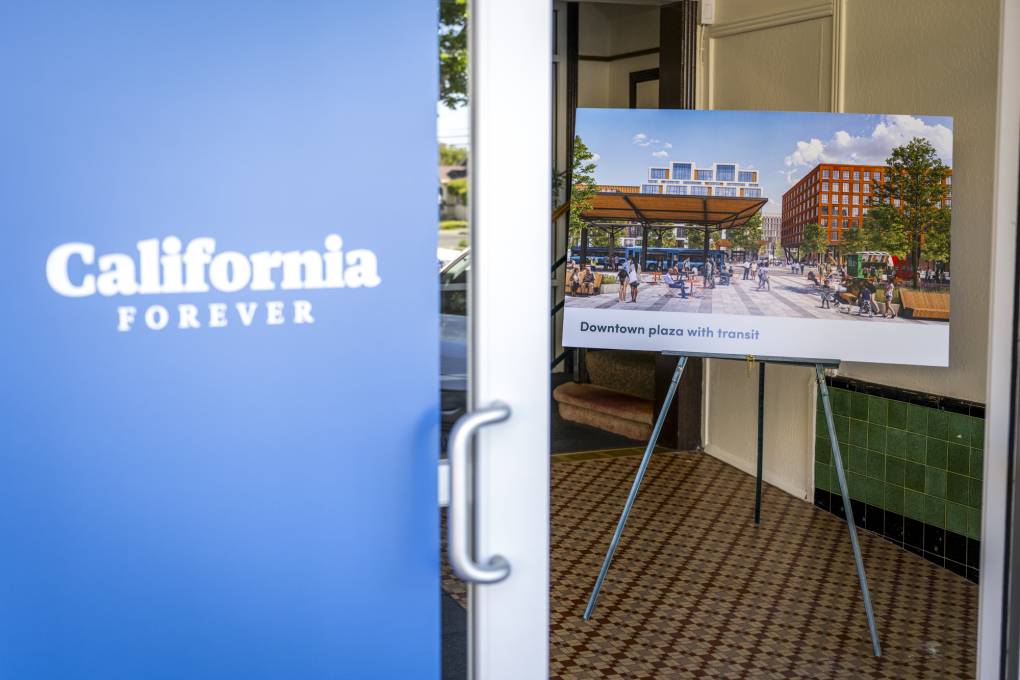
"caption": "Posters for California Forever are displayed in the lobby of the Vista Theatre in Rio Vista on May 2, 2024.",
"description": null,
"title": "NO TECH FOR APARTHEID-01-KQED-1",
"credit": "Beth LaBerge/KQED",
"status": "inherit",
"altTag": null,
"isLoading": false,
"fetchFailed": false
},
"news_12036938": {
"type": "attachments",
"id": "news_12036938",
"meta": {
"index": "attachments_1716263798",
"site": "news",
"id": "12036938",
"found": true
},
"title": "230906-BERRYESSA BART URBAN VILLAGE-MD-06_qed",
"publishDate": 1745258541,
"status": "inherit",
"parent": 12036917,
"modified": 1779817560,
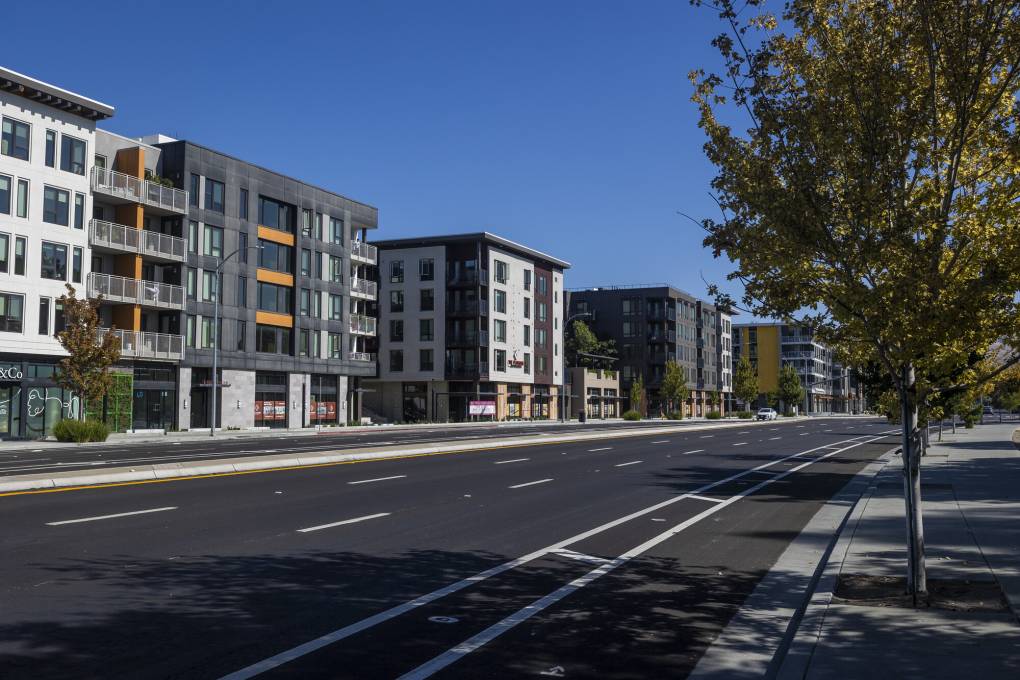
"caption": "Housing developments along Berryessa Road near the Berryessa BART station in San José on Sept. 6, 2023.",
"credit": "Martin do Nascimento/KQED",
"altTag": null,
"description": null,
"imgSizes": {
"medium": {
"file": "https://cdn.kqed.org/wp-content/uploads/sites/10/2025/04/230906-BERRYESSA-BART-URBAN-VILLAGE-MD-06_qed-800x533.jpg",
"width": 800,
"height": 533,
"mimeType": "image/jpeg"
},
"large": {
"file": "https://cdn.kqed.org/wp-content/uploads/sites/10/2025/04/230906-BERRYESSA-BART-URBAN-VILLAGE-MD-06_qed-1020x680.jpg",
"width": 1020,
"height": 680,
"mimeType": "image/jpeg"
},
"thumbnail": {
"file": "https://cdn.kqed.org/wp-content/uploads/sites/10/2025/04/230906-BERRYESSA-BART-URBAN-VILLAGE-MD-06_qed-160x107.jpg",
"width": 160,
"height": 107,
"mimeType": "image/jpeg"
},
"1536x1536": {
"file": "https://cdn.kqed.org/wp-content/uploads/sites/10/2025/04/230906-BERRYESSA-BART-URBAN-VILLAGE-MD-06_qed-1536x1024.jpg",
"width": 1536,
"height": 1024,
"mimeType": "image/jpeg"
},
"post-thumbnail": {
"file": "https://cdn.kqed.org/wp-content/uploads/sites/10/2025/04/230906-BERRYESSA-BART-URBAN-VILLAGE-MD-06_qed-672x372.jpg",
"width": 672,
"height": 372,
"mimeType": "image/jpeg"
},
"twentyfourteen-full-width": {
"file": "https://cdn.kqed.org/wp-content/uploads/sites/10/2025/04/230906-BERRYESSA-BART-URBAN-VILLAGE-MD-06_qed-1038x576.jpg",
"width": 1038,
"height": 576,
"mimeType": "image/jpeg"
},
"full-width": {
"file": "https://cdn.kqed.org/wp-content/uploads/sites/10/2025/04/230906-BERRYESSA-BART-URBAN-VILLAGE-MD-06_qed-1920x1280.jpg",
"width": 1920,
"height": 1280,
"mimeType": "image/jpeg"
},
"kqedFullSize": {
"file": "https://cdn.kqed.org/wp-content/uploads/sites/10/2025/04/230906-BERRYESSA-BART-URBAN-VILLAGE-MD-06_qed.jpg",
"width": 2000,
"height": 1333
}
},
"isLoading": false,
"fetchFailed": false
},
"news_12036286": {
"type": "attachments",
"id": "news_12036286",
"meta": {
"index": "attachments_1716263798",
"site": "news",
"id": "12036286",
"found": true
},
"title": "A sign says, 'Rio Vista Welcomes You' in Rio Vista on May 2, 2024.",
"publishDate": 1744828714,
"status": "inherit",
"parent": 12035971,
"modified": 1744828778,
"caption": "A sign says, 'Rio Vista Welcomes You' in Rio Vista on May 2, 2024.",
"credit": "Beth LaBerge/KQED",
"altTag": null,
"description": null,
"imgSizes": {
"medium": {
"file": "https://cdn.kqed.org/wp-content/uploads/sites/10/2025/04/240502-CaliforniaForever-96-BL_qed-800x533.jpg",
"width": 800,
"height": 533,
"mimeType": "image/jpeg"
},
"large": {
"file": "https://cdn.kqed.org/wp-content/uploads/sites/10/2025/04/240502-CaliforniaForever-96-BL_qed-1020x680.jpg",
"width": 1020,
"height": 680,
"mimeType": "image/jpeg"
},
"thumbnail": {
"file": "https://cdn.kqed.org/wp-content/uploads/sites/10/2025/04/240502-CaliforniaForever-96-BL_qed-160x107.jpg",
"width": 160,
"height": 107,
"mimeType": "image/jpeg"
},
"1536x1536": {
"file": "https://cdn.kqed.org/wp-content/uploads/sites/10/2025/04/240502-CaliforniaForever-96-BL_qed-1536x1024.jpg",
"width": 1536,
"height": 1024,
"mimeType": "image/jpeg"
},
"post-thumbnail": {
"file": "https://cdn.kqed.org/wp-content/uploads/sites/10/2025/04/240502-CaliforniaForever-96-BL_qed-672x372.jpg",
"width": 672,
"height": 372,
"mimeType": "image/jpeg"
},
"twentyfourteen-full-width": {
"file": "https://cdn.kqed.org/wp-content/uploads/sites/10/2025/04/240502-CaliforniaForever-96-BL_qed-1038x576.jpg",
"width": 1038,
"height": 576,
"mimeType": "image/jpeg"
},
"full-width": {
"file": "https://cdn.kqed.org/wp-content/uploads/sites/10/2025/04/240502-CaliforniaForever-96-BL_qed-1920x1280.jpg",
"width": 1920,
"height": 1280,
"mimeType": "image/jpeg"
},
"kqedFullSize": {
"file": "https://cdn.kqed.org/wp-content/uploads/sites/10/2025/04/240502-CaliforniaForever-96-BL_qed.jpg",
"width": 2000,
"height": 1333
}
},
"isLoading": false,
"fetchFailed": false
},
"news_12013319": {
"type": "attachments",
"id": "news_12013319",
"meta": {
"index": "attachments_1716263798",
"site": "news",
"id": "12013319",
"found": true
},
"title": "President Trump Delivers State Of The Union Address To Joint Session Of Congress",
"publishDate": 1730940088,
"status": "inherit",
"parent": 12012387,
"modified": 1741902423,
"caption": "The U.S. Capitol Building on Feb. 5, 2019, in Washington, D.C.",
"credit": "Zach Gibson/Getty Images",
"altTag": null,
"description": null,
"imgSizes": {
"medium": {
"file": "https://cdn.kqed.org/wp-content/uploads/sites/10/2024/11/02052019_capitol_qed-800x533.jpg",
"width": 800,
"height": 533,
"mimeType": "image/jpeg"
},
"large": {
"file": "https://cdn.kqed.org/wp-content/uploads/sites/10/2024/11/02052019_capitol_qed-1020x680.jpg",
"width": 1020,
"height": 680,
"mimeType": "image/jpeg"
},
"thumbnail": {
"file": "https://cdn.kqed.org/wp-content/uploads/sites/10/2024/11/02052019_capitol_qed-160x107.jpg",
"width": 160,
"height": 107,
"mimeType": "image/jpeg"
},
"1536x1536": {
"file": "https://cdn.kqed.org/wp-content/uploads/sites/10/2024/11/02052019_capitol_qed-1536x1024.jpg",
"width": 1536,
"height": 1024,
"mimeType": "image/jpeg"
},
"post-thumbnail": {
"file": "https://cdn.kqed.org/wp-content/uploads/sites/10/2024/11/02052019_capitol_qed-672x372.jpg",
"width": 672,
"height": 372,
"mimeType": "image/jpeg"
},
"twentyfourteen-full-width": {
"file": "https://cdn.kqed.org/wp-content/uploads/sites/10/2024/11/02052019_capitol_qed-1038x576.jpg",
"width": 1038,
"height": 576,
"mimeType": "image/jpeg"
},
"full-width": {
"file": "https://cdn.kqed.org/wp-content/uploads/sites/10/2024/11/02052019_capitol_qed-1920x1280.jpg",
"width": 1920,
"height": 1280,
"mimeType": "image/jpeg"
},
"kqedFullSize": {
"file": "https://cdn.kqed.org/wp-content/uploads/sites/10/2024/11/02052019_capitol_qed.jpg",
"width": 2000,
"height": 1333
}
},
"isLoading": false,
"fetchFailed": false
}
},
"audioPlayerReducer": {
"postId": "stream_live",
"isPaused": true,
"isPlaying": false,
"pfsActive": false,
"pledgeModalIsOpen": true,
"playerDrawerIsOpen": false,
"liveAudioPlayStartedAt": 0,
"liveAudioPlayContext": ""
},
"authorsReducer": {
"vrancano": {
"type": "authors",
"id": "11276",
"meta": {
"index": "authors_1716337520",
"id": "11276",
"found": true
},
"name": "Vanessa Rancaño",
"firstName": "Vanessa",
"lastName": "Rancaño",
"slug": "vrancano",
"email": "vrancano@kqed.org",
"display_author_email": false,
"staff_mastheads": [
"news"
],
"title": "Reporter",
"bio": "Vanessa Rancaño is a features reporter for KQED. She’s also covered homelessness and education for the station and reported from the Central Valley. Her work has aired across public radio, from flagship national news shows to longform narrative podcasts. Before taking up a mic, she worked as a freelance print journalist. She’s been recognized with a number of national and regional awards. Vanessa grew up in California's Central Valley. She's a former NPR Kroc Fellow, and a graduate of the UC Berkeley Graduate School of Journalism.",
"avatar": "https://secure.gravatar.com/avatar/b3a383dfb0e7ee1c17568f2cf067904ab654d6e3de9743fc661f3c788ade1bed?s=600&d=blank&r=g",
"twitter": "vanessarancano",
"bluesky": null,
"facebook": null,
"instagram": null,
"linkedin": null,
"sites": [
{
"site": "arts",
"roles": [
"editor"
]
},
{
"site": "news",
"roles": [
"editor"
]
},
{
"site": "liveblog",
"roles": [
"contributor"
]
}
],
"headData": {
"title": "Vanessa Rancaño | KQED",
"description": "Reporter",
"ogImgSrc": "https://secure.gravatar.com/avatar/b3a383dfb0e7ee1c17568f2cf067904ab654d6e3de9743fc661f3c788ade1bed?s=600&d=blank&r=g",
"twImgSrc": "https://secure.gravatar.com/avatar/b3a383dfb0e7ee1c17568f2cf067904ab654d6e3de9743fc661f3c788ade1bed?s=600&d=blank&r=g"
},
"isLoading": false,
"link": "/author/vrancano"
},
"abandlamudi": {
"type": "authors",
"id": "11672",
"meta": {
"index": "authors_1716337520",
"id": "11672",
"found": true
},
"name": "Adhiti Bandlamudi",
"firstName": "Adhiti",
"lastName": "Bandlamudi",
"slug": "abandlamudi",
"email": "abandlamudi@kqed.org",
"display_author_email": false,
"staff_mastheads": [
"news"
],
"title": "KQED Housing Reporter",
"bio": "Adhiti Bandlamudi reports for KQED's Housing desk. She focuses on how housing gets built across the Bay Area. Before joining KQED in 2020, she reported for WUNC in Durham, North Carolina, WABE in Atlanta, Georgia and Capital Public Radio in Sacramento. In 2017, she was awarded a Kroc Fellowship at NPR where she reported on everything from sprinkles to the Golden State Killer's arrest. When she's not reporting, she's baking new recipes in her kitchen or watching movies with friends and family. She's originally from Georgia and has strong opinions about Great British Bake Off.",
"avatar": "https://secure.gravatar.com/avatar/868129c8b257bb99a3500e2c86a65400?s=600&d=mm&r=g",
"twitter": "oddity_adhiti",
"facebook": null,
"instagram": null,
"linkedin": null,
"sites": [
{
"site": "arts",
"roles": [
"author"
]
},
{
"site": "news",
"roles": [
"editor"
]
},
{
"site": "liveblog",
"roles": [
"author"
]
}
],
"headData": {
"title": "Adhiti Bandlamudi | KQED",
"description": "KQED Housing Reporter",
"ogImgSrc": "https://secure.gravatar.com/avatar/868129c8b257bb99a3500e2c86a65400?s=600&d=mm&r=g",
"twImgSrc": "https://secure.gravatar.com/avatar/868129c8b257bb99a3500e2c86a65400?s=600&d=mm&r=g"
},
"isLoading": false,
"link": "/author/abandlamudi"
},
"nkhan": {
"type": "authors",
"id": "11867",
"meta": {
"index": "authors_1716337520",
"id": "11867",
"found": true
},
"name": "Nisa Khan",
"firstName": "Nisa",
"lastName": "Khan",
"slug": "nkhan",
"email": "nkhan@kqed.org",
"display_author_email": false,
"staff_mastheads": [],
"title": "KQED Contributor",
"bio": "Nisa Khan is a reporter for KQED's Audience News Desk. She was formerly a data reporter at Michigan Radio. She earned a Bachelor of Science in Information from the University of Michigan and a Master of Arts in Communication from Stanford University.",
"avatar": "https://secure.gravatar.com/avatar/8720459eef081ff64582b3506b124d58523e80e120704a0cbd9892533c914991?s=600&d=blank&r=g",
"twitter": "mnisakhan",
"bluesky": null,
"facebook": null,
"instagram": null,
"linkedin": null,
"sites": [
{
"site": "arts",
"roles": [
"editor"
]
},
{
"site": "news",
"roles": [
"editor"
]
},
{
"site": "science",
"roles": [
"editor",
"author"
]
},
{
"site": "forum",
"roles": [
"editor"
]
},
{
"site": "liveblog",
"roles": [
"contributor"
]
}
],
"headData": {
"title": "Nisa Khan | KQED",
"description": "KQED Contributor",
"ogImgSrc": "https://secure.gravatar.com/avatar/8720459eef081ff64582b3506b124d58523e80e120704a0cbd9892533c914991?s=600&d=blank&r=g",
"twImgSrc": "https://secure.gravatar.com/avatar/8720459eef081ff64582b3506b124d58523e80e120704a0cbd9892533c914991?s=600&d=blank&r=g"
},
"isLoading": false,
"link": "/author/nkhan"
},
"kdebenedetti": {
"type": "authors",
"id": "11913",
"meta": {
"index": "authors_1716337520",
"id": "11913",
"found": true
},
"name": "Katie DeBenedetti",
"firstName": "Katie",
"lastName": "DeBenedetti",
"slug": "kdebenedetti",
"email": "kdebenedetti@kqed.org",
"display_author_email": false,
"staff_mastheads": [
"news",
"science"
],
"title": "KQED Contributor",
"bio": "Katie DeBenedetti is a digital reporter covering daily news for the Express Desk. Prior to joining KQED as a culture reporting intern in January 2024, she covered education and city government for the Napa Valley Register.",
"avatar": "https://secure.gravatar.com/avatar/6e31073cb8f7e4214ab03f42771d0f45?s=600&d=blank&r=g",
"twitter": null,
"facebook": null,
"instagram": null,
"linkedin": null,
"sites": [
{
"site": "news",
"roles": [
"author"
]
},
{
"site": "science",
"roles": [
"author"
]
},
{
"site": "liveblog",
"roles": [
"author"
]
}
],
"headData": {
"title": "Katie DeBenedetti | KQED",
"description": "KQED Contributor",
"ogImgSrc": "https://secure.gravatar.com/avatar/6e31073cb8f7e4214ab03f42771d0f45?s=600&d=blank&r=g",
"twImgSrc": "https://secure.gravatar.com/avatar/6e31073cb8f7e4214ab03f42771d0f45?s=600&d=blank&r=g"
},
"isLoading": false,
"link": "/author/kdebenedetti"
}
},
"pagesReducer": {
"news_tag_affordable-housing": {
"type": "terms",
"id": "news_3921",
"meta": {
"index": "terms_1716263798",
"site": "news",
"id": "3921",
"score": 9.304576
},
"featImg": null,
"name": "affordable housing",
"description": null,
"taxonomy": "tag",
"headData": {
"twImgId": null,
"twTitle": null,
"ogTitle": null,
"ogImgId": null,
"twDescription": null,
"description": null,
"title": "affordable housing Archives | KQED News",
"ogDescription": null
},
"ttid": 3940,
"slug": "affordable-housing",
"isLoading": false,
"title": "affordable housing",
"pageMeta": {
"site": "news",
"WpPageTemplate": "page-topic-editorial",
"currentPage": 13
},
"blocks": [
{
"blockName": "kqed/post-list",
"attrs": {
"layout": "cardArticle2",
"query": "posts/news?tag=affordable-housing",
"seeMore": false,
"paginated": true,
"page": 13
}
},
{
"blockName": "kqed/ad"
}
]
}
},
"pfsSessionReducer": {},
"postsReducer": {
"stream_live": {
"type": "live",
"id": "stream_live",
"audioUrl": "https://streams.kqed.org/kqedradio",
"title": "Live Stream",
"excerpt": "Live Stream information currently unavailable.",
"link": "/radio",
"featImg": "",
"label": {
"name": "KQED Live",
"link": "/"
}
},
"stream_kqedNewscast": {
"type": "posts",
"id": "stream_kqedNewscast",
"audioUrl": "https://www.kqed.org/.stream/anon/radio/RDnews/newscast.mp3?_=1",
"title": "KQED Newscast",
"featImg": "",
"label": {
"name": "88.5 FM",
"link": "/"
}
},
"news_12039111": {
"type": "posts",
"id": "news_12039111",
"meta": {
"index": "posts_1716263798",
"site": "news",
"id": "12039111",
"score": null,
"sort": [
1746725501000
]
},
"guestAuthors": [],
"slug": "historic-san-francisco-theater-might-finally-redeveloped-housing",
"title": "A Historic San Francisco Theater Might Finally Be Redeveloped Into Housing",
"publishDate": 1746725501,
"format": "standard",
"headTitle": "A Historic San Francisco Theater Might Finally Be Redeveloped Into Housing | KQED",
"labelTerm": {
"site": "news"
},
"content": "\u003cp>The historic Alexandria Theater, located in San Francisco’s Richmond District, closed in 2004, and as the building has sat empty, development proposals have come and gone. \u003ca href=\"https://www.kqed.org/news/12033966/sfs-single-family-home-neighborhoods-apartments-65-story-towers-downtown\">As officials look for sites to add more homes\u003c/a>, city leaders just cleared the way for a new proposal.\u003c/p>\n\u003cp>On Tuesday, San Francisco supervisors approved the creation of a \u003ca href=\"https://sfgov.legistar.com/View.ashx?M=F&ID=14145577&GUID=6C01770A-7A1E-47F0-9B43-6EEE00AAE7A2\">special district\u003c/a> that would allow the theater to be redeveloped into an eight-story building with 75 apartments, each with two to three bedrooms inside, and at least 12% set aside for affordable housing units.\u003c/p>\n\u003cp>Supervisor Connie Chan, who represents the Richmond and sponsored the legislation creating the special district, said she wanted to add more housing for families within her neighborhood and wanted it to be built in an area that would not displace small businesses.\u003c/p>\n\u003cp>[ad fullwidth]\u003c/p>\n\u003cp>“The Alexandria Theater is a great example — it really needs to have a new use, and it can be for housing, so here we are,” she said to KQED. “This approach helped us to bring more people and have growth that really works for the community and at the same time, we make sure that people who are here — small businesses and residents, aging homeowners, can continue to stay.”\u003c/p>\n\u003cp>The special district requires the building to maintain some of its historic features, including its marquee, interior chandelier and murals. Chan and leaders of some neighborhood groups pointed to the project as a way to add housing in a thoughtful way that maintains the character of the neighborhood.\u003c/p>\n\u003cfigure id=\"attachment_12039253\" class=\"wp-caption aligncenter\" style=\"max-width: 2000px\">\u003cimg loading=\"lazy\" decoding=\"async\" class=\"wp-image-12039253 size-full\" src=\"https://cdn.kqed.org/wp-content/uploads/sites/10/2025/05/250507-ALEXANDRIA-THEATER-MD-05-KQED-1.jpg\" alt=\"\" width=\"2000\" height=\"1334\" srcset=\"https://cdn.kqed.org/wp-content/uploads/sites/10/2025/05/250507-ALEXANDRIA-THEATER-MD-05-KQED-1.jpg 2000w, https://cdn.kqed.org/wp-content/uploads/sites/10/2025/05/250507-ALEXANDRIA-THEATER-MD-05-KQED-1-800x534.jpg 800w, https://cdn.kqed.org/wp-content/uploads/sites/10/2025/05/250507-ALEXANDRIA-THEATER-MD-05-KQED-1-1020x680.jpg 1020w, https://cdn.kqed.org/wp-content/uploads/sites/10/2025/05/250507-ALEXANDRIA-THEATER-MD-05-KQED-1-160x107.jpg 160w, https://cdn.kqed.org/wp-content/uploads/sites/10/2025/05/250507-ALEXANDRIA-THEATER-MD-05-KQED-1-1536x1025.jpg 1536w, https://cdn.kqed.org/wp-content/uploads/sites/10/2025/05/250507-ALEXANDRIA-THEATER-MD-05-KQED-1-1920x1281.jpg 1920w\" sizes=\"auto, (max-width: 2000px) 100vw, 2000px\">\u003cfigcaption class=\"wp-caption-text\">The Alexandria Theater building in San Francisco on May 7, 2025. \u003ccite>(Martin do Nascimento/KQED)\u003c/cite>\u003c/figcaption>\u003c/figure>\n\u003cp>The theater opened in 1923 and was constructed by the Reid brothers, who also designed the third version of Cliff House, the Balboa Theater in the Outer Richmond and the Grand Lake Theater in Oakland. After the Alexandria Theater closed in 2004, it changed ownership several times as plans for redevelopment stalled.\u003c/p>\n\u003cp>Developers proposed building \u003ca href=\"https://www.sfgate.com/bayarea/article/once-glamorous-s-f-theater-now-neighborhood-5478838.php\">a smaller theater\u003c/a> with retail space on the ground level. A later proposal included an \u003ca href=\"https://www.sfexaminer.com/archives/after-years-of-delay-swimming-pool-set-to-open-inside-richmond-district-s-alexandria-theater/article_0d089a82-cae3-5494-9241-9c9647007a77.html\">indoor swimming pool\u003c/a> with classroom and office space on the top floors. Both proposals preserved the historic qualities of the building, though it is not officially recognized as a landmark.\u003c/p>\n\u003cp>The city granted the necessary permits to start construction on both proposals, but the developers eventually scrapped the projects, most recently due to financing constraints from the COVID-19 pandemic.[aside postID=news_12033966 hero='https://cdn.kqed.org/wp-content/uploads/sites/10/2025/04/250325-ApartmentsonWestside-06-BL_qed-1020x680.jpg']Woody LaBounty, president of preservationist organization San Francisco Heritage, said while the building’s time as a movie theater has passed, the building itself has unique qualities that make the Richmond an architecturally interesting neighborhood.\u003c/p>\n\u003cp>“It was created with this unique Egyptian revival style that was very much of the ‘20s, and because it had all these very attractive design elements, we’d like to see that preserved and kept for any new project,” he said. “It adds housing while continuing to provide some sort of character that speaks to the Richmond District’s history.”\u003c/p>\n\u003cp>The district, along with other neighborhoods in the northern and western parts of the city, faces efforts from city officials to \u003ca href=\"https://sfplanning.org/project/expanding-housing-choice\">allow taller buildings to be added\u003c/a> to a historically flatter part of the city. The city’s current plan, which is making its way through various departments and committees, aims to allow up to 12-story buildings along commercial corridors and busy thoroughfares in those neighborhoods.\u003c/p>\n\u003cp>Meanwhile, housing activists worry that a piecemeal approach to allowing housing to be built may not yield effective results to the state’s housing crisis. Jane Natoli, San Francisco Organizing Director for pro-housing group YIMBY Action, moved to the Richmond in 2013, almost 10 years after the theater shut down. Twelve years later, the theater remains empty. She said she wants something to be built there, but she doesn’t like the way the city approached developing this spot.\u003c/p>\n\u003cp>“I don’t really like special use districts because they’re part of what makes our planning process so complicated in San Francisco,” she said. “While I don’t think that’s the greatest tool… I do think that it’s important to strike while the iron is hot. We have an opportunity to actually move forward with a development proposal here that I think makes sense.”\u003c/p>\n\u003cp>\u003c/p>\n",
"blocks": [],
"excerpt": "For more than 20 years, an empty movie theater in San Francisco’s Richmond District has seen redevelopment proposals come and go. City officials just cleared the way for it to become a site for family apartments.",
"status": "publish",
"parent": 0,
"modified": 1746725509,
"stats": {
"hasAudio": false,
"hasVideo": false,
"hasChartOrMap": false,
"iframeSrcs": [],
"hasGoogleForm": false,
"hasGallery": false,
"hasHearkenModule": false,
"hasPolis": false,
"paragraphCount": 14,
"wordCount": 755
},
"headData": {
"title": "A Historic San Francisco Theater Might Finally Be Redeveloped Into Housing | KQED",
"description": "For more than 20 years, an empty movie theater in San Francisco’s Richmond District has seen redevelopment proposals come and go. City officials just cleared the way for it to become a site for family apartments.",
"ogTitle": "",
"ogDescription": "",
"ogImgId": "",
"twTitle": "",
"twDescription": "",
"twImgId": "",
"schema": {
"@context": "https://schema.org",
"@type": "NewsArticle",
"headline": "A Historic San Francisco Theater Might Finally Be Redeveloped Into Housing",
"datePublished": "2025-05-08T10:31:41-07:00",
"dateModified": "2025-05-08T10:31:49-07:00",
"image": "https://cdn.kqed.org/wp-content/uploads/2020/02/KQED-OG-Image@1x.png",
"isAccessibleForFree": "True",
"publisher": {
"@type": "NewsMediaOrganization",
"@id": "https://www.kqed.org/#organization",
"name": "KQED",
"logo": "https://cdn.kqed.org/wp-content/uploads/2020/02/KQED-OG-Image@1x.png",
"url": "https://www.kqed.org",
"sameAs": [
"https://www.facebook.com/KQED",
"https://twitter.com/KQED",
"https://www.instagram.com/kqed/",
"https://www.tiktok.com/@kqedofficial",
"https://www.linkedin.com/company/kqed",
"https://www.youtube.com/channel/UCeC0IOo7i1P_61zVUWbJ4nw"
]
}
}
},
"sticky": false,
"nprStoryId": "kqed-12039111",
"templateType": "standard",
"featuredImageType": "standard",
"excludeFromSiteSearch": "Include",
"articleAge": "0",
"path": "/news/12039111/historic-san-francisco-theater-might-finally-redeveloped-housing",
"audioTrackLength": null,
"parsedContent": [
{
"type": "contentString",
"content": "\u003cdiv class=\"post-body\">\u003cp>\u003cp>The historic Alexandria Theater, located in San Francisco’s Richmond District, closed in 2004, and as the building has sat empty, development proposals have come and gone. \u003ca href=\"https://www.kqed.org/news/12033966/sfs-single-family-home-neighborhoods-apartments-65-story-towers-downtown\">As officials look for sites to add more homes\u003c/a>, city leaders just cleared the way for a new proposal.\u003c/p>\n\u003cp>On Tuesday, San Francisco supervisors approved the creation of a \u003ca href=\"https://sfgov.legistar.com/View.ashx?M=F&ID=14145577&GUID=6C01770A-7A1E-47F0-9B43-6EEE00AAE7A2\">special district\u003c/a> that would allow the theater to be redeveloped into an eight-story building with 75 apartments, each with two to three bedrooms inside, and at least 12% set aside for affordable housing units.\u003c/p>\n\u003cp>Supervisor Connie Chan, who represents the Richmond and sponsored the legislation creating the special district, said she wanted to add more housing for families within her neighborhood and wanted it to be built in an area that would not displace small businesses.\u003c/p>\n\u003cp>\u003c/p>\u003c/div>",
"attributes": {
"named": {},
"numeric": []
}
},
{
"type": "component",
"content": "",
"name": "ad",
"attributes": {
"named": {
"label": "fullwidth"
},
"numeric": [
"fullwidth"
]
}
},
{
"type": "contentString",
"content": "\u003cdiv class=\"post-body\">\u003cp>\u003c/p>\n\u003cp>“The Alexandria Theater is a great example — it really needs to have a new use, and it can be for housing, so here we are,” she said to KQED. “This approach helped us to bring more people and have growth that really works for the community and at the same time, we make sure that people who are here — small businesses and residents, aging homeowners, can continue to stay.”\u003c/p>\n\u003cp>The special district requires the building to maintain some of its historic features, including its marquee, interior chandelier and murals. Chan and leaders of some neighborhood groups pointed to the project as a way to add housing in a thoughtful way that maintains the character of the neighborhood.\u003c/p>\n\u003cfigure id=\"attachment_12039253\" class=\"wp-caption aligncenter\" style=\"max-width: 2000px\">\u003cimg loading=\"lazy\" decoding=\"async\" class=\"wp-image-12039253 size-full\" src=\"https://cdn.kqed.org/wp-content/uploads/sites/10/2025/05/250507-ALEXANDRIA-THEATER-MD-05-KQED-1.jpg\" alt=\"\" width=\"2000\" height=\"1334\" srcset=\"https://cdn.kqed.org/wp-content/uploads/sites/10/2025/05/250507-ALEXANDRIA-THEATER-MD-05-KQED-1.jpg 2000w, https://cdn.kqed.org/wp-content/uploads/sites/10/2025/05/250507-ALEXANDRIA-THEATER-MD-05-KQED-1-800x534.jpg 800w, https://cdn.kqed.org/wp-content/uploads/sites/10/2025/05/250507-ALEXANDRIA-THEATER-MD-05-KQED-1-1020x680.jpg 1020w, https://cdn.kqed.org/wp-content/uploads/sites/10/2025/05/250507-ALEXANDRIA-THEATER-MD-05-KQED-1-160x107.jpg 160w, https://cdn.kqed.org/wp-content/uploads/sites/10/2025/05/250507-ALEXANDRIA-THEATER-MD-05-KQED-1-1536x1025.jpg 1536w, https://cdn.kqed.org/wp-content/uploads/sites/10/2025/05/250507-ALEXANDRIA-THEATER-MD-05-KQED-1-1920x1281.jpg 1920w\" sizes=\"auto, (max-width: 2000px) 100vw, 2000px\">\u003cfigcaption class=\"wp-caption-text\">The Alexandria Theater building in San Francisco on May 7, 2025. \u003ccite>(Martin do Nascimento/KQED)\u003c/cite>\u003c/figcaption>\u003c/figure>\n\u003cp>The theater opened in 1923 and was constructed by the Reid brothers, who also designed the third version of Cliff House, the Balboa Theater in the Outer Richmond and the Grand Lake Theater in Oakland. After the Alexandria Theater closed in 2004, it changed ownership several times as plans for redevelopment stalled.\u003c/p>\n\u003cp>Developers proposed building \u003ca href=\"https://www.sfgate.com/bayarea/article/once-glamorous-s-f-theater-now-neighborhood-5478838.php\">a smaller theater\u003c/a> with retail space on the ground level. A later proposal included an \u003ca href=\"https://www.sfexaminer.com/archives/after-years-of-delay-swimming-pool-set-to-open-inside-richmond-district-s-alexandria-theater/article_0d089a82-cae3-5494-9241-9c9647007a77.html\">indoor swimming pool\u003c/a> with classroom and office space on the top floors. Both proposals preserved the historic qualities of the building, though it is not officially recognized as a landmark.\u003c/p>\n\u003cp>The city granted the necessary permits to start construction on both proposals, but the developers eventually scrapped the projects, most recently due to financing constraints from the COVID-19 pandemic.\u003c/p>\u003c/div>",
"attributes": {
"named": {},
"numeric": []
}
},
{
"type": "component",
"content": "",
"name": "aside",
"attributes": {
"named": {
"postid": "news_12033966",
"hero": "https://cdn.kqed.org/wp-content/uploads/sites/10/2025/04/250325-ApartmentsonWestside-06-BL_qed-1020x680.jpg",
"label": ""
},
"numeric": []
}
},
{
"type": "contentString",
"content": "\u003cdiv class=\"post-body\">\u003cp>Woody LaBounty, president of preservationist organization San Francisco Heritage, said while the building’s time as a movie theater has passed, the building itself has unique qualities that make the Richmond an architecturally interesting neighborhood.\u003c/p>\n\u003cp>“It was created with this unique Egyptian revival style that was very much of the ‘20s, and because it had all these very attractive design elements, we’d like to see that preserved and kept for any new project,” he said. “It adds housing while continuing to provide some sort of character that speaks to the Richmond District’s history.”\u003c/p>\n\u003cp>The district, along with other neighborhoods in the northern and western parts of the city, faces efforts from city officials to \u003ca href=\"https://sfplanning.org/project/expanding-housing-choice\">allow taller buildings to be added\u003c/a> to a historically flatter part of the city. The city’s current plan, which is making its way through various departments and committees, aims to allow up to 12-story buildings along commercial corridors and busy thoroughfares in those neighborhoods.\u003c/p>\n\u003cp>Meanwhile, housing activists worry that a piecemeal approach to allowing housing to be built may not yield effective results to the state’s housing crisis. Jane Natoli, San Francisco Organizing Director for pro-housing group YIMBY Action, moved to the Richmond in 2013, almost 10 years after the theater shut down. Twelve years later, the theater remains empty. She said she wants something to be built there, but she doesn’t like the way the city approached developing this spot.\u003c/p>\n\u003cp>“I don’t really like special use districts because they’re part of what makes our planning process so complicated in San Francisco,” she said. “While I don’t think that’s the greatest tool… I do think that it’s important to strike while the iron is hot. We have an opportunity to actually move forward with a development proposal here that I think makes sense.”\u003c/p>\n\u003cp>\u003c/p>\n\u003c/div>\u003c/p>",
"attributes": {
"named": {},
"numeric": []
}
}
],
"link": "/news/12039111/historic-san-francisco-theater-might-finally-redeveloped-housing",
"authors": [
"11672"
],
"categories": [
"news_6266",
"news_28250",
"news_8"
],
"tags": [
"news_3921",
"news_20397",
"news_27626",
"news_1775",
"news_38"
],
"featImg": "news_12039252",
"label": "news"
},
"news_12038968": {
"type": "posts",
"id": "news_12038968",
"meta": {
"index": "posts_1716263798",
"site": "news",
"id": "12038968",
"score": null,
"sort": [
1746622843000
]
},
"guestAuthors": [],
"slug": "californias-population-rebounding-san-francisco-different-story",
"title": "California’s Population Is Rebounding. In San Francisco, It’s a Different Story",
"publishDate": 1746622843,
"format": "standard",
"headTitle": "California’s Population Is Rebounding. In San Francisco, It’s a Different Story | KQED",
"labelTerm": {
"site": "news"
},
"content": "\u003cp>California’s population is slowly bouncing back after the state experienced an \u003ca href=\"https://www.kqed.org/news/11909141/sf-lost-more-than-116000-residents-during-pandemics-first-year\">exodus\u003c/a> in the two years after the pandemic began, according to recently released state data.\u003c/p>\n\u003cp>The state had over 100,000 more residents at the beginning of this year compared to last year, the \u003ca href=\"https://dof.ca.gov/wp-content/uploads/sites/352/Forecasting/Demographics/Documents/E-1_2025_Press_Release.pdf\">Department of Finance data\u003c/a> show. Although the upward trend was seen in most of the state’s largest cities, San Francisco was an outlier.\u003c/p>\n\u003cp>The city lost more than 3,300 people, the biggest numeric change in population out of every city in California. San José, Vallejo, Milpitas and Redwood City are among other Bay Area cities that saw population losses.\u003c/p>\n\u003cp>[ad fullwidth]\u003c/p>\n\u003cp>Most Bay Area counties, with the exception of Napa and Sonoma, saw little to no growth in residents, said Walter Schwarm, the state’s chief demographer. Access to housing was a big factor in why some cities grew while others shrank.\u003c/p>\n\u003cp>“The slight decline in San José’s population could be attributed to individuals looking to move to differing housing/amenities bundles elsewhere in the county, such as Gilroy or Sunnyvale, both of which grew,” he told KQED in an email. “So larger cities facing some slackening of growth is not particularly concerning, rather just a question of housing availability, affordability and market timing.”\u003c/p>\n\u003cp>\u003c!-- iframe plugin v.4.3 wordpress.org/plugins/iframe/ -->\u003cbr>\n\u003ciframe loading=\"lazy\" title=\"San Francisco’s Population, 2020–2025\" aria-label=\"Interactive line chart\" id=\"datawrapper-chart-TfNXn\" src=\"https://datawrapper.dwcdn.net/TfNXn/2/\" scrolling=\"no\" frameborder=\"0\" style=\"width: 0; min-width: 100% !important; border: none;\" height=\"438\" data-external=\"1\" width=\"100%\" class=\"iframe-class\">\u003c/iframe>\u003c/p>\n\u003cp>The department’s report showed that the state added little new housing to its stock last year. Most of the new homes constructed were single-family homes and granny flats, usually in more suburban cities. The bulk of new apartments, condos and duplexes were built in larger, more metropolitan cities.\u003c/p>\n\u003cp>Schwarm said the Bay Area’s largely flat growth could also be reflective of the region’s economic slowdown over the past year. Last year, California’s \u003ca href=\"https://www.kqed.org/news/11980559/california-unemployment-rate-highest-in-the-us-as-new-data-reveals-slow-job-growth\">unemployment rate\u003c/a> was the highest in the country.\u003c/p>\n\u003cp>Meanwhile, Los Angeles’ population grew by more than 15,500 people, and San Diego’s by more than 14,000. Other cities, including Fresno, Sacramento, Long Beach and Oakland, also saw growth.\u003c/p>\n\u003cp>\u003c!-- iframe plugin v.4.3 wordpress.org/plugins/iframe/ -->\u003cbr>\n\u003ciframe loading=\"lazy\" title=\"California Statewide Total Population\" aria-label=\"Interactive line chart\" id=\"datawrapper-chart-1vIHs\" src=\"https://datawrapper.dwcdn.net/1vIHs/4/\" scrolling=\"no\" frameborder=\"0\" style=\"width: 0; min-width: 100% !important; border: none;\" height=\"485\" data-external=\"1\" width=\"100%\" class=\"iframe-class\">\u003c/iframe>\u003c/p>\n\u003cp>The report released this month used data from January this year and did not reflect major displacement and population shifts from the Los Angeles wildfires that happened later that month.\u003c/p>\n\u003cp>Counties in the Central Valley and the Inland Empire, including Lassen, Glenn, Fresno and Sutter, saw big population gains, and cities within those counties added more homes.\u003c/p>\n\u003cp>Sarah Karlinsky, research director of the Terner Center for Housing Innovation at UC Berkeley, said that because land is less expensive there, the housing tends to be more affordable.[aside postID=news_11975039 hero='https://ww2.kqed.org/app/uploads/sites/10/2022/08/RS57863_019_KQED_RichmondHousing_08162022-qut-1020x680.jpg']During the pandemic, people working in high-cost areas \u003ca href=\"https://www.ppic.org/blog/shrinking-household-size-strains-californias-housing-market/\">chose to move farther east\u003c/a> as they were able to work remotely. While some major companies have started to call workers back into the office, many workers can still work from home and are still choosing homeownership over a short commute into the office, she said.\u003c/p>\n\u003cp>“They can use that buying power to purchase a single-family home,” she said. “People are seeking more affordable housing options, and if they have the opportunity to work remotely, they’re doing so.”\u003c/p>\n\u003cp>Other cities saw more population growth as they added more apartments and condos to their housing stock. Los Angeles completed more than 10,000 new apartments, making up about 54% of its total new housing. More than 70% of San Diego’s new homes were apartments or condos. Karlinsky said more housing has been added to the city’s downtown, making it more resilient to economic changes.\u003c/p>\n\u003cp>“Places that have that mixture [in housing types] are doing better,” she said.\u003c/p>\n\u003cp>Meanwhile, \u003ca href=\"https://www.kqed.org/news/12033966/sfs-single-family-home-neighborhoods-apartments-65-story-towers-downtown\">San Francisco officials are trying to rezone large swaths\u003c/a> of its northern and western neighborhoods to make way for more dense housing.\u003c/p>\n\u003cp>Recently, rent prices have started to rise in the city. Schwarm said that could be a sign of changing tides.\u003c/p>\n\u003cp>“San Francisco continues to be an outlier facing some challenges,” he said. “However, recent increased rental trends, if spurred by increased demand, would suggest that individuals are moving to the city again.”\u003c/p>\n\u003cp>\u003c/p>\n",
"blocks": [],
"excerpt": "San Francisco’s population has consistently dropped since the pandemic. Experts say housing affordability is a major reason why people move away.",
"status": "publish",
"parent": 0,
"modified": 1746634416,
"stats": {
"hasAudio": false,
"hasVideo": false,
"hasChartOrMap": true,
"iframeSrcs": [
"https://datawrapper.dwcdn.net/TfNXn/2/",
"https://datawrapper.dwcdn.net/1vIHs/4/"
],
"hasGoogleForm": false,
"hasGallery": false,
"hasHearkenModule": false,
"hasPolis": false,
"paragraphCount": 21,
"wordCount": 707
},
"headData": {
"title": "California’s Population Is Rebounding. In San Francisco, It’s a Different Story | KQED",
"description": "San Francisco’s population has consistently dropped since the pandemic. Experts say housing affordability is a major reason why people move away.",
"ogTitle": "",
"ogDescription": "",
"ogImgId": "",
"twTitle": "",
"twDescription": "",
"twImgId": "",
"schema": {
"@context": "https://schema.org",
"@type": "NewsArticle",
"headline": "California’s Population Is Rebounding. In San Francisco, It’s a Different Story",
"datePublished": "2025-05-07T06:00:43-07:00",
"dateModified": "2025-05-07T09:13:36-07:00",
"image": "https://cdn.kqed.org/wp-content/uploads/2020/02/KQED-OG-Image@1x.png",
"isAccessibleForFree": "True",
"publisher": {
"@type": "NewsMediaOrganization",
"@id": "https://www.kqed.org/#organization",
"name": "KQED",
"logo": "https://cdn.kqed.org/wp-content/uploads/2020/02/KQED-OG-Image@1x.png",
"url": "https://www.kqed.org",
"sameAs": [
"https://www.facebook.com/KQED",
"https://twitter.com/KQED",
"https://www.instagram.com/kqed/",
"https://www.tiktok.com/@kqedofficial",
"https://www.linkedin.com/company/kqed",
"https://www.youtube.com/channel/UCeC0IOo7i1P_61zVUWbJ4nw"
]
}
}
},
"sticky": false,
"nprStoryId": "kqed-12038968",
"templateType": "standard",
"featuredImageType": "standard",
"excludeFromSiteSearch": "Include",
"articleAge": "0",
"path": "/news/12038968/californias-population-rebounding-san-francisco-different-story",
"audioTrackLength": null,
"parsedContent": [
{
"type": "contentString",
"content": "\u003cdiv class=\"post-body\">\u003cp>\u003cp>California’s population is slowly bouncing back after the state experienced an \u003ca href=\"https://www.kqed.org/news/11909141/sf-lost-more-than-116000-residents-during-pandemics-first-year\">exodus\u003c/a> in the two years after the pandemic began, according to recently released state data.\u003c/p>\n\u003cp>The state had over 100,000 more residents at the beginning of this year compared to last year, the \u003ca href=\"https://dof.ca.gov/wp-content/uploads/sites/352/Forecasting/Demographics/Documents/E-1_2025_Press_Release.pdf\">Department of Finance data\u003c/a> show. Although the upward trend was seen in most of the state’s largest cities, San Francisco was an outlier.\u003c/p>\n\u003cp>The city lost more than 3,300 people, the biggest numeric change in population out of every city in California. San José, Vallejo, Milpitas and Redwood City are among other Bay Area cities that saw population losses.\u003c/p>\n\u003cp>\u003c/p>\u003c/div>",
"attributes": {
"named": {},
"numeric": []
}
},
{
"type": "component",
"content": "",
"name": "ad",
"attributes": {
"named": {
"label": "fullwidth"
},
"numeric": [
"fullwidth"
]
}
},
{
"type": "contentString",
"content": "\u003cdiv class=\"post-body\">\u003cp>\u003c/p>\n\u003cp>Most Bay Area counties, with the exception of Napa and Sonoma, saw little to no growth in residents, said Walter Schwarm, the state’s chief demographer. Access to housing was a big factor in why some cities grew while others shrank.\u003c/p>\n\u003cp>“The slight decline in San José’s population could be attributed to individuals looking to move to differing housing/amenities bundles elsewhere in the county, such as Gilroy or Sunnyvale, both of which grew,” he told KQED in an email. “So larger cities facing some slackening of growth is not particularly concerning, rather just a question of housing availability, affordability and market timing.”\u003c/p>\n\u003cp>\u003c!-- iframe plugin v.4.3 wordpress.org/plugins/iframe/ -->\u003cbr>\n\u003ciframe loading=\"lazy\" title=\"San Francisco’s Population, 2020–2025\" aria-label=\"Interactive line chart\" id=\"datawrapper-chart-TfNXn\" src=\"https://datawrapper.dwcdn.net/TfNXn/2/\" scrolling=\"no\" frameborder=\"0\" style=\"width: 0; min-width: 100% !important; border: none;\" height=\"438\" data-external=\"1\" width=\"100%\" class=\"iframe-class\">\u003c/iframe>\u003c/p>\n\u003cp>The department’s report showed that the state added little new housing to its stock last year. Most of the new homes constructed were single-family homes and granny flats, usually in more suburban cities. The bulk of new apartments, condos and duplexes were built in larger, more metropolitan cities.\u003c/p>\n\u003cp>Schwarm said the Bay Area’s largely flat growth could also be reflective of the region’s economic slowdown over the past year. Last year, California’s \u003ca href=\"https://www.kqed.org/news/11980559/california-unemployment-rate-highest-in-the-us-as-new-data-reveals-slow-job-growth\">unemployment rate\u003c/a> was the highest in the country.\u003c/p>\n\u003cp>Meanwhile, Los Angeles’ population grew by more than 15,500 people, and San Diego’s by more than 14,000. Other cities, including Fresno, Sacramento, Long Beach and Oakland, also saw growth.\u003c/p>\n\u003cp>\u003c!-- iframe plugin v.4.3 wordpress.org/plugins/iframe/ -->\u003cbr>\n\u003ciframe loading=\"lazy\" title=\"California Statewide Total Population\" aria-label=\"Interactive line chart\" id=\"datawrapper-chart-1vIHs\" src=\"https://datawrapper.dwcdn.net/1vIHs/4/\" scrolling=\"no\" frameborder=\"0\" style=\"width: 0; min-width: 100% !important; border: none;\" height=\"485\" data-external=\"1\" width=\"100%\" class=\"iframe-class\">\u003c/iframe>\u003c/p>\n\u003cp>The report released this month used data from January this year and did not reflect major displacement and population shifts from the Los Angeles wildfires that happened later that month.\u003c/p>\n\u003cp>Counties in the Central Valley and the Inland Empire, including Lassen, Glenn, Fresno and Sutter, saw big population gains, and cities within those counties added more homes.\u003c/p>\n\u003cp>Sarah Karlinsky, research director of the Terner Center for Housing Innovation at UC Berkeley, said that because land is less expensive there, the housing tends to be more affordable.\u003c/p>\u003c/div>",
"attributes": {
"named": {},
"numeric": []
}
},
{
"type": "component",
"content": "",
"name": "aside",
"attributes": {
"named": {
"postid": "news_11975039",
"hero": "https://ww2.kqed.org/app/uploads/sites/10/2022/08/RS57863_019_KQED_RichmondHousing_08162022-qut-1020x680.jpg",
"label": ""
},
"numeric": []
}
},
{
"type": "contentString",
"content": "\u003cdiv class=\"post-body\">\u003cp>During the pandemic, people working in high-cost areas \u003ca href=\"https://www.ppic.org/blog/shrinking-household-size-strains-californias-housing-market/\">chose to move farther east\u003c/a> as they were able to work remotely. While some major companies have started to call workers back into the office, many workers can still work from home and are still choosing homeownership over a short commute into the office, she said.\u003c/p>\n\u003cp>“They can use that buying power to purchase a single-family home,” she said. “People are seeking more affordable housing options, and if they have the opportunity to work remotely, they’re doing so.”\u003c/p>\n\u003cp>Other cities saw more population growth as they added more apartments and condos to their housing stock. Los Angeles completed more than 10,000 new apartments, making up about 54% of its total new housing. More than 70% of San Diego’s new homes were apartments or condos. Karlinsky said more housing has been added to the city’s downtown, making it more resilient to economic changes.\u003c/p>\n\u003cp>“Places that have that mixture [in housing types] are doing better,” she said.\u003c/p>\n\u003cp>Meanwhile, \u003ca href=\"https://www.kqed.org/news/12033966/sfs-single-family-home-neighborhoods-apartments-65-story-towers-downtown\">San Francisco officials are trying to rezone large swaths\u003c/a> of its northern and western neighborhoods to make way for more dense housing.\u003c/p>\n\u003cp>Recently, rent prices have started to rise in the city. Schwarm said that could be a sign of changing tides.\u003c/p>\n\u003cp>“San Francisco continues to be an outlier facing some challenges,” he said. “However, recent increased rental trends, if spurred by increased demand, would suggest that individuals are moving to the city again.”\u003c/p>\n\u003cp>\u003c/p>\n\u003c/div>\u003c/p>",
"attributes": {
"named": {},
"numeric": []
}
}
],
"link": "/news/12038968/californias-population-rebounding-san-francisco-different-story",
"authors": [
"11672"
],
"categories": [
"news_31795",
"news_6266",
"news_8"
],
"tags": [
"news_3921",
"news_18538",
"news_27626",
"news_1775",
"news_4341",
"news_38"
],
"featImg": "news_12039010",
"label": "news"
},
"news_12037895": {
"type": "posts",
"id": "news_12037895",
"meta": {
"index": "posts_1716263798",
"site": "news",
"id": "12037895",
"score": null,
"sort": [
1746486247000
]
},
"guestAuthors": [],
"slug": "soma-and-tenderloin-residents-back-plan-to-spread-homeless-services-across-san-francisco",
"title": "SoMa and Tenderloin Residents Back Plan To Spread Homeless Services Across San Francisco",
"publishDate": 1746486247,
"format": "standard",
"headTitle": "SoMa and Tenderloin Residents Back Plan To Spread Homeless Services Across San Francisco | KQED",
"labelTerm": {
"site": "news"
},
"content": "\u003cp>When Ei Kay Khine Zin closed her \u003ca href=\"https://www.kqed.org/news/12038376/tenderloin-welcomes-mental-health-clinic-demands-broader-city-action-on-homelessness\">SoMa\u003c/a> restaurant for Thanksgiving two years ago, she returned to find someone had taken up residence inside. They’d broken in, eaten everything they could get their hands on and left behind a mess. It’s just one effect the Bay of Burma owner has felt from living in what she and her neighbors call a “containment zone” for the city’s \u003ca href=\"https://www.kqed.org/news/12038376/tenderloin-welcomes-mental-health-clinic-demands-broader-city-action-on-homelessness\">unhoused\u003c/a> residents.\u003c/p>\n\u003cp>Khine Zin blames the city for making the area a hub for shelters and services. “We really need to stop the city dumping all of those facilities in the same neighborhood. This really is not fair,” she said.\u003c/p>\n\u003cp>While she loves her city, working in SoMa means sweeping used syringes off the restaurant doorstep many mornings, and fending off drug-addled passersby who wander in to yell at customers and snatch food off their plates. Living here means that friends who live outside the city refuse to visit. “All my girlfriends are afraid,” she said. “That makes me really sad.”\u003c/p>\n\u003cp>[ad fullwidth]\u003c/p>\n\u003cp>Across SoMa and the Tenderloin, business owners, residents and service providers echo the sense of living in neighborhoods long compelled to absorb what the rest of the city has refused. They describe exhaustion, fear, economic strain — and tentative hope that something might finally shift as city leaders push legislation aimed at spreading homeless housing and services more equitably across San Francisco.\u003c/p>\n\u003cp>\u003ca href=\"https://www.sf.gov/reports--december-2024--assessment-san-francisco-shelter-system\">A recent assessment by the controller’s office\u003c/a> found shelters are concentrated in the eastern part of the city, especially the Tenderloin, while there aren’t any shelters in the western half of the city.\u003c/p>\n\u003cfigure id=\"attachment_12038814\" class=\"wp-caption aligncenter\" style=\"max-width: 2000px\">\u003ca href=\"https://cdn.kqed.org/wp-content/uploads/sites/10/2025/05/250505-SFSHELTEREQUITY-12-BL-KQED.jpg\">\u003cimg loading=\"lazy\" decoding=\"async\" class=\"size-full wp-image-12038814\" src=\"https://cdn.kqed.org/wp-content/uploads/sites/10/2025/05/250505-SFSHELTEREQUITY-12-BL-KQED.jpg\" alt=\"\" width=\"2000\" height=\"1333\" srcset=\"https://cdn.kqed.org/wp-content/uploads/sites/10/2025/05/250505-SFSHELTEREQUITY-12-BL-KQED.jpg 2000w, https://cdn.kqed.org/wp-content/uploads/sites/10/2025/05/250505-SFSHELTEREQUITY-12-BL-KQED-800x533.jpg 800w, https://cdn.kqed.org/wp-content/uploads/sites/10/2025/05/250505-SFSHELTEREQUITY-12-BL-KQED-1020x680.jpg 1020w, https://cdn.kqed.org/wp-content/uploads/sites/10/2025/05/250505-SFSHELTEREQUITY-12-BL-KQED-160x107.jpg 160w, https://cdn.kqed.org/wp-content/uploads/sites/10/2025/05/250505-SFSHELTEREQUITY-12-BL-KQED-1536x1024.jpg 1536w, https://cdn.kqed.org/wp-content/uploads/sites/10/2025/05/250505-SFSHELTEREQUITY-12-BL-KQED-1920x1280.jpg 1920w\" sizes=\"auto, (max-width: 2000px) 100vw, 2000px\">\u003c/a>\u003cfigcaption class=\"wp-caption-text\">Multi-Service Center South, one of San Francisco’s largest shelters for unhoused residents, in San Francisco’s South of Market neighborhood on May 5, 2025. \u003ccite>(Beth LaBerge/KQED)\u003c/cite>\u003c/figcaption>\u003c/figure>\n\u003cp>That’s in part because of the high density of single-room occupancy hotels and aging buildings in the Tenderloin and SoMa, which have tended to be easier for the city or nonprofits to lease or buy. As District 8 supervisor in the early 2000s, Bevan Dufty learned how hard it could be to bring services to other areas. “I couldn’t get department heads to work with me,” he said, of an effort to build permanent affordable housing in the Castro. “They were not interested. They were like, ‘This is far too expensive. We can get much more mileage for dollars spent elsewhere.’”\u003c/p>\n\u003cp>Plus, adds Dufty, now a member of the Homeless Oversight Commission, “Folks that live in the TL traditionally have not had a lot of sway with politicians.” Facing opposition elsewhere, officials repeatedly located shelters in these neighborhoods — until they became default zones.\u003c/p>\n\u003cp>With \u003ca href=\"https://www.documentcloud.org/documents/25930468-press-release-04-25-2025-supervisor-bilal-mahmood-to-introduce-legislation-mandating-geographic-equity-in-homelessness-services/#document/p1\">a proposal expected to be introduced Tuesday (PDF)\u003c/a>, Supervisor Bilal Mahmood, who represents the Tenderloin, said \u003ca href=\"https://www.kqed.org/news/12038376/tenderloin-welcomes-mental-health-clinic-demands-broader-city-action-on-homelessness\">the goal is to correct decades of imbalance\u003c/a>. “It’s time for the rest of the city to do their fair share,” he said.\u003c/p>\n\u003cp>When Patrick Eggen moved to SoMa a decade ago, it felt like a neighborhood on the rise. It was a hub for startups, and businesses were thriving. Since then, the area, already home to the city’s \u003ca href=\"https://svdp-sf.org/what-we-do/msc-shelter/\">largest shelter\u003c/a>, on Fifth Street, saw several new shelters and permanent supportive housing sites open.\u003c/p>\n\u003cp>[aside postID=science_1996611 hero='https://cdn.kqed.org/wp-content/uploads/sites/35/2025/04/250409-DELTAINSURANCE-05-BL-KQED-1-1020x680.jpg']\u003c/p>\n\u003cp>“There was such an obsession with just pushing housing at all costs without thinking about the incredible damage it has to our sidewalks, to our children, to our small business owners, to elderly,” said Eggen, a SoMa West Community Benefit District board member. “There is no meaningful investment back in the community to offset the impact.”\u003c/p>\n\u003cp>The pandemic worsened conditions as startups left, followed by their employees.”All the vices became much more visible,” Eggen said. He and his nine and five-year-olds now regularly have to navigate feces, syringes and people doubled over in a fentanyl-induced stupor.\u003c/p>\n\u003cp>He said he’s spent years trying to negotiate with the Department of Homelessness and Supportive Housing, often with little success, so he welcomes the new proposal and calls the city’s new leadership, especially Mayor Daniel Lurie, “a beacon in a sea of historical indifference.”\u003c/p>\n\u003cp>In the Tenderloin, Rev. Paul Trudeau runs a supportive housing program and cafe through his nonprofit City Hope SF and sees how the city’s strategy has frayed the fabric of the neighborhood around him.\u003c/p>\n\u003cp>“When we’re not really caring for the Tenderloin and we’re containing drug activity in open-air markets, that’s horrible. That’s just so unfair,” he said. “The things you can get away with in the Tenderloin are ridiculous compared to if somebody did this in Pac Heights. Why does one neighborhood get health and accountability and the other doesn’t?”\u003c/p>\n\u003cfigure id=\"attachment_12038811\" class=\"wp-caption aligncenter\" style=\"max-width: 2000px\">\u003ca href=\"https://cdn.kqed.org/wp-content/uploads/sites/10/2025/05/250505-SFSHELTEREQUITY-02-BL-KQED.jpg\">\u003cimg loading=\"lazy\" decoding=\"async\" class=\"size-full wp-image-12038811\" src=\"https://cdn.kqed.org/wp-content/uploads/sites/10/2025/05/250505-SFSHELTEREQUITY-02-BL-KQED.jpg\" alt=\"\" width=\"2000\" height=\"1333\" srcset=\"https://cdn.kqed.org/wp-content/uploads/sites/10/2025/05/250505-SFSHELTEREQUITY-02-BL-KQED.jpg 2000w, https://cdn.kqed.org/wp-content/uploads/sites/10/2025/05/250505-SFSHELTEREQUITY-02-BL-KQED-800x533.jpg 800w, https://cdn.kqed.org/wp-content/uploads/sites/10/2025/05/250505-SFSHELTEREQUITY-02-BL-KQED-1020x680.jpg 1020w, https://cdn.kqed.org/wp-content/uploads/sites/10/2025/05/250505-SFSHELTEREQUITY-02-BL-KQED-160x107.jpg 160w, https://cdn.kqed.org/wp-content/uploads/sites/10/2025/05/250505-SFSHELTEREQUITY-02-BL-KQED-1536x1024.jpg 1536w, https://cdn.kqed.org/wp-content/uploads/sites/10/2025/05/250505-SFSHELTEREQUITY-02-BL-KQED-1920x1280.jpg 1920w\" sizes=\"auto, (max-width: 2000px) 100vw, 2000px\">\u003c/a>\u003cfigcaption class=\"wp-caption-text\">Owners Ei Kay Khine Zin (left) and Ryan Zin work at Bay of Burma in San Francisco’s South of Market neighborhood on May 5, 2025. \u003ccite>(Beth LaBerge/KQED)\u003c/cite>\u003c/figcaption>\u003c/figure>\n\u003cp>For Trudeau, the \u003ca href=\"https://www.kqed.org/news/12000781/sf-encampment-crackdown-gets-tents-but-not-people-off-the-streets-neighbors-say\">burden is personal\u003c/a>. He’s been physically attacked by one of his own customers — a man split his head open with a metal rod after he announced the cafe wouldn’t be able to feed everyone waiting in line.\u003c/p>\n\u003cp>Still, he believes in the work and in his neighborhood. And while he’s encouraged by the spirit of the proposed ordinance, which would require each district to approve at least one facility by next summer and bar new sites from opening within 1,000 feet of an existing one, he’s torn on the specifics.\u003c/p>\n\u003cp>“You’re kind of handcuffing yourself,” he said of the 1000-foot limitation, explaining that he’s been trying to purchase an abandoned hotel next door to City Hope SF’s facilities. “That’s an opportunity,” he said. “No, we don’t want all services to be in the Tenderloin. But I don’t think we should only be thinking outward.”\u003c/p>\n\u003cp>[aside postID=news_12036934 hero='https://cdn.kqed.org/wp-content/uploads/sites/10/2019/03/RS35749_GettyImages-452284506-qut-1020x681.jpg']\u003c/p>\n\u003cp>Trudeau thinks the Tenderloin needs sober living facilities to better support people who are in recovery. “It’s not just trying to get more services out to a different neighborhood, it’s getting different services because we’re listening to those we’re serving.”\u003c/p>\n\u003cp>Joe Wilson, who leads shelter and services provider Hospitality House, agrees that the city needs to diversify — both the location and type of services it provides. “If the treatment programs are all concentrated in the very places that have the most incidents of drug-related behavior, that makes recovery extremely difficult,” he said, while acknowledging that facilities that take a harm reduction approach are also a vital part of the city’s tool kit. San Francisco’s \u003ca href=\"https://www.kqed.org/news/12034006/san-francisco-mans-housing-struggle-relapse-put-him-back-on-streets\">first drug-free housing facility is slated to open this summer\u003c/a>.\u003c/p>\n\u003cp>While Wilson anticipates push back from neighborhoods that haven’t historically housed services, he sees models for success in longstanding programs like the Delancey Street Foundation, which runs a treatment program, restaurant and moving company, centered on the Embarcadero, that have won over neighbors who were initially skeptical.\u003c/p>\n\u003cp>“There are a number of examples of anchor institutions in various communities that could rally together to promote the best of what’s possible when the community is engaged, involved, and we try to really appeal to the better aspects of our nature,” he said, “rather than knee-jerk prejudices and reactions.”\u003c/p>\n\u003cp>[ad floatright]\u003c/p>\n",
"blocks": [],
"excerpt": "After years of bearing the brunt of San Francisco’s homelessness crisis, residents and service providers in SoMa and the Tenderloin say it’s time for the rest of the city to step up.",
"status": "publish",
"parent": 0,
"modified": 1746488439,
"stats": {
"hasAudio": false,
"hasVideo": false,
"hasChartOrMap": false,
"iframeSrcs": [],
"hasGoogleForm": false,
"hasGallery": false,
"hasHearkenModule": false,
"hasPolis": false,
"paragraphCount": 25,
"wordCount": 1332
},
"headData": {
"title": "SoMa and Tenderloin Residents Back Plan To Spread Homeless Services Across San Francisco | KQED",
"description": "After years of bearing the brunt of San Francisco’s homelessness crisis, residents and service providers in SoMa and the Tenderloin say it’s time for the rest of the city to step up.",
"ogTitle": "",
"ogDescription": "",
"ogImgId": "",
"twTitle": "",
"twDescription": "",
"twImgId": "",
"schema": {
"@context": "https://schema.org",
"@type": "NewsArticle",
"headline": "SoMa and Tenderloin Residents Back Plan To Spread Homeless Services Across San Francisco",
"datePublished": "2025-05-05T16:04:07-07:00",
"dateModified": "2025-05-05T16:40:39-07:00",
"image": "https://cdn.kqed.org/wp-content/uploads/2020/02/KQED-OG-Image@1x.png",
"isAccessibleForFree": "True",
"publisher": {
"@type": "NewsMediaOrganization",
"@id": "https://www.kqed.org/#organization",
"name": "KQED",
"logo": "https://cdn.kqed.org/wp-content/uploads/2020/02/KQED-OG-Image@1x.png",
"url": "https://www.kqed.org",
"sameAs": [
"https://www.facebook.com/KQED",
"https://twitter.com/KQED",
"https://www.instagram.com/kqed/",
"https://www.tiktok.com/@kqedofficial",
"https://www.linkedin.com/company/kqed",
"https://www.youtube.com/channel/UCeC0IOo7i1P_61zVUWbJ4nw"
]
}
}
},
"sticky": false,
"nprStoryId": "kqed-12037895",
"templateType": "standard",
"featuredImageType": "standard",
"excludeFromSiteSearch": "Include",
"articleAge": "0",
"path": "/news/12037895/soma-and-tenderloin-residents-back-plan-to-spread-homeless-services-across-san-francisco",
"audioTrackLength": null,
"parsedContent": [
{
"type": "contentString",
"content": "\u003cdiv class=\"post-body\">\u003cp>\u003cp>When Ei Kay Khine Zin closed her \u003ca href=\"https://www.kqed.org/news/12038376/tenderloin-welcomes-mental-health-clinic-demands-broader-city-action-on-homelessness\">SoMa\u003c/a> restaurant for Thanksgiving two years ago, she returned to find someone had taken up residence inside. They’d broken in, eaten everything they could get their hands on and left behind a mess. It’s just one effect the Bay of Burma owner has felt from living in what she and her neighbors call a “containment zone” for the city’s \u003ca href=\"https://www.kqed.org/news/12038376/tenderloin-welcomes-mental-health-clinic-demands-broader-city-action-on-homelessness\">unhoused\u003c/a> residents.\u003c/p>\n\u003cp>Khine Zin blames the city for making the area a hub for shelters and services. “We really need to stop the city dumping all of those facilities in the same neighborhood. This really is not fair,” she said.\u003c/p>\n\u003cp>While she loves her city, working in SoMa means sweeping used syringes off the restaurant doorstep many mornings, and fending off drug-addled passersby who wander in to yell at customers and snatch food off their plates. Living here means that friends who live outside the city refuse to visit. “All my girlfriends are afraid,” she said. “That makes me really sad.”\u003c/p>\n\u003cp>\u003c/p>\u003c/div>",
"attributes": {
"named": {},
"numeric": []
}
},
{
"type": "component",
"content": "",
"name": "ad",
"attributes": {
"named": {
"label": "fullwidth"
},
"numeric": [
"fullwidth"
]
}
},
{
"type": "contentString",
"content": "\u003cdiv class=\"post-body\">\u003cp>\u003c/p>\n\u003cp>Across SoMa and the Tenderloin, business owners, residents and service providers echo the sense of living in neighborhoods long compelled to absorb what the rest of the city has refused. They describe exhaustion, fear, economic strain — and tentative hope that something might finally shift as city leaders push legislation aimed at spreading homeless housing and services more equitably across San Francisco.\u003c/p>\n\u003cp>\u003ca href=\"https://www.sf.gov/reports--december-2024--assessment-san-francisco-shelter-system\">A recent assessment by the controller’s office\u003c/a> found shelters are concentrated in the eastern part of the city, especially the Tenderloin, while there aren’t any shelters in the western half of the city.\u003c/p>\n\u003cfigure id=\"attachment_12038814\" class=\"wp-caption aligncenter\" style=\"max-width: 2000px\">\u003ca href=\"https://cdn.kqed.org/wp-content/uploads/sites/10/2025/05/250505-SFSHELTEREQUITY-12-BL-KQED.jpg\">\u003cimg loading=\"lazy\" decoding=\"async\" class=\"size-full wp-image-12038814\" src=\"https://cdn.kqed.org/wp-content/uploads/sites/10/2025/05/250505-SFSHELTEREQUITY-12-BL-KQED.jpg\" alt=\"\" width=\"2000\" height=\"1333\" srcset=\"https://cdn.kqed.org/wp-content/uploads/sites/10/2025/05/250505-SFSHELTEREQUITY-12-BL-KQED.jpg 2000w, https://cdn.kqed.org/wp-content/uploads/sites/10/2025/05/250505-SFSHELTEREQUITY-12-BL-KQED-800x533.jpg 800w, https://cdn.kqed.org/wp-content/uploads/sites/10/2025/05/250505-SFSHELTEREQUITY-12-BL-KQED-1020x680.jpg 1020w, https://cdn.kqed.org/wp-content/uploads/sites/10/2025/05/250505-SFSHELTEREQUITY-12-BL-KQED-160x107.jpg 160w, https://cdn.kqed.org/wp-content/uploads/sites/10/2025/05/250505-SFSHELTEREQUITY-12-BL-KQED-1536x1024.jpg 1536w, https://cdn.kqed.org/wp-content/uploads/sites/10/2025/05/250505-SFSHELTEREQUITY-12-BL-KQED-1920x1280.jpg 1920w\" sizes=\"auto, (max-width: 2000px) 100vw, 2000px\">\u003c/a>\u003cfigcaption class=\"wp-caption-text\">Multi-Service Center South, one of San Francisco’s largest shelters for unhoused residents, in San Francisco’s South of Market neighborhood on May 5, 2025. \u003ccite>(Beth LaBerge/KQED)\u003c/cite>\u003c/figcaption>\u003c/figure>\n\u003cp>That’s in part because of the high density of single-room occupancy hotels and aging buildings in the Tenderloin and SoMa, which have tended to be easier for the city or nonprofits to lease or buy. As District 8 supervisor in the early 2000s, Bevan Dufty learned how hard it could be to bring services to other areas. “I couldn’t get department heads to work with me,” he said, of an effort to build permanent affordable housing in the Castro. “They were not interested. They were like, ‘This is far too expensive. We can get much more mileage for dollars spent elsewhere.’”\u003c/p>\n\u003cp>Plus, adds Dufty, now a member of the Homeless Oversight Commission, “Folks that live in the TL traditionally have not had a lot of sway with politicians.” Facing opposition elsewhere, officials repeatedly located shelters in these neighborhoods — until they became default zones.\u003c/p>\n\u003cp>With \u003ca href=\"https://www.documentcloud.org/documents/25930468-press-release-04-25-2025-supervisor-bilal-mahmood-to-introduce-legislation-mandating-geographic-equity-in-homelessness-services/#document/p1\">a proposal expected to be introduced Tuesday (PDF)\u003c/a>, Supervisor Bilal Mahmood, who represents the Tenderloin, said \u003ca href=\"https://www.kqed.org/news/12038376/tenderloin-welcomes-mental-health-clinic-demands-broader-city-action-on-homelessness\">the goal is to correct decades of imbalance\u003c/a>. “It’s time for the rest of the city to do their fair share,” he said.\u003c/p>\n\u003cp>When Patrick Eggen moved to SoMa a decade ago, it felt like a neighborhood on the rise. It was a hub for startups, and businesses were thriving. Since then, the area, already home to the city’s \u003ca href=\"https://svdp-sf.org/what-we-do/msc-shelter/\">largest shelter\u003c/a>, on Fifth Street, saw several new shelters and permanent supportive housing sites open.\u003c/p>\n\u003cp>\u003c/p>\u003c/div>",
"attributes": {
"named": {},
"numeric": []
}
},
{
"type": "component",
"content": "",
"name": "aside",
"attributes": {
"named": {
"postid": "science_1996611",
"hero": "https://cdn.kqed.org/wp-content/uploads/sites/35/2025/04/250409-DELTAINSURANCE-05-BL-KQED-1-1020x680.jpg",
"label": ""
},
"numeric": []
}
},
{
"type": "contentString",
"content": "\u003cdiv class=\"post-body\">\u003cp>\u003c/p>\n\u003cp>“There was such an obsession with just pushing housing at all costs without thinking about the incredible damage it has to our sidewalks, to our children, to our small business owners, to elderly,” said Eggen, a SoMa West Community Benefit District board member. “There is no meaningful investment back in the community to offset the impact.”\u003c/p>\n\u003cp>The pandemic worsened conditions as startups left, followed by their employees.”All the vices became much more visible,” Eggen said. He and his nine and five-year-olds now regularly have to navigate feces, syringes and people doubled over in a fentanyl-induced stupor.\u003c/p>\n\u003cp>He said he’s spent years trying to negotiate with the Department of Homelessness and Supportive Housing, often with little success, so he welcomes the new proposal and calls the city’s new leadership, especially Mayor Daniel Lurie, “a beacon in a sea of historical indifference.”\u003c/p>\n\u003cp>In the Tenderloin, Rev. Paul Trudeau runs a supportive housing program and cafe through his nonprofit City Hope SF and sees how the city’s strategy has frayed the fabric of the neighborhood around him.\u003c/p>\n\u003cp>“When we’re not really caring for the Tenderloin and we’re containing drug activity in open-air markets, that’s horrible. That’s just so unfair,” he said. “The things you can get away with in the Tenderloin are ridiculous compared to if somebody did this in Pac Heights. Why does one neighborhood get health and accountability and the other doesn’t?”\u003c/p>\n\u003cfigure id=\"attachment_12038811\" class=\"wp-caption aligncenter\" style=\"max-width: 2000px\">\u003ca href=\"https://cdn.kqed.org/wp-content/uploads/sites/10/2025/05/250505-SFSHELTEREQUITY-02-BL-KQED.jpg\">\u003cimg loading=\"lazy\" decoding=\"async\" class=\"size-full wp-image-12038811\" src=\"https://cdn.kqed.org/wp-content/uploads/sites/10/2025/05/250505-SFSHELTEREQUITY-02-BL-KQED.jpg\" alt=\"\" width=\"2000\" height=\"1333\" srcset=\"https://cdn.kqed.org/wp-content/uploads/sites/10/2025/05/250505-SFSHELTEREQUITY-02-BL-KQED.jpg 2000w, https://cdn.kqed.org/wp-content/uploads/sites/10/2025/05/250505-SFSHELTEREQUITY-02-BL-KQED-800x533.jpg 800w, https://cdn.kqed.org/wp-content/uploads/sites/10/2025/05/250505-SFSHELTEREQUITY-02-BL-KQED-1020x680.jpg 1020w, https://cdn.kqed.org/wp-content/uploads/sites/10/2025/05/250505-SFSHELTEREQUITY-02-BL-KQED-160x107.jpg 160w, https://cdn.kqed.org/wp-content/uploads/sites/10/2025/05/250505-SFSHELTEREQUITY-02-BL-KQED-1536x1024.jpg 1536w, https://cdn.kqed.org/wp-content/uploads/sites/10/2025/05/250505-SFSHELTEREQUITY-02-BL-KQED-1920x1280.jpg 1920w\" sizes=\"auto, (max-width: 2000px) 100vw, 2000px\">\u003c/a>\u003cfigcaption class=\"wp-caption-text\">Owners Ei Kay Khine Zin (left) and Ryan Zin work at Bay of Burma in San Francisco’s South of Market neighborhood on May 5, 2025. \u003ccite>(Beth LaBerge/KQED)\u003c/cite>\u003c/figcaption>\u003c/figure>\n\u003cp>For Trudeau, the \u003ca href=\"https://www.kqed.org/news/12000781/sf-encampment-crackdown-gets-tents-but-not-people-off-the-streets-neighbors-say\">burden is personal\u003c/a>. He’s been physically attacked by one of his own customers — a man split his head open with a metal rod after he announced the cafe wouldn’t be able to feed everyone waiting in line.\u003c/p>\n\u003cp>Still, he believes in the work and in his neighborhood. And while he’s encouraged by the spirit of the proposed ordinance, which would require each district to approve at least one facility by next summer and bar new sites from opening within 1,000 feet of an existing one, he’s torn on the specifics.\u003c/p>\n\u003cp>“You’re kind of handcuffing yourself,” he said of the 1000-foot limitation, explaining that he’s been trying to purchase an abandoned hotel next door to City Hope SF’s facilities. “That’s an opportunity,” he said. “No, we don’t want all services to be in the Tenderloin. But I don’t think we should only be thinking outward.”\u003c/p>\n\u003cp>\u003c/p>\u003c/div>",
"attributes": {
"named": {},
"numeric": []
}
},
{
"type": "component",
"content": "",
"name": "aside",
"attributes": {
"named": {
"postid": "news_12036934",
"hero": "https://cdn.kqed.org/wp-content/uploads/sites/10/2019/03/RS35749_GettyImages-452284506-qut-1020x681.jpg",
"label": ""
},
"numeric": []
}
},
{
"type": "contentString",
"content": "\u003cdiv class=\"post-body\">\u003cp>\u003c/p>\n\u003cp>Trudeau thinks the Tenderloin needs sober living facilities to better support people who are in recovery. “It’s not just trying to get more services out to a different neighborhood, it’s getting different services because we’re listening to those we’re serving.”\u003c/p>\n\u003cp>Joe Wilson, who leads shelter and services provider Hospitality House, agrees that the city needs to diversify — both the location and type of services it provides. “If the treatment programs are all concentrated in the very places that have the most incidents of drug-related behavior, that makes recovery extremely difficult,” he said, while acknowledging that facilities that take a harm reduction approach are also a vital part of the city’s tool kit. San Francisco’s \u003ca href=\"https://www.kqed.org/news/12034006/san-francisco-mans-housing-struggle-relapse-put-him-back-on-streets\">first drug-free housing facility is slated to open this summer\u003c/a>.\u003c/p>\n\u003cp>While Wilson anticipates push back from neighborhoods that haven’t historically housed services, he sees models for success in longstanding programs like the Delancey Street Foundation, which runs a treatment program, restaurant and moving company, centered on the Embarcadero, that have won over neighbors who were initially skeptical.\u003c/p>\n\u003cp>“There are a number of examples of anchor institutions in various communities that could rally together to promote the best of what’s possible when the community is engaged, involved, and we try to really appeal to the better aspects of our nature,” he said, “rather than knee-jerk prejudices and reactions.”\u003c/p>\n\u003cp>\u003c/p>\u003c/div>",
"attributes": {
"named": {},
"numeric": []
}
},
{
"type": "component",
"content": "",
"name": "ad",
"attributes": {
"named": {
"label": "floatright"
},
"numeric": [
"floatright"
]
}
},
{
"type": "contentString",
"content": "\u003cdiv class=\"post-body\">\u003cp>\u003c/p>\n\u003c/div>\u003c/p>",
"attributes": {
"named": {},
"numeric": []
}
}
],
"link": "/news/12037895/soma-and-tenderloin-residents-back-plan-to-spread-homeless-services-across-san-francisco",
"authors": [
"11276"
],
"categories": [
"news_6266",
"news_28250",
"news_8"
],
"tags": [
"news_3921",
"news_1386",
"news_34055",
"news_27626",
"news_35213",
"news_1775",
"news_38",
"news_6544",
"news_3181"
],
"featImg": "news_12038815",
"label": "news"
},
"news_12038195": {
"type": "posts",
"id": "news_12038195",
"meta": {
"index": "posts_1716263798",
"site": "news",
"id": "12038195",
"score": null,
"sort": [
1746211208000
]
},
"guestAuthors": [],
"slug": "affordable-housing-developers-need-steady-cash-will-california-provide",
"title": "Affordable Housing Developers Say They Need Steady Cash. Will California Provide It?",
"publishDate": 1746211208,
"format": "standard",
"headTitle": "Affordable Housing Developers Say They Need Steady Cash. Will California Provide It? | KQED",
"labelTerm": {
"site": "news"
},
"content": "\u003cp>\u003cem>Updated 11:39 a.m. Friday \u003c/em>\u003c/p>\n\u003cp>After years’ worth of California housing legislation aimed at \u003ca href=\"https://www.kqed.org/news/12033092/housing-legislation-snips-away-californias-red-tape\">streamlining and shortening the process to start building\u003c/a>, affordable housing developers say they still face one major obstacle: money.\u003c/p>\n\u003cp>This week, a constitutional amendment aimed at solving that problem cleared its first set of legislative hurdles when it was passed by two Assembly committees.\u003c/p>\n\u003cp>The amendment, known as ACA 4, would require at least 5% of the state’s general fund revenues to be pulled into an account to be used for affordable housing and services for people experiencing homelessness. It now heads to the key Assembly Appropriations Committee, which considers a bill’s fiscal impact before sending it to the Assembly floor.\u003c/p>\n\u003cp>[ad fullwidth]\u003c/p>\n\u003cp>“We know that homelessness and housing availability and affordability [are] one of the most pressing issues facing Californians today,” Assemblymember Corey Jackson (D–Moreno Valley), who wrote the bill, said during the first hearing Wednesday before the Committee on Housing and Community Development. “This ACA would increase and stabilize funding for affordable housing in California.”\u003c/p>\n\u003cp>A California constitutional amendment must pass both houses of the Legislature by a two-thirds vote to be placed on the ballot, where voters decide whether to adopt it. If ACA 4 is adopted, its dedicated funding stream would begin in 2027.\u003c/p>\n\u003cfigure id=\"attachment_12038286\" class=\"wp-caption aligncenter\" style=\"max-width: 2000px\">\u003cimg loading=\"lazy\" decoding=\"async\" class=\"wp-image-12038286 size-full\" src=\"https://cdn.kqed.org/wp-content/uploads/sites/10/2025/04/construction072011_qed-1.jpg\" alt=\"\" width=\"2000\" height=\"1264\" srcset=\"https://cdn.kqed.org/wp-content/uploads/sites/10/2025/04/construction072011_qed-1.jpg 2000w, https://cdn.kqed.org/wp-content/uploads/sites/10/2025/04/construction072011_qed-1-800x506.jpg 800w, https://cdn.kqed.org/wp-content/uploads/sites/10/2025/04/construction072011_qed-1-1020x645.jpg 1020w, https://cdn.kqed.org/wp-content/uploads/sites/10/2025/04/construction072011_qed-1-160x101.jpg 160w, https://cdn.kqed.org/wp-content/uploads/sites/10/2025/04/construction072011_qed-1-1536x971.jpg 1536w, https://cdn.kqed.org/wp-content/uploads/sites/10/2025/04/construction072011_qed-1-1920x1213.jpg 1920w\" sizes=\"auto, (max-width: 2000px) 100vw, 2000px\">\u003cfigcaption class=\"wp-caption-text\">An under-construction condo complex is seen in a housing development on Feb. 16, 2011, in Dublin, California. \u003ccite>(Justin Sullivan/Getty Images)\u003c/cite>\u003c/figcaption>\u003c/figure>\n\u003cp>Using projected revenues from this year’s budget, estimated at \u003ca href=\"https://ebudget.ca.gov/budget/2025-26/#/Home\">a little more than $200 billion\u003c/a>, about $10 billion could be earmarked for affordable housing and services.\u003c/p>\n\u003cp>The bill comes less than a year after \u003ca href=\"https://www.kqed.org/news/11993185/why-a-10-billion-california-housing-bond-wont-be-on-novembers-ballot\">two major\u003c/a>\u003ca href=\"https://www.housingfinance.com/policy-legislation/bay-area-housing-bond-measure-pulled-from-november-ballot_o\"> housing bonds\u003c/a> failed to make it to the November ballot.\u003c/p>\n\u003cp>This year, lawmakers are \u003ca href=\"https://www.kqed.org/news/12036934/california-lawmakers-push-housing-laws-to-boost-affordability\">taking big swings\u003c/a> as they try to solve the state’s housing crisis. Assemblymember Buffy Wicks, D-Oakland, reintroduced a $10 billion housing bond, while other \u003ca href=\"https://www.kqed.org/news/12036917/bill-reform-controversial-environmental-law-faces-first-legislative-hurdle\">proposed bills take stabs at the remaining red tape\u003c/a> that can hold up construction.\u003c/p>\n\u003cp>Jackson framed ACA 4 as a way for affordable housing developers to have access to funds other than what is allocated within the state’s budget.\u003c/p>\n\u003cp>According to the nonpartisan research nonprofit \u003ca href=\"https://calbudgetcenter.org/resources/protecting-progress-state-housing-and-homelessness-funding-must-continue/\">California Budget Center\u003c/a>, state investments in homelessness services have declined since 2023. The state’s most recent budget set aside $2.5 billion for homelessness-related spending, less than half of what it spent in its 2022–23 budget.[aside postID=news_12037474 hero='https://cdn.kqed.org/wp-content/uploads/sites/10/2025/04/250425-SFSUStudentHousing-10-BL_qed-1020x680.jpg']If ACA 4 takes effect, it would sunset in 2036 and would require an annual progress report on the fund’s effects on homelessness and affordable housing construction goals to be set by the state.\u003c/p>\n\u003cp>Still, some housing committee members on Wednesday were concerned about dedicating a portion of the state’s revenues to a single item.\u003c/p>\n\u003cp>“I do have, unfortunately, serious concerns about putting it on a ballot and requiring 5% of the general fund to be spent on that,” committee Vice President Joe Patterson, R-Rocklin, said. “I can’t support this today.”\u003c/p>\n\u003cp>Local governments have passed housing bonds in previous years, but affordable housing developers and advocates have said these efforts provide only one-time funding and don’t allow them to plan for future developments.\u003c/p>\n\u003cp>“There hasn’t been a permanent solution to the affordable housing financing conundrum,” said Welton Jordan, chief real estate development officer for affordable housing developer EAH Housing. “There have been years where there’s been little to no money at the state.”\u003c/p>\n\u003cp>Jordan said housing developments can often take five years or more to complete, and in that time, costs can change dramatically, driving up risk and borrowing costs.\u003c/p>\n\u003cp>Without a funding source to bridge gaps in the project’s budget, a developer may decide to back out of the project because it is no longer financially viable, but Jordan said ACA 4 could provide a kind of “runway.”\u003c/p>\n\u003cp>“You want to know if I’m starting to look at something today that, hey, there’s somewhere for me to go to get that gap in financing,” he said.\u003c/p>\n\u003cp>A similar constitutional amendment has been introduced before but failed to make it out of committee. In 2022, Wicks introduced ACA 14, which would have also pulled at least 5% of the state’s general fund revenues into affordable housing funding.\u003c/p>\n\u003cp>Jordan said that he is feeling better about ACA 4’s chances this year. While he believes the constitutional amendment can work in tandem with bond funding to boost affordable housing development, he said ACA 4 could be a better sell to voters, who will eventually have to decide its fate if it makes it out of the Legislature.\u003c/p>\n\u003cp>“Do you want a bond, which needs to be repaid by taxes, or do you want to split the existing pie, no matter what size it is?” he said. “It’s paid for by whatever the state is able to generate in revenue. To me, it just feels more appealing.”\u003c/p>\n\u003cp>\u003c/p>\n",
"blocks": [],
"excerpt": "A California constitutional amendment that would create a dedicated fund to address affordable housing needs passed its first hurdle in the state Assembly. ",
"status": "publish",
"parent": 0,
"modified": 1746211229,
"stats": {
"hasAudio": false,
"hasVideo": false,
"hasChartOrMap": false,
"iframeSrcs": [],
"hasGoogleForm": false,
"hasGallery": false,
"hasHearkenModule": false,
"hasPolis": false,
"paragraphCount": 23,
"wordCount": 881
},
"headData": {
"title": "Affordable Housing Developers Say They Need Steady Cash. Will California Provide It? | KQED",
"description": "A California constitutional amendment that would create a dedicated fund to address affordable housing needs passed its first hurdle in the state Assembly. ",
"ogTitle": "",
"ogDescription": "",
"ogImgId": "",
"twTitle": "",
"twDescription": "",
"twImgId": "",
"schema": {
"@context": "https://schema.org",
"@type": "NewsArticle",
"headline": "Affordable Housing Developers Say They Need Steady Cash. Will California Provide It?",
"datePublished": "2025-05-02T11:40:08-07:00",
"dateModified": "2025-05-02T11:40:29-07:00",
"image": "https://cdn.kqed.org/wp-content/uploads/2020/02/KQED-OG-Image@1x.png",
"isAccessibleForFree": "True",
"publisher": {
"@type": "NewsMediaOrganization",
"@id": "https://www.kqed.org/#organization",
"name": "KQED",
"logo": "https://cdn.kqed.org/wp-content/uploads/2020/02/KQED-OG-Image@1x.png",
"url": "https://www.kqed.org",
"sameAs": [
"https://www.facebook.com/KQED",
"https://twitter.com/KQED",
"https://www.instagram.com/kqed/",
"https://www.tiktok.com/@kqedofficial",
"https://www.linkedin.com/company/kqed",
"https://www.youtube.com/channel/UCeC0IOo7i1P_61zVUWbJ4nw"
]
}
}
},
"sticky": false,
"nprStoryId": "kqed-12038195",
"templateType": "standard",
"featuredImageType": "standard",
"excludeFromSiteSearch": "Include",
"articleAge": "0",
"path": "/news/12038195/affordable-housing-developers-need-steady-cash-will-california-provide",
"audioTrackLength": null,
"parsedContent": [
{
"type": "contentString",
"content": "\u003cdiv class=\"post-body\">\u003cp>\u003cp>\u003cem>Updated 11:39 a.m. Friday \u003c/em>\u003c/p>\n\u003cp>After years’ worth of California housing legislation aimed at \u003ca href=\"https://www.kqed.org/news/12033092/housing-legislation-snips-away-californias-red-tape\">streamlining and shortening the process to start building\u003c/a>, affordable housing developers say they still face one major obstacle: money.\u003c/p>\n\u003cp>This week, a constitutional amendment aimed at solving that problem cleared its first set of legislative hurdles when it was passed by two Assembly committees.\u003c/p>\n\u003cp>The amendment, known as ACA 4, would require at least 5% of the state’s general fund revenues to be pulled into an account to be used for affordable housing and services for people experiencing homelessness. It now heads to the key Assembly Appropriations Committee, which considers a bill’s fiscal impact before sending it to the Assembly floor.\u003c/p>\n\u003cp>\u003c/p>\u003c/div>",
"attributes": {
"named": {},
"numeric": []
}
},
{
"type": "component",
"content": "",
"name": "ad",
"attributes": {
"named": {
"label": "fullwidth"
},
"numeric": [
"fullwidth"
]
}
},
{
"type": "contentString",
"content": "\u003cdiv class=\"post-body\">\u003cp>\u003c/p>\n\u003cp>“We know that homelessness and housing availability and affordability [are] one of the most pressing issues facing Californians today,” Assemblymember Corey Jackson (D–Moreno Valley), who wrote the bill, said during the first hearing Wednesday before the Committee on Housing and Community Development. “This ACA would increase and stabilize funding for affordable housing in California.”\u003c/p>\n\u003cp>A California constitutional amendment must pass both houses of the Legislature by a two-thirds vote to be placed on the ballot, where voters decide whether to adopt it. If ACA 4 is adopted, its dedicated funding stream would begin in 2027.\u003c/p>\n\u003cfigure id=\"attachment_12038286\" class=\"wp-caption aligncenter\" style=\"max-width: 2000px\">\u003cimg loading=\"lazy\" decoding=\"async\" class=\"wp-image-12038286 size-full\" src=\"https://cdn.kqed.org/wp-content/uploads/sites/10/2025/04/construction072011_qed-1.jpg\" alt=\"\" width=\"2000\" height=\"1264\" srcset=\"https://cdn.kqed.org/wp-content/uploads/sites/10/2025/04/construction072011_qed-1.jpg 2000w, https://cdn.kqed.org/wp-content/uploads/sites/10/2025/04/construction072011_qed-1-800x506.jpg 800w, https://cdn.kqed.org/wp-content/uploads/sites/10/2025/04/construction072011_qed-1-1020x645.jpg 1020w, https://cdn.kqed.org/wp-content/uploads/sites/10/2025/04/construction072011_qed-1-160x101.jpg 160w, https://cdn.kqed.org/wp-content/uploads/sites/10/2025/04/construction072011_qed-1-1536x971.jpg 1536w, https://cdn.kqed.org/wp-content/uploads/sites/10/2025/04/construction072011_qed-1-1920x1213.jpg 1920w\" sizes=\"auto, (max-width: 2000px) 100vw, 2000px\">\u003cfigcaption class=\"wp-caption-text\">An under-construction condo complex is seen in a housing development on Feb. 16, 2011, in Dublin, California. \u003ccite>(Justin Sullivan/Getty Images)\u003c/cite>\u003c/figcaption>\u003c/figure>\n\u003cp>Using projected revenues from this year’s budget, estimated at \u003ca href=\"https://ebudget.ca.gov/budget/2025-26/#/Home\">a little more than $200 billion\u003c/a>, about $10 billion could be earmarked for affordable housing and services.\u003c/p>\n\u003cp>The bill comes less than a year after \u003ca href=\"https://www.kqed.org/news/11993185/why-a-10-billion-california-housing-bond-wont-be-on-novembers-ballot\">two major\u003c/a>\u003ca href=\"https://www.housingfinance.com/policy-legislation/bay-area-housing-bond-measure-pulled-from-november-ballot_o\"> housing bonds\u003c/a> failed to make it to the November ballot.\u003c/p>\n\u003cp>This year, lawmakers are \u003ca href=\"https://www.kqed.org/news/12036934/california-lawmakers-push-housing-laws-to-boost-affordability\">taking big swings\u003c/a> as they try to solve the state’s housing crisis. Assemblymember Buffy Wicks, D-Oakland, reintroduced a $10 billion housing bond, while other \u003ca href=\"https://www.kqed.org/news/12036917/bill-reform-controversial-environmental-law-faces-first-legislative-hurdle\">proposed bills take stabs at the remaining red tape\u003c/a> that can hold up construction.\u003c/p>\n\u003cp>Jackson framed ACA 4 as a way for affordable housing developers to have access to funds other than what is allocated within the state’s budget.\u003c/p>\n\u003cp>According to the nonpartisan research nonprofit \u003ca href=\"https://calbudgetcenter.org/resources/protecting-progress-state-housing-and-homelessness-funding-must-continue/\">California Budget Center\u003c/a>, state investments in homelessness services have declined since 2023. The state’s most recent budget set aside $2.5 billion for homelessness-related spending, less than half of what it spent in its 2022–23 budget.\u003c/p>\u003c/div>",
"attributes": {
"named": {},
"numeric": []
}
},
{
"type": "component",
"content": "",
"name": "aside",
"attributes": {
"named": {
"postid": "news_12037474",
"hero": "https://cdn.kqed.org/wp-content/uploads/sites/10/2025/04/250425-SFSUStudentHousing-10-BL_qed-1020x680.jpg",
"label": ""
},
"numeric": []
}
},
{
"type": "contentString",
"content": "\u003cdiv class=\"post-body\">\u003cp>If ACA 4 takes effect, it would sunset in 2036 and would require an annual progress report on the fund’s effects on homelessness and affordable housing construction goals to be set by the state.\u003c/p>\n\u003cp>Still, some housing committee members on Wednesday were concerned about dedicating a portion of the state’s revenues to a single item.\u003c/p>\n\u003cp>“I do have, unfortunately, serious concerns about putting it on a ballot and requiring 5% of the general fund to be spent on that,” committee Vice President Joe Patterson, R-Rocklin, said. “I can’t support this today.”\u003c/p>\n\u003cp>Local governments have passed housing bonds in previous years, but affordable housing developers and advocates have said these efforts provide only one-time funding and don’t allow them to plan for future developments.\u003c/p>\n\u003cp>“There hasn’t been a permanent solution to the affordable housing financing conundrum,” said Welton Jordan, chief real estate development officer for affordable housing developer EAH Housing. “There have been years where there’s been little to no money at the state.”\u003c/p>\n\u003cp>Jordan said housing developments can often take five years or more to complete, and in that time, costs can change dramatically, driving up risk and borrowing costs.\u003c/p>\n\u003cp>Without a funding source to bridge gaps in the project’s budget, a developer may decide to back out of the project because it is no longer financially viable, but Jordan said ACA 4 could provide a kind of “runway.”\u003c/p>\n\u003cp>“You want to know if I’m starting to look at something today that, hey, there’s somewhere for me to go to get that gap in financing,” he said.\u003c/p>\n\u003cp>A similar constitutional amendment has been introduced before but failed to make it out of committee. In 2022, Wicks introduced ACA 14, which would have also pulled at least 5% of the state’s general fund revenues into affordable housing funding.\u003c/p>\n\u003cp>Jordan said that he is feeling better about ACA 4’s chances this year. While he believes the constitutional amendment can work in tandem with bond funding to boost affordable housing development, he said ACA 4 could be a better sell to voters, who will eventually have to decide its fate if it makes it out of the Legislature.\u003c/p>\n\u003cp>“Do you want a bond, which needs to be repaid by taxes, or do you want to split the existing pie, no matter what size it is?” he said. “It’s paid for by whatever the state is able to generate in revenue. To me, it just feels more appealing.”\u003c/p>\n\u003cp>\u003c/p>\n\u003c/div>\u003c/p>",
"attributes": {
"named": {},
"numeric": []
}
}
],
"link": "/news/12038195/affordable-housing-developers-need-steady-cash-will-california-provide",
"authors": [
"11672"
],
"categories": [
"news_31795",
"news_6266",
"news_8"
],
"tags": [
"news_3921",
"news_1386",
"news_18538",
"news_1775"
],
"featImg": "news_12038284",
"label": "news"
},
"news_12038224": {
"type": "posts",
"id": "news_12038224",
"meta": {
"index": "posts_1716263798",
"site": "news",
"id": "12038224",
"score": null,
"sort": [
1746044573000
]
},
"guestAuthors": [],
"slug": "california-bill-expand-rent-control-pulled-for-year-bay-area-lawmaker",
"title": "California Bill to Expand Rent Control Is Pulled for the Year by Bay Area Lawmaker",
"publishDate": 1746044573,
"format": "standard",
"headTitle": "California Bill to Expand Rent Control Is Pulled for the Year by Bay Area Lawmaker | KQED",
"labelTerm": {
"site": "news"
},
"content": "\u003cp>A bill that would have lowered the statewide cap on rent increases won’t move forward in the \u003ca href=\"https://www.kqed.org/news/tag/california-assembly\">California Assembly\u003c/a> this year, but the effort isn’t over.\u003c/p>\n\u003cp>Assemblymember Ash Kalra, D–San José, who authored the bill \u003ca href=\"https://www.kqed.org/news/12034212/california-lawmakers-push-lower-rent-cap-expand-protections-property-owners-worried\">dubbed the Affordable Rent Act\u003c/a>, said the push to further restrict how much landlords can raise the rent for long-term tenants and expand protections to more renters would become a two-year endeavor.\u003c/p>\n\u003cp>“As we enter an economic downturn and vulnerable Californians enter more dire financial situations, we must guide our policies with empathy for one another, especially as it pertains to keeping families in their homes,” he said in a statement after pulling the bill on Tuesday. “We must keep up the fight — housing is a human right!”\u003c/p>\n\u003cp>[ad fullwidth]\u003c/p>\n\u003cp>Despite support from a swath of California Democrats, the bill faced strong opposition from state real estate agents and landlord associations, who argued that it would hamper development at a time when \u003ca href=\"https://www.kqed.org/news/12036934/california-lawmakers-push-housing-laws-to-boost-affordability\">California sorely needs new builds\u003c/a>.\u003c/p>\n\u003cp>The bill would have amended the Tenant Protection Act of 2019, lowering the maximum annual rent increase from 10% to 5% for most multifamily rental properties in the state that are more than 15 years old. It would not have affected existing rent control ordinances in Bay Area cities, including San Francisco and San José.\u003c/p>\n\u003cp>The existing Tenant Protection Act includes other safeguards, such as requiring \u003ca href=\"https://www.kqed.org/news/11945257/california-landlords-can-evict-renters-for-repairs-a-new-bill-could-limit-that\">just cause for evictions\u003c/a>, and will sunset in 2030. Kalra’s bill would have extended those protections to renters of single-family homes, whose properties are currently exempt, and made the legislation permanent.\u003c/p>\n\u003cfigure id=\"attachment_12034319\" class=\"wp-caption aligncenter\" style=\"max-width: 2000px\">\u003cimg loading=\"lazy\" decoding=\"async\" class=\"size-full wp-image-12034319\" src=\"https://cdn.kqed.org/wp-content/uploads/sites/10/2025/04/024_SanFrancisco_Housing_07292021_qed.jpg\" alt=\"\" width=\"2000\" height=\"1333\" srcset=\"https://cdn.kqed.org/wp-content/uploads/sites/10/2025/04/024_SanFrancisco_Housing_07292021_qed.jpg 2000w, https://cdn.kqed.org/wp-content/uploads/sites/10/2025/04/024_SanFrancisco_Housing_07292021_qed-800x533.jpg 800w, https://cdn.kqed.org/wp-content/uploads/sites/10/2025/04/024_SanFrancisco_Housing_07292021_qed-1020x680.jpg 1020w, https://cdn.kqed.org/wp-content/uploads/sites/10/2025/04/024_SanFrancisco_Housing_07292021_qed-160x107.jpg 160w, https://cdn.kqed.org/wp-content/uploads/sites/10/2025/04/024_SanFrancisco_Housing_07292021_qed-1536x1024.jpg 1536w, https://cdn.kqed.org/wp-content/uploads/sites/10/2025/04/024_SanFrancisco_Housing_07292021_qed-1920x1280.jpg 1920w\" sizes=\"auto, (max-width: 2000px) 100vw, 2000px\">\u003cfigcaption class=\"wp-caption-text\">A “For Rent” sign hangs in the window of an apartment building in Nob Hill in San Francisco on July 29, 2021. \u003ccite>(Beth LaBerge/KQED)\u003c/cite>\u003c/figcaption>\u003c/figure>\n\u003cp>The California Apartment Association, which represents owners, developers and landlords and has been a \u003ca href=\"https://www.kqed.org/news/12012553/californians-appear-to-reject-many-rent-control-measures\">staunch opponent of rent control efforts\u003c/a>, said in a statement that the Affordable Rent Act would “make it harder for housing construction to pencil out, target mom and pop landlords, and put government price controls on renting out your extra bedroom.”\u003c/p>\n\u003cp>The contingent appears to have swayed — or at least given pause to — enough members of the Assembly Judiciary Committee to halt the legislation. Kalra said discussions with its members and debate in the Housing and Community Development Committee, which passed the bill by a slim majority, both signaled that more time was needed to revise the legislation.\u003c/p>\n\u003cp>“I’m concerned that elements of this bill could exacerbate our housing production concerns and have some potential unintended consequences in that vein,” Assemblymember Buffy Wicks, D-Oakland, said during the Housing and Community Development hearing on the bill last week. She ultimately voted to forward the legislation, but Democrats Anamarie Avila Farias and Lori Wilson joined three Republicans who voted against it.\u003c/p>\n\u003cp>California YIMBY, a pro-development lobbying organization, raised similar concerns after the hearing.\u003c/p>\n\u003cp>“Imposing increasingly strict price controls every few years could dissuade the housing production our state needs — addressing a symptom of the crisis while making the underlying disease worse,” the group said in a statement.[aside postID=news_12037474 hero='https://cdn.kqed.org/wp-content/uploads/sites/10/2025/04/250425-SFSUStudentHousing-10-BL_qed-1020x680.jpg']Shanti Singh, an advocate for Tenants Together, told KQED that the fear of slowing development is a common argument against tenant protections in Sacramento, but it isn’t realistic.\u003c/p>\n\u003cp>“We see that argument trotted out over and over and over again to the point where everything apparently blocks new housing,” she said. “Not just rent control, but just cause blocks new housing, changing the eviction process blocks new housing, giving tenants protection for retaliation for organizing blocks new housing.\u003c/p>\n\u003cp>“We really need to break out of that dichotomy. It’s a false one.”\u003c/p>\n\u003cp>She said tenants’ advocates are disappointed but plan to bring the legislation back next session.\u003c/p>\n\u003cp>“We are going to come back every single year until there is a resolution to this, because the rent cap, as it exists, expires in 2030, and we don’t want to wait for that,” she said. “There’s also issues that we’ve been trying to fix.”\u003c/p>\n\u003cp>At the current 10% cap, a tenant’s rent could double in just seven years, according to Singh. It also excludes renters of single-family homes. In 2022, 23% of single-family homes were rentals, according to census data \u003ca href=\"https://www.ocregister.com/2023/12/04/california-investors-are-shedding-rental-houses-its-a-national-trend-too/\">tracked by the \u003cem>Orange County Register\u003c/em>\u003c/a>\u003cem>.\u003c/em>\u003c/p>\n\u003cp>“People always rank [housing affordability] like the highest priority on the ground — to fix that — so we’re going to keep trying,” Singh said. “Still, it’s disappointing that the Legislature isn’t really taking this cost-of-living crisis seriously.”\u003c/p>\n\u003cp>\u003cem>KQED’s \u003c/em>\u003ca href=\"https://www.kqed.org/author/vrancano\">\u003cem>Vanessa Rancaño\u003c/em>\u003c/a>\u003cem> contributed to this report.\u003c/em>\u003c/p>\n\u003cp>\u003c/p>\n",
"blocks": [],
"excerpt": "The bill to lower California’s cap on rent increases and expand tenant protections drew strong opposition from landlord groups and others who argued it would hamper development.",
"status": "publish",
"parent": 0,
"modified": 1746046273,
"stats": {
"hasAudio": false,
"hasVideo": false,
"hasChartOrMap": false,
"iframeSrcs": [],
"hasGoogleForm": false,
"hasGallery": false,
"hasHearkenModule": false,
"hasPolis": false,
"paragraphCount": 20,
"wordCount": 835
},
"headData": {
"title": "California Bill to Expand Rent Control Is Pulled for the Year by Bay Area Lawmaker | KQED",
"description": "The bill to lower California’s cap on rent increases and expand tenant protections drew strong opposition from landlord groups and others who argued it would hamper development.",
"ogTitle": "",
"ogDescription": "",
"ogImgId": "",
"twTitle": "",
"twDescription": "",
"twImgId": "",
"schema": {
"@context": "https://schema.org",
"@type": "NewsArticle",
"headline": "California Bill to Expand Rent Control Is Pulled for the Year by Bay Area Lawmaker",
"datePublished": "2025-04-30T13:22:53-07:00",
"dateModified": "2025-04-30T13:51:13-07:00",
"image": "https://cdn.kqed.org/wp-content/uploads/2020/02/KQED-OG-Image@1x.png",
"isAccessibleForFree": "True",
"publisher": {
"@type": "NewsMediaOrganization",
"@id": "https://www.kqed.org/#organization",
"name": "KQED",
"logo": "https://cdn.kqed.org/wp-content/uploads/2020/02/KQED-OG-Image@1x.png",
"url": "https://www.kqed.org",
"sameAs": [
"https://www.facebook.com/KQED",
"https://twitter.com/KQED",
"https://www.instagram.com/kqed/",
"https://www.tiktok.com/@kqedofficial",
"https://www.linkedin.com/company/kqed",
"https://www.youtube.com/channel/UCeC0IOo7i1P_61zVUWbJ4nw"
]
}
}
},
"sticky": false,
"nprStoryId": "kqed-12038224",
"templateType": "standard",
"featuredImageType": "standard",
"excludeFromSiteSearch": "Include",
"articleAge": "0",
"path": "/news/12038224/california-bill-expand-rent-control-pulled-for-year-bay-area-lawmaker",
"audioTrackLength": null,
"parsedContent": [
{
"type": "contentString",
"content": "\u003cdiv class=\"post-body\">\u003cp>\u003cp>A bill that would have lowered the statewide cap on rent increases won’t move forward in the \u003ca href=\"https://www.kqed.org/news/tag/california-assembly\">California Assembly\u003c/a> this year, but the effort isn’t over.\u003c/p>\n\u003cp>Assemblymember Ash Kalra, D–San José, who authored the bill \u003ca href=\"https://www.kqed.org/news/12034212/california-lawmakers-push-lower-rent-cap-expand-protections-property-owners-worried\">dubbed the Affordable Rent Act\u003c/a>, said the push to further restrict how much landlords can raise the rent for long-term tenants and expand protections to more renters would become a two-year endeavor.\u003c/p>\n\u003cp>“As we enter an economic downturn and vulnerable Californians enter more dire financial situations, we must guide our policies with empathy for one another, especially as it pertains to keeping families in their homes,” he said in a statement after pulling the bill on Tuesday. “We must keep up the fight — housing is a human right!”\u003c/p>\n\u003cp>\u003c/p>\u003c/div>",
"attributes": {
"named": {},
"numeric": []
}
},
{
"type": "component",
"content": "",
"name": "ad",
"attributes": {
"named": {
"label": "fullwidth"
},
"numeric": [
"fullwidth"
]
}
},
{
"type": "contentString",
"content": "\u003cdiv class=\"post-body\">\u003cp>\u003c/p>\n\u003cp>Despite support from a swath of California Democrats, the bill faced strong opposition from state real estate agents and landlord associations, who argued that it would hamper development at a time when \u003ca href=\"https://www.kqed.org/news/12036934/california-lawmakers-push-housing-laws-to-boost-affordability\">California sorely needs new builds\u003c/a>.\u003c/p>\n\u003cp>The bill would have amended the Tenant Protection Act of 2019, lowering the maximum annual rent increase from 10% to 5% for most multifamily rental properties in the state that are more than 15 years old. It would not have affected existing rent control ordinances in Bay Area cities, including San Francisco and San José.\u003c/p>\n\u003cp>The existing Tenant Protection Act includes other safeguards, such as requiring \u003ca href=\"https://www.kqed.org/news/11945257/california-landlords-can-evict-renters-for-repairs-a-new-bill-could-limit-that\">just cause for evictions\u003c/a>, and will sunset in 2030. Kalra’s bill would have extended those protections to renters of single-family homes, whose properties are currently exempt, and made the legislation permanent.\u003c/p>\n\u003cfigure id=\"attachment_12034319\" class=\"wp-caption aligncenter\" style=\"max-width: 2000px\">\u003cimg loading=\"lazy\" decoding=\"async\" class=\"size-full wp-image-12034319\" src=\"https://cdn.kqed.org/wp-content/uploads/sites/10/2025/04/024_SanFrancisco_Housing_07292021_qed.jpg\" alt=\"\" width=\"2000\" height=\"1333\" srcset=\"https://cdn.kqed.org/wp-content/uploads/sites/10/2025/04/024_SanFrancisco_Housing_07292021_qed.jpg 2000w, https://cdn.kqed.org/wp-content/uploads/sites/10/2025/04/024_SanFrancisco_Housing_07292021_qed-800x533.jpg 800w, https://cdn.kqed.org/wp-content/uploads/sites/10/2025/04/024_SanFrancisco_Housing_07292021_qed-1020x680.jpg 1020w, https://cdn.kqed.org/wp-content/uploads/sites/10/2025/04/024_SanFrancisco_Housing_07292021_qed-160x107.jpg 160w, https://cdn.kqed.org/wp-content/uploads/sites/10/2025/04/024_SanFrancisco_Housing_07292021_qed-1536x1024.jpg 1536w, https://cdn.kqed.org/wp-content/uploads/sites/10/2025/04/024_SanFrancisco_Housing_07292021_qed-1920x1280.jpg 1920w\" sizes=\"auto, (max-width: 2000px) 100vw, 2000px\">\u003cfigcaption class=\"wp-caption-text\">A “For Rent” sign hangs in the window of an apartment building in Nob Hill in San Francisco on July 29, 2021. \u003ccite>(Beth LaBerge/KQED)\u003c/cite>\u003c/figcaption>\u003c/figure>\n\u003cp>The California Apartment Association, which represents owners, developers and landlords and has been a \u003ca href=\"https://www.kqed.org/news/12012553/californians-appear-to-reject-many-rent-control-measures\">staunch opponent of rent control efforts\u003c/a>, said in a statement that the Affordable Rent Act would “make it harder for housing construction to pencil out, target mom and pop landlords, and put government price controls on renting out your extra bedroom.”\u003c/p>\n\u003cp>The contingent appears to have swayed — or at least given pause to — enough members of the Assembly Judiciary Committee to halt the legislation. Kalra said discussions with its members and debate in the Housing and Community Development Committee, which passed the bill by a slim majority, both signaled that more time was needed to revise the legislation.\u003c/p>\n\u003cp>“I’m concerned that elements of this bill could exacerbate our housing production concerns and have some potential unintended consequences in that vein,” Assemblymember Buffy Wicks, D-Oakland, said during the Housing and Community Development hearing on the bill last week. She ultimately voted to forward the legislation, but Democrats Anamarie Avila Farias and Lori Wilson joined three Republicans who voted against it.\u003c/p>\n\u003cp>California YIMBY, a pro-development lobbying organization, raised similar concerns after the hearing.\u003c/p>\n\u003cp>“Imposing increasingly strict price controls every few years could dissuade the housing production our state needs — addressing a symptom of the crisis while making the underlying disease worse,” the group said in a statement.\u003c/p>\u003c/div>",
"attributes": {
"named": {},
"numeric": []
}
},
{
"type": "component",
"content": "",
"name": "aside",
"attributes": {
"named": {
"postid": "news_12037474",
"hero": "https://cdn.kqed.org/wp-content/uploads/sites/10/2025/04/250425-SFSUStudentHousing-10-BL_qed-1020x680.jpg",
"label": ""
},
"numeric": []
}
},
{
"type": "contentString",
"content": "\u003cdiv class=\"post-body\">\u003cp>Shanti Singh, an advocate for Tenants Together, told KQED that the fear of slowing development is a common argument against tenant protections in Sacramento, but it isn’t realistic.\u003c/p>\n\u003cp>“We see that argument trotted out over and over and over again to the point where everything apparently blocks new housing,” she said. “Not just rent control, but just cause blocks new housing, changing the eviction process blocks new housing, giving tenants protection for retaliation for organizing blocks new housing.\u003c/p>\n\u003cp>“We really need to break out of that dichotomy. It’s a false one.”\u003c/p>\n\u003cp>She said tenants’ advocates are disappointed but plan to bring the legislation back next session.\u003c/p>\n\u003cp>“We are going to come back every single year until there is a resolution to this, because the rent cap, as it exists, expires in 2030, and we don’t want to wait for that,” she said. “There’s also issues that we’ve been trying to fix.”\u003c/p>\n\u003cp>At the current 10% cap, a tenant’s rent could double in just seven years, according to Singh. It also excludes renters of single-family homes. In 2022, 23% of single-family homes were rentals, according to census data \u003ca href=\"https://www.ocregister.com/2023/12/04/california-investors-are-shedding-rental-houses-its-a-national-trend-too/\">tracked by the \u003cem>Orange County Register\u003c/em>\u003c/a>\u003cem>.\u003c/em>\u003c/p>\n\u003cp>“People always rank [housing affordability] like the highest priority on the ground — to fix that — so we’re going to keep trying,” Singh said. “Still, it’s disappointing that the Legislature isn’t really taking this cost-of-living crisis seriously.”\u003c/p>\n\u003cp>\u003cem>KQED’s \u003c/em>\u003ca href=\"https://www.kqed.org/author/vrancano\">\u003cem>Vanessa Rancaño\u003c/em>\u003c/a>\u003cem> contributed to this report.\u003c/em>\u003c/p>\n\u003cp>\u003c/p>\n\u003c/div>\u003c/p>",
"attributes": {
"named": {},
"numeric": []
}
}
],
"link": "/news/12038224/california-bill-expand-rent-control-pulled-for-year-bay-area-lawmaker",
"authors": [
"11913"
],
"categories": [
"news_31795",
"news_6266",
"news_8"
],
"tags": [
"news_3921",
"news_18538",
"news_1775",
"news_20967",
"news_3924",
"news_27707",
"news_34973"
],
"featImg": "news_12038226",
"label": "news"
},
"news_12037474": {
"type": "posts",
"id": "news_12037474",
"meta": {
"index": "posts_1716263798",
"site": "news",
"id": "12037474",
"score": null,
"sort": [
1745766028000
]
},
"guestAuthors": [],
"slug": "new-san-francisco-state-complex-includes-affordable-housing-more-than-700-students",
"title": "New San Francisco State Complex Includes Affordable Housing for More Than 700 Students",
"publishDate": 1745766028,
"format": "standard",
"headTitle": "New San Francisco State Complex Includes Affordable Housing for More Than 700 Students | KQED",
"labelTerm": {
"site": "news"
},
"content": "\u003cp>San Francisco State University has completed a new campus project featuring affordable housing for more than 700 students. It’s the first to be completed through a state grant program aimed at tackling the housing crunch for California college students.\u003c/p>\n\u003cp>The \u003ca href=\"https://cpdc.sfsu.edu/wcg\">West Grove Commons, located on the west side of campus,\u003c/a> also includes a health center and dining hall. California’s Higher Education Student Housing Grant program funded about 65% of the $170 million project.\u003c/p>\n\u003cp>“We couldn’t have done it otherwise,” said Lynn Mahoney, president of the university. “The state has not traditionally funded student housing, so this is a really historic first step to what California needs to do to make sure that its public higher education remains affordable.”\u003c/p>\n\u003cp>[ad fullwidth]\u003c/p>\n\u003cp>Last year, almost 4,000 people in the California State University system were on a \u003ca href=\"https://www.calstate.edu/impact-of-the-csu/government/Advocacy-and-State-Relations/legislativereports1/CSU%20Student%20Housing%20Data%20Collection%20%E2%80%93%20Annual%20Report%20-%202024.pdf\">waiting list for student housing\u003c/a>. A \u003ca href=\"https://transformschools.ucla.edu/research/state-of-crisis/\">2020 UCLA report\u003c/a> found that 1 out of 10 CSU students experience homelessness.\u003c/p>\n\u003cp>In 2021, lawmakers introduced a bill that established grants to fund affordable housing for students. Apart from the 750 beds at San Francisco State, \u003ca href=\"https://www.calstate.edu/impact-of-the-csu/government/Advocacy-and-State-Relations/legislativereports1/Higher%20Education%20Student%20Housing%20Grant%20Program%20-%202024.pdf\">almost 3,000\u003c/a> more are being added to the California State University system, according to a 2024 report.\u003c/p>\n\u003cfigure id=\"attachment_12037810\" class=\"wp-caption aligncenter\" style=\"max-width: 1999px\">\u003cimg loading=\"lazy\" decoding=\"async\" class=\"size-full wp-image-12037810\" src=\"https://cdn.kqed.org/wp-content/uploads/sites/10/2025/04/250425-SFSUStudentHousing-01-BL_qed.jpg\" alt=\"\" width=\"1999\" height=\"1333\" srcset=\"https://cdn.kqed.org/wp-content/uploads/sites/10/2025/04/250425-SFSUStudentHousing-01-BL_qed.jpg 1999w, https://cdn.kqed.org/wp-content/uploads/sites/10/2025/04/250425-SFSUStudentHousing-01-BL_qed-800x533.jpg 800w, https://cdn.kqed.org/wp-content/uploads/sites/10/2025/04/250425-SFSUStudentHousing-01-BL_qed-1020x680.jpg 1020w, https://cdn.kqed.org/wp-content/uploads/sites/10/2025/04/250425-SFSUStudentHousing-01-BL_qed-160x107.jpg 160w, https://cdn.kqed.org/wp-content/uploads/sites/10/2025/04/250425-SFSUStudentHousing-01-BL_qed-1536x1024.jpg 1536w, https://cdn.kqed.org/wp-content/uploads/sites/10/2025/04/250425-SFSUStudentHousing-01-BL_qed-1920x1280.jpg 1920w\" sizes=\"auto, (max-width: 1999px) 100vw, 1999px\">\u003cfigcaption class=\"wp-caption-text\">San Francisco State University President Lynn Mahoney speaks during a dedication ceremony for the West Grove Commons on April 25, 2025. \u003ccite>(Beth LaBerge/KQED)\u003c/cite>\u003c/figcaption>\u003c/figure>\n\u003cp>At the state’s community colleges, \u003ca href=\"https://www.cccco.edu/-/media/CCCCO-Website/docs/general/cccco-college-map-round-1-and-2.pdf\">almost 5,000 beds\u003c/a> for low-income students are set to become available in the coming years.\u003c/p>\n\u003cp>At the West Grove Commons, students have access to \u003ca href=\"https://housing.sfsu.edu/reduced-rate-student-housing-program\">reduced-rate housing\u003c/a>, meaning they can pay 25% less than the traditional rate.\u003c/p>\n\u003cp>Rylissa Aquino Javier, a senior at the university, served as a resident assistant in the new dorm this year. When she started at San Francisco State four years ago, she commuted almost two hours from Fairfield twice a week because she couldn’t afford to live on campus.[aside postID=news_11997949 hero='https://cdn.kqed.org/wp-content/uploads/sites/10/2024/07/240730-serramontedelrey-1-RETAIL-CROPPED-KQED-1020x680.jpg']“Even on campus, the housing is just really expensive and we do have to take out a good amount of loans to be able to afford to live here,” she said. “It’s kind of rare to find a good housing situation for an affordable price as a college student here.”\u003c/p>\n\u003cp>In her year living at the West Grove commons, she found it welcoming and filled with spaces for students to gather.\u003c/p>\n\u003cp>“We have a big living room downstairs with a communal kitchen and I’ve seen a lot of residents cooking with each other, cooking for each other,” she said. “There’s a lot of opportunities for them to study, relax and just hang out with one another.”\u003c/p>\n\u003cp>Lynne Riesselman, principal architect with EHDD Architecture, which designed the new buildings, said she wanted students to have easy access to the health center, a need that became clear after the pandemic.\u003c/p>\n\u003cfigure id=\"attachment_12037812\" class=\"wp-caption aligncenter\" style=\"max-width: 2000px\">\u003cimg loading=\"lazy\" decoding=\"async\" class=\"size-full wp-image-12037812\" src=\"https://cdn.kqed.org/wp-content/uploads/sites/10/2025/04/250425-SFSUStudentHousing-11-BL_qed.jpg\" alt=\"\" width=\"2000\" height=\"1333\" srcset=\"https://cdn.kqed.org/wp-content/uploads/sites/10/2025/04/250425-SFSUStudentHousing-11-BL_qed.jpg 2000w, https://cdn.kqed.org/wp-content/uploads/sites/10/2025/04/250425-SFSUStudentHousing-11-BL_qed-800x533.jpg 800w, https://cdn.kqed.org/wp-content/uploads/sites/10/2025/04/250425-SFSUStudentHousing-11-BL_qed-1020x680.jpg 1020w, https://cdn.kqed.org/wp-content/uploads/sites/10/2025/04/250425-SFSUStudentHousing-11-BL_qed-160x107.jpg 160w, https://cdn.kqed.org/wp-content/uploads/sites/10/2025/04/250425-SFSUStudentHousing-11-BL_qed-1536x1024.jpg 1536w, https://cdn.kqed.org/wp-content/uploads/sites/10/2025/04/250425-SFSUStudentHousing-11-BL_qed-1920x1280.jpg 1920w\" sizes=\"auto, (max-width: 2000px) 100vw, 2000px\">\u003cfigcaption class=\"wp-caption-text\">An exterior view of the West Grove Commons. \u003ccite>(Beth LaBerge/KQED)\u003c/cite>\u003c/figcaption>\u003c/figure>\n\u003cfigure id=\"attachment_12037836\" class=\"wp-caption aligncenter\" style=\"max-width: 2500px\">\u003cimg loading=\"lazy\" decoding=\"async\" class=\"size-full wp-image-12037836\" src=\"https://cdn.kqed.org/wp-content/uploads/sites/10/2025/04/Copy-of-KQED-side-by-side-downpage-image-16.jpg\" alt=\"\" width=\"2500\" height=\"833\" srcset=\"https://cdn.kqed.org/wp-content/uploads/sites/10/2025/04/Copy-of-KQED-side-by-side-downpage-image-16.jpg 2500w, https://cdn.kqed.org/wp-content/uploads/sites/10/2025/04/Copy-of-KQED-side-by-side-downpage-image-16-800x267.jpg 800w, https://cdn.kqed.org/wp-content/uploads/sites/10/2025/04/Copy-of-KQED-side-by-side-downpage-image-16-1020x340.jpg 1020w, https://cdn.kqed.org/wp-content/uploads/sites/10/2025/04/Copy-of-KQED-side-by-side-downpage-image-16-160x53.jpg 160w, https://cdn.kqed.org/wp-content/uploads/sites/10/2025/04/Copy-of-KQED-side-by-side-downpage-image-16-1536x512.jpg 1536w, https://cdn.kqed.org/wp-content/uploads/sites/10/2025/04/Copy-of-KQED-side-by-side-downpage-image-16-2048x682.jpg 2048w, https://cdn.kqed.org/wp-content/uploads/sites/10/2025/04/Copy-of-KQED-side-by-side-downpage-image-16-1920x640.jpg 1920w\" sizes=\"auto, (max-width: 2500px) 100vw, 2500px\">\u003cfigcaption class=\"wp-caption-text\">The on-campus residence hall provides shared spaces for more than 700 students. \u003ccite>(Beth LaBerge/KQED)\u003c/cite>\u003c/figcaption>\u003c/figure>\n\u003cp>“There’s sort of a raised awareness around the importance of mental and physical health,” she said. “And so combining those pieces into a prominent building where students are used to coming on a day-to-day basis where they’re really familiar with it, I think really elevates those services and increases student comfort with using them.”\u003c/p>\n\u003cp>The project was completed just 25 months after the state provided the grant, far less than the\u003ca href=\"https://www.rand.org/pubs/research_reports/RRA3743-1.html\"> four years\u003c/a> that housing projects often take to be permitted and completed in California.\u003c/p>\n\u003cp>“When the state allocated that funding, they didn’t want it to take 10 years — you had to have a shovel-ready project and commit to getting it done,” she said. “The state funding was there, our team in capital planning was ready. They literally had a project ready, if ever we could get the funding. And the architects and the construction company — everybody rode in the same direction as fast as they could.”\u003c/p>\n\u003cp>\u003c/p>\n",
"blocks": [],
"excerpt": "It’s the first project to be completed under a grant program aimed at easing the housing shortage at California’s public colleges and universities.",
"status": "publish",
"parent": 0,
"modified": 1745945382,
"stats": {
"hasAudio": false,
"hasVideo": false,
"hasChartOrMap": false,
"iframeSrcs": [],
"hasGoogleForm": false,
"hasGallery": false,
"hasHearkenModule": false,
"hasPolis": false,
"paragraphCount": 16,
"wordCount": 713
},
"headData": {
"title": "New San Francisco State Complex Includes Affordable Housing for More Than 700 Students | KQED",
"description": "It’s the first project to be completed under a grant program aimed at easing the housing shortage at California’s public colleges and universities.",
"ogTitle": "",
"ogDescription": "",
"ogImgId": "",
"twTitle": "",
"twDescription": "",
"twImgId": "",
"schema": {
"@context": "https://schema.org",
"@type": "NewsArticle",
"headline": "New San Francisco State Complex Includes Affordable Housing for More Than 700 Students",
"datePublished": "2025-04-27T08:00:28-07:00",
"dateModified": "2025-04-29T09:49:42-07:00",
"image": "https://cdn.kqed.org/wp-content/uploads/2020/02/KQED-OG-Image@1x.png",
"isAccessibleForFree": "True",
"publisher": {
"@type": "NewsMediaOrganization",
"@id": "https://www.kqed.org/#organization",
"name": "KQED",
"logo": "https://cdn.kqed.org/wp-content/uploads/2020/02/KQED-OG-Image@1x.png",
"url": "https://www.kqed.org",
"sameAs": [
"https://www.facebook.com/KQED",
"https://twitter.com/KQED",
"https://www.instagram.com/kqed/",
"https://www.tiktok.com/@kqedofficial",
"https://www.linkedin.com/company/kqed",
"https://www.youtube.com/channel/UCeC0IOo7i1P_61zVUWbJ4nw"
]
}
}
},
"audioUrl": "https://traffic.omny.fm/d/clips/0af137ef-751e-4b19-a055-aaef00d2d578/ffca7e9f-6831-41c5-bcaf-aaef00f5a073/3edf588a-65a6-4f56-baf9-b2ce010259e1/audio.mp3",
"sticky": false,
"nprStoryId": "kqed-12037474",
"templateType": "standard",
"featuredImageType": "standard",
"excludeFromSiteSearch": "Include",
"articleAge": "0",
"path": "/news/12037474/new-san-francisco-state-complex-includes-affordable-housing-more-than-700-students",
"audioTrackLength": null,
"parsedContent": [
{
"type": "contentString",
"content": "\u003cdiv class=\"post-body\">\u003cp>\u003cp>San Francisco State University has completed a new campus project featuring affordable housing for more than 700 students. It’s the first to be completed through a state grant program aimed at tackling the housing crunch for California college students.\u003c/p>\n\u003cp>The \u003ca href=\"https://cpdc.sfsu.edu/wcg\">West Grove Commons, located on the west side of campus,\u003c/a> also includes a health center and dining hall. California’s Higher Education Student Housing Grant program funded about 65% of the $170 million project.\u003c/p>\n\u003cp>“We couldn’t have done it otherwise,” said Lynn Mahoney, president of the university. “The state has not traditionally funded student housing, so this is a really historic first step to what California needs to do to make sure that its public higher education remains affordable.”\u003c/p>\n\u003cp>\u003c/p>\u003c/div>",
"attributes": {
"named": {},
"numeric": []
}
},
{
"type": "component",
"content": "",
"name": "ad",
"attributes": {
"named": {
"label": "fullwidth"
},
"numeric": [
"fullwidth"
]
}
},
{
"type": "contentString",
"content": "\u003cdiv class=\"post-body\">\u003cp>\u003c/p>\n\u003cp>Last year, almost 4,000 people in the California State University system were on a \u003ca href=\"https://www.calstate.edu/impact-of-the-csu/government/Advocacy-and-State-Relations/legislativereports1/CSU%20Student%20Housing%20Data%20Collection%20%E2%80%93%20Annual%20Report%20-%202024.pdf\">waiting list for student housing\u003c/a>. A \u003ca href=\"https://transformschools.ucla.edu/research/state-of-crisis/\">2020 UCLA report\u003c/a> found that 1 out of 10 CSU students experience homelessness.\u003c/p>\n\u003cp>In 2021, lawmakers introduced a bill that established grants to fund affordable housing for students. Apart from the 750 beds at San Francisco State, \u003ca href=\"https://www.calstate.edu/impact-of-the-csu/government/Advocacy-and-State-Relations/legislativereports1/Higher%20Education%20Student%20Housing%20Grant%20Program%20-%202024.pdf\">almost 3,000\u003c/a> more are being added to the California State University system, according to a 2024 report.\u003c/p>\n\u003cfigure id=\"attachment_12037810\" class=\"wp-caption aligncenter\" style=\"max-width: 1999px\">\u003cimg loading=\"lazy\" decoding=\"async\" class=\"size-full wp-image-12037810\" src=\"https://cdn.kqed.org/wp-content/uploads/sites/10/2025/04/250425-SFSUStudentHousing-01-BL_qed.jpg\" alt=\"\" width=\"1999\" height=\"1333\" srcset=\"https://cdn.kqed.org/wp-content/uploads/sites/10/2025/04/250425-SFSUStudentHousing-01-BL_qed.jpg 1999w, https://cdn.kqed.org/wp-content/uploads/sites/10/2025/04/250425-SFSUStudentHousing-01-BL_qed-800x533.jpg 800w, https://cdn.kqed.org/wp-content/uploads/sites/10/2025/04/250425-SFSUStudentHousing-01-BL_qed-1020x680.jpg 1020w, https://cdn.kqed.org/wp-content/uploads/sites/10/2025/04/250425-SFSUStudentHousing-01-BL_qed-160x107.jpg 160w, https://cdn.kqed.org/wp-content/uploads/sites/10/2025/04/250425-SFSUStudentHousing-01-BL_qed-1536x1024.jpg 1536w, https://cdn.kqed.org/wp-content/uploads/sites/10/2025/04/250425-SFSUStudentHousing-01-BL_qed-1920x1280.jpg 1920w\" sizes=\"auto, (max-width: 1999px) 100vw, 1999px\">\u003cfigcaption class=\"wp-caption-text\">San Francisco State University President Lynn Mahoney speaks during a dedication ceremony for the West Grove Commons on April 25, 2025. \u003ccite>(Beth LaBerge/KQED)\u003c/cite>\u003c/figcaption>\u003c/figure>\n\u003cp>At the state’s community colleges, \u003ca href=\"https://www.cccco.edu/-/media/CCCCO-Website/docs/general/cccco-college-map-round-1-and-2.pdf\">almost 5,000 beds\u003c/a> for low-income students are set to become available in the coming years.\u003c/p>\n\u003cp>At the West Grove Commons, students have access to \u003ca href=\"https://housing.sfsu.edu/reduced-rate-student-housing-program\">reduced-rate housing\u003c/a>, meaning they can pay 25% less than the traditional rate.\u003c/p>\n\u003cp>Rylissa Aquino Javier, a senior at the university, served as a resident assistant in the new dorm this year. When she started at San Francisco State four years ago, she commuted almost two hours from Fairfield twice a week because she couldn’t afford to live on campus.\u003c/p>\u003c/div>",
"attributes": {
"named": {},
"numeric": []
}
},
{
"type": "component",
"content": "",
"name": "aside",
"attributes": {
"named": {
"postid": "news_11997949",
"hero": "https://cdn.kqed.org/wp-content/uploads/sites/10/2024/07/240730-serramontedelrey-1-RETAIL-CROPPED-KQED-1020x680.jpg",
"label": ""
},
"numeric": []
}
},
{
"type": "contentString",
"content": "\u003cdiv class=\"post-body\">\u003cp>“Even on campus, the housing is just really expensive and we do have to take out a good amount of loans to be able to afford to live here,” she said. “It’s kind of rare to find a good housing situation for an affordable price as a college student here.”\u003c/p>\n\u003cp>In her year living at the West Grove commons, she found it welcoming and filled with spaces for students to gather.\u003c/p>\n\u003cp>“We have a big living room downstairs with a communal kitchen and I’ve seen a lot of residents cooking with each other, cooking for each other,” she said. “There’s a lot of opportunities for them to study, relax and just hang out with one another.”\u003c/p>\n\u003cp>Lynne Riesselman, principal architect with EHDD Architecture, which designed the new buildings, said she wanted students to have easy access to the health center, a need that became clear after the pandemic.\u003c/p>\n\u003cfigure id=\"attachment_12037812\" class=\"wp-caption aligncenter\" style=\"max-width: 2000px\">\u003cimg loading=\"lazy\" decoding=\"async\" class=\"size-full wp-image-12037812\" src=\"https://cdn.kqed.org/wp-content/uploads/sites/10/2025/04/250425-SFSUStudentHousing-11-BL_qed.jpg\" alt=\"\" width=\"2000\" height=\"1333\" srcset=\"https://cdn.kqed.org/wp-content/uploads/sites/10/2025/04/250425-SFSUStudentHousing-11-BL_qed.jpg 2000w, https://cdn.kqed.org/wp-content/uploads/sites/10/2025/04/250425-SFSUStudentHousing-11-BL_qed-800x533.jpg 800w, https://cdn.kqed.org/wp-content/uploads/sites/10/2025/04/250425-SFSUStudentHousing-11-BL_qed-1020x680.jpg 1020w, https://cdn.kqed.org/wp-content/uploads/sites/10/2025/04/250425-SFSUStudentHousing-11-BL_qed-160x107.jpg 160w, https://cdn.kqed.org/wp-content/uploads/sites/10/2025/04/250425-SFSUStudentHousing-11-BL_qed-1536x1024.jpg 1536w, https://cdn.kqed.org/wp-content/uploads/sites/10/2025/04/250425-SFSUStudentHousing-11-BL_qed-1920x1280.jpg 1920w\" sizes=\"auto, (max-width: 2000px) 100vw, 2000px\">\u003cfigcaption class=\"wp-caption-text\">An exterior view of the West Grove Commons. \u003ccite>(Beth LaBerge/KQED)\u003c/cite>\u003c/figcaption>\u003c/figure>\n\u003cfigure id=\"attachment_12037836\" class=\"wp-caption aligncenter\" style=\"max-width: 2500px\">\u003cimg loading=\"lazy\" decoding=\"async\" class=\"size-full wp-image-12037836\" src=\"https://cdn.kqed.org/wp-content/uploads/sites/10/2025/04/Copy-of-KQED-side-by-side-downpage-image-16.jpg\" alt=\"\" width=\"2500\" height=\"833\" srcset=\"https://cdn.kqed.org/wp-content/uploads/sites/10/2025/04/Copy-of-KQED-side-by-side-downpage-image-16.jpg 2500w, https://cdn.kqed.org/wp-content/uploads/sites/10/2025/04/Copy-of-KQED-side-by-side-downpage-image-16-800x267.jpg 800w, https://cdn.kqed.org/wp-content/uploads/sites/10/2025/04/Copy-of-KQED-side-by-side-downpage-image-16-1020x340.jpg 1020w, https://cdn.kqed.org/wp-content/uploads/sites/10/2025/04/Copy-of-KQED-side-by-side-downpage-image-16-160x53.jpg 160w, https://cdn.kqed.org/wp-content/uploads/sites/10/2025/04/Copy-of-KQED-side-by-side-downpage-image-16-1536x512.jpg 1536w, https://cdn.kqed.org/wp-content/uploads/sites/10/2025/04/Copy-of-KQED-side-by-side-downpage-image-16-2048x682.jpg 2048w, https://cdn.kqed.org/wp-content/uploads/sites/10/2025/04/Copy-of-KQED-side-by-side-downpage-image-16-1920x640.jpg 1920w\" sizes=\"auto, (max-width: 2500px) 100vw, 2500px\">\u003cfigcaption class=\"wp-caption-text\">The on-campus residence hall provides shared spaces for more than 700 students. \u003ccite>(Beth LaBerge/KQED)\u003c/cite>\u003c/figcaption>\u003c/figure>\n\u003cp>“There’s sort of a raised awareness around the importance of mental and physical health,” she said. “And so combining those pieces into a prominent building where students are used to coming on a day-to-day basis where they’re really familiar with it, I think really elevates those services and increases student comfort with using them.”\u003c/p>\n\u003cp>The project was completed just 25 months after the state provided the grant, far less than the\u003ca href=\"https://www.rand.org/pubs/research_reports/RRA3743-1.html\"> four years\u003c/a> that housing projects often take to be permitted and completed in California.\u003c/p>\n\u003cp>“When the state allocated that funding, they didn’t want it to take 10 years — you had to have a shovel-ready project and commit to getting it done,” she said. “The state funding was there, our team in capital planning was ready. They literally had a project ready, if ever we could get the funding. And the architects and the construction company — everybody rode in the same direction as fast as they could.”\u003c/p>\n\u003cp>\u003c/p>\n\u003c/div>\u003c/p>",
"attributes": {
"named": {},
"numeric": []
}
}
],
"link": "/news/12037474/new-san-francisco-state-complex-includes-affordable-housing-more-than-700-students",
"authors": [
"11672"
],
"categories": [
"news_31795",
"news_6266",
"news_8"
],
"tags": [
"news_3921",
"news_33638",
"news_20013",
"news_27626",
"news_1775",
"news_38",
"news_1260",
"news_2200",
"news_3457"
],
"featImg": "news_12037811",
"label": "news"
},
"news_12037511": {
"type": "posts",
"id": "news_12037511",
"meta": {
"index": "posts_1716263798",
"site": "news",
"id": "12037511",
"score": null,
"sort": [
1745534381000
]
},
"guestAuthors": [],
"slug": "2-years-after-the-half-moon-bay-shooting-new-housing-for-farmers-starts-to-take-shape",
"title": "2 Years After the Half Moon Bay Shooting, New Housing for Farmers Starts to Take Shape",
"publishDate": 1745534381,
"format": "standard",
"headTitle": "2 Years After the Half Moon Bay Shooting, New Housing for Farmers Starts to Take Shape | KQED",
"labelTerm": {
"site": "news"
},
"content": "\u003cp>It’s been two years since a mass shooting at a mushroom farm in Half Moon Bay left seven people dead and shed light on the \u003ca href=\"https://www.kqed.org/news/11996924/aging-farmworkers-in-half-moon-bay-want-a-place-to-rest-with-dignity\">harsh and crowded living conditions\u003c/a> for many farmworkers. This summer, \u003ca href=\"https://www.kqed.org/news/11982817/half-moon-bay-prepares-to-break-ground-on-farmworker-housing\">new homes\u003c/a> built nearby will become available to the farmworkers who remain there and others looking for housing.\u003c/p>\n\u003cp>By mid-June, San Mateo County officials hope to open \u003ca href=\"https://www.half-moon-bay.ca.us/879/Stone-Pine-Cove-830-Stone-Pine---Afforda\">Stone Pine Cove\u003c/a>, a collection of 47 single-family homes located a mile away from downtown Half Moon Bay and east of Highway 1. About half of those homes will be available for purchase through a \u003ca href=\"https://www.smcgov.org/ceo/news/san-mateo-county-receives-5-million-state-grant-improve-build-housing-farmworkers\">state grant program,\u003c/a> which partially subsidizes the homes for low-income farmworkers.\u003c/p>\n\u003cp>[ad fullwidth]\u003c/p>\n\u003cp>“If you look on the coastside and throughout San Mateo County, finding affordable housing is very difficult,” said Supervisor Ray Mueller, whose district includes Half Moon Bay. “It’s just a really exciting project both for what it means for our community and what it means for farmworker housing in the state.”\u003c/p>\n\u003cp>The homes are manufactured by \u003ca href=\"https://www.smcgov.org/ceo/news/new-housing-farmworkers-taking-shape-stone-pine-cove-helps-fulfill-promise\">Skyline Homes\u003c/a>, a company specializing in factory-built mobile homes based in Woodland, northwest of Sacramento. Once constructed, the homes are trucked to the site in Half Moon Bay to be installed in the new community. As of January, about two-thirds of the site’s infrastructure, including the laying out of new roads and placement of utilities underground, has been completed.\u003c/p>\n\u003cp>[aside postID=news_11982817 hero='https://cdn.kqed.org/wp-content/uploads/sites/10/2024/04/240410-HMB-Farmworkers-TH-01-KQED-1020x680.jpg']\u003c/p>\n\u003cp>The project, which should open to farmworkers by June 16, initially only included 28 homes on the site, Mueller said.\u003c/p>\n\u003cp>“After we identified the lot with the city of Half Moon Bay, we quickly did an assessment and realized it could accommodate even more homes,” he said. “We also, candidly, were able to find more funding.”\u003c/p>\n\u003cp>Officials collected $16 million in federal, state and local funding, including at least \u003ca href=\"https://www.smcgov.org/ceo/news/supervisors-approve-nearly-6-million-farm-labor-housing\">$6 million from the county’s own budget\u003c/a> to fund the project.\u003c/p>\n\u003cp>Approvals for other housing developments for farmworkers are moving their way through the city and county. Just last June, \u003ca href=\"https://www.kqed.org/news/11992290/half-moon-bay-farmworker-housing-to-go-forward-after-council-rejects-appeals\">city leaders approved a 40-unit affordable housing project\u003c/a> for very low-income senior farmworkers, despite receiving appeals from locals who sought to block the project because it could lead to more traffic and have impacts on parking.\u003c/p>\n\u003cp>\u003c/p>\n",
"blocks": [],
"excerpt": "Forty-seven homes will soon be open to farmworkers and families living and working in San Mateo County. It’s one of a handful of projects aimed at housing farmworkers living in crowded conditions. ",
"status": "publish",
"parent": 0,
"modified": 1745536543,
"stats": {
"hasAudio": false,
"hasVideo": false,
"hasChartOrMap": false,
"iframeSrcs": [],
"hasGoogleForm": false,
"hasGallery": false,
"hasHearkenModule": false,
"hasPolis": false,
"paragraphCount": 11,
"wordCount": 406
},
"headData": {
"title": "2 Years After the Half Moon Bay Shooting, New Housing for Farmers Starts to Take Shape | KQED",
"description": "Forty-seven homes will soon be open to farmworkers and families living and working in San Mateo County. It’s one of a handful of projects aimed at housing farmworkers living in crowded conditions. ",
"ogTitle": "",
"ogDescription": "",
"ogImgId": "",
"twTitle": "",
"twDescription": "",
"twImgId": "",
"schema": {
"@context": "https://schema.org",
"@type": "NewsArticle",
"headline": "2 Years After the Half Moon Bay Shooting, New Housing for Farmers Starts to Take Shape",
"datePublished": "2025-04-24T15:39:41-07:00",
"dateModified": "2025-04-24T16:15:43-07:00",
"image": "https://cdn.kqed.org/wp-content/uploads/2020/02/KQED-OG-Image@1x.png",
"isAccessibleForFree": "True",
"publisher": {
"@type": "NewsMediaOrganization",
"@id": "https://www.kqed.org/#organization",
"name": "KQED",
"logo": "https://cdn.kqed.org/wp-content/uploads/2020/02/KQED-OG-Image@1x.png",
"url": "https://www.kqed.org",
"sameAs": [
"https://www.facebook.com/KQED",
"https://twitter.com/KQED",
"https://www.instagram.com/kqed/",
"https://www.tiktok.com/@kqedofficial",
"https://www.linkedin.com/company/kqed",
"https://www.youtube.com/channel/UCeC0IOo7i1P_61zVUWbJ4nw"
]
}
}
},
"sticky": false,
"nprStoryId": "kqed-12037511",
"templateType": "standard",
"featuredImageType": "standard",
"excludeFromSiteSearch": "Include",
"articleAge": "0",
"path": "/news/12037511/2-years-after-the-half-moon-bay-shooting-new-housing-for-farmers-starts-to-take-shape",
"audioTrackLength": null,
"parsedContent": [
{
"type": "contentString",
"content": "\u003cdiv class=\"post-body\">\u003cp>\u003cp>It’s been two years since a mass shooting at a mushroom farm in Half Moon Bay left seven people dead and shed light on the \u003ca href=\"https://www.kqed.org/news/11996924/aging-farmworkers-in-half-moon-bay-want-a-place-to-rest-with-dignity\">harsh and crowded living conditions\u003c/a> for many farmworkers. This summer, \u003ca href=\"https://www.kqed.org/news/11982817/half-moon-bay-prepares-to-break-ground-on-farmworker-housing\">new homes\u003c/a> built nearby will become available to the farmworkers who remain there and others looking for housing.\u003c/p>\n\u003cp>By mid-June, San Mateo County officials hope to open \u003ca href=\"https://www.half-moon-bay.ca.us/879/Stone-Pine-Cove-830-Stone-Pine---Afforda\">Stone Pine Cove\u003c/a>, a collection of 47 single-family homes located a mile away from downtown Half Moon Bay and east of Highway 1. About half of those homes will be available for purchase through a \u003ca href=\"https://www.smcgov.org/ceo/news/san-mateo-county-receives-5-million-state-grant-improve-build-housing-farmworkers\">state grant program,\u003c/a> which partially subsidizes the homes for low-income farmworkers.\u003c/p>\n\u003cp>\u003c/p>\u003c/div>",
"attributes": {
"named": {},
"numeric": []
}
},
{
"type": "component",
"content": "",
"name": "ad",
"attributes": {
"named": {
"label": "fullwidth"
},
"numeric": [
"fullwidth"
]
}
},
{
"type": "contentString",
"content": "\u003cdiv class=\"post-body\">\u003cp>\u003c/p>\n\u003cp>“If you look on the coastside and throughout San Mateo County, finding affordable housing is very difficult,” said Supervisor Ray Mueller, whose district includes Half Moon Bay. “It’s just a really exciting project both for what it means for our community and what it means for farmworker housing in the state.”\u003c/p>\n\u003cp>The homes are manufactured by \u003ca href=\"https://www.smcgov.org/ceo/news/new-housing-farmworkers-taking-shape-stone-pine-cove-helps-fulfill-promise\">Skyline Homes\u003c/a>, a company specializing in factory-built mobile homes based in Woodland, northwest of Sacramento. Once constructed, the homes are trucked to the site in Half Moon Bay to be installed in the new community. As of January, about two-thirds of the site’s infrastructure, including the laying out of new roads and placement of utilities underground, has been completed.\u003c/p>\n\u003cp>\u003c/p>\u003c/div>",
"attributes": {
"named": {},
"numeric": []
}
},
{
"type": "component",
"content": "",
"name": "aside",
"attributes": {
"named": {
"postid": "news_11982817",
"hero": "https://cdn.kqed.org/wp-content/uploads/sites/10/2024/04/240410-HMB-Farmworkers-TH-01-KQED-1020x680.jpg",
"label": ""
},
"numeric": []
}
},
{
"type": "contentString",
"content": "\u003cdiv class=\"post-body\">\u003cp>\u003c/p>\n\u003cp>The project, which should open to farmworkers by June 16, initially only included 28 homes on the site, Mueller said.\u003c/p>\n\u003cp>“After we identified the lot with the city of Half Moon Bay, we quickly did an assessment and realized it could accommodate even more homes,” he said. “We also, candidly, were able to find more funding.”\u003c/p>\n\u003cp>Officials collected $16 million in federal, state and local funding, including at least \u003ca href=\"https://www.smcgov.org/ceo/news/supervisors-approve-nearly-6-million-farm-labor-housing\">$6 million from the county’s own budget\u003c/a> to fund the project.\u003c/p>\n\u003cp>Approvals for other housing developments for farmworkers are moving their way through the city and county. Just last June, \u003ca href=\"https://www.kqed.org/news/11992290/half-moon-bay-farmworker-housing-to-go-forward-after-council-rejects-appeals\">city leaders approved a 40-unit affordable housing project\u003c/a> for very low-income senior farmworkers, despite receiving appeals from locals who sought to block the project because it could lead to more traffic and have impacts on parking.\u003c/p>\n\u003cp>\u003c/p>\n\u003c/div>\u003c/p>",
"attributes": {
"named": {},
"numeric": []
}
}
],
"link": "/news/12037511/2-years-after-the-half-moon-bay-shooting-new-housing-for-farmers-starts-to-take-shape",
"authors": [
"11672"
],
"categories": [
"news_6266",
"news_1169",
"news_8"
],
"tags": [
"news_3921",
"news_18538",
"news_1164",
"news_32332",
"news_1775",
"news_32889",
"news_17708"
],
"featImg": "news_11939415",
"label": "news"
},
"news_12036934": {
"type": "posts",
"id": "news_12036934",
"meta": {
"index": "posts_1716263798",
"site": "news",
"id": "12036934",
"score": null,
"sort": [
1745496036000
]
},
"guestAuthors": [],
"slug": "california-lawmakers-push-housing-laws-to-boost-affordability",
"title": "California Lawmakers Push Housing Laws to Boost Affordability",
"publishDate": 1745496036,
"format": "standard",
"headTitle": "California Lawmakers Push Housing Laws to Boost Affordability | KQED",
"labelTerm": {
"site": "news"
},
"content": "\u003cp>\u003cem>Updated 4:56 p.m. Friday\u003c/em>\u003c/p>\n\u003cp>Several high-profile \u003ca href=\"https://www.kqed.org/housing\">housing \u003c/a>and \u003ca href=\"https://www.kqed.org/news/tag/homelessness\">homelessness \u003c/a>bills are moving through key legislative committees this week, as lawmakers act with renewed urgency to address the affordability crisis facing Californians. While the housing shortage has long been a top concern at the Capitol, voters last fall made it clear that the high cost of living was their number one issue.\u003c/p>\n\u003cp>“The urgency for action and for results on housing in the legislature this year could not be higher,” said Assemblymember Matt Haney, who chairs the Assembly Housing and Community Development Committee and leads the Legislative Renters’ Caucus.\u003c/p>\n\u003cp>More than 160 housing-related bills have been introduced this year, \u003ca href=\"https://ternercenter.berkeley.edu/blog/2025-california-legislative-preview-rebuilding-accelerating-production-and-strengthening-protections/\">according to\u003c/a> the Terner Center for Housing Innovation. Haney said it’s not just the quantity that’s notable — a new class of diverse lawmakers has come in hungry to take on the state’s greatest challenges.\u003c/p>\n\u003cp>[ad fullwidth]\u003c/p>\n\u003cp>“We’re seeing more bills introduced that are bolder, that are bigger in terms of their impact than we’ve seen in the state legislature in a long time,” he said.\u003c/p>\n\u003cp>At the same time, a precarious budget picture will likely hamstring lawmakers’ ability to act. Delayed tax receipts from Southern California residents affected by January’s wildfires and the need to brace against federal budget cuts and tariffs are contributing to fiscal uncertainty.\u003c/p>\n\u003cfigure id=\"attachment_12034321\" class=\"wp-caption aligncenter\" style=\"max-width: 1999px\">\u003ca href=\"https://cdn.kqed.org/wp-content/uploads/sites/10/2025/04/003_KQED_SanFrancisco_RentStrike_03312020_qed.jpg\">\u003cimg loading=\"lazy\" decoding=\"async\" class=\"size-full wp-image-12034321\" src=\"https://cdn.kqed.org/wp-content/uploads/sites/10/2025/04/003_KQED_SanFrancisco_RentStrike_03312020_qed.jpg\" alt=\"\" width=\"1999\" height=\"1333\" srcset=\"https://cdn.kqed.org/wp-content/uploads/sites/10/2025/04/003_KQED_SanFrancisco_RentStrike_03312020_qed.jpg 1999w, https://cdn.kqed.org/wp-content/uploads/sites/10/2025/04/003_KQED_SanFrancisco_RentStrike_03312020_qed-800x533.jpg 800w, https://cdn.kqed.org/wp-content/uploads/sites/10/2025/04/003_KQED_SanFrancisco_RentStrike_03312020_qed-1020x680.jpg 1020w, https://cdn.kqed.org/wp-content/uploads/sites/10/2025/04/003_KQED_SanFrancisco_RentStrike_03312020_qed-160x107.jpg 160w, https://cdn.kqed.org/wp-content/uploads/sites/10/2025/04/003_KQED_SanFrancisco_RentStrike_03312020_qed-1536x1024.jpg 1536w, https://cdn.kqed.org/wp-content/uploads/sites/10/2025/04/003_KQED_SanFrancisco_RentStrike_03312020_qed-1920x1280.jpg 1920w\" sizes=\"auto, (max-width: 1999px) 100vw, 1999px\">\u003c/a>\u003cfigcaption class=\"wp-caption-text\">A “For Rent” sign on a house in the Mission District of San Francisco on Tuesday, March 31, 2020. \u003ccite>(Beth LaBerge/KQED)\u003c/cite>\u003c/figcaption>\u003c/figure>\n\u003ch2>Affordability: The word of the day\u003c/h2>\n\u003cp>Affordability, especially for renters, is the issue driving many of the most closely watched proposals. “We have seen a major signal from the electorate that affordability is a number one concern,” said Anya Svanoe, communications director at the Alliance of Californians for Community Empowerment.\u003c/p>\n\u003cp>Susannah Parsons, director of policy and legislation at the policy nonprofit All Home, called it “the word of the day.”\u003c/p>\n\u003cp>That focus accompanies an increase in renter representation in Sacramento: The Legislative Renters’ Caucus now boasts 10 members, up from three when it launched a few years ago, and both the Senate and Assembly housing committees are chaired by lawmakers who rent.\u003c/p>\n\u003cp>“This entire institution has not seen enough renters come through it, that’s the reality,” Senator Aisha Wahab, chair of the Senate Housing Committee, said during a Renters’ Caucus press conference Wednesday. “That is why we have the laws we have today. That is, we are still renters.”\u003c/p>\n\u003cp>On Thursday, the Assembly Housing and Community Development Committee will take up \u003ca href=\"https://leginfo.legislature.ca.gov/faces/billTextClient.xhtml?bill_id=202520260AB1157\">AB 1157,\u003c/a> which \u003ca href=\"https://www.kqed.org/news/12034212/california-lawmakers-push-lower-rent-cap-expand-protections-property-owners-worried\">would amend the 2019 Tenant Protection Act\u003c/a>, lowering the state’s annual rent cap to 5%, down from 10%. It would also extend renter protections to single-family homes and make them permanent. The TPA is currently set to expire in 2030.\u003c/p>\n\u003cp>[aside postID=news_12036599 hero='https://cdn.kqed.org/wp-content/uploads/sites/10/2025/04/250409-LIVERMORE-BLACK-LAND-MD-10-KQED-1-1020x680.jpg']\u003c/p>\n\u003cp>Tenants’ advocates say lowering the cap is a crucial step to prevent displacement and homelessness, given \u003ca href=\"https://www.ppic.org/blog/californias-renters/\">nearly half\u003c/a> of Californians rent and about a third of renters are severely cost-burdened.\u003c/p>\n\u003cp>However, landlord groups like the California Apartment Association are pushing back.\u003c/p>\n\u003cp>“It ignores the will of the voters and puts an unfair burden on housing providers,” said Embert Madison, State Advocacy and Compliance Counsel for the California Apartment Association, pointing to the fact that California voters have three times rejected state ballot measures to repeal the Costa-Hawkins Rental Housing Act, which restricts local rent control laws.\u003c/p>\n\u003cp>The devastating LA wildfires also generated a slate of bills \u003ca href=\"https://leginfo.legislature.ca.gov/faces/billTextClient.xhtml?bill_id=202520260SB610\">aimed at protecting\u003c/a> \u003ca href=\"https://leginfo.legislature.ca.gov/faces/billTextClient.xhtml?bill_id=202520260AB380\">impacted renters\u003c/a> and ensuring a faster and more coordinated response to future disasters.\u003c/p>\n\u003cp>“There are a lot of pretty dramatic events that have happened that kind of just amplify the urgency of tenant protections on top of the housing crisis that we already have,” said Shanti Singh of advocacy group Tenants Together, noting that the Trump administration’s cost-cutting measures could also threaten vulnerable renters.\u003c/p>\n\u003cp>Other housing cost-focused bills this year include \u003ca href=\"https://leginfo.legislature.ca.gov/faces/billNavClient.xhtml?bill_id=202520260AB1248\">AB 1248\u003c/a>, which would require landlords to include all recurring charges in the advertised rent and ban them from adding new fees during a lease. Renter advocacy groups support the bill, while property owners’ groups don’t. “The focus shouldn’t be on making housing providers’ business more difficult to run,” California Rental Housing Association President Adam Pearce said.\u003c/p>\n\u003cfigure id=\"attachment_12022582\" class=\"wp-caption aligncenter\" style=\"max-width: 1024px\">\u003ca href=\"https://cdn.kqed.org/wp-content/uploads/sites/10/2025/01/GettyImages-2194153825.jpg\">\u003cimg loading=\"lazy\" decoding=\"async\" class=\"size-full wp-image-12022582\" src=\"https://cdn.kqed.org/wp-content/uploads/sites/10/2025/01/GettyImages-2194153825.jpg\" alt=\"\" width=\"1024\" height=\"690\" srcset=\"https://cdn.kqed.org/wp-content/uploads/sites/10/2025/01/GettyImages-2194153825.jpg 1024w, https://cdn.kqed.org/wp-content/uploads/sites/10/2025/01/GettyImages-2194153825-800x539.jpg 800w, https://cdn.kqed.org/wp-content/uploads/sites/10/2025/01/GettyImages-2194153825-1020x687.jpg 1020w, https://cdn.kqed.org/wp-content/uploads/sites/10/2025/01/GettyImages-2194153825-160x108.jpg 160w\" sizes=\"auto, (max-width: 1024px) 100vw, 1024px\">\u003c/a>\u003cfigcaption class=\"wp-caption-text\">An aerial view of beachfront homes that burned in the Palisades Fire as wildfires cause damage and loss through the LA region on Jan.15, 2025, in Malibu, Los Angeles County. \u003ccite>(Mario Tama/Getty Images)\u003c/cite>\u003c/figcaption>\u003c/figure>\n\u003cp>\u003ca href=\"https://leginfo.legislature.ca.gov/faces/billNavClient.xhtml?bill_id=202520260SB52\">SB 52 \u003c/a>would prohibit the use of AI algorithms to set rents, which critics say drives up rents and mimics price fixing. The technology is the subject of a \u003ca href=\"https://www.justice.gov/archives/opa/pr/justice-department-sues-six-large-landlords-algorithmic-pricing-scheme-harms-millions\">federal antitrust lawsuit\u003c/a> and has already been banned in cities including Berkeley, San Francisco and San Diego.\u003c/p>\n\u003cp>\u003ca href=\"https://leginfo.legislature.ca.gov/faces/billTextClient.xhtml?bill_id=202520260AB246\">AB 246\u003c/a> would protect seniors from eviction if their Social Security payments are interrupted, and \u003ca href=\"https://leginfo.legislature.ca.gov/faces/billTextClient.xhtml?bill_id=202520260SB436\">SB 436, authored by Wahab,\u003c/a> would extend the window that renters have to pay past-due rent after getting a three-day notice. It would allow tenants to pay the full amount owed or provide proof of approved rental assistance at any point before they’re evicted.\u003c/p>\n\u003cp>As lawmakers continue to take aim at the supply side of the housing crisis with a \u003ca href=\"https://www.kqed.org/news/12033092/housing-legislation-snips-away-californias-red-tape\">sprawling package of over 20 bills designed\u003c/a> to cut red tape and speed up housing construction, Wahab cautioned they’re no panacea. “We’ve seen those bills, but has it translated to cost savings to the home buyer or the renter? No. But it has translated to cost savings for the developer,” she said. “This legislature needs to not only focus on production, they also need to start focusing on preservation of housing from multiple different angles, and that also includes protection of renters.”\u003c/p>\n\u003cp>Other affordability-focused measures include a proposed $10 billion affordable housing bond, \u003ca href=\"https://leginfo.legislature.ca.gov/faces/billNavClient.xhtml?bill_id=202520260AB736\">AB 736\u003c/a>/\u003ca href=\"https://leginfo.legislature.ca.gov/faces/billNavClient.xhtml?bill_id=202520260SB417\">SB 417\u003c/a>, which supporters hope to put before voters in 2026. Matt Schwartz of the California Housing Partnership said it’s key to achieving the state’s housing goals, noting that there are 45,000 shovel-ready affordable homes awaiting funding.\u003c/p>\n\u003cp>A similar bond failed to make it onto the ballot last year, when education and climate bonds got approved. But Haney and advocates expect the housing bond to get its moment this time around.\u003c/p>\n\u003ch2>Accountability for homeless services\u003c/h2>\n\u003cp>The legislature’s approach to homelessness this year centers on tightening oversight, strengthening local coordination, and rethinking enforcement practices. Lawmakers are advancing bills that aim to improve how funding is tracked, how cities and counties share responsibility for services, and how the state invests in supportive housing, behavioral health, and upstream solutions to prevent homelessness.\u003c/p>\n\u003cp>A controversial bill, \u003ca href=\"https://leginfo.legislature.ca.gov/faces/billTextClient.xhtml?bill_id=202520260SB16\">SB 16\u003c/a>, which would have required counties to shoulder half the cost of running homeless shelters and interim housing facilities, got a total overhaul Tuesday, removing those cost-sharing terms before it passed out of the Senate Housing Committee. The bill now directs the state to develop a plan for ending unsheltered homelessness within 10 years.\u003c/p>\n\u003cp>The California State Association of Counties, which strongly opposed the measure as originally written, has now removed its opposition.\u003c/p>\n\u003cp>[aside postID=news_12037142 hero='https://cdn.kqed.org/wp-content/uploads/sites/10/2024/05/NO-TECH-FOR-APARTHEID-01-KQED-1-1-1020x680.jpg']\u003c/p>\n\u003cp>Other bills aim to strengthen transparency and oversight. The conversation around homelessness funding is increasingly shaped by skepticism over spending, as \u003ca href=\"https://www.kqed.org/news/11982237/california-audit-questions-state-homelessness-spending-san-jose\">audits\u003c/a> \u003ca href=\"https://apnews.com/article/los-angeles-homeless-audit-spending-transparency-45a5aa98fc0d4ff88a08b8ad43b530a6\">have raised questions\u003c/a> about its efficacy, but Caroline Grinder, a lobbyist for the League of California Cities, said the focus on accountability risks placing unfair blame on cities. “We’re open to increased accountability and transparency,” she said, “Our cities are ready and willing to be partners in that, but we also know that needs to be paired with the investment to actually do the work and have the infrastructure to collect this data in the first place.”\u003c/p>\n\u003cp>\u003ca href=\"https://leginfo.legislature.ca.gov/faces/billTextClient.xhtml?bill_id=202520260AB750\">AB 750\u003c/a> would add new oversight to state-funded shelters, requiring annual inspections and clearer complaint processes. \u003ca href=\"https://leginfo.legislature.ca.gov/faces/billTextClient.xhtml?bill_id=202520260AB1432\">AB 1432\u003c/a> would put in place new performance metrics for nonprofits receiving state or local funding for homelessness programs and allow more investment in programs that require sobriety, even if these programs don’t align with the state’s current “Housing First” model.\u003c/p>\n\u003cp>\u003ca href=\"https://leginfo.legislature.ca.gov/faces/billTextClient.xhtml?bill_id=202520260SB606\">SB 606,\u003c/a> which passed out of the Senate Committee on Human Services on Tuesday, would require local jurisdictions receiving state homelessness funding to submit a financial assessment of what it would take to achieve functional zero for unsheltered homelessness, and to demonstrate how they’re collaborating with small cities in their region.\u003c/p>\n\u003cfigure id=\"attachment_12015960\" class=\"wp-caption aligncenter\" style=\"max-width: 2000px\">\u003ca href=\"https://cdn.kqed.org/wp-content/uploads/sites/10/2024/11/SantaClaraCountyHomelessnessGetty1.jpg\">\u003cimg loading=\"lazy\" decoding=\"async\" class=\"size-full wp-image-12015960\" src=\"https://cdn.kqed.org/wp-content/uploads/sites/10/2024/11/SantaClaraCountyHomelessnessGetty1.jpg\" alt=\"\" width=\"2000\" height=\"1333\" srcset=\"https://cdn.kqed.org/wp-content/uploads/sites/10/2024/11/SantaClaraCountyHomelessnessGetty1.jpg 2000w, https://cdn.kqed.org/wp-content/uploads/sites/10/2024/11/SantaClaraCountyHomelessnessGetty1-800x533.jpg 800w, https://cdn.kqed.org/wp-content/uploads/sites/10/2024/11/SantaClaraCountyHomelessnessGetty1-1020x680.jpg 1020w, https://cdn.kqed.org/wp-content/uploads/sites/10/2024/11/SantaClaraCountyHomelessnessGetty1-160x107.jpg 160w, https://cdn.kqed.org/wp-content/uploads/sites/10/2024/11/SantaClaraCountyHomelessnessGetty1-1536x1024.jpg 1536w, https://cdn.kqed.org/wp-content/uploads/sites/10/2024/11/SantaClaraCountyHomelessnessGetty1-1920x1280.jpg 1920w\" sizes=\"auto, (max-width: 2000px) 100vw, 2000px\">\u003c/a>\u003cfigcaption class=\"wp-caption-text\">Clusters of tents belonging to unhoused residents line the banks of Coyote Creek near Tully Road on Jan. 4, 2023, in San José, California. \u003ccite>(Dai Sugano/MediaNews Group/The Mercury News via Getty Images)\u003c/cite>\u003c/figcaption>\u003c/figure>\n\u003cp>Alex Visotzky, senior California policy fellow with the National Alliance to End Homelessness, warned that the bill’s focus on \u003cem>unsheltered\u003c/em> homelessness, rather than overall homelessness, could inadvertently pull resources away from permanent housing solutions and toward a “permanent state of shelter.”\u003c/p>\n\u003cp>Some bills also reflect growing interest in connecting housing to health care and recovery. \u003ca href=\"https://leginfo.legislature.ca.gov/faces/billTextClient.xhtml?bill_id=202520260AB804\">AB 804\u003c/a> would make housing support a Medi-Cal benefit, integrating housing with the state’s health care system. “We see this as a really exciting and important bill,” Parsons said, “because of how many people experiencing homelessness can receive these services and ensure they are in supportive housing, that they have the wraparound support that is needed to stay stably housed.”\u003c/p>\n\u003cp>\u003ca href=\"https://leginfo.legislature.ca.gov/faces/billNavClient.xhtml?bill_id=202520260AB255\">AB 255\u003c/a>, also heard this week, would create a new supportive recovery housing program for people coming out of substance use treatment. The bill allows abstinence-focused homes as part of a county’s supportive housing mix — capped at 25% — and includes eviction protections for residents who relapse. Visotzky is watching closely and said, “We want to make sure that that intent doesn’t lead to unintended consequences and doesn’t lead to loss of choice for folks for whom that’s not an appropriate intervention.”\u003c/p>\n\u003cp>Advocacy organizations like the National Alliance to End Homelessness are enthusiastically backing \u003ca href=\"https://leginfo.legislature.ca.gov/faces/billTextClient.xhtml?bill_id=202520260SB634\">SB 634\u003c/a>, which would bar local governments and state agencies from punishing unhoused people for basic survival activities, like sitting or sleeping, in public spaces. Paul Webster, a senior fellow at the Cicero Institute, a conservative leaning think tank, is not a fan.\u003c/p>\n\u003cp>“When you take enforcement away, you are undercutting one of the great incentives to move people from the street into housing,” he said. Cicero has pushed legislation across the country banning public camping.\u003c/p>\n\u003cp>The bill is a response to the proliferation of such bans, enacted since the \u003ca href=\"https://www.kqed.org/news/11991340/supreme-court-says-laws-criminalizing-homeless-camping-do-not-violate-constitution\">Supreme Court opened the door\u003c/a> for cities to enforce them.\u003c/p>\n\u003cp>Meanwhile, \u003ca href=\"https://legiscan.com/CA/bill/AB897/2025\">AB 897\u003c/a>, which would take California in the opposite direction, making squatting a misdemeanor, failed to pass out of committee Tuesday. And\u003ca href=\"https://leginfo.legislature.ca.gov/faces/billTextClient.xhtml?bill_id=202520260SB748\"> SB 748 \u003c/a>would expand the eligible uses of state Encampment Resolution Funding to include towing and disposing of vehicles — a move some advocates say misuses homelessness resources.\u003c/p>\n\u003cp>[aside postID=news_12037346 hero='https://cdn.kqed.org/wp-content/uploads/sites/10/2025/04/AntiochHousingDevelopmentGetty-1020x680.jpg']\u003c/p>\n\u003cp>“We don’t think it makes sense to spend our valuable homeless program dollars on things like towing and disposing of people’s vehicles,” Visotzky said.\u003c/p>\n\u003cp>Advocates have for years been clamoring for an ongoing source of funding to address homelessness and affordable housing, and \u003ca href=\"https://leginfo.legislature.ca.gov/faces/billTextClient.xhtml?bill_id=202520260AB1165\">AB 1165\u003c/a> is the latest legislative effort to do so. It would create the California Housing Justice Fund within the state’s General Fund, mandating ongoing annual allocations to address homelessness and housing unaffordability.\u003c/p>\n\u003cp>Despite the legislative momentum around housing and homelessness, the state’s fiscal outlook will likely force lawmakers to triage, and bills that require significant new spending aren’t expected to fare well.\u003c/p>\n\u003cp>“We know we’re going to have a May Revise, and the whole deck is going to be reshuffled,” Webster said, referring to upcoming revisions in the state budget. “Then it’s kind of like, well, what can we actually do?”\u003c/p>\n\u003cp>As a result, some advocates are prioritizing cost-neutral measures, and advocates and lawmakers say a number of proposals that don’t immediately add to the budget, like the affordable housing bond, could have a better shot than in years past, given the renewed sense of urgency.\u003c/p>\n\u003cp>“We are in a rubber hits the road moment here,” Haney said. “We haven’t acted with enough boldness and urgency, and so enough is enough.”\u003c/p>\n\u003cp>\u003cem>Editor’s note: This story was updated to reflect the overhaul of Senate Bill 16.\u003c/em>\u003c/p>\n\u003cp>[ad floatright]\u003c/p>\n",
"blocks": [],
"excerpt": "Lawmakers are taking on the housing crisis with new urgency, focusing on affordability and accountability, but an uncertain economic picture may rein them in. ",
"status": "publish",
"parent": 0,
"modified": 1745625446,
"stats": {
"hasAudio": false,
"hasVideo": false,
"hasChartOrMap": false,
"iframeSrcs": [],
"hasGoogleForm": false,
"hasGallery": false,
"hasHearkenModule": false,
"hasPolis": false,
"paragraphCount": 47,
"wordCount": 2199
},
"headData": {
"title": "California Lawmakers Push Housing Laws to Boost Affordability | KQED",
"description": "Lawmakers are taking on the housing crisis with new urgency, focusing on affordability and accountability, but an uncertain economic picture may rein them in. ",
"ogTitle": "",
"ogDescription": "",
"ogImgId": "",
"twTitle": "",
"twDescription": "",
"twImgId": "",
"schema": {
"@context": "https://schema.org",
"@type": "NewsArticle",
"headline": "California Lawmakers Push Housing Laws to Boost Affordability",
"datePublished": "2025-04-24T05:00:36-07:00",
"dateModified": "2025-04-25T16:57:26-07:00",
"image": "https://cdn.kqed.org/wp-content/uploads/2020/02/KQED-OG-Image@1x.png",
"isAccessibleForFree": "True",
"publisher": {
"@type": "NewsMediaOrganization",
"@id": "https://www.kqed.org/#organization",
"name": "KQED",
"logo": "https://cdn.kqed.org/wp-content/uploads/2020/02/KQED-OG-Image@1x.png",
"url": "https://www.kqed.org",
"sameAs": [
"https://www.facebook.com/KQED",
"https://twitter.com/KQED",
"https://www.instagram.com/kqed/",
"https://www.tiktok.com/@kqedofficial",
"https://www.linkedin.com/company/kqed",
"https://www.youtube.com/channel/UCeC0IOo7i1P_61zVUWbJ4nw"
]
}
}
},
"sticky": false,
"nprStoryId": "kqed-12036934",
"templateType": "standard",
"featuredImageType": "standard",
"excludeFromSiteSearch": "Include",
"articleAge": "0",
"path": "/news/12036934/california-lawmakers-push-housing-laws-to-boost-affordability",
"audioTrackLength": null,
"parsedContent": [
{
"type": "contentString",
"content": "\u003cdiv class=\"post-body\">\u003cp>\u003cp>\u003cem>Updated 4:56 p.m. Friday\u003c/em>\u003c/p>\n\u003cp>Several high-profile \u003ca href=\"https://www.kqed.org/housing\">housing \u003c/a>and \u003ca href=\"https://www.kqed.org/news/tag/homelessness\">homelessness \u003c/a>bills are moving through key legislative committees this week, as lawmakers act with renewed urgency to address the affordability crisis facing Californians. While the housing shortage has long been a top concern at the Capitol, voters last fall made it clear that the high cost of living was their number one issue.\u003c/p>\n\u003cp>“The urgency for action and for results on housing in the legislature this year could not be higher,” said Assemblymember Matt Haney, who chairs the Assembly Housing and Community Development Committee and leads the Legislative Renters’ Caucus.\u003c/p>\n\u003cp>More than 160 housing-related bills have been introduced this year, \u003ca href=\"https://ternercenter.berkeley.edu/blog/2025-california-legislative-preview-rebuilding-accelerating-production-and-strengthening-protections/\">according to\u003c/a> the Terner Center for Housing Innovation. Haney said it’s not just the quantity that’s notable — a new class of diverse lawmakers has come in hungry to take on the state’s greatest challenges.\u003c/p>\n\u003cp>\u003c/p>\u003c/div>",
"attributes": {
"named": {},
"numeric": []
}
},
{
"type": "component",
"content": "",
"name": "ad",
"attributes": {
"named": {
"label": "fullwidth"
},
"numeric": [
"fullwidth"
]
}
},
{
"type": "contentString",
"content": "\u003cdiv class=\"post-body\">\u003cp>\u003c/p>\n\u003cp>“We’re seeing more bills introduced that are bolder, that are bigger in terms of their impact than we’ve seen in the state legislature in a long time,” he said.\u003c/p>\n\u003cp>At the same time, a precarious budget picture will likely hamstring lawmakers’ ability to act. Delayed tax receipts from Southern California residents affected by January’s wildfires and the need to brace against federal budget cuts and tariffs are contributing to fiscal uncertainty.\u003c/p>\n\u003cfigure id=\"attachment_12034321\" class=\"wp-caption aligncenter\" style=\"max-width: 1999px\">\u003ca href=\"https://cdn.kqed.org/wp-content/uploads/sites/10/2025/04/003_KQED_SanFrancisco_RentStrike_03312020_qed.jpg\">\u003cimg loading=\"lazy\" decoding=\"async\" class=\"size-full wp-image-12034321\" src=\"https://cdn.kqed.org/wp-content/uploads/sites/10/2025/04/003_KQED_SanFrancisco_RentStrike_03312020_qed.jpg\" alt=\"\" width=\"1999\" height=\"1333\" srcset=\"https://cdn.kqed.org/wp-content/uploads/sites/10/2025/04/003_KQED_SanFrancisco_RentStrike_03312020_qed.jpg 1999w, https://cdn.kqed.org/wp-content/uploads/sites/10/2025/04/003_KQED_SanFrancisco_RentStrike_03312020_qed-800x533.jpg 800w, https://cdn.kqed.org/wp-content/uploads/sites/10/2025/04/003_KQED_SanFrancisco_RentStrike_03312020_qed-1020x680.jpg 1020w, https://cdn.kqed.org/wp-content/uploads/sites/10/2025/04/003_KQED_SanFrancisco_RentStrike_03312020_qed-160x107.jpg 160w, https://cdn.kqed.org/wp-content/uploads/sites/10/2025/04/003_KQED_SanFrancisco_RentStrike_03312020_qed-1536x1024.jpg 1536w, https://cdn.kqed.org/wp-content/uploads/sites/10/2025/04/003_KQED_SanFrancisco_RentStrike_03312020_qed-1920x1280.jpg 1920w\" sizes=\"auto, (max-width: 1999px) 100vw, 1999px\">\u003c/a>\u003cfigcaption class=\"wp-caption-text\">A “For Rent” sign on a house in the Mission District of San Francisco on Tuesday, March 31, 2020. \u003ccite>(Beth LaBerge/KQED)\u003c/cite>\u003c/figcaption>\u003c/figure>\n\u003ch2>Affordability: The word of the day\u003c/h2>\n\u003cp>Affordability, especially for renters, is the issue driving many of the most closely watched proposals. “We have seen a major signal from the electorate that affordability is a number one concern,” said Anya Svanoe, communications director at the Alliance of Californians for Community Empowerment.\u003c/p>\n\u003cp>Susannah Parsons, director of policy and legislation at the policy nonprofit All Home, called it “the word of the day.”\u003c/p>\n\u003cp>That focus accompanies an increase in renter representation in Sacramento: The Legislative Renters’ Caucus now boasts 10 members, up from three when it launched a few years ago, and both the Senate and Assembly housing committees are chaired by lawmakers who rent.\u003c/p>\n\u003cp>“This entire institution has not seen enough renters come through it, that’s the reality,” Senator Aisha Wahab, chair of the Senate Housing Committee, said during a Renters’ Caucus press conference Wednesday. “That is why we have the laws we have today. That is, we are still renters.”\u003c/p>\n\u003cp>On Thursday, the Assembly Housing and Community Development Committee will take up \u003ca href=\"https://leginfo.legislature.ca.gov/faces/billTextClient.xhtml?bill_id=202520260AB1157\">AB 1157,\u003c/a> which \u003ca href=\"https://www.kqed.org/news/12034212/california-lawmakers-push-lower-rent-cap-expand-protections-property-owners-worried\">would amend the 2019 Tenant Protection Act\u003c/a>, lowering the state’s annual rent cap to 5%, down from 10%. It would also extend renter protections to single-family homes and make them permanent. The TPA is currently set to expire in 2030.\u003c/p>\n\u003cp>\u003c/p>\u003c/div>",
"attributes": {
"named": {},
"numeric": []
}
},
{
"type": "component",
"content": "",
"name": "aside",
"attributes": {
"named": {
"postid": "news_12036599",
"hero": "https://cdn.kqed.org/wp-content/uploads/sites/10/2025/04/250409-LIVERMORE-BLACK-LAND-MD-10-KQED-1-1020x680.jpg",
"label": ""
},
"numeric": []
}
},
{
"type": "contentString",
"content": "\u003cdiv class=\"post-body\">\u003cp>\u003c/p>\n\u003cp>Tenants’ advocates say lowering the cap is a crucial step to prevent displacement and homelessness, given \u003ca href=\"https://www.ppic.org/blog/californias-renters/\">nearly half\u003c/a> of Californians rent and about a third of renters are severely cost-burdened.\u003c/p>\n\u003cp>However, landlord groups like the California Apartment Association are pushing back.\u003c/p>\n\u003cp>“It ignores the will of the voters and puts an unfair burden on housing providers,” said Embert Madison, State Advocacy and Compliance Counsel for the California Apartment Association, pointing to the fact that California voters have three times rejected state ballot measures to repeal the Costa-Hawkins Rental Housing Act, which restricts local rent control laws.\u003c/p>\n\u003cp>The devastating LA wildfires also generated a slate of bills \u003ca href=\"https://leginfo.legislature.ca.gov/faces/billTextClient.xhtml?bill_id=202520260SB610\">aimed at protecting\u003c/a> \u003ca href=\"https://leginfo.legislature.ca.gov/faces/billTextClient.xhtml?bill_id=202520260AB380\">impacted renters\u003c/a> and ensuring a faster and more coordinated response to future disasters.\u003c/p>\n\u003cp>“There are a lot of pretty dramatic events that have happened that kind of just amplify the urgency of tenant protections on top of the housing crisis that we already have,” said Shanti Singh of advocacy group Tenants Together, noting that the Trump administration’s cost-cutting measures could also threaten vulnerable renters.\u003c/p>\n\u003cp>Other housing cost-focused bills this year include \u003ca href=\"https://leginfo.legislature.ca.gov/faces/billNavClient.xhtml?bill_id=202520260AB1248\">AB 1248\u003c/a>, which would require landlords to include all recurring charges in the advertised rent and ban them from adding new fees during a lease. Renter advocacy groups support the bill, while property owners’ groups don’t. “The focus shouldn’t be on making housing providers’ business more difficult to run,” California Rental Housing Association President Adam Pearce said.\u003c/p>\n\u003cfigure id=\"attachment_12022582\" class=\"wp-caption aligncenter\" style=\"max-width: 1024px\">\u003ca href=\"https://cdn.kqed.org/wp-content/uploads/sites/10/2025/01/GettyImages-2194153825.jpg\">\u003cimg loading=\"lazy\" decoding=\"async\" class=\"size-full wp-image-12022582\" src=\"https://cdn.kqed.org/wp-content/uploads/sites/10/2025/01/GettyImages-2194153825.jpg\" alt=\"\" width=\"1024\" height=\"690\" srcset=\"https://cdn.kqed.org/wp-content/uploads/sites/10/2025/01/GettyImages-2194153825.jpg 1024w, https://cdn.kqed.org/wp-content/uploads/sites/10/2025/01/GettyImages-2194153825-800x539.jpg 800w, https://cdn.kqed.org/wp-content/uploads/sites/10/2025/01/GettyImages-2194153825-1020x687.jpg 1020w, https://cdn.kqed.org/wp-content/uploads/sites/10/2025/01/GettyImages-2194153825-160x108.jpg 160w\" sizes=\"auto, (max-width: 1024px) 100vw, 1024px\">\u003c/a>\u003cfigcaption class=\"wp-caption-text\">An aerial view of beachfront homes that burned in the Palisades Fire as wildfires cause damage and loss through the LA region on Jan.15, 2025, in Malibu, Los Angeles County. \u003ccite>(Mario Tama/Getty Images)\u003c/cite>\u003c/figcaption>\u003c/figure>\n\u003cp>\u003ca href=\"https://leginfo.legislature.ca.gov/faces/billNavClient.xhtml?bill_id=202520260SB52\">SB 52 \u003c/a>would prohibit the use of AI algorithms to set rents, which critics say drives up rents and mimics price fixing. The technology is the subject of a \u003ca href=\"https://www.justice.gov/archives/opa/pr/justice-department-sues-six-large-landlords-algorithmic-pricing-scheme-harms-millions\">federal antitrust lawsuit\u003c/a> and has already been banned in cities including Berkeley, San Francisco and San Diego.\u003c/p>\n\u003cp>\u003ca href=\"https://leginfo.legislature.ca.gov/faces/billTextClient.xhtml?bill_id=202520260AB246\">AB 246\u003c/a> would protect seniors from eviction if their Social Security payments are interrupted, and \u003ca href=\"https://leginfo.legislature.ca.gov/faces/billTextClient.xhtml?bill_id=202520260SB436\">SB 436, authored by Wahab,\u003c/a> would extend the window that renters have to pay past-due rent after getting a three-day notice. It would allow tenants to pay the full amount owed or provide proof of approved rental assistance at any point before they’re evicted.\u003c/p>\n\u003cp>As lawmakers continue to take aim at the supply side of the housing crisis with a \u003ca href=\"https://www.kqed.org/news/12033092/housing-legislation-snips-away-californias-red-tape\">sprawling package of over 20 bills designed\u003c/a> to cut red tape and speed up housing construction, Wahab cautioned they’re no panacea. “We’ve seen those bills, but has it translated to cost savings to the home buyer or the renter? No. But it has translated to cost savings for the developer,” she said. “This legislature needs to not only focus on production, they also need to start focusing on preservation of housing from multiple different angles, and that also includes protection of renters.”\u003c/p>\n\u003cp>Other affordability-focused measures include a proposed $10 billion affordable housing bond, \u003ca href=\"https://leginfo.legislature.ca.gov/faces/billNavClient.xhtml?bill_id=202520260AB736\">AB 736\u003c/a>/\u003ca href=\"https://leginfo.legislature.ca.gov/faces/billNavClient.xhtml?bill_id=202520260SB417\">SB 417\u003c/a>, which supporters hope to put before voters in 2026. Matt Schwartz of the California Housing Partnership said it’s key to achieving the state’s housing goals, noting that there are 45,000 shovel-ready affordable homes awaiting funding.\u003c/p>\n\u003cp>A similar bond failed to make it onto the ballot last year, when education and climate bonds got approved. But Haney and advocates expect the housing bond to get its moment this time around.\u003c/p>\n\u003ch2>Accountability for homeless services\u003c/h2>\n\u003cp>The legislature’s approach to homelessness this year centers on tightening oversight, strengthening local coordination, and rethinking enforcement practices. Lawmakers are advancing bills that aim to improve how funding is tracked, how cities and counties share responsibility for services, and how the state invests in supportive housing, behavioral health, and upstream solutions to prevent homelessness.\u003c/p>\n\u003cp>A controversial bill, \u003ca href=\"https://leginfo.legislature.ca.gov/faces/billTextClient.xhtml?bill_id=202520260SB16\">SB 16\u003c/a>, which would have required counties to shoulder half the cost of running homeless shelters and interim housing facilities, got a total overhaul Tuesday, removing those cost-sharing terms before it passed out of the Senate Housing Committee. The bill now directs the state to develop a plan for ending unsheltered homelessness within 10 years.\u003c/p>\n\u003cp>The California State Association of Counties, which strongly opposed the measure as originally written, has now removed its opposition.\u003c/p>\n\u003cp>\u003c/p>\u003c/div>",
"attributes": {
"named": {},
"numeric": []
}
},
{
"type": "component",
"content": "",
"name": "aside",
"attributes": {
"named": {
"postid": "news_12037142",
"hero": "https://cdn.kqed.org/wp-content/uploads/sites/10/2024/05/NO-TECH-FOR-APARTHEID-01-KQED-1-1-1020x680.jpg",
"label": ""
},
"numeric": []
}
},
{
"type": "contentString",
"content": "\u003cdiv class=\"post-body\">\u003cp>\u003c/p>\n\u003cp>Other bills aim to strengthen transparency and oversight. The conversation around homelessness funding is increasingly shaped by skepticism over spending, as \u003ca href=\"https://www.kqed.org/news/11982237/california-audit-questions-state-homelessness-spending-san-jose\">audits\u003c/a> \u003ca href=\"https://apnews.com/article/los-angeles-homeless-audit-spending-transparency-45a5aa98fc0d4ff88a08b8ad43b530a6\">have raised questions\u003c/a> about its efficacy, but Caroline Grinder, a lobbyist for the League of California Cities, said the focus on accountability risks placing unfair blame on cities. “We’re open to increased accountability and transparency,” she said, “Our cities are ready and willing to be partners in that, but we also know that needs to be paired with the investment to actually do the work and have the infrastructure to collect this data in the first place.”\u003c/p>\n\u003cp>\u003ca href=\"https://leginfo.legislature.ca.gov/faces/billTextClient.xhtml?bill_id=202520260AB750\">AB 750\u003c/a> would add new oversight to state-funded shelters, requiring annual inspections and clearer complaint processes. \u003ca href=\"https://leginfo.legislature.ca.gov/faces/billTextClient.xhtml?bill_id=202520260AB1432\">AB 1432\u003c/a> would put in place new performance metrics for nonprofits receiving state or local funding for homelessness programs and allow more investment in programs that require sobriety, even if these programs don’t align with the state’s current “Housing First” model.\u003c/p>\n\u003cp>\u003ca href=\"https://leginfo.legislature.ca.gov/faces/billTextClient.xhtml?bill_id=202520260SB606\">SB 606,\u003c/a> which passed out of the Senate Committee on Human Services on Tuesday, would require local jurisdictions receiving state homelessness funding to submit a financial assessment of what it would take to achieve functional zero for unsheltered homelessness, and to demonstrate how they’re collaborating with small cities in their region.\u003c/p>\n\u003cfigure id=\"attachment_12015960\" class=\"wp-caption aligncenter\" style=\"max-width: 2000px\">\u003ca href=\"https://cdn.kqed.org/wp-content/uploads/sites/10/2024/11/SantaClaraCountyHomelessnessGetty1.jpg\">\u003cimg loading=\"lazy\" decoding=\"async\" class=\"size-full wp-image-12015960\" src=\"https://cdn.kqed.org/wp-content/uploads/sites/10/2024/11/SantaClaraCountyHomelessnessGetty1.jpg\" alt=\"\" width=\"2000\" height=\"1333\" srcset=\"https://cdn.kqed.org/wp-content/uploads/sites/10/2024/11/SantaClaraCountyHomelessnessGetty1.jpg 2000w, https://cdn.kqed.org/wp-content/uploads/sites/10/2024/11/SantaClaraCountyHomelessnessGetty1-800x533.jpg 800w, https://cdn.kqed.org/wp-content/uploads/sites/10/2024/11/SantaClaraCountyHomelessnessGetty1-1020x680.jpg 1020w, https://cdn.kqed.org/wp-content/uploads/sites/10/2024/11/SantaClaraCountyHomelessnessGetty1-160x107.jpg 160w, https://cdn.kqed.org/wp-content/uploads/sites/10/2024/11/SantaClaraCountyHomelessnessGetty1-1536x1024.jpg 1536w, https://cdn.kqed.org/wp-content/uploads/sites/10/2024/11/SantaClaraCountyHomelessnessGetty1-1920x1280.jpg 1920w\" sizes=\"auto, (max-width: 2000px) 100vw, 2000px\">\u003c/a>\u003cfigcaption class=\"wp-caption-text\">Clusters of tents belonging to unhoused residents line the banks of Coyote Creek near Tully Road on Jan. 4, 2023, in San José, California. \u003ccite>(Dai Sugano/MediaNews Group/The Mercury News via Getty Images)\u003c/cite>\u003c/figcaption>\u003c/figure>\n\u003cp>Alex Visotzky, senior California policy fellow with the National Alliance to End Homelessness, warned that the bill’s focus on \u003cem>unsheltered\u003c/em> homelessness, rather than overall homelessness, could inadvertently pull resources away from permanent housing solutions and toward a “permanent state of shelter.”\u003c/p>\n\u003cp>Some bills also reflect growing interest in connecting housing to health care and recovery. \u003ca href=\"https://leginfo.legislature.ca.gov/faces/billTextClient.xhtml?bill_id=202520260AB804\">AB 804\u003c/a> would make housing support a Medi-Cal benefit, integrating housing with the state’s health care system. “We see this as a really exciting and important bill,” Parsons said, “because of how many people experiencing homelessness can receive these services and ensure they are in supportive housing, that they have the wraparound support that is needed to stay stably housed.”\u003c/p>\n\u003cp>\u003ca href=\"https://leginfo.legislature.ca.gov/faces/billNavClient.xhtml?bill_id=202520260AB255\">AB 255\u003c/a>, also heard this week, would create a new supportive recovery housing program for people coming out of substance use treatment. The bill allows abstinence-focused homes as part of a county’s supportive housing mix — capped at 25% — and includes eviction protections for residents who relapse. Visotzky is watching closely and said, “We want to make sure that that intent doesn’t lead to unintended consequences and doesn’t lead to loss of choice for folks for whom that’s not an appropriate intervention.”\u003c/p>\n\u003cp>Advocacy organizations like the National Alliance to End Homelessness are enthusiastically backing \u003ca href=\"https://leginfo.legislature.ca.gov/faces/billTextClient.xhtml?bill_id=202520260SB634\">SB 634\u003c/a>, which would bar local governments and state agencies from punishing unhoused people for basic survival activities, like sitting or sleeping, in public spaces. Paul Webster, a senior fellow at the Cicero Institute, a conservative leaning think tank, is not a fan.\u003c/p>\n\u003cp>“When you take enforcement away, you are undercutting one of the great incentives to move people from the street into housing,” he said. Cicero has pushed legislation across the country banning public camping.\u003c/p>\n\u003cp>The bill is a response to the proliferation of such bans, enacted since the \u003ca href=\"https://www.kqed.org/news/11991340/supreme-court-says-laws-criminalizing-homeless-camping-do-not-violate-constitution\">Supreme Court opened the door\u003c/a> for cities to enforce them.\u003c/p>\n\u003cp>Meanwhile, \u003ca href=\"https://legiscan.com/CA/bill/AB897/2025\">AB 897\u003c/a>, which would take California in the opposite direction, making squatting a misdemeanor, failed to pass out of committee Tuesday. And\u003ca href=\"https://leginfo.legislature.ca.gov/faces/billTextClient.xhtml?bill_id=202520260SB748\"> SB 748 \u003c/a>would expand the eligible uses of state Encampment Resolution Funding to include towing and disposing of vehicles — a move some advocates say misuses homelessness resources.\u003c/p>\n\u003cp>\u003c/p>\u003c/div>",
"attributes": {
"named": {},
"numeric": []
}
},
{
"type": "component",
"content": "",
"name": "aside",
"attributes": {
"named": {
"postid": "news_12037346",
"hero": "https://cdn.kqed.org/wp-content/uploads/sites/10/2025/04/AntiochHousingDevelopmentGetty-1020x680.jpg",
"label": ""
},
"numeric": []
}
},
{
"type": "contentString",
"content": "\u003cdiv class=\"post-body\">\u003cp>\u003c/p>\n\u003cp>“We don’t think it makes sense to spend our valuable homeless program dollars on things like towing and disposing of people’s vehicles,” Visotzky said.\u003c/p>\n\u003cp>Advocates have for years been clamoring for an ongoing source of funding to address homelessness and affordable housing, and \u003ca href=\"https://leginfo.legislature.ca.gov/faces/billTextClient.xhtml?bill_id=202520260AB1165\">AB 1165\u003c/a> is the latest legislative effort to do so. It would create the California Housing Justice Fund within the state’s General Fund, mandating ongoing annual allocations to address homelessness and housing unaffordability.\u003c/p>\n\u003cp>Despite the legislative momentum around housing and homelessness, the state’s fiscal outlook will likely force lawmakers to triage, and bills that require significant new spending aren’t expected to fare well.\u003c/p>\n\u003cp>“We know we’re going to have a May Revise, and the whole deck is going to be reshuffled,” Webster said, referring to upcoming revisions in the state budget. “Then it’s kind of like, well, what can we actually do?”\u003c/p>\n\u003cp>As a result, some advocates are prioritizing cost-neutral measures, and advocates and lawmakers say a number of proposals that don’t immediately add to the budget, like the affordable housing bond, could have a better shot than in years past, given the renewed sense of urgency.\u003c/p>\n\u003cp>“We are in a rubber hits the road moment here,” Haney said. “We haven’t acted with enough boldness and urgency, and so enough is enough.”\u003c/p>\n\u003cp>\u003cem>Editor’s note: This story was updated to reflect the overhaul of Senate Bill 16.\u003c/em>\u003c/p>\n\u003cp>\u003c/p>\u003c/div>",
"attributes": {
"named": {},
"numeric": []
}
},
{
"type": "component",
"content": "",
"name": "ad",
"attributes": {
"named": {
"label": "floatright"
},
"numeric": [
"floatright"
]
}
},
{
"type": "contentString",
"content": "\u003cdiv class=\"post-body\">\u003cp>\u003c/p>\n\u003c/div>\u003c/p>",
"attributes": {
"named": {},
"numeric": []
}
}
],
"link": "/news/12036934/california-lawmakers-push-housing-laws-to-boost-affordability",
"authors": [
"11276"
],
"categories": [
"news_31795",
"news_6266",
"news_8"
],
"tags": [
"news_3921",
"news_18538",
"news_1775"
],
"featImg": "news_11732106",
"label": "news"
},
"news_12037142": {
"type": "posts",
"id": "news_12037142",
"meta": {
"index": "posts_1716263798",
"site": "news",
"id": "12037142",
"score": null,
"sort": [
1745426368000
]
},
"guestAuthors": [],
"slug": "california-forevers-shipbuilding-plans-need-more-details-solano-county-officials-say",
"title": "California Forever’s Shipbuilding Plans Need More Details, Solano County Officials Say",
"publishDate": 1745426368,
"format": "standard",
"headTitle": "California Forever’s Shipbuilding Plans Need More Details, Solano County Officials Say | KQED",
"labelTerm": {
"site": "news"
},
"content": "\u003cp>\u003ca href=\"https://www.kqed.org/news/tag/california-forever\">California Forever\u003c/a>, which is still working on its plan to build a city in southeast Solano County, has expressed interest in building ships, too. Solano County officials say they want to see a concrete plan.\u003c/p>\n\u003cp>On Tuesday, the Solano County Board of Supervisors invited the company to present a proposal for constructing and operating a shipbuilding facility, so county staff could understand how it might affect the county’s plans for future development and impacts to surrounding cities.\u003c/p>\n\u003cp>“The county hasn’t seen anything,” Supervisor Wanda Williams said. “It’s time to sit down and have conversations with the county and work with staff so we can see what is this proposal.”\u003c/p>\n\u003cp>[ad fullwidth]\u003c/p>\n\u003cp>The meeting comes a week after Fairfield, Suisun City and Rio Vista passed resolutions supporting shipbuilding in the county. The latter two cities also \u003ca href=\"https://www.kqed.org/news/12035971/california-forever-2-solano-cities-team-up-annexation-talks-move-forward\">agreed to work together\u003c/a> as both explore annexing a portion of California Forever’s more than 60,000 acres of land. The billionaire-backed company is one of the largest landowners in the county.\u003c/p>\n\u003cp>In late March, the company \u003ca href=\"https://californiaforever.com/california-forevers-statement-on-bringing-shipbuilding-back-to-solano-county/\">announced interest\u003c/a> in establishing a shipbuilding facility in Collinsville, a small town located in an unincorporated area across the Sacramento-San Joaquin River Delta from Pittsburg, a city with its \u003ca href=\"https://pittsburgmuseum.org/history/f/historical-timline\">own history of industrial shipbuilding\u003c/a>.\u003c/p>\n\u003cfigure id=\"attachment_11976086\" class=\"wp-caption aligncenter\" style=\"max-width: 2520px\">\u003cimg loading=\"lazy\" decoding=\"async\" class=\"size-full wp-image-11976086\" src=\"https://cdn.kqed.org/wp-content/uploads/sites/10/2024/02/03_Downtown-plaza-with-transit_IMAGE-CREDIT_Designed-by-SITELAB-urban-studio_CMG.jpg\" alt=\"An illustration of a downtown center with people sitting and walking around with various buildings, a food truck and structures on display.\" width=\"2520\" height=\"1418\" srcset=\"https://cdn.kqed.org/wp-content/uploads/sites/10/2024/02/03_Downtown-plaza-with-transit_IMAGE-CREDIT_Designed-by-SITELAB-urban-studio_CMG.jpg 2520w, https://cdn.kqed.org/wp-content/uploads/sites/10/2024/02/03_Downtown-plaza-with-transit_IMAGE-CREDIT_Designed-by-SITELAB-urban-studio_CMG-800x450.jpg 800w, https://cdn.kqed.org/wp-content/uploads/sites/10/2024/02/03_Downtown-plaza-with-transit_IMAGE-CREDIT_Designed-by-SITELAB-urban-studio_CMG-1020x574.jpg 1020w, https://cdn.kqed.org/wp-content/uploads/sites/10/2024/02/03_Downtown-plaza-with-transit_IMAGE-CREDIT_Designed-by-SITELAB-urban-studio_CMG-160x90.jpg 160w, https://cdn.kqed.org/wp-content/uploads/sites/10/2024/02/03_Downtown-plaza-with-transit_IMAGE-CREDIT_Designed-by-SITELAB-urban-studio_CMG-1536x864.jpg 1536w, https://cdn.kqed.org/wp-content/uploads/sites/10/2024/02/03_Downtown-plaza-with-transit_IMAGE-CREDIT_Designed-by-SITELAB-urban-studio_CMG-2048x1152.jpg 2048w, https://cdn.kqed.org/wp-content/uploads/sites/10/2024/02/03_Downtown-plaza-with-transit_IMAGE-CREDIT_Designed-by-SITELAB-urban-studio_CMG-1920x1080.jpg 1920w\" sizes=\"auto, (max-width: 2520px) 100vw, 2520px\">\u003cfigcaption class=\"wp-caption-text\">A rendering of the downtown center in the new city California Forever is proposing to build in Solano County. \u003ccite>(Courtesy California Forever)\u003c/cite>\u003c/figcaption>\u003c/figure>\n\u003cp>California Forever made \u003ca href=\"https://www.nytimes.com/2023/08/31/business/california-solano-county-city.html\">national headlines in 2023\u003c/a> after it \u003ca href=\"https://www.kqed.org/news/11968825/can-silicon-valley-investors-win-over-solano-county\">announced its plans\u003c/a> to build a walkable city, roughly the size of Oakland, on 17,500 acres of land in the Montezuma Hills. Along with the new city, company executives promised to bring \u003ca href=\"https://www.kqed.org/news/11986569/california-forever-says-12-start-ups-will-open-workplaces-in-its-new-city\">good-paying jobs\u003c/a> and \u003ca href=\"https://californiaforever.com/your-life-here/\">new homes\u003c/a>.\u003c/p>\n\u003cp>Solano residents had prepared to vote on the plan in November, but the company \u003ca href=\"https://www.kqed.org/news/11996747/california-forever-pulls-bid-to-build-new-city-from-this-years-ballot\">pulled its initiative from the ballot\u003c/a> and promised to bring it back to voters next year after completing an environmental impact report and development agreement reviewed by the county.\u003c/p>\n\u003cp>According to county officials, the company has not submitted any new documents on its plan yet, but has expressed interest in ship manufacturing in light of federal and state actions supporting reviving the maritime industry.[aside postID=news_12035971 hero='https://cdn.kqed.org/wp-content/uploads/sites/10/2025/04/240502-CaliforniaForever-96-BL_qed-1020x680.jpg']Late last year, lawmakers, including Rep. John Garamendi, introduced the \u003ca href=\"https://garamendi.house.gov/media/press-releases/garamendi-kelly-senators-young-and-kelly-introduce-ships-america-act\">SHIPS for America Act\u003c/a>, which would provide tax credits, financial incentives and revolving funds to boost domestic shipbuilding and repair. Earlier this month, President Donald Trump signed an \u003ca href=\"https://www.whitehouse.gov/presidential-actions/2025/04/restoring-americas-maritime-dominance/\">executive order\u003c/a> directing the leaders of several federal departments to invest in and expand the maritime industry.\u003c/p>\n\u003cp>“The Solano Shipyard is a once-in-a-generation opportunity to restore America’s maritime leadership, revitalize our county’s shipbuilding heritage, and bring tens of thousands of good jobs to the area,” a California Forever spokesperson said in a statement to KQED. “We look forward to working with Solano County and all other stakeholders to seize this moment.”\u003c/p>\n\u003cp>Earlier this month, Assemblymember Lori Wilson announced the creation of a working group focused on expanding the shipbuilding industry in Solano County. It includes a number of local mayors, council members, supervisors and California Forever CEO Jan Sramek.\u003c/p>\n\u003cp>Proponents of the effort pointed to the county’s history in shipbuilding at the Mare Island Naval Shipyard in Vallejo. It was the \u003ca href=\"https://npgallery.nps.gov/NRHP/GetAsset/NHLS/75002103_text\">first naval base\u003c/a> established on the Pacific Ocean in 1854, but was \u003ca href=\"https://www.history.navy.mil/browse-by-topic/organization-and-administration/historic-bases/mare-island.html\">decommissioned in 1996\u003c/a>.\u003c/p>\n\u003cp>Dwight Calloway, a former worker at the Naval Shipyard and member of Wilson’s working group, said he would support a proposal to bring shipbuilding back to Solano County so the United States is less dependent on other countries for trade.\u003c/p>\n\u003cfigure id=\"attachment_12031922\" class=\"wp-caption aligncenter\" style=\"max-width: 2000px\">\u003cimg loading=\"lazy\" decoding=\"async\" class=\"size-full wp-image-12031922\" src=\"https://cdn.kqed.org/wp-content/uploads/sites/10/2025/03/240502-CaliforniaForever-43-BL_qed.jpg\" alt=\"\" width=\"2000\" height=\"1333\" srcset=\"https://cdn.kqed.org/wp-content/uploads/sites/10/2025/03/240502-CaliforniaForever-43-BL_qed.jpg 2000w, https://cdn.kqed.org/wp-content/uploads/sites/10/2025/03/240502-CaliforniaForever-43-BL_qed-800x533.jpg 800w, https://cdn.kqed.org/wp-content/uploads/sites/10/2025/03/240502-CaliforniaForever-43-BL_qed-1020x680.jpg 1020w, https://cdn.kqed.org/wp-content/uploads/sites/10/2025/03/240502-CaliforniaForever-43-BL_qed-160x107.jpg 160w, https://cdn.kqed.org/wp-content/uploads/sites/10/2025/03/240502-CaliforniaForever-43-BL_qed-1536x1024.jpg 1536w, https://cdn.kqed.org/wp-content/uploads/sites/10/2025/03/240502-CaliforniaForever-43-BL_qed-1920x1280.jpg 1920w\" sizes=\"auto, (max-width: 2000px) 100vw, 2000px\">\u003cfigcaption class=\"wp-caption-text\">Maps show California Forever’s potential location at the California Forever office in Rio Vista on May 2, 2024. \u003ccite>(Beth LaBerge/KQED)\u003c/cite>\u003c/figcaption>\u003c/figure>\n\u003cp>“As we sit around discussing what we need to do, but not doing anything — we have to do something,” he said. “Regardless of how we feel about it, we’re behind, but we’re Americans. We can do whatever it is that we need to do because that’s how we’re built.”\u003c/p>\n\u003cp>County Administrator Bill Emlen told KQED more than 1,200 acres in Collinsville could be used for maritime industrial operations, according to the county’s current General Plan. The land is currently zoned for agricultural use.\u003c/p>\n\u003cp>If California Forever submitted a plan to build a shipbuilding facility within those 1,200 acres, it wouldn’t need voter approval.\u003c/p>\n\u003cp>Board Chair Mitch Mashburn said he supported the idea of “some type of shipbuilding industry or manufacturing” but that the county — not individual cities — would be responsible for reviewing any project put forward.\u003c/p>\n\u003cp>“I want to make sure we separate excitement from the process,” he said. “That land sits squarely within the county’s jurisdiction and responsibility. … It is within our regulatory purview within the county, not within any of the cities.”\u003c/p>\n\u003cp>Mashburn also noted that this type of project would be expensive and the county would likely need to invest millions of dollars to update its infrastructure and conduct environmental impact studies.\u003c/p>\n\u003cp>“There’s a lot of talk for this, but there’s not a lot of walk,” he said. “Until we see some monies that come out of the federal government and some supporting legislation that has the funding behind it, this is all a wonderful idea.”\u003c/p>\n\u003cp>\u003c/p>\n",
"blocks": [],
"excerpt": "The billionaire-backed company has said it wants to work with the county and nearby cities to use some of their land to build commercial and naval ships.",
"status": "publish",
"parent": 0,
"modified": 1745430952,
"stats": {
"hasAudio": false,
"hasVideo": false,
"hasChartOrMap": false,
"iframeSrcs": [],
"hasGoogleForm": false,
"hasGallery": false,
"hasHearkenModule": false,
"hasPolis": false,
"paragraphCount": 21,
"wordCount": 938
},
"headData": {
"title": "California Forever’s Shipbuilding Plans Need More Details, Solano County Officials Say | KQED",
"description": "The billionaire-backed company has said it wants to work with the county and nearby cities to use some of their land to build commercial and naval ships.",
"ogTitle": "",
"ogDescription": "",
"ogImgId": "",
"twTitle": "",
"twDescription": "",
"twImgId": "",
"schema": {
"@context": "https://schema.org",
"@type": "NewsArticle",
"headline": "California Forever’s Shipbuilding Plans Need More Details, Solano County Officials Say",
"datePublished": "2025-04-23T09:39:28-07:00",
"dateModified": "2025-04-23T10:55:52-07:00",
"image": "https://cdn.kqed.org/wp-content/uploads/2020/02/KQED-OG-Image@1x.png",
"isAccessibleForFree": "True",
"publisher": {
"@type": "NewsMediaOrganization",
"@id": "https://www.kqed.org/#organization",
"name": "KQED",
"logo": "https://cdn.kqed.org/wp-content/uploads/2020/02/KQED-OG-Image@1x.png",
"url": "https://www.kqed.org",
"sameAs": [
"https://www.facebook.com/KQED",
"https://twitter.com/KQED",
"https://www.instagram.com/kqed/",
"https://www.tiktok.com/@kqedofficial",
"https://www.linkedin.com/company/kqed",
"https://www.youtube.com/channel/UCeC0IOo7i1P_61zVUWbJ4nw"
]
}
}
},
"sticky": false,
"nprStoryId": "kqed-12037142",
"templateType": "standard",
"featuredImageType": "standard",
"excludeFromSiteSearch": "Include",
"articleAge": "0",
"path": "/news/12037142/california-forevers-shipbuilding-plans-need-more-details-solano-county-officials-say",
"audioTrackLength": null,
"parsedContent": [
{
"type": "contentString",
"content": "\u003cdiv class=\"post-body\">\u003cp>\u003cp>\u003ca href=\"https://www.kqed.org/news/tag/california-forever\">California Forever\u003c/a>, which is still working on its plan to build a city in southeast Solano County, has expressed interest in building ships, too. Solano County officials say they want to see a concrete plan.\u003c/p>\n\u003cp>On Tuesday, the Solano County Board of Supervisors invited the company to present a proposal for constructing and operating a shipbuilding facility, so county staff could understand how it might affect the county’s plans for future development and impacts to surrounding cities.\u003c/p>\n\u003cp>“The county hasn’t seen anything,” Supervisor Wanda Williams said. “It’s time to sit down and have conversations with the county and work with staff so we can see what is this proposal.”\u003c/p>\n\u003cp>\u003c/p>\u003c/div>",
"attributes": {
"named": {},
"numeric": []
}
},
{
"type": "component",
"content": "",
"name": "ad",
"attributes": {
"named": {
"label": "fullwidth"
},
"numeric": [
"fullwidth"
]
}
},
{
"type": "contentString",
"content": "\u003cdiv class=\"post-body\">\u003cp>\u003c/p>\n\u003cp>The meeting comes a week after Fairfield, Suisun City and Rio Vista passed resolutions supporting shipbuilding in the county. The latter two cities also \u003ca href=\"https://www.kqed.org/news/12035971/california-forever-2-solano-cities-team-up-annexation-talks-move-forward\">agreed to work together\u003c/a> as both explore annexing a portion of California Forever’s more than 60,000 acres of land. The billionaire-backed company is one of the largest landowners in the county.\u003c/p>\n\u003cp>In late March, the company \u003ca href=\"https://californiaforever.com/california-forevers-statement-on-bringing-shipbuilding-back-to-solano-county/\">announced interest\u003c/a> in establishing a shipbuilding facility in Collinsville, a small town located in an unincorporated area across the Sacramento-San Joaquin River Delta from Pittsburg, a city with its \u003ca href=\"https://pittsburgmuseum.org/history/f/historical-timline\">own history of industrial shipbuilding\u003c/a>.\u003c/p>\n\u003cfigure id=\"attachment_11976086\" class=\"wp-caption aligncenter\" style=\"max-width: 2520px\">\u003cimg loading=\"lazy\" decoding=\"async\" class=\"size-full wp-image-11976086\" src=\"https://cdn.kqed.org/wp-content/uploads/sites/10/2024/02/03_Downtown-plaza-with-transit_IMAGE-CREDIT_Designed-by-SITELAB-urban-studio_CMG.jpg\" alt=\"An illustration of a downtown center with people sitting and walking around with various buildings, a food truck and structures on display.\" width=\"2520\" height=\"1418\" srcset=\"https://cdn.kqed.org/wp-content/uploads/sites/10/2024/02/03_Downtown-plaza-with-transit_IMAGE-CREDIT_Designed-by-SITELAB-urban-studio_CMG.jpg 2520w, https://cdn.kqed.org/wp-content/uploads/sites/10/2024/02/03_Downtown-plaza-with-transit_IMAGE-CREDIT_Designed-by-SITELAB-urban-studio_CMG-800x450.jpg 800w, https://cdn.kqed.org/wp-content/uploads/sites/10/2024/02/03_Downtown-plaza-with-transit_IMAGE-CREDIT_Designed-by-SITELAB-urban-studio_CMG-1020x574.jpg 1020w, https://cdn.kqed.org/wp-content/uploads/sites/10/2024/02/03_Downtown-plaza-with-transit_IMAGE-CREDIT_Designed-by-SITELAB-urban-studio_CMG-160x90.jpg 160w, https://cdn.kqed.org/wp-content/uploads/sites/10/2024/02/03_Downtown-plaza-with-transit_IMAGE-CREDIT_Designed-by-SITELAB-urban-studio_CMG-1536x864.jpg 1536w, https://cdn.kqed.org/wp-content/uploads/sites/10/2024/02/03_Downtown-plaza-with-transit_IMAGE-CREDIT_Designed-by-SITELAB-urban-studio_CMG-2048x1152.jpg 2048w, https://cdn.kqed.org/wp-content/uploads/sites/10/2024/02/03_Downtown-plaza-with-transit_IMAGE-CREDIT_Designed-by-SITELAB-urban-studio_CMG-1920x1080.jpg 1920w\" sizes=\"auto, (max-width: 2520px) 100vw, 2520px\">\u003cfigcaption class=\"wp-caption-text\">A rendering of the downtown center in the new city California Forever is proposing to build in Solano County. \u003ccite>(Courtesy California Forever)\u003c/cite>\u003c/figcaption>\u003c/figure>\n\u003cp>California Forever made \u003ca href=\"https://www.nytimes.com/2023/08/31/business/california-solano-county-city.html\">national headlines in 2023\u003c/a> after it \u003ca href=\"https://www.kqed.org/news/11968825/can-silicon-valley-investors-win-over-solano-county\">announced its plans\u003c/a> to build a walkable city, roughly the size of Oakland, on 17,500 acres of land in the Montezuma Hills. Along with the new city, company executives promised to bring \u003ca href=\"https://www.kqed.org/news/11986569/california-forever-says-12-start-ups-will-open-workplaces-in-its-new-city\">good-paying jobs\u003c/a> and \u003ca href=\"https://californiaforever.com/your-life-here/\">new homes\u003c/a>.\u003c/p>\n\u003cp>Solano residents had prepared to vote on the plan in November, but the company \u003ca href=\"https://www.kqed.org/news/11996747/california-forever-pulls-bid-to-build-new-city-from-this-years-ballot\">pulled its initiative from the ballot\u003c/a> and promised to bring it back to voters next year after completing an environmental impact report and development agreement reviewed by the county.\u003c/p>\n\u003cp>According to county officials, the company has not submitted any new documents on its plan yet, but has expressed interest in ship manufacturing in light of federal and state actions supporting reviving the maritime industry.\u003c/p>\u003c/div>",
"attributes": {
"named": {},
"numeric": []
}
},
{
"type": "component",
"content": "",
"name": "aside",
"attributes": {
"named": {
"postid": "news_12035971",
"hero": "https://cdn.kqed.org/wp-content/uploads/sites/10/2025/04/240502-CaliforniaForever-96-BL_qed-1020x680.jpg",
"label": ""
},
"numeric": []
}
},
{
"type": "contentString",
"content": "\u003cdiv class=\"post-body\">\u003cp>Late last year, lawmakers, including Rep. John Garamendi, introduced the \u003ca href=\"https://garamendi.house.gov/media/press-releases/garamendi-kelly-senators-young-and-kelly-introduce-ships-america-act\">SHIPS for America Act\u003c/a>, which would provide tax credits, financial incentives and revolving funds to boost domestic shipbuilding and repair. Earlier this month, President Donald Trump signed an \u003ca href=\"https://www.whitehouse.gov/presidential-actions/2025/04/restoring-americas-maritime-dominance/\">executive order\u003c/a> directing the leaders of several federal departments to invest in and expand the maritime industry.\u003c/p>\n\u003cp>“The Solano Shipyard is a once-in-a-generation opportunity to restore America’s maritime leadership, revitalize our county’s shipbuilding heritage, and bring tens of thousands of good jobs to the area,” a California Forever spokesperson said in a statement to KQED. “We look forward to working with Solano County and all other stakeholders to seize this moment.”\u003c/p>\n\u003cp>Earlier this month, Assemblymember Lori Wilson announced the creation of a working group focused on expanding the shipbuilding industry in Solano County. It includes a number of local mayors, council members, supervisors and California Forever CEO Jan Sramek.\u003c/p>\n\u003cp>Proponents of the effort pointed to the county’s history in shipbuilding at the Mare Island Naval Shipyard in Vallejo. It was the \u003ca href=\"https://npgallery.nps.gov/NRHP/GetAsset/NHLS/75002103_text\">first naval base\u003c/a> established on the Pacific Ocean in 1854, but was \u003ca href=\"https://www.history.navy.mil/browse-by-topic/organization-and-administration/historic-bases/mare-island.html\">decommissioned in 1996\u003c/a>.\u003c/p>\n\u003cp>Dwight Calloway, a former worker at the Naval Shipyard and member of Wilson’s working group, said he would support a proposal to bring shipbuilding back to Solano County so the United States is less dependent on other countries for trade.\u003c/p>\n\u003cfigure id=\"attachment_12031922\" class=\"wp-caption aligncenter\" style=\"max-width: 2000px\">\u003cimg loading=\"lazy\" decoding=\"async\" class=\"size-full wp-image-12031922\" src=\"https://cdn.kqed.org/wp-content/uploads/sites/10/2025/03/240502-CaliforniaForever-43-BL_qed.jpg\" alt=\"\" width=\"2000\" height=\"1333\" srcset=\"https://cdn.kqed.org/wp-content/uploads/sites/10/2025/03/240502-CaliforniaForever-43-BL_qed.jpg 2000w, https://cdn.kqed.org/wp-content/uploads/sites/10/2025/03/240502-CaliforniaForever-43-BL_qed-800x533.jpg 800w, https://cdn.kqed.org/wp-content/uploads/sites/10/2025/03/240502-CaliforniaForever-43-BL_qed-1020x680.jpg 1020w, https://cdn.kqed.org/wp-content/uploads/sites/10/2025/03/240502-CaliforniaForever-43-BL_qed-160x107.jpg 160w, https://cdn.kqed.org/wp-content/uploads/sites/10/2025/03/240502-CaliforniaForever-43-BL_qed-1536x1024.jpg 1536w, https://cdn.kqed.org/wp-content/uploads/sites/10/2025/03/240502-CaliforniaForever-43-BL_qed-1920x1280.jpg 1920w\" sizes=\"auto, (max-width: 2000px) 100vw, 2000px\">\u003cfigcaption class=\"wp-caption-text\">Maps show California Forever’s potential location at the California Forever office in Rio Vista on May 2, 2024. \u003ccite>(Beth LaBerge/KQED)\u003c/cite>\u003c/figcaption>\u003c/figure>\n\u003cp>“As we sit around discussing what we need to do, but not doing anything — we have to do something,” he said. “Regardless of how we feel about it, we’re behind, but we’re Americans. We can do whatever it is that we need to do because that’s how we’re built.”\u003c/p>\n\u003cp>County Administrator Bill Emlen told KQED more than 1,200 acres in Collinsville could be used for maritime industrial operations, according to the county’s current General Plan. The land is currently zoned for agricultural use.\u003c/p>\n\u003cp>If California Forever submitted a plan to build a shipbuilding facility within those 1,200 acres, it wouldn’t need voter approval.\u003c/p>\n\u003cp>Board Chair Mitch Mashburn said he supported the idea of “some type of shipbuilding industry or manufacturing” but that the county — not individual cities — would be responsible for reviewing any project put forward.\u003c/p>\n\u003cp>“I want to make sure we separate excitement from the process,” he said. “That land sits squarely within the county’s jurisdiction and responsibility. … It is within our regulatory purview within the county, not within any of the cities.”\u003c/p>\n\u003cp>Mashburn also noted that this type of project would be expensive and the county would likely need to invest millions of dollars to update its infrastructure and conduct environmental impact studies.\u003c/p>\n\u003cp>“There’s a lot of talk for this, but there’s not a lot of walk,” he said. “Until we see some monies that come out of the federal government and some supporting legislation that has the funding behind it, this is all a wonderful idea.”\u003c/p>\n\u003cp>\u003c/p>\n\u003c/div>\u003c/p>",
"attributes": {
"named": {},
"numeric": []
}
}
],
"link": "/news/12037142/california-forevers-shipbuilding-plans-need-more-details-solano-county-officials-say",
"authors": [
"11672"
],
"categories": [
"news_31795",
"news_6266",
"news_8"
],
"tags": [
"news_3921",
"news_1386",
"news_34061",
"news_33689",
"news_20472",
"news_1775",
"news_28225",
"news_23938"
],
"featImg": "news_11985735",
"label": "news"
},
"news_12036917": {
"type": "posts",
"id": "news_12036917",
"meta": {
"index": "posts_1716263798",
"site": "news",
"id": "12036917",
"score": null,
"sort": [
1745341084000
]
},
"guestAuthors": [],
"slug": "bill-reform-controversial-environmental-law-faces-first-legislative-hurdle",
"title": "Bill to Reform Controversial California Environmental Law Clears First Legislative Hurdle",
"publishDate": 1745341084,
"format": "standard",
"headTitle": "Bill to Reform Controversial California Environmental Law Clears First Legislative Hurdle | KQED",
"labelTerm": {
"site": "news"
},
"content": "\u003cp>\u003cem>Updated 9:57 a.m. Tuesday\u003c/em>\u003c/p>\n\u003cp>A bill to exempt some housing projects from a controversial California law that \u003ca href=\"https://www.kqed.org/news/12033092/housing-legislation-snips-away-californias-red-tape\">pro-building activists blame for slowing down development\u003c/a> cleared its first legislative hurdle this week.\u003c/p>\n\u003cp>On Monday, the State Assembly’s Natural Resources Committee approved AB 609, introduced by Assemblymember Buffy Wicks (D-Berkeley), which would exempt infill housing projects built within existing cities from review under the California Environmental Quality Act.\u003c/p>\n\u003cp>“Why does it take so long to build housing in California? CEQA, the California Environmental Quality Act, America’s premier environmental protection law, which for over 50 years has helped slow or stall countless bad projects that would have harmed the environment,” Wicks said during the hearing. “But it’s a very blunt tool. And in that time, it has also helped slow or stall countless good projects as well.”\u003c/p>\n\u003cp>[ad fullwidth]\u003c/p>\n\u003cp>Originally passed in 1970, the landmark law requires developers to study any potential impact their project might have on the environment.\u003c/p>\n\u003cp>But in recent years, CEQA has become a political lightning rod as housing activists have \u003ca href=\"https://cayimby.org/blog/how-nimbys-hijacked-ceqa/\">argued it has been used to slow or stop housing projects\u003c/a> from moving forward, while defenders \u003ca href=\"https://ceqaworks.org/ceqa-and-housing/\">say it hasn’t played a major role in deterring housing production\u003c/a> in California.\u003c/p>\n\u003cfigure id=\"attachment_12037002\" class=\"wp-caption aligncenter\" style=\"max-width: 2000px\">\u003cimg loading=\"lazy\" decoding=\"async\" class=\"wp-image-12037002 size-full\" src=\"https://cdn.kqed.org/wp-content/uploads/sites/10/2025/04/saccapitoldome090911_qed.jpg\" alt=\"\" width=\"2000\" height=\"1333\" srcset=\"https://cdn.kqed.org/wp-content/uploads/sites/10/2025/04/saccapitoldome090911_qed.jpg 2000w, https://cdn.kqed.org/wp-content/uploads/sites/10/2025/04/saccapitoldome090911_qed-800x533.jpg 800w, https://cdn.kqed.org/wp-content/uploads/sites/10/2025/04/saccapitoldome090911_qed-1020x680.jpg 1020w, https://cdn.kqed.org/wp-content/uploads/sites/10/2025/04/saccapitoldome090911_qed-160x107.jpg 160w, https://cdn.kqed.org/wp-content/uploads/sites/10/2025/04/saccapitoldome090911_qed-1536x1024.jpg 1536w, https://cdn.kqed.org/wp-content/uploads/sites/10/2025/04/saccapitoldome090911_qed-1920x1280.jpg 1920w\" sizes=\"auto, (max-width: 2000px) 100vw, 2000px\">\u003cfigcaption class=\"wp-caption-text\">The California State Capitol on Feb. 19, 2009, in Sacramento. \u003ccite>(Justin Sullivan/Getty Images)\u003c/cite>\u003c/figcaption>\u003c/figure>\n\u003cp>AB 609 is part of a package of bills authored by several legislators seeking to remove red tape at almost every step of the housing development process. SB 607, authored by Sen. Scott Wiener, would remove some of the work required by CEQA that proponents say is redundant.\u003c/p>\n\u003cp>But not everyone is on board with the proposed changes.\u003c/p>\n\u003cp>“We just have blinders on in terms of how much good CEQA — and looking at the environmental reviews — has done to preserve safety and safety for water and safety from fire,” said Susan Kirsch, president of Catalysts for Local Control.[aside postID=news_12033092 hero='https://cdn.kqed.org/wp-content/uploads/sites/10/2025/03/construction072011_qed-1020x645.jpg']Her group argues that local communities should have a say in what gets built in their neighborhoods. She said the bills from Wicks and Wiener take away power from local residents and give it to the state.\u003c/p>\n\u003cp>“The danger we’re running into is that the state is continuing to try to do things from the top-down, one-size-fits-all point of view and that some of these things should be left to local decision-making with local zoning and local wisdom and stewardship,” she said.\u003c/p>\n\u003cp>AB 609 now heads to the Assembly Committee on Housing and Community Development for its next hearing.\u003c/p>\n\u003cp>Matthew Lewis, a spokesperson for pro-housing group California YIMBY, said he felt optimistic about AB 609, but that any effort to reform CEQA would face strong opposition.\u003c/p>\n\u003cp>“Former Gov. Jerry Brown called CEQA reform ‘the lord’s work’ and there’s a reason that he framed it that way,” he said. “I would anticipate that, while this first hurdle is important, I don’t think it’s going to be the last one.”\u003c/p>\n\u003cp>\u003c/p>\n",
"blocks": [],
"excerpt": "The proposed legislation exempts certain housing projects from some of the rules laid out by the California Environmental Quality Act, known as CEQA. ",
"status": "publish",
"parent": 0,
"modified": 1745354887,
"stats": {
"hasAudio": false,
"hasVideo": false,
"hasChartOrMap": false,
"iframeSrcs": [],
"hasGoogleForm": false,
"hasGallery": false,
"hasHearkenModule": false,
"hasPolis": false,
"paragraphCount": 15,
"wordCount": 543
},
"headData": {
"title": "Bill to Reform Controversial California Environmental Law Clears First Legislative Hurdle | KQED",
"description": "The proposed legislation exempts certain housing projects from some of the rules laid out by the California Environmental Quality Act, known as CEQA. ",
"ogTitle": "",
"ogDescription": "",
"ogImgId": "",
"twTitle": "",
"twDescription": "",
"twImgId": "",
"schema": {
"@context": "https://schema.org",
"@type": "NewsArticle",
"headline": "Bill to Reform Controversial California Environmental Law Clears First Legislative Hurdle",
"datePublished": "2025-04-22T09:58:04-07:00",
"dateModified": "2025-04-22T13:48:07-07:00",
"image": "https://cdn.kqed.org/wp-content/uploads/2020/02/KQED-OG-Image@1x.png",
"isAccessibleForFree": "True",
"publisher": {
"@type": "NewsMediaOrganization",
"@id": "https://www.kqed.org/#organization",
"name": "KQED",
"logo": "https://cdn.kqed.org/wp-content/uploads/2020/02/KQED-OG-Image@1x.png",
"url": "https://www.kqed.org",
"sameAs": [
"https://www.facebook.com/KQED",
"https://twitter.com/KQED",
"https://www.instagram.com/kqed/",
"https://www.tiktok.com/@kqedofficial",
"https://www.linkedin.com/company/kqed",
"https://www.youtube.com/channel/UCeC0IOo7i1P_61zVUWbJ4nw"
]
}
}
},
"sticky": false,
"nprStoryId": "kqed-12036917",
"templateType": "standard",
"featuredImageType": "standard",
"excludeFromSiteSearch": "Include",
"articleAge": "0",
"path": "/news/12036917/bill-reform-controversial-environmental-law-faces-first-legislative-hurdle",
"audioTrackLength": null,
"parsedContent": [
{
"type": "contentString",
"content": "\u003cdiv class=\"post-body\">\u003cp>\u003cp>\u003cem>Updated 9:57 a.m. Tuesday\u003c/em>\u003c/p>\n\u003cp>A bill to exempt some housing projects from a controversial California law that \u003ca href=\"https://www.kqed.org/news/12033092/housing-legislation-snips-away-californias-red-tape\">pro-building activists blame for slowing down development\u003c/a> cleared its first legislative hurdle this week.\u003c/p>\n\u003cp>On Monday, the State Assembly’s Natural Resources Committee approved AB 609, introduced by Assemblymember Buffy Wicks (D-Berkeley), which would exempt infill housing projects built within existing cities from review under the California Environmental Quality Act.\u003c/p>\n\u003cp>“Why does it take so long to build housing in California? CEQA, the California Environmental Quality Act, America’s premier environmental protection law, which for over 50 years has helped slow or stall countless bad projects that would have harmed the environment,” Wicks said during the hearing. “But it’s a very blunt tool. And in that time, it has also helped slow or stall countless good projects as well.”\u003c/p>\n\u003cp>\u003c/p>\u003c/div>",
"attributes": {
"named": {},
"numeric": []
}
},
{
"type": "component",
"content": "",
"name": "ad",
"attributes": {
"named": {
"label": "fullwidth"
},
"numeric": [
"fullwidth"
]
}
},
{
"type": "contentString",
"content": "\u003cdiv class=\"post-body\">\u003cp>\u003c/p>\n\u003cp>Originally passed in 1970, the landmark law requires developers to study any potential impact their project might have on the environment.\u003c/p>\n\u003cp>But in recent years, CEQA has become a political lightning rod as housing activists have \u003ca href=\"https://cayimby.org/blog/how-nimbys-hijacked-ceqa/\">argued it has been used to slow or stop housing projects\u003c/a> from moving forward, while defenders \u003ca href=\"https://ceqaworks.org/ceqa-and-housing/\">say it hasn’t played a major role in deterring housing production\u003c/a> in California.\u003c/p>\n\u003cfigure id=\"attachment_12037002\" class=\"wp-caption aligncenter\" style=\"max-width: 2000px\">\u003cimg loading=\"lazy\" decoding=\"async\" class=\"wp-image-12037002 size-full\" src=\"https://cdn.kqed.org/wp-content/uploads/sites/10/2025/04/saccapitoldome090911_qed.jpg\" alt=\"\" width=\"2000\" height=\"1333\" srcset=\"https://cdn.kqed.org/wp-content/uploads/sites/10/2025/04/saccapitoldome090911_qed.jpg 2000w, https://cdn.kqed.org/wp-content/uploads/sites/10/2025/04/saccapitoldome090911_qed-800x533.jpg 800w, https://cdn.kqed.org/wp-content/uploads/sites/10/2025/04/saccapitoldome090911_qed-1020x680.jpg 1020w, https://cdn.kqed.org/wp-content/uploads/sites/10/2025/04/saccapitoldome090911_qed-160x107.jpg 160w, https://cdn.kqed.org/wp-content/uploads/sites/10/2025/04/saccapitoldome090911_qed-1536x1024.jpg 1536w, https://cdn.kqed.org/wp-content/uploads/sites/10/2025/04/saccapitoldome090911_qed-1920x1280.jpg 1920w\" sizes=\"auto, (max-width: 2000px) 100vw, 2000px\">\u003cfigcaption class=\"wp-caption-text\">The California State Capitol on Feb. 19, 2009, in Sacramento. \u003ccite>(Justin Sullivan/Getty Images)\u003c/cite>\u003c/figcaption>\u003c/figure>\n\u003cp>AB 609 is part of a package of bills authored by several legislators seeking to remove red tape at almost every step of the housing development process. SB 607, authored by Sen. Scott Wiener, would remove some of the work required by CEQA that proponents say is redundant.\u003c/p>\n\u003cp>But not everyone is on board with the proposed changes.\u003c/p>\n\u003cp>“We just have blinders on in terms of how much good CEQA — and looking at the environmental reviews — has done to preserve safety and safety for water and safety from fire,” said Susan Kirsch, president of Catalysts for Local Control.\u003c/p>\u003c/div>",
"attributes": {
"named": {},
"numeric": []
}
},
{
"type": "component",
"content": "",
"name": "aside",
"attributes": {
"named": {
"postid": "news_12033092",
"hero": "https://cdn.kqed.org/wp-content/uploads/sites/10/2025/03/construction072011_qed-1020x645.jpg",
"label": ""
},
"numeric": []
}
},
{
"type": "contentString",
"content": "\u003cdiv class=\"post-body\">\u003cp>Her group argues that local communities should have a say in what gets built in their neighborhoods. She said the bills from Wicks and Wiener take away power from local residents and give it to the state.\u003c/p>\n\u003cp>“The danger we’re running into is that the state is continuing to try to do things from the top-down, one-size-fits-all point of view and that some of these things should be left to local decision-making with local zoning and local wisdom and stewardship,” she said.\u003c/p>\n\u003cp>AB 609 now heads to the Assembly Committee on Housing and Community Development for its next hearing.\u003c/p>\n\u003cp>Matthew Lewis, a spokesperson for pro-housing group California YIMBY, said he felt optimistic about AB 609, but that any effort to reform CEQA would face strong opposition.\u003c/p>\n\u003cp>“Former Gov. Jerry Brown called CEQA reform ‘the lord’s work’ and there’s a reason that he framed it that way,” he said. “I would anticipate that, while this first hurdle is important, I don’t think it’s going to be the last one.”\u003c/p>\n\u003cp>\u003c/p>\n\u003c/div>\u003c/p>",
"attributes": {
"named": {},
"numeric": []
}
}
],
"link": "/news/12036917/bill-reform-controversial-environmental-law-faces-first-legislative-hurdle",
"authors": [
"11672"
],
"categories": [
"news_31795",
"news_6266",
"news_8"
],
"tags": [
"news_3921",
"news_20179",
"news_18538",
"news_22307",
"news_4248",
"news_31830",
"news_27626",
"news_1775",
"news_34502",
"news_34417",
"news_1217"
],
"featImg": "news_12036938",
"label": "news"
},
"news_12035971": {
"type": "posts",
"id": "news_12035971",
"meta": {
"index": "posts_1716263798",
"site": "news",
"id": "12035971",
"score": null,
"sort": [
1744829791000
]
},
"guestAuthors": [],
"slug": "california-forever-2-solano-cities-team-up-annexation-talks-move-forward",
"title": "California Forever: 2 Solano Cities Team Up as Annexation Talks Move Forward",
"publishDate": 1744829791,
"format": "standard",
"headTitle": "California Forever: 2 Solano Cities Team Up as Annexation Talks Move Forward | KQED",
"labelTerm": {
"site": "news"
},
"content": "\u003cp>For at least the past few months, \u003ca href=\"https://www.kqed.org/news/12031818/another-solano-county-city-wants-annex-some-california-forevers-land\">two of the smallest\u003c/a> Solano County cities have been \u003ca href=\"https://www.kqed.org/news/12029950/rio-vista-explores-annexing-some-california-forevers-land\">eyeing land\u003c/a> owned by California Forever and exploring whether to annex some of it. Now, they want to team up and negotiate together.\u003c/p>\n\u003cp>On Tuesday, the city councils of Rio Vista and Suisun City each approved an agreement to work together as both \u003ca href=\"https://www.kqed.org/news/12029950/rio-vista-explores-annexing-some-california-forevers-land\">continue t\u003c/a>\u003ca href=\"https://www.kqed.org/news/12031818/another-solano-county-city-wants-annex-some-california-forevers-land\">o explore\u003c/a> expanding their respective boundaries and controlling land owned by the company that’s behind a \u003ca href=\"https://www.kqed.org/news/12011148/sold-out-california-forevers-uphill-battle-to-build-a-walkable-city\">controversial plan\u003c/a> to build a city from scratch on pastureland.\u003c/p>\n\u003cp>“I am looking forward to working with the city of Rio Vista to ensure we can collaborate thoughtfully on exploring annexation efforts that best support both of our communities,” Suisun City Mayor Alma Hernandez said in an email to KQED. “Collaboration will be key, and I’m optimistic about what we can achieve together.”\u003c/p>\n\u003cp>[ad fullwidth]\u003c/p>\n\u003cp>The \u003ca href=\"https://riovista-ca.granicus.com/MetaViewer.php?view_id=1&event_id=2366&meta_id=59904\">Memorandum of Understanding\u003c/a> between Suisun City and Rio Vista vows to protect Travis Air Force Base, ensure sustainability of each city’s economy and water supply, mitigate impacts on traffic and education and address infrastructure needs as each city negotiates how much and where it will annex land.\u003c/p>\n\u003cp>“Suisun City and Rio Vista have made clear that regional benefit is central to their participation,” Michael Fortney, California Forever’s director of partnerships, said during Suisun City’s council meeting. “We’re grateful to be part of this conversation, and we remain committed to open, honest and respectful engagement every step of the way.”\u003c/p>\n\u003cfigure id=\"attachment_12036285\" class=\"wp-caption aligncenter\" style=\"max-width: 2000px\">\u003cimg loading=\"lazy\" decoding=\"async\" class=\"size-full wp-image-12036285\" src=\"https://cdn.kqed.org/wp-content/uploads/sites/10/2025/04/231205-SolanoCountyFarmers-39-BL_qed.jpg\" alt=\"\" width=\"2000\" height=\"1333\" srcset=\"https://cdn.kqed.org/wp-content/uploads/sites/10/2025/04/231205-SolanoCountyFarmers-39-BL_qed.jpg 2000w, https://cdn.kqed.org/wp-content/uploads/sites/10/2025/04/231205-SolanoCountyFarmers-39-BL_qed-800x533.jpg 800w, https://cdn.kqed.org/wp-content/uploads/sites/10/2025/04/231205-SolanoCountyFarmers-39-BL_qed-1020x680.jpg 1020w, https://cdn.kqed.org/wp-content/uploads/sites/10/2025/04/231205-SolanoCountyFarmers-39-BL_qed-160x107.jpg 160w, https://cdn.kqed.org/wp-content/uploads/sites/10/2025/04/231205-SolanoCountyFarmers-39-BL_qed-1536x1024.jpg 1536w, https://cdn.kqed.org/wp-content/uploads/sites/10/2025/04/231205-SolanoCountyFarmers-39-BL_qed-1920x1280.jpg 1920w\" sizes=\"auto, (max-width: 2000px) 100vw, 2000px\">\u003cfigcaption class=\"wp-caption-text\">Jan Sramek, CEO of California Forever, speaks during a town hall meeting in Rio Vista on Dec. 5, 2023, for the proposed California city backed by Silicon Valley investors on farmland in eastern Solano County. \u003ccite>(Beth LaBerge/KQED)\u003c/cite>\u003c/figcaption>\u003c/figure>\n\u003cp>On Tuesday, Suisun City’s council also voted to begin drafting a series of agreements that would formalize a working relationship between it and California Forever. The agreement would require the company to cover costs to explore annexation, so the city doesn’t have to dip into its general fund. City staff said those draft agreements could be presented to the council as early as May 20.\u003c/p>\n\u003cp>But during the meeting, many residents, some of whom live outside of Suisun City, raised questions about how annexation of the land, technically owned by California Forever subsidiary Flannery Associates, could impact wildlife and traffic and might circumvent county voters’ ability to decide on the project.\u003c/p>\n\u003cp>A \u003ca href=\"https://www.kqed.org/news/11972769/not-just-a-crazy-idea-california-forever-releases-ballot-details-for-new-bay-area-city\">ballot measure\u003c/a> for California Forever’s proposed walkable city, which promised to bring thousands of new jobs and homes to the county, was set to go before Solano voters in November.[aside postID=news_12029950 hero='https://cdn.kqed.org/wp-content/uploads/sites/10/2025/03/240502-CaliforniaForever-52-BL_qed-1020x680.jpg']But a few months before the election, \u003ca href=\"https://www.kqed.org/news/11991234/california-forever-releases-water-plan-but-there-are-still-some-questions\">as calls for\u003c/a> \u003ca href=\"https://www.kqed.org/news/11996536/farmers-are-divided-over-california-forevers-plan-in-solano-county\">more detailed\u003c/a> \u003ca href=\"https://www.kqed.org/news/11991788/solano-county-supervisors-want-to-know-more-about-california-forever-before-its-on-the-ballot\">information \u003c/a>about the plan grew, the company \u003ca href=\"https://www.kqed.org/news/11996747/california-forever-pulls-bid-to-build-new-city-from-this-years-ballot\">pulled its initiative\u003c/a> and vowed to return in 2026 with another measure that would include an environmental impact report and development agreement, which the county would review.\u003c/p>\n\u003cp>“Suisun is proposing to help push the project forward by going around the people’s vote and incorporate the Flannery land into the Suisun City,” said Don Lipary, who owns county land near Suisun City and California Forever’s properties. “The majority of people are not on board with this.”\u003c/p>\n\u003cp>Some, who spoke out against the company’s proposal, urged the council to stop annexation discussions for fear that the process could happen too quickly and without public input.\u003c/p>\n\u003cp>“There’s no discussion, there’s no public input, there’s no transparency,” said Jim DeKloe, a professor at Solano College and resident of Cordelia. “This is when you decide whether or not you’re going to partner with the least respected entity in Solano County.”\u003c/p>\n\u003cp>Flannery Associates owns \u003ca href=\"https://calmatters.org/economy/2024/02/california-forever-promises/#:~:text=The%20group%20has%20formed%20a,about%20the%20size%20of%20Vacaville).\">more than 60,000 acres\u003c/a> and is currently one of the largest private landowners in Solano. Rio Vista and Suisun City — \u003ca href=\"https://www.census.gov/quickfacts/fact/table/riovistacitycalifornia,suisuncitycitycalifornia,US/PST045224\">both under 7 square miles in size\u003c/a> — sit closest to it.\u003c/p>\n\u003cp>Officials in both cities have discussed the idea of expanding their respective boundaries since the beginning of this year, and while they share some reasons for expanding, they differ in motivations.\u003c/p>\n\u003cfigure id=\"attachment_12036287\" class=\"wp-caption aligncenter\" style=\"max-width: 2000px\">\u003cimg loading=\"lazy\" decoding=\"async\" class=\"size-full wp-image-12036287\" src=\"https://cdn.kqed.org/wp-content/uploads/sites/10/2025/04/240502-CaliforniaForever-58-BL_qed.jpg\" alt=\"\" width=\"2000\" height=\"1333\" srcset=\"https://cdn.kqed.org/wp-content/uploads/sites/10/2025/04/240502-CaliforniaForever-58-BL_qed.jpg 2000w, https://cdn.kqed.org/wp-content/uploads/sites/10/2025/04/240502-CaliforniaForever-58-BL_qed-800x533.jpg 800w, https://cdn.kqed.org/wp-content/uploads/sites/10/2025/04/240502-CaliforniaForever-58-BL_qed-1020x680.jpg 1020w, https://cdn.kqed.org/wp-content/uploads/sites/10/2025/04/240502-CaliforniaForever-58-BL_qed-160x107.jpg 160w, https://cdn.kqed.org/wp-content/uploads/sites/10/2025/04/240502-CaliforniaForever-58-BL_qed-1536x1024.jpg 1536w, https://cdn.kqed.org/wp-content/uploads/sites/10/2025/04/240502-CaliforniaForever-58-BL_qed-1920x1280.jpg 1920w\" sizes=\"auto, (max-width: 2000px) 100vw, 2000px\">\u003cfigcaption class=\"wp-caption-text\">Downtown Rio Vista on May 2, 2024. \u003ccite>(Beth LaBerge/KQED)\u003c/cite>\u003c/figcaption>\u003c/figure>\n\u003cp>For years, Suisun City has faced a structural deficit, and according to City Manager Bret Prebula, it had to use \u003ca href=\"https://city-suisun-city-ca-budget-book.cleargov.com/17152/introduction/transmittal-letter\">40% of its reserves\u003c/a> last year to avoid cuts to essential services. But if it expanded and broadened its tax base, Prebula said the city might have a more secure financial future.\u003c/p>\n\u003cp>“Expanding allows us to see if we can create an economy of scale, where we can provide the level of service for the entire community,” he said. “We believe this is the best opportunity to help our residents in Suisun City.”\u003c/p>\n\u003cp>Suisun City Councilmember Princess Washington was less sure. She cast the sole dissenting vote at Tuesday’s meeting and said she was elected “to represent the people.”\u003c/p>\n\u003cp>“I represent — or I hear — people who don’t [want the project], and it would not be fair if I didn’t voice that,” she said. “My concern is that we’re putting all of our eggs in one basket.”\u003c/p>\n\u003cp>Rio Vista also wants to broaden its tax base, but it doesn’t face the existential financial crisis its neighboring city does.[aside postID=news_12031818 hero='https://cdn.kqed.org/wp-content/uploads/sites/10/2025/03/240502-CaliforniaForever-43-BL_qed-1020x680.jpg']In March, members of \u003ca href=\"https://riovista-ca.granicus.com/MetaViewer.php?view_id=1&event_id=2363&meta_id=59354\">Rio Vista’s city council\u003c/a> said they were motivated to look into annexation after Suisun City \u003ca href=\"https://media.avcaptureall.cloud/meeting/b98f7eea-cb47-42be-a06b-f85281aa6d5a?start=9514\">expressed interest in January\u003c/a>. Council members said they wanted to protect the feel of their “quaint river town” in the face of California Forever’s bold proposal. Company executives have said the proposed city could eventually support some \u003ca href=\"https://californiaforever.com/the-bold-city-project-of-the-tech-elite/\">400,000 residents at full build-out,\u003c/a> making it roughly the size of Oakland.\u003c/p>\n\u003cp>Last month, both cities sent \u003ca href=\"https://legistarweb-production.s3.amazonaws.com/uploads/attachment/pdf/3208151/GB_-_Letter_for_Annexation_2025.pdf\">letters\u003c/a> to the surrounding 24 landowners, including Flannery Associates, to gauge interest in which might be interested in discussing annexation.\u003c/p>\n\u003cp>Two property owners have so far said they are definitely not interested. But California Forever, along with Mount Calvary Church and Hatch Investments, responded in early April to say they are.\u003c/p>\n\u003cp>Clark Hatch, Hatch Investments’ general partner, told KQED that much of the company’s land, which includes nearly 3,000 acres of pastureland, is not very productive as farmland but could be a good spot for new housing.\u003c/p>\n\u003cp>“There’s no flood issue, there’s no fire issue, there’s no earthquakes, and it’s relatively flat and smooth,” he said. “It’d be nice if some more housing gets built because people want to raise their kids in Solano County, and [there are] not that many houses. It’d be nice to have a new city there.”\u003c/p>\n\u003cp>Amit Pal, another Suisun council member, said that while there were still many questions left unanswered, exploring annexation is just the beginning.\u003c/p>\n\u003cp>“I think once we look at all the facts, we can make the decisions,” he said. “I don’t have the information to do that, and that’s why I wanted to do the exploration — to find out the facts.”\u003c/p>\n\u003cp>https://docs.google.com/forms/d/e/1FAIpQLSfZ-ZKtuSHdeWqxooQwfEcr-oiOpdpJcf2RLZInU7aqjjQlRQ/viewform?embedded=true\u003c/p>\n\u003cp>[ad floatright]\u003c/p>\n",
"blocks": [],
"excerpt": "The talks include a memorandum of understanding with Rio Vista and Suisun City. The latter city also directed staff to draft a reimbursement agreement that requires California Forever to finance its research into annexation.",
"status": "publish",
"parent": 0,
"modified": 1744831927,
"stats": {
"hasAudio": false,
"hasVideo": false,
"hasChartOrMap": false,
"iframeSrcs": [],
"hasGoogleForm": true,
"hasGallery": false,
"hasHearkenModule": false,
"hasPolis": false,
"paragraphCount": 26,
"wordCount": 1279
},
"headData": {
"title": "California Forever: 2 Solano Cities Team Up as Annexation Talks Move Forward | KQED",
"description": "The talks include a memorandum of understanding with Rio Vista and Suisun City. The latter city also directed staff to draft a reimbursement agreement that requires California Forever to finance its research into annexation.",
"ogTitle": "",
"ogDescription": "",
"ogImgId": "",
"twTitle": "",
"twDescription": "",
"twImgId": "",
"schema": {
"@context": "https://schema.org",
"@type": "NewsArticle",
"headline": "California Forever: 2 Solano Cities Team Up as Annexation Talks Move Forward",
"datePublished": "2025-04-16T11:56:31-07:00",
"dateModified": "2025-04-16T12:32:07-07:00",
"image": "https://cdn.kqed.org/wp-content/uploads/2020/02/KQED-OG-Image@1x.png",
"isAccessibleForFree": "True",
"publisher": {
"@type": "NewsMediaOrganization",
"@id": "https://www.kqed.org/#organization",
"name": "KQED",
"logo": "https://cdn.kqed.org/wp-content/uploads/2020/02/KQED-OG-Image@1x.png",
"url": "https://www.kqed.org",
"sameAs": [
"https://www.facebook.com/KQED",
"https://twitter.com/KQED",
"https://www.instagram.com/kqed/",
"https://www.tiktok.com/@kqedofficial",
"https://www.linkedin.com/company/kqed",
"https://www.youtube.com/channel/UCeC0IOo7i1P_61zVUWbJ4nw"
]
}
}
},
"sticky": false,
"nprStoryId": "kqed-12035971",
"templateType": "standard",
"featuredImageType": "standard",
"excludeFromSiteSearch": "Include",
"articleAge": "0",
"path": "/news/12035971/california-forever-2-solano-cities-team-up-annexation-talks-move-forward",
"audioTrackLength": null,
"parsedContent": [
{
"type": "contentString",
"content": "\u003cdiv class=\"post-body\">\u003cp>\u003cp>For at least the past few months, \u003ca href=\"https://www.kqed.org/news/12031818/another-solano-county-city-wants-annex-some-california-forevers-land\">two of the smallest\u003c/a> Solano County cities have been \u003ca href=\"https://www.kqed.org/news/12029950/rio-vista-explores-annexing-some-california-forevers-land\">eyeing land\u003c/a> owned by California Forever and exploring whether to annex some of it. Now, they want to team up and negotiate together.\u003c/p>\n\u003cp>On Tuesday, the city councils of Rio Vista and Suisun City each approved an agreement to work together as both \u003ca href=\"https://www.kqed.org/news/12029950/rio-vista-explores-annexing-some-california-forevers-land\">continue t\u003c/a>\u003ca href=\"https://www.kqed.org/news/12031818/another-solano-county-city-wants-annex-some-california-forevers-land\">o explore\u003c/a> expanding their respective boundaries and controlling land owned by the company that’s behind a \u003ca href=\"https://www.kqed.org/news/12011148/sold-out-california-forevers-uphill-battle-to-build-a-walkable-city\">controversial plan\u003c/a> to build a city from scratch on pastureland.\u003c/p>\n\u003cp>“I am looking forward to working with the city of Rio Vista to ensure we can collaborate thoughtfully on exploring annexation efforts that best support both of our communities,” Suisun City Mayor Alma Hernandez said in an email to KQED. “Collaboration will be key, and I’m optimistic about what we can achieve together.”\u003c/p>\n\u003cp>\u003c/p>\u003c/div>",
"attributes": {
"named": {},
"numeric": []
}
},
{
"type": "component",
"content": "",
"name": "ad",
"attributes": {
"named": {
"label": "fullwidth"
},
"numeric": [
"fullwidth"
]
}
},
{
"type": "contentString",
"content": "\u003cdiv class=\"post-body\">\u003cp>\u003c/p>\n\u003cp>The \u003ca href=\"https://riovista-ca.granicus.com/MetaViewer.php?view_id=1&event_id=2366&meta_id=59904\">Memorandum of Understanding\u003c/a> between Suisun City and Rio Vista vows to protect Travis Air Force Base, ensure sustainability of each city’s economy and water supply, mitigate impacts on traffic and education and address infrastructure needs as each city negotiates how much and where it will annex land.\u003c/p>\n\u003cp>“Suisun City and Rio Vista have made clear that regional benefit is central to their participation,” Michael Fortney, California Forever’s director of partnerships, said during Suisun City’s council meeting. “We’re grateful to be part of this conversation, and we remain committed to open, honest and respectful engagement every step of the way.”\u003c/p>\n\u003cfigure id=\"attachment_12036285\" class=\"wp-caption aligncenter\" style=\"max-width: 2000px\">\u003cimg loading=\"lazy\" decoding=\"async\" class=\"size-full wp-image-12036285\" src=\"https://cdn.kqed.org/wp-content/uploads/sites/10/2025/04/231205-SolanoCountyFarmers-39-BL_qed.jpg\" alt=\"\" width=\"2000\" height=\"1333\" srcset=\"https://cdn.kqed.org/wp-content/uploads/sites/10/2025/04/231205-SolanoCountyFarmers-39-BL_qed.jpg 2000w, https://cdn.kqed.org/wp-content/uploads/sites/10/2025/04/231205-SolanoCountyFarmers-39-BL_qed-800x533.jpg 800w, https://cdn.kqed.org/wp-content/uploads/sites/10/2025/04/231205-SolanoCountyFarmers-39-BL_qed-1020x680.jpg 1020w, https://cdn.kqed.org/wp-content/uploads/sites/10/2025/04/231205-SolanoCountyFarmers-39-BL_qed-160x107.jpg 160w, https://cdn.kqed.org/wp-content/uploads/sites/10/2025/04/231205-SolanoCountyFarmers-39-BL_qed-1536x1024.jpg 1536w, https://cdn.kqed.org/wp-content/uploads/sites/10/2025/04/231205-SolanoCountyFarmers-39-BL_qed-1920x1280.jpg 1920w\" sizes=\"auto, (max-width: 2000px) 100vw, 2000px\">\u003cfigcaption class=\"wp-caption-text\">Jan Sramek, CEO of California Forever, speaks during a town hall meeting in Rio Vista on Dec. 5, 2023, for the proposed California city backed by Silicon Valley investors on farmland in eastern Solano County. \u003ccite>(Beth LaBerge/KQED)\u003c/cite>\u003c/figcaption>\u003c/figure>\n\u003cp>On Tuesday, Suisun City’s council also voted to begin drafting a series of agreements that would formalize a working relationship between it and California Forever. The agreement would require the company to cover costs to explore annexation, so the city doesn’t have to dip into its general fund. City staff said those draft agreements could be presented to the council as early as May 20.\u003c/p>\n\u003cp>But during the meeting, many residents, some of whom live outside of Suisun City, raised questions about how annexation of the land, technically owned by California Forever subsidiary Flannery Associates, could impact wildlife and traffic and might circumvent county voters’ ability to decide on the project.\u003c/p>\n\u003cp>A \u003ca href=\"https://www.kqed.org/news/11972769/not-just-a-crazy-idea-california-forever-releases-ballot-details-for-new-bay-area-city\">ballot measure\u003c/a> for California Forever’s proposed walkable city, which promised to bring thousands of new jobs and homes to the county, was set to go before Solano voters in November.\u003c/p>\u003c/div>",
"attributes": {
"named": {},
"numeric": []
}
},
{
"type": "component",
"content": "",
"name": "aside",
"attributes": {
"named": {
"postid": "news_12029950",
"hero": "https://cdn.kqed.org/wp-content/uploads/sites/10/2025/03/240502-CaliforniaForever-52-BL_qed-1020x680.jpg",
"label": ""
},
"numeric": []
}
},
{
"type": "contentString",
"content": "\u003cdiv class=\"post-body\">\u003cp>But a few months before the election, \u003ca href=\"https://www.kqed.org/news/11991234/california-forever-releases-water-plan-but-there-are-still-some-questions\">as calls for\u003c/a> \u003ca href=\"https://www.kqed.org/news/11996536/farmers-are-divided-over-california-forevers-plan-in-solano-county\">more detailed\u003c/a> \u003ca href=\"https://www.kqed.org/news/11991788/solano-county-supervisors-want-to-know-more-about-california-forever-before-its-on-the-ballot\">information \u003c/a>about the plan grew, the company \u003ca href=\"https://www.kqed.org/news/11996747/california-forever-pulls-bid-to-build-new-city-from-this-years-ballot\">pulled its initiative\u003c/a> and vowed to return in 2026 with another measure that would include an environmental impact report and development agreement, which the county would review.\u003c/p>\n\u003cp>“Suisun is proposing to help push the project forward by going around the people’s vote and incorporate the Flannery land into the Suisun City,” said Don Lipary, who owns county land near Suisun City and California Forever’s properties. “The majority of people are not on board with this.”\u003c/p>\n\u003cp>Some, who spoke out against the company’s proposal, urged the council to stop annexation discussions for fear that the process could happen too quickly and without public input.\u003c/p>\n\u003cp>“There’s no discussion, there’s no public input, there’s no transparency,” said Jim DeKloe, a professor at Solano College and resident of Cordelia. “This is when you decide whether or not you’re going to partner with the least respected entity in Solano County.”\u003c/p>\n\u003cp>Flannery Associates owns \u003ca href=\"https://calmatters.org/economy/2024/02/california-forever-promises/#:~:text=The%20group%20has%20formed%20a,about%20the%20size%20of%20Vacaville).\">more than 60,000 acres\u003c/a> and is currently one of the largest private landowners in Solano. Rio Vista and Suisun City — \u003ca href=\"https://www.census.gov/quickfacts/fact/table/riovistacitycalifornia,suisuncitycitycalifornia,US/PST045224\">both under 7 square miles in size\u003c/a> — sit closest to it.\u003c/p>\n\u003cp>Officials in both cities have discussed the idea of expanding their respective boundaries since the beginning of this year, and while they share some reasons for expanding, they differ in motivations.\u003c/p>\n\u003cfigure id=\"attachment_12036287\" class=\"wp-caption aligncenter\" style=\"max-width: 2000px\">\u003cimg loading=\"lazy\" decoding=\"async\" class=\"size-full wp-image-12036287\" src=\"https://cdn.kqed.org/wp-content/uploads/sites/10/2025/04/240502-CaliforniaForever-58-BL_qed.jpg\" alt=\"\" width=\"2000\" height=\"1333\" srcset=\"https://cdn.kqed.org/wp-content/uploads/sites/10/2025/04/240502-CaliforniaForever-58-BL_qed.jpg 2000w, https://cdn.kqed.org/wp-content/uploads/sites/10/2025/04/240502-CaliforniaForever-58-BL_qed-800x533.jpg 800w, https://cdn.kqed.org/wp-content/uploads/sites/10/2025/04/240502-CaliforniaForever-58-BL_qed-1020x680.jpg 1020w, https://cdn.kqed.org/wp-content/uploads/sites/10/2025/04/240502-CaliforniaForever-58-BL_qed-160x107.jpg 160w, https://cdn.kqed.org/wp-content/uploads/sites/10/2025/04/240502-CaliforniaForever-58-BL_qed-1536x1024.jpg 1536w, https://cdn.kqed.org/wp-content/uploads/sites/10/2025/04/240502-CaliforniaForever-58-BL_qed-1920x1280.jpg 1920w\" sizes=\"auto, (max-width: 2000px) 100vw, 2000px\">\u003cfigcaption class=\"wp-caption-text\">Downtown Rio Vista on May 2, 2024. \u003ccite>(Beth LaBerge/KQED)\u003c/cite>\u003c/figcaption>\u003c/figure>\n\u003cp>For years, Suisun City has faced a structural deficit, and according to City Manager Bret Prebula, it had to use \u003ca href=\"https://city-suisun-city-ca-budget-book.cleargov.com/17152/introduction/transmittal-letter\">40% of its reserves\u003c/a> last year to avoid cuts to essential services. But if it expanded and broadened its tax base, Prebula said the city might have a more secure financial future.\u003c/p>\n\u003cp>“Expanding allows us to see if we can create an economy of scale, where we can provide the level of service for the entire community,” he said. “We believe this is the best opportunity to help our residents in Suisun City.”\u003c/p>\n\u003cp>Suisun City Councilmember Princess Washington was less sure. She cast the sole dissenting vote at Tuesday’s meeting and said she was elected “to represent the people.”\u003c/p>\n\u003cp>“I represent — or I hear — people who don’t [want the project], and it would not be fair if I didn’t voice that,” she said. “My concern is that we’re putting all of our eggs in one basket.”\u003c/p>\n\u003cp>Rio Vista also wants to broaden its tax base, but it doesn’t face the existential financial crisis its neighboring city does.\u003c/p>\u003c/div>",
"attributes": {
"named": {},
"numeric": []
}
},
{
"type": "component",
"content": "",
"name": "aside",
"attributes": {
"named": {
"postid": "news_12031818",
"hero": "https://cdn.kqed.org/wp-content/uploads/sites/10/2025/03/240502-CaliforniaForever-43-BL_qed-1020x680.jpg",
"label": ""
},
"numeric": []
}
},
{
"type": "contentString",
"content": "\u003cdiv class=\"post-body\">\u003cp>In March, members of \u003ca href=\"https://riovista-ca.granicus.com/MetaViewer.php?view_id=1&event_id=2363&meta_id=59354\">Rio Vista’s city council\u003c/a> said they were motivated to look into annexation after Suisun City \u003ca href=\"https://media.avcaptureall.cloud/meeting/b98f7eea-cb47-42be-a06b-f85281aa6d5a?start=9514\">expressed interest in January\u003c/a>. Council members said they wanted to protect the feel of their “quaint river town” in the face of California Forever’s bold proposal. Company executives have said the proposed city could eventually support some \u003ca href=\"https://californiaforever.com/the-bold-city-project-of-the-tech-elite/\">400,000 residents at full build-out,\u003c/a> making it roughly the size of Oakland.\u003c/p>\n\u003cp>Last month, both cities sent \u003ca href=\"https://legistarweb-production.s3.amazonaws.com/uploads/attachment/pdf/3208151/GB_-_Letter_for_Annexation_2025.pdf\">letters\u003c/a> to the surrounding 24 landowners, including Flannery Associates, to gauge interest in which might be interested in discussing annexation.\u003c/p>\n\u003cp>Two property owners have so far said they are definitely not interested. But California Forever, along with Mount Calvary Church and Hatch Investments, responded in early April to say they are.\u003c/p>\n\u003cp>Clark Hatch, Hatch Investments’ general partner, told KQED that much of the company’s land, which includes nearly 3,000 acres of pastureland, is not very productive as farmland but could be a good spot for new housing.\u003c/p>\n\u003cp>“There’s no flood issue, there’s no fire issue, there’s no earthquakes, and it’s relatively flat and smooth,” he said. “It’d be nice if some more housing gets built because people want to raise their kids in Solano County, and [there are] not that many houses. It’d be nice to have a new city there.”\u003c/p>\n\u003cp>Amit Pal, another Suisun council member, said that while there were still many questions left unanswered, exploring annexation is just the beginning.\u003c/p>\n\u003cp>“I think once we look at all the facts, we can make the decisions,” he said. “I don’t have the information to do that, and that’s why I wanted to do the exploration — to find out the facts.”\u003c/p>\u003c/p>\u003cp>\u003cdiv class='utils-parseShortcode-shortcodes-__shortcodes__shortcodeWrapper'>\n \u003ciframe\n src='https://docs.google.com/forms/d/e/1FAIpQLSfZ-ZKtuSHdeWqxooQwfEcr-oiOpdpJcf2RLZInU7aqjjQlRQ/viewform?embedded=true?embedded=true'\n title='https://docs.google.com/forms/d/e/1FAIpQLSfZ-ZKtuSHdeWqxooQwfEcr-oiOpdpJcf2RLZInU7aqjjQlRQ/viewform?embedded=true'\n width='760' height='500'\n frameborder='0'\n marginheight='0' marginwidth='0'>\u003c/iframe>\u003c/div>\u003c/p>\u003cp>\u003cp>\u003c/p>\u003c/div>",
"attributes": {
"named": {},
"numeric": []
}
},
{
"type": "component",
"content": "",
"name": "ad",
"attributes": {
"named": {
"label": "floatright"
},
"numeric": [
"floatright"
]
}
},
{
"type": "contentString",
"content": "\u003cdiv class=\"post-body\">\u003cp>\u003c/p>\n\u003c/div>\u003c/p>",
"attributes": {
"named": {},
"numeric": []
}
}
],
"link": "/news/12035971/california-forever-2-solano-cities-team-up-annexation-talks-move-forward",
"authors": [
"11672"
],
"categories": [
"news_31795",
"news_6266",
"news_8"
],
"tags": [
"news_3921",
"news_1386",
"news_34061",
"news_18538",
"news_33689",
"news_1775",
"news_6615",
"news_28225",
"news_23938",
"news_21140"
],
"featImg": "news_12036286",
"label": "news"
},
"news_12036105": {
"type": "posts",
"id": "news_12036105",
"meta": {
"index": "posts_1716263798",
"site": "news",
"id": "12036105",
"score": null,
"sort": [
1744815633000
]
},
"guestAuthors": [],
"slug": "bay-area-advocates-alarmed-by-mass-firings-at-federal-low-income-energy-program",
"title": "Bay Area Advocates Alarmed by Mass Firings at Federal Low-Income Energy Program",
"publishDate": 1744815633,
"format": "standard",
"headTitle": "Bay Area Advocates Alarmed by Mass Firings at Federal Low-Income Energy Program | KQED",
"labelTerm": {
"site": "news"
},
"content": "\u003cp>Bay Area consumer advocates are sounding alarms after the \u003ca href=\"https://www.kqed.org/news/tag/donald-trump\">Trump administration\u003c/a> this month fired the entire staff running a federal program that helps low-income Americans afford to heat and cool their homes.\u003c/p>\n\u003cp>The Low-Income Home Energy Assistance Program (LIHEAP) distributes federal funds to help \u003ca href=\"https://www.csd.ca.gov/pages/liheapprogram.aspx\">households with their energy needs\u003c/a> through services such as providing one-time financial assistance to pay bills, offering emergency help when utilities are disconnected or upgrading homes to make them more energy-efficient.\u003c/p>\n\u003cp>States use the federal funding to provide those services, but \u003ca href=\"https://www.caliheapapply.com/\">California’s LIHEAP application\u003c/a> warns that executive orders affecting LIHEAP’s “operations and program funding” have left such assistance uncertain.\u003c/p>\n\u003cp>“We encourage you to apply for LIHEAP, but we cannot guarantee a payment assistance benefit, even if you are approved,” the application reads.\u003c/p>\n\u003cp>[ad fullwidth]\u003c/p>\n\u003cp>The uncertainty comes after around \u003ca href=\"https://www.npr.org/sections/shots-health-news/2025/04/01/g-s1-57716/hhs-layoffs-seniors-disabled-liheap-acl\">20 federal employees at the office overseeing LIHEAP\u003c/a> were laid off as part of wide-reaching staff cuts across the \u003ca href=\"https://www.kqed.org/news/12034527/meals-on-wheels-child-welfare-hhs-staff-sf-woke-up-our-jobs-gone\">Department of Health and Human Services\u003c/a> in early April.\u003c/p>\n\u003cp>The Utility Reform Network (TURN), a consumer advocacy group based in Oakland, signed \u003ca href=\"https://www.nclc.org/wp-content/uploads/2025/04/2025.04.11_Letter_Rural-Power-Coalition_LIHEAP-Sign-on-Letter.pdf\">a letter with 220 other groups\u003c/a> last week demanding that Congress reinstate the laid-off federal employees.\u003c/p>\n\u003cp>“If there’s no one working the program, then if you apply, there’s no one going to process that application,” said Lee Trotman, a spokesperson for TURN. “This is a crisis at the federal level. And it’s going to affect Californians.”\u003c/p>\n\u003cp>LIHEAP helps around \u003ca href=\"https://nlihc.org/resource/entire-liheap-staff-hhs-fired-jeopardizing-distribution-home-energy-bill-assistance-low\">6.2 million households across the country\u003c/a>, according to the National Low Income Housing Coalition.\u003c/p>\n\u003cp>[aside postID=news_12035735 hero='https://cdn.kqed.org/wp-content/uploads/sites/10/2025/04/internal-revenue-service_qed-1020x680.jpg']\u003c/p>\n\u003cp>Such aid is especially helpful in Northern California, where the average PG&E \u003ca href=\"https://www.kqed.org/news/12033386/pge-electricity-rates-have-jumped-nearly-70-since-2020\">bill has gone up by 67% since 2020\u003c/a>. A March KQED analysis found that residential ratepayers now pay an average of about $300 a month for their combined gas and electric service, up from $179 in 2020.\u003c/p>\n\u003cp>A program like LIHEAP “basically lowers energy costs for low-income families and gives people breathing room to minimize trade-offs between their energy needs and food, stable housing or medicine,” Trotman said.\u003c/p>\n\u003cp>The letter notes that the Department of Health and Human Services still has $378 million of LIHEAP funding for the fiscal year, which runs through September, and it is “unclear how or if these funds will be distributed” to states.\u003c/p>\n\u003cp>According to the state, California has received over $215 million in LIHEAP funding so far this year.\u003c/p>\n\u003cp>LIHEAP is overseen by the California Department of Community Services and Development (CSD) and is administered by \u003ca href=\"https://www.pge.com/en/account/billing-and-assistance/financial-assistance/low-income-home-energy-assistance-program.html\">31 agencies across the state\u003c/a>.\u003c/p>\n\u003cp>CSD said in a statement to KQED that the department is “committed to understanding the implications of the announcement by the U.S. Department of Health and Human Services (HHS) regarding downsizing in the federal office.”\u003c/p>\n\u003cp>“As of today, we are not experiencing any impacts to LIHEAP’s ability to provide benefits to low-income households. Our priority remains to ensure all Californians continue to receive uninterrupted access to essential LIHEAP services.”\u003c/p>\n\u003ch2>What can you do if you need help with energy bills?\u003c/h2>\n\u003cp>Californians can still \u003ca href=\"https://www.caliheapapply.com/\">apply for LIHEAP online\u003c/a>.\u003c/p>\n\u003cp>Generally, \u003ca href=\"https://www.csd.ca.gov/Pages/LIHEAP-Income-Eligibility.aspx\">eligibility for LIHEAP is based on your household’s income\u003c/a> as follows:\u003c/p>\n\u003cul>\n\u003cli>$3,170.00 monthly income for a household of 1\u003c/li>\n\u003cli>$4,145.41 monthly income for a household of 2\u003c/li>\n\u003cli>$6,096.25 monthly income for a household of 4.\u003c/li>\n\u003c/ul>\n\u003cp>However, eligibility can be affected by other factors like the source of your household’s income, and CSD recommends applicants reach out to their service providers for more information.\u003c/p>\n\u003cp>[aside postID=news_12035871 hero='https://cdn.kqed.org/wp-content/uploads/sites/10/2024/09/012-1020x680.jpg']\u003c/p>\n\u003cp>Trotman said that households may be able to enroll in both LIHEAP and their utility provider’s own discount program.\u003c/p>\n\u003cp>“Federal funding for LIHEAP is limited, and local LIHEAP service providers prioritize benefits and services for particularly vulnerable households,” \u003ca href=\"https://www.csd.ca.gov/pages/liheapprogram.aspx\">the state’s website\u003c/a> reads. “As a result, some households eligible for LIHEAP may not qualify for a benefit in order to prioritize assistance for households with the greatest need.”\u003c/p>\n\u003cp>Trotman said applicants should apply for PG&E’s \u003ca href=\"https://www.pge.com/en/account/billing-and-assistance/financial-assistance/california-alternate-rates-for-energy-program.html\">California Alternate Rates for Energy program\u003c/a> and \u003ca href=\"https://www.pge.com/en/account/billing-and-assistance/financial-assistance/family-electric-rate-assistance-program-fera.html\">Family Electric Rate Assistance (FERA) program\u003c/a>.\u003c/p>\n\u003cp>\u003ca href=\"https://www.kqed.org/news/11972887/pge-rates-are-way-up-do-you-qualify-for-a-discount\">Read more about these discount guides provided by PG&E\u003c/a> and the \u003ca href=\"https://www.kqed.org/news/12023805/pge-bills-keep-rising-what-can-you-do-to-potentially-lower-your-bills\">practical steps you can take to potentially save energy at home\u003c/a>.\u003c/p>\n\u003cp>You can also consult the California Public Utility Commission’s \u003ca href=\"https://www.cpuc.ca.gov/consumer-support/financial-assistance-savings-and-discounts\">listing options for finding more financial assistance and discounts\u003c/a>.\u003c/p>\n\u003cp>\u003c/p>\n",
"blocks": [],
"excerpt": "The Trump administration laid off the entire staff running the Low-Income Home Energy Assistance Program, which helps people with utility bills and energy-efficient upgrades.",
"status": "publish",
"parent": 0,
"modified": 1744765481,
"stats": {
"hasAudio": false,
"hasVideo": false,
"hasChartOrMap": false,
"iframeSrcs": [],
"hasGoogleForm": false,
"hasGallery": false,
"hasHearkenModule": false,
"hasPolis": false,
"paragraphCount": 27,
"wordCount": 790
},
"headData": {
"title": "Bay Area Advocates Alarmed by Mass Firings at Federal Low-Income Energy Program | KQED",
"description": "The Trump administration laid off the entire staff running the Low-Income Home Energy Assistance Program, which helps people with utility bills and energy-efficient upgrades.",
"ogTitle": "",
"ogDescription": "",
"ogImgId": "",
"twTitle": "",
"twDescription": "",
"twImgId": "",
"schema": {
"@context": "https://schema.org",
"@type": "NewsArticle",
"headline": "Bay Area Advocates Alarmed by Mass Firings at Federal Low-Income Energy Program",
"datePublished": "2025-04-16T08:00:33-07:00",
"dateModified": "2025-04-15T18:04:41-07:00",
"image": "https://cdn.kqed.org/wp-content/uploads/2020/02/KQED-OG-Image@1x.png",
"isAccessibleForFree": "True",
"publisher": {
"@type": "NewsMediaOrganization",
"@id": "https://www.kqed.org/#organization",
"name": "KQED",
"logo": "https://cdn.kqed.org/wp-content/uploads/2020/02/KQED-OG-Image@1x.png",
"url": "https://www.kqed.org",
"sameAs": [
"https://www.facebook.com/KQED",
"https://twitter.com/KQED",
"https://www.instagram.com/kqed/",
"https://www.tiktok.com/@kqedofficial",
"https://www.linkedin.com/company/kqed",
"https://www.youtube.com/channel/UCeC0IOo7i1P_61zVUWbJ4nw"
]
}
}
},
"sticky": false,
"templateType": "standard",
"featuredImageType": "standard",
"excludeFromSiteSearch": "Include",
"articleAge": "0",
"path": "/news/12036105/bay-area-advocates-alarmed-by-mass-firings-at-federal-low-income-energy-program",
"audioTrackLength": null,
"parsedContent": [
{
"type": "contentString",
"content": "\u003cdiv class=\"post-body\">\u003cp>\u003cp>Bay Area consumer advocates are sounding alarms after the \u003ca href=\"https://www.kqed.org/news/tag/donald-trump\">Trump administration\u003c/a> this month fired the entire staff running a federal program that helps low-income Americans afford to heat and cool their homes.\u003c/p>\n\u003cp>The Low-Income Home Energy Assistance Program (LIHEAP) distributes federal funds to help \u003ca href=\"https://www.csd.ca.gov/pages/liheapprogram.aspx\">households with their energy needs\u003c/a> through services such as providing one-time financial assistance to pay bills, offering emergency help when utilities are disconnected or upgrading homes to make them more energy-efficient.\u003c/p>\n\u003cp>States use the federal funding to provide those services, but \u003ca href=\"https://www.caliheapapply.com/\">California’s LIHEAP application\u003c/a> warns that executive orders affecting LIHEAP’s “operations and program funding” have left such assistance uncertain.\u003c/p>\n\u003cp>“We encourage you to apply for LIHEAP, but we cannot guarantee a payment assistance benefit, even if you are approved,” the application reads.\u003c/p>\n\u003cp>\u003c/p>\u003c/div>",
"attributes": {
"named": {},
"numeric": []
}
},
{
"type": "component",
"content": "",
"name": "ad",
"attributes": {
"named": {
"label": "fullwidth"
},
"numeric": [
"fullwidth"
]
}
},
{
"type": "contentString",
"content": "\u003cdiv class=\"post-body\">\u003cp>\u003c/p>\n\u003cp>The uncertainty comes after around \u003ca href=\"https://www.npr.org/sections/shots-health-news/2025/04/01/g-s1-57716/hhs-layoffs-seniors-disabled-liheap-acl\">20 federal employees at the office overseeing LIHEAP\u003c/a> were laid off as part of wide-reaching staff cuts across the \u003ca href=\"https://www.kqed.org/news/12034527/meals-on-wheels-child-welfare-hhs-staff-sf-woke-up-our-jobs-gone\">Department of Health and Human Services\u003c/a> in early April.\u003c/p>\n\u003cp>The Utility Reform Network (TURN), a consumer advocacy group based in Oakland, signed \u003ca href=\"https://www.nclc.org/wp-content/uploads/2025/04/2025.04.11_Letter_Rural-Power-Coalition_LIHEAP-Sign-on-Letter.pdf\">a letter with 220 other groups\u003c/a> last week demanding that Congress reinstate the laid-off federal employees.\u003c/p>\n\u003cp>“If there’s no one working the program, then if you apply, there’s no one going to process that application,” said Lee Trotman, a spokesperson for TURN. “This is a crisis at the federal level. And it’s going to affect Californians.”\u003c/p>\n\u003cp>LIHEAP helps around \u003ca href=\"https://nlihc.org/resource/entire-liheap-staff-hhs-fired-jeopardizing-distribution-home-energy-bill-assistance-low\">6.2 million households across the country\u003c/a>, according to the National Low Income Housing Coalition.\u003c/p>\n\u003cp>\u003c/p>\u003c/div>",
"attributes": {
"named": {},
"numeric": []
}
},
{
"type": "component",
"content": "",
"name": "aside",
"attributes": {
"named": {
"postid": "news_12035735",
"hero": "https://cdn.kqed.org/wp-content/uploads/sites/10/2025/04/internal-revenue-service_qed-1020x680.jpg",
"label": ""
},
"numeric": []
}
},
{
"type": "contentString",
"content": "\u003cdiv class=\"post-body\">\u003cp>\u003c/p>\n\u003cp>Such aid is especially helpful in Northern California, where the average PG&E \u003ca href=\"https://www.kqed.org/news/12033386/pge-electricity-rates-have-jumped-nearly-70-since-2020\">bill has gone up by 67% since 2020\u003c/a>. A March KQED analysis found that residential ratepayers now pay an average of about $300 a month for their combined gas and electric service, up from $179 in 2020.\u003c/p>\n\u003cp>A program like LIHEAP “basically lowers energy costs for low-income families and gives people breathing room to minimize trade-offs between their energy needs and food, stable housing or medicine,” Trotman said.\u003c/p>\n\u003cp>The letter notes that the Department of Health and Human Services still has $378 million of LIHEAP funding for the fiscal year, which runs through September, and it is “unclear how or if these funds will be distributed” to states.\u003c/p>\n\u003cp>According to the state, California has received over $215 million in LIHEAP funding so far this year.\u003c/p>\n\u003cp>LIHEAP is overseen by the California Department of Community Services and Development (CSD) and is administered by \u003ca href=\"https://www.pge.com/en/account/billing-and-assistance/financial-assistance/low-income-home-energy-assistance-program.html\">31 agencies across the state\u003c/a>.\u003c/p>\n\u003cp>CSD said in a statement to KQED that the department is “committed to understanding the implications of the announcement by the U.S. Department of Health and Human Services (HHS) regarding downsizing in the federal office.”\u003c/p>\n\u003cp>“As of today, we are not experiencing any impacts to LIHEAP’s ability to provide benefits to low-income households. Our priority remains to ensure all Californians continue to receive uninterrupted access to essential LIHEAP services.”\u003c/p>\n\u003ch2>What can you do if you need help with energy bills?\u003c/h2>\n\u003cp>Californians can still \u003ca href=\"https://www.caliheapapply.com/\">apply for LIHEAP online\u003c/a>.\u003c/p>\n\u003cp>Generally, \u003ca href=\"https://www.csd.ca.gov/Pages/LIHEAP-Income-Eligibility.aspx\">eligibility for LIHEAP is based on your household’s income\u003c/a> as follows:\u003c/p>\n\u003cul>\n\u003cli>$3,170.00 monthly income for a household of 1\u003c/li>\n\u003cli>$4,145.41 monthly income for a household of 2\u003c/li>\n\u003cli>$6,096.25 monthly income for a household of 4.\u003c/li>\n\u003c/ul>\n\u003cp>However, eligibility can be affected by other factors like the source of your household’s income, and CSD recommends applicants reach out to their service providers for more information.\u003c/p>\n\u003cp>\u003c/p>\u003c/div>",
"attributes": {
"named": {},
"numeric": []
}
},
{
"type": "component",
"content": "",
"name": "aside",
"attributes": {
"named": {
"postid": "news_12035871",
"hero": "https://cdn.kqed.org/wp-content/uploads/sites/10/2024/09/012-1020x680.jpg",
"label": ""
},
"numeric": []
}
},
{
"type": "contentString",
"content": "\u003cdiv class=\"post-body\">\u003cp>\u003c/p>\n\u003cp>Trotman said that households may be able to enroll in both LIHEAP and their utility provider’s own discount program.\u003c/p>\n\u003cp>“Federal funding for LIHEAP is limited, and local LIHEAP service providers prioritize benefits and services for particularly vulnerable households,” \u003ca href=\"https://www.csd.ca.gov/pages/liheapprogram.aspx\">the state’s website\u003c/a> reads. “As a result, some households eligible for LIHEAP may not qualify for a benefit in order to prioritize assistance for households with the greatest need.”\u003c/p>\n\u003cp>Trotman said applicants should apply for PG&E’s \u003ca href=\"https://www.pge.com/en/account/billing-and-assistance/financial-assistance/california-alternate-rates-for-energy-program.html\">California Alternate Rates for Energy program\u003c/a> and \u003ca href=\"https://www.pge.com/en/account/billing-and-assistance/financial-assistance/family-electric-rate-assistance-program-fera.html\">Family Electric Rate Assistance (FERA) program\u003c/a>.\u003c/p>\n\u003cp>\u003ca href=\"https://www.kqed.org/news/11972887/pge-rates-are-way-up-do-you-qualify-for-a-discount\">Read more about these discount guides provided by PG&E\u003c/a> and the \u003ca href=\"https://www.kqed.org/news/12023805/pge-bills-keep-rising-what-can-you-do-to-potentially-lower-your-bills\">practical steps you can take to potentially save energy at home\u003c/a>.\u003c/p>\n\u003cp>You can also consult the California Public Utility Commission’s \u003ca href=\"https://www.cpuc.ca.gov/consumer-support/financial-assistance-savings-and-discounts\">listing options for finding more financial assistance and discounts\u003c/a>.\u003c/p>\n\u003cp>\u003c/p>\n\u003c/div>\u003c/p>",
"attributes": {
"named": {},
"numeric": []
}
}
],
"link": "/news/12036105/bay-area-advocates-alarmed-by-mass-firings-at-federal-low-income-energy-program",
"authors": [
"11867"
],
"categories": [
"news_31795",
"news_6266",
"news_34551",
"news_8",
"news_13"
],
"tags": [
"news_3921",
"news_32707",
"news_1386",
"news_18538",
"news_1323",
"news_20466",
"news_1775",
"news_19904",
"news_352",
"news_35193"
],
"featImg": "news_12013319",
"label": "news"
}
},
"podcastsReducer": {
"isFetching": false,
"fetchFailed": false,
"hasFetched": false,
"podcasts": {}
},
"radioProgramsReducer": {
"isFetching": false,
"fetchFailed": false,
"hasFetched": false,
"radioPrograms": {}
},
"radioSearchSegmentsReducer": {},
"programsReducer": {
"all-things-considered": {
"id": "all-things-considered",
"title": "All Things Considered",
"info": "Every weekday, \u003cem>All Things Considered\u003c/em> hosts Robert Siegel, Audie Cornish, Ari Shapiro, and Kelly McEvers present the program's trademark mix of news, interviews, commentaries, reviews, and offbeat features. Michel Martin hosts on the weekends.",
"airtime": "MON-FRI 1pm-2pm, 4:30pm-6:30pm\u003cbr />SAT-SUN 5pm-6pm",
"imageSrc": "https://cdn.kqed.org/wp-content/uploads/2024/04/All-Things-Considered-Podcast-Tile-360x360-1.jpg",
"officialWebsiteLink": "https://www.npr.org/programs/all-things-considered/",
"meta": {
"site": "news",
"source": "npr"
},
"link": "/radio/program/all-things-considered"
},
"american-suburb-podcast": {
"id": "american-suburb-podcast",
"title": "American Suburb: The Podcast",
"tagline": "The flip side of gentrification, told through one town",
"info": "Gentrification is changing cities across America, forcing people from neighborhoods they have long called home. Call them the displaced. Now those priced out of the Bay Area are looking for a better life in an unlikely place. American Suburb follows this migration to one California town along the Delta, 45 miles from San Francisco. But is this once sleepy suburb ready for them?",
"imageSrc": "https://cdn.kqed.org/wp-content/uploads/2024/04/American-Suburb-Podcast-Tile-703x703-1.jpg",
"officialWebsiteLink": "/news/series/american-suburb-podcast",
"meta": {
"site": "news",
"source": "kqed",
"order": 19
},
"link": "/news/series/american-suburb-podcast/",
"subscribe": {
"npr": "https://rpb3r.app.goo.gl/RBrW",
"apple": "https://itunes.apple.com/WebObjects/MZStore.woa/wa/viewPodcast?mt=2&id=1287748328",
"tuneIn": "https://tunein.com/radio/American-Suburb-p1086805/",
"rss": "https://ww2.kqed.org/news/series/american-suburb-podcast/feed/podcast",
"google": "https://podcasts.google.com/feed/aHR0cHM6Ly9mZWVkcy5tZWdhcGhvbmUuZm0vS1FJTkMzMDExODgxNjA5"
}
},
"baycurious": {
"id": "baycurious",
"title": "Bay Curious",
"tagline": "Exploring the Bay Area, one question at a time",
"info": "KQED’s new podcast, Bay Curious, gets to the bottom of the mysteries — both profound and peculiar — that give the Bay Area its unique identity. And we’ll do it with your help! You ask the questions. You decide what Bay Curious investigates. And you join us on the journey to find the answers.",
"imageSrc": "https://cdn.kqed.org/wp-content/uploads/2024/04/Bay-Curious-Podcast-Tile-703x703-1.jpg",
"imageAlt": "KQED Bay Curious",
"officialWebsiteLink": "/news/series/baycurious",
"meta": {
"site": "news",
"source": "kqed",
"order": 3
},
"link": "/podcasts/baycurious",
"subscribe": {
"apple": "https://podcasts.apple.com/us/podcast/bay-curious/id1172473406",
"npr": "https://www.npr.org/podcasts/500557090/bay-curious",
"rss": "https://ww2.kqed.org/news/category/bay-curious-podcast/feed/podcast",
"amazon": "https://music.amazon.com/podcasts/9a90d476-aa04-455d-9a4c-0871ed6216d4/bay-curious",
"stitcher": "https://www.stitcher.com/podcast/kqed/bay-curious",
"spotify": "https://open.spotify.com/show/6O76IdmhixfijmhTZLIJ8k"
}
},
"bbc-world-service": {
"id": "bbc-world-service",
"title": "BBC World Service",
"info": "The day's top stories from BBC News compiled twice daily in the week, once at weekends.",
"airtime": "MON-FRI 9pm-10pm, TUE-FRI 1am-2am",
"imageSrc": "https://cdn.kqed.org/wp-content/uploads/2024/04/BBC-World-Service-Podcast-Tile-360x360-1.jpg",
"officialWebsiteLink": "https://www.bbc.co.uk/sounds/play/live:bbc_world_service",
"meta": {
"site": "news",
"source": "BBC World Service"
},
"link": "/radio/program/bbc-world-service",
"subscribe": {
"apple": "https://itunes.apple.com/us/podcast/global-news-podcast/id135067274?mt=2",
"tuneIn": "https://tunein.com/radio/BBC-World-Service-p455581/",
"rss": "https://podcasts.files.bbci.co.uk/p02nq0gn.rss"
}
},
"californiareport": {
"id": "californiareport",
"title": "The California Report",
"tagline": "California, day by day",
"info": "KQED’s statewide radio news program providing daily coverage of issues, trends and public policy decisions.",
"imageSrc": "https://cdn.kqed.org/wp-content/uploads/2024/04/The-California-Report-Podcast-Tile-703x703-1.jpg",
"imageAlt": "KQED The California Report",
"officialWebsiteLink": "/californiareport",
"meta": {
"site": "news",
"source": "kqed",
"order": 8
},
"link": "/californiareport",
"subscribe": {
"apple": "https://podcasts.apple.com/us/podcast/kqeds-the-california-report/id79681292",
"amazon": "https://music.amazon.com/podcasts/26099305-72af-4542-9dde-ac1807fe36d5/kqed-s-the-california-report",
"npr": "https://www.npr.org/podcasts/432285393/the-california-report",
"stitcher": "https://www.stitcher.com/podcast/kqedfm-kqeds-the-california-report-podcast-8838",
"rss": "https://ww2.kqed.org/news/tag/tcram/feed/podcast"
}
},
"californiareportmagazine": {
"id": "californiareportmagazine",
"title": "The California Report Magazine",
"tagline": "Your state, your stories",
"info": "Every week, The California Report Magazine takes you on a road trip for the ears: to visit the places and meet the people who make California unique. The in-depth storytelling podcast from the California Report.",
"airtime": "FRI 4:30pm-5pm, 6:30pm-7pm, 11pm-11:30pm",
"imageSrc": "https://cdn.kqed.org/wp-content/uploads/2024/04/The-California-Report-Magazine-Podcast-Tile-703x703-1.jpg",
"imageAlt": "KQED The California Report Magazine",
"officialWebsiteLink": "/californiareportmagazine",
"meta": {
"site": "news",
"source": "kqed",
"order": 10
},
"link": "/californiareportmagazine",
"subscribe": {
"apple": "https://podcasts.apple.com/us/podcast/the-california-report-magazine/id1314750545",
"google": "https://podcasts.google.com/feed/aHR0cHM6Ly9mZWVkcy5tZWdhcGhvbmUuZm0vS1FJTkM3NjkwNjk1OTAz",
"npr": "https://www.npr.org/podcasts/564733126/the-california-report-magazine",
"stitcher": "https://www.stitcher.com/podcast/kqed/the-california-report-magazine",
"rss": "https://ww2.kqed.org/news/tag/tcrmag/feed/podcast"
}
},
"city-arts": {
"id": "city-arts",
"title": "City Arts & Lectures",
"info": "A one-hour radio program to hear celebrated writers, artists and thinkers address contemporary ideas and values, often discussing the creative process. Please note: tapes or transcripts are not available",
"imageSrc": "https://ww2.kqed.org/radio/wp-content/uploads/sites/50/2018/05/cityartsandlecture-300x300.jpg",
"officialWebsiteLink": "https://www.cityarts.net/",
"airtime": "SUN 1pm-2pm, TUE 10pm, WED 1am",
"meta": {
"site": "news",
"source": "City Arts & Lectures"
},
"link": "https://www.cityarts.net",
"subscribe": {
"tuneIn": "https://tunein.com/radio/City-Arts-and-Lectures-p692/",
"rss": "https://www.cityarts.net/feed/"
}
},
"closealltabs": {
"id": "closealltabs",
"title": "Close All Tabs",
"tagline": "Your irreverent guide to the trends redefining our world",
"info": "Close All Tabs breaks down how digital culture shapes our world through thoughtful insights and irreverent humor.",
"imageSrc": "https://cdn.kqed.org/wp-content/uploads/2025/02/CAT_2_Tile-scaled.jpg",
"imageAlt": "KQED Close All Tabs",
"officialWebsiteLink": "/podcasts/closealltabs",
"meta": {
"site": "news",
"source": "kqed",
"order": 1
},
"link": "/podcasts/closealltabs",
"subscribe": {
"apple": "https://podcasts.apple.com/us/podcast/close-all-tabs/id214663465",
"rss": "https://feeds.megaphone.fm/KQINC6993880386",
"amazon": "https://music.amazon.com/podcasts/92d9d4ac-67a3-4eed-b10a-fb45d45b1ef2/close-all-tabs",
"spotify": "https://open.spotify.com/show/6LAJFHnGK1pYXYzv6SIol6?si=deb0cae19813417c"
}
},
"code-switch-life-kit": {
"id": "code-switch-life-kit",
"title": "Code Switch / Life Kit",
"info": "\u003cem>Code Switch\u003c/em>, which listeners will hear in the first part of the hour, has fearless and much-needed conversations about race. Hosted by journalists of color, the show tackles the subject of race head-on, exploring how it impacts every part of society — from politics and pop culture to history, sports and more.\u003cbr />\u003cbr />\u003cem>Life Kit\u003c/em>, which will be in the second part of the hour, guides you through spaces and feelings no one prepares you for — from finances to mental health, from workplace microaggressions to imposter syndrome, from relationships to parenting. The show features experts with real world experience and shares their knowledge. Because everyone needs a little help being human.\u003cbr />\u003cbr />\u003ca href=\"https://www.npr.org/podcasts/510312/codeswitch\">\u003cem>Code Switch\u003c/em> offical site and podcast\u003c/a>\u003cbr />\u003ca href=\"https://www.npr.org/lifekit\">\u003cem>Life Kit\u003c/em> offical site and podcast\u003c/a>\u003cbr />",
"airtime": "SUN 9pm-10pm",
"imageSrc": "https://cdn.kqed.org/wp-content/uploads/2024/04/Code-Switch-Life-Kit-Podcast-Tile-360x360-1.jpg",
"meta": {
"site": "radio",
"source": "npr"
},
"link": "/radio/program/code-switch-life-kit",
"subscribe": {
"apple": "https://podcasts.apple.com/podcast/1112190608?mt=2&at=11l79Y&ct=nprdirectory",
"google": "https://podcasts.google.com/feed/aHR0cHM6Ly93d3cubnByLm9yZy9yc3MvcG9kY2FzdC5waHA_aWQ9NTEwMzEy",
"spotify": "https://open.spotify.com/show/3bExJ9JQpkwNhoHvaIIuyV",
"rss": "https://feeds.npr.org/510312/podcast.xml"
}
},
"commonwealth-club": {
"id": "commonwealth-club",
"title": "Commonwealth Club of California Podcast",
"info": "The Commonwealth Club of California is the nation's oldest and largest public affairs forum. As a non-partisan forum, The Club brings to the public airwaves diverse viewpoints on important topics. The Club's weekly radio broadcast - the oldest in the U.S., dating back to 1924 - is carried across the nation on public radio stations and is now podcasting. Our website archive features audio of our recent programs, as well as selected speeches from our long and distinguished history. This podcast feed is usually updated twice a week and is always un-edited.",
"airtime": "THU 10pm, FRI 1am",
"imageSrc": "https://cdn.kqed.org/wp-content/uploads/2024/04/Commonwealth-Club-Podcast-Tile-360x360-1.jpg",
"officialWebsiteLink": "https://www.commonwealthclub.org/podcasts",
"meta": {
"site": "news",
"source": "Commonwealth Club of California"
},
"link": "/radio/program/commonwealth-club",
"subscribe": {
"apple": "https://itunes.apple.com/us/podcast/commonwealth-club-of-california-podcast/id976334034?mt=2",
"google": "https://podcasts.google.com/feed/aHR0cDovL3d3dy5jb21tb253ZWFsdGhjbHViLm9yZy9hdWRpby9wb2RjYXN0L3dlZWtseS54bWw",
"tuneIn": "https://tunein.com/radio/Commonwealth-Club-of-California-p1060/"
}
},
"forum": {
"id": "forum",
"title": "Forum",
"tagline": "The conversation starts here",
"info": "KQED’s live call-in program discussing local, state, national and international issues, as well as in-depth interviews.",
"airtime": "MON-FRI 9am-11am, 10pm-11pm",
"imageSrc": "https://cdn.kqed.org/wp-content/uploads/2024/04/Forum-Podcast-Tile-703x703-1.jpg",
"imageAlt": "KQED Forum with Mina Kim and Alexis Madrigal",
"officialWebsiteLink": "/forum",
"meta": {
"site": "news",
"source": "kqed",
"order": 9
},
"link": "/forum",
"subscribe": {
"apple": "https://podcasts.apple.com/us/podcast/kqeds-forum/id73329719",
"google": "https://podcasts.google.com/feed/aHR0cHM6Ly9mZWVkcy5tZWdhcGhvbmUuZm0vS1FJTkM5NTU3MzgxNjMz",
"npr": "https://www.npr.org/podcasts/432307980/forum",
"stitcher": "https://www.stitcher.com/podcast/kqedfm-kqeds-forum-podcast",
"rss": "https://feeds.megaphone.fm/KQINC9557381633"
}
},
"freakonomics-radio": {
"id": "freakonomics-radio",
"title": "Freakonomics Radio",
"info": "Freakonomics Radio is a one-hour award-winning podcast and public-radio project hosted by Stephen Dubner, with co-author Steve Levitt as a regular guest. It is produced in partnership with WNYC.",
"imageSrc": "https://ww2.kqed.org/news/wp-content/uploads/sites/10/2018/05/freakonomicsRadio.png",
"officialWebsiteLink": "http://freakonomics.com/",
"airtime": "SUN 1am-2am, SAT 3pm-4pm",
"meta": {
"site": "radio",
"source": "WNYC"
},
"link": "/radio/program/freakonomics-radio",
"subscribe": {
"npr": "https://rpb3r.app.goo.gl/4s8b",
"apple": "https://itunes.apple.com/us/podcast/freakonomics-radio/id354668519",
"tuneIn": "https://tunein.com/podcasts/WNYC-Podcasts/Freakonomics-Radio-p272293/",
"rss": "https://feeds.feedburner.com/freakonomicsradio"
}
},
"fresh-air": {
"id": "fresh-air",
"title": "Fresh Air",
"info": "Hosted by Terry Gross, \u003cem>Fresh Air from WHYY\u003c/em> is the Peabody Award-winning weekday magazine of contemporary arts and issues. One of public radio's most popular programs, Fresh Air features intimate conversations with today's biggest luminaries.",
"airtime": "MON-FRI 7pm-8pm",
"imageSrc": "https://cdn.kqed.org/wp-content/uploads/2024/04/Fresh-Air-Podcast-Tile-360x360-1.jpg",
"officialWebsiteLink": "https://www.npr.org/programs/fresh-air/",
"meta": {
"site": "radio",
"source": "npr"
},
"link": "/radio/program/fresh-air",
"subscribe": {
"npr": "https://rpb3r.app.goo.gl/4s8b",
"apple": "https://itunes.apple.com/WebObjects/MZStore.woa/wa/viewPodcast?s=143441&mt=2&id=214089682&at=11l79Y&ct=nprdirectory",
"tuneIn": "https://tunein.com/radio/Fresh-Air-p17/",
"rss": "https://feeds.npr.org/381444908/podcast.xml"
}
},
"here-and-now": {
"id": "here-and-now",
"title": "Here & Now",
"info": "A live production of NPR and WBUR Boston, in collaboration with stations across the country, Here & Now reflects the fluid world of news as it's happening in the middle of the day, with timely, in-depth news, interviews and conversation. Hosted by Robin Young, Jeremy Hobson and Tonya Mosley.",
"airtime": "MON-THU 11am-12pm",
"imageSrc": "https://cdn.kqed.org/wp-content/uploads/2024/04/Here-And-Now-Podcast-Tile-360x360-1.jpg",
"officialWebsiteLink": "http://www.wbur.org/hereandnow",
"meta": {
"site": "news",
"source": "npr"
},
"link": "/radio/program/here-and-now",
"subsdcribe": {
"apple": "https://itunes.apple.com/WebObjects/MZStore.woa/wa/viewPodcast?mt=2&id=426698661",
"tuneIn": "https://tunein.com/radio/Here--Now-p211/",
"rss": "https://feeds.npr.org/510051/podcast.xml"
}
},
"hidden-brain": {
"id": "hidden-brain",
"title": "Hidden Brain",
"info": "Shankar Vedantam uses science and storytelling to reveal the unconscious patterns that drive human behavior, shape our choices and direct our relationships.",
"imageSrc": "https://ww2.kqed.org/radio/wp-content/uploads/sites/50/2018/05/hiddenbrain.jpg",
"officialWebsiteLink": "https://www.npr.org/series/423302056/hidden-brain",
"airtime": "SUN 7pm-8pm",
"meta": {
"site": "news",
"source": "NPR"
},
"link": "/radio/program/hidden-brain",
"subscribe": {
"apple": "https://itunes.apple.com/us/podcast/hidden-brain/id1028908750?mt=2",
"tuneIn": "https://tunein.com/podcasts/Science-Podcasts/Hidden-Brain-p787503/",
"rss": "https://feeds.npr.org/510308/podcast.xml"
}
},
"how-i-built-this": {
"id": "how-i-built-this",
"title": "How I Built This with Guy Raz",
"info": "Guy Raz dives into the stories behind some of the world's best known companies. How I Built This weaves a narrative journey about innovators, entrepreneurs and idealists—and the movements they built.",
"imageSrc": "https://ww2.kqed.org/news/wp-content/uploads/sites/10/2018/05/howIBuiltThis.png",
"officialWebsiteLink": "https://www.npr.org/podcasts/510313/how-i-built-this",
"airtime": "SUN 7:30pm-8pm",
"meta": {
"site": "news",
"source": "npr"
},
"link": "/radio/program/how-i-built-this",
"subscribe": {
"npr": "https://rpb3r.app.goo.gl/3zxy",
"apple": "https://itunes.apple.com/us/podcast/how-i-built-this-with-guy-raz/id1150510297?mt=2",
"tuneIn": "https://tunein.com/podcasts/Arts--Culture-Podcasts/How-I-Built-This-p910896/",
"rss": "https://feeds.npr.org/510313/podcast.xml"
}
},
"hyphenacion": {
"id": "hyphenacion",
"title": "Hyphenación",
"tagline": "Where conversation and cultura meet",
"info": "What kind of no sabo word is Hyphenación? For us, it’s about living within a hyphenation. Like being a third-gen Mexican-American from the Texas border now living that Bay Area Chicano life. Like Xorje! Each week we bring together a couple of hyphenated Latinos to talk all about personal life choices: family, careers, relationships, belonging … everything is on the table. ",
"imageSrc": "https://cdn.kqed.org/wp-content/uploads/2025/03/Hyphenacion_FinalAssets_PodcastTile.png",
"imageAlt": "KQED Hyphenación",
"officialWebsiteLink": "/podcasts/hyphenacion",
"meta": {
"site": "news",
"source": "kqed",
"order": 15
},
"link": "/podcasts/hyphenacion",
"subscribe": {
"apple": "https://podcasts.apple.com/us/podcast/hyphenaci%C3%B3n/id1191591838",
"spotify": "https://open.spotify.com/show/2p3Fifq96nw9BPcmFdIq0o?si=39209f7b25774f38",
"youtube": "https://www.youtube.com/c/kqedarts",
"amazon": "https://music.amazon.com/podcasts/6c3dd23c-93fb-4aab-97ba-1725fa6315f1/hyphenaci%C3%B3n",
"rss": "https://feeds.megaphone.fm/KQINC2275451163"
}
},
"jerrybrown": {
"id": "jerrybrown",
"title": "The Political Mind of Jerry Brown",
"tagline": "Lessons from a lifetime in politics",
"info": "The Political Mind of Jerry Brown brings listeners the wisdom of the former Governor, Mayor, and presidential candidate. Scott Shafer interviewed Brown for more than 40 hours, covering the former governor's life and half-century in the political game – and Brown has some lessons he'd like to share. ",
"imageSrc": "https://cdn.kqed.org/wp-content/uploads/2024/04/The-Political-Mind-of-Jerry-Brown-Podcast-Tile-703x703-1.jpg",
"imageAlt": "KQED The Political Mind of Jerry Brown",
"officialWebsiteLink": "/podcasts/jerrybrown",
"meta": {
"site": "news",
"source": "kqed",
"order": 18
},
"link": "/podcasts/jerrybrown",
"subscribe": {
"npr": "https://www.npr.org/podcasts/790253322/the-political-mind-of-jerry-brown",
"apple": "https://itunes.apple.com/us/podcast/id1492194549",
"rss": "https://ww2.kqed.org/news/series/jerrybrown/feed/podcast/",
"tuneIn": "http://tun.in/pjGcK",
"stitcher": "https://www.stitcher.com/podcast/kqed/the-political-mind-of-jerry-brown",
"spotify": "https://open.spotify.com/show/54C1dmuyFyKMFttY6X2j6r?si=K8SgRCoISNK6ZbjpXrX5-w",
"amazon": "https://music.amazon.com/podcasts/44420f75-3b0e-4301-ab3b-16da6b09e543/the-political-mind-of-jerry-brown"
}
},
"latino-usa": {
"id": "latino-usa",
"title": "Latino USA",
"airtime": "MON 1am-2am, SUN 6pm-7pm",
"info": "Latino USA, the radio journal of news and culture, is the only national, English-language radio program produced from a Latino perspective.",
"imageSrc": "https://ww2.kqed.org/radio/wp-content/uploads/sites/50/2018/04/latinoUsa.jpg",
"officialWebsiteLink": "http://latinousa.org/",
"meta": {
"site": "news",
"source": "npr"
},
"link": "/radio/program/latino-usa",
"subscribe": {
"npr": "https://rpb3r.app.goo.gl/xtTd",
"apple": "https://itunes.apple.com/WebObjects/MZStore.woa/wa/viewPodcast?s=143441&mt=2&id=79681317&at=11l79Y&ct=nprdirectory",
"tuneIn": "https://tunein.com/radio/Latino-USA-p621/",
"rss": "https://feeds.npr.org/510016/podcast.xml"
}
},
"marketplace": {
"id": "marketplace",
"title": "Marketplace",
"info": "Our flagship program, helmed by Kai Ryssdal, examines what the day in money delivered, through stories, conversations, newsworthy numbers and more. Updated Monday through Friday at about 3:30 p.m. PT.",
"airtime": "MON-FRI 4pm-4:30pm, MON-WED 6:30pm-7pm",
"imageSrc": "https://cdn.kqed.org/wp-content/uploads/2024/04/Marketplace-Podcast-Tile-360x360-1.jpg",
"officialWebsiteLink": "https://www.marketplace.org/",
"meta": {
"site": "news",
"source": "American Public Media"
},
"link": "/radio/program/marketplace",
"subscribe": {
"apple": "https://itunes.apple.com/WebObjects/MZStore.woa/wa/viewPodcast?s=143441&mt=2&id=201853034&at=11l79Y&ct=nprdirectory",
"tuneIn": "https://tunein.com/radio/APM-Marketplace-p88/",
"rss": "https://feeds.publicradio.org/public_feeds/marketplace-pm/rss/rss"
}
},
"masters-of-scale": {
"id": "masters-of-scale",
"title": "Masters of Scale",
"info": "Masters of Scale is an original podcast in which LinkedIn co-founder and Greylock Partner Reid Hoffman sets out to describe and prove theories that explain how great entrepreneurs take their companies from zero to a gazillion in ingenious fashion.",
"airtime": "Every other Wednesday June 12 through October 16 at 8pm (repeats Thursdays at 2am)",
"imageSrc": "https://cdn.kqed.org/wp-content/uploads/2024/04/Masters-of-Scale-Podcast-Tile-360x360-1.jpg",
"officialWebsiteLink": "https://mastersofscale.com/",
"meta": {
"site": "radio",
"source": "WaitWhat"
},
"link": "/radio/program/masters-of-scale",
"subscribe": {
"apple": "http://mastersofscale.app.link/",
"rss": "https://rss.art19.com/masters-of-scale"
}
},
"mindshift": {
"id": "mindshift",
"title": "MindShift",
"tagline": "A podcast about the future of learning and how we raise our kids",
"info": "The MindShift podcast explores the innovations in education that are shaping how kids learn. Hosts Ki Sung and Katrina Schwartz introduce listeners to educators, researchers, parents and students who are developing effective ways to improve how kids learn. We cover topics like how fed-up administrators are developing surprising tactics to deal with classroom disruptions; how listening to podcasts are helping kids develop reading skills; the consequences of overparenting; and why interdisciplinary learning can engage students on all ends of the traditional achievement spectrum. This podcast is part of the MindShift education site, a division of KQED News. KQED is an NPR/PBS member station based in San Francisco. You can also visit the MindShift website for episodes and supplemental blog posts or tweet us \u003ca href=\"https://twitter.com/MindShiftKQED\">@MindShiftKQED\u003c/a> or visit us at \u003ca href=\"/mindshift\">MindShift.KQED.org\u003c/a>",
"imageSrc": "https://cdn.kqed.org/wp-content/uploads/2024/04/Mindshift-Podcast-Tile-703x703-1.jpg",
"imageAlt": "KQED MindShift: How We Will Learn",
"officialWebsiteLink": "/mindshift/",
"meta": {
"site": "news",
"source": "kqed",
"order": 12
},
"link": "/podcasts/mindshift",
"subscribe": {
"apple": "https://podcasts.apple.com/us/podcast/mindshift-podcast/id1078765985",
"google": "https://podcasts.google.com/feed/aHR0cHM6Ly9mZWVkcy5tZWdhcGhvbmUuZm0vS1FJTkM1NzY0NjAwNDI5",
"npr": "https://www.npr.org/podcasts/464615685/mind-shift-podcast",
"stitcher": "https://www.stitcher.com/podcast/kqed/stories-teachers-share",
"spotify": "https://open.spotify.com/show/0MxSpNYZKNprFLCl7eEtyx"
}
},
"morning-edition": {
"id": "morning-edition",
"title": "Morning Edition",
"info": "\u003cem>Morning Edition\u003c/em> takes listeners around the country and the world with multi-faceted stories and commentaries every weekday. Hosts Steve Inskeep, David Greene and Rachel Martin bring you the latest breaking news and features to prepare you for the day.",
"airtime": "MON-FRI 3am-9am",
"imageSrc": "https://cdn.kqed.org/wp-content/uploads/2024/04/Morning-Edition-Podcast-Tile-360x360-1.jpg",
"officialWebsiteLink": "https://www.npr.org/programs/morning-edition/",
"meta": {
"site": "news",
"source": "npr"
},
"link": "/radio/program/morning-edition"
},
"onourwatch": {
"id": "onourwatch",
"title": "On Our Watch",
"tagline": "Deeply-reported investigative journalism",
"info": "For decades, the process for how police police themselves has been inconsistent – if not opaque. In some states, like California, these proceedings were completely hidden. After a new police transparency law unsealed scores of internal affairs files, our reporters set out to examine these cases and the shadow world of police discipline. On Our Watch brings listeners into the rooms where officers are questioned and witnesses are interrogated to find out who this system is really protecting. Is it the officers, or the public they've sworn to serve?",
"imageSrc": "https://cdn.kqed.org/wp-content/uploads/2024/04/On-Our-Watch-Podcast-Tile-703x703-1.jpg",
"imageAlt": "On Our Watch from NPR and KQED",
"officialWebsiteLink": "/podcasts/onourwatch",
"meta": {
"site": "news",
"source": "kqed",
"order": 11
},
"link": "/podcasts/onourwatch",
"subscribe": {
"apple": "https://podcasts.apple.com/podcast/id1567098962",
"google": "https://podcasts.google.com/feed/aHR0cHM6Ly9mZWVkcy5ucHIub3JnLzUxMDM2MC9wb2RjYXN0LnhtbD9zYz1nb29nbGVwb2RjYXN0cw",
"npr": "https://rpb3r.app.goo.gl/onourwatch",
"spotify": "https://open.spotify.com/show/0OLWoyizopu6tY1XiuX70x",
"tuneIn": "https://tunein.com/radio/On-Our-Watch-p1436229/",
"stitcher": "https://www.stitcher.com/show/on-our-watch",
"rss": "https://feeds.npr.org/510360/podcast.xml"
}
},
"on-the-media": {
"id": "on-the-media",
"title": "On The Media",
"info": "Our weekly podcast explores how the media 'sausage' is made, casts an incisive eye on fluctuations in the marketplace of ideas, and examines threats to the freedom of information and expression in America and abroad. For one hour a week, the show tries to lift the veil from the process of \"making media,\" especially news media, because it's through that lens that we see the world and the world sees us",
"airtime": "SUN 2pm-3pm, MON 12am-1am",
"imageSrc": "https://ww2.kqed.org/radio/wp-content/uploads/sites/50/2018/04/onTheMedia.png",
"officialWebsiteLink": "https://www.wnycstudios.org/shows/otm",
"meta": {
"site": "news",
"source": "wnyc"
},
"link": "/radio/program/on-the-media",
"subscribe": {
"apple": "https://itunes.apple.com/us/podcast/on-the-media/id73330715?mt=2",
"tuneIn": "https://tunein.com/radio/On-the-Media-p69/",
"rss": "http://feeds.wnyc.org/onthemedia"
}
},
"pbs-newshour": {
"id": "pbs-newshour",
"title": "PBS NewsHour",
"info": "Analysis, background reports and updates from the PBS NewsHour putting today's news in context.",
"airtime": "MON-FRI 3pm-4pm",
"imageSrc": "https://cdn.kqed.org/wp-content/uploads/2024/04/PBS-News-Hour-Podcast-Tile-360x360-1.jpg",
"officialWebsiteLink": "https://www.pbs.org/newshour/",
"meta": {
"site": "news",
"source": "pbs"
},
"link": "/radio/program/pbs-newshour",
"subscribe": {
"apple": "https://itunes.apple.com/us/podcast/pbs-newshour-full-show/id394432287?mt=2",
"tuneIn": "https://tunein.com/radio/PBS-NewsHour---Full-Show-p425698/",
"rss": "https://www.pbs.org/newshour/feeds/rss/podcasts/show"
}
},
"perspectives": {
"id": "perspectives",
"title": "Perspectives",
"tagline": "KQED's series of daily listener commentaries since 1991",
"info": "KQED's series of daily listener commentaries since 1991.",
"imageSrc": "https://cdn.kqed.org/wp-content/uploads/2025/01/Perspectives_Tile_Final.jpg",
"imageAlt": "KQED Perspectives",
"officialWebsiteLink": "/perspectives/",
"meta": {
"site": "radio",
"source": "kqed",
"order": 14
},
"link": "/perspectives",
"subscribe": {
"apple": "https://podcasts.apple.com/us/podcast/id73801135",
"npr": "https://www.npr.org/podcasts/432309616/perspectives",
"rss": "https://ww2.kqed.org/perspectives/category/perspectives/feed/",
"google": "https://podcasts.google.com/feed/aHR0cHM6Ly93dzIua3FlZC5vcmcvcGVyc3BlY3RpdmVzL2NhdGVnb3J5L3BlcnNwZWN0aXZlcy9mZWVkLw"
}
},
"planet-money": {
"id": "planet-money",
"title": "Planet Money",
"info": "The economy explained. Imagine you could call up a friend and say, Meet me at the bar and tell me what's going on with the economy. Now imagine that's actually a fun evening.",
"airtime": "SUN 3pm-4pm",
"imageSrc": "https://ww2.kqed.org/radio/wp-content/uploads/sites/50/2018/04/planetmoney.jpg",
"officialWebsiteLink": "https://www.npr.org/sections/money/",
"meta": {
"site": "news",
"source": "npr"
},
"link": "/radio/program/planet-money",
"subscribe": {
"npr": "https://rpb3r.app.goo.gl/M4f5",
"apple": "https://itunes.apple.com/us/podcast/planet-money/id290783428?mt=2",
"tuneIn": "https://tunein.com/podcasts/Business--Economics-Podcasts/Planet-Money-p164680/",
"rss": "https://feeds.npr.org/510289/podcast.xml"
}
},
"politicalbreakdown": {
"id": "politicalbreakdown",
"title": "Political Breakdown",
"tagline": "Politics from a personal perspective",
"info": "Political Breakdown is a new series that explores the political intersection of California and the nation. Each week hosts Scott Shafer and Marisa Lagos are joined with a new special guest to unpack politics -- with personality — and offer an insider’s glimpse at how politics happens.",
"airtime": "THU 6:30pm-7pm",
"imageSrc": "https://cdn.kqed.org/wp-content/uploads/2024/04/Political-Breakdown-2024-Podcast-Tile-703x703-1.jpg",
"imageAlt": "KQED Political Breakdown",
"officialWebsiteLink": "/podcasts/politicalbreakdown",
"meta": {
"site": "radio",
"source": "kqed",
"order": 5
},
"link": "/podcasts/politicalbreakdown",
"subscribe": {
"apple": "https://podcasts.apple.com/us/podcast/political-breakdown/id1327641087",
"amazon": "https://music.amazon.com/podcasts/e0c2d153-ad36-4c8d-901d-f1da6a724824/political-breakdown",
"npr": "https://www.npr.org/podcasts/572155894/political-breakdown",
"stitcher": "https://www.stitcher.com/podcast/kqed/political-breakdown",
"spotify": "https://open.spotify.com/show/07RVyIjIdk2WDuVehvBMoN",
"rss": "https://ww2.kqed.org/news/tag/political-breakdown/feed/podcast"
}
},
"possible": {
"id": "possible",
"title": "Possible",
"info": "Possible is hosted by entrepreneur Reid Hoffman and writer Aria Finger. Together in Possible, Hoffman and Finger lead enlightening discussions about building a brighter collective future. The show features interviews with visionary guests like Trevor Noah, Sam Altman and Janette Sadik-Khan. Possible paints an optimistic portrait of the world we can create through science, policy, business, art and our shared humanity. It asks: What if everything goes right for once? How can we get there? Each episode also includes a short fiction story generated by advanced AI GPT-4, serving as a thought-provoking springboard to speculate how humanity could leverage technology for good.",
"airtime": "SUN 2pm",
"imageSrc": "https://cdn.kqed.org/wp-content/uploads/2024/04/Possible-Podcast-Tile-360x360-1.jpg",
"officialWebsiteLink": "https://www.possible.fm/",
"meta": {
"site": "news",
"source": "Possible"
},
"link": "/radio/program/possible",
"subscribe": {
"apple": "https://podcasts.apple.com/us/podcast/possible/id1677184070",
"spotify": "https://open.spotify.com/show/730YpdUSNlMyPQwNnyjp4k"
}
},
"pri-the-world": {
"id": "pri-the-world",
"title": "PRI's The World: Latest Edition",
"info": "Each weekday, host Marco Werman and his team of producers bring you the world's most interesting stories in an hour of radio that reminds us just how small our planet really is.",
"airtime": "MON-FRI 2pm-3pm",
"imageSrc": "https://cdn.kqed.org/wp-content/uploads/2024/04/The-World-Podcast-Tile-360x360-1.jpg",
"officialWebsiteLink": "https://www.pri.org/programs/the-world",
"meta": {
"site": "news",
"source": "PRI"
},
"link": "/radio/program/pri-the-world",
"subscribe": {
"apple": "https://itunes.apple.com/us/podcast/pris-the-world-latest-edition/id278196007?mt=2",
"tuneIn": "https://tunein.com/podcasts/News--Politics-Podcasts/PRIs-The-World-p24/",
"rss": "http://feeds.feedburner.com/pri/theworld"
}
},
"radiolab": {
"id": "radiolab",
"title": "Radiolab",
"info": "A two-time Peabody Award-winner, Radiolab is an investigation told through sounds and stories, and centered around one big idea. In the Radiolab world, information sounds like music and science and culture collide. Hosted by Jad Abumrad and Robert Krulwich, the show is designed for listeners who demand skepticism, but appreciate wonder. WNYC Studios is the producer of other leading podcasts including Freakonomics Radio, Death, Sex & Money, On the Media and many more.",
"airtime": "SUN 12am-1am, SAT 2pm-3pm",
"imageSrc": "https://ww2.kqed.org/radio/wp-content/uploads/sites/50/2018/04/radiolab1400.png",
"officialWebsiteLink": "https://www.wnycstudios.org/shows/radiolab/",
"meta": {
"site": "science",
"source": "WNYC"
},
"link": "/radio/program/radiolab",
"subscribe": {
"apple": "https://itunes.apple.com/us/podcast/radiolab/id152249110?mt=2",
"tuneIn": "https://tunein.com/radio/RadioLab-p68032/",
"rss": "https://feeds.wnyc.org/radiolab"
}
},
"reveal": {
"id": "reveal",
"title": "Reveal",
"info": "Created by The Center for Investigative Reporting and PRX, Reveal is public radios first one-hour weekly radio show and podcast dedicated to investigative reporting. Credible, fact based and without a partisan agenda, Reveal combines the power and artistry of driveway moment storytelling with data-rich reporting on critically important issues. The result is stories that inform and inspire, arming our listeners with information to right injustices, hold the powerful accountable and improve lives.Reveal is hosted by Al Letson and showcases the award-winning work of CIR and newsrooms large and small across the nation. In a radio and podcast market crowded with choices, Reveal focuses on important and often surprising stories that illuminate the world for our listeners.",
"airtime": "SAT 4pm-5pm",
"imageSrc": "https://ww2.kqed.org/radio/wp-content/uploads/sites/50/2018/04/reveal300px.png",
"officialWebsiteLink": "https://www.revealnews.org/episodes/",
"meta": {
"site": "news",
"source": "npr"
},
"link": "/radio/program/reveal",
"subscribe": {
"apple": "https://itunes.apple.com/us/podcast/reveal/id886009669",
"tuneIn": "https://tunein.com/radio/Reveal-p679597/",
"rss": "http://feeds.revealradio.org/revealpodcast"
}
},
"rightnowish": {
"id": "rightnowish",
"title": "Rightnowish",
"tagline": "Art is where you find it",
"info": "Rightnowish digs into life in the Bay Area right now… ish. Journalist Pendarvis Harshaw takes us to galleries painted on the sides of liquor stores in West Oakland. We'll dance in warehouses in the Bayview, make smoothies with kids in South Berkeley, and listen to classical music in a 1984 Cutlass Supreme in Richmond. Every week, Pen talks to movers and shakers about how the Bay Area shapes what they create, and how they shape the place we call home.",
"imageSrc": "https://cdn.kqed.org/wp-content/uploads/2024/04/Rightnowish-Podcast-Tile-500x500-1.jpg",
"imageAlt": "KQED Rightnowish with Pendarvis Harshaw",
"officialWebsiteLink": "/podcasts/rightnowish",
"meta": {
"site": "arts",
"source": "kqed",
"order": 16
},
"link": "/podcasts/rightnowish",
"subscribe": {
"npr": "https://www.npr.org/podcasts/721590300/rightnowish",
"rss": "https://ww2.kqed.org/arts/programs/rightnowish/feed/podcast",
"apple": "https://podcasts.apple.com/us/podcast/rightnowish/id1482187648",
"stitcher": "https://www.stitcher.com/podcast/kqed/rightnowish",
"google": "https://podcasts.google.com/feed/aHR0cHM6Ly9mZWVkcy5tZWdhcGhvbmUuZm0vS1FJTkMxMjU5MTY3NDc4",
"spotify": "https://open.spotify.com/show/7kEJuafTzTVan7B78ttz1I"
}
},
"science-friday": {
"id": "science-friday",
"title": "Science Friday",
"info": "Science Friday is a weekly science talk show, broadcast live over public radio stations nationwide. Each week, the show focuses on science topics that are in the news and tries to bring an educated, balanced discussion to bear on the scientific issues at hand. Panels of expert guests join host Ira Flatow, a veteran science journalist, to discuss science and to take questions from listeners during the call-in portion of the program.",
"airtime": "FRI 11am-1pm",
"imageSrc": "https://cdn.kqed.org/wp-content/uploads/2024/04/Science-Friday-Podcast-Tile-360x360-1.jpg",
"officialWebsiteLink": "https://www.wnycstudios.org/shows/science-friday",
"meta": {
"site": "news",
"source": "npr"
},
"link": "/radio/program/science-friday",
"subscribe": {
"apple": "https://itunes.apple.com/WebObjects/MZStore.woa/wa/viewPodcast?s=143441&mt=2&id=73329284&at=11l79Y&ct=nprdirectory",
"tuneIn": "https://tunein.com/radio/Science-Friday-p394/",
"rss": "http://feeds.wnyc.org/science-friday"
}
},
"snap-judgment": {
"id": "snap-judgment",
"title": "Snap Judgment",
"tagline": "Real stories with killer beats",
"info": "The Snap Judgment radio show and podcast mixes real stories with killer beats to produce cinematic, dramatic radio. Snap's musical brand of storytelling dares listeners to see the world through the eyes of another. This is storytelling... with a BEAT!! Snap first aired on public radio stations nationwide in July 2010. Today, Snap Judgment airs on over 450 public radio stations and is brought to the airwaves by KQED & PRX.",
"airtime": "SAT 1pm-2pm, 9pm-10pm",
"imageSrc": "https://cdn.kqed.org/wp-content/uploads/2024/05/Snap-Judgment-Podcast-Tile-703x703-1.jpg",
"imageAlt": "KQED Snap Judgment",
"officialWebsiteLink": "https://snapjudgment.org",
"meta": {
"site": "arts",
"source": "kqed",
"order": 4
},
"link": "https://snapjudgment.org",
"subscribe": {
"apple": "https://podcasts.apple.com/us/podcast/snap-judgment/id283657561",
"npr": "https://www.npr.org/podcasts/449018144/snap-judgment",
"stitcher": "https://www.pandora.com/podcast/snap-judgment/PC:241?source=stitcher-sunset",
"spotify": "https://open.spotify.com/show/3Cct7ZWmxHNAtLgBTqjC5v",
"rss": "https://snap.feed.snapjudgment.org/"
}
},
"soldout": {
"id": "soldout",
"title": "SOLD OUT: Rethinking Housing in America",
"tagline": "A new future for housing",
"info": "Sold Out: Rethinking Housing in America",
"imageSrc": "https://cdn.kqed.org/wp-content/uploads/2024/04/Sold-Out-Podcast-Tile-703x703-1.jpg",
"imageAlt": "KQED Sold Out: Rethinking Housing in America",
"officialWebsiteLink": "/podcasts/soldout",
"meta": {
"site": "news",
"source": "kqed",
"order": 13
},
"link": "/podcasts/soldout",
"subscribe": {
"npr": "https://www.npr.org/podcasts/911586047/s-o-l-d-o-u-t-a-new-future-for-housing",
"apple": "https://podcasts.apple.com/us/podcast/introducing-sold-out-rethinking-housing-in-america/id1531354937",
"rss": "https://feeds.megaphone.fm/soldout",
"spotify": "https://open.spotify.com/show/38dTBSk2ISFoPiyYNoKn1X",
"stitcher": "https://www.stitcher.com/podcast/kqed/sold-out-rethinking-housing-in-america",
"tunein": "https://tunein.com/radio/SOLD-OUT-Rethinking-Housing-in-America-p1365871/"
}
},
"spooked": {
"id": "spooked",
"title": "Spooked",
"tagline": "True-life supernatural stories",
"info": "",
"imageSrc": "https://cdn.kqed.org/wp-content/uploads/2024/10/Spooked-Podcast-Tile-703x703-1.jpg",
"imageAlt": "KQED Spooked",
"officialWebsiteLink": "https://spookedpodcast.org/",
"meta": {
"site": "news",
"source": "kqed",
"order": 7
},
"link": "https://spookedpodcast.org/",
"subscribe": {
"apple": "https://podcasts.apple.com/us/podcast/spooked/id1279361017",
"npr": "https://www.npr.org/podcasts/549547848/snap-judgment-presents-spooked",
"spotify": "https://open.spotify.com/show/76571Rfl3m7PLJQZKQIGCT",
"rss": "https://feeds.simplecast.com/TBotaapn"
}
},
"tech-nation": {
"id": "tech-nation",
"title": "Tech Nation Radio Podcast",
"info": "Tech Nation is a weekly public radio program, hosted by Dr. Moira Gunn. Founded in 1993, it has grown from a simple interview show to a multi-faceted production, featuring conversations with noted technology and science leaders, and a weekly science and technology-related commentary.",
"airtime": "FRI 10pm",
"imageSrc": "https://cdn.kqed.org/wp-content/uploads/2024/04/Tech-Nation-Radio-Podcast-Tile-360x360-1.jpg",
"officialWebsiteLink": "http://technation.podomatic.com/",
"meta": {
"site": "science",
"source": "Tech Nation Media"
},
"link": "/radio/program/tech-nation",
"subscribe": {
"rss": "https://technation.podomatic.com/rss2.xml"
}
},
"ted-radio-hour": {
"id": "ted-radio-hour",
"title": "TED Radio Hour",
"info": "The TED Radio Hour is a journey through fascinating ideas, astonishing inventions, fresh approaches to old problems, and new ways to think and create.",
"airtime": "SUN 3pm-4pm, SAT 10pm-11pm",
"imageSrc": "https://ww2.kqed.org/radio/wp-content/uploads/sites/50/2018/04/tedRadioHour.jpg",
"officialWebsiteLink": "https://www.npr.org/programs/ted-radio-hour/?showDate=2018-06-22",
"meta": {
"site": "news",
"source": "npr"
},
"link": "/radio/program/ted-radio-hour",
"subscribe": {
"npr": "https://rpb3r.app.goo.gl/8vsS",
"apple": "https://itunes.apple.com/WebObjects/MZStore.woa/wa/viewPodcast?s=143441&mt=2&id=523121474&at=11l79Y&ct=nprdirectory",
"tuneIn": "https://tunein.com/radio/TED-Radio-Hour-p418021/",
"rss": "https://feeds.npr.org/510298/podcast.xml"
}
},
"thebay": {
"id": "thebay",
"title": "The Bay",
"tagline": "Local news to keep you rooted",
"info": "Host Devin Katayama walks you through the biggest story of the day with reporters and newsmakers.",
"imageSrc": "https://cdn.kqed.org/wp-content/uploads/2024/04/The-Bay-Podcast-Tile-703x703-1.jpg",
"imageAlt": "KQED The Bay",
"officialWebsiteLink": "/podcasts/thebay",
"meta": {
"site": "radio",
"source": "kqed",
"order": 2
},
"link": "/podcasts/thebay",
"subscribe": {
"apple": "https://podcasts.apple.com/us/podcast/the-bay/id1350043452",
"amazon": "https://music.amazon.com/podcasts/d800ea4c-7a2c-42f2-b861-edaf78a5db0b/the-bay",
"npr": "https://www.npr.org/podcasts/586725995/the-bay",
"stitcher": "https://www.stitcher.com/podcast/kqed/the-bay",
"spotify": "https://open.spotify.com/show/4BIKBKIujizLHlIlBNaAqQ",
"rss": "https://feeds.megaphone.fm/KQINC8259786327"
}
},
"thelatest": {
"id": "thelatest",
"title": "The Latest",
"tagline": "Trusted local news in real time",
"info": "",
"imageSrc": "https://cdn.kqed.org/wp-content/uploads/2025/05/The-Latest-2025-Podcast-Tile-703x703-1.jpg",
"imageAlt": "KQED The Latest",
"officialWebsiteLink": "/thelatest",
"meta": {
"site": "news",
"source": "kqed",
"order": 6
},
"link": "/thelatest",
"subscribe": {
"apple": "https://podcasts.apple.com/us/podcast/the-latest-from-kqed/id1197721799",
"npr": "https://www.npr.org/podcasts/1257949365/the-latest-from-k-q-e-d",
"spotify": "https://open.spotify.com/show/5KIIXMgM9GTi5AepwOYvIZ?si=bd3053fec7244dba",
"rss": "https://feeds.megaphone.fm/KQINC9137121918"
}
},
"theleap": {
"id": "theleap",
"title": "The Leap",
"tagline": "What if you closed your eyes, and jumped?",
"info": "Stories about people making dramatic, risky changes, told by award-winning public radio reporter Judy Campbell.",
"imageSrc": "https://cdn.kqed.org/wp-content/uploads/2024/04/The-Leap-Podcast-Tile-703x703-1.jpg",
"imageAlt": "KQED The Leap",
"officialWebsiteLink": "/podcasts/theleap",
"meta": {
"site": "news",
"source": "kqed",
"order": 17
},
"link": "/podcasts/theleap",
"subscribe": {
"apple": "https://podcasts.apple.com/us/podcast/the-leap/id1046668171",
"npr": "https://www.npr.org/podcasts/447248267/the-leap",
"stitcher": "https://www.stitcher.com/podcast/kqed/the-leap",
"spotify": "https://open.spotify.com/show/3sSlVHHzU0ytLwuGs1SD1U",
"rss": "https://ww2.kqed.org/news/programs/the-leap/feed/podcast"
}
},
"the-moth-radio-hour": {
"id": "the-moth-radio-hour",
"title": "The Moth Radio Hour",
"info": "Since its launch in 1997, The Moth has presented thousands of true stories, told live and without notes, to standing-room-only crowds worldwide. Moth storytellers stand alone, under a spotlight, with only a microphone and a roomful of strangers. The storyteller and the audience embark on a high-wire act of shared experience which is both terrifying and exhilarating. Since 2008, The Moth podcast has featured many of our favorite stories told live on Moth stages around the country. For information on all of our programs and live events, visit themoth.org.",
"airtime": "SAT 8pm-9pm and SUN 11am-12pm",
"imageSrc": "https://ww2.kqed.org/radio/wp-content/uploads/sites/50/2018/04/theMoth.jpg",
"officialWebsiteLink": "https://themoth.org/",
"meta": {
"site": "arts",
"source": "prx"
},
"link": "/radio/program/the-moth-radio-hour",
"subscribe": {
"apple": "https://itunes.apple.com/us/podcast/the-moth-podcast/id275699983?mt=2",
"tuneIn": "https://tunein.com/radio/The-Moth-p273888/",
"rss": "http://feeds.themoth.org/themothpodcast"
}
},
"the-new-yorker-radio-hour": {
"id": "the-new-yorker-radio-hour",
"title": "The New Yorker Radio Hour",
"info": "The New Yorker Radio Hour is a weekly program presented by the magazine's editor, David Remnick, and produced by WNYC Studios and The New Yorker. Each episode features a diverse mix of interviews, profiles, storytelling, and an occasional burst of humor inspired by the magazine, and shaped by its writers, artists, and editors. This isn't a radio version of a magazine, but something all its own, reflecting the rich possibilities of audio storytelling and conversation. Theme music for the show was composed and performed by Merrill Garbus of tUnE-YArDs.",
"airtime": "SAT 10am-11am",
"imageSrc": "https://cdn.kqed.org/wp-content/uploads/2024/04/The-New-Yorker-Podcast-Tile-360x360-1.jpg",
"officialWebsiteLink": "https://www.wnycstudios.org/shows/tnyradiohour",
"meta": {
"site": "arts",
"source": "WNYC"
},
"link": "/radio/program/the-new-yorker-radio-hour",
"subscribe": {
"apple": "https://itunes.apple.com/us/podcast/id1050430296",
"tuneIn": "https://tunein.com/podcasts/WNYC-Podcasts/New-Yorker-Radio-Hour-p803804/",
"rss": "https://feeds.feedburner.com/newyorkerradiohour"
}
},
"the-sam-sanders-show": {
"id": "the-sam-sanders-show",
"title": "The Sam Sanders Show",
"info": "One of public radio's most dynamic voices, Sam Sanders helped launch The NPR Politics Podcast and hosted NPR's hit show It's Been A Minute. Now, the award-winning host returns with something brand new, The Sam Sanders Show. Every week, Sam Sanders and friends dig into the culture that shapes our lives: what's driving the biggest trends, how artists really think, and even the memes you can't stop scrolling past. Sam is beloved for his way of unpacking the world and bringing you up close to fresh currents and engaging conversations. The Sam Sanders Show is smart, funny and always a good time.",
"airtime": "FRI 12-1pm AND SAT 11am-12pm",
"imageSrc": "https://cdn.kqed.org/wp-content/uploads/2025/11/The-Sam-Sanders-Show-Podcast-Tile-400x400-1.jpg",
"officialWebsiteLink": "https://www.kcrw.com/shows/the-sam-sanders-show/latest",
"meta": {
"site": "arts",
"source": "KCRW"
},
"link": "https://www.kcrw.com/shows/the-sam-sanders-show/latest",
"subscribe": {
"rss": "https://feed.cdnstream1.com/zjb/feed/download/ac/28/59/ac28594c-e1d0-4231-8728-61865cdc80e8.xml"
}
},
"the-splendid-table": {
"id": "the-splendid-table",
"title": "The Splendid Table",
"info": "\u003cem>The Splendid Table\u003c/em> hosts our nation's conversations about cooking, sustainability and food culture.",
"imageSrc": "https://cdn.kqed.org/wp-content/uploads/2024/04/The-Splendid-Table-Podcast-Tile-360x360-1.jpg",
"officialWebsiteLink": "https://www.splendidtable.org/",
"airtime": "SUN 10-11 pm",
"meta": {
"site": "radio",
"source": "npr"
},
"link": "/radio/program/the-splendid-table"
},
"this-american-life": {
"id": "this-american-life",
"title": "This American Life",
"info": "This American Life is a weekly public radio show, heard by 2.2 million people on more than 500 stations. Another 2.5 million people download the weekly podcast. It is hosted by Ira Glass, produced in collaboration with Chicago Public Media, delivered to stations by PRX The Public Radio Exchange, and has won all of the major broadcasting awards.",
"airtime": "SAT 12pm-1pm, 7pm-8pm",
"imageSrc": "https://ww2.kqed.org/radio/wp-content/uploads/sites/50/2018/04/thisAmericanLife.png",
"officialWebsiteLink": "https://www.thisamericanlife.org/",
"meta": {
"site": "news",
"source": "wbez"
},
"link": "/radio/program/this-american-life",
"subscribe": {
"apple": "https://itunes.apple.com/WebObjects/MZStore.woa/wa/viewPodcast?s=143441&mt=2&id=201671138&at=11l79Y&ct=nprdirectory",
"rss": "https://www.thisamericanlife.org/podcast/rss.xml"
}
},
"tinydeskradio": {
"id": "tinydeskradio",
"title": "Tiny Desk Radio",
"info": "We're bringing the best of Tiny Desk to the airwaves, only on public radio.",
"airtime": "SUN 8pm and SAT 9pm",
"imageSrc": "https://cdn.kqed.org/wp-content/uploads/2025/04/300x300-For-Member-Station-Logo-Tiny-Desk-Radio-@2x.png",
"officialWebsiteLink": "https://www.npr.org/series/g-s1-52030/tiny-desk-radio",
"meta": {
"site": "news",
"source": "npr"
},
"link": "/radio/program/tinydeskradio",
"subscribe": {
"rss": "https://feeds.npr.org/g-s1-52030/rss.xml"
}
},
"wait-wait-dont-tell-me": {
"id": "wait-wait-dont-tell-me",
"title": "Wait Wait... Don't Tell Me!",
"info": "Peter Sagal and Bill Kurtis host the weekly NPR News quiz show alongside some of the best and brightest news and entertainment personalities.",
"airtime": "SUN 10am-11am, SAT 11am-12pm, SAT 6pm-7pm",
"imageSrc": "https://cdn.kqed.org/wp-content/uploads/2024/04/Wait-Wait-Podcast-Tile-300x300-1.jpg",
"officialWebsiteLink": "https://www.npr.org/programs/wait-wait-dont-tell-me/",
"meta": {
"site": "news",
"source": "npr"
},
"link": "/radio/program/wait-wait-dont-tell-me",
"subscribe": {
"npr": "https://rpb3r.app.goo.gl/Xogv",
"apple": "https://itunes.apple.com/WebObjects/MZStore.woa/wa/viewPodcast?s=143441&mt=2&id=121493804&at=11l79Y&ct=nprdirectory",
"tuneIn": "https://tunein.com/radio/Wait-Wait-Dont-Tell-Me-p46/",
"rss": "https://feeds.npr.org/344098539/podcast.xml"
}
},
"weekend-edition-saturday": {
"id": "weekend-edition-saturday",
"title": "Weekend Edition Saturday",
"info": "Weekend Edition Saturday wraps up the week's news and offers a mix of analysis and features on a wide range of topics, including arts, sports, entertainment, and human interest stories. The two-hour program is hosted by NPR's Peabody Award-winning Scott Simon.",
"airtime": "SAT 5am-10am",
"imageSrc": "https://cdn.kqed.org/wp-content/uploads/2024/04/Weekend-Edition-Podcast-Tile-360x360-1.jpg",
"officialWebsiteLink": "https://www.npr.org/programs/weekend-edition-saturday/",
"meta": {
"site": "news",
"source": "npr"
},
"link": "/radio/program/weekend-edition-saturday"
},
"weekend-edition-sunday": {
"id": "weekend-edition-sunday",
"title": "Weekend Edition Sunday",
"info": "Weekend Edition Sunday features interviews with newsmakers, artists, scientists, politicians, musicians, writers, theologians and historians. The program has covered news events from Nelson Mandela's 1990 release from a South African prison to the capture of Saddam Hussein.",
"airtime": "SUN 5am-10am",
"imageSrc": "https://cdn.kqed.org/wp-content/uploads/2024/04/Weekend-Edition-Podcast-Tile-360x360-1.jpg",
"officialWebsiteLink": "https://www.npr.org/programs/weekend-edition-sunday/",
"meta": {
"site": "news",
"source": "npr"
},
"link": "/radio/program/weekend-edition-sunday"
}
},
"racesReducer": {},
"racesGenElectionReducer": {},
"racesGenElection2026Reducer": {},
"radioSchedulesReducer": {},
"listsReducer": {
"posts/news?tag=affordable-housing": {
"isFetching": false,
"latestQuery": {
"from": 144,
"size": 12
},
"vitalsOnly": false,
"totalRequested": 12,
"isLoading": false,
"isLoadingMore": true,
"total": {
"value": 645,
"relation": "eq"
},
"items": [
"news_12039111",
"news_12038968",
"news_12037895",
"news_12038195",
"news_12038224",
"news_12037474",
"news_12037511",
"news_12036934",
"news_12037142",
"news_12036917",
"news_12035971",
"news_12036105"
],
"complete": true
}
},
"recallGuideReducer": {
"intros": {},
"policy": {},
"candidates": {}
},
"savedArticleReducer": {
"articles": [],
"status": {}
},
"newslettersReducer": {
"isFetching": false,
"fetchFailed": false,
"hasFetched": false,
"newsletters": {},
"isSubscribing": false,
"isUnsubscribing": false,
"subscribedNewsletters": {}
},
"termsReducer": {
"about": {
"name": "About",
"type": "terms",
"id": "about",
"slug": "about",
"link": "/about",
"taxonomy": "site"
},
"arts": {
"name": "Arts & Culture",
"grouping": [
"arts",
"pop",
"trulyca"
],
"description": "KQED Arts provides daily in-depth coverage of the Bay Area's music, art, film, performing arts, literature and arts news, as well as cultural commentary and criticism.",
"type": "terms",
"id": "arts",
"slug": "arts",
"link": "/arts",
"taxonomy": "site"
},
"artschool": {
"name": "Art School",
"parent": "arts",
"type": "terms",
"id": "artschool",
"slug": "artschool",
"link": "/artschool",
"taxonomy": "site"
},
"bayareabites": {
"name": "KQED food",
"grouping": [
"food",
"bayareabites",
"checkplease"
],
"parent": "food",
"type": "terms",
"id": "bayareabites",
"slug": "bayareabites",
"link": "/food",
"taxonomy": "site"
},
"bayareahiphop": {
"name": "Bay Area Hiphop",
"type": "terms",
"id": "bayareahiphop",
"slug": "bayareahiphop",
"link": "/bayareahiphop",
"taxonomy": "site"
},
"campaign21": {
"name": "Campaign 21",
"type": "terms",
"id": "campaign21",
"slug": "campaign21",
"link": "/campaign21",
"taxonomy": "site"
},
"careers": {
"name": "Careers",
"type": "terms",
"id": "careers",
"slug": "careers",
"link": "/careers",
"taxonomy": "site"
},
"checkplease": {
"name": "KQED food",
"grouping": [
"food",
"bayareabites",
"checkplease"
],
"parent": "food",
"type": "terms",
"id": "checkplease",
"slug": "checkplease",
"link": "/food",
"taxonomy": "site"
},
"education": {
"name": "Education",
"grouping": [
"education"
],
"type": "terms",
"id": "education",
"slug": "education",
"link": "/education",
"taxonomy": "site"
},
"elections": {
"name": "Elections",
"type": "terms",
"id": "elections",
"slug": "elections",
"link": "/elections",
"taxonomy": "site"
},
"events": {
"name": "Events",
"type": "terms",
"id": "events",
"slug": "events",
"link": "/events",
"taxonomy": "site"
},
"event": {
"name": "Event",
"alias": "events",
"type": "terms",
"id": "event",
"slug": "event",
"link": "/event",
"taxonomy": "site"
},
"filmschoolshorts": {
"name": "Film School Shorts",
"type": "terms",
"id": "filmschoolshorts",
"slug": "filmschoolshorts",
"link": "/filmschoolshorts",
"taxonomy": "site"
},
"food": {
"name": "KQED food",
"grouping": [
"food",
"bayareabites",
"checkplease"
],
"type": "terms",
"id": "food",
"slug": "food",
"link": "/food",
"taxonomy": "site"
},
"forum": {
"name": "Forum",
"relatedContentQuery": "posts/forum?",
"parent": "news",
"type": "terms",
"id": "forum",
"slug": "forum",
"link": "/forum",
"taxonomy": "site"
},
"futureofyou": {
"name": "Future of You",
"grouping": [
"science",
"futureofyou"
],
"parent": "science",
"type": "terms",
"id": "futureofyou",
"slug": "futureofyou",
"link": "/futureofyou",
"taxonomy": "site"
},
"jpepinheart": {
"name": "KQED food",
"relatedContentQuery": "posts/food,bayareabites,checkplease",
"parent": "food",
"type": "terms",
"id": "jpepinheart",
"slug": "jpepinheart",
"link": "/food",
"taxonomy": "site"
},
"liveblog": {
"name": "Live Blog",
"type": "terms",
"id": "liveblog",
"slug": "liveblog",
"link": "/liveblog",
"taxonomy": "site"
},
"livetv": {
"name": "Live TV",
"parent": "tv",
"type": "terms",
"id": "livetv",
"slug": "livetv",
"link": "/livetv",
"taxonomy": "site"
},
"lowdown": {
"name": "The Lowdown",
"relatedContentQuery": "posts/lowdown?",
"parent": "news",
"type": "terms",
"id": "lowdown",
"slug": "lowdown",
"link": "/lowdown",
"taxonomy": "site"
},
"mindshift": {
"name": "Mindshift",
"parent": "news",
"description": "MindShift explores the future of education by highlighting the innovative – and sometimes counterintuitive – ways educators and parents are helping all children succeed.",
"type": "terms",
"id": "mindshift",
"slug": "mindshift",
"link": "/mindshift",
"taxonomy": "site"
},
"news": {
"name": "News",
"grouping": [
"news",
"forum"
],
"type": "terms",
"id": "news",
"slug": "news",
"link": "/news",
"taxonomy": "site"
},
"newsletters": {
"name": "newsletters",
"type": "terms",
"id": "newsletters",
"slug": "newsletters",
"link": "/newsletters",
"taxonomy": "site"
},
"perspectives": {
"name": "Perspectives",
"parent": "radio",
"type": "terms",
"id": "perspectives",
"slug": "perspectives",
"link": "/perspectives",
"taxonomy": "site"
},
"podcasts": {
"name": "Podcasts",
"type": "terms",
"id": "podcasts",
"slug": "podcasts",
"link": "/podcasts",
"taxonomy": "site"
},
"pop": {
"name": "Pop",
"parent": "arts",
"type": "terms",
"id": "pop",
"slug": "pop",
"link": "/pop",
"taxonomy": "site"
},
"pressroom": {
"name": "Pressroom",
"type": "terms",
"id": "pressroom",
"slug": "pressroom",
"link": "/pressroom",
"taxonomy": "site"
},
"quest": {
"name": "Quest",
"parent": "science",
"type": "terms",
"id": "quest",
"slug": "quest",
"link": "/quest",
"taxonomy": "site"
},
"radio": {
"name": "Radio",
"grouping": [
"forum",
"perspectives"
],
"description": "Listen to KQED Public Radio – home of Forum and The California Report – on 88.5 FM in San Francisco, 89.3 FM in Sacramento, 88.3 FM in Santa Rosa and 88.1 FM in Martinez.",
"type": "terms",
"id": "radio",
"slug": "radio",
"link": "/radio",
"taxonomy": "site"
},
"root": {
"name": "KQED",
"image": "https://ww2.kqed.org/app/uploads/2020/02/KQED-OG-Image@1x.png",
"imageWidth": 1200,
"imageHeight": 630,
"headData": {
"title": "KQED | News, Radio, Podcasts, TV | Public Media for Northern California",
"description": "KQED provides public radio, television, and independent reporting on issues that matter to the Bay Area. We’re the NPR and PBS member station for Northern California."
},
"type": "terms",
"id": "root",
"slug": "root",
"link": "/root",
"taxonomy": "site"
},
"science": {
"name": "Science",
"grouping": [
"science",
"futureofyou"
],
"description": "KQED Science brings you award-winning science and environment coverage from the Bay Area and beyond.",
"type": "terms",
"id": "science",
"slug": "science",
"link": "/science",
"taxonomy": "site"
},
"stateofhealth": {
"name": "State of Health",
"parent": "science",
"type": "terms",
"id": "stateofhealth",
"slug": "stateofhealth",
"link": "/stateofhealth",
"taxonomy": "site"
},
"support": {
"name": "Support",
"type": "terms",
"id": "support",
"slug": "support",
"link": "/support",
"taxonomy": "site"
},
"thedolist": {
"name": "The Do List",
"parent": "arts",
"type": "terms",
"id": "thedolist",
"slug": "thedolist",
"link": "/thedolist",
"taxonomy": "site"
},
"trulyca": {
"name": "Truly CA",
"grouping": [
"arts",
"pop",
"trulyca"
],
"parent": "arts",
"type": "terms",
"id": "trulyca",
"slug": "trulyca",
"link": "/trulyca",
"taxonomy": "site"
},
"tv": {
"name": "TV",
"type": "terms",
"id": "tv",
"slug": "tv",
"link": "/tv",
"taxonomy": "site"
},
"voterguide": {
"name": "Voter Guide",
"parent": "elections",
"alias": "elections",
"type": "terms",
"id": "voterguide",
"slug": "voterguide",
"link": "/voterguide",
"taxonomy": "site"
},
"guiaelectoral": {
"name": "Guia Electoral",
"parent": "elections",
"alias": "elections",
"type": "terms",
"id": "guiaelectoral",
"slug": "guiaelectoral",
"link": "/guiaelectoral",
"taxonomy": "site"
},
"news_tag_affordable-housing": {
"isLoading": true
},
"news_3921": {
"type": "terms",
"id": "news_3921",
"meta": {
"index": "terms_1716263798",
"site": "news",
"id": "3921",
"found": true
},
"relationships": {},
"featImg": null,
"name": "affordable housing",
"description": null,
"taxonomy": "tag",
"headData": {
"twImgId": null,
"twTitle": null,
"ogTitle": null,
"ogImgId": null,
"twDescription": null,
"description": null,
"title": "affordable housing Archives | KQED News",
"ogDescription": null
},
"ttid": 3940,
"slug": "affordable-housing",
"isLoading": false,
"link": "/news/tag/affordable-housing"
},
"news_6266": {
"type": "terms",
"id": "news_6266",
"meta": {
"index": "terms_1716263798",
"site": "news",
"id": "6266",
"found": true
},
"relationships": {},
"featImg": null,
"name": "Housing",
"description": null,
"taxonomy": "category",
"headData": {
"twImgId": null,
"twTitle": null,
"ogTitle": null,
"ogImgId": null,
"twDescription": null,
"description": null,
"title": "Housing Archives | KQED News",
"ogDescription": null
},
"ttid": 6290,
"slug": "housing",
"isLoading": false,
"link": "/news/category/housing"
},
"news_28250": {
"type": "terms",
"id": "news_28250",
"meta": {
"index": "terms_1716263798",
"site": "news",
"id": "28250",
"found": true
},
"relationships": {},
"featImg": null,
"name": "Local",
"description": null,
"taxonomy": "category",
"headData": {
"twImgId": null,
"twTitle": null,
"ogTitle": null,
"ogImgId": null,
"twDescription": null,
"description": null,
"title": "Local Archives | KQED News",
"ogDescription": null
},
"ttid": 28267,
"slug": "local",
"isLoading": false,
"link": "/news/category/local"
},
"news_8": {
"type": "terms",
"id": "news_8",
"meta": {
"index": "terms_1716263798",
"site": "news",
"id": "8",
"found": true
},
"relationships": {},
"featImg": null,
"name": "News",
"description": null,
"taxonomy": "category",
"headData": {
"twImgId": null,
"twTitle": null,
"ogTitle": null,
"ogImgId": null,
"twDescription": null,
"description": null,
"title": "News Archives | KQED News",
"ogDescription": null
},
"ttid": 8,
"slug": "news",
"isLoading": false,
"link": "/news/category/news"
},
"news_20397": {
"type": "terms",
"id": "news_20397",
"meta": {
"index": "terms_1716263798",
"site": "news",
"id": "20397",
"found": true
},
"relationships": {},
"featImg": null,
"name": "California history",
"description": null,
"taxonomy": "tag",
"headData": {
"twImgId": null,
"twTitle": null,
"ogTitle": null,
"ogImgId": null,
"twDescription": null,
"description": null,
"title": "California history Archives | KQED News",
"ogDescription": null
},
"ttid": 20414,
"slug": "california-history",
"isLoading": false,
"link": "/news/tag/california-history"
},
"news_27626": {
"type": "terms",
"id": "news_27626",
"meta": {
"index": "terms_1716263798",
"site": "news",
"id": "27626",
"found": true
},
"relationships": {},
"featImg": null,
"name": "featured-news",
"description": null,
"taxonomy": "tag",
"headData": {
"twImgId": null,
"twTitle": null,
"ogTitle": null,
"ogImgId": null,
"twDescription": null,
"description": null,
"title": "featured-news Archives | KQED News",
"ogDescription": null
},
"ttid": 27643,
"slug": "featured-news",
"isLoading": false,
"link": "/news/tag/featured-news"
},
"news_1775": {
"type": "terms",
"id": "news_1775",
"meta": {
"index": "terms_1716263798",
"site": "news",
"id": "1775",
"found": true
},
"relationships": {},
"featImg": null,
"name": "housing",
"description": null,
"taxonomy": "tag",
"headData": {
"twImgId": null,
"twTitle": null,
"ogTitle": null,
"ogImgId": null,
"twDescription": null,
"description": null,
"title": "housing Archives | KQED News",
"ogDescription": null
},
"ttid": 1790,
"slug": "housing",
"isLoading": false,
"link": "/news/tag/housing"
},
"news_38": {
"type": "terms",
"id": "news_38",
"meta": {
"index": "terms_1716263798",
"site": "news",
"id": "38",
"found": true
},
"relationships": {},
"featImg": null,
"name": "San Francisco",
"description": null,
"taxonomy": "tag",
"headData": {
"twImgId": null,
"twTitle": null,
"ogTitle": null,
"ogImgId": null,
"twDescription": null,
"description": null,
"title": "San Francisco Archives | KQED News",
"ogDescription": null
},
"ttid": 58,
"slug": "san-francisco",
"isLoading": false,
"link": "/news/tag/san-francisco"
},
"news_33739": {
"type": "terms",
"id": "news_33739",
"meta": {
"index": "terms_1716263798",
"site": "news",
"id": "33739",
"found": true
},
"relationships": {},
"featImg": null,
"name": "Housing",
"description": null,
"taxonomy": "interest",
"headData": {
"twImgId": null,
"twTitle": null,
"ogTitle": null,
"ogImgId": null,
"twDescription": null,
"description": null,
"title": "Housing Archives | KQED News",
"ogDescription": null
},
"ttid": 33756,
"slug": "housing",
"isLoading": false,
"link": "/news/interest/housing"
},
"news_33733": {
"type": "terms",
"id": "news_33733",
"meta": {
"index": "terms_1716263798",
"site": "news",
"id": "33733",
"found": true
},
"relationships": {},
"featImg": null,
"name": "News",
"description": null,
"taxonomy": "interest",
"headData": {
"twImgId": null,
"twTitle": null,
"ogTitle": null,
"ogImgId": null,
"twDescription": null,
"description": null,
"title": "News Archives | KQED News",
"ogDescription": null
},
"ttid": 33750,
"slug": "news",
"isLoading": false,
"link": "/news/interest/news"
},
"news_33729": {
"type": "terms",
"id": "news_33729",
"meta": {
"index": "terms_1716263798",
"site": "news",
"id": "33729",
"found": true
},
"relationships": {},
"featImg": null,
"name": "San Francisco",
"description": null,
"taxonomy": "interest",
"headData": {
"twImgId": null,
"twTitle": null,
"ogTitle": null,
"ogImgId": null,
"twDescription": null,
"description": null,
"title": "San Francisco Archives | KQED News",
"ogDescription": null
},
"ttid": 33746,
"slug": "san-francisco",
"isLoading": false,
"link": "/news/interest/san-francisco"
},
"news_31795": {
"type": "terms",
"id": "news_31795",
"meta": {
"index": "terms_1716263798",
"site": "news",
"id": "31795",
"found": true
},
"relationships": {},
"featImg": null,
"name": "California",
"description": null,
"taxonomy": "category",
"headData": {
"twImgId": null,
"twTitle": null,
"ogTitle": null,
"ogImgId": null,
"twDescription": null,
"description": null,
"title": "California Archives | KQED News",
"ogDescription": null
},
"ttid": 31812,
"slug": "california",
"isLoading": false,
"link": "/news/category/california"
},
"news_18538": {
"type": "terms",
"id": "news_18538",
"meta": {
"index": "terms_1716263798",
"site": "news",
"id": "18538",
"found": true
},
"relationships": {},
"featImg": null,
"name": "California",
"description": null,
"taxonomy": "tag",
"headData": {
"twImgId": null,
"twTitle": null,
"ogTitle": null,
"ogImgId": null,
"twDescription": null,
"description": null,
"title": "California Archives | KQED News",
"ogDescription": null
},
"ttid": 31,
"slug": "california",
"isLoading": false,
"link": "/news/tag/california"
},
"news_4341": {
"type": "terms",
"id": "news_4341",
"meta": {
"index": "terms_1716263798",
"site": "news",
"id": "4341",
"found": true
},
"relationships": {},
"featImg": null,
"name": "population",
"description": null,
"taxonomy": "tag",
"headData": {
"twImgId": null,
"twTitle": null,
"ogTitle": null,
"ogImgId": null,
"twDescription": null,
"description": null,
"title": "population Archives | KQED News",
"ogDescription": null
},
"ttid": 4360,
"slug": "population",
"isLoading": false,
"link": "/news/tag/population"
},
"news_33738": {
"type": "terms",
"id": "news_33738",
"meta": {
"index": "terms_1716263798",
"site": "news",
"id": "33738",
"found": true
},
"relationships": {},
"featImg": null,
"name": "California",
"description": null,
"taxonomy": "interest",
"headData": {
"twImgId": null,
"twTitle": null,
"ogTitle": null,
"ogImgId": null,
"twDescription": null,
"description": null,
"title": "California Archives | KQED News",
"ogDescription": null
},
"ttid": 33755,
"slug": "california",
"isLoading": false,
"link": "/news/interest/california"
},
"news_1386": {
"type": "terms",
"id": "news_1386",
"meta": {
"index": "terms_1716263798",
"site": "news",
"id": "1386",
"found": true
},
"relationships": {},
"featImg": null,
"name": "Bay Area",
"description": null,
"taxonomy": "tag",
"headData": {
"twImgId": null,
"twTitle": null,
"ogTitle": null,
"ogImgId": null,
"twDescription": null,
"description": null,
"title": "Bay Area Archives | KQED News",
"ogDescription": null
},
"ttid": 1398,
"slug": "bay-area",
"isLoading": false,
"link": "/news/tag/bay-area"
},
"news_34055": {
"type": "terms",
"id": "news_34055",
"meta": {
"index": "terms_1716263798",
"site": "news",
"id": "34055",
"found": true
},
"relationships": {},
"name": "Daniel Lurie",
"slug": "daniel-lurie",
"taxonomy": "tag",
"description": null,
"featImg": null,
"headData": {
"title": "Daniel Lurie | KQED News",
"description": null,
"ogTitle": null,
"ogDescription": null,
"ogImgId": null,
"twTitle": null,
"twDescription": null,
"twImgId": null
},
"ttid": 34072,
"isLoading": false,
"link": "/news/tag/daniel-lurie"
},
"news_35213": {
"type": "terms",
"id": "news_35213",
"meta": {
"index": "terms_1716263798",
"site": "news",
"id": "35213",
"found": true
},
"relationships": {},
"name": "homeless shelters",
"slug": "homeless-shelters",
"taxonomy": "tag",
"description": null,
"featImg": null,
"headData": {
"title": "homeless shelters | KQED News",
"description": null,
"ogTitle": null,
"ogDescription": null,
"ogImgId": null,
"twTitle": null,
"twDescription": null,
"twImgId": null
},
"ttid": 35230,
"isLoading": false,
"link": "/news/tag/homeless-shelters"
},
"news_6544": {
"type": "terms",
"id": "news_6544",
"meta": {
"index": "terms_1716263798",
"site": "news",
"id": "6544",
"found": true
},
"relationships": {},
"featImg": null,
"name": "SOMA",
"description": null,
"taxonomy": "tag",
"headData": {
"twImgId": null,
"twTitle": null,
"ogTitle": null,
"ogImgId": null,
"twDescription": null,
"description": null,
"title": "SOMA Archives | KQED News",
"ogDescription": null
},
"ttid": 6568,
"slug": "soma",
"isLoading": false,
"link": "/news/tag/soma"
},
"news_3181": {
"type": "terms",
"id": "news_3181",
"meta": {
"index": "terms_1716263798",
"site": "news",
"id": "3181",
"found": true
},
"relationships": {},
"featImg": null,
"name": "Tenderloin",
"description": null,
"taxonomy": "tag",
"headData": {
"twImgId": null,
"twTitle": null,
"ogTitle": null,
"ogImgId": null,
"twDescription": null,
"description": null,
"title": "Tenderloin Archives | KQED News",
"ogDescription": null
},
"ttid": 3199,
"slug": "tenderloin",
"isLoading": false,
"link": "/news/tag/tenderloin"
},
"news_20967": {
"type": "terms",
"id": "news_20967",
"meta": {
"index": "terms_1716263798",
"site": "news",
"id": "20967",
"found": true
},
"relationships": {},
"featImg": null,
"name": "Rent",
"description": null,
"taxonomy": "tag",
"headData": {
"twImgId": null,
"twTitle": null,
"ogTitle": null,
"ogImgId": null,
"twDescription": null,
"description": null,
"title": "Rent Archives | KQED News",
"ogDescription": null
},
"ttid": 20984,
"slug": "rent",
"isLoading": false,
"link": "/news/tag/rent"
},
"news_3924": {
"type": "terms",
"id": "news_3924",
"meta": {
"index": "terms_1716263798",
"site": "news",
"id": "3924",
"found": true
},
"relationships": {},
"name": "Rent Control",
"slug": "rent-control",
"taxonomy": "tag",
"description": null,
"featImg": null,
"headData": {
"title": "Rent Control | KQED News",
"description": null,
"ogTitle": null,
"ogDescription": null,
"ogImgId": null,
"twTitle": null,
"twDescription": null,
"twImgId": null
},
"ttid": 3943,
"isLoading": false,
"link": "/news/tag/rent-control"
},
"news_27707": {
"type": "terms",
"id": "news_27707",
"meta": {
"index": "terms_1716263798",
"site": "news",
"id": "27707",
"found": true
},
"relationships": {},
"featImg": null,
"name": "tenants",
"description": null,
"taxonomy": "tag",
"headData": {
"twImgId": null,
"twTitle": null,
"ogTitle": null,
"ogImgId": null,
"twDescription": null,
"description": null,
"title": "tenants Archives | KQED News",
"ogDescription": null
},
"ttid": 27724,
"slug": "tenants",
"isLoading": false,
"link": "/news/tag/tenants"
},
"news_34973": {
"type": "terms",
"id": "news_34973",
"meta": {
"index": "terms_1716263798",
"site": "news",
"id": "34973",
"found": true
},
"relationships": {},
"name": "tenants rights",
"slug": "tenants-rights",
"taxonomy": "tag",
"description": null,
"featImg": null,
"headData": {
"title": "tenants rights | KQED News",
"description": null,
"ogTitle": null,
"ogDescription": null,
"ogImgId": null,
"twTitle": null,
"twDescription": null,
"twImgId": null
},
"ttid": 34990,
"isLoading": false,
"link": "/news/tag/tenants-rights"
},
"news_33638": {
"type": "terms",
"id": "news_33638",
"meta": {
"index": "terms_1716263798",
"site": "news",
"id": "33638",
"found": true
},
"relationships": {},
"featImg": null,
"name": "california colleges",
"description": null,
"taxonomy": "tag",
"headData": {
"twImgId": null,
"twTitle": null,
"ogTitle": null,
"ogImgId": null,
"twDescription": null,
"description": null,
"title": "california colleges Archives | KQED News",
"ogDescription": null
},
"ttid": 33655,
"slug": "california-colleges",
"isLoading": false,
"link": "/news/tag/california-colleges"
},
"news_20013": {
"type": "terms",
"id": "news_20013",
"meta": {
"index": "terms_1716263798",
"site": "news",
"id": "20013",
"found": true
},
"relationships": {},
"featImg": null,
"name": "education",
"description": null,
"taxonomy": "tag",
"headData": {
"twImgId": null,
"twTitle": null,
"ogTitle": null,
"ogImgId": null,
"twDescription": null,
"description": null,
"title": "education Archives | KQED News",
"ogDescription": null
},
"ttid": 20030,
"slug": "education",
"isLoading": false,
"link": "/news/tag/education"
},
"news_1260": {
"type": "terms",
"id": "news_1260",
"meta": {
"index": "terms_1716263798",
"site": "news",
"id": "1260",
"found": true
},
"relationships": {},
"featImg": null,
"name": "San Francisco State",
"description": null,
"taxonomy": "tag",
"headData": {
"twImgId": null,
"twTitle": null,
"ogTitle": null,
"ogImgId": null,
"twDescription": null,
"description": null,
"title": "San Francisco State Archives | KQED News",
"ogDescription": null
},
"ttid": 1272,
"slug": "san-francisco-state",
"isLoading": false,
"link": "/news/tag/san-francisco-state"
},
"news_2200": {
"type": "terms",
"id": "news_2200",
"meta": {
"index": "terms_1716263798",
"site": "news",
"id": "2200",
"found": true
},
"relationships": {},
"featImg": null,
"name": "San Francisco State University",
"description": null,
"taxonomy": "tag",
"headData": {
"twImgId": null,
"twTitle": null,
"ogTitle": null,
"ogImgId": null,
"twDescription": null,
"description": null,
"title": "San Francisco State University Archives | KQED News",
"ogDescription": null
},
"ttid": 2215,
"slug": "san-francisco-state-university",
"isLoading": false,
"link": "/news/tag/san-francisco-state-university"
},
"news_3457": {
"type": "terms",
"id": "news_3457",
"meta": {
"index": "terms_1716263798",
"site": "news",
"id": "3457",
"found": true
},
"relationships": {},
"name": "Students",
"slug": "students",
"taxonomy": "tag",
"description": null,
"featImg": null,
"headData": {
"title": "Students | KQED News",
"description": null,
"ogTitle": null,
"ogDescription": null,
"ogImgId": null,
"twTitle": null,
"twDescription": null,
"twImgId": null
},
"ttid": 3475,
"isLoading": false,
"link": "/news/tag/students"
},
"news_1169": {
"type": "terms",
"id": "news_1169",
"meta": {
"index": "terms_1716263798",
"site": "news",
"id": "1169",
"found": true
},
"relationships": {},
"featImg": null,
"name": "Immigration",
"description": null,
"taxonomy": "category",
"headData": {
"twImgId": null,
"twTitle": null,
"ogTitle": null,
"ogImgId": null,
"twDescription": null,
"description": null,
"title": "Immigration Archives | KQED News",
"ogDescription": null
},
"ttid": 1180,
"slug": "immigration",
"isLoading": false,
"link": "/news/category/immigration"
},
"news_1164": {
"type": "terms",
"id": "news_1164",
"meta": {
"index": "terms_1716263798",
"site": "news",
"id": "1164",
"found": true
},
"relationships": {},
"featImg": null,
"name": "Half Moon Bay",
"description": null,
"taxonomy": "tag",
"headData": {
"twImgId": null,
"twTitle": null,
"ogTitle": null,
"ogImgId": null,
"twDescription": null,
"description": null,
"title": "Half Moon Bay Archives | KQED News",
"ogDescription": null
},
"ttid": 1175,
"slug": "half-moon-bay",
"isLoading": false,
"link": "/news/tag/half-moon-bay"
},
"news_32332": {
"type": "terms",
"id": "news_32332",
"meta": {
"index": "terms_1716263798",
"site": "news",
"id": "32332",
"found": true
},
"relationships": {},
"featImg": null,
"name": "half moon bay shooting",
"description": null,
"taxonomy": "tag",
"headData": {
"twImgId": null,
"twTitle": null,
"ogTitle": null,
"ogImgId": null,
"twDescription": null,
"description": null,
"title": "half moon bay shooting Archives | KQED News",
"ogDescription": null
},
"ttid": 32349,
"slug": "half-moon-bay-shooting",
"isLoading": false,
"link": "/news/tag/half-moon-bay-shooting"
},
"news_32889": {
"type": "terms",
"id": "news_32889",
"meta": {
"index": "terms_1716263798",
"site": "news",
"id": "32889",
"found": true
},
"relationships": {},
"featImg": null,
"name": "immigrant farmworkers",
"description": null,
"taxonomy": "tag",
"headData": {
"twImgId": null,
"twTitle": null,
"ogTitle": null,
"ogImgId": null,
"twDescription": null,
"description": null,
"title": "immigrant farmworkers Archives | KQED News",
"ogDescription": null
},
"ttid": 32906,
"slug": "immigrant-farmworkers",
"isLoading": false,
"link": "/news/tag/immigrant-farmworkers"
},
"news_17708": {
"type": "terms",
"id": "news_17708",
"meta": {
"index": "terms_1716263798",
"site": "news",
"id": "17708",
"found": true
},
"relationships": {},
"featImg": null,
"name": "immigrants",
"description": null,
"taxonomy": "tag",
"headData": {
"twImgId": null,
"twTitle": null,
"ogTitle": null,
"ogImgId": null,
"twDescription": null,
"description": null,
"title": "immigrants Archives | KQED News",
"ogDescription": null
},
"ttid": 17742,
"slug": "immigrants",
"isLoading": false,
"link": "/news/tag/immigrants"
},
"news_33748": {
"type": "terms",
"id": "news_33748",
"meta": {
"index": "terms_1716263798",
"site": "news",
"id": "33748",
"found": true
},
"relationships": {},
"featImg": null,
"name": "Immigration",
"description": null,
"taxonomy": "interest",
"headData": {
"twImgId": null,
"twTitle": null,
"ogTitle": null,
"ogImgId": null,
"twDescription": null,
"description": null,
"title": "Immigration Archives | KQED News",
"ogDescription": null
},
"ttid": 33765,
"slug": "immigration",
"isLoading": false,
"link": "/news/interest/immigration"
},
"news_34061": {
"type": "terms",
"id": "news_34061",
"meta": {
"index": "terms_1716263798",
"site": "news",
"id": "34061",
"found": true
},
"relationships": {},
"featImg": null,
"name": "billionaires",
"description": null,
"taxonomy": "tag",
"headData": {
"twImgId": null,
"twTitle": null,
"ogTitle": null,
"ogImgId": null,
"twDescription": null,
"description": null,
"title": "billionaires Archives | KQED News",
"ogDescription": null
},
"ttid": 34078,
"slug": "billionaires",
"isLoading": false,
"link": "/news/tag/billionaires"
},
"news_33689": {
"type": "terms",
"id": "news_33689",
"meta": {
"index": "terms_1716263798",
"site": "news",
"id": "33689",
"found": true
},
"relationships": {},
"featImg": null,
"name": "california forever",
"description": null,
"taxonomy": "tag",
"headData": {
"twImgId": null,
"twTitle": null,
"ogTitle": null,
"ogImgId": null,
"twDescription": null,
"description": null,
"title": "california forever Archives | KQED News",
"ogDescription": null
},
"ttid": 33706,
"slug": "california-forever",
"isLoading": false,
"link": "/news/tag/california-forever"
},
"news_20472": {
"type": "terms",
"id": "news_20472",
"meta": {
"index": "terms_1716263798",
"site": "news",
"id": "20472",
"found": true
},
"relationships": {},
"featImg": null,
"name": "california housing",
"description": null,
"taxonomy": "tag",
"headData": {
"twImgId": null,
"twTitle": null,
"ogTitle": null,
"ogImgId": null,
"twDescription": null,
"description": null,
"title": "california housing Archives | KQED News",
"ogDescription": null
},
"ttid": 20489,
"slug": "california-housing",
"isLoading": false,
"link": "/news/tag/california-housing"
},
"news_28225": {
"type": "terms",
"id": "news_28225",
"meta": {
"index": "terms_1716263798",
"site": "news",
"id": "28225",
"found": true
},
"relationships": {},
"featImg": null,
"name": "rio vista",
"description": null,
"taxonomy": "tag",
"headData": {
"twImgId": null,
"twTitle": null,
"ogTitle": null,
"ogImgId": null,
"twDescription": null,
"description": null,
"title": "rio vista Archives | KQED News",
"ogDescription": null
},
"ttid": 28242,
"slug": "rio-vista",
"isLoading": false,
"link": "/news/tag/rio-vista"
},
"news_23938": {
"type": "terms",
"id": "news_23938",
"meta": {
"index": "terms_1716263798",
"site": "news",
"id": "23938",
"found": true
},
"relationships": {},
"featImg": null,
"name": "Solano County",
"description": null,
"taxonomy": "tag",
"headData": {
"twImgId": null,
"twTitle": null,
"ogTitle": null,
"ogImgId": null,
"twDescription": null,
"description": null,
"title": "Solano County Archives | KQED News",
"ogDescription": null
},
"ttid": 23955,
"slug": "solano-county",
"isLoading": false,
"link": "/news/tag/solano-county"
},
"news_20179": {
"type": "terms",
"id": "news_20179",
"meta": {
"index": "terms_1716263798",
"site": "news",
"id": "20179",
"found": true
},
"relationships": {},
"featImg": null,
"name": "Buffy Wicks",
"description": null,
"taxonomy": "tag",
"headData": {
"twImgId": null,
"twTitle": null,
"ogTitle": null,
"ogImgId": null,
"twDescription": null,
"description": null,
"title": "Buffy Wicks Archives | KQED News",
"ogDescription": null
},
"ttid": 20196,
"slug": "buffy-wicks",
"isLoading": false,
"link": "/news/tag/buffy-wicks"
},
"news_22307": {
"type": "terms",
"id": "news_22307",
"meta": {
"index": "terms_1716263798",
"site": "news",
"id": "22307",
"found": true
},
"relationships": {},
"featImg": null,
"name": "california laws",
"description": null,
"taxonomy": "tag",
"headData": {
"twImgId": null,
"twTitle": null,
"ogTitle": null,
"ogImgId": null,
"twDescription": null,
"description": null,
"title": "california laws Archives | KQED News",
"ogDescription": null
},
"ttid": 22324,
"slug": "california-laws",
"isLoading": false,
"link": "/news/tag/california-laws"
},
"news_4248": {
"type": "terms",
"id": "news_4248",
"meta": {
"index": "terms_1716263798",
"site": "news",
"id": "4248",
"found": true
},
"relationships": {},
"featImg": null,
"name": "ceqa",
"description": null,
"taxonomy": "tag",
"headData": {
"twImgId": null,
"twTitle": null,
"ogTitle": null,
"ogImgId": null,
"twDescription": null,
"description": null,
"title": "ceqa Archives | KQED News",
"ogDescription": null
},
"ttid": 4267,
"slug": "ceqa",
"isLoading": false,
"link": "/news/tag/ceqa"
},
"news_31830": {
"type": "terms",
"id": "news_31830",
"meta": {
"index": "terms_1716263798",
"site": "news",
"id": "31830",
"found": true
},
"relationships": {},
"featImg": null,
"name": "environmental pollution",
"description": null,
"taxonomy": "tag",
"headData": {
"twImgId": null,
"twTitle": null,
"ogTitle": null,
"ogImgId": null,
"twDescription": null,
"description": null,
"title": "environmental pollution Archives | KQED News",
"ogDescription": null
},
"ttid": 31847,
"slug": "environmental-pollution",
"isLoading": false,
"link": "/news/tag/environmental-pollution"
},
"news_34502": {
"type": "terms",
"id": "news_34502",
"meta": {
"index": "terms_1716263798",
"site": "news",
"id": "34502",
"found": true
},
"relationships": {},
"name": "housing laws",
"slug": "housing-laws",
"taxonomy": "tag",
"description": null,
"featImg": null,
"headData": {
"title": "housing laws | KQED News",
"description": null,
"ogTitle": null,
"ogDescription": null,
"ogImgId": null,
"twTitle": null,
"twDescription": null,
"twImgId": null
},
"ttid": 34519,
"isLoading": false,
"link": "/news/tag/housing-laws"
},
"news_34417": {
"type": "terms",
"id": "news_34417",
"meta": {
"index": "terms_1716263798",
"site": "news",
"id": "34417",
"found": true
},
"relationships": {},
"name": "housing shortage",
"slug": "housing-shortage",
"taxonomy": "tag",
"description": null,
"featImg": null,
"headData": {
"title": "housing shortage | KQED News",
"description": null,
"ogTitle": null,
"ogDescription": null,
"ogImgId": null,
"twTitle": null,
"twDescription": null,
"twImgId": null
},
"ttid": 34434,
"isLoading": false,
"link": "/news/tag/housing-shortage"
},
"news_1217": {
"type": "terms",
"id": "news_1217",
"meta": {
"index": "terms_1716263798",
"site": "news",
"id": "1217",
"found": true
},
"relationships": {},
"featImg": null,
"name": "Scott Wiener",
"description": null,
"taxonomy": "tag",
"headData": {
"twImgId": null,
"twTitle": null,
"ogTitle": null,
"ogImgId": null,
"twDescription": null,
"description": null,
"title": "Scott Wiener Archives | KQED News",
"ogDescription": null
},
"ttid": 1229,
"slug": "scott-wiener",
"isLoading": false,
"link": "/news/tag/scott-wiener"
},
"news_6615": {
"type": "terms",
"id": "news_6615",
"meta": {
"index": "terms_1716263798",
"site": "news",
"id": "6615",
"found": true
},
"relationships": {},
"featImg": null,
"name": "North Bay",
"description": null,
"taxonomy": "tag",
"headData": {
"twImgId": null,
"twTitle": null,
"ogTitle": null,
"ogImgId": null,
"twDescription": null,
"description": null,
"title": "North Bay Archives | KQED News",
"ogDescription": null
},
"ttid": 6639,
"slug": "north-bay",
"isLoading": false,
"link": "/news/tag/north-bay"
},
"news_21140": {
"type": "terms",
"id": "news_21140",
"meta": {
"index": "terms_1716263798",
"site": "news",
"id": "21140",
"found": true
},
"relationships": {},
"featImg": null,
"name": "Travis Air Force Base",
"description": null,
"taxonomy": "tag",
"headData": {
"twImgId": null,
"twTitle": null,
"ogTitle": null,
"ogImgId": null,
"twDescription": null,
"description": null,
"title": "Travis Air Force Base Archives | KQED News",
"ogDescription": null
},
"ttid": 21157,
"slug": "travis-air-force-base",
"isLoading": false,
"link": "/news/tag/travis-air-force-base"
},
"news_34551": {
"type": "terms",
"id": "news_34551",
"meta": {
"index": "terms_1716263798",
"site": "news",
"id": "34551",
"found": true
},
"relationships": {},
"name": "Labor",
"slug": "labor",
"taxonomy": "category",
"description": "We examine worker safety, workplace regulation, employment trends and union organizing.",
"featImg": null,
"headData": {
"title": "Labor | KQED News",
"description": "We examine worker safety, workplace regulation, employment trends and union organizing.",
"ogTitle": null,
"ogDescription": null,
"ogImgId": null,
"twTitle": null,
"twDescription": null,
"twImgId": null
},
"ttid": 34568,
"isLoading": false,
"link": "/news/category/labor"
},
"news_13": {
"type": "terms",
"id": "news_13",
"meta": {
"index": "terms_1716263798",
"site": "news",
"id": "13",
"found": true
},
"relationships": {},
"name": "Politics",
"slug": "politics",
"taxonomy": "category",
"description": null,
"featImg": null,
"headData": {
"title": "Politics | KQED News",
"description": null,
"ogTitle": null,
"ogDescription": null,
"ogImgId": null,
"twTitle": null,
"twDescription": null,
"twImgId": null
},
"ttid": 13,
"isLoading": false,
"link": "/news/category/politics"
},
"news_32707": {
"type": "terms",
"id": "news_32707",
"meta": {
"index": "terms_1716263798",
"site": "news",
"id": "32707",
"found": true
},
"relationships": {},
"featImg": null,
"name": "audience-news",
"description": null,
"taxonomy": "tag",
"headData": {
"twImgId": null,
"twTitle": null,
"ogTitle": null,
"ogImgId": null,
"twDescription": null,
"description": null,
"title": "audience-news Archives | KQED News",
"ogDescription": null
},
"ttid": 32724,
"slug": "audience-news",
"isLoading": false,
"link": "/news/tag/audience-news"
},
"news_1323": {
"type": "terms",
"id": "news_1323",
"meta": {
"index": "terms_1716263798",
"site": "news",
"id": "1323",
"found": true
},
"relationships": {},
"featImg": null,
"name": "Donald Trump",
"description": null,
"taxonomy": "tag",
"headData": {
"twImgId": null,
"twTitle": null,
"ogTitle": null,
"ogImgId": null,
"twDescription": null,
"description": null,
"title": "Donald Trump Archives | KQED News",
"ogDescription": null
},
"ttid": 1335,
"slug": "donald-trump",
"isLoading": false,
"link": "/news/tag/donald-trump"
},
"news_20466": {
"type": "terms",
"id": "news_20466",
"meta": {
"index": "terms_1716263798",
"site": "news",
"id": "20466",
"found": true
},
"relationships": {},
"featImg": null,
"name": "Executive Order",
"description": null,
"taxonomy": "tag",
"headData": {
"twImgId": null,
"twTitle": null,
"ogTitle": null,
"ogImgId": null,
"twDescription": null,
"description": null,
"title": "Executive Order Archives | KQED News",
"ogDescription": null
},
"ttid": 20483,
"slug": "executive-order",
"isLoading": false,
"link": "/news/tag/executive-order"
},
"news_19904": {
"type": "terms",
"id": "news_19904",
"meta": {
"index": "terms_1716263798",
"site": "news",
"id": "19904",
"found": true
},
"relationships": {},
"name": "Labor",
"slug": "labor",
"taxonomy": "tag",
"description": null,
"featImg": null,
"headData": {
"title": "Labor | KQED News",
"description": null,
"ogTitle": null,
"ogDescription": null,
"ogImgId": null,
"twTitle": null,
"twDescription": null,
"twImgId": null
},
"ttid": 19921,
"isLoading": false,
"link": "/news/tag/labor"
},
"news_352": {
"type": "terms",
"id": "news_352",
"meta": {
"index": "terms_1716263798",
"site": "news",
"id": "352",
"found": true
},
"relationships": {},
"featImg": null,
"name": "layoffs",
"description": null,
"taxonomy": "tag",
"headData": {
"twImgId": null,
"twTitle": null,
"ogTitle": null,
"ogImgId": null,
"twDescription": null,
"description": null,
"title": "layoffs Archives | KQED News",
"ogDescription": null
},
"ttid": 360,
"slug": "layoffs",
"isLoading": false,
"link": "/news/tag/layoffs"
},
"news_35193": {
"type": "terms",
"id": "news_35193",
"meta": {
"index": "terms_1716263798",
"site": "news",
"id": "35193",
"found": true
},
"relationships": {},
"name": "rental assistance",
"slug": "rental-assistance",
"taxonomy": "tag",
"description": null,
"featImg": null,
"headData": {
"title": "rental assistance | KQED News",
"description": null,
"ogTitle": null,
"ogDescription": null,
"ogImgId": null,
"twTitle": null,
"twDescription": null,
"twImgId": null
},
"ttid": 35210,
"isLoading": false,
"link": "/news/tag/rental-assistance"
},
"news_33734": {
"type": "terms",
"id": "news_33734",
"meta": {
"index": "terms_1716263798",
"site": "news",
"id": "33734",
"found": true
},
"relationships": {},
"featImg": null,
"name": "Local Politics",
"description": null,
"taxonomy": "interest",
"headData": {
"twImgId": null,
"twTitle": null,
"ogTitle": null,
"ogImgId": null,
"twDescription": null,
"description": null,
"title": "Local Politics Archives | KQED News",
"ogDescription": null
},
"ttid": 33751,
"slug": "local-politics",
"isLoading": false,
"link": "/news/interest/local-politics"
}
},
"userPermissionsReducer": {
"wpLoggedIn": false
},
"eventsReducer": {},
"fssReducer": {},
"tvDailyScheduleReducer": {},
"tvWeeklyScheduleReducer": {},
"tvPrimetimeScheduleReducer": {},
"tvMonthlyScheduleReducer": {},
"userAccountReducer": {
"user": {
"email": null,
"emailStatus": "EMAIL_UNVALIDATED",
"loggedStatus": "LOGGED_OUT",
"loggingChecked": false,
"articles": [],
"firstName": null,
"lastName": null,
"phoneNumber": null,
"fetchingMembership": false,
"membershipError": false,
"memberships": [
{
"id": null,
"startDate": null,
"firstName": null,
"lastName": null,
"familyNumber": null,
"memberNumber": null,
"memberSince": null,
"expirationDate": null,
"pfsEligible": false,
"isSustaining": false,
"membershipLevel": "Prospect",
"membershipStatus": "Non Member",
"lastGiftDate": null,
"renewalDate": null,
"lastDonationAmount": null
}
]
},
"authModal": {
"isOpen": false,
"view": "LANDING_VIEW"
},
"error": null
},
"youthMediaReducer": {},
"checkPleaseReducer": {
"filterData": {
"region": {
"key": "Restaurant Region",
"filters": [
"Any Region"
]
},
"cuisine": {
"key": "Restaurant Cuisine",
"filters": [
"Any Cuisine"
]
}
},
"restaurantDataById": {},
"restaurantIdsSorted": [],
"error": null
},
"userAgentReducer": {
"userAgent": "Mozilla/5.0 AppleWebKit/537.36 (KHTML, like Gecko; compatible; ClaudeBot/1.0; +claudebot@anthropic.com)",
"isBot": true
},
"requestOutcomesReducer": {
"notFound": []
}
}