window.__IS_SSR__=true
window.__INITIAL_STATE__={
"attachmentsReducer": {
"audio_0": {
"type": "attachments",
"id": "audio_0",
"imgSizes": {
"kqedFullSize": {
"file": "https://ww2.kqed.org/news/wp-content/themes/KQED-unified/img/audio_bgs/background0.jpg"
}
}
},
"audio_1": {
"type": "attachments",
"id": "audio_1",
"imgSizes": {
"kqedFullSize": {
"file": "https://ww2.kqed.org/news/wp-content/themes/KQED-unified/img/audio_bgs/background1.jpg"
}
}
},
"audio_2": {
"type": "attachments",
"id": "audio_2",
"imgSizes": {
"kqedFullSize": {
"file": "https://ww2.kqed.org/news/wp-content/themes/KQED-unified/img/audio_bgs/background2.jpg"
}
}
},
"audio_3": {
"type": "attachments",
"id": "audio_3",
"imgSizes": {
"kqedFullSize": {
"file": "https://ww2.kqed.org/news/wp-content/themes/KQED-unified/img/audio_bgs/background3.jpg"
}
}
},
"audio_4": {
"type": "attachments",
"id": "audio_4",
"imgSizes": {
"kqedFullSize": {
"file": "https://ww2.kqed.org/news/wp-content/themes/KQED-unified/img/audio_bgs/background4.jpg"
}
}
},
"placeholder": {
"type": "attachments",
"id": "placeholder",
"imgSizes": {
"thumbnail": {
"file": "https://cdn.kqed.org/wp-content/uploads/2024/12/KQED-Default-Image-816638274-2000x1333-1-160x107.jpg",
"width": 160,
"height": 107,
"mimeType": "image/jpeg"
},
"medium": {
"file": "https://cdn.kqed.org/wp-content/uploads/2024/12/KQED-Default-Image-816638274-2000x1333-1-800x533.jpg",
"width": 800,
"height": 533,
"mimeType": "image/jpeg"
},
"medium_large": {
"file": "https://cdn.kqed.org/wp-content/uploads/2024/12/KQED-Default-Image-816638274-2000x1333-1-768x512.jpg",
"width": 768,
"height": 512,
"mimeType": "image/jpeg"
},
"large": {
"file": "https://cdn.kqed.org/wp-content/uploads/2024/12/KQED-Default-Image-816638274-2000x1333-1-1020x680.jpg",
"width": 1020,
"height": 680,
"mimeType": "image/jpeg"
},
"1536x1536": {
"file": "https://cdn.kqed.org/wp-content/uploads/2024/12/KQED-Default-Image-816638274-2000x1333-1-1536x1024.jpg",
"width": 1536,
"height": 1024,
"mimeType": "image/jpeg"
},
"fd-lrg": {
"file": "https://cdn.kqed.org/wp-content/uploads/2024/12/KQED-Default-Image-816638274-2000x1333-1-1536x1024.jpg",
"width": 1536,
"height": 1024,
"mimeType": "image/jpeg"
},
"fd-med": {
"file": "https://cdn.kqed.org/wp-content/uploads/2024/12/KQED-Default-Image-816638274-2000x1333-1-1020x680.jpg",
"width": 1020,
"height": 680,
"mimeType": "image/jpeg"
},
"fd-sm": {
"file": "https://cdn.kqed.org/wp-content/uploads/2024/12/KQED-Default-Image-816638274-2000x1333-1-800x533.jpg",
"width": 800,
"height": 533,
"mimeType": "image/jpeg"
},
"post-thumbnail": {
"file": "https://cdn.kqed.org/wp-content/uploads/2024/12/KQED-Default-Image-816638274-2000x1333-1-672x372.jpg",
"width": 672,
"height": 372,
"mimeType": "image/jpeg"
},
"twentyfourteen-full-width": {
"file": "https://cdn.kqed.org/wp-content/uploads/2024/12/KQED-Default-Image-816638274-2000x1333-1-1038x576.jpg",
"width": 1038,
"height": 576,
"mimeType": "image/jpeg"
},
"xxsmall": {
"file": "https://cdn.kqed.org/wp-content/uploads/2024/12/KQED-Default-Image-816638274-2000x1333-1-160x107.jpg",
"width": 160,
"height": 107,
"mimeType": "image/jpeg"
},
"xsmall": {
"file": "https://cdn.kqed.org/wp-content/uploads/2024/12/KQED-Default-Image-816638274-2000x1333-1-672x372.jpg",
"width": 672,
"height": 372,
"mimeType": "image/jpeg"
},
"small": {
"file": "https://cdn.kqed.org/wp-content/uploads/2024/12/KQED-Default-Image-816638274-2000x1333-1-672x372.jpg",
"width": 672,
"height": 372,
"mimeType": "image/jpeg"
},
"xlarge": {
"file": "https://cdn.kqed.org/wp-content/uploads/2024/12/KQED-Default-Image-816638274-2000x1333-1-1020x680.jpg",
"width": 1020,
"height": 680,
"mimeType": "image/jpeg"
},
"full-width": {
"file": "https://cdn.kqed.org/wp-content/uploads/2024/12/KQED-Default-Image-816638274-2000x1333-1-1920x1280.jpg",
"width": 1920,
"height": 1280,
"mimeType": "image/jpeg"
},
"guest-author-32": {
"file": "https://cdn.kqed.org/wp-content/uploads/2025/01/KQED-Default-Image-816638274-1333x1333-1-160x160.jpg",
"width": 32,
"height": 32,
"mimeType": "image/jpeg"
},
"guest-author-50": {
"file": "https://cdn.kqed.org/wp-content/uploads/2025/01/KQED-Default-Image-816638274-1333x1333-1-160x160.jpg",
"width": 50,
"height": 50,
"mimeType": "image/jpeg"
},
"guest-author-64": {
"file": "https://cdn.kqed.org/wp-content/uploads/2025/01/KQED-Default-Image-816638274-1333x1333-1-160x160.jpg",
"width": 64,
"height": 64,
"mimeType": "image/jpeg"
},
"guest-author-96": {
"file": "https://cdn.kqed.org/wp-content/uploads/2025/01/KQED-Default-Image-816638274-1333x1333-1-160x160.jpg",
"width": 96,
"height": 96,
"mimeType": "image/jpeg"
},
"guest-author-128": {
"file": "https://cdn.kqed.org/wp-content/uploads/2025/01/KQED-Default-Image-816638274-1333x1333-1-160x160.jpg",
"width": 128,
"height": 128,
"mimeType": "image/jpeg"
},
"detail": {
"file": "https://cdn.kqed.org/wp-content/uploads/2025/01/KQED-Default-Image-816638274-1333x1333-1-160x160.jpg",
"width": 160,
"height": 160,
"mimeType": "image/jpeg"
},
"kqedFullSize": {
"file": "https://cdn.kqed.org/wp-content/uploads/2024/12/KQED-Default-Image-816638274-2000x1333-1.jpg",
"width": 2000,
"height": 1333
}
}
},
"news_12015777": {
"type": "attachments",
"id": "news_12015777",
"meta": {
"index": "attachments_1716263798",
"site": "news",
"id": "12015777",
"found": true
},
"title": "112324_Bun-Portrait_JK_CM_01",
"publishDate": 1732562253,
"status": "inherit",
"parent": 12015773,
"modified": 1732562302,
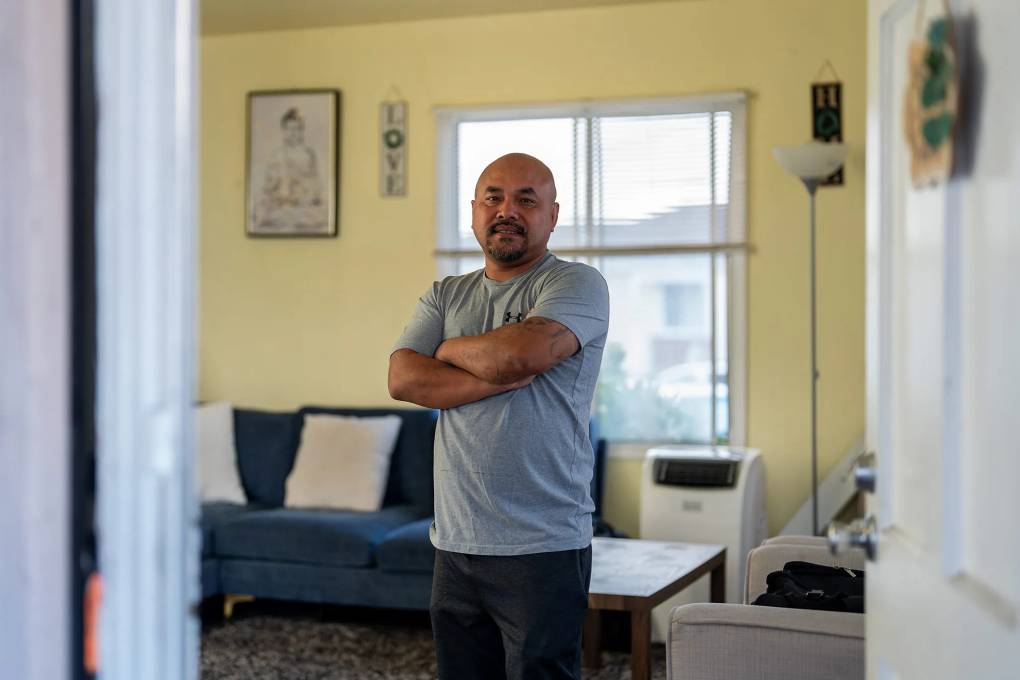
"caption": "Chanthon Bun stands in the living room of his home in San Leandro on Nov. 23, 2024. Bun was born in Cambodia during the genocide in the 1970s and grew up in a refugee camp in Thailand before moving to the United States, where he was convicted of robbery at age 18. That was decades ago, but now he's anxious about President-elect Donald Trump's plan for mass immigrant deportation.",
"credit": "Jungho Kim for CalMatters",
"altTag": null,
"description": null,
"imgSizes": {
"medium": {
"file": "https://cdn.kqed.org/wp-content/uploads/sites/10/2024/11/112324_Bun-Portrait_JK_CM_01-800x533.jpg",
"width": 800,
"height": 533,
"mimeType": "image/jpeg"
},
"large": {
"file": "https://cdn.kqed.org/wp-content/uploads/sites/10/2024/11/112324_Bun-Portrait_JK_CM_01-1020x680.jpg",
"width": 1020,
"height": 680,
"mimeType": "image/jpeg"
},
"thumbnail": {
"file": "https://cdn.kqed.org/wp-content/uploads/sites/10/2024/11/112324_Bun-Portrait_JK_CM_01-160x107.jpg",
"width": 160,
"height": 107,
"mimeType": "image/jpeg"
},
"1536x1536": {
"file": "https://cdn.kqed.org/wp-content/uploads/sites/10/2024/11/112324_Bun-Portrait_JK_CM_01-1536x1024.jpg",
"width": 1536,
"height": 1024,
"mimeType": "image/jpeg"
},
"post-thumbnail": {
"file": "https://cdn.kqed.org/wp-content/uploads/sites/10/2024/11/112324_Bun-Portrait_JK_CM_01-672x372.jpg",
"width": 672,
"height": 372,
"mimeType": "image/jpeg"
},
"twentyfourteen-full-width": {
"file": "https://cdn.kqed.org/wp-content/uploads/sites/10/2024/11/112324_Bun-Portrait_JK_CM_01-1038x576.jpg",
"width": 1038,
"height": 576,
"mimeType": "image/jpeg"
},
"full-width": {
"file": "https://cdn.kqed.org/wp-content/uploads/sites/10/2024/11/112324_Bun-Portrait_JK_CM_01-1920x1280.jpg",
"width": 1920,
"height": 1280,
"mimeType": "image/jpeg"
},
"kqedFullSize": {
"file": "https://cdn.kqed.org/wp-content/uploads/sites/10/2024/11/112324_Bun-Portrait_JK_CM_01.jpg",
"width": 2000,
"height": 1333
}
},
"isLoading": false,
"fetchFailed": false
},
"news_11992395": {
"type": "attachments",
"id": "news_11992395",
"meta": {
"index": "attachments_1716263798",
"site": "news",
"id": "11992395",
"found": true
},
"title": "101023-AI-College-Toby-Reed-LA-CM-21 copy",
"publishDate": 1719601285,
"status": "inherit",
"parent": 11992394,
"modified": 1719601308,
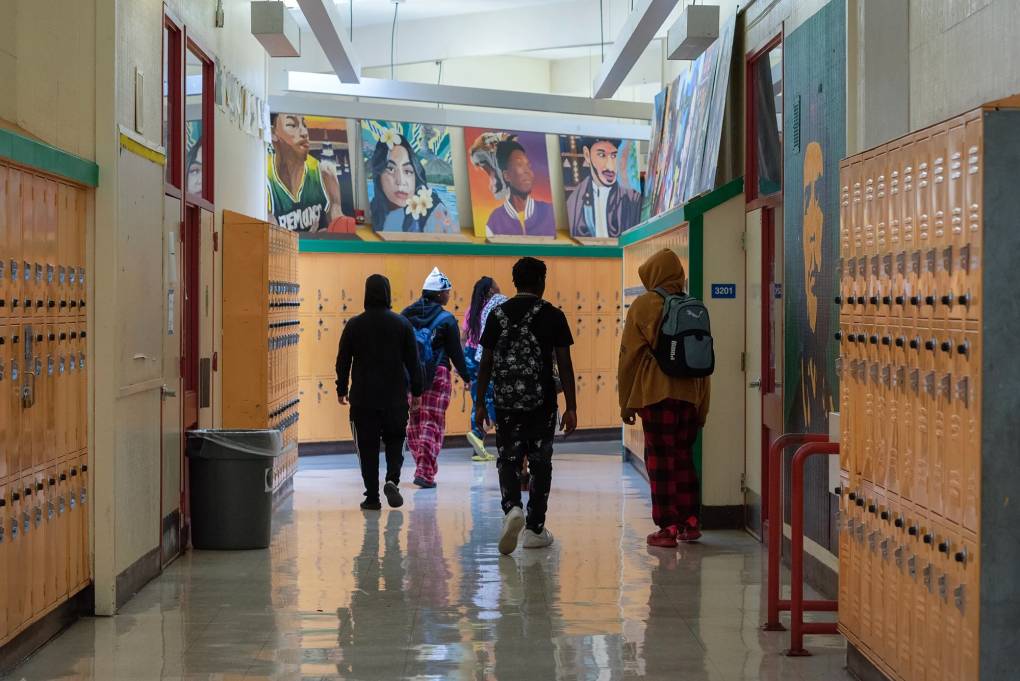
"caption": "Students walk down a hallway at Fremont High School in Oakland on Oct. 10, 2023. ",
"credit": "Laure Andrillon for CalMatters",
"altTag": null,
"description": null,
"imgSizes": {
"medium": {
"file": "https://cdn.kqed.org/wp-content/uploads/sites/10/2024/06/101023-AI-College-Toby-Reed-LA-CM-21-copy-800x534.jpg",
"width": 800,
"height": 534,
"mimeType": "image/jpeg"
},
"large": {
"file": "https://cdn.kqed.org/wp-content/uploads/sites/10/2024/06/101023-AI-College-Toby-Reed-LA-CM-21-copy-1020x681.jpg",
"width": 1020,
"height": 681,
"mimeType": "image/jpeg"
},
"thumbnail": {
"file": "https://cdn.kqed.org/wp-content/uploads/sites/10/2024/06/101023-AI-College-Toby-Reed-LA-CM-21-copy-160x107.jpg",
"width": 160,
"height": 107,
"mimeType": "image/jpeg"
},
"1536x1536": {
"file": "https://cdn.kqed.org/wp-content/uploads/sites/10/2024/06/101023-AI-College-Toby-Reed-LA-CM-21-copy-1536x1025.jpg",
"width": 1536,
"height": 1025,
"mimeType": "image/jpeg"
},
"post-thumbnail": {
"file": "https://cdn.kqed.org/wp-content/uploads/sites/10/2024/06/101023-AI-College-Toby-Reed-LA-CM-21-copy-672x372.jpg",
"width": 672,
"height": 372,
"mimeType": "image/jpeg"
},
"twentyfourteen-full-width": {
"file": "https://cdn.kqed.org/wp-content/uploads/sites/10/2024/06/101023-AI-College-Toby-Reed-LA-CM-21-copy-1038x576.jpg",
"width": 1038,
"height": 576,
"mimeType": "image/jpeg"
},
"full-width": {
"file": "https://cdn.kqed.org/wp-content/uploads/sites/10/2024/06/101023-AI-College-Toby-Reed-LA-CM-21-copy-1920x1282.jpg",
"width": 1920,
"height": 1282,
"mimeType": "image/jpeg"
},
"kqedFullSize": {
"file": "https://cdn.kqed.org/wp-content/uploads/sites/10/2024/06/101023-AI-College-Toby-Reed-LA-CM-21-copy.jpg",
"width": 2000,
"height": 1335
}
},
"isLoading": false,
"fetchFailed": false
},
"news_11964660": {
"type": "attachments",
"id": "news_11964660",
"meta": {
"index": "attachments_1716263798",
"site": "news",
"id": "11964660",
"found": true
},
"title": "US-POLITICS-IMMIGRATION-MIGRANTS-PROTEST",
"publishDate": 1697484425,
"status": "inherit",
"parent": 11964656,
"modified": 1749762496,
"caption": "People hold placards during a \"Familes Belong Together\" March in Los Angeles on June 30, 2018 where thousands turned out to decry the Trump administration's detention of families policy at the US-Mexico border.",
"credit": "Frederic J. Brown/AFP via Getty Images",
"altTag": "A young boy stands on top of a small barrier in a crowd of people with a sign that reads \"If my Mom kept me in a cage, she'd get arrested.\"",
"description": null,
"imgSizes": {
"medium": {
"file": "https://cdn.kqed.org/wp-content/uploads/sites/10/2023/10/GettyImages-988397912-800x518.jpg",
"width": 800,
"height": 518,
"mimeType": "image/jpeg"
},
"large": {
"file": "https://cdn.kqed.org/wp-content/uploads/sites/10/2023/10/GettyImages-988397912-1020x660.jpg",
"width": 1020,
"height": 660,
"mimeType": "image/jpeg"
},
"thumbnail": {
"file": "https://cdn.kqed.org/wp-content/uploads/sites/10/2023/10/GettyImages-988397912-160x104.jpg",
"width": 160,
"height": 104,
"mimeType": "image/jpeg"
},
"post-thumbnail": {
"file": "https://cdn.kqed.org/wp-content/uploads/sites/10/2023/10/GettyImages-988397912-672x372.jpg",
"width": 672,
"height": 372,
"mimeType": "image/jpeg"
},
"twentyfourteen-full-width": {
"file": "https://cdn.kqed.org/wp-content/uploads/sites/10/2023/10/GettyImages-988397912-1024x576.jpg",
"width": 1024,
"height": 576,
"mimeType": "image/jpeg"
},
"kqedFullSize": {
"file": "https://cdn.kqed.org/wp-content/uploads/sites/10/2023/10/GettyImages-988397912.jpg",
"width": 1024,
"height": 663
}
},
"isLoading": false,
"fetchFailed": false
},
"news_11955507": {
"type": "attachments",
"id": "news_11955507",
"meta": {
"index": "attachments_1716263798",
"site": "news",
"id": "11955507",
"found": true
},
"parent": 11955465,
"imgSizes": {
"twentyfourteen-full-width": {
"file": "https://ww2.kqed.org/app/uploads/sites/10/2023/07/RS66907_GettyImages-1244393646-qut-1038x576.jpg",
"width": 1038,
"mimeType": "image/jpeg",
"height": 576
},
"thumbnail": {
"file": "https://ww2.kqed.org/app/uploads/sites/10/2023/07/RS66907_GettyImages-1244393646-qut-160x107.jpg",
"width": 160,
"mimeType": "image/jpeg",
"height": 107
},
"post-thumbnail": {
"file": "https://ww2.kqed.org/app/uploads/sites/10/2023/07/RS66907_GettyImages-1244393646-qut-672x372.jpg",
"width": 672,
"mimeType": "image/jpeg",
"height": 372
},
"kqedFullSize": {
"file": "https://ww2.kqed.org/app/uploads/sites/10/2023/07/RS66907_GettyImages-1244393646-qut.jpg",
"width": 1920,
"height": 1280
},
"large": {
"file": "https://ww2.kqed.org/app/uploads/sites/10/2023/07/RS66907_GettyImages-1244393646-qut-1020x680.jpg",
"width": 1020,
"mimeType": "image/jpeg",
"height": 680
},
"1536x1536": {
"file": "https://ww2.kqed.org/app/uploads/sites/10/2023/07/RS66907_GettyImages-1244393646-qut-1536x1024.jpg",
"width": 1536,
"mimeType": "image/jpeg",
"height": 1024
},
"medium": {
"file": "https://ww2.kqed.org/app/uploads/sites/10/2023/07/RS66907_GettyImages-1244393646-qut-800x533.jpg",
"width": 800,
"mimeType": "image/jpeg",
"height": 533
}
},
"publishDate": 1689193390,
"modified": 1689194554,
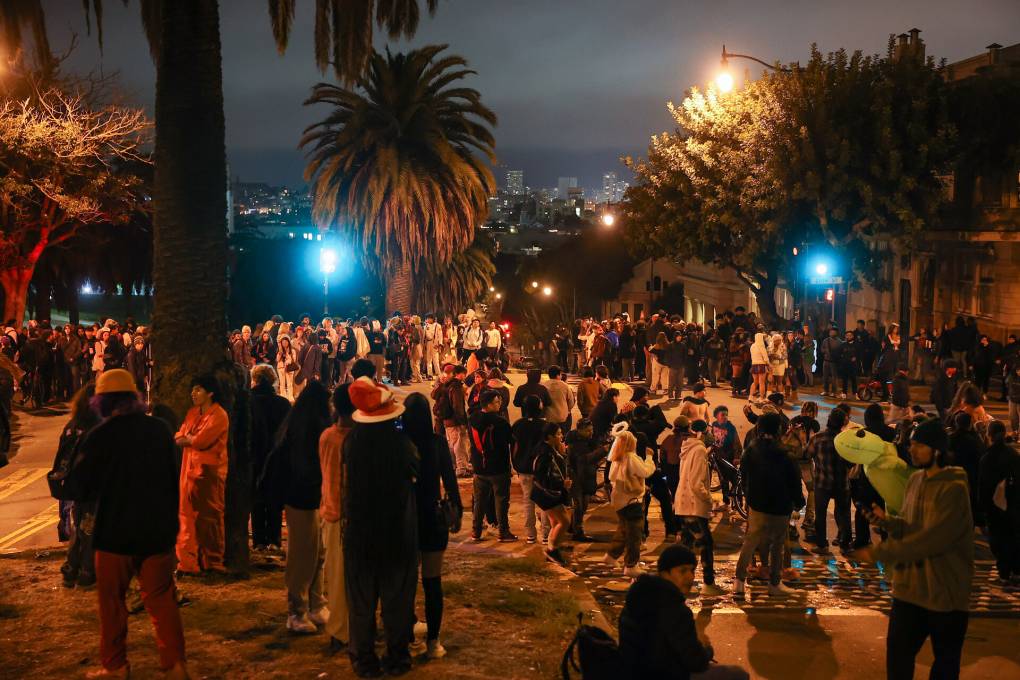
"caption": "Hundreds of young people gather on Dolores and 20th streets for last year's Dolores Park 'hill bomb' in San Francisco, on Oct. 31, 2022.",
"description": null,
"title": "dolores-park-hill-bom",
"credit": "Tayfun Coskun/Anadolu Agency via Getty Images",
"status": "inherit",
"altTag": "A nighttime image of a palm tree-lined street, with many people gathered under the street lights.",
"isLoading": false,
"fetchFailed": false
},
"news_11926909": {
"type": "attachments",
"id": "news_11926909",
"meta": {
"index": "attachments_1716263798",
"site": "news",
"id": "11926909",
"found": true
},
"parent": 11926891,
"imgSizes": {
"twentyfourteen-full-width": {
"file": "https://ww2.kqed.org/app/uploads/sites/10/2022/09/RS58870_Toro_Castaño_001-qut-1038x576.jpg",
"width": 1038,
"mimeType": "image/jpeg",
"height": 576
},
"thumbnail": {
"file": "https://ww2.kqed.org/app/uploads/sites/10/2022/09/RS58870_Toro_Castaño_001-qut-160x107.jpg",
"width": 160,
"mimeType": "image/jpeg",
"height": 107
},
"post-thumbnail": {
"file": "https://ww2.kqed.org/app/uploads/sites/10/2022/09/RS58870_Toro_Castaño_001-qut-672x372.jpg",
"width": 672,
"mimeType": "image/jpeg",
"height": 372
},
"kqedFullSize": {
"file": "https://ww2.kqed.org/app/uploads/sites/10/2022/09/RS58870_Toro_Castaño_001-qut.jpg",
"width": 1920,
"height": 1280
},
"large": {
"file": "https://ww2.kqed.org/app/uploads/sites/10/2022/09/RS58870_Toro_Castaño_001-qut-1020x680.jpg",
"width": 1020,
"mimeType": "image/jpeg",
"height": 680
},
"1536x1536": {
"file": "https://ww2.kqed.org/app/uploads/sites/10/2022/09/RS58870_Toro_Castaño_001-qut-1536x1024.jpg",
"width": 1536,
"mimeType": "image/jpeg",
"height": 1024
},
"medium": {
"file": "https://ww2.kqed.org/app/uploads/sites/10/2022/09/RS58870_Toro_Castaño_001-qut-800x533.jpg",
"width": 800,
"mimeType": "image/jpeg",
"height": 533
}
},
"publishDate": 1664319729,
"modified": 1664319809,
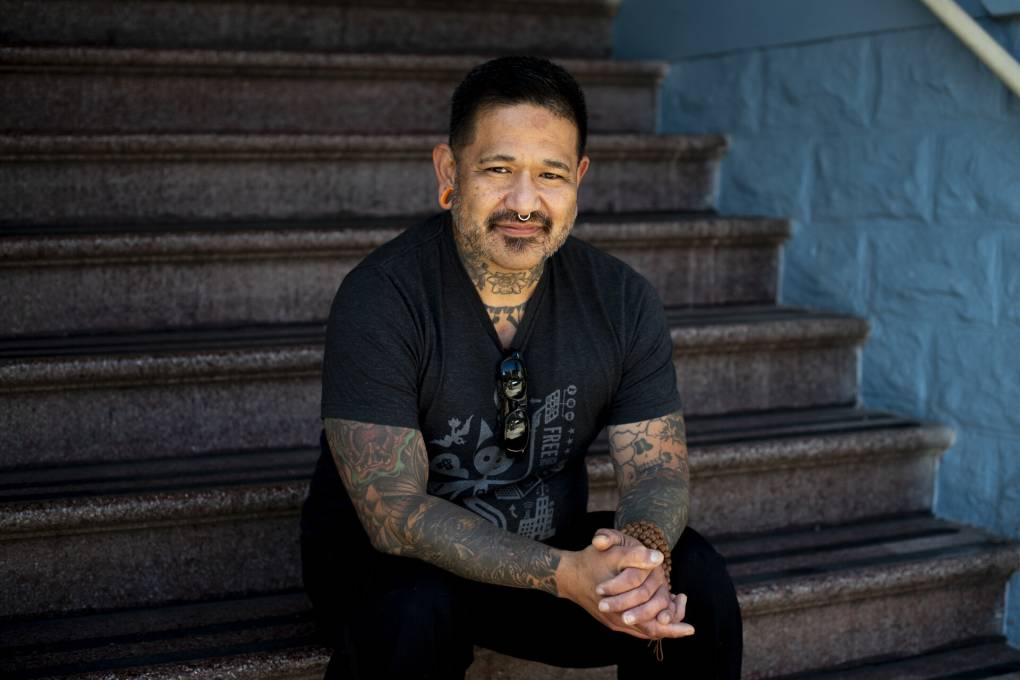
"caption": "Toro Castaño poses for a portrait outside his home in San Francisco on September 27, 2022. Castaño says he was displaced nearly daily when he lived on the streets of the Castro for two years. He's one of seven unhoused or formerly unhoused residents suing the city over forced displacements.",
"description": null,
"title": "KQED_Toro_Portrait",
"credit": "Marlena Sloss/KQED",
"status": "inherit",
"altTag": "A man wearing a short sleeved black shirt with tattoos on his arms and a nose ring sits on steps with his hands together.",
"isLoading": false,
"fetchFailed": false
},
"news_11925813": {
"type": "attachments",
"id": "news_11925813",
"meta": {
"index": "attachments_1716263798",
"site": "news",
"id": "11925813",
"found": true
},
"title": "RS56703_20220529-16-44-13--qut",
"publishDate": 1663272506,
"status": "inherit",
"parent": 11925791,
"modified": 1783031966,
"caption": "Protesters gathered outside the Golden State Annex immigrant detention center in McFarland, on May 29, 2022. The event was part of a statewide effort to call attention to conditions for immigrant detainees.",
"credit": "Courtesy of Joyce Xi and the Dignity Not Detention Coalition",
"altTag": "A large sign outside that says \"GEO Golden State.\"",
"description": null,
"imgSizes": {
"medium": {
"file": "https://cdn.kqed.org/wp-content/uploads/sites/10/2022/09/RS56703_20220529-16-44-13-qut-800x533.jpg",
"width": 800,
"height": 533,
"mimeType": "image/jpeg"
},
"large": {
"file": "https://cdn.kqed.org/wp-content/uploads/sites/10/2022/09/RS56703_20220529-16-44-13-qut-1020x680.jpg",
"width": 1020,
"height": 680,
"mimeType": "image/jpeg"
},
"thumbnail": {
"file": "https://cdn.kqed.org/wp-content/uploads/sites/10/2022/09/RS56703_20220529-16-44-13-qut-160x107.jpg",
"width": 160,
"height": 107,
"mimeType": "image/jpeg"
},
"1536x1536": {
"file": "https://cdn.kqed.org/wp-content/uploads/sites/10/2022/09/RS56703_20220529-16-44-13-qut-1536x1024.jpg",
"width": 1536,
"height": 1024,
"mimeType": "image/jpeg"
},
"post-thumbnail": {
"file": "https://cdn.kqed.org/wp-content/uploads/sites/10/2022/09/RS56703_20220529-16-44-13-qut-672x372.jpg",
"width": 672,
"height": 372,
"mimeType": "image/jpeg"
},
"twentyfourteen-full-width": {
"file": "https://cdn.kqed.org/wp-content/uploads/sites/10/2022/09/RS56703_20220529-16-44-13-qut-1038x576.jpg",
"width": 1038,
"height": 576,
"mimeType": "image/jpeg"
},
"kqedFullSize": {
"file": "https://cdn.kqed.org/wp-content/uploads/sites/10/2022/09/RS56703_20220529-16-44-13-qut.jpg",
"width": 1920,
"height": 1280
}
},
"isLoading": false,
"fetchFailed": false
},
"news_11907202": {
"type": "attachments",
"id": "news_11907202",
"meta": {
"index": "attachments_1716263798",
"site": "news",
"id": "11907202",
"found": true
},
"parent": 11907194,
"imgSizes": {
"twentyfourteen-full-width": {
"file": "https://ww2.kqed.org/app/uploads/sites/10/2022/03/whoweare_030422_final-1038x576.png",
"width": 1038,
"mimeType": "image/png",
"height": 576
},
"thumbnail": {
"file": "https://ww2.kqed.org/app/uploads/sites/10/2022/03/whoweare_030422_final-160x117.png",
"width": 160,
"mimeType": "image/png",
"height": 117
},
"post-thumbnail": {
"file": "https://ww2.kqed.org/app/uploads/sites/10/2022/03/whoweare_030422_final-672x372.png",
"width": 672,
"mimeType": "image/png",
"height": 372
},
"kqedFullSize": {
"file": "https://ww2.kqed.org/app/uploads/sites/10/2022/03/whoweare_030422_final.png",
"width": 1920,
"height": 1400
},
"large": {
"file": "https://ww2.kqed.org/app/uploads/sites/10/2022/03/whoweare_030422_final-1020x744.png",
"width": 1020,
"mimeType": "image/png",
"height": 744
},
"1536x1536": {
"file": "https://ww2.kqed.org/app/uploads/sites/10/2022/03/whoweare_030422_final-1536x1120.png",
"width": 1536,
"mimeType": "image/png",
"height": 1120
},
"medium": {
"file": "https://ww2.kqed.org/app/uploads/sites/10/2022/03/whoweare_030422_final-800x583.png",
"width": 800,
"mimeType": "image/png",
"height": 583
}
},
"publishDate": 1646420658,
"modified": 1646420809,
"caption": null,
"description": null,
"title": "whoweare_030422_final",
"credit": null,
"status": "inherit",
"altTag": "Cartoon: a label that reads, \"this is not who we are\" points at Joe Biden, who carries a paper that says, \"settlement for victims of family separation\" that is crossed out in red. In small parenthetical type to the right is written, \"but check back after the midterms.\" A migrant family looks on in the background.",
"isLoading": false,
"fetchFailed": false
},
"news_11907124": {
"type": "attachments",
"id": "news_11907124",
"meta": {
"index": "attachments_1716263798",
"site": "news",
"id": "11907124",
"found": true
},
"parent": 11907020,
"imgSizes": {
"twentyfourteen-full-width": {
"file": "https://ww2.kqed.org/app/uploads/sites/10/2022/03/RS54042_GettyImages-973077512-qut-1038x576.jpg",
"width": 1038,
"mimeType": "image/jpeg",
"height": 576
},
"thumbnail": {
"file": "https://ww2.kqed.org/app/uploads/sites/10/2022/03/RS54042_GettyImages-973077512-qut-160x107.jpg",
"width": 160,
"mimeType": "image/jpeg",
"height": 107
},
"post-thumbnail": {
"file": "https://ww2.kqed.org/app/uploads/sites/10/2022/03/RS54042_GettyImages-973077512-qut-672x372.jpg",
"width": 672,
"mimeType": "image/jpeg",
"height": 372
},
"kqedFullSize": {
"file": "https://ww2.kqed.org/app/uploads/sites/10/2022/03/RS54042_GettyImages-973077512-qut.jpg",
"width": 1920,
"height": 1280
},
"large": {
"file": "https://ww2.kqed.org/app/uploads/sites/10/2022/03/RS54042_GettyImages-973077512-qut-1020x680.jpg",
"width": 1020,
"mimeType": "image/jpeg",
"height": 680
},
"1536x1536": {
"file": "https://ww2.kqed.org/app/uploads/sites/10/2022/03/RS54042_GettyImages-973077512-qut-1536x1024.jpg",
"width": 1536,
"mimeType": "image/jpeg",
"height": 1024
},
"medium": {
"file": "https://ww2.kqed.org/app/uploads/sites/10/2022/03/RS54042_GettyImages-973077512-qut-800x533.jpg",
"width": 800,
"mimeType": "image/jpeg",
"height": 533
}
},
"publishDate": 1646345333,
"modified": 1646349875,
"caption": "A Honduran asylum seeker holds her 2-year-old child as U.S. Border Patrol agents review their papers near the U.S.-Mexico border on June 12, 2018, in Texas. They were sent to a processing center for possible separation as part of the Trump administration's 'zero tolerance' policy toward undocumented immigrants.",
"description": null,
"title": "Border Patrol Agents Detain Migrants Near US-Mexico Border",
"credit": "John Moore/Getty Images",
"status": "inherit",
"altTag": "night-time shot of woman holding her small child, both with concerned faces, surrounded by silhouettes of border patrol agents",
"isLoading": false,
"fetchFailed": false
},
"news_11872009": {
"type": "attachments",
"id": "news_11872009",
"meta": {
"index": "attachments_1716263798",
"site": "news",
"id": "11872009",
"found": true
},
"parent": 11871951,
"imgSizes": {
"twentyfourteen-full-width": {
"file": "https://ww2.kqed.org/app/uploads/sites/10/2021/05/GrabarLaPolicia-GettyImages-1228205020-1-1038x576.jpg",
"width": 1038,
"mimeType": "image/jpeg",
"height": 576
},
"thumbnail": {
"file": "https://ww2.kqed.org/app/uploads/sites/10/2021/05/GrabarLaPolicia-GettyImages-1228205020-1-160x103.jpg",
"width": 160,
"mimeType": "image/jpeg",
"height": 103
},
"post-thumbnail": {
"file": "https://ww2.kqed.org/app/uploads/sites/10/2021/05/GrabarLaPolicia-GettyImages-1228205020-1-672x372.jpg",
"width": 672,
"mimeType": "image/jpeg",
"height": 372
},
"kqedFullSize": {
"file": "https://ww2.kqed.org/app/uploads/sites/10/2021/05/GrabarLaPolicia-GettyImages-1228205020-1.jpg",
"width": 1920,
"height": 1231
},
"large": {
"file": "https://ww2.kqed.org/app/uploads/sites/10/2021/05/GrabarLaPolicia-GettyImages-1228205020-1-1020x654.jpg",
"width": 1020,
"mimeType": "image/jpeg",
"height": 654
},
"1536x1536": {
"file": "https://ww2.kqed.org/app/uploads/sites/10/2021/05/GrabarLaPolicia-GettyImages-1228205020-1-1536x985.jpg",
"width": 1536,
"mimeType": "image/jpeg",
"height": 985
},
"medium": {
"file": "https://ww2.kqed.org/app/uploads/sites/10/2021/05/GrabarLaPolicia-GettyImages-1228205020-1-800x513.jpg",
"width": 800,
"mimeType": "image/jpeg",
"height": 513
}
},
"publishDate": 1620063084,
"modified": 1620087579,
"caption": "Si usted se encuentra en una situación en la que se siente obligado a grabar un encuentro con la policía, ¿Cómo puede estar seguro? ",
"description": "Si usted se encuentra en una situación en la que se siente obligado a grabar un encuentro con la policía, ¿Cómo puede estar seguro? ",
"title": "GrabarLaPolicia-GettyImages-1228205020-1",
"credit": "Kamil Krzaczynski/AFP via Getty Images",
"status": "inherit",
"altTag": "Si usted se encuentra en una situación en la que se siente obligado a grabar un encuentro con la policía, ¿Cómo puede estar seguro?",
"isLoading": false,
"fetchFailed": false
},
"news_11849866": {
"type": "attachments",
"id": "news_11849866",
"meta": {
"index": "attachments_1716263798",
"site": "news",
"id": "11849866",
"found": true
},
"parent": 11849630,
"imgSizes": {
"apple_news_ca_square_4_0": {
"file": "https://ww2.kqed.org/app/uploads/sites/10/2020/12/GettyImages-988419450-1-470x470.jpg",
"width": 470,
"mimeType": "image/jpeg",
"height": 470
},
"twentyfourteen-full-width": {
"file": "https://ww2.kqed.org/app/uploads/sites/10/2020/12/GettyImages-988419450-1-1024x576.jpg",
"width": 1024,
"mimeType": "image/jpeg",
"height": 576
},
"thumbnail": {
"file": "https://ww2.kqed.org/app/uploads/sites/10/2020/12/GettyImages-988419450-1-160x107.jpg",
"width": 160,
"mimeType": "image/jpeg",
"height": 107
},
"post-thumbnail": {
"file": "https://ww2.kqed.org/app/uploads/sites/10/2020/12/GettyImages-988419450-1-672x372.jpg",
"width": 672,
"mimeType": "image/jpeg",
"height": 372
},
"kqedFullSize": {
"file": "https://ww2.kqed.org/app/uploads/sites/10/2020/12/GettyImages-988419450-1.jpg",
"width": 1024,
"height": 683
},
"apple_news_ca_landscape_4_7": {
"file": "https://ww2.kqed.org/app/uploads/sites/10/2020/12/GettyImages-988419450-1-632x474.jpg",
"width": 632,
"mimeType": "image/jpeg",
"height": 474
},
"large": {
"file": "https://ww2.kqed.org/app/uploads/sites/10/2020/12/GettyImages-988419450-1-1020x680.jpg",
"width": 1020,
"mimeType": "image/jpeg",
"height": 680
},
"apple_news_ca_landscape_4_0": {
"file": "https://ww2.kqed.org/app/uploads/sites/10/2020/12/GettyImages-988419450-1-536x402.jpg",
"width": 536,
"mimeType": "image/jpeg",
"height": 402
},
"medium": {
"file": "https://ww2.kqed.org/app/uploads/sites/10/2020/12/GettyImages-988419450-1-800x534.jpg",
"width": 800,
"mimeType": "image/jpeg",
"height": 534
},
"apple_news_ca_portrait_4_0": {
"file": "https://ww2.kqed.org/app/uploads/sites/10/2020/12/GettyImages-988419450-1-354x472.jpg",
"width": 354,
"mimeType": "image/jpeg",
"height": 472
},
"apple_news_ca_portrait_9_7": {
"file": "https://ww2.kqed.org/app/uploads/sites/10/2020/12/GettyImages-988419450-1-840x683.jpg",
"width": 840,
"mimeType": "image/jpeg",
"height": 683
},
"apple_news_ca_portrait_4_7": {
"file": "https://ww2.kqed.org/app/uploads/sites/10/2020/12/GettyImages-988419450-1-414x552.jpg",
"width": 414,
"mimeType": "image/jpeg",
"height": 552
},
"apple_news_ca_portrait_5_5": {
"file": "https://ww2.kqed.org/app/uploads/sites/10/2020/12/GettyImages-988419450-1-687x683.jpg",
"width": 687,
"mimeType": "image/jpeg",
"height": 683
},
"apple_news_ca_square_4_7": {
"file": "https://ww2.kqed.org/app/uploads/sites/10/2020/12/GettyImages-988419450-1-550x550.jpg",
"width": 550,
"mimeType": "image/jpeg",
"height": 550
},
"apple_news_ca_square_5_5": {
"file": "https://ww2.kqed.org/app/uploads/sites/10/2020/12/GettyImages-988419450-1-912x683.jpg",
"width": 912,
"mimeType": "image/jpeg",
"height": 683
}
},
"publishDate": 1607130718,
"modified": 1607133592,
"caption": "Protesters call out words of encouragement to immigrant detainees held inside the Metropolitan Detention Center in Los Angeles on June 30, 2018, in a demonstration against the Trump administration's immigration policies.",
"description": null,
"title": "Thousands Across U.S March In Support Of Keeping Immigrant Families Together",
"credit": "David McNew/Getty Images",
"status": "inherit",
"altTag": null,
"isLoading": false,
"fetchFailed": false
},
"news_11843181": {
"type": "attachments",
"id": "news_11843181",
"meta": {
"index": "attachments_1716263798",
"site": "news",
"id": "11843181",
"found": true
},
"parent": 11843177,
"imgSizes": {
"apple_news_ca_landscape_5_5": {
"file": "https://ww2.kqed.org/app/uploads/sites/10/2020/10/missing_102120_final-1044x783.png",
"width": 1044,
"mimeType": "image/png",
"height": 783
},
"apple_news_ca_square_4_0": {
"file": "https://ww2.kqed.org/app/uploads/sites/10/2020/10/missing_102120_final-470x470.png",
"width": 470,
"mimeType": "image/png",
"height": 470
},
"twentyfourteen-full-width": {
"file": "https://ww2.kqed.org/app/uploads/sites/10/2020/10/missing_102120_final-1038x576.png",
"width": 1038,
"mimeType": "image/png",
"height": 576
},
"thumbnail": {
"file": "https://ww2.kqed.org/app/uploads/sites/10/2020/10/missing_102120_final-160x105.png",
"width": 160,
"mimeType": "image/png",
"height": 105
},
"post-thumbnail": {
"file": "https://ww2.kqed.org/app/uploads/sites/10/2020/10/missing_102120_final-672x372.png",
"width": 672,
"mimeType": "image/png",
"height": 372
},
"kqedFullSize": {
"file": "https://ww2.kqed.org/app/uploads/sites/10/2020/10/missing_102120_final.png",
"width": 1920,
"height": 1258
},
"apple_news_ca_landscape_4_7": {
"file": "https://ww2.kqed.org/app/uploads/sites/10/2020/10/missing_102120_final-632x474.png",
"width": 632,
"mimeType": "image/png",
"height": 474
},
"large": {
"file": "https://ww2.kqed.org/app/uploads/sites/10/2020/10/missing_102120_final-1020x668.png",
"width": 1020,
"mimeType": "image/png",
"height": 668
},
"apple_news_ca_landscape_4_0": {
"file": "https://ww2.kqed.org/app/uploads/sites/10/2020/10/missing_102120_final-536x402.png",
"width": 536,
"mimeType": "image/png",
"height": 402
},
"apple_news_ca_portrait_12_9": {
"file": "https://ww2.kqed.org/app/uploads/sites/10/2020/10/missing_102120_final-1122x1258.png",
"width": 1122,
"mimeType": "image/png",
"height": 1258
},
"medium": {
"file": "https://ww2.kqed.org/app/uploads/sites/10/2020/10/missing_102120_final-800x524.png",
"width": 800,
"mimeType": "image/png",
"height": 524
},
"apple_news_ca_portrait_4_0": {
"file": "https://ww2.kqed.org/app/uploads/sites/10/2020/10/missing_102120_final-354x472.png",
"width": 354,
"mimeType": "image/png",
"height": 472
},
"apple_news_ca_portrait_9_7": {
"file": "https://ww2.kqed.org/app/uploads/sites/10/2020/10/missing_102120_final-840x1120.png",
"width": 840,
"mimeType": "image/png",
"height": 1120
},
"apple_news_ca_landscape_12_9": {
"file": "https://ww2.kqed.org/app/uploads/sites/10/2020/10/missing_102120_final-1832x1258.png",
"width": 1832,
"mimeType": "image/png",
"height": 1258
},
"apple_news_ca_square_9_7": {
"file": "https://ww2.kqed.org/app/uploads/sites/10/2020/10/missing_102120_final-1104x1104.png",
"width": 1104,
"mimeType": "image/png",
"height": 1104
},
"1536x1536": {
"file": "https://ww2.kqed.org/app/uploads/sites/10/2020/10/missing_102120_final-1536x1006.png",
"width": 1536,
"mimeType": "image/png",
"height": 1006
},
"apple_news_ca_portrait_4_7": {
"file": "https://ww2.kqed.org/app/uploads/sites/10/2020/10/missing_102120_final-414x552.png",
"width": 414,
"mimeType": "image/png",
"height": 552
},
"apple_news_ca_square_12_9": {
"file": "https://ww2.kqed.org/app/uploads/sites/10/2020/10/missing_102120_final-1472x1258.png",
"width": 1472,
"mimeType": "image/png",
"height": 1258
},
"apple_news_ca_portrait_5_5": {
"file": "https://ww2.kqed.org/app/uploads/sites/10/2020/10/missing_102120_final-687x916.png",
"width": 687,
"mimeType": "image/png",
"height": 916
},
"apple_news_ca_square_4_7": {
"file": "https://ww2.kqed.org/app/uploads/sites/10/2020/10/missing_102120_final-550x550.png",
"width": 550,
"mimeType": "image/png",
"height": 550
},
"apple_news_ca_landscape_9_7": {
"file": "https://ww2.kqed.org/app/uploads/sites/10/2020/10/missing_102120_final-1376x1032.png",
"width": 1376,
"mimeType": "image/png",
"height": 1032
},
"apple_news_ca_square_5_5": {
"file": "https://ww2.kqed.org/app/uploads/sites/10/2020/10/missing_102120_final-912x912.png",
"width": 912,
"mimeType": "image/png",
"height": 912
}
},
"publishDate": 1603317983,
"modified": 1603318020,
"caption": null,
"description": null,
"title": "missing_102120_final",
"credit": null,
"status": "inherit",
"isLoading": false,
"fetchFailed": false
},
"news_11843101": {
"type": "attachments",
"id": "news_11843101",
"meta": {
"index": "attachments_1716263798",
"site": "news",
"id": "11843101",
"found": true
},
"parent": 11843100,
"imgSizes": {
"apple_news_ca_landscape_5_5": {
"file": "https://ww2.kqed.org/app/uploads/sites/10/2020/10/family-separation_custom-20ec9c806160f63d850a4028c3a412d0b5f5c1cb-1044x783.jpg",
"width": 1044,
"mimeType": "image/jpeg",
"height": 783
},
"apple_news_ca_square_4_0": {
"file": "https://ww2.kqed.org/app/uploads/sites/10/2020/10/family-separation_custom-20ec9c806160f63d850a4028c3a412d0b5f5c1cb-470x470.jpg",
"width": 470,
"mimeType": "image/jpeg",
"height": 470
},
"twentyfourteen-full-width": {
"file": "https://ww2.kqed.org/app/uploads/sites/10/2020/10/family-separation_custom-20ec9c806160f63d850a4028c3a412d0b5f5c1cb-1038x576.jpg",
"width": 1038,
"mimeType": "image/jpeg",
"height": 576
},
"thumbnail": {
"file": "https://ww2.kqed.org/app/uploads/sites/10/2020/10/family-separation_custom-20ec9c806160f63d850a4028c3a412d0b5f5c1cb-160x99.jpg",
"width": 160,
"mimeType": "image/jpeg",
"height": 99
},
"post-thumbnail": {
"file": "https://ww2.kqed.org/app/uploads/sites/10/2020/10/family-separation_custom-20ec9c806160f63d850a4028c3a412d0b5f5c1cb-672x372.jpg",
"width": 672,
"mimeType": "image/jpeg",
"height": 372
},
"kqedFullSize": {
"file": "https://ww2.kqed.org/app/uploads/sites/10/2020/10/family-separation_custom-20ec9c806160f63d850a4028c3a412d0b5f5c1cb-e1603297816509.jpg",
"width": 1920,
"height": 1191
},
"2048x2048": {
"file": "https://ww2.kqed.org/app/uploads/sites/10/2020/10/family-separation_custom-20ec9c806160f63d850a4028c3a412d0b5f5c1cb-2048x1271.jpg",
"width": 2048,
"mimeType": "image/jpeg",
"height": 1271
},
"apple_news_ca_landscape_4_7": {
"file": "https://ww2.kqed.org/app/uploads/sites/10/2020/10/family-separation_custom-20ec9c806160f63d850a4028c3a412d0b5f5c1cb-632x474.jpg",
"width": 632,
"mimeType": "image/jpeg",
"height": 474
},
"large": {
"file": "https://ww2.kqed.org/app/uploads/sites/10/2020/10/family-separation_custom-20ec9c806160f63d850a4028c3a412d0b5f5c1cb-1020x633.jpg",
"width": 1020,
"mimeType": "image/jpeg",
"height": 633
},
"apple_news_ca_landscape_4_0": {
"file": "https://ww2.kqed.org/app/uploads/sites/10/2020/10/family-separation_custom-20ec9c806160f63d850a4028c3a412d0b5f5c1cb-536x402.jpg",
"width": 536,
"mimeType": "image/jpeg",
"height": 402
},
"apple_news_ca_portrait_12_9": {
"file": "https://ww2.kqed.org/app/uploads/sites/10/2020/10/family-separation_custom-20ec9c806160f63d850a4028c3a412d0b5f5c1cb-1122x1414.jpg",
"width": 1122,
"mimeType": "image/jpeg",
"height": 1414
},
"medium": {
"file": "https://ww2.kqed.org/app/uploads/sites/10/2020/10/family-separation_custom-20ec9c806160f63d850a4028c3a412d0b5f5c1cb-800x496.jpg",
"width": 800,
"mimeType": "image/jpeg",
"height": 496
},
"apple_news_ca_portrait_4_0": {
"file": "https://ww2.kqed.org/app/uploads/sites/10/2020/10/family-separation_custom-20ec9c806160f63d850a4028c3a412d0b5f5c1cb-354x472.jpg",
"width": 354,
"mimeType": "image/jpeg",
"height": 472
},
"apple_news_ca_portrait_9_7": {
"file": "https://ww2.kqed.org/app/uploads/sites/10/2020/10/family-separation_custom-20ec9c806160f63d850a4028c3a412d0b5f5c1cb-840x1120.jpg",
"width": 840,
"mimeType": "image/jpeg",
"height": 1120
},
"apple_news_ca_landscape_12_9": {
"file": "https://ww2.kqed.org/app/uploads/sites/10/2020/10/family-separation_custom-20ec9c806160f63d850a4028c3a412d0b5f5c1cb-1832x1374.jpg",
"width": 1832,
"mimeType": "image/jpeg",
"height": 1374
},
"apple_news_ca_square_9_7": {
"file": "https://ww2.kqed.org/app/uploads/sites/10/2020/10/family-separation_custom-20ec9c806160f63d850a4028c3a412d0b5f5c1cb-1104x1104.jpg",
"width": 1104,
"mimeType": "image/jpeg",
"height": 1104
},
"1536x1536": {
"file": "https://ww2.kqed.org/app/uploads/sites/10/2020/10/family-separation_custom-20ec9c806160f63d850a4028c3a412d0b5f5c1cb-1536x953.jpg",
"width": 1536,
"mimeType": "image/jpeg",
"height": 953
},
"apple_news_ca_portrait_4_7": {
"file": "https://ww2.kqed.org/app/uploads/sites/10/2020/10/family-separation_custom-20ec9c806160f63d850a4028c3a412d0b5f5c1cb-414x552.jpg",
"width": 414,
"mimeType": "image/jpeg",
"height": 552
},
"apple_news_ca_square_12_9": {
"file": "https://ww2.kqed.org/app/uploads/sites/10/2020/10/family-separation_custom-20ec9c806160f63d850a4028c3a412d0b5f5c1cb-1472x1414.jpg",
"width": 1472,
"mimeType": "image/jpeg",
"height": 1414
},
"apple_news_ca_portrait_5_5": {
"file": "https://ww2.kqed.org/app/uploads/sites/10/2020/10/family-separation_custom-20ec9c806160f63d850a4028c3a412d0b5f5c1cb-687x916.jpg",
"width": 687,
"mimeType": "image/jpeg",
"height": 916
},
"full-width": {
"file": "https://ww2.kqed.org/app/uploads/sites/10/2020/10/family-separation_custom-20ec9c806160f63d850a4028c3a412d0b5f5c1cb-1920x1191.jpg",
"width": 1920,
"mimeType": "image/jpeg",
"height": 1191
},
"apple_news_ca_square_4_7": {
"file": "https://ww2.kqed.org/app/uploads/sites/10/2020/10/family-separation_custom-20ec9c806160f63d850a4028c3a412d0b5f5c1cb-550x550.jpg",
"width": 550,
"mimeType": "image/jpeg",
"height": 550
},
"apple_news_ca_landscape_9_7": {
"file": "https://ww2.kqed.org/app/uploads/sites/10/2020/10/family-separation_custom-20ec9c806160f63d850a4028c3a412d0b5f5c1cb-1376x1032.jpg",
"width": 1376,
"mimeType": "image/jpeg",
"height": 1032
},
"apple_news_ca_square_5_5": {
"file": "https://ww2.kqed.org/app/uploads/sites/10/2020/10/family-separation_custom-20ec9c806160f63d850a4028c3a412d0b5f5c1cb-912x912.jpg",
"width": 912,
"mimeType": "image/jpeg",
"height": 912
}
},
"publishDate": 1603297769,
"modified": 1603297843,
"caption": "David Xol of Guatemala hugs his son Byron as they were reunited at Los Angeles International Airport in January. The father and son were separated 18 months earlier under the Trump administration's \"no tolerance\" migration policy.",
"description": "David Xol, of Guatemala hugs his son Byron at Los Angeles International Airport as they reunite after being separated about one and half year ago during the Trump administration's wide-scale separation of immigrant families, Wednesday, Jan. 22, 2020, in Los Angeles. (AP Photo/Ringo H.W. Chiu)",
"title": "David Xol of Guatemala hugs his son Byron as they were reunited at Los Angeles International Airport in January. The father and son were separated 18 months earlier under the Trump administration's \"no tolerance\" migration policy.",
"credit": "Ringo H.W. Chiu/AP",
"status": "inherit",
"isLoading": false,
"fetchFailed": false
}
},
"audioPlayerReducer": {
"postId": "stream_live",
"isPaused": true,
"isPlaying": false,
"pfsActive": false,
"pledgeModalIsOpen": true,
"playerDrawerIsOpen": false,
"liveAudioPlayStartedAt": 0,
"liveAudioPlayContext": ""
},
"authorsReducer": {
"byline_news_12015773": {
"type": "authors",
"id": "byline_news_12015773",
"meta": {
"override": true
},
"slug": "byline_news_12015773",
"name": "\u003ca href=\"https://calmatters.org/author/wendy-fry/\">Wendy Fry\u003c/a>, CalMatters",
"isLoading": false
},
"byline_news_11992394": {
"type": "authors",
"id": "byline_news_11992394",
"meta": {
"override": true
},
"slug": "byline_news_11992394",
"name": "\u003ca href=\"https://calmatters.org/author/carolyn-jones/\">Carolyn Jones\u003c/a>, CalMatters",
"isLoading": false
},
"byline_news_11964656": {
"type": "authors",
"id": "byline_news_11964656",
"meta": {
"override": true
},
"slug": "byline_news_11964656",
"name": "Rebecca Santana, Elliot Spagat\u003cbr>The Associated Press",
"isLoading": false
},
"byline_news_11843100": {
"type": "authors",
"id": "byline_news_11843100",
"meta": {
"override": true
},
"slug": "byline_news_11843100",
"name": "Mark Katkov",
"isLoading": false
},
"minakim": {
"type": "authors",
"id": "243",
"meta": {
"index": "authors_1716337520",
"id": "243",
"found": true
},
"name": "Mina Kim",
"firstName": "Mina",
"lastName": "Kim",
"slug": "minakim",
"email": "mkim@kqed.org",
"display_author_email": false,
"staff_mastheads": [
"news"
],
"title": "Host, Forum",
"bio": "Mina Kim is host of the 10 a.m. statewide hour of Forum; a live daily talk show for curious Californians on issues that matter to the state and nation, with a particular emphasis on race and equity.\r\n\r\nBefore joining the Forum team, Mina was KQED’s evening news anchor, and health reporter for The California Report. Her award-winning work has included natural disasters in Napa and gun violence in Oakland. Mina grew up in St. John’s, Newfoundland.",
"avatar": "https://secure.gravatar.com/avatar/145ce657a2d08cb86d93686beb958982?s=600&d=blank&r=g",
"twitter": "mkimreporter",
"facebook": null,
"instagram": null,
"linkedin": null,
"sites": [
{
"site": "news",
"roles": [
"contributor"
]
},
{
"site": "stateofhealth",
"roles": [
"author"
]
},
{
"site": "forum",
"roles": [
"editor"
]
}
],
"headData": {
"title": "Mina Kim | KQED",
"description": "Host, Forum",
"ogImgSrc": "https://secure.gravatar.com/avatar/145ce657a2d08cb86d93686beb958982?s=600&d=blank&r=g",
"twImgSrc": "https://secure.gravatar.com/avatar/145ce657a2d08cb86d93686beb958982?s=600&d=blank&r=g"
},
"isLoading": false,
"link": "/author/minakim"
},
"markfiore": {
"type": "authors",
"id": "3236",
"meta": {
"index": "authors_1716337520",
"id": "3236",
"found": true
},
"name": "Mark Fiore",
"firstName": "Mark",
"lastName": "Fiore",
"slug": "markfiore",
"email": "mark@markfiore.com",
"display_author_email": false,
"staff_mastheads": [
"news"
],
"title": "KQED News Cartoonist",
"bio": "\u003ca href=\"http://www.MarkFiore.com\">MarkFiore.com\u003c/a> | \u003ca href=\"https://twitter.com/markfiore\">Follow on Twitter\u003c/a> | \u003ca href=\"https://www.facebook.com/pages/Mark-Fiore-Animated-Political-Cartoons/94451707396?ref=bookmarks\">Facebook\u003c/a> | \u003ca href=\"mailto:mark@markfiore.com\">email\u003c/a>\r\n\r\nPulitzer Prize-winner, Mark Fiore, who the Wall Street Journal has called “the undisputed guru of the form,” creates animated political cartoons in San Francisco, where his work has been featured regularly on the San Francisco Chronicle’s web site, SFGate.com. His work has appeared on Newsweek.com, Slate.com, CBSNews.com, MotherJones.com, DailyKos.com and NPR’s web site. Fiore’s political animation has appeared on CNN, Frontline, Bill Moyers Journal, Salon.com and cable and broadcast outlets across the globe.\r\n\r\nBeginning his professional life by drawing traditional political cartoons for newspapers, Fiore’s work appeared in publications ranging from the Washington Post to the Los Angeles Times. In the late 1990s, he began to experiment with animating political cartoons and, after a short stint at the San Jose Mercury News as their staff cartoonist, Fiore devoted all his energies to animation.\r\nGrowing up in California, Fiore also spent a good portion of his life in the backwoods of Idaho. It was this combination that shaped him politically. Mark majored in political science at Colorado College, where, in a perfect send-off for a cartoonist, he received his diploma in 1991 as commencement speaker Dick Cheney smiled approvingly.\r\nMark Fiore was awarded the Pulitzer Prize for political cartooning in 2010, a Robert F. Kennedy Journalism Award in 2004 and has twice received an Online Journalism Award for commentary from the Online News Association (2002, 2008). Fiore has received two awards for his work in new media from the National Cartoonists Society (2001, 2002), and in 2006 received The James Madison Freedom of Information Award from The Society of Professional Journalists.",
"avatar": "https://secure.gravatar.com/avatar/fc4e2a612b15b67bad0c6f0e1db4ca9b?s=600&d=blank&r=g",
"twitter": "MarkFiore",
"facebook": null,
"instagram": "https://www.instagram.com/markfiore/?hl=en",
"linkedin": null,
"sites": [
{
"site": "arts",
"roles": [
"contributor"
]
},
{
"site": "news",
"roles": [
"editor"
]
},
{
"site": "futureofyou",
"roles": [
"editor"
]
},
{
"site": "science",
"roles": [
"editor"
]
}
],
"headData": {
"title": "Mark Fiore | KQED",
"description": "KQED News Cartoonist",
"ogImgSrc": "https://secure.gravatar.com/avatar/fc4e2a612b15b67bad0c6f0e1db4ca9b?s=600&d=blank&r=g",
"twImgSrc": "https://secure.gravatar.com/avatar/fc4e2a612b15b67bad0c6f0e1db4ca9b?s=600&d=blank&r=g"
},
"isLoading": false,
"link": "/author/markfiore"
},
"carlysevern": {
"type": "authors",
"id": "3243",
"meta": {
"index": "authors_1716337520",
"id": "3243",
"found": true
},
"name": "Carly Severn",
"firstName": "Carly",
"lastName": "Severn",
"slug": "carlysevern",
"email": "csevern@kqed.org",
"display_author_email": false,
"staff_mastheads": [
"news"
],
"title": "Senior Editor, Audience News ",
"bio": "Carly is KQED's Senior Editor of Audience News on the Digital News team, and has reported for the California Report Magazine, Bay Curious and KQED Arts. She's formerly the host of \u003ca href=\"http://ww2.kqed.org/pop/category/the-cooler/\" rel=\"noopener noreferrer\">The Cooler\u003c/a> podcast.",
"avatar": "https://secure.gravatar.com/avatar/54037bf5c128fe678f0ef26cec97a93f2e7f220a22d7285703328f12c42c1b1d?s=600&d=blank&r=g",
"twitter": "teacupinthebay",
"bluesky": null,
"facebook": null,
"instagram": null,
"linkedin": null,
"sites": [
{
"site": "",
"roles": [
"editor"
]
},
{
"site": "arts",
"roles": [
"editor"
]
},
{
"site": "news",
"roles": [
"administrator"
]
},
{
"site": "pop",
"roles": [
"editor"
]
},
{
"site": "futureofyou",
"roles": [
"editor"
]
},
{
"site": "about",
"roles": [
"administrator"
]
},
{
"site": "mindshift",
"roles": [
"editor"
]
},
{
"site": "bayareabites",
"roles": [
"editor"
]
},
{
"site": "stateofhealth",
"roles": [
"editor"
]
},
{
"site": "science",
"roles": [
"editor"
]
},
{
"site": "food",
"roles": [
"contributor"
]
},
{
"site": "forum",
"roles": [
"editor"
]
},
{
"site": "perspectives",
"roles": [
"administrator"
]
},
{
"site": "liveblog",
"roles": [
"editor"
]
}
],
"headData": {
"title": "Carly Severn | KQED",
"description": "Senior Editor, Audience News ",
"ogImgSrc": "https://secure.gravatar.com/avatar/54037bf5c128fe678f0ef26cec97a93f2e7f220a22d7285703328f12c42c1b1d?s=600&d=blank&r=g",
"twImgSrc": "https://secure.gravatar.com/avatar/54037bf5c128fe678f0ef26cec97a93f2e7f220a22d7285703328f12c42c1b1d?s=600&d=blank&r=g"
},
"isLoading": false,
"link": "/author/carlysevern"
},
"fjhabvala": {
"type": "authors",
"id": "8659",
"meta": {
"index": "authors_1716337520",
"id": "8659",
"found": true
},
"name": "Farida Jhabvala Romero",
"firstName": "Farida",
"lastName": "Jhabvala Romero",
"slug": "fjhabvala",
"email": "fjhabvala@kqed.org",
"display_author_email": true,
"staff_mastheads": [
"news"
],
"title": "KQED Contributor",
"bio": "Farida Jhabvala Romero is a Labor Correspondent for KQED. She previously covered immigration. Farida was \u003ca href=\"https://www.ccnma.org/2022-most-influential-latina-journalists\">named\u003c/a> one of the 10 Most Influential Latina Journalists in California in 2022 by the California Chicano News Media Association. Her work has won awards from the Society of Professional Journalists (Northern California), as well as a national and regional Edward M. Murrow Award for the collaborative reporting projects “Dangerous Air” and “Graying California.” Before joining KQED, Farida worked as a producer at Radio Bilingüe, a national public radio network. Farida earned her master’s degree in journalism from Stanford University.",
"avatar": "https://secure.gravatar.com/avatar/f9f022d4e2609741874222a1e9d41f48fea74011aa7c615eef91d9a50c944ebe?s=600&d=blank&r=g",
"twitter": "FaridaJhabvala",
"bluesky": null,
"facebook": null,
"instagram": null,
"linkedin": "https://www.linkedin.com/in/faridajhabvala/",
"sites": [
{
"site": "news",
"roles": [
"editor"
]
},
{
"site": "stateofhealth",
"roles": [
"author"
]
},
{
"site": "liveblog",
"roles": [
"author"
]
}
],
"headData": {
"title": "Farida Jhabvala Romero | KQED",
"description": "KQED Contributor",
"ogImgSrc": "https://secure.gravatar.com/avatar/f9f022d4e2609741874222a1e9d41f48fea74011aa7c615eef91d9a50c944ebe?s=600&d=blank&r=g",
"twImgSrc": "https://secure.gravatar.com/avatar/f9f022d4e2609741874222a1e9d41f48fea74011aa7c615eef91d9a50c944ebe?s=600&d=blank&r=g"
},
"isLoading": false,
"link": "/author/fjhabvala"
},
"vrancano": {
"type": "authors",
"id": "11276",
"meta": {
"index": "authors_1716337520",
"id": "11276",
"found": true
},
"name": "Vanessa Rancaño",
"firstName": "Vanessa",
"lastName": "Rancaño",
"slug": "vrancano",
"email": "vrancano@kqed.org",
"display_author_email": false,
"staff_mastheads": [
"news"
],
"title": "Reporter",
"bio": "Vanessa Rancaño is a features reporter for KQED. She’s also covered homelessness and education for the station and reported from the Central Valley. Her work has aired across public radio, from flagship national news shows to longform narrative podcasts. Before taking up a mic, she worked as a freelance print journalist. She’s been recognized with a number of national and regional awards. Vanessa grew up in California's Central Valley. She's a former NPR Kroc Fellow, and a graduate of the UC Berkeley Graduate School of Journalism.",
"avatar": "https://secure.gravatar.com/avatar/b3a383dfb0e7ee1c17568f2cf067904ab654d6e3de9743fc661f3c788ade1bed?s=600&d=blank&r=g",
"twitter": "vanessarancano",
"bluesky": null,
"facebook": null,
"instagram": null,
"linkedin": null,
"sites": [
{
"site": "arts",
"roles": [
"editor"
]
},
{
"site": "news",
"roles": [
"editor"
]
},
{
"site": "liveblog",
"roles": [
"contributor"
]
}
],
"headData": {
"title": "Vanessa Rancaño | KQED",
"description": "Reporter",
"ogImgSrc": "https://secure.gravatar.com/avatar/b3a383dfb0e7ee1c17568f2cf067904ab654d6e3de9743fc661f3c788ade1bed?s=600&d=blank&r=g",
"twImgSrc": "https://secure.gravatar.com/avatar/b3a383dfb0e7ee1c17568f2cf067904ab654d6e3de9743fc661f3c788ade1bed?s=600&d=blank&r=g"
},
"isLoading": false,
"link": "/author/vrancano"
},
"mwiley": {
"type": "authors",
"id": "11526",
"meta": {
"index": "authors_1716337520",
"id": "11526",
"found": true
},
"name": "Michelle Wiley",
"firstName": "Michelle",
"lastName": "Wiley",
"slug": "mwiley",
"email": "mwiley@KQED.org",
"display_author_email": true,
"staff_mastheads": [],
"title": null,
"bio": "Michelle Wiley was the senior editor of weekends.",
"avatar": "https://secure.gravatar.com/avatar/3b897d82a09e8587e8e73fa69fbcc635?s=600&d=blank&r=g",
"twitter": "michelleewiley",
"facebook": null,
"instagram": null,
"linkedin": null,
"sites": [
{
"site": "",
"roles": [
"editor"
]
},
{
"site": "arts",
"roles": [
"editor"
]
},
{
"site": "news",
"roles": [
"subscriber"
]
},
{
"site": "lowdown",
"roles": [
"editor"
]
},
{
"site": "science",
"roles": [
"editor"
]
},
{
"site": "podcasts",
"roles": [
"editor"
]
}
],
"headData": {
"title": "Michelle Wiley | KQED",
"description": null,
"ogImgSrc": "https://secure.gravatar.com/avatar/3b897d82a09e8587e8e73fa69fbcc635?s=600&d=blank&r=g",
"twImgSrc": "https://secure.gravatar.com/avatar/3b897d82a09e8587e8e73fa69fbcc635?s=600&d=blank&r=g"
},
"isLoading": false,
"link": "/author/mwiley"
},
"nkhan": {
"type": "authors",
"id": "11867",
"meta": {
"index": "authors_1716337520",
"id": "11867",
"found": true
},
"name": "Nisa Khan",
"firstName": "Nisa",
"lastName": "Khan",
"slug": "nkhan",
"email": "nkhan@kqed.org",
"display_author_email": false,
"staff_mastheads": [],
"title": "KQED Contributor",
"bio": "Nisa Khan is a reporter for KQED's Audience News Desk. She was formerly a data reporter at Michigan Radio. She earned a Bachelor of Science in Information from the University of Michigan and a Master of Arts in Communication from Stanford University.",
"avatar": "https://secure.gravatar.com/avatar/8720459eef081ff64582b3506b124d58523e80e120704a0cbd9892533c914991?s=600&d=blank&r=g",
"twitter": "mnisakhan",
"bluesky": null,
"facebook": null,
"instagram": null,
"linkedin": null,
"sites": [
{
"site": "arts",
"roles": [
"editor"
]
},
{
"site": "news",
"roles": [
"editor"
]
},
{
"site": "science",
"roles": [
"editor",
"author"
]
},
{
"site": "forum",
"roles": [
"editor"
]
},
{
"site": "liveblog",
"roles": [
"contributor"
]
}
],
"headData": {
"title": "Nisa Khan | KQED",
"description": "KQED Contributor",
"ogImgSrc": "https://secure.gravatar.com/avatar/8720459eef081ff64582b3506b124d58523e80e120704a0cbd9892533c914991?s=600&d=blank&r=g",
"twImgSrc": "https://secure.gravatar.com/avatar/8720459eef081ff64582b3506b124d58523e80e120704a0cbd9892533c914991?s=600&d=blank&r=g"
},
"isLoading": false,
"link": "/author/nkhan"
}
},
"pagesReducer": {
"news_tag_aclu": {
"type": "terms",
"id": "news_350",
"meta": {
"index": "terms_1716263798",
"site": "news",
"id": "350",
"score": 9.555889
},
"featImg": null,
"name": "ACLU",
"description": null,
"taxonomy": "tag",
"headData": {
"twImgId": null,
"twTitle": null,
"ogTitle": null,
"ogImgId": null,
"twDescription": null,
"description": null,
"title": "ACLU Archives | KQED News",
"ogDescription": null
},
"ttid": 358,
"slug": "aclu",
"isLoading": false,
"title": "ACLU",
"pageMeta": {
"site": "news",
"WpPageTemplate": "page-topic-editorial",
"currentPage": 2
},
"blocks": [
{
"blockName": "kqed/post-list",
"attrs": {
"layout": "cardArticle2",
"query": "posts/news?tag=aclu",
"seeMore": false,
"paginated": true,
"page": 2
}
},
{
"blockName": "kqed/ad"
}
]
}
},
"pfsSessionReducer": {},
"postsReducer": {
"stream_live": {
"type": "live",
"id": "stream_live",
"audioUrl": "https://streams.kqed.org/kqedradio",
"title": "Live Stream",
"excerpt": "Live Stream information currently unavailable.",
"link": "/radio",
"featImg": "",
"label": {
"name": "KQED Live",
"link": "/"
}
},
"stream_kqedNewscast": {
"type": "posts",
"id": "stream_kqedNewscast",
"audioUrl": "https://www.kqed.org/.stream/anon/radio/RDnews/newscast.mp3?_=1",
"title": "KQED Newscast",
"featImg": "",
"label": {
"name": "88.5 FM",
"link": "/"
}
},
"news_12015773": {
"type": "posts",
"id": "news_12015773",
"meta": {
"index": "posts_1716263798",
"site": "news",
"id": "12015773",
"score": null,
"sort": [
1732579219000
]
},
"guestAuthors": [],
"slug": "whats-going-to-happen-to-my-kids-california-prepares-to-resist-trump-deportations",
"title": "'What's Going to Happen to My Kids?': California Prepares to Resist Trump Deportations",
"publishDate": 1732579219,
"format": "standard",
"headTitle": "‘What’s Going to Happen to My Kids?’: California Prepares to Resist Trump Deportations | KQED",
"labelTerm": {},
"content": "\u003cp>When he was 18, Chanthon Bun recalled, he was the lookout during a Los Angeles robbery in which no one was hurt. He was sentenced to 50 years in state prison.\u003c/p>\n\u003cp>Incarcerated for 23 years, he was paroled in 2020 at the height of the COVID-19 pandemic.\u003c/p>\n\u003cp>Bun had come to the United States as a refugee at age 6. He was born during the \u003ca href=\"https://cla.umn.edu/chgs/holocaust-genocide-education/resource-guides/cambodia\">Cambodian Genocide\u003c/a> when millions of people were put into work camps, separated from their families and killed by the communist group Khmer Rouge.\u003c/p>\n\u003cp>Although he’s a legal permanent resident of the United States, the 46-year-old is among the thousands of Californians who live in constant fear of deportation because of a past criminal conviction. That threat became even more serious earlier this month when Donald Trump was reelected. The president-elect has vowed to launch the biggest militarized mass deportation in U.S. history, and his team has since doubled down on those threats.\u003c/p>\n\u003cp>“I worry about what’s going to happen to my kids,” Bun said. “It’s like you’re not even here. Your mind is in such fear that you can’t even enjoy breathing.”\u003c/p>\n\u003cp>[ad fullwidth]\u003c/p>\n\u003cp>Immigration experts warn of an indiscriminate dragnet that could put almost anyone at risk, but some are in more immediate jeopardy than others. Those include noncitizens who have had contact with the criminal justice system, some 1.3 million people nationwide who have already received final orders of removal, and undocumented people who may live or work close to the other two groups.\u003c/p>\n\u003cp>“Folks who have had contact with the criminal legal system will be of high priority,” said Nayna Gupta, the policy director at the left-leaning Washington think tank American Immigration Council. “Under current immigration law, that includes people who might have convictions from decades prior. There’s no statute of limitations on when the government can remove someone.”\u003c/p>\n\u003cp>Communities closer to the border may be at greater risk early in the next Trump administration because that’s where more Customs and Border Protection agents and Border Patrol officials are located. Trump has said he plans to use those agencies to carry out his mass deportation plan.\u003c/p>\n\u003cp>For months, advocates have been planning ways to fight back.\u003c/p>\n\u003cp>“He doesn’t own our states,” said \u003ca href=\"https://www.aclu.org/bio/naureen-shah\">Naureen Shah\u003c/a>, deputy director of government affairs at the American Civil Liberties Union. “And our states will be the frontline in the defense of our civil liberties and our civil rights.”\u003c/p>\n\u003cp>California, which has the country’s largest immigrant population, already has strong state laws to protect immigrant communities from mass deportations, although not as strong as Oregon and Illinois, according to the \u003ca href=\"https://www.ilrc.org/state-map-immigration-enforcement-2024\">Immigrant Legal Resource Center\u003c/a>.\u003c/p>\n\u003cp>Those two states have comprehensive laws restricting transfers of people to ICE, whereas California state prison employees regularly contact the federal immigration enforcement agency about inmates in their custody, including United States citizens, public records show. Immigrant Legal Resource Center, a national nonprofit that provides legal training and does pro-immigrant policy work in California and Texas, estimates 70% to 75% of ICE arrests in the interior of the U.S. are handoffs from another law enforcement agency, such as local jails or state or federal prisons.\u003c/p>\n\u003cp>During Trump’s first term, California led in resisting federal deportation of undocumented immigrants by becoming the first “sanctuary state” that \u003ca href=\"https://calmatters.org/politics/2018/03/how-california-went-from-anti-immigration-to-sanctuary-state/\">curbed local agencies’ cooperation\u003c/a> with Immigration and Customs Enforcement. But before that law was signed, it was weakened to allow state prisons to continue their coordination with ICE and to give federal immigration agents access to interview people in prisons and jails. Protections that limited police agencies sharing data with ICE were also weakened \u003ca href=\"https://www.nbcnews.com/news/us-news/california-s-sanctuary-state-bill-protecting-immigrants-closer-approval-n801976\">to allow for information to be provided\u003c/a> if a person has been convicted of one of some 800 crimes.\u003c/p>\n\u003cp>The day after Trump’s second election, Gov. Gavin Newsom summoned the Legislature, dominated by his fellow Democrats, to a special session starting Dec. 2 — vowing to “protect California values” as the state braces for renewed clashes with the incoming administration.\u003c/p>\n\u003ch2>‘There is no price tag’\u003c/h2>\n\u003cp>Trump’s political ascent was fueled by racist and xenophobic rhetoric about immigrants: At a December 2023 campaign rally in New Hampshire, for instance, he said they were “\u003ca href=\"https://www.nbcnews.com/politics/2024-election/trump-says-immigrants-are-poisoning-blood-country-biden-campaign-liken-rcna130141\">poisoning the blood of our country\u003c/a>.” He’s promised to expend massive federal resources on raids and sweeps in immigrant communities, especially in ‘sanctuary cities.’ One goal is to discourage future illegal immigration.\u003c/p>\n\u003cp>“It’s not a question of a price tag. It’s not — really, we have no choice,” \u003ca href=\"https://www.nbcnews.com/politics/2024-election/trump-says-no-price-tag-mass-deportation-plan-rcna179178\">he recently told NBC\u003c/a>. “When people have killed and murdered, when drug lords have destroyed countries, and now they’re going to go back to those countries because they’re not staying here. There is no price tag.”\u003c/p>\n\u003cp>A majority of registered voters — 56% — agree with \u003ca href=\"https://www.pewresearch.org/wp-content/uploads/sites/20/2024/09/RE_2024.09.27_Voters-on-Immigration_REPORT.pdf\">enforcing mass deportations (PDF)\u003c/a> of immigrants living in the country illegally, according to the Pew Research Center. In a separate survey by Data for Progress, \u003ca href=\"https://www.dataforprogress.org/blog/2024/10/25/mass-deportation-is-actually-very-unpopular\">67% of voters say they supported\u003c/a> deporting an undocumented person who has a criminal record for a non-violent offense.\u003c/p>\n\u003cp>In California, immigrant advocates want the state to step up again.\u003c/p>\n\u003cp>“We’re looking to California to provide leadership,” said Alex Mensing with the California Collaborative for Immigrant Justice. “We fully expect California to stand up to ICE’s terror as a state. We fully expect the state to put as much creativity and as many resources as possible toward supporting a response that defends immigrants.”\u003c/p>\n\u003cp>In an interview with CalMatters, Attorney General Rob Bonta said Friday his office is preparing legal challenges and bracing for “a full frontal assault on our immigrant communities.”\u003c/p>\n\u003cp>“We are ready to file,” he added. “We have been thinking about and preparing and readying ourselves for the possibility of this moment for months.”\u003c/p>\n\u003cp>Bonta said his office has been carefully watching and listening to what the president-elect and his team say they are planning, “and, thankfully, he’s telling us what he’s going to do.”\u003c/p>\n\u003cp>“The Trump administration 1.0 told us one thing: that Trump is unable to not break the law. It’s his brand. He does what he wants to do, when he wants to and how he wants to, regardless of the Constitution or federal law. And by doing that, he breaks the law,” Bonta said. “That’s why our job is so important to be there when he does and to stop him from doing it.”\u003c/p>\n\u003cp>The state’s attorney general office spent about $10 million a year in legal expenses fighting Trump during the last administration, Bonta acknowledged, but “you can’t put a price on freedom, on rights, on democracy. It is always the right time and the right thing to protect those rights.” During the last Trump administration, California’s attorneys successfully defended protections for people who were brought to the U.S. illegally as children, for example.\u003c/p>\n\u003cp>For years, the Golden State has been increasing protections for immigrants.\u003c/p>\n\u003cp>This year, California passed a law that will allow county health workers to inspect inside federal immigration detention centers where there has been a long documented history of medical neglect and worker safety violations. In 2023, the state fined the for-profit prison operator Geo Group \u003ca href=\"https://www.osha.gov/ords/imis/establishment.inspection_detail?id=1609228.015\">$100,000 for six workplace violations\u003c/a>, including lacking a plan to control COVID-19 spread and failure to provide information and training on hazardous chemicals.\u003c/p>\n\u003cfigure id=\"attachment_12015794\" class=\"wp-caption aligncenter\" style=\"max-width: 1200px\">\u003cimg loading=\"lazy\" decoding=\"async\" class=\"size-full wp-image-12015794\" src=\"https://cdn.kqed.org/wp-content/uploads/sites/10/2024/11/112224-Immigration-Detention-Center-CC-AP-02.jpg\" alt=\"\" width=\"1200\" height=\"800\" srcset=\"https://cdn.kqed.org/wp-content/uploads/sites/10/2024/11/112224-Immigration-Detention-Center-CC-AP-02.jpg 1200w, https://cdn.kqed.org/wp-content/uploads/sites/10/2024/11/112224-Immigration-Detention-Center-CC-AP-02-800x533.jpg 800w, https://cdn.kqed.org/wp-content/uploads/sites/10/2024/11/112224-Immigration-Detention-Center-CC-AP-02-1020x680.jpg 1020w, https://cdn.kqed.org/wp-content/uploads/sites/10/2024/11/112224-Immigration-Detention-Center-CC-AP-02-160x107.jpg 160w\" sizes=\"(max-width: 1200px) 100vw, 1200px\">\u003cfigcaption class=\"wp-caption-text\">Detainees exercise at the Adelanto ICE Processing Center in Adelanto on Aug. 28, 2019. The expansion of such facilities would be necessary for President-elect Donald Trump to carry out his immigrant deportation plans. \u003ccite>(Chris Carlson, AP Photo)\u003c/cite>\u003c/figcaption>\u003c/figure>\n\u003cp>Advocates say more could be done, such as strengthening data protections in local police agencies and preventing state prison staff from coordinating with ICE.\u003c/p>\n\u003cp>The governor could pardon immigrants with old criminal records, shielding them from deportation. Newsom has done it when certain refugees faced removal due to old cases, like Bun’s, but Newsom’s clemency rate has been lower than that of other governors.\u003c/p>\n\u003cp>“Gov. Newsom has pardoned far fewer people than Gov. Brown,” said Angela Chan, assistant chief attorney of the San Francisco public defender’s office. “Thus far, in his six years in office, Gov. Newsom has granted \u003ca href=\"https://www.gov.ca.gov/2024/11/11/governor-newsom-grants-executive-clemency-11-11-24/\">186 pardons\u003c/a>, an average of 31 per year. By contrast, Gov. Brown issued \u003ca href=\"https://calmatters.org/politics/2018/12/governor-jerrry-brown-pardon-record-number/\">1,332 pardons\u003c/a> during his third and fourth terms as governor, an average of 166 pardons per year.”\u003c/p>\n\u003cp>There are limits to what California can do. Lots of legal issues remain unresolved and will be battled out in court. Most sanctuary laws have a caveat that says local law enforcement cannot cooperate with immigration authorities “unless required by a valid court order.” Experts said what constitutes a valid court order might become an issue for the courts. The U.S. Supreme Court let California’s sanctuary law stand in 2020 by not hearing a Trump challenge to it.\u003c/p>\n\u003cp>The state also can’t do much about military troops entering California. The president can \u003ca href=\"https://crsreports.congress.gov/product/pdf/LSB/LSB10121\">federalize the National Guard\u003c/a>. In 2018, Trump sent nearly 6,000 active-duty service members to the border, authorizing them to perform “military protective activities.”\u003c/p>\n\u003cp>“It’s going to have to be fought out in the courts,” said Shawn VanDiver, a national security expert.\u003c/p>\n\u003cp>Some of the avenues Trump is exploring to deploy the military, such as the Alien and Sedition Acts of 1798, would require an invasion by a foreign government, some lawyers say. Lee Gelernt, a lawyer at the American Civil Liberties Union who argued challenges to immigration restrictions during Trump’s first term, said the president-elect’s plan to use the military is illegal, and the civil liberties organization was already preparing legal challenges.\u003c/p>\n\u003cp>[aside label='More Immigration Coverage' tag='immigration']\u003c/p>\n\u003cp>“Trump is going to do everything that he can get away with,” Mensing said.\u003c/p>\n\u003cp>However, there are limits to what Trump can do, too, particularly based on the resources he’d need to deliver on some of his campaign promises.\u003c/p>\n\u003cp>The president-elect has said he plans to carry out a million deportations a year. The highest number of deportations in a single fiscal year in recent history was fiscal year 2012 — during the Obama administration — with 407,821 deportations across the United States. During Trump’s first term, he was only able to carry out several hundred thousand removals a year, about on par with other presidents, at least partly because of California and other states’ new sanctuary laws.\u003c/p>\n\u003cp>According to the American Immigration Council, the long-term cost of deporting one million people annually could average $88 billion annually, which would be higher than the Department of Homeland Security’s $62 billion budget in fiscal year 2025. It would also require massive expansions of federal immigration court systems and detention facilities.\u003c/p>\n\u003cp>Deportations from California have reached record lows in recent years following the changes in state law and policy about ICE pick-ups and new federal regulations about COVID-19 testing before pick-ups at state prisons, public records show.\u003c/p>\n\u003ch2>‘Power not panic’\u003c/h2>\n\u003cp>Advocates are emphasizing the need for community preparedness and organization to combat the anticipated crackdown on immigrants in California.\u003c/p>\n\u003cp>“There are a lot of people actively preparing, and I think community members should take heart in that and also participate,” Mensing said. “Ultimately, that is what is going to prevent Trump from getting what he wants, which is to terrorize people.”\u003c/p>\n\u003cp>In immigrant communities across the state, advocates are helping those at risk of detention and deportation make emergency plans, including who will pick up their children from school and how to protect their assets in the United States. “Know your rights” workshops are being organized, and neighbors are helping each other get informed.\u003c/p>\n\u003cp>“Power not panic” is a mantra Mensing and others often repeat. “Trump is going to attack sanctuary cities and sanctuary states because he is vindictive. Our main tools are to be organized and to be informed,” he said.\u003c/p>\n\u003cp>Pedro Rios, director of the American Friends Service Committee’s U.S.-Mexico Border Program, a Quaker organization, said even people with some form of legal status and protection are concerned.\u003c/p>\n\u003cp>“The amount of worry and the amount of uncertainty that people have is just tremendous, and what I tell people is to find a supportive community and to not be alone at this time,” Rios said. He said he was asked to talk to a 6-year-old child “because what he had been hearing in his school terrified him.”\u003c/p>\n\u003cp>Bun said his phone has also been ringing nonstop with urgent calls from fellow Cambodian refugees across the country. Meanwhile, he’s been trying to figure out how to tell his own 3-year-old son that there might be a knock on the door, and he’ll be gone forever.\u003c/p>\n\u003cp>“This is like planning a life sentence,” he said. “How could you plan for that?”\u003c/p>\n\u003cp>[ad floatright]\u003c/p>\n\u003cp>\u003cem>Journalism engineer \u003ca href=\"https://calmatters.org/author/mohamed-al-elew/\">Mohamed Al Elew\u003c/a> contributed to this report.\u003c/em>\u003c/p>\n\n",
"blocks": [],
"excerpt": "California is readying legal challenges to reaffirm a 'sanctuary state' law to thwart a second Trump administration’s mass deportation plans.",
"status": "publish",
"parent": 0,
"modified": 1732582155,
"stats": {
"hasAudio": false,
"hasVideo": false,
"hasChartOrMap": false,
"iframeSrcs": [],
"hasGoogleForm": false,
"hasGallery": false,
"hasHearkenModule": false,
"hasPolis": false,
"paragraphCount": 50,
"wordCount": 2283
},
"headData": {
"title": "'What's Going to Happen to My Kids?': California Prepares to Resist Trump Deportations | KQED",
"description": "California is readying legal challenges to reaffirm a 'sanctuary state' law to thwart a second Trump administration’s mass deportation plans.",
"ogTitle": "",
"ogDescription": "",
"ogImgId": "",
"twTitle": "",
"twDescription": "",
"twImgId": "",
"schema": {
"@context": "https://schema.org",
"@type": "NewsArticle",
"headline": "'What's Going to Happen to My Kids?': California Prepares to Resist Trump Deportations",
"datePublished": "2024-11-25T16:00:19-08:00",
"dateModified": "2024-11-25T16:49:15-08:00",
"image": "https://cdn.kqed.org/wp-content/uploads/2020/02/KQED-OG-Image@1x.png",
"isAccessibleForFree": "True",
"publisher": {
"@type": "NewsMediaOrganization",
"@id": "https://www.kqed.org/#organization",
"name": "KQED",
"logo": "https://cdn.kqed.org/wp-content/uploads/2020/02/KQED-OG-Image@1x.png",
"url": "https://www.kqed.org",
"sameAs": [
"https://www.facebook.com/KQED",
"https://twitter.com/KQED",
"https://www.instagram.com/kqed/",
"https://www.tiktok.com/@kqedofficial",
"https://www.linkedin.com/company/kqed",
"https://www.youtube.com/channel/UCeC0IOo7i1P_61zVUWbJ4nw"
]
}
}
},
"source": "CalMatters",
"sourceUrl": "https://calmatters.org/",
"sticky": false,
"nprByline": "\u003ca href=\"https://calmatters.org/author/wendy-fry/\">Wendy Fry\u003c/a>, CalMatters",
"nprStoryId": "kqed-12015773",
"excludeFromSiteSearch": "Include",
"showOnAuthorArchivePages": "No",
"articleAge": "0",
"path": "/news/12015773/whats-going-to-happen-to-my-kids-california-prepares-to-resist-trump-deportations",
"audioTrackLength": null,
"parsedContent": [
{
"type": "contentString",
"content": "\u003cdiv class=\"post-body\">\u003cp>\u003cp>When he was 18, Chanthon Bun recalled, he was the lookout during a Los Angeles robbery in which no one was hurt. He was sentenced to 50 years in state prison.\u003c/p>\n\u003cp>Incarcerated for 23 years, he was paroled in 2020 at the height of the COVID-19 pandemic.\u003c/p>\n\u003cp>Bun had come to the United States as a refugee at age 6. He was born during the \u003ca href=\"https://cla.umn.edu/chgs/holocaust-genocide-education/resource-guides/cambodia\">Cambodian Genocide\u003c/a> when millions of people were put into work camps, separated from their families and killed by the communist group Khmer Rouge.\u003c/p>\n\u003cp>Although he’s a legal permanent resident of the United States, the 46-year-old is among the thousands of Californians who live in constant fear of deportation because of a past criminal conviction. That threat became even more serious earlier this month when Donald Trump was reelected. The president-elect has vowed to launch the biggest militarized mass deportation in U.S. history, and his team has since doubled down on those threats.\u003c/p>\n\u003cp>“I worry about what’s going to happen to my kids,” Bun said. “It’s like you’re not even here. Your mind is in such fear that you can’t even enjoy breathing.”\u003c/p>\n\u003cp>\u003c/p>\u003c/div>",
"attributes": {
"named": {},
"numeric": []
}
},
{
"type": "component",
"content": "",
"name": "ad",
"attributes": {
"named": {
"label": "fullwidth"
},
"numeric": [
"fullwidth"
]
}
},
{
"type": "contentString",
"content": "\u003cdiv class=\"post-body\">\u003cp>\u003c/p>\n\u003cp>Immigration experts warn of an indiscriminate dragnet that could put almost anyone at risk, but some are in more immediate jeopardy than others. Those include noncitizens who have had contact with the criminal justice system, some 1.3 million people nationwide who have already received final orders of removal, and undocumented people who may live or work close to the other two groups.\u003c/p>\n\u003cp>“Folks who have had contact with the criminal legal system will be of high priority,” said Nayna Gupta, the policy director at the left-leaning Washington think tank American Immigration Council. “Under current immigration law, that includes people who might have convictions from decades prior. There’s no statute of limitations on when the government can remove someone.”\u003c/p>\n\u003cp>Communities closer to the border may be at greater risk early in the next Trump administration because that’s where more Customs and Border Protection agents and Border Patrol officials are located. Trump has said he plans to use those agencies to carry out his mass deportation plan.\u003c/p>\n\u003cp>For months, advocates have been planning ways to fight back.\u003c/p>\n\u003cp>“He doesn’t own our states,” said \u003ca href=\"https://www.aclu.org/bio/naureen-shah\">Naureen Shah\u003c/a>, deputy director of government affairs at the American Civil Liberties Union. “And our states will be the frontline in the defense of our civil liberties and our civil rights.”\u003c/p>\n\u003cp>California, which has the country’s largest immigrant population, already has strong state laws to protect immigrant communities from mass deportations, although not as strong as Oregon and Illinois, according to the \u003ca href=\"https://www.ilrc.org/state-map-immigration-enforcement-2024\">Immigrant Legal Resource Center\u003c/a>.\u003c/p>\n\u003cp>Those two states have comprehensive laws restricting transfers of people to ICE, whereas California state prison employees regularly contact the federal immigration enforcement agency about inmates in their custody, including United States citizens, public records show. Immigrant Legal Resource Center, a national nonprofit that provides legal training and does pro-immigrant policy work in California and Texas, estimates 70% to 75% of ICE arrests in the interior of the U.S. are handoffs from another law enforcement agency, such as local jails or state or federal prisons.\u003c/p>\n\u003cp>During Trump’s first term, California led in resisting federal deportation of undocumented immigrants by becoming the first “sanctuary state” that \u003ca href=\"https://calmatters.org/politics/2018/03/how-california-went-from-anti-immigration-to-sanctuary-state/\">curbed local agencies’ cooperation\u003c/a> with Immigration and Customs Enforcement. But before that law was signed, it was weakened to allow state prisons to continue their coordination with ICE and to give federal immigration agents access to interview people in prisons and jails. Protections that limited police agencies sharing data with ICE were also weakened \u003ca href=\"https://www.nbcnews.com/news/us-news/california-s-sanctuary-state-bill-protecting-immigrants-closer-approval-n801976\">to allow for information to be provided\u003c/a> if a person has been convicted of one of some 800 crimes.\u003c/p>\n\u003cp>The day after Trump’s second election, Gov. Gavin Newsom summoned the Legislature, dominated by his fellow Democrats, to a special session starting Dec. 2 — vowing to “protect California values” as the state braces for renewed clashes with the incoming administration.\u003c/p>\n\u003ch2>‘There is no price tag’\u003c/h2>\n\u003cp>Trump’s political ascent was fueled by racist and xenophobic rhetoric about immigrants: At a December 2023 campaign rally in New Hampshire, for instance, he said they were “\u003ca href=\"https://www.nbcnews.com/politics/2024-election/trump-says-immigrants-are-poisoning-blood-country-biden-campaign-liken-rcna130141\">poisoning the blood of our country\u003c/a>.” He’s promised to expend massive federal resources on raids and sweeps in immigrant communities, especially in ‘sanctuary cities.’ One goal is to discourage future illegal immigration.\u003c/p>\n\u003cp>“It’s not a question of a price tag. It’s not — really, we have no choice,” \u003ca href=\"https://www.nbcnews.com/politics/2024-election/trump-says-no-price-tag-mass-deportation-plan-rcna179178\">he recently told NBC\u003c/a>. “When people have killed and murdered, when drug lords have destroyed countries, and now they’re going to go back to those countries because they’re not staying here. There is no price tag.”\u003c/p>\n\u003cp>A majority of registered voters — 56% — agree with \u003ca href=\"https://www.pewresearch.org/wp-content/uploads/sites/20/2024/09/RE_2024.09.27_Voters-on-Immigration_REPORT.pdf\">enforcing mass deportations (PDF)\u003c/a> of immigrants living in the country illegally, according to the Pew Research Center. In a separate survey by Data for Progress, \u003ca href=\"https://www.dataforprogress.org/blog/2024/10/25/mass-deportation-is-actually-very-unpopular\">67% of voters say they supported\u003c/a> deporting an undocumented person who has a criminal record for a non-violent offense.\u003c/p>\n\u003cp>In California, immigrant advocates want the state to step up again.\u003c/p>\n\u003cp>“We’re looking to California to provide leadership,” said Alex Mensing with the California Collaborative for Immigrant Justice. “We fully expect California to stand up to ICE’s terror as a state. We fully expect the state to put as much creativity and as many resources as possible toward supporting a response that defends immigrants.”\u003c/p>\n\u003cp>In an interview with CalMatters, Attorney General Rob Bonta said Friday his office is preparing legal challenges and bracing for “a full frontal assault on our immigrant communities.”\u003c/p>\n\u003cp>“We are ready to file,” he added. “We have been thinking about and preparing and readying ourselves for the possibility of this moment for months.”\u003c/p>\n\u003cp>Bonta said his office has been carefully watching and listening to what the president-elect and his team say they are planning, “and, thankfully, he’s telling us what he’s going to do.”\u003c/p>\n\u003cp>“The Trump administration 1.0 told us one thing: that Trump is unable to not break the law. It’s his brand. He does what he wants to do, when he wants to and how he wants to, regardless of the Constitution or federal law. And by doing that, he breaks the law,” Bonta said. “That’s why our job is so important to be there when he does and to stop him from doing it.”\u003c/p>\n\u003cp>The state’s attorney general office spent about $10 million a year in legal expenses fighting Trump during the last administration, Bonta acknowledged, but “you can’t put a price on freedom, on rights, on democracy. It is always the right time and the right thing to protect those rights.” During the last Trump administration, California’s attorneys successfully defended protections for people who were brought to the U.S. illegally as children, for example.\u003c/p>\n\u003cp>For years, the Golden State has been increasing protections for immigrants.\u003c/p>\n\u003cp>This year, California passed a law that will allow county health workers to inspect inside federal immigration detention centers where there has been a long documented history of medical neglect and worker safety violations. In 2023, the state fined the for-profit prison operator Geo Group \u003ca href=\"https://www.osha.gov/ords/imis/establishment.inspection_detail?id=1609228.015\">$100,000 for six workplace violations\u003c/a>, including lacking a plan to control COVID-19 spread and failure to provide information and training on hazardous chemicals.\u003c/p>\n\u003cfigure id=\"attachment_12015794\" class=\"wp-caption aligncenter\" style=\"max-width: 1200px\">\u003cimg loading=\"lazy\" decoding=\"async\" class=\"size-full wp-image-12015794\" src=\"https://cdn.kqed.org/wp-content/uploads/sites/10/2024/11/112224-Immigration-Detention-Center-CC-AP-02.jpg\" alt=\"\" width=\"1200\" height=\"800\" srcset=\"https://cdn.kqed.org/wp-content/uploads/sites/10/2024/11/112224-Immigration-Detention-Center-CC-AP-02.jpg 1200w, https://cdn.kqed.org/wp-content/uploads/sites/10/2024/11/112224-Immigration-Detention-Center-CC-AP-02-800x533.jpg 800w, https://cdn.kqed.org/wp-content/uploads/sites/10/2024/11/112224-Immigration-Detention-Center-CC-AP-02-1020x680.jpg 1020w, https://cdn.kqed.org/wp-content/uploads/sites/10/2024/11/112224-Immigration-Detention-Center-CC-AP-02-160x107.jpg 160w\" sizes=\"(max-width: 1200px) 100vw, 1200px\">\u003cfigcaption class=\"wp-caption-text\">Detainees exercise at the Adelanto ICE Processing Center in Adelanto on Aug. 28, 2019. The expansion of such facilities would be necessary for President-elect Donald Trump to carry out his immigrant deportation plans. \u003ccite>(Chris Carlson, AP Photo)\u003c/cite>\u003c/figcaption>\u003c/figure>\n\u003cp>Advocates say more could be done, such as strengthening data protections in local police agencies and preventing state prison staff from coordinating with ICE.\u003c/p>\n\u003cp>The governor could pardon immigrants with old criminal records, shielding them from deportation. Newsom has done it when certain refugees faced removal due to old cases, like Bun’s, but Newsom’s clemency rate has been lower than that of other governors.\u003c/p>\n\u003cp>“Gov. Newsom has pardoned far fewer people than Gov. Brown,” said Angela Chan, assistant chief attorney of the San Francisco public defender’s office. “Thus far, in his six years in office, Gov. Newsom has granted \u003ca href=\"https://www.gov.ca.gov/2024/11/11/governor-newsom-grants-executive-clemency-11-11-24/\">186 pardons\u003c/a>, an average of 31 per year. By contrast, Gov. Brown issued \u003ca href=\"https://calmatters.org/politics/2018/12/governor-jerrry-brown-pardon-record-number/\">1,332 pardons\u003c/a> during his third and fourth terms as governor, an average of 166 pardons per year.”\u003c/p>\n\u003cp>There are limits to what California can do. Lots of legal issues remain unresolved and will be battled out in court. Most sanctuary laws have a caveat that says local law enforcement cannot cooperate with immigration authorities “unless required by a valid court order.” Experts said what constitutes a valid court order might become an issue for the courts. The U.S. Supreme Court let California’s sanctuary law stand in 2020 by not hearing a Trump challenge to it.\u003c/p>\n\u003cp>The state also can’t do much about military troops entering California. The president can \u003ca href=\"https://crsreports.congress.gov/product/pdf/LSB/LSB10121\">federalize the National Guard\u003c/a>. In 2018, Trump sent nearly 6,000 active-duty service members to the border, authorizing them to perform “military protective activities.”\u003c/p>\n\u003cp>“It’s going to have to be fought out in the courts,” said Shawn VanDiver, a national security expert.\u003c/p>\n\u003cp>Some of the avenues Trump is exploring to deploy the military, such as the Alien and Sedition Acts of 1798, would require an invasion by a foreign government, some lawyers say. Lee Gelernt, a lawyer at the American Civil Liberties Union who argued challenges to immigration restrictions during Trump’s first term, said the president-elect’s plan to use the military is illegal, and the civil liberties organization was already preparing legal challenges.\u003c/p>\n\u003cp>\u003c/p>\u003c/div>",
"attributes": {
"named": {},
"numeric": []
}
},
{
"type": "component",
"content": "",
"name": "aside",
"attributes": {
"named": {
"label": "More Immigration Coverage ",
"tag": "immigration"
},
"numeric": []
}
},
{
"type": "contentString",
"content": "\u003cdiv class=\"post-body\">\u003cp>\u003c/p>\n\u003cp>“Trump is going to do everything that he can get away with,” Mensing said.\u003c/p>\n\u003cp>However, there are limits to what Trump can do, too, particularly based on the resources he’d need to deliver on some of his campaign promises.\u003c/p>\n\u003cp>The president-elect has said he plans to carry out a million deportations a year. The highest number of deportations in a single fiscal year in recent history was fiscal year 2012 — during the Obama administration — with 407,821 deportations across the United States. During Trump’s first term, he was only able to carry out several hundred thousand removals a year, about on par with other presidents, at least partly because of California and other states’ new sanctuary laws.\u003c/p>\n\u003cp>According to the American Immigration Council, the long-term cost of deporting one million people annually could average $88 billion annually, which would be higher than the Department of Homeland Security’s $62 billion budget in fiscal year 2025. It would also require massive expansions of federal immigration court systems and detention facilities.\u003c/p>\n\u003cp>Deportations from California have reached record lows in recent years following the changes in state law and policy about ICE pick-ups and new federal regulations about COVID-19 testing before pick-ups at state prisons, public records show.\u003c/p>\n\u003ch2>‘Power not panic’\u003c/h2>\n\u003cp>Advocates are emphasizing the need for community preparedness and organization to combat the anticipated crackdown on immigrants in California.\u003c/p>\n\u003cp>“There are a lot of people actively preparing, and I think community members should take heart in that and also participate,” Mensing said. “Ultimately, that is what is going to prevent Trump from getting what he wants, which is to terrorize people.”\u003c/p>\n\u003cp>In immigrant communities across the state, advocates are helping those at risk of detention and deportation make emergency plans, including who will pick up their children from school and how to protect their assets in the United States. “Know your rights” workshops are being organized, and neighbors are helping each other get informed.\u003c/p>\n\u003cp>“Power not panic” is a mantra Mensing and others often repeat. “Trump is going to attack sanctuary cities and sanctuary states because he is vindictive. Our main tools are to be organized and to be informed,” he said.\u003c/p>\n\u003cp>Pedro Rios, director of the American Friends Service Committee’s U.S.-Mexico Border Program, a Quaker organization, said even people with some form of legal status and protection are concerned.\u003c/p>\n\u003cp>“The amount of worry and the amount of uncertainty that people have is just tremendous, and what I tell people is to find a supportive community and to not be alone at this time,” Rios said. He said he was asked to talk to a 6-year-old child “because what he had been hearing in his school terrified him.”\u003c/p>\n\u003cp>Bun said his phone has also been ringing nonstop with urgent calls from fellow Cambodian refugees across the country. Meanwhile, he’s been trying to figure out how to tell his own 3-year-old son that there might be a knock on the door, and he’ll be gone forever.\u003c/p>\n\u003cp>“This is like planning a life sentence,” he said. “How could you plan for that?”\u003c/p>\n\u003cp>\u003c/p>\u003c/div>",
"attributes": {
"named": {},
"numeric": []
}
},
{
"type": "component",
"content": "",
"name": "ad",
"attributes": {
"named": {
"label": "floatright"
},
"numeric": [
"floatright"
]
}
},
{
"type": "contentString",
"content": "\u003cdiv class=\"post-body\">\u003cp>\u003c/p>\n\u003cp>\u003cem>Journalism engineer \u003ca href=\"https://calmatters.org/author/mohamed-al-elew/\">Mohamed Al Elew\u003c/a> contributed to this report.\u003c/em>\u003c/p>\n\n\u003c/div>\u003c/p>",
"attributes": {
"named": {},
"numeric": []
}
}
],
"link": "/news/12015773/whats-going-to-happen-to-my-kids-california-prepares-to-resist-trump-deportations",
"authors": [
"byline_news_12015773"
],
"categories": [
"news_8"
],
"tags": [
"news_350",
"news_18538",
"news_21200",
"news_1323",
"news_20202",
"news_20584",
"news_21791",
"news_3674",
"news_23272"
],
"affiliates": [
"news_18481"
],
"featImg": "news_12015777",
"label": "source_news_12015773"
},
"news_11992394": {
"type": "posts",
"id": "news_11992394",
"meta": {
"index": "posts_1716263798",
"site": "news",
"id": "11992394",
"score": null,
"sort": [
1719658856000
]
},
"guestAuthors": [],
"slug": "state-and-aclu-agree-on-more-hands-on-approach-to-tracking-discrimination-in-schools",
"title": "State Authorities Agree to More Hands-On Approach to Tracking Discrimination in California Schools",
"publishDate": 1719658856,
"format": "standard",
"headTitle": "State Authorities Agree to More Hands-On Approach to Tracking Discrimination in California Schools | KQED",
"labelTerm": {
"term": 18481,
"site": "news"
},
"content": "\u003cp>California will play a more active role in ensuring school districts don’t discriminate against students with disabilities, English learners and Black students, under a legal settlement announced this week.\u003c/p>\n\u003cp>The \u003ca href=\"https://www.aclunc.org/sites/default/files/Mark%20S%20Settlement%20Agreement%20with%20CDE_0.pdf\">agreement (PDF)\u003c/a> between the state and the American Civil Liberties Union of Northern California requires state authorities to visit schools, interview teachers, look at individual students’ records and take more hands-on steps to see if a school has a pattern of discriminating. Specifically, the state will examine whether schools disproportionately suspend Black students or English learners or deny services to students with disabilities.\u003c/p>\n\u003cp>“Are we happy? Absolutely. For the first time, the state will now be required to strengthen its monitoring of school districts to prevent discrimination,” said Linnea Nelson, a senior staff attorney at the ACLU.\u003c/p>\n\u003cp>[ad fullwidth]\u003c/p>\n\u003cp>When CalMatters asked for a comment on the settlement, the California Department of Education sent CalMatters another copy of the settlement. But it has already begun implementing some of the requirements in the settlement, and has set up a hotline for families and students to report discrimination, harassment, intimidation or bullying.\u003c/p>\n\u003cp>\u003ca href=\"https://www.cde.ca.gov/re/di/eo/legaladvisory.asp#:~:text=State%20and%20federal%20law%20generally,religion%2C%20marital%20or%20parental%20status%2C\">Discrimination is illegal\u003c/a> in California schools, but the state has not always taken an aggressive approach to tracking it at individual schools, according to the lawsuit. Instead, reviews focused on broad data such as discipline rates for Black students or other groups, not specific incidents or patterns affecting individual students.\u003c/p>\n\u003cp>“Now, instead of just looking at the data, we’ll be able to get to the crux of the issue,” said Malhar Shah, an attorney for the Disability Rights Education and Defense Fund, who also worked on the suit. “There’s going to be increased accountability, and practices that went under the radar will now come out in the open.”\u003c/p>\n\u003cp>Black students, English learners and students with disabilities all have suspension rates higher than the California average, according to \u003ca href=\"https://dq.cde.ca.gov/dataquest/dqCensus/DisSuspRate.aspx?year=2022-23&agglevel=State&cds=00\">state data\u003c/a>. Black students are particularly affected. They had a suspension rate of almost 9% last year, compared to the state average of 3.6%.\u003c/p>\n\u003ch2>East Bay district at the center of discrimination complaint\u003c/h2>\n\u003cp>The ACLU settlement stems from a 2021 \u003ca href=\"https://www.aclunc.org/sites/default/files/Final%20Complaint_PittsburgSchools.pdf\">lawsuit (PDF)\u003c/a> against the state and Pittsburg Unified School District in Contra Costa County, centering on the experiences of a Black student who struggled to receive special education services and was repeatedly suspended.\u003c/p>\n\u003cp>The girl was traumatized and suffered academically because of the experiences, said her mother, Jessica Black.\u003c/p>\n\u003cp>“After a while, she felt there was something wrong with her. I would have taken her out (of school), but I didn’t have the resources,” said Black, a single mother.\u003c/p>\n\u003cp>Pittsburg Unified did not respond to an email request for comment. Its portion of the lawsuit is still pending.\u003c/p>\n\u003cp>Problems for Black’s daughter, identified as L.G. in the lawsuit, started almost immediately after she enrolled in the district in third grade, Black said. In one incident, a white student teased L.G. because of her Afro-style hair, leading L.G. to throw an apple at him and get suspended.\u003c/p>\n\u003cp>By the time L.G. was in fourth grade, the school placed her in a special class for students with emotional challenges, even though she did not have an Individualized Education Plan for special education. The girl felt isolated from her friends and floundered academically.\u003c/p>\n\u003cp>[aside label=\"Related Stories\" postID=\"news_11989248,news_11991798,news_11985234\"]As a result, she was poorly equipped to handle middle school, Black said. The girl was suspended at least 20 times in sixth grade, and at one point, the school had her involuntarily detained (or “5150ed”) due to a perceived psychiatric emergency.\u003c/p>\n\u003cp>By seventh grade, L.G. was enrolled in special education and began receiving services to help with executive functioning skills. In high school, she transferred to another school district, graduated early, and is now thriving, Black said.\u003c/p>\n\u003cp>Even though L.G. is doing well now, she missed out on years of services Black believes she was entitled to, such as counseling. The ordeal took a toll on the entire family, Black said.\u003c/p>\n\u003cp>“It was a complete strain. I was getting calls nearly every day at work, and I didn’t know what to do,” said Black, who works as a community organizer in Oakland. “Psychologically, spiritually, mentally, it really weighed on me. I was exhausted.”\u003c/p>\n\u003cp>While Black is pleased with the settlement, she wishes it went further. She’d like to see the complaint process expedited, so families can get responses sooner if they feel their child is being discriminated against; regular reports to school boards on discipline rates; and more involvement by parents whose children are subject to discrimination “so the people most impacted are part of the accountability process and can help devise solutions.”\u003c/p>\n\u003cp>She still harbors distrust of the public school system in general, saying it’s too often failed children like her daughter.\u003c/p>\n\u003cp>“The settlement sounds great, but what’s the follow-up?” Black said. “How does the next generation of kids not go through the same thing my daughter went through? Basically, schools need to treat Black students with humanity.”\u003c/p>\n\u003cp>\u003c/p>\n",
"blocks": [],
"excerpt": "The agreement between the state and the ACLU requires state authorities to visit schools, interview teachers, look at individual students’ records and take more hands-on steps to see if a school has a pattern of discriminating.",
"status": "publish",
"parent": 0,
"modified": 1719616512,
"stats": {
"hasAudio": false,
"hasVideo": false,
"hasChartOrMap": false,
"iframeSrcs": [],
"hasGoogleForm": false,
"hasGallery": false,
"hasHearkenModule": false,
"hasPolis": false,
"paragraphCount": 22,
"wordCount": 880
},
"headData": {
"title": "State Authorities Agree to More Hands-On Approach to Tracking Discrimination in California Schools | KQED",
"description": "The agreement between the state and the ACLU requires state authorities to visit schools, interview teachers, look at individual students’ records and take more hands-on steps to see if a school has a pattern of discriminating.",
"ogTitle": "",
"ogDescription": "",
"ogImgId": "",
"twTitle": "",
"twDescription": "",
"twImgId": "",
"schema": {
"@context": "https://schema.org",
"@type": "NewsArticle",
"headline": "State Authorities Agree to More Hands-On Approach to Tracking Discrimination in California Schools",
"datePublished": "2024-06-29T04:00:56-07:00",
"dateModified": "2024-06-28T16:15:12-07:00",
"image": "https://cdn.kqed.org/wp-content/uploads/2020/02/KQED-OG-Image@1x.png",
"isAccessibleForFree": "True",
"publisher": {
"@type": "NewsMediaOrganization",
"@id": "https://www.kqed.org/#organization",
"name": "KQED",
"logo": "https://cdn.kqed.org/wp-content/uploads/2020/02/KQED-OG-Image@1x.png",
"url": "https://www.kqed.org",
"sameAs": [
"https://www.facebook.com/KQED",
"https://twitter.com/KQED",
"https://www.instagram.com/kqed/",
"https://www.tiktok.com/@kqedofficial",
"https://www.linkedin.com/company/kqed",
"https://www.youtube.com/channel/UCeC0IOo7i1P_61zVUWbJ4nw"
]
}
}
},
"sticky": false,
"nprByline": "\u003ca href=\"https://calmatters.org/author/carolyn-jones/\">Carolyn Jones\u003c/a>, CalMatters",
"excludeFromSiteSearch": "Include",
"showOnAuthorArchivePages": "No",
"articleAge": "0",
"path": "/news/11992394/state-and-aclu-agree-on-more-hands-on-approach-to-tracking-discrimination-in-schools",
"audioTrackLength": null,
"parsedContent": [
{
"type": "contentString",
"content": "\u003cdiv class=\"post-body\">\u003cp>\u003cp>California will play a more active role in ensuring school districts don’t discriminate against students with disabilities, English learners and Black students, under a legal settlement announced this week.\u003c/p>\n\u003cp>The \u003ca href=\"https://www.aclunc.org/sites/default/files/Mark%20S%20Settlement%20Agreement%20with%20CDE_0.pdf\">agreement (PDF)\u003c/a> between the state and the American Civil Liberties Union of Northern California requires state authorities to visit schools, interview teachers, look at individual students’ records and take more hands-on steps to see if a school has a pattern of discriminating. Specifically, the state will examine whether schools disproportionately suspend Black students or English learners or deny services to students with disabilities.\u003c/p>\n\u003cp>“Are we happy? Absolutely. For the first time, the state will now be required to strengthen its monitoring of school districts to prevent discrimination,” said Linnea Nelson, a senior staff attorney at the ACLU.\u003c/p>\n\u003cp>\u003c/p>\u003c/div>",
"attributes": {
"named": {},
"numeric": []
}
},
{
"type": "component",
"content": "",
"name": "ad",
"attributes": {
"named": {
"label": "fullwidth"
},
"numeric": [
"fullwidth"
]
}
},
{
"type": "contentString",
"content": "\u003cdiv class=\"post-body\">\u003cp>\u003c/p>\n\u003cp>When CalMatters asked for a comment on the settlement, the California Department of Education sent CalMatters another copy of the settlement. But it has already begun implementing some of the requirements in the settlement, and has set up a hotline for families and students to report discrimination, harassment, intimidation or bullying.\u003c/p>\n\u003cp>\u003ca href=\"https://www.cde.ca.gov/re/di/eo/legaladvisory.asp#:~:text=State%20and%20federal%20law%20generally,religion%2C%20marital%20or%20parental%20status%2C\">Discrimination is illegal\u003c/a> in California schools, but the state has not always taken an aggressive approach to tracking it at individual schools, according to the lawsuit. Instead, reviews focused on broad data such as discipline rates for Black students or other groups, not specific incidents or patterns affecting individual students.\u003c/p>\n\u003cp>“Now, instead of just looking at the data, we’ll be able to get to the crux of the issue,” said Malhar Shah, an attorney for the Disability Rights Education and Defense Fund, who also worked on the suit. “There’s going to be increased accountability, and practices that went under the radar will now come out in the open.”\u003c/p>\n\u003cp>Black students, English learners and students with disabilities all have suspension rates higher than the California average, according to \u003ca href=\"https://dq.cde.ca.gov/dataquest/dqCensus/DisSuspRate.aspx?year=2022-23&agglevel=State&cds=00\">state data\u003c/a>. Black students are particularly affected. They had a suspension rate of almost 9% last year, compared to the state average of 3.6%.\u003c/p>\n\u003ch2>East Bay district at the center of discrimination complaint\u003c/h2>\n\u003cp>The ACLU settlement stems from a 2021 \u003ca href=\"https://www.aclunc.org/sites/default/files/Final%20Complaint_PittsburgSchools.pdf\">lawsuit (PDF)\u003c/a> against the state and Pittsburg Unified School District in Contra Costa County, centering on the experiences of a Black student who struggled to receive special education services and was repeatedly suspended.\u003c/p>\n\u003cp>The girl was traumatized and suffered academically because of the experiences, said her mother, Jessica Black.\u003c/p>\n\u003cp>“After a while, she felt there was something wrong with her. I would have taken her out (of school), but I didn’t have the resources,” said Black, a single mother.\u003c/p>\n\u003cp>Pittsburg Unified did not respond to an email request for comment. Its portion of the lawsuit is still pending.\u003c/p>\n\u003cp>Problems for Black’s daughter, identified as L.G. in the lawsuit, started almost immediately after she enrolled in the district in third grade, Black said. In one incident, a white student teased L.G. because of her Afro-style hair, leading L.G. to throw an apple at him and get suspended.\u003c/p>\n\u003cp>By the time L.G. was in fourth grade, the school placed her in a special class for students with emotional challenges, even though she did not have an Individualized Education Plan for special education. The girl felt isolated from her friends and floundered academically.\u003c/p>\n\u003cp>\u003c/p>\u003c/div>",
"attributes": {
"named": {},
"numeric": []
}
},
{
"type": "component",
"content": "",
"name": "aside",
"attributes": {
"named": {
"label": "Related Stories ",
"postid": "news_11989248,news_11991798,news_11985234"
},
"numeric": []
}
},
{
"type": "contentString",
"content": "\u003cdiv class=\"post-body\">\u003cp>As a result, she was poorly equipped to handle middle school, Black said. The girl was suspended at least 20 times in sixth grade, and at one point, the school had her involuntarily detained (or “5150ed”) due to a perceived psychiatric emergency.\u003c/p>\n\u003cp>By seventh grade, L.G. was enrolled in special education and began receiving services to help with executive functioning skills. In high school, she transferred to another school district, graduated early, and is now thriving, Black said.\u003c/p>\n\u003cp>Even though L.G. is doing well now, she missed out on years of services Black believes she was entitled to, such as counseling. The ordeal took a toll on the entire family, Black said.\u003c/p>\n\u003cp>“It was a complete strain. I was getting calls nearly every day at work, and I didn’t know what to do,” said Black, who works as a community organizer in Oakland. “Psychologically, spiritually, mentally, it really weighed on me. I was exhausted.”\u003c/p>\n\u003cp>While Black is pleased with the settlement, she wishes it went further. She’d like to see the complaint process expedited, so families can get responses sooner if they feel their child is being discriminated against; regular reports to school boards on discipline rates; and more involvement by parents whose children are subject to discrimination “so the people most impacted are part of the accountability process and can help devise solutions.”\u003c/p>\n\u003cp>She still harbors distrust of the public school system in general, saying it’s too often failed children like her daughter.\u003c/p>\n\u003cp>“The settlement sounds great, but what’s the follow-up?” Black said. “How does the next generation of kids not go through the same thing my daughter went through? Basically, schools need to treat Black students with humanity.”\u003c/p>\n\u003cp>\u003c/p>\n\u003c/div>\u003c/p>",
"attributes": {
"named": {},
"numeric": []
}
}
],
"link": "/news/11992394/state-and-aclu-agree-on-more-hands-on-approach-to-tracking-discrimination-in-schools",
"authors": [
"byline_news_11992394"
],
"categories": [
"news_31795",
"news_18540",
"news_8"
],
"tags": [
"news_350",
"news_25612",
"news_30911",
"news_20013",
"news_27626"
],
"affiliates": [
"news_18481"
],
"featImg": "news_11992395",
"label": "news_18481"
},
"news_11964656": {
"type": "posts",
"id": "news_11964656",
"meta": {
"index": "posts_1716263798",
"site": "news",
"id": "11964656",
"score": null,
"sort": [
1697490045000
]
},
"guestAuthors": [],
"slug": "settlement-over-trump-family-separations-at-the-border-limits-future-separations-for-8-years",
"title": "Biden, ACLU Reach Settlement That Could Halt Family Separations at Border for 8 Years",
"publishDate": 1697490045,
"format": "standard",
"headTitle": "Biden, ACLU Reach Settlement That Could Halt Family Separations at Border for 8 Years | KQED",
"labelTerm": {
"site": "news"
},
"content": "\u003cp>The federal government would be barred from immigration policies that separate parents from children for eight years under a proposed court settlement announced Monday that also provides families that were split under the Trump administration with temporary legal status and short-term housing aid.\u003c/p>\n\u003cp>The settlement between the Biden administration and the American Civil Liberties Union, if approved by a judge, would at least temporarily prohibit the type of “zero-tolerance” policy on illegal immigration under which former President Donald Trump separated thousands of families at the border with Mexico.\u003c/p>\n\u003cp>[pullquote size=\"medium\" align=\"right\" citation=\"Lee Gelernt, lead counsel, ACLU\"]‘This settlement means that babies and toddlers will finally get to see their parents after years apart and that these suffering families will have an opportunity to seek lawful status.’[/pullquote]“It is our intent to do whatever we can to make sure that the cruelty of the past is not repeated in the future. We set forth procedures through this settlement agreement to advance that effort,” Homeland Security Secretary Alejandro Mayorkas told The Associated Press.\u003c/p>\n\u003cp>\u003ca href=\"https://apnews.com/article/immigration-north-america-donald-trump-ap-top-news-politics-8e35d6ce73e74227983312e4264f8594\">Trump\u003c/a>, the front-runner for the Republican presidential nomination, hasn’t ruled out reviving the highly controversial tactic at the southern border if he wins next year’s election.\u003c/p>\n\u003cp>His administration separated children from their parents or guardians they were traveling with as it moved to criminally prosecute people for illegally crossing the border. The children, who could not be held in criminal custody, were transferred to the Department of Health and Human Services and then typically sent to live with a sponsor, often a relative or someone else with a family connection.\u003c/p>\n\u003cp>[ad fullwidth]\u003c/p>\n\u003cp>Faulty tracking systems caused many to be apart for an extended time or never reunited with their parents. Facing strong opposition, \u003ca href=\"https://apnews.com/article/latin-america-court-decisions-politics-courts-ap-top-news-1dafadd6fee4447cadd4a0179553026e\">Trump eventually reversed course in\u003c/a> 2018, days before U.S. District Judge Dana Sabraw in San Diego halted the practice and ordered immediate reunification in the lawsuit brought by the ACLU.\u003c/p>\n\u003cp>During a \u003ca href=\"https://www.cnn.com/2023/05/11/politics/transcript-cnn-town-hall-trump/index.html\">CNN town hall\u003c/a> in May, Trump was noncommittal on whether he would again separate families if elected. “When you say to a family that if you come we’re going to break you up, they don’t come,” he said when pressed.\u003c/p>\n\u003cp>[pullquote size=\"medium\" align=\"right\" citation=\"Lee Gelernt, lead counsel, ACLU\"]‘This settlement means that babies and toddlers will finally get to see their parents after years apart and that these suffering families will have an opportunity to seek lawful status.’[/pullquote]Lee Gelernt, lead counsel for the ACLU, said the ban on any future attempts to separate families as a deterrent to illegal immigration was crucial.\u003c/p>\n\u003cp>“This settlement means that babies and toddlers will finally get to see their parents after years apart and that these suffering families will have an opportunity to seek lawful status,” he said. “Nothing can make these families whole again but this is at least a start.”\u003c/p>\n\u003cp>Under the settlement, it would still be possible to separate children from parents or guardians, but under limited scenarios, as has been the case for many years. They include if the child is being abused or the parent committed a much more serious crime than crossing the border illegally.\u003c/p>\n\u003cp>President Joe Biden issued an executive order on his first day in office to reunite families. According to figures released by the \u003ca href=\"https://apnews.com/article/biden-politics-united-states-government-donald-trump-mexico-2665290109390540a2c7cd3a6efcfa99\">Department of Homeland Security in February\u003c/a>, 3,881 children were separated from their families from 2017 to 2021. About 74% of those have been reunited with their families: 2,176 before a Biden administration task force was created and 689 afterward.\u003c/p>\n\u003cp>Hundreds of families sued the federal government, seeking both monetary damages and policy changes.\u003c/p>\n\u003cp>In 2021, the government was discussing a possible payment of hundreds of thousands of dollars to each parent and child separated under Trump’s policies but talks stalled on that point.\u003c/p>\n\u003cp>But the proposed settlement provides key benefits including authorization for parents of separated children to come to the U.S. under humanitarian parole for three years and work in the United States. The families receive housing aid for up to a year and medical and behavioral health benefits designed to address some of the trauma associated with the separations.\u003c/p>\n\u003cp>[aside postID=news_11962387 hero='https://ww2.kqed.org/app/uploads/sites/10/2023/09/230925-Wendy-Carrillo-JX-KQED-1020x681.jpg']Mayorkas described how he’d met with a woman who had been separated from her daughter and how after they had been reunited, her daughter still struggled with the experience.\u003c/p>\n\u003cp>“We need to help these families heal. And that is an obligation that we carry because of the pain that we inflicted upon them,” he said.\u003c/p>\n\u003cp>Attorney General Merrick Garland said the practice of separating families was “shameful” and that the proposed settlement would provide those affected with critical support to recover.\u003c/p>\n\u003cp>They’ll also get access to legal services which will be vital as they may file asylum applications to stay in the United States permanently. The settlement also waives the usual one-year timeline limiting when someone can apply for asylum, and the parents can apply even if they were previously denied. A special team of supervisors will review their cases.\u003c/p>\n\u003cp>Some of these benefits were already available to families under a task force created by the Biden administration and designed to reunite separated families. But Gelernt said the settlement goes beyond the task force’s purview in key ways such as the asylum assistance.\u003c/p>\n\u003cp>The settlement requires the government to keep detailed documentation when it separates children from parents to avoid the chaos that erupted during the Trump-era family separations where parents and children could not be quickly reunited.\u003c/p>\n\u003cp>Now that the government and the ACLU have agreed on a settlement plan, the judge will hold a hearing to decide whether to accept it. Before that, people opposed to the settlement can raise objections to the judge.\u003c/p>\n\u003cp>\u003c/p>\n",
"blocks": [],
"excerpt": "A proposed court settlement prevents the government from policies to separate migrant parents from their children at the border for 8 years.",
"status": "publish",
"parent": 0,
"modified": 1738179964,
"stats": {
"hasAudio": false,
"hasVideo": false,
"hasChartOrMap": false,
"iframeSrcs": [],
"hasGoogleForm": false,
"hasGallery": false,
"hasHearkenModule": false,
"hasPolis": false,
"paragraphCount": 23,
"wordCount": 1005
},
"headData": {
"title": "Biden, ACLU Reach Settlement That Could Halt Family Separations at Border for 8 Years | KQED",
"description": "A proposed court settlement prevents the government from policies to separate migrant parents from their children at the border for 8 years.",
"ogTitle": "",
"ogDescription": "",
"ogImgId": "",
"twTitle": "",
"twDescription": "",
"twImgId": "",
"schema": {
"@context": "https://schema.org",
"@type": "NewsArticle",
"headline": "Biden, ACLU Reach Settlement That Could Halt Family Separations at Border for 8 Years",
"datePublished": "2023-10-16T14:00:45-07:00",
"dateModified": "2025-01-29T11:46:04-08:00",
"image": "https://cdn.kqed.org/wp-content/uploads/2020/02/KQED-OG-Image@1x.png",
"isAccessibleForFree": "True",
"publisher": {
"@type": "NewsMediaOrganization",
"@id": "https://www.kqed.org/#organization",
"name": "KQED",
"logo": "https://cdn.kqed.org/wp-content/uploads/2020/02/KQED-OG-Image@1x.png",
"url": "https://www.kqed.org",
"sameAs": [
"https://www.facebook.com/KQED",
"https://twitter.com/KQED",
"https://www.instagram.com/kqed/",
"https://www.tiktok.com/@kqedofficial",
"https://www.linkedin.com/company/kqed",
"https://www.youtube.com/channel/UCeC0IOo7i1P_61zVUWbJ4nw"
]
}
}
},
"sticky": false,
"nprByline": "Rebecca Santana, Elliot Spagat\u003cbr>The Associated Press",
"excludeFromSiteSearch": "Include",
"showOnAuthorArchivePages": "No",
"articleAge": "0",
"path": "/news/11964656/settlement-over-trump-family-separations-at-the-border-limits-future-separations-for-8-years",
"audioTrackLength": null,
"parsedContent": [
{
"type": "contentString",
"content": "\u003cdiv class=\"post-body\">\u003cp>\u003cp>The federal government would be barred from immigration policies that separate parents from children for eight years under a proposed court settlement announced Monday that also provides families that were split under the Trump administration with temporary legal status and short-term housing aid.\u003c/p>\n\u003cp>The settlement between the Biden administration and the American Civil Liberties Union, if approved by a judge, would at least temporarily prohibit the type of “zero-tolerance” policy on illegal immigration under which former President Donald Trump separated thousands of families at the border with Mexico.\u003c/p>\n\u003cp>\u003c/p>\u003c/div>",
"attributes": {
"named": {},
"numeric": []
}
},
{
"type": "component",
"content": "‘This settlement means that babies and toddlers will finally get to see their parents after years apart and that these suffering families will have an opportunity to seek lawful status.’",
"name": "pullquote",
"attributes": {
"named": {
"size": "medium",
"align": "right",
"citation": "Lee Gelernt, lead counsel, ACLU",
"label": ""
},
"numeric": []
}
},
{
"type": "contentString",
"content": "\u003cdiv class=\"post-body\">\u003cp>“It is our intent to do whatever we can to make sure that the cruelty of the past is not repeated in the future. We set forth procedures through this settlement agreement to advance that effort,” Homeland Security Secretary Alejandro Mayorkas told The Associated Press.\u003c/p>\n\u003cp>\u003ca href=\"https://apnews.com/article/immigration-north-america-donald-trump-ap-top-news-politics-8e35d6ce73e74227983312e4264f8594\">Trump\u003c/a>, the front-runner for the Republican presidential nomination, hasn’t ruled out reviving the highly controversial tactic at the southern border if he wins next year’s election.\u003c/p>\n\u003cp>His administration separated children from their parents or guardians they were traveling with as it moved to criminally prosecute people for illegally crossing the border. The children, who could not be held in criminal custody, were transferred to the Department of Health and Human Services and then typically sent to live with a sponsor, often a relative or someone else with a family connection.\u003c/p>\n\u003cp>\u003c/p>\u003c/div>",
"attributes": {
"named": {},
"numeric": []
}
},
{
"type": "component",
"content": "",
"name": "ad",
"attributes": {
"named": {
"label": "fullwidth"
},
"numeric": [
"fullwidth"
]
}
},
{
"type": "contentString",
"content": "\u003cdiv class=\"post-body\">\u003cp>\u003c/p>\n\u003cp>Faulty tracking systems caused many to be apart for an extended time or never reunited with their parents. Facing strong opposition, \u003ca href=\"https://apnews.com/article/latin-america-court-decisions-politics-courts-ap-top-news-1dafadd6fee4447cadd4a0179553026e\">Trump eventually reversed course in\u003c/a> 2018, days before U.S. District Judge Dana Sabraw in San Diego halted the practice and ordered immediate reunification in the lawsuit brought by the ACLU.\u003c/p>\n\u003cp>During a \u003ca href=\"https://www.cnn.com/2023/05/11/politics/transcript-cnn-town-hall-trump/index.html\">CNN town hall\u003c/a> in May, Trump was noncommittal on whether he would again separate families if elected. “When you say to a family that if you come we’re going to break you up, they don’t come,” he said when pressed.\u003c/p>\n\u003cp>\u003c/p>\u003c/div>",
"attributes": {
"named": {},
"numeric": []
}
},
{
"type": "component",
"content": "‘This settlement means that babies and toddlers will finally get to see their parents after years apart and that these suffering families will have an opportunity to seek lawful status.’",
"name": "pullquote",
"attributes": {
"named": {
"size": "medium",
"align": "right",
"citation": "Lee Gelernt, lead counsel, ACLU",
"label": ""
},
"numeric": []
}
},
{
"type": "contentString",
"content": "\u003cdiv class=\"post-body\">\u003cp>Lee Gelernt, lead counsel for the ACLU, said the ban on any future attempts to separate families as a deterrent to illegal immigration was crucial.\u003c/p>\n\u003cp>“This settlement means that babies and toddlers will finally get to see their parents after years apart and that these suffering families will have an opportunity to seek lawful status,” he said. “Nothing can make these families whole again but this is at least a start.”\u003c/p>\n\u003cp>Under the settlement, it would still be possible to separate children from parents or guardians, but under limited scenarios, as has been the case for many years. They include if the child is being abused or the parent committed a much more serious crime than crossing the border illegally.\u003c/p>\n\u003cp>President Joe Biden issued an executive order on his first day in office to reunite families. According to figures released by the \u003ca href=\"https://apnews.com/article/biden-politics-united-states-government-donald-trump-mexico-2665290109390540a2c7cd3a6efcfa99\">Department of Homeland Security in February\u003c/a>, 3,881 children were separated from their families from 2017 to 2021. About 74% of those have been reunited with their families: 2,176 before a Biden administration task force was created and 689 afterward.\u003c/p>\n\u003cp>Hundreds of families sued the federal government, seeking both monetary damages and policy changes.\u003c/p>\n\u003cp>In 2021, the government was discussing a possible payment of hundreds of thousands of dollars to each parent and child separated under Trump’s policies but talks stalled on that point.\u003c/p>\n\u003cp>But the proposed settlement provides key benefits including authorization for parents of separated children to come to the U.S. under humanitarian parole for three years and work in the United States. The families receive housing aid for up to a year and medical and behavioral health benefits designed to address some of the trauma associated with the separations.\u003c/p>\n\u003cp>\u003c/p>\u003c/div>",
"attributes": {
"named": {},
"numeric": []
}
},
{
"type": "component",
"content": "",
"name": "aside",
"attributes": {
"named": {
"postid": "news_11962387",
"hero": "https://ww2.kqed.org/app/uploads/sites/10/2023/09/230925-Wendy-Carrillo-JX-KQED-1020x681.jpg",
"label": ""
},
"numeric": []
}
},
{
"type": "contentString",
"content": "\u003cdiv class=\"post-body\">\u003cp>Mayorkas described how he’d met with a woman who had been separated from her daughter and how after they had been reunited, her daughter still struggled with the experience.\u003c/p>\n\u003cp>“We need to help these families heal. And that is an obligation that we carry because of the pain that we inflicted upon them,” he said.\u003c/p>\n\u003cp>Attorney General Merrick Garland said the practice of separating families was “shameful” and that the proposed settlement would provide those affected with critical support to recover.\u003c/p>\n\u003cp>They’ll also get access to legal services which will be vital as they may file asylum applications to stay in the United States permanently. The settlement also waives the usual one-year timeline limiting when someone can apply for asylum, and the parents can apply even if they were previously denied. A special team of supervisors will review their cases.\u003c/p>\n\u003cp>Some of these benefits were already available to families under a task force created by the Biden administration and designed to reunite separated families. But Gelernt said the settlement goes beyond the task force’s purview in key ways such as the asylum assistance.\u003c/p>\n\u003cp>The settlement requires the government to keep detailed documentation when it separates children from parents to avoid the chaos that erupted during the Trump-era family separations where parents and children could not be quickly reunited.\u003c/p>\n\u003cp>Now that the government and the ACLU have agreed on a settlement plan, the judge will hold a hearing to decide whether to accept it. Before that, people opposed to the settlement can raise objections to the judge.\u003c/p>\n\u003cp>\u003c/p>\n\u003c/div>\u003c/p>",
"attributes": {
"named": {},
"numeric": []
}
}
],
"link": "/news/11964656/settlement-over-trump-family-separations-at-the-border-limits-future-separations-for-8-years",
"authors": [
"byline_news_11964656"
],
"categories": [
"news_8"
],
"tags": [
"news_350",
"news_1323",
"news_23456",
"news_24303",
"news_22226"
],
"featImg": "news_11964660",
"label": "news"
},
"news_11955465": {
"type": "posts",
"id": "news_11955465",
"meta": {
"index": "posts_1716263798",
"site": "news",
"id": "11955465",
"score": null,
"sort": [
1689194700000
]
},
"guestAuthors": [],
"slug": "dolores-hill-bomb-legal-rights-spectator-onlooker",
"title": "Dolores Hill Bomb: Understanding Your Legal Rights as a Spectator",
"publishDate": 1689194700,
"format": "standard",
"headTitle": "Dolores Hill Bomb: Understanding Your Legal Rights as a Spectator | KQED",
"labelTerm": {
"site": "news"
},
"content": "\u003cp>\u003ca href=\"https://www.kqed.org/news/11955479/a-step-backward-sf-police-commission-questions-mass-arrest-at-skateboarding-event\">San Francisco police arrested over a hundred people in the city’s Mission District\u003c/a> Saturday night at an annual “hill bomb” event, where skaters and bikers ride down Dolores Street.\u003c/p>\n\u003cp>Most of the individuals arrested were under 18 years old, and had been surrounded by police at the event and prevented from leaving — \u003ca href=\"https://en.wikipedia.org/wiki/Kettling\">a law enforcement tactic known as “kettling.”\u003c/a> This police action has prompted severe criticism from residents and officials alike — plus a possible lawsuit by nonprofit legal organization \u003ca href=\"https://www.justiceonline.org/\">Partnership for Civil Justice\u003c/a>.\u003c/p>\n\u003cp>https://twitter.com/kqednews/status/1678204378665168897?s=21&t=Zlo82S9jhTVmhzmwTP19nA\u003c/p>\n\u003cp>Rachel Lederman, an attorney with Partnership for Civil Justice Fund and with the Center for Protest Law and Litigation, says she’s hoping to talk to more of the youth who were arrested — or their parents — “to explore what to do to challenge this outrageous conduct” by SFPD.\u003c/p>\n\u003cp>\u003cstrong>Jump straight to:\u003c/strong>\u003c/p>\n\u003cul>\n\u003cli>\u003cstrong>\u003ca href=\"#doloreshillbombonlooker\">What are your legal rights as a spectator at an event like this?\u003c/a>\u003c/strong>\u003c/li>\n\u003cli>\u003cstrong>\u003ca href=\"#childrendetained\">What should parents and caregivers know about their children being detained?\u003c/a>\u003c/strong>\u003c/li>\n\u003c/ul>\n\u003cp>“You have a right to be an onlooker on the street, as long as you’re not directly interfering in a police action,” Lederman said. “The police can’t just round everybody up. That’s what this sounds like, to me, happened on Saturday night, when \u003ca href=\"https://www.kqed.org/news/11955479/a-step-backward-sf-police-commission-questions-mass-arrest-at-skateboarding-event\">they just simply kettled the kids in a number of different areas, by just closing off the block\u003c/a>.”\u003c/p>\n\u003cfigure id=\"attachment_11955485\" class=\"wp-caption alignnone\" style=\"max-width: 1900px\">\u003cimg loading=\"lazy\" decoding=\"async\" class=\"size-full wp-image-11955485\" src=\"https://ww2.kqed.org/app/uploads/sites/10/2023/07/ig-SCREENSHOT.jpg\" alt=\"\" width=\"1900\" height=\"1240\" srcset=\"https://cdn.kqed.org/wp-content/uploads/sites/10/2023/07/ig-SCREENSHOT.jpg 1900w, https://cdn.kqed.org/wp-content/uploads/sites/10/2023/07/ig-SCREENSHOT-800x522.jpg 800w, https://cdn.kqed.org/wp-content/uploads/sites/10/2023/07/ig-SCREENSHOT-1020x666.jpg 1020w, https://cdn.kqed.org/wp-content/uploads/sites/10/2023/07/ig-SCREENSHOT-160x104.jpg 160w, https://cdn.kqed.org/wp-content/uploads/sites/10/2023/07/ig-SCREENSHOT-1536x1002.jpg 1536w\" sizes=\"auto, (max-width: 1900px) 100vw, 1900px\">\u003cfigcaption class=\"wp-caption-text\">An Instagram post from @sfskateclub that reads: ‘If you or your child was arrested at Dolores Park this weekend, attorneys at the Partnership for Civil Justice Fund (PCJF) would like to talk to you. They are exploring a possible lawsuit to challenge these arrests. Reach out to 415.508.4955 / rachel.lederman@justiceonline.org’ \u003ccite>(@sfskateclub on Instagram)\u003c/cite>\u003c/figcaption>\u003c/figure>\n\u003cp>Mission Local, a news organization serving the San Francisco district, reported that \u003ca href=\"https://missionlocal.org/2023/07/breaking-sfpd-shuts-down-dolores-park-hill-bomb-arrests-teenagers/\">young people were handcuffed by plastic zip ties\u003c/a> and made to sit on the street. The story also quoted a 15-year-old named Carmen who told Mission Local that other girls there were hyperventilating, with several peeing their pants while being kept zip-tied on the bus that was used to transfer them to the Mission police station. The last person arrested was released early the next morning.\u003c/p>\n\u003cp>In a statement, SFPD said that they declared the event an \u003ca href=\"https://www.law.cornell.edu/wex/unlawful_assembly\">unlawful assembly\u003c/a> after an officer was assaulted by a 15-year-old and a 16-year-old, according to police. An unlawful assembly is a gathering (of three or more people) with an intent to disturb the peace. In the same statement, SFPD claimed the skaters set off fireworks and vandalized Muni vehicles, and “it was decided that a mass arrest of the crowd was to be conducted to stop the ongoing unlawful assembly and destruction of property.”\u003c/p>\n\u003cp>Lederman said that in her conversations with the families of young people at the event, she talked to parents “whose kids were simply taking scooters to go to a friend’s house and they happened to pass by the area where this was happening. And they actually made the mistake of asking for instructions from the police and were told, ‘Oh, turn around and go that way.’”\u003c/p>\n\u003cp>Then, she said, those young people report being “confronted by another police line and not allowed to leave, and arrested and held for hours and hours.”\u003c/p>\n\u003cp>“This mass arrest was illegal as far as I’m concerned … There’s no guilt by association under the United States law or California law,” Lederman said. “And the police can’t just simply kettle people and arrest everyone in order to get rid of an event that they don’t like [which] in this case, happened to involve primarily children.”\u003c/p>\n\u003cul>\n\u003cli>\u003cstrong>\u003ca href=\"#tellus\">Tell us: What else do you need information about right now?\u003c/a>\u003c/strong>\u003c/li>\n\u003c/ul>\n\u003cp>“I’m demanding that all of these charges be dropped, and I hope nobody will face charges,” Lederman said.\u003c/p>\n\u003cp>It’s not the first time the police have cracked down on the Dolores Hill bomb — and \u003ca href=\"https://sfist.com/2023/07/09/annual-dolores-hill-bomb-shut-down-by-police-dozens-detained/\">the SFPD has faced lawsuits for use of force\u003c/a> when, in 2017, a skater sued the city and won over a quarter of million dollars after an officer pushed them down the hill and into a police vehicle.\u003c/p>\n\u003cp>https://twitter.com/j_oelhamill/status/884970060237766656?s=20\u003c/p>\n\u003cp>So if you — or your child — are ever an onlooker in the vicinity of an event like the hill bomb, or spectating an activity the police have deemed illegal: What are your rights? And \u003ca href=\"#childrendetained\">what should parents and caregivers especially know about their children being detained?\u003c/a>\u003c/p>\n\u003ch2>\u003ca id=\"doloreshillbombonlooker\">\u003c/a>What are the laws around being a spectator at an event like this?\u003c/h2>\n\u003cp>It’s tricky — and not always clean-cut, legally\u003c/p>\n\u003cp>“In general, you and I, and everyone has a right to travel safely and freely in public places,” said Chessie Thacher, senior attorney with ACLU NorCal’s Democracy and Civic Engagement Program.\u003c/p>\n\u003cp>“If you’re walking down the street and you see something that’s interesting — or you’re worried that something suspicious or unlawful is happening — then you stop: You look at it, you’re standing there, you want to record it,” Thacher said. “You have a First Amendment right to do that. And if you want to publish that out to the world, the public also has a First Amendment right to receive that information about newsworthy public events.”\u003c/p>\n\u003cp>Where it “gets tricky,” says Thacher, is if you’re planning to be present in a place that you know something unlawful will be happening. But even in those instances, Thacher says that the ACLU and other civil liberties organizations “believe that the laws that criminalize spectators are often too overbroad. They sweep in too many innocent people who are really not supposed to be caught up in any kind of a criminalization effort.”[aside postID=news_11871364 hero='https://ww2.kqed.org/app/uploads/sites/10/2021/04/GettyImages-1228205020-1.jpg']\u003c/p>\n\u003cp>But, she said, “the government is always trying to take a run at criminalizing spectators, and that’s a problem.”\u003c/p>\n\u003cp>Something that is clearer: Cities will have their own ordinances that say if participating in or spectating at a certain event is illegal, notes Robert Weisberg, faculty co-director at the Stanford Criminal Justice Center. And “if the city has that ordinance that you can’t do it, especially in a certain place, then you just can’t do it — and it’s not going to help you at all if you say, ‘Gee, I had no idea,’” he said.\u003c/p>\n\u003cp>Weidberg acknowledges that he finds these kinds of ordinances a “bit of a legal stretch” with the exception of illegal fireworks, given the elevated risk of wildfires in California. He said that that he can imagine a person challenging such an ordinance “ as unconstitutional, on the grounds that if you’re merely observing — and if the activity is not something that’s inherently illegal — then […] that’s a pretty rough ordinance.”\u003c/p>\n\u003cp>But regardless of whether there’s such an ordinance in the place you’re spectating, ignoring a police order to disperse from that place — even if you think it’s without legal justification — remains something that can nonetheless get you “in big trouble,” Weidberg warned.\u003c/p>\n\u003cp>You can read \u003ca href=\"https://sf.gov/sites/default/files/2023-04/Res%2023-14%20Approval%20of%20Revised%20DGO%205.07%20Rights%20of%20On-lookers%20for%20meet%20%26%20confer_0.pdf\">SFPD’s policy on the Rights of Onlookers here (PDF)\u003c/a>, which the department says it wants to revise once labor negotiations with the police association, according to San Francisco Commissioner Kevin M. Benedicto in an email to KQED.\u003c/p>\n\u003ch2>What kinds of events can get onlookers in trouble with police?\u003c/h2>\n\u003cp>Partnership for Civil Justice’s Lederman referenced the recent \u003ca href=\"https://missionlocal.org/2023/07/sfpd-rushes-disperses-july-4th-crowd-in-the-mission/\">crackdown by officers on a Fourth of July firework display\u003c/a> in San Francisco’s Mission District, calling it “alarming.” (In fact, \u003ca href=\"https://www.kqed.org/news/11954298/fireworks-near-me-fourth-of-july-safety\">being present at an illegal firework show is explicitly criminalized in San José\u003c/a>).\u003c/p>\n\u003cp>Such a crackdown, she says, seems “pretty extreme to me … I saw a bunch right outside my window. I live in the Mission. So am I guilty of watching illegal fireworks?”[pullquote size='medium' align='right' citation=\"Chessie Thacher, senior attorney, ACLU NorCal’s Democracy and Civic Engagement Program\"]‘The government is always trying to take a run at criminalizing spectators, and that’s a problem.’[/pullquote]\u003c/p>\n\u003cp>“It seems like a slippery slope,” she said. Although experts disagree, as Stanford’s Weisberg points out the wildfire problem in California.\u003c/p>\n\u003cp>For Lederman, this kind of criminalization of gathered onlookers is “part of the mayor and the police department’s attempt to look like they are getting tough on crime,” Lederman said. But the hill bomb event, she says, “was really not a crime. It was simply a kids and youth skateboarding event.”\u003c/p>\n\u003cp>Lederman said often the risks of spectating is a “judgment call,” with most tools people having if they are arrested are to challenge it in court afterwards.\u003c/p>\n\u003cp>The First Amendment Coalition and the Northern California chapter of the Society of Professional Journalists also sent a letter to the Alameda County Board of Supervisors last month expressing concern about \u003ca href=\"https://www.kron4.com/news/bay-area/supervisors-approve-law-targeting-sideshows-in-alameda-county/\">an ordinance that makes it illegal to be a spectator at a sideshow\u003c/a>, which was approved this week. (\u003ca href=\"https://www.modbee.com/article273963745.html\">Being an onlooker at a sideshow is already illegal elsewhere in California\u003c/a>, such as within the city of Turlock in Stanislaus County.)\u003c/p>\n\u003cp>The First Amendment Coalition Legal Director’s David Loy argued it would allow the arrest of people simply watching the cars, even if they were trying to record or report on it. Loy also said it could open the county up to litigation.\u003c/p>\n\u003cp>“We take no issue with appropriate enforcement of otherwise valid laws against unlawful conduct, but the First Amendment does not allow the government to punish the protected speech of observers or reporters as a means to address the illegal acts of others,” the letter reads.\u003c/p>\n\u003cp>“We therefore ask the Board to refrain from adopting an ordinance that would criminalize the exercise of First Amendment rights. The County need not and should not trample on freedom of speech to protect public safety.”\u003c/p>\n\u003cp>[ad fullwidth]\u003c/p>\n\u003ch2>What should you do if approached by police as an onlooker?\u003c/h2>\n\u003cp>Your main priority is keeping yourself safe, ACLU’s Thacher said.\u003c/p>\n\u003cp>“So if the police attempt to interact with you at a public event, you should stay calm,” she said. “You shouldn’t run, or resist, or argue. Keep your hands where officers can see them.”\u003c/p>\n\u003cp>In a typical encounter, police may approach and try to talk to you. It’s important to establish whether you’re free to leave this interaction, or the police are in fact detaining you. If you ask an officer if you are free to go and they say yes, “just calmly walk away,” Thacher said.\u003c/p>\n\u003cp>“If they say, ‘No, you’re not free to go,’ that means that you’re under arrest,” confirmed Thacher.\u003c/p>\n\u003cp>In California, if you are not being arrested, you do not need to show your ID or give your name to a police officer when asked for it “although sometimes it’s a judgment call about whether that might arouse suspicion,” Lederman said. \u003ca href=\"https://www.aclu.org/know-your-rights/immigrants-rights#:~:text=You%20have%20the%20right%20to,against%20you%20in%20immigration%20court.\">Officers can’t also ask about your immigrant status.\u003c/a>\u003c/p>\n\u003ch2>What if I’m arrested by police as an onlooker?\u003c/h2>\n\u003cp>At that point, ACLU’S Thacher recommends that you reply, “‘I’m not going to answer any questions. I’d like to talk to a lawyer.’ Say this as respectfully and as calmly as you can at that moment.”\u003c/p>\n\u003cp>“And if you end up being put under arrest, always ask the officers, ‘Why?’ Don’t try to argue. ‘Why am I being arrested?’ And then say you wish to remain silent after that,” Thacher said.\u003c/p>\n\u003cp>“The main advice that I would give is for anyone who was arrested [at the Dolores Hill bomb event is] if they’re asked to give a statement by the district attorney or juvenile probation or the police there, they’re not required to give a statement, or submit to an interview,” Lederman said. She would advise not giving such a statement or interview “without getting advice from an attorney.”\u003c/p>\n\u003cp>“If you are detained and the police say you’re not free to leave, you still don’t have to give a statement or submit or answer any questions,” said Lederman.\u003c/p>\n\u003cp>“If police are seeking to question you when you’re under arrest, when you’re taken into the jail, you will have to answer some basic booking questions,” said Lederman. “But you don’t have to answer questions about the incident that has led to your arrest. Only a judge can order you to answer questions.\u003c/p>\n\u003cp>What if you forget this advice in the moment, and begin talking to the police? Even after you’ve done this, “you can still invoke your right to remain silent,” Lederman said.\u003c/p>\n\u003cp>\u003cstrong>Where can I find a free attorney?\u003c/strong>\u003c/p>\n\u003cp>If you are lower-income or if you are under 18, you’re entitled to a free lawyer, a public defender, or court-appointed free lawyer, affirms Lederman.\u003c/p>\n\u003cp>You can \u003ca href=\"https://www.calbar.ca.gov/Access-to-Justice/Pro-Bono/Pro-Bono-Directory/San-Francisco-Area\">find pro bono (free) legal services for the San Francisco Bay Area in this resource\u003c/a> from the State Bar of California.\u003c/p>\n\u003cp>\u003cstrong>Can the police search my belongings?\u003c/strong>\u003c/p>\n\u003cp>Because police may try to conduct a search, and track you down at an event in order to do so, Lederman said that “it’s a good idea to actually say out loud, ‘I do not consent to a search.’ Because silence can be interpreted as consent.”\u003c/p>\n\u003cp>Even if your instinct is to cooperate, you can still say no, said Lederman — who also notes that “in general, police are more likely to ask for consent when they don’t have the legal right to do a search without your consent.”\u003c/p>\n\u003cp>For that reason, she said, “it’s really best just to decline and say ‘I don’t consent to a search.’ Even if they start searching, it’s important to just verbalize that you don’t consent.”\u003c/p>\n\u003cp>Lederman said it is important not to physically resist the search, because it could result in getting hurt or getting an extra criminal charge.\u003c/p>\n\u003cp>“If you are actually under arrest, the police can search your person and they can search the belongings that you have with you without your consent, and without a warrant,” Lederman said.\u003c/p>\n\u003cp>What about your phone? Lederman said that if the police don’t have a warrant, they can take your phone from you, “but if they ask you to unlock your phone, you don’t have to do that.”\u003c/p>\n\u003cp>If you’re heading into a situation that may potentially become intense or volatile, like a protest, technology and civil rights experts often recommend you investigate ways to \u003ca href=\"https://www.kqed.org/news/11871364/recording-the-police-what-to-know-and-how-to-stay-safe-doing-it\">temporarily turn off your phone’s ability to be unlocked with Face ID or your fingerprint\u003c/a> — because these unlocking techniques may allow anyone, including the police, to try to access your phone by holding it up to your face, or putting your thumb on it. Instead, you might consider using a multi-digit passcode to unlock your phone, which you cannot be forced to give.\u003c/p>\n\u003cp>\u003cstrong>Can I record the police?\u003c/strong>\u003c/p>\n\u003cp>“There’s a clearly established right in California, and pretty much all over the country, to record or video police action,” Lederman said.\u003c/p>\n\u003cp>Remember that if you’re so close to a police officer that you’re actually interfering with or obstructing their action, “You could get in trouble for that” said Lederman. “But you have a clear legal right — a First Amendment right — to video the police.”\u003c/p>\n\u003cp>“Videotaping and recording is a really good tool for police accountability,” Lederman said. “We can’t really count on the police body cameras to fill that need necessarily because police can switch them on and off. They don’t necessarily capture everything: So the citizen footage can be quite important.\u003c/p>\n\u003cp>\u003ca href=\"https://www.kqed.org/news/11871364/recording-the-police-what-to-know-and-how-to-stay-safe-doing-it\">KQED has a lengthy explainer on your rights to record the police\u003c/a> — and how to stay safe doing it and what possible pitfalls there are.\u003c/p>\n\u003cp>Thacher said people should remember the details of problematic encounters with the police they might be troubled by.\u003c/p>\n\u003cp>“Try to include the time, the date, the location, the officers’ badges and patrol car numbers,” she advised. “Just that information can be helpful.”\u003c/p>\n\u003cp>\u003cstrong>Document any injuries you’ve sustained as an onlooker\u003c/strong>\u003c/p>\n\u003cp>If a person has been injured — “for example, by the plastic zip tie handcuffs” that appear to have been used on minors by police at the Dolores Hill bomb — they should document these injuries with photographs ASAP, Lederman said. People should document if they have marks or any continuing problems with those injuries and what medical attention they got to take care of them if they wish to seek compensation for them.[pullquote size='medium' align='right' citation=\"Rachel Lederman, attorney, Partnership for Civil Justice Fund/Center for Protest Law and Litigation\"]‘Videotaping and recording is a really good tool for police accountability. We can’t really count on the police body cameras to fill that need necessarily because police can switch them on and off.’[/pullquote]People should also document things like missing work, or having to seek counseling.\u003c/p>\n\u003cp>“If kids were forced to miss work, like older teenagers, or if parents have to take off work in order to deal with this? I would just document all that,” Lederman said.\u003c/p>\n\u003ch2>\u003ca id=\"childrendetained\">\u003c/a>What should parents and caregivers know about minors being arrested at an event like the Dolores Hill bomb?\u003c/h2>\n\u003cp>Lederman said while kids are being held by the police, “there’s just not a lot that the parents can do” — besides calling and going to the station.\u003c/p>\n\u003cp>“There was a sizable group of parents who went out to try to pick up their kids, even while the kids were being held for hours and hours just sitting on the street,” Lederman said. “The police refused to release the kids to their parents, and instead put them on buses to drive them to Mission Station, which is just very close to where they’re being held [at the event].”\u003c/p>\n\u003cp>Because of police choosing to do a full processing on these minors, Lederman said, “some of the kids didn’t get out until four in the morning. I heard about kids having to walk home by themselves.”\u003c/p>\n\u003cp>“The police didn’t call families until maybe just before they were going to release the kids and so, because they had taken the kids’ phones when they detained them, really a lot of these children were just held incommunicado — and parents didn’t know where they were,” said Lederman.\u003c/p>\n\u003cp>Here’s what parents and caregiver can do in a situation like this:\u003c/p>\n\u003cp>\u003cstrong>Seek counseling, document any injuries\u003c/strong>\u003c/p>\n\u003cp>Lederman recommends that if possible, parents and caregivers explore seeking counseling for their kids if they were arrested at the Dolores Hill bomb — and again, that any injuries are documented swiftly.\u003c/p>\n\u003cp>\u003cstrong>Resist the impulse to insert yourself at the police station\u003c/strong>\u003c/p>\n\u003cp>Thacher said families should “not to try to go to the police station and explain your child’s current conduct, or what you view your child’s conduct was.”\u003c/p>\n\u003cp>”Really, it’s better to remain silent and get a lawyer and figure out what happened,” she advised.\u003c/p>\n\u003cp>\u003cstrong>Prep your kids for a situation like this\u003c/strong>\u003c/p>\n\u003cp>People who’ve been arrested have the right to make a phone call, and for this reason, your child should be able to memorize their parents’ or caretakers’ number. Because of kids’ access to cellphones, knowing a parent’s number by heart is not as common as it once was, notes Thacher.\u003c/p>\n\u003cp>Also,\u003ca href=\"https://www.aclu.org/know-your-rights/stopped-by-police\"> make sure kids know their rights around the police\u003c/a>.\u003c/p>\n\u003cp>\u003cstrong>Contact your local officials\u003c/strong>\u003c/p>\n\u003cp>Lederman said parents should think about reaching out to their officials “demanding that not only the charges be dropped, but there should be some accountability.”\u003c/p>\n\u003cp>For Lederman, the police action at the Dolores Hill bomb is “clearly just using these children as political pawns to try to seem tough on crime,” and if people feel similarly, she advises them to contact Mayor London Breed’s office to communicate that this “isn’t something that the people that vote in San Francisco are going to tolerate.”\u003c/p>\n\u003cul>\n\u003cli>To contact the mayor of San Francisco, email mayorlondonbreed@sfgov.org or call (415) 554-6141.\u003c/li>\n\u003cli>To contact the Department of Police Accountability, \u003ca href=\"https://sf.gov/file-complaint-about-police-services\">you can file a complaint online\u003c/a> or call (415) 241-7711.\u003c/li>\n\u003cli>To contact the \u003ca href=\"https://sf.gov/departments/police-commission\">San Francisco Police Commission\u003c/a>, email sfpd.commission@sfgov.org or call (415) 837-7070. Individual phone numbers are also made available to the public on \u003ca href=\"https://sf.gov/departments/police-commission\">the SF Police Commission site\u003c/a>. \u003ca href=\"https://sf.gov/meeting/july-12-2023/july-12-2023-police-commission-meeting\">The next meeting of the commission\u003c/a> is July 12 at 5:30 p.m.\u003c/li>\n\u003c/ul>\n\u003cp>Thacher said if people were to be swept up in an event like this, they are invited to contact a civil liberties organization for advice and potential legal next steps:\u003c/p>\n\u003cul>\n\u003cli>\u003ca href=\"https://www.aclunc.org/our-work/get-help\">ACLU Northern California’s page on needing legal help\u003c/a>\u003c/li>\n\u003cli>\u003ca href=\"https://firstamendmentcoalition.org/legal-hotline/\">First Amendment Coalition’s legal hotline\u003c/a>\u003c/li>\n\u003c/ul>\n\u003ch2>\u003ca id=\"tellus\">\u003c/a>Tell us: What else do you need information about?\u003c/h2>\n\u003cp>At KQED News, we know that it can sometimes be hard to track down the answers to navigate life in the Bay Area in 2023. We’ve published \u003ca href=\"https://www.kqed.org/news/tag/coronavirus-resources-and-explainers\">clear, practical explainers and guides about COVID\u003c/a>, \u003ca href=\"https://www.kqed.org/news/11936674/how-to-prepare-for-this-weeks-atmospheric-river-storm-sandbags-emergency-kits-and-more\">how to cope with intense winter weather\u003c/a> and \u003ca href=\"https://www.kqed.org/news/11821950/how-to-safely-attend-a-protest-in-the-bay-area\">how to exercise your right to protest safely\u003c/a>.\u003c/p>\n\u003cp>So tell us: What do you need to know more about? Tell us, and you could see your question answered online or on social media. What you submit will make our reporting stronger, and help us decide what to cover here on our site, and on KQED Public Radio, too.\u003c/p>\n\u003cp>[hearken id=\"10483\" src=\"https://modules.wearehearken.com/kqed/embed/10483.js\"]\u003c/p>\n\u003cp>\u003cem>This story has been updated to reflect that the letter sent to the Alameda County Board of Supervisors regarding the sideshow ordinance was sent by the First Amendment Coalition and the Northern California chapter of the Society of Professional Journalists, and not the NorCal ACLU.\u003c/em>\u003c/p>\n\u003cp>[ad floatright]\u003c/p>\n",
"blocks": [],
"excerpt": "Just being an onlooker at an event like a sideshow, an illegal fireworks display or a gathering like Saturday's Mission District 'hill bomb' in San Francisco could bring police interactions. Here are your legal rights as a spectator if you're arrested.",
"status": "publish",
"parent": 0,
"modified": 1746617650,
"stats": {
"hasAudio": false,
"hasVideo": false,
"hasChartOrMap": false,
"iframeSrcs": [],
"hasGoogleForm": false,
"hasGallery": false,
"hasHearkenModule": true,
"hasPolis": false,
"paragraphCount": 86,
"wordCount": 3904
},
"headData": {
"title": "Dolores Hill Bomb: Spectator Rights & Legal Info | KQED",
"description": "Identify your legal standing if you were a spectator at the Dolores Hill bomb. Learn your rights and potential liabilities now. Get informed today.",
"ogTitle": "",
"ogDescription": "",
"ogImgId": "",
"twTitle": "",
"twDescription": "",
"twImgId": "",
"socialTitle": "Dolores Hill Bomb: Spectator Rights & Legal Info | KQED",
"socialDescription": "Identify your legal standing if you were a spectator at the Dolores Hill bomb. Learn your rights and potential liabilities now. Get informed today.",
"schema": {
"@context": "https://schema.org",
"@type": "NewsArticle",
"headline": "Dolores Hill Bomb: Understanding Your Legal Rights as a Spectator",
"datePublished": "2023-07-12T13:45:00-07:00",
"dateModified": "2025-05-07T04:34:10-07:00",
"image": "https://cdn.kqed.org/wp-content/uploads/2020/02/KQED-OG-Image@1x.png",
"isAccessibleForFree": "True",
"publisher": {
"@type": "NewsMediaOrganization",
"@id": "https://www.kqed.org/#organization",
"name": "KQED",
"logo": "https://cdn.kqed.org/wp-content/uploads/2020/02/KQED-OG-Image@1x.png",
"url": "https://www.kqed.org",
"sameAs": [
"https://www.facebook.com/KQED",
"https://twitter.com/KQED",
"https://www.instagram.com/kqed/",
"https://www.tiktok.com/@kqedofficial",
"https://www.linkedin.com/company/kqed",
"https://www.youtube.com/channel/UCeC0IOo7i1P_61zVUWbJ4nw"
]
}
}
},
"sticky": false,
"templateType": "standard",
"featuredImageType": "standard",
"excludeFromSiteSearch": "Include",
"articleAge": "0",
"path": "/news/11955465/dolores-hill-bomb-legal-rights-spectator-onlooker",
"audioTrackLength": null,
"parsedContent": [
{
"type": "contentString",
"content": "\u003cdiv class=\"post-body\">\u003cp>\u003cp>\u003ca href=\"https://www.kqed.org/news/11955479/a-step-backward-sf-police-commission-questions-mass-arrest-at-skateboarding-event\">San Francisco police arrested over a hundred people in the city’s Mission District\u003c/a> Saturday night at an annual “hill bomb” event, where skaters and bikers ride down Dolores Street.\u003c/p>\n\u003cp>Most of the individuals arrested were under 18 years old, and had been surrounded by police at the event and prevented from leaving — \u003ca href=\"https://en.wikipedia.org/wiki/Kettling\">a law enforcement tactic known as “kettling.”\u003c/a> This police action has prompted severe criticism from residents and officials alike — plus a possible lawsuit by nonprofit legal organization \u003ca href=\"https://www.justiceonline.org/\">Partnership for Civil Justice\u003c/a>.\u003c/p>\u003c/p>\u003c/div>",
"attributes": {
"named": {},
"numeric": []
}
},
{
"type": "component",
"content": "",
"name": "singleTwitterStatus",
"attributes": {
"named": {
"id": "1678204378665168897"
},
"numeric": []
}
},
{
"type": "contentString",
"content": "\u003cdiv class=\"post-body\">\u003cp>\n\u003cp>Rachel Lederman, an attorney with Partnership for Civil Justice Fund and with the Center for Protest Law and Litigation, says she’s hoping to talk to more of the youth who were arrested — or their parents — “to explore what to do to challenge this outrageous conduct” by SFPD.\u003c/p>\n\u003cp>\u003cstrong>Jump straight to:\u003c/strong>\u003c/p>\n\u003cul>\n\u003cli>\u003cstrong>\u003ca href=\"#doloreshillbombonlooker\">What are your legal rights as a spectator at an event like this?\u003c/a>\u003c/strong>\u003c/li>\n\u003cli>\u003cstrong>\u003ca href=\"#childrendetained\">What should parents and caregivers know about their children being detained?\u003c/a>\u003c/strong>\u003c/li>\n\u003c/ul>\n\u003cp>“You have a right to be an onlooker on the street, as long as you’re not directly interfering in a police action,” Lederman said. “The police can’t just round everybody up. That’s what this sounds like, to me, happened on Saturday night, when \u003ca href=\"https://www.kqed.org/news/11955479/a-step-backward-sf-police-commission-questions-mass-arrest-at-skateboarding-event\">they just simply kettled the kids in a number of different areas, by just closing off the block\u003c/a>.”\u003c/p>\n\u003cfigure id=\"attachment_11955485\" class=\"wp-caption alignnone\" style=\"max-width: 1900px\">\u003cimg loading=\"lazy\" decoding=\"async\" class=\"size-full wp-image-11955485\" src=\"https://ww2.kqed.org/app/uploads/sites/10/2023/07/ig-SCREENSHOT.jpg\" alt=\"\" width=\"1900\" height=\"1240\" srcset=\"https://cdn.kqed.org/wp-content/uploads/sites/10/2023/07/ig-SCREENSHOT.jpg 1900w, https://cdn.kqed.org/wp-content/uploads/sites/10/2023/07/ig-SCREENSHOT-800x522.jpg 800w, https://cdn.kqed.org/wp-content/uploads/sites/10/2023/07/ig-SCREENSHOT-1020x666.jpg 1020w, https://cdn.kqed.org/wp-content/uploads/sites/10/2023/07/ig-SCREENSHOT-160x104.jpg 160w, https://cdn.kqed.org/wp-content/uploads/sites/10/2023/07/ig-SCREENSHOT-1536x1002.jpg 1536w\" sizes=\"auto, (max-width: 1900px) 100vw, 1900px\">\u003cfigcaption class=\"wp-caption-text\">An Instagram post from @sfskateclub that reads: ‘If you or your child was arrested at Dolores Park this weekend, attorneys at the Partnership for Civil Justice Fund (PCJF) would like to talk to you. They are exploring a possible lawsuit to challenge these arrests. Reach out to 415.508.4955 / rachel.lederman@justiceonline.org’ \u003ccite>(@sfskateclub on Instagram)\u003c/cite>\u003c/figcaption>\u003c/figure>\n\u003cp>Mission Local, a news organization serving the San Francisco district, reported that \u003ca href=\"https://missionlocal.org/2023/07/breaking-sfpd-shuts-down-dolores-park-hill-bomb-arrests-teenagers/\">young people were handcuffed by plastic zip ties\u003c/a> and made to sit on the street. The story also quoted a 15-year-old named Carmen who told Mission Local that other girls there were hyperventilating, with several peeing their pants while being kept zip-tied on the bus that was used to transfer them to the Mission police station. The last person arrested was released early the next morning.\u003c/p>\n\u003cp>In a statement, SFPD said that they declared the event an \u003ca href=\"https://www.law.cornell.edu/wex/unlawful_assembly\">unlawful assembly\u003c/a> after an officer was assaulted by a 15-year-old and a 16-year-old, according to police. An unlawful assembly is a gathering (of three or more people) with an intent to disturb the peace. In the same statement, SFPD claimed the skaters set off fireworks and vandalized Muni vehicles, and “it was decided that a mass arrest of the crowd was to be conducted to stop the ongoing unlawful assembly and destruction of property.”\u003c/p>\n\u003cp>Lederman said that in her conversations with the families of young people at the event, she talked to parents “whose kids were simply taking scooters to go to a friend’s house and they happened to pass by the area where this was happening. And they actually made the mistake of asking for instructions from the police and were told, ‘Oh, turn around and go that way.’”\u003c/p>\n\u003cp>Then, she said, those young people report being “confronted by another police line and not allowed to leave, and arrested and held for hours and hours.”\u003c/p>\n\u003cp>“This mass arrest was illegal as far as I’m concerned … There’s no guilt by association under the United States law or California law,” Lederman said. “And the police can’t just simply kettle people and arrest everyone in order to get rid of an event that they don’t like [which] in this case, happened to involve primarily children.”\u003c/p>\n\u003cul>\n\u003cli>\u003cstrong>\u003ca href=\"#tellus\">Tell us: What else do you need information about right now?\u003c/a>\u003c/strong>\u003c/li>\n\u003c/ul>\n\u003cp>“I’m demanding that all of these charges be dropped, and I hope nobody will face charges,” Lederman said.\u003c/p>\n\u003cp>It’s not the first time the police have cracked down on the Dolores Hill bomb — and \u003ca href=\"https://sfist.com/2023/07/09/annual-dolores-hill-bomb-shut-down-by-police-dozens-detained/\">the SFPD has faced lawsuits for use of force\u003c/a> when, in 2017, a skater sued the city and won over a quarter of million dollars after an officer pushed them down the hill and into a police vehicle.\u003c/p>\u003c/p>\u003c/div>",
"attributes": {
"named": {},
"numeric": []
}
},
{
"type": "component",
"content": "",
"name": "singleTwitterStatus",
"attributes": {
"named": {
"id": "884970060237766656"
},
"numeric": []
}
},
{
"type": "contentString",
"content": "\u003cdiv class=\"post-body\">\u003cp>\n\u003cp>So if you — or your child — are ever an onlooker in the vicinity of an event like the hill bomb, or spectating an activity the police have deemed illegal: What are your rights? And \u003ca href=\"#childrendetained\">what should parents and caregivers especially know about their children being detained?\u003c/a>\u003c/p>\n\u003ch2>\u003ca id=\"doloreshillbombonlooker\">\u003c/a>What are the laws around being a spectator at an event like this?\u003c/h2>\n\u003cp>It’s tricky — and not always clean-cut, legally\u003c/p>\n\u003cp>“In general, you and I, and everyone has a right to travel safely and freely in public places,” said Chessie Thacher, senior attorney with ACLU NorCal’s Democracy and Civic Engagement Program.\u003c/p>\n\u003cp>“If you’re walking down the street and you see something that’s interesting — or you’re worried that something suspicious or unlawful is happening — then you stop: You look at it, you’re standing there, you want to record it,” Thacher said. “You have a First Amendment right to do that. And if you want to publish that out to the world, the public also has a First Amendment right to receive that information about newsworthy public events.”\u003c/p>\n\u003cp>Where it “gets tricky,” says Thacher, is if you’re planning to be present in a place that you know something unlawful will be happening. But even in those instances, Thacher says that the ACLU and other civil liberties organizations “believe that the laws that criminalize spectators are often too overbroad. They sweep in too many innocent people who are really not supposed to be caught up in any kind of a criminalization effort.”\u003c/p>\u003c/div>",
"attributes": {
"named": {},
"numeric": []
}
},
{
"type": "component",
"content": "",
"name": "aside",
"attributes": {
"named": {
"postid": "news_11871364",
"hero": "https://ww2.kqed.org/app/uploads/sites/10/2021/04/GettyImages-1228205020-1.jpg",
"label": ""
},
"numeric": []
}
},
{
"type": "contentString",
"content": "\u003cdiv class=\"post-body\">\u003cp>\u003c/p>\n\u003cp>But, she said, “the government is always trying to take a run at criminalizing spectators, and that’s a problem.”\u003c/p>\n\u003cp>Something that is clearer: Cities will have their own ordinances that say if participating in or spectating at a certain event is illegal, notes Robert Weisberg, faculty co-director at the Stanford Criminal Justice Center. And “if the city has that ordinance that you can’t do it, especially in a certain place, then you just can’t do it — and it’s not going to help you at all if you say, ‘Gee, I had no idea,’” he said.\u003c/p>\n\u003cp>Weidberg acknowledges that he finds these kinds of ordinances a “bit of a legal stretch” with the exception of illegal fireworks, given the elevated risk of wildfires in California. He said that that he can imagine a person challenging such an ordinance “ as unconstitutional, on the grounds that if you’re merely observing — and if the activity is not something that’s inherently illegal — then […] that’s a pretty rough ordinance.”\u003c/p>\n\u003cp>But regardless of whether there’s such an ordinance in the place you’re spectating, ignoring a police order to disperse from that place — even if you think it’s without legal justification — remains something that can nonetheless get you “in big trouble,” Weidberg warned.\u003c/p>\n\u003cp>You can read \u003ca href=\"https://sf.gov/sites/default/files/2023-04/Res%2023-14%20Approval%20of%20Revised%20DGO%205.07%20Rights%20of%20On-lookers%20for%20meet%20%26%20confer_0.pdf\">SFPD’s policy on the Rights of Onlookers here (PDF)\u003c/a>, which the department says it wants to revise once labor negotiations with the police association, according to San Francisco Commissioner Kevin M. Benedicto in an email to KQED.\u003c/p>\n\u003ch2>What kinds of events can get onlookers in trouble with police?\u003c/h2>\n\u003cp>Partnership for Civil Justice’s Lederman referenced the recent \u003ca href=\"https://missionlocal.org/2023/07/sfpd-rushes-disperses-july-4th-crowd-in-the-mission/\">crackdown by officers on a Fourth of July firework display\u003c/a> in San Francisco’s Mission District, calling it “alarming.” (In fact, \u003ca href=\"https://www.kqed.org/news/11954298/fireworks-near-me-fourth-of-july-safety\">being present at an illegal firework show is explicitly criminalized in San José\u003c/a>).\u003c/p>\n\u003cp>Such a crackdown, she says, seems “pretty extreme to me … I saw a bunch right outside my window. I live in the Mission. So am I guilty of watching illegal fireworks?”\u003c/p>\u003c/div>",
"attributes": {
"named": {},
"numeric": []
}
},
{
"type": "component",
"content": "‘The government is always trying to take a run at criminalizing spectators, and that’s a problem.’",
"name": "pullquote",
"attributes": {
"named": {
"size": "medium",
"align": "right",
"citation": "Chessie Thacher, senior attorney, ACLU NorCal’s Democracy and Civic Engagement Program",
"label": ""
},
"numeric": []
}
},
{
"type": "contentString",
"content": "\u003cdiv class=\"post-body\">\u003cp>\u003c/p>\n\u003cp>“It seems like a slippery slope,” she said. Although experts disagree, as Stanford’s Weisberg points out the wildfire problem in California.\u003c/p>\n\u003cp>For Lederman, this kind of criminalization of gathered onlookers is “part of the mayor and the police department’s attempt to look like they are getting tough on crime,” Lederman said. But the hill bomb event, she says, “was really not a crime. It was simply a kids and youth skateboarding event.”\u003c/p>\n\u003cp>Lederman said often the risks of spectating is a “judgment call,” with most tools people having if they are arrested are to challenge it in court afterwards.\u003c/p>\n\u003cp>The First Amendment Coalition and the Northern California chapter of the Society of Professional Journalists also sent a letter to the Alameda County Board of Supervisors last month expressing concern about \u003ca href=\"https://www.kron4.com/news/bay-area/supervisors-approve-law-targeting-sideshows-in-alameda-county/\">an ordinance that makes it illegal to be a spectator at a sideshow\u003c/a>, which was approved this week. (\u003ca href=\"https://www.modbee.com/article273963745.html\">Being an onlooker at a sideshow is already illegal elsewhere in California\u003c/a>, such as within the city of Turlock in Stanislaus County.)\u003c/p>\n\u003cp>The First Amendment Coalition Legal Director’s David Loy argued it would allow the arrest of people simply watching the cars, even if they were trying to record or report on it. Loy also said it could open the county up to litigation.\u003c/p>\n\u003cp>“We take no issue with appropriate enforcement of otherwise valid laws against unlawful conduct, but the First Amendment does not allow the government to punish the protected speech of observers or reporters as a means to address the illegal acts of others,” the letter reads.\u003c/p>\n\u003cp>“We therefore ask the Board to refrain from adopting an ordinance that would criminalize the exercise of First Amendment rights. The County need not and should not trample on freedom of speech to protect public safety.”\u003c/p>\n\u003cp>\u003c/p>\u003c/div>",
"attributes": {
"named": {},
"numeric": []
}
},
{
"type": "component",
"content": "",
"name": "ad",
"attributes": {
"named": {
"label": "fullwidth"
},
"numeric": [
"fullwidth"
]
}
},
{
"type": "contentString",
"content": "\u003cdiv class=\"post-body\">\u003cp>\u003c/p>\n\u003ch2>What should you do if approached by police as an onlooker?\u003c/h2>\n\u003cp>Your main priority is keeping yourself safe, ACLU’s Thacher said.\u003c/p>\n\u003cp>“So if the police attempt to interact with you at a public event, you should stay calm,” she said. “You shouldn’t run, or resist, or argue. Keep your hands where officers can see them.”\u003c/p>\n\u003cp>In a typical encounter, police may approach and try to talk to you. It’s important to establish whether you’re free to leave this interaction, or the police are in fact detaining you. If you ask an officer if you are free to go and they say yes, “just calmly walk away,” Thacher said.\u003c/p>\n\u003cp>“If they say, ‘No, you’re not free to go,’ that means that you’re under arrest,” confirmed Thacher.\u003c/p>\n\u003cp>In California, if you are not being arrested, you do not need to show your ID or give your name to a police officer when asked for it “although sometimes it’s a judgment call about whether that might arouse suspicion,” Lederman said. \u003ca href=\"https://www.aclu.org/know-your-rights/immigrants-rights#:~:text=You%20have%20the%20right%20to,against%20you%20in%20immigration%20court.\">Officers can’t also ask about your immigrant status.\u003c/a>\u003c/p>\n\u003ch2>What if I’m arrested by police as an onlooker?\u003c/h2>\n\u003cp>At that point, ACLU’S Thacher recommends that you reply, “‘I’m not going to answer any questions. I’d like to talk to a lawyer.’ Say this as respectfully and as calmly as you can at that moment.”\u003c/p>\n\u003cp>“And if you end up being put under arrest, always ask the officers, ‘Why?’ Don’t try to argue. ‘Why am I being arrested?’ And then say you wish to remain silent after that,” Thacher said.\u003c/p>\n\u003cp>“The main advice that I would give is for anyone who was arrested [at the Dolores Hill bomb event is] if they’re asked to give a statement by the district attorney or juvenile probation or the police there, they’re not required to give a statement, or submit to an interview,” Lederman said. She would advise not giving such a statement or interview “without getting advice from an attorney.”\u003c/p>\n\u003cp>“If you are detained and the police say you’re not free to leave, you still don’t have to give a statement or submit or answer any questions,” said Lederman.\u003c/p>\n\u003cp>“If police are seeking to question you when you’re under arrest, when you’re taken into the jail, you will have to answer some basic booking questions,” said Lederman. “But you don’t have to answer questions about the incident that has led to your arrest. Only a judge can order you to answer questions.\u003c/p>\n\u003cp>What if you forget this advice in the moment, and begin talking to the police? Even after you’ve done this, “you can still invoke your right to remain silent,” Lederman said.\u003c/p>\n\u003cp>\u003cstrong>Where can I find a free attorney?\u003c/strong>\u003c/p>\n\u003cp>If you are lower-income or if you are under 18, you’re entitled to a free lawyer, a public defender, or court-appointed free lawyer, affirms Lederman.\u003c/p>\n\u003cp>You can \u003ca href=\"https://www.calbar.ca.gov/Access-to-Justice/Pro-Bono/Pro-Bono-Directory/San-Francisco-Area\">find pro bono (free) legal services for the San Francisco Bay Area in this resource\u003c/a> from the State Bar of California.\u003c/p>\n\u003cp>\u003cstrong>Can the police search my belongings?\u003c/strong>\u003c/p>\n\u003cp>Because police may try to conduct a search, and track you down at an event in order to do so, Lederman said that “it’s a good idea to actually say out loud, ‘I do not consent to a search.’ Because silence can be interpreted as consent.”\u003c/p>\n\u003cp>Even if your instinct is to cooperate, you can still say no, said Lederman — who also notes that “in general, police are more likely to ask for consent when they don’t have the legal right to do a search without your consent.”\u003c/p>\n\u003cp>For that reason, she said, “it’s really best just to decline and say ‘I don’t consent to a search.’ Even if they start searching, it’s important to just verbalize that you don’t consent.”\u003c/p>\n\u003cp>Lederman said it is important not to physically resist the search, because it could result in getting hurt or getting an extra criminal charge.\u003c/p>\n\u003cp>“If you are actually under arrest, the police can search your person and they can search the belongings that you have with you without your consent, and without a warrant,” Lederman said.\u003c/p>\n\u003cp>What about your phone? Lederman said that if the police don’t have a warrant, they can take your phone from you, “but if they ask you to unlock your phone, you don’t have to do that.”\u003c/p>\n\u003cp>If you’re heading into a situation that may potentially become intense or volatile, like a protest, technology and civil rights experts often recommend you investigate ways to \u003ca href=\"https://www.kqed.org/news/11871364/recording-the-police-what-to-know-and-how-to-stay-safe-doing-it\">temporarily turn off your phone’s ability to be unlocked with Face ID or your fingerprint\u003c/a> — because these unlocking techniques may allow anyone, including the police, to try to access your phone by holding it up to your face, or putting your thumb on it. Instead, you might consider using a multi-digit passcode to unlock your phone, which you cannot be forced to give.\u003c/p>\n\u003cp>\u003cstrong>Can I record the police?\u003c/strong>\u003c/p>\n\u003cp>“There’s a clearly established right in California, and pretty much all over the country, to record or video police action,” Lederman said.\u003c/p>\n\u003cp>Remember that if you’re so close to a police officer that you’re actually interfering with or obstructing their action, “You could get in trouble for that” said Lederman. “But you have a clear legal right — a First Amendment right — to video the police.”\u003c/p>\n\u003cp>“Videotaping and recording is a really good tool for police accountability,” Lederman said. “We can’t really count on the police body cameras to fill that need necessarily because police can switch them on and off. They don’t necessarily capture everything: So the citizen footage can be quite important.\u003c/p>\n\u003cp>\u003ca href=\"https://www.kqed.org/news/11871364/recording-the-police-what-to-know-and-how-to-stay-safe-doing-it\">KQED has a lengthy explainer on your rights to record the police\u003c/a> — and how to stay safe doing it and what possible pitfalls there are.\u003c/p>\n\u003cp>Thacher said people should remember the details of problematic encounters with the police they might be troubled by.\u003c/p>\n\u003cp>“Try to include the time, the date, the location, the officers’ badges and patrol car numbers,” she advised. “Just that information can be helpful.”\u003c/p>\n\u003cp>\u003cstrong>Document any injuries you’ve sustained as an onlooker\u003c/strong>\u003c/p>\n\u003cp>If a person has been injured — “for example, by the plastic zip tie handcuffs” that appear to have been used on minors by police at the Dolores Hill bomb — they should document these injuries with photographs ASAP, Lederman said. People should document if they have marks or any continuing problems with those injuries and what medical attention they got to take care of them if they wish to seek compensation for them.\u003c/p>\u003c/div>",
"attributes": {
"named": {},
"numeric": []
}
},
{
"type": "component",
"content": "‘Videotaping and recording is a really good tool for police accountability. We can’t really count on the police body cameras to fill that need necessarily because police can switch them on and off.’",
"name": "pullquote",
"attributes": {
"named": {
"size": "medium",
"align": "right",
"citation": "Rachel Lederman, attorney, Partnership for Civil Justice Fund/Center for Protest Law and Litigation",
"label": ""
},
"numeric": []
}
},
{
"type": "contentString",
"content": "\u003cdiv class=\"post-body\">\u003cp>People should also document things like missing work, or having to seek counseling.\u003c/p>\n\u003cp>“If kids were forced to miss work, like older teenagers, or if parents have to take off work in order to deal with this? I would just document all that,” Lederman said.\u003c/p>\n\u003ch2>\u003ca id=\"childrendetained\">\u003c/a>What should parents and caregivers know about minors being arrested at an event like the Dolores Hill bomb?\u003c/h2>\n\u003cp>Lederman said while kids are being held by the police, “there’s just not a lot that the parents can do” — besides calling and going to the station.\u003c/p>\n\u003cp>“There was a sizable group of parents who went out to try to pick up their kids, even while the kids were being held for hours and hours just sitting on the street,” Lederman said. “The police refused to release the kids to their parents, and instead put them on buses to drive them to Mission Station, which is just very close to where they’re being held [at the event].”\u003c/p>\n\u003cp>Because of police choosing to do a full processing on these minors, Lederman said, “some of the kids didn’t get out until four in the morning. I heard about kids having to walk home by themselves.”\u003c/p>\n\u003cp>“The police didn’t call families until maybe just before they were going to release the kids and so, because they had taken the kids’ phones when they detained them, really a lot of these children were just held incommunicado — and parents didn’t know where they were,” said Lederman.\u003c/p>\n\u003cp>Here’s what parents and caregiver can do in a situation like this:\u003c/p>\n\u003cp>\u003cstrong>Seek counseling, document any injuries\u003c/strong>\u003c/p>\n\u003cp>Lederman recommends that if possible, parents and caregivers explore seeking counseling for their kids if they were arrested at the Dolores Hill bomb — and again, that any injuries are documented swiftly.\u003c/p>\n\u003cp>\u003cstrong>Resist the impulse to insert yourself at the police station\u003c/strong>\u003c/p>\n\u003cp>Thacher said families should “not to try to go to the police station and explain your child’s current conduct, or what you view your child’s conduct was.”\u003c/p>\n\u003cp>”Really, it’s better to remain silent and get a lawyer and figure out what happened,” she advised.\u003c/p>\n\u003cp>\u003cstrong>Prep your kids for a situation like this\u003c/strong>\u003c/p>\n\u003cp>People who’ve been arrested have the right to make a phone call, and for this reason, your child should be able to memorize their parents’ or caretakers’ number. Because of kids’ access to cellphones, knowing a parent’s number by heart is not as common as it once was, notes Thacher.\u003c/p>\n\u003cp>Also,\u003ca href=\"https://www.aclu.org/know-your-rights/stopped-by-police\"> make sure kids know their rights around the police\u003c/a>.\u003c/p>\n\u003cp>\u003cstrong>Contact your local officials\u003c/strong>\u003c/p>\n\u003cp>Lederman said parents should think about reaching out to their officials “demanding that not only the charges be dropped, but there should be some accountability.”\u003c/p>\n\u003cp>For Lederman, the police action at the Dolores Hill bomb is “clearly just using these children as political pawns to try to seem tough on crime,” and if people feel similarly, she advises them to contact Mayor London Breed’s office to communicate that this “isn’t something that the people that vote in San Francisco are going to tolerate.”\u003c/p>\n\u003cul>\n\u003cli>To contact the mayor of San Francisco, email mayorlondonbreed@sfgov.org or call (415) 554-6141.\u003c/li>\n\u003cli>To contact the Department of Police Accountability, \u003ca href=\"https://sf.gov/file-complaint-about-police-services\">you can file a complaint online\u003c/a> or call (415) 241-7711.\u003c/li>\n\u003cli>To contact the \u003ca href=\"https://sf.gov/departments/police-commission\">San Francisco Police Commission\u003c/a>, email sfpd.commission@sfgov.org or call (415) 837-7070. Individual phone numbers are also made available to the public on \u003ca href=\"https://sf.gov/departments/police-commission\">the SF Police Commission site\u003c/a>. \u003ca href=\"https://sf.gov/meeting/july-12-2023/july-12-2023-police-commission-meeting\">The next meeting of the commission\u003c/a> is July 12 at 5:30 p.m.\u003c/li>\n\u003c/ul>\n\u003cp>Thacher said if people were to be swept up in an event like this, they are invited to contact a civil liberties organization for advice and potential legal next steps:\u003c/p>\n\u003cul>\n\u003cli>\u003ca href=\"https://www.aclunc.org/our-work/get-help\">ACLU Northern California’s page on needing legal help\u003c/a>\u003c/li>\n\u003cli>\u003ca href=\"https://firstamendmentcoalition.org/legal-hotline/\">First Amendment Coalition’s legal hotline\u003c/a>\u003c/li>\n\u003c/ul>\n\u003ch2>\u003ca id=\"tellus\">\u003c/a>Tell us: What else do you need information about?\u003c/h2>\n\u003cp>At KQED News, we know that it can sometimes be hard to track down the answers to navigate life in the Bay Area in 2023. We’ve published \u003ca href=\"https://www.kqed.org/news/tag/coronavirus-resources-and-explainers\">clear, practical explainers and guides about COVID\u003c/a>, \u003ca href=\"https://www.kqed.org/news/11936674/how-to-prepare-for-this-weeks-atmospheric-river-storm-sandbags-emergency-kits-and-more\">how to cope with intense winter weather\u003c/a> and \u003ca href=\"https://www.kqed.org/news/11821950/how-to-safely-attend-a-protest-in-the-bay-area\">how to exercise your right to protest safely\u003c/a>.\u003c/p>\n\u003cp>So tell us: What do you need to know more about? Tell us, and you could see your question answered online or on social media. What you submit will make our reporting stronger, and help us decide what to cover here on our site, and on KQED Public Radio, too.\u003c/p>\n\u003cp>\u003c/p>\u003c/div>",
"attributes": {
"named": {},
"numeric": []
}
},
{
"type": "component",
"content": "",
"name": "hearken",
"attributes": {
"named": {
"id": "10483",
"src": "https://modules.wearehearken.com/kqed/embed/10483.js",
"label": ""
},
"numeric": []
}
},
{
"type": "contentString",
"content": "\u003cdiv class=\"post-body\">\u003cp>\u003c/p>\n\u003cp>\u003cem>This story has been updated to reflect that the letter sent to the Alameda County Board of Supervisors regarding the sideshow ordinance was sent by the First Amendment Coalition and the Northern California chapter of the Society of Professional Journalists, and not the NorCal ACLU.\u003c/em>\u003c/p>\n\u003cp>\u003c/p>\u003c/div>",
"attributes": {
"named": {},
"numeric": []
}
},
{
"type": "component",
"content": "",
"name": "ad",
"attributes": {
"named": {
"label": "floatright"
},
"numeric": [
"floatright"
]
}
},
{
"type": "contentString",
"content": "\u003cdiv class=\"post-body\">\u003cp>\u003c/p>\n\u003c/div>\u003c/p>",
"attributes": {
"named": {},
"numeric": []
}
}
],
"link": "/news/11955465/dolores-hill-bomb-legal-rights-spectator-onlooker",
"authors": [
"11867"
],
"categories": [
"news_8"
],
"tags": [
"news_350",
"news_32707",
"news_4750",
"news_27626",
"news_17968",
"news_545"
],
"featImg": "news_11955507",
"label": "news"
},
"news_11926891": {
"type": "posts",
"id": "news_11926891",
"meta": {
"index": "posts_1716263798",
"site": "news",
"id": "11926891",
"score": null,
"sort": [
1664324903000
]
},
"guestAuthors": [],
"slug": "unhoused-san-francisco-residents-sue-city-over-displacement-rights-violations",
"title": "Unhoused San Francisco Residents Sue City Over Displacement, Rights Violations",
"publishDate": 1664324903,
"format": "standard",
"headTitle": "Unhoused San Francisco Residents Sue City Over Displacement, Rights Violations | KQED",
"labelTerm": {
"site": "news"
},
"content": "\u003cp>A group of unhoused San Francisco residents is taking the city to court over its sweeps of homeless encampments, arguing that forced displacements and destruction of property violate their constitutional rights.\u003c/p>\n\u003cp>Attorneys for the Lawyers’ Committee for Civil Rights of the San Francisco Bay Area and the ACLU of Northern California filed suit Tuesday evening on behalf of the Coalition on Homelessness and seven city residents who are unhoused or at risk of returning to the streets.[pullquote size=\"medium\" align=\"right\" citation=\"Zal Shroff, senior attorney, Lawyers' Committee For Civil Rights\"]‘You cannot criminalize homelessness. It is both counterproductive and unconstitutional. You have to stop investing in that.’[/pullquote]The lawsuit is asking the court to prevent the city from punishing people for sleeping on public property or seizing their belongings until the city can guarantee the availability of appropriate shelter.\u003c/p>\n\u003cp>“You cannot criminalize homelessness. It is both counterproductive and unconstitutional. You have to stop investing in that,” said Zal Shroff, senior attorney with the Lawyers’ Committee. He said the aim of the suit is to shift away from enforcement toward building affordable housing: “It has to be the city’s first and chief response to homelessness, and at this moment it’s the one thing that the city has simply not gotten its act together to do.”\u003c/p>\n\u003cp>The \u003ca href=\"https://www.documentcloud.org/documents/23070382-filed-complaint-coh-et-al-v-ccsf?responsive=1&title=1\" target=\"_blank\" rel=\"noopener noreferrer\">105-page complaint\u003c/a> draws on research and public records to depict a homelessness crisis shaped by a history of racist and exclusionary housing policies, and stoked by underinvestment in affordable housing and punitive practices.[aside postID=\"news_11922869,news_11914346\" label=\"Related Posts\"]The suit argues the city is “punishing residents who have nowhere to go” in violation of the Eighth Amendment of the U.S. Constitution, which prohibits cruel and unusual punishment. The argument draws on the Ninth Circuit’s 2019 decision in the Martin v. Boise case, which found that people who are homeless can’t be penalized for sleeping on public property, if there is no alternative offered.\u003c/p>\n\u003cp>The suit also alleges violations of the Fourth Amendment’s protection against unreasonable searches and seizures, and the 14th Amendment’s due process requirement.\u003c/p>\n\u003cp>“They would come out at, like, four in the morning, five in the morning. Usually when you’re in the dead of sleep and it’s very, very cold,” said Toro Castaño, 51, one of the plaintiffs in the suit. He was living on the streets of the Castro for two years, until the fall of 2021. “It was very traumatic because it’s very cold outside and a lot of things they’re taking are warm clothes, warm jackets, blankets, things that you need just to survive.”\u003c/p>\n\u003cp>Castaño had his belongings taken from him by the city four times during the pandemic, according to the complaint, and settled a claim against the city for $9,000 after his property was destroyed. He now lives in a co-op in the city.\u003c/p>\n\u003cp>While Castaño was unhoused, he said he was asked to move nearly every day. “It makes you very sleep-deprived, makes it difficult to make decisions, to make appointments, to try to look for work or try to look for jobs — basically to function,” he said.\u003c/p>\n\u003cp>Jennifer Friedenbach, executive director of the Coalition on Homelessness, said the goal of the lawsuit is to stop sweeps, which she said only perpetuate homelessness. “When the city takes folks’ IDs, their cellphones, the things that they need in order to really navigate a very complicated route off the streets, that ends up extending their homelessness,” she said, explaining that people can lose contact with social service providers and miss out on housing opportunities. “What we hear from folks again and again is they feel like they’re starting from scratch.”\u003c/p>\n\u003cp>She argues the city’s enforcement resources would be better spent on housing and treatment programs. “It’s in everyone’s interest to really, truly invest in the permanent solutions we need to solve homelessness,” she said.\u003c/p>\n\u003cp>The suit names the city and county of San Francisco; Mayor London Breed; Director of the Healthy Streets Operation Center Sam Dodge; and several city departments as defendants.\u003c/p>\n\u003cp>Jen Kwart, director of communications for the city attorney’s office, said in a statement, “The City is acutely focused on expanding our temporary shelter and permanent housing options to alleviate our homelessness crisis. Once we are served with the lawsuit, we will review the complaint and respond in court.”\u003c/p>\n\u003cp>\u003ca href=\"https://hsh.sfgov.org/get-involved/2022-pit-count/#:~:text=Since%20the%202019%20PIT%20Count,in%20housing%20and%20shelter%20resources.\">The city’s latest point-in-time count \u003c/a>found a total of about 7,700 people living on the streets or in shelters, a 3.5% decrease since 2019. But, Latinx homelessness spiked 55% and Black people continue to be overrepresented among the unhoused, at 38% of the total homeless population compared to 6% of the general population.\u003c/p>\n\u003cp>Based on the new count, officials now estimate that as many as 20,000 people experience homelessness in a full year.\u003c/p>\n\u003cp>From 2015 to 2022, the city built just 2,067 units of very-low-income housing, just a third of its goal, while far exceeding its goal for market rate housing, \u003ca href=\"https://sfplanning.org/sites/default/files/documents/reports/2020_Housing_Inventory.pdf\">according to the city’s 2020 housing inventory\u003c/a>.\u003c/p>\n\u003cp>Emily Cohen, deputy director of communications for the Department of Homelessness and Supportive Housing, points out that since 2017, the city has nearly doubled the number of housing units dedicated to people leaving homelessness.\u003c/p>\n\u003cp>The lawyers for the plaintiffs have filed \u003ca href=\"https://www.documentcloud.org/documents/23070383-filed-pi-motion-coh-et-al-v-ccsf?responsive=1&title=1\" target=\"_blank\" rel=\"noopener noreferrer\">a motion for a preliminary injunction\u003c/a>, asking the court to ban the city from conducting sweeps or otherwise enforcing ordinances that punish sleeping on public property while the suit proceeds.\u003c/p>\n\u003cp>Castaño said he hopes the suit leads to more affordable housing and better conditions for people experiencing homelessness. “I’m hoping that people on the street will be protected a little more, that the things won’t be taken that they used to survive and to stay warm,” he said. “And there’s a little more compassion.”\u003c/p>\n\u003cp>[ad fullwidth]\u003c/p>\n\u003cp>\u003c/p>\n",
"blocks": [],
"excerpt": "A group of unhoused San Francisco residents is taking the city to court over its sweeps of homeless encampments, arguing that forced displacements and destruction of property violate their constitutional rights.",
"status": "publish",
"parent": 0,
"modified": 1740611661,
"stats": {
"hasAudio": false,
"hasVideo": false,
"hasChartOrMap": false,
"iframeSrcs": [],
"hasGoogleForm": false,
"hasGallery": false,
"hasHearkenModule": false,
"hasPolis": false,
"paragraphCount": 20,
"wordCount": 1043
},
"headData": {
"title": "Unhoused San Francisco Residents Sue City Over Displacement, Rights Violations | KQED",
"description": "A group of unhoused San Francisco residents is taking the city to court over its sweeps of homeless encampments, arguing that forced displacements and destruction of property violate their constitutional rights.",
"ogTitle": "",
"ogDescription": "",
"ogImgId": "",
"twTitle": "",
"twDescription": "",
"twImgId": "",
"schema": {
"@context": "https://schema.org",
"@type": "NewsArticle",
"headline": "Unhoused San Francisco Residents Sue City Over Displacement, Rights Violations",
"datePublished": "2022-09-27T17:28:23-07:00",
"dateModified": "2025-02-26T15:14:21-08:00",
"image": "https://cdn.kqed.org/wp-content/uploads/2020/02/KQED-OG-Image@1x.png",
"isAccessibleForFree": "True",
"publisher": {
"@type": "NewsMediaOrganization",
"@id": "https://www.kqed.org/#organization",
"name": "KQED",
"logo": "https://cdn.kqed.org/wp-content/uploads/2020/02/KQED-OG-Image@1x.png",
"url": "https://www.kqed.org",
"sameAs": [
"https://www.facebook.com/KQED",
"https://twitter.com/KQED",
"https://www.instagram.com/kqed/",
"https://www.tiktok.com/@kqedofficial",
"https://www.linkedin.com/company/kqed",
"https://www.youtube.com/channel/UCeC0IOo7i1P_61zVUWbJ4nw"
]
}
}
},
"sticky": false,
"excludeFromSiteSearch": "Include",
"path": "/news/11926891/unhoused-san-francisco-residents-sue-city-over-displacement-rights-violations",
"audioTrackLength": null,
"parsedContent": [
{
"type": "contentString",
"content": "\u003cdiv class=\"post-body\">\u003cp>\u003cp>A group of unhoused San Francisco residents is taking the city to court over its sweeps of homeless encampments, arguing that forced displacements and destruction of property violate their constitutional rights.\u003c/p>\n\u003cp>Attorneys for the Lawyers’ Committee for Civil Rights of the San Francisco Bay Area and the ACLU of Northern California filed suit Tuesday evening on behalf of the Coalition on Homelessness and seven city residents who are unhoused or at risk of returning to the streets.\u003c/p>\u003c/div>",
"attributes": {
"named": {},
"numeric": []
}
},
{
"type": "component",
"content": "‘You cannot criminalize homelessness. It is both counterproductive and unconstitutional. You have to stop investing in that.’",
"name": "pullquote",
"attributes": {
"named": {
"size": "medium",
"align": "right",
"citation": "Zal Shroff, senior attorney, Lawyers' Committee For Civil Rights",
"label": ""
},
"numeric": []
}
},
{
"type": "contentString",
"content": "\u003cdiv class=\"post-body\">\u003cp>The lawsuit is asking the court to prevent the city from punishing people for sleeping on public property or seizing their belongings until the city can guarantee the availability of appropriate shelter.\u003c/p>\n\u003cp>“You cannot criminalize homelessness. It is both counterproductive and unconstitutional. You have to stop investing in that,” said Zal Shroff, senior attorney with the Lawyers’ Committee. He said the aim of the suit is to shift away from enforcement toward building affordable housing: “It has to be the city’s first and chief response to homelessness, and at this moment it’s the one thing that the city has simply not gotten its act together to do.”\u003c/p>\n\u003cp>The \u003ca href=\"https://www.documentcloud.org/documents/23070382-filed-complaint-coh-et-al-v-ccsf?responsive=1&title=1\" target=\"_blank\" rel=\"noopener noreferrer\">105-page complaint\u003c/a> draws on research and public records to depict a homelessness crisis shaped by a history of racist and exclusionary housing policies, and stoked by underinvestment in affordable housing and punitive practices.\u003c/p>\u003c/div>",
"attributes": {
"named": {},
"numeric": []
}
},
{
"type": "component",
"content": "",
"name": "aside",
"attributes": {
"named": {
"postid": "news_11922869,news_11914346",
"label": "Related Posts "
},
"numeric": []
}
},
{
"type": "contentString",
"content": "\u003cdiv class=\"post-body\">\u003cp>The suit argues the city is “punishing residents who have nowhere to go” in violation of the Eighth Amendment of the U.S. Constitution, which prohibits cruel and unusual punishment. The argument draws on the Ninth Circuit’s 2019 decision in the Martin v. Boise case, which found that people who are homeless can’t be penalized for sleeping on public property, if there is no alternative offered.\u003c/p>\n\u003cp>The suit also alleges violations of the Fourth Amendment’s protection against unreasonable searches and seizures, and the 14th Amendment’s due process requirement.\u003c/p>\n\u003cp>“They would come out at, like, four in the morning, five in the morning. Usually when you’re in the dead of sleep and it’s very, very cold,” said Toro Castaño, 51, one of the plaintiffs in the suit. He was living on the streets of the Castro for two years, until the fall of 2021. “It was very traumatic because it’s very cold outside and a lot of things they’re taking are warm clothes, warm jackets, blankets, things that you need just to survive.”\u003c/p>\n\u003cp>Castaño had his belongings taken from him by the city four times during the pandemic, according to the complaint, and settled a claim against the city for $9,000 after his property was destroyed. He now lives in a co-op in the city.\u003c/p>\n\u003cp>While Castaño was unhoused, he said he was asked to move nearly every day. “It makes you very sleep-deprived, makes it difficult to make decisions, to make appointments, to try to look for work or try to look for jobs — basically to function,” he said.\u003c/p>\n\u003cp>Jennifer Friedenbach, executive director of the Coalition on Homelessness, said the goal of the lawsuit is to stop sweeps, which she said only perpetuate homelessness. “When the city takes folks’ IDs, their cellphones, the things that they need in order to really navigate a very complicated route off the streets, that ends up extending their homelessness,” she said, explaining that people can lose contact with social service providers and miss out on housing opportunities. “What we hear from folks again and again is they feel like they’re starting from scratch.”\u003c/p>\n\u003cp>She argues the city’s enforcement resources would be better spent on housing and treatment programs. “It’s in everyone’s interest to really, truly invest in the permanent solutions we need to solve homelessness,” she said.\u003c/p>\n\u003cp>The suit names the city and county of San Francisco; Mayor London Breed; Director of the Healthy Streets Operation Center Sam Dodge; and several city departments as defendants.\u003c/p>\n\u003cp>Jen Kwart, director of communications for the city attorney’s office, said in a statement, “The City is acutely focused on expanding our temporary shelter and permanent housing options to alleviate our homelessness crisis. Once we are served with the lawsuit, we will review the complaint and respond in court.”\u003c/p>\n\u003cp>\u003ca href=\"https://hsh.sfgov.org/get-involved/2022-pit-count/#:~:text=Since%20the%202019%20PIT%20Count,in%20housing%20and%20shelter%20resources.\">The city’s latest point-in-time count \u003c/a>found a total of about 7,700 people living on the streets or in shelters, a 3.5% decrease since 2019. But, Latinx homelessness spiked 55% and Black people continue to be overrepresented among the unhoused, at 38% of the total homeless population compared to 6% of the general population.\u003c/p>\n\u003cp>Based on the new count, officials now estimate that as many as 20,000 people experience homelessness in a full year.\u003c/p>\n\u003cp>From 2015 to 2022, the city built just 2,067 units of very-low-income housing, just a third of its goal, while far exceeding its goal for market rate housing, \u003ca href=\"https://sfplanning.org/sites/default/files/documents/reports/2020_Housing_Inventory.pdf\">according to the city’s 2020 housing inventory\u003c/a>.\u003c/p>\n\u003cp>Emily Cohen, deputy director of communications for the Department of Homelessness and Supportive Housing, points out that since 2017, the city has nearly doubled the number of housing units dedicated to people leaving homelessness.\u003c/p>\n\u003cp>The lawyers for the plaintiffs have filed \u003ca href=\"https://www.documentcloud.org/documents/23070383-filed-pi-motion-coh-et-al-v-ccsf?responsive=1&title=1\" target=\"_blank\" rel=\"noopener noreferrer\">a motion for a preliminary injunction\u003c/a>, asking the court to ban the city from conducting sweeps or otherwise enforcing ordinances that punish sleeping on public property while the suit proceeds.\u003c/p>\n\u003cp>Castaño said he hopes the suit leads to more affordable housing and better conditions for people experiencing homelessness. “I’m hoping that people on the street will be protected a little more, that the things won’t be taken that they used to survive and to stay warm,” he said. “And there’s a little more compassion.”\u003c/p>\n\u003cp>\u003c/p>\u003c/div>",
"attributes": {
"named": {},
"numeric": []
}
},
{
"type": "component",
"content": "",
"name": "ad",
"attributes": {
"named": {
"label": "fullwidth"
},
"numeric": [
"fullwidth"
]
}
},
{
"type": "contentString",
"content": "\u003cdiv class=\"post-body\">\u003cp>\u003c/p>\n\u003cp>\u003c/p>\n\u003c/div>\u003c/p>",
"attributes": {
"named": {},
"numeric": []
}
}
],
"link": "/news/11926891/unhoused-san-francisco-residents-sue-city-over-displacement-rights-violations",
"authors": [
"11276"
],
"categories": [
"news_6266",
"news_6188",
"news_8"
],
"tags": [
"news_350",
"news_27626",
"news_4020",
"news_1775",
"news_20199",
"news_38",
"news_29607"
],
"featImg": "news_11926909",
"label": "news"
},
"news_11925791": {
"type": "posts",
"id": "news_11925791",
"meta": {
"index": "posts_1716263798",
"site": "news",
"id": "11925791",
"score": null,
"sort": [
1663280520000
]
},
"guestAuthors": [],
"slug": "california-lawmakers-call-for-investigation-into-detainee-complaints-of-solitary-confinement",
"title": "California Lawmakers Call for Investigation Into Detainee Complaints of Solitary Confinement",
"publishDate": 1663280520,
"format": "standard",
"headTitle": "California Lawmakers Call for Investigation Into Detainee Complaints of Solitary Confinement | KQED",
"labelTerm": {
"site": "news"
},
"content": "\u003cp>\u003cspan style=\"font-weight: 400\">More than a dozen California members of Congress called this week on the Biden administration to investigate a civil liberties complaint by immigrant detainees who allege they have been punished — including with solitary confinement — for participating in a peaceful labor strike at two for-profit facilities around Bakersfield. \u003c/span>\u003c/p>\n\u003cp>\u003cspan style=\"font-weight: 400\">In their \u003c/span>\u003cspan style=\"font-weight: 400\">letter\u003c/span>\u003cspan style=\"font-weight: 400\"> to the heads of the U.S. Department of Homeland Security, as well as Immigration and Customs Enforcement, \u003ca href=\"https://lofgren.house.gov/sites/lofgren.house.gov/files/9.14.22%20-%20ICE%20CA%20Facility%20Follow%20up%20Letter%20Final.pdf\">the lawmakers said it’s critical for these agencies to conduct a review\u003c/a> of reported “disturbing conditions and abusive and retaliatory behavior towards detainees.” \u003c/span>\u003c/p>\n\u003cp>\u003cspan style=\"font-weight: 400\">“We want a complete investigation,” Zoe Lofgren (D-San José), who chairs the House Subcommittee on Immigration and Citizenship, told KQED. “If they determine that these allegations are correct, we believe that the contract for these facilities should be terminated.”\u003c/span>[pullquote size=\"medium\" align=\"right\" citation=\"Pedro Figueroa, detainee, Mesa Verde ICE Processing Center\"]‘We’re the ones that have to experience the mistreatment or even retaliation when we do speak up.’[/pullquote]\u003c/p>\n\u003cp>\u003cspan style=\"font-weight: 400\">Nine men detained at the Mesa Verde ICE Processing Center and Golden State Annex, which are operated by the prison company The GEO Group, \u003ca href=\"https://www.ccijustice.org/laf-09-12-2022-mv-gsa\">filed a complaint\u003c/a> Tuesday with the Department of Homeland Security’s Office for Civil Rights and Civil Liberties. \u003c/span>\u003c/p>\n\u003cp>\u003cspan style=\"font-weight: 400\">Six of them said ICE and GEO staff placed them in solitary confinement because they supported a months-long labor strike seeking California’s minimum wage, instead of the $1 a day detainees are paid to clean dorms and bathrooms at the facilities. \u003c/span>\u003c/p>\n\u003cp>\u003cspan style=\"font-weight: 400\">The men also allege officials engaged in retaliation by taking away access to commissary items, and declined to investigate other grievances by detainees. The complaint was submitted by the California Collaborative for Immigrant Justice, the ACLU of Northern California and other immigrant rights organizations.\u003c/span>[aside postID=\"news_11923753,news_11919161,news_11923465\" label=\"Related Posts\"]This week, detainees at a third privately run facility in Calexico complained to DHS’s civil rights office that \u003ca href=\"https://www.ccijustice.org/laf-09-13\">they were locked up in solitary confinement for voicing concerns about poor conditions\u003c/a>, which the operating company, Management and Training Corporation, denies. That detention center, Imperial Regional Detention Facility\u003cb data-stringify-type=\"bold\">,\u003c/b> was flagged in 2020 by \u003ca href=\"https://www.oig.dhs.gov/sites/default/files/assets/2020-12/OIG-21-12-Dec20.pdf\">agency inspectors who found two detainees had been kept in isolation for more than 300 days\u003c/a>.\u003c/p>\n\u003cp>\u003cspan style=\"font-weight: 400\">This comes as Gov. Gavin Newsom is considering AB 2632, a bill approved by state lawmakers that would significantly restrict the use of solitary confinement for all incarcerated people, including immigrant detainees. If signed by Newsom, the bill would align California with United Nations rules that say prolonged solitary confinement lasting longer than 15 days can amount to torture and should be banned in most cases. \u003c/span>\u003c/p>\n\u003cp>\u003cspan style=\"font-weight: 400\">One complainant held at Mesa Verde, Mohamed Mousa, \u003c/span>\u003cspan style=\"font-weight: 400\">told KQED\u003c/span>\u003cspan style=\"font-weight: 400\">\u003ca href=\"https://www.kqed.org/news/11923753/ice-overusing-solitary-confinement-in-california-lawmakers-worry\"> he was forced to remain in solitary confinement for more than 40 days\u003c/a> beginning in late June, shortly after he joined the work stoppage.\u003c/span>\u003c/p>\n\u003cp>\u003cspan style=\"font-weight: 400\">Another striker at the facility, Pedro Figueroa, said he was isolated for more than a week.\u003c/span>\u003c/p>\n\u003cp>\u003cspan style=\"font-weight: 400\">“We’re the ones that have to experience the mistreatment or even retaliation when we do speak up,” said Figueroa, 33, who also signed on to \u003ca href=\"https://www.kqed.org/news/11919749/ice-detainees-making-1-a-day-sue-over-alleged-wage-theft\">a recent lawsuit accusing GEO of systemic wage theft and forced labor\u003c/a>, which the company denies.\u003c/span>\u003c/p>\n\u003cp>\u003cspan style=\"font-weight: 400\">“If we allow it, then they just get away with it,” Figueroa added. “But we are humans. We shouldn’t allow those things, so we have to speak up.”\u003c/span>\u003c/p>\n\u003cp>\u003cspan style=\"font-weight: 400\">Both men were moved to segregation under charges of “inciting or engaging in a demonstration,” as well as “conduct that disrupts/interferes with the security or operation of the facility,” according to GEO documents reviewed by KQED.\u003c/span>\u003c/p>\n\u003cp>\u003cspan style=\"font-weight: 400\">ICE arrested Figueroa in 2021 and Mousa in 2019 upon their release from state prisons. Figueroa pled guilty to voluntary manslaughter in 2015, while Mousa’s convictions include felony assault in 2017 and possession of a firearm in 2019. Both men are fighting deportation. \u003c/span>\u003c/p>\n\u003cp>\u003cspan style=\"font-weight: 400\">According to ICE, placing a detainee in segregation is a serious step that should be used only when necessary and after careful consideration of alternatives. \u003c/span>\u003c/p>\n\u003cp>\u003cspan style=\"font-weight: 400\">But between 2013 and 2019, the agency recorded more than 13,700 segregation placements nationwide that lasted longer than 14 consecutive days or involved vulnerable detainees, such as those who are pregnant or mentally ill. That figure could be higher, as ICE fails to track the full use of segregation at its more than 200 detention centers across the country, according to a report by DHS’s Office of Inspector General. \u003c/span>\u003c/p>\n\u003cp>\u003ca href=\"https://www.kqed.org/news/11923753/ice-overusing-solitary-confinement-in-california-lawmakers-worry\">\u003cspan style=\"font-weight: 400\">ICE has committed to implementing the watchdog agency’s recommendations\u003c/span>\u003c/a> to improve its supervision of solitary confinement by October 31.\u003c/p>\n\u003cp>\u003cspan style=\"font-weight: 400\">The federal complaint by detainees at Mesa Verde and Golden State requests oversight agencies, including the recently created Office of the Immigration Detention Ombudsman, to recommend disciplinary measures for staffers who undertook or approved the alleged retaliation. Complainants also urged their release from detention, and for ICE to \u003ca href=\"https://www.ice.gov/doclib/detention-standards/2011/2-2.pdf\">stop considering participation in a demonstration as a high offense\u003c/a>.\u003c/span>\u003c/p>\n\u003cp>\u003cspan style=\"font-weight: 400\">A GEO spokesperson vehemently denied the allegations of retaliation, and said the company is committed to ensuring “a safe and humane environment” in all of their facilities, including a total of four detention centers in California.\u003c/span>\u003c/p>\n\u003cp>\u003cspan style=\"font-weight: 400\">“GEO has a zero-tolerance policy with respect to staff misconduct. Any alleged misconduct by GEO staff is promptly investigated and addressed,” the spokesperson said in a statement, adding that the company is required to follow ICE’s strict standards, including for the use of segregation. \u003c/span>\u003c/p>\n\u003cp>\u003cspan style=\"font-weight: 400\">“These baseless \u003c/span>\u003cspan style=\"font-weight: 400\">allegations are being instigated \u003c/span>\u003cspan style=\"font-weight: 400\">by politically motivated individuals and groups who use the media to promote their anti-detention agenda,” they said. “Their efforts are part of a long-standing radical campaign to attack ICE contractors, abolish ICE\u003c/span>\u003cspan style=\"font-weight: 400\">, and end \u003c/span>\u003cspan style=\"font-weight: 400\">federal immigration detention by pro\u003c/span>\u003cspan style=\"font-weight: 400\">xy.”\u003c/span>\u003c/p>\n\u003cp>\u003cspan style=\"font-weight: 400\">The GEO spokesperson has repeatedly denied that a labor strike is taking place at the facilities, arguing that the work program is voluntary and in compliance with ICE’s guidelines that detainees be compensated “at least” $1 per workday. \u003ca href=\"https://scholarlycommons.law.case.edu/cgi/viewcontent.cgi?article=4726&context=caselrev\">Congress can change the rate, but hasn’t done so since 1978.\u003c/a>\u003c/span>\u003c/p>\n\u003cp>\u003cspan style=\"font-weight: 400\">An ICE spokesperson did not comment directly on the complaint or the letter by lawmakers, but said the agency takes allegations of misconduct very seriously. \u003c/span>\u003c/p>\n\u003cp>\u003cspan style=\"font-weight: 400\">“\u003c/span>\u003cspan style=\"font-weight: 400\">When a complaint is received, it is investigated thoroughly to determine veracity and ensure comprehensive standards, which ICE is required to follow, are strictly maintained, and enforced,” the spokesperson wrote in a statement. “ICE fully respects the rights of all people to voice their opinion without interference, including through peaceful assembly and protest.”\u003c/span>\u003c/p>\n\u003cp>\u003cspan style=\"font-weight: 400\">DHS did not immediately return a request for comment. \u003c/span>\u003c/p>\n\u003cp>[ad fullwidth]\u003c/p>\n\u003cp>[ad floatright]\u003c/p>\n",
"blocks": [],
"excerpt": "Several California members of Congress called on the Biden administration to investigate a civil liberties complaint by immigrant detainees who allege they've been punished for participating in a peaceful labor strike at two for-profit facilities around Bakersfield.",
"status": "publish",
"parent": 0,
"modified": 1721158752,
"stats": {
"hasAudio": false,
"hasVideo": false,
"hasChartOrMap": false,
"iframeSrcs": [],
"hasGoogleForm": false,
"hasGallery": false,
"hasHearkenModule": false,
"hasPolis": false,
"paragraphCount": 26,
"wordCount": 1147
},
"headData": {
"title": "California Lawmakers Call for Investigation Into Detainee Complaints of Solitary Confinement | KQED",
"description": "Several California members of Congress called on the Biden administration to investigate a civil liberties complaint by immigrant detainees who allege they've been punished for participating in a peaceful labor strike at two for-profit facilities around Bakersfield.",
"ogTitle": "",
"ogDescription": "",
"ogImgId": "",
"twTitle": "",
"twDescription": "",
"twImgId": "",
"schema": {
"@context": "https://schema.org",
"@type": "NewsArticle",
"headline": "California Lawmakers Call for Investigation Into Detainee Complaints of Solitary Confinement",
"datePublished": "2022-09-15T15:22:00-07:00",
"dateModified": "2024-07-16T12:39:12-07:00",
"image": "https://cdn.kqed.org/wp-content/uploads/2020/02/KQED-OG-Image@1x.png",
"isAccessibleForFree": "True",
"publisher": {
"@type": "NewsMediaOrganization",
"@id": "https://www.kqed.org/#organization",
"name": "KQED",
"logo": "https://cdn.kqed.org/wp-content/uploads/2020/02/KQED-OG-Image@1x.png",
"url": "https://www.kqed.org",
"sameAs": [
"https://www.facebook.com/KQED",
"https://twitter.com/KQED",
"https://www.instagram.com/kqed/",
"https://www.tiktok.com/@kqedofficial",
"https://www.linkedin.com/company/kqed",
"https://www.youtube.com/channel/UCeC0IOo7i1P_61zVUWbJ4nw"
]
}
}
},
"audioUrl": "https://traffic.omny.fm/d/clips/0af137ef-751e-4b19-a055-aaef00d2d578/ffca7e9f-6831-4[…]f-aaef00f5a073/9f8610a0-78f7-4a7e-98ef-af10010f0686/audio.mp3",
"sticky": false,
"excludeFromSiteSearch": "Include",
"path": "/news/11925791/california-lawmakers-call-for-investigation-into-detainee-complaints-of-solitary-confinement",
"audioTrackLength": null,
"parsedContent": [
{
"type": "contentString",
"content": "\u003cdiv class=\"post-body\">\u003cp>\u003cp>\u003cspan style=\"font-weight: 400\">More than a dozen California members of Congress called this week on the Biden administration to investigate a civil liberties complaint by immigrant detainees who allege they have been punished — including with solitary confinement — for participating in a peaceful labor strike at two for-profit facilities around Bakersfield. \u003c/span>\u003c/p>\n\u003cp>\u003cspan style=\"font-weight: 400\">In their \u003c/span>\u003cspan style=\"font-weight: 400\">letter\u003c/span>\u003cspan style=\"font-weight: 400\"> to the heads of the U.S. Department of Homeland Security, as well as Immigration and Customs Enforcement, \u003ca href=\"https://lofgren.house.gov/sites/lofgren.house.gov/files/9.14.22%20-%20ICE%20CA%20Facility%20Follow%20up%20Letter%20Final.pdf\">the lawmakers said it’s critical for these agencies to conduct a review\u003c/a> of reported “disturbing conditions and abusive and retaliatory behavior towards detainees.” \u003c/span>\u003c/p>\n\u003cp>\u003cspan style=\"font-weight: 400\">“We want a complete investigation,” Zoe Lofgren (D-San José), who chairs the House Subcommittee on Immigration and Citizenship, told KQED. “If they determine that these allegations are correct, we believe that the contract for these facilities should be terminated.”\u003c/span>\u003c/p>\u003c/div>",
"attributes": {
"named": {},
"numeric": []
}
},
{
"type": "component",
"content": "‘We’re the ones that have to experience the mistreatment or even retaliation when we do speak up.’",
"name": "pullquote",
"attributes": {
"named": {
"size": "medium",
"align": "right",
"citation": "Pedro Figueroa, detainee, Mesa Verde ICE Processing Center",
"label": ""
},
"numeric": []
}
},
{
"type": "contentString",
"content": "\u003cdiv class=\"post-body\">\u003cp>\u003c/p>\n\u003cp>\u003cspan style=\"font-weight: 400\">Nine men detained at the Mesa Verde ICE Processing Center and Golden State Annex, which are operated by the prison company The GEO Group, \u003ca href=\"https://www.ccijustice.org/laf-09-12-2022-mv-gsa\">filed a complaint\u003c/a> Tuesday with the Department of Homeland Security’s Office for Civil Rights and Civil Liberties. \u003c/span>\u003c/p>\n\u003cp>\u003cspan style=\"font-weight: 400\">Six of them said ICE and GEO staff placed them in solitary confinement because they supported a months-long labor strike seeking California’s minimum wage, instead of the $1 a day detainees are paid to clean dorms and bathrooms at the facilities. \u003c/span>\u003c/p>\n\u003cp>\u003cspan style=\"font-weight: 400\">The men also allege officials engaged in retaliation by taking away access to commissary items, and declined to investigate other grievances by detainees. The complaint was submitted by the California Collaborative for Immigrant Justice, the ACLU of Northern California and other immigrant rights organizations.\u003c/span>\u003c/p>\u003c/div>",
"attributes": {
"named": {},
"numeric": []
}
},
{
"type": "component",
"content": "",
"name": "aside",
"attributes": {
"named": {
"postid": "news_11923753,news_11919161,news_11923465",
"label": "Related Posts "
},
"numeric": []
}
},
{
"type": "contentString",
"content": "\u003cdiv class=\"post-body\">\u003cp>This week, detainees at a third privately run facility in Calexico complained to DHS’s civil rights office that \u003ca href=\"https://www.ccijustice.org/laf-09-13\">they were locked up in solitary confinement for voicing concerns about poor conditions\u003c/a>, which the operating company, Management and Training Corporation, denies. That detention center, Imperial Regional Detention Facility\u003cb data-stringify-type=\"bold\">,\u003c/b> was flagged in 2020 by \u003ca href=\"https://www.oig.dhs.gov/sites/default/files/assets/2020-12/OIG-21-12-Dec20.pdf\">agency inspectors who found two detainees had been kept in isolation for more than 300 days\u003c/a>.\u003c/p>\n\u003cp>\u003cspan style=\"font-weight: 400\">This comes as Gov. Gavin Newsom is considering AB 2632, a bill approved by state lawmakers that would significantly restrict the use of solitary confinement for all incarcerated people, including immigrant detainees. If signed by Newsom, the bill would align California with United Nations rules that say prolonged solitary confinement lasting longer than 15 days can amount to torture and should be banned in most cases. \u003c/span>\u003c/p>\n\u003cp>\u003cspan style=\"font-weight: 400\">One complainant held at Mesa Verde, Mohamed Mousa, \u003c/span>\u003cspan style=\"font-weight: 400\">told KQED\u003c/span>\u003cspan style=\"font-weight: 400\">\u003ca href=\"https://www.kqed.org/news/11923753/ice-overusing-solitary-confinement-in-california-lawmakers-worry\"> he was forced to remain in solitary confinement for more than 40 days\u003c/a> beginning in late June, shortly after he joined the work stoppage.\u003c/span>\u003c/p>\n\u003cp>\u003cspan style=\"font-weight: 400\">Another striker at the facility, Pedro Figueroa, said he was isolated for more than a week.\u003c/span>\u003c/p>\n\u003cp>\u003cspan style=\"font-weight: 400\">“We’re the ones that have to experience the mistreatment or even retaliation when we do speak up,” said Figueroa, 33, who also signed on to \u003ca href=\"https://www.kqed.org/news/11919749/ice-detainees-making-1-a-day-sue-over-alleged-wage-theft\">a recent lawsuit accusing GEO of systemic wage theft and forced labor\u003c/a>, which the company denies.\u003c/span>\u003c/p>\n\u003cp>\u003cspan style=\"font-weight: 400\">“If we allow it, then they just get away with it,” Figueroa added. “But we are humans. We shouldn’t allow those things, so we have to speak up.”\u003c/span>\u003c/p>\n\u003cp>\u003cspan style=\"font-weight: 400\">Both men were moved to segregation under charges of “inciting or engaging in a demonstration,” as well as “conduct that disrupts/interferes with the security or operation of the facility,” according to GEO documents reviewed by KQED.\u003c/span>\u003c/p>\n\u003cp>\u003cspan style=\"font-weight: 400\">ICE arrested Figueroa in 2021 and Mousa in 2019 upon their release from state prisons. Figueroa pled guilty to voluntary manslaughter in 2015, while Mousa’s convictions include felony assault in 2017 and possession of a firearm in 2019. Both men are fighting deportation. \u003c/span>\u003c/p>\n\u003cp>\u003cspan style=\"font-weight: 400\">According to ICE, placing a detainee in segregation is a serious step that should be used only when necessary and after careful consideration of alternatives. \u003c/span>\u003c/p>\n\u003cp>\u003cspan style=\"font-weight: 400\">But between 2013 and 2019, the agency recorded more than 13,700 segregation placements nationwide that lasted longer than 14 consecutive days or involved vulnerable detainees, such as those who are pregnant or mentally ill. That figure could be higher, as ICE fails to track the full use of segregation at its more than 200 detention centers across the country, according to a report by DHS’s Office of Inspector General. \u003c/span>\u003c/p>\n\u003cp>\u003ca href=\"https://www.kqed.org/news/11923753/ice-overusing-solitary-confinement-in-california-lawmakers-worry\">\u003cspan style=\"font-weight: 400\">ICE has committed to implementing the watchdog agency’s recommendations\u003c/span>\u003c/a> to improve its supervision of solitary confinement by October 31.\u003c/p>\n\u003cp>\u003cspan style=\"font-weight: 400\">The federal complaint by detainees at Mesa Verde and Golden State requests oversight agencies, including the recently created Office of the Immigration Detention Ombudsman, to recommend disciplinary measures for staffers who undertook or approved the alleged retaliation. Complainants also urged their release from detention, and for ICE to \u003ca href=\"https://www.ice.gov/doclib/detention-standards/2011/2-2.pdf\">stop considering participation in a demonstration as a high offense\u003c/a>.\u003c/span>\u003c/p>\n\u003cp>\u003cspan style=\"font-weight: 400\">A GEO spokesperson vehemently denied the allegations of retaliation, and said the company is committed to ensuring “a safe and humane environment” in all of their facilities, including a total of four detention centers in California.\u003c/span>\u003c/p>\n\u003cp>\u003cspan style=\"font-weight: 400\">“GEO has a zero-tolerance policy with respect to staff misconduct. Any alleged misconduct by GEO staff is promptly investigated and addressed,” the spokesperson said in a statement, adding that the company is required to follow ICE’s strict standards, including for the use of segregation. \u003c/span>\u003c/p>\n\u003cp>\u003cspan style=\"font-weight: 400\">“These baseless \u003c/span>\u003cspan style=\"font-weight: 400\">allegations are being instigated \u003c/span>\u003cspan style=\"font-weight: 400\">by politically motivated individuals and groups who use the media to promote their anti-detention agenda,” they said. “Their efforts are part of a long-standing radical campaign to attack ICE contractors, abolish ICE\u003c/span>\u003cspan style=\"font-weight: 400\">, and end \u003c/span>\u003cspan style=\"font-weight: 400\">federal immigration detention by pro\u003c/span>\u003cspan style=\"font-weight: 400\">xy.”\u003c/span>\u003c/p>\n\u003cp>\u003cspan style=\"font-weight: 400\">The GEO spokesperson has repeatedly denied that a labor strike is taking place at the facilities, arguing that the work program is voluntary and in compliance with ICE’s guidelines that detainees be compensated “at least” $1 per workday. \u003ca href=\"https://scholarlycommons.law.case.edu/cgi/viewcontent.cgi?article=4726&context=caselrev\">Congress can change the rate, but hasn’t done so since 1978.\u003c/a>\u003c/span>\u003c/p>\n\u003cp>\u003cspan style=\"font-weight: 400\">An ICE spokesperson did not comment directly on the complaint or the letter by lawmakers, but said the agency takes allegations of misconduct very seriously. \u003c/span>\u003c/p>\n\u003cp>\u003cspan style=\"font-weight: 400\">“\u003c/span>\u003cspan style=\"font-weight: 400\">When a complaint is received, it is investigated thoroughly to determine veracity and ensure comprehensive standards, which ICE is required to follow, are strictly maintained, and enforced,” the spokesperson wrote in a statement. “ICE fully respects the rights of all people to voice their opinion without interference, including through peaceful assembly and protest.”\u003c/span>\u003c/p>\n\u003cp>\u003cspan style=\"font-weight: 400\">DHS did not immediately return a request for comment. \u003c/span>\u003c/p>\n\u003cp>\u003c/p>\u003c/div>",
"attributes": {
"named": {},
"numeric": []
}
},
{
"type": "component",
"content": "",
"name": "ad",
"attributes": {
"named": {
"label": "fullwidth"
},
"numeric": [
"fullwidth"
]
}
},
{
"type": "contentString",
"content": "\u003cdiv class=\"post-body\">\u003cp>\u003c/p>\n\u003cp>\u003c/p>\u003c/div>",
"attributes": {
"named": {},
"numeric": []
}
},
{
"type": "component",
"content": "",
"name": "ad",
"attributes": {
"named": {
"label": "floatright"
},
"numeric": [
"floatright"
]
}
},
{
"type": "contentString",
"content": "\u003cdiv class=\"post-body\">\u003cp>\u003c/p>\n\u003c/div>\u003c/p>",
"attributes": {
"named": {},
"numeric": []
}
}
],
"link": "/news/11925791/california-lawmakers-call-for-investigation-into-detainee-complaints-of-solitary-confinement",
"authors": [
"8659"
],
"categories": [
"news_8"
],
"tags": [
"news_350",
"news_27626",
"news_21027",
"news_20202"
],
"featImg": "news_11925813",
"label": "news"
},
"news_11907194": {
"type": "posts",
"id": "news_11907194",
"meta": {
"index": "posts_1716263798",
"site": "news",
"id": "11907194",
"score": null,
"sort": [
1646433242000
]
},
"guestAuthors": [],
"slug": "from-family-separation-to-financial-separation",
"title": "From Family Separation to Financial Separation",
"publishDate": 1646433242,
"format": "aside",
"headTitle": "From Family Separation to Financial Separation | KQED",
"labelTerm": {
"term": 18515,
"site": "news"
},
"content": "\u003cp>\u003ca href=\"https://ww2.kqed.org/app/uploads/sites/10/2022/03/whoweare_030422_final.png\">\u003cimg loading=\"lazy\" decoding=\"async\" class=\"alignnone size-full wp-image-11907202\" src=\"https://ww2.kqed.org/app/uploads/sites/10/2022/03/whoweare_030422_final.png\" alt='Cartoon: a label that reads, \"this is not who we are\" points at Joe Biden, who carries a paper that says, \"settlement for victims of family separation\" that is crossed out in red. In small parenthetical type to the right is written, \"but check back after the midterms.\" A migrant family looks on in the background.' width=\"1920\" height=\"1400\" srcset=\"https://cdn.kqed.org/wp-content/uploads/sites/10/2022/03/whoweare_030422_final.png 1920w, https://cdn.kqed.org/wp-content/uploads/sites/10/2022/03/whoweare_030422_final-800x583.png 800w, https://cdn.kqed.org/wp-content/uploads/sites/10/2022/03/whoweare_030422_final-1020x744.png 1020w, https://cdn.kqed.org/wp-content/uploads/sites/10/2022/03/whoweare_030422_final-160x117.png 160w, https://cdn.kqed.org/wp-content/uploads/sites/10/2022/03/whoweare_030422_final-1536x1120.png 1536w\" sizes=\"auto, (max-width: 1920px) 100vw, 1920px\">\u003c/a>Soon after right-wing media outlets slammed potential payouts to migrant families that had been separated under Trump, \u003ca href=\"https://bit.ly/fioreseparationsettlement\">the Biden administration withdrew from settlement talks\u003c/a> with immigrant advocates.\u003c/p>\n\u003cp>President Joe Biden was known for saying, “\u003ca href=\"https://www.vox.com/2018/6/20/17484414/joe-biden-trump-family-separation-immigration\">this is not who we are\u003c/a>” when he correctly excoriated the Trump administration’s family separation policy.\u003c/p>\n\u003cp>When talking about asylum-seeking families who were tortured by the U.S. government during Donald Trump’s “zero tolerance” policy, Biden more recently said, “\u003ca href=\"https://www.newyorker.com/news/news-desk/why-biden-refused-to-pay-restitution-to-families-separated-at-the-border\">you deserve some kind of compensation, no matter what.\u003c/a>”\u003c/p>\n\u003cp>Unfortunately, it looks like that compensation isn’t happening anytime soon.\u003c/p>\n\u003cp>[ad fullwidth]\u003c/p>\u003cp>\u003c/p>\n",
"blocks": [],
"excerpt": "Soon after right-wing media outlets slammed potential payouts to families that had been separated under Trump, the Biden administration withdrew from settlement talks with immigrant advocates.",
"status": "publish",
"parent": 0,
"modified": 1739475339,
"stats": {
"hasAudio": false,
"hasVideo": false,
"hasChartOrMap": false,
"iframeSrcs": [],
"hasGoogleForm": false,
"hasGallery": false,
"hasHearkenModule": false,
"hasPolis": false,
"paragraphCount": 6,
"wordCount": 108
},
"headData": {
"title": "From Family Separation to Financial Separation | KQED",
"description": "Soon after right-wing media outlets slammed potential payouts to families that had been separated under Trump, the Biden administration withdrew from settlement talks with immigrant advocates.",
"ogTitle": "",
"ogDescription": "",
"ogImgId": "",
"twTitle": "",
"twDescription": "",
"twImgId": "",
"schema": {
"@context": "https://schema.org",
"@type": "NewsArticle",
"headline": "From Family Separation to Financial Separation",
"datePublished": "2022-03-04T14:34:02-08:00",
"dateModified": "2025-02-13T11:35:39-08:00",
"image": "https://cdn.kqed.org/wp-content/uploads/2020/02/KQED-OG-Image@1x.png",
"isAccessibleForFree": "True",
"publisher": {
"@type": "NewsMediaOrganization",
"@id": "https://www.kqed.org/#organization",
"name": "KQED",
"logo": "https://cdn.kqed.org/wp-content/uploads/2020/02/KQED-OG-Image@1x.png",
"url": "https://www.kqed.org",
"sameAs": [
"https://www.facebook.com/KQED",
"https://twitter.com/KQED",
"https://www.instagram.com/kqed/",
"https://www.tiktok.com/@kqedofficial",
"https://www.linkedin.com/company/kqed",
"https://www.youtube.com/channel/UCeC0IOo7i1P_61zVUWbJ4nw"
]
}
}
},
"sticky": false,
"excludeFromSiteSearch": "Include",
"path": "/news/11907194/from-family-separation-to-financial-separation",
"audioTrackLength": null,
"parsedContent": [
{
"type": "contentString",
"content": "\u003cdiv class=\"post-body\">\u003cp>\u003cp>\u003ca href=\"https://ww2.kqed.org/app/uploads/sites/10/2022/03/whoweare_030422_final.png\">\u003cimg loading=\"lazy\" decoding=\"async\" class=\"alignnone size-full wp-image-11907202\" src=\"https://ww2.kqed.org/app/uploads/sites/10/2022/03/whoweare_030422_final.png\" alt='Cartoon: a label that reads, \"this is not who we are\" points at Joe Biden, who carries a paper that says, \"settlement for victims of family separation\" that is crossed out in red. In small parenthetical type to the right is written, \"but check back after the midterms.\" A migrant family looks on in the background.' width=\"1920\" height=\"1400\" srcset=\"https://cdn.kqed.org/wp-content/uploads/sites/10/2022/03/whoweare_030422_final.png 1920w, https://cdn.kqed.org/wp-content/uploads/sites/10/2022/03/whoweare_030422_final-800x583.png 800w, https://cdn.kqed.org/wp-content/uploads/sites/10/2022/03/whoweare_030422_final-1020x744.png 1020w, https://cdn.kqed.org/wp-content/uploads/sites/10/2022/03/whoweare_030422_final-160x117.png 160w, https://cdn.kqed.org/wp-content/uploads/sites/10/2022/03/whoweare_030422_final-1536x1120.png 1536w\" sizes=\"auto, (max-width: 1920px) 100vw, 1920px\">\u003c/a>Soon after right-wing media outlets slammed potential payouts to migrant families that had been separated under Trump, \u003ca href=\"https://bit.ly/fioreseparationsettlement\">the Biden administration withdrew from settlement talks\u003c/a> with immigrant advocates.\u003c/p>\n\u003cp>President Joe Biden was known for saying, “\u003ca href=\"https://www.vox.com/2018/6/20/17484414/joe-biden-trump-family-separation-immigration\">this is not who we are\u003c/a>” when he correctly excoriated the Trump administration’s family separation policy.\u003c/p>\n\u003cp>When talking about asylum-seeking families who were tortured by the U.S. government during Donald Trump’s “zero tolerance” policy, Biden more recently said, “\u003ca href=\"https://www.newyorker.com/news/news-desk/why-biden-refused-to-pay-restitution-to-families-separated-at-the-border\">you deserve some kind of compensation, no matter what.\u003c/a>”\u003c/p>\n\u003cp>Unfortunately, it looks like that compensation isn’t happening anytime soon.\u003c/p>\n\u003cp>\u003c/p>\u003c/div>",
"attributes": {
"named": {},
"numeric": []
}
},
{
"type": "component",
"content": "",
"name": "ad",
"attributes": {
"named": {
"label": "fullwidth"
},
"numeric": [
"fullwidth"
]
}
},
{
"type": "contentString",
"content": "\u003cdiv class=\"post-body\">\u003cp>\u003c/p>\u003cp>\u003c/p>\n\u003c/div>\u003c/p>",
"attributes": {
"named": {},
"numeric": []
}
}
],
"link": "/news/11907194/from-family-separation-to-financial-separation",
"authors": [
"3236"
],
"series": [
"news_18515"
],
"categories": [
"news_1169",
"news_6188",
"news_13"
],
"tags": [
"news_350",
"news_1323",
"news_23456",
"news_717",
"news_20949",
"news_23524",
"news_23792",
"news_23457"
],
"featImg": "news_11907202",
"label": "news_18515"
},
"news_11907020": {
"type": "posts",
"id": "news_11907020",
"meta": {
"index": "posts_1716263798",
"site": "news",
"id": "11907020",
"score": null,
"sort": [
1646346954000
]
},
"guestAuthors": [],
"slug": "biden-walked-away-from-compensating-separated-migrant-families-but-these-parents-arent-giving-up",
"title": "Biden Walked Away From Compensating Separated Migrant Families. But These Parents Aren't Giving Up",
"publishDate": 1646346954,
"format": "audio",
"headTitle": "Biden Walked Away From Compensating Separated Migrant Families. But These Parents Aren’t Giving Up | KQED",
"labelTerm": {
"term": 72,
"site": "news"
},
"content": "\u003cp>Days before the final 2020 presidential debate between candidate Joe Biden and then-President Donald Trump, news broke that hundreds of migrant children remained separated from their parents, more than two years after the Trump administration’s “zero tolerance” policy was halted.\u003c/p>\n\u003cp>At the debate in Nashville, Biden expressed his outrage.\u003c/p>\n\u003cp>“Their kids were ripped from their arms and separated,” he said. “It’s criminal.”\u003c/p>\n\u003cp>The Trump administration \u003ca href=\"https://www.washingtonpost.com/world/the_americas/family-separations-biden-trump-honduras/2021/01/31/f6b815cc-6198-11eb-9430-e7c77b5b0297_story.html\">separated more than 5,500 children from their parents\u003c/a>.\u003c/p>\n\u003cp>Reunifying the families — and undoing the harm of the separations — became a key part of Biden’s immigration platform. He ran an ad on it, just days before voters went to the polls.\u003c/p>\n\u003cp>https://www.youtube.com/watch?v=PevJComISV0\u003c/p>\n\u003cp>So it was a surprise in December of 2021 when the administration dropped out of negotiations with the American Civil Liberties Union to compensate families for the harm they suffered.\u003c/p>\n\u003cp>Though administration officials have not explained their decision, and the Justice Department declined to comment for this story, some advocates believe money and politics are to blame.\u003c/p>\n\u003cp>And with the breakdown of the talks, the Biden administration now faces a series of individual lawsuits as many of the affected families pursue compensation through the federal courts.\u003c/p>\n\u003cp>“Everyone has gone back to court and those lawsuits are spread out throughout the country,” said Lee Gelernt, deputy director of the ACLU’s Immigrants’ Rights Project. “I think they were on the right track to try and settle these globally. And unfortunately, politics got in the way.”\u003c/p>\n\u003ch2>Supposedly leaked compensation amount spawns backlash\u003c/h2>\n\u003cp>Nearly four years ago, the ACLU sued the federal government on behalf of newly arrived immigrant parents whose children had been taken from them by the Trump administration. This class action lawsuit, Ms. L v. ICE, led to the reunification of thousands of separated families, but the process has dragged on for years. The Trump administration was compelled by a court injunction to assist, but much of the work of locating the parents and children has been done by a team led by the ACLU.\u003c/p>\n\u003cp>When Biden was elected, it seemed like the government and the ACLU would finally be aligned in aiding the families. Shortly after taking office, the president signed an executive order establishing the Family Reunification Task Force. And a few months later, the ACLU and the government announced they’d be \u003ca href=\"https://www.kqed.org/news/11864249/family-separations-lawsuit-u-s-and-aclu-start-settlement-talks\">pursuing a settlement\u003c/a> in the case.\u003c/p>\n\u003cp>[aside postID='news_11864249,news_11858627,news_11888754' label='The Effort to Reunify Families']Then, according to advocates, a leaked number from the confidential negotiations caused the talks to break down: $450,000. In late October 2021, The Wall Street Journal reported that the Biden administration was considering paying each person harmed by family separation something close to that amount in monetary damages.\u003c/p>\n\u003cp>But according to ACLU attorney Gelernt, while they were discussing compensation for families, the actual dollar amount wasn’t firm.\u003c/p>\n\u003cp>“There was no offer on the table,” said Gelernt, who’s one of the attorneys on the Ms. L case. “There was no specific amount on the table. And we were prepared to continue negotiating.”\u003c/p>\n\u003cp>But it was too late. Once that number was out in the world, the backlash was swift. Online, and on right-wing media channels, politicians and pundits blasted the plan, calling government payouts to unauthorized immigrants “outrageous.”\u003c/p>\n\u003cp>Then, in December 2021, the administration \u003ca href=\"https://www.npr.org/2021/12/16/1065044185/justice-department-breaks-off-talks-on-compensation-for-separated-families\">backed out\u003c/a> of talks to compensate families altogether.\u003c/p>\n\u003ch2>‘You’re harmed, you sue’\u003c/h2>\n\u003cp>At the heart of the negotiations was an attempt to settle a series of lawsuits filed under the Federal Tort Claims Act by families who were separated. The FTCA \u003ca href=\"https://www.house.gov/doing-business-with-the-house/leases/federal-tort-claims-act\">allows individuals to sue the federal government\u003c/a> if they were harmed by government representatives acting in their official capacity.\u003c/p>\n\u003cp>With the collapse of the talks, attorneys say those families will now take their individual cases to federal judges across the country.\u003c/p>\n\u003cp>They add that the cases of families who were separated by border agents clearly meet the FTCA standard. A paper, published last year in the journal Pediatrics, found that the U.S. treatment of migrant children was \u003ca href=\"https://www.kqed.org/news/11843880/us-treatment-of-migrant-children-falls-under-un-definition-of-torture-doctors-say\">consistent with the United Nations’ definition of torture\u003c/a>.\u003c/p>\n\u003cp>[pullquote size='medium' align='right' citation='Carol Anne Donohoe, managing attorney, Family Reunification Project at Al Otro Lado']‘They have every right to file a claim like you or I would … You know, you’re harmed, you sue. That’s the American way.’[/pullquote]“The personal injury … in some cases it was physical harm, it’s emotional distress because we ripped their children from them,” said Carol Anne Donohoe, managing attorney for the Family Reunification Project at Al Otro Lado, a California-based immigrant rights organization. “There’s nothing that will ever make that OK.”\u003c/p>\n\u003cp>Whether or not money can undo the harm caused by the separations, Donohoe says, the families are entitled to pursue the legal remedy available under the U.S. justice system.\u003c/p>\n\u003cp>“They have every right to file a claim like you or I would,” she said. “You know, you’re harmed, you sue. That’s the American way.”\u003c/p>\n\u003cp>At the same time, Donohoe points out that the migrant parents who have been reunited with their kids in the U.S. may have a real need for those funds right now. Many are pursuing asylum claims, which can take years to resolve.\u003c/p>\n\u003cp>“Families that come here, they’re allowed to apply for a work permit — which they get within maybe two months — but if they need housing, if they need food … if they have any medical issues, there is nothing in place for these families,” Donohoe said.\u003c/p>\n\u003cp>[ad fullwidth]\u003c/p>\n\u003ch2>Three people, one room\u003c/h2>\n\u003cp>One of these families is headed by a widow named Sandra, who came to the U.S. with her two children — then 10 and 11 years old — in 2017. She said she fled Guatemala because she didn’t trust the police to protect her from a violent neighbor.\u003c/p>\n\u003cp>Sandra presented herself at a port of entry in Arizona, seeking asylum. After she and her children spent three days in immigration custody, Sandra said officials told her the facility could not support her children, and they would be taken away from her.\u003c/p>\n\u003cp>[aside tag=\"immigration\" label=\"Related Coverage\"]Sandra remained in immigration detention for three months before being deported without her children and didn’t see them for three years until she was allowed to return last year. She’s filed a tort claim against the federal government for the trauma caused by the separation. Sandra didn’t want to use her last name out of fear that talking to the press might harm her case.\u003c/p>\n\u003cp>Sandra and her kids — now 14 and 15 — are currently sharing a room in her brother-in-law’s house.\u003c/p>\n\u003cp>“In the place where we’re living, we just have one little room for the three of us, me and my kids,” she said, speaking through a translator. “Sometimes it’s really hard to sleep because we’re all in this one little room.”\u003c/p>\n\u003cp>Sandra said she’s having a hard time supporting her family. She’s been looking for work but most jobs she’s found would require her to work swing shifts, and that would prevent her from spending time with her kids. Without a steady job, she cannot afford a car or an apartment of her own.\u003c/p>\n\u003cp>Sandra says her kids often discuss what it’ll be like when they’re in a bigger place. She tells them to take advantage of their education, so when they’re adults they won’t have to struggle to support themselves.\u003c/p>\n\u003cp>“I tell them, ‘Study, my children, because you’re not meant to work the way I’m working. Just look at how I come home — exhausted,'” she said.\u003c/p>\n\u003cp>While she’s juggling looking for work and reconnecting with her kids, Sandra is also preparing, with the help of attorneys, to go before a judge with her tort claim.\u003c/p>\n\u003ch2>The politics of it all\u003c/h2>\n\u003cp>With the negotiated settlement off the table and the individual tort claims like Sandra’s moving forward, the Biden Justice Department could soon find itself having to defend the Trump administration’s family separation policy in court. And if the government loses, it could end up paying monetary damages — potentially greater than $450,000 — to the separated families.\u003c/p>\n\u003cp>That has led some advocates to conclude that politics — not fiscal pragmatism — may have motivated the administration to abandon the settlement talks.\u003c/p>\n\u003cp>Donohoe says she believes Biden was concerned about the potential political damage from providing payments.\u003c/p>\n\u003cp>“And now he doesn’t apparently care as much about the political damage of what it’s going to look like for his DOJ [to be] defending the same policy in court,” she said.\u003c/p>\n\u003cp>UC Berkeley political scientist Lisa García Bedolla says it’s possible that White House officials are trying to control the narrative ahead of this year’s midterm Congressional elections, where the president’s party traditionally suffers losses.\u003c/p>\n\u003cp>“What the White House in a midterm wants is they want the conversation to be one where they think that they can be portrayed in a positive light,” she said.\u003c/p>\n\u003cp>[pullquote size='medium' align='right' citation='Lee Gelernt, attorney, ACLU']‘I think the Biden administration is wrong to think the politics will be against them for doing what’s right here. But regardless, they need to do what’s right.’[/pullquote]With that in mind, Bedolla said, the administration may find it easier to deal with one tort claim at a time, rather than settling them all at once.\u003c/p>\n\u003cp>“It’s a trickle instead of a flood, right?” she said. “You’re dealing with each individual at a time, based on their individual circumstances.”\u003c/p>\n\u003cp>But the ACLU’s Gelernt disagrees that compensating families will hurt the Democrats politically.\u003c/p>\n\u003cp>“If you recall in 2018, a good chunk of the American public — not just Democrats and liberals [but] conservatives and Republicans — were outraged about the Trump administration taking little babies away from their parents,” he said. “So I think the Biden administration is wrong to think the politics will be against them for doing what’s right here. But regardless, they need to do what’s right.”\u003c/p>\n\u003cp>\u003cem>KQED’s Carlos Cabrera-Lomelí contributed to this story.\u003c/em>\u003c/p>\n\u003cp>[ad floatright]\u003c/p>\n",
"blocks": [],
"excerpt": "Reunifying families and undoing the harm they suffered was a key part of President Biden's immigration platform when he was elected. So it was a surprise in December when the administration dropped out of negotiations to compensate families.",
"status": "publish",
"parent": 0,
"modified": 1739475017,
"stats": {
"hasAudio": false,
"hasVideo": true,
"hasChartOrMap": false,
"iframeSrcs": [],
"hasGoogleForm": false,
"hasGallery": false,
"hasHearkenModule": false,
"hasPolis": false,
"paragraphCount": 46,
"wordCount": 1823
},
"headData": {
"title": "Biden Walked Away From Compensating Separated Migrant Families. But These Parents Aren't Giving Up | KQED",
"description": "Reunifying families and undoing the harm they suffered was a key part of President Biden's immigration platform when he was elected. So it was a surprise in December when the administration dropped out of negotiations to compensate families.",
"ogTitle": "",
"ogDescription": "",
"ogImgId": "",
"twTitle": "",
"twDescription": "",
"twImgId": "",
"schema": {
"@context": "https://schema.org",
"@type": "NewsArticle",
"headline": "Biden Walked Away From Compensating Separated Migrant Families. But These Parents Aren't Giving Up",
"datePublished": "2022-03-03T14:35:54-08:00",
"dateModified": "2025-02-13T11:30:17-08:00",
"image": "https://cdn.kqed.org/wp-content/uploads/2020/02/KQED-OG-Image@1x.png",
"isAccessibleForFree": "True",
"publisher": {
"@type": "NewsMediaOrganization",
"@id": "https://www.kqed.org/#organization",
"name": "KQED",
"logo": "https://cdn.kqed.org/wp-content/uploads/2020/02/KQED-OG-Image@1x.png",
"url": "https://www.kqed.org",
"sameAs": [
"https://www.facebook.com/KQED",
"https://twitter.com/KQED",
"https://www.instagram.com/kqed/",
"https://www.tiktok.com/@kqedofficial",
"https://www.linkedin.com/company/kqed",
"https://www.youtube.com/channel/UCeC0IOo7i1P_61zVUWbJ4nw"
]
}
}
},
"audioUrl": "https://traffic.omny.fm/d/clips/0af137ef-751e-4b19-a055-aaef00d2d578/ffca7e9f-6831-41c5-bcaf-aaef00f5a073/0280e941-dd47-459b-84be-ae4d0116cbbd/audio.mp3",
"sticky": false,
"excludeFromSiteSearch": "Include",
"path": "/news/11907020/biden-walked-away-from-compensating-separated-migrant-families-but-these-parents-arent-giving-up",
"audioTrackLength": null,
"parsedContent": [
{
"type": "contentString",
"content": "\u003cdiv class=\"post-body\">\u003cp>\u003cp>Days before the final 2020 presidential debate between candidate Joe Biden and then-President Donald Trump, news broke that hundreds of migrant children remained separated from their parents, more than two years after the Trump administration’s “zero tolerance” policy was halted.\u003c/p>\n\u003cp>At the debate in Nashville, Biden expressed his outrage.\u003c/p>\n\u003cp>“Their kids were ripped from their arms and separated,” he said. “It’s criminal.”\u003c/p>\n\u003cp>The Trump administration \u003ca href=\"https://www.washingtonpost.com/world/the_americas/family-separations-biden-trump-honduras/2021/01/31/f6b815cc-6198-11eb-9430-e7c77b5b0297_story.html\">separated more than 5,500 children from their parents\u003c/a>.\u003c/p>\n\u003cp>Reunifying the families — and undoing the harm of the separations — became a key part of Biden’s immigration platform. He ran an ad on it, just days before voters went to the polls.\u003c/p>\u003c/p>\u003cp>\u003cspan class='utils-parseShortcode-shortcodes-__youtubeShortcode__embedYoutube'>\n \u003cspan class='utils-parseShortcode-shortcodes-__youtubeShortcode__embedYoutubeInside'>\n \u003ciframe\n loading='lazy'\n class='utils-parseShortcode-shortcodes-__youtubeShortcode__youtubePlayer'\n type='text/html'\n src='//www.youtube.com/embed/PevJComISV0'\n title='//www.youtube.com/embed/PevJComISV0'\n allowfullscreen='true'\n style='border:0;'>\u003c/iframe>\n \u003c/span>\n \u003c/span>\u003c/p>\u003cp>\u003cp>So it was a surprise in December of 2021 when the administration dropped out of negotiations with the American Civil Liberties Union to compensate families for the harm they suffered.\u003c/p>\n\u003cp>Though administration officials have not explained their decision, and the Justice Department declined to comment for this story, some advocates believe money and politics are to blame.\u003c/p>\n\u003cp>And with the breakdown of the talks, the Biden administration now faces a series of individual lawsuits as many of the affected families pursue compensation through the federal courts.\u003c/p>\n\u003cp>“Everyone has gone back to court and those lawsuits are spread out throughout the country,” said Lee Gelernt, deputy director of the ACLU’s Immigrants’ Rights Project. “I think they were on the right track to try and settle these globally. And unfortunately, politics got in the way.”\u003c/p>\n\u003ch2>Supposedly leaked compensation amount spawns backlash\u003c/h2>\n\u003cp>Nearly four years ago, the ACLU sued the federal government on behalf of newly arrived immigrant parents whose children had been taken from them by the Trump administration. This class action lawsuit, Ms. L v. ICE, led to the reunification of thousands of separated families, but the process has dragged on for years. The Trump administration was compelled by a court injunction to assist, but much of the work of locating the parents and children has been done by a team led by the ACLU.\u003c/p>\n\u003cp>When Biden was elected, it seemed like the government and the ACLU would finally be aligned in aiding the families. Shortly after taking office, the president signed an executive order establishing the Family Reunification Task Force. And a few months later, the ACLU and the government announced they’d be \u003ca href=\"https://www.kqed.org/news/11864249/family-separations-lawsuit-u-s-and-aclu-start-settlement-talks\">pursuing a settlement\u003c/a> in the case.\u003c/p>\n\u003cp>\u003c/p>\u003c/div>",
"attributes": {
"named": {},
"numeric": []
}
},
{
"type": "component",
"content": "",
"name": "aside",
"attributes": {
"named": {
"postid": "news_11864249,news_11858627,news_11888754",
"label": "The Effort to Reunify Families "
},
"numeric": []
}
},
{
"type": "contentString",
"content": "\u003cdiv class=\"post-body\">\u003cp>Then, according to advocates, a leaked number from the confidential negotiations caused the talks to break down: $450,000. In late October 2021, The Wall Street Journal reported that the Biden administration was considering paying each person harmed by family separation something close to that amount in monetary damages.\u003c/p>\n\u003cp>But according to ACLU attorney Gelernt, while they were discussing compensation for families, the actual dollar amount wasn’t firm.\u003c/p>\n\u003cp>“There was no offer on the table,” said Gelernt, who’s one of the attorneys on the Ms. L case. “There was no specific amount on the table. And we were prepared to continue negotiating.”\u003c/p>\n\u003cp>But it was too late. Once that number was out in the world, the backlash was swift. Online, and on right-wing media channels, politicians and pundits blasted the plan, calling government payouts to unauthorized immigrants “outrageous.”\u003c/p>\n\u003cp>Then, in December 2021, the administration \u003ca href=\"https://www.npr.org/2021/12/16/1065044185/justice-department-breaks-off-talks-on-compensation-for-separated-families\">backed out\u003c/a> of talks to compensate families altogether.\u003c/p>\n\u003ch2>‘You’re harmed, you sue’\u003c/h2>\n\u003cp>At the heart of the negotiations was an attempt to settle a series of lawsuits filed under the Federal Tort Claims Act by families who were separated. The FTCA \u003ca href=\"https://www.house.gov/doing-business-with-the-house/leases/federal-tort-claims-act\">allows individuals to sue the federal government\u003c/a> if they were harmed by government representatives acting in their official capacity.\u003c/p>\n\u003cp>With the collapse of the talks, attorneys say those families will now take their individual cases to federal judges across the country.\u003c/p>\n\u003cp>They add that the cases of families who were separated by border agents clearly meet the FTCA standard. A paper, published last year in the journal Pediatrics, found that the U.S. treatment of migrant children was \u003ca href=\"https://www.kqed.org/news/11843880/us-treatment-of-migrant-children-falls-under-un-definition-of-torture-doctors-say\">consistent with the United Nations’ definition of torture\u003c/a>.\u003c/p>\n\u003cp>\u003c/p>\u003c/div>",
"attributes": {
"named": {},
"numeric": []
}
},
{
"type": "component",
"content": "‘They have every right to file a claim like you or I would … You know, you’re harmed, you sue. That’s the American way.’",
"name": "pullquote",
"attributes": {
"named": {
"size": "medium",
"align": "right",
"citation": "Carol Anne Donohoe, managing attorney, Family Reunification Project at Al Otro Lado",
"label": ""
},
"numeric": []
}
},
{
"type": "contentString",
"content": "\u003cdiv class=\"post-body\">\u003cp>“The personal injury … in some cases it was physical harm, it’s emotional distress because we ripped their children from them,” said Carol Anne Donohoe, managing attorney for the Family Reunification Project at Al Otro Lado, a California-based immigrant rights organization. “There’s nothing that will ever make that OK.”\u003c/p>\n\u003cp>Whether or not money can undo the harm caused by the separations, Donohoe says, the families are entitled to pursue the legal remedy available under the U.S. justice system.\u003c/p>\n\u003cp>“They have every right to file a claim like you or I would,” she said. “You know, you’re harmed, you sue. That’s the American way.”\u003c/p>\n\u003cp>At the same time, Donohoe points out that the migrant parents who have been reunited with their kids in the U.S. may have a real need for those funds right now. Many are pursuing asylum claims, which can take years to resolve.\u003c/p>\n\u003cp>“Families that come here, they’re allowed to apply for a work permit — which they get within maybe two months — but if they need housing, if they need food … if they have any medical issues, there is nothing in place for these families,” Donohoe said.\u003c/p>\n\u003cp>\u003c/p>\u003c/div>",
"attributes": {
"named": {},
"numeric": []
}
},
{
"type": "component",
"content": "",
"name": "ad",
"attributes": {
"named": {
"label": "fullwidth"
},
"numeric": [
"fullwidth"
]
}
},
{
"type": "contentString",
"content": "\u003cdiv class=\"post-body\">\u003cp>\u003c/p>\n\u003ch2>Three people, one room\u003c/h2>\n\u003cp>One of these families is headed by a widow named Sandra, who came to the U.S. with her two children — then 10 and 11 years old — in 2017. She said she fled Guatemala because she didn’t trust the police to protect her from a violent neighbor.\u003c/p>\n\u003cp>Sandra presented herself at a port of entry in Arizona, seeking asylum. After she and her children spent three days in immigration custody, Sandra said officials told her the facility could not support her children, and they would be taken away from her.\u003c/p>\n\u003cp>\u003c/p>\u003c/div>",
"attributes": {
"named": {},
"numeric": []
}
},
{
"type": "component",
"content": "",
"name": "aside",
"attributes": {
"named": {
"tag": "immigration",
"label": "Related Coverage "
},
"numeric": []
}
},
{
"type": "contentString",
"content": "\u003cdiv class=\"post-body\">\u003cp>Sandra remained in immigration detention for three months before being deported without her children and didn’t see them for three years until she was allowed to return last year. She’s filed a tort claim against the federal government for the trauma caused by the separation. Sandra didn’t want to use her last name out of fear that talking to the press might harm her case.\u003c/p>\n\u003cp>Sandra and her kids — now 14 and 15 — are currently sharing a room in her brother-in-law’s house.\u003c/p>\n\u003cp>“In the place where we’re living, we just have one little room for the three of us, me and my kids,” she said, speaking through a translator. “Sometimes it’s really hard to sleep because we’re all in this one little room.”\u003c/p>\n\u003cp>Sandra said she’s having a hard time supporting her family. She’s been looking for work but most jobs she’s found would require her to work swing shifts, and that would prevent her from spending time with her kids. Without a steady job, she cannot afford a car or an apartment of her own.\u003c/p>\n\u003cp>Sandra says her kids often discuss what it’ll be like when they’re in a bigger place. She tells them to take advantage of their education, so when they’re adults they won’t have to struggle to support themselves.\u003c/p>\n\u003cp>“I tell them, ‘Study, my children, because you’re not meant to work the way I’m working. Just look at how I come home — exhausted,'” she said.\u003c/p>\n\u003cp>While she’s juggling looking for work and reconnecting with her kids, Sandra is also preparing, with the help of attorneys, to go before a judge with her tort claim.\u003c/p>\n\u003ch2>The politics of it all\u003c/h2>\n\u003cp>With the negotiated settlement off the table and the individual tort claims like Sandra’s moving forward, the Biden Justice Department could soon find itself having to defend the Trump administration’s family separation policy in court. And if the government loses, it could end up paying monetary damages — potentially greater than $450,000 — to the separated families.\u003c/p>\n\u003cp>That has led some advocates to conclude that politics — not fiscal pragmatism — may have motivated the administration to abandon the settlement talks.\u003c/p>\n\u003cp>Donohoe says she believes Biden was concerned about the potential political damage from providing payments.\u003c/p>\n\u003cp>“And now he doesn’t apparently care as much about the political damage of what it’s going to look like for his DOJ [to be] defending the same policy in court,” she said.\u003c/p>\n\u003cp>UC Berkeley political scientist Lisa García Bedolla says it’s possible that White House officials are trying to control the narrative ahead of this year’s midterm Congressional elections, where the president’s party traditionally suffers losses.\u003c/p>\n\u003cp>“What the White House in a midterm wants is they want the conversation to be one where they think that they can be portrayed in a positive light,” she said.\u003c/p>\n\u003cp>\u003c/p>\u003c/div>",
"attributes": {
"named": {},
"numeric": []
}
},
{
"type": "component",
"content": "‘I think the Biden administration is wrong to think the politics will be against them for doing what’s right here. But regardless, they need to do what’s right.’",
"name": "pullquote",
"attributes": {
"named": {
"size": "medium",
"align": "right",
"citation": "Lee Gelernt, attorney, ACLU",
"label": ""
},
"numeric": []
}
},
{
"type": "contentString",
"content": "\u003cdiv class=\"post-body\">\u003cp>With that in mind, Bedolla said, the administration may find it easier to deal with one tort claim at a time, rather than settling them all at once.\u003c/p>\n\u003cp>“It’s a trickle instead of a flood, right?” she said. “You’re dealing with each individual at a time, based on their individual circumstances.”\u003c/p>\n\u003cp>But the ACLU’s Gelernt disagrees that compensating families will hurt the Democrats politically.\u003c/p>\n\u003cp>“If you recall in 2018, a good chunk of the American public — not just Democrats and liberals [but] conservatives and Republicans — were outraged about the Trump administration taking little babies away from their parents,” he said. “So I think the Biden administration is wrong to think the politics will be against them for doing what’s right here. But regardless, they need to do what’s right.”\u003c/p>\n\u003cp>\u003cem>KQED’s Carlos Cabrera-Lomelí contributed to this story.\u003c/em>\u003c/p>\n\u003cp>\u003c/p>\u003c/div>",
"attributes": {
"named": {},
"numeric": []
}
},
{
"type": "component",
"content": "",
"name": "ad",
"attributes": {
"named": {
"label": "floatright"
},
"numeric": [
"floatright"
]
}
},
{
"type": "contentString",
"content": "\u003cdiv class=\"post-body\">\u003cp>\u003c/p>\n\u003c/div>\u003c/p>",
"attributes": {
"named": {},
"numeric": []
}
}
],
"link": "/news/11907020/biden-walked-away-from-compensating-separated-migrant-families-but-these-parents-arent-giving-up",
"authors": [
"11526"
],
"programs": [
"news_72"
],
"categories": [
"news_1169",
"news_8",
"news_33520"
],
"tags": [
"news_350",
"news_29052",
"news_1323",
"news_23720",
"news_23456",
"news_27626",
"news_20202",
"news_717",
"news_23457"
],
"featImg": "news_11907124",
"label": "news_72"
},
"news_11871951": {
"type": "posts",
"id": "news_11871951",
"meta": {
"index": "posts_1716263798",
"site": "news",
"id": "11871951",
"score": null,
"sort": [
1620088157000
]
},
"guestAuthors": [],
"slug": "grabar-a-la-policia-lo-que-hay-que-saber-y-como-estar-seguro-al-hacerlo",
"title": "Grabar a la policía: Lo que hay que saber y cómo estar seguro al hacerlo",
"publishDate": 1620088157,
"format": "image",
"headTitle": "Grabar a la policía: Lo que hay que saber y cómo estar seguro al hacerlo | KQED",
"labelTerm": {},
"content": "\u003cp>\u003ca href=\"https://www.kqed.org/news/11871364/recording-the-police-what-to-know-and-how-to-stay-safe-doing-it\">\u003cem>Read in English\u003c/em>\u003c/a>\u003c/p>\n\u003cp>\u003cspan style=\"font-weight: 400\">Salta a:\u003c/span>\u003c/p>\n\u003cul>\n\u003cli style=\"list-style-type: none\">\n\u003cul>\n\u003cli>\u003cstrong>\u003ca href=\"#antes\">Sus derechos y cómo prepararse para grabar\u003c/a>\u003c/strong>\u003c/li>\n\u003cli>\u003cstrong>\u003ca href=\"#eficacia\">Cómo filmar con eficacia y seguridad\u003c/a>\u003c/strong>\u003c/li>\n\u003cli>\u003cstrong>\u003ca href=\"#consejos\">Consejos sobre cómo y dónde compartir los vídeos\u003c/a>\u003c/strong>\u003c/li>\n\u003c/ul>\n\u003c/li>\n\u003c/ul>\n\u003cp>\u003cspan style=\"font-weight: 400\">Como vimos en el juicio por asesinato de Derek Chauvin, los vídeos de los transeúntes pueden aportar versiones distintas a los relatos oficiales. El estremecedor \u003c/span>\u003ca href=\"https://www.npr.org/sections/trial-over-killing-of-george-floyd/2021/04/21/989480867/darnella-frazier-teen-who-filmed-floyds-murder-praised-for-making-verdict-possib\">\u003cspan style=\"font-weight: 400\">vídeo grabado con el teléfono móvil por la adolescente Darnella Frazier sobre el asesinato de George Floyd \u003c/span>\u003c/a>(solamente disponible en inglés) \u003cspan style=\"font-weight: 400\">constituyó el núcleo de la acusación contra el expolicía condenado por su asesinato. Tras la condena, muchos elogiaron la rapidez mental y valentía de Frazier.\u003c/span>\u003c/p>\n\u003cp>\u003ca href=\"https://www.kqed.org/forum/2010101883134/how-to-exercise-your-right-to-film-the-police\">KQED Forum\u003c/a> habló con dos expertos para entender cómo grabar a la policía de una manera segura, eficaz y éticamente:\u003c/p>\n\u003cul>\n\u003cli style=\"font-weight: 400\">\u003cb>Brendesha Tynes,\u003c/b>\u003cspan style=\"font-weight: 400\"> profesora de educación y psicología, USC Rossier School of Education (Facultad de educación Rossier de la Universidad del Sur de California)\u003c/span>\u003c/li>\n\u003cli style=\"font-weight: 400\">\u003cb>Geoffrey A. Fowler,\u003c/b>\u003cspan style=\"font-weight: 400\"> periodista de tecnología, The Washington Post; autor de “\u003ca href=\"https://www.washingtonpost.com/technology/2021/04/22/how-to-film-police-smartphone/\">You have the right to film police. Here’s how to do it effectively – and safely\u003c/a>” (\u003c/span>\u003cspan style=\"font-weight: 400\">Tiene derecho a grabar a la policía. Sepa cómo hacerlo de manera eficaz y segura\u003c/span>\u003cspan style=\"font-weight: 400\">).\u003c/span>\u003c/li>\n\u003c/ul>\n\u003ch1>\u003cb>\u003ca id=\"antes\">\u003c/a>Antes de comenzar a filmar\u003c/b>\u003c/h1>\n\u003ch4>\u003cb>Conozca que tiene \u003c/b>\u003cb>\u003ci>el derecho\u003c/i>\u003c/b>\u003cb> de grabar\u003c/b>\u003c/h4>\n\u003cp>\u003cspan style=\"font-weight: 400\">“La Primera Enmienda nos da derecho a filmar a la policía que está ejerciendo activamente sus funciones”, dice Geoffrey A. Fowler.\u003c/span>\u003c/p>\n\u003cp>\u003cspan style=\"font-weight: 400\">“Una buena regla en general es que usted tiene derecho legal a estar presente, como en una acera pública o incluso en una propiedad privada siempre y cuando tenga permiso del propietario, entonces puede estar allí con su cámara”, dijo Mickey Osterreicher, consejero general de la Asociación Nacional de Fotógrafos de Prensa, a la publicación \u003c/span>\u003ci>\u003cspan style=\"font-weight: 400\">The Washington Post\u003c/span>\u003c/i>\u003cspan style=\"font-weight: 400\">, en el reportaje escrito por Fowler acerca de sus derechos mientras graba a la policía. Osterreicher dirige programas de capacitación tanto para periodistas, como para policías.\u003c/span>\u003c/p>\n\u003cp>\u003cspan style=\"font-weight: 400\">Reiterando lo antes dicho, si su presencia está permitida en una propiedad privada, Fowler dice que también tiene derecho a grabar a la policía allí, al igual de tener derecho a grabar a cualquiera en una propiedad privada. “Si está en el espacio de otra persona, podrían pedirle que deje de grabar, [porque] podría estar violando la privacidad de alguien al hacerlo”. Si no está seguro de esto, “opte por seguir filmando”, dice Fowler, “si se trata de un agente de la policía haciendo su trabajo”.\u003c/span>\u003c/p>\n\u003ch4>\u003cb>Conozca lo que la policía puede pedirle…\u003c/b>\u003c/h4>\n\u003cp>\u003cspan style=\"font-weight: 400\">“No puede entorpecer el trabajo de un oficial de policía”, dice Fowler.\u003c/span>\u003c/p>\n\u003cp>\u003cspan style=\"font-weight: 400\">Lo que sí puede esperar es que un agente de policía le pida que se aleje o se aparte, “y tiene que hacerlo”. Agrega que, si colocan una cinta amarilla, usted no puede cruzar esa línea.\u003c/span>\u003c/p>\n\u003cp>\u003cspan style=\"font-weight: 400\">Dicho esto, la policía no debería pedirle que “se aparte a una distancia a la que ya no pueda dar testimonio”, dice Fowler. “Ese es su derecho como estadounidense”.\u003c/span>\u003c/p>\n\u003ch4>\u003cb>… Pero también hay que saber cómo lo puede tratar la policía\u003c/b>\u003c/h4>\n\u003cp>\u003cspan style=\"font-weight: 400\">Brendesha Tynes afirma que es fundamental reconocer que, en realidad, la gente suele experimentar “un sistema de vigilancia policial diferente para la población negra y morena” en los Estados Unidos, y que cualquier recomendación para grabar a la policía \u003c/span>\u003ci>\u003cspan style=\"font-weight: 400\">como\u003c/span>\u003c/i>\u003cspan style=\"font-weight: 400\"> integrantes de estas comunidades, deben tomarlo en cuenta.\u003c/span>\u003c/p>\n\u003cp>\u003cspan style=\"font-weight: 400\">Al sugerir que una persona blanca recibirá la misma reacción que una persona negra o morena cuando intente grabar la policía, “estamos asumiendo que la policía conoce nuestros derechos y los respetará”, dice Tynes. “Y estamos suponiendo que no ven a personas negras y morenas como amenazas”.\u003c/span>\u003c/p>\n\u003cp>\u003cspan style=\"font-weight: 400\">Dele prioridad\u003c/span>\u003ci>\u003cspan style=\"font-weight: 400\"> siempre\u003c/span>\u003c/i>\u003cspan style=\"font-weight: 400\"> a su seguridad personal.\u003c/span>\u003c/p>\n\u003ch4>\u003cb>Primero asegure su teléfono\u003c/b>\u003c/h4>\n\u003cp>\u003cspan style=\"font-weight: 400\">Si usted se dirige a una situación que puede llegar a ser intensa o volátil, como una protesta, Fowler recomienda que investigue cómo desactivar temporalmente la capacidad de su teléfono de ser desbloqueado ya sea a través de identificación facial, o su huella digital. Estas, dice Fowler, “son técnicas que la policía podría utilizar para intentar acceder a su teléfono sin su permiso directo, acercándose a su cara o al ser esposado y colocando su dedo pulgar sobre el dispositivo”.\u003c/span>\u003c/p>\n\u003cp>\u003cspan style=\"font-weight: 400\">Lo que sí se recomienda como alternativa es crear un código de acceso de seis dígitos para desbloquear el teléfono. “Mientras eso esté ahí, el agente no puede obligarlo a decir su código para poder acceder a él”, dice Fowler.\u003c/span>\u003c/p>\n\u003ch4>\u003cstrong>Considere la posibilidad de ‘Streaming’ (transmisión en vivo)\u003c/strong>\u003c/h4>\n\u003cp>\u003cspan style=\"font-weight: 400\">Transmitir un vídeo en directo a una plataforma de redes sociales como Facebook, dice Fowler, tiene sus ventajas: Por un lado, una copia de su vídeo se almacenará automáticamente en línea. “Eso significa que la policía no podrá borrarlo, aunque tenga su teléfono y se meta en él”, dice Fowler.\u003c/span>\u003c/p>\n\u003cp>\u003cspan style=\"font-weight: 400\">Pero, por otro lado, una vez que empiece a transmitir en directo, usted pierde el control sobre a dónde va ese vídeo y quién lo ve (más adelante encontrará más opciones para elegir cómo publicar un vídeo). También puede decidir que en realidad no quiere que el vídeo salga a la luz, tal vez “porque no sirve a los propósitos de la persona a la que intenta ayudar”, dice Fowler.\u003c/span>\u003c/p>\n\u003ch4>\u003cb>Considere la posibilidad de utilizar una aplicación para grabar\u003c/b>\u003c/h4>\n\u003cp>\u003cspan style=\"font-weight: 400\">Utilizar una aplicación especializada para grabar es una forma de compartirlo al instante con otras personas sin tener que hacerlo necesariamente de manera pública.\u003c/span>\u003c/p>\n\u003cp>\u003cspan style=\"font-weight: 400\">Puede utilizar una aplicación como la de él \u003c/span>\u003cem>\u003ca href=\"https://www.aclu.org/issues/criminal-law-reform/reforming-police/mobile-justice\">\u003cspan style=\"font-weight: 400\">American Civil Liberties Union Justice App \u003c/span>\u003c/a>\u003c/em>\u003cspan style=\"font-weight: 400\">(en español, la aplicación móvil de justicia de la Unión Americana de Libertades Civiles), que le permite grabar un vídeo mientras lo transmite a sus contactos más cercanos y a la sede de su localidad de esta agencia, además de proporcionar información sobre sus derechos.\u003c/span>\u003c/p>\n\u003cp>\u003cspan style=\"font-weight: 400\">Fowler también recomienda la \u003ca href=\"https://www.justusapp.org/\">aplicación \u003c/a>\u003c/span>\u003ca href=\"https://www.justusapp.org/\">\u003ci>\u003cspan style=\"font-weight: 400\">Just Us\u003c/span>\u003c/i>\u003c/a>\u003cspan style=\"font-weight: 400\">, creada por la psicóloga clínica de Los Ángeles, Charmine Davis, que se puede activar por voz y permite transmitir a un grupo de contactos previamente elegidos por usted. Esta activación por voz puede ser especialmente importante en situaciones como las paradas de tráfico, dice Fowler, cuando “puede ser muy inseguro tratar de acceder su teléfono o sostener su teléfono para grabar al oficial de la policía en el transcurso de esa situación”.\u003c/span>\u003c/p>\n\u003cfigure id=\"attachment_11871542\" class=\"wp-caption alignnone\" style=\"max-width: 800px\">\u003cimg loading=\"lazy\" decoding=\"async\" class=\"size-medium wp-image-11871542\" src=\"https://ww2.kqed.org/app/uploads/sites/10/2021/04/RS27057_20170927_Uc-Berkeley-Free-Speech_Credit_Adam-Grossberg-9-qut-800x533.jpg\" alt=\"\" width=\"800\" height=\"533\" srcset=\"https://cdn.kqed.org/wp-content/uploads/sites/10/2021/04/RS27057_20170927_Uc-Berkeley-Free-Speech_Credit_Adam-Grossberg-9-qut-800x533.jpg 800w, https://cdn.kqed.org/wp-content/uploads/sites/10/2021/04/RS27057_20170927_Uc-Berkeley-Free-Speech_Credit_Adam-Grossberg-9-qut-1020x680.jpg 1020w, https://cdn.kqed.org/wp-content/uploads/sites/10/2021/04/RS27057_20170927_Uc-Berkeley-Free-Speech_Credit_Adam-Grossberg-9-qut-160x107.jpg 160w, https://cdn.kqed.org/wp-content/uploads/sites/10/2021/04/RS27057_20170927_Uc-Berkeley-Free-Speech_Credit_Adam-Grossberg-9-qut-1536x1024.jpg 1536w, https://cdn.kqed.org/wp-content/uploads/sites/10/2021/04/RS27057_20170927_Uc-Berkeley-Free-Speech_Credit_Adam-Grossberg-9-qut.jpg 1920w\" sizes=\"(max-width: 800px) 100vw, 800px\">\u003cfigcaption class=\"wp-caption-text\">\u003cspan style=\"font-weight: 400\">Un oficial de la policía de la Universidad de California observa una manifestación sobre la libertad de expresión en la Plaza Sproul de UC Berkeley el 27 de septiembre de 2017. \u003c/span> \u003ccite>(Adam Grossberg/KQED)\u003c/cite>\u003c/figcaption>\u003c/figure>\n\u003ch1>\u003cb>\u003ca id=\"eficacia\">\u003c/a>Mientras graba\u003c/b>\u003c/h1>\n\u003ch4>\u003cb>Dele prioridad y asegure su seguridad personal en el momento\u003c/b>\u003c/h4>\n\u003cp>\u003cspan style=\"font-weight: 400\">Siempre, siempre, tenga en cuenta su propia seguridad antes de comenzar a grabar, insta Tynes.\u003c/span>\u003c/p>\n\u003cp>\u003cspan style=\"font-weight: 400\">Si se siente seguro haciendo esto, asegúrese que su teléfono esté frente a usted, y no parcialmente escondido, para que no pueda ser confundido con un arma. Esto, dice Fowler, es algo que Darnella Frazier hizo con sumo cuidado. “Hizo muy obvio que estaba grabando. No trató de esconderlo en su abrigo”, dice Fowler.\u003c/span>\u003c/p>\n\u003ch4>\u003cb>Grabar con claridad\u003c/b>\u003c/h4>\n\u003cp>\u003cspan style=\"font-weight: 400\">Lo que Darnella Frazier hizo espectacularmente bien en su filmación, dice Fowler, fue que “actuó como una periodista en esta situación”.\u003c/span>\u003c/p>\n\u003cp>\u003cspan style=\"font-weight: 400\">Frazier eligió un punto de vista claro, y “se apartó de la policía para mantenerse a salvo” mientras lo hacía, señala Fowler. También “utilizó una mano muy estable mientras grababa durante un largo periodo de tiempo, para que las evidencias tuvieran realmente un impacto”.\u003c/span>\u003c/p>\n\u003cp>\u003cspan style=\"font-weight: 400\">Frazier tampoco narró sobre el vídeo que estaba grabando, algo que, según Fowler, es una ventaja. Al no ofrecer sus propios comentarios, permitió que las imágenes hablaran por sí mismas, y también evitó llamar la atención de la policía sobre las imágenes que estaba capturando, y arriesgarse a involucrarse ella misma.\u003c/span>\u003c/p>\n\u003cp>\u003cspan style=\"font-weight: 400\">Puede resultar increíblemente difícil no reaccionar en el momento ante algo que se está viendo y verbalizar en las imágenes, pero “si empieza a interactuar con un agente de policía, se convierte en parte de la historia”, dice Fowler.\u003c/span>\u003c/p>\n\u003cp>\u003cspan style=\"font-weight: 400\">“Su deber en este caso es dar testimonio y eso puede tener un impacto realmente poderoso”, dice.\u003c/span>\u003cbr>\n[ad fullwidth]\u003c/p>\n\u003ch1>\u003cb>\u003ca id=\"consejos\">\u003c/a>Después de filmar\u003c/b>\u003c/h1>\n\u003ch4>\u003cb>Considere dónde compartirá las imágenes\u003c/b>\u003c/h4>\n\u003cp>\u003cspan style=\"font-weight: 400\">Tynes reconoce que hay muchas personas que abogan por no compartir este tipo de vídeos por el impacto traumático que pueden tener en los espectadores. Pero en última instancia, dice, “mientras tengamos un sistema policial que permita a la policía matar a personas negras y morenas con impunidad, tenemos que compartir los videos”.\u003c/span>\u003c/p>\n\u003cp>\u003cspan style=\"font-weight: 400\">“Sin los videos, especialmente en el caso de George Floyd, hubiésemos tenido el informe policial que decía que era un ‘incidente médico'”, señala Tynes.\u003c/span>\u003c/p>\n\u003cp>\u003cspan style=\"font-weight: 400\">Pero si usted llegara a grabar uno de estos vídeos, ¿cómo puede compartirlos responsablemente? Tanto Tynes como Fowler afirman que, ante todo, es importante tomar en cuenta a la familia de la persona, especialmente si el vídeo contiene el momento de su muerte.\u003c/span>\u003c/p>\n\u003cp>\u003cspan style=\"font-weight: 400\">“Hay que pensar en permitir que esa familia, esos supervivientes, sigan teniendo el control de la humanidad de esa persona”, dice Fowler.\u003c/span>\u003c/p>\n\u003cp>[aside label ='Historias Relacionadas' tag='kqed-en-espanol']\u003cspan style=\"font-weight: 400\">Por esta razón, él cree que el primer paso no debería ser necesariamente publicar un vídeo en las redes sociales, sino “encontrar a la familia de esa persona, localizar a su abogado, encontrar alguna organización comunitaria que tenga la ‘visión completa’ sobre lo que es correcto hacer con ese vídeo”.\u003c/span>\u003c/p>\n\u003cp>\u003cspan style=\"font-weight: 400\">No se trata sólo de la compasión y la dignidad de la persona que usted ha grabado, dice Fowler, sino también de que su vídeo puede convertirse en una prueba fundamental y que puede poner en tela de juicio otro vídeo de la policía. “Es posible que no sea capaz de ver el panorama completo que puede ver un abogado”, dice Fowler. “Así que entrégueselo a un abogado”.\u003c/span>\u003c/p>\n\u003cp>\u003cspan style=\"font-weight: 400\">Si usted no logra ponerse en contacto con la familia de la persona y conectar con su abogado, Fowler le recomienda que busque “una organización comunitaria que usted cree tendrá el contexto adecuado, y que podría ayudarle a ubicar a ese abogado”.\u003c/span>\u003c/p>\n\u003ch4>\u003cb>Conozca sus derechos si la policía le pide su grabación\u003c/b>\u003c/h4>\n\u003cp>\u003cspan style=\"font-weight: 400\">La policía podría pedirle una copia de su vídeo, señala Fowler. También podrían intentar “confiscar temporalmente su teléfono e intentar conseguir una orden de registro para revisarlo”. Por eso es muy importante asegurar el acceso digital a su teléfono, como se explicó anteriormente.\u003c/span>\u003c/p>\n\u003cp>\u003cspan style=\"font-weight: 400\">Si la policía consigue su teléfono y comparte el vídeo con ellos, no pueden borrarlo, subraya Fowler. Un acto así “iría en contra de la Primera Enmienda y también de las normas de la buena conducta policial”, dice.\u003c/span>\u003c/p>\n\u003ch1>\u003cb>Proteja su propia salud mental\u003c/b>\u003c/h1>\n\u003cp>\u003cspan style=\"font-weight: 400\">Tynes dice que ella personalmente no comparte vídeos de asesinatos policiales por “el costo psicológico que conlleva exponerse a estos hechos traumáticos en línea”. Especialmente, dice, si muestran sucesos anteriores de los que un agente de la policía no tuvo que rendir cuentas.\u003c/span>\u003c/p>\n\u003cp>\u003cspan style=\"font-weight: 400\">Aunque “más personas blancas tienen que ver estos vídeos”, Tynes dice que gente de la población negra y morena deberían “evitarlos a como dé lugar”.\u003c/span>\u003c/p>\n\u003cp>\u003cspan style=\"font-weight: 400\">Después, una vez que haya garantizado su seguridad personal y esté asegurado de ello, Tynes dice que debe reconocer que, al grabar, está “haciendo una de las cosas más poderosas en esa situación”.\u003c/span>\u003c/p>\n\u003cp>\u003cspan style=\"font-weight: 400\">No debe culparse por no haber intervenido, lo que podría haber puesto en riesgo su propia vida, dice. Pero al grabar, “puede resistir. Puede documentar lo que está pasando”.\u003c/span>\u003c/p>\n\u003cp>\u003cspan style=\"font-weight: 400\">“Y eso lo coloca en la posición más poderosa sobre todo lo demás”, dice Tynes.\u003c/span>\u003c/p>\n\u003cp> \u003c/p>\n\u003chr>\n\u003cp>\u003cem>Este artículo fue traducido por la periodista, \u003ca href=\"https://twitter.com/soytapatia\" target=\"_blank\" rel=\"noopener noreferrer\">María Peña\u003c/a> \u003ca href=\"https://www.kqed.org/author/ccabreralomeli\" target=\"_blank\" rel=\"noopener noreferrer\"> \u003c/a>y editado por el periodista \u003ca href=\"https://www.kqed.org/author/ccabreralomeli\" target=\"_blank\" rel=\"noopener noreferrer\">Carlos Cabrera-Lomelí\u003c/a> del equipo de \u003ca href=\"https://www.kqed.org/kqedenespanol\" target=\"_blank\" rel=\"noopener noreferrer\">KQED en Español\u003c/a>.\u003c/em>\u003c/p>\n\u003cp>[ad floatright]\u003c/p>\n",
"blocks": [],
"excerpt": "Expertos dan consejos de cómo grabar a la policía de manera segura, efectiva y éticamente. \r\n ",
"status": "publish",
"parent": 0,
"modified": 1721157217,
"stats": {
"hasAudio": false,
"hasVideo": false,
"hasChartOrMap": false,
"iframeSrcs": [],
"hasGoogleForm": false,
"hasGallery": false,
"hasHearkenModule": false,
"hasPolis": false,
"paragraphCount": 43,
"wordCount": 2401
},
"headData": {
"title": "Grabar a la policía: Lo que hay que saber y cómo estar seguro al hacerlo | KQED",
"description": "Como vimos en el juicio por asesinato de Derek Chauvin, los vídeos de los transeúntes pueden aportar versiones distintas a los relatos oficiales.",
"ogTitle": "",
"ogDescription": "",
"ogImgId": "",
"twTitle": "",
"twDescription": "",
"twImgId": "",
"socialDescription": "Como vimos en el juicio por asesinato de Derek Chauvin, los vídeos de los transeúntes pueden aportar versiones distintas a los relatos oficiales.",
"schema": {
"@context": "https://schema.org",
"@type": "NewsArticle",
"headline": "Grabar a la policía: Lo que hay que saber y cómo estar seguro al hacerlo",
"datePublished": "2021-05-03T17:29:17-07:00",
"dateModified": "2024-07-16T12:13:37-07:00",
"image": "https://cdn.kqed.org/wp-content/uploads/2020/02/KQED-OG-Image@1x.png",
"isAccessibleForFree": "True",
"publisher": {
"@type": "NewsMediaOrganization",
"@id": "https://www.kqed.org/#organization",
"name": "KQED",
"logo": "https://cdn.kqed.org/wp-content/uploads/2020/02/KQED-OG-Image@1x.png",
"url": "https://www.kqed.org",
"sameAs": [
"https://www.facebook.com/KQED",
"https://twitter.com/KQED",
"https://www.instagram.com/kqed/",
"https://www.tiktok.com/@kqedofficial",
"https://www.linkedin.com/company/kqed",
"https://www.youtube.com/channel/UCeC0IOo7i1P_61zVUWbJ4nw"
]
}
}
},
"source": "KQED en Español",
"sourceUrl": "https://www.kqed.org/kqedenespanol",
"sticky": false,
"path": "/news/11871951/grabar-a-la-policia-lo-que-hay-que-saber-y-como-estar-seguro-al-hacerlo",
"audioTrackLength": null,
"parsedContent": [
{
"type": "contentString",
"content": "\u003cdiv class=\"post-body\">\u003cp>\u003cp>\u003ca href=\"https://www.kqed.org/news/11871364/recording-the-police-what-to-know-and-how-to-stay-safe-doing-it\">\u003cem>Read in English\u003c/em>\u003c/a>\u003c/p>\n\u003cp>\u003cspan style=\"font-weight: 400\">Salta a:\u003c/span>\u003c/p>\n\u003cul>\n\u003cli style=\"list-style-type: none\">\n\u003cul>\n\u003cli>\u003cstrong>\u003ca href=\"#antes\">Sus derechos y cómo prepararse para grabar\u003c/a>\u003c/strong>\u003c/li>\n\u003cli>\u003cstrong>\u003ca href=\"#eficacia\">Cómo filmar con eficacia y seguridad\u003c/a>\u003c/strong>\u003c/li>\n\u003cli>\u003cstrong>\u003ca href=\"#consejos\">Consejos sobre cómo y dónde compartir los vídeos\u003c/a>\u003c/strong>\u003c/li>\n\u003c/ul>\n\u003c/li>\n\u003c/ul>\n\u003cp>\u003cspan style=\"font-weight: 400\">Como vimos en el juicio por asesinato de Derek Chauvin, los vídeos de los transeúntes pueden aportar versiones distintas a los relatos oficiales. El estremecedor \u003c/span>\u003ca href=\"https://www.npr.org/sections/trial-over-killing-of-george-floyd/2021/04/21/989480867/darnella-frazier-teen-who-filmed-floyds-murder-praised-for-making-verdict-possib\">\u003cspan style=\"font-weight: 400\">vídeo grabado con el teléfono móvil por la adolescente Darnella Frazier sobre el asesinato de George Floyd \u003c/span>\u003c/a>(solamente disponible en inglés) \u003cspan style=\"font-weight: 400\">constituyó el núcleo de la acusación contra el expolicía condenado por su asesinato. Tras la condena, muchos elogiaron la rapidez mental y valentía de Frazier.\u003c/span>\u003c/p>\n\u003cp>\u003ca href=\"https://www.kqed.org/forum/2010101883134/how-to-exercise-your-right-to-film-the-police\">KQED Forum\u003c/a> habló con dos expertos para entender cómo grabar a la policía de una manera segura, eficaz y éticamente:\u003c/p>\n\u003cul>\n\u003cli style=\"font-weight: 400\">\u003cb>Brendesha Tynes,\u003c/b>\u003cspan style=\"font-weight: 400\"> profesora de educación y psicología, USC Rossier School of Education (Facultad de educación Rossier de la Universidad del Sur de California)\u003c/span>\u003c/li>\n\u003cli style=\"font-weight: 400\">\u003cb>Geoffrey A. Fowler,\u003c/b>\u003cspan style=\"font-weight: 400\"> periodista de tecnología, The Washington Post; autor de “\u003ca href=\"https://www.washingtonpost.com/technology/2021/04/22/how-to-film-police-smartphone/\">You have the right to film police. Here’s how to do it effectively – and safely\u003c/a>” (\u003c/span>\u003cspan style=\"font-weight: 400\">Tiene derecho a grabar a la policía. Sepa cómo hacerlo de manera eficaz y segura\u003c/span>\u003cspan style=\"font-weight: 400\">).\u003c/span>\u003c/li>\n\u003c/ul>\n\u003ch1>\u003cb>\u003ca id=\"antes\">\u003c/a>Antes de comenzar a filmar\u003c/b>\u003c/h1>\n\u003ch4>\u003cb>Conozca que tiene \u003c/b>\u003cb>\u003ci>el derecho\u003c/i>\u003c/b>\u003cb> de grabar\u003c/b>\u003c/h4>\n\u003cp>\u003cspan style=\"font-weight: 400\">“La Primera Enmienda nos da derecho a filmar a la policía que está ejerciendo activamente sus funciones”, dice Geoffrey A. Fowler.\u003c/span>\u003c/p>\n\u003cp>\u003cspan style=\"font-weight: 400\">“Una buena regla en general es que usted tiene derecho legal a estar presente, como en una acera pública o incluso en una propiedad privada siempre y cuando tenga permiso del propietario, entonces puede estar allí con su cámara”, dijo Mickey Osterreicher, consejero general de la Asociación Nacional de Fotógrafos de Prensa, a la publicación \u003c/span>\u003ci>\u003cspan style=\"font-weight: 400\">The Washington Post\u003c/span>\u003c/i>\u003cspan style=\"font-weight: 400\">, en el reportaje escrito por Fowler acerca de sus derechos mientras graba a la policía. Osterreicher dirige programas de capacitación tanto para periodistas, como para policías.\u003c/span>\u003c/p>\n\u003cp>\u003cspan style=\"font-weight: 400\">Reiterando lo antes dicho, si su presencia está permitida en una propiedad privada, Fowler dice que también tiene derecho a grabar a la policía allí, al igual de tener derecho a grabar a cualquiera en una propiedad privada. “Si está en el espacio de otra persona, podrían pedirle que deje de grabar, [porque] podría estar violando la privacidad de alguien al hacerlo”. Si no está seguro de esto, “opte por seguir filmando”, dice Fowler, “si se trata de un agente de la policía haciendo su trabajo”.\u003c/span>\u003c/p>\n\u003ch4>\u003cb>Conozca lo que la policía puede pedirle…\u003c/b>\u003c/h4>\n\u003cp>\u003cspan style=\"font-weight: 400\">“No puede entorpecer el trabajo de un oficial de policía”, dice Fowler.\u003c/span>\u003c/p>\n\u003cp>\u003cspan style=\"font-weight: 400\">Lo que sí puede esperar es que un agente de policía le pida que se aleje o se aparte, “y tiene que hacerlo”. Agrega que, si colocan una cinta amarilla, usted no puede cruzar esa línea.\u003c/span>\u003c/p>\n\u003cp>\u003cspan style=\"font-weight: 400\">Dicho esto, la policía no debería pedirle que “se aparte a una distancia a la que ya no pueda dar testimonio”, dice Fowler. “Ese es su derecho como estadounidense”.\u003c/span>\u003c/p>\n\u003ch4>\u003cb>… Pero también hay que saber cómo lo puede tratar la policía\u003c/b>\u003c/h4>\n\u003cp>\u003cspan style=\"font-weight: 400\">Brendesha Tynes afirma que es fundamental reconocer que, en realidad, la gente suele experimentar “un sistema de vigilancia policial diferente para la población negra y morena” en los Estados Unidos, y que cualquier recomendación para grabar a la policía \u003c/span>\u003ci>\u003cspan style=\"font-weight: 400\">como\u003c/span>\u003c/i>\u003cspan style=\"font-weight: 400\"> integrantes de estas comunidades, deben tomarlo en cuenta.\u003c/span>\u003c/p>\n\u003cp>\u003cspan style=\"font-weight: 400\">Al sugerir que una persona blanca recibirá la misma reacción que una persona negra o morena cuando intente grabar la policía, “estamos asumiendo que la policía conoce nuestros derechos y los respetará”, dice Tynes. “Y estamos suponiendo que no ven a personas negras y morenas como amenazas”.\u003c/span>\u003c/p>\n\u003cp>\u003cspan style=\"font-weight: 400\">Dele prioridad\u003c/span>\u003ci>\u003cspan style=\"font-weight: 400\"> siempre\u003c/span>\u003c/i>\u003cspan style=\"font-weight: 400\"> a su seguridad personal.\u003c/span>\u003c/p>\n\u003ch4>\u003cb>Primero asegure su teléfono\u003c/b>\u003c/h4>\n\u003cp>\u003cspan style=\"font-weight: 400\">Si usted se dirige a una situación que puede llegar a ser intensa o volátil, como una protesta, Fowler recomienda que investigue cómo desactivar temporalmente la capacidad de su teléfono de ser desbloqueado ya sea a través de identificación facial, o su huella digital. Estas, dice Fowler, “son técnicas que la policía podría utilizar para intentar acceder a su teléfono sin su permiso directo, acercándose a su cara o al ser esposado y colocando su dedo pulgar sobre el dispositivo”.\u003c/span>\u003c/p>\n\u003cp>\u003cspan style=\"font-weight: 400\">Lo que sí se recomienda como alternativa es crear un código de acceso de seis dígitos para desbloquear el teléfono. “Mientras eso esté ahí, el agente no puede obligarlo a decir su código para poder acceder a él”, dice Fowler.\u003c/span>\u003c/p>\n\u003ch4>\u003cstrong>Considere la posibilidad de ‘Streaming’ (transmisión en vivo)\u003c/strong>\u003c/h4>\n\u003cp>\u003cspan style=\"font-weight: 400\">Transmitir un vídeo en directo a una plataforma de redes sociales como Facebook, dice Fowler, tiene sus ventajas: Por un lado, una copia de su vídeo se almacenará automáticamente en línea. “Eso significa que la policía no podrá borrarlo, aunque tenga su teléfono y se meta en él”, dice Fowler.\u003c/span>\u003c/p>\n\u003cp>\u003cspan style=\"font-weight: 400\">Pero, por otro lado, una vez que empiece a transmitir en directo, usted pierde el control sobre a dónde va ese vídeo y quién lo ve (más adelante encontrará más opciones para elegir cómo publicar un vídeo). También puede decidir que en realidad no quiere que el vídeo salga a la luz, tal vez “porque no sirve a los propósitos de la persona a la que intenta ayudar”, dice Fowler.\u003c/span>\u003c/p>\n\u003ch4>\u003cb>Considere la posibilidad de utilizar una aplicación para grabar\u003c/b>\u003c/h4>\n\u003cp>\u003cspan style=\"font-weight: 400\">Utilizar una aplicación especializada para grabar es una forma de compartirlo al instante con otras personas sin tener que hacerlo necesariamente de manera pública.\u003c/span>\u003c/p>\n\u003cp>\u003cspan style=\"font-weight: 400\">Puede utilizar una aplicación como la de él \u003c/span>\u003cem>\u003ca href=\"https://www.aclu.org/issues/criminal-law-reform/reforming-police/mobile-justice\">\u003cspan style=\"font-weight: 400\">American Civil Liberties Union Justice App \u003c/span>\u003c/a>\u003c/em>\u003cspan style=\"font-weight: 400\">(en español, la aplicación móvil de justicia de la Unión Americana de Libertades Civiles), que le permite grabar un vídeo mientras lo transmite a sus contactos más cercanos y a la sede de su localidad de esta agencia, además de proporcionar información sobre sus derechos.\u003c/span>\u003c/p>\n\u003cp>\u003cspan style=\"font-weight: 400\">Fowler también recomienda la \u003ca href=\"https://www.justusapp.org/\">aplicación \u003c/a>\u003c/span>\u003ca href=\"https://www.justusapp.org/\">\u003ci>\u003cspan style=\"font-weight: 400\">Just Us\u003c/span>\u003c/i>\u003c/a>\u003cspan style=\"font-weight: 400\">, creada por la psicóloga clínica de Los Ángeles, Charmine Davis, que se puede activar por voz y permite transmitir a un grupo de contactos previamente elegidos por usted. Esta activación por voz puede ser especialmente importante en situaciones como las paradas de tráfico, dice Fowler, cuando “puede ser muy inseguro tratar de acceder su teléfono o sostener su teléfono para grabar al oficial de la policía en el transcurso de esa situación”.\u003c/span>\u003c/p>\n\u003cfigure id=\"attachment_11871542\" class=\"wp-caption alignnone\" style=\"max-width: 800px\">\u003cimg loading=\"lazy\" decoding=\"async\" class=\"size-medium wp-image-11871542\" src=\"https://ww2.kqed.org/app/uploads/sites/10/2021/04/RS27057_20170927_Uc-Berkeley-Free-Speech_Credit_Adam-Grossberg-9-qut-800x533.jpg\" alt=\"\" width=\"800\" height=\"533\" srcset=\"https://cdn.kqed.org/wp-content/uploads/sites/10/2021/04/RS27057_20170927_Uc-Berkeley-Free-Speech_Credit_Adam-Grossberg-9-qut-800x533.jpg 800w, https://cdn.kqed.org/wp-content/uploads/sites/10/2021/04/RS27057_20170927_Uc-Berkeley-Free-Speech_Credit_Adam-Grossberg-9-qut-1020x680.jpg 1020w, https://cdn.kqed.org/wp-content/uploads/sites/10/2021/04/RS27057_20170927_Uc-Berkeley-Free-Speech_Credit_Adam-Grossberg-9-qut-160x107.jpg 160w, https://cdn.kqed.org/wp-content/uploads/sites/10/2021/04/RS27057_20170927_Uc-Berkeley-Free-Speech_Credit_Adam-Grossberg-9-qut-1536x1024.jpg 1536w, https://cdn.kqed.org/wp-content/uploads/sites/10/2021/04/RS27057_20170927_Uc-Berkeley-Free-Speech_Credit_Adam-Grossberg-9-qut.jpg 1920w\" sizes=\"(max-width: 800px) 100vw, 800px\">\u003cfigcaption class=\"wp-caption-text\">\u003cspan style=\"font-weight: 400\">Un oficial de la policía de la Universidad de California observa una manifestación sobre la libertad de expresión en la Plaza Sproul de UC Berkeley el 27 de septiembre de 2017. \u003c/span> \u003ccite>(Adam Grossberg/KQED)\u003c/cite>\u003c/figcaption>\u003c/figure>\n\u003ch1>\u003cb>\u003ca id=\"eficacia\">\u003c/a>Mientras graba\u003c/b>\u003c/h1>\n\u003ch4>\u003cb>Dele prioridad y asegure su seguridad personal en el momento\u003c/b>\u003c/h4>\n\u003cp>\u003cspan style=\"font-weight: 400\">Siempre, siempre, tenga en cuenta su propia seguridad antes de comenzar a grabar, insta Tynes.\u003c/span>\u003c/p>\n\u003cp>\u003cspan style=\"font-weight: 400\">Si se siente seguro haciendo esto, asegúrese que su teléfono esté frente a usted, y no parcialmente escondido, para que no pueda ser confundido con un arma. Esto, dice Fowler, es algo que Darnella Frazier hizo con sumo cuidado. “Hizo muy obvio que estaba grabando. No trató de esconderlo en su abrigo”, dice Fowler.\u003c/span>\u003c/p>\n\u003ch4>\u003cb>Grabar con claridad\u003c/b>\u003c/h4>\n\u003cp>\u003cspan style=\"font-weight: 400\">Lo que Darnella Frazier hizo espectacularmente bien en su filmación, dice Fowler, fue que “actuó como una periodista en esta situación”.\u003c/span>\u003c/p>\n\u003cp>\u003cspan style=\"font-weight: 400\">Frazier eligió un punto de vista claro, y “se apartó de la policía para mantenerse a salvo” mientras lo hacía, señala Fowler. También “utilizó una mano muy estable mientras grababa durante un largo periodo de tiempo, para que las evidencias tuvieran realmente un impacto”.\u003c/span>\u003c/p>\n\u003cp>\u003cspan style=\"font-weight: 400\">Frazier tampoco narró sobre el vídeo que estaba grabando, algo que, según Fowler, es una ventaja. Al no ofrecer sus propios comentarios, permitió que las imágenes hablaran por sí mismas, y también evitó llamar la atención de la policía sobre las imágenes que estaba capturando, y arriesgarse a involucrarse ella misma.\u003c/span>\u003c/p>\n\u003cp>\u003cspan style=\"font-weight: 400\">Puede resultar increíblemente difícil no reaccionar en el momento ante algo que se está viendo y verbalizar en las imágenes, pero “si empieza a interactuar con un agente de policía, se convierte en parte de la historia”, dice Fowler.\u003c/span>\u003c/p>\n\u003cp>\u003cspan style=\"font-weight: 400\">“Su deber en este caso es dar testimonio y eso puede tener un impacto realmente poderoso”, dice.\u003c/span>\u003cbr>\n\u003c/p>\u003c/div>",
"attributes": {
"named": {},
"numeric": []
}
},
{
"type": "component",
"content": "",
"name": "ad",
"attributes": {
"named": {
"label": "fullwidth"
},
"numeric": [
"fullwidth"
]
}
},
{
"type": "contentString",
"content": "\u003cdiv class=\"post-body\">\u003cp>\u003c/p>\n\u003ch1>\u003cb>\u003ca id=\"consejos\">\u003c/a>Después de filmar\u003c/b>\u003c/h1>\n\u003ch4>\u003cb>Considere dónde compartirá las imágenes\u003c/b>\u003c/h4>\n\u003cp>\u003cspan style=\"font-weight: 400\">Tynes reconoce que hay muchas personas que abogan por no compartir este tipo de vídeos por el impacto traumático que pueden tener en los espectadores. Pero en última instancia, dice, “mientras tengamos un sistema policial que permita a la policía matar a personas negras y morenas con impunidad, tenemos que compartir los videos”.\u003c/span>\u003c/p>\n\u003cp>\u003cspan style=\"font-weight: 400\">“Sin los videos, especialmente en el caso de George Floyd, hubiésemos tenido el informe policial que decía que era un ‘incidente médico'”, señala Tynes.\u003c/span>\u003c/p>\n\u003cp>\u003cspan style=\"font-weight: 400\">Pero si usted llegara a grabar uno de estos vídeos, ¿cómo puede compartirlos responsablemente? Tanto Tynes como Fowler afirman que, ante todo, es importante tomar en cuenta a la familia de la persona, especialmente si el vídeo contiene el momento de su muerte.\u003c/span>\u003c/p>\n\u003cp>\u003cspan style=\"font-weight: 400\">“Hay que pensar en permitir que esa familia, esos supervivientes, sigan teniendo el control de la humanidad de esa persona”, dice Fowler.\u003c/span>\u003c/p>\n\u003cp>\u003c/p>\u003c/div>",
"attributes": {
"named": {},
"numeric": []
}
},
{
"type": "component",
"content": "",
"name": "aside",
"attributes": {
"named": {
"label": "Historias Relacionadas ",
"tag": "kqed-en-espanol"
},
"numeric": []
}
},
{
"type": "contentString",
"content": "\u003cdiv class=\"post-body\">\u003cp>\u003cspan style=\"font-weight: 400\">Por esta razón, él cree que el primer paso no debería ser necesariamente publicar un vídeo en las redes sociales, sino “encontrar a la familia de esa persona, localizar a su abogado, encontrar alguna organización comunitaria que tenga la ‘visión completa’ sobre lo que es correcto hacer con ese vídeo”.\u003c/span>\u003c/p>\n\u003cp>\u003cspan style=\"font-weight: 400\">No se trata sólo de la compasión y la dignidad de la persona que usted ha grabado, dice Fowler, sino también de que su vídeo puede convertirse en una prueba fundamental y que puede poner en tela de juicio otro vídeo de la policía. “Es posible que no sea capaz de ver el panorama completo que puede ver un abogado”, dice Fowler. “Así que entrégueselo a un abogado”.\u003c/span>\u003c/p>\n\u003cp>\u003cspan style=\"font-weight: 400\">Si usted no logra ponerse en contacto con la familia de la persona y conectar con su abogado, Fowler le recomienda que busque “una organización comunitaria que usted cree tendrá el contexto adecuado, y que podría ayudarle a ubicar a ese abogado”.\u003c/span>\u003c/p>\n\u003ch4>\u003cb>Conozca sus derechos si la policía le pide su grabación\u003c/b>\u003c/h4>\n\u003cp>\u003cspan style=\"font-weight: 400\">La policía podría pedirle una copia de su vídeo, señala Fowler. También podrían intentar “confiscar temporalmente su teléfono e intentar conseguir una orden de registro para revisarlo”. Por eso es muy importante asegurar el acceso digital a su teléfono, como se explicó anteriormente.\u003c/span>\u003c/p>\n\u003cp>\u003cspan style=\"font-weight: 400\">Si la policía consigue su teléfono y comparte el vídeo con ellos, no pueden borrarlo, subraya Fowler. Un acto así “iría en contra de la Primera Enmienda y también de las normas de la buena conducta policial”, dice.\u003c/span>\u003c/p>\n\u003ch1>\u003cb>Proteja su propia salud mental\u003c/b>\u003c/h1>\n\u003cp>\u003cspan style=\"font-weight: 400\">Tynes dice que ella personalmente no comparte vídeos de asesinatos policiales por “el costo psicológico que conlleva exponerse a estos hechos traumáticos en línea”. Especialmente, dice, si muestran sucesos anteriores de los que un agente de la policía no tuvo que rendir cuentas.\u003c/span>\u003c/p>\n\u003cp>\u003cspan style=\"font-weight: 400\">Aunque “más personas blancas tienen que ver estos vídeos”, Tynes dice que gente de la población negra y morena deberían “evitarlos a como dé lugar”.\u003c/span>\u003c/p>\n\u003cp>\u003cspan style=\"font-weight: 400\">Después, una vez que haya garantizado su seguridad personal y esté asegurado de ello, Tynes dice que debe reconocer que, al grabar, está “haciendo una de las cosas más poderosas en esa situación”.\u003c/span>\u003c/p>\n\u003cp>\u003cspan style=\"font-weight: 400\">No debe culparse por no haber intervenido, lo que podría haber puesto en riesgo su propia vida, dice. Pero al grabar, “puede resistir. Puede documentar lo que está pasando”.\u003c/span>\u003c/p>\n\u003cp>\u003cspan style=\"font-weight: 400\">“Y eso lo coloca en la posición más poderosa sobre todo lo demás”, dice Tynes.\u003c/span>\u003c/p>\n\u003cp> \u003c/p>\n\u003chr>\n\u003cp>\u003cem>Este artículo fue traducido por la periodista, \u003ca href=\"https://twitter.com/soytapatia\" target=\"_blank\" rel=\"noopener noreferrer\">María Peña\u003c/a> \u003ca href=\"https://www.kqed.org/author/ccabreralomeli\" target=\"_blank\" rel=\"noopener noreferrer\"> \u003c/a>y editado por el periodista \u003ca href=\"https://www.kqed.org/author/ccabreralomeli\" target=\"_blank\" rel=\"noopener noreferrer\">Carlos Cabrera-Lomelí\u003c/a> del equipo de \u003ca href=\"https://www.kqed.org/kqedenespanol\" target=\"_blank\" rel=\"noopener noreferrer\">KQED en Español\u003c/a>.\u003c/em>\u003c/p>\n\u003cp>\u003c/p>\u003c/div>",
"attributes": {
"named": {},
"numeric": []
}
},
{
"type": "component",
"content": "",
"name": "ad",
"attributes": {
"named": {
"label": "floatright"
},
"numeric": [
"floatright"
]
}
},
{
"type": "contentString",
"content": "\u003cdiv class=\"post-body\">\u003cp>\u003c/p>\n\u003c/div>\u003c/p>",
"attributes": {
"named": {},
"numeric": []
}
}
],
"link": "/news/11871951/grabar-a-la-policia-lo-que-hay-que-saber-y-como-estar-seguro-al-hacerlo",
"authors": [
"3243",
"243"
],
"series": [
"news_28487"
],
"categories": [
"news_28523"
],
"tags": [
"news_350",
"news_29423",
"news_27775"
],
"featImg": "news_11872009",
"label": "source_news_11871951"
},
"news_11849630": {
"type": "posts",
"id": "news_11849630",
"meta": {
"index": "posts_1716263798",
"site": "news",
"id": "11849630",
"score": null,
"sort": [
1607130961000
]
},
"guestAuthors": [],
"slug": "disturbing-judge-asks-trump-administration-to-explain-why-it-withheld-contact-information-for-separated-migrant-parents",
"title": "'Disturbing': Judge Asks Trump Administration to Explain Why It Withheld Contact Information for Separated Migrant Parents",
"publishDate": 1607130961,
"format": "standard",
"headTitle": "‘Disturbing’: Judge Asks Trump Administration to Explain Why It Withheld Contact Information for Separated Migrant Parents | KQED",
"labelTerm": {
"site": "news"
},
"content": "\u003cp>A federal judge is asking the Trump administration to explain why it took so long to provide additional contact information for the immigrant families it separated at the U.S.-Mexico border.\u003c/p>\n\u003cp>Earlier this week, the \u003ca href=\"https://twitter.com/ACLU/status/1334336479275913218?s=20\">American Civil Liberties Union announced\u003c/a> that the administration had finally provided a tranche of phone numbers and addresses needed to help reunite hundreds of families, information advocates had been requesting for nearly a year.\u003c/p>\n\u003cp>https://twitter.com/ACLU/status/1334336479275913218\u003c/p>\n\u003cp>“This is disturbing in that it does seem to be readily available information,” said U.S. District Judge Dana Sabraw in a hearing held remotely on Friday.\u003c/p>\n\u003cp>The new contact information comes from a database held by the Executive Office for Immigration Review (EOIR).\u003c/p>\n\u003cp>In court, ACLU attorney Lee Gelernt, who’s representing the separated families in the ongoing lawsuit against the Trump administration, noted that the information was only released after the issue of family separations \u003ca href=\"https://www.pbs.org/newshour/politics/watch-trump-defends-separating-children-from-their-families-at-the-border\">came up in the final presidential debate \u003c/a>in late October.[pullquote align=\"right\" size=\"medium\" citation=\"Lee Gelernt, ACLU attorney\"]‘I suspect that there is still some more information out there. We hope we get that soon. We hope we don’t have to wait for a Biden administration to get every last piece of data that might help us.’[/pullquote]“Only [after the debate] did we hear from the government that maybe they might have additional information,” he said. “And now we’re first getting this information that actually adds phone numbers and addresses for many of the people for whom we didn’t have anything for.”\u003c/p>\n\u003cp>Gelernt said lawyers are still going through the data, and hope it will help them locate the remaining 628 parents that they’re still searching for, who remain separated from their children. More than 300 of those parents “are believed to have been removed from the United States following separation from their children,” according to a status report filed in court on Wednesday.\u003c/p>\n\u003cp>The Trump administration began its formal policy of family separations in the spring of 2018. After months of public outcry, Sabraw issued an injunction ordering an end to separations that June, and required the government to swiftly reunify children with their parents. Authorities eventually identified 2,814 separated children.\u003c/p>\n\u003cp>But in early 2019, the Office of Inspector General for the Department of Health and Human Services issued a watchdog report charging that the border separations began much earlier than had been previously thought — as early as July 2017. It identified more than 1,500 additional families that had been separated. This group makes up the majority of families that advocates and lawyers are still searching for.\u003c/p>\n\u003cp>Sabraw asked for a written declaration from Trump administration officials by Jan. 13, that explains “what happened and why, and how is it that the EOIR databases were identified at this late date.”\u003c/p>\n\u003cp>The late disclosure of contact information has also raised questions about whether the federal government may be holding onto \u003cem>more\u003c/em> contact information.\u003c/p>\n\u003cp>“You know, I keep thinking, ‘Well, OK, this time they’ve given us all the information,’ and then it turns out that there are more families that have been separated, or more contact information,” Gelernt said. “I suspect that there is still some more information out there. We hope we get that soon. We hope we don’t have to wait for a Biden administration to get every last piece of data that might help us. But we’ll have to wait and see.”\u003c/p>\n\u003cp>[ad fullwidth]U.S. Justice Department attorney Sarah Fabian, representing the Trump administration in Friday’s hearing, said federal officials were not intentionally withholding the information and had “made a strong and comprehensive” effort last year to compile it.\u003c/p>\n\u003cp>[aside label=\"related coverage\" tag=\"child-separation\"]But she conceded that the recently released information held by EOIR had not been included in that initial effort — despite ongoing requests from plaintiffs’ attorneys — and that more information may be forthcoming.\u003c/p>\n\u003cp>“I want us to move forward now. I think we have identified … not just the EOIR database, but other databases,” Fabian said, noting that she had a “couple additional spreadsheets” of potential information that she’s looking at, and is “hoping to send over.”\u003c/p>\n\u003cp>Fabian also said part of the difficulty in gathering the information stemmed from her team’s lack of clear understanding of the “processes” around the ongoing searches.\u003c/p>\n\u003cp>This contact information is vital in the ongoing efforts to locate separated families, especially as on-the-ground searches become more difficult.\u003c/p>\n\u003cp>In March, those searches screeched to a halt because of \u003ca href=\"https://www.kqed.org/news/11831289/how-covid-19-has-impacted-the-search-for-separated-families\">the coronavirus pandemic\u003c/a>. While limited searches were able to resume in August, recent \u003ca href=\"https://www.nbcnews.com/news/latino/no-choice-except-flee-after-back-back-hurricanes-central-americans-n1249993\">back-to-back hurricanes in the region\u003c/a> have again hampered efforts, and potentially forced separated parents to relocate.\u003c/p>\n\u003cp>“We weren’t even fully back up to 100% speed as of August. And now with the hurricanes, it’s yet another challenge in this 2020 year that has just taken such a toll on the world, and prolonged the agony of these families,” said Cathleen Caron, executive director of Justice in Motion, a migrant rights organization that has helped in the search for separated parents.\u003c/p>\n\u003cp>Caron said some of the lawyers and advocates working with her group in the region have lost their homes in the storms as well and are trying to get back on their feet to continue the searches.\u003c/p>\n\u003cp>“If it weren’t for all of these complications, we’d be done by now,” she said. “But … 2020 just keeps being such a difficult year to find these parents and finish the searches and move on with the justice and healing part of the work.”\u003c/p>\n\u003cp>\u003c/p>\n",
"blocks": [],
"excerpt": "Earlier this week, the American Civil Liberties Union announced that the federal government had finally provided long-requested contact information for immigrant families who were forcibly separated at the U.S.-Mexico border.",
"status": "publish",
"parent": 0,
"modified": 1739475170,
"stats": {
"hasAudio": false,
"hasVideo": false,
"hasChartOrMap": false,
"iframeSrcs": [],
"hasGoogleForm": false,
"hasGallery": false,
"hasHearkenModule": false,
"hasPolis": false,
"paragraphCount": 21,
"wordCount": 996
},
"headData": {
"title": "'Disturbing': Judge Asks Trump Administration to Explain Why It Withheld Contact Information for Separated Migrant Parents | KQED",
"description": "Earlier this week, the American Civil Liberties Union announced that the federal government had finally provided long-requested contact information for immigrant families who were forcibly separated at the U.S.-Mexico border.",
"ogTitle": "",
"ogDescription": "",
"ogImgId": "",
"twTitle": "",
"twDescription": "",
"twImgId": "",
"schema": {
"@context": "https://schema.org",
"@type": "NewsArticle",
"headline": "'Disturbing': Judge Asks Trump Administration to Explain Why It Withheld Contact Information for Separated Migrant Parents",
"datePublished": "2020-12-04T17:16:01-08:00",
"dateModified": "2025-02-13T11:32:50-08:00",
"image": "https://cdn.kqed.org/wp-content/uploads/2020/02/KQED-OG-Image@1x.png",
"isAccessibleForFree": "True",
"publisher": {
"@type": "NewsMediaOrganization",
"@id": "https://www.kqed.org/#organization",
"name": "KQED",
"logo": "https://cdn.kqed.org/wp-content/uploads/2020/02/KQED-OG-Image@1x.png",
"url": "https://www.kqed.org",
"sameAs": [
"https://www.facebook.com/KQED",
"https://twitter.com/KQED",
"https://www.instagram.com/kqed/",
"https://www.tiktok.com/@kqedofficial",
"https://www.linkedin.com/company/kqed",
"https://www.youtube.com/channel/UCeC0IOo7i1P_61zVUWbJ4nw"
]
}
}
},
"sticky": false,
"path": "/news/11849630/disturbing-judge-asks-trump-administration-to-explain-why-it-withheld-contact-information-for-separated-migrant-parents",
"audioTrackLength": null,
"parsedContent": [
{
"type": "contentString",
"content": "\u003cdiv class=\"post-body\">\u003cp>\u003cp>A federal judge is asking the Trump administration to explain why it took so long to provide additional contact information for the immigrant families it separated at the U.S.-Mexico border.\u003c/p>\n\u003cp>Earlier this week, the \u003ca href=\"https://twitter.com/ACLU/status/1334336479275913218?s=20\">American Civil Liberties Union announced\u003c/a> that the administration had finally provided a tranche of phone numbers and addresses needed to help reunite hundreds of families, information advocates had been requesting for nearly a year.\u003c/p>\u003c/p>\u003c/div>",
"attributes": {
"named": {},
"numeric": []
}
},
{
"type": "component",
"content": "",
"name": "singleTwitterStatus",
"attributes": {
"named": {
"id": "1334336479275913218"
},
"numeric": []
}
},
{
"type": "contentString",
"content": "\u003cdiv class=\"post-body\">\u003cp>\n\u003cp>“This is disturbing in that it does seem to be readily available information,” said U.S. District Judge Dana Sabraw in a hearing held remotely on Friday.\u003c/p>\n\u003cp>The new contact information comes from a database held by the Executive Office for Immigration Review (EOIR).\u003c/p>\n\u003cp>In court, ACLU attorney Lee Gelernt, who’s representing the separated families in the ongoing lawsuit against the Trump administration, noted that the information was only released after the issue of family separations \u003ca href=\"https://www.pbs.org/newshour/politics/watch-trump-defends-separating-children-from-their-families-at-the-border\">came up in the final presidential debate \u003c/a>in late October.\u003c/p>\u003c/div>",
"attributes": {
"named": {},
"numeric": []
}
},
{
"type": "component",
"content": "‘I suspect that there is still some more information out there. We hope we get that soon. We hope we don’t have to wait for a Biden administration to get every last piece of data that might help us.’",
"name": "pullquote",
"attributes": {
"named": {
"align": "right",
"size": "medium",
"citation": "Lee Gelernt, ACLU attorney",
"label": ""
},
"numeric": []
}
},
{
"type": "contentString",
"content": "\u003cdiv class=\"post-body\">\u003cp>“Only [after the debate] did we hear from the government that maybe they might have additional information,” he said. “And now we’re first getting this information that actually adds phone numbers and addresses for many of the people for whom we didn’t have anything for.”\u003c/p>\n\u003cp>Gelernt said lawyers are still going through the data, and hope it will help them locate the remaining 628 parents that they’re still searching for, who remain separated from their children. More than 300 of those parents “are believed to have been removed from the United States following separation from their children,” according to a status report filed in court on Wednesday.\u003c/p>\n\u003cp>The Trump administration began its formal policy of family separations in the spring of 2018. After months of public outcry, Sabraw issued an injunction ordering an end to separations that June, and required the government to swiftly reunify children with their parents. Authorities eventually identified 2,814 separated children.\u003c/p>\n\u003cp>But in early 2019, the Office of Inspector General for the Department of Health and Human Services issued a watchdog report charging that the border separations began much earlier than had been previously thought — as early as July 2017. It identified more than 1,500 additional families that had been separated. This group makes up the majority of families that advocates and lawyers are still searching for.\u003c/p>\n\u003cp>Sabraw asked for a written declaration from Trump administration officials by Jan. 13, that explains “what happened and why, and how is it that the EOIR databases were identified at this late date.”\u003c/p>\n\u003cp>The late disclosure of contact information has also raised questions about whether the federal government may be holding onto \u003cem>more\u003c/em> contact information.\u003c/p>\n\u003cp>“You know, I keep thinking, ‘Well, OK, this time they’ve given us all the information,’ and then it turns out that there are more families that have been separated, or more contact information,” Gelernt said. “I suspect that there is still some more information out there. We hope we get that soon. We hope we don’t have to wait for a Biden administration to get every last piece of data that might help us. But we’ll have to wait and see.”\u003c/p>\n\u003cp>\u003c/p>\u003c/div>",
"attributes": {
"named": {},
"numeric": []
}
},
{
"type": "component",
"content": "",
"name": "ad",
"attributes": {
"named": {
"label": "fullwidth"
},
"numeric": [
"fullwidth"
]
}
},
{
"type": "contentString",
"content": "\u003cdiv class=\"post-body\">\u003cp>U.S. Justice Department attorney Sarah Fabian, representing the Trump administration in Friday’s hearing, said federal officials were not intentionally withholding the information and had “made a strong and comprehensive” effort last year to compile it.\u003c/p>\n\u003cp>\u003c/p>\u003c/div>",
"attributes": {
"named": {},
"numeric": []
}
},
{
"type": "component",
"content": "",
"name": "aside",
"attributes": {
"named": {
"label": "related coverage ",
"tag": "child-separation"
},
"numeric": []
}
},
{
"type": "contentString",
"content": "\u003cdiv class=\"post-body\">\u003cp>But she conceded that the recently released information held by EOIR had not been included in that initial effort — despite ongoing requests from plaintiffs’ attorneys — and that more information may be forthcoming.\u003c/p>\n\u003cp>“I want us to move forward now. I think we have identified … not just the EOIR database, but other databases,” Fabian said, noting that she had a “couple additional spreadsheets” of potential information that she’s looking at, and is “hoping to send over.”\u003c/p>\n\u003cp>Fabian also said part of the difficulty in gathering the information stemmed from her team’s lack of clear understanding of the “processes” around the ongoing searches.\u003c/p>\n\u003cp>This contact information is vital in the ongoing efforts to locate separated families, especially as on-the-ground searches become more difficult.\u003c/p>\n\u003cp>In March, those searches screeched to a halt because of \u003ca href=\"https://www.kqed.org/news/11831289/how-covid-19-has-impacted-the-search-for-separated-families\">the coronavirus pandemic\u003c/a>. While limited searches were able to resume in August, recent \u003ca href=\"https://www.nbcnews.com/news/latino/no-choice-except-flee-after-back-back-hurricanes-central-americans-n1249993\">back-to-back hurricanes in the region\u003c/a> have again hampered efforts, and potentially forced separated parents to relocate.\u003c/p>\n\u003cp>“We weren’t even fully back up to 100% speed as of August. And now with the hurricanes, it’s yet another challenge in this 2020 year that has just taken such a toll on the world, and prolonged the agony of these families,” said Cathleen Caron, executive director of Justice in Motion, a migrant rights organization that has helped in the search for separated parents.\u003c/p>\n\u003cp>Caron said some of the lawyers and advocates working with her group in the region have lost their homes in the storms as well and are trying to get back on their feet to continue the searches.\u003c/p>\n\u003cp>“If it weren’t for all of these complications, we’d be done by now,” she said. “But … 2020 just keeps being such a difficult year to find these parents and finish the searches and move on with the justice and healing part of the work.”\u003c/p>\n\u003cp>\u003c/p>\n\u003c/div>\u003c/p>",
"attributes": {
"named": {},
"numeric": []
}
}
],
"link": "/news/11849630/disturbing-judge-asks-trump-administration-to-explain-why-it-withheld-contact-information-for-separated-migrant-parents",
"authors": [
"11526"
],
"categories": [
"news_1169",
"news_8"
],
"tags": [
"news_350",
"news_23725",
"news_1323",
"news_23456",
"news_27626"
],
"featImg": "news_11849866",
"label": "news"
},
"news_11843177": {
"type": "posts",
"id": "news_11843177",
"meta": {
"index": "posts_1716263798",
"site": "news",
"id": "11843177",
"score": null,
"sort": [
1603318416000
]
},
"guestAuthors": [],
"slug": "ripple-effects-of-zero-tolerance",
"title": "Ripple Effects of 'Zero Tolerance'",
"publishDate": 1603318416,
"format": "standard",
"headTitle": "Ripple Effects of ‘Zero Tolerance’ | KQED",
"labelTerm": {
"term": 18515,
"site": "news"
},
"content": "\u003cp>The parents of 545 children separated at the U.S.-Mexico border \u003ca href=\"http://bit.ly/fioremissingstill\">still can’t be found\u003c/a>, according to a court document filed by the U.S. Department of Justice and the American Civil Liberties Union.\u003c/p>\n\u003cp>The ripple effects of the Trump administration’s “zero tolerance” policy are still having a horrible impact on families who were seeking refuge in the United States.\u003c/p>\n\u003cp>While the administration’s botched response to the coronavirus pandemic is now front and center, let’s hope people also remember this unconscionable policy of family separation when they are casting their votes in the current election.\u003c/p>\n\u003cp>[ad fullwidth]\u003c/p>\n\u003cp>\u003c/p>\n",
"blocks": [],
"excerpt": "The parents of 545 children separated at the U.S.-Mexico border still can't be found, according to a court document filed by the U.S. Department of Justice and the ACLU.",
"status": "publish",
"parent": 0,
"modified": 1721153891,
"stats": {
"hasAudio": false,
"hasVideo": false,
"hasChartOrMap": false,
"iframeSrcs": [],
"hasGoogleForm": false,
"hasGallery": false,
"hasHearkenModule": false,
"hasPolis": false,
"paragraphCount": 5,
"wordCount": 108
},
"headData": {
"title": "Ripple Effects of 'Zero Tolerance' | KQED",
"description": "The parents of 545 children separated at the U.S.-Mexico border still can't be found, according to a court document filed by the U.S. Department of Justice and the ACLU.",
"ogTitle": "",
"ogDescription": "",
"ogImgId": "",
"twTitle": "",
"twDescription": "",
"twImgId": "",
"schema": {
"@context": "https://schema.org",
"@type": "NewsArticle",
"headline": "Ripple Effects of 'Zero Tolerance'",
"datePublished": "2020-10-21T15:13:36-07:00",
"dateModified": "2024-07-16T11:18:11-07:00",
"image": "https://cdn.kqed.org/wp-content/uploads/2020/02/KQED-OG-Image@1x.png",
"isAccessibleForFree": "True",
"publisher": {
"@type": "NewsMediaOrganization",
"@id": "https://www.kqed.org/#organization",
"name": "KQED",
"logo": "https://cdn.kqed.org/wp-content/uploads/2020/02/KQED-OG-Image@1x.png",
"url": "https://www.kqed.org",
"sameAs": [
"https://www.facebook.com/KQED",
"https://twitter.com/KQED",
"https://www.instagram.com/kqed/",
"https://www.tiktok.com/@kqedofficial",
"https://www.linkedin.com/company/kqed",
"https://www.youtube.com/channel/UCeC0IOo7i1P_61zVUWbJ4nw"
]
}
}
},
"sticky": false,
"path": "/news/11843177/ripple-effects-of-zero-tolerance",
"audioTrackLength": null,
"parsedContent": [
{
"type": "contentString",
"content": "\u003cdiv class=\"post-body\">\u003cp>\u003cp>The parents of 545 children separated at the U.S.-Mexico border \u003ca href=\"http://bit.ly/fioremissingstill\">still can’t be found\u003c/a>, according to a court document filed by the U.S. Department of Justice and the American Civil Liberties Union.\u003c/p>\n\u003cp>The ripple effects of the Trump administration’s “zero tolerance” policy are still having a horrible impact on families who were seeking refuge in the United States.\u003c/p>\n\u003cp>While the administration’s botched response to the coronavirus pandemic is now front and center, let’s hope people also remember this unconscionable policy of family separation when they are casting their votes in the current election.\u003c/p>\n\u003cp>\u003c/p>\u003c/div>",
"attributes": {
"named": {},
"numeric": []
}
},
{
"type": "component",
"content": "",
"name": "ad",
"attributes": {
"named": {
"label": "fullwidth"
},
"numeric": [
"fullwidth"
]
}
},
{
"type": "contentString",
"content": "\u003cdiv class=\"post-body\">\u003cp>\u003c/p>\n\u003cp>\u003c/p>\n\u003c/div>\u003c/p>",
"attributes": {
"named": {},
"numeric": []
}
}
],
"link": "/news/11843177/ripple-effects-of-zero-tolerance",
"authors": [
"3236"
],
"series": [
"news_18515"
],
"categories": [
"news_1169",
"news_6188",
"news_13"
],
"tags": [
"news_350",
"news_1323",
"news_23720",
"news_23456",
"news_20377",
"news_20949",
"news_23457"
],
"featImg": "news_11843181",
"label": "news_18515"
},
"news_11843100": {
"type": "posts",
"id": "news_11843100",
"meta": {
"index": "posts_1716263798",
"site": "news",
"id": "11843100",
"score": null,
"sort": [
1603298117000
]
},
"guestAuthors": [],
"slug": "parents-of-545-children-separated-at-u-s-mexico-border-still-cant-be-found",
"title": "Parents of 545 Children Separated at U.S.-Mexico Border Still Can't Be Found",
"publishDate": 1603298117,
"format": "standard",
"headTitle": "Parents of 545 Children Separated at U.S.-Mexico Border Still Can’t Be Found | KQED",
"labelTerm": {},
"content": "\u003cp>Despite a federal judge’s order that the government reunite families who had been separated at the U.S.-Mexico border under the Trump administration’s “zero tolerance” migration policy, the parents of 545 children still can’t be found, according to a court document filed Tuesday by the U.S. Justice Department and the American Civil Liberties Union.\u003c/p>\n\u003cp>Thousands of families were separated under the policy before the Trump administration ended the practice in 2018. The ACLU successfully sued the government, winning a court order to reunite families. Thousands of parents and children were reunited within weeks.\u003c/p>\n\u003cp>But about 1,000 families who had been separated in a pilot program in 2017 were not covered by the initial court order — reunification of this group was ordered only last year. The passage of time has made finding both parents and children more difficult.\u003c/p>\n\u003cp>[aside postID=news_11831289 hero='https://ww2.kqed.org/app/uploads/sites/10/2020/09/child-separations4-1038x576.jpg']\u003c/p>\n\u003cp>“What has happened is horrific,” says Lee Gelernt, deputy director of the ACLU Immigrants’ Rights Project, who has been leading the litigation. “Some of these children were just babies when they were separated. Some of these children may now have been separated for more than half their lives. Almost their whole life, they have not been with their parents.”\u003c/p>\n\u003cp>The update on reunification efforts was filed ahead of a status conference scheduled for Thursday before U.S. District Judge Dana Sabraw in San Diego.\u003c/p>\n\u003cp>The filing estimates that two-thirds of the separated parents are believed to have returned to their home countries. Nongovernmental groups appointed by the court have “engaged in time consuming and arduous on-the-ground searches for parents in their respective countries of origin,” according to the filing, but those efforts were halted by the coronavirus pandemic and are only now resuming in limited fashion.\u003c/p>\n\u003cp>[ad fullwidth]\u003c/p>\n\u003cp>NPR’s Joel Rose reports that the children initially went into a shelter system before being placed with sponsors across the country and that many will likely try to remain in the United States. The ACLU’s Gelernt says about 360 of the children still have not been located.\u003c/p>\n\u003cp>The case is \u003cem>Ms. L. v. U.S. Immigration and Customs Enforcement et al\u003c/em>., in U.S. District Court for the Southern District of California, 3:18-cv-428. \u003c/p>\n\u003cdiv class=\"fullattribution\">Copyright 2020 NPR. To see more, visit \u003ca href=\"https://www.npr.org\">NPR.org\u003c/a>.\u003cimg decoding=\"async\" src=\"https://www.google-analytics.com/__utm.gif?utmac=UA-5828686-4&utmdt=Parents+Of+545+Children+Separated+At+U.S.-Mexico+Border+Still+Can%27t+Be+Found&utme=8(APIKey)9(MDAxOTAwOTE4MDEyMTkxMDAzNjczZDljZA004)\">\u003c/div>\n\u003cp>\u003c/p>\n",
"blocks": [],
"excerpt": "A court filing says many of the parents are presumed to no longer be in the United States. Efforts to locate them have been hampered by the coronavirus pandemic, according to the filing.",
"status": "publish",
"parent": 0,
"modified": 1721123282,
"stats": {
"hasAudio": false,
"hasVideo": false,
"hasChartOrMap": false,
"iframeSrcs": [],
"hasGoogleForm": false,
"hasGallery": false,
"hasHearkenModule": false,
"hasPolis": false,
"paragraphCount": 11,
"wordCount": 414
},
"headData": {
"title": "Parents of 545 Children Separated at U.S.-Mexico Border Still Can't Be Found | KQED",
"description": "A court filing says many of the parents are presumed to no longer be in the United States. Efforts to locate them have been hampered by the coronavirus pandemic, according to the filing.",
"ogTitle": "",
"ogDescription": "",
"ogImgId": "",
"twTitle": "",
"twDescription": "",
"twImgId": "",
"schema": {
"@context": "https://schema.org",
"@type": "NewsArticle",
"headline": "Parents of 545 Children Separated at U.S.-Mexico Border Still Can't Be Found",
"datePublished": "2020-10-21T09:35:17-07:00",
"dateModified": "2024-07-16T02:48:02-07:00",
"image": "https://cdn.kqed.org/wp-content/uploads/2020/02/KQED-OG-Image@1x.png",
"isAccessibleForFree": "True",
"publisher": {
"@type": "NewsMediaOrganization",
"@id": "https://www.kqed.org/#organization",
"name": "KQED",
"logo": "https://cdn.kqed.org/wp-content/uploads/2020/02/KQED-OG-Image@1x.png",
"url": "https://www.kqed.org",
"sameAs": [
"https://www.facebook.com/KQED",
"https://twitter.com/KQED",
"https://www.instagram.com/kqed/",
"https://www.tiktok.com/@kqedofficial",
"https://www.linkedin.com/company/kqed",
"https://www.youtube.com/channel/UCeC0IOo7i1P_61zVUWbJ4nw"
]
}
}
},
"source": "NPR",
"sourceUrl": "https://www.npr.org/",
"sticky": false,
"nprImageCredit": "Ringo H.W. Chiu",
"nprByline": "Mark Katkov",
"nprImageAgency": "AP",
"nprStoryId": "926031426",
"nprApiLink": "http://api.npr.org/query?id=926031426&apiKey=MDAxOTAwOTE4MDEyMTkxMDAzNjczZDljZA004",
"nprHtmlLink": "https://www.npr.org/2020/10/21/926031426/parents-of-545-children-separated-at-u-s-mexico-border-still-cant-be-found?ft=nprml&f=926031426",
"nprRetrievedStory": "1",
"nprPubDate": "Wed, 21 Oct 2020 09:47:00 -0400",
"nprStoryDate": "Wed, 21 Oct 2020 03:34:00 -0400",
"nprLastModifiedDate": "Wed, 21 Oct 2020 09:47:45 -0400",
"path": "/news/11843100/parents-of-545-children-separated-at-u-s-mexico-border-still-cant-be-found",
"audioTrackLength": null,
"parsedContent": [
{
"type": "contentString",
"content": "\u003cdiv class=\"post-body\">\u003cp>\u003cp>Despite a federal judge’s order that the government reunite families who had been separated at the U.S.-Mexico border under the Trump administration’s “zero tolerance” migration policy, the parents of 545 children still can’t be found, according to a court document filed Tuesday by the U.S. Justice Department and the American Civil Liberties Union.\u003c/p>\n\u003cp>Thousands of families were separated under the policy before the Trump administration ended the practice in 2018. The ACLU successfully sued the government, winning a court order to reunite families. Thousands of parents and children were reunited within weeks.\u003c/p>\n\u003cp>But about 1,000 families who had been separated in a pilot program in 2017 were not covered by the initial court order — reunification of this group was ordered only last year. The passage of time has made finding both parents and children more difficult.\u003c/p>\n\u003cp>\u003c/p>\u003c/div>",
"attributes": {
"named": {},
"numeric": []
}
},
{
"type": "component",
"content": "",
"name": "aside",
"attributes": {
"named": {
"postid": "news_11831289",
"hero": "https://ww2.kqed.org/app/uploads/sites/10/2020/09/child-separations4-1038x576.jpg",
"label": ""
},
"numeric": []
}
},
{
"type": "contentString",
"content": "\u003cdiv class=\"post-body\">\u003cp>\u003c/p>\n\u003cp>“What has happened is horrific,” says Lee Gelernt, deputy director of the ACLU Immigrants’ Rights Project, who has been leading the litigation. “Some of these children were just babies when they were separated. Some of these children may now have been separated for more than half their lives. Almost their whole life, they have not been with their parents.”\u003c/p>\n\u003cp>The update on reunification efforts was filed ahead of a status conference scheduled for Thursday before U.S. District Judge Dana Sabraw in San Diego.\u003c/p>\n\u003cp>The filing estimates that two-thirds of the separated parents are believed to have returned to their home countries. Nongovernmental groups appointed by the court have “engaged in time consuming and arduous on-the-ground searches for parents in their respective countries of origin,” according to the filing, but those efforts were halted by the coronavirus pandemic and are only now resuming in limited fashion.\u003c/p>\n\u003cp>\u003c/p>\u003c/div>",
"attributes": {
"named": {},
"numeric": []
}
},
{
"type": "component",
"content": "",
"name": "ad",
"attributes": {
"named": {
"label": "fullwidth"
},
"numeric": [
"fullwidth"
]
}
},
{
"type": "contentString",
"content": "\u003cdiv class=\"post-body\">\u003cp>\u003c/p>\n\u003cp>NPR’s Joel Rose reports that the children initially went into a shelter system before being placed with sponsors across the country and that many will likely try to remain in the United States. The ACLU’s Gelernt says about 360 of the children still have not been located.\u003c/p>\n\u003cp>The case is \u003cem>Ms. L. v. U.S. Immigration and Customs Enforcement et al\u003c/em>., in U.S. District Court for the Southern District of California, 3:18-cv-428. \u003c/p>\n\u003cdiv class=\"fullattribution\">Copyright 2020 NPR. To see more, visit \u003ca href=\"https://www.npr.org\">NPR.org\u003c/a>.\u003cimg decoding=\"async\" src=\"https://www.google-analytics.com/__utm.gif?utmac=UA-5828686-4&utmdt=Parents+Of+545+Children+Separated+At+U.S.-Mexico+Border+Still+Can%27t+Be+Found&utme=8(APIKey)9(MDAxOTAwOTE4MDEyMTkxMDAzNjczZDljZA004)\">\u003c/div>\n\u003cp>\u003c/p>\n\u003c/div>\u003c/p>",
"attributes": {
"named": {},
"numeric": []
}
}
],
"link": "/news/11843100/parents-of-545-children-separated-at-u-s-mexico-border-still-cant-be-found",
"authors": [
"byline_news_11843100"
],
"categories": [
"news_1169",
"news_6188",
"news_8",
"news_13"
],
"tags": [
"news_350",
"news_24082",
"news_1323",
"news_23456",
"news_20202"
],
"featImg": "news_11843101",
"label": "source_news_11843100"
}
},
"podcastsReducer": {
"isFetching": false,
"fetchFailed": false,
"hasFetched": false,
"podcasts": {}
},
"radioProgramsReducer": {
"isFetching": false,
"fetchFailed": false,
"hasFetched": false,
"radioPrograms": {}
},
"radioSearchSegmentsReducer": {},
"programsReducer": {
"all-things-considered": {
"id": "all-things-considered",
"title": "All Things Considered",
"info": "Every weekday, \u003cem>All Things Considered\u003c/em> hosts Robert Siegel, Audie Cornish, Ari Shapiro, and Kelly McEvers present the program's trademark mix of news, interviews, commentaries, reviews, and offbeat features. Michel Martin hosts on the weekends.",
"airtime": "MON-FRI 1pm-2pm, 4:30pm-6:30pm\u003cbr />SAT-SUN 5pm-6pm",
"imageSrc": "https://cdn.kqed.org/wp-content/uploads/2024/04/All-Things-Considered-Podcast-Tile-360x360-1.jpg",
"officialWebsiteLink": "https://www.npr.org/programs/all-things-considered/",
"meta": {
"site": "news",
"source": "npr"
},
"link": "/radio/program/all-things-considered"
},
"american-suburb-podcast": {
"id": "american-suburb-podcast",
"title": "American Suburb: The Podcast",
"tagline": "The flip side of gentrification, told through one town",
"info": "Gentrification is changing cities across America, forcing people from neighborhoods they have long called home. Call them the displaced. Now those priced out of the Bay Area are looking for a better life in an unlikely place. American Suburb follows this migration to one California town along the Delta, 45 miles from San Francisco. But is this once sleepy suburb ready for them?",
"imageSrc": "https://cdn.kqed.org/wp-content/uploads/2024/04/American-Suburb-Podcast-Tile-703x703-1.jpg",
"officialWebsiteLink": "/news/series/american-suburb-podcast",
"meta": {
"site": "news",
"source": "kqed",
"order": 19
},
"link": "/news/series/american-suburb-podcast/",
"subscribe": {
"npr": "https://rpb3r.app.goo.gl/RBrW",
"apple": "https://itunes.apple.com/WebObjects/MZStore.woa/wa/viewPodcast?mt=2&id=1287748328",
"tuneIn": "https://tunein.com/radio/American-Suburb-p1086805/",
"rss": "https://ww2.kqed.org/news/series/american-suburb-podcast/feed/podcast",
"google": "https://podcasts.google.com/feed/aHR0cHM6Ly9mZWVkcy5tZWdhcGhvbmUuZm0vS1FJTkMzMDExODgxNjA5"
}
},
"baycurious": {
"id": "baycurious",
"title": "Bay Curious",
"tagline": "Exploring the Bay Area, one question at a time",
"info": "KQED’s new podcast, Bay Curious, gets to the bottom of the mysteries — both profound and peculiar — that give the Bay Area its unique identity. And we’ll do it with your help! You ask the questions. You decide what Bay Curious investigates. And you join us on the journey to find the answers.",
"imageSrc": "https://cdn.kqed.org/wp-content/uploads/2024/04/Bay-Curious-Podcast-Tile-703x703-1.jpg",
"imageAlt": "KQED Bay Curious",
"officialWebsiteLink": "/news/series/baycurious",
"meta": {
"site": "news",
"source": "kqed",
"order": 3
},
"link": "/podcasts/baycurious",
"subscribe": {
"apple": "https://podcasts.apple.com/us/podcast/bay-curious/id1172473406",
"npr": "https://www.npr.org/podcasts/500557090/bay-curious",
"rss": "https://ww2.kqed.org/news/category/bay-curious-podcast/feed/podcast",
"amazon": "https://music.amazon.com/podcasts/9a90d476-aa04-455d-9a4c-0871ed6216d4/bay-curious",
"stitcher": "https://www.stitcher.com/podcast/kqed/bay-curious",
"spotify": "https://open.spotify.com/show/6O76IdmhixfijmhTZLIJ8k"
}
},
"bbc-world-service": {
"id": "bbc-world-service",
"title": "BBC World Service",
"info": "The day's top stories from BBC News compiled twice daily in the week, once at weekends.",
"airtime": "MON-FRI 9pm-10pm, TUE-FRI 1am-2am",
"imageSrc": "https://cdn.kqed.org/wp-content/uploads/2024/04/BBC-World-Service-Podcast-Tile-360x360-1.jpg",
"officialWebsiteLink": "https://www.bbc.co.uk/sounds/play/live:bbc_world_service",
"meta": {
"site": "news",
"source": "BBC World Service"
},
"link": "/radio/program/bbc-world-service",
"subscribe": {
"apple": "https://itunes.apple.com/us/podcast/global-news-podcast/id135067274?mt=2",
"tuneIn": "https://tunein.com/radio/BBC-World-Service-p455581/",
"rss": "https://podcasts.files.bbci.co.uk/p02nq0gn.rss"
}
},
"californiareport": {
"id": "californiareport",
"title": "The California Report",
"tagline": "California, day by day",
"info": "KQED’s statewide radio news program providing daily coverage of issues, trends and public policy decisions.",
"imageSrc": "https://cdn.kqed.org/wp-content/uploads/2024/04/The-California-Report-Podcast-Tile-703x703-1.jpg",
"imageAlt": "KQED The California Report",
"officialWebsiteLink": "/californiareport",
"meta": {
"site": "news",
"source": "kqed",
"order": 8
},
"link": "/californiareport",
"subscribe": {
"apple": "https://podcasts.apple.com/us/podcast/kqeds-the-california-report/id79681292",
"amazon": "https://music.amazon.com/podcasts/26099305-72af-4542-9dde-ac1807fe36d5/kqed-s-the-california-report",
"npr": "https://www.npr.org/podcasts/432285393/the-california-report",
"stitcher": "https://www.stitcher.com/podcast/kqedfm-kqeds-the-california-report-podcast-8838",
"rss": "https://ww2.kqed.org/news/tag/tcram/feed/podcast"
}
},
"californiareportmagazine": {
"id": "californiareportmagazine",
"title": "The California Report Magazine",
"tagline": "Your state, your stories",
"info": "Every week, The California Report Magazine takes you on a road trip for the ears: to visit the places and meet the people who make California unique. The in-depth storytelling podcast from the California Report.",
"airtime": "FRI 4:30pm-5pm, 6:30pm-7pm, 11pm-11:30pm",
"imageSrc": "https://cdn.kqed.org/wp-content/uploads/2024/04/The-California-Report-Magazine-Podcast-Tile-703x703-1.jpg",
"imageAlt": "KQED The California Report Magazine",
"officialWebsiteLink": "/californiareportmagazine",
"meta": {
"site": "news",
"source": "kqed",
"order": 10
},
"link": "/californiareportmagazine",
"subscribe": {
"apple": "https://podcasts.apple.com/us/podcast/the-california-report-magazine/id1314750545",
"google": "https://podcasts.google.com/feed/aHR0cHM6Ly9mZWVkcy5tZWdhcGhvbmUuZm0vS1FJTkM3NjkwNjk1OTAz",
"npr": "https://www.npr.org/podcasts/564733126/the-california-report-magazine",
"stitcher": "https://www.stitcher.com/podcast/kqed/the-california-report-magazine",
"rss": "https://ww2.kqed.org/news/tag/tcrmag/feed/podcast"
}
},
"city-arts": {
"id": "city-arts",
"title": "City Arts & Lectures",
"info": "A one-hour radio program to hear celebrated writers, artists and thinkers address contemporary ideas and values, often discussing the creative process. Please note: tapes or transcripts are not available",
"imageSrc": "https://ww2.kqed.org/radio/wp-content/uploads/sites/50/2018/05/cityartsandlecture-300x300.jpg",
"officialWebsiteLink": "https://www.cityarts.net/",
"airtime": "SUN 1pm-2pm, TUE 10pm, WED 1am",
"meta": {
"site": "news",
"source": "City Arts & Lectures"
},
"link": "https://www.cityarts.net",
"subscribe": {
"tuneIn": "https://tunein.com/radio/City-Arts-and-Lectures-p692/",
"rss": "https://www.cityarts.net/feed/"
}
},
"closealltabs": {
"id": "closealltabs",
"title": "Close All Tabs",
"tagline": "Your irreverent guide to the trends redefining our world",
"info": "Close All Tabs breaks down how digital culture shapes our world through thoughtful insights and irreverent humor.",
"imageSrc": "https://cdn.kqed.org/wp-content/uploads/2025/02/CAT_2_Tile-scaled.jpg",
"imageAlt": "KQED Close All Tabs",
"officialWebsiteLink": "/podcasts/closealltabs",
"meta": {
"site": "news",
"source": "kqed",
"order": 1
},
"link": "/podcasts/closealltabs",
"subscribe": {
"apple": "https://podcasts.apple.com/us/podcast/close-all-tabs/id214663465",
"rss": "https://feeds.megaphone.fm/KQINC6993880386",
"amazon": "https://music.amazon.com/podcasts/92d9d4ac-67a3-4eed-b10a-fb45d45b1ef2/close-all-tabs",
"spotify": "https://open.spotify.com/show/6LAJFHnGK1pYXYzv6SIol6?si=deb0cae19813417c"
}
},
"code-switch-life-kit": {
"id": "code-switch-life-kit",
"title": "Code Switch / Life Kit",
"info": "\u003cem>Code Switch\u003c/em>, which listeners will hear in the first part of the hour, has fearless and much-needed conversations about race. Hosted by journalists of color, the show tackles the subject of race head-on, exploring how it impacts every part of society — from politics and pop culture to history, sports and more.\u003cbr />\u003cbr />\u003cem>Life Kit\u003c/em>, which will be in the second part of the hour, guides you through spaces and feelings no one prepares you for — from finances to mental health, from workplace microaggressions to imposter syndrome, from relationships to parenting. The show features experts with real world experience and shares their knowledge. Because everyone needs a little help being human.\u003cbr />\u003cbr />\u003ca href=\"https://www.npr.org/podcasts/510312/codeswitch\">\u003cem>Code Switch\u003c/em> offical site and podcast\u003c/a>\u003cbr />\u003ca href=\"https://www.npr.org/lifekit\">\u003cem>Life Kit\u003c/em> offical site and podcast\u003c/a>\u003cbr />",
"airtime": "SUN 9pm-10pm",
"imageSrc": "https://cdn.kqed.org/wp-content/uploads/2024/04/Code-Switch-Life-Kit-Podcast-Tile-360x360-1.jpg",
"meta": {
"site": "radio",
"source": "npr"
},
"link": "/radio/program/code-switch-life-kit",
"subscribe": {
"apple": "https://podcasts.apple.com/podcast/1112190608?mt=2&at=11l79Y&ct=nprdirectory",
"google": "https://podcasts.google.com/feed/aHR0cHM6Ly93d3cubnByLm9yZy9yc3MvcG9kY2FzdC5waHA_aWQ9NTEwMzEy",
"spotify": "https://open.spotify.com/show/3bExJ9JQpkwNhoHvaIIuyV",
"rss": "https://feeds.npr.org/510312/podcast.xml"
}
},
"commonwealth-club": {
"id": "commonwealth-club",
"title": "Commonwealth Club of California Podcast",
"info": "The Commonwealth Club of California is the nation's oldest and largest public affairs forum. As a non-partisan forum, The Club brings to the public airwaves diverse viewpoints on important topics. The Club's weekly radio broadcast - the oldest in the U.S., dating back to 1924 - is carried across the nation on public radio stations and is now podcasting. Our website archive features audio of our recent programs, as well as selected speeches from our long and distinguished history. This podcast feed is usually updated twice a week and is always un-edited.",
"airtime": "THU 10pm, FRI 1am",
"imageSrc": "https://cdn.kqed.org/wp-content/uploads/2024/04/Commonwealth-Club-Podcast-Tile-360x360-1.jpg",
"officialWebsiteLink": "https://www.commonwealthclub.org/podcasts",
"meta": {
"site": "news",
"source": "Commonwealth Club of California"
},
"link": "/radio/program/commonwealth-club",
"subscribe": {
"apple": "https://itunes.apple.com/us/podcast/commonwealth-club-of-california-podcast/id976334034?mt=2",
"google": "https://podcasts.google.com/feed/aHR0cDovL3d3dy5jb21tb253ZWFsdGhjbHViLm9yZy9hdWRpby9wb2RjYXN0L3dlZWtseS54bWw",
"tuneIn": "https://tunein.com/radio/Commonwealth-Club-of-California-p1060/"
}
},
"forum": {
"id": "forum",
"title": "Forum",
"tagline": "The conversation starts here",
"info": "KQED’s live call-in program discussing local, state, national and international issues, as well as in-depth interviews.",
"airtime": "MON-FRI 9am-11am, 10pm-11pm",
"imageSrc": "https://cdn.kqed.org/wp-content/uploads/2024/04/Forum-Podcast-Tile-703x703-1.jpg",
"imageAlt": "KQED Forum with Mina Kim and Alexis Madrigal",
"officialWebsiteLink": "/forum",
"meta": {
"site": "news",
"source": "kqed",
"order": 9
},
"link": "/forum",
"subscribe": {
"apple": "https://podcasts.apple.com/us/podcast/kqeds-forum/id73329719",
"google": "https://podcasts.google.com/feed/aHR0cHM6Ly9mZWVkcy5tZWdhcGhvbmUuZm0vS1FJTkM5NTU3MzgxNjMz",
"npr": "https://www.npr.org/podcasts/432307980/forum",
"stitcher": "https://www.stitcher.com/podcast/kqedfm-kqeds-forum-podcast",
"rss": "https://feeds.megaphone.fm/KQINC9557381633"
}
},
"freakonomics-radio": {
"id": "freakonomics-radio",
"title": "Freakonomics Radio",
"info": "Freakonomics Radio is a one-hour award-winning podcast and public-radio project hosted by Stephen Dubner, with co-author Steve Levitt as a regular guest. It is produced in partnership with WNYC.",
"imageSrc": "https://ww2.kqed.org/news/wp-content/uploads/sites/10/2018/05/freakonomicsRadio.png",
"officialWebsiteLink": "http://freakonomics.com/",
"airtime": "SUN 1am-2am, SAT 3pm-4pm",
"meta": {
"site": "radio",
"source": "WNYC"
},
"link": "/radio/program/freakonomics-radio",
"subscribe": {
"npr": "https://rpb3r.app.goo.gl/4s8b",
"apple": "https://itunes.apple.com/us/podcast/freakonomics-radio/id354668519",
"tuneIn": "https://tunein.com/podcasts/WNYC-Podcasts/Freakonomics-Radio-p272293/",
"rss": "https://feeds.feedburner.com/freakonomicsradio"
}
},
"fresh-air": {
"id": "fresh-air",
"title": "Fresh Air",
"info": "Hosted by Terry Gross, \u003cem>Fresh Air from WHYY\u003c/em> is the Peabody Award-winning weekday magazine of contemporary arts and issues. One of public radio's most popular programs, Fresh Air features intimate conversations with today's biggest luminaries.",
"airtime": "MON-FRI 7pm-8pm",
"imageSrc": "https://cdn.kqed.org/wp-content/uploads/2024/04/Fresh-Air-Podcast-Tile-360x360-1.jpg",
"officialWebsiteLink": "https://www.npr.org/programs/fresh-air/",
"meta": {
"site": "radio",
"source": "npr"
},
"link": "/radio/program/fresh-air",
"subscribe": {
"npr": "https://rpb3r.app.goo.gl/4s8b",
"apple": "https://itunes.apple.com/WebObjects/MZStore.woa/wa/viewPodcast?s=143441&mt=2&id=214089682&at=11l79Y&ct=nprdirectory",
"tuneIn": "https://tunein.com/radio/Fresh-Air-p17/",
"rss": "https://feeds.npr.org/381444908/podcast.xml"
}
},
"here-and-now": {
"id": "here-and-now",
"title": "Here & Now",
"info": "A live production of NPR and WBUR Boston, in collaboration with stations across the country, Here & Now reflects the fluid world of news as it's happening in the middle of the day, with timely, in-depth news, interviews and conversation. Hosted by Robin Young, Jeremy Hobson and Tonya Mosley.",
"airtime": "MON-THU 11am-12pm",
"imageSrc": "https://cdn.kqed.org/wp-content/uploads/2024/04/Here-And-Now-Podcast-Tile-360x360-1.jpg",
"officialWebsiteLink": "http://www.wbur.org/hereandnow",
"meta": {
"site": "news",
"source": "npr"
},
"link": "/radio/program/here-and-now",
"subsdcribe": {
"apple": "https://itunes.apple.com/WebObjects/MZStore.woa/wa/viewPodcast?mt=2&id=426698661",
"tuneIn": "https://tunein.com/radio/Here--Now-p211/",
"rss": "https://feeds.npr.org/510051/podcast.xml"
}
},
"hidden-brain": {
"id": "hidden-brain",
"title": "Hidden Brain",
"info": "Shankar Vedantam uses science and storytelling to reveal the unconscious patterns that drive human behavior, shape our choices and direct our relationships.",
"imageSrc": "https://ww2.kqed.org/radio/wp-content/uploads/sites/50/2018/05/hiddenbrain.jpg",
"officialWebsiteLink": "https://www.npr.org/series/423302056/hidden-brain",
"airtime": "SUN 7pm-8pm",
"meta": {
"site": "news",
"source": "NPR"
},
"link": "/radio/program/hidden-brain",
"subscribe": {
"apple": "https://itunes.apple.com/us/podcast/hidden-brain/id1028908750?mt=2",
"tuneIn": "https://tunein.com/podcasts/Science-Podcasts/Hidden-Brain-p787503/",
"rss": "https://feeds.npr.org/510308/podcast.xml"
}
},
"how-i-built-this": {
"id": "how-i-built-this",
"title": "How I Built This with Guy Raz",
"info": "Guy Raz dives into the stories behind some of the world's best known companies. How I Built This weaves a narrative journey about innovators, entrepreneurs and idealists—and the movements they built.",
"imageSrc": "https://ww2.kqed.org/news/wp-content/uploads/sites/10/2018/05/howIBuiltThis.png",
"officialWebsiteLink": "https://www.npr.org/podcasts/510313/how-i-built-this",
"airtime": "SUN 7:30pm-8pm",
"meta": {
"site": "news",
"source": "npr"
},
"link": "/radio/program/how-i-built-this",
"subscribe": {
"npr": "https://rpb3r.app.goo.gl/3zxy",
"apple": "https://itunes.apple.com/us/podcast/how-i-built-this-with-guy-raz/id1150510297?mt=2",
"tuneIn": "https://tunein.com/podcasts/Arts--Culture-Podcasts/How-I-Built-This-p910896/",
"rss": "https://feeds.npr.org/510313/podcast.xml"
}
},
"hyphenacion": {
"id": "hyphenacion",
"title": "Hyphenación",
"tagline": "Where conversation and cultura meet",
"info": "What kind of no sabo word is Hyphenación? For us, it’s about living within a hyphenation. Like being a third-gen Mexican-American from the Texas border now living that Bay Area Chicano life. Like Xorje! Each week we bring together a couple of hyphenated Latinos to talk all about personal life choices: family, careers, relationships, belonging … everything is on the table. ",
"imageSrc": "https://cdn.kqed.org/wp-content/uploads/2025/03/Hyphenacion_FinalAssets_PodcastTile.png",
"imageAlt": "KQED Hyphenación",
"officialWebsiteLink": "/podcasts/hyphenacion",
"meta": {
"site": "news",
"source": "kqed",
"order": 15
},
"link": "/podcasts/hyphenacion",
"subscribe": {
"apple": "https://podcasts.apple.com/us/podcast/hyphenaci%C3%B3n/id1191591838",
"spotify": "https://open.spotify.com/show/2p3Fifq96nw9BPcmFdIq0o?si=39209f7b25774f38",
"youtube": "https://www.youtube.com/c/kqedarts",
"amazon": "https://music.amazon.com/podcasts/6c3dd23c-93fb-4aab-97ba-1725fa6315f1/hyphenaci%C3%B3n",
"rss": "https://feeds.megaphone.fm/KQINC2275451163"
}
},
"jerrybrown": {
"id": "jerrybrown",
"title": "The Political Mind of Jerry Brown",
"tagline": "Lessons from a lifetime in politics",
"info": "The Political Mind of Jerry Brown brings listeners the wisdom of the former Governor, Mayor, and presidential candidate. Scott Shafer interviewed Brown for more than 40 hours, covering the former governor's life and half-century in the political game – and Brown has some lessons he'd like to share. ",
"imageSrc": "https://cdn.kqed.org/wp-content/uploads/2024/04/The-Political-Mind-of-Jerry-Brown-Podcast-Tile-703x703-1.jpg",
"imageAlt": "KQED The Political Mind of Jerry Brown",
"officialWebsiteLink": "/podcasts/jerrybrown",
"meta": {
"site": "news",
"source": "kqed",
"order": 18
},
"link": "/podcasts/jerrybrown",
"subscribe": {
"npr": "https://www.npr.org/podcasts/790253322/the-political-mind-of-jerry-brown",
"apple": "https://itunes.apple.com/us/podcast/id1492194549",
"rss": "https://ww2.kqed.org/news/series/jerrybrown/feed/podcast/",
"tuneIn": "http://tun.in/pjGcK",
"stitcher": "https://www.stitcher.com/podcast/kqed/the-political-mind-of-jerry-brown",
"spotify": "https://open.spotify.com/show/54C1dmuyFyKMFttY6X2j6r?si=K8SgRCoISNK6ZbjpXrX5-w",
"amazon": "https://music.amazon.com/podcasts/44420f75-3b0e-4301-ab3b-16da6b09e543/the-political-mind-of-jerry-brown"
}
},
"latino-usa": {
"id": "latino-usa",
"title": "Latino USA",
"airtime": "MON 1am-2am, SUN 6pm-7pm",
"info": "Latino USA, the radio journal of news and culture, is the only national, English-language radio program produced from a Latino perspective.",
"imageSrc": "https://ww2.kqed.org/radio/wp-content/uploads/sites/50/2018/04/latinoUsa.jpg",
"officialWebsiteLink": "http://latinousa.org/",
"meta": {
"site": "news",
"source": "npr"
},
"link": "/radio/program/latino-usa",
"subscribe": {
"npr": "https://rpb3r.app.goo.gl/xtTd",
"apple": "https://itunes.apple.com/WebObjects/MZStore.woa/wa/viewPodcast?s=143441&mt=2&id=79681317&at=11l79Y&ct=nprdirectory",
"tuneIn": "https://tunein.com/radio/Latino-USA-p621/",
"rss": "https://feeds.npr.org/510016/podcast.xml"
}
},
"marketplace": {
"id": "marketplace",
"title": "Marketplace",
"info": "Our flagship program, helmed by Kai Ryssdal, examines what the day in money delivered, through stories, conversations, newsworthy numbers and more. Updated Monday through Friday at about 3:30 p.m. PT.",
"airtime": "MON-FRI 4pm-4:30pm, MON-WED 6:30pm-7pm",
"imageSrc": "https://cdn.kqed.org/wp-content/uploads/2024/04/Marketplace-Podcast-Tile-360x360-1.jpg",
"officialWebsiteLink": "https://www.marketplace.org/",
"meta": {
"site": "news",
"source": "American Public Media"
},
"link": "/radio/program/marketplace",
"subscribe": {
"apple": "https://itunes.apple.com/WebObjects/MZStore.woa/wa/viewPodcast?s=143441&mt=2&id=201853034&at=11l79Y&ct=nprdirectory",
"tuneIn": "https://tunein.com/radio/APM-Marketplace-p88/",
"rss": "https://feeds.publicradio.org/public_feeds/marketplace-pm/rss/rss"
}
},
"masters-of-scale": {
"id": "masters-of-scale",
"title": "Masters of Scale",
"info": "Masters of Scale is an original podcast in which LinkedIn co-founder and Greylock Partner Reid Hoffman sets out to describe and prove theories that explain how great entrepreneurs take their companies from zero to a gazillion in ingenious fashion.",
"airtime": "Every other Wednesday June 12 through October 16 at 8pm (repeats Thursdays at 2am)",
"imageSrc": "https://cdn.kqed.org/wp-content/uploads/2024/04/Masters-of-Scale-Podcast-Tile-360x360-1.jpg",
"officialWebsiteLink": "https://mastersofscale.com/",
"meta": {
"site": "radio",
"source": "WaitWhat"
},
"link": "/radio/program/masters-of-scale",
"subscribe": {
"apple": "http://mastersofscale.app.link/",
"rss": "https://rss.art19.com/masters-of-scale"
}
},
"mindshift": {
"id": "mindshift",
"title": "MindShift",
"tagline": "A podcast about the future of learning and how we raise our kids",
"info": "The MindShift podcast explores the innovations in education that are shaping how kids learn. Hosts Ki Sung and Katrina Schwartz introduce listeners to educators, researchers, parents and students who are developing effective ways to improve how kids learn. We cover topics like how fed-up administrators are developing surprising tactics to deal with classroom disruptions; how listening to podcasts are helping kids develop reading skills; the consequences of overparenting; and why interdisciplinary learning can engage students on all ends of the traditional achievement spectrum. This podcast is part of the MindShift education site, a division of KQED News. KQED is an NPR/PBS member station based in San Francisco. You can also visit the MindShift website for episodes and supplemental blog posts or tweet us \u003ca href=\"https://twitter.com/MindShiftKQED\">@MindShiftKQED\u003c/a> or visit us at \u003ca href=\"/mindshift\">MindShift.KQED.org\u003c/a>",
"imageSrc": "https://cdn.kqed.org/wp-content/uploads/2024/04/Mindshift-Podcast-Tile-703x703-1.jpg",
"imageAlt": "KQED MindShift: How We Will Learn",
"officialWebsiteLink": "/mindshift/",
"meta": {
"site": "news",
"source": "kqed",
"order": 12
},
"link": "/podcasts/mindshift",
"subscribe": {
"apple": "https://podcasts.apple.com/us/podcast/mindshift-podcast/id1078765985",
"google": "https://podcasts.google.com/feed/aHR0cHM6Ly9mZWVkcy5tZWdhcGhvbmUuZm0vS1FJTkM1NzY0NjAwNDI5",
"npr": "https://www.npr.org/podcasts/464615685/mind-shift-podcast",
"stitcher": "https://www.stitcher.com/podcast/kqed/stories-teachers-share",
"spotify": "https://open.spotify.com/show/0MxSpNYZKNprFLCl7eEtyx"
}
},
"morning-edition": {
"id": "morning-edition",
"title": "Morning Edition",
"info": "\u003cem>Morning Edition\u003c/em> takes listeners around the country and the world with multi-faceted stories and commentaries every weekday. Hosts Steve Inskeep, David Greene and Rachel Martin bring you the latest breaking news and features to prepare you for the day.",
"airtime": "MON-FRI 3am-9am",
"imageSrc": "https://cdn.kqed.org/wp-content/uploads/2024/04/Morning-Edition-Podcast-Tile-360x360-1.jpg",
"officialWebsiteLink": "https://www.npr.org/programs/morning-edition/",
"meta": {
"site": "news",
"source": "npr"
},
"link": "/radio/program/morning-edition"
},
"onourwatch": {
"id": "onourwatch",
"title": "On Our Watch",
"tagline": "Deeply-reported investigative journalism",
"info": "For decades, the process for how police police themselves has been inconsistent – if not opaque. In some states, like California, these proceedings were completely hidden. After a new police transparency law unsealed scores of internal affairs files, our reporters set out to examine these cases and the shadow world of police discipline. On Our Watch brings listeners into the rooms where officers are questioned and witnesses are interrogated to find out who this system is really protecting. Is it the officers, or the public they've sworn to serve?",
"imageSrc": "https://cdn.kqed.org/wp-content/uploads/2024/04/On-Our-Watch-Podcast-Tile-703x703-1.jpg",
"imageAlt": "On Our Watch from NPR and KQED",
"officialWebsiteLink": "/podcasts/onourwatch",
"meta": {
"site": "news",
"source": "kqed",
"order": 11
},
"link": "/podcasts/onourwatch",
"subscribe": {
"apple": "https://podcasts.apple.com/podcast/id1567098962",
"google": "https://podcasts.google.com/feed/aHR0cHM6Ly9mZWVkcy5ucHIub3JnLzUxMDM2MC9wb2RjYXN0LnhtbD9zYz1nb29nbGVwb2RjYXN0cw",
"npr": "https://rpb3r.app.goo.gl/onourwatch",
"spotify": "https://open.spotify.com/show/0OLWoyizopu6tY1XiuX70x",
"tuneIn": "https://tunein.com/radio/On-Our-Watch-p1436229/",
"stitcher": "https://www.stitcher.com/show/on-our-watch",
"rss": "https://feeds.npr.org/510360/podcast.xml"
}
},
"on-the-media": {
"id": "on-the-media",
"title": "On The Media",
"info": "Our weekly podcast explores how the media 'sausage' is made, casts an incisive eye on fluctuations in the marketplace of ideas, and examines threats to the freedom of information and expression in America and abroad. For one hour a week, the show tries to lift the veil from the process of \"making media,\" especially news media, because it's through that lens that we see the world and the world sees us",
"airtime": "SUN 2pm-3pm, MON 12am-1am",
"imageSrc": "https://ww2.kqed.org/radio/wp-content/uploads/sites/50/2018/04/onTheMedia.png",
"officialWebsiteLink": "https://www.wnycstudios.org/shows/otm",
"meta": {
"site": "news",
"source": "wnyc"
},
"link": "/radio/program/on-the-media",
"subscribe": {
"apple": "https://itunes.apple.com/us/podcast/on-the-media/id73330715?mt=2",
"tuneIn": "https://tunein.com/radio/On-the-Media-p69/",
"rss": "http://feeds.wnyc.org/onthemedia"
}
},
"pbs-newshour": {
"id": "pbs-newshour",
"title": "PBS NewsHour",
"info": "Analysis, background reports and updates from the PBS NewsHour putting today's news in context.",
"airtime": "MON-FRI 3pm-4pm",
"imageSrc": "https://cdn.kqed.org/wp-content/uploads/2024/04/PBS-News-Hour-Podcast-Tile-360x360-1.jpg",
"officialWebsiteLink": "https://www.pbs.org/newshour/",
"meta": {
"site": "news",
"source": "pbs"
},
"link": "/radio/program/pbs-newshour",
"subscribe": {
"apple": "https://itunes.apple.com/us/podcast/pbs-newshour-full-show/id394432287?mt=2",
"tuneIn": "https://tunein.com/radio/PBS-NewsHour---Full-Show-p425698/",
"rss": "https://www.pbs.org/newshour/feeds/rss/podcasts/show"
}
},
"perspectives": {
"id": "perspectives",
"title": "Perspectives",
"tagline": "KQED's series of daily listener commentaries since 1991",
"info": "KQED's series of daily listener commentaries since 1991.",
"imageSrc": "https://cdn.kqed.org/wp-content/uploads/2025/01/Perspectives_Tile_Final.jpg",
"imageAlt": "KQED Perspectives",
"officialWebsiteLink": "/perspectives/",
"meta": {
"site": "radio",
"source": "kqed",
"order": 14
},
"link": "/perspectives",
"subscribe": {
"apple": "https://podcasts.apple.com/us/podcast/id73801135",
"npr": "https://www.npr.org/podcasts/432309616/perspectives",
"rss": "https://ww2.kqed.org/perspectives/category/perspectives/feed/",
"google": "https://podcasts.google.com/feed/aHR0cHM6Ly93dzIua3FlZC5vcmcvcGVyc3BlY3RpdmVzL2NhdGVnb3J5L3BlcnNwZWN0aXZlcy9mZWVkLw"
}
},
"planet-money": {
"id": "planet-money",
"title": "Planet Money",
"info": "The economy explained. Imagine you could call up a friend and say, Meet me at the bar and tell me what's going on with the economy. Now imagine that's actually a fun evening.",
"airtime": "SUN 3pm-4pm",
"imageSrc": "https://ww2.kqed.org/radio/wp-content/uploads/sites/50/2018/04/planetmoney.jpg",
"officialWebsiteLink": "https://www.npr.org/sections/money/",
"meta": {
"site": "news",
"source": "npr"
},
"link": "/radio/program/planet-money",
"subscribe": {
"npr": "https://rpb3r.app.goo.gl/M4f5",
"apple": "https://itunes.apple.com/us/podcast/planet-money/id290783428?mt=2",
"tuneIn": "https://tunein.com/podcasts/Business--Economics-Podcasts/Planet-Money-p164680/",
"rss": "https://feeds.npr.org/510289/podcast.xml"
}
},
"politicalbreakdown": {
"id": "politicalbreakdown",
"title": "Political Breakdown",
"tagline": "Politics from a personal perspective",
"info": "Political Breakdown is a new series that explores the political intersection of California and the nation. Each week hosts Scott Shafer and Marisa Lagos are joined with a new special guest to unpack politics -- with personality — and offer an insider’s glimpse at how politics happens.",
"airtime": "THU 6:30pm-7pm",
"imageSrc": "https://cdn.kqed.org/wp-content/uploads/2024/04/Political-Breakdown-2024-Podcast-Tile-703x703-1.jpg",
"imageAlt": "KQED Political Breakdown",
"officialWebsiteLink": "/podcasts/politicalbreakdown",
"meta": {
"site": "radio",
"source": "kqed",
"order": 5
},
"link": "/podcasts/politicalbreakdown",
"subscribe": {
"apple": "https://podcasts.apple.com/us/podcast/political-breakdown/id1327641087",
"amazon": "https://music.amazon.com/podcasts/e0c2d153-ad36-4c8d-901d-f1da6a724824/political-breakdown",
"npr": "https://www.npr.org/podcasts/572155894/political-breakdown",
"stitcher": "https://www.stitcher.com/podcast/kqed/political-breakdown",
"spotify": "https://open.spotify.com/show/07RVyIjIdk2WDuVehvBMoN",
"rss": "https://ww2.kqed.org/news/tag/political-breakdown/feed/podcast"
}
},
"possible": {
"id": "possible",
"title": "Possible",
"info": "Possible is hosted by entrepreneur Reid Hoffman and writer Aria Finger. Together in Possible, Hoffman and Finger lead enlightening discussions about building a brighter collective future. The show features interviews with visionary guests like Trevor Noah, Sam Altman and Janette Sadik-Khan. Possible paints an optimistic portrait of the world we can create through science, policy, business, art and our shared humanity. It asks: What if everything goes right for once? How can we get there? Each episode also includes a short fiction story generated by advanced AI GPT-4, serving as a thought-provoking springboard to speculate how humanity could leverage technology for good.",
"airtime": "SUN 2pm",
"imageSrc": "https://cdn.kqed.org/wp-content/uploads/2024/04/Possible-Podcast-Tile-360x360-1.jpg",
"officialWebsiteLink": "https://www.possible.fm/",
"meta": {
"site": "news",
"source": "Possible"
},
"link": "/radio/program/possible",
"subscribe": {
"apple": "https://podcasts.apple.com/us/podcast/possible/id1677184070",
"spotify": "https://open.spotify.com/show/730YpdUSNlMyPQwNnyjp4k"
}
},
"pri-the-world": {
"id": "pri-the-world",
"title": "PRI's The World: Latest Edition",
"info": "Each weekday, host Marco Werman and his team of producers bring you the world's most interesting stories in an hour of radio that reminds us just how small our planet really is.",
"airtime": "MON-FRI 2pm-3pm",
"imageSrc": "https://cdn.kqed.org/wp-content/uploads/2024/04/The-World-Podcast-Tile-360x360-1.jpg",
"officialWebsiteLink": "https://www.pri.org/programs/the-world",
"meta": {
"site": "news",
"source": "PRI"
},
"link": "/radio/program/pri-the-world",
"subscribe": {
"apple": "https://itunes.apple.com/us/podcast/pris-the-world-latest-edition/id278196007?mt=2",
"tuneIn": "https://tunein.com/podcasts/News--Politics-Podcasts/PRIs-The-World-p24/",
"rss": "http://feeds.feedburner.com/pri/theworld"
}
},
"radiolab": {
"id": "radiolab",
"title": "Radiolab",
"info": "A two-time Peabody Award-winner, Radiolab is an investigation told through sounds and stories, and centered around one big idea. In the Radiolab world, information sounds like music and science and culture collide. Hosted by Jad Abumrad and Robert Krulwich, the show is designed for listeners who demand skepticism, but appreciate wonder. WNYC Studios is the producer of other leading podcasts including Freakonomics Radio, Death, Sex & Money, On the Media and many more.",
"airtime": "SUN 12am-1am, SAT 2pm-3pm",
"imageSrc": "https://ww2.kqed.org/radio/wp-content/uploads/sites/50/2018/04/radiolab1400.png",
"officialWebsiteLink": "https://www.wnycstudios.org/shows/radiolab/",
"meta": {
"site": "science",
"source": "WNYC"
},
"link": "/radio/program/radiolab",
"subscribe": {
"apple": "https://itunes.apple.com/us/podcast/radiolab/id152249110?mt=2",
"tuneIn": "https://tunein.com/radio/RadioLab-p68032/",
"rss": "https://feeds.wnyc.org/radiolab"
}
},
"reveal": {
"id": "reveal",
"title": "Reveal",
"info": "Created by The Center for Investigative Reporting and PRX, Reveal is public radios first one-hour weekly radio show and podcast dedicated to investigative reporting. Credible, fact based and without a partisan agenda, Reveal combines the power and artistry of driveway moment storytelling with data-rich reporting on critically important issues. The result is stories that inform and inspire, arming our listeners with information to right injustices, hold the powerful accountable and improve lives.Reveal is hosted by Al Letson and showcases the award-winning work of CIR and newsrooms large and small across the nation. In a radio and podcast market crowded with choices, Reveal focuses on important and often surprising stories that illuminate the world for our listeners.",
"airtime": "SAT 4pm-5pm",
"imageSrc": "https://ww2.kqed.org/radio/wp-content/uploads/sites/50/2018/04/reveal300px.png",
"officialWebsiteLink": "https://www.revealnews.org/episodes/",
"meta": {
"site": "news",
"source": "npr"
},
"link": "/radio/program/reveal",
"subscribe": {
"apple": "https://itunes.apple.com/us/podcast/reveal/id886009669",
"tuneIn": "https://tunein.com/radio/Reveal-p679597/",
"rss": "http://feeds.revealradio.org/revealpodcast"
}
},
"rightnowish": {
"id": "rightnowish",
"title": "Rightnowish",
"tagline": "Art is where you find it",
"info": "Rightnowish digs into life in the Bay Area right now… ish. Journalist Pendarvis Harshaw takes us to galleries painted on the sides of liquor stores in West Oakland. We'll dance in warehouses in the Bayview, make smoothies with kids in South Berkeley, and listen to classical music in a 1984 Cutlass Supreme in Richmond. Every week, Pen talks to movers and shakers about how the Bay Area shapes what they create, and how they shape the place we call home.",
"imageSrc": "https://cdn.kqed.org/wp-content/uploads/2024/04/Rightnowish-Podcast-Tile-500x500-1.jpg",
"imageAlt": "KQED Rightnowish with Pendarvis Harshaw",
"officialWebsiteLink": "/podcasts/rightnowish",
"meta": {
"site": "arts",
"source": "kqed",
"order": 16
},
"link": "/podcasts/rightnowish",
"subscribe": {
"npr": "https://www.npr.org/podcasts/721590300/rightnowish",
"rss": "https://ww2.kqed.org/arts/programs/rightnowish/feed/podcast",
"apple": "https://podcasts.apple.com/us/podcast/rightnowish/id1482187648",
"stitcher": "https://www.stitcher.com/podcast/kqed/rightnowish",
"google": "https://podcasts.google.com/feed/aHR0cHM6Ly9mZWVkcy5tZWdhcGhvbmUuZm0vS1FJTkMxMjU5MTY3NDc4",
"spotify": "https://open.spotify.com/show/7kEJuafTzTVan7B78ttz1I"
}
},
"science-friday": {
"id": "science-friday",
"title": "Science Friday",
"info": "Science Friday is a weekly science talk show, broadcast live over public radio stations nationwide. Each week, the show focuses on science topics that are in the news and tries to bring an educated, balanced discussion to bear on the scientific issues at hand. Panels of expert guests join host Ira Flatow, a veteran science journalist, to discuss science and to take questions from listeners during the call-in portion of the program.",
"airtime": "FRI 11am-1pm",
"imageSrc": "https://cdn.kqed.org/wp-content/uploads/2024/04/Science-Friday-Podcast-Tile-360x360-1.jpg",
"officialWebsiteLink": "https://www.wnycstudios.org/shows/science-friday",
"meta": {
"site": "news",
"source": "npr"
},
"link": "/radio/program/science-friday",
"subscribe": {
"apple": "https://itunes.apple.com/WebObjects/MZStore.woa/wa/viewPodcast?s=143441&mt=2&id=73329284&at=11l79Y&ct=nprdirectory",
"tuneIn": "https://tunein.com/radio/Science-Friday-p394/",
"rss": "http://feeds.wnyc.org/science-friday"
}
},
"snap-judgment": {
"id": "snap-judgment",
"title": "Snap Judgment",
"tagline": "Real stories with killer beats",
"info": "The Snap Judgment radio show and podcast mixes real stories with killer beats to produce cinematic, dramatic radio. Snap's musical brand of storytelling dares listeners to see the world through the eyes of another. This is storytelling... with a BEAT!! Snap first aired on public radio stations nationwide in July 2010. Today, Snap Judgment airs on over 450 public radio stations and is brought to the airwaves by KQED & PRX.",
"airtime": "SAT 1pm-2pm, 9pm-10pm",
"imageSrc": "https://cdn.kqed.org/wp-content/uploads/2024/05/Snap-Judgment-Podcast-Tile-703x703-1.jpg",
"imageAlt": "KQED Snap Judgment",
"officialWebsiteLink": "https://snapjudgment.org",
"meta": {
"site": "arts",
"source": "kqed",
"order": 4
},
"link": "https://snapjudgment.org",
"subscribe": {
"apple": "https://podcasts.apple.com/us/podcast/snap-judgment/id283657561",
"npr": "https://www.npr.org/podcasts/449018144/snap-judgment",
"stitcher": "https://www.pandora.com/podcast/snap-judgment/PC:241?source=stitcher-sunset",
"spotify": "https://open.spotify.com/show/3Cct7ZWmxHNAtLgBTqjC5v",
"rss": "https://snap.feed.snapjudgment.org/"
}
},
"soldout": {
"id": "soldout",
"title": "SOLD OUT: Rethinking Housing in America",
"tagline": "A new future for housing",
"info": "Sold Out: Rethinking Housing in America",
"imageSrc": "https://cdn.kqed.org/wp-content/uploads/2024/04/Sold-Out-Podcast-Tile-703x703-1.jpg",
"imageAlt": "KQED Sold Out: Rethinking Housing in America",
"officialWebsiteLink": "/podcasts/soldout",
"meta": {
"site": "news",
"source": "kqed",
"order": 13
},
"link": "/podcasts/soldout",
"subscribe": {
"npr": "https://www.npr.org/podcasts/911586047/s-o-l-d-o-u-t-a-new-future-for-housing",
"apple": "https://podcasts.apple.com/us/podcast/introducing-sold-out-rethinking-housing-in-america/id1531354937",
"rss": "https://feeds.megaphone.fm/soldout",
"spotify": "https://open.spotify.com/show/38dTBSk2ISFoPiyYNoKn1X",
"stitcher": "https://www.stitcher.com/podcast/kqed/sold-out-rethinking-housing-in-america",
"tunein": "https://tunein.com/radio/SOLD-OUT-Rethinking-Housing-in-America-p1365871/"
}
},
"spooked": {
"id": "spooked",
"title": "Spooked",
"tagline": "True-life supernatural stories",
"info": "",
"imageSrc": "https://cdn.kqed.org/wp-content/uploads/2024/10/Spooked-Podcast-Tile-703x703-1.jpg",
"imageAlt": "KQED Spooked",
"officialWebsiteLink": "https://spookedpodcast.org/",
"meta": {
"site": "news",
"source": "kqed",
"order": 7
},
"link": "https://spookedpodcast.org/",
"subscribe": {
"apple": "https://podcasts.apple.com/us/podcast/spooked/id1279361017",
"npr": "https://www.npr.org/podcasts/549547848/snap-judgment-presents-spooked",
"spotify": "https://open.spotify.com/show/76571Rfl3m7PLJQZKQIGCT",
"rss": "https://feeds.simplecast.com/TBotaapn"
}
},
"tech-nation": {
"id": "tech-nation",
"title": "Tech Nation Radio Podcast",
"info": "Tech Nation is a weekly public radio program, hosted by Dr. Moira Gunn. Founded in 1993, it has grown from a simple interview show to a multi-faceted production, featuring conversations with noted technology and science leaders, and a weekly science and technology-related commentary.",
"airtime": "FRI 10pm",
"imageSrc": "https://cdn.kqed.org/wp-content/uploads/2024/04/Tech-Nation-Radio-Podcast-Tile-360x360-1.jpg",
"officialWebsiteLink": "http://technation.podomatic.com/",
"meta": {
"site": "science",
"source": "Tech Nation Media"
},
"link": "/radio/program/tech-nation",
"subscribe": {
"rss": "https://technation.podomatic.com/rss2.xml"
}
},
"ted-radio-hour": {
"id": "ted-radio-hour",
"title": "TED Radio Hour",
"info": "The TED Radio Hour is a journey through fascinating ideas, astonishing inventions, fresh approaches to old problems, and new ways to think and create.",
"airtime": "SUN 3pm-4pm, SAT 10pm-11pm",
"imageSrc": "https://ww2.kqed.org/radio/wp-content/uploads/sites/50/2018/04/tedRadioHour.jpg",
"officialWebsiteLink": "https://www.npr.org/programs/ted-radio-hour/?showDate=2018-06-22",
"meta": {
"site": "news",
"source": "npr"
},
"link": "/radio/program/ted-radio-hour",
"subscribe": {
"npr": "https://rpb3r.app.goo.gl/8vsS",
"apple": "https://itunes.apple.com/WebObjects/MZStore.woa/wa/viewPodcast?s=143441&mt=2&id=523121474&at=11l79Y&ct=nprdirectory",
"tuneIn": "https://tunein.com/radio/TED-Radio-Hour-p418021/",
"rss": "https://feeds.npr.org/510298/podcast.xml"
}
},
"thebay": {
"id": "thebay",
"title": "The Bay",
"tagline": "Local news to keep you rooted",
"info": "Host Devin Katayama walks you through the biggest story of the day with reporters and newsmakers.",
"imageSrc": "https://cdn.kqed.org/wp-content/uploads/2024/04/The-Bay-Podcast-Tile-703x703-1.jpg",
"imageAlt": "KQED The Bay",
"officialWebsiteLink": "/podcasts/thebay",
"meta": {
"site": "radio",
"source": "kqed",
"order": 2
},
"link": "/podcasts/thebay",
"subscribe": {
"apple": "https://podcasts.apple.com/us/podcast/the-bay/id1350043452",
"amazon": "https://music.amazon.com/podcasts/d800ea4c-7a2c-42f2-b861-edaf78a5db0b/the-bay",
"npr": "https://www.npr.org/podcasts/586725995/the-bay",
"stitcher": "https://www.stitcher.com/podcast/kqed/the-bay",
"spotify": "https://open.spotify.com/show/4BIKBKIujizLHlIlBNaAqQ",
"rss": "https://feeds.megaphone.fm/KQINC8259786327"
}
},
"thelatest": {
"id": "thelatest",
"title": "The Latest",
"tagline": "Trusted local news in real time",
"info": "",
"imageSrc": "https://cdn.kqed.org/wp-content/uploads/2025/05/The-Latest-2025-Podcast-Tile-703x703-1.jpg",
"imageAlt": "KQED The Latest",
"officialWebsiteLink": "/thelatest",
"meta": {
"site": "news",
"source": "kqed",
"order": 6
},
"link": "/thelatest",
"subscribe": {
"apple": "https://podcasts.apple.com/us/podcast/the-latest-from-kqed/id1197721799",
"npr": "https://www.npr.org/podcasts/1257949365/the-latest-from-k-q-e-d",
"spotify": "https://open.spotify.com/show/5KIIXMgM9GTi5AepwOYvIZ?si=bd3053fec7244dba",
"rss": "https://feeds.megaphone.fm/KQINC9137121918"
}
},
"theleap": {
"id": "theleap",
"title": "The Leap",
"tagline": "What if you closed your eyes, and jumped?",
"info": "Stories about people making dramatic, risky changes, told by award-winning public radio reporter Judy Campbell.",
"imageSrc": "https://cdn.kqed.org/wp-content/uploads/2024/04/The-Leap-Podcast-Tile-703x703-1.jpg",
"imageAlt": "KQED The Leap",
"officialWebsiteLink": "/podcasts/theleap",
"meta": {
"site": "news",
"source": "kqed",
"order": 17
},
"link": "/podcasts/theleap",
"subscribe": {
"apple": "https://podcasts.apple.com/us/podcast/the-leap/id1046668171",
"npr": "https://www.npr.org/podcasts/447248267/the-leap",
"stitcher": "https://www.stitcher.com/podcast/kqed/the-leap",
"spotify": "https://open.spotify.com/show/3sSlVHHzU0ytLwuGs1SD1U",
"rss": "https://ww2.kqed.org/news/programs/the-leap/feed/podcast"
}
},
"the-moth-radio-hour": {
"id": "the-moth-radio-hour",
"title": "The Moth Radio Hour",
"info": "Since its launch in 1997, The Moth has presented thousands of true stories, told live and without notes, to standing-room-only crowds worldwide. Moth storytellers stand alone, under a spotlight, with only a microphone and a roomful of strangers. The storyteller and the audience embark on a high-wire act of shared experience which is both terrifying and exhilarating. Since 2008, The Moth podcast has featured many of our favorite stories told live on Moth stages around the country. For information on all of our programs and live events, visit themoth.org.",
"airtime": "SAT 8pm-9pm and SUN 11am-12pm",
"imageSrc": "https://ww2.kqed.org/radio/wp-content/uploads/sites/50/2018/04/theMoth.jpg",
"officialWebsiteLink": "https://themoth.org/",
"meta": {
"site": "arts",
"source": "prx"
},
"link": "/radio/program/the-moth-radio-hour",
"subscribe": {
"apple": "https://itunes.apple.com/us/podcast/the-moth-podcast/id275699983?mt=2",
"tuneIn": "https://tunein.com/radio/The-Moth-p273888/",
"rss": "http://feeds.themoth.org/themothpodcast"
}
},
"the-new-yorker-radio-hour": {
"id": "the-new-yorker-radio-hour",
"title": "The New Yorker Radio Hour",
"info": "The New Yorker Radio Hour is a weekly program presented by the magazine's editor, David Remnick, and produced by WNYC Studios and The New Yorker. Each episode features a diverse mix of interviews, profiles, storytelling, and an occasional burst of humor inspired by the magazine, and shaped by its writers, artists, and editors. This isn't a radio version of a magazine, but something all its own, reflecting the rich possibilities of audio storytelling and conversation. Theme music for the show was composed and performed by Merrill Garbus of tUnE-YArDs.",
"airtime": "SAT 10am-11am",
"imageSrc": "https://cdn.kqed.org/wp-content/uploads/2024/04/The-New-Yorker-Podcast-Tile-360x360-1.jpg",
"officialWebsiteLink": "https://www.wnycstudios.org/shows/tnyradiohour",
"meta": {
"site": "arts",
"source": "WNYC"
},
"link": "/radio/program/the-new-yorker-radio-hour",
"subscribe": {
"apple": "https://itunes.apple.com/us/podcast/id1050430296",
"tuneIn": "https://tunein.com/podcasts/WNYC-Podcasts/New-Yorker-Radio-Hour-p803804/",
"rss": "https://feeds.feedburner.com/newyorkerradiohour"
}
},
"the-sam-sanders-show": {
"id": "the-sam-sanders-show",
"title": "The Sam Sanders Show",
"info": "One of public radio's most dynamic voices, Sam Sanders helped launch The NPR Politics Podcast and hosted NPR's hit show It's Been A Minute. Now, the award-winning host returns with something brand new, The Sam Sanders Show. Every week, Sam Sanders and friends dig into the culture that shapes our lives: what's driving the biggest trends, how artists really think, and even the memes you can't stop scrolling past. Sam is beloved for his way of unpacking the world and bringing you up close to fresh currents and engaging conversations. The Sam Sanders Show is smart, funny and always a good time.",
"airtime": "FRI 12-1pm AND SAT 11am-12pm",
"imageSrc": "https://cdn.kqed.org/wp-content/uploads/2025/11/The-Sam-Sanders-Show-Podcast-Tile-400x400-1.jpg",
"officialWebsiteLink": "https://www.kcrw.com/shows/the-sam-sanders-show/latest",
"meta": {
"site": "arts",
"source": "KCRW"
},
"link": "https://www.kcrw.com/shows/the-sam-sanders-show/latest",
"subscribe": {
"rss": "https://feed.cdnstream1.com/zjb/feed/download/ac/28/59/ac28594c-e1d0-4231-8728-61865cdc80e8.xml"
}
},
"the-splendid-table": {
"id": "the-splendid-table",
"title": "The Splendid Table",
"info": "\u003cem>The Splendid Table\u003c/em> hosts our nation's conversations about cooking, sustainability and food culture.",
"imageSrc": "https://cdn.kqed.org/wp-content/uploads/2024/04/The-Splendid-Table-Podcast-Tile-360x360-1.jpg",
"officialWebsiteLink": "https://www.splendidtable.org/",
"airtime": "SUN 10-11 pm",
"meta": {
"site": "radio",
"source": "npr"
},
"link": "/radio/program/the-splendid-table"
},
"this-american-life": {
"id": "this-american-life",
"title": "This American Life",
"info": "This American Life is a weekly public radio show, heard by 2.2 million people on more than 500 stations. Another 2.5 million people download the weekly podcast. It is hosted by Ira Glass, produced in collaboration with Chicago Public Media, delivered to stations by PRX The Public Radio Exchange, and has won all of the major broadcasting awards.",
"airtime": "SAT 12pm-1pm, 7pm-8pm",
"imageSrc": "https://ww2.kqed.org/radio/wp-content/uploads/sites/50/2018/04/thisAmericanLife.png",
"officialWebsiteLink": "https://www.thisamericanlife.org/",
"meta": {
"site": "news",
"source": "wbez"
},
"link": "/radio/program/this-american-life",
"subscribe": {
"apple": "https://itunes.apple.com/WebObjects/MZStore.woa/wa/viewPodcast?s=143441&mt=2&id=201671138&at=11l79Y&ct=nprdirectory",
"rss": "https://www.thisamericanlife.org/podcast/rss.xml"
}
},
"tinydeskradio": {
"id": "tinydeskradio",
"title": "Tiny Desk Radio",
"info": "We're bringing the best of Tiny Desk to the airwaves, only on public radio.",
"airtime": "SUN 8pm and SAT 9pm",
"imageSrc": "https://cdn.kqed.org/wp-content/uploads/2025/04/300x300-For-Member-Station-Logo-Tiny-Desk-Radio-@2x.png",
"officialWebsiteLink": "https://www.npr.org/series/g-s1-52030/tiny-desk-radio",
"meta": {
"site": "news",
"source": "npr"
},
"link": "/radio/program/tinydeskradio",
"subscribe": {
"rss": "https://feeds.npr.org/g-s1-52030/rss.xml"
}
},
"wait-wait-dont-tell-me": {
"id": "wait-wait-dont-tell-me",
"title": "Wait Wait... Don't Tell Me!",
"info": "Peter Sagal and Bill Kurtis host the weekly NPR News quiz show alongside some of the best and brightest news and entertainment personalities.",
"airtime": "SUN 10am-11am, SAT 11am-12pm, SAT 6pm-7pm",
"imageSrc": "https://cdn.kqed.org/wp-content/uploads/2024/04/Wait-Wait-Podcast-Tile-300x300-1.jpg",
"officialWebsiteLink": "https://www.npr.org/programs/wait-wait-dont-tell-me/",
"meta": {
"site": "news",
"source": "npr"
},
"link": "/radio/program/wait-wait-dont-tell-me",
"subscribe": {
"npr": "https://rpb3r.app.goo.gl/Xogv",
"apple": "https://itunes.apple.com/WebObjects/MZStore.woa/wa/viewPodcast?s=143441&mt=2&id=121493804&at=11l79Y&ct=nprdirectory",
"tuneIn": "https://tunein.com/radio/Wait-Wait-Dont-Tell-Me-p46/",
"rss": "https://feeds.npr.org/344098539/podcast.xml"
}
},
"weekend-edition-saturday": {
"id": "weekend-edition-saturday",
"title": "Weekend Edition Saturday",
"info": "Weekend Edition Saturday wraps up the week's news and offers a mix of analysis and features on a wide range of topics, including arts, sports, entertainment, and human interest stories. The two-hour program is hosted by NPR's Peabody Award-winning Scott Simon.",
"airtime": "SAT 5am-10am",
"imageSrc": "https://cdn.kqed.org/wp-content/uploads/2024/04/Weekend-Edition-Podcast-Tile-360x360-1.jpg",
"officialWebsiteLink": "https://www.npr.org/programs/weekend-edition-saturday/",
"meta": {
"site": "news",
"source": "npr"
},
"link": "/radio/program/weekend-edition-saturday"
},
"weekend-edition-sunday": {
"id": "weekend-edition-sunday",
"title": "Weekend Edition Sunday",
"info": "Weekend Edition Sunday features interviews with newsmakers, artists, scientists, politicians, musicians, writers, theologians and historians. The program has covered news events from Nelson Mandela's 1990 release from a South African prison to the capture of Saddam Hussein.",
"airtime": "SUN 5am-10am",
"imageSrc": "https://cdn.kqed.org/wp-content/uploads/2024/04/Weekend-Edition-Podcast-Tile-360x360-1.jpg",
"officialWebsiteLink": "https://www.npr.org/programs/weekend-edition-sunday/",
"meta": {
"site": "news",
"source": "npr"
},
"link": "/radio/program/weekend-edition-sunday"
}
},
"racesReducer": {},
"racesGenElectionReducer": {},
"racesGenElection2026Reducer": {},
"radioSchedulesReducer": {},
"listsReducer": {
"posts/news?tag=aclu": {
"isFetching": false,
"latestQuery": {
"from": 12,
"size": 12
},
"vitalsOnly": false,
"totalRequested": 12,
"isLoading": false,
"isLoadingMore": true,
"total": {
"value": 86,
"relation": "eq"
},
"items": [
"news_12015773",
"news_11992394",
"news_11964656",
"news_11955465",
"news_11926891",
"news_11925791",
"news_11907194",
"news_11907020",
"news_11871951",
"news_11849630",
"news_11843177",
"news_11843100"
],
"complete": true
}
},
"recallGuideReducer": {
"intros": {},
"policy": {},
"candidates": {}
},
"savedArticleReducer": {
"articles": [],
"status": {}
},
"newslettersReducer": {
"isFetching": false,
"fetchFailed": false,
"hasFetched": false,
"newsletters": {},
"isSubscribing": false,
"isUnsubscribing": false,
"subscribedNewsletters": {}
},
"termsReducer": {
"about": {
"name": "About",
"type": "terms",
"id": "about",
"slug": "about",
"link": "/about",
"taxonomy": "site"
},
"arts": {
"name": "Arts & Culture",
"grouping": [
"arts",
"pop",
"trulyca"
],
"description": "KQED Arts provides daily in-depth coverage of the Bay Area's music, art, film, performing arts, literature and arts news, as well as cultural commentary and criticism.",
"type": "terms",
"id": "arts",
"slug": "arts",
"link": "/arts",
"taxonomy": "site"
},
"artschool": {
"name": "Art School",
"parent": "arts",
"type": "terms",
"id": "artschool",
"slug": "artschool",
"link": "/artschool",
"taxonomy": "site"
},
"bayareabites": {
"name": "KQED food",
"grouping": [
"food",
"bayareabites",
"checkplease"
],
"parent": "food",
"type": "terms",
"id": "bayareabites",
"slug": "bayareabites",
"link": "/food",
"taxonomy": "site"
},
"bayareahiphop": {
"name": "Bay Area Hiphop",
"type": "terms",
"id": "bayareahiphop",
"slug": "bayareahiphop",
"link": "/bayareahiphop",
"taxonomy": "site"
},
"campaign21": {
"name": "Campaign 21",
"type": "terms",
"id": "campaign21",
"slug": "campaign21",
"link": "/campaign21",
"taxonomy": "site"
},
"careers": {
"name": "Careers",
"type": "terms",
"id": "careers",
"slug": "careers",
"link": "/careers",
"taxonomy": "site"
},
"checkplease": {
"name": "KQED food",
"grouping": [
"food",
"bayareabites",
"checkplease"
],
"parent": "food",
"type": "terms",
"id": "checkplease",
"slug": "checkplease",
"link": "/food",
"taxonomy": "site"
},
"education": {
"name": "Education",
"grouping": [
"education"
],
"type": "terms",
"id": "education",
"slug": "education",
"link": "/education",
"taxonomy": "site"
},
"elections": {
"name": "Elections",
"type": "terms",
"id": "elections",
"slug": "elections",
"link": "/elections",
"taxonomy": "site"
},
"events": {
"name": "Events",
"type": "terms",
"id": "events",
"slug": "events",
"link": "/events",
"taxonomy": "site"
},
"event": {
"name": "Event",
"alias": "events",
"type": "terms",
"id": "event",
"slug": "event",
"link": "/event",
"taxonomy": "site"
},
"filmschoolshorts": {
"name": "Film School Shorts",
"type": "terms",
"id": "filmschoolshorts",
"slug": "filmschoolshorts",
"link": "/filmschoolshorts",
"taxonomy": "site"
},
"food": {
"name": "KQED food",
"grouping": [
"food",
"bayareabites",
"checkplease"
],
"type": "terms",
"id": "food",
"slug": "food",
"link": "/food",
"taxonomy": "site"
},
"forum": {
"name": "Forum",
"relatedContentQuery": "posts/forum?",
"parent": "news",
"type": "terms",
"id": "forum",
"slug": "forum",
"link": "/forum",
"taxonomy": "site"
},
"futureofyou": {
"name": "Future of You",
"grouping": [
"science",
"futureofyou"
],
"parent": "science",
"type": "terms",
"id": "futureofyou",
"slug": "futureofyou",
"link": "/futureofyou",
"taxonomy": "site"
},
"jpepinheart": {
"name": "KQED food",
"relatedContentQuery": "posts/food,bayareabites,checkplease",
"parent": "food",
"type": "terms",
"id": "jpepinheart",
"slug": "jpepinheart",
"link": "/food",
"taxonomy": "site"
},
"liveblog": {
"name": "Live Blog",
"type": "terms",
"id": "liveblog",
"slug": "liveblog",
"link": "/liveblog",
"taxonomy": "site"
},
"livetv": {
"name": "Live TV",
"parent": "tv",
"type": "terms",
"id": "livetv",
"slug": "livetv",
"link": "/livetv",
"taxonomy": "site"
},
"lowdown": {
"name": "The Lowdown",
"relatedContentQuery": "posts/lowdown?",
"parent": "news",
"type": "terms",
"id": "lowdown",
"slug": "lowdown",
"link": "/lowdown",
"taxonomy": "site"
},
"mindshift": {
"name": "Mindshift",
"parent": "news",
"description": "MindShift explores the future of education by highlighting the innovative – and sometimes counterintuitive – ways educators and parents are helping all children succeed.",
"type": "terms",
"id": "mindshift",
"slug": "mindshift",
"link": "/mindshift",
"taxonomy": "site"
},
"news": {
"name": "News",
"grouping": [
"news",
"forum"
],
"type": "terms",
"id": "news",
"slug": "news",
"link": "/news",
"taxonomy": "site"
},
"newsletters": {
"name": "newsletters",
"type": "terms",
"id": "newsletters",
"slug": "newsletters",
"link": "/newsletters",
"taxonomy": "site"
},
"perspectives": {
"name": "Perspectives",
"parent": "radio",
"type": "terms",
"id": "perspectives",
"slug": "perspectives",
"link": "/perspectives",
"taxonomy": "site"
},
"podcasts": {
"name": "Podcasts",
"type": "terms",
"id": "podcasts",
"slug": "podcasts",
"link": "/podcasts",
"taxonomy": "site"
},
"pop": {
"name": "Pop",
"parent": "arts",
"type": "terms",
"id": "pop",
"slug": "pop",
"link": "/pop",
"taxonomy": "site"
},
"pressroom": {
"name": "Pressroom",
"type": "terms",
"id": "pressroom",
"slug": "pressroom",
"link": "/pressroom",
"taxonomy": "site"
},
"quest": {
"name": "Quest",
"parent": "science",
"type": "terms",
"id": "quest",
"slug": "quest",
"link": "/quest",
"taxonomy": "site"
},
"radio": {
"name": "Radio",
"grouping": [
"forum",
"perspectives"
],
"description": "Listen to KQED Public Radio – home of Forum and The California Report – on 88.5 FM in San Francisco, 89.3 FM in Sacramento, 88.3 FM in Santa Rosa and 88.1 FM in Martinez.",
"type": "terms",
"id": "radio",
"slug": "radio",
"link": "/radio",
"taxonomy": "site"
},
"root": {
"name": "KQED",
"image": "https://ww2.kqed.org/app/uploads/2020/02/KQED-OG-Image@1x.png",
"imageWidth": 1200,
"imageHeight": 630,
"headData": {
"title": "KQED | News, Radio, Podcasts, TV | Public Media for Northern California",
"description": "KQED provides public radio, television, and independent reporting on issues that matter to the Bay Area. We’re the NPR and PBS member station for Northern California."
},
"type": "terms",
"id": "root",
"slug": "root",
"link": "/root",
"taxonomy": "site"
},
"science": {
"name": "Science",
"grouping": [
"science",
"futureofyou"
],
"description": "KQED Science brings you award-winning science and environment coverage from the Bay Area and beyond.",
"type": "terms",
"id": "science",
"slug": "science",
"link": "/science",
"taxonomy": "site"
},
"stateofhealth": {
"name": "State of Health",
"parent": "science",
"type": "terms",
"id": "stateofhealth",
"slug": "stateofhealth",
"link": "/stateofhealth",
"taxonomy": "site"
},
"support": {
"name": "Support",
"type": "terms",
"id": "support",
"slug": "support",
"link": "/support",
"taxonomy": "site"
},
"thedolist": {
"name": "The Do List",
"parent": "arts",
"type": "terms",
"id": "thedolist",
"slug": "thedolist",
"link": "/thedolist",
"taxonomy": "site"
},
"trulyca": {
"name": "Truly CA",
"grouping": [
"arts",
"pop",
"trulyca"
],
"parent": "arts",
"type": "terms",
"id": "trulyca",
"slug": "trulyca",
"link": "/trulyca",
"taxonomy": "site"
},
"tv": {
"name": "TV",
"type": "terms",
"id": "tv",
"slug": "tv",
"link": "/tv",
"taxonomy": "site"
},
"voterguide": {
"name": "Voter Guide",
"parent": "elections",
"alias": "elections",
"type": "terms",
"id": "voterguide",
"slug": "voterguide",
"link": "/voterguide",
"taxonomy": "site"
},
"guiaelectoral": {
"name": "Guia Electoral",
"parent": "elections",
"alias": "elections",
"type": "terms",
"id": "guiaelectoral",
"slug": "guiaelectoral",
"link": "/guiaelectoral",
"taxonomy": "site"
},
"news_tag_aclu": {
"isLoading": true
},
"news_350": {
"type": "terms",
"id": "news_350",
"meta": {
"index": "terms_1716263798",
"site": "news",
"id": "350",
"found": true
},
"relationships": {},
"featImg": null,
"name": "ACLU",
"description": null,
"taxonomy": "tag",
"headData": {
"twImgId": null,
"twTitle": null,
"ogTitle": null,
"ogImgId": null,
"twDescription": null,
"description": null,
"title": "ACLU Archives | KQED News",
"ogDescription": null
},
"ttid": 358,
"slug": "aclu",
"isLoading": false,
"link": "/news/tag/aclu"
},
"source_news_12015773": {
"type": "terms",
"id": "source_news_12015773",
"meta": {
"override": true
},
"name": "CalMatters",
"link": "https://calmatters.org/",
"isLoading": false
},
"source_news_11871951": {
"type": "terms",
"id": "source_news_11871951",
"meta": {
"override": true
},
"name": "KQED en Español",
"link": "https://www.kqed.org/kqedenespanol",
"isLoading": false
},
"source_news_11843100": {
"type": "terms",
"id": "source_news_11843100",
"meta": {
"override": true
},
"name": "NPR",
"link": "https://www.npr.org/",
"isLoading": false
},
"news_8": {
"type": "terms",
"id": "news_8",
"meta": {
"index": "terms_1716263798",
"site": "news",
"id": "8",
"found": true
},
"relationships": {},
"featImg": null,
"name": "News",
"description": null,
"taxonomy": "category",
"headData": {
"twImgId": null,
"twTitle": null,
"ogTitle": null,
"ogImgId": null,
"twDescription": null,
"description": null,
"title": "News Archives | KQED News",
"ogDescription": null
},
"ttid": 8,
"slug": "news",
"isLoading": false,
"link": "/news/category/news"
},
"news_18538": {
"type": "terms",
"id": "news_18538",
"meta": {
"index": "terms_1716263798",
"site": "news",
"id": "18538",
"found": true
},
"relationships": {},
"featImg": null,
"name": "California",
"description": null,
"taxonomy": "tag",
"headData": {
"twImgId": null,
"twTitle": null,
"ogTitle": null,
"ogImgId": null,
"twDescription": null,
"description": null,
"title": "California Archives | KQED News",
"ogDescription": null
},
"ttid": 31,
"slug": "california",
"isLoading": false,
"link": "/news/tag/california"
},
"news_21200": {
"type": "terms",
"id": "news_21200",
"meta": {
"index": "terms_1716263798",
"site": "news",
"id": "21200",
"found": true
},
"relationships": {},
"featImg": null,
"name": "Customs and Border Protection",
"description": null,
"taxonomy": "tag",
"headData": {
"twImgId": null,
"twTitle": null,
"ogTitle": null,
"ogImgId": null,
"twDescription": null,
"description": null,
"title": "Customs and Border Protection Archives | KQED News",
"ogDescription": null
},
"ttid": 21217,
"slug": "customs-and-border-protection",
"isLoading": false,
"link": "/news/tag/customs-and-border-protection"
},
"news_1323": {
"type": "terms",
"id": "news_1323",
"meta": {
"index": "terms_1716263798",
"site": "news",
"id": "1323",
"found": true
},
"relationships": {},
"featImg": null,
"name": "Donald Trump",
"description": null,
"taxonomy": "tag",
"headData": {
"twImgId": null,
"twTitle": null,
"ogTitle": null,
"ogImgId": null,
"twDescription": null,
"description": null,
"title": "Donald Trump Archives | KQED News",
"ogDescription": null
},
"ttid": 1335,
"slug": "donald-trump",
"isLoading": false,
"link": "/news/tag/donald-trump"
},
"news_20202": {
"type": "terms",
"id": "news_20202",
"meta": {
"index": "terms_1716263798",
"site": "news",
"id": "20202",
"found": true
},
"relationships": {},
"featImg": null,
"name": "immigration",
"description": null,
"taxonomy": "tag",
"headData": {
"twImgId": null,
"twTitle": null,
"ogTitle": null,
"ogImgId": null,
"twDescription": null,
"description": null,
"title": "immigration Archives | KQED News",
"ogDescription": null
},
"ttid": 20219,
"slug": "immigration",
"isLoading": false,
"link": "/news/tag/immigration"
},
"news_20584": {
"type": "terms",
"id": "news_20584",
"meta": {
"index": "terms_1716263798",
"site": "news",
"id": "20584",
"found": true
},
"relationships": {},
"featImg": null,
"name": "immigration detention",
"description": null,
"taxonomy": "tag",
"headData": {
"twImgId": null,
"twTitle": null,
"ogTitle": null,
"ogImgId": null,
"twDescription": null,
"description": null,
"title": "immigration detention Archives | KQED News",
"ogDescription": null
},
"ttid": 20601,
"slug": "immigration-detention",
"isLoading": false,
"link": "/news/tag/immigration-detention"
},
"news_21791": {
"type": "terms",
"id": "news_21791",
"meta": {
"index": "terms_1716263798",
"site": "news",
"id": "21791",
"found": true
},
"relationships": {},
"featImg": null,
"name": "immigration enforcement",
"description": null,
"taxonomy": "tag",
"headData": {
"twImgId": null,
"twTitle": null,
"ogTitle": null,
"ogImgId": null,
"twDescription": null,
"description": null,
"title": "immigration enforcement Archives | KQED News",
"ogDescription": null
},
"ttid": 21808,
"slug": "immigration-enforcement",
"isLoading": false,
"link": "/news/tag/immigration-enforcement"
},
"news_3674": {
"type": "terms",
"id": "news_3674",
"meta": {
"index": "terms_1716263798",
"site": "news",
"id": "3674",
"found": true
},
"relationships": {},
"featImg": null,
"name": "Rob Bonta",
"description": null,
"taxonomy": "tag",
"headData": {
"twImgId": null,
"twTitle": null,
"ogTitle": null,
"ogImgId": null,
"twDescription": null,
"description": null,
"title": "Rob Bonta Archives | KQED News",
"ogDescription": null
},
"ttid": 3692,
"slug": "rob-bonta",
"isLoading": false,
"link": "/news/tag/rob-bonta"
},
"news_23272": {
"type": "terms",
"id": "news_23272",
"meta": {
"index": "terms_1716263798",
"site": "news",
"id": "23272",
"found": true
},
"relationships": {},
"featImg": null,
"name": "Sanctuary State",
"description": null,
"taxonomy": "tag",
"headData": {
"twImgId": null,
"twTitle": null,
"ogTitle": null,
"ogImgId": null,
"twDescription": null,
"description": null,
"title": "Sanctuary State Archives | KQED News",
"ogDescription": null
},
"ttid": 23289,
"slug": "sanctuary-state",
"isLoading": false,
"link": "/news/tag/sanctuary-state"
},
"news_18481": {
"type": "terms",
"id": "news_18481",
"meta": {
"index": "terms_1716263798",
"site": "news",
"id": "18481",
"found": true
},
"relationships": {},
"featImg": null,
"name": "CALmatters",
"description": null,
"taxonomy": "affiliate",
"headData": {
"twImgId": null,
"twTitle": null,
"ogTitle": null,
"ogImgId": null,
"twDescription": null,
"description": null,
"title": "CALmatters Archives | KQED Arts",
"ogDescription": null
},
"ttid": 18515,
"slug": "calmatters",
"isLoading": false,
"link": "/news/affiliate/calmatters"
},
"news_33738": {
"type": "terms",
"id": "news_33738",
"meta": {
"index": "terms_1716263798",
"site": "news",
"id": "33738",
"found": true
},
"relationships": {},
"featImg": null,
"name": "California",
"description": null,
"taxonomy": "interest",
"headData": {
"twImgId": null,
"twTitle": null,
"ogTitle": null,
"ogImgId": null,
"twDescription": null,
"description": null,
"title": "California Archives | KQED News",
"ogDescription": null
},
"ttid": 33755,
"slug": "california",
"isLoading": false,
"link": "/news/interest/california"
},
"news_33745": {
"type": "terms",
"id": "news_33745",
"meta": {
"index": "terms_1716263798",
"site": "news",
"id": "33745",
"found": true
},
"relationships": {},
"featImg": null,
"name": "Criminal Justice",
"description": null,
"taxonomy": "interest",
"headData": {
"twImgId": null,
"twTitle": null,
"ogTitle": null,
"ogImgId": null,
"twDescription": null,
"description": null,
"title": "Criminal Justice Archives | KQED News",
"ogDescription": null
},
"ttid": 33762,
"slug": "criminal-justice",
"isLoading": false,
"link": "/news/interest/criminal-justice"
},
"news_33748": {
"type": "terms",
"id": "news_33748",
"meta": {
"index": "terms_1716263798",
"site": "news",
"id": "33748",
"found": true
},
"relationships": {},
"featImg": null,
"name": "Immigration",
"description": null,
"taxonomy": "interest",
"headData": {
"twImgId": null,
"twTitle": null,
"ogTitle": null,
"ogImgId": null,
"twDescription": null,
"description": null,
"title": "Immigration Archives | KQED News",
"ogDescription": null
},
"ttid": 33765,
"slug": "immigration",
"isLoading": false,
"link": "/news/interest/immigration"
},
"news_33733": {
"type": "terms",
"id": "news_33733",
"meta": {
"index": "terms_1716263798",
"site": "news",
"id": "33733",
"found": true
},
"relationships": {},
"featImg": null,
"name": "News",
"description": null,
"taxonomy": "interest",
"headData": {
"twImgId": null,
"twTitle": null,
"ogTitle": null,
"ogImgId": null,
"twDescription": null,
"description": null,
"title": "News Archives | KQED News",
"ogDescription": null
},
"ttid": 33750,
"slug": "news",
"isLoading": false,
"link": "/news/interest/news"
},
"news_31795": {
"type": "terms",
"id": "news_31795",
"meta": {
"index": "terms_1716263798",
"site": "news",
"id": "31795",
"found": true
},
"relationships": {},
"featImg": null,
"name": "California",
"description": null,
"taxonomy": "category",
"headData": {
"twImgId": null,
"twTitle": null,
"ogTitle": null,
"ogImgId": null,
"twDescription": null,
"description": null,
"title": "California Archives | KQED News",
"ogDescription": null
},
"ttid": 31812,
"slug": "california",
"isLoading": false,
"link": "/news/category/california"
},
"news_18540": {
"type": "terms",
"id": "news_18540",
"meta": {
"index": "terms_1716263798",
"site": "news",
"id": "18540",
"found": true
},
"relationships": {},
"featImg": null,
"name": "Education",
"description": null,
"taxonomy": "category",
"headData": {
"twImgId": null,
"twTitle": null,
"ogTitle": null,
"ogImgId": null,
"twDescription": null,
"description": null,
"title": "Education Archives | KQED News",
"ogDescription": null
},
"ttid": 2595,
"slug": "education",
"isLoading": false,
"link": "/news/category/education"
},
"news_25612": {
"type": "terms",
"id": "news_25612",
"meta": {
"index": "terms_1716263798",
"site": "news",
"id": "25612",
"found": true
},
"relationships": {},
"featImg": null,
"name": "California Department of Education",
"description": null,
"taxonomy": "tag",
"headData": {
"twImgId": null,
"twTitle": null,
"ogTitle": null,
"ogImgId": null,
"twDescription": null,
"description": null,
"title": "California Department of Education Archives | KQED News",
"ogDescription": null
},
"ttid": 25629,
"slug": "california-department-of-education",
"isLoading": false,
"link": "/news/tag/california-department-of-education"
},
"news_30911": {
"type": "terms",
"id": "news_30911",
"meta": {
"index": "terms_1716263798",
"site": "news",
"id": "30911",
"found": true
},
"relationships": {},
"featImg": null,
"name": "california schools",
"description": null,
"taxonomy": "tag",
"headData": {
"twImgId": null,
"twTitle": null,
"ogTitle": null,
"ogImgId": null,
"twDescription": null,
"description": null,
"title": "california schools Archives | KQED News",
"ogDescription": null
},
"ttid": 30928,
"slug": "california-schools",
"isLoading": false,
"link": "/news/tag/california-schools"
},
"news_20013": {
"type": "terms",
"id": "news_20013",
"meta": {
"index": "terms_1716263798",
"site": "news",
"id": "20013",
"found": true
},
"relationships": {},
"featImg": null,
"name": "education",
"description": null,
"taxonomy": "tag",
"headData": {
"twImgId": null,
"twTitle": null,
"ogTitle": null,
"ogImgId": null,
"twDescription": null,
"description": null,
"title": "education Archives | KQED News",
"ogDescription": null
},
"ttid": 20030,
"slug": "education",
"isLoading": false,
"link": "/news/tag/education"
},
"news_27626": {
"type": "terms",
"id": "news_27626",
"meta": {
"index": "terms_1716263798",
"site": "news",
"id": "27626",
"found": true
},
"relationships": {},
"featImg": null,
"name": "featured-news",
"description": null,
"taxonomy": "tag",
"headData": {
"twImgId": null,
"twTitle": null,
"ogTitle": null,
"ogImgId": null,
"twDescription": null,
"description": null,
"title": "featured-news Archives | KQED News",
"ogDescription": null
},
"ttid": 27643,
"slug": "featured-news",
"isLoading": false,
"link": "/news/tag/featured-news"
},
"news_33746": {
"type": "terms",
"id": "news_33746",
"meta": {
"index": "terms_1716263798",
"site": "news",
"id": "33746",
"found": true
},
"relationships": {},
"featImg": null,
"name": "Education",
"description": null,
"taxonomy": "interest",
"headData": {
"twImgId": null,
"twTitle": null,
"ogTitle": null,
"ogImgId": null,
"twDescription": null,
"description": null,
"title": "Education Archives | KQED News",
"ogDescription": null
},
"ttid": 33763,
"slug": "education",
"isLoading": false,
"link": "/news/interest/education"
},
"news_23456": {
"type": "terms",
"id": "news_23456",
"meta": {
"index": "terms_1716263798",
"site": "news",
"id": "23456",
"found": true
},
"relationships": {},
"featImg": null,
"name": "family separation",
"description": null,
"taxonomy": "tag",
"headData": {
"twImgId": null,
"twTitle": null,
"ogTitle": null,
"ogImgId": null,
"twDescription": null,
"description": null,
"title": "family separation Archives | KQED News",
"ogDescription": null
},
"ttid": 23473,
"slug": "family-separation",
"isLoading": false,
"link": "/news/tag/family-separation"
},
"news_24303": {
"type": "terms",
"id": "news_24303",
"meta": {
"index": "terms_1716263798",
"site": "news",
"id": "24303",
"found": true
},
"relationships": {},
"featImg": null,
"name": "immigration policy",
"description": null,
"taxonomy": "tag",
"headData": {
"twImgId": null,
"twTitle": null,
"ogTitle": null,
"ogImgId": null,
"twDescription": null,
"description": null,
"title": "immigration policy Archives | KQED News",
"ogDescription": null
},
"ttid": 24320,
"slug": "immigration-policy",
"isLoading": false,
"link": "/news/tag/immigration-policy"
},
"news_22226": {
"type": "terms",
"id": "news_22226",
"meta": {
"index": "terms_1716263798",
"site": "news",
"id": "22226",
"found": true
},
"relationships": {},
"featImg": null,
"name": "U.S. Department of Homeland Security",
"description": null,
"taxonomy": "tag",
"headData": {
"twImgId": null,
"twTitle": null,
"ogTitle": null,
"ogImgId": null,
"twDescription": null,
"description": null,
"title": "U.S. Department of Homeland Security Archives | KQED News",
"ogDescription": null
},
"ttid": 22243,
"slug": "u-s-department-of-homeland-security",
"isLoading": false,
"link": "/news/tag/u-s-department-of-homeland-security"
},
"news_32707": {
"type": "terms",
"id": "news_32707",
"meta": {
"index": "terms_1716263798",
"site": "news",
"id": "32707",
"found": true
},
"relationships": {},
"featImg": null,
"name": "audience-news",
"description": null,
"taxonomy": "tag",
"headData": {
"twImgId": null,
"twTitle": null,
"ogTitle": null,
"ogImgId": null,
"twDescription": null,
"description": null,
"title": "audience-news Archives | KQED News",
"ogDescription": null
},
"ttid": 32724,
"slug": "audience-news",
"isLoading": false,
"link": "/news/tag/audience-news"
},
"news_4750": {
"type": "terms",
"id": "news_4750",
"meta": {
"index": "terms_1716263798",
"site": "news",
"id": "4750",
"found": true
},
"relationships": {},
"featImg": null,
"name": "civil rights",
"description": null,
"taxonomy": "tag",
"headData": {
"twImgId": null,
"twTitle": null,
"ogTitle": null,
"ogImgId": null,
"twDescription": null,
"description": null,
"title": "civil rights Archives | KQED News",
"ogDescription": null
},
"ttid": 4769,
"slug": "civil-rights",
"isLoading": false,
"link": "/news/tag/civil-rights"
},
"news_17968": {
"type": "terms",
"id": "news_17968",
"meta": {
"index": "terms_1716263798",
"site": "news",
"id": "17968",
"found": true
},
"relationships": {},
"name": "Politics",
"slug": "politics",
"taxonomy": "tag",
"description": null,
"featImg": null,
"headData": {
"title": "Politics | KQED News",
"description": null,
"ogTitle": null,
"ogDescription": null,
"ogImgId": null,
"twTitle": null,
"twDescription": null,
"twImgId": null
},
"ttid": 18002,
"isLoading": false,
"link": "/news/tag/politics"
},
"news_545": {
"type": "terms",
"id": "news_545",
"meta": {
"index": "terms_1716263798",
"site": "news",
"id": "545",
"found": true
},
"relationships": {},
"featImg": null,
"name": "San Francisco Police Department",
"description": null,
"taxonomy": "tag",
"headData": {
"twImgId": null,
"twTitle": null,
"ogTitle": null,
"ogImgId": null,
"twDescription": null,
"description": null,
"title": "San Francisco Police Department Archives | KQED News",
"ogDescription": null
},
"ttid": 554,
"slug": "san-francisco-police-department",
"isLoading": false,
"link": "/news/tag/san-francisco-police-department"
},
"news_6266": {
"type": "terms",
"id": "news_6266",
"meta": {
"index": "terms_1716263798",
"site": "news",
"id": "6266",
"found": true
},
"relationships": {},
"featImg": null,
"name": "Housing",
"description": null,
"taxonomy": "category",
"headData": {
"twImgId": null,
"twTitle": null,
"ogTitle": null,
"ogImgId": null,
"twDescription": null,
"description": null,
"title": "Housing Archives | KQED News",
"ogDescription": null
},
"ttid": 6290,
"slug": "housing",
"isLoading": false,
"link": "/news/category/housing"
},
"news_6188": {
"type": "terms",
"id": "news_6188",
"meta": {
"index": "terms_1716263798",
"site": "news",
"id": "6188",
"found": true
},
"relationships": {},
"featImg": null,
"name": "Law and Justice",
"description": null,
"taxonomy": "category",
"headData": {
"twImgId": null,
"twTitle": null,
"ogTitle": null,
"ogImgId": null,
"twDescription": null,
"description": null,
"title": "Law and Justice Archives | KQED News",
"ogDescription": null
},
"ttid": 6212,
"slug": "law-and-justice",
"isLoading": false,
"link": "/news/category/law-and-justice"
},
"news_4020": {
"type": "terms",
"id": "news_4020",
"meta": {
"index": "terms_1716263798",
"site": "news",
"id": "4020",
"found": true
},
"relationships": {},
"name": "Homelessness",
"slug": "homelessness",
"taxonomy": "tag",
"description": null,
"featImg": null,
"headData": {
"title": "Homelessness | KQED News",
"description": null,
"ogTitle": null,
"ogDescription": null,
"ogImgId": null,
"twTitle": null,
"twDescription": null,
"twImgId": null,
"metaRobotsNoIndex": "index"
},
"ttid": 4039,
"isLoading": false,
"link": "/news/tag/homelessness"
},
"news_1775": {
"type": "terms",
"id": "news_1775",
"meta": {
"index": "terms_1716263798",
"site": "news",
"id": "1775",
"found": true
},
"relationships": {},
"featImg": null,
"name": "housing",
"description": null,
"taxonomy": "tag",
"headData": {
"twImgId": null,
"twTitle": null,
"ogTitle": null,
"ogImgId": null,
"twDescription": null,
"description": null,
"title": "housing Archives | KQED News",
"ogDescription": null
},
"ttid": 1790,
"slug": "housing",
"isLoading": false,
"link": "/news/tag/housing"
},
"news_20199": {
"type": "terms",
"id": "news_20199",
"meta": {
"index": "terms_1716263798",
"site": "news",
"id": "20199",
"found": true
},
"relationships": {},
"featImg": null,
"name": "lawsuit",
"description": null,
"taxonomy": "tag",
"headData": {
"twImgId": null,
"twTitle": null,
"ogTitle": null,
"ogImgId": null,
"twDescription": null,
"description": null,
"title": "lawsuit Archives | KQED News",
"ogDescription": null
},
"ttid": 20216,
"slug": "lawsuit",
"isLoading": false,
"link": "/news/tag/lawsuit"
},
"news_38": {
"type": "terms",
"id": "news_38",
"meta": {
"index": "terms_1716263798",
"site": "news",
"id": "38",
"found": true
},
"relationships": {},
"featImg": null,
"name": "San Francisco",
"description": null,
"taxonomy": "tag",
"headData": {
"twImgId": null,
"twTitle": null,
"ogTitle": null,
"ogImgId": null,
"twDescription": null,
"description": null,
"title": "San Francisco Archives | KQED News",
"ogDescription": null
},
"ttid": 58,
"slug": "san-francisco",
"isLoading": false,
"link": "/news/tag/san-francisco"
},
"news_29607": {
"type": "terms",
"id": "news_29607",
"meta": {
"index": "terms_1716263798",
"site": "news",
"id": "29607",
"found": true
},
"relationships": {},
"featImg": null,
"name": "unhoused",
"description": null,
"taxonomy": "tag",
"headData": {
"twImgId": null,
"twTitle": null,
"ogTitle": null,
"ogImgId": null,
"twDescription": null,
"description": null,
"title": "unhoused Archives | KQED News",
"ogDescription": null
},
"ttid": 29624,
"slug": "unhoused",
"isLoading": false,
"link": "/news/tag/unhoused"
},
"news_21027": {
"type": "terms",
"id": "news_21027",
"meta": {
"index": "terms_1716263798",
"site": "news",
"id": "21027",
"found": true
},
"relationships": {},
"featImg": null,
"name": "ICE",
"description": null,
"taxonomy": "tag",
"headData": {
"twImgId": null,
"twTitle": null,
"ogTitle": null,
"ogImgId": null,
"twDescription": null,
"description": null,
"title": "ICE Archives | KQED News",
"ogDescription": null
},
"ttid": 21044,
"slug": "ice",
"isLoading": false,
"link": "/news/tag/ice"
},
"news_18515": {
"type": "terms",
"id": "news_18515",
"meta": {
"index": "terms_1716263798",
"site": "news",
"id": "18515",
"found": true
},
"relationships": {},
"featImg": "https://ww2.kqed.org/app/uploads/sites/10/2015/09/DrawnBayHeader.jpg",
"name": "Mark Fiore: Drawn to the Bay",
"description": "\"Mark Fiore: Drawn to the Bay\" is a look at the Bay Area through the eyes of a longtime local cartoonist. Sometimes current, sometimes quirky, always interesting and engaging, you can find Drawn to the Bay here and on KQED’s Facebook, Twitter and Instagram feeds Monday through Friday. Mark Fiore is a Pulitzer Prize-winning political animator and cartoonist who hatched in California before the Intertubes were even invented.\r\n",
"taxonomy": "series",
"headData": {
"twImgId": null,
"twTitle": null,
"ogTitle": null,
"ogImgId": null,
"twDescription": null,
"description": "\"Mark Fiore: Drawn to the Bay\" is a look at the Bay Area through the eyes of a longtime local cartoonist. Sometimes current, sometimes quirky, always interesting and engaging, you can find Drawn to the Bay here and on KQED’s Facebook, Twitter and Instagram feeds Monday through Friday. Mark Fiore is a Pulitzer Prize-winning political animator and cartoonist who hatched in California before the Intertubes were even invented.",
"title": "Mark Fiore: Drawn to the Bay Archives | KQED News",
"ogDescription": null
},
"ttid": 18549,
"slug": "mark-fiore-drawn-to-the-bay",
"isLoading": false,
"link": "/news/series/mark-fiore-drawn-to-the-bay"
},
"news_1169": {
"type": "terms",
"id": "news_1169",
"meta": {
"index": "terms_1716263798",
"site": "news",
"id": "1169",
"found": true
},
"relationships": {},
"featImg": null,
"name": "Immigration",
"description": null,
"taxonomy": "category",
"headData": {
"twImgId": null,
"twTitle": null,
"ogTitle": null,
"ogImgId": null,
"twDescription": null,
"description": null,
"title": "Immigration Archives | KQED News",
"ogDescription": null
},
"ttid": 1180,
"slug": "immigration",
"isLoading": false,
"link": "/news/category/immigration"
},
"news_13": {
"type": "terms",
"id": "news_13",
"meta": {
"index": "terms_1716263798",
"site": "news",
"id": "13",
"found": true
},
"relationships": {},
"name": "Politics",
"slug": "politics",
"taxonomy": "category",
"description": null,
"featImg": null,
"headData": {
"title": "Politics | KQED News",
"description": null,
"ogTitle": null,
"ogDescription": null,
"ogImgId": null,
"twTitle": null,
"twDescription": null,
"twImgId": null
},
"ttid": 13,
"isLoading": false,
"link": "/news/category/politics"
},
"news_717": {
"type": "terms",
"id": "news_717",
"meta": {
"index": "terms_1716263798",
"site": "news",
"id": "717",
"found": true
},
"relationships": {},
"featImg": null,
"name": "Joe Biden",
"description": null,
"taxonomy": "tag",
"headData": {
"twImgId": null,
"twTitle": null,
"ogTitle": null,
"ogImgId": null,
"twDescription": null,
"description": null,
"title": "Joe Biden Archives | KQED News",
"ogDescription": null
},
"ttid": 726,
"slug": "joe-biden",
"isLoading": false,
"link": "/news/tag/joe-biden"
},
"news_20949": {
"type": "terms",
"id": "news_20949",
"meta": {
"index": "terms_1716263798",
"site": "news",
"id": "20949",
"found": true
},
"relationships": {},
"featImg": null,
"name": "mark-fiore-drawn-to-the-bay-featured",
"description": null,
"taxonomy": "tag",
"headData": {
"twImgId": null,
"twTitle": null,
"ogTitle": null,
"ogImgId": null,
"twDescription": null,
"description": null,
"title": "mark-fiore-drawn-to-the-bay-featured Archives | KQED News",
"ogDescription": null
},
"ttid": 20966,
"slug": "mark-fiore-drawn-to-the-bay-featured",
"isLoading": false,
"link": "/news/tag/mark-fiore-drawn-to-the-bay-featured"
},
"news_23524": {
"type": "terms",
"id": "news_23524",
"meta": {
"index": "terms_1716263798",
"site": "news",
"id": "23524",
"found": true
},
"relationships": {},
"featImg": null,
"name": "migrant children",
"description": null,
"taxonomy": "tag",
"headData": {
"twImgId": null,
"twTitle": null,
"ogTitle": null,
"ogImgId": null,
"twDescription": null,
"description": null,
"title": "migrant children Archives | KQED News",
"ogDescription": null
},
"ttid": 23541,
"slug": "migrant-children",
"isLoading": false,
"link": "/news/tag/migrant-children"
},
"news_23792": {
"type": "terms",
"id": "news_23792",
"meta": {
"index": "terms_1716263798",
"site": "news",
"id": "23792",
"found": true
},
"relationships": {},
"featImg": null,
"name": "migrant families",
"description": null,
"taxonomy": "tag",
"headData": {
"twImgId": null,
"twTitle": null,
"ogTitle": null,
"ogImgId": null,
"twDescription": null,
"description": null,
"title": "migrant families Archives | KQED News",
"ogDescription": null
},
"ttid": 23809,
"slug": "migrant-families",
"isLoading": false,
"link": "/news/tag/migrant-families"
},
"news_23457": {
"type": "terms",
"id": "news_23457",
"meta": {
"index": "terms_1716263798",
"site": "news",
"id": "23457",
"found": true
},
"relationships": {},
"featImg": null,
"name": "zero tolerance",
"description": null,
"taxonomy": "tag",
"headData": {
"twImgId": null,
"twTitle": null,
"ogTitle": null,
"ogImgId": null,
"twDescription": null,
"description": null,
"title": "zero tolerance Archives | KQED News",
"ogDescription": null
},
"ttid": 23474,
"slug": "zero-tolerance",
"isLoading": false,
"link": "/news/tag/zero-tolerance"
},
"news_72": {
"type": "terms",
"id": "news_72",
"meta": {
"index": "terms_1716263798",
"site": "news",
"id": "72",
"found": true
},
"relationships": {},
"featImg": "https://ww2.kqed.org/app/uploads/sites/10/2014/10/TCR-2-Logo-Web-Banners-03.png",
"name": "The California Report",
"description": null,
"taxonomy": "program",
"headData": {
"twImgId": null,
"twTitle": null,
"ogTitle": null,
"ogImgId": null,
"twDescription": null,
"description": null,
"title": "The California Report Archives | KQED News",
"ogDescription": null
},
"ttid": 6969,
"slug": "the-california-report",
"isLoading": false,
"link": "/news/program/the-california-report"
},
"news_33520": {
"type": "terms",
"id": "news_33520",
"meta": {
"index": "terms_1716263798",
"site": "news",
"id": "33520",
"found": true
},
"relationships": {},
"featImg": null,
"name": "Podcast",
"description": null,
"taxonomy": "category",
"headData": {
"twImgId": null,
"twTitle": null,
"ogTitle": null,
"ogImgId": null,
"twDescription": null,
"description": null,
"title": "Podcast Archives | KQED News",
"ogDescription": null
},
"ttid": 33537,
"slug": "podcast",
"isLoading": false,
"link": "/news/category/podcast"
},
"news_29052": {
"type": "terms",
"id": "news_29052",
"meta": {
"index": "terms_1716263798",
"site": "news",
"id": "29052",
"found": true
},
"relationships": {},
"featImg": null,
"name": "biden administration",
"description": null,
"taxonomy": "tag",
"headData": {
"twImgId": null,
"twTitle": null,
"ogTitle": null,
"ogImgId": null,
"twDescription": null,
"description": null,
"title": "biden administration Archives | KQED News",
"ogDescription": null
},
"ttid": 29069,
"slug": "biden-administration",
"isLoading": false,
"link": "/news/tag/biden-administration"
},
"news_23720": {
"type": "terms",
"id": "news_23720",
"meta": {
"index": "terms_1716263798",
"site": "news",
"id": "23720",
"found": true
},
"relationships": {},
"featImg": null,
"name": "family reunification",
"description": null,
"taxonomy": "tag",
"headData": {
"twImgId": null,
"twTitle": null,
"ogTitle": null,
"ogImgId": null,
"twDescription": null,
"description": null,
"title": "family reunification Archives | KQED News",
"ogDescription": null
},
"ttid": 23737,
"slug": "family-reunification",
"isLoading": false,
"link": "/news/tag/family-reunification"
},
"news_28487": {
"type": "terms",
"id": "news_28487",
"meta": {
"index": "terms_1716263798",
"site": "news",
"id": "28487",
"found": true
},
"relationships": {},
"featImg": null,
"name": "KQED en Espanol",
"description": null,
"taxonomy": "series",
"headData": {
"twImgId": null,
"twTitle": null,
"ogTitle": null,
"ogImgId": null,
"twDescription": null,
"description": null,
"title": "KQED en Espanol Archives | KQED News",
"ogDescription": null
},
"ttid": 28504,
"slug": "kqed-en-espanol",
"isLoading": false,
"link": "/news/series/kqed-en-espanol"
},
"news_28523": {
"type": "terms",
"id": "news_28523",
"meta": {
"index": "terms_1716263798",
"site": "news",
"id": "28523",
"found": true
},
"relationships": {},
"featImg": null,
"name": "KQED en Español",
"description": null,
"taxonomy": "category",
"headData": {
"twImgId": null,
"twTitle": null,
"ogTitle": null,
"ogImgId": null,
"twDescription": null,
"description": null,
"title": "KQED en Español Archives | KQED News",
"ogDescription": null
},
"ttid": 28540,
"slug": "kqed-en-espanol",
"isLoading": false,
"link": "/news/category/kqed-en-espanol"
},
"news_29423": {
"type": "terms",
"id": "news_29423",
"meta": {
"index": "terms_1716263798",
"site": "news",
"id": "29423",
"found": true
},
"relationships": {},
"featImg": null,
"name": "guia",
"description": null,
"taxonomy": "tag",
"headData": {
"twImgId": null,
"twTitle": null,
"ogTitle": null,
"ogImgId": null,
"twDescription": null,
"description": null,
"title": "guia Archives | KQED News",
"ogDescription": null
},
"ttid": 29440,
"slug": "guia",
"isLoading": false,
"link": "/news/tag/guia"
},
"news_27775": {
"type": "terms",
"id": "news_27775",
"meta": {
"index": "terms_1716263798",
"site": "news",
"id": "27775",
"found": true
},
"relationships": {},
"featImg": null,
"name": "kqed en español",
"description": null,
"taxonomy": "tag",
"headData": {
"twImgId": null,
"twTitle": null,
"ogTitle": null,
"ogImgId": null,
"twDescription": null,
"description": null,
"title": "kqed en español Archives | KQED News",
"ogDescription": null
},
"ttid": 27792,
"slug": "kqed-en-espanol",
"isLoading": false,
"link": "/news/tag/kqed-en-espanol"
},
"news_23725": {
"type": "terms",
"id": "news_23725",
"meta": {
"index": "terms_1716263798",
"site": "news",
"id": "23725",
"found": true
},
"relationships": {},
"featImg": null,
"name": "Dana Sabraw",
"description": null,
"taxonomy": "tag",
"headData": {
"twImgId": null,
"twTitle": null,
"ogTitle": null,
"ogImgId": null,
"twDescription": null,
"description": null,
"title": "Dana Sabraw Archives | KQED News",
"ogDescription": null
},
"ttid": 23742,
"slug": "dana-sabraw",
"isLoading": false,
"link": "/news/tag/dana-sabraw"
},
"news_20377": {
"type": "terms",
"id": "news_20377",
"meta": {
"index": "terms_1716263798",
"site": "news",
"id": "20377",
"found": true
},
"relationships": {},
"featImg": null,
"name": "jeff sessions",
"description": null,
"taxonomy": "tag",
"headData": {
"twImgId": null,
"twTitle": null,
"ogTitle": null,
"ogImgId": null,
"twDescription": null,
"description": null,
"title": "jeff sessions Archives | KQED News",
"ogDescription": null
},
"ttid": 20394,
"slug": "jeff-sessions",
"isLoading": false,
"link": "/news/tag/jeff-sessions"
},
"news_24082": {
"type": "terms",
"id": "news_24082",
"meta": {
"index": "terms_1716263798",
"site": "news",
"id": "24082",
"found": true
},
"relationships": {},
"featImg": null,
"name": "child migrants",
"description": null,
"taxonomy": "tag",
"headData": {
"twImgId": null,
"twTitle": null,
"ogTitle": null,
"ogImgId": null,
"twDescription": null,
"description": null,
"title": "child migrants Archives | KQED News",
"ogDescription": null
},
"ttid": 24099,
"slug": "child-migrants",
"isLoading": false,
"link": "/news/tag/child-migrants"
}
},
"userPermissionsReducer": {
"wpLoggedIn": false
},
"eventsReducer": {},
"fssReducer": {},
"tvDailyScheduleReducer": {},
"tvWeeklyScheduleReducer": {},
"tvPrimetimeScheduleReducer": {},
"tvMonthlyScheduleReducer": {},
"userAccountReducer": {
"user": {
"email": null,
"emailStatus": "EMAIL_UNVALIDATED",
"loggedStatus": "LOGGED_OUT",
"loggingChecked": false,
"articles": [],
"firstName": null,
"lastName": null,
"phoneNumber": null,
"fetchingMembership": false,
"membershipError": false,
"memberships": [
{
"id": null,
"startDate": null,
"firstName": null,
"lastName": null,
"familyNumber": null,
"memberNumber": null,
"memberSince": null,
"expirationDate": null,
"pfsEligible": false,
"isSustaining": false,
"membershipLevel": "Prospect",
"membershipStatus": "Non Member",
"lastGiftDate": null,
"renewalDate": null,
"lastDonationAmount": null
}
]
},
"authModal": {
"isOpen": false,
"view": "LANDING_VIEW"
},
"error": null
},
"youthMediaReducer": {},
"checkPleaseReducer": {
"filterData": {
"region": {
"key": "Restaurant Region",
"filters": [
"Any Region"
]
},
"cuisine": {
"key": "Restaurant Cuisine",
"filters": [
"Any Cuisine"
]
}
},
"restaurantDataById": {},
"restaurantIdsSorted": [],
"error": null
},
"userAgentReducer": {
"userAgent": "Mozilla/5.0 AppleWebKit/537.36 (KHTML, like Gecko; compatible; ClaudeBot/1.0; +claudebot@anthropic.com)",
"isBot": true
},
"requestOutcomesReducer": {
"notFound": []
}
}