It seems that almost everyone in the Bay Area has a housing horror story to tell. Anecdotes abound of renters spending months looking for a new place, and the pound of flesh extracted when they do find one. Equally scary are the stories from aspiring, seemingly qualified homeowners who are turned away by banks.
Throughout 2014, KQED brought out the facts and stories behind the Bay Area housing crisis as part of our series called ‘Priced Out.’ We told the stories of people struggling and surviving amidst the increasing cost of living. We examined the changing neighborhoods and cities in the Bay Area, looked at who is getting evicted and why, as well as the potential solutions that have emerged.
Bay Area Animal Shelters See More Owner Surrenders Due to Housing Crisis
S.F. Buys Six Buildings, Keeping Artists and Others in Place
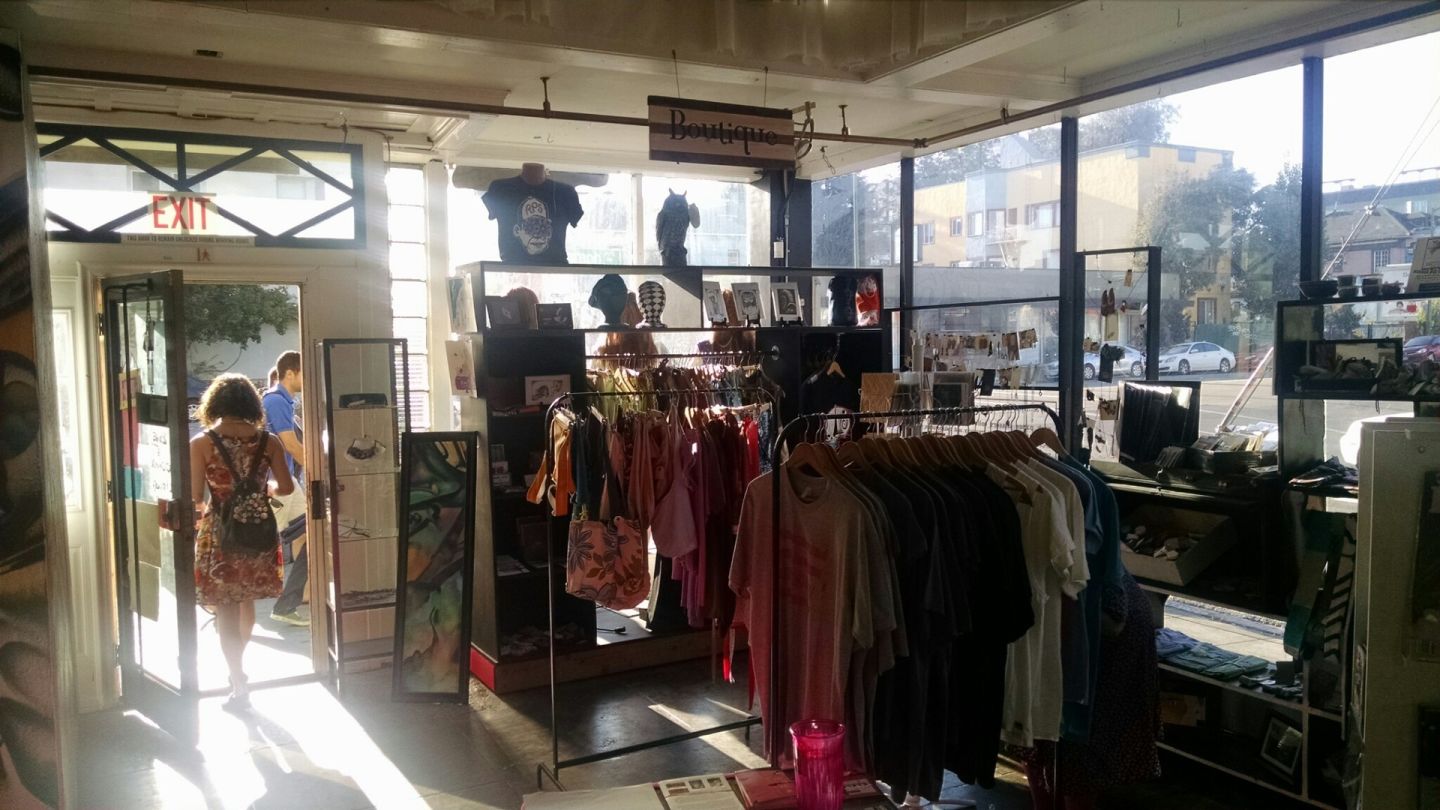
Rock Paper Scissors Is Priced Out: End of an Era for Oakland Art Scene
After 11 Years, Oakland Artist Collective Forced To Find New Home
Arab Film Festival Loses Home, Seeks New San Francisco Office
Poll: Housing Scarcity Concerns Surpass Water Worries in San Francisco
California Supreme Court Upholds San Jose's Affordable Housing Rules
San Francisco Supervisors Debate Proposed Market-Rate Housing Moratorium
Pro Arts’ Executive Director Steps Down, Latest in Wave of Recent Art World Departures
Hey, San Francisco, Meet Your New In-Laws
Can One Oakland Law Slow Gentrification?
S.F. Supes Gear up for Battle Over Mission Housing Construction
window.__IS_SSR__=true
window.__INITIAL_STATE__={
"attachmentsReducer": {
"audio_0": {
"type": "attachments",
"id": "audio_0",
"imgSizes": {
"kqedFullSize": {
"file": "https://ww2.kqed.org/news/wp-content/themes/KQED-unified/img/audio_bgs/background0.jpg"
}
}
},
"audio_1": {
"type": "attachments",
"id": "audio_1",
"imgSizes": {
"kqedFullSize": {
"file": "https://ww2.kqed.org/news/wp-content/themes/KQED-unified/img/audio_bgs/background1.jpg"
}
}
},
"audio_2": {
"type": "attachments",
"id": "audio_2",
"imgSizes": {
"kqedFullSize": {
"file": "https://ww2.kqed.org/news/wp-content/themes/KQED-unified/img/audio_bgs/background2.jpg"
}
}
},
"audio_3": {
"type": "attachments",
"id": "audio_3",
"imgSizes": {
"kqedFullSize": {
"file": "https://ww2.kqed.org/news/wp-content/themes/KQED-unified/img/audio_bgs/background3.jpg"
}
}
},
"audio_4": {
"type": "attachments",
"id": "audio_4",
"imgSizes": {
"kqedFullSize": {
"file": "https://ww2.kqed.org/news/wp-content/themes/KQED-unified/img/audio_bgs/background4.jpg"
}
}
},
"placeholder": {
"type": "attachments",
"id": "placeholder",
"imgSizes": {
"thumbnail": {
"file": "https://cdn.kqed.org/wp-content/uploads/2024/12/KQED-Default-Image-816638274-2000x1333-1-160x107.jpg",
"width": 160,
"height": 107,
"mimeType": "image/jpeg"
},
"medium": {
"file": "https://cdn.kqed.org/wp-content/uploads/2024/12/KQED-Default-Image-816638274-2000x1333-1-800x533.jpg",
"width": 800,
"height": 533,
"mimeType": "image/jpeg"
},
"medium_large": {
"file": "https://cdn.kqed.org/wp-content/uploads/2024/12/KQED-Default-Image-816638274-2000x1333-1-768x512.jpg",
"width": 768,
"height": 512,
"mimeType": "image/jpeg"
},
"large": {
"file": "https://cdn.kqed.org/wp-content/uploads/2024/12/KQED-Default-Image-816638274-2000x1333-1-1020x680.jpg",
"width": 1020,
"height": 680,
"mimeType": "image/jpeg"
},
"1536x1536": {
"file": "https://cdn.kqed.org/wp-content/uploads/2024/12/KQED-Default-Image-816638274-2000x1333-1-1536x1024.jpg",
"width": 1536,
"height": 1024,
"mimeType": "image/jpeg"
},
"fd-lrg": {
"file": "https://cdn.kqed.org/wp-content/uploads/2024/12/KQED-Default-Image-816638274-2000x1333-1-1536x1024.jpg",
"width": 1536,
"height": 1024,
"mimeType": "image/jpeg"
},
"fd-med": {
"file": "https://cdn.kqed.org/wp-content/uploads/2024/12/KQED-Default-Image-816638274-2000x1333-1-1020x680.jpg",
"width": 1020,
"height": 680,
"mimeType": "image/jpeg"
},
"fd-sm": {
"file": "https://cdn.kqed.org/wp-content/uploads/2024/12/KQED-Default-Image-816638274-2000x1333-1-800x533.jpg",
"width": 800,
"height": 533,
"mimeType": "image/jpeg"
},
"post-thumbnail": {
"file": "https://cdn.kqed.org/wp-content/uploads/2024/12/KQED-Default-Image-816638274-2000x1333-1-672x372.jpg",
"width": 672,
"height": 372,
"mimeType": "image/jpeg"
},
"twentyfourteen-full-width": {
"file": "https://cdn.kqed.org/wp-content/uploads/2024/12/KQED-Default-Image-816638274-2000x1333-1-1038x576.jpg",
"width": 1038,
"height": 576,
"mimeType": "image/jpeg"
},
"xxsmall": {
"file": "https://cdn.kqed.org/wp-content/uploads/2024/12/KQED-Default-Image-816638274-2000x1333-1-160x107.jpg",
"width": 160,
"height": 107,
"mimeType": "image/jpeg"
},
"xsmall": {
"file": "https://cdn.kqed.org/wp-content/uploads/2024/12/KQED-Default-Image-816638274-2000x1333-1-672x372.jpg",
"width": 672,
"height": 372,
"mimeType": "image/jpeg"
},
"small": {
"file": "https://cdn.kqed.org/wp-content/uploads/2024/12/KQED-Default-Image-816638274-2000x1333-1-672x372.jpg",
"width": 672,
"height": 372,
"mimeType": "image/jpeg"
},
"xlarge": {
"file": "https://cdn.kqed.org/wp-content/uploads/2024/12/KQED-Default-Image-816638274-2000x1333-1-1020x680.jpg",
"width": 1020,
"height": 680,
"mimeType": "image/jpeg"
},
"full-width": {
"file": "https://cdn.kqed.org/wp-content/uploads/2024/12/KQED-Default-Image-816638274-2000x1333-1-1920x1280.jpg",
"width": 1920,
"height": 1280,
"mimeType": "image/jpeg"
},
"guest-author-32": {
"file": "https://cdn.kqed.org/wp-content/uploads/2025/01/KQED-Default-Image-816638274-1333x1333-1-160x160.jpg",
"width": 32,
"height": 32,
"mimeType": "image/jpeg"
},
"guest-author-50": {
"file": "https://cdn.kqed.org/wp-content/uploads/2025/01/KQED-Default-Image-816638274-1333x1333-1-160x160.jpg",
"width": 50,
"height": 50,
"mimeType": "image/jpeg"
},
"guest-author-64": {
"file": "https://cdn.kqed.org/wp-content/uploads/2025/01/KQED-Default-Image-816638274-1333x1333-1-160x160.jpg",
"width": 64,
"height": 64,
"mimeType": "image/jpeg"
},
"guest-author-96": {
"file": "https://cdn.kqed.org/wp-content/uploads/2025/01/KQED-Default-Image-816638274-1333x1333-1-160x160.jpg",
"width": 96,
"height": 96,
"mimeType": "image/jpeg"
},
"guest-author-128": {
"file": "https://cdn.kqed.org/wp-content/uploads/2025/01/KQED-Default-Image-816638274-1333x1333-1-160x160.jpg",
"width": 128,
"height": 128,
"mimeType": "image/jpeg"
},
"detail": {
"file": "https://cdn.kqed.org/wp-content/uploads/2025/01/KQED-Default-Image-816638274-1333x1333-1-160x160.jpg",
"width": 160,
"height": 160,
"mimeType": "image/jpeg"
},
"kqedFullSize": {
"file": "https://cdn.kqed.org/wp-content/uploads/2024/12/KQED-Default-Image-816638274-2000x1333-1.jpg",
"width": 2000,
"height": 1333
}
}
},
"news_10642065": {
"type": "attachments",
"id": "news_10642065",
"meta": {
"index": "attachments_1716263798",
"site": "news",
"id": "10642065",
"found": true
},
"parent": 10641763,
"imgSizes": {
"twentyfourteen-full-width": {
"file": "https://ww2.kqed.org/app/uploads/sites/10/2015/08/petsurrender1-1038x576.jpg",
"width": 1038,
"mimeType": "image/jpeg",
"height": 576
},
"thumbnail": {
"file": "https://ww2.kqed.org/app/uploads/sites/10/2015/08/petsurrender1-400x267.jpg",
"width": 400,
"mimeType": "image/jpeg",
"height": 267
},
"fd-sm": {
"file": "https://ww2.kqed.org/app/uploads/sites/10/2015/08/petsurrender1-960x640.jpg",
"width": 960,
"mimeType": "image/jpeg",
"height": 640
},
"post-thumbnail": {
"file": "https://ww2.kqed.org/app/uploads/sites/10/2015/08/petsurrender1-672x372.jpg",
"width": 672,
"mimeType": "image/jpeg",
"height": 372
},
"kqedFullSize": {
"file": "https://ww2.kqed.org/app/uploads/sites/10/2015/08/petsurrender1.jpg",
"width": 1920,
"height": 1280
},
"large": {
"file": "https://ww2.kqed.org/app/uploads/sites/10/2015/08/petsurrender1-1440x960.jpg",
"width": 1440,
"mimeType": "image/jpeg",
"height": 960
},
"guest-author-96": {
"file": "https://ww2.kqed.org/app/uploads/sites/10/2015/08/petsurrender1-96x96.jpg",
"width": 96,
"mimeType": "image/jpeg",
"height": 96
},
"medium": {
"file": "https://ww2.kqed.org/app/uploads/sites/10/2015/08/petsurrender1-800x533.jpg",
"width": 800,
"mimeType": "image/jpeg",
"height": 533
},
"guest-author-64": {
"file": "https://ww2.kqed.org/app/uploads/sites/10/2015/08/petsurrender1-64x64.jpg",
"width": 64,
"mimeType": "image/jpeg",
"height": 64
},
"guest-author-32": {
"file": "https://ww2.kqed.org/app/uploads/sites/10/2015/08/petsurrender1-32x32.jpg",
"width": 32,
"mimeType": "image/jpeg",
"height": 32
},
"jmtc-small-thumb": {
"file": "https://ww2.kqed.org/app/uploads/sites/10/2015/08/petsurrender1-280x150.jpg",
"width": 280,
"mimeType": "image/jpeg",
"height": 150
},
"fd-lrg": {
"file": "https://ww2.kqed.org/app/uploads/sites/10/2015/08/petsurrender1-1920x1280.jpg",
"width": 1920,
"mimeType": "image/jpeg",
"height": 1280
},
"fd-med": {
"file": "https://ww2.kqed.org/app/uploads/sites/10/2015/08/petsurrender1-1180x787.jpg",
"width": 1180,
"mimeType": "image/jpeg",
"height": 787
},
"detail": {
"file": "https://ww2.kqed.org/app/uploads/sites/10/2015/08/petsurrender1-75x75.jpg",
"width": 75,
"mimeType": "image/jpeg",
"height": 75
},
"guest-author-128": {
"file": "https://ww2.kqed.org/app/uploads/sites/10/2015/08/petsurrender1-128x128.jpg",
"width": 128,
"mimeType": "image/jpeg",
"height": 128
}
},
"publishDate": 1439504394,
"modified": 1439831878,
"caption": "Chavo, a 1-year-old terrier mix, was surrendered to San Francisco Animal Care and Control when his owner was evicted. He was eventually adopted from the SF SPCA.",
"description": "Chavo, a 1-year-old terrier mix, was surrendered to San Francisco Animal Care and Control when his owner was evicted. He was eventually adopted from the SF SPCA.",
"title": "petsurrender1",
"credit": "Susan Cohen/KQED",
"status": "inherit",
"isLoading": false,
"fetchFailed": false
},
"news_10634173": {
"type": "attachments",
"id": "news_10634173",
"meta": {
"index": "attachments_1716263798",
"site": "news",
"id": "10634173",
"found": true
},
"parent": 10634171,
"imgSizes": {
"jmtc-small-thumb": {
"file": "https://ww2.kqed.org/app/uploads/sites/10/2015/08/rene1-280x150.jpg",
"width": 280,
"mimeType": "image/jpeg",
"height": 150
},
"thumbnail": {
"file": "https://ww2.kqed.org/app/uploads/sites/10/2015/08/rene1-400x266.jpg",
"width": 400,
"mimeType": "image/jpeg",
"height": 266
},
"post-thumbnail": {
"file": "https://ww2.kqed.org/app/uploads/sites/10/2015/08/rene1-620x372.jpg",
"width": 620,
"mimeType": "image/jpeg",
"height": 372
},
"kqedFullSize": {
"file": "https://ww2.kqed.org/app/uploads/sites/10/2015/08/rene1.jpg",
"width": 620,
"height": 413
},
"guest-author-96": {
"file": "https://ww2.kqed.org/app/uploads/sites/10/2015/08/rene1-96x96.jpg",
"width": 96,
"mimeType": "image/jpeg",
"height": 96
},
"guest-author-64": {
"file": "https://ww2.kqed.org/app/uploads/sites/10/2015/08/rene1-64x64.jpg",
"width": 64,
"mimeType": "image/jpeg",
"height": 64
},
"detail": {
"file": "https://ww2.kqed.org/app/uploads/sites/10/2015/08/rene1-75x75.jpg",
"width": 75,
"mimeType": "image/jpeg",
"height": 75
},
"guest-author-32": {
"file": "https://ww2.kqed.org/app/uploads/sites/10/2015/08/rene1-32x32.jpg",
"width": 32,
"mimeType": "image/jpeg",
"height": 32
},
"guest-author-128": {
"file": "https://ww2.kqed.org/app/uploads/sites/10/2015/08/rene1-128x128.jpg",
"width": 128,
"mimeType": "image/jpeg",
"height": 128
}
},
"publishDate": 1438976272,
"modified": 1438976345,
"caption": "Artist Rene Yanez marches against evictions.",
"description": "Artist Rene Yanez marches against evictions.",
"title": "rene1",
"credit": "Hélène Goupil/Mission Local",
"status": "inherit",
"isLoading": false,
"fetchFailed": false
},
"news_10632274": {
"type": "attachments",
"id": "news_10632274",
"meta": {
"index": "attachments_1716263798",
"site": "news",
"id": "10632274",
"found": true
},
"parent": 10632272,
"imgSizes": {
"twentyfourteen-full-width": {
"file": "https://ww2.kqed.org/app/uploads/sites/10/2015/08/RS16283_woman-walks-out-of-RPS-qut-1038x576.jpg",
"width": 1038,
"mimeType": "image/jpeg",
"height": 576
},
"thumbnail": {
"file": "https://ww2.kqed.org/app/uploads/sites/10/2015/08/RS16283_woman-walks-out-of-RPS-qut-400x225.jpg",
"width": 400,
"mimeType": "image/jpeg",
"height": 225
},
"fd-sm": {
"file": "https://ww2.kqed.org/app/uploads/sites/10/2015/08/RS16283_woman-walks-out-of-RPS-qut-960x540.jpg",
"width": 960,
"mimeType": "image/jpeg",
"height": 540
},
"post-thumbnail": {
"file": "https://ww2.kqed.org/app/uploads/sites/10/2015/08/RS16283_woman-walks-out-of-RPS-qut-672x372.jpg",
"width": 672,
"mimeType": "image/jpeg",
"height": 372
},
"kqedFullSize": {
"file": "https://ww2.kqed.org/app/uploads/sites/10/2015/08/RS16283_woman-walks-out-of-RPS-qut.jpg",
"width": 1920,
"height": 1080
},
"large": {
"file": "https://ww2.kqed.org/app/uploads/sites/10/2015/08/RS16283_woman-walks-out-of-RPS-qut-1440x810.jpg",
"width": 1440,
"mimeType": "image/jpeg",
"height": 810
},
"guest-author-96": {
"file": "https://ww2.kqed.org/app/uploads/sites/10/2015/08/RS16283_woman-walks-out-of-RPS-qut-96x96.jpg",
"width": 96,
"mimeType": "image/jpeg",
"height": 96
},
"medium": {
"file": "https://ww2.kqed.org/app/uploads/sites/10/2015/08/RS16283_woman-walks-out-of-RPS-qut-800x450.jpg",
"width": 800,
"mimeType": "image/jpeg",
"height": 450
},
"guest-author-64": {
"file": "https://ww2.kqed.org/app/uploads/sites/10/2015/08/RS16283_woman-walks-out-of-RPS-qut-64x64.jpg",
"width": 64,
"mimeType": "image/jpeg",
"height": 64
},
"guest-author-32": {
"file": "https://ww2.kqed.org/app/uploads/sites/10/2015/08/RS16283_woman-walks-out-of-RPS-qut-32x32.jpg",
"width": 32,
"mimeType": "image/jpeg",
"height": 32
},
"jmtc-small-thumb": {
"file": "https://ww2.kqed.org/app/uploads/sites/10/2015/08/RS16283_woman-walks-out-of-RPS-qut-280x150.jpg",
"width": 280,
"mimeType": "image/jpeg",
"height": 150
},
"fd-lrg": {
"file": "https://ww2.kqed.org/app/uploads/sites/10/2015/08/RS16283_woman-walks-out-of-RPS-qut-1920x1080.jpg",
"width": 1920,
"mimeType": "image/jpeg",
"height": 1080
},
"fd-med": {
"file": "https://ww2.kqed.org/app/uploads/sites/10/2015/08/RS16283_woman-walks-out-of-RPS-qut-1180x664.jpg",
"width": 1180,
"mimeType": "image/jpeg",
"height": 664
},
"detail": {
"file": "https://ww2.kqed.org/app/uploads/sites/10/2015/08/RS16283_woman-walks-out-of-RPS-qut-75x75.jpg",
"width": 75,
"mimeType": "image/jpeg",
"height": 75
},
"guest-author-128": {
"file": "https://ww2.kqed.org/app/uploads/sites/10/2015/08/RS16283_woman-walks-out-of-RPS-qut-128x128.jpg",
"width": 128,
"mimeType": "image/jpeg",
"height": 128
}
},
"publishDate": 1438855456,
"modified": 1438909062,
"caption": "Rock Paper Scissors' doors will close before the end of August",
"description": null,
"title": "RS16283_woman walks out of RPS-qut",
"credit": "Andrew Stelzer/KQED",
"status": "inherit",
"isLoading": false,
"fetchFailed": false
},
"arts_10837881": {
"type": "attachments",
"id": "arts_10837881",
"meta": {
"index": "attachments_1716263798",
"site": "arts",
"id": "10837881",
"found": true
},
"parent": 10837879,
"imgSizes": {
"twentyfourteen-full-width": {
"file": "https://ww2.kqed.org/app/uploads/sites/2/2015/07/RPSCBest-e1436896453538-1038x576.jpg",
"width": 1038,
"mimeType": "image/jpeg",
"height": 576
},
"thumbnail": {
"file": "https://ww2.kqed.org/app/uploads/sites/2/2015/07/RPSCBest-e1436896453538-400x225.jpg",
"width": 400,
"mimeType": "image/jpeg",
"height": 225
},
"fd-sm": {
"file": "https://ww2.kqed.org/app/uploads/sites/2/2015/07/RPSCBest-e1436896453538-960x540.jpg",
"width": 960,
"mimeType": "image/jpeg",
"height": 540
},
"post-thumbnail": {
"file": "https://ww2.kqed.org/app/uploads/sites/2/2015/07/RPSCBest-e1436896453538-672x372.jpg",
"width": 672,
"mimeType": "image/jpeg",
"height": 372
},
"kqedFullSize": {
"file": "https://ww2.kqed.org/app/uploads/sites/2/2015/07/RPSCBest-e1436896453538.jpg",
"width": 1600,
"height": 900
},
"large": {
"file": "https://ww2.kqed.org/app/uploads/sites/2/2015/07/RPSCBest-e1436896453538-1180x664.jpg",
"width": 1180,
"mimeType": "image/jpeg",
"height": 664
},
"guest-author-96": {
"file": "https://ww2.kqed.org/app/uploads/sites/2/2015/07/RPSCBest-e1436896453538-96x96.jpg",
"width": 96,
"mimeType": "image/jpeg",
"height": 96
},
"medium": {
"file": "https://ww2.kqed.org/app/uploads/sites/2/2015/07/RPSCBest-e1436896453538-800x450.jpg",
"width": 800,
"mimeType": "image/jpeg",
"height": 450
},
"guest-author-64": {
"file": "https://ww2.kqed.org/app/uploads/sites/2/2015/07/RPSCBest-e1436896453538-64x64.jpg",
"width": 64,
"mimeType": "image/jpeg",
"height": 64
},
"guest-author-32": {
"file": "https://ww2.kqed.org/app/uploads/sites/2/2015/07/RPSCBest-e1436896453538-32x32.jpg",
"width": 32,
"mimeType": "image/jpeg",
"height": 32
},
"fd-med": {
"file": "https://ww2.kqed.org/app/uploads/sites/2/2015/07/RPSCBest-e1436896453538-1180x664.jpg",
"width": 1180,
"mimeType": "image/jpeg",
"height": 664
},
"detail": {
"file": "https://ww2.kqed.org/app/uploads/sites/2/2015/07/RPSCBest-e1436896453538-75x75.jpg",
"width": 75,
"mimeType": "image/jpeg",
"height": 75
},
"guest-author-128": {
"file": "https://ww2.kqed.org/app/uploads/sites/2/2015/07/RPSCBest-e1436896453538-128x128.jpg",
"width": 128,
"mimeType": "image/jpeg",
"height": 128
}
},
"publishDate": 1436896402,
"modified": 1528411714,
"caption": "The former storefront of Rock Paper Scissors Collective, before it relocated to Warehouse 416 in downtown Oakland.",
"description": "The former storefront of Rock Paper Scissors Collective, before it relocated to Warehouse 416 in downtown Oakland.",
"title": "RPSCBest",
"credit": "Courtesy of RSPC Facebook Page",
"status": "inherit",
"isLoading": false,
"fetchFailed": false
},
"arts_10822924": {
"type": "attachments",
"id": "arts_10822924",
"meta": {
"index": "attachments_1716263798",
"site": "arts",
"id": "10822924",
"found": true
},
"parent": 10822840,
"imgSizes": {
"thumbnail": {
"file": "https://ww2.kqed.org/app/uploads/sites/2/2015/07/Arab-Film-festival2-400x225.jpg",
"width": 400,
"mimeType": "image/jpeg",
"height": 225
},
"post-thumbnail": {
"file": "https://ww2.kqed.org/app/uploads/sites/2/2015/07/Arab-Film-festival2-672x372.jpg",
"width": 672,
"mimeType": "image/jpeg",
"height": 372
},
"kqedFullSize": {
"file": "https://ww2.kqed.org/app/uploads/sites/2/2015/07/Arab-Film-festival2.jpg",
"width": 800,
"height": 450
},
"guest-author-96": {
"file": "https://ww2.kqed.org/app/uploads/sites/2/2015/07/Arab-Film-festival2-96x96.jpg",
"width": 96,
"mimeType": "image/jpeg",
"height": 96
},
"medium": {
"file": "https://ww2.kqed.org/app/uploads/sites/2/2015/07/Arab-Film-festival2-800x450.jpg",
"width": 800,
"mimeType": "image/jpeg",
"height": 450
},
"guest-author-64": {
"file": "https://ww2.kqed.org/app/uploads/sites/2/2015/07/Arab-Film-festival2-64x64.jpg",
"width": 64,
"mimeType": "image/jpeg",
"height": 64
},
"detail": {
"file": "https://ww2.kqed.org/app/uploads/sites/2/2015/07/Arab-Film-festival2-75x75.jpg",
"width": 75,
"mimeType": "image/jpeg",
"height": 75
},
"guest-author-32": {
"file": "https://ww2.kqed.org/app/uploads/sites/2/2015/07/Arab-Film-festival2-32x32.jpg",
"width": 32,
"mimeType": "image/jpeg",
"height": 32
},
"guest-author-128": {
"file": "https://ww2.kqed.org/app/uploads/sites/2/2015/07/Arab-Film-festival2-128x128.jpg",
"width": 128,
"mimeType": "image/jpeg",
"height": 128
}
},
"publishDate": 1436225317,
"modified": 1691685499,
"caption": "The 2014 Arab Film Festival at San Francisco's Castro Theatre. For most smaller, independent film festivals, Another Planet Entertainment's proposed renovations mean their future at the theater is up in the air.",
"description": "During the 2014 Arab Film Festival at San Francisco's Castro Theatre (Courtesy of the Arab Film Festival) ",
"title": "Arab Film festival2",
"credit": "Courtesy of the Arab Film Festival",
"status": "inherit",
"altTag": "a shot of the interior of a movie theater, the screen shows that this is the 2014 Arab Film Festival at San Francisco's Castro Theatre",
"isLoading": false,
"fetchFailed": false
},
"news_10577349": {
"type": "attachments",
"id": "news_10577349",
"meta": {
"index": "attachments_1716263798",
"site": "news",
"id": "10577349",
"found": true
},
"parent": 10577128,
"imgSizes": {
"twentyfourteen-full-width": {
"file": "https://ww2.kqed.org/app/uploads/sites/10/2015/06/RS14661_IMG_8324-qut-1038x576.jpg",
"width": 1038,
"mimeType": "image/jpeg",
"height": 576
},
"thumbnail": {
"file": "https://ww2.kqed.org/app/uploads/sites/10/2015/06/RS14661_IMG_8324-qut-400x267.jpg",
"width": 400,
"mimeType": "image/jpeg",
"height": 267
},
"fd-sm": {
"file": "https://ww2.kqed.org/app/uploads/sites/10/2015/06/RS14661_IMG_8324-qut-960x640.jpg",
"width": 960,
"mimeType": "image/jpeg",
"height": 640
},
"post-thumbnail": {
"file": "https://ww2.kqed.org/app/uploads/sites/10/2015/06/RS14661_IMG_8324-qut-672x372.jpg",
"width": 672,
"mimeType": "image/jpeg",
"height": 372
},
"kqedFullSize": {
"file": "https://ww2.kqed.org/app/uploads/sites/10/2015/06/RS14661_IMG_8324-qut.jpg",
"width": 1920,
"height": 1280
},
"large": {
"file": "https://ww2.kqed.org/app/uploads/sites/10/2015/06/RS14661_IMG_8324-qut-1440x960.jpg",
"width": 1440,
"mimeType": "image/jpeg",
"height": 960
},
"guest-author-96": {
"file": "https://ww2.kqed.org/app/uploads/sites/10/2015/06/RS14661_IMG_8324-qut-96x96.jpg",
"width": 96,
"mimeType": "image/jpeg",
"height": 96
},
"medium": {
"file": "https://ww2.kqed.org/app/uploads/sites/10/2015/06/RS14661_IMG_8324-qut-800x533.jpg",
"width": 800,
"mimeType": "image/jpeg",
"height": 533
},
"guest-author-64": {
"file": "https://ww2.kqed.org/app/uploads/sites/10/2015/06/RS14661_IMG_8324-qut-64x64.jpg",
"width": 64,
"mimeType": "image/jpeg",
"height": 64
},
"guest-author-32": {
"file": "https://ww2.kqed.org/app/uploads/sites/10/2015/06/RS14661_IMG_8324-qut-32x32.jpg",
"width": 32,
"mimeType": "image/jpeg",
"height": 32
},
"jmtc-small-thumb": {
"file": "https://ww2.kqed.org/app/uploads/sites/10/2015/06/RS14661_IMG_8324-qut-280x150.jpg",
"width": 280,
"mimeType": "image/jpeg",
"height": 150
},
"fd-med": {
"file": "https://ww2.kqed.org/app/uploads/sites/10/2015/06/RS14661_IMG_8324-qut-1180x787.jpg",
"width": 1180,
"mimeType": "image/jpeg",
"height": 787
},
"detail": {
"file": "https://ww2.kqed.org/app/uploads/sites/10/2015/06/RS14661_IMG_8324-qut-75x75.jpg",
"width": 75,
"mimeType": "image/jpeg",
"height": 75
},
"guest-author-128": {
"file": "https://ww2.kqed.org/app/uploads/sites/10/2015/06/RS14661_IMG_8324-qut-128x128.jpg",
"width": 128,
"mimeType": "image/jpeg",
"height": 128
}
},
"publishDate": 1435277072,
"modified": 1435277192,
"caption": "The San Francisco skyline September 2013.",
"description": "The San Francisco skyline September 2013.",
"title": "RS14661_IMG_8324-qut",
"credit": "Alex Emslie/KQED",
"status": "inherit",
"isLoading": false,
"fetchFailed": false
},
"news_10564355": {
"type": "attachments",
"id": "news_10564355",
"meta": {
"index": "attachments_1716263798",
"site": "news",
"id": "10564355",
"found": true
},
"parent": 10564227,
"imgSizes": {
"twentyfourteen-full-width": {
"file": "https://ww2.kqed.org/app/uploads/sites/10/2015/06/RS15476_IMG_0887-qut-1038x576.jpg",
"width": 1038,
"mimeType": "image/jpeg",
"height": 576
},
"thumbnail": {
"file": "https://ww2.kqed.org/app/uploads/sites/10/2015/06/RS15476_IMG_0887-qut-400x300.jpg",
"width": 400,
"mimeType": "image/jpeg",
"height": 300
},
"fd-sm": {
"file": "https://ww2.kqed.org/app/uploads/sites/10/2015/06/RS15476_IMG_0887-qut-960x720.jpg",
"width": 960,
"mimeType": "image/jpeg",
"height": 720
},
"post-thumbnail": {
"file": "https://ww2.kqed.org/app/uploads/sites/10/2015/06/RS15476_IMG_0887-qut-672x372.jpg",
"width": 672,
"mimeType": "image/jpeg",
"height": 372
},
"kqedFullSize": {
"file": "https://ww2.kqed.org/app/uploads/sites/10/2015/06/RS15476_IMG_0887-qut.jpg",
"width": 1920,
"height": 1440
},
"large": {
"file": "https://ww2.kqed.org/app/uploads/sites/10/2015/06/RS15476_IMG_0887-qut-1440x1080.jpg",
"width": 1440,
"mimeType": "image/jpeg",
"height": 1080
},
"guest-author-96": {
"file": "https://ww2.kqed.org/app/uploads/sites/10/2015/06/RS15476_IMG_0887-qut-96x96.jpg",
"width": 96,
"mimeType": "image/jpeg",
"height": 96
},
"medium": {
"file": "https://ww2.kqed.org/app/uploads/sites/10/2015/06/RS15476_IMG_0887-qut-800x600.jpg",
"width": 800,
"mimeType": "image/jpeg",
"height": 600
},
"guest-author-64": {
"file": "https://ww2.kqed.org/app/uploads/sites/10/2015/06/RS15476_IMG_0887-qut-64x64.jpg",
"width": 64,
"mimeType": "image/jpeg",
"height": 64
},
"guest-author-32": {
"file": "https://ww2.kqed.org/app/uploads/sites/10/2015/06/RS15476_IMG_0887-qut-32x32.jpg",
"width": 32,
"mimeType": "image/jpeg",
"height": 32
},
"jmtc-small-thumb": {
"file": "https://ww2.kqed.org/app/uploads/sites/10/2015/06/RS15476_IMG_0887-qut-280x150.jpg",
"width": 280,
"mimeType": "image/jpeg",
"height": 150
},
"fd-med": {
"file": "https://ww2.kqed.org/app/uploads/sites/10/2015/06/RS15476_IMG_0887-qut-1180x885.jpg",
"width": 1180,
"mimeType": "image/jpeg",
"height": 885
},
"detail": {
"file": "https://ww2.kqed.org/app/uploads/sites/10/2015/06/RS15476_IMG_0887-qut-75x75.jpg",
"width": 75,
"mimeType": "image/jpeg",
"height": 75
},
"guest-author-128": {
"file": "https://ww2.kqed.org/app/uploads/sites/10/2015/06/RS15476_IMG_0887-qut-128x128.jpg",
"width": 128,
"mimeType": "image/jpeg",
"height": 128
}
},
"publishDate": 1434397508,
"modified": 1434398020,
"caption": "One South Market, one of the newest additions to San Jose's downtown skyline. Under a law upheld by the state Supreme Court, San Jose can require new developers to set aside some of their units for sale below market value.",
"description": "One South Market, one of the newest additions to San Jose's downtown skyline. Under a law upheld by the state Supreme Court, San Jose can require new developers to set aside some of their units for sale below market value.",
"title": "RS15476_IMG_0887-qut",
"credit": "Rachael Myrow/KQED",
"status": "inherit",
"isLoading": false,
"fetchFailed": false
},
"news_10543825": {
"type": "attachments",
"id": "news_10543825",
"meta": {
"index": "attachments_1716263798",
"site": "news",
"id": "10543825",
"found": true
},
"parent": 10543744,
"imgSizes": {
"twentyfourteen-full-width": {
"file": "https://ww2.kqed.org/app/uploads/sites/10/2015/05/CamposWeinercropped-1038x576.jpg",
"width": 1038,
"mimeType": "image/jpeg",
"height": 576
},
"thumbnail": {
"file": "https://ww2.kqed.org/app/uploads/sites/10/2015/05/CamposWeinercropped-400x300.jpg",
"width": 400,
"mimeType": "image/jpeg",
"height": 300
},
"fd-sm": {
"file": "https://ww2.kqed.org/app/uploads/sites/10/2015/05/CamposWeinercropped-960x720.jpg",
"width": 960,
"mimeType": "image/jpeg",
"height": 720
},
"post-thumbnail": {
"file": "https://ww2.kqed.org/app/uploads/sites/10/2015/05/CamposWeinercropped-672x372.jpg",
"width": 672,
"mimeType": "image/jpeg",
"height": 372
},
"kqedFullSize": {
"file": "https://ww2.kqed.org/app/uploads/sites/10/2015/05/CamposWeinercropped.jpg",
"width": 1920,
"height": 1440
},
"large": {
"file": "https://ww2.kqed.org/app/uploads/sites/10/2015/05/CamposWeinercropped-1440x1080.jpg",
"width": 1440,
"mimeType": "image/jpeg",
"height": 1080
},
"guest-author-96": {
"file": "https://ww2.kqed.org/app/uploads/sites/10/2015/05/CamposWeinercropped-96x96.jpg",
"width": 96,
"mimeType": "image/jpeg",
"height": 96
},
"medium": {
"file": "https://ww2.kqed.org/app/uploads/sites/10/2015/05/CamposWeinercropped-800x600.jpg",
"width": 800,
"mimeType": "image/jpeg",
"height": 600
},
"guest-author-64": {
"file": "https://ww2.kqed.org/app/uploads/sites/10/2015/05/CamposWeinercropped-64x64.jpg",
"width": 64,
"mimeType": "image/jpeg",
"height": 64
},
"guest-author-32": {
"file": "https://ww2.kqed.org/app/uploads/sites/10/2015/05/CamposWeinercropped-32x32.jpg",
"width": 32,
"mimeType": "image/jpeg",
"height": 32
},
"fd-med": {
"file": "https://ww2.kqed.org/app/uploads/sites/10/2015/05/CamposWeinercropped-1180x885.jpg",
"width": 1180,
"mimeType": "image/jpeg",
"height": 885
},
"detail": {
"file": "https://ww2.kqed.org/app/uploads/sites/10/2015/05/CamposWeinercropped-75x75.jpg",
"width": 75,
"mimeType": "image/jpeg",
"height": 75
},
"guest-author-128": {
"file": "https://ww2.kqed.org/app/uploads/sites/10/2015/05/CamposWeinercropped-128x128.jpg",
"width": 128,
"mimeType": "image/jpeg",
"height": 128
}
},
"publishDate": 1432936548,
"modified": 1432946351,
"caption": "San Francisco Supervisors David Campos, right, and Scott Wiener in the KQED studio during their May 29, 2015, appearance on Forum.",
"description": "San Francisco Supervisors David Campos and Scott Wiener in the KQED studio",
"title": "CamposWeinercropped",
"credit": "Amanda Stupi/KQED",
"status": "inherit",
"isLoading": false,
"fetchFailed": false
},
"arts_10702829": {
"type": "attachments",
"id": "arts_10702829",
"meta": {
"index": "attachments_1716263798",
"site": "arts",
"id": "10702829",
"found": true
},
"parent": 10702680,
"imgSizes": {
"twentyfourteen-full-width": {
"file": "https://ww2.kqed.org/app/uploads/sites/2/2015/05/EbbFlow_1-1038x576.jpg",
"width": 1038,
"mimeType": "image/jpeg",
"height": 576
},
"thumbnail": {
"file": "https://ww2.kqed.org/app/uploads/sites/2/2015/05/EbbFlow_1-400x209.jpg",
"width": 400,
"mimeType": "image/jpeg",
"height": 209
},
"fd-sm": {
"file": "https://ww2.kqed.org/app/uploads/sites/2/2015/05/EbbFlow_1-960x501.jpg",
"width": 960,
"mimeType": "image/jpeg",
"height": 501
},
"post-thumbnail": {
"file": "https://ww2.kqed.org/app/uploads/sites/2/2015/05/EbbFlow_1-672x372.jpg",
"width": 672,
"mimeType": "image/jpeg",
"height": 372
},
"kqedFullSize": {
"file": "https://ww2.kqed.org/app/uploads/sites/2/2015/05/EbbFlow_1-e1443832156528.jpg",
"width": 1200,
"height": 626
},
"large": {
"file": "https://ww2.kqed.org/app/uploads/sites/2/2015/05/EbbFlow_1-1180x616.jpg",
"width": 1180,
"mimeType": "image/jpeg",
"height": 616
},
"guest-author-96": {
"file": "https://ww2.kqed.org/app/uploads/sites/2/2015/05/EbbFlow_1-96x96.jpg",
"width": 96,
"mimeType": "image/jpeg",
"height": 96
},
"medium": {
"file": "https://ww2.kqed.org/app/uploads/sites/2/2015/05/EbbFlow_1-800x417.jpg",
"width": 800,
"mimeType": "image/jpeg",
"height": 417
},
"guest-author-64": {
"file": "https://ww2.kqed.org/app/uploads/sites/2/2015/05/EbbFlow_1-64x64.jpg",
"width": 64,
"mimeType": "image/jpeg",
"height": 64
},
"guest-author-32": {
"file": "https://ww2.kqed.org/app/uploads/sites/2/2015/05/EbbFlow_1-32x32.jpg",
"width": 32,
"mimeType": "image/jpeg",
"height": 32
},
"fd-med": {
"file": "https://ww2.kqed.org/app/uploads/sites/2/2015/05/EbbFlow_1-1180x616.jpg",
"width": 1180,
"mimeType": "image/jpeg",
"height": 616
},
"detail": {
"file": "https://ww2.kqed.org/app/uploads/sites/2/2015/05/EbbFlow_1-75x75.jpg",
"width": 75,
"mimeType": "image/jpeg",
"height": 75
},
"guest-author-128": {
"file": "https://ww2.kqed.org/app/uploads/sites/2/2015/05/EbbFlow_1-128x128.jpg",
"width": 128,
"mimeType": "image/jpeg",
"height": 128
}
},
"publishDate": 1432778733,
"modified": 1432778823,
"caption": "Installation view of \u003ci>Ebb / Flow, Selections by Cesar Garcia and Naima J. Keith\u003c/i>, 2015. (Courtesy of Pro Arts)",
"description": null,
"title": "EbbFlow_1",
"credit": null,
"status": "inherit",
"isLoading": false,
"fetchFailed": false
},
"news_10518302": {
"type": "attachments",
"id": "news_10518302",
"meta": {
"index": "attachments_1716263798",
"site": "news",
"id": "10518302",
"found": true
},
"parent": 10517326,
"imgSizes": {
"twentyfourteen-full-width": {
"file": "https://ww2.kqed.org/app/uploads/sites/10/2015/05/Drawing_LiftedGarden-1038x576.jpg",
"width": 1038,
"mimeType": "image/jpeg",
"height": 576
},
"thumbnail": {
"file": "https://ww2.kqed.org/app/uploads/sites/10/2015/05/Drawing_LiftedGarden-400x276.jpg",
"width": 400,
"mimeType": "image/jpeg",
"height": 276
},
"fd-sm": {
"file": "https://ww2.kqed.org/app/uploads/sites/10/2015/05/Drawing_LiftedGarden-960x663.jpg",
"width": 960,
"mimeType": "image/jpeg",
"height": 663
},
"post-thumbnail": {
"file": "https://ww2.kqed.org/app/uploads/sites/10/2015/05/Drawing_LiftedGarden-672x372.jpg",
"width": 672,
"mimeType": "image/jpeg",
"height": 372
},
"kqedFullSize": {
"file": "https://ww2.kqed.org/app/uploads/sites/10/2015/05/Drawing_LiftedGarden.jpg",
"width": 2268,
"height": 1566
},
"large": {
"file": "https://ww2.kqed.org/app/uploads/sites/10/2015/05/Drawing_LiftedGarden-1440x994.jpg",
"width": 1440,
"mimeType": "image/jpeg",
"height": 994
},
"guest-author-96": {
"file": "https://ww2.kqed.org/app/uploads/sites/10/2015/05/Drawing_LiftedGarden-96x96.jpg",
"width": 96,
"mimeType": "image/jpeg",
"height": 96
},
"medium": {
"file": "https://ww2.kqed.org/app/uploads/sites/10/2015/05/Drawing_LiftedGarden-800x552.jpg",
"width": 800,
"mimeType": "image/jpeg",
"height": 552
},
"guest-author-64": {
"file": "https://ww2.kqed.org/app/uploads/sites/10/2015/05/Drawing_LiftedGarden-64x64.jpg",
"width": 64,
"mimeType": "image/jpeg",
"height": 64
},
"guest-author-32": {
"file": "https://ww2.kqed.org/app/uploads/sites/10/2015/05/Drawing_LiftedGarden-32x32.jpg",
"width": 32,
"mimeType": "image/jpeg",
"height": 32
},
"fd-med": {
"file": "https://ww2.kqed.org/app/uploads/sites/10/2015/05/Drawing_LiftedGarden-1180x815.jpg",
"width": 1180,
"mimeType": "image/jpeg",
"height": 815
},
"detail": {
"file": "https://ww2.kqed.org/app/uploads/sites/10/2015/05/Drawing_LiftedGarden-75x75.jpg",
"width": 75,
"mimeType": "image/jpeg",
"height": 75
},
"guest-author-128": {
"file": "https://ww2.kqed.org/app/uploads/sites/10/2015/05/Drawing_LiftedGarden-128x128.jpg",
"width": 128,
"mimeType": "image/jpeg",
"height": 128
}
},
"publishDate": 1431109696,
"modified": 1431122239,
"caption": "'The Lifted Garden' preserves green space by adding a terrace over the unit",
"description": "Drawing by CCA architecture student Blake Stevenson",
"title": "Drawing_LiftedGarden",
"credit": "The Urban Works Agency, California College of the Arts; drawing by Blake Stevenson",
"status": "inherit",
"isLoading": false,
"fetchFailed": false
},
"news_10518439": {
"type": "attachments",
"id": "news_10518439",
"meta": {
"index": "attachments_1716263798",
"site": "news",
"id": "10518439",
"found": true
},
"parent": 10517031,
"imgSizes": {
"twentyfourteen-full-width": {
"file": "https://ww2.kqed.org/app/uploads/sites/10/2015/05/IMG_00041-1038x576.jpg",
"width": 1038,
"mimeType": "image/jpeg",
"height": 576
},
"thumbnail": {
"file": "https://ww2.kqed.org/app/uploads/sites/10/2015/05/IMG_00041-400x300.jpg",
"width": 400,
"mimeType": "image/jpeg",
"height": 300
},
"fd-sm": {
"file": "https://ww2.kqed.org/app/uploads/sites/10/2015/05/IMG_00041-960x720.jpg",
"width": 960,
"mimeType": "image/jpeg",
"height": 720
},
"post-thumbnail": {
"file": "https://ww2.kqed.org/app/uploads/sites/10/2015/05/IMG_00041-672x372.jpg",
"width": 672,
"mimeType": "image/jpeg",
"height": 372
},
"kqedFullSize": {
"file": "https://ww2.kqed.org/app/uploads/sites/10/2015/05/IMG_00041.jpg",
"width": 3264,
"height": 2448
},
"large": {
"file": "https://ww2.kqed.org/app/uploads/sites/10/2015/05/IMG_00041-1440x1080.jpg",
"width": 1440,
"mimeType": "image/jpeg",
"height": 1080
},
"guest-author-96": {
"file": "https://ww2.kqed.org/app/uploads/sites/10/2015/05/IMG_00041-96x96.jpg",
"width": 96,
"mimeType": "image/jpeg",
"height": 96
},
"medium": {
"file": "https://ww2.kqed.org/app/uploads/sites/10/2015/05/IMG_00041-800x600.jpg",
"width": 800,
"mimeType": "image/jpeg",
"height": 600
},
"guest-author-64": {
"file": "https://ww2.kqed.org/app/uploads/sites/10/2015/05/IMG_00041-64x64.jpg",
"width": 64,
"mimeType": "image/jpeg",
"height": 64
},
"guest-author-32": {
"file": "https://ww2.kqed.org/app/uploads/sites/10/2015/05/IMG_00041-32x32.jpg",
"width": 32,
"mimeType": "image/jpeg",
"height": 32
},
"fd-med": {
"file": "https://ww2.kqed.org/app/uploads/sites/10/2015/05/IMG_00041-1180x885.jpg",
"width": 1180,
"mimeType": "image/jpeg",
"height": 885
},
"detail": {
"file": "https://ww2.kqed.org/app/uploads/sites/10/2015/05/IMG_00041-75x75.jpg",
"width": 75,
"mimeType": "image/jpeg",
"height": 75
},
"guest-author-128": {
"file": "https://ww2.kqed.org/app/uploads/sites/10/2015/05/IMG_00041-128x128.jpg",
"width": 128,
"mimeType": "image/jpeg",
"height": 128
}
},
"publishDate": 1431118334,
"modified": 1431118929,
"caption": "Melissa Hennings",
"description": null,
"title": "IMG_0004",
"credit": "Courtesy of Melissa Hennings",
"status": "inherit",
"isLoading": false,
"fetchFailed": false
},
"news_10514575": {
"type": "attachments",
"id": "news_10514575",
"meta": {
"index": "attachments_1716263798",
"site": "news",
"id": "10514575",
"found": true
},
"parent": 10514487,
"imgSizes": {
"twentyfourteen-full-width": {
"file": "https://ww2.kqed.org/app/uploads/sites/10/2015/05/RS15072_IMG_1934-qut-1038x576.jpg",
"width": 1038,
"mimeType": "image/jpeg",
"height": 576
},
"thumbnail": {
"file": "https://ww2.kqed.org/app/uploads/sites/10/2015/05/RS15072_IMG_1934-qut-400x300.jpg",
"width": 400,
"mimeType": "image/jpeg",
"height": 300
},
"fd-sm": {
"file": "https://ww2.kqed.org/app/uploads/sites/10/2015/05/RS15072_IMG_1934-qut-960x720.jpg",
"width": 960,
"mimeType": "image/jpeg",
"height": 720
},
"post-thumbnail": {
"file": "https://ww2.kqed.org/app/uploads/sites/10/2015/05/RS15072_IMG_1934-qut-672x372.jpg",
"width": 672,
"mimeType": "image/jpeg",
"height": 372
},
"kqedFullSize": {
"file": "https://ww2.kqed.org/app/uploads/sites/10/2015/05/RS15072_IMG_1934-qut.jpg",
"width": 1920,
"height": 1440
},
"large": {
"file": "https://ww2.kqed.org/app/uploads/sites/10/2015/05/RS15072_IMG_1934-qut-1440x1080.jpg",
"width": 1440,
"mimeType": "image/jpeg",
"height": 1080
},
"guest-author-96": {
"file": "https://ww2.kqed.org/app/uploads/sites/10/2015/05/RS15072_IMG_1934-qut-96x96.jpg",
"width": 96,
"mimeType": "image/jpeg",
"height": 96
},
"medium": {
"file": "https://ww2.kqed.org/app/uploads/sites/10/2015/05/RS15072_IMG_1934-qut-800x600.jpg",
"width": 800,
"mimeType": "image/jpeg",
"height": 600
},
"guest-author-64": {
"file": "https://ww2.kqed.org/app/uploads/sites/10/2015/05/RS15072_IMG_1934-qut-64x64.jpg",
"width": 64,
"mimeType": "image/jpeg",
"height": 64
},
"guest-author-32": {
"file": "https://ww2.kqed.org/app/uploads/sites/10/2015/05/RS15072_IMG_1934-qut-32x32.jpg",
"width": 32,
"mimeType": "image/jpeg",
"height": 32
},
"fd-med": {
"file": "https://ww2.kqed.org/app/uploads/sites/10/2015/05/RS15072_IMG_1934-qut-1180x885.jpg",
"width": 1180,
"mimeType": "image/jpeg",
"height": 885
},
"detail": {
"file": "https://ww2.kqed.org/app/uploads/sites/10/2015/05/RS15072_IMG_1934-qut-75x75.jpg",
"width": 75,
"mimeType": "image/jpeg",
"height": 75
},
"guest-author-128": {
"file": "https://ww2.kqed.org/app/uploads/sites/10/2015/05/RS15072_IMG_1934-qut-128x128.jpg",
"width": 128,
"mimeType": "image/jpeg",
"height": 128
}
},
"publishDate": 1430874443,
"modified": 1430953918,
"caption": "San Francisco Supervisor David Campos, outside the Mission Neighborhood Center, unveils a proposal to halt market-rate housing developments in the city's Mission District for two years.",
"description": "San Francisco Supervisor David Campos, outside the Mission Neighborhood Center, unveils a proposal to halt market-rate housing developments in the city's Mission District for two years.",
"title": "RS15072_IMG_1934-qut",
"credit": "Alex Emslie/KQED",
"status": "inherit",
"isLoading": false,
"fetchFailed": false
}
},
"audioPlayerReducer": {
"postId": "stream_live",
"isPaused": true,
"isPlaying": false,
"pfsActive": false,
"pledgeModalIsOpen": true,
"playerDrawerIsOpen": false,
"liveAudioPlayStartedAt": 0,
"liveAudioPlayContext": ""
},
"authorsReducer": {
"byline_news_10634171": {
"type": "authors",
"id": "byline_news_10634171",
"meta": {
"override": true
},
"slug": "byline_news_10634171",
"name": "\u003ca href=\"http://missionlocal.org/author/rigo/\" target=\"_blank\">\u003cstrong>Rigoberto Hernandez\u003c/strong>\u003c/a> and \u003ca href=\"http://missionlocal.org/author/lchavez/\" target=\"_blank\">\u003cstrong>Lydia Chávez\u003c/strong>\u003c/a>\u003cbr />\u003ca href=\"http://missionlocal.org/\" target=\"_blank\">Mission Local\u003c/a>",
"isLoading": false
},
"shotchkiss": {
"type": "authors",
"id": "61",
"meta": {
"index": "authors_1716337520",
"id": "61",
"found": true
},
"name": "Sarah Hotchkiss",
"firstName": "Sarah",
"lastName": "Hotchkiss",
"slug": "shotchkiss",
"email": "shotchkiss@kqed.org",
"display_author_email": true,
"staff_mastheads": [
"arts"
],
"title": "Senior Editor",
"bio": "Sarah Hotchkiss is a San Francisco \u003ca href=\"http://www.sarahhotchkiss.com\">artist\u003c/a> and arts writer. In 2019, she received the Dorothea & Leo Rabkin Foundation grant for visual art journalism and in 2020 she received a Society of Professional Journalists, Northern California award for excellence in arts and culture reporting.",
"avatar": "https://secure.gravatar.com/avatar/bc662df144b3d27fd8b1b6f1c2a420d34e91e53154d411bb7ad353cc8b6cea8d?s=600&d=blank&r=g",
"twitter": null,
"bluesky": null,
"facebook": null,
"instagram": null,
"linkedin": null,
"sites": [
{
"site": "",
"roles": [
"editor"
]
},
{
"site": "arts",
"roles": [
"Contributor",
"administrator"
]
},
{
"site": "artschool",
"roles": [
"administrator"
]
},
{
"site": "news",
"roles": [
"editor"
]
},
{
"site": "pop",
"roles": [
"administrator"
]
},
{
"site": "bayareabites",
"roles": [
"editor"
]
},
{
"site": "spark",
"roles": [
"editor"
]
},
{
"site": "checkplease",
"roles": [
"editor"
]
}
],
"headData": {
"title": "Sarah Hotchkiss | KQED",
"description": "Senior Editor",
"ogImgSrc": "https://secure.gravatar.com/avatar/bc662df144b3d27fd8b1b6f1c2a420d34e91e53154d411bb7ad353cc8b6cea8d?s=600&d=blank&r=g",
"twImgSrc": "https://secure.gravatar.com/avatar/bc662df144b3d27fd8b1b6f1c2a420d34e91e53154d411bb7ad353cc8b6cea8d?s=600&d=blank&r=g"
},
"isLoading": false,
"link": "/author/shotchkiss"
},
"astupi": {
"type": "authors",
"id": "70",
"meta": {
"index": "authors_1716337520",
"id": "70",
"found": true
},
"name": "Amanda Stupi",
"firstName": "Amanda",
"lastName": "Stupi",
"slug": "astupi",
"email": "astupi@kqed.org",
"display_author_email": false,
"staff_mastheads": [],
"title": "Senior Engagement Producer",
"bio": "Amanda joined KQED Science’s engagement team as a Senior Audience Engagement Strategist in the spring of 2019. She has helped craft messaging around wildfires, the coronavirus pandemic, climate change and many other stories. She has also brought KQED Science to new platforms such as Reddit’s Ask Me Anything series. Prior to joining KQED Science, Amanda spent seven years as an engagement producer with Forum, KQED’s daily live call-in show. She got her start in radio at KALW's weekly call in show, City Visions, before going on to an internship and stint at NPR's Talk of the Nation.\r\n\r\nPrior to journalism, Amanda taught English at Lowell High School. She's a native of Petaluma and currently lives under the \"South San Francisco the Industrial City\" sign in South City. She believes that engagement is vital to news’s future and that good journalism listens as much as it asks questions.",
"avatar": "https://secure.gravatar.com/avatar/e981c503e5c162da701dcaccfbf87e35?s=600&d=blank&r=g",
"twitter": null,
"facebook": null,
"instagram": null,
"linkedin": null,
"sites": [
{
"site": "arts",
"roles": [
"Contributor"
]
},
{
"site": "news",
"roles": [
"editor"
]
},
{
"site": "pop",
"roles": [
"contributor"
]
},
{
"site": "stateofhealth",
"roles": [
"editor"
]
},
{
"site": "science",
"roles": []
},
{
"site": "perspectives",
"roles": [
"editor"
]
}
],
"headData": {
"title": "Amanda Stupi | KQED",
"description": "Senior Engagement Producer",
"ogImgSrc": "https://secure.gravatar.com/avatar/e981c503e5c162da701dcaccfbf87e35?s=600&d=blank&r=g",
"twImgSrc": "https://secure.gravatar.com/avatar/e981c503e5c162da701dcaccfbf87e35?s=600&d=blank&r=g"
},
"isLoading": false,
"link": "/author/astupi"
},
"smartin": {
"type": "authors",
"id": "89",
"meta": {
"index": "authors_1716337520",
"id": "89",
"found": true
},
"name": "Stephanie Martin Taylor",
"firstName": "Stephanie Martin",
"lastName": "Taylor",
"slug": "smartin",
"email": "smartin@kqed.org",
"display_author_email": false,
"staff_mastheads": [],
"title": null,
"bio": "Stephanie Martin is a radio news reporter and anchor, and an occasional host of the \u003cem>KQED Newsroom \u003c/em>television program. While she currently focuses on housing and development issues, she has also reported on topics ranging from state and local politics to religion to arts and culture.\r\n\r\nPrior to joining KQED in 2005, Stephanie was an anchor and reporter for WFDD, the NPR affiliate in Winston-Salem, NC. She also spent several years as a television anchor, reporter and producer at various stations around the country.\r\n\r\nStephanie has received numerous awards for her reporting, including two National Headliner Awards, the Religion Newswriters Association's Best Radio Reporting Award and honors from the Associated Press and the Radio and Television Digital News Association. A series she produced from Iraq in 2005 earned a Best of Radio Award from the Society of Professional Journalists.\r\n\r\nStephanie received a graduate degree in Journalism from Columbia University. As an undergraduate at Colgate University, she worked and studied in Paris and Dijon, France, and spent a summer interning in the White House Press Office.\r\n\r\nStephanie grew up in Dallas, TX, and now lives with her husband in San Francisco.",
"avatar": "https://secure.gravatar.com/avatar/9fd3f8e9af01e14afde39822c19646e0?s=600&d=blank&r=g",
"twitter": "SMartinTaylor",
"facebook": null,
"instagram": null,
"linkedin": null,
"sites": [
{
"site": "arts",
"roles": [
"Contributor",
"subscriber"
]
},
{
"site": "news",
"roles": [
"subscriber"
]
},
{
"site": "stateofhealth",
"roles": [
"subscriber"
]
}
],
"headData": {
"title": "Stephanie Martin Taylor | KQED",
"description": null,
"ogImgSrc": "https://secure.gravatar.com/avatar/9fd3f8e9af01e14afde39822c19646e0?s=600&d=blank&r=g",
"twImgSrc": "https://secure.gravatar.com/avatar/9fd3f8e9af01e14afde39822c19646e0?s=600&d=blank&r=g"
},
"isLoading": false,
"link": "/author/smartin"
},
"kjones": {
"type": "authors",
"id": "93",
"meta": {
"index": "authors_1716337520",
"id": "93",
"found": true
},
"name": "Kevin L. Jones",
"firstName": "Kevin",
"lastName": "Jones",
"slug": "kjones",
"email": "kjones@kqed.org",
"display_author_email": false,
"staff_mastheads": [],
"title": null,
"bio": null,
"avatar": "https://secure.gravatar.com/avatar/12c65b5633ed39d0a59bb7f497eff645?s=600&d=blank&r=g",
"twitter": null,
"facebook": null,
"instagram": null,
"linkedin": null,
"sites": [
{
"site": "arts",
"roles": [
"subscriber"
]
},
{
"site": "styleguide",
"roles": [
"contributor"
]
},
{
"site": "artschool",
"roles": [
"subscriber"
]
},
{
"site": "news",
"roles": [
"subscriber"
]
},
{
"site": "pop",
"roles": [
"subscriber"
]
}
],
"headData": {
"title": "Kevin L. Jones | KQED",
"description": null,
"ogImgSrc": "https://secure.gravatar.com/avatar/12c65b5633ed39d0a59bb7f497eff645?s=600&d=blank&r=g",
"twImgSrc": "https://secure.gravatar.com/avatar/12c65b5633ed39d0a59bb7f497eff645?s=600&d=blank&r=g"
},
"isLoading": false,
"link": "/author/kjones"
},
"andrewstelzer": {
"type": "authors",
"id": "213",
"meta": {
"index": "authors_1716337520",
"id": "213",
"found": true
},
"name": "Andrew Stelzer",
"firstName": "Andrew",
"lastName": "Stelzer",
"slug": "andrewstelzer",
"email": "andrewstelzer@gmail.com",
"display_author_email": false,
"staff_mastheads": [],
"title": null,
"bio": "Andrew Stelzer has been reporting for KQED since 2010, and is a producer at \u003ca href=\"http://www.radioproject.org\" target=\"_blank\">Making Contact\u003c/a> in Oakland.. His work has been featured on programs including \u003ca href=\"http://www.npr.org/templates/story/story.php?storyId=5010\" target=\"_blank\">NPR’s Weekend Edition\u003c/a>, \u003ca href=\"http://www.theworld.org/\" target=\"_blank\">PRI’s The World\u003c/a>, \u003ca href=\"http://www.studio360.org/\" target=\"_blank\">Studio 360\u003c/a>, \u003ca href=\"http://marketplace.publicradio.org/\" target=\"_blank\">Marketplace\u003c/a>,\u003ca href=\"http://www.loe.org/\" target=\"_blank\">Living on Earth\u003c/a>, \u003ca href=\"http://www.onthemedia.org/\" target=\"_blank\">On the Media\u003c/a>, \u003ca href=\"http://www.latinousa.org/index.html\" target=\"_blank\">Latino USA,\u003c/a> \u003ca href=\"http://www.onlyagame.org/\" rel=\"tag\">Only a Game,\u003c/a> \u003ca href=\"http://www.tswi.org/\" target=\"_blank\">Radio Netherlands,\u003c/a> \u003ca href=\"http://worldradio.ch/index.shtml\" target=\"_blank\">World Radio Switzerland,\u003c/a> and \u003ca href=\"http://www.rfi.fr/langues/statiques/rfi_anglais.asp\" target=\"_blank\">Radio France International\u003c/a>. Andrew has written for publications including \u003ca href=\"http://www.inthesetimes.com/site/about/author/2369\" target=\"_blank\">In These Times\u003c/a>, \u003ca href=\"http://www.progressive.org/\" target=\"_blank\">The Progressive\u003c/a>, \u003ca href=\"http://ipsnews.net/\" target=\"_blank\">Interpress Service\u003c/a>, \u003ca href=\"http://www.tampabay.com/\" target=\"_blank\">The St. Petersburg Times\u003c/a>, and \u003ca href=\"http://www.eastbayexpress.com/ebx/Home\" target=\"_blank\">The East Bay Express\u003c/a>.\r\n\r\nAndrew’s work has received numerous awards from the Society of Professional Journalists, the National Lesbian and Gay Journalists Association, and the National Council on Crime and Delinquency.\r\n\r\nHe previously was a reporter at \u003ca href=\"http://www.wmnf.org/\" target=\"_blank\">WMNF\u003c/a> radio in Tampa, FL, and reporter and youth advocate st \u003ca href=\"http://www.kboo.org/\" target=\"_blank\">KBOO \u003c/a> in Portland, Oregon. Andrew has conducted radio production trainings around the world, from Algeria, to New Orleans, to the desert of Southern Jordan.",
"avatar": "https://secure.gravatar.com/avatar/14c7e75469395cb2468d45c9f6896ca9?s=600&d=blank&r=g",
"twitter": null,
"facebook": null,
"instagram": null,
"linkedin": null,
"sites": [
{
"site": "arts",
"roles": [
"contributor"
]
},
{
"site": "news",
"roles": [
"author"
]
},
{
"site": "stateofhealth",
"roles": [
"author"
]
}
],
"headData": {
"title": "Andrew Stelzer | KQED",
"description": null,
"ogImgSrc": "https://secure.gravatar.com/avatar/14c7e75469395cb2468d45c9f6896ca9?s=600&d=blank&r=g",
"twImgSrc": "https://secure.gravatar.com/avatar/14c7e75469395cb2468d45c9f6896ca9?s=600&d=blank&r=g"
},
"isLoading": false,
"link": "/author/andrewstelzer"
},
"rachael-myrow": {
"type": "authors",
"id": "251",
"meta": {
"index": "authors_1716337520",
"id": "251",
"found": true
},
"name": "Rachael Myrow",
"firstName": "Rachael",
"lastName": "Myrow",
"slug": "rachael-myrow",
"email": "rmyrow@kqed.org",
"display_author_email": true,
"staff_mastheads": [
"news"
],
"title": "Senior Editor of KQED's Silicon Valley News Desk",
"bio": "• I write and edit stories about how Silicon Valley power and policies shape everyday life in California. I’m also passionate about making Bay Area history and culture more accessible to a broad public. • I’ve been a journalist for most of my life, starting in high school with The Franklin Press in Los Angeles, where I grew up. While earning my first degree in English at UC Berkeley, I got my start in public radio at KALX-FM. After completing a second degree in journalism at Cal, I landed my first professional job at Marketplace, then moved on to KPCC (now LAist), and then KQED, where I hosted The California Report for more than seven years. • My reporting has appeared on NPR, The World, WBUR’s \u003ci>Here & Now\u003c/i>, and the BBC. I also guest host for KQED’s \u003ci>Forum\u003c/i>, as well as the Commonwealth Club in San Francisco. • I speak periodically on media, democracy and technology issues, and do voiceover work for documentaries and educational video projects. • Outside of the studio, you'll find me hiking Bay Area trails and whipping up Insta-ready meals in my kitchen. • I do not accept gifts, money, or favors from anyone connected to my reporting, I don't pay people for information, and I do not support or donate to political causes. • I strive to treat the people I report on with fairness, honesty, and respect. I also recognize there are often multiple sides to a story and work to verify information through multiple sources and documentation. If I get something wrong, I correct it.",
"avatar": "https://secure.gravatar.com/avatar/3ed8a3c5f26025e4a805ba634cda8cd764906b97438a6d9ce216b044e340da4e?s=600&d=blank&r=g",
"twitter": "rachaelmyrow",
"bluesky": null,
"facebook": null,
"instagram": null,
"linkedin": "https://www.linkedin.com/in/rachaelmyrow/",
"sites": [
{
"site": "arts",
"roles": [
"administrator"
]
},
{
"site": "news",
"roles": [
"edit_others_posts",
"editor"
]
},
{
"site": "futureofyou",
"roles": [
"editor"
]
},
{
"site": "bayareabites",
"roles": [
"editor"
]
},
{
"site": "stateofhealth",
"roles": [
"editor"
]
},
{
"site": "science",
"roles": [
"editor"
]
},
{
"site": "food",
"roles": [
"editor"
]
},
{
"site": "forum",
"roles": [
"editor"
]
},
{
"site": "liveblog",
"roles": [
"author"
]
}
],
"headData": {
"title": "Rachael Myrow | KQED",
"description": "Senior Editor of KQED's Silicon Valley News Desk",
"ogImgSrc": "https://secure.gravatar.com/avatar/3ed8a3c5f26025e4a805ba634cda8cd764906b97438a6d9ce216b044e340da4e?s=600&d=blank&r=g",
"twImgSrc": "https://secure.gravatar.com/avatar/3ed8a3c5f26025e4a805ba634cda8cd764906b97438a6d9ce216b044e340da4e?s=600&d=blank&r=g"
},
"isLoading": false,
"link": "/author/rachael-myrow"
},
"aemslie": {
"type": "authors",
"id": "3206",
"meta": {
"index": "authors_1716337520",
"id": "3206",
"found": true
},
"name": "Alex Emslie",
"firstName": "Alex",
"lastName": "Emslie",
"slug": "aemslie",
"email": "aemslie@kqed.org",
"display_author_email": true,
"staff_mastheads": [
"news"
],
"title": "KQED Senior Editor",
"bio": "Alex Emslie is senior editor of talent and development at KQED, where he manages dozens of early career journalists and oversees news department internships.\r\n\r\nHe is a former carpenter and proud graduate of City College of San Francisco and San Francisco State University, where he studied journalism and criminal justice before joining KQED in 2013.\r\n\r\nAlex produced investigative journalism focused on \u003ca href=\"https://www.kqed.org/news/11667594/the-trials-of-marvin-mutch-video\">criminal justice\u003c/a> and policing for most of a decade. He has broken major stories about \u003ca href=\"https://www.kqed.org/news/135682/amid-a-series-of-vallejo-police-shootings-one-officers-name-stands-out\">police use of deadly force\u003c/a>, \u003ca href=\"https://www.kqed.org/news/10454955/racist-texts-prompt-sfpd-internal-investigation\">officer misconduct\u003c/a> and \u003ca href=\"https://www.kqed.org/news/11712239/terrorist-or-troll-judge-to-weigh-whether-oakland-man-really-intended-to-attack-bay-area\">other\u003c/a> \u003ca href=\"https://www.kqed.org/news/11221414/hayward-paid-159000-to-husband-of-retired-police-chief-documents-show\">high\u003c/a>-\u003ca href=\"https://www.kqed.org/news/10622762/the-forgotten-tracking-two-homicides-in-san-francisco-public-housing\">profile\u003c/a> \u003ca href=\"https://www.kqed.org/news/11624516/federal-agency-promoted-ranger-just-months-after-his-gun-was-stolen-and-used-in-steinle-killing\">cases\u003c/a>. He co-founded the \u003ca href=\"https://projects.scpr.org/california-reporting-project/\">California Reporting Project\u003c/a> in 2019 to obtain and report on previously confidential police internal investigations. The effort produced well over 100 original stories and changed the course of multiple criminal cases.\r\n\r\nHis work has been recognized with numerous journalism awards, including a national Edward R. Murrow award for several years of \u003ca href=\"https://www.kqed.org/news/11688481/sfpd-officers-in-mario-woods-case-recount-shooting-in-newly-filed-depositions\">reporting\u003c/a> on the San Francisco Police shooting of Mario Woods. His \u003ca href=\"https://www.kqed.org/news/147854/half-of-those-killed-by-san-francisco-police-are-mentally-ill\">reporting\u003c/a> on police killings of people in psychiatric crisis was cited in amicus briefs before the U.S. Supreme Court.\r\n\r\nAlex now enjoys mentoring the next generation of journalists at KQED.",
"avatar": "https://secure.gravatar.com/avatar/e691e65209f20e9da202bd730ead5663?s=600&d=blank&r=g",
"twitter": "SFNewsReporter",
"facebook": null,
"instagram": null,
"linkedin": null,
"sites": [
{
"site": "arts",
"roles": [
"editor"
]
},
{
"site": "news",
"roles": [
"editor"
]
},
{
"site": "mindshift",
"roles": [
"editor"
]
},
{
"site": "stateofhealth",
"roles": [
"editor"
]
},
{
"site": "science",
"roles": [
"administrator"
]
}
],
"headData": {
"title": "Alex Emslie | KQED",
"description": "KQED Senior Editor",
"ogImgSrc": "https://secure.gravatar.com/avatar/e691e65209f20e9da202bd730ead5663?s=600&d=blank&r=g",
"twImgSrc": "https://secure.gravatar.com/avatar/e691e65209f20e9da202bd730ead5663?s=600&d=blank&r=g"
},
"isLoading": false,
"link": "/author/aemslie"
},
"whuntsberry": {
"type": "authors",
"id": "6622",
"meta": {
"index": "authors_1716337520",
"id": "6622",
"found": true
},
"name": "Will Huntsberry",
"firstName": "Will",
"lastName": "Huntsberry",
"slug": "whuntsberry",
"email": "whuntsberry@KQED.org",
"display_author_email": false,
"staff_mastheads": [],
"title": null,
"bio": null,
"avatar": "https://secure.gravatar.com/avatar/848bcf0224ecd5d444bfe96512817243?s=600&d=blank&r=g",
"twitter": null,
"facebook": null,
"instagram": null,
"linkedin": null,
"sites": [
{
"site": "news",
"roles": [
"author"
]
}
],
"headData": {
"title": "Will Huntsberry | KQED",
"description": null,
"ogImgSrc": "https://secure.gravatar.com/avatar/848bcf0224ecd5d444bfe96512817243?s=600&d=blank&r=g",
"twImgSrc": "https://secure.gravatar.com/avatar/848bcf0224ecd5d444bfe96512817243?s=600&d=blank&r=g"
},
"isLoading": false,
"link": "/author/whuntsberry"
},
"scohen": {
"type": "authors",
"id": "8644",
"meta": {
"index": "authors_1716337520",
"id": "8644",
"found": true
},
"name": "Susan Cohen",
"firstName": "Susan",
"lastName": "Cohen",
"slug": "scohen",
"email": "scohen@kqed.org",
"display_author_email": false,
"staff_mastheads": [],
"title": "KQED Contributor",
"bio": "Susan Cohen is an award-winning journalist who recently completed a master’s degree in documentary production at the UC Berkeley Graduate School of Journalism. Before making the switch to video, Susan spent four years at the \u003cem>Charleston City Pape\u003c/em>r, a South Carolina alt-weekly, where she wrote more than 20 cover stories on everything from doomsday preppers to quidditch to world-class chefs. Her writing has also been featured in the \u003cem>East Bay Express\u003c/em>, This Recording, and the Hairpin, and she just finished her first short documentary, \u003cem>Today I am a Man\u003c/em>.",
"avatar": "https://secure.gravatar.com/avatar/92af56fb2aef065ab75ba56aac1f4a42125d3e997a8ea381ca3c9f2139e80995?s=600&d=blank&r=g",
"twitter": null,
"bluesky": null,
"facebook": null,
"instagram": null,
"linkedin": null,
"sites": [
{
"site": "arts",
"roles": [
"subscriber"
]
},
{
"site": "news",
"roles": [
"subscriber"
]
}
],
"headData": {
"title": "Susan Cohen | KQED",
"description": "KQED Contributor",
"ogImgSrc": "https://secure.gravatar.com/avatar/92af56fb2aef065ab75ba56aac1f4a42125d3e997a8ea381ca3c9f2139e80995?s=600&d=blank&r=g",
"twImgSrc": "https://secure.gravatar.com/avatar/92af56fb2aef065ab75ba56aac1f4a42125d3e997a8ea381ca3c9f2139e80995?s=600&d=blank&r=g"
},
"isLoading": false,
"link": "/author/scohen"
}
},
"pagesReducer": {
"news_series_priced-out": {
"type": "terms",
"id": "news_18549",
"meta": {
"index": "terms_1716263798",
"site": "news",
"id": "18549",
"score": 14.65037
},
"featImg": null,
"name": "Priced Out",
"description": "It seems that almost everyone in the Bay Area has a housing horror story to tell. Anecdotes abound of renters spending months looking for a new place, and the pound of flesh extracted when they do find one. Equally scary are the stories from aspiring, seemingly qualified homeowners who are turned away by banks. \r\n \r\nThroughout 2014, KQED brought out the facts and stories behind the Bay Area housing crisis as part of our series called ‘Priced Out.’ We told the stories of people struggling and surviving amidst the increasing cost of living. We examined the changing neighborhoods and cities in the Bay Area, looked at who is getting evicted and why, as well as the potential solutions that have emerged.",
"taxonomy": "series",
"headData": {
"twImgId": null,
"twTitle": null,
"ogTitle": null,
"ogImgId": null,
"twDescription": null,
"description": "It seems that almost everyone in the Bay Area has a housing horror story to tell. Anecdotes abound of renters spending months looking for a new place, and the pound of flesh extracted when they do find one. Equally scary are the stories from aspiring, seemingly qualified homeowners who are turned away by banks. Throughout 2014, KQED brought out the facts and stories behind the Bay Area housing crisis as part of our series called ‘Priced Out.’ We told the stories of people struggling and surviving amidst the increasing cost of living. We examined the changing neighborhoods and cities in the Bay Area, looked at who is getting evicted and why, as well as the potential solutions that have emerged.",
"title": "Priced Out Archives | KQED News",
"ogDescription": null
},
"ttid": 5066,
"slug": "priced-out",
"isLoading": false,
"title": "Priced Out",
"pageMeta": {
"site": "news",
"WpPageTemplate": "page-topic-editorial",
"currentPage": 3
},
"blocks": [
{
"blockName": "kqed/company-paragraph",
"content": "It seems that almost everyone in the Bay Area has a housing horror story to tell. Anecdotes abound of renters spending months looking for a new place, and the pound of flesh extracted when they do find one. Equally scary are the stories from aspiring, seemingly qualified homeowners who are turned away by banks. \r\n \r\nThroughout 2014, KQED brought out the facts and stories behind the Bay Area housing crisis as part of our series called ‘Priced Out.’ We told the stories of people struggling and surviving amidst the increasing cost of living. We examined the changing neighborhoods and cities in the Bay Area, looked at who is getting evicted and why, as well as the potential solutions that have emerged."
},
{
"blockName": "kqed/post-list",
"attrs": {
"layout": "cardArticle2",
"query": "posts/news?series=priced-out",
"seeMore": false,
"paginated": true,
"page": 3
}
},
{
"blockName": "kqed/ad"
}
]
}
},
"pfsSessionReducer": {},
"postsReducer": {
"stream_live": {
"type": "live",
"id": "stream_live",
"audioUrl": "https://streams.kqed.org/kqedradio",
"title": "Live Stream",
"excerpt": "Live Stream information currently unavailable.",
"link": "/radio",
"featImg": "",
"label": {
"name": "KQED Live",
"link": "/"
}
},
"stream_kqedNewscast": {
"type": "posts",
"id": "stream_kqedNewscast",
"audioUrl": "https://www.kqed.org/.stream/anon/radio/RDnews/newscast.mp3?_=1",
"title": "KQED Newscast",
"featImg": "",
"label": {
"name": "88.5 FM",
"link": "/"
}
},
"news_10641763": {
"type": "posts",
"id": "news_10641763",
"meta": {
"index": "posts_1716263798",
"site": "news",
"id": "10641763",
"score": null,
"sort": [
1439836019000
]
},
"parent": 0,
"labelTerm": {
"site": "news",
"term": 6944
},
"blocks": [],
"publishDate": 1439836019,
"format": "standard",
"disqusTitle": "Bay Area Animal Shelters See More Owner Surrenders Due to Housing Crisis",
"title": "Bay Area Animal Shelters See More Owner Surrenders Due to Housing Crisis",
"headTitle": "Priced Out | News Fix | KQED News",
"content": "\u003cp>Rose could be anywhere from 10 to 12 years old. The stray Chihuahua showed up one day in Amanda Smulevitz’s Oakland neighborhood, and the woman eventually took the dog in. A few years later, Smulevitz adopted Lily, a soon-to-be-6-year-old of the same breed, saving her from a home where she'd been mistreated.\u003c/p>\n\u003cp>A retired and disabled mother of a special-needs son, Smulevitz has lived in Oakland for almost 50 years. But she was forced to leave her pet-friendly apartment earlier this year, when the building’s new owner refused to give her a new lease. Though she qualifies for Section 8 housing, after months of searching, Smulevitz still hasn’t found a place to live, let alone one that will accommodate her two dogs. For now, she and her son sleep on friends’ living room floors. Rose and Lily sleep with strangers.\u003c/p>\n\u003cp>“I was the lady in the neighborhood who was always fussing at people, ‘Oh, I’d never give up my dogs just because a place didn’t take animals, and I’d find another place,’” Smulevitz said. “But I’ve eaten my words a hundred fold now.”\u003c/p>\n\u003cp>As the Bay Area’s housing crisis worsens, many animal shelters across the region have seen a recent uptick in owner surrenders -- mostly dogs, but also cats and other pets. Finding affordable housing is hard enough; finding affordable housing that accommodates pets can be impossible.\u003c/p>\n\u003cp>\u003cstrong>No Solid Answers\u003c/strong>\u003c/p>\n\u003cp>[ad fullwidth]\u003c/p>\n\u003cp>After getting priced out of San Francisco, Lisa Bassi moved to San Pablo, the only place where she could find affordable housing that would accommodate her three dogs. She now commutes to her job as the client contact center manager at the \u003ca href=\"https://www.sfspca.org/?gclid=CIGhnsHdsMcCFQoKaQodsGMBJA\" target=\"_blank\">San Francisco SPCA\u003c/a>, where she fields calls from pet owners dealing with the same types of problems.\u003c/p>\n\u003cp>Currently, housing woes are responsible for a quarter of all surrenders at the SF SPCA, making it the single most common reason for giving up a pet. Most of the surrenders come from residents in the Bayview-Hunter’s Point and Mission neighborhoods, where Zillow reports a 17-20 percent rent increase since this time last year.\u003c/p>\n\u003cp>Over the last year-and-a-half, the SF SPCA’s Surrender Division has worked hard to keep pets and owners together, diverting about 30 percent of the calls they receive. If a pet has behavioral issues, they can provide training resources and hopefully solve the problem. But “for housing, it’s tricky because there just isn’t a lot out there,” Bassi said. “We don’t have any solid answers or solid help.”\u003c/p>\n\u003cp>Instead, the best the SF SPCA can offer is well-worn advice: Check Craigslist for pet-friendly housing and try to re-home with family or friends. The organization's Krista Maloney suggests preparing a “pet resume,” complete with description, photos and references from past landlords who can vouch for the animals.\u003c/p>\n\u003cp>“It sounds crazy, but we’re in a really crazy market right now,” Maloney said.\u003c/p>\n\u003cfigure id=\"attachment_10646959\" class=\"wp-caption alignnone\" style=\"max-width: 800px\">\u003ca href=\"http://ww2.kqed.org/news/wp-content/uploads/sites/10/2015/08/petsurrender3.jpg\">\u003cimg class=\"size-medium wp-image-10646959\" src=\"http://ww2.kqed.org/news/wp-content/uploads/sites/10/2015/08/petsurrender3-800x533.jpg\" alt=\"At the San Francisco SPCA's client contact center, operators field calls from owners facing pet surrender.\" width=\"800\" height=\"533\" srcset=\"https://ww2.kqed.org/app/uploads/sites/10/2015/08/petsurrender3-800x533.jpg 800w, https://ww2.kqed.org/app/uploads/sites/10/2015/08/petsurrender3-400x267.jpg 400w, https://ww2.kqed.org/app/uploads/sites/10/2015/08/petsurrender3-1440x960.jpg 1440w, https://ww2.kqed.org/app/uploads/sites/10/2015/08/petsurrender3.jpg 1920w, https://ww2.kqed.org/app/uploads/sites/10/2015/08/petsurrender3-1180x787.jpg 1180w, https://ww2.kqed.org/app/uploads/sites/10/2015/08/petsurrender3-960x640.jpg 960w\" sizes=\"(max-width: 800px) 100vw, 800px\">\u003c/a>\u003cfigcaption class=\"wp-caption-text\">At the San Francisco SPCA's client contact center, operators field calls from owners facing pet surrender. \u003ccite>(Susan Cohen/KQED)\u003c/cite>\u003c/figcaption>\u003c/figure>\n\u003cp>In the East Bay, Rebecca Katz heads up \u003ca href=\"http://oaklandanimalservices.org/\" target=\"_blank\">Oakland Animal Services\u003c/a>, the city’s public shelter. Compared to last year, Katz says, there’s been a significant increase in the number of animals surrendered to the facility, particularly from East Oakland owners.\u003c/p>\n\u003cp>OAS is now at 200 percent capacity. The shelter’s resources and staff are stretched, but “at the end of the day it’s better than the alternative, which is putting animals down that deserve a chance,” Katz said.\u003c/p>\n\u003cp>While Katz can’t point to hard statistics as to why owners are surrendering their pets, she says she hears from many owners who blame their housing situation.\u003c/p>\n\u003cp>“Oakland is going through changes, while in many respects are great, for every action there’s an opposite and equal reaction. And the reaction here is people are losing their homes and having to give up their animals.”\u003c/p>\n\u003cp>Like at SF SPCA, when it comes to housing, there isn’t too much OAS can do for pet owners. Sometimes it can offer to hold the animals temporarily. As a firm believer in the health benefits of pet ownership, Katz encourages owners to look into having their pets prescribed as emotional support animals when appropriate, which, under the Fair Housing Act, would prevent landlords from keeping the animals out.\u003c/p>\n\u003cp>OAS is also working to educate landlords on the benefits of renting to pet owners, who Katz believes “will be more responsible and steady because it is so hard to find housing.”\u003c/p>\n\u003cp>“Really the best we can do is just be empathetic and really not have any sort of judgment,” Katz said. “It’s a really hard place to be in. It’s not the pet’s fault, it’s not the pet’s parent’s fault.”\u003c/p>\n\u003cp>Amanda Smulevitz is having a hard time finding that kind of empathy as she looks for new housing, but she admits she’s been luckier than most people in her position. With months to prepare before she had to move out of her apartment, Smulevitz found foster homes through \u003ca href=\"http://www.palseastbay.org/\" target=\"_blank\">PALS East Bay\u003c/a>. Among other goals, the nonprofit assists struggling pet owners who are trying to keep their animals, sometimes providing financial assistance for temporary boarding.\u003c/p>\n\u003cp>“I can say this anecdotally: Amanda’s story is pretty common,” said Nicole Perelman, director of PALS and a volunteer at OAS. “I definitely think there’s something going on in the wider Bay Area ecosystem, just in terms of the economy and the housing market.”\u003c/p>\n\u003cp>PALS regularly puts out calls for pet-friendly-apartment leads on its Facebook page, and it keeps a word-of-mouth list of dog-friendly buildings, especially ones that allow large breeds. But there isn’t much else it can do.\u003c/p>\n\u003cp>“It’s tough even for people who don’t have pets and have means to find a place to rent,” Perelman said. “So if you’ve got pets, it’s a strike against you. If you’re someone like Amanda and you’re low-income and you have pets, then you’re really in trouble.”\u003c/p>\n\u003cp>\u003cstrong>Holding Onto a Miracle\u003c/strong>\u003c/p>\n\u003cp>For now, Smulevitz keeps tabs on Rose and Lily through Facebook, where she’s connected to their foster parents. But so far, her housing search has not succeeded. Smulevitz has turned up only a handful of places that would accommodate her Section 8 voucher plus her pets. Some had weight limits, others would only allow one in the household.\u003c/p>\n\u003cp>“I came to terms months and months ago that it’s possible that I might not be able to live with my dogs again or with any pets, which is not a place I ever envisioned myself being,” she said.\u003c/p>\n\u003cp>And she’ll have to act soon. Lily’s foster parents are leaving the Bay Area, and there is a family in Walnut Creek eager to adopt her, leaving Smulevitz with a difficult choice to make.\u003c/p>\n\u003cp>“Do I want to surrender her completely and let someone adopt her or keep holding onto a miracle?” she says. As hard as that decision may be, ultimately, she admits the best thing to do would be to let Lily go. That way, she can at least focus on trying to keep Rose.\u003c/p>\n\u003cp>[ad floatright]\u003c/p>\n\u003cp>“[Lily’s] up there in Walnut Creek in a place I’ve never been able to afford to live,” Smulevitz said through tears. “She’s living better than me and my son have ever lived. Might as well let her have that.”\u003c/p>\n\n",
"disqusIdentifier": "10641763 http://ww2.kqed.org/news/?p=10641763",
"disqusUrl": "https://ww2.kqed.org/news/2015/08/17/bay-area-animal-shelters-see-more-owner-surrenders-due-to-housing-crisis/",
"stats": {
"hasVideo": false,
"hasChartOrMap": false,
"hasAudio": false,
"hasPolis": false,
"wordCount": 1362,
"hasGoogleForm": false,
"hasGallery": false,
"hasHearkenModule": false,
"iframeSrcs": [],
"paragraphCount": 29
},
"modified": 1439842767,
"excerpt": "As more Bay Area residents struggle to find housing, some are forced to give up their pets.",
"headData": {
"twImgId": "",
"twTitle": "",
"ogTitle": "",
"ogImgId": "",
"twDescription": "",
"description": "As more Bay Area residents struggle to find housing, some are forced to give up their pets.",
"title": "Bay Area Animal Shelters See More Owner Surrenders Due to Housing Crisis | KQED",
"ogDescription": "",
"schema": {
"@context": "https://schema.org",
"@type": "NewsArticle",
"headline": "Bay Area Animal Shelters See More Owner Surrenders Due to Housing Crisis",
"datePublished": "2015-08-17T11:26:59-07:00",
"dateModified": "2015-08-17T13:19:27-07:00",
"image": "https://cdn.kqed.org/wp-content/uploads/2020/02/KQED-OG-Image@1x.png",
"isAccessibleForFree": "True",
"publisher": {
"@type": "NewsMediaOrganization",
"@id": "https://www.kqed.org/#organization",
"name": "KQED",
"logo": "https://cdn.kqed.org/wp-content/uploads/2020/02/KQED-OG-Image@1x.png",
"url": "https://www.kqed.org",
"sameAs": [
"https://www.facebook.com/KQED",
"https://twitter.com/KQED",
"https://www.instagram.com/kqed/",
"https://www.tiktok.com/@kqedofficial",
"https://www.linkedin.com/company/kqed",
"https://www.youtube.com/channel/UCeC0IOo7i1P_61zVUWbJ4nw"
]
}
}
},
"guestAuthors": [],
"slug": "bay-area-animal-shelters-see-more-owner-surrenders-due-to-housing-crisis",
"status": "publish",
"path": "/news/10641763/bay-area-animal-shelters-see-more-owner-surrenders-due-to-housing-crisis",
"audioTrackLength": null,
"parsedContent": [
{
"type": "contentString",
"content": "\u003cdiv class=\"post-body\">\u003cp>\u003cp>Rose could be anywhere from 10 to 12 years old. The stray Chihuahua showed up one day in Amanda Smulevitz’s Oakland neighborhood, and the woman eventually took the dog in. A few years later, Smulevitz adopted Lily, a soon-to-be-6-year-old of the same breed, saving her from a home where she'd been mistreated.\u003c/p>\n\u003cp>A retired and disabled mother of a special-needs son, Smulevitz has lived in Oakland for almost 50 years. But she was forced to leave her pet-friendly apartment earlier this year, when the building’s new owner refused to give her a new lease. Though she qualifies for Section 8 housing, after months of searching, Smulevitz still hasn’t found a place to live, let alone one that will accommodate her two dogs. For now, she and her son sleep on friends’ living room floors. Rose and Lily sleep with strangers.\u003c/p>\n\u003cp>“I was the lady in the neighborhood who was always fussing at people, ‘Oh, I’d never give up my dogs just because a place didn’t take animals, and I’d find another place,’” Smulevitz said. “But I’ve eaten my words a hundred fold now.”\u003c/p>\n\u003cp>As the Bay Area’s housing crisis worsens, many animal shelters across the region have seen a recent uptick in owner surrenders -- mostly dogs, but also cats and other pets. Finding affordable housing is hard enough; finding affordable housing that accommodates pets can be impossible.\u003c/p>\n\u003cp>\u003cstrong>No Solid Answers\u003c/strong>\u003c/p>\n\u003cp>\u003c/p>\u003c/div>",
"attributes": {
"named": {},
"numeric": []
}
},
{
"type": "component",
"content": "",
"name": "ad",
"attributes": {
"named": {
"label": "fullwidth"
},
"numeric": [
"fullwidth"
]
}
},
{
"type": "contentString",
"content": "\u003cdiv class=\"post-body\">\u003cp>\u003c/p>\n\u003cp>After getting priced out of San Francisco, Lisa Bassi moved to San Pablo, the only place where she could find affordable housing that would accommodate her three dogs. She now commutes to her job as the client contact center manager at the \u003ca href=\"https://www.sfspca.org/?gclid=CIGhnsHdsMcCFQoKaQodsGMBJA\" target=\"_blank\">San Francisco SPCA\u003c/a>, where she fields calls from pet owners dealing with the same types of problems.\u003c/p>\n\u003cp>Currently, housing woes are responsible for a quarter of all surrenders at the SF SPCA, making it the single most common reason for giving up a pet. Most of the surrenders come from residents in the Bayview-Hunter’s Point and Mission neighborhoods, where Zillow reports a 17-20 percent rent increase since this time last year.\u003c/p>\n\u003cp>Over the last year-and-a-half, the SF SPCA’s Surrender Division has worked hard to keep pets and owners together, diverting about 30 percent of the calls they receive. If a pet has behavioral issues, they can provide training resources and hopefully solve the problem. But “for housing, it’s tricky because there just isn’t a lot out there,” Bassi said. “We don’t have any solid answers or solid help.”\u003c/p>\n\u003cp>Instead, the best the SF SPCA can offer is well-worn advice: Check Craigslist for pet-friendly housing and try to re-home with family or friends. The organization's Krista Maloney suggests preparing a “pet resume,” complete with description, photos and references from past landlords who can vouch for the animals.\u003c/p>\n\u003cp>“It sounds crazy, but we’re in a really crazy market right now,” Maloney said.\u003c/p>\n\u003cfigure id=\"attachment_10646959\" class=\"wp-caption alignnone\" style=\"max-width: 800px\">\u003ca href=\"http://ww2.kqed.org/news/wp-content/uploads/sites/10/2015/08/petsurrender3.jpg\">\u003cimg class=\"size-medium wp-image-10646959\" src=\"http://ww2.kqed.org/news/wp-content/uploads/sites/10/2015/08/petsurrender3-800x533.jpg\" alt=\"At the San Francisco SPCA's client contact center, operators field calls from owners facing pet surrender.\" width=\"800\" height=\"533\" srcset=\"https://ww2.kqed.org/app/uploads/sites/10/2015/08/petsurrender3-800x533.jpg 800w, https://ww2.kqed.org/app/uploads/sites/10/2015/08/petsurrender3-400x267.jpg 400w, https://ww2.kqed.org/app/uploads/sites/10/2015/08/petsurrender3-1440x960.jpg 1440w, https://ww2.kqed.org/app/uploads/sites/10/2015/08/petsurrender3.jpg 1920w, https://ww2.kqed.org/app/uploads/sites/10/2015/08/petsurrender3-1180x787.jpg 1180w, https://ww2.kqed.org/app/uploads/sites/10/2015/08/petsurrender3-960x640.jpg 960w\" sizes=\"(max-width: 800px) 100vw, 800px\">\u003c/a>\u003cfigcaption class=\"wp-caption-text\">At the San Francisco SPCA's client contact center, operators field calls from owners facing pet surrender. \u003ccite>(Susan Cohen/KQED)\u003c/cite>\u003c/figcaption>\u003c/figure>\n\u003cp>In the East Bay, Rebecca Katz heads up \u003ca href=\"http://oaklandanimalservices.org/\" target=\"_blank\">Oakland Animal Services\u003c/a>, the city’s public shelter. Compared to last year, Katz says, there’s been a significant increase in the number of animals surrendered to the facility, particularly from East Oakland owners.\u003c/p>\n\u003cp>OAS is now at 200 percent capacity. The shelter’s resources and staff are stretched, but “at the end of the day it’s better than the alternative, which is putting animals down that deserve a chance,” Katz said.\u003c/p>\n\u003cp>While Katz can’t point to hard statistics as to why owners are surrendering their pets, she says she hears from many owners who blame their housing situation.\u003c/p>\n\u003cp>“Oakland is going through changes, while in many respects are great, for every action there’s an opposite and equal reaction. And the reaction here is people are losing their homes and having to give up their animals.”\u003c/p>\n\u003cp>Like at SF SPCA, when it comes to housing, there isn’t too much OAS can do for pet owners. Sometimes it can offer to hold the animals temporarily. As a firm believer in the health benefits of pet ownership, Katz encourages owners to look into having their pets prescribed as emotional support animals when appropriate, which, under the Fair Housing Act, would prevent landlords from keeping the animals out.\u003c/p>\n\u003cp>OAS is also working to educate landlords on the benefits of renting to pet owners, who Katz believes “will be more responsible and steady because it is so hard to find housing.”\u003c/p>\n\u003cp>“Really the best we can do is just be empathetic and really not have any sort of judgment,” Katz said. “It’s a really hard place to be in. It’s not the pet’s fault, it’s not the pet’s parent’s fault.”\u003c/p>\n\u003cp>Amanda Smulevitz is having a hard time finding that kind of empathy as she looks for new housing, but she admits she’s been luckier than most people in her position. With months to prepare before she had to move out of her apartment, Smulevitz found foster homes through \u003ca href=\"http://www.palseastbay.org/\" target=\"_blank\">PALS East Bay\u003c/a>. Among other goals, the nonprofit assists struggling pet owners who are trying to keep their animals, sometimes providing financial assistance for temporary boarding.\u003c/p>\n\u003cp>“I can say this anecdotally: Amanda’s story is pretty common,” said Nicole Perelman, director of PALS and a volunteer at OAS. “I definitely think there’s something going on in the wider Bay Area ecosystem, just in terms of the economy and the housing market.”\u003c/p>\n\u003cp>PALS regularly puts out calls for pet-friendly-apartment leads on its Facebook page, and it keeps a word-of-mouth list of dog-friendly buildings, especially ones that allow large breeds. But there isn’t much else it can do.\u003c/p>\n\u003cp>“It’s tough even for people who don’t have pets and have means to find a place to rent,” Perelman said. “So if you’ve got pets, it’s a strike against you. If you’re someone like Amanda and you’re low-income and you have pets, then you’re really in trouble.”\u003c/p>\n\u003cp>\u003cstrong>Holding Onto a Miracle\u003c/strong>\u003c/p>\n\u003cp>For now, Smulevitz keeps tabs on Rose and Lily through Facebook, where she’s connected to their foster parents. But so far, her housing search has not succeeded. Smulevitz has turned up only a handful of places that would accommodate her Section 8 voucher plus her pets. Some had weight limits, others would only allow one in the household.\u003c/p>\n\u003cp>“I came to terms months and months ago that it’s possible that I might not be able to live with my dogs again or with any pets, which is not a place I ever envisioned myself being,” she said.\u003c/p>\n\u003cp>And she’ll have to act soon. Lily’s foster parents are leaving the Bay Area, and there is a family in Walnut Creek eager to adopt her, leaving Smulevitz with a difficult choice to make.\u003c/p>\n\u003cp>“Do I want to surrender her completely and let someone adopt her or keep holding onto a miracle?” she says. As hard as that decision may be, ultimately, she admits the best thing to do would be to let Lily go. That way, she can at least focus on trying to keep Rose.\u003c/p>\n\u003cp>\u003c/p>\u003c/div>",
"attributes": {
"named": {},
"numeric": []
}
},
{
"type": "component",
"content": "",
"name": "ad",
"attributes": {
"named": {
"label": "floatright"
},
"numeric": [
"floatright"
]
}
},
{
"type": "contentString",
"content": "\u003cdiv class=\"post-body\">\u003cp>\u003c/p>\n\u003cp>“[Lily’s] up there in Walnut Creek in a place I’ve never been able to afford to live,” Smulevitz said through tears. “She’s living better than me and my son have ever lived. Might as well let her have that.”\u003c/p>\n\n\u003c/div>\u003c/p>",
"attributes": {
"named": {},
"numeric": []
}
}
],
"link": "/news/10641763/bay-area-animal-shelters-see-more-owner-surrenders-due-to-housing-crisis",
"authors": [
"8644"
],
"programs": [
"news_6944"
],
"series": [
"news_18549"
],
"categories": [
"news_6266"
],
"tags": [
"news_3921",
"news_6244"
],
"featImg": "news_10642065",
"label": "news_6944"
},
"news_10634171": {
"type": "posts",
"id": "news_10634171",
"meta": {
"index": "posts_1716263798",
"site": "news",
"id": "10634171",
"score": null,
"sort": [
1438977436000
]
},
"parent": 0,
"labelTerm": {
"site": "news",
"term": 6944
},
"blocks": [],
"publishDate": 1438977436,
"format": "standard",
"disqusTitle": "S.F. Buys Six Buildings, Keeping Artists and Others in Place",
"title": "S.F. Buys Six Buildings, Keeping Artists and Others in Place",
"headTitle": "Priced Out | News Fix | KQED News",
"content": "\u003cp>Two longtime residents and artists as well as tenants in 18 other units will be able to stay in rent-controlled apartments thanks to two nonprofits buying six buildings from a landlord who decided to back away from evicting tenants and instead sell the buildings to the city.\u003c/p>\n\u003cp>The purchase, part of \u003ca href=\"http://missionlocal.org/2014/07/new-program-to-keep-small-sites-on-rental-market/\">the city’s small sites program\u003c/a>, will mean that the units remain affordable housing. The San Francisco Community Land Trust and the Mission Economic Development Agency will purchase the buildings.\u003c/p>\n\u003cp>The deal, “really has the potential to be a win-win situation,” Richard Hurlburt of the SF Community Trust said in July during negotiations. “They get out from under the bad press of evicting tenants and tenants get to stay.”\u003c/p>\n\u003cp>René Yañez, a Mission artist who started the annual Day of the Dead art installation and was one of the founders of the Galería de La Raza and the Mission Cultural Center, is one of the tenants affected by the purchase. As a result of the deal, Yañez and his partner, Cynthia Wallis, will be able to stay in their apartment. Yolanda Lopez, his former wife who is a well-known Mission artist, also lives in one of the Mission units being purchased.\u003c/p>\n\u003cp>Three of the properties that purchased by the non-profits are in the Mission District -- two of them on Guerrero Street and San Jose Avenue -- and the other three are in SoMa, NOPA and Duboce Triangle.\u003c/p>\n\u003cp>[ad fullwidth]\u003c/p>\n\u003cp>\u003c/p>\n\u003cp>\u003cem>Read full story at \u003ca href=\"http://missionlocal.org/2015/08/sf-will-buy-six-buildings-and-keep-artists-and-other-tenants-in-place/\" target=\"_blank\">Mission Local\u003c/a>.\u003c/em>\u003c/p>\n\n",
"disqusIdentifier": "10634171 http://ww2.kqed.org/news/?p=10634171",
"disqusUrl": "https://ww2.kqed.org/news/2015/08/07/s-f-buys-six-buildings-keeping-artists-and-others-in-place/",
"stats": {
"hasVideo": false,
"hasChartOrMap": false,
"hasAudio": false,
"hasPolis": false,
"wordCount": 267,
"hasGoogleForm": false,
"hasGallery": false,
"hasHearkenModule": false,
"iframeSrcs": [],
"paragraphCount": 8
},
"modified": 1438997904,
"excerpt": "The purchase, part of the city’s small sites program, will mean that the units remain affordable housing.",
"headData": {
"twImgId": "",
"twTitle": "",
"ogTitle": "",
"ogImgId": "",
"twDescription": "",
"description": "The purchase, part of the city’s small sites program, will mean that the units remain affordable housing.",
"title": "S.F. Buys Six Buildings, Keeping Artists and Others in Place | KQED",
"ogDescription": "",
"schema": {
"@context": "https://schema.org",
"@type": "NewsArticle",
"headline": "S.F. Buys Six Buildings, Keeping Artists and Others in Place",
"datePublished": "2015-08-07T12:57:16-07:00",
"dateModified": "2015-08-07T18:38:24-07:00",
"image": "https://cdn.kqed.org/wp-content/uploads/2020/02/KQED-OG-Image@1x.png",
"isAccessibleForFree": "True",
"publisher": {
"@type": "NewsMediaOrganization",
"@id": "https://www.kqed.org/#organization",
"name": "KQED",
"logo": "https://cdn.kqed.org/wp-content/uploads/2020/02/KQED-OG-Image@1x.png",
"url": "https://www.kqed.org",
"sameAs": [
"https://www.facebook.com/KQED",
"https://twitter.com/KQED",
"https://www.instagram.com/kqed/",
"https://www.tiktok.com/@kqedofficial",
"https://www.linkedin.com/company/kqed",
"https://www.youtube.com/channel/UCeC0IOo7i1P_61zVUWbJ4nw"
]
}
}
},
"guestAuthors": [],
"slug": "s-f-buys-six-buildings-keeping-artists-and-others-in-place",
"status": "publish",
"nprByline": "\u003ca href=\"http://missionlocal.org/author/rigo/\" target=\"_blank\">\u003cstrong>Rigoberto Hernandez\u003c/strong>\u003c/a> and \u003ca href=\"http://missionlocal.org/author/lchavez/\" target=\"_blank\">\u003cstrong>Lydia Chávez\u003c/strong>\u003c/a>\u003cbr />\u003ca href=\"http://missionlocal.org/\" target=\"_blank\">Mission Local\u003c/a>",
"path": "/news/10634171/s-f-buys-six-buildings-keeping-artists-and-others-in-place",
"audioTrackLength": null,
"parsedContent": [
{
"type": "contentString",
"content": "\u003cdiv class=\"post-body\">\u003cp>\u003cp>Two longtime residents and artists as well as tenants in 18 other units will be able to stay in rent-controlled apartments thanks to two nonprofits buying six buildings from a landlord who decided to back away from evicting tenants and instead sell the buildings to the city.\u003c/p>\n\u003cp>The purchase, part of \u003ca href=\"http://missionlocal.org/2014/07/new-program-to-keep-small-sites-on-rental-market/\">the city’s small sites program\u003c/a>, will mean that the units remain affordable housing. The San Francisco Community Land Trust and the Mission Economic Development Agency will purchase the buildings.\u003c/p>\n\u003cp>The deal, “really has the potential to be a win-win situation,” Richard Hurlburt of the SF Community Trust said in July during negotiations. “They get out from under the bad press of evicting tenants and tenants get to stay.”\u003c/p>\n\u003cp>René Yañez, a Mission artist who started the annual Day of the Dead art installation and was one of the founders of the Galería de La Raza and the Mission Cultural Center, is one of the tenants affected by the purchase. As a result of the deal, Yañez and his partner, Cynthia Wallis, will be able to stay in their apartment. Yolanda Lopez, his former wife who is a well-known Mission artist, also lives in one of the Mission units being purchased.\u003c/p>\n\u003cp>Three of the properties that purchased by the non-profits are in the Mission District -- two of them on Guerrero Street and San Jose Avenue -- and the other three are in SoMa, NOPA and Duboce Triangle.\u003c/p>\n\u003cp>\u003c/p>\u003c/div>",
"attributes": {
"named": {},
"numeric": []
}
},
{
"type": "component",
"content": "",
"name": "ad",
"attributes": {
"named": {
"label": "fullwidth"
},
"numeric": [
"fullwidth"
]
}
},
{
"type": "contentString",
"content": "\u003cdiv class=\"post-body\">\u003cp>\u003c/p>\n\u003cp>\u003c/p>\n\u003cp>\u003cem>Read full story at \u003ca href=\"http://missionlocal.org/2015/08/sf-will-buy-six-buildings-and-keep-artists-and-other-tenants-in-place/\" target=\"_blank\">Mission Local\u003c/a>.\u003c/em>\u003c/p>\n\n\u003c/div>\u003c/p>",
"attributes": {
"named": {},
"numeric": []
}
}
],
"link": "/news/10634171/s-f-buys-six-buildings-keeping-artists-and-others-in-place",
"authors": [
"byline_news_10634171"
],
"programs": [
"news_6944"
],
"series": [
"news_18549"
],
"categories": [
"news_6266",
"news_8"
],
"tags": [
"news_5046",
"news_5270",
"news_6142"
],
"featImg": "news_10634173",
"label": "news_6944"
},
"news_10632272": {
"type": "posts",
"id": "news_10632272",
"meta": {
"index": "posts_1716263798",
"site": "news",
"id": "10632272",
"score": null,
"sort": [
1438956025000
]
},
"guestAuthors": [],
"slug": "eviction-of-rock-paper-scissors-end-of-an-era-for-oaklands-art-scene",
"title": "Rock Paper Scissors Is Priced Out: End of an Era for Oakland Art Scene",
"publishDate": 1438956025,
"format": "standard",
"headTitle": "Rock Paper Scissors Is Priced Out: End of an Era for Oakland Art Scene | KQED",
"labelTerm": {
"term": 6944,
"site": "news"
},
"content": "\u003cp>This ragtag Oakland storefront at 23rd Street and Telegraph Avenue was at the geographic center of the original \u003ca href=\"http://oaklandartmurmur.org/\" target=\"_blank\" rel=\"noopener\">Art Murmur\u003c/a> in 2006. It’s an all-in-one art gallery, classroom, clothing shop and activist meeting space. The volunteer-run collective operating \u003ca href=\"http://rpscollective.org/\" target=\"_blank\" rel=\"noopener\">Rock Paper Scissors\u003c/a> exemplifies the city’s social justice-seeking, DIY art and activism scene.\u003c/p>\n\u003cp>But with Oakland rents soaring, they’ve been priced out of their space. August’s will be the last \u003ca href=\"http://www.oaklandfirstfridays.org/\" target=\"_blank\" rel=\"noopener\">First Friday\u003c/a> street fair and Art Murmur gallery stroll for the collective — the last remaining organization of those that helped start the monthly festival almost a decade ago.\u003c/p>\n\u003cp>[soundcloud url=”https://api.soundcloud.com/tracks/218061535″ params=”color=ff5500&auto_play=false&hide_related=false&show_comments=true&show_user=true&show_reposts=false” width=”100%” height=”166″ iframe=”true” /]\u003c/p>\n\u003cp>On a recent East Bay summer evening, volunteers gathered inside the storefront to learn how to become pen pals with LGBTQ prisoners.\u003c/p>\n\u003cp>“It can get really complicated, because if someone’s legal name is John but they go by Jennifer, for instance, you have to put J or John on the outside of the envelope,” said Beja Alisheva, co-facilitator of \u003ca href=\"https://flyingoverwalls.wordpress.com/\" target=\"_blank\" rel=\"noopener\">Flying Over Walls\u003c/a>, a queer/trans prisoner solidarity organization.\u003c/p>\n\u003cfigure id=\"attachment_10632273\" class=\"wp-caption alignright\" style=\"max-width: 800px\">\u003ca href=\"http://ww2.kqed.org/news/wp-content/uploads/sites/10/2015/08/RS16278_group-around-table-qut.jpg\">\u003cimg loading=\"lazy\" decoding=\"async\" class=\"wp-image-10632273 size-medium\" src=\"http://ww2.kqed.org/news/wp-content/uploads/sites/10/2015/08/RS16278_group-around-table-qut-e1438908707128-800x513.jpg\" alt=\"Flying Over Walls volunteers gather at Rock Paper Scissors to write letters to LGBTQ prisoners.\" width=\"800\" height=\"513\" srcset=\"https://cdn.kqed.org/wp-content/uploads/sites/10/2015/08/RS16278_group-around-table-qut-e1438908707128-800x513.jpg 800w, https://cdn.kqed.org/wp-content/uploads/sites/10/2015/08/RS16278_group-around-table-qut-e1438908707128-400x257.jpg 400w, https://cdn.kqed.org/wp-content/uploads/sites/10/2015/08/RS16278_group-around-table-qut-e1438908707128-1440x924.jpg 1440w, https://cdn.kqed.org/wp-content/uploads/sites/10/2015/08/RS16278_group-around-table-qut-e1438908707128-1180x757.jpg 1180w, https://cdn.kqed.org/wp-content/uploads/sites/10/2015/08/RS16278_group-around-table-qut-e1438908707128-960x616.jpg 960w, https://cdn.kqed.org/wp-content/uploads/sites/10/2015/08/RS16278_group-around-table-qut-e1438908707128.jpg 1646w\" sizes=\"(max-width: 800px) 100vw, 800px\">\u003c/a>\u003cfigcaption class=\"wp-caption-text\">Flying Over Walls volunteers gather at Rock Paper Scissors to write letters to LGBTQ prisoners. \u003ccite>(Andrew Stelzer/KQED)\u003c/cite>\u003c/figcaption>\u003c/figure>\n\u003cp>There are lots of rules about how the envelopes sent into prisons can be decorated, so they won’t be confiscated.\u003c/p>\n\u003cp>[ad fullwidth]\u003c/p>\n\u003cp>“No glitter?” Louis Smith asked incredulously.\u003c/p>\n\u003cp>The letter-writing get-together was just one of dozens of gatherings held at Rock Paper Scissors every month, ranging from writing workshops to a sewing lab and jewelry-making for teens.\u003c/p>\n\u003cp>“When we first came to Rock Paper Scissors looking for a space, they said of course,” Alisheva said. “Obviously, we don’t have a lot of money. It’s not something that brings in a lot of revenue, but that didn’t matter to them.”\u003c/p>\n\u003cp>She added: “It was such a relief when we finally landed here, so now we’re not sure where we’re going to end up.”\u003c/p>\n\u003cp>That’s a sentiment shared with the quirky, creative space’s regulars.\u003c/p>\n\u003cp>“Gentrification is real,” said Alexandra Rigaud, an assistant with the collective’s youth program. “We are getting pushed out, and we did start First Friday … Now we are paying for it.”\u003c/p>\n\u003cp>It’s becoming a common story all over the Bay Area. The artists who, in recent times, made a neighborhood “hip” are being driven out, in part due to their own success.\u003c/p>\n\u003cp>“The neighborhood has changed a lot,” said Kristi Holohan, the collective’s youth, community and interim gallery director. “We are basically like sandwiched in between two bars, there are some really high-end galleries.”\u003c/p>\n\u003cfigure id=\"attachment_10632275\" class=\"wp-caption alignright\" style=\"max-width: 800px\">\u003ca href=\"http://ww2.kqed.org/news/wp-content/uploads/sites/10/2015/08/RS16281_RPS-storefront-qut.jpg\">\u003cimg loading=\"lazy\" decoding=\"async\" class=\"wp-image-10632275 size-medium\" src=\"http://ww2.kqed.org/news/wp-content/uploads/sites/10/2015/08/RS16281_RPS-storefront-qut-800x450.jpg\" alt=\"The Rock Paper Scissors storefront on 23rd Street and Telegraph Avenue.\" width=\"800\" height=\"450\" srcset=\"https://cdn.kqed.org/wp-content/uploads/sites/10/2015/08/RS16281_RPS-storefront-qut-800x450.jpg 800w, https://cdn.kqed.org/wp-content/uploads/sites/10/2015/08/RS16281_RPS-storefront-qut-400x225.jpg 400w, https://cdn.kqed.org/wp-content/uploads/sites/10/2015/08/RS16281_RPS-storefront-qut-1440x810.jpg 1440w, https://cdn.kqed.org/wp-content/uploads/sites/10/2015/08/RS16281_RPS-storefront-qut.jpg 1920w, https://cdn.kqed.org/wp-content/uploads/sites/10/2015/08/RS16281_RPS-storefront-qut-1180x664.jpg 1180w, https://cdn.kqed.org/wp-content/uploads/sites/10/2015/08/RS16281_RPS-storefront-qut-960x540.jpg 960w\" sizes=\"(max-width: 800px) 100vw, 800px\">\u003c/a>\u003cfigcaption class=\"wp-caption-text\">The Rock Paper Scissors storefront on 23rd Street and Telegraph Avenue. \u003ccite>(Andrew Stelzer/KQED)\u003c/cite>\u003c/figcaption>\u003c/figure>\n\u003cp>Oakland Mayor Libby Schaaf said the plight of Rock Paper Scissors raises a much bigger question as the city continues to boom.\u003c/p>\n\u003cp>“It’s not just the housing affordability that is a potential crisis for us,” she said. “The threat of displacement of our small businesses, of our cultural institutions, of our nonprofits — those are also community stabilization issues that absolutely need to be solved.”\u003c/p>\n\u003cp>Schaaf said the city’s “solutions are more limited” because \u003ca href=\"http://www.leginfo.ca.gov/cgi-bin/displaycode?section=civ&group=01001-02000&file=1954.25-1954.31\" target=\"_blank\" rel=\"noopener\">state law prevents\u003c/a> rent stabilization for commercial space. The mayor said she’s creating a new Artist Affordable Housing and Workspace Task Force, but that’s yet to be staffed.\u003c/p>\n\u003cp>Anyka Barber, who founded \u003ca href=\"http://www.bettiono.com/\" target=\"_blank\" rel=\"noopener\">Betti Ono\u003c/a> gallery in downtown Oakland, said the city needs to do more.\u003c/p>\n\u003cp>“In order for it to continue to be a world-class city and build on the strengths that it has, especially around culture and arts, we really have to have the investment match the brand recognition,” she said.\u003c/p>\n\u003cp>Barber is a lead organizer of the \u003ca href=\"https://www.facebook.com/KeepOAKCreative\" target=\"_blank\" rel=\"noopener\">Oakland Creative Neighborhoods Coalition\u003c/a> — a newly formed group that’s calling for the re-establishment of Oakland’s Arts Commission, which had its funding and staff eliminated more than five years ago.\u003c/p>\n\u003cp>“There’s a lot of talk about the economic development side of arts experiences or cultural experiences, based on people visiting, what kinds of funds or revenues that brings back to the city,” Barber said. “Currently, it looks like maybe 1.3 percent of the total city budget is funding or investing in community development or cultural programs. That does not reflect equity.”\u003c/p>\n\u003cfigure id=\"attachment_10632276\" class=\"wp-caption alignright\" style=\"max-width: 800px\">\u003ca href=\"http://ww2.kqed.org/news/wp-content/uploads/sites/10/2015/08/RS16279_RPS-mission-statement-qut.jpg\">\u003cimg loading=\"lazy\" decoding=\"async\" class=\"wp-image-10632276 size-medium\" src=\"http://ww2.kqed.org/news/wp-content/uploads/sites/10/2015/08/RS16279_RPS-mission-statement-qut-800x450.jpg\" alt=\"The Rock Paper Scissors Collective's mission statement.\" width=\"800\" height=\"450\" srcset=\"https://cdn.kqed.org/wp-content/uploads/sites/10/2015/08/RS16279_RPS-mission-statement-qut-800x450.jpg 800w, https://cdn.kqed.org/wp-content/uploads/sites/10/2015/08/RS16279_RPS-mission-statement-qut-400x225.jpg 400w, https://cdn.kqed.org/wp-content/uploads/sites/10/2015/08/RS16279_RPS-mission-statement-qut-1440x810.jpg 1440w, https://cdn.kqed.org/wp-content/uploads/sites/10/2015/08/RS16279_RPS-mission-statement-qut.jpg 1920w, https://cdn.kqed.org/wp-content/uploads/sites/10/2015/08/RS16279_RPS-mission-statement-qut-1180x664.jpg 1180w, https://cdn.kqed.org/wp-content/uploads/sites/10/2015/08/RS16279_RPS-mission-statement-qut-960x540.jpg 960w\" sizes=\"(max-width: 800px) 100vw, 800px\">\u003c/a>\u003cfigcaption class=\"wp-caption-text\">The Rock Paper Scissors Collective’s mission statement. \u003ccite>(Andrew Stelzer/KQED)\u003c/cite>\u003c/figcaption>\u003c/figure>\n\u003cp>The coalition’s demands were left out of the recently adopted 2016-17 city budget.\u003c/p>\n\u003cp>\u003c/p>\n\u003cp>Rock Paper Scissors, meanwhile, has until the end of the month to find a new space or close up shop and try to raise more money. The collective is seeking volunteers to \u003ca href=\"http://rpscollective.org/help-rock-paper-scissors-pack-and-move/\" target=\"_blank\" rel=\"noopener\">help pack up and move\u003c/a> to a yet-to-be-determined location.\u003c/p>\n\n",
"blocks": [],
"excerpt": "August's First Friday marks a sad milestone for one of the organizations that created the monthly street event.",
"status": "publish",
"parent": 0,
"modified": 1721148554,
"stats": {
"hasAudio": false,
"hasVideo": false,
"hasChartOrMap": false,
"iframeSrcs": [],
"hasGoogleForm": false,
"hasGallery": false,
"hasHearkenModule": false,
"hasPolis": false,
"paragraphCount": 25,
"wordCount": 882
},
"headData": {
"title": "Rock Paper Scissors Is Priced Out: End of an Era for Oakland Art Scene | KQED",
"description": "August's First Friday marks a sad milestone for one of the organizations that created the monthly street event.",
"ogTitle": "",
"ogDescription": "",
"ogImgId": "",
"twTitle": "",
"twDescription": "",
"twImgId": "",
"schema": {
"@context": "https://schema.org",
"@type": "NewsArticle",
"headline": "Rock Paper Scissors Is Priced Out: End of an Era for Oakland Art Scene",
"datePublished": "2015-08-07T07:00:25-07:00",
"dateModified": "2024-07-16T09:49:14-07:00",
"image": "https://cdn.kqed.org/wp-content/uploads/2020/02/KQED-OG-Image@1x.png",
"isAccessibleForFree": "True",
"publisher": {
"@type": "NewsMediaOrganization",
"@id": "https://www.kqed.org/#organization",
"name": "KQED",
"logo": "https://cdn.kqed.org/wp-content/uploads/2020/02/KQED-OG-Image@1x.png",
"url": "https://www.kqed.org",
"sameAs": [
"https://www.facebook.com/KQED",
"https://twitter.com/KQED",
"https://www.instagram.com/kqed/",
"https://www.tiktok.com/@kqedofficial",
"https://www.linkedin.com/company/kqed",
"https://www.youtube.com/channel/UCeC0IOo7i1P_61zVUWbJ4nw"
]
}
}
},
"sticky": false,
"path": "/news/10632272/eviction-of-rock-paper-scissors-end-of-an-era-for-oaklands-art-scene",
"audioTrackLength": null,
"parsedContent": [
{
"type": "contentString",
"content": "\u003cdiv class=\"post-body\">\u003cp>\u003cp>This ragtag Oakland storefront at 23rd Street and Telegraph Avenue was at the geographic center of the original \u003ca href=\"http://oaklandartmurmur.org/\" target=\"_blank\" rel=\"noopener\">Art Murmur\u003c/a> in 2006. It’s an all-in-one art gallery, classroom, clothing shop and activist meeting space. The volunteer-run collective operating \u003ca href=\"http://rpscollective.org/\" target=\"_blank\" rel=\"noopener\">Rock Paper Scissors\u003c/a> exemplifies the city’s social justice-seeking, DIY art and activism scene.\u003c/p>\n\u003cp>But with Oakland rents soaring, they’ve been priced out of their space. August’s will be the last \u003ca href=\"http://www.oaklandfirstfridays.org/\" target=\"_blank\" rel=\"noopener\">First Friday\u003c/a> street fair and Art Murmur gallery stroll for the collective — the last remaining organization of those that helped start the monthly festival almost a decade ago.\u003c/p>\n\u003cp>\u003c/p>\u003cp>\u003cdiv class='utils-parseShortcode-shortcodes-__shortcodes__shortcodeWrapper'>\n \u003ciframe width='”100%”' height='”166″'\n scrolling='no' frameborder='no'\n src='https://w.soundcloud.com/player/?url=”https://api.soundcloud.com/tracks/218061535″&visual=true&”color=ff5500&auto_play=false&hide_related=false&show_comments=true&show_user=true&show_reposts=false”'\n title='”https://api.soundcloud.com/tracks/218061535″'>\n \u003c/iframe>\n \u003c/div>\u003c/p>\u003cp>\u003c/p>\n\u003cp>On a recent East Bay summer evening, volunteers gathered inside the storefront to learn how to become pen pals with LGBTQ prisoners.\u003c/p>\n\u003cp>“It can get really complicated, because if someone’s legal name is John but they go by Jennifer, for instance, you have to put J or John on the outside of the envelope,” said Beja Alisheva, co-facilitator of \u003ca href=\"https://flyingoverwalls.wordpress.com/\" target=\"_blank\" rel=\"noopener\">Flying Over Walls\u003c/a>, a queer/trans prisoner solidarity organization.\u003c/p>\n\u003cfigure id=\"attachment_10632273\" class=\"wp-caption alignright\" style=\"max-width: 800px\">\u003ca href=\"http://ww2.kqed.org/news/wp-content/uploads/sites/10/2015/08/RS16278_group-around-table-qut.jpg\">\u003cimg loading=\"lazy\" decoding=\"async\" class=\"wp-image-10632273 size-medium\" src=\"http://ww2.kqed.org/news/wp-content/uploads/sites/10/2015/08/RS16278_group-around-table-qut-e1438908707128-800x513.jpg\" alt=\"Flying Over Walls volunteers gather at Rock Paper Scissors to write letters to LGBTQ prisoners.\" width=\"800\" height=\"513\" srcset=\"https://cdn.kqed.org/wp-content/uploads/sites/10/2015/08/RS16278_group-around-table-qut-e1438908707128-800x513.jpg 800w, https://cdn.kqed.org/wp-content/uploads/sites/10/2015/08/RS16278_group-around-table-qut-e1438908707128-400x257.jpg 400w, https://cdn.kqed.org/wp-content/uploads/sites/10/2015/08/RS16278_group-around-table-qut-e1438908707128-1440x924.jpg 1440w, https://cdn.kqed.org/wp-content/uploads/sites/10/2015/08/RS16278_group-around-table-qut-e1438908707128-1180x757.jpg 1180w, https://cdn.kqed.org/wp-content/uploads/sites/10/2015/08/RS16278_group-around-table-qut-e1438908707128-960x616.jpg 960w, https://cdn.kqed.org/wp-content/uploads/sites/10/2015/08/RS16278_group-around-table-qut-e1438908707128.jpg 1646w\" sizes=\"(max-width: 800px) 100vw, 800px\">\u003c/a>\u003cfigcaption class=\"wp-caption-text\">Flying Over Walls volunteers gather at Rock Paper Scissors to write letters to LGBTQ prisoners. \u003ccite>(Andrew Stelzer/KQED)\u003c/cite>\u003c/figcaption>\u003c/figure>\n\u003cp>There are lots of rules about how the envelopes sent into prisons can be decorated, so they won’t be confiscated.\u003c/p>\n\u003cp>\u003c/p>\u003c/div>",
"attributes": {
"named": {},
"numeric": []
}
},
{
"type": "component",
"content": "",
"name": "ad",
"attributes": {
"named": {
"label": "fullwidth"
},
"numeric": [
"fullwidth"
]
}
},
{
"type": "contentString",
"content": "\u003cdiv class=\"post-body\">\u003cp>\u003c/p>\n\u003cp>“No glitter?” Louis Smith asked incredulously.\u003c/p>\n\u003cp>The letter-writing get-together was just one of dozens of gatherings held at Rock Paper Scissors every month, ranging from writing workshops to a sewing lab and jewelry-making for teens.\u003c/p>\n\u003cp>“When we first came to Rock Paper Scissors looking for a space, they said of course,” Alisheva said. “Obviously, we don’t have a lot of money. It’s not something that brings in a lot of revenue, but that didn’t matter to them.”\u003c/p>\n\u003cp>She added: “It was such a relief when we finally landed here, so now we’re not sure where we’re going to end up.”\u003c/p>\n\u003cp>That’s a sentiment shared with the quirky, creative space’s regulars.\u003c/p>\n\u003cp>“Gentrification is real,” said Alexandra Rigaud, an assistant with the collective’s youth program. “We are getting pushed out, and we did start First Friday … Now we are paying for it.”\u003c/p>\n\u003cp>It’s becoming a common story all over the Bay Area. The artists who, in recent times, made a neighborhood “hip” are being driven out, in part due to their own success.\u003c/p>\n\u003cp>“The neighborhood has changed a lot,” said Kristi Holohan, the collective’s youth, community and interim gallery director. “We are basically like sandwiched in between two bars, there are some really high-end galleries.”\u003c/p>\n\u003cfigure id=\"attachment_10632275\" class=\"wp-caption alignright\" style=\"max-width: 800px\">\u003ca href=\"http://ww2.kqed.org/news/wp-content/uploads/sites/10/2015/08/RS16281_RPS-storefront-qut.jpg\">\u003cimg loading=\"lazy\" decoding=\"async\" class=\"wp-image-10632275 size-medium\" src=\"http://ww2.kqed.org/news/wp-content/uploads/sites/10/2015/08/RS16281_RPS-storefront-qut-800x450.jpg\" alt=\"The Rock Paper Scissors storefront on 23rd Street and Telegraph Avenue.\" width=\"800\" height=\"450\" srcset=\"https://cdn.kqed.org/wp-content/uploads/sites/10/2015/08/RS16281_RPS-storefront-qut-800x450.jpg 800w, https://cdn.kqed.org/wp-content/uploads/sites/10/2015/08/RS16281_RPS-storefront-qut-400x225.jpg 400w, https://cdn.kqed.org/wp-content/uploads/sites/10/2015/08/RS16281_RPS-storefront-qut-1440x810.jpg 1440w, https://cdn.kqed.org/wp-content/uploads/sites/10/2015/08/RS16281_RPS-storefront-qut.jpg 1920w, https://cdn.kqed.org/wp-content/uploads/sites/10/2015/08/RS16281_RPS-storefront-qut-1180x664.jpg 1180w, https://cdn.kqed.org/wp-content/uploads/sites/10/2015/08/RS16281_RPS-storefront-qut-960x540.jpg 960w\" sizes=\"(max-width: 800px) 100vw, 800px\">\u003c/a>\u003cfigcaption class=\"wp-caption-text\">The Rock Paper Scissors storefront on 23rd Street and Telegraph Avenue. \u003ccite>(Andrew Stelzer/KQED)\u003c/cite>\u003c/figcaption>\u003c/figure>\n\u003cp>Oakland Mayor Libby Schaaf said the plight of Rock Paper Scissors raises a much bigger question as the city continues to boom.\u003c/p>\n\u003cp>“It’s not just the housing affordability that is a potential crisis for us,” she said. “The threat of displacement of our small businesses, of our cultural institutions, of our nonprofits — those are also community stabilization issues that absolutely need to be solved.”\u003c/p>\n\u003cp>Schaaf said the city’s “solutions are more limited” because \u003ca href=\"http://www.leginfo.ca.gov/cgi-bin/displaycode?section=civ&group=01001-02000&file=1954.25-1954.31\" target=\"_blank\" rel=\"noopener\">state law prevents\u003c/a> rent stabilization for commercial space. The mayor said she’s creating a new Artist Affordable Housing and Workspace Task Force, but that’s yet to be staffed.\u003c/p>\n\u003cp>Anyka Barber, who founded \u003ca href=\"http://www.bettiono.com/\" target=\"_blank\" rel=\"noopener\">Betti Ono\u003c/a> gallery in downtown Oakland, said the city needs to do more.\u003c/p>\n\u003cp>“In order for it to continue to be a world-class city and build on the strengths that it has, especially around culture and arts, we really have to have the investment match the brand recognition,” she said.\u003c/p>\n\u003cp>Barber is a lead organizer of the \u003ca href=\"https://www.facebook.com/KeepOAKCreative\" target=\"_blank\" rel=\"noopener\">Oakland Creative Neighborhoods Coalition\u003c/a> — a newly formed group that’s calling for the re-establishment of Oakland’s Arts Commission, which had its funding and staff eliminated more than five years ago.\u003c/p>\n\u003cp>“There’s a lot of talk about the economic development side of arts experiences or cultural experiences, based on people visiting, what kinds of funds or revenues that brings back to the city,” Barber said. “Currently, it looks like maybe 1.3 percent of the total city budget is funding or investing in community development or cultural programs. That does not reflect equity.”\u003c/p>\n\u003cfigure id=\"attachment_10632276\" class=\"wp-caption alignright\" style=\"max-width: 800px\">\u003ca href=\"http://ww2.kqed.org/news/wp-content/uploads/sites/10/2015/08/RS16279_RPS-mission-statement-qut.jpg\">\u003cimg loading=\"lazy\" decoding=\"async\" class=\"wp-image-10632276 size-medium\" src=\"http://ww2.kqed.org/news/wp-content/uploads/sites/10/2015/08/RS16279_RPS-mission-statement-qut-800x450.jpg\" alt=\"The Rock Paper Scissors Collective's mission statement.\" width=\"800\" height=\"450\" srcset=\"https://cdn.kqed.org/wp-content/uploads/sites/10/2015/08/RS16279_RPS-mission-statement-qut-800x450.jpg 800w, https://cdn.kqed.org/wp-content/uploads/sites/10/2015/08/RS16279_RPS-mission-statement-qut-400x225.jpg 400w, https://cdn.kqed.org/wp-content/uploads/sites/10/2015/08/RS16279_RPS-mission-statement-qut-1440x810.jpg 1440w, https://cdn.kqed.org/wp-content/uploads/sites/10/2015/08/RS16279_RPS-mission-statement-qut.jpg 1920w, https://cdn.kqed.org/wp-content/uploads/sites/10/2015/08/RS16279_RPS-mission-statement-qut-1180x664.jpg 1180w, https://cdn.kqed.org/wp-content/uploads/sites/10/2015/08/RS16279_RPS-mission-statement-qut-960x540.jpg 960w\" sizes=\"(max-width: 800px) 100vw, 800px\">\u003c/a>\u003cfigcaption class=\"wp-caption-text\">The Rock Paper Scissors Collective’s mission statement. \u003ccite>(Andrew Stelzer/KQED)\u003c/cite>\u003c/figcaption>\u003c/figure>\n\u003cp>The coalition’s demands were left out of the recently adopted 2016-17 city budget.\u003c/p>\n\u003cp>\u003c/p>\n\u003cp>Rock Paper Scissors, meanwhile, has until the end of the month to find a new space or close up shop and try to raise more money. The collective is seeking volunteers to \u003ca href=\"http://rpscollective.org/help-rock-paper-scissors-pack-and-move/\" target=\"_blank\" rel=\"noopener\">help pack up and move\u003c/a> to a yet-to-be-determined location.\u003c/p>\n\n\u003c/div>\u003c/p>",
"attributes": {
"named": {},
"numeric": []
}
}
],
"link": "/news/10632272/eviction-of-rock-paper-scissors-end-of-an-era-for-oaklands-art-scene",
"authors": [
"213"
],
"programs": [
"news_6944"
],
"series": [
"news_17411",
"news_18549"
],
"categories": [
"news_223",
"news_1758"
],
"tags": [
"news_6905"
],
"featImg": "news_10632274",
"label": "news_6944"
},
"arts_10837879": {
"type": "posts",
"id": "arts_10837879",
"meta": {
"index": "posts_1716263798",
"site": "arts",
"id": "10837879",
"score": null,
"sort": [
1436905358000
]
},
"guestAuthors": [],
"slug": "after-11-years-oakland-artist-collective-forced-to-find-new-home",
"title": "After 11 Years, Oakland Artist Collective Forced To Find New Home",
"publishDate": 1436905358,
"format": "standard",
"headTitle": "After 11 Years, Oakland Artist Collective Forced To Find New Home | KQED",
"labelTerm": {
"site": "arts"
},
"content": "\u003cp>The Rock Papers Scissors Collective (RPSC), a volunteer-run communal artist space in Oakland, announced this week that it is losing its lease on the Telegraph Ave. storefront it has called home for the past 11 years. The group must relocate by Aug. 31.\u003c/p>\n\u003cp>The collective, which hosts gallery shows and other events, as well as workshops and other resources for local artists of all ages, is the last remnant from the original group of founders of the\u003ca href=\"http://oaklandfirstfridays.org/ABOUT\" target=\"_blank\" rel=\"noopener\"> Oakland Art Murmur and First Friday\u003c/a> events remaining in uptown Oakland. Both the Murmur and the monthly First Fridays have been credited with revitalizing the \u003ca href=\"http://oaklandlocal.com/2014/03/oakulture-betti-ono-first-fridays-and-the-booming-state-of-oaklands-cultural-arts/\" target=\"_blank\" rel=\"noopener\">city’s cultural arts scene\u003c/a>. \u003c/p>\n\u003cp>In a \u003ca href=\"http://rpscollective.org/rps-is-moving/\" target=\"_blank\" rel=\"noopener\">statement released July 10\u003c/a> and signed by the RSPC, it’s revealed that the buildings longtime landlord wants to charge market value for the space, which the collective, a non-profit, cannot afford. \u003c/p>\n\u003cp>“Eleven years ago we could afford market value for the space, but thanks to our success in building a vibrant community in downtown, market rate is now far out of reach,” said the statement.\u003c/p>\n\u003cp>The forced relocation has been on the horizon for the RSPC since February, when it started an \u003ca href=\"https://www.indiegogo.com/projects/save-rock-paper-scissors-collective#/story\" target=\"_blank\" rel=\"noopener\">IndieGoGo campaign\u003c/a> to raise $25,000 for operating costs. Sadly, after a month, the campaign managed to raise just under $10,000.\u003c/p>\n\u003cp>[ad fullwidth]\u003c/p>\n\u003cp>\u003c/p>\n\u003cp>\u003ci>This story will be updated when new details are learned.\u003c/i> \u003c/p>\n\n",
"blocks": [],
"excerpt": "Rising market values are forcing the Oakland artist collective Rock Paper Scissors to move out of the storefront it's called home since its start 11 years ago.",
"status": "publish",
"parent": 0,
"modified": 1726700932,
"stats": {
"hasAudio": false,
"hasVideo": false,
"hasChartOrMap": false,
"iframeSrcs": [],
"hasGoogleForm": false,
"hasGallery": false,
"hasHearkenModule": false,
"hasPolis": false,
"paragraphCount": 8,
"wordCount": 232
},
"headData": {
"title": "After 11 Years, Oakland Artist Collective Forced To Find New Home | KQED",
"description": "Rising market values are forcing the Oakland artist collective Rock Paper Scissors to move out of the storefront it's called home since its start 11 years ago.",
"ogTitle": "",
"ogDescription": "",
"ogImgId": "",
"twTitle": "",
"twDescription": "",
"twImgId": "",
"schema": {
"@context": "https://schema.org",
"@type": "Article",
"headline": "After 11 Years, Oakland Artist Collective Forced To Find New Home",
"datePublished": "2015-07-14T13:22:38-07:00",
"dateModified": "2024-09-18T16:08:52-07:00",
"image": "https://cdn.kqed.org/wp-content/uploads/2020/02/KQED-OG-Image@1x.png"
}
},
"sticky": false,
"nprStoryId": "464727887",
"path": "/arts/10837879/after-11-years-oakland-artist-collective-forced-to-find-new-home",
"audioTrackLength": null,
"parsedContent": [
{
"type": "contentString",
"content": "\u003cdiv class=\"post-body\">\u003cp>\u003cp>The Rock Papers Scissors Collective (RPSC), a volunteer-run communal artist space in Oakland, announced this week that it is losing its lease on the Telegraph Ave. storefront it has called home for the past 11 years. The group must relocate by Aug. 31.\u003c/p>\n\u003cp>The collective, which hosts gallery shows and other events, as well as workshops and other resources for local artists of all ages, is the last remnant from the original group of founders of the\u003ca href=\"http://oaklandfirstfridays.org/ABOUT\" target=\"_blank\" rel=\"noopener\"> Oakland Art Murmur and First Friday\u003c/a> events remaining in uptown Oakland. Both the Murmur and the monthly First Fridays have been credited with revitalizing the \u003ca href=\"http://oaklandlocal.com/2014/03/oakulture-betti-ono-first-fridays-and-the-booming-state-of-oaklands-cultural-arts/\" target=\"_blank\" rel=\"noopener\">city’s cultural arts scene\u003c/a>. \u003c/p>\n\u003cp>In a \u003ca href=\"http://rpscollective.org/rps-is-moving/\" target=\"_blank\" rel=\"noopener\">statement released July 10\u003c/a> and signed by the RSPC, it’s revealed that the buildings longtime landlord wants to charge market value for the space, which the collective, a non-profit, cannot afford. \u003c/p>\n\u003cp>“Eleven years ago we could afford market value for the space, but thanks to our success in building a vibrant community in downtown, market rate is now far out of reach,” said the statement.\u003c/p>\n\u003cp>The forced relocation has been on the horizon for the RSPC since February, when it started an \u003ca href=\"https://www.indiegogo.com/projects/save-rock-paper-scissors-collective#/story\" target=\"_blank\" rel=\"noopener\">IndieGoGo campaign\u003c/a> to raise $25,000 for operating costs. Sadly, after a month, the campaign managed to raise just under $10,000.\u003c/p>\n\u003cp>\u003c/p>\u003c/div>",
"attributes": {
"named": {},
"numeric": []
}
},
{
"type": "component",
"content": "",
"name": "ad",
"attributes": {
"named": {
"label": "fullwidth"
},
"numeric": [
"fullwidth"
]
}
},
{
"type": "contentString",
"content": "\u003cdiv class=\"post-body\">\u003cp>\u003c/p>\n\u003cp>\u003c/p>\n\u003cp>\u003ci>This story will be updated when new details are learned.\u003c/i> \u003c/p>\n\n\u003c/div>\u003c/p>",
"attributes": {
"named": {},
"numeric": []
}
}
],
"link": "/arts/10837879/after-11-years-oakland-artist-collective-forced-to-find-new-home",
"authors": [
"93"
],
"categories": [
"arts_235",
"arts_70"
],
"tags": [
"arts_596"
],
"featImg": "arts_10837881",
"label": "arts"
},
"arts_10822840": {
"type": "posts",
"id": "arts_10822840",
"meta": {
"index": "posts_1716263798",
"site": "arts",
"id": "10822840",
"score": null,
"sort": [
1436226928000
]
},
"guestAuthors": [],
"slug": "arab-film-festival-being-booted-from-its-san-francisco-office",
"title": "Arab Film Festival Loses Home, Seeks New San Francisco Office",
"publishDate": 1436226928,
"format": "standard",
"headTitle": "Arab Film Festival Loses Home, Seeks New San Francisco Office | KQED",
"labelTerm": {
"site": "arts"
},
"content": "\u003cp>The\u003ca href=\"http://www.arabfilmfestival.org/\" target=\"_blank\" rel=\"noopener\"> Arab Film Festival\u003c/a> (AFF), one of the largest independent showcases of Arab movies outside of the Arab world, is being kicked out of its San Francisco office months before it hosts its next festival, scheduled for Oct. 16-25 of this year.\u003c/p>\n\u003cp>\u003ca href=\"http://www.pradogroup.com/\" target=\"_blank\" rel=\"noopener\">The Prado Group\u003c/a>, a privately held real estate development and investment management company based in San Francisco, purchased the building that houses the AFF’s office nine months ago. The company has given the AFF until the end of August to move out.\u003c/p>\n\u003cp>The Prado Group didn’t notify the AFF about how much its rent was going to increase, according to AFF executive director Serge Bakalian.\u003c/p>\n\u003cp>“When they called for a meeting, I was expecting them to say ‘It’s going to be two times your current rent,'” Bakalian said. “But they didn’t even give us an option. They just said, ‘Here’s 60 days.’ I asked for a couple months and to their credit, they did give us an extra month.”\u003c/p>\n\u003cp>The Prado Group has yet to reply to KQED’s request for comment.\u003c/p>\n\u003cp>[ad fullwidth]\u003c/p>\n\u003cp>The AFF was started in San Jose in 1996 with a mission to “enhance understanding of Arab culture and foster a space for independent Arab filmmakers to screen their work for the public.” Since then, the AFF has expanded globally with satellite festivals in Berlin, London, San Diego and Los Angeles.\u003c/p>\n\u003cp>The AFF has operated in San Francisco since 2002 and has been located at its Mission District offices for the past six years.\u003c/p>\n\u003cp>Before receiving the eviction notice, the AFF had been planning to expand its staff from seven paid personnel to eight, and add two interns. \u003c/p>\n\u003cp>A \u003ca href=\"https://www.tilt.com/tilts/keep-nonprofits-in-san-francisco/description\" target=\"_blank\" rel=\"noopener\">crowd-funding campaign\u003c/a> has been started to help keep the AFF in San Francisco.\u003c/p>\n\u003cp>\u003c/p>\n\u003cp>\u003ci>This story will be updated with more details as it develops.\u003c/i>\u003c/p>\n\n",
"blocks": [],
"excerpt": "One of the largest independent showcases of Arab movies outside of the Arab world is being kicked out of its San Francisco office just months before hosting its next festival, in October.",
"status": "publish",
"parent": 0,
"modified": 1726700937,
"stats": {
"hasAudio": false,
"hasVideo": false,
"hasChartOrMap": false,
"iframeSrcs": [],
"hasGoogleForm": false,
"hasGallery": false,
"hasHearkenModule": false,
"hasPolis": false,
"paragraphCount": 12,
"wordCount": 329
},
"headData": {
"title": "Arab Film Festival Loses Home, Seeks New San Francisco Office | KQED",
"description": "One of the largest independent showcases of Arab movies outside of the Arab world is being kicked out of its San Francisco office just months before hosting its next festival, in October.",
"ogTitle": "",
"ogDescription": "",
"ogImgId": "",
"twTitle": "",
"twDescription": "",
"twImgId": "",
"schema": {
"@context": "https://schema.org",
"@type": "Article",
"headline": "Arab Film Festival Loses Home, Seeks New San Francisco Office",
"datePublished": "2015-07-06T16:55:28-07:00",
"dateModified": "2024-09-18T16:08:57-07:00",
"image": "https://cdn.kqed.org/wp-content/uploads/2020/02/KQED-OG-Image@1x.png"
}
},
"sticky": false,
"nprStoryId": "464727490",
"path": "/arts/10822840/arab-film-festival-being-booted-from-its-san-francisco-office",
"audioTrackLength": null,
"parsedContent": [
{
"type": "contentString",
"content": "\u003cdiv class=\"post-body\">\u003cp>\u003cp>The\u003ca href=\"http://www.arabfilmfestival.org/\" target=\"_blank\" rel=\"noopener\"> Arab Film Festival\u003c/a> (AFF), one of the largest independent showcases of Arab movies outside of the Arab world, is being kicked out of its San Francisco office months before it hosts its next festival, scheduled for Oct. 16-25 of this year.\u003c/p>\n\u003cp>\u003ca href=\"http://www.pradogroup.com/\" target=\"_blank\" rel=\"noopener\">The Prado Group\u003c/a>, a privately held real estate development and investment management company based in San Francisco, purchased the building that houses the AFF’s office nine months ago. The company has given the AFF until the end of August to move out.\u003c/p>\n\u003cp>The Prado Group didn’t notify the AFF about how much its rent was going to increase, according to AFF executive director Serge Bakalian.\u003c/p>\n\u003cp>“When they called for a meeting, I was expecting them to say ‘It’s going to be two times your current rent,'” Bakalian said. “But they didn’t even give us an option. They just said, ‘Here’s 60 days.’ I asked for a couple months and to their credit, they did give us an extra month.”\u003c/p>\n\u003cp>The Prado Group has yet to reply to KQED’s request for comment.\u003c/p>\n\u003cp>\u003c/p>\u003c/div>",
"attributes": {
"named": {},
"numeric": []
}
},
{
"type": "component",
"content": "",
"name": "ad",
"attributes": {
"named": {
"label": "fullwidth"
},
"numeric": [
"fullwidth"
]
}
},
{
"type": "contentString",
"content": "\u003cdiv class=\"post-body\">\u003cp>\u003c/p>\n\u003cp>The AFF was started in San Jose in 1996 with a mission to “enhance understanding of Arab culture and foster a space for independent Arab filmmakers to screen their work for the public.” Since then, the AFF has expanded globally with satellite festivals in Berlin, London, San Diego and Los Angeles.\u003c/p>\n\u003cp>The AFF has operated in San Francisco since 2002 and has been located at its Mission District offices for the past six years.\u003c/p>\n\u003cp>Before receiving the eviction notice, the AFF had been planning to expand its staff from seven paid personnel to eight, and add two interns. \u003c/p>\n\u003cp>A \u003ca href=\"https://www.tilt.com/tilts/keep-nonprofits-in-san-francisco/description\" target=\"_blank\" rel=\"noopener\">crowd-funding campaign\u003c/a> has been started to help keep the AFF in San Francisco.\u003c/p>\n\u003cp>\u003c/p>\n\u003cp>\u003ci>This story will be updated with more details as it develops.\u003c/i>\u003c/p>\n\n\u003c/div>\u003c/p>",
"attributes": {
"named": {},
"numeric": []
}
}
],
"link": "/arts/10822840/arab-film-festival-being-booted-from-its-san-francisco-office",
"authors": [
"93"
],
"categories": [
"arts_74",
"arts_235"
],
"tags": [
"arts_596"
],
"featImg": "arts_10822924",
"label": "arts"
},
"news_10577128": {
"type": "posts",
"id": "news_10577128",
"meta": {
"index": "posts_1716263798",
"site": "news",
"id": "10577128",
"score": null,
"sort": [
1435280043000
]
},
"parent": 0,
"labelTerm": {
"site": "news",
"term": 6944
},
"blocks": [],
"publishDate": 1435280043,
"format": "image",
"disqusTitle": "Poll: Housing Scarcity Concerns Surpass Water Worries in San Francisco",
"title": "Poll: Housing Scarcity Concerns Surpass Water Worries in San Francisco",
"headTitle": "Priced Out | News Fix | KQED News",
"content": "\u003cp>A poll released Thursday by a business-backed policy organization found more than three-quarters of Bay Area residents support building more low- to middle-income housing, and a growing number of people favor greater density in their neighborhoods if it would create more places to live.\u003c/p>\n\u003cp>In San Francisco, the epicenter of housing concern for the whole Bay Area, finding an affordable place to live ranked higher than worries about California's \u003ca href=\"http://ww2.kqed.org/science/series/california-drought-watch/\" target=\"_blank\">extreme drought\u003c/a> in the 2015 Bay Area Council Poll.\u003c/p>\n\u003cp>\"Water isn’t the only thing that’s in short supply in the Bay Area,\" Bay Area Council President Jim Wunderman wrote in a \u003ca href=\"http://documents.bayareacouncil.org/RELEASE_2015%20Bay%20Area%20Council%20Poll_Housing_062515.pdf\" target=\"_blank\">statement\u003c/a>. “We need a bold regional response to our historic housing crisis that is on par with the aggressive and immediate action we’re taking to combat the drought.\"\u003c/p>\n\u003cp>Water worries surpassed housing concerns in every other corner of the Bay Area -- but not, the Bay Area Council points out, if you combine housing and cost of living. It's worth noting that lawn-scarce San Francisco has already met state-mandated water conservation goals and is \u003ca href=\"http://ww2.kqed.org/science/2015/06/23/san-francisco-requires-water-recycling/\" target=\"_blank\">taking steps\u003c/a> to use even less water.\u003c/p>\n\u003cp>But the news is not so good for the city's \u003ca href=\"http://ww2.kqed.org/news/series/priced-out\" target=\"_blank\">affordable housing crisis\u003c/a>.\u003c/p>\n\u003cfigure id=\"attachment_10577352\" class=\"wp-caption alignleft\" style=\"max-width: 550px\">\u003ca href=\"http://ww2.kqed.org/news/wp-content/uploads/sites/10/2015/06/Epicenter-Map_fix.jpg\">\u003cimg class=\"size-full wp-image-10577352\" src=\"http://ww2.kqed.org/news/wp-content/uploads/sites/10/2015/06/Epicenter-Map_fix.jpg\" alt=\"The Bay Area Council's poll included an interactive map that asked respondents to click where they thought new housing is most needed.\" width=\"550\" height=\"635\" srcset=\"https://ww2.kqed.org/app/uploads/sites/10/2015/06/Epicenter-Map_fix.jpg 550w, https://ww2.kqed.org/app/uploads/sites/10/2015/06/Epicenter-Map_fix-400x462.jpg 400w\" sizes=\"(max-width: 550px) 100vw, 550px\">\u003c/a>\u003cfigcaption class=\"wp-caption-text\">The Bay Area Council's poll included an interactive map that asked respondents to click where they thought new housing is most needed. \u003ccite>(Courtesy of EMC Research)\u003c/cite>\u003c/figcaption>\u003c/figure>\n\u003cp>\"It's pervasive,\" said Matt Regan, a Bay Area Council senior vice president of public policy who focuses on housing issues. \"The housing crisis that we currently find ourselves in is impacting every family across economic spectrums.\"\u003c/p>\n\u003cp>[ad fullwidth]\u003c/p>\n\u003cp>He said it was a first to find that half of Bay Area residents support new housing construction, even if it increases the density of their cities. Support for new housing with greater density was higher in Santa Clara (56 percent), Alameda (55 percent) and San Francisco (53 percent) counties. An even larger majority -- 61 percent -- of San Franciscans said they'd accept new housing in their neighborhood.\u003c/p>\n\u003cp>\"That’s a new phenomenon for us,\" Regan said. \"People are saying things they’ve never said before about welcoming new development in their neighborhoods.\"\u003c/p>\n\u003cp>Thursday's release was a drill-down into housing-related responses and part of the Bay Area Council's yearly poll. Oakland-based EMC Research administered the online survey of 1,000 adults, all residents of the nine-county Bay Area. Respondents were fairly evenly represented across income levels, and most live in Santa Clara, Alameda and San Francisco counties.\u003c/p>\n\u003cp>The Bay Area Council also asked questions about reducing state and local regulations that could \"hasten new housing,\" according to the group's press release. The poll noted growing support for reducing local building regulations and fees, and reforming state-level environmental impact regulations.\u003c/p>\n\u003cp>New support for increased density wasn't particularly surprising to Peter Cohen, who co-chairs the San Francisco Council of Community Housing Organizations.\u003c/p>\n\u003cp>\"I’m not surprised at all that folks are interested in a more urbanistic environment, even in their own neighborhoods,\" he said. \"I’m not surprised at all that people want low- and middle-income housing, but that does not mean the answer is to strip away regulation and let the free market run its course. That’s not what this is saying.\"\u003c/p>\n\u003cp>Cohen pointed out a question in the poll that asked whether people would support making it \"easier to build housing while still maintaining environmental protections.\"\u003c/p>\n\u003cp>\"That makes it seem like you can have your cake and eat it, too,\" he said. \"How do you do that? There’s no answer. It just sounds good.\"\u003c/p>\n\u003cp>Regan said low- and middle-income housing -- far below San Francisco's market rates -- is a \"doughnut hole\" in the region's housing policy.\u003c/p>\n\u003cp>\"There is funding for very low-income homes, and the market rate housing will obviously take care of itself,\" he said.\u003c/p>\n\u003cp>But what Regan called \"workforce housing,\" for teachers and firefighters, has slipped through the cracks.\u003c/p>\n\u003cp>\"That’s the most difficult to finance,\" he said, \"and that’s where the respondents of the poll have said we need to focus our attention.\"\u003c/p>\n\u003cp>Regan said the poll shows growing support for deregulation, so housing can be built for people at all income levels.\u003c/p>\n\u003cp>Cohen, however, sees the opposite, and believes San Francisco needs more regulation to control short-term rentals (\u003ca href=\"http://ww2.kqed.org/news/tag/airbnb\" target=\"_blank\">like \u003c/a>\u003ca href=\"https://www.airbnb.com/?af=1922719&c=A_TC%3Dm84nccm9s3%26G_MT%3De%26G_CR%3D22111491256%26G_N%3Dg%26G_K%3Dairbnb%26G_P%3D&gclid=Cj0KEQjwza6sBRCMiaaPtY_c2tIBEiQAacj5IxpNzn_abL1mG8w1BzlX5oYdLbPPHiCTet4g0TZrKZMaArYg8P8HAQ&dclid=CL6T1ZmMrMYCFW0dRQodFagLEg\">Airbnb\u003c/a>), and stem evictions from rent-controlled properties in favor of market-rate condo conversions. He said the city's regulations, like rent control, have encouraged diversity and \"created the place where everybody wants to be.\"\u003c/p>\n\u003cp>\u003c/p>\n\u003cp>\"You can't strip all that away and diminish the role of public policy and government, and still have a place that’s made San Francisco the place that it is,\" he said.\u003c/p>\n\n",
"disqusIdentifier": "10577128 http://ww2.kqed.org/news/?p=10577128",
"disqusUrl": "https://ww2.kqed.org/news/2015/06/25/poll-housing-scarcity-concerns-surpass-water-worries-in-san-francisco/",
"stats": {
"hasVideo": false,
"hasChartOrMap": false,
"hasAudio": false,
"hasPolis": false,
"wordCount": 814,
"hasGoogleForm": false,
"hasGallery": false,
"hasHearkenModule": false,
"iframeSrcs": [],
"paragraphCount": 23
},
"modified": 1435280043,
"excerpt": "Pro-business group says its poll shows support for deregulation. Community housing group disagrees.",
"headData": {
"twImgId": "",
"twTitle": "",
"ogTitle": "",
"ogImgId": "",
"twDescription": "",
"description": "Pro-business group says its poll shows support for deregulation. Community housing group disagrees.",
"title": "Poll: Housing Scarcity Concerns Surpass Water Worries in San Francisco | KQED",
"ogDescription": "",
"schema": {
"@context": "https://schema.org",
"@type": "NewsArticle",
"headline": "Poll: Housing Scarcity Concerns Surpass Water Worries in San Francisco",
"datePublished": "2015-06-25T17:54:03-07:00",
"dateModified": "2015-06-25T17:54:03-07:00",
"image": "https://cdn.kqed.org/wp-content/uploads/2020/02/KQED-OG-Image@1x.png",
"isAccessibleForFree": "True",
"publisher": {
"@type": "NewsMediaOrganization",
"@id": "https://www.kqed.org/#organization",
"name": "KQED",
"logo": "https://cdn.kqed.org/wp-content/uploads/2020/02/KQED-OG-Image@1x.png",
"url": "https://www.kqed.org",
"sameAs": [
"https://www.facebook.com/KQED",
"https://twitter.com/KQED",
"https://www.instagram.com/kqed/",
"https://www.tiktok.com/@kqedofficial",
"https://www.linkedin.com/company/kqed",
"https://www.youtube.com/channel/UCeC0IOo7i1P_61zVUWbJ4nw"
]
}
}
},
"guestAuthors": [],
"slug": "poll-housing-scarcity-concerns-surpass-water-worries-in-san-francisco",
"status": "publish",
"path": "/news/10577128/poll-housing-scarcity-concerns-surpass-water-worries-in-san-francisco",
"audioTrackLength": null,
"parsedContent": [
{
"type": "contentString",
"content": "\u003cdiv class=\"post-body\">\u003cp>\u003cp>A poll released Thursday by a business-backed policy organization found more than three-quarters of Bay Area residents support building more low- to middle-income housing, and a growing number of people favor greater density in their neighborhoods if it would create more places to live.\u003c/p>\n\u003cp>In San Francisco, the epicenter of housing concern for the whole Bay Area, finding an affordable place to live ranked higher than worries about California's \u003ca href=\"http://ww2.kqed.org/science/series/california-drought-watch/\" target=\"_blank\">extreme drought\u003c/a> in the 2015 Bay Area Council Poll.\u003c/p>\n\u003cp>\"Water isn’t the only thing that’s in short supply in the Bay Area,\" Bay Area Council President Jim Wunderman wrote in a \u003ca href=\"http://documents.bayareacouncil.org/RELEASE_2015%20Bay%20Area%20Council%20Poll_Housing_062515.pdf\" target=\"_blank\">statement\u003c/a>. “We need a bold regional response to our historic housing crisis that is on par with the aggressive and immediate action we’re taking to combat the drought.\"\u003c/p>\n\u003cp>Water worries surpassed housing concerns in every other corner of the Bay Area -- but not, the Bay Area Council points out, if you combine housing and cost of living. It's worth noting that lawn-scarce San Francisco has already met state-mandated water conservation goals and is \u003ca href=\"http://ww2.kqed.org/science/2015/06/23/san-francisco-requires-water-recycling/\" target=\"_blank\">taking steps\u003c/a> to use even less water.\u003c/p>\n\u003cp>But the news is not so good for the city's \u003ca href=\"http://ww2.kqed.org/news/series/priced-out\" target=\"_blank\">affordable housing crisis\u003c/a>.\u003c/p>\n\u003cfigure id=\"attachment_10577352\" class=\"wp-caption alignleft\" style=\"max-width: 550px\">\u003ca href=\"http://ww2.kqed.org/news/wp-content/uploads/sites/10/2015/06/Epicenter-Map_fix.jpg\">\u003cimg class=\"size-full wp-image-10577352\" src=\"http://ww2.kqed.org/news/wp-content/uploads/sites/10/2015/06/Epicenter-Map_fix.jpg\" alt=\"The Bay Area Council's poll included an interactive map that asked respondents to click where they thought new housing is most needed.\" width=\"550\" height=\"635\" srcset=\"https://ww2.kqed.org/app/uploads/sites/10/2015/06/Epicenter-Map_fix.jpg 550w, https://ww2.kqed.org/app/uploads/sites/10/2015/06/Epicenter-Map_fix-400x462.jpg 400w\" sizes=\"(max-width: 550px) 100vw, 550px\">\u003c/a>\u003cfigcaption class=\"wp-caption-text\">The Bay Area Council's poll included an interactive map that asked respondents to click where they thought new housing is most needed. \u003ccite>(Courtesy of EMC Research)\u003c/cite>\u003c/figcaption>\u003c/figure>\n\u003cp>\"It's pervasive,\" said Matt Regan, a Bay Area Council senior vice president of public policy who focuses on housing issues. \"The housing crisis that we currently find ourselves in is impacting every family across economic spectrums.\"\u003c/p>\n\u003cp>\u003c/p>\u003c/div>",
"attributes": {
"named": {},
"numeric": []
}
},
{
"type": "component",
"content": "",
"name": "ad",
"attributes": {
"named": {
"label": "fullwidth"
},
"numeric": [
"fullwidth"
]
}
},
{
"type": "contentString",
"content": "\u003cdiv class=\"post-body\">\u003cp>\u003c/p>\n\u003cp>He said it was a first to find that half of Bay Area residents support new housing construction, even if it increases the density of their cities. Support for new housing with greater density was higher in Santa Clara (56 percent), Alameda (55 percent) and San Francisco (53 percent) counties. An even larger majority -- 61 percent -- of San Franciscans said they'd accept new housing in their neighborhood.\u003c/p>\n\u003cp>\"That’s a new phenomenon for us,\" Regan said. \"People are saying things they’ve never said before about welcoming new development in their neighborhoods.\"\u003c/p>\n\u003cp>Thursday's release was a drill-down into housing-related responses and part of the Bay Area Council's yearly poll. Oakland-based EMC Research administered the online survey of 1,000 adults, all residents of the nine-county Bay Area. Respondents were fairly evenly represented across income levels, and most live in Santa Clara, Alameda and San Francisco counties.\u003c/p>\n\u003cp>The Bay Area Council also asked questions about reducing state and local regulations that could \"hasten new housing,\" according to the group's press release. The poll noted growing support for reducing local building regulations and fees, and reforming state-level environmental impact regulations.\u003c/p>\n\u003cp>New support for increased density wasn't particularly surprising to Peter Cohen, who co-chairs the San Francisco Council of Community Housing Organizations.\u003c/p>\n\u003cp>\"I’m not surprised at all that folks are interested in a more urbanistic environment, even in their own neighborhoods,\" he said. \"I’m not surprised at all that people want low- and middle-income housing, but that does not mean the answer is to strip away regulation and let the free market run its course. That’s not what this is saying.\"\u003c/p>\n\u003cp>Cohen pointed out a question in the poll that asked whether people would support making it \"easier to build housing while still maintaining environmental protections.\"\u003c/p>\n\u003cp>\"That makes it seem like you can have your cake and eat it, too,\" he said. \"How do you do that? There’s no answer. It just sounds good.\"\u003c/p>\n\u003cp>Regan said low- and middle-income housing -- far below San Francisco's market rates -- is a \"doughnut hole\" in the region's housing policy.\u003c/p>\n\u003cp>\"There is funding for very low-income homes, and the market rate housing will obviously take care of itself,\" he said.\u003c/p>\n\u003cp>But what Regan called \"workforce housing,\" for teachers and firefighters, has slipped through the cracks.\u003c/p>\n\u003cp>\"That’s the most difficult to finance,\" he said, \"and that’s where the respondents of the poll have said we need to focus our attention.\"\u003c/p>\n\u003cp>Regan said the poll shows growing support for deregulation, so housing can be built for people at all income levels.\u003c/p>\n\u003cp>Cohen, however, sees the opposite, and believes San Francisco needs more regulation to control short-term rentals (\u003ca href=\"http://ww2.kqed.org/news/tag/airbnb\" target=\"_blank\">like \u003c/a>\u003ca href=\"https://www.airbnb.com/?af=1922719&c=A_TC%3Dm84nccm9s3%26G_MT%3De%26G_CR%3D22111491256%26G_N%3Dg%26G_K%3Dairbnb%26G_P%3D&gclid=Cj0KEQjwza6sBRCMiaaPtY_c2tIBEiQAacj5IxpNzn_abL1mG8w1BzlX5oYdLbPPHiCTet4g0TZrKZMaArYg8P8HAQ&dclid=CL6T1ZmMrMYCFW0dRQodFagLEg\">Airbnb\u003c/a>), and stem evictions from rent-controlled properties in favor of market-rate condo conversions. He said the city's regulations, like rent control, have encouraged diversity and \"created the place where everybody wants to be.\"\u003c/p>\n\u003cp>\u003c/p>\n\u003cp>\"You can't strip all that away and diminish the role of public policy and government, and still have a place that’s made San Francisco the place that it is,\" he said.\u003c/p>\n\n\u003c/div>\u003c/p>",
"attributes": {
"named": {},
"numeric": []
}
}
],
"link": "/news/10577128/poll-housing-scarcity-concerns-surpass-water-worries-in-san-francisco",
"authors": [
"3206"
],
"programs": [
"news_6944"
],
"series": [
"news_17411",
"news_18549"
],
"categories": [
"news_19906",
"news_6266"
],
"tags": [
"news_3921",
"news_1775"
],
"featImg": "news_10577349",
"label": "news_6944"
},
"news_10564227": {
"type": "posts",
"id": "news_10564227",
"meta": {
"index": "posts_1716263798",
"site": "news",
"id": "10564227",
"score": null,
"sort": [
1434409706000
]
},
"parent": 0,
"labelTerm": {
"site": "news",
"term": 6944
},
"blocks": [],
"publishDate": 1434409706,
"format": "standard",
"disqusTitle": "California Supreme Court Upholds San Jose's Affordable Housing Rules",
"title": "California Supreme Court Upholds San Jose's Affordable Housing Rules",
"headTitle": "Priced Out | News Fix | KQED News",
"content": "\u003cp>UPDATE 9/15/15: The Pacific Legal Foundation, representing the California Building Industry Association, has \u003ca href=\"http://www.pacificlegal.org/releases/release-9-15-15-CBIA-San-Jose-4-1508\" target=\"_blank\">appealed\u003c/a> \u003cem>California Building Industry Association v. City of San Jose\u003c/em> to the US Supreme Court. Legal analysts are split on whether the highest court in the land is likely to take the case.\u003c/p>\n\u003cp>In June, the California Supreme Court\u003ca href=\"http://www.courts.ca.gov/opinions/documents/S212072.PDF\" target=\"_blank\"> sided\u003c/a> with the city of San Jose in a case that could affect affordable housing rules all over the state.\u003c/p>\n\u003cp>The \u003ca href=\"https://www.cacities.org/\" target=\"_blank\">League of California Cities\u003c/a> and \u003ca href=\"http://www.counties.org/\" target=\"_blank\">California State Association of Counties\u003c/a> estimate more than 170 municipalities have some kind of ordinance on the books to tackle the fact that real estate, especially in coastal markets, has become increasingly unaffordable for many renters and would-be homeowners. Both groups backed San Jose in the case.\u003c/p>\n\u003cp>Five years ago, San Jose tried to require that all new residential developments of 20 units or more set aside 15 percent of those units for sale below the market rate. Developers could opt out of building affordable units by paying a fee. That’s pretty common, a tactic that goes by the name \"inclusionary zoning,\" but the city side-stepped the usual study showing a relationship between the development of for-sale housing and the city’s need for affordable housing.\u003c/p>\n\u003cp>\u003cstrong>San Jose Knew It Was Breaking New Ground\u003c/strong>\u003c/p>\n\u003cp>[ad fullwidth]\u003c/p>\n\u003cp>\"We were the largest city that was applying inclusionary housing citywide,\" explains San Jose’s interim Housing Director Jacky Morales-Ferrand. \"In addition to that, we used our legislative powers to impose inclusionary on developers. What we said was that because affordable housing is such a priority of the highest order, cities should have the power to legislate this requirement.\"\u003c/p>\n\u003cp>The \u003ca href=\"http://www.cbia.org/\" target=\"_blank\">California Building Industry Association\u003c/a> sued, calling the new ordinance an unconstitutional taking of property.\u003c/p>\n\u003cp>University of San Francisco law professor Tim Iglesias organized and co-wrote an amicus brief for the city of San Jose. \"Most inclusionary ordinances give developers a number of different ways to comply with the requirement. So what the opponents have done is to seize on those alternative options and say, 'Hey look: This is an exaction,' which is kind of a term of art in law that makes the city have to justify that requirement in a different, stricter way.\"\u003c/p>\n\u003cp>[soundcloud url=\"https://api.soundcloud.com/tracks/210511868\" params=\"color=ff5500&auto_play=false&hide_related=false&show_comments=true&show_user=true&show_reposts=false\" width=\"100%\" height=\"166\" iframe=\"true\" /]\u003c/p>\n\u003cp>A Santa Clara County judge invalidated San Jose's ordinance in 2012, referencing a case called \u003cem>\u003ca href=\"http://scocal.stanford.edu/opinion/san-remo-hotel-v-city-and-county-san-francisco-32243\" target=\"_blank\">San Remo Hotel L.P. v. City & County of San Francisco\u003c/a>, \u003c/em>but an appeals court rejected that reasoning a year later, and now the state Supreme Court has, too.\u003c/p>\n\u003cp>\u003cstrong>Court Cites \"Epic Proportions\" of Affording Housing Crisis\u003c/strong>\u003c/p>\n\u003cp>Noting the state's well-established scarcity of affordable housing, the ruling says: \"These problems have become more severe and have reached what might be described as epic proportions in many of the state's localities.\" The court goes on to note: \"The Court of Appeal held that the appropriate legal standard by which the validity of the ordinance is to be judged is the ordinary standard that past California decisions have uniformly applied.\"\u003c/p>\n\u003cp>The court wrote the conditions imposed by the San Jose ordinance did not constitute \"exactions\" that would bring the US or state constitutions into play. In addition, the court said enforcing those limits to address the city's affordable housing problem was \"constitutionally legitimate.\"\u003c/p>\n\u003cp>In a statement, San Jose Mayor Sam Liccardo wrote: \"I only regret that it required a Supreme Court ruling to uphold the ordinance, because we could have had the benefit of several years of implementation of this important tool.\"\u003c/p>\n\u003cp>Iglesias and Jacky Morales-Ferrand say the next step for cities and affordable housing advocates is to head to the state Legislature to allow for more expansive inclusionary zoning measures to be applied to rental housing as well as new units for sale.\u003c/p>\n\u003cp>So does the California Building Industry Association intend to appeal? Anthony Francois is a senior staff attorney at the \u003ca href=\"http://www.pacificlegal.org/\" target=\"_blank\">Pacific Legal Foundation\u003c/a>, which is representing the plaintiff. \"All options are under consideration,\" he says.\u003c/p>\n\u003cp>\"We think it's a very disappointing decision from the standpoint of property rights,\" Francois adds. \"The ruling allows local governments to impose financial penalties on anyone who provides new housing, and unfortunately, we believe that can only deter efforts by builders to ease the state's housing shortage.\"\u003c/p>\n\u003cp>\u003c/p>\n\u003cp>\u003cem>The case is CALIFORNIA BUILDING INDUSTRY ASSOCIATION v. CITY OF SAN JOSE et al. (AFFORDABLE HOUSING NETWORK OF SANTA CLARA COUNTY et al.) \u003ca href=\"http://appellatecases.courtinfo.ca.gov/search/case/mainCaseScreen.cfm?dist=0&doc_id=2051066&doc_no=S212072\" target=\"_blank\">S212072 \u003c/a>(H038563; Santa Clara County Superior Court – CV167289)\u003c/em>\u003c/p>\n\n",
"disqusIdentifier": "10564227 http://ww2.kqed.org/news/?p=10564227",
"disqusUrl": "https://ww2.kqed.org/news/2015/06/15/california-supreme-court-upholds-san-joses-affordable-housing-rules/",
"stats": {
"hasVideo": false,
"hasChartOrMap": false,
"hasAudio": false,
"hasPolis": false,
"wordCount": 785,
"hasGoogleForm": false,
"hasGallery": false,
"hasHearkenModule": false,
"iframeSrcs": [],
"paragraphCount": 20
},
"modified": 1442365775,
"excerpt": "City's victory could affect affordable housing rules all over the state. ",
"headData": {
"twImgId": "",
"twTitle": "",
"ogTitle": "",
"ogImgId": "",
"twDescription": "",
"description": "City's victory could affect affordable housing rules all over the state. ",
"title": "California Supreme Court Upholds San Jose's Affordable Housing Rules | KQED",
"ogDescription": "",
"schema": {
"@context": "https://schema.org",
"@type": "NewsArticle",
"headline": "California Supreme Court Upholds San Jose's Affordable Housing Rules",
"datePublished": "2015-06-15T16:08:26-07:00",
"dateModified": "2015-09-15T18:09:35-07:00",
"image": "https://cdn.kqed.org/wp-content/uploads/2020/02/KQED-OG-Image@1x.png",
"isAccessibleForFree": "True",
"publisher": {
"@type": "NewsMediaOrganization",
"@id": "https://www.kqed.org/#organization",
"name": "KQED",
"logo": "https://cdn.kqed.org/wp-content/uploads/2020/02/KQED-OG-Image@1x.png",
"url": "https://www.kqed.org",
"sameAs": [
"https://www.facebook.com/KQED",
"https://twitter.com/KQED",
"https://www.instagram.com/kqed/",
"https://www.tiktok.com/@kqedofficial",
"https://www.linkedin.com/company/kqed",
"https://www.youtube.com/channel/UCeC0IOo7i1P_61zVUWbJ4nw"
]
}
}
},
"guestAuthors": [],
"slug": "california-supreme-court-upholds-san-joses-affordable-housing-rules",
"status": "publish",
"path": "/news/10564227/california-supreme-court-upholds-san-joses-affordable-housing-rules",
"audioTrackLength": null,
"parsedContent": [
{
"type": "contentString",
"content": "\u003cdiv class=\"post-body\">\u003cp>\u003cp>UPDATE 9/15/15: The Pacific Legal Foundation, representing the California Building Industry Association, has \u003ca href=\"http://www.pacificlegal.org/releases/release-9-15-15-CBIA-San-Jose-4-1508\" target=\"_blank\">appealed\u003c/a> \u003cem>California Building Industry Association v. City of San Jose\u003c/em> to the US Supreme Court. Legal analysts are split on whether the highest court in the land is likely to take the case.\u003c/p>\n\u003cp>In June, the California Supreme Court\u003ca href=\"http://www.courts.ca.gov/opinions/documents/S212072.PDF\" target=\"_blank\"> sided\u003c/a> with the city of San Jose in a case that could affect affordable housing rules all over the state.\u003c/p>\n\u003cp>The \u003ca href=\"https://www.cacities.org/\" target=\"_blank\">League of California Cities\u003c/a> and \u003ca href=\"http://www.counties.org/\" target=\"_blank\">California State Association of Counties\u003c/a> estimate more than 170 municipalities have some kind of ordinance on the books to tackle the fact that real estate, especially in coastal markets, has become increasingly unaffordable for many renters and would-be homeowners. Both groups backed San Jose in the case.\u003c/p>\n\u003cp>Five years ago, San Jose tried to require that all new residential developments of 20 units or more set aside 15 percent of those units for sale below the market rate. Developers could opt out of building affordable units by paying a fee. That’s pretty common, a tactic that goes by the name \"inclusionary zoning,\" but the city side-stepped the usual study showing a relationship between the development of for-sale housing and the city’s need for affordable housing.\u003c/p>\n\u003cp>\u003cstrong>San Jose Knew It Was Breaking New Ground\u003c/strong>\u003c/p>\n\u003cp>\u003c/p>\u003c/div>",
"attributes": {
"named": {},
"numeric": []
}
},
{
"type": "component",
"content": "",
"name": "ad",
"attributes": {
"named": {
"label": "fullwidth"
},
"numeric": [
"fullwidth"
]
}
},
{
"type": "contentString",
"content": "\u003cdiv class=\"post-body\">\u003cp>\u003c/p>\n\u003cp>\"We were the largest city that was applying inclusionary housing citywide,\" explains San Jose’s interim Housing Director Jacky Morales-Ferrand. \"In addition to that, we used our legislative powers to impose inclusionary on developers. What we said was that because affordable housing is such a priority of the highest order, cities should have the power to legislate this requirement.\"\u003c/p>\n\u003cp>The \u003ca href=\"http://www.cbia.org/\" target=\"_blank\">California Building Industry Association\u003c/a> sued, calling the new ordinance an unconstitutional taking of property.\u003c/p>\n\u003cp>University of San Francisco law professor Tim Iglesias organized and co-wrote an amicus brief for the city of San Jose. \"Most inclusionary ordinances give developers a number of different ways to comply with the requirement. So what the opponents have done is to seize on those alternative options and say, 'Hey look: This is an exaction,' which is kind of a term of art in law that makes the city have to justify that requirement in a different, stricter way.\"\u003c/p>\n\u003cp>\u003c/p>\u003cp>\u003cdiv class='utils-parseShortcode-shortcodes-__shortcodes__shortcodeWrapper'>\n \u003ciframe width='100%' height='166'\n scrolling='no' frameborder='no'\n src='https://w.soundcloud.com/player/?url=https://api.soundcloud.com/tracks/210511868&visual=true&color=ff5500&auto_play=false&hide_related=false&show_comments=true&show_user=true&show_reposts=false'\n title='https://api.soundcloud.com/tracks/210511868'>\n \u003c/iframe>\n \u003c/div>\u003c/p>\u003cp>\u003c/p>\n\u003cp>A Santa Clara County judge invalidated San Jose's ordinance in 2012, referencing a case called \u003cem>\u003ca href=\"http://scocal.stanford.edu/opinion/san-remo-hotel-v-city-and-county-san-francisco-32243\" target=\"_blank\">San Remo Hotel L.P. v. City & County of San Francisco\u003c/a>, \u003c/em>but an appeals court rejected that reasoning a year later, and now the state Supreme Court has, too.\u003c/p>\n\u003cp>\u003cstrong>Court Cites \"Epic Proportions\" of Affording Housing Crisis\u003c/strong>\u003c/p>\n\u003cp>Noting the state's well-established scarcity of affordable housing, the ruling says: \"These problems have become more severe and have reached what might be described as epic proportions in many of the state's localities.\" The court goes on to note: \"The Court of Appeal held that the appropriate legal standard by which the validity of the ordinance is to be judged is the ordinary standard that past California decisions have uniformly applied.\"\u003c/p>\n\u003cp>The court wrote the conditions imposed by the San Jose ordinance did not constitute \"exactions\" that would bring the US or state constitutions into play. In addition, the court said enforcing those limits to address the city's affordable housing problem was \"constitutionally legitimate.\"\u003c/p>\n\u003cp>In a statement, San Jose Mayor Sam Liccardo wrote: \"I only regret that it required a Supreme Court ruling to uphold the ordinance, because we could have had the benefit of several years of implementation of this important tool.\"\u003c/p>\n\u003cp>Iglesias and Jacky Morales-Ferrand say the next step for cities and affordable housing advocates is to head to the state Legislature to allow for more expansive inclusionary zoning measures to be applied to rental housing as well as new units for sale.\u003c/p>\n\u003cp>So does the California Building Industry Association intend to appeal? Anthony Francois is a senior staff attorney at the \u003ca href=\"http://www.pacificlegal.org/\" target=\"_blank\">Pacific Legal Foundation\u003c/a>, which is representing the plaintiff. \"All options are under consideration,\" he says.\u003c/p>\n\u003cp>\"We think it's a very disappointing decision from the standpoint of property rights,\" Francois adds. \"The ruling allows local governments to impose financial penalties on anyone who provides new housing, and unfortunately, we believe that can only deter efforts by builders to ease the state's housing shortage.\"\u003c/p>\n\u003cp>\u003c/p>\n\u003cp>\u003cem>The case is CALIFORNIA BUILDING INDUSTRY ASSOCIATION v. CITY OF SAN JOSE et al. (AFFORDABLE HOUSING NETWORK OF SANTA CLARA COUNTY et al.) \u003ca href=\"http://appellatecases.courtinfo.ca.gov/search/case/mainCaseScreen.cfm?dist=0&doc_id=2051066&doc_no=S212072\" target=\"_blank\">S212072 \u003c/a>(H038563; Santa Clara County Superior Court – CV167289)\u003c/em>\u003c/p>\n\n\u003c/div>\u003c/p>",
"attributes": {
"named": {},
"numeric": []
}
}
],
"link": "/news/10564227/california-supreme-court-upholds-san-joses-affordable-housing-rules",
"authors": [
"251"
],
"programs": [
"news_6944"
],
"series": [
"news_18549"
],
"categories": [
"news_1758",
"news_6266",
"news_6188",
"news_8"
],
"tags": [
"news_3921",
"news_129",
"news_548",
"news_2520",
"news_803",
"news_137",
"news_38",
"news_18541",
"news_18226"
],
"featImg": "news_10564355",
"label": "news_6944"
},
"news_10543744": {
"type": "posts",
"id": "news_10543744",
"meta": {
"index": "posts_1716263798",
"site": "news",
"id": "10543744",
"score": null,
"sort": [
1433170813000
]
},
"guestAuthors": [],
"slug": "san-francisco-supervisors-debate-proposed-market-rate-housing-moratorium",
"title": "San Francisco Supervisors Debate Proposed Market-Rate Housing Moratorium",
"publishDate": 1433170813,
"format": "standard",
"headTitle": "San Francisco Supervisors Debate Proposed Market-Rate Housing Moratorium | KQED",
"labelTerm": {
"term": 6944,
"site": "news"
},
"content": "\u003cp>Gentrification, housing crisis, displacement — whatever term one uses, the gist is the same: The high cost of housing is pushing residents out of San Francisco. Theories on who is culpable for the cost increase abound, ranging from tech workers to tech buses to NIMBY activists to Airbnb.\u003c/p>\n\u003cp>So what’s a city supervisor to do when there are more and more people wanting to live in your district? If you’re David Campos, you propose a 45-day \u003ca href=\"http://www.sfbos.org/Modules/ShowDocument.aspx?documentid=52696\" target=\"_blank\" rel=\"noopener\">moratorium on market-rate \u003c/a>residential construction in the Mission District, which could be extended for up to two years.\u003c/p>\n\u003cp>“It’s basically about land preservation,” said Campos during an \u003ca href=\"http://www.kqed.org/a/forum/R201505290900\" target=\"_blank\" rel=\"noopener\">interview with KQED’s \u003cem>Forum\u003c/em>\u003c/a> that also featured Supervisor Scott Wiener, who opposes the moratorium.\u003c/p>\n\u003cp>“In the entire Mission, there are only 18 units where you can actually build affordable housing,’ said Campos, who went on to explain that those 18 land parcels are large enough to fit the minimum 40 units needed to qualify for federal funding. Of those 18, Campos said five have already been purchased for “luxury development.”\u003c/p>\n\u003cp>\u003cstrong>Buy the City Some Time\u003c/strong>\u003c/p>\n\u003cp>[ad fullwidth]\u003c/p>\n\u003cp>Campos believes that the temporary halt on market-rate developments will give the city time to purchase some of those parcels.\u003c/p>\n\u003cp>“The voters of S.F., who are very wise, actually passed \u003ca href=\"http://ballotpedia.org/City_of_San_Francisco_Additional_Affordable_Housing_Policy,_Proposition_K_(November_2014)\" target=\"_blank\" rel=\"noopener\">Prop. K\u003c/a>,” said Campos. “And Prop. K says that the target is to build 50 percent affordable [housing].”\u003c/p>\n\u003cp>“The Mission is saying: ‘We have a strategy, something concrete to get to that 50 percent,’ ” said Campos. “And our strategy says to protect, to preserve the limited amount of land, let’s do a pause on luxury housing so that the city can actually buy these parcels and begin to build as quickly as possible.”\u003c/p>\n\u003cp>Campos clarified during a back-and-forth with Wiener that his legislation, which is slated to be voted on by the Board of Supervisors on June 2, is not a moratorium on all housing, but on what he calls “luxury housing.” Projects that contain 100 percent affordable units would be permitted.\u003c/p>\n\u003cp>Campos said in the case of his proposal, affordable housing will be defined as housing that costs “120 to 150 percent of the average median income.”\u003c/p>\n\u003cp>“When the market is limited, there is a role for government,” said Campos.\u003c/p>\n\u003cp>\u003cstrong>Any New Housing is Good Housing\u003c/strong>\u003c/p>\n\u003cp>But for Wiener, that government role is not about preventing the construction of housing units.\u003c/p>\n\u003cp>“We need to increase the supply of housing overall,” said Wiener. “And that means all sorts of different kinds of housing. It means in-law units — that’s an important approach and I think the best use of the buildings that we have. It means creating group housing, it means creating market-rate housing, affordable housing, all kinds of housing. That’s how we’re going to solve the crisis.”\u003c/p>\n\u003cp>Wiener argued that the proposed moratorium would actually raise prices and lead to more displacement of longtime Mission residents.\u003c/p>\n\u003cp>“People want to move into the Mission because it’s an amazing neighborhood,’ said Wiener. “And they’re going to come, whether or not we build any new housing. And if we don’t build the new housing, we’re going to see the pressure cooker in the Mission become an even worse pressure cooker. There’s going to be more displacement, more competition for housing, and that is going to hurt exactly the people that we all want to help.”\u003c/p>\n\u003cp>Wiener said that reducing market-rate housing projects ultimately reduces funds available for lower and, particularly, middle-income housing projects.\u003c/p>\n\u003cp>“The easiest affordable housing to build is for low income, which is up to 50 percent of area median income and that’s because you can access federal tax credits and it’s a 3-to-1, 4-to-1 match,” explained Wiener. “Financially, it’s the easiest to pursue. The hardest [to build] is moderate housing, for people making 80, 90, 100 or so percent of area median income, because we don’t get those subsidies, so that requires local resources. And a lot of those resources we get from developers paying affordable housing fees to the city.”\u003c/p>\n\u003cp>For Wiener, “market-rate development and affordable housing development are inherently linked.”\u003c/p>\n\u003cp>He points out that developers are required to include some affordable housing units in their projects or to pay fees. Campos’ ban would prevent projects that have upward of “30 percent, 40 percent, 50 percent affordable units.”\u003c/p>\n\u003cp>\u003cstrong>Little Faith in City Leadership\u003c/strong>\u003c/p>\n\u003cp>During the 50-minute-plus conversation, both supervisors said that the city’s housing policies are ineffective. Several people who called into the show, one of whom said, “I’m out in the Sunset being evicted now,” echoed that dissatisfaction with city policy and leadership.\u003c/p>\n\u003cp>“I don’t have any faith in City Hall at this point,” said Jessica, who identifed herself as a 28-year-old native San Franciscan. “I appreciate what David Campos is trying to do. … How can people afford to live in the city that they grew up in?”\u003c/p>\n\u003cp>“We have a housing crisis,” said Campos. “And, respectfully, our mayor has not addressed this issue like it is a crisis. We have a crisis and we’re acting like it’s, you know, just another regular day.”\u003c/p>\n\u003cp>\u003c/p>\n\u003cp>You can listen to the complete Forum discussion here:\u003cbr>\n[soundcloud url=”https://api.soundcloud.com/tracks/207870385″ params=”color=ff5500&auto_play=false&hide_related=false&show_comments=true&show_user=true&show_reposts=false” width=”100%” height=”166″ iframe=”true” /]\u003c/p>\n\n",
"blocks": [],
"excerpt": " 'Let's do a pause on luxury housing so that the city can actually buy these parcels and begin to build.'",
"status": "publish",
"parent": 0,
"modified": 1721108225,
"stats": {
"hasAudio": false,
"hasVideo": false,
"hasChartOrMap": false,
"iframeSrcs": [],
"hasGoogleForm": false,
"hasGallery": false,
"hasHearkenModule": false,
"hasPolis": false,
"paragraphCount": 27,
"wordCount": 1003
},
"headData": {
"title": "San Francisco Supervisors Debate Proposed Market-Rate Housing Moratorium | KQED",
"description": " 'Let's do a pause on luxury housing so that the city can actually buy these parcels and begin to build.'",
"ogTitle": "",
"ogDescription": "",
"ogImgId": "",
"twTitle": "",
"twDescription": "",
"twImgId": "",
"schema": {
"@context": "https://schema.org",
"@type": "NewsArticle",
"headline": "San Francisco Supervisors Debate Proposed Market-Rate Housing Moratorium",
"datePublished": "2015-06-01T08:00:13-07:00",
"dateModified": "2024-07-15T22:37:05-07:00",
"image": "https://cdn.kqed.org/wp-content/uploads/2020/02/KQED-OG-Image@1x.png",
"isAccessibleForFree": "True",
"publisher": {
"@type": "NewsMediaOrganization",
"@id": "https://www.kqed.org/#organization",
"name": "KQED",
"logo": "https://cdn.kqed.org/wp-content/uploads/2020/02/KQED-OG-Image@1x.png",
"url": "https://www.kqed.org",
"sameAs": [
"https://www.facebook.com/KQED",
"https://twitter.com/KQED",
"https://www.instagram.com/kqed/",
"https://www.tiktok.com/@kqedofficial",
"https://www.linkedin.com/company/kqed",
"https://www.youtube.com/channel/UCeC0IOo7i1P_61zVUWbJ4nw"
]
}
}
},
"sticky": false,
"path": "/news/10543744/san-francisco-supervisors-debate-proposed-market-rate-housing-moratorium",
"audioTrackLength": null,
"parsedContent": [
{
"type": "contentString",
"content": "\u003cdiv class=\"post-body\">\u003cp>\u003cp>Gentrification, housing crisis, displacement — whatever term one uses, the gist is the same: The high cost of housing is pushing residents out of San Francisco. Theories on who is culpable for the cost increase abound, ranging from tech workers to tech buses to NIMBY activists to Airbnb.\u003c/p>\n\u003cp>So what’s a city supervisor to do when there are more and more people wanting to live in your district? If you’re David Campos, you propose a 45-day \u003ca href=\"http://www.sfbos.org/Modules/ShowDocument.aspx?documentid=52696\" target=\"_blank\" rel=\"noopener\">moratorium on market-rate \u003c/a>residential construction in the Mission District, which could be extended for up to two years.\u003c/p>\n\u003cp>“It’s basically about land preservation,” said Campos during an \u003ca href=\"http://www.kqed.org/a/forum/R201505290900\" target=\"_blank\" rel=\"noopener\">interview with KQED’s \u003cem>Forum\u003c/em>\u003c/a> that also featured Supervisor Scott Wiener, who opposes the moratorium.\u003c/p>\n\u003cp>“In the entire Mission, there are only 18 units where you can actually build affordable housing,’ said Campos, who went on to explain that those 18 land parcels are large enough to fit the minimum 40 units needed to qualify for federal funding. Of those 18, Campos said five have already been purchased for “luxury development.”\u003c/p>\n\u003cp>\u003cstrong>Buy the City Some Time\u003c/strong>\u003c/p>\n\u003cp>\u003c/p>\u003c/div>",
"attributes": {
"named": {},
"numeric": []
}
},
{
"type": "component",
"content": "",
"name": "ad",
"attributes": {
"named": {
"label": "fullwidth"
},
"numeric": [
"fullwidth"
]
}
},
{
"type": "contentString",
"content": "\u003cdiv class=\"post-body\">\u003cp>\u003c/p>\n\u003cp>Campos believes that the temporary halt on market-rate developments will give the city time to purchase some of those parcels.\u003c/p>\n\u003cp>“The voters of S.F., who are very wise, actually passed \u003ca href=\"http://ballotpedia.org/City_of_San_Francisco_Additional_Affordable_Housing_Policy,_Proposition_K_(November_2014)\" target=\"_blank\" rel=\"noopener\">Prop. K\u003c/a>,” said Campos. “And Prop. K says that the target is to build 50 percent affordable [housing].”\u003c/p>\n\u003cp>“The Mission is saying: ‘We have a strategy, something concrete to get to that 50 percent,’ ” said Campos. “And our strategy says to protect, to preserve the limited amount of land, let’s do a pause on luxury housing so that the city can actually buy these parcels and begin to build as quickly as possible.”\u003c/p>\n\u003cp>Campos clarified during a back-and-forth with Wiener that his legislation, which is slated to be voted on by the Board of Supervisors on June 2, is not a moratorium on all housing, but on what he calls “luxury housing.” Projects that contain 100 percent affordable units would be permitted.\u003c/p>\n\u003cp>Campos said in the case of his proposal, affordable housing will be defined as housing that costs “120 to 150 percent of the average median income.”\u003c/p>\n\u003cp>“When the market is limited, there is a role for government,” said Campos.\u003c/p>\n\u003cp>\u003cstrong>Any New Housing is Good Housing\u003c/strong>\u003c/p>\n\u003cp>But for Wiener, that government role is not about preventing the construction of housing units.\u003c/p>\n\u003cp>“We need to increase the supply of housing overall,” said Wiener. “And that means all sorts of different kinds of housing. It means in-law units — that’s an important approach and I think the best use of the buildings that we have. It means creating group housing, it means creating market-rate housing, affordable housing, all kinds of housing. That’s how we’re going to solve the crisis.”\u003c/p>\n\u003cp>Wiener argued that the proposed moratorium would actually raise prices and lead to more displacement of longtime Mission residents.\u003c/p>\n\u003cp>“People want to move into the Mission because it’s an amazing neighborhood,’ said Wiener. “And they’re going to come, whether or not we build any new housing. And if we don’t build the new housing, we’re going to see the pressure cooker in the Mission become an even worse pressure cooker. There’s going to be more displacement, more competition for housing, and that is going to hurt exactly the people that we all want to help.”\u003c/p>\n\u003cp>Wiener said that reducing market-rate housing projects ultimately reduces funds available for lower and, particularly, middle-income housing projects.\u003c/p>\n\u003cp>“The easiest affordable housing to build is for low income, which is up to 50 percent of area median income and that’s because you can access federal tax credits and it’s a 3-to-1, 4-to-1 match,” explained Wiener. “Financially, it’s the easiest to pursue. The hardest [to build] is moderate housing, for people making 80, 90, 100 or so percent of area median income, because we don’t get those subsidies, so that requires local resources. And a lot of those resources we get from developers paying affordable housing fees to the city.”\u003c/p>\n\u003cp>For Wiener, “market-rate development and affordable housing development are inherently linked.”\u003c/p>\n\u003cp>He points out that developers are required to include some affordable housing units in their projects or to pay fees. Campos’ ban would prevent projects that have upward of “30 percent, 40 percent, 50 percent affordable units.”\u003c/p>\n\u003cp>\u003cstrong>Little Faith in City Leadership\u003c/strong>\u003c/p>\n\u003cp>During the 50-minute-plus conversation, both supervisors said that the city’s housing policies are ineffective. Several people who called into the show, one of whom said, “I’m out in the Sunset being evicted now,” echoed that dissatisfaction with city policy and leadership.\u003c/p>\n\u003cp>“I don’t have any faith in City Hall at this point,” said Jessica, who identifed herself as a 28-year-old native San Franciscan. “I appreciate what David Campos is trying to do. … How can people afford to live in the city that they grew up in?”\u003c/p>\n\u003cp>“We have a housing crisis,” said Campos. “And, respectfully, our mayor has not addressed this issue like it is a crisis. We have a crisis and we’re acting like it’s, you know, just another regular day.”\u003c/p>\n\u003cp>\u003c/p>\n\u003cp>You can listen to the complete Forum discussion here:\u003cbr>\n\u003c/p>\u003cp>\u003cdiv class='utils-parseShortcode-shortcodes-__shortcodes__shortcodeWrapper'>\n \u003ciframe width='”100%”' height='”166″'\n scrolling='no' frameborder='no'\n src='https://w.soundcloud.com/player/?url=”https://api.soundcloud.com/tracks/207870385″&visual=true&”color=ff5500&auto_play=false&hide_related=false&show_comments=true&show_user=true&show_reposts=false”'\n title='”https://api.soundcloud.com/tracks/207870385″'>\n \u003c/iframe>\n \u003c/div>\u003c/p>\u003cp>\u003c/p>\n\n\u003c/div>\u003c/p>",
"attributes": {
"named": {},
"numeric": []
}
}
],
"link": "/news/10543744/san-francisco-supervisors-debate-proposed-market-rate-housing-moratorium",
"authors": [
"70"
],
"programs": [
"news_18537",
"news_6944"
],
"series": [
"news_17411",
"news_18549"
],
"categories": [
"news_1758",
"news_6266",
"news_8",
"news_13"
],
"tags": [
"news_3986"
],
"featImg": "news_10543825",
"label": "news_6944"
},
"arts_10702680": {
"type": "posts",
"id": "arts_10702680",
"meta": {
"index": "posts_1716263798",
"site": "arts",
"id": "10702680",
"score": null,
"sort": [
1432789865000
]
},
"parent": 0,
"labelTerm": {
"site": "arts"
},
"blocks": [],
"publishDate": 1432789865,
"format": "standard",
"title": "Pro Arts’ Executive Director Steps Down, Latest in Wave of Recent Art World Departures",
"headTitle": "Pro Arts’ Executive Director Steps Down, Latest in Wave of Recent Art World Departures | KQED",
"content": "\u003cp>The Oakland visual arts nonprofit Pro Arts announced Wednesday Executive Director Margo Dunlap is stepping down after eleven years at the organization. This news comes just two weeks after Executive Director Lex Leifheit announced her departure from San Francisco’s SOMArts and two months after di Rosa Executive Director Kathryn Reasoner announced the end of her ten-year tenure at the Napa institution.\u003c/p>\n\u003cp>In an email announcement, the Pro Arts Board of Directors thanked Dunlap “for her tenacious work serving the arts community.” According to the email, Pro Arts nearly doubled its annual budget, expanded its educational youth arts programs in the Oakland Unified School District and initiated the \u003cem>2 x 2 Solos\u003c/em> exhibition series, a coveted showcase for emerging Bay Area artists and curators, during Dunlap’s tenure.\u003c/p>\n\u003cp>Despite these accomplishments, Dunlap’s departure is sudden — her name is already absent from the Pro Arts website and her LinkedIn profile now identifies her as an “Independent Management Contractor.” Board member Helene Fried declined to comment on why Dunlap stepped down, citing the former executive director’s privacy in what Fried termed a “personnel matter.”\u003c/p>\n\u003cp>The details of these three recent departures are very different. But together they point to gaps in nonprofit leadership at a time when many Bay Area arts organizations are struggling to remain afloat.\u003c/p>\n\u003cp>Leifheit, who joined SOMArts as executive director in 2008, leaves her position for a newly-created role in the Mayor’s Office Of Economic and Workforce Development. Reasoner departs to “pursue independent projects,” according to a Feb. 18 press release from di Rosa. Both Leifheit and Reasoner remain in their positions through the end of May. SOMArts and di Rosa have not yet announced their searches for new executive directors.\u003c/p>\n\u003cp>[ad fullwidth]\u003c/p>\n\u003cp>\u003c/p>\n\u003cp>Meanwhile at Pro Arts, Nancy Gonchar, board member and former Deputy Director of the San Francisco Arts Commission, will serve as Interim Executive Director while the board begins a search for Dunlap’s replacement.\u003c/p>\n\n",
"stats": {
"hasVideo": false,
"hasChartOrMap": false,
"hasAudio": false,
"hasPolis": false,
"wordCount": 343,
"hasGoogleForm": false,
"hasGallery": false,
"hasHearkenModule": false,
"iframeSrcs": [],
"paragraphCount": 8
},
"modified": 1705047051,
"excerpt": "The departure of Executive Director Margo Dunlap follows similar announcements from SOMArts and di Rosa.",
"headData": {
"twImgId": "",
"twTitle": "",
"ogTitle": "",
"ogImgId": "",
"twDescription": "",
"description": "The departure of Executive Director Margo Dunlap follows similar announcements from SOMArts and di Rosa.",
"title": "Pro Arts’ Executive Director Steps Down, Latest in Wave of Recent Art World Departures | KQED",
"ogDescription": "",
"schema": {
"@context": "https://schema.org",
"@type": "Article",
"headline": "Pro Arts’ Executive Director Steps Down, Latest in Wave of Recent Art World Departures",
"datePublished": "2015-05-27T22:11:05-07:00",
"dateModified": "2024-01-12T00:10:51-08:00",
"image": "https://cdn.kqed.org/wp-content/uploads/2020/02/KQED-OG-Image@1x.png"
}
},
"guestAuthors": [],
"slug": "pro-arts-executive-director-steps-down-latest-in-wave-of-recent-art-world-departures",
"status": "publish",
"sticky": false,
"path": "/arts/10702680/pro-arts-executive-director-steps-down-latest-in-wave-of-recent-art-world-departures",
"audioTrackLength": null,
"parsedContent": [
{
"type": "contentString",
"content": "\u003cdiv class=\"post-body\">\u003cp>\u003cp>The Oakland visual arts nonprofit Pro Arts announced Wednesday Executive Director Margo Dunlap is stepping down after eleven years at the organization. This news comes just two weeks after Executive Director Lex Leifheit announced her departure from San Francisco’s SOMArts and two months after di Rosa Executive Director Kathryn Reasoner announced the end of her ten-year tenure at the Napa institution.\u003c/p>\n\u003cp>In an email announcement, the Pro Arts Board of Directors thanked Dunlap “for her tenacious work serving the arts community.” According to the email, Pro Arts nearly doubled its annual budget, expanded its educational youth arts programs in the Oakland Unified School District and initiated the \u003cem>2 x 2 Solos\u003c/em> exhibition series, a coveted showcase for emerging Bay Area artists and curators, during Dunlap’s tenure.\u003c/p>\n\u003cp>Despite these accomplishments, Dunlap’s departure is sudden — her name is already absent from the Pro Arts website and her LinkedIn profile now identifies her as an “Independent Management Contractor.” Board member Helene Fried declined to comment on why Dunlap stepped down, citing the former executive director’s privacy in what Fried termed a “personnel matter.”\u003c/p>\n\u003cp>The details of these three recent departures are very different. But together they point to gaps in nonprofit leadership at a time when many Bay Area arts organizations are struggling to remain afloat.\u003c/p>\n\u003cp>Leifheit, who joined SOMArts as executive director in 2008, leaves her position for a newly-created role in the Mayor’s Office Of Economic and Workforce Development. Reasoner departs to “pursue independent projects,” according to a Feb. 18 press release from di Rosa. Both Leifheit and Reasoner remain in their positions through the end of May. SOMArts and di Rosa have not yet announced their searches for new executive directors.\u003c/p>\n\u003cp>\u003c/p>\u003c/div>",
"attributes": {
"named": {},
"numeric": []
}
},
{
"type": "component",
"content": "",
"name": "ad",
"attributes": {
"named": {
"label": "fullwidth"
},
"numeric": [
"fullwidth"
]
}
},
{
"type": "contentString",
"content": "\u003cdiv class=\"post-body\">\u003cp>\u003c/p>\n\u003cp>\u003c/p>\n\u003cp>Meanwhile at Pro Arts, Nancy Gonchar, board member and former Deputy Director of the San Francisco Arts Commission, will serve as Interim Executive Director while the board begins a search for Dunlap’s replacement.\u003c/p>\n\n\u003c/div>\u003c/p>",
"attributes": {
"named": {},
"numeric": []
}
}
],
"link": "/arts/10702680/pro-arts-executive-director-steps-down-latest-in-wave-of-recent-art-world-departures",
"authors": [
"61"
],
"categories": [
"arts_235",
"arts_70"
],
"tags": [
"arts_596"
],
"featImg": "arts_10702829",
"label": "arts"
},
"news_10517326": {
"type": "posts",
"id": "news_10517326",
"meta": {
"index": "posts_1716263798",
"site": "news",
"id": "10517326",
"score": null,
"sort": [
1431280842000
]
},
"guestAuthors": [],
"slug": "meet-your-new-in-laws",
"title": "Hey, San Francisco, Meet Your New In-Laws",
"publishDate": 1431280842,
"format": "standard",
"headTitle": "Hey, San Francisco, Meet Your New In-Laws | KQED",
"labelTerm": {},
"content": "\u003cp>Tens of thousands of San Francisco residents live in small dwelling spaces popularly known as \u003ca href=\"http://homeguides.sfgate.com/inlaw-apartment-45307.html\" target=\"_blank\" rel=\"noopener\">in-law units. \u003c/a>Until recently, most of these converted garages, attics and basements were technically illegal. But the current housing crunch has prompted city leaders to not only bring them out of the shadows, but also find ways to create new in-law apartments in underused spaces.\u003c/p>\n\u003cp>“We’re really just at the infancy of this movement,” says building contractor Kurt Beale.\u003c/p>\n\u003cp>Beale and his team are currently giving an apartment building in the city’s Haight-Ashbury neighborhood its first big makeover since the 1967 “Summer of Love.” It’s a boxy three-story, painted a muddy harvest gold. For the ultimate 1960s throwback, Beale says, look at all the space. There’s a parking lot out back, plus additional parking and storage on the ground floor, and only six apartments to share it all.\u003c/p>\n\u003cp>[soundcloud url=”https://api.soundcloud.com/tracks/204986059″ params=”color=ff5500&auto_play=false&hide_related=false&show_comments=true&show_user=true&show_reposts=false” width=”100%” height=”166″ iframe=”true” /]\u003c/p>\n\u003cp>“In the ’60s when all the kids came out, they were affordable. They were these huge flats and you could get all these people in,” Beale says. “There’s a lot of space underneath these buildings that could be accessed.”\u003c/p>\n\u003cp>[ad fullwidth]\u003c/p>\n\u003cp>Beale’s renovation project includes converting an old first-floor laundry room into an in-law apartment. The city now allows this as a bonus for property owners who strengthen their buildings for earthquake safety.\u003c/p>\n\u003cp>Retrofits are pricy, and Beale says the promise of the extra rental income should take some of the sting out of it for property owners.\u003c/p>\n\u003cp>“Once people start seeing that they can get an asset out of this, I think that property owners will jump to it,” he says.\u003c/p>\n\u003cp>San Francisco’s \u003ca href=\"http://sfdbi.org/legalize-your-illegal-units-today\" target=\"_blank\" rel=\"noopener\">recent moves to legalize in-law units\u003c/a> mark a major policy shift. For years, concerns about neighborhood density, parking and public transit kept the units in the shadows. But the housing crunch has softened those attitudes.\u003c/p>\n\u003cp>Supervisor Scott Wiener says his pilot program allowing new in-law units in the Castro district and the seismic retrofit legislation, which he also authored, both passed with little pushback.\u003c/p>\n\u003cp>“Given the situation that we are in today in San Francisco, people are open to a lot of housing ideas, including in-law units, that they may have been skeptical of, even a few years ago,” he adds.\u003c/p>\n\u003cp>Many architects and designers are eager to get in on the new wave and overthrow, once and for all, the image of a dark and cramped basement with a Murphy bed and a hot plate.\u003c/p>\n\u003cp>Young housing professionals and students swarmed a recent \u003ca href=\"http://issuu.com/theurbanworksagency/docs/iu_exhibition_catalog_digital_publi\">gallery show\u003c/a> at the urban policy think tank \u003ca href=\"http://www.spur.org\" target=\"_blank\" rel=\"noopener\">SPUR,\u003c/a> which featured a series of sleek, modern in-law unit designs.\u003c/p>\n\u003cp>Students from the \u003ca href=\"https://www.cca.edu\" target=\"_blank\" rel=\"noopener\">California College of the Arts\u003c/a> drew many of the plans. Architecture student Blake Stevenson named his design “The Lifted Garden.” It shows a terraced garden angled over a new in-law unit, which Stevenson imagines placing in the backyard of a two-story house.\u003c/p>\n\u003cp>“Even though you’re putting a new unit in the backyard, it’s angled in such a way that the light can get to the lower unit in front,” Stevenson explains.\u003c/p>\n\u003cp>“So everybody has light access, everybody has garden space or green space and, hopefully, everybody’s happy,” he adds.\u003c/p>\n\u003cfigure id=\"attachment_10521886\" class=\"wp-caption aligncenter\" style=\"max-width: 800px\">\u003ca href=\"http://ww2.kqed.org/news/wp-content/uploads/sites/10/2015/05/Drawing_ThickenedWall.jpg\">\u003cimg loading=\"lazy\" decoding=\"async\" src=\"http://ww2.kqed.org/news/wp-content/uploads/sites/10/2015/05/Drawing_ThickenedWall-800x552.jpg\" alt='\"Thickened Wall\" by Christopher Baile & Shawn Komlos ' width=\"800\" height=\"552\" class=\"size-medium wp-image-10521886\" srcset=\"https://cdn.kqed.org/wp-content/uploads/sites/10/2015/05/Drawing_ThickenedWall-800x552.jpg 800w, https://cdn.kqed.org/wp-content/uploads/sites/10/2015/05/Drawing_ThickenedWall-400x276.jpg 400w, https://cdn.kqed.org/wp-content/uploads/sites/10/2015/05/Drawing_ThickenedWall-1440x994.jpg 1440w, https://cdn.kqed.org/wp-content/uploads/sites/10/2015/05/Drawing_ThickenedWall-1180x815.jpg 1180w, https://cdn.kqed.org/wp-content/uploads/sites/10/2015/05/Drawing_ThickenedWall-960x663.jpg 960w\" sizes=\"(max-width: 800px) 100vw, 800px\">\u003c/a>\u003cfigcaption class=\"wp-caption-text\">“Thickened Wall” by Christopher Baile & Shawn Komlos \u003ccite>(Image Courtesy of: The Urban Works Agency, California College of the Arts)\u003c/cite>\u003c/figcaption>\u003c/figure>\n\u003cp>A design called “The Public Interface” depicts garages converted into live-work spaces for artists, with large windows to showcase artwork to people passing by.\u003c/p>\n\u003cp>Another one, “The Thickened Wall,” depicts a light-filled attic in an old Victorian with a private, staircase entrance.\u003c/p>\n\u003cp>Architect and urban designer Neeraj Bhatia, also a CCA professor, asked students to think about who would live in each space and consider what it would feel like to call it home.\u003c/p>\n\u003cp>“How do you make someone feel that they’re not living in a hidden area of the city that they’re not supposed to be in?” Bhatia says. “How do they feel proud of where they are and how do they carve out their space within a city?”\u003c/p>\n\u003cp>\u003c/p>\n\u003cp>The answers came naturally to many students. Bhatia says many live in the city’s once-illegal law units or have been priced out of San Francisco’s housing market altogether.\u003c/p>\n\u003cfigure id=\"attachment_10521885\" class=\"wp-caption aligncenter\" style=\"max-width: 800px\">\u003ca href=\"http://ww2.kqed.org/news/wp-content/uploads/sites/10/2015/05/Drawing_DoubleDecker.jpg\">\u003cimg loading=\"lazy\" decoding=\"async\" src=\"http://ww2.kqed.org/news/wp-content/uploads/sites/10/2015/05/Drawing_DoubleDecker-800x552.jpg\" alt=\"Arts Drawing by: Shawn Komlos and Jeff Maeshiro\" width=\"800\" height=\"552\" class=\"size-medium wp-image-10521885\" srcset=\"https://cdn.kqed.org/wp-content/uploads/sites/10/2015/05/Drawing_DoubleDecker-800x552.jpg 800w, https://cdn.kqed.org/wp-content/uploads/sites/10/2015/05/Drawing_DoubleDecker-400x276.jpg 400w, https://cdn.kqed.org/wp-content/uploads/sites/10/2015/05/Drawing_DoubleDecker-1440x994.jpg 1440w, https://cdn.kqed.org/wp-content/uploads/sites/10/2015/05/Drawing_DoubleDecker-1180x815.jpg 1180w, https://cdn.kqed.org/wp-content/uploads/sites/10/2015/05/Drawing_DoubleDecker-960x663.jpg 960w\" sizes=\"(max-width: 800px) 100vw, 800px\">\u003c/a>\u003cfigcaption class=\"wp-caption-text\">Arts Drawing by: Shawn Komlos and Jeff Maeshiro \u003ccite>(Image Courtesy of: The Urban Works Agency, California College of the Arts )\u003c/cite>\u003c/figcaption>\u003c/figure>\n\u003cfigure id=\"attachment_10521887\" class=\"wp-caption aligncenter\" style=\"max-width: 800px\">\u003ca href=\"http://ww2.kqed.org/news/wp-content/uploads/sites/10/2015/05/Drawing_HorizontalCore.jpg\">\u003cimg loading=\"lazy\" decoding=\"async\" src=\"http://ww2.kqed.org/news/wp-content/uploads/sites/10/2015/05/Drawing_HorizontalCore-800x552.jpg\" alt=\"Drawing by Jared Clifton. \" width=\"800\" height=\"552\" class=\"size-medium wp-image-10521887\" srcset=\"https://cdn.kqed.org/wp-content/uploads/sites/10/2015/05/Drawing_HorizontalCore-800x552.jpg 800w, https://cdn.kqed.org/wp-content/uploads/sites/10/2015/05/Drawing_HorizontalCore-400x276.jpg 400w, https://cdn.kqed.org/wp-content/uploads/sites/10/2015/05/Drawing_HorizontalCore-1440x994.jpg 1440w, https://cdn.kqed.org/wp-content/uploads/sites/10/2015/05/Drawing_HorizontalCore-1180x815.jpg 1180w, https://cdn.kqed.org/wp-content/uploads/sites/10/2015/05/Drawing_HorizontalCore-960x663.jpg 960w\" sizes=\"(max-width: 800px) 100vw, 800px\">\u003c/a>\u003cfigcaption class=\"wp-caption-text\">Drawing by Jared Clifton. \u003ccite>(Image Courtesy of: The Urban Works Agency, California College of the Arts)\u003c/cite>\u003c/figcaption>\u003c/figure>\n\n",
"blocks": [],
"excerpt": "San Francisco's in-law apartments are emerging from the shadows and inspiring a flurry of creativity.\r\n",
"status": "publish",
"parent": 0,
"modified": 1721105891,
"stats": {
"hasAudio": false,
"hasVideo": false,
"hasChartOrMap": false,
"iframeSrcs": [],
"hasGoogleForm": false,
"hasGallery": false,
"hasHearkenModule": false,
"hasPolis": false,
"paragraphCount": 23,
"wordCount": 843
},
"headData": {
"title": "Hey, San Francisco, Meet Your New In-Laws | KQED",
"description": "San Francisco's in-law apartments are emerging from the shadows and inspiring a flurry of creativity.\r\n",
"ogTitle": "",
"ogDescription": "",
"ogImgId": "",
"twTitle": "",
"twDescription": "",
"twImgId": "",
"schema": {
"@context": "https://schema.org",
"@type": "NewsArticle",
"headline": "Hey, San Francisco, Meet Your New In-Laws",
"datePublished": "2015-05-10T11:00:42-07:00",
"dateModified": "2024-07-15T21:58:11-07:00",
"image": "https://cdn.kqed.org/wp-content/uploads/2020/02/KQED-OG-Image@1x.png",
"isAccessibleForFree": "True",
"publisher": {
"@type": "NewsMediaOrganization",
"@id": "https://www.kqed.org/#organization",
"name": "KQED",
"logo": "https://cdn.kqed.org/wp-content/uploads/2020/02/KQED-OG-Image@1x.png",
"url": "https://www.kqed.org",
"sameAs": [
"https://www.facebook.com/KQED",
"https://twitter.com/KQED",
"https://www.instagram.com/kqed/",
"https://www.tiktok.com/@kqedofficial",
"https://www.linkedin.com/company/kqed",
"https://www.youtube.com/channel/UCeC0IOo7i1P_61zVUWbJ4nw"
]
}
}
},
"source": "Boomtown",
"sticky": false,
"path": "/news/10517326/meet-your-new-in-laws",
"audioTrackLength": null,
"parsedContent": [
{
"type": "contentString",
"content": "\u003cdiv class=\"post-body\">\u003cp>\u003cp>Tens of thousands of San Francisco residents live in small dwelling spaces popularly known as \u003ca href=\"http://homeguides.sfgate.com/inlaw-apartment-45307.html\" target=\"_blank\" rel=\"noopener\">in-law units. \u003c/a>Until recently, most of these converted garages, attics and basements were technically illegal. But the current housing crunch has prompted city leaders to not only bring them out of the shadows, but also find ways to create new in-law apartments in underused spaces.\u003c/p>\n\u003cp>“We’re really just at the infancy of this movement,” says building contractor Kurt Beale.\u003c/p>\n\u003cp>Beale and his team are currently giving an apartment building in the city’s Haight-Ashbury neighborhood its first big makeover since the 1967 “Summer of Love.” It’s a boxy three-story, painted a muddy harvest gold. For the ultimate 1960s throwback, Beale says, look at all the space. There’s a parking lot out back, plus additional parking and storage on the ground floor, and only six apartments to share it all.\u003c/p>\n\u003cp>\u003c/p>\u003cp>\u003cdiv class='utils-parseShortcode-shortcodes-__shortcodes__shortcodeWrapper'>\n \u003ciframe width='”100%”' height='”166″'\n scrolling='no' frameborder='no'\n src='https://w.soundcloud.com/player/?url=”https://api.soundcloud.com/tracks/204986059″&visual=true&”color=ff5500&auto_play=false&hide_related=false&show_comments=true&show_user=true&show_reposts=false”'\n title='”https://api.soundcloud.com/tracks/204986059″'>\n \u003c/iframe>\n \u003c/div>\u003c/p>\u003cp>\u003c/p>\n\u003cp>“In the ’60s when all the kids came out, they were affordable. They were these huge flats and you could get all these people in,” Beale says. “There’s a lot of space underneath these buildings that could be accessed.”\u003c/p>\n\u003cp>\u003c/p>\u003c/div>",
"attributes": {
"named": {},
"numeric": []
}
},
{
"type": "component",
"content": "",
"name": "ad",
"attributes": {
"named": {
"label": "fullwidth"
},
"numeric": [
"fullwidth"
]
}
},
{
"type": "contentString",
"content": "\u003cdiv class=\"post-body\">\u003cp>\u003c/p>\n\u003cp>Beale’s renovation project includes converting an old first-floor laundry room into an in-law apartment. The city now allows this as a bonus for property owners who strengthen their buildings for earthquake safety.\u003c/p>\n\u003cp>Retrofits are pricy, and Beale says the promise of the extra rental income should take some of the sting out of it for property owners.\u003c/p>\n\u003cp>“Once people start seeing that they can get an asset out of this, I think that property owners will jump to it,” he says.\u003c/p>\n\u003cp>San Francisco’s \u003ca href=\"http://sfdbi.org/legalize-your-illegal-units-today\" target=\"_blank\" rel=\"noopener\">recent moves to legalize in-law units\u003c/a> mark a major policy shift. For years, concerns about neighborhood density, parking and public transit kept the units in the shadows. But the housing crunch has softened those attitudes.\u003c/p>\n\u003cp>Supervisor Scott Wiener says his pilot program allowing new in-law units in the Castro district and the seismic retrofit legislation, which he also authored, both passed with little pushback.\u003c/p>\n\u003cp>“Given the situation that we are in today in San Francisco, people are open to a lot of housing ideas, including in-law units, that they may have been skeptical of, even a few years ago,” he adds.\u003c/p>\n\u003cp>Many architects and designers are eager to get in on the new wave and overthrow, once and for all, the image of a dark and cramped basement with a Murphy bed and a hot plate.\u003c/p>\n\u003cp>Young housing professionals and students swarmed a recent \u003ca href=\"http://issuu.com/theurbanworksagency/docs/iu_exhibition_catalog_digital_publi\">gallery show\u003c/a> at the urban policy think tank \u003ca href=\"http://www.spur.org\" target=\"_blank\" rel=\"noopener\">SPUR,\u003c/a> which featured a series of sleek, modern in-law unit designs.\u003c/p>\n\u003cp>Students from the \u003ca href=\"https://www.cca.edu\" target=\"_blank\" rel=\"noopener\">California College of the Arts\u003c/a> drew many of the plans. Architecture student Blake Stevenson named his design “The Lifted Garden.” It shows a terraced garden angled over a new in-law unit, which Stevenson imagines placing in the backyard of a two-story house.\u003c/p>\n\u003cp>“Even though you’re putting a new unit in the backyard, it’s angled in such a way that the light can get to the lower unit in front,” Stevenson explains.\u003c/p>\n\u003cp>“So everybody has light access, everybody has garden space or green space and, hopefully, everybody’s happy,” he adds.\u003c/p>\n\u003cfigure id=\"attachment_10521886\" class=\"wp-caption aligncenter\" style=\"max-width: 800px\">\u003ca href=\"http://ww2.kqed.org/news/wp-content/uploads/sites/10/2015/05/Drawing_ThickenedWall.jpg\">\u003cimg loading=\"lazy\" decoding=\"async\" src=\"http://ww2.kqed.org/news/wp-content/uploads/sites/10/2015/05/Drawing_ThickenedWall-800x552.jpg\" alt='\"Thickened Wall\" by Christopher Baile & Shawn Komlos ' width=\"800\" height=\"552\" class=\"size-medium wp-image-10521886\" srcset=\"https://cdn.kqed.org/wp-content/uploads/sites/10/2015/05/Drawing_ThickenedWall-800x552.jpg 800w, https://cdn.kqed.org/wp-content/uploads/sites/10/2015/05/Drawing_ThickenedWall-400x276.jpg 400w, https://cdn.kqed.org/wp-content/uploads/sites/10/2015/05/Drawing_ThickenedWall-1440x994.jpg 1440w, https://cdn.kqed.org/wp-content/uploads/sites/10/2015/05/Drawing_ThickenedWall-1180x815.jpg 1180w, https://cdn.kqed.org/wp-content/uploads/sites/10/2015/05/Drawing_ThickenedWall-960x663.jpg 960w\" sizes=\"(max-width: 800px) 100vw, 800px\">\u003c/a>\u003cfigcaption class=\"wp-caption-text\">“Thickened Wall” by Christopher Baile & Shawn Komlos \u003ccite>(Image Courtesy of: The Urban Works Agency, California College of the Arts)\u003c/cite>\u003c/figcaption>\u003c/figure>\n\u003cp>A design called “The Public Interface” depicts garages converted into live-work spaces for artists, with large windows to showcase artwork to people passing by.\u003c/p>\n\u003cp>Another one, “The Thickened Wall,” depicts a light-filled attic in an old Victorian with a private, staircase entrance.\u003c/p>\n\u003cp>Architect and urban designer Neeraj Bhatia, also a CCA professor, asked students to think about who would live in each space and consider what it would feel like to call it home.\u003c/p>\n\u003cp>“How do you make someone feel that they’re not living in a hidden area of the city that they’re not supposed to be in?” Bhatia says. “How do they feel proud of where they are and how do they carve out their space within a city?”\u003c/p>\n\u003cp>\u003c/p>\n\u003cp>The answers came naturally to many students. Bhatia says many live in the city’s once-illegal law units or have been priced out of San Francisco’s housing market altogether.\u003c/p>\n\u003cfigure id=\"attachment_10521885\" class=\"wp-caption aligncenter\" style=\"max-width: 800px\">\u003ca href=\"http://ww2.kqed.org/news/wp-content/uploads/sites/10/2015/05/Drawing_DoubleDecker.jpg\">\u003cimg loading=\"lazy\" decoding=\"async\" src=\"http://ww2.kqed.org/news/wp-content/uploads/sites/10/2015/05/Drawing_DoubleDecker-800x552.jpg\" alt=\"Arts Drawing by: Shawn Komlos and Jeff Maeshiro\" width=\"800\" height=\"552\" class=\"size-medium wp-image-10521885\" srcset=\"https://cdn.kqed.org/wp-content/uploads/sites/10/2015/05/Drawing_DoubleDecker-800x552.jpg 800w, https://cdn.kqed.org/wp-content/uploads/sites/10/2015/05/Drawing_DoubleDecker-400x276.jpg 400w, https://cdn.kqed.org/wp-content/uploads/sites/10/2015/05/Drawing_DoubleDecker-1440x994.jpg 1440w, https://cdn.kqed.org/wp-content/uploads/sites/10/2015/05/Drawing_DoubleDecker-1180x815.jpg 1180w, https://cdn.kqed.org/wp-content/uploads/sites/10/2015/05/Drawing_DoubleDecker-960x663.jpg 960w\" sizes=\"(max-width: 800px) 100vw, 800px\">\u003c/a>\u003cfigcaption class=\"wp-caption-text\">Arts Drawing by: Shawn Komlos and Jeff Maeshiro \u003ccite>(Image Courtesy of: The Urban Works Agency, California College of the Arts )\u003c/cite>\u003c/figcaption>\u003c/figure>\n\u003cfigure id=\"attachment_10521887\" class=\"wp-caption aligncenter\" style=\"max-width: 800px\">\u003ca href=\"http://ww2.kqed.org/news/wp-content/uploads/sites/10/2015/05/Drawing_HorizontalCore.jpg\">\u003cimg loading=\"lazy\" decoding=\"async\" src=\"http://ww2.kqed.org/news/wp-content/uploads/sites/10/2015/05/Drawing_HorizontalCore-800x552.jpg\" alt=\"Drawing by Jared Clifton. \" width=\"800\" height=\"552\" class=\"size-medium wp-image-10521887\" srcset=\"https://cdn.kqed.org/wp-content/uploads/sites/10/2015/05/Drawing_HorizontalCore-800x552.jpg 800w, https://cdn.kqed.org/wp-content/uploads/sites/10/2015/05/Drawing_HorizontalCore-400x276.jpg 400w, https://cdn.kqed.org/wp-content/uploads/sites/10/2015/05/Drawing_HorizontalCore-1440x994.jpg 1440w, https://cdn.kqed.org/wp-content/uploads/sites/10/2015/05/Drawing_HorizontalCore-1180x815.jpg 1180w, https://cdn.kqed.org/wp-content/uploads/sites/10/2015/05/Drawing_HorizontalCore-960x663.jpg 960w\" sizes=\"(max-width: 800px) 100vw, 800px\">\u003c/a>\u003cfigcaption class=\"wp-caption-text\">Drawing by Jared Clifton. \u003ccite>(Image Courtesy of: The Urban Works Agency, California College of the Arts)\u003c/cite>\u003c/figcaption>\u003c/figure>\n\n\u003c/div>\u003c/p>",
"attributes": {
"named": {},
"numeric": []
}
}
],
"link": "/news/10517326/meet-your-new-in-laws",
"authors": [
"89"
],
"programs": [
"news_6944"
],
"series": [
"news_17411",
"news_18549"
],
"categories": [
"news_6266",
"news_8"
],
"tags": [
"news_1775"
],
"featImg": "news_10518302",
"label": "source_news_10517326"
},
"news_10517031": {
"type": "posts",
"id": "news_10517031",
"meta": {
"index": "posts_1716263798",
"site": "news",
"id": "10517031",
"score": null,
"sort": [
1431119664000
]
},
"parent": 0,
"labelTerm": {
"site": "news",
"term": 6944
},
"blocks": [],
"publishDate": 1431119664,
"format": "standard",
"disqusTitle": "Can One Oakland Law Slow Gentrification?",
"title": "Can One Oakland Law Slow Gentrification?",
"headTitle": "Priced Out | News Fix | KQED News",
"content": "\u003cp>Six years ago, Melissa Hennings scored a great deal on an apartment in Oakland’s Temescal neighborhood. It was $875 a month and rent-controlled. But like similar finds, her apartment was old and not in great shape. She consciously traded building quality for an apartment she could afford, in a neighborhood she liked.\u003c/p>\n\u003cp>Such apartments are in high demand, despite their poor condition. And the possibility of finding one in Oakland is rapidly fading. Investors are buying up old properties, and rents increased more than 14 percent from August 2013 to August 2014, \u003ca href=\"http://www.trulia.com/trends/2014/09/trulia-price-rent-monitors-aug-2014/\">according to the real estate website Trulia\u003c/a>. So, it wasn’t a total surprise when real estate investors bought Hennings’ building last August.\u003c/p>\n\u003cp>Just a few days later, major renovation work began -- work which has been going on ever since. The four-unit building is shrouded in black mesh and plastic from an effort to replace its siding. Work has also focused on a vacant unit, a stairwell and a balcony.\u003c/p>\n\u003cp>During that time, city building officials have issued several orders for work to stop, either because it wasn’t done properly or the owner lacked appropriate permits. But Hennings doesn’t think the construction is actually about restoring an old property. She thinks the new owner is using it to push her out, so that he can raise the rent.\u003c/p>\n\u003cp>[soundcloud url=\"https://api.soundcloud.com/tracks/204584694\" params=\"color=ff5500&auto_play=false&hide_related=false&show_comments=true&show_user=true&show_reposts=false\" width=\"100%\" height=\"166\" iframe=\"true\" /]\u003c/p>\n\u003cp>“It’s just wreaked havoc on my life,” says Hennings. “It does not feel like they would treat tenants who are paying more money with the same amount of disrespect.”\u003c/p>\n\u003cp>[ad fullwidth]\u003c/p>\n\u003cp>Tenants rights advocates, as well as some city politicians, say pushing out rent-control tenants is a growing trend in Oakland. That’s because when a rent-control tenant leaves, landlords can raise rent as much as they want.\u003c/p>\n\u003cp>Hennings and the other tenants all pay less than $1,000 each month in rent. When new landlord Marty Higgins advertised the building’s one vacant unit, he asked for twice as much.\u003c/p>\n\u003cp>But Higgins, who's part owner of an investment group that purchased Hennings’ building, says he’s being completely misjudged.\u003c/p>\n\u003cp>“We have no intention of pushing out any of our residents whatsoever,” he says. “This is a case of a property that was in severe disrepair.”\u003c/p>\n\u003cp>Higgins acknowledges some mistakes have been made during the building’s renovation, but says he just wants to fix up the place and make it safe.\u003c/p>\n\u003cp>\"Listening to your residents, hearing what they would like to have repaired and repairing that in a timely manner, that’s our main goal,\" he says. \"Making sure their life safety issues are cleared up, that’s our goal.\"\u003c/p>\n\u003cp>\u003cstrong>What Is Illegal Harassment?\u003cbr>\n\u003c/strong>\u003cbr>\nIn November, the Oakland City Council passed a Tenant Protection Ordinance, which is intended to protect tenants from harassing behavior aimed at pushing them out. The law has 16 provisions defining harassment, including work that doesn’t meet code. It also guarantees tenants the right to quiet enjoyment of their homes.\u003c/p>\n\u003cp>Oakland’s building inspection manager, Timothy Low, says the number of mistakes he has found in Hennings' building -- largely as a result of her phone calls -- is more than average. “It’s a lot of mistakes,” Low says, stretching out the word \"lot.\" More than the average number of mistakes, he says.\u003c/p>\n\u003cp>That doesn't necessarily violate the Tenant Protection Ordinance, though. And even if it did, it's hard for tenants to prove a landlord is harassing them.\u003c/p>\n\u003cp>Housing advocate James Vann of the Oakland Tenants Union says the law has “no teeth at all.” Vann’s group advocated for a law that would allow tenants to file a simple complaint to the city. But in the end, the City Council pulled that provision from the ordinance. Instead, tenants must file a claim against a landlord in civil court.\u003c/p>\n\u003cp>City Councilman Dan Kalb authored the law, and believes that with time it will help deter harassing landlords. But he acknowledges, “It might take one or two court cases to filter things out and get the message across.”\u003c/p>\n\u003cp>Vann says tenants call him all the time about their landlords harassing them. He often tells them they have a case. But he says, “Many of them, even educated people, will say, ‘It’s just too much hassle. I don’t want to go through it.’ ”\u003c/p>\n\u003cp>\u003cstrong>Headed to Court\u003cbr>\n\u003c/strong>\u003cbr>\nDuring her standoff with the landlord, Melissa Hennings has changed as a tenant. Until the building sold, she says, she was laid-back and rarely contacted the previous owner. Now she’s a hawk, constantly scouring the building for code violations, firing off emails to her landlord and the city.\u003c/p>\n\u003cp>Higgins has offered to put Hennings and other building residents in an extended stay hotel while the work is going on. Two tenants have taken him up on the offer. But they both said it’s stressful not knowing when they’ll be allowed to come back to the apartment.\u003c/p>\n\u003cp>One tenant, who didn’t want to be named, recently decided to leave the extended stay and find a new place. She says she believes that’s exactly what Higgins wanted.\u003c/p>\n\u003cp>But again, Higgins says no. “I’ve dealt with hundreds of landlords over the course of my career,\" he says, \"and I haven’t heard of too many cases of landlords offering extended stay during rather extreme renovations. We just think it’s the right thing to do.”\u003c/p>\n\u003cp>Hennings is determined to be the exception to the trend of tenants walking away from fights with their landlords. She has hired a lawyer and is expecting to sue.\u003c/p>\n\u003cp>She knows most people don’t have the time, energy or money to mount such a campaign. “I’m just doing as much as I can, because I know I’m in a better position that than they are,” she says.\u003c/p>\n\u003cp>Whatever happens in her own case, Hennings has no illusions that one law can temper the market forces bearing down on Temescal.\u003c/p>\n\u003cp>“I give this neighborhood only so long before investors come through and purchase more of these small apartments that a lot of my friends live in,\" she says, \"before we’ll all get forced out of here.\"\u003c/p>\n\u003cp>[ad floatright]\u003c/p>\n\u003cp>\u003cem>**Update: Since this story was reported, Oakland building inspectors declared Hennings' building \"unsafe to occupy.\" They were routinely monitoring the renovation and found extensive dry rot beneath its outdoor siding. After that, Hennings terminated her tenancy and is still considering pursuing legal action. \u003c/em>\u003c/p>\n\n",
"disqusIdentifier": "10517031 http://ww2.kqed.org/news/?p=10517031",
"disqusUrl": "https://ww2.kqed.org/news/2015/05/08/can-one-oakland-law-slow-gentrification/",
"stats": {
"hasVideo": false,
"hasChartOrMap": false,
"hasAudio": false,
"hasPolis": false,
"wordCount": 1162,
"hasGoogleForm": false,
"hasGallery": false,
"hasHearkenModule": false,
"iframeSrcs": [],
"paragraphCount": 29
},
"modified": 1431123603,
"excerpt": "Oakland's Tenant Protection Ordinance aims to protect rent-controlled housing, but it's not easy to use.",
"headData": {
"twImgId": "",
"twTitle": "",
"ogTitle": "",
"ogImgId": "",
"twDescription": "",
"description": "Oakland's Tenant Protection Ordinance aims to protect rent-controlled housing, but it's not easy to use.",
"title": "Can One Oakland Law Slow Gentrification? | KQED",
"ogDescription": "",
"schema": {
"@context": "https://schema.org",
"@type": "NewsArticle",
"headline": "Can One Oakland Law Slow Gentrification?",
"datePublished": "2015-05-08T14:14:24-07:00",
"dateModified": "2015-05-08T15:20:03-07:00",
"image": "https://cdn.kqed.org/wp-content/uploads/2020/02/KQED-OG-Image@1x.png",
"isAccessibleForFree": "True",
"publisher": {
"@type": "NewsMediaOrganization",
"@id": "https://www.kqed.org/#organization",
"name": "KQED",
"logo": "https://cdn.kqed.org/wp-content/uploads/2020/02/KQED-OG-Image@1x.png",
"url": "https://www.kqed.org",
"sameAs": [
"https://www.facebook.com/KQED",
"https://twitter.com/KQED",
"https://www.instagram.com/kqed/",
"https://www.tiktok.com/@kqedofficial",
"https://www.linkedin.com/company/kqed",
"https://www.youtube.com/channel/UCeC0IOo7i1P_61zVUWbJ4nw"
]
}
}
},
"guestAuthors": [],
"slug": "can-one-oakland-law-slow-gentrification",
"status": "publish",
"path": "/news/10517031/can-one-oakland-law-slow-gentrification",
"audioTrackLength": null,
"parsedContent": [
{
"type": "contentString",
"content": "\u003cdiv class=\"post-body\">\u003cp>\u003cp>Six years ago, Melissa Hennings scored a great deal on an apartment in Oakland’s Temescal neighborhood. It was $875 a month and rent-controlled. But like similar finds, her apartment was old and not in great shape. She consciously traded building quality for an apartment she could afford, in a neighborhood she liked.\u003c/p>\n\u003cp>Such apartments are in high demand, despite their poor condition. And the possibility of finding one in Oakland is rapidly fading. Investors are buying up old properties, and rents increased more than 14 percent from August 2013 to August 2014, \u003ca href=\"http://www.trulia.com/trends/2014/09/trulia-price-rent-monitors-aug-2014/\">according to the real estate website Trulia\u003c/a>. So, it wasn’t a total surprise when real estate investors bought Hennings’ building last August.\u003c/p>\n\u003cp>Just a few days later, major renovation work began -- work which has been going on ever since. The four-unit building is shrouded in black mesh and plastic from an effort to replace its siding. Work has also focused on a vacant unit, a stairwell and a balcony.\u003c/p>\n\u003cp>During that time, city building officials have issued several orders for work to stop, either because it wasn’t done properly or the owner lacked appropriate permits. But Hennings doesn’t think the construction is actually about restoring an old property. She thinks the new owner is using it to push her out, so that he can raise the rent.\u003c/p>\n\u003cp>\u003c/p>\u003cp>\u003cdiv class='utils-parseShortcode-shortcodes-__shortcodes__shortcodeWrapper'>\n \u003ciframe width='100%' height='166'\n scrolling='no' frameborder='no'\n src='https://w.soundcloud.com/player/?url=https://api.soundcloud.com/tracks/204584694&visual=true&color=ff5500&auto_play=false&hide_related=false&show_comments=true&show_user=true&show_reposts=false'\n title='https://api.soundcloud.com/tracks/204584694'>\n \u003c/iframe>\n \u003c/div>\u003c/p>\u003cp>\u003c/p>\n\u003cp>“It’s just wreaked havoc on my life,” says Hennings. “It does not feel like they would treat tenants who are paying more money with the same amount of disrespect.”\u003c/p>\n\u003cp>\u003c/p>\u003c/div>",
"attributes": {
"named": {},
"numeric": []
}
},
{
"type": "component",
"content": "",
"name": "ad",
"attributes": {
"named": {
"label": "fullwidth"
},
"numeric": [
"fullwidth"
]
}
},
{
"type": "contentString",
"content": "\u003cdiv class=\"post-body\">\u003cp>\u003c/p>\n\u003cp>Tenants rights advocates, as well as some city politicians, say pushing out rent-control tenants is a growing trend in Oakland. That’s because when a rent-control tenant leaves, landlords can raise rent as much as they want.\u003c/p>\n\u003cp>Hennings and the other tenants all pay less than $1,000 each month in rent. When new landlord Marty Higgins advertised the building’s one vacant unit, he asked for twice as much.\u003c/p>\n\u003cp>But Higgins, who's part owner of an investment group that purchased Hennings’ building, says he’s being completely misjudged.\u003c/p>\n\u003cp>“We have no intention of pushing out any of our residents whatsoever,” he says. “This is a case of a property that was in severe disrepair.”\u003c/p>\n\u003cp>Higgins acknowledges some mistakes have been made during the building’s renovation, but says he just wants to fix up the place and make it safe.\u003c/p>\n\u003cp>\"Listening to your residents, hearing what they would like to have repaired and repairing that in a timely manner, that’s our main goal,\" he says. \"Making sure their life safety issues are cleared up, that’s our goal.\"\u003c/p>\n\u003cp>\u003cstrong>What Is Illegal Harassment?\u003cbr>\n\u003c/strong>\u003cbr>\nIn November, the Oakland City Council passed a Tenant Protection Ordinance, which is intended to protect tenants from harassing behavior aimed at pushing them out. The law has 16 provisions defining harassment, including work that doesn’t meet code. It also guarantees tenants the right to quiet enjoyment of their homes.\u003c/p>\n\u003cp>Oakland’s building inspection manager, Timothy Low, says the number of mistakes he has found in Hennings' building -- largely as a result of her phone calls -- is more than average. “It’s a lot of mistakes,” Low says, stretching out the word \"lot.\" More than the average number of mistakes, he says.\u003c/p>\n\u003cp>That doesn't necessarily violate the Tenant Protection Ordinance, though. And even if it did, it's hard for tenants to prove a landlord is harassing them.\u003c/p>\n\u003cp>Housing advocate James Vann of the Oakland Tenants Union says the law has “no teeth at all.” Vann’s group advocated for a law that would allow tenants to file a simple complaint to the city. But in the end, the City Council pulled that provision from the ordinance. Instead, tenants must file a claim against a landlord in civil court.\u003c/p>\n\u003cp>City Councilman Dan Kalb authored the law, and believes that with time it will help deter harassing landlords. But he acknowledges, “It might take one or two court cases to filter things out and get the message across.”\u003c/p>\n\u003cp>Vann says tenants call him all the time about their landlords harassing them. He often tells them they have a case. But he says, “Many of them, even educated people, will say, ‘It’s just too much hassle. I don’t want to go through it.’ ”\u003c/p>\n\u003cp>\u003cstrong>Headed to Court\u003cbr>\n\u003c/strong>\u003cbr>\nDuring her standoff with the landlord, Melissa Hennings has changed as a tenant. Until the building sold, she says, she was laid-back and rarely contacted the previous owner. Now she’s a hawk, constantly scouring the building for code violations, firing off emails to her landlord and the city.\u003c/p>\n\u003cp>Higgins has offered to put Hennings and other building residents in an extended stay hotel while the work is going on. Two tenants have taken him up on the offer. But they both said it’s stressful not knowing when they’ll be allowed to come back to the apartment.\u003c/p>\n\u003cp>One tenant, who didn’t want to be named, recently decided to leave the extended stay and find a new place. She says she believes that’s exactly what Higgins wanted.\u003c/p>\n\u003cp>But again, Higgins says no. “I’ve dealt with hundreds of landlords over the course of my career,\" he says, \"and I haven’t heard of too many cases of landlords offering extended stay during rather extreme renovations. We just think it’s the right thing to do.”\u003c/p>\n\u003cp>Hennings is determined to be the exception to the trend of tenants walking away from fights with their landlords. She has hired a lawyer and is expecting to sue.\u003c/p>\n\u003cp>She knows most people don’t have the time, energy or money to mount such a campaign. “I’m just doing as much as I can, because I know I’m in a better position that than they are,” she says.\u003c/p>\n\u003cp>Whatever happens in her own case, Hennings has no illusions that one law can temper the market forces bearing down on Temescal.\u003c/p>\n\u003cp>“I give this neighborhood only so long before investors come through and purchase more of these small apartments that a lot of my friends live in,\" she says, \"before we’ll all get forced out of here.\"\u003c/p>\n\u003cp>\u003c/p>\u003c/div>",
"attributes": {
"named": {},
"numeric": []
}
},
{
"type": "component",
"content": "",
"name": "ad",
"attributes": {
"named": {
"label": "floatright"
},
"numeric": [
"floatright"
]
}
},
{
"type": "contentString",
"content": "\u003cdiv class=\"post-body\">\u003cp>\u003c/p>\n\u003cp>\u003cem>**Update: Since this story was reported, Oakland building inspectors declared Hennings' building \"unsafe to occupy.\" They were routinely monitoring the renovation and found extensive dry rot beneath its outdoor siding. After that, Hennings terminated her tenancy and is still considering pursuing legal action. \u003c/em>\u003c/p>\n\n\u003c/div>\u003c/p>",
"attributes": {
"named": {},
"numeric": []
}
}
],
"link": "/news/10517031/can-one-oakland-law-slow-gentrification",
"authors": [
"6622"
],
"programs": [
"news_6944"
],
"series": [
"news_17411",
"news_18549"
],
"categories": [
"news_6266",
"news_8"
],
"featImg": "news_10518439",
"label": "news_6944"
},
"news_10514487": {
"type": "posts",
"id": "news_10514487",
"meta": {
"index": "posts_1716263798",
"site": "news",
"id": "10514487",
"score": null,
"sort": [
1430936442000
]
},
"guestAuthors": [],
"slug": "s-f-supes-gear-up-for-battle-over-mission-housing-construction",
"title": "S.F. Supes Gear up for Battle Over Mission Housing Construction",
"publishDate": 1430936442,
"format": "standard",
"headTitle": "S.F. Supes Gear up for Battle Over Mission Housing Construction | KQED",
"labelTerm": {
"term": 6944,
"site": "news"
},
"content": "\u003cp>San Francisco Supervisor David Campos is calling for a moratorium of up to two years on market-rate residential construction in the Mission District, a neighborhood that has become ground zero for the city’s housing crisis.\u003c/p>\n\u003cp>Campos represents the Mission, which his office says has lost more than 1,600 low- and moderate-income households since 2000. More than \u003ca href=\"http://www.sfexaminer.com/sanfrancisco/on-guard-8000-latinos-displaced-from-mission-group-says/Content?oid=2925111\" target=\"_blank\" rel=\"noopener\">8,000 Latinos have left\u003c/a> the neighborhood over the last decade, community groups say.\u003c/p>\n\u003cp>“My district is in crisis, and this crisis requires that the Board of Supervisors, that the mayor’s office, give this community the tools it needs to have a fighting chance to stay in San Francisco,” Campos said as he introduced the emergency ordinance Tuesday.\u003c/p>\n\u003cp>He estimates 2,500 below-market-rate housing units would need to be built in the Mission over the next five years to preserve the district’s middle class.\u003c/p>\n\u003cp>Of the 478 new housing units that currently have permits or are under construction in the Mission, only \u003ca href=\"http://www.bizjournals.com/sanfrancisco/blog/real-estate/2015/01/16th-mission-san-francisco-real-estate-maxiumus.html?page=all\" target=\"_blank\" rel=\"noopener\">34\u003c/a>, or 7.1 percent, will be below market rate, according to an analysis by the San Francisco Council of Community Housing Organizations.\u003c/p>\n\u003cp>[ad fullwidth]\u003c/p>\n\u003cp>The tension over the lack of affordable housing in new Mission District developments is illustrated by the battle over a 10-story, 330-unit project proposed for 16th and Mission streets, still wending its way through the city’s approval process. Housing and neighborhood activists have dubbed the development “\u003ca href=\"http://missionlocal.org/2015/03/the-monster-in-the-mission-makes-its-case/\" target=\"_blank\" rel=\"noopener\">the Monster in the Mission\u003c/a>” because it consists mostly of market-rate condos.\u003c/p>\n\u003cp>To sweeten the project, Maximus Real Estate Partners recently proposed building nearly double the number of below-market-rate units, according to \u003ca href=\"http://www.bizjournals.com/sanfrancisco/blog/real-estate/2015/03/16th-and-mission-sf-maximus-affordable-housing.html?page=all\" target=\"_blank\" rel=\"noopener\">the San Francisco Business Times\u003c/a>.\u003c/p>\n\u003cp>At its introduction, Campos’ ordinance had four co-sponsors, bringing the likely grand total of supervisors supporting it to five. Campos needs to scare up a total of nine votes for the measure to pass when it’s heard by the full board. On a rushed schedule, that could happen by late May or early June.\u003c/p>\n\u003cp>Moderate supervisors Scott Wiener and Mark Farrell voiced early criticism for the proposal Tuesday.\u003c/p>\n\u003cp>“I think it’s bananas,” Farrell said. “It’s exactly these kinds of policies that have led us to the housing crisis that we have today, and I don’t think the answer is to stop building more housing.”\u003c/p>\n\u003cp>Wiener said the measure would result in unintended consequences, crippling funding for affordable housing production because the bulk of that money comes from what the city requires market-rate developers to pay into an affordable housing fund.\u003c/p>\n\u003cp>“It will result in less affordable housing being produced,” Wiener said. “It won’t stop people from coming to San Francisco, but what it will mean is there will be more pressure and competition for our limited existing housing stock, which will create more displacement and more evictions. So this moratorium will undermine our production of housing. It will undermine production of affordable housing, and it will increase displacement and evictions.”\u003c/p>\n\u003cp>If Wiener and Farrell maintain their opposition, every other board member would have to support Campos’ measure for it to pass.\u003c/p>\n\u003cp>“I look forward to a conversation and debate,” Campos said in response to questions on how he planned to collect the votes he needs.\u003c/p>\n\u003cp>But there’s a less publicized effort underway that would put a similar measure before voters in November.\u003c/p>\n\u003cp>A coalition of community groups in the Mission District is preparing to collect signatures for a ballot initiative that would halt market-rate housing projects in the neighborhood for up to 18 months.\u003c/p>\n\u003cp>A source close to that effort confirmed on background that the measure has been drafted, but supporters are waiting to see what happens with Campos’ legislation before formally submitting it and collecting signatures.\u003c/p>\n\u003cp>“This crisis has been going on for 2½ years now, and the city has failed to do what it needs to do to protect the natives of San Francisco,” said Roberto Hernandez, a longtime leader in the neighborhood who is affiliated with the group Our Mission No Eviction, part of the coalition drafting the ballot initiative. “We’re also asking the mayor that he declare a state of emergency due to the housing crisis, that will allow him to put a moratorium on evictions in San Francisco.”\u003c/p>\n\u003cp>\u003c/p>\n\u003cp>Supporters of the high-end housing construction freeze are planning a demonstration at City Hall on Friday.\u003c/p>\n\n",
"blocks": [],
"excerpt": "But the legislative fight could be just a prelude to a ballot battle in November.",
"status": "publish",
"parent": 0,
"modified": 1721108230,
"stats": {
"hasAudio": false,
"hasVideo": false,
"hasChartOrMap": false,
"iframeSrcs": [],
"hasGoogleForm": false,
"hasGallery": false,
"hasHearkenModule": false,
"hasPolis": false,
"paragraphCount": 21,
"wordCount": 764
},
"headData": {
"title": "S.F. Supes Gear up for Battle Over Mission Housing Construction | KQED",
"description": "But the legislative fight could be just a prelude to a ballot battle in November.",
"ogTitle": "",
"ogDescription": "",
"ogImgId": "",
"twTitle": "",
"twDescription": "",
"twImgId": "",
"schema": {
"@context": "https://schema.org",
"@type": "NewsArticle",
"headline": "S.F. Supes Gear up for Battle Over Mission Housing Construction",
"datePublished": "2015-05-06T11:20:42-07:00",
"dateModified": "2024-07-15T22:37:10-07:00",
"image": "https://cdn.kqed.org/wp-content/uploads/2020/02/KQED-OG-Image@1x.png",
"isAccessibleForFree": "True",
"publisher": {
"@type": "NewsMediaOrganization",
"@id": "https://www.kqed.org/#organization",
"name": "KQED",
"logo": "https://cdn.kqed.org/wp-content/uploads/2020/02/KQED-OG-Image@1x.png",
"url": "https://www.kqed.org",
"sameAs": [
"https://www.facebook.com/KQED",
"https://twitter.com/KQED",
"https://www.instagram.com/kqed/",
"https://www.tiktok.com/@kqedofficial",
"https://www.linkedin.com/company/kqed",
"https://www.youtube.com/channel/UCeC0IOo7i1P_61zVUWbJ4nw"
]
}
}
},
"sticky": false,
"path": "/news/10514487/s-f-supes-gear-up-for-battle-over-mission-housing-construction",
"audioTrackLength": null,
"parsedContent": [
{
"type": "contentString",
"content": "\u003cdiv class=\"post-body\">\u003cp>\u003cp>San Francisco Supervisor David Campos is calling for a moratorium of up to two years on market-rate residential construction in the Mission District, a neighborhood that has become ground zero for the city’s housing crisis.\u003c/p>\n\u003cp>Campos represents the Mission, which his office says has lost more than 1,600 low- and moderate-income households since 2000. More than \u003ca href=\"http://www.sfexaminer.com/sanfrancisco/on-guard-8000-latinos-displaced-from-mission-group-says/Content?oid=2925111\" target=\"_blank\" rel=\"noopener\">8,000 Latinos have left\u003c/a> the neighborhood over the last decade, community groups say.\u003c/p>\n\u003cp>“My district is in crisis, and this crisis requires that the Board of Supervisors, that the mayor’s office, give this community the tools it needs to have a fighting chance to stay in San Francisco,” Campos said as he introduced the emergency ordinance Tuesday.\u003c/p>\n\u003cp>He estimates 2,500 below-market-rate housing units would need to be built in the Mission over the next five years to preserve the district’s middle class.\u003c/p>\n\u003cp>Of the 478 new housing units that currently have permits or are under construction in the Mission, only \u003ca href=\"http://www.bizjournals.com/sanfrancisco/blog/real-estate/2015/01/16th-mission-san-francisco-real-estate-maxiumus.html?page=all\" target=\"_blank\" rel=\"noopener\">34\u003c/a>, or 7.1 percent, will be below market rate, according to an analysis by the San Francisco Council of Community Housing Organizations.\u003c/p>\n\u003cp>\u003c/p>\u003c/div>",
"attributes": {
"named": {},
"numeric": []
}
},
{
"type": "component",
"content": "",
"name": "ad",
"attributes": {
"named": {
"label": "fullwidth"
},
"numeric": [
"fullwidth"
]
}
},
{
"type": "contentString",
"content": "\u003cdiv class=\"post-body\">\u003cp>\u003c/p>\n\u003cp>The tension over the lack of affordable housing in new Mission District developments is illustrated by the battle over a 10-story, 330-unit project proposed for 16th and Mission streets, still wending its way through the city’s approval process. Housing and neighborhood activists have dubbed the development “\u003ca href=\"http://missionlocal.org/2015/03/the-monster-in-the-mission-makes-its-case/\" target=\"_blank\" rel=\"noopener\">the Monster in the Mission\u003c/a>” because it consists mostly of market-rate condos.\u003c/p>\n\u003cp>To sweeten the project, Maximus Real Estate Partners recently proposed building nearly double the number of below-market-rate units, according to \u003ca href=\"http://www.bizjournals.com/sanfrancisco/blog/real-estate/2015/03/16th-and-mission-sf-maximus-affordable-housing.html?page=all\" target=\"_blank\" rel=\"noopener\">the San Francisco Business Times\u003c/a>.\u003c/p>\n\u003cp>At its introduction, Campos’ ordinance had four co-sponsors, bringing the likely grand total of supervisors supporting it to five. Campos needs to scare up a total of nine votes for the measure to pass when it’s heard by the full board. On a rushed schedule, that could happen by late May or early June.\u003c/p>\n\u003cp>Moderate supervisors Scott Wiener and Mark Farrell voiced early criticism for the proposal Tuesday.\u003c/p>\n\u003cp>“I think it’s bananas,” Farrell said. “It’s exactly these kinds of policies that have led us to the housing crisis that we have today, and I don’t think the answer is to stop building more housing.”\u003c/p>\n\u003cp>Wiener said the measure would result in unintended consequences, crippling funding for affordable housing production because the bulk of that money comes from what the city requires market-rate developers to pay into an affordable housing fund.\u003c/p>\n\u003cp>“It will result in less affordable housing being produced,” Wiener said. “It won’t stop people from coming to San Francisco, but what it will mean is there will be more pressure and competition for our limited existing housing stock, which will create more displacement and more evictions. So this moratorium will undermine our production of housing. It will undermine production of affordable housing, and it will increase displacement and evictions.”\u003c/p>\n\u003cp>If Wiener and Farrell maintain their opposition, every other board member would have to support Campos’ measure for it to pass.\u003c/p>\n\u003cp>“I look forward to a conversation and debate,” Campos said in response to questions on how he planned to collect the votes he needs.\u003c/p>\n\u003cp>But there’s a less publicized effort underway that would put a similar measure before voters in November.\u003c/p>\n\u003cp>A coalition of community groups in the Mission District is preparing to collect signatures for a ballot initiative that would halt market-rate housing projects in the neighborhood for up to 18 months.\u003c/p>\n\u003cp>A source close to that effort confirmed on background that the measure has been drafted, but supporters are waiting to see what happens with Campos’ legislation before formally submitting it and collecting signatures.\u003c/p>\n\u003cp>“This crisis has been going on for 2½ years now, and the city has failed to do what it needs to do to protect the natives of San Francisco,” said Roberto Hernandez, a longtime leader in the neighborhood who is affiliated with the group Our Mission No Eviction, part of the coalition drafting the ballot initiative. “We’re also asking the mayor that he declare a state of emergency due to the housing crisis, that will allow him to put a moratorium on evictions in San Francisco.”\u003c/p>\n\u003cp>\u003c/p>\n\u003cp>Supporters of the high-end housing construction freeze are planning a demonstration at City Hall on Friday.\u003c/p>\n\n\u003c/div>\u003c/p>",
"attributes": {
"named": {},
"numeric": []
}
}
],
"link": "/news/10514487/s-f-supes-gear-up-for-battle-over-mission-housing-construction",
"authors": [
"3206"
],
"programs": [
"news_6944"
],
"series": [
"news_17411",
"news_18549"
],
"categories": [
"news_6266",
"news_13"
],
"tags": [
"news_3986",
"news_5270"
],
"featImg": "news_10514575",
"label": "news_6944"
}
},
"podcastsReducer": {
"isFetching": false,
"fetchFailed": false,
"hasFetched": false,
"podcasts": {}
},
"radioProgramsReducer": {
"isFetching": false,
"fetchFailed": false,
"hasFetched": false,
"radioPrograms": {}
},
"radioSearchSegmentsReducer": {},
"programsReducer": {
"all-things-considered": {
"id": "all-things-considered",
"title": "All Things Considered",
"info": "Every weekday, \u003cem>All Things Considered\u003c/em> hosts Robert Siegel, Audie Cornish, Ari Shapiro, and Kelly McEvers present the program's trademark mix of news, interviews, commentaries, reviews, and offbeat features. Michel Martin hosts on the weekends.",
"airtime": "MON-FRI 1pm-2pm, 4:30pm-6:30pm\u003cbr />SAT-SUN 5pm-6pm",
"imageSrc": "https://cdn.kqed.org/wp-content/uploads/2024/04/All-Things-Considered-Podcast-Tile-360x360-1.jpg",
"officialWebsiteLink": "https://www.npr.org/programs/all-things-considered/",
"meta": {
"site": "news",
"source": "npr"
},
"link": "/radio/program/all-things-considered"
},
"american-suburb-podcast": {
"id": "american-suburb-podcast",
"title": "American Suburb: The Podcast",
"tagline": "The flip side of gentrification, told through one town",
"info": "Gentrification is changing cities across America, forcing people from neighborhoods they have long called home. Call them the displaced. Now those priced out of the Bay Area are looking for a better life in an unlikely place. American Suburb follows this migration to one California town along the Delta, 45 miles from San Francisco. But is this once sleepy suburb ready for them?",
"imageSrc": "https://cdn.kqed.org/wp-content/uploads/2024/04/American-Suburb-Podcast-Tile-703x703-1.jpg",
"officialWebsiteLink": "/news/series/american-suburb-podcast",
"meta": {
"site": "news",
"source": "kqed",
"order": 19
},
"link": "/news/series/american-suburb-podcast/",
"subscribe": {
"npr": "https://rpb3r.app.goo.gl/RBrW",
"apple": "https://itunes.apple.com/WebObjects/MZStore.woa/wa/viewPodcast?mt=2&id=1287748328",
"tuneIn": "https://tunein.com/radio/American-Suburb-p1086805/",
"rss": "https://ww2.kqed.org/news/series/american-suburb-podcast/feed/podcast",
"google": "https://podcasts.google.com/feed/aHR0cHM6Ly9mZWVkcy5tZWdhcGhvbmUuZm0vS1FJTkMzMDExODgxNjA5"
}
},
"baycurious": {
"id": "baycurious",
"title": "Bay Curious",
"tagline": "Exploring the Bay Area, one question at a time",
"info": "KQED’s new podcast, Bay Curious, gets to the bottom of the mysteries — both profound and peculiar — that give the Bay Area its unique identity. And we’ll do it with your help! You ask the questions. You decide what Bay Curious investigates. And you join us on the journey to find the answers.",
"imageSrc": "https://cdn.kqed.org/wp-content/uploads/2024/04/Bay-Curious-Podcast-Tile-703x703-1.jpg",
"imageAlt": "KQED Bay Curious",
"officialWebsiteLink": "/news/series/baycurious",
"meta": {
"site": "news",
"source": "kqed",
"order": 3
},
"link": "/podcasts/baycurious",
"subscribe": {
"apple": "https://podcasts.apple.com/us/podcast/bay-curious/id1172473406",
"npr": "https://www.npr.org/podcasts/500557090/bay-curious",
"rss": "https://ww2.kqed.org/news/category/bay-curious-podcast/feed/podcast",
"amazon": "https://music.amazon.com/podcasts/9a90d476-aa04-455d-9a4c-0871ed6216d4/bay-curious",
"stitcher": "https://www.stitcher.com/podcast/kqed/bay-curious",
"spotify": "https://open.spotify.com/show/6O76IdmhixfijmhTZLIJ8k"
}
},
"bbc-world-service": {
"id": "bbc-world-service",
"title": "BBC World Service",
"info": "The day's top stories from BBC News compiled twice daily in the week, once at weekends.",
"airtime": "MON-FRI 9pm-10pm, TUE-FRI 1am-2am",
"imageSrc": "https://cdn.kqed.org/wp-content/uploads/2024/04/BBC-World-Service-Podcast-Tile-360x360-1.jpg",
"officialWebsiteLink": "https://www.bbc.co.uk/sounds/play/live:bbc_world_service",
"meta": {
"site": "news",
"source": "BBC World Service"
},
"link": "/radio/program/bbc-world-service",
"subscribe": {
"apple": "https://itunes.apple.com/us/podcast/global-news-podcast/id135067274?mt=2",
"tuneIn": "https://tunein.com/radio/BBC-World-Service-p455581/",
"rss": "https://podcasts.files.bbci.co.uk/p02nq0gn.rss"
}
},
"californiareport": {
"id": "californiareport",
"title": "The California Report",
"tagline": "California, day by day",
"info": "KQED’s statewide radio news program providing daily coverage of issues, trends and public policy decisions.",
"imageSrc": "https://cdn.kqed.org/wp-content/uploads/2024/04/The-California-Report-Podcast-Tile-703x703-1.jpg",
"imageAlt": "KQED The California Report",
"officialWebsiteLink": "/californiareport",
"meta": {
"site": "news",
"source": "kqed",
"order": 8
},
"link": "/californiareport",
"subscribe": {
"apple": "https://podcasts.apple.com/us/podcast/kqeds-the-california-report/id79681292",
"amazon": "https://music.amazon.com/podcasts/26099305-72af-4542-9dde-ac1807fe36d5/kqed-s-the-california-report",
"npr": "https://www.npr.org/podcasts/432285393/the-california-report",
"stitcher": "https://www.stitcher.com/podcast/kqedfm-kqeds-the-california-report-podcast-8838",
"rss": "https://ww2.kqed.org/news/tag/tcram/feed/podcast"
}
},
"californiareportmagazine": {
"id": "californiareportmagazine",
"title": "The California Report Magazine",
"tagline": "Your state, your stories",
"info": "Every week, The California Report Magazine takes you on a road trip for the ears: to visit the places and meet the people who make California unique. The in-depth storytelling podcast from the California Report.",
"airtime": "FRI 4:30pm-5pm, 6:30pm-7pm, 11pm-11:30pm",
"imageSrc": "https://cdn.kqed.org/wp-content/uploads/2024/04/The-California-Report-Magazine-Podcast-Tile-703x703-1.jpg",
"imageAlt": "KQED The California Report Magazine",
"officialWebsiteLink": "/californiareportmagazine",
"meta": {
"site": "news",
"source": "kqed",
"order": 10
},
"link": "/californiareportmagazine",
"subscribe": {
"apple": "https://podcasts.apple.com/us/podcast/the-california-report-magazine/id1314750545",
"google": "https://podcasts.google.com/feed/aHR0cHM6Ly9mZWVkcy5tZWdhcGhvbmUuZm0vS1FJTkM3NjkwNjk1OTAz",
"npr": "https://www.npr.org/podcasts/564733126/the-california-report-magazine",
"stitcher": "https://www.stitcher.com/podcast/kqed/the-california-report-magazine",
"rss": "https://ww2.kqed.org/news/tag/tcrmag/feed/podcast"
}
},
"city-arts": {
"id": "city-arts",
"title": "City Arts & Lectures",
"info": "A one-hour radio program to hear celebrated writers, artists and thinkers address contemporary ideas and values, often discussing the creative process. Please note: tapes or transcripts are not available",
"imageSrc": "https://ww2.kqed.org/radio/wp-content/uploads/sites/50/2018/05/cityartsandlecture-300x300.jpg",
"officialWebsiteLink": "https://www.cityarts.net/",
"airtime": "SUN 1pm-2pm, TUE 10pm, WED 1am",
"meta": {
"site": "news",
"source": "City Arts & Lectures"
},
"link": "https://www.cityarts.net",
"subscribe": {
"tuneIn": "https://tunein.com/radio/City-Arts-and-Lectures-p692/",
"rss": "https://www.cityarts.net/feed/"
}
},
"closealltabs": {
"id": "closealltabs",
"title": "Close All Tabs",
"tagline": "Your irreverent guide to the trends redefining our world",
"info": "Close All Tabs breaks down how digital culture shapes our world through thoughtful insights and irreverent humor.",
"imageSrc": "https://cdn.kqed.org/wp-content/uploads/2025/02/CAT_2_Tile-scaled.jpg",
"imageAlt": "KQED Close All Tabs",
"officialWebsiteLink": "/podcasts/closealltabs",
"meta": {
"site": "news",
"source": "kqed",
"order": 1
},
"link": "/podcasts/closealltabs",
"subscribe": {
"apple": "https://podcasts.apple.com/us/podcast/close-all-tabs/id214663465",
"rss": "https://feeds.megaphone.fm/KQINC6993880386",
"amazon": "https://music.amazon.com/podcasts/92d9d4ac-67a3-4eed-b10a-fb45d45b1ef2/close-all-tabs",
"spotify": "https://open.spotify.com/show/6LAJFHnGK1pYXYzv6SIol6?si=deb0cae19813417c"
}
},
"code-switch-life-kit": {
"id": "code-switch-life-kit",
"title": "Code Switch / Life Kit",
"info": "\u003cem>Code Switch\u003c/em>, which listeners will hear in the first part of the hour, has fearless and much-needed conversations about race. Hosted by journalists of color, the show tackles the subject of race head-on, exploring how it impacts every part of society — from politics and pop culture to history, sports and more.\u003cbr />\u003cbr />\u003cem>Life Kit\u003c/em>, which will be in the second part of the hour, guides you through spaces and feelings no one prepares you for — from finances to mental health, from workplace microaggressions to imposter syndrome, from relationships to parenting. The show features experts with real world experience and shares their knowledge. Because everyone needs a little help being human.\u003cbr />\u003cbr />\u003ca href=\"https://www.npr.org/podcasts/510312/codeswitch\">\u003cem>Code Switch\u003c/em> offical site and podcast\u003c/a>\u003cbr />\u003ca href=\"https://www.npr.org/lifekit\">\u003cem>Life Kit\u003c/em> offical site and podcast\u003c/a>\u003cbr />",
"airtime": "SUN 9pm-10pm",
"imageSrc": "https://cdn.kqed.org/wp-content/uploads/2024/04/Code-Switch-Life-Kit-Podcast-Tile-360x360-1.jpg",
"meta": {
"site": "radio",
"source": "npr"
},
"link": "/radio/program/code-switch-life-kit",
"subscribe": {
"apple": "https://podcasts.apple.com/podcast/1112190608?mt=2&at=11l79Y&ct=nprdirectory",
"google": "https://podcasts.google.com/feed/aHR0cHM6Ly93d3cubnByLm9yZy9yc3MvcG9kY2FzdC5waHA_aWQ9NTEwMzEy",
"spotify": "https://open.spotify.com/show/3bExJ9JQpkwNhoHvaIIuyV",
"rss": "https://feeds.npr.org/510312/podcast.xml"
}
},
"commonwealth-club": {
"id": "commonwealth-club",
"title": "Commonwealth Club of California Podcast",
"info": "The Commonwealth Club of California is the nation's oldest and largest public affairs forum. As a non-partisan forum, The Club brings to the public airwaves diverse viewpoints on important topics. The Club's weekly radio broadcast - the oldest in the U.S., dating back to 1924 - is carried across the nation on public radio stations and is now podcasting. Our website archive features audio of our recent programs, as well as selected speeches from our long and distinguished history. This podcast feed is usually updated twice a week and is always un-edited.",
"airtime": "THU 10pm, FRI 1am",
"imageSrc": "https://cdn.kqed.org/wp-content/uploads/2024/04/Commonwealth-Club-Podcast-Tile-360x360-1.jpg",
"officialWebsiteLink": "https://www.commonwealthclub.org/podcasts",
"meta": {
"site": "news",
"source": "Commonwealth Club of California"
},
"link": "/radio/program/commonwealth-club",
"subscribe": {
"apple": "https://itunes.apple.com/us/podcast/commonwealth-club-of-california-podcast/id976334034?mt=2",
"google": "https://podcasts.google.com/feed/aHR0cDovL3d3dy5jb21tb253ZWFsdGhjbHViLm9yZy9hdWRpby9wb2RjYXN0L3dlZWtseS54bWw",
"tuneIn": "https://tunein.com/radio/Commonwealth-Club-of-California-p1060/"
}
},
"forum": {
"id": "forum",
"title": "Forum",
"tagline": "The conversation starts here",
"info": "KQED’s live call-in program discussing local, state, national and international issues, as well as in-depth interviews.",
"airtime": "MON-FRI 9am-11am, 10pm-11pm",
"imageSrc": "https://cdn.kqed.org/wp-content/uploads/2024/04/Forum-Podcast-Tile-703x703-1.jpg",
"imageAlt": "KQED Forum with Mina Kim and Alexis Madrigal",
"officialWebsiteLink": "/forum",
"meta": {
"site": "news",
"source": "kqed",
"order": 9
},
"link": "/forum",
"subscribe": {
"apple": "https://podcasts.apple.com/us/podcast/kqeds-forum/id73329719",
"google": "https://podcasts.google.com/feed/aHR0cHM6Ly9mZWVkcy5tZWdhcGhvbmUuZm0vS1FJTkM5NTU3MzgxNjMz",
"npr": "https://www.npr.org/podcasts/432307980/forum",
"stitcher": "https://www.stitcher.com/podcast/kqedfm-kqeds-forum-podcast",
"rss": "https://feeds.megaphone.fm/KQINC9557381633"
}
},
"freakonomics-radio": {
"id": "freakonomics-radio",
"title": "Freakonomics Radio",
"info": "Freakonomics Radio is a one-hour award-winning podcast and public-radio project hosted by Stephen Dubner, with co-author Steve Levitt as a regular guest. It is produced in partnership with WNYC.",
"imageSrc": "https://ww2.kqed.org/news/wp-content/uploads/sites/10/2018/05/freakonomicsRadio.png",
"officialWebsiteLink": "http://freakonomics.com/",
"airtime": "SUN 1am-2am, SAT 3pm-4pm",
"meta": {
"site": "radio",
"source": "WNYC"
},
"link": "/radio/program/freakonomics-radio",
"subscribe": {
"npr": "https://rpb3r.app.goo.gl/4s8b",
"apple": "https://itunes.apple.com/us/podcast/freakonomics-radio/id354668519",
"tuneIn": "https://tunein.com/podcasts/WNYC-Podcasts/Freakonomics-Radio-p272293/",
"rss": "https://feeds.feedburner.com/freakonomicsradio"
}
},
"fresh-air": {
"id": "fresh-air",
"title": "Fresh Air",
"info": "Hosted by Terry Gross, \u003cem>Fresh Air from WHYY\u003c/em> is the Peabody Award-winning weekday magazine of contemporary arts and issues. One of public radio's most popular programs, Fresh Air features intimate conversations with today's biggest luminaries.",
"airtime": "MON-FRI 7pm-8pm",
"imageSrc": "https://cdn.kqed.org/wp-content/uploads/2024/04/Fresh-Air-Podcast-Tile-360x360-1.jpg",
"officialWebsiteLink": "https://www.npr.org/programs/fresh-air/",
"meta": {
"site": "radio",
"source": "npr"
},
"link": "/radio/program/fresh-air",
"subscribe": {
"npr": "https://rpb3r.app.goo.gl/4s8b",
"apple": "https://itunes.apple.com/WebObjects/MZStore.woa/wa/viewPodcast?s=143441&mt=2&id=214089682&at=11l79Y&ct=nprdirectory",
"tuneIn": "https://tunein.com/radio/Fresh-Air-p17/",
"rss": "https://feeds.npr.org/381444908/podcast.xml"
}
},
"here-and-now": {
"id": "here-and-now",
"title": "Here & Now",
"info": "A live production of NPR and WBUR Boston, in collaboration with stations across the country, Here & Now reflects the fluid world of news as it's happening in the middle of the day, with timely, in-depth news, interviews and conversation. Hosted by Robin Young, Jeremy Hobson and Tonya Mosley.",
"airtime": "MON-THU 11am-12pm",
"imageSrc": "https://cdn.kqed.org/wp-content/uploads/2024/04/Here-And-Now-Podcast-Tile-360x360-1.jpg",
"officialWebsiteLink": "http://www.wbur.org/hereandnow",
"meta": {
"site": "news",
"source": "npr"
},
"link": "/radio/program/here-and-now",
"subsdcribe": {
"apple": "https://itunes.apple.com/WebObjects/MZStore.woa/wa/viewPodcast?mt=2&id=426698661",
"tuneIn": "https://tunein.com/radio/Here--Now-p211/",
"rss": "https://feeds.npr.org/510051/podcast.xml"
}
},
"hidden-brain": {
"id": "hidden-brain",
"title": "Hidden Brain",
"info": "Shankar Vedantam uses science and storytelling to reveal the unconscious patterns that drive human behavior, shape our choices and direct our relationships.",
"imageSrc": "https://ww2.kqed.org/radio/wp-content/uploads/sites/50/2018/05/hiddenbrain.jpg",
"officialWebsiteLink": "https://www.npr.org/series/423302056/hidden-brain",
"airtime": "SUN 7pm-8pm",
"meta": {
"site": "news",
"source": "NPR"
},
"link": "/radio/program/hidden-brain",
"subscribe": {
"apple": "https://itunes.apple.com/us/podcast/hidden-brain/id1028908750?mt=2",
"tuneIn": "https://tunein.com/podcasts/Science-Podcasts/Hidden-Brain-p787503/",
"rss": "https://feeds.npr.org/510308/podcast.xml"
}
},
"how-i-built-this": {
"id": "how-i-built-this",
"title": "How I Built This with Guy Raz",
"info": "Guy Raz dives into the stories behind some of the world's best known companies. How I Built This weaves a narrative journey about innovators, entrepreneurs and idealists—and the movements they built.",
"imageSrc": "https://ww2.kqed.org/news/wp-content/uploads/sites/10/2018/05/howIBuiltThis.png",
"officialWebsiteLink": "https://www.npr.org/podcasts/510313/how-i-built-this",
"airtime": "SUN 7:30pm-8pm",
"meta": {
"site": "news",
"source": "npr"
},
"link": "/radio/program/how-i-built-this",
"subscribe": {
"npr": "https://rpb3r.app.goo.gl/3zxy",
"apple": "https://itunes.apple.com/us/podcast/how-i-built-this-with-guy-raz/id1150510297?mt=2",
"tuneIn": "https://tunein.com/podcasts/Arts--Culture-Podcasts/How-I-Built-This-p910896/",
"rss": "https://feeds.npr.org/510313/podcast.xml"
}
},
"hyphenacion": {
"id": "hyphenacion",
"title": "Hyphenación",
"tagline": "Where conversation and cultura meet",
"info": "What kind of no sabo word is Hyphenación? For us, it’s about living within a hyphenation. Like being a third-gen Mexican-American from the Texas border now living that Bay Area Chicano life. Like Xorje! Each week we bring together a couple of hyphenated Latinos to talk all about personal life choices: family, careers, relationships, belonging … everything is on the table. ",
"imageSrc": "https://cdn.kqed.org/wp-content/uploads/2025/03/Hyphenacion_FinalAssets_PodcastTile.png",
"imageAlt": "KQED Hyphenación",
"officialWebsiteLink": "/podcasts/hyphenacion",
"meta": {
"site": "news",
"source": "kqed",
"order": 15
},
"link": "/podcasts/hyphenacion",
"subscribe": {
"apple": "https://podcasts.apple.com/us/podcast/hyphenaci%C3%B3n/id1191591838",
"spotify": "https://open.spotify.com/show/2p3Fifq96nw9BPcmFdIq0o?si=39209f7b25774f38",
"youtube": "https://www.youtube.com/c/kqedarts",
"amazon": "https://music.amazon.com/podcasts/6c3dd23c-93fb-4aab-97ba-1725fa6315f1/hyphenaci%C3%B3n",
"rss": "https://feeds.megaphone.fm/KQINC2275451163"
}
},
"jerrybrown": {
"id": "jerrybrown",
"title": "The Political Mind of Jerry Brown",
"tagline": "Lessons from a lifetime in politics",
"info": "The Political Mind of Jerry Brown brings listeners the wisdom of the former Governor, Mayor, and presidential candidate. Scott Shafer interviewed Brown for more than 40 hours, covering the former governor's life and half-century in the political game – and Brown has some lessons he'd like to share. ",
"imageSrc": "https://cdn.kqed.org/wp-content/uploads/2024/04/The-Political-Mind-of-Jerry-Brown-Podcast-Tile-703x703-1.jpg",
"imageAlt": "KQED The Political Mind of Jerry Brown",
"officialWebsiteLink": "/podcasts/jerrybrown",
"meta": {
"site": "news",
"source": "kqed",
"order": 18
},
"link": "/podcasts/jerrybrown",
"subscribe": {
"npr": "https://www.npr.org/podcasts/790253322/the-political-mind-of-jerry-brown",
"apple": "https://itunes.apple.com/us/podcast/id1492194549",
"rss": "https://ww2.kqed.org/news/series/jerrybrown/feed/podcast/",
"tuneIn": "http://tun.in/pjGcK",
"stitcher": "https://www.stitcher.com/podcast/kqed/the-political-mind-of-jerry-brown",
"spotify": "https://open.spotify.com/show/54C1dmuyFyKMFttY6X2j6r?si=K8SgRCoISNK6ZbjpXrX5-w",
"amazon": "https://music.amazon.com/podcasts/44420f75-3b0e-4301-ab3b-16da6b09e543/the-political-mind-of-jerry-brown"
}
},
"latino-usa": {
"id": "latino-usa",
"title": "Latino USA",
"airtime": "MON 1am-2am, SUN 6pm-7pm",
"info": "Latino USA, the radio journal of news and culture, is the only national, English-language radio program produced from a Latino perspective.",
"imageSrc": "https://ww2.kqed.org/radio/wp-content/uploads/sites/50/2018/04/latinoUsa.jpg",
"officialWebsiteLink": "http://latinousa.org/",
"meta": {
"site": "news",
"source": "npr"
},
"link": "/radio/program/latino-usa",
"subscribe": {
"npr": "https://rpb3r.app.goo.gl/xtTd",
"apple": "https://itunes.apple.com/WebObjects/MZStore.woa/wa/viewPodcast?s=143441&mt=2&id=79681317&at=11l79Y&ct=nprdirectory",
"tuneIn": "https://tunein.com/radio/Latino-USA-p621/",
"rss": "https://feeds.npr.org/510016/podcast.xml"
}
},
"marketplace": {
"id": "marketplace",
"title": "Marketplace",
"info": "Our flagship program, helmed by Kai Ryssdal, examines what the day in money delivered, through stories, conversations, newsworthy numbers and more. Updated Monday through Friday at about 3:30 p.m. PT.",
"airtime": "MON-FRI 4pm-4:30pm, MON-WED 6:30pm-7pm",
"imageSrc": "https://cdn.kqed.org/wp-content/uploads/2024/04/Marketplace-Podcast-Tile-360x360-1.jpg",
"officialWebsiteLink": "https://www.marketplace.org/",
"meta": {
"site": "news",
"source": "American Public Media"
},
"link": "/radio/program/marketplace",
"subscribe": {
"apple": "https://itunes.apple.com/WebObjects/MZStore.woa/wa/viewPodcast?s=143441&mt=2&id=201853034&at=11l79Y&ct=nprdirectory",
"tuneIn": "https://tunein.com/radio/APM-Marketplace-p88/",
"rss": "https://feeds.publicradio.org/public_feeds/marketplace-pm/rss/rss"
}
},
"masters-of-scale": {
"id": "masters-of-scale",
"title": "Masters of Scale",
"info": "Masters of Scale is an original podcast in which LinkedIn co-founder and Greylock Partner Reid Hoffman sets out to describe and prove theories that explain how great entrepreneurs take their companies from zero to a gazillion in ingenious fashion.",
"airtime": "Every other Wednesday June 12 through October 16 at 8pm (repeats Thursdays at 2am)",
"imageSrc": "https://cdn.kqed.org/wp-content/uploads/2024/04/Masters-of-Scale-Podcast-Tile-360x360-1.jpg",
"officialWebsiteLink": "https://mastersofscale.com/",
"meta": {
"site": "radio",
"source": "WaitWhat"
},
"link": "/radio/program/masters-of-scale",
"subscribe": {
"apple": "http://mastersofscale.app.link/",
"rss": "https://rss.art19.com/masters-of-scale"
}
},
"mindshift": {
"id": "mindshift",
"title": "MindShift",
"tagline": "A podcast about the future of learning and how we raise our kids",
"info": "The MindShift podcast explores the innovations in education that are shaping how kids learn. Hosts Ki Sung and Katrina Schwartz introduce listeners to educators, researchers, parents and students who are developing effective ways to improve how kids learn. We cover topics like how fed-up administrators are developing surprising tactics to deal with classroom disruptions; how listening to podcasts are helping kids develop reading skills; the consequences of overparenting; and why interdisciplinary learning can engage students on all ends of the traditional achievement spectrum. This podcast is part of the MindShift education site, a division of KQED News. KQED is an NPR/PBS member station based in San Francisco. You can also visit the MindShift website for episodes and supplemental blog posts or tweet us \u003ca href=\"https://twitter.com/MindShiftKQED\">@MindShiftKQED\u003c/a> or visit us at \u003ca href=\"/mindshift\">MindShift.KQED.org\u003c/a>",
"imageSrc": "https://cdn.kqed.org/wp-content/uploads/2024/04/Mindshift-Podcast-Tile-703x703-1.jpg",
"imageAlt": "KQED MindShift: How We Will Learn",
"officialWebsiteLink": "/mindshift/",
"meta": {
"site": "news",
"source": "kqed",
"order": 12
},
"link": "/podcasts/mindshift",
"subscribe": {
"apple": "https://podcasts.apple.com/us/podcast/mindshift-podcast/id1078765985",
"google": "https://podcasts.google.com/feed/aHR0cHM6Ly9mZWVkcy5tZWdhcGhvbmUuZm0vS1FJTkM1NzY0NjAwNDI5",
"npr": "https://www.npr.org/podcasts/464615685/mind-shift-podcast",
"stitcher": "https://www.stitcher.com/podcast/kqed/stories-teachers-share",
"spotify": "https://open.spotify.com/show/0MxSpNYZKNprFLCl7eEtyx"
}
},
"morning-edition": {
"id": "morning-edition",
"title": "Morning Edition",
"info": "\u003cem>Morning Edition\u003c/em> takes listeners around the country and the world with multi-faceted stories and commentaries every weekday. Hosts Steve Inskeep, David Greene and Rachel Martin bring you the latest breaking news and features to prepare you for the day.",
"airtime": "MON-FRI 3am-9am",
"imageSrc": "https://cdn.kqed.org/wp-content/uploads/2024/04/Morning-Edition-Podcast-Tile-360x360-1.jpg",
"officialWebsiteLink": "https://www.npr.org/programs/morning-edition/",
"meta": {
"site": "news",
"source": "npr"
},
"link": "/radio/program/morning-edition"
},
"onourwatch": {
"id": "onourwatch",
"title": "On Our Watch",
"tagline": "Deeply-reported investigative journalism",
"info": "For decades, the process for how police police themselves has been inconsistent – if not opaque. In some states, like California, these proceedings were completely hidden. After a new police transparency law unsealed scores of internal affairs files, our reporters set out to examine these cases and the shadow world of police discipline. On Our Watch brings listeners into the rooms where officers are questioned and witnesses are interrogated to find out who this system is really protecting. Is it the officers, or the public they've sworn to serve?",
"imageSrc": "https://cdn.kqed.org/wp-content/uploads/2024/04/On-Our-Watch-Podcast-Tile-703x703-1.jpg",
"imageAlt": "On Our Watch from NPR and KQED",
"officialWebsiteLink": "/podcasts/onourwatch",
"meta": {
"site": "news",
"source": "kqed",
"order": 11
},
"link": "/podcasts/onourwatch",
"subscribe": {
"apple": "https://podcasts.apple.com/podcast/id1567098962",
"google": "https://podcasts.google.com/feed/aHR0cHM6Ly9mZWVkcy5ucHIub3JnLzUxMDM2MC9wb2RjYXN0LnhtbD9zYz1nb29nbGVwb2RjYXN0cw",
"npr": "https://rpb3r.app.goo.gl/onourwatch",
"spotify": "https://open.spotify.com/show/0OLWoyizopu6tY1XiuX70x",
"tuneIn": "https://tunein.com/radio/On-Our-Watch-p1436229/",
"stitcher": "https://www.stitcher.com/show/on-our-watch",
"rss": "https://feeds.npr.org/510360/podcast.xml"
}
},
"on-the-media": {
"id": "on-the-media",
"title": "On The Media",
"info": "Our weekly podcast explores how the media 'sausage' is made, casts an incisive eye on fluctuations in the marketplace of ideas, and examines threats to the freedom of information and expression in America and abroad. For one hour a week, the show tries to lift the veil from the process of \"making media,\" especially news media, because it's through that lens that we see the world and the world sees us",
"airtime": "SUN 2pm-3pm, MON 12am-1am",
"imageSrc": "https://ww2.kqed.org/radio/wp-content/uploads/sites/50/2018/04/onTheMedia.png",
"officialWebsiteLink": "https://www.wnycstudios.org/shows/otm",
"meta": {
"site": "news",
"source": "wnyc"
},
"link": "/radio/program/on-the-media",
"subscribe": {
"apple": "https://itunes.apple.com/us/podcast/on-the-media/id73330715?mt=2",
"tuneIn": "https://tunein.com/radio/On-the-Media-p69/",
"rss": "http://feeds.wnyc.org/onthemedia"
}
},
"pbs-newshour": {
"id": "pbs-newshour",
"title": "PBS NewsHour",
"info": "Analysis, background reports and updates from the PBS NewsHour putting today's news in context.",
"airtime": "MON-FRI 3pm-4pm",
"imageSrc": "https://cdn.kqed.org/wp-content/uploads/2024/04/PBS-News-Hour-Podcast-Tile-360x360-1.jpg",
"officialWebsiteLink": "https://www.pbs.org/newshour/",
"meta": {
"site": "news",
"source": "pbs"
},
"link": "/radio/program/pbs-newshour",
"subscribe": {
"apple": "https://itunes.apple.com/us/podcast/pbs-newshour-full-show/id394432287?mt=2",
"tuneIn": "https://tunein.com/radio/PBS-NewsHour---Full-Show-p425698/",
"rss": "https://www.pbs.org/newshour/feeds/rss/podcasts/show"
}
},
"perspectives": {
"id": "perspectives",
"title": "Perspectives",
"tagline": "KQED's series of daily listener commentaries since 1991",
"info": "KQED's series of daily listener commentaries since 1991.",
"imageSrc": "https://cdn.kqed.org/wp-content/uploads/2025/01/Perspectives_Tile_Final.jpg",
"imageAlt": "KQED Perspectives",
"officialWebsiteLink": "/perspectives/",
"meta": {
"site": "radio",
"source": "kqed",
"order": 14
},
"link": "/perspectives",
"subscribe": {
"apple": "https://podcasts.apple.com/us/podcast/id73801135",
"npr": "https://www.npr.org/podcasts/432309616/perspectives",
"rss": "https://ww2.kqed.org/perspectives/category/perspectives/feed/",
"google": "https://podcasts.google.com/feed/aHR0cHM6Ly93dzIua3FlZC5vcmcvcGVyc3BlY3RpdmVzL2NhdGVnb3J5L3BlcnNwZWN0aXZlcy9mZWVkLw"
}
},
"planet-money": {
"id": "planet-money",
"title": "Planet Money",
"info": "The economy explained. Imagine you could call up a friend and say, Meet me at the bar and tell me what's going on with the economy. Now imagine that's actually a fun evening.",
"airtime": "SUN 3pm-4pm",
"imageSrc": "https://ww2.kqed.org/radio/wp-content/uploads/sites/50/2018/04/planetmoney.jpg",
"officialWebsiteLink": "https://www.npr.org/sections/money/",
"meta": {
"site": "news",
"source": "npr"
},
"link": "/radio/program/planet-money",
"subscribe": {
"npr": "https://rpb3r.app.goo.gl/M4f5",
"apple": "https://itunes.apple.com/us/podcast/planet-money/id290783428?mt=2",
"tuneIn": "https://tunein.com/podcasts/Business--Economics-Podcasts/Planet-Money-p164680/",
"rss": "https://feeds.npr.org/510289/podcast.xml"
}
},
"politicalbreakdown": {
"id": "politicalbreakdown",
"title": "Political Breakdown",
"tagline": "Politics from a personal perspective",
"info": "Political Breakdown is a new series that explores the political intersection of California and the nation. Each week hosts Scott Shafer and Marisa Lagos are joined with a new special guest to unpack politics -- with personality — and offer an insider’s glimpse at how politics happens.",
"airtime": "THU 6:30pm-7pm",
"imageSrc": "https://cdn.kqed.org/wp-content/uploads/2024/04/Political-Breakdown-2024-Podcast-Tile-703x703-1.jpg",
"imageAlt": "KQED Political Breakdown",
"officialWebsiteLink": "/podcasts/politicalbreakdown",
"meta": {
"site": "radio",
"source": "kqed",
"order": 5
},
"link": "/podcasts/politicalbreakdown",
"subscribe": {
"apple": "https://podcasts.apple.com/us/podcast/political-breakdown/id1327641087",
"amazon": "https://music.amazon.com/podcasts/e0c2d153-ad36-4c8d-901d-f1da6a724824/political-breakdown",
"npr": "https://www.npr.org/podcasts/572155894/political-breakdown",
"stitcher": "https://www.stitcher.com/podcast/kqed/political-breakdown",
"spotify": "https://open.spotify.com/show/07RVyIjIdk2WDuVehvBMoN",
"rss": "https://ww2.kqed.org/news/tag/political-breakdown/feed/podcast"
}
},
"possible": {
"id": "possible",
"title": "Possible",
"info": "Possible is hosted by entrepreneur Reid Hoffman and writer Aria Finger. Together in Possible, Hoffman and Finger lead enlightening discussions about building a brighter collective future. The show features interviews with visionary guests like Trevor Noah, Sam Altman and Janette Sadik-Khan. Possible paints an optimistic portrait of the world we can create through science, policy, business, art and our shared humanity. It asks: What if everything goes right for once? How can we get there? Each episode also includes a short fiction story generated by advanced AI GPT-4, serving as a thought-provoking springboard to speculate how humanity could leverage technology for good.",
"airtime": "SUN 2pm",
"imageSrc": "https://cdn.kqed.org/wp-content/uploads/2024/04/Possible-Podcast-Tile-360x360-1.jpg",
"officialWebsiteLink": "https://www.possible.fm/",
"meta": {
"site": "news",
"source": "Possible"
},
"link": "/radio/program/possible",
"subscribe": {
"apple": "https://podcasts.apple.com/us/podcast/possible/id1677184070",
"spotify": "https://open.spotify.com/show/730YpdUSNlMyPQwNnyjp4k"
}
},
"pri-the-world": {
"id": "pri-the-world",
"title": "PRI's The World: Latest Edition",
"info": "Each weekday, host Marco Werman and his team of producers bring you the world's most interesting stories in an hour of radio that reminds us just how small our planet really is.",
"airtime": "MON-FRI 2pm-3pm",
"imageSrc": "https://cdn.kqed.org/wp-content/uploads/2024/04/The-World-Podcast-Tile-360x360-1.jpg",
"officialWebsiteLink": "https://www.pri.org/programs/the-world",
"meta": {
"site": "news",
"source": "PRI"
},
"link": "/radio/program/pri-the-world",
"subscribe": {
"apple": "https://itunes.apple.com/us/podcast/pris-the-world-latest-edition/id278196007?mt=2",
"tuneIn": "https://tunein.com/podcasts/News--Politics-Podcasts/PRIs-The-World-p24/",
"rss": "http://feeds.feedburner.com/pri/theworld"
}
},
"radiolab": {
"id": "radiolab",
"title": "Radiolab",
"info": "A two-time Peabody Award-winner, Radiolab is an investigation told through sounds and stories, and centered around one big idea. In the Radiolab world, information sounds like music and science and culture collide. Hosted by Jad Abumrad and Robert Krulwich, the show is designed for listeners who demand skepticism, but appreciate wonder. WNYC Studios is the producer of other leading podcasts including Freakonomics Radio, Death, Sex & Money, On the Media and many more.",
"airtime": "SUN 12am-1am, SAT 2pm-3pm",
"imageSrc": "https://ww2.kqed.org/radio/wp-content/uploads/sites/50/2018/04/radiolab1400.png",
"officialWebsiteLink": "https://www.wnycstudios.org/shows/radiolab/",
"meta": {
"site": "science",
"source": "WNYC"
},
"link": "/radio/program/radiolab",
"subscribe": {
"apple": "https://itunes.apple.com/us/podcast/radiolab/id152249110?mt=2",
"tuneIn": "https://tunein.com/radio/RadioLab-p68032/",
"rss": "https://feeds.wnyc.org/radiolab"
}
},
"reveal": {
"id": "reveal",
"title": "Reveal",
"info": "Created by The Center for Investigative Reporting and PRX, Reveal is public radios first one-hour weekly radio show and podcast dedicated to investigative reporting. Credible, fact based and without a partisan agenda, Reveal combines the power and artistry of driveway moment storytelling with data-rich reporting on critically important issues. The result is stories that inform and inspire, arming our listeners with information to right injustices, hold the powerful accountable and improve lives.Reveal is hosted by Al Letson and showcases the award-winning work of CIR and newsrooms large and small across the nation. In a radio and podcast market crowded with choices, Reveal focuses on important and often surprising stories that illuminate the world for our listeners.",
"airtime": "SAT 4pm-5pm",
"imageSrc": "https://ww2.kqed.org/radio/wp-content/uploads/sites/50/2018/04/reveal300px.png",
"officialWebsiteLink": "https://www.revealnews.org/episodes/",
"meta": {
"site": "news",
"source": "npr"
},
"link": "/radio/program/reveal",
"subscribe": {
"apple": "https://itunes.apple.com/us/podcast/reveal/id886009669",
"tuneIn": "https://tunein.com/radio/Reveal-p679597/",
"rss": "http://feeds.revealradio.org/revealpodcast"
}
},
"rightnowish": {
"id": "rightnowish",
"title": "Rightnowish",
"tagline": "Art is where you find it",
"info": "Rightnowish digs into life in the Bay Area right now… ish. Journalist Pendarvis Harshaw takes us to galleries painted on the sides of liquor stores in West Oakland. We'll dance in warehouses in the Bayview, make smoothies with kids in South Berkeley, and listen to classical music in a 1984 Cutlass Supreme in Richmond. Every week, Pen talks to movers and shakers about how the Bay Area shapes what they create, and how they shape the place we call home.",
"imageSrc": "https://cdn.kqed.org/wp-content/uploads/2024/04/Rightnowish-Podcast-Tile-500x500-1.jpg",
"imageAlt": "KQED Rightnowish with Pendarvis Harshaw",
"officialWebsiteLink": "/podcasts/rightnowish",
"meta": {
"site": "arts",
"source": "kqed",
"order": 16
},
"link": "/podcasts/rightnowish",
"subscribe": {
"npr": "https://www.npr.org/podcasts/721590300/rightnowish",
"rss": "https://ww2.kqed.org/arts/programs/rightnowish/feed/podcast",
"apple": "https://podcasts.apple.com/us/podcast/rightnowish/id1482187648",
"stitcher": "https://www.stitcher.com/podcast/kqed/rightnowish",
"google": "https://podcasts.google.com/feed/aHR0cHM6Ly9mZWVkcy5tZWdhcGhvbmUuZm0vS1FJTkMxMjU5MTY3NDc4",
"spotify": "https://open.spotify.com/show/7kEJuafTzTVan7B78ttz1I"
}
},
"science-friday": {
"id": "science-friday",
"title": "Science Friday",
"info": "Science Friday is a weekly science talk show, broadcast live over public radio stations nationwide. Each week, the show focuses on science topics that are in the news and tries to bring an educated, balanced discussion to bear on the scientific issues at hand. Panels of expert guests join host Ira Flatow, a veteran science journalist, to discuss science and to take questions from listeners during the call-in portion of the program.",
"airtime": "FRI 11am-1pm",
"imageSrc": "https://cdn.kqed.org/wp-content/uploads/2024/04/Science-Friday-Podcast-Tile-360x360-1.jpg",
"officialWebsiteLink": "https://www.wnycstudios.org/shows/science-friday",
"meta": {
"site": "news",
"source": "npr"
},
"link": "/radio/program/science-friday",
"subscribe": {
"apple": "https://itunes.apple.com/WebObjects/MZStore.woa/wa/viewPodcast?s=143441&mt=2&id=73329284&at=11l79Y&ct=nprdirectory",
"tuneIn": "https://tunein.com/radio/Science-Friday-p394/",
"rss": "http://feeds.wnyc.org/science-friday"
}
},
"snap-judgment": {
"id": "snap-judgment",
"title": "Snap Judgment",
"tagline": "Real stories with killer beats",
"info": "The Snap Judgment radio show and podcast mixes real stories with killer beats to produce cinematic, dramatic radio. Snap's musical brand of storytelling dares listeners to see the world through the eyes of another. This is storytelling... with a BEAT!! Snap first aired on public radio stations nationwide in July 2010. Today, Snap Judgment airs on over 450 public radio stations and is brought to the airwaves by KQED & PRX.",
"airtime": "SAT 1pm-2pm, 9pm-10pm",
"imageSrc": "https://cdn.kqed.org/wp-content/uploads/2024/05/Snap-Judgment-Podcast-Tile-703x703-1.jpg",
"imageAlt": "KQED Snap Judgment",
"officialWebsiteLink": "https://snapjudgment.org",
"meta": {
"site": "arts",
"source": "kqed",
"order": 4
},
"link": "https://snapjudgment.org",
"subscribe": {
"apple": "https://podcasts.apple.com/us/podcast/snap-judgment/id283657561",
"npr": "https://www.npr.org/podcasts/449018144/snap-judgment",
"stitcher": "https://www.pandora.com/podcast/snap-judgment/PC:241?source=stitcher-sunset",
"spotify": "https://open.spotify.com/show/3Cct7ZWmxHNAtLgBTqjC5v",
"rss": "https://snap.feed.snapjudgment.org/"
}
},
"soldout": {
"id": "soldout",
"title": "SOLD OUT: Rethinking Housing in America",
"tagline": "A new future for housing",
"info": "Sold Out: Rethinking Housing in America",
"imageSrc": "https://cdn.kqed.org/wp-content/uploads/2024/04/Sold-Out-Podcast-Tile-703x703-1.jpg",
"imageAlt": "KQED Sold Out: Rethinking Housing in America",
"officialWebsiteLink": "/podcasts/soldout",
"meta": {
"site": "news",
"source": "kqed",
"order": 13
},
"link": "/podcasts/soldout",
"subscribe": {
"npr": "https://www.npr.org/podcasts/911586047/s-o-l-d-o-u-t-a-new-future-for-housing",
"apple": "https://podcasts.apple.com/us/podcast/introducing-sold-out-rethinking-housing-in-america/id1531354937",
"rss": "https://feeds.megaphone.fm/soldout",
"spotify": "https://open.spotify.com/show/38dTBSk2ISFoPiyYNoKn1X",
"stitcher": "https://www.stitcher.com/podcast/kqed/sold-out-rethinking-housing-in-america",
"tunein": "https://tunein.com/radio/SOLD-OUT-Rethinking-Housing-in-America-p1365871/"
}
},
"spooked": {
"id": "spooked",
"title": "Spooked",
"tagline": "True-life supernatural stories",
"info": "",
"imageSrc": "https://cdn.kqed.org/wp-content/uploads/2024/10/Spooked-Podcast-Tile-703x703-1.jpg",
"imageAlt": "KQED Spooked",
"officialWebsiteLink": "https://spookedpodcast.org/",
"meta": {
"site": "news",
"source": "kqed",
"order": 7
},
"link": "https://spookedpodcast.org/",
"subscribe": {
"apple": "https://podcasts.apple.com/us/podcast/spooked/id1279361017",
"npr": "https://www.npr.org/podcasts/549547848/snap-judgment-presents-spooked",
"spotify": "https://open.spotify.com/show/76571Rfl3m7PLJQZKQIGCT",
"rss": "https://feeds.simplecast.com/TBotaapn"
}
},
"tech-nation": {
"id": "tech-nation",
"title": "Tech Nation Radio Podcast",
"info": "Tech Nation is a weekly public radio program, hosted by Dr. Moira Gunn. Founded in 1993, it has grown from a simple interview show to a multi-faceted production, featuring conversations with noted technology and science leaders, and a weekly science and technology-related commentary.",
"airtime": "FRI 10pm",
"imageSrc": "https://cdn.kqed.org/wp-content/uploads/2024/04/Tech-Nation-Radio-Podcast-Tile-360x360-1.jpg",
"officialWebsiteLink": "http://technation.podomatic.com/",
"meta": {
"site": "science",
"source": "Tech Nation Media"
},
"link": "/radio/program/tech-nation",
"subscribe": {
"rss": "https://technation.podomatic.com/rss2.xml"
}
},
"ted-radio-hour": {
"id": "ted-radio-hour",
"title": "TED Radio Hour",
"info": "The TED Radio Hour is a journey through fascinating ideas, astonishing inventions, fresh approaches to old problems, and new ways to think and create.",
"airtime": "SUN 3pm-4pm, SAT 10pm-11pm",
"imageSrc": "https://ww2.kqed.org/radio/wp-content/uploads/sites/50/2018/04/tedRadioHour.jpg",
"officialWebsiteLink": "https://www.npr.org/programs/ted-radio-hour/?showDate=2018-06-22",
"meta": {
"site": "news",
"source": "npr"
},
"link": "/radio/program/ted-radio-hour",
"subscribe": {
"npr": "https://rpb3r.app.goo.gl/8vsS",
"apple": "https://itunes.apple.com/WebObjects/MZStore.woa/wa/viewPodcast?s=143441&mt=2&id=523121474&at=11l79Y&ct=nprdirectory",
"tuneIn": "https://tunein.com/radio/TED-Radio-Hour-p418021/",
"rss": "https://feeds.npr.org/510298/podcast.xml"
}
},
"thebay": {
"id": "thebay",
"title": "The Bay",
"tagline": "Local news to keep you rooted",
"info": "Host Devin Katayama walks you through the biggest story of the day with reporters and newsmakers.",
"imageSrc": "https://cdn.kqed.org/wp-content/uploads/2024/04/The-Bay-Podcast-Tile-703x703-1.jpg",
"imageAlt": "KQED The Bay",
"officialWebsiteLink": "/podcasts/thebay",
"meta": {
"site": "radio",
"source": "kqed",
"order": 2
},
"link": "/podcasts/thebay",
"subscribe": {
"apple": "https://podcasts.apple.com/us/podcast/the-bay/id1350043452",
"amazon": "https://music.amazon.com/podcasts/d800ea4c-7a2c-42f2-b861-edaf78a5db0b/the-bay",
"npr": "https://www.npr.org/podcasts/586725995/the-bay",
"stitcher": "https://www.stitcher.com/podcast/kqed/the-bay",
"spotify": "https://open.spotify.com/show/4BIKBKIujizLHlIlBNaAqQ",
"rss": "https://feeds.megaphone.fm/KQINC8259786327"
}
},
"thelatest": {
"id": "thelatest",
"title": "The Latest",
"tagline": "Trusted local news in real time",
"info": "",
"imageSrc": "https://cdn.kqed.org/wp-content/uploads/2025/05/The-Latest-2025-Podcast-Tile-703x703-1.jpg",
"imageAlt": "KQED The Latest",
"officialWebsiteLink": "/thelatest",
"meta": {
"site": "news",
"source": "kqed",
"order": 6
},
"link": "/thelatest",
"subscribe": {
"apple": "https://podcasts.apple.com/us/podcast/the-latest-from-kqed/id1197721799",
"npr": "https://www.npr.org/podcasts/1257949365/the-latest-from-k-q-e-d",
"spotify": "https://open.spotify.com/show/5KIIXMgM9GTi5AepwOYvIZ?si=bd3053fec7244dba",
"rss": "https://feeds.megaphone.fm/KQINC9137121918"
}
},
"theleap": {
"id": "theleap",
"title": "The Leap",
"tagline": "What if you closed your eyes, and jumped?",
"info": "Stories about people making dramatic, risky changes, told by award-winning public radio reporter Judy Campbell.",
"imageSrc": "https://cdn.kqed.org/wp-content/uploads/2024/04/The-Leap-Podcast-Tile-703x703-1.jpg",
"imageAlt": "KQED The Leap",
"officialWebsiteLink": "/podcasts/theleap",
"meta": {
"site": "news",
"source": "kqed",
"order": 17
},
"link": "/podcasts/theleap",
"subscribe": {
"apple": "https://podcasts.apple.com/us/podcast/the-leap/id1046668171",
"npr": "https://www.npr.org/podcasts/447248267/the-leap",
"stitcher": "https://www.stitcher.com/podcast/kqed/the-leap",
"spotify": "https://open.spotify.com/show/3sSlVHHzU0ytLwuGs1SD1U",
"rss": "https://ww2.kqed.org/news/programs/the-leap/feed/podcast"
}
},
"the-moth-radio-hour": {
"id": "the-moth-radio-hour",
"title": "The Moth Radio Hour",
"info": "Since its launch in 1997, The Moth has presented thousands of true stories, told live and without notes, to standing-room-only crowds worldwide. Moth storytellers stand alone, under a spotlight, with only a microphone and a roomful of strangers. The storyteller and the audience embark on a high-wire act of shared experience which is both terrifying and exhilarating. Since 2008, The Moth podcast has featured many of our favorite stories told live on Moth stages around the country. For information on all of our programs and live events, visit themoth.org.",
"airtime": "SAT 8pm-9pm and SUN 11am-12pm",
"imageSrc": "https://ww2.kqed.org/radio/wp-content/uploads/sites/50/2018/04/theMoth.jpg",
"officialWebsiteLink": "https://themoth.org/",
"meta": {
"site": "arts",
"source": "prx"
},
"link": "/radio/program/the-moth-radio-hour",
"subscribe": {
"apple": "https://itunes.apple.com/us/podcast/the-moth-podcast/id275699983?mt=2",
"tuneIn": "https://tunein.com/radio/The-Moth-p273888/",
"rss": "http://feeds.themoth.org/themothpodcast"
}
},
"the-new-yorker-radio-hour": {
"id": "the-new-yorker-radio-hour",
"title": "The New Yorker Radio Hour",
"info": "The New Yorker Radio Hour is a weekly program presented by the magazine's editor, David Remnick, and produced by WNYC Studios and The New Yorker. Each episode features a diverse mix of interviews, profiles, storytelling, and an occasional burst of humor inspired by the magazine, and shaped by its writers, artists, and editors. This isn't a radio version of a magazine, but something all its own, reflecting the rich possibilities of audio storytelling and conversation. Theme music for the show was composed and performed by Merrill Garbus of tUnE-YArDs.",
"airtime": "SAT 10am-11am",
"imageSrc": "https://cdn.kqed.org/wp-content/uploads/2024/04/The-New-Yorker-Podcast-Tile-360x360-1.jpg",
"officialWebsiteLink": "https://www.wnycstudios.org/shows/tnyradiohour",
"meta": {
"site": "arts",
"source": "WNYC"
},
"link": "/radio/program/the-new-yorker-radio-hour",
"subscribe": {
"apple": "https://itunes.apple.com/us/podcast/id1050430296",
"tuneIn": "https://tunein.com/podcasts/WNYC-Podcasts/New-Yorker-Radio-Hour-p803804/",
"rss": "https://feeds.feedburner.com/newyorkerradiohour"
}
},
"the-sam-sanders-show": {
"id": "the-sam-sanders-show",
"title": "The Sam Sanders Show",
"info": "One of public radio's most dynamic voices, Sam Sanders helped launch The NPR Politics Podcast and hosted NPR's hit show It's Been A Minute. Now, the award-winning host returns with something brand new, The Sam Sanders Show. Every week, Sam Sanders and friends dig into the culture that shapes our lives: what's driving the biggest trends, how artists really think, and even the memes you can't stop scrolling past. Sam is beloved for his way of unpacking the world and bringing you up close to fresh currents and engaging conversations. The Sam Sanders Show is smart, funny and always a good time.",
"airtime": "FRI 12-1pm AND SAT 11am-12pm",
"imageSrc": "https://cdn.kqed.org/wp-content/uploads/2025/11/The-Sam-Sanders-Show-Podcast-Tile-400x400-1.jpg",
"officialWebsiteLink": "https://www.kcrw.com/shows/the-sam-sanders-show/latest",
"meta": {
"site": "arts",
"source": "KCRW"
},
"link": "https://www.kcrw.com/shows/the-sam-sanders-show/latest",
"subscribe": {
"rss": "https://feed.cdnstream1.com/zjb/feed/download/ac/28/59/ac28594c-e1d0-4231-8728-61865cdc80e8.xml"
}
},
"the-splendid-table": {
"id": "the-splendid-table",
"title": "The Splendid Table",
"info": "\u003cem>The Splendid Table\u003c/em> hosts our nation's conversations about cooking, sustainability and food culture.",
"imageSrc": "https://cdn.kqed.org/wp-content/uploads/2024/04/The-Splendid-Table-Podcast-Tile-360x360-1.jpg",
"officialWebsiteLink": "https://www.splendidtable.org/",
"airtime": "SUN 10-11 pm",
"meta": {
"site": "radio",
"source": "npr"
},
"link": "/radio/program/the-splendid-table"
},
"this-american-life": {
"id": "this-american-life",
"title": "This American Life",
"info": "This American Life is a weekly public radio show, heard by 2.2 million people on more than 500 stations. Another 2.5 million people download the weekly podcast. It is hosted by Ira Glass, produced in collaboration with Chicago Public Media, delivered to stations by PRX The Public Radio Exchange, and has won all of the major broadcasting awards.",
"airtime": "SAT 12pm-1pm, 7pm-8pm",
"imageSrc": "https://ww2.kqed.org/radio/wp-content/uploads/sites/50/2018/04/thisAmericanLife.png",
"officialWebsiteLink": "https://www.thisamericanlife.org/",
"meta": {
"site": "news",
"source": "wbez"
},
"link": "/radio/program/this-american-life",
"subscribe": {
"apple": "https://itunes.apple.com/WebObjects/MZStore.woa/wa/viewPodcast?s=143441&mt=2&id=201671138&at=11l79Y&ct=nprdirectory",
"rss": "https://www.thisamericanlife.org/podcast/rss.xml"
}
},
"tinydeskradio": {
"id": "tinydeskradio",
"title": "Tiny Desk Radio",
"info": "We're bringing the best of Tiny Desk to the airwaves, only on public radio.",
"airtime": "SUN 8pm and SAT 9pm",
"imageSrc": "https://cdn.kqed.org/wp-content/uploads/2025/04/300x300-For-Member-Station-Logo-Tiny-Desk-Radio-@2x.png",
"officialWebsiteLink": "https://www.npr.org/series/g-s1-52030/tiny-desk-radio",
"meta": {
"site": "news",
"source": "npr"
},
"link": "/radio/program/tinydeskradio",
"subscribe": {
"rss": "https://feeds.npr.org/g-s1-52030/rss.xml"
}
},
"wait-wait-dont-tell-me": {
"id": "wait-wait-dont-tell-me",
"title": "Wait Wait... Don't Tell Me!",
"info": "Peter Sagal and Bill Kurtis host the weekly NPR News quiz show alongside some of the best and brightest news and entertainment personalities.",
"airtime": "SUN 10am-11am, SAT 11am-12pm, SAT 6pm-7pm",
"imageSrc": "https://cdn.kqed.org/wp-content/uploads/2024/04/Wait-Wait-Podcast-Tile-300x300-1.jpg",
"officialWebsiteLink": "https://www.npr.org/programs/wait-wait-dont-tell-me/",
"meta": {
"site": "news",
"source": "npr"
},
"link": "/radio/program/wait-wait-dont-tell-me",
"subscribe": {
"npr": "https://rpb3r.app.goo.gl/Xogv",
"apple": "https://itunes.apple.com/WebObjects/MZStore.woa/wa/viewPodcast?s=143441&mt=2&id=121493804&at=11l79Y&ct=nprdirectory",
"tuneIn": "https://tunein.com/radio/Wait-Wait-Dont-Tell-Me-p46/",
"rss": "https://feeds.npr.org/344098539/podcast.xml"
}
},
"weekend-edition-saturday": {
"id": "weekend-edition-saturday",
"title": "Weekend Edition Saturday",
"info": "Weekend Edition Saturday wraps up the week's news and offers a mix of analysis and features on a wide range of topics, including arts, sports, entertainment, and human interest stories. The two-hour program is hosted by NPR's Peabody Award-winning Scott Simon.",
"airtime": "SAT 5am-10am",
"imageSrc": "https://cdn.kqed.org/wp-content/uploads/2024/04/Weekend-Edition-Podcast-Tile-360x360-1.jpg",
"officialWebsiteLink": "https://www.npr.org/programs/weekend-edition-saturday/",
"meta": {
"site": "news",
"source": "npr"
},
"link": "/radio/program/weekend-edition-saturday"
},
"weekend-edition-sunday": {
"id": "weekend-edition-sunday",
"title": "Weekend Edition Sunday",
"info": "Weekend Edition Sunday features interviews with newsmakers, artists, scientists, politicians, musicians, writers, theologians and historians. The program has covered news events from Nelson Mandela's 1990 release from a South African prison to the capture of Saddam Hussein.",
"airtime": "SUN 5am-10am",
"imageSrc": "https://cdn.kqed.org/wp-content/uploads/2024/04/Weekend-Edition-Podcast-Tile-360x360-1.jpg",
"officialWebsiteLink": "https://www.npr.org/programs/weekend-edition-sunday/",
"meta": {
"site": "news",
"source": "npr"
},
"link": "/radio/program/weekend-edition-sunday"
}
},
"racesReducer": {},
"racesGenElectionReducer": {},
"racesGenElection2026Reducer": {},
"racesGenElection2026PresidentialReducer": {},
"radioSchedulesReducer": {},
"listsReducer": {
"posts/news?series=priced-out": {
"isFetching": false,
"latestQuery": {
"from": 24,
"size": 12
},
"vitalsOnly": false,
"totalRequested": 12,
"isLoading": false,
"isLoadingMore": true,
"total": {
"value": 124,
"relation": "eq"
},
"items": [
"news_10641763",
"news_10634171",
"news_10632272",
"arts_10837879",
"arts_10822840",
"news_10577128",
"news_10564227",
"news_10543744",
"arts_10702680",
"news_10517326",
"news_10517031",
"news_10514487"
],
"complete": true
}
},
"recallGuideReducer": {
"intros": {},
"policy": {},
"candidates": {}
},
"savedArticleReducer": {
"articles": [],
"status": {}
},
"newslettersReducer": {
"isFetching": false,
"fetchFailed": false,
"hasFetched": false,
"newsletters": {},
"isSubscribing": false,
"isUnsubscribing": false,
"subscribedNewsletters": {}
},
"termsReducer": {
"about": {
"name": "About",
"type": "terms",
"id": "about",
"slug": "about",
"link": "/about",
"taxonomy": "site"
},
"arts": {
"name": "Arts & Culture",
"grouping": [
"arts",
"pop",
"trulyca"
],
"description": "KQED Arts provides daily in-depth coverage of the Bay Area's music, art, film, performing arts, literature and arts news, as well as cultural commentary and criticism.",
"type": "terms",
"id": "arts",
"slug": "arts",
"link": "/arts",
"taxonomy": "site"
},
"artschool": {
"name": "Art School",
"parent": "arts",
"type": "terms",
"id": "artschool",
"slug": "artschool",
"link": "/artschool",
"taxonomy": "site"
},
"bayareabites": {
"name": "KQED food",
"grouping": [
"food",
"bayareabites",
"checkplease"
],
"parent": "food",
"type": "terms",
"id": "bayareabites",
"slug": "bayareabites",
"link": "/food",
"taxonomy": "site"
},
"bayareahiphop": {
"name": "Bay Area Hiphop",
"type": "terms",
"id": "bayareahiphop",
"slug": "bayareahiphop",
"link": "/bayareahiphop",
"taxonomy": "site"
},
"campaign21": {
"name": "Campaign 21",
"type": "terms",
"id": "campaign21",
"slug": "campaign21",
"link": "/campaign21",
"taxonomy": "site"
},
"careers": {
"name": "Careers",
"type": "terms",
"id": "careers",
"slug": "careers",
"link": "/careers",
"taxonomy": "site"
},
"checkplease": {
"name": "KQED food",
"grouping": [
"food",
"bayareabites",
"checkplease"
],
"parent": "food",
"type": "terms",
"id": "checkplease",
"slug": "checkplease",
"link": "/food",
"taxonomy": "site"
},
"education": {
"name": "Education",
"grouping": [
"education"
],
"type": "terms",
"id": "education",
"slug": "education",
"link": "/education",
"taxonomy": "site"
},
"elections": {
"name": "Elections",
"type": "terms",
"id": "elections",
"slug": "elections",
"link": "/elections",
"taxonomy": "site"
},
"events": {
"name": "Events",
"type": "terms",
"id": "events",
"slug": "events",
"link": "/events",
"taxonomy": "site"
},
"event": {
"name": "Event",
"alias": "events",
"type": "terms",
"id": "event",
"slug": "event",
"link": "/event",
"taxonomy": "site"
},
"filmschoolshorts": {
"name": "Film School Shorts",
"type": "terms",
"id": "filmschoolshorts",
"slug": "filmschoolshorts",
"link": "/filmschoolshorts",
"taxonomy": "site"
},
"food": {
"name": "KQED food",
"grouping": [
"food",
"bayareabites",
"checkplease"
],
"type": "terms",
"id": "food",
"slug": "food",
"link": "/food",
"taxonomy": "site"
},
"forum": {
"name": "Forum",
"relatedContentQuery": "posts/forum?",
"parent": "news",
"type": "terms",
"id": "forum",
"slug": "forum",
"link": "/forum",
"taxonomy": "site"
},
"futureofyou": {
"name": "Future of You",
"grouping": [
"science",
"futureofyou"
],
"parent": "science",
"type": "terms",
"id": "futureofyou",
"slug": "futureofyou",
"link": "/futureofyou",
"taxonomy": "site"
},
"jpepinheart": {
"name": "KQED food",
"relatedContentQuery": "posts/food,bayareabites,checkplease",
"parent": "food",
"type": "terms",
"id": "jpepinheart",
"slug": "jpepinheart",
"link": "/food",
"taxonomy": "site"
},
"liveblog": {
"name": "Live Blog",
"type": "terms",
"id": "liveblog",
"slug": "liveblog",
"link": "/liveblog",
"taxonomy": "site"
},
"livetv": {
"name": "Live TV",
"parent": "tv",
"type": "terms",
"id": "livetv",
"slug": "livetv",
"link": "/livetv",
"taxonomy": "site"
},
"lowdown": {
"name": "The Lowdown",
"relatedContentQuery": "posts/lowdown?",
"parent": "news",
"type": "terms",
"id": "lowdown",
"slug": "lowdown",
"link": "/lowdown",
"taxonomy": "site"
},
"mindshift": {
"name": "Mindshift",
"parent": "news",
"description": "MindShift explores the future of education by highlighting the innovative – and sometimes counterintuitive – ways educators and parents are helping all children succeed.",
"type": "terms",
"id": "mindshift",
"slug": "mindshift",
"link": "/mindshift",
"taxonomy": "site"
},
"news": {
"name": "News",
"grouping": [
"news",
"forum"
],
"type": "terms",
"id": "news",
"slug": "news",
"link": "/news",
"taxonomy": "site"
},
"newsletters": {
"name": "newsletters",
"type": "terms",
"id": "newsletters",
"slug": "newsletters",
"link": "/newsletters",
"taxonomy": "site"
},
"perspectives": {
"name": "Perspectives",
"parent": "radio",
"type": "terms",
"id": "perspectives",
"slug": "perspectives",
"link": "/perspectives",
"taxonomy": "site"
},
"podcasts": {
"name": "Podcasts",
"type": "terms",
"id": "podcasts",
"slug": "podcasts",
"link": "/podcasts",
"taxonomy": "site"
},
"pop": {
"name": "Pop",
"parent": "arts",
"type": "terms",
"id": "pop",
"slug": "pop",
"link": "/pop",
"taxonomy": "site"
},
"pressroom": {
"name": "Pressroom",
"type": "terms",
"id": "pressroom",
"slug": "pressroom",
"link": "/pressroom",
"taxonomy": "site"
},
"quest": {
"name": "Quest",
"parent": "science",
"type": "terms",
"id": "quest",
"slug": "quest",
"link": "/quest",
"taxonomy": "site"
},
"radio": {
"name": "Radio",
"grouping": [
"forum",
"perspectives"
],
"description": "Listen to KQED Public Radio – home of Forum and The California Report – on 88.5 FM in San Francisco, 89.3 FM in Sacramento, 88.3 FM in Santa Rosa and 88.1 FM in Martinez.",
"type": "terms",
"id": "radio",
"slug": "radio",
"link": "/radio",
"taxonomy": "site"
},
"root": {
"name": "KQED",
"image": "https://ww2.kqed.org/app/uploads/2020/02/KQED-OG-Image@1x.png",
"imageWidth": 1200,
"imageHeight": 630,
"headData": {
"title": "KQED | News, Radio, Podcasts, TV | Public Media for Northern California",
"description": "KQED provides public radio, television, and independent reporting on issues that matter to the Bay Area. We’re the NPR and PBS member station for Northern California."
},
"type": "terms",
"id": "root",
"slug": "root",
"link": "/root",
"taxonomy": "site"
},
"science": {
"name": "Science",
"grouping": [
"science",
"futureofyou"
],
"description": "KQED Science brings you award-winning science and environment coverage from the Bay Area and beyond.",
"type": "terms",
"id": "science",
"slug": "science",
"link": "/science",
"taxonomy": "site"
},
"stateofhealth": {
"name": "State of Health",
"parent": "science",
"type": "terms",
"id": "stateofhealth",
"slug": "stateofhealth",
"link": "/stateofhealth",
"taxonomy": "site"
},
"support": {
"name": "Support",
"type": "terms",
"id": "support",
"slug": "support",
"link": "/support",
"taxonomy": "site"
},
"thedolist": {
"name": "The Do List",
"parent": "arts",
"type": "terms",
"id": "thedolist",
"slug": "thedolist",
"link": "/thedolist",
"taxonomy": "site"
},
"trulyca": {
"name": "Truly CA",
"grouping": [
"arts",
"pop",
"trulyca"
],
"parent": "arts",
"type": "terms",
"id": "trulyca",
"slug": "trulyca",
"link": "/trulyca",
"taxonomy": "site"
},
"tv": {
"name": "TV",
"type": "terms",
"id": "tv",
"slug": "tv",
"link": "/tv",
"taxonomy": "site"
},
"voterguide": {
"name": "Voter Guide",
"parent": "elections",
"alias": "elections",
"type": "terms",
"id": "voterguide",
"slug": "voterguide",
"link": "/voterguide",
"taxonomy": "site"
},
"guiaelectoral": {
"name": "Guia Electoral",
"parent": "elections",
"alias": "elections",
"type": "terms",
"id": "guiaelectoral",
"slug": "guiaelectoral",
"link": "/guiaelectoral",
"taxonomy": "site"
},
"news_series_priced-out": {
"isLoading": true
},
"news_18549": {
"type": "terms",
"id": "news_18549",
"meta": {
"index": "terms_1716263798",
"site": "news",
"id": "18549",
"found": true
},
"relationships": {},
"featImg": null,
"name": "Priced Out",
"description": "It seems that almost everyone in the Bay Area has a housing horror story to tell. Anecdotes abound of renters spending months looking for a new place, and the pound of flesh extracted when they do find one. Equally scary are the stories from aspiring, seemingly qualified homeowners who are turned away by banks. \r\n \r\nThroughout 2014, KQED brought out the facts and stories behind the Bay Area housing crisis as part of our series called ‘Priced Out.’ We told the stories of people struggling and surviving amidst the increasing cost of living. We examined the changing neighborhoods and cities in the Bay Area, looked at who is getting evicted and why, as well as the potential solutions that have emerged.",
"taxonomy": "series",
"headData": {
"twImgId": null,
"twTitle": null,
"ogTitle": null,
"ogImgId": null,
"twDescription": null,
"description": "It seems that almost everyone in the Bay Area has a housing horror story to tell. Anecdotes abound of renters spending months looking for a new place, and the pound of flesh extracted when they do find one. Equally scary are the stories from aspiring, seemingly qualified homeowners who are turned away by banks. Throughout 2014, KQED brought out the facts and stories behind the Bay Area housing crisis as part of our series called ‘Priced Out.’ We told the stories of people struggling and surviving amidst the increasing cost of living. We examined the changing neighborhoods and cities in the Bay Area, looked at who is getting evicted and why, as well as the potential solutions that have emerged.",
"title": "Priced Out Archives | KQED News",
"ogDescription": null
},
"ttid": 5066,
"slug": "priced-out",
"isLoading": false,
"link": "/news/series/priced-out"
},
"source_news_10517326": {
"type": "terms",
"id": "source_news_10517326",
"meta": {
"override": true
},
"name": "Boomtown",
"isLoading": false
},
"news_6944": {
"type": "terms",
"id": "news_6944",
"meta": {
"index": "terms_1716263798",
"site": "news",
"id": "6944",
"found": true
},
"relationships": {},
"featImg": "https://ww2.kqed.org/app/uploads/sites/10/2014/10/News-Fix-Logo-Web-Banners-04.png",
"name": "News Fix",
"description": null,
"taxonomy": "program",
"headData": {
"twImgId": null,
"twTitle": null,
"ogTitle": null,
"ogImgId": null,
"twDescription": null,
"description": "The News Fix is a daily news podcast from KQED that breaks down the latest headlines and provides in-depth analysis of the stories that matter to the Bay Area.",
"title": "News Fix - Daily Dose of Bay Area News | KQED",
"ogDescription": null
},
"ttid": 6968,
"slug": "news-fix",
"isLoading": false,
"link": "/news/program/news-fix"
},
"news_6266": {
"type": "terms",
"id": "news_6266",
"meta": {
"index": "terms_1716263798",
"site": "news",
"id": "6266",
"found": true
},
"relationships": {},
"featImg": null,
"name": "Housing",
"description": null,
"taxonomy": "category",
"headData": {
"twImgId": null,
"twTitle": null,
"ogTitle": null,
"ogImgId": null,
"twDescription": null,
"description": null,
"title": "Housing Archives | KQED News",
"ogDescription": null
},
"ttid": 6290,
"slug": "housing",
"isLoading": false,
"link": "/news/category/housing"
},
"news_3921": {
"type": "terms",
"id": "news_3921",
"meta": {
"index": "terms_1716263798",
"site": "news",
"id": "3921",
"found": true
},
"relationships": {},
"featImg": null,
"name": "affordable housing",
"description": null,
"taxonomy": "tag",
"headData": {
"twImgId": null,
"twTitle": null,
"ogTitle": null,
"ogImgId": null,
"twDescription": null,
"description": null,
"title": "affordable housing Archives | KQED News",
"ogDescription": null
},
"ttid": 3940,
"slug": "affordable-housing",
"isLoading": false,
"link": "/news/tag/affordable-housing"
},
"news_6244": {
"type": "terms",
"id": "news_6244",
"meta": {
"index": "terms_1716263798",
"site": "news",
"id": "6244",
"found": true
},
"relationships": {},
"featImg": null,
"name": "pets",
"description": null,
"taxonomy": "tag",
"headData": {
"twImgId": null,
"twTitle": null,
"ogTitle": null,
"ogImgId": null,
"twDescription": null,
"description": null,
"title": "pets Archives | KQED News",
"ogDescription": null
},
"ttid": 6268,
"slug": "pets",
"isLoading": false,
"link": "/news/tag/pets"
},
"news_8": {
"type": "terms",
"id": "news_8",
"meta": {
"index": "terms_1716263798",
"site": "news",
"id": "8",
"found": true
},
"relationships": {},
"featImg": null,
"name": "News",
"description": null,
"taxonomy": "category",
"headData": {
"twImgId": null,
"twTitle": null,
"ogTitle": null,
"ogImgId": null,
"twDescription": null,
"description": null,
"title": "News Archives | KQED News",
"ogDescription": null
},
"ttid": 8,
"slug": "news",
"isLoading": false,
"link": "/news/category/news"
},
"news_5046": {
"type": "terms",
"id": "news_5046",
"meta": {
"index": "terms_1716263798",
"site": "news",
"id": "5046",
"found": true
},
"relationships": {},
"featImg": null,
"name": "Ellis Act",
"description": null,
"taxonomy": "tag",
"headData": {
"twImgId": null,
"twTitle": null,
"ogTitle": null,
"ogImgId": null,
"twDescription": null,
"description": null,
"title": "Ellis Act Archives | KQED News",
"ogDescription": null
},
"ttid": 5067,
"slug": "ellis-act",
"isLoading": false,
"link": "/news/tag/ellis-act"
},
"news_5270": {
"type": "terms",
"id": "news_5270",
"meta": {
"index": "terms_1716263798",
"site": "news",
"id": "5270",
"found": true
},
"relationships": {},
"featImg": null,
"name": "Mission District",
"description": null,
"taxonomy": "tag",
"headData": {
"twImgId": null,
"twTitle": null,
"ogTitle": null,
"ogImgId": null,
"twDescription": null,
"description": null,
"title": "Mission District Archives | KQED News",
"ogDescription": null
},
"ttid": 5292,
"slug": "mission-district",
"isLoading": false,
"link": "/news/tag/mission-district"
},
"news_6142": {
"type": "terms",
"id": "news_6142",
"meta": {
"index": "terms_1716263798",
"site": "news",
"id": "6142",
"found": true
},
"relationships": {},
"featImg": null,
"name": "San Francisco evictions",
"description": null,
"taxonomy": "tag",
"headData": {
"twImgId": null,
"twTitle": null,
"ogTitle": null,
"ogImgId": null,
"twDescription": null,
"description": null,
"title": "San Francisco evictions Archives | KQED News",
"ogDescription": null
},
"ttid": 6166,
"slug": "san-francisco-evictions",
"isLoading": false,
"link": "/news/tag/san-francisco-evictions"
},
"news_17411": {
"type": "terms",
"id": "news_17411",
"meta": {
"index": "terms_1716263798",
"site": "news",
"id": "17411",
"found": true
},
"relationships": {},
"featImg": "https://ww2.kqed.org/app/uploads/sites/10/2014/12/boomtown-logo-series.jpg",
"name": "Boomtown",
"description": "Boom-bust. Starting with the Gold Rush in 1849, the Bay Area has experienced dramatic up-and-down cycles that generate tremendous new wealth for some and trouble for others. Exhibit A is the current tech boom.\r\n\r\nKQED’s “Boomtown” series seeks to identify not only what is happening in real time in this boom but drawing out the causes and possible solutions to the conflicts and pressures between the old and the new.",
"taxonomy": "series",
"headData": {
"twImgId": null,
"twTitle": null,
"ogTitle": null,
"ogImgId": null,
"twDescription": null,
"description": "Boom-bust. Starting with the Gold Rush in 1849, the Bay Area has experienced dramatic up-and-down cycles that generate tremendous new wealth for some and trouble for others. Exhibit A is the current tech boom. KQED’s “Boomtown” series seeks to identify not only what is happening in real time in this boom but drawing out the causes and possible solutions to the conflicts and pressures between the old and the new.",
"title": "Boomtown Archives | KQED News",
"ogDescription": null
},
"ttid": 17444,
"slug": "boomtown",
"isLoading": false,
"link": "/news/series/boomtown"
},
"news_223": {
"type": "terms",
"id": "news_223",
"meta": {
"index": "terms_1716263798",
"site": "news",
"id": "223",
"found": true
},
"relationships": {},
"featImg": null,
"name": "Arts and Culture",
"description": null,
"taxonomy": "category",
"headData": {
"twImgId": null,
"twTitle": null,
"ogTitle": null,
"ogImgId": null,
"twDescription": null,
"description": null,
"title": "Arts and Culture Archives | KQED News",
"ogDescription": null
},
"ttid": 231,
"slug": "arts-and-culture",
"isLoading": false,
"link": "/news/category/arts-and-culture"
},
"news_1758": {
"type": "terms",
"id": "news_1758",
"meta": {
"index": "terms_1716263798",
"site": "news",
"id": "1758",
"found": true
},
"relationships": {},
"featImg": null,
"name": "Economy",
"description": null,
"taxonomy": "category",
"headData": {
"twImgId": null,
"twTitle": null,
"ogTitle": null,
"ogImgId": null,
"twDescription": null,
"description": "Full coverage of the economy",
"title": "Economy Archives | KQED News",
"ogDescription": null
},
"ttid": 2648,
"slug": "economy",
"isLoading": false,
"link": "/news/category/economy"
},
"news_6905": {
"type": "terms",
"id": "news_6905",
"meta": {
"index": "terms_1716263798",
"site": "news",
"id": "6905",
"found": true
},
"relationships": {},
"featImg": null,
"name": "Libby Schaaf",
"description": null,
"taxonomy": "tag",
"headData": {
"twImgId": null,
"twTitle": null,
"ogTitle": null,
"ogImgId": null,
"twDescription": null,
"description": null,
"title": "Libby Schaaf Archives | KQED News",
"ogDescription": null
},
"ttid": 6929,
"slug": "libby-schaaf",
"isLoading": false,
"link": "/news/tag/libby-schaaf"
},
"arts_235": {
"type": "terms",
"id": "arts_235",
"meta": {
"index": "terms_1716263798",
"site": "arts",
"id": "235",
"found": true
},
"relationships": {},
"featImg": null,
"name": "News",
"description": null,
"taxonomy": "category",
"headData": {
"twImgId": null,
"twTitle": null,
"ogTitle": null,
"ogImgId": null,
"twDescription": null,
"description": null,
"title": "News Archives | KQED Arts",
"ogDescription": null
},
"ttid": 236,
"slug": "news",
"isLoading": false,
"link": "/arts/category/news"
},
"arts_70": {
"type": "terms",
"id": "arts_70",
"meta": {
"index": "terms_1716263798",
"site": "arts",
"id": "70",
"found": true
},
"relationships": {},
"featImg": null,
"name": "Visual Arts",
"description": null,
"taxonomy": "category",
"headData": {
"twImgId": null,
"twTitle": null,
"ogTitle": null,
"ogImgId": null,
"twDescription": null,
"description": null,
"title": "Visual Arts Archives | KQED Arts",
"ogDescription": null
},
"ttid": 71,
"slug": "visualarts",
"isLoading": false,
"link": "/arts/category/visualarts"
},
"arts_596": {
"type": "terms",
"id": "arts_596",
"meta": {
"index": "terms_1716263798",
"site": "arts",
"id": "596",
"found": true
},
"relationships": {},
"featImg": null,
"name": "ntv",
"description": null,
"taxonomy": "tag",
"headData": {
"twImgId": null,
"twTitle": null,
"ogTitle": null,
"ogImgId": null,
"twDescription": null,
"description": null,
"title": "ntv Archives | KQED Arts",
"ogDescription": null
},
"ttid": 602,
"slug": "ntv",
"isLoading": false,
"link": "/arts/tag/ntv"
},
"arts_74": {
"type": "terms",
"id": "arts_74",
"meta": {
"index": "terms_1716263798",
"site": "arts",
"id": "74",
"found": true
},
"relationships": {},
"featImg": null,
"name": "Movies",
"description": null,
"taxonomy": "category",
"headData": {
"twImgId": null,
"twTitle": null,
"ogTitle": null,
"ogImgId": null,
"twDescription": null,
"description": null,
"title": "Movies Archives | KQED Arts",
"ogDescription": null
},
"ttid": 75,
"slug": "movies",
"isLoading": false,
"link": "/arts/category/movies"
},
"news_19906": {
"type": "terms",
"id": "news_19906",
"meta": {
"index": "terms_1716263798",
"site": "news",
"id": "19906",
"found": true
},
"relationships": {},
"featImg": null,
"name": "Environment",
"description": null,
"taxonomy": "category",
"headData": {
"twImgId": null,
"twTitle": null,
"ogTitle": null,
"ogImgId": null,
"twDescription": null,
"description": null,
"title": "Environment Archives | KQED News",
"ogDescription": null
},
"ttid": 19923,
"slug": "environment",
"isLoading": false,
"link": "/news/category/environment"
},
"news_1775": {
"type": "terms",
"id": "news_1775",
"meta": {
"index": "terms_1716263798",
"site": "news",
"id": "1775",
"found": true
},
"relationships": {},
"featImg": null,
"name": "housing",
"description": null,
"taxonomy": "tag",
"headData": {
"twImgId": null,
"twTitle": null,
"ogTitle": null,
"ogImgId": null,
"twDescription": null,
"description": null,
"title": "housing Archives | KQED News",
"ogDescription": null
},
"ttid": 1790,
"slug": "housing",
"isLoading": false,
"link": "/news/tag/housing"
},
"news_6188": {
"type": "terms",
"id": "news_6188",
"meta": {
"index": "terms_1716263798",
"site": "news",
"id": "6188",
"found": true
},
"relationships": {},
"featImg": null,
"name": "Law and Justice",
"description": null,
"taxonomy": "category",
"headData": {
"twImgId": null,
"twTitle": null,
"ogTitle": null,
"ogImgId": null,
"twDescription": null,
"description": null,
"title": "Law and Justice Archives | KQED News",
"ogDescription": null
},
"ttid": 6212,
"slug": "law-and-justice",
"isLoading": false,
"link": "/news/category/law-and-justice"
},
"news_129": {
"type": "terms",
"id": "news_129",
"meta": {
"index": "terms_1716263798",
"site": "news",
"id": "129",
"found": true
},
"relationships": {},
"featImg": null,
"name": "Berkeley",
"description": null,
"taxonomy": "tag",
"headData": {
"twImgId": null,
"twTitle": null,
"ogTitle": null,
"ogImgId": null,
"twDescription": null,
"description": null,
"title": "Berkeley Archives | KQED News",
"ogDescription": null
},
"ttid": 133,
"slug": "berkeley",
"isLoading": false,
"link": "/news/tag/berkeley"
},
"news_548": {
"type": "terms",
"id": "news_548",
"meta": {
"index": "terms_1716263798",
"site": "news",
"id": "548",
"found": true
},
"relationships": {},
"featImg": null,
"name": "California Supreme Court",
"description": null,
"taxonomy": "tag",
"headData": {
"twImgId": null,
"twTitle": null,
"ogTitle": null,
"ogImgId": null,
"twDescription": null,
"description": null,
"title": "California Supreme Court Archives | KQED News",
"ogDescription": null
},
"ttid": 557,
"slug": "california-supreme-court",
"isLoading": false,
"link": "/news/tag/california-supreme-court"
},
"news_2520": {
"type": "terms",
"id": "news_2520",
"meta": {
"index": "terms_1716263798",
"site": "news",
"id": "2520",
"found": true
},
"relationships": {},
"featImg": null,
"name": "Napa",
"description": null,
"taxonomy": "tag",
"headData": {
"twImgId": null,
"twTitle": null,
"ogTitle": null,
"ogImgId": null,
"twDescription": null,
"description": null,
"title": "Napa Archives | KQED News",
"ogDescription": null
},
"ttid": 2535,
"slug": "napa",
"isLoading": false,
"link": "/news/tag/napa"
},
"news_803": {
"type": "terms",
"id": "news_803",
"meta": {
"index": "terms_1716263798",
"site": "news",
"id": "803",
"found": true
},
"relationships": {},
"featImg": null,
"name": "Palo Alto",
"description": null,
"taxonomy": "tag",
"headData": {
"twImgId": null,
"twTitle": null,
"ogTitle": null,
"ogImgId": null,
"twDescription": null,
"description": null,
"title": "Palo Alto Archives | KQED News",
"ogDescription": null
},
"ttid": 813,
"slug": "palo-alto",
"isLoading": false,
"link": "/news/tag/palo-alto"
},
"news_137": {
"type": "terms",
"id": "news_137",
"meta": {
"index": "terms_1716263798",
"site": "news",
"id": "137",
"found": true
},
"relationships": {},
"featImg": null,
"name": "real estate",
"description": null,
"taxonomy": "tag",
"headData": {
"twImgId": null,
"twTitle": null,
"ogTitle": null,
"ogImgId": null,
"twDescription": null,
"description": null,
"title": "real estate Archives | KQED News",
"ogDescription": null
},
"ttid": 141,
"slug": "real-estate",
"isLoading": false,
"link": "/news/tag/real-estate"
},
"news_38": {
"type": "terms",
"id": "news_38",
"meta": {
"index": "terms_1716263798",
"site": "news",
"id": "38",
"found": true
},
"relationships": {},
"featImg": null,
"name": "San Francisco",
"description": null,
"taxonomy": "tag",
"headData": {
"twImgId": null,
"twTitle": null,
"ogTitle": null,
"ogImgId": null,
"twDescription": null,
"description": null,
"title": "San Francisco Archives | KQED News",
"ogDescription": null
},
"ttid": 58,
"slug": "san-francisco",
"isLoading": false,
"link": "/news/tag/san-francisco"
},
"news_18541": {
"type": "terms",
"id": "news_18541",
"meta": {
"index": "terms_1716263798",
"site": "news",
"id": "18541",
"found": true
},
"relationships": {},
"featImg": null,
"name": "San Jose",
"description": null,
"taxonomy": "tag",
"headData": {
"twImgId": null,
"twTitle": null,
"ogTitle": null,
"ogImgId": null,
"twDescription": null,
"description": null,
"title": "San Jose Archives | KQED News",
"ogDescription": null
},
"ttid": 91,
"slug": "san-jose",
"isLoading": false,
"link": "/news/tag/san-jose"
},
"news_18226": {
"type": "terms",
"id": "news_18226",
"meta": {
"index": "terms_1716263798",
"site": "news",
"id": "18226",
"found": true
},
"relationships": {},
"featImg": null,
"name": "Santa Monica",
"description": null,
"taxonomy": "tag",
"headData": {
"twImgId": null,
"twTitle": null,
"ogTitle": null,
"ogImgId": null,
"twDescription": null,
"description": null,
"title": "Santa Monica Archives | KQED News",
"ogDescription": null
},
"ttid": 18260,
"slug": "santa-monica",
"isLoading": false,
"link": "/news/tag/santa-monica"
},
"news_18537": {
"type": "terms",
"id": "news_18537",
"meta": {
"index": "terms_1716263798",
"site": "news",
"id": "18537",
"found": true
},
"relationships": {},
"featImg": "https://ww2.kqed.org/app/uploads/sites/10/2014/10/Forum-Logo-Web-Banners-06.png",
"name": "Forum",
"description": null,
"taxonomy": "program",
"headData": {
"twImgId": null,
"twTitle": null,
"ogTitle": null,
"ogImgId": null,
"twDescription": null,
"description": null,
"title": "Forum Archives | KQED News",
"ogDescription": null
},
"ttid": 7076,
"slug": "forum",
"isLoading": false,
"link": "/news/program/forum"
},
"news_13": {
"type": "terms",
"id": "news_13",
"meta": {
"index": "terms_1716263798",
"site": "news",
"id": "13",
"found": true
},
"relationships": {},
"name": "Politics",
"slug": "politics",
"taxonomy": "category",
"description": null,
"featImg": null,
"headData": {
"title": "Politics | KQED News",
"description": null,
"ogTitle": null,
"ogDescription": null,
"ogImgId": null,
"twTitle": null,
"twDescription": null,
"twImgId": null
},
"ttid": 13,
"isLoading": false,
"link": "/news/category/politics"
},
"news_3986": {
"type": "terms",
"id": "news_3986",
"meta": {
"index": "terms_1716263798",
"site": "news",
"id": "3986",
"found": true
},
"relationships": {},
"featImg": null,
"name": "Mission",
"description": null,
"taxonomy": "tag",
"headData": {
"twImgId": null,
"twTitle": null,
"ogTitle": null,
"ogImgId": null,
"twDescription": null,
"description": null,
"title": "Mission Archives | KQED News",
"ogDescription": null
},
"ttid": 4005,
"slug": "mission",
"isLoading": false,
"link": "/news/tag/mission"
}
},
"userPermissionsReducer": {
"wpLoggedIn": false
},
"eventsReducer": {},
"fssReducer": {},
"tvDailyScheduleReducer": {},
"tvWeeklyScheduleReducer": {},
"tvPrimetimeScheduleReducer": {},
"tvMonthlyScheduleReducer": {},
"userAccountReducer": {
"user": {
"email": null,
"emailStatus": "EMAIL_UNVALIDATED",
"loggedStatus": "LOGGED_OUT",
"loggingChecked": false,
"articles": [],
"firstName": null,
"lastName": null,
"phoneNumber": null,
"fetchingMembership": false,
"membershipError": false,
"memberships": [
{
"id": null,
"startDate": null,
"firstName": null,
"lastName": null,
"familyNumber": null,
"memberNumber": null,
"memberSince": null,
"expirationDate": null,
"pfsEligible": false,
"isSustaining": false,
"membershipLevel": "Prospect",
"membershipStatus": "Non Member",
"lastGiftDate": null,
"renewalDate": null,
"lastDonationAmount": null
}
]
},
"authModal": {
"isOpen": false,
"view": "LANDING_VIEW"
},
"error": null
},
"youthMediaReducer": {},
"checkPleaseReducer": {
"filterData": {
"region": {
"key": "Restaurant Region",
"filters": [
"Any Region"
]
},
"cuisine": {
"key": "Restaurant Cuisine",
"filters": [
"Any Cuisine"
]
}
},
"restaurantDataById": {},
"restaurantIdsSorted": [],
"error": null
},
"userAgentReducer": {
"userAgent": "Mozilla/5.0 AppleWebKit/537.36 (KHTML, like Gecko; compatible; ClaudeBot/1.0; +claudebot@anthropic.com)",
"isBot": true
},
"requestOutcomesReducer": {
"notFound": []
}
}