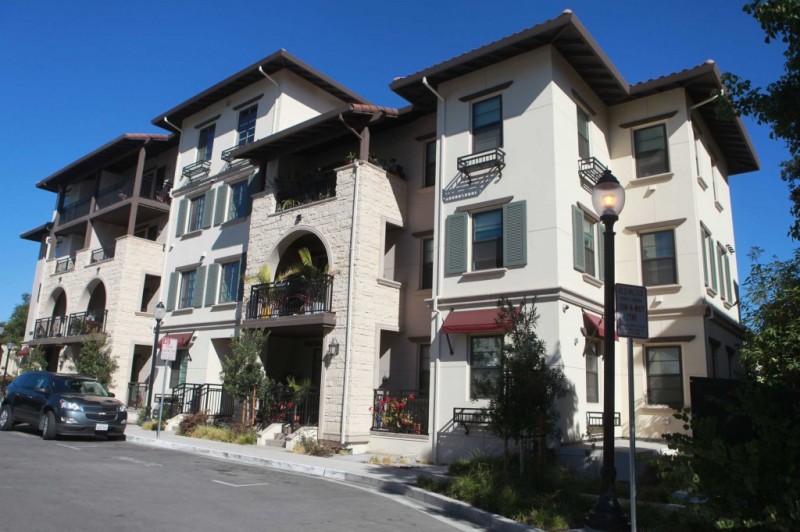
It seems that almost everyone in the Bay Area has a housing horror story to tell. Anecdotes abound of renters spending months looking for a new place, and the pound of flesh extracted when they do find one. Equally scary are the stories from aspiring, seemingly qualified homeowners who are turned away by banks.
Throughout 2014, KQED brought out the facts and stories behind the Bay Area housing crisis as part of our series called ‘Priced Out.’ We told the stories of people struggling and surviving amidst the increasing cost of living. We examined the changing neighborhoods and cities in the Bay Area, looked at who is getting evicted and why, as well as the potential solutions that have emerged.
Without New Lease, More Than 70 Mission Dist. Artists Face Displacement
Uprooted: Artists Respond to San Francisco’s Black Exodus
Renters Struggle to Keep Up in Menlo Park’s Belle Haven Neighborhood
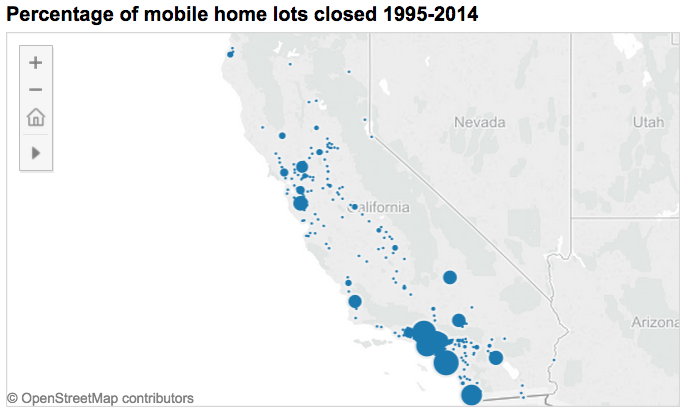
Mobile Home Parks: A Vanishing Source of Affordable Housing
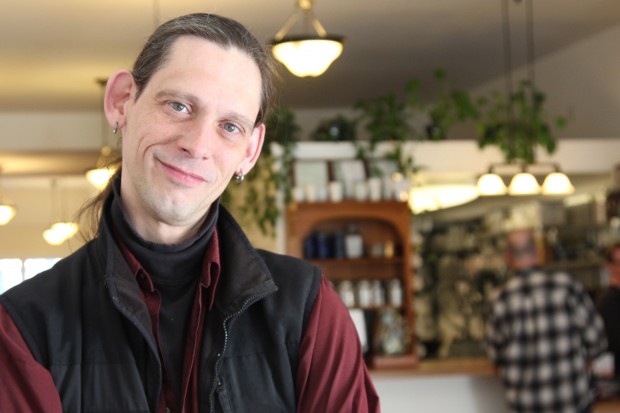
San Francisco's Borderlands Bookstore Will Try Sponsorship Model to Stay Open
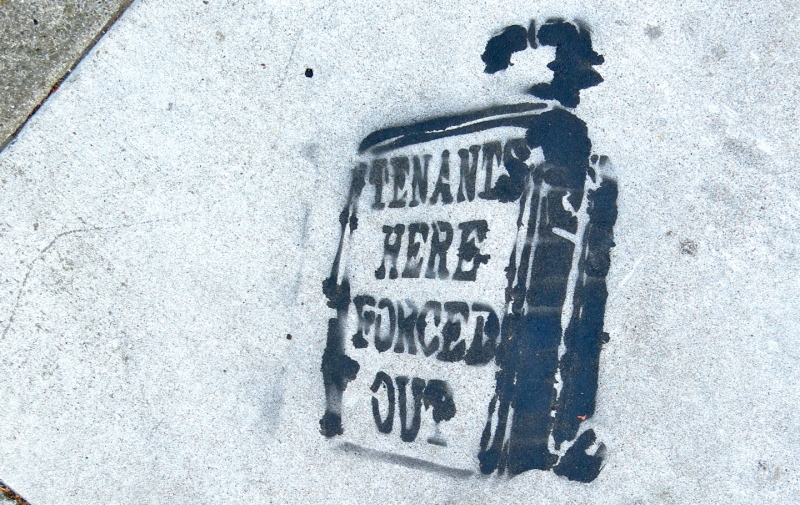
Know Your Housing Rights: When Eviction is Legal and When It Isn't
Forgotten Area Between Atherton and Redwood City Seeks Revitalization
Santa Clara County's Homeless Hope for Hotel Rooms After Shelter Closes
Despite Bay Area Boom, a Widespread Need for Food Aid as Holidays Approach
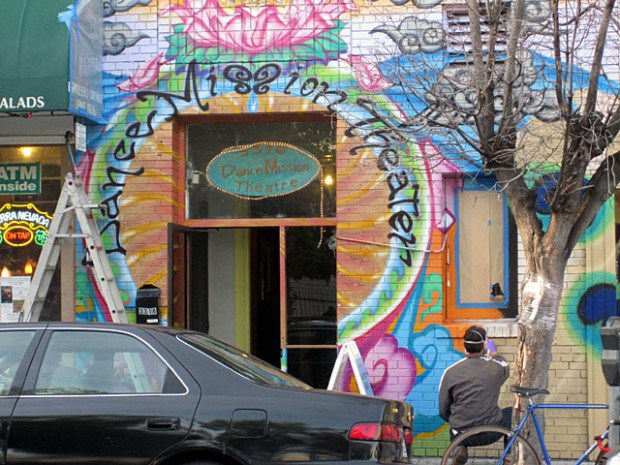
Rent Hike For Dance Mission Theater Has Artists Worried About Uncertain Future
Homeless Evicted From 'The Jungle' in San Jose
Mountain View May Raise Developer Fees to Fund Affordable Housing
window.__IS_SSR__=true
window.__INITIAL_STATE__={
"attachmentsReducer": {
"audio_0": {
"type": "attachments",
"id": "audio_0",
"imgSizes": {
"kqedFullSize": {
"file": "https://ww2.kqed.org/news/wp-content/themes/KQED-unified/img/audio_bgs/background0.jpg"
}
}
},
"audio_1": {
"type": "attachments",
"id": "audio_1",
"imgSizes": {
"kqedFullSize": {
"file": "https://ww2.kqed.org/news/wp-content/themes/KQED-unified/img/audio_bgs/background1.jpg"
}
}
},
"audio_2": {
"type": "attachments",
"id": "audio_2",
"imgSizes": {
"kqedFullSize": {
"file": "https://ww2.kqed.org/news/wp-content/themes/KQED-unified/img/audio_bgs/background2.jpg"
}
}
},
"audio_3": {
"type": "attachments",
"id": "audio_3",
"imgSizes": {
"kqedFullSize": {
"file": "https://ww2.kqed.org/news/wp-content/themes/KQED-unified/img/audio_bgs/background3.jpg"
}
}
},
"audio_4": {
"type": "attachments",
"id": "audio_4",
"imgSizes": {
"kqedFullSize": {
"file": "https://ww2.kqed.org/news/wp-content/themes/KQED-unified/img/audio_bgs/background4.jpg"
}
}
},
"placeholder": {
"type": "attachments",
"id": "placeholder",
"imgSizes": {
"thumbnail": {
"file": "https://cdn.kqed.org/wp-content/uploads/2024/12/KQED-Default-Image-816638274-2000x1333-1-160x107.jpg",
"width": 160,
"height": 107,
"mimeType": "image/jpeg"
},
"medium": {
"file": "https://cdn.kqed.org/wp-content/uploads/2024/12/KQED-Default-Image-816638274-2000x1333-1-800x533.jpg",
"width": 800,
"height": 533,
"mimeType": "image/jpeg"
},
"medium_large": {
"file": "https://cdn.kqed.org/wp-content/uploads/2024/12/KQED-Default-Image-816638274-2000x1333-1-768x512.jpg",
"width": 768,
"height": 512,
"mimeType": "image/jpeg"
},
"large": {
"file": "https://cdn.kqed.org/wp-content/uploads/2024/12/KQED-Default-Image-816638274-2000x1333-1-1020x680.jpg",
"width": 1020,
"height": 680,
"mimeType": "image/jpeg"
},
"1536x1536": {
"file": "https://cdn.kqed.org/wp-content/uploads/2024/12/KQED-Default-Image-816638274-2000x1333-1-1536x1024.jpg",
"width": 1536,
"height": 1024,
"mimeType": "image/jpeg"
},
"fd-lrg": {
"file": "https://cdn.kqed.org/wp-content/uploads/2024/12/KQED-Default-Image-816638274-2000x1333-1-1536x1024.jpg",
"width": 1536,
"height": 1024,
"mimeType": "image/jpeg"
},
"fd-med": {
"file": "https://cdn.kqed.org/wp-content/uploads/2024/12/KQED-Default-Image-816638274-2000x1333-1-1020x680.jpg",
"width": 1020,
"height": 680,
"mimeType": "image/jpeg"
},
"fd-sm": {
"file": "https://cdn.kqed.org/wp-content/uploads/2024/12/KQED-Default-Image-816638274-2000x1333-1-800x533.jpg",
"width": 800,
"height": 533,
"mimeType": "image/jpeg"
},
"post-thumbnail": {
"file": "https://cdn.kqed.org/wp-content/uploads/2024/12/KQED-Default-Image-816638274-2000x1333-1-672x372.jpg",
"width": 672,
"height": 372,
"mimeType": "image/jpeg"
},
"twentyfourteen-full-width": {
"file": "https://cdn.kqed.org/wp-content/uploads/2024/12/KQED-Default-Image-816638274-2000x1333-1-1038x576.jpg",
"width": 1038,
"height": 576,
"mimeType": "image/jpeg"
},
"xxsmall": {
"file": "https://cdn.kqed.org/wp-content/uploads/2024/12/KQED-Default-Image-816638274-2000x1333-1-160x107.jpg",
"width": 160,
"height": 107,
"mimeType": "image/jpeg"
},
"xsmall": {
"file": "https://cdn.kqed.org/wp-content/uploads/2024/12/KQED-Default-Image-816638274-2000x1333-1-672x372.jpg",
"width": 672,
"height": 372,
"mimeType": "image/jpeg"
},
"small": {
"file": "https://cdn.kqed.org/wp-content/uploads/2024/12/KQED-Default-Image-816638274-2000x1333-1-672x372.jpg",
"width": 672,
"height": 372,
"mimeType": "image/jpeg"
},
"xlarge": {
"file": "https://cdn.kqed.org/wp-content/uploads/2024/12/KQED-Default-Image-816638274-2000x1333-1-1020x680.jpg",
"width": 1020,
"height": 680,
"mimeType": "image/jpeg"
},
"full-width": {
"file": "https://cdn.kqed.org/wp-content/uploads/2024/12/KQED-Default-Image-816638274-2000x1333-1-1920x1280.jpg",
"width": 1920,
"height": 1280,
"mimeType": "image/jpeg"
},
"guest-author-32": {
"file": "https://cdn.kqed.org/wp-content/uploads/2025/01/KQED-Default-Image-816638274-1333x1333-1-160x160.jpg",
"width": 32,
"height": 32,
"mimeType": "image/jpeg"
},
"guest-author-50": {
"file": "https://cdn.kqed.org/wp-content/uploads/2025/01/KQED-Default-Image-816638274-1333x1333-1-160x160.jpg",
"width": 50,
"height": 50,
"mimeType": "image/jpeg"
},
"guest-author-64": {
"file": "https://cdn.kqed.org/wp-content/uploads/2025/01/KQED-Default-Image-816638274-1333x1333-1-160x160.jpg",
"width": 64,
"height": 64,
"mimeType": "image/jpeg"
},
"guest-author-96": {
"file": "https://cdn.kqed.org/wp-content/uploads/2025/01/KQED-Default-Image-816638274-1333x1333-1-160x160.jpg",
"width": 96,
"height": 96,
"mimeType": "image/jpeg"
},
"guest-author-128": {
"file": "https://cdn.kqed.org/wp-content/uploads/2025/01/KQED-Default-Image-816638274-1333x1333-1-160x160.jpg",
"width": 128,
"height": 128,
"mimeType": "image/jpeg"
},
"detail": {
"file": "https://cdn.kqed.org/wp-content/uploads/2025/01/KQED-Default-Image-816638274-1333x1333-1-160x160.jpg",
"width": 160,
"height": 160,
"mimeType": "image/jpeg"
},
"kqedFullSize": {
"file": "https://cdn.kqed.org/wp-content/uploads/2024/12/KQED-Default-Image-816638274-2000x1333-1.jpg",
"width": 2000,
"height": 1333
}
}
},
"arts_10567055": {
"type": "attachments",
"id": "arts_10567055",
"meta": {
"index": "attachments_1716263798",
"site": "arts",
"id": "10567055",
"found": true
},
"parent": 10567053,
"imgSizes": {
"twentyfourteen-full-width": {
"file": "https://ww2.kqed.org/app/uploads/sites/2/2015/04/Redlick-1038x576.jpg",
"width": 1038,
"mimeType": "image/jpeg",
"height": 576
},
"thumbnail": {
"file": "https://ww2.kqed.org/app/uploads/sites/2/2015/04/Redlick-400x225.jpg",
"width": 400,
"mimeType": "image/jpeg",
"height": 225
},
"fd-sm": {
"file": "https://ww2.kqed.org/app/uploads/sites/2/2015/04/Redlick-320x180.jpg",
"width": 320,
"mimeType": "image/jpeg",
"height": 180
},
"post-thumbnail": {
"file": "https://ww2.kqed.org/app/uploads/sites/2/2015/04/Redlick-672x372.jpg",
"width": 672,
"mimeType": "image/jpeg",
"height": 372
},
"kqedFullSize": {
"file": "https://ww2.kqed.org/app/uploads/sites/2/2015/04/Redlick.jpg",
"width": 1920,
"height": 1080
},
"large": {
"file": "https://ww2.kqed.org/app/uploads/sites/2/2015/04/Redlick-1180x664.jpg",
"width": 1180,
"mimeType": "image/jpeg",
"height": 664
},
"guest-author-96": {
"file": "https://ww2.kqed.org/app/uploads/sites/2/2015/04/Redlick-96x96.jpg",
"width": 96,
"mimeType": "image/jpeg",
"height": 96
},
"medium": {
"file": "https://ww2.kqed.org/app/uploads/sites/2/2015/04/Redlick-800x450.jpg",
"width": 800,
"mimeType": "image/jpeg",
"height": 450
},
"guest-author-64": {
"file": "https://ww2.kqed.org/app/uploads/sites/2/2015/04/Redlick-64x64.jpg",
"width": 64,
"mimeType": "image/jpeg",
"height": 64
},
"guest-author-32": {
"file": "https://ww2.kqed.org/app/uploads/sites/2/2015/04/Redlick-32x32.jpg",
"width": 32,
"mimeType": "image/jpeg",
"height": 32
},
"fd-lrg": {
"file": "https://ww2.kqed.org/app/uploads/sites/2/2015/04/Redlick-1180x664.jpg",
"width": 1180,
"mimeType": "image/jpeg",
"height": 664
},
"fd-med": {
"file": "https://ww2.kqed.org/app/uploads/sites/2/2015/04/Redlick-768x432.jpg",
"width": 768,
"mimeType": "image/jpeg",
"height": 432
},
"detail": {
"file": "https://ww2.kqed.org/app/uploads/sites/2/2015/04/Redlick-75x75.jpg",
"width": 75,
"mimeType": "image/jpeg",
"height": 75
},
"guest-author-128": {
"file": "https://ww2.kqed.org/app/uploads/sites/2/2015/04/Redlick-128x128.jpg",
"width": 128,
"mimeType": "image/jpeg",
"height": 128
}
},
"publishDate": 1429260356,
"modified": 1429260367,
"caption": "The Redlick Building at 17th and Capp. (Courtesy of Studio 17)",
"description": null,
"title": "Redlick",
"credit": null,
"status": "inherit",
"isLoading": false,
"fetchFailed": false
},
"arts_10527453": {
"type": "attachments",
"id": "arts_10527453",
"meta": {
"index": "attachments_1716263798",
"site": "arts",
"id": "10527453",
"found": true
},
"parent": 10523872,
"imgSizes": {
"thumbnail": {
"file": "https://ww2.kqed.org/app/uploads/sites/2/2015/04/NancyArt-sm-400x225.jpg",
"width": 400,
"mimeType": "image/jpeg",
"height": 225
},
"fd-sm": {
"file": "https://ww2.kqed.org/app/uploads/sites/2/2015/04/NancyArt-sm-320x180.jpg",
"width": 320,
"mimeType": "image/jpeg",
"height": 180
},
"post-thumbnail": {
"file": "https://ww2.kqed.org/app/uploads/sites/2/2015/04/NancyArt-sm-672x372.jpg",
"width": 672,
"mimeType": "image/jpeg",
"height": 372
},
"kqedFullSize": {
"file": "https://ww2.kqed.org/app/uploads/sites/2/2015/04/NancyArt-sm.jpg",
"width": 800,
"height": 450
},
"fd-med": {
"file": "https://ww2.kqed.org/app/uploads/sites/2/2015/04/NancyArt-sm-768x432.jpg",
"width": 768,
"mimeType": "image/jpeg",
"height": 432
},
"guest-author-96": {
"file": "https://ww2.kqed.org/app/uploads/sites/2/2015/04/NancyArt-sm-96x96.jpg",
"width": 96,
"mimeType": "image/jpeg",
"height": 96
},
"medium": {
"file": "https://ww2.kqed.org/app/uploads/sites/2/2015/04/NancyArt-sm-800x450.jpg",
"width": 800,
"mimeType": "image/jpeg",
"height": 450
},
"guest-author-64": {
"file": "https://ww2.kqed.org/app/uploads/sites/2/2015/04/NancyArt-sm-64x64.jpg",
"width": 64,
"mimeType": "image/jpeg",
"height": 64
},
"detail": {
"file": "https://ww2.kqed.org/app/uploads/sites/2/2015/04/NancyArt-sm-75x75.jpg",
"width": 75,
"mimeType": "image/jpeg",
"height": 75
},
"guest-author-32": {
"file": "https://ww2.kqed.org/app/uploads/sites/2/2015/04/NancyArt-sm-32x32.jpg",
"width": 32,
"mimeType": "image/jpeg",
"height": 32
},
"guest-author-128": {
"file": "https://ww2.kqed.org/app/uploads/sites/2/2015/04/NancyArt-sm-128x128.jpg",
"width": 128,
"mimeType": "image/jpeg",
"height": 128
}
},
"publishDate": 1428033282,
"modified": 1428033282,
"caption": null,
"description": null,
"title": "NancyArt-sm",
"credit": null,
"status": "inherit",
"isLoading": false,
"fetchFailed": false
},
"news_10453776": {
"type": "attachments",
"id": "news_10453776",
"meta": {
"index": "attachments_1716263798",
"site": "news",
"id": "10453776",
"found": true
},
"parent": 10453771,
"imgSizes": {
"twentyfourteen-full-width": {
"file": "https://ww2.kqed.org/app/uploads/sites/10/2015/03/garage-for-rent-1038x576.jpg",
"width": 1038,
"mimeType": "image/jpeg",
"height": 576
},
"thumbnail": {
"file": "https://ww2.kqed.org/app/uploads/sites/10/2015/03/garage-for-rent-400x236.jpg",
"width": 400,
"mimeType": "image/jpeg",
"height": 236
},
"fd-sm": {
"file": "https://ww2.kqed.org/app/uploads/sites/10/2015/03/garage-for-rent-320x189.jpg",
"width": 320,
"mimeType": "image/jpeg",
"height": 189
},
"post-thumbnail": {
"file": "https://ww2.kqed.org/app/uploads/sites/10/2015/03/garage-for-rent-672x372.jpg",
"width": 672,
"mimeType": "image/jpeg",
"height": 372
},
"kqedFullSize": {
"file": "https://ww2.kqed.org/app/uploads/sites/10/2015/03/garage-for-rent.jpg",
"width": 3202,
"height": 1888
},
"large": {
"file": "https://ww2.kqed.org/app/uploads/sites/10/2015/03/garage-for-rent-1440x849.jpg",
"width": 1440,
"mimeType": "image/jpeg",
"height": 849
},
"guest-author-96": {
"file": "https://ww2.kqed.org/app/uploads/sites/10/2015/03/garage-for-rent-96x96.jpg",
"width": 96,
"mimeType": "image/jpeg",
"height": 96
},
"medium": {
"file": "https://ww2.kqed.org/app/uploads/sites/10/2015/03/garage-for-rent-800x472.jpg",
"width": 800,
"mimeType": "image/jpeg",
"height": 472
},
"guest-author-64": {
"file": "https://ww2.kqed.org/app/uploads/sites/10/2015/03/garage-for-rent-64x64.jpg",
"width": 64,
"mimeType": "image/jpeg",
"height": 64
},
"guest-author-32": {
"file": "https://ww2.kqed.org/app/uploads/sites/10/2015/03/garage-for-rent-32x32.jpg",
"width": 32,
"mimeType": "image/jpeg",
"height": 32
},
"fd-lrg": {
"file": "https://ww2.kqed.org/app/uploads/sites/10/2015/03/garage-for-rent-1180x696.jpg",
"width": 1180,
"mimeType": "image/jpeg",
"height": 696
},
"fd-med": {
"file": "https://ww2.kqed.org/app/uploads/sites/10/2015/03/garage-for-rent-768x453.jpg",
"width": 768,
"mimeType": "image/jpeg",
"height": 453
},
"detail": {
"file": "https://ww2.kqed.org/app/uploads/sites/10/2015/03/garage-for-rent-75x75.jpg",
"width": 75,
"mimeType": "image/jpeg",
"height": 75
},
"guest-author-128": {
"file": "https://ww2.kqed.org/app/uploads/sites/10/2015/03/garage-for-rent-128x128.jpg",
"width": 128,
"mimeType": "image/jpeg",
"height": 128
}
},
"publishDate": 1426190773,
"modified": 1426190798,
"caption": "A billboard at a Belle Haven grocery store advertises garages for rent on Jan. 13, 2015. Prices can go over $1,000, even though most garages here are illegally converted, according to Menlo Park Police. ",
"description": "A billboard at a Belle Haven grocery store advertises garages for rent on Jan. 13, 2015. Prices can go over $1,000, even though most garages here are illegally converted, according to Menlo Park Police. ",
"title": "garage for rent",
"credit": "Farida Jhabvala Romero/ Peninsula Press",
"status": "inherit",
"isLoading": false,
"fetchFailed": false
},
"news_10453766": {
"type": "attachments",
"id": "news_10453766",
"meta": {
"index": "attachments_1716263798",
"site": "news",
"id": "10453766",
"found": true
},
"parent": 10453765,
"imgSizes": {
"thumbnail": {
"file": "https://ww2.kqed.org/app/uploads/sites/10/2015/03/mobile-home-map-400x242.png",
"width": 400,
"mimeType": "image/png",
"height": 242
},
"fd-sm": {
"file": "https://ww2.kqed.org/app/uploads/sites/10/2015/03/mobile-home-map-320x194.png",
"width": 320,
"mimeType": "image/png",
"height": 194
},
"post-thumbnail": {
"file": "https://ww2.kqed.org/app/uploads/sites/10/2015/03/mobile-home-map-672x372.png",
"width": 672,
"mimeType": "image/png",
"height": 372
},
"kqedFullSize": {
"file": "https://ww2.kqed.org/app/uploads/sites/10/2015/03/mobile-home-map.png",
"width": 686,
"height": 415
},
"guest-author-96": {
"file": "https://ww2.kqed.org/app/uploads/sites/10/2015/03/mobile-home-map-96x96.png",
"width": 96,
"mimeType": "image/png",
"height": 96
},
"guest-author-64": {
"file": "https://ww2.kqed.org/app/uploads/sites/10/2015/03/mobile-home-map-64x64.png",
"width": 64,
"mimeType": "image/png",
"height": 64
},
"detail": {
"file": "https://ww2.kqed.org/app/uploads/sites/10/2015/03/mobile-home-map-75x75.png",
"width": 75,
"mimeType": "image/png",
"height": 75
},
"guest-author-32": {
"file": "https://ww2.kqed.org/app/uploads/sites/10/2015/03/mobile-home-map-32x32.png",
"width": 32,
"mimeType": "image/png",
"height": 32
},
"guest-author-128": {
"file": "https://ww2.kqed.org/app/uploads/sites/10/2015/03/mobile-home-map-128x128.png",
"width": 128,
"mimeType": "image/png",
"height": 128
}
},
"publishDate": 1426189427,
"modified": 1426189478,
"caption": "Mobile home lots closed across California. \u003ca href=\"https://public.tableau.com/profile/publish/MobileHomeStoryVis/Dashboard1#!/publish-confirm\">CLICK\u003c/a> to launch full interactive graphic. ",
"description": null,
"title": "mobile home map",
"credit": "(Data visualization by Katie Kramon/Peninsula Press)",
"status": "inherit",
"isLoading": false,
"fetchFailed": false
},
"news_10438731": {
"type": "attachments",
"id": "news_10438731",
"meta": {
"index": "attachments_1716263798",
"site": "news",
"id": "10438731",
"found": true
},
"parent": 10438730,
"imgSizes": {
"thumbnail": {
"file": "https://ww2.kqed.org/app/uploads/sites/10/2015/02/Alan-Beatts-400x266.jpg",
"width": 400,
"mimeType": "image/jpeg",
"height": 266
},
"post-thumbnail": {
"file": "https://ww2.kqed.org/app/uploads/sites/10/2015/02/Alan-Beatts-620x372.jpg",
"width": 620,
"mimeType": "image/jpeg",
"height": 372
},
"kqedFullSize": {
"file": "https://ww2.kqed.org/app/uploads/sites/10/2015/02/Alan-Beatts.jpg",
"width": 620,
"height": 413
},
"guest-author-96": {
"file": "https://ww2.kqed.org/app/uploads/sites/10/2015/02/Alan-Beatts-96x96.jpg",
"width": 96,
"mimeType": "image/jpeg",
"height": 96
},
"guest-author-64": {
"file": "https://ww2.kqed.org/app/uploads/sites/10/2015/02/Alan-Beatts-64x64.jpg",
"width": 64,
"mimeType": "image/jpeg",
"height": 64
},
"detail": {
"file": "https://ww2.kqed.org/app/uploads/sites/10/2015/02/Alan-Beatts-75x75.jpg",
"width": 75,
"mimeType": "image/jpeg",
"height": 75
},
"guest-author-32": {
"file": "https://ww2.kqed.org/app/uploads/sites/10/2015/02/Alan-Beatts-32x32.jpg",
"width": 32,
"mimeType": "image/jpeg",
"height": 32
},
"guest-author-128": {
"file": "https://ww2.kqed.org/app/uploads/sites/10/2015/02/Alan-Beatts-128x128.jpg",
"width": 128,
"mimeType": "image/jpeg",
"height": 128
}
},
"publishDate": 1424465726,
"modified": 1424465751,
"caption": "Alan Beatts, owner of Borderlands Books and neighboring Borderlands Cafe. ",
"description": "Alan Beatts, owner of Borderlands Books and neighboring Borderlands Cafe. ",
"title": "Alan Beatts",
"credit": "Yousur Alhlou/Mission Local",
"status": "inherit",
"isLoading": false,
"fetchFailed": false
},
"news_10400470": {
"type": "attachments",
"id": "news_10400470",
"meta": {
"index": "attachments_1716263798",
"site": "news",
"id": "10400470",
"found": true
},
"parent": 10400427,
"imgSizes": {
"twentyfourteen-full-width": {
"file": "https://ww2.kqed.org/app/uploads/sites/10/2015/01/eviction-1038x576.jpg",
"width": 1038,
"mimeType": "image/jpeg",
"height": 576
},
"thumbnail": {
"file": "https://ww2.kqed.org/app/uploads/sites/10/2015/01/eviction-400x252.jpg",
"width": 400,
"mimeType": "image/jpeg",
"height": 252
},
"post-thumbnail": {
"file": "https://ww2.kqed.org/app/uploads/sites/10/2015/01/eviction-672x372.jpg",
"width": 672,
"mimeType": "image/jpeg",
"height": 372
},
"kqedFullSize": {
"file": "https://ww2.kqed.org/app/uploads/sites/10/2015/01/eviction.jpg",
"width": 1440,
"height": 910
},
"guest-author-96": {
"file": "https://ww2.kqed.org/app/uploads/sites/10/2015/01/eviction-96x96.jpg",
"width": 96,
"mimeType": "image/jpeg",
"height": 96
},
"medium": {
"file": "https://ww2.kqed.org/app/uploads/sites/10/2015/01/eviction-800x505.jpg",
"width": 800,
"mimeType": "image/jpeg",
"height": 505
},
"guest-author-64": {
"file": "https://ww2.kqed.org/app/uploads/sites/10/2015/01/eviction-64x64.jpg",
"width": 64,
"mimeType": "image/jpeg",
"height": 64
},
"detail": {
"file": "https://ww2.kqed.org/app/uploads/sites/10/2015/01/eviction-75x75.jpg",
"width": 75,
"mimeType": "image/jpeg",
"height": 75
},
"guest-author-32": {
"file": "https://ww2.kqed.org/app/uploads/sites/10/2015/01/eviction-32x32.jpg",
"width": 32,
"mimeType": "image/jpeg",
"height": 32
},
"guest-author-128": {
"file": "https://ww2.kqed.org/app/uploads/sites/10/2015/01/eviction-128x128.jpg",
"width": 128,
"mimeType": "image/jpeg",
"height": 128
}
},
"publishDate": 1420659027,
"modified": 1432858453,
"caption": "An anti-eviction piece in the Castro District of San Francisco. (torbakhopper/Flickr)",
"description": null,
"title": "San Francisco-Evictions",
"credit": null,
"status": "inherit",
"isLoading": false,
"fetchFailed": false
},
"news_10387482": {
"type": "attachments",
"id": "news_10387482",
"meta": {
"index": "attachments_1716263798",
"site": "news",
"id": "10387482",
"found": true
},
"parent": 10387481,
"imgSizes": {
"thumbnail": {
"file": "https://ww2.kqed.org/app/uploads/sites/10/2014/12/middlefield-400x213.jpg",
"width": 400,
"mimeType": "image/jpeg",
"height": 213
},
"post-thumbnail": {
"file": "https://ww2.kqed.org/app/uploads/sites/10/2014/12/middlefield-672x372.jpg",
"width": 672,
"mimeType": "image/jpeg",
"height": 372
},
"kqedFullSize": {
"file": "https://ww2.kqed.org/app/uploads/sites/10/2014/12/middlefield.jpg",
"width": 1024,
"height": 547
},
"guest-author-96": {
"file": "https://ww2.kqed.org/app/uploads/sites/10/2014/12/middlefield-96x96.jpg",
"width": 96,
"mimeType": "image/jpeg",
"height": 96
},
"medium": {
"file": "https://ww2.kqed.org/app/uploads/sites/10/2014/12/middlefield-800x427.jpg",
"width": 800,
"mimeType": "image/jpeg",
"height": 427
},
"guest-author-64": {
"file": "https://ww2.kqed.org/app/uploads/sites/10/2014/12/middlefield-64x64.jpg",
"width": 64,
"mimeType": "image/jpeg",
"height": 64
},
"detail": {
"file": "https://ww2.kqed.org/app/uploads/sites/10/2014/12/middlefield-75x75.jpg",
"width": 75,
"mimeType": "image/jpeg",
"height": 75
},
"guest-author-32": {
"file": "https://ww2.kqed.org/app/uploads/sites/10/2014/12/middlefield-32x32.jpg",
"width": 32,
"mimeType": "image/jpeg",
"height": 32
},
"guest-author-128": {
"file": "https://ww2.kqed.org/app/uploads/sites/10/2014/12/middlefield-128x128.jpg",
"width": 128,
"mimeType": "image/jpeg",
"height": 128
}
},
"publishDate": 1419367349,
"modified": 1606942659,
"caption": "Colorful storefronts line parts of Middlefield Road, in North Fair Oaks, California. (Allison McCartney/Peninsula Press)",
"description": "Colorful storefronts line parts of Middlefield Road, in North Fair Oaks, Calif. (Allison McCartney/Peninsula Press)",
"title": "middlefield",
"credit": null,
"status": "inherit",
"isLoading": false,
"fetchFailed": false
},
"news_10387475": {
"type": "attachments",
"id": "news_10387475",
"meta": {
"index": "attachments_1716263798",
"site": "news",
"id": "10387475",
"found": true
},
"parent": 10387444,
"imgSizes": {
"twentyfourteen-full-width": {
"file": "https://ww2.kqed.org/app/uploads/sites/10/2014/12/Patrick-and-Sandra-1024x576.jpg",
"width": 1024,
"mimeType": "image/jpeg",
"height": 576
},
"thumbnail": {
"file": "https://ww2.kqed.org/app/uploads/sites/10/2014/12/Patrick-and-Sandra-400x266.jpg",
"width": 400,
"mimeType": "image/jpeg",
"height": 266
},
"post-thumbnail": {
"file": "https://ww2.kqed.org/app/uploads/sites/10/2014/12/Patrick-and-Sandra-672x372.jpg",
"width": 672,
"mimeType": "image/jpeg",
"height": 372
},
"kqedFullSize": {
"file": "https://ww2.kqed.org/app/uploads/sites/10/2014/12/Patrick-and-Sandra.jpg",
"width": 1024,
"height": 682
},
"guest-author-96": {
"file": "https://ww2.kqed.org/app/uploads/sites/10/2014/12/Patrick-and-Sandra-96x96.jpg",
"width": 96,
"mimeType": "image/jpeg",
"height": 96
},
"medium": {
"file": "https://ww2.kqed.org/app/uploads/sites/10/2014/12/Patrick-and-Sandra-800x532.jpg",
"width": 800,
"mimeType": "image/jpeg",
"height": 532
},
"guest-author-64": {
"file": "https://ww2.kqed.org/app/uploads/sites/10/2014/12/Patrick-and-Sandra-64x64.jpg",
"width": 64,
"mimeType": "image/jpeg",
"height": 64
},
"detail": {
"file": "https://ww2.kqed.org/app/uploads/sites/10/2014/12/Patrick-and-Sandra-75x75.jpg",
"width": 75,
"mimeType": "image/jpeg",
"height": 75
},
"guest-author-32": {
"file": "https://ww2.kqed.org/app/uploads/sites/10/2014/12/Patrick-and-Sandra-32x32.jpg",
"width": 32,
"mimeType": "image/jpeg",
"height": 32
},
"guest-author-128": {
"file": "https://ww2.kqed.org/app/uploads/sites/10/2014/12/Patrick-and-Sandra-128x128.jpg",
"width": 128,
"mimeType": "image/jpeg",
"height": 128
}
},
"publishDate": 1419366005,
"modified": 1419366025,
"caption": "Patrick and Sandra Scott, both 62, play with their dog Pepper in a motel room in Santa Clara, on Dec. 13, 2014. They were placed into a motel after being homeless for almost a year. (Yuqing Pan/Peninsula Press)",
"description": "Patrick and Sandra Scott, both 62, play with their dog Pepper in a motel room in Santa Clara, on Dec. 13, 2014. They were placed into a motel after being homeless for almost a year. (Yuqing Pan/Peninsula Press)",
"title": "Patrick and Sandra",
"credit": null,
"status": "inherit",
"isLoading": false,
"fetchFailed": false
},
"news_10357454": {
"type": "attachments",
"id": "news_10357454",
"meta": {
"index": "attachments_1716263798",
"site": "news",
"id": "10357454",
"found": true
},
"parent": 10357385,
"imgSizes": {
"twentyfourteen-full-width": {
"file": "https://ww2.kqed.org/app/uploads/sites/10/2014/11/Isaac-Neely-1038x576.jpeg",
"width": 1038,
"mimeType": "image/jpeg",
"height": 576
},
"thumbnail": {
"file": "https://ww2.kqed.org/app/uploads/sites/10/2014/11/Isaac-Neely-400x300.jpeg",
"width": 400,
"mimeType": "image/jpeg",
"height": 300
},
"post-thumbnail": {
"file": "https://ww2.kqed.org/app/uploads/sites/10/2014/11/Isaac-Neely-672x372.jpeg",
"width": 672,
"mimeType": "image/jpeg",
"height": 372
},
"kqedFullSize": {
"file": "https://ww2.kqed.org/app/uploads/sites/10/2014/11/Isaac-Neely-e1417037717580.jpeg",
"width": 1440,
"height": 1080
},
"large": {
"file": "https://ww2.kqed.org/app/uploads/sites/10/2014/11/Isaac-Neely-1440x1080.jpeg",
"width": 1440,
"mimeType": "image/jpeg",
"height": 1080
},
"guest-author-96": {
"file": "https://ww2.kqed.org/app/uploads/sites/10/2014/11/Isaac-Neely-96x96.jpeg",
"width": 96,
"mimeType": "image/jpeg",
"height": 96
},
"medium": {
"file": "https://ww2.kqed.org/app/uploads/sites/10/2014/11/Isaac-Neely-800x600.jpeg",
"width": 800,
"mimeType": "image/jpeg",
"height": 600
},
"guest-author-64": {
"file": "https://ww2.kqed.org/app/uploads/sites/10/2014/11/Isaac-Neely-64x64.jpeg",
"width": 64,
"mimeType": "image/jpeg",
"height": 64
},
"detail": {
"file": "https://ww2.kqed.org/app/uploads/sites/10/2014/11/Isaac-Neely-75x75.jpeg",
"width": 75,
"mimeType": "image/jpeg",
"height": 75
},
"guest-author-32": {
"file": "https://ww2.kqed.org/app/uploads/sites/10/2014/11/Isaac-Neely-32x32.jpeg",
"width": 32,
"mimeType": "image/jpeg",
"height": 32
},
"guest-author-128": {
"file": "https://ww2.kqed.org/app/uploads/sites/10/2014/11/Isaac-Neely-128x128.jpeg",
"width": 128,
"mimeType": "image/jpeg",
"height": 128
}
},
"publishDate": 1417037678,
"modified": 1417045710,
"caption": "Isaac Neely at work in the SF-Marin Food Bank's Potrero Hill warehouse. (Sean McGrier/KQED)",
"description": "Isaac Neely works in the San Francisco-Marin Food Bank's Potrero Hill warehouse. Neely and his colleagues have been working since 3 a.m. to help prepare for what's expected to be a busy Thanksgiving Day for the food bank. (Sean McGrier/KQED)",
"title": "Isaac Neely",
"credit": null,
"status": "inherit",
"isLoading": false,
"fetchFailed": false
},
"news_10384033": {
"type": "attachments",
"id": "news_10384033",
"meta": {
"index": "attachments_1716263798",
"site": "news",
"id": "10384033",
"found": true
},
"parent": 10384028,
"imgSizes": {
"thumbnail": {
"file": "https://ww2.kqed.org/app/uploads/sites/10/2014/12/missiondance4okay-620x465-400x300.jpg",
"width": 400,
"mimeType": "image/jpeg",
"height": 300
},
"post-thumbnail": {
"file": "https://ww2.kqed.org/app/uploads/sites/10/2014/12/missiondance4okay-620x465-620x372.jpg",
"width": 620,
"mimeType": "image/jpeg",
"height": 372
},
"kqedFullSize": {
"file": "https://ww2.kqed.org/app/uploads/sites/10/2014/12/missiondance4okay-620x465.jpg",
"width": 620,
"height": 465
},
"guest-author-96": {
"file": "https://ww2.kqed.org/app/uploads/sites/10/2014/12/missiondance4okay-620x465-96x96.jpg",
"width": 96,
"mimeType": "image/jpeg",
"height": 96
},
"guest-author-64": {
"file": "https://ww2.kqed.org/app/uploads/sites/10/2014/12/missiondance4okay-620x465-64x64.jpg",
"width": 64,
"mimeType": "image/jpeg",
"height": 64
},
"detail": {
"file": "https://ww2.kqed.org/app/uploads/sites/10/2014/12/missiondance4okay-620x465-75x75.jpg",
"width": 75,
"mimeType": "image/jpeg",
"height": 75
},
"guest-author-32": {
"file": "https://ww2.kqed.org/app/uploads/sites/10/2014/12/missiondance4okay-620x465-32x32.jpg",
"width": 32,
"mimeType": "image/jpeg",
"height": 32
},
"guest-author-128": {
"file": "https://ww2.kqed.org/app/uploads/sites/10/2014/12/missiondance4okay-620x465-128x128.jpg",
"width": 128,
"mimeType": "image/jpeg",
"height": 128
}
},
"publishDate": 1419016520,
"modified": 1419016564,
"caption": "Dance Mission Theater (Lydia ChavezMission Local)",
"description": "Dance Mission Theater (Lydia ChavezMission Local)",
"title": "missiondance4okay-620x465",
"credit": null,
"status": "inherit",
"isLoading": false,
"fetchFailed": false
},
"news_10367265": {
"type": "attachments",
"id": "news_10367265",
"meta": {
"index": "attachments_1716263798",
"site": "news",
"id": "10367265",
"found": true
},
"parent": 10367260,
"imgSizes": {
"twentyfourteen-full-width": {
"file": "https://ww2.kqed.org/app/uploads/sites/10/2014/12/RS13351_20141203_jungle_jt_013-scr-1038x576.jpg",
"width": 1038,
"mimeType": "image/jpeg",
"height": 576
},
"thumbnail": {
"file": "https://ww2.kqed.org/app/uploads/sites/10/2014/12/RS13351_20141203_jungle_jt_013-scr-400x266.jpg",
"width": 400,
"mimeType": "image/jpeg",
"height": 266
},
"post-thumbnail": {
"file": "https://ww2.kqed.org/app/uploads/sites/10/2014/12/RS13351_20141203_jungle_jt_013-scr-672x372.jpg",
"width": 672,
"mimeType": "image/jpeg",
"height": 372
},
"kqedFullSize": {
"file": "https://ww2.kqed.org/app/uploads/sites/10/2014/12/RS13351_20141203_jungle_jt_013-scr.jpg",
"width": 1440,
"height": 960
},
"guest-author-96": {
"file": "https://ww2.kqed.org/app/uploads/sites/10/2014/12/RS13351_20141203_jungle_jt_013-scr-96x96.jpg",
"width": 96,
"mimeType": "image/jpeg",
"height": 96
},
"medium": {
"file": "https://ww2.kqed.org/app/uploads/sites/10/2014/12/RS13351_20141203_jungle_jt_013-scr-800x533.jpg",
"width": 800,
"mimeType": "image/jpeg",
"height": 533
},
"guest-author-64": {
"file": "https://ww2.kqed.org/app/uploads/sites/10/2014/12/RS13351_20141203_jungle_jt_013-scr-64x64.jpg",
"width": 64,
"mimeType": "image/jpeg",
"height": 64
},
"detail": {
"file": "https://ww2.kqed.org/app/uploads/sites/10/2014/12/RS13351_20141203_jungle_jt_013-scr-75x75.jpg",
"width": 75,
"mimeType": "image/jpeg",
"height": 75
},
"guest-author-32": {
"file": "https://ww2.kqed.org/app/uploads/sites/10/2014/12/RS13351_20141203_jungle_jt_013-scr-32x32.jpg",
"width": 32,
"mimeType": "image/jpeg",
"height": 32
},
"guest-author-128": {
"file": "https://ww2.kqed.org/app/uploads/sites/10/2014/12/RS13351_20141203_jungle_jt_013-scr-128x128.jpg",
"width": 128,
"mimeType": "image/jpeg",
"height": 128
}
},
"publishDate": 1417716969,
"modified": 1417717044,
"caption": "Kathryn Cota says she spends most of her time at the Jungle, but doesn't live there. (James Tensuan/KQED)",
"description": "Kathryn Cota says she spends most of her time at the Jungle, but doesn't live there. (James Tensuan/KQED)",
"title": "RS13351_20141203_jungle_jt_013-scr",
"credit": null,
"status": "inherit",
"isLoading": false,
"fetchFailed": false
},
"news_10355980": {
"type": "attachments",
"id": "news_10355980",
"meta": {
"index": "attachments_1716263798",
"site": "news",
"id": "10355980",
"found": true
},
"parent": 10355979,
"imgSizes": {
"twentyfourteen-full-width": {
"file": "https://ww2.kqed.org/app/uploads/sites/10/2014/11/MV-affordable-1024x576.jpg",
"width": 1024,
"mimeType": "image/jpeg",
"height": 576
},
"thumbnail": {
"file": "https://ww2.kqed.org/app/uploads/sites/10/2014/11/MV-affordable-400x266.jpg",
"width": 400,
"mimeType": "image/jpeg",
"height": 266
},
"post-thumbnail": {
"file": "https://ww2.kqed.org/app/uploads/sites/10/2014/11/MV-affordable-672x372.jpg",
"width": 672,
"mimeType": "image/jpeg",
"height": 372
},
"kqedFullSize": {
"file": "https://ww2.kqed.org/app/uploads/sites/10/2014/11/MV-affordable.jpg",
"width": 1024,
"height": 682
},
"guest-author-96": {
"file": "https://ww2.kqed.org/app/uploads/sites/10/2014/11/MV-affordable-96x96.jpg",
"width": 96,
"mimeType": "image/jpeg",
"height": 96
},
"medium": {
"file": "https://ww2.kqed.org/app/uploads/sites/10/2014/11/MV-affordable-800x532.jpg",
"width": 800,
"mimeType": "image/jpeg",
"height": 532
},
"guest-author-64": {
"file": "https://ww2.kqed.org/app/uploads/sites/10/2014/11/MV-affordable-64x64.jpg",
"width": 64,
"mimeType": "image/jpeg",
"height": 64
},
"detail": {
"file": "https://ww2.kqed.org/app/uploads/sites/10/2014/11/MV-affordable-75x75.jpg",
"width": 75,
"mimeType": "image/jpeg",
"height": 75
},
"guest-author-32": {
"file": "https://ww2.kqed.org/app/uploads/sites/10/2014/11/MV-affordable-32x32.jpg",
"width": 32,
"mimeType": "image/jpeg",
"height": 32
},
"guest-author-128": {
"file": "https://ww2.kqed.org/app/uploads/sites/10/2014/11/MV-affordable-128x128.jpg",
"width": 128,
"mimeType": "image/jpeg",
"height": 128
}
},
"publishDate": 1416943822,
"modified": 1416943843,
"caption": "Franklin Street Apartments is the most recent affordable housing project in Mountain View, pictured here on Oct. 19, 2014. It provides 51 rental units for families. (Yuqing Pan/Peninsula Press)",
"description": "Franklin Street Apartments is the most recent affordable housing project in Mountain View, pictured here on Oct. 19, 2014. It provides 51 rental units for families. (Yuqing Pan/Peninsula Press)",
"title": "MV-affordable",
"credit": null,
"status": "inherit",
"isLoading": false,
"fetchFailed": false
}
},
"audioPlayerReducer": {
"postId": "stream_live",
"isPaused": true,
"isPlaying": false,
"pfsActive": false,
"pledgeModalIsOpen": true,
"playerDrawerIsOpen": false,
"liveAudioPlayStartedAt": 0,
"liveAudioPlayContext": ""
},
"authorsReducer": {
"byline_news_10453771": {
"type": "authors",
"id": "byline_news_10453771",
"meta": {
"override": true
},
"slug": "byline_news_10453771",
"name": "\u003ca href=\"http://peninsulapress.com/author/faridajhabvalaromero/\">Farida Jhabvala Romero\u003c/a>\u003cbr>Peninsula Press",
"isLoading": false
},
"byline_news_10453765": {
"type": "authors",
"id": "byline_news_10453765",
"meta": {
"override": true
},
"slug": "byline_news_10453765",
"name": "\u003ca href=\"http://peninsulapress.com/author/katiekramon/\">Katie Kramon\u003c/a>\u003cbr>Peninsula Press",
"isLoading": false
},
"byline_news_10438730": {
"type": "authors",
"id": "byline_news_10438730",
"meta": {
"override": true
},
"slug": "byline_news_10438730",
"name": "\u003ca href=\"http://missionlocal.org/author/danh/\">Daniel Hirsch\u003c/a>\u003cbr>Mission Local",
"isLoading": false
},
"byline_news_10400427": {
"type": "authors",
"id": "byline_news_10400427",
"meta": {
"override": true
},
"slug": "byline_news_10400427",
"name": "\u003ca href=\"http://oaklandlocal.com/author/tessalove/\">Tessa Love\u003c/a>\u003cbr>Oakland Local\u003c/br>",
"isLoading": false
},
"byline_news_10387481": {
"type": "authors",
"id": "byline_news_10387481",
"meta": {
"override": true
},
"slug": "byline_news_10387481",
"name": "\u003ca href=\"http://peninsulapress.com/author/allisonmccartney/\">Allison McCartney\u003c/a>\u003cbr>Peninsula Press",
"isLoading": false
},
"byline_news_10387444": {
"type": "authors",
"id": "byline_news_10387444",
"meta": {
"override": true
},
"slug": "byline_news_10387444",
"name": " \u003ca href=\"http://peninsulapress.com/author/yuqingpan/\">Yuqing Pan\u003c/a>\u003cbr>Peninsula Press",
"isLoading": false
},
"byline_news_10384028": {
"type": "authors",
"id": "byline_news_10384028",
"meta": {
"override": true
},
"slug": "byline_news_10384028",
"name": " \u003ca href=\"http://missionlocal.org/author/danh/\">Daniel Hirsch\u003c/a>\u003cbr>Mission Local",
"isLoading": false
},
"byline_news_10355979": {
"type": "authors",
"id": "byline_news_10355979",
"meta": {
"override": true
},
"slug": "byline_news_10355979",
"name": "\u003ca href=\"http://peninsulapress.com/author/yuqingpan/\">Yuqing Pan\u003c/a>\u003cbr>Peninsula Press",
"isLoading": false
},
"shotchkiss": {
"type": "authors",
"id": "61",
"meta": {
"index": "authors_1716337520",
"id": "61",
"found": true
},
"name": "Sarah Hotchkiss",
"firstName": "Sarah",
"lastName": "Hotchkiss",
"slug": "shotchkiss",
"email": "shotchkiss@kqed.org",
"display_author_email": true,
"staff_mastheads": [
"arts"
],
"title": "Senior Editor",
"bio": "Sarah Hotchkiss is a San Francisco \u003ca href=\"http://www.sarahhotchkiss.com\">artist\u003c/a> and arts writer. In 2019, she received the Dorothea & Leo Rabkin Foundation grant for visual art journalism and in 2020 she received a Society of Professional Journalists, Northern California award for excellence in arts and culture reporting.",
"avatar": "https://secure.gravatar.com/avatar/bc662df144b3d27fd8b1b6f1c2a420d34e91e53154d411bb7ad353cc8b6cea8d?s=600&d=blank&r=g",
"twitter": null,
"bluesky": null,
"facebook": null,
"instagram": null,
"linkedin": null,
"sites": [
{
"site": "",
"roles": [
"editor"
]
},
{
"site": "arts",
"roles": [
"Contributor",
"administrator"
]
},
{
"site": "artschool",
"roles": [
"administrator"
]
},
{
"site": "news",
"roles": [
"editor"
]
},
{
"site": "pop",
"roles": [
"administrator"
]
},
{
"site": "bayareabites",
"roles": [
"editor"
]
},
{
"site": "spark",
"roles": [
"editor"
]
},
{
"site": "checkplease",
"roles": [
"editor"
]
}
],
"headData": {
"title": "Sarah Hotchkiss | KQED",
"description": "Senior Editor",
"ogImgSrc": "https://secure.gravatar.com/avatar/bc662df144b3d27fd8b1b6f1c2a420d34e91e53154d411bb7ad353cc8b6cea8d?s=600&d=blank&r=g",
"twImgSrc": "https://secure.gravatar.com/avatar/bc662df144b3d27fd8b1b6f1c2a420d34e91e53154d411bb7ad353cc8b6cea8d?s=600&d=blank&r=g"
},
"isLoading": false,
"link": "/author/shotchkiss"
},
"ohubertallen": {
"type": "authors",
"id": "102",
"meta": {
"index": "authors_1716337520",
"id": "102",
"found": true
},
"name": "Olivia Allen-Price",
"firstName": "Olivia",
"lastName": "Allen-Price",
"slug": "ohubertallen",
"email": "oallenprice@kqed.org",
"display_author_email": false,
"staff_mastheads": [
"news"
],
"title": "Senior Editor",
"bio": "Olivia Allen-Price is senior editor and host of the award-winning Bay Curious podcast. Prior to joining KQED in 2013, Olivia worked at The Baltimore Sun and The Virginian-Pilot in Norfolk, Va. She holds degrees in journalism and political science from Elon University. Her work has earned awards from the Society of Professional Journalists, the Hearst Foundation and Hearken. She loves to talk about running and curly hair.\r\n\r\nFollow: \u003ca href=\"https://twitter.com/oallenprice\">@oallenprice\u003c/a>\r\nEmail: \u003ca href=\"mailto:oallenprice@kqed.org\">oallenprice@kqed.org\u003c/a>",
"avatar": "https://secure.gravatar.com/avatar/07f7803c1f6be56f3be58ef276dfa64dce898502e0554408ef4858451a8294f7?s=600&d=blank&r=g",
"twitter": "oallenprice",
"bluesky": null,
"facebook": null,
"instagram": null,
"linkedin": null,
"sites": [
{
"site": "",
"roles": [
"editor"
]
},
{
"site": "arts",
"roles": [
"subscriber"
]
},
{
"site": "news",
"roles": [
"administrator"
]
},
{
"site": "pop",
"roles": [
"administrator"
]
},
{
"site": "bayareabites",
"roles": [
"contributor"
]
},
{
"site": "stateofhealth",
"roles": [
"administrator"
]
},
{
"site": "science",
"roles": [
"editor"
]
}
],
"headData": {
"title": "Olivia Allen-Price | KQED",
"description": "Senior Editor",
"ogImgSrc": "https://secure.gravatar.com/avatar/07f7803c1f6be56f3be58ef276dfa64dce898502e0554408ef4858451a8294f7?s=600&d=blank&r=g",
"twImgSrc": "https://secure.gravatar.com/avatar/07f7803c1f6be56f3be58ef276dfa64dce898502e0554408ef4858451a8294f7?s=600&d=blank&r=g"
},
"isLoading": false,
"link": "/author/ohubertallen"
},
"lisapickoffwhite-2": {
"type": "authors",
"id": "199",
"meta": {
"index": "authors_1716337520",
"id": "199",
"found": true
},
"name": "Lisa Pickoff-White",
"firstName": "Lisa",
"lastName": "Pickoff-White",
"slug": "lisapickoffwhite-2",
"email": "lpickoffwhite@kqed.org",
"display_author_email": false,
"staff_mastheads": [
"news"
],
"title": "Data Journalist, Senior Producer",
"bio": "Lisa Pickoff-White is KQED's data reporter. Lisa specializes in simplifying complex topics and bringing them to life through compelling visuals, including photography and data visualizations. She previously has worked at the Center for Investigative Reporting and other national outlets. Her work has been honored with awards from the Online News Association, Investigative Reporters and Editors, the Society of Professional Journalists and SXSW Interactive. \u003cstrong> \u003c/strong>",
"avatar": "https://secure.gravatar.com/avatar/5513c5f3967df792aa65bee2501e84d6?s=600&d=blank&r=g",
"twitter": "pickoffwhite",
"facebook": null,
"instagram": null,
"linkedin": null,
"sites": [
{
"site": "",
"roles": [
"editor"
]
},
{
"site": "arts",
"roles": []
},
{
"site": "news",
"roles": [
"administrator"
]
},
{
"site": "about",
"roles": [
"editor"
]
},
{
"site": "stateofhealth",
"roles": [
"administrator"
]
},
{
"site": "science",
"roles": [
"editor"
]
},
{
"site": "quest",
"roles": [
"editor"
]
},
{
"site": "forum",
"roles": [
"editor"
]
}
],
"headData": {
"title": "Lisa Pickoff-White | KQED",
"description": "Data Journalist, Senior Producer",
"ogImgSrc": "https://secure.gravatar.com/avatar/5513c5f3967df792aa65bee2501e84d6?s=600&d=blank&r=g",
"twImgSrc": "https://secure.gravatar.com/avatar/5513c5f3967df792aa65bee2501e84d6?s=600&d=blank&r=g"
},
"isLoading": false,
"link": "/author/lisapickoffwhite-2"
},
"asingh": {
"type": "authors",
"id": "7235",
"meta": {
"index": "authors_1716337520",
"id": "7235",
"found": true
},
"name": "Abhi Singh",
"firstName": "Abhi",
"lastName": "Singh",
"slug": "asingh",
"email": "asingh@KQED.org",
"display_author_email": false,
"staff_mastheads": [],
"title": null,
"bio": null,
"avatar": "https://secure.gravatar.com/avatar/0a221f8ba680e55e147ee49e20fb590e?s=600&d=blank&r=g",
"twitter": null,
"facebook": null,
"instagram": null,
"linkedin": null,
"sites": [
{
"site": "arts",
"roles": [
"contributor"
]
}
],
"headData": {
"title": "Abhi Singh | KQED",
"description": null,
"ogImgSrc": "https://secure.gravatar.com/avatar/0a221f8ba680e55e147ee49e20fb590e?s=600&d=blank&r=g",
"twImgSrc": "https://secure.gravatar.com/avatar/0a221f8ba680e55e147ee49e20fb590e?s=600&d=blank&r=g"
},
"isLoading": false,
"link": "/author/asingh"
}
},
"pagesReducer": {
"news_series_priced-out": {
"type": "terms",
"id": "news_18549",
"meta": {
"index": "terms_1716263798",
"site": "news",
"id": "18549",
"score": 14.650328
},
"featImg": null,
"name": "Priced Out",
"description": "It seems that almost everyone in the Bay Area has a housing horror story to tell. Anecdotes abound of renters spending months looking for a new place, and the pound of flesh extracted when they do find one. Equally scary are the stories from aspiring, seemingly qualified homeowners who are turned away by banks. \r\n \r\nThroughout 2014, KQED brought out the facts and stories behind the Bay Area housing crisis as part of our series called ‘Priced Out.’ We told the stories of people struggling and surviving amidst the increasing cost of living. We examined the changing neighborhoods and cities in the Bay Area, looked at who is getting evicted and why, as well as the potential solutions that have emerged.",
"taxonomy": "series",
"headData": {
"twImgId": null,
"twTitle": null,
"ogTitle": null,
"ogImgId": null,
"twDescription": null,
"description": "It seems that almost everyone in the Bay Area has a housing horror story to tell. Anecdotes abound of renters spending months looking for a new place, and the pound of flesh extracted when they do find one. Equally scary are the stories from aspiring, seemingly qualified homeowners who are turned away by banks. Throughout 2014, KQED brought out the facts and stories behind the Bay Area housing crisis as part of our series called ‘Priced Out.’ We told the stories of people struggling and surviving amidst the increasing cost of living. We examined the changing neighborhoods and cities in the Bay Area, looked at who is getting evicted and why, as well as the potential solutions that have emerged.",
"title": "Priced Out Archives | KQED News",
"ogDescription": null
},
"ttid": 5066,
"slug": "priced-out",
"isLoading": false,
"title": "Priced Out",
"pageMeta": {
"site": "news",
"WpPageTemplate": "page-topic-editorial",
"currentPage": 4
},
"blocks": [
{
"blockName": "kqed/company-paragraph",
"content": "It seems that almost everyone in the Bay Area has a housing horror story to tell. Anecdotes abound of renters spending months looking for a new place, and the pound of flesh extracted when they do find one. Equally scary are the stories from aspiring, seemingly qualified homeowners who are turned away by banks. \r\n \r\nThroughout 2014, KQED brought out the facts and stories behind the Bay Area housing crisis as part of our series called ‘Priced Out.’ We told the stories of people struggling and surviving amidst the increasing cost of living. We examined the changing neighborhoods and cities in the Bay Area, looked at who is getting evicted and why, as well as the potential solutions that have emerged."
},
{
"blockName": "kqed/post-list",
"attrs": {
"layout": "cardArticle2",
"query": "posts/news?series=priced-out",
"seeMore": false,
"paginated": true,
"page": 4
}
},
{
"blockName": "kqed/ad"
}
]
}
},
"pfsSessionReducer": {},
"postsReducer": {
"stream_live": {
"type": "live",
"id": "stream_live",
"audioUrl": "https://streams.kqed.org/kqedradio",
"title": "Live Stream",
"excerpt": "Live Stream information currently unavailable.",
"link": "/radio",
"featImg": "",
"label": {
"name": "KQED Live",
"link": "/"
}
},
"stream_kqedNewscast": {
"type": "posts",
"id": "stream_kqedNewscast",
"audioUrl": "https://www.kqed.org/.stream/anon/radio/RDnews/newscast.mp3?_=1",
"title": "KQED Newscast",
"featImg": "",
"label": {
"name": "88.5 FM",
"link": "/"
}
},
"arts_10567053": {
"type": "posts",
"id": "arts_10567053",
"meta": {
"index": "posts_1716263798",
"site": "arts",
"id": "10567053",
"score": null,
"sort": [
1429294538000
]
},
"parent": 0,
"labelTerm": {
"site": "arts"
},
"blocks": [],
"publishDate": 1429294538,
"format": "standard",
"title": "Without New Lease, More Than 70 Mission Dist. Artists Face Displacement",
"headTitle": "Without New Lease, More Than 70 Mission Dist. Artists Face Displacement | KQED",
"content": "\u003cp>\u003ca href=\"http://www.studio17artists.com\" target=\"_blank\" rel=\"noopener\">Studio 17\u003c/a>, a group of over 70 artists in San Francisco’s historic Redlick Building, is facing displacement because their landlord is currently not taking any steps to allow them to renew their lease.\u003c/p>\n\u003cp>This is a different story than the eviction tale we’re used to, a bit quieter than an invocation of the Ellis Act or suddenly quadrupled rents. The story of Studio 17 involves a lease’s looming end without explicit discussions of renewal. Artists who have worked in the building for years must now choose between leaving for new spaces (if they can find them), or counting down the days till June 30 and facing a sudden – and potentially final – exit from the premises.\u003c/p>\n\u003cp>The Redlick Building at the corner of 17th and Mission, which houses Thrift Town, Fabric Outlet and a number of small businesses in addition to artist studios, was purchased by Rick Holman, Managing Partner of Asher Insights, Inc., in 2013. Initial fears that the building (once known for its enigmatic “17 Reasons Why!” sign) would turn into condos or evict its tenants were temporarily assuaged by \u003ca href=\"//www.missionmission.org/2013/05/02/owner-of-the-redlick-building-responds/\" target=\"_blank\" rel=\"noopener\">an open letter from Holman\u003c/a> in May 2013.\u003c/p>\n\u003cp>“We have no intention to tear down the building, convert the building to lofts or condos, or otherwise change its fundamental character or use,” he wrote. He pointed to the building’s seismic issues and his desire to make the building safe for its tenants.\u003c/p>\n\u003cfigure id=\"attachment_10567056\" class=\"wp-caption alignright\" style=\"max-width: 640px\">\u003cimg loading=\"lazy\" decoding=\"async\" class=\"size-full wp-image-10567056\" src=\"http://ww2.kqed.org/arts/wp-content/uploads/sites/2/2015/04/People_at_Open_Studio-063.jpg\" alt=\"Visitors during an open studios event at Studio 17. (Courtesy of Studio 17)\" width=\"640\" height=\"427\" srcset=\"https://cdn.kqed.org/wp-content/uploads/sites/2/2015/04/People_at_Open_Studio-063.jpg 640w, https://cdn.kqed.org/wp-content/uploads/sites/2/2015/04/People_at_Open_Studio-063-400x267.jpg 400w, https://cdn.kqed.org/wp-content/uploads/sites/2/2015/04/People_at_Open_Studio-063-320x214.jpg 320w\" sizes=\"(max-width: 640px) 100vw, 640px\">\u003cfigcaption class=\"wp-caption-text\">Visitors during an open studios event at Studio 17. (Courtesy of Studio 17)\u003c/figcaption>\u003c/figure>\n\u003cp>On April 15, Studio 17, which occupies most of the building’s fourth floor and some of the third, issued a press release to publicize \u003ca href=\"http://www.studio17artists.com/#!displacement/ck0q\" target=\"_blank\" rel=\"noopener\">their state of limbo\u003c/a>. “With no word of a lease renewal and no word of our fate in the existing space, I am assuming that we will be displaced at the expiration of our lease,” says artist and Studio 17 member Truong Tran.\u003c/p>\n\u003cp>[ad fullwidth]\u003c/p>\n\u003cp>Other leases within the building have been renewed, leaving questions as to why Studio 17 is different.\u003c/p>\n\u003cp>Holman asserts his plans for the building have not changed. “We continue to be committed to provide substantial space to artists in the Mission at a discount to the going market rates. We have recently renewed leases with existing artists in ~6,000 square feet at a substantial discount to market spaces. In May, we plan to meet with and directly negotiate additional new leases with artists for a total of ~20,000 square feet in the building.”\u003c/p>\n\u003cp>Prominent local photographer Jim Goldberg, one of the “existing artists” with a renewed lease on his Redlick Building studio, says he feels the stress of the Studio 17 situation “all around me.” He also says the changing atmosphere is also palpable: while the top floors of the building were always artists, “everything around them and below them has changed,” he recalls, even down to the smells. Instead of homemade Chinese food in sewing factories, there is now the scent of neighbors’ catered lunches.\u003c/p>\n\u003cp>Since his initial lease, Goldberg’s rent has increased over 250 percent.\u003c/p>\n\u003cp>“We can’t afford to move or slow down,” he says, acknowledging he has more space and stability than most of the artists in the building. “I feel lucky for that… but I don’t know how long I can afford to hold out as the rents go up. I am grateful to be able to stay, at least for now. I think about it every day.”\u003c/p>\n\u003cp>The situation is complicated by differing claims with regards to zoning issues. An original 2003 Conditional Use Authorization allowed “trade shop” use of 10,000 square feet of the building’s top floor, the San Francisco Planning Department’s designation for “art activities.”\u003c/p>\n\u003cfigure id=\"attachment_10567057\" class=\"wp-caption alignright\" style=\"max-width: 640px\">\u003cimg loading=\"lazy\" decoding=\"async\" class=\"size-full wp-image-10567057\" src=\"http://ww2.kqed.org/arts/wp-content/uploads/sites/2/2015/04/STUDIO17_artists-2.jpg\" alt=\"Members of Studio 17. (Courtesy of Studio 17)\" width=\"640\" height=\"353\" srcset=\"https://cdn.kqed.org/wp-content/uploads/sites/2/2015/04/STUDIO17_artists-2.jpg 640w, https://cdn.kqed.org/wp-content/uploads/sites/2/2015/04/STUDIO17_artists-2-400x221.jpg 400w, https://cdn.kqed.org/wp-content/uploads/sites/2/2015/04/STUDIO17_artists-2-320x177.jpg 320w\" sizes=\"(max-width: 640px) 100vw, 640px\">\u003cfigcaption class=\"wp-caption-text\">Members of Studio 17. (Courtesy of Studio 17)\u003c/figcaption>\u003c/figure>\n\u003cp>Studio 17 currently occupies approximately 21,000 square feet of the Redlick Building. According to Gina Simi, the Planning Department’s Communications Manager, Studio 17 is now part of an active Conditional Use case “to legalize the expansion of the trade shop and also add an Administrative Services Use to this tenant space, as well as the others.”\u003c/p>\n\u003cp>Administrative Services use is defined as “a non-retail use which provides executive, management, administrative, clerical and other services exclusively to the business community and not to the general public.” This designation would allow greater flexibility for uses within the space beyond art studios.\u003c/p>\n\u003cp>Holman points out that Robert Donald, master leaseholder of the Studio 17 spaces, already rents some of his space to “not only to artists, but also entrepreneurs, tech firms and other office uses.”\u003c/p>\n\u003cp>Donald, in turn, has levied a zoning violation claim against Holman that the Planning Department is now investigating. The Homeless Children’s Network (a nonprofit that did not respond to a request for a comment), once occupied a fourth floor space within the Redlick Building that is now rented to PlanGrid, a blueprint app for contractors and architects, bringing the pejorative “tech” into the conversation.\u003c/p>\n\u003cp>“We became aware of the Plangrid.com lease yesterday,” says Simi, “and are pursuing further enforcement action, as it would have required Planning Department review and approval.”\u003c/p>\n\u003cp>The Redlick Building is located in the Mission Street Neighborhood Commercial Transit Zoning District, which encourages neighborhood-serving commercial development at street level, allowing “offices and general retail sales at the second story, and in some cases at the third floor and above,” explains Simi.\u003c/p>\n\u003cp>To compound matters further, the 99-year-old building is due for a major seismic upgrade, which Holman confirmed is “moving forward.” Donald and the other members of Studio 17 are unsure as to whether such upgrades will necessitate their evacuation from the building. A general confusion and lack of definitive dates or answers drives their frustration.\u003c/p>\n\u003cp>“I would like to know what Mr. Holman’s intentions are as it pertains to the existing studio space,” Tran says. “Will it stay as artists’ studio spaces upon completion of the seismic retrofits? Or will it become high end office spaces?”\u003c/p>\n\u003cp>Based on the math in his plans for the building’s future, it appears Holman will sign leases for 14,000 square feet of studio space in the coming month. The question of what discounted market rates really look like and just how affordable they are remains. If the members of Studio 17 are able to stay, their space will be cut by one third, their unified lease will likely dissolve and their location within the building may change altogether.\u003c/p>\n\u003cp>“We are doing our best,” Holman writes, “but understand we cannot satisfy everyone.”\u003c/p>\n\u003cp>Some members of the studio have already moved out. Those who remain are organizing to make their situation as visible as possible, enlisting the help of Rahel Marsie-Hazen, a PR professional. “Too many artist studios, small businesses, working class people are being ousted from this city and they are leaving silently,” Marsie-Hazen wrote in an email. “In order for the community and policy makers to realize this is an issue, they need to be aware of it.”\u003c/p>\n\u003cp>Nearly 20 members of Studio 17 will participate in \u003ca href=\"//www.missionartistsunited.org/open_studios%E2%80%9D\" target=\"_blank\" rel=\"noopener\">Mission Artists United’s Spring Open Studios\u003c/a> on Apr. 18 and 19 in what they are already saying “could be the last opportunity” for the public to visit their collective spaces.\u003c/p>\n\u003cp>[ad floatright]\u003c/p>\n\u003cp>“Many of us came to San Francisco to be part of a community, a community that was open to ideas and diverse ways of thinking,” says Tran. For him, the open studios is a rallying cry and an opportunity for others to show their support: “Support the community and the culture that makes this city so unique and welcoming.”\u003c/p>\n\n",
"stats": {
"hasVideo": false,
"hasChartOrMap": false,
"hasAudio": false,
"hasPolis": false,
"wordCount": 1353,
"hasGoogleForm": false,
"hasGallery": false,
"hasHearkenModule": false,
"iframeSrcs": [],
"paragraphCount": 26
},
"modified": 1705047268,
"excerpt": "Some San Francisco artists pack up and others remain as the lack of a new lease or even plans for renewal make Studio 17's future uncertain.",
"headData": {
"twImgId": "",
"twTitle": "",
"ogTitle": "",
"ogImgId": "",
"twDescription": "",
"description": "Some San Francisco artists pack up and others remain as the lack of a new lease or even plans for renewal make Studio 17's future uncertain.",
"title": "Without New Lease, More Than 70 Mission Dist. Artists Face Displacement | KQED",
"ogDescription": "",
"schema": {
"@context": "https://schema.org",
"@type": "Article",
"headline": "Without New Lease, More Than 70 Mission Dist. Artists Face Displacement",
"datePublished": "2015-04-17T11:15:38-07:00",
"dateModified": "2024-01-12T00:14:28-08:00",
"image": "https://cdn.kqed.org/wp-content/uploads/2020/02/KQED-OG-Image@1x.png"
}
},
"guestAuthors": [],
"slug": "without-a-renewed-lease-studio-17-artists-face-unsure-future-in-redlick-building",
"status": "publish",
"sticky": false,
"path": "/arts/10567053/without-a-renewed-lease-studio-17-artists-face-unsure-future-in-redlick-building",
"audioTrackLength": null,
"parsedContent": [
{
"type": "contentString",
"content": "\u003cdiv class=\"post-body\">\u003cp>\u003cp>\u003ca href=\"http://www.studio17artists.com\" target=\"_blank\" rel=\"noopener\">Studio 17\u003c/a>, a group of over 70 artists in San Francisco’s historic Redlick Building, is facing displacement because their landlord is currently not taking any steps to allow them to renew their lease.\u003c/p>\n\u003cp>This is a different story than the eviction tale we’re used to, a bit quieter than an invocation of the Ellis Act or suddenly quadrupled rents. The story of Studio 17 involves a lease’s looming end without explicit discussions of renewal. Artists who have worked in the building for years must now choose between leaving for new spaces (if they can find them), or counting down the days till June 30 and facing a sudden – and potentially final – exit from the premises.\u003c/p>\n\u003cp>The Redlick Building at the corner of 17th and Mission, which houses Thrift Town, Fabric Outlet and a number of small businesses in addition to artist studios, was purchased by Rick Holman, Managing Partner of Asher Insights, Inc., in 2013. Initial fears that the building (once known for its enigmatic “17 Reasons Why!” sign) would turn into condos or evict its tenants were temporarily assuaged by \u003ca href=\"//www.missionmission.org/2013/05/02/owner-of-the-redlick-building-responds/\" target=\"_blank\" rel=\"noopener\">an open letter from Holman\u003c/a> in May 2013.\u003c/p>\n\u003cp>“We have no intention to tear down the building, convert the building to lofts or condos, or otherwise change its fundamental character or use,” he wrote. He pointed to the building’s seismic issues and his desire to make the building safe for its tenants.\u003c/p>\n\u003cfigure id=\"attachment_10567056\" class=\"wp-caption alignright\" style=\"max-width: 640px\">\u003cimg loading=\"lazy\" decoding=\"async\" class=\"size-full wp-image-10567056\" src=\"http://ww2.kqed.org/arts/wp-content/uploads/sites/2/2015/04/People_at_Open_Studio-063.jpg\" alt=\"Visitors during an open studios event at Studio 17. (Courtesy of Studio 17)\" width=\"640\" height=\"427\" srcset=\"https://cdn.kqed.org/wp-content/uploads/sites/2/2015/04/People_at_Open_Studio-063.jpg 640w, https://cdn.kqed.org/wp-content/uploads/sites/2/2015/04/People_at_Open_Studio-063-400x267.jpg 400w, https://cdn.kqed.org/wp-content/uploads/sites/2/2015/04/People_at_Open_Studio-063-320x214.jpg 320w\" sizes=\"(max-width: 640px) 100vw, 640px\">\u003cfigcaption class=\"wp-caption-text\">Visitors during an open studios event at Studio 17. (Courtesy of Studio 17)\u003c/figcaption>\u003c/figure>\n\u003cp>On April 15, Studio 17, which occupies most of the building’s fourth floor and some of the third, issued a press release to publicize \u003ca href=\"http://www.studio17artists.com/#!displacement/ck0q\" target=\"_blank\" rel=\"noopener\">their state of limbo\u003c/a>. “With no word of a lease renewal and no word of our fate in the existing space, I am assuming that we will be displaced at the expiration of our lease,” says artist and Studio 17 member Truong Tran.\u003c/p>\n\u003cp>\u003c/p>\u003c/div>",
"attributes": {
"named": {},
"numeric": []
}
},
{
"type": "component",
"content": "",
"name": "ad",
"attributes": {
"named": {
"label": "fullwidth"
},
"numeric": [
"fullwidth"
]
}
},
{
"type": "contentString",
"content": "\u003cdiv class=\"post-body\">\u003cp>\u003c/p>\n\u003cp>Other leases within the building have been renewed, leaving questions as to why Studio 17 is different.\u003c/p>\n\u003cp>Holman asserts his plans for the building have not changed. “We continue to be committed to provide substantial space to artists in the Mission at a discount to the going market rates. We have recently renewed leases with existing artists in ~6,000 square feet at a substantial discount to market spaces. In May, we plan to meet with and directly negotiate additional new leases with artists for a total of ~20,000 square feet in the building.”\u003c/p>\n\u003cp>Prominent local photographer Jim Goldberg, one of the “existing artists” with a renewed lease on his Redlick Building studio, says he feels the stress of the Studio 17 situation “all around me.” He also says the changing atmosphere is also palpable: while the top floors of the building were always artists, “everything around them and below them has changed,” he recalls, even down to the smells. Instead of homemade Chinese food in sewing factories, there is now the scent of neighbors’ catered lunches.\u003c/p>\n\u003cp>Since his initial lease, Goldberg’s rent has increased over 250 percent.\u003c/p>\n\u003cp>“We can’t afford to move or slow down,” he says, acknowledging he has more space and stability than most of the artists in the building. “I feel lucky for that… but I don’t know how long I can afford to hold out as the rents go up. I am grateful to be able to stay, at least for now. I think about it every day.”\u003c/p>\n\u003cp>The situation is complicated by differing claims with regards to zoning issues. An original 2003 Conditional Use Authorization allowed “trade shop” use of 10,000 square feet of the building’s top floor, the San Francisco Planning Department’s designation for “art activities.”\u003c/p>\n\u003cfigure id=\"attachment_10567057\" class=\"wp-caption alignright\" style=\"max-width: 640px\">\u003cimg loading=\"lazy\" decoding=\"async\" class=\"size-full wp-image-10567057\" src=\"http://ww2.kqed.org/arts/wp-content/uploads/sites/2/2015/04/STUDIO17_artists-2.jpg\" alt=\"Members of Studio 17. (Courtesy of Studio 17)\" width=\"640\" height=\"353\" srcset=\"https://cdn.kqed.org/wp-content/uploads/sites/2/2015/04/STUDIO17_artists-2.jpg 640w, https://cdn.kqed.org/wp-content/uploads/sites/2/2015/04/STUDIO17_artists-2-400x221.jpg 400w, https://cdn.kqed.org/wp-content/uploads/sites/2/2015/04/STUDIO17_artists-2-320x177.jpg 320w\" sizes=\"(max-width: 640px) 100vw, 640px\">\u003cfigcaption class=\"wp-caption-text\">Members of Studio 17. (Courtesy of Studio 17)\u003c/figcaption>\u003c/figure>\n\u003cp>Studio 17 currently occupies approximately 21,000 square feet of the Redlick Building. According to Gina Simi, the Planning Department’s Communications Manager, Studio 17 is now part of an active Conditional Use case “to legalize the expansion of the trade shop and also add an Administrative Services Use to this tenant space, as well as the others.”\u003c/p>\n\u003cp>Administrative Services use is defined as “a non-retail use which provides executive, management, administrative, clerical and other services exclusively to the business community and not to the general public.” This designation would allow greater flexibility for uses within the space beyond art studios.\u003c/p>\n\u003cp>Holman points out that Robert Donald, master leaseholder of the Studio 17 spaces, already rents some of his space to “not only to artists, but also entrepreneurs, tech firms and other office uses.”\u003c/p>\n\u003cp>Donald, in turn, has levied a zoning violation claim against Holman that the Planning Department is now investigating. The Homeless Children’s Network (a nonprofit that did not respond to a request for a comment), once occupied a fourth floor space within the Redlick Building that is now rented to PlanGrid, a blueprint app for contractors and architects, bringing the pejorative “tech” into the conversation.\u003c/p>\n\u003cp>“We became aware of the Plangrid.com lease yesterday,” says Simi, “and are pursuing further enforcement action, as it would have required Planning Department review and approval.”\u003c/p>\n\u003cp>The Redlick Building is located in the Mission Street Neighborhood Commercial Transit Zoning District, which encourages neighborhood-serving commercial development at street level, allowing “offices and general retail sales at the second story, and in some cases at the third floor and above,” explains Simi.\u003c/p>\n\u003cp>To compound matters further, the 99-year-old building is due for a major seismic upgrade, which Holman confirmed is “moving forward.” Donald and the other members of Studio 17 are unsure as to whether such upgrades will necessitate their evacuation from the building. A general confusion and lack of definitive dates or answers drives their frustration.\u003c/p>\n\u003cp>“I would like to know what Mr. Holman’s intentions are as it pertains to the existing studio space,” Tran says. “Will it stay as artists’ studio spaces upon completion of the seismic retrofits? Or will it become high end office spaces?”\u003c/p>\n\u003cp>Based on the math in his plans for the building’s future, it appears Holman will sign leases for 14,000 square feet of studio space in the coming month. The question of what discounted market rates really look like and just how affordable they are remains. If the members of Studio 17 are able to stay, their space will be cut by one third, their unified lease will likely dissolve and their location within the building may change altogether.\u003c/p>\n\u003cp>“We are doing our best,” Holman writes, “but understand we cannot satisfy everyone.”\u003c/p>\n\u003cp>Some members of the studio have already moved out. Those who remain are organizing to make their situation as visible as possible, enlisting the help of Rahel Marsie-Hazen, a PR professional. “Too many artist studios, small businesses, working class people are being ousted from this city and they are leaving silently,” Marsie-Hazen wrote in an email. “In order for the community and policy makers to realize this is an issue, they need to be aware of it.”\u003c/p>\n\u003cp>Nearly 20 members of Studio 17 will participate in \u003ca href=\"//www.missionartistsunited.org/open_studios%E2%80%9D\" target=\"_blank\" rel=\"noopener\">Mission Artists United’s Spring Open Studios\u003c/a> on Apr. 18 and 19 in what they are already saying “could be the last opportunity” for the public to visit their collective spaces.\u003c/p>\n\u003cp>\u003c/p>\u003c/div>",
"attributes": {
"named": {},
"numeric": []
}
},
{
"type": "component",
"content": "",
"name": "ad",
"attributes": {
"named": {
"label": "floatright"
},
"numeric": [
"floatright"
]
}
},
{
"type": "contentString",
"content": "\u003cdiv class=\"post-body\">\u003cp>\u003c/p>\n\u003cp>“Many of us came to San Francisco to be part of a community, a community that was open to ideas and diverse ways of thinking,” says Tran. For him, the open studios is a rallying cry and an opportunity for others to show their support: “Support the community and the culture that makes this city so unique and welcoming.”\u003c/p>\n\n\u003c/div>\u003c/p>",
"attributes": {
"named": {},
"numeric": []
}
}
],
"link": "/arts/10567053/without-a-renewed-lease-studio-17-artists-face-unsure-future-in-redlick-building",
"authors": [
"61"
],
"categories": [
"arts_235",
"arts_70"
],
"tags": [
"arts_596"
],
"featImg": "arts_10567055",
"label": "arts"
},
"arts_10523872": {
"type": "posts",
"id": "arts_10523872",
"meta": {
"index": "posts_1716263798",
"site": "arts",
"id": "10523872",
"score": null,
"sort": [
1428012033000
]
},
"guestAuthors": [],
"slug": "uprooted-artists-respond-to-san-franciscos-black-exodus",
"title": "Uprooted: Artists Respond to San Francisco’s Black Exodus",
"publishDate": 1428012033,
"format": "video",
"headTitle": "Uprooted: Artists Respond to San Francisco’s Black Exodus | KQED",
"labelTerm": {
"site": "arts"
},
"content": "\u003cp>San Francisco’s Fillmore district was once a vibrant African American community, known as “the Harlem of the West.” But in recent decades the Fillmore — like San Francisco as a whole — has witnessed a startling black exodus. A group of artists known as the 3.9 Art Collective are responding with work that both reminds us of San Francisco’s more diverse past and expresses their resistance to present trends. Their name comes from the percentage of African Americans that some predict will remain in the city by the time the next census takes place, in 2020.\u003c/p>\n\u003cp>The 3.9 Collective’s exhibition,\u003cem> Hiraeth: the 3.9 Collective Searches for Home\u003c/em> at the University of San Francisco’s Thacher Gallery, runs until April 21, 2015. The Welsh word \u003cem>Hiraeth\u003c/em> roughly translates to a longing for a far-off home — one that may not even exist or has been changed by time or idealized by memory.\u003c/p>\n\u003cp>[ad fullwidth]\u003c/p>\u003cp>\u003c/p>\n",
"blocks": [],
"excerpt": "Artists in the 3.9 Collective are responding to San Francisco's dramatic loss of African American citizens with work that both reminds us of the city's vibrantly diverse past and expresses resistance to present trends. ",
"status": "publish",
"parent": 0,
"modified": 1726700353,
"stats": {
"hasAudio": false,
"hasVideo": false,
"hasChartOrMap": false,
"iframeSrcs": [],
"hasGoogleForm": false,
"hasGallery": false,
"hasHearkenModule": false,
"hasPolis": false,
"paragraphCount": 4,
"wordCount": 170
},
"headData": {
"title": "Uprooted: Artists Respond to San Francisco’s Black Exodus | KQED",
"description": "Artists in the 3.9 Collective are responding to San Francisco's dramatic loss of African American citizens with work that both reminds us of the city's vibrantly diverse past and expresses resistance to present trends. ",
"ogTitle": "",
"ogDescription": "",
"ogImgId": "",
"twTitle": "",
"twDescription": "",
"twImgId": "",
"schema": {
"@context": "https://schema.org",
"@type": "Article",
"headline": "Uprooted: Artists Respond to San Francisco’s Black Exodus",
"datePublished": "2015-04-02T15:00:33-07:00",
"dateModified": "2024-09-18T15:59:13-07:00",
"image": "https://cdn.kqed.org/wp-content/uploads/2020/02/KQED-OG-Image@1x.png"
}
},
"videoEmbed": "https://youtu.be/nqbNqfeKh50",
"sticky": false,
"path": "/arts/10523872/uprooted-artists-respond-to-san-franciscos-black-exodus",
"audioTrackLength": null,
"parsedContent": [
{
"type": "contentString",
"content": "\u003cdiv class=\"post-body\">\u003cp>\u003cp>San Francisco’s Fillmore district was once a vibrant African American community, known as “the Harlem of the West.” But in recent decades the Fillmore — like San Francisco as a whole — has witnessed a startling black exodus. A group of artists known as the 3.9 Art Collective are responding with work that both reminds us of San Francisco’s more diverse past and expresses their resistance to present trends. Their name comes from the percentage of African Americans that some predict will remain in the city by the time the next census takes place, in 2020.\u003c/p>\n\u003cp>The 3.9 Collective’s exhibition,\u003cem> Hiraeth: the 3.9 Collective Searches for Home\u003c/em> at the University of San Francisco’s Thacher Gallery, runs until April 21, 2015. The Welsh word \u003cem>Hiraeth\u003c/em> roughly translates to a longing for a far-off home — one that may not even exist or has been changed by time or idealized by memory.\u003c/p>\n\u003cp>\u003c/p>\u003c/div>",
"attributes": {
"named": {},
"numeric": []
}
},
{
"type": "component",
"content": "",
"name": "ad",
"attributes": {
"named": {
"label": "fullwidth"
},
"numeric": [
"fullwidth"
]
}
},
{
"type": "contentString",
"content": "\u003cdiv class=\"post-body\">\u003cp>\u003c/p>\u003cp>\u003c/p>\n\u003c/div>\u003c/p>",
"attributes": {
"named": {},
"numeric": []
}
}
],
"link": "/arts/10523872/uprooted-artists-respond-to-san-franciscos-black-exodus",
"authors": [
"7235"
],
"categories": [
"arts_235",
"arts_70"
],
"tags": [
"arts_596"
],
"featImg": "arts_10527453",
"label": "arts"
},
"news_10453771": {
"type": "posts",
"id": "news_10453771",
"meta": {
"index": "posts_1716263798",
"site": "news",
"id": "10453771",
"score": null,
"sort": [
1426431650000
]
},
"parent": 0,
"labelTerm": {
"site": "news",
"term": 6944
},
"blocks": [],
"publishDate": 1426431650,
"format": "standard",
"disqusTitle": "Renters Struggle to Keep Up in Menlo Park’s Belle Haven Neighborhood",
"title": "Renters Struggle to Keep Up in Menlo Park’s Belle Haven Neighborhood",
"headTitle": "Priced Out | News Fix | KQED News",
"content": "\u003cp>Like many renters in Menlo Park’s Belle Haven neighborhood, Maria Contreras believes Facebook’s presence here has pushed up rents, making it harder for working-class families to find decent places to live.\u003c/p>\n\u003cp>Contreras and her husband, who works in construction, saw their rent increase by $200 last November for their three-bedroom house. To afford the $2,700 monthly rent, the couple shares a room with their children and sublets the other two bedrooms. Still, Contreras says her family’s living situation is far better than in years past, when their home was a rented garage without a kitchen or heat.\u003c/p>\n\u003cp>“It’s very hard. Children don’t have room to play, and one doesn’t have enough space either,” said Contreras, adding that she knows more local families living in similar conditions.\u003c/p>\n\u003cp>Most garages here are illegally converted to rentals and represent a health and fire hazard, according to city police. But demand is strong and supply is widespread. On a recent afternoon, a bulletin board at a local grocery store down the road from Facebook featured three handwritten ads in Spanish offering garages for rent. Prices go from about $400 to over $1,000, according to the ads, residents and police.\u003c/p>\n\u003cfigure id=\"attachment_10453772\" class=\"wp-caption alignright\" style=\"max-width: 475px\">\u003ca href=\"http://ww2.kqed.org/news/wp-content/uploads/sites/10/2015/03/interactive-job-growth.png\">\u003cimg class=\"size-full wp-image-10453772\" src=\"http://ww2.kqed.org/news/wp-content/uploads/sites/10/2015/03/interactive-job-growth.png\" alt=\"How much are the new jobs in the area paying? Click to launch full interactive graphic that shows what fraction of the new jobs will pay enough to afford housing in Silicon Valley.\" width=\"475\" height=\"357\" srcset=\"https://ww2.kqed.org/app/uploads/sites/10/2015/03/interactive-job-growth.png 475w, https://ww2.kqed.org/app/uploads/sites/10/2015/03/interactive-job-growth-400x301.png 400w, https://ww2.kqed.org/app/uploads/sites/10/2015/03/interactive-job-growth-320x241.png 320w\" sizes=\"(max-width: 475px) 100vw, 475px\">\u003c/a>\u003cfigcaption class=\"wp-caption-text\">How much are the new jobs in the area paying? \u003ca href=\"https://public.tableau.com/profile/publish/Job_growth_SV_and_nearby/Finalforpub#!/publish-confirm\">Click to launch full interactive graphic\u003c/a> that shows what fraction of the new jobs will pay enough to afford housing in Silicon Valley. \u003ccite>(Data visualization by Farida Jhabvala Romero/Peninsula Press))\u003c/cite>\u003c/figcaption>\u003c/figure>\n\u003cp>Silicon Valley’s technology-fueled economy is exacerbating a regional housing deficit that is pushing low-income residents particularly to move out of the region to more affordable cities or stay put in tough living conditions.\u003c/p>\n\u003cp>[ad fullwidth]\u003c/p>\n\u003cp>Real estate developers, advocates and residents say a long building hiatus in Menlo Park, the city’s hot real estate market and Facebook’s expansion in Belle Haven — the city’s poorest neighborhood — put enormous pressures on Facebook’s working-class neighbors.\u003c/p>\n\u003cp>Most of the city’s Latino and African-American residents live in this part of town, east of Highway 101.\u003c/p>\n\u003cp>“People are seeing their neighbors leave,” said Jennifer Martinez, executive director of Peninsula Interfaith Action, which advocates for affordable housing. “People are seeing investors buy up those properties in the hopes that a Facebook person will come and purchase them for a higher amount of money.”\u003c/p>\n\u003cp>Facebook’s second campus in Belle Haven is set to open this spring for 4,000 additional employees, some of them looking for housing nearby. The company is Menlo Park’s largest employer and landowner. It’s not uncommon to spot tourists posing for pictures at the company’s thumbs-up “like” sign in front of its headquarters on Bayfront Expressway.\u003c/p>\n\u003cp>[contextly_sidebar id=\"MLbkNKld363CXkQUT6dZR8HlmS8r1gQ1\"]\u003c/p>\n\u003cp>Facebook’s success, with a net income of $2.9 billion last year, has arguably increased nearby property values. Rentals listed on Craigslist and real estate websites frequently tout closeness to Facebook as a plus.\u003c/p>\n\u003cp>Since mid-2011 when the company moved here, the median rental price for a two-bedroom apartment in Menlo Park rose 42 percent to $3,700, according to the real estate website Zillow. The median home price is $1.6 million and the city is now among the top 10 in the nation with the fastest increasing home values, says a recent NerdWallet report.\u003c/p>\n\u003cp>\u003cstrong>A history of inaction\u003c/strong>\u003c/p>\n\u003cp>Affordable housing tends to be located in apartment buildings rather than houses. But for over three decades beginning in the 1970s, Menlo Park did not build any large multi-family housing, said Menlo Park City Manager Alex McIntyre.\u003c/p>\n\u003cp>In 2012, Peninsula Interfaith Action and two other nonprofits sued the city for failing for two decades to comply with a state law which mandates planning for affordable and market-rate housing.\u003c/p>\n\u003cfigure id=\"attachment_10453773\" class=\"wp-caption alignleft\" style=\"max-width: 640px\">\u003ca href=\"http://ww2.kqed.org/news/wp-content/uploads/sites/10/2015/03/Dorsey-Nunn.jpg\">\u003cimg class=\"size-large wp-image-10453773\" src=\"http://ww2.kqed.org/news/wp-content/uploads/sites/10/2015/03/Dorsey-Nunn-1440x1080.jpg\" alt=\"Dorsey Nunn stands in front of his house in Belle Haven on Jan. 16, 2015. Nunn’s parents purchased the property in 1968. He estimates the three-bedroom house is now worth over $570,000, in part thanks to its proximity to Facebook. \" width=\"640\" height=\"480\" srcset=\"https://ww2.kqed.org/app/uploads/sites/10/2015/03/Dorsey-Nunn-1440x1080.jpg 1440w, https://ww2.kqed.org/app/uploads/sites/10/2015/03/Dorsey-Nunn-400x300.jpg 400w, https://ww2.kqed.org/app/uploads/sites/10/2015/03/Dorsey-Nunn-800x600.jpg 800w, https://ww2.kqed.org/app/uploads/sites/10/2015/03/Dorsey-Nunn-1180x885.jpg 1180w, https://ww2.kqed.org/app/uploads/sites/10/2015/03/Dorsey-Nunn-768x576.jpg 768w, https://ww2.kqed.org/app/uploads/sites/10/2015/03/Dorsey-Nunn-320x240.jpg 320w\" sizes=\"(max-width: 640px) 100vw, 640px\">\u003c/a>\u003cfigcaption class=\"wp-caption-text\">Dorsey Nunn stands in front of his house in Belle Haven on Jan. 16, 2015. Nunn’s parents purchased the property in 1968. He estimates the three-bedroom house is now worth over $570,000, in part thanks to its proximity to Facebook. \u003ccite>(Farida Jhabvala Romero/Peninsula Press)\u003c/cite>\u003c/figcaption>\u003c/figure>\n\u003cp>If the lawsuit went to trial, the city would have lost its ability to approve real estate developments — including Facebook’s new campus — and Menlo Park settled, said Richard Marcantonio, who represented the plaintiffs in the case.\u003c/p>\n\u003cp>The city acknowledges it fell behind in affordable housing — a combination of lack of political will and not enough resources, said City Manager McIntyre, who started the job in 2012, the same year the city was sued.\u003c/p>\n\u003cp>“To build affordable housing on land that is so incredibly expensive on an economy that’s on fire here, it’s like a double whammy to actually create affordable housing,” McIntyre said.\u003c/p>\n\u003cp>Since then, following the settlement, Menlo Park updated its housing plan to allow for the potential construction of up to 1,000 affordable units. It also has committed $8.6 million in the last fiscal year towards housing for low-income residents.\u003c/p>\n\u003cp>The city is reviewing plans to build 372 market-rate apartments that would set aside 5 percent — or 19 apartments — for low-income residents in Menlo Park’s downtown.\u003c/p>\n\u003cp>“This is really making up for lost time,” McIntyre said. “We are in a housing boom, the needs are very clear.”\u003c/p>\n\u003cp>Still the breakdown is stark. Most of the 795 apartments under construction are market-rate units in upscale complexes, while just 96 apartments — 12 percent — are slated for low-income residents. More than a third of those affordable units are being built by Facebook.\u003c/p>\n\u003cp>The company, which bought an adjacent 56 acres of land in February, says it strives to be a good neighbor and listen to the concerns of the community. Facebook’s director of community engagement, Susan Gonzales, says the company has created internships for local students and donated significant funds for local schools and nonprofits.\u003c/p>\n\u003cp>Facebook also funds the salary of a city police officer dedicated to keeping youth in school and out of gangs. Last year, the company paid for the costs for remodeling and furnishing a new police substation in Belle Haven, right next to its new campus.\u003c/p>\n\u003cp>\u003cstrong>Residents Reaction\u003c/strong>\u003c/p>\n\u003cp>Dorsey Nunn, a lifelong resident of Belle Haven, has followed Facebook’s efforts but he isn’t impressed. Its contributions are “crumbs,” he said, noting that the company’s programs to improve public safety and education don’t tackle the main issue in his community: the fast-paced displacement of poor residents.\u003c/p>\n\u003cfigure id=\"attachment_10453774\" class=\"wp-caption alignright\" style=\"max-width: 640px\">\u003ca href=\"http://ww2.kqed.org/news/wp-content/uploads/sites/10/2015/03/Matt-Franklin.jpg\">\u003cimg class=\"size-large wp-image-10453774\" src=\"http://ww2.kqed.org/news/wp-content/uploads/sites/10/2015/03/Matt-Franklin-1440x1080.jpg\" alt=\"Matt Franklin, president of MidPen Housing Corporation, oversees an affordable housing property in Belle Haven on Jan. 20, 2015. MidPen plans to build 78 new apartments for low-income residents in Belle Haven with funding from the city. \" width=\"640\" height=\"480\" srcset=\"https://ww2.kqed.org/app/uploads/sites/10/2015/03/Matt-Franklin-1440x1080.jpg 1440w, https://ww2.kqed.org/app/uploads/sites/10/2015/03/Matt-Franklin-400x300.jpg 400w, https://ww2.kqed.org/app/uploads/sites/10/2015/03/Matt-Franklin-800x600.jpg 800w, https://ww2.kqed.org/app/uploads/sites/10/2015/03/Matt-Franklin-1180x885.jpg 1180w, https://ww2.kqed.org/app/uploads/sites/10/2015/03/Matt-Franklin-768x576.jpg 768w, https://ww2.kqed.org/app/uploads/sites/10/2015/03/Matt-Franklin-320x240.jpg 320w\" sizes=\"(max-width: 640px) 100vw, 640px\">\u003c/a>\u003cfigcaption class=\"wp-caption-text\">Matt Franklin, president of MidPen Housing Corporation, oversees an affordable housing property in Belle Haven on Jan. 20, 2015. MidPen plans to build 78 new apartments for low-income residents in Belle Haven with funding from the city. \u003ccite>(Farida Jhabvala Romero/Peninsula Press)\u003c/cite>\u003c/figcaption>\u003c/figure>\n\u003cp>Nunn is quick to point that it’s not just Facebook’s fault that his neighbors are moving out to more affordable cities over 50 miles away, such as Modesto and Tracy. He also faults poor planning by elected officials and the biting wealth disparities in the region.\u003c/p>\n\u003cp>“Where is the equity in terms of a multimillion dollar corporation moving to a poor area?” asked Nunn, as he stood on his front lawn down the road from Facebook’s new campus. “Where I live is probably 10 miles from some of the most prosperous corporations in the world. And some of my neighbors will not necessarily make it through college.”\u003c/p>\n\u003cp>Nunn and advocates such as Jennifer Martinez believe that Facebook — because of its expansion in Belle Haven — could do more to tackle the negative impacts of gentrification, such as contributing to the county affordable housing fund.\u003c/p>\n\u003cp>“My children and grandchildren will not be able to stay in this community,” Nunn added.\u003c/p>\n\u003cp>\u003cstrong>Where will most workers live?\u003c/strong>\u003c/p>\n\u003cp>To afford an average two-bedroom apartment in San Mateo County, where Menlo Park sits, a family of four would have to earn about $106,000 annually, according to county estimates.\u003c/p>\n\u003cp>But most of the new jobs in the region will pay less than half of that amount. Between 51 and 62 percent of jobs created by 2020 in San Mateo, Santa Clara, San Francisco, Marin and San Benito counties will pay less than $50,000, according to state estimates.\u003c/p>\n\u003cp>Matt Franklin, former director of the California Department of Housing and Community Development, sees the trend in housing affordability as disastrous for the region’s economy.\u003c/p>\n\u003cp>“It’s not sustainable for the new jobs created here to be commuting from Tracy or Antioch,” said Franklin, who now leads the nonprofit developer MidPen Housing. “It’s putting all sorts of pressures on the family lives of workers and their budgets, putting pressure on the transportation system and it’s fouling our environment.”\u003c/p>\n\u003cp>Last year, the city of Menlo Park promised $3.2 million towards MidPen’s project to build 78 affordable units next year in Belle Haven.\u003c/p>\n\u003cp>“It’s in our economic interest to make these investments,” said Franklin, adding that cities and landowners must increase their efforts. “This isn’t altruism. It’s more than anything an economic necessity. If we are going to have a healthy sustainable economy, we have to find a way to house our workers.”\u003c/p>\n\u003cp>[ad floatright]\u003c/p>\n\u003cp>\u003cem>CLARIFICATION – Editor’s Note (4/3/2015): In this story originally published March 11, 2015, Peninsula Press misstated that Facebook “paid for the construction” of a new police substation. This updated story clarifies that Facebook specifically contributed toward the costs of a remodel and furnishings for the new police substation, not the initial construction of the building. City officials said Facebook’s costs amounted to at least $140,000.\u003c/em>\u003c/p>\n\n",
"disqusIdentifier": "10453771 http://ww2.kqed.org/news/?p=10453771",
"disqusUrl": "https://ww2.kqed.org/news/2015/03/15/renters-struggle-to-keep-up-in-menlo-parks-belle-haven-neighborhood/",
"stats": {
"hasVideo": false,
"hasChartOrMap": false,
"hasAudio": false,
"hasPolis": false,
"wordCount": 1694,
"hasGoogleForm": false,
"hasGallery": false,
"hasHearkenModule": false,
"iframeSrcs": [],
"paragraphCount": 40
},
"modified": 1428172237,
"excerpt": "Facebook's presence in the area has made it hard for working-class families to find affordable housing.",
"headData": {
"twImgId": "",
"twTitle": "",
"ogTitle": "",
"ogImgId": "",
"twDescription": "",
"description": "Facebook's presence in the area has made it hard for working-class families to find affordable housing.",
"title": "Renters Struggle to Keep Up in Menlo Park’s Belle Haven Neighborhood | KQED",
"ogDescription": "",
"schema": {
"@context": "https://schema.org",
"@type": "NewsArticle",
"headline": "Renters Struggle to Keep Up in Menlo Park’s Belle Haven Neighborhood",
"datePublished": "2015-03-15T08:00:50-07:00",
"dateModified": "2015-04-04T11:30:37-07:00",
"image": "https://cdn.kqed.org/wp-content/uploads/2020/02/KQED-OG-Image@1x.png",
"isAccessibleForFree": "True",
"publisher": {
"@type": "NewsMediaOrganization",
"@id": "https://www.kqed.org/#organization",
"name": "KQED",
"logo": "https://cdn.kqed.org/wp-content/uploads/2020/02/KQED-OG-Image@1x.png",
"url": "https://www.kqed.org",
"sameAs": [
"https://www.facebook.com/KQED",
"https://twitter.com/KQED",
"https://www.instagram.com/kqed/",
"https://www.tiktok.com/@kqedofficial",
"https://www.linkedin.com/company/kqed",
"https://www.youtube.com/channel/UCeC0IOo7i1P_61zVUWbJ4nw"
]
}
}
},
"guestAuthors": [],
"slug": "renters-struggle-to-keep-up-in-menlo-parks-belle-haven-neighborhood",
"status": "publish",
"customPermalink": "2015/03/15/renters-struggle-to-keep-up-in-menlo-parks-belle-haven-neighborhood/",
"nprByline": "\u003ca href=\"http://peninsulapress.com/author/faridajhabvalaromero/\">Farida Jhabvala Romero\u003c/a>\u003cbr>Peninsula Press",
"path": "/news/10453771/renters-struggle-to-keep-up-in-menlo-parks-belle-haven-neighborhood",
"audioTrackLength": null,
"parsedContent": [
{
"type": "contentString",
"content": "\u003cdiv class=\"post-body\">\u003cp>\u003cp>Like many renters in Menlo Park’s Belle Haven neighborhood, Maria Contreras believes Facebook’s presence here has pushed up rents, making it harder for working-class families to find decent places to live.\u003c/p>\n\u003cp>Contreras and her husband, who works in construction, saw their rent increase by $200 last November for their three-bedroom house. To afford the $2,700 monthly rent, the couple shares a room with their children and sublets the other two bedrooms. Still, Contreras says her family’s living situation is far better than in years past, when their home was a rented garage without a kitchen or heat.\u003c/p>\n\u003cp>“It’s very hard. Children don’t have room to play, and one doesn’t have enough space either,” said Contreras, adding that she knows more local families living in similar conditions.\u003c/p>\n\u003cp>Most garages here are illegally converted to rentals and represent a health and fire hazard, according to city police. But demand is strong and supply is widespread. On a recent afternoon, a bulletin board at a local grocery store down the road from Facebook featured three handwritten ads in Spanish offering garages for rent. Prices go from about $400 to over $1,000, according to the ads, residents and police.\u003c/p>\n\u003cfigure id=\"attachment_10453772\" class=\"wp-caption alignright\" style=\"max-width: 475px\">\u003ca href=\"http://ww2.kqed.org/news/wp-content/uploads/sites/10/2015/03/interactive-job-growth.png\">\u003cimg class=\"size-full wp-image-10453772\" src=\"http://ww2.kqed.org/news/wp-content/uploads/sites/10/2015/03/interactive-job-growth.png\" alt=\"How much are the new jobs in the area paying? Click to launch full interactive graphic that shows what fraction of the new jobs will pay enough to afford housing in Silicon Valley.\" width=\"475\" height=\"357\" srcset=\"https://ww2.kqed.org/app/uploads/sites/10/2015/03/interactive-job-growth.png 475w, https://ww2.kqed.org/app/uploads/sites/10/2015/03/interactive-job-growth-400x301.png 400w, https://ww2.kqed.org/app/uploads/sites/10/2015/03/interactive-job-growth-320x241.png 320w\" sizes=\"(max-width: 475px) 100vw, 475px\">\u003c/a>\u003cfigcaption class=\"wp-caption-text\">How much are the new jobs in the area paying? \u003ca href=\"https://public.tableau.com/profile/publish/Job_growth_SV_and_nearby/Finalforpub#!/publish-confirm\">Click to launch full interactive graphic\u003c/a> that shows what fraction of the new jobs will pay enough to afford housing in Silicon Valley. \u003ccite>(Data visualization by Farida Jhabvala Romero/Peninsula Press))\u003c/cite>\u003c/figcaption>\u003c/figure>\n\u003cp>Silicon Valley’s technology-fueled economy is exacerbating a regional housing deficit that is pushing low-income residents particularly to move out of the region to more affordable cities or stay put in tough living conditions.\u003c/p>\n\u003cp>\u003c/p>\u003c/div>",
"attributes": {
"named": {},
"numeric": []
}
},
{
"type": "component",
"content": "",
"name": "ad",
"attributes": {
"named": {
"label": "fullwidth"
},
"numeric": [
"fullwidth"
]
}
},
{
"type": "contentString",
"content": "\u003cdiv class=\"post-body\">\u003cp>\u003c/p>\n\u003cp>Real estate developers, advocates and residents say a long building hiatus in Menlo Park, the city’s hot real estate market and Facebook’s expansion in Belle Haven — the city’s poorest neighborhood — put enormous pressures on Facebook’s working-class neighbors.\u003c/p>\n\u003cp>Most of the city’s Latino and African-American residents live in this part of town, east of Highway 101.\u003c/p>\n\u003cp>“People are seeing their neighbors leave,” said Jennifer Martinez, executive director of Peninsula Interfaith Action, which advocates for affordable housing. “People are seeing investors buy up those properties in the hopes that a Facebook person will come and purchase them for a higher amount of money.”\u003c/p>\n\u003cp>Facebook’s second campus in Belle Haven is set to open this spring for 4,000 additional employees, some of them looking for housing nearby. The company is Menlo Park’s largest employer and landowner. It’s not uncommon to spot tourists posing for pictures at the company’s thumbs-up “like” sign in front of its headquarters on Bayfront Expressway.\u003c/p>\n\u003cp>\u003c/p>\u003cp>\u003c/p>\u003cp>\u003c/p>\n\u003cp>Facebook’s success, with a net income of $2.9 billion last year, has arguably increased nearby property values. Rentals listed on Craigslist and real estate websites frequently tout closeness to Facebook as a plus.\u003c/p>\n\u003cp>Since mid-2011 when the company moved here, the median rental price for a two-bedroom apartment in Menlo Park rose 42 percent to $3,700, according to the real estate website Zillow. The median home price is $1.6 million and the city is now among the top 10 in the nation with the fastest increasing home values, says a recent NerdWallet report.\u003c/p>\n\u003cp>\u003cstrong>A history of inaction\u003c/strong>\u003c/p>\n\u003cp>Affordable housing tends to be located in apartment buildings rather than houses. But for over three decades beginning in the 1970s, Menlo Park did not build any large multi-family housing, said Menlo Park City Manager Alex McIntyre.\u003c/p>\n\u003cp>In 2012, Peninsula Interfaith Action and two other nonprofits sued the city for failing for two decades to comply with a state law which mandates planning for affordable and market-rate housing.\u003c/p>\n\u003cfigure id=\"attachment_10453773\" class=\"wp-caption alignleft\" style=\"max-width: 640px\">\u003ca href=\"http://ww2.kqed.org/news/wp-content/uploads/sites/10/2015/03/Dorsey-Nunn.jpg\">\u003cimg class=\"size-large wp-image-10453773\" src=\"http://ww2.kqed.org/news/wp-content/uploads/sites/10/2015/03/Dorsey-Nunn-1440x1080.jpg\" alt=\"Dorsey Nunn stands in front of his house in Belle Haven on Jan. 16, 2015. Nunn’s parents purchased the property in 1968. He estimates the three-bedroom house is now worth over $570,000, in part thanks to its proximity to Facebook. \" width=\"640\" height=\"480\" srcset=\"https://ww2.kqed.org/app/uploads/sites/10/2015/03/Dorsey-Nunn-1440x1080.jpg 1440w, https://ww2.kqed.org/app/uploads/sites/10/2015/03/Dorsey-Nunn-400x300.jpg 400w, https://ww2.kqed.org/app/uploads/sites/10/2015/03/Dorsey-Nunn-800x600.jpg 800w, https://ww2.kqed.org/app/uploads/sites/10/2015/03/Dorsey-Nunn-1180x885.jpg 1180w, https://ww2.kqed.org/app/uploads/sites/10/2015/03/Dorsey-Nunn-768x576.jpg 768w, https://ww2.kqed.org/app/uploads/sites/10/2015/03/Dorsey-Nunn-320x240.jpg 320w\" sizes=\"(max-width: 640px) 100vw, 640px\">\u003c/a>\u003cfigcaption class=\"wp-caption-text\">Dorsey Nunn stands in front of his house in Belle Haven on Jan. 16, 2015. Nunn’s parents purchased the property in 1968. He estimates the three-bedroom house is now worth over $570,000, in part thanks to its proximity to Facebook. \u003ccite>(Farida Jhabvala Romero/Peninsula Press)\u003c/cite>\u003c/figcaption>\u003c/figure>\n\u003cp>If the lawsuit went to trial, the city would have lost its ability to approve real estate developments — including Facebook’s new campus — and Menlo Park settled, said Richard Marcantonio, who represented the plaintiffs in the case.\u003c/p>\n\u003cp>The city acknowledges it fell behind in affordable housing — a combination of lack of political will and not enough resources, said City Manager McIntyre, who started the job in 2012, the same year the city was sued.\u003c/p>\n\u003cp>“To build affordable housing on land that is so incredibly expensive on an economy that’s on fire here, it’s like a double whammy to actually create affordable housing,” McIntyre said.\u003c/p>\n\u003cp>Since then, following the settlement, Menlo Park updated its housing plan to allow for the potential construction of up to 1,000 affordable units. It also has committed $8.6 million in the last fiscal year towards housing for low-income residents.\u003c/p>\n\u003cp>The city is reviewing plans to build 372 market-rate apartments that would set aside 5 percent — or 19 apartments — for low-income residents in Menlo Park’s downtown.\u003c/p>\n\u003cp>“This is really making up for lost time,” McIntyre said. “We are in a housing boom, the needs are very clear.”\u003c/p>\n\u003cp>Still the breakdown is stark. Most of the 795 apartments under construction are market-rate units in upscale complexes, while just 96 apartments — 12 percent — are slated for low-income residents. More than a third of those affordable units are being built by Facebook.\u003c/p>\n\u003cp>The company, which bought an adjacent 56 acres of land in February, says it strives to be a good neighbor and listen to the concerns of the community. Facebook’s director of community engagement, Susan Gonzales, says the company has created internships for local students and donated significant funds for local schools and nonprofits.\u003c/p>\n\u003cp>Facebook also funds the salary of a city police officer dedicated to keeping youth in school and out of gangs. Last year, the company paid for the costs for remodeling and furnishing a new police substation in Belle Haven, right next to its new campus.\u003c/p>\n\u003cp>\u003cstrong>Residents Reaction\u003c/strong>\u003c/p>\n\u003cp>Dorsey Nunn, a lifelong resident of Belle Haven, has followed Facebook’s efforts but he isn’t impressed. Its contributions are “crumbs,” he said, noting that the company’s programs to improve public safety and education don’t tackle the main issue in his community: the fast-paced displacement of poor residents.\u003c/p>\n\u003cfigure id=\"attachment_10453774\" class=\"wp-caption alignright\" style=\"max-width: 640px\">\u003ca href=\"http://ww2.kqed.org/news/wp-content/uploads/sites/10/2015/03/Matt-Franklin.jpg\">\u003cimg class=\"size-large wp-image-10453774\" src=\"http://ww2.kqed.org/news/wp-content/uploads/sites/10/2015/03/Matt-Franklin-1440x1080.jpg\" alt=\"Matt Franklin, president of MidPen Housing Corporation, oversees an affordable housing property in Belle Haven on Jan. 20, 2015. MidPen plans to build 78 new apartments for low-income residents in Belle Haven with funding from the city. \" width=\"640\" height=\"480\" srcset=\"https://ww2.kqed.org/app/uploads/sites/10/2015/03/Matt-Franklin-1440x1080.jpg 1440w, https://ww2.kqed.org/app/uploads/sites/10/2015/03/Matt-Franklin-400x300.jpg 400w, https://ww2.kqed.org/app/uploads/sites/10/2015/03/Matt-Franklin-800x600.jpg 800w, https://ww2.kqed.org/app/uploads/sites/10/2015/03/Matt-Franklin-1180x885.jpg 1180w, https://ww2.kqed.org/app/uploads/sites/10/2015/03/Matt-Franklin-768x576.jpg 768w, https://ww2.kqed.org/app/uploads/sites/10/2015/03/Matt-Franklin-320x240.jpg 320w\" sizes=\"(max-width: 640px) 100vw, 640px\">\u003c/a>\u003cfigcaption class=\"wp-caption-text\">Matt Franklin, president of MidPen Housing Corporation, oversees an affordable housing property in Belle Haven on Jan. 20, 2015. MidPen plans to build 78 new apartments for low-income residents in Belle Haven with funding from the city. \u003ccite>(Farida Jhabvala Romero/Peninsula Press)\u003c/cite>\u003c/figcaption>\u003c/figure>\n\u003cp>Nunn is quick to point that it’s not just Facebook’s fault that his neighbors are moving out to more affordable cities over 50 miles away, such as Modesto and Tracy. He also faults poor planning by elected officials and the biting wealth disparities in the region.\u003c/p>\n\u003cp>“Where is the equity in terms of a multimillion dollar corporation moving to a poor area?” asked Nunn, as he stood on his front lawn down the road from Facebook’s new campus. “Where I live is probably 10 miles from some of the most prosperous corporations in the world. And some of my neighbors will not necessarily make it through college.”\u003c/p>\n\u003cp>Nunn and advocates such as Jennifer Martinez believe that Facebook — because of its expansion in Belle Haven — could do more to tackle the negative impacts of gentrification, such as contributing to the county affordable housing fund.\u003c/p>\n\u003cp>“My children and grandchildren will not be able to stay in this community,” Nunn added.\u003c/p>\n\u003cp>\u003cstrong>Where will most workers live?\u003c/strong>\u003c/p>\n\u003cp>To afford an average two-bedroom apartment in San Mateo County, where Menlo Park sits, a family of four would have to earn about $106,000 annually, according to county estimates.\u003c/p>\n\u003cp>But most of the new jobs in the region will pay less than half of that amount. Between 51 and 62 percent of jobs created by 2020 in San Mateo, Santa Clara, San Francisco, Marin and San Benito counties will pay less than $50,000, according to state estimates.\u003c/p>\n\u003cp>Matt Franklin, former director of the California Department of Housing and Community Development, sees the trend in housing affordability as disastrous for the region’s economy.\u003c/p>\n\u003cp>“It’s not sustainable for the new jobs created here to be commuting from Tracy or Antioch,” said Franklin, who now leads the nonprofit developer MidPen Housing. “It’s putting all sorts of pressures on the family lives of workers and their budgets, putting pressure on the transportation system and it’s fouling our environment.”\u003c/p>\n\u003cp>Last year, the city of Menlo Park promised $3.2 million towards MidPen’s project to build 78 affordable units next year in Belle Haven.\u003c/p>\n\u003cp>“It’s in our economic interest to make these investments,” said Franklin, adding that cities and landowners must increase their efforts. “This isn’t altruism. It’s more than anything an economic necessity. If we are going to have a healthy sustainable economy, we have to find a way to house our workers.”\u003c/p>\n\u003cp>\u003c/p>\u003c/div>",
"attributes": {
"named": {},
"numeric": []
}
},
{
"type": "component",
"content": "",
"name": "ad",
"attributes": {
"named": {
"label": "floatright"
},
"numeric": [
"floatright"
]
}
},
{
"type": "contentString",
"content": "\u003cdiv class=\"post-body\">\u003cp>\u003c/p>\n\u003cp>\u003cem>CLARIFICATION – Editor’s Note (4/3/2015): In this story originally published March 11, 2015, Peninsula Press misstated that Facebook “paid for the construction” of a new police substation. This updated story clarifies that Facebook specifically contributed toward the costs of a remodel and furnishings for the new police substation, not the initial construction of the building. City officials said Facebook’s costs amounted to at least $140,000.\u003c/em>\u003c/p>\n\n\u003c/div>\u003c/p>",
"attributes": {
"named": {},
"numeric": []
}
}
],
"link": "/news/10453771/renters-struggle-to-keep-up-in-menlo-parks-belle-haven-neighborhood",
"authors": [
"byline_news_10453771"
],
"programs": [
"news_6944"
],
"series": [
"news_17411",
"news_18549"
],
"categories": [
"news_6266"
],
"tags": [
"news_3921",
"news_249"
],
"affiliates": [
"news_5933"
],
"featImg": "news_10453776",
"label": "news_6944"
},
"news_10453765": {
"type": "posts",
"id": "news_10453765",
"meta": {
"index": "posts_1716263798",
"site": "news",
"id": "10453765",
"score": null,
"sort": [
1426345251000
]
},
"parent": 0,
"labelTerm": {
"site": "news",
"term": 6944
},
"blocks": [],
"publishDate": 1426345251,
"format": "standard",
"disqusTitle": "Mobile Home Parks: A Vanishing Source of Affordable Housing",
"title": "Mobile Home Parks: A Vanishing Source of Affordable Housing",
"headTitle": "Priced Out | News Fix | KQED News",
"content": "\u003cp>Affordable housing for middle- and lower-income families is drying up by the month in California. Among the hardest hit are those living in mobile home parks. In the last decade, 4,792 mobile home lots in the state have vanished from the map, according to data from the California Department of Housing and Community Development, with even more expected to disappear.\u003c/p>\n\u003cp>“Affordable housing is like the spotted owl or the tiger. If we don’t go out of our way to save what we have, then we’ll lose it forever,” said Winter Dellenbach, founder of Friends of Buena Vista, a local community group.\u003c/p>\n\u003caside class=\"pullquote alignright\">'California is at risk of losing 57,000 federally subsidized affordable apartments through conversion to market rate in the next five years, 35,000 in the next year.'\u003ccite>California Department of Housing and Community Development report\u003c/cite>\u003c/aside>\n\u003cp>Buena Vista is a case study of the challenges in saving the mobile home parks. For the last three years, the 400 residents of Palo Alto’s Buena Vista Mobile Home Park, located off El Camino about a mile from the Stanford campus, have fought eviction and demolition of their homes to make way for higher-end housing for tech workers.\u003c/p>\n\u003cp>Buena Vista has caught the attention of the Palo Alto community, as well as a community on the Stanford campus — the Buena Vista Action Committee, a branch of the Students for Education Reform group.\u003c/p>\n\u003cp>So far, $16 million has been allotted to saving the park from the city and a housing fund donated by Stanford University, according to the Santa Clara County Board of Supervisors and an announcement by City Manager James Keene.\u003c/p>\n\u003cp>[ad fullwidth]\u003c/p>\n\u003cp>This represents a little more than half of what is required to prevent the park from being sold — about $30 million, according to student representative Molly Seligman.\u003c/p>\n\u003cp>\u003cstrong>Statewide Problem\u003c/strong>\u003c/p>\n\u003cp>The plight of residents in Buena Vista is similar to those in affordable housing throughout the state, based on an analysis on the loss of such housing by the California Department of Housing and Community Development that was published in 2012.\u003c/p>\n\u003cp>“California is at risk of losing 57,000 federally subsidized affordable apartments through conversion to market rate in the next five years, 35,000 in the next year,” that report said.\u003c/p>\n\u003cp>Palo Alto is in Santa Clara County — the fifth-most-at-risk in California for losing affordable housing. In the next 15 years, another 74,000 affordable housing apartments are at risk of disappearing in the state, according to the report.\u003c/p>\n\u003cp>The city has very little land, and what’s left is some of the most expensive land in the nation, Dellenbach said. Buena Vista has 4 acres, all privately owned and more profitable without the presence of the mobile home park.\u003c/p>\n\u003cp>Friends of Buena Vista and some Palo Alto community members argue, however, that places like Buena Vista have a different kind of value. “We’ve never known a dispossession like this in our town. It’s enormous, it’s unique,” Dellenbach said.\u003c/p>\n\u003cp>\u003cstrong>It's Worst in Mountain View\u003cbr>\n\u003c/strong>\u003c/p>\n\u003cp>But it’s not unique — at least not for California, and especially for the Bay Area and greater Los Angeles area. Mountain View lost the most mobile home lots of any one city — 307 lots in the past two decades. Over 400 mobile home parks have closed in the state over the last 20 years. Laguna Beach, another notoriously expensive Zip code, lost 294 lots.\u003c/p>\n\u003cp>And much of the change is yet to occur. According to Evan Gerberding, director of external relations at the California Department of Housing and Community Development: “California’s economic recovery during the last year, while ahead of the nation, has been uneven -- with nuanced growth in coastal zones, and inland areas lagging behind,” leaving many repairs to the state of affordable housing in the Bay Area and L.A. far from complete.\u003c/p>\n\u003cp>In some cases, entire mobile home parks have been sold and then shuttered. In other instances, mobile home residents were gradually pushed out. For example, residents of Mission Valley Village in San Diego, a mobile home park for seniors, were slowly pushed out due to rising rent and decaying conditions, according to a San Diego Reader article in 2010. Either way, the number of mobile home lots available for lower-income Californians has continued to shrink.\u003c/p>\n\u003cp>Some think this is just the beginning. Don Barr — a Palo Alto resident since 1990, Stanford professor and member of the Community Working Group involved in Buena Vista and other local projects — has noticed the disappearance of affordable housing, especially in the last decade.\u003c/p>\n\u003cp>“Gradually, one by one, they (mobile home parks in California) are going to be shut down,” Barr said. “It’s not feasible financially to create new ones.”\u003c/p>\n\u003cp>Top five at-risk counties for the disappearance of affordable housing:\u003c/p>\n\u003cul>\n\u003cli>Los Angeles: 24,739 units\u003c/li>\n\u003cli> San Diego: 5,392 units\u003c/li>\n\u003cli> Orange: 4,112 units\u003c/li>\n\u003cli> San Francisco: 3,997 units\u003c/li>\n\u003cli> Santa Clara: 2,380 units\u003c/li>\n\u003c/ul>\n\u003cp>\u003c/p>\n\u003cp>\u003cem>(Source: California Department of Housing and Community Development)\u003c/em>\u003c/p>\n\n",
"disqusIdentifier": "10453765 http://ww2.kqed.org/news/?p=10453765",
"disqusUrl": "https://ww2.kqed.org/news/2015/03/14/mobile-home-parks-a-vanishing-source-of-affordable-housing/",
"stats": {
"hasVideo": false,
"hasChartOrMap": false,
"hasAudio": false,
"hasPolis": false,
"wordCount": 868,
"hasGoogleForm": false,
"hasGallery": false,
"hasHearkenModule": false,
"iframeSrcs": [],
"paragraphCount": 22
},
"modified": 1426208051,
"excerpt": "Over 400 mobile home parks have closed in the state over the last 20 years. One in Palo Alto hangs on.",
"headData": {
"twImgId": "",
"twTitle": "",
"ogTitle": "",
"ogImgId": "",
"twDescription": "",
"description": "Over 400 mobile home parks have closed in the state over the last 20 years. One in Palo Alto hangs on.",
"title": "Mobile Home Parks: A Vanishing Source of Affordable Housing | KQED",
"ogDescription": "",
"schema": {
"@context": "https://schema.org",
"@type": "NewsArticle",
"headline": "Mobile Home Parks: A Vanishing Source of Affordable Housing",
"datePublished": "2015-03-14T08:00:51-07:00",
"dateModified": "2015-03-12T17:54:11-07:00",
"image": "https://cdn.kqed.org/wp-content/uploads/2020/02/KQED-OG-Image@1x.png",
"isAccessibleForFree": "True",
"publisher": {
"@type": "NewsMediaOrganization",
"@id": "https://www.kqed.org/#organization",
"name": "KQED",
"logo": "https://cdn.kqed.org/wp-content/uploads/2020/02/KQED-OG-Image@1x.png",
"url": "https://www.kqed.org",
"sameAs": [
"https://www.facebook.com/KQED",
"https://twitter.com/KQED",
"https://www.instagram.com/kqed/",
"https://www.tiktok.com/@kqedofficial",
"https://www.linkedin.com/company/kqed",
"https://www.youtube.com/channel/UCeC0IOo7i1P_61zVUWbJ4nw"
]
}
}
},
"guestAuthors": [],
"slug": "mobile-home-parks-a-vanishing-source-of-affordable-housing",
"status": "publish",
"customPermalink": "2015/03/14/mobile-home-parks-a-vanishing-source-of-affordable-housing/",
"nprByline": "\u003ca href=\"http://peninsulapress.com/author/katiekramon/\">Katie Kramon\u003c/a>\u003cbr>Peninsula Press",
"path": "/news/10453765/mobile-home-parks-a-vanishing-source-of-affordable-housing",
"audioTrackLength": null,
"parsedContent": [
{
"type": "contentString",
"content": "\u003cdiv class=\"post-body\">\u003cp>\u003cp>Affordable housing for middle- and lower-income families is drying up by the month in California. Among the hardest hit are those living in mobile home parks. In the last decade, 4,792 mobile home lots in the state have vanished from the map, according to data from the California Department of Housing and Community Development, with even more expected to disappear.\u003c/p>\n\u003cp>“Affordable housing is like the spotted owl or the tiger. If we don’t go out of our way to save what we have, then we’ll lose it forever,” said Winter Dellenbach, founder of Friends of Buena Vista, a local community group.\u003c/p>\n\u003caside class=\"pullquote alignright\">'California is at risk of losing 57,000 federally subsidized affordable apartments through conversion to market rate in the next five years, 35,000 in the next year.'\u003ccite>California Department of Housing and Community Development report\u003c/cite>\u003c/aside>\n\u003cp>Buena Vista is a case study of the challenges in saving the mobile home parks. For the last three years, the 400 residents of Palo Alto’s Buena Vista Mobile Home Park, located off El Camino about a mile from the Stanford campus, have fought eviction and demolition of their homes to make way for higher-end housing for tech workers.\u003c/p>\n\u003cp>Buena Vista has caught the attention of the Palo Alto community, as well as a community on the Stanford campus — the Buena Vista Action Committee, a branch of the Students for Education Reform group.\u003c/p>\n\u003cp>So far, $16 million has been allotted to saving the park from the city and a housing fund donated by Stanford University, according to the Santa Clara County Board of Supervisors and an announcement by City Manager James Keene.\u003c/p>\n\u003cp>\u003c/p>\u003c/div>",
"attributes": {
"named": {},
"numeric": []
}
},
{
"type": "component",
"content": "",
"name": "ad",
"attributes": {
"named": {
"label": "fullwidth"
},
"numeric": [
"fullwidth"
]
}
},
{
"type": "contentString",
"content": "\u003cdiv class=\"post-body\">\u003cp>\u003c/p>\n\u003cp>This represents a little more than half of what is required to prevent the park from being sold — about $30 million, according to student representative Molly Seligman.\u003c/p>\n\u003cp>\u003cstrong>Statewide Problem\u003c/strong>\u003c/p>\n\u003cp>The plight of residents in Buena Vista is similar to those in affordable housing throughout the state, based on an analysis on the loss of such housing by the California Department of Housing and Community Development that was published in 2012.\u003c/p>\n\u003cp>“California is at risk of losing 57,000 federally subsidized affordable apartments through conversion to market rate in the next five years, 35,000 in the next year,” that report said.\u003c/p>\n\u003cp>Palo Alto is in Santa Clara County — the fifth-most-at-risk in California for losing affordable housing. In the next 15 years, another 74,000 affordable housing apartments are at risk of disappearing in the state, according to the report.\u003c/p>\n\u003cp>The city has very little land, and what’s left is some of the most expensive land in the nation, Dellenbach said. Buena Vista has 4 acres, all privately owned and more profitable without the presence of the mobile home park.\u003c/p>\n\u003cp>Friends of Buena Vista and some Palo Alto community members argue, however, that places like Buena Vista have a different kind of value. “We’ve never known a dispossession like this in our town. It’s enormous, it’s unique,” Dellenbach said.\u003c/p>\n\u003cp>\u003cstrong>It's Worst in Mountain View\u003cbr>\n\u003c/strong>\u003c/p>\n\u003cp>But it’s not unique — at least not for California, and especially for the Bay Area and greater Los Angeles area. Mountain View lost the most mobile home lots of any one city — 307 lots in the past two decades. Over 400 mobile home parks have closed in the state over the last 20 years. Laguna Beach, another notoriously expensive Zip code, lost 294 lots.\u003c/p>\n\u003cp>And much of the change is yet to occur. According to Evan Gerberding, director of external relations at the California Department of Housing and Community Development: “California’s economic recovery during the last year, while ahead of the nation, has been uneven -- with nuanced growth in coastal zones, and inland areas lagging behind,” leaving many repairs to the state of affordable housing in the Bay Area and L.A. far from complete.\u003c/p>\n\u003cp>In some cases, entire mobile home parks have been sold and then shuttered. In other instances, mobile home residents were gradually pushed out. For example, residents of Mission Valley Village in San Diego, a mobile home park for seniors, were slowly pushed out due to rising rent and decaying conditions, according to a San Diego Reader article in 2010. Either way, the number of mobile home lots available for lower-income Californians has continued to shrink.\u003c/p>\n\u003cp>Some think this is just the beginning. Don Barr — a Palo Alto resident since 1990, Stanford professor and member of the Community Working Group involved in Buena Vista and other local projects — has noticed the disappearance of affordable housing, especially in the last decade.\u003c/p>\n\u003cp>“Gradually, one by one, they (mobile home parks in California) are going to be shut down,” Barr said. “It’s not feasible financially to create new ones.”\u003c/p>\n\u003cp>Top five at-risk counties for the disappearance of affordable housing:\u003c/p>\n\u003cul>\n\u003cli>Los Angeles: 24,739 units\u003c/li>\n\u003cli> San Diego: 5,392 units\u003c/li>\n\u003cli> Orange: 4,112 units\u003c/li>\n\u003cli> San Francisco: 3,997 units\u003c/li>\n\u003cli> Santa Clara: 2,380 units\u003c/li>\n\u003c/ul>\n\u003cp>\u003c/p>\n\u003cp>\u003cem>(Source: California Department of Housing and Community Development)\u003c/em>\u003c/p>\n\n\u003c/div>\u003c/p>",
"attributes": {
"named": {},
"numeric": []
}
}
],
"link": "/news/10453765/mobile-home-parks-a-vanishing-source-of-affordable-housing",
"authors": [
"byline_news_10453765"
],
"programs": [
"news_6944"
],
"series": [
"news_17411",
"news_18549"
],
"categories": [
"news_6266"
],
"tags": [
"news_3921"
],
"affiliates": [
"news_5933"
],
"featImg": "news_10453766",
"label": "news_6944"
},
"news_10438730": {
"type": "posts",
"id": "news_10438730",
"meta": {
"index": "posts_1716263798",
"site": "news",
"id": "10438730",
"score": null,
"sort": [
1424538006000
]
},
"guestAuthors": [],
"slug": "san-franciscos-borderlands-bookstore-tries-subscription-model-to-stay-open",
"title": "San Francisco's Borderlands Bookstore Will Try Sponsorship Model to Stay Open",
"publishDate": 1424538006,
"format": "standard",
"headTitle": "San Francisco’s Borderlands Bookstore Will Try Sponsorship Model to Stay Open | KQED",
"labelTerm": {
"term": 6944,
"site": "news"
},
"content": "\u003cp>Fans of Borderlands Books came out in droves to a community meeting last week after the beloved fantasy bookshop announced it was closing. They offered new business ideas and, perhaps most importantly, their fervent support for Valencia’s Street bastion of science fiction, fantasy and mystery books.\u003c/p>\n\u003cp>Owner Alan Beatts was apparently taking notes. As a byproduct of the meeting, Beatts and Borderlands’ staff announced Thursday that they’ve got a new plan that, if it works, will keep the store open.\u003c/p>\n\u003cp>Borderlands plans to offer its most dedicated patrons a sponsorship model, in which sponsors pay $100 a year in exchange for several benefits. To survive for another year, he needs 300 people to sign up as sponsors to raise $30,000. That, he says, will cover the additional payroll cost of the minimum wage increase, which he previously cited as the store’s main reason for closure. To prevent dependence on large donors, individuals can buy only one sponsorship.\u003c/p>\n\u003cp>If Borderlands doesn’t sign up 300 members by March 31, the store will close. If its sponsors don’t renew their sponsorship in the following year, the store will close then. For now, Beatts says he feels “cautiously optimistic.”\u003c/p>\n\u003cp>Read the whole story on \u003ca href=\"http://missionlocal.org/2015/02/in-reversal-borderlands-has-new-plan-to-stay-open/\" target=\"_blank\" rel=\"noopener\">Mission Local\u003c/a>.\u003c/p>\n\u003cp>[ad fullwidth]\u003c/p>\u003cp>\u003c/p>\n",
"blocks": [],
"excerpt": "For the plan to work, owner Alan Beatts says 30 people need to sign up for the $100 subscription.",
"status": "publish",
"parent": 0,
"modified": 1721150319,
"stats": {
"hasAudio": false,
"hasVideo": false,
"hasChartOrMap": false,
"iframeSrcs": [],
"hasGoogleForm": false,
"hasGallery": false,
"hasHearkenModule": false,
"hasPolis": false,
"paragraphCount": 7,
"wordCount": 218
},
"headData": {
"title": "San Francisco's Borderlands Bookstore Will Try Sponsorship Model to Stay Open | KQED",
"description": "For the plan to work, owner Alan Beatts says 30 people need to sign up for the $100 subscription.",
"ogTitle": "",
"ogDescription": "",
"ogImgId": "",
"twTitle": "",
"twDescription": "",
"twImgId": "",
"schema": {
"@context": "https://schema.org",
"@type": "NewsArticle",
"headline": "San Francisco's Borderlands Bookstore Will Try Sponsorship Model to Stay Open",
"datePublished": "2015-02-21T09:00:06-08:00",
"dateModified": "2024-07-16T10:18:39-07:00",
"image": "https://cdn.kqed.org/wp-content/uploads/2020/02/KQED-OG-Image@1x.png",
"isAccessibleForFree": "True",
"publisher": {
"@type": "NewsMediaOrganization",
"@id": "https://www.kqed.org/#organization",
"name": "KQED",
"logo": "https://cdn.kqed.org/wp-content/uploads/2020/02/KQED-OG-Image@1x.png",
"url": "https://www.kqed.org",
"sameAs": [
"https://www.facebook.com/KQED",
"https://twitter.com/KQED",
"https://www.instagram.com/kqed/",
"https://www.tiktok.com/@kqedofficial",
"https://www.linkedin.com/company/kqed",
"https://www.youtube.com/channel/UCeC0IOo7i1P_61zVUWbJ4nw"
]
}
}
},
"sticky": false,
"nprByline": "\u003ca href=\"http://missionlocal.org/author/danh/\">Daniel Hirsch\u003c/a>\u003cbr>Mission Local",
"path": "/news/10438730/san-franciscos-borderlands-bookstore-tries-subscription-model-to-stay-open",
"audioTrackLength": null,
"parsedContent": [
{
"type": "contentString",
"content": "\u003cdiv class=\"post-body\">\u003cp>\u003cp>Fans of Borderlands Books came out in droves to a community meeting last week after the beloved fantasy bookshop announced it was closing. They offered new business ideas and, perhaps most importantly, their fervent support for Valencia’s Street bastion of science fiction, fantasy and mystery books.\u003c/p>\n\u003cp>Owner Alan Beatts was apparently taking notes. As a byproduct of the meeting, Beatts and Borderlands’ staff announced Thursday that they’ve got a new plan that, if it works, will keep the store open.\u003c/p>\n\u003cp>Borderlands plans to offer its most dedicated patrons a sponsorship model, in which sponsors pay $100 a year in exchange for several benefits. To survive for another year, he needs 300 people to sign up as sponsors to raise $30,000. That, he says, will cover the additional payroll cost of the minimum wage increase, which he previously cited as the store’s main reason for closure. To prevent dependence on large donors, individuals can buy only one sponsorship.\u003c/p>\n\u003cp>If Borderlands doesn’t sign up 300 members by March 31, the store will close. If its sponsors don’t renew their sponsorship in the following year, the store will close then. For now, Beatts says he feels “cautiously optimistic.”\u003c/p>\n\u003cp>Read the whole story on \u003ca href=\"http://missionlocal.org/2015/02/in-reversal-borderlands-has-new-plan-to-stay-open/\" target=\"_blank\" rel=\"noopener\">Mission Local\u003c/a>.\u003c/p>\n\u003cp>\u003c/p>\u003c/div>",
"attributes": {
"named": {},
"numeric": []
}
},
{
"type": "component",
"content": "",
"name": "ad",
"attributes": {
"named": {
"label": "fullwidth"
},
"numeric": [
"fullwidth"
]
}
},
{
"type": "contentString",
"content": "\u003cdiv class=\"post-body\">\u003cp>\u003c/p>\u003cp>\u003c/p>\n\u003c/div>\u003c/p>",
"attributes": {
"named": {},
"numeric": []
}
}
],
"link": "/news/10438730/san-franciscos-borderlands-bookstore-tries-subscription-model-to-stay-open",
"authors": [
"byline_news_10438730"
],
"programs": [
"news_6944"
],
"series": [
"news_18549"
],
"categories": [
"news_8"
],
"tags": [
"news_5270"
],
"affiliates": [
"news_6439"
],
"featImg": "news_10438731",
"label": "news_6944"
},
"news_10400427": {
"type": "posts",
"id": "news_10400427",
"meta": {
"index": "posts_1716263798",
"site": "news",
"id": "10400427",
"score": null,
"sort": [
1420729233000
]
},
"parent": 0,
"labelTerm": {
"site": "news",
"term": 6944
},
"blocks": [],
"publishDate": 1420729233,
"format": "standard",
"disqusTitle": "Know Your Housing Rights: When Eviction is Legal and When It Isn't",
"title": "Know Your Housing Rights: When Eviction is Legal and When It Isn't",
"headTitle": "Priced Out | News Fix | KQED News",
"content": "\u003cp>If you live in Oakland, you probably know someone who has faced or is facing eviction, legally or not.\u003c/p>\n\u003cp>That’s because in the last fiscal year alone, 10,910 eviction cases were filed through the City of Oakland, according to Connie Taylor of Oakland’s Rent Adjustment Section. To put some perspective on it, that’s 2.6 percent of the population, and the continuation of a fast-growing trend: from 2007 to 2013, the number of evictions in Oakland has incrementally increased by 51 percent.\u003c/p>\n\u003cp>“We've seen eviction, harassment and repair issues go up at a rapid, rapid pace,” says Princess Beverly, lead organizer in Oakland for \u003ca href=\"http://www.cjjc.org/\" target=\"_blank\">Causa Justa/Just Cause\u003c/a>, a tenants rights advocacy and educational organization.\u003c/p>\n\u003cp>All numbers aside, it is safe to say that eviction is a useful tool for landlords attempting to push out old tenants to usher in new, higher-paying ones. And as we all fear for the fate of our homes, the best thing we can do is educate ourselves on when eviction is legal, and how to fight it if it isn’t.\u003c/p>\n\u003caside class=\"pullquote alignright\">From 2007 to 2013, the number of evictions in Oakland has incrementally increased by 51 percent.\u003c/aside>\n\u003cp>\u003cstrong>Legal Evictions \u003c/strong>\u003c/p>\n\u003cp>[ad fullwidth]\u003c/p>\n\u003cp>Oakland is a just-cause city, which prohibits a landlord from evicting tenants without good or just cause. This ordinance was established under the guiding notion that “Oakland’s prolonged affordable housing crisis disproportionately impacts low-income and working-class households, senior citizens, people of color and people with disabilities,” as stated in Section 8.22.300 of the Oakland Municipal Code. As such, there are only 11 just causes for eviction:\u003c/p>\n\u003cp>\u003cstrong>1. Failure to pay rent.\u003c/strong> If you fail to pay rent that is legally due, the landlord must first issue a written request for you to pay and give you a period of no less than three days to do so. However, if you are withholding rent in compliance with an applicable law, you’re in the clear.\u003c/p>\n\u003cp>\u003cstrong>2. Breach of the lease.\u003c/strong> It is important to note here that any terms in your lease that are contrary to the law are unenforceable and void. So if there’s a clause in your lease that says you must vacate the unit whenever your landlord says so, this is illegal and will not hold up in court.\u003c/p>\n\u003cp>\u003cstrong>3. Failure to sign a lease extension\u003c/strong> that is materially the same as the original lease.\u003c/p>\n\u003cp>\u003cstrong>4. Willful and substantial damage beyond normal wear and tear.\u003c/strong> If this is the case, you still have the right to live there. You will be evicted only if you don’t cease the damage, repair it yourself or pay for repairs after receiving written instructions from your landlord to do so.\u003c/p>\n\u003cp>\u003cstrong>5. Disorderly conduct that destroys the peace and quiet \u003c/strong>of other tenants and continues after written notice to stop.\u003c/p>\n\u003cp>\u003cstrong>6. Use of the premises for an illegal purpose,\u003c/strong> including the manufacture, sale or use of illegal drugs. Recently, sex work was controversially added to this list.\u003c/p>\n\u003cp>\u003cstrong>7. Continued denial of landlord access to the premises\u003c/strong> in accordance with state law, \u003ca href=\"http://housing.ucsc.edu/cro/pdf/CCC_privacy.pdf\" target=\"_blank\">Civil Code Section 1954\u003c/a>.\u003c/p>\n\u003cp>\u003cstrong>8. The owner wants to repossess the house to live there.\u003c/strong> This is a tricky one, and there are many clauses that go along with it, including rights to tenants over the age of 60, those with serious illness and longtime residents. If you find yourself in this situation, \u003ca href=\"http://www2.oaklandnet.com/oakca/groups/ceda/documents/policy/dowd008116.pdf\" target=\"_blank\">be sure to read this section carefully\u003c/a>.\u003c/p>\n\u003cp>\u003cstrong>9. The owner wants to repossess the house for his or her spouse, domestic partner, child, parent or grandparent to live there.\u003c/strong> Again, this is a tricky one. \u003ca href=\"http://www2.oaklandnet.com/oakca/groups/ceda/documents/policy/dowd008116.pdf\" target=\"_blank\">Read closely!\u003c/a>\u003c/p>\n\u003cp>\u003cstrong>10. Temporary relocation for three months for substantial repairs. \u003c/strong>These repairs cannot simply be cosmetic. They must be necessary to bring the property into compliance with codes and laws affecting health and safety, and the owner must have received all permits before a notice to vacate is given.\u003c/p>\n\u003cp>\u003cstrong>11. The owner seeks to permanently remove the unit from the housing market.\u003c/strong> This is also known as an \u003ca href=\"http://www2.oaklandnet.com/Government/o/hcd/s/LandlordResources/DOWD008754\" target=\"_blank\">Ellis Act eviction\u003c/a> and has its own slew of legalities.\u003c/p>\n\u003cp>\u003cstrong>Eviction Process \u003c/strong>\u003c/p>\n\u003cp>Being evicted is not as simple as a landlord writing you a letter telling you to leave. According to the California Department of Consumer Affairs, a landlord must file an unlawful detainer lawsuit, which is just a lawsuit he or she must win before eviction is legal. The landlord cannot evict you any other way, but must go through the court system.\u003c/p>\n\u003cp>[contextly_sidebar id=\"SvaNV8xcqBKBqmMNdXquOPDstNWMrXp3\"]\u003c/p>\n\u003cp>This process moves fairly quickly, and is usually complete within 20 days. If you are served with a summons, you have five days (unless you have valid reason for being unable to respond in this time period) to file a written response by the correct legal document (\u003ca href=\"http://www.courts.ca.gov/documents/ud105.pdf\" target=\"_blank\">available here\u003c/a>) to the court clerk in which the lawsuit was filed. Note that the filing fee here is $180, but you can apply for a fee waiver. Once the proper documents are filed, a court date will be set. If you fail to respond at all, the case automatically goes in favor of the landlord.\u003c/p>\n\u003cp>At the hearing, both you and your landlord present your evidence and explain your case. Be prepared to be thorough here. Before the hearing, you may request “discovery,” or information/evidence known to your landlord about the case. Gather witnesses, letters, documents, photographs, video or any other evidence to support your case, and have at least five copies of all documents for all hearing parties.\u003c/p>\n\u003cp>\u003cstrong>The Outcome\u003c/strong>\u003c/p>\n\u003cp>If the judge decides in your favor, you not only don’t have to move, but the landlord may be ordered to pay your filing and attorney fees. Score!\u003c/p>\n\u003cp>If the landlord wins, you will be issued a writ of possession, which orders you to move out within five days or be forcibly removed by the sheriff, who can also seize your possessions. If the dispute was over unpaid rent or damages to the property, the judge may order you to pay up. And if the court decides that you were malicious in not giving up your unit, you can be fined up to $600 as a penalty, which will show up on your credit report for six years.\u003c/p>\n\u003cp>There are two ways out of leaving your home even after losing a case. The first is to obtain a relief from forfeiture from the court, which allows you stay in the unit as long as you convince the court that moving would cause severe hardship, that you will pay your owed rent, or that you will fully comply with the lease agreement. You can also appeal the courts decision, and the landlord can, too.\u003c/p>\n\u003cp>\u003cem>For more information and/or assistance in dealing with any housing issue, contact the following city resources and tenant advocacy organizations: \u003ca href=\"http://http//www2.oaklandnet.com/Government/o/hcd/s/HSC/index.htm\" target=\"_blank\">Housing Services and Counseling\u003c/a>, \u003ca href=\"http://www2.oaklandnet.com/Government/o/hcd/s/HSC/DOWD008656\" target=\"_blank\">Rental Disputes Center\u003c/a>, \u003ca href=\"http://www.cjjc.org/\" target=\"_blank\">Causa Justa :: Just Cause\u003c/a>, \u003ca href=\"http://www.evictiondefense.org/\" target=\"_blank\">Eviction Defense Collaborative\u003c/a>, and the \u003ca href=\"http://http//www.ebclc.org/\" target=\"_blank\">East Bay Community Law Center\u003c/a>. \u003c/em>\u003c/p>\n\u003cp>[ad floatright]\u003c/p>\n\u003cp>This post originally appeared on KQED News Associate site \u003ca href=\"http://oaklandlocal.com/\" target=\"_blank\">Oakland Local\u003c/a>.\u003c/p>\n\n",
"disqusIdentifier": "10400427 http://ww2.kqed.org/news/?p=10400427",
"disqusUrl": "https://ww2.kqed.org/news/2015/01/08/know-your-housing-rights-when-eviction-is-legal-and-when-it-isnt/",
"stats": {
"hasVideo": false,
"hasChartOrMap": false,
"hasAudio": false,
"hasPolis": false,
"wordCount": 1188,
"hasGoogleForm": false,
"hasGallery": false,
"hasHearkenModule": false,
"iframeSrcs": [],
"paragraphCount": 30
},
"modified": 1420728079,
"excerpt": "Evictions are on the rise and it's a good time to know the law.",
"headData": {
"twImgId": "",
"twTitle": "",
"ogTitle": "",
"ogImgId": "",
"twDescription": "",
"description": "Evictions are on the rise and it's a good time to know the law.",
"title": "Know Your Housing Rights: When Eviction is Legal and When It Isn't | KQED",
"ogDescription": "",
"schema": {
"@context": "https://schema.org",
"@type": "NewsArticle",
"headline": "Know Your Housing Rights: When Eviction is Legal and When It Isn't",
"datePublished": "2015-01-08T07:00:33-08:00",
"dateModified": "2015-01-08T06:41:19-08:00",
"image": "https://cdn.kqed.org/wp-content/uploads/2020/02/KQED-OG-Image@1x.png",
"isAccessibleForFree": "True",
"publisher": {
"@type": "NewsMediaOrganization",
"@id": "https://www.kqed.org/#organization",
"name": "KQED",
"logo": "https://cdn.kqed.org/wp-content/uploads/2020/02/KQED-OG-Image@1x.png",
"url": "https://www.kqed.org",
"sameAs": [
"https://www.facebook.com/KQED",
"https://twitter.com/KQED",
"https://www.instagram.com/kqed/",
"https://www.tiktok.com/@kqedofficial",
"https://www.linkedin.com/company/kqed",
"https://www.youtube.com/channel/UCeC0IOo7i1P_61zVUWbJ4nw"
]
}
}
},
"guestAuthors": [],
"slug": "know-your-housing-rights-when-eviction-is-legal-and-when-it-isnt",
"status": "publish",
"nprByline": "\u003ca href=\"http://oaklandlocal.com/author/tessalove/\">Tessa Love\u003c/a>\u003cbr>Oakland Local\u003c/br>",
"path": "/news/10400427/know-your-housing-rights-when-eviction-is-legal-and-when-it-isnt",
"audioTrackLength": null,
"parsedContent": [
{
"type": "contentString",
"content": "\u003cdiv class=\"post-body\">\u003cp>\u003cp>If you live in Oakland, you probably know someone who has faced or is facing eviction, legally or not.\u003c/p>\n\u003cp>That’s because in the last fiscal year alone, 10,910 eviction cases were filed through the City of Oakland, according to Connie Taylor of Oakland’s Rent Adjustment Section. To put some perspective on it, that’s 2.6 percent of the population, and the continuation of a fast-growing trend: from 2007 to 2013, the number of evictions in Oakland has incrementally increased by 51 percent.\u003c/p>\n\u003cp>“We've seen eviction, harassment and repair issues go up at a rapid, rapid pace,” says Princess Beverly, lead organizer in Oakland for \u003ca href=\"http://www.cjjc.org/\" target=\"_blank\">Causa Justa/Just Cause\u003c/a>, a tenants rights advocacy and educational organization.\u003c/p>\n\u003cp>All numbers aside, it is safe to say that eviction is a useful tool for landlords attempting to push out old tenants to usher in new, higher-paying ones. And as we all fear for the fate of our homes, the best thing we can do is educate ourselves on when eviction is legal, and how to fight it if it isn’t.\u003c/p>\n\u003caside class=\"pullquote alignright\">From 2007 to 2013, the number of evictions in Oakland has incrementally increased by 51 percent.\u003c/aside>\n\u003cp>\u003cstrong>Legal Evictions \u003c/strong>\u003c/p>\n\u003cp>\u003c/p>\u003c/div>",
"attributes": {
"named": {},
"numeric": []
}
},
{
"type": "component",
"content": "",
"name": "ad",
"attributes": {
"named": {
"label": "fullwidth"
},
"numeric": [
"fullwidth"
]
}
},
{
"type": "contentString",
"content": "\u003cdiv class=\"post-body\">\u003cp>\u003c/p>\n\u003cp>Oakland is a just-cause city, which prohibits a landlord from evicting tenants without good or just cause. This ordinance was established under the guiding notion that “Oakland’s prolonged affordable housing crisis disproportionately impacts low-income and working-class households, senior citizens, people of color and people with disabilities,” as stated in Section 8.22.300 of the Oakland Municipal Code. As such, there are only 11 just causes for eviction:\u003c/p>\n\u003cp>\u003cstrong>1. Failure to pay rent.\u003c/strong> If you fail to pay rent that is legally due, the landlord must first issue a written request for you to pay and give you a period of no less than three days to do so. However, if you are withholding rent in compliance with an applicable law, you’re in the clear.\u003c/p>\n\u003cp>\u003cstrong>2. Breach of the lease.\u003c/strong> It is important to note here that any terms in your lease that are contrary to the law are unenforceable and void. So if there’s a clause in your lease that says you must vacate the unit whenever your landlord says so, this is illegal and will not hold up in court.\u003c/p>\n\u003cp>\u003cstrong>3. Failure to sign a lease extension\u003c/strong> that is materially the same as the original lease.\u003c/p>\n\u003cp>\u003cstrong>4. Willful and substantial damage beyond normal wear and tear.\u003c/strong> If this is the case, you still have the right to live there. You will be evicted only if you don’t cease the damage, repair it yourself or pay for repairs after receiving written instructions from your landlord to do so.\u003c/p>\n\u003cp>\u003cstrong>5. Disorderly conduct that destroys the peace and quiet \u003c/strong>of other tenants and continues after written notice to stop.\u003c/p>\n\u003cp>\u003cstrong>6. Use of the premises for an illegal purpose,\u003c/strong> including the manufacture, sale or use of illegal drugs. Recently, sex work was controversially added to this list.\u003c/p>\n\u003cp>\u003cstrong>7. Continued denial of landlord access to the premises\u003c/strong> in accordance with state law, \u003ca href=\"http://housing.ucsc.edu/cro/pdf/CCC_privacy.pdf\" target=\"_blank\">Civil Code Section 1954\u003c/a>.\u003c/p>\n\u003cp>\u003cstrong>8. The owner wants to repossess the house to live there.\u003c/strong> This is a tricky one, and there are many clauses that go along with it, including rights to tenants over the age of 60, those with serious illness and longtime residents. If you find yourself in this situation, \u003ca href=\"http://www2.oaklandnet.com/oakca/groups/ceda/documents/policy/dowd008116.pdf\" target=\"_blank\">be sure to read this section carefully\u003c/a>.\u003c/p>\n\u003cp>\u003cstrong>9. The owner wants to repossess the house for his or her spouse, domestic partner, child, parent or grandparent to live there.\u003c/strong> Again, this is a tricky one. \u003ca href=\"http://www2.oaklandnet.com/oakca/groups/ceda/documents/policy/dowd008116.pdf\" target=\"_blank\">Read closely!\u003c/a>\u003c/p>\n\u003cp>\u003cstrong>10. Temporary relocation for three months for substantial repairs. \u003c/strong>These repairs cannot simply be cosmetic. They must be necessary to bring the property into compliance with codes and laws affecting health and safety, and the owner must have received all permits before a notice to vacate is given.\u003c/p>\n\u003cp>\u003cstrong>11. The owner seeks to permanently remove the unit from the housing market.\u003c/strong> This is also known as an \u003ca href=\"http://www2.oaklandnet.com/Government/o/hcd/s/LandlordResources/DOWD008754\" target=\"_blank\">Ellis Act eviction\u003c/a> and has its own slew of legalities.\u003c/p>\n\u003cp>\u003cstrong>Eviction Process \u003c/strong>\u003c/p>\n\u003cp>Being evicted is not as simple as a landlord writing you a letter telling you to leave. According to the California Department of Consumer Affairs, a landlord must file an unlawful detainer lawsuit, which is just a lawsuit he or she must win before eviction is legal. The landlord cannot evict you any other way, but must go through the court system.\u003c/p>\n\u003cp>\u003c/p>\u003cp>\u003c/p>\u003cp>\u003c/p>\n\u003cp>This process moves fairly quickly, and is usually complete within 20 days. If you are served with a summons, you have five days (unless you have valid reason for being unable to respond in this time period) to file a written response by the correct legal document (\u003ca href=\"http://www.courts.ca.gov/documents/ud105.pdf\" target=\"_blank\">available here\u003c/a>) to the court clerk in which the lawsuit was filed. Note that the filing fee here is $180, but you can apply for a fee waiver. Once the proper documents are filed, a court date will be set. If you fail to respond at all, the case automatically goes in favor of the landlord.\u003c/p>\n\u003cp>At the hearing, both you and your landlord present your evidence and explain your case. Be prepared to be thorough here. Before the hearing, you may request “discovery,” or information/evidence known to your landlord about the case. Gather witnesses, letters, documents, photographs, video or any other evidence to support your case, and have at least five copies of all documents for all hearing parties.\u003c/p>\n\u003cp>\u003cstrong>The Outcome\u003c/strong>\u003c/p>\n\u003cp>If the judge decides in your favor, you not only don’t have to move, but the landlord may be ordered to pay your filing and attorney fees. Score!\u003c/p>\n\u003cp>If the landlord wins, you will be issued a writ of possession, which orders you to move out within five days or be forcibly removed by the sheriff, who can also seize your possessions. If the dispute was over unpaid rent or damages to the property, the judge may order you to pay up. And if the court decides that you were malicious in not giving up your unit, you can be fined up to $600 as a penalty, which will show up on your credit report for six years.\u003c/p>\n\u003cp>There are two ways out of leaving your home even after losing a case. The first is to obtain a relief from forfeiture from the court, which allows you stay in the unit as long as you convince the court that moving would cause severe hardship, that you will pay your owed rent, or that you will fully comply with the lease agreement. You can also appeal the courts decision, and the landlord can, too.\u003c/p>\n\u003cp>\u003cem>For more information and/or assistance in dealing with any housing issue, contact the following city resources and tenant advocacy organizations: \u003ca href=\"http://http//www2.oaklandnet.com/Government/o/hcd/s/HSC/index.htm\" target=\"_blank\">Housing Services and Counseling\u003c/a>, \u003ca href=\"http://www2.oaklandnet.com/Government/o/hcd/s/HSC/DOWD008656\" target=\"_blank\">Rental Disputes Center\u003c/a>, \u003ca href=\"http://www.cjjc.org/\" target=\"_blank\">Causa Justa :: Just Cause\u003c/a>, \u003ca href=\"http://www.evictiondefense.org/\" target=\"_blank\">Eviction Defense Collaborative\u003c/a>, and the \u003ca href=\"http://http//www.ebclc.org/\" target=\"_blank\">East Bay Community Law Center\u003c/a>. \u003c/em>\u003c/p>\n\u003cp>\u003c/p>\u003c/div>",
"attributes": {
"named": {},
"numeric": []
}
},
{
"type": "component",
"content": "",
"name": "ad",
"attributes": {
"named": {
"label": "floatright"
},
"numeric": [
"floatright"
]
}
},
{
"type": "contentString",
"content": "\u003cdiv class=\"post-body\">\u003cp>\u003c/p>\n\u003cp>This post originally appeared on KQED News Associate site \u003ca href=\"http://oaklandlocal.com/\" target=\"_blank\">Oakland Local\u003c/a>.\u003c/p>\n\n\u003c/div>\u003c/p>",
"attributes": {
"named": {},
"numeric": []
}
}
],
"link": "/news/10400427/know-your-housing-rights-when-eviction-is-legal-and-when-it-isnt",
"authors": [
"byline_news_10400427"
],
"programs": [
"news_6944"
],
"series": [
"news_18549"
],
"categories": [
"news_6266",
"news_8"
],
"tags": [
"news_18"
],
"affiliates": [
"news_1983"
],
"featImg": "news_10400470",
"label": "news_6944"
},
"news_10387481": {
"type": "posts",
"id": "news_10387481",
"meta": {
"index": "posts_1716263798",
"site": "news",
"id": "10387481",
"score": null,
"sort": [
1419868814000
]
},
"parent": 0,
"labelTerm": {
"site": "news",
"term": 6944
},
"blocks": [],
"publishDate": 1419868814,
"format": "video",
"disqusTitle": "Forgotten Area Between Atherton and Redwood City Seeks Revitalization",
"title": "Forgotten Area Between Atherton and Redwood City Seeks Revitalization",
"headTitle": "Priced Out | News Fix | KQED News",
"content": "\u003cp>As you drive north on Middlefield Road from the affluent town of Atherton toward Redwood City, the thick tree canopy suddenly vanishes from above and the lush bushes and grasses morph into gravel and cement. Iron gates fronting set-back mansions are suddenly replaced with concrete business facades, and utility wires begin to crisscross the sky above like a spider’s web.\u003c/p>\n\u003cfigure id=\"attachment_10387483\" class=\"wp-caption alignright\" style=\"max-width: 300px\">\u003ca href=\"http://ww2.kqed.org/news/wp-content/uploads/sites/10/2014/12/Middlefield-01-e1418594715265.png\">\u003cimg class=\"size-full wp-image-10387483\" src=\"http://ww2.kqed.org/news/wp-content/uploads/sites/10/2014/12/Middlefield-01-e1418594715265.png\" alt=\"(Graphic by Allison McCartney/Peninsula Press)\" width=\"300\" height=\"1667\">\u003c/a>\u003cfigcaption class=\"wp-caption-text\">(Graphic by Allison McCartney/Peninsula Press)\u003c/figcaption>\u003c/figure>\n\u003cp>That moment marks the boundary between one of the wealthiest communities on the Peninsula and one of the poorest — the mostly Hispanic unincorporated residential area of North Fair Oaks. Yard sales, elaborate backyard birthday parties and live mariachi bands are common here, though outsiders regard it — if they’ve heard of it at all — as a sketchy pass-through between cities with little identity of its own.\u003c/p>\n\u003caside class=\"pullquote alignleft\">'We're our own entity. But it's an entity without an identity.'\u003ccite>Kent Manske, local artist and professor\u003c/cite>\u003c/aside>\n\u003cp>“When you tell people that you live in North Fair Oaks, no one has a clue to what North Fair Oaks is,” said Kent Manske, a local artist and professor who has lived in the neighborhood for 24 years. “And in some regards I really like that we live in this little unincorporated pocket, that we don’t belong to Redwood City or Menlo Park. We’re our own entity. But it’s an entity without an identity.”\u003c/p>\n\u003cp>That may change now that the San Mateo County Board of Supervisors — which administers the 1-square-mile area — has approved a plan to turn the rough stretch of Middlefield that runs through the heart of North Fair Oaks into a pedestrian and bike-friendly commercial district by widening sidewalks, cutting traffic lanes and painting new bike lanes.\u003c/p>\n\u003cp>The project is now in its formal planning phase, with a construction start date yet to be determined. County officials do not expect the project to be completed until 2018 or 2019.\u003c/p>\n\u003cp>[ad fullwidth]\u003c/p>\n\u003cp>The improvements come as Silicon Valley struggles with its well-documented problem of income inequality. Low-income pockets of the Peninsula that were long immune to the effects of the growing bourgeois tech industry are now feeling the pain of rising rent prices. With tech money fueling a building boom in neighboring downtown Redwood City, North Fair Oaks is struggling to keep life affordable for its residents.\u003c/p>\n\u003cp>North Fair Oaks residents have no greater advocate than Linda Lopez, the 64-year-old chairwoman of the North Fair Oaks Community Council, a position that allows her to bring the concerns of the district to San Mateo County, but has little independent governing authority.\u003c/p>\n\u003cp>Lopez, a 15-year union employee who has worked in the North Fair Oaks community since the early 1970s, has a long history of advocacy. As a student at Sequoia High School, she campaigned against racism and fought to close a napalm factory operating at the Redwood City port. More recently, she worked in juvenile and family court for San Mateo County.\u003c/p>\n\u003cp>At a recent community council meeting, she vigorously questioned a man applying for permits to turn part of his building into apartment units, trying to use what power she has to make those new units affordable housing.\u003c/p>\n\u003cp>“You can’t be renting out that place or leasing at market rate,” she said later. “People cannot afford to rent out a one-bedroom apartment for $2,000.”\u003c/p>\n\u003cp>North Fair Oaks is the only densely populated unincorporated area on the Peninsula, and it was long disenfranchised. But that’s changing, Lopez said.\u003c/p>\n\u003cp>[contextly_sidebar id=\"UrW9PKZVTvzfAWY47jHW2yF4CSQNmrRI\"]\u003c/p>\n\u003cp>“In the last couple of years, there has been a change in the fact that some of the people in power in San Mateo County are supporting the socialeconomic redevelopment of North Fair Oaks. We’ve never had that,” she said.\u003c/p>\n\u003cp>She credits District 4 County Supervisor Warren Slocum, who has opened his door to his constituents since his election in 2012. Slocum has ushered in a new era of collaboration between the county and North Fair Oaks. Lopez says she returned to the council after a 10-year absence, in part because of his willingness to get things done in the community.\u003c/p>\n\u003cp>“If you look at where we were 10 years ago and you look at where we are now, it’s absolutely amazing,” she said. “Ten years ago, I would not have been able to call any supervisor and say, ‘Hey, you know I got this concern, I think we really need to do this.’ I couldn’t even get my calls returned.”\u003c/p>\n\u003cp>The county and the community council went through an extensive feedback process to create a project that reflects the community’s needs. The county met with business owners in person, distributed bilingual surveys and hung informational door hangers throughout the neighborhood.\u003c/p>\n\u003caside class=\"pullquote alignright\">'The purpose of this whole thing is to support and nurture what we already have, number one, but it's also to welcome and invite in new business, new merchants to create that solid foundation for a diverse downtown district.'\u003ccite>Linda Lopez, Chairwoman of the North Fair Oaks Community Council\u003c/cite>\u003c/aside>\n\u003cp>San Mateo County created the North Fair Oaks Forward initiative in 2013 to guide its new proactive efforts in the area. Since February, the county and the community council have jointly held a slew of community meetings to offer residents a chance to speak up.\u003c/p>\n\u003cp>“Our goal is to make sure that there is no one who has not heard of this Middlefield Road project,” said Ellie Dallman, 24, an outreach coordinator for North Fair Oaks Forward. “We’ve invested a lot of time and effort into doing as much as we can to cover everyone within North Fair Oaks.”\u003c/p>\n\u003cp>Awareness is high, but some community members still say they want more information. The mostly small Latino-owned beauty shops, restaurants and vehicle repair shops along Middlefield fear the street project will disrupt or displace their businesses. Despite the county’s outreach efforts, store owners say they are frustrated by a lack of details.\u003c/p>\n\u003cp>“How can I talk about something I don’t know anything about?” said one beauty supply shop owner when asked about the proposed changes. She said most of what she does know comes from reading newspapers.\u003c/p>\n\u003cp>“The [community] meetings are always in the evening, when we are busy and have lots of customers,” she said. “I would like to go, but how am I supposed to leave my shop then?”\u003c/p>\n\u003cp>The fear of disruption or dislocation was common throughout the planning process, said Lopez, and one that the planners took seriously. Protections for business owners and neighboring residents were made a condition for any plan put into action, though particulars are still being determined.\u003c/p>\n\u003cp>“The purpose of this whole thing is to support and nurture what we already have, number one, but it’s also to welcome and invite in new business, new merchants to create that solid foundation for a diverse downtown district,” Lopez said.\u003c/p>\n\u003cp>The county is planning to cut the current four traffic lanes to two — plus a turning lane — and will convert two 45-degree parking lanes into bike lanes, parallel parking lanes and wider sidewalks. Utilities will be put underground, clearing the sky, and public art projects will be installed, including a planned living wall and a large mural.\u003c/p>\n\u003cp>“People want to make sure that Middlefield Road is safe for all users,” stressed Dallman. “Whether you’re driving your vehicle, riding a bicycle or walking trying to cross Middlefield Road or walk on the sidewalk.”\u003c/p>\n\u003cp>Area residents let the county know that pedestrian and bike safety on Middlefield was a key concern for the community. With inadequate crossing points, anxious mothers huddle their young children at intersections waiting for a break in the speeding traffic, and bikers live in fear of being plowed over by drivers backing out of spots.\u003c/p>\n\u003cp>Beyond the safety improvements, the county has prioritized making the stretch of Middlefield a vibrant destination — not just a way station between Atherton and Redwood City.\u003c/p>\n\u003cp>Manske, 54, the artist, has been tasked with creating the entry signs into the community, telling unknowing visitors when they have entered North Fair Oaks. Instead of traditional signage, he’s planning four colorful 10-foot-tall metal figures that represent the people who live in the neighborhood.\u003c/p>\n\u003cp>“The concept that I wanted was as much North Fair Oaks community engagement as possible,” he said. “It’s actually really nice to go to a public place where you slow down and talk with people and reacquaint yourself with what is home.”\u003c/p>\n\u003cp>[ad floatright]\u003c/p>\n\u003cp>\u003cem>The story originally appeared on KQED News Associate site \u003ca href=\"http://peninsulapress.com/\" target=\"_blank\">Peninsula Press\u003c/a> and is part of a special reporting project focus on \u003ca href=\"http://peninsulapress.com/2014/12/15/special-report-living-in-silicon-valley-profiles-of-communities-in-transition/\" target=\"_blank\">South Bay communities in transition\u003c/a>.\u003c/em>\u003c/p>\n\n",
"disqusIdentifier": "10387481 http://ww2.kqed.org/news/?p=10387481",
"disqusUrl": "https://ww2.kqed.org/news/2014/12/29/forgotten-area-between-atherton-and-redwood-city-seeks-revitalization/",
"stats": {
"hasVideo": false,
"hasChartOrMap": false,
"hasAudio": false,
"hasPolis": false,
"wordCount": 1513,
"hasGoogleForm": false,
"hasGallery": false,
"hasHearkenModule": false,
"iframeSrcs": [],
"paragraphCount": 32
},
"modified": 1419956478,
"excerpt": "The North Fair Oaks community is struggling to keep life affordable amid the housing boom.",
"headData": {
"twImgId": "",
"twTitle": "",
"ogTitle": "",
"ogImgId": "",
"twDescription": "",
"description": "The North Fair Oaks community is struggling to keep life affordable amid the housing boom.",
"title": "Forgotten Area Between Atherton and Redwood City Seeks Revitalization | KQED",
"ogDescription": "",
"schema": {
"@context": "https://schema.org",
"@type": "NewsArticle",
"headline": "Forgotten Area Between Atherton and Redwood City Seeks Revitalization",
"datePublished": "2014-12-29T08:00:14-08:00",
"dateModified": "2014-12-30T08:21:18-08:00",
"image": "https://cdn.kqed.org/wp-content/uploads/2020/02/KQED-OG-Image@1x.png",
"isAccessibleForFree": "True",
"publisher": {
"@type": "NewsMediaOrganization",
"@id": "https://www.kqed.org/#organization",
"name": "KQED",
"logo": "https://cdn.kqed.org/wp-content/uploads/2020/02/KQED-OG-Image@1x.png",
"url": "https://www.kqed.org",
"sameAs": [
"https://www.facebook.com/KQED",
"https://twitter.com/KQED",
"https://www.instagram.com/kqed/",
"https://www.tiktok.com/@kqedofficial",
"https://www.linkedin.com/company/kqed",
"https://www.youtube.com/channel/UCeC0IOo7i1P_61zVUWbJ4nw"
]
}
}
},
"guestAuthors": [],
"slug": "forgotten-area-between-atherton-and-redwood-city-seeks-revitalization",
"status": "publish",
"customPermalink": "2014/12/28/North-Fair-Oaks-Atherton-Redwood-City-Road-Project/",
"videoEmbed": "https://www.youtube.com/watch?v=jrbnmNy-934",
"nprByline": "\u003ca href=\"http://peninsulapress.com/author/allisonmccartney/\">Allison McCartney\u003c/a>\u003cbr>Peninsula Press",
"path": "/news/10387481/forgotten-area-between-atherton-and-redwood-city-seeks-revitalization",
"audioTrackLength": null,
"parsedContent": [
{
"type": "contentString",
"content": "\u003cdiv class=\"post-body\">\u003cp>\u003cp>As you drive north on Middlefield Road from the affluent town of Atherton toward Redwood City, the thick tree canopy suddenly vanishes from above and the lush bushes and grasses morph into gravel and cement. Iron gates fronting set-back mansions are suddenly replaced with concrete business facades, and utility wires begin to crisscross the sky above like a spider’s web.\u003c/p>\n\u003cfigure id=\"attachment_10387483\" class=\"wp-caption alignright\" style=\"max-width: 300px\">\u003ca href=\"http://ww2.kqed.org/news/wp-content/uploads/sites/10/2014/12/Middlefield-01-e1418594715265.png\">\u003cimg class=\"size-full wp-image-10387483\" src=\"http://ww2.kqed.org/news/wp-content/uploads/sites/10/2014/12/Middlefield-01-e1418594715265.png\" alt=\"(Graphic by Allison McCartney/Peninsula Press)\" width=\"300\" height=\"1667\">\u003c/a>\u003cfigcaption class=\"wp-caption-text\">(Graphic by Allison McCartney/Peninsula Press)\u003c/figcaption>\u003c/figure>\n\u003cp>That moment marks the boundary between one of the wealthiest communities on the Peninsula and one of the poorest — the mostly Hispanic unincorporated residential area of North Fair Oaks. Yard sales, elaborate backyard birthday parties and live mariachi bands are common here, though outsiders regard it — if they’ve heard of it at all — as a sketchy pass-through between cities with little identity of its own.\u003c/p>\n\u003caside class=\"pullquote alignleft\">'We're our own entity. But it's an entity without an identity.'\u003ccite>Kent Manske, local artist and professor\u003c/cite>\u003c/aside>\n\u003cp>“When you tell people that you live in North Fair Oaks, no one has a clue to what North Fair Oaks is,” said Kent Manske, a local artist and professor who has lived in the neighborhood for 24 years. “And in some regards I really like that we live in this little unincorporated pocket, that we don’t belong to Redwood City or Menlo Park. We’re our own entity. But it’s an entity without an identity.”\u003c/p>\n\u003cp>That may change now that the San Mateo County Board of Supervisors — which administers the 1-square-mile area — has approved a plan to turn the rough stretch of Middlefield that runs through the heart of North Fair Oaks into a pedestrian and bike-friendly commercial district by widening sidewalks, cutting traffic lanes and painting new bike lanes.\u003c/p>\n\u003cp>The project is now in its formal planning phase, with a construction start date yet to be determined. County officials do not expect the project to be completed until 2018 or 2019.\u003c/p>\n\u003cp>\u003c/p>\u003c/div>",
"attributes": {
"named": {},
"numeric": []
}
},
{
"type": "component",
"content": "",
"name": "ad",
"attributes": {
"named": {
"label": "fullwidth"
},
"numeric": [
"fullwidth"
]
}
},
{
"type": "contentString",
"content": "\u003cdiv class=\"post-body\">\u003cp>\u003c/p>\n\u003cp>The improvements come as Silicon Valley struggles with its well-documented problem of income inequality. Low-income pockets of the Peninsula that were long immune to the effects of the growing bourgeois tech industry are now feeling the pain of rising rent prices. With tech money fueling a building boom in neighboring downtown Redwood City, North Fair Oaks is struggling to keep life affordable for its residents.\u003c/p>\n\u003cp>North Fair Oaks residents have no greater advocate than Linda Lopez, the 64-year-old chairwoman of the North Fair Oaks Community Council, a position that allows her to bring the concerns of the district to San Mateo County, but has little independent governing authority.\u003c/p>\n\u003cp>Lopez, a 15-year union employee who has worked in the North Fair Oaks community since the early 1970s, has a long history of advocacy. As a student at Sequoia High School, she campaigned against racism and fought to close a napalm factory operating at the Redwood City port. More recently, she worked in juvenile and family court for San Mateo County.\u003c/p>\n\u003cp>At a recent community council meeting, she vigorously questioned a man applying for permits to turn part of his building into apartment units, trying to use what power she has to make those new units affordable housing.\u003c/p>\n\u003cp>“You can’t be renting out that place or leasing at market rate,” she said later. “People cannot afford to rent out a one-bedroom apartment for $2,000.”\u003c/p>\n\u003cp>North Fair Oaks is the only densely populated unincorporated area on the Peninsula, and it was long disenfranchised. But that’s changing, Lopez said.\u003c/p>\n\u003cp>\u003c/p>\u003cp>\u003c/p>\u003cp>\u003c/p>\n\u003cp>“In the last couple of years, there has been a change in the fact that some of the people in power in San Mateo County are supporting the socialeconomic redevelopment of North Fair Oaks. We’ve never had that,” she said.\u003c/p>\n\u003cp>She credits District 4 County Supervisor Warren Slocum, who has opened his door to his constituents since his election in 2012. Slocum has ushered in a new era of collaboration between the county and North Fair Oaks. Lopez says she returned to the council after a 10-year absence, in part because of his willingness to get things done in the community.\u003c/p>\n\u003cp>“If you look at where we were 10 years ago and you look at where we are now, it’s absolutely amazing,” she said. “Ten years ago, I would not have been able to call any supervisor and say, ‘Hey, you know I got this concern, I think we really need to do this.’ I couldn’t even get my calls returned.”\u003c/p>\n\u003cp>The county and the community council went through an extensive feedback process to create a project that reflects the community’s needs. The county met with business owners in person, distributed bilingual surveys and hung informational door hangers throughout the neighborhood.\u003c/p>\n\u003caside class=\"pullquote alignright\">'The purpose of this whole thing is to support and nurture what we already have, number one, but it's also to welcome and invite in new business, new merchants to create that solid foundation for a diverse downtown district.'\u003ccite>Linda Lopez, Chairwoman of the North Fair Oaks Community Council\u003c/cite>\u003c/aside>\n\u003cp>San Mateo County created the North Fair Oaks Forward initiative in 2013 to guide its new proactive efforts in the area. Since February, the county and the community council have jointly held a slew of community meetings to offer residents a chance to speak up.\u003c/p>\n\u003cp>“Our goal is to make sure that there is no one who has not heard of this Middlefield Road project,” said Ellie Dallman, 24, an outreach coordinator for North Fair Oaks Forward. “We’ve invested a lot of time and effort into doing as much as we can to cover everyone within North Fair Oaks.”\u003c/p>\n\u003cp>Awareness is high, but some community members still say they want more information. The mostly small Latino-owned beauty shops, restaurants and vehicle repair shops along Middlefield fear the street project will disrupt or displace their businesses. Despite the county’s outreach efforts, store owners say they are frustrated by a lack of details.\u003c/p>\n\u003cp>“How can I talk about something I don’t know anything about?” said one beauty supply shop owner when asked about the proposed changes. She said most of what she does know comes from reading newspapers.\u003c/p>\n\u003cp>“The [community] meetings are always in the evening, when we are busy and have lots of customers,” she said. “I would like to go, but how am I supposed to leave my shop then?”\u003c/p>\n\u003cp>The fear of disruption or dislocation was common throughout the planning process, said Lopez, and one that the planners took seriously. Protections for business owners and neighboring residents were made a condition for any plan put into action, though particulars are still being determined.\u003c/p>\n\u003cp>“The purpose of this whole thing is to support and nurture what we already have, number one, but it’s also to welcome and invite in new business, new merchants to create that solid foundation for a diverse downtown district,” Lopez said.\u003c/p>\n\u003cp>The county is planning to cut the current four traffic lanes to two — plus a turning lane — and will convert two 45-degree parking lanes into bike lanes, parallel parking lanes and wider sidewalks. Utilities will be put underground, clearing the sky, and public art projects will be installed, including a planned living wall and a large mural.\u003c/p>\n\u003cp>“People want to make sure that Middlefield Road is safe for all users,” stressed Dallman. “Whether you’re driving your vehicle, riding a bicycle or walking trying to cross Middlefield Road or walk on the sidewalk.”\u003c/p>\n\u003cp>Area residents let the county know that pedestrian and bike safety on Middlefield was a key concern for the community. With inadequate crossing points, anxious mothers huddle their young children at intersections waiting for a break in the speeding traffic, and bikers live in fear of being plowed over by drivers backing out of spots.\u003c/p>\n\u003cp>Beyond the safety improvements, the county has prioritized making the stretch of Middlefield a vibrant destination — not just a way station between Atherton and Redwood City.\u003c/p>\n\u003cp>Manske, 54, the artist, has been tasked with creating the entry signs into the community, telling unknowing visitors when they have entered North Fair Oaks. Instead of traditional signage, he’s planning four colorful 10-foot-tall metal figures that represent the people who live in the neighborhood.\u003c/p>\n\u003cp>“The concept that I wanted was as much North Fair Oaks community engagement as possible,” he said. “It’s actually really nice to go to a public place where you slow down and talk with people and reacquaint yourself with what is home.”\u003c/p>\n\u003cp>\u003c/p>\u003c/div>",
"attributes": {
"named": {},
"numeric": []
}
},
{
"type": "component",
"content": "",
"name": "ad",
"attributes": {
"named": {
"label": "floatright"
},
"numeric": [
"floatright"
]
}
},
{
"type": "contentString",
"content": "\u003cdiv class=\"post-body\">\u003cp>\u003c/p>\n\u003cp>\u003cem>The story originally appeared on KQED News Associate site \u003ca href=\"http://peninsulapress.com/\" target=\"_blank\">Peninsula Press\u003c/a> and is part of a special reporting project focus on \u003ca href=\"http://peninsulapress.com/2014/12/15/special-report-living-in-silicon-valley-profiles-of-communities-in-transition/\" target=\"_blank\">South Bay communities in transition\u003c/a>.\u003c/em>\u003c/p>\n\n\u003c/div>\u003c/p>",
"attributes": {
"named": {},
"numeric": []
}
}
],
"link": "/news/10387481/forgotten-area-between-atherton-and-redwood-city-seeks-revitalization",
"authors": [
"byline_news_10387481"
],
"programs": [
"news_6944"
],
"series": [
"news_18549"
],
"categories": [
"news_1758",
"news_8"
],
"affiliates": [
"news_5933"
],
"featImg": "news_10387482",
"label": "news_6944"
},
"news_10387444": {
"type": "posts",
"id": "news_10387444",
"meta": {
"index": "posts_1716263798",
"site": "news",
"id": "10387444",
"score": null,
"sort": [
1419696006000
]
},
"parent": 0,
"labelTerm": {
"site": "news",
"term": 6944
},
"blocks": [],
"publishDate": 1419696006,
"format": "video",
"disqusTitle": "Santa Clara County's Homeless Hope for Hotel Rooms After Shelter Closes",
"title": "Santa Clara County's Homeless Hope for Hotel Rooms After Shelter Closes",
"headTitle": "SF Homeless Project | News Fix | KQED News",
"content": "\u003cp>Patrick and Sandra Scott spent their 41st anniversary on Dec. 14 in a place they can finally call home — even temporarily. After being homeless for a year, the couple moved into a motel room paid for by the county.\u003c/p>\n\u003cp>After living under the bleachers, in the flowerbeds and beneath different trees in Sunnyvale’s Fair Oaks Park for most of the year, Patrick Scott said he was looking forward to sitting in a bath for a whole day, just letting the water run, fully aware that there’s a drought in California.\u003c/p>\n\u003cp>“It’s the little things that you miss the most,” Patrick said.\u003c/p>\n\u003cp>Patrick and Sandra, both 62 years old, became homeless last December because Patrick retired as a cook one year before he was eligible for Social Security benefits. Sandra was unemployed after being injured at work in 2005, and expensive hospital stays exhausted most of their savings.\u003c/p>\n\u003cfigure id=\"attachment_10387476\" class=\"wp-caption alignright\" style=\"max-width: 2550px\">\u003ca href=\"http://ww2.kqed.org/news/wp-content/uploads/sites/10/2014/12/Graphic_survey.jpg\">\u003cimg class=\"size-full wp-image-10387476\" src=\"http://ww2.kqed.org/news/wp-content/uploads/sites/10/2014/12/Graphic_survey.jpg\" alt=\"Facts on the homeless in Santa Clara County. (Yuqing Pan/Peninsula Press)\" width=\"2550\" height=\"3300\" srcset=\"https://ww2.kqed.org/app/uploads/sites/10/2014/12/Graphic_survey.jpg 2550w, https://ww2.kqed.org/app/uploads/sites/10/2014/12/Graphic_survey-400x517.jpg 400w, https://ww2.kqed.org/app/uploads/sites/10/2014/12/Graphic_survey-800x1035.jpg 800w, https://ww2.kqed.org/app/uploads/sites/10/2014/12/Graphic_survey-1440x1863.jpg 1440w\" sizes=\"(max-width: 2550px) 100vw, 2550px\">\u003c/a>\u003cfigcaption class=\"wp-caption-text\">Facts on the homeless in Santa Clara County. (Yuqing Pan/Peninsula Press)\u003c/figcaption>\u003c/figure>\n\u003cp>When they were forced to leave their apartment in Sunnyvale, a relative offered to help, but they said they wanted to work out their money problems on their own.\u003c/p>\n\u003cp>[ad fullwidth]\u003c/p>\n\u003cp>Santa Clara County, even with its enormous wealth per capita because of Silicon Valley’s boom, had the largest percentage of unsheltered homeless in the country this year, according to the 2014 Annual Homeless Assessment Report to Congress. Of the 7,567 homeless, 75 percent lived on the streets or in their cars. Of New York City’s 67,810 homeless, only 5 percent were unsheltered this year.\u003c/p>\n\u003cp>For the past decade, Santa Clara County has opened three shelters from Dec. 1 to March 31 to provide overnight lodging for homeless during the winter months. But the closing of one of them — the Sunnyvale Armory — this past spring has left homeless in the northern part of the county searching for alternatives as the cold winter temperatures set in. The old Sunnyvale Armory site is being converted to low-income housing.\u003c/p>\n\u003cp>When a countywide search for a replacement shelter bore no fruit, the county’s Board of Supervisors approved a new comprehensive winter plan to deal with the homeless.\u003c/p>\n\u003cp>To make up for the loss of 125 beds in the Sunnyvale Armory, 56 beds are being added to other shelters, including the Boccardo Reception Center, the Commercial Street Inn in San Jose, Hotel de Zink in Palo Alto and Project WeHOPE in East Palo Alto. In addition, the county is offering 90 motel beds — like the ones the Scotts obtained — the largest number the county has ever offered.\u003c/p>\n\u003cp>[contextly_sidebar id=\"Nsn2V61GQGJ3Rgo0xcCXCwwiyHd0nl0y\"]\u003c/p>\n\u003cp>In October, the county approved $1 million to assist the homeless, an increase of close to $400,000 compared with last year.\u003c/p>\n\u003cp>Part of the increase is to pay for the motel beds, which cost an average of $850 per week for one person — nearly twice as much as a shelter bed — according to Bob Dolci, the county’s homeless concerns coordinator.\u003c/p>\n\u003cp>Out of the 90 motel beds, 54 are dedicated to homeless families. InnVision Shelter Network, a provider of shelter and supportive services for the homeless, referred families on a first-come, first-serve basis.\u003c/p>\n\u003cp>The remaining 36 motel beds are reserved for homeless individuals and are overseen by Downtown Streets Team, an organization that helps the homeless find jobs and housing. Members on the Downtown Streets Team “volunteer” up to 20 hours per week on cleaning jobs, and instead of payment, receive grocery gift cards and case management services.\u003c/p>\n\u003cp>Only team members, or those on the wait list to get on the team, are eligible for motel beds.\u003c/p>\n\u003cp>That’s how the Scotts — both team members — were able to move into a motel.\u003c/p>\n\u003cp>The idea is for “people to see those on the team getting into a motel, getting housing and building better lives, and say, ‘I can do that too,' ” said Chris Richardson, Downtown Streets Team’s program director.\u003c/p>\n\u003cp>In the past, those who wanted to stay in the Sunnyvale Armory had to line up each afternoon and join a lottery for a bed every day. Under the new program, the lucky ones are placed into a motel or a shelter for 90 to 120 days. Demand still far exceeds supply.\u003c/p>\n\u003cfigure id=\"attachment_10387477\" class=\"wp-caption alignright\" style=\"max-width: 2667px\">\u003ca href=\"http://ww2.kqed.org/news/wp-content/uploads/sites/10/2014/12/jungle_new1.jpg\">\u003cimg class=\"size-full wp-image-10387477\" src=\"http://ww2.kqed.org/news/wp-content/uploads/sites/10/2014/12/jungle_new1.jpg\" alt=\"In the vicinity of giant tech companies in Silicon Valley, San Jose’s “Jungle” was one of the country’s largest homeless encampments. This site, where about 300 people lived, was shut down on Dec. 4, 2014. (Graphic by Yuqing Pan/Peninsula Press)\" width=\"2667\" height=\"2000\" srcset=\"https://ww2.kqed.org/app/uploads/sites/10/2014/12/jungle_new1.jpg 2667w, https://ww2.kqed.org/app/uploads/sites/10/2014/12/jungle_new1-400x299.jpg 400w, https://ww2.kqed.org/app/uploads/sites/10/2014/12/jungle_new1-800x599.jpg 800w, https://ww2.kqed.org/app/uploads/sites/10/2014/12/jungle_new1-1440x1079.jpg 1440w\" sizes=\"(max-width: 2667px) 100vw, 2667px\">\u003c/a>\u003cfigcaption class=\"wp-caption-text\">In the vicinity of giant tech companies in Silicon Valley, San Jose’s 'Jungle' was one of the country’s largest homeless encampments. This site, where about 300 people lived, was shut down on Dec. 4, 2014. (Graphic by Yuqing Pan/Peninsula Press)\u003c/figcaption>\u003c/figure>\n\u003cp>“I sure can use a motel room where I can come back anytime I want,” said Clint, a 62-year-old homeless veteran who wouldn’t give his last name, while he was eating a free breakfast at a church in Mountain View.\u003c/p>\n\u003cp>Clint was given a bed at a church in San Jose after he underwent heart surgery in September. He unzipped the top of his sweater and revealed a 4-inch-long scar on his chest that was still fresh. But he has to leave by 5:30 in the morning and come back after 8:00 at night, under church rules. He spends most of his days reading in the library or wandering aimlessly.\u003c/p>\n\u003cp>Joseph Rosado, 40, was ecstatic when he was told by the Downtown Streets Team to move into a motel last week. For the past month, he had been sleeping in his brother’s truck after getting off work at a Mountain View Safeway at 11:30 p.m. When it got really cold, he stayed at work for extra hours or took a bus ride to keep warm.\u003c/p>\n\u003cp>Rosado almost lost his chance at a motel bed after being kicked off the Downtown Streets Team in early November for not showing up for his shifts. Rosado said the schedule conflicted with his two other jobs — one at Safeway and another part-time job.\u003c/p>\n\u003cp>Eventually, the team took Rosado back and put him on the wait list for a motel bed.\u003c/p>\n\u003cp>Being homeless in Silicon Valley means constantly having to figure out where to get a night’s sleep. While some sleep in their cars, some sleep on “Motel 22″ — the only bus that runs 24 hours a day in Silicon Valley. Others scatter to wherever they can get a few hours of undisturbed sleep. One of those places — the San Jose “Jungle” along Coyote Creek — was \u003ca href=\"http://peninsulapress.com/2014/12/09/san-jose-homeless-encampment-shut-down/\" target=\"_blank\">dismantled on Dec. 4\u003c/a>.\u003c/p>\n\u003cp>Dolci acknowledged that the new homeless program helped fewer people, but said those who received hotel rooms were more likely to get off the streets permanently. They won’t have to constantly look for a place to sleep and will have time, with the help of case managers, to look for employment and permanent housing.\u003c/p>\n\u003cp>“This is geared to hopefully solve some homelessness problems and end it,” Dolci said.\u003c/p>\n\u003cp>If the new program proves effective, the county will continue it next year while still looking for a replacement for the Sunnyvale Armory, he added.\u003c/p>\n\u003cp>Lori Collins, shelter director at InnVision Shelter Network, described this year as a “trial period.”\u003c/p>\n\u003cp>“We are all learning this together,” Collins said. “We are all optimistic.”\u003c/p>\n\u003cp>The Scotts, with their retirement benefits kicking in early next year, hope the motel will be the last stop in their homeless journey. They have been accepted to the low-income apartment complex currently being built at the old Sunnyvale Armory site.\u003c/p>\n\u003cp>“Being homeless, it hurts,” Patrick said. “But in the morning, you get up, tie your shoes and get life going.”\u003c/p>\n\u003cp>[ad floatright]\u003c/p>\n\u003cp>\u003cem>This story originally appeared on KQED News Associate site \u003ca href=\"http://peninsulapress.com/\" target=\"_blank\">Peninsula Press\u003c/a>. It's part of a special reporting series on \u003ca href=\"http://peninsulapress.com/2014/12/15/special-report-living-in-silicon-valley-profiles-of-communities-in-transition/\" target=\"_blank\">South Bay communities in transition\u003c/a>.\u003c/em>\u003c/p>\n\n",
"disqusIdentifier": "10387444 http://ww2.kqed.org/news/?p=10387444",
"disqusUrl": "https://ww2.kqed.org/news/2014/12/27/santa-clara-countys-homeless-hope-for-hotel-rooms-after-shelter-closes/",
"stats": {
"hasVideo": false,
"hasChartOrMap": false,
"hasAudio": false,
"hasPolis": false,
"wordCount": 1330,
"hasGoogleForm": false,
"hasGallery": false,
"hasHearkenModule": false,
"iframeSrcs": [],
"paragraphCount": 34
},
"modified": 1466559239,
"excerpt": "Santa Clara County had the largest percentage of unsheltered homeless in the country this year.",
"headData": {
"twImgId": "",
"twTitle": "",
"ogTitle": "",
"ogImgId": "",
"twDescription": "",
"description": "Santa Clara County had the largest percentage of unsheltered homeless in the country this year.",
"title": "Santa Clara County's Homeless Hope for Hotel Rooms After Shelter Closes | KQED",
"ogDescription": "",
"schema": {
"@context": "https://schema.org",
"@type": "NewsArticle",
"headline": "Santa Clara County's Homeless Hope for Hotel Rooms After Shelter Closes",
"datePublished": "2014-12-27T08:00:06-08:00",
"dateModified": "2016-06-21T18:33:59-07:00",
"image": "https://cdn.kqed.org/wp-content/uploads/2020/02/KQED-OG-Image@1x.png",
"isAccessibleForFree": "True",
"publisher": {
"@type": "NewsMediaOrganization",
"@id": "https://www.kqed.org/#organization",
"name": "KQED",
"logo": "https://cdn.kqed.org/wp-content/uploads/2020/02/KQED-OG-Image@1x.png",
"url": "https://www.kqed.org",
"sameAs": [
"https://www.facebook.com/KQED",
"https://twitter.com/KQED",
"https://www.instagram.com/kqed/",
"https://www.tiktok.com/@kqedofficial",
"https://www.linkedin.com/company/kqed",
"https://www.youtube.com/channel/UCeC0IOo7i1P_61zVUWbJ4nw"
]
}
}
},
"guestAuthors": [],
"slug": "santa-clara-countys-homeless-hope-for-hotel-rooms-after-shelter-closes",
"status": "publish",
"customPermalink": "2014/12/27/santa-clara-county-homelessness-jungle-shelters/",
"videoEmbed": "https://www.youtube.com/watch?v=8TZOb7zsKqw",
"nprByline": " \u003ca href=\"http://peninsulapress.com/author/yuqingpan/\">Yuqing Pan\u003c/a>\u003cbr>Peninsula Press",
"path": "/news/10387444/santa-clara-countys-homeless-hope-for-hotel-rooms-after-shelter-closes",
"audioTrackLength": null,
"parsedContent": [
{
"type": "contentString",
"content": "\u003cdiv class=\"post-body\">\u003cp>\u003cp>Patrick and Sandra Scott spent their 41st anniversary on Dec. 14 in a place they can finally call home — even temporarily. After being homeless for a year, the couple moved into a motel room paid for by the county.\u003c/p>\n\u003cp>After living under the bleachers, in the flowerbeds and beneath different trees in Sunnyvale’s Fair Oaks Park for most of the year, Patrick Scott said he was looking forward to sitting in a bath for a whole day, just letting the water run, fully aware that there’s a drought in California.\u003c/p>\n\u003cp>“It’s the little things that you miss the most,” Patrick said.\u003c/p>\n\u003cp>Patrick and Sandra, both 62 years old, became homeless last December because Patrick retired as a cook one year before he was eligible for Social Security benefits. Sandra was unemployed after being injured at work in 2005, and expensive hospital stays exhausted most of their savings.\u003c/p>\n\u003cfigure id=\"attachment_10387476\" class=\"wp-caption alignright\" style=\"max-width: 2550px\">\u003ca href=\"http://ww2.kqed.org/news/wp-content/uploads/sites/10/2014/12/Graphic_survey.jpg\">\u003cimg class=\"size-full wp-image-10387476\" src=\"http://ww2.kqed.org/news/wp-content/uploads/sites/10/2014/12/Graphic_survey.jpg\" alt=\"Facts on the homeless in Santa Clara County. (Yuqing Pan/Peninsula Press)\" width=\"2550\" height=\"3300\" srcset=\"https://ww2.kqed.org/app/uploads/sites/10/2014/12/Graphic_survey.jpg 2550w, https://ww2.kqed.org/app/uploads/sites/10/2014/12/Graphic_survey-400x517.jpg 400w, https://ww2.kqed.org/app/uploads/sites/10/2014/12/Graphic_survey-800x1035.jpg 800w, https://ww2.kqed.org/app/uploads/sites/10/2014/12/Graphic_survey-1440x1863.jpg 1440w\" sizes=\"(max-width: 2550px) 100vw, 2550px\">\u003c/a>\u003cfigcaption class=\"wp-caption-text\">Facts on the homeless in Santa Clara County. (Yuqing Pan/Peninsula Press)\u003c/figcaption>\u003c/figure>\n\u003cp>When they were forced to leave their apartment in Sunnyvale, a relative offered to help, but they said they wanted to work out their money problems on their own.\u003c/p>\n\u003cp>\u003c/p>\u003c/div>",
"attributes": {
"named": {},
"numeric": []
}
},
{
"type": "component",
"content": "",
"name": "ad",
"attributes": {
"named": {
"label": "fullwidth"
},
"numeric": [
"fullwidth"
]
}
},
{
"type": "contentString",
"content": "\u003cdiv class=\"post-body\">\u003cp>\u003c/p>\n\u003cp>Santa Clara County, even with its enormous wealth per capita because of Silicon Valley’s boom, had the largest percentage of unsheltered homeless in the country this year, according to the 2014 Annual Homeless Assessment Report to Congress. Of the 7,567 homeless, 75 percent lived on the streets or in their cars. Of New York City’s 67,810 homeless, only 5 percent were unsheltered this year.\u003c/p>\n\u003cp>For the past decade, Santa Clara County has opened three shelters from Dec. 1 to March 31 to provide overnight lodging for homeless during the winter months. But the closing of one of them — the Sunnyvale Armory — this past spring has left homeless in the northern part of the county searching for alternatives as the cold winter temperatures set in. The old Sunnyvale Armory site is being converted to low-income housing.\u003c/p>\n\u003cp>When a countywide search for a replacement shelter bore no fruit, the county’s Board of Supervisors approved a new comprehensive winter plan to deal with the homeless.\u003c/p>\n\u003cp>To make up for the loss of 125 beds in the Sunnyvale Armory, 56 beds are being added to other shelters, including the Boccardo Reception Center, the Commercial Street Inn in San Jose, Hotel de Zink in Palo Alto and Project WeHOPE in East Palo Alto. In addition, the county is offering 90 motel beds — like the ones the Scotts obtained — the largest number the county has ever offered.\u003c/p>\n\u003cp>\u003c/p>\u003cp>\u003c/p>\u003cp>\u003c/p>\n\u003cp>In October, the county approved $1 million to assist the homeless, an increase of close to $400,000 compared with last year.\u003c/p>\n\u003cp>Part of the increase is to pay for the motel beds, which cost an average of $850 per week for one person — nearly twice as much as a shelter bed — according to Bob Dolci, the county’s homeless concerns coordinator.\u003c/p>\n\u003cp>Out of the 90 motel beds, 54 are dedicated to homeless families. InnVision Shelter Network, a provider of shelter and supportive services for the homeless, referred families on a first-come, first-serve basis.\u003c/p>\n\u003cp>The remaining 36 motel beds are reserved for homeless individuals and are overseen by Downtown Streets Team, an organization that helps the homeless find jobs and housing. Members on the Downtown Streets Team “volunteer” up to 20 hours per week on cleaning jobs, and instead of payment, receive grocery gift cards and case management services.\u003c/p>\n\u003cp>Only team members, or those on the wait list to get on the team, are eligible for motel beds.\u003c/p>\n\u003cp>That’s how the Scotts — both team members — were able to move into a motel.\u003c/p>\n\u003cp>The idea is for “people to see those on the team getting into a motel, getting housing and building better lives, and say, ‘I can do that too,' ” said Chris Richardson, Downtown Streets Team’s program director.\u003c/p>\n\u003cp>In the past, those who wanted to stay in the Sunnyvale Armory had to line up each afternoon and join a lottery for a bed every day. Under the new program, the lucky ones are placed into a motel or a shelter for 90 to 120 days. Demand still far exceeds supply.\u003c/p>\n\u003cfigure id=\"attachment_10387477\" class=\"wp-caption alignright\" style=\"max-width: 2667px\">\u003ca href=\"http://ww2.kqed.org/news/wp-content/uploads/sites/10/2014/12/jungle_new1.jpg\">\u003cimg class=\"size-full wp-image-10387477\" src=\"http://ww2.kqed.org/news/wp-content/uploads/sites/10/2014/12/jungle_new1.jpg\" alt=\"In the vicinity of giant tech companies in Silicon Valley, San Jose’s “Jungle” was one of the country’s largest homeless encampments. This site, where about 300 people lived, was shut down on Dec. 4, 2014. (Graphic by Yuqing Pan/Peninsula Press)\" width=\"2667\" height=\"2000\" srcset=\"https://ww2.kqed.org/app/uploads/sites/10/2014/12/jungle_new1.jpg 2667w, https://ww2.kqed.org/app/uploads/sites/10/2014/12/jungle_new1-400x299.jpg 400w, https://ww2.kqed.org/app/uploads/sites/10/2014/12/jungle_new1-800x599.jpg 800w, https://ww2.kqed.org/app/uploads/sites/10/2014/12/jungle_new1-1440x1079.jpg 1440w\" sizes=\"(max-width: 2667px) 100vw, 2667px\">\u003c/a>\u003cfigcaption class=\"wp-caption-text\">In the vicinity of giant tech companies in Silicon Valley, San Jose’s 'Jungle' was one of the country’s largest homeless encampments. This site, where about 300 people lived, was shut down on Dec. 4, 2014. (Graphic by Yuqing Pan/Peninsula Press)\u003c/figcaption>\u003c/figure>\n\u003cp>“I sure can use a motel room where I can come back anytime I want,” said Clint, a 62-year-old homeless veteran who wouldn’t give his last name, while he was eating a free breakfast at a church in Mountain View.\u003c/p>\n\u003cp>Clint was given a bed at a church in San Jose after he underwent heart surgery in September. He unzipped the top of his sweater and revealed a 4-inch-long scar on his chest that was still fresh. But he has to leave by 5:30 in the morning and come back after 8:00 at night, under church rules. He spends most of his days reading in the library or wandering aimlessly.\u003c/p>\n\u003cp>Joseph Rosado, 40, was ecstatic when he was told by the Downtown Streets Team to move into a motel last week. For the past month, he had been sleeping in his brother’s truck after getting off work at a Mountain View Safeway at 11:30 p.m. When it got really cold, he stayed at work for extra hours or took a bus ride to keep warm.\u003c/p>\n\u003cp>Rosado almost lost his chance at a motel bed after being kicked off the Downtown Streets Team in early November for not showing up for his shifts. Rosado said the schedule conflicted with his two other jobs — one at Safeway and another part-time job.\u003c/p>\n\u003cp>Eventually, the team took Rosado back and put him on the wait list for a motel bed.\u003c/p>\n\u003cp>Being homeless in Silicon Valley means constantly having to figure out where to get a night’s sleep. While some sleep in their cars, some sleep on “Motel 22″ — the only bus that runs 24 hours a day in Silicon Valley. Others scatter to wherever they can get a few hours of undisturbed sleep. One of those places — the San Jose “Jungle” along Coyote Creek — was \u003ca href=\"http://peninsulapress.com/2014/12/09/san-jose-homeless-encampment-shut-down/\" target=\"_blank\">dismantled on Dec. 4\u003c/a>.\u003c/p>\n\u003cp>Dolci acknowledged that the new homeless program helped fewer people, but said those who received hotel rooms were more likely to get off the streets permanently. They won’t have to constantly look for a place to sleep and will have time, with the help of case managers, to look for employment and permanent housing.\u003c/p>\n\u003cp>“This is geared to hopefully solve some homelessness problems and end it,” Dolci said.\u003c/p>\n\u003cp>If the new program proves effective, the county will continue it next year while still looking for a replacement for the Sunnyvale Armory, he added.\u003c/p>\n\u003cp>Lori Collins, shelter director at InnVision Shelter Network, described this year as a “trial period.”\u003c/p>\n\u003cp>“We are all learning this together,” Collins said. “We are all optimistic.”\u003c/p>\n\u003cp>The Scotts, with their retirement benefits kicking in early next year, hope the motel will be the last stop in their homeless journey. They have been accepted to the low-income apartment complex currently being built at the old Sunnyvale Armory site.\u003c/p>\n\u003cp>“Being homeless, it hurts,” Patrick said. “But in the morning, you get up, tie your shoes and get life going.”\u003c/p>\n\u003cp>\u003c/p>\u003c/div>",
"attributes": {
"named": {},
"numeric": []
}
},
{
"type": "component",
"content": "",
"name": "ad",
"attributes": {
"named": {
"label": "floatright"
},
"numeric": [
"floatright"
]
}
},
{
"type": "contentString",
"content": "\u003cdiv class=\"post-body\">\u003cp>\u003c/p>\n\u003cp>\u003cem>This story originally appeared on KQED News Associate site \u003ca href=\"http://peninsulapress.com/\" target=\"_blank\">Peninsula Press\u003c/a>. It's part of a special reporting series on \u003ca href=\"http://peninsulapress.com/2014/12/15/special-report-living-in-silicon-valley-profiles-of-communities-in-transition/\" target=\"_blank\">South Bay communities in transition\u003c/a>.\u003c/em>\u003c/p>\n\n\u003c/div>\u003c/p>",
"attributes": {
"named": {},
"numeric": []
}
}
],
"link": "/news/10387444/santa-clara-countys-homeless-hope-for-hotel-rooms-after-shelter-closes",
"authors": [
"byline_news_10387444"
],
"programs": [
"news_6944"
],
"series": [
"news_18549",
"news_19491"
],
"categories": [
"news_6266"
],
"tags": [
"news_4020"
],
"affiliates": [
"news_5933"
],
"featImg": "news_10387475",
"label": "news_6944"
},
"news_10357385": {
"type": "posts",
"id": "news_10357385",
"meta": {
"index": "posts_1716263798",
"site": "news",
"id": "10357385",
"score": null,
"sort": [
1419379231000
]
},
"parent": 0,
"labelTerm": {
"site": "news",
"term": 6944
},
"blocks": [],
"publishDate": 1419379231,
"format": "standard",
"disqusTitle": "Despite Bay Area Boom, a Widespread Need for Food Aid as Holidays Approach ",
"title": "Despite Bay Area Boom, a Widespread Need for Food Aid as Holidays Approach ",
"headTitle": "Priced Out | News Fix | KQED News",
"content": "\u003cp>\u003cstrong>Update, Dec. 23, 2014:\u003c/strong> With just two days to go until Christmas, local food banks are still looking for donations.\u003c/p>\n\u003cp>Kathy Jackson, CEO of \u003ca href=\"http://www.shfb.org/\" target=\"_blank\">Second Harvest Food Bank\u003c/a> of Santa Clara and San Mateo Counties, says that the organization is short of its end-of-year goals by $6 million in monetary donations, 25 percent in dry food donations and 2,015 turkeys.\u003c/p>\n\u003cp>\"That is a staggering amount, but it's doable,\" Jackson said. \"It's still really hard days for the people we support.\"\u003c/p>\n\u003cp>Food banks raise most of their annual funds between Nov. 1 and Dec. 31.\u003c/p>\n\u003cp>\"The holidays are the time that people are thinking about family and family dinners,\" she said. \"This is a time our message seems to particularly resonate.\"\u003c/p>\n\u003cp>[ad fullwidth]\u003c/p>\n\u003cp>The \u003ca href=\"http://www.sfmfoodbank.org/\" target=\"_blank\">San Francisco-Marin Food Bank\u003c/a> closed more of its donation gap in the last month, but it is still short about $400,000 compared with last year, according to Blain Johnson, media relations manager at the food bank.\u003c/p>\n\u003cp>\u003cstrong>Original post, Nov. 26, 2014:\u003c/strong> The leaders of two major Bay Area food banks say that the Bay Area's economic boom may actually be playing a role in making it harder for some of the people they serve to put holiday meals on the table.\u003c/p>\n\u003cp>\"The cost of living is going up, and that's really affecting the people we serve,\" said Tami Cárdenas, \u003ca href=\"http://www.shfb.org/\" target=\"_blank\">Second Harvest Food Bank\u003c/a>'s vice president of development and marketing. \"Considering that the economy has improved so much, we hoped the need would not be as chronic and as high.\"\u003c/p>\n\u003cp>Second Harvest Food Bank serves about 248,000 people a month in San Mateo and Santa Clara counties, almost 40 percent of them children, according to Cárdenas. The holidays are an especially hard time for low-income families who rely on subsidized meal programs at schools for their children.\u003c/p>\n\u003caside class=\"pullquote alignright\">'It's really hard to stretch their income across the kinds of cost we see, especially in terms of rent increases.'\u003ccite>Paul Ash, Director of San Francisco-Marin Food Bank\u003c/cite>\u003c/aside>\n\u003cp>Cárdenas says the Second Harvest Food Bank has actually seen a slight decline in the number of people it's serving -- because many people are simply moving out of the area.\u003c/p>\n\u003cp>Meanwhile, the \u003ca href=\"http://www.sfmfoodbank.org/\" target=\"_blank\">SF-Marin Food Bank\u003c/a> is serving more people. The organization expects to provide about 33,000 San Francisco and Marin households with meals during Thanksgiving week this year.\u003c/p>\n\u003cp>\"The general cost of living in San Francisco and Marin are really making people's budgets crash,\" said Paul Ash, director of the SF-Marin Food Bank. \"It's really hard to stretch their income across the kinds of cost we see, especially in terms of rent increases.\"\u003c/p>\n\u003cp>Federal cuts to food stamps this year have also hurt. Thanksgiving’s date at the end of the month also makes it harder for people to afford a holiday meal. People often receive support at the beginning of the month and have to make that stretch out longer.\u003c/p>\n\u003cp>\"We're coming off a period of seven years of dramatic changes. Some of them have been roller coasters down, and a slow move back up,\" Ash said. \"People are dealing with an economy where they can't afford to stay in the housing they're in. Many families are doubling up, with really cramped conditions. These are the kinds of changes that are insidious, the growing cost of basic needs.\"\u003c/p>\n\u003cp>\u003cstrong>Low Holiday Donations\u003c/strong>\u003c/p>\n\u003cp>Both food banks are short on food and monetary donations. On Wednesday, Second Harvest Food Bank was still short 3,500 turkeys and the SF-Marin Food Bank was short 10,000 pounds of food. Both food banks work directly with those in need and with local agencies and community groups to distribute the food.\u003c/p>\n\u003cfigure id=\"attachment_10357573\" class=\"wp-caption alignright\" style=\"max-width: 640px\">\u003ca href=\"http://ww2.kqed.org/news/wp-content/uploads/sites/10/2014/11/Volunteers-tight.jpeg\">\u003cimg class=\"size-large wp-image-10357573\" src=\"http://ww2.kqed.org/news/wp-content/uploads/sites/10/2014/11/Volunteers-tight-1440x1080.jpeg\" alt=\"The San Francisco-Marin Food Bank saw about sixty volunteers show up to the warehouse the day before Thanksgiving. The organization's spokesperson, Blain Johnson, says they're expecting at least 90 volunteers to help out at the Potrero Hill warehouse on Turkey Day. (Sean McGrier/KQED)\" width=\"640\" height=\"480\" srcset=\"https://ww2.kqed.org/app/uploads/sites/10/2014/11/Volunteers-tight-1440x1080.jpeg 1440w, https://ww2.kqed.org/app/uploads/sites/10/2014/11/Volunteers-tight-400x300.jpeg 400w, https://ww2.kqed.org/app/uploads/sites/10/2014/11/Volunteers-tight-800x600.jpeg 800w\" sizes=\"(max-width: 640px) 100vw, 640px\">\u003c/a>\u003cfigcaption class=\"wp-caption-text\">The San Francisco-Marin Food Bank saw about 60 volunteers show up to the warehouse the day before Thanksgiving. (Sean McGrier/KQED)\u003c/figcaption>\u003c/figure>\n\u003cp>The SF-Marin Food Bank feeds on average 144,000 people and works with 240 food pantries and 450 agencies. Second Harvest Food Bank works with 770 food distribution sites and serves one out of 10 residents of Santa Clara and San Mateo counties.\u003c/p>\n\u003cp>Holiday fundraising shortages can impact the food banks year-round though. The SF-Marin Food Bank raises 60 percent of its funds during the holidays; Second Harvest Food Bank raises half of its money during the same period.\u003c/p>\n\u003cp>Monetary donations can go far, Cárdenas says. A dollar in donations can help provide two meals, she says. If you're going to donate food, protein items are the best, says Ash. That's because both food banks deliver fresh produce and often have to purchase items like tuna and peanut butter.\u003c/p>\n\u003cp>Many food banks are still accepting donations for the holidays:\u003c/p>\n\u003cul>\n\u003cli>\u003ca href=\"http://www.sffoodbank.org/\">San Francisco and Marin Food Bank\u003c/a>: 900 Pennsylvania Ave., San Francisco. Call (415) 282-1907 for hours.\u003c/li>\n\u003cli>\u003ca href=\"http://www.accfb.org/\">Alameda County Food Bank\u003c/a>: 7900 Edgewater Drive, Oakland. Call (510) 635-3663 for hours.\u003c/li>\n\u003cli>\u003ca href=\"http://www.stanthonysf.org/DiningRoom\">St. Anthony's Dining Room\u003c/a>: 150 Golden Gate Ave., San Francisco. Call (415) 241-2600 for hours.\u003c/li>\n\u003cli>\u003ca href=\"http://66.211.107.100/home\">Glide Memorial United Methodist Church\u003c/a>, 330 Ellis St., San Francisco. Call (415) 674-6000 for hours.\u003c/li>\n\u003cli>\u003ca href=\"http://www.foodbankccs.org/\">Food Bank of Contra Costa and Solano\u003c/a>, 4010 Nelson Ave., Concord. Call (925) 676-7543 for hours.\u003c/li>\n\u003cli>\u003ca href=\"http://www.shfb.org/\">Second Harvest Food Bank of Santa Clara and San Mateo counties\u003c/a>: Call (866) 234-3663 or email donor.relations@shfb.org for locations and hours.\u003c/li>\n\u003c/ul>\n\u003cp>\u003c/p>\n\u003cp>\u003cem>Sean McGrier contributed to this report.\u003c/em>\u003c/p>\n\n",
"disqusIdentifier": "10357385 http://ww2.kqed.org/news/?p=10357385",
"disqusUrl": "https://ww2.kqed.org/news/2014/12/23/despite-bay-area-boom-a-widespread-need-for-food-aid-as-holidays-approach/",
"stats": {
"hasVideo": false,
"hasChartOrMap": false,
"hasAudio": false,
"hasPolis": false,
"wordCount": 914,
"hasGoogleForm": false,
"hasGallery": false,
"hasHearkenModule": false,
"iframeSrcs": [],
"paragraphCount": 23
},
"modified": 1419383756,
"excerpt": "With rents and other costs rising, hundreds of thousands of residents depend on food banks to get by. ",
"headData": {
"twImgId": "",
"twTitle": "",
"ogTitle": "",
"ogImgId": "",
"twDescription": "",
"description": "With rents and other costs rising, hundreds of thousands of residents depend on food banks to get by. ",
"title": "Despite Bay Area Boom, a Widespread Need for Food Aid as Holidays Approach | KQED",
"ogDescription": "",
"schema": {
"@context": "https://schema.org",
"@type": "NewsArticle",
"headline": "Despite Bay Area Boom, a Widespread Need for Food Aid as Holidays Approach ",
"datePublished": "2014-12-23T16:00:31-08:00",
"dateModified": "2014-12-23T17:15:56-08:00",
"image": "https://cdn.kqed.org/wp-content/uploads/2020/02/KQED-OG-Image@1x.png",
"isAccessibleForFree": "True",
"publisher": {
"@type": "NewsMediaOrganization",
"@id": "https://www.kqed.org/#organization",
"name": "KQED",
"logo": "https://cdn.kqed.org/wp-content/uploads/2020/02/KQED-OG-Image@1x.png",
"url": "https://www.kqed.org",
"sameAs": [
"https://www.facebook.com/KQED",
"https://twitter.com/KQED",
"https://www.instagram.com/kqed/",
"https://www.tiktok.com/@kqedofficial",
"https://www.linkedin.com/company/kqed",
"https://www.youtube.com/channel/UCeC0IOo7i1P_61zVUWbJ4nw"
]
}
}
},
"guestAuthors": [],
"slug": "despite-bay-area-boom-a-widespread-need-for-food-aid-as-holidays-approach",
"status": "publish",
"customPermalink": "2014/11/26/despite-bay-area-boom-a-widespread-need-for-food-aid-as-holidays-approach/",
"path": "/news/10357385/despite-bay-area-boom-a-widespread-need-for-food-aid-as-holidays-approach",
"audioTrackLength": null,
"parsedContent": [
{
"type": "contentString",
"content": "\u003cdiv class=\"post-body\">\u003cp>\u003cp>\u003cstrong>Update, Dec. 23, 2014:\u003c/strong> With just two days to go until Christmas, local food banks are still looking for donations.\u003c/p>\n\u003cp>Kathy Jackson, CEO of \u003ca href=\"http://www.shfb.org/\" target=\"_blank\">Second Harvest Food Bank\u003c/a> of Santa Clara and San Mateo Counties, says that the organization is short of its end-of-year goals by $6 million in monetary donations, 25 percent in dry food donations and 2,015 turkeys.\u003c/p>\n\u003cp>\"That is a staggering amount, but it's doable,\" Jackson said. \"It's still really hard days for the people we support.\"\u003c/p>\n\u003cp>Food banks raise most of their annual funds between Nov. 1 and Dec. 31.\u003c/p>\n\u003cp>\"The holidays are the time that people are thinking about family and family dinners,\" she said. \"This is a time our message seems to particularly resonate.\"\u003c/p>\n\u003cp>\u003c/p>\u003c/div>",
"attributes": {
"named": {},
"numeric": []
}
},
{
"type": "component",
"content": "",
"name": "ad",
"attributes": {
"named": {
"label": "fullwidth"
},
"numeric": [
"fullwidth"
]
}
},
{
"type": "contentString",
"content": "\u003cdiv class=\"post-body\">\u003cp>\u003c/p>\n\u003cp>The \u003ca href=\"http://www.sfmfoodbank.org/\" target=\"_blank\">San Francisco-Marin Food Bank\u003c/a> closed more of its donation gap in the last month, but it is still short about $400,000 compared with last year, according to Blain Johnson, media relations manager at the food bank.\u003c/p>\n\u003cp>\u003cstrong>Original post, Nov. 26, 2014:\u003c/strong> The leaders of two major Bay Area food banks say that the Bay Area's economic boom may actually be playing a role in making it harder for some of the people they serve to put holiday meals on the table.\u003c/p>\n\u003cp>\"The cost of living is going up, and that's really affecting the people we serve,\" said Tami Cárdenas, \u003ca href=\"http://www.shfb.org/\" target=\"_blank\">Second Harvest Food Bank\u003c/a>'s vice president of development and marketing. \"Considering that the economy has improved so much, we hoped the need would not be as chronic and as high.\"\u003c/p>\n\u003cp>Second Harvest Food Bank serves about 248,000 people a month in San Mateo and Santa Clara counties, almost 40 percent of them children, according to Cárdenas. The holidays are an especially hard time for low-income families who rely on subsidized meal programs at schools for their children.\u003c/p>\n\u003caside class=\"pullquote alignright\">'It's really hard to stretch their income across the kinds of cost we see, especially in terms of rent increases.'\u003ccite>Paul Ash, Director of San Francisco-Marin Food Bank\u003c/cite>\u003c/aside>\n\u003cp>Cárdenas says the Second Harvest Food Bank has actually seen a slight decline in the number of people it's serving -- because many people are simply moving out of the area.\u003c/p>\n\u003cp>Meanwhile, the \u003ca href=\"http://www.sfmfoodbank.org/\" target=\"_blank\">SF-Marin Food Bank\u003c/a> is serving more people. The organization expects to provide about 33,000 San Francisco and Marin households with meals during Thanksgiving week this year.\u003c/p>\n\u003cp>\"The general cost of living in San Francisco and Marin are really making people's budgets crash,\" said Paul Ash, director of the SF-Marin Food Bank. \"It's really hard to stretch their income across the kinds of cost we see, especially in terms of rent increases.\"\u003c/p>\n\u003cp>Federal cuts to food stamps this year have also hurt. Thanksgiving’s date at the end of the month also makes it harder for people to afford a holiday meal. People often receive support at the beginning of the month and have to make that stretch out longer.\u003c/p>\n\u003cp>\"We're coming off a period of seven years of dramatic changes. Some of them have been roller coasters down, and a slow move back up,\" Ash said. \"People are dealing with an economy where they can't afford to stay in the housing they're in. Many families are doubling up, with really cramped conditions. These are the kinds of changes that are insidious, the growing cost of basic needs.\"\u003c/p>\n\u003cp>\u003cstrong>Low Holiday Donations\u003c/strong>\u003c/p>\n\u003cp>Both food banks are short on food and monetary donations. On Wednesday, Second Harvest Food Bank was still short 3,500 turkeys and the SF-Marin Food Bank was short 10,000 pounds of food. Both food banks work directly with those in need and with local agencies and community groups to distribute the food.\u003c/p>\n\u003cfigure id=\"attachment_10357573\" class=\"wp-caption alignright\" style=\"max-width: 640px\">\u003ca href=\"http://ww2.kqed.org/news/wp-content/uploads/sites/10/2014/11/Volunteers-tight.jpeg\">\u003cimg class=\"size-large wp-image-10357573\" src=\"http://ww2.kqed.org/news/wp-content/uploads/sites/10/2014/11/Volunteers-tight-1440x1080.jpeg\" alt=\"The San Francisco-Marin Food Bank saw about sixty volunteers show up to the warehouse the day before Thanksgiving. The organization's spokesperson, Blain Johnson, says they're expecting at least 90 volunteers to help out at the Potrero Hill warehouse on Turkey Day. (Sean McGrier/KQED)\" width=\"640\" height=\"480\" srcset=\"https://ww2.kqed.org/app/uploads/sites/10/2014/11/Volunteers-tight-1440x1080.jpeg 1440w, https://ww2.kqed.org/app/uploads/sites/10/2014/11/Volunteers-tight-400x300.jpeg 400w, https://ww2.kqed.org/app/uploads/sites/10/2014/11/Volunteers-tight-800x600.jpeg 800w\" sizes=\"(max-width: 640px) 100vw, 640px\">\u003c/a>\u003cfigcaption class=\"wp-caption-text\">The San Francisco-Marin Food Bank saw about 60 volunteers show up to the warehouse the day before Thanksgiving. (Sean McGrier/KQED)\u003c/figcaption>\u003c/figure>\n\u003cp>The SF-Marin Food Bank feeds on average 144,000 people and works with 240 food pantries and 450 agencies. Second Harvest Food Bank works with 770 food distribution sites and serves one out of 10 residents of Santa Clara and San Mateo counties.\u003c/p>\n\u003cp>Holiday fundraising shortages can impact the food banks year-round though. The SF-Marin Food Bank raises 60 percent of its funds during the holidays; Second Harvest Food Bank raises half of its money during the same period.\u003c/p>\n\u003cp>Monetary donations can go far, Cárdenas says. A dollar in donations can help provide two meals, she says. If you're going to donate food, protein items are the best, says Ash. That's because both food banks deliver fresh produce and often have to purchase items like tuna and peanut butter.\u003c/p>\n\u003cp>Many food banks are still accepting donations for the holidays:\u003c/p>\n\u003cul>\n\u003cli>\u003ca href=\"http://www.sffoodbank.org/\">San Francisco and Marin Food Bank\u003c/a>: 900 Pennsylvania Ave., San Francisco. Call (415) 282-1907 for hours.\u003c/li>\n\u003cli>\u003ca href=\"http://www.accfb.org/\">Alameda County Food Bank\u003c/a>: 7900 Edgewater Drive, Oakland. Call (510) 635-3663 for hours.\u003c/li>\n\u003cli>\u003ca href=\"http://www.stanthonysf.org/DiningRoom\">St. Anthony's Dining Room\u003c/a>: 150 Golden Gate Ave., San Francisco. Call (415) 241-2600 for hours.\u003c/li>\n\u003cli>\u003ca href=\"http://66.211.107.100/home\">Glide Memorial United Methodist Church\u003c/a>, 330 Ellis St., San Francisco. Call (415) 674-6000 for hours.\u003c/li>\n\u003cli>\u003ca href=\"http://www.foodbankccs.org/\">Food Bank of Contra Costa and Solano\u003c/a>, 4010 Nelson Ave., Concord. Call (925) 676-7543 for hours.\u003c/li>\n\u003cli>\u003ca href=\"http://www.shfb.org/\">Second Harvest Food Bank of Santa Clara and San Mateo counties\u003c/a>: Call (866) 234-3663 or email donor.relations@shfb.org for locations and hours.\u003c/li>\n\u003c/ul>\n\u003cp>\u003c/p>\n\u003cp>\u003cem>Sean McGrier contributed to this report.\u003c/em>\u003c/p>\n\n\u003c/div>\u003c/p>",
"attributes": {
"named": {},
"numeric": []
}
}
],
"link": "/news/10357385/despite-bay-area-boom-a-widespread-need-for-food-aid-as-holidays-approach",
"authors": [
"199"
],
"programs": [
"news_6944"
],
"series": [
"news_18549"
],
"categories": [
"news_8"
],
"featImg": "news_10357454",
"label": "news_6944"
},
"news_10384028": {
"type": "posts",
"id": "news_10384028",
"meta": {
"index": "posts_1716263798",
"site": "news",
"id": "10384028",
"score": null,
"sort": [
1419094822000
]
},
"parent": 0,
"labelTerm": {
"site": "news",
"term": 6944
},
"blocks": [],
"publishDate": 1419094822,
"format": "standard",
"disqusTitle": "Rent Hike For Dance Mission Theater Has Artists Worried About Uncertain Future",
"title": "Rent Hike For Dance Mission Theater Has Artists Worried About Uncertain Future",
"headTitle": "Priced Out | News Fix | KQED News",
"content": "\u003cp>Stepping out of BART at 24th and Mission at most hours of the day, one is likely to hear the pulse of African drums, hip-hop or salsa emanating from the second-floor studios of Dance Brigade’s Dance Mission Theater. But that music may not continue forever.\u003c/p>\n\u003cp>The performance space and dance school announced that its landlord is seeking a rent increase, which may make it a struggle for the nonprofit to continue operations in the coming year.\u003c/p>\n\u003cp>The arts organization has been in negotiations with its landlord for a while, but it recently spelled out its current troubles \u003ca href=\"http://hosted-p0.vresp.com/168998/8138933d42/ARCHIVE\" target=\"_blank\">in a newsletter to its members\u003c/a>, noting that the building’s landlord has raised its rent by $25,000 a year and put the organization on a one-year lease. According to the newsletter:\u003c/p>\n\u003cblockquote>\u003cp>San Francisco has become the playing field for a battle between the forces of financial power and economic gain on one side and the working class, immigrant and artists communities that make this city so special on the other side, and nowhere more than in the Mission. Dance Mission is also caught in the crossfire, having just been taxed with a dramatic rent increase and placed on a one-year lease. We cannot absorb this increase and keep our classes and rental rates affordable, so that our space remains the most financially accessible in the city, without raising the money to offset this blow.\u003c/p>\u003c/blockquote>\n\u003cp>Read the rest of this story at \u003ca href=\"http://missionlocal.org/2014/12/dance-mission-faces-rent-hike-uncertain-future/\" target=\"_blank\">Mission Local\u003c/a>.\u003c/p>\n\u003cp>[ad fullwidth]\u003c/p>\u003cp>\u003c/p>\n",
"disqusIdentifier": "10384028 http://ww2.kqed.org/news/?p=10384028",
"disqusUrl": "https://ww2.kqed.org/news/2014/12/20/rent-hike-for-dance-mission-theater-has-artists-worried-about-uncertain-future/",
"stats": {
"hasVideo": false,
"hasChartOrMap": false,
"hasAudio": false,
"hasPolis": false,
"wordCount": 251,
"hasGoogleForm": false,
"hasGallery": false,
"hasHearkenModule": false,
"iframeSrcs": [],
"paragraphCount": 7
},
"modified": 1419038897,
"excerpt": "The nonprofit is reaching out to its fans and supporters to raise $60,000 so it can afford to stay.",
"headData": {
"twImgId": "",
"twTitle": "",
"ogTitle": "",
"ogImgId": "",
"twDescription": "",
"description": "The nonprofit is reaching out to its fans and supporters to raise $60,000 so it can afford to stay.",
"title": "Rent Hike For Dance Mission Theater Has Artists Worried About Uncertain Future | KQED",
"ogDescription": "",
"schema": {
"@context": "https://schema.org",
"@type": "NewsArticle",
"headline": "Rent Hike For Dance Mission Theater Has Artists Worried About Uncertain Future",
"datePublished": "2014-12-20T09:00:22-08:00",
"dateModified": "2014-12-19T17:28:17-08:00",
"image": "https://cdn.kqed.org/wp-content/uploads/2020/02/KQED-OG-Image@1x.png",
"isAccessibleForFree": "True",
"publisher": {
"@type": "NewsMediaOrganization",
"@id": "https://www.kqed.org/#organization",
"name": "KQED",
"logo": "https://cdn.kqed.org/wp-content/uploads/2020/02/KQED-OG-Image@1x.png",
"url": "https://www.kqed.org",
"sameAs": [
"https://www.facebook.com/KQED",
"https://twitter.com/KQED",
"https://www.instagram.com/kqed/",
"https://www.tiktok.com/@kqedofficial",
"https://www.linkedin.com/company/kqed",
"https://www.youtube.com/channel/UCeC0IOo7i1P_61zVUWbJ4nw"
]
}
}
},
"guestAuthors": [],
"slug": "rent-hike-for-dance-mission-theater-has-artists-worried-about-uncertain-future",
"status": "publish",
"customPermalink": "2014/12/20/dance-mission-theater-rent-increase-worries-artists/",
"nprByline": " \u003ca href=\"http://missionlocal.org/author/danh/\">Daniel Hirsch\u003c/a>\u003cbr>Mission Local",
"path": "/news/10384028/rent-hike-for-dance-mission-theater-has-artists-worried-about-uncertain-future",
"audioTrackLength": null,
"parsedContent": [
{
"type": "contentString",
"content": "\u003cdiv class=\"post-body\">\u003cp>\u003cp>Stepping out of BART at 24th and Mission at most hours of the day, one is likely to hear the pulse of African drums, hip-hop or salsa emanating from the second-floor studios of Dance Brigade’s Dance Mission Theater. But that music may not continue forever.\u003c/p>\n\u003cp>The performance space and dance school announced that its landlord is seeking a rent increase, which may make it a struggle for the nonprofit to continue operations in the coming year.\u003c/p>\n\u003cp>The arts organization has been in negotiations with its landlord for a while, but it recently spelled out its current troubles \u003ca href=\"http://hosted-p0.vresp.com/168998/8138933d42/ARCHIVE\" target=\"_blank\">in a newsletter to its members\u003c/a>, noting that the building’s landlord has raised its rent by $25,000 a year and put the organization on a one-year lease. According to the newsletter:\u003c/p>\n\u003cblockquote>\u003cp>San Francisco has become the playing field for a battle between the forces of financial power and economic gain on one side and the working class, immigrant and artists communities that make this city so special on the other side, and nowhere more than in the Mission. Dance Mission is also caught in the crossfire, having just been taxed with a dramatic rent increase and placed on a one-year lease. We cannot absorb this increase and keep our classes and rental rates affordable, so that our space remains the most financially accessible in the city, without raising the money to offset this blow.\u003c/p>\u003c/blockquote>\n\u003cp>Read the rest of this story at \u003ca href=\"http://missionlocal.org/2014/12/dance-mission-faces-rent-hike-uncertain-future/\" target=\"_blank\">Mission Local\u003c/a>.\u003c/p>\n\u003cp>\u003c/p>\u003c/div>",
"attributes": {
"named": {},
"numeric": []
}
},
{
"type": "component",
"content": "",
"name": "ad",
"attributes": {
"named": {
"label": "fullwidth"
},
"numeric": [
"fullwidth"
]
}
},
{
"type": "contentString",
"content": "\u003cdiv class=\"post-body\">\u003cp>\u003c/p>\u003cp>\u003c/p>\n\u003c/div>\u003c/p>",
"attributes": {
"named": {},
"numeric": []
}
}
],
"link": "/news/10384028/rent-hike-for-dance-mission-theater-has-artists-worried-about-uncertain-future",
"authors": [
"byline_news_10384028"
],
"programs": [
"news_6944"
],
"series": [
"news_18549"
],
"categories": [
"news_223"
],
"affiliates": [
"news_6439"
],
"featImg": "news_10384033",
"label": "news_6944"
},
"news_10367260": {
"type": "posts",
"id": "news_10367260",
"meta": {
"index": "posts_1716263798",
"site": "news",
"id": "10367260",
"score": null,
"sort": [
1417718277000
]
},
"guestAuthors": [],
"slug": "homeless-evicted-from-the-jungle-in-san-jose",
"title": "Homeless Evicted From 'The Jungle' in San Jose",
"publishDate": 1417718277,
"format": "image",
"headTitle": "Homeless Evicted From ‘The Jungle’ in San Jose | KQED",
"labelTerm": {
"term": 6944,
"site": "news"
},
"content": "\u003cp>City crews began dismantling San Jose’s massive homeless encampment known as “The Jungle” Thursday morning.\u003c/p>\n\u003cp>Thought to be the largest homeless encampment in the United States, the 75-acre camp was home to about 300 people. Most lived in tents, shacks and tree houses amid piles of trash.\u003c/p>\n\u003cp>The city says the camp must be cleared because of increased violence, wet weather and unsanitary conditions that are polluting nearby Coyote Creek.\u003c/p>\n\u003cp>“Living conditions that constantly jeopardize [lives of the homeless], put the environment at risk and put the surrounding safety of the neighborhoods in jeopardy is not a situation we can tolerate as a city,” said Ray Bramson, San Jose’s homeless encampment project manager.\u003c/p>\n\u003cp>Residents were given notice Monday that they had to leave or face arrest for trespassing. This morning, about 60 residents remained at the camp, dragging their belongings through ankle-deep mud as they made their exit. Some had friends pick them up in cars or vans, while others left on foot with shopping carts filled to the brim.\u003c/p>\n\u003cfigure id=\"attachment_10367312\" class=\"wp-caption alignleft\" style=\"max-width: 400px\">\u003cimg loading=\"lazy\" decoding=\"async\" class=\"wp-image-10367312\" src=\"http://ww2.kqed.org/news/wp-content/uploads/sites/10/2014/12/RS13347_20141203_jungle_jt_009-scr-800x1200.jpg\" alt=\"Doug Wynne pokes his head out of his tent where he's been living for the past four years. Wynne came to San Jose from Florida hoping for a job in the tech industry, but feels he was too old to be viewed as a desirable employee. (James Tensuan/KQED)\" width=\"400\" height=\"600\" srcset=\"https://cdn.kqed.org/wp-content/uploads/sites/10/2014/12/RS13347_20141203_jungle_jt_009-scr-800x1200.jpg 800w, https://cdn.kqed.org/wp-content/uploads/sites/10/2014/12/RS13347_20141203_jungle_jt_009-scr-400x600.jpg 400w, https://cdn.kqed.org/wp-content/uploads/sites/10/2014/12/RS13347_20141203_jungle_jt_009-scr.jpg 1248w\" sizes=\"(max-width: 400px) 100vw, 400px\">\u003cfigcaption class=\"wp-caption-text\">Doug Wynne pokes his head out of his tent where he’s been living for the past four years. Wynne came to San Jose from Florida hoping for a job in the tech industry, but feels he was too old to be viewed as a desirable employee. (James Tensuan/KQED)\u003c/figcaption>\u003c/figure>\n\u003cp>Resident Robert Aguirre says the closure is baffling, because for years police and social workers sent people to The Jungle after closing other encampments across the city.\u003c/p>\n\u003cp>[ad fullwidth]\u003c/p>\n\u003cp>“By shutting this down you’re actually making these people homeless,” he said on \u003ca href=\"http://www.kqed.org/a/forum/R201412030900\" target=\"_blank\" rel=\"noopener\">\u003cem>KQED Forum\u003c/em>\u003c/a>. “A lot of these people have been here for as much as 20 years. They built homes for themselves. They’re waterproof, they’re weatherproof, they’re just nontraditional homes. Now they’re going to be forced out into the streets.”\u003c/p>\n\u003cp>San Jose has cleared out The Jungle in the past, most recently in May 2012, when 150 people were evicted. Aguirre said that it was only a matter of weeks before residents returned.\u003c/p>\n\u003cp>This time, the city says, the eviction is final. They’ve dedicated $4 million to cleaning up the site and providing housing subsidies for residents.\u003c/p>\n\u003cp>Social workers have spent the past few months finding housing and jobs for residents. Instead of clearing camps as they have in the past, the city is taking a “housing first” approach, Bramson said.\u003c/p>\n\u003cp>They’ve placed 144 people in permanent homes and another 55 will be housed soon, Bramson said. Nearby shelters have also set aside designated beds for camp residents.\u003c/p>\n\u003cp>[soundcloud url=”https://api.soundcloud.com/tracks/179846221″ params=”color=ff5500&inverse=false&auto_play=false&show_user=true” width=”100%” height=”20″ iframe=”true” /]\u003c/p>\n\u003cp>But some housing advocates say the closure should have been postponed until more alternative housing could have been found, and that the housing subsidies aren’t enough.\u003c/p>\n\u003cfigure id=\"attachment_10367381\" class=\"wp-caption alignright\" style=\"max-width: 400px\">\u003cimg loading=\"lazy\" decoding=\"async\" class=\"size-thumbnail wp-image-10367381\" src=\"http://ww2.kqed.org/news/wp-content/uploads/sites/10/2014/12/RS13378_20141204_jungle_jt_013-scr-400x266.jpg\" alt=\"Crews work to clean out debris left behind. (James Tensuan/KQED)\" width=\"400\" height=\"266\" srcset=\"https://cdn.kqed.org/wp-content/uploads/sites/10/2014/12/RS13378_20141204_jungle_jt_013-scr-400x266.jpg 400w, https://cdn.kqed.org/wp-content/uploads/sites/10/2014/12/RS13378_20141204_jungle_jt_013-scr-800x533.jpg 800w, https://cdn.kqed.org/wp-content/uploads/sites/10/2014/12/RS13378_20141204_jungle_jt_013-scr.jpg 1440w\" sizes=\"(max-width: 400px) 100vw, 400px\">\u003cfigcaption class=\"wp-caption-text\">Crews work to clean out debris left behind. (James Tensuan/KQED)\u003c/figcaption>\u003c/figure>\n\u003cp>“What [the city] does, is they fail to provide housing for people, and then they blame the homeless and think they can solve the problem just by moving them around,” said housing advocate Sandy Perry.\u003c/p>\n\u003cp>Nearby companies like Google, Apple, Yahoo, eBay and Facebook have amassed incredible wealth as the tech sector roars back to life following the recession. The growth has driven up home prices in the Bay Area, and many available units are unaffordable for low and middle-class residents.\u003c/p>\n\u003cp>“To not be able to house our people in the richest place in the world at the richest time in its history shows us that something’s completely broken about our city,” Perry said.\u003c/p>\n\u003cfigure id=\"attachment_10367382\" class=\"wp-caption aligncenter\" style=\"max-width: 1440px\">\u003cimg loading=\"lazy\" decoding=\"async\" class=\"size-full wp-image-10367382\" src=\"http://ww2.kqed.org/news/wp-content/uploads/sites/10/2014/12/RS13367_20141204_jungle_jt_002-scr.jpg\" alt=\"Jose Alcala, right, removes his belongings after living at The Jungle for two years. Rain and mud has complicated the move for many residents. (James Tensuan/KQED) \" width=\"1440\" height=\"960\" srcset=\"https://cdn.kqed.org/wp-content/uploads/sites/10/2014/12/RS13367_20141204_jungle_jt_002-scr.jpg 1440w, https://cdn.kqed.org/wp-content/uploads/sites/10/2014/12/RS13367_20141204_jungle_jt_002-scr-400x266.jpg 400w, https://cdn.kqed.org/wp-content/uploads/sites/10/2014/12/RS13367_20141204_jungle_jt_002-scr-800x533.jpg 800w\" sizes=\"(max-width: 1440px) 100vw, 1440px\">\u003cfigcaption class=\"wp-caption-text\">Jose Alcala, right, removes his belongings after living at The Jungle for two years. Rain and mud have complicated the move for many residents. (James Tensuan/KQED)\u003c/figcaption>\u003c/figure>\n\u003cfigure id=\"attachment_10367430\" class=\"wp-caption aligncenter\" style=\"max-width: 800px\">\u003cimg loading=\"lazy\" decoding=\"async\" class=\"size-medium wp-image-10367430\" src=\"http://ww2.kqed.org/news/wp-content/uploads/sites/10/2014/12/RS13379_20141204_jungle_jt_014-scr-800x533.jpg\" alt=\"A work tears down a wall at The Jungle. (James Tensuan/KQED)\" width=\"800\" height=\"533\" srcset=\"https://cdn.kqed.org/wp-content/uploads/sites/10/2014/12/RS13379_20141204_jungle_jt_014-scr-800x533.jpg 800w, https://cdn.kqed.org/wp-content/uploads/sites/10/2014/12/RS13379_20141204_jungle_jt_014-scr-400x266.jpg 400w, https://cdn.kqed.org/wp-content/uploads/sites/10/2014/12/RS13379_20141204_jungle_jt_014-scr.jpg 1440w\" sizes=\"(max-width: 800px) 100vw, 800px\">\u003cfigcaption class=\"wp-caption-text\">A worker tears down a wall at The Jungle. (James Tensuan/KQED)\u003c/figcaption>\u003c/figure>\n\u003cfigure id=\"attachment_10367492\" class=\"wp-caption aligncenter\" style=\"max-width: 800px\">\u003cimg loading=\"lazy\" decoding=\"async\" class=\"size-medium wp-image-10367492\" src=\"http://ww2.kqed.org/news/wp-content/uploads/sites/10/2014/12/RS13368_20141204_jungle_jt_003-scr-800x533.jpg\" alt=\"Residents dragged their belongings to the side of the road. Some had friends to pick them up. Others left on foot. (James Tensuan/KQED)\" width=\"800\" height=\"533\" srcset=\"https://cdn.kqed.org/wp-content/uploads/sites/10/2014/12/RS13368_20141204_jungle_jt_003-scr-800x533.jpg 800w, https://cdn.kqed.org/wp-content/uploads/sites/10/2014/12/RS13368_20141204_jungle_jt_003-scr-400x266.jpg 400w, https://cdn.kqed.org/wp-content/uploads/sites/10/2014/12/RS13368_20141204_jungle_jt_003-scr.jpg 1440w\" sizes=\"(max-width: 800px) 100vw, 800px\">\u003cfigcaption class=\"wp-caption-text\">Residents dragged their belongings to the side of the road. Some had friends to pick them up. Others left on foot. (James Tensuan/KQED)\u003c/figcaption>\u003c/figure>\n\u003cfigure id=\"attachment_10367493\" class=\"wp-caption aligncenter\" style=\"max-width: 800px\">\u003cimg loading=\"lazy\" decoding=\"async\" class=\"size-medium wp-image-10367493\" src=\"http://ww2.kqed.org/news/wp-content/uploads/sites/10/2014/12/RS13369_20141204_jungle_jt_004-scr-800x533.jpg\" alt=\"Jose Alcala takes a break from packing to get a drink of water. Alcala lived in The Jungle for 2 years, and is now headed to a group home down the street. (James Tensuan/KQED)\" width=\"800\" height=\"533\" srcset=\"https://cdn.kqed.org/wp-content/uploads/sites/10/2014/12/RS13369_20141204_jungle_jt_004-scr-800x533.jpg 800w, https://cdn.kqed.org/wp-content/uploads/sites/10/2014/12/RS13369_20141204_jungle_jt_004-scr-400x266.jpg 400w, https://cdn.kqed.org/wp-content/uploads/sites/10/2014/12/RS13369_20141204_jungle_jt_004-scr.jpg 1440w\" sizes=\"(max-width: 800px) 100vw, 800px\">\u003cfigcaption class=\"wp-caption-text\">Jose Alcala takes a break from packing to get a drink of water. Alcala lived in The Jungle two years, and is now headed to a group home down the street. (James Tensuan/KQED)\u003c/figcaption>\u003c/figure>\n\u003cfigure id=\"attachment_10367494\" class=\"wp-caption aligncenter\" style=\"max-width: 800px\">\u003cimg loading=\"lazy\" decoding=\"async\" class=\"size-medium wp-image-10367494\" src=\"http://ww2.kqed.org/news/wp-content/uploads/sites/10/2014/12/RS13375_20141204_jungle_jt_010-scr-800x533.jpg\" alt=\"The rain and mud made the move messy. At one point a dump truck brought in to cart debris away got stuck in the muck. (James Tensuan/KQED)\" width=\"800\" height=\"533\" srcset=\"https://cdn.kqed.org/wp-content/uploads/sites/10/2014/12/RS13375_20141204_jungle_jt_010-scr-800x533.jpg 800w, https://cdn.kqed.org/wp-content/uploads/sites/10/2014/12/RS13375_20141204_jungle_jt_010-scr-400x266.jpg 400w, https://cdn.kqed.org/wp-content/uploads/sites/10/2014/12/RS13375_20141204_jungle_jt_010-scr.jpg 1440w\" sizes=\"(max-width: 800px) 100vw, 800px\">\u003cfigcaption class=\"wp-caption-text\">The rain and mud made the move messy. At one point a dump truck brought in to cart debris away got stuck in the muck. (James Tensuan/KQED)\u003c/figcaption>\u003c/figure>\n\u003cfigure id=\"attachment_10367495\" class=\"wp-caption aligncenter\" style=\"max-width: 800px\">\u003cimg loading=\"lazy\" decoding=\"async\" class=\"size-medium wp-image-10367495\" src=\"http://ww2.kqed.org/news/wp-content/uploads/sites/10/2014/12/RS13380_20141204_jungle_jt_015-qut-800x533.jpg\" alt=\"Many residents left any valuables they could not carry in one or two loads behind. (James Tensuan/KQED)\" width=\"800\" height=\"533\" srcset=\"https://cdn.kqed.org/wp-content/uploads/sites/10/2014/12/RS13380_20141204_jungle_jt_015-qut-800x533.jpg 800w, https://cdn.kqed.org/wp-content/uploads/sites/10/2014/12/RS13380_20141204_jungle_jt_015-qut-400x266.jpg 400w, https://cdn.kqed.org/wp-content/uploads/sites/10/2014/12/RS13380_20141204_jungle_jt_015-qut.jpg 1440w\" sizes=\"(max-width: 800px) 100vw, 800px\">\u003cfigcaption class=\"wp-caption-text\">Many residents left behind any valuables they could not carry in one or two loads. (James Tensuan/KQED)\u003c/figcaption>\u003c/figure>\n\u003cfigure id=\"attachment_10367428\" class=\"wp-caption aligncenter\" style=\"max-width: 800px\">\u003cimg loading=\"lazy\" decoding=\"async\" class=\"wp-image-10367428 size-medium\" src=\"http://ww2.kqed.org/news/wp-content/uploads/sites/10/2014/12/RS13376_20141204_jungle_jt_011-800x533.jpg\" alt=\"Andrew Costa peels of a warning sign off a makeshift wall. The area was called 'The Jungle' because it reminded him of him of his four tours in Vietnam. (James Tensuan/KQED)\" width=\"800\" height=\"533\" srcset=\"https://cdn.kqed.org/wp-content/uploads/sites/10/2014/12/RS13376_20141204_jungle_jt_011-800x533.jpg 800w, https://cdn.kqed.org/wp-content/uploads/sites/10/2014/12/RS13376_20141204_jungle_jt_011-400x266.jpg 400w, https://cdn.kqed.org/wp-content/uploads/sites/10/2014/12/RS13376_20141204_jungle_jt_011-1440x959.jpg 1440w, https://cdn.kqed.org/wp-content/uploads/sites/10/2014/12/RS13376_20141204_jungle_jt_011.jpg 2000w\" sizes=\"(max-width: 800px) 100vw, 800px\">\u003cfigcaption class=\"wp-caption-text\">Andrew Costa peels a warning sign off a makeshift wall. The area was called ‘The Jungle’ because it reminded him of his four tours in Vietnam. (James Tensuan/KQED)\u003c/figcaption>\u003c/figure>\n\u003cfigure id=\"attachment_10367429\" class=\"wp-caption aligncenter\" style=\"max-width: 800px\">\u003cimg loading=\"lazy\" decoding=\"async\" class=\"size-medium wp-image-10367429\" src=\"http://ww2.kqed.org/news/wp-content/uploads/sites/10/2014/12/RS13372_20141204_jungle_jt_007-scr-800x533.jpg\" alt=\"Residents were given noticed that they needed to clear out on Monday. (James Tensuan/KQED)\" width=\"800\" height=\"533\" srcset=\"https://cdn.kqed.org/wp-content/uploads/sites/10/2014/12/RS13372_20141204_jungle_jt_007-scr-800x533.jpg 800w, https://cdn.kqed.org/wp-content/uploads/sites/10/2014/12/RS13372_20141204_jungle_jt_007-scr-400x266.jpg 400w, https://cdn.kqed.org/wp-content/uploads/sites/10/2014/12/RS13372_20141204_jungle_jt_007-scr.jpg 1440w\" sizes=\"(max-width: 800px) 100vw, 800px\">\u003cfigcaption class=\"wp-caption-text\">Residents were given notice that they needed to clear out on Monday. (James Tensuan/KQED)\u003c/figcaption>\u003c/figure>\n\u003cfigure id=\"attachment_10367315\" class=\"wp-caption aligncenter\" style=\"max-width: 800px\">\u003cimg loading=\"lazy\" decoding=\"async\" class=\"size-medium wp-image-10367315\" src=\"http://ww2.kqed.org/news/wp-content/uploads/sites/10/2014/12/RS13343_20141203_jungle_jt_005-scr-800x533.jpg\" alt=\"Mike Cooper takes a break from pushing his shopping cart of belongings out of The Jungle. He's been living in the Jungle for about six months after falling on bad luck when he moved to San Jose from St. Louis. (James Tensuan/KQED)\" width=\"800\" height=\"533\" srcset=\"https://cdn.kqed.org/wp-content/uploads/sites/10/2014/12/RS13343_20141203_jungle_jt_005-scr-800x533.jpg 800w, https://cdn.kqed.org/wp-content/uploads/sites/10/2014/12/RS13343_20141203_jungle_jt_005-scr-400x266.jpg 400w, https://cdn.kqed.org/wp-content/uploads/sites/10/2014/12/RS13343_20141203_jungle_jt_005-scr.jpg 1440w\" sizes=\"(max-width: 800px) 100vw, 800px\">\u003cfigcaption class=\"wp-caption-text\">Mike Cooper takes a break from pushing his shopping cart of belongings out of The Jungle. He’s been living in the Jungle for about six months after falling on bad luck when he moved to San Jose from St. Louis. (James Tensuan/KQED)\u003c/figcaption>\u003c/figure>\n\u003cfigure id=\"attachment_10367375\" class=\"wp-caption aligncenter\" style=\"max-width: 800px\">\u003cimg loading=\"lazy\" decoding=\"async\" class=\"size-medium wp-image-10367375\" src=\"http://ww2.kqed.org/news/wp-content/uploads/sites/10/2014/12/RS13352_20141203_jungle_jt_014-scr-800x533.jpg\" alt=\"An item left behind by a Jungle resident. (James Tensuan/KQED)\" width=\"800\" height=\"533\" srcset=\"https://cdn.kqed.org/wp-content/uploads/sites/10/2014/12/RS13352_20141203_jungle_jt_014-scr-800x533.jpg 800w, https://cdn.kqed.org/wp-content/uploads/sites/10/2014/12/RS13352_20141203_jungle_jt_014-scr-400x266.jpg 400w, https://cdn.kqed.org/wp-content/uploads/sites/10/2014/12/RS13352_20141203_jungle_jt_014-scr.jpg 1440w\" sizes=\"(max-width: 800px) 100vw, 800px\">\u003cfigcaption class=\"wp-caption-text\">An item left behind by a Jungle resident. (James Tensuan/KQED)\u003c/figcaption>\u003c/figure>\n\u003cfigure id=\"attachment_10367376\" class=\"wp-caption aligncenter\" style=\"max-width: 800px\">\u003cimg loading=\"lazy\" decoding=\"async\" class=\"size-medium wp-image-10367376\" src=\"http://ww2.kqed.org/news/wp-content/uploads/sites/10/2014/12/RS13350_20141203_jungle_jt_012-scr-800x533.jpg\" alt=\"Holiday decorations adorn a tree at the Jungle. (James Tensuan/KQED)\" width=\"800\" height=\"533\" srcset=\"https://cdn.kqed.org/wp-content/uploads/sites/10/2014/12/RS13350_20141203_jungle_jt_012-scr-800x533.jpg 800w, https://cdn.kqed.org/wp-content/uploads/sites/10/2014/12/RS13350_20141203_jungle_jt_012-scr-400x266.jpg 400w, https://cdn.kqed.org/wp-content/uploads/sites/10/2014/12/RS13350_20141203_jungle_jt_012-scr.jpg 1440w\" sizes=\"(max-width: 800px) 100vw, 800px\">\u003cfigcaption class=\"wp-caption-text\">Holiday decorations adorn a tree at the Jungle. (James Tensuan/KQED)\u003c/figcaption>\u003c/figure>\n\u003cfigure id=\"attachment_10367377\" class=\"wp-caption aligncenter\" style=\"max-width: 800px\">\u003cimg loading=\"lazy\" decoding=\"async\" class=\"size-medium wp-image-10367377\" src=\"http://ww2.kqed.org/news/wp-content/uploads/sites/10/2014/12/RS13346_20141203_jungle_jt_008-scr-800x533.jpg\" alt=\"One of Doug Wynne's six cats sits near his tent at the Jungle. (James Tensuan/KQED)\" width=\"800\" height=\"533\" srcset=\"https://cdn.kqed.org/wp-content/uploads/sites/10/2014/12/RS13346_20141203_jungle_jt_008-scr-800x533.jpg 800w, https://cdn.kqed.org/wp-content/uploads/sites/10/2014/12/RS13346_20141203_jungle_jt_008-scr-400x266.jpg 400w, https://cdn.kqed.org/wp-content/uploads/sites/10/2014/12/RS13346_20141203_jungle_jt_008-scr.jpg 1440w\" sizes=\"(max-width: 800px) 100vw, 800px\">\u003cfigcaption class=\"wp-caption-text\">One of Doug Wynne’s six cats sits near his tent at the Jungle. (James Tensuan/KQED)\u003c/figcaption>\u003c/figure>\n\u003cp>\u003c/p>\n\u003cp>\u003cem>The Associated Press contributed to this report. \u003c/em>\u003c/p>\n\n",
"blocks": [],
"excerpt": "Thought to be the largest homeless camp in the country, the 75-acre site was home to about 300 people.",
"status": "publish",
"parent": 0,
"modified": 1725926813,
"stats": {
"hasAudio": false,
"hasVideo": false,
"hasChartOrMap": false,
"iframeSrcs": [],
"hasGoogleForm": false,
"hasGallery": false,
"hasHearkenModule": false,
"hasPolis": false,
"paragraphCount": 19,
"wordCount": 945
},
"headData": {
"title": "Homeless Evicted From 'The Jungle' in San Jose | KQED",
"description": "Thought to be the largest homeless camp in the country, the 75-acre site was home to about 300 people.",
"ogTitle": "",
"ogDescription": "",
"ogImgId": "",
"twTitle": "",
"twDescription": "",
"twImgId": "",
"schema": {
"@context": "https://schema.org",
"@type": "NewsArticle",
"headline": "Homeless Evicted From 'The Jungle' in San Jose",
"datePublished": "2014-12-04T10:37:57-08:00",
"dateModified": "2024-09-09T17:06:53-07:00",
"image": "https://cdn.kqed.org/wp-content/uploads/2020/02/KQED-OG-Image@1x.png",
"isAccessibleForFree": "True",
"publisher": {
"@type": "NewsMediaOrganization",
"@id": "https://www.kqed.org/#organization",
"name": "KQED",
"logo": "https://cdn.kqed.org/wp-content/uploads/2020/02/KQED-OG-Image@1x.png",
"url": "https://www.kqed.org",
"sameAs": [
"https://www.facebook.com/KQED",
"https://twitter.com/KQED",
"https://www.instagram.com/kqed/",
"https://www.tiktok.com/@kqedofficial",
"https://www.linkedin.com/company/kqed",
"https://www.youtube.com/channel/UCeC0IOo7i1P_61zVUWbJ4nw"
]
}
}
},
"sticky": false,
"path": "/news/10367260/homeless-evicted-from-the-jungle-in-san-jose",
"audioTrackLength": null,
"parsedContent": [
{
"type": "contentString",
"content": "\u003cdiv class=\"post-body\">\u003cp>\u003cp>City crews began dismantling San Jose’s massive homeless encampment known as “The Jungle” Thursday morning.\u003c/p>\n\u003cp>Thought to be the largest homeless encampment in the United States, the 75-acre camp was home to about 300 people. Most lived in tents, shacks and tree houses amid piles of trash.\u003c/p>\n\u003cp>The city says the camp must be cleared because of increased violence, wet weather and unsanitary conditions that are polluting nearby Coyote Creek.\u003c/p>\n\u003cp>“Living conditions that constantly jeopardize [lives of the homeless], put the environment at risk and put the surrounding safety of the neighborhoods in jeopardy is not a situation we can tolerate as a city,” said Ray Bramson, San Jose’s homeless encampment project manager.\u003c/p>\n\u003cp>Residents were given notice Monday that they had to leave or face arrest for trespassing. This morning, about 60 residents remained at the camp, dragging their belongings through ankle-deep mud as they made their exit. Some had friends pick them up in cars or vans, while others left on foot with shopping carts filled to the brim.\u003c/p>\n\u003cfigure id=\"attachment_10367312\" class=\"wp-caption alignleft\" style=\"max-width: 400px\">\u003cimg loading=\"lazy\" decoding=\"async\" class=\"wp-image-10367312\" src=\"http://ww2.kqed.org/news/wp-content/uploads/sites/10/2014/12/RS13347_20141203_jungle_jt_009-scr-800x1200.jpg\" alt=\"Doug Wynne pokes his head out of his tent where he's been living for the past four years. Wynne came to San Jose from Florida hoping for a job in the tech industry, but feels he was too old to be viewed as a desirable employee. (James Tensuan/KQED)\" width=\"400\" height=\"600\" srcset=\"https://cdn.kqed.org/wp-content/uploads/sites/10/2014/12/RS13347_20141203_jungle_jt_009-scr-800x1200.jpg 800w, https://cdn.kqed.org/wp-content/uploads/sites/10/2014/12/RS13347_20141203_jungle_jt_009-scr-400x600.jpg 400w, https://cdn.kqed.org/wp-content/uploads/sites/10/2014/12/RS13347_20141203_jungle_jt_009-scr.jpg 1248w\" sizes=\"(max-width: 400px) 100vw, 400px\">\u003cfigcaption class=\"wp-caption-text\">Doug Wynne pokes his head out of his tent where he’s been living for the past four years. Wynne came to San Jose from Florida hoping for a job in the tech industry, but feels he was too old to be viewed as a desirable employee. (James Tensuan/KQED)\u003c/figcaption>\u003c/figure>\n\u003cp>Resident Robert Aguirre says the closure is baffling, because for years police and social workers sent people to The Jungle after closing other encampments across the city.\u003c/p>\n\u003cp>\u003c/p>\u003c/div>",
"attributes": {
"named": {},
"numeric": []
}
},
{
"type": "component",
"content": "",
"name": "ad",
"attributes": {
"named": {
"label": "fullwidth"
},
"numeric": [
"fullwidth"
]
}
},
{
"type": "contentString",
"content": "\u003cdiv class=\"post-body\">\u003cp>\u003c/p>\n\u003cp>“By shutting this down you’re actually making these people homeless,” he said on \u003ca href=\"http://www.kqed.org/a/forum/R201412030900\" target=\"_blank\" rel=\"noopener\">\u003cem>KQED Forum\u003c/em>\u003c/a>. “A lot of these people have been here for as much as 20 years. They built homes for themselves. They’re waterproof, they’re weatherproof, they’re just nontraditional homes. Now they’re going to be forced out into the streets.”\u003c/p>\n\u003cp>San Jose has cleared out The Jungle in the past, most recently in May 2012, when 150 people were evicted. Aguirre said that it was only a matter of weeks before residents returned.\u003c/p>\n\u003cp>This time, the city says, the eviction is final. They’ve dedicated $4 million to cleaning up the site and providing housing subsidies for residents.\u003c/p>\n\u003cp>Social workers have spent the past few months finding housing and jobs for residents. Instead of clearing camps as they have in the past, the city is taking a “housing first” approach, Bramson said.\u003c/p>\n\u003cp>They’ve placed 144 people in permanent homes and another 55 will be housed soon, Bramson said. Nearby shelters have also set aside designated beds for camp residents.\u003c/p>\n\u003cp>\u003c/p>\u003cp>\u003cdiv class='utils-parseShortcode-shortcodes-__shortcodes__shortcodeWrapper'>\n \u003ciframe width='”100%”' height='”20″'\n scrolling='no' frameborder='no'\n src='https://w.soundcloud.com/player/?url=”https://api.soundcloud.com/tracks/179846221″&visual=true&”color=ff5500&inverse=false&auto_play=false&show_user=true”'\n title='”https://api.soundcloud.com/tracks/179846221″'>\n \u003c/iframe>\n \u003c/div>\u003c/p>\u003cp>\u003c/p>\n\u003cp>But some housing advocates say the closure should have been postponed until more alternative housing could have been found, and that the housing subsidies aren’t enough.\u003c/p>\n\u003cfigure id=\"attachment_10367381\" class=\"wp-caption alignright\" style=\"max-width: 400px\">\u003cimg loading=\"lazy\" decoding=\"async\" class=\"size-thumbnail wp-image-10367381\" src=\"http://ww2.kqed.org/news/wp-content/uploads/sites/10/2014/12/RS13378_20141204_jungle_jt_013-scr-400x266.jpg\" alt=\"Crews work to clean out debris left behind. (James Tensuan/KQED)\" width=\"400\" height=\"266\" srcset=\"https://cdn.kqed.org/wp-content/uploads/sites/10/2014/12/RS13378_20141204_jungle_jt_013-scr-400x266.jpg 400w, https://cdn.kqed.org/wp-content/uploads/sites/10/2014/12/RS13378_20141204_jungle_jt_013-scr-800x533.jpg 800w, https://cdn.kqed.org/wp-content/uploads/sites/10/2014/12/RS13378_20141204_jungle_jt_013-scr.jpg 1440w\" sizes=\"(max-width: 400px) 100vw, 400px\">\u003cfigcaption class=\"wp-caption-text\">Crews work to clean out debris left behind. (James Tensuan/KQED)\u003c/figcaption>\u003c/figure>\n\u003cp>“What [the city] does, is they fail to provide housing for people, and then they blame the homeless and think they can solve the problem just by moving them around,” said housing advocate Sandy Perry.\u003c/p>\n\u003cp>Nearby companies like Google, Apple, Yahoo, eBay and Facebook have amassed incredible wealth as the tech sector roars back to life following the recession. The growth has driven up home prices in the Bay Area, and many available units are unaffordable for low and middle-class residents.\u003c/p>\n\u003cp>“To not be able to house our people in the richest place in the world at the richest time in its history shows us that something’s completely broken about our city,” Perry said.\u003c/p>\n\u003cfigure id=\"attachment_10367382\" class=\"wp-caption aligncenter\" style=\"max-width: 1440px\">\u003cimg loading=\"lazy\" decoding=\"async\" class=\"size-full wp-image-10367382\" src=\"http://ww2.kqed.org/news/wp-content/uploads/sites/10/2014/12/RS13367_20141204_jungle_jt_002-scr.jpg\" alt=\"Jose Alcala, right, removes his belongings after living at The Jungle for two years. Rain and mud has complicated the move for many residents. (James Tensuan/KQED) \" width=\"1440\" height=\"960\" srcset=\"https://cdn.kqed.org/wp-content/uploads/sites/10/2014/12/RS13367_20141204_jungle_jt_002-scr.jpg 1440w, https://cdn.kqed.org/wp-content/uploads/sites/10/2014/12/RS13367_20141204_jungle_jt_002-scr-400x266.jpg 400w, https://cdn.kqed.org/wp-content/uploads/sites/10/2014/12/RS13367_20141204_jungle_jt_002-scr-800x533.jpg 800w\" sizes=\"(max-width: 1440px) 100vw, 1440px\">\u003cfigcaption class=\"wp-caption-text\">Jose Alcala, right, removes his belongings after living at The Jungle for two years. Rain and mud have complicated the move for many residents. (James Tensuan/KQED)\u003c/figcaption>\u003c/figure>\n\u003cfigure id=\"attachment_10367430\" class=\"wp-caption aligncenter\" style=\"max-width: 800px\">\u003cimg loading=\"lazy\" decoding=\"async\" class=\"size-medium wp-image-10367430\" src=\"http://ww2.kqed.org/news/wp-content/uploads/sites/10/2014/12/RS13379_20141204_jungle_jt_014-scr-800x533.jpg\" alt=\"A work tears down a wall at The Jungle. (James Tensuan/KQED)\" width=\"800\" height=\"533\" srcset=\"https://cdn.kqed.org/wp-content/uploads/sites/10/2014/12/RS13379_20141204_jungle_jt_014-scr-800x533.jpg 800w, https://cdn.kqed.org/wp-content/uploads/sites/10/2014/12/RS13379_20141204_jungle_jt_014-scr-400x266.jpg 400w, https://cdn.kqed.org/wp-content/uploads/sites/10/2014/12/RS13379_20141204_jungle_jt_014-scr.jpg 1440w\" sizes=\"(max-width: 800px) 100vw, 800px\">\u003cfigcaption class=\"wp-caption-text\">A worker tears down a wall at The Jungle. (James Tensuan/KQED)\u003c/figcaption>\u003c/figure>\n\u003cfigure id=\"attachment_10367492\" class=\"wp-caption aligncenter\" style=\"max-width: 800px\">\u003cimg loading=\"lazy\" decoding=\"async\" class=\"size-medium wp-image-10367492\" src=\"http://ww2.kqed.org/news/wp-content/uploads/sites/10/2014/12/RS13368_20141204_jungle_jt_003-scr-800x533.jpg\" alt=\"Residents dragged their belongings to the side of the road. Some had friends to pick them up. Others left on foot. (James Tensuan/KQED)\" width=\"800\" height=\"533\" srcset=\"https://cdn.kqed.org/wp-content/uploads/sites/10/2014/12/RS13368_20141204_jungle_jt_003-scr-800x533.jpg 800w, https://cdn.kqed.org/wp-content/uploads/sites/10/2014/12/RS13368_20141204_jungle_jt_003-scr-400x266.jpg 400w, https://cdn.kqed.org/wp-content/uploads/sites/10/2014/12/RS13368_20141204_jungle_jt_003-scr.jpg 1440w\" sizes=\"(max-width: 800px) 100vw, 800px\">\u003cfigcaption class=\"wp-caption-text\">Residents dragged their belongings to the side of the road. Some had friends to pick them up. Others left on foot. (James Tensuan/KQED)\u003c/figcaption>\u003c/figure>\n\u003cfigure id=\"attachment_10367493\" class=\"wp-caption aligncenter\" style=\"max-width: 800px\">\u003cimg loading=\"lazy\" decoding=\"async\" class=\"size-medium wp-image-10367493\" src=\"http://ww2.kqed.org/news/wp-content/uploads/sites/10/2014/12/RS13369_20141204_jungle_jt_004-scr-800x533.jpg\" alt=\"Jose Alcala takes a break from packing to get a drink of water. Alcala lived in The Jungle for 2 years, and is now headed to a group home down the street. (James Tensuan/KQED)\" width=\"800\" height=\"533\" srcset=\"https://cdn.kqed.org/wp-content/uploads/sites/10/2014/12/RS13369_20141204_jungle_jt_004-scr-800x533.jpg 800w, https://cdn.kqed.org/wp-content/uploads/sites/10/2014/12/RS13369_20141204_jungle_jt_004-scr-400x266.jpg 400w, https://cdn.kqed.org/wp-content/uploads/sites/10/2014/12/RS13369_20141204_jungle_jt_004-scr.jpg 1440w\" sizes=\"(max-width: 800px) 100vw, 800px\">\u003cfigcaption class=\"wp-caption-text\">Jose Alcala takes a break from packing to get a drink of water. Alcala lived in The Jungle two years, and is now headed to a group home down the street. (James Tensuan/KQED)\u003c/figcaption>\u003c/figure>\n\u003cfigure id=\"attachment_10367494\" class=\"wp-caption aligncenter\" style=\"max-width: 800px\">\u003cimg loading=\"lazy\" decoding=\"async\" class=\"size-medium wp-image-10367494\" src=\"http://ww2.kqed.org/news/wp-content/uploads/sites/10/2014/12/RS13375_20141204_jungle_jt_010-scr-800x533.jpg\" alt=\"The rain and mud made the move messy. At one point a dump truck brought in to cart debris away got stuck in the muck. (James Tensuan/KQED)\" width=\"800\" height=\"533\" srcset=\"https://cdn.kqed.org/wp-content/uploads/sites/10/2014/12/RS13375_20141204_jungle_jt_010-scr-800x533.jpg 800w, https://cdn.kqed.org/wp-content/uploads/sites/10/2014/12/RS13375_20141204_jungle_jt_010-scr-400x266.jpg 400w, https://cdn.kqed.org/wp-content/uploads/sites/10/2014/12/RS13375_20141204_jungle_jt_010-scr.jpg 1440w\" sizes=\"(max-width: 800px) 100vw, 800px\">\u003cfigcaption class=\"wp-caption-text\">The rain and mud made the move messy. At one point a dump truck brought in to cart debris away got stuck in the muck. (James Tensuan/KQED)\u003c/figcaption>\u003c/figure>\n\u003cfigure id=\"attachment_10367495\" class=\"wp-caption aligncenter\" style=\"max-width: 800px\">\u003cimg loading=\"lazy\" decoding=\"async\" class=\"size-medium wp-image-10367495\" src=\"http://ww2.kqed.org/news/wp-content/uploads/sites/10/2014/12/RS13380_20141204_jungle_jt_015-qut-800x533.jpg\" alt=\"Many residents left any valuables they could not carry in one or two loads behind. (James Tensuan/KQED)\" width=\"800\" height=\"533\" srcset=\"https://cdn.kqed.org/wp-content/uploads/sites/10/2014/12/RS13380_20141204_jungle_jt_015-qut-800x533.jpg 800w, https://cdn.kqed.org/wp-content/uploads/sites/10/2014/12/RS13380_20141204_jungle_jt_015-qut-400x266.jpg 400w, https://cdn.kqed.org/wp-content/uploads/sites/10/2014/12/RS13380_20141204_jungle_jt_015-qut.jpg 1440w\" sizes=\"(max-width: 800px) 100vw, 800px\">\u003cfigcaption class=\"wp-caption-text\">Many residents left behind any valuables they could not carry in one or two loads. (James Tensuan/KQED)\u003c/figcaption>\u003c/figure>\n\u003cfigure id=\"attachment_10367428\" class=\"wp-caption aligncenter\" style=\"max-width: 800px\">\u003cimg loading=\"lazy\" decoding=\"async\" class=\"wp-image-10367428 size-medium\" src=\"http://ww2.kqed.org/news/wp-content/uploads/sites/10/2014/12/RS13376_20141204_jungle_jt_011-800x533.jpg\" alt=\"Andrew Costa peels of a warning sign off a makeshift wall. The area was called 'The Jungle' because it reminded him of him of his four tours in Vietnam. (James Tensuan/KQED)\" width=\"800\" height=\"533\" srcset=\"https://cdn.kqed.org/wp-content/uploads/sites/10/2014/12/RS13376_20141204_jungle_jt_011-800x533.jpg 800w, https://cdn.kqed.org/wp-content/uploads/sites/10/2014/12/RS13376_20141204_jungle_jt_011-400x266.jpg 400w, https://cdn.kqed.org/wp-content/uploads/sites/10/2014/12/RS13376_20141204_jungle_jt_011-1440x959.jpg 1440w, https://cdn.kqed.org/wp-content/uploads/sites/10/2014/12/RS13376_20141204_jungle_jt_011.jpg 2000w\" sizes=\"(max-width: 800px) 100vw, 800px\">\u003cfigcaption class=\"wp-caption-text\">Andrew Costa peels a warning sign off a makeshift wall. The area was called ‘The Jungle’ because it reminded him of his four tours in Vietnam. (James Tensuan/KQED)\u003c/figcaption>\u003c/figure>\n\u003cfigure id=\"attachment_10367429\" class=\"wp-caption aligncenter\" style=\"max-width: 800px\">\u003cimg loading=\"lazy\" decoding=\"async\" class=\"size-medium wp-image-10367429\" src=\"http://ww2.kqed.org/news/wp-content/uploads/sites/10/2014/12/RS13372_20141204_jungle_jt_007-scr-800x533.jpg\" alt=\"Residents were given noticed that they needed to clear out on Monday. (James Tensuan/KQED)\" width=\"800\" height=\"533\" srcset=\"https://cdn.kqed.org/wp-content/uploads/sites/10/2014/12/RS13372_20141204_jungle_jt_007-scr-800x533.jpg 800w, https://cdn.kqed.org/wp-content/uploads/sites/10/2014/12/RS13372_20141204_jungle_jt_007-scr-400x266.jpg 400w, https://cdn.kqed.org/wp-content/uploads/sites/10/2014/12/RS13372_20141204_jungle_jt_007-scr.jpg 1440w\" sizes=\"(max-width: 800px) 100vw, 800px\">\u003cfigcaption class=\"wp-caption-text\">Residents were given notice that they needed to clear out on Monday. (James Tensuan/KQED)\u003c/figcaption>\u003c/figure>\n\u003cfigure id=\"attachment_10367315\" class=\"wp-caption aligncenter\" style=\"max-width: 800px\">\u003cimg loading=\"lazy\" decoding=\"async\" class=\"size-medium wp-image-10367315\" src=\"http://ww2.kqed.org/news/wp-content/uploads/sites/10/2014/12/RS13343_20141203_jungle_jt_005-scr-800x533.jpg\" alt=\"Mike Cooper takes a break from pushing his shopping cart of belongings out of The Jungle. He's been living in the Jungle for about six months after falling on bad luck when he moved to San Jose from St. Louis. (James Tensuan/KQED)\" width=\"800\" height=\"533\" srcset=\"https://cdn.kqed.org/wp-content/uploads/sites/10/2014/12/RS13343_20141203_jungle_jt_005-scr-800x533.jpg 800w, https://cdn.kqed.org/wp-content/uploads/sites/10/2014/12/RS13343_20141203_jungle_jt_005-scr-400x266.jpg 400w, https://cdn.kqed.org/wp-content/uploads/sites/10/2014/12/RS13343_20141203_jungle_jt_005-scr.jpg 1440w\" sizes=\"(max-width: 800px) 100vw, 800px\">\u003cfigcaption class=\"wp-caption-text\">Mike Cooper takes a break from pushing his shopping cart of belongings out of The Jungle. He’s been living in the Jungle for about six months after falling on bad luck when he moved to San Jose from St. Louis. (James Tensuan/KQED)\u003c/figcaption>\u003c/figure>\n\u003cfigure id=\"attachment_10367375\" class=\"wp-caption aligncenter\" style=\"max-width: 800px\">\u003cimg loading=\"lazy\" decoding=\"async\" class=\"size-medium wp-image-10367375\" src=\"http://ww2.kqed.org/news/wp-content/uploads/sites/10/2014/12/RS13352_20141203_jungle_jt_014-scr-800x533.jpg\" alt=\"An item left behind by a Jungle resident. (James Tensuan/KQED)\" width=\"800\" height=\"533\" srcset=\"https://cdn.kqed.org/wp-content/uploads/sites/10/2014/12/RS13352_20141203_jungle_jt_014-scr-800x533.jpg 800w, https://cdn.kqed.org/wp-content/uploads/sites/10/2014/12/RS13352_20141203_jungle_jt_014-scr-400x266.jpg 400w, https://cdn.kqed.org/wp-content/uploads/sites/10/2014/12/RS13352_20141203_jungle_jt_014-scr.jpg 1440w\" sizes=\"(max-width: 800px) 100vw, 800px\">\u003cfigcaption class=\"wp-caption-text\">An item left behind by a Jungle resident. (James Tensuan/KQED)\u003c/figcaption>\u003c/figure>\n\u003cfigure id=\"attachment_10367376\" class=\"wp-caption aligncenter\" style=\"max-width: 800px\">\u003cimg loading=\"lazy\" decoding=\"async\" class=\"size-medium wp-image-10367376\" src=\"http://ww2.kqed.org/news/wp-content/uploads/sites/10/2014/12/RS13350_20141203_jungle_jt_012-scr-800x533.jpg\" alt=\"Holiday decorations adorn a tree at the Jungle. (James Tensuan/KQED)\" width=\"800\" height=\"533\" srcset=\"https://cdn.kqed.org/wp-content/uploads/sites/10/2014/12/RS13350_20141203_jungle_jt_012-scr-800x533.jpg 800w, https://cdn.kqed.org/wp-content/uploads/sites/10/2014/12/RS13350_20141203_jungle_jt_012-scr-400x266.jpg 400w, https://cdn.kqed.org/wp-content/uploads/sites/10/2014/12/RS13350_20141203_jungle_jt_012-scr.jpg 1440w\" sizes=\"(max-width: 800px) 100vw, 800px\">\u003cfigcaption class=\"wp-caption-text\">Holiday decorations adorn a tree at the Jungle. (James Tensuan/KQED)\u003c/figcaption>\u003c/figure>\n\u003cfigure id=\"attachment_10367377\" class=\"wp-caption aligncenter\" style=\"max-width: 800px\">\u003cimg loading=\"lazy\" decoding=\"async\" class=\"size-medium wp-image-10367377\" src=\"http://ww2.kqed.org/news/wp-content/uploads/sites/10/2014/12/RS13346_20141203_jungle_jt_008-scr-800x533.jpg\" alt=\"One of Doug Wynne's six cats sits near his tent at the Jungle. (James Tensuan/KQED)\" width=\"800\" height=\"533\" srcset=\"https://cdn.kqed.org/wp-content/uploads/sites/10/2014/12/RS13346_20141203_jungle_jt_008-scr-800x533.jpg 800w, https://cdn.kqed.org/wp-content/uploads/sites/10/2014/12/RS13346_20141203_jungle_jt_008-scr-400x266.jpg 400w, https://cdn.kqed.org/wp-content/uploads/sites/10/2014/12/RS13346_20141203_jungle_jt_008-scr.jpg 1440w\" sizes=\"(max-width: 800px) 100vw, 800px\">\u003cfigcaption class=\"wp-caption-text\">One of Doug Wynne’s six cats sits near his tent at the Jungle. (James Tensuan/KQED)\u003c/figcaption>\u003c/figure>\n\u003cp>\u003c/p>\n\u003cp>\u003cem>The Associated Press contributed to this report. \u003c/em>\u003c/p>\n\n\u003c/div>\u003c/p>",
"attributes": {
"named": {},
"numeric": []
}
}
],
"link": "/news/10367260/homeless-evicted-from-the-jungle-in-san-jose",
"authors": [
"102"
],
"programs": [
"news_6944"
],
"series": [
"news_18549",
"news_19491"
],
"categories": [
"news_6266",
"news_8"
],
"tags": [
"news_4020",
"news_18541"
],
"featImg": "news_10367265",
"label": "news_6944"
},
"news_10355979": {
"type": "posts",
"id": "news_10355979",
"meta": {
"index": "posts_1716263798",
"site": "news",
"id": "10355979",
"score": null,
"sort": [
1417278644000
]
},
"parent": 0,
"labelTerm": {
"site": "news",
"term": 6944
},
"blocks": [],
"publishDate": 1417278644,
"format": "standard",
"disqusTitle": "Mountain View May Raise Developer Fees to Fund Affordable Housing",
"title": "Mountain View May Raise Developer Fees to Fund Affordable Housing",
"headTitle": "Priced Out | News Fix | KQED News",
"content": "\u003cp>Mountain View is considering raising fees on new construction to fund affordable housing, a move developers say would shift projects to other towns. But City Council members say the move is necessary because of a decrease in government funding for the projects.\u003c/p>\n\u003cp>Last month, the City Council proposed increasing a range of affordable housing fees and is now gathering community input ahead of a public hearing on Dec. 9. The city requires that developers pay the fees to help build more affordable houses for low-income residents.\u003c/p>\n\u003cp>Fees for affordable housing construction are already generating resistance from developers. \u003cspan id=\"mn_Global\">\u003cspan id=\"MNGiSection\">The California Supreme Court is expected to rule on a legal challenge to a San Jose ordinance that had required housing developers to include affordable units for low-income buyers on new projects. \u003c/span>\u003c/span> Some Mountain View City Council members have suggested that the city wait until that ruling before adjusting their own fees, but other members think the city shouldn’t wait.\u003c/p>\n\u003cp>“We should at least begin the process of upping those fees now. If the Supreme Court comes down and says ‘no,’ then we suspend the rule. But if we don’t [increase the fees] now, we are going to lose another two years worth of fees,” City Councilman Mike Kasperzak said.\u003c/p>\n\u003cp>Mountain View attempted to increase affordable housing fees during the last housing boom in 2005, but the effort failed.\u003c/p>\n\u003cp>[ad fullwidth]\u003c/p>\n\u003cp>\u003ca href=\"http://ww2.kqed.org/news/wp-content/uploads/sites/10/2014/11/fees.png\">\u003cimg class=\"alignright size-full wp-image-10355981\" src=\"http://ww2.kqed.org/news/wp-content/uploads/sites/10/2014/11/fees.png\" alt=\"fees\" width=\"613\" height=\"218\" srcset=\"https://ww2.kqed.org/app/uploads/sites/10/2014/11/fees.png 613w, https://ww2.kqed.org/app/uploads/sites/10/2014/11/fees-400x142.png 400w\" sizes=\"(max-width: 613px) 100vw, 613px\">\u003c/a>\u003c/p>\n\u003cp>For new office construction, the council is considering roughly doubling the $10.26 fee per square foot. Fees on for-sale housing and rental apartment buildings could also see a rise.\u003c/p>\n\u003cp>“We need more affordable housing,” said City Council member Ronit Bryant. “Housing prices in Mountain View have been so high for so long, the city is losing its diversity, in terms of people at different income levels.”\u003c/p>\n\u003cp>Bryant is advocating taking advantage of the building boom to support affordable housing. The city is currently reviewing more than 20 new development projects.\u003c/p>\n\u003cp>But Patricia Sausedo — a policy consultant at the Building Industry Association of the Bay Area, a coalition of developers — said it was unfair for the city to just look “at development industries to resolve what is really a social issue in Silicon Valley.”\u003c/p>\n\u003cp>Sausedo warned that a fee hike could discourage developers from building more houses in Mountain View, where there is already an inadequate supply to meet demand.\u003c/p>\n\u003cp>“Developers will go to locations where there isn’t such a fee. If you look at all the cities in the Bay Area, there are many cities that have no impact fees,” she said in an interview.\u003c/p>\n\u003cp>It could mean higher housing prices in the future, Sausedo said.\u003c/p>\n\u003cfigure id=\"attachment_10355982\" class=\"wp-caption aligncenter\" style=\"max-width: 1024px\">\u003ca href=\"http://ww2.kqed.org/news/wp-content/uploads/sites/10/2014/11/affordable-complex.jpg\">\u003cimg class=\"size-full wp-image-10355982\" src=\"http://ww2.kqed.org/news/wp-content/uploads/sites/10/2014/11/affordable-complex.jpg\" alt=\"An affordable housing complex under construction on El Camino Real in Mountain View, on Nov. 6, 2014. The complex will provide 26 studio units for developmentally disabled individuals. (Yuqing Pan/Peninsula Press)\" width=\"1024\" height=\"682\" srcset=\"https://ww2.kqed.org/app/uploads/sites/10/2014/11/affordable-complex.jpg 1024w, https://ww2.kqed.org/app/uploads/sites/10/2014/11/affordable-complex-400x266.jpg 400w, https://ww2.kqed.org/app/uploads/sites/10/2014/11/affordable-complex-800x532.jpg 800w\" sizes=\"(max-width: 1024px) 100vw, 1024px\">\u003c/a>\u003cfigcaption class=\"wp-caption-text\">An affordable housing complex under construction on El Camino Real in Mountain View, on Nov. 6, 2014. The complex will provide 26 studio units for developmentally disabled individuals. (Yuqing Pan/Peninsula Press)\u003c/figcaption>\u003c/figure>\n\u003cp>Kasperzak said he believed developers would continue to build in Mountain View regardless of the fee.\u003c/p>\n\u003cp>“It is possible that developers may think it’s too expensive to build, but right now there’s still too much money to be made in housing around here,” Kasperzak said.\u003c/p>\n\u003cp>Mountain View isn’t the only city that has affordable housing fees. Cupertino, Palo Alto and Sunnyvale also implement similar fees, with Palo Alto being the most aggressive.\u003c/p>\n\u003cp>“It’s simply that the developers are going to take less profits, honestly,” said Lydia Tan, senior vice president of real estate advisor Bentall Kennedy (US) LP, who has 25 years of experience developing affordable housing.\u003c/p>\n\u003cp>The question then becomes a matter of balance between the need to provide more affordable housing and how much developers can bear. Tan suggested that the city scale up the fees over time to give developers some leeway.\u003c/p>\n\u003cp>Kevin Zwick — CEO of Housing Trust Silicon Valley, a nonprofit organization that loans money to affordable housing projects — said he was glad to see Mountain View taking the need for affordable housing seriously.\u003c/p>\n\u003cfigure id=\"attachment_10355983\" class=\"wp-caption aligncenter\" style=\"max-width: 1024px\">\u003ca href=\"http://ww2.kqed.org/news/wp-content/uploads/sites/10/2014/11/mtv-subsidized-housing-1024x868.jpg\">\u003cimg class=\"size-full wp-image-10355983\" src=\"http://ww2.kqed.org/news/wp-content/uploads/sites/10/2014/11/mtv-subsidized-housing-1024x868.jpg\" alt=\"This map shows all the subsidized rental complexes in Mountain View. (Graphic by Yuqing Pan/Peninsula Press)\" width=\"1024\" height=\"868\" srcset=\"https://ww2.kqed.org/app/uploads/sites/10/2014/11/mtv-subsidized-housing-1024x868.jpg 1024w, https://ww2.kqed.org/app/uploads/sites/10/2014/11/mtv-subsidized-housing-1024x868-400x339.jpg 400w, https://ww2.kqed.org/app/uploads/sites/10/2014/11/mtv-subsidized-housing-1024x868-800x678.jpg 800w\" sizes=\"(max-width: 1024px) 100vw, 1024px\">\u003c/a>\u003cfigcaption class=\"wp-caption-text\">This map shows all the subsidized rental complexes in Mountain View. (Graphic by Yuqing Pan/Peninsula Press)\u003c/figcaption>\u003c/figure>\n\u003cp>Mountain View is also the only city in Santa Clara County that charges a fee on rental housing, which started in 2012.\u003c/p>\n\u003cp>“Mountain View is leading the way in our county in showing that you can both raise a significant amount of funding for affordable housing, while at the same time making sure that residential and commercial development still happen,” Zwick said.\u003c/p>\n\u003cp>Affordable housing fees became crucial when both state and federal funds were slashed in recent years.\u003c/p>\n\u003cp>State redevelopment agencies provided nearly $1 billion every year for local affordable housing projects across California before they were disbanded in 2012, according to Zwick.\u003c/p>\n\u003cp>Mountain View was able to use $10.6 million of redevelopment money to build the Franklin Street Apartments before the dissolution. The complex has seen more than 400 applications competing for 51 units — so many that the city had to close the wait list.\u003c/p>\n\u003cp>Elena Pacheco, 56, a part-time teacher in Mountain View, said she had been on the waitlist for affordable housing for seven years, but still has no clue when she could get it. Until then, she rents an apartment on California Street for $3,000 a month and shares it with two roommates to afford the rent.\u003c/p>\n\u003cp>But last December, Pacheco got an eviction note from her landlord, giving her two months to move out. Several days after receiving the note, Pacheco passed out at work and was later diagnosed with a brain tumor. After a legal fight with her landlord, she was able to stay, but was given a $700 rent increase.\u003c/p>\n\u003cp>“When you talk about Mountain View, people think you are so lucky. All these giant companies, and everything is so cool. Not for me, not for my hardworking people,” Pacheco said.\u003c/p>\n\u003cp>\u003cstrong>Hear more about resident Elena Pacheco’s story:\u003c/strong>\u003c/p>\n\u003cp>\u003c/p>\n\u003cp>\u003c!-- iframe plugin v.4.3 wordpress.org/plugins/iframe/ -->\u003cbr>\n\u003ciframe width=\"853\" height=\"480\" src=\"//www.youtube-nocookie.com/embed/duALOM6dxlg?rel=0\" frameborder=\"0\" scrolling=\"yes\" class=\"iframe-class\">\u003c/iframe>\u003c/p>\n\n",
"disqusIdentifier": "10355979 http://ww2.kqed.org/news/?p=10355979",
"disqusUrl": "https://ww2.kqed.org/news/2014/11/29/mountain-view-may-raise-developer-fees-to-fund-affordable-housing/",
"stats": {
"hasVideo": false,
"hasChartOrMap": false,
"hasAudio": false,
"hasPolis": false,
"wordCount": 1006,
"hasGoogleForm": false,
"hasGallery": false,
"hasHearkenModule": false,
"iframeSrcs": [],
"paragraphCount": 31
},
"modified": 1417045327,
"excerpt": "Developers say the plan would shift projects to other towns, a claim disputed by others involved.",
"headData": {
"twImgId": "",
"twTitle": "",
"ogTitle": "",
"ogImgId": "",
"twDescription": "",
"description": "Developers say the plan would shift projects to other towns, a claim disputed by others involved.",
"title": "Mountain View May Raise Developer Fees to Fund Affordable Housing | KQED",
"ogDescription": "",
"schema": {
"@context": "https://schema.org",
"@type": "NewsArticle",
"headline": "Mountain View May Raise Developer Fees to Fund Affordable Housing",
"datePublished": "2014-11-29T08:30:44-08:00",
"dateModified": "2014-11-26T15:42:07-08:00",
"image": "https://cdn.kqed.org/wp-content/uploads/2020/02/KQED-OG-Image@1x.png",
"isAccessibleForFree": "True",
"publisher": {
"@type": "NewsMediaOrganization",
"@id": "https://www.kqed.org/#organization",
"name": "KQED",
"logo": "https://cdn.kqed.org/wp-content/uploads/2020/02/KQED-OG-Image@1x.png",
"url": "https://www.kqed.org",
"sameAs": [
"https://www.facebook.com/KQED",
"https://twitter.com/KQED",
"https://www.instagram.com/kqed/",
"https://www.tiktok.com/@kqedofficial",
"https://www.linkedin.com/company/kqed",
"https://www.youtube.com/channel/UCeC0IOo7i1P_61zVUWbJ4nw"
]
}
}
},
"guestAuthors": [],
"slug": "mountain-view-may-raise-developer-fees-to-fund-affordable-housing",
"status": "publish",
"nprByline": "\u003ca href=\"http://peninsulapress.com/author/yuqingpan/\">Yuqing Pan\u003c/a>\u003cbr>Peninsula Press",
"path": "/news/10355979/mountain-view-may-raise-developer-fees-to-fund-affordable-housing",
"audioTrackLength": null,
"parsedContent": [
{
"type": "contentString",
"content": "\u003cdiv class=\"post-body\">\u003cp>\u003cp>Mountain View is considering raising fees on new construction to fund affordable housing, a move developers say would shift projects to other towns. But City Council members say the move is necessary because of a decrease in government funding for the projects.\u003c/p>\n\u003cp>Last month, the City Council proposed increasing a range of affordable housing fees and is now gathering community input ahead of a public hearing on Dec. 9. The city requires that developers pay the fees to help build more affordable houses for low-income residents.\u003c/p>\n\u003cp>Fees for affordable housing construction are already generating resistance from developers. \u003cspan id=\"mn_Global\">\u003cspan id=\"MNGiSection\">The California Supreme Court is expected to rule on a legal challenge to a San Jose ordinance that had required housing developers to include affordable units for low-income buyers on new projects. \u003c/span>\u003c/span> Some Mountain View City Council members have suggested that the city wait until that ruling before adjusting their own fees, but other members think the city shouldn’t wait.\u003c/p>\n\u003cp>“We should at least begin the process of upping those fees now. If the Supreme Court comes down and says ‘no,’ then we suspend the rule. But if we don’t [increase the fees] now, we are going to lose another two years worth of fees,” City Councilman Mike Kasperzak said.\u003c/p>\n\u003cp>Mountain View attempted to increase affordable housing fees during the last housing boom in 2005, but the effort failed.\u003c/p>\n\u003cp>\u003c/p>\u003c/div>",
"attributes": {
"named": {},
"numeric": []
}
},
{
"type": "component",
"content": "",
"name": "ad",
"attributes": {
"named": {
"label": "fullwidth"
},
"numeric": [
"fullwidth"
]
}
},
{
"type": "contentString",
"content": "\u003cdiv class=\"post-body\">\u003cp>\u003c/p>\n\u003cp>\u003ca href=\"http://ww2.kqed.org/news/wp-content/uploads/sites/10/2014/11/fees.png\">\u003cimg class=\"alignright size-full wp-image-10355981\" src=\"http://ww2.kqed.org/news/wp-content/uploads/sites/10/2014/11/fees.png\" alt=\"fees\" width=\"613\" height=\"218\" srcset=\"https://ww2.kqed.org/app/uploads/sites/10/2014/11/fees.png 613w, https://ww2.kqed.org/app/uploads/sites/10/2014/11/fees-400x142.png 400w\" sizes=\"(max-width: 613px) 100vw, 613px\">\u003c/a>\u003c/p>\n\u003cp>For new office construction, the council is considering roughly doubling the $10.26 fee per square foot. Fees on for-sale housing and rental apartment buildings could also see a rise.\u003c/p>\n\u003cp>“We need more affordable housing,” said City Council member Ronit Bryant. “Housing prices in Mountain View have been so high for so long, the city is losing its diversity, in terms of people at different income levels.”\u003c/p>\n\u003cp>Bryant is advocating taking advantage of the building boom to support affordable housing. The city is currently reviewing more than 20 new development projects.\u003c/p>\n\u003cp>But Patricia Sausedo — a policy consultant at the Building Industry Association of the Bay Area, a coalition of developers — said it was unfair for the city to just look “at development industries to resolve what is really a social issue in Silicon Valley.”\u003c/p>\n\u003cp>Sausedo warned that a fee hike could discourage developers from building more houses in Mountain View, where there is already an inadequate supply to meet demand.\u003c/p>\n\u003cp>“Developers will go to locations where there isn’t such a fee. If you look at all the cities in the Bay Area, there are many cities that have no impact fees,” she said in an interview.\u003c/p>\n\u003cp>It could mean higher housing prices in the future, Sausedo said.\u003c/p>\n\u003cfigure id=\"attachment_10355982\" class=\"wp-caption aligncenter\" style=\"max-width: 1024px\">\u003ca href=\"http://ww2.kqed.org/news/wp-content/uploads/sites/10/2014/11/affordable-complex.jpg\">\u003cimg class=\"size-full wp-image-10355982\" src=\"http://ww2.kqed.org/news/wp-content/uploads/sites/10/2014/11/affordable-complex.jpg\" alt=\"An affordable housing complex under construction on El Camino Real in Mountain View, on Nov. 6, 2014. The complex will provide 26 studio units for developmentally disabled individuals. (Yuqing Pan/Peninsula Press)\" width=\"1024\" height=\"682\" srcset=\"https://ww2.kqed.org/app/uploads/sites/10/2014/11/affordable-complex.jpg 1024w, https://ww2.kqed.org/app/uploads/sites/10/2014/11/affordable-complex-400x266.jpg 400w, https://ww2.kqed.org/app/uploads/sites/10/2014/11/affordable-complex-800x532.jpg 800w\" sizes=\"(max-width: 1024px) 100vw, 1024px\">\u003c/a>\u003cfigcaption class=\"wp-caption-text\">An affordable housing complex under construction on El Camino Real in Mountain View, on Nov. 6, 2014. The complex will provide 26 studio units for developmentally disabled individuals. (Yuqing Pan/Peninsula Press)\u003c/figcaption>\u003c/figure>\n\u003cp>Kasperzak said he believed developers would continue to build in Mountain View regardless of the fee.\u003c/p>\n\u003cp>“It is possible that developers may think it’s too expensive to build, but right now there’s still too much money to be made in housing around here,” Kasperzak said.\u003c/p>\n\u003cp>Mountain View isn’t the only city that has affordable housing fees. Cupertino, Palo Alto and Sunnyvale also implement similar fees, with Palo Alto being the most aggressive.\u003c/p>\n\u003cp>“It’s simply that the developers are going to take less profits, honestly,” said Lydia Tan, senior vice president of real estate advisor Bentall Kennedy (US) LP, who has 25 years of experience developing affordable housing.\u003c/p>\n\u003cp>The question then becomes a matter of balance between the need to provide more affordable housing and how much developers can bear. Tan suggested that the city scale up the fees over time to give developers some leeway.\u003c/p>\n\u003cp>Kevin Zwick — CEO of Housing Trust Silicon Valley, a nonprofit organization that loans money to affordable housing projects — said he was glad to see Mountain View taking the need for affordable housing seriously.\u003c/p>\n\u003cfigure id=\"attachment_10355983\" class=\"wp-caption aligncenter\" style=\"max-width: 1024px\">\u003ca href=\"http://ww2.kqed.org/news/wp-content/uploads/sites/10/2014/11/mtv-subsidized-housing-1024x868.jpg\">\u003cimg class=\"size-full wp-image-10355983\" src=\"http://ww2.kqed.org/news/wp-content/uploads/sites/10/2014/11/mtv-subsidized-housing-1024x868.jpg\" alt=\"This map shows all the subsidized rental complexes in Mountain View. (Graphic by Yuqing Pan/Peninsula Press)\" width=\"1024\" height=\"868\" srcset=\"https://ww2.kqed.org/app/uploads/sites/10/2014/11/mtv-subsidized-housing-1024x868.jpg 1024w, https://ww2.kqed.org/app/uploads/sites/10/2014/11/mtv-subsidized-housing-1024x868-400x339.jpg 400w, https://ww2.kqed.org/app/uploads/sites/10/2014/11/mtv-subsidized-housing-1024x868-800x678.jpg 800w\" sizes=\"(max-width: 1024px) 100vw, 1024px\">\u003c/a>\u003cfigcaption class=\"wp-caption-text\">This map shows all the subsidized rental complexes in Mountain View. (Graphic by Yuqing Pan/Peninsula Press)\u003c/figcaption>\u003c/figure>\n\u003cp>Mountain View is also the only city in Santa Clara County that charges a fee on rental housing, which started in 2012.\u003c/p>\n\u003cp>“Mountain View is leading the way in our county in showing that you can both raise a significant amount of funding for affordable housing, while at the same time making sure that residential and commercial development still happen,” Zwick said.\u003c/p>\n\u003cp>Affordable housing fees became crucial when both state and federal funds were slashed in recent years.\u003c/p>\n\u003cp>State redevelopment agencies provided nearly $1 billion every year for local affordable housing projects across California before they were disbanded in 2012, according to Zwick.\u003c/p>\n\u003cp>Mountain View was able to use $10.6 million of redevelopment money to build the Franklin Street Apartments before the dissolution. The complex has seen more than 400 applications competing for 51 units — so many that the city had to close the wait list.\u003c/p>\n\u003cp>Elena Pacheco, 56, a part-time teacher in Mountain View, said she had been on the waitlist for affordable housing for seven years, but still has no clue when she could get it. Until then, she rents an apartment on California Street for $3,000 a month and shares it with two roommates to afford the rent.\u003c/p>\n\u003cp>But last December, Pacheco got an eviction note from her landlord, giving her two months to move out. Several days after receiving the note, Pacheco passed out at work and was later diagnosed with a brain tumor. After a legal fight with her landlord, she was able to stay, but was given a $700 rent increase.\u003c/p>\n\u003cp>“When you talk about Mountain View, people think you are so lucky. All these giant companies, and everything is so cool. Not for me, not for my hardworking people,” Pacheco said.\u003c/p>\n\u003cp>\u003cstrong>Hear more about resident Elena Pacheco’s story:\u003c/strong>\u003c/p>\n\u003cp>\u003c/p>\n\u003cp>\u003c!-- iframe plugin v.4.3 wordpress.org/plugins/iframe/ -->\u003cbr>\n\u003ciframe width=\"853\" height=\"480\" src=\"//www.youtube-nocookie.com/embed/duALOM6dxlg?rel=0\" frameborder=\"0\" scrolling=\"yes\" class=\"iframe-class\">\u003c/iframe>\u003c/p>\n\n\u003c/div>\u003c/p>",
"attributes": {
"named": {},
"numeric": []
}
}
],
"link": "/news/10355979/mountain-view-may-raise-developer-fees-to-fund-affordable-housing",
"authors": [
"byline_news_10355979"
],
"programs": [
"news_6944"
],
"series": [
"news_18549"
],
"categories": [
"news_6266"
],
"tags": [
"news_3921",
"news_638"
],
"affiliates": [
"news_5933"
],
"featImg": "news_10355980",
"label": "news_6944"
}
},
"podcastsReducer": {
"isFetching": false,
"fetchFailed": false,
"hasFetched": false,
"podcasts": {}
},
"radioProgramsReducer": {
"isFetching": false,
"fetchFailed": false,
"hasFetched": false,
"radioPrograms": {}
},
"radioSearchSegmentsReducer": {},
"programsReducer": {
"all-things-considered": {
"id": "all-things-considered",
"title": "All Things Considered",
"info": "Every weekday, \u003cem>All Things Considered\u003c/em> hosts Robert Siegel, Audie Cornish, Ari Shapiro, and Kelly McEvers present the program's trademark mix of news, interviews, commentaries, reviews, and offbeat features. Michel Martin hosts on the weekends.",
"airtime": "MON-FRI 1pm-2pm, 4:30pm-6:30pm\u003cbr />SAT-SUN 5pm-6pm",
"imageSrc": "https://cdn.kqed.org/wp-content/uploads/2024/04/All-Things-Considered-Podcast-Tile-360x360-1.jpg",
"officialWebsiteLink": "https://www.npr.org/programs/all-things-considered/",
"meta": {
"site": "news",
"source": "npr"
},
"link": "/radio/program/all-things-considered"
},
"american-suburb-podcast": {
"id": "american-suburb-podcast",
"title": "American Suburb: The Podcast",
"tagline": "The flip side of gentrification, told through one town",
"info": "Gentrification is changing cities across America, forcing people from neighborhoods they have long called home. Call them the displaced. Now those priced out of the Bay Area are looking for a better life in an unlikely place. American Suburb follows this migration to one California town along the Delta, 45 miles from San Francisco. But is this once sleepy suburb ready for them?",
"imageSrc": "https://cdn.kqed.org/wp-content/uploads/2024/04/American-Suburb-Podcast-Tile-703x703-1.jpg",
"officialWebsiteLink": "/news/series/american-suburb-podcast",
"meta": {
"site": "news",
"source": "kqed",
"order": 19
},
"link": "/news/series/american-suburb-podcast/",
"subscribe": {
"npr": "https://rpb3r.app.goo.gl/RBrW",
"apple": "https://itunes.apple.com/WebObjects/MZStore.woa/wa/viewPodcast?mt=2&id=1287748328",
"tuneIn": "https://tunein.com/radio/American-Suburb-p1086805/",
"rss": "https://ww2.kqed.org/news/series/american-suburb-podcast/feed/podcast",
"google": "https://podcasts.google.com/feed/aHR0cHM6Ly9mZWVkcy5tZWdhcGhvbmUuZm0vS1FJTkMzMDExODgxNjA5"
}
},
"baycurious": {
"id": "baycurious",
"title": "Bay Curious",
"tagline": "Exploring the Bay Area, one question at a time",
"info": "KQED’s new podcast, Bay Curious, gets to the bottom of the mysteries — both profound and peculiar — that give the Bay Area its unique identity. And we’ll do it with your help! You ask the questions. You decide what Bay Curious investigates. And you join us on the journey to find the answers.",
"imageSrc": "https://cdn.kqed.org/wp-content/uploads/2024/04/Bay-Curious-Podcast-Tile-703x703-1.jpg",
"imageAlt": "KQED Bay Curious",
"officialWebsiteLink": "/news/series/baycurious",
"meta": {
"site": "news",
"source": "kqed",
"order": 3
},
"link": "/podcasts/baycurious",
"subscribe": {
"apple": "https://podcasts.apple.com/us/podcast/bay-curious/id1172473406",
"npr": "https://www.npr.org/podcasts/500557090/bay-curious",
"rss": "https://ww2.kqed.org/news/category/bay-curious-podcast/feed/podcast",
"amazon": "https://music.amazon.com/podcasts/9a90d476-aa04-455d-9a4c-0871ed6216d4/bay-curious",
"stitcher": "https://www.stitcher.com/podcast/kqed/bay-curious",
"spotify": "https://open.spotify.com/show/6O76IdmhixfijmhTZLIJ8k"
}
},
"bbc-world-service": {
"id": "bbc-world-service",
"title": "BBC World Service",
"info": "The day's top stories from BBC News compiled twice daily in the week, once at weekends.",
"airtime": "MON-FRI 9pm-10pm, TUE-FRI 1am-2am",
"imageSrc": "https://cdn.kqed.org/wp-content/uploads/2024/04/BBC-World-Service-Podcast-Tile-360x360-1.jpg",
"officialWebsiteLink": "https://www.bbc.co.uk/sounds/play/live:bbc_world_service",
"meta": {
"site": "news",
"source": "BBC World Service"
},
"link": "/radio/program/bbc-world-service",
"subscribe": {
"apple": "https://itunes.apple.com/us/podcast/global-news-podcast/id135067274?mt=2",
"tuneIn": "https://tunein.com/radio/BBC-World-Service-p455581/",
"rss": "https://podcasts.files.bbci.co.uk/p02nq0gn.rss"
}
},
"californiareport": {
"id": "californiareport",
"title": "The California Report",
"tagline": "California, day by day",
"info": "KQED’s statewide radio news program providing daily coverage of issues, trends and public policy decisions.",
"imageSrc": "https://cdn.kqed.org/wp-content/uploads/2024/04/The-California-Report-Podcast-Tile-703x703-1.jpg",
"imageAlt": "KQED The California Report",
"officialWebsiteLink": "/californiareport",
"meta": {
"site": "news",
"source": "kqed",
"order": 8
},
"link": "/californiareport",
"subscribe": {
"apple": "https://podcasts.apple.com/us/podcast/kqeds-the-california-report/id79681292",
"amazon": "https://music.amazon.com/podcasts/26099305-72af-4542-9dde-ac1807fe36d5/kqed-s-the-california-report",
"npr": "https://www.npr.org/podcasts/432285393/the-california-report",
"stitcher": "https://www.stitcher.com/podcast/kqedfm-kqeds-the-california-report-podcast-8838",
"rss": "https://ww2.kqed.org/news/tag/tcram/feed/podcast"
}
},
"californiareportmagazine": {
"id": "californiareportmagazine",
"title": "The California Report Magazine",
"tagline": "Your state, your stories",
"info": "Every week, The California Report Magazine takes you on a road trip for the ears: to visit the places and meet the people who make California unique. The in-depth storytelling podcast from the California Report.",
"airtime": "FRI 4:30pm-5pm, 6:30pm-7pm, 11pm-11:30pm",
"imageSrc": "https://cdn.kqed.org/wp-content/uploads/2024/04/The-California-Report-Magazine-Podcast-Tile-703x703-1.jpg",
"imageAlt": "KQED The California Report Magazine",
"officialWebsiteLink": "/californiareportmagazine",
"meta": {
"site": "news",
"source": "kqed",
"order": 10
},
"link": "/californiareportmagazine",
"subscribe": {
"apple": "https://podcasts.apple.com/us/podcast/the-california-report-magazine/id1314750545",
"google": "https://podcasts.google.com/feed/aHR0cHM6Ly9mZWVkcy5tZWdhcGhvbmUuZm0vS1FJTkM3NjkwNjk1OTAz",
"npr": "https://www.npr.org/podcasts/564733126/the-california-report-magazine",
"stitcher": "https://www.stitcher.com/podcast/kqed/the-california-report-magazine",
"rss": "https://ww2.kqed.org/news/tag/tcrmag/feed/podcast"
}
},
"city-arts": {
"id": "city-arts",
"title": "City Arts & Lectures",
"info": "A one-hour radio program to hear celebrated writers, artists and thinkers address contemporary ideas and values, often discussing the creative process. Please note: tapes or transcripts are not available",
"imageSrc": "https://ww2.kqed.org/radio/wp-content/uploads/sites/50/2018/05/cityartsandlecture-300x300.jpg",
"officialWebsiteLink": "https://www.cityarts.net/",
"airtime": "SUN 1pm-2pm, TUE 10pm, WED 1am",
"meta": {
"site": "news",
"source": "City Arts & Lectures"
},
"link": "https://www.cityarts.net",
"subscribe": {
"tuneIn": "https://tunein.com/radio/City-Arts-and-Lectures-p692/",
"rss": "https://www.cityarts.net/feed/"
}
},
"closealltabs": {
"id": "closealltabs",
"title": "Close All Tabs",
"tagline": "Your irreverent guide to the trends redefining our world",
"info": "Close All Tabs breaks down how digital culture shapes our world through thoughtful insights and irreverent humor.",
"imageSrc": "https://cdn.kqed.org/wp-content/uploads/2025/02/CAT_2_Tile-scaled.jpg",
"imageAlt": "KQED Close All Tabs",
"officialWebsiteLink": "/podcasts/closealltabs",
"meta": {
"site": "news",
"source": "kqed",
"order": 1
},
"link": "/podcasts/closealltabs",
"subscribe": {
"apple": "https://podcasts.apple.com/us/podcast/close-all-tabs/id214663465",
"rss": "https://feeds.megaphone.fm/KQINC6993880386",
"amazon": "https://music.amazon.com/podcasts/92d9d4ac-67a3-4eed-b10a-fb45d45b1ef2/close-all-tabs",
"spotify": "https://open.spotify.com/show/6LAJFHnGK1pYXYzv6SIol6?si=deb0cae19813417c"
}
},
"code-switch-life-kit": {
"id": "code-switch-life-kit",
"title": "Code Switch / Life Kit",
"info": "\u003cem>Code Switch\u003c/em>, which listeners will hear in the first part of the hour, has fearless and much-needed conversations about race. Hosted by journalists of color, the show tackles the subject of race head-on, exploring how it impacts every part of society — from politics and pop culture to history, sports and more.\u003cbr />\u003cbr />\u003cem>Life Kit\u003c/em>, which will be in the second part of the hour, guides you through spaces and feelings no one prepares you for — from finances to mental health, from workplace microaggressions to imposter syndrome, from relationships to parenting. The show features experts with real world experience and shares their knowledge. Because everyone needs a little help being human.\u003cbr />\u003cbr />\u003ca href=\"https://www.npr.org/podcasts/510312/codeswitch\">\u003cem>Code Switch\u003c/em> offical site and podcast\u003c/a>\u003cbr />\u003ca href=\"https://www.npr.org/lifekit\">\u003cem>Life Kit\u003c/em> offical site and podcast\u003c/a>\u003cbr />",
"airtime": "SUN 9pm-10pm",
"imageSrc": "https://cdn.kqed.org/wp-content/uploads/2024/04/Code-Switch-Life-Kit-Podcast-Tile-360x360-1.jpg",
"meta": {
"site": "radio",
"source": "npr"
},
"link": "/radio/program/code-switch-life-kit",
"subscribe": {
"apple": "https://podcasts.apple.com/podcast/1112190608?mt=2&at=11l79Y&ct=nprdirectory",
"google": "https://podcasts.google.com/feed/aHR0cHM6Ly93d3cubnByLm9yZy9yc3MvcG9kY2FzdC5waHA_aWQ9NTEwMzEy",
"spotify": "https://open.spotify.com/show/3bExJ9JQpkwNhoHvaIIuyV",
"rss": "https://feeds.npr.org/510312/podcast.xml"
}
},
"commonwealth-club": {
"id": "commonwealth-club",
"title": "Commonwealth Club of California Podcast",
"info": "The Commonwealth Club of California is the nation's oldest and largest public affairs forum. As a non-partisan forum, The Club brings to the public airwaves diverse viewpoints on important topics. The Club's weekly radio broadcast - the oldest in the U.S., dating back to 1924 - is carried across the nation on public radio stations and is now podcasting. Our website archive features audio of our recent programs, as well as selected speeches from our long and distinguished history. This podcast feed is usually updated twice a week and is always un-edited.",
"airtime": "THU 10pm, FRI 1am",
"imageSrc": "https://cdn.kqed.org/wp-content/uploads/2024/04/Commonwealth-Club-Podcast-Tile-360x360-1.jpg",
"officialWebsiteLink": "https://www.commonwealthclub.org/podcasts",
"meta": {
"site": "news",
"source": "Commonwealth Club of California"
},
"link": "/radio/program/commonwealth-club",
"subscribe": {
"apple": "https://itunes.apple.com/us/podcast/commonwealth-club-of-california-podcast/id976334034?mt=2",
"google": "https://podcasts.google.com/feed/aHR0cDovL3d3dy5jb21tb253ZWFsdGhjbHViLm9yZy9hdWRpby9wb2RjYXN0L3dlZWtseS54bWw",
"tuneIn": "https://tunein.com/radio/Commonwealth-Club-of-California-p1060/"
}
},
"forum": {
"id": "forum",
"title": "Forum",
"tagline": "The conversation starts here",
"info": "KQED’s live call-in program discussing local, state, national and international issues, as well as in-depth interviews.",
"airtime": "MON-FRI 9am-11am, 10pm-11pm",
"imageSrc": "https://cdn.kqed.org/wp-content/uploads/2024/04/Forum-Podcast-Tile-703x703-1.jpg",
"imageAlt": "KQED Forum with Mina Kim and Alexis Madrigal",
"officialWebsiteLink": "/forum",
"meta": {
"site": "news",
"source": "kqed",
"order": 9
},
"link": "/forum",
"subscribe": {
"apple": "https://podcasts.apple.com/us/podcast/kqeds-forum/id73329719",
"google": "https://podcasts.google.com/feed/aHR0cHM6Ly9mZWVkcy5tZWdhcGhvbmUuZm0vS1FJTkM5NTU3MzgxNjMz",
"npr": "https://www.npr.org/podcasts/432307980/forum",
"stitcher": "https://www.stitcher.com/podcast/kqedfm-kqeds-forum-podcast",
"rss": "https://feeds.megaphone.fm/KQINC9557381633"
}
},
"freakonomics-radio": {
"id": "freakonomics-radio",
"title": "Freakonomics Radio",
"info": "Freakonomics Radio is a one-hour award-winning podcast and public-radio project hosted by Stephen Dubner, with co-author Steve Levitt as a regular guest. It is produced in partnership with WNYC.",
"imageSrc": "https://ww2.kqed.org/news/wp-content/uploads/sites/10/2018/05/freakonomicsRadio.png",
"officialWebsiteLink": "http://freakonomics.com/",
"airtime": "SUN 1am-2am, SAT 3pm-4pm",
"meta": {
"site": "radio",
"source": "WNYC"
},
"link": "/radio/program/freakonomics-radio",
"subscribe": {
"npr": "https://rpb3r.app.goo.gl/4s8b",
"apple": "https://itunes.apple.com/us/podcast/freakonomics-radio/id354668519",
"tuneIn": "https://tunein.com/podcasts/WNYC-Podcasts/Freakonomics-Radio-p272293/",
"rss": "https://feeds.feedburner.com/freakonomicsradio"
}
},
"fresh-air": {
"id": "fresh-air",
"title": "Fresh Air",
"info": "Hosted by Terry Gross, \u003cem>Fresh Air from WHYY\u003c/em> is the Peabody Award-winning weekday magazine of contemporary arts and issues. One of public radio's most popular programs, Fresh Air features intimate conversations with today's biggest luminaries.",
"airtime": "MON-FRI 7pm-8pm",
"imageSrc": "https://cdn.kqed.org/wp-content/uploads/2024/04/Fresh-Air-Podcast-Tile-360x360-1.jpg",
"officialWebsiteLink": "https://www.npr.org/programs/fresh-air/",
"meta": {
"site": "radio",
"source": "npr"
},
"link": "/radio/program/fresh-air",
"subscribe": {
"npr": "https://rpb3r.app.goo.gl/4s8b",
"apple": "https://itunes.apple.com/WebObjects/MZStore.woa/wa/viewPodcast?s=143441&mt=2&id=214089682&at=11l79Y&ct=nprdirectory",
"tuneIn": "https://tunein.com/radio/Fresh-Air-p17/",
"rss": "https://feeds.npr.org/381444908/podcast.xml"
}
},
"here-and-now": {
"id": "here-and-now",
"title": "Here & Now",
"info": "A live production of NPR and WBUR Boston, in collaboration with stations across the country, Here & Now reflects the fluid world of news as it's happening in the middle of the day, with timely, in-depth news, interviews and conversation. Hosted by Robin Young, Jeremy Hobson and Tonya Mosley.",
"airtime": "MON-THU 11am-12pm",
"imageSrc": "https://cdn.kqed.org/wp-content/uploads/2024/04/Here-And-Now-Podcast-Tile-360x360-1.jpg",
"officialWebsiteLink": "http://www.wbur.org/hereandnow",
"meta": {
"site": "news",
"source": "npr"
},
"link": "/radio/program/here-and-now",
"subsdcribe": {
"apple": "https://itunes.apple.com/WebObjects/MZStore.woa/wa/viewPodcast?mt=2&id=426698661",
"tuneIn": "https://tunein.com/radio/Here--Now-p211/",
"rss": "https://feeds.npr.org/510051/podcast.xml"
}
},
"hidden-brain": {
"id": "hidden-brain",
"title": "Hidden Brain",
"info": "Shankar Vedantam uses science and storytelling to reveal the unconscious patterns that drive human behavior, shape our choices and direct our relationships.",
"imageSrc": "https://ww2.kqed.org/radio/wp-content/uploads/sites/50/2018/05/hiddenbrain.jpg",
"officialWebsiteLink": "https://www.npr.org/series/423302056/hidden-brain",
"airtime": "SUN 7pm-8pm",
"meta": {
"site": "news",
"source": "NPR"
},
"link": "/radio/program/hidden-brain",
"subscribe": {
"apple": "https://itunes.apple.com/us/podcast/hidden-brain/id1028908750?mt=2",
"tuneIn": "https://tunein.com/podcasts/Science-Podcasts/Hidden-Brain-p787503/",
"rss": "https://feeds.npr.org/510308/podcast.xml"
}
},
"how-i-built-this": {
"id": "how-i-built-this",
"title": "How I Built This with Guy Raz",
"info": "Guy Raz dives into the stories behind some of the world's best known companies. How I Built This weaves a narrative journey about innovators, entrepreneurs and idealists—and the movements they built.",
"imageSrc": "https://ww2.kqed.org/news/wp-content/uploads/sites/10/2018/05/howIBuiltThis.png",
"officialWebsiteLink": "https://www.npr.org/podcasts/510313/how-i-built-this",
"airtime": "SUN 7:30pm-8pm",
"meta": {
"site": "news",
"source": "npr"
},
"link": "/radio/program/how-i-built-this",
"subscribe": {
"npr": "https://rpb3r.app.goo.gl/3zxy",
"apple": "https://itunes.apple.com/us/podcast/how-i-built-this-with-guy-raz/id1150510297?mt=2",
"tuneIn": "https://tunein.com/podcasts/Arts--Culture-Podcasts/How-I-Built-This-p910896/",
"rss": "https://feeds.npr.org/510313/podcast.xml"
}
},
"hyphenacion": {
"id": "hyphenacion",
"title": "Hyphenación",
"tagline": "Where conversation and cultura meet",
"info": "What kind of no sabo word is Hyphenación? For us, it’s about living within a hyphenation. Like being a third-gen Mexican-American from the Texas border now living that Bay Area Chicano life. Like Xorje! Each week we bring together a couple of hyphenated Latinos to talk all about personal life choices: family, careers, relationships, belonging … everything is on the table. ",
"imageSrc": "https://cdn.kqed.org/wp-content/uploads/2025/03/Hyphenacion_FinalAssets_PodcastTile.png",
"imageAlt": "KQED Hyphenación",
"officialWebsiteLink": "/podcasts/hyphenacion",
"meta": {
"site": "news",
"source": "kqed",
"order": 15
},
"link": "/podcasts/hyphenacion",
"subscribe": {
"apple": "https://podcasts.apple.com/us/podcast/hyphenaci%C3%B3n/id1191591838",
"spotify": "https://open.spotify.com/show/2p3Fifq96nw9BPcmFdIq0o?si=39209f7b25774f38",
"youtube": "https://www.youtube.com/c/kqedarts",
"amazon": "https://music.amazon.com/podcasts/6c3dd23c-93fb-4aab-97ba-1725fa6315f1/hyphenaci%C3%B3n",
"rss": "https://feeds.megaphone.fm/KQINC2275451163"
}
},
"jerrybrown": {
"id": "jerrybrown",
"title": "The Political Mind of Jerry Brown",
"tagline": "Lessons from a lifetime in politics",
"info": "The Political Mind of Jerry Brown brings listeners the wisdom of the former Governor, Mayor, and presidential candidate. Scott Shafer interviewed Brown for more than 40 hours, covering the former governor's life and half-century in the political game – and Brown has some lessons he'd like to share. ",
"imageSrc": "https://cdn.kqed.org/wp-content/uploads/2024/04/The-Political-Mind-of-Jerry-Brown-Podcast-Tile-703x703-1.jpg",
"imageAlt": "KQED The Political Mind of Jerry Brown",
"officialWebsiteLink": "/podcasts/jerrybrown",
"meta": {
"site": "news",
"source": "kqed",
"order": 18
},
"link": "/podcasts/jerrybrown",
"subscribe": {
"npr": "https://www.npr.org/podcasts/790253322/the-political-mind-of-jerry-brown",
"apple": "https://itunes.apple.com/us/podcast/id1492194549",
"rss": "https://ww2.kqed.org/news/series/jerrybrown/feed/podcast/",
"tuneIn": "http://tun.in/pjGcK",
"stitcher": "https://www.stitcher.com/podcast/kqed/the-political-mind-of-jerry-brown",
"spotify": "https://open.spotify.com/show/54C1dmuyFyKMFttY6X2j6r?si=K8SgRCoISNK6ZbjpXrX5-w",
"amazon": "https://music.amazon.com/podcasts/44420f75-3b0e-4301-ab3b-16da6b09e543/the-political-mind-of-jerry-brown"
}
},
"latino-usa": {
"id": "latino-usa",
"title": "Latino USA",
"airtime": "MON 1am-2am, SUN 6pm-7pm",
"info": "Latino USA, the radio journal of news and culture, is the only national, English-language radio program produced from a Latino perspective.",
"imageSrc": "https://ww2.kqed.org/radio/wp-content/uploads/sites/50/2018/04/latinoUsa.jpg",
"officialWebsiteLink": "http://latinousa.org/",
"meta": {
"site": "news",
"source": "npr"
},
"link": "/radio/program/latino-usa",
"subscribe": {
"npr": "https://rpb3r.app.goo.gl/xtTd",
"apple": "https://itunes.apple.com/WebObjects/MZStore.woa/wa/viewPodcast?s=143441&mt=2&id=79681317&at=11l79Y&ct=nprdirectory",
"tuneIn": "https://tunein.com/radio/Latino-USA-p621/",
"rss": "https://feeds.npr.org/510016/podcast.xml"
}
},
"marketplace": {
"id": "marketplace",
"title": "Marketplace",
"info": "Our flagship program, helmed by Kai Ryssdal, examines what the day in money delivered, through stories, conversations, newsworthy numbers and more. Updated Monday through Friday at about 3:30 p.m. PT.",
"airtime": "MON-FRI 4pm-4:30pm, MON-WED 6:30pm-7pm",
"imageSrc": "https://cdn.kqed.org/wp-content/uploads/2024/04/Marketplace-Podcast-Tile-360x360-1.jpg",
"officialWebsiteLink": "https://www.marketplace.org/",
"meta": {
"site": "news",
"source": "American Public Media"
},
"link": "/radio/program/marketplace",
"subscribe": {
"apple": "https://itunes.apple.com/WebObjects/MZStore.woa/wa/viewPodcast?s=143441&mt=2&id=201853034&at=11l79Y&ct=nprdirectory",
"tuneIn": "https://tunein.com/radio/APM-Marketplace-p88/",
"rss": "https://feeds.publicradio.org/public_feeds/marketplace-pm/rss/rss"
}
},
"masters-of-scale": {
"id": "masters-of-scale",
"title": "Masters of Scale",
"info": "Masters of Scale is an original podcast in which LinkedIn co-founder and Greylock Partner Reid Hoffman sets out to describe and prove theories that explain how great entrepreneurs take their companies from zero to a gazillion in ingenious fashion.",
"airtime": "Every other Wednesday June 12 through October 16 at 8pm (repeats Thursdays at 2am)",
"imageSrc": "https://cdn.kqed.org/wp-content/uploads/2024/04/Masters-of-Scale-Podcast-Tile-360x360-1.jpg",
"officialWebsiteLink": "https://mastersofscale.com/",
"meta": {
"site": "radio",
"source": "WaitWhat"
},
"link": "/radio/program/masters-of-scale",
"subscribe": {
"apple": "http://mastersofscale.app.link/",
"rss": "https://rss.art19.com/masters-of-scale"
}
},
"mindshift": {
"id": "mindshift",
"title": "MindShift",
"tagline": "A podcast about the future of learning and how we raise our kids",
"info": "The MindShift podcast explores the innovations in education that are shaping how kids learn. Hosts Ki Sung and Katrina Schwartz introduce listeners to educators, researchers, parents and students who are developing effective ways to improve how kids learn. We cover topics like how fed-up administrators are developing surprising tactics to deal with classroom disruptions; how listening to podcasts are helping kids develop reading skills; the consequences of overparenting; and why interdisciplinary learning can engage students on all ends of the traditional achievement spectrum. This podcast is part of the MindShift education site, a division of KQED News. KQED is an NPR/PBS member station based in San Francisco. You can also visit the MindShift website for episodes and supplemental blog posts or tweet us \u003ca href=\"https://twitter.com/MindShiftKQED\">@MindShiftKQED\u003c/a> or visit us at \u003ca href=\"/mindshift\">MindShift.KQED.org\u003c/a>",
"imageSrc": "https://cdn.kqed.org/wp-content/uploads/2024/04/Mindshift-Podcast-Tile-703x703-1.jpg",
"imageAlt": "KQED MindShift: How We Will Learn",
"officialWebsiteLink": "/mindshift/",
"meta": {
"site": "news",
"source": "kqed",
"order": 12
},
"link": "/podcasts/mindshift",
"subscribe": {
"apple": "https://podcasts.apple.com/us/podcast/mindshift-podcast/id1078765985",
"google": "https://podcasts.google.com/feed/aHR0cHM6Ly9mZWVkcy5tZWdhcGhvbmUuZm0vS1FJTkM1NzY0NjAwNDI5",
"npr": "https://www.npr.org/podcasts/464615685/mind-shift-podcast",
"stitcher": "https://www.stitcher.com/podcast/kqed/stories-teachers-share",
"spotify": "https://open.spotify.com/show/0MxSpNYZKNprFLCl7eEtyx"
}
},
"morning-edition": {
"id": "morning-edition",
"title": "Morning Edition",
"info": "\u003cem>Morning Edition\u003c/em> takes listeners around the country and the world with multi-faceted stories and commentaries every weekday. Hosts Steve Inskeep, David Greene and Rachel Martin bring you the latest breaking news and features to prepare you for the day.",
"airtime": "MON-FRI 3am-9am",
"imageSrc": "https://cdn.kqed.org/wp-content/uploads/2024/04/Morning-Edition-Podcast-Tile-360x360-1.jpg",
"officialWebsiteLink": "https://www.npr.org/programs/morning-edition/",
"meta": {
"site": "news",
"source": "npr"
},
"link": "/radio/program/morning-edition"
},
"onourwatch": {
"id": "onourwatch",
"title": "On Our Watch",
"tagline": "Deeply-reported investigative journalism",
"info": "For decades, the process for how police police themselves has been inconsistent – if not opaque. In some states, like California, these proceedings were completely hidden. After a new police transparency law unsealed scores of internal affairs files, our reporters set out to examine these cases and the shadow world of police discipline. On Our Watch brings listeners into the rooms where officers are questioned and witnesses are interrogated to find out who this system is really protecting. Is it the officers, or the public they've sworn to serve?",
"imageSrc": "https://cdn.kqed.org/wp-content/uploads/2024/04/On-Our-Watch-Podcast-Tile-703x703-1.jpg",
"imageAlt": "On Our Watch from NPR and KQED",
"officialWebsiteLink": "/podcasts/onourwatch",
"meta": {
"site": "news",
"source": "kqed",
"order": 11
},
"link": "/podcasts/onourwatch",
"subscribe": {
"apple": "https://podcasts.apple.com/podcast/id1567098962",
"google": "https://podcasts.google.com/feed/aHR0cHM6Ly9mZWVkcy5ucHIub3JnLzUxMDM2MC9wb2RjYXN0LnhtbD9zYz1nb29nbGVwb2RjYXN0cw",
"npr": "https://rpb3r.app.goo.gl/onourwatch",
"spotify": "https://open.spotify.com/show/0OLWoyizopu6tY1XiuX70x",
"tuneIn": "https://tunein.com/radio/On-Our-Watch-p1436229/",
"stitcher": "https://www.stitcher.com/show/on-our-watch",
"rss": "https://feeds.npr.org/510360/podcast.xml"
}
},
"on-the-media": {
"id": "on-the-media",
"title": "On The Media",
"info": "Our weekly podcast explores how the media 'sausage' is made, casts an incisive eye on fluctuations in the marketplace of ideas, and examines threats to the freedom of information and expression in America and abroad. For one hour a week, the show tries to lift the veil from the process of \"making media,\" especially news media, because it's through that lens that we see the world and the world sees us",
"airtime": "SUN 2pm-3pm, MON 12am-1am",
"imageSrc": "https://ww2.kqed.org/radio/wp-content/uploads/sites/50/2018/04/onTheMedia.png",
"officialWebsiteLink": "https://www.wnycstudios.org/shows/otm",
"meta": {
"site": "news",
"source": "wnyc"
},
"link": "/radio/program/on-the-media",
"subscribe": {
"apple": "https://itunes.apple.com/us/podcast/on-the-media/id73330715?mt=2",
"tuneIn": "https://tunein.com/radio/On-the-Media-p69/",
"rss": "http://feeds.wnyc.org/onthemedia"
}
},
"pbs-newshour": {
"id": "pbs-newshour",
"title": "PBS NewsHour",
"info": "Analysis, background reports and updates from the PBS NewsHour putting today's news in context.",
"airtime": "MON-FRI 3pm-4pm",
"imageSrc": "https://cdn.kqed.org/wp-content/uploads/2024/04/PBS-News-Hour-Podcast-Tile-360x360-1.jpg",
"officialWebsiteLink": "https://www.pbs.org/newshour/",
"meta": {
"site": "news",
"source": "pbs"
},
"link": "/radio/program/pbs-newshour",
"subscribe": {
"apple": "https://itunes.apple.com/us/podcast/pbs-newshour-full-show/id394432287?mt=2",
"tuneIn": "https://tunein.com/radio/PBS-NewsHour---Full-Show-p425698/",
"rss": "https://www.pbs.org/newshour/feeds/rss/podcasts/show"
}
},
"perspectives": {
"id": "perspectives",
"title": "Perspectives",
"tagline": "KQED's series of daily listener commentaries since 1991",
"info": "KQED's series of daily listener commentaries since 1991.",
"imageSrc": "https://cdn.kqed.org/wp-content/uploads/2025/01/Perspectives_Tile_Final.jpg",
"imageAlt": "KQED Perspectives",
"officialWebsiteLink": "/perspectives/",
"meta": {
"site": "radio",
"source": "kqed",
"order": 14
},
"link": "/perspectives",
"subscribe": {
"apple": "https://podcasts.apple.com/us/podcast/id73801135",
"npr": "https://www.npr.org/podcasts/432309616/perspectives",
"rss": "https://ww2.kqed.org/perspectives/category/perspectives/feed/",
"google": "https://podcasts.google.com/feed/aHR0cHM6Ly93dzIua3FlZC5vcmcvcGVyc3BlY3RpdmVzL2NhdGVnb3J5L3BlcnNwZWN0aXZlcy9mZWVkLw"
}
},
"planet-money": {
"id": "planet-money",
"title": "Planet Money",
"info": "The economy explained. Imagine you could call up a friend and say, Meet me at the bar and tell me what's going on with the economy. Now imagine that's actually a fun evening.",
"airtime": "SUN 3pm-4pm",
"imageSrc": "https://ww2.kqed.org/radio/wp-content/uploads/sites/50/2018/04/planetmoney.jpg",
"officialWebsiteLink": "https://www.npr.org/sections/money/",
"meta": {
"site": "news",
"source": "npr"
},
"link": "/radio/program/planet-money",
"subscribe": {
"npr": "https://rpb3r.app.goo.gl/M4f5",
"apple": "https://itunes.apple.com/us/podcast/planet-money/id290783428?mt=2",
"tuneIn": "https://tunein.com/podcasts/Business--Economics-Podcasts/Planet-Money-p164680/",
"rss": "https://feeds.npr.org/510289/podcast.xml"
}
},
"politicalbreakdown": {
"id": "politicalbreakdown",
"title": "Political Breakdown",
"tagline": "Politics from a personal perspective",
"info": "Political Breakdown is a new series that explores the political intersection of California and the nation. Each week hosts Scott Shafer and Marisa Lagos are joined with a new special guest to unpack politics -- with personality — and offer an insider’s glimpse at how politics happens.",
"airtime": "THU 6:30pm-7pm",
"imageSrc": "https://cdn.kqed.org/wp-content/uploads/2024/04/Political-Breakdown-2024-Podcast-Tile-703x703-1.jpg",
"imageAlt": "KQED Political Breakdown",
"officialWebsiteLink": "/podcasts/politicalbreakdown",
"meta": {
"site": "radio",
"source": "kqed",
"order": 5
},
"link": "/podcasts/politicalbreakdown",
"subscribe": {
"apple": "https://podcasts.apple.com/us/podcast/political-breakdown/id1327641087",
"amazon": "https://music.amazon.com/podcasts/e0c2d153-ad36-4c8d-901d-f1da6a724824/political-breakdown",
"npr": "https://www.npr.org/podcasts/572155894/political-breakdown",
"stitcher": "https://www.stitcher.com/podcast/kqed/political-breakdown",
"spotify": "https://open.spotify.com/show/07RVyIjIdk2WDuVehvBMoN",
"rss": "https://ww2.kqed.org/news/tag/political-breakdown/feed/podcast"
}
},
"possible": {
"id": "possible",
"title": "Possible",
"info": "Possible is hosted by entrepreneur Reid Hoffman and writer Aria Finger. Together in Possible, Hoffman and Finger lead enlightening discussions about building a brighter collective future. The show features interviews with visionary guests like Trevor Noah, Sam Altman and Janette Sadik-Khan. Possible paints an optimistic portrait of the world we can create through science, policy, business, art and our shared humanity. It asks: What if everything goes right for once? How can we get there? Each episode also includes a short fiction story generated by advanced AI GPT-4, serving as a thought-provoking springboard to speculate how humanity could leverage technology for good.",
"airtime": "SUN 2pm",
"imageSrc": "https://cdn.kqed.org/wp-content/uploads/2024/04/Possible-Podcast-Tile-360x360-1.jpg",
"officialWebsiteLink": "https://www.possible.fm/",
"meta": {
"site": "news",
"source": "Possible"
},
"link": "/radio/program/possible",
"subscribe": {
"apple": "https://podcasts.apple.com/us/podcast/possible/id1677184070",
"spotify": "https://open.spotify.com/show/730YpdUSNlMyPQwNnyjp4k"
}
},
"pri-the-world": {
"id": "pri-the-world",
"title": "PRI's The World: Latest Edition",
"info": "Each weekday, host Marco Werman and his team of producers bring you the world's most interesting stories in an hour of radio that reminds us just how small our planet really is.",
"airtime": "MON-FRI 2pm-3pm",
"imageSrc": "https://cdn.kqed.org/wp-content/uploads/2024/04/The-World-Podcast-Tile-360x360-1.jpg",
"officialWebsiteLink": "https://www.pri.org/programs/the-world",
"meta": {
"site": "news",
"source": "PRI"
},
"link": "/radio/program/pri-the-world",
"subscribe": {
"apple": "https://itunes.apple.com/us/podcast/pris-the-world-latest-edition/id278196007?mt=2",
"tuneIn": "https://tunein.com/podcasts/News--Politics-Podcasts/PRIs-The-World-p24/",
"rss": "http://feeds.feedburner.com/pri/theworld"
}
},
"radiolab": {
"id": "radiolab",
"title": "Radiolab",
"info": "A two-time Peabody Award-winner, Radiolab is an investigation told through sounds and stories, and centered around one big idea. In the Radiolab world, information sounds like music and science and culture collide. Hosted by Jad Abumrad and Robert Krulwich, the show is designed for listeners who demand skepticism, but appreciate wonder. WNYC Studios is the producer of other leading podcasts including Freakonomics Radio, Death, Sex & Money, On the Media and many more.",
"airtime": "SUN 12am-1am, SAT 2pm-3pm",
"imageSrc": "https://ww2.kqed.org/radio/wp-content/uploads/sites/50/2018/04/radiolab1400.png",
"officialWebsiteLink": "https://www.wnycstudios.org/shows/radiolab/",
"meta": {
"site": "science",
"source": "WNYC"
},
"link": "/radio/program/radiolab",
"subscribe": {
"apple": "https://itunes.apple.com/us/podcast/radiolab/id152249110?mt=2",
"tuneIn": "https://tunein.com/radio/RadioLab-p68032/",
"rss": "https://feeds.wnyc.org/radiolab"
}
},
"reveal": {
"id": "reveal",
"title": "Reveal",
"info": "Created by The Center for Investigative Reporting and PRX, Reveal is public radios first one-hour weekly radio show and podcast dedicated to investigative reporting. Credible, fact based and without a partisan agenda, Reveal combines the power and artistry of driveway moment storytelling with data-rich reporting on critically important issues. The result is stories that inform and inspire, arming our listeners with information to right injustices, hold the powerful accountable and improve lives.Reveal is hosted by Al Letson and showcases the award-winning work of CIR and newsrooms large and small across the nation. In a radio and podcast market crowded with choices, Reveal focuses on important and often surprising stories that illuminate the world for our listeners.",
"airtime": "SAT 4pm-5pm",
"imageSrc": "https://ww2.kqed.org/radio/wp-content/uploads/sites/50/2018/04/reveal300px.png",
"officialWebsiteLink": "https://www.revealnews.org/episodes/",
"meta": {
"site": "news",
"source": "npr"
},
"link": "/radio/program/reveal",
"subscribe": {
"apple": "https://itunes.apple.com/us/podcast/reveal/id886009669",
"tuneIn": "https://tunein.com/radio/Reveal-p679597/",
"rss": "http://feeds.revealradio.org/revealpodcast"
}
},
"rightnowish": {
"id": "rightnowish",
"title": "Rightnowish",
"tagline": "Art is where you find it",
"info": "Rightnowish digs into life in the Bay Area right now… ish. Journalist Pendarvis Harshaw takes us to galleries painted on the sides of liquor stores in West Oakland. We'll dance in warehouses in the Bayview, make smoothies with kids in South Berkeley, and listen to classical music in a 1984 Cutlass Supreme in Richmond. Every week, Pen talks to movers and shakers about how the Bay Area shapes what they create, and how they shape the place we call home.",
"imageSrc": "https://cdn.kqed.org/wp-content/uploads/2024/04/Rightnowish-Podcast-Tile-500x500-1.jpg",
"imageAlt": "KQED Rightnowish with Pendarvis Harshaw",
"officialWebsiteLink": "/podcasts/rightnowish",
"meta": {
"site": "arts",
"source": "kqed",
"order": 16
},
"link": "/podcasts/rightnowish",
"subscribe": {
"npr": "https://www.npr.org/podcasts/721590300/rightnowish",
"rss": "https://ww2.kqed.org/arts/programs/rightnowish/feed/podcast",
"apple": "https://podcasts.apple.com/us/podcast/rightnowish/id1482187648",
"stitcher": "https://www.stitcher.com/podcast/kqed/rightnowish",
"google": "https://podcasts.google.com/feed/aHR0cHM6Ly9mZWVkcy5tZWdhcGhvbmUuZm0vS1FJTkMxMjU5MTY3NDc4",
"spotify": "https://open.spotify.com/show/7kEJuafTzTVan7B78ttz1I"
}
},
"science-friday": {
"id": "science-friday",
"title": "Science Friday",
"info": "Science Friday is a weekly science talk show, broadcast live over public radio stations nationwide. Each week, the show focuses on science topics that are in the news and tries to bring an educated, balanced discussion to bear on the scientific issues at hand. Panels of expert guests join host Ira Flatow, a veteran science journalist, to discuss science and to take questions from listeners during the call-in portion of the program.",
"airtime": "FRI 11am-1pm",
"imageSrc": "https://cdn.kqed.org/wp-content/uploads/2024/04/Science-Friday-Podcast-Tile-360x360-1.jpg",
"officialWebsiteLink": "https://www.wnycstudios.org/shows/science-friday",
"meta": {
"site": "news",
"source": "npr"
},
"link": "/radio/program/science-friday",
"subscribe": {
"apple": "https://itunes.apple.com/WebObjects/MZStore.woa/wa/viewPodcast?s=143441&mt=2&id=73329284&at=11l79Y&ct=nprdirectory",
"tuneIn": "https://tunein.com/radio/Science-Friday-p394/",
"rss": "http://feeds.wnyc.org/science-friday"
}
},
"snap-judgment": {
"id": "snap-judgment",
"title": "Snap Judgment",
"tagline": "Real stories with killer beats",
"info": "The Snap Judgment radio show and podcast mixes real stories with killer beats to produce cinematic, dramatic radio. Snap's musical brand of storytelling dares listeners to see the world through the eyes of another. This is storytelling... with a BEAT!! Snap first aired on public radio stations nationwide in July 2010. Today, Snap Judgment airs on over 450 public radio stations and is brought to the airwaves by KQED & PRX.",
"airtime": "SAT 1pm-2pm, 9pm-10pm",
"imageSrc": "https://cdn.kqed.org/wp-content/uploads/2024/05/Snap-Judgment-Podcast-Tile-703x703-1.jpg",
"imageAlt": "KQED Snap Judgment",
"officialWebsiteLink": "https://snapjudgment.org",
"meta": {
"site": "arts",
"source": "kqed",
"order": 4
},
"link": "https://snapjudgment.org",
"subscribe": {
"apple": "https://podcasts.apple.com/us/podcast/snap-judgment/id283657561",
"npr": "https://www.npr.org/podcasts/449018144/snap-judgment",
"stitcher": "https://www.pandora.com/podcast/snap-judgment/PC:241?source=stitcher-sunset",
"spotify": "https://open.spotify.com/show/3Cct7ZWmxHNAtLgBTqjC5v",
"rss": "https://snap.feed.snapjudgment.org/"
}
},
"soldout": {
"id": "soldout",
"title": "SOLD OUT: Rethinking Housing in America",
"tagline": "A new future for housing",
"info": "Sold Out: Rethinking Housing in America",
"imageSrc": "https://cdn.kqed.org/wp-content/uploads/2024/04/Sold-Out-Podcast-Tile-703x703-1.jpg",
"imageAlt": "KQED Sold Out: Rethinking Housing in America",
"officialWebsiteLink": "/podcasts/soldout",
"meta": {
"site": "news",
"source": "kqed",
"order": 13
},
"link": "/podcasts/soldout",
"subscribe": {
"npr": "https://www.npr.org/podcasts/911586047/s-o-l-d-o-u-t-a-new-future-for-housing",
"apple": "https://podcasts.apple.com/us/podcast/introducing-sold-out-rethinking-housing-in-america/id1531354937",
"rss": "https://feeds.megaphone.fm/soldout",
"spotify": "https://open.spotify.com/show/38dTBSk2ISFoPiyYNoKn1X",
"stitcher": "https://www.stitcher.com/podcast/kqed/sold-out-rethinking-housing-in-america",
"tunein": "https://tunein.com/radio/SOLD-OUT-Rethinking-Housing-in-America-p1365871/"
}
},
"spooked": {
"id": "spooked",
"title": "Spooked",
"tagline": "True-life supernatural stories",
"info": "",
"imageSrc": "https://cdn.kqed.org/wp-content/uploads/2024/10/Spooked-Podcast-Tile-703x703-1.jpg",
"imageAlt": "KQED Spooked",
"officialWebsiteLink": "https://spookedpodcast.org/",
"meta": {
"site": "news",
"source": "kqed",
"order": 7
},
"link": "https://spookedpodcast.org/",
"subscribe": {
"apple": "https://podcasts.apple.com/us/podcast/spooked/id1279361017",
"npr": "https://www.npr.org/podcasts/549547848/snap-judgment-presents-spooked",
"spotify": "https://open.spotify.com/show/76571Rfl3m7PLJQZKQIGCT",
"rss": "https://feeds.simplecast.com/TBotaapn"
}
},
"tech-nation": {
"id": "tech-nation",
"title": "Tech Nation Radio Podcast",
"info": "Tech Nation is a weekly public radio program, hosted by Dr. Moira Gunn. Founded in 1993, it has grown from a simple interview show to a multi-faceted production, featuring conversations with noted technology and science leaders, and a weekly science and technology-related commentary.",
"airtime": "FRI 10pm",
"imageSrc": "https://cdn.kqed.org/wp-content/uploads/2024/04/Tech-Nation-Radio-Podcast-Tile-360x360-1.jpg",
"officialWebsiteLink": "http://technation.podomatic.com/",
"meta": {
"site": "science",
"source": "Tech Nation Media"
},
"link": "/radio/program/tech-nation",
"subscribe": {
"rss": "https://technation.podomatic.com/rss2.xml"
}
},
"ted-radio-hour": {
"id": "ted-radio-hour",
"title": "TED Radio Hour",
"info": "The TED Radio Hour is a journey through fascinating ideas, astonishing inventions, fresh approaches to old problems, and new ways to think and create.",
"airtime": "SUN 3pm-4pm, SAT 10pm-11pm",
"imageSrc": "https://ww2.kqed.org/radio/wp-content/uploads/sites/50/2018/04/tedRadioHour.jpg",
"officialWebsiteLink": "https://www.npr.org/programs/ted-radio-hour/?showDate=2018-06-22",
"meta": {
"site": "news",
"source": "npr"
},
"link": "/radio/program/ted-radio-hour",
"subscribe": {
"npr": "https://rpb3r.app.goo.gl/8vsS",
"apple": "https://itunes.apple.com/WebObjects/MZStore.woa/wa/viewPodcast?s=143441&mt=2&id=523121474&at=11l79Y&ct=nprdirectory",
"tuneIn": "https://tunein.com/radio/TED-Radio-Hour-p418021/",
"rss": "https://feeds.npr.org/510298/podcast.xml"
}
},
"thebay": {
"id": "thebay",
"title": "The Bay",
"tagline": "Local news to keep you rooted",
"info": "Host Devin Katayama walks you through the biggest story of the day with reporters and newsmakers.",
"imageSrc": "https://cdn.kqed.org/wp-content/uploads/2024/04/The-Bay-Podcast-Tile-703x703-1.jpg",
"imageAlt": "KQED The Bay",
"officialWebsiteLink": "/podcasts/thebay",
"meta": {
"site": "radio",
"source": "kqed",
"order": 2
},
"link": "/podcasts/thebay",
"subscribe": {
"apple": "https://podcasts.apple.com/us/podcast/the-bay/id1350043452",
"amazon": "https://music.amazon.com/podcasts/d800ea4c-7a2c-42f2-b861-edaf78a5db0b/the-bay",
"npr": "https://www.npr.org/podcasts/586725995/the-bay",
"stitcher": "https://www.stitcher.com/podcast/kqed/the-bay",
"spotify": "https://open.spotify.com/show/4BIKBKIujizLHlIlBNaAqQ",
"rss": "https://feeds.megaphone.fm/KQINC8259786327"
}
},
"thelatest": {
"id": "thelatest",
"title": "The Latest",
"tagline": "Trusted local news in real time",
"info": "",
"imageSrc": "https://cdn.kqed.org/wp-content/uploads/2025/05/The-Latest-2025-Podcast-Tile-703x703-1.jpg",
"imageAlt": "KQED The Latest",
"officialWebsiteLink": "/thelatest",
"meta": {
"site": "news",
"source": "kqed",
"order": 6
},
"link": "/thelatest",
"subscribe": {
"apple": "https://podcasts.apple.com/us/podcast/the-latest-from-kqed/id1197721799",
"npr": "https://www.npr.org/podcasts/1257949365/the-latest-from-k-q-e-d",
"spotify": "https://open.spotify.com/show/5KIIXMgM9GTi5AepwOYvIZ?si=bd3053fec7244dba",
"rss": "https://feeds.megaphone.fm/KQINC9137121918"
}
},
"theleap": {
"id": "theleap",
"title": "The Leap",
"tagline": "What if you closed your eyes, and jumped?",
"info": "Stories about people making dramatic, risky changes, told by award-winning public radio reporter Judy Campbell.",
"imageSrc": "https://cdn.kqed.org/wp-content/uploads/2024/04/The-Leap-Podcast-Tile-703x703-1.jpg",
"imageAlt": "KQED The Leap",
"officialWebsiteLink": "/podcasts/theleap",
"meta": {
"site": "news",
"source": "kqed",
"order": 17
},
"link": "/podcasts/theleap",
"subscribe": {
"apple": "https://podcasts.apple.com/us/podcast/the-leap/id1046668171",
"npr": "https://www.npr.org/podcasts/447248267/the-leap",
"stitcher": "https://www.stitcher.com/podcast/kqed/the-leap",
"spotify": "https://open.spotify.com/show/3sSlVHHzU0ytLwuGs1SD1U",
"rss": "https://ww2.kqed.org/news/programs/the-leap/feed/podcast"
}
},
"the-moth-radio-hour": {
"id": "the-moth-radio-hour",
"title": "The Moth Radio Hour",
"info": "Since its launch in 1997, The Moth has presented thousands of true stories, told live and without notes, to standing-room-only crowds worldwide. Moth storytellers stand alone, under a spotlight, with only a microphone and a roomful of strangers. The storyteller and the audience embark on a high-wire act of shared experience which is both terrifying and exhilarating. Since 2008, The Moth podcast has featured many of our favorite stories told live on Moth stages around the country. For information on all of our programs and live events, visit themoth.org.",
"airtime": "SAT 8pm-9pm and SUN 11am-12pm",
"imageSrc": "https://ww2.kqed.org/radio/wp-content/uploads/sites/50/2018/04/theMoth.jpg",
"officialWebsiteLink": "https://themoth.org/",
"meta": {
"site": "arts",
"source": "prx"
},
"link": "/radio/program/the-moth-radio-hour",
"subscribe": {
"apple": "https://itunes.apple.com/us/podcast/the-moth-podcast/id275699983?mt=2",
"tuneIn": "https://tunein.com/radio/The-Moth-p273888/",
"rss": "http://feeds.themoth.org/themothpodcast"
}
},
"the-new-yorker-radio-hour": {
"id": "the-new-yorker-radio-hour",
"title": "The New Yorker Radio Hour",
"info": "The New Yorker Radio Hour is a weekly program presented by the magazine's editor, David Remnick, and produced by WNYC Studios and The New Yorker. Each episode features a diverse mix of interviews, profiles, storytelling, and an occasional burst of humor inspired by the magazine, and shaped by its writers, artists, and editors. This isn't a radio version of a magazine, but something all its own, reflecting the rich possibilities of audio storytelling and conversation. Theme music for the show was composed and performed by Merrill Garbus of tUnE-YArDs.",
"airtime": "SAT 10am-11am",
"imageSrc": "https://cdn.kqed.org/wp-content/uploads/2024/04/The-New-Yorker-Podcast-Tile-360x360-1.jpg",
"officialWebsiteLink": "https://www.wnycstudios.org/shows/tnyradiohour",
"meta": {
"site": "arts",
"source": "WNYC"
},
"link": "/radio/program/the-new-yorker-radio-hour",
"subscribe": {
"apple": "https://itunes.apple.com/us/podcast/id1050430296",
"tuneIn": "https://tunein.com/podcasts/WNYC-Podcasts/New-Yorker-Radio-Hour-p803804/",
"rss": "https://feeds.feedburner.com/newyorkerradiohour"
}
},
"the-sam-sanders-show": {
"id": "the-sam-sanders-show",
"title": "The Sam Sanders Show",
"info": "One of public radio's most dynamic voices, Sam Sanders helped launch The NPR Politics Podcast and hosted NPR's hit show It's Been A Minute. Now, the award-winning host returns with something brand new, The Sam Sanders Show. Every week, Sam Sanders and friends dig into the culture that shapes our lives: what's driving the biggest trends, how artists really think, and even the memes you can't stop scrolling past. Sam is beloved for his way of unpacking the world and bringing you up close to fresh currents and engaging conversations. The Sam Sanders Show is smart, funny and always a good time.",
"airtime": "FRI 12-1pm AND SAT 11am-12pm",
"imageSrc": "https://cdn.kqed.org/wp-content/uploads/2025/11/The-Sam-Sanders-Show-Podcast-Tile-400x400-1.jpg",
"officialWebsiteLink": "https://www.kcrw.com/shows/the-sam-sanders-show/latest",
"meta": {
"site": "arts",
"source": "KCRW"
},
"link": "https://www.kcrw.com/shows/the-sam-sanders-show/latest",
"subscribe": {
"rss": "https://feed.cdnstream1.com/zjb/feed/download/ac/28/59/ac28594c-e1d0-4231-8728-61865cdc80e8.xml"
}
},
"the-splendid-table": {
"id": "the-splendid-table",
"title": "The Splendid Table",
"info": "\u003cem>The Splendid Table\u003c/em> hosts our nation's conversations about cooking, sustainability and food culture.",
"imageSrc": "https://cdn.kqed.org/wp-content/uploads/2024/04/The-Splendid-Table-Podcast-Tile-360x360-1.jpg",
"officialWebsiteLink": "https://www.splendidtable.org/",
"airtime": "SUN 10-11 pm",
"meta": {
"site": "radio",
"source": "npr"
},
"link": "/radio/program/the-splendid-table"
},
"this-american-life": {
"id": "this-american-life",
"title": "This American Life",
"info": "This American Life is a weekly public radio show, heard by 2.2 million people on more than 500 stations. Another 2.5 million people download the weekly podcast. It is hosted by Ira Glass, produced in collaboration with Chicago Public Media, delivered to stations by PRX The Public Radio Exchange, and has won all of the major broadcasting awards.",
"airtime": "SAT 12pm-1pm, 7pm-8pm",
"imageSrc": "https://ww2.kqed.org/radio/wp-content/uploads/sites/50/2018/04/thisAmericanLife.png",
"officialWebsiteLink": "https://www.thisamericanlife.org/",
"meta": {
"site": "news",
"source": "wbez"
},
"link": "/radio/program/this-american-life",
"subscribe": {
"apple": "https://itunes.apple.com/WebObjects/MZStore.woa/wa/viewPodcast?s=143441&mt=2&id=201671138&at=11l79Y&ct=nprdirectory",
"rss": "https://www.thisamericanlife.org/podcast/rss.xml"
}
},
"tinydeskradio": {
"id": "tinydeskradio",
"title": "Tiny Desk Radio",
"info": "We're bringing the best of Tiny Desk to the airwaves, only on public radio.",
"airtime": "SUN 8pm and SAT 9pm",
"imageSrc": "https://cdn.kqed.org/wp-content/uploads/2025/04/300x300-For-Member-Station-Logo-Tiny-Desk-Radio-@2x.png",
"officialWebsiteLink": "https://www.npr.org/series/g-s1-52030/tiny-desk-radio",
"meta": {
"site": "news",
"source": "npr"
},
"link": "/radio/program/tinydeskradio",
"subscribe": {
"rss": "https://feeds.npr.org/g-s1-52030/rss.xml"
}
},
"wait-wait-dont-tell-me": {
"id": "wait-wait-dont-tell-me",
"title": "Wait Wait... Don't Tell Me!",
"info": "Peter Sagal and Bill Kurtis host the weekly NPR News quiz show alongside some of the best and brightest news and entertainment personalities.",
"airtime": "SUN 10am-11am, SAT 11am-12pm, SAT 6pm-7pm",
"imageSrc": "https://cdn.kqed.org/wp-content/uploads/2024/04/Wait-Wait-Podcast-Tile-300x300-1.jpg",
"officialWebsiteLink": "https://www.npr.org/programs/wait-wait-dont-tell-me/",
"meta": {
"site": "news",
"source": "npr"
},
"link": "/radio/program/wait-wait-dont-tell-me",
"subscribe": {
"npr": "https://rpb3r.app.goo.gl/Xogv",
"apple": "https://itunes.apple.com/WebObjects/MZStore.woa/wa/viewPodcast?s=143441&mt=2&id=121493804&at=11l79Y&ct=nprdirectory",
"tuneIn": "https://tunein.com/radio/Wait-Wait-Dont-Tell-Me-p46/",
"rss": "https://feeds.npr.org/344098539/podcast.xml"
}
},
"weekend-edition-saturday": {
"id": "weekend-edition-saturday",
"title": "Weekend Edition Saturday",
"info": "Weekend Edition Saturday wraps up the week's news and offers a mix of analysis and features on a wide range of topics, including arts, sports, entertainment, and human interest stories. The two-hour program is hosted by NPR's Peabody Award-winning Scott Simon.",
"airtime": "SAT 5am-10am",
"imageSrc": "https://cdn.kqed.org/wp-content/uploads/2024/04/Weekend-Edition-Podcast-Tile-360x360-1.jpg",
"officialWebsiteLink": "https://www.npr.org/programs/weekend-edition-saturday/",
"meta": {
"site": "news",
"source": "npr"
},
"link": "/radio/program/weekend-edition-saturday"
},
"weekend-edition-sunday": {
"id": "weekend-edition-sunday",
"title": "Weekend Edition Sunday",
"info": "Weekend Edition Sunday features interviews with newsmakers, artists, scientists, politicians, musicians, writers, theologians and historians. The program has covered news events from Nelson Mandela's 1990 release from a South African prison to the capture of Saddam Hussein.",
"airtime": "SUN 5am-10am",
"imageSrc": "https://cdn.kqed.org/wp-content/uploads/2024/04/Weekend-Edition-Podcast-Tile-360x360-1.jpg",
"officialWebsiteLink": "https://www.npr.org/programs/weekend-edition-sunday/",
"meta": {
"site": "news",
"source": "npr"
},
"link": "/radio/program/weekend-edition-sunday"
}
},
"racesReducer": {},
"racesGenElectionReducer": {},
"racesGenElection2026Reducer": {},
"racesGenElection2026PresidentialReducer": {},
"radioSchedulesReducer": {},
"listsReducer": {
"posts/news?series=priced-out": {
"isFetching": false,
"latestQuery": {
"from": 36,
"size": 12
},
"vitalsOnly": false,
"totalRequested": 12,
"isLoading": false,
"isLoadingMore": true,
"total": {
"value": 124,
"relation": "eq"
},
"items": [
"arts_10567053",
"arts_10523872",
"news_10453771",
"news_10453765",
"news_10438730",
"news_10400427",
"news_10387481",
"news_10387444",
"news_10357385",
"news_10384028",
"news_10367260",
"news_10355979"
],
"complete": true
}
},
"recallGuideReducer": {
"intros": {},
"policy": {},
"candidates": {}
},
"savedArticleReducer": {
"articles": [],
"status": {}
},
"newslettersReducer": {
"isFetching": false,
"fetchFailed": false,
"hasFetched": false,
"newsletters": {},
"isSubscribing": false,
"isUnsubscribing": false,
"subscribedNewsletters": {}
},
"termsReducer": {
"about": {
"name": "About",
"type": "terms",
"id": "about",
"slug": "about",
"link": "/about",
"taxonomy": "site"
},
"arts": {
"name": "Arts & Culture",
"grouping": [
"arts",
"pop",
"trulyca"
],
"description": "KQED Arts provides daily in-depth coverage of the Bay Area's music, art, film, performing arts, literature and arts news, as well as cultural commentary and criticism.",
"type": "terms",
"id": "arts",
"slug": "arts",
"link": "/arts",
"taxonomy": "site"
},
"artschool": {
"name": "Art School",
"parent": "arts",
"type": "terms",
"id": "artschool",
"slug": "artschool",
"link": "/artschool",
"taxonomy": "site"
},
"bayareabites": {
"name": "KQED food",
"grouping": [
"food",
"bayareabites",
"checkplease"
],
"parent": "food",
"type": "terms",
"id": "bayareabites",
"slug": "bayareabites",
"link": "/food",
"taxonomy": "site"
},
"bayareahiphop": {
"name": "Bay Area Hiphop",
"type": "terms",
"id": "bayareahiphop",
"slug": "bayareahiphop",
"link": "/bayareahiphop",
"taxonomy": "site"
},
"campaign21": {
"name": "Campaign 21",
"type": "terms",
"id": "campaign21",
"slug": "campaign21",
"link": "/campaign21",
"taxonomy": "site"
},
"careers": {
"name": "Careers",
"type": "terms",
"id": "careers",
"slug": "careers",
"link": "/careers",
"taxonomy": "site"
},
"checkplease": {
"name": "KQED food",
"grouping": [
"food",
"bayareabites",
"checkplease"
],
"parent": "food",
"type": "terms",
"id": "checkplease",
"slug": "checkplease",
"link": "/food",
"taxonomy": "site"
},
"education": {
"name": "Education",
"grouping": [
"education"
],
"type": "terms",
"id": "education",
"slug": "education",
"link": "/education",
"taxonomy": "site"
},
"elections": {
"name": "Elections",
"type": "terms",
"id": "elections",
"slug": "elections",
"link": "/elections",
"taxonomy": "site"
},
"events": {
"name": "Events",
"type": "terms",
"id": "events",
"slug": "events",
"link": "/events",
"taxonomy": "site"
},
"event": {
"name": "Event",
"alias": "events",
"type": "terms",
"id": "event",
"slug": "event",
"link": "/event",
"taxonomy": "site"
},
"filmschoolshorts": {
"name": "Film School Shorts",
"type": "terms",
"id": "filmschoolshorts",
"slug": "filmschoolshorts",
"link": "/filmschoolshorts",
"taxonomy": "site"
},
"food": {
"name": "KQED food",
"grouping": [
"food",
"bayareabites",
"checkplease"
],
"type": "terms",
"id": "food",
"slug": "food",
"link": "/food",
"taxonomy": "site"
},
"forum": {
"name": "Forum",
"relatedContentQuery": "posts/forum?",
"parent": "news",
"type": "terms",
"id": "forum",
"slug": "forum",
"link": "/forum",
"taxonomy": "site"
},
"futureofyou": {
"name": "Future of You",
"grouping": [
"science",
"futureofyou"
],
"parent": "science",
"type": "terms",
"id": "futureofyou",
"slug": "futureofyou",
"link": "/futureofyou",
"taxonomy": "site"
},
"jpepinheart": {
"name": "KQED food",
"relatedContentQuery": "posts/food,bayareabites,checkplease",
"parent": "food",
"type": "terms",
"id": "jpepinheart",
"slug": "jpepinheart",
"link": "/food",
"taxonomy": "site"
},
"liveblog": {
"name": "Live Blog",
"type": "terms",
"id": "liveblog",
"slug": "liveblog",
"link": "/liveblog",
"taxonomy": "site"
},
"livetv": {
"name": "Live TV",
"parent": "tv",
"type": "terms",
"id": "livetv",
"slug": "livetv",
"link": "/livetv",
"taxonomy": "site"
},
"lowdown": {
"name": "The Lowdown",
"relatedContentQuery": "posts/lowdown?",
"parent": "news",
"type": "terms",
"id": "lowdown",
"slug": "lowdown",
"link": "/lowdown",
"taxonomy": "site"
},
"mindshift": {
"name": "Mindshift",
"parent": "news",
"description": "MindShift explores the future of education by highlighting the innovative – and sometimes counterintuitive – ways educators and parents are helping all children succeed.",
"type": "terms",
"id": "mindshift",
"slug": "mindshift",
"link": "/mindshift",
"taxonomy": "site"
},
"news": {
"name": "News",
"grouping": [
"news",
"forum"
],
"type": "terms",
"id": "news",
"slug": "news",
"link": "/news",
"taxonomy": "site"
},
"newsletters": {
"name": "newsletters",
"type": "terms",
"id": "newsletters",
"slug": "newsletters",
"link": "/newsletters",
"taxonomy": "site"
},
"perspectives": {
"name": "Perspectives",
"parent": "radio",
"type": "terms",
"id": "perspectives",
"slug": "perspectives",
"link": "/perspectives",
"taxonomy": "site"
},
"podcasts": {
"name": "Podcasts",
"type": "terms",
"id": "podcasts",
"slug": "podcasts",
"link": "/podcasts",
"taxonomy": "site"
},
"pop": {
"name": "Pop",
"parent": "arts",
"type": "terms",
"id": "pop",
"slug": "pop",
"link": "/pop",
"taxonomy": "site"
},
"pressroom": {
"name": "Pressroom",
"type": "terms",
"id": "pressroom",
"slug": "pressroom",
"link": "/pressroom",
"taxonomy": "site"
},
"quest": {
"name": "Quest",
"parent": "science",
"type": "terms",
"id": "quest",
"slug": "quest",
"link": "/quest",
"taxonomy": "site"
},
"radio": {
"name": "Radio",
"grouping": [
"forum",
"perspectives"
],
"description": "Listen to KQED Public Radio – home of Forum and The California Report – on 88.5 FM in San Francisco, 89.3 FM in Sacramento, 88.3 FM in Santa Rosa and 88.1 FM in Martinez.",
"type": "terms",
"id": "radio",
"slug": "radio",
"link": "/radio",
"taxonomy": "site"
},
"root": {
"name": "KQED",
"image": "https://ww2.kqed.org/app/uploads/2020/02/KQED-OG-Image@1x.png",
"imageWidth": 1200,
"imageHeight": 630,
"headData": {
"title": "KQED | News, Radio, Podcasts, TV | Public Media for Northern California",
"description": "KQED provides public radio, television, and independent reporting on issues that matter to the Bay Area. We’re the NPR and PBS member station for Northern California."
},
"type": "terms",
"id": "root",
"slug": "root",
"link": "/root",
"taxonomy": "site"
},
"science": {
"name": "Science",
"grouping": [
"science",
"futureofyou"
],
"description": "KQED Science brings you award-winning science and environment coverage from the Bay Area and beyond.",
"type": "terms",
"id": "science",
"slug": "science",
"link": "/science",
"taxonomy": "site"
},
"stateofhealth": {
"name": "State of Health",
"parent": "science",
"type": "terms",
"id": "stateofhealth",
"slug": "stateofhealth",
"link": "/stateofhealth",
"taxonomy": "site"
},
"support": {
"name": "Support",
"type": "terms",
"id": "support",
"slug": "support",
"link": "/support",
"taxonomy": "site"
},
"thedolist": {
"name": "The Do List",
"parent": "arts",
"type": "terms",
"id": "thedolist",
"slug": "thedolist",
"link": "/thedolist",
"taxonomy": "site"
},
"trulyca": {
"name": "Truly CA",
"grouping": [
"arts",
"pop",
"trulyca"
],
"parent": "arts",
"type": "terms",
"id": "trulyca",
"slug": "trulyca",
"link": "/trulyca",
"taxonomy": "site"
},
"tv": {
"name": "TV",
"type": "terms",
"id": "tv",
"slug": "tv",
"link": "/tv",
"taxonomy": "site"
},
"voterguide": {
"name": "Voter Guide",
"parent": "elections",
"alias": "elections",
"type": "terms",
"id": "voterguide",
"slug": "voterguide",
"link": "/voterguide",
"taxonomy": "site"
},
"guiaelectoral": {
"name": "Guia Electoral",
"parent": "elections",
"alias": "elections",
"type": "terms",
"id": "guiaelectoral",
"slug": "guiaelectoral",
"link": "/guiaelectoral",
"taxonomy": "site"
},
"news_series_priced-out": {
"isLoading": true
},
"news_18549": {
"type": "terms",
"id": "news_18549",
"meta": {
"index": "terms_1716263798",
"site": "news",
"id": "18549",
"found": true
},
"relationships": {},
"featImg": null,
"name": "Priced Out",
"description": "It seems that almost everyone in the Bay Area has a housing horror story to tell. Anecdotes abound of renters spending months looking for a new place, and the pound of flesh extracted when they do find one. Equally scary are the stories from aspiring, seemingly qualified homeowners who are turned away by banks. \r\n \r\nThroughout 2014, KQED brought out the facts and stories behind the Bay Area housing crisis as part of our series called ‘Priced Out.’ We told the stories of people struggling and surviving amidst the increasing cost of living. We examined the changing neighborhoods and cities in the Bay Area, looked at who is getting evicted and why, as well as the potential solutions that have emerged.",
"taxonomy": "series",
"headData": {
"twImgId": null,
"twTitle": null,
"ogTitle": null,
"ogImgId": null,
"twDescription": null,
"description": "It seems that almost everyone in the Bay Area has a housing horror story to tell. Anecdotes abound of renters spending months looking for a new place, and the pound of flesh extracted when they do find one. Equally scary are the stories from aspiring, seemingly qualified homeowners who are turned away by banks. Throughout 2014, KQED brought out the facts and stories behind the Bay Area housing crisis as part of our series called ‘Priced Out.’ We told the stories of people struggling and surviving amidst the increasing cost of living. We examined the changing neighborhoods and cities in the Bay Area, looked at who is getting evicted and why, as well as the potential solutions that have emerged.",
"title": "Priced Out Archives | KQED News",
"ogDescription": null
},
"ttid": 5066,
"slug": "priced-out",
"isLoading": false,
"link": "/news/series/priced-out"
},
"arts_235": {
"type": "terms",
"id": "arts_235",
"meta": {
"index": "terms_1716263798",
"site": "arts",
"id": "235",
"found": true
},
"relationships": {},
"featImg": null,
"name": "News",
"description": null,
"taxonomy": "category",
"headData": {
"twImgId": null,
"twTitle": null,
"ogTitle": null,
"ogImgId": null,
"twDescription": null,
"description": null,
"title": "News Archives | KQED Arts",
"ogDescription": null
},
"ttid": 236,
"slug": "news",
"isLoading": false,
"link": "/arts/category/news"
},
"arts_70": {
"type": "terms",
"id": "arts_70",
"meta": {
"index": "terms_1716263798",
"site": "arts",
"id": "70",
"found": true
},
"relationships": {},
"featImg": null,
"name": "Visual Arts",
"description": null,
"taxonomy": "category",
"headData": {
"twImgId": null,
"twTitle": null,
"ogTitle": null,
"ogImgId": null,
"twDescription": null,
"description": null,
"title": "Visual Arts Archives | KQED Arts",
"ogDescription": null
},
"ttid": 71,
"slug": "visualarts",
"isLoading": false,
"link": "/arts/category/visualarts"
},
"arts_596": {
"type": "terms",
"id": "arts_596",
"meta": {
"index": "terms_1716263798",
"site": "arts",
"id": "596",
"found": true
},
"relationships": {},
"featImg": null,
"name": "ntv",
"description": null,
"taxonomy": "tag",
"headData": {
"twImgId": null,
"twTitle": null,
"ogTitle": null,
"ogImgId": null,
"twDescription": null,
"description": null,
"title": "ntv Archives | KQED Arts",
"ogDescription": null
},
"ttid": 602,
"slug": "ntv",
"isLoading": false,
"link": "/arts/tag/ntv"
},
"news_6944": {
"type": "terms",
"id": "news_6944",
"meta": {
"index": "terms_1716263798",
"site": "news",
"id": "6944",
"found": true
},
"relationships": {},
"featImg": "https://ww2.kqed.org/app/uploads/sites/10/2014/10/News-Fix-Logo-Web-Banners-04.png",
"name": "News Fix",
"description": null,
"taxonomy": "program",
"headData": {
"twImgId": null,
"twTitle": null,
"ogTitle": null,
"ogImgId": null,
"twDescription": null,
"description": "The News Fix is a daily news podcast from KQED that breaks down the latest headlines and provides in-depth analysis of the stories that matter to the Bay Area.",
"title": "News Fix - Daily Dose of Bay Area News | KQED",
"ogDescription": null
},
"ttid": 6968,
"slug": "news-fix",
"isLoading": false,
"link": "/news/program/news-fix"
},
"news_17411": {
"type": "terms",
"id": "news_17411",
"meta": {
"index": "terms_1716263798",
"site": "news",
"id": "17411",
"found": true
},
"relationships": {},
"featImg": "https://ww2.kqed.org/app/uploads/sites/10/2014/12/boomtown-logo-series.jpg",
"name": "Boomtown",
"description": "Boom-bust. Starting with the Gold Rush in 1849, the Bay Area has experienced dramatic up-and-down cycles that generate tremendous new wealth for some and trouble for others. Exhibit A is the current tech boom.\r\n\r\nKQED’s “Boomtown” series seeks to identify not only what is happening in real time in this boom but drawing out the causes and possible solutions to the conflicts and pressures between the old and the new.",
"taxonomy": "series",
"headData": {
"twImgId": null,
"twTitle": null,
"ogTitle": null,
"ogImgId": null,
"twDescription": null,
"description": "Boom-bust. Starting with the Gold Rush in 1849, the Bay Area has experienced dramatic up-and-down cycles that generate tremendous new wealth for some and trouble for others. Exhibit A is the current tech boom. KQED’s “Boomtown” series seeks to identify not only what is happening in real time in this boom but drawing out the causes and possible solutions to the conflicts and pressures between the old and the new.",
"title": "Boomtown Archives | KQED News",
"ogDescription": null
},
"ttid": 17444,
"slug": "boomtown",
"isLoading": false,
"link": "/news/series/boomtown"
},
"news_6266": {
"type": "terms",
"id": "news_6266",
"meta": {
"index": "terms_1716263798",
"site": "news",
"id": "6266",
"found": true
},
"relationships": {},
"featImg": null,
"name": "Housing",
"description": null,
"taxonomy": "category",
"headData": {
"twImgId": null,
"twTitle": null,
"ogTitle": null,
"ogImgId": null,
"twDescription": null,
"description": null,
"title": "Housing Archives | KQED News",
"ogDescription": null
},
"ttid": 6290,
"slug": "housing",
"isLoading": false,
"link": "/news/category/housing"
},
"news_3921": {
"type": "terms",
"id": "news_3921",
"meta": {
"index": "terms_1716263798",
"site": "news",
"id": "3921",
"found": true
},
"relationships": {},
"featImg": null,
"name": "affordable housing",
"description": null,
"taxonomy": "tag",
"headData": {
"twImgId": null,
"twTitle": null,
"ogTitle": null,
"ogImgId": null,
"twDescription": null,
"description": null,
"title": "affordable housing Archives | KQED News",
"ogDescription": null
},
"ttid": 3940,
"slug": "affordable-housing",
"isLoading": false,
"link": "/news/tag/affordable-housing"
},
"news_249": {
"type": "terms",
"id": "news_249",
"meta": {
"index": "terms_1716263798",
"site": "news",
"id": "249",
"found": true
},
"relationships": {},
"featImg": null,
"name": "Facebook",
"description": null,
"taxonomy": "tag",
"headData": {
"twImgId": null,
"twTitle": null,
"ogTitle": null,
"ogImgId": null,
"twDescription": null,
"description": null,
"title": "Facebook Archives | KQED News",
"ogDescription": null
},
"ttid": 257,
"slug": "facebook",
"isLoading": false,
"link": "/news/tag/facebook"
},
"news_5933": {
"type": "terms",
"id": "news_5933",
"meta": {
"index": "terms_1716263798",
"site": "news",
"id": "5933",
"found": true
},
"relationships": {},
"featImg": null,
"name": "Peninsula Press",
"description": null,
"taxonomy": "affiliate",
"headData": {
"twImgId": null,
"twTitle": null,
"ogTitle": null,
"ogImgId": null,
"twDescription": null,
"description": null,
"title": "Peninsula Press Archives | KQED Arts",
"ogDescription": null
},
"ttid": 7088,
"slug": "peninsula-press",
"isLoading": false,
"link": "/news/affiliate/peninsula-press"
},
"news_8": {
"type": "terms",
"id": "news_8",
"meta": {
"index": "terms_1716263798",
"site": "news",
"id": "8",
"found": true
},
"relationships": {},
"featImg": null,
"name": "News",
"description": null,
"taxonomy": "category",
"headData": {
"twImgId": null,
"twTitle": null,
"ogTitle": null,
"ogImgId": null,
"twDescription": null,
"description": null,
"title": "News Archives | KQED News",
"ogDescription": null
},
"ttid": 8,
"slug": "news",
"isLoading": false,
"link": "/news/category/news"
},
"news_5270": {
"type": "terms",
"id": "news_5270",
"meta": {
"index": "terms_1716263798",
"site": "news",
"id": "5270",
"found": true
},
"relationships": {},
"featImg": null,
"name": "Mission District",
"description": null,
"taxonomy": "tag",
"headData": {
"twImgId": null,
"twTitle": null,
"ogTitle": null,
"ogImgId": null,
"twDescription": null,
"description": null,
"title": "Mission District Archives | KQED News",
"ogDescription": null
},
"ttid": 5292,
"slug": "mission-district",
"isLoading": false,
"link": "/news/tag/mission-district"
},
"news_6439": {
"type": "terms",
"id": "news_6439",
"meta": {
"index": "terms_1716263798",
"site": "news",
"id": "6439",
"found": true
},
"relationships": {},
"featImg": null,
"name": "Mission Local",
"description": null,
"taxonomy": "affiliate",
"headData": {
"twImgId": null,
"twTitle": null,
"ogTitle": null,
"ogImgId": null,
"twDescription": null,
"description": null,
"title": "Mission Local Archives | KQED Arts",
"ogDescription": null
},
"ttid": 7087,
"slug": "mission-local",
"isLoading": false,
"link": "/news/affiliate/mission-local"
},
"news_1983": {
"type": "terms",
"id": "news_1983",
"meta": {
"index": "terms_1716263798",
"site": "news",
"id": "1983",
"found": true
},
"relationships": {},
"featImg": null,
"name": "Oakland Local",
"description": null,
"taxonomy": "affiliate",
"headData": {
"twImgId": null,
"twTitle": null,
"ogTitle": null,
"ogImgId": null,
"twDescription": null,
"description": null,
"title": "Oakland Local Archives | KQED Arts",
"ogDescription": null
},
"ttid": 5255,
"slug": "oakland-local",
"isLoading": false,
"link": "/news/affiliate/oakland-local"
},
"news_1758": {
"type": "terms",
"id": "news_1758",
"meta": {
"index": "terms_1716263798",
"site": "news",
"id": "1758",
"found": true
},
"relationships": {},
"featImg": null,
"name": "Economy",
"description": null,
"taxonomy": "category",
"headData": {
"twImgId": null,
"twTitle": null,
"ogTitle": null,
"ogImgId": null,
"twDescription": null,
"description": "Full coverage of the economy",
"title": "Economy Archives | KQED News",
"ogDescription": null
},
"ttid": 2648,
"slug": "economy",
"isLoading": false,
"link": "/news/category/economy"
},
"news_19491": {
"type": "terms",
"id": "news_19491",
"meta": {
"index": "terms_1716263798",
"site": "news",
"id": "19491",
"found": true
},
"relationships": {},
"featImg": "https://ww2.kqed.org/app/uploads/sites/10/2016/06/SFHomeless_long_Horizontal-02-e1467163328567.png",
"name": "SF Homeless Project",
"description": "Thousands of people are homeless in San Francisco, and even more throughout the Bay Area. Despite years of concern and millions of dollars of investment, the problem persists.\r\n\r\nWho are the people who live on the streets and on the edge of homelessness? Why have we failed to create lasting change? And are there solutions that offer hope for the future? \u003cstrong>As part of a collaboration with dozens of Bay Area news organizations, KQED is exploring these questions, and more.\u003c/strong>",
"taxonomy": "series",
"headData": {
"twImgId": null,
"twTitle": null,
"ogTitle": null,
"ogImgId": null,
"twDescription": null,
"description": "KQED's SF Homeless Project is an in-depth look at homelessness in SF. We explore the causes, the challenges, and the efforts being made to address this crisis.",
"title": "SF Homeless Project: Diving into Homelessness in SF | KQED",
"ogDescription": null
},
"ttid": 19508,
"slug": "sf-homeless-project",
"isLoading": false,
"link": "/news/series/sf-homeless-project"
},
"news_4020": {
"type": "terms",
"id": "news_4020",
"meta": {
"index": "terms_1716263798",
"site": "news",
"id": "4020",
"found": true
},
"relationships": {},
"name": "Homelessness",
"slug": "homelessness",
"taxonomy": "tag",
"description": null,
"featImg": null,
"headData": {
"title": "Homelessness | KQED News",
"description": null,
"ogTitle": null,
"ogDescription": null,
"ogImgId": null,
"twTitle": null,
"twDescription": null,
"twImgId": null,
"metaRobotsNoIndex": "index"
},
"ttid": 4039,
"isLoading": false,
"link": "/news/tag/homelessness"
},
"news_223": {
"type": "terms",
"id": "news_223",
"meta": {
"index": "terms_1716263798",
"site": "news",
"id": "223",
"found": true
},
"relationships": {},
"featImg": null,
"name": "Arts and Culture",
"description": null,
"taxonomy": "category",
"headData": {
"twImgId": null,
"twTitle": null,
"ogTitle": null,
"ogImgId": null,
"twDescription": null,
"description": null,
"title": "Arts and Culture Archives | KQED News",
"ogDescription": null
},
"ttid": 231,
"slug": "arts-and-culture",
"isLoading": false,
"link": "/news/category/arts-and-culture"
},
"news_18541": {
"type": "terms",
"id": "news_18541",
"meta": {
"index": "terms_1716263798",
"site": "news",
"id": "18541",
"found": true
},
"relationships": {},
"featImg": null,
"name": "San Jose",
"description": null,
"taxonomy": "tag",
"headData": {
"twImgId": null,
"twTitle": null,
"ogTitle": null,
"ogImgId": null,
"twDescription": null,
"description": null,
"title": "San Jose Archives | KQED News",
"ogDescription": null
},
"ttid": 91,
"slug": "san-jose",
"isLoading": false,
"link": "/news/tag/san-jose"
},
"news_638": {
"type": "terms",
"id": "news_638",
"meta": {
"index": "terms_1716263798",
"site": "news",
"id": "638",
"found": true
},
"relationships": {},
"featImg": null,
"name": "Mountain View",
"description": null,
"taxonomy": "tag",
"headData": {
"twImgId": null,
"twTitle": null,
"ogTitle": null,
"ogImgId": null,
"twDescription": null,
"description": null,
"title": "Mountain View Archives | KQED News",
"ogDescription": null
},
"ttid": 647,
"slug": "mountain-view",
"isLoading": false,
"link": "/news/tag/mountain-view"
}
},
"userPermissionsReducer": {
"wpLoggedIn": false
},
"eventsReducer": {},
"fssReducer": {},
"tvDailyScheduleReducer": {},
"tvWeeklyScheduleReducer": {},
"tvPrimetimeScheduleReducer": {},
"tvMonthlyScheduleReducer": {},
"userAccountReducer": {
"user": {
"email": null,
"emailStatus": "EMAIL_UNVALIDATED",
"loggedStatus": "LOGGED_OUT",
"loggingChecked": false,
"articles": [],
"firstName": null,
"lastName": null,
"phoneNumber": null,
"fetchingMembership": false,
"membershipError": false,
"memberships": [
{
"id": null,
"startDate": null,
"firstName": null,
"lastName": null,
"familyNumber": null,
"memberNumber": null,
"memberSince": null,
"expirationDate": null,
"pfsEligible": false,
"isSustaining": false,
"membershipLevel": "Prospect",
"membershipStatus": "Non Member",
"lastGiftDate": null,
"renewalDate": null,
"lastDonationAmount": null
}
]
},
"authModal": {
"isOpen": false,
"view": "LANDING_VIEW"
},
"error": null
},
"youthMediaReducer": {},
"checkPleaseReducer": {
"filterData": {
"region": {
"key": "Restaurant Region",
"filters": [
"Any Region"
]
},
"cuisine": {
"key": "Restaurant Cuisine",
"filters": [
"Any Cuisine"
]
}
},
"restaurantDataById": {},
"restaurantIdsSorted": [],
"error": null
},
"userAgentReducer": {
"userAgent": "Mozilla/5.0 AppleWebKit/537.36 (KHTML, like Gecko; compatible; ClaudeBot/1.0; +claudebot@anthropic.com)",
"isBot": true
},
"requestOutcomesReducer": {
"notFound": []
}
}