It seems that almost everyone in the Bay Area has a housing horror story to tell. Anecdotes abound of renters spending months looking for a new place, and the pound of flesh extracted when they do find one. Equally scary are the stories from aspiring, seemingly qualified homeowners who are turned away by banks.
Throughout 2014, KQED brought out the facts and stories behind the Bay Area housing crisis as part of our series called ‘Priced Out.’ We told the stories of people struggling and surviving amidst the increasing cost of living. We examined the changing neighborhoods and cities in the Bay Area, looked at who is getting evicted and why, as well as the potential solutions that have emerged.
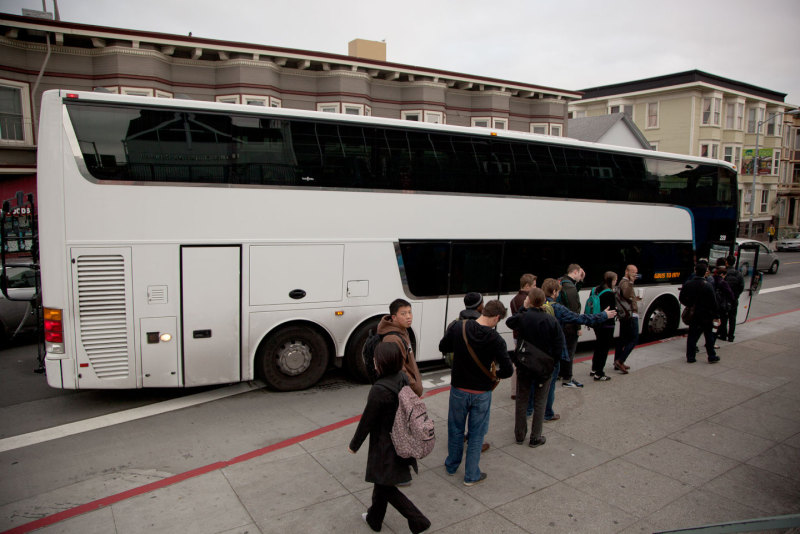
Facebook Bus Drivers Vote to Unionize
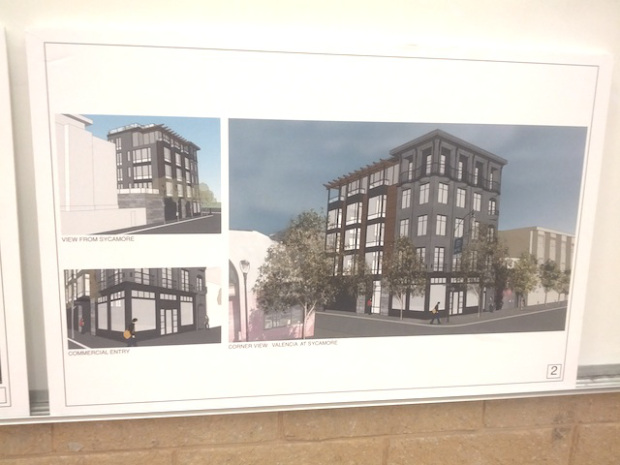
San Francisco's Elbo Room Might Be Demolished for Condos
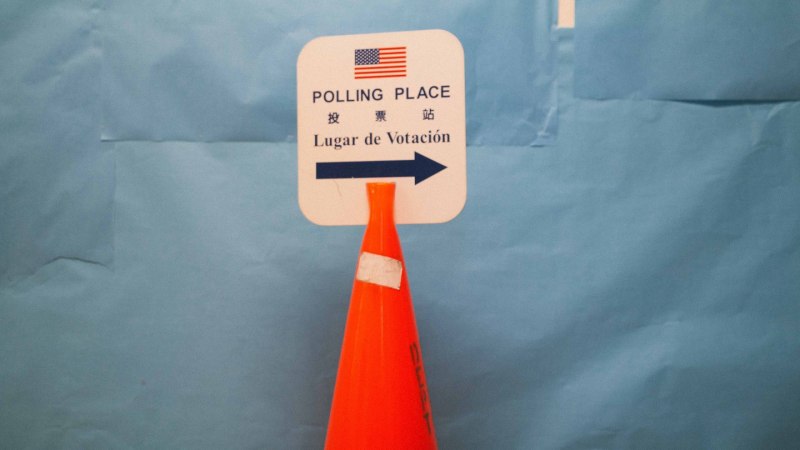
Does Richmond's Election System Fairly Represent All Residents?
Increasing Density on San Francisco's West Side Could Allay Housing Woes
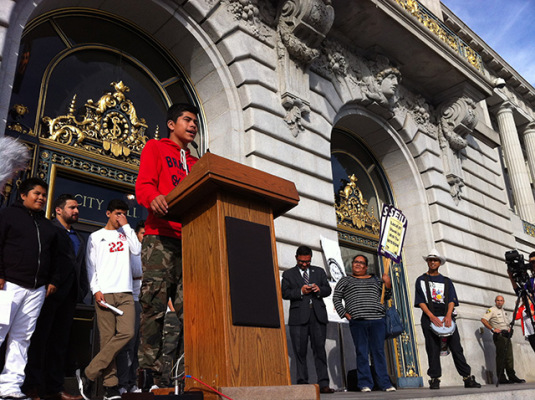
Mission Playground Soccer Players Get Their Day at City Hall
Two Ballot Measures Take Aim at San Francisco's Affordable Housing Crisis
Mission Soccer Field Incident Prompts Change in Reservation Policy
Video: Debate Over a Mission District Soccer Field
Bay Area Minimum-Wage Campaigns Echo a National Movement
The Stephen Wirtz Gallery Has Left the Building
Cash Buyers Dominate Oakland Real Estate Market
Campos Wants San Francisco to Regulate Tenant Buyouts by Landlords
window.__IS_SSR__=true
window.__INITIAL_STATE__={
"attachmentsReducer": {
"audio_0": {
"type": "attachments",
"id": "audio_0",
"imgSizes": {
"kqedFullSize": {
"file": "https://ww2.kqed.org/news/wp-content/themes/KQED-unified/img/audio_bgs/background0.jpg"
}
}
},
"audio_1": {
"type": "attachments",
"id": "audio_1",
"imgSizes": {
"kqedFullSize": {
"file": "https://ww2.kqed.org/news/wp-content/themes/KQED-unified/img/audio_bgs/background1.jpg"
}
}
},
"audio_2": {
"type": "attachments",
"id": "audio_2",
"imgSizes": {
"kqedFullSize": {
"file": "https://ww2.kqed.org/news/wp-content/themes/KQED-unified/img/audio_bgs/background2.jpg"
}
}
},
"audio_3": {
"type": "attachments",
"id": "audio_3",
"imgSizes": {
"kqedFullSize": {
"file": "https://ww2.kqed.org/news/wp-content/themes/KQED-unified/img/audio_bgs/background3.jpg"
}
}
},
"audio_4": {
"type": "attachments",
"id": "audio_4",
"imgSizes": {
"kqedFullSize": {
"file": "https://ww2.kqed.org/news/wp-content/themes/KQED-unified/img/audio_bgs/background4.jpg"
}
}
},
"placeholder": {
"type": "attachments",
"id": "placeholder",
"imgSizes": {
"thumbnail": {
"file": "https://cdn.kqed.org/wp-content/uploads/2024/12/KQED-Default-Image-816638274-2000x1333-1-160x107.jpg",
"width": 160,
"height": 107,
"mimeType": "image/jpeg"
},
"medium": {
"file": "https://cdn.kqed.org/wp-content/uploads/2024/12/KQED-Default-Image-816638274-2000x1333-1-800x533.jpg",
"width": 800,
"height": 533,
"mimeType": "image/jpeg"
},
"medium_large": {
"file": "https://cdn.kqed.org/wp-content/uploads/2024/12/KQED-Default-Image-816638274-2000x1333-1-768x512.jpg",
"width": 768,
"height": 512,
"mimeType": "image/jpeg"
},
"large": {
"file": "https://cdn.kqed.org/wp-content/uploads/2024/12/KQED-Default-Image-816638274-2000x1333-1-1020x680.jpg",
"width": 1020,
"height": 680,
"mimeType": "image/jpeg"
},
"1536x1536": {
"file": "https://cdn.kqed.org/wp-content/uploads/2024/12/KQED-Default-Image-816638274-2000x1333-1-1536x1024.jpg",
"width": 1536,
"height": 1024,
"mimeType": "image/jpeg"
},
"fd-lrg": {
"file": "https://cdn.kqed.org/wp-content/uploads/2024/12/KQED-Default-Image-816638274-2000x1333-1-1536x1024.jpg",
"width": 1536,
"height": 1024,
"mimeType": "image/jpeg"
},
"fd-med": {
"file": "https://cdn.kqed.org/wp-content/uploads/2024/12/KQED-Default-Image-816638274-2000x1333-1-1020x680.jpg",
"width": 1020,
"height": 680,
"mimeType": "image/jpeg"
},
"fd-sm": {
"file": "https://cdn.kqed.org/wp-content/uploads/2024/12/KQED-Default-Image-816638274-2000x1333-1-800x533.jpg",
"width": 800,
"height": 533,
"mimeType": "image/jpeg"
},
"post-thumbnail": {
"file": "https://cdn.kqed.org/wp-content/uploads/2024/12/KQED-Default-Image-816638274-2000x1333-1-672x372.jpg",
"width": 672,
"height": 372,
"mimeType": "image/jpeg"
},
"twentyfourteen-full-width": {
"file": "https://cdn.kqed.org/wp-content/uploads/2024/12/KQED-Default-Image-816638274-2000x1333-1-1038x576.jpg",
"width": 1038,
"height": 576,
"mimeType": "image/jpeg"
},
"xxsmall": {
"file": "https://cdn.kqed.org/wp-content/uploads/2024/12/KQED-Default-Image-816638274-2000x1333-1-160x107.jpg",
"width": 160,
"height": 107,
"mimeType": "image/jpeg"
},
"xsmall": {
"file": "https://cdn.kqed.org/wp-content/uploads/2024/12/KQED-Default-Image-816638274-2000x1333-1-672x372.jpg",
"width": 672,
"height": 372,
"mimeType": "image/jpeg"
},
"small": {
"file": "https://cdn.kqed.org/wp-content/uploads/2024/12/KQED-Default-Image-816638274-2000x1333-1-672x372.jpg",
"width": 672,
"height": 372,
"mimeType": "image/jpeg"
},
"xlarge": {
"file": "https://cdn.kqed.org/wp-content/uploads/2024/12/KQED-Default-Image-816638274-2000x1333-1-1020x680.jpg",
"width": 1020,
"height": 680,
"mimeType": "image/jpeg"
},
"full-width": {
"file": "https://cdn.kqed.org/wp-content/uploads/2024/12/KQED-Default-Image-816638274-2000x1333-1-1920x1280.jpg",
"width": 1920,
"height": 1280,
"mimeType": "image/jpeg"
},
"guest-author-32": {
"file": "https://cdn.kqed.org/wp-content/uploads/2025/01/KQED-Default-Image-816638274-1333x1333-1-160x160.jpg",
"width": 32,
"height": 32,
"mimeType": "image/jpeg"
},
"guest-author-50": {
"file": "https://cdn.kqed.org/wp-content/uploads/2025/01/KQED-Default-Image-816638274-1333x1333-1-160x160.jpg",
"width": 50,
"height": 50,
"mimeType": "image/jpeg"
},
"guest-author-64": {
"file": "https://cdn.kqed.org/wp-content/uploads/2025/01/KQED-Default-Image-816638274-1333x1333-1-160x160.jpg",
"width": 64,
"height": 64,
"mimeType": "image/jpeg"
},
"guest-author-96": {
"file": "https://cdn.kqed.org/wp-content/uploads/2025/01/KQED-Default-Image-816638274-1333x1333-1-160x160.jpg",
"width": 96,
"height": 96,
"mimeType": "image/jpeg"
},
"guest-author-128": {
"file": "https://cdn.kqed.org/wp-content/uploads/2025/01/KQED-Default-Image-816638274-1333x1333-1-160x160.jpg",
"width": 128,
"height": 128,
"mimeType": "image/jpeg"
},
"detail": {
"file": "https://cdn.kqed.org/wp-content/uploads/2025/01/KQED-Default-Image-816638274-1333x1333-1-160x160.jpg",
"width": 160,
"height": 160,
"mimeType": "image/jpeg"
},
"kqedFullSize": {
"file": "https://cdn.kqed.org/wp-content/uploads/2024/12/KQED-Default-Image-816638274-2000x1333-1.jpg",
"width": 2000,
"height": 1333
}
}
},
"news_10349714": {
"type": "attachments",
"id": "news_10349714",
"meta": {
"index": "attachments_1716263798",
"site": "news",
"id": "10349714",
"found": true
},
"parent": 10349710,
"imgSizes": {
"twentyfourteen-full-width": {
"file": "https://ww2.kqed.org/app/uploads/sites/10/2014/11/8535_transform-1038x576.jpg",
"width": 1038,
"mimeType": "image/jpeg",
"height": 576
},
"thumbnail": {
"file": "https://ww2.kqed.org/app/uploads/sites/10/2014/11/8535_transform-400x267.jpg",
"width": 400,
"mimeType": "image/jpeg",
"height": 267
},
"post-thumbnail": {
"file": "https://ww2.kqed.org/app/uploads/sites/10/2014/11/8535_transform-672x372.jpg",
"width": 672,
"mimeType": "image/jpeg",
"height": 372
},
"kqedFullSize": {
"file": "https://ww2.kqed.org/app/uploads/sites/10/2014/11/8535_transform.jpg",
"width": 1440,
"height": 962
},
"guest-author-96": {
"file": "https://ww2.kqed.org/app/uploads/sites/10/2014/11/8535_transform-96x96.jpg",
"width": 96,
"mimeType": "image/jpeg",
"height": 96
},
"medium": {
"file": "https://ww2.kqed.org/app/uploads/sites/10/2014/11/8535_transform-800x534.jpg",
"width": 800,
"mimeType": "image/jpeg",
"height": 534
},
"guest-author-64": {
"file": "https://ww2.kqed.org/app/uploads/sites/10/2014/11/8535_transform-64x64.jpg",
"width": 64,
"mimeType": "image/jpeg",
"height": 64
},
"detail": {
"file": "https://ww2.kqed.org/app/uploads/sites/10/2014/11/8535_transform-75x75.jpg",
"width": 75,
"mimeType": "image/jpeg",
"height": 75
},
"guest-author-32": {
"file": "https://ww2.kqed.org/app/uploads/sites/10/2014/11/8535_transform-32x32.jpg",
"width": 32,
"mimeType": "image/jpeg",
"height": 32
},
"guest-author-128": {
"file": "https://ww2.kqed.org/app/uploads/sites/10/2014/11/8535_transform-128x128.jpg",
"width": 128,
"mimeType": "image/jpeg",
"height": 128
}
},
"publishDate": 1416447883,
"modified": 1416447899,
"caption": "Workers board a private bus at a Muni bus stop at 24th and Valencia streets in the Mission District. (Mark Andrew Boyer/KQED)",
"description": "Workers board a private bus at a Muni bus stop at 24th and Valencia streets in the Mission District. (Mark Andrew Boyer/KQED)",
"title": "8535_transform",
"credit": null,
"status": "inherit",
"isLoading": false,
"fetchFailed": false
},
"news_10348379": {
"type": "attachments",
"id": "news_10348379",
"meta": {
"index": "attachments_1716263798",
"site": "news",
"id": "10348379",
"found": true
},
"parent": 10348376,
"imgSizes": {
"thumbnail": {
"file": "https://ww2.kqed.org/app/uploads/sites/10/2014/11/elboroomplans2-400x300.jpg",
"width": 400,
"mimeType": "image/jpeg",
"height": 300
},
"post-thumbnail": {
"file": "https://ww2.kqed.org/app/uploads/sites/10/2014/11/elboroomplans2-620x372.jpg",
"width": 620,
"mimeType": "image/jpeg",
"height": 372
},
"kqedFullSize": {
"file": "https://ww2.kqed.org/app/uploads/sites/10/2014/11/elboroomplans2.jpg",
"width": 620,
"height": 465
},
"guest-author-96": {
"file": "https://ww2.kqed.org/app/uploads/sites/10/2014/11/elboroomplans2-96x96.jpg",
"width": 96,
"mimeType": "image/jpeg",
"height": 96
},
"guest-author-64": {
"file": "https://ww2.kqed.org/app/uploads/sites/10/2014/11/elboroomplans2-64x64.jpg",
"width": 64,
"mimeType": "image/jpeg",
"height": 64
},
"detail": {
"file": "https://ww2.kqed.org/app/uploads/sites/10/2014/11/elboroomplans2-75x75.jpg",
"width": 75,
"mimeType": "image/jpeg",
"height": 75
},
"guest-author-32": {
"file": "https://ww2.kqed.org/app/uploads/sites/10/2014/11/elboroomplans2-32x32.jpg",
"width": 32,
"mimeType": "image/jpeg",
"height": 32
},
"guest-author-128": {
"file": "https://ww2.kqed.org/app/uploads/sites/10/2014/11/elboroomplans2-128x128.jpg",
"width": 128,
"mimeType": "image/jpeg",
"height": 128
}
},
"publishDate": 1415911178,
"modified": 1415911211,
"caption": "Plans for the current site of the Elbo Room as presented by Kerman Morris architects at community meeting November 6. (Photo by Daniel Hirsch/Mission Local)",
"description": "Plans for the current site of the Elbo Room as presented by Kerman Morris architects at community meeting November 6",
"title": "elboroomplans2",
"credit": null,
"status": "inherit",
"isLoading": false,
"fetchFailed": false
},
"news_10347871": {
"type": "attachments",
"id": "news_10347871",
"meta": {
"index": "attachments_1716263798",
"site": "news",
"id": "10347871",
"found": true
},
"parent": 10347861,
"imgSizes": {
"twentyfourteen-full-width": {
"file": "https://ww2.kqed.org/app/uploads/sites/10/2014/11/polling-place-1038x576.jpg",
"width": 1038,
"mimeType": "image/jpeg",
"height": 576
},
"thumbnail": {
"file": "https://ww2.kqed.org/app/uploads/sites/10/2014/11/polling-place-400x225.jpg",
"width": 400,
"mimeType": "image/jpeg",
"height": 225
},
"post-thumbnail": {
"file": "https://ww2.kqed.org/app/uploads/sites/10/2014/11/polling-place-672x372.jpg",
"width": 672,
"mimeType": "image/jpeg",
"height": 372
},
"kqedFullSize": {
"file": "https://ww2.kqed.org/app/uploads/sites/10/2014/11/polling-place.jpg",
"width": 1440,
"height": 810
},
"guest-author-96": {
"file": "https://ww2.kqed.org/app/uploads/sites/10/2014/11/polling-place-96x96.jpg",
"width": 96,
"mimeType": "image/jpeg",
"height": 96
},
"medium": {
"file": "https://ww2.kqed.org/app/uploads/sites/10/2014/11/polling-place-800x450.jpg",
"width": 800,
"mimeType": "image/jpeg",
"height": 450
},
"guest-author-64": {
"file": "https://ww2.kqed.org/app/uploads/sites/10/2014/11/polling-place-64x64.jpg",
"width": 64,
"mimeType": "image/jpeg",
"height": 64
},
"detail": {
"file": "https://ww2.kqed.org/app/uploads/sites/10/2014/11/polling-place-75x75.jpg",
"width": 75,
"mimeType": "image/jpeg",
"height": 75
},
"guest-author-32": {
"file": "https://ww2.kqed.org/app/uploads/sites/10/2014/11/polling-place-32x32.jpg",
"width": 32,
"mimeType": "image/jpeg",
"height": 32
},
"guest-author-128": {
"file": "https://ww2.kqed.org/app/uploads/sites/10/2014/11/polling-place-128x128.jpg",
"width": 128,
"mimeType": "image/jpeg",
"height": 128
}
},
"publishDate": 1415651443,
"modified": 1415651519,
"caption": "Richmond saw its fewest voters in years on November 4, 2014. (Jeremy Raff/KQED)",
"description": "Richmond saw its fewest voters in years on Tuesday. (Photo by Brett Murphy)",
"title": "polling place",
"credit": null,
"status": "inherit",
"isLoading": false,
"fetchFailed": false
},
"news_10345764": {
"type": "attachments",
"id": "news_10345764",
"meta": {
"index": "attachments_1716263798",
"site": "news",
"id": "10345764",
"found": true
},
"parent": 10345763,
"imgSizes": {
"twentyfourteen-full-width": {
"file": "https://ww2.kqed.org/app/uploads/sites/10/2014/10/western-map-1038x576.png",
"width": 1038,
"mimeType": "image/png",
"height": 576
},
"thumbnail": {
"file": "https://ww2.kqed.org/app/uploads/sites/10/2014/10/western-map-400x302.png",
"width": 400,
"mimeType": "image/png",
"height": 302
},
"post-thumbnail": {
"file": "https://ww2.kqed.org/app/uploads/sites/10/2014/10/western-map-672x372.png",
"width": 672,
"mimeType": "image/png",
"height": 372
},
"kqedFullSize": {
"file": "https://ww2.kqed.org/app/uploads/sites/10/2014/10/western-map.png",
"width": 1087,
"height": 823
},
"guest-author-96": {
"file": "https://ww2.kqed.org/app/uploads/sites/10/2014/10/western-map-96x96.png",
"width": 96,
"mimeType": "image/png",
"height": 96
},
"medium": {
"file": "https://ww2.kqed.org/app/uploads/sites/10/2014/10/western-map-800x605.png",
"width": 800,
"mimeType": "image/png",
"height": 605
},
"guest-author-64": {
"file": "https://ww2.kqed.org/app/uploads/sites/10/2014/10/western-map-64x64.png",
"width": 64,
"mimeType": "image/png",
"height": 64
},
"detail": {
"file": "https://ww2.kqed.org/app/uploads/sites/10/2014/10/western-map-75x75.png",
"width": 75,
"mimeType": "image/png",
"height": 75
},
"guest-author-32": {
"file": "https://ww2.kqed.org/app/uploads/sites/10/2014/10/western-map-32x32.png",
"width": 32,
"mimeType": "image/png",
"height": 32
},
"guest-author-128": {
"file": "https://ww2.kqed.org/app/uploads/sites/10/2014/10/western-map-128x128.png",
"width": 128,
"mimeType": "image/png",
"height": 128
}
},
"publishDate": 1414608202,
"modified": 1414608271,
"caption": "This map shows where about 5,500 new homes could be built (on blue parcels) under existing laws, along major transit corridors (in red, along Taraval, Noriega and Irving streets). But developers could build even more if regulations shifted slightly. (Erika Rae Langdon, SF Public Press and Stamen Maps)",
"description": "This map shows where about 5,500 new homes could be built (on blue parcels) under existing laws, along major transit corridors (in red, along Taraval, Noriega and Irving streets). But developers could build even more if regulations shifted slightly. (Erika Rae Langdon, SF Public Press and Stamen Maps)",
"title": "western map",
"credit": null,
"status": "inherit",
"isLoading": false,
"fetchFailed": false
},
"news_10344238": {
"type": "attachments",
"id": "news_10344238",
"meta": {
"index": "attachments_1716263798",
"site": "news",
"id": "10344238",
"found": true
},
"parent": 10344235,
"imgSizes": {
"thumbnail": {
"file": "https://ww2.kqed.org/app/uploads/sites/10/2014/10/kids-city-hall-400x299.jpg",
"width": 400,
"mimeType": "image/jpeg",
"height": 299
},
"post-thumbnail": {
"file": "https://ww2.kqed.org/app/uploads/sites/10/2014/10/kids-city-hall-535x372.jpg",
"width": 535,
"mimeType": "image/jpeg",
"height": 372
},
"kqedFullSize": {
"file": "https://ww2.kqed.org/app/uploads/sites/10/2014/10/kids-city-hall.jpg",
"width": 535,
"height": 400
},
"guest-author-96": {
"file": "https://ww2.kqed.org/app/uploads/sites/10/2014/10/kids-city-hall-96x96.jpg",
"width": 96,
"mimeType": "image/jpeg",
"height": 96
},
"guest-author-64": {
"file": "https://ww2.kqed.org/app/uploads/sites/10/2014/10/kids-city-hall-64x64.jpg",
"width": 64,
"mimeType": "image/jpeg",
"height": 64
},
"detail": {
"file": "https://ww2.kqed.org/app/uploads/sites/10/2014/10/kids-city-hall-75x75.jpg",
"width": 75,
"mimeType": "image/jpeg",
"height": 75
},
"guest-author-32": {
"file": "https://ww2.kqed.org/app/uploads/sites/10/2014/10/kids-city-hall-32x32.jpg",
"width": 32,
"mimeType": "image/jpeg",
"height": 32
},
"guest-author-128": {
"file": "https://ww2.kqed.org/app/uploads/sites/10/2014/10/kids-city-hall-128x128.jpg",
"width": 128,
"mimeType": "image/jpeg",
"height": 128
}
},
"publishDate": 1413565933,
"modified": 1413565933,
"caption": "Gregory Garcia, a freshmen at Mission High school, asks for the right to play soccer in the Mission without fear of being kicked off by permit holders. (Andrea Valencia/Mission Local)",
"description": null,
"title": "kids city hall",
"credit": null,
"status": "inherit",
"isLoading": false,
"fetchFailed": false
},
"news_10344186": {
"type": "attachments",
"id": "news_10344186",
"meta": {
"index": "attachments_1716263798",
"site": "news",
"id": "10344186",
"found": true
},
"parent": 10344087,
"imgSizes": {
"twentyfourteen-full-width": {
"file": "https://ww2.kqed.org/app/uploads/sites/10/2014/10/RS2979_IMG_0724.JPG-alt_164-1038x576.jpg",
"width": 1038,
"mimeType": "image/jpeg",
"height": 576
},
"thumbnail": {
"file": "https://ww2.kqed.org/app/uploads/sites/10/2014/10/RS2979_IMG_0724.JPG-alt_164-400x224.jpg",
"width": 400,
"mimeType": "image/jpeg",
"height": 224
},
"post-thumbnail": {
"file": "https://ww2.kqed.org/app/uploads/sites/10/2014/10/RS2979_IMG_0724.JPG-alt_164-672x372.jpg",
"width": 672,
"mimeType": "image/jpeg",
"height": 372
},
"kqedFullSize": {
"file": "https://ww2.kqed.org/app/uploads/sites/10/2014/10/RS2979_IMG_0724.JPG-alt_164.jpg",
"width": 1440,
"height": 809
},
"guest-author-96": {
"file": "https://ww2.kqed.org/app/uploads/sites/10/2014/10/RS2979_IMG_0724.JPG-alt_164-96x96.jpg",
"width": 96,
"mimeType": "image/jpeg",
"height": 96
},
"medium": {
"file": "https://ww2.kqed.org/app/uploads/sites/10/2014/10/RS2979_IMG_0724.JPG-alt_164-800x449.jpg",
"width": 800,
"mimeType": "image/jpeg",
"height": 449
},
"guest-author-64": {
"file": "https://ww2.kqed.org/app/uploads/sites/10/2014/10/RS2979_IMG_0724.JPG-alt_164-64x64.jpg",
"width": 64,
"mimeType": "image/jpeg",
"height": 64
},
"detail": {
"file": "https://ww2.kqed.org/app/uploads/sites/10/2014/10/RS2979_IMG_0724.JPG-alt_164-75x75.jpg",
"width": 75,
"mimeType": "image/jpeg",
"height": 75
},
"guest-author-32": {
"file": "https://ww2.kqed.org/app/uploads/sites/10/2014/10/RS2979_IMG_0724.JPG-alt_164-32x32.jpg",
"width": 32,
"mimeType": "image/jpeg",
"height": 32
},
"guest-author-128": {
"file": "https://ww2.kqed.org/app/uploads/sites/10/2014/10/RS2979_IMG_0724.JPG-alt_164-128x128.jpg",
"width": 128,
"mimeType": "image/jpeg",
"height": 128
}
},
"publishDate": 1413516360,
"modified": 1413516360,
"caption": "San Francisco's downtown and North Beach neighborhoods. (Craig Miller/KQED)",
"description": "San Francisco's downtown and North Beach neighborhoods. (Craig Miller/KQED)",
"title": "RS2979_IMG_0724.JPG-alt_164",
"credit": null,
"status": "inherit",
"isLoading": false,
"fetchFailed": false
},
"news_10343373": {
"type": "attachments",
"id": "news_10343373",
"meta": {
"index": "attachments_1716263798",
"site": "news",
"id": "10343373",
"found": true
},
"parent": 10343321,
"imgSizes": {
"thumbnail": {
"file": "https://ww2.kqed.org/app/uploads/sites/10/2014/10/missionplayground2-400x222.jpg",
"width": 400,
"mimeType": "image/jpeg",
"height": 222
},
"post-thumbnail": {
"file": "https://ww2.kqed.org/app/uploads/sites/10/2014/10/missionplayground2-672x372.jpg",
"width": 672,
"mimeType": "image/jpeg",
"height": 372
},
"kqedFullSize": {
"file": "https://ww2.kqed.org/app/uploads/sites/10/2014/10/missionplayground2.jpg",
"width": 849,
"height": 473
},
"guest-author-96": {
"file": "https://ww2.kqed.org/app/uploads/sites/10/2014/10/missionplayground2-96x96.jpg",
"width": 96,
"mimeType": "image/jpeg",
"height": 96
},
"medium": {
"file": "https://ww2.kqed.org/app/uploads/sites/10/2014/10/missionplayground2-800x445.jpg",
"width": 800,
"mimeType": "image/jpeg",
"height": 445
},
"guest-author-64": {
"file": "https://ww2.kqed.org/app/uploads/sites/10/2014/10/missionplayground2-64x64.jpg",
"width": 64,
"mimeType": "image/jpeg",
"height": 64
},
"detail": {
"file": "https://ww2.kqed.org/app/uploads/sites/10/2014/10/missionplayground2-75x75.jpg",
"width": 75,
"mimeType": "image/jpeg",
"height": 75
},
"guest-author-32": {
"file": "https://ww2.kqed.org/app/uploads/sites/10/2014/10/missionplayground2-32x32.jpg",
"width": 32,
"mimeType": "image/jpeg",
"height": 32
},
"guest-author-128": {
"file": "https://ww2.kqed.org/app/uploads/sites/10/2014/10/missionplayground2-128x128.jpg",
"width": 128,
"mimeType": "image/jpeg",
"height": 128
}
},
"publishDate": 1412988339,
"modified": 1412988339,
"caption": "Screengrab from YouTube video showing confrontation at Mission Playground soccer field last month. ",
"description": "Screengrab from YouTube video showing confrontation at Mission Playground soccer field last month. ",
"title": "Mission Playground-Soccer",
"credit": null,
"status": "inherit",
"isLoading": false,
"fetchFailed": false
},
"news_148609": {
"type": "attachments",
"id": "news_148609",
"meta": {
"index": "attachments_1716263798",
"site": "news",
"id": "148609",
"found": true
},
"parent": 148585,
"imgSizes": {
"wide-featured-image": {
"file": "https://ww2.kqed.org/app/uploads/sites/10/2014/09/payprotest092514-600x300.jpg",
"width": 600,
"mimeType": "image/jpeg",
"height": 300
},
"featured-page": {
"file": "https://ww2.kqed.org/app/uploads/sites/10/2014/09/payprotest092514-315x145.jpg",
"width": 315,
"mimeType": "image/jpeg",
"height": 145
},
"thumbnail": {
"file": "https://ww2.kqed.org/app/uploads/sites/10/2014/09/payprotest092514-300x300.jpg",
"width": 300,
"mimeType": "image/jpeg",
"height": 300
},
"kqedFullSize": {
"file": "https://ww2.kqed.org/app/uploads/sites/10/2014/09/payprotest092514.jpg",
"width": 2000,
"height": 1157
},
"large": {
"file": "https://ww2.kqed.org/app/uploads/sites/10/2014/09/payprotest092514-1028x594.jpg",
"width": 1028,
"mimeType": "image/jpeg",
"height": 594
},
"wide-featured-image-full": {
"file": "https://ww2.kqed.org/app/uploads/sites/10/2014/09/payprotest092514-960x300.jpg",
"width": 960,
"mimeType": "image/jpeg",
"height": 300
},
"guest-author-96": {
"file": "https://ww2.kqed.org/app/uploads/sites/10/2014/09/payprotest092514-96x96.jpg",
"width": 96,
"mimeType": "image/jpeg",
"height": 96
},
"medium": {
"file": "https://ww2.kqed.org/app/uploads/sites/10/2014/09/payprotest092514-640x370.jpg",
"width": 640,
"mimeType": "image/jpeg",
"height": 370
},
"guest-author-64": {
"file": "https://ww2.kqed.org/app/uploads/sites/10/2014/09/payprotest092514-64x64.jpg",
"width": 64,
"mimeType": "image/jpeg",
"height": 64
},
"guest-author-32": {
"file": "https://ww2.kqed.org/app/uploads/sites/10/2014/09/payprotest092514-32x32.jpg",
"width": 32,
"mimeType": "image/jpeg",
"height": 32
},
"narrow-featured-image": {
"file": "https://ww2.kqed.org/app/uploads/sites/10/2014/09/payprotest092514-400x300.jpg",
"width": 400,
"mimeType": "image/jpeg",
"height": 300
},
"narrow-featured-image-full": {
"file": "https://ww2.kqed.org/app/uploads/sites/10/2014/09/payprotest092514-640x360.jpg",
"width": 640,
"mimeType": "image/jpeg",
"height": 360
},
"detail": {
"file": "https://ww2.kqed.org/app/uploads/sites/10/2014/09/payprotest092514-75x75.jpg",
"width": 75,
"mimeType": "image/jpeg",
"height": 75
},
"guest-author-128": {
"file": "https://ww2.kqed.org/app/uploads/sites/10/2014/09/payprotest092514-128x128.jpg",
"width": 128,
"mimeType": "image/jpeg",
"height": 128
}
},
"publishDate": 1411657181,
"modified": 1411657181,
"caption": "SEIU President Mary Kay Henry and fast-food workers occupy a North Oakland McDonalds earlier this month. (Andrew Stelzer/KQED)",
"description": "SEIU President Mary Kay Henry and fast-food workers occupy a North Oakland McDonalds earlier this month. (Andrew Stelzer/KQED)",
"title": "Fast Food Pay Protest-SEIU",
"credit": null,
"status": "inherit",
"isLoading": false,
"fetchFailed": false
},
"arts_10140960": {
"type": "attachments",
"id": "arts_10140960",
"meta": {
"index": "attachments_1716263798",
"site": "arts",
"id": "10140960",
"found": true
},
"parent": 10140956,
"imgSizes": {
"thumbnail": {
"file": "https://ww2.kqed.org/app/uploads/sites/2/2014/08/Steve-Connie-400x285.jpg",
"width": 400,
"mimeType": "image/jpeg",
"height": 285
},
"post-thumbnail": {
"file": "https://ww2.kqed.org/app/uploads/sites/2/2014/08/Steve-Connie-672x372.jpg",
"width": 672,
"mimeType": "image/jpeg",
"height": 372
},
"kqedFullSize": {
"file": "https://ww2.kqed.org/app/uploads/sites/2/2014/08/Steve-Connie.jpg",
"width": 800,
"height": 571
},
"guest-author-96": {
"file": "https://ww2.kqed.org/app/uploads/sites/2/2014/08/Steve-Connie-96x96.jpg",
"width": 96,
"mimeType": "image/jpeg",
"height": 96
},
"medium": {
"file": "https://ww2.kqed.org/app/uploads/sites/2/2014/08/Steve-Connie-300x214.jpg",
"width": 300,
"mimeType": "image/jpeg",
"height": 214
},
"guest-author-64": {
"file": "https://ww2.kqed.org/app/uploads/sites/2/2014/08/Steve-Connie-64x64.jpg",
"width": 64,
"mimeType": "image/jpeg",
"height": 64
},
"detail": {
"file": "https://ww2.kqed.org/app/uploads/sites/2/2014/08/Steve-Connie-75x75.jpg",
"width": 75,
"mimeType": "image/jpeg",
"height": 75
},
"guest-author-32": {
"file": "https://ww2.kqed.org/app/uploads/sites/2/2014/08/Steve-Connie-32x32.jpg",
"width": 32,
"mimeType": "image/jpeg",
"height": 32
},
"guest-author-128": {
"file": "https://ww2.kqed.org/app/uploads/sites/2/2014/08/Steve-Connie-128x128.jpg",
"width": 128,
"mimeType": "image/jpeg",
"height": 128
}
},
"publishDate": 1408649657,
"modified": 1408649657,
"caption": "Stephen and Connie Wirtz circa ???; they won't tell me.",
"description": null,
"title": "Steve-&-Connie",
"credit": null,
"status": "inherit",
"isLoading": false,
"fetchFailed": false
},
"news_144134": {
"type": "attachments",
"id": "news_144134",
"meta": {
"index": "attachments_1716263798",
"site": "news",
"id": "144134",
"found": true
},
"parent": 144132,
"imgSizes": {
"kqedFullSize": {
"file": "https://ww2.kqed.org/app/uploads/sites/10/2014/08/for-sale-sign.jpg",
"width": 659,
"height": 446
}
},
"publishDate": 1407439582,
"modified": 1407439582,
"caption": "For sale sign in Oakland. (Oakland Local)",
"description": null,
"title": "for sale sign",
"credit": null,
"status": "inherit",
"isLoading": false,
"fetchFailed": false
},
"news_143289": {
"type": "attachments",
"id": "news_143289",
"meta": {
"index": "attachments_1716263798",
"site": "news",
"id": "143289",
"found": true
},
"parent": 143234,
"imgSizes": {
"kqedFullSize": {
"file": "https://ww2.kqed.org/app/uploads/sites/10/2014/07/RS7966_victorian.jpg",
"width": 640,
"height": 360
}
},
"publishDate": 1406741782,
"modified": 1406741782,
"caption": null,
"description": null,
"title": "RS7966_victorian",
"credit": null,
"status": "inherit",
"isLoading": false,
"fetchFailed": false
}
},
"audioPlayerReducer": {
"postId": "stream_live",
"isPaused": true,
"isPlaying": false,
"pfsActive": false,
"pledgeModalIsOpen": true,
"playerDrawerIsOpen": false,
"liveAudioPlayStartedAt": 0,
"liveAudioPlayContext": ""
},
"authorsReducer": {
"byline_news_10348376": {
"type": "authors",
"id": "byline_news_10348376",
"meta": {
"override": true
},
"slug": "byline_news_10348376",
"name": "Daniel Hirsch\u003cbr/>Mission Local",
"isLoading": false
},
"byline_news_10347861": {
"type": "authors",
"id": "byline_news_10347861",
"meta": {
"override": true
},
"slug": "byline_news_10347861",
"name": "\u003ca href=\"http://richmondconfidential.org/author/brett_murphy/\">Brett Murphy\u003c/a>\u003cbr>Richmond Confidential",
"isLoading": false
},
"byline_news_10345763": {
"type": "authors",
"id": "byline_news_10345763",
"meta": {
"override": true
},
"slug": "byline_news_10345763",
"name": "Evelyn Wang\u003cbr />\u003ca href=\"http://sfpublicpress.org/\">San Francisco Public Press\u003c/a>",
"isLoading": false
},
"byline_news_10344235": {
"type": "authors",
"id": "byline_news_10344235",
"meta": {
"override": true
},
"slug": "byline_news_10344235",
"name": "Andrea Valencia\u003cbr />Mission Local",
"isLoading": false
},
"marktaylor-2": {
"type": "authors",
"id": "8",
"meta": {
"index": "authors_1716337520",
"id": "8",
"found": true
},
"name": "Mark Taylor",
"firstName": "Mark",
"lastName": "Taylor",
"slug": "marktaylor-2",
"email": "mark@emptypictures.net",
"display_author_email": false,
"staff_mastheads": [],
"title": null,
"bio": "Mark Taylor founded KQED Arts in 2005 and served as Senior Interactive Producer for Arts and Culture through 2014. Taylor was the online arts editor of KQED's daily arts blog for nine years and created the station's first web-original podcasts, Gallery Crawl and The Writers' Block.\r\n\r\nTaylor is an experimental filmmaker and visual artist whose work has been collected by the Library of Congress, Stanford University and the New York Museum of Modern Art, among many others. He teaches Media Studies at the University of San Francisco and is exploring the connection between film and food. \u003ca href=\"http://emptypictures.net/\">Visit Mark Taylor's website\u003c/a> at emptypictures.net.",
"avatar": "https://secure.gravatar.com/avatar/3452322b4dec4379500b11b74718f5da?s=600&d=blank&r=g",
"twitter": null,
"facebook": null,
"instagram": null,
"linkedin": null,
"sites": [
{
"site": "arts",
"roles": [
"Administrator",
"contributor"
]
},
{
"site": "bayareabites",
"roles": [
"author"
]
},
{
"site": "checkplease",
"roles": [
"subscriber"
]
},
{
"site": "food",
"roles": [
"contributor"
]
}
],
"headData": {
"title": "Mark Taylor | KQED",
"description": null,
"ogImgSrc": "https://secure.gravatar.com/avatar/3452322b4dec4379500b11b74718f5da?s=600&d=blank&r=g",
"twImgSrc": "https://secure.gravatar.com/avatar/3452322b4dec4379500b11b74718f5da?s=600&d=blank&r=g"
},
"isLoading": false,
"link": "/author/marktaylor-2"
},
"jbrooks": {
"type": "authors",
"id": "80",
"meta": {
"index": "authors_1716337520",
"id": "80",
"found": true
},
"name": "Jon Brooks",
"firstName": "Jon",
"lastName": "Brooks",
"slug": "jbrooks",
"email": "jbrooks@kqed.org",
"display_author_email": true,
"staff_mastheads": [
"science"
],
"title": "Digital Editor",
"bio": "Jon Brooks is a former Digital Editor for KQED Science. He is the former editor of KQED’s daily news blog, News Fix. In 2014, he won a California Journalism Award for his coverage of ride services like Uber and Lyft and the taxi industry. A veteran blogger, he previously worked for Yahoo! in various news writing and editing roles. Jon is also a playwright whose work has been produced in San Francisco, New York, Italy, and around the U.S. He has written about film for his own blog and studied film at Boston University.",
"avatar": "https://secure.gravatar.com/avatar/98887f7ed1c876ed414d4c915e969584?s=600&d=blank&r=g",
"twitter": "jbrooksfoy",
"facebook": null,
"instagram": null,
"linkedin": null,
"sites": [
{
"site": "arts",
"roles": [
"Contributor",
"editor"
]
},
{
"site": "news",
"roles": [
"author"
]
},
{
"site": "futureofyou",
"roles": [
"administrator"
]
},
{
"site": "mindshift",
"roles": [
"editor"
]
},
{
"site": "stateofhealth",
"roles": [
"editor"
]
},
{
"site": "science",
"roles": [
"administrator"
]
},
{
"site": "quest",
"roles": [
"editor"
]
}
],
"headData": {
"title": "Jon Brooks | KQED",
"description": "Digital Editor",
"ogImgSrc": "https://secure.gravatar.com/avatar/98887f7ed1c876ed414d4c915e969584?s=600&d=blank&r=g",
"twImgSrc": "https://secure.gravatar.com/avatar/98887f7ed1c876ed414d4c915e969584?s=600&d=blank&r=g"
},
"isLoading": false,
"link": "/author/jbrooks"
},
"smartin": {
"type": "authors",
"id": "89",
"meta": {
"index": "authors_1716337520",
"id": "89",
"found": true
},
"name": "Stephanie Martin Taylor",
"firstName": "Stephanie Martin",
"lastName": "Taylor",
"slug": "smartin",
"email": "smartin@kqed.org",
"display_author_email": false,
"staff_mastheads": [],
"title": null,
"bio": "Stephanie Martin is a radio news reporter and anchor, and an occasional host of the \u003cem>KQED Newsroom \u003c/em>television program. While she currently focuses on housing and development issues, she has also reported on topics ranging from state and local politics to religion to arts and culture.\r\n\r\nPrior to joining KQED in 2005, Stephanie was an anchor and reporter for WFDD, the NPR affiliate in Winston-Salem, NC. She also spent several years as a television anchor, reporter and producer at various stations around the country.\r\n\r\nStephanie has received numerous awards for her reporting, including two National Headliner Awards, the Religion Newswriters Association's Best Radio Reporting Award and honors from the Associated Press and the Radio and Television Digital News Association. A series she produced from Iraq in 2005 earned a Best of Radio Award from the Society of Professional Journalists.\r\n\r\nStephanie received a graduate degree in Journalism from Columbia University. As an undergraduate at Colgate University, she worked and studied in Paris and Dijon, France, and spent a summer interning in the White House Press Office.\r\n\r\nStephanie grew up in Dallas, TX, and now lives with her husband in San Francisco.",
"avatar": "https://secure.gravatar.com/avatar/9fd3f8e9af01e14afde39822c19646e0?s=600&d=blank&r=g",
"twitter": "SMartinTaylor",
"facebook": null,
"instagram": null,
"linkedin": null,
"sites": [
{
"site": "arts",
"roles": [
"Contributor",
"subscriber"
]
},
{
"site": "news",
"roles": [
"subscriber"
]
},
{
"site": "stateofhealth",
"roles": [
"subscriber"
]
}
],
"headData": {
"title": "Stephanie Martin Taylor | KQED",
"description": null,
"ogImgSrc": "https://secure.gravatar.com/avatar/9fd3f8e9af01e14afde39822c19646e0?s=600&d=blank&r=g",
"twImgSrc": "https://secure.gravatar.com/avatar/9fd3f8e9af01e14afde39822c19646e0?s=600&d=blank&r=g"
},
"isLoading": false,
"link": "/author/smartin"
},
"andrewstelzer": {
"type": "authors",
"id": "213",
"meta": {
"index": "authors_1716337520",
"id": "213",
"found": true
},
"name": "Andrew Stelzer",
"firstName": "Andrew",
"lastName": "Stelzer",
"slug": "andrewstelzer",
"email": "andrewstelzer@gmail.com",
"display_author_email": false,
"staff_mastheads": [],
"title": null,
"bio": "Andrew Stelzer has been reporting for KQED since 2010, and is a producer at \u003ca href=\"http://www.radioproject.org\" target=\"_blank\">Making Contact\u003c/a> in Oakland.. His work has been featured on programs including \u003ca href=\"http://www.npr.org/templates/story/story.php?storyId=5010\" target=\"_blank\">NPR’s Weekend Edition\u003c/a>, \u003ca href=\"http://www.theworld.org/\" target=\"_blank\">PRI’s The World\u003c/a>, \u003ca href=\"http://www.studio360.org/\" target=\"_blank\">Studio 360\u003c/a>, \u003ca href=\"http://marketplace.publicradio.org/\" target=\"_blank\">Marketplace\u003c/a>,\u003ca href=\"http://www.loe.org/\" target=\"_blank\">Living on Earth\u003c/a>, \u003ca href=\"http://www.onthemedia.org/\" target=\"_blank\">On the Media\u003c/a>, \u003ca href=\"http://www.latinousa.org/index.html\" target=\"_blank\">Latino USA,\u003c/a> \u003ca href=\"http://www.onlyagame.org/\" rel=\"tag\">Only a Game,\u003c/a> \u003ca href=\"http://www.tswi.org/\" target=\"_blank\">Radio Netherlands,\u003c/a> \u003ca href=\"http://worldradio.ch/index.shtml\" target=\"_blank\">World Radio Switzerland,\u003c/a> and \u003ca href=\"http://www.rfi.fr/langues/statiques/rfi_anglais.asp\" target=\"_blank\">Radio France International\u003c/a>. Andrew has written for publications including \u003ca href=\"http://www.inthesetimes.com/site/about/author/2369\" target=\"_blank\">In These Times\u003c/a>, \u003ca href=\"http://www.progressive.org/\" target=\"_blank\">The Progressive\u003c/a>, \u003ca href=\"http://ipsnews.net/\" target=\"_blank\">Interpress Service\u003c/a>, \u003ca href=\"http://www.tampabay.com/\" target=\"_blank\">The St. Petersburg Times\u003c/a>, and \u003ca href=\"http://www.eastbayexpress.com/ebx/Home\" target=\"_blank\">The East Bay Express\u003c/a>.\r\n\r\nAndrew’s work has received numerous awards from the Society of Professional Journalists, the National Lesbian and Gay Journalists Association, and the National Council on Crime and Delinquency.\r\n\r\nHe previously was a reporter at \u003ca href=\"http://www.wmnf.org/\" target=\"_blank\">WMNF\u003c/a> radio in Tampa, FL, and reporter and youth advocate st \u003ca href=\"http://www.kboo.org/\" target=\"_blank\">KBOO \u003c/a> in Portland, Oregon. Andrew has conducted radio production trainings around the world, from Algeria, to New Orleans, to the desert of Southern Jordan.",
"avatar": "https://secure.gravatar.com/avatar/14c7e75469395cb2468d45c9f6896ca9?s=600&d=blank&r=g",
"twitter": null,
"facebook": null,
"instagram": null,
"linkedin": null,
"sites": [
{
"site": "arts",
"roles": [
"contributor"
]
},
{
"site": "news",
"roles": [
"author"
]
},
{
"site": "stateofhealth",
"roles": [
"author"
]
}
],
"headData": {
"title": "Andrew Stelzer | KQED",
"description": null,
"ogImgSrc": "https://secure.gravatar.com/avatar/14c7e75469395cb2468d45c9f6896ca9?s=600&d=blank&r=g",
"twImgSrc": "https://secure.gravatar.com/avatar/14c7e75469395cb2468d45c9f6896ca9?s=600&d=blank&r=g"
},
"isLoading": false,
"link": "/author/andrewstelzer"
},
"danbrekke": {
"type": "authors",
"id": "222",
"meta": {
"index": "authors_1716337520",
"id": "222",
"found": true
},
"name": "Dan Brekke",
"firstName": "Dan",
"lastName": "Brekke",
"slug": "danbrekke",
"email": "dbrekke@kqed.org",
"display_author_email": true,
"staff_mastheads": [
"news",
"science"
],
"title": "KQED Editor and Reporter",
"bio": "Dan Brekke is a reporter and editor for KQED News, responsible for coverage of topics ranging from California water issues to the Bay Area's transportation challenges. In a newsroom career that began in Chicago in 1972, Dan has worked for \u003cem>The San Francisco Examiner,\u003c/em> Wired and TechTV and has been published in The New York Times, The New York Times Magazine, Business 2.0, Salon and elsewhere.\r\n\r\nSince joining KQED in 2007, Dan has reported, edited and produced both radio and online features and breaking news pieces. He has shared as both editor and reporter in four Society of Professional Journalists Norcal Excellence in Journalism awards and one Edward R. Murrow regional award. He was chosen for a spring 2017 residency at the Mesa Refuge to advance his research on California salmon.\r\n\r\nEmail Dan at: \u003ca href=\"mailto:dbrekke@kqed.org\">dbrekke@kqed.org\u003c/a>\r\n\r\n\u003cstrong>Twitter:\u003c/strong> \u003ca href=\"https://twitter.com/danbrekke\" rel=\"noopener noreferrer\">twitter.com/danbrekke\u003c/a>\r\n\u003cstrong>Facebook:\u003c/strong> \u003ca href=\"https://www.facebook.com/danbrekke\" rel=\"noopener noreferrer\">www.facebook.com/danbrekke\u003c/a>\r\n\u003cstrong>LinkedIn:\u003c/strong> \u003ca href=\"https://www.linkedin.com/in/danbrekke\" rel=\"noopener noreferrer\">www.linkedin.com/in/danbrekke\u003c/a>",
"avatar": "https://secure.gravatar.com/avatar/8f1f0d2a978fb3b23426c922c7e2af558fa36905b49c4ce76a97dc3c72d27226?s=600&d=mm&r=g",
"twitter": "danbrekke",
"bluesky": null,
"facebook": null,
"instagram": "https://www.instagram.com/dan.brekke/",
"linkedin": "https://www.linkedin.com/in/danbrekke/",
"sites": [
{
"site": "news",
"roles": [
"administrator",
"create_posts"
]
},
{
"site": "stateofhealth",
"roles": [
"editor"
]
},
{
"site": "science",
"roles": [
"editor"
]
},
{
"site": "quest",
"roles": [
"contributor"
]
},
{
"site": "food",
"roles": [
"contributor"
]
},
{
"site": "forum",
"roles": [
"contributor"
]
},
{
"site": "elections",
"roles": [
"editor"
]
},
{
"site": "liveblog",
"roles": [
"editor"
]
}
],
"headData": {
"title": "Dan Brekke | KQED",
"description": "KQED Editor and Reporter",
"ogImgSrc": "https://secure.gravatar.com/avatar/8f1f0d2a978fb3b23426c922c7e2af558fa36905b49c4ce76a97dc3c72d27226?s=600&d=mm&r=g",
"twImgSrc": "https://secure.gravatar.com/avatar/8f1f0d2a978fb3b23426c922c7e2af558fa36905b49c4ce76a97dc3c72d27226?s=600&d=mm&r=g"
},
"isLoading": false,
"link": "/author/danbrekke"
},
"kqed": {
"type": "authors",
"id": "236",
"meta": {
"index": "authors_1716337520",
"id": "236",
"found": true
},
"name": "KQED News Staff",
"firstName": "KQED News Staff",
"lastName": null,
"slug": "kqed",
"email": "faq@kqed.org",
"display_author_email": false,
"staff_mastheads": [],
"title": null,
"bio": null,
"avatar": "https://secure.gravatar.com/avatar/ef0e801a68c4c54afa9180db14084167?s=600&d=blank&r=g",
"twitter": null,
"facebook": null,
"instagram": null,
"linkedin": null,
"sites": [
{
"site": "arts",
"roles": [
"contributor"
]
},
{
"site": "news",
"roles": [
"editor"
]
},
{
"site": "futureofyou",
"roles": [
"author"
]
}
],
"headData": {
"title": "KQED News Staff | KQED",
"description": null,
"ogImgSrc": "https://secure.gravatar.com/avatar/ef0e801a68c4c54afa9180db14084167?s=600&d=blank&r=g",
"twImgSrc": "https://secure.gravatar.com/avatar/ef0e801a68c4c54afa9180db14084167?s=600&d=blank&r=g"
},
"isLoading": false,
"link": "/author/kqed"
}
},
"pagesReducer": {
"news_series_priced-out": {
"type": "terms",
"id": "news_18549",
"meta": {
"index": "terms_1716263798",
"site": "news",
"id": "18549",
"score": 14.650328
},
"featImg": null,
"name": "Priced Out",
"description": "It seems that almost everyone in the Bay Area has a housing horror story to tell. Anecdotes abound of renters spending months looking for a new place, and the pound of flesh extracted when they do find one. Equally scary are the stories from aspiring, seemingly qualified homeowners who are turned away by banks. \r\n \r\nThroughout 2014, KQED brought out the facts and stories behind the Bay Area housing crisis as part of our series called ‘Priced Out.’ We told the stories of people struggling and surviving amidst the increasing cost of living. We examined the changing neighborhoods and cities in the Bay Area, looked at who is getting evicted and why, as well as the potential solutions that have emerged.",
"taxonomy": "series",
"headData": {
"twImgId": null,
"twTitle": null,
"ogTitle": null,
"ogImgId": null,
"twDescription": null,
"description": "It seems that almost everyone in the Bay Area has a housing horror story to tell. Anecdotes abound of renters spending months looking for a new place, and the pound of flesh extracted when they do find one. Equally scary are the stories from aspiring, seemingly qualified homeowners who are turned away by banks. Throughout 2014, KQED brought out the facts and stories behind the Bay Area housing crisis as part of our series called ‘Priced Out.’ We told the stories of people struggling and surviving amidst the increasing cost of living. We examined the changing neighborhoods and cities in the Bay Area, looked at who is getting evicted and why, as well as the potential solutions that have emerged.",
"title": "Priced Out Archives | KQED News",
"ogDescription": null
},
"ttid": 5066,
"slug": "priced-out",
"isLoading": false,
"title": "Priced Out",
"pageMeta": {
"site": "news",
"WpPageTemplate": "page-topic-editorial",
"currentPage": 5
},
"blocks": [
{
"blockName": "kqed/company-paragraph",
"content": "It seems that almost everyone in the Bay Area has a housing horror story to tell. Anecdotes abound of renters spending months looking for a new place, and the pound of flesh extracted when they do find one. Equally scary are the stories from aspiring, seemingly qualified homeowners who are turned away by banks. \r\n \r\nThroughout 2014, KQED brought out the facts and stories behind the Bay Area housing crisis as part of our series called ‘Priced Out.’ We told the stories of people struggling and surviving amidst the increasing cost of living. We examined the changing neighborhoods and cities in the Bay Area, looked at who is getting evicted and why, as well as the potential solutions that have emerged."
},
{
"blockName": "kqed/post-list",
"attrs": {
"layout": "cardArticle2",
"query": "posts/news?series=priced-out",
"seeMore": false,
"paginated": true,
"page": 5
}
},
{
"blockName": "kqed/ad"
}
]
}
},
"pfsSessionReducer": {},
"postsReducer": {
"stream_live": {
"type": "live",
"id": "stream_live",
"audioUrl": "https://streams.kqed.org/kqedradio",
"title": "Live Stream",
"excerpt": "Live Stream information currently unavailable.",
"link": "/radio",
"featImg": "",
"label": {
"name": "KQED Live",
"link": "/"
}
},
"stream_kqedNewscast": {
"type": "posts",
"id": "stream_kqedNewscast",
"audioUrl": "https://www.kqed.org/.stream/anon/radio/RDnews/newscast.mp3?_=1",
"title": "KQED Newscast",
"featImg": "",
"label": {
"name": "88.5 FM",
"link": "/"
}
},
"news_10349710": {
"type": "posts",
"id": "news_10349710",
"meta": {
"index": "posts_1716263798",
"site": "news",
"id": "10349710",
"score": null,
"sort": [
1416448042000
]
},
"parent": 0,
"labelTerm": {
"site": "news",
"term": 6944
},
"blocks": [],
"publishDate": 1416448042,
"format": "standard",
"disqusTitle": "Facebook Bus Drivers Vote to Unionize",
"title": "Facebook Bus Drivers Vote to Unionize",
"headTitle": "Priced Out | News Fix | KQED News",
"content": "\u003cp>Private bus drivers who take Facebook employees to and from the Menlo Park campus have approved unionizing. Drivers voted 43-28 to join \u003ca href=\"http://www.teamsters853.org/index.php\" target=\"_blank\">Teamsters Local 853\u003c/a>.\u003c/p>\n\u003cp>Demaurae Houston says he was one of the drivers to vote yes.\u003c/p>\n\u003cp>\"[The] average person on that bus is probably making about $122,000 minimum. And they’re not paying us half of that. So it’s not fair. It’s really not fair,\" Houston said.\u003c/p>\n\u003cp>Other drivers are more concerned with working split shifts. Drivers shuttle employees to Silicon Valley from San Francisco, Berkeley and other locales, sit around for five or six hours during the day, then drive workers back home in the evening. The drivers are not paid for that downtime.\u003c/p>\n\u003cp>The Facebook drivers are the first of the region’s pervasive shuttle buses carrying technology workers to unionize.\u003c/p>\n\u003cp>[ad fullwidth]\u003c/p>\n\u003cp>\"This is a great day for these employees and for labor and the middle class,\" said Teamsters organizer Rodney Smith.\u003c/p>\n\u003cp>Facebook's shuttle bus contractor, Loop Transportation, said in a statement that it is committed to increasing drivers' hourly pay and making drivers comfortable during split shifts.\u003c/p>\n\u003cblockquote>\u003cp>“Loop Transportation respects the election results and the decision of our drivers who service Facebook. Even though we don’t feel that our drivers’ interests are best served by union representation, our drivers have spoken and we will now begin the negotiation process.\"\u003c/p>\u003c/blockquote>\n\u003cp>Loop Transportation says that drivers make between $17 and $25 an hour, \"among the highest in the commuter bus industry.\"\u003c/p>\n\u003cp>The New York Times reported in \u003ca href=\"http://www.nytimes.com/2014/10/06/business/facebooks-bus-drivers-seek-union.html?_r=0\" target=\"_blank\">early October\u003c/a> that the Teamsters are also hoping to unionize drivers for Google, Apple and other Silicon Valley companies.\u003c/p>\n\u003cp>Facebook declined to comment for this story.\u003c/p>\n\u003cp>\u003c/p>\n\u003cp>\u003cem>Peter Jon Shuler, Alex Helmick and Lisa Pickoff-White contributed to this report.\u003c/em>\u003c/p>\n\n",
"disqusIdentifier": "10349710 http://ww2.kqed.org/news/?p=10349710",
"disqusUrl": "https://ww2.kqed.org/news/2014/11/19/facebook-bus-drivers-unionize/",
"stats": {
"hasVideo": false,
"hasChartOrMap": false,
"hasAudio": false,
"hasPolis": false,
"wordCount": 303,
"hasGoogleForm": false,
"hasGallery": false,
"hasHearkenModule": false,
"iframeSrcs": [],
"paragraphCount": 14
},
"modified": 1416452496,
"excerpt": "Drivers vote 43-28 to join Teamsters Local 853.",
"headData": {
"twImgId": "",
"twTitle": "",
"ogTitle": "",
"ogImgId": "",
"twDescription": "",
"description": "Drivers vote 43-28 to join Teamsters Local 853.",
"title": "Facebook Bus Drivers Vote to Unionize | KQED",
"ogDescription": "",
"schema": {
"@context": "https://schema.org",
"@type": "NewsArticle",
"headline": "Facebook Bus Drivers Vote to Unionize",
"datePublished": "2014-11-19T17:47:22-08:00",
"dateModified": "2014-11-19T19:01:36-08:00",
"image": "https://cdn.kqed.org/wp-content/uploads/2020/02/KQED-OG-Image@1x.png",
"isAccessibleForFree": "True",
"publisher": {
"@type": "NewsMediaOrganization",
"@id": "https://www.kqed.org/#organization",
"name": "KQED",
"logo": "https://cdn.kqed.org/wp-content/uploads/2020/02/KQED-OG-Image@1x.png",
"url": "https://www.kqed.org",
"sameAs": [
"https://www.facebook.com/KQED",
"https://twitter.com/KQED",
"https://www.instagram.com/kqed/",
"https://www.tiktok.com/@kqedofficial",
"https://www.linkedin.com/company/kqed",
"https://www.youtube.com/channel/UCeC0IOo7i1P_61zVUWbJ4nw"
]
}
}
},
"guestAuthors": [],
"slug": "facebook-bus-drivers-unionize",
"status": "publish",
"path": "/news/10349710/facebook-bus-drivers-unionize",
"audioTrackLength": null,
"parsedContent": [
{
"type": "contentString",
"content": "\u003cdiv class=\"post-body\">\u003cp>\u003cp>Private bus drivers who take Facebook employees to and from the Menlo Park campus have approved unionizing. Drivers voted 43-28 to join \u003ca href=\"http://www.teamsters853.org/index.php\" target=\"_blank\">Teamsters Local 853\u003c/a>.\u003c/p>\n\u003cp>Demaurae Houston says he was one of the drivers to vote yes.\u003c/p>\n\u003cp>\"[The] average person on that bus is probably making about $122,000 minimum. And they’re not paying us half of that. So it’s not fair. It’s really not fair,\" Houston said.\u003c/p>\n\u003cp>Other drivers are more concerned with working split shifts. Drivers shuttle employees to Silicon Valley from San Francisco, Berkeley and other locales, sit around for five or six hours during the day, then drive workers back home in the evening. The drivers are not paid for that downtime.\u003c/p>\n\u003cp>The Facebook drivers are the first of the region’s pervasive shuttle buses carrying technology workers to unionize.\u003c/p>\n\u003cp>\u003c/p>\u003c/div>",
"attributes": {
"named": {},
"numeric": []
}
},
{
"type": "component",
"content": "",
"name": "ad",
"attributes": {
"named": {
"label": "fullwidth"
},
"numeric": [
"fullwidth"
]
}
},
{
"type": "contentString",
"content": "\u003cdiv class=\"post-body\">\u003cp>\u003c/p>\n\u003cp>\"This is a great day for these employees and for labor and the middle class,\" said Teamsters organizer Rodney Smith.\u003c/p>\n\u003cp>Facebook's shuttle bus contractor, Loop Transportation, said in a statement that it is committed to increasing drivers' hourly pay and making drivers comfortable during split shifts.\u003c/p>\n\u003cblockquote>\u003cp>“Loop Transportation respects the election results and the decision of our drivers who service Facebook. Even though we don’t feel that our drivers’ interests are best served by union representation, our drivers have spoken and we will now begin the negotiation process.\"\u003c/p>\u003c/blockquote>\n\u003cp>Loop Transportation says that drivers make between $17 and $25 an hour, \"among the highest in the commuter bus industry.\"\u003c/p>\n\u003cp>The New York Times reported in \u003ca href=\"http://www.nytimes.com/2014/10/06/business/facebooks-bus-drivers-seek-union.html?_r=0\" target=\"_blank\">early October\u003c/a> that the Teamsters are also hoping to unionize drivers for Google, Apple and other Silicon Valley companies.\u003c/p>\n\u003cp>Facebook declined to comment for this story.\u003c/p>\n\u003cp>\u003c/p>\n\u003cp>\u003cem>Peter Jon Shuler, Alex Helmick and Lisa Pickoff-White contributed to this report.\u003c/em>\u003c/p>\n\n\u003c/div>\u003c/p>",
"attributes": {
"named": {},
"numeric": []
}
}
],
"link": "/news/10349710/facebook-bus-drivers-unionize",
"authors": [
"236"
],
"programs": [
"news_6944"
],
"series": [
"news_18549"
],
"categories": [
"news_1758",
"news_8"
],
"tags": [
"news_5384"
],
"featImg": "news_10349714",
"label": "news_6944"
},
"news_10348376": {
"type": "posts",
"id": "news_10348376",
"meta": {
"index": "posts_1716263798",
"site": "news",
"id": "10348376",
"score": null,
"sort": [
1415912415000
]
},
"parent": 0,
"labelTerm": {
"site": "news",
"term": 6944
},
"blocks": [],
"publishDate": 1415912415,
"format": "standard",
"disqusTitle": "San Francisco's Elbo Room Might Be Demolished for Condos",
"title": "San Francisco's Elbo Room Might Be Demolished for Condos",
"headTitle": "Priced Out | News Fix | KQED News",
"content": "\u003cp>When news broke that the Elbo Room might be demolished to make way for new condos, fans of the longtime neighborhood bar and club responded fiercely. The ire didn’t stop when the people behind the plans spoke for the first time in person at a community meeting at Mission Station Thursday. The plan’s backers: the Elbo’s Room’s former owners, the very people who helped found the bar in the first place.\u003c/p>\n\u003cp>Dennis Ring and Susan Rokisky-Ring, who own the building at 647 Valencia Street -- but sold the Elbo Room business to their employees Matt Shapiro and Erik Cantu in 2010 -- have plans to convert the two-story club into a five-story, nine unit condominium. Part of the couple’s motivation, they explained Thursday, is to have a place where they can retire.\u003c/p>\n\u003cp>“This is part of our vision for ourselves, for my husband and I to spend the rest of our days,” said Rokisky-Ring, who explained at the meeting that she’s been in the Mission since 1969, and lived within four blocks of the Elbo Room for 20 years. She says that their current house, a two-family home on Cumberland Street, has too many stairs. They will need a building with an elevator as they progress in years.\u003c/p>\n\u003cp>The plans, which are still in the very preliminary phases, include a mix of one- and two-room units, with 870 square feet of commercial space on the ground floor. At the meeting, the Rings said they have promised the bar’s current owners to help them relocate should the plans become a reality, but that failed to win over everyone in the crowd of roughly 30 gathered Thursday.\u003c/p>\n\u003cp>\u003ca href=\"http://missionlocal.org/2014/11/elbo-rooms-possible-fate-a-retirement-pad-for-bars-past-owners/\">Read the full article on Mission Local\u003c/a>.\u003c/p>\n\u003cp>[ad fullwidth]\u003c/p>\u003cp>\u003c/p>\n",
"disqusIdentifier": "10348376 http://ww2.kqed.org/news/?p=10348376",
"disqusUrl": "https://ww2.kqed.org/news/2014/11/13/san-franciscos-elbo-room-might-be-demolished-for-condos/",
"stats": {
"hasVideo": false,
"hasChartOrMap": false,
"hasAudio": false,
"hasPolis": false,
"wordCount": 304,
"hasGoogleForm": false,
"hasGallery": false,
"hasHearkenModule": false,
"iframeSrcs": [],
"paragraphCount": 7
},
"modified": 1415917145,
"excerpt": "Fans of the longtime neighborhood bar and club have responded fiercely to the preliminary plans.",
"headData": {
"twImgId": "",
"twTitle": "",
"ogTitle": "",
"ogImgId": "",
"twDescription": "",
"description": "Fans of the longtime neighborhood bar and club have responded fiercely to the preliminary plans.",
"title": "San Francisco's Elbo Room Might Be Demolished for Condos | KQED",
"ogDescription": "",
"schema": {
"@context": "https://schema.org",
"@type": "NewsArticle",
"headline": "San Francisco's Elbo Room Might Be Demolished for Condos",
"datePublished": "2014-11-13T13:00:15-08:00",
"dateModified": "2014-11-13T14:19:05-08:00",
"image": "https://cdn.kqed.org/wp-content/uploads/2020/02/KQED-OG-Image@1x.png",
"isAccessibleForFree": "True",
"publisher": {
"@type": "NewsMediaOrganization",
"@id": "https://www.kqed.org/#organization",
"name": "KQED",
"logo": "https://cdn.kqed.org/wp-content/uploads/2020/02/KQED-OG-Image@1x.png",
"url": "https://www.kqed.org",
"sameAs": [
"https://www.facebook.com/KQED",
"https://twitter.com/KQED",
"https://www.instagram.com/kqed/",
"https://www.tiktok.com/@kqedofficial",
"https://www.linkedin.com/company/kqed",
"https://www.youtube.com/channel/UCeC0IOo7i1P_61zVUWbJ4nw"
]
}
}
},
"guestAuthors": [],
"slug": "san-franciscos-elbo-room-might-be-demolished-for-condos",
"status": "publish",
"nprByline": "Daniel Hirsch\u003cbr/>Mission Local",
"path": "/news/10348376/san-franciscos-elbo-room-might-be-demolished-for-condos",
"audioTrackLength": null,
"parsedContent": [
{
"type": "contentString",
"content": "\u003cdiv class=\"post-body\">\u003cp>\u003cp>When news broke that the Elbo Room might be demolished to make way for new condos, fans of the longtime neighborhood bar and club responded fiercely. The ire didn’t stop when the people behind the plans spoke for the first time in person at a community meeting at Mission Station Thursday. The plan’s backers: the Elbo’s Room’s former owners, the very people who helped found the bar in the first place.\u003c/p>\n\u003cp>Dennis Ring and Susan Rokisky-Ring, who own the building at 647 Valencia Street -- but sold the Elbo Room business to their employees Matt Shapiro and Erik Cantu in 2010 -- have plans to convert the two-story club into a five-story, nine unit condominium. Part of the couple’s motivation, they explained Thursday, is to have a place where they can retire.\u003c/p>\n\u003cp>“This is part of our vision for ourselves, for my husband and I to spend the rest of our days,” said Rokisky-Ring, who explained at the meeting that she’s been in the Mission since 1969, and lived within four blocks of the Elbo Room for 20 years. She says that their current house, a two-family home on Cumberland Street, has too many stairs. They will need a building with an elevator as they progress in years.\u003c/p>\n\u003cp>The plans, which are still in the very preliminary phases, include a mix of one- and two-room units, with 870 square feet of commercial space on the ground floor. At the meeting, the Rings said they have promised the bar’s current owners to help them relocate should the plans become a reality, but that failed to win over everyone in the crowd of roughly 30 gathered Thursday.\u003c/p>\n\u003cp>\u003ca href=\"http://missionlocal.org/2014/11/elbo-rooms-possible-fate-a-retirement-pad-for-bars-past-owners/\">Read the full article on Mission Local\u003c/a>.\u003c/p>\n\u003cp>\u003c/p>\u003c/div>",
"attributes": {
"named": {},
"numeric": []
}
},
{
"type": "component",
"content": "",
"name": "ad",
"attributes": {
"named": {
"label": "fullwidth"
},
"numeric": [
"fullwidth"
]
}
},
{
"type": "contentString",
"content": "\u003cdiv class=\"post-body\">\u003cp>\u003c/p>\u003cp>\u003c/p>\n\u003c/div>\u003c/p>",
"attributes": {
"named": {},
"numeric": []
}
}
],
"link": "/news/10348376/san-franciscos-elbo-room-might-be-demolished-for-condos",
"authors": [
"byline_news_10348376"
],
"programs": [
"news_6944"
],
"series": [
"news_18549"
],
"categories": [
"news_8"
],
"affiliates": [
"news_6439"
],
"featImg": "news_10348379",
"label": "news_6944"
},
"news_10347861": {
"type": "posts",
"id": "news_10347861",
"meta": {
"index": "posts_1716263798",
"site": "news",
"id": "10347861",
"score": null,
"sort": [
1415728817000
]
},
"parent": 0,
"labelTerm": {
"site": "news",
"term": 6944
},
"blocks": [],
"publishDate": 1415728817,
"format": "standard",
"disqusTitle": "Does Richmond's Election System Fairly Represent All Residents?",
"title": "Does Richmond's Election System Fairly Represent All Residents?",
"headTitle": "Priced Out | News Fix | KQED News",
"content": "\u003cp>After days of heavy rains, Jason Myers’ house looked more like an island. He and his wife had unwittingly just purchased a home at the bottom of a flood basin in the Richmond Annex. Water was up to the doors on their ’63 Ford Falcon.\u003c/p>\n\u003cp>Myers wrote to City Council members to send out a crew to fix the storm water drains. He complained at meetings, made a series of YouTube videos, started a blog. He was also a brief media sensation, garnering national coverage as an example of a citizen slighted. Still, he said, the Richmond council and city manager turned a blind eye.\u003c/p>\n\u003cp>“I realized that without districts, nobody gives a crap about your neighborhood,” he said, having finally moved in 2013. “We had no representatives advocating on our behalf, so we just get lost in the shuffle.”\u003c/p>\n\u003cp>Richmond is one of the few major (100,000-plus population) Bay Area cities still electing its council and school board members on an at-large basis, a 100-year old system that’s been under attack throughout California and the country as minority-repressive.\u003c/p>\n\u003cp>Unlike the now-common ward system, where purposefully drawn districts each select their own representative to look out for their interests, at-large systems elect officials who represent all of the city, inevitably scattering their focus.\u003c/p>\n\u003cp>[ad fullwidth]\u003c/p>\n\u003cp>When looking at the very visible political dysfunction of Richmond, political experts, activists and longtime residents say the city has a representation problem — from the “pork barrel” level, where potholes and flooding go untended, to widespread ethnic and geographic disenfranchisement.\u003c/p>\n\u003cp>They point to a broken political and electoral structure that favors wealthy constituencies and certain geographical areas over all others, compounded by what many consider to be symptoms of the system: deflated voter enthusiasm, low voter registration and even lower turnout.\u003c/p>\n\u003cp>“Right now, there are no lower-income constituencies [in Richmond],” said Robert Smith, a political scientist at San Francisco State University who’s been watching Richmond closely. “No one is representing their interests and frustrations.”\u003c/p>\n\u003cp>Flooding certainly isn’t a concern at the moment, but revisiting how the city represents itself may be.\u003c/p>\n\u003cp>On last Tuesday, Election Day, Richmond’s trending hashtag across social media was #RichmondVotes.\u003c/p>\n\u003cp>No, it doesn’t.\u003c/p>\n\u003cp>According to 2012 census estimates, Richmond has a population of about 104,000 people: 40,500 Latinos, 27,500 African-Americans, 19,000 whites, 15,000 Asians and about 2,000 “other” (not including unincorporated North Richmond).\u003c/p>\n\u003cp>Of the city’s 43,000 registered voters, fewer than 17,000 of them turned up at the polls—a sixth of the city’s population.\u003c/p>\n\u003cp>Tom Butt won the mayoral seat with 8,500 votes. The Richmond Progressive Alliance slate swept the council election; outgoing mayor Gayle McLaughlin, incumbent Jovanka Beckles and Eduardo Martinez were elected with around 7,000 votes each.\u003c/p>\n\u003cp>Compared with the last midterm election in 2010, voter participation has gone down. And in the 2012 primary election 14,300 voters came out, about 2,000 less than this year’s midterm total of 16,500. The 2012 fall election however, which had Barack Obama at the head of the Democratic ticket, brought out 34,000 voters.\u003c/p>\n\u003cp>\u003ca href=\"http://ww2.kqed.org/news/wp-content/uploads/sites/10/2014/11/turnout-by-precinct.png\">\u003cimg class=\"aligncenter size-full wp-image-10347874\" src=\"http://ww2.kqed.org/news/wp-content/uploads/sites/10/2014/11/turnout-by-precinct.png\" alt=\"turnout by precinct\" width=\"900\" height=\"649\" srcset=\"https://ww2.kqed.org/app/uploads/sites/10/2014/11/turnout-by-precinct.png 900w, https://ww2.kqed.org/app/uploads/sites/10/2014/11/turnout-by-precinct-400x288.png 400w, https://ww2.kqed.org/app/uploads/sites/10/2014/11/turnout-by-precinct-800x576.png 800w\" sizes=\"(max-width: 900px) 100vw, 900px\">\u003c/a>\u003c/p>\n\u003cp>Low turnout appears to offer the advantage to a small group of highly engaged voters and well-connected politicians (see charts). Incumbents, slate members and seasoned politicos play musical chairs in Richmond, a preservation of the status quo enabled by a fatigued, indifferent and often absent electorate. Before Tuesday’s defeat, council member Nat Bates had been in office for almost three decades, and he still has another two years on the council.\u003c/p>\n\u003cp>\u003cstrong>A LATINO MAJORITY IN NAME ONLY\u003c/strong>\u003c/p>\n\u003cp>In his concession speech Tuesday night, Bates pointed to poor voter turnout for the day’s disappointment. Shields-Reid Community Center near the North Richmond border had just 17 ballots cast by 5:30 p.m. “The African-American community doesn’t turn out unless it’s a national election,” Bates said. “There was no Obama this year.”\u003c/p>\n\u003cp>Although Tuesday’s voting demographics aren’t yet available, history says Latinos likely cast the fewest percentage of ballots relative to their population.\u003c/p>\n\u003cp>In the past, Richmond’s African American community—the majority a decade ago—has been well represented on the council.\u003c/p>\n\u003cp>But today, as in many cities in California and the Southwest, Latinos have become the majority in Richmond. But that majority shrinks to a small minority at the voting booths, according to an analysis of the U.S. Census Bureau and 2012 voter data from the Contra Costa County elections division, courtesy of UC Berkeley’s Statewide Database.\u003c/p>\n\u003cp>There are about 41,000 Latinos in Richmond, and some 7,000 (by surname) are registered to vote. But only 1,600 showed up to vote in 2012 (the latest year with available data). Among the other 63,000 non-Latinos in the city, 35,000 are registered and about 12,700 of those voted in 2012.\u003c/p>\n\u003cp>Latino turnout represents just 4 percent of its population while the rest of the city—white, African American, Asian and other residents—sees 20 percent representation at the polls. The number of Latino ballots cast hardly reflects its majority in the city.\u003c/p>\n\u003cp>\u003ca href=\"http://ww2.kqed.org/news/wp-content/uploads/sites/10/2014/11/latino-voters.png\">\u003cimg class=\"aligncenter size-full wp-image-10347876\" src=\"http://ww2.kqed.org/news/wp-content/uploads/sites/10/2014/11/latino-voters.png\" alt=\"latino voters\" width=\"900\" height=\"574\" srcset=\"https://ww2.kqed.org/app/uploads/sites/10/2014/11/latino-voters.png 900w, https://ww2.kqed.org/app/uploads/sites/10/2014/11/latino-voters-400x255.png 400w, https://ww2.kqed.org/app/uploads/sites/10/2014/11/latino-voters-800x510.png 800w\" sizes=\"(max-width: 900px) 100vw, 900px\">\u003c/a>\u003c/p>\n\u003cp>It’s not just an issue of turnout, which compares voters at the polls to those registered. Many Latinos can’t register. The U.S. Census Bureau estimates a Latino citizen, voting-age population of about 12,500 in Richmond after excluding people under 18, those in prison or on parole, and the undocumented.\u003c/p>\n\u003cp>Quickly, the Latino majority turns to a minority come Election Day.\u003c/p>\n\u003cp>“Their part of the pie gets smaller and smaller,” said Nicole Boyle, a data analyst at Statewide Database, and the more consistently voting (white) demographics “fill in what’s left.”\u003c/p>\n\u003cp>The remaining sliver of Latinos on the City Council rarely come from the same stock or the same neighborhoods as the rest of the Latino population. “It’s a predominantly Latino population and a predominately white electorate,” said Andrés Soto, a progressive activist and longtime resident.\u003c/p>\n\u003cp>Last term, Jovanka Beckles was the only Latino with a council seat. In December, fellow Richmond Progressive Alliance member Eduardo Martinez will join her.\u003c/p>\n\u003cp>\u003cstrong>FLAWS IN AT-LARGE SYSTEM ATTRACT LEGAL CHALLENGES\u003c/strong>\u003c/p>\n\u003cp>Richmond votes at-large, an election system in which voters choose from a citywide pool of candidates who are meant to represent the entire city. For example, a voter in the Santa Fe area (20 percent voter turnout) sees the same ballot of candidates as a voter in the Point (54 percent turnout).\u003c/p>\n\u003cp>Coastal communities to the west and the Richmond Heights to the east -- similar in demographics and high in voter registration and turnout -- comprise the highlands that edge along the city’s border. Latinos make up less than 7 percent of registered voters in these areas; about 3 percent in the Point.\u003c/p>\n\u003cp>Last term, four of the seven council members lived in the wealthier edges. Mayor McLaughlin lives in the southern annex.\u003c/p>\n\u003cp>Moving towards the city’s center, turnout plummets as the Latino population rises. Their heaviest per capita concentration is along the 23rd Street business corridor, where half of registered voters have Latino surnames. The area is a business hub of several tightly packed pockets of small shops: mechanics, bodegas, taquerias.\u003c/p>\n\u003cp>\u003ca href=\"http://ww2.kqed.org/news/wp-content/uploads/sites/10/2014/11/latino-by-precinct.png\">\u003cimg class=\"aligncenter size-full wp-image-10347878\" src=\"http://ww2.kqed.org/news/wp-content/uploads/sites/10/2014/11/latino-by-precinct.png\" alt=\"latino by precinct\" width=\"900\" height=\"649\" srcset=\"https://ww2.kqed.org/app/uploads/sites/10/2014/11/latino-by-precinct.png 900w, https://ww2.kqed.org/app/uploads/sites/10/2014/11/latino-by-precinct-400x288.png 400w, https://ww2.kqed.org/app/uploads/sites/10/2014/11/latino-by-precinct-800x576.png 800w\" sizes=\"(max-width: 900px) 100vw, 900px\">\u003c/a>\u003c/p>\n\u003cp>Boyle said there are many socioeconomic factors also correlated with low-voter enthusiasm in Latino communities, including lower income levels, lower educational attainment, less home ownership and linguistic isolation.\u003c/p>\n\u003cp>It’s the exact precedent under which many activist groups have sued California cities, citing the state’s 2002 Voting Rights Act. The law, an expansion on the federal Voting Rights Act of 1965, makes it easier for California minorities to claim disenfranchisement in at-large systems that dilute their vote.\u003c/p>\n\u003cp>Since the passage of the California Voting Rights Act, it’s become increasingly popular for ethnic populations -- the sleeping giants -- to mobilize and sue for districts. And Richmond’s 41,000 Latinos could make a strong case for severe underrepresentation, said Karin Mac Donald, director of the Statewide Database.\u003c/p>\n\u003cp>So far, Southern California has been the nexus of these legal actions. From Compton to Palmdale, cities have dropped their at-large school board and council elections. Modesto was the first to fall in 2007, after a trial court ruled that minorities were being disenfranchised there, setting a precedent for several other cities.\u003c/p>\n\u003cp>Cultural factors, too, contribute to the disconnect between the Latino majority and a voice in government. Soto, the progressive activist, said the mostly immigrant Latino community in Richmond has long been disenchanted by politics. The corruption and violence associated with government in some Central American countries has turned them off to the whole idea of it. A citywide lawsuit isn’t something he sees them spurring.\u003c/p>\n\u003cp>“[Their experiences] really inhibited their belief in the political system,” Soto said. “It’s a take-care-of-yourself sort of thing.”\u003c/p>\n\u003cp>Sergio Rios, vice president of the 23rd Street Merchant Association and owner of Bob’s Cleaners, said he and the other mostly Latino business owners started the group because they thought it’d be an effective vehicle for getting things done without going through the city’s bureaucracy.\u003c/p>\n\u003cp>“We wanted to have this for ourselves,” he said earlier this fall. “I care about what the merchants think, not somebody high up downtown.”\u003c/p>\n\u003cp>If Richmond were divided into districts, line drawers would, in theory, place common interest groups like the 23rd Street merchants inside of one district to give them direct voting power and a distinct voice on the council, said Mac Donald.\u003c/p>\n\u003cp>The idea is to compartmentalize the needs and frustrations of an entire community, one at a time, represented by one council seat accountable to that small constituency. Their voices would become one, loud and present, instead of another part of the city’s cacophony.\u003c/p>\n\u003cp>\u003cstrong>WHO SPEAKS FOR THE IRON TRIANGLE?\u003c/strong>\u003c/p>\n\u003cp>Hugged between rail lines, Richmond’s Iron Triangle is one of the city’s most populous neighborhoods. Almost 13,000 mostly Latinos and African-Americans pack into less than a square mile in the heart of the flatlands.\u003c/p>\n\u003cp>A near perfect equilateral -- save for its Christmas-tree stump that dips down to Ohio Avenue -- the Iron Triangle is home to the city’s only hospital and a handful of parks and playlots. The BART station is tucked into the bottom right corner.\u003c/p>\n\u003cp>It’s cut off from the rest of town by Interstate 80, a thin stretch of industrial desert, and the converging iron tracks themselves, which account for, in part, the neighborhood’s name.\u003c/p>\n\u003cp>The people living between the tracks share something in common with the greater Latino community: the electorate, and in turn the council seats they choose, do not represent their population.\u003c/p>\n\u003cp>Despite the dense concentrations of residents, low-income neighborhoods of the city don’t put locals on the council. The Iron Triangle hasn’t had one in decades.\u003c/p>\n\u003cp>Most successful candidates come from the city’s edges. And the wealthier Richmond hill communities to the east and along the coast have cast a shadow over the flatlands, leaving tens of thousands without proportional representation—or, as in the case of the Iron Triangle, no representation at all.\u003c/p>\n\u003cp>Smith, the SFSU political scientist, said at-large systems tend to favor wealthier neighborhoods, where voter turnout is higher; more people who are registered to vote do indeed cast a ballot.\u003c/p>\n\u003cp>In the coastal precincts south of Freeway 580, voter turnout is 47 percent; 3,853 voters registered and 1,807 cast ballots.\u003c/p>\n\u003cp>In the Iron Triangle precincts, turnout is 23 percent. Of 13,000 residents (8,000 of them Latinos) there are only about 2,900 total registered voters and fewer than 800 go to the polls.\u003c/p>\n\u003cp>Less than one in 16 people in the neighborhood actually vote.\u003c/p>\n\u003cp>\u003ca href=\"http://ww2.kqed.org/news/wp-content/uploads/sites/10/2014/11/iron-triangle.gif\">\u003cimg class=\"alignright size-full wp-image-10347879\" src=\"http://ww2.kqed.org/news/wp-content/uploads/sites/10/2014/11/iron-triangle.gif\" alt=\"iron triangle\" width=\"374\" height=\"640\">\u003c/a>\u003c/p>\n\u003cp>Smith said it’s like a negative feedback loop, where a history of underrepresentation and failed candidates begets voter apathy, which, in turn, lowers the next new candidate’s chances.\u003c/p>\n\u003cp>“At-large elections preclude the representation of distinct ethnic and geographic areas,” he said. “And they’re less favored today in terms of good government.”\u003c/p>\n\u003cp>Charles Smith (no relation), an East Richmond activist, has called at-large elections “the antithesis of participatory democracy … the middle class freely manipulating poor people.”\u003c/p>\n\u003cp>It’s the same story in North Richmond, the notorious unincorporated slice of land, often lumped together with the Iron Triangle in conversations about drugs, violence and poverty.\u003c/p>\n\u003cp>The Rev. Kenneth Davis, who tried to run for City Council as a write-in candidate, said these neighborhoods are off the government’s radar because nobody holds a personal stake there. Seventy-four votes went to the council write-in on Tuesday.\u003c/p>\n\u003cp>“They don’t give a damn about us,” he said.\u003c/p>\n\u003cp>Just south in the Iron Triangle, another reverend has similar feelings of abandonment. “Many of these people are suffering in silence,” said the Rev. Andre Shumake, an African-American community leader and anti-violence activist. “There isn’t that voice advocating on their behalf on the council.”\u003c/p>\n\u003cp>“We deserve a voice.”\u003c/p>\n\u003cp>The more than 12,000 unheard in the Iron Triangle—unregistered residents and Nov. 4 no-shows—make up what would be constituencies for local candidates running in the district system. Political scientists call this “the base,” and underfunded grass-roots candidates typically focus on building it.\u003c/p>\n\u003cp>But in the Iron Triangle, there’s not much to build on.\u003c/p>\n\u003cp>Still, it’s not uncommon for brave would-be representatives to emerge in the race, hopeful underdogs that have lived in Richmond’s toughest neighborhoods their whole life and made it. They are the success stories that try to inspire areas in desperate need of inspiration.\u003c/p>\n\u003cp>Tuesday, one such candidate from the Iron Triangle was on the council ballot.\u003c/p>\n\u003cp>Running for a long-term council seat, Dameion King had plans to change the way things are. But two weeks ago he knew he didn’t have much of a chance. “I’m realistic, but I want to get into the conversation,” the newcomer said. “There’s no education, no empowerment, and no dialogue.”\u003c/p>\n\u003cp>“If you don’t make an effort to educate the people, then you’ll have a deaf, dumb and blind community of people who don’t vote,” he said. “[Politicians] don’t want to inform and educate because that’s a sleeping giant, that’s an apathetic vote turned around.”\u003c/p>\n\u003cp>King got trounced, of course, hardly a blip on the electorate radar with 1,370 votes.\u003c/p>\n\u003cp>\u003cstrong>AT-LARGE VOTING HAS ROOTS IN IMMIGRATION BACKLASH\u003c/strong>\u003c/p>\n\u003cp>Most of today’s low-income residents are the grandchildren of Richmond’s immigrant waves of the 1910s and 1940s. And the sudden arrival of migrant workers from the South -- including King’s grandparents -- created a fierce political reaction.\u003c/p>\n\u003cp>“Bringing with them … socialist sympathies, immigrant workers helped spark a radical movement that challenged local business leadership,” writes Marilynn S. Johnson in \"The Second Gold Rush: Oakland and the East Bay in WWII.\"\u003c/p>\n\u003cp>In Richmond, those workers were Southern sharecroppers, aggressively recruited by Henry Kaiser to drive his behemoth WWII shipbuilding endeavor at the port. The black immigrants were out from under Jim Crow, but still very much subordinate to white elites, who installed a political system that would ensure a concentration of power.\u003c/p>\n\u003cp>Johnson writes that cities all over the East Bay forbade the use of party labels on the ballot, “replacing the ward [district] system with citywide [at-large] elections.” This form of government, still in place today in Richmond (where it was first implemented in the 1909 charter) but abandoned by most of the Bay Area, “diluted the electoral power of ethnic and working-class voters.”\u003c/p>\n\u003cp>Betty Reid Soskin, a 93-year-old park ranger at the Rosie the Riveter National Park in the port, agrees that the city’s polarization is entrenched in its relatively brief history. Richmond’s modern birth was during the roaring 1940s, when the population boomed from just over 20,000 to almost 130,000.\u003c/p>\n\u003cp>“We’re still searching for an identity,” she said of the relatively young city. “It’s the story of California, but in Richmond it’s particularly stark.”\u003c/p>\n\u003cp>“We’re a collection of peoples with very little that binds us.”\u003c/p>\n\u003cp>\u003cstrong>DRAWING LINES\u003c/strong>\u003c/p>\n\u003cp>Drawing lines might be Richmond’s best chance of coming together.\u003c/p>\n\u003cp>Districts elections divide the city -- first by population, then by other criteria like “communities of interest” and language background -- said Mac Donald of the Statewide Database, which does redistricting for the state.\u003c/p>\n\u003cp>Then a small group of candidates, two or three from within that defined area, vie for one seat on the council. Usually the mayor, and possibly another seat, is still elected on an at-large basis.\u003c/p>\n\u003cp>“There are different ways to do it so everybody gets a neighborhood,” Mac Donald said. “Different ways to slice the pie.”\u003c/p>\n\u003cp>In her book \"Tyranny of the Majority,\" Harvard Law School professor Lani Guinier compares the at-large and district systems with a high school prom committee:\u003c/p>\n\u003cp>• Ten students need to choose a five-song playlist for prom. Six like rock. Four want hip-hop.\u003cbr>\n• Under normal (district) circumstances, the group might choose three rock and two hip-hop songs.\u003cbr>\n• If they voted using the winner-take-all voting (at-large) method, all five songs would be hip-hop.\u003c/p>\n\u003cp>But some argue that the rest of the school might actually want hip-hop. A Point Richmond resident, who asked not to be named, said people voted in at-large “can better represent the needs of the whole city.”\u003c/p>\n\u003cp>It’s not a new sentiment.\u003c/p>\n\u003cp>District elections were put on the ballot once in 1991, lumped in with the other election reforms under “Measure K,” and ultimately rejected.\u003c/p>\n\u003cp>A Point Richmond political group spearheaded that measure at a time when the council was held by a majority of African-American politicians from the old “South Richmond,” who fought tooth-and-nail to keep it from passing.\u003c/p>\n\u003cp>\u003ca href=\"http://ww2.kqed.org/news/wp-content/uploads/sites/10/2014/11/save-voting-rights.jpg\">\u003cimg class=\"alignleft size-full wp-image-10347881\" src=\"http://ww2.kqed.org/news/wp-content/uploads/sites/10/2014/11/save-voting-rights.jpg\" alt=\"save voting rights\" width=\"300\" height=\"193\">\u003c/a>\u003c/p>\n\u003cp>Since then, as the locus of political control shifted across the freeway, the conversation has floated around but never made it to the ballot again. The measure would be an amendment to the city’s charter, requiring either majority council support or about 4,200 signatures (10 percent of registered voters) to reach the ballot.\u003c/p>\n\u003cp>Twelve years ago, then-Councilman Tom Butt told the Richmond Post, “I don’t particularly like the idea. …Whatever the city does should be what is best for the entire city not just parts of the city.”\u003c/p>\n\u003cp>The narrative of close-guarded power has repeated throughout the years -- those elected on at-large basis defend the ladder they climbed.\u003c/p>\n\u003cp>Today, Mayor-elect Butt, a Point Richmond native, still has misgivings. “I’m not sure there’s a significant group that’s not adequately represented,” he said. “You’d be setting up for a fight, neighborhood on neighborhood, and we don’t need to exacerbate that.”\u003c/p>\n\u003cp>Echoing some of its opponents, Douglas Johnson, president and founder of the research firm National Demographics Corp., said he’s noticed some divisive enclaves forming in cities that have recently dropped their at-large elections. “Districts can drive a wedge and pit neighborhoods against each other,” he said.\u003c/p>\n\u003cp>But McLaughlin said districts could create “truer democracy,” though it first merits conversations with the 35 neighborhood councils, she added. The small groups of civically engaged citizens can be powerful lobbying agents in the city.\u003c/p>\n\u003cp>Former Iron Triangle neighborhood council president Shumake said districts “would see a groundswell of support” at the street level.\u003c/p>\n\u003cp>He cited the BART station and Macdonald Avenue revitalization projects as examples of rank-and-file, neighborhood council-led initiatives that have benefited all of Richmond.\u003c/p>\n\u003cp>“If you give each community someone exclusively responsible to them, that community will thrive,” Shumake said. “Then the whole city will thrive.”\u003c/p>\n\u003cp>\u003cstrong>Graphics by Jeremy C.F. Lin\u003c/strong>\u003c/p>\n\u003cp>[ad floatright]\u003c/p>\n\u003cp>\u003cem>This story originally appeared on KQED News Associate site \u003ca href=\"http://richmondconfidential.org/2014/11/07/has-at-large-voting-outlived-its-usefulness-in-richmond/\" target=\"_blank\">Richmond Confidential\u003c/a>.\u003c/em>\u003c/p>\n\n",
"disqusIdentifier": "10347861 http://ww2.kqed.org/news/?p=10347861",
"disqusUrl": "https://ww2.kqed.org/news/2014/11/11/does-richmonds-election-system-fairly-represent-all-residents/",
"stats": {
"hasVideo": false,
"hasChartOrMap": false,
"hasAudio": false,
"hasPolis": false,
"wordCount": 3515,
"hasGoogleForm": false,
"hasGallery": false,
"hasHearkenModule": false,
"iframeSrcs": [],
"paragraphCount": 106
},
"modified": 1415998613,
"excerpt": "Richmond's low voter turnout this year has some questioning if the election's structure is fair.",
"headData": {
"twImgId": "",
"twTitle": "",
"ogTitle": "",
"ogImgId": "",
"twDescription": "",
"description": "Richmond's low voter turnout this year has some questioning if the election's structure is fair.",
"title": "Does Richmond's Election System Fairly Represent All Residents? | KQED",
"ogDescription": "",
"schema": {
"@context": "https://schema.org",
"@type": "NewsArticle",
"headline": "Does Richmond's Election System Fairly Represent All Residents?",
"datePublished": "2014-11-11T10:00:17-08:00",
"dateModified": "2014-11-14T12:56:53-08:00",
"image": "https://cdn.kqed.org/wp-content/uploads/2020/02/KQED-OG-Image@1x.png",
"isAccessibleForFree": "True",
"publisher": {
"@type": "NewsMediaOrganization",
"@id": "https://www.kqed.org/#organization",
"name": "KQED",
"logo": "https://cdn.kqed.org/wp-content/uploads/2020/02/KQED-OG-Image@1x.png",
"url": "https://www.kqed.org",
"sameAs": [
"https://www.facebook.com/KQED",
"https://twitter.com/KQED",
"https://www.instagram.com/kqed/",
"https://www.tiktok.com/@kqedofficial",
"https://www.linkedin.com/company/kqed",
"https://www.youtube.com/channel/UCeC0IOo7i1P_61zVUWbJ4nw"
]
}
}
},
"guestAuthors": [],
"slug": "does-richmonds-election-system-fairly-represent-all-residents",
"status": "publish",
"customPermalink": "2014/11/15/Richmond-at-large-voting-demographic-breakdown/",
"nprByline": "\u003ca href=\"http://richmondconfidential.org/author/brett_murphy/\">Brett Murphy\u003c/a>\u003cbr>Richmond Confidential",
"path": "/news/10347861/does-richmonds-election-system-fairly-represent-all-residents",
"audioTrackLength": null,
"parsedContent": [
{
"type": "contentString",
"content": "\u003cdiv class=\"post-body\">\u003cp>\u003cp>After days of heavy rains, Jason Myers’ house looked more like an island. He and his wife had unwittingly just purchased a home at the bottom of a flood basin in the Richmond Annex. Water was up to the doors on their ’63 Ford Falcon.\u003c/p>\n\u003cp>Myers wrote to City Council members to send out a crew to fix the storm water drains. He complained at meetings, made a series of YouTube videos, started a blog. He was also a brief media sensation, garnering national coverage as an example of a citizen slighted. Still, he said, the Richmond council and city manager turned a blind eye.\u003c/p>\n\u003cp>“I realized that without districts, nobody gives a crap about your neighborhood,” he said, having finally moved in 2013. “We had no representatives advocating on our behalf, so we just get lost in the shuffle.”\u003c/p>\n\u003cp>Richmond is one of the few major (100,000-plus population) Bay Area cities still electing its council and school board members on an at-large basis, a 100-year old system that’s been under attack throughout California and the country as minority-repressive.\u003c/p>\n\u003cp>Unlike the now-common ward system, where purposefully drawn districts each select their own representative to look out for their interests, at-large systems elect officials who represent all of the city, inevitably scattering their focus.\u003c/p>\n\u003cp>\u003c/p>\u003c/div>",
"attributes": {
"named": {},
"numeric": []
}
},
{
"type": "component",
"content": "",
"name": "ad",
"attributes": {
"named": {
"label": "fullwidth"
},
"numeric": [
"fullwidth"
]
}
},
{
"type": "contentString",
"content": "\u003cdiv class=\"post-body\">\u003cp>\u003c/p>\n\u003cp>When looking at the very visible political dysfunction of Richmond, political experts, activists and longtime residents say the city has a representation problem — from the “pork barrel” level, where potholes and flooding go untended, to widespread ethnic and geographic disenfranchisement.\u003c/p>\n\u003cp>They point to a broken political and electoral structure that favors wealthy constituencies and certain geographical areas over all others, compounded by what many consider to be symptoms of the system: deflated voter enthusiasm, low voter registration and even lower turnout.\u003c/p>\n\u003cp>“Right now, there are no lower-income constituencies [in Richmond],” said Robert Smith, a political scientist at San Francisco State University who’s been watching Richmond closely. “No one is representing their interests and frustrations.”\u003c/p>\n\u003cp>Flooding certainly isn’t a concern at the moment, but revisiting how the city represents itself may be.\u003c/p>\n\u003cp>On last Tuesday, Election Day, Richmond’s trending hashtag across social media was #RichmondVotes.\u003c/p>\n\u003cp>No, it doesn’t.\u003c/p>\n\u003cp>According to 2012 census estimates, Richmond has a population of about 104,000 people: 40,500 Latinos, 27,500 African-Americans, 19,000 whites, 15,000 Asians and about 2,000 “other” (not including unincorporated North Richmond).\u003c/p>\n\u003cp>Of the city’s 43,000 registered voters, fewer than 17,000 of them turned up at the polls—a sixth of the city’s population.\u003c/p>\n\u003cp>Tom Butt won the mayoral seat with 8,500 votes. The Richmond Progressive Alliance slate swept the council election; outgoing mayor Gayle McLaughlin, incumbent Jovanka Beckles and Eduardo Martinez were elected with around 7,000 votes each.\u003c/p>\n\u003cp>Compared with the last midterm election in 2010, voter participation has gone down. And in the 2012 primary election 14,300 voters came out, about 2,000 less than this year’s midterm total of 16,500. The 2012 fall election however, which had Barack Obama at the head of the Democratic ticket, brought out 34,000 voters.\u003c/p>\n\u003cp>\u003ca href=\"http://ww2.kqed.org/news/wp-content/uploads/sites/10/2014/11/turnout-by-precinct.png\">\u003cimg class=\"aligncenter size-full wp-image-10347874\" src=\"http://ww2.kqed.org/news/wp-content/uploads/sites/10/2014/11/turnout-by-precinct.png\" alt=\"turnout by precinct\" width=\"900\" height=\"649\" srcset=\"https://ww2.kqed.org/app/uploads/sites/10/2014/11/turnout-by-precinct.png 900w, https://ww2.kqed.org/app/uploads/sites/10/2014/11/turnout-by-precinct-400x288.png 400w, https://ww2.kqed.org/app/uploads/sites/10/2014/11/turnout-by-precinct-800x576.png 800w\" sizes=\"(max-width: 900px) 100vw, 900px\">\u003c/a>\u003c/p>\n\u003cp>Low turnout appears to offer the advantage to a small group of highly engaged voters and well-connected politicians (see charts). Incumbents, slate members and seasoned politicos play musical chairs in Richmond, a preservation of the status quo enabled by a fatigued, indifferent and often absent electorate. Before Tuesday’s defeat, council member Nat Bates had been in office for almost three decades, and he still has another two years on the council.\u003c/p>\n\u003cp>\u003cstrong>A LATINO MAJORITY IN NAME ONLY\u003c/strong>\u003c/p>\n\u003cp>In his concession speech Tuesday night, Bates pointed to poor voter turnout for the day’s disappointment. Shields-Reid Community Center near the North Richmond border had just 17 ballots cast by 5:30 p.m. “The African-American community doesn’t turn out unless it’s a national election,” Bates said. “There was no Obama this year.”\u003c/p>\n\u003cp>Although Tuesday’s voting demographics aren’t yet available, history says Latinos likely cast the fewest percentage of ballots relative to their population.\u003c/p>\n\u003cp>In the past, Richmond’s African American community—the majority a decade ago—has been well represented on the council.\u003c/p>\n\u003cp>But today, as in many cities in California and the Southwest, Latinos have become the majority in Richmond. But that majority shrinks to a small minority at the voting booths, according to an analysis of the U.S. Census Bureau and 2012 voter data from the Contra Costa County elections division, courtesy of UC Berkeley’s Statewide Database.\u003c/p>\n\u003cp>There are about 41,000 Latinos in Richmond, and some 7,000 (by surname) are registered to vote. But only 1,600 showed up to vote in 2012 (the latest year with available data). Among the other 63,000 non-Latinos in the city, 35,000 are registered and about 12,700 of those voted in 2012.\u003c/p>\n\u003cp>Latino turnout represents just 4 percent of its population while the rest of the city—white, African American, Asian and other residents—sees 20 percent representation at the polls. The number of Latino ballots cast hardly reflects its majority in the city.\u003c/p>\n\u003cp>\u003ca href=\"http://ww2.kqed.org/news/wp-content/uploads/sites/10/2014/11/latino-voters.png\">\u003cimg class=\"aligncenter size-full wp-image-10347876\" src=\"http://ww2.kqed.org/news/wp-content/uploads/sites/10/2014/11/latino-voters.png\" alt=\"latino voters\" width=\"900\" height=\"574\" srcset=\"https://ww2.kqed.org/app/uploads/sites/10/2014/11/latino-voters.png 900w, https://ww2.kqed.org/app/uploads/sites/10/2014/11/latino-voters-400x255.png 400w, https://ww2.kqed.org/app/uploads/sites/10/2014/11/latino-voters-800x510.png 800w\" sizes=\"(max-width: 900px) 100vw, 900px\">\u003c/a>\u003c/p>\n\u003cp>It’s not just an issue of turnout, which compares voters at the polls to those registered. Many Latinos can’t register. The U.S. Census Bureau estimates a Latino citizen, voting-age population of about 12,500 in Richmond after excluding people under 18, those in prison or on parole, and the undocumented.\u003c/p>\n\u003cp>Quickly, the Latino majority turns to a minority come Election Day.\u003c/p>\n\u003cp>“Their part of the pie gets smaller and smaller,” said Nicole Boyle, a data analyst at Statewide Database, and the more consistently voting (white) demographics “fill in what’s left.”\u003c/p>\n\u003cp>The remaining sliver of Latinos on the City Council rarely come from the same stock or the same neighborhoods as the rest of the Latino population. “It’s a predominantly Latino population and a predominately white electorate,” said Andrés Soto, a progressive activist and longtime resident.\u003c/p>\n\u003cp>Last term, Jovanka Beckles was the only Latino with a council seat. In December, fellow Richmond Progressive Alliance member Eduardo Martinez will join her.\u003c/p>\n\u003cp>\u003cstrong>FLAWS IN AT-LARGE SYSTEM ATTRACT LEGAL CHALLENGES\u003c/strong>\u003c/p>\n\u003cp>Richmond votes at-large, an election system in which voters choose from a citywide pool of candidates who are meant to represent the entire city. For example, a voter in the Santa Fe area (20 percent voter turnout) sees the same ballot of candidates as a voter in the Point (54 percent turnout).\u003c/p>\n\u003cp>Coastal communities to the west and the Richmond Heights to the east -- similar in demographics and high in voter registration and turnout -- comprise the highlands that edge along the city’s border. Latinos make up less than 7 percent of registered voters in these areas; about 3 percent in the Point.\u003c/p>\n\u003cp>Last term, four of the seven council members lived in the wealthier edges. Mayor McLaughlin lives in the southern annex.\u003c/p>\n\u003cp>Moving towards the city’s center, turnout plummets as the Latino population rises. Their heaviest per capita concentration is along the 23rd Street business corridor, where half of registered voters have Latino surnames. The area is a business hub of several tightly packed pockets of small shops: mechanics, bodegas, taquerias.\u003c/p>\n\u003cp>\u003ca href=\"http://ww2.kqed.org/news/wp-content/uploads/sites/10/2014/11/latino-by-precinct.png\">\u003cimg class=\"aligncenter size-full wp-image-10347878\" src=\"http://ww2.kqed.org/news/wp-content/uploads/sites/10/2014/11/latino-by-precinct.png\" alt=\"latino by precinct\" width=\"900\" height=\"649\" srcset=\"https://ww2.kqed.org/app/uploads/sites/10/2014/11/latino-by-precinct.png 900w, https://ww2.kqed.org/app/uploads/sites/10/2014/11/latino-by-precinct-400x288.png 400w, https://ww2.kqed.org/app/uploads/sites/10/2014/11/latino-by-precinct-800x576.png 800w\" sizes=\"(max-width: 900px) 100vw, 900px\">\u003c/a>\u003c/p>\n\u003cp>Boyle said there are many socioeconomic factors also correlated with low-voter enthusiasm in Latino communities, including lower income levels, lower educational attainment, less home ownership and linguistic isolation.\u003c/p>\n\u003cp>It’s the exact precedent under which many activist groups have sued California cities, citing the state’s 2002 Voting Rights Act. The law, an expansion on the federal Voting Rights Act of 1965, makes it easier for California minorities to claim disenfranchisement in at-large systems that dilute their vote.\u003c/p>\n\u003cp>Since the passage of the California Voting Rights Act, it’s become increasingly popular for ethnic populations -- the sleeping giants -- to mobilize and sue for districts. And Richmond’s 41,000 Latinos could make a strong case for severe underrepresentation, said Karin Mac Donald, director of the Statewide Database.\u003c/p>\n\u003cp>So far, Southern California has been the nexus of these legal actions. From Compton to Palmdale, cities have dropped their at-large school board and council elections. Modesto was the first to fall in 2007, after a trial court ruled that minorities were being disenfranchised there, setting a precedent for several other cities.\u003c/p>\n\u003cp>Cultural factors, too, contribute to the disconnect between the Latino majority and a voice in government. Soto, the progressive activist, said the mostly immigrant Latino community in Richmond has long been disenchanted by politics. The corruption and violence associated with government in some Central American countries has turned them off to the whole idea of it. A citywide lawsuit isn’t something he sees them spurring.\u003c/p>\n\u003cp>“[Their experiences] really inhibited their belief in the political system,” Soto said. “It’s a take-care-of-yourself sort of thing.”\u003c/p>\n\u003cp>Sergio Rios, vice president of the 23rd Street Merchant Association and owner of Bob’s Cleaners, said he and the other mostly Latino business owners started the group because they thought it’d be an effective vehicle for getting things done without going through the city’s bureaucracy.\u003c/p>\n\u003cp>“We wanted to have this for ourselves,” he said earlier this fall. “I care about what the merchants think, not somebody high up downtown.”\u003c/p>\n\u003cp>If Richmond were divided into districts, line drawers would, in theory, place common interest groups like the 23rd Street merchants inside of one district to give them direct voting power and a distinct voice on the council, said Mac Donald.\u003c/p>\n\u003cp>The idea is to compartmentalize the needs and frustrations of an entire community, one at a time, represented by one council seat accountable to that small constituency. Their voices would become one, loud and present, instead of another part of the city’s cacophony.\u003c/p>\n\u003cp>\u003cstrong>WHO SPEAKS FOR THE IRON TRIANGLE?\u003c/strong>\u003c/p>\n\u003cp>Hugged between rail lines, Richmond’s Iron Triangle is one of the city’s most populous neighborhoods. Almost 13,000 mostly Latinos and African-Americans pack into less than a square mile in the heart of the flatlands.\u003c/p>\n\u003cp>A near perfect equilateral -- save for its Christmas-tree stump that dips down to Ohio Avenue -- the Iron Triangle is home to the city’s only hospital and a handful of parks and playlots. The BART station is tucked into the bottom right corner.\u003c/p>\n\u003cp>It’s cut off from the rest of town by Interstate 80, a thin stretch of industrial desert, and the converging iron tracks themselves, which account for, in part, the neighborhood’s name.\u003c/p>\n\u003cp>The people living between the tracks share something in common with the greater Latino community: the electorate, and in turn the council seats they choose, do not represent their population.\u003c/p>\n\u003cp>Despite the dense concentrations of residents, low-income neighborhoods of the city don’t put locals on the council. The Iron Triangle hasn’t had one in decades.\u003c/p>\n\u003cp>Most successful candidates come from the city’s edges. And the wealthier Richmond hill communities to the east and along the coast have cast a shadow over the flatlands, leaving tens of thousands without proportional representation—or, as in the case of the Iron Triangle, no representation at all.\u003c/p>\n\u003cp>Smith, the SFSU political scientist, said at-large systems tend to favor wealthier neighborhoods, where voter turnout is higher; more people who are registered to vote do indeed cast a ballot.\u003c/p>\n\u003cp>In the coastal precincts south of Freeway 580, voter turnout is 47 percent; 3,853 voters registered and 1,807 cast ballots.\u003c/p>\n\u003cp>In the Iron Triangle precincts, turnout is 23 percent. Of 13,000 residents (8,000 of them Latinos) there are only about 2,900 total registered voters and fewer than 800 go to the polls.\u003c/p>\n\u003cp>Less than one in 16 people in the neighborhood actually vote.\u003c/p>\n\u003cp>\u003ca href=\"http://ww2.kqed.org/news/wp-content/uploads/sites/10/2014/11/iron-triangle.gif\">\u003cimg class=\"alignright size-full wp-image-10347879\" src=\"http://ww2.kqed.org/news/wp-content/uploads/sites/10/2014/11/iron-triangle.gif\" alt=\"iron triangle\" width=\"374\" height=\"640\">\u003c/a>\u003c/p>\n\u003cp>Smith said it’s like a negative feedback loop, where a history of underrepresentation and failed candidates begets voter apathy, which, in turn, lowers the next new candidate’s chances.\u003c/p>\n\u003cp>“At-large elections preclude the representation of distinct ethnic and geographic areas,” he said. “And they’re less favored today in terms of good government.”\u003c/p>\n\u003cp>Charles Smith (no relation), an East Richmond activist, has called at-large elections “the antithesis of participatory democracy … the middle class freely manipulating poor people.”\u003c/p>\n\u003cp>It’s the same story in North Richmond, the notorious unincorporated slice of land, often lumped together with the Iron Triangle in conversations about drugs, violence and poverty.\u003c/p>\n\u003cp>The Rev. Kenneth Davis, who tried to run for City Council as a write-in candidate, said these neighborhoods are off the government’s radar because nobody holds a personal stake there. Seventy-four votes went to the council write-in on Tuesday.\u003c/p>\n\u003cp>“They don’t give a damn about us,” he said.\u003c/p>\n\u003cp>Just south in the Iron Triangle, another reverend has similar feelings of abandonment. “Many of these people are suffering in silence,” said the Rev. Andre Shumake, an African-American community leader and anti-violence activist. “There isn’t that voice advocating on their behalf on the council.”\u003c/p>\n\u003cp>“We deserve a voice.”\u003c/p>\n\u003cp>The more than 12,000 unheard in the Iron Triangle—unregistered residents and Nov. 4 no-shows—make up what would be constituencies for local candidates running in the district system. Political scientists call this “the base,” and underfunded grass-roots candidates typically focus on building it.\u003c/p>\n\u003cp>But in the Iron Triangle, there’s not much to build on.\u003c/p>\n\u003cp>Still, it’s not uncommon for brave would-be representatives to emerge in the race, hopeful underdogs that have lived in Richmond’s toughest neighborhoods their whole life and made it. They are the success stories that try to inspire areas in desperate need of inspiration.\u003c/p>\n\u003cp>Tuesday, one such candidate from the Iron Triangle was on the council ballot.\u003c/p>\n\u003cp>Running for a long-term council seat, Dameion King had plans to change the way things are. But two weeks ago he knew he didn’t have much of a chance. “I’m realistic, but I want to get into the conversation,” the newcomer said. “There’s no education, no empowerment, and no dialogue.”\u003c/p>\n\u003cp>“If you don’t make an effort to educate the people, then you’ll have a deaf, dumb and blind community of people who don’t vote,” he said. “[Politicians] don’t want to inform and educate because that’s a sleeping giant, that’s an apathetic vote turned around.”\u003c/p>\n\u003cp>King got trounced, of course, hardly a blip on the electorate radar with 1,370 votes.\u003c/p>\n\u003cp>\u003cstrong>AT-LARGE VOTING HAS ROOTS IN IMMIGRATION BACKLASH\u003c/strong>\u003c/p>\n\u003cp>Most of today’s low-income residents are the grandchildren of Richmond’s immigrant waves of the 1910s and 1940s. And the sudden arrival of migrant workers from the South -- including King’s grandparents -- created a fierce political reaction.\u003c/p>\n\u003cp>“Bringing with them … socialist sympathies, immigrant workers helped spark a radical movement that challenged local business leadership,” writes Marilynn S. Johnson in \"The Second Gold Rush: Oakland and the East Bay in WWII.\"\u003c/p>\n\u003cp>In Richmond, those workers were Southern sharecroppers, aggressively recruited by Henry Kaiser to drive his behemoth WWII shipbuilding endeavor at the port. The black immigrants were out from under Jim Crow, but still very much subordinate to white elites, who installed a political system that would ensure a concentration of power.\u003c/p>\n\u003cp>Johnson writes that cities all over the East Bay forbade the use of party labels on the ballot, “replacing the ward [district] system with citywide [at-large] elections.” This form of government, still in place today in Richmond (where it was first implemented in the 1909 charter) but abandoned by most of the Bay Area, “diluted the electoral power of ethnic and working-class voters.”\u003c/p>\n\u003cp>Betty Reid Soskin, a 93-year-old park ranger at the Rosie the Riveter National Park in the port, agrees that the city’s polarization is entrenched in its relatively brief history. Richmond’s modern birth was during the roaring 1940s, when the population boomed from just over 20,000 to almost 130,000.\u003c/p>\n\u003cp>“We’re still searching for an identity,” she said of the relatively young city. “It’s the story of California, but in Richmond it’s particularly stark.”\u003c/p>\n\u003cp>“We’re a collection of peoples with very little that binds us.”\u003c/p>\n\u003cp>\u003cstrong>DRAWING LINES\u003c/strong>\u003c/p>\n\u003cp>Drawing lines might be Richmond’s best chance of coming together.\u003c/p>\n\u003cp>Districts elections divide the city -- first by population, then by other criteria like “communities of interest” and language background -- said Mac Donald of the Statewide Database, which does redistricting for the state.\u003c/p>\n\u003cp>Then a small group of candidates, two or three from within that defined area, vie for one seat on the council. Usually the mayor, and possibly another seat, is still elected on an at-large basis.\u003c/p>\n\u003cp>“There are different ways to do it so everybody gets a neighborhood,” Mac Donald said. “Different ways to slice the pie.”\u003c/p>\n\u003cp>In her book \"Tyranny of the Majority,\" Harvard Law School professor Lani Guinier compares the at-large and district systems with a high school prom committee:\u003c/p>\n\u003cp>• Ten students need to choose a five-song playlist for prom. Six like rock. Four want hip-hop.\u003cbr>\n• Under normal (district) circumstances, the group might choose three rock and two hip-hop songs.\u003cbr>\n• If they voted using the winner-take-all voting (at-large) method, all five songs would be hip-hop.\u003c/p>\n\u003cp>But some argue that the rest of the school might actually want hip-hop. A Point Richmond resident, who asked not to be named, said people voted in at-large “can better represent the needs of the whole city.”\u003c/p>\n\u003cp>It’s not a new sentiment.\u003c/p>\n\u003cp>District elections were put on the ballot once in 1991, lumped in with the other election reforms under “Measure K,” and ultimately rejected.\u003c/p>\n\u003cp>A Point Richmond political group spearheaded that measure at a time when the council was held by a majority of African-American politicians from the old “South Richmond,” who fought tooth-and-nail to keep it from passing.\u003c/p>\n\u003cp>\u003ca href=\"http://ww2.kqed.org/news/wp-content/uploads/sites/10/2014/11/save-voting-rights.jpg\">\u003cimg class=\"alignleft size-full wp-image-10347881\" src=\"http://ww2.kqed.org/news/wp-content/uploads/sites/10/2014/11/save-voting-rights.jpg\" alt=\"save voting rights\" width=\"300\" height=\"193\">\u003c/a>\u003c/p>\n\u003cp>Since then, as the locus of political control shifted across the freeway, the conversation has floated around but never made it to the ballot again. The measure would be an amendment to the city’s charter, requiring either majority council support or about 4,200 signatures (10 percent of registered voters) to reach the ballot.\u003c/p>\n\u003cp>Twelve years ago, then-Councilman Tom Butt told the Richmond Post, “I don’t particularly like the idea. …Whatever the city does should be what is best for the entire city not just parts of the city.”\u003c/p>\n\u003cp>The narrative of close-guarded power has repeated throughout the years -- those elected on at-large basis defend the ladder they climbed.\u003c/p>\n\u003cp>Today, Mayor-elect Butt, a Point Richmond native, still has misgivings. “I’m not sure there’s a significant group that’s not adequately represented,” he said. “You’d be setting up for a fight, neighborhood on neighborhood, and we don’t need to exacerbate that.”\u003c/p>\n\u003cp>Echoing some of its opponents, Douglas Johnson, president and founder of the research firm National Demographics Corp., said he’s noticed some divisive enclaves forming in cities that have recently dropped their at-large elections. “Districts can drive a wedge and pit neighborhoods against each other,” he said.\u003c/p>\n\u003cp>But McLaughlin said districts could create “truer democracy,” though it first merits conversations with the 35 neighborhood councils, she added. The small groups of civically engaged citizens can be powerful lobbying agents in the city.\u003c/p>\n\u003cp>Former Iron Triangle neighborhood council president Shumake said districts “would see a groundswell of support” at the street level.\u003c/p>\n\u003cp>He cited the BART station and Macdonald Avenue revitalization projects as examples of rank-and-file, neighborhood council-led initiatives that have benefited all of Richmond.\u003c/p>\n\u003cp>“If you give each community someone exclusively responsible to them, that community will thrive,” Shumake said. “Then the whole city will thrive.”\u003c/p>\n\u003cp>\u003cstrong>Graphics by Jeremy C.F. Lin\u003c/strong>\u003c/p>\n\u003cp>\u003c/p>\u003c/div>",
"attributes": {
"named": {},
"numeric": []
}
},
{
"type": "component",
"content": "",
"name": "ad",
"attributes": {
"named": {
"label": "floatright"
},
"numeric": [
"floatright"
]
}
},
{
"type": "contentString",
"content": "\u003cdiv class=\"post-body\">\u003cp>\u003c/p>\n\u003cp>\u003cem>This story originally appeared on KQED News Associate site \u003ca href=\"http://richmondconfidential.org/2014/11/07/has-at-large-voting-outlived-its-usefulness-in-richmond/\" target=\"_blank\">Richmond Confidential\u003c/a>.\u003c/em>\u003c/p>\n\n\u003c/div>\u003c/p>",
"attributes": {
"named": {},
"numeric": []
}
}
],
"link": "/news/10347861/does-richmonds-election-system-fairly-represent-all-residents",
"authors": [
"byline_news_10347861"
],
"programs": [
"news_6944"
],
"series": [
"news_18549"
],
"categories": [
"news_13"
],
"tags": [
"news_579"
],
"affiliates": [
"news_4912"
],
"featImg": "news_10347871",
"label": "news_6944"
},
"news_10345763": {
"type": "posts",
"id": "news_10345763",
"meta": {
"index": "posts_1716263798",
"site": "news",
"id": "10345763",
"score": null,
"sort": [
1414860116000
]
},
"parent": 0,
"labelTerm": {
"site": "news",
"term": 6944
},
"blocks": [],
"publishDate": 1414860116,
"format": "standard",
"disqusTitle": "Increasing Density on San Francisco's West Side Could Allay Housing Woes",
"title": "Increasing Density on San Francisco's West Side Could Allay Housing Woes",
"headTitle": "Priced Out | News Fix | KQED News",
"content": "\u003cp>For nearly four decades, residents of the western half of San Francisco have succeeded in blocking any local zoning changes, saying that adding higher-density and affordable housing options would harm the neighborhoods’ residential character.\u003c/p>\n\u003cp>But as rental prices skyrocket, the city could add thousands of new apartments without increasing parking problems by carefully tweaking housing regulations in the west — an area largely untouched by the recent construction boom.\u003c/p>\n\u003cp>Joshua Switzky, the acting director of the citywide planning division of the San Francisco Planning Department, said that rezoning along a few key transit corridors in the Sunset and Richmond neighborhoods could add roughly 7,000 new apartment units. To do this, a few key commercial streets served by public transportation would need to be rezoned to increase the housing density by 25 to 30 percent. He emphasized that these estimates are based on his planning experience and not on any formal analysis.\u003c/p>\n\u003cp>Even under existing building height and density limits, the west side could fit approximately 5,500 additional housing units near Muni lines and retail districts, Switzky said. This estimate excludes the planned developments around Parkmerced and San Francisco State University.\u003c/p>\n\u003cp>If the Planning Department rezoned the west side to remove existing density limits, developers could build four or five units per lot, instead of the current limit of three. That would require changing some areas from the Neighborhood Commercial District designation to, for example, Neighborhood Commercial Transit District.\u003c/p>\n\u003cp>[ad fullwidth]\u003c/p>\n\u003cp>But in a part of the city that is ferociously against changes that would bring newcomers or exacerbate parking shortages, rezoning is easier said than done.\u003c/p>\n\u003cp>The last time a city official proposed denser residential development along busy transit corridors, the idea was nixed.\u003c/p>\n\u003cp>Amit Ghosh, then the city’s chief planner, drafted a citywide plan for the 2004 Housing Element that would have increased density and removed parking along many major commercial strips well served by public transit.\u003c/p>\n\u003cp>The backlash was overwhelming.\u003c/p>\n\u003cp>Neighborhood groups threatened legal action, and then-mayoral candidate Gavin Newsom promised to replace the leadership at the Planning Department and rewrite the whole plan. Opponents said the city should have performed an environmental impact report and sought their participation.\u003c/p>\n\u003cp>It became clear that before city planners could even contemplate altering the west side, they would need widespread support from the people who lived there.\u003c/p>\n\u003cp>Rezoning the western neighborhoods would require dramatically improving transit, city officials and neighbors say. That requires analysis of each corridor in a cohesive western neighborhoods area plan that addresses concerns about neighborhood character and displacement because of rapidly rising rents and evictions in the neighborhood.\u003c/p>\n\u003cp>AnMarie Rodgers, a senior policy adviser at the Planning Department, said the Market and Octavia plan in the Western Addition succeeded in increasing density and height limits because the old zoning no longer fit the neighborhood. Community involvement produced changes that “basically kept the neighborhood the same,” she said.\u003c/p>\n\u003cp>“When we talk about changing the character of a neighborhood, we have to talk about how the change will serve those who live there,” Rodgers wrote in an email.\u003c/p>\n\u003cp>(Rodgers presented her thoughts on western neighborhood rezoning at \u003ca href=\"http://sfpublicpress.org/housinghack\" target=\"_blank\">Hack the Housing Crisis\u003c/a>, a one-day conference in June organized by the San Francisco Public Press, Shareable and the Impact Hub Bay Area.)\u003c/p>\n\u003cp>One massive project has only just overcome years of neighorhood push-back. In 2011, the Board of Supervisors approved plans to build almost 5,700 new housing units in the Parkmerced neighborhood, but residents opposed it out of concern that it would displace existing tenants and sully the area’s historic character. This August, the First District Court of Appeals gave the 20-year project the green light, and construction could begin by next fall, the \u003ca href=\"http://www.bizjournals.com/sanfrancisco/blog/2014/10/parkmerced-investors-properties-lake-merced-sfsu.html\" target=\"_blank\">San Francisco Business Times reported\u003c/a>.\u003c/p>\n\u003cp>\u003cstrong>Charges of NIMBYism\u003c/strong>\u003c/p>\n\u003cp>The Sunset and Richmond districts have resisted change more than many other areas of San Francisco. Zoning in the eastern neighborhoods, by contrast, has changed two or three times in the last 15 years.\u003c/p>\n\u003cp>C. William Domhoff, a sociologist at the University of California, Santa Cruz, \u003ca href=\"http://www2.ucsc.edu/whorulesamerica/local/san_francisco.html\" target=\"_blank\">wrote\u003c/a> that local groups across San Francisco started to have success opposing growth efforts since 1965, when Western Addition activists stopped the city from building a highway across the neighborhood.\u003c/p>\n\u003cp>Then in 1972, 47 neighborhood groups formed the Coalition for San Francisco Neighborhoods after the Planning Department rejected their appeals to reduce allowable building height and bulk. Four years later, the mayor reached out to these groups to include them in decision-making.\u003c/p>\n\u003cp>In 1996, Proposition G reinstated district-by-district elections for the Board of Supervisors leading activists and neighborhood groups to shape the board’s composition in 2000.\u003c/p>\n\u003cp>Paavo Monkkonen, an assistant professor of urban affairs at the University of California, Los Angeles, said efforts to keep out newcomers, especially renters, are economically motivated.\u003c/p>\n\u003cp>“Cities want to keep prices high because homeowners are the people who vote, and they want their houses to be expensive, and that’s their big asset,” Monkkonen said.\u003c/p>\n\u003cp>William Fischel, an economist at Dartmouth College, called this the “home-voter hypothesis.” He said that in most cities, homeowners are the most active slice of the electorate.\u003c/p>\n\u003cp>“It is the most concealed motivation around,” Fischel said. “It’s gauche for people to get up and say at a public meeting, ‘My home value is going to go down if they build apartments across the street.’ They’ll talk about the effects of traffic and noise, good schools.” Economists say this can affect the value of homes, he said.\u003c/p>\n\u003cp>While new development does not necessarily harm real estate values, neighbors oppose these plans because of the chance that it might, Fischel said. Restricting housing supply tends to prop up home resale prices.\u003c/p>\n\u003cp>But western neighbors have valid reasons to oppose rezoning, said Mary Gallagher, San Francisco’s former assistant director of planning. Increasing housing in low-density areas leads to the nuisance of construction and demolition, residential and business displacement, traffic congestion, parking problems and a change in the character of the neighborhood. This would all come in exchange for a modest number of affordable housing units.\u003c/p>\n\u003cp>\u003cstrong>Displacement Worries\u003c/strong>\u003c/p>\n\u003cp>Displacement of long-term renters is a big concern in the western neighborhoods, which have large middle-income populations. But recent census data show a rapidly shrinking middle class.\u003c/p>\n\u003cp>Hiroshi Fukuda, land use and housing chair of the Coalition for San Francisco Neighborhoods, said that if large-scale development produced mostly market-rate apartments, it could displace established residents paying lower rents.\u003c/p>\n\u003cp>Developers are required to set aside only 12 percent of new housing units affordable for low- and moderate-income households through the city’s Inclusionary Housing Program.\u003c/p>\n\u003cp>So while many of these residents cannot afford market-rate housing, they also do not qualify for low-income housing. Yet San Francisco has built or entitled only about 27.5 percent of the moderate-income housing it needs, compared with 56.8 percent of low-income housing, according to the \u003ca href=\"http://www.sf-planning.org/ftp/files/publications_reports/residential-pipeline-quarterly-dashboard/2014Q1.pdf\" target=\"_blank\">Planning Department’s first-quarter 2014 pipeline report\u003c/a>.\u003c/p>\n\u003cp>Meanwhile, it is getting harder for average residents to buy homes. Only 14 percent of for-sale homes are affordable to the middle class, real estate website Trulia reported in May 2014.\u003c/p>\n\u003cp>Gallagher said rezoning might not be the most straightforward solution to the housing shortage. In an area zoned primarily for buildings of one-to-three units, a corridor of high-rises would degrade the small-scale feel and walkability of the neighborhood.\u003c/p>\n\u003cp>To complicate things, one estimate puts the number of vacant apartments citywide at about \u003ca href=\"http://kalw.org/post/growing-number-san-francisco-landlords-not-renting\" target=\"_blank\">10,000 homes\u003c/a>. KALW News reported that landlords keep them empty because they want to avoid combative tenants, or they cannot charge high enough rent because of the limitations of rent control laws.\u003c/p>\n\u003cp>“New units being built does not mean they will be lived in,” said Rose Hillson, a Coalition for San Francisco Neighborhoods activist. “The cycle of needing more housing will perpetuate. The city will never be able to build itself out of the affordable housing crisis.”\u003c/p>\n\u003cp>\u003cstrong>Changing Political Climate\u003c/strong>\u003c/p>\n\u003cp>Some within the San Francisco Neighborhoods Coalition say they are open to allowing growth within current zoning limits. Affordability for middle-income residents, not “densification,” is their biggest concern.\u003c/p>\n\u003cp>“They’re building the wrong type of housing for people who don’t even live here,” Fukuda said.\u003c/p>\n\u003cp>According to a survey by Civinomics, a startup public policy research company, 40 percent of polled western neighborhood residents said they “strongly support” or “somewhat support” rezoning of their block for higher density.\u003c/p>\n\u003cp>“For someone who’s not a native, my wife and I chose deliberately to raise our children in the city, so I don’t want a suburban existence,” said Ike Kwon, who bought a home when he moved to the Sunset District with his family six years ago. “A city is rich when it’s very diverse. You want to be in a dense area. Otherwise, go somewhere else.”\u003c/p>\n\u003cp>District 4 Supervisor Katy Tang supports additional development up to the existing 40-foot height limit. She recently published a \u003ca href=\"http://www.sfbos.org/Modules/ShowDocument.aspx?documentid=49717\" target=\"_blank\">Sunset District Blueprint\u003c/a> in consultation with community groups, developers and the Planning Department. Most of this new housing would be built above retail space, in the transit and commercial corridors.\u003c/p>\n\u003cp>The city has already targeted many of these corridors for business district improvements. The \u003ca href=\"http://investsf.org/\" target=\"_blank\">Invest in Neighborhoods Initiative\u003c/a> aims to distribute resources from city agencies and nonprofit groups to boost commercial growth.\u003c/p>\n\u003cp>Increased density would provide more customers for older commercial corridors, and a report from SPUR, a local urban policy research organization, said mixed-use projects with housing above retail could improve the streetscape, add new public spaces and enhance shopping choices.\u003c/p>\n\u003cp>A more robust retail corridor could also reduce automobile trips, said Tom Radulovich, a member of the BART board of directors and the executive director of \u003ca href=\"http://livablecity.org/samplepage/\" target=\"_blank\">Livable Cities\u003c/a>.\u003c/p>\n\u003cp>\u003cstrong>Western Neighborhoods Planning\u003c/strong>\u003c/p>\n\u003cp>While city planners have crafted neighborhoodwide construction plans for other areas of the city, they have never extended that to the west — even though doing so could facilitate housing construction.\u003c/p>\n\u003cp>Developers must submit environmental impact reports for large projects, which can then become mired in red tape. But a western neighborhoods plan could assess the impacts of multiple projects at once, unifying them under a single comprehensive impact report and exempting each developer from filing independently.\u003c/p>\n\u003cp>That would speed up the construction process. It would also enable city staff to address community concerns and plan new affordable housing at the neighborhood level, instead of a project-by-project basis.\u003c/p>\n\u003cp>It would save “tons of time and money,” Switzky said, adding that areas that use combined environmental impact reports “get through the process a lot faster and with a lot more certainty.”\u003c/p>\n\u003cp>And the west’s geography is inherently unattractive to developers who would prefer to build on a large scale. Compared with the available land in the city’s southeast sectors, western parcels are tiny. A developer might want to buy one if it could be combined with an adjacent parcel, but that process is difficult, Switzky said.\u003c/p>\n\u003cp>One option is to allow planned-unit developments, an approach that relaxes guidelines for smaller parcels. SPUR and the San Francisco Housing Action Coalition have \u003ca href=\"http://www.sfhac.org/invest-neighborhoods-yes-heres/\" target=\"_blank\">endorsed this idea\u003c/a>. It would require developers to include more below-market-rate housing than that under current inclusionary housing rules. The Eastern Neighborhoods Program requires 15 percent of new apartments in large buildings to be set aside as affordable, as opposed to the citywide mandate of 12 percent.\u003c/p>\n\u003cp>While developers would clearly benefit, homeowners outside rezoned corridors are a different story.\u003c/p>\n\u003cp>“If you rezone selectively around the transit areas, then the properties of the owners around where you rezone are going to make a lot of money,” Monkkonen said. “But everyone else doesn’t make any money off it and bear the cost of having more transit.”\u003c/p>\n\u003cp>Monkkonen said that one way to help out homeowners would be to redistribute some of the higher property taxes in the rezoned areas by reducing the tax burden on properties on side streets.\u003c/p>\n\u003cp>“It’s really hard, especially in neighborhoods that are like the western neighborhoods, to drive down the price of housing to make it more affordable by building more,” said Robert Hickey, a senior research associate at the National Housing Conference and the Center for Housing Policy, who wrote a report on \u003ca href=\"http://www.nhc.org/Inclusionary-Upzoning.pdf\" target=\"_blank\">“upzoning” for affordable housing\u003c/a>.\u003c/p>\n\u003cp>And a plan could allay displacement concerns as well. At the Public Press’ public event in June that focused on housing solutions, Hack the Housing Crisis, Rodgers from the Planning Department proposed rezoning the western neighborhoods for higher density on the condition that current residents would get to live on-site.\u003c/p>\n\u003cp>\u003cstrong>Transportation Problems\u003c/strong>\u003c/p>\n\u003cp>Because cars are so essential to western neighborhood residents, it would be politically unpopular to increase housing density by dropping parking requirements in new housing.\u003c/p>\n\u003cp>That could explain why one modest zoning change, which Switzky described, has not happened yet: eliminating all parking requirements for new developments. That would force new residents with cars to find street parking, a precious commodity in the city, potentially threatening its availability. About 93 percent of the Outer Sunset’s parking spaces are unmetered street parking, a higher percentage than in any other neighborhood, according to the San Francisco Municipal Transportation Agency’s Parking Census, published in May.\u003c/p>\n\u003cp>Housing construction is booming in San Francisco’s eastern neighborhoods, where a robust public transit system has allowed walkable neighborhoods to absorb waves of new residents.\u003c/p>\n\u003cp>But the nature of the western suburbs makes it hard for experts to envision new housing without also bolstering public transportation.\u003c/p>\n\u003cp>Sparse and infrequent buses mean that trips downtown can take a long time. Right now, residents in these neighborhoods depend on their cars. In the Outer Sunset, 63 percent of adults drive to work, many more than the city average of 46 percent, according to a 2011 San Francisco Neighborhoods Socio-Economic Profiles report.\u003c/p>\n\u003cp>For years, the city has been promoting its Transit Effectiveness Project, which includes a bus rapid-transit system, featuring dedicated transit lanes and other infrastructure innovations on Geary Boulevard. But in expectation of that expensive project, the city has shelved other, smaller fixes to the system, Radulovich said.\u003c/p>\n\u003cp>“Just tuning up the service, getting things running faster is something that they could have done years ago,” he said.\u003c/p>\n\u003cp>[ad floatright]\u003c/p>\n\u003cp>\u003cem>This article originally appeared as part of a special \u003ca href=\"http://sfpublicpress.org/housingsolutions\" target=\"_blank\">San Francisco Public Press edition on solutions for housing affordability\u003c/a>.\u003c/em>\u003c/p>\n\n",
"disqusIdentifier": "10345763 http://ww2.kqed.org/news/?p=10345763",
"disqusUrl": "https://ww2.kqed.org/news/2014/11/01/increasing-density-on-san-franciscos-west-side-could-allay-housing-woes/",
"stats": {
"hasVideo": false,
"hasChartOrMap": false,
"hasAudio": false,
"hasPolis": false,
"wordCount": 2475,
"hasGoogleForm": false,
"hasGallery": false,
"hasHearkenModule": false,
"iframeSrcs": [],
"paragraphCount": 68
},
"modified": 1414687333,
"excerpt": "There may be more solutions to San Francisco's housing crises than politicians are actively considering.",
"headData": {
"twImgId": "",
"twTitle": "",
"ogTitle": "",
"ogImgId": "",
"twDescription": "",
"description": "There may be more solutions to San Francisco's housing crises than politicians are actively considering.",
"title": "Increasing Density on San Francisco's West Side Could Allay Housing Woes | KQED",
"ogDescription": "",
"schema": {
"@context": "https://schema.org",
"@type": "NewsArticle",
"headline": "Increasing Density on San Francisco's West Side Could Allay Housing Woes",
"datePublished": "2014-11-01T09:41:56-07:00",
"dateModified": "2014-10-30T09:42:13-07:00",
"image": "https://cdn.kqed.org/wp-content/uploads/2020/02/KQED-OG-Image@1x.png",
"isAccessibleForFree": "True",
"publisher": {
"@type": "NewsMediaOrganization",
"@id": "https://www.kqed.org/#organization",
"name": "KQED",
"logo": "https://cdn.kqed.org/wp-content/uploads/2020/02/KQED-OG-Image@1x.png",
"url": "https://www.kqed.org",
"sameAs": [
"https://www.facebook.com/KQED",
"https://twitter.com/KQED",
"https://www.instagram.com/kqed/",
"https://www.tiktok.com/@kqedofficial",
"https://www.linkedin.com/company/kqed",
"https://www.youtube.com/channel/UCeC0IOo7i1P_61zVUWbJ4nw"
]
}
}
},
"guestAuthors": [],
"slug": "increasing-density-on-san-franciscos-west-side-could-allay-housing-woes",
"status": "publish",
"customPermalink": "2014/11/01/San-Francisco-housing-crises-affordable-solutions/",
"nprByline": "Evelyn Wang\u003cbr />\u003ca href=\"http://sfpublicpress.org/\">San Francisco Public Press\u003c/a>",
"path": "/news/10345763/increasing-density-on-san-franciscos-west-side-could-allay-housing-woes",
"audioTrackLength": null,
"parsedContent": [
{
"type": "contentString",
"content": "\u003cdiv class=\"post-body\">\u003cp>\u003cp>For nearly four decades, residents of the western half of San Francisco have succeeded in blocking any local zoning changes, saying that adding higher-density and affordable housing options would harm the neighborhoods’ residential character.\u003c/p>\n\u003cp>But as rental prices skyrocket, the city could add thousands of new apartments without increasing parking problems by carefully tweaking housing regulations in the west — an area largely untouched by the recent construction boom.\u003c/p>\n\u003cp>Joshua Switzky, the acting director of the citywide planning division of the San Francisco Planning Department, said that rezoning along a few key transit corridors in the Sunset and Richmond neighborhoods could add roughly 7,000 new apartment units. To do this, a few key commercial streets served by public transportation would need to be rezoned to increase the housing density by 25 to 30 percent. He emphasized that these estimates are based on his planning experience and not on any formal analysis.\u003c/p>\n\u003cp>Even under existing building height and density limits, the west side could fit approximately 5,500 additional housing units near Muni lines and retail districts, Switzky said. This estimate excludes the planned developments around Parkmerced and San Francisco State University.\u003c/p>\n\u003cp>If the Planning Department rezoned the west side to remove existing density limits, developers could build four or five units per lot, instead of the current limit of three. That would require changing some areas from the Neighborhood Commercial District designation to, for example, Neighborhood Commercial Transit District.\u003c/p>\n\u003cp>\u003c/p>\u003c/div>",
"attributes": {
"named": {},
"numeric": []
}
},
{
"type": "component",
"content": "",
"name": "ad",
"attributes": {
"named": {
"label": "fullwidth"
},
"numeric": [
"fullwidth"
]
}
},
{
"type": "contentString",
"content": "\u003cdiv class=\"post-body\">\u003cp>\u003c/p>\n\u003cp>But in a part of the city that is ferociously against changes that would bring newcomers or exacerbate parking shortages, rezoning is easier said than done.\u003c/p>\n\u003cp>The last time a city official proposed denser residential development along busy transit corridors, the idea was nixed.\u003c/p>\n\u003cp>Amit Ghosh, then the city’s chief planner, drafted a citywide plan for the 2004 Housing Element that would have increased density and removed parking along many major commercial strips well served by public transit.\u003c/p>\n\u003cp>The backlash was overwhelming.\u003c/p>\n\u003cp>Neighborhood groups threatened legal action, and then-mayoral candidate Gavin Newsom promised to replace the leadership at the Planning Department and rewrite the whole plan. Opponents said the city should have performed an environmental impact report and sought their participation.\u003c/p>\n\u003cp>It became clear that before city planners could even contemplate altering the west side, they would need widespread support from the people who lived there.\u003c/p>\n\u003cp>Rezoning the western neighborhoods would require dramatically improving transit, city officials and neighbors say. That requires analysis of each corridor in a cohesive western neighborhoods area plan that addresses concerns about neighborhood character and displacement because of rapidly rising rents and evictions in the neighborhood.\u003c/p>\n\u003cp>AnMarie Rodgers, a senior policy adviser at the Planning Department, said the Market and Octavia plan in the Western Addition succeeded in increasing density and height limits because the old zoning no longer fit the neighborhood. Community involvement produced changes that “basically kept the neighborhood the same,” she said.\u003c/p>\n\u003cp>“When we talk about changing the character of a neighborhood, we have to talk about how the change will serve those who live there,” Rodgers wrote in an email.\u003c/p>\n\u003cp>(Rodgers presented her thoughts on western neighborhood rezoning at \u003ca href=\"http://sfpublicpress.org/housinghack\" target=\"_blank\">Hack the Housing Crisis\u003c/a>, a one-day conference in June organized by the San Francisco Public Press, Shareable and the Impact Hub Bay Area.)\u003c/p>\n\u003cp>One massive project has only just overcome years of neighorhood push-back. In 2011, the Board of Supervisors approved plans to build almost 5,700 new housing units in the Parkmerced neighborhood, but residents opposed it out of concern that it would displace existing tenants and sully the area’s historic character. This August, the First District Court of Appeals gave the 20-year project the green light, and construction could begin by next fall, the \u003ca href=\"http://www.bizjournals.com/sanfrancisco/blog/2014/10/parkmerced-investors-properties-lake-merced-sfsu.html\" target=\"_blank\">San Francisco Business Times reported\u003c/a>.\u003c/p>\n\u003cp>\u003cstrong>Charges of NIMBYism\u003c/strong>\u003c/p>\n\u003cp>The Sunset and Richmond districts have resisted change more than many other areas of San Francisco. Zoning in the eastern neighborhoods, by contrast, has changed two or three times in the last 15 years.\u003c/p>\n\u003cp>C. William Domhoff, a sociologist at the University of California, Santa Cruz, \u003ca href=\"http://www2.ucsc.edu/whorulesamerica/local/san_francisco.html\" target=\"_blank\">wrote\u003c/a> that local groups across San Francisco started to have success opposing growth efforts since 1965, when Western Addition activists stopped the city from building a highway across the neighborhood.\u003c/p>\n\u003cp>Then in 1972, 47 neighborhood groups formed the Coalition for San Francisco Neighborhoods after the Planning Department rejected their appeals to reduce allowable building height and bulk. Four years later, the mayor reached out to these groups to include them in decision-making.\u003c/p>\n\u003cp>In 1996, Proposition G reinstated district-by-district elections for the Board of Supervisors leading activists and neighborhood groups to shape the board’s composition in 2000.\u003c/p>\n\u003cp>Paavo Monkkonen, an assistant professor of urban affairs at the University of California, Los Angeles, said efforts to keep out newcomers, especially renters, are economically motivated.\u003c/p>\n\u003cp>“Cities want to keep prices high because homeowners are the people who vote, and they want their houses to be expensive, and that’s their big asset,” Monkkonen said.\u003c/p>\n\u003cp>William Fischel, an economist at Dartmouth College, called this the “home-voter hypothesis.” He said that in most cities, homeowners are the most active slice of the electorate.\u003c/p>\n\u003cp>“It is the most concealed motivation around,” Fischel said. “It’s gauche for people to get up and say at a public meeting, ‘My home value is going to go down if they build apartments across the street.’ They’ll talk about the effects of traffic and noise, good schools.” Economists say this can affect the value of homes, he said.\u003c/p>\n\u003cp>While new development does not necessarily harm real estate values, neighbors oppose these plans because of the chance that it might, Fischel said. Restricting housing supply tends to prop up home resale prices.\u003c/p>\n\u003cp>But western neighbors have valid reasons to oppose rezoning, said Mary Gallagher, San Francisco’s former assistant director of planning. Increasing housing in low-density areas leads to the nuisance of construction and demolition, residential and business displacement, traffic congestion, parking problems and a change in the character of the neighborhood. This would all come in exchange for a modest number of affordable housing units.\u003c/p>\n\u003cp>\u003cstrong>Displacement Worries\u003c/strong>\u003c/p>\n\u003cp>Displacement of long-term renters is a big concern in the western neighborhoods, which have large middle-income populations. But recent census data show a rapidly shrinking middle class.\u003c/p>\n\u003cp>Hiroshi Fukuda, land use and housing chair of the Coalition for San Francisco Neighborhoods, said that if large-scale development produced mostly market-rate apartments, it could displace established residents paying lower rents.\u003c/p>\n\u003cp>Developers are required to set aside only 12 percent of new housing units affordable for low- and moderate-income households through the city’s Inclusionary Housing Program.\u003c/p>\n\u003cp>So while many of these residents cannot afford market-rate housing, they also do not qualify for low-income housing. Yet San Francisco has built or entitled only about 27.5 percent of the moderate-income housing it needs, compared with 56.8 percent of low-income housing, according to the \u003ca href=\"http://www.sf-planning.org/ftp/files/publications_reports/residential-pipeline-quarterly-dashboard/2014Q1.pdf\" target=\"_blank\">Planning Department’s first-quarter 2014 pipeline report\u003c/a>.\u003c/p>\n\u003cp>Meanwhile, it is getting harder for average residents to buy homes. Only 14 percent of for-sale homes are affordable to the middle class, real estate website Trulia reported in May 2014.\u003c/p>\n\u003cp>Gallagher said rezoning might not be the most straightforward solution to the housing shortage. In an area zoned primarily for buildings of one-to-three units, a corridor of high-rises would degrade the small-scale feel and walkability of the neighborhood.\u003c/p>\n\u003cp>To complicate things, one estimate puts the number of vacant apartments citywide at about \u003ca href=\"http://kalw.org/post/growing-number-san-francisco-landlords-not-renting\" target=\"_blank\">10,000 homes\u003c/a>. KALW News reported that landlords keep them empty because they want to avoid combative tenants, or they cannot charge high enough rent because of the limitations of rent control laws.\u003c/p>\n\u003cp>“New units being built does not mean they will be lived in,” said Rose Hillson, a Coalition for San Francisco Neighborhoods activist. “The cycle of needing more housing will perpetuate. The city will never be able to build itself out of the affordable housing crisis.”\u003c/p>\n\u003cp>\u003cstrong>Changing Political Climate\u003c/strong>\u003c/p>\n\u003cp>Some within the San Francisco Neighborhoods Coalition say they are open to allowing growth within current zoning limits. Affordability for middle-income residents, not “densification,” is their biggest concern.\u003c/p>\n\u003cp>“They’re building the wrong type of housing for people who don’t even live here,” Fukuda said.\u003c/p>\n\u003cp>According to a survey by Civinomics, a startup public policy research company, 40 percent of polled western neighborhood residents said they “strongly support” or “somewhat support” rezoning of their block for higher density.\u003c/p>\n\u003cp>“For someone who’s not a native, my wife and I chose deliberately to raise our children in the city, so I don’t want a suburban existence,” said Ike Kwon, who bought a home when he moved to the Sunset District with his family six years ago. “A city is rich when it’s very diverse. You want to be in a dense area. Otherwise, go somewhere else.”\u003c/p>\n\u003cp>District 4 Supervisor Katy Tang supports additional development up to the existing 40-foot height limit. She recently published a \u003ca href=\"http://www.sfbos.org/Modules/ShowDocument.aspx?documentid=49717\" target=\"_blank\">Sunset District Blueprint\u003c/a> in consultation with community groups, developers and the Planning Department. Most of this new housing would be built above retail space, in the transit and commercial corridors.\u003c/p>\n\u003cp>The city has already targeted many of these corridors for business district improvements. The \u003ca href=\"http://investsf.org/\" target=\"_blank\">Invest in Neighborhoods Initiative\u003c/a> aims to distribute resources from city agencies and nonprofit groups to boost commercial growth.\u003c/p>\n\u003cp>Increased density would provide more customers for older commercial corridors, and a report from SPUR, a local urban policy research organization, said mixed-use projects with housing above retail could improve the streetscape, add new public spaces and enhance shopping choices.\u003c/p>\n\u003cp>A more robust retail corridor could also reduce automobile trips, said Tom Radulovich, a member of the BART board of directors and the executive director of \u003ca href=\"http://livablecity.org/samplepage/\" target=\"_blank\">Livable Cities\u003c/a>.\u003c/p>\n\u003cp>\u003cstrong>Western Neighborhoods Planning\u003c/strong>\u003c/p>\n\u003cp>While city planners have crafted neighborhoodwide construction plans for other areas of the city, they have never extended that to the west — even though doing so could facilitate housing construction.\u003c/p>\n\u003cp>Developers must submit environmental impact reports for large projects, which can then become mired in red tape. But a western neighborhoods plan could assess the impacts of multiple projects at once, unifying them under a single comprehensive impact report and exempting each developer from filing independently.\u003c/p>\n\u003cp>That would speed up the construction process. It would also enable city staff to address community concerns and plan new affordable housing at the neighborhood level, instead of a project-by-project basis.\u003c/p>\n\u003cp>It would save “tons of time and money,” Switzky said, adding that areas that use combined environmental impact reports “get through the process a lot faster and with a lot more certainty.”\u003c/p>\n\u003cp>And the west’s geography is inherently unattractive to developers who would prefer to build on a large scale. Compared with the available land in the city’s southeast sectors, western parcels are tiny. A developer might want to buy one if it could be combined with an adjacent parcel, but that process is difficult, Switzky said.\u003c/p>\n\u003cp>One option is to allow planned-unit developments, an approach that relaxes guidelines for smaller parcels. SPUR and the San Francisco Housing Action Coalition have \u003ca href=\"http://www.sfhac.org/invest-neighborhoods-yes-heres/\" target=\"_blank\">endorsed this idea\u003c/a>. It would require developers to include more below-market-rate housing than that under current inclusionary housing rules. The Eastern Neighborhoods Program requires 15 percent of new apartments in large buildings to be set aside as affordable, as opposed to the citywide mandate of 12 percent.\u003c/p>\n\u003cp>While developers would clearly benefit, homeowners outside rezoned corridors are a different story.\u003c/p>\n\u003cp>“If you rezone selectively around the transit areas, then the properties of the owners around where you rezone are going to make a lot of money,” Monkkonen said. “But everyone else doesn’t make any money off it and bear the cost of having more transit.”\u003c/p>\n\u003cp>Monkkonen said that one way to help out homeowners would be to redistribute some of the higher property taxes in the rezoned areas by reducing the tax burden on properties on side streets.\u003c/p>\n\u003cp>“It’s really hard, especially in neighborhoods that are like the western neighborhoods, to drive down the price of housing to make it more affordable by building more,” said Robert Hickey, a senior research associate at the National Housing Conference and the Center for Housing Policy, who wrote a report on \u003ca href=\"http://www.nhc.org/Inclusionary-Upzoning.pdf\" target=\"_blank\">“upzoning” for affordable housing\u003c/a>.\u003c/p>\n\u003cp>And a plan could allay displacement concerns as well. At the Public Press’ public event in June that focused on housing solutions, Hack the Housing Crisis, Rodgers from the Planning Department proposed rezoning the western neighborhoods for higher density on the condition that current residents would get to live on-site.\u003c/p>\n\u003cp>\u003cstrong>Transportation Problems\u003c/strong>\u003c/p>\n\u003cp>Because cars are so essential to western neighborhood residents, it would be politically unpopular to increase housing density by dropping parking requirements in new housing.\u003c/p>\n\u003cp>That could explain why one modest zoning change, which Switzky described, has not happened yet: eliminating all parking requirements for new developments. That would force new residents with cars to find street parking, a precious commodity in the city, potentially threatening its availability. About 93 percent of the Outer Sunset’s parking spaces are unmetered street parking, a higher percentage than in any other neighborhood, according to the San Francisco Municipal Transportation Agency’s Parking Census, published in May.\u003c/p>\n\u003cp>Housing construction is booming in San Francisco’s eastern neighborhoods, where a robust public transit system has allowed walkable neighborhoods to absorb waves of new residents.\u003c/p>\n\u003cp>But the nature of the western suburbs makes it hard for experts to envision new housing without also bolstering public transportation.\u003c/p>\n\u003cp>Sparse and infrequent buses mean that trips downtown can take a long time. Right now, residents in these neighborhoods depend on their cars. In the Outer Sunset, 63 percent of adults drive to work, many more than the city average of 46 percent, according to a 2011 San Francisco Neighborhoods Socio-Economic Profiles report.\u003c/p>\n\u003cp>For years, the city has been promoting its Transit Effectiveness Project, which includes a bus rapid-transit system, featuring dedicated transit lanes and other infrastructure innovations on Geary Boulevard. But in expectation of that expensive project, the city has shelved other, smaller fixes to the system, Radulovich said.\u003c/p>\n\u003cp>“Just tuning up the service, getting things running faster is something that they could have done years ago,” he said.\u003c/p>\n\u003cp>\u003c/p>\u003c/div>",
"attributes": {
"named": {},
"numeric": []
}
},
{
"type": "component",
"content": "",
"name": "ad",
"attributes": {
"named": {
"label": "floatright"
},
"numeric": [
"floatright"
]
}
},
{
"type": "contentString",
"content": "\u003cdiv class=\"post-body\">\u003cp>\u003c/p>\n\u003cp>\u003cem>This article originally appeared as part of a special \u003ca href=\"http://sfpublicpress.org/housingsolutions\" target=\"_blank\">San Francisco Public Press edition on solutions for housing affordability\u003c/a>.\u003c/em>\u003c/p>\n\n\u003c/div>\u003c/p>",
"attributes": {
"named": {},
"numeric": []
}
}
],
"link": "/news/10345763/increasing-density-on-san-franciscos-west-side-could-allay-housing-woes",
"authors": [
"byline_news_10345763"
],
"programs": [
"news_6944"
],
"series": [
"news_18549"
],
"categories": [
"news_6266"
],
"tags": [
"news_3921"
],
"affiliates": [
"news_1832"
],
"featImg": "news_10345764",
"label": "news_6944"
},
"news_10344235": {
"type": "posts",
"id": "news_10344235",
"meta": {
"index": "posts_1716263798",
"site": "news",
"id": "10344235",
"score": null,
"sort": [
1413568822000
]
},
"parent": 0,
"labelTerm": {
"site": "news",
"term": 6944
},
"blocks": [],
"publishDate": 1413568822,
"format": "standard",
"disqusTitle": "Mission Playground Soccer Players Get Their Day at City Hall",
"title": "Mission Playground Soccer Players Get Their Day at City Hall",
"headTitle": "Priced Out | News Fix | KQED News",
"content": "\u003cp>In the now viral video \u003ca href=\"http://uptownalmanac.com/2014/10/bros-try-kick-kids-soccer-field\" target=\"_blank\">posted last week\u003c/a> on Uptown Almanac, adults from Dropbox and elsewhere can be seen insisting that a team of young soccer players leave the field because their team has a permit -- one they had paid for.\u003c/p>\n\u003cp>“If you want to play pick-up, you play pick-up like the rest of us,” the leader of the youth group says to the holders of the paid permit, referring to the system generally used when more than two teams want the field.\u003c/p>\n\u003cp>Later in the video, the young man suggests, “You gotta team, we gotta team, let’s play seven on seven.”\u003c/p>\n\u003cp>The adults declined. If some argue that it was a lost opportunity for tech workers, it was a clear win for the young soccer players. The refusal earned them a place on the political stage, and on Thursday they took it.\u003c/p>\n\u003cp>Read the whole article on \u003ca href=\"http://missionlocal.org/2014/10/the-kids-who-came-to-city-hall/\" target=\"_blank\">Mission Local\u003c/a>.\u003c/p>\n\u003cp>[ad fullwidth]\u003c/p>\u003cp>\u003c/p>\n",
"disqusIdentifier": "10344235 http://ww2.kqed.org/news/?p=10344235",
"disqusUrl": "https://ww2.kqed.org/news/2014/10/17/mission-youth-speak-up-at-city-hall-on-valencia-soccer-field-dispute/",
"stats": {
"hasVideo": false,
"hasChartOrMap": false,
"hasAudio": false,
"hasPolis": false,
"wordCount": 160,
"hasGoogleForm": false,
"hasGallery": false,
"hasHearkenModule": false,
"iframeSrcs": [],
"paragraphCount": 7
},
"modified": 1413567656,
"excerpt": "In wake of reservation dispute, neighborhood kids get a chance to tell city officials what they need.",
"headData": {
"twImgId": "",
"twTitle": "",
"ogTitle": "",
"ogImgId": "",
"twDescription": "",
"description": "In wake of reservation dispute, neighborhood kids get a chance to tell city officials what they need.",
"title": "Mission Playground Soccer Players Get Their Day at City Hall | KQED",
"ogDescription": "",
"schema": {
"@context": "https://schema.org",
"@type": "NewsArticle",
"headline": "Mission Playground Soccer Players Get Their Day at City Hall",
"datePublished": "2014-10-17T11:00:22-07:00",
"dateModified": "2014-10-17T10:40:56-07:00",
"image": "https://cdn.kqed.org/wp-content/uploads/2020/02/KQED-OG-Image@1x.png",
"isAccessibleForFree": "True",
"publisher": {
"@type": "NewsMediaOrganization",
"@id": "https://www.kqed.org/#organization",
"name": "KQED",
"logo": "https://cdn.kqed.org/wp-content/uploads/2020/02/KQED-OG-Image@1x.png",
"url": "https://www.kqed.org",
"sameAs": [
"https://www.facebook.com/KQED",
"https://twitter.com/KQED",
"https://www.instagram.com/kqed/",
"https://www.tiktok.com/@kqedofficial",
"https://www.linkedin.com/company/kqed",
"https://www.youtube.com/channel/UCeC0IOo7i1P_61zVUWbJ4nw"
]
}
}
},
"guestAuthors": [],
"slug": "mission-youth-speak-up-at-city-hall-on-valencia-soccer-field-dispute",
"status": "publish",
"customPermalink": "2014/10/17/mission-district-soccer-field-video-latino-youth-gentrification/",
"nprByline": "Andrea Valencia\u003cbr />Mission Local",
"path": "/news/10344235/mission-youth-speak-up-at-city-hall-on-valencia-soccer-field-dispute",
"audioTrackLength": null,
"parsedContent": [
{
"type": "contentString",
"content": "\u003cdiv class=\"post-body\">\u003cp>\u003cp>In the now viral video \u003ca href=\"http://uptownalmanac.com/2014/10/bros-try-kick-kids-soccer-field\" target=\"_blank\">posted last week\u003c/a> on Uptown Almanac, adults from Dropbox and elsewhere can be seen insisting that a team of young soccer players leave the field because their team has a permit -- one they had paid for.\u003c/p>\n\u003cp>“If you want to play pick-up, you play pick-up like the rest of us,” the leader of the youth group says to the holders of the paid permit, referring to the system generally used when more than two teams want the field.\u003c/p>\n\u003cp>Later in the video, the young man suggests, “You gotta team, we gotta team, let’s play seven on seven.”\u003c/p>\n\u003cp>The adults declined. If some argue that it was a lost opportunity for tech workers, it was a clear win for the young soccer players. The refusal earned them a place on the political stage, and on Thursday they took it.\u003c/p>\n\u003cp>Read the whole article on \u003ca href=\"http://missionlocal.org/2014/10/the-kids-who-came-to-city-hall/\" target=\"_blank\">Mission Local\u003c/a>.\u003c/p>\n\u003cp>\u003c/p>\u003c/div>",
"attributes": {
"named": {},
"numeric": []
}
},
{
"type": "component",
"content": "",
"name": "ad",
"attributes": {
"named": {
"label": "fullwidth"
},
"numeric": [
"fullwidth"
]
}
},
{
"type": "contentString",
"content": "\u003cdiv class=\"post-body\">\u003cp>\u003c/p>\u003cp>\u003c/p>\n\u003c/div>\u003c/p>",
"attributes": {
"named": {},
"numeric": []
}
}
],
"link": "/news/10344235/mission-youth-speak-up-at-city-hall-on-valencia-soccer-field-dispute",
"authors": [
"byline_news_10344235"
],
"programs": [
"news_6944"
],
"series": [
"news_18549"
],
"categories": [
"news_8"
],
"tags": [
"news_5270",
"news_111"
],
"affiliates": [
"news_6439"
],
"featImg": "news_10344238",
"label": "news_6944"
},
"news_10344087": {
"type": "posts",
"id": "news_10344087",
"meta": {
"index": "posts_1716263798",
"site": "news",
"id": "10344087",
"score": null,
"sort": [
1413567054000
]
},
"parent": 0,
"labelTerm": {
"site": "news",
"term": 6944
},
"blocks": [],
"publishDate": 1413567054,
"format": "standard",
"disqusTitle": "Two Ballot Measures Take Aim at San Francisco's Affordable Housing Crisis",
"title": "Two Ballot Measures Take Aim at San Francisco's Affordable Housing Crisis",
"headTitle": "Priced Out | News Fix | KQED News",
"content": "\u003cp>When \u003ca href=\"http://www.sfbos.org/index.aspx?page=11324\">Jane Kim\u003c/a> first ran for San Francisco Supervisor in 2010, she made the creation of more affordable housing her top priority.\u003c/p>\n\u003cp>\"But I don't think at that time, when we were at the bottom of a recession, I could have predicted the affordability crisis,\" Kim said.\u003c/p>\n\u003cp>Kim's district is a microcosm of the city's housing extremes. It includes the Tenderloin and Civic Center area -- home to some of the city's poorest residents. Meantime, gleaming new condominiums and apartments in SOMA, Rincon Hill and Mission Bay house some of the city's wealthiest.\u003c/p>\n\u003cp>Last summer, Kim proposed slowing development whenever affordable housing construction dipped below a certain threshold. Developers balked, and Mayor Ed Lee threatened to kill the proposal. Kim backed down.\u003c/p>\n\u003cp>\"In exchange for pulling that measure, the mayor's office has committed to working with our office to invest more of our city dollars into affordable housing,\" Kim said.\u003c/p>\n\u003cp>[ad fullwidth]\u003c/p>\n\u003cp>[soundcloud url=\"https://api.soundcloud.com/tracks/172491306\" params=\"color=ff5500&auto_play=false&hide_related=false&show_comments=true&show_user=true&show_reposts=false\" width=\"100%\" height=\"166\" iframe=\"true\" /]\u003c/p>\n\u003cp>\u003ca href=\"http://ballotpedia.org/City_of_San_Francisco_Additional_Affordable_Housing_Policy,_Proposition_K_(November_2014)\">Proposition K\u003c/a>, Kim's compromise measure, basically reinforces the mayor's pledge to build or rehabilitate at least 30,000 housing units by 2020, and reserve a third of them for low or moderate-income residents.\u003c/p>\n\u003cp>Kim admits Prop. K lacks the force of law; however, \u003ca href=\"http://http://ballotpedia.org/City_of_San_Francisco_Transfer_Tax_on_Residential_Property_Re-Sold_in_Five_Years,_Proposition_G_(November_2014)\">Proposition G\u003c/a> -- another housing measure she supports -- could shake things up.\u003c/p>\n\u003cp>On a recent Saturday in San Francisco's Richmond District, about two dozen young Chinese-American volunteers gathered tote bags full of \"Yes on G\" door hangers. Among them was Karyn Smoot, 22, a recent college graduate and San Francisco native concerned about the exodus of longtime residents.\u003c/p>\n\u003cfigure id=\"attachment_10344187\" class=\"wp-caption alignright\" style=\"max-width: 400px\">\u003cimg src=\"http://ww2.kqed.org/news/wp-content/uploads/sites/10/2014/10/RS12655_2014-09-26-22.33.22.jpg-alt_165.jpg\" alt=\""Yes on G" volunteers prepare to distribute campaign literature in San Francisco's Richmond District. (Stephanie Martin Taylor/KQED)\" width=\"400\" height=\"225\" class=\"size-full wp-image-10344187\">\u003cfigcaption class=\"wp-caption-text\">\"Yes on G\" volunteers prepare to distribute campaign literature in San Francisco's Richmond District. (Stephanie Martin Taylor/KQED)\u003c/figcaption>\u003c/figure>\n\u003cp>\"A lot of the people I went to school with can't afford to move home. A lot of their families are leaving the city anyway,\" Smoot said. \"It definitely feels like an issue where people need to take responsibility for their neighbors and stand up for each other.\"\u003c/p>\n\u003cp>Prop. G attempts to cool the housing market with a tax on multi-unit properties bought and resold in less than five years. It is intended to deter \"flippers\" -- speculators who buy buildings, clear out the tenants and quickly re-sell at a profit.\u003c/p>\n\u003cp>The real estate industry has so far spent close to $1.5 million to defeat the measure. Opponents say the Prop. G tax -- up to 24 percent of the total sale price -- is far too high and could hurt small property owners.\u003c/p>\n\u003cp>San Francisco Supervisor \u003ca href=\"http://www.sfbos.org/index.aspx?page=11323\">Mark Farrell\u003c/a> called the tax a \"blunt tool instrument\" that, while well-intentioned, could have a variety of unintended consequences. For example, he said, let's say you're investing two million dollars in a building -- all your savings -- with the intention of growing your nest egg.\u003c/p>\n\u003cp>\"And let's just say you lose your job and your parents get sick from out of state. And you sell that within the first year, you owe the city an extra $500,000? To me, that is ridiculous.\"\u003c/p>\n\u003cfigure id=\"attachment_10344188\" class=\"wp-caption alignleft\" style=\"max-width: 400px\">\u003cimg src=\"http://ww2.kqed.org/news/wp-content/uploads/sites/10/2014/10/RS12650_2014-10-10-02.34.06.jpg-alt_166.jpg\" alt='Real estate agents in San Francisco prepare to campaign against Proposition G, a tax supporters say would curtail real estate speculation and house \"flipping.\" (Stephanie Martin Taylor/KQED)' width=\"400\" height=\"225\" class=\"size-full wp-image-10344188\">\u003cfigcaption class=\"wp-caption-text\">Real estate agents in San Francisco prepare to campaign against Proposition G, a tax supporters say would curtail real estate speculation and house \"flipping.\" (Stephanie Martin Taylor/KQED)\u003c/figcaption>\u003c/figure>\n\u003cp>But Prop. G supporters argue that exact scenario is unlikely and point to a number of exemptions to protect those who are not out to make a quick buck. For example, if you make that two million dollar building your primary residence, and live in it at least a year before you sell it, you're off the hook. Properties with more than 30 units, are also excluded, as are those designated as low income housing.\u003c/p>\n\u003cp>Prop. G supporters like Angelica Cabande with the \u003ca href=\"http://www.somcan.org/\">South of Market Community Action Network\u003c/a> say, yes, the measure is strong -- and it needs to be.\u003c/p>\n\u003cp>\"It's going to be really hard to just build our way out of the housing crisis,\" Cabande said. \"We need to make sure that people that are already in existing affordable housing are not going to be part of that competition.\"\u003c/p>\n\u003cp>\u003c/p>\n\u003cp>Whatever the outcome for the two measures, it's likely supporters will be looking for other solutions to San Francisco's housing crunch soon after the election is over.\u003c/p>\n\n",
"disqusIdentifier": "10344087 http://ww2.kqed.org/news/?p=10344087",
"disqusUrl": "https://ww2.kqed.org/news/2014/10/17/san-francisco-ballot-measures-address-housing-affordability/",
"stats": {
"hasVideo": false,
"hasChartOrMap": false,
"hasAudio": false,
"hasPolis": false,
"wordCount": 748,
"hasGoogleForm": false,
"hasGallery": false,
"hasHearkenModule": false,
"iframeSrcs": [],
"paragraphCount": 20
},
"modified": 1413553800,
"excerpt": "Prop. K aims to reinforce a mayoral pledge. G imposes a hefty tax on property bought and sold quickly.",
"headData": {
"twImgId": "",
"twTitle": "",
"ogTitle": "",
"ogImgId": "",
"twDescription": "",
"description": "Prop. K aims to reinforce a mayoral pledge. G imposes a hefty tax on property bought and sold quickly.",
"title": "Two Ballot Measures Take Aim at San Francisco's Affordable Housing Crisis | KQED",
"ogDescription": "",
"schema": {
"@context": "https://schema.org",
"@type": "NewsArticle",
"headline": "Two Ballot Measures Take Aim at San Francisco's Affordable Housing Crisis",
"datePublished": "2014-10-17T10:30:54-07:00",
"dateModified": "2014-10-17T06:50:00-07:00",
"image": "https://cdn.kqed.org/wp-content/uploads/2020/02/KQED-OG-Image@1x.png",
"isAccessibleForFree": "True",
"publisher": {
"@type": "NewsMediaOrganization",
"@id": "https://www.kqed.org/#organization",
"name": "KQED",
"logo": "https://cdn.kqed.org/wp-content/uploads/2020/02/KQED-OG-Image@1x.png",
"url": "https://www.kqed.org",
"sameAs": [
"https://www.facebook.com/KQED",
"https://twitter.com/KQED",
"https://www.instagram.com/kqed/",
"https://www.tiktok.com/@kqedofficial",
"https://www.linkedin.com/company/kqed",
"https://www.youtube.com/channel/UCeC0IOo7i1P_61zVUWbJ4nw"
]
}
}
},
"guestAuthors": [],
"slug": "san-francisco-ballot-measures-address-housing-affordability",
"status": "publish",
"path": "/news/10344087/san-francisco-ballot-measures-address-housing-affordability",
"audioTrackLength": null,
"parsedContent": [
{
"type": "contentString",
"content": "\u003cdiv class=\"post-body\">\u003cp>\u003cp>When \u003ca href=\"http://www.sfbos.org/index.aspx?page=11324\">Jane Kim\u003c/a> first ran for San Francisco Supervisor in 2010, she made the creation of more affordable housing her top priority.\u003c/p>\n\u003cp>\"But I don't think at that time, when we were at the bottom of a recession, I could have predicted the affordability crisis,\" Kim said.\u003c/p>\n\u003cp>Kim's district is a microcosm of the city's housing extremes. It includes the Tenderloin and Civic Center area -- home to some of the city's poorest residents. Meantime, gleaming new condominiums and apartments in SOMA, Rincon Hill and Mission Bay house some of the city's wealthiest.\u003c/p>\n\u003cp>Last summer, Kim proposed slowing development whenever affordable housing construction dipped below a certain threshold. Developers balked, and Mayor Ed Lee threatened to kill the proposal. Kim backed down.\u003c/p>\n\u003cp>\"In exchange for pulling that measure, the mayor's office has committed to working with our office to invest more of our city dollars into affordable housing,\" Kim said.\u003c/p>\n\u003cp>\u003c/p>\u003c/div>",
"attributes": {
"named": {},
"numeric": []
}
},
{
"type": "component",
"content": "",
"name": "ad",
"attributes": {
"named": {
"label": "fullwidth"
},
"numeric": [
"fullwidth"
]
}
},
{
"type": "contentString",
"content": "\u003cdiv class=\"post-body\">\u003cp>\u003c/p>\n\u003cp>\u003c/p>\u003cp>\u003cdiv class='utils-parseShortcode-shortcodes-__shortcodes__shortcodeWrapper'>\n \u003ciframe width='100%' height='166'\n scrolling='no' frameborder='no'\n src='https://w.soundcloud.com/player/?url=https://api.soundcloud.com/tracks/172491306&visual=true&color=ff5500&auto_play=false&hide_related=false&show_comments=true&show_user=true&show_reposts=false'\n title='https://api.soundcloud.com/tracks/172491306'>\n \u003c/iframe>\n \u003c/div>\u003c/p>\u003cp>\u003c/p>\n\u003cp>\u003ca href=\"http://ballotpedia.org/City_of_San_Francisco_Additional_Affordable_Housing_Policy,_Proposition_K_(November_2014)\">Proposition K\u003c/a>, Kim's compromise measure, basically reinforces the mayor's pledge to build or rehabilitate at least 30,000 housing units by 2020, and reserve a third of them for low or moderate-income residents.\u003c/p>\n\u003cp>Kim admits Prop. K lacks the force of law; however, \u003ca href=\"http://http://ballotpedia.org/City_of_San_Francisco_Transfer_Tax_on_Residential_Property_Re-Sold_in_Five_Years,_Proposition_G_(November_2014)\">Proposition G\u003c/a> -- another housing measure she supports -- could shake things up.\u003c/p>\n\u003cp>On a recent Saturday in San Francisco's Richmond District, about two dozen young Chinese-American volunteers gathered tote bags full of \"Yes on G\" door hangers. Among them was Karyn Smoot, 22, a recent college graduate and San Francisco native concerned about the exodus of longtime residents.\u003c/p>\n\u003cfigure id=\"attachment_10344187\" class=\"wp-caption alignright\" style=\"max-width: 400px\">\u003cimg src=\"http://ww2.kqed.org/news/wp-content/uploads/sites/10/2014/10/RS12655_2014-09-26-22.33.22.jpg-alt_165.jpg\" alt=\""Yes on G" volunteers prepare to distribute campaign literature in San Francisco's Richmond District. (Stephanie Martin Taylor/KQED)\" width=\"400\" height=\"225\" class=\"size-full wp-image-10344187\">\u003cfigcaption class=\"wp-caption-text\">\"Yes on G\" volunteers prepare to distribute campaign literature in San Francisco's Richmond District. (Stephanie Martin Taylor/KQED)\u003c/figcaption>\u003c/figure>\n\u003cp>\"A lot of the people I went to school with can't afford to move home. A lot of their families are leaving the city anyway,\" Smoot said. \"It definitely feels like an issue where people need to take responsibility for their neighbors and stand up for each other.\"\u003c/p>\n\u003cp>Prop. G attempts to cool the housing market with a tax on multi-unit properties bought and resold in less than five years. It is intended to deter \"flippers\" -- speculators who buy buildings, clear out the tenants and quickly re-sell at a profit.\u003c/p>\n\u003cp>The real estate industry has so far spent close to $1.5 million to defeat the measure. Opponents say the Prop. G tax -- up to 24 percent of the total sale price -- is far too high and could hurt small property owners.\u003c/p>\n\u003cp>San Francisco Supervisor \u003ca href=\"http://www.sfbos.org/index.aspx?page=11323\">Mark Farrell\u003c/a> called the tax a \"blunt tool instrument\" that, while well-intentioned, could have a variety of unintended consequences. For example, he said, let's say you're investing two million dollars in a building -- all your savings -- with the intention of growing your nest egg.\u003c/p>\n\u003cp>\"And let's just say you lose your job and your parents get sick from out of state. And you sell that within the first year, you owe the city an extra $500,000? To me, that is ridiculous.\"\u003c/p>\n\u003cfigure id=\"attachment_10344188\" class=\"wp-caption alignleft\" style=\"max-width: 400px\">\u003cimg src=\"http://ww2.kqed.org/news/wp-content/uploads/sites/10/2014/10/RS12650_2014-10-10-02.34.06.jpg-alt_166.jpg\" alt='Real estate agents in San Francisco prepare to campaign against Proposition G, a tax supporters say would curtail real estate speculation and house \"flipping.\" (Stephanie Martin Taylor/KQED)' width=\"400\" height=\"225\" class=\"size-full wp-image-10344188\">\u003cfigcaption class=\"wp-caption-text\">Real estate agents in San Francisco prepare to campaign against Proposition G, a tax supporters say would curtail real estate speculation and house \"flipping.\" (Stephanie Martin Taylor/KQED)\u003c/figcaption>\u003c/figure>\n\u003cp>But Prop. G supporters argue that exact scenario is unlikely and point to a number of exemptions to protect those who are not out to make a quick buck. For example, if you make that two million dollar building your primary residence, and live in it at least a year before you sell it, you're off the hook. Properties with more than 30 units, are also excluded, as are those designated as low income housing.\u003c/p>\n\u003cp>Prop. G supporters like Angelica Cabande with the \u003ca href=\"http://www.somcan.org/\">South of Market Community Action Network\u003c/a> say, yes, the measure is strong -- and it needs to be.\u003c/p>\n\u003cp>\"It's going to be really hard to just build our way out of the housing crisis,\" Cabande said. \"We need to make sure that people that are already in existing affordable housing are not going to be part of that competition.\"\u003c/p>\n\u003cp>\u003c/p>\n\u003cp>Whatever the outcome for the two measures, it's likely supporters will be looking for other solutions to San Francisco's housing crunch soon after the election is over.\u003c/p>\n\n\u003c/div>\u003c/p>",
"attributes": {
"named": {},
"numeric": []
}
}
],
"link": "/news/10344087/san-francisco-ballot-measures-address-housing-affordability",
"authors": [
"89"
],
"programs": [
"news_6944"
],
"series": [
"news_6304",
"news_18549"
],
"categories": [
"news_6266",
"news_8"
],
"featImg": "news_10344186",
"label": "news_6944"
},
"news_10343487": {
"type": "posts",
"id": "news_10343487",
"meta": {
"index": "posts_1716263798",
"site": "news",
"id": "10343487",
"score": null,
"sort": [
1413481514000
]
},
"parent": 0,
"labelTerm": {
"site": "news",
"term": 6944
},
"blocks": [],
"publishDate": 1413481514,
"format": "standard",
"disqusTitle": "Mission Soccer Field Incident Prompts Change in Reservation Policy ",
"title": "Mission Soccer Field Incident Prompts Change in Reservation Policy ",
"headTitle": "Priced Out | News Fix | KQED News",
"content": "\u003cp>\u003cstrong>Update, 10:45 a.m. Thursday, Oct. 16\u003c/strong>: After the much-publicized run-in between some tech company employees and local kids over whether the Mission Playground soccer field could be reserved, the city's Recreation and Parks Department announced Thursday that it will no longer take reservations for the facility.\u003c/p>\n\u003cp>Department General Manager Phil Ginsburg told a meeting of the Rec and Parks Commission that the changes were decided on after a meeting Wednesday with four neighborhood youth involved in the Sept. 25 dispute with adults who had reserved the field.\u003c/p>\n\u003cp>The four players, Ginsburg said, \"were extremely articulate and underscored our need to continue to fight for fields and for resources that will ensure our parks system can continue to provide them with welcoming, safe places to play.\" \u003c/p>\n\u003cp>Ginsburg said that although the department had tried to ensure Mission District kids had adequate access to the field when it allowed limited reservation hours, \"times change\" and the schedule will be altered.\u003c/p>\n\u003cp>\"These youth convinced me and convinced my staff of the need for even more hours for youth and for open play at Mission Playground,\" Ginsburg said.\u003c/p>\n\u003cp>[ad fullwidth]\u003c/p>\n\u003cp>He said he issued a general manager's directive Thursday morning, to be posted at the park immediately, with the following changes:\u003c/p>\n\u003cul>\n\u003cli>Adult groups will no longer be able to reserve the field. \u003c/li>\n\u003cli>Free youth league permits will be available for play until 7 p.m. every day.\u003c/li>\n\u003cli>The field will be available for open community play from 7 p.m. to 10 p.m. every day, including Sunday evening.\u003c/li>\n\u003c/ul>\n\u003cp>\u003cstrong>Original post (Monday, Oct. 13)\u003c/strong>: You know that excruciatingly difficult-to-watch \u003ca href=\"https://www.youtube.com/watch?v=awPVY1DcupE\">video\u003c/a> you saw popping up all over your Facebook feed this weekend? The one that Spike Lee could have directed, showing a dispute over a San Francisco Mission District soccer field that illustrates many of the complex issues and social dynamics spurred by gentrification?\u003c/p>\n\u003cp>Well, one of the participants, an employee of the tech company Dropbox, apologized over Twitter on Saturday:\u003c/p>\n\u003cblockquote class=\"twitter-tweet\" lang=\"en\">\u003cp>Deeply sorry about the Mission Playground incident. I do care about my community.\u003c/p>\n\u003cp>— Jean-Denis Greze (@jgreze) \u003ca href=\"https://twitter.com/jgreze/status/521126010633199616\">October 12, 2014\u003c/a>\u003c/p>\u003c/blockquote>\n\u003cblockquote class=\"twitter-tweet\" lang=\"en\">\u003cp>What I said was insensitive and embarrassing to both Dropbox and me. In case it helps, we worked it out that day so everyone got to play. — Jean-Denis Greze (@jgreze) \u003ca href=\"https://twitter.com/jgreze/status/521126149993152513\">October 12, 2014\u003c/a>\u003c/p>\u003c/blockquote>\n\u003cp>Dropbox also apologized over the weekend, in response to press inquiries:\u003c/p>\n\u003cp>“We love San Francisco and are grateful to call it home. That’s why we were disappointed to learn that a couple of our employees weren’t respectful to this community. The employees involved are embarrassed and have apologized. We’re sorry, and we promise to do better.”\u003c/p>\n\u003cp>If you don't know what this is all about, here's the \u003ca href=\"https://www.youtube.com/watch?v=awPVY1Dcup\" target=\"_blank\">video\u003c/a>. It documents an incident that occurred last month when several adult males who had paid for a permit to play on the Mission Playground soccer field attempted to supplant some neighborhood kids who were already using it.\u003c/p>\n\u003cp>[youtube http://www.youtube.com/watch?v=awPVY1DcupE&w=560&h=315]\u003c/p>\n\u003cp>The incident seems to have captured the underlying simmering tension that can crop up in a neighborhood in which the demographics are rapidly changing. Some may see a microcosm of the gap in perspectives between the tech-worker newcomers and those who grew up in the neighborhood in one particularly raw exchange, starting at 1:24 in the video.\u003c/p>\n\u003cp>\"You don't understand,\" an older looking youth says. \"It's not about booking the field ... This field has never been booked.\" He asks one of the men, \"How long have you been in the neighborhood, bro?\"\u003c/p>\n\u003cp>\"Over a year,\" the man says. That prompts a round of laughter among the kids. Meanwhile, another one of the adults says, \"Who cares about the neighborhood?\"\u003c/p>\n\u003cp>Later, the older youth says, \"You guys think that just because you have money, you can buy the field and take over the field.\"\u003c/p>\n\u003cp>\u003ca href=\"http://missionlocal.org/2014/10/turf-wars-at-mission-soccer-field/\" target=\"_blank\">Mission Local\u003c/a> has a post up explaining the informal system that has evolved over the years to determine who should play at the field and when, a custom at odds with a \u003ca href=\"http://www.sfbg.com/sites/default/files/paytoplay.jpg\" target=\"_blank\">sign\u003c/a> from Rec and Park posted on a gate. From Mission Local:\u003c/p>\n\u003cblockquote>\u003cp>“The video plays into the resentment that already exist in the neighborhood,” said John Robinson, 49, who eats lunch and chats with players on the field three times a week. “The newcomers know how to get the permit and sort of show up expecting to play, but the field is small and there are other things coming into play here.”\u003c/p>\n\u003cp>The “other things” are the customs that longtime soccer players have developed. Those include a pickup soccer culture in which teams are formed and play each other until someone scores. Once one side scores, a new team plays the winner. This keeps turnover moving and gives everyone an opportunity to use the field.\u003c/p>\n\u003cp>This system has been in place at the Mission Playground even before 2012 when the asphalt field was upgraded with artificial turf. ...\u003c/p>\n\u003cp>The Parks and Rec department ran into similar issues in 2012. Back then, Spanish-speaking players, many of whom work in the service industry, felt that pay-to-play was unfair to low-income residents.\u003c/p>\u003c/blockquote>\n\u003cp>Today, the San Francisco Latino Democratic Club announced a \u003ca href=\"https://www.facebook.com/events/736858433055477/\" target=\"_blank\">rally to protest the pay-to-play policy\u003c/a>, planned for Thursday at 9 a.m. before a meeting of the Recreation and Parks Commission. Edwin Lindo, vice president of political affairs for the club, said he would also meet on Wednesday, along with the kids from the video, with Phil Ginsburg, general manager of Rec and Park.\u003c/p>\n\u003cp>\"It's not necessarily the fault of the folks with the permit that paid $27 to rent the the field, though they did act disrespectfully toward these youth,\" Lindo said today. \"The issue is the processes and the procedures that are allowing individuals to believe that they have a privilege over someone else just because they paid for it.\"\u003c/p>\n\u003cp>Lindo said one of the big problems with the two-year-old policy of being able to rent the field is that \"there was no community involvement. Many people in the community never actually knew you could rent the field.\"\u003c/p>\n\u003cp>He said there have been more reports recently of youths getting kicked off the field because of private rentals.\u003c/p>\n\u003cp>I asked Lindo about the \u003ca href=\"http://www.sfbg.com/sites/default/files/paytoplay.jpg\" target=\"_blank\">posted sign\u003c/a> on the field that is supposed to lay out Rec & Park's (complicated) rules of who is allowed to play.\u003c/p>\n\u003cp>\"I went to law school, and to read that sign, I actually don't know when I'd be able to play,\" he said. \"And there's no explanation of the permitting process at all.\"\u003c/p>\n\u003cp>Another issue with the sign, he said, is that it's only in English, problematic in the Mission.\u003c/p>\n\u003cp>Lindo said he appreciates the apologies by both the Dropbox employee and the company. However, he said, \"We're tired of words, to be brutally honest. We've been hearing a lot of apologies for awhile, here in the Mission. I'm born and raised here. For us, it's a time of action.\"\u003c/p>\n\u003cp>\u003cstrong>Update 6 p.m., Monday, Oct. 13\u003c/strong>: Connie Chan, director of Public Affairs for Rec and Park, responded to our inquiry about the incident in an email. She said that the video \"is most certainly only a snapshot of what is really happening at the Mission Playfield.\"\u003c/p>\n\u003cp>Last year, the field was available for free or drop-in play 96 percent of the time, she wrote.\u003c/p>\n\u003cp>\"Only Tuesdays and Thursdays between 7-9 p.m. are available for paid adult permit play.\"\u003c/p>\n\u003cp>Chan said the department has \"long realized\" the limited space for recreation in the city. \"We definitely lack playfields for both adults and youth to play,\" she wrote. \"We encourage all our park users to respect one another and share our parks.\"\u003c/p>\n\u003cp>[ad floatright]\u003c/p>\n\u003cp>The soccer field incident has gotten so much attention that it came up in the \u003ca href=\"http://ww2.kqed.org/news/2014/10/13/tale-of-two-davids-chiu-and-campos-battle/\" target=\"_blank\">debate\u003c/a> between David Chiu and David Campos on KQED's \"Forum\" today. The two city supervisors are running for state Assembly.\u003c/p>\n\n",
"disqusIdentifier": "10343487 http://ww2.kqed.org/news/?p=10343487",
"disqusUrl": "https://ww2.kqed.org/news/2014/10/16/mission-playground-soccer-field-incident-spurs-planned-rally-over-pay-to-play/",
"stats": {
"hasVideo": true,
"hasChartOrMap": false,
"hasAudio": false,
"hasPolis": false,
"wordCount": 1384,
"hasGoogleForm": false,
"hasGallery": false,
"hasHearkenModule": false,
"iframeSrcs": [],
"paragraphCount": 39
},
"modified": 1413525387,
"excerpt": "City says it won't take adult reservations at field that became Ground Zero for gentrification debate. ",
"headData": {
"twImgId": "",
"twTitle": "",
"ogTitle": "",
"ogImgId": "",
"twDescription": "",
"description": "City says it won't take adult reservations at field that became Ground Zero for gentrification debate. ",
"title": "Mission Soccer Field Incident Prompts Change in Reservation Policy | KQED",
"ogDescription": "",
"schema": {
"@context": "https://schema.org",
"@type": "NewsArticle",
"headline": "Mission Soccer Field Incident Prompts Change in Reservation Policy ",
"datePublished": "2014-10-16T10:45:14-07:00",
"dateModified": "2014-10-16T22:56:27-07:00",
"image": "https://cdn.kqed.org/wp-content/uploads/2020/02/KQED-OG-Image@1x.png",
"isAccessibleForFree": "True",
"publisher": {
"@type": "NewsMediaOrganization",
"@id": "https://www.kqed.org/#organization",
"name": "KQED",
"logo": "https://cdn.kqed.org/wp-content/uploads/2020/02/KQED-OG-Image@1x.png",
"url": "https://www.kqed.org",
"sameAs": [
"https://www.facebook.com/KQED",
"https://twitter.com/KQED",
"https://www.instagram.com/kqed/",
"https://www.tiktok.com/@kqedofficial",
"https://www.linkedin.com/company/kqed",
"https://www.youtube.com/channel/UCeC0IOo7i1P_61zVUWbJ4nw"
]
}
}
},
"guestAuthors": [],
"slug": "mission-playground-soccer-field-incident-spurs-planned-rally-over-pay-to-play",
"status": "publish",
"customPermalink": "2014/10/13/mission-playground-soccer-field-incident-spurs-planned-rally-over-pay-to-play/",
"path": "/news/10343487/mission-playground-soccer-field-incident-spurs-planned-rally-over-pay-to-play",
"audioTrackLength": null,
"parsedContent": [
{
"type": "contentString",
"content": "\u003cdiv class=\"post-body\">\u003cp>\u003cp>\u003cstrong>Update, 10:45 a.m. Thursday, Oct. 16\u003c/strong>: After the much-publicized run-in between some tech company employees and local kids over whether the Mission Playground soccer field could be reserved, the city's Recreation and Parks Department announced Thursday that it will no longer take reservations for the facility.\u003c/p>\n\u003cp>Department General Manager Phil Ginsburg told a meeting of the Rec and Parks Commission that the changes were decided on after a meeting Wednesday with four neighborhood youth involved in the Sept. 25 dispute with adults who had reserved the field.\u003c/p>\n\u003cp>The four players, Ginsburg said, \"were extremely articulate and underscored our need to continue to fight for fields and for resources that will ensure our parks system can continue to provide them with welcoming, safe places to play.\" \u003c/p>\n\u003cp>Ginsburg said that although the department had tried to ensure Mission District kids had adequate access to the field when it allowed limited reservation hours, \"times change\" and the schedule will be altered.\u003c/p>\n\u003cp>\"These youth convinced me and convinced my staff of the need for even more hours for youth and for open play at Mission Playground,\" Ginsburg said.\u003c/p>\n\u003cp>\u003c/p>\u003c/div>",
"attributes": {
"named": {},
"numeric": []
}
},
{
"type": "component",
"content": "",
"name": "ad",
"attributes": {
"named": {
"label": "fullwidth"
},
"numeric": [
"fullwidth"
]
}
},
{
"type": "contentString",
"content": "\u003cdiv class=\"post-body\">\u003cp>\u003c/p>\n\u003cp>He said he issued a general manager's directive Thursday morning, to be posted at the park immediately, with the following changes:\u003c/p>\n\u003cul>\n\u003cli>Adult groups will no longer be able to reserve the field. \u003c/li>\n\u003cli>Free youth league permits will be available for play until 7 p.m. every day.\u003c/li>\n\u003cli>The field will be available for open community play from 7 p.m. to 10 p.m. every day, including Sunday evening.\u003c/li>\n\u003c/ul>\n\u003cp>\u003cstrong>Original post (Monday, Oct. 13)\u003c/strong>: You know that excruciatingly difficult-to-watch \u003ca href=\"https://www.youtube.com/watch?v=awPVY1DcupE\">video\u003c/a> you saw popping up all over your Facebook feed this weekend? The one that Spike Lee could have directed, showing a dispute over a San Francisco Mission District soccer field that illustrates many of the complex issues and social dynamics spurred by gentrification?\u003c/p>\n\u003cp>Well, one of the participants, an employee of the tech company Dropbox, apologized over Twitter on Saturday:\u003c/p>\n\u003cblockquote class=\"twitter-tweet\" lang=\"en\">\u003cp>Deeply sorry about the Mission Playground incident. I do care about my community.\u003c/p>\n\u003cp>— Jean-Denis Greze (@jgreze) \u003ca href=\"https://twitter.com/jgreze/status/521126010633199616\">October 12, 2014\u003c/a>\u003c/p>\u003c/blockquote>\n\u003cblockquote class=\"twitter-tweet\" lang=\"en\">\u003cp>What I said was insensitive and embarrassing to both Dropbox and me. In case it helps, we worked it out that day so everyone got to play. — Jean-Denis Greze (@jgreze) \u003ca href=\"https://twitter.com/jgreze/status/521126149993152513\">October 12, 2014\u003c/a>\u003c/p>\u003c/blockquote>\n\u003cp>Dropbox also apologized over the weekend, in response to press inquiries:\u003c/p>\n\u003cp>“We love San Francisco and are grateful to call it home. That’s why we were disappointed to learn that a couple of our employees weren’t respectful to this community. The employees involved are embarrassed and have apologized. We’re sorry, and we promise to do better.”\u003c/p>\n\u003cp>If you don't know what this is all about, here's the \u003ca href=\"https://www.youtube.com/watch?v=awPVY1Dcup\" target=\"_blank\">video\u003c/a>. It documents an incident that occurred last month when several adult males who had paid for a permit to play on the Mission Playground soccer field attempted to supplant some neighborhood kids who were already using it.\u003c/p>\n\u003cp>\u003c/p>\u003cp>\u003cspan class='utils-parseShortcode-shortcodes-__youtubeShortcode__embedYoutube'>\n \u003cspan class='utils-parseShortcode-shortcodes-__youtubeShortcode__embedYoutubeInside'>\n \u003ciframe\n loading='lazy'\n class='utils-parseShortcode-shortcodes-__youtubeShortcode__youtubePlayer'\n type='text/html'\n src='//www.youtube.com/embed/awPVY1DcupE'\n title='//www.youtube.com/embed/awPVY1DcupE'\n allowfullscreen='true'\n style='border:0;'>\u003c/iframe>\n \u003c/span>\n \u003c/span>\u003c/p>\u003cp>\u003c/p>\n\u003cp>The incident seems to have captured the underlying simmering tension that can crop up in a neighborhood in which the demographics are rapidly changing. Some may see a microcosm of the gap in perspectives between the tech-worker newcomers and those who grew up in the neighborhood in one particularly raw exchange, starting at 1:24 in the video.\u003c/p>\n\u003cp>\"You don't understand,\" an older looking youth says. \"It's not about booking the field ... This field has never been booked.\" He asks one of the men, \"How long have you been in the neighborhood, bro?\"\u003c/p>\n\u003cp>\"Over a year,\" the man says. That prompts a round of laughter among the kids. Meanwhile, another one of the adults says, \"Who cares about the neighborhood?\"\u003c/p>\n\u003cp>Later, the older youth says, \"You guys think that just because you have money, you can buy the field and take over the field.\"\u003c/p>\n\u003cp>\u003ca href=\"http://missionlocal.org/2014/10/turf-wars-at-mission-soccer-field/\" target=\"_blank\">Mission Local\u003c/a> has a post up explaining the informal system that has evolved over the years to determine who should play at the field and when, a custom at odds with a \u003ca href=\"http://www.sfbg.com/sites/default/files/paytoplay.jpg\" target=\"_blank\">sign\u003c/a> from Rec and Park posted on a gate. From Mission Local:\u003c/p>\n\u003cblockquote>\u003cp>“The video plays into the resentment that already exist in the neighborhood,” said John Robinson, 49, who eats lunch and chats with players on the field three times a week. “The newcomers know how to get the permit and sort of show up expecting to play, but the field is small and there are other things coming into play here.”\u003c/p>\n\u003cp>The “other things” are the customs that longtime soccer players have developed. Those include a pickup soccer culture in which teams are formed and play each other until someone scores. Once one side scores, a new team plays the winner. This keeps turnover moving and gives everyone an opportunity to use the field.\u003c/p>\n\u003cp>This system has been in place at the Mission Playground even before 2012 when the asphalt field was upgraded with artificial turf. ...\u003c/p>\n\u003cp>The Parks and Rec department ran into similar issues in 2012. Back then, Spanish-speaking players, many of whom work in the service industry, felt that pay-to-play was unfair to low-income residents.\u003c/p>\u003c/blockquote>\n\u003cp>Today, the San Francisco Latino Democratic Club announced a \u003ca href=\"https://www.facebook.com/events/736858433055477/\" target=\"_blank\">rally to protest the pay-to-play policy\u003c/a>, planned for Thursday at 9 a.m. before a meeting of the Recreation and Parks Commission. Edwin Lindo, vice president of political affairs for the club, said he would also meet on Wednesday, along with the kids from the video, with Phil Ginsburg, general manager of Rec and Park.\u003c/p>\n\u003cp>\"It's not necessarily the fault of the folks with the permit that paid $27 to rent the the field, though they did act disrespectfully toward these youth,\" Lindo said today. \"The issue is the processes and the procedures that are allowing individuals to believe that they have a privilege over someone else just because they paid for it.\"\u003c/p>\n\u003cp>Lindo said one of the big problems with the two-year-old policy of being able to rent the field is that \"there was no community involvement. Many people in the community never actually knew you could rent the field.\"\u003c/p>\n\u003cp>He said there have been more reports recently of youths getting kicked off the field because of private rentals.\u003c/p>\n\u003cp>I asked Lindo about the \u003ca href=\"http://www.sfbg.com/sites/default/files/paytoplay.jpg\" target=\"_blank\">posted sign\u003c/a> on the field that is supposed to lay out Rec & Park's (complicated) rules of who is allowed to play.\u003c/p>\n\u003cp>\"I went to law school, and to read that sign, I actually don't know when I'd be able to play,\" he said. \"And there's no explanation of the permitting process at all.\"\u003c/p>\n\u003cp>Another issue with the sign, he said, is that it's only in English, problematic in the Mission.\u003c/p>\n\u003cp>Lindo said he appreciates the apologies by both the Dropbox employee and the company. However, he said, \"We're tired of words, to be brutally honest. We've been hearing a lot of apologies for awhile, here in the Mission. I'm born and raised here. For us, it's a time of action.\"\u003c/p>\n\u003cp>\u003cstrong>Update 6 p.m., Monday, Oct. 13\u003c/strong>: Connie Chan, director of Public Affairs for Rec and Park, responded to our inquiry about the incident in an email. She said that the video \"is most certainly only a snapshot of what is really happening at the Mission Playfield.\"\u003c/p>\n\u003cp>Last year, the field was available for free or drop-in play 96 percent of the time, she wrote.\u003c/p>\n\u003cp>\"Only Tuesdays and Thursdays between 7-9 p.m. are available for paid adult permit play.\"\u003c/p>\n\u003cp>Chan said the department has \"long realized\" the limited space for recreation in the city. \"We definitely lack playfields for both adults and youth to play,\" she wrote. \"We encourage all our park users to respect one another and share our parks.\"\u003c/p>\n\u003cp>\u003c/p>\u003c/div>",
"attributes": {
"named": {},
"numeric": []
}
},
{
"type": "component",
"content": "",
"name": "ad",
"attributes": {
"named": {
"label": "floatright"
},
"numeric": [
"floatright"
]
}
},
{
"type": "contentString",
"content": "\u003cdiv class=\"post-body\">\u003cp>\u003c/p>\n\u003cp>The soccer field incident has gotten so much attention that it came up in the \u003ca href=\"http://ww2.kqed.org/news/2014/10/13/tale-of-two-davids-chiu-and-campos-battle/\" target=\"_blank\">debate\u003c/a> between David Chiu and David Campos on KQED's \"Forum\" today. The two city supervisors are running for state Assembly.\u003c/p>\n\n\u003c/div>\u003c/p>",
"attributes": {
"named": {},
"numeric": []
}
}
],
"link": "/news/10343487/mission-playground-soccer-field-incident-spurs-planned-rally-over-pay-to-play",
"authors": [
"80",
"222"
],
"programs": [
"news_6944"
],
"series": [
"news_18549"
],
"categories": [
"news_8"
],
"tags": [
"news_4613",
"news_5270",
"news_1489"
],
"featImg": "news_10343373",
"label": "news_6944"
},
"news_10343321": {
"type": "posts",
"id": "news_10343321",
"meta": {
"index": "posts_1716263798",
"site": "news",
"id": "10343321",
"score": null,
"sort": [
1412990352000
]
},
"parent": 0,
"labelTerm": {
"site": "news",
"term": 6944
},
"blocks": [],
"publishDate": 1412990352,
"format": "aside",
"disqusTitle": "Video: Debate Over a Mission District Soccer Field",
"title": "Video: Debate Over a Mission District Soccer Field",
"headTitle": "Priced Out | News Fix | KQED News",
"content": "\u003cp>\u003c!-- iframe plugin v.4.3 wordpress.org/plugins/iframe/ -->\u003cbr>\n\u003ciframe width=\"640\" height=\"360\" src=\"//www.youtube.com/embed/awPVY1DcupE?rel=0\" frameborder=\"0\" scrolling=\"yes\" class=\"iframe-class\">\u003c/iframe>\u003c/p>\n\u003cp>So, the video above is in the process of going at least locally viral -- a two-week-old snippet of San Francisco Mission District life that had fewer than 2,000 views total at noontime and had about 2,000 in the last 15 minutes. The scene depicted is from the Mission Playground, a park just off Valencia Street near 20th.\u003c/p>\n\u003cp>I'll leave it to others to say what they think the video shows. Here's Valleywag (\"\u003ca href=\"http://valleywag.gawker.com/dropbox-douchebags-tried-to-kick-children-off-a-soccer-1644947724\" target=\"_blank\">Dropbox Dudes Tried to Kick Children Off a Soccer Field\u003c/a>\"):\u003c/p>\n\u003cblockquote>\u003cp>Tech bros will stop at nothing to get what they perceive to be theirs. In the latest example of unchecked hubris, we witness as a squad of adults in Dropbox jerseys argue with and cuss at children over a San Francisco soccer field.\u003c/p>\n\u003cp>The argument started over a Mission District field, which \u003ca href=\"http://missionlocal.org/2012/10/petitioner-fights-pay-to-play-in-mission-soccer/\" target=\"_blank\">Mission Local says\u003c/a> [in a story from October 2012] has been popular with \"mainly Spanish-speaking soccer players\" for decades. The location has traditionally been used for pick-up games. But Dropbox-uniformed players who used an app to rent the field insisted it was their turn to play.\u003c/p>\u003c/blockquote>\n\u003cp>And here's SF Uptown Alamanac's take (\"\u003ca href=\"http://uptownalmanac.com/2014/10/bros-try-kick-kids-soccer-field\" target=\"_blank\">Bros Attempt to Kick Kids Off Mission Soccer Field\u003c/a>\"):\u003c/p>\n\u003cblockquote>\u003cp>In what has to be the most literal analogy possible for gentrification in the Mission, a video from two weeks ago depicts a conflict over who has the right to play on the soccer field at Mission Playground (located off Valencia between 19th and 20th). In the video, a group of adults attempt to kick a bunch of young people playing a pick-up game off the field because said adults had previously paid for the time slot\u003c/p>\u003c/blockquote>\n\u003cp>So, watch the video and see if you can summarize so easily what you're seeing there. Does it really represent the grasping entitlement of an entire class of people? Or is it about the failure of a bunch of guys (the outsider soccer players) to read the situation they're in and figure out a graceful Plan B? Or about one or two guys who act like jerks here by thinking they can take over the field and probably would no matter who they were dealing with?\u003c/p>\n\u003cp>[ad fullwidth]\u003c/p>\u003cp>\u003c/p>\n",
"disqusIdentifier": "10343321 http://ww2.kqed.org/news/?p=10343321",
"disqusUrl": "https://ww2.kqed.org/news/2014/10/10/video-debate-over-a-mission-district-soccer-field/",
"stats": {
"hasVideo": true,
"hasChartOrMap": false,
"hasAudio": false,
"hasPolis": false,
"wordCount": 374,
"hasGoogleForm": false,
"hasGallery": false,
"hasHearkenModule": false,
"iframeSrcs": [],
"paragraphCount": 10
},
"modified": 1413088809,
"excerpt": "Viewers are reading a lot into 4-minute scene showing players arguing over who had a right to the field. ",
"headData": {
"twImgId": "",
"twTitle": "",
"ogTitle": "",
"ogImgId": "",
"twDescription": "",
"description": "Viewers are reading a lot into 4-minute scene showing players arguing over who had a right to the field. ",
"title": "Video: Debate Over a Mission District Soccer Field | KQED",
"ogDescription": "",
"schema": {
"@context": "https://schema.org",
"@type": "NewsArticle",
"headline": "Video: Debate Over a Mission District Soccer Field",
"datePublished": "2014-10-10T18:19:12-07:00",
"dateModified": "2014-10-11T21:40:09-07:00",
"image": "https://cdn.kqed.org/wp-content/uploads/2020/02/KQED-OG-Image@1x.png",
"isAccessibleForFree": "True",
"publisher": {
"@type": "NewsMediaOrganization",
"@id": "https://www.kqed.org/#organization",
"name": "KQED",
"logo": "https://cdn.kqed.org/wp-content/uploads/2020/02/KQED-OG-Image@1x.png",
"url": "https://www.kqed.org",
"sameAs": [
"https://www.facebook.com/KQED",
"https://twitter.com/KQED",
"https://www.instagram.com/kqed/",
"https://www.tiktok.com/@kqedofficial",
"https://www.linkedin.com/company/kqed",
"https://www.youtube.com/channel/UCeC0IOo7i1P_61zVUWbJ4nw"
]
}
}
},
"guestAuthors": [],
"slug": "video-debate-over-a-mission-district-soccer-field",
"status": "publish",
"customPermalink": "2014/10/10/mission-playground-soccer-players-argue-over-rental/",
"path": "/news/10343321/video-debate-over-a-mission-district-soccer-field",
"audioTrackLength": null,
"parsedContent": [
{
"type": "contentString",
"content": "\u003cdiv class=\"post-body\">\u003cp>\u003cp>\u003c!-- iframe plugin v.4.3 wordpress.org/plugins/iframe/ -->\u003cbr>\n\u003ciframe width=\"640\" height=\"360\" src=\"//www.youtube.com/embed/awPVY1DcupE?rel=0\" frameborder=\"0\" scrolling=\"yes\" class=\"iframe-class\">\u003c/iframe>\u003c/p>\n\u003cp>So, the video above is in the process of going at least locally viral -- a two-week-old snippet of San Francisco Mission District life that had fewer than 2,000 views total at noontime and had about 2,000 in the last 15 minutes. The scene depicted is from the Mission Playground, a park just off Valencia Street near 20th.\u003c/p>\n\u003cp>I'll leave it to others to say what they think the video shows. Here's Valleywag (\"\u003ca href=\"http://valleywag.gawker.com/dropbox-douchebags-tried-to-kick-children-off-a-soccer-1644947724\" target=\"_blank\">Dropbox Dudes Tried to Kick Children Off a Soccer Field\u003c/a>\"):\u003c/p>\n\u003cblockquote>\u003cp>Tech bros will stop at nothing to get what they perceive to be theirs. In the latest example of unchecked hubris, we witness as a squad of adults in Dropbox jerseys argue with and cuss at children over a San Francisco soccer field.\u003c/p>\n\u003cp>The argument started over a Mission District field, which \u003ca href=\"http://missionlocal.org/2012/10/petitioner-fights-pay-to-play-in-mission-soccer/\" target=\"_blank\">Mission Local says\u003c/a> [in a story from October 2012] has been popular with \"mainly Spanish-speaking soccer players\" for decades. The location has traditionally been used for pick-up games. But Dropbox-uniformed players who used an app to rent the field insisted it was their turn to play.\u003c/p>\u003c/blockquote>\n\u003cp>And here's SF Uptown Alamanac's take (\"\u003ca href=\"http://uptownalmanac.com/2014/10/bros-try-kick-kids-soccer-field\" target=\"_blank\">Bros Attempt to Kick Kids Off Mission Soccer Field\u003c/a>\"):\u003c/p>\n\u003cblockquote>\u003cp>In what has to be the most literal analogy possible for gentrification in the Mission, a video from two weeks ago depicts a conflict over who has the right to play on the soccer field at Mission Playground (located off Valencia between 19th and 20th). In the video, a group of adults attempt to kick a bunch of young people playing a pick-up game off the field because said adults had previously paid for the time slot\u003c/p>\u003c/blockquote>\n\u003cp>So, watch the video and see if you can summarize so easily what you're seeing there. Does it really represent the grasping entitlement of an entire class of people? Or is it about the failure of a bunch of guys (the outsider soccer players) to read the situation they're in and figure out a graceful Plan B? Or about one or two guys who act like jerks here by thinking they can take over the field and probably would no matter who they were dealing with?\u003c/p>\n\u003cp>\u003c/p>\u003c/div>",
"attributes": {
"named": {},
"numeric": []
}
},
{
"type": "component",
"content": "",
"name": "ad",
"attributes": {
"named": {
"label": "fullwidth"
},
"numeric": [
"fullwidth"
]
}
},
{
"type": "contentString",
"content": "\u003cdiv class=\"post-body\">\u003cp>\u003c/p>\u003cp>\u003c/p>\n\u003c/div>\u003c/p>",
"attributes": {
"named": {},
"numeric": []
}
}
],
"link": "/news/10343321/video-debate-over-a-mission-district-soccer-field",
"authors": [
"222"
],
"programs": [
"news_6944"
],
"series": [
"news_18549"
],
"categories": [
"news_8"
],
"tags": [
"news_5270",
"news_2905",
"news_38"
],
"featImg": "news_10343373",
"label": "news_6944"
},
"news_148585": {
"type": "posts",
"id": "news_148585",
"meta": {
"index": "posts_1716263798",
"site": "news",
"id": "148585",
"score": null,
"sort": [
1411679457000
]
},
"parent": 0,
"labelTerm": {
"site": "news",
"term": 6944
},
"blocks": [],
"publishDate": 1411679457,
"format": "aside",
"disqusTitle": "Bay Area Minimum-Wage Campaigns Echo a National Movement",
"title": "Bay Area Minimum-Wage Campaigns Echo a National Movement",
"headTitle": "Priced Out | News Fix | KQED News",
"content": "\u003cfigure id=\"attachment_148609\" class=\"wp-caption aligncenter\" style=\"max-width: 640px\">\u003ca href=\"http://ww2.kqed.org/news/wp-content/uploads/sites/10/2014/09/payprotest092514.jpg\">\u003cimg class=\"size-medium wp-image-148609\" src=\"http://ww2.kqed.org/news/wp-content/uploads/sites/10/2014/09/payprotest092514-640x370.jpg\" alt=\"SEIU President Mary Kay Henry and fast-food workers occupy a North Oakland McDonalds earlier this month. (Andrew Stelzer/KQED)\" width=\"640\" height=\"370\" srcset=\"https://ww2.kqed.org/app/uploads/sites/10/2014/09/payprotest092514-640x370.jpg 640w, https://ww2.kqed.org/app/uploads/sites/10/2014/09/payprotest092514-1028x594.jpg 1028w, https://ww2.kqed.org/app/uploads/sites/10/2014/09/payprotest092514.jpg 2000w\" sizes=\"(max-width: 640px) 100vw, 640px\">\u003c/a>\u003cfigcaption class=\"wp-caption-text\">SEIU President Mary Kay Henry and fast-food workers occupy a North Oakland McDonald's earlier this month. (Andrew Stelzer/KQED)\u003c/figcaption>\u003c/figure>\n\u003cp>\u003ciframe src=\"https://w.soundcloud.com/player/?url=https%3A//api.soundcloud.com/tracks/169374791&color=ff5500&inverse=false&auto_play=false&show_user=true\" width=\"100%\" height=\"20\" frameborder=\"no\" scrolling=\"no\">\u003c/iframe>\u003c/p>\n\u003cp>A few days before Christmas last year, dozens of people marched in circles around a Jack in the Box restaurant on Telegraph Avenue in North Oakland.\u003c/p>\n\u003cp>“Give her her job back!” they chanted, protesting the firing of Ilda Amadour.\u003c/p>\n\u003cp>[contextly_sidebar id=\"FhsGHGY6V1vaWSBNVZvGuGOHXne92498\"]\u003c/p>\n\u003cp>“I’m a good employee. I work hard for $8.75 an hour.” said Amadour. “Jack in the Box feels like they can walk all over us and we're not taking it no more.”\u003c/p>\n\u003cp>[ad fullwidth]\u003c/p>\n\u003cp>Then another chant rang out, making it clear that Amadour and the rest of the crowd, which included other fast-food workers, weren’t just advocating for her.\u003c/p>\n\u003cp>“Fifteen dollars! A union! Fifteen dollars! A union!” they cried as they marched to a second Jack in the Box.\u003c/p>\n\u003cp>Those two basic demands -- $15 an hour and a union contract -- have become the battle cry for millions of fast-food workers across the country. With unions on a decades-long downslide, \u003ca href=\"http://www.seiu.org/\" target=\"_blank\">Service Employees International Union\u003c/a> President Mary Kay Henry saw a chance to connect with disgruntled workers at companies like McDonald's and Jack in the Box and change the public conversation around stagnant wages.\u003c/p>\n\u003cp>“What union they become a part of or what membership they have is sort of secondary to the first job, which is to make sure they win $15 and a union,” said Henry. The union has spent a reported $10 million on the campaign, which has spread from New York to Chicago, Detroit and the Bay Area.\u003c/p>\n\u003cp>“If San Francisco and Oakland can raise their minimum wage and there can still be job growth and small business growth, it shows that what the right wing is saying is wrong. This is not a job killer. This is a job creator,” Henry added.\u003c/p>\n\u003caside class=\"pullquote alignleft\">How a president's remarks and a campaign by fast-food workers has struck a chord in the Bay Area.\u003c/aside>\n\u003cp>Over the last two years, the \u003ca href=\"http://www.seiu1021.org/politics/raise-the-bay/\">“Raise the Bay”\u003c/a> regional effort has recruited and trained dozens of fast-food employees to tell their stories in order to change public perceptions of who they are and what their lives are like.\u003c/p>\n\u003cp>For instance: workers like KFC employee Shonda Roberts, with two daughters in college.\u003c/p>\n\u003cp>“I was probably working (at KFC) six months, and an organizer happened to come in and had a petition there to up the pay — minimum wage $15 — and I signed it [and] went to a meeting,\" Roberts recalls.\u003c/p>\n\u003cp>“And then they flew me out to Detroit maybe six months later for a conference. And when I saw 1,500 young adults, all fast-food workers just standing in solidarity, I was hooked. It was like a drug,” she added.\u003c/p>\n\u003cp>President Obama mentioned the minimum wage in his \u003ca href=\"http://www.whitehouse.gov/sotu\" target=\"_blank\">2014 State of the Union address\u003c/a>, calling on “every mayor, governor and state legislator in America\" to take on the issue. UC Berkeley economist Ken Jacobs said Obama’s remarks were a coup for ongoing local efforts in Bay Area communities.\u003c/p>\n\u003cp>“It has really changed the debate.” said Jacobs.\u003c/p>\n\u003cp>San Jose was ahead of the wave of Bay Area minimum-wage campaigns, with voters approving \u003ca href=\"http://blogs.kqed.org/election2012/2012/09/26/in-san-jose-voters-ponder-raising-minimum-wage-by-25-percent/\" target=\"_blank\">a raise to $10 an hour\u003c/a> (and future increases) in 2012. Earlier this year, both \u003ca href=\"http://ww2.kqed.org/news/2014/05/06/east-bay-minimum+wage-conversation-spreads/\" target=\"_blank\">Richmond\u003c/a> and \u003ca href=\"http://www.berkeleyside.com/tag/berkeley-minimum-wage/\" target=\"_blank\">Berkeley\u003c/a> moved to raise minimum wages. And this fall, voters in San Francisco and Oakland will consider ballot initiatives that would raise wages.\u003c/p>\n\u003cp>Some local chambers of commerce and many business owners have argued against the hefty minimum-wage increases, saying that increased costs for employers will lead to layoffs and hurt workers, not help them.\u003c/p>\n\u003cp>Michael LeBlanc, founder and principal of \u003ca href=\"http://www.picanrestaurant.com/index.php\" target=\"_blank\">downtown Oakland's Picán restaurant\u003c/a>, voiced those very concerns when he appeared before the Oakland City Council in July to testify against a campaign to raise the city's minimum wage by more than 35 percent. That proposal, placed on Oakland's November ballot through a petition drive led by a community group called \u003ca href=\"http://www.liftupoakland.org/\" target=\"_blank\">Lift Up Oakland\u003c/a>, would hike minimum pay from $9 to $12.25 an hour, effective next March.\u003c/p>\n\u003cp>“If the minimum wage increases in the form that Lift Up Oakland has it, I will lose eight or nine people, and I don’t have a choice about that,” LeBlanc told the council as it considered an alternate proposal for a more gradual increase.\u003c/p>\n\u003cp>The City Council voted down the alternative, which would have raised wages to $12.25 next October and $13.50 in 2018. Councilman Noel Gallo, one of those who voted against the alternate plan, said the council’s previous lack of action helped fuel the Lift Up Oakland campaign for strong action on a wage hike.\u003c/p>\n\u003cp>\u003c/p>\n\u003cp>“We all dropped the ball,\" he said. \"The individual employees and unions took it upon their own to provide leadership and go do it.\"\u003c/p>\n\n",
"disqusIdentifier": "148585 http://ww2.kqed.org/news/?p=148585",
"disqusUrl": "https://ww2.kqed.org/news/2014/09/25/bay-area-minimum-wage-campaigns-echo-a-national-movement/",
"stats": {
"hasVideo": false,
"hasChartOrMap": false,
"hasAudio": true,
"hasPolis": false,
"wordCount": 849,
"hasGoogleForm": false,
"hasGallery": false,
"hasHearkenModule": false,
"iframeSrcs": [],
"paragraphCount": 24
},
"modified": 1411682402,
"excerpt": "Spurred partly by union campaign, partly by President Obama, wage issue finds fertile ground locally. ",
"headData": {
"twImgId": "",
"twTitle": "",
"ogTitle": "",
"ogImgId": "",
"twDescription": "",
"description": "Spurred partly by union campaign, partly by President Obama, wage issue finds fertile ground locally. ",
"title": "Bay Area Minimum-Wage Campaigns Echo a National Movement | KQED",
"ogDescription": "",
"schema": {
"@context": "https://schema.org",
"@type": "NewsArticle",
"headline": "Bay Area Minimum-Wage Campaigns Echo a National Movement",
"datePublished": "2014-09-25T14:10:57-07:00",
"dateModified": "2014-09-25T15:00:02-07:00",
"image": "https://cdn.kqed.org/wp-content/uploads/2020/02/KQED-OG-Image@1x.png",
"isAccessibleForFree": "True",
"publisher": {
"@type": "NewsMediaOrganization",
"@id": "https://www.kqed.org/#organization",
"name": "KQED",
"logo": "https://cdn.kqed.org/wp-content/uploads/2020/02/KQED-OG-Image@1x.png",
"url": "https://www.kqed.org",
"sameAs": [
"https://www.facebook.com/KQED",
"https://twitter.com/KQED",
"https://www.instagram.com/kqed/",
"https://www.tiktok.com/@kqedofficial",
"https://www.linkedin.com/company/kqed",
"https://www.youtube.com/channel/UCeC0IOo7i1P_61zVUWbJ4nw"
]
}
}
},
"guestAuthors": [],
"slug": "bay-area-minimum-wage-campaigns-echo-a-national-movement",
"status": "publish",
"customPermalink": "2014/9/25/fast-food-workers-minimum-wage-bay-area/",
"path": "/news/148585/bay-area-minimum-wage-campaigns-echo-a-national-movement",
"audioTrackLength": null,
"parsedContent": [
{
"type": "contentString",
"content": "\u003cdiv class=\"post-body\">\u003cp>\u003cfigure id=\"attachment_148609\" class=\"wp-caption aligncenter\" style=\"max-width: 640px\">\u003ca href=\"http://ww2.kqed.org/news/wp-content/uploads/sites/10/2014/09/payprotest092514.jpg\">\u003cimg class=\"size-medium wp-image-148609\" src=\"http://ww2.kqed.org/news/wp-content/uploads/sites/10/2014/09/payprotest092514-640x370.jpg\" alt=\"SEIU President Mary Kay Henry and fast-food workers occupy a North Oakland McDonalds earlier this month. (Andrew Stelzer/KQED)\" width=\"640\" height=\"370\" srcset=\"https://ww2.kqed.org/app/uploads/sites/10/2014/09/payprotest092514-640x370.jpg 640w, https://ww2.kqed.org/app/uploads/sites/10/2014/09/payprotest092514-1028x594.jpg 1028w, https://ww2.kqed.org/app/uploads/sites/10/2014/09/payprotest092514.jpg 2000w\" sizes=\"(max-width: 640px) 100vw, 640px\">\u003c/a>\u003cfigcaption class=\"wp-caption-text\">SEIU President Mary Kay Henry and fast-food workers occupy a North Oakland McDonald's earlier this month. (Andrew Stelzer/KQED)\u003c/figcaption>\u003c/figure>\n\u003cp>\u003ciframe src=\"https://w.soundcloud.com/player/?url=https%3A//api.soundcloud.com/tracks/169374791&color=ff5500&inverse=false&auto_play=false&show_user=true\" width=\"100%\" height=\"20\" frameborder=\"no\" scrolling=\"no\">\u003c/iframe>\u003c/p>\n\u003cp>A few days before Christmas last year, dozens of people marched in circles around a Jack in the Box restaurant on Telegraph Avenue in North Oakland.\u003c/p>\n\u003cp>“Give her her job back!” they chanted, protesting the firing of Ilda Amadour.\u003c/p>\n\u003cp>\u003c/p>\u003cp>\u003c/p>\u003cp>\u003c/p>\n\u003cp>“I’m a good employee. I work hard for $8.75 an hour.” said Amadour. “Jack in the Box feels like they can walk all over us and we're not taking it no more.”\u003c/p>\n\u003cp>\u003c/p>\u003c/div>",
"attributes": {
"named": {},
"numeric": []
}
},
{
"type": "component",
"content": "",
"name": "ad",
"attributes": {
"named": {
"label": "fullwidth"
},
"numeric": [
"fullwidth"
]
}
},
{
"type": "contentString",
"content": "\u003cdiv class=\"post-body\">\u003cp>\u003c/p>\n\u003cp>Then another chant rang out, making it clear that Amadour and the rest of the crowd, which included other fast-food workers, weren’t just advocating for her.\u003c/p>\n\u003cp>“Fifteen dollars! A union! Fifteen dollars! A union!” they cried as they marched to a second Jack in the Box.\u003c/p>\n\u003cp>Those two basic demands -- $15 an hour and a union contract -- have become the battle cry for millions of fast-food workers across the country. With unions on a decades-long downslide, \u003ca href=\"http://www.seiu.org/\" target=\"_blank\">Service Employees International Union\u003c/a> President Mary Kay Henry saw a chance to connect with disgruntled workers at companies like McDonald's and Jack in the Box and change the public conversation around stagnant wages.\u003c/p>\n\u003cp>“What union they become a part of or what membership they have is sort of secondary to the first job, which is to make sure they win $15 and a union,” said Henry. The union has spent a reported $10 million on the campaign, which has spread from New York to Chicago, Detroit and the Bay Area.\u003c/p>\n\u003cp>“If San Francisco and Oakland can raise their minimum wage and there can still be job growth and small business growth, it shows that what the right wing is saying is wrong. This is not a job killer. This is a job creator,” Henry added.\u003c/p>\n\u003caside class=\"pullquote alignleft\">How a president's remarks and a campaign by fast-food workers has struck a chord in the Bay Area.\u003c/aside>\n\u003cp>Over the last two years, the \u003ca href=\"http://www.seiu1021.org/politics/raise-the-bay/\">“Raise the Bay”\u003c/a> regional effort has recruited and trained dozens of fast-food employees to tell their stories in order to change public perceptions of who they are and what their lives are like.\u003c/p>\n\u003cp>For instance: workers like KFC employee Shonda Roberts, with two daughters in college.\u003c/p>\n\u003cp>“I was probably working (at KFC) six months, and an organizer happened to come in and had a petition there to up the pay — minimum wage $15 — and I signed it [and] went to a meeting,\" Roberts recalls.\u003c/p>\n\u003cp>“And then they flew me out to Detroit maybe six months later for a conference. And when I saw 1,500 young adults, all fast-food workers just standing in solidarity, I was hooked. It was like a drug,” she added.\u003c/p>\n\u003cp>President Obama mentioned the minimum wage in his \u003ca href=\"http://www.whitehouse.gov/sotu\" target=\"_blank\">2014 State of the Union address\u003c/a>, calling on “every mayor, governor and state legislator in America\" to take on the issue. UC Berkeley economist Ken Jacobs said Obama’s remarks were a coup for ongoing local efforts in Bay Area communities.\u003c/p>\n\u003cp>“It has really changed the debate.” said Jacobs.\u003c/p>\n\u003cp>San Jose was ahead of the wave of Bay Area minimum-wage campaigns, with voters approving \u003ca href=\"http://blogs.kqed.org/election2012/2012/09/26/in-san-jose-voters-ponder-raising-minimum-wage-by-25-percent/\" target=\"_blank\">a raise to $10 an hour\u003c/a> (and future increases) in 2012. Earlier this year, both \u003ca href=\"http://ww2.kqed.org/news/2014/05/06/east-bay-minimum+wage-conversation-spreads/\" target=\"_blank\">Richmond\u003c/a> and \u003ca href=\"http://www.berkeleyside.com/tag/berkeley-minimum-wage/\" target=\"_blank\">Berkeley\u003c/a> moved to raise minimum wages. And this fall, voters in San Francisco and Oakland will consider ballot initiatives that would raise wages.\u003c/p>\n\u003cp>Some local chambers of commerce and many business owners have argued against the hefty minimum-wage increases, saying that increased costs for employers will lead to layoffs and hurt workers, not help them.\u003c/p>\n\u003cp>Michael LeBlanc, founder and principal of \u003ca href=\"http://www.picanrestaurant.com/index.php\" target=\"_blank\">downtown Oakland's Picán restaurant\u003c/a>, voiced those very concerns when he appeared before the Oakland City Council in July to testify against a campaign to raise the city's minimum wage by more than 35 percent. That proposal, placed on Oakland's November ballot through a petition drive led by a community group called \u003ca href=\"http://www.liftupoakland.org/\" target=\"_blank\">Lift Up Oakland\u003c/a>, would hike minimum pay from $9 to $12.25 an hour, effective next March.\u003c/p>\n\u003cp>“If the minimum wage increases in the form that Lift Up Oakland has it, I will lose eight or nine people, and I don’t have a choice about that,” LeBlanc told the council as it considered an alternate proposal for a more gradual increase.\u003c/p>\n\u003cp>The City Council voted down the alternative, which would have raised wages to $12.25 next October and $13.50 in 2018. Councilman Noel Gallo, one of those who voted against the alternate plan, said the council’s previous lack of action helped fuel the Lift Up Oakland campaign for strong action on a wage hike.\u003c/p>\n\u003cp>\u003c/p>\n\u003cp>“We all dropped the ball,\" he said. \"The individual employees and unions took it upon their own to provide leadership and go do it.\"\u003c/p>\n\n\u003c/div>\u003c/p>",
"attributes": {
"named": {},
"numeric": []
}
}
],
"link": "/news/148585/bay-area-minimum-wage-campaigns-echo-a-national-movement",
"authors": [
"213"
],
"programs": [
"news_6944"
],
"series": [
"news_6304",
"news_18549"
],
"categories": [
"news_1758",
"news_8",
"news_13"
],
"tags": [
"news_129",
"news_17011",
"news_2141",
"news_18",
"news_579",
"news_18541",
"news_214"
],
"featImg": "news_148609",
"label": "news_6944"
},
"arts_10140956": {
"type": "posts",
"id": "arts_10140956",
"meta": {
"index": "posts_1716263798",
"site": "arts",
"id": "10140956",
"score": null,
"sort": [
1408798851000
]
},
"guestAuthors": [],
"slug": "the-stephen-wirtz-gallery-has-left-the-building",
"title": "The Stephen Wirtz Gallery Has Left the Building",
"publishDate": 1408798851,
"format": "standard",
"headTitle": "The Stephen Wirtz Gallery Has Left the Building | KQED",
"labelTerm": {
"site": "arts"
},
"content": "\u003cp>I heard a rumor about three months ago that the Stephen Wirtz Gallery was closing and decided to just ignore it. My magical thinking was that, if I pretended I hadn’t heard it, it would turn out not to be true.\u003c/p>\n\u003cp>Then the rumor got louder, which is why I am at the gallery with Stephen Wirtz, who is showing me his latest collection. Wirtz flips through a thick binder full of images that look like faxes from the front line. In fact, they are radio photographs, images transmitted by radio during World War II. What is interesting about them, he points out, is the crop marks that surround sections of each image, physical manifestations of reality being constructed. They document decisions being made about which parts of historic events would be reproduced, distributed, and viewed through the mass media of the day. Even though the gallery he has run for decades is about to close, Wirtz, who is very much like (and actually once was) a history teacher in appearance and demeanor, finds himself absorbed by these images because they are evidence of something that is invisible today. This kind of editing happens digitally now, the process of choosing no longer leaves a trace.\u003c/p>\n\u003cp>I am at the gallery to talk to Stephen and Connie Wirtz about their long and illustrious history, but they are slippery. Stephen doesn’t want to be maudlin about the life change he is going through, and Connie doesn’t like to pin down time. When I ask when the gallery first started, she begins to answer, decides not to mid-stream, looks at Stephen, wonders if she should and then says, “I don’t really like anyone to know how long I’ve been doing anything, because it’s kind of like, ‘It took you THAT long?'” They are nothing if not humble.\u003c/p>\n\u003cp>So I contact a bunch of folks who have been involved with the gallery and ask \u003cem>them\u003c/em> about the Wirtzes’ history and what they will miss most when the 49 Geary gallery closes. I ask their neighbors Frish Brandt at Fraenkel Gallery and Robert Koch, whose gallery is upstairs, and artists Todd Hido, Catherine Wagner, Melanie Pullen, Deborah Oropollo, and Sean McFarland, who have all been represented by the gallery, some for decades. The answers are unanimous, they will miss the gallery’s eclecticism and its warmth.\u003c/p>\n\u003cfigure id=\"attachment_10140976\" class=\"wp-caption alignright\" style=\"max-width: 640px\">\u003ca href=\"http://ww2.kqed.org/arts/wp-content/uploads/sites/2/2014/08/hido.jpg\">\u003cimg loading=\"lazy\" decoding=\"async\" class=\"size-full wp-image-10140976\" src=\"http://ww2.kqed.org/arts/wp-content/uploads/sites/2/2014/08/hido.jpg\" alt=\"Installation of a Todd Hido exhibition; Courtesy Stephen Wirtz Gallery\" width=\"640\" height=\"426\" srcset=\"https://cdn.kqed.org/wp-content/uploads/sites/2/2014/08/hido.jpg 640w, https://cdn.kqed.org/wp-content/uploads/sites/2/2014/08/hido-400x266.jpg 400w, https://cdn.kqed.org/wp-content/uploads/sites/2/2014/08/hido-300x199.jpg 300w\" sizes=\"(max-width: 640px) 100vw, 640px\">\u003c/a>\u003cfigcaption class=\"wp-caption-text\">Installation of a Todd Hido exhibition; Courtesy Stephen Wirtz Gallery\u003c/figcaption>\u003c/figure>\n\u003cp>What’s interesting about the Stephen Wirtz Gallery is how it has always reflected the couple’s unique chemistry and natural curiosity. Stephen says Connie is the vision and Connie says Stephen is the words. I love a couple whose strengths combine to form one well-functioning machine. And that is what the Wirtzes have been since they opened their first gallery, which sold Art Deco objects in the early 1970s. While doing research for that space, Stephen became interested in the photography he was encountering and the couple began to show the work of people like Man Ray, Lazslo Moholy-Nagy, Willard Van Dyke, Harold Edgerton, and Ralph Steiner. In fact, the first photograph Connie ever purchased for herself was a Man Ray. She remembers thinking, “You can actually BUY a Man Ray?”\u003c/p>\n\u003cp>[ad fullwidth]\u003c/p>\n\u003cp>Over the years, the gallery — along with 49 Geary housemates Fraenkel and Robert Koch — has also been instrumental in integrating photography into the contemporary art landscape. Sandra Phillips, SFMOMA’s Senior Curator of Photography, says, “The Wirtzes were very, very interested in photography, but they were not exclusively a photography gallery. Because they were open to photography, because they showed a lot of work by photographers as well as by all sorts of other artists, they helped to lessen the marginalization of photography. I think they were responding to what was happening here in the Bay Area. Here we have wonderful artists who work in all media, including (some would say especially) photography.”\u003c/p>\n\u003cp>The Wirtzes claim that showing photos alongside paintings and sculpture happened organically. Early on, they found themselves with a small collection of works by Laszlo Moholy-Nagy. They had a handful of photographs, an assortment of prints and one painting, which was a real discovery, but they didn’t have enough of any one medium to mount the show. So they decided to show what they had, which apparently was not done back in the day. Since then, the gallery has continued to resist definition, which Stephen attributes to “non-hierarchical thinking.”\u003c/p>\n\u003cp>As a collector, Stephen tends to find things that people aren’t looking at or for. Things that are “extremely layered, yet ignored because they don’t fit into the economic hierarchy of the art world. But that leaves them open for me to find and for me to go into that corner and really look at things that nobody else seems to be looking at, which are oftentimes much richer than things that aren’t being ignored, that are being featured.”\u003c/p>\n\u003cp>Which is kind of like young Bay Area artists for Connie. “You see somebody’s work and nobody knows who they are, but because no one is looking, you get the chance to look deeper,” she says.\u003c/p>\n\u003cp>Indeed, Frish Brandt says, “Stephen and Connie helped lay the groundwork for the San Francisco art community 35 years ago.” Robert Koch adds, “They championed local artists and cultivated the local art community. They represented a strong group of talented artists and consistently had a strong exhibition program.”\u003c/p>\n\u003cp>Stephen is also proud of the little-known and seldom-trumpeted fact that the gallery has represented so many great female artists over its 30-plus year history. Off the top of their heads, Stephen and Connie name a handful of women artists (Laurie Reid, Kathryn Van Dyke, Catherine Wagner, Ulrike Palmbach, Lucy Puls, Barbara Crane, Sandra Shannonhouse, Magdalena Abakanowicz, Melanie Pullen, Catherine Spence) they were proud to represent, but know there have been many more. They discovered Deborah Oropallo, who describes the gallery as a “second family,” while she was a grad student at Berkeley. Oropallo says, given all the work it takes to run a gallery, she admires the consistent quality of the work found at Wirtz. She adds, “I must sincerely say that I love the work of every single artist the Wirtz Gallery represented.”\u003c/p>\n\u003cp>When I press them, the Wirtzes admit the show they remember most vividly is one they mounted in 1979. They had helped Richard Avedon secure an exhibition at the Berkeley Art Museum, so he offered them the opportunity to concurrently show some of his work in the gallery. True to form, they didn’t choose the (more commercially viable) fashion photos. Instead they asked to see Avedon’s latest work, which was three different images of Francis Bacon, two single portraits and one with the two portraits combined. They filled the gallery with multiples of these three images in various sizes. The show was conceptually related to Muybridge, making the gallery into a whole world of Francis Bacons confronting the viewer. Connie and Stephen had conceived it on their own and, when Avedon saw it, he said, “That’s brilliant.” Stephen remembers, “It was, actually, brilliant. I’m not saying we are, but it was. And that was the show that I still look back on — collaboratively, the artist, the two of us — it was (“exciting” chimes Connie) — it was amazing.”\u003c/p>\n\u003cp>Since then, the couple has exhibited other photo greats, such as Paul Schiek, Chris McCaw, Alec Soth, Lewis Paltz, Doug and Mike Starn, Masahisa Fukase, Irving Penn, alongside locals Jim Goldberg, Larry Sultan, Todd Hido, Doug Rickard and most recently Sean McFarland, among others.\u003c/p>\n\u003cp>When most galleries defined themselves by a particular medium, Stephen and Connie preferred to mix things up. You never knew what to expect walking into their dramatic, beautifully lit space, which faces Geary Street and has a long bank of windows down one side of the main gallery, or who you’ll find.\u003c/p>\n\u003cp>The best stories are like photographer Melanie Pullen’s. Her first visit to the gallery was to see a Starn Twins show, which had already been taken down by the time she arrived. She wandered around feeling disappointed and then encountered Stephen, who took the time to unearth images, giving her a personally guided tour through the work. \u003c/p>\n\u003cp>In fact, this was not an unusual occurrence. Even though Stephen seldom remembered who I was, he would often invite me into his office to show me his latest collection and seemed to relish explaining where things had come from and what they meant. McFarland says this is what made Stephen Wirtz Gallery so special. “The Wirtzes were so generous with their time and willing to talk with you about the work. Whether you were a 23-year-old interested graduate student or a collector with lots of money, they always seemed to be very equal with how they treated people. I always admired that quality.”\u003c/p>\n\u003cp>During Pullen’s first encounter with Stephen, she mentioned that she was a photographer and that her \u003ci>Fashion Victims\u003c/i> series was showing at Ace Gallery in Los Angeles. Stephen took note and three months later Pullen was showing at Wirtz. McFarland had a similar experience, securing a solo show just seven weeks after a studio visit with the Wirtzes. This is not usual practice for an art gallery, which would normally have its exhibition schedule locked at least a year into the future. When I asked the Wirtzes if leaving space in their schedule to react quickly to new discoveries was part of their philosophy as gallerists, they responded that it wasn’t intentional, it was just something that happened. “We aren’t good business people,” says Connie. Stephen modifies that statement slightly: “We’ve never been known to be good business people.”\u003c/p>\n\u003cp>Pointing out another thing that will be missed, Catherine Wagner says, “Connie has this very dry sense of humor. She was always telling stories about the ‘70s and ‘80s. Sometimes I would get lost in where we were going. Both Larry Sultan and I one time joked that her telephone calls were yet another creative act of the Wirtz Gallery.” Connie’s phone calls, which I experienced first-hand while scheduling the interview for this story, were mentioned several times. What I loved about them was how they revealed the inner workings of a creative mind that finds connections in pretty much everything and feels compelled to explore them. Connie is all jazz.\u003c/p>\n\u003cp>When I speak with the Wirtzes about the reason behind their closure, they tell me that the catalyst was a large rent increase. This isn’t news, many galleries have vacated 49 Geary after rents more than doubled in recent years. The building has gone from a peak of about 18 galleries to just a handful today. In fact, folks once sneered at what they called the “art mall.” I wonder if they are still sneering today…\u003c/p>\n\u003cp>And then Stephen talks about the nature of time having changed. He says, “Art is about time. It takes time to make it. It takes time to grow into it. It takes time to see it. It takes time to connect to it. It takes time to live with it. And I think people’s use of time is different now. It just feels like people are feeling the need to economize with their time, use their time in some efficient manner and I don’t think an interaction with art is efficient.\u003c/p>\n\u003cp>“It’s not that people are not coming to the gallery because they don’t like art; they don’t want to spend the time. So they go to the art fairs, or they go to the Internet, or the museum, because all of those are more efficient uses of time. I think that culture involves an agreement to spend time.”\u003c/p>\n\u003cp>This is a complex thought. We are all so busy figuring out what we have to do next and interacting with what someone just thought and shared a moment ago that there is no time left for the present. And so the thought of finding, securing and building another space that would end up a stage wherein no one appreciates the set was just too much for the Wirtzes to contemplate. For the first time in their lives, they say they do not know what they will do next.\u003c/p>\n\u003cp>When I ask about the funniest thing that ever happened in the gallery, Connie says that funny things happen every day. “Though,” she adds, “what I think is funny is usually only funny to me.” Stephen says the funniest thing about the gallery is that they survived as long as they did. “We have both had the luxury and paid the price of being ourselves,” he adds.\u003c/p>\n\u003cp>My wish for the Wirtzes is that they become free of space, but continue to share their vision of art and life more often in more places. The Wirtzes don’t have to be missed because they aren’t going far, it will just be more difficult to drop in for a visit.\u003c/p>\n\u003cp>[ad floatright]\u003c/p>\n\u003cp>\u003cem>The Stephen Wirtz Gallery officially closes its doors at 49 Geary today, Saturday, August 23, 2014.\u003c/em>\u003c/p>\n\n",
"blocks": [],
"excerpt": "An appreciation of the Stephen Wirtz Gallery, which is closing its doors after more than three decades in San Francisco.",
"status": "publish",
"parent": 0,
"modified": 1726700980,
"stats": {
"hasAudio": false,
"hasVideo": false,
"hasChartOrMap": false,
"iframeSrcs": [],
"hasGoogleForm": false,
"hasGallery": false,
"hasHearkenModule": false,
"hasPolis": false,
"paragraphCount": 27,
"wordCount": 2299
},
"headData": {
"title": "The Stephen Wirtz Gallery Has Left the Building | KQED",
"description": "An appreciation of the Stephen Wirtz Gallery, which is closing its doors after more than three decades in San Francisco.",
"ogTitle": "",
"ogDescription": "",
"ogImgId": "",
"twTitle": "",
"twDescription": "",
"twImgId": "",
"schema": {
"@context": "https://schema.org",
"@type": "Article",
"headline": "The Stephen Wirtz Gallery Has Left the Building",
"datePublished": "2014-08-23T06:00:51-07:00",
"dateModified": "2024-09-18T16:09:40-07:00",
"image": "https://cdn.kqed.org/wp-content/uploads/2020/02/KQED-OG-Image@1x.png"
}
},
"sticky": false,
"path": "/arts/10140956/the-stephen-wirtz-gallery-has-left-the-building",
"audioTrackLength": null,
"parsedContent": [
{
"type": "contentString",
"content": "\u003cdiv class=\"post-body\">\u003cp>\u003cp>I heard a rumor about three months ago that the Stephen Wirtz Gallery was closing and decided to just ignore it. My magical thinking was that, if I pretended I hadn’t heard it, it would turn out not to be true.\u003c/p>\n\u003cp>Then the rumor got louder, which is why I am at the gallery with Stephen Wirtz, who is showing me his latest collection. Wirtz flips through a thick binder full of images that look like faxes from the front line. In fact, they are radio photographs, images transmitted by radio during World War II. What is interesting about them, he points out, is the crop marks that surround sections of each image, physical manifestations of reality being constructed. They document decisions being made about which parts of historic events would be reproduced, distributed, and viewed through the mass media of the day. Even though the gallery he has run for decades is about to close, Wirtz, who is very much like (and actually once was) a history teacher in appearance and demeanor, finds himself absorbed by these images because they are evidence of something that is invisible today. This kind of editing happens digitally now, the process of choosing no longer leaves a trace.\u003c/p>\n\u003cp>I am at the gallery to talk to Stephen and Connie Wirtz about their long and illustrious history, but they are slippery. Stephen doesn’t want to be maudlin about the life change he is going through, and Connie doesn’t like to pin down time. When I ask when the gallery first started, she begins to answer, decides not to mid-stream, looks at Stephen, wonders if she should and then says, “I don’t really like anyone to know how long I’ve been doing anything, because it’s kind of like, ‘It took you THAT long?'” They are nothing if not humble.\u003c/p>\n\u003cp>So I contact a bunch of folks who have been involved with the gallery and ask \u003cem>them\u003c/em> about the Wirtzes’ history and what they will miss most when the 49 Geary gallery closes. I ask their neighbors Frish Brandt at Fraenkel Gallery and Robert Koch, whose gallery is upstairs, and artists Todd Hido, Catherine Wagner, Melanie Pullen, Deborah Oropollo, and Sean McFarland, who have all been represented by the gallery, some for decades. The answers are unanimous, they will miss the gallery’s eclecticism and its warmth.\u003c/p>\n\u003cfigure id=\"attachment_10140976\" class=\"wp-caption alignright\" style=\"max-width: 640px\">\u003ca href=\"http://ww2.kqed.org/arts/wp-content/uploads/sites/2/2014/08/hido.jpg\">\u003cimg loading=\"lazy\" decoding=\"async\" class=\"size-full wp-image-10140976\" src=\"http://ww2.kqed.org/arts/wp-content/uploads/sites/2/2014/08/hido.jpg\" alt=\"Installation of a Todd Hido exhibition; Courtesy Stephen Wirtz Gallery\" width=\"640\" height=\"426\" srcset=\"https://cdn.kqed.org/wp-content/uploads/sites/2/2014/08/hido.jpg 640w, https://cdn.kqed.org/wp-content/uploads/sites/2/2014/08/hido-400x266.jpg 400w, https://cdn.kqed.org/wp-content/uploads/sites/2/2014/08/hido-300x199.jpg 300w\" sizes=\"(max-width: 640px) 100vw, 640px\">\u003c/a>\u003cfigcaption class=\"wp-caption-text\">Installation of a Todd Hido exhibition; Courtesy Stephen Wirtz Gallery\u003c/figcaption>\u003c/figure>\n\u003cp>What’s interesting about the Stephen Wirtz Gallery is how it has always reflected the couple’s unique chemistry and natural curiosity. Stephen says Connie is the vision and Connie says Stephen is the words. I love a couple whose strengths combine to form one well-functioning machine. And that is what the Wirtzes have been since they opened their first gallery, which sold Art Deco objects in the early 1970s. While doing research for that space, Stephen became interested in the photography he was encountering and the couple began to show the work of people like Man Ray, Lazslo Moholy-Nagy, Willard Van Dyke, Harold Edgerton, and Ralph Steiner. In fact, the first photograph Connie ever purchased for herself was a Man Ray. She remembers thinking, “You can actually BUY a Man Ray?”\u003c/p>\n\u003cp>\u003c/p>\u003c/div>",
"attributes": {
"named": {},
"numeric": []
}
},
{
"type": "component",
"content": "",
"name": "ad",
"attributes": {
"named": {
"label": "fullwidth"
},
"numeric": [
"fullwidth"
]
}
},
{
"type": "contentString",
"content": "\u003cdiv class=\"post-body\">\u003cp>\u003c/p>\n\u003cp>Over the years, the gallery — along with 49 Geary housemates Fraenkel and Robert Koch — has also been instrumental in integrating photography into the contemporary art landscape. Sandra Phillips, SFMOMA’s Senior Curator of Photography, says, “The Wirtzes were very, very interested in photography, but they were not exclusively a photography gallery. Because they were open to photography, because they showed a lot of work by photographers as well as by all sorts of other artists, they helped to lessen the marginalization of photography. I think they were responding to what was happening here in the Bay Area. Here we have wonderful artists who work in all media, including (some would say especially) photography.”\u003c/p>\n\u003cp>The Wirtzes claim that showing photos alongside paintings and sculpture happened organically. Early on, they found themselves with a small collection of works by Laszlo Moholy-Nagy. They had a handful of photographs, an assortment of prints and one painting, which was a real discovery, but they didn’t have enough of any one medium to mount the show. So they decided to show what they had, which apparently was not done back in the day. Since then, the gallery has continued to resist definition, which Stephen attributes to “non-hierarchical thinking.”\u003c/p>\n\u003cp>As a collector, Stephen tends to find things that people aren’t looking at or for. Things that are “extremely layered, yet ignored because they don’t fit into the economic hierarchy of the art world. But that leaves them open for me to find and for me to go into that corner and really look at things that nobody else seems to be looking at, which are oftentimes much richer than things that aren’t being ignored, that are being featured.”\u003c/p>\n\u003cp>Which is kind of like young Bay Area artists for Connie. “You see somebody’s work and nobody knows who they are, but because no one is looking, you get the chance to look deeper,” she says.\u003c/p>\n\u003cp>Indeed, Frish Brandt says, “Stephen and Connie helped lay the groundwork for the San Francisco art community 35 years ago.” Robert Koch adds, “They championed local artists and cultivated the local art community. They represented a strong group of talented artists and consistently had a strong exhibition program.”\u003c/p>\n\u003cp>Stephen is also proud of the little-known and seldom-trumpeted fact that the gallery has represented so many great female artists over its 30-plus year history. Off the top of their heads, Stephen and Connie name a handful of women artists (Laurie Reid, Kathryn Van Dyke, Catherine Wagner, Ulrike Palmbach, Lucy Puls, Barbara Crane, Sandra Shannonhouse, Magdalena Abakanowicz, Melanie Pullen, Catherine Spence) they were proud to represent, but know there have been many more. They discovered Deborah Oropallo, who describes the gallery as a “second family,” while she was a grad student at Berkeley. Oropallo says, given all the work it takes to run a gallery, she admires the consistent quality of the work found at Wirtz. She adds, “I must sincerely say that I love the work of every single artist the Wirtz Gallery represented.”\u003c/p>\n\u003cp>When I press them, the Wirtzes admit the show they remember most vividly is one they mounted in 1979. They had helped Richard Avedon secure an exhibition at the Berkeley Art Museum, so he offered them the opportunity to concurrently show some of his work in the gallery. True to form, they didn’t choose the (more commercially viable) fashion photos. Instead they asked to see Avedon’s latest work, which was three different images of Francis Bacon, two single portraits and one with the two portraits combined. They filled the gallery with multiples of these three images in various sizes. The show was conceptually related to Muybridge, making the gallery into a whole world of Francis Bacons confronting the viewer. Connie and Stephen had conceived it on their own and, when Avedon saw it, he said, “That’s brilliant.” Stephen remembers, “It was, actually, brilliant. I’m not saying we are, but it was. And that was the show that I still look back on — collaboratively, the artist, the two of us — it was (“exciting” chimes Connie) — it was amazing.”\u003c/p>\n\u003cp>Since then, the couple has exhibited other photo greats, such as Paul Schiek, Chris McCaw, Alec Soth, Lewis Paltz, Doug and Mike Starn, Masahisa Fukase, Irving Penn, alongside locals Jim Goldberg, Larry Sultan, Todd Hido, Doug Rickard and most recently Sean McFarland, among others.\u003c/p>\n\u003cp>When most galleries defined themselves by a particular medium, Stephen and Connie preferred to mix things up. You never knew what to expect walking into their dramatic, beautifully lit space, which faces Geary Street and has a long bank of windows down one side of the main gallery, or who you’ll find.\u003c/p>\n\u003cp>The best stories are like photographer Melanie Pullen’s. Her first visit to the gallery was to see a Starn Twins show, which had already been taken down by the time she arrived. She wandered around feeling disappointed and then encountered Stephen, who took the time to unearth images, giving her a personally guided tour through the work. \u003c/p>\n\u003cp>In fact, this was not an unusual occurrence. Even though Stephen seldom remembered who I was, he would often invite me into his office to show me his latest collection and seemed to relish explaining where things had come from and what they meant. McFarland says this is what made Stephen Wirtz Gallery so special. “The Wirtzes were so generous with their time and willing to talk with you about the work. Whether you were a 23-year-old interested graduate student or a collector with lots of money, they always seemed to be very equal with how they treated people. I always admired that quality.”\u003c/p>\n\u003cp>During Pullen’s first encounter with Stephen, she mentioned that she was a photographer and that her \u003ci>Fashion Victims\u003c/i> series was showing at Ace Gallery in Los Angeles. Stephen took note and three months later Pullen was showing at Wirtz. McFarland had a similar experience, securing a solo show just seven weeks after a studio visit with the Wirtzes. This is not usual practice for an art gallery, which would normally have its exhibition schedule locked at least a year into the future. When I asked the Wirtzes if leaving space in their schedule to react quickly to new discoveries was part of their philosophy as gallerists, they responded that it wasn’t intentional, it was just something that happened. “We aren’t good business people,” says Connie. Stephen modifies that statement slightly: “We’ve never been known to be good business people.”\u003c/p>\n\u003cp>Pointing out another thing that will be missed, Catherine Wagner says, “Connie has this very dry sense of humor. She was always telling stories about the ‘70s and ‘80s. Sometimes I would get lost in where we were going. Both Larry Sultan and I one time joked that her telephone calls were yet another creative act of the Wirtz Gallery.” Connie’s phone calls, which I experienced first-hand while scheduling the interview for this story, were mentioned several times. What I loved about them was how they revealed the inner workings of a creative mind that finds connections in pretty much everything and feels compelled to explore them. Connie is all jazz.\u003c/p>\n\u003cp>When I speak with the Wirtzes about the reason behind their closure, they tell me that the catalyst was a large rent increase. This isn’t news, many galleries have vacated 49 Geary after rents more than doubled in recent years. The building has gone from a peak of about 18 galleries to just a handful today. In fact, folks once sneered at what they called the “art mall.” I wonder if they are still sneering today…\u003c/p>\n\u003cp>And then Stephen talks about the nature of time having changed. He says, “Art is about time. It takes time to make it. It takes time to grow into it. It takes time to see it. It takes time to connect to it. It takes time to live with it. And I think people’s use of time is different now. It just feels like people are feeling the need to economize with their time, use their time in some efficient manner and I don’t think an interaction with art is efficient.\u003c/p>\n\u003cp>“It’s not that people are not coming to the gallery because they don’t like art; they don’t want to spend the time. So they go to the art fairs, or they go to the Internet, or the museum, because all of those are more efficient uses of time. I think that culture involves an agreement to spend time.”\u003c/p>\n\u003cp>This is a complex thought. We are all so busy figuring out what we have to do next and interacting with what someone just thought and shared a moment ago that there is no time left for the present. And so the thought of finding, securing and building another space that would end up a stage wherein no one appreciates the set was just too much for the Wirtzes to contemplate. For the first time in their lives, they say they do not know what they will do next.\u003c/p>\n\u003cp>When I ask about the funniest thing that ever happened in the gallery, Connie says that funny things happen every day. “Though,” she adds, “what I think is funny is usually only funny to me.” Stephen says the funniest thing about the gallery is that they survived as long as they did. “We have both had the luxury and paid the price of being ourselves,” he adds.\u003c/p>\n\u003cp>My wish for the Wirtzes is that they become free of space, but continue to share their vision of art and life more often in more places. The Wirtzes don’t have to be missed because they aren’t going far, it will just be more difficult to drop in for a visit.\u003c/p>\n\u003cp>\u003c/p>\u003c/div>",
"attributes": {
"named": {},
"numeric": []
}
},
{
"type": "component",
"content": "",
"name": "ad",
"attributes": {
"named": {
"label": "floatright"
},
"numeric": [
"floatright"
]
}
},
{
"type": "contentString",
"content": "\u003cdiv class=\"post-body\">\u003cp>\u003c/p>\n\u003cp>\u003cem>The Stephen Wirtz Gallery officially closes its doors at 49 Geary today, Saturday, August 23, 2014.\u003c/em>\u003c/p>\n\n\u003c/div>\u003c/p>",
"attributes": {
"named": {},
"numeric": []
}
}
],
"link": "/arts/10140956/the-stephen-wirtz-gallery-has-left-the-building",
"authors": [
"8"
],
"categories": [
"arts_235",
"arts_70"
],
"featImg": "arts_10140960",
"label": "arts"
},
"news_144132": {
"type": "posts",
"id": "news_144132",
"meta": {
"index": "posts_1716263798",
"site": "news",
"id": "144132",
"score": null,
"sort": [
1407535254000
]
},
"parent": 0,
"labelTerm": {
"site": "news",
"term": 6944
},
"blocks": [],
"publishDate": 1407535254,
"format": "aside",
"disqusTitle": "Cash Buyers Dominate Oakland Real Estate Market",
"title": "Cash Buyers Dominate Oakland Real Estate Market",
"headTitle": "Priced Out | News Fix | KQED News",
"content": "\u003cp>\u003cstrong>By Laura McCamy,\u003cbr>\n\u003ca href=\"http://oaklandlocal.com/2014/08/oakland-real-estate-market-awash-in-cash/\" target=\"_blank\">Oakland Local\u003c/a>\u003c/strong>\u003c/p>\n\u003cfigure id=\"attachment_144134\" class=\"wp-caption aligncenter\" style=\"max-width: 659px\">\u003ca href=\"http://ww2.kqed.org/news/wp-content/uploads/sites/10/2014/08/for-sale-sign.jpg\">\u003cimg class=\"size-full wp-image-144134\" src=\"http://ww2.kqed.org/news/wp-content/uploads/sites/10/2014/08/for-sale-sign.jpg\" alt=\"For sale sign in Oakland. (Oakland Local)\" width=\"659\" height=\"446\">\u003c/a>\u003cfigcaption class=\"wp-caption-text\">For sale sign in Oakland. (Oakland Local)\u003c/figcaption>\u003c/figure>\n\u003cp>Today's overheated Bay Area real estate market is very different for buyers than the real estate bubble of the mid-2000s.\u003c/p>\n\u003cp>“There have been a lot of all-cash deals,” says realtor \u003ca href=\"http://www.pacunion.com/agents/marthahill\" target=\"_blank\">Martha Hill\u003c/a> of Pacific Union, noting that cash appeals to sellers who want to close the deal more quickly (escrow for an all-cash deal is usually about 14 days, as opposed to 21 days or more when a bank loan is involved).\u003c/p>\n\u003cp>“This is new. I don’t remember it 10 years ago at all,” Hill says.\u003c/p>\n\u003cp>Real estate professionals don’t know where the glut of cash is coming from, but they agree that there is no single source.\u003c/p>\n\u003cp>[ad fullwidth]\u003c/p>\n\u003cp>“During the downturn, all cash was relegated to investors and flippers,” Hill says. Now, she says, “I’ve seen everything.”\u003c/p>\n\u003cp>Some people are taking money from their 401(k)s or borrowing from family members. Hill notes that “it seems like the lion’s share of the all-cash offers are at the high end of the market,” which she defines as sales over $1 million.\u003c/p>\n\u003caside class=\"pullquote alignleft\">'There are really some traumatized buyers out there.'\u003cbr>\n-- Martha Hill, Pacific Union realtor\u003c/aside>\n\u003cp>\u003ca href=\"http://www.vicjoshi.com/home.html\" target=\"_blank\">Viral Joshi\u003c/a>, a Loan Consultant and Branch Manager for C2 Financial Corporation, offers a possible explanation: \u003ca href=\"http://en.wikipedia.org/wiki/Fannie_Mae\" target=\"_blank\">Fannie Mae\u003c/a> and \u003ca href=\"http://en.wikipedia.org/wiki/Freddie_Mac\" target=\"_blank\">Freddie Mac\u003c/a> won’t buy loans larger than $625,000. During the financial downturn, banks stopped offering larger loans, called \u003ca href=\"http://en.wikipedia.org/wiki/Jumbo_mortgage\" target=\"_blank\">jumbo mortgages\u003c/a>.\u003c/p>\n\u003cp>Now he says institutional lenders are starting to write bigger loans at competitive rates.\u003c/p>\n\u003cp>Still, he says, “Everyone is \u003ca href=\"http://www.thefreedictionary.com/jump+bid\" target=\"_blank\">jump bidding\u003c/a> right now.” He adds, “It squeezes out a lot of first-time home buyers.”\u003c/p>\n\u003cp>The standard 20 percent down payment on homes priced between $400,000 and $700,00 means that buyers often need $100,000 or more in cash just to make an offer. Joshi notes, “Those people who are getting into contracts have to be fairly aggressive about what they’re bidding.”\u003c/p>\n\u003cp>Joshi sees the current competitive market as part of a predictable real estate cycle. “As property values fell, sellers were reluctant to put their houses on the market,” he says.\u003c/p>\n\u003cp>That creates a shortage of inventory. As interest rates have ticked up, people are jumping into the housing market hoping to get in while they can still get a low rate.\u003c/p>\n\u003cp>“The consumers act as one. They’re kind of like lemmings,” he adds. “They all jump in at the same time.”\u003c/p>\n\u003cp>Sellers, on the other hand, are sitting tight, trying to hold out for the highest possible price.\u003c/p>\n\u003cp>“I’ve seen at least 50 to 70 percent appreciation” on homes in Oakland appraised for refinance recently, Joshi says.\u003c/p>\n\u003cp>“When we’re at these inflated prices and interest rates go up, buyer’s will flee the market,” he says. “I’ve advised people not to buy now.”\u003c/p>\n\u003cp>He predicts that, as home prices start to fall, sellers will flood the market, further reducing prices, and it will once again become a buyers market.\u003c/p>\n\u003cp>Joshi has worked with buyers who have spent over a year bidding unsuccessfully on houses in Oakland. Some give up trying and leave the market. Hill agrees that house shopping in Oakland can be discouraging right now, noting that “there are really some traumatized buyers out there.”\u003c/p>\n\u003cp>“I’ve spoken to agents who have buyers who have written four offers and gotten clobbered,” Hill says.\u003c/p>\n\u003cp>Buyers become reluctant to write any more offers. She sees an opportunity in this: “When everybody zigs, you have to zag. So if people are getting burnt out on the market, that’s your opportunity to buy a house.”\u003c/p>\n\u003cp>\u003c/p>\n\u003cp>\u003cem>This story originally appeared on KQED News Associate site \u003ca href=\"http://oaklandlocal.com/\" target=\"_blank\">Oakland Local\u003c/a>.\u003c/em>\u003c/p>\n\n",
"disqusIdentifier": "144132 http://ww2.kqed.org/news/?p=144132",
"disqusUrl": "https://ww2.kqed.org/news/2014/08/08/cash-buyers-dominate-oakland-real-estate-market/",
"stats": {
"hasVideo": false,
"hasChartOrMap": false,
"hasAudio": false,
"hasPolis": false,
"wordCount": 668,
"hasGoogleForm": false,
"hasGallery": false,
"hasHearkenModule": false,
"iframeSrcs": [],
"paragraphCount": 24
},
"modified": 1407543138,
"excerpt": "Oakland isn't immune to the glut of cash in the Bay Area's hot real estate market.",
"headData": {
"twImgId": "",
"twTitle": "",
"ogTitle": "",
"ogImgId": "",
"twDescription": "",
"description": "Oakland isn't immune to the glut of cash in the Bay Area's hot real estate market.",
"title": "Cash Buyers Dominate Oakland Real Estate Market | KQED",
"ogDescription": "",
"schema": {
"@context": "https://schema.org",
"@type": "NewsArticle",
"headline": "Cash Buyers Dominate Oakland Real Estate Market",
"datePublished": "2014-08-08T15:00:54-07:00",
"dateModified": "2014-08-08T17:12:18-07:00",
"image": "https://cdn.kqed.org/wp-content/uploads/2020/02/KQED-OG-Image@1x.png",
"isAccessibleForFree": "True",
"publisher": {
"@type": "NewsMediaOrganization",
"@id": "https://www.kqed.org/#organization",
"name": "KQED",
"logo": "https://cdn.kqed.org/wp-content/uploads/2020/02/KQED-OG-Image@1x.png",
"url": "https://www.kqed.org",
"sameAs": [
"https://www.facebook.com/KQED",
"https://twitter.com/KQED",
"https://www.instagram.com/kqed/",
"https://www.tiktok.com/@kqedofficial",
"https://www.linkedin.com/company/kqed",
"https://www.youtube.com/channel/UCeC0IOo7i1P_61zVUWbJ4nw"
]
}
}
},
"guestAuthors": [],
"slug": "cash-buyers-dominate-oakland-real-estate-market",
"status": "publish",
"customPermalink": "2014/08/08/Oakland-real-estate-housing-cash-buyers/",
"path": "/news/144132/cash-buyers-dominate-oakland-real-estate-market",
"audioTrackLength": null,
"parsedContent": [
{
"type": "contentString",
"content": "\u003cdiv class=\"post-body\">\u003cp>\u003cp>\u003cstrong>By Laura McCamy,\u003cbr>\n\u003ca href=\"http://oaklandlocal.com/2014/08/oakland-real-estate-market-awash-in-cash/\" target=\"_blank\">Oakland Local\u003c/a>\u003c/strong>\u003c/p>\n\u003cfigure id=\"attachment_144134\" class=\"wp-caption aligncenter\" style=\"max-width: 659px\">\u003ca href=\"http://ww2.kqed.org/news/wp-content/uploads/sites/10/2014/08/for-sale-sign.jpg\">\u003cimg class=\"size-full wp-image-144134\" src=\"http://ww2.kqed.org/news/wp-content/uploads/sites/10/2014/08/for-sale-sign.jpg\" alt=\"For sale sign in Oakland. (Oakland Local)\" width=\"659\" height=\"446\">\u003c/a>\u003cfigcaption class=\"wp-caption-text\">For sale sign in Oakland. (Oakland Local)\u003c/figcaption>\u003c/figure>\n\u003cp>Today's overheated Bay Area real estate market is very different for buyers than the real estate bubble of the mid-2000s.\u003c/p>\n\u003cp>“There have been a lot of all-cash deals,” says realtor \u003ca href=\"http://www.pacunion.com/agents/marthahill\" target=\"_blank\">Martha Hill\u003c/a> of Pacific Union, noting that cash appeals to sellers who want to close the deal more quickly (escrow for an all-cash deal is usually about 14 days, as opposed to 21 days or more when a bank loan is involved).\u003c/p>\n\u003cp>“This is new. I don’t remember it 10 years ago at all,” Hill says.\u003c/p>\n\u003cp>Real estate professionals don’t know where the glut of cash is coming from, but they agree that there is no single source.\u003c/p>\n\u003cp>\u003c/p>\u003c/div>",
"attributes": {
"named": {},
"numeric": []
}
},
{
"type": "component",
"content": "",
"name": "ad",
"attributes": {
"named": {
"label": "fullwidth"
},
"numeric": [
"fullwidth"
]
}
},
{
"type": "contentString",
"content": "\u003cdiv class=\"post-body\">\u003cp>\u003c/p>\n\u003cp>“During the downturn, all cash was relegated to investors and flippers,” Hill says. Now, she says, “I’ve seen everything.”\u003c/p>\n\u003cp>Some people are taking money from their 401(k)s or borrowing from family members. Hill notes that “it seems like the lion’s share of the all-cash offers are at the high end of the market,” which she defines as sales over $1 million.\u003c/p>\n\u003caside class=\"pullquote alignleft\">'There are really some traumatized buyers out there.'\u003cbr>\n-- Martha Hill, Pacific Union realtor\u003c/aside>\n\u003cp>\u003ca href=\"http://www.vicjoshi.com/home.html\" target=\"_blank\">Viral Joshi\u003c/a>, a Loan Consultant and Branch Manager for C2 Financial Corporation, offers a possible explanation: \u003ca href=\"http://en.wikipedia.org/wiki/Fannie_Mae\" target=\"_blank\">Fannie Mae\u003c/a> and \u003ca href=\"http://en.wikipedia.org/wiki/Freddie_Mac\" target=\"_blank\">Freddie Mac\u003c/a> won’t buy loans larger than $625,000. During the financial downturn, banks stopped offering larger loans, called \u003ca href=\"http://en.wikipedia.org/wiki/Jumbo_mortgage\" target=\"_blank\">jumbo mortgages\u003c/a>.\u003c/p>\n\u003cp>Now he says institutional lenders are starting to write bigger loans at competitive rates.\u003c/p>\n\u003cp>Still, he says, “Everyone is \u003ca href=\"http://www.thefreedictionary.com/jump+bid\" target=\"_blank\">jump bidding\u003c/a> right now.” He adds, “It squeezes out a lot of first-time home buyers.”\u003c/p>\n\u003cp>The standard 20 percent down payment on homes priced between $400,000 and $700,00 means that buyers often need $100,000 or more in cash just to make an offer. Joshi notes, “Those people who are getting into contracts have to be fairly aggressive about what they’re bidding.”\u003c/p>\n\u003cp>Joshi sees the current competitive market as part of a predictable real estate cycle. “As property values fell, sellers were reluctant to put their houses on the market,” he says.\u003c/p>\n\u003cp>That creates a shortage of inventory. As interest rates have ticked up, people are jumping into the housing market hoping to get in while they can still get a low rate.\u003c/p>\n\u003cp>“The consumers act as one. They’re kind of like lemmings,” he adds. “They all jump in at the same time.”\u003c/p>\n\u003cp>Sellers, on the other hand, are sitting tight, trying to hold out for the highest possible price.\u003c/p>\n\u003cp>“I’ve seen at least 50 to 70 percent appreciation” on homes in Oakland appraised for refinance recently, Joshi says.\u003c/p>\n\u003cp>“When we’re at these inflated prices and interest rates go up, buyer’s will flee the market,” he says. “I’ve advised people not to buy now.”\u003c/p>\n\u003cp>He predicts that, as home prices start to fall, sellers will flood the market, further reducing prices, and it will once again become a buyers market.\u003c/p>\n\u003cp>Joshi has worked with buyers who have spent over a year bidding unsuccessfully on houses in Oakland. Some give up trying and leave the market. Hill agrees that house shopping in Oakland can be discouraging right now, noting that “there are really some traumatized buyers out there.”\u003c/p>\n\u003cp>“I’ve spoken to agents who have buyers who have written four offers and gotten clobbered,” Hill says.\u003c/p>\n\u003cp>Buyers become reluctant to write any more offers. She sees an opportunity in this: “When everybody zigs, you have to zag. So if people are getting burnt out on the market, that’s your opportunity to buy a house.”\u003c/p>\n\u003cp>\u003c/p>\n\u003cp>\u003cem>This story originally appeared on KQED News Associate site \u003ca href=\"http://oaklandlocal.com/\" target=\"_blank\">Oakland Local\u003c/a>.\u003c/em>\u003c/p>\n\n\u003c/div>\u003c/p>",
"attributes": {
"named": {},
"numeric": []
}
}
],
"link": "/news/144132/cash-buyers-dominate-oakland-real-estate-market",
"authors": [
"236"
],
"programs": [
"news_6944"
],
"series": [
"news_18549"
],
"categories": [
"news_6266"
],
"tags": [
"news_18",
"news_137"
],
"affiliates": [
"news_1983"
],
"featImg": "news_144134",
"label": "news_6944"
},
"news_143234": {
"type": "posts",
"id": "news_143234",
"meta": {
"index": "posts_1716263798",
"site": "news",
"id": "143234",
"score": null,
"sort": [
1406732429000
]
},
"parent": 0,
"labelTerm": {
"site": "news",
"term": 6944
},
"blocks": [],
"publishDate": 1406732429,
"format": "aside",
"disqusTitle": "Campos Wants San Francisco to Regulate Tenant Buyouts by Landlords",
"title": "Campos Wants San Francisco to Regulate Tenant Buyouts by Landlords",
"headTitle": "Priced Out | News Fix | KQED News",
"content": "\u003cfigure id=\"attachment_143267\" class=\"wp-caption aligncenter\" style=\"max-width: 640px\">\u003ca href=\"http://ww2.kqed.org/news/wp-content/uploads/sites/10/2014/07/Stephanies-dog.jpg\">\u003cimg class=\"size-medium wp-image-143267\" src=\"http://ww2.kqed.org/news/wp-content/uploads/sites/10/2014/07/Stephanies-dog-640x480.jpg\" alt=\"Bella stands on the back porch of Stephanie Martin Taylor's Noe Valley apartment. Neither dog nor human wanted to relocate. (Stephanie Martin Taylor/KQED)\" width=\"640\" height=\"480\">\u003c/a>\u003cfigcaption class=\"wp-caption-text\">Bella stands on the back porch of Stephanie Martin Taylor's Noe Valley apartment. Neither dog nor human wanted to relocate. (Stephanie Martin Taylor/KQED)\u003c/figcaption>\u003c/figure>\n\u003cp>San Francisco Supervisor \u003ca href=\"http://www.sfbos.org/index.aspx?page=2117\" target=\"_blank\">David Campos\u003c/a> has introduced legislation aimed at regulating buyout agreements between landlords and their tenants.\u003c/p>\n\u003cp>Before we get into some of the details, let me say first that I know a little something about buyouts from personal experience: About two years ago, a landlord offered me money to vacate my flat in San Francisco.\u003c/p>\n\u003cp>Even before I received the buyout offer, I had concluded that, for a variety of reasons, my rent was simply too high to sustain much longer. For me, accepting the offer was a no-brainer -- and extra incentive to make the jump as quickly as possible.\u003c/p>\n\u003cp>My landlord and I drew up a contract and, after finding the city's dog-friendly options depressingly limited, I moved to the East Bay. Under the agreement, I would receive the money as soon as my landlord sold the two-unit building, which I assumed would happen quickly in Noe Valley's red-hot real estate market.\u003c/p>\n\u003cp>I was mistaken -- but more on that later.\u003c/p>\n\u003cp>[ad fullwidth]\u003c/p>\n\u003cp>Tenant rights groups report that for every eviction in the city right now, there are as many as seven buyouts. But it's hard to say for sure how accurate that estimate is because the city doesn't keep track.\u003c/p>\n\u003cp>Campos says if San Francisco is serious about understanding the scope of tenant displacement, it needs to regulate buyouts, just as it does evictions. Furthermore, he says, tenants who agree to buyouts should be aware of their rights so that no one moves out unnecessarily.\u003c/p>\n\u003cp>\"I think it's really an effort on the part of the city to regulate something that is completely unregulated right now,\" Campos says.\u003c/p>\n\u003cp>Campos says the legislation he's proposing would:\u003c/p>\n\u003cul>\n\u003cli>Require landlords offering buyouts to give their tenants information about their rights well before negotiations begin.\u003c/li>\n\u003cli>Require landlords to submit any written agreement or material terms of an oral agreement to the city's rent board.\u003c/li>\n\u003cli>Grant the rent board power to initiate administrative action against landlords who fail to comply with either of the above regulations.\u003c/li>\n\u003cli>Give tenants the right to initiate civil action against landlords who begin buyout negotiations without first informing the tenant of his or her rights.\u003c/li>\n\u003cli>Require the rent board to post buyout agreements on its website.\u003c/li>\n\u003cli>Impose the same condo conversion prohibitions that are already in place for no-fault evictions.\u003c/li>\n\u003c/ul>\n\u003cp>The \u003ca href=\"http://www.sfaa.org\" target=\"_blank\">San Francisco Apartment Association,\u003c/a> which advocates on behalf of landlords, opposes the idea.\u003c/p>\n\u003cp>\"We just believe that two individuals have a right to make a contract between one another,\" says Janan New, the association's executive director.\u003c/p>\n\u003cp>\"If the legislation does pass, our biggest concern is paying member dollars to sue the city under the First Amendment. And the unfortunate ramification for taxpayers in San Francisco is that they're going to have to pay for another lawsuit,\" she adds.\u003c/p>\n\u003cp>In other words, stay tuned for what could shape up to be a big battle over buyouts at City Hall.\u003c/p>\n\u003cp>Now, back to my own story.\u003c/p>\n\u003cp>I mentioned earlier that I believed that my landlord's property would sell quickly, and that I would receive the promised payout within months of my move. Perhaps because my downstairs neighbors refused to budge, perhaps because the property itself was a fixer-upper, there were no acceptable offers. He gave up and took the property off the market.\u003c/p>\n\u003cp>Yikes, I thought. My buyout contract hinged on the assumption that the house would sell. My landlord, an attorney, had no legal reason to cough up the promised payout. For all I knew, it could be generations before the property changed hands.\u003c/p>\n\u003cp>Lucky for me, the landlord had a heart -- not to mention a big infusion of market rate rent from my old apartment's new tenants. About two months ago, he left a message on my cellphone.\u003c/p>\n\u003cp>\u003c/p>\n\u003cp>\"I have a check for you,\" he said.\u003c/p>\n\n",
"disqusIdentifier": "143234 http://ww2.kqed.org/news/?p=143234",
"disqusUrl": "https://ww2.kqed.org/news/2014/07/30/campos-wants-san-francisco-to-regulate-tenant-buyouts-by-landlords/",
"stats": {
"hasVideo": false,
"hasChartOrMap": false,
"hasAudio": false,
"hasPolis": false,
"wordCount": 673,
"hasGoogleForm": false,
"hasGallery": false,
"hasHearkenModule": false,
"iframeSrcs": [],
"paragraphCount": 20
},
"modified": 1420846054,
"excerpt": "Proposed ordinance would reveal true scope of renters' displacement by tracking payments to tenants.",
"headData": {
"twImgId": "",
"twTitle": "",
"ogTitle": "",
"ogImgId": "",
"twDescription": "",
"description": "Proposed ordinance would reveal true scope of renters' displacement by tracking payments to tenants.",
"title": "Campos Wants San Francisco to Regulate Tenant Buyouts by Landlords | KQED",
"ogDescription": "",
"schema": {
"@context": "https://schema.org",
"@type": "NewsArticle",
"headline": "Campos Wants San Francisco to Regulate Tenant Buyouts by Landlords",
"datePublished": "2014-07-30T08:00:29-07:00",
"dateModified": "2015-01-09T15:27:34-08:00",
"image": "https://cdn.kqed.org/wp-content/uploads/2020/02/KQED-OG-Image@1x.png",
"isAccessibleForFree": "True",
"publisher": {
"@type": "NewsMediaOrganization",
"@id": "https://www.kqed.org/#organization",
"name": "KQED",
"logo": "https://cdn.kqed.org/wp-content/uploads/2020/02/KQED-OG-Image@1x.png",
"url": "https://www.kqed.org",
"sameAs": [
"https://www.facebook.com/KQED",
"https://twitter.com/KQED",
"https://www.instagram.com/kqed/",
"https://www.tiktok.com/@kqedofficial",
"https://www.linkedin.com/company/kqed",
"https://www.youtube.com/channel/UCeC0IOo7i1P_61zVUWbJ4nw"
]
}
}
},
"guestAuthors": [],
"slug": "campos-wants-san-francisco-to-regulate-tenant-buyouts-by-landlords",
"status": "publish",
"customPermalink": "2014/07/29/san-francisco-could-regulate-landlord-tenant-buyout-agreements/",
"path": "/news/143234/campos-wants-san-francisco-to-regulate-tenant-buyouts-by-landlords",
"audioTrackLength": null,
"parsedContent": [
{
"type": "contentString",
"content": "\u003cdiv class=\"post-body\">\u003cp>\u003cfigure id=\"attachment_143267\" class=\"wp-caption aligncenter\" style=\"max-width: 640px\">\u003ca href=\"http://ww2.kqed.org/news/wp-content/uploads/sites/10/2014/07/Stephanies-dog.jpg\">\u003cimg class=\"size-medium wp-image-143267\" src=\"http://ww2.kqed.org/news/wp-content/uploads/sites/10/2014/07/Stephanies-dog-640x480.jpg\" alt=\"Bella stands on the back porch of Stephanie Martin Taylor's Noe Valley apartment. Neither dog nor human wanted to relocate. (Stephanie Martin Taylor/KQED)\" width=\"640\" height=\"480\">\u003c/a>\u003cfigcaption class=\"wp-caption-text\">Bella stands on the back porch of Stephanie Martin Taylor's Noe Valley apartment. Neither dog nor human wanted to relocate. (Stephanie Martin Taylor/KQED)\u003c/figcaption>\u003c/figure>\n\u003cp>San Francisco Supervisor \u003ca href=\"http://www.sfbos.org/index.aspx?page=2117\" target=\"_blank\">David Campos\u003c/a> has introduced legislation aimed at regulating buyout agreements between landlords and their tenants.\u003c/p>\n\u003cp>Before we get into some of the details, let me say first that I know a little something about buyouts from personal experience: About two years ago, a landlord offered me money to vacate my flat in San Francisco.\u003c/p>\n\u003cp>Even before I received the buyout offer, I had concluded that, for a variety of reasons, my rent was simply too high to sustain much longer. For me, accepting the offer was a no-brainer -- and extra incentive to make the jump as quickly as possible.\u003c/p>\n\u003cp>My landlord and I drew up a contract and, after finding the city's dog-friendly options depressingly limited, I moved to the East Bay. Under the agreement, I would receive the money as soon as my landlord sold the two-unit building, which I assumed would happen quickly in Noe Valley's red-hot real estate market.\u003c/p>\n\u003cp>I was mistaken -- but more on that later.\u003c/p>\n\u003cp>\u003c/p>\u003c/div>",
"attributes": {
"named": {},
"numeric": []
}
},
{
"type": "component",
"content": "",
"name": "ad",
"attributes": {
"named": {
"label": "fullwidth"
},
"numeric": [
"fullwidth"
]
}
},
{
"type": "contentString",
"content": "\u003cdiv class=\"post-body\">\u003cp>\u003c/p>\n\u003cp>Tenant rights groups report that for every eviction in the city right now, there are as many as seven buyouts. But it's hard to say for sure how accurate that estimate is because the city doesn't keep track.\u003c/p>\n\u003cp>Campos says if San Francisco is serious about understanding the scope of tenant displacement, it needs to regulate buyouts, just as it does evictions. Furthermore, he says, tenants who agree to buyouts should be aware of their rights so that no one moves out unnecessarily.\u003c/p>\n\u003cp>\"I think it's really an effort on the part of the city to regulate something that is completely unregulated right now,\" Campos says.\u003c/p>\n\u003cp>Campos says the legislation he's proposing would:\u003c/p>\n\u003cul>\n\u003cli>Require landlords offering buyouts to give their tenants information about their rights well before negotiations begin.\u003c/li>\n\u003cli>Require landlords to submit any written agreement or material terms of an oral agreement to the city's rent board.\u003c/li>\n\u003cli>Grant the rent board power to initiate administrative action against landlords who fail to comply with either of the above regulations.\u003c/li>\n\u003cli>Give tenants the right to initiate civil action against landlords who begin buyout negotiations without first informing the tenant of his or her rights.\u003c/li>\n\u003cli>Require the rent board to post buyout agreements on its website.\u003c/li>\n\u003cli>Impose the same condo conversion prohibitions that are already in place for no-fault evictions.\u003c/li>\n\u003c/ul>\n\u003cp>The \u003ca href=\"http://www.sfaa.org\" target=\"_blank\">San Francisco Apartment Association,\u003c/a> which advocates on behalf of landlords, opposes the idea.\u003c/p>\n\u003cp>\"We just believe that two individuals have a right to make a contract between one another,\" says Janan New, the association's executive director.\u003c/p>\n\u003cp>\"If the legislation does pass, our biggest concern is paying member dollars to sue the city under the First Amendment. And the unfortunate ramification for taxpayers in San Francisco is that they're going to have to pay for another lawsuit,\" she adds.\u003c/p>\n\u003cp>In other words, stay tuned for what could shape up to be a big battle over buyouts at City Hall.\u003c/p>\n\u003cp>Now, back to my own story.\u003c/p>\n\u003cp>I mentioned earlier that I believed that my landlord's property would sell quickly, and that I would receive the promised payout within months of my move. Perhaps because my downstairs neighbors refused to budge, perhaps because the property itself was a fixer-upper, there were no acceptable offers. He gave up and took the property off the market.\u003c/p>\n\u003cp>Yikes, I thought. My buyout contract hinged on the assumption that the house would sell. My landlord, an attorney, had no legal reason to cough up the promised payout. For all I knew, it could be generations before the property changed hands.\u003c/p>\n\u003cp>Lucky for me, the landlord had a heart -- not to mention a big infusion of market rate rent from my old apartment's new tenants. About two months ago, he left a message on my cellphone.\u003c/p>\n\u003cp>\u003c/p>\n\u003cp>\"I have a check for you,\" he said.\u003c/p>\n\n\u003c/div>\u003c/p>",
"attributes": {
"named": {},
"numeric": []
}
}
],
"link": "/news/143234/campos-wants-san-francisco-to-regulate-tenant-buyouts-by-landlords",
"authors": [
"89"
],
"programs": [
"news_6944"
],
"series": [
"news_18549"
],
"categories": [
"news_6266",
"news_8"
],
"tags": [
"news_4367"
],
"featImg": "news_143289",
"label": "news_6944"
}
},
"podcastsReducer": {
"isFetching": false,
"fetchFailed": false,
"hasFetched": false,
"podcasts": {}
},
"radioProgramsReducer": {
"isFetching": false,
"fetchFailed": false,
"hasFetched": false,
"radioPrograms": {}
},
"radioSearchSegmentsReducer": {},
"programsReducer": {
"all-things-considered": {
"id": "all-things-considered",
"title": "All Things Considered",
"info": "Every weekday, \u003cem>All Things Considered\u003c/em> hosts Robert Siegel, Audie Cornish, Ari Shapiro, and Kelly McEvers present the program's trademark mix of news, interviews, commentaries, reviews, and offbeat features. Michel Martin hosts on the weekends.",
"airtime": "MON-FRI 1pm-2pm, 4:30pm-6:30pm\u003cbr />SAT-SUN 5pm-6pm",
"imageSrc": "https://cdn.kqed.org/wp-content/uploads/2024/04/All-Things-Considered-Podcast-Tile-360x360-1.jpg",
"officialWebsiteLink": "https://www.npr.org/programs/all-things-considered/",
"meta": {
"site": "news",
"source": "npr"
},
"link": "/radio/program/all-things-considered"
},
"american-suburb-podcast": {
"id": "american-suburb-podcast",
"title": "American Suburb: The Podcast",
"tagline": "The flip side of gentrification, told through one town",
"info": "Gentrification is changing cities across America, forcing people from neighborhoods they have long called home. Call them the displaced. Now those priced out of the Bay Area are looking for a better life in an unlikely place. American Suburb follows this migration to one California town along the Delta, 45 miles from San Francisco. But is this once sleepy suburb ready for them?",
"imageSrc": "https://cdn.kqed.org/wp-content/uploads/2024/04/American-Suburb-Podcast-Tile-703x703-1.jpg",
"officialWebsiteLink": "/news/series/american-suburb-podcast",
"meta": {
"site": "news",
"source": "kqed",
"order": 19
},
"link": "/news/series/american-suburb-podcast/",
"subscribe": {
"npr": "https://rpb3r.app.goo.gl/RBrW",
"apple": "https://itunes.apple.com/WebObjects/MZStore.woa/wa/viewPodcast?mt=2&id=1287748328",
"tuneIn": "https://tunein.com/radio/American-Suburb-p1086805/",
"rss": "https://ww2.kqed.org/news/series/american-suburb-podcast/feed/podcast",
"google": "https://podcasts.google.com/feed/aHR0cHM6Ly9mZWVkcy5tZWdhcGhvbmUuZm0vS1FJTkMzMDExODgxNjA5"
}
},
"baycurious": {
"id": "baycurious",
"title": "Bay Curious",
"tagline": "Exploring the Bay Area, one question at a time",
"info": "KQED’s new podcast, Bay Curious, gets to the bottom of the mysteries — both profound and peculiar — that give the Bay Area its unique identity. And we’ll do it with your help! You ask the questions. You decide what Bay Curious investigates. And you join us on the journey to find the answers.",
"imageSrc": "https://cdn.kqed.org/wp-content/uploads/2024/04/Bay-Curious-Podcast-Tile-703x703-1.jpg",
"imageAlt": "KQED Bay Curious",
"officialWebsiteLink": "/news/series/baycurious",
"meta": {
"site": "news",
"source": "kqed",
"order": 3
},
"link": "/podcasts/baycurious",
"subscribe": {
"apple": "https://podcasts.apple.com/us/podcast/bay-curious/id1172473406",
"npr": "https://www.npr.org/podcasts/500557090/bay-curious",
"rss": "https://ww2.kqed.org/news/category/bay-curious-podcast/feed/podcast",
"amazon": "https://music.amazon.com/podcasts/9a90d476-aa04-455d-9a4c-0871ed6216d4/bay-curious",
"stitcher": "https://www.stitcher.com/podcast/kqed/bay-curious",
"spotify": "https://open.spotify.com/show/6O76IdmhixfijmhTZLIJ8k"
}
},
"bbc-world-service": {
"id": "bbc-world-service",
"title": "BBC World Service",
"info": "The day's top stories from BBC News compiled twice daily in the week, once at weekends.",
"airtime": "MON-FRI 9pm-10pm, TUE-FRI 1am-2am",
"imageSrc": "https://cdn.kqed.org/wp-content/uploads/2024/04/BBC-World-Service-Podcast-Tile-360x360-1.jpg",
"officialWebsiteLink": "https://www.bbc.co.uk/sounds/play/live:bbc_world_service",
"meta": {
"site": "news",
"source": "BBC World Service"
},
"link": "/radio/program/bbc-world-service",
"subscribe": {
"apple": "https://itunes.apple.com/us/podcast/global-news-podcast/id135067274?mt=2",
"tuneIn": "https://tunein.com/radio/BBC-World-Service-p455581/",
"rss": "https://podcasts.files.bbci.co.uk/p02nq0gn.rss"
}
},
"californiareport": {
"id": "californiareport",
"title": "The California Report",
"tagline": "California, day by day",
"info": "KQED’s statewide radio news program providing daily coverage of issues, trends and public policy decisions.",
"imageSrc": "https://cdn.kqed.org/wp-content/uploads/2024/04/The-California-Report-Podcast-Tile-703x703-1.jpg",
"imageAlt": "KQED The California Report",
"officialWebsiteLink": "/californiareport",
"meta": {
"site": "news",
"source": "kqed",
"order": 8
},
"link": "/californiareport",
"subscribe": {
"apple": "https://podcasts.apple.com/us/podcast/kqeds-the-california-report/id79681292",
"amazon": "https://music.amazon.com/podcasts/26099305-72af-4542-9dde-ac1807fe36d5/kqed-s-the-california-report",
"npr": "https://www.npr.org/podcasts/432285393/the-california-report",
"stitcher": "https://www.stitcher.com/podcast/kqedfm-kqeds-the-california-report-podcast-8838",
"rss": "https://ww2.kqed.org/news/tag/tcram/feed/podcast"
}
},
"californiareportmagazine": {
"id": "californiareportmagazine",
"title": "The California Report Magazine",
"tagline": "Your state, your stories",
"info": "Every week, The California Report Magazine takes you on a road trip for the ears: to visit the places and meet the people who make California unique. The in-depth storytelling podcast from the California Report.",
"airtime": "FRI 4:30pm-5pm, 6:30pm-7pm, 11pm-11:30pm",
"imageSrc": "https://cdn.kqed.org/wp-content/uploads/2024/04/The-California-Report-Magazine-Podcast-Tile-703x703-1.jpg",
"imageAlt": "KQED The California Report Magazine",
"officialWebsiteLink": "/californiareportmagazine",
"meta": {
"site": "news",
"source": "kqed",
"order": 10
},
"link": "/californiareportmagazine",
"subscribe": {
"apple": "https://podcasts.apple.com/us/podcast/the-california-report-magazine/id1314750545",
"google": "https://podcasts.google.com/feed/aHR0cHM6Ly9mZWVkcy5tZWdhcGhvbmUuZm0vS1FJTkM3NjkwNjk1OTAz",
"npr": "https://www.npr.org/podcasts/564733126/the-california-report-magazine",
"stitcher": "https://www.stitcher.com/podcast/kqed/the-california-report-magazine",
"rss": "https://ww2.kqed.org/news/tag/tcrmag/feed/podcast"
}
},
"city-arts": {
"id": "city-arts",
"title": "City Arts & Lectures",
"info": "A one-hour radio program to hear celebrated writers, artists and thinkers address contemporary ideas and values, often discussing the creative process. Please note: tapes or transcripts are not available",
"imageSrc": "https://ww2.kqed.org/radio/wp-content/uploads/sites/50/2018/05/cityartsandlecture-300x300.jpg",
"officialWebsiteLink": "https://www.cityarts.net/",
"airtime": "SUN 1pm-2pm, TUE 10pm, WED 1am",
"meta": {
"site": "news",
"source": "City Arts & Lectures"
},
"link": "https://www.cityarts.net",
"subscribe": {
"tuneIn": "https://tunein.com/radio/City-Arts-and-Lectures-p692/",
"rss": "https://www.cityarts.net/feed/"
}
},
"closealltabs": {
"id": "closealltabs",
"title": "Close All Tabs",
"tagline": "Your irreverent guide to the trends redefining our world",
"info": "Close All Tabs breaks down how digital culture shapes our world through thoughtful insights and irreverent humor.",
"imageSrc": "https://cdn.kqed.org/wp-content/uploads/2025/02/CAT_2_Tile-scaled.jpg",
"imageAlt": "KQED Close All Tabs",
"officialWebsiteLink": "/podcasts/closealltabs",
"meta": {
"site": "news",
"source": "kqed",
"order": 1
},
"link": "/podcasts/closealltabs",
"subscribe": {
"apple": "https://podcasts.apple.com/us/podcast/close-all-tabs/id214663465",
"rss": "https://feeds.megaphone.fm/KQINC6993880386",
"amazon": "https://music.amazon.com/podcasts/92d9d4ac-67a3-4eed-b10a-fb45d45b1ef2/close-all-tabs",
"spotify": "https://open.spotify.com/show/6LAJFHnGK1pYXYzv6SIol6?si=deb0cae19813417c"
}
},
"code-switch-life-kit": {
"id": "code-switch-life-kit",
"title": "Code Switch / Life Kit",
"info": "\u003cem>Code Switch\u003c/em>, which listeners will hear in the first part of the hour, has fearless and much-needed conversations about race. Hosted by journalists of color, the show tackles the subject of race head-on, exploring how it impacts every part of society — from politics and pop culture to history, sports and more.\u003cbr />\u003cbr />\u003cem>Life Kit\u003c/em>, which will be in the second part of the hour, guides you through spaces and feelings no one prepares you for — from finances to mental health, from workplace microaggressions to imposter syndrome, from relationships to parenting. The show features experts with real world experience and shares their knowledge. Because everyone needs a little help being human.\u003cbr />\u003cbr />\u003ca href=\"https://www.npr.org/podcasts/510312/codeswitch\">\u003cem>Code Switch\u003c/em> offical site and podcast\u003c/a>\u003cbr />\u003ca href=\"https://www.npr.org/lifekit\">\u003cem>Life Kit\u003c/em> offical site and podcast\u003c/a>\u003cbr />",
"airtime": "SUN 9pm-10pm",
"imageSrc": "https://cdn.kqed.org/wp-content/uploads/2024/04/Code-Switch-Life-Kit-Podcast-Tile-360x360-1.jpg",
"meta": {
"site": "radio",
"source": "npr"
},
"link": "/radio/program/code-switch-life-kit",
"subscribe": {
"apple": "https://podcasts.apple.com/podcast/1112190608?mt=2&at=11l79Y&ct=nprdirectory",
"google": "https://podcasts.google.com/feed/aHR0cHM6Ly93d3cubnByLm9yZy9yc3MvcG9kY2FzdC5waHA_aWQ9NTEwMzEy",
"spotify": "https://open.spotify.com/show/3bExJ9JQpkwNhoHvaIIuyV",
"rss": "https://feeds.npr.org/510312/podcast.xml"
}
},
"commonwealth-club": {
"id": "commonwealth-club",
"title": "Commonwealth Club of California Podcast",
"info": "The Commonwealth Club of California is the nation's oldest and largest public affairs forum. As a non-partisan forum, The Club brings to the public airwaves diverse viewpoints on important topics. The Club's weekly radio broadcast - the oldest in the U.S., dating back to 1924 - is carried across the nation on public radio stations and is now podcasting. Our website archive features audio of our recent programs, as well as selected speeches from our long and distinguished history. This podcast feed is usually updated twice a week and is always un-edited.",
"airtime": "THU 10pm, FRI 1am",
"imageSrc": "https://cdn.kqed.org/wp-content/uploads/2024/04/Commonwealth-Club-Podcast-Tile-360x360-1.jpg",
"officialWebsiteLink": "https://www.commonwealthclub.org/podcasts",
"meta": {
"site": "news",
"source": "Commonwealth Club of California"
},
"link": "/radio/program/commonwealth-club",
"subscribe": {
"apple": "https://itunes.apple.com/us/podcast/commonwealth-club-of-california-podcast/id976334034?mt=2",
"google": "https://podcasts.google.com/feed/aHR0cDovL3d3dy5jb21tb253ZWFsdGhjbHViLm9yZy9hdWRpby9wb2RjYXN0L3dlZWtseS54bWw",
"tuneIn": "https://tunein.com/radio/Commonwealth-Club-of-California-p1060/"
}
},
"forum": {
"id": "forum",
"title": "Forum",
"tagline": "The conversation starts here",
"info": "KQED’s live call-in program discussing local, state, national and international issues, as well as in-depth interviews.",
"airtime": "MON-FRI 9am-11am, 10pm-11pm",
"imageSrc": "https://cdn.kqed.org/wp-content/uploads/2024/04/Forum-Podcast-Tile-703x703-1.jpg",
"imageAlt": "KQED Forum with Mina Kim and Alexis Madrigal",
"officialWebsiteLink": "/forum",
"meta": {
"site": "news",
"source": "kqed",
"order": 9
},
"link": "/forum",
"subscribe": {
"apple": "https://podcasts.apple.com/us/podcast/kqeds-forum/id73329719",
"google": "https://podcasts.google.com/feed/aHR0cHM6Ly9mZWVkcy5tZWdhcGhvbmUuZm0vS1FJTkM5NTU3MzgxNjMz",
"npr": "https://www.npr.org/podcasts/432307980/forum",
"stitcher": "https://www.stitcher.com/podcast/kqedfm-kqeds-forum-podcast",
"rss": "https://feeds.megaphone.fm/KQINC9557381633"
}
},
"freakonomics-radio": {
"id": "freakonomics-radio",
"title": "Freakonomics Radio",
"info": "Freakonomics Radio is a one-hour award-winning podcast and public-radio project hosted by Stephen Dubner, with co-author Steve Levitt as a regular guest. It is produced in partnership with WNYC.",
"imageSrc": "https://ww2.kqed.org/news/wp-content/uploads/sites/10/2018/05/freakonomicsRadio.png",
"officialWebsiteLink": "http://freakonomics.com/",
"airtime": "SUN 1am-2am, SAT 3pm-4pm",
"meta": {
"site": "radio",
"source": "WNYC"
},
"link": "/radio/program/freakonomics-radio",
"subscribe": {
"npr": "https://rpb3r.app.goo.gl/4s8b",
"apple": "https://itunes.apple.com/us/podcast/freakonomics-radio/id354668519",
"tuneIn": "https://tunein.com/podcasts/WNYC-Podcasts/Freakonomics-Radio-p272293/",
"rss": "https://feeds.feedburner.com/freakonomicsradio"
}
},
"fresh-air": {
"id": "fresh-air",
"title": "Fresh Air",
"info": "Hosted by Terry Gross, \u003cem>Fresh Air from WHYY\u003c/em> is the Peabody Award-winning weekday magazine of contemporary arts and issues. One of public radio's most popular programs, Fresh Air features intimate conversations with today's biggest luminaries.",
"airtime": "MON-FRI 7pm-8pm",
"imageSrc": "https://cdn.kqed.org/wp-content/uploads/2024/04/Fresh-Air-Podcast-Tile-360x360-1.jpg",
"officialWebsiteLink": "https://www.npr.org/programs/fresh-air/",
"meta": {
"site": "radio",
"source": "npr"
},
"link": "/radio/program/fresh-air",
"subscribe": {
"npr": "https://rpb3r.app.goo.gl/4s8b",
"apple": "https://itunes.apple.com/WebObjects/MZStore.woa/wa/viewPodcast?s=143441&mt=2&id=214089682&at=11l79Y&ct=nprdirectory",
"tuneIn": "https://tunein.com/radio/Fresh-Air-p17/",
"rss": "https://feeds.npr.org/381444908/podcast.xml"
}
},
"here-and-now": {
"id": "here-and-now",
"title": "Here & Now",
"info": "A live production of NPR and WBUR Boston, in collaboration with stations across the country, Here & Now reflects the fluid world of news as it's happening in the middle of the day, with timely, in-depth news, interviews and conversation. Hosted by Robin Young, Jeremy Hobson and Tonya Mosley.",
"airtime": "MON-THU 11am-12pm",
"imageSrc": "https://cdn.kqed.org/wp-content/uploads/2024/04/Here-And-Now-Podcast-Tile-360x360-1.jpg",
"officialWebsiteLink": "http://www.wbur.org/hereandnow",
"meta": {
"site": "news",
"source": "npr"
},
"link": "/radio/program/here-and-now",
"subsdcribe": {
"apple": "https://itunes.apple.com/WebObjects/MZStore.woa/wa/viewPodcast?mt=2&id=426698661",
"tuneIn": "https://tunein.com/radio/Here--Now-p211/",
"rss": "https://feeds.npr.org/510051/podcast.xml"
}
},
"hidden-brain": {
"id": "hidden-brain",
"title": "Hidden Brain",
"info": "Shankar Vedantam uses science and storytelling to reveal the unconscious patterns that drive human behavior, shape our choices and direct our relationships.",
"imageSrc": "https://ww2.kqed.org/radio/wp-content/uploads/sites/50/2018/05/hiddenbrain.jpg",
"officialWebsiteLink": "https://www.npr.org/series/423302056/hidden-brain",
"airtime": "SUN 7pm-8pm",
"meta": {
"site": "news",
"source": "NPR"
},
"link": "/radio/program/hidden-brain",
"subscribe": {
"apple": "https://itunes.apple.com/us/podcast/hidden-brain/id1028908750?mt=2",
"tuneIn": "https://tunein.com/podcasts/Science-Podcasts/Hidden-Brain-p787503/",
"rss": "https://feeds.npr.org/510308/podcast.xml"
}
},
"how-i-built-this": {
"id": "how-i-built-this",
"title": "How I Built This with Guy Raz",
"info": "Guy Raz dives into the stories behind some of the world's best known companies. How I Built This weaves a narrative journey about innovators, entrepreneurs and idealists—and the movements they built.",
"imageSrc": "https://ww2.kqed.org/news/wp-content/uploads/sites/10/2018/05/howIBuiltThis.png",
"officialWebsiteLink": "https://www.npr.org/podcasts/510313/how-i-built-this",
"airtime": "SUN 7:30pm-8pm",
"meta": {
"site": "news",
"source": "npr"
},
"link": "/radio/program/how-i-built-this",
"subscribe": {
"npr": "https://rpb3r.app.goo.gl/3zxy",
"apple": "https://itunes.apple.com/us/podcast/how-i-built-this-with-guy-raz/id1150510297?mt=2",
"tuneIn": "https://tunein.com/podcasts/Arts--Culture-Podcasts/How-I-Built-This-p910896/",
"rss": "https://feeds.npr.org/510313/podcast.xml"
}
},
"hyphenacion": {
"id": "hyphenacion",
"title": "Hyphenación",
"tagline": "Where conversation and cultura meet",
"info": "What kind of no sabo word is Hyphenación? For us, it’s about living within a hyphenation. Like being a third-gen Mexican-American from the Texas border now living that Bay Area Chicano life. Like Xorje! Each week we bring together a couple of hyphenated Latinos to talk all about personal life choices: family, careers, relationships, belonging … everything is on the table. ",
"imageSrc": "https://cdn.kqed.org/wp-content/uploads/2025/03/Hyphenacion_FinalAssets_PodcastTile.png",
"imageAlt": "KQED Hyphenación",
"officialWebsiteLink": "/podcasts/hyphenacion",
"meta": {
"site": "news",
"source": "kqed",
"order": 15
},
"link": "/podcasts/hyphenacion",
"subscribe": {
"apple": "https://podcasts.apple.com/us/podcast/hyphenaci%C3%B3n/id1191591838",
"spotify": "https://open.spotify.com/show/2p3Fifq96nw9BPcmFdIq0o?si=39209f7b25774f38",
"youtube": "https://www.youtube.com/c/kqedarts",
"amazon": "https://music.amazon.com/podcasts/6c3dd23c-93fb-4aab-97ba-1725fa6315f1/hyphenaci%C3%B3n",
"rss": "https://feeds.megaphone.fm/KQINC2275451163"
}
},
"jerrybrown": {
"id": "jerrybrown",
"title": "The Political Mind of Jerry Brown",
"tagline": "Lessons from a lifetime in politics",
"info": "The Political Mind of Jerry Brown brings listeners the wisdom of the former Governor, Mayor, and presidential candidate. Scott Shafer interviewed Brown for more than 40 hours, covering the former governor's life and half-century in the political game – and Brown has some lessons he'd like to share. ",
"imageSrc": "https://cdn.kqed.org/wp-content/uploads/2024/04/The-Political-Mind-of-Jerry-Brown-Podcast-Tile-703x703-1.jpg",
"imageAlt": "KQED The Political Mind of Jerry Brown",
"officialWebsiteLink": "/podcasts/jerrybrown",
"meta": {
"site": "news",
"source": "kqed",
"order": 18
},
"link": "/podcasts/jerrybrown",
"subscribe": {
"npr": "https://www.npr.org/podcasts/790253322/the-political-mind-of-jerry-brown",
"apple": "https://itunes.apple.com/us/podcast/id1492194549",
"rss": "https://ww2.kqed.org/news/series/jerrybrown/feed/podcast/",
"tuneIn": "http://tun.in/pjGcK",
"stitcher": "https://www.stitcher.com/podcast/kqed/the-political-mind-of-jerry-brown",
"spotify": "https://open.spotify.com/show/54C1dmuyFyKMFttY6X2j6r?si=K8SgRCoISNK6ZbjpXrX5-w",
"amazon": "https://music.amazon.com/podcasts/44420f75-3b0e-4301-ab3b-16da6b09e543/the-political-mind-of-jerry-brown"
}
},
"latino-usa": {
"id": "latino-usa",
"title": "Latino USA",
"airtime": "MON 1am-2am, SUN 6pm-7pm",
"info": "Latino USA, the radio journal of news and culture, is the only national, English-language radio program produced from a Latino perspective.",
"imageSrc": "https://ww2.kqed.org/radio/wp-content/uploads/sites/50/2018/04/latinoUsa.jpg",
"officialWebsiteLink": "http://latinousa.org/",
"meta": {
"site": "news",
"source": "npr"
},
"link": "/radio/program/latino-usa",
"subscribe": {
"npr": "https://rpb3r.app.goo.gl/xtTd",
"apple": "https://itunes.apple.com/WebObjects/MZStore.woa/wa/viewPodcast?s=143441&mt=2&id=79681317&at=11l79Y&ct=nprdirectory",
"tuneIn": "https://tunein.com/radio/Latino-USA-p621/",
"rss": "https://feeds.npr.org/510016/podcast.xml"
}
},
"marketplace": {
"id": "marketplace",
"title": "Marketplace",
"info": "Our flagship program, helmed by Kai Ryssdal, examines what the day in money delivered, through stories, conversations, newsworthy numbers and more. Updated Monday through Friday at about 3:30 p.m. PT.",
"airtime": "MON-FRI 4pm-4:30pm, MON-WED 6:30pm-7pm",
"imageSrc": "https://cdn.kqed.org/wp-content/uploads/2024/04/Marketplace-Podcast-Tile-360x360-1.jpg",
"officialWebsiteLink": "https://www.marketplace.org/",
"meta": {
"site": "news",
"source": "American Public Media"
},
"link": "/radio/program/marketplace",
"subscribe": {
"apple": "https://itunes.apple.com/WebObjects/MZStore.woa/wa/viewPodcast?s=143441&mt=2&id=201853034&at=11l79Y&ct=nprdirectory",
"tuneIn": "https://tunein.com/radio/APM-Marketplace-p88/",
"rss": "https://feeds.publicradio.org/public_feeds/marketplace-pm/rss/rss"
}
},
"masters-of-scale": {
"id": "masters-of-scale",
"title": "Masters of Scale",
"info": "Masters of Scale is an original podcast in which LinkedIn co-founder and Greylock Partner Reid Hoffman sets out to describe and prove theories that explain how great entrepreneurs take their companies from zero to a gazillion in ingenious fashion.",
"airtime": "Every other Wednesday June 12 through October 16 at 8pm (repeats Thursdays at 2am)",
"imageSrc": "https://cdn.kqed.org/wp-content/uploads/2024/04/Masters-of-Scale-Podcast-Tile-360x360-1.jpg",
"officialWebsiteLink": "https://mastersofscale.com/",
"meta": {
"site": "radio",
"source": "WaitWhat"
},
"link": "/radio/program/masters-of-scale",
"subscribe": {
"apple": "http://mastersofscale.app.link/",
"rss": "https://rss.art19.com/masters-of-scale"
}
},
"mindshift": {
"id": "mindshift",
"title": "MindShift",
"tagline": "A podcast about the future of learning and how we raise our kids",
"info": "The MindShift podcast explores the innovations in education that are shaping how kids learn. Hosts Ki Sung and Katrina Schwartz introduce listeners to educators, researchers, parents and students who are developing effective ways to improve how kids learn. We cover topics like how fed-up administrators are developing surprising tactics to deal with classroom disruptions; how listening to podcasts are helping kids develop reading skills; the consequences of overparenting; and why interdisciplinary learning can engage students on all ends of the traditional achievement spectrum. This podcast is part of the MindShift education site, a division of KQED News. KQED is an NPR/PBS member station based in San Francisco. You can also visit the MindShift website for episodes and supplemental blog posts or tweet us \u003ca href=\"https://twitter.com/MindShiftKQED\">@MindShiftKQED\u003c/a> or visit us at \u003ca href=\"/mindshift\">MindShift.KQED.org\u003c/a>",
"imageSrc": "https://cdn.kqed.org/wp-content/uploads/2024/04/Mindshift-Podcast-Tile-703x703-1.jpg",
"imageAlt": "KQED MindShift: How We Will Learn",
"officialWebsiteLink": "/mindshift/",
"meta": {
"site": "news",
"source": "kqed",
"order": 12
},
"link": "/podcasts/mindshift",
"subscribe": {
"apple": "https://podcasts.apple.com/us/podcast/mindshift-podcast/id1078765985",
"google": "https://podcasts.google.com/feed/aHR0cHM6Ly9mZWVkcy5tZWdhcGhvbmUuZm0vS1FJTkM1NzY0NjAwNDI5",
"npr": "https://www.npr.org/podcasts/464615685/mind-shift-podcast",
"stitcher": "https://www.stitcher.com/podcast/kqed/stories-teachers-share",
"spotify": "https://open.spotify.com/show/0MxSpNYZKNprFLCl7eEtyx"
}
},
"morning-edition": {
"id": "morning-edition",
"title": "Morning Edition",
"info": "\u003cem>Morning Edition\u003c/em> takes listeners around the country and the world with multi-faceted stories and commentaries every weekday. Hosts Steve Inskeep, David Greene and Rachel Martin bring you the latest breaking news and features to prepare you for the day.",
"airtime": "MON-FRI 3am-9am",
"imageSrc": "https://cdn.kqed.org/wp-content/uploads/2024/04/Morning-Edition-Podcast-Tile-360x360-1.jpg",
"officialWebsiteLink": "https://www.npr.org/programs/morning-edition/",
"meta": {
"site": "news",
"source": "npr"
},
"link": "/radio/program/morning-edition"
},
"onourwatch": {
"id": "onourwatch",
"title": "On Our Watch",
"tagline": "Deeply-reported investigative journalism",
"info": "For decades, the process for how police police themselves has been inconsistent – if not opaque. In some states, like California, these proceedings were completely hidden. After a new police transparency law unsealed scores of internal affairs files, our reporters set out to examine these cases and the shadow world of police discipline. On Our Watch brings listeners into the rooms where officers are questioned and witnesses are interrogated to find out who this system is really protecting. Is it the officers, or the public they've sworn to serve?",
"imageSrc": "https://cdn.kqed.org/wp-content/uploads/2024/04/On-Our-Watch-Podcast-Tile-703x703-1.jpg",
"imageAlt": "On Our Watch from NPR and KQED",
"officialWebsiteLink": "/podcasts/onourwatch",
"meta": {
"site": "news",
"source": "kqed",
"order": 11
},
"link": "/podcasts/onourwatch",
"subscribe": {
"apple": "https://podcasts.apple.com/podcast/id1567098962",
"google": "https://podcasts.google.com/feed/aHR0cHM6Ly9mZWVkcy5ucHIub3JnLzUxMDM2MC9wb2RjYXN0LnhtbD9zYz1nb29nbGVwb2RjYXN0cw",
"npr": "https://rpb3r.app.goo.gl/onourwatch",
"spotify": "https://open.spotify.com/show/0OLWoyizopu6tY1XiuX70x",
"tuneIn": "https://tunein.com/radio/On-Our-Watch-p1436229/",
"stitcher": "https://www.stitcher.com/show/on-our-watch",
"rss": "https://feeds.npr.org/510360/podcast.xml"
}
},
"on-the-media": {
"id": "on-the-media",
"title": "On The Media",
"info": "Our weekly podcast explores how the media 'sausage' is made, casts an incisive eye on fluctuations in the marketplace of ideas, and examines threats to the freedom of information and expression in America and abroad. For one hour a week, the show tries to lift the veil from the process of \"making media,\" especially news media, because it's through that lens that we see the world and the world sees us",
"airtime": "SUN 2pm-3pm, MON 12am-1am",
"imageSrc": "https://ww2.kqed.org/radio/wp-content/uploads/sites/50/2018/04/onTheMedia.png",
"officialWebsiteLink": "https://www.wnycstudios.org/shows/otm",
"meta": {
"site": "news",
"source": "wnyc"
},
"link": "/radio/program/on-the-media",
"subscribe": {
"apple": "https://itunes.apple.com/us/podcast/on-the-media/id73330715?mt=2",
"tuneIn": "https://tunein.com/radio/On-the-Media-p69/",
"rss": "http://feeds.wnyc.org/onthemedia"
}
},
"pbs-newshour": {
"id": "pbs-newshour",
"title": "PBS NewsHour",
"info": "Analysis, background reports and updates from the PBS NewsHour putting today's news in context.",
"airtime": "MON-FRI 3pm-4pm",
"imageSrc": "https://cdn.kqed.org/wp-content/uploads/2024/04/PBS-News-Hour-Podcast-Tile-360x360-1.jpg",
"officialWebsiteLink": "https://www.pbs.org/newshour/",
"meta": {
"site": "news",
"source": "pbs"
},
"link": "/radio/program/pbs-newshour",
"subscribe": {
"apple": "https://itunes.apple.com/us/podcast/pbs-newshour-full-show/id394432287?mt=2",
"tuneIn": "https://tunein.com/radio/PBS-NewsHour---Full-Show-p425698/",
"rss": "https://www.pbs.org/newshour/feeds/rss/podcasts/show"
}
},
"perspectives": {
"id": "perspectives",
"title": "Perspectives",
"tagline": "KQED's series of daily listener commentaries since 1991",
"info": "KQED's series of daily listener commentaries since 1991.",
"imageSrc": "https://cdn.kqed.org/wp-content/uploads/2025/01/Perspectives_Tile_Final.jpg",
"imageAlt": "KQED Perspectives",
"officialWebsiteLink": "/perspectives/",
"meta": {
"site": "radio",
"source": "kqed",
"order": 14
},
"link": "/perspectives",
"subscribe": {
"apple": "https://podcasts.apple.com/us/podcast/id73801135",
"npr": "https://www.npr.org/podcasts/432309616/perspectives",
"rss": "https://ww2.kqed.org/perspectives/category/perspectives/feed/",
"google": "https://podcasts.google.com/feed/aHR0cHM6Ly93dzIua3FlZC5vcmcvcGVyc3BlY3RpdmVzL2NhdGVnb3J5L3BlcnNwZWN0aXZlcy9mZWVkLw"
}
},
"planet-money": {
"id": "planet-money",
"title": "Planet Money",
"info": "The economy explained. Imagine you could call up a friend and say, Meet me at the bar and tell me what's going on with the economy. Now imagine that's actually a fun evening.",
"airtime": "SUN 3pm-4pm",
"imageSrc": "https://ww2.kqed.org/radio/wp-content/uploads/sites/50/2018/04/planetmoney.jpg",
"officialWebsiteLink": "https://www.npr.org/sections/money/",
"meta": {
"site": "news",
"source": "npr"
},
"link": "/radio/program/planet-money",
"subscribe": {
"npr": "https://rpb3r.app.goo.gl/M4f5",
"apple": "https://itunes.apple.com/us/podcast/planet-money/id290783428?mt=2",
"tuneIn": "https://tunein.com/podcasts/Business--Economics-Podcasts/Planet-Money-p164680/",
"rss": "https://feeds.npr.org/510289/podcast.xml"
}
},
"politicalbreakdown": {
"id": "politicalbreakdown",
"title": "Political Breakdown",
"tagline": "Politics from a personal perspective",
"info": "Political Breakdown is a new series that explores the political intersection of California and the nation. Each week hosts Scott Shafer and Marisa Lagos are joined with a new special guest to unpack politics -- with personality — and offer an insider’s glimpse at how politics happens.",
"airtime": "THU 6:30pm-7pm",
"imageSrc": "https://cdn.kqed.org/wp-content/uploads/2024/04/Political-Breakdown-2024-Podcast-Tile-703x703-1.jpg",
"imageAlt": "KQED Political Breakdown",
"officialWebsiteLink": "/podcasts/politicalbreakdown",
"meta": {
"site": "radio",
"source": "kqed",
"order": 5
},
"link": "/podcasts/politicalbreakdown",
"subscribe": {
"apple": "https://podcasts.apple.com/us/podcast/political-breakdown/id1327641087",
"amazon": "https://music.amazon.com/podcasts/e0c2d153-ad36-4c8d-901d-f1da6a724824/political-breakdown",
"npr": "https://www.npr.org/podcasts/572155894/political-breakdown",
"stitcher": "https://www.stitcher.com/podcast/kqed/political-breakdown",
"spotify": "https://open.spotify.com/show/07RVyIjIdk2WDuVehvBMoN",
"rss": "https://ww2.kqed.org/news/tag/political-breakdown/feed/podcast"
}
},
"possible": {
"id": "possible",
"title": "Possible",
"info": "Possible is hosted by entrepreneur Reid Hoffman and writer Aria Finger. Together in Possible, Hoffman and Finger lead enlightening discussions about building a brighter collective future. The show features interviews with visionary guests like Trevor Noah, Sam Altman and Janette Sadik-Khan. Possible paints an optimistic portrait of the world we can create through science, policy, business, art and our shared humanity. It asks: What if everything goes right for once? How can we get there? Each episode also includes a short fiction story generated by advanced AI GPT-4, serving as a thought-provoking springboard to speculate how humanity could leverage technology for good.",
"airtime": "SUN 2pm",
"imageSrc": "https://cdn.kqed.org/wp-content/uploads/2024/04/Possible-Podcast-Tile-360x360-1.jpg",
"officialWebsiteLink": "https://www.possible.fm/",
"meta": {
"site": "news",
"source": "Possible"
},
"link": "/radio/program/possible",
"subscribe": {
"apple": "https://podcasts.apple.com/us/podcast/possible/id1677184070",
"spotify": "https://open.spotify.com/show/730YpdUSNlMyPQwNnyjp4k"
}
},
"pri-the-world": {
"id": "pri-the-world",
"title": "PRI's The World: Latest Edition",
"info": "Each weekday, host Marco Werman and his team of producers bring you the world's most interesting stories in an hour of radio that reminds us just how small our planet really is.",
"airtime": "MON-FRI 2pm-3pm",
"imageSrc": "https://cdn.kqed.org/wp-content/uploads/2024/04/The-World-Podcast-Tile-360x360-1.jpg",
"officialWebsiteLink": "https://www.pri.org/programs/the-world",
"meta": {
"site": "news",
"source": "PRI"
},
"link": "/radio/program/pri-the-world",
"subscribe": {
"apple": "https://itunes.apple.com/us/podcast/pris-the-world-latest-edition/id278196007?mt=2",
"tuneIn": "https://tunein.com/podcasts/News--Politics-Podcasts/PRIs-The-World-p24/",
"rss": "http://feeds.feedburner.com/pri/theworld"
}
},
"radiolab": {
"id": "radiolab",
"title": "Radiolab",
"info": "A two-time Peabody Award-winner, Radiolab is an investigation told through sounds and stories, and centered around one big idea. In the Radiolab world, information sounds like music and science and culture collide. Hosted by Jad Abumrad and Robert Krulwich, the show is designed for listeners who demand skepticism, but appreciate wonder. WNYC Studios is the producer of other leading podcasts including Freakonomics Radio, Death, Sex & Money, On the Media and many more.",
"airtime": "SUN 12am-1am, SAT 2pm-3pm",
"imageSrc": "https://ww2.kqed.org/radio/wp-content/uploads/sites/50/2018/04/radiolab1400.png",
"officialWebsiteLink": "https://www.wnycstudios.org/shows/radiolab/",
"meta": {
"site": "science",
"source": "WNYC"
},
"link": "/radio/program/radiolab",
"subscribe": {
"apple": "https://itunes.apple.com/us/podcast/radiolab/id152249110?mt=2",
"tuneIn": "https://tunein.com/radio/RadioLab-p68032/",
"rss": "https://feeds.wnyc.org/radiolab"
}
},
"reveal": {
"id": "reveal",
"title": "Reveal",
"info": "Created by The Center for Investigative Reporting and PRX, Reveal is public radios first one-hour weekly radio show and podcast dedicated to investigative reporting. Credible, fact based and without a partisan agenda, Reveal combines the power and artistry of driveway moment storytelling with data-rich reporting on critically important issues. The result is stories that inform and inspire, arming our listeners with information to right injustices, hold the powerful accountable and improve lives.Reveal is hosted by Al Letson and showcases the award-winning work of CIR and newsrooms large and small across the nation. In a radio and podcast market crowded with choices, Reveal focuses on important and often surprising stories that illuminate the world for our listeners.",
"airtime": "SAT 4pm-5pm",
"imageSrc": "https://ww2.kqed.org/radio/wp-content/uploads/sites/50/2018/04/reveal300px.png",
"officialWebsiteLink": "https://www.revealnews.org/episodes/",
"meta": {
"site": "news",
"source": "npr"
},
"link": "/radio/program/reveal",
"subscribe": {
"apple": "https://itunes.apple.com/us/podcast/reveal/id886009669",
"tuneIn": "https://tunein.com/radio/Reveal-p679597/",
"rss": "http://feeds.revealradio.org/revealpodcast"
}
},
"rightnowish": {
"id": "rightnowish",
"title": "Rightnowish",
"tagline": "Art is where you find it",
"info": "Rightnowish digs into life in the Bay Area right now… ish. Journalist Pendarvis Harshaw takes us to galleries painted on the sides of liquor stores in West Oakland. We'll dance in warehouses in the Bayview, make smoothies with kids in South Berkeley, and listen to classical music in a 1984 Cutlass Supreme in Richmond. Every week, Pen talks to movers and shakers about how the Bay Area shapes what they create, and how they shape the place we call home.",
"imageSrc": "https://cdn.kqed.org/wp-content/uploads/2024/04/Rightnowish-Podcast-Tile-500x500-1.jpg",
"imageAlt": "KQED Rightnowish with Pendarvis Harshaw",
"officialWebsiteLink": "/podcasts/rightnowish",
"meta": {
"site": "arts",
"source": "kqed",
"order": 16
},
"link": "/podcasts/rightnowish",
"subscribe": {
"npr": "https://www.npr.org/podcasts/721590300/rightnowish",
"rss": "https://ww2.kqed.org/arts/programs/rightnowish/feed/podcast",
"apple": "https://podcasts.apple.com/us/podcast/rightnowish/id1482187648",
"stitcher": "https://www.stitcher.com/podcast/kqed/rightnowish",
"google": "https://podcasts.google.com/feed/aHR0cHM6Ly9mZWVkcy5tZWdhcGhvbmUuZm0vS1FJTkMxMjU5MTY3NDc4",
"spotify": "https://open.spotify.com/show/7kEJuafTzTVan7B78ttz1I"
}
},
"science-friday": {
"id": "science-friday",
"title": "Science Friday",
"info": "Science Friday is a weekly science talk show, broadcast live over public radio stations nationwide. Each week, the show focuses on science topics that are in the news and tries to bring an educated, balanced discussion to bear on the scientific issues at hand. Panels of expert guests join host Ira Flatow, a veteran science journalist, to discuss science and to take questions from listeners during the call-in portion of the program.",
"airtime": "FRI 11am-1pm",
"imageSrc": "https://cdn.kqed.org/wp-content/uploads/2024/04/Science-Friday-Podcast-Tile-360x360-1.jpg",
"officialWebsiteLink": "https://www.wnycstudios.org/shows/science-friday",
"meta": {
"site": "news",
"source": "npr"
},
"link": "/radio/program/science-friday",
"subscribe": {
"apple": "https://itunes.apple.com/WebObjects/MZStore.woa/wa/viewPodcast?s=143441&mt=2&id=73329284&at=11l79Y&ct=nprdirectory",
"tuneIn": "https://tunein.com/radio/Science-Friday-p394/",
"rss": "http://feeds.wnyc.org/science-friday"
}
},
"snap-judgment": {
"id": "snap-judgment",
"title": "Snap Judgment",
"tagline": "Real stories with killer beats",
"info": "The Snap Judgment radio show and podcast mixes real stories with killer beats to produce cinematic, dramatic radio. Snap's musical brand of storytelling dares listeners to see the world through the eyes of another. This is storytelling... with a BEAT!! Snap first aired on public radio stations nationwide in July 2010. Today, Snap Judgment airs on over 450 public radio stations and is brought to the airwaves by KQED & PRX.",
"airtime": "SAT 1pm-2pm, 9pm-10pm",
"imageSrc": "https://cdn.kqed.org/wp-content/uploads/2024/05/Snap-Judgment-Podcast-Tile-703x703-1.jpg",
"imageAlt": "KQED Snap Judgment",
"officialWebsiteLink": "https://snapjudgment.org",
"meta": {
"site": "arts",
"source": "kqed",
"order": 4
},
"link": "https://snapjudgment.org",
"subscribe": {
"apple": "https://podcasts.apple.com/us/podcast/snap-judgment/id283657561",
"npr": "https://www.npr.org/podcasts/449018144/snap-judgment",
"stitcher": "https://www.pandora.com/podcast/snap-judgment/PC:241?source=stitcher-sunset",
"spotify": "https://open.spotify.com/show/3Cct7ZWmxHNAtLgBTqjC5v",
"rss": "https://snap.feed.snapjudgment.org/"
}
},
"soldout": {
"id": "soldout",
"title": "SOLD OUT: Rethinking Housing in America",
"tagline": "A new future for housing",
"info": "Sold Out: Rethinking Housing in America",
"imageSrc": "https://cdn.kqed.org/wp-content/uploads/2024/04/Sold-Out-Podcast-Tile-703x703-1.jpg",
"imageAlt": "KQED Sold Out: Rethinking Housing in America",
"officialWebsiteLink": "/podcasts/soldout",
"meta": {
"site": "news",
"source": "kqed",
"order": 13
},
"link": "/podcasts/soldout",
"subscribe": {
"npr": "https://www.npr.org/podcasts/911586047/s-o-l-d-o-u-t-a-new-future-for-housing",
"apple": "https://podcasts.apple.com/us/podcast/introducing-sold-out-rethinking-housing-in-america/id1531354937",
"rss": "https://feeds.megaphone.fm/soldout",
"spotify": "https://open.spotify.com/show/38dTBSk2ISFoPiyYNoKn1X",
"stitcher": "https://www.stitcher.com/podcast/kqed/sold-out-rethinking-housing-in-america",
"tunein": "https://tunein.com/radio/SOLD-OUT-Rethinking-Housing-in-America-p1365871/"
}
},
"spooked": {
"id": "spooked",
"title": "Spooked",
"tagline": "True-life supernatural stories",
"info": "",
"imageSrc": "https://cdn.kqed.org/wp-content/uploads/2024/10/Spooked-Podcast-Tile-703x703-1.jpg",
"imageAlt": "KQED Spooked",
"officialWebsiteLink": "https://spookedpodcast.org/",
"meta": {
"site": "news",
"source": "kqed",
"order": 7
},
"link": "https://spookedpodcast.org/",
"subscribe": {
"apple": "https://podcasts.apple.com/us/podcast/spooked/id1279361017",
"npr": "https://www.npr.org/podcasts/549547848/snap-judgment-presents-spooked",
"spotify": "https://open.spotify.com/show/76571Rfl3m7PLJQZKQIGCT",
"rss": "https://feeds.simplecast.com/TBotaapn"
}
},
"tech-nation": {
"id": "tech-nation",
"title": "Tech Nation Radio Podcast",
"info": "Tech Nation is a weekly public radio program, hosted by Dr. Moira Gunn. Founded in 1993, it has grown from a simple interview show to a multi-faceted production, featuring conversations with noted technology and science leaders, and a weekly science and technology-related commentary.",
"airtime": "FRI 10pm",
"imageSrc": "https://cdn.kqed.org/wp-content/uploads/2024/04/Tech-Nation-Radio-Podcast-Tile-360x360-1.jpg",
"officialWebsiteLink": "http://technation.podomatic.com/",
"meta": {
"site": "science",
"source": "Tech Nation Media"
},
"link": "/radio/program/tech-nation",
"subscribe": {
"rss": "https://technation.podomatic.com/rss2.xml"
}
},
"ted-radio-hour": {
"id": "ted-radio-hour",
"title": "TED Radio Hour",
"info": "The TED Radio Hour is a journey through fascinating ideas, astonishing inventions, fresh approaches to old problems, and new ways to think and create.",
"airtime": "SUN 3pm-4pm, SAT 10pm-11pm",
"imageSrc": "https://ww2.kqed.org/radio/wp-content/uploads/sites/50/2018/04/tedRadioHour.jpg",
"officialWebsiteLink": "https://www.npr.org/programs/ted-radio-hour/?showDate=2018-06-22",
"meta": {
"site": "news",
"source": "npr"
},
"link": "/radio/program/ted-radio-hour",
"subscribe": {
"npr": "https://rpb3r.app.goo.gl/8vsS",
"apple": "https://itunes.apple.com/WebObjects/MZStore.woa/wa/viewPodcast?s=143441&mt=2&id=523121474&at=11l79Y&ct=nprdirectory",
"tuneIn": "https://tunein.com/radio/TED-Radio-Hour-p418021/",
"rss": "https://feeds.npr.org/510298/podcast.xml"
}
},
"thebay": {
"id": "thebay",
"title": "The Bay",
"tagline": "Local news to keep you rooted",
"info": "Host Devin Katayama walks you through the biggest story of the day with reporters and newsmakers.",
"imageSrc": "https://cdn.kqed.org/wp-content/uploads/2024/04/The-Bay-Podcast-Tile-703x703-1.jpg",
"imageAlt": "KQED The Bay",
"officialWebsiteLink": "/podcasts/thebay",
"meta": {
"site": "radio",
"source": "kqed",
"order": 2
},
"link": "/podcasts/thebay",
"subscribe": {
"apple": "https://podcasts.apple.com/us/podcast/the-bay/id1350043452",
"amazon": "https://music.amazon.com/podcasts/d800ea4c-7a2c-42f2-b861-edaf78a5db0b/the-bay",
"npr": "https://www.npr.org/podcasts/586725995/the-bay",
"stitcher": "https://www.stitcher.com/podcast/kqed/the-bay",
"spotify": "https://open.spotify.com/show/4BIKBKIujizLHlIlBNaAqQ",
"rss": "https://feeds.megaphone.fm/KQINC8259786327"
}
},
"thelatest": {
"id": "thelatest",
"title": "The Latest",
"tagline": "Trusted local news in real time",
"info": "",
"imageSrc": "https://cdn.kqed.org/wp-content/uploads/2025/05/The-Latest-2025-Podcast-Tile-703x703-1.jpg",
"imageAlt": "KQED The Latest",
"officialWebsiteLink": "/thelatest",
"meta": {
"site": "news",
"source": "kqed",
"order": 6
},
"link": "/thelatest",
"subscribe": {
"apple": "https://podcasts.apple.com/us/podcast/the-latest-from-kqed/id1197721799",
"npr": "https://www.npr.org/podcasts/1257949365/the-latest-from-k-q-e-d",
"spotify": "https://open.spotify.com/show/5KIIXMgM9GTi5AepwOYvIZ?si=bd3053fec7244dba",
"rss": "https://feeds.megaphone.fm/KQINC9137121918"
}
},
"theleap": {
"id": "theleap",
"title": "The Leap",
"tagline": "What if you closed your eyes, and jumped?",
"info": "Stories about people making dramatic, risky changes, told by award-winning public radio reporter Judy Campbell.",
"imageSrc": "https://cdn.kqed.org/wp-content/uploads/2024/04/The-Leap-Podcast-Tile-703x703-1.jpg",
"imageAlt": "KQED The Leap",
"officialWebsiteLink": "/podcasts/theleap",
"meta": {
"site": "news",
"source": "kqed",
"order": 17
},
"link": "/podcasts/theleap",
"subscribe": {
"apple": "https://podcasts.apple.com/us/podcast/the-leap/id1046668171",
"npr": "https://www.npr.org/podcasts/447248267/the-leap",
"stitcher": "https://www.stitcher.com/podcast/kqed/the-leap",
"spotify": "https://open.spotify.com/show/3sSlVHHzU0ytLwuGs1SD1U",
"rss": "https://ww2.kqed.org/news/programs/the-leap/feed/podcast"
}
},
"the-moth-radio-hour": {
"id": "the-moth-radio-hour",
"title": "The Moth Radio Hour",
"info": "Since its launch in 1997, The Moth has presented thousands of true stories, told live and without notes, to standing-room-only crowds worldwide. Moth storytellers stand alone, under a spotlight, with only a microphone and a roomful of strangers. The storyteller and the audience embark on a high-wire act of shared experience which is both terrifying and exhilarating. Since 2008, The Moth podcast has featured many of our favorite stories told live on Moth stages around the country. For information on all of our programs and live events, visit themoth.org.",
"airtime": "SAT 8pm-9pm and SUN 11am-12pm",
"imageSrc": "https://ww2.kqed.org/radio/wp-content/uploads/sites/50/2018/04/theMoth.jpg",
"officialWebsiteLink": "https://themoth.org/",
"meta": {
"site": "arts",
"source": "prx"
},
"link": "/radio/program/the-moth-radio-hour",
"subscribe": {
"apple": "https://itunes.apple.com/us/podcast/the-moth-podcast/id275699983?mt=2",
"tuneIn": "https://tunein.com/radio/The-Moth-p273888/",
"rss": "http://feeds.themoth.org/themothpodcast"
}
},
"the-new-yorker-radio-hour": {
"id": "the-new-yorker-radio-hour",
"title": "The New Yorker Radio Hour",
"info": "The New Yorker Radio Hour is a weekly program presented by the magazine's editor, David Remnick, and produced by WNYC Studios and The New Yorker. Each episode features a diverse mix of interviews, profiles, storytelling, and an occasional burst of humor inspired by the magazine, and shaped by its writers, artists, and editors. This isn't a radio version of a magazine, but something all its own, reflecting the rich possibilities of audio storytelling and conversation. Theme music for the show was composed and performed by Merrill Garbus of tUnE-YArDs.",
"airtime": "SAT 10am-11am",
"imageSrc": "https://cdn.kqed.org/wp-content/uploads/2024/04/The-New-Yorker-Podcast-Tile-360x360-1.jpg",
"officialWebsiteLink": "https://www.wnycstudios.org/shows/tnyradiohour",
"meta": {
"site": "arts",
"source": "WNYC"
},
"link": "/radio/program/the-new-yorker-radio-hour",
"subscribe": {
"apple": "https://itunes.apple.com/us/podcast/id1050430296",
"tuneIn": "https://tunein.com/podcasts/WNYC-Podcasts/New-Yorker-Radio-Hour-p803804/",
"rss": "https://feeds.feedburner.com/newyorkerradiohour"
}
},
"the-sam-sanders-show": {
"id": "the-sam-sanders-show",
"title": "The Sam Sanders Show",
"info": "One of public radio's most dynamic voices, Sam Sanders helped launch The NPR Politics Podcast and hosted NPR's hit show It's Been A Minute. Now, the award-winning host returns with something brand new, The Sam Sanders Show. Every week, Sam Sanders and friends dig into the culture that shapes our lives: what's driving the biggest trends, how artists really think, and even the memes you can't stop scrolling past. Sam is beloved for his way of unpacking the world and bringing you up close to fresh currents and engaging conversations. The Sam Sanders Show is smart, funny and always a good time.",
"airtime": "FRI 12-1pm AND SAT 11am-12pm",
"imageSrc": "https://cdn.kqed.org/wp-content/uploads/2025/11/The-Sam-Sanders-Show-Podcast-Tile-400x400-1.jpg",
"officialWebsiteLink": "https://www.kcrw.com/shows/the-sam-sanders-show/latest",
"meta": {
"site": "arts",
"source": "KCRW"
},
"link": "https://www.kcrw.com/shows/the-sam-sanders-show/latest",
"subscribe": {
"rss": "https://feed.cdnstream1.com/zjb/feed/download/ac/28/59/ac28594c-e1d0-4231-8728-61865cdc80e8.xml"
}
},
"the-splendid-table": {
"id": "the-splendid-table",
"title": "The Splendid Table",
"info": "\u003cem>The Splendid Table\u003c/em> hosts our nation's conversations about cooking, sustainability and food culture.",
"imageSrc": "https://cdn.kqed.org/wp-content/uploads/2024/04/The-Splendid-Table-Podcast-Tile-360x360-1.jpg",
"officialWebsiteLink": "https://www.splendidtable.org/",
"airtime": "SUN 10-11 pm",
"meta": {
"site": "radio",
"source": "npr"
},
"link": "/radio/program/the-splendid-table"
},
"this-american-life": {
"id": "this-american-life",
"title": "This American Life",
"info": "This American Life is a weekly public radio show, heard by 2.2 million people on more than 500 stations. Another 2.5 million people download the weekly podcast. It is hosted by Ira Glass, produced in collaboration with Chicago Public Media, delivered to stations by PRX The Public Radio Exchange, and has won all of the major broadcasting awards.",
"airtime": "SAT 12pm-1pm, 7pm-8pm",
"imageSrc": "https://ww2.kqed.org/radio/wp-content/uploads/sites/50/2018/04/thisAmericanLife.png",
"officialWebsiteLink": "https://www.thisamericanlife.org/",
"meta": {
"site": "news",
"source": "wbez"
},
"link": "/radio/program/this-american-life",
"subscribe": {
"apple": "https://itunes.apple.com/WebObjects/MZStore.woa/wa/viewPodcast?s=143441&mt=2&id=201671138&at=11l79Y&ct=nprdirectory",
"rss": "https://www.thisamericanlife.org/podcast/rss.xml"
}
},
"tinydeskradio": {
"id": "tinydeskradio",
"title": "Tiny Desk Radio",
"info": "We're bringing the best of Tiny Desk to the airwaves, only on public radio.",
"airtime": "SUN 8pm and SAT 9pm",
"imageSrc": "https://cdn.kqed.org/wp-content/uploads/2025/04/300x300-For-Member-Station-Logo-Tiny-Desk-Radio-@2x.png",
"officialWebsiteLink": "https://www.npr.org/series/g-s1-52030/tiny-desk-radio",
"meta": {
"site": "news",
"source": "npr"
},
"link": "/radio/program/tinydeskradio",
"subscribe": {
"rss": "https://feeds.npr.org/g-s1-52030/rss.xml"
}
},
"wait-wait-dont-tell-me": {
"id": "wait-wait-dont-tell-me",
"title": "Wait Wait... Don't Tell Me!",
"info": "Peter Sagal and Bill Kurtis host the weekly NPR News quiz show alongside some of the best and brightest news and entertainment personalities.",
"airtime": "SUN 10am-11am, SAT 11am-12pm, SAT 6pm-7pm",
"imageSrc": "https://cdn.kqed.org/wp-content/uploads/2024/04/Wait-Wait-Podcast-Tile-300x300-1.jpg",
"officialWebsiteLink": "https://www.npr.org/programs/wait-wait-dont-tell-me/",
"meta": {
"site": "news",
"source": "npr"
},
"link": "/radio/program/wait-wait-dont-tell-me",
"subscribe": {
"npr": "https://rpb3r.app.goo.gl/Xogv",
"apple": "https://itunes.apple.com/WebObjects/MZStore.woa/wa/viewPodcast?s=143441&mt=2&id=121493804&at=11l79Y&ct=nprdirectory",
"tuneIn": "https://tunein.com/radio/Wait-Wait-Dont-Tell-Me-p46/",
"rss": "https://feeds.npr.org/344098539/podcast.xml"
}
},
"weekend-edition-saturday": {
"id": "weekend-edition-saturday",
"title": "Weekend Edition Saturday",
"info": "Weekend Edition Saturday wraps up the week's news and offers a mix of analysis and features on a wide range of topics, including arts, sports, entertainment, and human interest stories. The two-hour program is hosted by NPR's Peabody Award-winning Scott Simon.",
"airtime": "SAT 5am-10am",
"imageSrc": "https://cdn.kqed.org/wp-content/uploads/2024/04/Weekend-Edition-Podcast-Tile-360x360-1.jpg",
"officialWebsiteLink": "https://www.npr.org/programs/weekend-edition-saturday/",
"meta": {
"site": "news",
"source": "npr"
},
"link": "/radio/program/weekend-edition-saturday"
},
"weekend-edition-sunday": {
"id": "weekend-edition-sunday",
"title": "Weekend Edition Sunday",
"info": "Weekend Edition Sunday features interviews with newsmakers, artists, scientists, politicians, musicians, writers, theologians and historians. The program has covered news events from Nelson Mandela's 1990 release from a South African prison to the capture of Saddam Hussein.",
"airtime": "SUN 5am-10am",
"imageSrc": "https://cdn.kqed.org/wp-content/uploads/2024/04/Weekend-Edition-Podcast-Tile-360x360-1.jpg",
"officialWebsiteLink": "https://www.npr.org/programs/weekend-edition-sunday/",
"meta": {
"site": "news",
"source": "npr"
},
"link": "/radio/program/weekend-edition-sunday"
}
},
"racesReducer": {},
"racesGenElectionReducer": {},
"racesGenElection2026Reducer": {},
"racesGenElection2026PresidentialReducer": {},
"radioSchedulesReducer": {},
"listsReducer": {
"posts/news?series=priced-out": {
"isFetching": false,
"latestQuery": {
"from": 48,
"size": 12
},
"vitalsOnly": false,
"totalRequested": 12,
"isLoading": false,
"isLoadingMore": true,
"total": {
"value": 124,
"relation": "eq"
},
"items": [
"news_10349710",
"news_10348376",
"news_10347861",
"news_10345763",
"news_10344235",
"news_10344087",
"news_10343487",
"news_10343321",
"news_148585",
"arts_10140956",
"news_144132",
"news_143234"
],
"complete": true
}
},
"recallGuideReducer": {
"intros": {},
"policy": {},
"candidates": {}
},
"savedArticleReducer": {
"articles": [],
"status": {}
},
"newslettersReducer": {
"isFetching": false,
"fetchFailed": false,
"hasFetched": false,
"newsletters": {},
"isSubscribing": false,
"isUnsubscribing": false,
"subscribedNewsletters": {}
},
"termsReducer": {
"about": {
"name": "About",
"type": "terms",
"id": "about",
"slug": "about",
"link": "/about",
"taxonomy": "site"
},
"arts": {
"name": "Arts & Culture",
"grouping": [
"arts",
"pop",
"trulyca"
],
"description": "KQED Arts provides daily in-depth coverage of the Bay Area's music, art, film, performing arts, literature and arts news, as well as cultural commentary and criticism.",
"type": "terms",
"id": "arts",
"slug": "arts",
"link": "/arts",
"taxonomy": "site"
},
"artschool": {
"name": "Art School",
"parent": "arts",
"type": "terms",
"id": "artschool",
"slug": "artschool",
"link": "/artschool",
"taxonomy": "site"
},
"bayareabites": {
"name": "KQED food",
"grouping": [
"food",
"bayareabites",
"checkplease"
],
"parent": "food",
"type": "terms",
"id": "bayareabites",
"slug": "bayareabites",
"link": "/food",
"taxonomy": "site"
},
"bayareahiphop": {
"name": "Bay Area Hiphop",
"type": "terms",
"id": "bayareahiphop",
"slug": "bayareahiphop",
"link": "/bayareahiphop",
"taxonomy": "site"
},
"campaign21": {
"name": "Campaign 21",
"type": "terms",
"id": "campaign21",
"slug": "campaign21",
"link": "/campaign21",
"taxonomy": "site"
},
"careers": {
"name": "Careers",
"type": "terms",
"id": "careers",
"slug": "careers",
"link": "/careers",
"taxonomy": "site"
},
"checkplease": {
"name": "KQED food",
"grouping": [
"food",
"bayareabites",
"checkplease"
],
"parent": "food",
"type": "terms",
"id": "checkplease",
"slug": "checkplease",
"link": "/food",
"taxonomy": "site"
},
"education": {
"name": "Education",
"grouping": [
"education"
],
"type": "terms",
"id": "education",
"slug": "education",
"link": "/education",
"taxonomy": "site"
},
"elections": {
"name": "Elections",
"type": "terms",
"id": "elections",
"slug": "elections",
"link": "/elections",
"taxonomy": "site"
},
"events": {
"name": "Events",
"type": "terms",
"id": "events",
"slug": "events",
"link": "/events",
"taxonomy": "site"
},
"event": {
"name": "Event",
"alias": "events",
"type": "terms",
"id": "event",
"slug": "event",
"link": "/event",
"taxonomy": "site"
},
"filmschoolshorts": {
"name": "Film School Shorts",
"type": "terms",
"id": "filmschoolshorts",
"slug": "filmschoolshorts",
"link": "/filmschoolshorts",
"taxonomy": "site"
},
"food": {
"name": "KQED food",
"grouping": [
"food",
"bayareabites",
"checkplease"
],
"type": "terms",
"id": "food",
"slug": "food",
"link": "/food",
"taxonomy": "site"
},
"forum": {
"name": "Forum",
"relatedContentQuery": "posts/forum?",
"parent": "news",
"type": "terms",
"id": "forum",
"slug": "forum",
"link": "/forum",
"taxonomy": "site"
},
"futureofyou": {
"name": "Future of You",
"grouping": [
"science",
"futureofyou"
],
"parent": "science",
"type": "terms",
"id": "futureofyou",
"slug": "futureofyou",
"link": "/futureofyou",
"taxonomy": "site"
},
"jpepinheart": {
"name": "KQED food",
"relatedContentQuery": "posts/food,bayareabites,checkplease",
"parent": "food",
"type": "terms",
"id": "jpepinheart",
"slug": "jpepinheart",
"link": "/food",
"taxonomy": "site"
},
"liveblog": {
"name": "Live Blog",
"type": "terms",
"id": "liveblog",
"slug": "liveblog",
"link": "/liveblog",
"taxonomy": "site"
},
"livetv": {
"name": "Live TV",
"parent": "tv",
"type": "terms",
"id": "livetv",
"slug": "livetv",
"link": "/livetv",
"taxonomy": "site"
},
"lowdown": {
"name": "The Lowdown",
"relatedContentQuery": "posts/lowdown?",
"parent": "news",
"type": "terms",
"id": "lowdown",
"slug": "lowdown",
"link": "/lowdown",
"taxonomy": "site"
},
"mindshift": {
"name": "Mindshift",
"parent": "news",
"description": "MindShift explores the future of education by highlighting the innovative – and sometimes counterintuitive – ways educators and parents are helping all children succeed.",
"type": "terms",
"id": "mindshift",
"slug": "mindshift",
"link": "/mindshift",
"taxonomy": "site"
},
"news": {
"name": "News",
"grouping": [
"news",
"forum"
],
"type": "terms",
"id": "news",
"slug": "news",
"link": "/news",
"taxonomy": "site"
},
"newsletters": {
"name": "newsletters",
"type": "terms",
"id": "newsletters",
"slug": "newsletters",
"link": "/newsletters",
"taxonomy": "site"
},
"perspectives": {
"name": "Perspectives",
"parent": "radio",
"type": "terms",
"id": "perspectives",
"slug": "perspectives",
"link": "/perspectives",
"taxonomy": "site"
},
"podcasts": {
"name": "Podcasts",
"type": "terms",
"id": "podcasts",
"slug": "podcasts",
"link": "/podcasts",
"taxonomy": "site"
},
"pop": {
"name": "Pop",
"parent": "arts",
"type": "terms",
"id": "pop",
"slug": "pop",
"link": "/pop",
"taxonomy": "site"
},
"pressroom": {
"name": "Pressroom",
"type": "terms",
"id": "pressroom",
"slug": "pressroom",
"link": "/pressroom",
"taxonomy": "site"
},
"quest": {
"name": "Quest",
"parent": "science",
"type": "terms",
"id": "quest",
"slug": "quest",
"link": "/quest",
"taxonomy": "site"
},
"radio": {
"name": "Radio",
"grouping": [
"forum",
"perspectives"
],
"description": "Listen to KQED Public Radio – home of Forum and The California Report – on 88.5 FM in San Francisco, 89.3 FM in Sacramento, 88.3 FM in Santa Rosa and 88.1 FM in Martinez.",
"type": "terms",
"id": "radio",
"slug": "radio",
"link": "/radio",
"taxonomy": "site"
},
"root": {
"name": "KQED",
"image": "https://ww2.kqed.org/app/uploads/2020/02/KQED-OG-Image@1x.png",
"imageWidth": 1200,
"imageHeight": 630,
"headData": {
"title": "KQED | News, Radio, Podcasts, TV | Public Media for Northern California",
"description": "KQED provides public radio, television, and independent reporting on issues that matter to the Bay Area. We’re the NPR and PBS member station for Northern California."
},
"type": "terms",
"id": "root",
"slug": "root",
"link": "/root",
"taxonomy": "site"
},
"science": {
"name": "Science",
"grouping": [
"science",
"futureofyou"
],
"description": "KQED Science brings you award-winning science and environment coverage from the Bay Area and beyond.",
"type": "terms",
"id": "science",
"slug": "science",
"link": "/science",
"taxonomy": "site"
},
"stateofhealth": {
"name": "State of Health",
"parent": "science",
"type": "terms",
"id": "stateofhealth",
"slug": "stateofhealth",
"link": "/stateofhealth",
"taxonomy": "site"
},
"support": {
"name": "Support",
"type": "terms",
"id": "support",
"slug": "support",
"link": "/support",
"taxonomy": "site"
},
"thedolist": {
"name": "The Do List",
"parent": "arts",
"type": "terms",
"id": "thedolist",
"slug": "thedolist",
"link": "/thedolist",
"taxonomy": "site"
},
"trulyca": {
"name": "Truly CA",
"grouping": [
"arts",
"pop",
"trulyca"
],
"parent": "arts",
"type": "terms",
"id": "trulyca",
"slug": "trulyca",
"link": "/trulyca",
"taxonomy": "site"
},
"tv": {
"name": "TV",
"type": "terms",
"id": "tv",
"slug": "tv",
"link": "/tv",
"taxonomy": "site"
},
"voterguide": {
"name": "Voter Guide",
"parent": "elections",
"alias": "elections",
"type": "terms",
"id": "voterguide",
"slug": "voterguide",
"link": "/voterguide",
"taxonomy": "site"
},
"guiaelectoral": {
"name": "Guia Electoral",
"parent": "elections",
"alias": "elections",
"type": "terms",
"id": "guiaelectoral",
"slug": "guiaelectoral",
"link": "/guiaelectoral",
"taxonomy": "site"
},
"news_series_priced-out": {
"isLoading": true
},
"news_18549": {
"type": "terms",
"id": "news_18549",
"meta": {
"index": "terms_1716263798",
"site": "news",
"id": "18549",
"found": true
},
"relationships": {},
"featImg": null,
"name": "Priced Out",
"description": "It seems that almost everyone in the Bay Area has a housing horror story to tell. Anecdotes abound of renters spending months looking for a new place, and the pound of flesh extracted when they do find one. Equally scary are the stories from aspiring, seemingly qualified homeowners who are turned away by banks. \r\n \r\nThroughout 2014, KQED brought out the facts and stories behind the Bay Area housing crisis as part of our series called ‘Priced Out.’ We told the stories of people struggling and surviving amidst the increasing cost of living. We examined the changing neighborhoods and cities in the Bay Area, looked at who is getting evicted and why, as well as the potential solutions that have emerged.",
"taxonomy": "series",
"headData": {
"twImgId": null,
"twTitle": null,
"ogTitle": null,
"ogImgId": null,
"twDescription": null,
"description": "It seems that almost everyone in the Bay Area has a housing horror story to tell. Anecdotes abound of renters spending months looking for a new place, and the pound of flesh extracted when they do find one. Equally scary are the stories from aspiring, seemingly qualified homeowners who are turned away by banks. Throughout 2014, KQED brought out the facts and stories behind the Bay Area housing crisis as part of our series called ‘Priced Out.’ We told the stories of people struggling and surviving amidst the increasing cost of living. We examined the changing neighborhoods and cities in the Bay Area, looked at who is getting evicted and why, as well as the potential solutions that have emerged.",
"title": "Priced Out Archives | KQED News",
"ogDescription": null
},
"ttid": 5066,
"slug": "priced-out",
"isLoading": false,
"link": "/news/series/priced-out"
},
"news_6944": {
"type": "terms",
"id": "news_6944",
"meta": {
"index": "terms_1716263798",
"site": "news",
"id": "6944",
"found": true
},
"relationships": {},
"featImg": "https://ww2.kqed.org/app/uploads/sites/10/2014/10/News-Fix-Logo-Web-Banners-04.png",
"name": "News Fix",
"description": null,
"taxonomy": "program",
"headData": {
"twImgId": null,
"twTitle": null,
"ogTitle": null,
"ogImgId": null,
"twDescription": null,
"description": "The News Fix is a daily news podcast from KQED that breaks down the latest headlines and provides in-depth analysis of the stories that matter to the Bay Area.",
"title": "News Fix - Daily Dose of Bay Area News | KQED",
"ogDescription": null
},
"ttid": 6968,
"slug": "news-fix",
"isLoading": false,
"link": "/news/program/news-fix"
},
"news_1758": {
"type": "terms",
"id": "news_1758",
"meta": {
"index": "terms_1716263798",
"site": "news",
"id": "1758",
"found": true
},
"relationships": {},
"featImg": null,
"name": "Economy",
"description": null,
"taxonomy": "category",
"headData": {
"twImgId": null,
"twTitle": null,
"ogTitle": null,
"ogImgId": null,
"twDescription": null,
"description": "Full coverage of the economy",
"title": "Economy Archives | KQED News",
"ogDescription": null
},
"ttid": 2648,
"slug": "economy",
"isLoading": false,
"link": "/news/category/economy"
},
"news_8": {
"type": "terms",
"id": "news_8",
"meta": {
"index": "terms_1716263798",
"site": "news",
"id": "8",
"found": true
},
"relationships": {},
"featImg": null,
"name": "News",
"description": null,
"taxonomy": "category",
"headData": {
"twImgId": null,
"twTitle": null,
"ogTitle": null,
"ogImgId": null,
"twDescription": null,
"description": null,
"title": "News Archives | KQED News",
"ogDescription": null
},
"ttid": 8,
"slug": "news",
"isLoading": false,
"link": "/news/category/news"
},
"news_5384": {
"type": "terms",
"id": "news_5384",
"meta": {
"index": "terms_1716263798",
"site": "news",
"id": "5384",
"found": true
},
"relationships": {},
"featImg": null,
"name": "Google bus",
"description": null,
"taxonomy": "tag",
"headData": {
"twImgId": null,
"twTitle": null,
"ogTitle": null,
"ogImgId": null,
"twDescription": null,
"description": null,
"title": "Google bus Archives | KQED News",
"ogDescription": null
},
"ttid": 5407,
"slug": "google-bus",
"isLoading": false,
"link": "/news/tag/google-bus"
},
"news_6439": {
"type": "terms",
"id": "news_6439",
"meta": {
"index": "terms_1716263798",
"site": "news",
"id": "6439",
"found": true
},
"relationships": {},
"featImg": null,
"name": "Mission Local",
"description": null,
"taxonomy": "affiliate",
"headData": {
"twImgId": null,
"twTitle": null,
"ogTitle": null,
"ogImgId": null,
"twDescription": null,
"description": null,
"title": "Mission Local Archives | KQED Arts",
"ogDescription": null
},
"ttid": 7087,
"slug": "mission-local",
"isLoading": false,
"link": "/news/affiliate/mission-local"
},
"news_13": {
"type": "terms",
"id": "news_13",
"meta": {
"index": "terms_1716263798",
"site": "news",
"id": "13",
"found": true
},
"relationships": {},
"name": "Politics",
"slug": "politics",
"taxonomy": "category",
"description": null,
"featImg": null,
"headData": {
"title": "Politics | KQED News",
"description": null,
"ogTitle": null,
"ogDescription": null,
"ogImgId": null,
"twTitle": null,
"twDescription": null,
"twImgId": null
},
"ttid": 13,
"isLoading": false,
"link": "/news/category/politics"
},
"news_579": {
"type": "terms",
"id": "news_579",
"meta": {
"index": "terms_1716263798",
"site": "news",
"id": "579",
"found": true
},
"relationships": {},
"featImg": null,
"name": "Richmond",
"description": null,
"taxonomy": "tag",
"headData": {
"twImgId": null,
"twTitle": null,
"ogTitle": null,
"ogImgId": null,
"twDescription": null,
"description": null,
"title": "Richmond Archives | KQED News",
"ogDescription": null
},
"ttid": 2717,
"slug": "richmond",
"isLoading": false,
"link": "/news/tag/richmond"
},
"news_4912": {
"type": "terms",
"id": "news_4912",
"meta": {
"index": "terms_1716263798",
"site": "news",
"id": "4912",
"found": true
},
"relationships": {},
"featImg": null,
"name": "Richmond Confidential",
"description": null,
"taxonomy": "affiliate",
"headData": {
"twImgId": null,
"twTitle": null,
"ogTitle": null,
"ogImgId": null,
"twDescription": null,
"description": null,
"title": "Richmond Confidential Archives | KQED Arts",
"ogDescription": null
},
"ttid": 7086,
"slug": "richmond-confidential",
"isLoading": false,
"link": "/news/affiliate/richmond-confidential"
},
"news_6266": {
"type": "terms",
"id": "news_6266",
"meta": {
"index": "terms_1716263798",
"site": "news",
"id": "6266",
"found": true
},
"relationships": {},
"featImg": null,
"name": "Housing",
"description": null,
"taxonomy": "category",
"headData": {
"twImgId": null,
"twTitle": null,
"ogTitle": null,
"ogImgId": null,
"twDescription": null,
"description": null,
"title": "Housing Archives | KQED News",
"ogDescription": null
},
"ttid": 6290,
"slug": "housing",
"isLoading": false,
"link": "/news/category/housing"
},
"news_3921": {
"type": "terms",
"id": "news_3921",
"meta": {
"index": "terms_1716263798",
"site": "news",
"id": "3921",
"found": true
},
"relationships": {},
"featImg": null,
"name": "affordable housing",
"description": null,
"taxonomy": "tag",
"headData": {
"twImgId": null,
"twTitle": null,
"ogTitle": null,
"ogImgId": null,
"twDescription": null,
"description": null,
"title": "affordable housing Archives | KQED News",
"ogDescription": null
},
"ttid": 3940,
"slug": "affordable-housing",
"isLoading": false,
"link": "/news/tag/affordable-housing"
},
"news_1832": {
"type": "terms",
"id": "news_1832",
"meta": {
"index": "terms_1716263798",
"site": "news",
"id": "1832",
"found": true
},
"relationships": {},
"featImg": "https://ww2.kqed.org/app/uploads/sites/10/2014/09/SF-Public-Press-Big-Logo.jpg",
"name": "SF Public Press",
"description": null,
"taxonomy": "affiliate",
"headData": {
"twImgId": null,
"twTitle": null,
"ogTitle": null,
"ogImgId": null,
"twDescription": null,
"description": null,
"title": "SF Public Press Archives | KQED Arts",
"ogDescription": null
},
"ttid": 7085,
"slug": "sf-public-press",
"isLoading": false,
"link": "/news/affiliate/sf-public-press"
},
"news_5270": {
"type": "terms",
"id": "news_5270",
"meta": {
"index": "terms_1716263798",
"site": "news",
"id": "5270",
"found": true
},
"relationships": {},
"featImg": null,
"name": "Mission District",
"description": null,
"taxonomy": "tag",
"headData": {
"twImgId": null,
"twTitle": null,
"ogTitle": null,
"ogImgId": null,
"twDescription": null,
"description": null,
"title": "Mission District Archives | KQED News",
"ogDescription": null
},
"ttid": 5292,
"slug": "mission-district",
"isLoading": false,
"link": "/news/tag/mission-district"
},
"news_6304": {
"type": "terms",
"id": "news_6304",
"meta": {
"index": "terms_1716263798",
"site": "news",
"id": "6304",
"found": true
},
"relationships": {},
"featImg": null,
"name": "California Election Watch 2014",
"description": "\u003cstyle>\r\n.column-left{ float: left; width: 33%; }\r\n.column-right{ float: right; width: 33%; }\r\n.column-center{ display: inline-block; width: 33%; }\r\n.archive-title{display:none;}\r\n@media screen and (max-width: 680px) {\r\n.column-left, .column-right, .column-center { float: none; width: auto; }\r\n}\r\n\u003c/style>\r\n\u003cimg class=\"aligncenter size-medium wp-image-10343791\" src=\"http://u.s.kqed.net/2014/10/14/cewseries.png\" alt=\"\" width=\"500px\" />\r\n\u003cdiv class=\"column-left\">\r\n\u003ch3>Get The Latest\u003c/h3>\r\n\u003cul>\r\n\u003cli>\u003ca href=\"https://twitter.com/kqednews\" target=\"_blank\">Follow @KQEDNews\u003c/a>\u003c/li>\r\n\u003c/ul>\r\n\u003ch3>Propositions\u003c/h3>\r\n\u003cul>\r\n\u003cli>\u003ca href=\"http://ww2.kqed.org/news/tag/proposition-1/\" target=\"_blank\">Prop 1\u003c/a>\u003c/li>\r\n\u003cli>\u003ca href=\"http://ww2.kqed.org/news/tag/proposition-2/\" target=\"_blank\">Prop 2\u003c/a>\u003c/li>\r\n\u003cli>\u003ca href=\"http://ww2.kqed.org/news/tag/proposition-45/\" target=\"_blank\">Prop 45\u003c/a>\u003c/li>\r\n\u003cli>\u003ca href=\"http://ww2.kqed.org/news/tag/proposition-46/\" target=\"_blank\">Prop 46\u003c/a>\u003c/li>\r\n\u003cli>\u003ca href=\"http://ww2.kqed.org/news/tag/proposition-47/\" target=\"_blank\">Prop 47\u003c/a>\u003c/li>\r\n\u003cli>\u003ca href=\"http://ww2.kqed.org/news/tag/proposition-48/\" target=\"_blank\">Prop 48\u003c/a>\u003c/li>\r\n\u003c/ul>\r\n\u003c/div>\r\n\u003cdiv class=\"column-center\">\r\n\u003ch3>Statewide Races\u003c/h3>\r\n\u003cul>\r\n\u003cli>\u003ca href=\"http://ww2.kqed.org/news/tag/governor/\" target=\"_blank\">Governor\u003c/a>\u003c/li>\r\n\u003cli>\u003ca href=\"http://ww2.kqed.org/news/tag/lieutenant-governor/\" target=\"_blank\">Lieutenant Governor\u003c/a>\u003c/li>\r\n\u003cli>\u003ca href=\"http://ww2.kqed.org/news/tag/attorney-general/\" target=\"_blank\">Attorney General\u003c/a>\u003c/li>\r\n\u003cli>\u003ca href=\"http://ww2.kqed.org/news/tag/secretary-of-state\" target=\"_blank\">Secretary of State\u003c/a>\u003c/li>\r\n\u003cli>\u003ca href=\"http://ww2.kqed.org/news/tag/controller\" target=\"_blank\">Controller\u003c/a>\u003c/li>\r\n\u003cli>\u003ca href=\"http://ww2.kqed.org/news/tag/treasurer\" target=\"_blank\">Treasurer\u003c/a>\u003c/li>\r\n\u003cli>\u003ca href=\"http://ww2.kqed.org/news/tag/insurance-commissioner\" target=\"_blank\">Insurance Commissioner\u003c/a>\u003c/li>\r\n\u003cli>\u003ca href=\"http://ww2.kqed.org/news/tag/Superintendent-of-Public-Instruction\" target=\"_blank\">Superintendent of Public Instruction\u003c/a>\u003c/li>\r\n\u003c/ul>\r\n\u003c/div>\r\n\u003cdiv class=\"column-right\">\r\n\u003ch3>Local Measures & Races\u003c/h3>\r\n\u003cul>\r\n\u003cli>\u003ca href=\"http://ww2.kqed.org/news/tag/soda-tax\" target=\"_blank\">Soda Tax\u003c/a>\u003c/li>\r\n\u003cli>\u003ca href=\"http://ww2.kqed.org/news/tag/17th-congressional-district\" target=\"_blank\">Congressional District 17\u003c/a>\u003c/li>\r\n\u003cli>\u003ca href=\"http://ww2.kqed.org/news/tag/district-17\" target=\"_blank\">Assembly District 17\u003c/a>\u003c/li>\r\n\u003cli>\u003ca href=\"http://ww2.kqed.org/news/tag/oakland-mayor\" target=\"_blank\">Oakland Mayoral\u003c/a>\u003c/li>\r\n\u003cli>\u003ca href=\"http://ww2.kqed.org/news/tag/san-jose-mayor\" target=\"_blank\">San Jose Mayoral\u003c/a>\u003c/li>\r\n\u003c/ul>\r\n\u003ch3>Guides\u003c/h3>\r\n\u003cul>\r\n\u003cli>\u003ca href=\"http://ww2.kqed.org/news/2014/10/03/california-watch-2014-election-guide\" target=\"_blank\">KQED Election Guide\u003c/a>\u003c/li>\r\n\u003cbr />\r\n\u003c/ul>\r\n\u003c/div>\r\n\u003ch2>Latest Coverage\u003c/h2>",
"taxonomy": "series",
"headData": {
"twImgId": null,
"twTitle": null,
"ogTitle": null,
"ogImgId": null,
"twDescription": null,
"description": "Get The Latest Follow @KQEDNews Propositions Prop 1 Prop 2 Prop 45 Prop 46 Prop 47 Prop 48 Statewide Races Governor Lieutenant Governor Attorney General Secretary of State Controller Treasurer Insurance Commissioner Superintendent of Public Instruction Local Measures & Races Soda Tax Congressional District 17 Assembly District 17 Oakland Mayoral San Jose Mayoral Guides KQED Election Guide Latest Coverage",
"title": "California Election Watch 2014 Archives | KQED News",
"ogDescription": null
},
"ttid": 6328,
"slug": "election-watch-2014",
"isLoading": false,
"link": "/news/series/election-watch-2014"
},
"news_4613": {
"type": "terms",
"id": "news_4613",
"meta": {
"index": "terms_1716263798",
"site": "news",
"id": "4613",
"found": true
},
"relationships": {},
"featImg": null,
"name": "gentrification",
"description": null,
"taxonomy": "tag",
"headData": {
"twImgId": null,
"twTitle": null,
"ogTitle": null,
"ogImgId": null,
"twDescription": null,
"description": null,
"title": "gentrification Archives | KQED News",
"ogDescription": null
},
"ttid": 4632,
"slug": "gentrification",
"isLoading": false,
"link": "/news/tag/gentrification"
},
"news_1489": {
"type": "terms",
"id": "news_1489",
"meta": {
"index": "terms_1716263798",
"site": "news",
"id": "1489",
"found": true
},
"relationships": {},
"featImg": null,
"name": "soccer",
"description": null,
"taxonomy": "tag",
"headData": {
"twImgId": null,
"twTitle": null,
"ogTitle": null,
"ogImgId": null,
"twDescription": null,
"description": null,
"title": "soccer Archives | KQED News",
"ogDescription": null
},
"ttid": 1501,
"slug": "soccer",
"isLoading": false,
"link": "/news/tag/soccer"
},
"news_2905": {
"type": "terms",
"id": "news_2905",
"meta": {
"index": "terms_1716263798",
"site": "news",
"id": "2905",
"found": true
},
"relationships": {},
"featImg": null,
"name": "parks",
"description": null,
"taxonomy": "tag",
"headData": {
"twImgId": null,
"twTitle": null,
"ogTitle": null,
"ogImgId": null,
"twDescription": null,
"description": null,
"title": "parks Archives | KQED News",
"ogDescription": null
},
"ttid": 2923,
"slug": "parks",
"isLoading": false,
"link": "/news/tag/parks"
},
"news_38": {
"type": "terms",
"id": "news_38",
"meta": {
"index": "terms_1716263798",
"site": "news",
"id": "38",
"found": true
},
"relationships": {},
"featImg": null,
"name": "San Francisco",
"description": null,
"taxonomy": "tag",
"headData": {
"twImgId": null,
"twTitle": null,
"ogTitle": null,
"ogImgId": null,
"twDescription": null,
"description": null,
"title": "San Francisco Archives | KQED News",
"ogDescription": null
},
"ttid": 58,
"slug": "san-francisco",
"isLoading": false,
"link": "/news/tag/san-francisco"
},
"news_129": {
"type": "terms",
"id": "news_129",
"meta": {
"index": "terms_1716263798",
"site": "news",
"id": "129",
"found": true
},
"relationships": {},
"featImg": null,
"name": "Berkeley",
"description": null,
"taxonomy": "tag",
"headData": {
"twImgId": null,
"twTitle": null,
"ogTitle": null,
"ogImgId": null,
"twDescription": null,
"description": null,
"title": "Berkeley Archives | KQED News",
"ogDescription": null
},
"ttid": 133,
"slug": "berkeley",
"isLoading": false,
"link": "/news/tag/berkeley"
},
"news_17011": {
"type": "terms",
"id": "news_17011",
"meta": {
"index": "terms_1716263798",
"site": "news",
"id": "17011",
"found": true
},
"relationships": {},
"featImg": null,
"name": "Mary Kay Henry",
"description": null,
"taxonomy": "tag",
"headData": {
"twImgId": null,
"twTitle": null,
"ogTitle": null,
"ogImgId": null,
"twDescription": null,
"description": null,
"title": "Mary Kay Henry Archives | KQED News",
"ogDescription": null
},
"ttid": 17037,
"slug": "mary-kay-henry",
"isLoading": false,
"link": "/news/tag/mary-kay-henry"
},
"news_2141": {
"type": "terms",
"id": "news_2141",
"meta": {
"index": "terms_1716263798",
"site": "news",
"id": "2141",
"found": true
},
"relationships": {},
"featImg": null,
"name": "minimum wage",
"description": null,
"taxonomy": "tag",
"headData": {
"twImgId": null,
"twTitle": null,
"ogTitle": null,
"ogImgId": null,
"twDescription": null,
"description": null,
"title": "minimum wage Archives | KQED News",
"ogDescription": null
},
"ttid": 2156,
"slug": "minimum-wage",
"isLoading": false,
"link": "/news/tag/minimum-wage"
},
"news_18541": {
"type": "terms",
"id": "news_18541",
"meta": {
"index": "terms_1716263798",
"site": "news",
"id": "18541",
"found": true
},
"relationships": {},
"featImg": null,
"name": "San Jose",
"description": null,
"taxonomy": "tag",
"headData": {
"twImgId": null,
"twTitle": null,
"ogTitle": null,
"ogImgId": null,
"twDescription": null,
"description": null,
"title": "San Jose Archives | KQED News",
"ogDescription": null
},
"ttid": 91,
"slug": "san-jose",
"isLoading": false,
"link": "/news/tag/san-jose"
},
"news_214": {
"type": "terms",
"id": "news_214",
"meta": {
"index": "terms_1716263798",
"site": "news",
"id": "214",
"found": true
},
"relationships": {},
"featImg": null,
"name": "SEIU",
"description": null,
"taxonomy": "tag",
"headData": {
"twImgId": null,
"twTitle": null,
"ogTitle": null,
"ogImgId": null,
"twDescription": null,
"description": null,
"title": "SEIU Archives | KQED News",
"ogDescription": null
},
"ttid": 222,
"slug": "seiu",
"isLoading": false,
"link": "/news/tag/seiu"
},
"arts_235": {
"type": "terms",
"id": "arts_235",
"meta": {
"index": "terms_1716263798",
"site": "arts",
"id": "235",
"found": true
},
"relationships": {},
"featImg": null,
"name": "News",
"description": null,
"taxonomy": "category",
"headData": {
"twImgId": null,
"twTitle": null,
"ogTitle": null,
"ogImgId": null,
"twDescription": null,
"description": null,
"title": "News Archives | KQED Arts",
"ogDescription": null
},
"ttid": 236,
"slug": "news",
"isLoading": false,
"link": "/arts/category/news"
},
"arts_70": {
"type": "terms",
"id": "arts_70",
"meta": {
"index": "terms_1716263798",
"site": "arts",
"id": "70",
"found": true
},
"relationships": {},
"featImg": null,
"name": "Visual Arts",
"description": null,
"taxonomy": "category",
"headData": {
"twImgId": null,
"twTitle": null,
"ogTitle": null,
"ogImgId": null,
"twDescription": null,
"description": null,
"title": "Visual Arts Archives | KQED Arts",
"ogDescription": null
},
"ttid": 71,
"slug": "visualarts",
"isLoading": false,
"link": "/arts/category/visualarts"
},
"news_137": {
"type": "terms",
"id": "news_137",
"meta": {
"index": "terms_1716263798",
"site": "news",
"id": "137",
"found": true
},
"relationships": {},
"featImg": null,
"name": "real estate",
"description": null,
"taxonomy": "tag",
"headData": {
"twImgId": null,
"twTitle": null,
"ogTitle": null,
"ogImgId": null,
"twDescription": null,
"description": null,
"title": "real estate Archives | KQED News",
"ogDescription": null
},
"ttid": 141,
"slug": "real-estate",
"isLoading": false,
"link": "/news/tag/real-estate"
},
"news_1983": {
"type": "terms",
"id": "news_1983",
"meta": {
"index": "terms_1716263798",
"site": "news",
"id": "1983",
"found": true
},
"relationships": {},
"featImg": null,
"name": "Oakland Local",
"description": null,
"taxonomy": "affiliate",
"headData": {
"twImgId": null,
"twTitle": null,
"ogTitle": null,
"ogImgId": null,
"twDescription": null,
"description": null,
"title": "Oakland Local Archives | KQED Arts",
"ogDescription": null
},
"ttid": 5255,
"slug": "oakland-local",
"isLoading": false,
"link": "/news/affiliate/oakland-local"
},
"news_4367": {
"type": "terms",
"id": "news_4367",
"meta": {
"index": "terms_1716263798",
"site": "news",
"id": "4367",
"found": true
},
"relationships": {},
"featImg": null,
"name": "David Campos",
"description": null,
"taxonomy": "tag",
"headData": {
"twImgId": null,
"twTitle": null,
"ogTitle": null,
"ogImgId": null,
"twDescription": null,
"description": null,
"title": "David Campos Archives | KQED News",
"ogDescription": null
},
"ttid": 4386,
"slug": "david-campos",
"isLoading": false,
"link": "/news/tag/david-campos"
}
},
"userPermissionsReducer": {
"wpLoggedIn": false
},
"eventsReducer": {},
"fssReducer": {},
"tvDailyScheduleReducer": {},
"tvWeeklyScheduleReducer": {},
"tvPrimetimeScheduleReducer": {},
"tvMonthlyScheduleReducer": {},
"userAccountReducer": {
"user": {
"email": null,
"emailStatus": "EMAIL_UNVALIDATED",
"loggedStatus": "LOGGED_OUT",
"loggingChecked": false,
"articles": [],
"firstName": null,
"lastName": null,
"phoneNumber": null,
"fetchingMembership": false,
"membershipError": false,
"memberships": [
{
"id": null,
"startDate": null,
"firstName": null,
"lastName": null,
"familyNumber": null,
"memberNumber": null,
"memberSince": null,
"expirationDate": null,
"pfsEligible": false,
"isSustaining": false,
"membershipLevel": "Prospect",
"membershipStatus": "Non Member",
"lastGiftDate": null,
"renewalDate": null,
"lastDonationAmount": null
}
]
},
"authModal": {
"isOpen": false,
"view": "LANDING_VIEW"
},
"error": null
},
"youthMediaReducer": {},
"checkPleaseReducer": {
"filterData": {
"region": {
"key": "Restaurant Region",
"filters": [
"Any Region"
]
},
"cuisine": {
"key": "Restaurant Cuisine",
"filters": [
"Any Cuisine"
]
}
},
"restaurantDataById": {},
"restaurantIdsSorted": [],
"error": null
},
"userAgentReducer": {
"userAgent": "Mozilla/5.0 AppleWebKit/537.36 (KHTML, like Gecko; compatible; ClaudeBot/1.0; +claudebot@anthropic.com)",
"isBot": true
},
"requestOutcomesReducer": {
"notFound": []
}
}