Boom-bust. Starting with the Gold Rush in 1849, the Bay Area has experienced dramatic up-and-down cycles that generate tremendous new wealth for some and trouble for others. Exhibit A is the current tech boom.
KQED’s “Boomtown” series seeks to identify not only what is happening in real time in this boom but drawing out the causes and possible solutions to the conflicts and pressures between the old and the new.
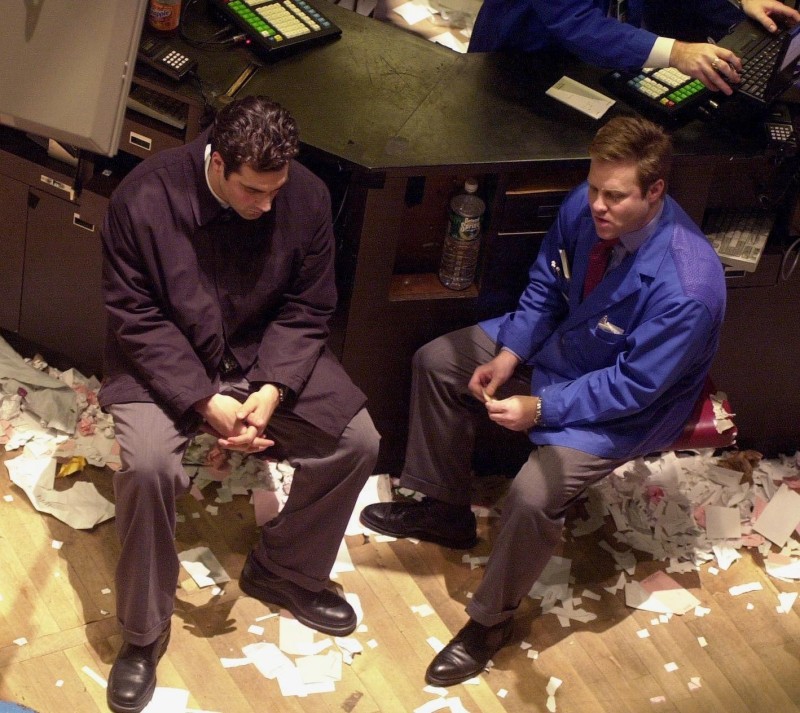
Tech Bust 2.0? Maybe Not
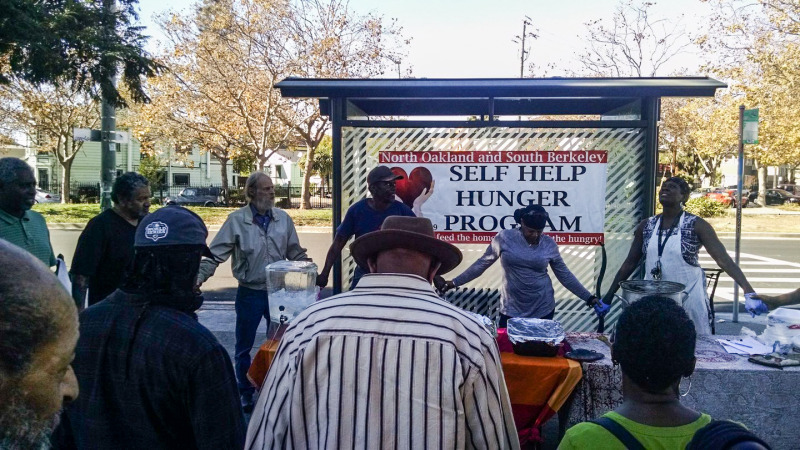
Battle Over a Sliver of Land in Changing Oakland Neighborhood
BART Gallery Pt. 2: Take a Journey Beyond Downtown
Bay Area Affordability Crisis Spurs Young Activists to Fight for Teacher Housing
Boomtown Real Estate Angst, 1855-Style
San Francisco’s Building Boom Sparks Hiring Spree by City, State Agencies
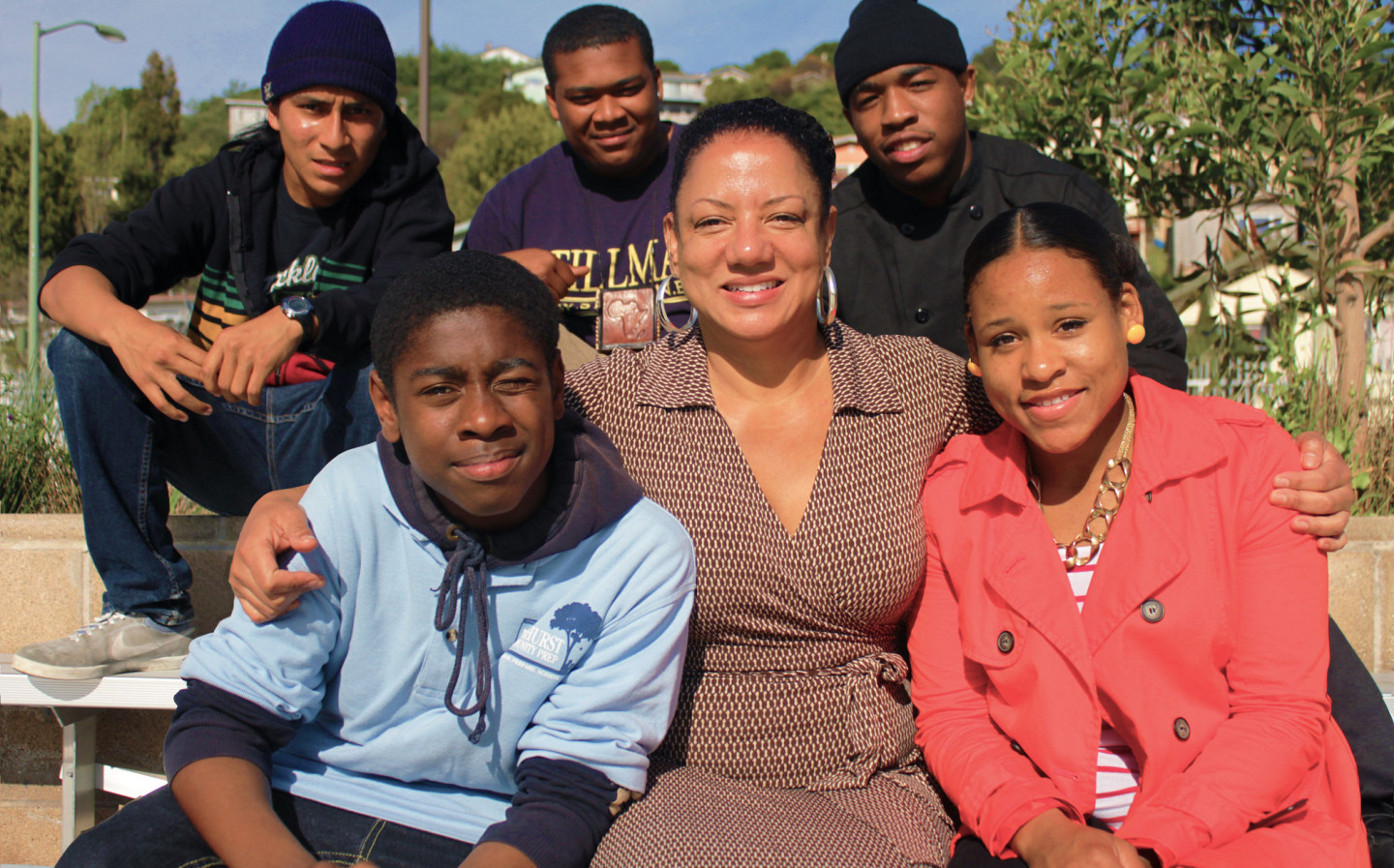
Olis Simmons: Bay Area's Boom Not Benefiting Oakland Youth
BART Gallery Pt. 1: Take the Train to Oakland's Art Boom
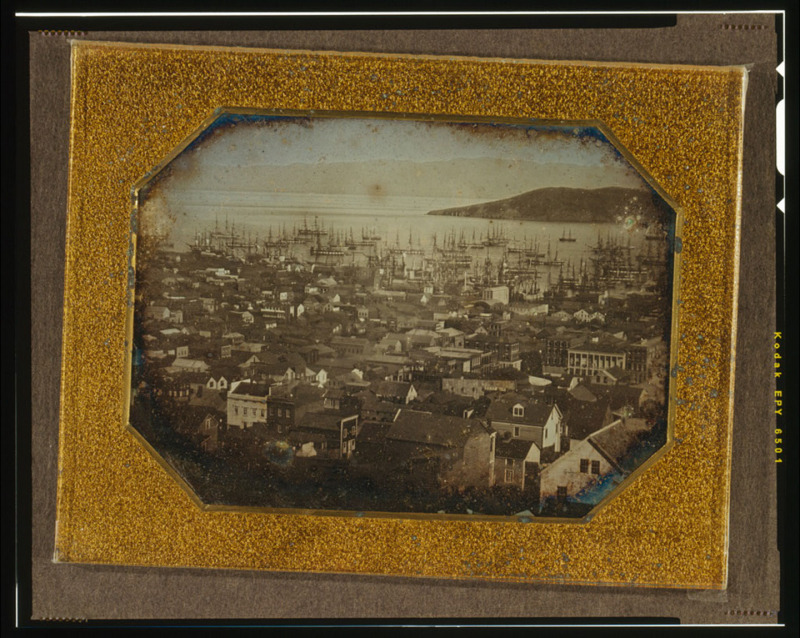
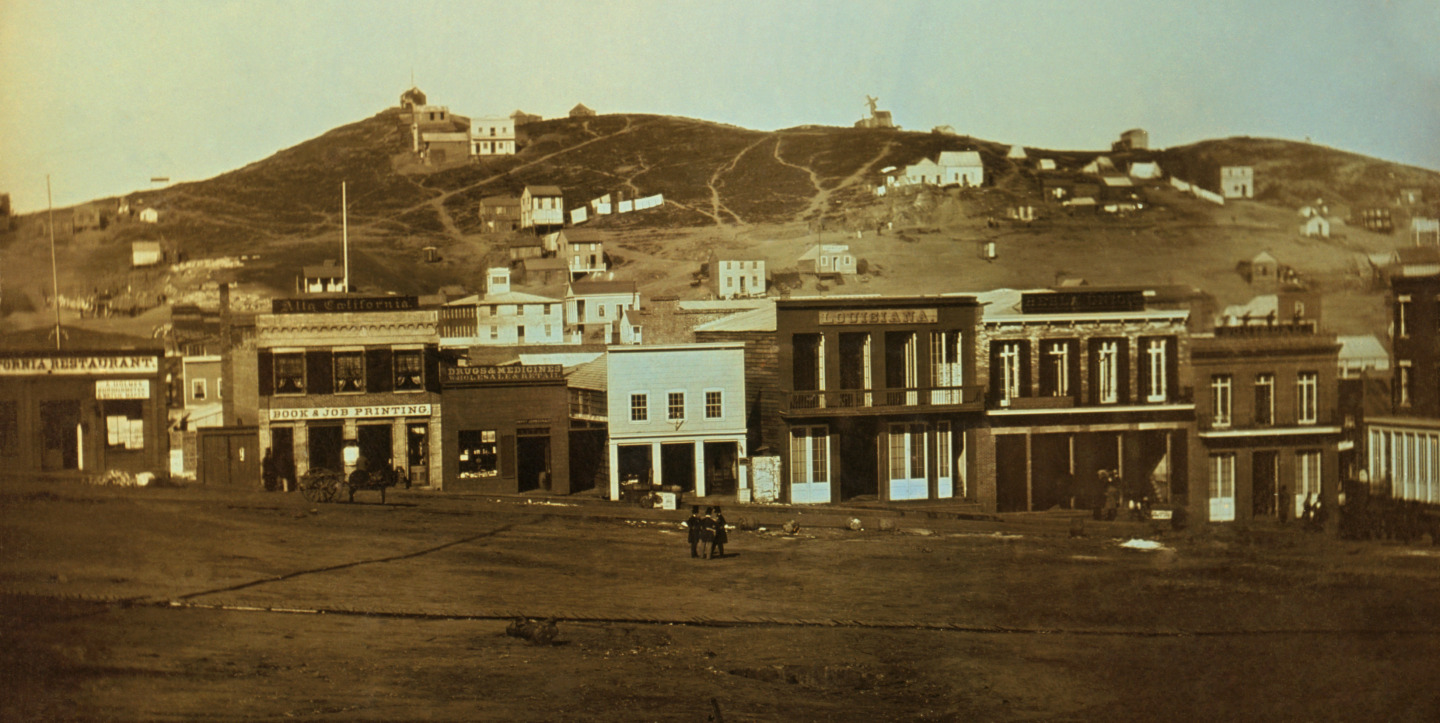
Picturing the First Boom: Images of Gold Rush San Francisco
Boomtown History: From Vast Solitude to a World Rushing In
Is the Tech Boom the New Gold Rush? A History of California's Booms and Busts
window.__IS_SSR__=true
window.__INITIAL_STATE__={
"attachmentsReducer": {
"audio_0": {
"type": "attachments",
"id": "audio_0",
"imgSizes": {
"kqedFullSize": {
"file": "https://ww2.kqed.org/news/wp-content/themes/KQED-unified/img/audio_bgs/background0.jpg"
}
}
},
"audio_1": {
"type": "attachments",
"id": "audio_1",
"imgSizes": {
"kqedFullSize": {
"file": "https://ww2.kqed.org/news/wp-content/themes/KQED-unified/img/audio_bgs/background1.jpg"
}
}
},
"audio_2": {
"type": "attachments",
"id": "audio_2",
"imgSizes": {
"kqedFullSize": {
"file": "https://ww2.kqed.org/news/wp-content/themes/KQED-unified/img/audio_bgs/background2.jpg"
}
}
},
"audio_3": {
"type": "attachments",
"id": "audio_3",
"imgSizes": {
"kqedFullSize": {
"file": "https://ww2.kqed.org/news/wp-content/themes/KQED-unified/img/audio_bgs/background3.jpg"
}
}
},
"audio_4": {
"type": "attachments",
"id": "audio_4",
"imgSizes": {
"kqedFullSize": {
"file": "https://ww2.kqed.org/news/wp-content/themes/KQED-unified/img/audio_bgs/background4.jpg"
}
}
},
"placeholder": {
"type": "attachments",
"id": "placeholder",
"imgSizes": {
"thumbnail": {
"file": "https://cdn.kqed.org/wp-content/uploads/2024/12/KQED-Default-Image-816638274-2000x1333-1-160x107.jpg",
"width": 160,
"height": 107,
"mimeType": "image/jpeg"
},
"medium": {
"file": "https://cdn.kqed.org/wp-content/uploads/2024/12/KQED-Default-Image-816638274-2000x1333-1-800x533.jpg",
"width": 800,
"height": 533,
"mimeType": "image/jpeg"
},
"medium_large": {
"file": "https://cdn.kqed.org/wp-content/uploads/2024/12/KQED-Default-Image-816638274-2000x1333-1-768x512.jpg",
"width": 768,
"height": 512,
"mimeType": "image/jpeg"
},
"large": {
"file": "https://cdn.kqed.org/wp-content/uploads/2024/12/KQED-Default-Image-816638274-2000x1333-1-1020x680.jpg",
"width": 1020,
"height": 680,
"mimeType": "image/jpeg"
},
"1536x1536": {
"file": "https://cdn.kqed.org/wp-content/uploads/2024/12/KQED-Default-Image-816638274-2000x1333-1-1536x1024.jpg",
"width": 1536,
"height": 1024,
"mimeType": "image/jpeg"
},
"fd-lrg": {
"file": "https://cdn.kqed.org/wp-content/uploads/2024/12/KQED-Default-Image-816638274-2000x1333-1-1536x1024.jpg",
"width": 1536,
"height": 1024,
"mimeType": "image/jpeg"
},
"fd-med": {
"file": "https://cdn.kqed.org/wp-content/uploads/2024/12/KQED-Default-Image-816638274-2000x1333-1-1020x680.jpg",
"width": 1020,
"height": 680,
"mimeType": "image/jpeg"
},
"fd-sm": {
"file": "https://cdn.kqed.org/wp-content/uploads/2024/12/KQED-Default-Image-816638274-2000x1333-1-800x533.jpg",
"width": 800,
"height": 533,
"mimeType": "image/jpeg"
},
"post-thumbnail": {
"file": "https://cdn.kqed.org/wp-content/uploads/2024/12/KQED-Default-Image-816638274-2000x1333-1-672x372.jpg",
"width": 672,
"height": 372,
"mimeType": "image/jpeg"
},
"twentyfourteen-full-width": {
"file": "https://cdn.kqed.org/wp-content/uploads/2024/12/KQED-Default-Image-816638274-2000x1333-1-1038x576.jpg",
"width": 1038,
"height": 576,
"mimeType": "image/jpeg"
},
"xxsmall": {
"file": "https://cdn.kqed.org/wp-content/uploads/2024/12/KQED-Default-Image-816638274-2000x1333-1-160x107.jpg",
"width": 160,
"height": 107,
"mimeType": "image/jpeg"
},
"xsmall": {
"file": "https://cdn.kqed.org/wp-content/uploads/2024/12/KQED-Default-Image-816638274-2000x1333-1-672x372.jpg",
"width": 672,
"height": 372,
"mimeType": "image/jpeg"
},
"small": {
"file": "https://cdn.kqed.org/wp-content/uploads/2024/12/KQED-Default-Image-816638274-2000x1333-1-672x372.jpg",
"width": 672,
"height": 372,
"mimeType": "image/jpeg"
},
"xlarge": {
"file": "https://cdn.kqed.org/wp-content/uploads/2024/12/KQED-Default-Image-816638274-2000x1333-1-1020x680.jpg",
"width": 1020,
"height": 680,
"mimeType": "image/jpeg"
},
"full-width": {
"file": "https://cdn.kqed.org/wp-content/uploads/2024/12/KQED-Default-Image-816638274-2000x1333-1-1920x1280.jpg",
"width": 1920,
"height": 1280,
"mimeType": "image/jpeg"
},
"guest-author-32": {
"file": "https://cdn.kqed.org/wp-content/uploads/2025/01/KQED-Default-Image-816638274-1333x1333-1-160x160.jpg",
"width": 32,
"height": 32,
"mimeType": "image/jpeg"
},
"guest-author-50": {
"file": "https://cdn.kqed.org/wp-content/uploads/2025/01/KQED-Default-Image-816638274-1333x1333-1-160x160.jpg",
"width": 50,
"height": 50,
"mimeType": "image/jpeg"
},
"guest-author-64": {
"file": "https://cdn.kqed.org/wp-content/uploads/2025/01/KQED-Default-Image-816638274-1333x1333-1-160x160.jpg",
"width": 64,
"height": 64,
"mimeType": "image/jpeg"
},
"guest-author-96": {
"file": "https://cdn.kqed.org/wp-content/uploads/2025/01/KQED-Default-Image-816638274-1333x1333-1-160x160.jpg",
"width": 96,
"height": 96,
"mimeType": "image/jpeg"
},
"guest-author-128": {
"file": "https://cdn.kqed.org/wp-content/uploads/2025/01/KQED-Default-Image-816638274-1333x1333-1-160x160.jpg",
"width": 128,
"height": 128,
"mimeType": "image/jpeg"
},
"detail": {
"file": "https://cdn.kqed.org/wp-content/uploads/2025/01/KQED-Default-Image-816638274-1333x1333-1-160x160.jpg",
"width": 160,
"height": 160,
"mimeType": "image/jpeg"
},
"kqedFullSize": {
"file": "https://cdn.kqed.org/wp-content/uploads/2024/12/KQED-Default-Image-816638274-2000x1333-1.jpg",
"width": 2000,
"height": 1333
}
}
},
"news_10411866": {
"type": "attachments",
"id": "news_10411866",
"meta": {
"index": "attachments_1716263798",
"site": "news",
"id": "10411866",
"found": true
},
"parent": 10407284,
"imgSizes": {
"twentyfourteen-full-width": {
"file": "https://ww2.kqed.org/app/uploads/sites/10/2015/01/RS14042_51535601-qut-1038x576.jpg",
"width": 1038,
"mimeType": "image/jpeg",
"height": 576
},
"thumbnail": {
"file": "https://ww2.kqed.org/app/uploads/sites/10/2015/01/RS14042_51535601-qut-400x356.jpg",
"width": 400,
"mimeType": "image/jpeg",
"height": 356
},
"post-thumbnail": {
"file": "https://ww2.kqed.org/app/uploads/sites/10/2015/01/RS14042_51535601-qut-672x372.jpg",
"width": 672,
"mimeType": "image/jpeg",
"height": 372
},
"kqedFullSize": {
"file": "https://ww2.kqed.org/app/uploads/sites/10/2015/01/RS14042_51535601-qut.jpg",
"width": 1418,
"height": 1264
},
"guest-author-96": {
"file": "https://ww2.kqed.org/app/uploads/sites/10/2015/01/RS14042_51535601-qut-96x96.jpg",
"width": 96,
"mimeType": "image/jpeg",
"height": 96
},
"medium": {
"file": "https://ww2.kqed.org/app/uploads/sites/10/2015/01/RS14042_51535601-qut-800x713.jpg",
"width": 800,
"mimeType": "image/jpeg",
"height": 713
},
"guest-author-64": {
"file": "https://ww2.kqed.org/app/uploads/sites/10/2015/01/RS14042_51535601-qut-64x64.jpg",
"width": 64,
"mimeType": "image/jpeg",
"height": 64
},
"detail": {
"file": "https://ww2.kqed.org/app/uploads/sites/10/2015/01/RS14042_51535601-qut-75x75.jpg",
"width": 75,
"mimeType": "image/jpeg",
"height": 75
},
"guest-author-32": {
"file": "https://ww2.kqed.org/app/uploads/sites/10/2015/01/RS14042_51535601-qut-32x32.jpg",
"width": 32,
"mimeType": "image/jpeg",
"height": 32
},
"guest-author-128": {
"file": "https://ww2.kqed.org/app/uploads/sites/10/2015/01/RS14042_51535601-qut-128x128.jpg",
"width": 128,
"mimeType": "image/jpeg",
"height": 128
}
},
"publishDate": 1421802678,
"modified": 1421868930,
"caption": "Traders after a rough day on the floor of the New York Stock Exchange as the dot-com bubble neared its peak in early 2000. ",
"description": "Traders during a rough day on the floor of the New York Stock Exchange as the dot-com bubble neared its peak. ",
"title": "Dot-com Bubble",
"credit": "Henny Ray Abrams/AFP-Getty Images",
"status": "inherit",
"isLoading": false,
"fetchFailed": false
},
"news_10411639": {
"type": "attachments",
"id": "news_10411639",
"meta": {
"index": "attachments_1716263798",
"site": "news",
"id": "10411639",
"found": true
},
"parent": 0,
"imgSizes": {
"twentyfourteen-full-width": {
"file": "https://ww2.kqed.org/app/uploads/sites/10/2015/01/driverplaza-1038x576.jpg",
"width": 1038,
"mimeType": "image/jpeg",
"height": 576
},
"thumbnail": {
"file": "https://ww2.kqed.org/app/uploads/sites/10/2015/01/driverplaza-400x225.jpg",
"width": 400,
"mimeType": "image/jpeg",
"height": 225
},
"post-thumbnail": {
"file": "https://ww2.kqed.org/app/uploads/sites/10/2015/01/driverplaza-672x372.jpg",
"width": 672,
"mimeType": "image/jpeg",
"height": 372
},
"kqedFullSize": {
"file": "https://ww2.kqed.org/app/uploads/sites/10/2015/01/driverplaza.jpg",
"width": 1440,
"height": 811
},
"guest-author-96": {
"file": "https://ww2.kqed.org/app/uploads/sites/10/2015/01/driverplaza-96x96.jpg",
"width": 96,
"mimeType": "image/jpeg",
"height": 96
},
"medium": {
"file": "https://ww2.kqed.org/app/uploads/sites/10/2015/01/driverplaza-800x450.jpg",
"width": 800,
"mimeType": "image/jpeg",
"height": 450
},
"guest-author-64": {
"file": "https://ww2.kqed.org/app/uploads/sites/10/2015/01/driverplaza-64x64.jpg",
"width": 64,
"mimeType": "image/jpeg",
"height": 64
},
"detail": {
"file": "https://ww2.kqed.org/app/uploads/sites/10/2015/01/driverplaza-75x75.jpg",
"width": 75,
"mimeType": "image/jpeg",
"height": 75
},
"guest-author-32": {
"file": "https://ww2.kqed.org/app/uploads/sites/10/2015/01/driverplaza-32x32.jpg",
"width": 32,
"mimeType": "image/jpeg",
"height": 32
},
"guest-author-128": {
"file": "https://ww2.kqed.org/app/uploads/sites/10/2015/01/driverplaza-128x128.jpg",
"width": 128,
"mimeType": "image/jpeg",
"height": 128
}
},
"publishDate": 1421785641,
"modified": 1421786811,
"caption": "Aunti Frances Moore, right, leads a prayer before a Tuesday meal at North Oakland's Driver Plaza.",
"description": "Aunti Frances Michelle Moore, right, leads a prayer before a Tuesday meal at North Oakland's Driver Plaza.",
"title": "driverplaza",
"credit": "Andrew Stelzer/KQED",
"status": "inherit",
"isLoading": false,
"fetchFailed": false
},
"arts_10304233": {
"type": "attachments",
"id": "arts_10304233",
"meta": {
"index": "attachments_1716263798",
"site": "arts",
"id": "10304233",
"found": true
},
"parent": 10304103,
"imgSizes": {
"twentyfourteen-full-width": {
"file": "https://ww2.kqed.org/app/uploads/sites/2/2015/01/Boomtown2white-1038x576.jpg",
"width": 1038,
"mimeType": "image/jpeg",
"height": 576
},
"thumbnail": {
"file": "https://ww2.kqed.org/app/uploads/sites/2/2015/01/Boomtown2white-400x225.jpg",
"width": 400,
"mimeType": "image/jpeg",
"height": 225
},
"post-thumbnail": {
"file": "https://ww2.kqed.org/app/uploads/sites/2/2015/01/Boomtown2white-672x372.jpg",
"width": 672,
"mimeType": "image/jpeg",
"height": 372
},
"kqedFullSize": {
"file": "https://ww2.kqed.org/app/uploads/sites/2/2015/01/Boomtown2white.jpg",
"width": 1400,
"height": 788
},
"large": {
"file": "https://ww2.kqed.org/app/uploads/sites/2/2015/01/Boomtown2white-1180x664.jpg",
"width": 1180,
"mimeType": "image/jpeg",
"height": 664
},
"guest-author-96": {
"file": "https://ww2.kqed.org/app/uploads/sites/2/2015/01/Boomtown2white-96x96.jpg",
"width": 96,
"mimeType": "image/jpeg",
"height": 96
},
"medium": {
"file": "https://ww2.kqed.org/app/uploads/sites/2/2015/01/Boomtown2white-800x450.jpg",
"width": 800,
"mimeType": "image/jpeg",
"height": 450
},
"guest-author-64": {
"file": "https://ww2.kqed.org/app/uploads/sites/2/2015/01/Boomtown2white-64x64.jpg",
"width": 64,
"mimeType": "image/jpeg",
"height": 64
},
"detail": {
"file": "https://ww2.kqed.org/app/uploads/sites/2/2015/01/Boomtown2white-75x75.jpg",
"width": 75,
"mimeType": "image/jpeg",
"height": 75
},
"guest-author-32": {
"file": "https://ww2.kqed.org/app/uploads/sites/2/2015/01/Boomtown2white-32x32.jpg",
"width": 32,
"mimeType": "image/jpeg",
"height": 32
},
"guest-author-128": {
"file": "https://ww2.kqed.org/app/uploads/sites/2/2015/01/Boomtown2white-128x128.jpg",
"width": 128,
"mimeType": "image/jpeg",
"height": 128
}
},
"publishDate": 1421307915,
"modified": 1421307927,
"caption": "Illustration by Carolyn Porras. \u003ca href=\"http://www.carolynporrasart.com\" target=\"_blank\">carolynporrasart.com\u003c/a>",
"description": null,
"title": "Boomtown2white",
"credit": null,
"status": "inherit",
"isLoading": false,
"fetchFailed": false
},
"news_10405315": {
"type": "attachments",
"id": "news_10405315",
"meta": {
"index": "attachments_1716263798",
"site": "news",
"id": "10405315",
"found": true
},
"parent": 10404475,
"imgSizes": {
"twentyfourteen-full-width": {
"file": "https://ww2.kqed.org/app/uploads/sites/10/2015/01/13978_transform-1038x576.jpg",
"width": 1038,
"mimeType": "image/jpeg",
"height": 576
},
"thumbnail": {
"file": "https://ww2.kqed.org/app/uploads/sites/10/2015/01/13978_transform-400x305.jpg",
"width": 400,
"mimeType": "image/jpeg",
"height": 305
},
"post-thumbnail": {
"file": "https://ww2.kqed.org/app/uploads/sites/10/2015/01/13978_transform-672x372.jpg",
"width": 672,
"mimeType": "image/jpeg",
"height": 372
},
"kqedFullSize": {
"file": "https://ww2.kqed.org/app/uploads/sites/10/2015/01/13978_transform.jpg",
"width": 1440,
"height": 1098
},
"guest-author-96": {
"file": "https://ww2.kqed.org/app/uploads/sites/10/2015/01/13978_transform-96x96.jpg",
"width": 96,
"mimeType": "image/jpeg",
"height": 96
},
"medium": {
"file": "https://ww2.kqed.org/app/uploads/sites/10/2015/01/13978_transform-800x610.jpg",
"width": 800,
"mimeType": "image/jpeg",
"height": 610
},
"guest-author-64": {
"file": "https://ww2.kqed.org/app/uploads/sites/10/2015/01/13978_transform-64x64.jpg",
"width": 64,
"mimeType": "image/jpeg",
"height": 64
},
"detail": {
"file": "https://ww2.kqed.org/app/uploads/sites/10/2015/01/13978_transform-75x75.jpg",
"width": 75,
"mimeType": "image/jpeg",
"height": 75
},
"guest-author-32": {
"file": "https://ww2.kqed.org/app/uploads/sites/10/2015/01/13978_transform-32x32.jpg",
"width": 32,
"mimeType": "image/jpeg",
"height": 32
},
"guest-author-128": {
"file": "https://ww2.kqed.org/app/uploads/sites/10/2015/01/13978_transform-128x128.jpg",
"width": 128,
"mimeType": "image/jpeg",
"height": 128
}
},
"publishDate": 1421185034,
"modified": 1421185047,
"caption": "Azalea Renfield (left) works with volunteers to help teachers find housing.",
"description": "Azalea Renfield (left) works with volunteers to help teachers find housing.",
"title": "13978_transform",
"credit": "Stephanie Martin Taylor/KQED",
"status": "inherit",
"isLoading": false,
"fetchFailed": false
},
"news_10405264": {
"type": "attachments",
"id": "news_10405264",
"meta": {
"index": "attachments_1716263798",
"site": "news",
"id": "10405264",
"found": true
},
"parent": 10404472,
"imgSizes": {
"twentyfourteen-full-width": {
"file": "https://ww2.kqed.org/app/uploads/sites/10/2015/01/dailyaltacalifornia18550620-1038x576.jpg",
"width": 1038,
"mimeType": "image/jpeg",
"height": 576
},
"thumbnail": {
"file": "https://ww2.kqed.org/app/uploads/sites/10/2015/01/dailyaltacalifornia18550620-400x211.jpg",
"width": 400,
"mimeType": "image/jpeg",
"height": 211
},
"post-thumbnail": {
"file": "https://ww2.kqed.org/app/uploads/sites/10/2015/01/dailyaltacalifornia18550620-672x372.jpg",
"width": 672,
"mimeType": "image/jpeg",
"height": 372
},
"kqedFullSize": {
"file": "https://ww2.kqed.org/app/uploads/sites/10/2015/01/dailyaltacalifornia18550620.jpg",
"width": 1117,
"height": 592
},
"guest-author-96": {
"file": "https://ww2.kqed.org/app/uploads/sites/10/2015/01/dailyaltacalifornia18550620-96x96.jpg",
"width": 96,
"mimeType": "image/jpeg",
"height": 96
},
"medium": {
"file": "https://ww2.kqed.org/app/uploads/sites/10/2015/01/dailyaltacalifornia18550620-800x423.jpg",
"width": 800,
"mimeType": "image/jpeg",
"height": 423
},
"guest-author-64": {
"file": "https://ww2.kqed.org/app/uploads/sites/10/2015/01/dailyaltacalifornia18550620-64x64.jpg",
"width": 64,
"mimeType": "image/jpeg",
"height": 64
},
"detail": {
"file": "https://ww2.kqed.org/app/uploads/sites/10/2015/01/dailyaltacalifornia18550620-75x75.jpg",
"width": 75,
"mimeType": "image/jpeg",
"height": 75
},
"guest-author-32": {
"file": "https://ww2.kqed.org/app/uploads/sites/10/2015/01/dailyaltacalifornia18550620-32x32.jpg",
"width": 32,
"mimeType": "image/jpeg",
"height": 32
},
"guest-author-128": {
"file": "https://ww2.kqed.org/app/uploads/sites/10/2015/01/dailyaltacalifornia18550620-128x128.jpg",
"width": 128,
"mimeType": "image/jpeg",
"height": 128
}
},
"publishDate": 1421181568,
"modified": 1421189910,
"caption": "Front page of San Francisco's Daily Alta California, June 20, 1855. ",
"description": "Front page of San Francisco's Daily Alta California, June 20, 1855. ",
"title": "Daily Alta California",
"credit": "California Digital Newspaper Collection",
"status": "inherit",
"isLoading": false,
"fetchFailed": false
},
"news_10404203": {
"type": "attachments",
"id": "news_10404203",
"meta": {
"index": "attachments_1716263798",
"site": "news",
"id": "10404203",
"found": true
},
"parent": 10404199,
"imgSizes": {
"twentyfourteen-full-width": {
"file": "https://ww2.kqed.org/app/uploads/sites/10/2015/01/RS9378_IMG_1112-copy-lpr-1038x576.jpg",
"width": 1038,
"mimeType": "image/jpeg",
"height": 576
},
"thumbnail": {
"file": "https://ww2.kqed.org/app/uploads/sites/10/2015/01/RS9378_IMG_1112-copy-lpr-400x266.jpg",
"width": 400,
"mimeType": "image/jpeg",
"height": 266
},
"post-thumbnail": {
"file": "https://ww2.kqed.org/app/uploads/sites/10/2015/01/RS9378_IMG_1112-copy-lpr-672x372.jpg",
"width": 672,
"mimeType": "image/jpeg",
"height": 372
},
"kqedFullSize": {
"file": "https://ww2.kqed.org/app/uploads/sites/10/2015/01/RS9378_IMG_1112-copy-lpr-e1421078781659.jpg",
"width": 1440,
"height": 960
},
"large": {
"file": "https://ww2.kqed.org/app/uploads/sites/10/2015/01/RS9378_IMG_1112-copy-lpr-1440x959.jpg",
"width": 1440,
"mimeType": "image/jpeg",
"height": 959
},
"guest-author-96": {
"file": "https://ww2.kqed.org/app/uploads/sites/10/2015/01/RS9378_IMG_1112-copy-lpr-96x96.jpg",
"width": 96,
"mimeType": "image/jpeg",
"height": 96
},
"medium": {
"file": "https://ww2.kqed.org/app/uploads/sites/10/2015/01/RS9378_IMG_1112-copy-lpr-800x533.jpg",
"width": 800,
"mimeType": "image/jpeg",
"height": 533
},
"guest-author-64": {
"file": "https://ww2.kqed.org/app/uploads/sites/10/2015/01/RS9378_IMG_1112-copy-lpr-64x64.jpg",
"width": 64,
"mimeType": "image/jpeg",
"height": 64
},
"detail": {
"file": "https://ww2.kqed.org/app/uploads/sites/10/2015/01/RS9378_IMG_1112-copy-lpr-75x75.jpg",
"width": 75,
"mimeType": "image/jpeg",
"height": 75
},
"guest-author-32": {
"file": "https://ww2.kqed.org/app/uploads/sites/10/2015/01/RS9378_IMG_1112-copy-lpr-32x32.jpg",
"width": 32,
"mimeType": "image/jpeg",
"height": 32
},
"guest-author-128": {
"file": "https://ww2.kqed.org/app/uploads/sites/10/2015/01/RS9378_IMG_1112-copy-lpr-128x128.jpg",
"width": 128,
"mimeType": "image/jpeg",
"height": 128
}
},
"publishDate": 1421071559,
"modified": 1421096932,
"caption": "Construction site in downtown San Francisco, March 2014. (Mark Andrew Boyer/KQED)",
"description": "Tower cranes hover over the downtown San Francisco skyline. March/2014",
"title": "San Francisco-Building Boom",
"credit": null,
"status": "inherit",
"isLoading": false,
"fetchFailed": false
},
"news_10402501": {
"type": "attachments",
"id": "news_10402501",
"meta": {
"index": "attachments_1716263798",
"site": "news",
"id": "10402501",
"found": true
},
"parent": 10401334,
"imgSizes": {
"twentyfourteen-full-width": {
"file": "https://ww2.kqed.org/app/uploads/sites/10/2015/01/RS13963_OlisRoc-lpr-1038x576.jpg",
"width": 1038,
"mimeType": "image/jpeg",
"height": 576
},
"thumbnail": {
"file": "https://ww2.kqed.org/app/uploads/sites/10/2015/01/RS13963_OlisRoc-lpr-400x249.jpg",
"width": 400,
"mimeType": "image/jpeg",
"height": 249
},
"post-thumbnail": {
"file": "https://ww2.kqed.org/app/uploads/sites/10/2015/01/RS13963_OlisRoc-lpr-672x372.jpg",
"width": 672,
"mimeType": "image/jpeg",
"height": 372
},
"kqedFullSize": {
"file": "https://ww2.kqed.org/app/uploads/sites/10/2015/01/RS13963_OlisRoc-lpr-e1518456005735.jpg",
"width": 1920,
"height": 1197
},
"large": {
"file": "https://ww2.kqed.org/app/uploads/sites/10/2015/01/RS13963_OlisRoc-lpr-1440x897.jpg",
"width": 1440,
"mimeType": "image/jpeg",
"height": 897
},
"guest-author-96": {
"file": "https://ww2.kqed.org/app/uploads/sites/10/2015/01/RS13963_OlisRoc-lpr-96x96.jpg",
"width": 96,
"mimeType": "image/jpeg",
"height": 96
},
"medium": {
"file": "https://ww2.kqed.org/app/uploads/sites/10/2015/01/RS13963_OlisRoc-lpr-800x498.jpg",
"width": 800,
"mimeType": "image/jpeg",
"height": 498
},
"guest-author-64": {
"file": "https://ww2.kqed.org/app/uploads/sites/10/2015/01/RS13963_OlisRoc-lpr-64x64.jpg",
"width": 64,
"mimeType": "image/jpeg",
"height": 64
},
"detail": {
"file": "https://ww2.kqed.org/app/uploads/sites/10/2015/01/RS13963_OlisRoc-lpr-75x75.jpg",
"width": 75,
"mimeType": "image/jpeg",
"height": 75
},
"guest-author-32": {
"file": "https://ww2.kqed.org/app/uploads/sites/10/2015/01/RS13963_OlisRoc-lpr-32x32.jpg",
"width": 32,
"mimeType": "image/jpeg",
"height": 32
},
"guest-author-128": {
"file": "https://ww2.kqed.org/app/uploads/sites/10/2015/01/RS13963_OlisRoc-lpr-128x128.jpg",
"width": 128,
"mimeType": "image/jpeg",
"height": 128
}
},
"publishDate": 1420849011,
"modified": 1518455994,
"caption": "Olis Simmons with members of Youth Uprising.",
"description": "Olis Simmons with members of YouthUprising",
"title": "RS13963_OlisRoc-lpr",
"credit": "Courtesy Olis Simmons",
"status": "inherit",
"isLoading": false,
"fetchFailed": false
},
"arts_10276354": {
"type": "attachments",
"id": "arts_10276354",
"meta": {
"index": "attachments_1716263798",
"site": "arts",
"id": "10276354",
"found": true
},
"parent": 10276352,
"imgSizes": {
"twentyfourteen-full-width": {
"file": "https://ww2.kqed.org/app/uploads/sites/2/2015/01/BOOMTOWN-1038x576.jpg",
"width": 1038,
"mimeType": "image/jpeg",
"height": 576
},
"thumbnail": {
"file": "https://ww2.kqed.org/app/uploads/sites/2/2015/01/BOOMTOWN-400x225.jpg",
"width": 400,
"mimeType": "image/jpeg",
"height": 225
},
"post-thumbnail": {
"file": "https://ww2.kqed.org/app/uploads/sites/2/2015/01/BOOMTOWN-672x372.jpg",
"width": 672,
"mimeType": "image/jpeg",
"height": 372
},
"kqedFullSize": {
"file": "https://ww2.kqed.org/app/uploads/sites/2/2015/01/BOOMTOWN-e1420578897299.jpg",
"width": 800,
"height": 450
},
"large": {
"file": "https://ww2.kqed.org/app/uploads/sites/2/2015/01/BOOMTOWN-1180x664.jpg",
"width": 1180,
"mimeType": "image/jpeg",
"height": 664
},
"guest-author-96": {
"file": "https://ww2.kqed.org/app/uploads/sites/2/2015/01/BOOMTOWN-96x96.jpg",
"width": 96,
"mimeType": "image/jpeg",
"height": 96
},
"medium": {
"file": "https://ww2.kqed.org/app/uploads/sites/2/2015/01/BOOMTOWN-800x450.jpg",
"width": 800,
"mimeType": "image/jpeg",
"height": 450
},
"guest-author-64": {
"file": "https://ww2.kqed.org/app/uploads/sites/2/2015/01/BOOMTOWN-64x64.jpg",
"width": 64,
"mimeType": "image/jpeg",
"height": 64
},
"detail": {
"file": "https://ww2.kqed.org/app/uploads/sites/2/2015/01/BOOMTOWN-75x75.jpg",
"width": 75,
"mimeType": "image/jpeg",
"height": 75
},
"guest-author-32": {
"file": "https://ww2.kqed.org/app/uploads/sites/2/2015/01/BOOMTOWN-32x32.jpg",
"width": 32,
"mimeType": "image/jpeg",
"height": 32
},
"guest-author-128": {
"file": "https://ww2.kqed.org/app/uploads/sites/2/2015/01/BOOMTOWN-128x128.jpg",
"width": 128,
"mimeType": "image/jpeg",
"height": 128
}
},
"publishDate": 1420446052,
"modified": 1420447658,
"caption": "Illustration by Carolyn Porras. \u003ca href=\"http://carolynporrasart.com/\" target=\"_blank\">carolynporrasart.com\u003c/a>",
"description": null,
"title": "BOOMTOWN",
"credit": null,
"status": "inherit",
"isLoading": false,
"fetchFailed": false
},
"news_10398869": {
"type": "attachments",
"id": "news_10398869",
"meta": {
"index": "attachments_1716263798",
"site": "news",
"id": "10398869",
"found": true
},
"parent": 10398858,
"imgSizes": {
"twentyfourteen-full-width": {
"file": "https://ww2.kqed.org/app/uploads/sites/10/2015/01/rooftops-1038x576.jpg",
"width": 1038,
"mimeType": "image/jpeg",
"height": 576
},
"thumbnail": {
"file": "https://ww2.kqed.org/app/uploads/sites/10/2015/01/rooftops-400x319.jpg",
"width": 400,
"mimeType": "image/jpeg",
"height": 319
},
"post-thumbnail": {
"file": "https://ww2.kqed.org/app/uploads/sites/10/2015/01/rooftops-672x372.jpg",
"width": 672,
"mimeType": "image/jpeg",
"height": 372
},
"kqedFullSize": {
"file": "https://ww2.kqed.org/app/uploads/sites/10/2015/01/rooftops.jpg",
"width": 1440,
"height": 1149
},
"guest-author-96": {
"file": "https://ww2.kqed.org/app/uploads/sites/10/2015/01/rooftops-96x96.jpg",
"width": 96,
"mimeType": "image/jpeg",
"height": 96
},
"medium": {
"file": "https://ww2.kqed.org/app/uploads/sites/10/2015/01/rooftops-800x638.jpg",
"width": 800,
"mimeType": "image/jpeg",
"height": 638
},
"guest-author-64": {
"file": "https://ww2.kqed.org/app/uploads/sites/10/2015/01/rooftops-64x64.jpg",
"width": 64,
"mimeType": "image/jpeg",
"height": 64
},
"detail": {
"file": "https://ww2.kqed.org/app/uploads/sites/10/2015/01/rooftops-75x75.jpg",
"width": 75,
"mimeType": "image/jpeg",
"height": 75
},
"guest-author-32": {
"file": "https://ww2.kqed.org/app/uploads/sites/10/2015/01/rooftops-32x32.jpg",
"width": 32,
"mimeType": "image/jpeg",
"height": 32
},
"guest-author-128": {
"file": "https://ww2.kqed.org/app/uploads/sites/10/2015/01/rooftops-128x128.jpg",
"width": 128,
"mimeType": "image/jpeg",
"height": 128
}
},
"publishDate": 1420508628,
"modified": 1420588384,
"caption": "This daguerreotype shows San Francisco's main anchorage in 1851. Yerba Buena Island is at the right. (Library of Congress)",
"description": "This daguerreotype shows San Francisco's main anchorage in 1851. Yerba Buena Island is at the right. (Library of Congress).",
"title": "San Francisco-Port-1851",
"credit": null,
"status": "inherit",
"isLoading": false,
"fetchFailed": false
},
"news_10398039": {
"type": "attachments",
"id": "news_10398039",
"meta": {
"index": "attachments_1716263798",
"site": "news",
"id": "10398039",
"found": true
},
"parent": 0,
"imgSizes": {
"twentyfourteen-full-width": {
"file": "https://ww2.kqed.org/app/uploads/sites/10/2015/01/portsmouth_square-1038x576.jpg",
"width": 1038,
"mimeType": "image/jpeg",
"height": 576
},
"thumbnail": {
"file": "https://ww2.kqed.org/app/uploads/sites/10/2015/01/portsmouth_square-400x201.jpg",
"width": 400,
"mimeType": "image/jpeg",
"height": 201
},
"post-thumbnail": {
"file": "https://ww2.kqed.org/app/uploads/sites/10/2015/01/portsmouth_square-672x372.jpg",
"width": 672,
"mimeType": "image/jpeg",
"height": 372
},
"kqedFullSize": {
"file": "https://ww2.kqed.org/app/uploads/sites/10/2015/01/portsmouth_square-e1420442408549.jpg",
"width": 1440,
"height": 724
},
"large": {
"file": "https://ww2.kqed.org/app/uploads/sites/10/2015/01/portsmouth_square-1440x723.jpg",
"width": 1440,
"mimeType": "image/jpeg",
"height": 723
},
"guest-author-96": {
"file": "https://ww2.kqed.org/app/uploads/sites/10/2015/01/portsmouth_square-96x96.jpg",
"width": 96,
"mimeType": "image/jpeg",
"height": 96
},
"medium": {
"file": "https://ww2.kqed.org/app/uploads/sites/10/2015/01/portsmouth_square-800x402.jpg",
"width": 800,
"mimeType": "image/jpeg",
"height": 402
},
"guest-author-64": {
"file": "https://ww2.kqed.org/app/uploads/sites/10/2015/01/portsmouth_square-64x64.jpg",
"width": 64,
"mimeType": "image/jpeg",
"height": 64
},
"detail": {
"file": "https://ww2.kqed.org/app/uploads/sites/10/2015/01/portsmouth_square-75x75.jpg",
"width": 75,
"mimeType": "image/jpeg",
"height": 75
},
"guest-author-32": {
"file": "https://ww2.kqed.org/app/uploads/sites/10/2015/01/portsmouth_square-32x32.jpg",
"width": 32,
"mimeType": "image/jpeg",
"height": 32
},
"guest-author-128": {
"file": "https://ww2.kqed.org/app/uploads/sites/10/2015/01/portsmouth_square-128x128.jpg",
"width": 128,
"mimeType": "image/jpeg",
"height": 128
}
},
"publishDate": 1420440722,
"modified": 1421369738,
"caption": "San Francisco's Portsmouth Square, also known as the Plaza, as seen in 1851. The view is to the west, toward what was later dubbed Nob Hill. The image, a daguerrotype, was credited to a dentist named S.C. McIntyre. (Image via Wikimedia Commons and Library of Congress)",
"description": "Portsmouth Square, also known as the Plaza, as seen in 1851. The image, a daguerrotype, was credited to a dentist named S.C. McIntyre. (Image via Wikimedia Commons and Library of Congress)",
"title": "Boomtown-San Francisco-Portsmouth Square",
"credit": null,
"status": "inherit",
"isLoading": false,
"fetchFailed": false
},
"news_10398815": {
"type": "attachments",
"id": "news_10398815",
"meta": {
"index": "attachments_1716263798",
"site": "news",
"id": "10398815",
"found": true
},
"parent": 10398809,
"imgSizes": {
"twentyfourteen-full-width": {
"file": "https://ww2.kqed.org/app/uploads/sites/10/2015/01/1873forum-1038x576.jpg",
"width": 1038,
"mimeType": "image/jpeg",
"height": 576
},
"thumbnail": {
"file": "https://ww2.kqed.org/app/uploads/sites/10/2015/01/1873forum-400x236.jpg",
"width": 400,
"mimeType": "image/jpeg",
"height": 236
},
"post-thumbnail": {
"file": "https://ww2.kqed.org/app/uploads/sites/10/2015/01/1873forum-672x372.jpg",
"width": 672,
"mimeType": "image/jpeg",
"height": 372
},
"kqedFullSize": {
"file": "https://ww2.kqed.org/app/uploads/sites/10/2015/01/1873forum.jpg",
"width": 1320,
"height": 780
},
"guest-author-96": {
"file": "https://ww2.kqed.org/app/uploads/sites/10/2015/01/1873forum-96x96.jpg",
"width": 96,
"mimeType": "image/jpeg",
"height": 96
},
"medium": {
"file": "https://ww2.kqed.org/app/uploads/sites/10/2015/01/1873forum-800x472.jpg",
"width": 800,
"mimeType": "image/jpeg",
"height": 472
},
"guest-author-64": {
"file": "https://ww2.kqed.org/app/uploads/sites/10/2015/01/1873forum-64x64.jpg",
"width": 64,
"mimeType": "image/jpeg",
"height": 64
},
"detail": {
"file": "https://ww2.kqed.org/app/uploads/sites/10/2015/01/1873forum-75x75.jpg",
"width": 75,
"mimeType": "image/jpeg",
"height": 75
},
"guest-author-32": {
"file": "https://ww2.kqed.org/app/uploads/sites/10/2015/01/1873forum-32x32.jpg",
"width": 32,
"mimeType": "image/jpeg",
"height": 32
},
"guest-author-128": {
"file": "https://ww2.kqed.org/app/uploads/sites/10/2015/01/1873forum-128x128.jpg",
"width": 128,
"mimeType": "image/jpeg",
"height": 128
}
},
"publishDate": 1420506562,
"modified": 1420507822,
"caption": "A map of San Francisco in 1873.",
"description": null,
"title": "1873forum",
"credit": "Courtesy the Bancroft Library",
"status": "inherit",
"isLoading": false,
"fetchFailed": false
},
"news_118655": {
"type": "attachments",
"id": "news_118655",
"meta": {
"index": "attachments_1716263798",
"site": "news",
"id": "118655",
"found": true
},
"parent": 118226,
"imgSizes": {
"kqedFullSize": {
"file": "https://ww2.kqed.org/app/uploads/sites/10/2014/11/RS6936_Lyft_9oct2013_0012_web-e1391706330133.jpg",
"width": 640,
"height": 427
}
},
"publishDate": 1384816239,
"modified": 1418940773,
"caption": "Behind the wheel of a Lyft driver's vehicle in San Francisco's Potrero Hill neighborhood.",
"description": "Lyft driver Alice S. navigates through Potrero Hill in San Francisco to get a passenger to work on Oct. 9, 2013.",
"title": "Lyft-TNCs-Ride Services",
"credit": "Sara Bloomberg/KQED",
"status": "inherit",
"isLoading": false,
"fetchFailed": false
}
},
"audioPlayerReducer": {
"postId": "stream_live",
"isPaused": true,
"isPlaying": false,
"pfsActive": false,
"pledgeModalIsOpen": true,
"playerDrawerIsOpen": false,
"liveAudioPlayStartedAt": 0,
"liveAudioPlayContext": ""
},
"authorsReducer": {
"byline_news_10398809": {
"type": "authors",
"id": "byline_news_10398809",
"meta": {
"override": true
},
"slug": "byline_news_10398809",
"name": "Forum",
"isLoading": false
},
"shotchkiss": {
"type": "authors",
"id": "61",
"meta": {
"index": "authors_1716337520",
"id": "61",
"found": true
},
"name": "Sarah Hotchkiss",
"firstName": "Sarah",
"lastName": "Hotchkiss",
"slug": "shotchkiss",
"email": "shotchkiss@kqed.org",
"display_author_email": true,
"staff_mastheads": [
"arts"
],
"title": "Senior Editor",
"bio": "Sarah Hotchkiss is a San Francisco \u003ca href=\"http://www.sarahhotchkiss.com\">artist\u003c/a> and arts writer. In 2019, she received the Dorothea & Leo Rabkin Foundation grant for visual art journalism and in 2020 she received a Society of Professional Journalists, Northern California award for excellence in arts and culture reporting.",
"avatar": "https://secure.gravatar.com/avatar/bc662df144b3d27fd8b1b6f1c2a420d34e91e53154d411bb7ad353cc8b6cea8d?s=600&d=blank&r=g",
"twitter": null,
"bluesky": null,
"facebook": null,
"instagram": null,
"linkedin": null,
"sites": [
{
"site": "",
"roles": [
"editor"
]
},
{
"site": "arts",
"roles": [
"Contributor",
"administrator"
]
},
{
"site": "artschool",
"roles": [
"administrator"
]
},
{
"site": "news",
"roles": [
"editor"
]
},
{
"site": "pop",
"roles": [
"administrator"
]
},
{
"site": "bayareabites",
"roles": [
"editor"
]
},
{
"site": "spark",
"roles": [
"editor"
]
},
{
"site": "checkplease",
"roles": [
"editor"
]
}
],
"headData": {
"title": "Sarah Hotchkiss | KQED",
"description": "Senior Editor",
"ogImgSrc": "https://secure.gravatar.com/avatar/bc662df144b3d27fd8b1b6f1c2a420d34e91e53154d411bb7ad353cc8b6cea8d?s=600&d=blank&r=g",
"twImgSrc": "https://secure.gravatar.com/avatar/bc662df144b3d27fd8b1b6f1c2a420d34e91e53154d411bb7ad353cc8b6cea8d?s=600&d=blank&r=g"
},
"isLoading": false,
"link": "/author/shotchkiss"
},
"smartin": {
"type": "authors",
"id": "89",
"meta": {
"index": "authors_1716337520",
"id": "89",
"found": true
},
"name": "Stephanie Martin Taylor",
"firstName": "Stephanie Martin",
"lastName": "Taylor",
"slug": "smartin",
"email": "smartin@kqed.org",
"display_author_email": false,
"staff_mastheads": [],
"title": null,
"bio": "Stephanie Martin is a radio news reporter and anchor, and an occasional host of the \u003cem>KQED Newsroom \u003c/em>television program. While she currently focuses on housing and development issues, she has also reported on topics ranging from state and local politics to religion to arts and culture.\r\n\r\nPrior to joining KQED in 2005, Stephanie was an anchor and reporter for WFDD, the NPR affiliate in Winston-Salem, NC. She also spent several years as a television anchor, reporter and producer at various stations around the country.\r\n\r\nStephanie has received numerous awards for her reporting, including two National Headliner Awards, the Religion Newswriters Association's Best Radio Reporting Award and honors from the Associated Press and the Radio and Television Digital News Association. A series she produced from Iraq in 2005 earned a Best of Radio Award from the Society of Professional Journalists.\r\n\r\nStephanie received a graduate degree in Journalism from Columbia University. As an undergraduate at Colgate University, she worked and studied in Paris and Dijon, France, and spent a summer interning in the White House Press Office.\r\n\r\nStephanie grew up in Dallas, TX, and now lives with her husband in San Francisco.",
"avatar": "https://secure.gravatar.com/avatar/9fd3f8e9af01e14afde39822c19646e0?s=600&d=blank&r=g",
"twitter": "SMartinTaylor",
"facebook": null,
"instagram": null,
"linkedin": null,
"sites": [
{
"site": "arts",
"roles": [
"Contributor",
"subscriber"
]
},
{
"site": "news",
"roles": [
"subscriber"
]
},
{
"site": "stateofhealth",
"roles": [
"subscriber"
]
}
],
"headData": {
"title": "Stephanie Martin Taylor | KQED",
"description": null,
"ogImgSrc": "https://secure.gravatar.com/avatar/9fd3f8e9af01e14afde39822c19646e0?s=600&d=blank&r=g",
"twImgSrc": "https://secure.gravatar.com/avatar/9fd3f8e9af01e14afde39822c19646e0?s=600&d=blank&r=g"
},
"isLoading": false,
"link": "/author/smartin"
},
"lisapickoffwhite-2": {
"type": "authors",
"id": "199",
"meta": {
"index": "authors_1716337520",
"id": "199",
"found": true
},
"name": "Lisa Pickoff-White",
"firstName": "Lisa",
"lastName": "Pickoff-White",
"slug": "lisapickoffwhite-2",
"email": "lpickoffwhite@kqed.org",
"display_author_email": false,
"staff_mastheads": [
"news"
],
"title": "Data Journalist, Senior Producer",
"bio": "Lisa Pickoff-White is KQED's data reporter. Lisa specializes in simplifying complex topics and bringing them to life through compelling visuals, including photography and data visualizations. She previously has worked at the Center for Investigative Reporting and other national outlets. Her work has been honored with awards from the Online News Association, Investigative Reporters and Editors, the Society of Professional Journalists and SXSW Interactive. \u003cstrong> \u003c/strong>",
"avatar": "https://secure.gravatar.com/avatar/5513c5f3967df792aa65bee2501e84d6?s=600&d=blank&r=g",
"twitter": "pickoffwhite",
"facebook": null,
"instagram": null,
"linkedin": null,
"sites": [
{
"site": "",
"roles": [
"editor"
]
},
{
"site": "arts",
"roles": []
},
{
"site": "news",
"roles": [
"administrator"
]
},
{
"site": "about",
"roles": [
"editor"
]
},
{
"site": "stateofhealth",
"roles": [
"administrator"
]
},
{
"site": "science",
"roles": [
"editor"
]
},
{
"site": "quest",
"roles": [
"editor"
]
},
{
"site": "forum",
"roles": [
"editor"
]
}
],
"headData": {
"title": "Lisa Pickoff-White | KQED",
"description": "Data Journalist, Senior Producer",
"ogImgSrc": "https://secure.gravatar.com/avatar/5513c5f3967df792aa65bee2501e84d6?s=600&d=blank&r=g",
"twImgSrc": "https://secure.gravatar.com/avatar/5513c5f3967df792aa65bee2501e84d6?s=600&d=blank&r=g"
},
"isLoading": false,
"link": "/author/lisapickoffwhite-2"
},
"andrewstelzer": {
"type": "authors",
"id": "213",
"meta": {
"index": "authors_1716337520",
"id": "213",
"found": true
},
"name": "Andrew Stelzer",
"firstName": "Andrew",
"lastName": "Stelzer",
"slug": "andrewstelzer",
"email": "andrewstelzer@gmail.com",
"display_author_email": false,
"staff_mastheads": [],
"title": null,
"bio": "Andrew Stelzer has been reporting for KQED since 2010, and is a producer at \u003ca href=\"http://www.radioproject.org\" target=\"_blank\">Making Contact\u003c/a> in Oakland.. His work has been featured on programs including \u003ca href=\"http://www.npr.org/templates/story/story.php?storyId=5010\" target=\"_blank\">NPR’s Weekend Edition\u003c/a>, \u003ca href=\"http://www.theworld.org/\" target=\"_blank\">PRI’s The World\u003c/a>, \u003ca href=\"http://www.studio360.org/\" target=\"_blank\">Studio 360\u003c/a>, \u003ca href=\"http://marketplace.publicradio.org/\" target=\"_blank\">Marketplace\u003c/a>,\u003ca href=\"http://www.loe.org/\" target=\"_blank\">Living on Earth\u003c/a>, \u003ca href=\"http://www.onthemedia.org/\" target=\"_blank\">On the Media\u003c/a>, \u003ca href=\"http://www.latinousa.org/index.html\" target=\"_blank\">Latino USA,\u003c/a> \u003ca href=\"http://www.onlyagame.org/\" rel=\"tag\">Only a Game,\u003c/a> \u003ca href=\"http://www.tswi.org/\" target=\"_blank\">Radio Netherlands,\u003c/a> \u003ca href=\"http://worldradio.ch/index.shtml\" target=\"_blank\">World Radio Switzerland,\u003c/a> and \u003ca href=\"http://www.rfi.fr/langues/statiques/rfi_anglais.asp\" target=\"_blank\">Radio France International\u003c/a>. Andrew has written for publications including \u003ca href=\"http://www.inthesetimes.com/site/about/author/2369\" target=\"_blank\">In These Times\u003c/a>, \u003ca href=\"http://www.progressive.org/\" target=\"_blank\">The Progressive\u003c/a>, \u003ca href=\"http://ipsnews.net/\" target=\"_blank\">Interpress Service\u003c/a>, \u003ca href=\"http://www.tampabay.com/\" target=\"_blank\">The St. Petersburg Times\u003c/a>, and \u003ca href=\"http://www.eastbayexpress.com/ebx/Home\" target=\"_blank\">The East Bay Express\u003c/a>.\r\n\r\nAndrew’s work has received numerous awards from the Society of Professional Journalists, the National Lesbian and Gay Journalists Association, and the National Council on Crime and Delinquency.\r\n\r\nHe previously was a reporter at \u003ca href=\"http://www.wmnf.org/\" target=\"_blank\">WMNF\u003c/a> radio in Tampa, FL, and reporter and youth advocate st \u003ca href=\"http://www.kboo.org/\" target=\"_blank\">KBOO \u003c/a> in Portland, Oregon. Andrew has conducted radio production trainings around the world, from Algeria, to New Orleans, to the desert of Southern Jordan.",
"avatar": "https://secure.gravatar.com/avatar/14c7e75469395cb2468d45c9f6896ca9?s=600&d=blank&r=g",
"twitter": null,
"facebook": null,
"instagram": null,
"linkedin": null,
"sites": [
{
"site": "arts",
"roles": [
"contributor"
]
},
{
"site": "news",
"roles": [
"author"
]
},
{
"site": "stateofhealth",
"roles": [
"author"
]
}
],
"headData": {
"title": "Andrew Stelzer | KQED",
"description": null,
"ogImgSrc": "https://secure.gravatar.com/avatar/14c7e75469395cb2468d45c9f6896ca9?s=600&d=blank&r=g",
"twImgSrc": "https://secure.gravatar.com/avatar/14c7e75469395cb2468d45c9f6896ca9?s=600&d=blank&r=g"
},
"isLoading": false,
"link": "/author/andrewstelzer"
},
"danbrekke": {
"type": "authors",
"id": "222",
"meta": {
"index": "authors_1716337520",
"id": "222",
"found": true
},
"name": "Dan Brekke",
"firstName": "Dan",
"lastName": "Brekke",
"slug": "danbrekke",
"email": "dbrekke@kqed.org",
"display_author_email": true,
"staff_mastheads": [
"news",
"science"
],
"title": "KQED Editor and Reporter",
"bio": "Dan Brekke is a reporter and editor for KQED News, responsible for coverage of topics ranging from California water issues to the Bay Area's transportation challenges. In a newsroom career that began in Chicago in 1972, Dan has worked for \u003cem>The San Francisco Examiner,\u003c/em> Wired and TechTV and has been published in The New York Times, The New York Times Magazine, Business 2.0, Salon and elsewhere.\r\n\r\nSince joining KQED in 2007, Dan has reported, edited and produced both radio and online features and breaking news pieces. He has shared as both editor and reporter in four Society of Professional Journalists Norcal Excellence in Journalism awards and one Edward R. Murrow regional award. He was chosen for a spring 2017 residency at the Mesa Refuge to advance his research on California salmon.\r\n\r\nEmail Dan at: \u003ca href=\"mailto:dbrekke@kqed.org\">dbrekke@kqed.org\u003c/a>\r\n\r\n\u003cstrong>Twitter:\u003c/strong> \u003ca href=\"https://twitter.com/danbrekke\" rel=\"noopener noreferrer\">twitter.com/danbrekke\u003c/a>\r\n\u003cstrong>Facebook:\u003c/strong> \u003ca href=\"https://www.facebook.com/danbrekke\" rel=\"noopener noreferrer\">www.facebook.com/danbrekke\u003c/a>\r\n\u003cstrong>LinkedIn:\u003c/strong> \u003ca href=\"https://www.linkedin.com/in/danbrekke\" rel=\"noopener noreferrer\">www.linkedin.com/in/danbrekke\u003c/a>",
"avatar": "https://secure.gravatar.com/avatar/8f1f0d2a978fb3b23426c922c7e2af558fa36905b49c4ce76a97dc3c72d27226?s=600&d=mm&r=g",
"twitter": "danbrekke",
"bluesky": null,
"facebook": null,
"instagram": "https://www.instagram.com/dan.brekke/",
"linkedin": "https://www.linkedin.com/in/danbrekke/",
"sites": [
{
"site": "news",
"roles": [
"administrator",
"create_posts"
]
},
{
"site": "stateofhealth",
"roles": [
"editor"
]
},
{
"site": "science",
"roles": [
"editor"
]
},
{
"site": "quest",
"roles": [
"contributor"
]
},
{
"site": "food",
"roles": [
"contributor"
]
},
{
"site": "forum",
"roles": [
"contributor"
]
},
{
"site": "elections",
"roles": [
"editor"
]
},
{
"site": "liveblog",
"roles": [
"editor"
]
}
],
"headData": {
"title": "Dan Brekke | KQED",
"description": "KQED Editor and Reporter",
"ogImgSrc": "https://secure.gravatar.com/avatar/8f1f0d2a978fb3b23426c922c7e2af558fa36905b49c4ce76a97dc3c72d27226?s=600&d=mm&r=g",
"twImgSrc": "https://secure.gravatar.com/avatar/8f1f0d2a978fb3b23426c922c7e2af558fa36905b49c4ce76a97dc3c72d27226?s=600&d=mm&r=g"
},
"isLoading": false,
"link": "/author/danbrekke"
},
"joshuajohnson": {
"type": "authors",
"id": "233",
"meta": {
"index": "authors_1716337520",
"id": "233",
"found": true
},
"name": "Joshua Johnson",
"firstName": "Joshua",
"lastName": "Johnson",
"slug": "joshuajohnson",
"email": "jejohnson@kqed.org",
"display_author_email": false,
"staff_mastheads": [],
"title": null,
"bio": "Joshua Johnson is the creator and host of \u003cem>\u003ca href=\"http://www.truthbetoldshow.org\">Truth Be Told\u003c/a>,\u003c/em> a special series on race from KQED and PRI. Prior to creating the show, he served as the station's morning news anchor for five-and-half years.\r\n\r\nPrior to joining KQED, Joshua spent six years as an anchor/reporter for WLRN Miami Herald News. He's a native of South Florida, with degrees from the University of Miami. His reporting and newscasting have won awards from the Radio Television Digital News Association and from the National Association of Black Journalists. Joshua is also active in his union, SAG-AFTRA. He lives in San Francisco.",
"avatar": "https://secure.gravatar.com/avatar/2abea375594cdd54e4837846e3561fa4?s=600&d=blank&r=g",
"twitter": "@JEJohnson322",
"facebook": null,
"instagram": null,
"linkedin": null,
"sites": [
{
"site": "news",
"roles": [
"subscriber"
]
}
],
"headData": {
"title": "Joshua Johnson | KQED",
"description": null,
"ogImgSrc": "https://secure.gravatar.com/avatar/2abea375594cdd54e4837846e3561fa4?s=600&d=blank&r=g",
"twImgSrc": "https://secure.gravatar.com/avatar/2abea375594cdd54e4837846e3561fa4?s=600&d=blank&r=g"
},
"isLoading": false,
"link": "/author/joshuajohnson"
},
"samharnett": {
"type": "authors",
"id": "253",
"meta": {
"index": "authors_1716337520",
"id": "253",
"found": true
},
"name": "Sam Harnett",
"firstName": "Sam",
"lastName": "Harnett",
"slug": "samharnett",
"email": "samharnett@gmail.com",
"display_author_email": false,
"staff_mastheads": [],
"title": "KQED Contributor",
"bio": "Sam Harnett covered tech and work at KQED. He is the co-creator of \u003cem>\u003ca href=\"http://www.theworldaccordingtosound.org\">The World According to Sound\u003c/a>,\u003c/em> a 90-second podcast that features different sounds and the stories behind them.\r\n\r\nBefore coming to KQED, Sam worked as an independent reporter who contributed regularly to \u003cem>The California Report, Marketplace,\u003c/em> \u003cem>The World \u003c/em>and NPR.",
"avatar": "https://secure.gravatar.com/avatar/2538b972ac02f2b9546c7a6c59a0f3d0?s=600&d=blank&r=g",
"twitter": "Samwharnett",
"facebook": null,
"instagram": null,
"linkedin": null,
"sites": [
{
"site": "news",
"roles": [
"edit_others_posts",
"subscriber"
]
},
{
"site": "stateofhealth",
"roles": [
"author"
]
},
{
"site": "science",
"roles": [
"editor"
]
},
{
"site": "quest",
"roles": [
"subscriber"
]
}
],
"headData": {
"title": "Sam Harnett | KQED",
"description": "KQED Contributor",
"ogImgSrc": "https://secure.gravatar.com/avatar/2538b972ac02f2b9546c7a6c59a0f3d0?s=600&d=blank&r=g",
"twImgSrc": "https://secure.gravatar.com/avatar/2538b972ac02f2b9546c7a6c59a0f3d0?s=600&d=blank&r=g"
},
"isLoading": false,
"link": "/author/samharnett"
},
"tgoldberg": {
"type": "authors",
"id": "258",
"meta": {
"index": "authors_1716337520",
"id": "258",
"found": true
},
"name": "Ted Goldberg",
"firstName": "Ted",
"lastName": "Goldberg",
"slug": "tgoldberg",
"email": "tgoldberg@kqed.org",
"display_author_email": true,
"staff_mastheads": [
"news"
],
"title": "KQED Managing Editor, News and Newscasts",
"bio": "Ted Goldberg is Managing Editor of News and Newscasts at KQED. His main reporting beat is the Bay Area's oil refining industry.\r\n\r\nPrior to joining KQED in 2014, Ted worked at CBS News and WCBS AM in New York and Bay City News and KCBS Radio in San Francisco. He graduated from Oberlin College in Ohio in 1998.",
"avatar": "https://secure.gravatar.com/avatar/30ce2e4fe89135e104f89be2394d16225b9d36c121b5b3cb7651ce642978b96f?s=600&d=blank&r=g",
"twitter": "TedrickG",
"bluesky": null,
"facebook": null,
"instagram": null,
"linkedin": null,
"sites": [
{
"site": "news",
"roles": [
"editor"
]
},
{
"site": "science",
"roles": [
"editor"
]
}
],
"headData": {
"title": "Ted Goldberg | KQED",
"description": "KQED Managing Editor, News and Newscasts",
"ogImgSrc": "https://secure.gravatar.com/avatar/30ce2e4fe89135e104f89be2394d16225b9d36c121b5b3cb7651ce642978b96f?s=600&d=blank&r=g",
"twImgSrc": "https://secure.gravatar.com/avatar/30ce2e4fe89135e104f89be2394d16225b9d36c121b5b3cb7651ce642978b96f?s=600&d=blank&r=g"
},
"isLoading": false,
"link": "/author/tgoldberg"
}
},
"pagesReducer": {
"news_series_boomtown": {
"type": "terms",
"id": "news_17411",
"meta": {
"index": "terms_1716263798",
"site": "news",
"id": "17411",
"score": 14.9019375
},
"featImg": "https://ww2.kqed.org/app/uploads/sites/10/2014/12/boomtown-logo-series.jpg",
"name": "Boomtown",
"description": "Boom-bust. Starting with the Gold Rush in 1849, the Bay Area has experienced dramatic up-and-down cycles that generate tremendous new wealth for some and trouble for others. Exhibit A is the current tech boom.\r\n\r\nKQED’s “Boomtown” series seeks to identify not only what is happening in real time in this boom but drawing out the causes and possible solutions to the conflicts and pressures between the old and the new.",
"taxonomy": "series",
"headData": {
"twImgId": null,
"twTitle": null,
"ogTitle": null,
"ogImgId": null,
"twDescription": null,
"description": "Boom-bust. Starting with the Gold Rush in 1849, the Bay Area has experienced dramatic up-and-down cycles that generate tremendous new wealth for some and trouble for others. Exhibit A is the current tech boom. KQED’s “Boomtown” series seeks to identify not only what is happening in real time in this boom but drawing out the causes and possible solutions to the conflicts and pressures between the old and the new.",
"title": "Boomtown Archives | KQED News",
"ogDescription": null
},
"ttid": 17444,
"slug": "boomtown",
"isLoading": false,
"title": "Boomtown",
"pageMeta": {
"site": "news",
"WpPageTemplate": "page-topic-editorial",
"currentPage": 10
},
"blocks": [
{
"blockName": "kqed/company-paragraph",
"content": "Boom-bust. Starting with the Gold Rush in 1849, the Bay Area has experienced dramatic up-and-down cycles that generate tremendous new wealth for some and trouble for others. Exhibit A is the current tech boom.\r\n\r\nKQED’s “Boomtown” series seeks to identify not only what is happening in real time in this boom but drawing out the causes and possible solutions to the conflicts and pressures between the old and the new."
},
{
"blockName": "kqed/post-list",
"attrs": {
"layout": "cardArticle2",
"query": "posts/news?series=boomtown",
"seeMore": false,
"paginated": true,
"page": 10
}
},
{
"blockName": "kqed/ad"
}
]
}
},
"pfsSessionReducer": {},
"postsReducer": {
"stream_live": {
"type": "live",
"id": "stream_live",
"audioUrl": "https://streams.kqed.org/kqedradio",
"title": "Live Stream",
"excerpt": "Live Stream information currently unavailable.",
"link": "/radio",
"featImg": "",
"label": {
"name": "KQED Live",
"link": "/"
}
},
"stream_kqedNewscast": {
"type": "posts",
"id": "stream_kqedNewscast",
"audioUrl": "https://www.kqed.org/.stream/anon/radio/RDnews/newscast.mp3?_=1",
"title": "KQED Newscast",
"featImg": "",
"label": {
"name": "88.5 FM",
"link": "/"
}
},
"news_10407284": {
"type": "posts",
"id": "news_10407284",
"meta": {
"index": "posts_1716263798",
"site": "news",
"id": "10407284",
"score": null,
"sort": [
1421805632000
]
},
"parent": 0,
"labelTerm": {
"site": "news",
"term": 6944
},
"blocks": [],
"publishDate": 1421805632,
"format": "standard",
"disqusTitle": "Tech Bust 2.0? Maybe Not",
"title": "Tech Bust 2.0? Maybe Not",
"headTitle": "Boomtown | News Fix | KQED News",
"content": "\u003cp>[soundcloud url=\"https://api.soundcloud.com/tracks/187143535\" params=\"color=ff5500&inverse=false&auto_play=false&show_user=true\" width=\"100%\" height=\"20\" iframe=\"true\" /]\u003c/p>\n\u003cp>If you've been following the \u003ca href=\"http://www.nasdaq.com/\">NASDAQ\u003c/a> lately, you know the tech-heavy stock index is flirting with the number 5,000. The last -- and only -- time it hit that level was in the year 2000, the peak of the dot-com bubble.\u003c/p>\n\u003cp>Then came the giant sucking sound, as company after company collapsed and many tech workers picked up and left. Santa Clara County lost about \u003ca href=\"http://www.sfgate.com/bayarea/article/Census-Bay-Area-counties-shrink-Santa-Clara-2654647.php\">12,500 residents in one year\u003c/a> and San Francisco nearly that many.\u003c/p>\n\u003cp>To understand why that happened -- and whether we're in for a repeat -- let's take a quick trip back to that giddy, effervescent era.\u003c/p>\n\u003caside class=\"alignright\">\n\u003c!-- iframe plugin v.4.3 wordpress.org/plugins/iframe/ -->\u003cbr>\n\u003ciframe width=\"480\" height=\"360\" src=\"//www.youtube.com/embed/8F4LiqYzBZY?rel=0\" frameborder=\"0\" scrolling=\"yes\" class=\"iframe-class\">\u003c/iframe>\u003cbr>\n\u003c/aside>\n\u003cp>Britney Spears' \"\u003ca href=\"https://www.youtube.com/watch?v=CduA0TULnow\">Oops! ... I Did it Again\u003c/a>\" played over and over on the radio. President Bill Clinton declared the state of the union the \"\u003ca href=\"https://www.youtube.com/watch?v=vg_qI3yzCLk\">strongest it's ever been.\u003c/a>\" And America's favorite TV pitchman was a sock puppet -- the manic mascot for Pets.com, a new pet food and supply delivery company based in San Francisco.\u003c/p>\n\u003cp>[ad fullwidth]\u003c/p>\n\u003cp>The \u003ca href=\"http://techland.time.com/2012/02/01/super-bowl-tech-ads-survivors-and-casualties-over-the-years/slide/pets-com-2000/#./?&_suid=142179893279608677293582612844\">multimillion-dollar commercials\u003c/a> made the puppet so popular that he appeared on prime-time talk shows and even had his own balloon in the Macy's Thanksgiving Day Parade. But Pets.com imploded the same year it went public. Today, at the \u003ca href=\"http://www.computerhistory.org/\">Computer History Museum in Mountain View\u003c/a>, the sock puppet sits in a glass case in an exhibit on the dot-com boom and bust.\u003c/p>\n\u003cp>“It’s a really cute character,\" said Marc Weber, the founding curator of the museum's Internet history program. \"But they spent so much money on these kinds of things that there was less left over for actually building a viable business.\"\u003c/p>\n\u003cp>Pets.com is a prime example of the sort of magical thinking that led to so many dot-com failures and sent the NASDAQ plunging almost 80 percent in two years.\u003c/p>\n\u003cp>“During the boom, a lot of companies didn’t have a concrete idea of how they would actually make money,\" Weber explains. \"So the business model -- if you want to call it that -- was to build a brand, get more and more eyeballs coming to your site, and look for more investment.\"\u003c/p>\n\u003cp>[contextly_sidebar id=\"aRRzTU6ZH5nRVrGv3UqjieQaSpbQcS0j\"]\u003c/p>\n\u003cp>These were the early days of Internet commerce -- basically, uncharted territory. Excitement over the mere potential of the Web swept up both seasoned investors and the eager young college and business school graduates who flocked to the Bay Area for jobs.\u003c/p>\n\u003cp>Pennsylvania resident Jessica Downey said she was just 23 when a startup technology magazine lured her to San Francisco.\u003c/p>\n\u003cp>\"We had huge launch parties,\" Downey recalled. \"There were runway models and sword swallowers. It was completely surreal and unbelievable.\"\u003c/p>\n\u003cp>But the magazine went bust about seven months after it launched, Downey said. Bay Area rents plummeted as she and thousands of other unemployed tech workers headed back home.\u003c/p>\n\u003cp>\"Going across 80, you would pass five or six other Ryder Trucks going back to the East Coast,\" she said. \"There just weren't jobs.\"\u003c/p>\n\u003cp>\u003cstrong>Bubble 2.0?\u003c/strong>\u003c/p>\n\u003cp>The jobs are back. So is heavy venture capital investment in tech.\u003c/p>\n\u003cp>But are we on the verge of another massive industrywide bust?\u003c/p>\n\u003cp>\"Today is different,\" said Stephen Levy, director of the \u003ca href=\"http://www.ccsce.com/Steve_Levy.php\">Center for the Continuing Study of the California Economy\u003c/a>, a nonpartisan think tank based in Palo Alto.\u003c/p>\n\u003cp>Levy has been studying the state's boom-bust cycles for more than 40 years and is considered a leading thinker on the issue.\u003c/p>\n\u003caside class=\"alignright pullquote\">Companies like Apple, Google and LinkedIn have real sales, products and profits.\u003ccite>Stephen Levy, Director, Center for Continuing Study of the California Economy\u003c/cite>\u003c/aside>\n\u003cp>It has taken companies like Apple and Google and LinkedIn and eBay years and years to build a customer base, he explained. \"They have real sales and products and profits,\" he added.\u003c/p>\n\u003cp>Across the tech spectrum, the growth is more robust and solidly founded. For the most part, startups have real business plans, which investors scrutinize with a much more skeptical eye than they did in the Pets.com era. And, even if there were a crash, tech now overlaps with so many other business sectors that it's too diverse and complex to bring down in one fell swoop.\u003c/p>\n\u003cp>Levy said he's not worried about a sudden burst. What does keep him up at night is the state of the Bay Area's infrastructure.\u003c/p>\n\u003cp>\"I worry that we're not going to build enough housing, that we're not going to increase transportation capacity either on the roads or Caltrain or BART,\" Levy said. \"I worry that companies that want to be here won't be able to because we can't or are not willing to house the growth.\"\u003c/p>\n\u003cp>So, if you're among those hoping to see your rents drop suddenly like they did back in 2001, sorry to burst your bubble. Perhaps the better question is whether the tech industry will outgrow the Bay Area, prompting the next generation of companies to take their talent — and their tax dollars — somewhere else.\u003c/p>\n\u003cp>\u003c/p>\n\u003cp>\u003cem>Curious about the boom/bust cycle that is reshaping the Bay Area? Check out our \u003ca href=\"http://www.kqed.org/boomtown\" target=\"_blank\">Boomtown series\u003c/a>.\u003c/em>\u003c/p>\n\n",
"disqusIdentifier": "10407284 http://ww2.kqed.org/news/?p=10407284",
"disqusUrl": "https://ww2.kqed.org/news/2015/01/20/tech-bust-2-0-maybe-not/",
"stats": {
"hasVideo": true,
"hasChartOrMap": false,
"hasAudio": false,
"hasPolis": false,
"wordCount": 880,
"hasGoogleForm": false,
"hasGallery": false,
"hasHearkenModule": false,
"iframeSrcs": [],
"paragraphCount": 28
},
"modified": 1421877459,
"excerpt": "Dot-com era is still fresh in the minds of many, but there are lots of differences between then and now.",
"headData": {
"twImgId": "",
"twTitle": "",
"ogTitle": "",
"ogImgId": "",
"twDescription": "",
"description": "Dot-com era is still fresh in the minds of many, but there are lots of differences between then and now.",
"title": "Tech Bust 2.0? Maybe Not | KQED",
"ogDescription": "",
"schema": {
"@context": "https://schema.org",
"@type": "NewsArticle",
"headline": "Tech Bust 2.0? Maybe Not",
"datePublished": "2015-01-20T18:00:32-08:00",
"dateModified": "2015-01-21T13:57:39-08:00",
"image": "https://cdn.kqed.org/wp-content/uploads/2020/02/KQED-OG-Image@1x.png",
"isAccessibleForFree": "True",
"publisher": {
"@type": "NewsMediaOrganization",
"@id": "https://www.kqed.org/#organization",
"name": "KQED",
"logo": "https://cdn.kqed.org/wp-content/uploads/2020/02/KQED-OG-Image@1x.png",
"url": "https://www.kqed.org",
"sameAs": [
"https://www.facebook.com/KQED",
"https://twitter.com/KQED",
"https://www.instagram.com/kqed/",
"https://www.tiktok.com/@kqedofficial",
"https://www.linkedin.com/company/kqed",
"https://www.youtube.com/channel/UCeC0IOo7i1P_61zVUWbJ4nw"
]
}
}
},
"guestAuthors": [],
"slug": "tech-bust-2-0-maybe-not",
"status": "publish",
"customPermalink": "2015/01/15/tech-bust-2-0-maybe-not/",
"path": "/news/10407284/tech-bust-2-0-maybe-not",
"audioTrackLength": null,
"parsedContent": [
{
"type": "contentString",
"content": "\u003cdiv class=\"post-body\">\u003cp>\u003cp>\u003c/p>\u003cp>\u003cdiv class='utils-parseShortcode-shortcodes-__shortcodes__shortcodeWrapper'>\n \u003ciframe width='100%' height='20'\n scrolling='no' frameborder='no'\n src='https://w.soundcloud.com/player/?url=https://api.soundcloud.com/tracks/187143535&visual=true&color=ff5500&inverse=false&auto_play=false&show_user=true'\n title='https://api.soundcloud.com/tracks/187143535'>\n \u003c/iframe>\n \u003c/div>\u003c/p>\u003cp>\u003c/p>\n\u003cp>If you've been following the \u003ca href=\"http://www.nasdaq.com/\">NASDAQ\u003c/a> lately, you know the tech-heavy stock index is flirting with the number 5,000. The last -- and only -- time it hit that level was in the year 2000, the peak of the dot-com bubble.\u003c/p>\n\u003cp>Then came the giant sucking sound, as company after company collapsed and many tech workers picked up and left. Santa Clara County lost about \u003ca href=\"http://www.sfgate.com/bayarea/article/Census-Bay-Area-counties-shrink-Santa-Clara-2654647.php\">12,500 residents in one year\u003c/a> and San Francisco nearly that many.\u003c/p>\n\u003cp>To understand why that happened -- and whether we're in for a repeat -- let's take a quick trip back to that giddy, effervescent era.\u003c/p>\n\u003caside class=\"alignright\">\n\u003c!-- iframe plugin v.4.3 wordpress.org/plugins/iframe/ -->\u003cbr>\n\u003ciframe width=\"480\" height=\"360\" src=\"//www.youtube.com/embed/8F4LiqYzBZY?rel=0\" frameborder=\"0\" scrolling=\"yes\" class=\"iframe-class\">\u003c/iframe>\u003cbr>\n\u003c/aside>\n\u003cp>Britney Spears' \"\u003ca href=\"https://www.youtube.com/watch?v=CduA0TULnow\">Oops! ... I Did it Again\u003c/a>\" played over and over on the radio. President Bill Clinton declared the state of the union the \"\u003ca href=\"https://www.youtube.com/watch?v=vg_qI3yzCLk\">strongest it's ever been.\u003c/a>\" And America's favorite TV pitchman was a sock puppet -- the manic mascot for Pets.com, a new pet food and supply delivery company based in San Francisco.\u003c/p>\n\u003cp>\u003c/p>\u003c/div>",
"attributes": {
"named": {},
"numeric": []
}
},
{
"type": "component",
"content": "",
"name": "ad",
"attributes": {
"named": {
"label": "fullwidth"
},
"numeric": [
"fullwidth"
]
}
},
{
"type": "contentString",
"content": "\u003cdiv class=\"post-body\">\u003cp>\u003c/p>\n\u003cp>The \u003ca href=\"http://techland.time.com/2012/02/01/super-bowl-tech-ads-survivors-and-casualties-over-the-years/slide/pets-com-2000/#./?&_suid=142179893279608677293582612844\">multimillion-dollar commercials\u003c/a> made the puppet so popular that he appeared on prime-time talk shows and even had his own balloon in the Macy's Thanksgiving Day Parade. But Pets.com imploded the same year it went public. Today, at the \u003ca href=\"http://www.computerhistory.org/\">Computer History Museum in Mountain View\u003c/a>, the sock puppet sits in a glass case in an exhibit on the dot-com boom and bust.\u003c/p>\n\u003cp>“It’s a really cute character,\" said Marc Weber, the founding curator of the museum's Internet history program. \"But they spent so much money on these kinds of things that there was less left over for actually building a viable business.\"\u003c/p>\n\u003cp>Pets.com is a prime example of the sort of magical thinking that led to so many dot-com failures and sent the NASDAQ plunging almost 80 percent in two years.\u003c/p>\n\u003cp>“During the boom, a lot of companies didn’t have a concrete idea of how they would actually make money,\" Weber explains. \"So the business model -- if you want to call it that -- was to build a brand, get more and more eyeballs coming to your site, and look for more investment.\"\u003c/p>\n\u003cp>\u003c/p>\u003cp>\u003c/p>\u003cp>\u003c/p>\n\u003cp>These were the early days of Internet commerce -- basically, uncharted territory. Excitement over the mere potential of the Web swept up both seasoned investors and the eager young college and business school graduates who flocked to the Bay Area for jobs.\u003c/p>\n\u003cp>Pennsylvania resident Jessica Downey said she was just 23 when a startup technology magazine lured her to San Francisco.\u003c/p>\n\u003cp>\"We had huge launch parties,\" Downey recalled. \"There were runway models and sword swallowers. It was completely surreal and unbelievable.\"\u003c/p>\n\u003cp>But the magazine went bust about seven months after it launched, Downey said. Bay Area rents plummeted as she and thousands of other unemployed tech workers headed back home.\u003c/p>\n\u003cp>\"Going across 80, you would pass five or six other Ryder Trucks going back to the East Coast,\" she said. \"There just weren't jobs.\"\u003c/p>\n\u003cp>\u003cstrong>Bubble 2.0?\u003c/strong>\u003c/p>\n\u003cp>The jobs are back. So is heavy venture capital investment in tech.\u003c/p>\n\u003cp>But are we on the verge of another massive industrywide bust?\u003c/p>\n\u003cp>\"Today is different,\" said Stephen Levy, director of the \u003ca href=\"http://www.ccsce.com/Steve_Levy.php\">Center for the Continuing Study of the California Economy\u003c/a>, a nonpartisan think tank based in Palo Alto.\u003c/p>\n\u003cp>Levy has been studying the state's boom-bust cycles for more than 40 years and is considered a leading thinker on the issue.\u003c/p>\n\u003caside class=\"alignright pullquote\">Companies like Apple, Google and LinkedIn have real sales, products and profits.\u003ccite>Stephen Levy, Director, Center for Continuing Study of the California Economy\u003c/cite>\u003c/aside>\n\u003cp>It has taken companies like Apple and Google and LinkedIn and eBay years and years to build a customer base, he explained. \"They have real sales and products and profits,\" he added.\u003c/p>\n\u003cp>Across the tech spectrum, the growth is more robust and solidly founded. For the most part, startups have real business plans, which investors scrutinize with a much more skeptical eye than they did in the Pets.com era. And, even if there were a crash, tech now overlaps with so many other business sectors that it's too diverse and complex to bring down in one fell swoop.\u003c/p>\n\u003cp>Levy said he's not worried about a sudden burst. What does keep him up at night is the state of the Bay Area's infrastructure.\u003c/p>\n\u003cp>\"I worry that we're not going to build enough housing, that we're not going to increase transportation capacity either on the roads or Caltrain or BART,\" Levy said. \"I worry that companies that want to be here won't be able to because we can't or are not willing to house the growth.\"\u003c/p>\n\u003cp>So, if you're among those hoping to see your rents drop suddenly like they did back in 2001, sorry to burst your bubble. Perhaps the better question is whether the tech industry will outgrow the Bay Area, prompting the next generation of companies to take their talent — and their tax dollars — somewhere else.\u003c/p>\n\u003cp>\u003c/p>\n\u003cp>\u003cem>Curious about the boom/bust cycle that is reshaping the Bay Area? Check out our \u003ca href=\"http://www.kqed.org/boomtown\" target=\"_blank\">Boomtown series\u003c/a>.\u003c/em>\u003c/p>\n\n\u003c/div>\u003c/p>",
"attributes": {
"named": {},
"numeric": []
}
}
],
"link": "/news/10407284/tech-bust-2-0-maybe-not",
"authors": [
"89"
],
"programs": [
"news_6944"
],
"series": [
"news_17411"
],
"categories": [
"news_1758",
"news_248"
],
"featImg": "news_10411866",
"label": "news_6944"
},
"news_10368955": {
"type": "posts",
"id": "news_10368955",
"meta": {
"index": "posts_1716263798",
"site": "news",
"id": "10368955",
"score": null,
"sort": [
1421786304000
]
},
"parent": 0,
"labelTerm": {
"site": "news",
"term": 6944
},
"blocks": [],
"publishDate": 1421786304,
"format": "standard",
"disqusTitle": "Battle Over a Sliver of Land in Changing Oakland Neighborhood",
"title": "Battle Over a Sliver of Land in Changing Oakland Neighborhood",
"headTitle": "Boomtown | News Fix | KQED News",
"content": "\u003cp>It's Tuesday afternoon, and a couple dozen people are standing in a circle holding hands on what looks like a traffic median in North Oakland, saying grace.\u003c/p>\n\u003cp>Frances Michelle Moore, locally known as \u003ca href=\"https://www.facebook.com/auntifrances\">Aunti Frances\u003c/a>, asks for silence so the group can say a blessing. She's serving up a free hot meal, as she's done every week for the past five years.\u003c/p>\n\u003cp>The crowd is mostly older black men. And most of them come here every Tuesday. They're also here at Driver Plaza -- \u003ca href=\"https://www.google.com/maps/@37.845785,-122.272705,3a,75y,327.42h,81.15t/data=!3m4!1e1!3m2!1sOYCZCQPlkN7JN0xt9ydQZQ!2e0\">a tiny wedge of a park\u003c/a> between Stanford Avenue and Adeline Street, at 61st Street -- throughout the week. That’s why Moore decided to serve meals here.\u003c/p>\n\u003cp>\u003c!-- iframe plugin v.4.3 wordpress.org/plugins/iframe/ -->\u003cbr>\n\u003ciframe width=\"100%\" height=\"166\" scrolling=\"no\" frameborder=\"no\" src=\"https://w.soundcloud.com/player/?url=https%3A//api.soundcloud.com/tracks/186982292&color=ff5500&auto_play=false&hide_related=false&show_comments=true&show_user=true&show_reposts=false\" class=\"iframe-class\">\u003c/iframe>\u003c/p>\n\u003cp>“This has always been a gathering point,\" she says. \"It is a mixture of people. Some people are homeless, some people are indoors, but we’re all low income. So hey, we got to eat and what better way to show community but by breaking bread?”\u003c/p>\n\u003cp>[ad fullwidth]\u003c/p>\n\u003cp>But when Moore isn’t around, the scene can be a little different. How different? That’s a matter of whom you ask.\u003c/p>\n\u003cp>“I pick up the garbage every day when I go out there. Today, there was four pint bottles. I picked up some broken glass and things like that,” says Fiona Wilmot, who moved to the neighborhood last year. Wilmot is part of a wave of new arrivals. Many came as the mortgage meltdown made homes more affordable in Oakland, especially compared with San Francisco's high prices.\u003c/p>\n\u003cp>“I often see people drinking with open containers,\" says Wilmot, who lives only a few houses away from the plaza. \"After about an hour and a half, two hours, things get very loud. ... It may calm down sometimes after dark, sometimes not.”\u003c/p>\n\u003cp>The city’s Department of Public Works has received almost two dozen complaints about the plaza in the past year and a half, and that doesn’t include complaints handled by other departments.\u003c/p>\n\u003cp>To address some of those issues, Moore and some supporters paid to have a portable toilet installed at the plaza. But they didn’t have a permit. In fact, the city doesn't grant permits for permanent portable toilets, according to Joe Devries, assistant to Oakland’s city administrator. So, the city has forced the toilet's removal on two occasions.\u003c/p>\n\u003cp>“Short of having not filled out a permit or going through any of the right procedures even for a temporary Porta-Potty ... we kinda need to see that before we could even entertain something long term,\" Devries said. \"And based on the neighbors' concerns, I don’t know that they would get it granted.\"\u003c/p>\n\u003cfigure id=\"attachment_10380979\" class=\"wp-caption alignright\" style=\"max-width: 400px\">\u003ca href=\"http://ww2.kqed.org/news/wp-content/uploads/sites/10/2014/12/RS13336_Francis-barks-bullhorn-qut.jpg\">\u003cimg class=\"size-thumbnail wp-image-10380979\" src=\"http://ww2.kqed.org/news/wp-content/uploads/sites/10/2014/12/RS13336_Francis-barks-bullhorn-qut-400x225.jpg\" alt=\"Aunti Frances Moore led a City Hall protest last fall demanding a portable toilet at Driver Plaza.\" width=\"400\" height=\"225\" srcset=\"https://ww2.kqed.org/app/uploads/sites/10/2014/12/RS13336_Francis-barks-bullhorn-qut-400x225.jpg 400w, https://ww2.kqed.org/app/uploads/sites/10/2014/12/RS13336_Francis-barks-bullhorn-qut-800x450.jpg 800w, https://ww2.kqed.org/app/uploads/sites/10/2014/12/RS13336_Francis-barks-bullhorn-qut.jpg 1440w\" sizes=\"(max-width: 400px) 100vw, 400px\">\u003c/a>\u003cfigcaption class=\"wp-caption-text\">Aunti Frances Moore led a City Hall protest last fall demanding a portable toilet at Driver Plaza. \u003ccite>(Andrew Stelzer/KQED)\u003c/cite>\u003c/figcaption>\u003c/figure>\n\u003cp>In October, Moore and others protested outside City Hall, chanting, \"We want the Porta-Potty back!\" and holding signs saying, \"Where can we pee?\" The group has met with city officials, but thus far there are no plans for a temporary or permanent toilet.\u003c/p>\n\u003cp>For plaza regulars like Dwight Hill, the toilet isn't really the issue. It’s about the continued existence of their longtime cultural space, in a neighborhood that dropped from 53 percent African-American in 2000 to 36 percent in 2010.\u003c/p>\n\u003cp>“This is a losing thing. We’re gonna lose,“ said Hill, while digging into some of Moore's roasted potatoes.\u003c/p>\n\u003cp>“Why would anyone want a Porta-Potty out in front of their apartment complex, or their condo? Why would anyone want someone who ain’t got a job, ain’t generating no money, ain’t contributing nothing to society, just hanging around?” he added.\u003c/p>\n\u003cp>A lot of people out here on Driver Plaza feel that the newer, often non-black, residents have a vision for the neighborhood that doesn’t include them.\u003c/p>\n\u003cp>Stuck somewhere in the middle is Nate Williams, director at \u003ca href=\"https://www.facebook.com/groups/genoastreet/?ref=br_tf\">Santa Fe CAN\u003c/a>, the local neighborhood association. He would like to see the space improved for the whole community, with trees, benches and tables. But when he looked into the permits and legal requirements, he put those plans on hold.\u003c/p>\n\u003cp>“It sometimes feels inevitable about gentrification, and there’s always gonna be tension between the newer and the older residents that are around,” Williams says.\u003c/p>\n\u003cp>\"Sometimes I think those issues are much bigger than we, as residents or volunteers, can handle,” he adds.\u003c/p>\n\u003cp>On a rainy afternoon, Kedar Akbar was one of at least a half-dozen men sitting on benches and rolling office chairs. He said that when he was in fifth grade, there were some barbecues and a play structure out here. Now he comes to learn from his elders.\u003c/p>\n\u003cp>“There’s a lot of wisdom that is also here that you can’t get in books or you can’t Google it. Because racism isn’t just social, it’s structural. So we don’t have these things intact for us, and this is one of the ways, unfortunately, that it’s preserved, is through the oratory things and them telling stories. A lot of these people are from Mississippi, they’ve gone through the '60s. This is a \u003ca href=\"http://creosotejournal.com/2011/07/black-panthers-guide-to-oakland/\" target=\"_blank\">Black Panther\u003c/a> neighborhood, Nation of Islam and all of these -- and \u003ca href=\"http://www.ibiblio.org/sncc/\" target=\"_blank\">SNCC\u003c/a> and things like that.”\u003c/p>\n\u003cp>Akbar said the city could at least install a water fountain to make it feel like a park. But even that would take a while to get permitted and built. Meanwhile, the porta-potty is gone and the neighborhood continues to change. A three-bedroom home is listed for sale up the street \u003ca href=\"https://www.redfin.com/zipcode/94608/real-estate\">for $700,000.\u003c/a>\u003c/p>\n\u003cp>\u003c/p>\n\u003cp>\u003cem>Curious about the boom/bust cycle that is reshaping the Bay Area? Check out our \u003ca href=\"http://www.kqed.org/boomtown\" target=\"_blank\">Boomtown series\u003c/a>.\u003c/em>\u003c/p>\n\n",
"disqusIdentifier": "10368955 http://ww2.kqed.org/news/?p=10368955",
"disqusUrl": "https://ww2.kqed.org/news/2015/01/20/battle-over-a-sliver-of-land-in-gentrifying-oakland-neighborhood/",
"stats": {
"hasVideo": false,
"hasChartOrMap": false,
"hasAudio": true,
"hasPolis": false,
"wordCount": 1004,
"hasGoogleForm": false,
"hasGallery": false,
"hasHearkenModule": false,
"iframeSrcs": [],
"paragraphCount": 25
},
"modified": 1421965432,
"excerpt": "Longtime neighborhood gathering spot is seen by newer residents as a trash-strewn lot that needs fixing.",
"headData": {
"twImgId": "",
"twTitle": "",
"ogTitle": "",
"ogImgId": "",
"twDescription": "",
"description": "Longtime neighborhood gathering spot is seen by newer residents as a trash-strewn lot that needs fixing.",
"title": "Battle Over a Sliver of Land in Changing Oakland Neighborhood | KQED",
"ogDescription": "",
"schema": {
"@context": "https://schema.org",
"@type": "NewsArticle",
"headline": "Battle Over a Sliver of Land in Changing Oakland Neighborhood",
"datePublished": "2015-01-20T12:38:24-08:00",
"dateModified": "2015-01-22T14:23:52-08:00",
"image": "https://cdn.kqed.org/wp-content/uploads/2020/02/KQED-OG-Image@1x.png",
"isAccessibleForFree": "True",
"publisher": {
"@type": "NewsMediaOrganization",
"@id": "https://www.kqed.org/#organization",
"name": "KQED",
"logo": "https://cdn.kqed.org/wp-content/uploads/2020/02/KQED-OG-Image@1x.png",
"url": "https://www.kqed.org",
"sameAs": [
"https://www.facebook.com/KQED",
"https://twitter.com/KQED",
"https://www.instagram.com/kqed/",
"https://www.tiktok.com/@kqedofficial",
"https://www.linkedin.com/company/kqed",
"https://www.youtube.com/channel/UCeC0IOo7i1P_61zVUWbJ4nw"
]
}
}
},
"guestAuthors": [],
"slug": "battle-over-a-sliver-of-land-in-gentrifying-oakland-neighborhood",
"status": "publish",
"path": "/news/10368955/battle-over-a-sliver-of-land-in-gentrifying-oakland-neighborhood",
"audioTrackLength": null,
"parsedContent": [
{
"type": "contentString",
"content": "\u003cdiv class=\"post-body\">\u003cp>\u003cp>It's Tuesday afternoon, and a couple dozen people are standing in a circle holding hands on what looks like a traffic median in North Oakland, saying grace.\u003c/p>\n\u003cp>Frances Michelle Moore, locally known as \u003ca href=\"https://www.facebook.com/auntifrances\">Aunti Frances\u003c/a>, asks for silence so the group can say a blessing. She's serving up a free hot meal, as she's done every week for the past five years.\u003c/p>\n\u003cp>The crowd is mostly older black men. And most of them come here every Tuesday. They're also here at Driver Plaza -- \u003ca href=\"https://www.google.com/maps/@37.845785,-122.272705,3a,75y,327.42h,81.15t/data=!3m4!1e1!3m2!1sOYCZCQPlkN7JN0xt9ydQZQ!2e0\">a tiny wedge of a park\u003c/a> between Stanford Avenue and Adeline Street, at 61st Street -- throughout the week. That’s why Moore decided to serve meals here.\u003c/p>\n\u003cp>\u003c!-- iframe plugin v.4.3 wordpress.org/plugins/iframe/ -->\u003cbr>\n\u003ciframe width=\"100%\" height=\"166\" scrolling=\"no\" frameborder=\"no\" src=\"https://w.soundcloud.com/player/?url=https%3A//api.soundcloud.com/tracks/186982292&color=ff5500&auto_play=false&hide_related=false&show_comments=true&show_user=true&show_reposts=false\" class=\"iframe-class\">\u003c/iframe>\u003c/p>\n\u003cp>“This has always been a gathering point,\" she says. \"It is a mixture of people. Some people are homeless, some people are indoors, but we’re all low income. So hey, we got to eat and what better way to show community but by breaking bread?”\u003c/p>\n\u003cp>\u003c/p>\u003c/div>",
"attributes": {
"named": {},
"numeric": []
}
},
{
"type": "component",
"content": "",
"name": "ad",
"attributes": {
"named": {
"label": "fullwidth"
},
"numeric": [
"fullwidth"
]
}
},
{
"type": "contentString",
"content": "\u003cdiv class=\"post-body\">\u003cp>\u003c/p>\n\u003cp>But when Moore isn’t around, the scene can be a little different. How different? That’s a matter of whom you ask.\u003c/p>\n\u003cp>“I pick up the garbage every day when I go out there. Today, there was four pint bottles. I picked up some broken glass and things like that,” says Fiona Wilmot, who moved to the neighborhood last year. Wilmot is part of a wave of new arrivals. Many came as the mortgage meltdown made homes more affordable in Oakland, especially compared with San Francisco's high prices.\u003c/p>\n\u003cp>“I often see people drinking with open containers,\" says Wilmot, who lives only a few houses away from the plaza. \"After about an hour and a half, two hours, things get very loud. ... It may calm down sometimes after dark, sometimes not.”\u003c/p>\n\u003cp>The city’s Department of Public Works has received almost two dozen complaints about the plaza in the past year and a half, and that doesn’t include complaints handled by other departments.\u003c/p>\n\u003cp>To address some of those issues, Moore and some supporters paid to have a portable toilet installed at the plaza. But they didn’t have a permit. In fact, the city doesn't grant permits for permanent portable toilets, according to Joe Devries, assistant to Oakland’s city administrator. So, the city has forced the toilet's removal on two occasions.\u003c/p>\n\u003cp>“Short of having not filled out a permit or going through any of the right procedures even for a temporary Porta-Potty ... we kinda need to see that before we could even entertain something long term,\" Devries said. \"And based on the neighbors' concerns, I don’t know that they would get it granted.\"\u003c/p>\n\u003cfigure id=\"attachment_10380979\" class=\"wp-caption alignright\" style=\"max-width: 400px\">\u003ca href=\"http://ww2.kqed.org/news/wp-content/uploads/sites/10/2014/12/RS13336_Francis-barks-bullhorn-qut.jpg\">\u003cimg class=\"size-thumbnail wp-image-10380979\" src=\"http://ww2.kqed.org/news/wp-content/uploads/sites/10/2014/12/RS13336_Francis-barks-bullhorn-qut-400x225.jpg\" alt=\"Aunti Frances Moore led a City Hall protest last fall demanding a portable toilet at Driver Plaza.\" width=\"400\" height=\"225\" srcset=\"https://ww2.kqed.org/app/uploads/sites/10/2014/12/RS13336_Francis-barks-bullhorn-qut-400x225.jpg 400w, https://ww2.kqed.org/app/uploads/sites/10/2014/12/RS13336_Francis-barks-bullhorn-qut-800x450.jpg 800w, https://ww2.kqed.org/app/uploads/sites/10/2014/12/RS13336_Francis-barks-bullhorn-qut.jpg 1440w\" sizes=\"(max-width: 400px) 100vw, 400px\">\u003c/a>\u003cfigcaption class=\"wp-caption-text\">Aunti Frances Moore led a City Hall protest last fall demanding a portable toilet at Driver Plaza. \u003ccite>(Andrew Stelzer/KQED)\u003c/cite>\u003c/figcaption>\u003c/figure>\n\u003cp>In October, Moore and others protested outside City Hall, chanting, \"We want the Porta-Potty back!\" and holding signs saying, \"Where can we pee?\" The group has met with city officials, but thus far there are no plans for a temporary or permanent toilet.\u003c/p>\n\u003cp>For plaza regulars like Dwight Hill, the toilet isn't really the issue. It’s about the continued existence of their longtime cultural space, in a neighborhood that dropped from 53 percent African-American in 2000 to 36 percent in 2010.\u003c/p>\n\u003cp>“This is a losing thing. We’re gonna lose,“ said Hill, while digging into some of Moore's roasted potatoes.\u003c/p>\n\u003cp>“Why would anyone want a Porta-Potty out in front of their apartment complex, or their condo? Why would anyone want someone who ain’t got a job, ain’t generating no money, ain’t contributing nothing to society, just hanging around?” he added.\u003c/p>\n\u003cp>A lot of people out here on Driver Plaza feel that the newer, often non-black, residents have a vision for the neighborhood that doesn’t include them.\u003c/p>\n\u003cp>Stuck somewhere in the middle is Nate Williams, director at \u003ca href=\"https://www.facebook.com/groups/genoastreet/?ref=br_tf\">Santa Fe CAN\u003c/a>, the local neighborhood association. He would like to see the space improved for the whole community, with trees, benches and tables. But when he looked into the permits and legal requirements, he put those plans on hold.\u003c/p>\n\u003cp>“It sometimes feels inevitable about gentrification, and there’s always gonna be tension between the newer and the older residents that are around,” Williams says.\u003c/p>\n\u003cp>\"Sometimes I think those issues are much bigger than we, as residents or volunteers, can handle,” he adds.\u003c/p>\n\u003cp>On a rainy afternoon, Kedar Akbar was one of at least a half-dozen men sitting on benches and rolling office chairs. He said that when he was in fifth grade, there were some barbecues and a play structure out here. Now he comes to learn from his elders.\u003c/p>\n\u003cp>“There’s a lot of wisdom that is also here that you can’t get in books or you can’t Google it. Because racism isn’t just social, it’s structural. So we don’t have these things intact for us, and this is one of the ways, unfortunately, that it’s preserved, is through the oratory things and them telling stories. A lot of these people are from Mississippi, they’ve gone through the '60s. This is a \u003ca href=\"http://creosotejournal.com/2011/07/black-panthers-guide-to-oakland/\" target=\"_blank\">Black Panther\u003c/a> neighborhood, Nation of Islam and all of these -- and \u003ca href=\"http://www.ibiblio.org/sncc/\" target=\"_blank\">SNCC\u003c/a> and things like that.”\u003c/p>\n\u003cp>Akbar said the city could at least install a water fountain to make it feel like a park. But even that would take a while to get permitted and built. Meanwhile, the porta-potty is gone and the neighborhood continues to change. A three-bedroom home is listed for sale up the street \u003ca href=\"https://www.redfin.com/zipcode/94608/real-estate\">for $700,000.\u003c/a>\u003c/p>\n\u003cp>\u003c/p>\n\u003cp>\u003cem>Curious about the boom/bust cycle that is reshaping the Bay Area? Check out our \u003ca href=\"http://www.kqed.org/boomtown\" target=\"_blank\">Boomtown series\u003c/a>.\u003c/em>\u003c/p>\n\n\u003c/div>\u003c/p>",
"attributes": {
"named": {},
"numeric": []
}
}
],
"link": "/news/10368955/battle-over-a-sliver-of-land-in-gentrifying-oakland-neighborhood",
"authors": [
"213"
],
"programs": [
"news_6944"
],
"series": [
"news_17411"
],
"categories": [
"news_1758",
"news_6266"
],
"tags": [
"news_3921",
"news_4613",
"news_18"
],
"featImg": "news_10411639",
"label": "news_6944"
},
"arts_10304103": {
"type": "posts",
"id": "arts_10304103",
"meta": {
"index": "posts_1716263798",
"site": "arts",
"id": "10304103",
"score": null,
"sort": [
1421762435000
]
},
"parent": 0,
"labelTerm": {
"site": "arts"
},
"blocks": [],
"publishDate": 1421762435,
"format": "standard",
"title": "BART Gallery Pt. 2: Take a Journey Beyond Downtown",
"headTitle": "BART Gallery Pt. 2: Take a Journey Beyond Downtown | KQED",
"content": "\u003cp>Continuing our two-part tour of Oakland art galleries organized by BART stops (\u003ca href=\"http://ww2.kqed.org/arts/2015/01/07/bart-gallery-pt-1-take-the-train-to-oaklands-art-boom/\" target=\"_blank\" rel=\"noopener\">see Part 1 here\u003c/a>), we journey in this installment a bit farther afield, to Temescal, Eastlake and Golden Gate. By no means definitive, this guide should nonetheless provide the curious with plenty to see, if not a few new spaces to investigate. Be sure to add your favorite Oakland galleries in the comments section below and enjoy the ride!\u003c/p>\n\u003ch2>MacArthur BART\u003c/h2>\n\u003cfigure id=\"attachment_10304109\" class=\"wp-caption alignright\" style=\"max-width: 640px\">\u003cimg loading=\"lazy\" decoding=\"async\" class=\"size-full wp-image-10304109\" src=\"http://ww2.kqed.org/arts/wp-content/uploads/sites/2/2015/01/Sofia_Cordova_Echoes_2014.jpg\" alt=\"Sofía Cordóva, <i>Echoes of a Tumbling Throne (Odas Al Fin De Los Tiempos)</i>, 2014; Courtesy Royal NoneSuch Gallery, Oakland\" width=\"640\" height=\"360\" srcset=\"https://cdn.kqed.org/wp-content/uploads/sites/2/2015/01/Sofia_Cordova_Echoes_2014.jpg 640w, https://cdn.kqed.org/wp-content/uploads/sites/2/2015/01/Sofia_Cordova_Echoes_2014-400x225.jpg 400w\" sizes=\"(max-width: 640px) 100vw, 640px\">\u003cfigcaption class=\"wp-caption-text\">Sofía Cordóva, \u003ci>Echoes of a Tumbling Throne (Odas Al Fin De Los Tiempos)\u003c/i>, 2014; Courtesy Royal NoneSuch Gallery, Oakland\u003c/figcaption>\u003c/figure>\n\u003ch3>Royal NoneSuch Gallery\u003c/h3>\n\u003ch5>4231 Telegraph Ave.\u003cbr>\n\u003ca href=\"http://www.royalnonesuchgallery.com/\" target=\"_blank\" rel=\"noopener\">royalnonesuchgallery.com\u003c/a>\u003c/h5>\n\u003cp>Royal NoneSuch Gallery (conveniently shortened to RNG) packs a whole lot of quality into its tiny, 270-square-foot space. Currently helmed by a five-person roster of artists, RNG is experiencing increased and well-deserved attention of late, with write-ups in a variety of local publications for their mixture of solo shows, conceptual pairings and immersive installations. Their experimental programming even extends to their version of a fundraising auction, in which artist-facilitated experiences replace objects. Opening Jan. 30 is \u003cem>Not Much To Look At\u003c/em>, an exhibition of “new ugly paintings” by 14 Bay Area artists.\u003c/p>\n\u003cfigure id=\"attachment_10318181\" class=\"wp-caption alignright\" style=\"max-width: 450px\">\u003cimg loading=\"lazy\" decoding=\"async\" src=\"http://ww2.kqed.org/arts/wp-content/uploads/sites/2/2015/01/AFterHours.SM_.jpg\" alt=\"Carrie Hott, Installation view from After Hours, 2014; Courtesy Interface Gallery, Oakland\" width=\"450\" height=\"450\" class=\"size-full wp-image-10318181\" srcset=\"https://cdn.kqed.org/wp-content/uploads/sites/2/2015/01/AFterHours.SM_.jpg 450w, https://cdn.kqed.org/wp-content/uploads/sites/2/2015/01/AFterHours.SM_-400x400.jpg 400w, https://cdn.kqed.org/wp-content/uploads/sites/2/2015/01/AFterHours.SM_-32x32.jpg 32w, https://cdn.kqed.org/wp-content/uploads/sites/2/2015/01/AFterHours.SM_-64x64.jpg 64w, https://cdn.kqed.org/wp-content/uploads/sites/2/2015/01/AFterHours.SM_-96x96.jpg 96w, https://cdn.kqed.org/wp-content/uploads/sites/2/2015/01/AFterHours.SM_-128x128.jpg 128w, https://cdn.kqed.org/wp-content/uploads/sites/2/2015/01/AFterHours.SM_-75x75.jpg 75w\" sizes=\"(max-width: 450px) 100vw, 450px\">\u003cfigcaption class=\"wp-caption-text\">Carrie Hott, Installation view from \u003cem>After Hours\u003c/em>, 2014; Courtesy Interface Gallery, Oakland\u003c/figcaption>\u003c/figure>\n\u003ch3>Interface Gallery\u003c/h3>\n\u003ch5>486 49th St.\u003cbr>\n\u003ca href=\"http://www.interfaceartgallery.com/\" target=\"_blank\" rel=\"noopener\">interfaceartgallery.com\u003c/a>\u003c/h5>\n\u003cp>In a converted horse stall at the end of Temescal Alley, just off Telegraph and 49th Street, Interface Gallery hosts intimate shows both experimental and object-based. In a unique installation challenge, the gallery’s largest wall is floor-to-ceiling brick, prompting a level of site-specific problem-solving in each exhibition. Gallery director Suzanne L’Heureux hosts an eclectic range of makers and thinkers—from Shipping + Receiving’s \u003cb>Feral City\u003c/b> to the current atmospheric installation by Carrie Hott, the imagined life of a lamp shop after hours.\u003c/p>\n\u003ch2>Ashby BART\u003c/h2>\n\u003cfigure id=\"attachment_10304238\" class=\"wp-caption alignright\" style=\"max-width: 640px\">\u003cimg loading=\"lazy\" decoding=\"async\" class=\"size-full wp-image-10304238\" src=\"http://ww2.kqed.org/arts/wp-content/uploads/sites/2/2015/01/999_lazybones_jpg_640x640_q95.jpg\" alt=\"Lisa Rybovich Crallé, Tablet 1 (Moonlight Bongo), 2014; Courtesy ØGAARD, Oakland\" width=\"640\" height=\"478\" srcset=\"https://cdn.kqed.org/wp-content/uploads/sites/2/2015/01/999_lazybones_jpg_640x640_q95.jpg 640w, https://cdn.kqed.org/wp-content/uploads/sites/2/2015/01/999_lazybones_jpg_640x640_q95-400x298.jpg 400w\" sizes=\"(max-width: 640px) 100vw, 640px\">\u003cfigcaption class=\"wp-caption-text\">Lisa Rybovich Crallé, Tablet 1 (Moonlight Bongo), 2014; Courtesy ØGAARD, Oakland\u003c/figcaption>\u003c/figure>\n\u003ch3>ØGAARD\u003c/h3>\n\u003ch5>5861 San Pablo Ave.\u003cbr>\n\u003ca href=\"http://www.ogaard.org/\" target=\"_blank\" rel=\"noopener\">ogaard.org\u003c/a>\u003c/h5>\n\u003cp>A textile-focused gallery, event space and studio run by Tessa Watson out of a pristine San Pablo storefront, ØGAARD challenges notions of what actually belongs in a “textile-focused gallery” (sometimes sculptures, sometimes ceramics). It’s also a hub of creative activity; along with exhibitions that tread that delicious line between craft and art, Watson organizes workshops covering everything from loom weaving to butter knife carving about once a month. Oakland artist Alice Wiese starts off the new year with a show of embroidery work opening Jan. 24.\u003c/p>\n\u003ch2>Lake Merritt BART\u003c/h2>\n\u003cfigure id=\"attachment_10304239\" class=\"wp-caption alignright\" style=\"max-width: 640px\">\u003cimg loading=\"lazy\" decoding=\"async\" class=\"size-full wp-image-10304239\" src=\"http://ww2.kqed.org/arts/wp-content/uploads/sites/2/2015/01/quality-auto-service-1-IMG_4162.jpg\" alt=\"Kathy Sloane, from <b>Gardens, Garages and Garbage Cans</b>, 2014; Courtesy Random Parts, Oakland\" width=\"640\" height=\"427\" srcset=\"https://cdn.kqed.org/wp-content/uploads/sites/2/2015/01/quality-auto-service-1-IMG_4162.jpg 640w, https://cdn.kqed.org/wp-content/uploads/sites/2/2015/01/quality-auto-service-1-IMG_4162-400x266.jpg 400w\" sizes=\"(max-width: 640px) 100vw, 640px\">\u003cfigcaption class=\"wp-caption-text\">Kathy Sloane, from \u003cb>Gardens, Garages and Garbage Cans\u003c/b>, 2014; Courtesy Random Parts, Oakland\u003c/figcaption>\u003c/figure>\n\u003ch3>Random Parts\u003c/h3>\n\u003ch5>1206 13th Ave.\u003cbr>\n\u003ca href=\"http://www.randomparts.org/\" target=\"_blank\" rel=\"noopener\">randomparts.org\u003c/a>\u003c/h5>\n\u003cp>While Random Parts stretches the BART-able conditions of this list a bit (prepare for a 20 minute walk from the Lake Merritt stop), it’s well worth the journey to this small artist-run space. One year into their programming, they’ve hosted an artist-in-residence from Spain, facilitated a neighborhood mural, exhibited photographs of ad hoc local planters and showed drawings by Bay Area conceptual artist Lowell Darling, to name a few. Their mission, to intermingle international, local, well-known, self-taught and underexposed artists, is true to their name. Except in this case, the “random” parts are always, unexpectedly, the parts you didn’t know you were looking for. Their 2015 season starts off February with paintings by Colleen Flaherty.\u003c/p>\n\u003cfigure id=\"attachment_10304236\" class=\"wp-caption alignright\" style=\"max-width: 640px\">\u003cimg loading=\"lazy\" decoding=\"async\" class=\"size-full wp-image-10304236\" src=\"http://ww2.kqed.org/arts/wp-content/uploads/sites/2/2015/01/Our-Ascent_Diptych.jpg\" alt=\"Kristine Eudey, <i>Our Ascent Yields to a Contour</i>, 2014; Courtesy the artist\" width=\"640\" height=\"299\" srcset=\"https://cdn.kqed.org/wp-content/uploads/sites/2/2015/01/Our-Ascent_Diptych.jpg 640w, https://cdn.kqed.org/wp-content/uploads/sites/2/2015/01/Our-Ascent_Diptych-400x186.jpg 400w\" sizes=\"(max-width: 640px) 100vw, 640px\">\u003cfigcaption class=\"wp-caption-text\">Kristine Eudey, \u003ci>Our Ascent Yields to a Contour\u003c/i>, 2014; Courtesy the artist\u003c/figcaption>\u003c/figure>\n\u003ch3>Backstock Gallery\u003c/h3>\n\u003ch5>3231 Grand Ave.\u003cbr>\n\u003ca href=\"http://www.oakcommon.com/pages/backstock-gallery\" target=\"_blank\" rel=\"noopener\">oakcommon.com/pages/backstock-gallery\u003c/a>\u003c/h5>\n\u003cp>Since we’ve already strayed from the BART map, the pleasant stroll to Backstock Gallery won’t bother you one bit. Whether you choose to orbit Lake Merritt clockwise or counterclockwise, you’ll wind up just across the street from the picturesque Grand Lake Theatre on a strip full of diversions. Backstock is tucked in the two back rooms of Oak Common, a retail store with a highly curated selection of clothing, accessories, fancy soaps and plant koozies. Operating since Sept. 2013, the gallery shows local and formerly local artists (Lauren Douglas, Anzfer Farms, Simon Pyle), dedicated to the “under-represented genres” of film, video, installation and experimental work. Next up: an exhibition of photographs by recent CCA MFA alum Kristine Eudey, opening Jan. 25.\u003c/p>\n\u003ch2>Anywhere!\u003c/h2>\n\u003cfigure id=\"attachment_10304107\" class=\"wp-caption alignright\" style=\"max-width: 640px\">\u003cimg loading=\"lazy\" decoding=\"async\" class=\"size-full wp-image-10304107\" src=\"http://ww2.kqed.org/arts/wp-content/uploads/sites/2/2015/01/DGW_Four-Generations-825x417.jpg\" alt=\"Doug Garth Williams, <i>Four Generations</i>, 2012; Courtesy Block Gallery\" width=\"640\" height=\"323\" srcset=\"https://cdn.kqed.org/wp-content/uploads/sites/2/2015/01/DGW_Four-Generations-825x417.jpg 640w, https://cdn.kqed.org/wp-content/uploads/sites/2/2015/01/DGW_Four-Generations-825x417-400x201.jpg 400w\" sizes=\"(max-width: 640px) 100vw, 640px\">\u003cfigcaption class=\"wp-caption-text\">Doug Garth Williams, \u003ci>Four Generations\u003c/i>, 2012; Courtesy Block Gallery\u003c/figcaption>\u003c/figure>\n\u003ch3>BLOCK GALLERY\u003c/h3>\n\u003cp>\u003c/p>\n\u003ch5>\u003ca href=\"http://www.block-gallery.com/\" target=\"_blank\" rel=\"noopener\">block-gallery.com\u003c/a>\u003c/h5>\n\u003cp>BLOCK GALLERY could be anywhere, but chances are it’s somewhere BART friendly. This site-specific exhibition program, run by Director Lacey Haslam, negotiates alternative spaces for exhibitions, forging partnerships with local businesses and filling more than just empty storefronts with art. Most recently, Haslam organized \u003cb>Resource\u003c/b>, with the work of seven artists in eight public window spaces along Old Oakland’s Ninth Street. Prior to that, you might have noticed the text pieces by Kari Marboe alongside the Latham Memorial Fountain. Currently on view: a solo show by painter Anna Valdez inside Inspired Life Chiropractic, and a two-person exhibition with Valdez and Sacramento-based Andrew L. Rogers at Domain Apartments.\u003c/p>\n\u003cp>[ad fullwidth]\u003c/p>\u003cp>\u003c/p>\n",
"stats": {
"hasVideo": false,
"hasChartOrMap": false,
"hasAudio": false,
"hasPolis": false,
"wordCount": 869,
"hasGoogleForm": false,
"hasGallery": false,
"hasHearkenModule": false,
"iframeSrcs": [],
"paragraphCount": 10
},
"modified": 1705047713,
"excerpt": "The second in our series touring the East Bay's art galleries, arranged by BART station.",
"headData": {
"twImgId": "",
"twTitle": "",
"ogTitle": "",
"ogImgId": "",
"twDescription": "",
"description": "The second in our series touring the East Bay's art galleries, arranged by BART station.",
"title": "BART Gallery Pt. 2: Take a Journey Beyond Downtown | KQED",
"ogDescription": "",
"schema": {
"@context": "https://schema.org",
"@type": "Article",
"headline": "BART Gallery Pt. 2: Take a Journey Beyond Downtown",
"datePublished": "2015-01-20T06:00:35-08:00",
"dateModified": "2024-01-12T00:21:53-08:00",
"image": "https://cdn.kqed.org/wp-content/uploads/2020/02/KQED-OG-Image@1x.png"
}
},
"guestAuthors": [],
"slug": "bart-gallery-pt-2-take-a-journey-beyond-downtown",
"status": "publish",
"sticky": false,
"path": "/arts/10304103/bart-gallery-pt-2-take-a-journey-beyond-downtown",
"audioTrackLength": null,
"parsedContent": [
{
"type": "contentString",
"content": "\u003cdiv class=\"post-body\">\u003cp>\u003cp>Continuing our two-part tour of Oakland art galleries organized by BART stops (\u003ca href=\"http://ww2.kqed.org/arts/2015/01/07/bart-gallery-pt-1-take-the-train-to-oaklands-art-boom/\" target=\"_blank\" rel=\"noopener\">see Part 1 here\u003c/a>), we journey in this installment a bit farther afield, to Temescal, Eastlake and Golden Gate. By no means definitive, this guide should nonetheless provide the curious with plenty to see, if not a few new spaces to investigate. Be sure to add your favorite Oakland galleries in the comments section below and enjoy the ride!\u003c/p>\n\u003ch2>MacArthur BART\u003c/h2>\n\u003cfigure id=\"attachment_10304109\" class=\"wp-caption alignright\" style=\"max-width: 640px\">\u003cimg loading=\"lazy\" decoding=\"async\" class=\"size-full wp-image-10304109\" src=\"http://ww2.kqed.org/arts/wp-content/uploads/sites/2/2015/01/Sofia_Cordova_Echoes_2014.jpg\" alt=\"Sofía Cordóva, <i>Echoes of a Tumbling Throne (Odas Al Fin De Los Tiempos)</i>, 2014; Courtesy Royal NoneSuch Gallery, Oakland\" width=\"640\" height=\"360\" srcset=\"https://cdn.kqed.org/wp-content/uploads/sites/2/2015/01/Sofia_Cordova_Echoes_2014.jpg 640w, https://cdn.kqed.org/wp-content/uploads/sites/2/2015/01/Sofia_Cordova_Echoes_2014-400x225.jpg 400w\" sizes=\"(max-width: 640px) 100vw, 640px\">\u003cfigcaption class=\"wp-caption-text\">Sofía Cordóva, \u003ci>Echoes of a Tumbling Throne (Odas Al Fin De Los Tiempos)\u003c/i>, 2014; Courtesy Royal NoneSuch Gallery, Oakland\u003c/figcaption>\u003c/figure>\n\u003ch3>Royal NoneSuch Gallery\u003c/h3>\n\u003ch5>4231 Telegraph Ave.\u003cbr>\n\u003ca href=\"http://www.royalnonesuchgallery.com/\" target=\"_blank\" rel=\"noopener\">royalnonesuchgallery.com\u003c/a>\u003c/h5>\n\u003cp>Royal NoneSuch Gallery (conveniently shortened to RNG) packs a whole lot of quality into its tiny, 270-square-foot space. Currently helmed by a five-person roster of artists, RNG is experiencing increased and well-deserved attention of late, with write-ups in a variety of local publications for their mixture of solo shows, conceptual pairings and immersive installations. Their experimental programming even extends to their version of a fundraising auction, in which artist-facilitated experiences replace objects. Opening Jan. 30 is \u003cem>Not Much To Look At\u003c/em>, an exhibition of “new ugly paintings” by 14 Bay Area artists.\u003c/p>\n\u003cfigure id=\"attachment_10318181\" class=\"wp-caption alignright\" style=\"max-width: 450px\">\u003cimg loading=\"lazy\" decoding=\"async\" src=\"http://ww2.kqed.org/arts/wp-content/uploads/sites/2/2015/01/AFterHours.SM_.jpg\" alt=\"Carrie Hott, Installation view from After Hours, 2014; Courtesy Interface Gallery, Oakland\" width=\"450\" height=\"450\" class=\"size-full wp-image-10318181\" srcset=\"https://cdn.kqed.org/wp-content/uploads/sites/2/2015/01/AFterHours.SM_.jpg 450w, https://cdn.kqed.org/wp-content/uploads/sites/2/2015/01/AFterHours.SM_-400x400.jpg 400w, https://cdn.kqed.org/wp-content/uploads/sites/2/2015/01/AFterHours.SM_-32x32.jpg 32w, https://cdn.kqed.org/wp-content/uploads/sites/2/2015/01/AFterHours.SM_-64x64.jpg 64w, https://cdn.kqed.org/wp-content/uploads/sites/2/2015/01/AFterHours.SM_-96x96.jpg 96w, https://cdn.kqed.org/wp-content/uploads/sites/2/2015/01/AFterHours.SM_-128x128.jpg 128w, https://cdn.kqed.org/wp-content/uploads/sites/2/2015/01/AFterHours.SM_-75x75.jpg 75w\" sizes=\"(max-width: 450px) 100vw, 450px\">\u003cfigcaption class=\"wp-caption-text\">Carrie Hott, Installation view from \u003cem>After Hours\u003c/em>, 2014; Courtesy Interface Gallery, Oakland\u003c/figcaption>\u003c/figure>\n\u003ch3>Interface Gallery\u003c/h3>\n\u003ch5>486 49th St.\u003cbr>\n\u003ca href=\"http://www.interfaceartgallery.com/\" target=\"_blank\" rel=\"noopener\">interfaceartgallery.com\u003c/a>\u003c/h5>\n\u003cp>In a converted horse stall at the end of Temescal Alley, just off Telegraph and 49th Street, Interface Gallery hosts intimate shows both experimental and object-based. In a unique installation challenge, the gallery’s largest wall is floor-to-ceiling brick, prompting a level of site-specific problem-solving in each exhibition. Gallery director Suzanne L’Heureux hosts an eclectic range of makers and thinkers—from Shipping + Receiving’s \u003cb>Feral City\u003c/b> to the current atmospheric installation by Carrie Hott, the imagined life of a lamp shop after hours.\u003c/p>\n\u003ch2>Ashby BART\u003c/h2>\n\u003cfigure id=\"attachment_10304238\" class=\"wp-caption alignright\" style=\"max-width: 640px\">\u003cimg loading=\"lazy\" decoding=\"async\" class=\"size-full wp-image-10304238\" src=\"http://ww2.kqed.org/arts/wp-content/uploads/sites/2/2015/01/999_lazybones_jpg_640x640_q95.jpg\" alt=\"Lisa Rybovich Crallé, Tablet 1 (Moonlight Bongo), 2014; Courtesy ØGAARD, Oakland\" width=\"640\" height=\"478\" srcset=\"https://cdn.kqed.org/wp-content/uploads/sites/2/2015/01/999_lazybones_jpg_640x640_q95.jpg 640w, https://cdn.kqed.org/wp-content/uploads/sites/2/2015/01/999_lazybones_jpg_640x640_q95-400x298.jpg 400w\" sizes=\"(max-width: 640px) 100vw, 640px\">\u003cfigcaption class=\"wp-caption-text\">Lisa Rybovich Crallé, Tablet 1 (Moonlight Bongo), 2014; Courtesy ØGAARD, Oakland\u003c/figcaption>\u003c/figure>\n\u003ch3>ØGAARD\u003c/h3>\n\u003ch5>5861 San Pablo Ave.\u003cbr>\n\u003ca href=\"http://www.ogaard.org/\" target=\"_blank\" rel=\"noopener\">ogaard.org\u003c/a>\u003c/h5>\n\u003cp>A textile-focused gallery, event space and studio run by Tessa Watson out of a pristine San Pablo storefront, ØGAARD challenges notions of what actually belongs in a “textile-focused gallery” (sometimes sculptures, sometimes ceramics). It’s also a hub of creative activity; along with exhibitions that tread that delicious line between craft and art, Watson organizes workshops covering everything from loom weaving to butter knife carving about once a month. Oakland artist Alice Wiese starts off the new year with a show of embroidery work opening Jan. 24.\u003c/p>\n\u003ch2>Lake Merritt BART\u003c/h2>\n\u003cfigure id=\"attachment_10304239\" class=\"wp-caption alignright\" style=\"max-width: 640px\">\u003cimg loading=\"lazy\" decoding=\"async\" class=\"size-full wp-image-10304239\" src=\"http://ww2.kqed.org/arts/wp-content/uploads/sites/2/2015/01/quality-auto-service-1-IMG_4162.jpg\" alt=\"Kathy Sloane, from <b>Gardens, Garages and Garbage Cans</b>, 2014; Courtesy Random Parts, Oakland\" width=\"640\" height=\"427\" srcset=\"https://cdn.kqed.org/wp-content/uploads/sites/2/2015/01/quality-auto-service-1-IMG_4162.jpg 640w, https://cdn.kqed.org/wp-content/uploads/sites/2/2015/01/quality-auto-service-1-IMG_4162-400x266.jpg 400w\" sizes=\"(max-width: 640px) 100vw, 640px\">\u003cfigcaption class=\"wp-caption-text\">Kathy Sloane, from \u003cb>Gardens, Garages and Garbage Cans\u003c/b>, 2014; Courtesy Random Parts, Oakland\u003c/figcaption>\u003c/figure>\n\u003ch3>Random Parts\u003c/h3>\n\u003ch5>1206 13th Ave.\u003cbr>\n\u003ca href=\"http://www.randomparts.org/\" target=\"_blank\" rel=\"noopener\">randomparts.org\u003c/a>\u003c/h5>\n\u003cp>While Random Parts stretches the BART-able conditions of this list a bit (prepare for a 20 minute walk from the Lake Merritt stop), it’s well worth the journey to this small artist-run space. One year into their programming, they’ve hosted an artist-in-residence from Spain, facilitated a neighborhood mural, exhibited photographs of ad hoc local planters and showed drawings by Bay Area conceptual artist Lowell Darling, to name a few. Their mission, to intermingle international, local, well-known, self-taught and underexposed artists, is true to their name. Except in this case, the “random” parts are always, unexpectedly, the parts you didn’t know you were looking for. Their 2015 season starts off February with paintings by Colleen Flaherty.\u003c/p>\n\u003cfigure id=\"attachment_10304236\" class=\"wp-caption alignright\" style=\"max-width: 640px\">\u003cimg loading=\"lazy\" decoding=\"async\" class=\"size-full wp-image-10304236\" src=\"http://ww2.kqed.org/arts/wp-content/uploads/sites/2/2015/01/Our-Ascent_Diptych.jpg\" alt=\"Kristine Eudey, <i>Our Ascent Yields to a Contour</i>, 2014; Courtesy the artist\" width=\"640\" height=\"299\" srcset=\"https://cdn.kqed.org/wp-content/uploads/sites/2/2015/01/Our-Ascent_Diptych.jpg 640w, https://cdn.kqed.org/wp-content/uploads/sites/2/2015/01/Our-Ascent_Diptych-400x186.jpg 400w\" sizes=\"(max-width: 640px) 100vw, 640px\">\u003cfigcaption class=\"wp-caption-text\">Kristine Eudey, \u003ci>Our Ascent Yields to a Contour\u003c/i>, 2014; Courtesy the artist\u003c/figcaption>\u003c/figure>\n\u003ch3>Backstock Gallery\u003c/h3>\n\u003ch5>3231 Grand Ave.\u003cbr>\n\u003ca href=\"http://www.oakcommon.com/pages/backstock-gallery\" target=\"_blank\" rel=\"noopener\">oakcommon.com/pages/backstock-gallery\u003c/a>\u003c/h5>\n\u003cp>Since we’ve already strayed from the BART map, the pleasant stroll to Backstock Gallery won’t bother you one bit. Whether you choose to orbit Lake Merritt clockwise or counterclockwise, you’ll wind up just across the street from the picturesque Grand Lake Theatre on a strip full of diversions. Backstock is tucked in the two back rooms of Oak Common, a retail store with a highly curated selection of clothing, accessories, fancy soaps and plant koozies. Operating since Sept. 2013, the gallery shows local and formerly local artists (Lauren Douglas, Anzfer Farms, Simon Pyle), dedicated to the “under-represented genres” of film, video, installation and experimental work. Next up: an exhibition of photographs by recent CCA MFA alum Kristine Eudey, opening Jan. 25.\u003c/p>\n\u003ch2>Anywhere!\u003c/h2>\n\u003cfigure id=\"attachment_10304107\" class=\"wp-caption alignright\" style=\"max-width: 640px\">\u003cimg loading=\"lazy\" decoding=\"async\" class=\"size-full wp-image-10304107\" src=\"http://ww2.kqed.org/arts/wp-content/uploads/sites/2/2015/01/DGW_Four-Generations-825x417.jpg\" alt=\"Doug Garth Williams, <i>Four Generations</i>, 2012; Courtesy Block Gallery\" width=\"640\" height=\"323\" srcset=\"https://cdn.kqed.org/wp-content/uploads/sites/2/2015/01/DGW_Four-Generations-825x417.jpg 640w, https://cdn.kqed.org/wp-content/uploads/sites/2/2015/01/DGW_Four-Generations-825x417-400x201.jpg 400w\" sizes=\"(max-width: 640px) 100vw, 640px\">\u003cfigcaption class=\"wp-caption-text\">Doug Garth Williams, \u003ci>Four Generations\u003c/i>, 2012; Courtesy Block Gallery\u003c/figcaption>\u003c/figure>\n\u003ch3>BLOCK GALLERY\u003c/h3>\n\u003cp>\u003c/p>\n\u003ch5>\u003ca href=\"http://www.block-gallery.com/\" target=\"_blank\" rel=\"noopener\">block-gallery.com\u003c/a>\u003c/h5>\n\u003cp>BLOCK GALLERY could be anywhere, but chances are it’s somewhere BART friendly. This site-specific exhibition program, run by Director Lacey Haslam, negotiates alternative spaces for exhibitions, forging partnerships with local businesses and filling more than just empty storefronts with art. Most recently, Haslam organized \u003cb>Resource\u003c/b>, with the work of seven artists in eight public window spaces along Old Oakland’s Ninth Street. Prior to that, you might have noticed the text pieces by Kari Marboe alongside the Latham Memorial Fountain. Currently on view: a solo show by painter Anna Valdez inside Inspired Life Chiropractic, and a two-person exhibition with Valdez and Sacramento-based Andrew L. Rogers at Domain Apartments.\u003c/p>\n\u003cp>\u003c/p>\u003c/div>",
"attributes": {
"named": {},
"numeric": []
}
},
{
"type": "component",
"content": "",
"name": "ad",
"attributes": {
"named": {
"label": "fullwidth"
},
"numeric": [
"fullwidth"
]
}
},
{
"type": "contentString",
"content": "\u003cdiv class=\"post-body\">\u003cp>\u003c/p>\u003cp>\u003c/p>\n\u003c/div>\u003c/p>",
"attributes": {
"named": {},
"numeric": []
}
}
],
"link": "/arts/10304103/bart-gallery-pt-2-take-a-journey-beyond-downtown",
"authors": [
"61"
],
"categories": [
"arts_235",
"arts_70"
],
"tags": [
"arts_596"
],
"featImg": "arts_10304233",
"label": "arts"
},
"news_10404475": {
"type": "posts",
"id": "news_10404475",
"meta": {
"index": "posts_1716263798",
"site": "news",
"id": "10404475",
"score": null,
"sort": [
1421244919000
]
},
"parent": 0,
"labelTerm": {
"site": "news",
"term": 6944
},
"blocks": [],
"publishDate": 1421244919,
"format": "standard",
"disqusTitle": "Bay Area Affordability Crisis Spurs Young Activists to Fight for Teacher Housing",
"title": "Bay Area Affordability Crisis Spurs Young Activists to Fight for Teacher Housing",
"headTitle": "Boomtown | News Fix | KQED News",
"content": "\u003cp>About a dozen volunteers -- mostly in their 20s and 30s -- are gathered around a dining table in a sleek high-rise apartment near downtown San Francisco.\u003c/p>\n\u003cp>Among those eating pizza and settling in for the evening's meeting are recent college graduates, a business executive and a few real estate professionals. Several had parents who were public school teachers.\u003c/p>\n\u003cp>\"None of us are teachers, but everybody in this room -- a teacher has touched their life,\" explained Azalea\u003cbr>\nRenfield, 32. \"That's the common thing that keeps us all together.\"\u003c/p>\n\u003cp>[soundcloud url=\"https://api.soundcloud.com/tracks/186030402\" params=\"color=ff5500&auto_play=false&hide_related=false&show_comments=true&show_user=true&show_reposts=false\" width=\"100%\" height=\"166\" iframe=\"true\" /]\u003c/p>\n\u003cp>Renfield is the leader of this fledgling nonprofit, called \u003ca href=\"https://www.ueaah.org/\">United Educators Association for Affordable Housing (UEAAH)\u003c/a>. She said she started it because she believes teachers deserve to live in or near the communities they serve, even if it's pricy San Francisco or Silicon Valley.\u003c/p>\n\u003cp>[ad fullwidth]\u003c/p>\n\u003cp>UEAAH members ultimately want to develop and oversee several teacher housing programs. For example, one would help find low-interest home loans; another would connect teachers with landlords willing to give educators a break on rent. Right now, their primary concern is boosting their tiny budget. Ready or not, though, the group is already hearing from teachers who need help.\u003c/p>\n\u003cp>\u003cstrong>Cindy's Story\u003c/strong>\u003c/p>\n\u003cp>Cindy Lundberg said she was feeling pretty panicked when she first contacted UEAAH this fall. Lundberg is the mother of three girls, is separated from her husband and works at \u003ca href=\"http://graham.mvwsd.org/\">Graham Middle School\u003c/a> in Mountain View.\u003c/p>\n\u003cp>[contextly_sidebar id=\"5iICCFdvmNNpNGuAO5HEU2HmLd0JQLhL\"]\u003c/p>\n\u003cp>The average teacher salary in this district is $65,000 -- not bad in many parts of the country. But in \u003ca href=\"http://www.mountainview.gov/\">Google's hometown\u003c/a>, the median home value is $1 million and the average rent is just under $3,000 a month.\u003c/p>\n\u003cp>There's no rent control in Mountain View either. Lundberg said she learned that the hard way, when her apartment complex posted a note on her door informing her that her monthly rent was going up -- by about 30 percent.\u003c/p>\n\u003cp>\"It just made me cry, because I was like, 'How can someone do this to me? How can they just raise the rent that dramatically and put a little note on your door?' It just felt really cold,\" Lundberg said.\u003c/p>\n\u003cp>Apartment managers wouldn't negotiate, she said. But the receptionist was sympathetic and passed along a business card from Renfield's organization.\u003c/p>\n\u003cp>\"I was starting to get panicked because I knew I had a month to get out,\" Lundberg said. \"And I was like, 'I can't find a place and maybe these guys can help me.' \"\u003c/p>\n\u003cp>UEAAH volunteer Olivia Casey spoke with Lundberg about where she wanted to look and then jumped in with the search.\u003c/p>\n\u003cp>\"She was mainly looking at Craigslist, and I helped her look at some other places and some other websites I knew about in Mountain View,\" Casey said.\u003c/p>\n\u003cp>They ran into roadblock after roadblock: Rents were too high, landlords wouldn't negotiate and the competition for rental properties was intense.\u003c/p>\n\u003cfigure id=\"attachment_10405309\" class=\"wp-caption alignleft\" style=\"max-width: 800px\">\u003ca href=\"http://ww2.kqed.org/news/wp-content/uploads/sites/10/2015/01/RS13975_2014-11-24-21.20.44-scr.jpg\">\u003cimg class=\"size-medium wp-image-10405309\" src=\"http://ww2.kqed.org/news/wp-content/uploads/sites/10/2015/01/RS13975_2014-11-24-21.20.44-scr-800x600.jpg\" alt=\"Rising rents in Mountain View pushed school teacher Cindy Lundberg out of her apartment complex.\" width=\"800\" height=\"600\" srcset=\"https://ww2.kqed.org/app/uploads/sites/10/2015/01/RS13975_2014-11-24-21.20.44-scr-800x600.jpg 800w, https://ww2.kqed.org/app/uploads/sites/10/2015/01/RS13975_2014-11-24-21.20.44-scr-400x300.jpg 400w, https://ww2.kqed.org/app/uploads/sites/10/2015/01/RS13975_2014-11-24-21.20.44-scr.jpg 1440w\" sizes=\"(max-width: 800px) 100vw, 800px\">\u003c/a>\u003cfigcaption class=\"wp-caption-text\">Rising rents in Mountain View pushed school teacher Cindy Lundberg out of her apartment complex. \u003ccite>(Stephanie Martin Taylor/KQED)\u003c/cite>\u003c/figcaption>\u003c/figure>\n\u003cp>Lundberg worried that she might have to move out of the area altogether. Graham Middle School Principal Kim Thompson said, unfortunately, that's not unusual in Mountain View. A special education teacher recently left for Sacramento because she wanted to buy a house and couldn't find anything nearby.\u003c/p>\n\u003cp>\"She was a solid, solid special ed, which are hard to come by,\" Thompson said. \"It's hard on me, it's hard on kids when you find someone of top quality and they're wanting a house,\" she added.\u003c/p>\n\u003cp>In the end, Lundberg met a landlord in nearby Cupertino who agreed to negotiate a lower rent. She found the place herself but, she said, she's still really grateful for the extra help.\u003c/p>\n\u003cp>\"I thought it was really neat that there was an organization out there that wanted to reach out to teachers like that,\" Lundberg said. \"I thought that was really, really powerful and great to see.\"\u003c/p>\n\u003cp>The group admits it doesn't yet have the power to help every teacher -- it still needs a lot of money and support to make its work sustainable. Renfield said their most ambitious goal reaches far beyond the Bay Area: They want to convince Congress to give every public school teacher a basic housing stipend,\u003ca href=\"http://militarypay.defense.gov/pay/bah/index.html\"> just as it does with the military\u003c/a>.\u003c/p>\n\u003cp>\u003cstrong>Texas Boomtown Tries Teacher Stipends\u003c/strong>\u003c/p>\n\u003cp>In 2013, public school teachers in Midland, Texas, were facing a similar housing crunch -- although it was the booming oil and gas industry, not technology, pushing apartment rents out of reach. Unable to recruit enough new teachers, especially in math and science, the superintendent called on a group of local business and nonprofit leaders to come up with a solution.\u003c/p>\n\u003cp>\"They sat around a table and, almost like a poker game, the people who could make those decisions anted up,\" said Jami Owen, executive director of the Midland Education Foundation.\u003c/p>\n\u003cp>Thanks to a successful fundraising campaign, Midland's new teachers are now offered a choice between a $10,000 signing bonus or a one-year housing allowance of $500 a month.\u003c/p>\n\u003cp>\"The plan is working,\" Owen said. \"We needed 400 teachers at the beginning of last year, and we had 2,500 candidates apply. We don't have to fight over math and science teachers anymore for the high schools and the secondary level.\"\u003c/p>\n\u003cp>\u003c/p>\n\u003cp>\u003cem>Curious about the boom/bust cycle that is reshaping the Bay Area? Check out our \u003ca href=\"http://kqed.org/boomtown\" target=\"_blank\">Boomtown series.\u003c/a>\u003c/em>\u003c/p>\n\n",
"disqusIdentifier": "10404475 http://ww2.kqed.org/news/?p=10404475",
"disqusUrl": "https://ww2.kqed.org/news/2015/01/14/bay-area-affordability-crisis-spurs-young-activists-to-fight-for-teacher-housing/",
"stats": {
"hasVideo": false,
"hasChartOrMap": false,
"hasAudio": false,
"hasPolis": false,
"wordCount": 947,
"hasGoogleForm": false,
"hasGallery": false,
"hasHearkenModule": false,
"iframeSrcs": [],
"paragraphCount": 30
},
"modified": 1421288867,
"excerpt": "Fledgling nonprofit is already hearing from worried educators who need help finding shelter.",
"headData": {
"twImgId": "",
"twTitle": "",
"ogTitle": "",
"ogImgId": "",
"twDescription": "",
"description": "Fledgling nonprofit is already hearing from worried educators who need help finding shelter.",
"title": "Bay Area Affordability Crisis Spurs Young Activists to Fight for Teacher Housing | KQED",
"ogDescription": "",
"schema": {
"@context": "https://schema.org",
"@type": "NewsArticle",
"headline": "Bay Area Affordability Crisis Spurs Young Activists to Fight for Teacher Housing",
"datePublished": "2015-01-14T06:15:19-08:00",
"dateModified": "2015-01-14T18:27:47-08:00",
"image": "https://cdn.kqed.org/wp-content/uploads/2020/02/KQED-OG-Image@1x.png",
"isAccessibleForFree": "True",
"publisher": {
"@type": "NewsMediaOrganization",
"@id": "https://www.kqed.org/#organization",
"name": "KQED",
"logo": "https://cdn.kqed.org/wp-content/uploads/2020/02/KQED-OG-Image@1x.png",
"url": "https://www.kqed.org",
"sameAs": [
"https://www.facebook.com/KQED",
"https://twitter.com/KQED",
"https://www.instagram.com/kqed/",
"https://www.tiktok.com/@kqedofficial",
"https://www.linkedin.com/company/kqed",
"https://www.youtube.com/channel/UCeC0IOo7i1P_61zVUWbJ4nw"
]
}
}
},
"guestAuthors": [],
"slug": "bay-area-affordability-crisis-spurs-young-activists-to-fight-for-teacher-housing",
"status": "publish",
"path": "/news/10404475/bay-area-affordability-crisis-spurs-young-activists-to-fight-for-teacher-housing",
"audioTrackLength": null,
"parsedContent": [
{
"type": "contentString",
"content": "\u003cdiv class=\"post-body\">\u003cp>\u003cp>About a dozen volunteers -- mostly in their 20s and 30s -- are gathered around a dining table in a sleek high-rise apartment near downtown San Francisco.\u003c/p>\n\u003cp>Among those eating pizza and settling in for the evening's meeting are recent college graduates, a business executive and a few real estate professionals. Several had parents who were public school teachers.\u003c/p>\n\u003cp>\"None of us are teachers, but everybody in this room -- a teacher has touched their life,\" explained Azalea\u003cbr>\nRenfield, 32. \"That's the common thing that keeps us all together.\"\u003c/p>\n\u003cp>\u003c/p>\u003cp>\u003cdiv class='utils-parseShortcode-shortcodes-__shortcodes__shortcodeWrapper'>\n \u003ciframe width='100%' height='166'\n scrolling='no' frameborder='no'\n src='https://w.soundcloud.com/player/?url=https://api.soundcloud.com/tracks/186030402&visual=true&color=ff5500&auto_play=false&hide_related=false&show_comments=true&show_user=true&show_reposts=false'\n title='https://api.soundcloud.com/tracks/186030402'>\n \u003c/iframe>\n \u003c/div>\u003c/p>\u003cp>\u003c/p>\n\u003cp>Renfield is the leader of this fledgling nonprofit, called \u003ca href=\"https://www.ueaah.org/\">United Educators Association for Affordable Housing (UEAAH)\u003c/a>. She said she started it because she believes teachers deserve to live in or near the communities they serve, even if it's pricy San Francisco or Silicon Valley.\u003c/p>\n\u003cp>\u003c/p>\u003c/div>",
"attributes": {
"named": {},
"numeric": []
}
},
{
"type": "component",
"content": "",
"name": "ad",
"attributes": {
"named": {
"label": "fullwidth"
},
"numeric": [
"fullwidth"
]
}
},
{
"type": "contentString",
"content": "\u003cdiv class=\"post-body\">\u003cp>\u003c/p>\n\u003cp>UEAAH members ultimately want to develop and oversee several teacher housing programs. For example, one would help find low-interest home loans; another would connect teachers with landlords willing to give educators a break on rent. Right now, their primary concern is boosting their tiny budget. Ready or not, though, the group is already hearing from teachers who need help.\u003c/p>\n\u003cp>\u003cstrong>Cindy's Story\u003c/strong>\u003c/p>\n\u003cp>Cindy Lundberg said she was feeling pretty panicked when she first contacted UEAAH this fall. Lundberg is the mother of three girls, is separated from her husband and works at \u003ca href=\"http://graham.mvwsd.org/\">Graham Middle School\u003c/a> in Mountain View.\u003c/p>\n\u003cp>\u003c/p>\u003cp>\u003c/p>\u003cp>\u003c/p>\n\u003cp>The average teacher salary in this district is $65,000 -- not bad in many parts of the country. But in \u003ca href=\"http://www.mountainview.gov/\">Google's hometown\u003c/a>, the median home value is $1 million and the average rent is just under $3,000 a month.\u003c/p>\n\u003cp>There's no rent control in Mountain View either. Lundberg said she learned that the hard way, when her apartment complex posted a note on her door informing her that her monthly rent was going up -- by about 30 percent.\u003c/p>\n\u003cp>\"It just made me cry, because I was like, 'How can someone do this to me? How can they just raise the rent that dramatically and put a little note on your door?' It just felt really cold,\" Lundberg said.\u003c/p>\n\u003cp>Apartment managers wouldn't negotiate, she said. But the receptionist was sympathetic and passed along a business card from Renfield's organization.\u003c/p>\n\u003cp>\"I was starting to get panicked because I knew I had a month to get out,\" Lundberg said. \"And I was like, 'I can't find a place and maybe these guys can help me.' \"\u003c/p>\n\u003cp>UEAAH volunteer Olivia Casey spoke with Lundberg about where she wanted to look and then jumped in with the search.\u003c/p>\n\u003cp>\"She was mainly looking at Craigslist, and I helped her look at some other places and some other websites I knew about in Mountain View,\" Casey said.\u003c/p>\n\u003cp>They ran into roadblock after roadblock: Rents were too high, landlords wouldn't negotiate and the competition for rental properties was intense.\u003c/p>\n\u003cfigure id=\"attachment_10405309\" class=\"wp-caption alignleft\" style=\"max-width: 800px\">\u003ca href=\"http://ww2.kqed.org/news/wp-content/uploads/sites/10/2015/01/RS13975_2014-11-24-21.20.44-scr.jpg\">\u003cimg class=\"size-medium wp-image-10405309\" src=\"http://ww2.kqed.org/news/wp-content/uploads/sites/10/2015/01/RS13975_2014-11-24-21.20.44-scr-800x600.jpg\" alt=\"Rising rents in Mountain View pushed school teacher Cindy Lundberg out of her apartment complex.\" width=\"800\" height=\"600\" srcset=\"https://ww2.kqed.org/app/uploads/sites/10/2015/01/RS13975_2014-11-24-21.20.44-scr-800x600.jpg 800w, https://ww2.kqed.org/app/uploads/sites/10/2015/01/RS13975_2014-11-24-21.20.44-scr-400x300.jpg 400w, https://ww2.kqed.org/app/uploads/sites/10/2015/01/RS13975_2014-11-24-21.20.44-scr.jpg 1440w\" sizes=\"(max-width: 800px) 100vw, 800px\">\u003c/a>\u003cfigcaption class=\"wp-caption-text\">Rising rents in Mountain View pushed school teacher Cindy Lundberg out of her apartment complex. \u003ccite>(Stephanie Martin Taylor/KQED)\u003c/cite>\u003c/figcaption>\u003c/figure>\n\u003cp>Lundberg worried that she might have to move out of the area altogether. Graham Middle School Principal Kim Thompson said, unfortunately, that's not unusual in Mountain View. A special education teacher recently left for Sacramento because she wanted to buy a house and couldn't find anything nearby.\u003c/p>\n\u003cp>\"She was a solid, solid special ed, which are hard to come by,\" Thompson said. \"It's hard on me, it's hard on kids when you find someone of top quality and they're wanting a house,\" she added.\u003c/p>\n\u003cp>In the end, Lundberg met a landlord in nearby Cupertino who agreed to negotiate a lower rent. She found the place herself but, she said, she's still really grateful for the extra help.\u003c/p>\n\u003cp>\"I thought it was really neat that there was an organization out there that wanted to reach out to teachers like that,\" Lundberg said. \"I thought that was really, really powerful and great to see.\"\u003c/p>\n\u003cp>The group admits it doesn't yet have the power to help every teacher -- it still needs a lot of money and support to make its work sustainable. Renfield said their most ambitious goal reaches far beyond the Bay Area: They want to convince Congress to give every public school teacher a basic housing stipend,\u003ca href=\"http://militarypay.defense.gov/pay/bah/index.html\"> just as it does with the military\u003c/a>.\u003c/p>\n\u003cp>\u003cstrong>Texas Boomtown Tries Teacher Stipends\u003c/strong>\u003c/p>\n\u003cp>In 2013, public school teachers in Midland, Texas, were facing a similar housing crunch -- although it was the booming oil and gas industry, not technology, pushing apartment rents out of reach. Unable to recruit enough new teachers, especially in math and science, the superintendent called on a group of local business and nonprofit leaders to come up with a solution.\u003c/p>\n\u003cp>\"They sat around a table and, almost like a poker game, the people who could make those decisions anted up,\" said Jami Owen, executive director of the Midland Education Foundation.\u003c/p>\n\u003cp>Thanks to a successful fundraising campaign, Midland's new teachers are now offered a choice between a $10,000 signing bonus or a one-year housing allowance of $500 a month.\u003c/p>\n\u003cp>\"The plan is working,\" Owen said. \"We needed 400 teachers at the beginning of last year, and we had 2,500 candidates apply. We don't have to fight over math and science teachers anymore for the high schools and the secondary level.\"\u003c/p>\n\u003cp>\u003c/p>\n\u003cp>\u003cem>Curious about the boom/bust cycle that is reshaping the Bay Area? Check out our \u003ca href=\"http://kqed.org/boomtown\" target=\"_blank\">Boomtown series.\u003c/a>\u003c/em>\u003c/p>\n\n\u003c/div>\u003c/p>",
"attributes": {
"named": {},
"numeric": []
}
}
],
"link": "/news/10404475/bay-area-affordability-crisis-spurs-young-activists-to-fight-for-teacher-housing",
"authors": [
"89"
],
"programs": [
"news_6944"
],
"series": [
"news_17411"
],
"categories": [
"news_1758",
"news_6266"
],
"tags": [
"news_3921",
"news_638",
"news_2044"
],
"featImg": "news_10405315",
"label": "news_6944"
},
"news_10404472": {
"type": "posts",
"id": "news_10404472",
"meta": {
"index": "posts_1716263798",
"site": "news",
"id": "10404472",
"score": null,
"sort": [
1421190294000
]
},
"parent": 0,
"labelTerm": {
"site": "news",
"term": 6944
},
"blocks": [],
"publishDate": 1421190294,
"format": "image",
"disqusTitle": "Boomtown Real Estate Angst, 1855-Style",
"title": "Boomtown Real Estate Angst, 1855-Style",
"headTitle": "Boomtown | News Fix | KQED News",
"content": "\u003cp>\u003cspan style=\"font-size: 4.6875em;float: left;line-height: 0.733em;padding: 0.05em 0.1em 0 0;font-family: times, serif, georgia\">I\u003c/span>f you showed up in the Bay Area in the last three years or so, you know that you've moved into a world where rents and home prices appear to know no limits. The current \"up\" market has seen the median price of single-family homes sold in San Francisco \u003ca href=\"http://www.sfgate.com/business/networth/article/1-million-city-S-F-median-home-price-hits-7-5626591.php\" target=\"_blank\">hit $1 million\u003c/a>. Million-dollar home sales \u003ca href=\"http://ww2.kqed.org/news/2014/10/07/coldwell-banker-luxury-home-sales-rich-homebuyers\" target=\"_blank\">have become commonplace\u003c/a> in non-chic locales like Burlingame.\u003c/p>\n\u003cp>Rents have blown through the roof, too, with \u003ca href=\"http://www.mercurynews.com/business/ci_26733312/bay-area-apartment-rents-at-record-high\" target=\"_blank\">the Bay Area average for all apartments topping $2,200\u003c/a> last summer (and $3,400 in San Francisco, the region's most expensive market).\u003c/p>\n\u003cp>So we all know what rapidly inflating real estate prices look like. You have to have been here a little longer, though -- at least four or five years -- to have seen the other side of this market, when prices fall. The most recent example, naturally, was during the Great Recession. Some parts of the Bay Area saw median home prices crash more than 50 percent from peak levels in 2006 before bottoming out in early 2012.\u003c/p>\n\u003caside class=\"pullquote alignright\">'Our city just at this time is dull except [for] Real Estate Speculations, upon which our people seem crazy.'\u003ccite>1853 comment on San Francisco property market\u003c/cite>\u003c/aside>\n\u003cp>Housing prices also ran up during the dot-com boom, then slumped when that bubble burst in 2001. Prices spiked in the late '80s, then fell in the early '90s when California entered a deep recession. (By way of San Francisco's Paragon Real Estate Group, here's a pretty good \u003ca href=\"http://www.paragon-re.com/3_Recessions_2_Bubbles_and_a_Baby\">review of data on the last 30 years\u003c/a> of the rising and falling tides in the housing market.)\u003c/p>\n\u003cp>Of course, not all booms and busts in the real estate market here have been created equal. The last down cycle, triggered as it was by \u003ca href=\"http://www.thisamericanlife.org/radio-archives/episode/355/the-giant-pool-of-money\" target=\"_blank\">subprime mortgage madness\u003c/a>, was particularly brutal. It ended in mass foreclosures and to many homeowners owing far more for their homes than they were worth after the mortgage meltdown.\u003c/p>\n\u003cp>[ad fullwidth]\u003c/p>\n\u003cp>Likewise, the current run-up in real estate prices has led to \u003ca href=\"http://www.sfbos.org/Modules/ShowDocument.aspx?documentid=47040\" target=\"_blank\">an increase in evictions\u003c/a> in San Francisco. Driven largely by the Bay Area tech boom, the soaring cost of housing and rising tide of displacement in the region's core cities have prompted \u003ca href=\"http://www.lrb.co.uk/v35/n03/rebecca-solnit/diary\" target=\"_blank\">widespread concern\u003c/a> both about the welfare of those pushed out and what seems like the irreversible change in the character of communities.\u003c/p>\n\u003cp>Of course, this isn't the first time high property prices have triggered displacement alarm in San Francisco. Check out \"\u003ca href=\"http://youtu.be/9FfOHVu_noY\" target=\"_blank\">Boom: The Sound of Eviction\u003c/a>,\" a 2001 documentary that focuses on displacement during the dot-com bubble. And you can go a whole lot farther back than that.\u003c/p>\n\u003cp>Historian Roger Lotchin, in the sexily titled but nonetheless informative \"San Francisco, 1846-1856: From Hamlet to City,\" \u003ca href=\"http://books.google.com/books?id=GiAa8pLrSTIC&lpg=PA45&lr&pg=PA62#v=onepage&q&f=false\" target=\"_blank\">traces the ups and downs \u003c/a>of the city's early real estate market:\u003c/p>\n\u003caside class=\"alignright\">The vara was a Spanish unit of measure used in California and the Southwest when they were Spanish colonies. According to \u003ca href=\"https://books.google.com/books?id=qjHnAAAAMAAJ&lpg=PA537&ots=4WlIXFUw5x&dq=%22vara%22%20measure%20%22san%20francisco%22&pg=PA537#v=onepage&q=%22vara%22%20measure%20%22san%20francisco%22&f=false\" target=\"_blank\">sources we find\u003c/a>, the vara in San Francisco was equivalent to 2.75 feet, or 33 inches. The 50-vara lots discussed here would have would have been 50 varas square, or 137.5 feet by 137.5 feet. That's 18,906.25 square feet, just a bit over four-tenths of an acre. What would that land go for today? Well, here's \u003ca href=\"http://www.loopnet.com/Listing/19015481/719-725-Larkin-St-San-Francisco-CA/\">a listing\u003c/a> for a property on Larkin Street, in the city's Tenderloin, that's a little less than one-third the size of a 50-vara lot. It's going for $3.2 million.\u003c/aside>\n\u003cblockquote>\u003cp>San Francisco's realty boom, like its commercial prosperity, began before the Gold Rush. In 1846, William Heath Davis wrote to H.D. Fitch that \"land speculations have been brisk at this place. Most of the lots ... have been taken up.\" The next year, Governor Stephen W. Kearny released the government's claim to beach and water real estate and the market surged again, with beach and water property reaching six and seven hundred dollars an acre. Some \"lots in San Francisco of 50 varas granted by the Alcalde in '44 for $15 were \"worth $1000.\" Yet even this increase was insignificant by comparison with advances stimulated by the Gold Rush. In December 1849, Thomas O. Larkin sold eight water lots and one other for $300,000. However, late 1849 marked the termination of the first \"flush times\" in real estate as speculation grew rife and a deflationary reaction set in.\u003c/p>\u003c/blockquote>\n\u003cp>Lotchin says a second run-up in property prices reached its peak in December 1853: \"Lawyer John McCrackan wrote, 'Our city just at this time is dull except [for] Real Estate Speculations, upon which our people seem crazy. I drew papers of a piece of property today for my friend \"Hood\" which in 1846 cost him five dollars. It sold today for sixty thousand.'\"\u003c/p>\n\u003cp>But by 1855, a prolonged depression set in that knocked the bottom out of property prices. That collapse was the subject of an unsigned column in the June 20, 1855, edition of Daily Alta California. The piece is compelling for how contemporary some of the language sounds -- property speculation has been \"merely a bubble, liable to burst at any time\" -- and for its condemnation of out-of-control speculation as ruinous to the public good: \"In a word, it has vitiated the morals of the whole community,\" it says.\u003c/p>\n\u003cp>Even if the moral focus of that statement is coming from a Victorian concern about the deleterious effects of speculation -- gambling, in effect -- it resonates in a present where social justice activists are fighting gentrification taking place amid crazy-seeming spikes in property prices.\u003c/p>\n\u003cp>[ad floatright]\u003c/p>\n\u003cp>Here, by way of the \u003ca href=\"http://cdnc.ucr.edu/cgi-bin/cdnc?a=d&d=DAC18550620&e=-------en--20--1--txt-txIN-------#\" target=\"_blank\">California Digital Newspaper Collection\u003c/a>, is the Alta piece in full:\u003c/p>\n\u003cblockquote>\u003cp>\u003cem>Daily Alta California\u003c/em>\u003cbr>\nJune 20, 1855\u003c/p>\n\u003cp>One of the greatest evils which has ever overtaken the city of San Francisco — the greatest because the parent of many other evils -- has been the overvaluation of property. It has not been properly confined to the city, but has manifested itself all over the State, and its results are to be noted throughout the length and breadth of the land. Now that Real Estate is \"down,\" it may not be improper to say a few words concerning a subject which is of unusual interest to every permanent resident of California.\u003c/p>\n\u003cp>The available area of the pueblo of Yerba Buena for business purposes was very small. It extended only from about Pacific to California and from Montgomery to Dupont streets. We indicate the boundaries by streets which were laid out after the pueblo became the city of San Francisco. This space, although ample to accommodate the limited trade of 1846-7, proved wholly insufficient to meet the requirements of the wholesale immigration incited by the gold discovery.\u003c/p>\n\u003cp>By a natural law, the working of which never deceive, the prices of lots within the available area of the town, after those discoveries, rose enormously. Thousands of people were rushing into the State, the most of whom landed in this city. Thousands of tons of merchandise were poured in upon us, which had to find storage in town, and had to be disposed of here. Rents naturally rose to the most extravagant rate, and the price of land advanced with equal rapidity, although not in a proportionate degree. There was no telling where the thing would stop, particularly as money was most abundant, and there appeared to be no end to the immigration. So far the speculation was a legitimate one. Afterwards it assumed another character.\u003c/p>\n\u003cp>It was evident from the first that this state of things could not last forever. The capital which had been introduced into the country in the shape of merchandise was quickly turned to enlarging the limits of the city proper. Wharves were extended, and the water invaded on the one side, while hills were cut down and streets graded on the other. All this time rents still kept up, if not to their original point, at least to one which proved highly remunerative, and the immigration still continued larger. It still appeared that there was more room wanted, until at last San Francisco attained her present size. But the tide had turned, and rates at last, after a long period — unexampled, indeed, for duration in California — began to decline. They have been declining ever since.\u003c/p>\n\u003cp>The city of San Francisco is to-day out of all proportion to the State. Where we originally did not have enough room, we have now a superabundance, not merely for today or this year, but for years to come. The Real Estate speculation, which was originally a legitimate one, has for the last two or three years been merely a bubble, liable to burst at any time, and kept in a state of inflation merely by the activity of those interested in it. There is no reason why, with the present population and prospective increase of our State, fifty-vara lots two miles from the Plaza should command thousands of dollars, particularly when they are so situated as not to be available for purposes of agriculture. They should have a value, of course, and a vary considerable one. They may and do furnish legitimate objects of permanent investment for those who look forward to a return for their capital years hence ; but their intrinsic value it not to be rated by thousands.\u003c/p>\n\u003cp>We have been going too fast. We have followed out the speculative illusion to its full extent, and now we must stop. It is an indisputable fact that nearly all the prominent operators of 1852-3 are now bankrupt, and the mass of smaller men are utterly ruined. A year or two ago they thought themselves rich — they lived extravagantly, kept their horses and carriages, furnished their houses magnificently, and now — they have nothing. Seme few still hold out, and, with retrenched expenses, are wailing impatiently for a \"rise.\" They will probably be sick of heart before it is realised.\u003c/p>\n\u003cp>But this system of overvaluation has not merely ruined those engaged in Real Estate operations : it has to a certain degree debauched the whole community. Parties who saw futures in land have neglected their legitimate callings to squat on fifty-vara lots, and drag out unprofitable years waiting for a settlement of titles. A recklessness of human life has been engendered, which has told very badly on the interests of the State at large, preventing many who would have made excellent citizens from coming to these shores. It has kept rates of interest extravagantly high, thereby eating out the vitals of the republic. A disposition to speculate desperately — in other words, to gamble— not merely in land, but in everything else, hat been fostered by it, and manifests itself in the frantic effort to \"get whole,\" which have led men of high social standing to the commission of the most debasing crimes. In a word, it has vitiated the morals of the whole community.\u003c/p>\n\u003cp>The Real Estate market is at present in a curious position. The asking and offering prices for land show no approximation whatever to each other. Outside lots are unsaleable except at a ruinous discount from cost prices, while in some parts of the original plat of the city rates still keep up. The lot at the corner of Washington and Montgomery streets on which Burgoyne's building stands sold, a few days since, at auction, for $39,000, or about $1000 a front foot. At the same time, fifty-vara lots on the hill, which .were valued eighteen months ago at $12,000 to $18,000, to-day only command about $2500.\u003c/p>\n\u003cp>It is a singular fact, that a person owning a lot in the business part of the city, on which a brick building has been erected, can to-day borrow more money on it than it would sell for!\u003c/p>\n\u003cp>It is time that we began to awaken to the real value of property here. San Francisco is not New York, a city of half a million of inhabitants, with an immense population behind it; it is a small place— an important one, it is true, and destined one day to be the central point of the Pacific, but nevertheless a small one — the entrepot for a population of less than four hundred thousand people.\u003c/p>\n\u003cp>There is no reason why property in it should not rule at New York rates, and any attempt to force them up to such prices can only be a purely speculative movement which must, like all gambling— be it with dice, or cards, or \u003ca href=\"http://www.nytimes.com/1860/07/23/news/affairs-california-wholesale-defeat-frandulent-land-titles-who-peter-smith-was.html\" target=\"_blank\">Peter Smith titles\u003c/a> — redound to the injury of the community at large.\u003c/p>\u003c/blockquote>\n\n",
"disqusIdentifier": "10404472 http://ww2.kqed.org/news/?p=10404472",
"disqusUrl": "https://ww2.kqed.org/news/2015/01/13/boomtown-real-estate-angst-1855-style/",
"stats": {
"hasVideo": false,
"hasChartOrMap": false,
"hasAudio": false,
"hasPolis": false,
"wordCount": 2125,
"hasGoogleForm": false,
"hasGallery": false,
"hasHearkenModule": false,
"iframeSrcs": [],
"paragraphCount": 27
},
"modified": 1421965523,
"excerpt": "A Gold Rush editorialist decries the moral effects of property speculation and warns about a bubble.",
"headData": {
"twImgId": "",
"twTitle": "",
"ogTitle": "",
"ogImgId": "",
"twDescription": "",
"description": "A Gold Rush editorialist decries the moral effects of property speculation and warns about a bubble.",
"title": "Boomtown Real Estate Angst, 1855-Style | KQED",
"ogDescription": "",
"schema": {
"@context": "https://schema.org",
"@type": "NewsArticle",
"headline": "Boomtown Real Estate Angst, 1855-Style",
"datePublished": "2015-01-13T15:04:54-08:00",
"dateModified": "2015-01-22T14:25:23-08:00",
"image": "https://cdn.kqed.org/wp-content/uploads/2020/02/KQED-OG-Image@1x.png",
"isAccessibleForFree": "True",
"publisher": {
"@type": "NewsMediaOrganization",
"@id": "https://www.kqed.org/#organization",
"name": "KQED",
"logo": "https://cdn.kqed.org/wp-content/uploads/2020/02/KQED-OG-Image@1x.png",
"url": "https://www.kqed.org",
"sameAs": [
"https://www.facebook.com/KQED",
"https://twitter.com/KQED",
"https://www.instagram.com/kqed/",
"https://www.tiktok.com/@kqedofficial",
"https://www.linkedin.com/company/kqed",
"https://www.youtube.com/channel/UCeC0IOo7i1P_61zVUWbJ4nw"
]
}
}
},
"guestAuthors": [],
"slug": "boomtown-real-estate-angst-1855-style",
"status": "publish",
"customPermalink": "2015/01/13/san-francisco-real-estate-prices-gold-rush/",
"path": "/news/10404472/boomtown-real-estate-angst-1855-style",
"audioTrackLength": null,
"parsedContent": [
{
"type": "contentString",
"content": "\u003cdiv class=\"post-body\">\u003cp>\u003cp>\u003cspan style=\"font-size: 4.6875em;float: left;line-height: 0.733em;padding: 0.05em 0.1em 0 0;font-family: times, serif, georgia\">I\u003c/span>f you showed up in the Bay Area in the last three years or so, you know that you've moved into a world where rents and home prices appear to know no limits. The current \"up\" market has seen the median price of single-family homes sold in San Francisco \u003ca href=\"http://www.sfgate.com/business/networth/article/1-million-city-S-F-median-home-price-hits-7-5626591.php\" target=\"_blank\">hit $1 million\u003c/a>. Million-dollar home sales \u003ca href=\"http://ww2.kqed.org/news/2014/10/07/coldwell-banker-luxury-home-sales-rich-homebuyers\" target=\"_blank\">have become commonplace\u003c/a> in non-chic locales like Burlingame.\u003c/p>\n\u003cp>Rents have blown through the roof, too, with \u003ca href=\"http://www.mercurynews.com/business/ci_26733312/bay-area-apartment-rents-at-record-high\" target=\"_blank\">the Bay Area average for all apartments topping $2,200\u003c/a> last summer (and $3,400 in San Francisco, the region's most expensive market).\u003c/p>\n\u003cp>So we all know what rapidly inflating real estate prices look like. You have to have been here a little longer, though -- at least four or five years -- to have seen the other side of this market, when prices fall. The most recent example, naturally, was during the Great Recession. Some parts of the Bay Area saw median home prices crash more than 50 percent from peak levels in 2006 before bottoming out in early 2012.\u003c/p>\n\u003caside class=\"pullquote alignright\">'Our city just at this time is dull except [for] Real Estate Speculations, upon which our people seem crazy.'\u003ccite>1853 comment on San Francisco property market\u003c/cite>\u003c/aside>\n\u003cp>Housing prices also ran up during the dot-com boom, then slumped when that bubble burst in 2001. Prices spiked in the late '80s, then fell in the early '90s when California entered a deep recession. (By way of San Francisco's Paragon Real Estate Group, here's a pretty good \u003ca href=\"http://www.paragon-re.com/3_Recessions_2_Bubbles_and_a_Baby\">review of data on the last 30 years\u003c/a> of the rising and falling tides in the housing market.)\u003c/p>\n\u003cp>Of course, not all booms and busts in the real estate market here have been created equal. The last down cycle, triggered as it was by \u003ca href=\"http://www.thisamericanlife.org/radio-archives/episode/355/the-giant-pool-of-money\" target=\"_blank\">subprime mortgage madness\u003c/a>, was particularly brutal. It ended in mass foreclosures and to many homeowners owing far more for their homes than they were worth after the mortgage meltdown.\u003c/p>\n\u003cp>\u003c/p>\u003c/div>",
"attributes": {
"named": {},
"numeric": []
}
},
{
"type": "component",
"content": "",
"name": "ad",
"attributes": {
"named": {
"label": "fullwidth"
},
"numeric": [
"fullwidth"
]
}
},
{
"type": "contentString",
"content": "\u003cdiv class=\"post-body\">\u003cp>\u003c/p>\n\u003cp>Likewise, the current run-up in real estate prices has led to \u003ca href=\"http://www.sfbos.org/Modules/ShowDocument.aspx?documentid=47040\" target=\"_blank\">an increase in evictions\u003c/a> in San Francisco. Driven largely by the Bay Area tech boom, the soaring cost of housing and rising tide of displacement in the region's core cities have prompted \u003ca href=\"http://www.lrb.co.uk/v35/n03/rebecca-solnit/diary\" target=\"_blank\">widespread concern\u003c/a> both about the welfare of those pushed out and what seems like the irreversible change in the character of communities.\u003c/p>\n\u003cp>Of course, this isn't the first time high property prices have triggered displacement alarm in San Francisco. Check out \"\u003ca href=\"http://youtu.be/9FfOHVu_noY\" target=\"_blank\">Boom: The Sound of Eviction\u003c/a>,\" a 2001 documentary that focuses on displacement during the dot-com bubble. And you can go a whole lot farther back than that.\u003c/p>\n\u003cp>Historian Roger Lotchin, in the sexily titled but nonetheless informative \"San Francisco, 1846-1856: From Hamlet to City,\" \u003ca href=\"http://books.google.com/books?id=GiAa8pLrSTIC&lpg=PA45&lr&pg=PA62#v=onepage&q&f=false\" target=\"_blank\">traces the ups and downs \u003c/a>of the city's early real estate market:\u003c/p>\n\u003caside class=\"alignright\">The vara was a Spanish unit of measure used in California and the Southwest when they were Spanish colonies. According to \u003ca href=\"https://books.google.com/books?id=qjHnAAAAMAAJ&lpg=PA537&ots=4WlIXFUw5x&dq=%22vara%22%20measure%20%22san%20francisco%22&pg=PA537#v=onepage&q=%22vara%22%20measure%20%22san%20francisco%22&f=false\" target=\"_blank\">sources we find\u003c/a>, the vara in San Francisco was equivalent to 2.75 feet, or 33 inches. The 50-vara lots discussed here would have would have been 50 varas square, or 137.5 feet by 137.5 feet. That's 18,906.25 square feet, just a bit over four-tenths of an acre. What would that land go for today? Well, here's \u003ca href=\"http://www.loopnet.com/Listing/19015481/719-725-Larkin-St-San-Francisco-CA/\">a listing\u003c/a> for a property on Larkin Street, in the city's Tenderloin, that's a little less than one-third the size of a 50-vara lot. It's going for $3.2 million.\u003c/aside>\n\u003cblockquote>\u003cp>San Francisco's realty boom, like its commercial prosperity, began before the Gold Rush. In 1846, William Heath Davis wrote to H.D. Fitch that \"land speculations have been brisk at this place. Most of the lots ... have been taken up.\" The next year, Governor Stephen W. Kearny released the government's claim to beach and water real estate and the market surged again, with beach and water property reaching six and seven hundred dollars an acre. Some \"lots in San Francisco of 50 varas granted by the Alcalde in '44 for $15 were \"worth $1000.\" Yet even this increase was insignificant by comparison with advances stimulated by the Gold Rush. In December 1849, Thomas O. Larkin sold eight water lots and one other for $300,000. However, late 1849 marked the termination of the first \"flush times\" in real estate as speculation grew rife and a deflationary reaction set in.\u003c/p>\u003c/blockquote>\n\u003cp>Lotchin says a second run-up in property prices reached its peak in December 1853: \"Lawyer John McCrackan wrote, 'Our city just at this time is dull except [for] Real Estate Speculations, upon which our people seem crazy. I drew papers of a piece of property today for my friend \"Hood\" which in 1846 cost him five dollars. It sold today for sixty thousand.'\"\u003c/p>\n\u003cp>But by 1855, a prolonged depression set in that knocked the bottom out of property prices. That collapse was the subject of an unsigned column in the June 20, 1855, edition of Daily Alta California. The piece is compelling for how contemporary some of the language sounds -- property speculation has been \"merely a bubble, liable to burst at any time\" -- and for its condemnation of out-of-control speculation as ruinous to the public good: \"In a word, it has vitiated the morals of the whole community,\" it says.\u003c/p>\n\u003cp>Even if the moral focus of that statement is coming from a Victorian concern about the deleterious effects of speculation -- gambling, in effect -- it resonates in a present where social justice activists are fighting gentrification taking place amid crazy-seeming spikes in property prices.\u003c/p>\n\u003cp>\u003c/p>\u003c/div>",
"attributes": {
"named": {},
"numeric": []
}
},
{
"type": "component",
"content": "",
"name": "ad",
"attributes": {
"named": {
"label": "floatright"
},
"numeric": [
"floatright"
]
}
},
{
"type": "contentString",
"content": "\u003cdiv class=\"post-body\">\u003cp>\u003c/p>\n\u003cp>Here, by way of the \u003ca href=\"http://cdnc.ucr.edu/cgi-bin/cdnc?a=d&d=DAC18550620&e=-------en--20--1--txt-txIN-------#\" target=\"_blank\">California Digital Newspaper Collection\u003c/a>, is the Alta piece in full:\u003c/p>\n\u003cblockquote>\u003cp>\u003cem>Daily Alta California\u003c/em>\u003cbr>\nJune 20, 1855\u003c/p>\n\u003cp>One of the greatest evils which has ever overtaken the city of San Francisco — the greatest because the parent of many other evils -- has been the overvaluation of property. It has not been properly confined to the city, but has manifested itself all over the State, and its results are to be noted throughout the length and breadth of the land. Now that Real Estate is \"down,\" it may not be improper to say a few words concerning a subject which is of unusual interest to every permanent resident of California.\u003c/p>\n\u003cp>The available area of the pueblo of Yerba Buena for business purposes was very small. It extended only from about Pacific to California and from Montgomery to Dupont streets. We indicate the boundaries by streets which were laid out after the pueblo became the city of San Francisco. This space, although ample to accommodate the limited trade of 1846-7, proved wholly insufficient to meet the requirements of the wholesale immigration incited by the gold discovery.\u003c/p>\n\u003cp>By a natural law, the working of which never deceive, the prices of lots within the available area of the town, after those discoveries, rose enormously. Thousands of people were rushing into the State, the most of whom landed in this city. Thousands of tons of merchandise were poured in upon us, which had to find storage in town, and had to be disposed of here. Rents naturally rose to the most extravagant rate, and the price of land advanced with equal rapidity, although not in a proportionate degree. There was no telling where the thing would stop, particularly as money was most abundant, and there appeared to be no end to the immigration. So far the speculation was a legitimate one. Afterwards it assumed another character.\u003c/p>\n\u003cp>It was evident from the first that this state of things could not last forever. The capital which had been introduced into the country in the shape of merchandise was quickly turned to enlarging the limits of the city proper. Wharves were extended, and the water invaded on the one side, while hills were cut down and streets graded on the other. All this time rents still kept up, if not to their original point, at least to one which proved highly remunerative, and the immigration still continued larger. It still appeared that there was more room wanted, until at last San Francisco attained her present size. But the tide had turned, and rates at last, after a long period — unexampled, indeed, for duration in California — began to decline. They have been declining ever since.\u003c/p>\n\u003cp>The city of San Francisco is to-day out of all proportion to the State. Where we originally did not have enough room, we have now a superabundance, not merely for today or this year, but for years to come. The Real Estate speculation, which was originally a legitimate one, has for the last two or three years been merely a bubble, liable to burst at any time, and kept in a state of inflation merely by the activity of those interested in it. There is no reason why, with the present population and prospective increase of our State, fifty-vara lots two miles from the Plaza should command thousands of dollars, particularly when they are so situated as not to be available for purposes of agriculture. They should have a value, of course, and a vary considerable one. They may and do furnish legitimate objects of permanent investment for those who look forward to a return for their capital years hence ; but their intrinsic value it not to be rated by thousands.\u003c/p>\n\u003cp>We have been going too fast. We have followed out the speculative illusion to its full extent, and now we must stop. It is an indisputable fact that nearly all the prominent operators of 1852-3 are now bankrupt, and the mass of smaller men are utterly ruined. A year or two ago they thought themselves rich — they lived extravagantly, kept their horses and carriages, furnished their houses magnificently, and now — they have nothing. Seme few still hold out, and, with retrenched expenses, are wailing impatiently for a \"rise.\" They will probably be sick of heart before it is realised.\u003c/p>\n\u003cp>But this system of overvaluation has not merely ruined those engaged in Real Estate operations : it has to a certain degree debauched the whole community. Parties who saw futures in land have neglected their legitimate callings to squat on fifty-vara lots, and drag out unprofitable years waiting for a settlement of titles. A recklessness of human life has been engendered, which has told very badly on the interests of the State at large, preventing many who would have made excellent citizens from coming to these shores. It has kept rates of interest extravagantly high, thereby eating out the vitals of the republic. A disposition to speculate desperately — in other words, to gamble— not merely in land, but in everything else, hat been fostered by it, and manifests itself in the frantic effort to \"get whole,\" which have led men of high social standing to the commission of the most debasing crimes. In a word, it has vitiated the morals of the whole community.\u003c/p>\n\u003cp>The Real Estate market is at present in a curious position. The asking and offering prices for land show no approximation whatever to each other. Outside lots are unsaleable except at a ruinous discount from cost prices, while in some parts of the original plat of the city rates still keep up. The lot at the corner of Washington and Montgomery streets on which Burgoyne's building stands sold, a few days since, at auction, for $39,000, or about $1000 a front foot. At the same time, fifty-vara lots on the hill, which .were valued eighteen months ago at $12,000 to $18,000, to-day only command about $2500.\u003c/p>\n\u003cp>It is a singular fact, that a person owning a lot in the business part of the city, on which a brick building has been erected, can to-day borrow more money on it than it would sell for!\u003c/p>\n\u003cp>It is time that we began to awaken to the real value of property here. San Francisco is not New York, a city of half a million of inhabitants, with an immense population behind it; it is a small place— an important one, it is true, and destined one day to be the central point of the Pacific, but nevertheless a small one — the entrepot for a population of less than four hundred thousand people.\u003c/p>\n\u003cp>There is no reason why property in it should not rule at New York rates, and any attempt to force them up to such prices can only be a purely speculative movement which must, like all gambling— be it with dice, or cards, or \u003ca href=\"http://www.nytimes.com/1860/07/23/news/affairs-california-wholesale-defeat-frandulent-land-titles-who-peter-smith-was.html\" target=\"_blank\">Peter Smith titles\u003c/a> — redound to the injury of the community at large.\u003c/p>\u003c/blockquote>\n\n\u003c/div>\u003c/p>",
"attributes": {
"named": {},
"numeric": []
}
}
],
"link": "/news/10404472/boomtown-real-estate-angst-1855-style",
"authors": [
"222"
],
"programs": [
"news_6944"
],
"series": [
"news_17411"
],
"categories": [
"news_1758",
"news_6266"
],
"tags": [
"news_1735",
"news_137",
"news_38"
],
"featImg": "news_10405264",
"label": "news_6944"
},
"news_10404199": {
"type": "posts",
"id": "news_10404199",
"meta": {
"index": "posts_1716263798",
"site": "news",
"id": "10404199",
"score": null,
"sort": [
1421096985000
]
},
"parent": 0,
"labelTerm": {
"site": "news",
"term": 6944
},
"blocks": [],
"publishDate": 1421096985,
"format": "standard",
"disqusTitle": "San Francisco’s Building Boom Sparks Hiring Spree by City, State Agencies",
"title": "San Francisco’s Building Boom Sparks Hiring Spree by City, State Agencies",
"headTitle": "Boomtown | News Fix | KQED News",
"content": "\u003cp>Three San Francisco government departments and the local office for a state agency are scrambling to hire staff to keep up with the city’s steady increase in construction projects.\u003c/p>\n\u003cp>In recent years, several thousand buildings have been put up or substantially renovated throughout the city, leading San Francisco’s Planning Department, Department of Building Inspection and Fire Department along with California’s Division of Occupational Safety and Health, to fill positions, add jobs and recruit talent.\u003c/p>\n\u003cp>Nowhere is busier than the \u003ca href=\"http://sfdbi.org/\" target=\"_blank\">Department of Building Inspection\u003c/a>. In the 2012-13 fiscal year, the 12 months through June 30, 2013, the agency issued a record 61,000 permits for projects that ranged from new housing and office developments to plumbing and electrical upgrades. That number jumped to 65,000 in 2013-14 and is expected to hit 80,000 for the current fiscal year.\u003c/p>\n\u003cp>It is a far cry from how things looked during the economic downturn when construction growth dropped in San Francisco and DBI laid off 30 percent of its staff then.\u003c/p>\n\u003cp>As the economic turnaround began, the agency started restaffing and that process continues to accelerate. The department has brought on nearly 50 people in the last six months, according to DBI spokesman, William Strawn. The agency plans to hire about 20 more inspectors, engineers, clerks and IT workers between now and the end of June.\u003c/p>\n\u003cp>[ad fullwidth]\u003c/p>\n\u003cp>\u003cstrong>Tough Building Codes Fuel Demand for Inspectors\u003c/strong>\u003c/p>\n\u003cp>“San Francisco happens to be in one of the world’s highest at-risk seismic zones,” Strawn says. “Our building codes are a whole lot more strict than just about any place else in the world. We keep adding people because the demand for these building projects, especially over the last couple of years, has been pretty intense.”\u003c/p>\n\u003caside class=\"pullquote alignleft\">'There's a lot of building happening, and we certainly need to make sure we have all the resources in place to ensure they're safe.'\u003ccite>Supervisor London Breed\u003c/cite>\u003c/aside>\n\u003cp>Part of that uptick stems from the increased number of big multimillion-dollar projects in the city, including massive residential and office towers downtown. There were nearly 60 major projects in the city several years ago, city officials say, and more than 250 today.\u003c/p>\n\u003cp>Along with prompting a need for more extensive inspections, those large projects are changing San Francisco's skyline.\u003c/p>\n\u003cp>DBI needs to get permission from several of the city's departments to make staffing changes. Funds to pay for the added positions will come from the fees it charges construction companies.\u003c/p>\n\u003cp>The increase in building permits also has prompted San Francisco’s fire marshal to ask for more staff to focus on preventing blazes at construction sites. Assistant Deputy Chief Michie Wong says she wants to add 12 people to handle inspections, review fire safety plans that construction crews develop before they build and conduct arson investigations.\u003c/p>\n\u003cp>The inspectors and investigators who currently work in that part of the Fire Department were the central players in handling \u003ca href=\"http://ww2.kqed.org/news/2014/10/16/san-francisco-steps-up-construction-fire-safety-enforcement-wins-key-case\" target=\"_blank\">the aftermath of two major construction fires in San Francisco this year\u003c/a>.\u003c/p>\n\u003cp>A massive blaze in the city’s Mission Bay neighborhood last March prompted the city to implement stricter safety rules governing construction work. That fire and another at the old Renoir Hotel in the Mid-Market area in August led to citations against contractors.\u003c/p>\n\u003cp>Several of the new inspectors Wong wants would specifically deal with high-rise developments. Some of the money to pay for those new employees would come from permit fees the Fire Department receives, and some would come from the department’s budget, Wong said. Chief Joanne Hayes-White will consider a request for funding that staff.\u003c/p>\n\u003cp>\u003cstrong>Planning Department Also Staffs Up\u003c/strong>\u003c/p>\n\u003cp>Meantime, the city agency that helps to shape growth and development in San Francisco recently added dozens of staff members.\u003c/p>\n\u003cp>\u003ca href=\"http://www.sf-planning.org/\" target=\"_blank\">The Planning Department\u003c/a> has been increasing its workforce incrementally over the past few years, according to Gina Simi, the agency’s spokeswoman. The agency added three dozen positions over the last year and a half and plans to unveil its staffing proposal for the upcoming budget cycle at a Planning Commission meeting on Jan. 21.\u003c/p>\n\u003cp>The state’s \u003ca href=\"http://www.dir.ca.gov/dosh/\" target=\"_blank\">Division of Occupational Safety and Health\u003c/a> is also actively recruiting inspectors in San Francisco, according to Cal/OSHA spokeswoman Julia Bernstein. The agency is trying to fill a number of vacant positions in the region and throughout the state.\u003c/p>\n\u003cp>\u003ca href=\"http://www.dir.ca.gov/DIRNews/2014/2014-48.pdf\" target=\"_blank\">Cal/OSHA announced in late May that it was targeting Bay Area construction sites to make sure they complied with state safety rules\u003c/a>. In fact, the agency launched investigations into several of the contractors involved in the Mission Bay and Renoir Hotel fires.\u003c/p>\n\u003cp>Some of the local staffing discussions for DBI and the Planning and Fire departments will take place at City Hall in the coming months. Mayor Ed Lee's administration and the Board of Supervisors are set to start hammering out a spending plan in March. The Board of Supervisor’s Budget and Finance Committee is expected to initiate hearings then on how much to fund each city department.\u003c/p>\n\u003cp>The new president of the Board of Supervisors is receptive to the idea of adding staff to handle San Francisco’s construction boom.\u003c/p>\n\u003cp>\u003c/p>\n\u003cp>“There's a lot of building happening and we certainly need to make sure we have all the resources in place to ensure they're safe,” said Supervisor London Breed, elected last week to lead the board.\u003c/p>\n\n",
"disqusIdentifier": "10404199 http://ww2.kqed.org/news/?p=10404199",
"disqusUrl": "https://ww2.kqed.org/news/2015/01/12/san-franciscos-building-boom-leads-to-local-government-hiring-spree/",
"stats": {
"hasVideo": false,
"hasChartOrMap": false,
"hasAudio": false,
"hasPolis": false,
"wordCount": 917,
"hasGoogleForm": false,
"hasGallery": false,
"hasHearkenModule": false,
"iframeSrcs": [],
"paragraphCount": 24
},
"modified": 1421965507,
"excerpt": "Scramble to hire building, fire, safety inspectors as city sees record number of construction permits.",
"headData": {
"twImgId": "",
"twTitle": "",
"ogTitle": "",
"ogImgId": "",
"twDescription": "",
"description": "Scramble to hire building, fire, safety inspectors as city sees record number of construction permits.",
"title": "San Francisco’s Building Boom Sparks Hiring Spree by City, State Agencies | KQED",
"ogDescription": "",
"schema": {
"@context": "https://schema.org",
"@type": "NewsArticle",
"headline": "San Francisco’s Building Boom Sparks Hiring Spree by City, State Agencies",
"datePublished": "2015-01-12T13:09:45-08:00",
"dateModified": "2015-01-22T14:25:07-08:00",
"image": "https://cdn.kqed.org/wp-content/uploads/2020/02/KQED-OG-Image@1x.png",
"isAccessibleForFree": "True",
"publisher": {
"@type": "NewsMediaOrganization",
"@id": "https://www.kqed.org/#organization",
"name": "KQED",
"logo": "https://cdn.kqed.org/wp-content/uploads/2020/02/KQED-OG-Image@1x.png",
"url": "https://www.kqed.org",
"sameAs": [
"https://www.facebook.com/KQED",
"https://twitter.com/KQED",
"https://www.instagram.com/kqed/",
"https://www.tiktok.com/@kqedofficial",
"https://www.linkedin.com/company/kqed",
"https://www.youtube.com/channel/UCeC0IOo7i1P_61zVUWbJ4nw"
]
}
}
},
"guestAuthors": [],
"slug": "san-franciscos-building-boom-leads-to-local-government-hiring-spree",
"status": "publish",
"path": "/news/10404199/san-franciscos-building-boom-leads-to-local-government-hiring-spree",
"audioTrackLength": null,
"parsedContent": [
{
"type": "contentString",
"content": "\u003cdiv class=\"post-body\">\u003cp>\u003cp>Three San Francisco government departments and the local office for a state agency are scrambling to hire staff to keep up with the city’s steady increase in construction projects.\u003c/p>\n\u003cp>In recent years, several thousand buildings have been put up or substantially renovated throughout the city, leading San Francisco’s Planning Department, Department of Building Inspection and Fire Department along with California’s Division of Occupational Safety and Health, to fill positions, add jobs and recruit talent.\u003c/p>\n\u003cp>Nowhere is busier than the \u003ca href=\"http://sfdbi.org/\" target=\"_blank\">Department of Building Inspection\u003c/a>. In the 2012-13 fiscal year, the 12 months through June 30, 2013, the agency issued a record 61,000 permits for projects that ranged from new housing and office developments to plumbing and electrical upgrades. That number jumped to 65,000 in 2013-14 and is expected to hit 80,000 for the current fiscal year.\u003c/p>\n\u003cp>It is a far cry from how things looked during the economic downturn when construction growth dropped in San Francisco and DBI laid off 30 percent of its staff then.\u003c/p>\n\u003cp>As the economic turnaround began, the agency started restaffing and that process continues to accelerate. The department has brought on nearly 50 people in the last six months, according to DBI spokesman, William Strawn. The agency plans to hire about 20 more inspectors, engineers, clerks and IT workers between now and the end of June.\u003c/p>\n\u003cp>\u003c/p>\u003c/div>",
"attributes": {
"named": {},
"numeric": []
}
},
{
"type": "component",
"content": "",
"name": "ad",
"attributes": {
"named": {
"label": "fullwidth"
},
"numeric": [
"fullwidth"
]
}
},
{
"type": "contentString",
"content": "\u003cdiv class=\"post-body\">\u003cp>\u003c/p>\n\u003cp>\u003cstrong>Tough Building Codes Fuel Demand for Inspectors\u003c/strong>\u003c/p>\n\u003cp>“San Francisco happens to be in one of the world’s highest at-risk seismic zones,” Strawn says. “Our building codes are a whole lot more strict than just about any place else in the world. We keep adding people because the demand for these building projects, especially over the last couple of years, has been pretty intense.”\u003c/p>\n\u003caside class=\"pullquote alignleft\">'There's a lot of building happening, and we certainly need to make sure we have all the resources in place to ensure they're safe.'\u003ccite>Supervisor London Breed\u003c/cite>\u003c/aside>\n\u003cp>Part of that uptick stems from the increased number of big multimillion-dollar projects in the city, including massive residential and office towers downtown. There were nearly 60 major projects in the city several years ago, city officials say, and more than 250 today.\u003c/p>\n\u003cp>Along with prompting a need for more extensive inspections, those large projects are changing San Francisco's skyline.\u003c/p>\n\u003cp>DBI needs to get permission from several of the city's departments to make staffing changes. Funds to pay for the added positions will come from the fees it charges construction companies.\u003c/p>\n\u003cp>The increase in building permits also has prompted San Francisco’s fire marshal to ask for more staff to focus on preventing blazes at construction sites. Assistant Deputy Chief Michie Wong says she wants to add 12 people to handle inspections, review fire safety plans that construction crews develop before they build and conduct arson investigations.\u003c/p>\n\u003cp>The inspectors and investigators who currently work in that part of the Fire Department were the central players in handling \u003ca href=\"http://ww2.kqed.org/news/2014/10/16/san-francisco-steps-up-construction-fire-safety-enforcement-wins-key-case\" target=\"_blank\">the aftermath of two major construction fires in San Francisco this year\u003c/a>.\u003c/p>\n\u003cp>A massive blaze in the city’s Mission Bay neighborhood last March prompted the city to implement stricter safety rules governing construction work. That fire and another at the old Renoir Hotel in the Mid-Market area in August led to citations against contractors.\u003c/p>\n\u003cp>Several of the new inspectors Wong wants would specifically deal with high-rise developments. Some of the money to pay for those new employees would come from permit fees the Fire Department receives, and some would come from the department’s budget, Wong said. Chief Joanne Hayes-White will consider a request for funding that staff.\u003c/p>\n\u003cp>\u003cstrong>Planning Department Also Staffs Up\u003c/strong>\u003c/p>\n\u003cp>Meantime, the city agency that helps to shape growth and development in San Francisco recently added dozens of staff members.\u003c/p>\n\u003cp>\u003ca href=\"http://www.sf-planning.org/\" target=\"_blank\">The Planning Department\u003c/a> has been increasing its workforce incrementally over the past few years, according to Gina Simi, the agency’s spokeswoman. The agency added three dozen positions over the last year and a half and plans to unveil its staffing proposal for the upcoming budget cycle at a Planning Commission meeting on Jan. 21.\u003c/p>\n\u003cp>The state’s \u003ca href=\"http://www.dir.ca.gov/dosh/\" target=\"_blank\">Division of Occupational Safety and Health\u003c/a> is also actively recruiting inspectors in San Francisco, according to Cal/OSHA spokeswoman Julia Bernstein. The agency is trying to fill a number of vacant positions in the region and throughout the state.\u003c/p>\n\u003cp>\u003ca href=\"http://www.dir.ca.gov/DIRNews/2014/2014-48.pdf\" target=\"_blank\">Cal/OSHA announced in late May that it was targeting Bay Area construction sites to make sure they complied with state safety rules\u003c/a>. In fact, the agency launched investigations into several of the contractors involved in the Mission Bay and Renoir Hotel fires.\u003c/p>\n\u003cp>Some of the local staffing discussions for DBI and the Planning and Fire departments will take place at City Hall in the coming months. Mayor Ed Lee's administration and the Board of Supervisors are set to start hammering out a spending plan in March. The Board of Supervisor’s Budget and Finance Committee is expected to initiate hearings then on how much to fund each city department.\u003c/p>\n\u003cp>The new president of the Board of Supervisors is receptive to the idea of adding staff to handle San Francisco’s construction boom.\u003c/p>\n\u003cp>\u003c/p>\n\u003cp>“There's a lot of building happening and we certainly need to make sure we have all the resources in place to ensure they're safe,” said Supervisor London Breed, elected last week to lead the board.\u003c/p>\n\n\u003c/div>\u003c/p>",
"attributes": {
"named": {},
"numeric": []
}
}
],
"link": "/news/10404199/san-franciscos-building-boom-leads-to-local-government-hiring-spree",
"authors": [
"258"
],
"programs": [
"news_6944"
],
"series": [
"news_17411"
],
"categories": [
"news_6266"
],
"tags": [
"news_38"
],
"featImg": "news_10404203",
"label": "news_6944"
},
"news_10401334": {
"type": "posts",
"id": "news_10401334",
"meta": {
"index": "posts_1716263798",
"site": "news",
"id": "10401334",
"score": null,
"sort": [
1420992023000
]
},
"guestAuthors": [],
"slug": "olis-simmons-bay-areas-boom-not-benefiting-oakland-youth",
"title": "Olis Simmons: Bay Area's Boom Not Benefiting Oakland Youth",
"publishDate": 1420992023,
"format": "aside",
"headTitle": "Olis Simmons: Bay Area’s Boom Not Benefiting Oakland Youth | KQED",
"labelTerm": {
"term": 6944,
"site": "news"
},
"content": "\u003cp>[soundcloud url=”https://api.soundcloud.com/tracks/185106330?secret_token=s-56fi1″ params=”auto_play=false&hide_related=false&show_comments=true&show_user=true&show_reposts=false&visual=true” width=”100%” height=”450″ iframe=”true” /]\u003cbr>\n\u003cstrong>Olis Simmons, 54, President/CEO of Youth UpRising\u003c/strong>\u003cbr>\n\u003cstrong>Has lived in Oakland for 30 years\u003c/strong>\u003c/p>\n\u003cp>\u003cstrong>How did you come to the Bay Area?\u003c/strong>\u003c/p>\n\u003cp>I came from Manhattan straight to Oakland. When you are from Manhattan, it is the megacity of all cities in the world. And I wasn’t looking for another city, and San Francisco in comparison is quite a small place. I was looking for a feel, a tone, a texture, and Oakland offered that. It feels like home to me. Often I get on a flight, and people say, “Where do you live?” And when I say Oakland you can feel them pull away from you, ever so slightly lean away.\u003c/p>\n\u003cp>\u003cstrong>What do you make of this latest boom?\u003c/strong>\u003c/p>\n\u003cp>I think that it highlights both the division in America that has come up most perceptibly around race and some of the #BlackLivesMatter issues, but it also represents a tremendous opportunity for us to be much more thoughtful and to get it right this time. To really think differently about what does it mean as a nation to be “indivisible” and what does it mean for us to really make sure that there’s a place for everybody at the table. “Right” would look like a mixed-income opportunity: that you have neighborhoods that are not all affluent or all poor, but in fact we begin to really deliver on the American Dream and create an opportunity for people across a much broader range … to live in a neighborhood where all the benefits of a healthy community are available to everyone in our nation.\u003c/p>\n\u003cp>[ad fullwidth]\u003c/p>\n\u003cp>\u003cstrong>Is this boom having any benefit for the young people you serve at Youth UpRising?\u003c/strong>\u003c/p>\n\u003cp>[contextly_sidebar id=”z9UQlyDMpe4adprPJp1jaG6hKfGeamjA”]\u003c/p>\n\u003cp>No. And that’s not just the truth in East Oakland. We work in a neighborhood that we call the \u003ca href=\"http://www.youthuprising.org/media/14552/copy%20of%20castlemont_advantage_privatepartners%20%287%29.pdf\" target=\"_blank\">Castlemont Community\u003c/a>, at Census Tract 4097. That neighborhood really has been untouched by the boom. We have seven times the national crime rate in our neighborhood. And so the interface between crime and gentrification — or “boom,” as some people will call it more politely — isn’t often explored. But the truth is people are not running into a neighborhood where homicide is the leading cause of death. We also, though, have the cover of that to allow us an opportunity to really advance an agenda that’s a mixed-income housing, as opposed to a displacement, strategy.\u003c/p>\n\u003cp>\u003cstrong>A young staff member at Youth UpRising was recently shot dead, years after turning his life around. Tell us about him and how you view his passing in light of this boom.\u003c/strong>\u003c/p>\n\u003cp>(He was) Born and raised in Sobrante Park, mother strung out on drugs, father completely absent. At 9 years old, really started fending for himself on the streets. And came to us six years ago, I promise you, the kind of kid you see and you cross the street. I \u003cem>promise\u003c/em> you. Very dark, very large, and looked menacing, because life had not been good to him. But as you began to love him, because love changes everything, he unfolded and became by far the best worker on our janitorial crew. …. The problem is that as you become softer, but you’re still living in a hard place, you become much more at risk. He was shot in the head in a dispute with someone else that was ultimately about $8.\u003c/p>\n\u003cp>And we should be ashamed of ourselves. As we drink our lattes and we commute back and forth with our heated seats and the comfort of what we’ve been fortunate enough to have, what is our responsibility to other Americans? And how dare we pathologize them for a failure that they were born into? That they didn’t create, but they suffer?\u003c/p>\n\u003cp>\u003cstrong>But simply bringing more tech jobs to East Oakland wouldn’t solve the problem, because it would displace these struggling young people, too, right?\u003c/strong>\u003c/p>\n\u003cp>The beauty of our economy and capitalism is that we can specialize. I just need (tech firms) to be an economic engine. Young people are dying in your backyard for a job. They’re \u003cem>dying!\u003c/em> And you have an obligation to that as a corporate citizen, as an economic member of this region. If you don’t want to hire people, let’s have a job creation strategy that’s based on procurement. Let’s onshore Oakland. Let’s bring dollars back in these communities. Because the real test of a country is not how the affluent are doing, but how the affluent treat the people who are lesser among them.\u003c/p>\n\u003cp>\u003c/p>\n\u003cp class=\"p1\">\u003cem>Curious about the boom/bust cycle that is reshaping the Bay Area? Check out our \u003ca href=\"http://kqed.org/boomtown\" target=\"_blank\">Boomtown series.\u003c/a>\u003c/em>\u003c/p>\n\n",
"blocks": [],
"excerpt": "Youth UpRising president and CEO says tackling inequality requires thinking differently",
"status": "publish",
"parent": 0,
"modified": 1740180280,
"stats": {
"hasAudio": false,
"hasVideo": false,
"hasChartOrMap": false,
"iframeSrcs": [],
"hasGoogleForm": false,
"hasGallery": false,
"hasHearkenModule": false,
"hasPolis": false,
"paragraphCount": 15,
"wordCount": 859
},
"headData": {
"title": "Olis Simmons: Bay Area's Boom Not Benefiting Oakland Youth | KQED",
"description": "Youth UpRising president and CEO says tackling inequality requires thinking differently",
"ogTitle": "",
"ogDescription": "",
"ogImgId": "",
"twTitle": "",
"twDescription": "",
"twImgId": "",
"schema": {
"@context": "https://schema.org",
"@type": "NewsArticle",
"headline": "Olis Simmons: Bay Area's Boom Not Benefiting Oakland Youth",
"datePublished": "2015-01-11T08:00:23-08:00",
"dateModified": "2025-02-21T15:24:40-08:00",
"image": "https://cdn.kqed.org/wp-content/uploads/2020/02/KQED-OG-Image@1x.png",
"isAccessibleForFree": "True",
"publisher": {
"@type": "NewsMediaOrganization",
"@id": "https://www.kqed.org/#organization",
"name": "KQED",
"logo": "https://cdn.kqed.org/wp-content/uploads/2020/02/KQED-OG-Image@1x.png",
"url": "https://www.kqed.org",
"sameAs": [
"https://www.facebook.com/KQED",
"https://twitter.com/KQED",
"https://www.instagram.com/kqed/",
"https://www.tiktok.com/@kqedofficial",
"https://www.linkedin.com/company/kqed",
"https://www.youtube.com/channel/UCeC0IOo7i1P_61zVUWbJ4nw"
]
}
}
},
"sticky": false,
"path": "/news/10401334/olis-simmons-bay-areas-boom-not-benefiting-oakland-youth",
"audioTrackLength": null,
"parsedContent": [
{
"type": "contentString",
"content": "\u003cdiv class=\"post-body\">\u003cp>\u003cp>\u003c/p>\u003cp>\u003cdiv class='utils-parseShortcode-shortcodes-__shortcodes__shortcodeWrapper'>\n \u003ciframe width='”100%”' height='”450″'\n scrolling='no' frameborder='no'\n src='https://w.soundcloud.com/player/?url=”https://api.soundcloud.com/tracks/185106330?secret_token=s-56fi1″&visual=true&”auto_play=false&hide_related=false&show_comments=true&show_user=true&show_reposts=false&visual=true”'\n title='”https://api.soundcloud.com/tracks/185106330?secret_token=s-56fi1″'>\n \u003c/iframe>\n \u003c/div>\u003c/p>\u003cp>\u003cbr>\n\u003cstrong>Olis Simmons, 54, President/CEO of Youth UpRising\u003c/strong>\u003cbr>\n\u003cstrong>Has lived in Oakland for 30 years\u003c/strong>\u003c/p>\n\u003cp>\u003cstrong>How did you come to the Bay Area?\u003c/strong>\u003c/p>\n\u003cp>I came from Manhattan straight to Oakland. When you are from Manhattan, it is the megacity of all cities in the world. And I wasn’t looking for another city, and San Francisco in comparison is quite a small place. I was looking for a feel, a tone, a texture, and Oakland offered that. It feels like home to me. Often I get on a flight, and people say, “Where do you live?” And when I say Oakland you can feel them pull away from you, ever so slightly lean away.\u003c/p>\n\u003cp>\u003cstrong>What do you make of this latest boom?\u003c/strong>\u003c/p>\n\u003cp>I think that it highlights both the division in America that has come up most perceptibly around race and some of the #BlackLivesMatter issues, but it also represents a tremendous opportunity for us to be much more thoughtful and to get it right this time. To really think differently about what does it mean as a nation to be “indivisible” and what does it mean for us to really make sure that there’s a place for everybody at the table. “Right” would look like a mixed-income opportunity: that you have neighborhoods that are not all affluent or all poor, but in fact we begin to really deliver on the American Dream and create an opportunity for people across a much broader range … to live in a neighborhood where all the benefits of a healthy community are available to everyone in our nation.\u003c/p>\n\u003cp>\u003c/p>\u003c/div>",
"attributes": {
"named": {},
"numeric": []
}
},
{
"type": "component",
"content": "",
"name": "ad",
"attributes": {
"named": {
"label": "fullwidth"
},
"numeric": [
"fullwidth"
]
}
},
{
"type": "contentString",
"content": "\u003cdiv class=\"post-body\">\u003cp>\u003c/p>\n\u003cp>\u003cstrong>Is this boom having any benefit for the young people you serve at Youth UpRising?\u003c/strong>\u003c/p>\n\u003cp>\u003c/p>\u003cp>\u003c/p>\u003cp>\u003c/p>\n\u003cp>No. And that’s not just the truth in East Oakland. We work in a neighborhood that we call the \u003ca href=\"http://www.youthuprising.org/media/14552/copy%20of%20castlemont_advantage_privatepartners%20%287%29.pdf\" target=\"_blank\">Castlemont Community\u003c/a>, at Census Tract 4097. That neighborhood really has been untouched by the boom. We have seven times the national crime rate in our neighborhood. And so the interface between crime and gentrification — or “boom,” as some people will call it more politely — isn’t often explored. But the truth is people are not running into a neighborhood where homicide is the leading cause of death. We also, though, have the cover of that to allow us an opportunity to really advance an agenda that’s a mixed-income housing, as opposed to a displacement, strategy.\u003c/p>\n\u003cp>\u003cstrong>A young staff member at Youth UpRising was recently shot dead, years after turning his life around. Tell us about him and how you view his passing in light of this boom.\u003c/strong>\u003c/p>\n\u003cp>(He was) Born and raised in Sobrante Park, mother strung out on drugs, father completely absent. At 9 years old, really started fending for himself on the streets. And came to us six years ago, I promise you, the kind of kid you see and you cross the street. I \u003cem>promise\u003c/em> you. Very dark, very large, and looked menacing, because life had not been good to him. But as you began to love him, because love changes everything, he unfolded and became by far the best worker on our janitorial crew. …. The problem is that as you become softer, but you’re still living in a hard place, you become much more at risk. He was shot in the head in a dispute with someone else that was ultimately about $8.\u003c/p>\n\u003cp>And we should be ashamed of ourselves. As we drink our lattes and we commute back and forth with our heated seats and the comfort of what we’ve been fortunate enough to have, what is our responsibility to other Americans? And how dare we pathologize them for a failure that they were born into? That they didn’t create, but they suffer?\u003c/p>\n\u003cp>\u003cstrong>But simply bringing more tech jobs to East Oakland wouldn’t solve the problem, because it would displace these struggling young people, too, right?\u003c/strong>\u003c/p>\n\u003cp>The beauty of our economy and capitalism is that we can specialize. I just need (tech firms) to be an economic engine. Young people are dying in your backyard for a job. They’re \u003cem>dying!\u003c/em> And you have an obligation to that as a corporate citizen, as an economic member of this region. If you don’t want to hire people, let’s have a job creation strategy that’s based on procurement. Let’s onshore Oakland. Let’s bring dollars back in these communities. Because the real test of a country is not how the affluent are doing, but how the affluent treat the people who are lesser among them.\u003c/p>\n\u003cp>\u003c/p>\n\u003cp class=\"p1\">\u003cem>Curious about the boom/bust cycle that is reshaping the Bay Area? Check out our \u003ca href=\"http://kqed.org/boomtown\" target=\"_blank\">Boomtown series.\u003c/a>\u003c/em>\u003c/p>\n\n\u003c/div>\u003c/p>",
"attributes": {
"named": {},
"numeric": []
}
}
],
"link": "/news/10401334/olis-simmons-bay-areas-boom-not-benefiting-oakland-youth",
"authors": [
"233"
],
"programs": [
"news_6944"
],
"series": [
"news_17411"
],
"categories": [
"news_1758",
"news_18540",
"news_8",
"news_248"
],
"tags": [
"news_20013",
"news_1631"
],
"featImg": "news_10402501",
"label": "news_6944"
},
"arts_10276352": {
"type": "posts",
"id": "arts_10276352",
"meta": {
"index": "posts_1716263798",
"site": "arts",
"id": "10276352",
"score": null,
"sort": [
1420639229000
]
},
"parent": 0,
"labelTerm": {
"site": "arts"
},
"blocks": [],
"publishDate": 1420639229,
"format": "standard",
"title": "BART Gallery Pt. 1: Take the Train to Oakland's Art Boom",
"headTitle": "BART Gallery Pt. 1: Take the Train to Oakland’s Art Boom | KQED",
"content": "\u003cp>Want to escape the crush of First Fridays and still spend some quality time with the Oakland art scene? Whether you dwell in 94704 or 94110, a web of art spaces, from commercial galleries to nomadic projects, is just a BART ride away. So top up your Clipper card, hop on a train and take a ride to bask in the rich visual culture on the bright side of the Bay.\u003c/p>\n\u003ch2>12th St BART\u003c/h2>\n\u003cfigure id=\"attachment_10280872\" class=\"wp-caption alignright\" style=\"max-width: 483px\">\u003ca href=\"http://ww2.kqed.org/arts/wp-content/uploads/sites/2/2015/01/proarts.jpg\">\u003cimg loading=\"lazy\" decoding=\"async\" src=\"http://ww2.kqed.org/arts/wp-content/uploads/sites/2/2015/01/proarts.jpg\" alt=\"Works by Rhonda Holberton, 2014; Courtesy Pro Arts, Oakland \" width=\"483\" height=\"640\" class=\"size-full wp-image-10280872\" srcset=\"https://cdn.kqed.org/wp-content/uploads/sites/2/2015/01/proarts.jpg 483w, https://cdn.kqed.org/wp-content/uploads/sites/2/2015/01/proarts-400x530.jpg 400w, https://cdn.kqed.org/wp-content/uploads/sites/2/2015/01/proarts-452x600.jpg 452w\" sizes=\"(max-width: 483px) 100vw, 483px\">\u003c/a>\u003cfigcaption class=\"wp-caption-text\">Works by Rhonda Holberton, 2014; Courtesy Pro Arts, Oakland\u003cbr>\u003c/figcaption>\u003c/figure>\n\u003ch3>Pro Arts\u003c/h3>\n\u003ch5>150 Frank H Ogawa Plaza\u003cbr>\n\u003ca href=\"http://proartsgallery.org\" target=\"_blank\" rel=\"noopener\">proartsgallery.org\u003c/a>\u003c/h5>\n\u003cp>This nonprofit space looking out on Frank H. Ogawa Plaza is an important launching pad for some of the most exciting up-and-coming Bay Area artists, especially via their \u003cb>2 x 2 Solos\u003c/b> series, exhibitions not to be missed. Pro Arts provides not just exposure, but artist services (organized open studios weekends and opportunity listings) and conducts an education program, offering over 700 art classes to local youth each year. In January, Pro Arts hosts \u003cb>2015 Re-Create Art Contest\u003c/b>, Oakland’s annual recycled art competition for grade-school artists.\u003c/p>\n\u003ch3>Shadow Office\u003c/h3>\n\u003ch5>308 15th Street\u003cbr>\n\u003ca href=\"http://shadowoffice.org/\" target=\"_blank\" rel=\"noopener\">shadowoffice.org\u003c/a>\u003c/h5>\n\u003cp>Run by the collaborative group Shipping + Receiving (a quartet of “interdisciplinary artists, writers, designers, food and drink people”), Shadow Office is a hybrid storefront space. In an all-too familiar story, the organizers were evicted from their former live-work warehouse, their building slated for demolition and future condo development. What is now Shadow Office opened up at just the right time, bringing with it the opportunity to put on experimental programming. “There is a lot of good energy on the block and we’re stoked to be part of it,” wrote Torreya Cummings last year. Their eclectic offerings have thus far included a pig roast, a ceramics sale, a free cat petting zoo and an exhibition of nautical-themed embroidery pieces.\u003c/p>\n\u003cfigure id=\"attachment_10280758\" class=\"wp-caption alignright\" style=\"max-width: 640px\">\u003ca href=\"http://ww2.kqed.org/arts/wp-content/uploads/sites/2/2015/01/citylimits.jpg\">\u003cimg loading=\"lazy\" decoding=\"async\" src=\"http://ww2.kqed.org/arts/wp-content/uploads/sites/2/2015/01/citylimits.jpg\" alt=\"Tamra Seal, Bubbles; Courtesy City Limits Gallery, Oakland\" width=\"640\" height=\"480\" class=\"size-full wp-image-10280758\" srcset=\"https://cdn.kqed.org/wp-content/uploads/sites/2/2015/01/citylimits.jpg 640w, https://cdn.kqed.org/wp-content/uploads/sites/2/2015/01/citylimits-400x300.jpg 400w\" sizes=\"(max-width: 640px) 100vw, 640px\">\u003c/a>\u003cfigcaption class=\"wp-caption-text\">Tamra Seal, \u003ci>Bubbles\u003c/i>; Courtesy City Limits Gallery, Oakland\u003c/figcaption>\u003c/figure>\n\u003ch3>City Limits\u003c/h3>\n\u003ch5>300 Jefferson Street\u003cbr>\n\u003ca href=\"http://citylimitsgallery.com/\" target=\"_blank\" rel=\"noopener\">citylimitsgallery.com\u003c/a>\u003c/h5>\n\u003cp>This bright artist-run space perched on the edge of Jack London Square is an energetic and youthful gallery. With a brand-new flat files program and a fluid approach to exhibition making, the community around the gallery is a vibrant and optimistic one. Showcasing sculpture, painting, installations, video and photographic works, each visit to City Limits is a completely different experience. This is one of those outlier spaces most lively on opening nights or First Fridays, but co-directors Evan Reiser and Stephanie Rohlfs maintain regular Saturday hours for the weekend gallery goer.\u003c/p>\n\u003ch2>19th St BART\u003c/h2>\n\u003cfigure id=\"attachment_10280869\" class=\"wp-caption alignright\" style=\"max-width: 640px\">\u003ca href=\"http://ww2.kqed.org/arts/wp-content/uploads/sites/2/2015/01/cringe.jpg\">\u003cimg loading=\"lazy\" decoding=\"async\" src=\"http://ww2.kqed.org/arts/wp-content/uploads/sites/2/2015/01/cringe.jpg\" alt=\"Rachel Yurkovich, Still from Five-Second Rule; Courtesy Aggregate Space\" width=\"640\" height=\"294\" class=\"size-full wp-image-10280869\" srcset=\"https://cdn.kqed.org/wp-content/uploads/sites/2/2015/01/cringe.jpg 640w, https://cdn.kqed.org/wp-content/uploads/sites/2/2015/01/cringe-400x183.jpg 400w\" sizes=\"(max-width: 640px) 100vw, 640px\">\u003c/a>\u003cfigcaption class=\"wp-caption-text\">Rachel Yurkovich, Still from \u003ci>Five-Second Rule\u003c/i>; Courtesy Aggregate Space\u003c/figcaption>\u003c/figure>\n\u003ch3>Aggregate Space\u003c/h3>\n\u003ch5>801 W Grand Avenue\u003cbr>\n\u003ca href=\"http://www.aggregatespace.com/\" target=\"_blank\" rel=\"noopener\">aggregatespace.com\u003c/a>\u003c/h5>\n\u003cp>This sleek warehouse gallery space is run by co-founders Conrad M. Meyers II and S D Willis with a writing residency directed by Steffi Drewes. Its street entrance does little to prepare visitors for what’s inside: 15-foot ceilings, a fabrication shop, darkroom and screening lounge replete with theater seating. Dedicated to showcasing emerging local artists across media, Aggregate Space hosts exhibitions, artist talks, chapbook releases and film screenings, maintaining a full schedule of programming with the help of curatorial interns. They’ll start the year with a juried video show, \u003cb>Cringe\u003c/b>, featuring work by 9 artists selected from over 100 submissions.\u003c/p>\n\u003cfigure id=\"attachment_10280988\" class=\"wp-caption alignright\" style=\"max-width: 512px\">\u003ca href=\"http://ww2.kqed.org/arts/wp-content/uploads/sites/2/2015/01/colosky.jpg\">\u003cimg loading=\"lazy\" decoding=\"async\" src=\"http://ww2.kqed.org/arts/wp-content/uploads/sites/2/2015/01/colosky.jpg\" alt=\"Randy Colosky, Slab #3, 2014; Courtesy of Chandra Cerrito Contemporary, Oakland\" width=\"512\" height=\"640\" class=\"size-full wp-image-10280988\" srcset=\"https://cdn.kqed.org/wp-content/uploads/sites/2/2015/01/colosky.jpg 512w, https://cdn.kqed.org/wp-content/uploads/sites/2/2015/01/colosky-400x500.jpg 400w, https://cdn.kqed.org/wp-content/uploads/sites/2/2015/01/colosky-480x600.jpg 480w\" sizes=\"(max-width: 512px) 100vw, 512px\">\u003c/a>\u003cfigcaption class=\"wp-caption-text\">Randy Colosky, \u003ci>Slab #3\u003c/i>, 2014; Courtesy of Chandra Cerrito Contemporary, Oakland\u003c/figcaption>\u003c/figure>\n\u003ch3>Chandra Cerrito Contemporary\u003c/h3>\n\u003ch5>480 23rd Street\u003cbr>\n\u003ca href=\"http://chandracerritocontemporary.com/\" target=\"_blank\" rel=\"noopener\">chandracerritocontemporary.com\u003c/a>\u003c/h5>\n\u003cp>Chandra Cerrito Contemporary has come a long way from its humble 2007 beginnings on the mezzanine of Mercury 20 Gallery’s former Grand Avenue space. Actually, only two short blocks, but the current accommodations are a tad roomier. From Randy Colosky’s engineered ceramics to Amy M. Ho’s illusory architectural spaces, the gallery doesn’t shy away from thought-provoking installations. In fact, Chandra Cerrito represents an impressive number of sculptors at a time when 2D works are a safer bet for sales. Stop by for the ambitious shows and to peruse the Collectors Editions, affordable “limited edition and serial small works by gallery artists.”\u003c/p>\n\u003cfigure id=\"attachment_10280749\" class=\"wp-caption alignright\" style=\"max-width: 474px\">\u003ca href=\"http://ww2.kqed.org/arts/wp-content/uploads/sites/2/2015/01/judithscott.jpg\">\u003cimg loading=\"lazy\" decoding=\"async\" src=\"http://ww2.kqed.org/arts/wp-content/uploads/sites/2/2015/01/judithscott.jpg\" alt=\"Judith Scott, Untitled, 2003; Photo courtesy of Creative Growth Art Center, Oakland\" width=\"474\" height=\"640\" class=\"size-full wp-image-10280749\" srcset=\"https://cdn.kqed.org/wp-content/uploads/sites/2/2015/01/judithscott.jpg 474w, https://cdn.kqed.org/wp-content/uploads/sites/2/2015/01/judithscott-400x540.jpg 400w, https://cdn.kqed.org/wp-content/uploads/sites/2/2015/01/judithscott-444x600.jpg 444w\" sizes=\"(max-width: 474px) 100vw, 474px\">\u003c/a>\u003cfigcaption class=\"wp-caption-text\">Judith Scott, \u003ci>Untitled\u003c/i>, 2003; Photo courtesy of Creative Growth Art Center, Oakland\u003c/figcaption>\u003c/figure>\n\u003ch3>Creative Growth Art Center\u003c/h3>\n\u003ch5>355 24th Street\u003cbr>\n\u003ca href=\"http://creativegrowth.org/\" target=\"_blank\" rel=\"noopener\">creativegrowth.org\u003c/a>\u003c/h5>\n\u003cp>Serving artists with developmental disabilities, Creative Growth provides not only resources and services to their community of talented artists, but a gallery space showcasing seven well-considered exhibitions a year. The art center just celebrated its 40th year as the “oldest and largest” organization of its kind. For anyone seeking a break from the mundane, a visit to Creative Growth provides a refreshing jolt of the unexpected: colliding colors, material experimentation, energy harnessed into exciting mark making. Serving “approximately 150 clients from around the Bay Area,” Creative Growth is a must-stop on any gallery tour.\u003c/p>\n\u003cfigure id=\"attachment_10280502\" class=\"wp-caption alignright\" style=\"max-width: 640px\">\u003ca href=\"http://ww2.kqed.org/arts/wp-content/uploads/sites/2/2015/01/johansson.jpg\">\u003cimg loading=\"lazy\" decoding=\"async\" src=\"http://ww2.kqed.org/arts/wp-content/uploads/sites/2/2015/01/johansson.jpg\" alt=\"Jennie Ottinger, White and Tan Head, 2014; Courtesy J\" width=\"640\" height=\"642\" class=\"size-full wp-image-10280502\" srcset=\"https://cdn.kqed.org/wp-content/uploads/sites/2/2015/01/johansson.jpg 640w, https://cdn.kqed.org/wp-content/uploads/sites/2/2015/01/johansson-400x401.jpg 400w, https://cdn.kqed.org/wp-content/uploads/sites/2/2015/01/johansson-598x600.jpg 598w, https://cdn.kqed.org/wp-content/uploads/sites/2/2015/01/johansson-32x32.jpg 32w, https://cdn.kqed.org/wp-content/uploads/sites/2/2015/01/johansson-64x64.jpg 64w, https://cdn.kqed.org/wp-content/uploads/sites/2/2015/01/johansson-96x96.jpg 96w, https://cdn.kqed.org/wp-content/uploads/sites/2/2015/01/johansson-128x128.jpg 128w, https://cdn.kqed.org/wp-content/uploads/sites/2/2015/01/johansson-75x75.jpg 75w\" sizes=\"(max-width: 640px) 100vw, 640px\">\u003c/a>\u003cfigcaption class=\"wp-caption-text\">Jennie Ottinger, \u003ci>White and Tan Head\u003c/i>, 2014; Courtesy Johansson Projects\u003c/figcaption>\u003c/figure>\n\u003ch3>Johansson Projects\u003c/h3>\n\u003ch5>2300 Telegraph Avenue\u003cbr>\n\u003ca href=\"http://johanssonprojects.com/\" target=\"_blank\" rel=\"noopener\">johanssonprojects.com\u003c/a>\u003c/h5>\n\u003cp>At the corner of Telegraph and 23rd, Johansson Projects’ elegant archways provide portals for sunlight-suffused exhibitions. Always eminently professional, this commercial space puts on shows of both well-known Bay Area artists (Michael Arcega, Alicia McCarthy) and recent MFA grads whose careers are on the rise (Margo Wolowiec, Jenny Sharaf). The 2015 season opens with an exhibition of paintings and sculptures by Jennie Ottinger on January 10, \u003cb>Letters to the Predator\u003c/b>.\u003c/p>\n\u003cfigure id=\"attachment_10280618\" class=\"wp-caption alignright\" style=\"max-width: 640px\">\u003ca href=\"http://ww2.kqed.org/arts/wp-content/uploads/sites/2/2015/01/SylviaFein_TogetherForEver_KQED.jpg\">\u003cimg loading=\"lazy\" decoding=\"async\" src=\"http://ww2.kqed.org/arts/wp-content/uploads/sites/2/2015/01/SylviaFein_TogetherForEver_KQED.jpg\" alt=\"Sylvia Fein, Together For Ever, 2013; Photo by Nick Pishvanov, courtesy of the artist and Krowswork, Oakland \" width=\"640\" height=\"483\" class=\"size-full wp-image-10280618\" srcset=\"https://cdn.kqed.org/wp-content/uploads/sites/2/2015/01/SylviaFein_TogetherForEver_KQED.jpg 640w, https://cdn.kqed.org/wp-content/uploads/sites/2/2015/01/SylviaFein_TogetherForEver_KQED-400x301.jpg 400w\" sizes=\"(max-width: 640px) 100vw, 640px\">\u003c/a>\u003cfigcaption class=\"wp-caption-text\">Sylvia Fein, \u003ci>Together For Ever\u003c/i>, 2013; Photo by Nick Pishvanov, courtesy of the artist and Krowswork, Oakland\u003cbr>\u003c/figcaption>\u003c/figure>\n\u003ch3>Krowswork\u003c/h3>\n\u003ch5>480 23rd Street (side street entrance)\u003cbr>\n\u003ca href=\"http://www.krowswork.com/\" target=\"_blank\" rel=\"noopener\">krowswork.com\u003c/a>\u003c/h5>\n\u003cp>Krowswork just turned five years old, a remarkable fact alone. Director Jasmine Moorhead originally focused on contemporary video and photographic work, but now brings all media into her expansive gallery space. Krowswork’s programming is especially unique in its retrospectives of under-recognized artists (including Sylvia Fein and Jack Wright) whose lives are richly intertwined with the history of Northern California art. The gallery’s rigorous academic approach produces exhibitions that are neither staid nor didactic, but deeply informative and engaging. Also, it \u003cem>must\u003c/em> be noted that Krowswork is a palindrome.\u003c/p>\n\u003cp>[ad fullwidth]\u003c/p>\n\u003cp>\u003c/p>\n\u003cp>\u003cb>Editor’s Note:\u003c/b> We corrected this post after being informed that Aggregate Space was actually closer to the 19th Street BART Station.\u003c/p>\n\n",
"stats": {
"hasVideo": false,
"hasChartOrMap": false,
"hasAudio": false,
"hasPolis": false,
"wordCount": 1048,
"hasGoogleForm": false,
"hasGallery": false,
"hasHearkenModule": false,
"iframeSrcs": [],
"paragraphCount": 12
},
"modified": 1705047772,
"excerpt": "While the climate has become more challenging for local art galleries in San Francisco, the East Bay art scene is booming. This is the first in our handy guide to art close to BART.",
"headData": {
"twImgId": "",
"twTitle": "",
"ogTitle": "",
"ogImgId": "",
"twDescription": "",
"description": "While the climate has become more challenging for local art galleries in San Francisco, the East Bay art scene is booming. This is the first in our handy guide to art close to BART.",
"title": "BART Gallery Pt. 1: Take the Train to Oakland's Art Boom | KQED",
"ogDescription": "",
"schema": {
"@context": "https://schema.org",
"@type": "Article",
"headline": "BART Gallery Pt. 1: Take the Train to Oakland's Art Boom",
"datePublished": "2015-01-07T06:00:29-08:00",
"dateModified": "2024-01-12T00:22:52-08:00",
"image": "https://cdn.kqed.org/wp-content/uploads/2020/02/KQED-OG-Image@1x.png"
}
},
"guestAuthors": [],
"slug": "bart-gallery-pt-1-take-the-train-to-oaklands-art-boom",
"status": "publish",
"sticky": false,
"WpOldSlug": "bart-gallery-pt-1-sfs-art-bust-fuels-oaklands-art-boom",
"path": "/arts/10276352/bart-gallery-pt-1-take-the-train-to-oaklands-art-boom",
"audioTrackLength": null,
"parsedContent": [
{
"type": "contentString",
"content": "\u003cdiv class=\"post-body\">\u003cp>\u003cp>Want to escape the crush of First Fridays and still spend some quality time with the Oakland art scene? Whether you dwell in 94704 or 94110, a web of art spaces, from commercial galleries to nomadic projects, is just a BART ride away. So top up your Clipper card, hop on a train and take a ride to bask in the rich visual culture on the bright side of the Bay.\u003c/p>\n\u003ch2>12th St BART\u003c/h2>\n\u003cfigure id=\"attachment_10280872\" class=\"wp-caption alignright\" style=\"max-width: 483px\">\u003ca href=\"http://ww2.kqed.org/arts/wp-content/uploads/sites/2/2015/01/proarts.jpg\">\u003cimg loading=\"lazy\" decoding=\"async\" src=\"http://ww2.kqed.org/arts/wp-content/uploads/sites/2/2015/01/proarts.jpg\" alt=\"Works by Rhonda Holberton, 2014; Courtesy Pro Arts, Oakland \" width=\"483\" height=\"640\" class=\"size-full wp-image-10280872\" srcset=\"https://cdn.kqed.org/wp-content/uploads/sites/2/2015/01/proarts.jpg 483w, https://cdn.kqed.org/wp-content/uploads/sites/2/2015/01/proarts-400x530.jpg 400w, https://cdn.kqed.org/wp-content/uploads/sites/2/2015/01/proarts-452x600.jpg 452w\" sizes=\"(max-width: 483px) 100vw, 483px\">\u003c/a>\u003cfigcaption class=\"wp-caption-text\">Works by Rhonda Holberton, 2014; Courtesy Pro Arts, Oakland\u003cbr>\u003c/figcaption>\u003c/figure>\n\u003ch3>Pro Arts\u003c/h3>\n\u003ch5>150 Frank H Ogawa Plaza\u003cbr>\n\u003ca href=\"http://proartsgallery.org\" target=\"_blank\" rel=\"noopener\">proartsgallery.org\u003c/a>\u003c/h5>\n\u003cp>This nonprofit space looking out on Frank H. Ogawa Plaza is an important launching pad for some of the most exciting up-and-coming Bay Area artists, especially via their \u003cb>2 x 2 Solos\u003c/b> series, exhibitions not to be missed. Pro Arts provides not just exposure, but artist services (organized open studios weekends and opportunity listings) and conducts an education program, offering over 700 art classes to local youth each year. In January, Pro Arts hosts \u003cb>2015 Re-Create Art Contest\u003c/b>, Oakland’s annual recycled art competition for grade-school artists.\u003c/p>\n\u003ch3>Shadow Office\u003c/h3>\n\u003ch5>308 15th Street\u003cbr>\n\u003ca href=\"http://shadowoffice.org/\" target=\"_blank\" rel=\"noopener\">shadowoffice.org\u003c/a>\u003c/h5>\n\u003cp>Run by the collaborative group Shipping + Receiving (a quartet of “interdisciplinary artists, writers, designers, food and drink people”), Shadow Office is a hybrid storefront space. In an all-too familiar story, the organizers were evicted from their former live-work warehouse, their building slated for demolition and future condo development. What is now Shadow Office opened up at just the right time, bringing with it the opportunity to put on experimental programming. “There is a lot of good energy on the block and we’re stoked to be part of it,” wrote Torreya Cummings last year. Their eclectic offerings have thus far included a pig roast, a ceramics sale, a free cat petting zoo and an exhibition of nautical-themed embroidery pieces.\u003c/p>\n\u003cfigure id=\"attachment_10280758\" class=\"wp-caption alignright\" style=\"max-width: 640px\">\u003ca href=\"http://ww2.kqed.org/arts/wp-content/uploads/sites/2/2015/01/citylimits.jpg\">\u003cimg loading=\"lazy\" decoding=\"async\" src=\"http://ww2.kqed.org/arts/wp-content/uploads/sites/2/2015/01/citylimits.jpg\" alt=\"Tamra Seal, Bubbles; Courtesy City Limits Gallery, Oakland\" width=\"640\" height=\"480\" class=\"size-full wp-image-10280758\" srcset=\"https://cdn.kqed.org/wp-content/uploads/sites/2/2015/01/citylimits.jpg 640w, https://cdn.kqed.org/wp-content/uploads/sites/2/2015/01/citylimits-400x300.jpg 400w\" sizes=\"(max-width: 640px) 100vw, 640px\">\u003c/a>\u003cfigcaption class=\"wp-caption-text\">Tamra Seal, \u003ci>Bubbles\u003c/i>; Courtesy City Limits Gallery, Oakland\u003c/figcaption>\u003c/figure>\n\u003ch3>City Limits\u003c/h3>\n\u003ch5>300 Jefferson Street\u003cbr>\n\u003ca href=\"http://citylimitsgallery.com/\" target=\"_blank\" rel=\"noopener\">citylimitsgallery.com\u003c/a>\u003c/h5>\n\u003cp>This bright artist-run space perched on the edge of Jack London Square is an energetic and youthful gallery. With a brand-new flat files program and a fluid approach to exhibition making, the community around the gallery is a vibrant and optimistic one. Showcasing sculpture, painting, installations, video and photographic works, each visit to City Limits is a completely different experience. This is one of those outlier spaces most lively on opening nights or First Fridays, but co-directors Evan Reiser and Stephanie Rohlfs maintain regular Saturday hours for the weekend gallery goer.\u003c/p>\n\u003ch2>19th St BART\u003c/h2>\n\u003cfigure id=\"attachment_10280869\" class=\"wp-caption alignright\" style=\"max-width: 640px\">\u003ca href=\"http://ww2.kqed.org/arts/wp-content/uploads/sites/2/2015/01/cringe.jpg\">\u003cimg loading=\"lazy\" decoding=\"async\" src=\"http://ww2.kqed.org/arts/wp-content/uploads/sites/2/2015/01/cringe.jpg\" alt=\"Rachel Yurkovich, Still from Five-Second Rule; Courtesy Aggregate Space\" width=\"640\" height=\"294\" class=\"size-full wp-image-10280869\" srcset=\"https://cdn.kqed.org/wp-content/uploads/sites/2/2015/01/cringe.jpg 640w, https://cdn.kqed.org/wp-content/uploads/sites/2/2015/01/cringe-400x183.jpg 400w\" sizes=\"(max-width: 640px) 100vw, 640px\">\u003c/a>\u003cfigcaption class=\"wp-caption-text\">Rachel Yurkovich, Still from \u003ci>Five-Second Rule\u003c/i>; Courtesy Aggregate Space\u003c/figcaption>\u003c/figure>\n\u003ch3>Aggregate Space\u003c/h3>\n\u003ch5>801 W Grand Avenue\u003cbr>\n\u003ca href=\"http://www.aggregatespace.com/\" target=\"_blank\" rel=\"noopener\">aggregatespace.com\u003c/a>\u003c/h5>\n\u003cp>This sleek warehouse gallery space is run by co-founders Conrad M. Meyers II and S D Willis with a writing residency directed by Steffi Drewes. Its street entrance does little to prepare visitors for what’s inside: 15-foot ceilings, a fabrication shop, darkroom and screening lounge replete with theater seating. Dedicated to showcasing emerging local artists across media, Aggregate Space hosts exhibitions, artist talks, chapbook releases and film screenings, maintaining a full schedule of programming with the help of curatorial interns. They’ll start the year with a juried video show, \u003cb>Cringe\u003c/b>, featuring work by 9 artists selected from over 100 submissions.\u003c/p>\n\u003cfigure id=\"attachment_10280988\" class=\"wp-caption alignright\" style=\"max-width: 512px\">\u003ca href=\"http://ww2.kqed.org/arts/wp-content/uploads/sites/2/2015/01/colosky.jpg\">\u003cimg loading=\"lazy\" decoding=\"async\" src=\"http://ww2.kqed.org/arts/wp-content/uploads/sites/2/2015/01/colosky.jpg\" alt=\"Randy Colosky, Slab #3, 2014; Courtesy of Chandra Cerrito Contemporary, Oakland\" width=\"512\" height=\"640\" class=\"size-full wp-image-10280988\" srcset=\"https://cdn.kqed.org/wp-content/uploads/sites/2/2015/01/colosky.jpg 512w, https://cdn.kqed.org/wp-content/uploads/sites/2/2015/01/colosky-400x500.jpg 400w, https://cdn.kqed.org/wp-content/uploads/sites/2/2015/01/colosky-480x600.jpg 480w\" sizes=\"(max-width: 512px) 100vw, 512px\">\u003c/a>\u003cfigcaption class=\"wp-caption-text\">Randy Colosky, \u003ci>Slab #3\u003c/i>, 2014; Courtesy of Chandra Cerrito Contemporary, Oakland\u003c/figcaption>\u003c/figure>\n\u003ch3>Chandra Cerrito Contemporary\u003c/h3>\n\u003ch5>480 23rd Street\u003cbr>\n\u003ca href=\"http://chandracerritocontemporary.com/\" target=\"_blank\" rel=\"noopener\">chandracerritocontemporary.com\u003c/a>\u003c/h5>\n\u003cp>Chandra Cerrito Contemporary has come a long way from its humble 2007 beginnings on the mezzanine of Mercury 20 Gallery’s former Grand Avenue space. Actually, only two short blocks, but the current accommodations are a tad roomier. From Randy Colosky’s engineered ceramics to Amy M. Ho’s illusory architectural spaces, the gallery doesn’t shy away from thought-provoking installations. In fact, Chandra Cerrito represents an impressive number of sculptors at a time when 2D works are a safer bet for sales. Stop by for the ambitious shows and to peruse the Collectors Editions, affordable “limited edition and serial small works by gallery artists.”\u003c/p>\n\u003cfigure id=\"attachment_10280749\" class=\"wp-caption alignright\" style=\"max-width: 474px\">\u003ca href=\"http://ww2.kqed.org/arts/wp-content/uploads/sites/2/2015/01/judithscott.jpg\">\u003cimg loading=\"lazy\" decoding=\"async\" src=\"http://ww2.kqed.org/arts/wp-content/uploads/sites/2/2015/01/judithscott.jpg\" alt=\"Judith Scott, Untitled, 2003; Photo courtesy of Creative Growth Art Center, Oakland\" width=\"474\" height=\"640\" class=\"size-full wp-image-10280749\" srcset=\"https://cdn.kqed.org/wp-content/uploads/sites/2/2015/01/judithscott.jpg 474w, https://cdn.kqed.org/wp-content/uploads/sites/2/2015/01/judithscott-400x540.jpg 400w, https://cdn.kqed.org/wp-content/uploads/sites/2/2015/01/judithscott-444x600.jpg 444w\" sizes=\"(max-width: 474px) 100vw, 474px\">\u003c/a>\u003cfigcaption class=\"wp-caption-text\">Judith Scott, \u003ci>Untitled\u003c/i>, 2003; Photo courtesy of Creative Growth Art Center, Oakland\u003c/figcaption>\u003c/figure>\n\u003ch3>Creative Growth Art Center\u003c/h3>\n\u003ch5>355 24th Street\u003cbr>\n\u003ca href=\"http://creativegrowth.org/\" target=\"_blank\" rel=\"noopener\">creativegrowth.org\u003c/a>\u003c/h5>\n\u003cp>Serving artists with developmental disabilities, Creative Growth provides not only resources and services to their community of talented artists, but a gallery space showcasing seven well-considered exhibitions a year. The art center just celebrated its 40th year as the “oldest and largest” organization of its kind. For anyone seeking a break from the mundane, a visit to Creative Growth provides a refreshing jolt of the unexpected: colliding colors, material experimentation, energy harnessed into exciting mark making. Serving “approximately 150 clients from around the Bay Area,” Creative Growth is a must-stop on any gallery tour.\u003c/p>\n\u003cfigure id=\"attachment_10280502\" class=\"wp-caption alignright\" style=\"max-width: 640px\">\u003ca href=\"http://ww2.kqed.org/arts/wp-content/uploads/sites/2/2015/01/johansson.jpg\">\u003cimg loading=\"lazy\" decoding=\"async\" src=\"http://ww2.kqed.org/arts/wp-content/uploads/sites/2/2015/01/johansson.jpg\" alt=\"Jennie Ottinger, White and Tan Head, 2014; Courtesy J\" width=\"640\" height=\"642\" class=\"size-full wp-image-10280502\" srcset=\"https://cdn.kqed.org/wp-content/uploads/sites/2/2015/01/johansson.jpg 640w, https://cdn.kqed.org/wp-content/uploads/sites/2/2015/01/johansson-400x401.jpg 400w, https://cdn.kqed.org/wp-content/uploads/sites/2/2015/01/johansson-598x600.jpg 598w, https://cdn.kqed.org/wp-content/uploads/sites/2/2015/01/johansson-32x32.jpg 32w, https://cdn.kqed.org/wp-content/uploads/sites/2/2015/01/johansson-64x64.jpg 64w, https://cdn.kqed.org/wp-content/uploads/sites/2/2015/01/johansson-96x96.jpg 96w, https://cdn.kqed.org/wp-content/uploads/sites/2/2015/01/johansson-128x128.jpg 128w, https://cdn.kqed.org/wp-content/uploads/sites/2/2015/01/johansson-75x75.jpg 75w\" sizes=\"(max-width: 640px) 100vw, 640px\">\u003c/a>\u003cfigcaption class=\"wp-caption-text\">Jennie Ottinger, \u003ci>White and Tan Head\u003c/i>, 2014; Courtesy Johansson Projects\u003c/figcaption>\u003c/figure>\n\u003ch3>Johansson Projects\u003c/h3>\n\u003ch5>2300 Telegraph Avenue\u003cbr>\n\u003ca href=\"http://johanssonprojects.com/\" target=\"_blank\" rel=\"noopener\">johanssonprojects.com\u003c/a>\u003c/h5>\n\u003cp>At the corner of Telegraph and 23rd, Johansson Projects’ elegant archways provide portals for sunlight-suffused exhibitions. Always eminently professional, this commercial space puts on shows of both well-known Bay Area artists (Michael Arcega, Alicia McCarthy) and recent MFA grads whose careers are on the rise (Margo Wolowiec, Jenny Sharaf). The 2015 season opens with an exhibition of paintings and sculptures by Jennie Ottinger on January 10, \u003cb>Letters to the Predator\u003c/b>.\u003c/p>\n\u003cfigure id=\"attachment_10280618\" class=\"wp-caption alignright\" style=\"max-width: 640px\">\u003ca href=\"http://ww2.kqed.org/arts/wp-content/uploads/sites/2/2015/01/SylviaFein_TogetherForEver_KQED.jpg\">\u003cimg loading=\"lazy\" decoding=\"async\" src=\"http://ww2.kqed.org/arts/wp-content/uploads/sites/2/2015/01/SylviaFein_TogetherForEver_KQED.jpg\" alt=\"Sylvia Fein, Together For Ever, 2013; Photo by Nick Pishvanov, courtesy of the artist and Krowswork, Oakland \" width=\"640\" height=\"483\" class=\"size-full wp-image-10280618\" srcset=\"https://cdn.kqed.org/wp-content/uploads/sites/2/2015/01/SylviaFein_TogetherForEver_KQED.jpg 640w, https://cdn.kqed.org/wp-content/uploads/sites/2/2015/01/SylviaFein_TogetherForEver_KQED-400x301.jpg 400w\" sizes=\"(max-width: 640px) 100vw, 640px\">\u003c/a>\u003cfigcaption class=\"wp-caption-text\">Sylvia Fein, \u003ci>Together For Ever\u003c/i>, 2013; Photo by Nick Pishvanov, courtesy of the artist and Krowswork, Oakland\u003cbr>\u003c/figcaption>\u003c/figure>\n\u003ch3>Krowswork\u003c/h3>\n\u003ch5>480 23rd Street (side street entrance)\u003cbr>\n\u003ca href=\"http://www.krowswork.com/\" target=\"_blank\" rel=\"noopener\">krowswork.com\u003c/a>\u003c/h5>\n\u003cp>Krowswork just turned five years old, a remarkable fact alone. Director Jasmine Moorhead originally focused on contemporary video and photographic work, but now brings all media into her expansive gallery space. Krowswork’s programming is especially unique in its retrospectives of under-recognized artists (including Sylvia Fein and Jack Wright) whose lives are richly intertwined with the history of Northern California art. The gallery’s rigorous academic approach produces exhibitions that are neither staid nor didactic, but deeply informative and engaging. Also, it \u003cem>must\u003c/em> be noted that Krowswork is a palindrome.\u003c/p>\n\u003cp>\u003c/p>\u003c/div>",
"attributes": {
"named": {},
"numeric": []
}
},
{
"type": "component",
"content": "",
"name": "ad",
"attributes": {
"named": {
"label": "fullwidth"
},
"numeric": [
"fullwidth"
]
}
},
{
"type": "contentString",
"content": "\u003cdiv class=\"post-body\">\u003cp>\u003c/p>\n\u003cp>\u003c/p>\n\u003cp>\u003cb>Editor’s Note:\u003c/b> We corrected this post after being informed that Aggregate Space was actually closer to the 19th Street BART Station.\u003c/p>\n\n\u003c/div>\u003c/p>",
"attributes": {
"named": {},
"numeric": []
}
}
],
"link": "/arts/10276352/bart-gallery-pt-1-take-the-train-to-oaklands-art-boom",
"authors": [
"61"
],
"categories": [
"arts_235",
"arts_70"
],
"tags": [
"arts_596"
],
"featImg": "arts_10276354",
"label": "arts"
},
"news_10398858": {
"type": "posts",
"id": "news_10398858",
"meta": {
"index": "posts_1716263798",
"site": "news",
"id": "10398858",
"score": null,
"sort": [
1420588446000
]
},
"parent": 0,
"labelTerm": {
"site": "news",
"term": 6944
},
"blocks": [],
"publishDate": 1420588446,
"format": "standard",
"disqusTitle": "Picturing the First Boom: Images of Gold Rush San Francisco ",
"title": "Picturing the First Boom: Images of Gold Rush San Francisco ",
"headTitle": "Boomtown | News Fix | KQED News",
"content": "\u003cp>\u003cspan style=\"font-size: 4.6875em;float: left;line-height: 0.733em;padding: 0.05em 0.1em 0 0;font-family: times, serif, georgia\">B\u003c/span>etween 1848 and 1852, \u003ca href=\"http://ww2.kqed.org/news/2015/01/06/boomtown-history-san-francisco-gold-rush\" target=\"_blank\">San Francisco exploded\u003c/a> from a town of just over 800 people to a port city of about 35,000 people. Among those who flocked to the city, which served as immigrants' main gateway to newly discovered gold fields in the Sierra Nevada foothills, were illustrators, photographers and mapmakers, who documented the city's shockingly quick rise.\u003c/p>\n\u003cfigure id=\"attachment_10399634\" class=\"wp-caption aligncenter\" style=\"max-width: 800px\">\u003ca href=\"http://ww2.kqed.org/news/wp-content/uploads/sites/10/2015/01/yerbabuenamap1839.jpg\">\u003cimg class=\"size-medium wp-image-10399634\" src=\"http://ww2.kqed.org/news/wp-content/uploads/sites/10/2015/01/yerbabuenamap1839-800x596.jpg\" alt=\"Jean Jacques Vioget's 1839 map of San Francisco. (Bancroft Library)\" width=\"800\" height=\"596\" srcset=\"https://ww2.kqed.org/app/uploads/sites/10/2015/01/yerbabuenamap1839-800x596.jpg 800w, https://ww2.kqed.org/app/uploads/sites/10/2015/01/yerbabuenamap1839-400x298.jpg 400w, https://ww2.kqed.org/app/uploads/sites/10/2015/01/yerbabuenamap1839.jpg 1073w\" sizes=\"(max-width: 800px) 100vw, 800px\">\u003c/a>\u003cfigcaption class=\"wp-caption-text\">Jean Jacques Vioget's 1839 map of San Francisco. (Bancroft Library)\u003c/figcaption>\u003c/figure>\n\u003cp>\u003cem>Above:\u003c/em> Jean Jacques Vioget, a French-born ship's captain who arrived on San Francisco Bay in 1837, was among the first to settle in the village of Yerba Buena. In 1839, Mexican officials hired Vioget to survey and map the settlement. The area he laid out is roughly bounded by today's Pacific Avenue to the north, Washington Street to the south, Grant Avenue to the west and Montgomery Street to the east. The map is oriented with west at the top; the bay would be below the map's bottom border.\u003c/p>\n\u003cfigure id=\"attachment_10398868\" class=\"wp-caption aligncenter\" style=\"max-width: 800px\">\u003ca href=\"http://ww2.kqed.org/news/wp-content/uploads/sites/10/2015/01/portsmouth_square1.jpg\">\u003cimg class=\"size-medium wp-image-10398868\" src=\"http://ww2.kqed.org/news/wp-content/uploads/sites/10/2015/01/portsmouth_square1-800x402.jpg\" alt=\"Courtesy Library of Congress\" width=\"800\" height=\"402\" srcset=\"https://ww2.kqed.org/app/uploads/sites/10/2015/01/portsmouth_square1-800x402.jpg 800w, https://ww2.kqed.org/app/uploads/sites/10/2015/01/portsmouth_square1-400x201.jpg 400w, https://ww2.kqed.org/app/uploads/sites/10/2015/01/portsmouth_square1.jpg 1440w\" sizes=\"(max-width: 800px) 100vw, 800px\">\u003c/a>\u003cfigcaption class=\"wp-caption-text\">(Library of Congress)\u003c/figcaption>\u003c/figure>\n\u003cp>\u003cem>Above:\u003c/em> San Francisco's Portsmouth Square, also known as the Plaza, seen in a daguerrotype dated 1851. The view is toward the west, with the pictured buildings along Dupont Street (now Grant Avenue) and the heights later dubbed Nob Hill. The image was credited to a dentist named S.C. McIntyre. (Wikimedia Commons/Library of Congress)\u003c/p>\n\u003cfigure id=\"attachment_10398867\" class=\"wp-caption aligncenter\" style=\"max-width: 800px\">\u003ca href=\"http://ww2.kqed.org/news/wp-content/uploads/sites/10/2015/01/high-and-dry-sf-street-1856.jpg\">\u003cimg class=\"wp-image-10398867 size-medium\" src=\"http://ww2.kqed.org/news/wp-content/uploads/sites/10/2015/01/high-and-dry-sf-street-1856-800x530.jpg\" alt=\"high-and-dry-sf-street-1856\" width=\"800\" height=\"530\" srcset=\"https://ww2.kqed.org/app/uploads/sites/10/2015/01/high-and-dry-sf-street-1856-800x530.jpg 800w, https://ww2.kqed.org/app/uploads/sites/10/2015/01/high-and-dry-sf-street-1856-400x265.jpg 400w, https://ww2.kqed.org/app/uploads/sites/10/2015/01/high-and-dry-sf-street-1856.jpg 1440w\" sizes=\"(max-width: 800px) 100vw, 800px\">\u003c/a>\u003cfigcaption class=\"wp-caption-text\">(Bancroft Library) \u003ccite>(Courtesy Bancroft Library)\u003c/cite>\u003c/figcaption>\u003c/figure>\n\u003cp>\u003cem>Above:\u003c/em> Hundreds of ships arrived in San Francisco during the Gold Rush, and many were abandoned as crews deserted to go to the gold fields. Some of the ships, like the whaling ship Niantic, were hauled ashore and incorporated into the city's earliest waterfront neighborhoods. The Niantic, shown here in a lithograph by wandering memoirist Frank Marryat, was pressed into service as a hotel near the corner of Clay and Sansome streets. The ship/hotel was destroyed during a fire that swept much of downtown in May 1851. (See: \u003ca href=\"http://www.nps.gov/safr/historyculture/nianticpainting.htm\" target=\"_blank\">Niantic: Buried Gold Rush Ship\u003c/a>.)\u003c/p>\n\u003cfigure id=\"attachment_10398871\" class=\"wp-caption aligncenter\" style=\"max-width: 800px\">\u003ca href=\"http://ww2.kqed.org/news/wp-content/uploads/sites/10/2015/01/sanfrancisco-east.jpg\">\u003cimg class=\"size-medium wp-image-10398871\" src=\"http://ww2.kqed.org/news/wp-content/uploads/sites/10/2015/01/sanfrancisco-east-800x553.jpg\" alt=\"(Frank Marryat/Library of Congress)\" width=\"800\" height=\"553\" srcset=\"https://ww2.kqed.org/app/uploads/sites/10/2015/01/sanfrancisco-east-800x553.jpg 800w, https://ww2.kqed.org/app/uploads/sites/10/2015/01/sanfrancisco-east-400x276.jpg 400w, https://ww2.kqed.org/app/uploads/sites/10/2015/01/sanfrancisco-east.jpg 988w\" sizes=\"(max-width: 800px) 100vw, 800px\">\u003c/a>\u003cfigcaption class=\"wp-caption-text\">(Frank Marryat/Library of Congress)\u003c/figcaption>\u003c/figure>\n\u003cp>\u003cem>Above:\u003c/em> A Frank Marryat view of San Francisco looking east across the city toward the bay. Yerba Buena Island is pictured at the left, with Mount Diablo visible in the distance at center.\u003c/p>\n\u003cfigure id=\"attachment_10398872\" class=\"wp-caption aligncenter\" style=\"max-width: 800px\">\u003ca href=\"http://ww2.kqed.org/news/wp-content/uploads/sites/10/2015/01/view-from-yerba-buena-island.jpg\">\u003cimg class=\"size-medium wp-image-10398872\" src=\"http://ww2.kqed.org/news/wp-content/uploads/sites/10/2015/01/view-from-yerba-buena-island-800x423.jpg\" alt=\"A view of San Francisco from Yerba Buena Island. (W.H. Dougal/David Rumsey Historical Map Collection)\" width=\"800\" height=\"423\" srcset=\"https://ww2.kqed.org/app/uploads/sites/10/2015/01/view-from-yerba-buena-island-800x423.jpg 800w, https://ww2.kqed.org/app/uploads/sites/10/2015/01/view-from-yerba-buena-island-400x211.jpg 400w, https://ww2.kqed.org/app/uploads/sites/10/2015/01/view-from-yerba-buena-island.jpg 1369w\" sizes=\"(max-width: 800px) 100vw, 800px\">\u003c/a>\u003cfigcaption class=\"wp-caption-text\">A view of San Francisco from Yerba Buena Island. (W.H. Dougal/David Rumsey Historical Map Collection)\u003c/figcaption>\u003c/figure>\n\u003cp>\u003cem>Above:\u003c/em> And here's what the rapidly growing city looked like from the shore of Yerba Buena Island in 1852.\u003c/p>\n\u003cfigure id=\"attachment_10398865\" class=\"wp-caption aligncenter\" style=\"max-width: 800px\">\u003ca href=\"http://ww2.kqed.org/news/wp-content/uploads/sites/10/2015/01/chinesecamps.jpg\">\u003cimg class=\"size-full wp-image-10398865\" src=\"http://ww2.kqed.org/news/wp-content/uploads/sites/10/2015/01/chinesecamps.jpg\" alt=\"Wood engraving by F. Hickock. Courtesy Library of Congress\" width=\"800\" height=\"431\" srcset=\"https://ww2.kqed.org/app/uploads/sites/10/2015/01/chinesecamps.jpg 800w, https://ww2.kqed.org/app/uploads/sites/10/2015/01/chinesecamps-400x215.jpg 400w\" sizes=\"(max-width: 800px) 100vw, 800px\">\u003c/a>\u003cfigcaption class=\"wp-caption-text\">(F. Hickock/Library of Congress)\u003c/figcaption>\u003c/figure>\n\u003cp>\u003cem>Above:\u003c/em> This engraving, published in Frank Leslie's illustrated newspaper in June 1856, shows a Chinese settlement on the fringe of San Francisco. In 1852, about 20,000 Chinese immigrants registered at San Francisco customs houses -- most intending to travel inland to the gold fields. California imposed a Foreign Miners Tax that May; the levy of $3 a month was explicitly directed at Chinese miners. Violence increased soon after 200 Chinese miners were robbed and four murdered at Rich Gulch that year, according to the \u003ci>\u003ca href=\"http://www.pbs.org/wgbh/amex/goldrush/peopleevents/p_chinese.html\" target=\"_blank\">Daily Alta California\u003c/a>.\u003c/i>\u003c/p>\n\u003cfigure id=\"attachment_10398919\" class=\"wp-caption aligncenter\" style=\"max-width: 800px\">\u003ca href=\"http://ww2.kqed.org/news/wp-content/uploads/sites/10/2015/01/32185v.jpg\">\u003cimg class=\"size-medium wp-image-10398919\" src=\"http://ww2.kqed.org/news/wp-content/uploads/sites/10/2015/01/32185v-800x623.jpg\" alt=\"Lithograph on blue paper by Quirot & Co. Courtesy Library of Congress\" width=\"800\" height=\"623\" srcset=\"https://ww2.kqed.org/app/uploads/sites/10/2015/01/32185v-800x623.jpg 800w, https://ww2.kqed.org/app/uploads/sites/10/2015/01/32185v-400x311.jpg 400w, https://ww2.kqed.org/app/uploads/sites/10/2015/01/32185v.jpg 1024w\" sizes=\"(max-width: 800px) 100vw, 800px\">\u003c/a>\u003cfigcaption class=\"wp-caption-text\">Lithograph on blue paper by Quirot & Co. (Library of Congress)\u003c/figcaption>\u003c/figure>\n\u003cp>\u003cem>Above:\u003c/em> An early 1850s image of Mission Dolores, which despite San Francisco's rapid growth still lay well beyond the city's borders.\u003c/p>\n\u003cfigure id=\"attachment_10398922\" class=\"wp-caption aligncenter\" style=\"max-width: 800px\">\u003ca href=\"http://ww2.kqed.org/news/wp-content/uploads/sites/10/2015/01/map_1857-e1420513175372.jpg\">\u003cimg class=\"size-medium wp-image-10398922\" src=\"http://ww2.kqed.org/news/wp-content/uploads/sites/10/2015/01/map_1857-800x553.jpg\" alt=\"San Francisco in 1857\" width=\"800\" height=\"553\">\u003c/a>\u003cfigcaption class=\"wp-caption-text\">San Francisco in 1857. (David Rumsey Historical Map Collection)\u003c/figcaption>\u003c/figure>\n\u003cp>\u003cem>Above:\u003c/em> An 1857 map of San Francisco demonstrates the city's rapid growth.\u003c/p>\n\u003cfigure id=\"attachment_10399693\" class=\"wp-caption aligncenter\" style=\"max-width: 640px\">\u003ca href=\"http://ww2.kqed.org/news/wp-content/uploads/sites/10/2015/01/sfmint1856.jpg\">\u003cimg class=\"size-full wp-image-10399693\" src=\"http://ww2.kqed.org/news/wp-content/uploads/sites/10/2015/01/sfmint1856.jpg\" alt=\"(A. Nahl/Library of Congress)\" width=\"640\" height=\"449\" srcset=\"https://ww2.kqed.org/app/uploads/sites/10/2015/01/sfmint1856.jpg 640w, https://ww2.kqed.org/app/uploads/sites/10/2015/01/sfmint1856-400x280.jpg 400w\" sizes=\"(max-width: 640px) 100vw, 640px\">\u003c/a>\u003cfigcaption class=\"wp-caption-text\">(A. Nahl/Library of Congress)\u003c/figcaption>\u003c/figure>\n\u003cp>\u003cem>Above:\u003c/em> This is one of several line engravings created by A. Nahl in 1856 showing workers at the San Francisco Mint, built just two years prior. Workers produced $4,084,207 worth of gold coins in 1854 alone, according to the \u003ca href=\"http://www.usmint.gov/about_the_mint/mint_facilities/index.cfm?flash=yes&action=SF_facilities\" target=\"_blank\">U.S. Mint.\u003c/a> The new mint quickly outgrew the small brick building and moved to new headquarters at Fifth and Mission streets -- today's \"Old Mint\" -- in 1874.\u003c/p>\n\u003cfigure id=\"attachment_10398863\" class=\"wp-caption aligncenter\" style=\"max-width: 800px\">\u003ca href=\"http://ww2.kqed.org/news/wp-content/uploads/sites/10/2015/01/adjustingroom.jpg\">\u003cimg class=\"wp-image-10398863 size-full\" src=\"http://ww2.kqed.org/news/wp-content/uploads/sites/10/2015/01/adjustingroom.jpg\" alt=\"Courtesy the Library of Congress\" width=\"800\" height=\"610\" srcset=\"https://ww2.kqed.org/app/uploads/sites/10/2015/01/adjustingroom.jpg 800w, https://ww2.kqed.org/app/uploads/sites/10/2015/01/adjustingroom-400x305.jpg 400w\" sizes=\"(max-width: 800px) 100vw, 800px\">\u003c/a>\u003cfigcaption class=\"wp-caption-text\">(A. Nahl/Library of Congress)\u003c/figcaption>\u003c/figure>\n\u003cp>\u003cem>Above:\u003c/em> Women worked at mints throughout the United States during the mid-1850s. \u003ca href=\"http://www.us-coin-values-advisor.com/us-philadelphia-mint.html\" target=\"_blank\">By 1860\u003c/a>, women at the Philadelphia Mint earned 11 cents an hour and often worked 10 hours a day. San Francisco's mint was originally a branch of the Philadelphia Mint.\u003c/p>\n\u003cp>[ad fullwidth]\u003c/p>\u003cp>\u003c/p>\n",
"disqusIdentifier": "10398858 http://ww2.kqed.org/news/?p=10398858",
"disqusUrl": "https://ww2.kqed.org/news/2015/01/06/picturing-the-first-boom-images-of-gold-rush-san-francisco/",
"stats": {
"hasVideo": false,
"hasChartOrMap": false,
"hasAudio": false,
"hasPolis": false,
"wordCount": 676,
"hasGoogleForm": false,
"hasGallery": false,
"hasHearkenModule": false,
"iframeSrcs": [],
"paragraphCount": 13
},
"modified": 1420665010,
"excerpt": "Historical photos and drawings illuminate a rapidly growing city.",
"headData": {
"twImgId": "",
"twTitle": "",
"ogTitle": "",
"ogImgId": "",
"twDescription": "",
"description": "Historical photos and drawings illuminate a rapidly growing city.",
"title": "Picturing the First Boom: Images of Gold Rush San Francisco | KQED",
"ogDescription": "",
"schema": {
"@context": "https://schema.org",
"@type": "NewsArticle",
"headline": "Picturing the First Boom: Images of Gold Rush San Francisco ",
"datePublished": "2015-01-06T15:54:06-08:00",
"dateModified": "2015-01-07T13:10:10-08:00",
"image": "https://cdn.kqed.org/wp-content/uploads/2020/02/KQED-OG-Image@1x.png",
"isAccessibleForFree": "True",
"publisher": {
"@type": "NewsMediaOrganization",
"@id": "https://www.kqed.org/#organization",
"name": "KQED",
"logo": "https://cdn.kqed.org/wp-content/uploads/2020/02/KQED-OG-Image@1x.png",
"url": "https://www.kqed.org",
"sameAs": [
"https://www.facebook.com/KQED",
"https://twitter.com/KQED",
"https://www.instagram.com/kqed/",
"https://www.tiktok.com/@kqedofficial",
"https://www.linkedin.com/company/kqed",
"https://www.youtube.com/channel/UCeC0IOo7i1P_61zVUWbJ4nw"
]
}
}
},
"guestAuthors": [],
"slug": "picturing-the-first-boom-images-of-gold-rush-san-francisco",
"status": "publish",
"customPermalink": "2015/01/06/pictures-of-gold-rush-san-francisco/",
"path": "/news/10398858/picturing-the-first-boom-images-of-gold-rush-san-francisco",
"audioTrackLength": null,
"parsedContent": [
{
"type": "contentString",
"content": "\u003cdiv class=\"post-body\">\u003cp>\u003cp>\u003cspan style=\"font-size: 4.6875em;float: left;line-height: 0.733em;padding: 0.05em 0.1em 0 0;font-family: times, serif, georgia\">B\u003c/span>etween 1848 and 1852, \u003ca href=\"http://ww2.kqed.org/news/2015/01/06/boomtown-history-san-francisco-gold-rush\" target=\"_blank\">San Francisco exploded\u003c/a> from a town of just over 800 people to a port city of about 35,000 people. Among those who flocked to the city, which served as immigrants' main gateway to newly discovered gold fields in the Sierra Nevada foothills, were illustrators, photographers and mapmakers, who documented the city's shockingly quick rise.\u003c/p>\n\u003cfigure id=\"attachment_10399634\" class=\"wp-caption aligncenter\" style=\"max-width: 800px\">\u003ca href=\"http://ww2.kqed.org/news/wp-content/uploads/sites/10/2015/01/yerbabuenamap1839.jpg\">\u003cimg class=\"size-medium wp-image-10399634\" src=\"http://ww2.kqed.org/news/wp-content/uploads/sites/10/2015/01/yerbabuenamap1839-800x596.jpg\" alt=\"Jean Jacques Vioget's 1839 map of San Francisco. (Bancroft Library)\" width=\"800\" height=\"596\" srcset=\"https://ww2.kqed.org/app/uploads/sites/10/2015/01/yerbabuenamap1839-800x596.jpg 800w, https://ww2.kqed.org/app/uploads/sites/10/2015/01/yerbabuenamap1839-400x298.jpg 400w, https://ww2.kqed.org/app/uploads/sites/10/2015/01/yerbabuenamap1839.jpg 1073w\" sizes=\"(max-width: 800px) 100vw, 800px\">\u003c/a>\u003cfigcaption class=\"wp-caption-text\">Jean Jacques Vioget's 1839 map of San Francisco. (Bancroft Library)\u003c/figcaption>\u003c/figure>\n\u003cp>\u003cem>Above:\u003c/em> Jean Jacques Vioget, a French-born ship's captain who arrived on San Francisco Bay in 1837, was among the first to settle in the village of Yerba Buena. In 1839, Mexican officials hired Vioget to survey and map the settlement. The area he laid out is roughly bounded by today's Pacific Avenue to the north, Washington Street to the south, Grant Avenue to the west and Montgomery Street to the east. The map is oriented with west at the top; the bay would be below the map's bottom border.\u003c/p>\n\u003cfigure id=\"attachment_10398868\" class=\"wp-caption aligncenter\" style=\"max-width: 800px\">\u003ca href=\"http://ww2.kqed.org/news/wp-content/uploads/sites/10/2015/01/portsmouth_square1.jpg\">\u003cimg class=\"size-medium wp-image-10398868\" src=\"http://ww2.kqed.org/news/wp-content/uploads/sites/10/2015/01/portsmouth_square1-800x402.jpg\" alt=\"Courtesy Library of Congress\" width=\"800\" height=\"402\" srcset=\"https://ww2.kqed.org/app/uploads/sites/10/2015/01/portsmouth_square1-800x402.jpg 800w, https://ww2.kqed.org/app/uploads/sites/10/2015/01/portsmouth_square1-400x201.jpg 400w, https://ww2.kqed.org/app/uploads/sites/10/2015/01/portsmouth_square1.jpg 1440w\" sizes=\"(max-width: 800px) 100vw, 800px\">\u003c/a>\u003cfigcaption class=\"wp-caption-text\">(Library of Congress)\u003c/figcaption>\u003c/figure>\n\u003cp>\u003cem>Above:\u003c/em> San Francisco's Portsmouth Square, also known as the Plaza, seen in a daguerrotype dated 1851. The view is toward the west, with the pictured buildings along Dupont Street (now Grant Avenue) and the heights later dubbed Nob Hill. The image was credited to a dentist named S.C. McIntyre. (Wikimedia Commons/Library of Congress)\u003c/p>\n\u003cfigure id=\"attachment_10398867\" class=\"wp-caption aligncenter\" style=\"max-width: 800px\">\u003ca href=\"http://ww2.kqed.org/news/wp-content/uploads/sites/10/2015/01/high-and-dry-sf-street-1856.jpg\">\u003cimg class=\"wp-image-10398867 size-medium\" src=\"http://ww2.kqed.org/news/wp-content/uploads/sites/10/2015/01/high-and-dry-sf-street-1856-800x530.jpg\" alt=\"high-and-dry-sf-street-1856\" width=\"800\" height=\"530\" srcset=\"https://ww2.kqed.org/app/uploads/sites/10/2015/01/high-and-dry-sf-street-1856-800x530.jpg 800w, https://ww2.kqed.org/app/uploads/sites/10/2015/01/high-and-dry-sf-street-1856-400x265.jpg 400w, https://ww2.kqed.org/app/uploads/sites/10/2015/01/high-and-dry-sf-street-1856.jpg 1440w\" sizes=\"(max-width: 800px) 100vw, 800px\">\u003c/a>\u003cfigcaption class=\"wp-caption-text\">(Bancroft Library) \u003ccite>(Courtesy Bancroft Library)\u003c/cite>\u003c/figcaption>\u003c/figure>\n\u003cp>\u003cem>Above:\u003c/em> Hundreds of ships arrived in San Francisco during the Gold Rush, and many were abandoned as crews deserted to go to the gold fields. Some of the ships, like the whaling ship Niantic, were hauled ashore and incorporated into the city's earliest waterfront neighborhoods. The Niantic, shown here in a lithograph by wandering memoirist Frank Marryat, was pressed into service as a hotel near the corner of Clay and Sansome streets. The ship/hotel was destroyed during a fire that swept much of downtown in May 1851. (See: \u003ca href=\"http://www.nps.gov/safr/historyculture/nianticpainting.htm\" target=\"_blank\">Niantic: Buried Gold Rush Ship\u003c/a>.)\u003c/p>\n\u003cfigure id=\"attachment_10398871\" class=\"wp-caption aligncenter\" style=\"max-width: 800px\">\u003ca href=\"http://ww2.kqed.org/news/wp-content/uploads/sites/10/2015/01/sanfrancisco-east.jpg\">\u003cimg class=\"size-medium wp-image-10398871\" src=\"http://ww2.kqed.org/news/wp-content/uploads/sites/10/2015/01/sanfrancisco-east-800x553.jpg\" alt=\"(Frank Marryat/Library of Congress)\" width=\"800\" height=\"553\" srcset=\"https://ww2.kqed.org/app/uploads/sites/10/2015/01/sanfrancisco-east-800x553.jpg 800w, https://ww2.kqed.org/app/uploads/sites/10/2015/01/sanfrancisco-east-400x276.jpg 400w, https://ww2.kqed.org/app/uploads/sites/10/2015/01/sanfrancisco-east.jpg 988w\" sizes=\"(max-width: 800px) 100vw, 800px\">\u003c/a>\u003cfigcaption class=\"wp-caption-text\">(Frank Marryat/Library of Congress)\u003c/figcaption>\u003c/figure>\n\u003cp>\u003cem>Above:\u003c/em> A Frank Marryat view of San Francisco looking east across the city toward the bay. Yerba Buena Island is pictured at the left, with Mount Diablo visible in the distance at center.\u003c/p>\n\u003cfigure id=\"attachment_10398872\" class=\"wp-caption aligncenter\" style=\"max-width: 800px\">\u003ca href=\"http://ww2.kqed.org/news/wp-content/uploads/sites/10/2015/01/view-from-yerba-buena-island.jpg\">\u003cimg class=\"size-medium wp-image-10398872\" src=\"http://ww2.kqed.org/news/wp-content/uploads/sites/10/2015/01/view-from-yerba-buena-island-800x423.jpg\" alt=\"A view of San Francisco from Yerba Buena Island. (W.H. Dougal/David Rumsey Historical Map Collection)\" width=\"800\" height=\"423\" srcset=\"https://ww2.kqed.org/app/uploads/sites/10/2015/01/view-from-yerba-buena-island-800x423.jpg 800w, https://ww2.kqed.org/app/uploads/sites/10/2015/01/view-from-yerba-buena-island-400x211.jpg 400w, https://ww2.kqed.org/app/uploads/sites/10/2015/01/view-from-yerba-buena-island.jpg 1369w\" sizes=\"(max-width: 800px) 100vw, 800px\">\u003c/a>\u003cfigcaption class=\"wp-caption-text\">A view of San Francisco from Yerba Buena Island. (W.H. Dougal/David Rumsey Historical Map Collection)\u003c/figcaption>\u003c/figure>\n\u003cp>\u003cem>Above:\u003c/em> And here's what the rapidly growing city looked like from the shore of Yerba Buena Island in 1852.\u003c/p>\n\u003cfigure id=\"attachment_10398865\" class=\"wp-caption aligncenter\" style=\"max-width: 800px\">\u003ca href=\"http://ww2.kqed.org/news/wp-content/uploads/sites/10/2015/01/chinesecamps.jpg\">\u003cimg class=\"size-full wp-image-10398865\" src=\"http://ww2.kqed.org/news/wp-content/uploads/sites/10/2015/01/chinesecamps.jpg\" alt=\"Wood engraving by F. Hickock. Courtesy Library of Congress\" width=\"800\" height=\"431\" srcset=\"https://ww2.kqed.org/app/uploads/sites/10/2015/01/chinesecamps.jpg 800w, https://ww2.kqed.org/app/uploads/sites/10/2015/01/chinesecamps-400x215.jpg 400w\" sizes=\"(max-width: 800px) 100vw, 800px\">\u003c/a>\u003cfigcaption class=\"wp-caption-text\">(F. Hickock/Library of Congress)\u003c/figcaption>\u003c/figure>\n\u003cp>\u003cem>Above:\u003c/em> This engraving, published in Frank Leslie's illustrated newspaper in June 1856, shows a Chinese settlement on the fringe of San Francisco. In 1852, about 20,000 Chinese immigrants registered at San Francisco customs houses -- most intending to travel inland to the gold fields. California imposed a Foreign Miners Tax that May; the levy of $3 a month was explicitly directed at Chinese miners. Violence increased soon after 200 Chinese miners were robbed and four murdered at Rich Gulch that year, according to the \u003ci>\u003ca href=\"http://www.pbs.org/wgbh/amex/goldrush/peopleevents/p_chinese.html\" target=\"_blank\">Daily Alta California\u003c/a>.\u003c/i>\u003c/p>\n\u003cfigure id=\"attachment_10398919\" class=\"wp-caption aligncenter\" style=\"max-width: 800px\">\u003ca href=\"http://ww2.kqed.org/news/wp-content/uploads/sites/10/2015/01/32185v.jpg\">\u003cimg class=\"size-medium wp-image-10398919\" src=\"http://ww2.kqed.org/news/wp-content/uploads/sites/10/2015/01/32185v-800x623.jpg\" alt=\"Lithograph on blue paper by Quirot & Co. Courtesy Library of Congress\" width=\"800\" height=\"623\" srcset=\"https://ww2.kqed.org/app/uploads/sites/10/2015/01/32185v-800x623.jpg 800w, https://ww2.kqed.org/app/uploads/sites/10/2015/01/32185v-400x311.jpg 400w, https://ww2.kqed.org/app/uploads/sites/10/2015/01/32185v.jpg 1024w\" sizes=\"(max-width: 800px) 100vw, 800px\">\u003c/a>\u003cfigcaption class=\"wp-caption-text\">Lithograph on blue paper by Quirot & Co. (Library of Congress)\u003c/figcaption>\u003c/figure>\n\u003cp>\u003cem>Above:\u003c/em> An early 1850s image of Mission Dolores, which despite San Francisco's rapid growth still lay well beyond the city's borders.\u003c/p>\n\u003cfigure id=\"attachment_10398922\" class=\"wp-caption aligncenter\" style=\"max-width: 800px\">\u003ca href=\"http://ww2.kqed.org/news/wp-content/uploads/sites/10/2015/01/map_1857-e1420513175372.jpg\">\u003cimg class=\"size-medium wp-image-10398922\" src=\"http://ww2.kqed.org/news/wp-content/uploads/sites/10/2015/01/map_1857-800x553.jpg\" alt=\"San Francisco in 1857\" width=\"800\" height=\"553\">\u003c/a>\u003cfigcaption class=\"wp-caption-text\">San Francisco in 1857. (David Rumsey Historical Map Collection)\u003c/figcaption>\u003c/figure>\n\u003cp>\u003cem>Above:\u003c/em> An 1857 map of San Francisco demonstrates the city's rapid growth.\u003c/p>\n\u003cfigure id=\"attachment_10399693\" class=\"wp-caption aligncenter\" style=\"max-width: 640px\">\u003ca href=\"http://ww2.kqed.org/news/wp-content/uploads/sites/10/2015/01/sfmint1856.jpg\">\u003cimg class=\"size-full wp-image-10399693\" src=\"http://ww2.kqed.org/news/wp-content/uploads/sites/10/2015/01/sfmint1856.jpg\" alt=\"(A. Nahl/Library of Congress)\" width=\"640\" height=\"449\" srcset=\"https://ww2.kqed.org/app/uploads/sites/10/2015/01/sfmint1856.jpg 640w, https://ww2.kqed.org/app/uploads/sites/10/2015/01/sfmint1856-400x280.jpg 400w\" sizes=\"(max-width: 640px) 100vw, 640px\">\u003c/a>\u003cfigcaption class=\"wp-caption-text\">(A. Nahl/Library of Congress)\u003c/figcaption>\u003c/figure>\n\u003cp>\u003cem>Above:\u003c/em> This is one of several line engravings created by A. Nahl in 1856 showing workers at the San Francisco Mint, built just two years prior. Workers produced $4,084,207 worth of gold coins in 1854 alone, according to the \u003ca href=\"http://www.usmint.gov/about_the_mint/mint_facilities/index.cfm?flash=yes&action=SF_facilities\" target=\"_blank\">U.S. Mint.\u003c/a> The new mint quickly outgrew the small brick building and moved to new headquarters at Fifth and Mission streets -- today's \"Old Mint\" -- in 1874.\u003c/p>\n\u003cfigure id=\"attachment_10398863\" class=\"wp-caption aligncenter\" style=\"max-width: 800px\">\u003ca href=\"http://ww2.kqed.org/news/wp-content/uploads/sites/10/2015/01/adjustingroom.jpg\">\u003cimg class=\"wp-image-10398863 size-full\" src=\"http://ww2.kqed.org/news/wp-content/uploads/sites/10/2015/01/adjustingroom.jpg\" alt=\"Courtesy the Library of Congress\" width=\"800\" height=\"610\" srcset=\"https://ww2.kqed.org/app/uploads/sites/10/2015/01/adjustingroom.jpg 800w, https://ww2.kqed.org/app/uploads/sites/10/2015/01/adjustingroom-400x305.jpg 400w\" sizes=\"(max-width: 800px) 100vw, 800px\">\u003c/a>\u003cfigcaption class=\"wp-caption-text\">(A. Nahl/Library of Congress)\u003c/figcaption>\u003c/figure>\n\u003cp>\u003cem>Above:\u003c/em> Women worked at mints throughout the United States during the mid-1850s. \u003ca href=\"http://www.us-coin-values-advisor.com/us-philadelphia-mint.html\" target=\"_blank\">By 1860\u003c/a>, women at the Philadelphia Mint earned 11 cents an hour and often worked 10 hours a day. San Francisco's mint was originally a branch of the Philadelphia Mint.\u003c/p>\n\u003cp>\u003c/p>\u003c/div>",
"attributes": {
"named": {},
"numeric": []
}
},
{
"type": "component",
"content": "",
"name": "ad",
"attributes": {
"named": {
"label": "fullwidth"
},
"numeric": [
"fullwidth"
]
}
},
{
"type": "contentString",
"content": "\u003cdiv class=\"post-body\">\u003cp>\u003c/p>\u003cp>\u003c/p>\n\u003c/div>\u003c/p>",
"attributes": {
"named": {},
"numeric": []
}
}
],
"link": "/news/10398858/picturing-the-first-boom-images-of-gold-rush-san-francisco",
"authors": [
"199",
"222"
],
"programs": [
"news_6944"
],
"series": [
"news_17411"
],
"categories": [
"news_223"
],
"tags": [
"news_3631",
"news_38"
],
"featImg": "news_10398869",
"label": "news_6944"
},
"news_10399051": {
"type": "posts",
"id": "news_10399051",
"meta": {
"index": "posts_1716263798",
"site": "news",
"id": "10399051",
"score": null,
"sort": [
1420566626000
]
},
"parent": 0,
"labelTerm": {
"site": "news",
"term": 6944
},
"blocks": [],
"publishDate": 1420566626,
"format": "image",
"disqusTitle": "Boomtown History: From Vast Solitude to a World Rushing In",
"title": "Boomtown History: From Vast Solitude to a World Rushing In",
"headTitle": "Boomtown | News Fix | KQED News",
"content": "\u003cp>\u003cspan style=\"font-size: 4.6875em;float: left;line-height: 0.733em;padding: 0.05em 0.1em 0 0;font-family: times, serif, georgia\">B\u003c/span>y now, the Bay Area has seen the arrival of hundreds of thousands, maybe millions, of young seekers like Richard Henry Dana.\u003c/p>\n\u003cp>Dana was a college undergraduate who left school in a crisis, taking a radical course in his search for answers about who he was and what he might become. His path led him from what appeared to be a safe life at Harvard, the scion of an established Massachusetts family, to California.\u003c/p>\n\u003cp>And in coming to the West Coast, his quest found at least partial fulfillment. He tested himself physically in the journey, found himself adept at a difficult occupation, discovered exotic cultures and even picked up a new language, Spanish.\u003c/p>\n\u003cp>I suspect that many of us share a little bit of that story. We've come here looking for education, work, love, a change of scenery, a place where we might more fully know ourselves and give the genius we believe lives inside us a chance to breathe a little.\u003c/p>\n\u003caside class=\"pullquote alignleft\">'If California ever becomes a prosperous country, this bay will be the centre of its prosperity.'\u003ccite>Richard Henry Dana\u003c/cite>\u003c/aside>\n\u003cp>That much we might have in common with Richard Henry Dana. But his experience was essentially different from that of the throngs, including us, who have come anticipating a place of striking beauty, diverse culture and rich opportunity. Whatever we actually find, most of us have arrived ready to be enchanted.\u003c/p>\n\u003cp>[ad fullwidth]\u003c/p>\n\u003cp>It was hardly that way for the 20-year-old Dana, who had shipped out as a common sailor on a trading voyage to an unknown coast. Here were his impressions of his arrival in December 1835, when his ship sailed through the yet-to-be-named Golden Gate to drop anchor off yet-to-be-named San Francisco:\u003c/p>\n\u003cp>[contextly_sidebar id=\"BBV56SkjV9joNruaCgvFX89vACuWlokU\"]\u003c/p>\n\u003cp>Vast solitude, the stillness of nature, a lonely harbor and a virtually deserted landscape.\u003c/p>\n\u003cp>Dana's ship lay at anchor in Yerba Buena Cove, just offshore of the present-day Financial District, for more than three weeks. \"But during our whole stay,\" he said, \"not a sail came or went.\"\u003c/p>\n\u003cp>Except for the \"ruinous\" Presidio and Mission Dolores, each several miles from the anchorage, \"there were no other human habitations except that an enterprising Yankee years in advance of his time had put up … a shanty of rough boards.\"\u003c/p>\n\u003cp>Dana saw possibilities nonetheless, as he also wrote in \"\u003ca href=\"http://books.google.com/books?id=aVKPZQbKev4C\" target=\"_blank\">Two Years Before the Mast\u003c/a>,\" his memoir of the trip:\u003c/p>\n\u003cblockquote>\u003cp>If California ever becomes a prosperous country, this bay will be the centre of its prosperity. The abundance of wood and water, the extreme fertility of its shores, the excellence of its climate, which is as near to being perfect as any in the world, and its facilities for navigation, affording the best anchoring grounds in the whole western coast of America, all fit it for a place of great importance.\u003c/p>\u003c/blockquote>\n\u003cfigure id=\"attachment_10399555\" class=\"wp-caption alignleft\" style=\"max-width: 345px\">\u003ca href=\"http://ww2.kqed.org/news/wp-content/uploads/sites/10/2015/01/richardhenrydana.jpg\">\u003cimg class=\"size-full wp-image-10399555\" src=\"http://ww2.kqed.org/news/wp-content/uploads/sites/10/2015/01/richardhenrydana.jpg\" alt=\"Richard Henry Dana as he appeared shortly after his account of sailing to California, Two Years Before the Mast, was published. (Library of Congress)\" width=\"345\" height=\"423\">\u003c/a>\u003cfigcaption class=\"wp-caption-text\">Richard Henry Dana as he appeared shortly after his account of sailing to California, \u003cem>Two Years Before the Mast\u003c/em>, was published. (Library of Congress)\u003c/figcaption>\u003c/figure>\n\u003cp>In fact, everything Dana saw was about to change, first in a trickle, then in a torrent. Drawn by reports of California's agricultural and trading prospects, the little village of Yerba Buena grew to about 20 homes by 1841. In January 1847, when the settlement changed its name to San Francisco, it was a town of several hundred people. A year later, when a carpenter and millwright named James Marshall picked gold out of the American River east of Sacramento, the settlement had 800 people or so.\u003c/p>\n\u003cp>And gold changed everything. First it emptied out San Francisco, as the predominantly male population dropped everything to rush to the American River. Then it filled the city back up again the following year as tens of thousands of \"Argonauts\" swarmed through the city to hunt for treasure. \u003ca href=\"http://www.sfgenealogy.com/sf/history/hgpop.htm\" target=\"_blank\">San Francisco's population\u003c/a> neared 25,000 in 1849 and 36,000 by 1852.\u003c/p>\n\u003cp>What did the city look like during this population explosion? Here's a rather romantic description from \u003ca href=\"http://books.google.com/books?id=SO9ibkwWXMAC\" target=\"_blank\">Bayard Taylor\u003c/a>, a New York reporter who landed in San Francisco in the latter half of 1849:\u003c/p>\n\u003cblockquote>\u003cp>The appearance of San Francisco at night from the water is unlike anything I ever beheld. The houses are mostly of canvas, which is made transparent by the lamps within, and transforms them in the darkness to dwellings of solid light. Seated on the slopes of its three hills, the tents pitched among the chapparal to the very summits it gleams like an amphitheatre of fire. Here and there shine out brilliant points from the decoy lamps of the gaming houses; and through the indistinct murmur of the streets comes by fits the sound of music from their hot and crowded precincts.\u003c/p>\u003c/blockquote>\n\u003cp>Of course, hundreds of witnesses attest that the city in the making was also crowded, disorganized, filthy and vermin-ridden. It was expensive, rife with out-of-control property speculation, and full of all the familiar vices, most notably gambling houses. It was prone to burning down, with half a dozen blazes sweeping parts of the city in the first few years of the Gold Rush.\u003c/p>\n\u003cp>So, that was San Francisco, becoming the archetype of the American boomtown (a term, by the way, that did not come into use until the 1880s).\u003c/p>\n\u003cp>And like other towns during other booms, it proved to be an economically unstable place that was at first almost wholly dependent on the continuing extraction of gold and expansion of population to move ahead. The city suffered several small downturns during its first few years before declining gold shipments knocked the bottom out of the speculative economy in 1854 and 1855.\u003c/p>\n\u003cp>One of the newspapers in town, the Daily Alta California, published an essay in June 1855 that surveyed the wreckage of the real estate market and talked about its deeper causes and costs:\u003c/p>\n\u003cblockquote>\u003cp>It is an indisputable fact that nearly all the prominent operators of 1852-3 are now bankrupt, and the mass of smaller men are utterly ruined. A year or two ago they thought themselves rich — they lived extravagantly, kept their horses and carriages, furnished their houses magnificently, and now — they have nothing. Some few still hold out, and, with retrenched expenses, are waiting impatiently for a \"rise.\" They will probably be sick at heart before it is realized.\u003c/p>\n\u003cp>But this system of overvaluation has not merely ruined those engaged in Real Estate operations: It has to a certain degree debauched the whole community. Parties who saw futures in land have neglected their legitimate callings to squat ... and drag out unprofitable years waiting for a settlement of titles. A recklessness of human life has been engendered, which has told very badly on the interests of the State at large, preventing many who would have made excellent citizens from coming to these shores. It has kept rates of interest extravagantly high, thereby eating out the vitality of the republic. A disposition to speculate desperately — in other words, to gamble — not merely in land, but in everything else, has been fostered by it, and manifests itself in the frantic effort to \"get whole\" which have led men of high social standing to the commission of the most debasing Crimes. In a word, it has vitiated the morals of the whole community.\u003c/p>\u003c/blockquote>\n\u003cp>The city would not be down for long, though.\u003c/p>\n\u003cp>\u003cspan style=\"font-size: 4.6875em;float: left;line-height: 0.733em;padding: 0.05em 0.1em 0 0;font-family: times, serif, georgia\">S\u003c/span>o, we've been poring over Richard Henry Dana, Bayard Taylor and some of the many other tellings and retellings of San Francisco Bay Area and California history with the aim of putting together a narrative of the booms and busts that started with the Gold Rush, why and how they have happened, and what makes each of those ups and downs unique.\u003c/p>\n\u003cp>Yes -- that's an epic ambition.\u003c/p>\n\u003cp>First off, look at the sweep and complexity of the subject. For instance: One of the very finest attempts to tackle this regional history, \"\u003ca href=\"http://books.google.com/books?id=xlE4hwWVqqwC\" target=\"_blank\">The San Francisco Bay Area: A Metropolis in Perspective\u003c/a>,\" by a Southern California urban planner and UC Berkeley scholar named \u003ca href=\"http://texts.cdlib.org/view?docId=hb0h4n99rb&doc.view=frames&chunk.id=div00069&toc.depth=1&toc.id=\" target=\"_blank\">Mel Scott\u003c/a>, starts with a discussion of what the local landscape looked like during the last Ice Age. One big difference from today: no San Francisco Bay.\u003c/p>\n\u003cp>[contextly_sidebar id=\"stU2yGdY4FyadpEOH021b1tsAfRb6Nqz\"]\u003c/p>\n\u003cp>At some point after the glaciers retreated and the bay appeared, people make their appearance: the native Californians, Spanish explorers and their missions, the arrival of the Anglos, Yankees and immigrants from every quarter of the globe.\u003c/p>\n\u003cp>Then you've got the Gold Rush, which extracted hundreds of millions of dollars in gold from the Sierra Nevada foothills in less than a decade. You've got San Francisco's rapid growth, from 800 residents to about 25,000 in little more than a year, and the city's rapid rise to power as a financial, manufacturing and shipping center. And you've got the entire region's continuing industrial and urban development through war, peace and natural calamity.\u003c/p>\n\u003cp>It's a story that rolls from the birth of local manufacturing at San Francisco's \u003ca href=\"http://www.pier70sf.org/history/p70_history.html\" target=\"_blank\">Union Iron Works\u003c/a> to the creation of the \u003ca href=\"http://www.pbs.org/wgbh/theymadeamerica/whomade/giannini_hi.html\" target=\"_blank\">Bank of America\u003c/a> to \u003ca href=\"http://www.sfgate.com/bayarea/article/S-F-controller-hails-Twitter-tax-break-as-5851498.php\" target=\"_blank\">the Twitter tax break\u003c/a>.\u003c/p>\n\u003cp>Of course, skipping across chronological bullet points barely hints at the hard parts of the region's history: not just the recurring reversals in regional fortunes -- the bust years, when they've occurred -- but the human, environmental and, some would argue, moral costs of the boom times. Those themes, which touch on the genocide carried out against California's native people to the despoiling of nature to the gentrification of the Bay Area's core cities in our time, are vast and now command wide attention.\u003c/p>\n\u003cp>In \"\u003ca href=\"https://books.google.com/books?id=UKFaw7g0NS4C\" target=\"_blank\">Imperial San Francisco\u003c/a>,\" historian Gray Brechin interprets the rise of San Francisco and institutions from the local media to the University of California as the ruthless and spectacularly effective extension of a national policy that sought to subjugate not only our region, California and the West, but the entire Pacific basin.\u003c/p>\n\u003cfigure id=\"attachment_10398922\" class=\"wp-caption alignleft\" style=\"max-width: 400px\">\u003ca href=\"http://ww2.kqed.org/news/wp-content/uploads/sites/10/2015/01/map_1857-e1420513175372.jpg\">\u003cimg class=\"size-thumbnail wp-image-10398922\" src=\"http://ww2.kqed.org/news/wp-content/uploads/sites/10/2015/01/map_1857-400x276.jpg\" alt=\"San Francisco in 1857\" width=\"400\" height=\"276\">\u003c/a>\u003cfigcaption class=\"wp-caption-text\">San Francisco in 1857\u003c/figcaption>\u003c/figure>\n\u003cp>(Brechin is also making a larger point about the tendency of cities everywhere to colonize and extract the wealth of a surrounding domain. But his unsparingly acid tone is kind of fun. At one point, he summarizes the reality of the individual Gold Rush miner as an affair of \"primitive technology and rampant alcoholism and violence ... with backbreaking labor, lice, worms, and dysentery.\" Funny -- I don't remember that verse in \"\u003ca href=\"http://kids.niehs.nih.gov/games/songs/childrens/clemtinemp3.htm\" target=\"_blank\">My Darling Clementine\u003c/a>.\")\u003c/p>\n\u003cp>You'll find a critical but more nuanced view of the good and bad in the Gold Rush from \"\u003ca href=\"https://books.google.com/books?id=F3SnmtdZsbEC\" target=\"_blank\">Rooted in Barbarous Soil\u003c/a>,\" a volume of essays on the state's founding era edited by Kevin Starr, the pre-eminent historian of California. In his introduction, Starr acknowledges the \"racist criminality\" that characterized the era's treatment of the native population and the denial of liberty and justice to Gold Rush immigrants of color, and he insists that \"we cannot exempt ourselves from continuities and responsibilities of prejudice down to our own time.\"\u003c/p>\n\u003cp>But he also argues that despite the repressive behavior of the state's Anglo-American settlers, the gathering of people here from all over the world sparked a sort of revolution in diversity that in the long run has led to a wide range of accomplishments in arts and sciences and even in the modern struggle for social justice. Starr writes:\u003c/p>\n\u003cblockquote>\u003cp>\"For some, the Gold Rush is a panorama of delusion, aggression, lies and deceit, broken promises and empty dreams. For those who think this way, those long-ago years continue today in masked but still damaging forms. ... Yet for those who believe that the California experiment, which is part of the larger American experiment, is of lasting value, the sins of the Gold Rush, while not denied or even forgiven, can be held in equipoise, in mitigating judgment, against all that the Gold Rush positively achieved. ... Such positive results do not excuse the sins of the past; yet they do provide a hope that what has been accomplished has been, on balance, worth at least some of the terrible cost.\"\u003c/p>\u003c/blockquote>\n\u003cp>So: We have a big, complex topic that has been studied and written about incessantly, and often competently, for more than 150 years. What can we add?\u003c/p>\n\u003cp>A couple of things, we hope. For starters, an impressionistic, well-focused sense of what happened at key points in the Bay Area's history of booms and busts. Beyond that, some visual aids that suggest the evolution of the Bay Area and the face of both prosperity and hard times here over the past century and a half. Also, we'll point to some of the many excellent sources -- from early, first-person accounts to later analytical histories -- that lend deeper insight into our history of booms and busts.\u003c/p>\n\u003cp>[ad floatright]\u003c/p>\n\u003cp>We'd love to hear about your favorite reads, too.\u003c/p>\n\n",
"disqusIdentifier": "10399051 http://ww2.kqed.org/news/?p=10399051",
"disqusUrl": "https://ww2.kqed.org/news/2015/01/06/draft-2-boomtown/",
"stats": {
"hasVideo": false,
"hasChartOrMap": false,
"hasAudio": false,
"hasPolis": false,
"wordCount": 2137,
"hasGoogleForm": false,
"hasGallery": false,
"hasHearkenModule": false,
"iframeSrcs": [],
"paragraphCount": 41
},
"modified": 1425419773,
"excerpt": "The dawn of Bay Area boomtown history begins in a lonely harbor and ends with -- did someone say 'gold'?",
"headData": {
"twImgId": "",
"twTitle": "",
"ogTitle": "",
"ogImgId": "",
"twDescription": "",
"description": "The dawn of Bay Area boomtown history begins in a lonely harbor and ends with -- did someone say 'gold'?",
"title": "Boomtown History: From Vast Solitude to a World Rushing In | KQED",
"ogDescription": "",
"schema": {
"@context": "https://schema.org",
"@type": "NewsArticle",
"headline": "Boomtown History: From Vast Solitude to a World Rushing In",
"datePublished": "2015-01-06T09:50:26-08:00",
"dateModified": "2015-03-03T13:56:13-08:00",
"image": "https://cdn.kqed.org/wp-content/uploads/2020/02/KQED-OG-Image@1x.png",
"isAccessibleForFree": "True",
"publisher": {
"@type": "NewsMediaOrganization",
"@id": "https://www.kqed.org/#organization",
"name": "KQED",
"logo": "https://cdn.kqed.org/wp-content/uploads/2020/02/KQED-OG-Image@1x.png",
"url": "https://www.kqed.org",
"sameAs": [
"https://www.facebook.com/KQED",
"https://twitter.com/KQED",
"https://www.instagram.com/kqed/",
"https://www.tiktok.com/@kqedofficial",
"https://www.linkedin.com/company/kqed",
"https://www.youtube.com/channel/UCeC0IOo7i1P_61zVUWbJ4nw"
]
}
}
},
"guestAuthors": [],
"slug": "draft-2-boomtown",
"status": "publish",
"customPermalink": "2015/01/06/boomtown-history-san-francisco-gold-rush/",
"path": "/news/10399051/draft-2-boomtown",
"audioTrackLength": null,
"parsedContent": [
{
"type": "contentString",
"content": "\u003cdiv class=\"post-body\">\u003cp>\u003cp>\u003cspan style=\"font-size: 4.6875em;float: left;line-height: 0.733em;padding: 0.05em 0.1em 0 0;font-family: times, serif, georgia\">B\u003c/span>y now, the Bay Area has seen the arrival of hundreds of thousands, maybe millions, of young seekers like Richard Henry Dana.\u003c/p>\n\u003cp>Dana was a college undergraduate who left school in a crisis, taking a radical course in his search for answers about who he was and what he might become. His path led him from what appeared to be a safe life at Harvard, the scion of an established Massachusetts family, to California.\u003c/p>\n\u003cp>And in coming to the West Coast, his quest found at least partial fulfillment. He tested himself physically in the journey, found himself adept at a difficult occupation, discovered exotic cultures and even picked up a new language, Spanish.\u003c/p>\n\u003cp>I suspect that many of us share a little bit of that story. We've come here looking for education, work, love, a change of scenery, a place where we might more fully know ourselves and give the genius we believe lives inside us a chance to breathe a little.\u003c/p>\n\u003caside class=\"pullquote alignleft\">'If California ever becomes a prosperous country, this bay will be the centre of its prosperity.'\u003ccite>Richard Henry Dana\u003c/cite>\u003c/aside>\n\u003cp>That much we might have in common with Richard Henry Dana. But his experience was essentially different from that of the throngs, including us, who have come anticipating a place of striking beauty, diverse culture and rich opportunity. Whatever we actually find, most of us have arrived ready to be enchanted.\u003c/p>\n\u003cp>\u003c/p>\u003c/div>",
"attributes": {
"named": {},
"numeric": []
}
},
{
"type": "component",
"content": "",
"name": "ad",
"attributes": {
"named": {
"label": "fullwidth"
},
"numeric": [
"fullwidth"
]
}
},
{
"type": "contentString",
"content": "\u003cdiv class=\"post-body\">\u003cp>\u003c/p>\n\u003cp>It was hardly that way for the 20-year-old Dana, who had shipped out as a common sailor on a trading voyage to an unknown coast. Here were his impressions of his arrival in December 1835, when his ship sailed through the yet-to-be-named Golden Gate to drop anchor off yet-to-be-named San Francisco:\u003c/p>\n\u003cp>\u003c/p>\u003cp>\u003c/p>\u003cp>\u003c/p>\n\u003cp>Vast solitude, the stillness of nature, a lonely harbor and a virtually deserted landscape.\u003c/p>\n\u003cp>Dana's ship lay at anchor in Yerba Buena Cove, just offshore of the present-day Financial District, for more than three weeks. \"But during our whole stay,\" he said, \"not a sail came or went.\"\u003c/p>\n\u003cp>Except for the \"ruinous\" Presidio and Mission Dolores, each several miles from the anchorage, \"there were no other human habitations except that an enterprising Yankee years in advance of his time had put up … a shanty of rough boards.\"\u003c/p>\n\u003cp>Dana saw possibilities nonetheless, as he also wrote in \"\u003ca href=\"http://books.google.com/books?id=aVKPZQbKev4C\" target=\"_blank\">Two Years Before the Mast\u003c/a>,\" his memoir of the trip:\u003c/p>\n\u003cblockquote>\u003cp>If California ever becomes a prosperous country, this bay will be the centre of its prosperity. The abundance of wood and water, the extreme fertility of its shores, the excellence of its climate, which is as near to being perfect as any in the world, and its facilities for navigation, affording the best anchoring grounds in the whole western coast of America, all fit it for a place of great importance.\u003c/p>\u003c/blockquote>\n\u003cfigure id=\"attachment_10399555\" class=\"wp-caption alignleft\" style=\"max-width: 345px\">\u003ca href=\"http://ww2.kqed.org/news/wp-content/uploads/sites/10/2015/01/richardhenrydana.jpg\">\u003cimg class=\"size-full wp-image-10399555\" src=\"http://ww2.kqed.org/news/wp-content/uploads/sites/10/2015/01/richardhenrydana.jpg\" alt=\"Richard Henry Dana as he appeared shortly after his account of sailing to California, Two Years Before the Mast, was published. (Library of Congress)\" width=\"345\" height=\"423\">\u003c/a>\u003cfigcaption class=\"wp-caption-text\">Richard Henry Dana as he appeared shortly after his account of sailing to California, \u003cem>Two Years Before the Mast\u003c/em>, was published. (Library of Congress)\u003c/figcaption>\u003c/figure>\n\u003cp>In fact, everything Dana saw was about to change, first in a trickle, then in a torrent. Drawn by reports of California's agricultural and trading prospects, the little village of Yerba Buena grew to about 20 homes by 1841. In January 1847, when the settlement changed its name to San Francisco, it was a town of several hundred people. A year later, when a carpenter and millwright named James Marshall picked gold out of the American River east of Sacramento, the settlement had 800 people or so.\u003c/p>\n\u003cp>And gold changed everything. First it emptied out San Francisco, as the predominantly male population dropped everything to rush to the American River. Then it filled the city back up again the following year as tens of thousands of \"Argonauts\" swarmed through the city to hunt for treasure. \u003ca href=\"http://www.sfgenealogy.com/sf/history/hgpop.htm\" target=\"_blank\">San Francisco's population\u003c/a> neared 25,000 in 1849 and 36,000 by 1852.\u003c/p>\n\u003cp>What did the city look like during this population explosion? Here's a rather romantic description from \u003ca href=\"http://books.google.com/books?id=SO9ibkwWXMAC\" target=\"_blank\">Bayard Taylor\u003c/a>, a New York reporter who landed in San Francisco in the latter half of 1849:\u003c/p>\n\u003cblockquote>\u003cp>The appearance of San Francisco at night from the water is unlike anything I ever beheld. The houses are mostly of canvas, which is made transparent by the lamps within, and transforms them in the darkness to dwellings of solid light. Seated on the slopes of its three hills, the tents pitched among the chapparal to the very summits it gleams like an amphitheatre of fire. Here and there shine out brilliant points from the decoy lamps of the gaming houses; and through the indistinct murmur of the streets comes by fits the sound of music from their hot and crowded precincts.\u003c/p>\u003c/blockquote>\n\u003cp>Of course, hundreds of witnesses attest that the city in the making was also crowded, disorganized, filthy and vermin-ridden. It was expensive, rife with out-of-control property speculation, and full of all the familiar vices, most notably gambling houses. It was prone to burning down, with half a dozen blazes sweeping parts of the city in the first few years of the Gold Rush.\u003c/p>\n\u003cp>So, that was San Francisco, becoming the archetype of the American boomtown (a term, by the way, that did not come into use until the 1880s).\u003c/p>\n\u003cp>And like other towns during other booms, it proved to be an economically unstable place that was at first almost wholly dependent on the continuing extraction of gold and expansion of population to move ahead. The city suffered several small downturns during its first few years before declining gold shipments knocked the bottom out of the speculative economy in 1854 and 1855.\u003c/p>\n\u003cp>One of the newspapers in town, the Daily Alta California, published an essay in June 1855 that surveyed the wreckage of the real estate market and talked about its deeper causes and costs:\u003c/p>\n\u003cblockquote>\u003cp>It is an indisputable fact that nearly all the prominent operators of 1852-3 are now bankrupt, and the mass of smaller men are utterly ruined. A year or two ago they thought themselves rich — they lived extravagantly, kept their horses and carriages, furnished their houses magnificently, and now — they have nothing. Some few still hold out, and, with retrenched expenses, are waiting impatiently for a \"rise.\" They will probably be sick at heart before it is realized.\u003c/p>\n\u003cp>But this system of overvaluation has not merely ruined those engaged in Real Estate operations: It has to a certain degree debauched the whole community. Parties who saw futures in land have neglected their legitimate callings to squat ... and drag out unprofitable years waiting for a settlement of titles. A recklessness of human life has been engendered, which has told very badly on the interests of the State at large, preventing many who would have made excellent citizens from coming to these shores. It has kept rates of interest extravagantly high, thereby eating out the vitality of the republic. A disposition to speculate desperately — in other words, to gamble — not merely in land, but in everything else, has been fostered by it, and manifests itself in the frantic effort to \"get whole\" which have led men of high social standing to the commission of the most debasing Crimes. In a word, it has vitiated the morals of the whole community.\u003c/p>\u003c/blockquote>\n\u003cp>The city would not be down for long, though.\u003c/p>\n\u003cp>\u003cspan style=\"font-size: 4.6875em;float: left;line-height: 0.733em;padding: 0.05em 0.1em 0 0;font-family: times, serif, georgia\">S\u003c/span>o, we've been poring over Richard Henry Dana, Bayard Taylor and some of the many other tellings and retellings of San Francisco Bay Area and California history with the aim of putting together a narrative of the booms and busts that started with the Gold Rush, why and how they have happened, and what makes each of those ups and downs unique.\u003c/p>\n\u003cp>Yes -- that's an epic ambition.\u003c/p>\n\u003cp>First off, look at the sweep and complexity of the subject. For instance: One of the very finest attempts to tackle this regional history, \"\u003ca href=\"http://books.google.com/books?id=xlE4hwWVqqwC\" target=\"_blank\">The San Francisco Bay Area: A Metropolis in Perspective\u003c/a>,\" by a Southern California urban planner and UC Berkeley scholar named \u003ca href=\"http://texts.cdlib.org/view?docId=hb0h4n99rb&doc.view=frames&chunk.id=div00069&toc.depth=1&toc.id=\" target=\"_blank\">Mel Scott\u003c/a>, starts with a discussion of what the local landscape looked like during the last Ice Age. One big difference from today: no San Francisco Bay.\u003c/p>\n\u003cp>\u003c/p>\u003cp>\u003c/p>\u003cp>\u003c/p>\n\u003cp>At some point after the glaciers retreated and the bay appeared, people make their appearance: the native Californians, Spanish explorers and their missions, the arrival of the Anglos, Yankees and immigrants from every quarter of the globe.\u003c/p>\n\u003cp>Then you've got the Gold Rush, which extracted hundreds of millions of dollars in gold from the Sierra Nevada foothills in less than a decade. You've got San Francisco's rapid growth, from 800 residents to about 25,000 in little more than a year, and the city's rapid rise to power as a financial, manufacturing and shipping center. And you've got the entire region's continuing industrial and urban development through war, peace and natural calamity.\u003c/p>\n\u003cp>It's a story that rolls from the birth of local manufacturing at San Francisco's \u003ca href=\"http://www.pier70sf.org/history/p70_history.html\" target=\"_blank\">Union Iron Works\u003c/a> to the creation of the \u003ca href=\"http://www.pbs.org/wgbh/theymadeamerica/whomade/giannini_hi.html\" target=\"_blank\">Bank of America\u003c/a> to \u003ca href=\"http://www.sfgate.com/bayarea/article/S-F-controller-hails-Twitter-tax-break-as-5851498.php\" target=\"_blank\">the Twitter tax break\u003c/a>.\u003c/p>\n\u003cp>Of course, skipping across chronological bullet points barely hints at the hard parts of the region's history: not just the recurring reversals in regional fortunes -- the bust years, when they've occurred -- but the human, environmental and, some would argue, moral costs of the boom times. Those themes, which touch on the genocide carried out against California's native people to the despoiling of nature to the gentrification of the Bay Area's core cities in our time, are vast and now command wide attention.\u003c/p>\n\u003cp>In \"\u003ca href=\"https://books.google.com/books?id=UKFaw7g0NS4C\" target=\"_blank\">Imperial San Francisco\u003c/a>,\" historian Gray Brechin interprets the rise of San Francisco and institutions from the local media to the University of California as the ruthless and spectacularly effective extension of a national policy that sought to subjugate not only our region, California and the West, but the entire Pacific basin.\u003c/p>\n\u003cfigure id=\"attachment_10398922\" class=\"wp-caption alignleft\" style=\"max-width: 400px\">\u003ca href=\"http://ww2.kqed.org/news/wp-content/uploads/sites/10/2015/01/map_1857-e1420513175372.jpg\">\u003cimg class=\"size-thumbnail wp-image-10398922\" src=\"http://ww2.kqed.org/news/wp-content/uploads/sites/10/2015/01/map_1857-400x276.jpg\" alt=\"San Francisco in 1857\" width=\"400\" height=\"276\">\u003c/a>\u003cfigcaption class=\"wp-caption-text\">San Francisco in 1857\u003c/figcaption>\u003c/figure>\n\u003cp>(Brechin is also making a larger point about the tendency of cities everywhere to colonize and extract the wealth of a surrounding domain. But his unsparingly acid tone is kind of fun. At one point, he summarizes the reality of the individual Gold Rush miner as an affair of \"primitive technology and rampant alcoholism and violence ... with backbreaking labor, lice, worms, and dysentery.\" Funny -- I don't remember that verse in \"\u003ca href=\"http://kids.niehs.nih.gov/games/songs/childrens/clemtinemp3.htm\" target=\"_blank\">My Darling Clementine\u003c/a>.\")\u003c/p>\n\u003cp>You'll find a critical but more nuanced view of the good and bad in the Gold Rush from \"\u003ca href=\"https://books.google.com/books?id=F3SnmtdZsbEC\" target=\"_blank\">Rooted in Barbarous Soil\u003c/a>,\" a volume of essays on the state's founding era edited by Kevin Starr, the pre-eminent historian of California. In his introduction, Starr acknowledges the \"racist criminality\" that characterized the era's treatment of the native population and the denial of liberty and justice to Gold Rush immigrants of color, and he insists that \"we cannot exempt ourselves from continuities and responsibilities of prejudice down to our own time.\"\u003c/p>\n\u003cp>But he also argues that despite the repressive behavior of the state's Anglo-American settlers, the gathering of people here from all over the world sparked a sort of revolution in diversity that in the long run has led to a wide range of accomplishments in arts and sciences and even in the modern struggle for social justice. Starr writes:\u003c/p>\n\u003cblockquote>\u003cp>\"For some, the Gold Rush is a panorama of delusion, aggression, lies and deceit, broken promises and empty dreams. For those who think this way, those long-ago years continue today in masked but still damaging forms. ... Yet for those who believe that the California experiment, which is part of the larger American experiment, is of lasting value, the sins of the Gold Rush, while not denied or even forgiven, can be held in equipoise, in mitigating judgment, against all that the Gold Rush positively achieved. ... Such positive results do not excuse the sins of the past; yet they do provide a hope that what has been accomplished has been, on balance, worth at least some of the terrible cost.\"\u003c/p>\u003c/blockquote>\n\u003cp>So: We have a big, complex topic that has been studied and written about incessantly, and often competently, for more than 150 years. What can we add?\u003c/p>\n\u003cp>A couple of things, we hope. For starters, an impressionistic, well-focused sense of what happened at key points in the Bay Area's history of booms and busts. Beyond that, some visual aids that suggest the evolution of the Bay Area and the face of both prosperity and hard times here over the past century and a half. Also, we'll point to some of the many excellent sources -- from early, first-person accounts to later analytical histories -- that lend deeper insight into our history of booms and busts.\u003c/p>\n\u003cp>\u003c/p>\u003c/div>",
"attributes": {
"named": {},
"numeric": []
}
},
{
"type": "component",
"content": "",
"name": "ad",
"attributes": {
"named": {
"label": "floatright"
},
"numeric": [
"floatright"
]
}
},
{
"type": "contentString",
"content": "\u003cdiv class=\"post-body\">\u003cp>\u003c/p>\n\u003cp>We'd love to hear about your favorite reads, too.\u003c/p>\n\n\u003c/div>\u003c/p>",
"attributes": {
"named": {},
"numeric": []
}
}
],
"link": "/news/10399051/draft-2-boomtown",
"authors": [
"222"
],
"programs": [
"news_6944"
],
"series": [
"news_17411"
],
"categories": [
"news_223",
"news_19906"
],
"tags": [
"news_3631",
"news_38"
],
"featImg": "news_10398039",
"label": "news_6944"
},
"news_10398809": {
"type": "posts",
"id": "news_10398809",
"meta": {
"index": "posts_1716263798",
"site": "news",
"id": "10398809",
"score": null,
"sort": [
1420565439000
]
},
"parent": 0,
"labelTerm": {},
"blocks": [],
"publishDate": 1420565439,
"format": "standard",
"disqusTitle": "Is the Tech Boom the New Gold Rush? A History of California's Booms and Busts",
"title": "Is the Tech Boom the New Gold Rush? A History of California's Booms and Busts",
"headTitle": "Boomtown | News Fix | KQED News",
"content": null,
"disqusIdentifier": "10398809 http://ww2.kqed.org/news/?p=10398809",
"disqusUrl": "https://ww2.kqed.org/news/2015/01/06/is-the-tech-boom-the-new-gold-rush-a-history-of-californias-booms-and-busts/",
"stats": {
"hasVideo": false,
"hasChartOrMap": false,
"hasAudio": false,
"hasPolis": false,
"wordCount": 0,
"hasGoogleForm": false,
"hasGallery": false,
"hasHearkenModule": false,
"iframeSrcs": [],
"paragraphCount": 0
},
"modified": 1420583206,
"excerpt": "Forum examines how past economic booms and busts have shaped the Bay Area.",
"headData": {
"twImgId": "",
"twTitle": "",
"ogTitle": "",
"ogImgId": "",
"twDescription": "",
"description": "Forum examines how past economic booms and busts have shaped the Bay Area.",
"title": "Is the Tech Boom the New Gold Rush? A History of California's Booms and Busts | KQED",
"ogDescription": "",
"schema": {
"@context": "https://schema.org",
"@type": "NewsArticle",
"headline": "Is the Tech Boom the New Gold Rush? A History of California's Booms and Busts",
"datePublished": "2015-01-06T09:30:39-08:00",
"dateModified": "2015-01-06T14:26:46-08:00",
"image": "https://cdn.kqed.org/wp-content/uploads/2020/02/KQED-OG-Image@1x.png",
"isAccessibleForFree": "True",
"publisher": {
"@type": "NewsMediaOrganization",
"@id": "https://www.kqed.org/#organization",
"name": "KQED",
"logo": "https://cdn.kqed.org/wp-content/uploads/2020/02/KQED-OG-Image@1x.png",
"url": "https://www.kqed.org",
"sameAs": [
"https://www.facebook.com/KQED",
"https://twitter.com/KQED",
"https://www.instagram.com/kqed/",
"https://www.tiktok.com/@kqedofficial",
"https://www.linkedin.com/company/kqed",
"https://www.youtube.com/channel/UCeC0IOo7i1P_61zVUWbJ4nw"
]
}
}
},
"guestAuthors": [],
"slug": "is-the-tech-boom-the-new-gold-rush-a-history-of-californias-booms-and-busts",
"status": "publish",
"redirect": {
"type": "external",
"url": "http://www.kqed.org/a/forum/R201501061000"
},
"sourceUrl": "http://www.kqed.org/radio/programs/forum/",
"rssmiSourceLink": "http://www.kqed.org/a/forum/R201501061000",
"nprByline": "Forum",
"source": "Forum",
"path": "/news/10398809/is-the-tech-boom-the-new-gold-rush-a-history-of-californias-booms-and-busts",
"audioTrackLength": null,
"link": "http://www.kqed.org/a/forum/R201501061000",
"authors": [
"byline_news_10398809"
],
"programs": [
"news_6944"
],
"series": [
"news_17411"
],
"categories": [
"news_6266"
],
"featImg": "news_10398815",
"label": "source_news_10398809"
},
"news_10374498": {
"type": "posts",
"id": "news_10374498",
"meta": {
"index": "posts_1716263798",
"site": "news",
"id": "10374498",
"score": null,
"sort": [
1418940901000
]
},
"guestAuthors": [],
"slug": "workers-in-the-sharing-economy-struggle-to-be-heard",
"title": "What the 'Sharing Economy' Costs Workers",
"publishDate": 1418940901,
"format": "standard",
"headTitle": "What the ‘Sharing Economy’ Costs Workers | KQED",
"labelTerm": {
"term": 6944,
"site": "news"
},
"content": "\u003cp>I worked in the so-called sharing economy for about a year, driving for the ride company Lyft. I was doing it to make \u003ca href=\"http://drivingwithstrangers.org/\" target=\"_blank\" rel=\"noopener\">a podcast\u003c/a>, and it was a convenient vehicle for that.\u003c/p>\n\u003cp>But I had concerns. It seemed like the income kept falling and would keep falling if no one regulated the number of drivers. I was unsure about insurance coverage. Most of all, I felt like driving for Lyft was taking money out of the pockets of cab drivers.\u003c/p>\n\u003cp>Current Lyft driver Dan Carrigan has some of the same concerns. He says he does not feel like his interests as an individual are a priority for the company, nor does he feel protected.\u003c/p>\n\u003cp>“You can only trust a process to a certain extent,” Carrigan says. “Nobody is taking care of you in this business.”\u003c/p>\n\u003cp>As someone with aspirations to be self-employed — an entrepreneur of some kind — Carrigan is drawn to the sharing economy. There seem to be all kinds of possibilities for people, like running errands on TaskRabbit, providing services through Fiverr, or cleaning houses for Handy.\u003c/p>\n\u003cp>[ad fullwidth]\u003c/p>\n\u003cp>Carrigan started by trying to rent out his apartment on Airbnb, but he stopped because he was worried about getting evicted. So now he is driving for Lyft.\u003c/p>\n\u003cp> https://www.kqed.org/.stream/anon/radio/RDnews/2019/01/HarnettSharingEcoStruggles2014.mp3\u003c/p>\n\u003cp>Carrigan says he drives to pay his bills. He was laid off from his previous job and wanted flexibility while he figured out what to do next. At first it seemed great, and he thought he could do it for a few years. But now he says he has realized there is not enough stability because as a driver he is replaceable.\u003c/p>\n\u003cp>“You’re part of a pool, you are really part of a pool,” Carrigan says, “so if suddenly companies could pay much less to drivers, and there were still drivers willing to drive for that rate, they would. And the rates are going lower and lower and lower.”\u003c/p>\n\u003cp>\u003cstrong>Lyft Says It’s Listening\u003c/strong>\u003c/p>\n\u003cp>Lyft says it listens to drivers, and that it has recently improved the tipping system. In the summer, Lyft let drivers keep all their earnings. But now it takes a 20 percent commission on each fare.\u003c/p>\n\u003cp>Lyft representative Katie Dally told KQED via email:\u003c/p>\n\u003cp>“Lyft’s commission is 20 percent of each trip cost — and drivers keep 100 percent of tips from passengers. Lyft is also the only ridesharing platform to offer drivers an opportunity to earn a percentage of their weekly earnings as a bonus. The more drivers drive, the more they can earn, up to 20 percent.”\u003c/p>\n\u003cp>In other words, if they drive enough, they earn back the commission.\u003c/p>\n\u003cp>Carrigan says he makes between $25 and $31 an hour, and that is before insurance, gas, taxes and car upkeep. It is less than I made a year ago, and Carrigan says the income continues to fall.\u003c/p>\n\u003cfigure id=\"attachment_10382936\" class=\"wp-caption alignleft\" style=\"max-width: 400px\">\u003ca href=\"http://ww2.kqed.org/news/wp-content/uploads/sites/10/2015/12/RS13765_Dan-Carrigan.JPG.jpg-alt_209.jpg\">\u003cimg loading=\"lazy\" decoding=\"async\" class=\"size-thumbnail wp-image-10382936\" src=\"http://ww2.kqed.org/news/wp-content/uploads/sites/10/2015/12/RS13765_Dan-Carrigan.JPG.jpg-alt_209-400x300.jpg\" alt=\"Dan Carrigan drives for Lyft to help pay the bills. (Sam Harnett/KQED)\" width=\"400\" height=\"300\" srcset=\"https://cdn.kqed.org/wp-content/uploads/sites/10/2015/12/RS13765_Dan-Carrigan.JPG.jpg-alt_209-400x300.jpg 400w, https://cdn.kqed.org/wp-content/uploads/sites/10/2015/12/RS13765_Dan-Carrigan.JPG.jpg-alt_209-800x600.jpg 800w, https://cdn.kqed.org/wp-content/uploads/sites/10/2015/12/RS13765_Dan-Carrigan.JPG.jpg-alt_209.jpg 1440w\" sizes=\"(max-width: 400px) 100vw, 400px\">\u003c/a>\u003cfigcaption class=\"wp-caption-text\">Dan Carrigan drives for Lyft to help pay the bills. (Sam Harnett/KQED)\u003c/figcaption>\u003c/figure>\n\u003cp>As for earning the bonuses for logging more hours, Carrigan says that makes it more like a regular job, which is not what he signed up for.\u003c/p>\n\u003cp>“It would be nice to know that I could do this for a while without it changing,” Carrigan says, “but the way things are now, I’m looking for work.”\u003c/p>\n\u003cp>\u003cstrong>Union Organizing Begins\u003c/strong>\u003c/p>\n\u003cp>In Los Angeles, some drivers for Lyft’s competitor, Uber, are trying to organize a union so they can achieve more stability and a stronger voice within the company.\u003c/p>\n\u003cp>A local chapter of the Teamsters union is giving them support and advice. Teamsters spokesman Galen Munroe says that when it comes down to it, this is just the same old story — companies using part-time workers to cut costs.\u003c/p>\n\u003cp>These companies “don’t want the responsibilities or the costs associated with direct employees,” Munroe says, “and to a certain degree we feel that this is misclassification.”\u003c/p>\n\u003cp>There is a fine line between contract worker and employee, and it is causing trouble for these new gig sites. Uber faces \u003ca href=\"http://www.scribd.com/doc/250503465/O-Connor-Et-Al-v-Uber-Technologies-Inc-Et-Al-11-12-14-Amended-Complaint\">lawsuits\u003c/a>, as does \u003ca href=\"http://www.sfgate.com/business/article/Handy-com-housecleaners-lawsuit-could-rock-5891672.php\">Handy\u003c/a>. The \u003ca href=\"http://www.scribd.com/doc/250504957/O-Connor-Et-Al-v-Uber-Technologies-Inc-Et-Al-11-25-14-Defendant-s-Answer-to-Amended-Complaint\">claims\u003c/a> are that they control workers like employees, but do not give them benefits.\u003c/p>\n\u003cp>That is the dark side of these companies, says Gerald Friedman, economics professor at the University of Massachusetts Amherst. Friedman adds that by cleverly branding this work as the sharing economy, these tech companies are normalizing what is really unprotected, deregulated contract labor.\u003c/p>\n\u003cp>Friedman says these tech platforms are “used to deny workers protections that we established in the New Deal era to protect people against unemployment, health crisis and to protect people’s work safety.”\u003c/p>\n\u003cp>The way the gigs on these sites are pitched, Friedman says, sounds kind of like the worker utopia described by Karl Marx, where one could hunt in the morning, fish in the afternoon, and do criticism in the evening, without having to become a hunter, a fisherman or a critic.\u003c/p>\n\u003cp>That kind of flexibility is desirable, he says, but in our modern capitalist society such gig work brings a harsh reality of less protection and more instability.\u003c/p>\n\u003cp>To that charge, Lyft makes the case that its workers can purchase health insurance on their own now, with the Affordable Care Act. And the \u003ca href=\"http://www.sfgate.com/business/article/Lyft-plays-Whac-a-Mole-with-regulators-nationwide-5958762.php\">company says\u003c/a> drivers work for them precisely because they don’t want an employer, or because they already have one and just want to make money on the side. The point here is the freedom that Lyft provides.\u003c/p>\n\u003cp>\u003cstrong>Impacts on Taxi Drivers\u003c/strong>\u003c/p>\n\u003cp>\u003ca href=\"http://ww2.kqed.org/news/2013/11/07/taxis-lyft-ride-service-war-on-streets-of-san-francisco\">Of course what may be freedom for the ride-service drivers has impacts on others,\u003c/a> such as San Francisco cabbie Harbir Batth. He says taxi drivers in this city used to have the kind of gig advertised by these tech companies: flexible decent pay, plus even some protection and stability.\u003c/p>\n\u003cp>“We never had a union. It is kind of a self-employed industry,” Batth says. “Everybody is divided. It’s a cash business, you know.”\u003c/p>\n\u003cp>Now Batth says these new, less regulated companies are stealing his business and killing his profession. So, like those Uber drivers in L.A., Batth and others are unionizing.\u003c/p>\n\u003cp>“If you have done something for 25 or 30 years, you are old,” he says, “you have no other option. You can’t look for a change of career.”\u003c/p>\n\u003cp>Batth has been driving a cab for 22 years, and in 2012, he finally got his dream: a medallion. It allows him to rent a cab to another person, so he can make income without having to drive. It cost $250,000, he says, and Batth borrowed money to make the down payment.\u003c/p>\n\u003cp>“I thought I will retire after 10 years or so,” Batth says, “I thought I could pay off the loan and have a little income to live off of. But now it’s all down the drain.”\u003c/p>\n\u003cp>[ad floatright]\u003c/p>\n\u003cp>Batth says he would sell the medallion if he could, but now nobody wants to buy one. With a child headed to college and another in third grade, plus the loan payments for the medallion, Batth says he has no option but to keep driving — for less money.\u003c/p>\n\n",
"blocks": [],
"excerpt": "Critics say the tech startups are normalizing what is really unprotected, deregulated contract labor.",
"status": "publish",
"parent": 0,
"modified": 1729029819,
"stats": {
"hasAudio": true,
"hasVideo": false,
"hasChartOrMap": false,
"iframeSrcs": [],
"hasGoogleForm": false,
"hasGallery": false,
"hasHearkenModule": false,
"hasPolis": false,
"paragraphCount": 37,
"wordCount": 1241
},
"headData": {
"title": "What the 'Sharing Economy' Costs Workers | KQED",
"description": "Critics say the tech startups are normalizing what is really unprotected, deregulated contract labor.",
"ogTitle": "",
"ogDescription": "",
"ogImgId": "",
"twTitle": "",
"twDescription": "",
"twImgId": "",
"schema": {
"@context": "https://schema.org",
"@type": "NewsArticle",
"headline": "What the 'Sharing Economy' Costs Workers",
"datePublished": "2014-12-18T14:15:01-08:00",
"dateModified": "2024-10-15T15:03:39-07:00",
"image": "https://cdn.kqed.org/wp-content/uploads/2020/02/KQED-OG-Image@1x.png",
"isAccessibleForFree": "True",
"publisher": {
"@type": "NewsMediaOrganization",
"@id": "https://www.kqed.org/#organization",
"name": "KQED",
"logo": "https://cdn.kqed.org/wp-content/uploads/2020/02/KQED-OG-Image@1x.png",
"url": "https://www.kqed.org",
"sameAs": [
"https://www.facebook.com/KQED",
"https://twitter.com/KQED",
"https://www.instagram.com/kqed/",
"https://www.tiktok.com/@kqedofficial",
"https://www.linkedin.com/company/kqed",
"https://www.youtube.com/channel/UCeC0IOo7i1P_61zVUWbJ4nw"
]
}
}
},
"sticky": false,
"customPermalink": "2014/12/18/what-the-sharing-economy-costs-workers/",
"path": "/news/10374498/workers-in-the-sharing-economy-struggle-to-be-heard",
"audioUrl": "https://www.kqed.org/.stream/anon/radio/RDnews/2019/01/HarnettSharingEcoStruggles2014.mp3",
"audioDuration": null,
"audioTrackLength": null,
"parsedContent": [
{
"type": "contentString",
"content": "\u003cdiv class=\"post-body\">\u003cp>\u003cp>I worked in the so-called sharing economy for about a year, driving for the ride company Lyft. I was doing it to make \u003ca href=\"http://drivingwithstrangers.org/\" target=\"_blank\" rel=\"noopener\">a podcast\u003c/a>, and it was a convenient vehicle for that.\u003c/p>\n\u003cp>But I had concerns. It seemed like the income kept falling and would keep falling if no one regulated the number of drivers. I was unsure about insurance coverage. Most of all, I felt like driving for Lyft was taking money out of the pockets of cab drivers.\u003c/p>\n\u003cp>Current Lyft driver Dan Carrigan has some of the same concerns. He says he does not feel like his interests as an individual are a priority for the company, nor does he feel protected.\u003c/p>\n\u003cp>“You can only trust a process to a certain extent,” Carrigan says. “Nobody is taking care of you in this business.”\u003c/p>\n\u003cp>As someone with aspirations to be self-employed — an entrepreneur of some kind — Carrigan is drawn to the sharing economy. There seem to be all kinds of possibilities for people, like running errands on TaskRabbit, providing services through Fiverr, or cleaning houses for Handy.\u003c/p>\n\u003cp>\u003c/p>\u003c/div>",
"attributes": {
"named": {},
"numeric": []
}
},
{
"type": "component",
"content": "",
"name": "ad",
"attributes": {
"named": {
"label": "fullwidth"
},
"numeric": [
"fullwidth"
]
}
},
{
"type": "contentString",
"content": "\u003cdiv class=\"post-body\">\u003cp>\u003c/p>\n\u003cp>Carrigan started by trying to rent out his apartment on Airbnb, but he stopped because he was worried about getting evicted. So now he is driving for Lyft.\u003c/p>\n\u003cp> https://www.kqed.org/.stream/anon/radio/RDnews/2019/01/HarnettSharingEcoStruggles2014.mp3\u003c/p>\n\u003cp>Carrigan says he drives to pay his bills. He was laid off from his previous job and wanted flexibility while he figured out what to do next. At first it seemed great, and he thought he could do it for a few years. But now he says he has realized there is not enough stability because as a driver he is replaceable.\u003c/p>\n\u003cp>“You’re part of a pool, you are really part of a pool,” Carrigan says, “so if suddenly companies could pay much less to drivers, and there were still drivers willing to drive for that rate, they would. And the rates are going lower and lower and lower.”\u003c/p>\n\u003cp>\u003cstrong>Lyft Says It’s Listening\u003c/strong>\u003c/p>\n\u003cp>Lyft says it listens to drivers, and that it has recently improved the tipping system. In the summer, Lyft let drivers keep all their earnings. But now it takes a 20 percent commission on each fare.\u003c/p>\n\u003cp>Lyft representative Katie Dally told KQED via email:\u003c/p>\n\u003cp>“Lyft’s commission is 20 percent of each trip cost — and drivers keep 100 percent of tips from passengers. Lyft is also the only ridesharing platform to offer drivers an opportunity to earn a percentage of their weekly earnings as a bonus. The more drivers drive, the more they can earn, up to 20 percent.”\u003c/p>\n\u003cp>In other words, if they drive enough, they earn back the commission.\u003c/p>\n\u003cp>Carrigan says he makes between $25 and $31 an hour, and that is before insurance, gas, taxes and car upkeep. It is less than I made a year ago, and Carrigan says the income continues to fall.\u003c/p>\n\u003cfigure id=\"attachment_10382936\" class=\"wp-caption alignleft\" style=\"max-width: 400px\">\u003ca href=\"http://ww2.kqed.org/news/wp-content/uploads/sites/10/2015/12/RS13765_Dan-Carrigan.JPG.jpg-alt_209.jpg\">\u003cimg loading=\"lazy\" decoding=\"async\" class=\"size-thumbnail wp-image-10382936\" src=\"http://ww2.kqed.org/news/wp-content/uploads/sites/10/2015/12/RS13765_Dan-Carrigan.JPG.jpg-alt_209-400x300.jpg\" alt=\"Dan Carrigan drives for Lyft to help pay the bills. (Sam Harnett/KQED)\" width=\"400\" height=\"300\" srcset=\"https://cdn.kqed.org/wp-content/uploads/sites/10/2015/12/RS13765_Dan-Carrigan.JPG.jpg-alt_209-400x300.jpg 400w, https://cdn.kqed.org/wp-content/uploads/sites/10/2015/12/RS13765_Dan-Carrigan.JPG.jpg-alt_209-800x600.jpg 800w, https://cdn.kqed.org/wp-content/uploads/sites/10/2015/12/RS13765_Dan-Carrigan.JPG.jpg-alt_209.jpg 1440w\" sizes=\"(max-width: 400px) 100vw, 400px\">\u003c/a>\u003cfigcaption class=\"wp-caption-text\">Dan Carrigan drives for Lyft to help pay the bills. (Sam Harnett/KQED)\u003c/figcaption>\u003c/figure>\n\u003cp>As for earning the bonuses for logging more hours, Carrigan says that makes it more like a regular job, which is not what he signed up for.\u003c/p>\n\u003cp>“It would be nice to know that I could do this for a while without it changing,” Carrigan says, “but the way things are now, I’m looking for work.”\u003c/p>\n\u003cp>\u003cstrong>Union Organizing Begins\u003c/strong>\u003c/p>\n\u003cp>In Los Angeles, some drivers for Lyft’s competitor, Uber, are trying to organize a union so they can achieve more stability and a stronger voice within the company.\u003c/p>\n\u003cp>A local chapter of the Teamsters union is giving them support and advice. Teamsters spokesman Galen Munroe says that when it comes down to it, this is just the same old story — companies using part-time workers to cut costs.\u003c/p>\n\u003cp>These companies “don’t want the responsibilities or the costs associated with direct employees,” Munroe says, “and to a certain degree we feel that this is misclassification.”\u003c/p>\n\u003cp>There is a fine line between contract worker and employee, and it is causing trouble for these new gig sites. Uber faces \u003ca href=\"http://www.scribd.com/doc/250503465/O-Connor-Et-Al-v-Uber-Technologies-Inc-Et-Al-11-12-14-Amended-Complaint\">lawsuits\u003c/a>, as does \u003ca href=\"http://www.sfgate.com/business/article/Handy-com-housecleaners-lawsuit-could-rock-5891672.php\">Handy\u003c/a>. The \u003ca href=\"http://www.scribd.com/doc/250504957/O-Connor-Et-Al-v-Uber-Technologies-Inc-Et-Al-11-25-14-Defendant-s-Answer-to-Amended-Complaint\">claims\u003c/a> are that they control workers like employees, but do not give them benefits.\u003c/p>\n\u003cp>That is the dark side of these companies, says Gerald Friedman, economics professor at the University of Massachusetts Amherst. Friedman adds that by cleverly branding this work as the sharing economy, these tech companies are normalizing what is really unprotected, deregulated contract labor.\u003c/p>\n\u003cp>Friedman says these tech platforms are “used to deny workers protections that we established in the New Deal era to protect people against unemployment, health crisis and to protect people’s work safety.”\u003c/p>\n\u003cp>The way the gigs on these sites are pitched, Friedman says, sounds kind of like the worker utopia described by Karl Marx, where one could hunt in the morning, fish in the afternoon, and do criticism in the evening, without having to become a hunter, a fisherman or a critic.\u003c/p>\n\u003cp>That kind of flexibility is desirable, he says, but in our modern capitalist society such gig work brings a harsh reality of less protection and more instability.\u003c/p>\n\u003cp>To that charge, Lyft makes the case that its workers can purchase health insurance on their own now, with the Affordable Care Act. And the \u003ca href=\"http://www.sfgate.com/business/article/Lyft-plays-Whac-a-Mole-with-regulators-nationwide-5958762.php\">company says\u003c/a> drivers work for them precisely because they don’t want an employer, or because they already have one and just want to make money on the side. The point here is the freedom that Lyft provides.\u003c/p>\n\u003cp>\u003cstrong>Impacts on Taxi Drivers\u003c/strong>\u003c/p>\n\u003cp>\u003ca href=\"http://ww2.kqed.org/news/2013/11/07/taxis-lyft-ride-service-war-on-streets-of-san-francisco\">Of course what may be freedom for the ride-service drivers has impacts on others,\u003c/a> such as San Francisco cabbie Harbir Batth. He says taxi drivers in this city used to have the kind of gig advertised by these tech companies: flexible decent pay, plus even some protection and stability.\u003c/p>\n\u003cp>“We never had a union. It is kind of a self-employed industry,” Batth says. “Everybody is divided. It’s a cash business, you know.”\u003c/p>\n\u003cp>Now Batth says these new, less regulated companies are stealing his business and killing his profession. So, like those Uber drivers in L.A., Batth and others are unionizing.\u003c/p>\n\u003cp>“If you have done something for 25 or 30 years, you are old,” he says, “you have no other option. You can’t look for a change of career.”\u003c/p>\n\u003cp>Batth has been driving a cab for 22 years, and in 2012, he finally got his dream: a medallion. It allows him to rent a cab to another person, so he can make income without having to drive. It cost $250,000, he says, and Batth borrowed money to make the down payment.\u003c/p>\n\u003cp>“I thought I will retire after 10 years or so,” Batth says, “I thought I could pay off the loan and have a little income to live off of. But now it’s all down the drain.”\u003c/p>\n\u003cp>\u003c/p>\u003c/div>",
"attributes": {
"named": {},
"numeric": []
}
},
{
"type": "component",
"content": "",
"name": "ad",
"attributes": {
"named": {
"label": "floatright"
},
"numeric": [
"floatright"
]
}
},
{
"type": "contentString",
"content": "\u003cdiv class=\"post-body\">\u003cp>\u003c/p>\n\u003cp>Batth says he would sell the medallion if he could, but now nobody wants to buy one. With a child headed to college and another in third grade, plus the loan payments for the medallion, Batth says he has no option but to keep driving — for less money.\u003c/p>\n\n\u003c/div>\u003c/p>",
"attributes": {
"named": {},
"numeric": []
}
}
],
"link": "/news/10374498/workers-in-the-sharing-economy-struggle-to-be-heard",
"authors": [
"253"
],
"programs": [
"news_6944"
],
"series": [
"news_17411"
],
"categories": [
"news_1758",
"news_248",
"news_1397"
],
"tags": [
"news_4524",
"news_1631",
"news_4952",
"news_4523",
"news_6387"
],
"featImg": "news_118655",
"label": "news_6944"
}
},
"podcastsReducer": {
"isFetching": false,
"fetchFailed": false,
"hasFetched": false,
"podcasts": {}
},
"radioProgramsReducer": {
"isFetching": false,
"fetchFailed": false,
"hasFetched": false,
"radioPrograms": {}
},
"radioSearchSegmentsReducer": {},
"programsReducer": {
"all-things-considered": {
"id": "all-things-considered",
"title": "All Things Considered",
"info": "Every weekday, \u003cem>All Things Considered\u003c/em> hosts Robert Siegel, Audie Cornish, Ari Shapiro, and Kelly McEvers present the program's trademark mix of news, interviews, commentaries, reviews, and offbeat features. Michel Martin hosts on the weekends.",
"airtime": "MON-FRI 1pm-2pm, 4:30pm-6:30pm\u003cbr />SAT-SUN 5pm-6pm",
"imageSrc": "https://cdn.kqed.org/wp-content/uploads/2024/04/All-Things-Considered-Podcast-Tile-360x360-1.jpg",
"officialWebsiteLink": "https://www.npr.org/programs/all-things-considered/",
"meta": {
"site": "news",
"source": "npr"
},
"link": "/radio/program/all-things-considered"
},
"american-suburb-podcast": {
"id": "american-suburb-podcast",
"title": "American Suburb: The Podcast",
"tagline": "The flip side of gentrification, told through one town",
"info": "Gentrification is changing cities across America, forcing people from neighborhoods they have long called home. Call them the displaced. Now those priced out of the Bay Area are looking for a better life in an unlikely place. American Suburb follows this migration to one California town along the Delta, 45 miles from San Francisco. But is this once sleepy suburb ready for them?",
"imageSrc": "https://cdn.kqed.org/wp-content/uploads/2024/04/American-Suburb-Podcast-Tile-703x703-1.jpg",
"officialWebsiteLink": "/news/series/american-suburb-podcast",
"meta": {
"site": "news",
"source": "kqed",
"order": 19
},
"link": "/news/series/american-suburb-podcast/",
"subscribe": {
"npr": "https://rpb3r.app.goo.gl/RBrW",
"apple": "https://itunes.apple.com/WebObjects/MZStore.woa/wa/viewPodcast?mt=2&id=1287748328",
"tuneIn": "https://tunein.com/radio/American-Suburb-p1086805/",
"rss": "https://ww2.kqed.org/news/series/american-suburb-podcast/feed/podcast",
"google": "https://podcasts.google.com/feed/aHR0cHM6Ly9mZWVkcy5tZWdhcGhvbmUuZm0vS1FJTkMzMDExODgxNjA5"
}
},
"baycurious": {
"id": "baycurious",
"title": "Bay Curious",
"tagline": "Exploring the Bay Area, one question at a time",
"info": "KQED’s new podcast, Bay Curious, gets to the bottom of the mysteries — both profound and peculiar — that give the Bay Area its unique identity. And we’ll do it with your help! You ask the questions. You decide what Bay Curious investigates. And you join us on the journey to find the answers.",
"imageSrc": "https://cdn.kqed.org/wp-content/uploads/2024/04/Bay-Curious-Podcast-Tile-703x703-1.jpg",
"imageAlt": "KQED Bay Curious",
"officialWebsiteLink": "/news/series/baycurious",
"meta": {
"site": "news",
"source": "kqed",
"order": 3
},
"link": "/podcasts/baycurious",
"subscribe": {
"apple": "https://podcasts.apple.com/us/podcast/bay-curious/id1172473406",
"npr": "https://www.npr.org/podcasts/500557090/bay-curious",
"rss": "https://ww2.kqed.org/news/category/bay-curious-podcast/feed/podcast",
"amazon": "https://music.amazon.com/podcasts/9a90d476-aa04-455d-9a4c-0871ed6216d4/bay-curious",
"stitcher": "https://www.stitcher.com/podcast/kqed/bay-curious",
"spotify": "https://open.spotify.com/show/6O76IdmhixfijmhTZLIJ8k"
}
},
"bbc-world-service": {
"id": "bbc-world-service",
"title": "BBC World Service",
"info": "The day's top stories from BBC News compiled twice daily in the week, once at weekends.",
"airtime": "MON-FRI 9pm-10pm, TUE-FRI 1am-2am",
"imageSrc": "https://cdn.kqed.org/wp-content/uploads/2024/04/BBC-World-Service-Podcast-Tile-360x360-1.jpg",
"officialWebsiteLink": "https://www.bbc.co.uk/sounds/play/live:bbc_world_service",
"meta": {
"site": "news",
"source": "BBC World Service"
},
"link": "/radio/program/bbc-world-service",
"subscribe": {
"apple": "https://itunes.apple.com/us/podcast/global-news-podcast/id135067274?mt=2",
"tuneIn": "https://tunein.com/radio/BBC-World-Service-p455581/",
"rss": "https://podcasts.files.bbci.co.uk/p02nq0gn.rss"
}
},
"californiareport": {
"id": "californiareport",
"title": "The California Report",
"tagline": "California, day by day",
"info": "KQED’s statewide radio news program providing daily coverage of issues, trends and public policy decisions.",
"imageSrc": "https://cdn.kqed.org/wp-content/uploads/2024/04/The-California-Report-Podcast-Tile-703x703-1.jpg",
"imageAlt": "KQED The California Report",
"officialWebsiteLink": "/californiareport",
"meta": {
"site": "news",
"source": "kqed",
"order": 8
},
"link": "/californiareport",
"subscribe": {
"apple": "https://podcasts.apple.com/us/podcast/kqeds-the-california-report/id79681292",
"amazon": "https://music.amazon.com/podcasts/26099305-72af-4542-9dde-ac1807fe36d5/kqed-s-the-california-report",
"npr": "https://www.npr.org/podcasts/432285393/the-california-report",
"stitcher": "https://www.stitcher.com/podcast/kqedfm-kqeds-the-california-report-podcast-8838",
"rss": "https://ww2.kqed.org/news/tag/tcram/feed/podcast"
}
},
"californiareportmagazine": {
"id": "californiareportmagazine",
"title": "The California Report Magazine",
"tagline": "Your state, your stories",
"info": "Every week, The California Report Magazine takes you on a road trip for the ears: to visit the places and meet the people who make California unique. The in-depth storytelling podcast from the California Report.",
"airtime": "FRI 4:30pm-5pm, 6:30pm-7pm, 11pm-11:30pm",
"imageSrc": "https://cdn.kqed.org/wp-content/uploads/2024/04/The-California-Report-Magazine-Podcast-Tile-703x703-1.jpg",
"imageAlt": "KQED The California Report Magazine",
"officialWebsiteLink": "/californiareportmagazine",
"meta": {
"site": "news",
"source": "kqed",
"order": 10
},
"link": "/californiareportmagazine",
"subscribe": {
"apple": "https://podcasts.apple.com/us/podcast/the-california-report-magazine/id1314750545",
"google": "https://podcasts.google.com/feed/aHR0cHM6Ly9mZWVkcy5tZWdhcGhvbmUuZm0vS1FJTkM3NjkwNjk1OTAz",
"npr": "https://www.npr.org/podcasts/564733126/the-california-report-magazine",
"stitcher": "https://www.stitcher.com/podcast/kqed/the-california-report-magazine",
"rss": "https://ww2.kqed.org/news/tag/tcrmag/feed/podcast"
}
},
"city-arts": {
"id": "city-arts",
"title": "City Arts & Lectures",
"info": "A one-hour radio program to hear celebrated writers, artists and thinkers address contemporary ideas and values, often discussing the creative process. Please note: tapes or transcripts are not available",
"imageSrc": "https://ww2.kqed.org/radio/wp-content/uploads/sites/50/2018/05/cityartsandlecture-300x300.jpg",
"officialWebsiteLink": "https://www.cityarts.net/",
"airtime": "SUN 1pm-2pm, TUE 10pm, WED 1am",
"meta": {
"site": "news",
"source": "City Arts & Lectures"
},
"link": "https://www.cityarts.net",
"subscribe": {
"tuneIn": "https://tunein.com/radio/City-Arts-and-Lectures-p692/",
"rss": "https://www.cityarts.net/feed/"
}
},
"closealltabs": {
"id": "closealltabs",
"title": "Close All Tabs",
"tagline": "Your irreverent guide to the trends redefining our world",
"info": "Close All Tabs breaks down how digital culture shapes our world through thoughtful insights and irreverent humor.",
"imageSrc": "https://cdn.kqed.org/wp-content/uploads/2025/02/CAT_2_Tile-scaled.jpg",
"imageAlt": "KQED Close All Tabs",
"officialWebsiteLink": "/podcasts/closealltabs",
"meta": {
"site": "news",
"source": "kqed",
"order": 1
},
"link": "/podcasts/closealltabs",
"subscribe": {
"apple": "https://podcasts.apple.com/us/podcast/close-all-tabs/id214663465",
"rss": "https://feeds.megaphone.fm/KQINC6993880386",
"amazon": "https://music.amazon.com/podcasts/92d9d4ac-67a3-4eed-b10a-fb45d45b1ef2/close-all-tabs",
"spotify": "https://open.spotify.com/show/6LAJFHnGK1pYXYzv6SIol6?si=deb0cae19813417c"
}
},
"code-switch-life-kit": {
"id": "code-switch-life-kit",
"title": "Code Switch / Life Kit",
"info": "\u003cem>Code Switch\u003c/em>, which listeners will hear in the first part of the hour, has fearless and much-needed conversations about race. Hosted by journalists of color, the show tackles the subject of race head-on, exploring how it impacts every part of society — from politics and pop culture to history, sports and more.\u003cbr />\u003cbr />\u003cem>Life Kit\u003c/em>, which will be in the second part of the hour, guides you through spaces and feelings no one prepares you for — from finances to mental health, from workplace microaggressions to imposter syndrome, from relationships to parenting. The show features experts with real world experience and shares their knowledge. Because everyone needs a little help being human.\u003cbr />\u003cbr />\u003ca href=\"https://www.npr.org/podcasts/510312/codeswitch\">\u003cem>Code Switch\u003c/em> offical site and podcast\u003c/a>\u003cbr />\u003ca href=\"https://www.npr.org/lifekit\">\u003cem>Life Kit\u003c/em> offical site and podcast\u003c/a>\u003cbr />",
"airtime": "SUN 9pm-10pm",
"imageSrc": "https://cdn.kqed.org/wp-content/uploads/2024/04/Code-Switch-Life-Kit-Podcast-Tile-360x360-1.jpg",
"meta": {
"site": "radio",
"source": "npr"
},
"link": "/radio/program/code-switch-life-kit",
"subscribe": {
"apple": "https://podcasts.apple.com/podcast/1112190608?mt=2&at=11l79Y&ct=nprdirectory",
"google": "https://podcasts.google.com/feed/aHR0cHM6Ly93d3cubnByLm9yZy9yc3MvcG9kY2FzdC5waHA_aWQ9NTEwMzEy",
"spotify": "https://open.spotify.com/show/3bExJ9JQpkwNhoHvaIIuyV",
"rss": "https://feeds.npr.org/510312/podcast.xml"
}
},
"commonwealth-club": {
"id": "commonwealth-club",
"title": "Commonwealth Club of California Podcast",
"info": "The Commonwealth Club of California is the nation's oldest and largest public affairs forum. As a non-partisan forum, The Club brings to the public airwaves diverse viewpoints on important topics. The Club's weekly radio broadcast - the oldest in the U.S., dating back to 1924 - is carried across the nation on public radio stations and is now podcasting. Our website archive features audio of our recent programs, as well as selected speeches from our long and distinguished history. This podcast feed is usually updated twice a week and is always un-edited.",
"airtime": "THU 10pm, FRI 1am",
"imageSrc": "https://cdn.kqed.org/wp-content/uploads/2024/04/Commonwealth-Club-Podcast-Tile-360x360-1.jpg",
"officialWebsiteLink": "https://www.commonwealthclub.org/podcasts",
"meta": {
"site": "news",
"source": "Commonwealth Club of California"
},
"link": "/radio/program/commonwealth-club",
"subscribe": {
"apple": "https://itunes.apple.com/us/podcast/commonwealth-club-of-california-podcast/id976334034?mt=2",
"google": "https://podcasts.google.com/feed/aHR0cDovL3d3dy5jb21tb253ZWFsdGhjbHViLm9yZy9hdWRpby9wb2RjYXN0L3dlZWtseS54bWw",
"tuneIn": "https://tunein.com/radio/Commonwealth-Club-of-California-p1060/"
}
},
"forum": {
"id": "forum",
"title": "Forum",
"tagline": "The conversation starts here",
"info": "KQED’s live call-in program discussing local, state, national and international issues, as well as in-depth interviews.",
"airtime": "MON-FRI 9am-11am, 10pm-11pm",
"imageSrc": "https://cdn.kqed.org/wp-content/uploads/2024/04/Forum-Podcast-Tile-703x703-1.jpg",
"imageAlt": "KQED Forum with Mina Kim and Alexis Madrigal",
"officialWebsiteLink": "/forum",
"meta": {
"site": "news",
"source": "kqed",
"order": 9
},
"link": "/forum",
"subscribe": {
"apple": "https://podcasts.apple.com/us/podcast/kqeds-forum/id73329719",
"google": "https://podcasts.google.com/feed/aHR0cHM6Ly9mZWVkcy5tZWdhcGhvbmUuZm0vS1FJTkM5NTU3MzgxNjMz",
"npr": "https://www.npr.org/podcasts/432307980/forum",
"stitcher": "https://www.stitcher.com/podcast/kqedfm-kqeds-forum-podcast",
"rss": "https://feeds.megaphone.fm/KQINC9557381633"
}
},
"freakonomics-radio": {
"id": "freakonomics-radio",
"title": "Freakonomics Radio",
"info": "Freakonomics Radio is a one-hour award-winning podcast and public-radio project hosted by Stephen Dubner, with co-author Steve Levitt as a regular guest. It is produced in partnership with WNYC.",
"imageSrc": "https://ww2.kqed.org/news/wp-content/uploads/sites/10/2018/05/freakonomicsRadio.png",
"officialWebsiteLink": "http://freakonomics.com/",
"airtime": "SUN 1am-2am, SAT 3pm-4pm",
"meta": {
"site": "radio",
"source": "WNYC"
},
"link": "/radio/program/freakonomics-radio",
"subscribe": {
"npr": "https://rpb3r.app.goo.gl/4s8b",
"apple": "https://itunes.apple.com/us/podcast/freakonomics-radio/id354668519",
"tuneIn": "https://tunein.com/podcasts/WNYC-Podcasts/Freakonomics-Radio-p272293/",
"rss": "https://feeds.feedburner.com/freakonomicsradio"
}
},
"fresh-air": {
"id": "fresh-air",
"title": "Fresh Air",
"info": "Hosted by Terry Gross, \u003cem>Fresh Air from WHYY\u003c/em> is the Peabody Award-winning weekday magazine of contemporary arts and issues. One of public radio's most popular programs, Fresh Air features intimate conversations with today's biggest luminaries.",
"airtime": "MON-FRI 7pm-8pm",
"imageSrc": "https://cdn.kqed.org/wp-content/uploads/2024/04/Fresh-Air-Podcast-Tile-360x360-1.jpg",
"officialWebsiteLink": "https://www.npr.org/programs/fresh-air/",
"meta": {
"site": "radio",
"source": "npr"
},
"link": "/radio/program/fresh-air",
"subscribe": {
"npr": "https://rpb3r.app.goo.gl/4s8b",
"apple": "https://itunes.apple.com/WebObjects/MZStore.woa/wa/viewPodcast?s=143441&mt=2&id=214089682&at=11l79Y&ct=nprdirectory",
"tuneIn": "https://tunein.com/radio/Fresh-Air-p17/",
"rss": "https://feeds.npr.org/381444908/podcast.xml"
}
},
"here-and-now": {
"id": "here-and-now",
"title": "Here & Now",
"info": "A live production of NPR and WBUR Boston, in collaboration with stations across the country, Here & Now reflects the fluid world of news as it's happening in the middle of the day, with timely, in-depth news, interviews and conversation. Hosted by Robin Young, Jeremy Hobson and Tonya Mosley.",
"airtime": "MON-THU 11am-12pm",
"imageSrc": "https://cdn.kqed.org/wp-content/uploads/2024/04/Here-And-Now-Podcast-Tile-360x360-1.jpg",
"officialWebsiteLink": "http://www.wbur.org/hereandnow",
"meta": {
"site": "news",
"source": "npr"
},
"link": "/radio/program/here-and-now",
"subsdcribe": {
"apple": "https://itunes.apple.com/WebObjects/MZStore.woa/wa/viewPodcast?mt=2&id=426698661",
"tuneIn": "https://tunein.com/radio/Here--Now-p211/",
"rss": "https://feeds.npr.org/510051/podcast.xml"
}
},
"hidden-brain": {
"id": "hidden-brain",
"title": "Hidden Brain",
"info": "Shankar Vedantam uses science and storytelling to reveal the unconscious patterns that drive human behavior, shape our choices and direct our relationships.",
"imageSrc": "https://ww2.kqed.org/radio/wp-content/uploads/sites/50/2018/05/hiddenbrain.jpg",
"officialWebsiteLink": "https://www.npr.org/series/423302056/hidden-brain",
"airtime": "SUN 7pm-8pm",
"meta": {
"site": "news",
"source": "NPR"
},
"link": "/radio/program/hidden-brain",
"subscribe": {
"apple": "https://itunes.apple.com/us/podcast/hidden-brain/id1028908750?mt=2",
"tuneIn": "https://tunein.com/podcasts/Science-Podcasts/Hidden-Brain-p787503/",
"rss": "https://feeds.npr.org/510308/podcast.xml"
}
},
"how-i-built-this": {
"id": "how-i-built-this",
"title": "How I Built This with Guy Raz",
"info": "Guy Raz dives into the stories behind some of the world's best known companies. How I Built This weaves a narrative journey about innovators, entrepreneurs and idealists—and the movements they built.",
"imageSrc": "https://ww2.kqed.org/news/wp-content/uploads/sites/10/2018/05/howIBuiltThis.png",
"officialWebsiteLink": "https://www.npr.org/podcasts/510313/how-i-built-this",
"airtime": "SUN 7:30pm-8pm",
"meta": {
"site": "news",
"source": "npr"
},
"link": "/radio/program/how-i-built-this",
"subscribe": {
"npr": "https://rpb3r.app.goo.gl/3zxy",
"apple": "https://itunes.apple.com/us/podcast/how-i-built-this-with-guy-raz/id1150510297?mt=2",
"tuneIn": "https://tunein.com/podcasts/Arts--Culture-Podcasts/How-I-Built-This-p910896/",
"rss": "https://feeds.npr.org/510313/podcast.xml"
}
},
"hyphenacion": {
"id": "hyphenacion",
"title": "Hyphenación",
"tagline": "Where conversation and cultura meet",
"info": "What kind of no sabo word is Hyphenación? For us, it’s about living within a hyphenation. Like being a third-gen Mexican-American from the Texas border now living that Bay Area Chicano life. Like Xorje! Each week we bring together a couple of hyphenated Latinos to talk all about personal life choices: family, careers, relationships, belonging … everything is on the table. ",
"imageSrc": "https://cdn.kqed.org/wp-content/uploads/2025/03/Hyphenacion_FinalAssets_PodcastTile.png",
"imageAlt": "KQED Hyphenación",
"officialWebsiteLink": "/podcasts/hyphenacion",
"meta": {
"site": "news",
"source": "kqed",
"order": 15
},
"link": "/podcasts/hyphenacion",
"subscribe": {
"apple": "https://podcasts.apple.com/us/podcast/hyphenaci%C3%B3n/id1191591838",
"spotify": "https://open.spotify.com/show/2p3Fifq96nw9BPcmFdIq0o?si=39209f7b25774f38",
"youtube": "https://www.youtube.com/c/kqedarts",
"amazon": "https://music.amazon.com/podcasts/6c3dd23c-93fb-4aab-97ba-1725fa6315f1/hyphenaci%C3%B3n",
"rss": "https://feeds.megaphone.fm/KQINC2275451163"
}
},
"jerrybrown": {
"id": "jerrybrown",
"title": "The Political Mind of Jerry Brown",
"tagline": "Lessons from a lifetime in politics",
"info": "The Political Mind of Jerry Brown brings listeners the wisdom of the former Governor, Mayor, and presidential candidate. Scott Shafer interviewed Brown for more than 40 hours, covering the former governor's life and half-century in the political game – and Brown has some lessons he'd like to share. ",
"imageSrc": "https://cdn.kqed.org/wp-content/uploads/2024/04/The-Political-Mind-of-Jerry-Brown-Podcast-Tile-703x703-1.jpg",
"imageAlt": "KQED The Political Mind of Jerry Brown",
"officialWebsiteLink": "/podcasts/jerrybrown",
"meta": {
"site": "news",
"source": "kqed",
"order": 18
},
"link": "/podcasts/jerrybrown",
"subscribe": {
"npr": "https://www.npr.org/podcasts/790253322/the-political-mind-of-jerry-brown",
"apple": "https://itunes.apple.com/us/podcast/id1492194549",
"rss": "https://ww2.kqed.org/news/series/jerrybrown/feed/podcast/",
"tuneIn": "http://tun.in/pjGcK",
"stitcher": "https://www.stitcher.com/podcast/kqed/the-political-mind-of-jerry-brown",
"spotify": "https://open.spotify.com/show/54C1dmuyFyKMFttY6X2j6r?si=K8SgRCoISNK6ZbjpXrX5-w",
"amazon": "https://music.amazon.com/podcasts/44420f75-3b0e-4301-ab3b-16da6b09e543/the-political-mind-of-jerry-brown"
}
},
"latino-usa": {
"id": "latino-usa",
"title": "Latino USA",
"airtime": "MON 1am-2am, SUN 6pm-7pm",
"info": "Latino USA, the radio journal of news and culture, is the only national, English-language radio program produced from a Latino perspective.",
"imageSrc": "https://ww2.kqed.org/radio/wp-content/uploads/sites/50/2018/04/latinoUsa.jpg",
"officialWebsiteLink": "http://latinousa.org/",
"meta": {
"site": "news",
"source": "npr"
},
"link": "/radio/program/latino-usa",
"subscribe": {
"npr": "https://rpb3r.app.goo.gl/xtTd",
"apple": "https://itunes.apple.com/WebObjects/MZStore.woa/wa/viewPodcast?s=143441&mt=2&id=79681317&at=11l79Y&ct=nprdirectory",
"tuneIn": "https://tunein.com/radio/Latino-USA-p621/",
"rss": "https://feeds.npr.org/510016/podcast.xml"
}
},
"marketplace": {
"id": "marketplace",
"title": "Marketplace",
"info": "Our flagship program, helmed by Kai Ryssdal, examines what the day in money delivered, through stories, conversations, newsworthy numbers and more. Updated Monday through Friday at about 3:30 p.m. PT.",
"airtime": "MON-FRI 4pm-4:30pm, MON-WED 6:30pm-7pm",
"imageSrc": "https://cdn.kqed.org/wp-content/uploads/2024/04/Marketplace-Podcast-Tile-360x360-1.jpg",
"officialWebsiteLink": "https://www.marketplace.org/",
"meta": {
"site": "news",
"source": "American Public Media"
},
"link": "/radio/program/marketplace",
"subscribe": {
"apple": "https://itunes.apple.com/WebObjects/MZStore.woa/wa/viewPodcast?s=143441&mt=2&id=201853034&at=11l79Y&ct=nprdirectory",
"tuneIn": "https://tunein.com/radio/APM-Marketplace-p88/",
"rss": "https://feeds.publicradio.org/public_feeds/marketplace-pm/rss/rss"
}
},
"masters-of-scale": {
"id": "masters-of-scale",
"title": "Masters of Scale",
"info": "Masters of Scale is an original podcast in which LinkedIn co-founder and Greylock Partner Reid Hoffman sets out to describe and prove theories that explain how great entrepreneurs take their companies from zero to a gazillion in ingenious fashion.",
"airtime": "Every other Wednesday June 12 through October 16 at 8pm (repeats Thursdays at 2am)",
"imageSrc": "https://cdn.kqed.org/wp-content/uploads/2024/04/Masters-of-Scale-Podcast-Tile-360x360-1.jpg",
"officialWebsiteLink": "https://mastersofscale.com/",
"meta": {
"site": "radio",
"source": "WaitWhat"
},
"link": "/radio/program/masters-of-scale",
"subscribe": {
"apple": "http://mastersofscale.app.link/",
"rss": "https://rss.art19.com/masters-of-scale"
}
},
"mindshift": {
"id": "mindshift",
"title": "MindShift",
"tagline": "A podcast about the future of learning and how we raise our kids",
"info": "The MindShift podcast explores the innovations in education that are shaping how kids learn. Hosts Ki Sung and Katrina Schwartz introduce listeners to educators, researchers, parents and students who are developing effective ways to improve how kids learn. We cover topics like how fed-up administrators are developing surprising tactics to deal with classroom disruptions; how listening to podcasts are helping kids develop reading skills; the consequences of overparenting; and why interdisciplinary learning can engage students on all ends of the traditional achievement spectrum. This podcast is part of the MindShift education site, a division of KQED News. KQED is an NPR/PBS member station based in San Francisco. You can also visit the MindShift website for episodes and supplemental blog posts or tweet us \u003ca href=\"https://twitter.com/MindShiftKQED\">@MindShiftKQED\u003c/a> or visit us at \u003ca href=\"/mindshift\">MindShift.KQED.org\u003c/a>",
"imageSrc": "https://cdn.kqed.org/wp-content/uploads/2024/04/Mindshift-Podcast-Tile-703x703-1.jpg",
"imageAlt": "KQED MindShift: How We Will Learn",
"officialWebsiteLink": "/mindshift/",
"meta": {
"site": "news",
"source": "kqed",
"order": 12
},
"link": "/podcasts/mindshift",
"subscribe": {
"apple": "https://podcasts.apple.com/us/podcast/mindshift-podcast/id1078765985",
"google": "https://podcasts.google.com/feed/aHR0cHM6Ly9mZWVkcy5tZWdhcGhvbmUuZm0vS1FJTkM1NzY0NjAwNDI5",
"npr": "https://www.npr.org/podcasts/464615685/mind-shift-podcast",
"stitcher": "https://www.stitcher.com/podcast/kqed/stories-teachers-share",
"spotify": "https://open.spotify.com/show/0MxSpNYZKNprFLCl7eEtyx"
}
},
"morning-edition": {
"id": "morning-edition",
"title": "Morning Edition",
"info": "\u003cem>Morning Edition\u003c/em> takes listeners around the country and the world with multi-faceted stories and commentaries every weekday. Hosts Steve Inskeep, David Greene and Rachel Martin bring you the latest breaking news and features to prepare you for the day.",
"airtime": "MON-FRI 3am-9am",
"imageSrc": "https://cdn.kqed.org/wp-content/uploads/2024/04/Morning-Edition-Podcast-Tile-360x360-1.jpg",
"officialWebsiteLink": "https://www.npr.org/programs/morning-edition/",
"meta": {
"site": "news",
"source": "npr"
},
"link": "/radio/program/morning-edition"
},
"onourwatch": {
"id": "onourwatch",
"title": "On Our Watch",
"tagline": "Deeply-reported investigative journalism",
"info": "For decades, the process for how police police themselves has been inconsistent – if not opaque. In some states, like California, these proceedings were completely hidden. After a new police transparency law unsealed scores of internal affairs files, our reporters set out to examine these cases and the shadow world of police discipline. On Our Watch brings listeners into the rooms where officers are questioned and witnesses are interrogated to find out who this system is really protecting. Is it the officers, or the public they've sworn to serve?",
"imageSrc": "https://cdn.kqed.org/wp-content/uploads/2024/04/On-Our-Watch-Podcast-Tile-703x703-1.jpg",
"imageAlt": "On Our Watch from NPR and KQED",
"officialWebsiteLink": "/podcasts/onourwatch",
"meta": {
"site": "news",
"source": "kqed",
"order": 11
},
"link": "/podcasts/onourwatch",
"subscribe": {
"apple": "https://podcasts.apple.com/podcast/id1567098962",
"google": "https://podcasts.google.com/feed/aHR0cHM6Ly9mZWVkcy5ucHIub3JnLzUxMDM2MC9wb2RjYXN0LnhtbD9zYz1nb29nbGVwb2RjYXN0cw",
"npr": "https://rpb3r.app.goo.gl/onourwatch",
"spotify": "https://open.spotify.com/show/0OLWoyizopu6tY1XiuX70x",
"tuneIn": "https://tunein.com/radio/On-Our-Watch-p1436229/",
"stitcher": "https://www.stitcher.com/show/on-our-watch",
"rss": "https://feeds.npr.org/510360/podcast.xml"
}
},
"on-the-media": {
"id": "on-the-media",
"title": "On The Media",
"info": "Our weekly podcast explores how the media 'sausage' is made, casts an incisive eye on fluctuations in the marketplace of ideas, and examines threats to the freedom of information and expression in America and abroad. For one hour a week, the show tries to lift the veil from the process of \"making media,\" especially news media, because it's through that lens that we see the world and the world sees us",
"airtime": "SUN 2pm-3pm, MON 12am-1am",
"imageSrc": "https://ww2.kqed.org/radio/wp-content/uploads/sites/50/2018/04/onTheMedia.png",
"officialWebsiteLink": "https://www.wnycstudios.org/shows/otm",
"meta": {
"site": "news",
"source": "wnyc"
},
"link": "/radio/program/on-the-media",
"subscribe": {
"apple": "https://itunes.apple.com/us/podcast/on-the-media/id73330715?mt=2",
"tuneIn": "https://tunein.com/radio/On-the-Media-p69/",
"rss": "http://feeds.wnyc.org/onthemedia"
}
},
"pbs-newshour": {
"id": "pbs-newshour",
"title": "PBS NewsHour",
"info": "Analysis, background reports and updates from the PBS NewsHour putting today's news in context.",
"airtime": "MON-FRI 3pm-4pm",
"imageSrc": "https://cdn.kqed.org/wp-content/uploads/2024/04/PBS-News-Hour-Podcast-Tile-360x360-1.jpg",
"officialWebsiteLink": "https://www.pbs.org/newshour/",
"meta": {
"site": "news",
"source": "pbs"
},
"link": "/radio/program/pbs-newshour",
"subscribe": {
"apple": "https://itunes.apple.com/us/podcast/pbs-newshour-full-show/id394432287?mt=2",
"tuneIn": "https://tunein.com/radio/PBS-NewsHour---Full-Show-p425698/",
"rss": "https://www.pbs.org/newshour/feeds/rss/podcasts/show"
}
},
"perspectives": {
"id": "perspectives",
"title": "Perspectives",
"tagline": "KQED's series of daily listener commentaries since 1991",
"info": "KQED's series of daily listener commentaries since 1991.",
"imageSrc": "https://cdn.kqed.org/wp-content/uploads/2025/01/Perspectives_Tile_Final.jpg",
"imageAlt": "KQED Perspectives",
"officialWebsiteLink": "/perspectives/",
"meta": {
"site": "radio",
"source": "kqed",
"order": 14
},
"link": "/perspectives",
"subscribe": {
"apple": "https://podcasts.apple.com/us/podcast/id73801135",
"npr": "https://www.npr.org/podcasts/432309616/perspectives",
"rss": "https://ww2.kqed.org/perspectives/category/perspectives/feed/",
"google": "https://podcasts.google.com/feed/aHR0cHM6Ly93dzIua3FlZC5vcmcvcGVyc3BlY3RpdmVzL2NhdGVnb3J5L3BlcnNwZWN0aXZlcy9mZWVkLw"
}
},
"planet-money": {
"id": "planet-money",
"title": "Planet Money",
"info": "The economy explained. Imagine you could call up a friend and say, Meet me at the bar and tell me what's going on with the economy. Now imagine that's actually a fun evening.",
"airtime": "SUN 3pm-4pm",
"imageSrc": "https://ww2.kqed.org/radio/wp-content/uploads/sites/50/2018/04/planetmoney.jpg",
"officialWebsiteLink": "https://www.npr.org/sections/money/",
"meta": {
"site": "news",
"source": "npr"
},
"link": "/radio/program/planet-money",
"subscribe": {
"npr": "https://rpb3r.app.goo.gl/M4f5",
"apple": "https://itunes.apple.com/us/podcast/planet-money/id290783428?mt=2",
"tuneIn": "https://tunein.com/podcasts/Business--Economics-Podcasts/Planet-Money-p164680/",
"rss": "https://feeds.npr.org/510289/podcast.xml"
}
},
"politicalbreakdown": {
"id": "politicalbreakdown",
"title": "Political Breakdown",
"tagline": "Politics from a personal perspective",
"info": "Political Breakdown is a new series that explores the political intersection of California and the nation. Each week hosts Scott Shafer and Marisa Lagos are joined with a new special guest to unpack politics -- with personality — and offer an insider’s glimpse at how politics happens.",
"airtime": "THU 6:30pm-7pm",
"imageSrc": "https://cdn.kqed.org/wp-content/uploads/2024/04/Political-Breakdown-2024-Podcast-Tile-703x703-1.jpg",
"imageAlt": "KQED Political Breakdown",
"officialWebsiteLink": "/podcasts/politicalbreakdown",
"meta": {
"site": "radio",
"source": "kqed",
"order": 5
},
"link": "/podcasts/politicalbreakdown",
"subscribe": {
"apple": "https://podcasts.apple.com/us/podcast/political-breakdown/id1327641087",
"amazon": "https://music.amazon.com/podcasts/e0c2d153-ad36-4c8d-901d-f1da6a724824/political-breakdown",
"npr": "https://www.npr.org/podcasts/572155894/political-breakdown",
"stitcher": "https://www.stitcher.com/podcast/kqed/political-breakdown",
"spotify": "https://open.spotify.com/show/07RVyIjIdk2WDuVehvBMoN",
"rss": "https://ww2.kqed.org/news/tag/political-breakdown/feed/podcast"
}
},
"possible": {
"id": "possible",
"title": "Possible",
"info": "Possible is hosted by entrepreneur Reid Hoffman and writer Aria Finger. Together in Possible, Hoffman and Finger lead enlightening discussions about building a brighter collective future. The show features interviews with visionary guests like Trevor Noah, Sam Altman and Janette Sadik-Khan. Possible paints an optimistic portrait of the world we can create through science, policy, business, art and our shared humanity. It asks: What if everything goes right for once? How can we get there? Each episode also includes a short fiction story generated by advanced AI GPT-4, serving as a thought-provoking springboard to speculate how humanity could leverage technology for good.",
"airtime": "SUN 2pm",
"imageSrc": "https://cdn.kqed.org/wp-content/uploads/2024/04/Possible-Podcast-Tile-360x360-1.jpg",
"officialWebsiteLink": "https://www.possible.fm/",
"meta": {
"site": "news",
"source": "Possible"
},
"link": "/radio/program/possible",
"subscribe": {
"apple": "https://podcasts.apple.com/us/podcast/possible/id1677184070",
"spotify": "https://open.spotify.com/show/730YpdUSNlMyPQwNnyjp4k"
}
},
"pri-the-world": {
"id": "pri-the-world",
"title": "PRI's The World: Latest Edition",
"info": "Each weekday, host Marco Werman and his team of producers bring you the world's most interesting stories in an hour of radio that reminds us just how small our planet really is.",
"airtime": "MON-FRI 2pm-3pm",
"imageSrc": "https://cdn.kqed.org/wp-content/uploads/2024/04/The-World-Podcast-Tile-360x360-1.jpg",
"officialWebsiteLink": "https://www.pri.org/programs/the-world",
"meta": {
"site": "news",
"source": "PRI"
},
"link": "/radio/program/pri-the-world",
"subscribe": {
"apple": "https://itunes.apple.com/us/podcast/pris-the-world-latest-edition/id278196007?mt=2",
"tuneIn": "https://tunein.com/podcasts/News--Politics-Podcasts/PRIs-The-World-p24/",
"rss": "http://feeds.feedburner.com/pri/theworld"
}
},
"radiolab": {
"id": "radiolab",
"title": "Radiolab",
"info": "A two-time Peabody Award-winner, Radiolab is an investigation told through sounds and stories, and centered around one big idea. In the Radiolab world, information sounds like music and science and culture collide. Hosted by Jad Abumrad and Robert Krulwich, the show is designed for listeners who demand skepticism, but appreciate wonder. WNYC Studios is the producer of other leading podcasts including Freakonomics Radio, Death, Sex & Money, On the Media and many more.",
"airtime": "SUN 12am-1am, SAT 2pm-3pm",
"imageSrc": "https://ww2.kqed.org/radio/wp-content/uploads/sites/50/2018/04/radiolab1400.png",
"officialWebsiteLink": "https://www.wnycstudios.org/shows/radiolab/",
"meta": {
"site": "science",
"source": "WNYC"
},
"link": "/radio/program/radiolab",
"subscribe": {
"apple": "https://itunes.apple.com/us/podcast/radiolab/id152249110?mt=2",
"tuneIn": "https://tunein.com/radio/RadioLab-p68032/",
"rss": "https://feeds.wnyc.org/radiolab"
}
},
"reveal": {
"id": "reveal",
"title": "Reveal",
"info": "Created by The Center for Investigative Reporting and PRX, Reveal is public radios first one-hour weekly radio show and podcast dedicated to investigative reporting. Credible, fact based and without a partisan agenda, Reveal combines the power and artistry of driveway moment storytelling with data-rich reporting on critically important issues. The result is stories that inform and inspire, arming our listeners with information to right injustices, hold the powerful accountable and improve lives.Reveal is hosted by Al Letson and showcases the award-winning work of CIR and newsrooms large and small across the nation. In a radio and podcast market crowded with choices, Reveal focuses on important and often surprising stories that illuminate the world for our listeners.",
"airtime": "SAT 4pm-5pm",
"imageSrc": "https://ww2.kqed.org/radio/wp-content/uploads/sites/50/2018/04/reveal300px.png",
"officialWebsiteLink": "https://www.revealnews.org/episodes/",
"meta": {
"site": "news",
"source": "npr"
},
"link": "/radio/program/reveal",
"subscribe": {
"apple": "https://itunes.apple.com/us/podcast/reveal/id886009669",
"tuneIn": "https://tunein.com/radio/Reveal-p679597/",
"rss": "http://feeds.revealradio.org/revealpodcast"
}
},
"rightnowish": {
"id": "rightnowish",
"title": "Rightnowish",
"tagline": "Art is where you find it",
"info": "Rightnowish digs into life in the Bay Area right now… ish. Journalist Pendarvis Harshaw takes us to galleries painted on the sides of liquor stores in West Oakland. We'll dance in warehouses in the Bayview, make smoothies with kids in South Berkeley, and listen to classical music in a 1984 Cutlass Supreme in Richmond. Every week, Pen talks to movers and shakers about how the Bay Area shapes what they create, and how they shape the place we call home.",
"imageSrc": "https://cdn.kqed.org/wp-content/uploads/2024/04/Rightnowish-Podcast-Tile-500x500-1.jpg",
"imageAlt": "KQED Rightnowish with Pendarvis Harshaw",
"officialWebsiteLink": "/podcasts/rightnowish",
"meta": {
"site": "arts",
"source": "kqed",
"order": 16
},
"link": "/podcasts/rightnowish",
"subscribe": {
"npr": "https://www.npr.org/podcasts/721590300/rightnowish",
"rss": "https://ww2.kqed.org/arts/programs/rightnowish/feed/podcast",
"apple": "https://podcasts.apple.com/us/podcast/rightnowish/id1482187648",
"stitcher": "https://www.stitcher.com/podcast/kqed/rightnowish",
"google": "https://podcasts.google.com/feed/aHR0cHM6Ly9mZWVkcy5tZWdhcGhvbmUuZm0vS1FJTkMxMjU5MTY3NDc4",
"spotify": "https://open.spotify.com/show/7kEJuafTzTVan7B78ttz1I"
}
},
"science-friday": {
"id": "science-friday",
"title": "Science Friday",
"info": "Science Friday is a weekly science talk show, broadcast live over public radio stations nationwide. Each week, the show focuses on science topics that are in the news and tries to bring an educated, balanced discussion to bear on the scientific issues at hand. Panels of expert guests join host Ira Flatow, a veteran science journalist, to discuss science and to take questions from listeners during the call-in portion of the program.",
"airtime": "FRI 11am-1pm",
"imageSrc": "https://cdn.kqed.org/wp-content/uploads/2024/04/Science-Friday-Podcast-Tile-360x360-1.jpg",
"officialWebsiteLink": "https://www.wnycstudios.org/shows/science-friday",
"meta": {
"site": "news",
"source": "npr"
},
"link": "/radio/program/science-friday",
"subscribe": {
"apple": "https://itunes.apple.com/WebObjects/MZStore.woa/wa/viewPodcast?s=143441&mt=2&id=73329284&at=11l79Y&ct=nprdirectory",
"tuneIn": "https://tunein.com/radio/Science-Friday-p394/",
"rss": "http://feeds.wnyc.org/science-friday"
}
},
"snap-judgment": {
"id": "snap-judgment",
"title": "Snap Judgment",
"tagline": "Real stories with killer beats",
"info": "The Snap Judgment radio show and podcast mixes real stories with killer beats to produce cinematic, dramatic radio. Snap's musical brand of storytelling dares listeners to see the world through the eyes of another. This is storytelling... with a BEAT!! Snap first aired on public radio stations nationwide in July 2010. Today, Snap Judgment airs on over 450 public radio stations and is brought to the airwaves by KQED & PRX.",
"airtime": "SAT 1pm-2pm, 9pm-10pm",
"imageSrc": "https://cdn.kqed.org/wp-content/uploads/2024/05/Snap-Judgment-Podcast-Tile-703x703-1.jpg",
"imageAlt": "KQED Snap Judgment",
"officialWebsiteLink": "https://snapjudgment.org",
"meta": {
"site": "arts",
"source": "kqed",
"order": 4
},
"link": "https://snapjudgment.org",
"subscribe": {
"apple": "https://podcasts.apple.com/us/podcast/snap-judgment/id283657561",
"npr": "https://www.npr.org/podcasts/449018144/snap-judgment",
"stitcher": "https://www.pandora.com/podcast/snap-judgment/PC:241?source=stitcher-sunset",
"spotify": "https://open.spotify.com/show/3Cct7ZWmxHNAtLgBTqjC5v",
"rss": "https://snap.feed.snapjudgment.org/"
}
},
"soldout": {
"id": "soldout",
"title": "SOLD OUT: Rethinking Housing in America",
"tagline": "A new future for housing",
"info": "Sold Out: Rethinking Housing in America",
"imageSrc": "https://cdn.kqed.org/wp-content/uploads/2024/04/Sold-Out-Podcast-Tile-703x703-1.jpg",
"imageAlt": "KQED Sold Out: Rethinking Housing in America",
"officialWebsiteLink": "/podcasts/soldout",
"meta": {
"site": "news",
"source": "kqed",
"order": 13
},
"link": "/podcasts/soldout",
"subscribe": {
"npr": "https://www.npr.org/podcasts/911586047/s-o-l-d-o-u-t-a-new-future-for-housing",
"apple": "https://podcasts.apple.com/us/podcast/introducing-sold-out-rethinking-housing-in-america/id1531354937",
"rss": "https://feeds.megaphone.fm/soldout",
"spotify": "https://open.spotify.com/show/38dTBSk2ISFoPiyYNoKn1X",
"stitcher": "https://www.stitcher.com/podcast/kqed/sold-out-rethinking-housing-in-america",
"tunein": "https://tunein.com/radio/SOLD-OUT-Rethinking-Housing-in-America-p1365871/"
}
},
"spooked": {
"id": "spooked",
"title": "Spooked",
"tagline": "True-life supernatural stories",
"info": "",
"imageSrc": "https://cdn.kqed.org/wp-content/uploads/2024/10/Spooked-Podcast-Tile-703x703-1.jpg",
"imageAlt": "KQED Spooked",
"officialWebsiteLink": "https://spookedpodcast.org/",
"meta": {
"site": "news",
"source": "kqed",
"order": 7
},
"link": "https://spookedpodcast.org/",
"subscribe": {
"apple": "https://podcasts.apple.com/us/podcast/spooked/id1279361017",
"npr": "https://www.npr.org/podcasts/549547848/snap-judgment-presents-spooked",
"spotify": "https://open.spotify.com/show/76571Rfl3m7PLJQZKQIGCT",
"rss": "https://feeds.simplecast.com/TBotaapn"
}
},
"tech-nation": {
"id": "tech-nation",
"title": "Tech Nation Radio Podcast",
"info": "Tech Nation is a weekly public radio program, hosted by Dr. Moira Gunn. Founded in 1993, it has grown from a simple interview show to a multi-faceted production, featuring conversations with noted technology and science leaders, and a weekly science and technology-related commentary.",
"airtime": "FRI 10pm",
"imageSrc": "https://cdn.kqed.org/wp-content/uploads/2024/04/Tech-Nation-Radio-Podcast-Tile-360x360-1.jpg",
"officialWebsiteLink": "http://technation.podomatic.com/",
"meta": {
"site": "science",
"source": "Tech Nation Media"
},
"link": "/radio/program/tech-nation",
"subscribe": {
"rss": "https://technation.podomatic.com/rss2.xml"
}
},
"ted-radio-hour": {
"id": "ted-radio-hour",
"title": "TED Radio Hour",
"info": "The TED Radio Hour is a journey through fascinating ideas, astonishing inventions, fresh approaches to old problems, and new ways to think and create.",
"airtime": "SUN 3pm-4pm, SAT 10pm-11pm",
"imageSrc": "https://ww2.kqed.org/radio/wp-content/uploads/sites/50/2018/04/tedRadioHour.jpg",
"officialWebsiteLink": "https://www.npr.org/programs/ted-radio-hour/?showDate=2018-06-22",
"meta": {
"site": "news",
"source": "npr"
},
"link": "/radio/program/ted-radio-hour",
"subscribe": {
"npr": "https://rpb3r.app.goo.gl/8vsS",
"apple": "https://itunes.apple.com/WebObjects/MZStore.woa/wa/viewPodcast?s=143441&mt=2&id=523121474&at=11l79Y&ct=nprdirectory",
"tuneIn": "https://tunein.com/radio/TED-Radio-Hour-p418021/",
"rss": "https://feeds.npr.org/510298/podcast.xml"
}
},
"thebay": {
"id": "thebay",
"title": "The Bay",
"tagline": "Local news to keep you rooted",
"info": "Host Devin Katayama walks you through the biggest story of the day with reporters and newsmakers.",
"imageSrc": "https://cdn.kqed.org/wp-content/uploads/2024/04/The-Bay-Podcast-Tile-703x703-1.jpg",
"imageAlt": "KQED The Bay",
"officialWebsiteLink": "/podcasts/thebay",
"meta": {
"site": "radio",
"source": "kqed",
"order": 2
},
"link": "/podcasts/thebay",
"subscribe": {
"apple": "https://podcasts.apple.com/us/podcast/the-bay/id1350043452",
"amazon": "https://music.amazon.com/podcasts/d800ea4c-7a2c-42f2-b861-edaf78a5db0b/the-bay",
"npr": "https://www.npr.org/podcasts/586725995/the-bay",
"stitcher": "https://www.stitcher.com/podcast/kqed/the-bay",
"spotify": "https://open.spotify.com/show/4BIKBKIujizLHlIlBNaAqQ",
"rss": "https://feeds.megaphone.fm/KQINC8259786327"
}
},
"thelatest": {
"id": "thelatest",
"title": "The Latest",
"tagline": "Trusted local news in real time",
"info": "",
"imageSrc": "https://cdn.kqed.org/wp-content/uploads/2025/05/The-Latest-2025-Podcast-Tile-703x703-1.jpg",
"imageAlt": "KQED The Latest",
"officialWebsiteLink": "/thelatest",
"meta": {
"site": "news",
"source": "kqed",
"order": 6
},
"link": "/thelatest",
"subscribe": {
"apple": "https://podcasts.apple.com/us/podcast/the-latest-from-kqed/id1197721799",
"npr": "https://www.npr.org/podcasts/1257949365/the-latest-from-k-q-e-d",
"spotify": "https://open.spotify.com/show/5KIIXMgM9GTi5AepwOYvIZ?si=bd3053fec7244dba",
"rss": "https://feeds.megaphone.fm/KQINC9137121918"
}
},
"theleap": {
"id": "theleap",
"title": "The Leap",
"tagline": "What if you closed your eyes, and jumped?",
"info": "Stories about people making dramatic, risky changes, told by award-winning public radio reporter Judy Campbell.",
"imageSrc": "https://cdn.kqed.org/wp-content/uploads/2024/04/The-Leap-Podcast-Tile-703x703-1.jpg",
"imageAlt": "KQED The Leap",
"officialWebsiteLink": "/podcasts/theleap",
"meta": {
"site": "news",
"source": "kqed",
"order": 17
},
"link": "/podcasts/theleap",
"subscribe": {
"apple": "https://podcasts.apple.com/us/podcast/the-leap/id1046668171",
"npr": "https://www.npr.org/podcasts/447248267/the-leap",
"stitcher": "https://www.stitcher.com/podcast/kqed/the-leap",
"spotify": "https://open.spotify.com/show/3sSlVHHzU0ytLwuGs1SD1U",
"rss": "https://ww2.kqed.org/news/programs/the-leap/feed/podcast"
}
},
"the-moth-radio-hour": {
"id": "the-moth-radio-hour",
"title": "The Moth Radio Hour",
"info": "Since its launch in 1997, The Moth has presented thousands of true stories, told live and without notes, to standing-room-only crowds worldwide. Moth storytellers stand alone, under a spotlight, with only a microphone and a roomful of strangers. The storyteller and the audience embark on a high-wire act of shared experience which is both terrifying and exhilarating. Since 2008, The Moth podcast has featured many of our favorite stories told live on Moth stages around the country. For information on all of our programs and live events, visit themoth.org.",
"airtime": "SAT 8pm-9pm and SUN 11am-12pm",
"imageSrc": "https://ww2.kqed.org/radio/wp-content/uploads/sites/50/2018/04/theMoth.jpg",
"officialWebsiteLink": "https://themoth.org/",
"meta": {
"site": "arts",
"source": "prx"
},
"link": "/radio/program/the-moth-radio-hour",
"subscribe": {
"apple": "https://itunes.apple.com/us/podcast/the-moth-podcast/id275699983?mt=2",
"tuneIn": "https://tunein.com/radio/The-Moth-p273888/",
"rss": "http://feeds.themoth.org/themothpodcast"
}
},
"the-new-yorker-radio-hour": {
"id": "the-new-yorker-radio-hour",
"title": "The New Yorker Radio Hour",
"info": "The New Yorker Radio Hour is a weekly program presented by the magazine's editor, David Remnick, and produced by WNYC Studios and The New Yorker. Each episode features a diverse mix of interviews, profiles, storytelling, and an occasional burst of humor inspired by the magazine, and shaped by its writers, artists, and editors. This isn't a radio version of a magazine, but something all its own, reflecting the rich possibilities of audio storytelling and conversation. Theme music for the show was composed and performed by Merrill Garbus of tUnE-YArDs.",
"airtime": "SAT 10am-11am",
"imageSrc": "https://cdn.kqed.org/wp-content/uploads/2024/04/The-New-Yorker-Podcast-Tile-360x360-1.jpg",
"officialWebsiteLink": "https://www.wnycstudios.org/shows/tnyradiohour",
"meta": {
"site": "arts",
"source": "WNYC"
},
"link": "/radio/program/the-new-yorker-radio-hour",
"subscribe": {
"apple": "https://itunes.apple.com/us/podcast/id1050430296",
"tuneIn": "https://tunein.com/podcasts/WNYC-Podcasts/New-Yorker-Radio-Hour-p803804/",
"rss": "https://feeds.feedburner.com/newyorkerradiohour"
}
},
"the-sam-sanders-show": {
"id": "the-sam-sanders-show",
"title": "The Sam Sanders Show",
"info": "One of public radio's most dynamic voices, Sam Sanders helped launch The NPR Politics Podcast and hosted NPR's hit show It's Been A Minute. Now, the award-winning host returns with something brand new, The Sam Sanders Show. Every week, Sam Sanders and friends dig into the culture that shapes our lives: what's driving the biggest trends, how artists really think, and even the memes you can't stop scrolling past. Sam is beloved for his way of unpacking the world and bringing you up close to fresh currents and engaging conversations. The Sam Sanders Show is smart, funny and always a good time.",
"airtime": "FRI 12-1pm AND SAT 11am-12pm",
"imageSrc": "https://cdn.kqed.org/wp-content/uploads/2025/11/The-Sam-Sanders-Show-Podcast-Tile-400x400-1.jpg",
"officialWebsiteLink": "https://www.kcrw.com/shows/the-sam-sanders-show/latest",
"meta": {
"site": "arts",
"source": "KCRW"
},
"link": "https://www.kcrw.com/shows/the-sam-sanders-show/latest",
"subscribe": {
"rss": "https://feed.cdnstream1.com/zjb/feed/download/ac/28/59/ac28594c-e1d0-4231-8728-61865cdc80e8.xml"
}
},
"the-splendid-table": {
"id": "the-splendid-table",
"title": "The Splendid Table",
"info": "\u003cem>The Splendid Table\u003c/em> hosts our nation's conversations about cooking, sustainability and food culture.",
"imageSrc": "https://cdn.kqed.org/wp-content/uploads/2024/04/The-Splendid-Table-Podcast-Tile-360x360-1.jpg",
"officialWebsiteLink": "https://www.splendidtable.org/",
"airtime": "SUN 10-11 pm",
"meta": {
"site": "radio",
"source": "npr"
},
"link": "/radio/program/the-splendid-table"
},
"this-american-life": {
"id": "this-american-life",
"title": "This American Life",
"info": "This American Life is a weekly public radio show, heard by 2.2 million people on more than 500 stations. Another 2.5 million people download the weekly podcast. It is hosted by Ira Glass, produced in collaboration with Chicago Public Media, delivered to stations by PRX The Public Radio Exchange, and has won all of the major broadcasting awards.",
"airtime": "SAT 12pm-1pm, 7pm-8pm",
"imageSrc": "https://ww2.kqed.org/radio/wp-content/uploads/sites/50/2018/04/thisAmericanLife.png",
"officialWebsiteLink": "https://www.thisamericanlife.org/",
"meta": {
"site": "news",
"source": "wbez"
},
"link": "/radio/program/this-american-life",
"subscribe": {
"apple": "https://itunes.apple.com/WebObjects/MZStore.woa/wa/viewPodcast?s=143441&mt=2&id=201671138&at=11l79Y&ct=nprdirectory",
"rss": "https://www.thisamericanlife.org/podcast/rss.xml"
}
},
"tinydeskradio": {
"id": "tinydeskradio",
"title": "Tiny Desk Radio",
"info": "We're bringing the best of Tiny Desk to the airwaves, only on public radio.",
"airtime": "SUN 8pm and SAT 9pm",
"imageSrc": "https://cdn.kqed.org/wp-content/uploads/2025/04/300x300-For-Member-Station-Logo-Tiny-Desk-Radio-@2x.png",
"officialWebsiteLink": "https://www.npr.org/series/g-s1-52030/tiny-desk-radio",
"meta": {
"site": "news",
"source": "npr"
},
"link": "/radio/program/tinydeskradio",
"subscribe": {
"rss": "https://feeds.npr.org/g-s1-52030/rss.xml"
}
},
"wait-wait-dont-tell-me": {
"id": "wait-wait-dont-tell-me",
"title": "Wait Wait... Don't Tell Me!",
"info": "Peter Sagal and Bill Kurtis host the weekly NPR News quiz show alongside some of the best and brightest news and entertainment personalities.",
"airtime": "SUN 10am-11am, SAT 11am-12pm, SAT 6pm-7pm",
"imageSrc": "https://cdn.kqed.org/wp-content/uploads/2024/04/Wait-Wait-Podcast-Tile-300x300-1.jpg",
"officialWebsiteLink": "https://www.npr.org/programs/wait-wait-dont-tell-me/",
"meta": {
"site": "news",
"source": "npr"
},
"link": "/radio/program/wait-wait-dont-tell-me",
"subscribe": {
"npr": "https://rpb3r.app.goo.gl/Xogv",
"apple": "https://itunes.apple.com/WebObjects/MZStore.woa/wa/viewPodcast?s=143441&mt=2&id=121493804&at=11l79Y&ct=nprdirectory",
"tuneIn": "https://tunein.com/radio/Wait-Wait-Dont-Tell-Me-p46/",
"rss": "https://feeds.npr.org/344098539/podcast.xml"
}
},
"weekend-edition-saturday": {
"id": "weekend-edition-saturday",
"title": "Weekend Edition Saturday",
"info": "Weekend Edition Saturday wraps up the week's news and offers a mix of analysis and features on a wide range of topics, including arts, sports, entertainment, and human interest stories. The two-hour program is hosted by NPR's Peabody Award-winning Scott Simon.",
"airtime": "SAT 5am-10am",
"imageSrc": "https://cdn.kqed.org/wp-content/uploads/2024/04/Weekend-Edition-Podcast-Tile-360x360-1.jpg",
"officialWebsiteLink": "https://www.npr.org/programs/weekend-edition-saturday/",
"meta": {
"site": "news",
"source": "npr"
},
"link": "/radio/program/weekend-edition-saturday"
},
"weekend-edition-sunday": {
"id": "weekend-edition-sunday",
"title": "Weekend Edition Sunday",
"info": "Weekend Edition Sunday features interviews with newsmakers, artists, scientists, politicians, musicians, writers, theologians and historians. The program has covered news events from Nelson Mandela's 1990 release from a South African prison to the capture of Saddam Hussein.",
"airtime": "SUN 5am-10am",
"imageSrc": "https://cdn.kqed.org/wp-content/uploads/2024/04/Weekend-Edition-Podcast-Tile-360x360-1.jpg",
"officialWebsiteLink": "https://www.npr.org/programs/weekend-edition-sunday/",
"meta": {
"site": "news",
"source": "npr"
},
"link": "/radio/program/weekend-edition-sunday"
}
},
"racesReducer": {},
"racesGenElectionReducer": {},
"racesGenElection2026Reducer": {},
"racesGenElection2026PresidentialReducer": {},
"radioSchedulesReducer": {},
"listsReducer": {
"posts/news?series=boomtown": {
"isFetching": false,
"latestQuery": {
"from": 108,
"size": 12
},
"vitalsOnly": false,
"totalRequested": 12,
"isLoading": false,
"isLoadingMore": true,
"total": {
"value": 121,
"relation": "eq"
},
"items": [
"news_10407284",
"news_10368955",
"arts_10304103",
"news_10404475",
"news_10404472",
"news_10404199",
"news_10401334",
"arts_10276352",
"news_10398858",
"news_10399051",
"news_10398809",
"news_10374498"
],
"complete": true
}
},
"recallGuideReducer": {
"intros": {},
"policy": {},
"candidates": {}
},
"savedArticleReducer": {
"articles": [],
"status": {}
},
"newslettersReducer": {
"isFetching": false,
"fetchFailed": false,
"hasFetched": false,
"newsletters": {},
"isSubscribing": false,
"isUnsubscribing": false,
"subscribedNewsletters": {}
},
"termsReducer": {
"about": {
"name": "About",
"type": "terms",
"id": "about",
"slug": "about",
"link": "/about",
"taxonomy": "site"
},
"arts": {
"name": "Arts & Culture",
"grouping": [
"arts",
"pop",
"trulyca"
],
"description": "KQED Arts provides daily in-depth coverage of the Bay Area's music, art, film, performing arts, literature and arts news, as well as cultural commentary and criticism.",
"type": "terms",
"id": "arts",
"slug": "arts",
"link": "/arts",
"taxonomy": "site"
},
"artschool": {
"name": "Art School",
"parent": "arts",
"type": "terms",
"id": "artschool",
"slug": "artschool",
"link": "/artschool",
"taxonomy": "site"
},
"bayareabites": {
"name": "KQED food",
"grouping": [
"food",
"bayareabites",
"checkplease"
],
"parent": "food",
"type": "terms",
"id": "bayareabites",
"slug": "bayareabites",
"link": "/food",
"taxonomy": "site"
},
"bayareahiphop": {
"name": "Bay Area Hiphop",
"type": "terms",
"id": "bayareahiphop",
"slug": "bayareahiphop",
"link": "/bayareahiphop",
"taxonomy": "site"
},
"campaign21": {
"name": "Campaign 21",
"type": "terms",
"id": "campaign21",
"slug": "campaign21",
"link": "/campaign21",
"taxonomy": "site"
},
"careers": {
"name": "Careers",
"type": "terms",
"id": "careers",
"slug": "careers",
"link": "/careers",
"taxonomy": "site"
},
"checkplease": {
"name": "KQED food",
"grouping": [
"food",
"bayareabites",
"checkplease"
],
"parent": "food",
"type": "terms",
"id": "checkplease",
"slug": "checkplease",
"link": "/food",
"taxonomy": "site"
},
"education": {
"name": "Education",
"grouping": [
"education"
],
"type": "terms",
"id": "education",
"slug": "education",
"link": "/education",
"taxonomy": "site"
},
"elections": {
"name": "Elections",
"type": "terms",
"id": "elections",
"slug": "elections",
"link": "/elections",
"taxonomy": "site"
},
"events": {
"name": "Events",
"type": "terms",
"id": "events",
"slug": "events",
"link": "/events",
"taxonomy": "site"
},
"event": {
"name": "Event",
"alias": "events",
"type": "terms",
"id": "event",
"slug": "event",
"link": "/event",
"taxonomy": "site"
},
"filmschoolshorts": {
"name": "Film School Shorts",
"type": "terms",
"id": "filmschoolshorts",
"slug": "filmschoolshorts",
"link": "/filmschoolshorts",
"taxonomy": "site"
},
"food": {
"name": "KQED food",
"grouping": [
"food",
"bayareabites",
"checkplease"
],
"type": "terms",
"id": "food",
"slug": "food",
"link": "/food",
"taxonomy": "site"
},
"forum": {
"name": "Forum",
"relatedContentQuery": "posts/forum?",
"parent": "news",
"type": "terms",
"id": "forum",
"slug": "forum",
"link": "/forum",
"taxonomy": "site"
},
"futureofyou": {
"name": "Future of You",
"grouping": [
"science",
"futureofyou"
],
"parent": "science",
"type": "terms",
"id": "futureofyou",
"slug": "futureofyou",
"link": "/futureofyou",
"taxonomy": "site"
},
"jpepinheart": {
"name": "KQED food",
"relatedContentQuery": "posts/food,bayareabites,checkplease",
"parent": "food",
"type": "terms",
"id": "jpepinheart",
"slug": "jpepinheart",
"link": "/food",
"taxonomy": "site"
},
"liveblog": {
"name": "Live Blog",
"type": "terms",
"id": "liveblog",
"slug": "liveblog",
"link": "/liveblog",
"taxonomy": "site"
},
"livetv": {
"name": "Live TV",
"parent": "tv",
"type": "terms",
"id": "livetv",
"slug": "livetv",
"link": "/livetv",
"taxonomy": "site"
},
"lowdown": {
"name": "The Lowdown",
"relatedContentQuery": "posts/lowdown?",
"parent": "news",
"type": "terms",
"id": "lowdown",
"slug": "lowdown",
"link": "/lowdown",
"taxonomy": "site"
},
"mindshift": {
"name": "Mindshift",
"parent": "news",
"description": "MindShift explores the future of education by highlighting the innovative – and sometimes counterintuitive – ways educators and parents are helping all children succeed.",
"type": "terms",
"id": "mindshift",
"slug": "mindshift",
"link": "/mindshift",
"taxonomy": "site"
},
"news": {
"name": "News",
"grouping": [
"news",
"forum"
],
"type": "terms",
"id": "news",
"slug": "news",
"link": "/news",
"taxonomy": "site"
},
"newsletters": {
"name": "newsletters",
"type": "terms",
"id": "newsletters",
"slug": "newsletters",
"link": "/newsletters",
"taxonomy": "site"
},
"perspectives": {
"name": "Perspectives",
"parent": "radio",
"type": "terms",
"id": "perspectives",
"slug": "perspectives",
"link": "/perspectives",
"taxonomy": "site"
},
"podcasts": {
"name": "Podcasts",
"type": "terms",
"id": "podcasts",
"slug": "podcasts",
"link": "/podcasts",
"taxonomy": "site"
},
"pop": {
"name": "Pop",
"parent": "arts",
"type": "terms",
"id": "pop",
"slug": "pop",
"link": "/pop",
"taxonomy": "site"
},
"pressroom": {
"name": "Pressroom",
"type": "terms",
"id": "pressroom",
"slug": "pressroom",
"link": "/pressroom",
"taxonomy": "site"
},
"quest": {
"name": "Quest",
"parent": "science",
"type": "terms",
"id": "quest",
"slug": "quest",
"link": "/quest",
"taxonomy": "site"
},
"radio": {
"name": "Radio",
"grouping": [
"forum",
"perspectives"
],
"description": "Listen to KQED Public Radio – home of Forum and The California Report – on 88.5 FM in San Francisco, 89.3 FM in Sacramento, 88.3 FM in Santa Rosa and 88.1 FM in Martinez.",
"type": "terms",
"id": "radio",
"slug": "radio",
"link": "/radio",
"taxonomy": "site"
},
"root": {
"name": "KQED",
"image": "https://ww2.kqed.org/app/uploads/2020/02/KQED-OG-Image@1x.png",
"imageWidth": 1200,
"imageHeight": 630,
"headData": {
"title": "KQED | News, Radio, Podcasts, TV | Public Media for Northern California",
"description": "KQED provides public radio, television, and independent reporting on issues that matter to the Bay Area. We’re the NPR and PBS member station for Northern California."
},
"type": "terms",
"id": "root",
"slug": "root",
"link": "/root",
"taxonomy": "site"
},
"science": {
"name": "Science",
"grouping": [
"science",
"futureofyou"
],
"description": "KQED Science brings you award-winning science and environment coverage from the Bay Area and beyond.",
"type": "terms",
"id": "science",
"slug": "science",
"link": "/science",
"taxonomy": "site"
},
"stateofhealth": {
"name": "State of Health",
"parent": "science",
"type": "terms",
"id": "stateofhealth",
"slug": "stateofhealth",
"link": "/stateofhealth",
"taxonomy": "site"
},
"support": {
"name": "Support",
"type": "terms",
"id": "support",
"slug": "support",
"link": "/support",
"taxonomy": "site"
},
"thedolist": {
"name": "The Do List",
"parent": "arts",
"type": "terms",
"id": "thedolist",
"slug": "thedolist",
"link": "/thedolist",
"taxonomy": "site"
},
"trulyca": {
"name": "Truly CA",
"grouping": [
"arts",
"pop",
"trulyca"
],
"parent": "arts",
"type": "terms",
"id": "trulyca",
"slug": "trulyca",
"link": "/trulyca",
"taxonomy": "site"
},
"tv": {
"name": "TV",
"type": "terms",
"id": "tv",
"slug": "tv",
"link": "/tv",
"taxonomy": "site"
},
"voterguide": {
"name": "Voter Guide",
"parent": "elections",
"alias": "elections",
"type": "terms",
"id": "voterguide",
"slug": "voterguide",
"link": "/voterguide",
"taxonomy": "site"
},
"guiaelectoral": {
"name": "Guia Electoral",
"parent": "elections",
"alias": "elections",
"type": "terms",
"id": "guiaelectoral",
"slug": "guiaelectoral",
"link": "/guiaelectoral",
"taxonomy": "site"
},
"news_series_boomtown": {
"isLoading": true
},
"news_17411": {
"type": "terms",
"id": "news_17411",
"meta": {
"index": "terms_1716263798",
"site": "news",
"id": "17411",
"found": true
},
"relationships": {},
"featImg": "https://ww2.kqed.org/app/uploads/sites/10/2014/12/boomtown-logo-series.jpg",
"name": "Boomtown",
"description": "Boom-bust. Starting with the Gold Rush in 1849, the Bay Area has experienced dramatic up-and-down cycles that generate tremendous new wealth for some and trouble for others. Exhibit A is the current tech boom.\r\n\r\nKQED’s “Boomtown” series seeks to identify not only what is happening in real time in this boom but drawing out the causes and possible solutions to the conflicts and pressures between the old and the new.",
"taxonomy": "series",
"headData": {
"twImgId": null,
"twTitle": null,
"ogTitle": null,
"ogImgId": null,
"twDescription": null,
"description": "Boom-bust. Starting with the Gold Rush in 1849, the Bay Area has experienced dramatic up-and-down cycles that generate tremendous new wealth for some and trouble for others. Exhibit A is the current tech boom. KQED’s “Boomtown” series seeks to identify not only what is happening in real time in this boom but drawing out the causes and possible solutions to the conflicts and pressures between the old and the new.",
"title": "Boomtown Archives | KQED News",
"ogDescription": null
},
"ttid": 17444,
"slug": "boomtown",
"isLoading": false,
"link": "/news/series/boomtown"
},
"source_news_10398809": {
"type": "terms",
"id": "source_news_10398809",
"meta": {
"override": true
},
"name": "Forum",
"link": "http://www.kqed.org/radio/programs/forum/",
"isLoading": false
},
"news_6944": {
"type": "terms",
"id": "news_6944",
"meta": {
"index": "terms_1716263798",
"site": "news",
"id": "6944",
"found": true
},
"relationships": {},
"featImg": "https://ww2.kqed.org/app/uploads/sites/10/2014/10/News-Fix-Logo-Web-Banners-04.png",
"name": "News Fix",
"description": null,
"taxonomy": "program",
"headData": {
"twImgId": null,
"twTitle": null,
"ogTitle": null,
"ogImgId": null,
"twDescription": null,
"description": "The News Fix is a daily news podcast from KQED that breaks down the latest headlines and provides in-depth analysis of the stories that matter to the Bay Area.",
"title": "News Fix - Daily Dose of Bay Area News | KQED",
"ogDescription": null
},
"ttid": 6968,
"slug": "news-fix",
"isLoading": false,
"link": "/news/program/news-fix"
},
"news_1758": {
"type": "terms",
"id": "news_1758",
"meta": {
"index": "terms_1716263798",
"site": "news",
"id": "1758",
"found": true
},
"relationships": {},
"featImg": null,
"name": "Economy",
"description": null,
"taxonomy": "category",
"headData": {
"twImgId": null,
"twTitle": null,
"ogTitle": null,
"ogImgId": null,
"twDescription": null,
"description": "Full coverage of the economy",
"title": "Economy Archives | KQED News",
"ogDescription": null
},
"ttid": 2648,
"slug": "economy",
"isLoading": false,
"link": "/news/category/economy"
},
"news_248": {
"type": "terms",
"id": "news_248",
"meta": {
"index": "terms_1716263798",
"site": "news",
"id": "248",
"found": true
},
"relationships": {},
"featImg": null,
"name": "Technology",
"description": null,
"taxonomy": "category",
"headData": {
"twImgId": null,
"twTitle": null,
"ogTitle": null,
"ogImgId": null,
"twDescription": null,
"description": null,
"title": "Technology Archives | KQED News",
"ogDescription": null
},
"ttid": 256,
"slug": "technology",
"isLoading": false,
"link": "/news/category/technology"
},
"news_6266": {
"type": "terms",
"id": "news_6266",
"meta": {
"index": "terms_1716263798",
"site": "news",
"id": "6266",
"found": true
},
"relationships": {},
"featImg": null,
"name": "Housing",
"description": null,
"taxonomy": "category",
"headData": {
"twImgId": null,
"twTitle": null,
"ogTitle": null,
"ogImgId": null,
"twDescription": null,
"description": null,
"title": "Housing Archives | KQED News",
"ogDescription": null
},
"ttid": 6290,
"slug": "housing",
"isLoading": false,
"link": "/news/category/housing"
},
"news_3921": {
"type": "terms",
"id": "news_3921",
"meta": {
"index": "terms_1716263798",
"site": "news",
"id": "3921",
"found": true
},
"relationships": {},
"featImg": null,
"name": "affordable housing",
"description": null,
"taxonomy": "tag",
"headData": {
"twImgId": null,
"twTitle": null,
"ogTitle": null,
"ogImgId": null,
"twDescription": null,
"description": null,
"title": "affordable housing Archives | KQED News",
"ogDescription": null
},
"ttid": 3940,
"slug": "affordable-housing",
"isLoading": false,
"link": "/news/tag/affordable-housing"
},
"news_4613": {
"type": "terms",
"id": "news_4613",
"meta": {
"index": "terms_1716263798",
"site": "news",
"id": "4613",
"found": true
},
"relationships": {},
"featImg": null,
"name": "gentrification",
"description": null,
"taxonomy": "tag",
"headData": {
"twImgId": null,
"twTitle": null,
"ogTitle": null,
"ogImgId": null,
"twDescription": null,
"description": null,
"title": "gentrification Archives | KQED News",
"ogDescription": null
},
"ttid": 4632,
"slug": "gentrification",
"isLoading": false,
"link": "/news/tag/gentrification"
},
"arts_235": {
"type": "terms",
"id": "arts_235",
"meta": {
"index": "terms_1716263798",
"site": "arts",
"id": "235",
"found": true
},
"relationships": {},
"featImg": null,
"name": "News",
"description": null,
"taxonomy": "category",
"headData": {
"twImgId": null,
"twTitle": null,
"ogTitle": null,
"ogImgId": null,
"twDescription": null,
"description": null,
"title": "News Archives | KQED Arts",
"ogDescription": null
},
"ttid": 236,
"slug": "news",
"isLoading": false,
"link": "/arts/category/news"
},
"arts_70": {
"type": "terms",
"id": "arts_70",
"meta": {
"index": "terms_1716263798",
"site": "arts",
"id": "70",
"found": true
},
"relationships": {},
"featImg": null,
"name": "Visual Arts",
"description": null,
"taxonomy": "category",
"headData": {
"twImgId": null,
"twTitle": null,
"ogTitle": null,
"ogImgId": null,
"twDescription": null,
"description": null,
"title": "Visual Arts Archives | KQED Arts",
"ogDescription": null
},
"ttid": 71,
"slug": "visualarts",
"isLoading": false,
"link": "/arts/category/visualarts"
},
"arts_596": {
"type": "terms",
"id": "arts_596",
"meta": {
"index": "terms_1716263798",
"site": "arts",
"id": "596",
"found": true
},
"relationships": {},
"featImg": null,
"name": "ntv",
"description": null,
"taxonomy": "tag",
"headData": {
"twImgId": null,
"twTitle": null,
"ogTitle": null,
"ogImgId": null,
"twDescription": null,
"description": null,
"title": "ntv Archives | KQED Arts",
"ogDescription": null
},
"ttid": 602,
"slug": "ntv",
"isLoading": false,
"link": "/arts/tag/ntv"
},
"news_638": {
"type": "terms",
"id": "news_638",
"meta": {
"index": "terms_1716263798",
"site": "news",
"id": "638",
"found": true
},
"relationships": {},
"featImg": null,
"name": "Mountain View",
"description": null,
"taxonomy": "tag",
"headData": {
"twImgId": null,
"twTitle": null,
"ogTitle": null,
"ogImgId": null,
"twDescription": null,
"description": null,
"title": "Mountain View Archives | KQED News",
"ogDescription": null
},
"ttid": 647,
"slug": "mountain-view",
"isLoading": false,
"link": "/news/tag/mountain-view"
},
"news_2044": {
"type": "terms",
"id": "news_2044",
"meta": {
"index": "terms_1716263798",
"site": "news",
"id": "2044",
"found": true
},
"relationships": {},
"featImg": null,
"name": "teachers",
"description": null,
"taxonomy": "tag",
"headData": {
"twImgId": null,
"twTitle": null,
"ogTitle": null,
"ogImgId": null,
"twDescription": null,
"description": null,
"title": "teachers Archives | KQED News",
"ogDescription": null
},
"ttid": 2059,
"slug": "teachers",
"isLoading": false,
"link": "/news/tag/teachers"
},
"news_1735": {
"type": "terms",
"id": "news_1735",
"meta": {
"index": "terms_1716263798",
"site": "news",
"id": "1735",
"found": true
},
"relationships": {},
"featImg": null,
"name": "Airbnb",
"description": null,
"taxonomy": "tag",
"headData": {
"twImgId": null,
"twTitle": null,
"ogTitle": null,
"ogImgId": null,
"twDescription": null,
"description": null,
"title": "Airbnb Archives | KQED News",
"ogDescription": null
},
"ttid": 1747,
"slug": "airbnb",
"isLoading": false,
"link": "/news/tag/airbnb"
},
"news_137": {
"type": "terms",
"id": "news_137",
"meta": {
"index": "terms_1716263798",
"site": "news",
"id": "137",
"found": true
},
"relationships": {},
"featImg": null,
"name": "real estate",
"description": null,
"taxonomy": "tag",
"headData": {
"twImgId": null,
"twTitle": null,
"ogTitle": null,
"ogImgId": null,
"twDescription": null,
"description": null,
"title": "real estate Archives | KQED News",
"ogDescription": null
},
"ttid": 141,
"slug": "real-estate",
"isLoading": false,
"link": "/news/tag/real-estate"
},
"news_38": {
"type": "terms",
"id": "news_38",
"meta": {
"index": "terms_1716263798",
"site": "news",
"id": "38",
"found": true
},
"relationships": {},
"featImg": null,
"name": "San Francisco",
"description": null,
"taxonomy": "tag",
"headData": {
"twImgId": null,
"twTitle": null,
"ogTitle": null,
"ogImgId": null,
"twDescription": null,
"description": null,
"title": "San Francisco Archives | KQED News",
"ogDescription": null
},
"ttid": 58,
"slug": "san-francisco",
"isLoading": false,
"link": "/news/tag/san-francisco"
},
"news_18540": {
"type": "terms",
"id": "news_18540",
"meta": {
"index": "terms_1716263798",
"site": "news",
"id": "18540",
"found": true
},
"relationships": {},
"featImg": null,
"name": "Education",
"description": null,
"taxonomy": "category",
"headData": {
"twImgId": null,
"twTitle": null,
"ogTitle": null,
"ogImgId": null,
"twDescription": null,
"description": null,
"title": "Education Archives | KQED News",
"ogDescription": null
},
"ttid": 2595,
"slug": "education",
"isLoading": false,
"link": "/news/category/education"
},
"news_8": {
"type": "terms",
"id": "news_8",
"meta": {
"index": "terms_1716263798",
"site": "news",
"id": "8",
"found": true
},
"relationships": {},
"featImg": null,
"name": "News",
"description": null,
"taxonomy": "category",
"headData": {
"twImgId": null,
"twTitle": null,
"ogTitle": null,
"ogImgId": null,
"twDescription": null,
"description": null,
"title": "News Archives | KQED News",
"ogDescription": null
},
"ttid": 8,
"slug": "news",
"isLoading": false,
"link": "/news/category/news"
},
"news_20013": {
"type": "terms",
"id": "news_20013",
"meta": {
"index": "terms_1716263798",
"site": "news",
"id": "20013",
"found": true
},
"relationships": {},
"featImg": null,
"name": "education",
"description": null,
"taxonomy": "tag",
"headData": {
"twImgId": null,
"twTitle": null,
"ogTitle": null,
"ogImgId": null,
"twDescription": null,
"description": null,
"title": "education Archives | KQED News",
"ogDescription": null
},
"ttid": 20030,
"slug": "education",
"isLoading": false,
"link": "/news/tag/education"
},
"news_1631": {
"type": "terms",
"id": "news_1631",
"meta": {
"index": "terms_1716263798",
"site": "news",
"id": "1631",
"found": true
},
"relationships": {},
"name": "Technology",
"slug": "technology",
"taxonomy": "tag",
"description": null,
"featImg": null,
"headData": {
"title": "Technology | KQED News",
"description": null,
"ogTitle": null,
"ogDescription": null,
"ogImgId": null,
"twTitle": null,
"twDescription": null,
"twImgId": null
},
"ttid": 1643,
"isLoading": false,
"link": "/news/tag/technology"
},
"news_223": {
"type": "terms",
"id": "news_223",
"meta": {
"index": "terms_1716263798",
"site": "news",
"id": "223",
"found": true
},
"relationships": {},
"featImg": null,
"name": "Arts and Culture",
"description": null,
"taxonomy": "category",
"headData": {
"twImgId": null,
"twTitle": null,
"ogTitle": null,
"ogImgId": null,
"twDescription": null,
"description": null,
"title": "Arts and Culture Archives | KQED News",
"ogDescription": null
},
"ttid": 231,
"slug": "arts-and-culture",
"isLoading": false,
"link": "/news/category/arts-and-culture"
},
"news_3631": {
"type": "terms",
"id": "news_3631",
"meta": {
"index": "terms_1716263798",
"site": "news",
"id": "3631",
"found": true
},
"relationships": {},
"featImg": null,
"name": "Bay Area History",
"description": null,
"taxonomy": "tag",
"headData": {
"twImgId": null,
"twTitle": null,
"ogTitle": null,
"ogImgId": null,
"twDescription": null,
"description": null,
"title": "Bay Area History Archives | KQED News",
"ogDescription": null
},
"ttid": 3649,
"slug": "bay-area-history",
"isLoading": false,
"link": "/news/tag/bay-area-history"
},
"news_19906": {
"type": "terms",
"id": "news_19906",
"meta": {
"index": "terms_1716263798",
"site": "news",
"id": "19906",
"found": true
},
"relationships": {},
"featImg": null,
"name": "Environment",
"description": null,
"taxonomy": "category",
"headData": {
"twImgId": null,
"twTitle": null,
"ogTitle": null,
"ogImgId": null,
"twDescription": null,
"description": null,
"title": "Environment Archives | KQED News",
"ogDescription": null
},
"ttid": 19923,
"slug": "environment",
"isLoading": false,
"link": "/news/category/environment"
},
"news_1397": {
"type": "terms",
"id": "news_1397",
"meta": {
"index": "terms_1716263798",
"site": "news",
"id": "1397",
"found": true
},
"relationships": {},
"featImg": null,
"name": "Transportation",
"description": null,
"taxonomy": "category",
"headData": {
"twImgId": null,
"twTitle": null,
"ogTitle": null,
"ogImgId": null,
"twDescription": null,
"description": null,
"title": "Transportation Archives | KQED News",
"ogDescription": null
},
"ttid": 1409,
"slug": "transportation",
"isLoading": false,
"link": "/news/category/transportation"
},
"news_4524": {
"type": "terms",
"id": "news_4524",
"meta": {
"index": "terms_1716263798",
"site": "news",
"id": "4524",
"found": true
},
"relationships": {},
"featImg": null,
"name": "Lyft",
"description": null,
"taxonomy": "tag",
"headData": {
"twImgId": null,
"twTitle": null,
"ogTitle": null,
"ogImgId": null,
"twDescription": null,
"description": null,
"title": "Lyft Archives | KQED News",
"ogDescription": null
},
"ttid": 4543,
"slug": "lyft",
"isLoading": false,
"link": "/news/tag/lyft"
},
"news_4952": {
"type": "terms",
"id": "news_4952",
"meta": {
"index": "terms_1716263798",
"site": "news",
"id": "4952",
"found": true
},
"relationships": {},
"featImg": null,
"name": "TNCs",
"description": null,
"taxonomy": "tag",
"headData": {
"twImgId": null,
"twTitle": null,
"ogTitle": null,
"ogImgId": null,
"twDescription": null,
"description": null,
"title": "TNCs Archives | KQED News",
"ogDescription": null
},
"ttid": 4971,
"slug": "tncs",
"isLoading": false,
"link": "/news/tag/tncs"
},
"news_4523": {
"type": "terms",
"id": "news_4523",
"meta": {
"index": "terms_1716263798",
"site": "news",
"id": "4523",
"found": true
},
"relationships": {},
"featImg": null,
"name": "Uber",
"description": null,
"taxonomy": "tag",
"headData": {
"twImgId": null,
"twTitle": null,
"ogTitle": null,
"ogImgId": null,
"twDescription": null,
"description": null,
"title": "Uber Archives | KQED News",
"ogDescription": null
},
"ttid": 4542,
"slug": "uber",
"isLoading": false,
"link": "/news/tag/uber"
},
"news_6387": {
"type": "terms",
"id": "news_6387",
"meta": {
"index": "terms_1716263798",
"site": "news",
"id": "6387",
"found": true
},
"relationships": {},
"featImg": null,
"name": "work",
"description": null,
"taxonomy": "tag",
"headData": {
"twImgId": null,
"twTitle": null,
"ogTitle": null,
"ogImgId": null,
"twDescription": null,
"description": null,
"title": "work Archives | KQED News",
"ogDescription": null
},
"ttid": 6411,
"slug": "work",
"isLoading": false,
"link": "/news/tag/work"
}
},
"userPermissionsReducer": {
"wpLoggedIn": false
},
"eventsReducer": {},
"fssReducer": {},
"tvDailyScheduleReducer": {},
"tvWeeklyScheduleReducer": {},
"tvPrimetimeScheduleReducer": {},
"tvMonthlyScheduleReducer": {},
"userAccountReducer": {
"user": {
"email": null,
"emailStatus": "EMAIL_UNVALIDATED",
"loggedStatus": "LOGGED_OUT",
"loggingChecked": false,
"articles": [],
"firstName": null,
"lastName": null,
"phoneNumber": null,
"fetchingMembership": false,
"membershipError": false,
"memberships": [
{
"id": null,
"startDate": null,
"firstName": null,
"lastName": null,
"familyNumber": null,
"memberNumber": null,
"memberSince": null,
"expirationDate": null,
"pfsEligible": false,
"isSustaining": false,
"membershipLevel": "Prospect",
"membershipStatus": "Non Member",
"lastGiftDate": null,
"renewalDate": null,
"lastDonationAmount": null
}
]
},
"authModal": {
"isOpen": false,
"view": "LANDING_VIEW"
},
"error": null
},
"youthMediaReducer": {},
"checkPleaseReducer": {
"filterData": {
"region": {
"key": "Restaurant Region",
"filters": [
"Any Region"
]
},
"cuisine": {
"key": "Restaurant Cuisine",
"filters": [
"Any Cuisine"
]
}
},
"restaurantDataById": {},
"restaurantIdsSorted": [],
"error": null
},
"userAgentReducer": {
"userAgent": "Mozilla/5.0 AppleWebKit/537.36 (KHTML, like Gecko; compatible; ClaudeBot/1.0; +claudebot@anthropic.com)",
"isBot": true
},
"requestOutcomesReducer": {
"notFound": []
}
}