window.__IS_SSR__=true
window.__INITIAL_STATE__={
"attachmentsReducer": {
"audio_0": {
"type": "attachments",
"id": "audio_0",
"imgSizes": {
"kqedFullSize": {
"file": "https://ww2.kqed.org/news/wp-content/themes/KQED-unified/img/audio_bgs/background0.jpg"
}
}
},
"audio_1": {
"type": "attachments",
"id": "audio_1",
"imgSizes": {
"kqedFullSize": {
"file": "https://ww2.kqed.org/news/wp-content/themes/KQED-unified/img/audio_bgs/background1.jpg"
}
}
},
"audio_2": {
"type": "attachments",
"id": "audio_2",
"imgSizes": {
"kqedFullSize": {
"file": "https://ww2.kqed.org/news/wp-content/themes/KQED-unified/img/audio_bgs/background2.jpg"
}
}
},
"audio_3": {
"type": "attachments",
"id": "audio_3",
"imgSizes": {
"kqedFullSize": {
"file": "https://ww2.kqed.org/news/wp-content/themes/KQED-unified/img/audio_bgs/background3.jpg"
}
}
},
"audio_4": {
"type": "attachments",
"id": "audio_4",
"imgSizes": {
"kqedFullSize": {
"file": "https://ww2.kqed.org/news/wp-content/themes/KQED-unified/img/audio_bgs/background4.jpg"
}
}
},
"placeholder": {
"type": "attachments",
"id": "placeholder",
"imgSizes": {
"thumbnail": {
"file": "https://cdn.kqed.org/wp-content/uploads/2024/12/KQED-Default-Image-816638274-2000x1333-1-160x107.jpg",
"width": 160,
"height": 107,
"mimeType": "image/jpeg"
},
"medium": {
"file": "https://cdn.kqed.org/wp-content/uploads/2024/12/KQED-Default-Image-816638274-2000x1333-1-800x533.jpg",
"width": 800,
"height": 533,
"mimeType": "image/jpeg"
},
"medium_large": {
"file": "https://cdn.kqed.org/wp-content/uploads/2024/12/KQED-Default-Image-816638274-2000x1333-1-768x512.jpg",
"width": 768,
"height": 512,
"mimeType": "image/jpeg"
},
"large": {
"file": "https://cdn.kqed.org/wp-content/uploads/2024/12/KQED-Default-Image-816638274-2000x1333-1-1020x680.jpg",
"width": 1020,
"height": 680,
"mimeType": "image/jpeg"
},
"1536x1536": {
"file": "https://cdn.kqed.org/wp-content/uploads/2024/12/KQED-Default-Image-816638274-2000x1333-1-1536x1024.jpg",
"width": 1536,
"height": 1024,
"mimeType": "image/jpeg"
},
"fd-lrg": {
"file": "https://cdn.kqed.org/wp-content/uploads/2024/12/KQED-Default-Image-816638274-2000x1333-1-1536x1024.jpg",
"width": 1536,
"height": 1024,
"mimeType": "image/jpeg"
},
"fd-med": {
"file": "https://cdn.kqed.org/wp-content/uploads/2024/12/KQED-Default-Image-816638274-2000x1333-1-1020x680.jpg",
"width": 1020,
"height": 680,
"mimeType": "image/jpeg"
},
"fd-sm": {
"file": "https://cdn.kqed.org/wp-content/uploads/2024/12/KQED-Default-Image-816638274-2000x1333-1-800x533.jpg",
"width": 800,
"height": 533,
"mimeType": "image/jpeg"
},
"post-thumbnail": {
"file": "https://cdn.kqed.org/wp-content/uploads/2024/12/KQED-Default-Image-816638274-2000x1333-1-672x372.jpg",
"width": 672,
"height": 372,
"mimeType": "image/jpeg"
},
"twentyfourteen-full-width": {
"file": "https://cdn.kqed.org/wp-content/uploads/2024/12/KQED-Default-Image-816638274-2000x1333-1-1038x576.jpg",
"width": 1038,
"height": 576,
"mimeType": "image/jpeg"
},
"xxsmall": {
"file": "https://cdn.kqed.org/wp-content/uploads/2024/12/KQED-Default-Image-816638274-2000x1333-1-160x107.jpg",
"width": 160,
"height": 107,
"mimeType": "image/jpeg"
},
"xsmall": {
"file": "https://cdn.kqed.org/wp-content/uploads/2024/12/KQED-Default-Image-816638274-2000x1333-1-672x372.jpg",
"width": 672,
"height": 372,
"mimeType": "image/jpeg"
},
"small": {
"file": "https://cdn.kqed.org/wp-content/uploads/2024/12/KQED-Default-Image-816638274-2000x1333-1-672x372.jpg",
"width": 672,
"height": 372,
"mimeType": "image/jpeg"
},
"xlarge": {
"file": "https://cdn.kqed.org/wp-content/uploads/2024/12/KQED-Default-Image-816638274-2000x1333-1-1020x680.jpg",
"width": 1020,
"height": 680,
"mimeType": "image/jpeg"
},
"full-width": {
"file": "https://cdn.kqed.org/wp-content/uploads/2024/12/KQED-Default-Image-816638274-2000x1333-1-1920x1280.jpg",
"width": 1920,
"height": 1280,
"mimeType": "image/jpeg"
},
"guest-author-32": {
"file": "https://cdn.kqed.org/wp-content/uploads/2025/01/KQED-Default-Image-816638274-1333x1333-1-160x160.jpg",
"width": 32,
"height": 32,
"mimeType": "image/jpeg"
},
"guest-author-50": {
"file": "https://cdn.kqed.org/wp-content/uploads/2025/01/KQED-Default-Image-816638274-1333x1333-1-160x160.jpg",
"width": 50,
"height": 50,
"mimeType": "image/jpeg"
},
"guest-author-64": {
"file": "https://cdn.kqed.org/wp-content/uploads/2025/01/KQED-Default-Image-816638274-1333x1333-1-160x160.jpg",
"width": 64,
"height": 64,
"mimeType": "image/jpeg"
},
"guest-author-96": {
"file": "https://cdn.kqed.org/wp-content/uploads/2025/01/KQED-Default-Image-816638274-1333x1333-1-160x160.jpg",
"width": 96,
"height": 96,
"mimeType": "image/jpeg"
},
"guest-author-128": {
"file": "https://cdn.kqed.org/wp-content/uploads/2025/01/KQED-Default-Image-816638274-1333x1333-1-160x160.jpg",
"width": 128,
"height": 128,
"mimeType": "image/jpeg"
},
"detail": {
"file": "https://cdn.kqed.org/wp-content/uploads/2025/01/KQED-Default-Image-816638274-1333x1333-1-160x160.jpg",
"width": 160,
"height": 160,
"mimeType": "image/jpeg"
},
"kqedFullSize": {
"file": "https://cdn.kqed.org/wp-content/uploads/2024/12/KQED-Default-Image-816638274-2000x1333-1.jpg",
"width": 2000,
"height": 1333
}
}
},
"news_11627545": {
"type": "attachments",
"id": "news_11627545",
"meta": {
"index": "attachments_1716263798",
"site": "news",
"id": "11627545",
"found": true
},
"parent": 11627544,
"imgSizes": {
"small": {
"file": "https://ww2.kqed.org/app/uploads/sites/10/2017/11/RS27826_IMG_3413-qut-520x390.jpg",
"width": 520,
"mimeType": "image/jpeg",
"height": 390
},
"twentyfourteen-full-width": {
"file": "https://ww2.kqed.org/app/uploads/sites/10/2017/11/RS27826_IMG_3413-qut-1038x576.jpg",
"width": 1038,
"mimeType": "image/jpeg",
"height": 576
},
"thumbnail": {
"file": "https://ww2.kqed.org/app/uploads/sites/10/2017/11/RS27826_IMG_3413-qut-160x120.jpg",
"width": 160,
"mimeType": "image/jpeg",
"height": 120
},
"fd-sm": {
"file": "https://ww2.kqed.org/app/uploads/sites/10/2017/11/RS27826_IMG_3413-qut-960x720.jpg",
"width": 960,
"mimeType": "image/jpeg",
"height": 720
},
"post-thumbnail": {
"file": "https://ww2.kqed.org/app/uploads/sites/10/2017/11/RS27826_IMG_3413-qut-672x372.jpg",
"width": 672,
"mimeType": "image/jpeg",
"height": 372
},
"xsmall": {
"file": "https://ww2.kqed.org/app/uploads/sites/10/2017/11/RS27826_IMG_3413-qut-375x281.jpg",
"width": 375,
"mimeType": "image/jpeg",
"height": 281
},
"kqedFullSize": {
"file": "https://ww2.kqed.org/app/uploads/sites/10/2017/11/RS27826_IMG_3413-qut.jpg",
"width": 1920,
"height": 1440
},
"large": {
"file": "https://ww2.kqed.org/app/uploads/sites/10/2017/11/RS27826_IMG_3413-qut-1020x765.jpg",
"width": 1020,
"mimeType": "image/jpeg",
"height": 765
},
"xlarge": {
"file": "https://ww2.kqed.org/app/uploads/sites/10/2017/11/RS27826_IMG_3413-qut-1180x885.jpg",
"width": 1180,
"mimeType": "image/jpeg",
"height": 885
},
"guest-author-50": {
"file": "https://ww2.kqed.org/app/uploads/sites/10/2017/11/RS27826_IMG_3413-qut-50x50.jpg",
"width": 50,
"mimeType": "image/jpeg",
"height": 50
},
"guest-author-96": {
"file": "https://ww2.kqed.org/app/uploads/sites/10/2017/11/RS27826_IMG_3413-qut-96x96.jpg",
"width": 96,
"mimeType": "image/jpeg",
"height": 96
},
"medium": {
"file": "https://ww2.kqed.org/app/uploads/sites/10/2017/11/RS27826_IMG_3413-qut-800x600.jpg",
"width": 800,
"mimeType": "image/jpeg",
"height": 600
},
"guest-author-64": {
"file": "https://ww2.kqed.org/app/uploads/sites/10/2017/11/RS27826_IMG_3413-qut-64x64.jpg",
"width": 64,
"mimeType": "image/jpeg",
"height": 64
},
"guest-author-32": {
"file": "https://ww2.kqed.org/app/uploads/sites/10/2017/11/RS27826_IMG_3413-qut-32x32.jpg",
"width": 32,
"mimeType": "image/jpeg",
"height": 32
},
"fd-lrg": {
"file": "https://ww2.kqed.org/app/uploads/sites/10/2017/11/RS27826_IMG_3413-qut-1920x1440.jpg",
"width": 1920,
"mimeType": "image/jpeg",
"height": 1440
},
"fd-med": {
"file": "https://ww2.kqed.org/app/uploads/sites/10/2017/11/RS27826_IMG_3413-qut-1180x885.jpg",
"width": 1180,
"mimeType": "image/jpeg",
"height": 885
},
"full-width": {
"file": "https://ww2.kqed.org/app/uploads/sites/10/2017/11/RS27826_IMG_3413-qut-1920x1440.jpg",
"width": 1920,
"mimeType": "image/jpeg",
"height": 1440
},
"detail": {
"file": "https://ww2.kqed.org/app/uploads/sites/10/2017/11/RS27826_IMG_3413-qut-150x150.jpg",
"width": 150,
"mimeType": "image/jpeg",
"height": 150
},
"guest-author-128": {
"file": "https://ww2.kqed.org/app/uploads/sites/10/2017/11/RS27826_IMG_3413-qut-128x128.jpg",
"width": 128,
"mimeType": "image/jpeg",
"height": 128
},
"xxsmall": {
"file": "https://ww2.kqed.org/app/uploads/sites/10/2017/11/RS27826_IMG_3413-qut-240x180.jpg",
"width": 240,
"mimeType": "image/jpeg",
"height": 180
}
},
"publishDate": 1509582168,
"modified": 1509660327,
"caption": "A courtroom drawing depicting defendant Jose Ines Garcia Zarate during opening statements in the Kathryn Steinle murder trial at the San Francisco Hall of Justice on Oct. 23, 2017.",
"description": "A courtroom painting depicting defendant Jose Ines Garcia Zarate during opening statements in the Kathryn Steinle murder trial at the San Francisco Hall of Justice on October 23, 2017.",
"title": "RS27826_IMG_3413-qut",
"credit": "Vicki Ellen Behringer/Courtroom Artist",
"status": "inherit",
"isLoading": false,
"fetchFailed": false
},
"news_11616916": {
"type": "attachments",
"id": "news_11616916",
"meta": {
"index": "attachments_1716263798",
"site": "news",
"id": "11616916",
"found": true
},
"parent": 11616485,
"imgSizes": {
"small": {
"file": "https://ww2.kqed.org/app/uploads/sites/10/2017/09/StateCapSac-520x339.jpg",
"width": 520,
"mimeType": "image/jpeg",
"height": 339
},
"twentyfourteen-full-width": {
"file": "https://ww2.kqed.org/app/uploads/sites/10/2017/09/StateCapSac-1038x576.jpg",
"width": 1038,
"mimeType": "image/jpeg",
"height": 576
},
"thumbnail": {
"file": "https://ww2.kqed.org/app/uploads/sites/10/2017/09/StateCapSac-160x104.jpg",
"width": 160,
"mimeType": "image/jpeg",
"height": 104
},
"fd-sm": {
"file": "https://ww2.kqed.org/app/uploads/sites/10/2017/09/StateCapSac-960x627.jpg",
"width": 960,
"mimeType": "image/jpeg",
"height": 627
},
"post-thumbnail": {
"file": "https://ww2.kqed.org/app/uploads/sites/10/2017/09/StateCapSac-672x372.jpg",
"width": 672,
"mimeType": "image/jpeg",
"height": 372
},
"xsmall": {
"file": "https://ww2.kqed.org/app/uploads/sites/10/2017/09/StateCapSac-375x245.jpg",
"width": 375,
"mimeType": "image/jpeg",
"height": 245
},
"kqedFullSize": {
"file": "https://ww2.kqed.org/app/uploads/sites/10/2017/09/StateCapSac.jpg",
"width": 1920,
"height": 1253
},
"large": {
"file": "https://ww2.kqed.org/app/uploads/sites/10/2017/09/StateCapSac-1020x666.jpg",
"width": 1020,
"mimeType": "image/jpeg",
"height": 666
},
"xlarge": {
"file": "https://ww2.kqed.org/app/uploads/sites/10/2017/09/StateCapSac-1180x770.jpg",
"width": 1180,
"mimeType": "image/jpeg",
"height": 770
},
"guest-author-50": {
"file": "https://ww2.kqed.org/app/uploads/sites/10/2017/09/StateCapSac-50x50.jpg",
"width": 50,
"mimeType": "image/jpeg",
"height": 50
},
"guest-author-96": {
"file": "https://ww2.kqed.org/app/uploads/sites/10/2017/09/StateCapSac-96x96.jpg",
"width": 96,
"mimeType": "image/jpeg",
"height": 96
},
"medium": {
"file": "https://ww2.kqed.org/app/uploads/sites/10/2017/09/StateCapSac-800x522.jpg",
"width": 800,
"mimeType": "image/jpeg",
"height": 522
},
"guest-author-64": {
"file": "https://ww2.kqed.org/app/uploads/sites/10/2017/09/StateCapSac-64x64.jpg",
"width": 64,
"mimeType": "image/jpeg",
"height": 64
},
"guest-author-32": {
"file": "https://ww2.kqed.org/app/uploads/sites/10/2017/09/StateCapSac-32x32.jpg",
"width": 32,
"mimeType": "image/jpeg",
"height": 32
},
"fd-lrg": {
"file": "https://ww2.kqed.org/app/uploads/sites/10/2017/09/StateCapSac-1920x1253.jpg",
"width": 1920,
"mimeType": "image/jpeg",
"height": 1253
},
"fd-med": {
"file": "https://ww2.kqed.org/app/uploads/sites/10/2017/09/StateCapSac-1180x770.jpg",
"width": 1180,
"mimeType": "image/jpeg",
"height": 770
},
"full-width": {
"file": "https://ww2.kqed.org/app/uploads/sites/10/2017/09/StateCapSac-1920x1253.jpg",
"width": 1920,
"mimeType": "image/jpeg",
"height": 1253
},
"detail": {
"file": "https://ww2.kqed.org/app/uploads/sites/10/2017/09/StateCapSac-150x150.jpg",
"width": 150,
"mimeType": "image/jpeg",
"height": 150
},
"guest-author-128": {
"file": "https://ww2.kqed.org/app/uploads/sites/10/2017/09/StateCapSac-128x128.jpg",
"width": 128,
"mimeType": "image/jpeg",
"height": 128
},
"xxsmall": {
"file": "https://ww2.kqed.org/app/uploads/sites/10/2017/09/StateCapSac-240x157.jpg",
"width": 240,
"mimeType": "image/jpeg",
"height": 157
}
},
"publishDate": 1505417047,
"modified": 1505417103,
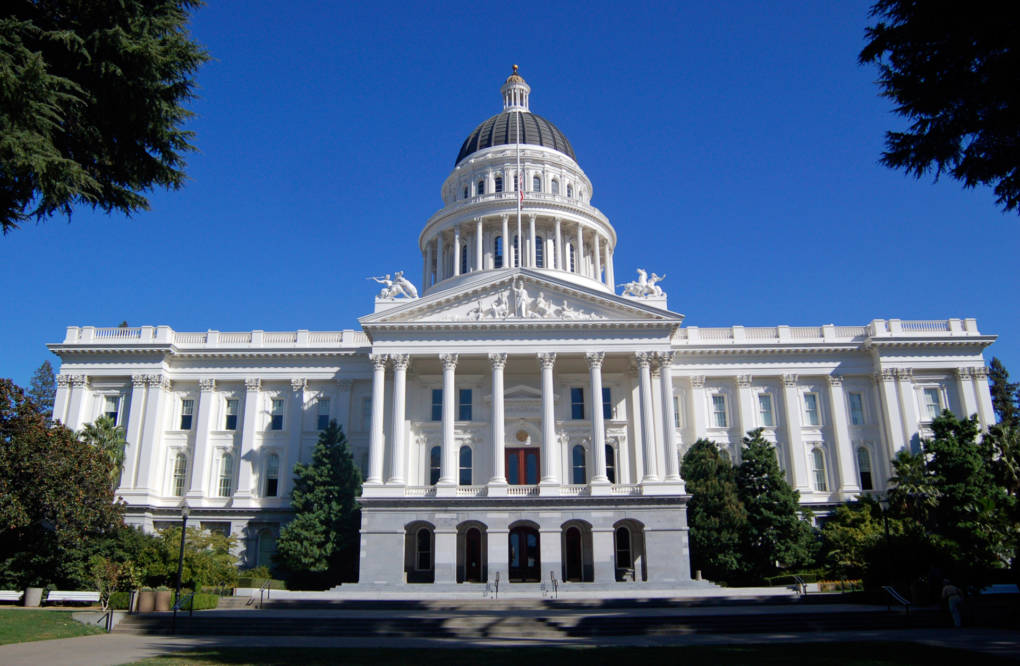
"caption": "The state Capitol in Sacramento.",
"description": "The state Capitol in Sacramento.",
"title": "StateCapSac",
"credit": "Getty Images",
"status": "inherit",
"isLoading": false,
"fetchFailed": false
},
"news_11627321": {
"type": "attachments",
"id": "news_11627321",
"meta": {
"index": "attachments_1716263798",
"site": "news",
"id": "11627321",
"found": true
},
"parent": 11627212,
"imgSizes": {
"small": {
"file": "https://ww2.kqed.org/app/uploads/sites/10/2017/10/RS27811_IMG_1080-qut-520x347.jpg",
"width": 520,
"mimeType": "image/jpeg",
"height": 347
},
"twentyfourteen-full-width": {
"file": "https://ww2.kqed.org/app/uploads/sites/10/2017/10/RS27811_IMG_1080-qut-1038x576.jpg",
"width": 1038,
"mimeType": "image/jpeg",
"height": 576
},
"thumbnail": {
"file": "https://ww2.kqed.org/app/uploads/sites/10/2017/10/RS27811_IMG_1080-qut-160x107.jpg",
"width": 160,
"mimeType": "image/jpeg",
"height": 107
},
"fd-sm": {
"file": "https://ww2.kqed.org/app/uploads/sites/10/2017/10/RS27811_IMG_1080-qut-960x640.jpg",
"width": 960,
"mimeType": "image/jpeg",
"height": 640
},
"post-thumbnail": {
"file": "https://ww2.kqed.org/app/uploads/sites/10/2017/10/RS27811_IMG_1080-qut-672x372.jpg",
"width": 672,
"mimeType": "image/jpeg",
"height": 372
},
"xsmall": {
"file": "https://ww2.kqed.org/app/uploads/sites/10/2017/10/RS27811_IMG_1080-qut-375x250.jpg",
"width": 375,
"mimeType": "image/jpeg",
"height": 250
},
"kqedFullSize": {
"file": "https://ww2.kqed.org/app/uploads/sites/10/2017/10/RS27811_IMG_1080-qut.jpg",
"width": 1920,
"height": 1280
},
"large": {
"file": "https://ww2.kqed.org/app/uploads/sites/10/2017/10/RS27811_IMG_1080-qut-1020x680.jpg",
"width": 1020,
"mimeType": "image/jpeg",
"height": 680
},
"xlarge": {
"file": "https://ww2.kqed.org/app/uploads/sites/10/2017/10/RS27811_IMG_1080-qut-1180x787.jpg",
"width": 1180,
"mimeType": "image/jpeg",
"height": 787
},
"guest-author-50": {
"file": "https://ww2.kqed.org/app/uploads/sites/10/2017/10/RS27811_IMG_1080-qut-50x50.jpg",
"width": 50,
"mimeType": "image/jpeg",
"height": 50
},
"guest-author-96": {
"file": "https://ww2.kqed.org/app/uploads/sites/10/2017/10/RS27811_IMG_1080-qut-96x96.jpg",
"width": 96,
"mimeType": "image/jpeg",
"height": 96
},
"medium": {
"file": "https://ww2.kqed.org/app/uploads/sites/10/2017/10/RS27811_IMG_1080-qut-800x533.jpg",
"width": 800,
"mimeType": "image/jpeg",
"height": 533
},
"guest-author-64": {
"file": "https://ww2.kqed.org/app/uploads/sites/10/2017/10/RS27811_IMG_1080-qut-64x64.jpg",
"width": 64,
"mimeType": "image/jpeg",
"height": 64
},
"guest-author-32": {
"file": "https://ww2.kqed.org/app/uploads/sites/10/2017/10/RS27811_IMG_1080-qut-32x32.jpg",
"width": 32,
"mimeType": "image/jpeg",
"height": 32
},
"fd-lrg": {
"file": "https://ww2.kqed.org/app/uploads/sites/10/2017/10/RS27811_IMG_1080-qut-1920x1280.jpg",
"width": 1920,
"mimeType": "image/jpeg",
"height": 1280
},
"fd-med": {
"file": "https://ww2.kqed.org/app/uploads/sites/10/2017/10/RS27811_IMG_1080-qut-1180x787.jpg",
"width": 1180,
"mimeType": "image/jpeg",
"height": 787
},
"full-width": {
"file": "https://ww2.kqed.org/app/uploads/sites/10/2017/10/RS27811_IMG_1080-qut-1920x1280.jpg",
"width": 1920,
"mimeType": "image/jpeg",
"height": 1280
},
"detail": {
"file": "https://ww2.kqed.org/app/uploads/sites/10/2017/10/RS27811_IMG_1080-qut-150x150.jpg",
"width": 150,
"mimeType": "image/jpeg",
"height": 150
},
"guest-author-128": {
"file": "https://ww2.kqed.org/app/uploads/sites/10/2017/10/RS27811_IMG_1080-qut-128x128.jpg",
"width": 128,
"mimeType": "image/jpeg",
"height": 128
},
"xxsmall": {
"file": "https://ww2.kqed.org/app/uploads/sites/10/2017/10/RS27811_IMG_1080-qut-240x160.jpg",
"width": 240,
"mimeType": "image/jpeg",
"height": 160
}
},
"publishDate": 1509495244,
"modified": 1509560888,
"caption": "Abril Barbosa (left), Jennifer Cabrera and Maria Mendoza gather after classes at Santa Rosa Junior College on Oct. 25, 2017. The school was closed for two weeks after the wildfires began. ",
"description": null,
"title": "RS27811_IMG_1080-qut",
"credit": "Farida Jhabvala Romero/KQED",
"status": "inherit",
"isLoading": false,
"fetchFailed": false
},
"news_11626357": {
"type": "attachments",
"id": "news_11626357",
"meta": {
"index": "attachments_1716263798",
"site": "news",
"id": "11626357",
"found": true
},
"parent": 11626285,
"imgSizes": {
"small": {
"file": "https://ww2.kqed.org/app/uploads/sites/10/2017/10/RS27752_IMG_9537-qut-520x347.jpg",
"width": 520,
"mimeType": "image/jpeg",
"height": 347
},
"twentyfourteen-full-width": {
"file": "https://ww2.kqed.org/app/uploads/sites/10/2017/10/RS27752_IMG_9537-qut-1038x576.jpg",
"width": 1038,
"mimeType": "image/jpeg",
"height": 576
},
"thumbnail": {
"file": "https://ww2.kqed.org/app/uploads/sites/10/2017/10/RS27752_IMG_9537-qut-160x107.jpg",
"width": 160,
"mimeType": "image/jpeg",
"height": 107
},
"fd-sm": {
"file": "https://ww2.kqed.org/app/uploads/sites/10/2017/10/RS27752_IMG_9537-qut-960x640.jpg",
"width": 960,
"mimeType": "image/jpeg",
"height": 640
},
"post-thumbnail": {
"file": "https://ww2.kqed.org/app/uploads/sites/10/2017/10/RS27752_IMG_9537-qut-672x372.jpg",
"width": 672,
"mimeType": "image/jpeg",
"height": 372
},
"xsmall": {
"file": "https://ww2.kqed.org/app/uploads/sites/10/2017/10/RS27752_IMG_9537-qut-375x250.jpg",
"width": 375,
"mimeType": "image/jpeg",
"height": 250
},
"kqedFullSize": {
"file": "https://ww2.kqed.org/app/uploads/sites/10/2017/10/RS27752_IMG_9537-qut.jpg",
"width": 1920,
"height": 1280
},
"large": {
"file": "https://ww2.kqed.org/app/uploads/sites/10/2017/10/RS27752_IMG_9537-qut-1020x680.jpg",
"width": 1020,
"mimeType": "image/jpeg",
"height": 680
},
"xlarge": {
"file": "https://ww2.kqed.org/app/uploads/sites/10/2017/10/RS27752_IMG_9537-qut-1180x787.jpg",
"width": 1180,
"mimeType": "image/jpeg",
"height": 787
},
"guest-author-50": {
"file": "https://ww2.kqed.org/app/uploads/sites/10/2017/10/RS27752_IMG_9537-qut-50x50.jpg",
"width": 50,
"mimeType": "image/jpeg",
"height": 50
},
"guest-author-96": {
"file": "https://ww2.kqed.org/app/uploads/sites/10/2017/10/RS27752_IMG_9537-qut-96x96.jpg",
"width": 96,
"mimeType": "image/jpeg",
"height": 96
},
"medium": {
"file": "https://ww2.kqed.org/app/uploads/sites/10/2017/10/RS27752_IMG_9537-qut-800x533.jpg",
"width": 800,
"mimeType": "image/jpeg",
"height": 533
},
"guest-author-64": {
"file": "https://ww2.kqed.org/app/uploads/sites/10/2017/10/RS27752_IMG_9537-qut-64x64.jpg",
"width": 64,
"mimeType": "image/jpeg",
"height": 64
},
"guest-author-32": {
"file": "https://ww2.kqed.org/app/uploads/sites/10/2017/10/RS27752_IMG_9537-qut-32x32.jpg",
"width": 32,
"mimeType": "image/jpeg",
"height": 32
},
"fd-lrg": {
"file": "https://ww2.kqed.org/app/uploads/sites/10/2017/10/RS27752_IMG_9537-qut-1920x1280.jpg",
"width": 1920,
"mimeType": "image/jpeg",
"height": 1280
},
"fd-med": {
"file": "https://ww2.kqed.org/app/uploads/sites/10/2017/10/RS27752_IMG_9537-qut-1180x787.jpg",
"width": 1180,
"mimeType": "image/jpeg",
"height": 787
},
"full-width": {
"file": "https://ww2.kqed.org/app/uploads/sites/10/2017/10/RS27752_IMG_9537-qut-1920x1280.jpg",
"width": 1920,
"mimeType": "image/jpeg",
"height": 1280
},
"detail": {
"file": "https://ww2.kqed.org/app/uploads/sites/10/2017/10/RS27752_IMG_9537-qut-150x150.jpg",
"width": 150,
"mimeType": "image/jpeg",
"height": 150
},
"guest-author-128": {
"file": "https://ww2.kqed.org/app/uploads/sites/10/2017/10/RS27752_IMG_9537-qut-128x128.jpg",
"width": 128,
"mimeType": "image/jpeg",
"height": 128
},
"xxsmall": {
"file": "https://ww2.kqed.org/app/uploads/sites/10/2017/10/RS27752_IMG_9537-qut-240x160.jpg",
"width": 240,
"mimeType": "image/jpeg",
"height": 160
}
},
"publishDate": 1509057956,
"modified": 1509578650,
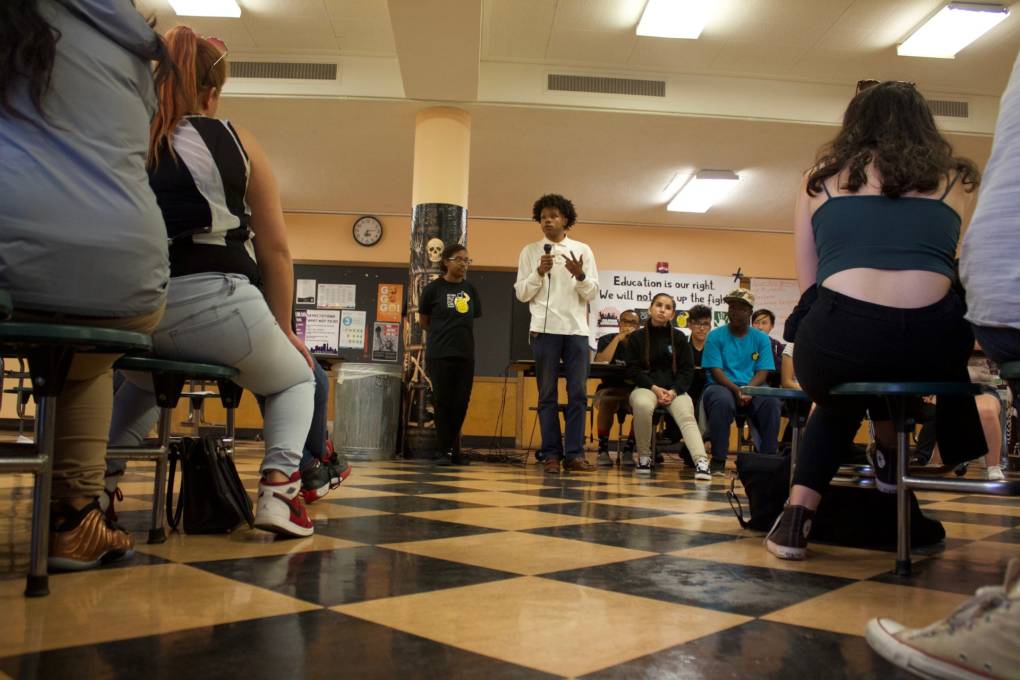
"caption": "Leroy Gatlin, representative from Causa Justa, speaks along with other youth leaders at a town hall in San Francisco, California, on Oct. 25, 2017.",
"description": "Leroy Gatlin, representative from Causa Justa, speaks along with other youth leaders at a town hall in San Francisco, California, on Oct. 25, 2017.",
"title": "RS27752_IMG_9537-qut",
"credit": "Audrey Garces/KQED",
"status": "inherit",
"isLoading": false,
"fetchFailed": false
},
"news_11627485": {
"type": "attachments",
"id": "news_11627485",
"meta": {
"index": "attachments_1716263798",
"site": "news",
"id": "11627485",
"found": true
},
"parent": 11627484,
"imgSizes": {
"small": {
"file": "https://ww2.kqed.org/app/uploads/sites/10/2017/11/ca-pet-adoption-3-660cd4551318aad4497ba70369743508597b1fd5-520x390.jpg",
"width": 520,
"mimeType": "image/jpeg",
"height": 390
},
"thumbnail": {
"file": "https://ww2.kqed.org/app/uploads/sites/10/2017/11/ca-pet-adoption-3-660cd4551318aad4497ba70369743508597b1fd5-160x120.jpg",
"width": 160,
"mimeType": "image/jpeg",
"height": 120
},
"post-thumbnail": {
"file": "https://ww2.kqed.org/app/uploads/sites/10/2017/11/ca-pet-adoption-3-660cd4551318aad4497ba70369743508597b1fd5-639x372.jpg",
"width": 639,
"mimeType": "image/jpeg",
"height": 372
},
"xsmall": {
"file": "https://ww2.kqed.org/app/uploads/sites/10/2017/11/ca-pet-adoption-3-660cd4551318aad4497ba70369743508597b1fd5-375x281.jpg",
"width": 375,
"mimeType": "image/jpeg",
"height": 281
},
"kqedFullSize": {
"file": "https://ww2.kqed.org/app/uploads/sites/10/2017/11/ca-pet-adoption-3-660cd4551318aad4497ba70369743508597b1fd5.jpg",
"width": 639,
"height": 479
},
"guest-author-50": {
"file": "https://ww2.kqed.org/app/uploads/sites/10/2017/11/ca-pet-adoption-3-660cd4551318aad4497ba70369743508597b1fd5-50x50.jpg",
"width": 50,
"mimeType": "image/jpeg",
"height": 50
},
"guest-author-96": {
"file": "https://ww2.kqed.org/app/uploads/sites/10/2017/11/ca-pet-adoption-3-660cd4551318aad4497ba70369743508597b1fd5-96x96.jpg",
"width": 96,
"mimeType": "image/jpeg",
"height": 96
},
"guest-author-64": {
"file": "https://ww2.kqed.org/app/uploads/sites/10/2017/11/ca-pet-adoption-3-660cd4551318aad4497ba70369743508597b1fd5-64x64.jpg",
"width": 64,
"mimeType": "image/jpeg",
"height": 64
},
"detail": {
"file": "https://ww2.kqed.org/app/uploads/sites/10/2017/11/ca-pet-adoption-3-660cd4551318aad4497ba70369743508597b1fd5-150x150.jpg",
"width": 150,
"mimeType": "image/jpeg",
"height": 150
},
"guest-author-32": {
"file": "https://ww2.kqed.org/app/uploads/sites/10/2017/11/ca-pet-adoption-3-660cd4551318aad4497ba70369743508597b1fd5-32x32.jpg",
"width": 32,
"mimeType": "image/jpeg",
"height": 32
},
"guest-author-128": {
"file": "https://ww2.kqed.org/app/uploads/sites/10/2017/11/ca-pet-adoption-3-660cd4551318aad4497ba70369743508597b1fd5-128x128.jpg",
"width": 128,
"mimeType": "image/jpeg",
"height": 128
},
"xxsmall": {
"file": "https://ww2.kqed.org/app/uploads/sites/10/2017/11/ca-pet-adoption-3-660cd4551318aad4497ba70369743508597b1fd5-240x180.jpg",
"width": 240,
"mimeType": "image/jpeg",
"height": 180
}
},
"publishDate": 1509574648,
"modified": 1509574784,
"caption": "A rescue dog waits to be adopted at the Pasadena Humane Society.",
"description": "A rescue dog waits to be adopted at the Pasadena Humane Society.",
"title": "A rescue dog waits to be adopted at the Pasadena Humane Society.",
"credit": "Gloria Hillard for NPR",
"status": "inherit",
"isLoading": false,
"fetchFailed": false
},
"news_11627466": {
"type": "attachments",
"id": "news_11627466",
"meta": {
"index": "attachments_1716263798",
"site": "news",
"id": "11627466",
"found": true
},
"parent": 11627465,
"imgSizes": {
"small": {
"file": "https://ww2.kqed.org/app/uploads/sites/10/2017/11/gettyimages-868706144_custom-e98841022204bc9279cef51035cf8339849772d7-520x278.jpg",
"width": 520,
"mimeType": "image/jpeg",
"height": 278
},
"twentyfourteen-full-width": {
"file": "https://ww2.kqed.org/app/uploads/sites/10/2017/11/gettyimages-868706144_custom-e98841022204bc9279cef51035cf8339849772d7-1038x576.jpg",
"width": 1038,
"mimeType": "image/jpeg",
"height": 576
},
"thumbnail": {
"file": "https://ww2.kqed.org/app/uploads/sites/10/2017/11/gettyimages-868706144_custom-e98841022204bc9279cef51035cf8339849772d7-160x86.jpg",
"width": 160,
"mimeType": "image/jpeg",
"height": 86
},
"fd-sm": {
"file": "https://ww2.kqed.org/app/uploads/sites/10/2017/11/gettyimages-868706144_custom-e98841022204bc9279cef51035cf8339849772d7-960x514.jpg",
"width": 960,
"mimeType": "image/jpeg",
"height": 514
},
"post-thumbnail": {
"file": "https://ww2.kqed.org/app/uploads/sites/10/2017/11/gettyimages-868706144_custom-e98841022204bc9279cef51035cf8339849772d7-672x372.jpg",
"width": 672,
"mimeType": "image/jpeg",
"height": 372
},
"xsmall": {
"file": "https://ww2.kqed.org/app/uploads/sites/10/2017/11/gettyimages-868706144_custom-e98841022204bc9279cef51035cf8339849772d7-375x201.jpg",
"width": 375,
"mimeType": "image/jpeg",
"height": 201
},
"kqedFullSize": {
"file": "https://ww2.kqed.org/app/uploads/sites/10/2017/11/gettyimages-868706144_custom-e98841022204bc9279cef51035cf8339849772d7-e1509573555157.jpg",
"width": 1920,
"height": 1028
},
"large": {
"file": "https://ww2.kqed.org/app/uploads/sites/10/2017/11/gettyimages-868706144_custom-e98841022204bc9279cef51035cf8339849772d7-1020x546.jpg",
"width": 1020,
"mimeType": "image/jpeg",
"height": 546
},
"xlarge": {
"file": "https://ww2.kqed.org/app/uploads/sites/10/2017/11/gettyimages-868706144_custom-e98841022204bc9279cef51035cf8339849772d7-1180x632.jpg",
"width": 1180,
"mimeType": "image/jpeg",
"height": 632
},
"guest-author-50": {
"file": "https://ww2.kqed.org/app/uploads/sites/10/2017/11/gettyimages-868706144_custom-e98841022204bc9279cef51035cf8339849772d7-50x50.jpg",
"width": 50,
"mimeType": "image/jpeg",
"height": 50
},
"guest-author-96": {
"file": "https://ww2.kqed.org/app/uploads/sites/10/2017/11/gettyimages-868706144_custom-e98841022204bc9279cef51035cf8339849772d7-96x96.jpg",
"width": 96,
"mimeType": "image/jpeg",
"height": 96
},
"medium": {
"file": "https://ww2.kqed.org/app/uploads/sites/10/2017/11/gettyimages-868706144_custom-e98841022204bc9279cef51035cf8339849772d7-800x428.jpg",
"width": 800,
"mimeType": "image/jpeg",
"height": 428
},
"guest-author-64": {
"file": "https://ww2.kqed.org/app/uploads/sites/10/2017/11/gettyimages-868706144_custom-e98841022204bc9279cef51035cf8339849772d7-64x64.jpg",
"width": 64,
"mimeType": "image/jpeg",
"height": 64
},
"guest-author-32": {
"file": "https://ww2.kqed.org/app/uploads/sites/10/2017/11/gettyimages-868706144_custom-e98841022204bc9279cef51035cf8339849772d7-32x32.jpg",
"width": 32,
"mimeType": "image/jpeg",
"height": 32
},
"fd-lrg": {
"file": "https://ww2.kqed.org/app/uploads/sites/10/2017/11/gettyimages-868706144_custom-e98841022204bc9279cef51035cf8339849772d7-1920x1028.jpg",
"width": 1920,
"mimeType": "image/jpeg",
"height": 1028
},
"fd-med": {
"file": "https://ww2.kqed.org/app/uploads/sites/10/2017/11/gettyimages-868706144_custom-e98841022204bc9279cef51035cf8339849772d7-1180x632.jpg",
"width": 1180,
"mimeType": "image/jpeg",
"height": 632
},
"full-width": {
"file": "https://ww2.kqed.org/app/uploads/sites/10/2017/11/gettyimages-868706144_custom-e98841022204bc9279cef51035cf8339849772d7-1920x1028.jpg",
"width": 1920,
"mimeType": "image/jpeg",
"height": 1028
},
"detail": {
"file": "https://ww2.kqed.org/app/uploads/sites/10/2017/11/gettyimages-868706144_custom-e98841022204bc9279cef51035cf8339849772d7-150x150.jpg",
"width": 150,
"mimeType": "image/jpeg",
"height": 150
},
"guest-author-128": {
"file": "https://ww2.kqed.org/app/uploads/sites/10/2017/11/gettyimages-868706144_custom-e98841022204bc9279cef51035cf8339849772d7-128x128.jpg",
"width": 128,
"mimeType": "image/jpeg",
"height": 128
},
"xxsmall": {
"file": "https://ww2.kqed.org/app/uploads/sites/10/2017/11/gettyimages-868706144_custom-e98841022204bc9279cef51035cf8339849772d7-240x129.jpg",
"width": 240,
"mimeType": "image/jpeg",
"height": 129
}
},
"publishDate": 1509573372,
"modified": 1509573546,
"caption": "Colin Stretch (left), general counsel of Facebook; Sean Edgett (center), acting general counsel of Twitter; and Richard Salgado, director of law enforcement and information security of Google, are sworn in prior to testifying during a U.S. Senate Judiciary subcommittee hearing on Russian influence on social networks on Capitol Hill on Tuesday.",
"description": "Colin Stretch (left), general counsel of Facebook; Sean Edgett (center), acting general counsel of Twitter; and Richard Salgado, director of law enforcement and information security of Google, are sworn in prior to testifying during a U.S. Senate Judiciary subcommittee hearing on Russian influence on social networks on Capitol Hill on Tuesday.",
"title": "Colin Stretch (left), general counsel of Facebook; Sean Edgett (center), acting general counsel of Twitter; and Richard Salgado, director of law enforcement and information security of Google, are sworn in prior to testifying during a U.S. Senate Judiciary subcommittee hearing on Russian influence on social networks on Capitol Hill on Tuesday.",
"credit": "Saul Loeb/AFP/Getty Images",
"status": "inherit",
"isLoading": false,
"fetchFailed": false
},
"news_11627199": {
"type": "attachments",
"id": "news_11627199",
"meta": {
"index": "attachments_1716263798",
"site": "news",
"id": "11627199",
"found": true
},
"parent": 11627179,
"imgSizes": {
"small": {
"file": "https://ww2.kqed.org/app/uploads/sites/10/2017/10/10-25-17-tectonic-tremor-1-520x358.jpg",
"width": 520,
"mimeType": "image/jpeg",
"height": 358
},
"twentyfourteen-full-width": {
"file": "https://ww2.kqed.org/app/uploads/sites/10/2017/10/10-25-17-tectonic-tremor-1-1038x576.jpg",
"width": 1038,
"mimeType": "image/jpeg",
"height": 576
},
"thumbnail": {
"file": "https://ww2.kqed.org/app/uploads/sites/10/2017/10/10-25-17-tectonic-tremor-1-160x110.jpg",
"width": 160,
"mimeType": "image/jpeg",
"height": 110
},
"fd-sm": {
"file": "https://ww2.kqed.org/app/uploads/sites/10/2017/10/10-25-17-tectonic-tremor-1-960x660.jpg",
"width": 960,
"mimeType": "image/jpeg",
"height": 660
},
"post-thumbnail": {
"file": "https://ww2.kqed.org/app/uploads/sites/10/2017/10/10-25-17-tectonic-tremor-1-672x372.jpg",
"width": 672,
"mimeType": "image/jpeg",
"height": 372
},
"xsmall": {
"file": "https://ww2.kqed.org/app/uploads/sites/10/2017/10/10-25-17-tectonic-tremor-1-375x258.jpg",
"width": 375,
"mimeType": "image/jpeg",
"height": 258
},
"kqedFullSize": {
"file": "https://ww2.kqed.org/app/uploads/sites/10/2017/10/10-25-17-tectonic-tremor-1.jpg",
"width": 1746,
"height": 1201
},
"large": {
"file": "https://ww2.kqed.org/app/uploads/sites/10/2017/10/10-25-17-tectonic-tremor-1-1020x702.jpg",
"width": 1020,
"mimeType": "image/jpeg",
"height": 702
},
"xlarge": {
"file": "https://ww2.kqed.org/app/uploads/sites/10/2017/10/10-25-17-tectonic-tremor-1-1180x812.jpg",
"width": 1180,
"mimeType": "image/jpeg",
"height": 812
},
"guest-author-50": {
"file": "https://ww2.kqed.org/app/uploads/sites/10/2017/10/10-25-17-tectonic-tremor-1-50x50.jpg",
"width": 50,
"mimeType": "image/jpeg",
"height": 50
},
"guest-author-96": {
"file": "https://ww2.kqed.org/app/uploads/sites/10/2017/10/10-25-17-tectonic-tremor-1-96x96.jpg",
"width": 96,
"mimeType": "image/jpeg",
"height": 96
},
"medium": {
"file": "https://ww2.kqed.org/app/uploads/sites/10/2017/10/10-25-17-tectonic-tremor-1-800x550.jpg",
"width": 800,
"mimeType": "image/jpeg",
"height": 550
},
"guest-author-64": {
"file": "https://ww2.kqed.org/app/uploads/sites/10/2017/10/10-25-17-tectonic-tremor-1-64x64.jpg",
"width": 64,
"mimeType": "image/jpeg",
"height": 64
},
"guest-author-32": {
"file": "https://ww2.kqed.org/app/uploads/sites/10/2017/10/10-25-17-tectonic-tremor-1-32x32.jpg",
"width": 32,
"mimeType": "image/jpeg",
"height": 32
},
"fd-med": {
"file": "https://ww2.kqed.org/app/uploads/sites/10/2017/10/10-25-17-tectonic-tremor-1-1180x812.jpg",
"width": 1180,
"mimeType": "image/jpeg",
"height": 812
},
"detail": {
"file": "https://ww2.kqed.org/app/uploads/sites/10/2017/10/10-25-17-tectonic-tremor-1-150x150.jpg",
"width": 150,
"mimeType": "image/jpeg",
"height": 150
},
"guest-author-128": {
"file": "https://ww2.kqed.org/app/uploads/sites/10/2017/10/10-25-17-tectonic-tremor-1-128x128.jpg",
"width": 128,
"mimeType": "image/jpeg",
"height": 128
},
"xxsmall": {
"file": "https://ww2.kqed.org/app/uploads/sites/10/2017/10/10-25-17-tectonic-tremor-1-240x165.jpg",
"width": 240,
"mimeType": "image/jpeg",
"height": 165
}
},
"publishDate": 1509486614,
"modified": 1509563900,
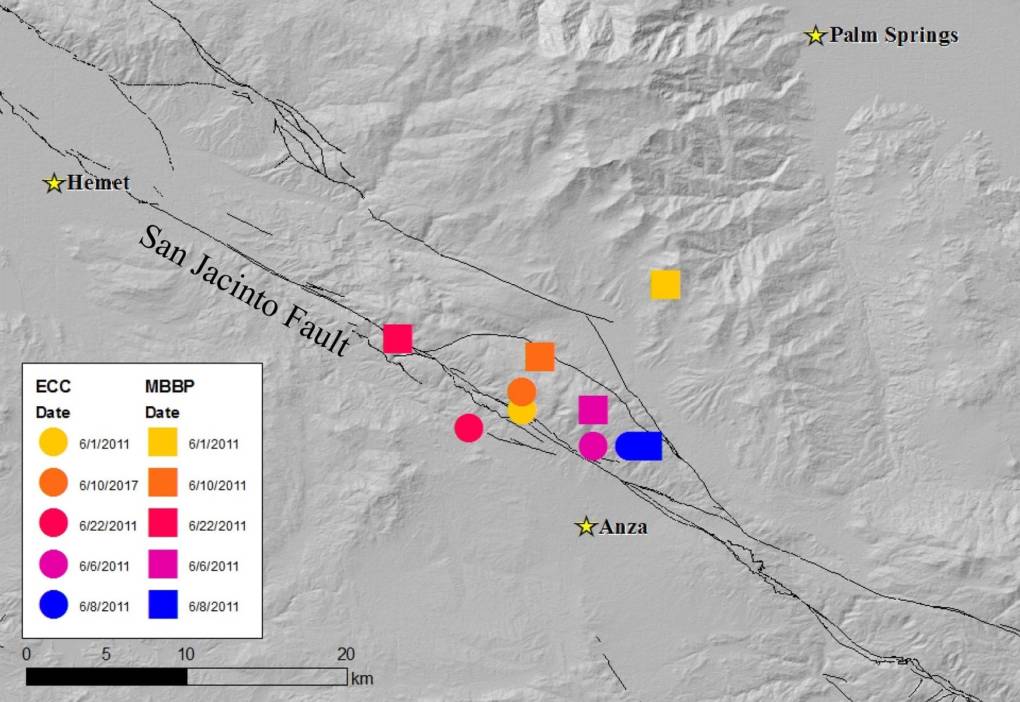
"caption": "Locations of tectonic tremor (colored circles and squares) detected under the San Jacinto Fault by researchers at UCR.",
"description": "Locations of tectonic tremor (colored circles and squares) detected under the San Jacinto Fault by researchers at UCR.",
"title": "10-25-17-tectonic-tremor",
"credit": "Abhijit Ghosh/UC Riverside",
"status": "inherit",
"isLoading": false,
"fetchFailed": false
},
"news_11627046": {
"type": "attachments",
"id": "news_11627046",
"meta": {
"index": "attachments_1716263798",
"site": "news",
"id": "11627046",
"found": true
},
"parent": 11627043,
"imgSizes": {
"small": {
"file": "https://ww2.kqed.org/app/uploads/sites/10/2017/10/IMG_2616-520x390.jpg",
"width": 520,
"mimeType": "image/jpeg",
"height": 390
},
"twentyfourteen-full-width": {
"file": "https://ww2.kqed.org/app/uploads/sites/10/2017/10/IMG_2616-1038x576.jpg",
"width": 1038,
"mimeType": "image/jpeg",
"height": 576
},
"thumbnail": {
"file": "https://ww2.kqed.org/app/uploads/sites/10/2017/10/IMG_2616-160x120.jpg",
"width": 160,
"mimeType": "image/jpeg",
"height": 120
},
"fd-sm": {
"file": "https://ww2.kqed.org/app/uploads/sites/10/2017/10/IMG_2616-960x720.jpg",
"width": 960,
"mimeType": "image/jpeg",
"height": 720
},
"post-thumbnail": {
"file": "https://ww2.kqed.org/app/uploads/sites/10/2017/10/IMG_2616-672x372.jpg",
"width": 672,
"mimeType": "image/jpeg",
"height": 372
},
"xsmall": {
"file": "https://ww2.kqed.org/app/uploads/sites/10/2017/10/IMG_2616-375x281.jpg",
"width": 375,
"mimeType": "image/jpeg",
"height": 281
},
"kqedFullSize": {
"file": "https://ww2.kqed.org/app/uploads/sites/10/2017/10/IMG_2616-e1509552090856.jpg",
"width": 1920,
"height": 1440
},
"large": {
"file": "https://ww2.kqed.org/app/uploads/sites/10/2017/10/IMG_2616-1020x765.jpg",
"width": 1020,
"mimeType": "image/jpeg",
"height": 765
},
"xlarge": {
"file": "https://ww2.kqed.org/app/uploads/sites/10/2017/10/IMG_2616-1180x885.jpg",
"width": 1180,
"mimeType": "image/jpeg",
"height": 885
},
"guest-author-50": {
"file": "https://ww2.kqed.org/app/uploads/sites/10/2017/10/IMG_2616-50x50.jpg",
"width": 50,
"mimeType": "image/jpeg",
"height": 50
},
"guest-author-96": {
"file": "https://ww2.kqed.org/app/uploads/sites/10/2017/10/IMG_2616-96x96.jpg",
"width": 96,
"mimeType": "image/jpeg",
"height": 96
},
"medium": {
"file": "https://ww2.kqed.org/app/uploads/sites/10/2017/10/IMG_2616-800x600.jpg",
"width": 800,
"mimeType": "image/jpeg",
"height": 600
},
"guest-author-64": {
"file": "https://ww2.kqed.org/app/uploads/sites/10/2017/10/IMG_2616-64x64.jpg",
"width": 64,
"mimeType": "image/jpeg",
"height": 64
},
"guest-author-32": {
"file": "https://ww2.kqed.org/app/uploads/sites/10/2017/10/IMG_2616-32x32.jpg",
"width": 32,
"mimeType": "image/jpeg",
"height": 32
},
"fd-lrg": {
"file": "https://ww2.kqed.org/app/uploads/sites/10/2017/10/IMG_2616-1920x1440.jpg",
"width": 1920,
"mimeType": "image/jpeg",
"height": 1440
},
"fd-med": {
"file": "https://ww2.kqed.org/app/uploads/sites/10/2017/10/IMG_2616-1180x885.jpg",
"width": 1180,
"mimeType": "image/jpeg",
"height": 885
},
"full-width": {
"file": "https://ww2.kqed.org/app/uploads/sites/10/2017/10/IMG_2616-1920x1440.jpg",
"width": 1920,
"mimeType": "image/jpeg",
"height": 1440
},
"detail": {
"file": "https://ww2.kqed.org/app/uploads/sites/10/2017/10/IMG_2616-150x150.jpg",
"width": 150,
"mimeType": "image/jpeg",
"height": 150
},
"guest-author-128": {
"file": "https://ww2.kqed.org/app/uploads/sites/10/2017/10/IMG_2616-128x128.jpg",
"width": 128,
"mimeType": "image/jpeg",
"height": 128
},
"xxsmall": {
"file": "https://ww2.kqed.org/app/uploads/sites/10/2017/10/IMG_2616-240x180.jpg",
"width": 240,
"mimeType": "image/jpeg",
"height": 180
}
},
"publishDate": 1509466237,
"modified": 1509581771,
"caption": "San Mateo police Officer David Johnson visits residents of the Vendome Apartments in San Mateo.",
"description": null,
"title": "IMG_2616",
"credit": "Tonya Mosley/KQED",
"status": "inherit",
"isLoading": false,
"fetchFailed": false
},
"news_11627340": {
"type": "attachments",
"id": "news_11627340",
"meta": {
"index": "attachments_1716263798",
"site": "news",
"id": "11627340",
"found": true
},
"parent": 11624431,
"imgSizes": {
"small": {
"file": "https://ww2.kqed.org/app/uploads/sites/10/2017/10/JarvisFist-520x298.jpg",
"width": 520,
"mimeType": "image/jpeg",
"height": 298
},
"twentyfourteen-full-width": {
"file": "https://ww2.kqed.org/app/uploads/sites/10/2017/10/JarvisFist-1038x576.jpg",
"width": 1038,
"mimeType": "image/jpeg",
"height": 576
},
"thumbnail": {
"file": "https://ww2.kqed.org/app/uploads/sites/10/2017/10/JarvisFist-160x92.jpg",
"width": 160,
"mimeType": "image/jpeg",
"height": 92
},
"fd-sm": {
"file": "https://ww2.kqed.org/app/uploads/sites/10/2017/10/JarvisFist-960x550.jpg",
"width": 960,
"mimeType": "image/jpeg",
"height": 550
},
"post-thumbnail": {
"file": "https://ww2.kqed.org/app/uploads/sites/10/2017/10/JarvisFist-672x372.jpg",
"width": 672,
"mimeType": "image/jpeg",
"height": 372
},
"xsmall": {
"file": "https://ww2.kqed.org/app/uploads/sites/10/2017/10/JarvisFist-375x215.jpg",
"width": 375,
"mimeType": "image/jpeg",
"height": 215
},
"kqedFullSize": {
"file": "https://ww2.kqed.org/app/uploads/sites/10/2017/10/JarvisFist.jpg",
"width": 1920,
"height": 1100
},
"large": {
"file": "https://ww2.kqed.org/app/uploads/sites/10/2017/10/JarvisFist-1020x584.jpg",
"width": 1020,
"mimeType": "image/jpeg",
"height": 584
},
"xlarge": {
"file": "https://ww2.kqed.org/app/uploads/sites/10/2017/10/JarvisFist-1180x676.jpg",
"width": 1180,
"mimeType": "image/jpeg",
"height": 676
},
"guest-author-50": {
"file": "https://ww2.kqed.org/app/uploads/sites/10/2017/10/JarvisFist-50x50.jpg",
"width": 50,
"mimeType": "image/jpeg",
"height": 50
},
"guest-author-96": {
"file": "https://ww2.kqed.org/app/uploads/sites/10/2017/10/JarvisFist-96x96.jpg",
"width": 96,
"mimeType": "image/jpeg",
"height": 96
},
"medium": {
"file": "https://ww2.kqed.org/app/uploads/sites/10/2017/10/JarvisFist-800x458.jpg",
"width": 800,
"mimeType": "image/jpeg",
"height": 458
},
"guest-author-64": {
"file": "https://ww2.kqed.org/app/uploads/sites/10/2017/10/JarvisFist-64x64.jpg",
"width": 64,
"mimeType": "image/jpeg",
"height": 64
},
"guest-author-32": {
"file": "https://ww2.kqed.org/app/uploads/sites/10/2017/10/JarvisFist-32x32.jpg",
"width": 32,
"mimeType": "image/jpeg",
"height": 32
},
"fd-lrg": {
"file": "https://ww2.kqed.org/app/uploads/sites/10/2017/10/JarvisFist-1920x1100.jpg",
"width": 1920,
"mimeType": "image/jpeg",
"height": 1100
},
"fd-med": {
"file": "https://ww2.kqed.org/app/uploads/sites/10/2017/10/JarvisFist-1180x676.jpg",
"width": 1180,
"mimeType": "image/jpeg",
"height": 676
},
"full-width": {
"file": "https://ww2.kqed.org/app/uploads/sites/10/2017/10/JarvisFist-1920x1100.jpg",
"width": 1920,
"mimeType": "image/jpeg",
"height": 1100
},
"detail": {
"file": "https://ww2.kqed.org/app/uploads/sites/10/2017/10/JarvisFist-150x150.jpg",
"width": 150,
"mimeType": "image/jpeg",
"height": 150
},
"guest-author-128": {
"file": "https://ww2.kqed.org/app/uploads/sites/10/2017/10/JarvisFist-128x128.jpg",
"width": 128,
"mimeType": "image/jpeg",
"height": 128
},
"xxsmall": {
"file": "https://ww2.kqed.org/app/uploads/sites/10/2017/10/JarvisFist-240x138.jpg",
"width": 240,
"mimeType": "image/jpeg",
"height": 138
}
},
"publishDate": 1509499283,
"modified": 1509499353,
"caption": "Orange County businessman Howard Jarvis, the architect of Proposition 13.",
"description": "Orange County businessman Howard Jarvis, the architect of Proposition 13.",
"title": "JarvisFist",
"credit": "RetroReport/YouTube",
"status": "inherit",
"isLoading": false,
"fetchFailed": false
},
"news_11627240": {
"type": "attachments",
"id": "news_11627240",
"meta": {
"index": "attachments_1716263798",
"site": "news",
"id": "11627240",
"found": true
},
"parent": 11625622,
"imgSizes": {
"small": {
"file": "https://ww2.kqed.org/app/uploads/sites/10/2017/10/SatherGate-520x342.jpg",
"width": 520,
"mimeType": "image/jpeg",
"height": 342
},
"twentyfourteen-full-width": {
"file": "https://ww2.kqed.org/app/uploads/sites/10/2017/10/SatherGate-1038x576.jpg",
"width": 1038,
"mimeType": "image/jpeg",
"height": 576
},
"thumbnail": {
"file": "https://ww2.kqed.org/app/uploads/sites/10/2017/10/SatherGate-160x105.jpg",
"width": 160,
"mimeType": "image/jpeg",
"height": 105
},
"fd-sm": {
"file": "https://ww2.kqed.org/app/uploads/sites/10/2017/10/SatherGate-960x632.jpg",
"width": 960,
"mimeType": "image/jpeg",
"height": 632
},
"post-thumbnail": {
"file": "https://ww2.kqed.org/app/uploads/sites/10/2017/10/SatherGate-672x372.jpg",
"width": 672,
"mimeType": "image/jpeg",
"height": 372
},
"xsmall": {
"file": "https://ww2.kqed.org/app/uploads/sites/10/2017/10/SatherGate-375x247.jpg",
"width": 375,
"mimeType": "image/jpeg",
"height": 247
},
"kqedFullSize": {
"file": "https://ww2.kqed.org/app/uploads/sites/10/2017/10/SatherGate.jpg",
"width": 1920,
"height": 1263
},
"large": {
"file": "https://ww2.kqed.org/app/uploads/sites/10/2017/10/SatherGate-1020x671.jpg",
"width": 1020,
"mimeType": "image/jpeg",
"height": 671
},
"xlarge": {
"file": "https://ww2.kqed.org/app/uploads/sites/10/2017/10/SatherGate-1180x776.jpg",
"width": 1180,
"mimeType": "image/jpeg",
"height": 776
},
"guest-author-50": {
"file": "https://ww2.kqed.org/app/uploads/sites/10/2017/10/SatherGate-50x50.jpg",
"width": 50,
"mimeType": "image/jpeg",
"height": 50
},
"guest-author-96": {
"file": "https://ww2.kqed.org/app/uploads/sites/10/2017/10/SatherGate-96x96.jpg",
"width": 96,
"mimeType": "image/jpeg",
"height": 96
},
"medium": {
"file": "https://ww2.kqed.org/app/uploads/sites/10/2017/10/SatherGate-800x526.jpg",
"width": 800,
"mimeType": "image/jpeg",
"height": 526
},
"guest-author-64": {
"file": "https://ww2.kqed.org/app/uploads/sites/10/2017/10/SatherGate-64x64.jpg",
"width": 64,
"mimeType": "image/jpeg",
"height": 64
},
"guest-author-32": {
"file": "https://ww2.kqed.org/app/uploads/sites/10/2017/10/SatherGate-32x32.jpg",
"width": 32,
"mimeType": "image/jpeg",
"height": 32
},
"fd-lrg": {
"file": "https://ww2.kqed.org/app/uploads/sites/10/2017/10/SatherGate-1920x1263.jpg",
"width": 1920,
"mimeType": "image/jpeg",
"height": 1263
},
"fd-med": {
"file": "https://ww2.kqed.org/app/uploads/sites/10/2017/10/SatherGate-1180x776.jpg",
"width": 1180,
"mimeType": "image/jpeg",
"height": 776
},
"full-width": {
"file": "https://ww2.kqed.org/app/uploads/sites/10/2017/10/SatherGate-1920x1263.jpg",
"width": 1920,
"mimeType": "image/jpeg",
"height": 1263
},
"detail": {
"file": "https://ww2.kqed.org/app/uploads/sites/10/2017/10/SatherGate-150x150.jpg",
"width": 150,
"mimeType": "image/jpeg",
"height": 150
},
"guest-author-128": {
"file": "https://ww2.kqed.org/app/uploads/sites/10/2017/10/SatherGate-128x128.jpg",
"width": 128,
"mimeType": "image/jpeg",
"height": 128
},
"xxsmall": {
"file": "https://ww2.kqed.org/app/uploads/sites/10/2017/10/SatherGate-240x158.jpg",
"width": 240,
"mimeType": "image/jpeg",
"height": 158
}
},
"publishDate": 1509488532,
"modified": 1509488588,
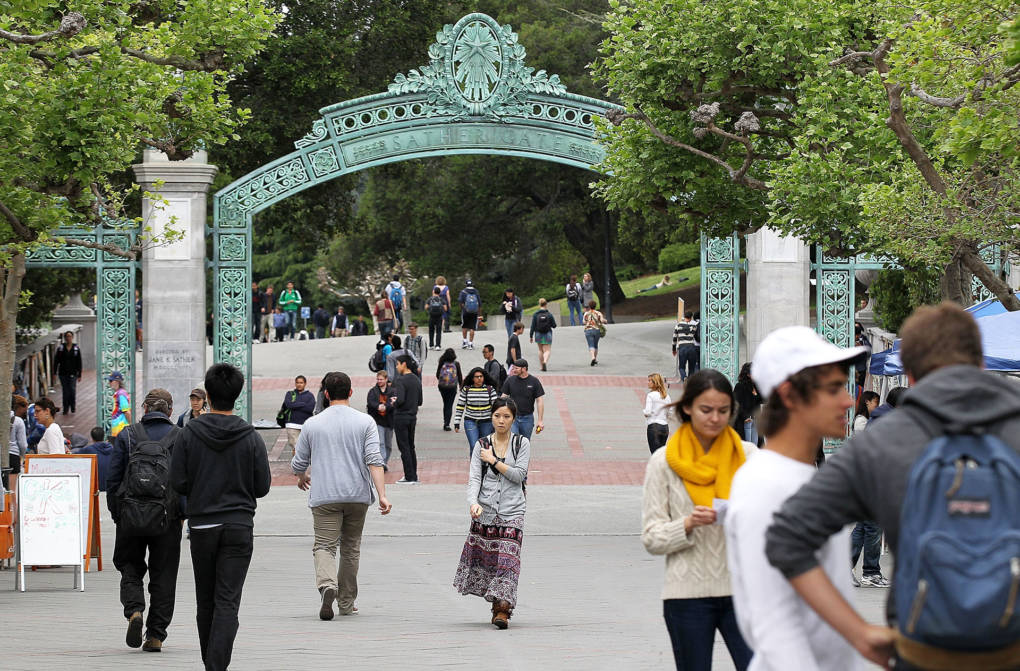
"caption": "Students walk through Sproul Plaza on the UC Berkeley campus.",
"description": "Students walk through Sproul Plaza on the UC Berkeley campus.",
"title": "SatherGate",
"credit": "Justin Sullivan/Getty Images",
"status": "inherit",
"isLoading": false,
"fetchFailed": false
},
"news_11622415": {
"type": "attachments",
"id": "news_11622415",
"meta": {
"index": "attachments_1716263798",
"site": "news",
"id": "11622415",
"found": true
},
"title": "15359812401_c1ee1788cd_o",
"publishDate": 1507740280,
"status": "inherit",
"parent": 11622403,
"modified": 1741632903,
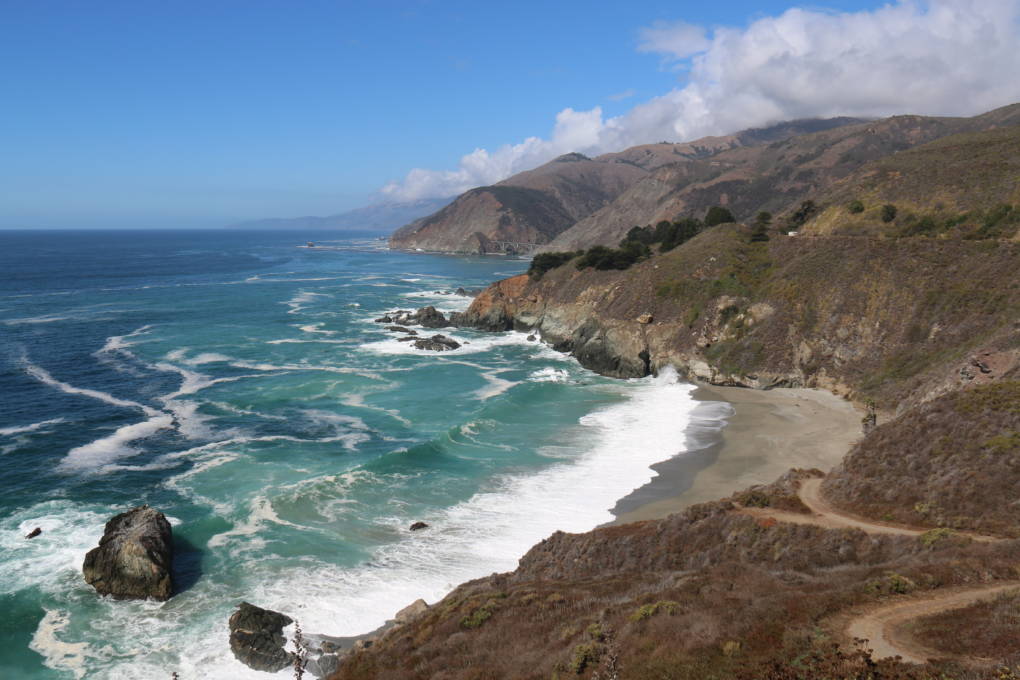
"caption": "The Big Sur coastline.",
"credit": "Ashley Spratt, \u003ca href=\"https://flic.kr/p/ppi46K\">USFWS\u003c/a>, \u003ca href=\"http://creativecommons.org/licenses/by/4.0/\">CC BY\u003c/a>",
"altTag": null,
"description": "The Big Sur coastline",
"imgSizes": {
"thumbnail": {
"file": "https://cdn.kqed.org/wp-content/uploads/sites/10/2017/10/15359812401_c1ee1788cd_o-1-160x107.jpg",
"width": 160,
"height": 107,
"mimeType": "image/jpeg"
},
"medium": {
"file": "https://cdn.kqed.org/wp-content/uploads/sites/10/2017/10/15359812401_c1ee1788cd_o-1-800x533.jpg",
"width": 800,
"height": 533,
"mimeType": "image/jpeg"
},
"large": {
"file": "https://cdn.kqed.org/wp-content/uploads/sites/10/2017/10/15359812401_c1ee1788cd_o-1-1020x680.jpg",
"width": 1020,
"height": 680,
"mimeType": "image/jpeg"
},
"fd-lrg": {
"file": "https://cdn.kqed.org/wp-content/uploads/sites/10/2017/10/15359812401_c1ee1788cd_o-1-1920x1280.jpg",
"width": 1920,
"height": 1280,
"mimeType": "image/jpeg"
},
"fd-med": {
"file": "https://cdn.kqed.org/wp-content/uploads/sites/10/2017/10/15359812401_c1ee1788cd_o-1-1180x787.jpg",
"width": 1180,
"height": 787,
"mimeType": "image/jpeg"
},
"fd-sm": {
"file": "https://cdn.kqed.org/wp-content/uploads/sites/10/2017/10/15359812401_c1ee1788cd_o-1-960x640.jpg",
"width": 960,
"height": 640,
"mimeType": "image/jpeg"
},
"post-thumbnail": {
"file": "https://cdn.kqed.org/wp-content/uploads/sites/10/2017/10/15359812401_c1ee1788cd_o-1-672x372.jpg",
"width": 672,
"height": 372,
"mimeType": "image/jpeg"
},
"twentyfourteen-full-width": {
"file": "https://cdn.kqed.org/wp-content/uploads/sites/10/2017/10/15359812401_c1ee1788cd_o-1-1038x576.jpg",
"width": 1038,
"height": 576,
"mimeType": "image/jpeg"
},
"xxsmall": {
"file": "https://cdn.kqed.org/wp-content/uploads/sites/10/2017/10/15359812401_c1ee1788cd_o-1-240x160.jpg",
"width": 240,
"height": 160,
"mimeType": "image/jpeg"
},
"xsmall": {
"file": "https://cdn.kqed.org/wp-content/uploads/sites/10/2017/10/15359812401_c1ee1788cd_o-1-375x250.jpg",
"width": 375,
"height": 250,
"mimeType": "image/jpeg"
},
"small": {
"file": "https://cdn.kqed.org/wp-content/uploads/sites/10/2017/10/15359812401_c1ee1788cd_o-1-520x347.jpg",
"width": 520,
"height": 347,
"mimeType": "image/jpeg"
},
"xlarge": {
"file": "https://cdn.kqed.org/wp-content/uploads/sites/10/2017/10/15359812401_c1ee1788cd_o-1-1180x787.jpg",
"width": 1180,
"height": 787,
"mimeType": "image/jpeg"
},
"full-width": {
"file": "https://cdn.kqed.org/wp-content/uploads/sites/10/2017/10/15359812401_c1ee1788cd_o-1-1920x1280.jpg",
"width": 1920,
"height": 1280,
"mimeType": "image/jpeg"
},
"guest-author-32": {
"file": "https://cdn.kqed.org/wp-content/uploads/sites/10/2017/10/15359812401_c1ee1788cd_o-1-32x32.jpg",
"width": 32,
"height": 32,
"mimeType": "image/jpeg"
},
"guest-author-50": {
"file": "https://cdn.kqed.org/wp-content/uploads/sites/10/2017/10/15359812401_c1ee1788cd_o-1-50x50.jpg",
"width": 50,
"height": 50,
"mimeType": "image/jpeg"
},
"guest-author-64": {
"file": "https://cdn.kqed.org/wp-content/uploads/sites/10/2017/10/15359812401_c1ee1788cd_o-1-64x64.jpg",
"width": 64,
"height": 64,
"mimeType": "image/jpeg"
},
"guest-author-96": {
"file": "https://cdn.kqed.org/wp-content/uploads/sites/10/2017/10/15359812401_c1ee1788cd_o-1-96x96.jpg",
"width": 96,
"height": 96,
"mimeType": "image/jpeg"
},
"guest-author-128": {
"file": "https://cdn.kqed.org/wp-content/uploads/sites/10/2017/10/15359812401_c1ee1788cd_o-1-128x128.jpg",
"width": 128,
"height": 128,
"mimeType": "image/jpeg"
},
"detail": {
"file": "https://cdn.kqed.org/wp-content/uploads/sites/10/2017/10/15359812401_c1ee1788cd_o-1-150x150.jpg",
"width": 150,
"height": 150,
"mimeType": "image/jpeg"
},
"kqedFullSize": {
"file": "https://cdn.kqed.org/wp-content/uploads/sites/10/2017/10/15359812401_c1ee1788cd_o-1-e1532569326843.jpg",
"width": 1920,
"height": 1280
}
},
"isLoading": false,
"fetchFailed": false
},
"news_11616025": {
"type": "attachments",
"id": "news_11616025",
"meta": {
"index": "attachments_1716263798",
"site": "news",
"id": "11616025",
"found": true
},
"parent": 11616024,
"imgSizes": {
"small": {
"file": "https://ww2.kqed.org/app/uploads/sites/10/2017/09/caldreaming-n7pgdxxp-1503517954-520x256.jpg",
"width": 520,
"mimeType": "image/jpeg",
"height": 256
},
"twentyfourteen-full-width": {
"file": "https://ww2.kqed.org/app/uploads/sites/10/2017/09/caldreaming-n7pgdxxp-1503517954-1038x576.jpg",
"width": 1038,
"mimeType": "image/jpeg",
"height": 576
},
"thumbnail": {
"file": "https://ww2.kqed.org/app/uploads/sites/10/2017/09/caldreaming-n7pgdxxp-1503517954-160x79.jpg",
"width": 160,
"mimeType": "image/jpeg",
"height": 79
},
"fd-sm": {
"file": "https://ww2.kqed.org/app/uploads/sites/10/2017/09/caldreaming-n7pgdxxp-1503517954-960x473.jpg",
"width": 960,
"mimeType": "image/jpeg",
"height": 473
},
"post-thumbnail": {
"file": "https://ww2.kqed.org/app/uploads/sites/10/2017/09/caldreaming-n7pgdxxp-1503517954-672x372.jpg",
"width": 672,
"mimeType": "image/jpeg",
"height": 372
},
"xsmall": {
"file": "https://ww2.kqed.org/app/uploads/sites/10/2017/09/caldreaming-n7pgdxxp-1503517954-375x185.jpg",
"width": 375,
"mimeType": "image/jpeg",
"height": 185
},
"kqedFullSize": {
"file": "https://ww2.kqed.org/app/uploads/sites/10/2017/09/caldreaming-n7pgdxxp-1503517954.jpg",
"width": 1356,
"height": 668
},
"large": {
"file": "https://ww2.kqed.org/app/uploads/sites/10/2017/09/caldreaming-n7pgdxxp-1503517954-1020x502.jpg",
"width": 1020,
"mimeType": "image/jpeg",
"height": 502
},
"xlarge": {
"file": "https://ww2.kqed.org/app/uploads/sites/10/2017/09/caldreaming-n7pgdxxp-1503517954-1180x581.jpg",
"width": 1180,
"mimeType": "image/jpeg",
"height": 581
},
"guest-author-50": {
"file": "https://ww2.kqed.org/app/uploads/sites/10/2017/09/caldreaming-n7pgdxxp-1503517954-50x50.jpg",
"width": 50,
"mimeType": "image/jpeg",
"height": 50
},
"guest-author-96": {
"file": "https://ww2.kqed.org/app/uploads/sites/10/2017/09/caldreaming-n7pgdxxp-1503517954-96x96.jpg",
"width": 96,
"mimeType": "image/jpeg",
"height": 96
},
"medium": {
"file": "https://ww2.kqed.org/app/uploads/sites/10/2017/09/caldreaming-n7pgdxxp-1503517954-800x394.jpg",
"width": 800,
"mimeType": "image/jpeg",
"height": 394
},
"guest-author-64": {
"file": "https://ww2.kqed.org/app/uploads/sites/10/2017/09/caldreaming-n7pgdxxp-1503517954-64x64.jpg",
"width": 64,
"mimeType": "image/jpeg",
"height": 64
},
"guest-author-32": {
"file": "https://ww2.kqed.org/app/uploads/sites/10/2017/09/caldreaming-n7pgdxxp-1503517954-32x32.jpg",
"width": 32,
"mimeType": "image/jpeg",
"height": 32
},
"fd-med": {
"file": "https://ww2.kqed.org/app/uploads/sites/10/2017/09/caldreaming-n7pgdxxp-1503517954-1180x581.jpg",
"width": 1180,
"mimeType": "image/jpeg",
"height": 581
},
"detail": {
"file": "https://ww2.kqed.org/app/uploads/sites/10/2017/09/caldreaming-n7pgdxxp-1503517954-150x150.jpg",
"width": 150,
"mimeType": "image/jpeg",
"height": 150
},
"guest-author-128": {
"file": "https://ww2.kqed.org/app/uploads/sites/10/2017/09/caldreaming-n7pgdxxp-1503517954-128x128.jpg",
"width": 128,
"mimeType": "image/jpeg",
"height": 128
},
"xxsmall": {
"file": "https://ww2.kqed.org/app/uploads/sites/10/2017/09/caldreaming-n7pgdxxp-1503517954-240x118.jpg",
"width": 240,
"mimeType": "image/jpeg",
"height": 118
}
},
"publishDate": 1504891918,
"modified": 1504892062,
"caption": "Old West, as seen through 1967 Orange County eyes. ",
"description": "Old West, as seen through 1967 Orange County eyes. ",
"title": "caldreaming-n7pgdxxp-1503517954",
"credit": "\u003ca href=\"https://www.flickr.com/photos/ocarchives/4724276311\">Orange County Archives\u003c/a>, \u003ca href=\"http://creativecommons.org/licenses/by/4.0/\">CC BY\u003c/a>",
"status": "inherit",
"isLoading": false,
"fetchFailed": false
}
},
"audioPlayerReducer": {
"postId": "stream_live",
"isPaused": true,
"isPlaying": false,
"pfsActive": false,
"pledgeModalIsOpen": true,
"playerDrawerIsOpen": false,
"liveAudioPlayStartedAt": 0,
"liveAudioPlayContext": ""
},
"authorsReducer": {
"byline_news_11627531": {
"type": "authors",
"id": "byline_news_11627531",
"meta": {
"override": true
},
"slug": "byline_news_11627531",
"name": "Kathleen Ronayne \u003cbr> Associated Press",
"isLoading": false
},
"byline_news_11627484": {
"type": "authors",
"id": "byline_news_11627484",
"meta": {
"override": true
},
"slug": "byline_news_11627484",
"name": "Gloria Hillard",
"isLoading": false
},
"byline_news_11627465": {
"type": "authors",
"id": "byline_news_11627465",
"meta": {
"override": true
},
"slug": "byline_news_11627465",
"name": "Miles Parks",
"isLoading": false
},
"byline_news_11624431": {
"type": "authors",
"id": "byline_news_11624431",
"meta": {
"override": true
},
"slug": "byline_news_11624431",
"name": "Manuel Pastor, University of Southern California – Dornsife College, for The Conversation",
"isLoading": false
},
"byline_news_11625622": {
"type": "authors",
"id": "byline_news_11625622",
"meta": {
"override": true
},
"slug": "byline_news_11625622",
"name": "John R. Thelin, University of Kentucky/The Conversation",
"isLoading": false
},
"byline_news_11622403": {
"type": "authors",
"id": "byline_news_11622403",
"meta": {
"override": true
},
"slug": "byline_news_11622403",
"name": "Gary Griggs and Charles Lester, University of California, Santa Cruz for The Conversation",
"isLoading": false
},
"byline_news_11616024": {
"type": "authors",
"id": "byline_news_11616024",
"meta": {
"override": true
},
"slug": "byline_news_11616024",
"name": "Amanda Tewes, University of Massachusetts Amherst for The Conversation",
"isLoading": false
},
"scuevas": {
"type": "authors",
"id": "2600",
"meta": {
"index": "authors_1716337520",
"id": "2600",
"found": true
},
"name": "Steven Cuevas",
"firstName": "Steven",
"lastName": "Cuevas",
"slug": "scuevas",
"email": "scuevas@kqed.org",
"display_author_email": false,
"staff_mastheads": [],
"title": "KQED Contributor",
"bio": "Steven is a former Los Angeles bureau chief for The California Report.\r\n\r\nHe reports on an array of issues across the Southland, from immigration and regional politics to religion, the performing arts and pop culture.\r\n\r\nPrior to joining KQED in 2012, Steven covered Inland southern California for KPCC in Pasadena. He also helped establish the first newsroom at \u003ca href=\"http://kut.org/\">KUT\u003c/a> in Austin, Texas where he was a general assignment reporter.\r\n\r\nSteven has received numerous awards for his reporting including an RTNDA Edward R. Murrow Award for investigative reporting in addition to awards from the LA Press Club, the Associated Press and the Society for Professional Journalists.\r\n\r\nSteven grew up in and around San Francisco and now lives in Pasadena just a short jog from the foot of the San Gabriel Mountains.",
"avatar": "https://secure.gravatar.com/avatar/2d253580794f8e026100fae05cfabbbd4889b4fe15146146cacb82a01974c538?s=600&d=blank&r=g",
"twitter": null,
"bluesky": null,
"facebook": null,
"instagram": null,
"linkedin": null,
"sites": [
{
"site": "news",
"roles": [
"subscriber"
]
}
],
"headData": {
"title": "Steven Cuevas | KQED",
"description": "KQED Contributor",
"ogImgSrc": "https://secure.gravatar.com/avatar/2d253580794f8e026100fae05cfabbbd4889b4fe15146146cacb82a01974c538?s=600&d=blank&r=g",
"twImgSrc": "https://secure.gravatar.com/avatar/2d253580794f8e026100fae05cfabbbd4889b4fe15146146cacb82a01974c538?s=600&d=blank&r=g"
},
"isLoading": false,
"link": "/author/scuevas"
},
"aemslie": {
"type": "authors",
"id": "3206",
"meta": {
"index": "authors_1716337520",
"id": "3206",
"found": true
},
"name": "Alex Emslie",
"firstName": "Alex",
"lastName": "Emslie",
"slug": "aemslie",
"email": "aemslie@kqed.org",
"display_author_email": true,
"staff_mastheads": [
"news"
],
"title": "KQED Senior Editor",
"bio": "Alex Emslie is senior editor of talent and development at KQED, where he manages dozens of early career journalists and oversees news department internships.\r\n\r\nHe is a former carpenter and proud graduate of City College of San Francisco and San Francisco State University, where he studied journalism and criminal justice before joining KQED in 2013.\r\n\r\nAlex produced investigative journalism focused on \u003ca href=\"https://www.kqed.org/news/11667594/the-trials-of-marvin-mutch-video\">criminal justice\u003c/a> and policing for most of a decade. He has broken major stories about \u003ca href=\"https://www.kqed.org/news/135682/amid-a-series-of-vallejo-police-shootings-one-officers-name-stands-out\">police use of deadly force\u003c/a>, \u003ca href=\"https://www.kqed.org/news/10454955/racist-texts-prompt-sfpd-internal-investigation\">officer misconduct\u003c/a> and \u003ca href=\"https://www.kqed.org/news/11712239/terrorist-or-troll-judge-to-weigh-whether-oakland-man-really-intended-to-attack-bay-area\">other\u003c/a> \u003ca href=\"https://www.kqed.org/news/11221414/hayward-paid-159000-to-husband-of-retired-police-chief-documents-show\">high\u003c/a>-\u003ca href=\"https://www.kqed.org/news/10622762/the-forgotten-tracking-two-homicides-in-san-francisco-public-housing\">profile\u003c/a> \u003ca href=\"https://www.kqed.org/news/11624516/federal-agency-promoted-ranger-just-months-after-his-gun-was-stolen-and-used-in-steinle-killing\">cases\u003c/a>. He co-founded the \u003ca href=\"https://projects.scpr.org/california-reporting-project/\">California Reporting Project\u003c/a> in 2019 to obtain and report on previously confidential police internal investigations. The effort produced well over 100 original stories and changed the course of multiple criminal cases.\r\n\r\nHis work has been recognized with numerous journalism awards, including a national Edward R. Murrow award for several years of \u003ca href=\"https://www.kqed.org/news/11688481/sfpd-officers-in-mario-woods-case-recount-shooting-in-newly-filed-depositions\">reporting\u003c/a> on the San Francisco Police shooting of Mario Woods. His \u003ca href=\"https://www.kqed.org/news/147854/half-of-those-killed-by-san-francisco-police-are-mentally-ill\">reporting\u003c/a> on police killings of people in psychiatric crisis was cited in amicus briefs before the U.S. Supreme Court.\r\n\r\nAlex now enjoys mentoring the next generation of journalists at KQED.",
"avatar": "https://secure.gravatar.com/avatar/e691e65209f20e9da202bd730ead5663?s=600&d=blank&r=g",
"twitter": "SFNewsReporter",
"facebook": null,
"instagram": null,
"linkedin": null,
"sites": [
{
"site": "arts",
"roles": [
"editor"
]
},
{
"site": "news",
"roles": [
"editor"
]
},
{
"site": "mindshift",
"roles": [
"editor"
]
},
{
"site": "stateofhealth",
"roles": [
"editor"
]
},
{
"site": "science",
"roles": [
"administrator"
]
}
],
"headData": {
"title": "Alex Emslie | KQED",
"description": "KQED Senior Editor",
"ogImgSrc": "https://secure.gravatar.com/avatar/e691e65209f20e9da202bd730ead5663?s=600&d=blank&r=g",
"twImgSrc": "https://secure.gravatar.com/avatar/e691e65209f20e9da202bd730ead5663?s=600&d=blank&r=g"
},
"isLoading": false,
"link": "/author/aemslie"
},
"fjhabvala": {
"type": "authors",
"id": "8659",
"meta": {
"index": "authors_1716337520",
"id": "8659",
"found": true
},
"name": "Farida Jhabvala Romero",
"firstName": "Farida",
"lastName": "Jhabvala Romero",
"slug": "fjhabvala",
"email": "fjhabvala@kqed.org",
"display_author_email": true,
"staff_mastheads": [
"news"
],
"title": "KQED Contributor",
"bio": "Farida Jhabvala Romero is a Labor Correspondent for KQED. She previously covered immigration. Farida was \u003ca href=\"https://www.ccnma.org/2022-most-influential-latina-journalists\">named\u003c/a> one of the 10 Most Influential Latina Journalists in California in 2022 by the California Chicano News Media Association. Her work has won awards from the Society of Professional Journalists (Northern California), as well as a national and regional Edward M. Murrow Award for the collaborative reporting projects “Dangerous Air” and “Graying California.” Before joining KQED, Farida worked as a producer at Radio Bilingüe, a national public radio network. Farida earned her master’s degree in journalism from Stanford University.",
"avatar": "https://secure.gravatar.com/avatar/f9f022d4e2609741874222a1e9d41f48fea74011aa7c615eef91d9a50c944ebe?s=600&d=blank&r=g",
"twitter": "FaridaJhabvala",
"bluesky": null,
"facebook": null,
"instagram": null,
"linkedin": "https://www.linkedin.com/in/faridajhabvala/",
"sites": [
{
"site": "news",
"roles": [
"editor"
]
},
{
"site": "stateofhealth",
"roles": [
"author"
]
},
{
"site": "liveblog",
"roles": [
"author"
]
}
],
"headData": {
"title": "Farida Jhabvala Romero | KQED",
"description": "KQED Contributor",
"ogImgSrc": "https://secure.gravatar.com/avatar/f9f022d4e2609741874222a1e9d41f48fea74011aa7c615eef91d9a50c944ebe?s=600&d=blank&r=g",
"twImgSrc": "https://secure.gravatar.com/avatar/f9f022d4e2609741874222a1e9d41f48fea74011aa7c615eef91d9a50c944ebe?s=600&d=blank&r=g"
},
"isLoading": false,
"link": "/author/fjhabvala"
},
"agarces": {
"type": "authors",
"id": "11367",
"meta": {
"index": "authors_1716337520",
"id": "11367",
"found": true
},
"name": "Audrey Garces",
"firstName": "Audrey",
"lastName": "Garces",
"slug": "agarces",
"email": "agarces@kqed.org",
"display_author_email": false,
"staff_mastheads": [
"news"
],
"title": "Digital Producer",
"bio": "Audrey is a former digital producer at KQED News. Previously, she was a KQED Raul Ramirez Diversity Fund intern where she developed stories that focused on highlighting diverse voices in journalism. Prior to her work at KQED, she worked as a news intern at the San Francisco Examiner. Audrey graduated from San Francisco State University with a B.A. in journalism and a minor in political science.",
"avatar": "https://secure.gravatar.com/avatar/5211bc2e6a809b9956da169e35ce63d5?s=600&d=blank&r=g",
"twitter": "audgar",
"facebook": null,
"instagram": null,
"linkedin": null,
"sites": [
{
"site": "arts",
"roles": []
},
{
"site": "news",
"roles": [
"subscriber"
]
},
{
"site": "science",
"roles": [
"editor"
]
},
{
"site": "forum",
"roles": [
"editor"
]
},
{
"site": "perspectives",
"roles": [
"administrator"
]
}
],
"headData": {
"title": "Audrey Garces | KQED",
"description": "Digital Producer",
"ogImgSrc": "https://secure.gravatar.com/avatar/5211bc2e6a809b9956da169e35ce63d5?s=600&d=blank&r=g",
"twImgSrc": "https://secure.gravatar.com/avatar/5211bc2e6a809b9956da169e35ce63d5?s=600&d=blank&r=g"
},
"isLoading": false,
"link": "/author/agarces"
},
"tmosley": {
"type": "authors",
"id": "11373",
"meta": {
"index": "authors_1716337520",
"id": "11373",
"found": true
},
"name": "Tonya Mosley",
"firstName": "Tonya",
"lastName": "Mosley",
"slug": "tmosley",
"email": "tmosley@kqed.org",
"display_author_email": false,
"staff_mastheads": [],
"title": "KQED Contributor",
"bio": "Tonya Mosley is a former Silicon Valley bureau chief for KQED. She served as the senior editor, leading a team of journalists covering the impacts of technology companies on the South Bay and society. Tonya is also a former host and reporter for KQED.\r\n\r\nPrior to KQED, Tonya served as a television reporter & anchor for several media outlets, including Al Jazeera America.\r\n\r\nIn 2015, Tonya was awarded a John S. Knight Journalism Fellowship at Stanford University where she co-created a workshop for journalists on the impacts of implicit bias, and co-wrote a Belgian/American experimental study on the effects of protest coverage.\r\n\r\nTonya has won several national awards for her work, most recently an Emmy Award in 2016 for her televised piece \"Beyond Ferguson,\" and a national Edward R. Murrow award for her public radio series \"Black in Seattle.\"\r\n\r\nYou can reach Tonya at: tmosley@kqed.org.",
"avatar": "https://secure.gravatar.com/avatar/0b2ea2bbfed6bafaacd21e9398c68e5e?s=600&d=blank&r=g",
"twitter": "tonyamosley",
"facebook": null,
"instagram": null,
"linkedin": null,
"sites": [
{
"site": "arts",
"roles": [
"editor"
]
},
{
"site": "news",
"roles": [
"subscriber"
]
},
{
"site": "about",
"roles": [
"author"
]
},
{
"site": "forum",
"roles": [
"author"
]
}
],
"headData": {
"title": "Tonya Mosley | KQED",
"description": "KQED Contributor",
"ogImgSrc": "https://secure.gravatar.com/avatar/0b2ea2bbfed6bafaacd21e9398c68e5e?s=600&d=blank&r=g",
"twImgSrc": "https://secure.gravatar.com/avatar/0b2ea2bbfed6bafaacd21e9398c68e5e?s=600&d=blank&r=g"
},
"isLoading": false,
"link": "/author/tmosley"
}
},
"pagesReducer": {
"news_program_news-fix": {
"type": "terms",
"id": "news_6944",
"meta": {
"index": "terms_1716263798",
"site": "news",
"id": "6944",
"score": 16.377514
},
"featImg": "https://ww2.kqed.org/app/uploads/sites/10/2014/10/News-Fix-Logo-Web-Banners-04.png",
"name": "News Fix",
"description": null,
"taxonomy": "program",
"headData": {
"twImgId": null,
"twTitle": null,
"ogTitle": null,
"ogImgId": null,
"twDescription": null,
"description": "The News Fix is a daily news podcast from KQED that breaks down the latest headlines and provides in-depth analysis of the stories that matter to the Bay Area.",
"title": "News Fix - Daily Dose of Bay Area News | KQED",
"ogDescription": null
},
"ttid": 6968,
"slug": "news-fix",
"isLoading": false,
"title": "News Fix",
"pageMeta": {
"site": "news",
"WpPageTemplate": "page-topic-editorial",
"currentPage": 75
},
"blocks": [
{
"blockName": "kqed/post-list",
"attrs": {
"layout": "cardArticle2",
"query": "posts/news?program=news-fix",
"seeMore": false,
"paginated": true,
"page": 75
}
},
{
"blockName": "kqed/ad"
}
]
}
},
"pfsSessionReducer": {},
"postsReducer": {
"stream_live": {
"type": "live",
"id": "stream_live",
"audioUrl": "https://streams.kqed.org/kqedradio",
"title": "Live Stream",
"excerpt": "Live Stream information currently unavailable.",
"link": "/radio",
"featImg": "",
"label": {
"name": "KQED Live",
"link": "/"
}
},
"stream_kqedNewscast": {
"type": "posts",
"id": "stream_kqedNewscast",
"audioUrl": "https://www.kqed.org/.stream/anon/radio/RDnews/newscast.mp3?_=1",
"title": "KQED Newscast",
"featImg": "",
"label": {
"name": "88.5 FM",
"link": "/"
}
},
"news_11627544": {
"type": "posts",
"id": "news_11627544",
"meta": {
"index": "posts_1716263798",
"site": "news",
"id": "11627544",
"score": null,
"sort": [
1509589280000
]
},
"parent": 0,
"labelTerm": {
"site": "news",
"term": 6944
},
"blocks": [],
"publishDate": 1509589280,
"format": "standard",
"disqusTitle": "Defendant in Steinle Murder Trial Told Police He Fired, Threw Gun in Bay to Stop It From Shooting",
"title": "Defendant in Steinle Murder Trial Told Police He Fired, Threw Gun in Bay to Stop It From Shooting",
"headTitle": "News Fix | KQED News",
"content": "\u003cp>Jurors in the high-profile San Francisco murder trial over the 2015 slaying of Kathryn Steinle heard the defendant's voice for the first time in court Wednesday, as the prosecution played extended excerpts from an overnight interview with homicide inspectors conducted several hours after the shooting.\u003c/p>\n\u003cp>The hour's worth of excerpts were taken from a 4½-hour videotaped interview stretching from about 1 a.m. to 5 a.m. on July 2, 2015.\u003c/p>\n\u003cp>Video of the interview was displayed during the testimony of San Francisco police Lt. Anthony Ravano, who was a sergeant and homicide inspector in 2015.\u003c/p>\n\u003cp>Ravano described how a series of photographs provided by bystanders helped him identify defendant Jose Ines Garcia Zarate as the person who likely shot Steinle at around 6:30 p.m. on July 1, 2015. Other officers arrested Garcia Zarate about an hour later, a mile south of the pedestrian pier on San Francisco's waterfront where Steinle was shot.\u003c/p>\n\u003cp>Before Assistant District Attorney Diana Garcia played the video, she asked Ravano what information he had before he interrogated Garcia Zarate.\u003c/p>\n\u003cp>[ad fullwidth]\u003c/p>\n\u003cp>Ravano said he suspected the gun used to kill Steinle was in San Francisco Bay, but police had yet to recover it. He didn't know the positions of Steinle or Garcia Zarate at the time of the shooting. He didn't know his suspect's name.\u003c/p>\n\u003cp>Prosecutor Garcia asked Ravano if he had lied to the suspect during the interview. Ravano said he had.\u003c/p>\n\u003cp>\"I told him we recovered a firearm,\" he said, even though police at that time had not recovered the gun. \"We matched DNA from the firearm.\"\u003c/p>\n\u003cp>He said he told Garcia Zarate that they had recovered gunshot residue from his hands and that five witnesses saw him shoot Steinle.\u003c/p>\n\u003cp>\"Was it true there were five witnesses who saw the shooting?\" Garcia asked.\u003c/p>\n\u003cp>\"No,\" Ravano said. \"No one saw him shoot.\"\u003c/p>\n\u003cp>On the video, three officers entered the interview room at San Francisco's Hall of Justice and roused Garcia Zarate, who appeared to be sleeping. A Spanish-speaking officer, Martin Covarrubias, read Garcia Zarate his Miranda rights from a card, in Spanish. Garcia Zarate indicated he understood each point by answering \"yes\" in Spanish. Ravano and Sgt. Chris Canning were asking the questions.\u003c/p>\n\u003cp>The defendant gave his name as Juan Francisco Lopez Sanchez, an alias by which he is known in the federal prison system.\u003c/p>\n\u003cp>Some of his initial answers don't appear to make sense. When the officers asked his birthdate, he repeatedly said \"1863\" in Spanish.\u003c/p>\n\u003cp>He also said on the video that he lives in Colombia, but had been sleeping on the street in San Francisco for the past week. In fact, Garcia Zarate had been on city streets for over two months, following his release from San Francisco County Jail after the dismissal of a 20-year-old marijuana charge. He is a Mexican citizen who spent 15 of the past 20 years in federal prison for illegally re-entering the U.S. after being deported.\u003c/p>\n\u003cp>Under questioning, he didn't initially admit to being on Pier 14 the previous evening.\u003c/p>\n\u003cp>Garcia Zarate repeatedly said on the video that he was eating cookies or crackers near the baseball field, which is over a mile from Pier 14 but near where he was arrested. He said he had spent the day collecting aluminum cans.\u003c/p>\n\u003cp>\"I was eating because it was dinnertime,\" Covarrubias translated one of Garcia Zarate's answers. \"That's what I was doing. I was eating crackers.\"\u003c/p>\n\u003cp>Ravano showed Garcia Zarate a photograph of himself sitting on Pier 14, taken by a bystander shortly before the shooting. Garcia Zarate insisted it was someone in a similar T-shirt, but who appeared to have more hair.\u003c/p>\n\u003cp>The videotape reveals the complexity of conducting an interrogation in two languages -- with two officers questioning the defendant and a third officer translating.\u003c/p>\n\u003cp>At about 3 a.m., Ravano asked Garcia Zarate (through Covarrubias' translation) if he knew why he was at the Hall of Justice.\u003c/p>\n\u003cp>Garcia Zarate said it was because he had been brought there. He then spoke very quickly, saying the Spanish word for \"lawyer\" several times.\u003c/p>\n\u003cp>His defense attorneys \u003ca href=\"https://ww2.kqed.org/news/2017/09/25/defendants-statements-to-police-admissible-in-steinle-murder-trial-judge-rules/\" target=\"_blank\" rel=\"noopener\">previously tried\u003c/a> unsuccessfully to have the rest of the interview excluded from the trial because, they argued, Garcia Zarate had invoked his Fifth Amendment right to legal counsel.\u003c/p>\n\u003cp>Covarrubias translated one of his statements as \"... speak to my lawyers and then I will tell you the truth.\"\u003c/p>\n\u003cp>The officers didn't appear to address his statement.\u003c/p>\n\u003cp>\"Listen to me. Look at me. This is you,\" Ravano said, pointing to a photograph on the table. \"We know this is you.\"\u003c/p>\n\u003cp>Garcia Zarate responded in Spanish: \"Do what you have to do. The proof is right there.\"\u003c/p>\n\u003cp>Ravano continued: \"Right here, something very bad happened and you had a pistol in your hand. And you threw it into the bay.\"\u003c/p>\n\u003cp>Garcia Zarate responded, according to Covarrubias' translation: \"I want my money and lawyer.\"\u003c/p>\n\u003cp>Ravano continued: \"At around 6:30, that girl was shot. She's hurt. And a lot of people were there to see what happened. Did you see what happened?\"\u003c/p>\n\u003cp>\"I did not see anything,\" Garcia Zarate said, according to Covarrubias' translation. \"It was dinnertime and I was eating.\"\u003c/p>\n\u003cp>Ravano and Canning left the room at about 3:37 a.m. and Covarrubias and Garcia Zarate continued to talk for over an hour, but that part of the video was not played in court.\u003c/p>\n\u003cp>The two homicide inspectors returned to the room just before 5 a.m.\u003c/p>\n\u003cp>\"I want to know why you shot the girl and threw the pistol in the water,\" one of them said.\u003c/p>\n\u003cp>\"I don't know,\" Garcia Zarate responded in Spanish.\u003c/p>\n\u003cp>\"Did you fire the shot?\" Ravano asked.\u003c/p>\n\u003cp>\"Yes,\" Garcia Zarate answered in Spanish.\u003c/p>\n\u003cp>\"Why?\" Ravano asked.\u003c/p>\n\u003cp>There was a long silence.\u003c/p>\n\u003cp>\"Were you mad? Were you sad?\" Ravano asked.\u003c/p>\n\u003cp>\"I don't know,\" Garcia Zarate said in English.\u003c/p>\n\u003cp>\"Why? Why?\" Ravano insisted.\u003c/p>\n\u003cp>After a long pause, \"I don't know,\" Garcia Zarate said in Spanish.\u003c/p>\n\u003cp>\"After she was shot, did you throw the gun into the water?\" Ravano asked.\u003c/p>\n\u003cp>Garcia responded in Spanish. He said, \"I think I threw it, yes,\" according to Covarrubias' translation.\u003c/p>\n\u003cp>Canning asked: \"What were you aiming at?\"\u003c/p>\n\u003cp>In Spanish, Garcia Zarate said, \"a sea lion,\" according to Covarrubias' translation.\u003c/p>\n\u003cp>\"There are no sea lions over there,\" Canning said. A few minutes later, Garcia Zarate said in Spanish that he was aiming at \"a black fish.\"\u003c/p>\n\u003cp>He said he remembered throwing the gun into the bay. He said he fired a single shot.\u003c/p>\n\u003cp>One of the inspectors asked him how he got the gun.\u003c/p>\n\u003cp>\"When I got there,\" Garcia Zarate said in Spanish, according to Covarrubias' translation, \"When I was walking along, there was a rag and I stepped on it and it fired and I grabbed it and tossed it.\"\u003c/p>\n\u003cp>The defense is arguing that Garcia Zarate picked up an object wrapped in cloth and didn't know what it was until it fired.\u003c/p>\n\u003cp>He continued: \"I was trying to prevent the gun from shooting by itself,\" according to the translation.\u003c/p>\n\u003cp>Canning knelt down next to Garcia Zarate and lowered his voice.\u003c/p>\n\u003cp>\"I understand you're scared,\" he said. \"The truth is very important. The truth is going to help everybody understand why you did what you did.\"\u003c/p>\n\u003cp>He continued: \"As difficult as the truth can be, the truth is always the best. So please, tell us the truth. No lies. You didn't step on the gun, did you?\"\u003c/p>\n\u003cp>\"Yes,\" Garcia Zarate said.\u003c/p>\n\u003cp>\"You pulled the trigger,\" Canning said. \"Just once?\"\u003c/p>\n\u003cp>\"Yes,\" Garcia Zarate answered in Spanish.\u003c/p>\n\u003cp>A few minutes later, Canning asked Garcia Zarate where he got the gun. The police would later learn it was stolen from a U.S. Bureau of Land Management ranger's car four days before Steinle was shot, but at the time they hadn't yet recovered it from the bay.\u003c/p>\n\u003cp>\"I don't believe you found it on the dock,\" Canning said. \"Where did you find it?\"\u003c/p>\n\u003cp>Garcia Zarate answered in Spanish: \"That's where I found it.\"\u003c/p>\n\u003cp>Ravano asked him about his intent when he found the gun, an issue central to the murder trial currently underway.\u003c/p>\n\u003cp>\"Did you mean to do it?\" Ravano asked.\u003c/p>\n\u003cp>\"No,\" Garcia Zarate said.\u003c/p>\n\u003cp>\"Was it an accident?\" Ravano asked.\u003c/p>\n\u003cp>\"Yes,\" Garcia Zarate said in Spanish.\u003c/p>\n\u003cp>\"But you made the decision to pull the trigger?\" Ravano asked.\u003c/p>\n\u003cp>\"Yes,\" Garcia Zarate said in Spanish.\u003c/p>\n\u003cp>Ravano asked Garcia Zarate again why he threw the gun in the water, and Officer Covarrubias translated.\u003c/p>\n\u003cp>\"He had no choice but to get rid of it because if he had not it would have continued to fire,\" Covarrubias said.\u003c/p>\n\u003cp>Ravano asked Garcia Zarate how he felt after learning that Steinle was killed.\u003c/p>\n\u003cp>Garcia Zarate said he didn't remember clearly what happened. Prodded further, he said in Spanish: \"I just want to sign the papers that say I did it.\"\u003c/p>\n\u003cp>\"Thank you for finally being honest,\" Canning said.\u003c/p>\n\u003cp>Defense attorney Matt Gonzalez, chief attorney of the San Francisco Public Defender's Office, said outside court that Garcia Zarate was outmatched by the homicide inspectors.\u003c/p>\n\u003cp>\"The fact that very skilled and experienced and educated interrogators can get a second-grade [educated] Mexican immigrant to adopt what they’re saying, like that Kate Steinle was 5 feet away when the gun discharged -- that doesn’t make it true,\" he said.\u003c/p>\n\u003cp>In fact, Garcia Zarate was about 90 feet from her.\u003c/p>\n\u003cp>[ad floatright]\u003c/p>\n\u003cp>Ravano's testimony is expected to continue Thursday with cross-examination by Gonzalez.\u003c/p>\n\n",
"disqusIdentifier": "11627544 https://ww2.kqed.org/news/?p=11627544",
"disqusUrl": "https://ww2.kqed.org/news/2017/11/01/defendant-in-steinle-murder-trial-told-police-he-fired-threw-gun-in-bay-to-stop-it-from-shooting/",
"stats": {
"hasVideo": false,
"hasChartOrMap": false,
"hasAudio": false,
"hasPolis": false,
"wordCount": 1610,
"hasGoogleForm": false,
"hasGallery": false,
"hasHearkenModule": false,
"iframeSrcs": [],
"paragraphCount": 80
},
"modified": 1509660764,
"excerpt": "Under police interrogation, Jose Ines Garcia Zarate said 'yes,' he fired the fatal shot, but said it was an accident.",
"headData": {
"twImgId": "",
"twTitle": "",
"ogTitle": "",
"ogImgId": "",
"twDescription": "",
"description": "Under police interrogation, Jose Ines Garcia Zarate said 'yes,' he fired the fatal shot, but said it was an accident.",
"title": "Defendant in Steinle Murder Trial Told Police He Fired, Threw Gun in Bay to Stop It From Shooting | KQED",
"ogDescription": "",
"schema": {
"@context": "https://schema.org",
"@type": "NewsArticle",
"headline": "Defendant in Steinle Murder Trial Told Police He Fired, Threw Gun in Bay to Stop It From Shooting",
"datePublished": "2017-11-01T19:21:20-07:00",
"dateModified": "2017-11-02T15:12:44-07:00",
"image": "https://cdn.kqed.org/wp-content/uploads/2020/02/KQED-OG-Image@1x.png",
"isAccessibleForFree": "True",
"publisher": {
"@type": "NewsMediaOrganization",
"@id": "https://www.kqed.org/#organization",
"name": "KQED",
"logo": "https://cdn.kqed.org/wp-content/uploads/2020/02/KQED-OG-Image@1x.png",
"url": "https://www.kqed.org",
"sameAs": [
"https://www.facebook.com/KQED",
"https://twitter.com/KQED",
"https://www.instagram.com/kqed/",
"https://www.tiktok.com/@kqedofficial",
"https://www.linkedin.com/company/kqed",
"https://www.youtube.com/channel/UCeC0IOo7i1P_61zVUWbJ4nw"
]
}
}
},
"guestAuthors": [],
"slug": "defendant-in-steinle-murder-trial-told-police-he-fired-threw-gun-in-bay-to-stop-it-from-shooting",
"status": "publish",
"path": "/news/11627544/defendant-in-steinle-murder-trial-told-police-he-fired-threw-gun-in-bay-to-stop-it-from-shooting",
"audioTrackLength": null,
"parsedContent": [
{
"type": "contentString",
"content": "\u003cdiv class=\"post-body\">\u003cp>\u003cp>Jurors in the high-profile San Francisco murder trial over the 2015 slaying of Kathryn Steinle heard the defendant's voice for the first time in court Wednesday, as the prosecution played extended excerpts from an overnight interview with homicide inspectors conducted several hours after the shooting.\u003c/p>\n\u003cp>The hour's worth of excerpts were taken from a 4½-hour videotaped interview stretching from about 1 a.m. to 5 a.m. on July 2, 2015.\u003c/p>\n\u003cp>Video of the interview was displayed during the testimony of San Francisco police Lt. Anthony Ravano, who was a sergeant and homicide inspector in 2015.\u003c/p>\n\u003cp>Ravano described how a series of photographs provided by bystanders helped him identify defendant Jose Ines Garcia Zarate as the person who likely shot Steinle at around 6:30 p.m. on July 1, 2015. Other officers arrested Garcia Zarate about an hour later, a mile south of the pedestrian pier on San Francisco's waterfront where Steinle was shot.\u003c/p>\n\u003cp>Before Assistant District Attorney Diana Garcia played the video, she asked Ravano what information he had before he interrogated Garcia Zarate.\u003c/p>\n\u003cp>\u003c/p>\u003c/div>",
"attributes": {
"named": {},
"numeric": []
}
},
{
"type": "component",
"content": "",
"name": "ad",
"attributes": {
"named": {
"label": "fullwidth"
},
"numeric": [
"fullwidth"
]
}
},
{
"type": "contentString",
"content": "\u003cdiv class=\"post-body\">\u003cp>\u003c/p>\n\u003cp>Ravano said he suspected the gun used to kill Steinle was in San Francisco Bay, but police had yet to recover it. He didn't know the positions of Steinle or Garcia Zarate at the time of the shooting. He didn't know his suspect's name.\u003c/p>\n\u003cp>Prosecutor Garcia asked Ravano if he had lied to the suspect during the interview. Ravano said he had.\u003c/p>\n\u003cp>\"I told him we recovered a firearm,\" he said, even though police at that time had not recovered the gun. \"We matched DNA from the firearm.\"\u003c/p>\n\u003cp>He said he told Garcia Zarate that they had recovered gunshot residue from his hands and that five witnesses saw him shoot Steinle.\u003c/p>\n\u003cp>\"Was it true there were five witnesses who saw the shooting?\" Garcia asked.\u003c/p>\n\u003cp>\"No,\" Ravano said. \"No one saw him shoot.\"\u003c/p>\n\u003cp>On the video, three officers entered the interview room at San Francisco's Hall of Justice and roused Garcia Zarate, who appeared to be sleeping. A Spanish-speaking officer, Martin Covarrubias, read Garcia Zarate his Miranda rights from a card, in Spanish. Garcia Zarate indicated he understood each point by answering \"yes\" in Spanish. Ravano and Sgt. Chris Canning were asking the questions.\u003c/p>\n\u003cp>The defendant gave his name as Juan Francisco Lopez Sanchez, an alias by which he is known in the federal prison system.\u003c/p>\n\u003cp>Some of his initial answers don't appear to make sense. When the officers asked his birthdate, he repeatedly said \"1863\" in Spanish.\u003c/p>\n\u003cp>He also said on the video that he lives in Colombia, but had been sleeping on the street in San Francisco for the past week. In fact, Garcia Zarate had been on city streets for over two months, following his release from San Francisco County Jail after the dismissal of a 20-year-old marijuana charge. He is a Mexican citizen who spent 15 of the past 20 years in federal prison for illegally re-entering the U.S. after being deported.\u003c/p>\n\u003cp>Under questioning, he didn't initially admit to being on Pier 14 the previous evening.\u003c/p>\n\u003cp>Garcia Zarate repeatedly said on the video that he was eating cookies or crackers near the baseball field, which is over a mile from Pier 14 but near where he was arrested. He said he had spent the day collecting aluminum cans.\u003c/p>\n\u003cp>\"I was eating because it was dinnertime,\" Covarrubias translated one of Garcia Zarate's answers. \"That's what I was doing. I was eating crackers.\"\u003c/p>\n\u003cp>Ravano showed Garcia Zarate a photograph of himself sitting on Pier 14, taken by a bystander shortly before the shooting. Garcia Zarate insisted it was someone in a similar T-shirt, but who appeared to have more hair.\u003c/p>\n\u003cp>The videotape reveals the complexity of conducting an interrogation in two languages -- with two officers questioning the defendant and a third officer translating.\u003c/p>\n\u003cp>At about 3 a.m., Ravano asked Garcia Zarate (through Covarrubias' translation) if he knew why he was at the Hall of Justice.\u003c/p>\n\u003cp>Garcia Zarate said it was because he had been brought there. He then spoke very quickly, saying the Spanish word for \"lawyer\" several times.\u003c/p>\n\u003cp>His defense attorneys \u003ca href=\"https://ww2.kqed.org/news/2017/09/25/defendants-statements-to-police-admissible-in-steinle-murder-trial-judge-rules/\" target=\"_blank\" rel=\"noopener\">previously tried\u003c/a> unsuccessfully to have the rest of the interview excluded from the trial because, they argued, Garcia Zarate had invoked his Fifth Amendment right to legal counsel.\u003c/p>\n\u003cp>Covarrubias translated one of his statements as \"... speak to my lawyers and then I will tell you the truth.\"\u003c/p>\n\u003cp>The officers didn't appear to address his statement.\u003c/p>\n\u003cp>\"Listen to me. Look at me. This is you,\" Ravano said, pointing to a photograph on the table. \"We know this is you.\"\u003c/p>\n\u003cp>Garcia Zarate responded in Spanish: \"Do what you have to do. The proof is right there.\"\u003c/p>\n\u003cp>Ravano continued: \"Right here, something very bad happened and you had a pistol in your hand. And you threw it into the bay.\"\u003c/p>\n\u003cp>Garcia Zarate responded, according to Covarrubias' translation: \"I want my money and lawyer.\"\u003c/p>\n\u003cp>Ravano continued: \"At around 6:30, that girl was shot. She's hurt. And a lot of people were there to see what happened. Did you see what happened?\"\u003c/p>\n\u003cp>\"I did not see anything,\" Garcia Zarate said, according to Covarrubias' translation. \"It was dinnertime and I was eating.\"\u003c/p>\n\u003cp>Ravano and Canning left the room at about 3:37 a.m. and Covarrubias and Garcia Zarate continued to talk for over an hour, but that part of the video was not played in court.\u003c/p>\n\u003cp>The two homicide inspectors returned to the room just before 5 a.m.\u003c/p>\n\u003cp>\"I want to know why you shot the girl and threw the pistol in the water,\" one of them said.\u003c/p>\n\u003cp>\"I don't know,\" Garcia Zarate responded in Spanish.\u003c/p>\n\u003cp>\"Did you fire the shot?\" Ravano asked.\u003c/p>\n\u003cp>\"Yes,\" Garcia Zarate answered in Spanish.\u003c/p>\n\u003cp>\"Why?\" Ravano asked.\u003c/p>\n\u003cp>There was a long silence.\u003c/p>\n\u003cp>\"Were you mad? Were you sad?\" Ravano asked.\u003c/p>\n\u003cp>\"I don't know,\" Garcia Zarate said in English.\u003c/p>\n\u003cp>\"Why? Why?\" Ravano insisted.\u003c/p>\n\u003cp>After a long pause, \"I don't know,\" Garcia Zarate said in Spanish.\u003c/p>\n\u003cp>\"After she was shot, did you throw the gun into the water?\" Ravano asked.\u003c/p>\n\u003cp>Garcia responded in Spanish. He said, \"I think I threw it, yes,\" according to Covarrubias' translation.\u003c/p>\n\u003cp>Canning asked: \"What were you aiming at?\"\u003c/p>\n\u003cp>In Spanish, Garcia Zarate said, \"a sea lion,\" according to Covarrubias' translation.\u003c/p>\n\u003cp>\"There are no sea lions over there,\" Canning said. A few minutes later, Garcia Zarate said in Spanish that he was aiming at \"a black fish.\"\u003c/p>\n\u003cp>He said he remembered throwing the gun into the bay. He said he fired a single shot.\u003c/p>\n\u003cp>One of the inspectors asked him how he got the gun.\u003c/p>\n\u003cp>\"When I got there,\" Garcia Zarate said in Spanish, according to Covarrubias' translation, \"When I was walking along, there was a rag and I stepped on it and it fired and I grabbed it and tossed it.\"\u003c/p>\n\u003cp>The defense is arguing that Garcia Zarate picked up an object wrapped in cloth and didn't know what it was until it fired.\u003c/p>\n\u003cp>He continued: \"I was trying to prevent the gun from shooting by itself,\" according to the translation.\u003c/p>\n\u003cp>Canning knelt down next to Garcia Zarate and lowered his voice.\u003c/p>\n\u003cp>\"I understand you're scared,\" he said. \"The truth is very important. The truth is going to help everybody understand why you did what you did.\"\u003c/p>\n\u003cp>He continued: \"As difficult as the truth can be, the truth is always the best. So please, tell us the truth. No lies. You didn't step on the gun, did you?\"\u003c/p>\n\u003cp>\"Yes,\" Garcia Zarate said.\u003c/p>\n\u003cp>\"You pulled the trigger,\" Canning said. \"Just once?\"\u003c/p>\n\u003cp>\"Yes,\" Garcia Zarate answered in Spanish.\u003c/p>\n\u003cp>A few minutes later, Canning asked Garcia Zarate where he got the gun. The police would later learn it was stolen from a U.S. Bureau of Land Management ranger's car four days before Steinle was shot, but at the time they hadn't yet recovered it from the bay.\u003c/p>\n\u003cp>\"I don't believe you found it on the dock,\" Canning said. \"Where did you find it?\"\u003c/p>\n\u003cp>Garcia Zarate answered in Spanish: \"That's where I found it.\"\u003c/p>\n\u003cp>Ravano asked him about his intent when he found the gun, an issue central to the murder trial currently underway.\u003c/p>\n\u003cp>\"Did you mean to do it?\" Ravano asked.\u003c/p>\n\u003cp>\"No,\" Garcia Zarate said.\u003c/p>\n\u003cp>\"Was it an accident?\" Ravano asked.\u003c/p>\n\u003cp>\"Yes,\" Garcia Zarate said in Spanish.\u003c/p>\n\u003cp>\"But you made the decision to pull the trigger?\" Ravano asked.\u003c/p>\n\u003cp>\"Yes,\" Garcia Zarate said in Spanish.\u003c/p>\n\u003cp>Ravano asked Garcia Zarate again why he threw the gun in the water, and Officer Covarrubias translated.\u003c/p>\n\u003cp>\"He had no choice but to get rid of it because if he had not it would have continued to fire,\" Covarrubias said.\u003c/p>\n\u003cp>Ravano asked Garcia Zarate how he felt after learning that Steinle was killed.\u003c/p>\n\u003cp>Garcia Zarate said he didn't remember clearly what happened. Prodded further, he said in Spanish: \"I just want to sign the papers that say I did it.\"\u003c/p>\n\u003cp>\"Thank you for finally being honest,\" Canning said.\u003c/p>\n\u003cp>Defense attorney Matt Gonzalez, chief attorney of the San Francisco Public Defender's Office, said outside court that Garcia Zarate was outmatched by the homicide inspectors.\u003c/p>\n\u003cp>\"The fact that very skilled and experienced and educated interrogators can get a second-grade [educated] Mexican immigrant to adopt what they’re saying, like that Kate Steinle was 5 feet away when the gun discharged -- that doesn’t make it true,\" he said.\u003c/p>\n\u003cp>In fact, Garcia Zarate was about 90 feet from her.\u003c/p>\n\u003cp>\u003c/p>\u003c/div>",
"attributes": {
"named": {},
"numeric": []
}
},
{
"type": "component",
"content": "",
"name": "ad",
"attributes": {
"named": {
"label": "floatright"
},
"numeric": [
"floatright"
]
}
},
{
"type": "contentString",
"content": "\u003cdiv class=\"post-body\">\u003cp>\u003c/p>\n\u003cp>Ravano's testimony is expected to continue Thursday with cross-examination by Gonzalez.\u003c/p>\n\n\u003c/div>\u003c/p>",
"attributes": {
"named": {},
"numeric": []
}
}
],
"link": "/news/11627544/defendant-in-steinle-murder-trial-told-police-he-fired-threw-gun-in-bay-to-stop-it-from-shooting",
"authors": [
"3206"
],
"programs": [
"news_6944"
],
"categories": [
"news_6188"
],
"tags": [
"news_18308"
],
"featImg": "news_11627545",
"label": "news_6944"
},
"news_11627531": {
"type": "posts",
"id": "news_11627531",
"meta": {
"index": "posts_1716263798",
"site": "news",
"id": "11627531",
"score": null,
"sort": [
1509580574000
]
},
"parent": 0,
"labelTerm": {
"site": "news",
"term": 72
},
"blocks": [],
"publishDate": 1509580574,
"format": "image",
"disqusTitle": "Harassment, Racism Settlements Cost Legislature $580K Since 2012",
"title": "Harassment, Racism Settlements Cost Legislature $580K Since 2012",
"headTitle": "The California Report | KQED News",
"content": "\u003cp>SACRAMENTO — The California Legislature paid at least $580,000 in the last five years to settle harassment, racism and other claims, according to documents obtained by The Associated Press.\u003c/p>\n\u003cp>In one case, a payout included a stipulation forbidding the claimant from making \"derogatory statements\" about lawmakers or Senate business.\u003c/p>\n\u003cp>The previously unreported roughly $44,500 settlement in 2015 with former Senate human resources department employee Anita Belmontes and her lawyers was included in settlement documents obtained by the AP through a public records request. They provide the fullest picture yet of the level of taxpayer dollars spent since 2012 to settle claims.\u003c/p>\n\u003cp>The details of what led to Belmontes' settlement and transfer to another Senate office were not disclosed in the documents and the Legislature shields its own investigative records from public view.\u003c/p>\n\u003cp>Her settlement is one of two reviewed by AP that included non-disparagement clauses. The language in Belmontes' settlement was the broadest.\u003c/p>\n\u003cp>[ad fullwidth]\u003c/p>\n\u003cp>Jessica Levinson, an ethics expert at Loyola Law School in Los Angeles, said the provision is a clear restriction of a citizen's right to free expression.\u003c/p>\n\u003cp>\"If we can contract away criticizing our government, we're contracting away the basis of our First Amendment rights,\" she said.\u003c/p>\n\u003cp>[contextly_sidebar id=\"wtW4wNTnMEqLwTf7SFPp0qtaGqPJdliV\"]\u003c/p>\n\u003cp>How the Legislature handles complaints, and what it discloses, has become a subject of intense scrutiny in the two weeks since nearly \u003ca href=\"https://ww2.kqed.org/news/2017/10/17/enough-californias-women-in-politics-call-out-sexual-harassment/\" rel=\"noopener\" target=\"_blank\">150 women who work at the state Capitol signed a letter\u003c/a> claiming there is a culture of sexual harassment there.\u003c/p>\n\u003cp>Because the Legislature bars many of its records from disclosure, the settlement documents given to AP may not represent the full universe of payouts. The documents reveal five Senate settlements since 2012 totaling about $372,000 and two in the Assembly totaling $210,000.\u003c/p>\n\u003cp>The Assembly settlements both involved then-Democratic Assemblyman Steve Fox and were first reported two weeks ago by the Sacramento Bee.\u003c/p>\n\u003cp>https://twitter.com/DanCALmatters/status/921020891701559296\u003c/p>\n\u003cp>A former Fox employee, Nancy Finnigan, was paid $100,000 after she claimed she was fired for reporting that Fox once exposed himself to her, among other misconduct.\u003c/p>\n\u003cp>Another former Fox employee settled for $110,000 after claiming he asked her to perform work for his law firm. That settlement with Kristina Zahn included a clause that the parties would not disparage each other. Fox declined to comment.\u003c/p>\n\u003cp>Douglas Miller, a former staff member for Republican Sen. Tom Berryhill, received $89,500 this year to settle claims he was fired for complaining about a racist and sexist culture in Berryhill's district office in Modesto.\u003c/p>\n\u003cp>Miller was fired after a Senate human resources investigation into a \"heated\" office discussion about Colin Kaepernick and whether he was a good role model, the Sacramento Bee reported.\u003c/p>\n\u003cp>Kaepernick is the former San Francisco 49ers quarterback who gained notoriety for sitting and kneeling during the national anthem. Berryhill was not named as a defendant in the Miller case.\u003c/p>\n\u003cp>In Belmontes' case, the Senate transferred her to the office of the Senate Republican Caucus and reinstated more than half a year of vacation and sick time she used between March and November 2014.\u003c/p>\n\u003cp>She also was paid $25,000 in compensation, $12,500 in attorney's fees, $465 to cover a medical bill and more than $6,500 to account for the wage difference between the two jobs.\u003c/p>\n\u003cp>[contextly_sidebar id=\"hwKgpRPM1Yo5W10OZBJH3IuO7nccRmR2\"]\u003c/p>\n\u003cp>The non-disparagement clause bars Belmontes from making \"any false, disparaging or derogatory statements ... regarding the Senate or any of its members, directors, officers, agents or representatives or about the Senate's business affairs, human resources matters, or financial condition.\"\u003c/p>\n\u003cp>In the seven settlements reviewed by AP, Belmontes is the only person who maintained employment with the Legislature. She did not respond to an email seeking comment.\u003c/p>\n\u003cp>Belmontes was one of two Senate human resources department employees who settled claims in the last five years. The other was Dina Hidalgo, who ran the department.\u003c/p>\n\u003cp>Her case was chronicled by the Sacramento Bee when it was settled in 2014 for nearly $100,000. In return for leaving her job amid an investigation into nepotism in her department the Senate agreed to pay her $85,400, mostly to account for unused sick time to pay the law firm that represented her.\u003c/p>\n\u003cp>Hidalgo's settlement included a clause that she cannot criticize the Senate in matters related to her claim.\u003c/p>\n\u003cp>The Senate also paid $150,000 to cover legal fees for news organizations that sued in 2015 for access to the calendars of former Democratic Sens. Leland Yee and Ron Calderon after they were indicted for felonies.\u003c/p>\n\u003cp>Another $3,500 was paid to settle claims with Morgan Hunter, who was described only as a Senate employee. No details on that case have been revealed.\u003c/p>\n\u003cp>Levinson said taxpayers should be concerned about behavior that requires their money to be spent on settlements.\u003c/p>\n\u003cp>But she said keeping confidential some details of claims is an important provision meant to encourage people to expose wrongdoing.\u003c/p>\n\u003cp>\u003c/p>\n\u003cp>\"Maybe there's a perfect world in which you can have a little bit more information given to the public, but not so much that it prevents people from wanting to come forward,\" she said.\u003c/p>\n\n",
"disqusIdentifier": "11627531 https://ww2.kqed.org/news/?p=11627531",
"disqusUrl": "https://ww2.kqed.org/news/2017/11/01/harassment-racism-settlements-cost-ca-legislature-580k-since-2012/",
"stats": {
"hasVideo": false,
"hasChartOrMap": false,
"hasAudio": false,
"hasPolis": false,
"wordCount": 861,
"hasGoogleForm": false,
"hasGallery": false,
"hasHearkenModule": false,
"iframeSrcs": [],
"paragraphCount": 31
},
"modified": 1509583014,
"excerpt": "The Legislature made the payments to settle harassment, racism and other claims, according to documents obtained by AP.",
"headData": {
"twImgId": "",
"twTitle": "",
"ogTitle": "",
"ogImgId": "",
"twDescription": "",
"description": "The Legislature made the payments to settle harassment, racism and other claims, according to documents obtained by AP.",
"title": "Harassment, Racism Settlements Cost Legislature $580K Since 2012 | KQED",
"ogDescription": "",
"schema": {
"@context": "https://schema.org",
"@type": "NewsArticle",
"headline": "Harassment, Racism Settlements Cost Legislature $580K Since 2012",
"datePublished": "2017-11-01T16:56:14-07:00",
"dateModified": "2017-11-01T17:36:54-07:00",
"image": "https://cdn.kqed.org/wp-content/uploads/2020/02/KQED-OG-Image@1x.png",
"isAccessibleForFree": "True",
"publisher": {
"@type": "NewsMediaOrganization",
"@id": "https://www.kqed.org/#organization",
"name": "KQED",
"logo": "https://cdn.kqed.org/wp-content/uploads/2020/02/KQED-OG-Image@1x.png",
"url": "https://www.kqed.org",
"sameAs": [
"https://www.facebook.com/KQED",
"https://twitter.com/KQED",
"https://www.instagram.com/kqed/",
"https://www.tiktok.com/@kqedofficial",
"https://www.linkedin.com/company/kqed",
"https://www.youtube.com/channel/UCeC0IOo7i1P_61zVUWbJ4nw"
]
}
}
},
"guestAuthors": [],
"slug": "harassment-racism-settlements-cost-ca-legislature-580k-since-2012",
"status": "publish",
"nprByline": "Kathleen Ronayne \u003cbr> Associated Press",
"path": "/news/11627531/harassment-racism-settlements-cost-ca-legislature-580k-since-2012",
"audioTrackLength": null,
"parsedContent": [
{
"type": "contentString",
"content": "\u003cdiv class=\"post-body\">\u003cp>\u003cp>SACRAMENTO — The California Legislature paid at least $580,000 in the last five years to settle harassment, racism and other claims, according to documents obtained by The Associated Press.\u003c/p>\n\u003cp>In one case, a payout included a stipulation forbidding the claimant from making \"derogatory statements\" about lawmakers or Senate business.\u003c/p>\n\u003cp>The previously unreported roughly $44,500 settlement in 2015 with former Senate human resources department employee Anita Belmontes and her lawyers was included in settlement documents obtained by the AP through a public records request. They provide the fullest picture yet of the level of taxpayer dollars spent since 2012 to settle claims.\u003c/p>\n\u003cp>The details of what led to Belmontes' settlement and transfer to another Senate office were not disclosed in the documents and the Legislature shields its own investigative records from public view.\u003c/p>\n\u003cp>Her settlement is one of two reviewed by AP that included non-disparagement clauses. The language in Belmontes' settlement was the broadest.\u003c/p>\n\u003cp>\u003c/p>\u003c/div>",
"attributes": {
"named": {},
"numeric": []
}
},
{
"type": "component",
"content": "",
"name": "ad",
"attributes": {
"named": {
"label": "fullwidth"
},
"numeric": [
"fullwidth"
]
}
},
{
"type": "contentString",
"content": "\u003cdiv class=\"post-body\">\u003cp>\u003c/p>\n\u003cp>Jessica Levinson, an ethics expert at Loyola Law School in Los Angeles, said the provision is a clear restriction of a citizen's right to free expression.\u003c/p>\n\u003cp>\"If we can contract away criticizing our government, we're contracting away the basis of our First Amendment rights,\" she said.\u003c/p>\n\u003cp>\u003c/p>\u003cp>\u003c/p>\u003cp>\u003c/p>\n\u003cp>How the Legislature handles complaints, and what it discloses, has become a subject of intense scrutiny in the two weeks since nearly \u003ca href=\"https://ww2.kqed.org/news/2017/10/17/enough-californias-women-in-politics-call-out-sexual-harassment/\" rel=\"noopener\" target=\"_blank\">150 women who work at the state Capitol signed a letter\u003c/a> claiming there is a culture of sexual harassment there.\u003c/p>\n\u003cp>Because the Legislature bars many of its records from disclosure, the settlement documents given to AP may not represent the full universe of payouts. The documents reveal five Senate settlements since 2012 totaling about $372,000 and two in the Assembly totaling $210,000.\u003c/p>\n\u003cp>The Assembly settlements both involved then-Democratic Assemblyman Steve Fox and were first reported two weeks ago by the Sacramento Bee.\u003c/p>\u003c/p>\u003c/div>",
"attributes": {
"named": {},
"numeric": []
}
},
{
"type": "component",
"content": "",
"name": "singleTwitterStatus",
"attributes": {
"named": {
"id": "921020891701559296"
},
"numeric": []
}
},
{
"type": "contentString",
"content": "\u003cdiv class=\"post-body\">\u003cp>\n\u003cp>A former Fox employee, Nancy Finnigan, was paid $100,000 after she claimed she was fired for reporting that Fox once exposed himself to her, among other misconduct.\u003c/p>\n\u003cp>Another former Fox employee settled for $110,000 after claiming he asked her to perform work for his law firm. That settlement with Kristina Zahn included a clause that the parties would not disparage each other. Fox declined to comment.\u003c/p>\n\u003cp>Douglas Miller, a former staff member for Republican Sen. Tom Berryhill, received $89,500 this year to settle claims he was fired for complaining about a racist and sexist culture in Berryhill's district office in Modesto.\u003c/p>\n\u003cp>Miller was fired after a Senate human resources investigation into a \"heated\" office discussion about Colin Kaepernick and whether he was a good role model, the Sacramento Bee reported.\u003c/p>\n\u003cp>Kaepernick is the former San Francisco 49ers quarterback who gained notoriety for sitting and kneeling during the national anthem. Berryhill was not named as a defendant in the Miller case.\u003c/p>\n\u003cp>In Belmontes' case, the Senate transferred her to the office of the Senate Republican Caucus and reinstated more than half a year of vacation and sick time she used between March and November 2014.\u003c/p>\n\u003cp>She also was paid $25,000 in compensation, $12,500 in attorney's fees, $465 to cover a medical bill and more than $6,500 to account for the wage difference between the two jobs.\u003c/p>\n\u003cp>\u003c/p>\u003cp>\u003c/p>\u003cp>\u003c/p>\n\u003cp>The non-disparagement clause bars Belmontes from making \"any false, disparaging or derogatory statements ... regarding the Senate or any of its members, directors, officers, agents or representatives or about the Senate's business affairs, human resources matters, or financial condition.\"\u003c/p>\n\u003cp>In the seven settlements reviewed by AP, Belmontes is the only person who maintained employment with the Legislature. She did not respond to an email seeking comment.\u003c/p>\n\u003cp>Belmontes was one of two Senate human resources department employees who settled claims in the last five years. The other was Dina Hidalgo, who ran the department.\u003c/p>\n\u003cp>Her case was chronicled by the Sacramento Bee when it was settled in 2014 for nearly $100,000. In return for leaving her job amid an investigation into nepotism in her department the Senate agreed to pay her $85,400, mostly to account for unused sick time to pay the law firm that represented her.\u003c/p>\n\u003cp>Hidalgo's settlement included a clause that she cannot criticize the Senate in matters related to her claim.\u003c/p>\n\u003cp>The Senate also paid $150,000 to cover legal fees for news organizations that sued in 2015 for access to the calendars of former Democratic Sens. Leland Yee and Ron Calderon after they were indicted for felonies.\u003c/p>\n\u003cp>Another $3,500 was paid to settle claims with Morgan Hunter, who was described only as a Senate employee. No details on that case have been revealed.\u003c/p>\n\u003cp>Levinson said taxpayers should be concerned about behavior that requires their money to be spent on settlements.\u003c/p>\n\u003cp>But she said keeping confidential some details of claims is an important provision meant to encourage people to expose wrongdoing.\u003c/p>\n\u003cp>\u003c/p>\n\u003cp>\"Maybe there's a perfect world in which you can have a little bit more information given to the public, but not so much that it prevents people from wanting to come forward,\" she said.\u003c/p>\n\n\u003c/div>\u003c/p>",
"attributes": {
"named": {},
"numeric": []
}
}
],
"link": "/news/11627531/harassment-racism-settlements-cost-ca-legislature-580k-since-2012",
"authors": [
"byline_news_11627531"
],
"programs": [
"news_6944",
"news_72"
],
"categories": [
"news_6188",
"news_8",
"news_13"
],
"tags": [
"news_2704",
"news_17286"
],
"featImg": "news_11616916",
"label": "news_72"
},
"news_11627212": {
"type": "posts",
"id": "news_11627212",
"meta": {
"index": "posts_1716263798",
"site": "news",
"id": "11627212",
"score": null,
"sort": [
1509579659000
]
},
"guestAuthors": [],
"slug": "santa-rosa-college-students-push-forward-after-fires",
"title": "'I Don’t Have Any Books': Students Who Lost Homes to Fires Wrestle With New Reality",
"publishDate": 1509579659,
"format": "audio",
"headTitle": "‘I Don’t Have Any Books’: Students Who Lost Homes to Fires Wrestle With New Reality | KQED",
"labelTerm": {
"term": 72,
"site": "news"
},
"content": "\u003cp>On a recent sunny afternoon, life on campus seemed back to normal at Santa Rosa Junior College, which is now open after closing for two weeks because of the massive North Bay wildfires. Some students rushed to classes while others lingered beneath tall oak trees outside the main library. The air was clear again and free of any smoke.\u003c/p>\n\u003cp>The community college, with more than 27,000 students, was not physically damaged by the Tubbs Fire, which leveled entire neighborhoods in Santa Rosa. But more than 600 students, and dozens of faculty and staff, lost their homes.\u003c/p>\n\u003cp>While displaced students welcomed returning to school as a step toward greater stability in their lives, they said they are coming to grips with new housing, transportation, economic and other challenges.\u003c/p>\n\u003cp>“I almost didn’t come back to school because I don’t have any books. I don’t have any notes. I don’t have any pens or anything,” said 18-year-old Seamus Reed, whose house was one of many destroyed Oct. 9 in the nearby Coffey Park neighborhood.\u003c/p>\n\u003cp>“The first couple of weeks you felt sadness, anger, frustration. And after a while that begins to pass,” said Reed, adding that he gained a sense of “closure” when he returned to see his home’s remains — a mailbox. “At this point in the process, I don’t feel awful anymore.”\u003c/p>\n\u003cp>[ad fullwidth]\u003c/p>\n\u003cp>Now, Reed and his parents are staying with friends in Occidental, a town about 15 miles away. Reed, who doesn’t own a car, said his commute time to school has increased significantly. He didn’t know if he’d be able to continue his job as scheduled at a Trader Joe’s.\u003c/p>\n\u003cp>“For work, I barely have a way to get there,” Reed said.\u003c/p>\n\u003cfigure id=\"attachment_11627322\" class=\"wp-caption aligncenter\" style=\"max-width: 1920px\">\u003cimg loading=\"lazy\" decoding=\"async\" class=\"wp-image-11627322 size-full\" src=\"https://ww2.kqed.org/news/wp-content/uploads/sites/10/2017/10/RS27814_IMG_1063-qut.jpg\" alt=\"\" width=\"1920\" height=\"1280\" srcset=\"https://cdn.kqed.org/wp-content/uploads/sites/10/2017/10/RS27814_IMG_1063-qut.jpg 1920w, https://cdn.kqed.org/wp-content/uploads/sites/10/2017/10/RS27814_IMG_1063-qut-160x107.jpg 160w, https://cdn.kqed.org/wp-content/uploads/sites/10/2017/10/RS27814_IMG_1063-qut-800x533.jpg 800w, https://cdn.kqed.org/wp-content/uploads/sites/10/2017/10/RS27814_IMG_1063-qut-1020x680.jpg 1020w, https://cdn.kqed.org/wp-content/uploads/sites/10/2017/10/RS27814_IMG_1063-qut-1180x787.jpg 1180w, https://cdn.kqed.org/wp-content/uploads/sites/10/2017/10/RS27814_IMG_1063-qut-960x640.jpg 960w, https://cdn.kqed.org/wp-content/uploads/sites/10/2017/10/RS27814_IMG_1063-qut-240x160.jpg 240w, https://cdn.kqed.org/wp-content/uploads/sites/10/2017/10/RS27814_IMG_1063-qut-375x250.jpg 375w, https://cdn.kqed.org/wp-content/uploads/sites/10/2017/10/RS27814_IMG_1063-qut-520x347.jpg 520w\" sizes=\"(max-width: 1920px) 100vw, 1920px\">\u003cfigcaption class=\"wp-caption-text\">Seamus Reed, 18, after returning to classes at Santa Rosa Junior College on Oct. 25, 2017. Reed’s family home was destroyed in the fires. \u003ccite>(Farida Jhabvala Romero/KQED)\u003c/cite>\u003c/figcaption>\u003c/figure>\n\u003cp>Santa Rosa Junior College is trying to help students like Reed by \u003ca href=\"https://firerelief.santarosa.edu\" target=\"_blank\" rel=\"noopener\">raising funds\u003c/a> and giving them $500 each for immediate needs. A campus support center offers impacted students counseling, loaner laptops and free textbooks, among other services.\u003c/p>\n\u003cp>“A lot of students want to return to school and just don’t know how because they have lost everything. Their homes, their cars, their homework,” said Hillary Zarate, a supervisor of the college’s fire relief effort. “They don’t know where to start, where to focus.”\u003c/p>\n\u003cp>At least 180 students have dropped out since the college reopened, and that number is expected to increase, said Pedro Avila, vice president of student services. He worries the most for low-income students and others who might not have as much family support, like first-generation college students.\u003c/p>\n\u003cp>“That’s a population that I personally I’m always concerned about,” said Avila, who used to manage enrollment and admissions at the community college district in Fresno. “It’s more difficult because they don’t have anyone in their household they can turn to and say, ‘Hey, how do we do this?’ or ‘How do I fill this form?’ Little things like that.”\u003c/p>\n\u003cfigure id=\"attachment_11627387\" class=\"wp-caption aligncenter\" style=\"max-width: 1920px\">\u003cimg loading=\"lazy\" decoding=\"async\" class=\"wp-image-11627387 size-full\" src=\"https://ww2.kqed.org/news/wp-content/uploads/sites/10/2017/11/RS27813_IMG_1070-qut-1.jpg\" alt=\"\" width=\"1920\" height=\"1280\" srcset=\"https://cdn.kqed.org/wp-content/uploads/sites/10/2017/11/RS27813_IMG_1070-qut-1.jpg 1920w, https://cdn.kqed.org/wp-content/uploads/sites/10/2017/11/RS27813_IMG_1070-qut-1-160x107.jpg 160w, https://cdn.kqed.org/wp-content/uploads/sites/10/2017/11/RS27813_IMG_1070-qut-1-800x533.jpg 800w, https://cdn.kqed.org/wp-content/uploads/sites/10/2017/11/RS27813_IMG_1070-qut-1-1020x680.jpg 1020w, https://cdn.kqed.org/wp-content/uploads/sites/10/2017/11/RS27813_IMG_1070-qut-1-1180x787.jpg 1180w, https://cdn.kqed.org/wp-content/uploads/sites/10/2017/11/RS27813_IMG_1070-qut-1-960x640.jpg 960w, https://cdn.kqed.org/wp-content/uploads/sites/10/2017/11/RS27813_IMG_1070-qut-1-240x160.jpg 240w, https://cdn.kqed.org/wp-content/uploads/sites/10/2017/11/RS27813_IMG_1070-qut-1-375x250.jpg 375w, https://cdn.kqed.org/wp-content/uploads/sites/10/2017/11/RS27813_IMG_1070-qut-1-520x347.jpg 520w\" sizes=\"(max-width: 1920px) 100vw, 1920px\">\u003cfigcaption class=\"wp-caption-text\">Jenny Chhay takes a break by a sign announcing a “Cozy Zone” at Santa Rosa Junior College on Oct. 25, 2017. Students helped set up a room that offers free massages and aromatherapy to help reduce anxiety and stress after the fires. \u003ccite>(Farida Jhabvala Romero/KQED)\u003c/cite>\u003c/figcaption>\u003c/figure>\n\u003cp>Lupe Duran is the first in his family to go to college. He worries his family won’t be able to find an affordable place to live nearby, as the fires wiped out thousands of homes in the area, which already faced a tight housing market.\u003c/p>\n\u003cp>“Without a stable rock, without a home, how can you expect to have stability in your life?” said Duran, 23, who has been sleeping on a couch with relatives. “If I move from Santa Rosa, I don’t know if I’ll be able to continue to go to this college.”\u003c/p>\n\u003cp>The fire also destroyed the tools for his landscaping business, which helps pay for school. That was a significant economic hit, he said.\u003c/p>\n\u003cp>While Duran is thankful for the support he’s received from the college and other students, he said it’s hard to focus during class. He misses his dog of eight years, a boxer, who was trapped inside his house when the flames came. Duran had been away from home and wasn’t able to get there in time to retrieve her.\u003c/p>\n\u003cp>“The main thing that I just can’t get out of my mind is the loss of my dog, Bella. That’s the only thing I would have grabbed from the house if I could have,” he said.\u003c/p>\n\u003cp>Duran said in spite of the devastation he’s witnessed and felt, he is inspired by the firefighters who came to his town to beat back the flames. That has made him rethink what he wants to study in school.\u003c/p>\n\u003cp>\u003c/p>\n\u003cp>“Now I’m thinking more fire protection, taking fire courses,” Duran said. “I’d be providing a service for my community.”\u003c/p>\n\n",
"blocks": [],
"excerpt": "Hundreds of students at Santa Rosa Junior College lost their homes to the fires. Some said they are facing new economic, housing and other challenges as they try to finish their semester.",
"status": "publish",
"parent": 0,
"modified": 1722634941,
"stats": {
"hasAudio": false,
"hasVideo": false,
"hasChartOrMap": false,
"iframeSrcs": [],
"hasGoogleForm": false,
"hasGallery": false,
"hasHearkenModule": false,
"hasPolis": false,
"paragraphCount": 20,
"wordCount": 920
},
"headData": {
"title": "'I Don’t Have Any Books': Students Who Lost Homes to Fires Wrestle With New Reality | KQED",
"description": "Hundreds of students at Santa Rosa Junior College lost their homes to the fires. Some said they are facing new economic, housing and other challenges as they try to finish their semester.",
"ogTitle": "",
"ogDescription": "",
"ogImgId": "",
"twTitle": "",
"twDescription": "",
"twImgId": "",
"schema": {
"@context": "https://schema.org",
"@type": "NewsArticle",
"headline": "'I Don’t Have Any Books': Students Who Lost Homes to Fires Wrestle With New Reality",
"datePublished": "2017-11-01T16:40:59-07:00",
"dateModified": "2024-08-02T14:42:21-07:00",
"image": "https://cdn.kqed.org/wp-content/uploads/2020/02/KQED-OG-Image@1x.png",
"isAccessibleForFree": "True",
"publisher": {
"@type": "NewsMediaOrganization",
"@id": "https://www.kqed.org/#organization",
"name": "KQED",
"logo": "https://cdn.kqed.org/wp-content/uploads/2020/02/KQED-OG-Image@1x.png",
"url": "https://www.kqed.org",
"sameAs": [
"https://www.facebook.com/KQED",
"https://twitter.com/KQED",
"https://www.instagram.com/kqed/",
"https://www.tiktok.com/@kqedofficial",
"https://www.linkedin.com/company/kqed",
"https://www.youtube.com/channel/UCeC0IOo7i1P_61zVUWbJ4nw"
]
}
}
},
"audioUrl": "https://www.kqed.org/.stream/anon/radio/RDnews/2017/11/RomeroSonomaCollegeStudents.mp3",
"sticky": false,
"path": "/news/11627212/santa-rosa-college-students-push-forward-after-fires",
"audioDuration": 191000,
"audioTrackLength": null,
"parsedContent": [
{
"type": "contentString",
"content": "\u003cdiv class=\"post-body\">\u003cp>\u003cp>On a recent sunny afternoon, life on campus seemed back to normal at Santa Rosa Junior College, which is now open after closing for two weeks because of the massive North Bay wildfires. Some students rushed to classes while others lingered beneath tall oak trees outside the main library. The air was clear again and free of any smoke.\u003c/p>\n\u003cp>The community college, with more than 27,000 students, was not physically damaged by the Tubbs Fire, which leveled entire neighborhoods in Santa Rosa. But more than 600 students, and dozens of faculty and staff, lost their homes.\u003c/p>\n\u003cp>While displaced students welcomed returning to school as a step toward greater stability in their lives, they said they are coming to grips with new housing, transportation, economic and other challenges.\u003c/p>\n\u003cp>“I almost didn’t come back to school because I don’t have any books. I don’t have any notes. I don’t have any pens or anything,” said 18-year-old Seamus Reed, whose house was one of many destroyed Oct. 9 in the nearby Coffey Park neighborhood.\u003c/p>\n\u003cp>“The first couple of weeks you felt sadness, anger, frustration. And after a while that begins to pass,” said Reed, adding that he gained a sense of “closure” when he returned to see his home’s remains — a mailbox. “At this point in the process, I don’t feel awful anymore.”\u003c/p>\n\u003cp>\u003c/p>\u003c/div>",
"attributes": {
"named": {},
"numeric": []
}
},
{
"type": "component",
"content": "",
"name": "ad",
"attributes": {
"named": {
"label": "fullwidth"
},
"numeric": [
"fullwidth"
]
}
},
{
"type": "contentString",
"content": "\u003cdiv class=\"post-body\">\u003cp>\u003c/p>\n\u003cp>Now, Reed and his parents are staying with friends in Occidental, a town about 15 miles away. Reed, who doesn’t own a car, said his commute time to school has increased significantly. He didn’t know if he’d be able to continue his job as scheduled at a Trader Joe’s.\u003c/p>\n\u003cp>“For work, I barely have a way to get there,” Reed said.\u003c/p>\n\u003cfigure id=\"attachment_11627322\" class=\"wp-caption aligncenter\" style=\"max-width: 1920px\">\u003cimg loading=\"lazy\" decoding=\"async\" class=\"wp-image-11627322 size-full\" src=\"https://ww2.kqed.org/news/wp-content/uploads/sites/10/2017/10/RS27814_IMG_1063-qut.jpg\" alt=\"\" width=\"1920\" height=\"1280\" srcset=\"https://cdn.kqed.org/wp-content/uploads/sites/10/2017/10/RS27814_IMG_1063-qut.jpg 1920w, https://cdn.kqed.org/wp-content/uploads/sites/10/2017/10/RS27814_IMG_1063-qut-160x107.jpg 160w, https://cdn.kqed.org/wp-content/uploads/sites/10/2017/10/RS27814_IMG_1063-qut-800x533.jpg 800w, https://cdn.kqed.org/wp-content/uploads/sites/10/2017/10/RS27814_IMG_1063-qut-1020x680.jpg 1020w, https://cdn.kqed.org/wp-content/uploads/sites/10/2017/10/RS27814_IMG_1063-qut-1180x787.jpg 1180w, https://cdn.kqed.org/wp-content/uploads/sites/10/2017/10/RS27814_IMG_1063-qut-960x640.jpg 960w, https://cdn.kqed.org/wp-content/uploads/sites/10/2017/10/RS27814_IMG_1063-qut-240x160.jpg 240w, https://cdn.kqed.org/wp-content/uploads/sites/10/2017/10/RS27814_IMG_1063-qut-375x250.jpg 375w, https://cdn.kqed.org/wp-content/uploads/sites/10/2017/10/RS27814_IMG_1063-qut-520x347.jpg 520w\" sizes=\"(max-width: 1920px) 100vw, 1920px\">\u003cfigcaption class=\"wp-caption-text\">Seamus Reed, 18, after returning to classes at Santa Rosa Junior College on Oct. 25, 2017. Reed’s family home was destroyed in the fires. \u003ccite>(Farida Jhabvala Romero/KQED)\u003c/cite>\u003c/figcaption>\u003c/figure>\n\u003cp>Santa Rosa Junior College is trying to help students like Reed by \u003ca href=\"https://firerelief.santarosa.edu\" target=\"_blank\" rel=\"noopener\">raising funds\u003c/a> and giving them $500 each for immediate needs. A campus support center offers impacted students counseling, loaner laptops and free textbooks, among other services.\u003c/p>\n\u003cp>“A lot of students want to return to school and just don’t know how because they have lost everything. Their homes, their cars, their homework,” said Hillary Zarate, a supervisor of the college’s fire relief effort. “They don’t know where to start, where to focus.”\u003c/p>\n\u003cp>At least 180 students have dropped out since the college reopened, and that number is expected to increase, said Pedro Avila, vice president of student services. He worries the most for low-income students and others who might not have as much family support, like first-generation college students.\u003c/p>\n\u003cp>“That’s a population that I personally I’m always concerned about,” said Avila, who used to manage enrollment and admissions at the community college district in Fresno. “It’s more difficult because they don’t have anyone in their household they can turn to and say, ‘Hey, how do we do this?’ or ‘How do I fill this form?’ Little things like that.”\u003c/p>\n\u003cfigure id=\"attachment_11627387\" class=\"wp-caption aligncenter\" style=\"max-width: 1920px\">\u003cimg loading=\"lazy\" decoding=\"async\" class=\"wp-image-11627387 size-full\" src=\"https://ww2.kqed.org/news/wp-content/uploads/sites/10/2017/11/RS27813_IMG_1070-qut-1.jpg\" alt=\"\" width=\"1920\" height=\"1280\" srcset=\"https://cdn.kqed.org/wp-content/uploads/sites/10/2017/11/RS27813_IMG_1070-qut-1.jpg 1920w, https://cdn.kqed.org/wp-content/uploads/sites/10/2017/11/RS27813_IMG_1070-qut-1-160x107.jpg 160w, https://cdn.kqed.org/wp-content/uploads/sites/10/2017/11/RS27813_IMG_1070-qut-1-800x533.jpg 800w, https://cdn.kqed.org/wp-content/uploads/sites/10/2017/11/RS27813_IMG_1070-qut-1-1020x680.jpg 1020w, https://cdn.kqed.org/wp-content/uploads/sites/10/2017/11/RS27813_IMG_1070-qut-1-1180x787.jpg 1180w, https://cdn.kqed.org/wp-content/uploads/sites/10/2017/11/RS27813_IMG_1070-qut-1-960x640.jpg 960w, https://cdn.kqed.org/wp-content/uploads/sites/10/2017/11/RS27813_IMG_1070-qut-1-240x160.jpg 240w, https://cdn.kqed.org/wp-content/uploads/sites/10/2017/11/RS27813_IMG_1070-qut-1-375x250.jpg 375w, https://cdn.kqed.org/wp-content/uploads/sites/10/2017/11/RS27813_IMG_1070-qut-1-520x347.jpg 520w\" sizes=\"(max-width: 1920px) 100vw, 1920px\">\u003cfigcaption class=\"wp-caption-text\">Jenny Chhay takes a break by a sign announcing a “Cozy Zone” at Santa Rosa Junior College on Oct. 25, 2017. Students helped set up a room that offers free massages and aromatherapy to help reduce anxiety and stress after the fires. \u003ccite>(Farida Jhabvala Romero/KQED)\u003c/cite>\u003c/figcaption>\u003c/figure>\n\u003cp>Lupe Duran is the first in his family to go to college. He worries his family won’t be able to find an affordable place to live nearby, as the fires wiped out thousands of homes in the area, which already faced a tight housing market.\u003c/p>\n\u003cp>“Without a stable rock, without a home, how can you expect to have stability in your life?” said Duran, 23, who has been sleeping on a couch with relatives. “If I move from Santa Rosa, I don’t know if I’ll be able to continue to go to this college.”\u003c/p>\n\u003cp>The fire also destroyed the tools for his landscaping business, which helps pay for school. That was a significant economic hit, he said.\u003c/p>\n\u003cp>While Duran is thankful for the support he’s received from the college and other students, he said it’s hard to focus during class. He misses his dog of eight years, a boxer, who was trapped inside his house when the flames came. Duran had been away from home and wasn’t able to get there in time to retrieve her.\u003c/p>\n\u003cp>“The main thing that I just can’t get out of my mind is the loss of my dog, Bella. That’s the only thing I would have grabbed from the house if I could have,” he said.\u003c/p>\n\u003cp>Duran said in spite of the devastation he’s witnessed and felt, he is inspired by the firefighters who came to his town to beat back the flames. That has made him rethink what he wants to study in school.\u003c/p>\n\u003cp>\u003c/p>\n\u003cp>“Now I’m thinking more fire protection, taking fire courses,” Duran said. “I’d be providing a service for my community.”\u003c/p>\n\n\u003c/div>\u003c/p>",
"attributes": {
"named": {},
"numeric": []
}
}
],
"link": "/news/11627212/santa-rosa-college-students-push-forward-after-fires",
"authors": [
"8659"
],
"programs": [
"news_6944",
"news_72"
],
"categories": [
"news_18540",
"news_8"
],
"tags": [
"news_474",
"news_4463"
],
"featImg": "news_11627321",
"label": "news_72"
},
"news_11626285": {
"type": "posts",
"id": "news_11626285",
"meta": {
"index": "posts_1716263798",
"site": "news",
"id": "11626285",
"score": null,
"sort": [
1509578825000
]
},
"parent": 0,
"labelTerm": {
"site": "news",
"term": 6944
},
"blocks": [],
"publishDate": 1509578825,
"format": "standard",
"disqusTitle": "Suspensions of Black Students on the Increase in San Francisco",
"title": "Suspensions of Black Students on the Increase in San Francisco",
"headTitle": "News Fix | KQED News",
"content": "\u003cp>The suspension rate of black students in the San Francisco Unified School District increased last year during the fall semester for the first time since the district began a \u003ca href=\"http://www.sfusd.edu/en/programs-and-services/restorative-practices.html\">restorative practices program\u003c/a> and adopted a \u003ca href=\"http://www.sfusd.edu/en/news/current-news/2014-news-archive/02/board-establishes-policy-to-further-improve-school-climate-and-reduce-school-suspensions.html\">policy\u003c/a> to curb school suspensions.\u003c/p>\n\u003cp>Black students constituted \u003ca href=\"http://www.sfusd.edu/en/assets/sfusd-staff/about-SFUSD/files/sfusd-facts-at-a-glance.pdf\">only 7 percent\u003c/a> of the student population last year, yet they accounted for nearly 44 percent of all suspensions in the fall semester, according to \u003ca href=\"https://ww2.kqed.org/news/wp-content/uploads/sites/10/2017/11/SFUSD-Suspension-Data-Analysis-Town-Hall.pdf\">data from SFUSD's intervention tracking system.\u003c/a>\u003c/p>\n\u003cp>SFUSD adopted the \u003ca href=\"http://blogs.kqed.org/americangraduate/2014/02/07/s-f-gate-s-f-schools-move-away-from-suspensions/\">\u003cspan style=\"font-weight: 400\">Safe and Supportive Schools Policy\u003c/span>\u003c/a>\u003cspan style=\"font-weight: 400\"> three years ago to put an emphasis on less punitive and more restorative disciplinary practices that provide encouragement for positive behavior. It was slated to be fully implemented by this school year, but SFUSD did not meet this goal.\u003c/span>\u003c/p>\n\u003cp>[contextly_sidebar id=\"wfCGirsXEv8KzMydlpTgZWkyf1egKZ1M\"]\u003c/p>\n\u003cp>SFUSD officials had not commented on the report or the policy's implementation status by the time of publication.\u003c/p>\n\u003cp>[ad fullwidth]\u003c/p>\n\u003cp>“Although, especially here in San Francisco, the black student population is actually very low, black students are still highly disproportionately targeted in suspensions than anyone else,” said Neva Walker, executive director of \u003ca href=\"https://colemanadvocates.org\">\u003cspan style=\"font-weight: 400\">Coleman Advocates for Children and Youth\u003c/span>\u003c/a>\u003cspan style=\"font-weight: 400\">, a nonprofit that advocates for equitable public schools. \u003c/span>\u003c/p>\n\u003cp>Although suspensions went up for students overall in the first semester of 2016 versus 2015, SFUSD’s data reveal black students continue to be the most impacted. Black students experienced an increase of 13 percent for suspensions in that time span, even though their enrollment numbers dropped by 10 percent.\u003c/p>\n\u003cfigure id=\"attachment_11626364\" class=\"wp-caption alignnone\" style=\"max-width: 800px\">\u003cimg class=\"size-medium wp-image-11626364\" src=\"https://ww2.kqed.org/news/wp-content/uploads/sites/10/2017/10/RS27754_IMG_9534-qut-800x533.jpg\" alt=\"\" width=\"800\" height=\"533\" srcset=\"https://ww2.kqed.org/app/uploads/sites/10/2017/10/RS27754_IMG_9534-qut-800x533.jpg 800w, https://ww2.kqed.org/app/uploads/sites/10/2017/10/RS27754_IMG_9534-qut-160x107.jpg 160w, https://ww2.kqed.org/app/uploads/sites/10/2017/10/RS27754_IMG_9534-qut-1020x680.jpg 1020w, https://ww2.kqed.org/app/uploads/sites/10/2017/10/RS27754_IMG_9534-qut.jpg 1920w, https://ww2.kqed.org/app/uploads/sites/10/2017/10/RS27754_IMG_9534-qut-1180x787.jpg 1180w, https://ww2.kqed.org/app/uploads/sites/10/2017/10/RS27754_IMG_9534-qut-960x640.jpg 960w, https://ww2.kqed.org/app/uploads/sites/10/2017/10/RS27754_IMG_9534-qut-240x160.jpg 240w, https://ww2.kqed.org/app/uploads/sites/10/2017/10/RS27754_IMG_9534-qut-375x250.jpg 375w, https://ww2.kqed.org/app/uploads/sites/10/2017/10/RS27754_IMG_9534-qut-520x347.jpg 520w\" sizes=\"(max-width: 800px) 100vw, 800px\">\u003cfigcaption class=\"wp-caption-text\">More than 80 attendees, mostly youth, pack into the cafeteria at the June Jordan School for Equity for a town hall about youth leadership in San Francisco on Oct. 25, 2017. \u003ccite>(Audrey Garces/KQED)\u003c/cite>\u003c/figcaption>\u003c/figure>\n\u003cp>More than 80 people, mostly students from a variety of youth organizations, gathered last week for a town hall to rally youth leadership and discuss the recent data.\u003c/p>\n\u003cp>The host of the event, Coleman Advocates, encourages youth to organize efforts to achieve equitable public schools and disciplinary practices. The organization, along with 30 partners, launched the Solutions Not Suspensions movement that eventually spearheaded the district’s adoption of the policy in 2014.\u003c/p>\n\u003cp>“For true change to happen, it has to be you leading us, and us supporting you along the way,” Walker told the students at the meeting. “It’s going to be interesting to see how you all stand and where we go.”\u003c/p>\n\u003cfigure id=\"attachment_11626371\" class=\"wp-caption alignnone\" style=\"max-width: 800px\">\u003cimg class=\"size-medium wp-image-11626371\" src=\"https://ww2.kqed.org/news/wp-content/uploads/sites/10/2017/10/RS27755_IMG_9517-qut-800x533.jpg\" alt=\"\" width=\"800\" height=\"533\" srcset=\"https://ww2.kqed.org/app/uploads/sites/10/2017/10/RS27755_IMG_9517-qut-800x533.jpg 800w, https://ww2.kqed.org/app/uploads/sites/10/2017/10/RS27755_IMG_9517-qut-160x107.jpg 160w, https://ww2.kqed.org/app/uploads/sites/10/2017/10/RS27755_IMG_9517-qut-1020x680.jpg 1020w, https://ww2.kqed.org/app/uploads/sites/10/2017/10/RS27755_IMG_9517-qut.jpg 1920w, https://ww2.kqed.org/app/uploads/sites/10/2017/10/RS27755_IMG_9517-qut-1180x787.jpg 1180w, https://ww2.kqed.org/app/uploads/sites/10/2017/10/RS27755_IMG_9517-qut-960x640.jpg 960w, https://ww2.kqed.org/app/uploads/sites/10/2017/10/RS27755_IMG_9517-qut-240x160.jpg 240w, https://ww2.kqed.org/app/uploads/sites/10/2017/10/RS27755_IMG_9517-qut-375x250.jpg 375w, https://ww2.kqed.org/app/uploads/sites/10/2017/10/RS27755_IMG_9517-qut-520x347.jpg 520w\" sizes=\"(max-width: 800px) 100vw, 800px\">\u003cfigcaption class=\"wp-caption-text\">A student vote reveals that one of the issues that concerns them the most is that “schools are too racially segregated” in San Francisco. \u003ccite>(Audrey Garces/KQED)\u003c/cite>\u003c/figcaption>\u003c/figure>\n\u003ch2>Disproportionate Punishment\u003c/h2>\n\u003cp>SFUSD saw an initial decline in the number of suspensions overall, and specifically for black students, since adopting the policy in 2014. Fall 2016 is the first fall semester since 2012 that the district has seen an increase in suspensions of black students.\u003c/p>\n\u003cp>Kevine Boggess, director of policy at Coleman Advocates, said the policy has been only partially implemented at some schools, so they are continuing to push for full implementation to truly shift the dynamic toward making the SFUSD a “community school district.”\u003c/p>\n\u003cp>“Our assessment is that the school community as a whole wasn’t united enough, and there wasn’t enough communication and understanding and dialogue, to really successfully transform the institution of the school district,” Boggess said.\u003c/p>\n\u003cfigure id=\"attachment_11626374\" class=\"wp-caption alignnone\" style=\"max-width: 800px\">\u003cimg class=\"wp-image-11626374 size-medium\" src=\"https://ww2.kqed.org/news/wp-content/uploads/sites/10/2017/10/RS27753_IMG_9523-qut-800x533.jpg\" alt=\"\" width=\"800\" height=\"533\" srcset=\"https://ww2.kqed.org/app/uploads/sites/10/2017/10/RS27753_IMG_9523-qut-800x533.jpg 800w, https://ww2.kqed.org/app/uploads/sites/10/2017/10/RS27753_IMG_9523-qut-160x107.jpg 160w, https://ww2.kqed.org/app/uploads/sites/10/2017/10/RS27753_IMG_9523-qut-1020x680.jpg 1020w, https://ww2.kqed.org/app/uploads/sites/10/2017/10/RS27753_IMG_9523-qut.jpg 1920w, https://ww2.kqed.org/app/uploads/sites/10/2017/10/RS27753_IMG_9523-qut-1180x787.jpg 1180w, https://ww2.kqed.org/app/uploads/sites/10/2017/10/RS27753_IMG_9523-qut-960x640.jpg 960w, https://ww2.kqed.org/app/uploads/sites/10/2017/10/RS27753_IMG_9523-qut-240x160.jpg 240w, https://ww2.kqed.org/app/uploads/sites/10/2017/10/RS27753_IMG_9523-qut-375x250.jpg 375w, https://ww2.kqed.org/app/uploads/sites/10/2017/10/RS27753_IMG_9523-qut-520x347.jpg 520w\" sizes=\"(max-width: 800px) 100vw, 800px\">\u003cfigcaption class=\"wp-caption-text\">Youth sign in at a town hall at the June Jordan School for Equity on Oct. 25, 2017, and receive information about Coleman Advocates in San Francisco. \u003ccite>(Audrey Garces/KQED)\u003c/cite>\u003c/figcaption>\u003c/figure>\n\u003cp>Leaders also presented data at the town hall meeting that revealed the number of disciplinary referrals for all students has increased every year since 2013-14, since the new policy has been gradually rolled out. Again, black students are disproportionately affected by this disciplinary practice.\u003c/p>\n\u003cp>In the fall 2016 semester, 4,565 referrals were given to black students. That is more than the total number of black students that attended SFUSD that year.\u003c/p>\n\u003cp>The most common reason cited for referral was disruption, but Walker suggested this is cause for concern. “Disruption can mean dropping a pen. Disruption can mean you ask the question at the wrong time,” she said.\u003c/p>\n\u003cp>Black students also made up more than half of on-campus arrests last fall -- 20 total -- while Latinos were the second-highest ethnicity category, totaling seven arrests.\u003c/p>\n\u003cfigure id=\"attachment_11626369\" class=\"wp-caption alignnone\" style=\"max-width: 800px\">\u003cimg class=\"size-medium wp-image-11626369\" src=\"https://ww2.kqed.org/news/wp-content/uploads/sites/10/2017/10/RS27756_IMG_9506-qut-800x533.jpg\" alt=\"\" width=\"800\" height=\"533\" srcset=\"https://ww2.kqed.org/app/uploads/sites/10/2017/10/RS27756_IMG_9506-qut-800x533.jpg 800w, https://ww2.kqed.org/app/uploads/sites/10/2017/10/RS27756_IMG_9506-qut-160x107.jpg 160w, https://ww2.kqed.org/app/uploads/sites/10/2017/10/RS27756_IMG_9506-qut-1020x680.jpg 1020w, https://ww2.kqed.org/app/uploads/sites/10/2017/10/RS27756_IMG_9506-qut.jpg 1920w, https://ww2.kqed.org/app/uploads/sites/10/2017/10/RS27756_IMG_9506-qut-1180x787.jpg 1180w, https://ww2.kqed.org/app/uploads/sites/10/2017/10/RS27756_IMG_9506-qut-960x640.jpg 960w, https://ww2.kqed.org/app/uploads/sites/10/2017/10/RS27756_IMG_9506-qut-240x160.jpg 240w, https://ww2.kqed.org/app/uploads/sites/10/2017/10/RS27756_IMG_9506-qut-375x250.jpg 375w, https://ww2.kqed.org/app/uploads/sites/10/2017/10/RS27756_IMG_9506-qut-520x347.jpg 520w\" sizes=\"(max-width: 800px) 100vw, 800px\">\u003cfigcaption class=\"wp-caption-text\">Kevine Boggess, director of policy at Coleman Advocates, sits in front of a mural at the organization’s building in San Francisco on Oct. 19, 2017. \u003ccite>(Audrey Garces/KQED)\u003c/cite>\u003c/figcaption>\u003c/figure>\n\u003ch2>Not Only Here\u003c/h2>\n\u003cp>This is not an issue unique to San Francisco public schools. The ACLU found in a \u003ca href=\"https://www.aclu-mo.org/files/2515/0731/5330/ACLU_MO_STPP_Report_for_web.pdf\">\u003cspan style=\"font-weight: 400\">September 2017 study\u003c/span>\u003c/a>\u003cspan style=\"font-weight: 400\"> that black students in Missouri are punished in schools at far higher rates than white students.\u003c/span>\u003c/p>\n\u003cp>According to Boggess, youth leadership is key to addressing this, and it starts with making students feel like they matter.\u003c/p>\n\u003cp>“I would say that most students, and I would even say a lot of parents, don’t feel that their voice is heard,” Boggess said. “They feel forgotten and neglected a lot of times in schools because there’s such big communities it sometimes feels like people fall through the cracks.”\u003c/p>\n\u003cp>Coleman Advocates has two programs, “Youth Making a Change” and “Parents Making a Change,” which were developed to organize low-income parents and students of color around advocacy causes. The group hopes to plan more events throughout the year like the town hall to build engagement between youth.\u003c/p>\n\u003cp>\u003c/p>\n\u003cp>“I don’t like to go off of that notion that youth are the future, because youth are the present,” said Violet Vasquez, representative of \u003ca href=\"http://5elementssf.org\">5 Elements\u003c/a>, speaking at the town hall. “We have the loudest voice, we have the most energy, we have the brightest spirits.”\u003c/p>\n\n",
"disqusIdentifier": "11626285 https://ww2.kqed.org/news/?p=11626285",
"disqusUrl": "https://ww2.kqed.org/news/2017/11/01/suspensions-of-black-students-on-the-increase-in-san-francisco/",
"stats": {
"hasVideo": false,
"hasChartOrMap": false,
"hasAudio": false,
"hasPolis": false,
"wordCount": 974,
"hasGoogleForm": false,
"hasGallery": false,
"hasHearkenModule": false,
"iframeSrcs": [],
"paragraphCount": 24
},
"modified": 1509579838,
"excerpt": "Although only 7 percent of the student population last year, black students got nearly 44 percent of suspensions.",
"headData": {
"twImgId": "",
"twTitle": "",
"ogTitle": "",
"ogImgId": "",
"twDescription": "",
"description": "Although only 7 percent of the student population last year, black students got nearly 44 percent of suspensions.",
"title": "Suspensions of Black Students on the Increase in San Francisco | KQED",
"ogDescription": "",
"schema": {
"@context": "https://schema.org",
"@type": "NewsArticle",
"headline": "Suspensions of Black Students on the Increase in San Francisco",
"datePublished": "2017-11-01T16:27:05-07:00",
"dateModified": "2017-11-01T16:43:58-07:00",
"image": "https://cdn.kqed.org/wp-content/uploads/2020/02/KQED-OG-Image@1x.png",
"isAccessibleForFree": "True",
"publisher": {
"@type": "NewsMediaOrganization",
"@id": "https://www.kqed.org/#organization",
"name": "KQED",
"logo": "https://cdn.kqed.org/wp-content/uploads/2020/02/KQED-OG-Image@1x.png",
"url": "https://www.kqed.org",
"sameAs": [
"https://www.facebook.com/KQED",
"https://twitter.com/KQED",
"https://www.instagram.com/kqed/",
"https://www.tiktok.com/@kqedofficial",
"https://www.linkedin.com/company/kqed",
"https://www.youtube.com/channel/UCeC0IOo7i1P_61zVUWbJ4nw"
]
}
}
},
"guestAuthors": [],
"slug": "suspensions-of-black-students-on-the-increase-in-san-francisco",
"status": "publish",
"path": "/news/11626285/suspensions-of-black-students-on-the-increase-in-san-francisco",
"audioTrackLength": null,
"parsedContent": [
{
"type": "contentString",
"content": "\u003cdiv class=\"post-body\">\u003cp>\u003cp>The suspension rate of black students in the San Francisco Unified School District increased last year during the fall semester for the first time since the district began a \u003ca href=\"http://www.sfusd.edu/en/programs-and-services/restorative-practices.html\">restorative practices program\u003c/a> and adopted a \u003ca href=\"http://www.sfusd.edu/en/news/current-news/2014-news-archive/02/board-establishes-policy-to-further-improve-school-climate-and-reduce-school-suspensions.html\">policy\u003c/a> to curb school suspensions.\u003c/p>\n\u003cp>Black students constituted \u003ca href=\"http://www.sfusd.edu/en/assets/sfusd-staff/about-SFUSD/files/sfusd-facts-at-a-glance.pdf\">only 7 percent\u003c/a> of the student population last year, yet they accounted for nearly 44 percent of all suspensions in the fall semester, according to \u003ca href=\"https://ww2.kqed.org/news/wp-content/uploads/sites/10/2017/11/SFUSD-Suspension-Data-Analysis-Town-Hall.pdf\">data from SFUSD's intervention tracking system.\u003c/a>\u003c/p>\n\u003cp>SFUSD adopted the \u003ca href=\"http://blogs.kqed.org/americangraduate/2014/02/07/s-f-gate-s-f-schools-move-away-from-suspensions/\">\u003cspan style=\"font-weight: 400\">Safe and Supportive Schools Policy\u003c/span>\u003c/a>\u003cspan style=\"font-weight: 400\"> three years ago to put an emphasis on less punitive and more restorative disciplinary practices that provide encouragement for positive behavior. It was slated to be fully implemented by this school year, but SFUSD did not meet this goal.\u003c/span>\u003c/p>\n\u003cp>\u003c/p>\u003cp>\u003c/p>\u003cp>\u003c/p>\n\u003cp>SFUSD officials had not commented on the report or the policy's implementation status by the time of publication.\u003c/p>\n\u003cp>\u003c/p>\u003c/div>",
"attributes": {
"named": {},
"numeric": []
}
},
{
"type": "component",
"content": "",
"name": "ad",
"attributes": {
"named": {
"label": "fullwidth"
},
"numeric": [
"fullwidth"
]
}
},
{
"type": "contentString",
"content": "\u003cdiv class=\"post-body\">\u003cp>\u003c/p>\n\u003cp>“Although, especially here in San Francisco, the black student population is actually very low, black students are still highly disproportionately targeted in suspensions than anyone else,” said Neva Walker, executive director of \u003ca href=\"https://colemanadvocates.org\">\u003cspan style=\"font-weight: 400\">Coleman Advocates for Children and Youth\u003c/span>\u003c/a>\u003cspan style=\"font-weight: 400\">, a nonprofit that advocates for equitable public schools. \u003c/span>\u003c/p>\n\u003cp>Although suspensions went up for students overall in the first semester of 2016 versus 2015, SFUSD’s data reveal black students continue to be the most impacted. Black students experienced an increase of 13 percent for suspensions in that time span, even though their enrollment numbers dropped by 10 percent.\u003c/p>\n\u003cfigure id=\"attachment_11626364\" class=\"wp-caption alignnone\" style=\"max-width: 800px\">\u003cimg class=\"size-medium wp-image-11626364\" src=\"https://ww2.kqed.org/news/wp-content/uploads/sites/10/2017/10/RS27754_IMG_9534-qut-800x533.jpg\" alt=\"\" width=\"800\" height=\"533\" srcset=\"https://ww2.kqed.org/app/uploads/sites/10/2017/10/RS27754_IMG_9534-qut-800x533.jpg 800w, https://ww2.kqed.org/app/uploads/sites/10/2017/10/RS27754_IMG_9534-qut-160x107.jpg 160w, https://ww2.kqed.org/app/uploads/sites/10/2017/10/RS27754_IMG_9534-qut-1020x680.jpg 1020w, https://ww2.kqed.org/app/uploads/sites/10/2017/10/RS27754_IMG_9534-qut.jpg 1920w, https://ww2.kqed.org/app/uploads/sites/10/2017/10/RS27754_IMG_9534-qut-1180x787.jpg 1180w, https://ww2.kqed.org/app/uploads/sites/10/2017/10/RS27754_IMG_9534-qut-960x640.jpg 960w, https://ww2.kqed.org/app/uploads/sites/10/2017/10/RS27754_IMG_9534-qut-240x160.jpg 240w, https://ww2.kqed.org/app/uploads/sites/10/2017/10/RS27754_IMG_9534-qut-375x250.jpg 375w, https://ww2.kqed.org/app/uploads/sites/10/2017/10/RS27754_IMG_9534-qut-520x347.jpg 520w\" sizes=\"(max-width: 800px) 100vw, 800px\">\u003cfigcaption class=\"wp-caption-text\">More than 80 attendees, mostly youth, pack into the cafeteria at the June Jordan School for Equity for a town hall about youth leadership in San Francisco on Oct. 25, 2017. \u003ccite>(Audrey Garces/KQED)\u003c/cite>\u003c/figcaption>\u003c/figure>\n\u003cp>More than 80 people, mostly students from a variety of youth organizations, gathered last week for a town hall to rally youth leadership and discuss the recent data.\u003c/p>\n\u003cp>The host of the event, Coleman Advocates, encourages youth to organize efforts to achieve equitable public schools and disciplinary practices. The organization, along with 30 partners, launched the Solutions Not Suspensions movement that eventually spearheaded the district’s adoption of the policy in 2014.\u003c/p>\n\u003cp>“For true change to happen, it has to be you leading us, and us supporting you along the way,” Walker told the students at the meeting. “It’s going to be interesting to see how you all stand and where we go.”\u003c/p>\n\u003cfigure id=\"attachment_11626371\" class=\"wp-caption alignnone\" style=\"max-width: 800px\">\u003cimg class=\"size-medium wp-image-11626371\" src=\"https://ww2.kqed.org/news/wp-content/uploads/sites/10/2017/10/RS27755_IMG_9517-qut-800x533.jpg\" alt=\"\" width=\"800\" height=\"533\" srcset=\"https://ww2.kqed.org/app/uploads/sites/10/2017/10/RS27755_IMG_9517-qut-800x533.jpg 800w, https://ww2.kqed.org/app/uploads/sites/10/2017/10/RS27755_IMG_9517-qut-160x107.jpg 160w, https://ww2.kqed.org/app/uploads/sites/10/2017/10/RS27755_IMG_9517-qut-1020x680.jpg 1020w, https://ww2.kqed.org/app/uploads/sites/10/2017/10/RS27755_IMG_9517-qut.jpg 1920w, https://ww2.kqed.org/app/uploads/sites/10/2017/10/RS27755_IMG_9517-qut-1180x787.jpg 1180w, https://ww2.kqed.org/app/uploads/sites/10/2017/10/RS27755_IMG_9517-qut-960x640.jpg 960w, https://ww2.kqed.org/app/uploads/sites/10/2017/10/RS27755_IMG_9517-qut-240x160.jpg 240w, https://ww2.kqed.org/app/uploads/sites/10/2017/10/RS27755_IMG_9517-qut-375x250.jpg 375w, https://ww2.kqed.org/app/uploads/sites/10/2017/10/RS27755_IMG_9517-qut-520x347.jpg 520w\" sizes=\"(max-width: 800px) 100vw, 800px\">\u003cfigcaption class=\"wp-caption-text\">A student vote reveals that one of the issues that concerns them the most is that “schools are too racially segregated” in San Francisco. \u003ccite>(Audrey Garces/KQED)\u003c/cite>\u003c/figcaption>\u003c/figure>\n\u003ch2>Disproportionate Punishment\u003c/h2>\n\u003cp>SFUSD saw an initial decline in the number of suspensions overall, and specifically for black students, since adopting the policy in 2014. Fall 2016 is the first fall semester since 2012 that the district has seen an increase in suspensions of black students.\u003c/p>\n\u003cp>Kevine Boggess, director of policy at Coleman Advocates, said the policy has been only partially implemented at some schools, so they are continuing to push for full implementation to truly shift the dynamic toward making the SFUSD a “community school district.”\u003c/p>\n\u003cp>“Our assessment is that the school community as a whole wasn’t united enough, and there wasn’t enough communication and understanding and dialogue, to really successfully transform the institution of the school district,” Boggess said.\u003c/p>\n\u003cfigure id=\"attachment_11626374\" class=\"wp-caption alignnone\" style=\"max-width: 800px\">\u003cimg class=\"wp-image-11626374 size-medium\" src=\"https://ww2.kqed.org/news/wp-content/uploads/sites/10/2017/10/RS27753_IMG_9523-qut-800x533.jpg\" alt=\"\" width=\"800\" height=\"533\" srcset=\"https://ww2.kqed.org/app/uploads/sites/10/2017/10/RS27753_IMG_9523-qut-800x533.jpg 800w, https://ww2.kqed.org/app/uploads/sites/10/2017/10/RS27753_IMG_9523-qut-160x107.jpg 160w, https://ww2.kqed.org/app/uploads/sites/10/2017/10/RS27753_IMG_9523-qut-1020x680.jpg 1020w, https://ww2.kqed.org/app/uploads/sites/10/2017/10/RS27753_IMG_9523-qut.jpg 1920w, https://ww2.kqed.org/app/uploads/sites/10/2017/10/RS27753_IMG_9523-qut-1180x787.jpg 1180w, https://ww2.kqed.org/app/uploads/sites/10/2017/10/RS27753_IMG_9523-qut-960x640.jpg 960w, https://ww2.kqed.org/app/uploads/sites/10/2017/10/RS27753_IMG_9523-qut-240x160.jpg 240w, https://ww2.kqed.org/app/uploads/sites/10/2017/10/RS27753_IMG_9523-qut-375x250.jpg 375w, https://ww2.kqed.org/app/uploads/sites/10/2017/10/RS27753_IMG_9523-qut-520x347.jpg 520w\" sizes=\"(max-width: 800px) 100vw, 800px\">\u003cfigcaption class=\"wp-caption-text\">Youth sign in at a town hall at the June Jordan School for Equity on Oct. 25, 2017, and receive information about Coleman Advocates in San Francisco. \u003ccite>(Audrey Garces/KQED)\u003c/cite>\u003c/figcaption>\u003c/figure>\n\u003cp>Leaders also presented data at the town hall meeting that revealed the number of disciplinary referrals for all students has increased every year since 2013-14, since the new policy has been gradually rolled out. Again, black students are disproportionately affected by this disciplinary practice.\u003c/p>\n\u003cp>In the fall 2016 semester, 4,565 referrals were given to black students. That is more than the total number of black students that attended SFUSD that year.\u003c/p>\n\u003cp>The most common reason cited for referral was disruption, but Walker suggested this is cause for concern. “Disruption can mean dropping a pen. Disruption can mean you ask the question at the wrong time,” she said.\u003c/p>\n\u003cp>Black students also made up more than half of on-campus arrests last fall -- 20 total -- while Latinos were the second-highest ethnicity category, totaling seven arrests.\u003c/p>\n\u003cfigure id=\"attachment_11626369\" class=\"wp-caption alignnone\" style=\"max-width: 800px\">\u003cimg class=\"size-medium wp-image-11626369\" src=\"https://ww2.kqed.org/news/wp-content/uploads/sites/10/2017/10/RS27756_IMG_9506-qut-800x533.jpg\" alt=\"\" width=\"800\" height=\"533\" srcset=\"https://ww2.kqed.org/app/uploads/sites/10/2017/10/RS27756_IMG_9506-qut-800x533.jpg 800w, https://ww2.kqed.org/app/uploads/sites/10/2017/10/RS27756_IMG_9506-qut-160x107.jpg 160w, https://ww2.kqed.org/app/uploads/sites/10/2017/10/RS27756_IMG_9506-qut-1020x680.jpg 1020w, https://ww2.kqed.org/app/uploads/sites/10/2017/10/RS27756_IMG_9506-qut.jpg 1920w, https://ww2.kqed.org/app/uploads/sites/10/2017/10/RS27756_IMG_9506-qut-1180x787.jpg 1180w, https://ww2.kqed.org/app/uploads/sites/10/2017/10/RS27756_IMG_9506-qut-960x640.jpg 960w, https://ww2.kqed.org/app/uploads/sites/10/2017/10/RS27756_IMG_9506-qut-240x160.jpg 240w, https://ww2.kqed.org/app/uploads/sites/10/2017/10/RS27756_IMG_9506-qut-375x250.jpg 375w, https://ww2.kqed.org/app/uploads/sites/10/2017/10/RS27756_IMG_9506-qut-520x347.jpg 520w\" sizes=\"(max-width: 800px) 100vw, 800px\">\u003cfigcaption class=\"wp-caption-text\">Kevine Boggess, director of policy at Coleman Advocates, sits in front of a mural at the organization’s building in San Francisco on Oct. 19, 2017. \u003ccite>(Audrey Garces/KQED)\u003c/cite>\u003c/figcaption>\u003c/figure>\n\u003ch2>Not Only Here\u003c/h2>\n\u003cp>This is not an issue unique to San Francisco public schools. The ACLU found in a \u003ca href=\"https://www.aclu-mo.org/files/2515/0731/5330/ACLU_MO_STPP_Report_for_web.pdf\">\u003cspan style=\"font-weight: 400\">September 2017 study\u003c/span>\u003c/a>\u003cspan style=\"font-weight: 400\"> that black students in Missouri are punished in schools at far higher rates than white students.\u003c/span>\u003c/p>\n\u003cp>According to Boggess, youth leadership is key to addressing this, and it starts with making students feel like they matter.\u003c/p>\n\u003cp>“I would say that most students, and I would even say a lot of parents, don’t feel that their voice is heard,” Boggess said. “They feel forgotten and neglected a lot of times in schools because there’s such big communities it sometimes feels like people fall through the cracks.”\u003c/p>\n\u003cp>Coleman Advocates has two programs, “Youth Making a Change” and “Parents Making a Change,” which were developed to organize low-income parents and students of color around advocacy causes. The group hopes to plan more events throughout the year like the town hall to build engagement between youth.\u003c/p>\n\u003cp>\u003c/p>\n\u003cp>“I don’t like to go off of that notion that youth are the future, because youth are the present,” said Violet Vasquez, representative of \u003ca href=\"http://5elementssf.org\">5 Elements\u003c/a>, speaking at the town hall. “We have the loudest voice, we have the most energy, we have the brightest spirits.”\u003c/p>\n\n\u003c/div>\u003c/p>",
"attributes": {
"named": {},
"numeric": []
}
}
],
"link": "/news/11626285/suspensions-of-black-students-on-the-increase-in-san-francisco",
"authors": [
"11367"
],
"programs": [
"news_6944"
],
"categories": [
"news_18540",
"news_8"
],
"tags": [
"news_6385",
"news_38",
"news_3457"
],
"featImg": "news_11626357",
"label": "news_6944"
},
"news_11627484": {
"type": "posts",
"id": "news_11627484",
"meta": {
"index": "posts_1716263798",
"site": "news",
"id": "11627484",
"score": null,
"sort": [
1509576336000
]
},
"parent": 0,
"labelTerm": {},
"blocks": [],
"publishDate": 1509576336,
"format": "standard",
"disqusTitle": "Fears of a Black Market After California Bans Some Commercial Breeding",
"title": "Fears of a Black Market After California Bans Some Commercial Breeding",
"headTitle": "The California Report | KQED News",
"content": "\u003cp>California is now the first state to ban pet stores from selling animals from commercial breeders, thanks to \u003ca href=\"https://leginfo.legislature.ca.gov/faces/billNavClient.xhtml?bill_id=201720180AB485\">a new law\u003c/a> signed by Gov. Jerry Brown in October. Animal advocates say it will reduce what they claim is the needless suffering of animals like puppies, kittens, and rabbits bred for sale. But critics say it will hurt pet store owners and force consumers to go underground. \u003c/p>\n\u003cp>The law goes effect in January 2019.\u003c/p>\n\u003cp>[contextly_sidebar id=\"Vz2DlYzKivDi7XN7HyyeWgUfRo1ZfKmu\"]\u003c/p>\n\u003cp>Pet industry and commercial breeders oppose the measure, as does the \u003ca href=\"http://www.akc.org/\">American Kennel Club\u003c/a>. They say the law will make it more difficult for Californians to obtain dogs with the characteristics and traits they want, including breeds that are recommended for health considerations.\u003c/p>\n\u003cp>However, individual breeders would still be able to sell to customers. The law applies only to retail pet stores like Puppy Heaven, a shop north of Los Angeles in Agoura Hills. \u003c/p>\n\u003cp>[ad fullwidth]\u003c/p>\n\u003cp>The store specializes in smaller dog breeds that have become increasingly popular in the last few years, like Yorkies, Maltese, Pomeranians, Maltipoos, and Morkies. These dogs can sell from $750 to $5,000, depending on the breed.\u003c/p>\n\u003cp>\u003c!-- iframe plugin v.4.3 wordpress.org/plugins/iframe/ -->\u003cbr>\n\u003ciframe src=\"https://www.npr.org/player/embed/560933215/561427956\" width=\"100%\" height=\"290\" frameborder=\"0\" scrolling=\"no\" title=\"NPR embedded audio player\" class=\"iframe-class\">\u003c/iframe>\u003c/p>\n\u003cp>Ben Ashel has owned Puppy Heaven for 14 years and says he uses only local and responsible breeders. He says the new law will only drive the huge consumer demand online, to unregulated breeders outside California.\u003c/p>\n\u003cp>\"This is something that is going to increase a thousand fold because of this law,\" Ashel says. \"People will still want to get puppies.\"\u003c/p>\n\u003cp>But rescue organizations say there are plenty of puppies, kittens and dogs available for adoption. Animal advocates hope the new law will give animals a better chance at finding that permanent home.\u003c/p>\n\u003cfigure id=\"attachment_11627486\" class=\"wp-caption aligncenter\" style=\"max-width: 800px\">\u003cimg src=\"https://ww2.kqed.org/news/wp-content/uploads/sites/10/2017/11/ca-pet-adoption-1-b371161d2ed951421711985d8951359aa216584b-800x600.jpg\" alt=\"Bugsy is one of the many rescues at L.A. pet store Bark n' Bitches available for adoption.\" width=\"800\" height=\"600\" class=\"size-medium wp-image-11627486\" srcset=\"https://ww2.kqed.org/app/uploads/sites/10/2017/11/ca-pet-adoption-1-b371161d2ed951421711985d8951359aa216584b-800x600.jpg 800w, https://ww2.kqed.org/app/uploads/sites/10/2017/11/ca-pet-adoption-1-b371161d2ed951421711985d8951359aa216584b-160x120.jpg 160w, https://ww2.kqed.org/app/uploads/sites/10/2017/11/ca-pet-adoption-1-b371161d2ed951421711985d8951359aa216584b-1020x765.jpg 1020w, https://ww2.kqed.org/app/uploads/sites/10/2017/11/ca-pet-adoption-1-b371161d2ed951421711985d8951359aa216584b-1920x1439.jpg 1920w, https://ww2.kqed.org/app/uploads/sites/10/2017/11/ca-pet-adoption-1-b371161d2ed951421711985d8951359aa216584b-1180x885.jpg 1180w, https://ww2.kqed.org/app/uploads/sites/10/2017/11/ca-pet-adoption-1-b371161d2ed951421711985d8951359aa216584b-960x720.jpg 960w, https://ww2.kqed.org/app/uploads/sites/10/2017/11/ca-pet-adoption-1-b371161d2ed951421711985d8951359aa216584b-240x180.jpg 240w, https://ww2.kqed.org/app/uploads/sites/10/2017/11/ca-pet-adoption-1-b371161d2ed951421711985d8951359aa216584b-375x281.jpg 375w, https://ww2.kqed.org/app/uploads/sites/10/2017/11/ca-pet-adoption-1-b371161d2ed951421711985d8951359aa216584b-520x390.jpg 520w\" sizes=\"(max-width: 800px) 100vw, 800px\">\u003cfigcaption class=\"wp-caption-text\">Bugsy is one of the many rescues at L.A. pet store Bark n' Bitches available for adoption. \u003ccite>(Gloria Hillard for NPR)\u003c/cite>\u003c/figcaption>\u003c/figure>\n\u003cp>And some pet stores have adopted the model early. All of the animals in Los Angeles' colorfully named Bark n' Bitches pet store were rescued from shelters, rather than bought from breeders or \"puppy mills\" – commercial dog breeding facilities that many animal rights groups consider inhumane. \u003c/p>\n\u003cp>Ratana Lin is an employee at Bark n' Bitches, and it's her job to find customers their perfect match. She recommends Bugsy, a 40-pound white, tan and gray dog, who was rescued from an animal shelter. \u003c/p>\n\u003cp>Store manager Jeana Alessio says they've done thousands of adoptions since 2009. The customers become like family, she says, while homeless dogs like Bugsy get a second chance. \u003c/p>\n\u003cp>\"We're a humane pet shop,\" Alessio says. \"So we rescue dogs from the high-kill shelters. We get calls just about every other day.\"\u003c/p>\n\u003cp>[contextly_sidebar id=\"WQGmjqssIBtsTWdTVGvTaz3E9Phtzw47\"]\u003c/p>\n\u003cp>Stores like this one will soon be the model when California's new law goes into effect in 2019. It will require pet stores to only sell animals from shelters or rescue organizations.\u003c/p>\n\u003cp>California Democratic Assemblyman Patrick O'Donnell, one of the bill's authors, says the new law will save animals' lives by \"cutting off the puppy mill train from the mid-west to California.\"\u003c/p>\n\u003cp>\"It's just solid policy,\" O'Donnell says. \"It will help us save animals' lives.\"\u003c/p>\n\u003cp>Julie Bank, President and CEO of the \u003ca href=\"https://pasadenahumane.org/\">Pasadena Humane Society\u003c/a>, estimates that at least a quarter of the animals that come through the society's doors are purebred – meaning they were likely sold by a commercial breeder. \u003c/p>\n\u003cp>\u003c/p>\n\u003cp>\"It's a pretty sad industry, a pretty abusive industry,\" she says. \"The consumers out there need to know, most of the times you were buying an animal you were supporting this industry rather than supporting the lives of an animal which are breathing living creatures that need our help and support.\" \u003c/p>\n\u003cdiv class=\"fullattribution\">Copyright 2017 NPR. To see more, visit http://www.npr.org/.\u003cimg src=\"https://www.google-analytics.com/__utm.gif?utmac=UA-5828686-4&utmdt=Fears+Of+A+Black+Market+After+Calif.+Bans+Some+Commercial+Breeding&utme=8(APIKey)9(MDAxOTAwOTE4MDEyMTkxMDAzNjczZDljZA004)\">\u003c/div>\n\n",
"disqusIdentifier": "11627484 https://ww2.kqed.org/news/?p=11627484",
"disqusUrl": "https://ww2.kqed.org/news/2017/11/01/fears-of-a-black-market-after-california-bans-some-commercial-breeding/",
"stats": {
"hasVideo": false,
"hasChartOrMap": false,
"hasAudio": false,
"hasPolis": false,
"wordCount": 627,
"hasGoogleForm": false,
"hasGallery": false,
"hasHearkenModule": false,
"iframeSrcs": [],
"paragraphCount": 22
},
"modified": 1509575290,
"excerpt": "Pet stores in California will only be able to sell dogs, cats and rabbits rescued from shelters -- but that doesn't mean the so-called 'puppy mills' are going away.",
"headData": {
"twImgId": "",
"twTitle": "",
"ogTitle": "",
"ogImgId": "",
"twDescription": "",
"description": "Pet stores in California will only be able to sell dogs, cats and rabbits rescued from shelters -- but that doesn't mean the so-called 'puppy mills' are going away.",
"title": "Fears of a Black Market After California Bans Some Commercial Breeding | KQED",
"ogDescription": "",
"schema": {
"@context": "https://schema.org",
"@type": "NewsArticle",
"headline": "Fears of a Black Market After California Bans Some Commercial Breeding",
"datePublished": "2017-11-01T15:45:36-07:00",
"dateModified": "2017-11-01T15:28:10-07:00",
"image": "https://cdn.kqed.org/wp-content/uploads/2020/02/KQED-OG-Image@1x.png",
"isAccessibleForFree": "True",
"publisher": {
"@type": "NewsMediaOrganization",
"@id": "https://www.kqed.org/#organization",
"name": "KQED",
"logo": "https://cdn.kqed.org/wp-content/uploads/2020/02/KQED-OG-Image@1x.png",
"url": "https://www.kqed.org",
"sameAs": [
"https://www.facebook.com/KQED",
"https://twitter.com/KQED",
"https://www.instagram.com/kqed/",
"https://www.tiktok.com/@kqedofficial",
"https://www.linkedin.com/company/kqed",
"https://www.youtube.com/channel/UCeC0IOo7i1P_61zVUWbJ4nw"
]
}
}
},
"guestAuthors": [],
"slug": "fears-of-a-black-market-after-california-bans-some-commercial-breeding",
"status": "publish",
"sourceUrl": "http://www.npr.org/",
"nprApiLink": "http://api.npr.org/query?id=560933215&apiKey=MDAxOTAwOTE4MDEyMTkxMDAzNjczZDljZA004",
"nprByline": "Gloria Hillard",
"nprStoryDate": "Wed, 01 Nov 2017 13:35:00 -0400",
"nprLastModifiedDate": "Wed, 01 Nov 2017 18:06:13 -0400",
"nprHtmlLink": "http://www.npr.org/2017/11/01/560933215/fears-of-a-black-market-after-calif-bans-some-commercial-breeding?ft=nprml&f=560933215",
"nprImageAgency": "Gloria Hillard for NPR",
"source": "NPR",
"nprStoryId": "560933215",
"nprRetrievedStory": "1",
"nprPubDate": "Wed, 01 Nov 2017 17:03:00 -0400",
"path": "/news/11627484/fears-of-a-black-market-after-california-bans-some-commercial-breeding",
"audioTrackLength": null,
"parsedContent": [
{
"type": "contentString",
"content": "\u003cdiv class=\"post-body\">\u003cp>\u003cp>California is now the first state to ban pet stores from selling animals from commercial breeders, thanks to \u003ca href=\"https://leginfo.legislature.ca.gov/faces/billNavClient.xhtml?bill_id=201720180AB485\">a new law\u003c/a> signed by Gov. Jerry Brown in October. Animal advocates say it will reduce what they claim is the needless suffering of animals like puppies, kittens, and rabbits bred for sale. But critics say it will hurt pet store owners and force consumers to go underground. \u003c/p>\n\u003cp>The law goes effect in January 2019.\u003c/p>\n\u003cp>\u003c/p>\u003cp>\u003c/p>\u003cp>\u003c/p>\n\u003cp>Pet industry and commercial breeders oppose the measure, as does the \u003ca href=\"http://www.akc.org/\">American Kennel Club\u003c/a>. They say the law will make it more difficult for Californians to obtain dogs with the characteristics and traits they want, including breeds that are recommended for health considerations.\u003c/p>\n\u003cp>However, individual breeders would still be able to sell to customers. The law applies only to retail pet stores like Puppy Heaven, a shop north of Los Angeles in Agoura Hills. \u003c/p>\n\u003cp>\u003c/p>\u003c/div>",
"attributes": {
"named": {},
"numeric": []
}
},
{
"type": "component",
"content": "",
"name": "ad",
"attributes": {
"named": {
"label": "fullwidth"
},
"numeric": [
"fullwidth"
]
}
},
{
"type": "contentString",
"content": "\u003cdiv class=\"post-body\">\u003cp>\u003c/p>\n\u003cp>The store specializes in smaller dog breeds that have become increasingly popular in the last few years, like Yorkies, Maltese, Pomeranians, Maltipoos, and Morkies. These dogs can sell from $750 to $5,000, depending on the breed.\u003c/p>\n\u003cp>\u003c!-- iframe plugin v.4.3 wordpress.org/plugins/iframe/ -->\u003cbr>\n\u003ciframe src=\"https://www.npr.org/player/embed/560933215/561427956\" width=\"100%\" height=\"290\" frameborder=\"0\" scrolling=\"no\" title=\"NPR embedded audio player\" class=\"iframe-class\">\u003c/iframe>\u003c/p>\n\u003cp>Ben Ashel has owned Puppy Heaven for 14 years and says he uses only local and responsible breeders. He says the new law will only drive the huge consumer demand online, to unregulated breeders outside California.\u003c/p>\n\u003cp>\"This is something that is going to increase a thousand fold because of this law,\" Ashel says. \"People will still want to get puppies.\"\u003c/p>\n\u003cp>But rescue organizations say there are plenty of puppies, kittens and dogs available for adoption. Animal advocates hope the new law will give animals a better chance at finding that permanent home.\u003c/p>\n\u003cfigure id=\"attachment_11627486\" class=\"wp-caption aligncenter\" style=\"max-width: 800px\">\u003cimg src=\"https://ww2.kqed.org/news/wp-content/uploads/sites/10/2017/11/ca-pet-adoption-1-b371161d2ed951421711985d8951359aa216584b-800x600.jpg\" alt=\"Bugsy is one of the many rescues at L.A. pet store Bark n' Bitches available for adoption.\" width=\"800\" height=\"600\" class=\"size-medium wp-image-11627486\" srcset=\"https://ww2.kqed.org/app/uploads/sites/10/2017/11/ca-pet-adoption-1-b371161d2ed951421711985d8951359aa216584b-800x600.jpg 800w, https://ww2.kqed.org/app/uploads/sites/10/2017/11/ca-pet-adoption-1-b371161d2ed951421711985d8951359aa216584b-160x120.jpg 160w, https://ww2.kqed.org/app/uploads/sites/10/2017/11/ca-pet-adoption-1-b371161d2ed951421711985d8951359aa216584b-1020x765.jpg 1020w, https://ww2.kqed.org/app/uploads/sites/10/2017/11/ca-pet-adoption-1-b371161d2ed951421711985d8951359aa216584b-1920x1439.jpg 1920w, https://ww2.kqed.org/app/uploads/sites/10/2017/11/ca-pet-adoption-1-b371161d2ed951421711985d8951359aa216584b-1180x885.jpg 1180w, https://ww2.kqed.org/app/uploads/sites/10/2017/11/ca-pet-adoption-1-b371161d2ed951421711985d8951359aa216584b-960x720.jpg 960w, https://ww2.kqed.org/app/uploads/sites/10/2017/11/ca-pet-adoption-1-b371161d2ed951421711985d8951359aa216584b-240x180.jpg 240w, https://ww2.kqed.org/app/uploads/sites/10/2017/11/ca-pet-adoption-1-b371161d2ed951421711985d8951359aa216584b-375x281.jpg 375w, https://ww2.kqed.org/app/uploads/sites/10/2017/11/ca-pet-adoption-1-b371161d2ed951421711985d8951359aa216584b-520x390.jpg 520w\" sizes=\"(max-width: 800px) 100vw, 800px\">\u003cfigcaption class=\"wp-caption-text\">Bugsy is one of the many rescues at L.A. pet store Bark n' Bitches available for adoption. \u003ccite>(Gloria Hillard for NPR)\u003c/cite>\u003c/figcaption>\u003c/figure>\n\u003cp>And some pet stores have adopted the model early. All of the animals in Los Angeles' colorfully named Bark n' Bitches pet store were rescued from shelters, rather than bought from breeders or \"puppy mills\" – commercial dog breeding facilities that many animal rights groups consider inhumane. \u003c/p>\n\u003cp>Ratana Lin is an employee at Bark n' Bitches, and it's her job to find customers their perfect match. She recommends Bugsy, a 40-pound white, tan and gray dog, who was rescued from an animal shelter. \u003c/p>\n\u003cp>Store manager Jeana Alessio says they've done thousands of adoptions since 2009. The customers become like family, she says, while homeless dogs like Bugsy get a second chance. \u003c/p>\n\u003cp>\"We're a humane pet shop,\" Alessio says. \"So we rescue dogs from the high-kill shelters. We get calls just about every other day.\"\u003c/p>\n\u003cp>\u003c/p>\u003cp>\u003c/p>\u003cp>\u003c/p>\n\u003cp>Stores like this one will soon be the model when California's new law goes into effect in 2019. It will require pet stores to only sell animals from shelters or rescue organizations.\u003c/p>\n\u003cp>California Democratic Assemblyman Patrick O'Donnell, one of the bill's authors, says the new law will save animals' lives by \"cutting off the puppy mill train from the mid-west to California.\"\u003c/p>\n\u003cp>\"It's just solid policy,\" O'Donnell says. \"It will help us save animals' lives.\"\u003c/p>\n\u003cp>Julie Bank, President and CEO of the \u003ca href=\"https://pasadenahumane.org/\">Pasadena Humane Society\u003c/a>, estimates that at least a quarter of the animals that come through the society's doors are purebred – meaning they were likely sold by a commercial breeder. \u003c/p>\n\u003cp>\u003c/p>\n\u003cp>\"It's a pretty sad industry, a pretty abusive industry,\" she says. \"The consumers out there need to know, most of the times you were buying an animal you were supporting this industry rather than supporting the lives of an animal which are breathing living creatures that need our help and support.\" \u003c/p>\n\u003cdiv class=\"fullattribution\">Copyright 2017 NPR. To see more, visit http://www.npr.org/.\u003cimg src=\"https://www.google-analytics.com/__utm.gif?utmac=UA-5828686-4&utmdt=Fears+Of+A+Black+Market+After+Calif.+Bans+Some+Commercial+Breeding&utme=8(APIKey)9(MDAxOTAwOTE4MDEyMTkxMDAzNjczZDljZA004)\">\u003c/div>\n\n\u003c/div>\u003c/p>",
"attributes": {
"named": {},
"numeric": []
}
}
],
"link": "/news/11627484/fears-of-a-black-market-after-california-bans-some-commercial-breeding",
"authors": [
"byline_news_11627484"
],
"programs": [
"news_6944",
"news_72"
],
"categories": [
"news_6188",
"news_8",
"news_356"
],
"tags": [
"news_18132",
"news_6244",
"news_17286"
],
"featImg": "news_11627485",
"label": "source_news_11627484"
},
"news_11627465": {
"type": "posts",
"id": "news_11627465",
"meta": {
"index": "posts_1716263798",
"site": "news",
"id": "11627465",
"score": null,
"sort": [
1509574234000
]
},
"parent": 0,
"labelTerm": {},
"blocks": [],
"publishDate": 1509574234,
"format": "standard",
"disqusTitle": "How Russian-Backed Agitation Online Spilled Into the Real World in 2016",
"title": "How Russian-Backed Agitation Online Spilled Into the Real World in 2016",
"headTitle": "The California Report | KQED News",
"content": "\u003cp>Sen. Richard Burr wasted no time on Wednesday connecting the abstract and amorphous story that is Russian election interference to strife in the real world.\u003c/p>\n\u003cp>With lawyers from Facebook, Twitter, and Google sitting before him, the Senate Intelligence Committee chairman described a divisive scene in Houston last year — engineered entirely by Russian influence-mongers.\u003c/p>\n\u003cp>One Facebook group, the \"Heart of Texas,\" posted anti-immigrant and anti-Muslim content, then began promoting an event on May 21, 2016 marketed to \"stop the Islamization of Texas.\"\u003c/p>\n\u003cp>[contextly_sidebar id=\"yMQPdlTlOXYwGLnzfeUTeh8nxJtfmUdr\"]\u003c/p>\n\u003cp>A second group \"United Muslims of America,\" also began advertising an event to \"save Islamic Knowledge\" — across the street from the \"Heart of Texas\" rally.\u003c/p>\n\u003cp>[ad fullwidth]\u003c/p>\n\u003cp>Combined, the advertising and social media campaign cost about $200, but created a tangible show of polarization that brought out crowds and \u003ca href=\"http://www.cnn.com/2017/10/05/politics/heart-of-texas-russia-event/index.html\">received news coverage\u003c/a>.\u003c/p>\n\u003cp>\"I'm certain that our adversaries are learning from the Russian activities and even watching us today,\" Burr told the witnesses. \"Simply put, you must do better to protect the American people, and frankly, all of your users from this kind of manipulation.\"\u003c/p>\n\u003cp>The lawyers spoke with the Senate Intel Committee Wednesday morning, and with the House Intelligence Committee in the afternoon.\u003c/p>\n\u003ch2>Watch the House Intel Hearing\u003c/h2>\n\u003cp>\u003c!-- iframe plugin v.4.3 wordpress.org/plugins/iframe/ -->\u003cbr>\n\u003ciframe width=\"800\" height=\"338\" src=\"https://www.npr.org/templates/event/embeddedVideo.php?storyId=560481387&mediaId=560484663\" frameborder=\"0\" scrolling=\"no\" class=\"iframe-class\">\u003c/iframe>\u003c/p>\n\u003cp>In a similarly interesting look into the content of the Russian interference efforts, on Wednesday, the House committee \u003ca href=\"https://democrats-intelligence.house.gov/hpsci-11-1/\">released a small sample\u003c/a> of the ads Russia was pushing.\u003c/p>\n\u003cp>The ads take on a number of issues, but mostly focus on polarizing issues within American culture. One refers to Democratic presidential nominee Hillary Clinton as \"Killary Clinton\" and another says \"racism won, ignorance won, sexual assault won\" in reference to President Trump's election victory. \u003c/p>\n\u003cp>Others focused on social issues like LGBT rights and the treatment of Muslims in America. Ranking Democrat Adam Schiff made the point that regardless of who creates the content, foreign adversary or American user, the fact that the social media business model is based on exciting and inflammatory content is inherently a problem.\u003c/p>\n\u003cp>[contextly_sidebar id=\"QQA75ePovX8tEHsfcgswKwDlDnpWWXVQ\"]\u003c/p>\n\u003cp>\"These algorithms, which are designed to attract our attention and keep our eyes focused on the platform for advertising purposes, may also have the unintended consequences of widening divisions among our society – polarizing people,\" Schiff said.\u003c/p>\n\u003cp>Schiff pushed the companies on whether they had an interest in letting users know if they saw or were the target of Russia-backed content. The companies deflected and pointed to technical difficulties, based on the fact that their numbers are based on modelling and not counting specific instances.\u003c/p>\n\u003cp>The two hearings Wednesday came after a Tuesday session before a \u003ca href=\"http://www.npr.org/2017/10/31/560481040/russian-interference-campaign-was-broader-than-first-known-big-tech-tells-hill\">Senate Judiciary subcommittee\u003c/a>, and Wednesday's were noticeably more heated. Multiple lawmakers wondered aloud why they were talking to \u003ca href=\"https://www.recode.net/2017/10/31/16562342/facebook-russia-congress-google-twitter-lawyers-ads\">the general counsels\u003c/a> for the companies, instead of the CEOs.\u003c/p>\n\u003cp>\"I have more than a little bit of frustration that many of us on this committee have been raising this issue since the beginning of this year and our claims were frankly blown off by the leaderships of your companies,\" said the ranking Democrat on the committee, Sen. Mark Warner, D-Va. \"Candidly, your companies know more about Americans than the United States government does and the idea that you had no idea that any of this was happening strains my credibility.\"\u003c/p>\n\u003ch2>Watch the Senate Intel Hearing\u003c/h2>\n\u003cp>\u003c!-- iframe plugin v.4.3 wordpress.org/plugins/iframe/ -->\u003cbr>\n\u003ciframe width=\"800\" height=\"338\" src=\"https://www.npr.org/templates/event/embeddedVideo.php?storyId=560481387&mediaId=560483469\" frameborder=\"0\" scrolling=\"no\" class=\"iframe-class\">\u003c/iframe>\u003c/p>\n\u003cp>The Big Tech lawyers said they were sympathetic, but would not completely commit on the record to \u003ca href=\"http://www.npr.org/2017/10/19/558847414/what-you-need-to-know-about-the-honest-ads-act\">supporting legislation\u003c/a> that would regulate transparency for political ads on their platforms. They did say they agreed that more transparency is needed.\u003c/p>\n\u003cp>New numbers about the scope of Russian interference were also revealed: about 20 million Americans may have seen content pushed by Russian operatives on Instagram leading up to the 2016 election.\u003c/p>\n\u003cp>[contextly_sidebar id=\"0AuHPwu6wfuJcYxyhezCYeh6Q4rT7U74\"]\u003c/p>\n\u003cp>That was according to Facebook General Counsel Colin Stretch, who revealed earlier in the week that an additional 126 million users may have seen the Russia-promoted content on Facebook.\u003c/p>\n\u003cp>\u003c/p>\n\u003cp>The intelligence committees in both the House and Senate are among the congressional panels investigating Russian interference in the 2016 election cycle and possible ties between the Trump campaign and Russian operatives. \u003c/p>\n\u003cdiv class=\"fullattribution\">Copyright 2017 NPR. To see more, visit http://www.npr.org/.\u003cimg src=\"https://www.google-analytics.com/__utm.gif?utmac=UA-5828686-4&utmdt=How+Russian-Backed+Agitation+Online+Spilled+Into+The+Real+World+In+2016&utme=8(APIKey)9(MDAxOTAwOTE4MDEyMTkxMDAzNjczZDljZA004)\">\u003c/div>\n\n",
"disqusIdentifier": "11627465 https://ww2.kqed.org/news/?p=11627465",
"disqusUrl": "https://ww2.kqed.org/news/2017/11/01/how-russian-backed-agitation-online-spilled-into-the-real-world-in-2016/",
"stats": {
"hasVideo": false,
"hasChartOrMap": false,
"hasAudio": false,
"hasPolis": false,
"wordCount": 697,
"hasGoogleForm": false,
"hasGallery": false,
"hasHearkenModule": false,
"iframeSrcs": [],
"paragraphCount": 25
},
"modified": 1509574234,
"excerpt": "Facebook, Twitter and Google faced questions from the Senate and House Intelligence Committees on Wednesday, revealing more than ever about last year's Russian interference campaign.",
"headData": {
"twImgId": "",
"twTitle": "",
"ogTitle": "",
"ogImgId": "",
"twDescription": "",
"description": "Facebook, Twitter and Google faced questions from the Senate and House Intelligence Committees on Wednesday, revealing more than ever about last year's Russian interference campaign.",
"title": "How Russian-Backed Agitation Online Spilled Into the Real World in 2016 | KQED",
"ogDescription": "",
"schema": {
"@context": "https://schema.org",
"@type": "NewsArticle",
"headline": "How Russian-Backed Agitation Online Spilled Into the Real World in 2016",
"datePublished": "2017-11-01T15:10:34-07:00",
"dateModified": "2017-11-01T15:10:34-07:00",
"image": "https://cdn.kqed.org/wp-content/uploads/2020/02/KQED-OG-Image@1x.png",
"isAccessibleForFree": "True",
"publisher": {
"@type": "NewsMediaOrganization",
"@id": "https://www.kqed.org/#organization",
"name": "KQED",
"logo": "https://cdn.kqed.org/wp-content/uploads/2020/02/KQED-OG-Image@1x.png",
"url": "https://www.kqed.org",
"sameAs": [
"https://www.facebook.com/KQED",
"https://twitter.com/KQED",
"https://www.instagram.com/kqed/",
"https://www.tiktok.com/@kqedofficial",
"https://www.linkedin.com/company/kqed",
"https://www.youtube.com/channel/UCeC0IOo7i1P_61zVUWbJ4nw"
]
}
}
},
"guestAuthors": [],
"slug": "how-russian-backed-agitation-online-spilled-into-the-real-world-in-2016",
"status": "publish",
"sourceUrl": "http://www.npr.org/",
"nprApiLink": "http://api.npr.org/query?id=560481387&apiKey=MDAxOTAwOTE4MDEyMTkxMDAzNjczZDljZA004",
"nprByline": "Miles Parks",
"nprStoryDate": "Wed, 01 Nov 2017 09:38:00 -0400",
"nprLastModifiedDate": "Wed, 01 Nov 2017 17:42:11 -0400",
"nprHtmlLink": "http://www.npr.org/2017/11/01/560481387/how-russian-backed-agitation-online-spilled-into-the-real-world-in-2016?ft=nprml&f=560481387",
"nprImageAgency": "AFP/Getty Images",
"nprImageCredit": "Saul Loeb",
"source": "NPR",
"nprStoryId": "560481387",
"nprRetrievedStory": "1",
"nprPubDate": "Wed, 01 Nov 2017 14:07:00 -0400",
"path": "/news/11627465/how-russian-backed-agitation-online-spilled-into-the-real-world-in-2016",
"audioTrackLength": null,
"parsedContent": [
{
"type": "contentString",
"content": "\u003cdiv class=\"post-body\">\u003cp>\u003cp>Sen. Richard Burr wasted no time on Wednesday connecting the abstract and amorphous story that is Russian election interference to strife in the real world.\u003c/p>\n\u003cp>With lawyers from Facebook, Twitter, and Google sitting before him, the Senate Intelligence Committee chairman described a divisive scene in Houston last year — engineered entirely by Russian influence-mongers.\u003c/p>\n\u003cp>One Facebook group, the \"Heart of Texas,\" posted anti-immigrant and anti-Muslim content, then began promoting an event on May 21, 2016 marketed to \"stop the Islamization of Texas.\"\u003c/p>\n\u003cp>\u003c/p>\u003cp>\u003c/p>\u003cp>\u003c/p>\n\u003cp>A second group \"United Muslims of America,\" also began advertising an event to \"save Islamic Knowledge\" — across the street from the \"Heart of Texas\" rally.\u003c/p>\n\u003cp>\u003c/p>\u003c/div>",
"attributes": {
"named": {},
"numeric": []
}
},
{
"type": "component",
"content": "",
"name": "ad",
"attributes": {
"named": {
"label": "fullwidth"
},
"numeric": [
"fullwidth"
]
}
},
{
"type": "contentString",
"content": "\u003cdiv class=\"post-body\">\u003cp>\u003c/p>\n\u003cp>Combined, the advertising and social media campaign cost about $200, but created a tangible show of polarization that brought out crowds and \u003ca href=\"http://www.cnn.com/2017/10/05/politics/heart-of-texas-russia-event/index.html\">received news coverage\u003c/a>.\u003c/p>\n\u003cp>\"I'm certain that our adversaries are learning from the Russian activities and even watching us today,\" Burr told the witnesses. \"Simply put, you must do better to protect the American people, and frankly, all of your users from this kind of manipulation.\"\u003c/p>\n\u003cp>The lawyers spoke with the Senate Intel Committee Wednesday morning, and with the House Intelligence Committee in the afternoon.\u003c/p>\n\u003ch2>Watch the House Intel Hearing\u003c/h2>\n\u003cp>\u003c!-- iframe plugin v.4.3 wordpress.org/plugins/iframe/ -->\u003cbr>\n\u003ciframe width=\"800\" height=\"338\" src=\"https://www.npr.org/templates/event/embeddedVideo.php?storyId=560481387&mediaId=560484663\" frameborder=\"0\" scrolling=\"no\" class=\"iframe-class\">\u003c/iframe>\u003c/p>\n\u003cp>In a similarly interesting look into the content of the Russian interference efforts, on Wednesday, the House committee \u003ca href=\"https://democrats-intelligence.house.gov/hpsci-11-1/\">released a small sample\u003c/a> of the ads Russia was pushing.\u003c/p>\n\u003cp>The ads take on a number of issues, but mostly focus on polarizing issues within American culture. One refers to Democratic presidential nominee Hillary Clinton as \"Killary Clinton\" and another says \"racism won, ignorance won, sexual assault won\" in reference to President Trump's election victory. \u003c/p>\n\u003cp>Others focused on social issues like LGBT rights and the treatment of Muslims in America. Ranking Democrat Adam Schiff made the point that regardless of who creates the content, foreign adversary or American user, the fact that the social media business model is based on exciting and inflammatory content is inherently a problem.\u003c/p>\n\u003cp>\u003c/p>\u003cp>\u003c/p>\u003cp>\u003c/p>\n\u003cp>\"These algorithms, which are designed to attract our attention and keep our eyes focused on the platform for advertising purposes, may also have the unintended consequences of widening divisions among our society – polarizing people,\" Schiff said.\u003c/p>\n\u003cp>Schiff pushed the companies on whether they had an interest in letting users know if they saw or were the target of Russia-backed content. The companies deflected and pointed to technical difficulties, based on the fact that their numbers are based on modelling and not counting specific instances.\u003c/p>\n\u003cp>The two hearings Wednesday came after a Tuesday session before a \u003ca href=\"http://www.npr.org/2017/10/31/560481040/russian-interference-campaign-was-broader-than-first-known-big-tech-tells-hill\">Senate Judiciary subcommittee\u003c/a>, and Wednesday's were noticeably more heated. Multiple lawmakers wondered aloud why they were talking to \u003ca href=\"https://www.recode.net/2017/10/31/16562342/facebook-russia-congress-google-twitter-lawyers-ads\">the general counsels\u003c/a> for the companies, instead of the CEOs.\u003c/p>\n\u003cp>\"I have more than a little bit of frustration that many of us on this committee have been raising this issue since the beginning of this year and our claims were frankly blown off by the leaderships of your companies,\" said the ranking Democrat on the committee, Sen. Mark Warner, D-Va. \"Candidly, your companies know more about Americans than the United States government does and the idea that you had no idea that any of this was happening strains my credibility.\"\u003c/p>\n\u003ch2>Watch the Senate Intel Hearing\u003c/h2>\n\u003cp>\u003c!-- iframe plugin v.4.3 wordpress.org/plugins/iframe/ -->\u003cbr>\n\u003ciframe width=\"800\" height=\"338\" src=\"https://www.npr.org/templates/event/embeddedVideo.php?storyId=560481387&mediaId=560483469\" frameborder=\"0\" scrolling=\"no\" class=\"iframe-class\">\u003c/iframe>\u003c/p>\n\u003cp>The Big Tech lawyers said they were sympathetic, but would not completely commit on the record to \u003ca href=\"http://www.npr.org/2017/10/19/558847414/what-you-need-to-know-about-the-honest-ads-act\">supporting legislation\u003c/a> that would regulate transparency for political ads on their platforms. They did say they agreed that more transparency is needed.\u003c/p>\n\u003cp>New numbers about the scope of Russian interference were also revealed: about 20 million Americans may have seen content pushed by Russian operatives on Instagram leading up to the 2016 election.\u003c/p>\n\u003cp>\u003c/p>\u003cp>\u003c/p>\u003cp>\u003c/p>\n\u003cp>That was according to Facebook General Counsel Colin Stretch, who revealed earlier in the week that an additional 126 million users may have seen the Russia-promoted content on Facebook.\u003c/p>\n\u003cp>\u003c/p>\n\u003cp>The intelligence committees in both the House and Senate are among the congressional panels investigating Russian interference in the 2016 election cycle and possible ties between the Trump campaign and Russian operatives. \u003c/p>\n\u003cdiv class=\"fullattribution\">Copyright 2017 NPR. To see more, visit http://www.npr.org/.\u003cimg src=\"https://www.google-analytics.com/__utm.gif?utmac=UA-5828686-4&utmdt=How+Russian-Backed+Agitation+Online+Spilled+Into+The+Real+World+In+2016&utme=8(APIKey)9(MDAxOTAwOTE4MDEyMTkxMDAzNjczZDljZA004)\">\u003c/div>\n\n\u003c/div>\u003c/p>",
"attributes": {
"named": {},
"numeric": []
}
}
],
"link": "/news/11627465/how-russian-backed-agitation-online-spilled-into-the-real-world-in-2016",
"authors": [
"byline_news_11627465"
],
"programs": [
"news_6944",
"news_72"
],
"categories": [
"news_8",
"news_13",
"news_248"
],
"tags": [
"news_249",
"news_93",
"news_21254",
"news_17286",
"news_346"
],
"affiliates": [
"news_253"
],
"featImg": "news_11627466",
"label": "source_news_11627465"
},
"news_11627179": {
"type": "posts",
"id": "news_11627179",
"meta": {
"index": "posts_1716263798",
"site": "news",
"id": "11627179",
"score": null,
"sort": [
1509565807000
]
},
"guestAuthors": [],
"slug": "could-the-san-jacinto-fault-zone-rupture-sooner-than-expected",
"title": "Could the San Jacinto Fault Zone Rupture Sooner Than Expected?",
"publishDate": 1509565807,
"format": "audio",
"headTitle": "Could the San Jacinto Fault Zone Rupture Sooner Than Expected? | KQED",
"labelTerm": {
"term": 72,
"site": "news"
},
"content": "\u003cp>A little-known section of the \u003ca href=\"https://geomaps.wr.usgs.gov/archive/scamp/html/scg_ie_sanjac.html\" target=\"_blank\" rel=\"noopener\">San Jacinto Fault \u003c/a>in Southern California could erupt with a damaging earthquake a lot sooner than once thought.\u003c/p>\n\u003cp>A research team at UC Riverside made the discovery using a new technique in seismic detection.\u003c/p>\n\u003cp>It’s called multi-beam back projection, developed by UC Riverside earth scientist \u003ca href=\"http://faculty.ucr.edu/~aghosh/\" target=\"_blank\" rel=\"noopener\">Abhijit Ghosh\u003c/a>. He says it’s like radar that scans subsurface movement deep below the earth — in the case of the San Jacinto Fault, about 10 to 15 miles down.\u003c/p>\n\u003cp>“And it looks for fault slips. It allows you to boost very faint signals that you wouldn’t have seen otherwise,” says Ghosh.\u003c/p>\n\u003cp>What he and graduate student Alexandra Hutchinson \u003ca href=\"https://pubs.geoscienceworld.org/bssa/article-abstract/107/5/1985/506685/ambient-tectonic-tremor-in-the-san-jacinto-fault?redirectedFrom=fulltext\" target=\"_blank\" rel=\"noopener\">detected on the Anza Gap\u003c/a> — a portion of the much longer San Jacinto Fault that snakes through open desert and densely populated cities from Riverside to Imperial County — are tectonic tremors, basically slow, deep earthquakes that can release energy over long periods of time.\u003c/p>\n\u003cp>[ad fullwidth]\u003c/p>\n\u003cp>“Different from garden-variety earthquakes,” says Ghosh.\u003c/p>\n\u003cp>“So this is a relatively new kind of earthquake that we have not seen on the (San Jacinto) Fault. That means that the Anza-San Jacinto is slowly slipping,” says Ghosh.\u003c/p>\n\u003cfigure id=\"attachment_11627203\" class=\"wp-caption aligncenter\" style=\"max-width: 1920px\">\u003ca href=\"https://ww2.kqed.org/news/wp-content/uploads/sites/10/2017/10/SAN-JACINTO-FAULT-USGS.jpg\">\u003cimg loading=\"lazy\" decoding=\"async\" class=\"wp-image-11627203 size-full\" src=\"https://ww2.kqed.org/news/wp-content/uploads/sites/10/2017/10/SAN-JACINTO-FAULT-USGS.jpg\" alt=\"One segment of the San Jacinto fault — the red line running through the pink Peninsular Ranges rock-type section — as it runs from near Hemet north between Riverside and San Bernardino.\" width=\"1920\" height=\"1353\" srcset=\"https://cdn.kqed.org/wp-content/uploads/sites/10/2017/10/SAN-JACINTO-FAULT-USGS.jpg 1920w, https://cdn.kqed.org/wp-content/uploads/sites/10/2017/10/SAN-JACINTO-FAULT-USGS-160x113.jpg 160w, https://cdn.kqed.org/wp-content/uploads/sites/10/2017/10/SAN-JACINTO-FAULT-USGS-800x564.jpg 800w, https://cdn.kqed.org/wp-content/uploads/sites/10/2017/10/SAN-JACINTO-FAULT-USGS-1020x719.jpg 1020w, https://cdn.kqed.org/wp-content/uploads/sites/10/2017/10/SAN-JACINTO-FAULT-USGS-1180x832.jpg 1180w, https://cdn.kqed.org/wp-content/uploads/sites/10/2017/10/SAN-JACINTO-FAULT-USGS-960x677.jpg 960w, https://cdn.kqed.org/wp-content/uploads/sites/10/2017/10/SAN-JACINTO-FAULT-USGS-240x169.jpg 240w, https://cdn.kqed.org/wp-content/uploads/sites/10/2017/10/SAN-JACINTO-FAULT-USGS-375x264.jpg 375w, https://cdn.kqed.org/wp-content/uploads/sites/10/2017/10/SAN-JACINTO-FAULT-USGS-520x366.jpg 520w\" sizes=\"(max-width: 1920px) 100vw, 1920px\">\u003c/a>\u003cfigcaption class=\"wp-caption-text\">One segment of the San Jacinto Fault — the red line running through the pink Peninsular Ranges rock-type section — as it runs from near Hemet north between Riverside and San Bernardino. \u003ccite>(U.S. Geological Survey)\u003c/cite>\u003c/figcaption>\u003c/figure>\n\u003cp>“It alters the stress at the shallow level. That may mean that it’s taking the fault a lot closer to the next damaging earthquake.”\u003c/p>\n\u003cp>Ghosh says \u003ca href=\"http://faculty.ucr.edu/~aghosh/old-home.html#about\" target=\"_blank\" rel=\"noopener\">research continues \u003c/a>to quantify the findings.\u003c/p>\n\u003cp>He and his team are also conducting similar studies on the Aleutian Islands and along the Pacific Northwest’s Cascadia fault zone, which reaches into Northern California.\u003c/p>\n\u003cp>[contextly_sidebar id=”oD3R6FoyIYwbcOOgJLz5PfqVCn8ksNq6″]\u003c/p>\n\u003cp>Ghosh says there’s no reason for residents living near the San Jacinto Fault to panic, although the recent finding is yet another sober reminder that Californians in particularly earthquake-prone regions should remain vigilant.\u003c/p>\n\u003cp>“We can get a rough idea when it may happen, where it may happen and what might be the magnitude — but we cannot predict earthquakes,” says Ghosh.\u003c/p>\n\u003cp>\u003c/p>\n\u003cp>“But what we can do is give you a rough idea of seismic hazard and prepare for it.”\u003c/p>\n\n",
"blocks": [],
"excerpt": "A research team at UC Riverside made an interesting discovery about the Southern California fault using a new technique in seismic detection.",
"status": "publish",
"parent": 0,
"modified": 1721111037,
"stats": {
"hasAudio": false,
"hasVideo": false,
"hasChartOrMap": false,
"iframeSrcs": [],
"hasGoogleForm": false,
"hasGallery": false,
"hasHearkenModule": false,
"hasPolis": false,
"paragraphCount": 16,
"wordCount": 405
},
"headData": {
"title": "Could the San Jacinto Fault Zone Rupture Sooner Than Expected? | KQED",
"description": "A research team at UC Riverside made an interesting discovery about the Southern California fault using a new technique in seismic detection.",
"ogTitle": "",
"ogDescription": "",
"ogImgId": "",
"twTitle": "",
"twDescription": "",
"twImgId": "",
"schema": {
"@context": "https://schema.org",
"@type": "NewsArticle",
"headline": "Could the San Jacinto Fault Zone Rupture Sooner Than Expected?",
"datePublished": "2017-11-01T12:50:07-07:00",
"dateModified": "2024-07-15T23:23:57-07:00",
"image": "https://cdn.kqed.org/wp-content/uploads/2020/02/KQED-OG-Image@1x.png",
"isAccessibleForFree": "True",
"publisher": {
"@type": "NewsMediaOrganization",
"@id": "https://www.kqed.org/#organization",
"name": "KQED",
"logo": "https://cdn.kqed.org/wp-content/uploads/2020/02/KQED-OG-Image@1x.png",
"url": "https://www.kqed.org",
"sameAs": [
"https://www.facebook.com/KQED",
"https://twitter.com/KQED",
"https://www.instagram.com/kqed/",
"https://www.tiktok.com/@kqedofficial",
"https://www.linkedin.com/company/kqed",
"https://www.youtube.com/channel/UCeC0IOo7i1P_61zVUWbJ4nw"
]
}
}
},
"audioUrl": "https://www.kqed.org/.stream/anon/radio/tcr/2017/11/UCRQuakeStudyCuevas.mp3",
"sticky": false,
"path": "/news/11627179/could-the-san-jacinto-fault-zone-rupture-sooner-than-expected",
"audioDuration": 86000,
"audioTrackLength": null,
"parsedContent": [
{
"type": "contentString",
"content": "\u003cdiv class=\"post-body\">\u003cp>\u003cp>A little-known section of the \u003ca href=\"https://geomaps.wr.usgs.gov/archive/scamp/html/scg_ie_sanjac.html\" target=\"_blank\" rel=\"noopener\">San Jacinto Fault \u003c/a>in Southern California could erupt with a damaging earthquake a lot sooner than once thought.\u003c/p>\n\u003cp>A research team at UC Riverside made the discovery using a new technique in seismic detection.\u003c/p>\n\u003cp>It’s called multi-beam back projection, developed by UC Riverside earth scientist \u003ca href=\"http://faculty.ucr.edu/~aghosh/\" target=\"_blank\" rel=\"noopener\">Abhijit Ghosh\u003c/a>. He says it’s like radar that scans subsurface movement deep below the earth — in the case of the San Jacinto Fault, about 10 to 15 miles down.\u003c/p>\n\u003cp>“And it looks for fault slips. It allows you to boost very faint signals that you wouldn’t have seen otherwise,” says Ghosh.\u003c/p>\n\u003cp>What he and graduate student Alexandra Hutchinson \u003ca href=\"https://pubs.geoscienceworld.org/bssa/article-abstract/107/5/1985/506685/ambient-tectonic-tremor-in-the-san-jacinto-fault?redirectedFrom=fulltext\" target=\"_blank\" rel=\"noopener\">detected on the Anza Gap\u003c/a> — a portion of the much longer San Jacinto Fault that snakes through open desert and densely populated cities from Riverside to Imperial County — are tectonic tremors, basically slow, deep earthquakes that can release energy over long periods of time.\u003c/p>\n\u003cp>\u003c/p>\u003c/div>",
"attributes": {
"named": {},
"numeric": []
}
},
{
"type": "component",
"content": "",
"name": "ad",
"attributes": {
"named": {
"label": "fullwidth"
},
"numeric": [
"fullwidth"
]
}
},
{
"type": "contentString",
"content": "\u003cdiv class=\"post-body\">\u003cp>\u003c/p>\n\u003cp>“Different from garden-variety earthquakes,” says Ghosh.\u003c/p>\n\u003cp>“So this is a relatively new kind of earthquake that we have not seen on the (San Jacinto) Fault. That means that the Anza-San Jacinto is slowly slipping,” says Ghosh.\u003c/p>\n\u003cfigure id=\"attachment_11627203\" class=\"wp-caption aligncenter\" style=\"max-width: 1920px\">\u003ca href=\"https://ww2.kqed.org/news/wp-content/uploads/sites/10/2017/10/SAN-JACINTO-FAULT-USGS.jpg\">\u003cimg loading=\"lazy\" decoding=\"async\" class=\"wp-image-11627203 size-full\" src=\"https://ww2.kqed.org/news/wp-content/uploads/sites/10/2017/10/SAN-JACINTO-FAULT-USGS.jpg\" alt=\"One segment of the San Jacinto fault — the red line running through the pink Peninsular Ranges rock-type section — as it runs from near Hemet north between Riverside and San Bernardino.\" width=\"1920\" height=\"1353\" srcset=\"https://cdn.kqed.org/wp-content/uploads/sites/10/2017/10/SAN-JACINTO-FAULT-USGS.jpg 1920w, https://cdn.kqed.org/wp-content/uploads/sites/10/2017/10/SAN-JACINTO-FAULT-USGS-160x113.jpg 160w, https://cdn.kqed.org/wp-content/uploads/sites/10/2017/10/SAN-JACINTO-FAULT-USGS-800x564.jpg 800w, https://cdn.kqed.org/wp-content/uploads/sites/10/2017/10/SAN-JACINTO-FAULT-USGS-1020x719.jpg 1020w, https://cdn.kqed.org/wp-content/uploads/sites/10/2017/10/SAN-JACINTO-FAULT-USGS-1180x832.jpg 1180w, https://cdn.kqed.org/wp-content/uploads/sites/10/2017/10/SAN-JACINTO-FAULT-USGS-960x677.jpg 960w, https://cdn.kqed.org/wp-content/uploads/sites/10/2017/10/SAN-JACINTO-FAULT-USGS-240x169.jpg 240w, https://cdn.kqed.org/wp-content/uploads/sites/10/2017/10/SAN-JACINTO-FAULT-USGS-375x264.jpg 375w, https://cdn.kqed.org/wp-content/uploads/sites/10/2017/10/SAN-JACINTO-FAULT-USGS-520x366.jpg 520w\" sizes=\"(max-width: 1920px) 100vw, 1920px\">\u003c/a>\u003cfigcaption class=\"wp-caption-text\">One segment of the San Jacinto Fault — the red line running through the pink Peninsular Ranges rock-type section — as it runs from near Hemet north between Riverside and San Bernardino. \u003ccite>(U.S. Geological Survey)\u003c/cite>\u003c/figcaption>\u003c/figure>\n\u003cp>“It alters the stress at the shallow level. That may mean that it’s taking the fault a lot closer to the next damaging earthquake.”\u003c/p>\n\u003cp>Ghosh says \u003ca href=\"http://faculty.ucr.edu/~aghosh/old-home.html#about\" target=\"_blank\" rel=\"noopener\">research continues \u003c/a>to quantify the findings.\u003c/p>\n\u003cp>He and his team are also conducting similar studies on the Aleutian Islands and along the Pacific Northwest’s Cascadia fault zone, which reaches into Northern California.\u003c/p>\n\u003cp>\u003c/p>\u003cp>\u003c/p>\u003cp>\u003c/p>\n\u003cp>Ghosh says there’s no reason for residents living near the San Jacinto Fault to panic, although the recent finding is yet another sober reminder that Californians in particularly earthquake-prone regions should remain vigilant.\u003c/p>\n\u003cp>“We can get a rough idea when it may happen, where it may happen and what might be the magnitude — but we cannot predict earthquakes,” says Ghosh.\u003c/p>\n\u003cp>\u003c/p>\n\u003cp>“But what we can do is give you a rough idea of seismic hazard and prepare for it.”\u003c/p>\n\n\u003c/div>\u003c/p>",
"attributes": {
"named": {},
"numeric": []
}
}
],
"link": "/news/11627179/could-the-san-jacinto-fault-zone-rupture-sooner-than-expected",
"authors": [
"2600"
],
"programs": [
"news_6944",
"news_72"
],
"categories": [
"news_8",
"news_356"
],
"tags": [
"news_17826",
"news_20023",
"news_17286"
],
"featImg": "news_11627199",
"label": "news_72"
},
"news_11627043": {
"type": "posts",
"id": "news_11627043",
"meta": {
"index": "posts_1716263798",
"site": "news",
"id": "11627043",
"score": null,
"sort": [
1509559359000
]
},
"parent": 0,
"labelTerm": {
"site": "news",
"term": 6944
},
"blocks": [],
"publishDate": 1509559359,
"format": "audio",
"disqusTitle": "San Mateo's Solution to Chronic Homelessness? Provide a Place to Live",
"title": "San Mateo's Solution to Chronic Homelessness? Provide a Place to Live",
"headTitle": "News Fix | KQED News",
"content": "\u003cp>When you’ve lived without the basics for so long, something as simple as washing and folding clothes can feel like a luxury.\u003c/p>\n\u003cp>\"When you're out on the street it's like, OK, I've got one clean set of clothes. I've got to go find a place to do laundry, I've got to find money to put in the machines,\" says Steve Kraft.\u003c/p>\n\u003cp>For nearly a year, Kraft slept in the alley behind the Starbucks in downtown San Mateo. He ended up there, he says, by drinking himself out his job, and then out of an apartment.\u003c/p>\n\u003cp>\"I ended up losing pretty much everything,\" Kraft says. Today, he lives in a dorm-size room at the Vendome. He still remembers his first night here.\u003c/p>\n\u003cp>\"The first thing I did, I went and took a shower because living on the streets you don't get that option every day,\" Kraft says.\u003c/p>\n\u003cp>[ad fullwidth]\u003c/p>\n\u003cp>Finding a solution to homelessness is a struggle for every Bay Area city, from large to small. San Mateo says it has found a way to help get its chronically homeless residents off the street by giving them a place to live.\u003c/p>\n\u003cp>The Vendome is an old hotel the city of San Mateo bought 10 years ago and converted into an apartment building. It was created for people who have been homeless for a decade or more -- some causing problems downtown.\u003c/p>\n\u003cp>\"These people were extremely problematic,\" says Steve Carey, project manager of the Vendome. \"One lady would literally shower in front of the movie theater. Take off her clothes and take a shower.\"\u003c/p>\n\u003cp>Carey says that before the city took on the problem, there were about 30 chronically homeless people within a four-block radius. Today that number is more like two or three.\u003c/p>\n\u003cp>\"They lost some dignity, they've lost who they are, and we get to give that to them. It starts with a room, but that's just the start,\" Carey says.\u003c/p>\n\u003cfigure id=\"attachment_11627047\" class=\"wp-caption alignright\" style=\"max-width: 400px\">\u003cimg class=\"size-full wp-image-11627047\" src=\"https://ww2.kqed.org/news/wp-content/uploads/sites/10/2017/10/vendome.jpg\" alt=\"\" width=\"400\" height=\"533\" srcset=\"https://ww2.kqed.org/app/uploads/sites/10/2017/10/vendome.jpg 400w, https://ww2.kqed.org/app/uploads/sites/10/2017/10/vendome-160x213.jpg 160w, https://ww2.kqed.org/app/uploads/sites/10/2017/10/vendome-240x320.jpg 240w, https://ww2.kqed.org/app/uploads/sites/10/2017/10/vendome-375x500.jpg 375w\" sizes=\"(max-width: 400px) 100vw, 400px\">\u003cfigcaption class=\"wp-caption-text\">The Vendome Place Apartments, a former hotel now used to house the city's chronically homeless. \u003ccite>(City of San Mateo)\u003c/cite>\u003c/figcaption>\u003c/figure>\n\u003cp>The 16 residents who live at the Vendome have access to health care and counseling through the homeless outreach organization LifeMoves. And they can live there for the rest of their lives if they want. The residents pay rent based on their income, but most of the cost is subsidized by the federal government and donations.\u003c/p>\n\u003cp>The Vendome also works in partnership with the Police Department and other city services. San Mateo police Officer David Johnson is one of four officers who walk the streets every day, identifying people they can direct to services -- like the Vendome. Jail or a psychiatric ward is a last resort.\u003c/p>\n\u003cp>\"You know a lot of times when you're on patrol you're just kind of a Band-Aid,\" Johnson says. \"With this position, I was given the time I need to actually make long-term solutions.\"\u003c/p>\n\u003cp>Brian Greenberg, LifeMoves vice president of programs and services, says that while the Vendome is a great example of a solution, fighting homelessness is not a one-size-fits-all solution. San Mateo is relatively small in comparison to places like San Francisco, and the Vendome specifically houses chronically homeless individuals in the downtown core. But Greenberg believes there is still a lot that other cities can learn from what works here. A decade ago it was a contentious idea -- the City Council had to get buy-in from residents and business owners.\u003c/p>\n\u003cp>\"I think it's a model for each community really taking proprietorship over their unsheltered population,\" Greenberg says. It's something that NIMBYism doesn’t always make possible.\u003c/p>\n\u003cp>Greenberg says that in Silicon Valley a significant portion of the homeless population travels from city to city in search of services.\u003c/p>\n\u003cp>\"The more communities step up and say we're going to find the right solution for our city, then you can really positively and visibly impact homelessness,\" Greenberg says.\u003c/p>\n\u003cp>This will be Steve Kraft's third year living at the Vendome, and now, he says, he has the clarity to think about his future. Maybe one day, he’ll move to Reno.\u003c/p>\n\u003cp>\"It's cheaper up there, they've got baseball up there,\" Kraft says.\u003c/p>\n\u003cp>\u003c/p>\n\u003cp>Getting off the streets, he says, has opened his mind up to think beyond day-to-day survival.\u003c/p>\n\n",
"disqusIdentifier": "11627043 https://ww2.kqed.org/news/?p=11627043",
"disqusUrl": "https://ww2.kqed.org/news/2017/11/01/san-mateos-solution-to-chronic-homelessness/",
"stats": {
"hasVideo": false,
"hasChartOrMap": false,
"hasAudio": false,
"hasPolis": false,
"wordCount": 738,
"hasGoogleForm": false,
"hasGallery": false,
"hasHearkenModule": false,
"iframeSrcs": [],
"paragraphCount": 22
},
"modified": 1521565870,
"excerpt": "People can live there for the rest of their lives if they want. Most of the cost is subsidized by the federal government and donations.",
"headData": {
"twImgId": "",
"twTitle": "",
"ogTitle": "",
"ogImgId": "",
"twDescription": "",
"description": "People can live there for the rest of their lives if they want. Most of the cost is subsidized by the federal government and donations.",
"title": "San Mateo's Solution to Chronic Homelessness? Provide a Place to Live | KQED",
"ogDescription": "",
"schema": {
"@context": "https://schema.org",
"@type": "NewsArticle",
"headline": "San Mateo's Solution to Chronic Homelessness? Provide a Place to Live",
"datePublished": "2017-11-01T11:02:39-07:00",
"dateModified": "2018-03-20T10:11:10-07:00",
"image": "https://cdn.kqed.org/wp-content/uploads/2020/02/KQED-OG-Image@1x.png",
"isAccessibleForFree": "True",
"publisher": {
"@type": "NewsMediaOrganization",
"@id": "https://www.kqed.org/#organization",
"name": "KQED",
"logo": "https://cdn.kqed.org/wp-content/uploads/2020/02/KQED-OG-Image@1x.png",
"url": "https://www.kqed.org",
"sameAs": [
"https://www.facebook.com/KQED",
"https://twitter.com/KQED",
"https://www.instagram.com/kqed/",
"https://www.tiktok.com/@kqedofficial",
"https://www.linkedin.com/company/kqed",
"https://www.youtube.com/channel/UCeC0IOo7i1P_61zVUWbJ4nw"
]
}
}
},
"guestAuthors": [],
"slug": "san-mateos-solution-to-chronic-homelessness",
"status": "publish",
"audioUrl": "https://www.kqed.org/.stream/anon/radio/RDnews/2017/11/MosleySanMateoHomeless.mp3",
"path": "/news/11627043/san-mateos-solution-to-chronic-homelessness",
"audioDuration": 202000,
"audioTrackLength": null,
"parsedContent": [
{
"type": "contentString",
"content": "\u003cdiv class=\"post-body\">\u003cp>\u003cp>When you’ve lived without the basics for so long, something as simple as washing and folding clothes can feel like a luxury.\u003c/p>\n\u003cp>\"When you're out on the street it's like, OK, I've got one clean set of clothes. I've got to go find a place to do laundry, I've got to find money to put in the machines,\" says Steve Kraft.\u003c/p>\n\u003cp>For nearly a year, Kraft slept in the alley behind the Starbucks in downtown San Mateo. He ended up there, he says, by drinking himself out his job, and then out of an apartment.\u003c/p>\n\u003cp>\"I ended up losing pretty much everything,\" Kraft says. Today, he lives in a dorm-size room at the Vendome. He still remembers his first night here.\u003c/p>\n\u003cp>\"The first thing I did, I went and took a shower because living on the streets you don't get that option every day,\" Kraft says.\u003c/p>\n\u003cp>\u003c/p>\u003c/div>",
"attributes": {
"named": {},
"numeric": []
}
},
{
"type": "component",
"content": "",
"name": "ad",
"attributes": {
"named": {
"label": "fullwidth"
},
"numeric": [
"fullwidth"
]
}
},
{
"type": "contentString",
"content": "\u003cdiv class=\"post-body\">\u003cp>\u003c/p>\n\u003cp>Finding a solution to homelessness is a struggle for every Bay Area city, from large to small. San Mateo says it has found a way to help get its chronically homeless residents off the street by giving them a place to live.\u003c/p>\n\u003cp>The Vendome is an old hotel the city of San Mateo bought 10 years ago and converted into an apartment building. It was created for people who have been homeless for a decade or more -- some causing problems downtown.\u003c/p>\n\u003cp>\"These people were extremely problematic,\" says Steve Carey, project manager of the Vendome. \"One lady would literally shower in front of the movie theater. Take off her clothes and take a shower.\"\u003c/p>\n\u003cp>Carey says that before the city took on the problem, there were about 30 chronically homeless people within a four-block radius. Today that number is more like two or three.\u003c/p>\n\u003cp>\"They lost some dignity, they've lost who they are, and we get to give that to them. It starts with a room, but that's just the start,\" Carey says.\u003c/p>\n\u003cfigure id=\"attachment_11627047\" class=\"wp-caption alignright\" style=\"max-width: 400px\">\u003cimg class=\"size-full wp-image-11627047\" src=\"https://ww2.kqed.org/news/wp-content/uploads/sites/10/2017/10/vendome.jpg\" alt=\"\" width=\"400\" height=\"533\" srcset=\"https://ww2.kqed.org/app/uploads/sites/10/2017/10/vendome.jpg 400w, https://ww2.kqed.org/app/uploads/sites/10/2017/10/vendome-160x213.jpg 160w, https://ww2.kqed.org/app/uploads/sites/10/2017/10/vendome-240x320.jpg 240w, https://ww2.kqed.org/app/uploads/sites/10/2017/10/vendome-375x500.jpg 375w\" sizes=\"(max-width: 400px) 100vw, 400px\">\u003cfigcaption class=\"wp-caption-text\">The Vendome Place Apartments, a former hotel now used to house the city's chronically homeless. \u003ccite>(City of San Mateo)\u003c/cite>\u003c/figcaption>\u003c/figure>\n\u003cp>The 16 residents who live at the Vendome have access to health care and counseling through the homeless outreach organization LifeMoves. And they can live there for the rest of their lives if they want. The residents pay rent based on their income, but most of the cost is subsidized by the federal government and donations.\u003c/p>\n\u003cp>The Vendome also works in partnership with the Police Department and other city services. San Mateo police Officer David Johnson is one of four officers who walk the streets every day, identifying people they can direct to services -- like the Vendome. Jail or a psychiatric ward is a last resort.\u003c/p>\n\u003cp>\"You know a lot of times when you're on patrol you're just kind of a Band-Aid,\" Johnson says. \"With this position, I was given the time I need to actually make long-term solutions.\"\u003c/p>\n\u003cp>Brian Greenberg, LifeMoves vice president of programs and services, says that while the Vendome is a great example of a solution, fighting homelessness is not a one-size-fits-all solution. San Mateo is relatively small in comparison to places like San Francisco, and the Vendome specifically houses chronically homeless individuals in the downtown core. But Greenberg believes there is still a lot that other cities can learn from what works here. A decade ago it was a contentious idea -- the City Council had to get buy-in from residents and business owners.\u003c/p>\n\u003cp>\"I think it's a model for each community really taking proprietorship over their unsheltered population,\" Greenberg says. It's something that NIMBYism doesn’t always make possible.\u003c/p>\n\u003cp>Greenberg says that in Silicon Valley a significant portion of the homeless population travels from city to city in search of services.\u003c/p>\n\u003cp>\"The more communities step up and say we're going to find the right solution for our city, then you can really positively and visibly impact homelessness,\" Greenberg says.\u003c/p>\n\u003cp>This will be Steve Kraft's third year living at the Vendome, and now, he says, he has the clarity to think about his future. Maybe one day, he’ll move to Reno.\u003c/p>\n\u003cp>\"It's cheaper up there, they've got baseball up there,\" Kraft says.\u003c/p>\n\u003cp>\u003c/p>\n\u003cp>Getting off the streets, he says, has opened his mind up to think beyond day-to-day survival.\u003c/p>\n\n\u003c/div>\u003c/p>",
"attributes": {
"named": {},
"numeric": []
}
}
],
"link": "/news/11627043/san-mateos-solution-to-chronic-homelessness",
"authors": [
"11373"
],
"programs": [
"news_6944"
],
"categories": [
"news_6266",
"news_8"
],
"tags": [
"news_4020",
"news_19192",
"news_22396"
],
"featImg": "news_11627046",
"label": "news_6944"
},
"news_11624431": {
"type": "posts",
"id": "news_11624431",
"meta": {
"index": "posts_1716263798",
"site": "news",
"id": "11624431",
"score": null,
"sort": [
1509559236000
]
},
"parent": 0,
"labelTerm": {
"site": "news",
"term": 72
},
"blocks": [],
"publishDate": 1509559236,
"format": "standard",
"disqusTitle": "After Tax Cuts Derailed the 'California Dream,' Can the State Get Back on Track?",
"title": "After Tax Cuts Derailed the 'California Dream,' Can the State Get Back on Track?",
"headTitle": "The California Dream | The California Report | KQED News",
"content": "\u003cp>\u003cem>\u003ca href=\"https://theconversation.com/profiles/manuel-pastor-378283\">Manuel Pastor\u003c/a> is Professor of Sociology at \u003ca href=\"http://theconversation.com/institutions/university-of-southern-california-dornsife-college-of-letters-arts-and-sciences-2669\">University of Southern California – Dornsife College of Letters, Arts and Sciences. \u003c/a>\u003c/em>\u003cem>This article was originally published on \u003ca href=\"http://theconversation.com\">The Conversation\u003c/a>. Read the \u003ca href=\"https://theconversation.com/after-tax-cuts-derailed-the-california-dream-can-the-state-get-back-on-track-77919\">original article\u003c/a>.\u003c/em>\u003c/p>\n\u003cp>In 1978, the year I graduated from college with a degree in economics, most voters in my state chose to turn their backs on the “California dream.”\u003c/p>\n\u003cp>Not unlike the American dream, California’s iteration focused on the limitless possibilities awaiting anyone who moved to the state. It was the state’s basic philosophic footing, a \u003ca href=\"https://www.russellsage.org/publications/immigrants-and-boomers-0\">social compact\u003c/a> that connected generations, geographies and economic classes in a common destiny.\u003c/p>\n\u003cp>Proposition 13, which Californians approved in a referendum in June 1978, marked a turning point away from the kind of public investment in education, infrastructure and social services – as well as a shift in an attitude that welcomed all comers – that made the California dream a reality for so many.\u003c/p>\n\u003cp>[contextly_sidebar id=\"AgEvOMGuTdBnpmOt37Y2DzDNTZCWwsxc\"]\u003c/p>\n\u003cp>The \u003ca href=\"http://www.sfgate.com/politics/article/Prop-13-remains-controversial-after-a-quarter-of-2595918.php\">highly controversial measure\u003c/a> slashed property taxes, impoverished local governments and made it very hard for the state to raise new revenues. Besides ushering in an era of underinvestment, it spread the fantasy – since gone national – that governments can cut taxes without reducing services.\u003c/p>\n\u003cp>[ad fullwidth]\u003c/p>\n\u003cp>Almost 40 years later, California \u003ca href=\"https://www.thenation.com/article/have-california-voters-finally-had-enough-of-prop-13/\">is at a crossroads\u003c/a> and may finally be ready to begin to reverse Prop 13’s damage. As \u003ca href=\"https://stateofresistancebook.com/\">I explore in a forthcoming book\u003c/a>, the state is pushing against the national grain by protecting immigrants, tackling climate change and raising the minimum wage. And most significantly for the legacy of Proposition 13, more residents are coming to see how replenishing the state’s coffers is key to restoring prosperity.\u003c/p>\n\u003ch2>Pulling Up the Drawbridge\u003c/h2>\n\u003cp>Just days after Proposition 13 passed, I stood in front of my fellow graduates at the University of California, Santa Cruz, to give the student address. I chose to talk about the result of the vote – not because it had anything to do with my chosen field of study but because of the sharp rift with the past it represented.\u003c/p>\n\u003cp>California had invested in me, like millions of others, by funding quality public schools, a world-class university system and economic growth. Now, a majority of voters were seeking to selfishly pull up the drawbridge on future generations. So I spent my 15 minutes of fame in front of classmates, professors and parents explaining why I thought Prop 13 would shipwreck the state.\u003c/p>\n\u003cp>I wish I had been wrong – and that I’d spent more of my allotted time thanking my parents, neither of whom had finished high school and were beaming with pride because the California dream had come true for their son. Sadly, Prop 13 meant that dream would be much less likely to come true for others.\u003c/p>\n\u003cfigure id=\"attachment_11627344\" class=\"wp-caption aligncenter\" style=\"max-width: 800px\">\u003cimg class=\"size-medium wp-image-11627344\" src=\"https://ww2.kqed.org/news/wp-content/uploads/sites/10/2017/11/Prop13Celebrants-800x410.jpg\" alt=\"Proposition 13 backers celebrate the measure's passage in 1978.\" width=\"800\" height=\"410\" srcset=\"https://ww2.kqed.org/app/uploads/sites/10/2017/11/Prop13Celebrants-800x410.jpg 800w, https://ww2.kqed.org/app/uploads/sites/10/2017/11/Prop13Celebrants-160x82.jpg 160w, https://ww2.kqed.org/app/uploads/sites/10/2017/11/Prop13Celebrants-1020x523.jpg 1020w, https://ww2.kqed.org/app/uploads/sites/10/2017/11/Prop13Celebrants.jpg 1920w, https://ww2.kqed.org/app/uploads/sites/10/2017/11/Prop13Celebrants-1180x605.jpg 1180w, https://ww2.kqed.org/app/uploads/sites/10/2017/11/Prop13Celebrants-960x493.jpg 960w, https://ww2.kqed.org/app/uploads/sites/10/2017/11/Prop13Celebrants-240x123.jpg 240w, https://ww2.kqed.org/app/uploads/sites/10/2017/11/Prop13Celebrants-375x192.jpg 375w, https://ww2.kqed.org/app/uploads/sites/10/2017/11/Prop13Celebrants-520x267.jpg 520w\" sizes=\"(max-width: 800px) 100vw, 800px\">\u003cfigcaption class=\"wp-caption-text\">Proposition 13 backers celebrate the measure's passage in 1978. \u003ccite>(RetroReport/YouTube)\u003c/cite>\u003c/figcaption>\u003c/figure>\n\u003cp>At its core, Proposition 13 was written as an amendment to the state’s constitution with \u003ca href=\"https://www.nationalaffairs.com/public_interest/detail/on-understanding-proposition-13\">three key elements\u003c/a> and affected all types of property, from residential to commercial:\u003c/p>\n\u003cul>\n\u003cli>It rolled back assessed property values to their estimated market value in 1975 and limited annual increases to no more than 2 percent as long as the property wasn’t sold. With any new sale, the assessed value could climb to the actual sale price, essentially locking in the property tax for long-time homeowners and shifting the burden to newcomers.\u003c/li>\n\u003cli>It capped the property tax rate at 1 percent of the assessed value for city, county, school and other local governments, down from an \u003ca href=\"https://www.nationalaffairs.com/public_interest/detail/on-understanding-proposition-13\">average of 2.6 percent\u003c/a> before the measure, draining local coffers.\u003c/li>\n\u003cli>It mandated that any change in state taxes that would increase the tax take would require a two-thirds vote in the Legislature (while tax cuts required only a majority vote) and that any increase in designated or special purpose taxes by local governments would require two-thirds voter approval. This effectively staightjacketed the ability of a changing electorate to raise new revenues.\u003c/li>\n\u003c/ul>\n\u003ch2>Prop 13 and its Racial Undertones\u003c/h2>\n\u003cp>One reason for Prop 13’s popularity was that the median value of a house in California rose by over \u003ca href=\"http://www.census.gov/hhes/www/housing/census/histcensushsg.html\">250 percent\u003c/a> from 1970 to 1980, more than twice as fast as \u003ca href=\"http://www.fiscalpolicy.org/Databank/Income/state1.xls\">median household income\u003c/a> in the state. With reassessments triggering property tax hikes that outpaced family finances, the die was cast for a taxpayer rebellion.\u003c/p>\n\u003cp>But the roots of this \u003ca href=\"http://press.princeton.edu/titles/7634.html\">suburban-based revolt\u003c/a> were far deeper than a fight over taxes. The forces behind it were the same ones that fought against fair housing in the 1960s and busing to promote \u003ca href=\"https://www.ucpress.edu/book.php?isbn=9780520266568\">school integration\u003c/a> throughout the 1970s. And they were goaded by a series of court decisions that mandated the \u003ca href=\"https://heydaybooks.com/book/game-changers/\">equalization of school spending\u003c/a> across districts, stirring white resentment that local property tax dollars were not being spent on “our kids.”\u003c/p>\n\u003cp>Indeed, at the same time that property rates were soaring, the \u003ca href=\"https://usa.ipums.org/usa\">share of youths who were minorities\u003c/a> rose from 30 percent in 1970 to 44 percent by 1980 – the largest decadal change in California’s history. And while these racial undertones were, well, undertones, the resentment of the changing demography was clear when Prop 13’s main architect, Orange County businessman \u003ca href=\"https://www.hjta.org\">Howard Jarvis\u003c/a>, wrote after it passed that immigrants “\u003ca href=\"https://web.stanford.edu/%7Emrosenfe/Hanono_Thesis_California_Dreamin.pdf\">just come over here to get on the taxpayers’ gravy train\u003c/a>.”\u003c/p>\n\u003cfigure id=\"attachment_11627346\" class=\"wp-caption aligncenter\" style=\"max-width: 800px\">\u003cimg class=\"size-medium wp-image-11627346\" src=\"https://ww2.kqed.org/news/wp-content/uploads/sites/10/2017/11/HowardJarvis2-800x398.jpg\" alt=\"Howard Jarvis\" width=\"800\" height=\"398\" srcset=\"https://ww2.kqed.org/app/uploads/sites/10/2017/11/HowardJarvis2-800x398.jpg 800w, https://ww2.kqed.org/app/uploads/sites/10/2017/11/HowardJarvis2-160x80.jpg 160w, https://ww2.kqed.org/app/uploads/sites/10/2017/11/HowardJarvis2-1020x507.jpg 1020w, https://ww2.kqed.org/app/uploads/sites/10/2017/11/HowardJarvis2.jpg 1920w, https://ww2.kqed.org/app/uploads/sites/10/2017/11/HowardJarvis2-1180x586.jpg 1180w, https://ww2.kqed.org/app/uploads/sites/10/2017/11/HowardJarvis2-960x477.jpg 960w, https://ww2.kqed.org/app/uploads/sites/10/2017/11/HowardJarvis2-240x119.jpg 240w, https://ww2.kqed.org/app/uploads/sites/10/2017/11/HowardJarvis2-375x186.jpg 375w, https://ww2.kqed.org/app/uploads/sites/10/2017/11/HowardJarvis2-520x258.jpg 520w\" sizes=\"(max-width: 800px) 100vw, 800px\">\u003cfigcaption class=\"wp-caption-text\">Howard Jarvis \u003ccite>(RetroReport/YouTube)\u003c/cite>\u003c/figcaption>\u003c/figure>\n\u003cp>In essence, Proposition 13 became the first shot across the bow in a series of referendums some dubbed “\u003ca href=\"https://www.ucpress.edu/book.php?isbn=9780520266643\">racial propositions\u003c/a>” that reached their apogee with \u003ca href=\"https://ballotpedia.org/California_Proposition_187,_Illegal_Aliens_Ineligible_for_Public_Benefits_(1994)\">Proposition 187\u003c/a>, the famous 1994 measure that sought to cut off nearly all public services, including education, to undocumented immigrants.\u003c/p>\n\u003cp>That was followed by voter-approved measures to ban affirmative action, eliminate bilingual education and expand a prison system \u003ca href=\"https://www.ucpress.edu/book.php?isbn=9780520266643\">marred by racial disproportionality\u003c/a> in its sentencing and rates of incarceration.\u003c/p>\n\u003cp>That Prop 13 itself was a sort of generational warfare with overtones of race was clear in its structure. Since the assessment didn’t increase more than 2 percent unless property changed hands, incumbent homeowners (\u003ca href=\"https://www.census.gov/prod/www/decennial.html\">who were older and whiter\u003c/a>) wouldn’t see their tax burden change much as long as they didn’t sell. Meanwhile, \u003ca href=\"http://popdynamics.usc.edu/pdf/2009_Myers_Demographics-Prop-13.pdf\">new homeowners\u003c/a> (more likely to be younger, minority and eventually immigrant) would have to pay higher tax rates and thus bear a disproportionate share of the costs of local services.\u003c/p>\n\u003cp>And that wasn’t the only bias against the future. The requirement for a supermajority to pass legislation to raise taxes effectively constrained the ability of future state governments to pour in the sort of money that had built the state’s \u003ca href=\"http://www.penguinrandomhouse.com/books/171974/california-by-kevin-starr/9780812977530/\">famed transportation, water and university systems\u003c/a>.\u003c/p>\n\u003ch2>The Consequences\u003c/h2>\n\u003cp>The immediate damage from Prop 13, however, was masked. When local property tax revenues quickly fell by about 60 percent, the \u003ca href=\"https://www.nationalaffairs.com/public_interest/detail/on-understanding-proposition-13\">state government stepped in\u003c/a> to fill the gaps.\u003c/p>\n\u003cp>But over time, the damaging effects of Proposition 13 in terms of education spending and income inequality became increasingly apparent. In the 1960s, California \u003ca href=\"http://www.dailybreeze.com/article/zz/20130727/NEWS/130728685\">ranked among the top 10 states\u003c/a> in terms of per-pupil spending. By 2014, its ranking \u003ca href=\"http://www.edweek.org/media/2016/12/29/school-finance-education-week-quality-counts-2017.pdf\">had plunged to as low as 46\u003c/a>. And while California’s level of income inequality was in the middle of the pack nationally in 1969, it is now the \u003ca href=\"https://stateofresistancebook.com/\">fourth most unequal state in the country\u003c/a>.\u003c/p>\n\u003cp>[contextly_sidebar id=\"ht7XVyAenz69bBdQY7t08y60z8JPdqyo\"]\u003c/p>\n\u003cp>While Proposition 13 was the not the only culprit behind these trends, it didn’t help. About \u003ca href=\"http://lao.ca.gov/Publications/Report/3497\">half of the total residential property tax relief\u003c/a> provided by Prop 13 went to homeowners with incomes in excess of US$120,000 a year – or about 15 percent of all households.\u003c/p>\n\u003cp>And because the property tax was no longer a growing source of revenue for local governments, cities and counties had more reason to chase sales taxes with retail development and less incentive to promote housing, helping to set in motion the \u003ca href=\"http://www.ocregister.com/2017/03/29/amending-prop-13-by-raising-property-taxes-could-help-solve-housing-affordability-crisis-expert-says/\">severe housing shortage that wracks the state today\u003c/a>.\u003c/p>\n\u003cp>The final irony is that Prop 13 – a measure promoted by those in favor of smaller government – \u003ca href=\"https://www.ucpress.edu/book.php?isbn=9780520266568\">pushed authority and decision-making to the state capitol\u003c/a>, which became the main source to bail out local municipalities.\u003c/p>\n\u003ch2>Efforts to Change It\u003c/h2>\n\u003cp>So why has Proposition 13 not been overturned?\u003c/p>\n\u003cp>Its political appeal remains, particularly to older residents who vote and to businesses worried about any increase in taxes. Efforts to keep the protections for residential homeowners but allow commercial and industrial property to be assessed at market rates – a so-called “split roll” – have \u003ca href=\"https://www.boe.ca.gov/meetings/pdf/3a_101911_Split_Roll.pdf\">failed or stalled\u003c/a> and currently command the \u003ca href=\"http://www.ppic.org/content/pubs/survey/S_515MBS.pdf\">thinnest possible majority in public polling\u003c/a>.\u003c/p>\n\u003cp>So while the split role remains \u003ca href=\"http://makeitfairca.com/\">a goal for some reformers\u003c/a>, many concerned about the effects of Prop 13 have simply tried to raise taxes elsewhere to offset the lost revenue. California voters approved a \u003ca href=\"https://ballotpedia.org/California_Proposition_30,_Sales_and_Income_Tax_Increase_(2012)\">temporary “millionaire’s tax”\u003c/a> in 2012 and its \u003ca href=\"https://ballotpedia.org/California_Proposition_55,_Extension_of_the_Proposition_30_Income_Tax_Increase_(2016)\">long-term extension\u003c/a> in 2016. And more than two-thirds of voting taxpayers in Los Angeles County approved sales tax hikes in 2008 and 2016 that will generate \u003ca href=\"http://prospect.org/article/great-los-angeles-revolt-against-cars\">$160 billion over the next 40 years\u003c/a> for transportation investments ranging from rail expansion to highway improvement to new bike paths.\u003c/p>\n\u003cp>But such tinkering does not solve the fundamental problems with Prop 13 that I’ve noted above. Addressing those will require a new set of conversations about optimal tax policy and how to address legitimate concerns such as how to protect older homeowners with a fixed income from the potential end of Prop 13.\u003c/p>\n\u003ch2>California – and the Country – at a Crossroads\u003c/h2>\n\u003cp>Unfortunately, the same demographic shifts, economic anxieties and political polarization that spurred Prop 13 have since gone national. The president’s plan to “Make America Great Again” similarly involves slashing taxes while underinvesting in \u003ca href=\"http://www.npr.org/sections/ed/2017/05/22/529534031/president-trumps-budget-proposal-calls-for-deep-cuts-to-education\">education\u003c/a> and social services – the kinds of investments that actually made America great in the 20th century.\u003c/p>\n\u003cp>California has the opportunity to show the nation how to get this right and invest in our future and our collective dreams rather than shortchange them. And a \u003ca href=\"http://makeitfairca.com/endorsements/\">growing number of voices\u003c/a>, including local governments, unions and political groups, are calling for reform.\u003c/p>\n\u003cp>\u003cimg src=\"https://counter.theconversation.com/content/77919/count.gif\" alt=\"The Conversation\" width=\"1\" height=\"1\">So while the discussion about Prop 13 might seem to be about a few obscure tax rules, it is highly symbolic: At stake is the future of the state and, indeed, the nation. A day of reckoning for a measure that seems increasingly out of date may soon be upon us.\u003c/p>\n\u003cp>\u003cem>\u003ca href=\"https://theconversation.com/profiles/manuel-pastor-378283\">Manuel Pastor\u003c/a> is Professor of Sociology at \u003ca href=\"http://theconversation.com/institutions/university-of-southern-california-dornsife-college-of-letters-arts-and-sciences-2669\">University of Southern California – Dornsife College of Letters, Arts and Sciences. \u003c/a>\u003c/em>\u003cem>This article was originally published on \u003ca href=\"http://theconversation.com\">The Conversation\u003c/a>. Read the \u003ca href=\"https://theconversation.com/after-tax-cuts-derailed-the-california-dream-can-the-state-get-back-on-track-77919\">original article\u003c/a>.\u003c/em>\u003c/p>\n\u003cp>\u003cem>\u003ca href=\"https://www.kqed.org/news/series/californiadream/\" target=\"_blank\" rel=\"noopener\">The California Dream series\u003c/a> is a statewide media collaboration of CALmatters, KPBS, KPCC, KQED and Capital Public Radio with support from the Corporation for Public Broadcasting, the James Irvine Foundation and the College Futures Foundation.\u003c/em>\u003c/p>\n\u003cp>\u003cimg class=\"aligncenter size-medium wp-image-11660142\" src=\"https://ww2.kqed.org/news/wp-content/uploads/sites/10/2018/04/CADreamBanner-800x219.jpg\" alt=\"\" width=\"800\" height=\"219\" srcset=\"https://ww2.kqed.org/app/uploads/sites/10/2018/04/CADreamBanner-800x219.jpg 800w, https://ww2.kqed.org/app/uploads/sites/10/2018/04/CADreamBanner-160x44.jpg 160w, https://ww2.kqed.org/app/uploads/sites/10/2018/04/CADreamBanner-1020x280.jpg 1020w, https://ww2.kqed.org/app/uploads/sites/10/2018/04/CADreamBanner-1180x324.jpg 1180w, https://ww2.kqed.org/app/uploads/sites/10/2018/04/CADreamBanner-960x263.jpg 960w, https://ww2.kqed.org/app/uploads/sites/10/2018/04/CADreamBanner-240x66.jpg 240w, https://ww2.kqed.org/app/uploads/sites/10/2018/04/CADreamBanner-375x103.jpg 375w, https://ww2.kqed.org/app/uploads/sites/10/2018/04/CADreamBanner-520x143.jpg 520w, https://ww2.kqed.org/app/uploads/sites/10/2018/04/CADreamBanner.jpg 1867w\" sizes=\"(max-width: 800px) 100vw, 800px\">\u003c/p>\n\u003cp>http://bit.ly/kqedcadream\u003c/p>\n\u003cp>[ad floatright]\u003c/p>\n\u003cp> \u003c/p>\n\n",
"disqusIdentifier": "11624431 https://ww2.kqed.org/news/?p=11624431",
"disqusUrl": "https://ww2.kqed.org/news/2017/11/01/after-tax-cuts-derailed-the-california-dream-can-the-state-get-back-on-track/",
"stats": {
"hasVideo": false,
"hasChartOrMap": false,
"hasAudio": false,
"hasPolis": false,
"wordCount": 1828,
"hasGoogleForm": false,
"hasGallery": false,
"hasHearkenModule": false,
"iframeSrcs": [],
"paragraphCount": 36
},
"modified": 1523647558,
"excerpt": "USC's Manuel Pastor argues Prop. 13, approved in '78, marked a turning away from the kind of public investment in education, infrastructure and social services that made the California dream a reality for so many.",
"headData": {
"twImgId": "",
"twTitle": "",
"ogTitle": "",
"ogImgId": "",
"twDescription": "",
"description": "USC's Manuel Pastor argues Prop. 13, approved in '78, marked a turning away from the kind of public investment in education, infrastructure and social services that made the California dream a reality for so many.",
"title": "After Tax Cuts Derailed the 'California Dream,' Can the State Get Back on Track? | KQED",
"ogDescription": "",
"schema": {
"@context": "https://schema.org",
"@type": "NewsArticle",
"headline": "After Tax Cuts Derailed the 'California Dream,' Can the State Get Back on Track?",
"datePublished": "2017-11-01T11:00:36-07:00",
"dateModified": "2018-04-13T12:25:58-07:00",
"image": "https://cdn.kqed.org/wp-content/uploads/2020/02/KQED-OG-Image@1x.png",
"isAccessibleForFree": "True",
"publisher": {
"@type": "NewsMediaOrganization",
"@id": "https://www.kqed.org/#organization",
"name": "KQED",
"logo": "https://cdn.kqed.org/wp-content/uploads/2020/02/KQED-OG-Image@1x.png",
"url": "https://www.kqed.org",
"sameAs": [
"https://www.facebook.com/KQED",
"https://twitter.com/KQED",
"https://www.instagram.com/kqed/",
"https://www.tiktok.com/@kqedofficial",
"https://www.linkedin.com/company/kqed",
"https://www.youtube.com/channel/UCeC0IOo7i1P_61zVUWbJ4nw"
]
}
}
},
"guestAuthors": [],
"slug": "after-tax-cuts-derailed-the-california-dream-can-the-state-get-back-on-track",
"status": "publish",
"nprByline": "Manuel Pastor, University of Southern California – Dornsife College, for The Conversation",
"path": "/news/11624431/after-tax-cuts-derailed-the-california-dream-can-the-state-get-back-on-track",
"audioTrackLength": null,
"parsedContent": [
{
"type": "contentString",
"content": "\u003cdiv class=\"post-body\">\u003cp>\u003cp>\u003cem>\u003ca href=\"https://theconversation.com/profiles/manuel-pastor-378283\">Manuel Pastor\u003c/a> is Professor of Sociology at \u003ca href=\"http://theconversation.com/institutions/university-of-southern-california-dornsife-college-of-letters-arts-and-sciences-2669\">University of Southern California – Dornsife College of Letters, Arts and Sciences. \u003c/a>\u003c/em>\u003cem>This article was originally published on \u003ca href=\"http://theconversation.com\">The Conversation\u003c/a>. Read the \u003ca href=\"https://theconversation.com/after-tax-cuts-derailed-the-california-dream-can-the-state-get-back-on-track-77919\">original article\u003c/a>.\u003c/em>\u003c/p>\n\u003cp>In 1978, the year I graduated from college with a degree in economics, most voters in my state chose to turn their backs on the “California dream.”\u003c/p>\n\u003cp>Not unlike the American dream, California’s iteration focused on the limitless possibilities awaiting anyone who moved to the state. It was the state’s basic philosophic footing, a \u003ca href=\"https://www.russellsage.org/publications/immigrants-and-boomers-0\">social compact\u003c/a> that connected generations, geographies and economic classes in a common destiny.\u003c/p>\n\u003cp>Proposition 13, which Californians approved in a referendum in June 1978, marked a turning point away from the kind of public investment in education, infrastructure and social services – as well as a shift in an attitude that welcomed all comers – that made the California dream a reality for so many.\u003c/p>\n\u003cp>\u003c/p>\u003cp>\u003c/p>\u003cp>\u003c/p>\n\u003cp>The \u003ca href=\"http://www.sfgate.com/politics/article/Prop-13-remains-controversial-after-a-quarter-of-2595918.php\">highly controversial measure\u003c/a> slashed property taxes, impoverished local governments and made it very hard for the state to raise new revenues. Besides ushering in an era of underinvestment, it spread the fantasy – since gone national – that governments can cut taxes without reducing services.\u003c/p>\n\u003cp>\u003c/p>\u003c/div>",
"attributes": {
"named": {},
"numeric": []
}
},
{
"type": "component",
"content": "",
"name": "ad",
"attributes": {
"named": {
"label": "fullwidth"
},
"numeric": [
"fullwidth"
]
}
},
{
"type": "contentString",
"content": "\u003cdiv class=\"post-body\">\u003cp>\u003c/p>\n\u003cp>Almost 40 years later, California \u003ca href=\"https://www.thenation.com/article/have-california-voters-finally-had-enough-of-prop-13/\">is at a crossroads\u003c/a> and may finally be ready to begin to reverse Prop 13’s damage. As \u003ca href=\"https://stateofresistancebook.com/\">I explore in a forthcoming book\u003c/a>, the state is pushing against the national grain by protecting immigrants, tackling climate change and raising the minimum wage. And most significantly for the legacy of Proposition 13, more residents are coming to see how replenishing the state’s coffers is key to restoring prosperity.\u003c/p>\n\u003ch2>Pulling Up the Drawbridge\u003c/h2>\n\u003cp>Just days after Proposition 13 passed, I stood in front of my fellow graduates at the University of California, Santa Cruz, to give the student address. I chose to talk about the result of the vote – not because it had anything to do with my chosen field of study but because of the sharp rift with the past it represented.\u003c/p>\n\u003cp>California had invested in me, like millions of others, by funding quality public schools, a world-class university system and economic growth. Now, a majority of voters were seeking to selfishly pull up the drawbridge on future generations. So I spent my 15 minutes of fame in front of classmates, professors and parents explaining why I thought Prop 13 would shipwreck the state.\u003c/p>\n\u003cp>I wish I had been wrong – and that I’d spent more of my allotted time thanking my parents, neither of whom had finished high school and were beaming with pride because the California dream had come true for their son. Sadly, Prop 13 meant that dream would be much less likely to come true for others.\u003c/p>\n\u003cfigure id=\"attachment_11627344\" class=\"wp-caption aligncenter\" style=\"max-width: 800px\">\u003cimg class=\"size-medium wp-image-11627344\" src=\"https://ww2.kqed.org/news/wp-content/uploads/sites/10/2017/11/Prop13Celebrants-800x410.jpg\" alt=\"Proposition 13 backers celebrate the measure's passage in 1978.\" width=\"800\" height=\"410\" srcset=\"https://ww2.kqed.org/app/uploads/sites/10/2017/11/Prop13Celebrants-800x410.jpg 800w, https://ww2.kqed.org/app/uploads/sites/10/2017/11/Prop13Celebrants-160x82.jpg 160w, https://ww2.kqed.org/app/uploads/sites/10/2017/11/Prop13Celebrants-1020x523.jpg 1020w, https://ww2.kqed.org/app/uploads/sites/10/2017/11/Prop13Celebrants.jpg 1920w, https://ww2.kqed.org/app/uploads/sites/10/2017/11/Prop13Celebrants-1180x605.jpg 1180w, https://ww2.kqed.org/app/uploads/sites/10/2017/11/Prop13Celebrants-960x493.jpg 960w, https://ww2.kqed.org/app/uploads/sites/10/2017/11/Prop13Celebrants-240x123.jpg 240w, https://ww2.kqed.org/app/uploads/sites/10/2017/11/Prop13Celebrants-375x192.jpg 375w, https://ww2.kqed.org/app/uploads/sites/10/2017/11/Prop13Celebrants-520x267.jpg 520w\" sizes=\"(max-width: 800px) 100vw, 800px\">\u003cfigcaption class=\"wp-caption-text\">Proposition 13 backers celebrate the measure's passage in 1978. \u003ccite>(RetroReport/YouTube)\u003c/cite>\u003c/figcaption>\u003c/figure>\n\u003cp>At its core, Proposition 13 was written as an amendment to the state’s constitution with \u003ca href=\"https://www.nationalaffairs.com/public_interest/detail/on-understanding-proposition-13\">three key elements\u003c/a> and affected all types of property, from residential to commercial:\u003c/p>\n\u003cul>\n\u003cli>It rolled back assessed property values to their estimated market value in 1975 and limited annual increases to no more than 2 percent as long as the property wasn’t sold. With any new sale, the assessed value could climb to the actual sale price, essentially locking in the property tax for long-time homeowners and shifting the burden to newcomers.\u003c/li>\n\u003cli>It capped the property tax rate at 1 percent of the assessed value for city, county, school and other local governments, down from an \u003ca href=\"https://www.nationalaffairs.com/public_interest/detail/on-understanding-proposition-13\">average of 2.6 percent\u003c/a> before the measure, draining local coffers.\u003c/li>\n\u003cli>It mandated that any change in state taxes that would increase the tax take would require a two-thirds vote in the Legislature (while tax cuts required only a majority vote) and that any increase in designated or special purpose taxes by local governments would require two-thirds voter approval. This effectively staightjacketed the ability of a changing electorate to raise new revenues.\u003c/li>\n\u003c/ul>\n\u003ch2>Prop 13 and its Racial Undertones\u003c/h2>\n\u003cp>One reason for Prop 13’s popularity was that the median value of a house in California rose by over \u003ca href=\"http://www.census.gov/hhes/www/housing/census/histcensushsg.html\">250 percent\u003c/a> from 1970 to 1980, more than twice as fast as \u003ca href=\"http://www.fiscalpolicy.org/Databank/Income/state1.xls\">median household income\u003c/a> in the state. With reassessments triggering property tax hikes that outpaced family finances, the die was cast for a taxpayer rebellion.\u003c/p>\n\u003cp>But the roots of this \u003ca href=\"http://press.princeton.edu/titles/7634.html\">suburban-based revolt\u003c/a> were far deeper than a fight over taxes. The forces behind it were the same ones that fought against fair housing in the 1960s and busing to promote \u003ca href=\"https://www.ucpress.edu/book.php?isbn=9780520266568\">school integration\u003c/a> throughout the 1970s. And they were goaded by a series of court decisions that mandated the \u003ca href=\"https://heydaybooks.com/book/game-changers/\">equalization of school spending\u003c/a> across districts, stirring white resentment that local property tax dollars were not being spent on “our kids.”\u003c/p>\n\u003cp>Indeed, at the same time that property rates were soaring, the \u003ca href=\"https://usa.ipums.org/usa\">share of youths who were minorities\u003c/a> rose from 30 percent in 1970 to 44 percent by 1980 – the largest decadal change in California’s history. And while these racial undertones were, well, undertones, the resentment of the changing demography was clear when Prop 13’s main architect, Orange County businessman \u003ca href=\"https://www.hjta.org\">Howard Jarvis\u003c/a>, wrote after it passed that immigrants “\u003ca href=\"https://web.stanford.edu/%7Emrosenfe/Hanono_Thesis_California_Dreamin.pdf\">just come over here to get on the taxpayers’ gravy train\u003c/a>.”\u003c/p>\n\u003cfigure id=\"attachment_11627346\" class=\"wp-caption aligncenter\" style=\"max-width: 800px\">\u003cimg class=\"size-medium wp-image-11627346\" src=\"https://ww2.kqed.org/news/wp-content/uploads/sites/10/2017/11/HowardJarvis2-800x398.jpg\" alt=\"Howard Jarvis\" width=\"800\" height=\"398\" srcset=\"https://ww2.kqed.org/app/uploads/sites/10/2017/11/HowardJarvis2-800x398.jpg 800w, https://ww2.kqed.org/app/uploads/sites/10/2017/11/HowardJarvis2-160x80.jpg 160w, https://ww2.kqed.org/app/uploads/sites/10/2017/11/HowardJarvis2-1020x507.jpg 1020w, https://ww2.kqed.org/app/uploads/sites/10/2017/11/HowardJarvis2.jpg 1920w, https://ww2.kqed.org/app/uploads/sites/10/2017/11/HowardJarvis2-1180x586.jpg 1180w, https://ww2.kqed.org/app/uploads/sites/10/2017/11/HowardJarvis2-960x477.jpg 960w, https://ww2.kqed.org/app/uploads/sites/10/2017/11/HowardJarvis2-240x119.jpg 240w, https://ww2.kqed.org/app/uploads/sites/10/2017/11/HowardJarvis2-375x186.jpg 375w, https://ww2.kqed.org/app/uploads/sites/10/2017/11/HowardJarvis2-520x258.jpg 520w\" sizes=\"(max-width: 800px) 100vw, 800px\">\u003cfigcaption class=\"wp-caption-text\">Howard Jarvis \u003ccite>(RetroReport/YouTube)\u003c/cite>\u003c/figcaption>\u003c/figure>\n\u003cp>In essence, Proposition 13 became the first shot across the bow in a series of referendums some dubbed “\u003ca href=\"https://www.ucpress.edu/book.php?isbn=9780520266643\">racial propositions\u003c/a>” that reached their apogee with \u003ca href=\"https://ballotpedia.org/California_Proposition_187,_Illegal_Aliens_Ineligible_for_Public_Benefits_(1994)\">Proposition 187\u003c/a>, the famous 1994 measure that sought to cut off nearly all public services, including education, to undocumented immigrants.\u003c/p>\n\u003cp>That was followed by voter-approved measures to ban affirmative action, eliminate bilingual education and expand a prison system \u003ca href=\"https://www.ucpress.edu/book.php?isbn=9780520266643\">marred by racial disproportionality\u003c/a> in its sentencing and rates of incarceration.\u003c/p>\n\u003cp>That Prop 13 itself was a sort of generational warfare with overtones of race was clear in its structure. Since the assessment didn’t increase more than 2 percent unless property changed hands, incumbent homeowners (\u003ca href=\"https://www.census.gov/prod/www/decennial.html\">who were older and whiter\u003c/a>) wouldn’t see their tax burden change much as long as they didn’t sell. Meanwhile, \u003ca href=\"http://popdynamics.usc.edu/pdf/2009_Myers_Demographics-Prop-13.pdf\">new homeowners\u003c/a> (more likely to be younger, minority and eventually immigrant) would have to pay higher tax rates and thus bear a disproportionate share of the costs of local services.\u003c/p>\n\u003cp>And that wasn’t the only bias against the future. The requirement for a supermajority to pass legislation to raise taxes effectively constrained the ability of future state governments to pour in the sort of money that had built the state’s \u003ca href=\"http://www.penguinrandomhouse.com/books/171974/california-by-kevin-starr/9780812977530/\">famed transportation, water and university systems\u003c/a>.\u003c/p>\n\u003ch2>The Consequences\u003c/h2>\n\u003cp>The immediate damage from Prop 13, however, was masked. When local property tax revenues quickly fell by about 60 percent, the \u003ca href=\"https://www.nationalaffairs.com/public_interest/detail/on-understanding-proposition-13\">state government stepped in\u003c/a> to fill the gaps.\u003c/p>\n\u003cp>But over time, the damaging effects of Proposition 13 in terms of education spending and income inequality became increasingly apparent. In the 1960s, California \u003ca href=\"http://www.dailybreeze.com/article/zz/20130727/NEWS/130728685\">ranked among the top 10 states\u003c/a> in terms of per-pupil spending. By 2014, its ranking \u003ca href=\"http://www.edweek.org/media/2016/12/29/school-finance-education-week-quality-counts-2017.pdf\">had plunged to as low as 46\u003c/a>. And while California’s level of income inequality was in the middle of the pack nationally in 1969, it is now the \u003ca href=\"https://stateofresistancebook.com/\">fourth most unequal state in the country\u003c/a>.\u003c/p>\n\u003cp>\u003c/p>\u003cp>\u003c/p>\u003cp>\u003c/p>\n\u003cp>While Proposition 13 was the not the only culprit behind these trends, it didn’t help. About \u003ca href=\"http://lao.ca.gov/Publications/Report/3497\">half of the total residential property tax relief\u003c/a> provided by Prop 13 went to homeowners with incomes in excess of US$120,000 a year – or about 15 percent of all households.\u003c/p>\n\u003cp>And because the property tax was no longer a growing source of revenue for local governments, cities and counties had more reason to chase sales taxes with retail development and less incentive to promote housing, helping to set in motion the \u003ca href=\"http://www.ocregister.com/2017/03/29/amending-prop-13-by-raising-property-taxes-could-help-solve-housing-affordability-crisis-expert-says/\">severe housing shortage that wracks the state today\u003c/a>.\u003c/p>\n\u003cp>The final irony is that Prop 13 – a measure promoted by those in favor of smaller government – \u003ca href=\"https://www.ucpress.edu/book.php?isbn=9780520266568\">pushed authority and decision-making to the state capitol\u003c/a>, which became the main source to bail out local municipalities.\u003c/p>\n\u003ch2>Efforts to Change It\u003c/h2>\n\u003cp>So why has Proposition 13 not been overturned?\u003c/p>\n\u003cp>Its political appeal remains, particularly to older residents who vote and to businesses worried about any increase in taxes. Efforts to keep the protections for residential homeowners but allow commercial and industrial property to be assessed at market rates – a so-called “split roll” – have \u003ca href=\"https://www.boe.ca.gov/meetings/pdf/3a_101911_Split_Roll.pdf\">failed or stalled\u003c/a> and currently command the \u003ca href=\"http://www.ppic.org/content/pubs/survey/S_515MBS.pdf\">thinnest possible majority in public polling\u003c/a>.\u003c/p>\n\u003cp>So while the split role remains \u003ca href=\"http://makeitfairca.com/\">a goal for some reformers\u003c/a>, many concerned about the effects of Prop 13 have simply tried to raise taxes elsewhere to offset the lost revenue. California voters approved a \u003ca href=\"https://ballotpedia.org/California_Proposition_30,_Sales_and_Income_Tax_Increase_(2012)\">temporary “millionaire’s tax”\u003c/a> in 2012 and its \u003ca href=\"https://ballotpedia.org/California_Proposition_55,_Extension_of_the_Proposition_30_Income_Tax_Increase_(2016)\">long-term extension\u003c/a> in 2016. And more than two-thirds of voting taxpayers in Los Angeles County approved sales tax hikes in 2008 and 2016 that will generate \u003ca href=\"http://prospect.org/article/great-los-angeles-revolt-against-cars\">$160 billion over the next 40 years\u003c/a> for transportation investments ranging from rail expansion to highway improvement to new bike paths.\u003c/p>\n\u003cp>But such tinkering does not solve the fundamental problems with Prop 13 that I’ve noted above. Addressing those will require a new set of conversations about optimal tax policy and how to address legitimate concerns such as how to protect older homeowners with a fixed income from the potential end of Prop 13.\u003c/p>\n\u003ch2>California – and the Country – at a Crossroads\u003c/h2>\n\u003cp>Unfortunately, the same demographic shifts, economic anxieties and political polarization that spurred Prop 13 have since gone national. The president’s plan to “Make America Great Again” similarly involves slashing taxes while underinvesting in \u003ca href=\"http://www.npr.org/sections/ed/2017/05/22/529534031/president-trumps-budget-proposal-calls-for-deep-cuts-to-education\">education\u003c/a> and social services – the kinds of investments that actually made America great in the 20th century.\u003c/p>\n\u003cp>California has the opportunity to show the nation how to get this right and invest in our future and our collective dreams rather than shortchange them. And a \u003ca href=\"http://makeitfairca.com/endorsements/\">growing number of voices\u003c/a>, including local governments, unions and political groups, are calling for reform.\u003c/p>\n\u003cp>\u003cimg src=\"https://counter.theconversation.com/content/77919/count.gif\" alt=\"The Conversation\" width=\"1\" height=\"1\">So while the discussion about Prop 13 might seem to be about a few obscure tax rules, it is highly symbolic: At stake is the future of the state and, indeed, the nation. A day of reckoning for a measure that seems increasingly out of date may soon be upon us.\u003c/p>\n\u003cp>\u003cem>\u003ca href=\"https://theconversation.com/profiles/manuel-pastor-378283\">Manuel Pastor\u003c/a> is Professor of Sociology at \u003ca href=\"http://theconversation.com/institutions/university-of-southern-california-dornsife-college-of-letters-arts-and-sciences-2669\">University of Southern California – Dornsife College of Letters, Arts and Sciences. \u003c/a>\u003c/em>\u003cem>This article was originally published on \u003ca href=\"http://theconversation.com\">The Conversation\u003c/a>. Read the \u003ca href=\"https://theconversation.com/after-tax-cuts-derailed-the-california-dream-can-the-state-get-back-on-track-77919\">original article\u003c/a>.\u003c/em>\u003c/p>\n\u003cp>\u003cem>\u003ca href=\"https://www.kqed.org/news/series/californiadream/\" target=\"_blank\" rel=\"noopener\">The California Dream series\u003c/a> is a statewide media collaboration of CALmatters, KPBS, KPCC, KQED and Capital Public Radio with support from the Corporation for Public Broadcasting, the James Irvine Foundation and the College Futures Foundation.\u003c/em>\u003c/p>\n\u003cp>\u003cimg class=\"aligncenter size-medium wp-image-11660142\" src=\"https://ww2.kqed.org/news/wp-content/uploads/sites/10/2018/04/CADreamBanner-800x219.jpg\" alt=\"\" width=\"800\" height=\"219\" srcset=\"https://ww2.kqed.org/app/uploads/sites/10/2018/04/CADreamBanner-800x219.jpg 800w, https://ww2.kqed.org/app/uploads/sites/10/2018/04/CADreamBanner-160x44.jpg 160w, https://ww2.kqed.org/app/uploads/sites/10/2018/04/CADreamBanner-1020x280.jpg 1020w, https://ww2.kqed.org/app/uploads/sites/10/2018/04/CADreamBanner-1180x324.jpg 1180w, https://ww2.kqed.org/app/uploads/sites/10/2018/04/CADreamBanner-960x263.jpg 960w, https://ww2.kqed.org/app/uploads/sites/10/2018/04/CADreamBanner-240x66.jpg 240w, https://ww2.kqed.org/app/uploads/sites/10/2018/04/CADreamBanner-375x103.jpg 375w, https://ww2.kqed.org/app/uploads/sites/10/2018/04/CADreamBanner-520x143.jpg 520w, https://ww2.kqed.org/app/uploads/sites/10/2018/04/CADreamBanner.jpg 1867w\" sizes=\"(max-width: 800px) 100vw, 800px\">\u003c/p>\n\u003cp>http://bit.ly/kqedcadream\u003c/p>\n\u003cp>\u003c/p>\u003c/div>",
"attributes": {
"named": {},
"numeric": []
}
},
{
"type": "component",
"content": "",
"name": "ad",
"attributes": {
"named": {
"label": "floatright"
},
"numeric": [
"floatright"
]
}
},
{
"type": "contentString",
"content": "\u003cdiv class=\"post-body\">\u003cp>\u003c/p>\n\u003cp> \u003c/p>\n\n\u003c/div>\u003c/p>",
"attributes": {
"named": {},
"numeric": []
}
}
],
"link": "/news/11624431/after-tax-cuts-derailed-the-california-dream-can-the-state-get-back-on-track",
"authors": [
"byline_news_11624431"
],
"programs": [
"news_6944",
"news_72"
],
"series": [
"news_21879"
],
"categories": [
"news_1758",
"news_8",
"news_13"
],
"tags": [
"news_21840",
"news_20397",
"news_725",
"news_423",
"news_17286"
],
"featImg": "news_11627340",
"label": "news_72"
},
"news_11625622": {
"type": "posts",
"id": "news_11625622",
"meta": {
"index": "posts_1716263798",
"site": "news",
"id": "11625622",
"score": null,
"sort": [
1509557452000
]
},
"parent": 0,
"labelTerm": {
"site": "news",
"term": 72
},
"blocks": [],
"publishDate": 1509557452,
"format": "image",
"disqusTitle": "California's Higher Education: From American Dream to Dilemma",
"title": "California's Higher Education: From American Dream to Dilemma",
"headTitle": "The California Dream | The California Report | KQED News",
"content": "\u003cp>For the Golden State of California, 1960 was a golden year: It was a time of rapid development, when the state chose to use its tax revenues to fund magnificent freeways and other infrastructure.\u003c/p>\n\u003cp>Part of this massive development was a system of \u003ca href=\"https://doi.org/10.2307/25157701\">public higher education\u003c/a> -- a model that put California center stage in the American imagination.\u003c/p>\n\u003cp>From my perspective as a social historian who started high school in Southern California in 1961 and then entered graduate school at the University of California Berkeley in 1969, the story of higher education in California over the past 60 years has been a fantastic voyage -- albeit with detours and delays.\u003c/p>\n\u003ch2>Start of the Dream\u003c/h2>\n\u003cp>California’s higher education prospects of 1960 were built on a distinctive historical foundation. The idea that the state's colleges and universities could -- and should -- be the \u003ca href=\"http://www.sup.org/books/title/?id=339\">source\u003c/a> of an informed, responsible citizenry and state leadership had been established by legislators and voters by World War I.\u003c/p>\n\u003cp>Robert Gordon Sproul, president of the University of California, who served from 1930 to 1958, built on this early vision. He set up \u003ca href=\"http://www.sup.org/books/title/?id=339\">six campuses statewide\u003c/a> as part of a creation of a multi-campus system to meet California’s growing demand for higher education.\u003c/p>\n\u003cp>[ad fullwidth]\u003c/p>\n\u003cp>[contextly_sidebar id=\"Q0Si8PcyxgEwVaLmJZcISBqzkWGZnokJ\"]\u003c/p>\n\u003cp>After World War II, as returning veterans headed back to school the demand continued to grow: \u003ca href=\"http://www.lib.berkeley.edu/uchistory/archives_exhibits/masterplan/MasterPlan1960.pdf\">Enrollments in universities increased by as much as 50 percent\u003c/a>. At the same time, the \u003ca href=\"http://www.lib.berkeley.edu/uchistory/archives_exhibits/masterplan/MasterPlan1960.pdf\">number of high school graduates\u003c/a> went up as well. The number of campuses needed to be further increased.\u003c/p>\n\u003cp>The rapid growth in potential students coinciding with the crazy quilt of a large number of public and private institutions led to \u003ca href=\"http://www.sup.org/books/title/?id=339\">turf wars\u003c/a>. The foremost problem was a contentious rivalry between the University of California system and other state-funded higher education institutions. Both were \u003ca href=\"http://content.time.com/time/covers/0,16641,19601017,00.html\">in competition\u003c/a> for funding and students.\u003c/p>\n\u003ch2>The Dream Years\u003c/h2>\n\u003cp>When Clark Kerr was named president of the University of California system in 1958, he sought to end the chaos of the \u003ca href=\"http://content.time.com/time/covers/0,16641,19601017,00.html\">statewide academic \"guerrilla warfare.\"\u003c/a> Kerr was an economist who had served for seven years as chancellor of the university’s flagship campus at Berkeley.\u003c/p>\n\u003cp>With Kerr’s efforts higher education became part of the California dream. In 1960 the Legislature passed the Donahoe Act. This legislation included a 246-page report, \u003ca href=\"http://www.lib.berkeley.edu/uchistory/archives_exhibits/masterplan/MasterPlan1960.pdf\">“A Master Plan for Higher Education in California, 1960-1975.”\u003c/a>\u003c/p>\n\u003cp>To reduce chaos, missions were clearly defined for each institutional segment: University of California was to admit the top 12.5 percent of high school graduates, and the California State University and Colleges would draw from the top 33 percent of remaining high school graduates. The others could enroll in junior colleges, later renamed “community colleges.” These junior colleges provided associate degree programs, and their graduates could apply for transfer to the four-year colleges.\u003c/p>\n\u003cfigure id=\"attachment_11627270\" class=\"wp-caption alignright\" style=\"max-width: 400px\">\u003cimg class=\"size-full wp-image-11627270\" src=\"https://ww2.kqed.org/news/wp-content/uploads/sites/10/2017/11/ClarkKerrTime.jpg\" alt=\"Clark Kerr on the cover of TIME magazine on Oct. 17, 1960.\" width=\"400\" height=\"527\" srcset=\"https://ww2.kqed.org/app/uploads/sites/10/2017/11/ClarkKerrTime.jpg 400w, https://ww2.kqed.org/app/uploads/sites/10/2017/11/ClarkKerrTime-160x211.jpg 160w, https://ww2.kqed.org/app/uploads/sites/10/2017/11/ClarkKerrTime-240x316.jpg 240w, https://ww2.kqed.org/app/uploads/sites/10/2017/11/ClarkKerrTime-375x494.jpg 375w\" sizes=\"(max-width: 400px) 100vw, 400px\">\u003cfigcaption class=\"wp-caption-text\">Clark Kerr on the cover of TIME magazine on Oct. 17, 1960. \u003ccite>(\u003ca href=\"http://content.time.com/time/covers/0,16641,19601017,00.html\">TIME\u003c/a>)\u003c/cite>\u003c/figcaption>\u003c/figure>\n\u003cp>The plan gained national attention. On Oct. 17, 1960, TIME magazine featured Clark Kerr on its cover as the \u003ca href=\"http://content.time.com/time/covers/0,16641,19601017,00.html\">“Master Planner.”\u003c/a>\u003c/p>\n\u003cp>A distinctive feature of the California master plan was that the state’s \u003ca href=\"https://www.aiccu.edu/about/\">private colleges and universities (also known as “independent colleges and universities”)\u003c/a> too were included in this public policy, the rationale being that distinguished private colleges and universities such as Stanford, University of Southern California, California Institute of Technology and Claremont Colleges were a unique resource to the state. Their alumni, as skilled professionals and leaders, contributed to the state’s development. These institutions were also major employers within their counties and communities.\u003c/p>\n\u003ch2>Affordable and a Place of Excellence\u003c/h2>\n\u003cp>What is particularly important to note is that the California dream of higher education combined access to higher education with affordability and choice. Until then, the City University of New York (CUNY) had been the only major public higher education system that had a tradition of not charging tuition. But the New York policy for its CUNY segment did not apply to New York’s other public institutions, such as the State University of New York (SUNY).\u003c/p>\n\u003cp>In contrast, the new California policy of no tuition was extended to all public colleges and universities statewide. Furthermore, the master plan promoted \u003ca href=\"http://www.csac.ca.gov/doc.asp?id=128\">state-funded student scholarships\u003c/a> through a state agency created in 1955, the California Student Aid Commission.\u003c/p>\n\u003cp>California came to provide a high quality of education -- the best in the country. A 1966 report by the American Council on Education (based on data collected in 1964) shows that University of California, Berkeley was the \u003ca href=\"https://eric.ed.gov/?id=ED016621\">top university at the time in America\u003c/a> for overall quality in graduate education.\u003c/p>\n\u003cp>Excellence was encouraged and nurtured. Between 1939 and 1968, 12 professors at UC Berkeley had received the Nobel Prize, the \u003ca href=\"https://www.berkeley.edu/news/features/nobel/\">highest number\u003c/a> at any university.\u003c/p>\n\u003cp>Resources were made available for the realization of the dream. As part of passing the Donahoe Act in 1960, the California state government \u003ca href=\"http://content.time.com/time/covers/0,16641,19601017,00.html\">approved $1 billion\u003c/a> (equivalent to about $10 billion in 2017) in funding for higher education facilities. Central to its growth was an expansion of campuses. Between 1964 and 1965 the University of California \u003ca href=\"https://doi.org/10.2307/25157701\">built three new campuses\u003c/a> -- at San Diego, Irvine and Santa Cruz.\u003c/p>\n\u003cfigure id=\"attachment_11625627\" class=\"wp-caption aligncenter\" style=\"max-width: 800px\">\u003cimg class=\"size-medium wp-image-11625627\" src=\"https://ww2.kqed.org/news/wp-content/uploads/sites/10/2017/10/education-irvine-file-20171012-31408-1fra4yz-800x623.jpg\" alt=\"Large buildings on UC Irvine campus, 1966\" width=\"800\" height=\"623\" srcset=\"https://ww2.kqed.org/app/uploads/sites/10/2017/10/education-irvine-file-20171012-31408-1fra4yz-800x623.jpg 800w, https://ww2.kqed.org/app/uploads/sites/10/2017/10/education-irvine-file-20171012-31408-1fra4yz-160x125.jpg 160w, https://ww2.kqed.org/app/uploads/sites/10/2017/10/education-irvine-file-20171012-31408-1fra4yz-1020x794.jpg 1020w, https://ww2.kqed.org/app/uploads/sites/10/2017/10/education-irvine-file-20171012-31408-1fra4yz-960x747.jpg 960w, https://ww2.kqed.org/app/uploads/sites/10/2017/10/education-irvine-file-20171012-31408-1fra4yz-240x187.jpg 240w, https://ww2.kqed.org/app/uploads/sites/10/2017/10/education-irvine-file-20171012-31408-1fra4yz-375x292.jpg 375w, https://ww2.kqed.org/app/uploads/sites/10/2017/10/education-irvine-file-20171012-31408-1fra4yz-520x405.jpg 520w, https://ww2.kqed.org/app/uploads/sites/10/2017/10/education-irvine-file-20171012-31408-1fra4yz.jpg 1024w\" sizes=\"(max-width: 800px) 100vw, 800px\">\u003cfigcaption class=\"wp-caption-text\">University of California, Irvine, 1966. \u003ccite>(\u003ca class=\"source\" href=\"https://www.flickr.com/photos/ocarchives/2868164141/\">Orange County Archives\u003c/a>, \u003ca class=\"license\" href=\"http://creativecommons.org/licenses/by/4.0/\">CC BY\u003c/a>)\u003c/cite>\u003c/figcaption>\u003c/figure>\n\u003ch2>Inflation, Tuition, Loans\u003c/h2>\n\u003cp>By 1967, however, the master plan was encountering problems – it was expensive and increasingly seemed not sustainable.\u003c/p>\n\u003cp>In addressing citizen groups, state Senator George Deukmejian voiced Republican concerns about higher education. According to a front-page story in The Whittier Daily News on October 14, 1967, Deukmejian argued in favor of adding a tuition charge for University of California students and endorsed \u003ca href=\"http://www.newfoundations.com/Clabaugh/CuttingEdge/Reagan.html\">Governor Ronald Reagan’s new “equal education plan.”\u003c/a> The plan called for a modest tuition of $250 per year (worth approximately $2,500 today) for the university and $80 per year in the state colleges (equivalent to $800 per year today).\u003c/p>\n\u003cp>The Republican reform plan included grants or loans to those who could not afford the modest tuition. He noted that half of the enrolled students came from relatively affluent families. Only about 12 percent came from modest-income families earning $6,000 year or less (about $60,000 today).\u003c/p>\n\u003cp>When Deukmejian took office as governor in 1983, he \u003ca href=\"http://www.nytimes.com/1982/12/28/science/california-weighs-end-of-free-college-education.html\">continued\u003c/a> to impose tuition charges on students at the University of California and other state colleges.\u003c/p>\n\u003ch2>The Realities Today\u003c/h2>\n\u003cp>Today, California’s higher education system struggles with budget cuts and an uncertain future. The reasons are many.\u003c/p>\n\u003cp>The percentage of Californians seeking to go to college gradually increased, and so did the overall number of high school graduates. Consequently, the expansion in college enrollments over a little more than a half-century was incredibly large.\u003c/p>\n\u003cp>In 1960, for example, the total enrollment for all institutions in the state was 234,000. By 2015 University of California enrolled 253,000 students at 10 campuses, California State University enrolled 395,000 students at 16 campuses and the community colleges enrolled 1,138,000 at 113 campuses. This was a \u003ca href=\"http://www.lao.ca.gov/handouts/education/2017/Overview_of_Higher_Education_in_California_083117.pdf\">sevenfold enrollment increase\u003c/a> since 1960 – the most among all states in the nation.\u003c/p>\n\u003cp>In contrast to 1960, \u003ca href=\"http://www.lao.ca.gov/handouts/education/2017/Overview_of_Higher_Education_in_California_083117.pdf\">student fees and tuition increased\u003c/a> while state general fund subsidies per student tapered. In 2015, tuition charges at UC were $12,240, a tenfold increase over 1960.\u003c/p>\n\u003cp>During the past four decades, California’s public colleges and universities have \u003ca href=\"http://www.ppic.org/wp-content/uploads/r_0917hj3r.pdf\">endured lean budgets\u003c/a>. The start of this came about in 1978, when \u003ca href=\"http://content.time.com/time/nation/article/0,8599,1904938,00.html\">passage of Proposition 13\u003c/a> placed a ceiling on property taxes, which, among others, had helped provide revenues to the state for meeting expenditures for public education.\u003c/p>\n\u003cfigure id=\"attachment_11625626\" class=\"wp-caption aligncenter\" style=\"max-width: 754px\">\u003cimg class=\"size-full wp-image-11625626\" src=\"https://ww2.kqed.org/news/wp-content/uploads/sites/10/2017/10/education-sign-file-20171012-31414-w0mb4.jpg\" alt=\"\" width=\"754\" height=\"501\" srcset=\"https://ww2.kqed.org/app/uploads/sites/10/2017/10/education-sign-file-20171012-31414-w0mb4.jpg 754w, https://ww2.kqed.org/app/uploads/sites/10/2017/10/education-sign-file-20171012-31414-w0mb4-160x106.jpg 160w, https://ww2.kqed.org/app/uploads/sites/10/2017/10/education-sign-file-20171012-31414-w0mb4-240x159.jpg 240w, https://ww2.kqed.org/app/uploads/sites/10/2017/10/education-sign-file-20171012-31414-w0mb4-375x249.jpg 375w, https://ww2.kqed.org/app/uploads/sites/10/2017/10/education-sign-file-20171012-31414-w0mb4-520x346.jpg 520w\" sizes=\"(max-width: 754px) 100vw, 754px\">\u003cfigcaption class=\"wp-caption-text\">Signs from students who came together from all California university campuses to protest against tuition hikes in November 2009. \u003ccite>(\u003ca class=\"source\" href=\"https://www.flickr.com/photos/42047737@N07/4119078870/\">Sarah Smith\u003c/a>, \u003ca class=\"license\" href=\"http://creativecommons.org/licenses/by-nc-nd/4.0/\">CC BY-NC-ND\u003c/a>)\u003c/cite>\u003c/figcaption>\u003c/figure>\n\u003cp>Today there are concerns that the public universities, as a result of budget cuts, are soon going to be \u003ca href=\"http://stanford.universitypressscholarship.com/view/10.11126/stanford/9780804780506.001.0001/upso-9780804780506\">“public no more.”\u003c/a> As education scholar \u003ca href=\"https://scholars.opb.msu.edu/en/persons/brendan-j-cantwell\">Brendan Cantwell\u003c/a> notes, even the preeminent research university, Berkeley, has been \u003ca href=\"https://theconversation.com/what-berkeleys-budget-cuts-tell-us-about-americas-public-universities-54997\">hit by budget cuts\u003c/a>. At the same time, the state’s outstanding private colleges and universities \u003ca href=\"http://www.economist.com/node/21560290\">have soared\u003c/a> in terms of academic standards, selective admissions, tuition revenues, new construction and federal research grants.\u003c/p>\n\u003cp>The master plan has struggled to keep up. It has gone through many reviews and revisions, the latest of which, in 2017, emphasized improving access and \u003ca href=\"https://edsource.org/2017/college-leaders-urge-changes-to-californias-higher-education-master-plan-to-improve-access-and-affordability/586647\">affordability\u003c/a>.\u003c/p>\n\u003cp>[contextly_sidebar id=\"Zj54hJxcKllWp9ah1EKGpOstj8dhnicR\"]\u003c/p>\n\u003cp>But the convergence of these trends, combined with \u003ca href=\"http://www.economist.com/node/21560290\">fluctuations in the state economy and tax revenues\u003c/a>, have turned the Californian dream of higher education into an American dilemma.\u003c/p>\n\u003ch2>California Dreaming: Questions Ahead\u003c/h2>\n\u003cp>In truth, the 1960 master plan was hardly a panacea for making a college education available to all. It has, however, been an enduring document with its essential principles and goals.\u003c/p>\n\u003cp>To go from the ideal to the real requires attention to the context of a new era.\u003c/p>\n\u003cp>In looking ahead, California’s higher education system faces \u003ca href=\"https://books.google.com/books/about/Excellence.html?id=liE59woX624C\">the challenge\u003c/a> that president of the Ford Foundation John Gardner, a Californian, aptly posed in 1961:\u003c/p>\n\u003cblockquote>\u003cp>\u003cimg src=\"https://counter.theconversation.com/content/84557/count.gif?distributor=republish-lightbox-basic\" alt=\"The Conversation\" width=\"1\" height=\"1\">“Can we be equal and excellent, too?”\u003c/p>\u003c/blockquote>\n\u003cp>\u003cem>\u003ca href=\"https://theconversation.com/profiles/john-r-thelin-410485\">John R. Thelin\u003c/a> is University Research Professor at the \u003ca href=\"http://theconversation.com/institutions/university-of-kentucky-1140\">University of Kentucky\u003c/a>\u003c/em>. This article was originally published on \u003ca href=\"http://theconversation.com\">The Conversation\u003c/a>. Read the \u003ca href=\"https://theconversation.com/californias-higher-education-from-american-dream-to-dilemma-84557\">original article\u003c/a>.\u003c/p>\n\u003cp>\u003cem>\u003ca href=\"https://www.kqed.org/news/series/californiadream/\" target=\"_blank\" rel=\"noopener\">The California Dream series\u003c/a> is a statewide media collaboration of CALmatters, KPBS, KPCC, KQED and Capital Public Radio with support from the Corporation for Public Broadcasting, the James Irvine Foundation and the College Futures Foundation.\u003c/em>\u003c/p>\n\u003cp>\u003cimg class=\"aligncenter size-medium wp-image-11660142\" src=\"https://ww2.kqed.org/news/wp-content/uploads/sites/10/2018/04/CADreamBanner-800x219.jpg\" alt=\"\" width=\"800\" height=\"219\" srcset=\"https://ww2.kqed.org/app/uploads/sites/10/2018/04/CADreamBanner-800x219.jpg 800w, https://ww2.kqed.org/app/uploads/sites/10/2018/04/CADreamBanner-160x44.jpg 160w, https://ww2.kqed.org/app/uploads/sites/10/2018/04/CADreamBanner-1020x280.jpg 1020w, https://ww2.kqed.org/app/uploads/sites/10/2018/04/CADreamBanner-1180x324.jpg 1180w, https://ww2.kqed.org/app/uploads/sites/10/2018/04/CADreamBanner-960x263.jpg 960w, https://ww2.kqed.org/app/uploads/sites/10/2018/04/CADreamBanner-240x66.jpg 240w, https://ww2.kqed.org/app/uploads/sites/10/2018/04/CADreamBanner-375x103.jpg 375w, https://ww2.kqed.org/app/uploads/sites/10/2018/04/CADreamBanner-520x143.jpg 520w, https://ww2.kqed.org/app/uploads/sites/10/2018/04/CADreamBanner.jpg 1867w\" sizes=\"(max-width: 800px) 100vw, 800px\">\u003c/p>\n\u003cp>[ad floatright]\u003c/p>\n\u003cp>http://bit.ly/kqedcadream\u003c/p>\n\n",
"disqusIdentifier": "11625622 https://ww2.kqed.org/news/?p=11625622",
"disqusUrl": "https://ww2.kqed.org/news/2017/11/01/californias-higher-education-from-american-dream-to-dilemma/",
"stats": {
"hasVideo": false,
"hasChartOrMap": false,
"hasAudio": false,
"hasPolis": false,
"wordCount": 1579,
"hasGoogleForm": false,
"hasGallery": false,
"hasHearkenModule": false,
"iframeSrcs": [],
"paragraphCount": 40
},
"modified": 1523647570,
"excerpt": "The story of higher education in California over the past 60 years has been a fantastic voyage -- albeit with detours and delays.",
"headData": {
"twImgId": "",
"twTitle": "",
"ogTitle": "",
"ogImgId": "",
"twDescription": "",
"description": "The story of higher education in California over the past 60 years has been a fantastic voyage -- albeit with detours and delays.",
"title": "California's Higher Education: From American Dream to Dilemma | KQED",
"ogDescription": "",
"schema": {
"@context": "https://schema.org",
"@type": "NewsArticle",
"headline": "California's Higher Education: From American Dream to Dilemma",
"datePublished": "2017-11-01T10:30:52-07:00",
"dateModified": "2018-04-13T12:26:10-07:00",
"image": "https://cdn.kqed.org/wp-content/uploads/2020/02/KQED-OG-Image@1x.png",
"isAccessibleForFree": "True",
"publisher": {
"@type": "NewsMediaOrganization",
"@id": "https://www.kqed.org/#organization",
"name": "KQED",
"logo": "https://cdn.kqed.org/wp-content/uploads/2020/02/KQED-OG-Image@1x.png",
"url": "https://www.kqed.org",
"sameAs": [
"https://www.facebook.com/KQED",
"https://twitter.com/KQED",
"https://www.instagram.com/kqed/",
"https://www.tiktok.com/@kqedofficial",
"https://www.linkedin.com/company/kqed",
"https://www.youtube.com/channel/UCeC0IOo7i1P_61zVUWbJ4nw"
]
}
}
},
"guestAuthors": [],
"slug": "californias-higher-education-from-american-dream-to-dilemma",
"status": "publish",
"nprByline": "John R. Thelin, University of Kentucky/The Conversation",
"path": "/news/11625622/californias-higher-education-from-american-dream-to-dilemma",
"audioTrackLength": null,
"parsedContent": [
{
"type": "contentString",
"content": "\u003cdiv class=\"post-body\">\u003cp>\u003cp>For the Golden State of California, 1960 was a golden year: It was a time of rapid development, when the state chose to use its tax revenues to fund magnificent freeways and other infrastructure.\u003c/p>\n\u003cp>Part of this massive development was a system of \u003ca href=\"https://doi.org/10.2307/25157701\">public higher education\u003c/a> -- a model that put California center stage in the American imagination.\u003c/p>\n\u003cp>From my perspective as a social historian who started high school in Southern California in 1961 and then entered graduate school at the University of California Berkeley in 1969, the story of higher education in California over the past 60 years has been a fantastic voyage -- albeit with detours and delays.\u003c/p>\n\u003ch2>Start of the Dream\u003c/h2>\n\u003cp>California’s higher education prospects of 1960 were built on a distinctive historical foundation. The idea that the state's colleges and universities could -- and should -- be the \u003ca href=\"http://www.sup.org/books/title/?id=339\">source\u003c/a> of an informed, responsible citizenry and state leadership had been established by legislators and voters by World War I.\u003c/p>\n\u003cp>Robert Gordon Sproul, president of the University of California, who served from 1930 to 1958, built on this early vision. He set up \u003ca href=\"http://www.sup.org/books/title/?id=339\">six campuses statewide\u003c/a> as part of a creation of a multi-campus system to meet California’s growing demand for higher education.\u003c/p>\n\u003cp>\u003c/p>\u003c/div>",
"attributes": {
"named": {},
"numeric": []
}
},
{
"type": "component",
"content": "",
"name": "ad",
"attributes": {
"named": {
"label": "fullwidth"
},
"numeric": [
"fullwidth"
]
}
},
{
"type": "contentString",
"content": "\u003cdiv class=\"post-body\">\u003cp>\u003c/p>\n\u003cp>\u003c/p>\u003cp>\u003c/p>\u003cp>\u003c/p>\n\u003cp>After World War II, as returning veterans headed back to school the demand continued to grow: \u003ca href=\"http://www.lib.berkeley.edu/uchistory/archives_exhibits/masterplan/MasterPlan1960.pdf\">Enrollments in universities increased by as much as 50 percent\u003c/a>. At the same time, the \u003ca href=\"http://www.lib.berkeley.edu/uchistory/archives_exhibits/masterplan/MasterPlan1960.pdf\">number of high school graduates\u003c/a> went up as well. The number of campuses needed to be further increased.\u003c/p>\n\u003cp>The rapid growth in potential students coinciding with the crazy quilt of a large number of public and private institutions led to \u003ca href=\"http://www.sup.org/books/title/?id=339\">turf wars\u003c/a>. The foremost problem was a contentious rivalry between the University of California system and other state-funded higher education institutions. Both were \u003ca href=\"http://content.time.com/time/covers/0,16641,19601017,00.html\">in competition\u003c/a> for funding and students.\u003c/p>\n\u003ch2>The Dream Years\u003c/h2>\n\u003cp>When Clark Kerr was named president of the University of California system in 1958, he sought to end the chaos of the \u003ca href=\"http://content.time.com/time/covers/0,16641,19601017,00.html\">statewide academic \"guerrilla warfare.\"\u003c/a> Kerr was an economist who had served for seven years as chancellor of the university’s flagship campus at Berkeley.\u003c/p>\n\u003cp>With Kerr’s efforts higher education became part of the California dream. In 1960 the Legislature passed the Donahoe Act. This legislation included a 246-page report, \u003ca href=\"http://www.lib.berkeley.edu/uchistory/archives_exhibits/masterplan/MasterPlan1960.pdf\">“A Master Plan for Higher Education in California, 1960-1975.”\u003c/a>\u003c/p>\n\u003cp>To reduce chaos, missions were clearly defined for each institutional segment: University of California was to admit the top 12.5 percent of high school graduates, and the California State University and Colleges would draw from the top 33 percent of remaining high school graduates. The others could enroll in junior colleges, later renamed “community colleges.” These junior colleges provided associate degree programs, and their graduates could apply for transfer to the four-year colleges.\u003c/p>\n\u003cfigure id=\"attachment_11627270\" class=\"wp-caption alignright\" style=\"max-width: 400px\">\u003cimg class=\"size-full wp-image-11627270\" src=\"https://ww2.kqed.org/news/wp-content/uploads/sites/10/2017/11/ClarkKerrTime.jpg\" alt=\"Clark Kerr on the cover of TIME magazine on Oct. 17, 1960.\" width=\"400\" height=\"527\" srcset=\"https://ww2.kqed.org/app/uploads/sites/10/2017/11/ClarkKerrTime.jpg 400w, https://ww2.kqed.org/app/uploads/sites/10/2017/11/ClarkKerrTime-160x211.jpg 160w, https://ww2.kqed.org/app/uploads/sites/10/2017/11/ClarkKerrTime-240x316.jpg 240w, https://ww2.kqed.org/app/uploads/sites/10/2017/11/ClarkKerrTime-375x494.jpg 375w\" sizes=\"(max-width: 400px) 100vw, 400px\">\u003cfigcaption class=\"wp-caption-text\">Clark Kerr on the cover of TIME magazine on Oct. 17, 1960. \u003ccite>(\u003ca href=\"http://content.time.com/time/covers/0,16641,19601017,00.html\">TIME\u003c/a>)\u003c/cite>\u003c/figcaption>\u003c/figure>\n\u003cp>The plan gained national attention. On Oct. 17, 1960, TIME magazine featured Clark Kerr on its cover as the \u003ca href=\"http://content.time.com/time/covers/0,16641,19601017,00.html\">“Master Planner.”\u003c/a>\u003c/p>\n\u003cp>A distinctive feature of the California master plan was that the state’s \u003ca href=\"https://www.aiccu.edu/about/\">private colleges and universities (also known as “independent colleges and universities”)\u003c/a> too were included in this public policy, the rationale being that distinguished private colleges and universities such as Stanford, University of Southern California, California Institute of Technology and Claremont Colleges were a unique resource to the state. Their alumni, as skilled professionals and leaders, contributed to the state’s development. These institutions were also major employers within their counties and communities.\u003c/p>\n\u003ch2>Affordable and a Place of Excellence\u003c/h2>\n\u003cp>What is particularly important to note is that the California dream of higher education combined access to higher education with affordability and choice. Until then, the City University of New York (CUNY) had been the only major public higher education system that had a tradition of not charging tuition. But the New York policy for its CUNY segment did not apply to New York’s other public institutions, such as the State University of New York (SUNY).\u003c/p>\n\u003cp>In contrast, the new California policy of no tuition was extended to all public colleges and universities statewide. Furthermore, the master plan promoted \u003ca href=\"http://www.csac.ca.gov/doc.asp?id=128\">state-funded student scholarships\u003c/a> through a state agency created in 1955, the California Student Aid Commission.\u003c/p>\n\u003cp>California came to provide a high quality of education -- the best in the country. A 1966 report by the American Council on Education (based on data collected in 1964) shows that University of California, Berkeley was the \u003ca href=\"https://eric.ed.gov/?id=ED016621\">top university at the time in America\u003c/a> for overall quality in graduate education.\u003c/p>\n\u003cp>Excellence was encouraged and nurtured. Between 1939 and 1968, 12 professors at UC Berkeley had received the Nobel Prize, the \u003ca href=\"https://www.berkeley.edu/news/features/nobel/\">highest number\u003c/a> at any university.\u003c/p>\n\u003cp>Resources were made available for the realization of the dream. As part of passing the Donahoe Act in 1960, the California state government \u003ca href=\"http://content.time.com/time/covers/0,16641,19601017,00.html\">approved $1 billion\u003c/a> (equivalent to about $10 billion in 2017) in funding for higher education facilities. Central to its growth was an expansion of campuses. Between 1964 and 1965 the University of California \u003ca href=\"https://doi.org/10.2307/25157701\">built three new campuses\u003c/a> -- at San Diego, Irvine and Santa Cruz.\u003c/p>\n\u003cfigure id=\"attachment_11625627\" class=\"wp-caption aligncenter\" style=\"max-width: 800px\">\u003cimg class=\"size-medium wp-image-11625627\" src=\"https://ww2.kqed.org/news/wp-content/uploads/sites/10/2017/10/education-irvine-file-20171012-31408-1fra4yz-800x623.jpg\" alt=\"Large buildings on UC Irvine campus, 1966\" width=\"800\" height=\"623\" srcset=\"https://ww2.kqed.org/app/uploads/sites/10/2017/10/education-irvine-file-20171012-31408-1fra4yz-800x623.jpg 800w, https://ww2.kqed.org/app/uploads/sites/10/2017/10/education-irvine-file-20171012-31408-1fra4yz-160x125.jpg 160w, https://ww2.kqed.org/app/uploads/sites/10/2017/10/education-irvine-file-20171012-31408-1fra4yz-1020x794.jpg 1020w, https://ww2.kqed.org/app/uploads/sites/10/2017/10/education-irvine-file-20171012-31408-1fra4yz-960x747.jpg 960w, https://ww2.kqed.org/app/uploads/sites/10/2017/10/education-irvine-file-20171012-31408-1fra4yz-240x187.jpg 240w, https://ww2.kqed.org/app/uploads/sites/10/2017/10/education-irvine-file-20171012-31408-1fra4yz-375x292.jpg 375w, https://ww2.kqed.org/app/uploads/sites/10/2017/10/education-irvine-file-20171012-31408-1fra4yz-520x405.jpg 520w, https://ww2.kqed.org/app/uploads/sites/10/2017/10/education-irvine-file-20171012-31408-1fra4yz.jpg 1024w\" sizes=\"(max-width: 800px) 100vw, 800px\">\u003cfigcaption class=\"wp-caption-text\">University of California, Irvine, 1966. \u003ccite>(\u003ca class=\"source\" href=\"https://www.flickr.com/photos/ocarchives/2868164141/\">Orange County Archives\u003c/a>, \u003ca class=\"license\" href=\"http://creativecommons.org/licenses/by/4.0/\">CC BY\u003c/a>)\u003c/cite>\u003c/figcaption>\u003c/figure>\n\u003ch2>Inflation, Tuition, Loans\u003c/h2>\n\u003cp>By 1967, however, the master plan was encountering problems – it was expensive and increasingly seemed not sustainable.\u003c/p>\n\u003cp>In addressing citizen groups, state Senator George Deukmejian voiced Republican concerns about higher education. According to a front-page story in The Whittier Daily News on October 14, 1967, Deukmejian argued in favor of adding a tuition charge for University of California students and endorsed \u003ca href=\"http://www.newfoundations.com/Clabaugh/CuttingEdge/Reagan.html\">Governor Ronald Reagan’s new “equal education plan.”\u003c/a> The plan called for a modest tuition of $250 per year (worth approximately $2,500 today) for the university and $80 per year in the state colleges (equivalent to $800 per year today).\u003c/p>\n\u003cp>The Republican reform plan included grants or loans to those who could not afford the modest tuition. He noted that half of the enrolled students came from relatively affluent families. Only about 12 percent came from modest-income families earning $6,000 year or less (about $60,000 today).\u003c/p>\n\u003cp>When Deukmejian took office as governor in 1983, he \u003ca href=\"http://www.nytimes.com/1982/12/28/science/california-weighs-end-of-free-college-education.html\">continued\u003c/a> to impose tuition charges on students at the University of California and other state colleges.\u003c/p>\n\u003ch2>The Realities Today\u003c/h2>\n\u003cp>Today, California’s higher education system struggles with budget cuts and an uncertain future. The reasons are many.\u003c/p>\n\u003cp>The percentage of Californians seeking to go to college gradually increased, and so did the overall number of high school graduates. Consequently, the expansion in college enrollments over a little more than a half-century was incredibly large.\u003c/p>\n\u003cp>In 1960, for example, the total enrollment for all institutions in the state was 234,000. By 2015 University of California enrolled 253,000 students at 10 campuses, California State University enrolled 395,000 students at 16 campuses and the community colleges enrolled 1,138,000 at 113 campuses. This was a \u003ca href=\"http://www.lao.ca.gov/handouts/education/2017/Overview_of_Higher_Education_in_California_083117.pdf\">sevenfold enrollment increase\u003c/a> since 1960 – the most among all states in the nation.\u003c/p>\n\u003cp>In contrast to 1960, \u003ca href=\"http://www.lao.ca.gov/handouts/education/2017/Overview_of_Higher_Education_in_California_083117.pdf\">student fees and tuition increased\u003c/a> while state general fund subsidies per student tapered. In 2015, tuition charges at UC were $12,240, a tenfold increase over 1960.\u003c/p>\n\u003cp>During the past four decades, California’s public colleges and universities have \u003ca href=\"http://www.ppic.org/wp-content/uploads/r_0917hj3r.pdf\">endured lean budgets\u003c/a>. The start of this came about in 1978, when \u003ca href=\"http://content.time.com/time/nation/article/0,8599,1904938,00.html\">passage of Proposition 13\u003c/a> placed a ceiling on property taxes, which, among others, had helped provide revenues to the state for meeting expenditures for public education.\u003c/p>\n\u003cfigure id=\"attachment_11625626\" class=\"wp-caption aligncenter\" style=\"max-width: 754px\">\u003cimg class=\"size-full wp-image-11625626\" src=\"https://ww2.kqed.org/news/wp-content/uploads/sites/10/2017/10/education-sign-file-20171012-31414-w0mb4.jpg\" alt=\"\" width=\"754\" height=\"501\" srcset=\"https://ww2.kqed.org/app/uploads/sites/10/2017/10/education-sign-file-20171012-31414-w0mb4.jpg 754w, https://ww2.kqed.org/app/uploads/sites/10/2017/10/education-sign-file-20171012-31414-w0mb4-160x106.jpg 160w, https://ww2.kqed.org/app/uploads/sites/10/2017/10/education-sign-file-20171012-31414-w0mb4-240x159.jpg 240w, https://ww2.kqed.org/app/uploads/sites/10/2017/10/education-sign-file-20171012-31414-w0mb4-375x249.jpg 375w, https://ww2.kqed.org/app/uploads/sites/10/2017/10/education-sign-file-20171012-31414-w0mb4-520x346.jpg 520w\" sizes=\"(max-width: 754px) 100vw, 754px\">\u003cfigcaption class=\"wp-caption-text\">Signs from students who came together from all California university campuses to protest against tuition hikes in November 2009. \u003ccite>(\u003ca class=\"source\" href=\"https://www.flickr.com/photos/42047737@N07/4119078870/\">Sarah Smith\u003c/a>, \u003ca class=\"license\" href=\"http://creativecommons.org/licenses/by-nc-nd/4.0/\">CC BY-NC-ND\u003c/a>)\u003c/cite>\u003c/figcaption>\u003c/figure>\n\u003cp>Today there are concerns that the public universities, as a result of budget cuts, are soon going to be \u003ca href=\"http://stanford.universitypressscholarship.com/view/10.11126/stanford/9780804780506.001.0001/upso-9780804780506\">“public no more.”\u003c/a> As education scholar \u003ca href=\"https://scholars.opb.msu.edu/en/persons/brendan-j-cantwell\">Brendan Cantwell\u003c/a> notes, even the preeminent research university, Berkeley, has been \u003ca href=\"https://theconversation.com/what-berkeleys-budget-cuts-tell-us-about-americas-public-universities-54997\">hit by budget cuts\u003c/a>. At the same time, the state’s outstanding private colleges and universities \u003ca href=\"http://www.economist.com/node/21560290\">have soared\u003c/a> in terms of academic standards, selective admissions, tuition revenues, new construction and federal research grants.\u003c/p>\n\u003cp>The master plan has struggled to keep up. It has gone through many reviews and revisions, the latest of which, in 2017, emphasized improving access and \u003ca href=\"https://edsource.org/2017/college-leaders-urge-changes-to-californias-higher-education-master-plan-to-improve-access-and-affordability/586647\">affordability\u003c/a>.\u003c/p>\n\u003cp>\u003c/p>\u003cp>\u003c/p>\u003cp>\u003c/p>\n\u003cp>But the convergence of these trends, combined with \u003ca href=\"http://www.economist.com/node/21560290\">fluctuations in the state economy and tax revenues\u003c/a>, have turned the Californian dream of higher education into an American dilemma.\u003c/p>\n\u003ch2>California Dreaming: Questions Ahead\u003c/h2>\n\u003cp>In truth, the 1960 master plan was hardly a panacea for making a college education available to all. It has, however, been an enduring document with its essential principles and goals.\u003c/p>\n\u003cp>To go from the ideal to the real requires attention to the context of a new era.\u003c/p>\n\u003cp>In looking ahead, California’s higher education system faces \u003ca href=\"https://books.google.com/books/about/Excellence.html?id=liE59woX624C\">the challenge\u003c/a> that president of the Ford Foundation John Gardner, a Californian, aptly posed in 1961:\u003c/p>\n\u003cblockquote>\u003cp>\u003cimg src=\"https://counter.theconversation.com/content/84557/count.gif?distributor=republish-lightbox-basic\" alt=\"The Conversation\" width=\"1\" height=\"1\">“Can we be equal and excellent, too?”\u003c/p>\u003c/blockquote>\n\u003cp>\u003cem>\u003ca href=\"https://theconversation.com/profiles/john-r-thelin-410485\">John R. Thelin\u003c/a> is University Research Professor at the \u003ca href=\"http://theconversation.com/institutions/university-of-kentucky-1140\">University of Kentucky\u003c/a>\u003c/em>. This article was originally published on \u003ca href=\"http://theconversation.com\">The Conversation\u003c/a>. Read the \u003ca href=\"https://theconversation.com/californias-higher-education-from-american-dream-to-dilemma-84557\">original article\u003c/a>.\u003c/p>\n\u003cp>\u003cem>\u003ca href=\"https://www.kqed.org/news/series/californiadream/\" target=\"_blank\" rel=\"noopener\">The California Dream series\u003c/a> is a statewide media collaboration of CALmatters, KPBS, KPCC, KQED and Capital Public Radio with support from the Corporation for Public Broadcasting, the James Irvine Foundation and the College Futures Foundation.\u003c/em>\u003c/p>\n\u003cp>\u003cimg class=\"aligncenter size-medium wp-image-11660142\" src=\"https://ww2.kqed.org/news/wp-content/uploads/sites/10/2018/04/CADreamBanner-800x219.jpg\" alt=\"\" width=\"800\" height=\"219\" srcset=\"https://ww2.kqed.org/app/uploads/sites/10/2018/04/CADreamBanner-800x219.jpg 800w, https://ww2.kqed.org/app/uploads/sites/10/2018/04/CADreamBanner-160x44.jpg 160w, https://ww2.kqed.org/app/uploads/sites/10/2018/04/CADreamBanner-1020x280.jpg 1020w, https://ww2.kqed.org/app/uploads/sites/10/2018/04/CADreamBanner-1180x324.jpg 1180w, https://ww2.kqed.org/app/uploads/sites/10/2018/04/CADreamBanner-960x263.jpg 960w, https://ww2.kqed.org/app/uploads/sites/10/2018/04/CADreamBanner-240x66.jpg 240w, https://ww2.kqed.org/app/uploads/sites/10/2018/04/CADreamBanner-375x103.jpg 375w, https://ww2.kqed.org/app/uploads/sites/10/2018/04/CADreamBanner-520x143.jpg 520w, https://ww2.kqed.org/app/uploads/sites/10/2018/04/CADreamBanner.jpg 1867w\" sizes=\"(max-width: 800px) 100vw, 800px\">\u003c/p>\n\u003cp>\u003c/p>\u003c/div>",
"attributes": {
"named": {},
"numeric": []
}
},
{
"type": "component",
"content": "",
"name": "ad",
"attributes": {
"named": {
"label": "floatright"
},
"numeric": [
"floatright"
]
}
},
{
"type": "contentString",
"content": "\u003cdiv class=\"post-body\">\u003cp>\u003c/p>\n\u003cp>http://bit.ly/kqedcadream\u003c/p>\n\n\u003c/div>\u003c/p>",
"attributes": {
"named": {},
"numeric": []
}
}
],
"link": "/news/11625622/californias-higher-education-from-american-dream-to-dilemma",
"authors": [
"byline_news_11625622"
],
"programs": [
"news_6944",
"news_72"
],
"series": [
"news_21879"
],
"categories": [
"news_18540",
"news_8"
],
"tags": [
"news_21840",
"news_17286",
"news_206"
],
"featImg": "news_11627240",
"label": "news_72"
},
"news_11622403": {
"type": "posts",
"id": "news_11622403",
"meta": {
"index": "posts_1716263798",
"site": "news",
"id": "11622403",
"score": null,
"sort": [
1509555635000
]
},
"guestAuthors": [],
"slug": "coastal-protection-on-the-edge-the-challenge-of-preserving-californias-legacy",
"title": "Coastal Protection on the Edge: The Challenge of Preserving California's Legacy",
"publishDate": 1509555635,
"format": "image",
"headTitle": "Coastal Protection on the Edge: The Challenge of Preserving California’s Legacy | KQED",
"labelTerm": {
"term": 72,
"site": "news"
},
"content": "\u003cp>The California coast is an edge. It’s the place where 1,100 miles of shoreline meets the largest ocean on the planet. Many different forces collide there, and a lot of exciting things happen. The coast is a geological edge, zippered to North America by 800 miles of the San Andreas Fault and battered by the Pacific Ocean.\u003c/p>\n\u003cp>It’s also a social, political, cultural, spiritual, economic and technological edge. It is where the most populous state and sixth-largest economy in the world is \u003ca href=\"https://www.ucpress.edu/ebook.php?isbn=9780520938670\">exposed to wind, waves, tides, El Niños, earthquakes and tsunamis\u003c/a>. These forces made California’s coastline rugged, beautiful and beckoning.\u003c/p>\n\u003cp>But the natural beauty that has drawn so many to the edge of the Golden State has been seriously impacted by human actions. Forty-four percent of California residents live along the southern California coast, from Ventura to San Diego counties, and you can’t squeeze \u003ca href=\"http://www.dof.ca.gov/Forecasting/Demographics/Estimates/E-1/\">18 million people\u003c/a> into 233 miles of coast without some impacts. If they all went to the beach at the same time, each resident would have less than an inch of shoreline.\u003c/p>\n\u003cp>[contextly_sidebar id=”QrDrbNeVa0tfb9NUBf3B0ULNOHO8w0F3″]\u003c/p>\n\u003cp>In 1972 California launched a great experiment to protect its coast. The resulting California Coastal Act sought to protect public shoreline access, wetlands and threatened coastal habitats. It also limited development to protect the beauty and grandeur of the shore for future generations.\u003c/p>\n\u003cp>[ad fullwidth]\u003c/p>\n\u003cp>Today California’s coastal management program is \u003ca href=\"http://dx.doi.org/10.1080/08920757409361692\">recognized\u003c/a> around the world for its success, even as the state’s coast and ocean economy thrive. But new challenges loom large, including sea level rise, ocean acidification and proposals for offshore wind and wave energy development. California’s population continues to grow, and an internet-driven vacation-rental economy threatens the character of many coastal cities and towns.\u003c/p>\n\u003cfigure id=\"attachment_11622404\" class=\"wp-caption aligncenter\" style=\"max-width: 1000px\">\u003cimg loading=\"lazy\" decoding=\"async\" class=\"wp-image-11622404 size-full\" src=\"https://ww2.kqed.org/news/wp-content/uploads/sites/10/2017/10/coast-file-20171002-3782-fi0bx9-e1507740219838.jpg\" alt=\"\" width=\"1000\" height=\"750\">\u003cfigcaption class=\"wp-caption-text\">Three Arch Bay, Laguna Beach \u003ccite>(\u003ca href=\"https://upload.wikimedia.org/wikipedia/commons/f/f3/Three_Arch_Bay_Photo_Taken_by_pilot_D_Ramey_Logan.jpg\">Don Ramey Logan\u003c/a>, \u003ca href=\"http://creativecommons.org/licenses/by/4.0/\">CC BY\u003c/a>)\u003c/cite>\u003c/figcaption>\u003c/figure>\n\u003ch2>Impacts of the Postwar Boom\u003c/h2>\n\u003cp>The coast of California has attracted humans since the earliest Americans arrived, perhaps 15,000 years ago, and still draws them today. \u003ca href=\"https://www.census.gov/prod/2010pubs/p25-1139.pdf\">About two-thirds\u003c/a> of the Golden State’s 39.6 million people live in coastal counties, and for good reasons. Some 75 percent of the state’s jobs are based in coastal counties. California has the nation’s largest ocean economy, valued at about \u003ca href=\"https://coast.noaa.gov/data/digitalcoast/pdf/california-ocean-economy.pdf\">$44 billion\u003c/a>. Nearly half of that is provided by tourism and recreation.\u003c/p>\n\u003cp>The state’s population more than doubled between 1945 and 1970, and many of these people settled in coastal counties. Cliffs, bluffs and low-lying shoreline areas were developed as more and more new residents arrived to get their piece of the Golden State’s coast. This period of rapid coastal growth coincided with a calm climatic cycle with fewer \u003ca href=\"https://theconversation.com/what-north-america-can-expect-from-el-nino-51959\">El Niño events\u003c/a> than the previous decades. As a result, the coast experienced relatively few damaging storms and generally mild and welcoming weather.\u003c/p>\n\u003cp>Rapid growth reduced public access to the shore, polluted coastal waters and led to habitat loss and development of rural agricultural lands. In 1978 the climate shifted to a 20-year period of \u003ca href=\"http://ggweather.com/enso/oni.htm\">more frequent and severe El Niños\u003c/a>. Homes, businesses, roads, park facilities and other infrastructure – some of it newly built – suffered significant losses in the winters of 1978, 1983 and 1997-98.\u003c/p>\n\u003cp>https://www.youtube.com/watch?v=HU35kCrfEyI\u003c/p>\n\u003ch2>Managing Coastal Development\u003c/h2>\n\u003cp>In 1972, tired of inaction by the Legislature, voters passed \u003ca href=\"https://ballotpedia.org/California_Proposition_20,_Creation_of_the_California_Coastal_Commission_(1972)\">Proposition 20\u003c/a>, building on the model of the \u003ca href=\"http://www.bcdc.ca.gov/\">San Franciso Bay Conservation and Development Commission\u003c/a> — the nation’s first coastal management program. Proposition 20 launched a statewide planning process to create the California Coastal Plan — a citizen-based document that set out a vision to protect the coast for the “benefit of present and future generations” while using the resources of the coast sustainably.\u003c/p>\n\u003cp>At the same time six regional commissions and a statewide commission implemented an interim regulatory process for new development, acting on more than 16,000 permit applications between 1973 and 1976. The scope of this planning and regulatory scheme was unprecedented, addressing issues from marine protection to community design and character.\u003c/p>\n\u003cp>In 1976, the Legislature enacted the \u003ca href=\"https://www.coastal.ca.gov/coastact.pdf\">California Coastal Act\u003c/a>, which created the \u003ca href=\"https://www.coastal.ca.gov/\">Coastal Commission\u003c/a> to oversee coastal development. The law required public access to and along the shoreline, and prioritized visitor services and recreational development. It also required the protection of sensitive resources like wetlands, streams and habitats for endangered and threatened species. To battle urban sprawl, it directed new development to already existing urban areas while protecting agricultural lands and scenic rural landscapes. A state \u003ca href=\"http://scc.ca.gov/\">Coastal Conservancy\u003c/a> was also created to help acquire, protect and restore sensitive lands.\u003c/p>\n\u003cfigure id=\"attachment_11622409\" class=\"wp-caption aligncenter\" style=\"max-width: 1000px\">\u003cimg loading=\"lazy\" decoding=\"async\" class=\"size-full wp-image-11622409\" src=\"https://ww2.kqed.org/news/wp-content/uploads/sites/10/2017/10/coast-cleanup-file-20171002-12107-eypmy4.jpg\" alt=\"\" width=\"1000\" height=\"665\" srcset=\"https://cdn.kqed.org/wp-content/uploads/sites/10/2017/10/coast-cleanup-file-20171002-12107-eypmy4.jpg 1000w, https://cdn.kqed.org/wp-content/uploads/sites/10/2017/10/coast-cleanup-file-20171002-12107-eypmy4-160x106.jpg 160w, https://cdn.kqed.org/wp-content/uploads/sites/10/2017/10/coast-cleanup-file-20171002-12107-eypmy4-800x532.jpg 800w, https://cdn.kqed.org/wp-content/uploads/sites/10/2017/10/coast-cleanup-file-20171002-12107-eypmy4-960x638.jpg 960w, https://cdn.kqed.org/wp-content/uploads/sites/10/2017/10/coast-cleanup-file-20171002-12107-eypmy4-240x160.jpg 240w, https://cdn.kqed.org/wp-content/uploads/sites/10/2017/10/coast-cleanup-file-20171002-12107-eypmy4-375x249.jpg 375w, https://cdn.kqed.org/wp-content/uploads/sites/10/2017/10/coast-cleanup-file-20171002-12107-eypmy4-520x346.jpg 520w\" sizes=\"(max-width: 1000px) 100vw, 1000px\">\u003cfigcaption class=\"wp-caption-text\">Crews clean up oil-soaked straw on the beach in Santa Barbara, Feb. 6, 1969, after an offshore oil well ruptured. California has enacted laws and regulations to prevent new drilling along its coast. \u003ccite>(AP Photo/Wally Fong)\u003c/cite>\u003c/figcaption>\u003c/figure>\n\u003ch2>Guarding the Shore\u003c/h2>\n\u003cp>The Coastal Act has been a clear success. Although California’s population has doubled again since 1970, the urban footprint along the coast is \u003ca href=\"http://dx.doi.org/10.1080/08920753.2013.784891\">largely the same today as it was in 1972\u003c/a>. The Coastal Commission and local governments have acted to reduce losses of wetlands and riparian areas and protect many coastal habitats. Visitors from around the world marvel at protected scenic landscapes like the Big Sur Coast.\u003c/p>\n\u003cp>The commission has fought \u003ca href=\"http://www.ocregister.com/2016/12/20/california-sues-to-block-offshore-oil-fracking/\">risky federal offshore oil development\u003c/a> and \u003ca href=\"http://www.nytimes.com/1993/01/14/us/oil-tanker-plan-is-backed-in-west.html\">oil-tankering proposals\u003c/a>, and rigorously evaluated the marine life and water quality impacts of ocean water intakes and outfalls at electric power plants and industrial desalination facilities. It has set a gold standard for addressing noise in the marine environment through such actions as \u003ca href=\"http://www.mercurynews.com/2013/03/08/california-coastal-commission-rejects-navy-offshore-explosives-sonar-training/\">limiting the use of sonar\u003c/a> in U.S. naval exercises to avoid potential impacts on sensitive marine mammals.\u003c/p>\n\u003cp>California is well-known for protecting public beach access and coastal trails. Since the 1970s the Coastal Commission has required thousands of property owners to provide public access across their property in exchange for developing along the coast. This has enabled residents and visitors to freely use such beautiful and previously exclusive beaches as Stillwater Cove at Pebble Beach and “\u003ca href=\"http://www.businessinsider.com/malibus-exclusive-billionaires-beach-is-now-open-to-the-public-after-a-decade-long-legal-fight-2015-7\">Billionaire’s Beach\u003c/a>” in Malibu — a decades-long legal battle. The commission has even required coastal trails and beach access at the \u003ca href=\"http://variety.com/2016/biz/news/donald-trump-national-golf-club-palos-verdes-golf-course-value-1201791482/\">Trump National Golf Club in Rancho Palos Verdes\u003c/a>.\u003c/p>\n\u003cfigure id=\"attachment_11622406\" class=\"wp-caption aligncenter\" style=\"max-width: 1000px\">\u003cimg loading=\"lazy\" decoding=\"async\" class=\"size-full wp-image-11622406\" src=\"https://ww2.kqed.org/news/wp-content/uploads/sites/10/2017/10/coast-skateboard-file-20171002-4693-cf1odp.jpg\" alt=\"Skateboard park, Venice Beach\" width=\"1000\" height=\"667\" srcset=\"https://cdn.kqed.org/wp-content/uploads/sites/10/2017/10/coast-skateboard-file-20171002-4693-cf1odp.jpg 1000w, https://cdn.kqed.org/wp-content/uploads/sites/10/2017/10/coast-skateboard-file-20171002-4693-cf1odp-160x107.jpg 160w, https://cdn.kqed.org/wp-content/uploads/sites/10/2017/10/coast-skateboard-file-20171002-4693-cf1odp-800x534.jpg 800w, https://cdn.kqed.org/wp-content/uploads/sites/10/2017/10/coast-skateboard-file-20171002-4693-cf1odp-960x640.jpg 960w, https://cdn.kqed.org/wp-content/uploads/sites/10/2017/10/coast-skateboard-file-20171002-4693-cf1odp-240x160.jpg 240w, https://cdn.kqed.org/wp-content/uploads/sites/10/2017/10/coast-skateboard-file-20171002-4693-cf1odp-375x250.jpg 375w, https://cdn.kqed.org/wp-content/uploads/sites/10/2017/10/coast-skateboard-file-20171002-4693-cf1odp-520x347.jpg 520w\" sizes=\"(max-width: 1000px) 100vw, 1000px\">\u003cfigcaption class=\"wp-caption-text\">Skateboard park, Venice Beach \u003ccite>(\u003ca class=\"source\" href=\"https://flic.kr/p/9f42PR\">Alberto Cabello\u003c/a>, \u003ca class=\"license\" href=\"http://creativecommons.org/licenses/by/4.0/\">CC BY\u003c/a>)\u003c/cite>\u003c/figcaption>\u003c/figure>\n\u003ch2>Rising Seas and Rising Prices\u003c/h2>\n\u003cp>California has shown that rigorous coastal protection and a strong economy can go hand in hand. But sea level rise driven by climate change threatens to literally erode away many of the gains of the last four decades. One recent study projects that \u003ca href=\"http://dx.doi.org/10.1002/2017JF004308\">up to two-thirds of Southern California’s beaches may be gone by 2100\u003c/a>. According to current estimates, sea levels could rise \u003ca href=\"http://www.opc.ca.gov/webmaster/ftp/pdf/docs/rising-seas-in-california-an-update-on-sea-level-rise-science.pdf\">12 to 18 inches by 2050 and 3 to 4 feet by 2100\u003c/a>, possibly higher.\u003c/p>\n\u003cp>Huge investments will be needed to help communities adapt to increased flooding and storm impacts. Critical public infrastructure is at risk, including Highway One along the coast and dozens of wastewater and other industrial facilities. Climate change also will alter coastal ecology as sea level rise inundates wetlands and intertidal zones. Temperature changes shift habitats both on- and offshore, making it even more challenging to protect them.\u003c/p>\n\u003cp>Fortunately California is embracing these challenges. The Coastal Commission is leading a sea level rise planning effort, and more than two-thirds of California’s 76 local governments on the outer coast have completed or are undertaking \u003ca href=\"https://www.coastal.ca.gov/climate/slr/\">coastal hazards vulnerability assessments\u003c/a>. In 2018 voters likely will consider a \u003ca href=\"http://leginfo.legislature.ca.gov/faces/billTextClient.xhtml?bill_id=201720180SB5&search_keywords=parks+bond\">new bond measure\u003c/a> that would direct hundreds of millions of dollars to climate adaptation projects on the coast.\u003c/p>\n\u003cp>Another alarming trend is that the shore is \u003ca href=\"http://www.abc10.com/news/local/california/are-californias-beaches-gentrified/413624195\">becoming less accessible\u003c/a> for many Californians. The state has largely failed to protect affordable housing along the coast, and coastal communities are gentrifying at a breakneck pace. New campgrounds are rare, and overnight accommodations are increasingly too expensive for the average visitor.\u003c/p>\n\u003cp>\u003cimg loading=\"lazy\" decoding=\"async\" src=\"https://counter.theconversation.com/content/76927/count.gif?distributor=republish-lightbox-basic\" alt=\"\" width=\"1\" height=\"1\">Continuing to meet the lofty aspirations and legacy of California’s first 50 years of coastal management won’t be easy. It will require renewed commitment to coastal protection and environmental justice, major new investments in coastal adaptation, and increased collaboration among all of California’s coastal stakeholders and citizens.\u003c/p>\n\u003cp>\u003cem>\u003ca href=\"https://theconversation.com/profiles/gary-griggs-168621\">Gary Griggs\u003c/a>, Director, Institute of Marine Sciences and Distinguished Professor of Earth & Planetary Sciences, \u003ca href=\"http://theconversation.com/institutions/university-of-california-santa-cruz-1451\">University of California, Santa Cruz\u003c/a> and \u003ca href=\"https://theconversation.com/profiles/charles-lester-368510\">Charles Lester\u003c/a>, Researcher, Institute of Marine Sciences, \u003ca href=\"http://theconversation.com/institutions/university-of-california-santa-cruz-1451\">University of California, Santa Cruz.\u003c/a>\u003c/em>\u003c/p>\n\u003cp>\u003cem>This article originally appeared in \u003ca href=\"http://theconversation.com\" target=\"_blank\" rel=\"noopener\">The Conversation\u003c/a>, a publication that features academics writing about their research and ideas for the public. KQED and The Conversation are partners in the California Dream project, a collaboration looking at the Golden State’s promise, whether we are achieving it, and the future of California.\u003c/em>\u003c/p>\n\u003cp>\u003cem>\u003ca href=\"https://www.kqed.org/news/series/californiadream/\" target=\"_blank\" rel=\"noopener\">The California Dream series\u003c/a> is a statewide media collaboration of CALmatters, KPBS, KPCC, KQED and Capital Public Radio with support from the Corporation for Public Broadcasting, the James Irvine Foundation and the College Futures Foundation.\u003c/em>\u003c/p>\n\u003cp>\u003cimg loading=\"lazy\" decoding=\"async\" class=\"aligncenter size-medium wp-image-11660142\" src=\"https://ww2.kqed.org/news/wp-content/uploads/sites/10/2018/04/CADreamBanner-800x219.jpg\" alt=\"\" width=\"800\" height=\"219\" srcset=\"https://cdn.kqed.org/wp-content/uploads/sites/10/2018/04/CADreamBanner-800x219.jpg 800w, https://cdn.kqed.org/wp-content/uploads/sites/10/2018/04/CADreamBanner-160x44.jpg 160w, https://cdn.kqed.org/wp-content/uploads/sites/10/2018/04/CADreamBanner-1020x280.jpg 1020w, https://cdn.kqed.org/wp-content/uploads/sites/10/2018/04/CADreamBanner-1180x324.jpg 1180w, https://cdn.kqed.org/wp-content/uploads/sites/10/2018/04/CADreamBanner-960x263.jpg 960w, https://cdn.kqed.org/wp-content/uploads/sites/10/2018/04/CADreamBanner-240x66.jpg 240w, https://cdn.kqed.org/wp-content/uploads/sites/10/2018/04/CADreamBanner-375x103.jpg 375w, https://cdn.kqed.org/wp-content/uploads/sites/10/2018/04/CADreamBanner-520x143.jpg 520w, https://cdn.kqed.org/wp-content/uploads/sites/10/2018/04/CADreamBanner.jpg 1867w\" sizes=\"(max-width: 800px) 100vw, 800px\">\u003c/p>\n\u003cp>[ad floatright]\u003c/p>\n\u003cp>http://bit.ly/kqedcadream\u003c/p>\n\n",
"blocks": [],
"excerpt": "California has done a remarkable job of protecting and preserving its coastline since 1972. But rising sea levels and rising prices present huge challenges in the decades to come.",
"status": "publish",
"parent": 0,
"modified": 1721106081,
"stats": {
"hasAudio": false,
"hasVideo": true,
"hasChartOrMap": false,
"iframeSrcs": [],
"hasGoogleForm": false,
"hasGallery": false,
"hasHearkenModule": false,
"hasPolis": false,
"paragraphCount": 26,
"wordCount": 1523
},
"headData": {
"title": "Coastal Protection on the Edge: The Challenge of Preserving California's Legacy | KQED",
"description": "California has done a remarkable job of protecting and preserving its coastline since 1972. But rising sea levels and rising prices present huge challenges in the decades to come.",
"ogTitle": "",
"ogDescription": "",
"ogImgId": "",
"twTitle": "",
"twDescription": "",
"twImgId": "",
"schema": {
"@context": "https://schema.org",
"@type": "NewsArticle",
"headline": "Coastal Protection on the Edge: The Challenge of Preserving California's Legacy",
"datePublished": "2017-11-01T10:00:35-07:00",
"dateModified": "2024-07-15T22:01:21-07:00",
"image": "https://cdn.kqed.org/wp-content/uploads/2020/02/KQED-OG-Image@1x.png",
"isAccessibleForFree": "True",
"publisher": {
"@type": "NewsMediaOrganization",
"@id": "https://www.kqed.org/#organization",
"name": "KQED",
"logo": "https://cdn.kqed.org/wp-content/uploads/2020/02/KQED-OG-Image@1x.png",
"url": "https://www.kqed.org",
"sameAs": [
"https://www.facebook.com/KQED",
"https://twitter.com/KQED",
"https://www.instagram.com/kqed/",
"https://www.tiktok.com/@kqedofficial",
"https://www.linkedin.com/company/kqed",
"https://www.youtube.com/channel/UCeC0IOo7i1P_61zVUWbJ4nw"
]
}
}
},
"sticky": false,
"nprByline": "Gary Griggs and Charles Lester, University of California, Santa Cruz for The Conversation",
"path": "/news/11622403/coastal-protection-on-the-edge-the-challenge-of-preserving-californias-legacy",
"audioTrackLength": null,
"parsedContent": [
{
"type": "contentString",
"content": "\u003cdiv class=\"post-body\">\u003cp>\u003cp>The California coast is an edge. It’s the place where 1,100 miles of shoreline meets the largest ocean on the planet. Many different forces collide there, and a lot of exciting things happen. The coast is a geological edge, zippered to North America by 800 miles of the San Andreas Fault and battered by the Pacific Ocean.\u003c/p>\n\u003cp>It’s also a social, political, cultural, spiritual, economic and technological edge. It is where the most populous state and sixth-largest economy in the world is \u003ca href=\"https://www.ucpress.edu/ebook.php?isbn=9780520938670\">exposed to wind, waves, tides, El Niños, earthquakes and tsunamis\u003c/a>. These forces made California’s coastline rugged, beautiful and beckoning.\u003c/p>\n\u003cp>But the natural beauty that has drawn so many to the edge of the Golden State has been seriously impacted by human actions. Forty-four percent of California residents live along the southern California coast, from Ventura to San Diego counties, and you can’t squeeze \u003ca href=\"http://www.dof.ca.gov/Forecasting/Demographics/Estimates/E-1/\">18 million people\u003c/a> into 233 miles of coast without some impacts. If they all went to the beach at the same time, each resident would have less than an inch of shoreline.\u003c/p>\n\u003cp>\u003c/p>\u003cp>\u003c/p>\u003cp>\u003c/p>\n\u003cp>In 1972 California launched a great experiment to protect its coast. The resulting California Coastal Act sought to protect public shoreline access, wetlands and threatened coastal habitats. It also limited development to protect the beauty and grandeur of the shore for future generations.\u003c/p>\n\u003cp>\u003c/p>\u003c/div>",
"attributes": {
"named": {},
"numeric": []
}
},
{
"type": "component",
"content": "",
"name": "ad",
"attributes": {
"named": {
"label": "fullwidth"
},
"numeric": [
"fullwidth"
]
}
},
{
"type": "contentString",
"content": "\u003cdiv class=\"post-body\">\u003cp>\u003c/p>\n\u003cp>Today California’s coastal management program is \u003ca href=\"http://dx.doi.org/10.1080/08920757409361692\">recognized\u003c/a> around the world for its success, even as the state’s coast and ocean economy thrive. But new challenges loom large, including sea level rise, ocean acidification and proposals for offshore wind and wave energy development. California’s population continues to grow, and an internet-driven vacation-rental economy threatens the character of many coastal cities and towns.\u003c/p>\n\u003cfigure id=\"attachment_11622404\" class=\"wp-caption aligncenter\" style=\"max-width: 1000px\">\u003cimg loading=\"lazy\" decoding=\"async\" class=\"wp-image-11622404 size-full\" src=\"https://ww2.kqed.org/news/wp-content/uploads/sites/10/2017/10/coast-file-20171002-3782-fi0bx9-e1507740219838.jpg\" alt=\"\" width=\"1000\" height=\"750\">\u003cfigcaption class=\"wp-caption-text\">Three Arch Bay, Laguna Beach \u003ccite>(\u003ca href=\"https://upload.wikimedia.org/wikipedia/commons/f/f3/Three_Arch_Bay_Photo_Taken_by_pilot_D_Ramey_Logan.jpg\">Don Ramey Logan\u003c/a>, \u003ca href=\"http://creativecommons.org/licenses/by/4.0/\">CC BY\u003c/a>)\u003c/cite>\u003c/figcaption>\u003c/figure>\n\u003ch2>Impacts of the Postwar Boom\u003c/h2>\n\u003cp>The coast of California has attracted humans since the earliest Americans arrived, perhaps 15,000 years ago, and still draws them today. \u003ca href=\"https://www.census.gov/prod/2010pubs/p25-1139.pdf\">About two-thirds\u003c/a> of the Golden State’s 39.6 million people live in coastal counties, and for good reasons. Some 75 percent of the state’s jobs are based in coastal counties. California has the nation’s largest ocean economy, valued at about \u003ca href=\"https://coast.noaa.gov/data/digitalcoast/pdf/california-ocean-economy.pdf\">$44 billion\u003c/a>. Nearly half of that is provided by tourism and recreation.\u003c/p>\n\u003cp>The state’s population more than doubled between 1945 and 1970, and many of these people settled in coastal counties. Cliffs, bluffs and low-lying shoreline areas were developed as more and more new residents arrived to get their piece of the Golden State’s coast. This period of rapid coastal growth coincided with a calm climatic cycle with fewer \u003ca href=\"https://theconversation.com/what-north-america-can-expect-from-el-nino-51959\">El Niño events\u003c/a> than the previous decades. As a result, the coast experienced relatively few damaging storms and generally mild and welcoming weather.\u003c/p>\n\u003cp>Rapid growth reduced public access to the shore, polluted coastal waters and led to habitat loss and development of rural agricultural lands. In 1978 the climate shifted to a 20-year period of \u003ca href=\"http://ggweather.com/enso/oni.htm\">more frequent and severe El Niños\u003c/a>. Homes, businesses, roads, park facilities and other infrastructure – some of it newly built – suffered significant losses in the winters of 1978, 1983 and 1997-98.\u003c/p>\u003c/p>\u003cp>\u003cspan class='utils-parseShortcode-shortcodes-__youtubeShortcode__embedYoutube'>\n \u003cspan class='utils-parseShortcode-shortcodes-__youtubeShortcode__embedYoutubeInside'>\n \u003ciframe\n loading='lazy'\n class='utils-parseShortcode-shortcodes-__youtubeShortcode__youtubePlayer'\n type='text/html'\n src='//www.youtube.com/embed/HU35kCrfEyI'\n title='//www.youtube.com/embed/HU35kCrfEyI'\n allowfullscreen='true'\n style='border:0;'>\u003c/iframe>\n \u003c/span>\n \u003c/span>\u003c/p>\u003cp>\u003ch2>Managing Coastal Development\u003c/h2>\n\u003cp>In 1972, tired of inaction by the Legislature, voters passed \u003ca href=\"https://ballotpedia.org/California_Proposition_20,_Creation_of_the_California_Coastal_Commission_(1972)\">Proposition 20\u003c/a>, building on the model of the \u003ca href=\"http://www.bcdc.ca.gov/\">San Franciso Bay Conservation and Development Commission\u003c/a> — the nation’s first coastal management program. Proposition 20 launched a statewide planning process to create the California Coastal Plan — a citizen-based document that set out a vision to protect the coast for the “benefit of present and future generations” while using the resources of the coast sustainably.\u003c/p>\n\u003cp>At the same time six regional commissions and a statewide commission implemented an interim regulatory process for new development, acting on more than 16,000 permit applications between 1973 and 1976. The scope of this planning and regulatory scheme was unprecedented, addressing issues from marine protection to community design and character.\u003c/p>\n\u003cp>In 1976, the Legislature enacted the \u003ca href=\"https://www.coastal.ca.gov/coastact.pdf\">California Coastal Act\u003c/a>, which created the \u003ca href=\"https://www.coastal.ca.gov/\">Coastal Commission\u003c/a> to oversee coastal development. The law required public access to and along the shoreline, and prioritized visitor services and recreational development. It also required the protection of sensitive resources like wetlands, streams and habitats for endangered and threatened species. To battle urban sprawl, it directed new development to already existing urban areas while protecting agricultural lands and scenic rural landscapes. A state \u003ca href=\"http://scc.ca.gov/\">Coastal Conservancy\u003c/a> was also created to help acquire, protect and restore sensitive lands.\u003c/p>\n\u003cfigure id=\"attachment_11622409\" class=\"wp-caption aligncenter\" style=\"max-width: 1000px\">\u003cimg loading=\"lazy\" decoding=\"async\" class=\"size-full wp-image-11622409\" src=\"https://ww2.kqed.org/news/wp-content/uploads/sites/10/2017/10/coast-cleanup-file-20171002-12107-eypmy4.jpg\" alt=\"\" width=\"1000\" height=\"665\" srcset=\"https://cdn.kqed.org/wp-content/uploads/sites/10/2017/10/coast-cleanup-file-20171002-12107-eypmy4.jpg 1000w, https://cdn.kqed.org/wp-content/uploads/sites/10/2017/10/coast-cleanup-file-20171002-12107-eypmy4-160x106.jpg 160w, https://cdn.kqed.org/wp-content/uploads/sites/10/2017/10/coast-cleanup-file-20171002-12107-eypmy4-800x532.jpg 800w, https://cdn.kqed.org/wp-content/uploads/sites/10/2017/10/coast-cleanup-file-20171002-12107-eypmy4-960x638.jpg 960w, https://cdn.kqed.org/wp-content/uploads/sites/10/2017/10/coast-cleanup-file-20171002-12107-eypmy4-240x160.jpg 240w, https://cdn.kqed.org/wp-content/uploads/sites/10/2017/10/coast-cleanup-file-20171002-12107-eypmy4-375x249.jpg 375w, https://cdn.kqed.org/wp-content/uploads/sites/10/2017/10/coast-cleanup-file-20171002-12107-eypmy4-520x346.jpg 520w\" sizes=\"(max-width: 1000px) 100vw, 1000px\">\u003cfigcaption class=\"wp-caption-text\">Crews clean up oil-soaked straw on the beach in Santa Barbara, Feb. 6, 1969, after an offshore oil well ruptured. California has enacted laws and regulations to prevent new drilling along its coast. \u003ccite>(AP Photo/Wally Fong)\u003c/cite>\u003c/figcaption>\u003c/figure>\n\u003ch2>Guarding the Shore\u003c/h2>\n\u003cp>The Coastal Act has been a clear success. Although California’s population has doubled again since 1970, the urban footprint along the coast is \u003ca href=\"http://dx.doi.org/10.1080/08920753.2013.784891\">largely the same today as it was in 1972\u003c/a>. The Coastal Commission and local governments have acted to reduce losses of wetlands and riparian areas and protect many coastal habitats. Visitors from around the world marvel at protected scenic landscapes like the Big Sur Coast.\u003c/p>\n\u003cp>The commission has fought \u003ca href=\"http://www.ocregister.com/2016/12/20/california-sues-to-block-offshore-oil-fracking/\">risky federal offshore oil development\u003c/a> and \u003ca href=\"http://www.nytimes.com/1993/01/14/us/oil-tanker-plan-is-backed-in-west.html\">oil-tankering proposals\u003c/a>, and rigorously evaluated the marine life and water quality impacts of ocean water intakes and outfalls at electric power plants and industrial desalination facilities. It has set a gold standard for addressing noise in the marine environment through such actions as \u003ca href=\"http://www.mercurynews.com/2013/03/08/california-coastal-commission-rejects-navy-offshore-explosives-sonar-training/\">limiting the use of sonar\u003c/a> in U.S. naval exercises to avoid potential impacts on sensitive marine mammals.\u003c/p>\n\u003cp>California is well-known for protecting public beach access and coastal trails. Since the 1970s the Coastal Commission has required thousands of property owners to provide public access across their property in exchange for developing along the coast. This has enabled residents and visitors to freely use such beautiful and previously exclusive beaches as Stillwater Cove at Pebble Beach and “\u003ca href=\"http://www.businessinsider.com/malibus-exclusive-billionaires-beach-is-now-open-to-the-public-after-a-decade-long-legal-fight-2015-7\">Billionaire’s Beach\u003c/a>” in Malibu — a decades-long legal battle. The commission has even required coastal trails and beach access at the \u003ca href=\"http://variety.com/2016/biz/news/donald-trump-national-golf-club-palos-verdes-golf-course-value-1201791482/\">Trump National Golf Club in Rancho Palos Verdes\u003c/a>.\u003c/p>\n\u003cfigure id=\"attachment_11622406\" class=\"wp-caption aligncenter\" style=\"max-width: 1000px\">\u003cimg loading=\"lazy\" decoding=\"async\" class=\"size-full wp-image-11622406\" src=\"https://ww2.kqed.org/news/wp-content/uploads/sites/10/2017/10/coast-skateboard-file-20171002-4693-cf1odp.jpg\" alt=\"Skateboard park, Venice Beach\" width=\"1000\" height=\"667\" srcset=\"https://cdn.kqed.org/wp-content/uploads/sites/10/2017/10/coast-skateboard-file-20171002-4693-cf1odp.jpg 1000w, https://cdn.kqed.org/wp-content/uploads/sites/10/2017/10/coast-skateboard-file-20171002-4693-cf1odp-160x107.jpg 160w, https://cdn.kqed.org/wp-content/uploads/sites/10/2017/10/coast-skateboard-file-20171002-4693-cf1odp-800x534.jpg 800w, https://cdn.kqed.org/wp-content/uploads/sites/10/2017/10/coast-skateboard-file-20171002-4693-cf1odp-960x640.jpg 960w, https://cdn.kqed.org/wp-content/uploads/sites/10/2017/10/coast-skateboard-file-20171002-4693-cf1odp-240x160.jpg 240w, https://cdn.kqed.org/wp-content/uploads/sites/10/2017/10/coast-skateboard-file-20171002-4693-cf1odp-375x250.jpg 375w, https://cdn.kqed.org/wp-content/uploads/sites/10/2017/10/coast-skateboard-file-20171002-4693-cf1odp-520x347.jpg 520w\" sizes=\"(max-width: 1000px) 100vw, 1000px\">\u003cfigcaption class=\"wp-caption-text\">Skateboard park, Venice Beach \u003ccite>(\u003ca class=\"source\" href=\"https://flic.kr/p/9f42PR\">Alberto Cabello\u003c/a>, \u003ca class=\"license\" href=\"http://creativecommons.org/licenses/by/4.0/\">CC BY\u003c/a>)\u003c/cite>\u003c/figcaption>\u003c/figure>\n\u003ch2>Rising Seas and Rising Prices\u003c/h2>\n\u003cp>California has shown that rigorous coastal protection and a strong economy can go hand in hand. But sea level rise driven by climate change threatens to literally erode away many of the gains of the last four decades. One recent study projects that \u003ca href=\"http://dx.doi.org/10.1002/2017JF004308\">up to two-thirds of Southern California’s beaches may be gone by 2100\u003c/a>. According to current estimates, sea levels could rise \u003ca href=\"http://www.opc.ca.gov/webmaster/ftp/pdf/docs/rising-seas-in-california-an-update-on-sea-level-rise-science.pdf\">12 to 18 inches by 2050 and 3 to 4 feet by 2100\u003c/a>, possibly higher.\u003c/p>\n\u003cp>Huge investments will be needed to help communities adapt to increased flooding and storm impacts. Critical public infrastructure is at risk, including Highway One along the coast and dozens of wastewater and other industrial facilities. Climate change also will alter coastal ecology as sea level rise inundates wetlands and intertidal zones. Temperature changes shift habitats both on- and offshore, making it even more challenging to protect them.\u003c/p>\n\u003cp>Fortunately California is embracing these challenges. The Coastal Commission is leading a sea level rise planning effort, and more than two-thirds of California’s 76 local governments on the outer coast have completed or are undertaking \u003ca href=\"https://www.coastal.ca.gov/climate/slr/\">coastal hazards vulnerability assessments\u003c/a>. In 2018 voters likely will consider a \u003ca href=\"http://leginfo.legislature.ca.gov/faces/billTextClient.xhtml?bill_id=201720180SB5&search_keywords=parks+bond\">new bond measure\u003c/a> that would direct hundreds of millions of dollars to climate adaptation projects on the coast.\u003c/p>\n\u003cp>Another alarming trend is that the shore is \u003ca href=\"http://www.abc10.com/news/local/california/are-californias-beaches-gentrified/413624195\">becoming less accessible\u003c/a> for many Californians. The state has largely failed to protect affordable housing along the coast, and coastal communities are gentrifying at a breakneck pace. New campgrounds are rare, and overnight accommodations are increasingly too expensive for the average visitor.\u003c/p>\n\u003cp>\u003cimg loading=\"lazy\" decoding=\"async\" src=\"https://counter.theconversation.com/content/76927/count.gif?distributor=republish-lightbox-basic\" alt=\"\" width=\"1\" height=\"1\">Continuing to meet the lofty aspirations and legacy of California’s first 50 years of coastal management won’t be easy. It will require renewed commitment to coastal protection and environmental justice, major new investments in coastal adaptation, and increased collaboration among all of California’s coastal stakeholders and citizens.\u003c/p>\n\u003cp>\u003cem>\u003ca href=\"https://theconversation.com/profiles/gary-griggs-168621\">Gary Griggs\u003c/a>, Director, Institute of Marine Sciences and Distinguished Professor of Earth & Planetary Sciences, \u003ca href=\"http://theconversation.com/institutions/university-of-california-santa-cruz-1451\">University of California, Santa Cruz\u003c/a> and \u003ca href=\"https://theconversation.com/profiles/charles-lester-368510\">Charles Lester\u003c/a>, Researcher, Institute of Marine Sciences, \u003ca href=\"http://theconversation.com/institutions/university-of-california-santa-cruz-1451\">University of California, Santa Cruz.\u003c/a>\u003c/em>\u003c/p>\n\u003cp>\u003cem>This article originally appeared in \u003ca href=\"http://theconversation.com\" target=\"_blank\" rel=\"noopener\">The Conversation\u003c/a>, a publication that features academics writing about their research and ideas for the public. KQED and The Conversation are partners in the California Dream project, a collaboration looking at the Golden State’s promise, whether we are achieving it, and the future of California.\u003c/em>\u003c/p>\n\u003cp>\u003cem>\u003ca href=\"https://www.kqed.org/news/series/californiadream/\" target=\"_blank\" rel=\"noopener\">The California Dream series\u003c/a> is a statewide media collaboration of CALmatters, KPBS, KPCC, KQED and Capital Public Radio with support from the Corporation for Public Broadcasting, the James Irvine Foundation and the College Futures Foundation.\u003c/em>\u003c/p>\n\u003cp>\u003cimg loading=\"lazy\" decoding=\"async\" class=\"aligncenter size-medium wp-image-11660142\" src=\"https://ww2.kqed.org/news/wp-content/uploads/sites/10/2018/04/CADreamBanner-800x219.jpg\" alt=\"\" width=\"800\" height=\"219\" srcset=\"https://cdn.kqed.org/wp-content/uploads/sites/10/2018/04/CADreamBanner-800x219.jpg 800w, https://cdn.kqed.org/wp-content/uploads/sites/10/2018/04/CADreamBanner-160x44.jpg 160w, https://cdn.kqed.org/wp-content/uploads/sites/10/2018/04/CADreamBanner-1020x280.jpg 1020w, https://cdn.kqed.org/wp-content/uploads/sites/10/2018/04/CADreamBanner-1180x324.jpg 1180w, https://cdn.kqed.org/wp-content/uploads/sites/10/2018/04/CADreamBanner-960x263.jpg 960w, https://cdn.kqed.org/wp-content/uploads/sites/10/2018/04/CADreamBanner-240x66.jpg 240w, https://cdn.kqed.org/wp-content/uploads/sites/10/2018/04/CADreamBanner-375x103.jpg 375w, https://cdn.kqed.org/wp-content/uploads/sites/10/2018/04/CADreamBanner-520x143.jpg 520w, https://cdn.kqed.org/wp-content/uploads/sites/10/2018/04/CADreamBanner.jpg 1867w\" sizes=\"(max-width: 800px) 100vw, 800px\">\u003c/p>\n\u003cp>\u003c/p>\u003c/div>",
"attributes": {
"named": {},
"numeric": []
}
},
{
"type": "component",
"content": "",
"name": "ad",
"attributes": {
"named": {
"label": "floatright"
},
"numeric": [
"floatright"
]
}
},
{
"type": "contentString",
"content": "\u003cdiv class=\"post-body\">\u003cp>\u003c/p>\n\u003cp>http://bit.ly/kqedcadream\u003c/p>\n\n\u003c/div>\u003c/p>",
"attributes": {
"named": {},
"numeric": []
}
}
],
"link": "/news/11622403/coastal-protection-on-the-edge-the-challenge-of-preserving-californias-legacy",
"authors": [
"byline_news_11622403"
],
"programs": [
"news_6944",
"news_72"
],
"series": [
"news_21879"
],
"categories": [
"news_19906",
"news_8",
"news_356"
],
"tags": [
"news_18538",
"news_6301",
"news_21840",
"news_255",
"news_3430",
"news_17286"
],
"featImg": "news_11622415",
"label": "news_72"
},
"news_11616024": {
"type": "posts",
"id": "news_11616024",
"meta": {
"index": "posts_1716263798",
"site": "news",
"id": "11616024",
"score": null,
"sort": [
1509553826000
]
},
"parent": 0,
"labelTerm": {
"site": "news",
"term": 72
},
"blocks": [],
"publishDate": 1509553826,
"format": "image",
"disqusTitle": "'Old West' Theme Parks Paint a False Picture of Pioneer California",
"title": "'Old West' Theme Parks Paint a False Picture of Pioneer California",
"headTitle": "The California Dream | The California Report | KQED News",
"content": "\u003cp>In 1940, just a year before Pearl Harbor plunged the United States into a world war, Walter and Cordelia Knott began construction on a notable addition to their thriving berry patch and chicken restaurant in the Orange County city of Buena Park. This new venture was an Old West town celebrating both westward expansion and the California Dream -- the notion that this Gold Rush state was a \u003ca href=\"https://global.oup.com/academic/product/americans-and-the-california-dream-1850-1915-9780195016444\">land of easy fortune for all\u003c/a>. The Knotts’ romanticized Ghost Town -- including a saloon, blacksmith’s shop, jail and “Boot Hill” cemetery -- became the cornerstone of the amusement park that \u003ca href=\"https://www.knotts.com\">is today Knott’s Berry Farm\u003c/a>.\u003c/p>\n\u003cp>While Ghost Town is arguably the first of its kind, since 1940 Old West theme parks have proliferated around \u003ca href=\"https://roadtrippers.com/stories/north-carolinas-legendary-old-west-theme-park-set-to-reopen\">the United States\u003c/a> and \u003ca href=\"http://www.michaeljohngrist.com/2011/06/japans-abandoned-wild-west-town/\">the world\u003c/a>. They’re more than just destinations for pleasure seekers. Like Hollywood Westerns and dime novels, these theme parks propagate a particular myth of “the West.”\u003c/p>\n\u003cp>[contextly_sidebar id=\"S1c9OP2RAEdUBUYpObFevJ39bJIVWFJF\"]\u003c/p>\n\u003cp>The relationship between history and entertainment is especially complex when these theme parks exist in California -- a place that actually experienced “the Wild West.” Visitors can have a hard time differentiating between fantasy landscapes and local history.\u003c/p>\n\u003cp>In studying California’s Old West theme parks and their version of the state’s past, I’ve conducted oral histories, visited these sites and observed continued nostalgia for these places. What do these imagined spaces reveal about cultural conflicts of politics and regional identity in midcentury California? How do they demonstrate the attraction of a fantasy past that has captivated Californians?\u003c/p>\n\u003cfigure id=\"attachment_11616034\" class=\"wp-caption aligncenter\" style=\"max-width: 800px\">\u003cimg class=\"size-medium wp-image-11616034\" src=\"https://ww2.kqed.org/news/wp-content/uploads/sites/10/2017/09/caldreaming2-file-20170823-6594-8y65l6-800x571.jpg\" alt=\"Knott’s original berry stand, Buena Park, California, circa 1926.\" width=\"800\" height=\"571\" srcset=\"https://ww2.kqed.org/app/uploads/sites/10/2017/09/caldreaming2-file-20170823-6594-8y65l6-800x571.jpg 800w, https://ww2.kqed.org/app/uploads/sites/10/2017/09/caldreaming2-file-20170823-6594-8y65l6-160x114.jpg 160w, https://ww2.kqed.org/app/uploads/sites/10/2017/09/caldreaming2-file-20170823-6594-8y65l6-1020x728.jpg 1020w, https://ww2.kqed.org/app/uploads/sites/10/2017/09/caldreaming2-file-20170823-6594-8y65l6-1180x842.jpg 1180w, https://ww2.kqed.org/app/uploads/sites/10/2017/09/caldreaming2-file-20170823-6594-8y65l6-960x685.jpg 960w, https://ww2.kqed.org/app/uploads/sites/10/2017/09/caldreaming2-file-20170823-6594-8y65l6-240x171.jpg 240w, https://ww2.kqed.org/app/uploads/sites/10/2017/09/caldreaming2-file-20170823-6594-8y65l6-375x268.jpg 375w, https://ww2.kqed.org/app/uploads/sites/10/2017/09/caldreaming2-file-20170823-6594-8y65l6-520x371.jpg 520w, https://ww2.kqed.org/app/uploads/sites/10/2017/09/caldreaming2-file-20170823-6594-8y65l6.jpg 1400w\" sizes=\"(max-width: 800px) 100vw, 800px\">\u003cfigcaption class=\"wp-caption-text\">Knott’s original berry stand, Buena Park, California, circa 1926. \u003ccite>(\u003ca class=\"source\" href=\"https://www.flickr.com/photos/ocarchives/2902334175\">Orange County Archives\u003c/a>, \u003ca class=\"license\" href=\"http://creativecommons.org/licenses/by/4.0/\">CC BY\u003c/a>)\u003c/cite>\u003c/figcaption>\u003c/figure>\n\u003ch2>Chicken With a Side of ‘Pioneer Spirit’\u003c/h2>\n\u003cp>The addition of a Ghost Town may seem an odd choice for the Knotts, who were farmers and restaurateurs. But it was a calculated move to entertain guests waiting upward of three hours in line for their chicken dinner -- as well as to tell a particular story about the California Dream.\u003c/p>\n\u003cp>[ad fullwidth]\u003c/p>\n\u003cp>Walter Knott grew up listening to his grandmother’s tales about traveling across the Mojave Desert to California in a covered wagon, with her young daughter (Walter’s mother) in tow. \u003ca href=\"http://oralhistory.library.ucla.edu/Browse.do?descCvPk=27814\">Knott admired his grandmother’s “pioneering spirit,”\u003c/a> which influenced his own decisions to homestead (unsuccessfully) in the desert. For Knott, his grandmother’s account sparked ongoing admiration for independence and adventure, qualities that \u003ca href=\"https://kansaspress.ku.edu/978-0-7006-0501-9.html\">embody the myth of the West\u003c/a> but not necessarily the realities of California’s past.\u003c/p>\n\u003cp>And it was this personal connection to California’s past that colored Knott’s critique of his present. Looking back over the \u003ca href=\"http://www.ucpress.edu/book.php?isbn=9780520251670\">devastation the Great Depression wrought on California\u003c/a>, the farmer -- a lifelong proponent of free enterprise -- concluded federal interference had prolonged the situation by offering aid and social welfare programs, instead of encouraging struggling residents to work harder.\u003c/p>\n\u003cfigure id=\"attachment_11616035\" class=\"wp-caption aligncenter\" style=\"max-width: 800px\">\u003cimg class=\"size-medium wp-image-11616035\" src=\"https://ww2.kqed.org/news/wp-content/uploads/sites/10/2017/09/caldreaming3-file-20170823-6570-sip9tl-800x610.jpg\" alt=\"Farm field in Orange County, 1930s.\" width=\"800\" height=\"610\" srcset=\"https://ww2.kqed.org/app/uploads/sites/10/2017/09/caldreaming3-file-20170823-6570-sip9tl-800x610.jpg 800w, https://ww2.kqed.org/app/uploads/sites/10/2017/09/caldreaming3-file-20170823-6570-sip9tl-160x122.jpg 160w, https://ww2.kqed.org/app/uploads/sites/10/2017/09/caldreaming3-file-20170823-6570-sip9tl-1020x778.jpg 1020w, https://ww2.kqed.org/app/uploads/sites/10/2017/09/caldreaming3-file-20170823-6570-sip9tl-1180x900.jpg 1180w, https://ww2.kqed.org/app/uploads/sites/10/2017/09/caldreaming3-file-20170823-6570-sip9tl-960x732.jpg 960w, https://ww2.kqed.org/app/uploads/sites/10/2017/09/caldreaming3-file-20170823-6570-sip9tl-240x183.jpg 240w, https://ww2.kqed.org/app/uploads/sites/10/2017/09/caldreaming3-file-20170823-6570-sip9tl-375x286.jpg 375w, https://ww2.kqed.org/app/uploads/sites/10/2017/09/caldreaming3-file-20170823-6570-sip9tl-520x397.jpg 520w, https://ww2.kqed.org/app/uploads/sites/10/2017/09/caldreaming3-file-20170823-6570-sip9tl.jpg 1354w\" sizes=\"(max-width: 800px) 100vw, 800px\">\u003cfigcaption class=\"wp-caption-text\">In the 1930s, Orange County was starting to transition from a land of orange groves and strawberry fields. \u003ccite>(\u003ca class=\"source\" href=\"https://www.flickr.com/photos/ocarchives/8228030404\">Orange County Archives\u003c/a>, \u003ca class=\"license\" href=\"http://creativecommons.org/licenses/by/4.0/\">CC BY\u003c/a>)\u003c/cite>\u003c/figcaption>\u003c/figure>\n\u003cp>This assessment ignores the fact that an agricultural hub like \u003ca href=\"https://www.arcadiapublishing.com/9781626194885/The-New-Deal-in-Orange-County-California\">Orange County gained much from New Deal programs\u003c/a>. The Agricultural Adjustment Act, for instance, \u003ca href=\"https://livingnewdeal.org/glossary/agricultural-adjustment-act-1933-re-authorized-1938-2/\">offered farmers price support\u003c/a> for their crops, which \u003ca href=\"http://www.ucpress.edu/book.php?isbn=9780520251670\">Orange County growers accepted\u003c/a>.\u003c/p>\n\u003cp>But Knott remained steadfast. In \u003ca href=\"http://oralhistory.library.ucla.edu/Browse.do?descCvPk=27814\">an oral history from 1963\u003c/a>, he explained,\u003c/p>\n\u003cblockquote>\u003cp>“We felt that if [Ghost Town visitors] looked back, they would see the little that the pioneer people had to work with and all the struggles and problems that they had to overcome and that they’d all done it without any government aid.”\u003c/p>\u003c/blockquote>\n\u003cp>This virulent independence shaped Ghost Town and ensured that Knott’s Berry Farm’s memorial to California history was a political statement as much as a place of leisure.\u003c/p>\n\u003cp>Beyond its political message about the past, Walter Knott wanted Ghost Town “\u003ca href=\"http://oralhistory.library.ucla.edu/Browse.do?descCvPk=27814\">to be an educational feature as well as a place of entertainment\u003c/a>.” Indeed, the first edition of the theme park’s printed paper Ghost Town News in October 1941 explained, “…we hope it will prove of real tangible educational advantage and a lasting monument to California.” By 1963, \u003ca href=\"http://oralhistory.library.ucla.edu/Browse.do?descCvPk=27814\">Knott asserted\u003c/a>,\u003c/p>\n\u003cblockquote>\u003cp>“I suppose there’s hundreds of thousands of kids today that know what you mean when you say, ‘pan gold.’ I mean, when they read it in a book they understand it because they’ve gone down and actually done it [at Ghost Town].”\u003c/p>\u003c/blockquote>\n\u003cp>Indeed, the message reached generations of visitors.\u003c/p>\n\u003ch2>Perpetuating the Myth of Rugged Individualism\u003c/h2>\n\u003cp>But Knott learned -- and taught -- the wrong lesson from the past. Certainly 19th century Anglo pioneers faced financial, physical and psychological challenges in reaching California. But these individuals did actually benefit from the “government aid” Knott scorned.\u003c/p>\n\u003cp>\u003ca href=\"http://books.wwnorton.com/books/978-0-393-30497-8/\">Federal funds and policies supported\u003c/a> land grants in the West, a military to expand territory and fight indigenous peoples and even \u003ca href=\"http://books.wwnorton.com/books/978-0-393-34237-6/\">the development of the railroad\u003c/a> that eventually connected California to the rest of the country. Government intervention helped \u003ca href=\"https://doi.org/10.2307/25177378\">support these Anglo pioneers\u003c/a> as much as it did their Depression-era descendants.\u003c/p>\n\u003cfigure id=\"attachment_11616036\" class=\"wp-caption aligncenter\" style=\"max-width: 800px\">\u003cimg class=\"size-medium wp-image-11616036\" src=\"https://ww2.kqed.org/news/wp-content/uploads/sites/10/2017/09/caldreaming4-file-20170823-6641-170jiij-800x501.jpg\" alt=\"Wild West cabin\" width=\"800\" height=\"501\" srcset=\"https://ww2.kqed.org/app/uploads/sites/10/2017/09/caldreaming4-file-20170823-6641-170jiij-800x501.jpg 800w, https://ww2.kqed.org/app/uploads/sites/10/2017/09/caldreaming4-file-20170823-6641-170jiij-160x100.jpg 160w, https://ww2.kqed.org/app/uploads/sites/10/2017/09/caldreaming4-file-20170823-6641-170jiij-1020x639.jpg 1020w, https://ww2.kqed.org/app/uploads/sites/10/2017/09/caldreaming4-file-20170823-6641-170jiij-1180x739.jpg 1180w, https://ww2.kqed.org/app/uploads/sites/10/2017/09/caldreaming4-file-20170823-6641-170jiij-960x601.jpg 960w, https://ww2.kqed.org/app/uploads/sites/10/2017/09/caldreaming4-file-20170823-6641-170jiij-240x150.jpg 240w, https://ww2.kqed.org/app/uploads/sites/10/2017/09/caldreaming4-file-20170823-6641-170jiij-375x235.jpg 375w, https://ww2.kqed.org/app/uploads/sites/10/2017/09/caldreaming4-file-20170823-6641-170jiij-520x326.jpg 520w, https://ww2.kqed.org/app/uploads/sites/10/2017/09/caldreaming4-file-20170823-6641-170jiij.jpg 1494w\" sizes=\"(max-width: 800px) 100vw, 800px\">\u003cfigcaption class=\"wp-caption-text\">What’s left out of this picture? \u003ccite>(\u003ca class=\"source\" href=\"https://www.flickr.com/photos/ocarchives/16257232173\">Orange County Archives\u003c/a>, \u003ca class=\"license\" href=\"http://creativecommons.org/licenses/by/4.0/\">CC BY\u003c/a>)\u003c/cite>\u003c/figcaption>\u003c/figure>\n\u003cp>Despite the fantasy past it represented, the premise of Ghost Town inspired local appreciation. Visitors to Knott’s Berry Farm saw evidence of California’s financial greatness when they panned for gold. Stories about the trials Walter Knott’s own relatives faced crossing the Mojave Desert reinforced the fortitude of those who settled in the Golden State. Indeed, by midcentury many Orange County residents had themselves \u003ca href=\"https://global.oup.com/academic/product/american-exodus-9780195071368\">moved west to California\u003c/a> and could well identify with the theme of 19th century migration.\u003c/p>\n\u003cp>Ghost Town played on mid-20th century nostalgia for simpler and more adventurous times in California, especially as the area began to rapidly shed its agricultural past in the years following World War II. The Knotts’ nod to California’s 19th century history was a welcome distraction from the modernization efforts in Orange County’s backyard.\u003c/p>\n\u003cfigure id=\"attachment_11616037\" class=\"wp-caption alignright\" style=\"max-width: 160px\">\u003ca href=\"https://ww2.kqed.org/news/wp-content/uploads/sites/10/2017/09/caldreamingnixon-file-20170823-6598-flpdmh.jpg\">\u003cimg class=\"size-thumbnail wp-image-11616037\" src=\"https://ww2.kqed.org/news/wp-content/uploads/sites/10/2017/09/caldreamingnixon-file-20170823-6598-flpdmh-160x151.jpg\" alt=\"Richard Nixon pans for gold with Walter Knott in 1959.\" width=\"160\" height=\"151\" srcset=\"https://ww2.kqed.org/app/uploads/sites/10/2017/09/caldreamingnixon-file-20170823-6598-flpdmh-160x151.jpg 160w, https://ww2.kqed.org/app/uploads/sites/10/2017/09/caldreamingnixon-file-20170823-6598-flpdmh-800x753.jpg 800w, https://ww2.kqed.org/app/uploads/sites/10/2017/09/caldreamingnixon-file-20170823-6598-flpdmh-1020x960.jpg 1020w, https://ww2.kqed.org/app/uploads/sites/10/2017/09/caldreamingnixon-file-20170823-6598-flpdmh-1180x1110.jpg 1180w, https://ww2.kqed.org/app/uploads/sites/10/2017/09/caldreamingnixon-file-20170823-6598-flpdmh-960x903.jpg 960w, https://ww2.kqed.org/app/uploads/sites/10/2017/09/caldreamingnixon-file-20170823-6598-flpdmh-240x226.jpg 240w, https://ww2.kqed.org/app/uploads/sites/10/2017/09/caldreamingnixon-file-20170823-6598-flpdmh-375x353.jpg 375w, https://ww2.kqed.org/app/uploads/sites/10/2017/09/caldreamingnixon-file-20170823-6598-flpdmh-520x489.jpg 520w, https://ww2.kqed.org/app/uploads/sites/10/2017/09/caldreamingnixon-file-20170823-6598-flpdmh.jpg 1219w\" sizes=\"(max-width: 160px) 100vw, 160px\">\u003c/a>\u003cfigcaption class=\"wp-caption-text\">Richard Nixon pans for gold with Walter Knott in 1959. \u003ccite>(\u003ca class=\"source\" href=\"https://www.flickr.com/photos/ocarchives/2902334139\">Orange County Archives\u003c/a>, \u003ca class=\"license\" href=\"http://creativecommons.org/licenses/by/4.0/\">CC BY\u003c/a>)\u003c/cite>\u003c/figcaption>\u003c/figure>\n\u003cp>The romantic and often whitewashed version of California’s past embodied by Ghost Town played an ongoing role in shaping midcentury cultural and political identity in the region. The Knotts used the living they earned from Ghost Town and their other attractions to \u003ca href=\"http://press.princeton.edu/titles/10488.html\">support conservative causes\u003c/a> locally and nationally. In 1960, Ghost Town and the Old California it represented was the literal backdrop of a Richard Nixon rally during his first presidential run.\u003c/p>\n\u003cp>Later, fellow conservative and the Knotts’ personal friend Ronald Reagan produced a segment about their attraction on his political radio show. On the July 15, 1978 episode, Reagan said, “Walter Knott’s farm is a classic American success story…And, it still reflects its founder’s deep love and patriotism for his country.” Reagan celebrated the theme park as the pinnacle of free enterprise and the California Dream.\u003c/p>\n\u003cp>Among California’s Old West theme parks, Ghost Town at Knott’s Berry Farm is not unique in tweaking the state’s 19th century past to more closely align with a Hollywood Western than the complex racial, cultural and political reality. Today Ghost Town serves millions of domestic and foreign visitors annually and continues to sell \u003ca href=\"https://www.knotts.com/explore/ghost-town-alive\">a fantasy version of the Golden State’s history\u003c/a>. But this fantasy memorializes mid-20th century conservative values rather than 19th century California.\u003c/p>\n\u003cfigure id=\"attachment_11616025\" class=\"wp-caption aligncenter\" style=\"max-width: 160px\">\u003ca href=\"https://ww2.kqed.org/news/wp-content/uploads/sites/10/2017/09/caldreaming-n7pgdxxp-1503517954.jpg\">\u003cimg class=\"size-thumbnail wp-image-11616025\" src=\"https://ww2.kqed.org/news/wp-content/uploads/sites/10/2017/09/caldreaming-n7pgdxxp-1503517954-160x79.jpg\" alt=\"Knotts Berry Farm historic photo\" width=\"160\" height=\"79\" srcset=\"https://ww2.kqed.org/app/uploads/sites/10/2017/09/caldreaming-n7pgdxxp-1503517954-160x79.jpg 160w, https://ww2.kqed.org/app/uploads/sites/10/2017/09/caldreaming-n7pgdxxp-1503517954-800x394.jpg 800w, https://ww2.kqed.org/app/uploads/sites/10/2017/09/caldreaming-n7pgdxxp-1503517954-1020x502.jpg 1020w, https://ww2.kqed.org/app/uploads/sites/10/2017/09/caldreaming-n7pgdxxp-1503517954-1180x581.jpg 1180w, https://ww2.kqed.org/app/uploads/sites/10/2017/09/caldreaming-n7pgdxxp-1503517954-960x473.jpg 960w, https://ww2.kqed.org/app/uploads/sites/10/2017/09/caldreaming-n7pgdxxp-1503517954-240x118.jpg 240w, https://ww2.kqed.org/app/uploads/sites/10/2017/09/caldreaming-n7pgdxxp-1503517954-375x185.jpg 375w, https://ww2.kqed.org/app/uploads/sites/10/2017/09/caldreaming-n7pgdxxp-1503517954-520x256.jpg 520w, https://ww2.kqed.org/app/uploads/sites/10/2017/09/caldreaming-n7pgdxxp-1503517954.jpg 1356w\" sizes=\"(max-width: 160px) 100vw, 160px\">\u003c/a>\u003cfigcaption class=\"wp-caption-text\">Old West, as seen through 1967 Orange County eyes. \u003ccite>(\u003ca href=\"https://www.flickr.com/photos/ocarchives/4724276311\">Orange County Archives\u003c/a>, \u003ca href=\"http://creativecommons.org/licenses/by/4.0/\">CC BY\u003c/a>)\u003c/cite>\u003c/figcaption>\u003c/figure>\n\u003cp>\u003cimg src=\"https://counter.theconversation.edu.au/content/81659/count.gif?distributor=republish-lightbox-basic\" alt=\"The Conversation\" width=\"1\" height=\"1\">With renewed debates about public memory and monuments, it’s more important than ever to examine sites like historical theme parks as places where individuals learn (false) history. These romantic and politicized versions of the Old West can leave visitors longing for a past that never was.\u003c/p>\n\u003cp>\u003cem>\u003ca href=\"https://theconversation.com/profiles/amanda-tewes-393062\">Amanda Tewes\u003c/a>, Ph.D. candidate in history, \u003ca href=\"http://theconversation.com/institutions/university-of-massachusetts-amherst-1563\">University of Massachusetts Amherst\u003c/a>. \u003c/em>\u003c/p>\n\u003cp>\u003cem>This article originally appeared in \u003ca href=\"http://theconversation.com/\" target=\"_blank\" rel=\"noopener\">The Conversation\u003c/a>, a publication that features academics writing about their research and ideas for the public. KQED and The Conversation are partners in the California Dream project, a collaboration looking at the Golden State’s promise, whether we are achieving it, and the future of California.\u003c/em>\u003c/p>\n\u003cp>\u003cem>\u003ca href=\"https://www.kqed.org/news/series/californiadream/\" target=\"_blank\" rel=\"noopener\">The California Dream series\u003c/a> is a statewide media collaboration of CALmatters, KPBS, KPCC, KQED and Capital Public Radio with support from the Corporation for Public Broadcasting, the James Irvine Foundation and the College Futures Foundation.\u003c/em>\u003c/p>\n\u003cp>\u003cimg class=\"aligncenter size-medium wp-image-11660142\" src=\"https://ww2.kqed.org/news/wp-content/uploads/sites/10/2018/04/CADreamBanner-800x219.jpg\" alt=\"\" width=\"800\" height=\"219\" srcset=\"https://ww2.kqed.org/app/uploads/sites/10/2018/04/CADreamBanner-800x219.jpg 800w, https://ww2.kqed.org/app/uploads/sites/10/2018/04/CADreamBanner-160x44.jpg 160w, https://ww2.kqed.org/app/uploads/sites/10/2018/04/CADreamBanner-1020x280.jpg 1020w, https://ww2.kqed.org/app/uploads/sites/10/2018/04/CADreamBanner-1180x324.jpg 1180w, https://ww2.kqed.org/app/uploads/sites/10/2018/04/CADreamBanner-960x263.jpg 960w, https://ww2.kqed.org/app/uploads/sites/10/2018/04/CADreamBanner-240x66.jpg 240w, https://ww2.kqed.org/app/uploads/sites/10/2018/04/CADreamBanner-375x103.jpg 375w, https://ww2.kqed.org/app/uploads/sites/10/2018/04/CADreamBanner-520x143.jpg 520w, https://ww2.kqed.org/app/uploads/sites/10/2018/04/CADreamBanner.jpg 1867w\" sizes=\"(max-width: 800px) 100vw, 800px\">\u003c/p>\n\u003cp>[ad floatright]\u003c/p>\n\u003cp>http://bit.ly/kqedcadream\u003c/p>\n\n",
"disqusIdentifier": "11616024 https://ww2.kqed.org/news/?p=11616024",
"disqusUrl": "https://ww2.kqed.org/news/2017/11/01/old-west-theme-parks-paint-a-false-picture-of-pioneer-california/",
"stats": {
"hasVideo": false,
"hasChartOrMap": false,
"hasAudio": false,
"hasPolis": false,
"wordCount": 1434,
"hasGoogleForm": false,
"hasGallery": false,
"hasHearkenModule": false,
"iframeSrcs": [],
"paragraphCount": 29
},
"modified": 1523647592,
"excerpt": "These romantic and politicized versions of history can leave visitors longing for a past that never was.",
"headData": {
"twImgId": "",
"twTitle": "",
"ogTitle": "",
"ogImgId": "",
"twDescription": "",
"description": "These romantic and politicized versions of history can leave visitors longing for a past that never was.",
"title": "'Old West' Theme Parks Paint a False Picture of Pioneer California | KQED",
"ogDescription": "",
"schema": {
"@context": "https://schema.org",
"@type": "NewsArticle",
"headline": "'Old West' Theme Parks Paint a False Picture of Pioneer California",
"datePublished": "2017-11-01T09:30:26-07:00",
"dateModified": "2018-04-13T12:26:32-07:00",
"image": "https://cdn.kqed.org/wp-content/uploads/2020/02/KQED-OG-Image@1x.png",
"isAccessibleForFree": "True",
"publisher": {
"@type": "NewsMediaOrganization",
"@id": "https://www.kqed.org/#organization",
"name": "KQED",
"logo": "https://cdn.kqed.org/wp-content/uploads/2020/02/KQED-OG-Image@1x.png",
"url": "https://www.kqed.org",
"sameAs": [
"https://www.facebook.com/KQED",
"https://twitter.com/KQED",
"https://www.instagram.com/kqed/",
"https://www.tiktok.com/@kqedofficial",
"https://www.linkedin.com/company/kqed",
"https://www.youtube.com/channel/UCeC0IOo7i1P_61zVUWbJ4nw"
]
}
}
},
"guestAuthors": [],
"slug": "old-west-theme-parks-paint-a-false-picture-of-pioneer-california",
"status": "publish",
"nprByline": "Amanda Tewes, University of Massachusetts Amherst for The Conversation",
"path": "/news/11616024/old-west-theme-parks-paint-a-false-picture-of-pioneer-california",
"audioTrackLength": null,
"parsedContent": [
{
"type": "contentString",
"content": "\u003cdiv class=\"post-body\">\u003cp>\u003cp>In 1940, just a year before Pearl Harbor plunged the United States into a world war, Walter and Cordelia Knott began construction on a notable addition to their thriving berry patch and chicken restaurant in the Orange County city of Buena Park. This new venture was an Old West town celebrating both westward expansion and the California Dream -- the notion that this Gold Rush state was a \u003ca href=\"https://global.oup.com/academic/product/americans-and-the-california-dream-1850-1915-9780195016444\">land of easy fortune for all\u003c/a>. The Knotts’ romanticized Ghost Town -- including a saloon, blacksmith’s shop, jail and “Boot Hill” cemetery -- became the cornerstone of the amusement park that \u003ca href=\"https://www.knotts.com\">is today Knott’s Berry Farm\u003c/a>.\u003c/p>\n\u003cp>While Ghost Town is arguably the first of its kind, since 1940 Old West theme parks have proliferated around \u003ca href=\"https://roadtrippers.com/stories/north-carolinas-legendary-old-west-theme-park-set-to-reopen\">the United States\u003c/a> and \u003ca href=\"http://www.michaeljohngrist.com/2011/06/japans-abandoned-wild-west-town/\">the world\u003c/a>. They’re more than just destinations for pleasure seekers. Like Hollywood Westerns and dime novels, these theme parks propagate a particular myth of “the West.”\u003c/p>\n\u003cp>\u003c/p>\u003cp>\u003c/p>\u003cp>\u003c/p>\n\u003cp>The relationship between history and entertainment is especially complex when these theme parks exist in California -- a place that actually experienced “the Wild West.” Visitors can have a hard time differentiating between fantasy landscapes and local history.\u003c/p>\n\u003cp>In studying California’s Old West theme parks and their version of the state’s past, I’ve conducted oral histories, visited these sites and observed continued nostalgia for these places. What do these imagined spaces reveal about cultural conflicts of politics and regional identity in midcentury California? How do they demonstrate the attraction of a fantasy past that has captivated Californians?\u003c/p>\n\u003cfigure id=\"attachment_11616034\" class=\"wp-caption aligncenter\" style=\"max-width: 800px\">\u003cimg class=\"size-medium wp-image-11616034\" src=\"https://ww2.kqed.org/news/wp-content/uploads/sites/10/2017/09/caldreaming2-file-20170823-6594-8y65l6-800x571.jpg\" alt=\"Knott’s original berry stand, Buena Park, California, circa 1926.\" width=\"800\" height=\"571\" srcset=\"https://ww2.kqed.org/app/uploads/sites/10/2017/09/caldreaming2-file-20170823-6594-8y65l6-800x571.jpg 800w, https://ww2.kqed.org/app/uploads/sites/10/2017/09/caldreaming2-file-20170823-6594-8y65l6-160x114.jpg 160w, https://ww2.kqed.org/app/uploads/sites/10/2017/09/caldreaming2-file-20170823-6594-8y65l6-1020x728.jpg 1020w, https://ww2.kqed.org/app/uploads/sites/10/2017/09/caldreaming2-file-20170823-6594-8y65l6-1180x842.jpg 1180w, https://ww2.kqed.org/app/uploads/sites/10/2017/09/caldreaming2-file-20170823-6594-8y65l6-960x685.jpg 960w, https://ww2.kqed.org/app/uploads/sites/10/2017/09/caldreaming2-file-20170823-6594-8y65l6-240x171.jpg 240w, https://ww2.kqed.org/app/uploads/sites/10/2017/09/caldreaming2-file-20170823-6594-8y65l6-375x268.jpg 375w, https://ww2.kqed.org/app/uploads/sites/10/2017/09/caldreaming2-file-20170823-6594-8y65l6-520x371.jpg 520w, https://ww2.kqed.org/app/uploads/sites/10/2017/09/caldreaming2-file-20170823-6594-8y65l6.jpg 1400w\" sizes=\"(max-width: 800px) 100vw, 800px\">\u003cfigcaption class=\"wp-caption-text\">Knott’s original berry stand, Buena Park, California, circa 1926. \u003ccite>(\u003ca class=\"source\" href=\"https://www.flickr.com/photos/ocarchives/2902334175\">Orange County Archives\u003c/a>, \u003ca class=\"license\" href=\"http://creativecommons.org/licenses/by/4.0/\">CC BY\u003c/a>)\u003c/cite>\u003c/figcaption>\u003c/figure>\n\u003ch2>Chicken With a Side of ‘Pioneer Spirit’\u003c/h2>\n\u003cp>The addition of a Ghost Town may seem an odd choice for the Knotts, who were farmers and restaurateurs. But it was a calculated move to entertain guests waiting upward of three hours in line for their chicken dinner -- as well as to tell a particular story about the California Dream.\u003c/p>\n\u003cp>\u003c/p>\u003c/div>",
"attributes": {
"named": {},
"numeric": []
}
},
{
"type": "component",
"content": "",
"name": "ad",
"attributes": {
"named": {
"label": "fullwidth"
},
"numeric": [
"fullwidth"
]
}
},
{
"type": "contentString",
"content": "\u003cdiv class=\"post-body\">\u003cp>\u003c/p>\n\u003cp>Walter Knott grew up listening to his grandmother’s tales about traveling across the Mojave Desert to California in a covered wagon, with her young daughter (Walter’s mother) in tow. \u003ca href=\"http://oralhistory.library.ucla.edu/Browse.do?descCvPk=27814\">Knott admired his grandmother’s “pioneering spirit,”\u003c/a> which influenced his own decisions to homestead (unsuccessfully) in the desert. For Knott, his grandmother’s account sparked ongoing admiration for independence and adventure, qualities that \u003ca href=\"https://kansaspress.ku.edu/978-0-7006-0501-9.html\">embody the myth of the West\u003c/a> but not necessarily the realities of California’s past.\u003c/p>\n\u003cp>And it was this personal connection to California’s past that colored Knott’s critique of his present. Looking back over the \u003ca href=\"http://www.ucpress.edu/book.php?isbn=9780520251670\">devastation the Great Depression wrought on California\u003c/a>, the farmer -- a lifelong proponent of free enterprise -- concluded federal interference had prolonged the situation by offering aid and social welfare programs, instead of encouraging struggling residents to work harder.\u003c/p>\n\u003cfigure id=\"attachment_11616035\" class=\"wp-caption aligncenter\" style=\"max-width: 800px\">\u003cimg class=\"size-medium wp-image-11616035\" src=\"https://ww2.kqed.org/news/wp-content/uploads/sites/10/2017/09/caldreaming3-file-20170823-6570-sip9tl-800x610.jpg\" alt=\"Farm field in Orange County, 1930s.\" width=\"800\" height=\"610\" srcset=\"https://ww2.kqed.org/app/uploads/sites/10/2017/09/caldreaming3-file-20170823-6570-sip9tl-800x610.jpg 800w, https://ww2.kqed.org/app/uploads/sites/10/2017/09/caldreaming3-file-20170823-6570-sip9tl-160x122.jpg 160w, https://ww2.kqed.org/app/uploads/sites/10/2017/09/caldreaming3-file-20170823-6570-sip9tl-1020x778.jpg 1020w, https://ww2.kqed.org/app/uploads/sites/10/2017/09/caldreaming3-file-20170823-6570-sip9tl-1180x900.jpg 1180w, https://ww2.kqed.org/app/uploads/sites/10/2017/09/caldreaming3-file-20170823-6570-sip9tl-960x732.jpg 960w, https://ww2.kqed.org/app/uploads/sites/10/2017/09/caldreaming3-file-20170823-6570-sip9tl-240x183.jpg 240w, https://ww2.kqed.org/app/uploads/sites/10/2017/09/caldreaming3-file-20170823-6570-sip9tl-375x286.jpg 375w, https://ww2.kqed.org/app/uploads/sites/10/2017/09/caldreaming3-file-20170823-6570-sip9tl-520x397.jpg 520w, https://ww2.kqed.org/app/uploads/sites/10/2017/09/caldreaming3-file-20170823-6570-sip9tl.jpg 1354w\" sizes=\"(max-width: 800px) 100vw, 800px\">\u003cfigcaption class=\"wp-caption-text\">In the 1930s, Orange County was starting to transition from a land of orange groves and strawberry fields. \u003ccite>(\u003ca class=\"source\" href=\"https://www.flickr.com/photos/ocarchives/8228030404\">Orange County Archives\u003c/a>, \u003ca class=\"license\" href=\"http://creativecommons.org/licenses/by/4.0/\">CC BY\u003c/a>)\u003c/cite>\u003c/figcaption>\u003c/figure>\n\u003cp>This assessment ignores the fact that an agricultural hub like \u003ca href=\"https://www.arcadiapublishing.com/9781626194885/The-New-Deal-in-Orange-County-California\">Orange County gained much from New Deal programs\u003c/a>. The Agricultural Adjustment Act, for instance, \u003ca href=\"https://livingnewdeal.org/glossary/agricultural-adjustment-act-1933-re-authorized-1938-2/\">offered farmers price support\u003c/a> for their crops, which \u003ca href=\"http://www.ucpress.edu/book.php?isbn=9780520251670\">Orange County growers accepted\u003c/a>.\u003c/p>\n\u003cp>But Knott remained steadfast. In \u003ca href=\"http://oralhistory.library.ucla.edu/Browse.do?descCvPk=27814\">an oral history from 1963\u003c/a>, he explained,\u003c/p>\n\u003cblockquote>\u003cp>“We felt that if [Ghost Town visitors] looked back, they would see the little that the pioneer people had to work with and all the struggles and problems that they had to overcome and that they’d all done it without any government aid.”\u003c/p>\u003c/blockquote>\n\u003cp>This virulent independence shaped Ghost Town and ensured that Knott’s Berry Farm’s memorial to California history was a political statement as much as a place of leisure.\u003c/p>\n\u003cp>Beyond its political message about the past, Walter Knott wanted Ghost Town “\u003ca href=\"http://oralhistory.library.ucla.edu/Browse.do?descCvPk=27814\">to be an educational feature as well as a place of entertainment\u003c/a>.” Indeed, the first edition of the theme park’s printed paper Ghost Town News in October 1941 explained, “…we hope it will prove of real tangible educational advantage and a lasting monument to California.” By 1963, \u003ca href=\"http://oralhistory.library.ucla.edu/Browse.do?descCvPk=27814\">Knott asserted\u003c/a>,\u003c/p>\n\u003cblockquote>\u003cp>“I suppose there’s hundreds of thousands of kids today that know what you mean when you say, ‘pan gold.’ I mean, when they read it in a book they understand it because they’ve gone down and actually done it [at Ghost Town].”\u003c/p>\u003c/blockquote>\n\u003cp>Indeed, the message reached generations of visitors.\u003c/p>\n\u003ch2>Perpetuating the Myth of Rugged Individualism\u003c/h2>\n\u003cp>But Knott learned -- and taught -- the wrong lesson from the past. Certainly 19th century Anglo pioneers faced financial, physical and psychological challenges in reaching California. But these individuals did actually benefit from the “government aid” Knott scorned.\u003c/p>\n\u003cp>\u003ca href=\"http://books.wwnorton.com/books/978-0-393-30497-8/\">Federal funds and policies supported\u003c/a> land grants in the West, a military to expand territory and fight indigenous peoples and even \u003ca href=\"http://books.wwnorton.com/books/978-0-393-34237-6/\">the development of the railroad\u003c/a> that eventually connected California to the rest of the country. Government intervention helped \u003ca href=\"https://doi.org/10.2307/25177378\">support these Anglo pioneers\u003c/a> as much as it did their Depression-era descendants.\u003c/p>\n\u003cfigure id=\"attachment_11616036\" class=\"wp-caption aligncenter\" style=\"max-width: 800px\">\u003cimg class=\"size-medium wp-image-11616036\" src=\"https://ww2.kqed.org/news/wp-content/uploads/sites/10/2017/09/caldreaming4-file-20170823-6641-170jiij-800x501.jpg\" alt=\"Wild West cabin\" width=\"800\" height=\"501\" srcset=\"https://ww2.kqed.org/app/uploads/sites/10/2017/09/caldreaming4-file-20170823-6641-170jiij-800x501.jpg 800w, https://ww2.kqed.org/app/uploads/sites/10/2017/09/caldreaming4-file-20170823-6641-170jiij-160x100.jpg 160w, https://ww2.kqed.org/app/uploads/sites/10/2017/09/caldreaming4-file-20170823-6641-170jiij-1020x639.jpg 1020w, https://ww2.kqed.org/app/uploads/sites/10/2017/09/caldreaming4-file-20170823-6641-170jiij-1180x739.jpg 1180w, https://ww2.kqed.org/app/uploads/sites/10/2017/09/caldreaming4-file-20170823-6641-170jiij-960x601.jpg 960w, https://ww2.kqed.org/app/uploads/sites/10/2017/09/caldreaming4-file-20170823-6641-170jiij-240x150.jpg 240w, https://ww2.kqed.org/app/uploads/sites/10/2017/09/caldreaming4-file-20170823-6641-170jiij-375x235.jpg 375w, https://ww2.kqed.org/app/uploads/sites/10/2017/09/caldreaming4-file-20170823-6641-170jiij-520x326.jpg 520w, https://ww2.kqed.org/app/uploads/sites/10/2017/09/caldreaming4-file-20170823-6641-170jiij.jpg 1494w\" sizes=\"(max-width: 800px) 100vw, 800px\">\u003cfigcaption class=\"wp-caption-text\">What’s left out of this picture? \u003ccite>(\u003ca class=\"source\" href=\"https://www.flickr.com/photos/ocarchives/16257232173\">Orange County Archives\u003c/a>, \u003ca class=\"license\" href=\"http://creativecommons.org/licenses/by/4.0/\">CC BY\u003c/a>)\u003c/cite>\u003c/figcaption>\u003c/figure>\n\u003cp>Despite the fantasy past it represented, the premise of Ghost Town inspired local appreciation. Visitors to Knott’s Berry Farm saw evidence of California’s financial greatness when they panned for gold. Stories about the trials Walter Knott’s own relatives faced crossing the Mojave Desert reinforced the fortitude of those who settled in the Golden State. Indeed, by midcentury many Orange County residents had themselves \u003ca href=\"https://global.oup.com/academic/product/american-exodus-9780195071368\">moved west to California\u003c/a> and could well identify with the theme of 19th century migration.\u003c/p>\n\u003cp>Ghost Town played on mid-20th century nostalgia for simpler and more adventurous times in California, especially as the area began to rapidly shed its agricultural past in the years following World War II. The Knotts’ nod to California’s 19th century history was a welcome distraction from the modernization efforts in Orange County’s backyard.\u003c/p>\n\u003cfigure id=\"attachment_11616037\" class=\"wp-caption alignright\" style=\"max-width: 160px\">\u003ca href=\"https://ww2.kqed.org/news/wp-content/uploads/sites/10/2017/09/caldreamingnixon-file-20170823-6598-flpdmh.jpg\">\u003cimg class=\"size-thumbnail wp-image-11616037\" src=\"https://ww2.kqed.org/news/wp-content/uploads/sites/10/2017/09/caldreamingnixon-file-20170823-6598-flpdmh-160x151.jpg\" alt=\"Richard Nixon pans for gold with Walter Knott in 1959.\" width=\"160\" height=\"151\" srcset=\"https://ww2.kqed.org/app/uploads/sites/10/2017/09/caldreamingnixon-file-20170823-6598-flpdmh-160x151.jpg 160w, https://ww2.kqed.org/app/uploads/sites/10/2017/09/caldreamingnixon-file-20170823-6598-flpdmh-800x753.jpg 800w, https://ww2.kqed.org/app/uploads/sites/10/2017/09/caldreamingnixon-file-20170823-6598-flpdmh-1020x960.jpg 1020w, https://ww2.kqed.org/app/uploads/sites/10/2017/09/caldreamingnixon-file-20170823-6598-flpdmh-1180x1110.jpg 1180w, https://ww2.kqed.org/app/uploads/sites/10/2017/09/caldreamingnixon-file-20170823-6598-flpdmh-960x903.jpg 960w, https://ww2.kqed.org/app/uploads/sites/10/2017/09/caldreamingnixon-file-20170823-6598-flpdmh-240x226.jpg 240w, https://ww2.kqed.org/app/uploads/sites/10/2017/09/caldreamingnixon-file-20170823-6598-flpdmh-375x353.jpg 375w, https://ww2.kqed.org/app/uploads/sites/10/2017/09/caldreamingnixon-file-20170823-6598-flpdmh-520x489.jpg 520w, https://ww2.kqed.org/app/uploads/sites/10/2017/09/caldreamingnixon-file-20170823-6598-flpdmh.jpg 1219w\" sizes=\"(max-width: 160px) 100vw, 160px\">\u003c/a>\u003cfigcaption class=\"wp-caption-text\">Richard Nixon pans for gold with Walter Knott in 1959. \u003ccite>(\u003ca class=\"source\" href=\"https://www.flickr.com/photos/ocarchives/2902334139\">Orange County Archives\u003c/a>, \u003ca class=\"license\" href=\"http://creativecommons.org/licenses/by/4.0/\">CC BY\u003c/a>)\u003c/cite>\u003c/figcaption>\u003c/figure>\n\u003cp>The romantic and often whitewashed version of California’s past embodied by Ghost Town played an ongoing role in shaping midcentury cultural and political identity in the region. The Knotts used the living they earned from Ghost Town and their other attractions to \u003ca href=\"http://press.princeton.edu/titles/10488.html\">support conservative causes\u003c/a> locally and nationally. In 1960, Ghost Town and the Old California it represented was the literal backdrop of a Richard Nixon rally during his first presidential run.\u003c/p>\n\u003cp>Later, fellow conservative and the Knotts’ personal friend Ronald Reagan produced a segment about their attraction on his political radio show. On the July 15, 1978 episode, Reagan said, “Walter Knott’s farm is a classic American success story…And, it still reflects its founder’s deep love and patriotism for his country.” Reagan celebrated the theme park as the pinnacle of free enterprise and the California Dream.\u003c/p>\n\u003cp>Among California’s Old West theme parks, Ghost Town at Knott’s Berry Farm is not unique in tweaking the state’s 19th century past to more closely align with a Hollywood Western than the complex racial, cultural and political reality. Today Ghost Town serves millions of domestic and foreign visitors annually and continues to sell \u003ca href=\"https://www.knotts.com/explore/ghost-town-alive\">a fantasy version of the Golden State’s history\u003c/a>. But this fantasy memorializes mid-20th century conservative values rather than 19th century California.\u003c/p>\n\u003cfigure id=\"attachment_11616025\" class=\"wp-caption aligncenter\" style=\"max-width: 160px\">\u003ca href=\"https://ww2.kqed.org/news/wp-content/uploads/sites/10/2017/09/caldreaming-n7pgdxxp-1503517954.jpg\">\u003cimg class=\"size-thumbnail wp-image-11616025\" src=\"https://ww2.kqed.org/news/wp-content/uploads/sites/10/2017/09/caldreaming-n7pgdxxp-1503517954-160x79.jpg\" alt=\"Knotts Berry Farm historic photo\" width=\"160\" height=\"79\" srcset=\"https://ww2.kqed.org/app/uploads/sites/10/2017/09/caldreaming-n7pgdxxp-1503517954-160x79.jpg 160w, https://ww2.kqed.org/app/uploads/sites/10/2017/09/caldreaming-n7pgdxxp-1503517954-800x394.jpg 800w, https://ww2.kqed.org/app/uploads/sites/10/2017/09/caldreaming-n7pgdxxp-1503517954-1020x502.jpg 1020w, https://ww2.kqed.org/app/uploads/sites/10/2017/09/caldreaming-n7pgdxxp-1503517954-1180x581.jpg 1180w, https://ww2.kqed.org/app/uploads/sites/10/2017/09/caldreaming-n7pgdxxp-1503517954-960x473.jpg 960w, https://ww2.kqed.org/app/uploads/sites/10/2017/09/caldreaming-n7pgdxxp-1503517954-240x118.jpg 240w, https://ww2.kqed.org/app/uploads/sites/10/2017/09/caldreaming-n7pgdxxp-1503517954-375x185.jpg 375w, https://ww2.kqed.org/app/uploads/sites/10/2017/09/caldreaming-n7pgdxxp-1503517954-520x256.jpg 520w, https://ww2.kqed.org/app/uploads/sites/10/2017/09/caldreaming-n7pgdxxp-1503517954.jpg 1356w\" sizes=\"(max-width: 160px) 100vw, 160px\">\u003c/a>\u003cfigcaption class=\"wp-caption-text\">Old West, as seen through 1967 Orange County eyes. \u003ccite>(\u003ca href=\"https://www.flickr.com/photos/ocarchives/4724276311\">Orange County Archives\u003c/a>, \u003ca href=\"http://creativecommons.org/licenses/by/4.0/\">CC BY\u003c/a>)\u003c/cite>\u003c/figcaption>\u003c/figure>\n\u003cp>\u003cimg src=\"https://counter.theconversation.edu.au/content/81659/count.gif?distributor=republish-lightbox-basic\" alt=\"The Conversation\" width=\"1\" height=\"1\">With renewed debates about public memory and monuments, it’s more important than ever to examine sites like historical theme parks as places where individuals learn (false) history. These romantic and politicized versions of the Old West can leave visitors longing for a past that never was.\u003c/p>\n\u003cp>\u003cem>\u003ca href=\"https://theconversation.com/profiles/amanda-tewes-393062\">Amanda Tewes\u003c/a>, Ph.D. candidate in history, \u003ca href=\"http://theconversation.com/institutions/university-of-massachusetts-amherst-1563\">University of Massachusetts Amherst\u003c/a>. \u003c/em>\u003c/p>\n\u003cp>\u003cem>This article originally appeared in \u003ca href=\"http://theconversation.com/\" target=\"_blank\" rel=\"noopener\">The Conversation\u003c/a>, a publication that features academics writing about their research and ideas for the public. KQED and The Conversation are partners in the California Dream project, a collaboration looking at the Golden State’s promise, whether we are achieving it, and the future of California.\u003c/em>\u003c/p>\n\u003cp>\u003cem>\u003ca href=\"https://www.kqed.org/news/series/californiadream/\" target=\"_blank\" rel=\"noopener\">The California Dream series\u003c/a> is a statewide media collaboration of CALmatters, KPBS, KPCC, KQED and Capital Public Radio with support from the Corporation for Public Broadcasting, the James Irvine Foundation and the College Futures Foundation.\u003c/em>\u003c/p>\n\u003cp>\u003cimg class=\"aligncenter size-medium wp-image-11660142\" src=\"https://ww2.kqed.org/news/wp-content/uploads/sites/10/2018/04/CADreamBanner-800x219.jpg\" alt=\"\" width=\"800\" height=\"219\" srcset=\"https://ww2.kqed.org/app/uploads/sites/10/2018/04/CADreamBanner-800x219.jpg 800w, https://ww2.kqed.org/app/uploads/sites/10/2018/04/CADreamBanner-160x44.jpg 160w, https://ww2.kqed.org/app/uploads/sites/10/2018/04/CADreamBanner-1020x280.jpg 1020w, https://ww2.kqed.org/app/uploads/sites/10/2018/04/CADreamBanner-1180x324.jpg 1180w, https://ww2.kqed.org/app/uploads/sites/10/2018/04/CADreamBanner-960x263.jpg 960w, https://ww2.kqed.org/app/uploads/sites/10/2018/04/CADreamBanner-240x66.jpg 240w, https://ww2.kqed.org/app/uploads/sites/10/2018/04/CADreamBanner-375x103.jpg 375w, https://ww2.kqed.org/app/uploads/sites/10/2018/04/CADreamBanner-520x143.jpg 520w, https://ww2.kqed.org/app/uploads/sites/10/2018/04/CADreamBanner.jpg 1867w\" sizes=\"(max-width: 800px) 100vw, 800px\">\u003c/p>\n\u003cp>\u003c/p>\u003c/div>",
"attributes": {
"named": {},
"numeric": []
}
},
{
"type": "component",
"content": "",
"name": "ad",
"attributes": {
"named": {
"label": "floatright"
},
"numeric": [
"floatright"
]
}
},
{
"type": "contentString",
"content": "\u003cdiv class=\"post-body\">\u003cp>\u003c/p>\n\u003cp>http://bit.ly/kqedcadream\u003c/p>\n\n\u003c/div>\u003c/p>",
"attributes": {
"named": {},
"numeric": []
}
}
],
"link": "/news/11616024/old-west-theme-parks-paint-a-false-picture-of-pioneer-california",
"authors": [
"byline_news_11616024"
],
"programs": [
"news_6944",
"news_72"
],
"series": [
"news_21879"
],
"categories": [
"news_8",
"news_13"
],
"tags": [
"news_21840",
"news_20397",
"news_17286"
],
"featImg": "news_11616025",
"label": "news_72"
}
},
"podcastsReducer": {
"isFetching": false,
"fetchFailed": false,
"hasFetched": false,
"podcasts": {}
},
"radioProgramsReducer": {
"isFetching": false,
"fetchFailed": false,
"hasFetched": false,
"radioPrograms": {}
},
"radioSearchSegmentsReducer": {},
"programsReducer": {
"all-things-considered": {
"id": "all-things-considered",
"title": "All Things Considered",
"info": "Every weekday, \u003cem>All Things Considered\u003c/em> hosts Robert Siegel, Audie Cornish, Ari Shapiro, and Kelly McEvers present the program's trademark mix of news, interviews, commentaries, reviews, and offbeat features. Michel Martin hosts on the weekends.",
"airtime": "MON-FRI 1pm-2pm, 4:30pm-6:30pm\u003cbr />SAT-SUN 5pm-6pm",
"imageSrc": "https://cdn.kqed.org/wp-content/uploads/2024/04/All-Things-Considered-Podcast-Tile-360x360-1.jpg",
"officialWebsiteLink": "https://www.npr.org/programs/all-things-considered/",
"meta": {
"site": "news",
"source": "npr"
},
"link": "/radio/program/all-things-considered"
},
"american-suburb-podcast": {
"id": "american-suburb-podcast",
"title": "American Suburb: The Podcast",
"tagline": "The flip side of gentrification, told through one town",
"info": "Gentrification is changing cities across America, forcing people from neighborhoods they have long called home. Call them the displaced. Now those priced out of the Bay Area are looking for a better life in an unlikely place. American Suburb follows this migration to one California town along the Delta, 45 miles from San Francisco. But is this once sleepy suburb ready for them?",
"imageSrc": "https://cdn.kqed.org/wp-content/uploads/2024/04/American-Suburb-Podcast-Tile-703x703-1.jpg",
"officialWebsiteLink": "/news/series/american-suburb-podcast",
"meta": {
"site": "news",
"source": "kqed",
"order": 19
},
"link": "/news/series/american-suburb-podcast/",
"subscribe": {
"npr": "https://rpb3r.app.goo.gl/RBrW",
"apple": "https://itunes.apple.com/WebObjects/MZStore.woa/wa/viewPodcast?mt=2&id=1287748328",
"tuneIn": "https://tunein.com/radio/American-Suburb-p1086805/",
"rss": "https://ww2.kqed.org/news/series/american-suburb-podcast/feed/podcast",
"google": "https://podcasts.google.com/feed/aHR0cHM6Ly9mZWVkcy5tZWdhcGhvbmUuZm0vS1FJTkMzMDExODgxNjA5"
}
},
"baycurious": {
"id": "baycurious",
"title": "Bay Curious",
"tagline": "Exploring the Bay Area, one question at a time",
"info": "KQED’s new podcast, Bay Curious, gets to the bottom of the mysteries — both profound and peculiar — that give the Bay Area its unique identity. And we’ll do it with your help! You ask the questions. You decide what Bay Curious investigates. And you join us on the journey to find the answers.",
"imageSrc": "https://cdn.kqed.org/wp-content/uploads/2024/04/Bay-Curious-Podcast-Tile-703x703-1.jpg",
"imageAlt": "KQED Bay Curious",
"officialWebsiteLink": "/news/series/baycurious",
"meta": {
"site": "news",
"source": "kqed",
"order": 3
},
"link": "/podcasts/baycurious",
"subscribe": {
"apple": "https://podcasts.apple.com/us/podcast/bay-curious/id1172473406",
"npr": "https://www.npr.org/podcasts/500557090/bay-curious",
"rss": "https://ww2.kqed.org/news/category/bay-curious-podcast/feed/podcast",
"amazon": "https://music.amazon.com/podcasts/9a90d476-aa04-455d-9a4c-0871ed6216d4/bay-curious",
"stitcher": "https://www.stitcher.com/podcast/kqed/bay-curious",
"spotify": "https://open.spotify.com/show/6O76IdmhixfijmhTZLIJ8k"
}
},
"bbc-world-service": {
"id": "bbc-world-service",
"title": "BBC World Service",
"info": "The day's top stories from BBC News compiled twice daily in the week, once at weekends.",
"airtime": "MON-FRI 9pm-10pm, TUE-FRI 1am-2am",
"imageSrc": "https://cdn.kqed.org/wp-content/uploads/2024/04/BBC-World-Service-Podcast-Tile-360x360-1.jpg",
"officialWebsiteLink": "https://www.bbc.co.uk/sounds/play/live:bbc_world_service",
"meta": {
"site": "news",
"source": "BBC World Service"
},
"link": "/radio/program/bbc-world-service",
"subscribe": {
"apple": "https://itunes.apple.com/us/podcast/global-news-podcast/id135067274?mt=2",
"tuneIn": "https://tunein.com/radio/BBC-World-Service-p455581/",
"rss": "https://podcasts.files.bbci.co.uk/p02nq0gn.rss"
}
},
"californiareport": {
"id": "californiareport",
"title": "The California Report",
"tagline": "California, day by day",
"info": "KQED’s statewide radio news program providing daily coverage of issues, trends and public policy decisions.",
"imageSrc": "https://cdn.kqed.org/wp-content/uploads/2024/04/The-California-Report-Podcast-Tile-703x703-1.jpg",
"imageAlt": "KQED The California Report",
"officialWebsiteLink": "/californiareport",
"meta": {
"site": "news",
"source": "kqed",
"order": 8
},
"link": "/californiareport",
"subscribe": {
"apple": "https://podcasts.apple.com/us/podcast/kqeds-the-california-report/id79681292",
"amazon": "https://music.amazon.com/podcasts/26099305-72af-4542-9dde-ac1807fe36d5/kqed-s-the-california-report",
"npr": "https://www.npr.org/podcasts/432285393/the-california-report",
"stitcher": "https://www.stitcher.com/podcast/kqedfm-kqeds-the-california-report-podcast-8838",
"rss": "https://ww2.kqed.org/news/tag/tcram/feed/podcast"
}
},
"californiareportmagazine": {
"id": "californiareportmagazine",
"title": "The California Report Magazine",
"tagline": "Your state, your stories",
"info": "Every week, The California Report Magazine takes you on a road trip for the ears: to visit the places and meet the people who make California unique. The in-depth storytelling podcast from the California Report.",
"airtime": "FRI 4:30pm-5pm, 6:30pm-7pm, 11pm-11:30pm",
"imageSrc": "https://cdn.kqed.org/wp-content/uploads/2024/04/The-California-Report-Magazine-Podcast-Tile-703x703-1.jpg",
"imageAlt": "KQED The California Report Magazine",
"officialWebsiteLink": "/californiareportmagazine",
"meta": {
"site": "news",
"source": "kqed",
"order": 10
},
"link": "/californiareportmagazine",
"subscribe": {
"apple": "https://podcasts.apple.com/us/podcast/the-california-report-magazine/id1314750545",
"google": "https://podcasts.google.com/feed/aHR0cHM6Ly9mZWVkcy5tZWdhcGhvbmUuZm0vS1FJTkM3NjkwNjk1OTAz",
"npr": "https://www.npr.org/podcasts/564733126/the-california-report-magazine",
"stitcher": "https://www.stitcher.com/podcast/kqed/the-california-report-magazine",
"rss": "https://ww2.kqed.org/news/tag/tcrmag/feed/podcast"
}
},
"city-arts": {
"id": "city-arts",
"title": "City Arts & Lectures",
"info": "A one-hour radio program to hear celebrated writers, artists and thinkers address contemporary ideas and values, often discussing the creative process. Please note: tapes or transcripts are not available",
"imageSrc": "https://ww2.kqed.org/radio/wp-content/uploads/sites/50/2018/05/cityartsandlecture-300x300.jpg",
"officialWebsiteLink": "https://www.cityarts.net/",
"airtime": "SUN 1pm-2pm, TUE 10pm, WED 1am",
"meta": {
"site": "news",
"source": "City Arts & Lectures"
},
"link": "https://www.cityarts.net",
"subscribe": {
"tuneIn": "https://tunein.com/radio/City-Arts-and-Lectures-p692/",
"rss": "https://www.cityarts.net/feed/"
}
},
"closealltabs": {
"id": "closealltabs",
"title": "Close All Tabs",
"tagline": "Your irreverent guide to the trends redefining our world",
"info": "Close All Tabs breaks down how digital culture shapes our world through thoughtful insights and irreverent humor.",
"imageSrc": "https://cdn.kqed.org/wp-content/uploads/2025/02/CAT_2_Tile-scaled.jpg",
"imageAlt": "KQED Close All Tabs",
"officialWebsiteLink": "/podcasts/closealltabs",
"meta": {
"site": "news",
"source": "kqed",
"order": 1
},
"link": "/podcasts/closealltabs",
"subscribe": {
"apple": "https://podcasts.apple.com/us/podcast/close-all-tabs/id214663465",
"rss": "https://feeds.megaphone.fm/KQINC6993880386",
"amazon": "https://music.amazon.com/podcasts/92d9d4ac-67a3-4eed-b10a-fb45d45b1ef2/close-all-tabs",
"spotify": "https://open.spotify.com/show/6LAJFHnGK1pYXYzv6SIol6?si=deb0cae19813417c"
}
},
"code-switch-life-kit": {
"id": "code-switch-life-kit",
"title": "Code Switch / Life Kit",
"info": "\u003cem>Code Switch\u003c/em>, which listeners will hear in the first part of the hour, has fearless and much-needed conversations about race. Hosted by journalists of color, the show tackles the subject of race head-on, exploring how it impacts every part of society — from politics and pop culture to history, sports and more.\u003cbr />\u003cbr />\u003cem>Life Kit\u003c/em>, which will be in the second part of the hour, guides you through spaces and feelings no one prepares you for — from finances to mental health, from workplace microaggressions to imposter syndrome, from relationships to parenting. The show features experts with real world experience and shares their knowledge. Because everyone needs a little help being human.\u003cbr />\u003cbr />\u003ca href=\"https://www.npr.org/podcasts/510312/codeswitch\">\u003cem>Code Switch\u003c/em> offical site and podcast\u003c/a>\u003cbr />\u003ca href=\"https://www.npr.org/lifekit\">\u003cem>Life Kit\u003c/em> offical site and podcast\u003c/a>\u003cbr />",
"airtime": "SUN 9pm-10pm",
"imageSrc": "https://cdn.kqed.org/wp-content/uploads/2024/04/Code-Switch-Life-Kit-Podcast-Tile-360x360-1.jpg",
"meta": {
"site": "radio",
"source": "npr"
},
"link": "/radio/program/code-switch-life-kit",
"subscribe": {
"apple": "https://podcasts.apple.com/podcast/1112190608?mt=2&at=11l79Y&ct=nprdirectory",
"google": "https://podcasts.google.com/feed/aHR0cHM6Ly93d3cubnByLm9yZy9yc3MvcG9kY2FzdC5waHA_aWQ9NTEwMzEy",
"spotify": "https://open.spotify.com/show/3bExJ9JQpkwNhoHvaIIuyV",
"rss": "https://feeds.npr.org/510312/podcast.xml"
}
},
"commonwealth-club": {
"id": "commonwealth-club",
"title": "Commonwealth Club of California Podcast",
"info": "The Commonwealth Club of California is the nation's oldest and largest public affairs forum. As a non-partisan forum, The Club brings to the public airwaves diverse viewpoints on important topics. The Club's weekly radio broadcast - the oldest in the U.S., dating back to 1924 - is carried across the nation on public radio stations and is now podcasting. Our website archive features audio of our recent programs, as well as selected speeches from our long and distinguished history. This podcast feed is usually updated twice a week and is always un-edited.",
"airtime": "THU 10pm, FRI 1am",
"imageSrc": "https://cdn.kqed.org/wp-content/uploads/2024/04/Commonwealth-Club-Podcast-Tile-360x360-1.jpg",
"officialWebsiteLink": "https://www.commonwealthclub.org/podcasts",
"meta": {
"site": "news",
"source": "Commonwealth Club of California"
},
"link": "/radio/program/commonwealth-club",
"subscribe": {
"apple": "https://itunes.apple.com/us/podcast/commonwealth-club-of-california-podcast/id976334034?mt=2",
"google": "https://podcasts.google.com/feed/aHR0cDovL3d3dy5jb21tb253ZWFsdGhjbHViLm9yZy9hdWRpby9wb2RjYXN0L3dlZWtseS54bWw",
"tuneIn": "https://tunein.com/radio/Commonwealth-Club-of-California-p1060/"
}
},
"forum": {
"id": "forum",
"title": "Forum",
"tagline": "The conversation starts here",
"info": "KQED’s live call-in program discussing local, state, national and international issues, as well as in-depth interviews.",
"airtime": "MON-FRI 9am-11am, 10pm-11pm",
"imageSrc": "https://cdn.kqed.org/wp-content/uploads/2024/04/Forum-Podcast-Tile-703x703-1.jpg",
"imageAlt": "KQED Forum with Mina Kim and Alexis Madrigal",
"officialWebsiteLink": "/forum",
"meta": {
"site": "news",
"source": "kqed",
"order": 9
},
"link": "/forum",
"subscribe": {
"apple": "https://podcasts.apple.com/us/podcast/kqeds-forum/id73329719",
"google": "https://podcasts.google.com/feed/aHR0cHM6Ly9mZWVkcy5tZWdhcGhvbmUuZm0vS1FJTkM5NTU3MzgxNjMz",
"npr": "https://www.npr.org/podcasts/432307980/forum",
"stitcher": "https://www.stitcher.com/podcast/kqedfm-kqeds-forum-podcast",
"rss": "https://feeds.megaphone.fm/KQINC9557381633"
}
},
"freakonomics-radio": {
"id": "freakonomics-radio",
"title": "Freakonomics Radio",
"info": "Freakonomics Radio is a one-hour award-winning podcast and public-radio project hosted by Stephen Dubner, with co-author Steve Levitt as a regular guest. It is produced in partnership with WNYC.",
"imageSrc": "https://ww2.kqed.org/news/wp-content/uploads/sites/10/2018/05/freakonomicsRadio.png",
"officialWebsiteLink": "http://freakonomics.com/",
"airtime": "SUN 1am-2am, SAT 3pm-4pm",
"meta": {
"site": "radio",
"source": "WNYC"
},
"link": "/radio/program/freakonomics-radio",
"subscribe": {
"npr": "https://rpb3r.app.goo.gl/4s8b",
"apple": "https://itunes.apple.com/us/podcast/freakonomics-radio/id354668519",
"tuneIn": "https://tunein.com/podcasts/WNYC-Podcasts/Freakonomics-Radio-p272293/",
"rss": "https://feeds.feedburner.com/freakonomicsradio"
}
},
"fresh-air": {
"id": "fresh-air",
"title": "Fresh Air",
"info": "Hosted by Terry Gross, \u003cem>Fresh Air from WHYY\u003c/em> is the Peabody Award-winning weekday magazine of contemporary arts and issues. One of public radio's most popular programs, Fresh Air features intimate conversations with today's biggest luminaries.",
"airtime": "MON-FRI 7pm-8pm",
"imageSrc": "https://cdn.kqed.org/wp-content/uploads/2024/04/Fresh-Air-Podcast-Tile-360x360-1.jpg",
"officialWebsiteLink": "https://www.npr.org/programs/fresh-air/",
"meta": {
"site": "radio",
"source": "npr"
},
"link": "/radio/program/fresh-air",
"subscribe": {
"npr": "https://rpb3r.app.goo.gl/4s8b",
"apple": "https://itunes.apple.com/WebObjects/MZStore.woa/wa/viewPodcast?s=143441&mt=2&id=214089682&at=11l79Y&ct=nprdirectory",
"tuneIn": "https://tunein.com/radio/Fresh-Air-p17/",
"rss": "https://feeds.npr.org/381444908/podcast.xml"
}
},
"here-and-now": {
"id": "here-and-now",
"title": "Here & Now",
"info": "A live production of NPR and WBUR Boston, in collaboration with stations across the country, Here & Now reflects the fluid world of news as it's happening in the middle of the day, with timely, in-depth news, interviews and conversation. Hosted by Robin Young, Jeremy Hobson and Tonya Mosley.",
"airtime": "MON-THU 11am-12pm",
"imageSrc": "https://cdn.kqed.org/wp-content/uploads/2024/04/Here-And-Now-Podcast-Tile-360x360-1.jpg",
"officialWebsiteLink": "http://www.wbur.org/hereandnow",
"meta": {
"site": "news",
"source": "npr"
},
"link": "/radio/program/here-and-now",
"subsdcribe": {
"apple": "https://itunes.apple.com/WebObjects/MZStore.woa/wa/viewPodcast?mt=2&id=426698661",
"tuneIn": "https://tunein.com/radio/Here--Now-p211/",
"rss": "https://feeds.npr.org/510051/podcast.xml"
}
},
"hidden-brain": {
"id": "hidden-brain",
"title": "Hidden Brain",
"info": "Shankar Vedantam uses science and storytelling to reveal the unconscious patterns that drive human behavior, shape our choices and direct our relationships.",
"imageSrc": "https://ww2.kqed.org/radio/wp-content/uploads/sites/50/2018/05/hiddenbrain.jpg",
"officialWebsiteLink": "https://www.npr.org/series/423302056/hidden-brain",
"airtime": "SUN 7pm-8pm",
"meta": {
"site": "news",
"source": "NPR"
},
"link": "/radio/program/hidden-brain",
"subscribe": {
"apple": "https://itunes.apple.com/us/podcast/hidden-brain/id1028908750?mt=2",
"tuneIn": "https://tunein.com/podcasts/Science-Podcasts/Hidden-Brain-p787503/",
"rss": "https://feeds.npr.org/510308/podcast.xml"
}
},
"how-i-built-this": {
"id": "how-i-built-this",
"title": "How I Built This with Guy Raz",
"info": "Guy Raz dives into the stories behind some of the world's best known companies. How I Built This weaves a narrative journey about innovators, entrepreneurs and idealists—and the movements they built.",
"imageSrc": "https://ww2.kqed.org/news/wp-content/uploads/sites/10/2018/05/howIBuiltThis.png",
"officialWebsiteLink": "https://www.npr.org/podcasts/510313/how-i-built-this",
"airtime": "SUN 7:30pm-8pm",
"meta": {
"site": "news",
"source": "npr"
},
"link": "/radio/program/how-i-built-this",
"subscribe": {
"npr": "https://rpb3r.app.goo.gl/3zxy",
"apple": "https://itunes.apple.com/us/podcast/how-i-built-this-with-guy-raz/id1150510297?mt=2",
"tuneIn": "https://tunein.com/podcasts/Arts--Culture-Podcasts/How-I-Built-This-p910896/",
"rss": "https://feeds.npr.org/510313/podcast.xml"
}
},
"hyphenacion": {
"id": "hyphenacion",
"title": "Hyphenación",
"tagline": "Where conversation and cultura meet",
"info": "What kind of no sabo word is Hyphenación? For us, it’s about living within a hyphenation. Like being a third-gen Mexican-American from the Texas border now living that Bay Area Chicano life. Like Xorje! Each week we bring together a couple of hyphenated Latinos to talk all about personal life choices: family, careers, relationships, belonging … everything is on the table. ",
"imageSrc": "https://cdn.kqed.org/wp-content/uploads/2025/03/Hyphenacion_FinalAssets_PodcastTile.png",
"imageAlt": "KQED Hyphenación",
"officialWebsiteLink": "/podcasts/hyphenacion",
"meta": {
"site": "news",
"source": "kqed",
"order": 15
},
"link": "/podcasts/hyphenacion",
"subscribe": {
"apple": "https://podcasts.apple.com/us/podcast/hyphenaci%C3%B3n/id1191591838",
"spotify": "https://open.spotify.com/show/2p3Fifq96nw9BPcmFdIq0o?si=39209f7b25774f38",
"youtube": "https://www.youtube.com/c/kqedarts",
"amazon": "https://music.amazon.com/podcasts/6c3dd23c-93fb-4aab-97ba-1725fa6315f1/hyphenaci%C3%B3n",
"rss": "https://feeds.megaphone.fm/KQINC2275451163"
}
},
"jerrybrown": {
"id": "jerrybrown",
"title": "The Political Mind of Jerry Brown",
"tagline": "Lessons from a lifetime in politics",
"info": "The Political Mind of Jerry Brown brings listeners the wisdom of the former Governor, Mayor, and presidential candidate. Scott Shafer interviewed Brown for more than 40 hours, covering the former governor's life and half-century in the political game – and Brown has some lessons he'd like to share. ",
"imageSrc": "https://cdn.kqed.org/wp-content/uploads/2024/04/The-Political-Mind-of-Jerry-Brown-Podcast-Tile-703x703-1.jpg",
"imageAlt": "KQED The Political Mind of Jerry Brown",
"officialWebsiteLink": "/podcasts/jerrybrown",
"meta": {
"site": "news",
"source": "kqed",
"order": 18
},
"link": "/podcasts/jerrybrown",
"subscribe": {
"npr": "https://www.npr.org/podcasts/790253322/the-political-mind-of-jerry-brown",
"apple": "https://itunes.apple.com/us/podcast/id1492194549",
"rss": "https://ww2.kqed.org/news/series/jerrybrown/feed/podcast/",
"tuneIn": "http://tun.in/pjGcK",
"stitcher": "https://www.stitcher.com/podcast/kqed/the-political-mind-of-jerry-brown",
"spotify": "https://open.spotify.com/show/54C1dmuyFyKMFttY6X2j6r?si=K8SgRCoISNK6ZbjpXrX5-w",
"amazon": "https://music.amazon.com/podcasts/44420f75-3b0e-4301-ab3b-16da6b09e543/the-political-mind-of-jerry-brown"
}
},
"latino-usa": {
"id": "latino-usa",
"title": "Latino USA",
"airtime": "MON 1am-2am, SUN 6pm-7pm",
"info": "Latino USA, the radio journal of news and culture, is the only national, English-language radio program produced from a Latino perspective.",
"imageSrc": "https://ww2.kqed.org/radio/wp-content/uploads/sites/50/2018/04/latinoUsa.jpg",
"officialWebsiteLink": "http://latinousa.org/",
"meta": {
"site": "news",
"source": "npr"
},
"link": "/radio/program/latino-usa",
"subscribe": {
"npr": "https://rpb3r.app.goo.gl/xtTd",
"apple": "https://itunes.apple.com/WebObjects/MZStore.woa/wa/viewPodcast?s=143441&mt=2&id=79681317&at=11l79Y&ct=nprdirectory",
"tuneIn": "https://tunein.com/radio/Latino-USA-p621/",
"rss": "https://feeds.npr.org/510016/podcast.xml"
}
},
"marketplace": {
"id": "marketplace",
"title": "Marketplace",
"info": "Our flagship program, helmed by Kai Ryssdal, examines what the day in money delivered, through stories, conversations, newsworthy numbers and more. Updated Monday through Friday at about 3:30 p.m. PT.",
"airtime": "MON-FRI 4pm-4:30pm, MON-WED 6:30pm-7pm",
"imageSrc": "https://cdn.kqed.org/wp-content/uploads/2024/04/Marketplace-Podcast-Tile-360x360-1.jpg",
"officialWebsiteLink": "https://www.marketplace.org/",
"meta": {
"site": "news",
"source": "American Public Media"
},
"link": "/radio/program/marketplace",
"subscribe": {
"apple": "https://itunes.apple.com/WebObjects/MZStore.woa/wa/viewPodcast?s=143441&mt=2&id=201853034&at=11l79Y&ct=nprdirectory",
"tuneIn": "https://tunein.com/radio/APM-Marketplace-p88/",
"rss": "https://feeds.publicradio.org/public_feeds/marketplace-pm/rss/rss"
}
},
"masters-of-scale": {
"id": "masters-of-scale",
"title": "Masters of Scale",
"info": "Masters of Scale is an original podcast in which LinkedIn co-founder and Greylock Partner Reid Hoffman sets out to describe and prove theories that explain how great entrepreneurs take their companies from zero to a gazillion in ingenious fashion.",
"airtime": "Every other Wednesday June 12 through October 16 at 8pm (repeats Thursdays at 2am)",
"imageSrc": "https://cdn.kqed.org/wp-content/uploads/2024/04/Masters-of-Scale-Podcast-Tile-360x360-1.jpg",
"officialWebsiteLink": "https://mastersofscale.com/",
"meta": {
"site": "radio",
"source": "WaitWhat"
},
"link": "/radio/program/masters-of-scale",
"subscribe": {
"apple": "http://mastersofscale.app.link/",
"rss": "https://rss.art19.com/masters-of-scale"
}
},
"mindshift": {
"id": "mindshift",
"title": "MindShift",
"tagline": "A podcast about the future of learning and how we raise our kids",
"info": "The MindShift podcast explores the innovations in education that are shaping how kids learn. Hosts Ki Sung and Katrina Schwartz introduce listeners to educators, researchers, parents and students who are developing effective ways to improve how kids learn. We cover topics like how fed-up administrators are developing surprising tactics to deal with classroom disruptions; how listening to podcasts are helping kids develop reading skills; the consequences of overparenting; and why interdisciplinary learning can engage students on all ends of the traditional achievement spectrum. This podcast is part of the MindShift education site, a division of KQED News. KQED is an NPR/PBS member station based in San Francisco. You can also visit the MindShift website for episodes and supplemental blog posts or tweet us \u003ca href=\"https://twitter.com/MindShiftKQED\">@MindShiftKQED\u003c/a> or visit us at \u003ca href=\"/mindshift\">MindShift.KQED.org\u003c/a>",
"imageSrc": "https://cdn.kqed.org/wp-content/uploads/2024/04/Mindshift-Podcast-Tile-703x703-1.jpg",
"imageAlt": "KQED MindShift: How We Will Learn",
"officialWebsiteLink": "/mindshift/",
"meta": {
"site": "news",
"source": "kqed",
"order": 12
},
"link": "/podcasts/mindshift",
"subscribe": {
"apple": "https://podcasts.apple.com/us/podcast/mindshift-podcast/id1078765985",
"google": "https://podcasts.google.com/feed/aHR0cHM6Ly9mZWVkcy5tZWdhcGhvbmUuZm0vS1FJTkM1NzY0NjAwNDI5",
"npr": "https://www.npr.org/podcasts/464615685/mind-shift-podcast",
"stitcher": "https://www.stitcher.com/podcast/kqed/stories-teachers-share",
"spotify": "https://open.spotify.com/show/0MxSpNYZKNprFLCl7eEtyx"
}
},
"morning-edition": {
"id": "morning-edition",
"title": "Morning Edition",
"info": "\u003cem>Morning Edition\u003c/em> takes listeners around the country and the world with multi-faceted stories and commentaries every weekday. Hosts Steve Inskeep, David Greene and Rachel Martin bring you the latest breaking news and features to prepare you for the day.",
"airtime": "MON-FRI 3am-9am",
"imageSrc": "https://cdn.kqed.org/wp-content/uploads/2024/04/Morning-Edition-Podcast-Tile-360x360-1.jpg",
"officialWebsiteLink": "https://www.npr.org/programs/morning-edition/",
"meta": {
"site": "news",
"source": "npr"
},
"link": "/radio/program/morning-edition"
},
"onourwatch": {
"id": "onourwatch",
"title": "On Our Watch",
"tagline": "Deeply-reported investigative journalism",
"info": "For decades, the process for how police police themselves has been inconsistent – if not opaque. In some states, like California, these proceedings were completely hidden. After a new police transparency law unsealed scores of internal affairs files, our reporters set out to examine these cases and the shadow world of police discipline. On Our Watch brings listeners into the rooms where officers are questioned and witnesses are interrogated to find out who this system is really protecting. Is it the officers, or the public they've sworn to serve?",
"imageSrc": "https://cdn.kqed.org/wp-content/uploads/2024/04/On-Our-Watch-Podcast-Tile-703x703-1.jpg",
"imageAlt": "On Our Watch from NPR and KQED",
"officialWebsiteLink": "/podcasts/onourwatch",
"meta": {
"site": "news",
"source": "kqed",
"order": 11
},
"link": "/podcasts/onourwatch",
"subscribe": {
"apple": "https://podcasts.apple.com/podcast/id1567098962",
"google": "https://podcasts.google.com/feed/aHR0cHM6Ly9mZWVkcy5ucHIub3JnLzUxMDM2MC9wb2RjYXN0LnhtbD9zYz1nb29nbGVwb2RjYXN0cw",
"npr": "https://rpb3r.app.goo.gl/onourwatch",
"spotify": "https://open.spotify.com/show/0OLWoyizopu6tY1XiuX70x",
"tuneIn": "https://tunein.com/radio/On-Our-Watch-p1436229/",
"stitcher": "https://www.stitcher.com/show/on-our-watch",
"rss": "https://feeds.npr.org/510360/podcast.xml"
}
},
"on-the-media": {
"id": "on-the-media",
"title": "On The Media",
"info": "Our weekly podcast explores how the media 'sausage' is made, casts an incisive eye on fluctuations in the marketplace of ideas, and examines threats to the freedom of information and expression in America and abroad. For one hour a week, the show tries to lift the veil from the process of \"making media,\" especially news media, because it's through that lens that we see the world and the world sees us",
"airtime": "SUN 2pm-3pm, MON 12am-1am",
"imageSrc": "https://ww2.kqed.org/radio/wp-content/uploads/sites/50/2018/04/onTheMedia.png",
"officialWebsiteLink": "https://www.wnycstudios.org/shows/otm",
"meta": {
"site": "news",
"source": "wnyc"
},
"link": "/radio/program/on-the-media",
"subscribe": {
"apple": "https://itunes.apple.com/us/podcast/on-the-media/id73330715?mt=2",
"tuneIn": "https://tunein.com/radio/On-the-Media-p69/",
"rss": "http://feeds.wnyc.org/onthemedia"
}
},
"pbs-newshour": {
"id": "pbs-newshour",
"title": "PBS NewsHour",
"info": "Analysis, background reports and updates from the PBS NewsHour putting today's news in context.",
"airtime": "MON-FRI 3pm-4pm",
"imageSrc": "https://cdn.kqed.org/wp-content/uploads/2024/04/PBS-News-Hour-Podcast-Tile-360x360-1.jpg",
"officialWebsiteLink": "https://www.pbs.org/newshour/",
"meta": {
"site": "news",
"source": "pbs"
},
"link": "/radio/program/pbs-newshour",
"subscribe": {
"apple": "https://itunes.apple.com/us/podcast/pbs-newshour-full-show/id394432287?mt=2",
"tuneIn": "https://tunein.com/radio/PBS-NewsHour---Full-Show-p425698/",
"rss": "https://www.pbs.org/newshour/feeds/rss/podcasts/show"
}
},
"perspectives": {
"id": "perspectives",
"title": "Perspectives",
"tagline": "KQED's series of daily listener commentaries since 1991",
"info": "KQED's series of daily listener commentaries since 1991.",
"imageSrc": "https://cdn.kqed.org/wp-content/uploads/2025/01/Perspectives_Tile_Final.jpg",
"imageAlt": "KQED Perspectives",
"officialWebsiteLink": "/perspectives/",
"meta": {
"site": "radio",
"source": "kqed",
"order": 14
},
"link": "/perspectives",
"subscribe": {
"apple": "https://podcasts.apple.com/us/podcast/id73801135",
"npr": "https://www.npr.org/podcasts/432309616/perspectives",
"rss": "https://ww2.kqed.org/perspectives/category/perspectives/feed/",
"google": "https://podcasts.google.com/feed/aHR0cHM6Ly93dzIua3FlZC5vcmcvcGVyc3BlY3RpdmVzL2NhdGVnb3J5L3BlcnNwZWN0aXZlcy9mZWVkLw"
}
},
"planet-money": {
"id": "planet-money",
"title": "Planet Money",
"info": "The economy explained. Imagine you could call up a friend and say, Meet me at the bar and tell me what's going on with the economy. Now imagine that's actually a fun evening.",
"airtime": "SUN 3pm-4pm",
"imageSrc": "https://ww2.kqed.org/radio/wp-content/uploads/sites/50/2018/04/planetmoney.jpg",
"officialWebsiteLink": "https://www.npr.org/sections/money/",
"meta": {
"site": "news",
"source": "npr"
},
"link": "/radio/program/planet-money",
"subscribe": {
"npr": "https://rpb3r.app.goo.gl/M4f5",
"apple": "https://itunes.apple.com/us/podcast/planet-money/id290783428?mt=2",
"tuneIn": "https://tunein.com/podcasts/Business--Economics-Podcasts/Planet-Money-p164680/",
"rss": "https://feeds.npr.org/510289/podcast.xml"
}
},
"politicalbreakdown": {
"id": "politicalbreakdown",
"title": "Political Breakdown",
"tagline": "Politics from a personal perspective",
"info": "Political Breakdown is a new series that explores the political intersection of California and the nation. Each week hosts Scott Shafer and Marisa Lagos are joined with a new special guest to unpack politics -- with personality — and offer an insider’s glimpse at how politics happens.",
"airtime": "THU 6:30pm-7pm",
"imageSrc": "https://cdn.kqed.org/wp-content/uploads/2024/04/Political-Breakdown-2024-Podcast-Tile-703x703-1.jpg",
"imageAlt": "KQED Political Breakdown",
"officialWebsiteLink": "/podcasts/politicalbreakdown",
"meta": {
"site": "radio",
"source": "kqed",
"order": 5
},
"link": "/podcasts/politicalbreakdown",
"subscribe": {
"apple": "https://podcasts.apple.com/us/podcast/political-breakdown/id1327641087",
"amazon": "https://music.amazon.com/podcasts/e0c2d153-ad36-4c8d-901d-f1da6a724824/political-breakdown",
"npr": "https://www.npr.org/podcasts/572155894/political-breakdown",
"stitcher": "https://www.stitcher.com/podcast/kqed/political-breakdown",
"spotify": "https://open.spotify.com/show/07RVyIjIdk2WDuVehvBMoN",
"rss": "https://ww2.kqed.org/news/tag/political-breakdown/feed/podcast"
}
},
"possible": {
"id": "possible",
"title": "Possible",
"info": "Possible is hosted by entrepreneur Reid Hoffman and writer Aria Finger. Together in Possible, Hoffman and Finger lead enlightening discussions about building a brighter collective future. The show features interviews with visionary guests like Trevor Noah, Sam Altman and Janette Sadik-Khan. Possible paints an optimistic portrait of the world we can create through science, policy, business, art and our shared humanity. It asks: What if everything goes right for once? How can we get there? Each episode also includes a short fiction story generated by advanced AI GPT-4, serving as a thought-provoking springboard to speculate how humanity could leverage technology for good.",
"airtime": "SUN 2pm",
"imageSrc": "https://cdn.kqed.org/wp-content/uploads/2024/04/Possible-Podcast-Tile-360x360-1.jpg",
"officialWebsiteLink": "https://www.possible.fm/",
"meta": {
"site": "news",
"source": "Possible"
},
"link": "/radio/program/possible",
"subscribe": {
"apple": "https://podcasts.apple.com/us/podcast/possible/id1677184070",
"spotify": "https://open.spotify.com/show/730YpdUSNlMyPQwNnyjp4k"
}
},
"pri-the-world": {
"id": "pri-the-world",
"title": "PRI's The World: Latest Edition",
"info": "Each weekday, host Marco Werman and his team of producers bring you the world's most interesting stories in an hour of radio that reminds us just how small our planet really is.",
"airtime": "MON-FRI 2pm-3pm",
"imageSrc": "https://cdn.kqed.org/wp-content/uploads/2024/04/The-World-Podcast-Tile-360x360-1.jpg",
"officialWebsiteLink": "https://www.pri.org/programs/the-world",
"meta": {
"site": "news",
"source": "PRI"
},
"link": "/radio/program/pri-the-world",
"subscribe": {
"apple": "https://itunes.apple.com/us/podcast/pris-the-world-latest-edition/id278196007?mt=2",
"tuneIn": "https://tunein.com/podcasts/News--Politics-Podcasts/PRIs-The-World-p24/",
"rss": "http://feeds.feedburner.com/pri/theworld"
}
},
"radiolab": {
"id": "radiolab",
"title": "Radiolab",
"info": "A two-time Peabody Award-winner, Radiolab is an investigation told through sounds and stories, and centered around one big idea. In the Radiolab world, information sounds like music and science and culture collide. Hosted by Jad Abumrad and Robert Krulwich, the show is designed for listeners who demand skepticism, but appreciate wonder. WNYC Studios is the producer of other leading podcasts including Freakonomics Radio, Death, Sex & Money, On the Media and many more.",
"airtime": "SUN 12am-1am, SAT 2pm-3pm",
"imageSrc": "https://ww2.kqed.org/radio/wp-content/uploads/sites/50/2018/04/radiolab1400.png",
"officialWebsiteLink": "https://www.wnycstudios.org/shows/radiolab/",
"meta": {
"site": "science",
"source": "WNYC"
},
"link": "/radio/program/radiolab",
"subscribe": {
"apple": "https://itunes.apple.com/us/podcast/radiolab/id152249110?mt=2",
"tuneIn": "https://tunein.com/radio/RadioLab-p68032/",
"rss": "https://feeds.wnyc.org/radiolab"
}
},
"reveal": {
"id": "reveal",
"title": "Reveal",
"info": "Created by The Center for Investigative Reporting and PRX, Reveal is public radios first one-hour weekly radio show and podcast dedicated to investigative reporting. Credible, fact based and without a partisan agenda, Reveal combines the power and artistry of driveway moment storytelling with data-rich reporting on critically important issues. The result is stories that inform and inspire, arming our listeners with information to right injustices, hold the powerful accountable and improve lives.Reveal is hosted by Al Letson and showcases the award-winning work of CIR and newsrooms large and small across the nation. In a radio and podcast market crowded with choices, Reveal focuses on important and often surprising stories that illuminate the world for our listeners.",
"airtime": "SAT 4pm-5pm",
"imageSrc": "https://ww2.kqed.org/radio/wp-content/uploads/sites/50/2018/04/reveal300px.png",
"officialWebsiteLink": "https://www.revealnews.org/episodes/",
"meta": {
"site": "news",
"source": "npr"
},
"link": "/radio/program/reveal",
"subscribe": {
"apple": "https://itunes.apple.com/us/podcast/reveal/id886009669",
"tuneIn": "https://tunein.com/radio/Reveal-p679597/",
"rss": "http://feeds.revealradio.org/revealpodcast"
}
},
"rightnowish": {
"id": "rightnowish",
"title": "Rightnowish",
"tagline": "Art is where you find it",
"info": "Rightnowish digs into life in the Bay Area right now… ish. Journalist Pendarvis Harshaw takes us to galleries painted on the sides of liquor stores in West Oakland. We'll dance in warehouses in the Bayview, make smoothies with kids in South Berkeley, and listen to classical music in a 1984 Cutlass Supreme in Richmond. Every week, Pen talks to movers and shakers about how the Bay Area shapes what they create, and how they shape the place we call home.",
"imageSrc": "https://cdn.kqed.org/wp-content/uploads/2024/04/Rightnowish-Podcast-Tile-500x500-1.jpg",
"imageAlt": "KQED Rightnowish with Pendarvis Harshaw",
"officialWebsiteLink": "/podcasts/rightnowish",
"meta": {
"site": "arts",
"source": "kqed",
"order": 16
},
"link": "/podcasts/rightnowish",
"subscribe": {
"npr": "https://www.npr.org/podcasts/721590300/rightnowish",
"rss": "https://ww2.kqed.org/arts/programs/rightnowish/feed/podcast",
"apple": "https://podcasts.apple.com/us/podcast/rightnowish/id1482187648",
"stitcher": "https://www.stitcher.com/podcast/kqed/rightnowish",
"google": "https://podcasts.google.com/feed/aHR0cHM6Ly9mZWVkcy5tZWdhcGhvbmUuZm0vS1FJTkMxMjU5MTY3NDc4",
"spotify": "https://open.spotify.com/show/7kEJuafTzTVan7B78ttz1I"
}
},
"science-friday": {
"id": "science-friday",
"title": "Science Friday",
"info": "Science Friday is a weekly science talk show, broadcast live over public radio stations nationwide. Each week, the show focuses on science topics that are in the news and tries to bring an educated, balanced discussion to bear on the scientific issues at hand. Panels of expert guests join host Ira Flatow, a veteran science journalist, to discuss science and to take questions from listeners during the call-in portion of the program.",
"airtime": "FRI 11am-1pm",
"imageSrc": "https://cdn.kqed.org/wp-content/uploads/2024/04/Science-Friday-Podcast-Tile-360x360-1.jpg",
"officialWebsiteLink": "https://www.wnycstudios.org/shows/science-friday",
"meta": {
"site": "news",
"source": "npr"
},
"link": "/radio/program/science-friday",
"subscribe": {
"apple": "https://itunes.apple.com/WebObjects/MZStore.woa/wa/viewPodcast?s=143441&mt=2&id=73329284&at=11l79Y&ct=nprdirectory",
"tuneIn": "https://tunein.com/radio/Science-Friday-p394/",
"rss": "http://feeds.wnyc.org/science-friday"
}
},
"snap-judgment": {
"id": "snap-judgment",
"title": "Snap Judgment",
"tagline": "Real stories with killer beats",
"info": "The Snap Judgment radio show and podcast mixes real stories with killer beats to produce cinematic, dramatic radio. Snap's musical brand of storytelling dares listeners to see the world through the eyes of another. This is storytelling... with a BEAT!! Snap first aired on public radio stations nationwide in July 2010. Today, Snap Judgment airs on over 450 public radio stations and is brought to the airwaves by KQED & PRX.",
"airtime": "SAT 1pm-2pm, 9pm-10pm",
"imageSrc": "https://cdn.kqed.org/wp-content/uploads/2024/05/Snap-Judgment-Podcast-Tile-703x703-1.jpg",
"imageAlt": "KQED Snap Judgment",
"officialWebsiteLink": "https://snapjudgment.org",
"meta": {
"site": "arts",
"source": "kqed",
"order": 4
},
"link": "https://snapjudgment.org",
"subscribe": {
"apple": "https://podcasts.apple.com/us/podcast/snap-judgment/id283657561",
"npr": "https://www.npr.org/podcasts/449018144/snap-judgment",
"stitcher": "https://www.pandora.com/podcast/snap-judgment/PC:241?source=stitcher-sunset",
"spotify": "https://open.spotify.com/show/3Cct7ZWmxHNAtLgBTqjC5v",
"rss": "https://snap.feed.snapjudgment.org/"
}
},
"soldout": {
"id": "soldout",
"title": "SOLD OUT: Rethinking Housing in America",
"tagline": "A new future for housing",
"info": "Sold Out: Rethinking Housing in America",
"imageSrc": "https://cdn.kqed.org/wp-content/uploads/2024/04/Sold-Out-Podcast-Tile-703x703-1.jpg",
"imageAlt": "KQED Sold Out: Rethinking Housing in America",
"officialWebsiteLink": "/podcasts/soldout",
"meta": {
"site": "news",
"source": "kqed",
"order": 13
},
"link": "/podcasts/soldout",
"subscribe": {
"npr": "https://www.npr.org/podcasts/911586047/s-o-l-d-o-u-t-a-new-future-for-housing",
"apple": "https://podcasts.apple.com/us/podcast/introducing-sold-out-rethinking-housing-in-america/id1531354937",
"rss": "https://feeds.megaphone.fm/soldout",
"spotify": "https://open.spotify.com/show/38dTBSk2ISFoPiyYNoKn1X",
"stitcher": "https://www.stitcher.com/podcast/kqed/sold-out-rethinking-housing-in-america",
"tunein": "https://tunein.com/radio/SOLD-OUT-Rethinking-Housing-in-America-p1365871/"
}
},
"spooked": {
"id": "spooked",
"title": "Spooked",
"tagline": "True-life supernatural stories",
"info": "",
"imageSrc": "https://cdn.kqed.org/wp-content/uploads/2024/10/Spooked-Podcast-Tile-703x703-1.jpg",
"imageAlt": "KQED Spooked",
"officialWebsiteLink": "https://spookedpodcast.org/",
"meta": {
"site": "news",
"source": "kqed",
"order": 7
},
"link": "https://spookedpodcast.org/",
"subscribe": {
"apple": "https://podcasts.apple.com/us/podcast/spooked/id1279361017",
"npr": "https://www.npr.org/podcasts/549547848/snap-judgment-presents-spooked",
"spotify": "https://open.spotify.com/show/76571Rfl3m7PLJQZKQIGCT",
"rss": "https://feeds.simplecast.com/TBotaapn"
}
},
"tech-nation": {
"id": "tech-nation",
"title": "Tech Nation Radio Podcast",
"info": "Tech Nation is a weekly public radio program, hosted by Dr. Moira Gunn. Founded in 1993, it has grown from a simple interview show to a multi-faceted production, featuring conversations with noted technology and science leaders, and a weekly science and technology-related commentary.",
"airtime": "FRI 10pm",
"imageSrc": "https://cdn.kqed.org/wp-content/uploads/2024/04/Tech-Nation-Radio-Podcast-Tile-360x360-1.jpg",
"officialWebsiteLink": "http://technation.podomatic.com/",
"meta": {
"site": "science",
"source": "Tech Nation Media"
},
"link": "/radio/program/tech-nation",
"subscribe": {
"rss": "https://technation.podomatic.com/rss2.xml"
}
},
"ted-radio-hour": {
"id": "ted-radio-hour",
"title": "TED Radio Hour",
"info": "The TED Radio Hour is a journey through fascinating ideas, astonishing inventions, fresh approaches to old problems, and new ways to think and create.",
"airtime": "SUN 3pm-4pm, SAT 10pm-11pm",
"imageSrc": "https://ww2.kqed.org/radio/wp-content/uploads/sites/50/2018/04/tedRadioHour.jpg",
"officialWebsiteLink": "https://www.npr.org/programs/ted-radio-hour/?showDate=2018-06-22",
"meta": {
"site": "news",
"source": "npr"
},
"link": "/radio/program/ted-radio-hour",
"subscribe": {
"npr": "https://rpb3r.app.goo.gl/8vsS",
"apple": "https://itunes.apple.com/WebObjects/MZStore.woa/wa/viewPodcast?s=143441&mt=2&id=523121474&at=11l79Y&ct=nprdirectory",
"tuneIn": "https://tunein.com/radio/TED-Radio-Hour-p418021/",
"rss": "https://feeds.npr.org/510298/podcast.xml"
}
},
"thebay": {
"id": "thebay",
"title": "The Bay",
"tagline": "Local news to keep you rooted",
"info": "Host Devin Katayama walks you through the biggest story of the day with reporters and newsmakers.",
"imageSrc": "https://cdn.kqed.org/wp-content/uploads/2024/04/The-Bay-Podcast-Tile-703x703-1.jpg",
"imageAlt": "KQED The Bay",
"officialWebsiteLink": "/podcasts/thebay",
"meta": {
"site": "radio",
"source": "kqed",
"order": 2
},
"link": "/podcasts/thebay",
"subscribe": {
"apple": "https://podcasts.apple.com/us/podcast/the-bay/id1350043452",
"amazon": "https://music.amazon.com/podcasts/d800ea4c-7a2c-42f2-b861-edaf78a5db0b/the-bay",
"npr": "https://www.npr.org/podcasts/586725995/the-bay",
"stitcher": "https://www.stitcher.com/podcast/kqed/the-bay",
"spotify": "https://open.spotify.com/show/4BIKBKIujizLHlIlBNaAqQ",
"rss": "https://feeds.megaphone.fm/KQINC8259786327"
}
},
"thelatest": {
"id": "thelatest",
"title": "The Latest",
"tagline": "Trusted local news in real time",
"info": "",
"imageSrc": "https://cdn.kqed.org/wp-content/uploads/2025/05/The-Latest-2025-Podcast-Tile-703x703-1.jpg",
"imageAlt": "KQED The Latest",
"officialWebsiteLink": "/thelatest",
"meta": {
"site": "news",
"source": "kqed",
"order": 6
},
"link": "/thelatest",
"subscribe": {
"apple": "https://podcasts.apple.com/us/podcast/the-latest-from-kqed/id1197721799",
"npr": "https://www.npr.org/podcasts/1257949365/the-latest-from-k-q-e-d",
"spotify": "https://open.spotify.com/show/5KIIXMgM9GTi5AepwOYvIZ?si=bd3053fec7244dba",
"rss": "https://feeds.megaphone.fm/KQINC9137121918"
}
},
"theleap": {
"id": "theleap",
"title": "The Leap",
"tagline": "What if you closed your eyes, and jumped?",
"info": "Stories about people making dramatic, risky changes, told by award-winning public radio reporter Judy Campbell.",
"imageSrc": "https://cdn.kqed.org/wp-content/uploads/2024/04/The-Leap-Podcast-Tile-703x703-1.jpg",
"imageAlt": "KQED The Leap",
"officialWebsiteLink": "/podcasts/theleap",
"meta": {
"site": "news",
"source": "kqed",
"order": 17
},
"link": "/podcasts/theleap",
"subscribe": {
"apple": "https://podcasts.apple.com/us/podcast/the-leap/id1046668171",
"npr": "https://www.npr.org/podcasts/447248267/the-leap",
"stitcher": "https://www.stitcher.com/podcast/kqed/the-leap",
"spotify": "https://open.spotify.com/show/3sSlVHHzU0ytLwuGs1SD1U",
"rss": "https://ww2.kqed.org/news/programs/the-leap/feed/podcast"
}
},
"the-moth-radio-hour": {
"id": "the-moth-radio-hour",
"title": "The Moth Radio Hour",
"info": "Since its launch in 1997, The Moth has presented thousands of true stories, told live and without notes, to standing-room-only crowds worldwide. Moth storytellers stand alone, under a spotlight, with only a microphone and a roomful of strangers. The storyteller and the audience embark on a high-wire act of shared experience which is both terrifying and exhilarating. Since 2008, The Moth podcast has featured many of our favorite stories told live on Moth stages around the country. For information on all of our programs and live events, visit themoth.org.",
"airtime": "SAT 8pm-9pm and SUN 11am-12pm",
"imageSrc": "https://ww2.kqed.org/radio/wp-content/uploads/sites/50/2018/04/theMoth.jpg",
"officialWebsiteLink": "https://themoth.org/",
"meta": {
"site": "arts",
"source": "prx"
},
"link": "/radio/program/the-moth-radio-hour",
"subscribe": {
"apple": "https://itunes.apple.com/us/podcast/the-moth-podcast/id275699983?mt=2",
"tuneIn": "https://tunein.com/radio/The-Moth-p273888/",
"rss": "http://feeds.themoth.org/themothpodcast"
}
},
"the-new-yorker-radio-hour": {
"id": "the-new-yorker-radio-hour",
"title": "The New Yorker Radio Hour",
"info": "The New Yorker Radio Hour is a weekly program presented by the magazine's editor, David Remnick, and produced by WNYC Studios and The New Yorker. Each episode features a diverse mix of interviews, profiles, storytelling, and an occasional burst of humor inspired by the magazine, and shaped by its writers, artists, and editors. This isn't a radio version of a magazine, but something all its own, reflecting the rich possibilities of audio storytelling and conversation. Theme music for the show was composed and performed by Merrill Garbus of tUnE-YArDs.",
"airtime": "SAT 10am-11am",
"imageSrc": "https://cdn.kqed.org/wp-content/uploads/2024/04/The-New-Yorker-Podcast-Tile-360x360-1.jpg",
"officialWebsiteLink": "https://www.wnycstudios.org/shows/tnyradiohour",
"meta": {
"site": "arts",
"source": "WNYC"
},
"link": "/radio/program/the-new-yorker-radio-hour",
"subscribe": {
"apple": "https://itunes.apple.com/us/podcast/id1050430296",
"tuneIn": "https://tunein.com/podcasts/WNYC-Podcasts/New-Yorker-Radio-Hour-p803804/",
"rss": "https://feeds.feedburner.com/newyorkerradiohour"
}
},
"the-sam-sanders-show": {
"id": "the-sam-sanders-show",
"title": "The Sam Sanders Show",
"info": "One of public radio's most dynamic voices, Sam Sanders helped launch The NPR Politics Podcast and hosted NPR's hit show It's Been A Minute. Now, the award-winning host returns with something brand new, The Sam Sanders Show. Every week, Sam Sanders and friends dig into the culture that shapes our lives: what's driving the biggest trends, how artists really think, and even the memes you can't stop scrolling past. Sam is beloved for his way of unpacking the world and bringing you up close to fresh currents and engaging conversations. The Sam Sanders Show is smart, funny and always a good time.",
"airtime": "FRI 12-1pm AND SAT 11am-12pm",
"imageSrc": "https://cdn.kqed.org/wp-content/uploads/2025/11/The-Sam-Sanders-Show-Podcast-Tile-400x400-1.jpg",
"officialWebsiteLink": "https://www.kcrw.com/shows/the-sam-sanders-show/latest",
"meta": {
"site": "arts",
"source": "KCRW"
},
"link": "https://www.kcrw.com/shows/the-sam-sanders-show/latest",
"subscribe": {
"rss": "https://feed.cdnstream1.com/zjb/feed/download/ac/28/59/ac28594c-e1d0-4231-8728-61865cdc80e8.xml"
}
},
"the-splendid-table": {
"id": "the-splendid-table",
"title": "The Splendid Table",
"info": "\u003cem>The Splendid Table\u003c/em> hosts our nation's conversations about cooking, sustainability and food culture.",
"imageSrc": "https://cdn.kqed.org/wp-content/uploads/2024/04/The-Splendid-Table-Podcast-Tile-360x360-1.jpg",
"officialWebsiteLink": "https://www.splendidtable.org/",
"airtime": "SUN 10-11 pm",
"meta": {
"site": "radio",
"source": "npr"
},
"link": "/radio/program/the-splendid-table"
},
"this-american-life": {
"id": "this-american-life",
"title": "This American Life",
"info": "This American Life is a weekly public radio show, heard by 2.2 million people on more than 500 stations. Another 2.5 million people download the weekly podcast. It is hosted by Ira Glass, produced in collaboration with Chicago Public Media, delivered to stations by PRX The Public Radio Exchange, and has won all of the major broadcasting awards.",
"airtime": "SAT 12pm-1pm, 7pm-8pm",
"imageSrc": "https://ww2.kqed.org/radio/wp-content/uploads/sites/50/2018/04/thisAmericanLife.png",
"officialWebsiteLink": "https://www.thisamericanlife.org/",
"meta": {
"site": "news",
"source": "wbez"
},
"link": "/radio/program/this-american-life",
"subscribe": {
"apple": "https://itunes.apple.com/WebObjects/MZStore.woa/wa/viewPodcast?s=143441&mt=2&id=201671138&at=11l79Y&ct=nprdirectory",
"rss": "https://www.thisamericanlife.org/podcast/rss.xml"
}
},
"tinydeskradio": {
"id": "tinydeskradio",
"title": "Tiny Desk Radio",
"info": "We're bringing the best of Tiny Desk to the airwaves, only on public radio.",
"airtime": "SUN 8pm and SAT 9pm",
"imageSrc": "https://cdn.kqed.org/wp-content/uploads/2025/04/300x300-For-Member-Station-Logo-Tiny-Desk-Radio-@2x.png",
"officialWebsiteLink": "https://www.npr.org/series/g-s1-52030/tiny-desk-radio",
"meta": {
"site": "news",
"source": "npr"
},
"link": "/radio/program/tinydeskradio",
"subscribe": {
"rss": "https://feeds.npr.org/g-s1-52030/rss.xml"
}
},
"wait-wait-dont-tell-me": {
"id": "wait-wait-dont-tell-me",
"title": "Wait Wait... Don't Tell Me!",
"info": "Peter Sagal and Bill Kurtis host the weekly NPR News quiz show alongside some of the best and brightest news and entertainment personalities.",
"airtime": "SUN 10am-11am, SAT 11am-12pm, SAT 6pm-7pm",
"imageSrc": "https://cdn.kqed.org/wp-content/uploads/2024/04/Wait-Wait-Podcast-Tile-300x300-1.jpg",
"officialWebsiteLink": "https://www.npr.org/programs/wait-wait-dont-tell-me/",
"meta": {
"site": "news",
"source": "npr"
},
"link": "/radio/program/wait-wait-dont-tell-me",
"subscribe": {
"npr": "https://rpb3r.app.goo.gl/Xogv",
"apple": "https://itunes.apple.com/WebObjects/MZStore.woa/wa/viewPodcast?s=143441&mt=2&id=121493804&at=11l79Y&ct=nprdirectory",
"tuneIn": "https://tunein.com/radio/Wait-Wait-Dont-Tell-Me-p46/",
"rss": "https://feeds.npr.org/344098539/podcast.xml"
}
},
"weekend-edition-saturday": {
"id": "weekend-edition-saturday",
"title": "Weekend Edition Saturday",
"info": "Weekend Edition Saturday wraps up the week's news and offers a mix of analysis and features on a wide range of topics, including arts, sports, entertainment, and human interest stories. The two-hour program is hosted by NPR's Peabody Award-winning Scott Simon.",
"airtime": "SAT 5am-10am",
"imageSrc": "https://cdn.kqed.org/wp-content/uploads/2024/04/Weekend-Edition-Podcast-Tile-360x360-1.jpg",
"officialWebsiteLink": "https://www.npr.org/programs/weekend-edition-saturday/",
"meta": {
"site": "news",
"source": "npr"
},
"link": "/radio/program/weekend-edition-saturday"
},
"weekend-edition-sunday": {
"id": "weekend-edition-sunday",
"title": "Weekend Edition Sunday",
"info": "Weekend Edition Sunday features interviews with newsmakers, artists, scientists, politicians, musicians, writers, theologians and historians. The program has covered news events from Nelson Mandela's 1990 release from a South African prison to the capture of Saddam Hussein.",
"airtime": "SUN 5am-10am",
"imageSrc": "https://cdn.kqed.org/wp-content/uploads/2024/04/Weekend-Edition-Podcast-Tile-360x360-1.jpg",
"officialWebsiteLink": "https://www.npr.org/programs/weekend-edition-sunday/",
"meta": {
"site": "news",
"source": "npr"
},
"link": "/radio/program/weekend-edition-sunday"
}
},
"racesReducer": {},
"racesGenElectionReducer": {},
"racesGenElection2026Reducer": {},
"racesGenElection2026PresidentialReducer": {},
"radioSchedulesReducer": {},
"listsReducer": {
"posts/news?program=news-fix": {
"isFetching": false,
"latestQuery": {
"from": 888,
"size": 12
},
"vitalsOnly": false,
"totalRequested": 12,
"isLoading": false,
"isLoadingMore": true,
"total": {
"value": 10000,
"relation": "gte"
},
"items": [
"news_11627544",
"news_11627531",
"news_11627212",
"news_11626285",
"news_11627484",
"news_11627465",
"news_11627179",
"news_11627043",
"news_11624431",
"news_11625622",
"news_11622403",
"news_11616024"
],
"complete": true
}
},
"recallGuideReducer": {
"intros": {},
"policy": {},
"candidates": {}
},
"savedArticleReducer": {
"articles": [],
"status": {}
},
"newslettersReducer": {
"isFetching": false,
"fetchFailed": false,
"hasFetched": false,
"newsletters": {},
"isSubscribing": false,
"isUnsubscribing": false,
"subscribedNewsletters": {}
},
"termsReducer": {
"about": {
"name": "About",
"type": "terms",
"id": "about",
"slug": "about",
"link": "/about",
"taxonomy": "site"
},
"arts": {
"name": "Arts & Culture",
"grouping": [
"arts",
"pop",
"trulyca"
],
"description": "KQED Arts provides daily in-depth coverage of the Bay Area's music, art, film, performing arts, literature and arts news, as well as cultural commentary and criticism.",
"type": "terms",
"id": "arts",
"slug": "arts",
"link": "/arts",
"taxonomy": "site"
},
"artschool": {
"name": "Art School",
"parent": "arts",
"type": "terms",
"id": "artschool",
"slug": "artschool",
"link": "/artschool",
"taxonomy": "site"
},
"bayareabites": {
"name": "KQED food",
"grouping": [
"food",
"bayareabites",
"checkplease"
],
"parent": "food",
"type": "terms",
"id": "bayareabites",
"slug": "bayareabites",
"link": "/food",
"taxonomy": "site"
},
"bayareahiphop": {
"name": "Bay Area Hiphop",
"type": "terms",
"id": "bayareahiphop",
"slug": "bayareahiphop",
"link": "/bayareahiphop",
"taxonomy": "site"
},
"campaign21": {
"name": "Campaign 21",
"type": "terms",
"id": "campaign21",
"slug": "campaign21",
"link": "/campaign21",
"taxonomy": "site"
},
"careers": {
"name": "Careers",
"type": "terms",
"id": "careers",
"slug": "careers",
"link": "/careers",
"taxonomy": "site"
},
"checkplease": {
"name": "KQED food",
"grouping": [
"food",
"bayareabites",
"checkplease"
],
"parent": "food",
"type": "terms",
"id": "checkplease",
"slug": "checkplease",
"link": "/food",
"taxonomy": "site"
},
"education": {
"name": "Education",
"grouping": [
"education"
],
"type": "terms",
"id": "education",
"slug": "education",
"link": "/education",
"taxonomy": "site"
},
"elections": {
"name": "Elections",
"type": "terms",
"id": "elections",
"slug": "elections",
"link": "/elections",
"taxonomy": "site"
},
"events": {
"name": "Events",
"type": "terms",
"id": "events",
"slug": "events",
"link": "/events",
"taxonomy": "site"
},
"event": {
"name": "Event",
"alias": "events",
"type": "terms",
"id": "event",
"slug": "event",
"link": "/event",
"taxonomy": "site"
},
"filmschoolshorts": {
"name": "Film School Shorts",
"type": "terms",
"id": "filmschoolshorts",
"slug": "filmschoolshorts",
"link": "/filmschoolshorts",
"taxonomy": "site"
},
"food": {
"name": "KQED food",
"grouping": [
"food",
"bayareabites",
"checkplease"
],
"type": "terms",
"id": "food",
"slug": "food",
"link": "/food",
"taxonomy": "site"
},
"forum": {
"name": "Forum",
"relatedContentQuery": "posts/forum?",
"parent": "news",
"type": "terms",
"id": "forum",
"slug": "forum",
"link": "/forum",
"taxonomy": "site"
},
"futureofyou": {
"name": "Future of You",
"grouping": [
"science",
"futureofyou"
],
"parent": "science",
"type": "terms",
"id": "futureofyou",
"slug": "futureofyou",
"link": "/futureofyou",
"taxonomy": "site"
},
"jpepinheart": {
"name": "KQED food",
"relatedContentQuery": "posts/food,bayareabites,checkplease",
"parent": "food",
"type": "terms",
"id": "jpepinheart",
"slug": "jpepinheart",
"link": "/food",
"taxonomy": "site"
},
"liveblog": {
"name": "Live Blog",
"type": "terms",
"id": "liveblog",
"slug": "liveblog",
"link": "/liveblog",
"taxonomy": "site"
},
"livetv": {
"name": "Live TV",
"parent": "tv",
"type": "terms",
"id": "livetv",
"slug": "livetv",
"link": "/livetv",
"taxonomy": "site"
},
"lowdown": {
"name": "The Lowdown",
"relatedContentQuery": "posts/lowdown?",
"parent": "news",
"type": "terms",
"id": "lowdown",
"slug": "lowdown",
"link": "/lowdown",
"taxonomy": "site"
},
"mindshift": {
"name": "Mindshift",
"parent": "news",
"description": "MindShift explores the future of education by highlighting the innovative – and sometimes counterintuitive – ways educators and parents are helping all children succeed.",
"type": "terms",
"id": "mindshift",
"slug": "mindshift",
"link": "/mindshift",
"taxonomy": "site"
},
"news": {
"name": "News",
"grouping": [
"news",
"forum"
],
"type": "terms",
"id": "news",
"slug": "news",
"link": "/news",
"taxonomy": "site"
},
"newsletters": {
"name": "newsletters",
"type": "terms",
"id": "newsletters",
"slug": "newsletters",
"link": "/newsletters",
"taxonomy": "site"
},
"perspectives": {
"name": "Perspectives",
"parent": "radio",
"type": "terms",
"id": "perspectives",
"slug": "perspectives",
"link": "/perspectives",
"taxonomy": "site"
},
"podcasts": {
"name": "Podcasts",
"type": "terms",
"id": "podcasts",
"slug": "podcasts",
"link": "/podcasts",
"taxonomy": "site"
},
"pop": {
"name": "Pop",
"parent": "arts",
"type": "terms",
"id": "pop",
"slug": "pop",
"link": "/pop",
"taxonomy": "site"
},
"pressroom": {
"name": "Pressroom",
"type": "terms",
"id": "pressroom",
"slug": "pressroom",
"link": "/pressroom",
"taxonomy": "site"
},
"quest": {
"name": "Quest",
"parent": "science",
"type": "terms",
"id": "quest",
"slug": "quest",
"link": "/quest",
"taxonomy": "site"
},
"radio": {
"name": "Radio",
"grouping": [
"forum",
"perspectives"
],
"description": "Listen to KQED Public Radio – home of Forum and The California Report – on 88.5 FM in San Francisco, 89.3 FM in Sacramento, 88.3 FM in Santa Rosa and 88.1 FM in Martinez.",
"type": "terms",
"id": "radio",
"slug": "radio",
"link": "/radio",
"taxonomy": "site"
},
"root": {
"name": "KQED",
"image": "https://ww2.kqed.org/app/uploads/2020/02/KQED-OG-Image@1x.png",
"imageWidth": 1200,
"imageHeight": 630,
"headData": {
"title": "KQED | News, Radio, Podcasts, TV | Public Media for Northern California",
"description": "KQED provides public radio, television, and independent reporting on issues that matter to the Bay Area. We’re the NPR and PBS member station for Northern California."
},
"type": "terms",
"id": "root",
"slug": "root",
"link": "/root",
"taxonomy": "site"
},
"science": {
"name": "Science",
"grouping": [
"science",
"futureofyou"
],
"description": "KQED Science brings you award-winning science and environment coverage from the Bay Area and beyond.",
"type": "terms",
"id": "science",
"slug": "science",
"link": "/science",
"taxonomy": "site"
},
"stateofhealth": {
"name": "State of Health",
"parent": "science",
"type": "terms",
"id": "stateofhealth",
"slug": "stateofhealth",
"link": "/stateofhealth",
"taxonomy": "site"
},
"support": {
"name": "Support",
"type": "terms",
"id": "support",
"slug": "support",
"link": "/support",
"taxonomy": "site"
},
"thedolist": {
"name": "The Do List",
"parent": "arts",
"type": "terms",
"id": "thedolist",
"slug": "thedolist",
"link": "/thedolist",
"taxonomy": "site"
},
"trulyca": {
"name": "Truly CA",
"grouping": [
"arts",
"pop",
"trulyca"
],
"parent": "arts",
"type": "terms",
"id": "trulyca",
"slug": "trulyca",
"link": "/trulyca",
"taxonomy": "site"
},
"tv": {
"name": "TV",
"type": "terms",
"id": "tv",
"slug": "tv",
"link": "/tv",
"taxonomy": "site"
},
"voterguide": {
"name": "Voter Guide",
"parent": "elections",
"alias": "elections",
"type": "terms",
"id": "voterguide",
"slug": "voterguide",
"link": "/voterguide",
"taxonomy": "site"
},
"guiaelectoral": {
"name": "Guia Electoral",
"parent": "elections",
"alias": "elections",
"type": "terms",
"id": "guiaelectoral",
"slug": "guiaelectoral",
"link": "/guiaelectoral",
"taxonomy": "site"
},
"news_program_news-fix": {
"isLoading": true
},
"news_6944": {
"type": "terms",
"id": "news_6944",
"meta": {
"index": "terms_1716263798",
"site": "news",
"id": "6944",
"found": true
},
"relationships": {},
"featImg": "https://ww2.kqed.org/app/uploads/sites/10/2014/10/News-Fix-Logo-Web-Banners-04.png",
"name": "News Fix",
"description": null,
"taxonomy": "program",
"headData": {
"twImgId": null,
"twTitle": null,
"ogTitle": null,
"ogImgId": null,
"twDescription": null,
"description": "The News Fix is a daily news podcast from KQED that breaks down the latest headlines and provides in-depth analysis of the stories that matter to the Bay Area.",
"title": "News Fix - Daily Dose of Bay Area News | KQED",
"ogDescription": null
},
"ttid": 6968,
"slug": "news-fix",
"isLoading": false,
"link": "/news/program/news-fix"
},
"source_news_11627484": {
"type": "terms",
"id": "source_news_11627484",
"meta": {
"override": true
},
"name": "NPR",
"link": "http://www.npr.org/",
"isLoading": false
},
"source_news_11627465": {
"type": "terms",
"id": "source_news_11627465",
"meta": {
"override": true
},
"name": "NPR",
"link": "http://www.npr.org/",
"isLoading": false
},
"news_6188": {
"type": "terms",
"id": "news_6188",
"meta": {
"index": "terms_1716263798",
"site": "news",
"id": "6188",
"found": true
},
"relationships": {},
"featImg": null,
"name": "Law and Justice",
"description": null,
"taxonomy": "category",
"headData": {
"twImgId": null,
"twTitle": null,
"ogTitle": null,
"ogImgId": null,
"twDescription": null,
"description": null,
"title": "Law and Justice Archives | KQED News",
"ogDescription": null
},
"ttid": 6212,
"slug": "law-and-justice",
"isLoading": false,
"link": "/news/category/law-and-justice"
},
"news_18308": {
"type": "terms",
"id": "news_18308",
"meta": {
"index": "terms_1716263798",
"site": "news",
"id": "18308",
"found": true
},
"relationships": {},
"featImg": null,
"name": "Kathryn Steinle",
"description": null,
"taxonomy": "tag",
"headData": {
"twImgId": null,
"twTitle": null,
"ogTitle": null,
"ogImgId": null,
"twDescription": null,
"description": null,
"title": "Kathryn Steinle Archives | KQED News",
"ogDescription": null
},
"ttid": 18342,
"slug": "kathryn-steinle",
"isLoading": false,
"link": "/news/tag/kathryn-steinle"
},
"news_72": {
"type": "terms",
"id": "news_72",
"meta": {
"index": "terms_1716263798",
"site": "news",
"id": "72",
"found": true
},
"relationships": {},
"featImg": "https://ww2.kqed.org/app/uploads/sites/10/2014/10/TCR-2-Logo-Web-Banners-03.png",
"name": "The California Report",
"description": null,
"taxonomy": "program",
"headData": {
"twImgId": null,
"twTitle": null,
"ogTitle": null,
"ogImgId": null,
"twDescription": null,
"description": null,
"title": "The California Report Archives | KQED News",
"ogDescription": null
},
"ttid": 6969,
"slug": "the-california-report",
"isLoading": false,
"link": "/news/program/the-california-report"
},
"news_8": {
"type": "terms",
"id": "news_8",
"meta": {
"index": "terms_1716263798",
"site": "news",
"id": "8",
"found": true
},
"relationships": {},
"featImg": null,
"name": "News",
"description": null,
"taxonomy": "category",
"headData": {
"twImgId": null,
"twTitle": null,
"ogTitle": null,
"ogImgId": null,
"twDescription": null,
"description": null,
"title": "News Archives | KQED News",
"ogDescription": null
},
"ttid": 8,
"slug": "news",
"isLoading": false,
"link": "/news/category/news"
},
"news_13": {
"type": "terms",
"id": "news_13",
"meta": {
"index": "terms_1716263798",
"site": "news",
"id": "13",
"found": true
},
"relationships": {},
"name": "Politics",
"slug": "politics",
"taxonomy": "category",
"description": null,
"featImg": null,
"headData": {
"title": "Politics | KQED News",
"description": null,
"ogTitle": null,
"ogDescription": null,
"ogImgId": null,
"twTitle": null,
"twDescription": null,
"twImgId": null
},
"ttid": 13,
"isLoading": false,
"link": "/news/category/politics"
},
"news_2704": {
"type": "terms",
"id": "news_2704",
"meta": {
"index": "terms_1716263798",
"site": "news",
"id": "2704",
"found": true
},
"relationships": {},
"featImg": null,
"name": "California Legislature",
"description": null,
"taxonomy": "tag",
"headData": {
"twImgId": null,
"twTitle": null,
"ogTitle": null,
"ogImgId": null,
"twDescription": null,
"description": null,
"title": "California Legislature Archives | KQED News",
"ogDescription": null
},
"ttid": 2722,
"slug": "california-legislature",
"isLoading": false,
"link": "/news/tag/california-legislature"
},
"news_17286": {
"type": "terms",
"id": "news_17286",
"meta": {
"index": "terms_1716263798",
"site": "news",
"id": "17286",
"found": true
},
"relationships": {},
"featImg": null,
"name": "tcr",
"description": null,
"taxonomy": "tag",
"headData": {
"twImgId": null,
"twTitle": null,
"ogTitle": null,
"ogImgId": null,
"twDescription": null,
"description": null,
"title": "tcr Archives | KQED News",
"ogDescription": null
},
"ttid": 17318,
"slug": "tcr",
"isLoading": false,
"link": "/news/tag/tcr"
},
"news_18540": {
"type": "terms",
"id": "news_18540",
"meta": {
"index": "terms_1716263798",
"site": "news",
"id": "18540",
"found": true
},
"relationships": {},
"featImg": null,
"name": "Education",
"description": null,
"taxonomy": "category",
"headData": {
"twImgId": null,
"twTitle": null,
"ogTitle": null,
"ogImgId": null,
"twDescription": null,
"description": null,
"title": "Education Archives | KQED News",
"ogDescription": null
},
"ttid": 2595,
"slug": "education",
"isLoading": false,
"link": "/news/category/education"
},
"news_474": {
"type": "terms",
"id": "news_474",
"meta": {
"index": "terms_1716263798",
"site": "news",
"id": "474",
"found": true
},
"relationships": {},
"featImg": null,
"name": "Santa Rosa",
"description": null,
"taxonomy": "tag",
"headData": {
"twImgId": null,
"twTitle": null,
"ogTitle": null,
"ogImgId": null,
"twDescription": null,
"description": null,
"title": "Santa Rosa Archives | KQED News",
"ogDescription": null
},
"ttid": 483,
"slug": "santa-rosa",
"isLoading": false,
"link": "/news/tag/santa-rosa"
},
"news_4463": {
"type": "terms",
"id": "news_4463",
"meta": {
"index": "terms_1716263798",
"site": "news",
"id": "4463",
"found": true
},
"relationships": {},
"featImg": null,
"name": "wildfires",
"description": null,
"taxonomy": "tag",
"headData": {
"twImgId": null,
"twTitle": null,
"ogTitle": null,
"ogImgId": null,
"twDescription": null,
"description": null,
"title": "wildfires Archives | KQED News",
"ogDescription": null
},
"ttid": 4482,
"slug": "wildfires",
"isLoading": false,
"link": "/news/tag/wildfires"
},
"news_6385": {
"type": "terms",
"id": "news_6385",
"meta": {
"index": "terms_1716263798",
"site": "news",
"id": "6385",
"found": true
},
"relationships": {},
"featImg": null,
"name": "African Americans",
"description": null,
"taxonomy": "tag",
"headData": {
"twImgId": null,
"twTitle": null,
"ogTitle": null,
"ogImgId": null,
"twDescription": null,
"description": null,
"title": "African Americans Archives | KQED News",
"ogDescription": null
},
"ttid": 6409,
"slug": "african-americans",
"isLoading": false,
"link": "/news/tag/african-americans"
},
"news_38": {
"type": "terms",
"id": "news_38",
"meta": {
"index": "terms_1716263798",
"site": "news",
"id": "38",
"found": true
},
"relationships": {},
"featImg": null,
"name": "San Francisco",
"description": null,
"taxonomy": "tag",
"headData": {
"twImgId": null,
"twTitle": null,
"ogTitle": null,
"ogImgId": null,
"twDescription": null,
"description": null,
"title": "San Francisco Archives | KQED News",
"ogDescription": null
},
"ttid": 58,
"slug": "san-francisco",
"isLoading": false,
"link": "/news/tag/san-francisco"
},
"news_3457": {
"type": "terms",
"id": "news_3457",
"meta": {
"index": "terms_1716263798",
"site": "news",
"id": "3457",
"found": true
},
"relationships": {},
"name": "Students",
"slug": "students",
"taxonomy": "tag",
"description": null,
"featImg": null,
"headData": {
"title": "Students | KQED News",
"description": null,
"ogTitle": null,
"ogDescription": null,
"ogImgId": null,
"twTitle": null,
"twDescription": null,
"twImgId": null
},
"ttid": 3475,
"isLoading": false,
"link": "/news/tag/students"
},
"news_356": {
"type": "terms",
"id": "news_356",
"meta": {
"index": "terms_1716263798",
"site": "news",
"id": "356",
"found": true
},
"relationships": {},
"featImg": null,
"name": "Science",
"description": null,
"taxonomy": "category",
"headData": {
"twImgId": null,
"twTitle": null,
"ogTitle": null,
"ogImgId": null,
"twDescription": null,
"description": null,
"title": "Science Archives | KQED News",
"ogDescription": null
},
"ttid": 364,
"slug": "science",
"isLoading": false,
"link": "/news/category/science"
},
"news_18132": {
"type": "terms",
"id": "news_18132",
"meta": {
"index": "terms_1716263798",
"site": "news",
"id": "18132",
"found": true
},
"relationships": {},
"featImg": null,
"name": "animals",
"description": null,
"taxonomy": "tag",
"headData": {
"twImgId": null,
"twTitle": null,
"ogTitle": null,
"ogImgId": null,
"twDescription": null,
"description": null,
"title": "animals Archives | KQED News",
"ogDescription": null
},
"ttid": 18166,
"slug": "animals",
"isLoading": false,
"link": "/news/tag/animals"
},
"news_6244": {
"type": "terms",
"id": "news_6244",
"meta": {
"index": "terms_1716263798",
"site": "news",
"id": "6244",
"found": true
},
"relationships": {},
"featImg": null,
"name": "pets",
"description": null,
"taxonomy": "tag",
"headData": {
"twImgId": null,
"twTitle": null,
"ogTitle": null,
"ogImgId": null,
"twDescription": null,
"description": null,
"title": "pets Archives | KQED News",
"ogDescription": null
},
"ttid": 6268,
"slug": "pets",
"isLoading": false,
"link": "/news/tag/pets"
},
"news_248": {
"type": "terms",
"id": "news_248",
"meta": {
"index": "terms_1716263798",
"site": "news",
"id": "248",
"found": true
},
"relationships": {},
"featImg": null,
"name": "Technology",
"description": null,
"taxonomy": "category",
"headData": {
"twImgId": null,
"twTitle": null,
"ogTitle": null,
"ogImgId": null,
"twDescription": null,
"description": null,
"title": "Technology Archives | KQED News",
"ogDescription": null
},
"ttid": 256,
"slug": "technology",
"isLoading": false,
"link": "/news/category/technology"
},
"news_249": {
"type": "terms",
"id": "news_249",
"meta": {
"index": "terms_1716263798",
"site": "news",
"id": "249",
"found": true
},
"relationships": {},
"featImg": null,
"name": "Facebook",
"description": null,
"taxonomy": "tag",
"headData": {
"twImgId": null,
"twTitle": null,
"ogTitle": null,
"ogImgId": null,
"twDescription": null,
"description": null,
"title": "Facebook Archives | KQED News",
"ogDescription": null
},
"ttid": 257,
"slug": "facebook",
"isLoading": false,
"link": "/news/tag/facebook"
},
"news_93": {
"type": "terms",
"id": "news_93",
"meta": {
"index": "terms_1716263798",
"site": "news",
"id": "93",
"found": true
},
"relationships": {},
"featImg": null,
"name": "Google",
"description": null,
"taxonomy": "tag",
"headData": {
"twImgId": null,
"twTitle": null,
"ogTitle": null,
"ogImgId": null,
"twDescription": null,
"description": null,
"title": "Google Archives | KQED News",
"ogDescription": null
},
"ttid": 96,
"slug": "google",
"isLoading": false,
"link": "/news/tag/google"
},
"news_21254": {
"type": "terms",
"id": "news_21254",
"meta": {
"index": "terms_1716263798",
"site": "news",
"id": "21254",
"found": true
},
"relationships": {},
"featImg": null,
"name": "Russian meddling",
"description": null,
"taxonomy": "tag",
"headData": {
"twImgId": null,
"twTitle": null,
"ogTitle": null,
"ogImgId": null,
"twDescription": null,
"description": null,
"title": "Russian meddling Archives | KQED News",
"ogDescription": null
},
"ttid": 21271,
"slug": "russian-meddling",
"isLoading": false,
"link": "/news/tag/russian-meddling"
},
"news_346": {
"type": "terms",
"id": "news_346",
"meta": {
"index": "terms_1716263798",
"site": "news",
"id": "346",
"found": true
},
"relationships": {},
"featImg": null,
"name": "Twitter",
"description": null,
"taxonomy": "tag",
"headData": {
"twImgId": null,
"twTitle": null,
"ogTitle": null,
"ogImgId": null,
"twDescription": null,
"description": null,
"title": "Twitter Archives | KQED News",
"ogDescription": null
},
"ttid": 354,
"slug": "twitter",
"isLoading": false,
"link": "/news/tag/twitter"
},
"news_253": {
"type": "terms",
"id": "news_253",
"meta": {
"index": "terms_1716263798",
"site": "news",
"id": "253",
"found": true
},
"relationships": {},
"featImg": null,
"name": "NPR",
"description": null,
"taxonomy": "affiliate",
"headData": {
"twImgId": null,
"twTitle": null,
"ogTitle": null,
"ogImgId": null,
"twDescription": null,
"description": "KQED is the NPR station for the Bay Area, providing award-winning news, programming, and community engagement.",
"title": "NPR Archives - Get the Latest News and Reports from California | KQED",
"ogDescription": null
},
"ttid": 7083,
"slug": "npr",
"isLoading": false,
"link": "/news/affiliate/npr"
},
"news_17826": {
"type": "terms",
"id": "news_17826",
"meta": {
"index": "terms_1716263798",
"site": "news",
"id": "17826",
"found": true
},
"relationships": {},
"featImg": null,
"name": "earthquakes",
"description": null,
"taxonomy": "tag",
"headData": {
"twImgId": null,
"twTitle": null,
"ogTitle": null,
"ogImgId": null,
"twDescription": null,
"description": null,
"title": "earthquakes Archives | KQED News",
"ogDescription": null
},
"ttid": 17860,
"slug": "earthquakes",
"isLoading": false,
"link": "/news/tag/earthquakes"
},
"news_20023": {
"type": "terms",
"id": "news_20023",
"meta": {
"index": "terms_1716263798",
"site": "news",
"id": "20023",
"found": true
},
"relationships": {},
"featImg": null,
"name": "environment",
"description": null,
"taxonomy": "tag",
"headData": {
"twImgId": null,
"twTitle": null,
"ogTitle": null,
"ogImgId": null,
"twDescription": null,
"description": null,
"title": "environment Archives | KQED News",
"ogDescription": null
},
"ttid": 20040,
"slug": "environment",
"isLoading": false,
"link": "/news/tag/environment"
},
"news_6266": {
"type": "terms",
"id": "news_6266",
"meta": {
"index": "terms_1716263798",
"site": "news",
"id": "6266",
"found": true
},
"relationships": {},
"featImg": null,
"name": "Housing",
"description": null,
"taxonomy": "category",
"headData": {
"twImgId": null,
"twTitle": null,
"ogTitle": null,
"ogImgId": null,
"twDescription": null,
"description": null,
"title": "Housing Archives | KQED News",
"ogDescription": null
},
"ttid": 6290,
"slug": "housing",
"isLoading": false,
"link": "/news/category/housing"
},
"news_4020": {
"type": "terms",
"id": "news_4020",
"meta": {
"index": "terms_1716263798",
"site": "news",
"id": "4020",
"found": true
},
"relationships": {},
"name": "Homelessness",
"slug": "homelessness",
"taxonomy": "tag",
"description": null,
"featImg": null,
"headData": {
"title": "Homelessness | KQED News",
"description": null,
"ogTitle": null,
"ogDescription": null,
"ogImgId": null,
"twTitle": null,
"twDescription": null,
"twImgId": null,
"metaRobotsNoIndex": "index"
},
"ttid": 4039,
"isLoading": false,
"link": "/news/tag/homelessness"
},
"news_19192": {
"type": "terms",
"id": "news_19192",
"meta": {
"index": "terms_1716263798",
"site": "news",
"id": "19192",
"found": true
},
"relationships": {},
"featImg": null,
"name": "San Mateo",
"description": null,
"taxonomy": "tag",
"headData": {
"twImgId": null,
"twTitle": null,
"ogTitle": null,
"ogImgId": null,
"twDescription": null,
"description": null,
"title": "San Mateo Archives | KQED News",
"ogDescription": null
},
"ttid": 19209,
"slug": "san-mateo",
"isLoading": false,
"link": "/news/tag/san-mateo"
},
"news_22396": {
"type": "terms",
"id": "news_22396",
"meta": {
"index": "terms_1716263798",
"site": "news",
"id": "22396",
"found": true
},
"relationships": {},
"featImg": null,
"name": "Tonya Mosley",
"description": null,
"taxonomy": "tag",
"headData": {
"twImgId": null,
"twTitle": null,
"ogTitle": null,
"ogImgId": null,
"twDescription": null,
"description": null,
"title": "Tonya Mosley Archives | KQED News",
"ogDescription": null
},
"ttid": 22413,
"slug": "tonya-mosley",
"isLoading": false,
"link": "/news/tag/tonya-mosley"
},
"news_21879": {
"type": "terms",
"id": "news_21879",
"meta": {
"index": "terms_1716263798",
"site": "news",
"id": "21879",
"found": true
},
"relationships": {},
"featImg": "https://ww2.kqed.org/app/uploads/sites/10/2017/10/interstate-1920x1080-tight-crop.jpg",
"name": "The California Dream",
"description": "\u003ch1>The California Dream\u003c/h1>\r\nYou became a Californian because someone in your family believed in a dream. A strong public education. The promise of a job. The weather. (Ahhh, the weather.) In its long history, the California Dream has meant different things to different people. Today, the state’s identity is in marked contrast to the rest of the country. The dream may still be alive, but it’s challenged at every corner.\r\n\r\nWhat does it mean today?\r\n\r\nKQED and mission-driven media organizations around the state will explore the California Dream starting this year. Reporters and producers will tell the personal stories and discuss the ideas that make up the history, future and current state of the California Dream.\r\n\r\nIs the dream still attainable for most people who live here? \u003ca href=\"https://www.kqed.org/news/11671006/what-was-your-familys-california-dream\">\u003cstrong>Tell us your California Dream story\u003c/strong>\u003c/a>.\r\n\r\n\u003ca href=\"https://www.kqed.org/news/11671006/what-was-your-familys-california-dream\">\u003cimg class=\"aligncenter size-medium wp-image-11660152\" src=\"https://ww2.kqed.org/news/wp-content/uploads/sites/10/2018/04/CADreamBanner-1-800x219.jpg\" alt=\"\" width=\"800\" height=\"219\" />\u003c/a>",
"taxonomy": "series",
"headData": {
"twImgId": null,
"twTitle": null,
"ogTitle": null,
"ogImgId": null,
"twDescription": null,
"description": "The California Dream You became a Californian because someone in your family believed in a dream. A strong public education. The promise of a job. The weather. (Ahhh, the weather.) In its long history, the California Dream has meant different things to different people. Today, the state’s identity is in marked contrast to the rest of the country. The dream may still be alive, but it’s challenged at every corner. What does it mean today? KQED and mission-driven media organizations around the state will explore the California Dream starting this year. Reporters and producers will tell the personal stories and discuss the ideas that make up the history, future and current state of the California Dream. Is the dream still attainable for most people who live here? Tell us your California Dream story.",
"title": "The California Dream Archives | KQED News",
"ogDescription": null
},
"ttid": 21896,
"slug": "californiadream",
"isLoading": false,
"link": "/news/series/californiadream"
},
"news_1758": {
"type": "terms",
"id": "news_1758",
"meta": {
"index": "terms_1716263798",
"site": "news",
"id": "1758",
"found": true
},
"relationships": {},
"featImg": null,
"name": "Economy",
"description": null,
"taxonomy": "category",
"headData": {
"twImgId": null,
"twTitle": null,
"ogTitle": null,
"ogImgId": null,
"twDescription": null,
"description": "Full coverage of the economy",
"title": "Economy Archives | KQED News",
"ogDescription": null
},
"ttid": 2648,
"slug": "economy",
"isLoading": false,
"link": "/news/category/economy"
},
"news_21840": {
"type": "terms",
"id": "news_21840",
"meta": {
"index": "terms_1716263798",
"site": "news",
"id": "21840",
"found": true
},
"relationships": {},
"featImg": null,
"name": "California Dream",
"description": null,
"taxonomy": "tag",
"headData": {
"twImgId": null,
"twTitle": null,
"ogTitle": null,
"ogImgId": null,
"twDescription": null,
"description": null,
"title": "California Dream Archives | KQED News",
"ogDescription": null
},
"ttid": 21857,
"slug": "california-dream",
"isLoading": false,
"link": "/news/tag/california-dream"
},
"news_20397": {
"type": "terms",
"id": "news_20397",
"meta": {
"index": "terms_1716263798",
"site": "news",
"id": "20397",
"found": true
},
"relationships": {},
"featImg": null,
"name": "California history",
"description": null,
"taxonomy": "tag",
"headData": {
"twImgId": null,
"twTitle": null,
"ogTitle": null,
"ogImgId": null,
"twDescription": null,
"description": null,
"title": "California history Archives | KQED News",
"ogDescription": null
},
"ttid": 20414,
"slug": "california-history",
"isLoading": false,
"link": "/news/tag/california-history"
},
"news_725": {
"type": "terms",
"id": "news_725",
"meta": {
"index": "terms_1716263798",
"site": "news",
"id": "725",
"found": true
},
"relationships": {},
"featImg": null,
"name": "Proposition 13",
"description": null,
"taxonomy": "tag",
"headData": {
"twImgId": null,
"twTitle": null,
"ogTitle": null,
"ogImgId": null,
"twDescription": null,
"description": null,
"title": "Proposition 13 Archives | KQED News",
"ogDescription": null
},
"ttid": 734,
"slug": "proposition-13",
"isLoading": false,
"link": "/news/tag/proposition-13"
},
"news_423": {
"type": "terms",
"id": "news_423",
"meta": {
"index": "terms_1716263798",
"site": "news",
"id": "423",
"found": true
},
"relationships": {},
"featImg": null,
"name": "taxes",
"description": null,
"taxonomy": "tag",
"headData": {
"twImgId": null,
"twTitle": null,
"ogTitle": null,
"ogImgId": null,
"twDescription": null,
"description": null,
"title": "taxes Archives | KQED News",
"ogDescription": null
},
"ttid": 432,
"slug": "taxes",
"isLoading": false,
"link": "/news/tag/taxes"
},
"news_206": {
"type": "terms",
"id": "news_206",
"meta": {
"index": "terms_1716263798",
"site": "news",
"id": "206",
"found": true
},
"relationships": {},
"featImg": null,
"name": "University of California",
"description": null,
"taxonomy": "tag",
"headData": {
"twImgId": null,
"twTitle": null,
"ogTitle": null,
"ogImgId": null,
"twDescription": null,
"description": null,
"title": "University of California Archives | KQED News",
"ogDescription": null
},
"ttid": 214,
"slug": "university-of-california",
"isLoading": false,
"link": "/news/tag/university-of-california"
},
"news_19906": {
"type": "terms",
"id": "news_19906",
"meta": {
"index": "terms_1716263798",
"site": "news",
"id": "19906",
"found": true
},
"relationships": {},
"featImg": null,
"name": "Environment",
"description": null,
"taxonomy": "category",
"headData": {
"twImgId": null,
"twTitle": null,
"ogTitle": null,
"ogImgId": null,
"twDescription": null,
"description": null,
"title": "Environment Archives | KQED News",
"ogDescription": null
},
"ttid": 19923,
"slug": "environment",
"isLoading": false,
"link": "/news/category/environment"
},
"news_18538": {
"type": "terms",
"id": "news_18538",
"meta": {
"index": "terms_1716263798",
"site": "news",
"id": "18538",
"found": true
},
"relationships": {},
"featImg": null,
"name": "California",
"description": null,
"taxonomy": "tag",
"headData": {
"twImgId": null,
"twTitle": null,
"ogTitle": null,
"ogImgId": null,
"twDescription": null,
"description": null,
"title": "California Archives | KQED News",
"ogDescription": null
},
"ttid": 31,
"slug": "california",
"isLoading": false,
"link": "/news/tag/california"
},
"news_6301": {
"type": "terms",
"id": "news_6301",
"meta": {
"index": "terms_1716263798",
"site": "news",
"id": "6301",
"found": true
},
"relationships": {},
"featImg": null,
"name": "California Coastal Commission",
"description": null,
"taxonomy": "tag",
"headData": {
"twImgId": null,
"twTitle": null,
"ogTitle": null,
"ogImgId": null,
"twDescription": null,
"description": null,
"title": "California Coastal Commission Archives | KQED News",
"ogDescription": null
},
"ttid": 6325,
"slug": "california-coastal-commission",
"isLoading": false,
"link": "/news/tag/california-coastal-commission"
},
"news_255": {
"type": "terms",
"id": "news_255",
"meta": {
"index": "terms_1716263798",
"site": "news",
"id": "255",
"found": true
},
"relationships": {},
"featImg": null,
"name": "climate change",
"description": null,
"taxonomy": "tag",
"headData": {
"twImgId": null,
"twTitle": null,
"ogTitle": null,
"ogImgId": null,
"twDescription": null,
"description": null,
"title": "climate change Archives | KQED News",
"ogDescription": null
},
"ttid": 263,
"slug": "climate-change",
"isLoading": false,
"link": "/news/tag/climate-change"
},
"news_3430": {
"type": "terms",
"id": "news_3430",
"meta": {
"index": "terms_1716263798",
"site": "news",
"id": "3430",
"found": true
},
"relationships": {},
"featImg": null,
"name": "sea levels",
"description": null,
"taxonomy": "tag",
"headData": {
"twImgId": null,
"twTitle": null,
"ogTitle": null,
"ogImgId": null,
"twDescription": null,
"description": null,
"title": "sea levels Archives | KQED News",
"ogDescription": null
},
"ttid": 3448,
"slug": "sea-levels",
"isLoading": false,
"link": "/news/tag/sea-levels"
}
},
"userPermissionsReducer": {
"wpLoggedIn": false
},
"eventsReducer": {},
"fssReducer": {},
"tvDailyScheduleReducer": {},
"tvWeeklyScheduleReducer": {},
"tvPrimetimeScheduleReducer": {},
"tvMonthlyScheduleReducer": {},
"userAccountReducer": {
"user": {
"email": null,
"emailStatus": "EMAIL_UNVALIDATED",
"loggedStatus": "LOGGED_OUT",
"loggingChecked": false,
"articles": [],
"firstName": null,
"lastName": null,
"phoneNumber": null,
"fetchingMembership": false,
"membershipError": false,
"memberships": [
{
"id": null,
"startDate": null,
"firstName": null,
"lastName": null,
"familyNumber": null,
"memberNumber": null,
"memberSince": null,
"expirationDate": null,
"pfsEligible": false,
"isSustaining": false,
"membershipLevel": "Prospect",
"membershipStatus": "Non Member",
"lastGiftDate": null,
"renewalDate": null,
"lastDonationAmount": null
}
]
},
"authModal": {
"isOpen": false,
"view": "LANDING_VIEW"
},
"error": null
},
"youthMediaReducer": {},
"checkPleaseReducer": {
"filterData": {
"region": {
"key": "Restaurant Region",
"filters": [
"Any Region"
]
},
"cuisine": {
"key": "Restaurant Cuisine",
"filters": [
"Any Cuisine"
]
}
},
"restaurantDataById": {},
"restaurantIdsSorted": [],
"error": null
},
"userAgentReducer": {
"userAgent": "Mozilla/5.0 AppleWebKit/537.36 (KHTML, like Gecko; compatible; ClaudeBot/1.0; +claudebot@anthropic.com)",
"isBot": true
},
"requestOutcomesReducer": {
"notFound": []
}
}