window.__IS_SSR__=true
window.__INITIAL_STATE__={
"attachmentsReducer": {
"audio_0": {
"type": "attachments",
"id": "audio_0",
"imgSizes": {
"kqedFullSize": {
"file": "https://ww2.kqed.org/news/wp-content/themes/KQED-unified/img/audio_bgs/background0.jpg"
}
}
},
"audio_1": {
"type": "attachments",
"id": "audio_1",
"imgSizes": {
"kqedFullSize": {
"file": "https://ww2.kqed.org/news/wp-content/themes/KQED-unified/img/audio_bgs/background1.jpg"
}
}
},
"audio_2": {
"type": "attachments",
"id": "audio_2",
"imgSizes": {
"kqedFullSize": {
"file": "https://ww2.kqed.org/news/wp-content/themes/KQED-unified/img/audio_bgs/background2.jpg"
}
}
},
"audio_3": {
"type": "attachments",
"id": "audio_3",
"imgSizes": {
"kqedFullSize": {
"file": "https://ww2.kqed.org/news/wp-content/themes/KQED-unified/img/audio_bgs/background3.jpg"
}
}
},
"audio_4": {
"type": "attachments",
"id": "audio_4",
"imgSizes": {
"kqedFullSize": {
"file": "https://ww2.kqed.org/news/wp-content/themes/KQED-unified/img/audio_bgs/background4.jpg"
}
}
},
"placeholder": {
"type": "attachments",
"id": "placeholder",
"imgSizes": {
"thumbnail": {
"file": "https://cdn.kqed.org/wp-content/uploads/2024/12/KQED-Default-Image-816638274-2000x1333-1-160x107.jpg",
"width": 160,
"height": 107,
"mimeType": "image/jpeg"
},
"medium": {
"file": "https://cdn.kqed.org/wp-content/uploads/2024/12/KQED-Default-Image-816638274-2000x1333-1-800x533.jpg",
"width": 800,
"height": 533,
"mimeType": "image/jpeg"
},
"medium_large": {
"file": "https://cdn.kqed.org/wp-content/uploads/2024/12/KQED-Default-Image-816638274-2000x1333-1-768x512.jpg",
"width": 768,
"height": 512,
"mimeType": "image/jpeg"
},
"large": {
"file": "https://cdn.kqed.org/wp-content/uploads/2024/12/KQED-Default-Image-816638274-2000x1333-1-1020x680.jpg",
"width": 1020,
"height": 680,
"mimeType": "image/jpeg"
},
"1536x1536": {
"file": "https://cdn.kqed.org/wp-content/uploads/2024/12/KQED-Default-Image-816638274-2000x1333-1-1536x1024.jpg",
"width": 1536,
"height": 1024,
"mimeType": "image/jpeg"
},
"fd-lrg": {
"file": "https://cdn.kqed.org/wp-content/uploads/2024/12/KQED-Default-Image-816638274-2000x1333-1-1536x1024.jpg",
"width": 1536,
"height": 1024,
"mimeType": "image/jpeg"
},
"fd-med": {
"file": "https://cdn.kqed.org/wp-content/uploads/2024/12/KQED-Default-Image-816638274-2000x1333-1-1020x680.jpg",
"width": 1020,
"height": 680,
"mimeType": "image/jpeg"
},
"fd-sm": {
"file": "https://cdn.kqed.org/wp-content/uploads/2024/12/KQED-Default-Image-816638274-2000x1333-1-800x533.jpg",
"width": 800,
"height": 533,
"mimeType": "image/jpeg"
},
"post-thumbnail": {
"file": "https://cdn.kqed.org/wp-content/uploads/2024/12/KQED-Default-Image-816638274-2000x1333-1-672x372.jpg",
"width": 672,
"height": 372,
"mimeType": "image/jpeg"
},
"twentyfourteen-full-width": {
"file": "https://cdn.kqed.org/wp-content/uploads/2024/12/KQED-Default-Image-816638274-2000x1333-1-1038x576.jpg",
"width": 1038,
"height": 576,
"mimeType": "image/jpeg"
},
"xxsmall": {
"file": "https://cdn.kqed.org/wp-content/uploads/2024/12/KQED-Default-Image-816638274-2000x1333-1-160x107.jpg",
"width": 160,
"height": 107,
"mimeType": "image/jpeg"
},
"xsmall": {
"file": "https://cdn.kqed.org/wp-content/uploads/2024/12/KQED-Default-Image-816638274-2000x1333-1-672x372.jpg",
"width": 672,
"height": 372,
"mimeType": "image/jpeg"
},
"small": {
"file": "https://cdn.kqed.org/wp-content/uploads/2024/12/KQED-Default-Image-816638274-2000x1333-1-672x372.jpg",
"width": 672,
"height": 372,
"mimeType": "image/jpeg"
},
"xlarge": {
"file": "https://cdn.kqed.org/wp-content/uploads/2024/12/KQED-Default-Image-816638274-2000x1333-1-1020x680.jpg",
"width": 1020,
"height": 680,
"mimeType": "image/jpeg"
},
"full-width": {
"file": "https://cdn.kqed.org/wp-content/uploads/2024/12/KQED-Default-Image-816638274-2000x1333-1-1920x1280.jpg",
"width": 1920,
"height": 1280,
"mimeType": "image/jpeg"
},
"guest-author-32": {
"file": "https://cdn.kqed.org/wp-content/uploads/2025/01/KQED-Default-Image-816638274-1333x1333-1-160x160.jpg",
"width": 32,
"height": 32,
"mimeType": "image/jpeg"
},
"guest-author-50": {
"file": "https://cdn.kqed.org/wp-content/uploads/2025/01/KQED-Default-Image-816638274-1333x1333-1-160x160.jpg",
"width": 50,
"height": 50,
"mimeType": "image/jpeg"
},
"guest-author-64": {
"file": "https://cdn.kqed.org/wp-content/uploads/2025/01/KQED-Default-Image-816638274-1333x1333-1-160x160.jpg",
"width": 64,
"height": 64,
"mimeType": "image/jpeg"
},
"guest-author-96": {
"file": "https://cdn.kqed.org/wp-content/uploads/2025/01/KQED-Default-Image-816638274-1333x1333-1-160x160.jpg",
"width": 96,
"height": 96,
"mimeType": "image/jpeg"
},
"guest-author-128": {
"file": "https://cdn.kqed.org/wp-content/uploads/2025/01/KQED-Default-Image-816638274-1333x1333-1-160x160.jpg",
"width": 128,
"height": 128,
"mimeType": "image/jpeg"
},
"detail": {
"file": "https://cdn.kqed.org/wp-content/uploads/2025/01/KQED-Default-Image-816638274-1333x1333-1-160x160.jpg",
"width": 160,
"height": 160,
"mimeType": "image/jpeg"
},
"kqedFullSize": {
"file": "https://cdn.kqed.org/wp-content/uploads/2024/12/KQED-Default-Image-816638274-2000x1333-1.jpg",
"width": 2000,
"height": 1333
}
}
},
"news_93430": {
"type": "attachments",
"id": "news_93430",
"meta": {
"index": "attachments_1716263798",
"site": "news",
"id": "93430",
"found": true
},
"parent": 93406,
"imgSizes": {
"kqedFullSize": {
"file": "https://ww2.kqed.org/app/uploads/sites/10/2013/04/central-valley-farmworkers.jpg",
"width": 500,
"height": 375
}
},
"publishDate": 1365177117,
"modified": 1514413627,
"caption": "Workers harvest tomatoes southeast of Fresno. ",
"description": null,
"title": "central-valley-farmworkers",
"credit": "Craig Miller/KQED",
"status": "inherit",
"isLoading": false,
"fetchFailed": false
},
"futureofyou_438596": {
"type": "attachments",
"id": "futureofyou_438596",
"meta": {
"index": "attachments_1716263798",
"site": "futureofyou",
"id": "438596",
"found": true
},
"parent": 438526,
"imgSizes": {
"small": {
"file": "https://ww2.kqed.org/app/uploads/sites/13/2018/01/iStock-477168665-520x389.jpg",
"width": 520,
"mimeType": "image/jpeg",
"height": 389
},
"twentyfourteen-full-width": {
"file": "https://ww2.kqed.org/app/uploads/sites/13/2018/01/iStock-477168665-1038x576.jpg",
"width": 1038,
"mimeType": "image/jpeg",
"height": 576
},
"thumbnail": {
"file": "https://ww2.kqed.org/app/uploads/sites/13/2018/01/iStock-477168665-160x120.jpg",
"width": 160,
"mimeType": "image/jpeg",
"height": 120
},
"fd-sm": {
"file": "https://ww2.kqed.org/app/uploads/sites/13/2018/01/iStock-477168665-960x719.jpg",
"width": 960,
"mimeType": "image/jpeg",
"height": 719
},
"post-thumbnail": {
"file": "https://ww2.kqed.org/app/uploads/sites/13/2018/01/iStock-477168665-672x372.jpg",
"width": 672,
"mimeType": "image/jpeg",
"height": 372
},
"xsmall": {
"file": "https://ww2.kqed.org/app/uploads/sites/13/2018/01/iStock-477168665-375x281.jpg",
"width": 375,
"mimeType": "image/jpeg",
"height": 281
},
"kqedFullSize": {
"file": "https://ww2.kqed.org/app/uploads/sites/13/2018/01/iStock-477168665.jpg",
"width": 1443,
"height": 1080
},
"large": {
"file": "https://ww2.kqed.org/app/uploads/sites/13/2018/01/iStock-477168665-1020x763.jpg",
"width": 1020,
"mimeType": "image/jpeg",
"height": 763
},
"xlarge": {
"file": "https://ww2.kqed.org/app/uploads/sites/13/2018/01/iStock-477168665-1180x883.jpg",
"width": 1180,
"mimeType": "image/jpeg",
"height": 883
},
"guest-author-50": {
"file": "https://ww2.kqed.org/app/uploads/sites/13/2018/01/iStock-477168665-50x50.jpg",
"width": 50,
"mimeType": "image/jpeg",
"height": 50
},
"guest-author-96": {
"file": "https://ww2.kqed.org/app/uploads/sites/13/2018/01/iStock-477168665-96x96.jpg",
"width": 96,
"mimeType": "image/jpeg",
"height": 96
},
"medium": {
"file": "https://ww2.kqed.org/app/uploads/sites/13/2018/01/iStock-477168665-800x599.jpg",
"width": 800,
"mimeType": "image/jpeg",
"height": 599
},
"guest-author-64": {
"file": "https://ww2.kqed.org/app/uploads/sites/13/2018/01/iStock-477168665-64x64.jpg",
"width": 64,
"mimeType": "image/jpeg",
"height": 64
},
"guest-author-32": {
"file": "https://ww2.kqed.org/app/uploads/sites/13/2018/01/iStock-477168665-32x32.jpg",
"width": 32,
"mimeType": "image/jpeg",
"height": 32
},
"fd-med": {
"file": "https://ww2.kqed.org/app/uploads/sites/13/2018/01/iStock-477168665-1180x883.jpg",
"width": 1180,
"mimeType": "image/jpeg",
"height": 883
},
"detail": {
"file": "https://ww2.kqed.org/app/uploads/sites/13/2018/01/iStock-477168665-150x150.jpg",
"width": 150,
"mimeType": "image/jpeg",
"height": 150
},
"medium_large": {
"file": "https://ww2.kqed.org/app/uploads/sites/13/2018/01/iStock-477168665-768x575.jpg",
"width": 768,
"mimeType": "image/jpeg",
"height": 575
},
"guest-author-128": {
"file": "https://ww2.kqed.org/app/uploads/sites/13/2018/01/iStock-477168665-128x128.jpg",
"width": 128,
"mimeType": "image/jpeg",
"height": 128
},
"xxsmall": {
"file": "https://ww2.kqed.org/app/uploads/sites/13/2018/01/iStock-477168665-240x180.jpg",
"width": 240,
"mimeType": "image/jpeg",
"height": 180
}
},
"publishDate": 1516323848,
"modified": 1516402169,
"caption": null,
"description": null,
"title": "business woman man couple sexual harassment silhouette",
"credit": "Image by iStock",
"status": "inherit",
"isLoading": false,
"fetchFailed": false
},
"news_11643531": {
"type": "attachments",
"id": "news_11643531",
"meta": {
"index": "attachments_1716263798",
"site": "news",
"id": "11643531",
"found": true
},
"parent": 11643501,
"imgSizes": {
"small": {
"file": "https://ww2.kqed.org/app/uploads/sites/10/2018/01/RS27235_used_to_be_a_gun_shop-qut-520x390.jpg",
"width": 520,
"mimeType": "image/jpeg",
"height": 390
},
"twentyfourteen-full-width": {
"file": "https://ww2.kqed.org/app/uploads/sites/10/2018/01/RS27235_used_to_be_a_gun_shop-qut-1038x576.jpg",
"width": 1038,
"mimeType": "image/jpeg",
"height": 576
},
"thumbnail": {
"file": "https://ww2.kqed.org/app/uploads/sites/10/2018/01/RS27235_used_to_be_a_gun_shop-qut-160x120.jpg",
"width": 160,
"mimeType": "image/jpeg",
"height": 120
},
"fd-sm": {
"file": "https://ww2.kqed.org/app/uploads/sites/10/2018/01/RS27235_used_to_be_a_gun_shop-qut-960x720.jpg",
"width": 960,
"mimeType": "image/jpeg",
"height": 720
},
"post-thumbnail": {
"file": "https://ww2.kqed.org/app/uploads/sites/10/2018/01/RS27235_used_to_be_a_gun_shop-qut-672x372.jpg",
"width": 672,
"mimeType": "image/jpeg",
"height": 372
},
"xsmall": {
"file": "https://ww2.kqed.org/app/uploads/sites/10/2018/01/RS27235_used_to_be_a_gun_shop-qut-375x281.jpg",
"width": 375,
"mimeType": "image/jpeg",
"height": 281
},
"kqedFullSize": {
"file": "https://ww2.kqed.org/app/uploads/sites/10/2018/01/RS27235_used_to_be_a_gun_shop-qut.jpg",
"width": 1920,
"height": 1440
},
"large": {
"file": "https://ww2.kqed.org/app/uploads/sites/10/2018/01/RS27235_used_to_be_a_gun_shop-qut-1020x765.jpg",
"width": 1020,
"mimeType": "image/jpeg",
"height": 765
},
"xlarge": {
"file": "https://ww2.kqed.org/app/uploads/sites/10/2018/01/RS27235_used_to_be_a_gun_shop-qut-1180x885.jpg",
"width": 1180,
"mimeType": "image/jpeg",
"height": 885
},
"guest-author-50": {
"file": "https://ww2.kqed.org/app/uploads/sites/10/2018/01/RS27235_used_to_be_a_gun_shop-qut-50x50.jpg",
"width": 50,
"mimeType": "image/jpeg",
"height": 50
},
"guest-author-96": {
"file": "https://ww2.kqed.org/app/uploads/sites/10/2018/01/RS27235_used_to_be_a_gun_shop-qut-96x96.jpg",
"width": 96,
"mimeType": "image/jpeg",
"height": 96
},
"medium": {
"file": "https://ww2.kqed.org/app/uploads/sites/10/2018/01/RS27235_used_to_be_a_gun_shop-qut-800x600.jpg",
"width": 800,
"mimeType": "image/jpeg",
"height": 600
},
"guest-author-64": {
"file": "https://ww2.kqed.org/app/uploads/sites/10/2018/01/RS27235_used_to_be_a_gun_shop-qut-64x64.jpg",
"width": 64,
"mimeType": "image/jpeg",
"height": 64
},
"guest-author-32": {
"file": "https://ww2.kqed.org/app/uploads/sites/10/2018/01/RS27235_used_to_be_a_gun_shop-qut-32x32.jpg",
"width": 32,
"mimeType": "image/jpeg",
"height": 32
},
"fd-lrg": {
"file": "https://ww2.kqed.org/app/uploads/sites/10/2018/01/RS27235_used_to_be_a_gun_shop-qut-1920x1440.jpg",
"width": 1920,
"mimeType": "image/jpeg",
"height": 1440
},
"fd-med": {
"file": "https://ww2.kqed.org/app/uploads/sites/10/2018/01/RS27235_used_to_be_a_gun_shop-qut-1180x885.jpg",
"width": 1180,
"mimeType": "image/jpeg",
"height": 885
},
"full-width": {
"file": "https://ww2.kqed.org/app/uploads/sites/10/2018/01/RS27235_used_to_be_a_gun_shop-qut-1920x1440.jpg",
"width": 1920,
"mimeType": "image/jpeg",
"height": 1440
},
"detail": {
"file": "https://ww2.kqed.org/app/uploads/sites/10/2018/01/RS27235_used_to_be_a_gun_shop-qut-150x150.jpg",
"width": 150,
"mimeType": "image/jpeg",
"height": 150
},
"guest-author-128": {
"file": "https://ww2.kqed.org/app/uploads/sites/10/2018/01/RS27235_used_to_be_a_gun_shop-qut-128x128.jpg",
"width": 128,
"mimeType": "image/jpeg",
"height": 128
},
"xxsmall": {
"file": "https://ww2.kqed.org/app/uploads/sites/10/2018/01/RS27235_used_to_be_a_gun_shop-qut-240x180.jpg",
"width": 240,
"mimeType": "image/jpeg",
"height": 180
}
},
"publishDate": 1516586643,
"modified": 1516659145,
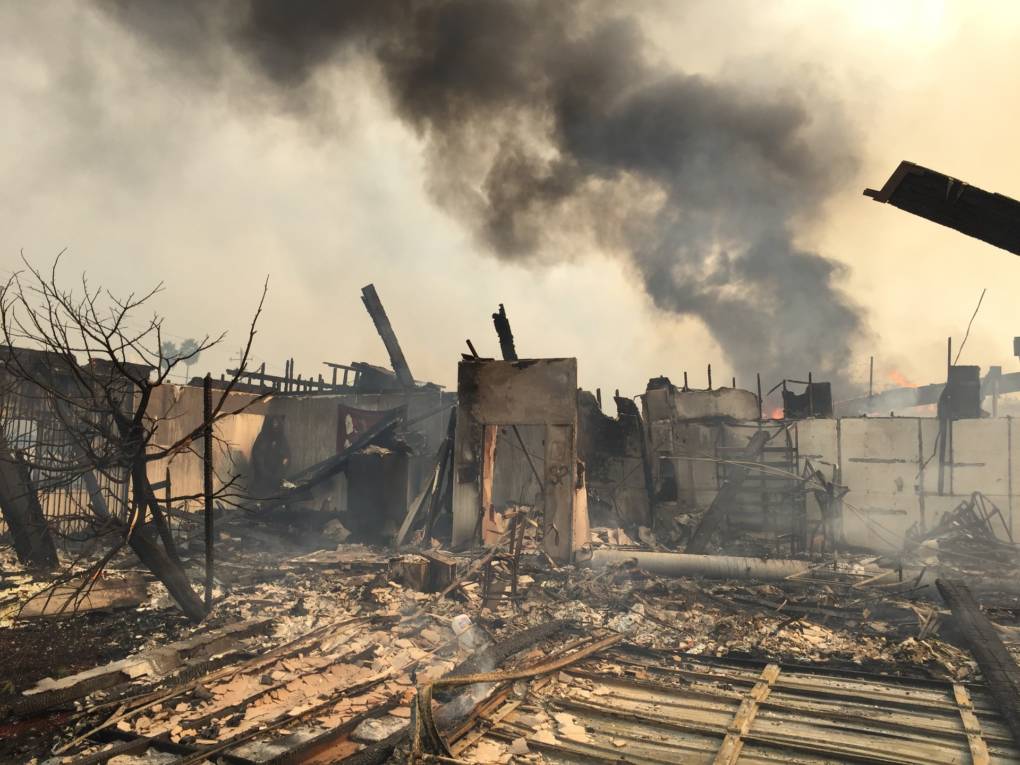
"caption": "The burned-out remains of a gun shop in Santa Rosa on Oct. 9, 2017.",
"description": "The burned out remains of a gun shop in Santa Rosa on Oct. 9, 2017.",
"title": "RS27235_used_to_be_a_gun_shop-qut",
"credit": "Jeremy Siegel/KQED",
"status": "inherit",
"isLoading": false,
"fetchFailed": false
},
"news_11643488": {
"type": "attachments",
"id": "news_11643488",
"meta": {
"index": "attachments_1716263798",
"site": "news",
"id": "11643488",
"found": true
},
"parent": 11643487,
"imgSizes": {
"small": {
"file": "https://ww2.kqed.org/app/uploads/sites/10/2018/01/RS28850_Image-uploaded-from-iOS-29-qut-520x390.jpg",
"width": 520,
"mimeType": "image/jpeg",
"height": 390
},
"twentyfourteen-full-width": {
"file": "https://ww2.kqed.org/app/uploads/sites/10/2018/01/RS28850_Image-uploaded-from-iOS-29-qut-1038x576.jpg",
"width": 1038,
"mimeType": "image/jpeg",
"height": 576
},
"thumbnail": {
"file": "https://ww2.kqed.org/app/uploads/sites/10/2018/01/RS28850_Image-uploaded-from-iOS-29-qut-160x120.jpg",
"width": 160,
"mimeType": "image/jpeg",
"height": 120
},
"fd-sm": {
"file": "https://ww2.kqed.org/app/uploads/sites/10/2018/01/RS28850_Image-uploaded-from-iOS-29-qut-960x720.jpg",
"width": 960,
"mimeType": "image/jpeg",
"height": 720
},
"post-thumbnail": {
"file": "https://ww2.kqed.org/app/uploads/sites/10/2018/01/RS28850_Image-uploaded-from-iOS-29-qut-672x372.jpg",
"width": 672,
"mimeType": "image/jpeg",
"height": 372
},
"xsmall": {
"file": "https://ww2.kqed.org/app/uploads/sites/10/2018/01/RS28850_Image-uploaded-from-iOS-29-qut-375x281.jpg",
"width": 375,
"mimeType": "image/jpeg",
"height": 281
},
"kqedFullSize": {
"file": "https://ww2.kqed.org/app/uploads/sites/10/2018/01/RS28850_Image-uploaded-from-iOS-29-qut.jpg",
"width": 1920,
"height": 1440
},
"large": {
"file": "https://ww2.kqed.org/app/uploads/sites/10/2018/01/RS28850_Image-uploaded-from-iOS-29-qut-1020x765.jpg",
"width": 1020,
"mimeType": "image/jpeg",
"height": 765
},
"xlarge": {
"file": "https://ww2.kqed.org/app/uploads/sites/10/2018/01/RS28850_Image-uploaded-from-iOS-29-qut-1180x885.jpg",
"width": 1180,
"mimeType": "image/jpeg",
"height": 885
},
"guest-author-50": {
"file": "https://ww2.kqed.org/app/uploads/sites/10/2018/01/RS28850_Image-uploaded-from-iOS-29-qut-50x50.jpg",
"width": 50,
"mimeType": "image/jpeg",
"height": 50
},
"guest-author-96": {
"file": "https://ww2.kqed.org/app/uploads/sites/10/2018/01/RS28850_Image-uploaded-from-iOS-29-qut-96x96.jpg",
"width": 96,
"mimeType": "image/jpeg",
"height": 96
},
"medium": {
"file": "https://ww2.kqed.org/app/uploads/sites/10/2018/01/RS28850_Image-uploaded-from-iOS-29-qut-800x600.jpg",
"width": 800,
"mimeType": "image/jpeg",
"height": 600
},
"guest-author-64": {
"file": "https://ww2.kqed.org/app/uploads/sites/10/2018/01/RS28850_Image-uploaded-from-iOS-29-qut-64x64.jpg",
"width": 64,
"mimeType": "image/jpeg",
"height": 64
},
"guest-author-32": {
"file": "https://ww2.kqed.org/app/uploads/sites/10/2018/01/RS28850_Image-uploaded-from-iOS-29-qut-32x32.jpg",
"width": 32,
"mimeType": "image/jpeg",
"height": 32
},
"fd-lrg": {
"file": "https://ww2.kqed.org/app/uploads/sites/10/2018/01/RS28850_Image-uploaded-from-iOS-29-qut-1920x1440.jpg",
"width": 1920,
"mimeType": "image/jpeg",
"height": 1440
},
"fd-med": {
"file": "https://ww2.kqed.org/app/uploads/sites/10/2018/01/RS28850_Image-uploaded-from-iOS-29-qut-1180x885.jpg",
"width": 1180,
"mimeType": "image/jpeg",
"height": 885
},
"full-width": {
"file": "https://ww2.kqed.org/app/uploads/sites/10/2018/01/RS28850_Image-uploaded-from-iOS-29-qut-1920x1440.jpg",
"width": 1920,
"mimeType": "image/jpeg",
"height": 1440
},
"detail": {
"file": "https://ww2.kqed.org/app/uploads/sites/10/2018/01/RS28850_Image-uploaded-from-iOS-29-qut-150x150.jpg",
"width": 150,
"mimeType": "image/jpeg",
"height": 150
},
"guest-author-128": {
"file": "https://ww2.kqed.org/app/uploads/sites/10/2018/01/RS28850_Image-uploaded-from-iOS-29-qut-128x128.jpg",
"width": 128,
"mimeType": "image/jpeg",
"height": 128
},
"xxsmall": {
"file": "https://ww2.kqed.org/app/uploads/sites/10/2018/01/RS28850_Image-uploaded-from-iOS-29-qut-240x180.jpg",
"width": 240,
"mimeType": "image/jpeg",
"height": 180
}
},
"publishDate": 1516574735,
"modified": 1516574758,
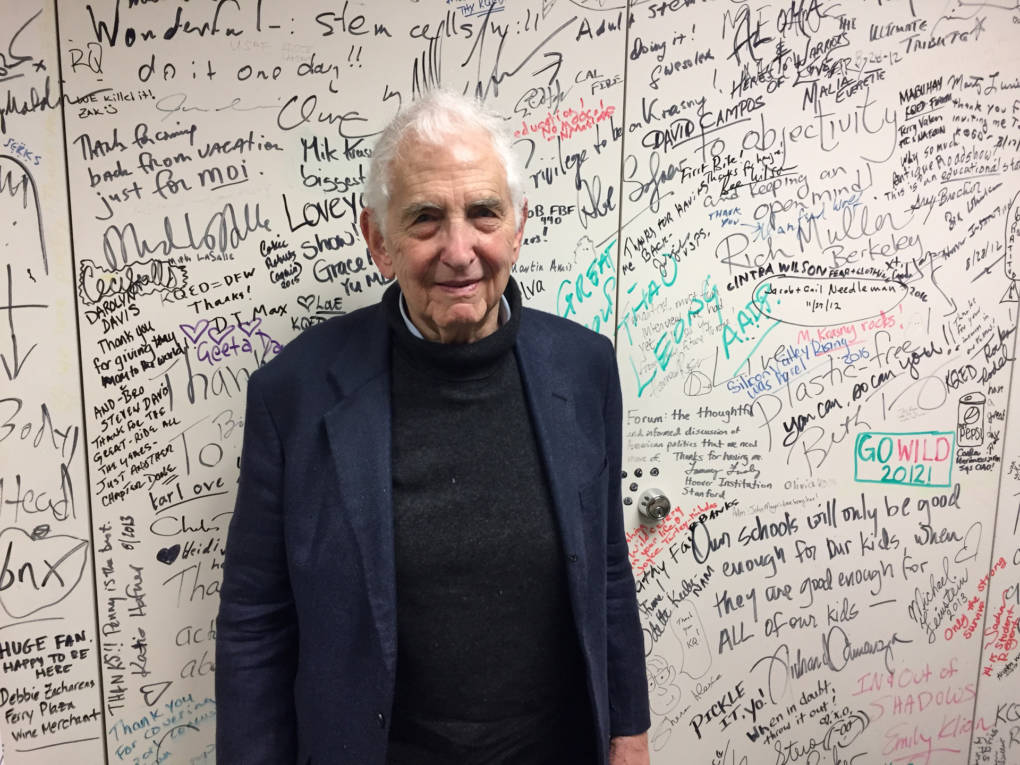
"caption": "Daniel Ellsberg is the author of \"The Doomsday Machine: Confessions of a Nuclear War Planner.\"",
"description": "Daniel Ellsberg is the author of \"The Doomsday Machine: Confessions of a Nuclear War Planner.\"",
"title": "RS28850_Image uploaded from iOS (29)-qut",
"credit": "Ryan Levi/KQED",
"status": "inherit",
"isLoading": false,
"fetchFailed": false
},
"news_11643465": {
"type": "attachments",
"id": "news_11643465",
"meta": {
"index": "attachments_1716263798",
"site": "news",
"id": "11643465",
"found": true
},
"parent": 11643364,
"imgSizes": {
"small": {
"file": "https://ww2.kqed.org/app/uploads/sites/10/2018/01/RS28960_Hendricks-Bros-qut-520x293.jpg",
"width": 520,
"mimeType": "image/jpeg",
"height": 293
},
"twentyfourteen-full-width": {
"file": "https://ww2.kqed.org/app/uploads/sites/10/2018/01/RS28960_Hendricks-Bros-qut-1038x576.jpg",
"width": 1038,
"mimeType": "image/jpeg",
"height": 576
},
"thumbnail": {
"file": "https://ww2.kqed.org/app/uploads/sites/10/2018/01/RS28960_Hendricks-Bros-qut-160x90.jpg",
"width": 160,
"mimeType": "image/jpeg",
"height": 90
},
"fd-sm": {
"file": "https://ww2.kqed.org/app/uploads/sites/10/2018/01/RS28960_Hendricks-Bros-qut-960x540.jpg",
"width": 960,
"mimeType": "image/jpeg",
"height": 540
},
"post-thumbnail": {
"file": "https://ww2.kqed.org/app/uploads/sites/10/2018/01/RS28960_Hendricks-Bros-qut-672x372.jpg",
"width": 672,
"mimeType": "image/jpeg",
"height": 372
},
"xsmall": {
"file": "https://ww2.kqed.org/app/uploads/sites/10/2018/01/RS28960_Hendricks-Bros-qut-375x211.jpg",
"width": 375,
"mimeType": "image/jpeg",
"height": 211
},
"kqedFullSize": {
"file": "https://ww2.kqed.org/app/uploads/sites/10/2018/01/RS28960_Hendricks-Bros-qut.jpg",
"width": 1920,
"height": 1080
},
"large": {
"file": "https://ww2.kqed.org/app/uploads/sites/10/2018/01/RS28960_Hendricks-Bros-qut-1020x574.jpg",
"width": 1020,
"mimeType": "image/jpeg",
"height": 574
},
"xlarge": {
"file": "https://ww2.kqed.org/app/uploads/sites/10/2018/01/RS28960_Hendricks-Bros-qut-1180x664.jpg",
"width": 1180,
"mimeType": "image/jpeg",
"height": 664
},
"guest-author-50": {
"file": "https://ww2.kqed.org/app/uploads/sites/10/2018/01/RS28960_Hendricks-Bros-qut-50x50.jpg",
"width": 50,
"mimeType": "image/jpeg",
"height": 50
},
"guest-author-96": {
"file": "https://ww2.kqed.org/app/uploads/sites/10/2018/01/RS28960_Hendricks-Bros-qut-96x96.jpg",
"width": 96,
"mimeType": "image/jpeg",
"height": 96
},
"medium": {
"file": "https://ww2.kqed.org/app/uploads/sites/10/2018/01/RS28960_Hendricks-Bros-qut-800x450.jpg",
"width": 800,
"mimeType": "image/jpeg",
"height": 450
},
"guest-author-64": {
"file": "https://ww2.kqed.org/app/uploads/sites/10/2018/01/RS28960_Hendricks-Bros-qut-64x64.jpg",
"width": 64,
"mimeType": "image/jpeg",
"height": 64
},
"guest-author-32": {
"file": "https://ww2.kqed.org/app/uploads/sites/10/2018/01/RS28960_Hendricks-Bros-qut-32x32.jpg",
"width": 32,
"mimeType": "image/jpeg",
"height": 32
},
"fd-lrg": {
"file": "https://ww2.kqed.org/app/uploads/sites/10/2018/01/RS28960_Hendricks-Bros-qut-1920x1080.jpg",
"width": 1920,
"mimeType": "image/jpeg",
"height": 1080
},
"fd-med": {
"file": "https://ww2.kqed.org/app/uploads/sites/10/2018/01/RS28960_Hendricks-Bros-qut-1180x664.jpg",
"width": 1180,
"mimeType": "image/jpeg",
"height": 664
},
"full-width": {
"file": "https://ww2.kqed.org/app/uploads/sites/10/2018/01/RS28960_Hendricks-Bros-qut-1920x1080.jpg",
"width": 1920,
"mimeType": "image/jpeg",
"height": 1080
},
"detail": {
"file": "https://ww2.kqed.org/app/uploads/sites/10/2018/01/RS28960_Hendricks-Bros-qut-150x150.jpg",
"width": 150,
"mimeType": "image/jpeg",
"height": 150
},
"guest-author-128": {
"file": "https://ww2.kqed.org/app/uploads/sites/10/2018/01/RS28960_Hendricks-Bros-qut-128x128.jpg",
"width": 128,
"mimeType": "image/jpeg",
"height": 128
},
"xxsmall": {
"file": "https://ww2.kqed.org/app/uploads/sites/10/2018/01/RS28960_Hendricks-Bros-qut-240x135.jpg",
"width": 240,
"mimeType": "image/jpeg",
"height": 135
}
},
"publishDate": 1516567837,
"modified": 1516567898,
"caption": "Brothers and Fresno natives Eric (L) and Mychal Kendricks (R) will face on Sunday in the NFC Championships. The winning brother will get go to the Super Bowl.",
"description": "Brothers and Fresno natives Eric (L) and Mychal Kendricks (R) will face on Sunday in the NFC Championships. The winning brother will get go to the Super Bowl.",
"title": "RS28960_Kendricks Bros-qut",
"credit": "Adam Bettcher and Mitchell Leff/Getty Images",
"status": "inherit",
"isLoading": false,
"fetchFailed": false
},
"news_11643444": {
"type": "attachments",
"id": "news_11643444",
"meta": {
"index": "attachments_1716263798",
"site": "news",
"id": "11643444",
"found": true
},
"parent": 11643443,
"imgSizes": {
"small": {
"file": "https://ww2.kqed.org/app/uploads/sites/10/2018/01/gettyimages-907689018_wide-8252b2fc8eaca98d1baacd154869907a874aa256-520x292.jpg",
"width": 520,
"mimeType": "image/jpeg",
"height": 292
},
"twentyfourteen-full-width": {
"file": "https://ww2.kqed.org/app/uploads/sites/10/2018/01/gettyimages-907689018_wide-8252b2fc8eaca98d1baacd154869907a874aa256-1038x576.jpg",
"width": 1038,
"mimeType": "image/jpeg",
"height": 576
},
"thumbnail": {
"file": "https://ww2.kqed.org/app/uploads/sites/10/2018/01/gettyimages-907689018_wide-8252b2fc8eaca98d1baacd154869907a874aa256-160x90.jpg",
"width": 160,
"mimeType": "image/jpeg",
"height": 90
},
"fd-sm": {
"file": "https://ww2.kqed.org/app/uploads/sites/10/2018/01/gettyimages-907689018_wide-8252b2fc8eaca98d1baacd154869907a874aa256-960x540.jpg",
"width": 960,
"mimeType": "image/jpeg",
"height": 540
},
"post-thumbnail": {
"file": "https://ww2.kqed.org/app/uploads/sites/10/2018/01/gettyimages-907689018_wide-8252b2fc8eaca98d1baacd154869907a874aa256-672x372.jpg",
"width": 672,
"mimeType": "image/jpeg",
"height": 372
},
"xsmall": {
"file": "https://ww2.kqed.org/app/uploads/sites/10/2018/01/gettyimages-907689018_wide-8252b2fc8eaca98d1baacd154869907a874aa256-375x211.jpg",
"width": 375,
"mimeType": "image/jpeg",
"height": 211
},
"kqedFullSize": {
"file": "https://ww2.kqed.org/app/uploads/sites/10/2018/01/gettyimages-907689018_wide-8252b2fc8eaca98d1baacd154869907a874aa256-e1516563967459.jpg",
"width": 1920,
"height": 1080
},
"large": {
"file": "https://ww2.kqed.org/app/uploads/sites/10/2018/01/gettyimages-907689018_wide-8252b2fc8eaca98d1baacd154869907a874aa256-1020x574.jpg",
"width": 1020,
"mimeType": "image/jpeg",
"height": 574
},
"xlarge": {
"file": "https://ww2.kqed.org/app/uploads/sites/10/2018/01/gettyimages-907689018_wide-8252b2fc8eaca98d1baacd154869907a874aa256-1180x664.jpg",
"width": 1180,
"mimeType": "image/jpeg",
"height": 664
},
"guest-author-50": {
"file": "https://ww2.kqed.org/app/uploads/sites/10/2018/01/gettyimages-907689018_wide-8252b2fc8eaca98d1baacd154869907a874aa256-50x50.jpg",
"width": 50,
"mimeType": "image/jpeg",
"height": 50
},
"guest-author-96": {
"file": "https://ww2.kqed.org/app/uploads/sites/10/2018/01/gettyimages-907689018_wide-8252b2fc8eaca98d1baacd154869907a874aa256-96x96.jpg",
"width": 96,
"mimeType": "image/jpeg",
"height": 96
},
"medium": {
"file": "https://ww2.kqed.org/app/uploads/sites/10/2018/01/gettyimages-907689018_wide-8252b2fc8eaca98d1baacd154869907a874aa256-800x450.jpg",
"width": 800,
"mimeType": "image/jpeg",
"height": 450
},
"guest-author-64": {
"file": "https://ww2.kqed.org/app/uploads/sites/10/2018/01/gettyimages-907689018_wide-8252b2fc8eaca98d1baacd154869907a874aa256-64x64.jpg",
"width": 64,
"mimeType": "image/jpeg",
"height": 64
},
"guest-author-32": {
"file": "https://ww2.kqed.org/app/uploads/sites/10/2018/01/gettyimages-907689018_wide-8252b2fc8eaca98d1baacd154869907a874aa256-32x32.jpg",
"width": 32,
"mimeType": "image/jpeg",
"height": 32
},
"fd-lrg": {
"file": "https://ww2.kqed.org/app/uploads/sites/10/2018/01/gettyimages-907689018_wide-8252b2fc8eaca98d1baacd154869907a874aa256-1920x1080.jpg",
"width": 1920,
"mimeType": "image/jpeg",
"height": 1080
},
"fd-med": {
"file": "https://ww2.kqed.org/app/uploads/sites/10/2018/01/gettyimages-907689018_wide-8252b2fc8eaca98d1baacd154869907a874aa256-1180x664.jpg",
"width": 1180,
"mimeType": "image/jpeg",
"height": 664
},
"full-width": {
"file": "https://ww2.kqed.org/app/uploads/sites/10/2018/01/gettyimages-907689018_wide-8252b2fc8eaca98d1baacd154869907a874aa256-1920x1080.jpg",
"width": 1920,
"mimeType": "image/jpeg",
"height": 1080
},
"detail": {
"file": "https://ww2.kqed.org/app/uploads/sites/10/2018/01/gettyimages-907689018_wide-8252b2fc8eaca98d1baacd154869907a874aa256-150x150.jpg",
"width": 150,
"mimeType": "image/jpeg",
"height": 150
},
"guest-author-128": {
"file": "https://ww2.kqed.org/app/uploads/sites/10/2018/01/gettyimages-907689018_wide-8252b2fc8eaca98d1baacd154869907a874aa256-128x128.jpg",
"width": 128,
"mimeType": "image/jpeg",
"height": 128
},
"xxsmall": {
"file": "https://ww2.kqed.org/app/uploads/sites/10/2018/01/gettyimages-907689018_wide-8252b2fc8eaca98d1baacd154869907a874aa256-240x135.jpg",
"width": 240,
"mimeType": "image/jpeg",
"height": 135
}
},
"publishDate": 1516563905,
"modified": 1516563960,
"caption": "Senate Minority Leader Sen. Chuck Schumer, D-N.Y., speaks during a news conference on Saturday, arguing that the shutdown is mainly President Trump's fault. Republicans say Democrats manufactured the crisis over immigration.",
"description": "Senate Minority Leader Sen. Chuck Schumer, D-N.Y., speaks during a news conference on Saturday, arguing that the shutdown is mainly President Trump's fault. Republicans say Democrats manufactured the crisis over immigration.",
"title": "Senate Minority Leader Sen. Chuck Schumer, D-N.Y., speaks during a news conference on Saturday, arguing that the shutdown is mainly President Trump's fault. Republicans say Democrats manufactured the crisis over immigration.",
"credit": "Alex Wong/Getty Images",
"status": "inherit",
"isLoading": false,
"fetchFailed": false
},
"news_11643412": {
"type": "attachments",
"id": "news_11643412",
"meta": {
"index": "attachments_1716263798",
"site": "news",
"id": "11643412",
"found": true
},
"parent": 11643405,
"imgSizes": {
"small": {
"file": "https://ww2.kqed.org/app/uploads/sites/10/2018/01/GettyImages-904271408-520x347.jpg",
"width": 520,
"mimeType": "image/jpeg",
"height": 347
},
"twentyfourteen-full-width": {
"file": "https://ww2.kqed.org/app/uploads/sites/10/2018/01/GettyImages-904271408-1038x576.jpg",
"width": 1038,
"mimeType": "image/jpeg",
"height": 576
},
"thumbnail": {
"file": "https://ww2.kqed.org/app/uploads/sites/10/2018/01/GettyImages-904271408-160x107.jpg",
"width": 160,
"mimeType": "image/jpeg",
"height": 107
},
"fd-sm": {
"file": "https://ww2.kqed.org/app/uploads/sites/10/2018/01/GettyImages-904271408-960x640.jpg",
"width": 960,
"mimeType": "image/jpeg",
"height": 640
},
"post-thumbnail": {
"file": "https://ww2.kqed.org/app/uploads/sites/10/2018/01/GettyImages-904271408-672x372.jpg",
"width": 672,
"mimeType": "image/jpeg",
"height": 372
},
"xsmall": {
"file": "https://ww2.kqed.org/app/uploads/sites/10/2018/01/GettyImages-904271408-375x250.jpg",
"width": 375,
"mimeType": "image/jpeg",
"height": 250
},
"kqedFullSize": {
"file": "https://ww2.kqed.org/app/uploads/sites/10/2018/01/GettyImages-904271408-e1516555595497.jpg",
"width": 1920,
"height": 1280
},
"large": {
"file": "https://ww2.kqed.org/app/uploads/sites/10/2018/01/GettyImages-904271408-1020x680.jpg",
"width": 1020,
"mimeType": "image/jpeg",
"height": 680
},
"xlarge": {
"file": "https://ww2.kqed.org/app/uploads/sites/10/2018/01/GettyImages-904271408-1180x787.jpg",
"width": 1180,
"mimeType": "image/jpeg",
"height": 787
},
"guest-author-50": {
"file": "https://ww2.kqed.org/app/uploads/sites/10/2018/01/GettyImages-904271408-50x50.jpg",
"width": 50,
"mimeType": "image/jpeg",
"height": 50
},
"guest-author-96": {
"file": "https://ww2.kqed.org/app/uploads/sites/10/2018/01/GettyImages-904271408-96x96.jpg",
"width": 96,
"mimeType": "image/jpeg",
"height": 96
},
"medium": {
"file": "https://ww2.kqed.org/app/uploads/sites/10/2018/01/GettyImages-904271408-800x533.jpg",
"width": 800,
"mimeType": "image/jpeg",
"height": 533
},
"guest-author-64": {
"file": "https://ww2.kqed.org/app/uploads/sites/10/2018/01/GettyImages-904271408-64x64.jpg",
"width": 64,
"mimeType": "image/jpeg",
"height": 64
},
"guest-author-32": {
"file": "https://ww2.kqed.org/app/uploads/sites/10/2018/01/GettyImages-904271408-32x32.jpg",
"width": 32,
"mimeType": "image/jpeg",
"height": 32
},
"fd-lrg": {
"file": "https://ww2.kqed.org/app/uploads/sites/10/2018/01/GettyImages-904271408-1920x1280.jpg",
"width": 1920,
"mimeType": "image/jpeg",
"height": 1280
},
"fd-med": {
"file": "https://ww2.kqed.org/app/uploads/sites/10/2018/01/GettyImages-904271408-1180x787.jpg",
"width": 1180,
"mimeType": "image/jpeg",
"height": 787
},
"full-width": {
"file": "https://ww2.kqed.org/app/uploads/sites/10/2018/01/GettyImages-904271408-1920x1280.jpg",
"width": 1920,
"mimeType": "image/jpeg",
"height": 1280
},
"detail": {
"file": "https://ww2.kqed.org/app/uploads/sites/10/2018/01/GettyImages-904271408-150x150.jpg",
"width": 150,
"mimeType": "image/jpeg",
"height": 150
},
"guest-author-128": {
"file": "https://ww2.kqed.org/app/uploads/sites/10/2018/01/GettyImages-904271408-128x128.jpg",
"width": 128,
"mimeType": "image/jpeg",
"height": 128
},
"xxsmall": {
"file": "https://ww2.kqed.org/app/uploads/sites/10/2018/01/GettyImages-904271408-240x160.jpg",
"width": 240,
"mimeType": "image/jpeg",
"height": 160
}
},
"publishDate": 1516555438,
"modified": 1516671658,
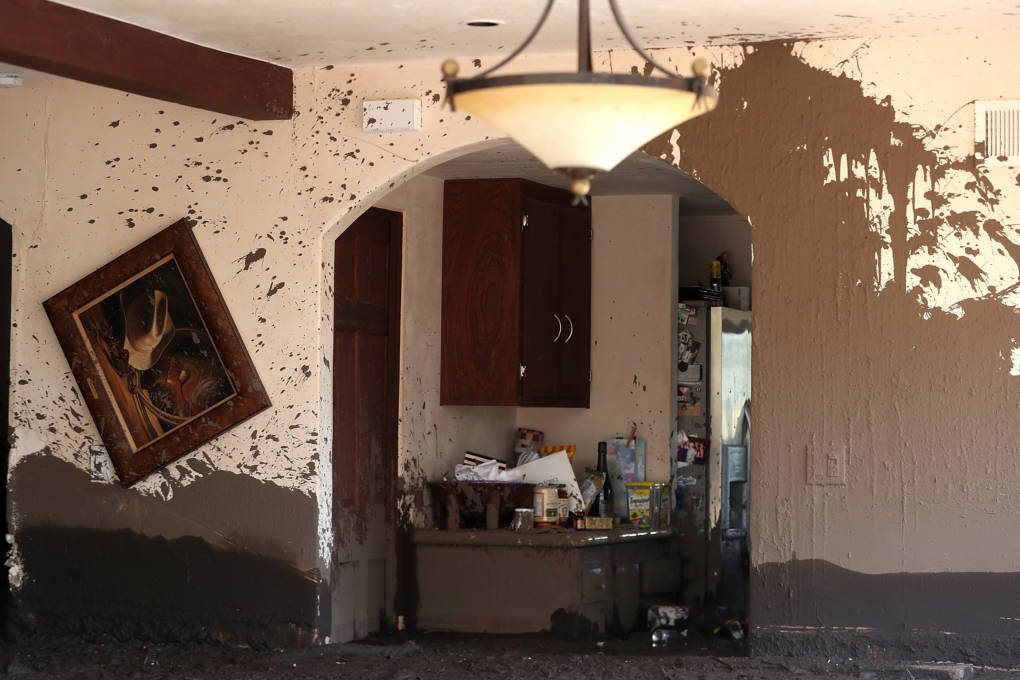
"caption": "Mud fills a home that was destroyed by a mudslide on Jan. 12, 2018, in Montecito, California. Mudslides killed at least 21, injured dozens and damaged or destroyed hundreds of homes.",
"description": "Mud fills a home that was destroyed by a mudslide on January 12, 2018 in Montecito, California. Mudslides killed at least 21, injured dozens and damaged or destroyed hundreds of homes.",
"title": "Mudslides Kill At Least 17 People In Santa Barbara County Where Wildfire Scorched Hillside",
"credit": "Justin Sullivan/Getty Images",
"status": "inherit",
"isLoading": false,
"fetchFailed": false
},
"news_11643393": {
"type": "attachments",
"id": "news_11643393",
"meta": {
"index": "attachments_1716263798",
"site": "news",
"id": "11643393",
"found": true
},
"parent": 11643392,
"imgSizes": {
"small": {
"file": "https://ww2.kqed.org/app/uploads/sites/10/2018/01/gettyimages-907586258stop_wide-fb9bbead0125e39d7b8fb54cbee70c5f82c23b47-520x292.jpg",
"width": 520,
"mimeType": "image/jpeg",
"height": 292
},
"twentyfourteen-full-width": {
"file": "https://ww2.kqed.org/app/uploads/sites/10/2018/01/gettyimages-907586258stop_wide-fb9bbead0125e39d7b8fb54cbee70c5f82c23b47-1038x576.jpg",
"width": 1038,
"mimeType": "image/jpeg",
"height": 576
},
"thumbnail": {
"file": "https://ww2.kqed.org/app/uploads/sites/10/2018/01/gettyimages-907586258stop_wide-fb9bbead0125e39d7b8fb54cbee70c5f82c23b47-160x90.jpg",
"width": 160,
"mimeType": "image/jpeg",
"height": 90
},
"fd-sm": {
"file": "https://ww2.kqed.org/app/uploads/sites/10/2018/01/gettyimages-907586258stop_wide-fb9bbead0125e39d7b8fb54cbee70c5f82c23b47-960x540.jpg",
"width": 960,
"mimeType": "image/jpeg",
"height": 540
},
"post-thumbnail": {
"file": "https://ww2.kqed.org/app/uploads/sites/10/2018/01/gettyimages-907586258stop_wide-fb9bbead0125e39d7b8fb54cbee70c5f82c23b47-672x372.jpg",
"width": 672,
"mimeType": "image/jpeg",
"height": 372
},
"xsmall": {
"file": "https://ww2.kqed.org/app/uploads/sites/10/2018/01/gettyimages-907586258stop_wide-fb9bbead0125e39d7b8fb54cbee70c5f82c23b47-375x211.jpg",
"width": 375,
"mimeType": "image/jpeg",
"height": 211
},
"kqedFullSize": {
"file": "https://ww2.kqed.org/app/uploads/sites/10/2018/01/gettyimages-907586258stop_wide-fb9bbead0125e39d7b8fb54cbee70c5f82c23b47-e1516549334268.jpg",
"width": 1920,
"height": 1080
},
"large": {
"file": "https://ww2.kqed.org/app/uploads/sites/10/2018/01/gettyimages-907586258stop_wide-fb9bbead0125e39d7b8fb54cbee70c5f82c23b47-1020x574.jpg",
"width": 1020,
"mimeType": "image/jpeg",
"height": 574
},
"xlarge": {
"file": "https://ww2.kqed.org/app/uploads/sites/10/2018/01/gettyimages-907586258stop_wide-fb9bbead0125e39d7b8fb54cbee70c5f82c23b47-1180x664.jpg",
"width": 1180,
"mimeType": "image/jpeg",
"height": 664
},
"guest-author-50": {
"file": "https://ww2.kqed.org/app/uploads/sites/10/2018/01/gettyimages-907586258stop_wide-fb9bbead0125e39d7b8fb54cbee70c5f82c23b47-50x50.jpg",
"width": 50,
"mimeType": "image/jpeg",
"height": 50
},
"guest-author-96": {
"file": "https://ww2.kqed.org/app/uploads/sites/10/2018/01/gettyimages-907586258stop_wide-fb9bbead0125e39d7b8fb54cbee70c5f82c23b47-96x96.jpg",
"width": 96,
"mimeType": "image/jpeg",
"height": 96
},
"medium": {
"file": "https://ww2.kqed.org/app/uploads/sites/10/2018/01/gettyimages-907586258stop_wide-fb9bbead0125e39d7b8fb54cbee70c5f82c23b47-800x450.jpg",
"width": 800,
"mimeType": "image/jpeg",
"height": 450
},
"guest-author-64": {
"file": "https://ww2.kqed.org/app/uploads/sites/10/2018/01/gettyimages-907586258stop_wide-fb9bbead0125e39d7b8fb54cbee70c5f82c23b47-64x64.jpg",
"width": 64,
"mimeType": "image/jpeg",
"height": 64
},
"guest-author-32": {
"file": "https://ww2.kqed.org/app/uploads/sites/10/2018/01/gettyimages-907586258stop_wide-fb9bbead0125e39d7b8fb54cbee70c5f82c23b47-32x32.jpg",
"width": 32,
"mimeType": "image/jpeg",
"height": 32
},
"fd-lrg": {
"file": "https://ww2.kqed.org/app/uploads/sites/10/2018/01/gettyimages-907586258stop_wide-fb9bbead0125e39d7b8fb54cbee70c5f82c23b47-1920x1080.jpg",
"width": 1920,
"mimeType": "image/jpeg",
"height": 1080
},
"fd-med": {
"file": "https://ww2.kqed.org/app/uploads/sites/10/2018/01/gettyimages-907586258stop_wide-fb9bbead0125e39d7b8fb54cbee70c5f82c23b47-1180x664.jpg",
"width": 1180,
"mimeType": "image/jpeg",
"height": 664
},
"full-width": {
"file": "https://ww2.kqed.org/app/uploads/sites/10/2018/01/gettyimages-907586258stop_wide-fb9bbead0125e39d7b8fb54cbee70c5f82c23b47-1920x1080.jpg",
"width": 1920,
"mimeType": "image/jpeg",
"height": 1080
},
"detail": {
"file": "https://ww2.kqed.org/app/uploads/sites/10/2018/01/gettyimages-907586258stop_wide-fb9bbead0125e39d7b8fb54cbee70c5f82c23b47-150x150.jpg",
"width": 150,
"mimeType": "image/jpeg",
"height": 150
},
"guest-author-128": {
"file": "https://ww2.kqed.org/app/uploads/sites/10/2018/01/gettyimages-907586258stop_wide-fb9bbead0125e39d7b8fb54cbee70c5f82c23b47-128x128.jpg",
"width": 128,
"mimeType": "image/jpeg",
"height": 128
},
"xxsmall": {
"file": "https://ww2.kqed.org/app/uploads/sites/10/2018/01/gettyimages-907586258stop_wide-fb9bbead0125e39d7b8fb54cbee70c5f82c23b47-240x135.jpg",
"width": 240,
"mimeType": "image/jpeg",
"height": 135
}
},
"publishDate": 1516549158,
"modified": 1516549361,
"caption": "Capitol Hill is seen against a blue sky Saturday, the first day of the partial government shutdown.\n",
"description": "Capitol Hill is seen against a blue sky Saturday, the first day of the partial government shutdown.\n",
"title": "Capitol Hill is seen against a blue sky Saturday, the first day of the partial government shutdown.",
"credit": "Brendan Smialowski/AFP/Getty Images",
"status": "inherit",
"isLoading": false,
"fetchFailed": false
},
"news_11640753": {
"type": "attachments",
"id": "news_11640753",
"meta": {
"index": "attachments_1716263798",
"site": "news",
"id": "11640753",
"found": true
},
"parent": 11640750,
"imgSizes": {
"small": {
"file": "https://ww2.kqed.org/app/uploads/sites/10/2019/01/RS26594_20170912_VietnamStories_StevenBurchik_Credit_BertJohnson-2-qut-520x347.jpg",
"width": 520,
"mimeType": "image/jpeg",
"height": 347
},
"twentyfourteen-full-width": {
"file": "https://ww2.kqed.org/app/uploads/sites/10/2019/01/RS26594_20170912_VietnamStories_StevenBurchik_Credit_BertJohnson-2-qut-1038x576.jpg",
"width": 1038,
"mimeType": "image/jpeg",
"height": 576
},
"thumbnail": {
"file": "https://ww2.kqed.org/app/uploads/sites/10/2019/01/RS26594_20170912_VietnamStories_StevenBurchik_Credit_BertJohnson-2-qut-160x107.jpg",
"width": 160,
"mimeType": "image/jpeg",
"height": 107
},
"fd-sm": {
"file": "https://ww2.kqed.org/app/uploads/sites/10/2019/01/RS26594_20170912_VietnamStories_StevenBurchik_Credit_BertJohnson-2-qut-960x640.jpg",
"width": 960,
"mimeType": "image/jpeg",
"height": 640
},
"post-thumbnail": {
"file": "https://ww2.kqed.org/app/uploads/sites/10/2019/01/RS26594_20170912_VietnamStories_StevenBurchik_Credit_BertJohnson-2-qut-672x372.jpg",
"width": 672,
"mimeType": "image/jpeg",
"height": 372
},
"xsmall": {
"file": "https://ww2.kqed.org/app/uploads/sites/10/2019/01/RS26594_20170912_VietnamStories_StevenBurchik_Credit_BertJohnson-2-qut-375x250.jpg",
"width": 375,
"mimeType": "image/jpeg",
"height": 250
},
"kqedFullSize": {
"file": "https://ww2.kqed.org/app/uploads/sites/10/2019/01/RS26594_20170912_VietnamStories_StevenBurchik_Credit_BertJohnson-2-qut.jpg",
"width": 1920,
"height": 1280
},
"large": {
"file": "https://ww2.kqed.org/app/uploads/sites/10/2019/01/RS26594_20170912_VietnamStories_StevenBurchik_Credit_BertJohnson-2-qut-1020x680.jpg",
"width": 1020,
"mimeType": "image/jpeg",
"height": 680
},
"xlarge": {
"file": "https://ww2.kqed.org/app/uploads/sites/10/2019/01/RS26594_20170912_VietnamStories_StevenBurchik_Credit_BertJohnson-2-qut-1180x787.jpg",
"width": 1180,
"mimeType": "image/jpeg",
"height": 787
},
"guest-author-50": {
"file": "https://ww2.kqed.org/app/uploads/sites/10/2019/01/RS26594_20170912_VietnamStories_StevenBurchik_Credit_BertJohnson-2-qut-50x50.jpg",
"width": 50,
"mimeType": "image/jpeg",
"height": 50
},
"guest-author-96": {
"file": "https://ww2.kqed.org/app/uploads/sites/10/2019/01/RS26594_20170912_VietnamStories_StevenBurchik_Credit_BertJohnson-2-qut-96x96.jpg",
"width": 96,
"mimeType": "image/jpeg",
"height": 96
},
"medium": {
"file": "https://ww2.kqed.org/app/uploads/sites/10/2019/01/RS26594_20170912_VietnamStories_StevenBurchik_Credit_BertJohnson-2-qut-800x533.jpg",
"width": 800,
"mimeType": "image/jpeg",
"height": 533
},
"guest-author-64": {
"file": "https://ww2.kqed.org/app/uploads/sites/10/2019/01/RS26594_20170912_VietnamStories_StevenBurchik_Credit_BertJohnson-2-qut-64x64.jpg",
"width": 64,
"mimeType": "image/jpeg",
"height": 64
},
"guest-author-32": {
"file": "https://ww2.kqed.org/app/uploads/sites/10/2019/01/RS26594_20170912_VietnamStories_StevenBurchik_Credit_BertJohnson-2-qut-32x32.jpg",
"width": 32,
"mimeType": "image/jpeg",
"height": 32
},
"fd-lrg": {
"file": "https://ww2.kqed.org/app/uploads/sites/10/2019/01/RS26594_20170912_VietnamStories_StevenBurchik_Credit_BertJohnson-2-qut-1920x1280.jpg",
"width": 1920,
"mimeType": "image/jpeg",
"height": 1280
},
"fd-med": {
"file": "https://ww2.kqed.org/app/uploads/sites/10/2019/01/RS26594_20170912_VietnamStories_StevenBurchik_Credit_BertJohnson-2-qut-1180x787.jpg",
"width": 1180,
"mimeType": "image/jpeg",
"height": 787
},
"full-width": {
"file": "https://ww2.kqed.org/app/uploads/sites/10/2019/01/RS26594_20170912_VietnamStories_StevenBurchik_Credit_BertJohnson-2-qut-1920x1280.jpg",
"width": 1920,
"mimeType": "image/jpeg",
"height": 1280
},
"detail": {
"file": "https://ww2.kqed.org/app/uploads/sites/10/2019/01/RS26594_20170912_VietnamStories_StevenBurchik_Credit_BertJohnson-2-qut-150x150.jpg",
"width": 150,
"mimeType": "image/jpeg",
"height": 150
},
"guest-author-128": {
"file": "https://ww2.kqed.org/app/uploads/sites/10/2019/01/RS26594_20170912_VietnamStories_StevenBurchik_Credit_BertJohnson-2-qut-128x128.jpg",
"width": 128,
"mimeType": "image/jpeg",
"height": 128
},
"xxsmall": {
"file": "https://ww2.kqed.org/app/uploads/sites/10/2019/01/RS26594_20170912_VietnamStories_StevenBurchik_Credit_BertJohnson-2-qut-240x160.jpg",
"width": 240,
"mimeType": "image/jpeg",
"height": 160
}
},
"publishDate": 1515434131,
"modified": 1516506244,
"caption": "Steven Burchik served in the U.S. Army during the Vietnam War. This is one of the cameras he used to take photos while deployed.",
"description": "Steven Burchik served in the U.S. Army during the Vietnam War. This is one of the cameras he used to take photos while deployed.",
"title": "RS26594_20170912_VietnamStories_StevenBurchik_Credit_BertJohnson-2-qut",
"credit": "Bert Johnson/KQED",
"status": "inherit",
"isLoading": false,
"fetchFailed": false
},
"news_11643341": {
"type": "attachments",
"id": "news_11643341",
"meta": {
"index": "attachments_1716263798",
"site": "news",
"id": "11643341",
"found": true
},
"title": "RS16413_GettyImages-476571408-qut",
"publishDate": 1516488546,
"status": "inherit",
"parent": 11643340,
"modified": 1755793268,
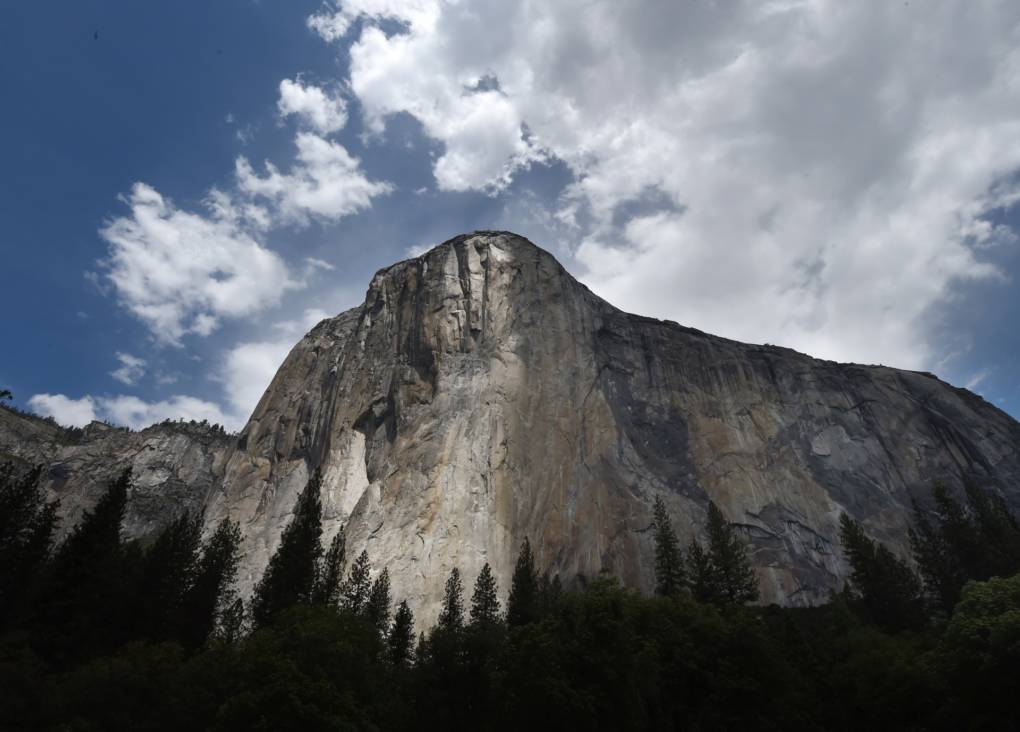
"caption": "The El Capitan monolith in the Yosemite National Park in California.",
"credit": "Mark Ralston/AFP/Getty Images",
"altTag": "Some visitors to many parks, monuments and public lands were frustrated with spotty service caused by the government shutdown. The El Capitan monolith in the Yosemite National Park in California.",
"description": "Some visitors to many parks, monuments and public lands were frustrated with spotty service caused by the government shutdown. The El Capitan monolith in the Yosemite National Park in California.",
"imgSizes": {
"thumbnail": {
"file": "https://cdn.kqed.org/wp-content/uploads/sites/10/2018/01/RS16413_GettyImages-476571408-qut-160x115.jpg",
"width": 160,
"height": 115,
"mimeType": "image/jpeg"
},
"medium": {
"file": "https://cdn.kqed.org/wp-content/uploads/sites/10/2018/01/RS16413_GettyImages-476571408-qut-800x574.jpg",
"width": 800,
"height": 574,
"mimeType": "image/jpeg"
},
"large": {
"file": "https://cdn.kqed.org/wp-content/uploads/sites/10/2018/01/RS16413_GettyImages-476571408-qut-1020x732.jpg",
"width": 1020,
"height": 732,
"mimeType": "image/jpeg"
},
"fd-lrg": {
"file": "https://cdn.kqed.org/wp-content/uploads/sites/10/2018/01/RS16413_GettyImages-476571408-qut-1920x1378.jpg",
"width": 1920,
"height": 1378,
"mimeType": "image/jpeg"
},
"fd-med": {
"file": "https://cdn.kqed.org/wp-content/uploads/sites/10/2018/01/RS16413_GettyImages-476571408-qut-1180x847.jpg",
"width": 1180,
"height": 847,
"mimeType": "image/jpeg"
},
"fd-sm": {
"file": "https://cdn.kqed.org/wp-content/uploads/sites/10/2018/01/RS16413_GettyImages-476571408-qut-960x689.jpg",
"width": 960,
"height": 689,
"mimeType": "image/jpeg"
},
"post-thumbnail": {
"file": "https://cdn.kqed.org/wp-content/uploads/sites/10/2018/01/RS16413_GettyImages-476571408-qut-672x372.jpg",
"width": 672,
"height": 372,
"mimeType": "image/jpeg"
},
"twentyfourteen-full-width": {
"file": "https://cdn.kqed.org/wp-content/uploads/sites/10/2018/01/RS16413_GettyImages-476571408-qut-1038x576.jpg",
"width": 1038,
"height": 576,
"mimeType": "image/jpeg"
},
"xxsmall": {
"file": "https://cdn.kqed.org/wp-content/uploads/sites/10/2018/01/RS16413_GettyImages-476571408-qut-240x172.jpg",
"width": 240,
"height": 172,
"mimeType": "image/jpeg"
},
"xsmall": {
"file": "https://cdn.kqed.org/wp-content/uploads/sites/10/2018/01/RS16413_GettyImages-476571408-qut-375x269.jpg",
"width": 375,
"height": 269,
"mimeType": "image/jpeg"
},
"small": {
"file": "https://cdn.kqed.org/wp-content/uploads/sites/10/2018/01/RS16413_GettyImages-476571408-qut-520x373.jpg",
"width": 520,
"height": 373,
"mimeType": "image/jpeg"
},
"xlarge": {
"file": "https://cdn.kqed.org/wp-content/uploads/sites/10/2018/01/RS16413_GettyImages-476571408-qut-1180x847.jpg",
"width": 1180,
"height": 847,
"mimeType": "image/jpeg"
},
"full-width": {
"file": "https://cdn.kqed.org/wp-content/uploads/sites/10/2018/01/RS16413_GettyImages-476571408-qut-1920x1378.jpg",
"width": 1920,
"height": 1378,
"mimeType": "image/jpeg"
},
"guest-author-32": {
"file": "https://cdn.kqed.org/wp-content/uploads/sites/10/2018/01/RS16413_GettyImages-476571408-qut-32x32.jpg",
"width": 32,
"height": 32,
"mimeType": "image/jpeg"
},
"guest-author-50": {
"file": "https://cdn.kqed.org/wp-content/uploads/sites/10/2018/01/RS16413_GettyImages-476571408-qut-50x50.jpg",
"width": 50,
"height": 50,
"mimeType": "image/jpeg"
},
"guest-author-64": {
"file": "https://cdn.kqed.org/wp-content/uploads/sites/10/2018/01/RS16413_GettyImages-476571408-qut-64x64.jpg",
"width": 64,
"height": 64,
"mimeType": "image/jpeg"
},
"guest-author-96": {
"file": "https://cdn.kqed.org/wp-content/uploads/sites/10/2018/01/RS16413_GettyImages-476571408-qut-96x96.jpg",
"width": 96,
"height": 96,
"mimeType": "image/jpeg"
},
"guest-author-128": {
"file": "https://cdn.kqed.org/wp-content/uploads/sites/10/2018/01/RS16413_GettyImages-476571408-qut-128x128.jpg",
"width": 128,
"height": 128,
"mimeType": "image/jpeg"
},
"detail": {
"file": "https://cdn.kqed.org/wp-content/uploads/sites/10/2018/01/RS16413_GettyImages-476571408-qut-150x150.jpg",
"width": 150,
"height": 150,
"mimeType": "image/jpeg"
},
"kqedFullSize": {
"file": "https://cdn.kqed.org/wp-content/uploads/sites/10/2018/01/RS16413_GettyImages-476571408-qut.jpg",
"width": 1920,
"height": 1378
}
},
"isLoading": false,
"fetchFailed": false
},
"news_11643308": {
"type": "attachments",
"id": "news_11643308",
"meta": {
"index": "attachments_1716263798",
"site": "news",
"id": "11643308",
"found": true
},
"parent": 11643307,
"imgSizes": {
"small": {
"file": "https://ww2.kqed.org/app/uploads/sites/10/2018/01/RS24012_AW_OurBodiesOurMinds-qut-520x390.jpg",
"width": 520,
"mimeType": "image/jpeg",
"height": 390
},
"twentyfourteen-full-width": {
"file": "https://ww2.kqed.org/app/uploads/sites/10/2018/01/RS24012_AW_OurBodiesOurMinds-qut-1024x576.jpg",
"width": 1024,
"mimeType": "image/jpeg",
"height": 576
},
"thumbnail": {
"file": "https://ww2.kqed.org/app/uploads/sites/10/2018/01/RS24012_AW_OurBodiesOurMinds-qut-160x120.jpg",
"width": 160,
"mimeType": "image/jpeg",
"height": 120
},
"fd-sm": {
"file": "https://ww2.kqed.org/app/uploads/sites/10/2018/01/RS24012_AW_OurBodiesOurMinds-qut-960x720.jpg",
"width": 960,
"mimeType": "image/jpeg",
"height": 720
},
"post-thumbnail": {
"file": "https://ww2.kqed.org/app/uploads/sites/10/2018/01/RS24012_AW_OurBodiesOurMinds-qut-672x372.jpg",
"width": 672,
"mimeType": "image/jpeg",
"height": 372
},
"xsmall": {
"file": "https://ww2.kqed.org/app/uploads/sites/10/2018/01/RS24012_AW_OurBodiesOurMinds-qut-375x281.jpg",
"width": 375,
"mimeType": "image/jpeg",
"height": 281
},
"kqedFullSize": {
"file": "https://ww2.kqed.org/app/uploads/sites/10/2018/01/RS24012_AW_OurBodiesOurMinds-qut.jpg",
"width": 1024,
"height": 768
},
"large": {
"file": "https://ww2.kqed.org/app/uploads/sites/10/2018/01/RS24012_AW_OurBodiesOurMinds-qut-1020x765.jpg",
"width": 1020,
"mimeType": "image/jpeg",
"height": 765
},
"guest-author-50": {
"file": "https://ww2.kqed.org/app/uploads/sites/10/2018/01/RS24012_AW_OurBodiesOurMinds-qut-50x50.jpg",
"width": 50,
"mimeType": "image/jpeg",
"height": 50
},
"guest-author-96": {
"file": "https://ww2.kqed.org/app/uploads/sites/10/2018/01/RS24012_AW_OurBodiesOurMinds-qut-96x96.jpg",
"width": 96,
"mimeType": "image/jpeg",
"height": 96
},
"medium": {
"file": "https://ww2.kqed.org/app/uploads/sites/10/2018/01/RS24012_AW_OurBodiesOurMinds-qut-800x600.jpg",
"width": 800,
"mimeType": "image/jpeg",
"height": 600
},
"guest-author-64": {
"file": "https://ww2.kqed.org/app/uploads/sites/10/2018/01/RS24012_AW_OurBodiesOurMinds-qut-64x64.jpg",
"width": 64,
"mimeType": "image/jpeg",
"height": 64
},
"guest-author-32": {
"file": "https://ww2.kqed.org/app/uploads/sites/10/2018/01/RS24012_AW_OurBodiesOurMinds-qut-32x32.jpg",
"width": 32,
"mimeType": "image/jpeg",
"height": 32
},
"detail": {
"file": "https://ww2.kqed.org/app/uploads/sites/10/2018/01/RS24012_AW_OurBodiesOurMinds-qut-150x150.jpg",
"width": 150,
"mimeType": "image/jpeg",
"height": 150
},
"guest-author-128": {
"file": "https://ww2.kqed.org/app/uploads/sites/10/2018/01/RS24012_AW_OurBodiesOurMinds-qut-128x128.jpg",
"width": 128,
"mimeType": "image/jpeg",
"height": 128
},
"xxsmall": {
"file": "https://ww2.kqed.org/app/uploads/sites/10/2018/01/RS24012_AW_OurBodiesOurMinds-qut-240x180.jpg",
"width": 240,
"mimeType": "image/jpeg",
"height": 180
}
},
"publishDate": 1516478187,
"modified": 1516478250,
"caption": "Amanda Weissman at the Women's March on Washington in 2017. ",
"description": "Amanda Weissman at the Women's March on Washington in 2017. ",
"title": "RS24012_AW_OurBodiesOurMinds-qut",
"credit": "Courtesy of Amanda Weissman",
"status": "inherit",
"isLoading": false,
"fetchFailed": false
},
"news_11643350": {
"type": "attachments",
"id": "news_11643350",
"meta": {
"index": "attachments_1716263798",
"site": "news",
"id": "11643350",
"found": true
},
"parent": 11643278,
"imgSizes": {
"small": {
"file": "https://ww2.kqed.org/app/uploads/sites/10/2018/01/RS28933_womensmarch-6-qut-520x347.jpg",
"width": 520,
"mimeType": "image/jpeg",
"height": 347
},
"twentyfourteen-full-width": {
"file": "https://ww2.kqed.org/app/uploads/sites/10/2018/01/RS28933_womensmarch-6-qut-1038x576.jpg",
"width": 1038,
"mimeType": "image/jpeg",
"height": 576
},
"thumbnail": {
"file": "https://ww2.kqed.org/app/uploads/sites/10/2018/01/RS28933_womensmarch-6-qut-160x107.jpg",
"width": 160,
"mimeType": "image/jpeg",
"height": 107
},
"fd-sm": {
"file": "https://ww2.kqed.org/app/uploads/sites/10/2018/01/RS28933_womensmarch-6-qut-960x640.jpg",
"width": 960,
"mimeType": "image/jpeg",
"height": 640
},
"post-thumbnail": {
"file": "https://ww2.kqed.org/app/uploads/sites/10/2018/01/RS28933_womensmarch-6-qut-672x372.jpg",
"width": 672,
"mimeType": "image/jpeg",
"height": 372
},
"xsmall": {
"file": "https://ww2.kqed.org/app/uploads/sites/10/2018/01/RS28933_womensmarch-6-qut-375x250.jpg",
"width": 375,
"mimeType": "image/jpeg",
"height": 250
},
"kqedFullSize": {
"file": "https://ww2.kqed.org/app/uploads/sites/10/2018/01/RS28933_womensmarch-6-qut.jpg",
"width": 1920,
"height": 1280
},
"large": {
"file": "https://ww2.kqed.org/app/uploads/sites/10/2018/01/RS28933_womensmarch-6-qut-1020x680.jpg",
"width": 1020,
"mimeType": "image/jpeg",
"height": 680
},
"xlarge": {
"file": "https://ww2.kqed.org/app/uploads/sites/10/2018/01/RS28933_womensmarch-6-qut-1180x787.jpg",
"width": 1180,
"mimeType": "image/jpeg",
"height": 787
},
"guest-author-50": {
"file": "https://ww2.kqed.org/app/uploads/sites/10/2018/01/RS28933_womensmarch-6-qut-50x50.jpg",
"width": 50,
"mimeType": "image/jpeg",
"height": 50
},
"guest-author-96": {
"file": "https://ww2.kqed.org/app/uploads/sites/10/2018/01/RS28933_womensmarch-6-qut-96x96.jpg",
"width": 96,
"mimeType": "image/jpeg",
"height": 96
},
"medium": {
"file": "https://ww2.kqed.org/app/uploads/sites/10/2018/01/RS28933_womensmarch-6-qut-800x533.jpg",
"width": 800,
"mimeType": "image/jpeg",
"height": 533
},
"guest-author-64": {
"file": "https://ww2.kqed.org/app/uploads/sites/10/2018/01/RS28933_womensmarch-6-qut-64x64.jpg",
"width": 64,
"mimeType": "image/jpeg",
"height": 64
},
"guest-author-32": {
"file": "https://ww2.kqed.org/app/uploads/sites/10/2018/01/RS28933_womensmarch-6-qut-32x32.jpg",
"width": 32,
"mimeType": "image/jpeg",
"height": 32
},
"fd-lrg": {
"file": "https://ww2.kqed.org/app/uploads/sites/10/2018/01/RS28933_womensmarch-6-qut-1920x1280.jpg",
"width": 1920,
"mimeType": "image/jpeg",
"height": 1280
},
"fd-med": {
"file": "https://ww2.kqed.org/app/uploads/sites/10/2018/01/RS28933_womensmarch-6-qut-1180x787.jpg",
"width": 1180,
"mimeType": "image/jpeg",
"height": 787
},
"full-width": {
"file": "https://ww2.kqed.org/app/uploads/sites/10/2018/01/RS28933_womensmarch-6-qut-1920x1280.jpg",
"width": 1920,
"mimeType": "image/jpeg",
"height": 1280
},
"detail": {
"file": "https://ww2.kqed.org/app/uploads/sites/10/2018/01/RS28933_womensmarch-6-qut-150x150.jpg",
"width": 150,
"mimeType": "image/jpeg",
"height": 150
},
"guest-author-128": {
"file": "https://ww2.kqed.org/app/uploads/sites/10/2018/01/RS28933_womensmarch-6-qut-128x128.jpg",
"width": 128,
"mimeType": "image/jpeg",
"height": 128
},
"xxsmall": {
"file": "https://ww2.kqed.org/app/uploads/sites/10/2018/01/RS28933_womensmarch-6-qut-240x160.jpg",
"width": 240,
"mimeType": "image/jpeg",
"height": 160
}
},
"publishDate": 1516496767,
"modified": 1516496790,
"caption": "Amanda Hammond stands in front of City Hall in San Francisco awaiting the begin of the 2018 Women's March. She hopes to continue to \"support the movement\" after marching in Washington D.C. last January.",
"description": "Amanda Hammond stands in front of City Hall in San Francisco awaiting the begin of the 2018 Women's March. She hopes to continue to \"support the movement\" after marching in Washington D.C. last January.",
"title": "RS28933_womensmarch-6-qut",
"credit": "Samantha Shanahan/KQED",
"status": "inherit",
"isLoading": false,
"fetchFailed": false
}
},
"audioPlayerReducer": {
"postId": "stream_live",
"isPaused": true,
"isPlaying": false,
"pfsActive": false,
"pledgeModalIsOpen": true,
"playerDrawerIsOpen": false,
"liveAudioPlayStartedAt": 0,
"liveAudioPlayContext": ""
},
"authorsReducer": {
"byline_news_11643443": {
"type": "authors",
"id": "byline_news_11643443",
"meta": {
"override": true
},
"slug": "byline_news_11643443",
"name": "\u003cstrong>Arnie Seipel \u003c/strong>",
"isLoading": false
},
"byline_news_11643405": {
"type": "authors",
"id": "byline_news_11643405",
"meta": {
"override": true
},
"slug": "byline_news_11643405",
"name": "\u003cstrong>Julie Watson\u003c/strong>\u003c/br>Associated Press",
"isLoading": false
},
"byline_news_11643392": {
"type": "authors",
"id": "byline_news_11643392",
"meta": {
"override": true
},
"slug": "byline_news_11643392",
"name": "\u003cstrong>\u003ca href=”https://www.npr.org/people/567313683/kelsey-snell”>Kelsey Snell\u003c/a>, \u003ca href=”https://www.npr.org/people/395772167/miles-parks”>Miles Parks\u003c/a>, \u003ca href=”https://www.npr.org/people/467974737/brett-neely”>Brett Neelyl\u003c/a> and \u003ca href=”https://www.npr.org/people/348741902/arnie-seipel”>Arnie Seipel\u003c/a>\u003cbr />\u003ca href=”http://npr.org/”>NPR\u003c/a>\u003c/strong>",
"isLoading": false
},
"byline_news_11640750": {
"type": "authors",
"id": "byline_news_11640750",
"meta": {
"override": true
},
"slug": "byline_news_11640750",
"name": "\u003cstrong>Steven Burchik\u003c/strong>",
"isLoading": false
},
"byline_news_11643340": {
"type": "authors",
"id": "byline_news_11643340",
"meta": {
"override": true
},
"slug": "byline_news_11643340",
"name": "\u003cstrong> Matthew Brown\u003c/strong> and \u003cstrong>Dan Elliott\u003c/strong>\u003c/br> Associated Press",
"isLoading": false
},
"byline_news_11643307": {
"type": "authors",
"id": "byline_news_11643307",
"meta": {
"override": true
},
"slug": "byline_news_11643307",
"name": "\u003cstrong>Amanda Weissman\u003c/strong>",
"isLoading": false
},
"gmarzorati": {
"type": "authors",
"id": "227",
"meta": {
"index": "authors_1716337520",
"id": "227",
"found": true
},
"name": "Guy Marzorati",
"firstName": "Guy",
"lastName": "Marzorati",
"slug": "gmarzorati",
"email": "gmarzorati@KQED.org",
"display_author_email": true,
"staff_mastheads": [
"news"
],
"title": "Correspondent",
"bio": "Guy Marzorati is a correspondent on KQED's California Politics and Government Desk, based in San Jose. A graduate of Santa Clara University, Guy joined KQED in 2013. He reports on state and local politics and produces KQED's digital voter guide.",
"avatar": "https://secure.gravatar.com/avatar/e7038b8dbfd55b104369b76b1cd0b9de?s=600&d=blank&r=g",
"twitter": "guymarzorati",
"facebook": null,
"instagram": null,
"linkedin": null,
"sites": [
{
"site": "",
"roles": [
"editor"
]
},
{
"site": "news",
"roles": [
"editor"
]
},
{
"site": "science",
"roles": [
"editor"
]
},
{
"site": "forum",
"roles": [
"editor"
]
},
{
"site": "elections",
"roles": [
"editor"
]
},
{
"site": "liveblog",
"roles": [
"editor"
]
}
],
"headData": {
"title": "Guy Marzorati | KQED",
"description": "Correspondent",
"ogImgSrc": "https://secure.gravatar.com/avatar/e7038b8dbfd55b104369b76b1cd0b9de?s=600&d=blank&r=g",
"twImgSrc": "https://secure.gravatar.com/avatar/e7038b8dbfd55b104369b76b1cd0b9de?s=600&d=blank&r=g"
},
"isLoading": false,
"link": "/author/gmarzorati"
},
"kqed": {
"type": "authors",
"id": "236",
"meta": {
"index": "authors_1716337520",
"id": "236",
"found": true
},
"name": "KQED News Staff",
"firstName": "KQED News Staff",
"lastName": null,
"slug": "kqed",
"email": "faq@kqed.org",
"display_author_email": false,
"staff_mastheads": [],
"title": null,
"bio": null,
"avatar": "https://secure.gravatar.com/avatar/ef0e801a68c4c54afa9180db14084167?s=600&d=blank&r=g",
"twitter": null,
"facebook": null,
"instagram": null,
"linkedin": null,
"sites": [
{
"site": "arts",
"roles": [
"contributor"
]
},
{
"site": "news",
"roles": [
"editor"
]
},
{
"site": "futureofyou",
"roles": [
"author"
]
}
],
"headData": {
"title": "KQED News Staff | KQED",
"description": null,
"ogImgSrc": "https://secure.gravatar.com/avatar/ef0e801a68c4c54afa9180db14084167?s=600&d=blank&r=g",
"twImgSrc": "https://secure.gravatar.com/avatar/ef0e801a68c4c54afa9180db14084167?s=600&d=blank&r=g"
},
"isLoading": false,
"link": "/author/kqed"
},
"tgoldberg": {
"type": "authors",
"id": "258",
"meta": {
"index": "authors_1716337520",
"id": "258",
"found": true
},
"name": "Ted Goldberg",
"firstName": "Ted",
"lastName": "Goldberg",
"slug": "tgoldberg",
"email": "tgoldberg@kqed.org",
"display_author_email": true,
"staff_mastheads": [
"news"
],
"title": "KQED Managing Editor, News and Newscasts",
"bio": "Ted Goldberg is Managing Editor of News and Newscasts at KQED. His main reporting beat is the Bay Area's oil refining industry.\r\n\r\nPrior to joining KQED in 2014, Ted worked at CBS News and WCBS AM in New York and Bay City News and KCBS Radio in San Francisco. He graduated from Oberlin College in Ohio in 1998.",
"avatar": "https://secure.gravatar.com/avatar/30ce2e4fe89135e104f89be2394d16225b9d36c121b5b3cb7651ce642978b96f?s=600&d=blank&r=g",
"twitter": "TedrickG",
"bluesky": null,
"facebook": null,
"instagram": null,
"linkedin": null,
"sites": [
{
"site": "news",
"roles": [
"editor"
]
},
{
"site": "science",
"roles": [
"editor"
]
}
],
"headData": {
"title": "Ted Goldberg | KQED",
"description": "KQED Managing Editor, News and Newscasts",
"ogImgSrc": "https://secure.gravatar.com/avatar/30ce2e4fe89135e104f89be2394d16225b9d36c121b5b3cb7651ce642978b96f?s=600&d=blank&r=g",
"twImgSrc": "https://secure.gravatar.com/avatar/30ce2e4fe89135e104f89be2394d16225b9d36c121b5b3cb7651ce642978b96f?s=600&d=blank&r=g"
},
"isLoading": false,
"link": "/author/tgoldberg"
},
"lesleymcclurg": {
"type": "authors",
"id": "11229",
"meta": {
"index": "authors_1716337520",
"id": "11229",
"found": true
},
"name": "Lesley McClurg",
"firstName": "Lesley",
"lastName": "McClurg",
"slug": "lesleymcclurg",
"email": "lmcclurg@KQED.org",
"display_author_email": false,
"staff_mastheads": [
"news",
"science"
],
"title": "KQED Health Correspondent",
"bio": "Lesley McClurg is a health correspondent and fill-in host whose work is regularly rebroadcast on NPR and PBS programs. She’s earned multiple regional Emmy awards, a national and a regional Edward R. Murrow award, and was named Best Beat Reporter by the Association of Health Care Journalists. The Society of Professional Journalists has recognized her work several times, and the Society of Environmental Journalists spotlighted her coverage of California’s historic drought.\r\n\r\nBefore joining KQED in 2016, Lesley covered food and sustainability for Capital Public Radio, environmental issues for Colorado Public Radio, and reported for KUOW and KCTS 9 in Seattle. Away from the newsroom, she loves skiing with her daughter, mountain biking with her partner, and playing with Ollie, the family’s goldendoodle. On deadline, she runs almost entirely on chocolate chips.\r\n\r\n ",
"avatar": "https://secure.gravatar.com/avatar/bab49e972ea10c774fe0f5e29dba1722b158f7c0d58a360923d1389d380b2978?s=600&d=blank&r=g",
"twitter": "lesleywmcclurg",
"bluesky": null,
"facebook": null,
"instagram": null,
"linkedin": null,
"sites": [
{
"site": "arts",
"roles": [
"author"
]
},
{
"site": "news",
"roles": [
"editor"
]
},
{
"site": "futureofyou",
"roles": [
"editor"
]
},
{
"site": "stateofhealth",
"roles": [
"author"
]
},
{
"site": "science",
"roles": [
"editor"
]
},
{
"site": "quest",
"roles": [
"subscriber"
]
},
{
"site": "forum",
"roles": [
"administrator"
]
},
{
"site": "liveblog",
"roles": [
"author"
]
}
],
"headData": {
"title": "Lesley McClurg | KQED",
"description": "KQED Health Correspondent",
"ogImgSrc": "https://secure.gravatar.com/avatar/bab49e972ea10c774fe0f5e29dba1722b158f7c0d58a360923d1389d380b2978?s=600&d=blank&r=g",
"twImgSrc": "https://secure.gravatar.com/avatar/bab49e972ea10c774fe0f5e29dba1722b158f7c0d58a360923d1389d380b2978?s=600&d=blank&r=g"
},
"isLoading": false,
"link": "/author/lesleymcclurg"
},
"rlevi": {
"type": "authors",
"id": "11260",
"meta": {
"index": "authors_1716337520",
"id": "11260",
"found": true
},
"name": "Ryan Levi",
"firstName": "Ryan",
"lastName": "Levi",
"slug": "rlevi",
"email": "rlevi@KQED.org",
"display_author_email": false,
"staff_mastheads": [],
"title": "KQED Contributor",
"bio": "Ryan Levi was a reporter and podcast producer at KQED News from 2016-2019. He worked on \u003ca href=\"https://www.kqed.org/news/series/baycurious\">Bay Curious\u003c/a>, \u003ca href=\"https://www.kqed.org/news/tag/the-bay/\">The Bay, \u003c/a>and \u003ca href=\"https://podcasts.apple.com/us/podcast/the-california-report-magazine/id1314750545\">The California Report Magazine\u003c/a>, as well as hosting and producing the weekly \u003ca href=\"https://www.kqed.org/news/program/qedup/\">Q'ed Up podcast. \u003c/a>He also helped inaugurate KQED's weekend news coverage in 2017 as one of two original digital producers. Ryan holds degrees in multimedia journalism and Spanish from the University of Missouri.",
"avatar": "https://secure.gravatar.com/avatar/4cb2ddd028ac8807d1adf09609c5555d?s=600&d=blank&r=g",
"twitter": "ryan_levi",
"facebook": null,
"instagram": null,
"linkedin": null,
"sites": [
{
"site": "arts",
"roles": [
"editor"
]
},
{
"site": "news",
"roles": [
"subscriber"
]
},
{
"site": "stateofhealth",
"roles": [
"editor"
]
},
{
"site": "science",
"roles": [
"editor"
]
},
{
"site": "forum",
"roles": [
"administrator"
]
},
{
"site": "perspectives",
"roles": [
"administrator"
]
}
],
"headData": {
"title": "Ryan Levi | KQED",
"description": "KQED Contributor",
"ogImgSrc": "https://secure.gravatar.com/avatar/4cb2ddd028ac8807d1adf09609c5555d?s=600&d=blank&r=g",
"twImgSrc": "https://secure.gravatar.com/avatar/4cb2ddd028ac8807d1adf09609c5555d?s=600&d=blank&r=g"
},
"isLoading": false,
"link": "/author/rlevi"
}
},
"pagesReducer": {
"news_program_news-fix": {
"type": "terms",
"id": "news_6944",
"meta": {
"index": "terms_1716263798",
"site": "news",
"id": "6944",
"score": 16.377514
},
"featImg": "https://ww2.kqed.org/app/uploads/sites/10/2014/10/News-Fix-Logo-Web-Banners-04.png",
"name": "News Fix",
"description": null,
"taxonomy": "program",
"headData": {
"twImgId": null,
"twTitle": null,
"ogTitle": null,
"ogImgId": null,
"twDescription": null,
"description": "The News Fix is a daily news podcast from KQED that breaks down the latest headlines and provides in-depth analysis of the stories that matter to the Bay Area.",
"title": "News Fix - Daily Dose of Bay Area News | KQED",
"ogDescription": null
},
"ttid": 6968,
"slug": "news-fix",
"isLoading": false,
"title": "News Fix",
"pageMeta": {
"site": "news",
"WpPageTemplate": "page-topic-editorial",
"currentPage": 35
},
"blocks": [
{
"blockName": "kqed/post-list",
"attrs": {
"layout": "cardArticle2",
"query": "posts/news?program=news-fix",
"seeMore": false,
"paginated": true,
"page": 35
}
},
{
"blockName": "kqed/ad"
}
]
}
},
"pfsSessionReducer": {},
"postsReducer": {
"stream_live": {
"type": "live",
"id": "stream_live",
"audioUrl": "https://streams.kqed.org/kqedradio",
"title": "Live Stream",
"excerpt": "Live Stream information currently unavailable.",
"link": "/radio",
"featImg": "",
"label": {
"name": "KQED Live",
"link": "/"
}
},
"stream_kqedNewscast": {
"type": "posts",
"id": "stream_kqedNewscast",
"audioUrl": "https://www.kqed.org/.stream/anon/radio/RDnews/newscast.mp3?_=1",
"title": "KQED Newscast",
"featImg": "",
"label": {
"name": "88.5 FM",
"link": "/"
}
},
"news_11641448": {
"type": "posts",
"id": "news_11641448",
"meta": {
"index": "posts_1716263798",
"site": "news",
"id": "11641448",
"score": null,
"sort": [
1516659378000
]
},
"parent": 0,
"labelTerm": {
"site": "news",
"term": 72
},
"blocks": [],
"publishDate": 1516659378,
"format": "audio",
"disqusTitle": "Ag Industry Fights Pesticide Penalties and State Efforts to Increase Future Fines",
"title": "Ag Industry Fights Pesticide Penalties and State Efforts to Increase Future Fines",
"headTitle": "The California Report | KQED News",
"content": "\u003cp>Several produce and farm labor contractors are contesting fines they face in connection with two separate pesticide drifts in the Central Valley that sickened close to 130 agricultural workers last year.\u003c/p>\n\u003cp>In August the Kern County agricultural commissioner issued more than $50,000 in fines against \u003ca href=\"https://ww2.kqed.org/news/2017/08/08/produce-company-behind-popular-cuties-fined-over-pesticide-drift/\" target=\"_blank\" rel=\"noopener\">two firms\u003c/a>, including Sun Pacific, the produce company behind the popular Cuties oranges, for violating pesticide rules in an incident that sickened 37 farmworkers near the town of Maricopa in May.\u003c/p>\n\u003cp>Investigators determined that Vulcan, a pesticide with the chemical \u003ca href=\"http://www.capradio.org/articles/2017/12/01/chlorpyrifos-makes-california-list-of-most-dangerous-chemicals/\" target=\"_blank\" rel=\"noopener\">chlorpyrifos\u003c/a>, had drifted a half-mile from a seedless tangerine field into an area where cabbage-harvesting employees were working.\u003c/p>\n\u003cp>The commissioner, Glenn Fankhauser, fined Sun Pacific more than $30,000 for violating five pesticide laws, including a violation for improperly spraying Vulcan.\u003c/p>\n\u003caside class=\"alignright\">\n\u003cul>\n\u003cli>\u003ca href=\"https://ww2.kqed.org/news/2017/08/08/produce-company-behind-popular-cuties-fined-over-pesticide-drift/\" target=\"_blank\" rel=\"noopener\">Produce Company Behind Popular ‘Cuties’ Fined Over Pesticide Drift\u003c/a>\u003c/li>\n\u003cli>\u003ca href=\"https://ww2.kqed.org/news/2017/12/27/after-pesticide-incidents-sicken-farmworkers-advocates-push-to-make-penalties-stronger/\" target=\"_blank\" rel=\"noopener\">After Pesticide Incidents Sicken Farmworkers, Advocates Push to Make Penalties Stronger\u003c/a>\u003c/li>\n\u003cli>\u003ca href=\"https://ww2.kqed.org/news/2017/12/18/firms-fined-for-pesticide-incident-that-sickened-92-near-bakersfield/\" target=\"_blank\" rel=\"noopener\">Firms Fined for Pesticide Incident That Sickened 92 in Bakersfield\u003c/a>\u003c/li>\n\u003c/ul>\n\u003c/aside>\n\u003cp>Sun Pacific and the other firm penalized in the case, Grapeman Farms, which is facing $20,000 in fines, have appealed by requesting administrative hearings, according to Fankhauser.\u003c/p>\n\u003cp>[ad fullwidth]\u003c/p>\n\u003cp>Neither company has responded to requests for comment.\u003c/p>\n\u003cp>Last month the county commissioner also imposed nearly $50,000 in fines against five other companies in connection with \u003ca href=\"https://ww2.kqed.org/news/2017/12/18/firms-fined-for-pesticide-incident-that-sickened-92-near-bakersfield/\" target=\"_blank\" rel=\"noopener\">a separate chemical drift incident\u003c/a> that sickened 92 garlic harvesters in Bakersfield last August.\u003c/p>\n\u003cp>At least two of those firms, Harvest King and Pacific Farm Management, both farm labor contractors, are challenging those fines. The fines were levied as penalties for not ensuring workers who were exposed to chemicals got medical care.\u003c/p>\n\u003cp>\"No one that harvested garlic with us ever reported an injury or got sick or had a symptom,\" said Ahmed Mike Alamari, who runs Pacific Farm Management, one of the largest agricultural labor contractors in California. Pacific Farms employed about two dozen agricultural employees on scene on the day of the incident.\u003c/p>\n\u003cp>Another farm labor contractor penalized in the August drift, Agstar, has paid its fine, said Fankhauser in an email.\u003c/p>\n\u003cp>The largest penalty in that case was against Tasteful Selections, an Arvin-based firm that grows and processes potatoes. That company is reviewing the case to determine whether it wants to appeal the fine.\u003c/p>\n\u003cp>Another firm, Agra Fly, which sprays chemicals on farm land, has yet to pay its fine in connection with the incident.\u003c/p>\n\u003cp>The penalties come as the agricultural industry fights efforts at the state level to \u003ca href=\"https://ww2.kqed.org/news/2017/12/27/after-pesticide-incidents-sicken-farmworkers-advocates-push-to-make-penalties-stronger/\" target=\"_blank\" rel=\"noopener\">increase fine amounts\u003c/a> for serious violations of California's pesticide laws.\u003c/p>\n\u003cp>Currently, the maximum fine for violating the state's pesticide regulations is $5,000. Earlier this month the State Assembly Committee on Environmental Safety and Toxic Materials voted 5-0 to increase that limit to $25,000 under a bill authored by Assemblyman Bill Quirk, D-Hayward.\u003c/p>\n\u003cp>\"Show us the money. Where are the violations that would say we need to go from $5,000 to $25,000 per violation?\" asked Cynthia Cory, director of environmental affairs for the California Farm Bureau Federation, during the committee's hearing on the proposal.\u003c/p>\n\u003cp>The California Department of Pesticide Regulation, which sponsored the \u003ca href=\"http://leginfo.legislature.ca.gov/faces/billNavClient.xhtml?bill_id=201720180AB1419\" target=\"_blank\" rel=\"noopener\">bill\u003c/a>, emphasizes that the higher fines would be for only the most egregious cases, like when workers become sick.\u003c/p>\n\u003cp>Other agricultural industry groups, including the Western Growers Association and the Western Plant Health Association, which represents fertilizer and crop protection manufacturers, also oppose the bill.\u003c/p>\n\u003cp>Farmworker advocates have \u003ca href=\"https://ww2.kqed.org/news/2017/12/27/after-pesticide-incidents-sicken-farmworkers-advocates-push-to-make-penalties-stronger/\" target=\"_blank\" rel=\"noopener\">pushed\u003c/a> for the legislation, pointing to concerns from the two Kern County drifts, as well as incidents in Santa Cruz and Monterey counties last year that sickened dozens of other agricultural employees.\u003c/p>\n\u003cp>The state Assembly Appropriations \u003ca href=\"http://apro.assembly.ca.gov/hearings\" target=\"_blank\" rel=\"noopener\">Committee\u003c/a> approved the legislation last Thursday. The bill now heads to the full Assembly.\u003c/p>\n\u003cp>\u003c/p>\n\u003cp>\u003cem>Clarification: An earlier version of this story stated that the company, Agra Fly, had paid a fine in connection with a drift incident in Kern County in August. A pest control adviser for the firm, not the company itself, paid a fine. \u003c/em>\u003c/p>\n\n",
"disqusIdentifier": "11641448 https://ww2.kqed.org/news/?p=11641448",
"disqusUrl": "https://ww2.kqed.org/news/2018/01/22/ag-industry-fights-pesticide-penalties-and-state-efforts-to-increase-future-fines/",
"stats": {
"hasVideo": false,
"hasChartOrMap": false,
"hasAudio": false,
"hasPolis": false,
"wordCount": 669,
"hasGoogleForm": false,
"hasGallery": false,
"hasHearkenModule": false,
"iframeSrcs": [],
"paragraphCount": 22
},
"modified": 1516821746,
"excerpt": "Sun Pacific, the company behind the popular Cuties brand of oranges, is among several firms appealing fines tied to pesticide incidents that sickened farmworkers. ",
"headData": {
"twImgId": "",
"twTitle": "",
"ogTitle": "",
"ogImgId": "",
"twDescription": "",
"description": "Sun Pacific, the company behind the popular Cuties brand of oranges, is among several firms appealing fines tied to pesticide incidents that sickened farmworkers. ",
"title": "Ag Industry Fights Pesticide Penalties and State Efforts to Increase Future Fines | KQED",
"ogDescription": "",
"schema": {
"@context": "https://schema.org",
"@type": "NewsArticle",
"headline": "Ag Industry Fights Pesticide Penalties and State Efforts to Increase Future Fines",
"datePublished": "2018-01-22T14:16:18-08:00",
"dateModified": "2018-01-24T11:22:26-08:00",
"image": "https://cdn.kqed.org/wp-content/uploads/2020/02/KQED-OG-Image@1x.png",
"isAccessibleForFree": "True",
"publisher": {
"@type": "NewsMediaOrganization",
"@id": "https://www.kqed.org/#organization",
"name": "KQED",
"logo": "https://cdn.kqed.org/wp-content/uploads/2020/02/KQED-OG-Image@1x.png",
"url": "https://www.kqed.org",
"sameAs": [
"https://www.facebook.com/KQED",
"https://twitter.com/KQED",
"https://www.instagram.com/kqed/",
"https://www.tiktok.com/@kqedofficial",
"https://www.linkedin.com/company/kqed",
"https://www.youtube.com/channel/UCeC0IOo7i1P_61zVUWbJ4nw"
]
}
}
},
"guestAuthors": [],
"slug": "ag-industry-fights-pesticide-penalties-and-state-efforts-to-increase-future-fines",
"status": "publish",
"audioUrl": "https://www.kqed.org/.stream/anon/radio/tcr/2018/01/PesticidesGoldberg.mp3",
"path": "/news/11641448/ag-industry-fights-pesticide-penalties-and-state-efforts-to-increase-future-fines",
"audioDuration": 50000,
"audioTrackLength": null,
"parsedContent": [
{
"type": "contentString",
"content": "\u003cdiv class=\"post-body\">\u003cp>\u003cp>Several produce and farm labor contractors are contesting fines they face in connection with two separate pesticide drifts in the Central Valley that sickened close to 130 agricultural workers last year.\u003c/p>\n\u003cp>In August the Kern County agricultural commissioner issued more than $50,000 in fines against \u003ca href=\"https://ww2.kqed.org/news/2017/08/08/produce-company-behind-popular-cuties-fined-over-pesticide-drift/\" target=\"_blank\" rel=\"noopener\">two firms\u003c/a>, including Sun Pacific, the produce company behind the popular Cuties oranges, for violating pesticide rules in an incident that sickened 37 farmworkers near the town of Maricopa in May.\u003c/p>\n\u003cp>Investigators determined that Vulcan, a pesticide with the chemical \u003ca href=\"http://www.capradio.org/articles/2017/12/01/chlorpyrifos-makes-california-list-of-most-dangerous-chemicals/\" target=\"_blank\" rel=\"noopener\">chlorpyrifos\u003c/a>, had drifted a half-mile from a seedless tangerine field into an area where cabbage-harvesting employees were working.\u003c/p>\n\u003cp>The commissioner, Glenn Fankhauser, fined Sun Pacific more than $30,000 for violating five pesticide laws, including a violation for improperly spraying Vulcan.\u003c/p>\n\u003caside class=\"alignright\">\n\u003cul>\n\u003cli>\u003ca href=\"https://ww2.kqed.org/news/2017/08/08/produce-company-behind-popular-cuties-fined-over-pesticide-drift/\" target=\"_blank\" rel=\"noopener\">Produce Company Behind Popular ‘Cuties’ Fined Over Pesticide Drift\u003c/a>\u003c/li>\n\u003cli>\u003ca href=\"https://ww2.kqed.org/news/2017/12/27/after-pesticide-incidents-sicken-farmworkers-advocates-push-to-make-penalties-stronger/\" target=\"_blank\" rel=\"noopener\">After Pesticide Incidents Sicken Farmworkers, Advocates Push to Make Penalties Stronger\u003c/a>\u003c/li>\n\u003cli>\u003ca href=\"https://ww2.kqed.org/news/2017/12/18/firms-fined-for-pesticide-incident-that-sickened-92-near-bakersfield/\" target=\"_blank\" rel=\"noopener\">Firms Fined for Pesticide Incident That Sickened 92 in Bakersfield\u003c/a>\u003c/li>\n\u003c/ul>\n\u003c/aside>\n\u003cp>Sun Pacific and the other firm penalized in the case, Grapeman Farms, which is facing $20,000 in fines, have appealed by requesting administrative hearings, according to Fankhauser.\u003c/p>\n\u003cp>\u003c/p>\u003c/div>",
"attributes": {
"named": {},
"numeric": []
}
},
{
"type": "component",
"content": "",
"name": "ad",
"attributes": {
"named": {
"label": "fullwidth"
},
"numeric": [
"fullwidth"
]
}
},
{
"type": "contentString",
"content": "\u003cdiv class=\"post-body\">\u003cp>\u003c/p>\n\u003cp>Neither company has responded to requests for comment.\u003c/p>\n\u003cp>Last month the county commissioner also imposed nearly $50,000 in fines against five other companies in connection with \u003ca href=\"https://ww2.kqed.org/news/2017/12/18/firms-fined-for-pesticide-incident-that-sickened-92-near-bakersfield/\" target=\"_blank\" rel=\"noopener\">a separate chemical drift incident\u003c/a> that sickened 92 garlic harvesters in Bakersfield last August.\u003c/p>\n\u003cp>At least two of those firms, Harvest King and Pacific Farm Management, both farm labor contractors, are challenging those fines. The fines were levied as penalties for not ensuring workers who were exposed to chemicals got medical care.\u003c/p>\n\u003cp>\"No one that harvested garlic with us ever reported an injury or got sick or had a symptom,\" said Ahmed Mike Alamari, who runs Pacific Farm Management, one of the largest agricultural labor contractors in California. Pacific Farms employed about two dozen agricultural employees on scene on the day of the incident.\u003c/p>\n\u003cp>Another farm labor contractor penalized in the August drift, Agstar, has paid its fine, said Fankhauser in an email.\u003c/p>\n\u003cp>The largest penalty in that case was against Tasteful Selections, an Arvin-based firm that grows and processes potatoes. That company is reviewing the case to determine whether it wants to appeal the fine.\u003c/p>\n\u003cp>Another firm, Agra Fly, which sprays chemicals on farm land, has yet to pay its fine in connection with the incident.\u003c/p>\n\u003cp>The penalties come as the agricultural industry fights efforts at the state level to \u003ca href=\"https://ww2.kqed.org/news/2017/12/27/after-pesticide-incidents-sicken-farmworkers-advocates-push-to-make-penalties-stronger/\" target=\"_blank\" rel=\"noopener\">increase fine amounts\u003c/a> for serious violations of California's pesticide laws.\u003c/p>\n\u003cp>Currently, the maximum fine for violating the state's pesticide regulations is $5,000. Earlier this month the State Assembly Committee on Environmental Safety and Toxic Materials voted 5-0 to increase that limit to $25,000 under a bill authored by Assemblyman Bill Quirk, D-Hayward.\u003c/p>\n\u003cp>\"Show us the money. Where are the violations that would say we need to go from $5,000 to $25,000 per violation?\" asked Cynthia Cory, director of environmental affairs for the California Farm Bureau Federation, during the committee's hearing on the proposal.\u003c/p>\n\u003cp>The California Department of Pesticide Regulation, which sponsored the \u003ca href=\"http://leginfo.legislature.ca.gov/faces/billNavClient.xhtml?bill_id=201720180AB1419\" target=\"_blank\" rel=\"noopener\">bill\u003c/a>, emphasizes that the higher fines would be for only the most egregious cases, like when workers become sick.\u003c/p>\n\u003cp>Other agricultural industry groups, including the Western Growers Association and the Western Plant Health Association, which represents fertilizer and crop protection manufacturers, also oppose the bill.\u003c/p>\n\u003cp>Farmworker advocates have \u003ca href=\"https://ww2.kqed.org/news/2017/12/27/after-pesticide-incidents-sicken-farmworkers-advocates-push-to-make-penalties-stronger/\" target=\"_blank\" rel=\"noopener\">pushed\u003c/a> for the legislation, pointing to concerns from the two Kern County drifts, as well as incidents in Santa Cruz and Monterey counties last year that sickened dozens of other agricultural employees.\u003c/p>\n\u003cp>The state Assembly Appropriations \u003ca href=\"http://apro.assembly.ca.gov/hearings\" target=\"_blank\" rel=\"noopener\">Committee\u003c/a> approved the legislation last Thursday. The bill now heads to the full Assembly.\u003c/p>\n\u003cp>\u003c/p>\n\u003cp>\u003cem>Clarification: An earlier version of this story stated that the company, Agra Fly, had paid a fine in connection with a drift incident in Kern County in August. A pest control adviser for the firm, not the company itself, paid a fine. \u003c/em>\u003c/p>\n\n\u003c/div>\u003c/p>",
"attributes": {
"named": {},
"numeric": []
}
}
],
"link": "/news/11641448/ag-industry-fights-pesticide-penalties-and-state-efforts-to-increase-future-fines",
"authors": [
"258"
],
"programs": [
"news_6944",
"news_72"
],
"categories": [
"news_1758",
"news_19906",
"news_457",
"news_8"
],
"tags": [
"news_4092",
"news_1117",
"news_18269",
"news_22225",
"news_17286"
],
"featImg": "news_93430",
"label": "news_72"
},
"futureofyou_438526": {
"type": "posts",
"id": "futureofyou_438526",
"meta": {
"index": "posts_1716263798",
"site": "futureofyou",
"id": "438526",
"score": null,
"sort": [
1516608104000
]
},
"parent": 0,
"labelTerm": {},
"blocks": [],
"publishDate": 1516608104,
"format": "audio",
"disqusTitle": "Why Sexual Harassment Victims Can't Just 'Get Over It'",
"title": "Why Sexual Harassment Victims Can't Just 'Get Over It'",
"headTitle": "KQED Future of You | KQED Science",
"content": "\u003cp>Since October, when \u003ca href=\"https://www.usatoday.com/story/life/people/2017/10/27/weinstein-scandal-complete-list-accusers/804663001/\" target=\"_blank\" rel=\"noopener\">dozens \u003c/a>of women accused Hollywood producer Harvey Weinstein of sexual harassment, a torrent of stories about male sexual misconduct has roiled workplaces in entertainment, journalism, government and the restaurant industry. Even \u003ca href=\"https://www.yogajournal.com/lifestyle/yoga-girl-rachel-brathen-collects-more-than-300-metoo-yoga-stories-the-community-responds\" target=\"_blank\" rel=\"noopener\">yoga teachers\u003c/a> now face a day of reckoning.\u003c/p>\n\u003caside class=\"pullquote alignright\">'If they wanted to shut me up, they’d touch me under the table.'\u003c/aside>\n\u003cp>Many women have talked about the negative impact these experiences have had on their lives, but the distress isn't just anecdotal. A growing body of \u003ca href=\"https://www.ncbi.nlm.nih.gov/pmc/articles/PMC3884002/\" target=\"_blank\" rel=\"noopener\">research\u003c/a> links workplace sexual harassment to negative psychological and physical effects, and these can have consequences years after the events occurred.\u003c/p>\n\u003cp>For Cindy Patterson, workplace sexual harassment isn't just something that happened to her 25 years ago; she says it's something that still has an impact on her life today.\u003c/p>\n\u003cp>\u003cstrong>'We Were Going to Break That Glass Ceiling'\u003c/strong>\u003c/p>\n\u003cp>In her mid-20s, Patterson landed her dream job at a financial institution in the southwest, setting her sights high.\u003c/p>\n\u003cp>[ad fullwidth]\u003c/p>\n\u003cp>“I was one of the only women, and we were going to break that glass ceiling,\" says Patterson.\u003c/p>\n\u003caside class=\"pullquote alignright\">'The office becomes a place you can’t assume your safety and go about your work; instead you’re also worrying about the potential for psychological or physical assault ... It exhausts you.'\u003ccite>David Spiegel, Stanford University\u003c/cite>\u003c/aside>\n\u003cp>She quickly rose through the ranks. But when a new vice president laid off many of the women and brought in his own team, Patterson says, things changed.\u003c/p>\n\u003cp>“Little comments like, 'Oh, I see you’ve got some assets there, Cindy,' \" she recounts. \"This one guy would just stare at my breasts, and it was just -- it's bullying.\"\u003c/p>\n\u003cp>Her male executive colleagues scheduled meetings at topless bars, where they'd slide their hands under her dress. And it wasn't just over cocktails -- it happened at work, too.\u003c/p>\n\u003cp>\"If they wanted to shut me up, they’d touch me under the table,\" she says. \"And it did shut me up. It would throw me off my game.”\u003c/p>\n\u003cp>The human resources department \u003ca href=\"http://dynamic.uoregon.edu/jjf/institutionalbetrayal/\" target=\"_blank\" rel=\"noopener\">shrugged off\u003c/a> her complaints. The daily incidents left her feeling “as if my skin was being ripped off.\" She lost sleep and developed stomachaches, migraines, acne and facial hair. She put on weight, then more weight. The stress, she says, contributed to an eventual divorce.\u003c/p>\n\u003cp>\"And I haven't worked for something like that, where it's very competitive, again,\" she says.\u003c/p>\n\u003cp>\u003cstrong>The Body Reacts\u003c/strong>\u003c/p>\n\u003cp>Experts in sexual harassment say they frequently hear victims report similar health consequences to those that Cindy Patterson describes. Even seemingly innocuous or occasional harassment can lead to a myriad of \u003ca href=\"http://scholar.google.com/scholar_url?url=https://ww2.cas.sc.edu/psyc/sites/default/files/directory_files/Schneider,%2520Swan,%2520Fitzgerald%25201997%2520JAP.pdf&hl=en&sa=X&scisig=AAGBfm05LK0EMFmG75BeKNvztw-G5qb76A&nossl=1&oi=scholarr\" target=\"_blank\" rel=\"noopener\">health effects\u003c/a>, such as anxiety, headaches, sleep disorders, weight loss or gain, nausea, lowered self-esteem and sexual dysfunction. Victims also tend to have higher rates of absenteeism and decreased job satisfaction.\u003c/p>\n\u003cp>[contextly_sidebar id=\"FOa5ozgC4Gzm2fPJBl7cvueZdFRgH7yF\"]There's \u003ca href=\"https://www.ncbi.nlm.nih.gov/pmc/articles/PMC3227029/\" target=\"_blank\" rel=\"noopener\">evidence\u003c/a> that sexual harassment early in one's career can lead to depression down the road. Some experts have argued that sexual harassment can lead to \u003ca href=\"https://www.ncbi.nlm.nih.gov/pubmed/11936724\" target=\"_blank\" rel=\"noopener\">post-traumatic stress disorder\u003c/a>.\u003c/p>\n\u003cp>“Uncontrollable and unpredictable stressful experiences have very negative effects on people’s brains and bodies,\" says \u003ca href=\"https://www.jimhopper.com/about/\" target=\"_blank\" rel=\"noopener\">Jim Hopper\u003c/a>, who teaches in the psychiatry department at Harvard Medical School and is an expert on the neurobiology of trauma and sexual assault. “These are things that affect our identity, our sense of who we are.”\u003c/p>\n\u003cp>\u003cstrong>It's in Our DNA\u003c/strong>\u003c/p>\n\u003cp>Humans are wired to respond to threatening behavior, and even a lewd comment can kick our defense circuitry into gear, says\u003ca href=\"https://profiles.stanford.edu/david-spiegel\" target=\"_blank\" rel=\"noopener\"> David Spiegel\u003c/a>, a psychiatrist and stress expert at Stanford University. The moment an ostensibly safe space like an office becomes sexualized, he says, it can set off an internal alarm.\u003c/p>\n\u003cp>He wasn't surprised that Patterson suffered extreme stress from comments and groping.\u003c/p>\n\u003cp>“From that moment, she's beginning to think that she's not just uncomfortable but potentially in danger,\" he says. \"Even if the harassment is primarily psychological, it's suggesting unwelcome sexual activity, which arouses a physical response to a physical threat. That stirs up your fight-or-flight reaction.\"\u003c/p>\n\u003cp>As in any potentially dangerous situation, sexual harassment triggers the release of adrenaline and cortisol, which quickens heart rate and raises blood pressure, muscle tension and blood glucose levels. The response is evolutionary: The extra energy fuels our ability to flee or do combat.\u003c/p>\n\u003cp>An occasional spike in stress hormones isn't harmful, Spiegel says, but if a victim starts living in a chronic state of high alert, it can be toxic to the nervous system. \u003cstrong>\u003cbr>\n\u003c/strong>\u003c/p>\n\u003cp>\"The office becomes a place you can't assume your safety and go about your work; instead you're also worrying about the potential for psychological or physical assault,\" Spiegel says. \"This chronic activation of the nervous system can lead to a kind of burnout, where your body is overreacting much of the time, and it exhausts you.\"\u003c/p>\n\u003cp>\u003cstrong>Shutting Down\u003c/strong>\u003c/p>\n\u003cp>Patterson wasn't only living on high alert. When groped, she would freeze up. Spiegel calls this response speechless terror. He says the emotional center, the limbic system, kicks the analytical part of the brain, the prefrontal cortex, into overdrive.\u003c/p>\n\u003cp>\"The emotional part of the brain is hijacking the rest of the brain for a while because you’re having such a strong reaction,\" he says.\u003c/p>\n\u003cp>In Patterson's case, she stopped talking at meetings altogether to avoid the possibility of getting silenced involuntarily.\u003c/p>\n\u003cp>\u003cstrong>Long-Term Consequences\u003c/strong>\u003c/p>\n\u003cp>\"I used to think that although [it was] unpleasant, I was above it, stronger than the harassment,\" says Patterson. \"But later I realized how it had impacted how I acted at work and the choices I made in my career and in my personal life.\"\u003c/p>\n\u003cp>Nearly 25 years later, Patterson believes she is still paying for what happened those two excruciating years. Since then, she has struggled with weight gain, and she was recently diagnosed with heart disease, which she believes may be related to the extreme stress she was under.\u003c/p>\n\u003cp>\"It becomes this sort of non-reversing cycle of feeling worse about yourself, doing things that make you physically worse and restrict your other options in life,\" Spiegel says.\u003c/p>\n\u003cp>Patterson does, however, find all the current attention on sexual harassment to be healing. She hopes the glass ceiling -- the one she planned to break in the 80s -- may be shattered by the #MeToo voices that are finally getting their say.\u003c/p>\n\u003cp>[ad floatright]\u003c/p>\n\u003cp>\u003cem>If you’re experiencing sexual harassment or assault, you can call the \u003ca href=\"https://www.rainn.org/about-national-sexual-assault-telephone-hotline\" target=\"_blank\" rel=\"noopener\">National Sexual Assault Hotline\u003c/a> at 1-800-656-HOPE (4673). The call is free and anything you share is confidential. A trained staff member will help you find local resources like counseling and support groups, and will answer questions about medical concerns. You can also get information about local harassment laws.\u003c/em>\u003c/p>\n\n",
"disqusIdentifier": "438526 https://ww2.kqed.org/futureofyou/?p=438526",
"disqusUrl": "https://ww2.kqed.org/futureofyou/2018/01/22/why-sexual-harassment-victims-often-cant-just-get-over-it/",
"stats": {
"hasVideo": false,
"hasChartOrMap": false,
"hasAudio": false,
"hasPolis": false,
"wordCount": 1145,
"hasGoogleForm": false,
"hasGallery": false,
"hasHearkenModule": false,
"iframeSrcs": [],
"paragraphCount": 35
},
"modified": 1516896888,
"excerpt": "Workplace sexual harassment can bring about long-term changes in women's health, by affecting how the body processes stress.",
"headData": {
"twImgId": "",
"twTitle": "",
"ogTitle": "",
"ogImgId": "",
"twDescription": "",
"description": "Workplace sexual harassment can bring about long-term changes in women's health, by affecting how the body processes stress.",
"title": "Why Sexual Harassment Victims Can't Just 'Get Over It' | KQED",
"ogDescription": "",
"schema": {
"@context": "https://schema.org",
"@type": "Article",
"headline": "Why Sexual Harassment Victims Can't Just 'Get Over It'",
"datePublished": "2018-01-22T00:01:44-08:00",
"dateModified": "2018-01-25T08:14:48-08:00",
"image": "https://cdn.kqed.org/wp-content/uploads/2020/02/KQED-OG-Image@1x.png"
}
},
"guestAuthors": [],
"slug": "why-sexual-harassment-victims-often-cant-just-get-over-it",
"status": "publish",
"audioUrl": "https://www.kqed.org/.stream/anon/radio/science/2018/01/FORWEBSexualHarassment1.mp3",
"source": "KQED Future of You",
"path": "/futureofyou/438526/why-sexual-harassment-victims-often-cant-just-get-over-it",
"audioTrackLength": null,
"parsedContent": [
{
"type": "contentString",
"content": "\u003cdiv class=\"post-body\">\u003cp>\u003cp>Since October, when \u003ca href=\"https://www.usatoday.com/story/life/people/2017/10/27/weinstein-scandal-complete-list-accusers/804663001/\" target=\"_blank\" rel=\"noopener\">dozens \u003c/a>of women accused Hollywood producer Harvey Weinstein of sexual harassment, a torrent of stories about male sexual misconduct has roiled workplaces in entertainment, journalism, government and the restaurant industry. Even \u003ca href=\"https://www.yogajournal.com/lifestyle/yoga-girl-rachel-brathen-collects-more-than-300-metoo-yoga-stories-the-community-responds\" target=\"_blank\" rel=\"noopener\">yoga teachers\u003c/a> now face a day of reckoning.\u003c/p>\n\u003caside class=\"pullquote alignright\">'If they wanted to shut me up, they’d touch me under the table.'\u003c/aside>\n\u003cp>Many women have talked about the negative impact these experiences have had on their lives, but the distress isn't just anecdotal. A growing body of \u003ca href=\"https://www.ncbi.nlm.nih.gov/pmc/articles/PMC3884002/\" target=\"_blank\" rel=\"noopener\">research\u003c/a> links workplace sexual harassment to negative psychological and physical effects, and these can have consequences years after the events occurred.\u003c/p>\n\u003cp>For Cindy Patterson, workplace sexual harassment isn't just something that happened to her 25 years ago; she says it's something that still has an impact on her life today.\u003c/p>\n\u003cp>\u003cstrong>'We Were Going to Break That Glass Ceiling'\u003c/strong>\u003c/p>\n\u003cp>In her mid-20s, Patterson landed her dream job at a financial institution in the southwest, setting her sights high.\u003c/p>\n\u003cp>\u003c/p>\u003c/div>",
"attributes": {
"named": {},
"numeric": []
}
},
{
"type": "component",
"content": "",
"name": "ad",
"attributes": {
"named": {
"label": "fullwidth"
},
"numeric": [
"fullwidth"
]
}
},
{
"type": "contentString",
"content": "\u003cdiv class=\"post-body\">\u003cp>\u003c/p>\n\u003cp>“I was one of the only women, and we were going to break that glass ceiling,\" says Patterson.\u003c/p>\n\u003caside class=\"pullquote alignright\">'The office becomes a place you can’t assume your safety and go about your work; instead you’re also worrying about the potential for psychological or physical assault ... It exhausts you.'\u003ccite>David Spiegel, Stanford University\u003c/cite>\u003c/aside>\n\u003cp>She quickly rose through the ranks. But when a new vice president laid off many of the women and brought in his own team, Patterson says, things changed.\u003c/p>\n\u003cp>“Little comments like, 'Oh, I see you’ve got some assets there, Cindy,' \" she recounts. \"This one guy would just stare at my breasts, and it was just -- it's bullying.\"\u003c/p>\n\u003cp>Her male executive colleagues scheduled meetings at topless bars, where they'd slide their hands under her dress. And it wasn't just over cocktails -- it happened at work, too.\u003c/p>\n\u003cp>\"If they wanted to shut me up, they’d touch me under the table,\" she says. \"And it did shut me up. It would throw me off my game.”\u003c/p>\n\u003cp>The human resources department \u003ca href=\"http://dynamic.uoregon.edu/jjf/institutionalbetrayal/\" target=\"_blank\" rel=\"noopener\">shrugged off\u003c/a> her complaints. The daily incidents left her feeling “as if my skin was being ripped off.\" She lost sleep and developed stomachaches, migraines, acne and facial hair. She put on weight, then more weight. The stress, she says, contributed to an eventual divorce.\u003c/p>\n\u003cp>\"And I haven't worked for something like that, where it's very competitive, again,\" she says.\u003c/p>\n\u003cp>\u003cstrong>The Body Reacts\u003c/strong>\u003c/p>\n\u003cp>Experts in sexual harassment say they frequently hear victims report similar health consequences to those that Cindy Patterson describes. Even seemingly innocuous or occasional harassment can lead to a myriad of \u003ca href=\"http://scholar.google.com/scholar_url?url=https://ww2.cas.sc.edu/psyc/sites/default/files/directory_files/Schneider,%2520Swan,%2520Fitzgerald%25201997%2520JAP.pdf&hl=en&sa=X&scisig=AAGBfm05LK0EMFmG75BeKNvztw-G5qb76A&nossl=1&oi=scholarr\" target=\"_blank\" rel=\"noopener\">health effects\u003c/a>, such as anxiety, headaches, sleep disorders, weight loss or gain, nausea, lowered self-esteem and sexual dysfunction. Victims also tend to have higher rates of absenteeism and decreased job satisfaction.\u003c/p>\n\u003cp>\u003c/p>\u003cp>\u003c/p>\u003cp>There's \u003ca href=\"https://www.ncbi.nlm.nih.gov/pmc/articles/PMC3227029/\" target=\"_blank\" rel=\"noopener\">evidence\u003c/a> that sexual harassment early in one's career can lead to depression down the road. Some experts have argued that sexual harassment can lead to \u003ca href=\"https://www.ncbi.nlm.nih.gov/pubmed/11936724\" target=\"_blank\" rel=\"noopener\">post-traumatic stress disorder\u003c/a>.\u003c/p>\n\u003cp>“Uncontrollable and unpredictable stressful experiences have very negative effects on people’s brains and bodies,\" says \u003ca href=\"https://www.jimhopper.com/about/\" target=\"_blank\" rel=\"noopener\">Jim Hopper\u003c/a>, who teaches in the psychiatry department at Harvard Medical School and is an expert on the neurobiology of trauma and sexual assault. “These are things that affect our identity, our sense of who we are.”\u003c/p>\n\u003cp>\u003cstrong>It's in Our DNA\u003c/strong>\u003c/p>\n\u003cp>Humans are wired to respond to threatening behavior, and even a lewd comment can kick our defense circuitry into gear, says\u003ca href=\"https://profiles.stanford.edu/david-spiegel\" target=\"_blank\" rel=\"noopener\"> David Spiegel\u003c/a>, a psychiatrist and stress expert at Stanford University. The moment an ostensibly safe space like an office becomes sexualized, he says, it can set off an internal alarm.\u003c/p>\n\u003cp>He wasn't surprised that Patterson suffered extreme stress from comments and groping.\u003c/p>\n\u003cp>“From that moment, she's beginning to think that she's not just uncomfortable but potentially in danger,\" he says. \"Even if the harassment is primarily psychological, it's suggesting unwelcome sexual activity, which arouses a physical response to a physical threat. That stirs up your fight-or-flight reaction.\"\u003c/p>\n\u003cp>As in any potentially dangerous situation, sexual harassment triggers the release of adrenaline and cortisol, which quickens heart rate and raises blood pressure, muscle tension and blood glucose levels. The response is evolutionary: The extra energy fuels our ability to flee or do combat.\u003c/p>\n\u003cp>An occasional spike in stress hormones isn't harmful, Spiegel says, but if a victim starts living in a chronic state of high alert, it can be toxic to the nervous system. \u003cstrong>\u003cbr>\n\u003c/strong>\u003c/p>\n\u003cp>\"The office becomes a place you can't assume your safety and go about your work; instead you're also worrying about the potential for psychological or physical assault,\" Spiegel says. \"This chronic activation of the nervous system can lead to a kind of burnout, where your body is overreacting much of the time, and it exhausts you.\"\u003c/p>\n\u003cp>\u003cstrong>Shutting Down\u003c/strong>\u003c/p>\n\u003cp>Patterson wasn't only living on high alert. When groped, she would freeze up. Spiegel calls this response speechless terror. He says the emotional center, the limbic system, kicks the analytical part of the brain, the prefrontal cortex, into overdrive.\u003c/p>\n\u003cp>\"The emotional part of the brain is hijacking the rest of the brain for a while because you’re having such a strong reaction,\" he says.\u003c/p>\n\u003cp>In Patterson's case, she stopped talking at meetings altogether to avoid the possibility of getting silenced involuntarily.\u003c/p>\n\u003cp>\u003cstrong>Long-Term Consequences\u003c/strong>\u003c/p>\n\u003cp>\"I used to think that although [it was] unpleasant, I was above it, stronger than the harassment,\" says Patterson. \"But later I realized how it had impacted how I acted at work and the choices I made in my career and in my personal life.\"\u003c/p>\n\u003cp>Nearly 25 years later, Patterson believes she is still paying for what happened those two excruciating years. Since then, she has struggled with weight gain, and she was recently diagnosed with heart disease, which she believes may be related to the extreme stress she was under.\u003c/p>\n\u003cp>\"It becomes this sort of non-reversing cycle of feeling worse about yourself, doing things that make you physically worse and restrict your other options in life,\" Spiegel says.\u003c/p>\n\u003cp>Patterson does, however, find all the current attention on sexual harassment to be healing. She hopes the glass ceiling -- the one she planned to break in the 80s -- may be shattered by the #MeToo voices that are finally getting their say.\u003c/p>\n\u003cp>\u003c/p>\u003c/div>",
"attributes": {
"named": {},
"numeric": []
}
},
{
"type": "component",
"content": "",
"name": "ad",
"attributes": {
"named": {
"label": "floatright"
},
"numeric": [
"floatright"
]
}
},
{
"type": "contentString",
"content": "\u003cdiv class=\"post-body\">\u003cp>\u003c/p>\n\u003cp>\u003cem>If you’re experiencing sexual harassment or assault, you can call the \u003ca href=\"https://www.rainn.org/about-national-sexual-assault-telephone-hotline\" target=\"_blank\" rel=\"noopener\">National Sexual Assault Hotline\u003c/a> at 1-800-656-HOPE (4673). The call is free and anything you share is confidential. A trained staff member will help you find local resources like counseling and support groups, and will answer questions about medical concerns. You can also get information about local harassment laws.\u003c/em>\u003c/p>\n\n\u003c/div>\u003c/p>",
"attributes": {
"named": {},
"numeric": []
}
}
],
"link": "/futureofyou/438526/why-sexual-harassment-victims-often-cant-just-get-over-it",
"authors": [
"11229"
],
"categories": [
"futureofyou_452",
"futureofyou_1",
"futureofyou_73"
],
"tags": [
"futureofyou_1453",
"futureofyou_1275",
"futureofyou_80",
"futureofyou_1421",
"futureofyou_1312"
],
"featImg": "futureofyou_438596",
"label": "source_futureofyou_438526"
},
"news_11643501": {
"type": "posts",
"id": "news_11643501",
"meta": {
"index": "posts_1716263798",
"site": "news",
"id": "11643501",
"score": null,
"sort": [
1516586753000
]
},
"guestAuthors": [],
"slug": "government-shutdown-unlikely-to-slow-north-bay-fire-recovery",
"title": "Government Shutdown Unlikely to Slow North Bay Fire Recovery",
"publishDate": 1516586753,
"format": "standard",
"headTitle": "Government Shutdown Unlikely to Slow North Bay Fire Recovery | KQED",
"labelTerm": {
"term": 72,
"site": "news"
},
"content": "\u003cp>Crews in the North Bay continued to clean up wildfire debris over the weekend, despite the ongoing government shutdown.\u003c/p>\n\u003cp>Federal disaster relief workers and contractors are not affected by the lack of an appropriations bill, as their funding comes from the separate Disaster Relief Fund. The Sacramento District of the Army Corps of Engineers posted a video on its Facebook page on Saturday showing a \u003ca href=\"https://www.facebook.com/sacramentodistrict/videos/1827860233932993/\" target=\"_blank\" rel=\"noopener\">debris removal crew at work\u003c/a> in the Fountaingrove community in Santa Rosa.\u003c/p>\n\u003cp>“When you’re assigned to a disaster relief activity, you are charging to that fund, and none of us will be affected,” said Army Corps of Engineers spokeswoman Nancy Allen. “So that includes the contracts and all of the administrative oversight that the Corps of Engineers provides.”\u003c/p>\n\u003cp>Allen said debris removal has been completed in Lake County, and a total of 2,540 parcels have been cleared in Northern California, following a series of deadly \u003ca href=\"https://ww2.kqed.org/news/tag/north-bay-fires-information/\" target=\"_blank\" rel=\"noopener\">October wildfires\u003c/a>.\u003c/p>\n\u003cp>In Southern California, the prospect of disaster recovery being slowed to a halt by a shutdown led one Democratic congressman to support a temporary funding bill last week.\u003c/p>\n\u003cp>[ad fullwidth]\u003c/p>\n\u003cp>Salud Carbajal, D-Santa Barbara, was one of only six Democrats in Congress to vote for a continuing resolution on Friday to fund the government. His district includes areas damaged by the Thomas Fire and ensuing mudslides.\u003c/p>\n\u003cp>“In advance of this vote, I called FEMA and other agencies,” Carbajal told KQED. “Although some of the services and debris removal might continue, they couldn’t assure us that all of the services and individual assistance would continue.”\u003c/p>\n\u003cp>Without a bill to fund the government, some FEMA employees working indirectly to assist with disaster recovery could be furloughed.\u003c/p>\n\u003cp>“Processing of applications for individual assistance, for loans, for compensation, would not necessarily be processed because of the lack of staffing that’s needed to process those claims,” Carbajal added.\u003c/p>\n\u003cp>FEMA spokesman David Passey said FEMA employees facing furlough could be support staff or those working on preparedness grant programs. But he emphasized that those working directly with recovery efforts will remain on the job.\u003c/p>\n\u003cp>“Everyone who is assigned to the current operations in the North Bay and in Southern California will continue to fulfill their disaster assignments,” Passey said.\u003c/p>\n\u003cp>\u003c/p>\n\u003cp>A \u003ca href=\"https://www.dhs.gov/sites/default/files/publications/18_0119_MGMT_DHS-Contingency-Plan-FINAL_0.PDF\" target=\"_blank\" rel=\"noopener\">shutdown contingency plan\u003c/a> for the Department of Homeland Security, FEMA’s parent agency, estimates that 18,028 of FEMA’s 20,636 employees will stay on the job during the funding lapse.\u003c/p>\n\n",
"blocks": [],
"excerpt": "Federal disaster relief workers and contractors working in Napa and Sonoma are not affected by the government shutdown.",
"status": "publish",
"parent": 0,
"modified": 1722634723,
"stats": {
"hasAudio": false,
"hasVideo": false,
"hasChartOrMap": false,
"iframeSrcs": [],
"hasGoogleForm": false,
"hasGallery": false,
"hasHearkenModule": false,
"hasPolis": false,
"paragraphCount": 14,
"wordCount": 420
},
"headData": {
"title": "Government Shutdown Unlikely to Slow North Bay Fire Recovery | KQED",
"description": "Federal disaster relief workers and contractors working in Napa and Sonoma are not affected by the government shutdown.",
"ogTitle": "",
"ogDescription": "",
"ogImgId": "",
"twTitle": "",
"twDescription": "",
"twImgId": "",
"schema": {
"@context": "https://schema.org",
"@type": "NewsArticle",
"headline": "Government Shutdown Unlikely to Slow North Bay Fire Recovery",
"datePublished": "2018-01-21T18:05:53-08:00",
"dateModified": "2024-08-02T14:38:43-07:00",
"image": "https://cdn.kqed.org/wp-content/uploads/2020/02/KQED-OG-Image@1x.png",
"isAccessibleForFree": "True",
"publisher": {
"@type": "NewsMediaOrganization",
"@id": "https://www.kqed.org/#organization",
"name": "KQED",
"logo": "https://cdn.kqed.org/wp-content/uploads/2020/02/KQED-OG-Image@1x.png",
"url": "https://www.kqed.org",
"sameAs": [
"https://www.facebook.com/KQED",
"https://twitter.com/KQED",
"https://www.instagram.com/kqed/",
"https://www.tiktok.com/@kqedofficial",
"https://www.linkedin.com/company/kqed",
"https://www.youtube.com/channel/UCeC0IOo7i1P_61zVUWbJ4nw"
]
}
}
},
"sticky": false,
"path": "/news/11643501/government-shutdown-unlikely-to-slow-north-bay-fire-recovery",
"audioTrackLength": null,
"parsedContent": [
{
"type": "contentString",
"content": "\u003cdiv class=\"post-body\">\u003cp>\u003cp>Crews in the North Bay continued to clean up wildfire debris over the weekend, despite the ongoing government shutdown.\u003c/p>\n\u003cp>Federal disaster relief workers and contractors are not affected by the lack of an appropriations bill, as their funding comes from the separate Disaster Relief Fund. The Sacramento District of the Army Corps of Engineers posted a video on its Facebook page on Saturday showing a \u003ca href=\"https://www.facebook.com/sacramentodistrict/videos/1827860233932993/\" target=\"_blank\" rel=\"noopener\">debris removal crew at work\u003c/a> in the Fountaingrove community in Santa Rosa.\u003c/p>\n\u003cp>“When you’re assigned to a disaster relief activity, you are charging to that fund, and none of us will be affected,” said Army Corps of Engineers spokeswoman Nancy Allen. “So that includes the contracts and all of the administrative oversight that the Corps of Engineers provides.”\u003c/p>\n\u003cp>Allen said debris removal has been completed in Lake County, and a total of 2,540 parcels have been cleared in Northern California, following a series of deadly \u003ca href=\"https://ww2.kqed.org/news/tag/north-bay-fires-information/\" target=\"_blank\" rel=\"noopener\">October wildfires\u003c/a>.\u003c/p>\n\u003cp>In Southern California, the prospect of disaster recovery being slowed to a halt by a shutdown led one Democratic congressman to support a temporary funding bill last week.\u003c/p>\n\u003cp>\u003c/p>\u003c/div>",
"attributes": {
"named": {},
"numeric": []
}
},
{
"type": "component",
"content": "",
"name": "ad",
"attributes": {
"named": {
"label": "fullwidth"
},
"numeric": [
"fullwidth"
]
}
},
{
"type": "contentString",
"content": "\u003cdiv class=\"post-body\">\u003cp>\u003c/p>\n\u003cp>Salud Carbajal, D-Santa Barbara, was one of only six Democrats in Congress to vote for a continuing resolution on Friday to fund the government. His district includes areas damaged by the Thomas Fire and ensuing mudslides.\u003c/p>\n\u003cp>“In advance of this vote, I called FEMA and other agencies,” Carbajal told KQED. “Although some of the services and debris removal might continue, they couldn’t assure us that all of the services and individual assistance would continue.”\u003c/p>\n\u003cp>Without a bill to fund the government, some FEMA employees working indirectly to assist with disaster recovery could be furloughed.\u003c/p>\n\u003cp>“Processing of applications for individual assistance, for loans, for compensation, would not necessarily be processed because of the lack of staffing that’s needed to process those claims,” Carbajal added.\u003c/p>\n\u003cp>FEMA spokesman David Passey said FEMA employees facing furlough could be support staff or those working on preparedness grant programs. But he emphasized that those working directly with recovery efforts will remain on the job.\u003c/p>\n\u003cp>“Everyone who is assigned to the current operations in the North Bay and in Southern California will continue to fulfill their disaster assignments,” Passey said.\u003c/p>\n\u003cp>\u003c/p>\n\u003cp>A \u003ca href=\"https://www.dhs.gov/sites/default/files/publications/18_0119_MGMT_DHS-Contingency-Plan-FINAL_0.PDF\" target=\"_blank\" rel=\"noopener\">shutdown contingency plan\u003c/a> for the Department of Homeland Security, FEMA’s parent agency, estimates that 18,028 of FEMA’s 20,636 employees will stay on the job during the funding lapse.\u003c/p>\n\n\u003c/div>\u003c/p>",
"attributes": {
"named": {},
"numeric": []
}
}
],
"link": "/news/11643501/government-shutdown-unlikely-to-slow-north-bay-fire-recovery",
"authors": [
"227"
],
"programs": [
"news_6944",
"news_72"
],
"categories": [
"news_8"
],
"tags": [
"news_1204",
"news_21774",
"news_17286",
"news_4463"
],
"featImg": "news_11643531",
"label": "news_72"
},
"news_11643487": {
"type": "posts",
"id": "news_11643487",
"meta": {
"index": "posts_1716263798",
"site": "news",
"id": "11643487",
"score": null,
"sort": [
1516577781000
]
},
"parent": 0,
"labelTerm": {
"site": "news",
"term": 6944
},
"blocks": [],
"publishDate": 1516577781,
"format": "audio",
"disqusTitle": "It's Hard for Daniel Ellsberg to Talk About Anything But Nuclear War",
"title": "It's Hard for Daniel Ellsberg to Talk About Anything But Nuclear War",
"headTitle": "News Fix | KQED News",
"content": "\u003cp>Daniel Ellsberg is perhaps best known for leaking the Pentagon Papers, which showed the government's mismanagement and lies about the Vietnam War and helped turn public support against the war.\u003c/p>\n\u003cp>But these days, the 86-year-old Kensington resident is more concerned about a war that he worries could be coming soon: nuclear war. His new memoir, \"\u003ca href=\"https://www.goodreads.com/book/show/25663779-the-doomsday-machine?ac=1&from_search=true\" target=\"_blank\" rel=\"noopener\">Doomsday Machine: Confessions of a Nuclear War Planner\u003c/a>,\" focuses on his time as a nuclear policy analyst and his fears over the current state of nuclear armament.\u003c/p>\n\u003cp>While it can be tough for Ellsberg to discuss anything other than his worries over a potential nuclear war, we were also able to talk about his favorite movies and hanging out at Stinson Beach.\u003c/p>\n\u003cp>[contextly_sidebar id=\"BKhpVJKJzD0pCYB0V6cZOjweQQvEzguG\"]\u003c/p>\n\u003ch3>What is your personal doomsday scenario?\u003c/h3>\n\u003cp>There really are the two existential dangers to our species on a large scale. The climate we're at least aware of, not that we're acting effectively or appropriately on that at all. But people have come to believe that the nuclear danger disappeared with the Cold War. Unfortunately, it didn't. Eighty percent of the weapons were dismantled. The thousands that remain are far more than enough to cause near-extinction.\u003c/p>\n\u003ch3>Which is the greater nuclear threat: North Korea or the United States and Russia?\u003c/h3>\n\u003cp>I think that right now Donald Trump's threats against North Korea are posing a very great threat in that it could cause North Korea madly to lash out preemptively, to try to get retaliation in before they're hit, as almost happened with Russia on more than one occasion.\u003c/p>\n\u003cp>[ad fullwidth]\u003c/p>\n\u003cp>There is a major danger right now of nuclear war with North Korea because Donald Trump is making threats against a nuclear weapons state for the first time in over half a century, the first time since the Cuban missile crisis 55 years ago. He is making threats of attacking a state that can retaliate with nuclear weapons.\u003c/p>\n\u003ch3>What would you say to President Trump if you had the chance?\u003c/h3>\n\u003cp>I can't imagine being in his presence. I think the highest hope I would have would be that the message of this book would be somehow conveyed on \"Fox and Friends\" and might get through to him that the nuclear forces he's in charge of cannot be used without the likelihood of mass annihilation.\u003c/p>\n\u003ch3>What do you like to do on the weekends?\u003c/h3>\n\u003cp>I'm a big moviegoer, and I also like to go body surfing at Stinson Beach.\u003c/p>\n\u003ch3>What are the best movies you've seen recently?\u003c/h3>\n\u003cp>I did see \"\u003ca href=\"https://www.npr.org/2017/11/22/564871284/darkest-hour-in-a-world-at-war-a-war-of-words\" target=\"_blank\" rel=\"noopener\">Darkest Hour\u003c/a>\" about Churchill. Unfortunately,. I don't think the timing was wonderful because it kind of portrayed Churchill the way Donald Trump would like to think of himself right now confronting North Korea. I don't think, in fact, that North Korea does pose the danger that Hitler did pose to England at that time. So I'm not anxious for Trump to see \"Darkest Hour\" this month and to be Churchill-like going to war.\u003c/p>\n\u003cp>But I would love him to see \"\u003ca href=\"https://www.npr.org/2017/12/21/572612119/the-post-pentagon-papers-put-the-press-under-pressure\" target=\"_blank\" rel=\"noopener\">The Post\u003c/a>.\" He might get the message about the role and necessity for a free press and the fact that in a challenge between him and a strong woman like \u003ca href=\"https://en.wikipedia.org/wiki/Katharine_Graham\" target=\"_blank\" rel=\"noopener\">Kay Graham\u003c/a> of \"The Post\" or Meryl Streep, he may not win. The women now are speaking up for themselves in a new way that I think can confront male supremacy in a way that we haven't seen in my lifetime.\u003c/p>\n\u003ch3>What are your favorite spots in the Bay Area?\u003c/h3>\n\u003cp>I happen to live very close to \u003ca href=\"http://blakegarden.ced.berkeley.edu/\" target=\"_blank\" rel=\"noopener\">Blake Garden\u003c/a>, which is owned by the University of California. It's a marvelous garden. When my father was in his 90s, I would take him there and he said, 'This is heaven.' That's a particularly nice place.\u003c/p>\n\u003cp>I have a favorite restaurant that I go to, \u003ca href=\"http://www.innkensington.com/\" target=\"_blank\" rel=\"noopener\">in Kensington\u003c/a>, that I eat at practically every day. The best omelettes in the area. And driving out to Stinson Beach in my Miata with the top down through the redwood trees is always an awesome experience.\u003c/p>\n\u003cp>\u003c/p>\n\u003cp>\u003cem>This interview has been edited for length and clarity.\u003c/em>\u003c/p>\n\n",
"disqusIdentifier": "11643487 https://ww2.kqed.org/news/?p=11643487",
"disqusUrl": "https://ww2.kqed.org/news/2018/01/21/its-hard-for-daniel-ellsberg-to-talk-about-anything-but-nuclear-war/",
"stats": {
"hasVideo": false,
"hasChartOrMap": false,
"hasAudio": false,
"hasPolis": false,
"wordCount": 697,
"hasGoogleForm": false,
"hasGallery": false,
"hasHearkenModule": false,
"iframeSrcs": [],
"paragraphCount": 16
},
"modified": 1517018236,
"excerpt": "When he's not worried about nuclear-fueled extinction, the man best known for leaking the Pentagon Papers likes watching movies and body surfing at Stinson Beach.",
"headData": {
"twImgId": "",
"twTitle": "",
"ogTitle": "",
"ogImgId": "",
"twDescription": "",
"description": "When he's not worried about nuclear-fueled extinction, the man best known for leaking the Pentagon Papers likes watching movies and body surfing at Stinson Beach.",
"title": "It's Hard for Daniel Ellsberg to Talk About Anything But Nuclear War | KQED",
"ogDescription": "",
"schema": {
"@context": "https://schema.org",
"@type": "NewsArticle",
"headline": "It's Hard for Daniel Ellsberg to Talk About Anything But Nuclear War",
"datePublished": "2018-01-21T15:36:21-08:00",
"dateModified": "2018-01-26T17:57:16-08:00",
"image": "https://cdn.kqed.org/wp-content/uploads/2020/02/KQED-OG-Image@1x.png",
"isAccessibleForFree": "True",
"publisher": {
"@type": "NewsMediaOrganization",
"@id": "https://www.kqed.org/#organization",
"name": "KQED",
"logo": "https://cdn.kqed.org/wp-content/uploads/2020/02/KQED-OG-Image@1x.png",
"url": "https://www.kqed.org",
"sameAs": [
"https://www.facebook.com/KQED",
"https://twitter.com/KQED",
"https://www.instagram.com/kqed/",
"https://www.tiktok.com/@kqedofficial",
"https://www.linkedin.com/company/kqed",
"https://www.youtube.com/channel/UCeC0IOo7i1P_61zVUWbJ4nw"
]
}
}
},
"guestAuthors": [],
"slug": "its-hard-for-daniel-ellsberg-to-talk-about-anything-but-nuclear-war",
"status": "publish",
"audioUrl": "https://www.kqed.org/.stream/anon/radio/RDnews/2018/01/DanielEllsberg.mp3",
"path": "/news/11643487/its-hard-for-daniel-ellsberg-to-talk-about-anything-but-nuclear-war",
"audioTrackLength": null,
"parsedContent": [
{
"type": "contentString",
"content": "\u003cdiv class=\"post-body\">\u003cp>\u003cp>Daniel Ellsberg is perhaps best known for leaking the Pentagon Papers, which showed the government's mismanagement and lies about the Vietnam War and helped turn public support against the war.\u003c/p>\n\u003cp>But these days, the 86-year-old Kensington resident is more concerned about a war that he worries could be coming soon: nuclear war. His new memoir, \"\u003ca href=\"https://www.goodreads.com/book/show/25663779-the-doomsday-machine?ac=1&from_search=true\" target=\"_blank\" rel=\"noopener\">Doomsday Machine: Confessions of a Nuclear War Planner\u003c/a>,\" focuses on his time as a nuclear policy analyst and his fears over the current state of nuclear armament.\u003c/p>\n\u003cp>While it can be tough for Ellsberg to discuss anything other than his worries over a potential nuclear war, we were also able to talk about his favorite movies and hanging out at Stinson Beach.\u003c/p>\n\u003cp>\u003c/p>\u003cp>\u003c/p>\u003cp>\u003c/p>\n\u003ch3>What is your personal doomsday scenario?\u003c/h3>\n\u003cp>There really are the two existential dangers to our species on a large scale. The climate we're at least aware of, not that we're acting effectively or appropriately on that at all. But people have come to believe that the nuclear danger disappeared with the Cold War. Unfortunately, it didn't. Eighty percent of the weapons were dismantled. The thousands that remain are far more than enough to cause near-extinction.\u003c/p>\n\u003ch3>Which is the greater nuclear threat: North Korea or the United States and Russia?\u003c/h3>\n\u003cp>I think that right now Donald Trump's threats against North Korea are posing a very great threat in that it could cause North Korea madly to lash out preemptively, to try to get retaliation in before they're hit, as almost happened with Russia on more than one occasion.\u003c/p>\n\u003cp>\u003c/p>\u003c/div>",
"attributes": {
"named": {},
"numeric": []
}
},
{
"type": "component",
"content": "",
"name": "ad",
"attributes": {
"named": {
"label": "fullwidth"
},
"numeric": [
"fullwidth"
]
}
},
{
"type": "contentString",
"content": "\u003cdiv class=\"post-body\">\u003cp>\u003c/p>\n\u003cp>There is a major danger right now of nuclear war with North Korea because Donald Trump is making threats against a nuclear weapons state for the first time in over half a century, the first time since the Cuban missile crisis 55 years ago. He is making threats of attacking a state that can retaliate with nuclear weapons.\u003c/p>\n\u003ch3>What would you say to President Trump if you had the chance?\u003c/h3>\n\u003cp>I can't imagine being in his presence. I think the highest hope I would have would be that the message of this book would be somehow conveyed on \"Fox and Friends\" and might get through to him that the nuclear forces he's in charge of cannot be used without the likelihood of mass annihilation.\u003c/p>\n\u003ch3>What do you like to do on the weekends?\u003c/h3>\n\u003cp>I'm a big moviegoer, and I also like to go body surfing at Stinson Beach.\u003c/p>\n\u003ch3>What are the best movies you've seen recently?\u003c/h3>\n\u003cp>I did see \"\u003ca href=\"https://www.npr.org/2017/11/22/564871284/darkest-hour-in-a-world-at-war-a-war-of-words\" target=\"_blank\" rel=\"noopener\">Darkest Hour\u003c/a>\" about Churchill. Unfortunately,. I don't think the timing was wonderful because it kind of portrayed Churchill the way Donald Trump would like to think of himself right now confronting North Korea. I don't think, in fact, that North Korea does pose the danger that Hitler did pose to England at that time. So I'm not anxious for Trump to see \"Darkest Hour\" this month and to be Churchill-like going to war.\u003c/p>\n\u003cp>But I would love him to see \"\u003ca href=\"https://www.npr.org/2017/12/21/572612119/the-post-pentagon-papers-put-the-press-under-pressure\" target=\"_blank\" rel=\"noopener\">The Post\u003c/a>.\" He might get the message about the role and necessity for a free press and the fact that in a challenge between him and a strong woman like \u003ca href=\"https://en.wikipedia.org/wiki/Katharine_Graham\" target=\"_blank\" rel=\"noopener\">Kay Graham\u003c/a> of \"The Post\" or Meryl Streep, he may not win. The women now are speaking up for themselves in a new way that I think can confront male supremacy in a way that we haven't seen in my lifetime.\u003c/p>\n\u003ch3>What are your favorite spots in the Bay Area?\u003c/h3>\n\u003cp>I happen to live very close to \u003ca href=\"http://blakegarden.ced.berkeley.edu/\" target=\"_blank\" rel=\"noopener\">Blake Garden\u003c/a>, which is owned by the University of California. It's a marvelous garden. When my father was in his 90s, I would take him there and he said, 'This is heaven.' That's a particularly nice place.\u003c/p>\n\u003cp>I have a favorite restaurant that I go to, \u003ca href=\"http://www.innkensington.com/\" target=\"_blank\" rel=\"noopener\">in Kensington\u003c/a>, that I eat at practically every day. The best omelettes in the area. And driving out to Stinson Beach in my Miata with the top down through the redwood trees is always an awesome experience.\u003c/p>\n\u003cp>\u003c/p>\n\u003cp>\u003cem>This interview has been edited for length and clarity.\u003c/em>\u003c/p>\n\n\u003c/div>\u003c/p>",
"attributes": {
"named": {},
"numeric": []
}
}
],
"link": "/news/11643487/its-hard-for-daniel-ellsberg-to-talk-about-anything-but-nuclear-war",
"authors": [
"11260"
],
"programs": [
"news_6944"
],
"categories": [
"news_223",
"news_8"
],
"tags": [
"news_129",
"news_656",
"news_21079"
],
"featImg": "news_11643488",
"label": "news_6944"
},
"news_11643364": {
"type": "posts",
"id": "news_11643364",
"meta": {
"index": "posts_1716263798",
"site": "news",
"id": "11643364",
"score": null,
"sort": [
1516569371000
]
},
"parent": 0,
"labelTerm": {
"site": "news",
"term": 72
},
"blocks": [],
"publishDate": 1516569371,
"format": "standard",
"disqusTitle": "Weekend Reads: Football Brothers Battle and Night Janitors Fight Back",
"title": "Weekend Reads: Football Brothers Battle and Night Janitors Fight Back",
"headTitle": "The California Report | KQED News",
"content": "\u003cp>The government may be shut down, but the news never stops. \u003c/p>\n\u003cp>Here's what else happened this week:\u003c/p>\n\u003ch3>1. \u003ca href=\"https://ww2.kqed.org/arts/2018/01/17/google-arts-and-culture-selfie-app-inherits-art-world-disparities/\" rel=\"noopener\" target=\"_blank\">No, Google, that doesn't look like me\u003c/a>\u003c/h3>\n\u003cfigure id=\"attachment_11643441\" class=\"wp-caption aligncenter\" style=\"max-width: 768px\">\u003ca href=\"https://ww2.kqed.org/news/wp-content/uploads/sites/10/2018/01/GoogleArts_780_Head-768x432.jpg\">\u003cimg src=\"https://ww2.kqed.org/news/wp-content/uploads/sites/10/2018/01/GoogleArts_780_Head-768x432.jpg\" alt=\"The google selfie feature on the Google Arts and Culture app has been less enjoyable for many people of color.\" width=\"768\" height=\"432\" class=\"size-full wp-image-11643441\" srcset=\"https://ww2.kqed.org/app/uploads/sites/10/2018/01/GoogleArts_780_Head-768x432.jpg 768w, https://ww2.kqed.org/app/uploads/sites/10/2018/01/GoogleArts_780_Head-768x432-160x90.jpg 160w, https://ww2.kqed.org/app/uploads/sites/10/2018/01/GoogleArts_780_Head-768x432-240x135.jpg 240w, https://ww2.kqed.org/app/uploads/sites/10/2018/01/GoogleArts_780_Head-768x432-375x211.jpg 375w, https://ww2.kqed.org/app/uploads/sites/10/2018/01/GoogleArts_780_Head-768x432-520x293.jpg 520w\" sizes=\"(max-width: 768px) 100vw, 768px\">\u003c/a>\u003cfigcaption class=\"wp-caption-text\">The google selfie feature on the Google Arts and Culture app has been less enjoyable for many people of color. \u003ccite>(Collage by Lina Blanco-Ogden)\u003c/cite>\u003c/figcaption>\u003c/figure>\n\u003cp>One of the most popular stories on our site this week was a \u003ca href=\"https://ww2.kqed.org/arts/2018/01/17/google-arts-and-culture-selfie-app-inherits-art-world-disparities/\" rel=\"noopener\" target=\"_blank\">more nuanced look\u003c/a> at our new obsession with Google's Arts and Culture app. A new feature in the app allows users to take a selfie and match it with historical artworks from around the world.\u003c/p>\n\u003cp>While there were no shortage of creepy pale figures for a white guy like me to match with, the app has been a very different experience for people of color, who often find themselves matched with a small number of stereotypical images.\u003c/p>\n\u003cp>https://twitter.com/liluzi_girth/status/951913732782854149\u003cbr>\nhttps://twitter.com/ryankubo/status/953292632481918976 \u003c/p>\n\u003ch3>2. \u003ca href=\"https://ww2.kqed.org/news/2018/01/19/your-sons-are-playing-against-each-other-in-the-nfc-championship-who-do-you-root-for/\" rel=\"noopener\" target=\"_blank\">Which of your sons would you want to get into the Super Bowl?\u003c/a>\u003c/h3>\n\u003cfigure id=\"attachment_11642969\" class=\"wp-caption aligncenter\" style=\"max-width: 800px\">\u003ca href=\"https://ww2.kqed.org/news/wp-content/uploads/sites/10/2018/01/Kendricks-brothers.jpg\">\u003cimg src=\"https://ww2.kqed.org/news/wp-content/uploads/sites/10/2018/01/Kendricks-brothers-800x450.jpg\" alt=\"Marvin Kendricks cherishes signed photos of his sons, Mychal and Eric, both NFL players.\" width=\"800\" height=\"450\" class=\"size-medium wp-image-11642969\" srcset=\"https://ww2.kqed.org/app/uploads/sites/10/2018/01/Kendricks-brothers-800x450.jpg 800w, https://ww2.kqed.org/app/uploads/sites/10/2018/01/Kendricks-brothers-160x90.jpg 160w, https://ww2.kqed.org/app/uploads/sites/10/2018/01/Kendricks-brothers-1020x574.jpg 1020w, https://ww2.kqed.org/app/uploads/sites/10/2018/01/Kendricks-brothers-1920x1080.jpg 1920w, https://ww2.kqed.org/app/uploads/sites/10/2018/01/Kendricks-brothers-1180x664.jpg 1180w, https://ww2.kqed.org/app/uploads/sites/10/2018/01/Kendricks-brothers-960x540.jpg 960w, https://ww2.kqed.org/app/uploads/sites/10/2018/01/Kendricks-brothers-240x135.jpg 240w, https://ww2.kqed.org/app/uploads/sites/10/2018/01/Kendricks-brothers-375x211.jpg 375w, https://ww2.kqed.org/app/uploads/sites/10/2018/01/Kendricks-brothers-520x293.jpg 520w\" sizes=\"(max-width: 800px) 100vw, 800px\">\u003c/a>\u003cfigcaption class=\"wp-caption-text\">Marvin Kendricks cherishes signed photos of his sons, Mychal (L) and Eric, both NFL players. \u003ccite>(Katrina Schwartz/KQED)\u003c/cite>\u003c/figcaption>\u003c/figure>\n\u003cp>I spent most of last Sunday afternoon alternating between cautious excitement and resigned disappointment, culminating in \u003ca href=\"https://www.si.com/nfl/2018/01/15/minnesota-vikings-fan-reaction-videos-setfon-diggs-touchdown-vs-saints\" rel=\"noopener\" target=\"_blank\">sheer euphoria and disbelief\u003c/a> when my Minnesota Vikings pulled off a last-second victory over the New Orleans Saints. \u003c/p>\n\u003cp>[ad fullwidth]\u003c/p>\n\u003cp>That sets up a match-up today between the Vikings and the Philadelphia Eagles with the winner headed to the Super Bowl. That poses a bit of a conundrum for the \u003ca href=\"https://ww2.kqed.org/news/2018/01/19/your-sons-are-playing-against-each-other-in-the-nfc-championship-who-do-you-root-for/\" rel=\"noopener\" target=\"_blank\">Fresno parents\u003c/a> of Eric and Mychal Kendricks; Eric plays for the Vikings and Mychal for the Eagles.\u003c/p>\n\u003cp>My favorite part of the story is when the boys' dad, Marvin, completely flip-flopped on who he wants to win the game.\u003c/p>\n\u003cblockquote>\u003cp>“I’m a little partial towards my baby boy, Eric, ‘cuz he went to UCLA and that’s my alma mater,” said Marvin, who was a running back for UCLA in the early 1970s.\u003c/p>\n\u003cp>“Whatever Mychal does, Eric does better. They’re both great athletes.”\u003c/p>\n\u003cp>But worried about the long-term health outcomes for football players, Marvin doesn’t want his sons to play more than 10 years. Mychal’s already in his sixth NFL season, and Marvin would like to see him get a Super Bowl win.\u003c/p>\n\u003cp>“I’d like to see Mychal go this time,” he said later in our interview. “Philly hasn’t gone and he’s been in the league six years now. He’s got less time left than Eric. Eric, their team is young enough I think they’ll be back again real soon.”\u003c/p>\u003c/blockquote>\n\u003ch3>3. \u003ca href=\"https://ww2.kqed.org/news/2018/01/19/my-life-is-new-janitor-fights-back-after-assault-on-the-night-shift/\" rel=\"noopener\" target=\"_blank\">Before there was #MeToo, there was Georgina\u003c/a>\u003c/h3>\n\u003cfigure id=\"attachment_11642817\" class=\"wp-caption aligncenter\" style=\"max-width: 800px\">\u003ca href=\"https://ww2.kqed.org/news/wp-content/uploads/sites/10/2018/01/RS28915_A006C009_171203F60-qut.jpg\">\u003cimg src=\"https://ww2.kqed.org/news/wp-content/uploads/sites/10/2018/01/RS28915_A006C009_171203F60-qut-800x450.jpg\" alt=\"Georgina Hernandez speaks after a self-defense class held for women janitors by The Maintenance Cooperation Trust Fund. The organization plans to take this training to the buildings where the janitors work at night.\" width=\"800\" height=\"450\" class=\"size-medium wp-image-11642817\" srcset=\"https://ww2.kqed.org/app/uploads/sites/10/2018/01/RS28915_A006C009_171203F60-qut-800x450.jpg 800w, https://ww2.kqed.org/app/uploads/sites/10/2018/01/RS28915_A006C009_171203F60-qut-160x90.jpg 160w, https://ww2.kqed.org/app/uploads/sites/10/2018/01/RS28915_A006C009_171203F60-qut-1020x574.jpg 1020w, https://ww2.kqed.org/app/uploads/sites/10/2018/01/RS28915_A006C009_171203F60-qut.jpg 1920w, https://ww2.kqed.org/app/uploads/sites/10/2018/01/RS28915_A006C009_171203F60-qut-1180x664.jpg 1180w, https://ww2.kqed.org/app/uploads/sites/10/2018/01/RS28915_A006C009_171203F60-qut-960x540.jpg 960w, https://ww2.kqed.org/app/uploads/sites/10/2018/01/RS28915_A006C009_171203F60-qut-240x135.jpg 240w, https://ww2.kqed.org/app/uploads/sites/10/2018/01/RS28915_A006C009_171203F60-qut-375x211.jpg 375w, https://ww2.kqed.org/app/uploads/sites/10/2018/01/RS28915_A006C009_171203F60-qut-520x293.jpg 520w\" sizes=\"(max-width: 800px) 100vw, 800px\">\u003c/a>\u003cfigcaption class=\"wp-caption-text\">Georgina Hernandez speaks after a self-defense class held for women janitors by The Maintenance Cooperation Trust Fund. The organization plans to take this training to the buildings where the janitors work at night. \u003ccite>(Claudio Rocha/FRONTLINE)\u003c/cite>\u003c/figcaption>\u003c/figure>\n\u003cp>Back in 2015, years before #MeToo launched a national conversation about sexual harassment and assault, a bunch of immigrant night janitors in California spoke out about their experiences. \u003c/p>\n\u003cp>One of them was \u003ca href=\"https://ww2.kqed.org/news/2018/01/19/my-life-is-new-janitor-fights-back-after-assault-on-the-night-shift/\" rel=\"noopener\" target=\"_blank\">Georgina Hernandez\u003c/a>, a night janitor working in Los Angeles, who was raped by her supervisor. Hernandez joined with other janitors to share their stories and even went on a five-day hunger strike to urge Gov. Jerry Brown to sign new legislation protecting janitors. \u003c/p>\n\u003cp>Now, as the rest of the country is forced to face the ubiquitous problem of sexual harassment in our workplaces, Hernandez has been transformed by telling her story. “My life is new,” she says. “I almost don’t even recognize myself. Now I’m confident in myself, I’m not afraid. Before I was afraid of my own shadow. I’m not afraid of anything anymore.”\u003c/p>\n\u003cp>(If you have some extra time, I highly recommend checking out the entire \"\u003ca href=\"https://ww2.kqed.org/news/tag/night-shift/\" rel=\"noopener\" target=\"_blank\">Rape on the Night Shift\"\u003c/a> series, which shared these women's stories and helped change the law.)\u003c/p>\n\u003ch3>4. \u003ca href=\"https://ww2.kqed.org/news/2018/01/18/why-a-tire-shop-built-the-citys-biggest-fortune-cookie/\" rel=\"noopener\" target=\"_blank\">Come for the tires, come back for the quotes\u003c/a>\u003c/h3>\n\u003cfigure id=\"attachment_11642432\" class=\"wp-caption aligncenter\" style=\"max-width: 800px\">\u003ca href=\"https://ww2.kqed.org/news/wp-content/uploads/sites/10/2018/01/TireShopSignMashup2.jpg\">\u003cimg src=\"https://ww2.kqed.org/news/wp-content/uploads/sites/10/2018/01/TireShopSignMashup2-800x450.jpg\" alt=\"The sign in front of Khan and Keville, a tire shop in San Francisco's Tenderloin neighborhood.\" width=\"800\" height=\"450\" class=\"size-medium wp-image-11642432\" srcset=\"https://ww2.kqed.org/app/uploads/sites/10/2018/01/TireShopSignMashup2-800x450.jpg 800w, https://ww2.kqed.org/app/uploads/sites/10/2018/01/TireShopSignMashup2-160x90.jpg 160w, https://ww2.kqed.org/app/uploads/sites/10/2018/01/TireShopSignMashup2-1020x574.jpg 1020w, https://ww2.kqed.org/app/uploads/sites/10/2018/01/TireShopSignMashup2.jpg 1920w, https://ww2.kqed.org/app/uploads/sites/10/2018/01/TireShopSignMashup2-1180x664.jpg 1180w, https://ww2.kqed.org/app/uploads/sites/10/2018/01/TireShopSignMashup2-960x540.jpg 960w, https://ww2.kqed.org/app/uploads/sites/10/2018/01/TireShopSignMashup2-240x135.jpg 240w, https://ww2.kqed.org/app/uploads/sites/10/2018/01/TireShopSignMashup2-375x211.jpg 375w, https://ww2.kqed.org/app/uploads/sites/10/2018/01/TireShopSignMashup2-520x293.jpg 520w\" sizes=\"(max-width: 800px) 100vw, 800px\">\u003c/a>\u003cfigcaption class=\"wp-caption-text\">The sign in front of Kahn and Keville, a tire shop in San Francisco's Tenderloin neighborhood.\u003c/figcaption>\u003c/figure>\n\u003cp>The Kahn and Keville tire shop in San Francisco's Tenderloin is famous with locals for \u003ca href=\"https://ww2.kqed.org/news/2018/01/18/why-a-tire-shop-built-the-citys-biggest-fortune-cookie/\" rel=\"noopener\" target=\"_blank\">its towering sign\u003c/a> that features quirky and sometimes inspirational quotes. \u003ca href=\"http://ww2.kqed.org/news/series/baycurious/\" rel=\"noopener\" target=\"_blank\">Bay Curious\u003c/a> dug into the backstory and found that it all started with one of the shop's founders who kept a book of quotes to help carry him through while he served in World War I.\u003c/p>\n\u003cp>Back at his tire shop in San Francisco, he shared the quotes with customers and eventually built the nearly 7-foot tall sign just for the quotes. It's never advertised any prices or products. How cool is that?\u003c/p>\n\u003ch3>5. \u003ca href=\"https://ww2.kqed.org/news/2018/01/18/family-says-sons-teacher-used-anti-muslim-propaganda-to-teach-about-islam/\" rel=\"noopener\" target=\"_blank\">How do you deal with Islamaphobia in the schools?\u003c/a>\u003c/h3>\n\u003cfigure id=\"attachment_11642265\" class=\"wp-caption aligncenter\" style=\"max-width: 800px\">\u003ca href=\"https://ww2.kqed.org/news/wp-content/uploads/sites/10/2018/01/CAIRPresserQuddus.jpg\">\u003cimg src=\"https://ww2.kqed.org/news/wp-content/uploads/sites/10/2018/01/CAIRPresserQuddus-800x534.jpg\" alt=\"Azfar Quddus and Carolyn Rodriguez-Quddus make a statement to the media during a press conference in Anaheim on Jan. 11, 2018.\" width=\"800\" height=\"534\" class=\"size-medium wp-image-11642265\" srcset=\"https://ww2.kqed.org/app/uploads/sites/10/2018/01/CAIRPresserQuddus-800x534.jpg 800w, https://ww2.kqed.org/app/uploads/sites/10/2018/01/CAIRPresserQuddus-160x107.jpg 160w, https://ww2.kqed.org/app/uploads/sites/10/2018/01/CAIRPresserQuddus-1020x681.jpg 1020w, https://ww2.kqed.org/app/uploads/sites/10/2018/01/CAIRPresserQuddus.jpg 1920w, https://ww2.kqed.org/app/uploads/sites/10/2018/01/CAIRPresserQuddus-1180x788.jpg 1180w, https://ww2.kqed.org/app/uploads/sites/10/2018/01/CAIRPresserQuddus-960x641.jpg 960w, https://ww2.kqed.org/app/uploads/sites/10/2018/01/CAIRPresserQuddus-240x160.jpg 240w, https://ww2.kqed.org/app/uploads/sites/10/2018/01/CAIRPresserQuddus-375x250.jpg 375w, https://ww2.kqed.org/app/uploads/sites/10/2018/01/CAIRPresserQuddus-520x347.jpg 520w\" sizes=\"(max-width: 800px) 100vw, 800px\">\u003c/a>\u003cfigcaption class=\"wp-caption-text\">Azfar Quddus and Carolyn Rodriguez-Quddus make a statement to the media during a press conference in Anaheim on Jan. 11, 2018. \u003ccite>(Jeff Gritchen, \u003ca href=\"https://www.ocregister.com/2018/01/11/appeal-filed-over-appalling-islamophobic-teaching-material-distributed-in-7th-grade-social-studies-class/\">Orange County Register/SCNG\u003c/a>)\u003c/cite>\u003c/figcaption>\u003c/figure>\n\u003cp>A few months ago, a social studies teacher in the Mesa Union School District sent his students home with a handout purporting to interpret Islamic law and the Quran. But, according to Islamic studies professors, the handout provides a \u003ca href=\"https://ww2.kqed.org/news/2018/01/18/family-says-sons-teacher-used-anti-muslim-propaganda-to-teach-about-islam/\" rel=\"noopener\" target=\"_blank\">distorted picture of Islam\u003c/a>, relying on strict interpretations of Quranic verse.\u003c/p>\n\u003cp>It also appears some of the information was taken from a website that promotes a radical view of Christianity, saying Satan uses Muslims to kill Christians and that people should be afraid of Islam.\u003c/p>\n\u003cp>When Azfar Quddus’ 12-year-old son brought the handout home, he told KQED he was not pleased. \u003c/p>\n\u003cblockquote>\u003cp>“I told my son, ‘This is not what Islam is and what this sheet is saying has nothing to do with our religion,’ ” Quddus says.\u003c/p>\n\u003cp>“ ‘That’s not what my friends think,’ ” Quddus remembers his son saying. “ ‘They think that’s what Islam is.’ ”\u003c/p>\u003c/blockquote>\n\u003ch1>\u003ca href=\"https://ww2.kqed.org/news/2018/01/21/after-40-years-of-silence-a-vietnam-vet-uses-photos-for-healing/\" rel=\"noopener\" target=\"_blank\">Before you go...\u003c/a>\n\u003c/h1>\u003cp>Steven Burchik didn't talk about his military in service for 40 years. But now the \u003ca href=\"https://ww2.kqed.org/news/2018/01/21/after-40-years-of-silence-a-vietnam-vet-uses-photos-for-healing/\" rel=\"noopener\" target=\"_blank\">photographs he took\u003c/a> while he served have given him a way to process and share his experiences.\u003c/p>\n\u003cp>\u003c/p>\n\u003cp>https://www.youtube.com/watch?v=SEH5zV8tmHw\u003c/p>\n\n",
"disqusIdentifier": "11643364 https://ww2.kqed.org/news/?p=11643364",
"disqusUrl": "https://ww2.kqed.org/news/2018/01/21/weekend-reads-football-brothers-battle-and-night-janitors-fight-back/",
"stats": {
"hasVideo": true,
"hasChartOrMap": false,
"hasAudio": false,
"hasPolis": false,
"wordCount": 1050,
"hasGoogleForm": false,
"hasGallery": false,
"hasHearkenModule": false,
"iframeSrcs": [],
"paragraphCount": 25
},
"modified": 1516569371,
"excerpt": "Everyone has heard about the government shutdown and the Women's Marches. But what else happened this week?",
"headData": {
"twImgId": "",
"twTitle": "",
"ogTitle": "",
"ogImgId": "",
"twDescription": "",
"description": "Everyone has heard about the government shutdown and the Women's Marches. But what else happened this week?",
"title": "Weekend Reads: Football Brothers Battle and Night Janitors Fight Back | KQED",
"ogDescription": "",
"schema": {
"@context": "https://schema.org",
"@type": "NewsArticle",
"headline": "Weekend Reads: Football Brothers Battle and Night Janitors Fight Back",
"datePublished": "2018-01-21T13:16:11-08:00",
"dateModified": "2018-01-21T13:16:11-08:00",
"image": "https://cdn.kqed.org/wp-content/uploads/2020/02/KQED-OG-Image@1x.png",
"isAccessibleForFree": "True",
"publisher": {
"@type": "NewsMediaOrganization",
"@id": "https://www.kqed.org/#organization",
"name": "KQED",
"logo": "https://cdn.kqed.org/wp-content/uploads/2020/02/KQED-OG-Image@1x.png",
"url": "https://www.kqed.org",
"sameAs": [
"https://www.facebook.com/KQED",
"https://twitter.com/KQED",
"https://www.instagram.com/kqed/",
"https://www.tiktok.com/@kqedofficial",
"https://www.linkedin.com/company/kqed",
"https://www.youtube.com/channel/UCeC0IOo7i1P_61zVUWbJ4nw"
]
}
}
},
"guestAuthors": [],
"slug": "weekend-reads-football-brothers-battle-and-night-janitors-fight-back",
"status": "publish",
"path": "/news/11643364/weekend-reads-football-brothers-battle-and-night-janitors-fight-back",
"audioTrackLength": null,
"parsedContent": [
{
"type": "contentString",
"content": "\u003cdiv class=\"post-body\">\u003cp>\u003cp>The government may be shut down, but the news never stops. \u003c/p>\n\u003cp>Here's what else happened this week:\u003c/p>\n\u003ch3>1. \u003ca href=\"https://ww2.kqed.org/arts/2018/01/17/google-arts-and-culture-selfie-app-inherits-art-world-disparities/\" rel=\"noopener\" target=\"_blank\">No, Google, that doesn't look like me\u003c/a>\u003c/h3>\n\u003cfigure id=\"attachment_11643441\" class=\"wp-caption aligncenter\" style=\"max-width: 768px\">\u003ca href=\"https://ww2.kqed.org/news/wp-content/uploads/sites/10/2018/01/GoogleArts_780_Head-768x432.jpg\">\u003cimg src=\"https://ww2.kqed.org/news/wp-content/uploads/sites/10/2018/01/GoogleArts_780_Head-768x432.jpg\" alt=\"The google selfie feature on the Google Arts and Culture app has been less enjoyable for many people of color.\" width=\"768\" height=\"432\" class=\"size-full wp-image-11643441\" srcset=\"https://ww2.kqed.org/app/uploads/sites/10/2018/01/GoogleArts_780_Head-768x432.jpg 768w, https://ww2.kqed.org/app/uploads/sites/10/2018/01/GoogleArts_780_Head-768x432-160x90.jpg 160w, https://ww2.kqed.org/app/uploads/sites/10/2018/01/GoogleArts_780_Head-768x432-240x135.jpg 240w, https://ww2.kqed.org/app/uploads/sites/10/2018/01/GoogleArts_780_Head-768x432-375x211.jpg 375w, https://ww2.kqed.org/app/uploads/sites/10/2018/01/GoogleArts_780_Head-768x432-520x293.jpg 520w\" sizes=\"(max-width: 768px) 100vw, 768px\">\u003c/a>\u003cfigcaption class=\"wp-caption-text\">The google selfie feature on the Google Arts and Culture app has been less enjoyable for many people of color. \u003ccite>(Collage by Lina Blanco-Ogden)\u003c/cite>\u003c/figcaption>\u003c/figure>\n\u003cp>One of the most popular stories on our site this week was a \u003ca href=\"https://ww2.kqed.org/arts/2018/01/17/google-arts-and-culture-selfie-app-inherits-art-world-disparities/\" rel=\"noopener\" target=\"_blank\">more nuanced look\u003c/a> at our new obsession with Google's Arts and Culture app. A new feature in the app allows users to take a selfie and match it with historical artworks from around the world.\u003c/p>\n\u003cp>While there were no shortage of creepy pale figures for a white guy like me to match with, the app has been a very different experience for people of color, who often find themselves matched with a small number of stereotypical images.\u003c/p>\u003c/p>\u003c/div>",
"attributes": {
"named": {},
"numeric": []
}
},
{
"type": "component",
"content": "",
"name": "singleTwitterStatus",
"attributes": {
"named": {
"id": "951913732782854149"
},
"numeric": []
}
},
{
"type": "contentString",
"content": "\u003cdiv class=\"post-body\">\u003cp>\u003cbr>\u003c/p>\u003c/div>",
"attributes": {
"named": {},
"numeric": []
}
},
{
"type": "component",
"content": "",
"name": "singleTwitterStatus",
"attributes": {
"named": {
"id": "953292632481918976"
},
"numeric": []
}
},
{
"type": "contentString",
"content": "\u003cdiv class=\"post-body\">\u003cp> \u003c/p>\n\u003ch3>2. \u003ca href=\"https://ww2.kqed.org/news/2018/01/19/your-sons-are-playing-against-each-other-in-the-nfc-championship-who-do-you-root-for/\" rel=\"noopener\" target=\"_blank\">Which of your sons would you want to get into the Super Bowl?\u003c/a>\u003c/h3>\n\u003cfigure id=\"attachment_11642969\" class=\"wp-caption aligncenter\" style=\"max-width: 800px\">\u003ca href=\"https://ww2.kqed.org/news/wp-content/uploads/sites/10/2018/01/Kendricks-brothers.jpg\">\u003cimg src=\"https://ww2.kqed.org/news/wp-content/uploads/sites/10/2018/01/Kendricks-brothers-800x450.jpg\" alt=\"Marvin Kendricks cherishes signed photos of his sons, Mychal and Eric, both NFL players.\" width=\"800\" height=\"450\" class=\"size-medium wp-image-11642969\" srcset=\"https://ww2.kqed.org/app/uploads/sites/10/2018/01/Kendricks-brothers-800x450.jpg 800w, https://ww2.kqed.org/app/uploads/sites/10/2018/01/Kendricks-brothers-160x90.jpg 160w, https://ww2.kqed.org/app/uploads/sites/10/2018/01/Kendricks-brothers-1020x574.jpg 1020w, https://ww2.kqed.org/app/uploads/sites/10/2018/01/Kendricks-brothers-1920x1080.jpg 1920w, https://ww2.kqed.org/app/uploads/sites/10/2018/01/Kendricks-brothers-1180x664.jpg 1180w, https://ww2.kqed.org/app/uploads/sites/10/2018/01/Kendricks-brothers-960x540.jpg 960w, https://ww2.kqed.org/app/uploads/sites/10/2018/01/Kendricks-brothers-240x135.jpg 240w, https://ww2.kqed.org/app/uploads/sites/10/2018/01/Kendricks-brothers-375x211.jpg 375w, https://ww2.kqed.org/app/uploads/sites/10/2018/01/Kendricks-brothers-520x293.jpg 520w\" sizes=\"(max-width: 800px) 100vw, 800px\">\u003c/a>\u003cfigcaption class=\"wp-caption-text\">Marvin Kendricks cherishes signed photos of his sons, Mychal (L) and Eric, both NFL players. \u003ccite>(Katrina Schwartz/KQED)\u003c/cite>\u003c/figcaption>\u003c/figure>\n\u003cp>I spent most of last Sunday afternoon alternating between cautious excitement and resigned disappointment, culminating in \u003ca href=\"https://www.si.com/nfl/2018/01/15/minnesota-vikings-fan-reaction-videos-setfon-diggs-touchdown-vs-saints\" rel=\"noopener\" target=\"_blank\">sheer euphoria and disbelief\u003c/a> when my Minnesota Vikings pulled off a last-second victory over the New Orleans Saints. \u003c/p>\n\u003cp>\u003c/p>\u003c/div>",
"attributes": {
"named": {},
"numeric": []
}
},
{
"type": "component",
"content": "",
"name": "ad",
"attributes": {
"named": {
"label": "fullwidth"
},
"numeric": [
"fullwidth"
]
}
},
{
"type": "contentString",
"content": "\u003cdiv class=\"post-body\">\u003cp>\u003c/p>\n\u003cp>That sets up a match-up today between the Vikings and the Philadelphia Eagles with the winner headed to the Super Bowl. That poses a bit of a conundrum for the \u003ca href=\"https://ww2.kqed.org/news/2018/01/19/your-sons-are-playing-against-each-other-in-the-nfc-championship-who-do-you-root-for/\" rel=\"noopener\" target=\"_blank\">Fresno parents\u003c/a> of Eric and Mychal Kendricks; Eric plays for the Vikings and Mychal for the Eagles.\u003c/p>\n\u003cp>My favorite part of the story is when the boys' dad, Marvin, completely flip-flopped on who he wants to win the game.\u003c/p>\n\u003cblockquote>\u003cp>“I’m a little partial towards my baby boy, Eric, ‘cuz he went to UCLA and that’s my alma mater,” said Marvin, who was a running back for UCLA in the early 1970s.\u003c/p>\n\u003cp>“Whatever Mychal does, Eric does better. They’re both great athletes.”\u003c/p>\n\u003cp>But worried about the long-term health outcomes for football players, Marvin doesn’t want his sons to play more than 10 years. Mychal’s already in his sixth NFL season, and Marvin would like to see him get a Super Bowl win.\u003c/p>\n\u003cp>“I’d like to see Mychal go this time,” he said later in our interview. “Philly hasn’t gone and he’s been in the league six years now. He’s got less time left than Eric. Eric, their team is young enough I think they’ll be back again real soon.”\u003c/p>\u003c/blockquote>\n\u003ch3>3. \u003ca href=\"https://ww2.kqed.org/news/2018/01/19/my-life-is-new-janitor-fights-back-after-assault-on-the-night-shift/\" rel=\"noopener\" target=\"_blank\">Before there was #MeToo, there was Georgina\u003c/a>\u003c/h3>\n\u003cfigure id=\"attachment_11642817\" class=\"wp-caption aligncenter\" style=\"max-width: 800px\">\u003ca href=\"https://ww2.kqed.org/news/wp-content/uploads/sites/10/2018/01/RS28915_A006C009_171203F60-qut.jpg\">\u003cimg src=\"https://ww2.kqed.org/news/wp-content/uploads/sites/10/2018/01/RS28915_A006C009_171203F60-qut-800x450.jpg\" alt=\"Georgina Hernandez speaks after a self-defense class held for women janitors by The Maintenance Cooperation Trust Fund. The organization plans to take this training to the buildings where the janitors work at night.\" width=\"800\" height=\"450\" class=\"size-medium wp-image-11642817\" srcset=\"https://ww2.kqed.org/app/uploads/sites/10/2018/01/RS28915_A006C009_171203F60-qut-800x450.jpg 800w, https://ww2.kqed.org/app/uploads/sites/10/2018/01/RS28915_A006C009_171203F60-qut-160x90.jpg 160w, https://ww2.kqed.org/app/uploads/sites/10/2018/01/RS28915_A006C009_171203F60-qut-1020x574.jpg 1020w, https://ww2.kqed.org/app/uploads/sites/10/2018/01/RS28915_A006C009_171203F60-qut.jpg 1920w, https://ww2.kqed.org/app/uploads/sites/10/2018/01/RS28915_A006C009_171203F60-qut-1180x664.jpg 1180w, https://ww2.kqed.org/app/uploads/sites/10/2018/01/RS28915_A006C009_171203F60-qut-960x540.jpg 960w, https://ww2.kqed.org/app/uploads/sites/10/2018/01/RS28915_A006C009_171203F60-qut-240x135.jpg 240w, https://ww2.kqed.org/app/uploads/sites/10/2018/01/RS28915_A006C009_171203F60-qut-375x211.jpg 375w, https://ww2.kqed.org/app/uploads/sites/10/2018/01/RS28915_A006C009_171203F60-qut-520x293.jpg 520w\" sizes=\"(max-width: 800px) 100vw, 800px\">\u003c/a>\u003cfigcaption class=\"wp-caption-text\">Georgina Hernandez speaks after a self-defense class held for women janitors by The Maintenance Cooperation Trust Fund. The organization plans to take this training to the buildings where the janitors work at night. \u003ccite>(Claudio Rocha/FRONTLINE)\u003c/cite>\u003c/figcaption>\u003c/figure>\n\u003cp>Back in 2015, years before #MeToo launched a national conversation about sexual harassment and assault, a bunch of immigrant night janitors in California spoke out about their experiences. \u003c/p>\n\u003cp>One of them was \u003ca href=\"https://ww2.kqed.org/news/2018/01/19/my-life-is-new-janitor-fights-back-after-assault-on-the-night-shift/\" rel=\"noopener\" target=\"_blank\">Georgina Hernandez\u003c/a>, a night janitor working in Los Angeles, who was raped by her supervisor. Hernandez joined with other janitors to share their stories and even went on a five-day hunger strike to urge Gov. Jerry Brown to sign new legislation protecting janitors. \u003c/p>\n\u003cp>Now, as the rest of the country is forced to face the ubiquitous problem of sexual harassment in our workplaces, Hernandez has been transformed by telling her story. “My life is new,” she says. “I almost don’t even recognize myself. Now I’m confident in myself, I’m not afraid. Before I was afraid of my own shadow. I’m not afraid of anything anymore.”\u003c/p>\n\u003cp>(If you have some extra time, I highly recommend checking out the entire \"\u003ca href=\"https://ww2.kqed.org/news/tag/night-shift/\" rel=\"noopener\" target=\"_blank\">Rape on the Night Shift\"\u003c/a> series, which shared these women's stories and helped change the law.)\u003c/p>\n\u003ch3>4. \u003ca href=\"https://ww2.kqed.org/news/2018/01/18/why-a-tire-shop-built-the-citys-biggest-fortune-cookie/\" rel=\"noopener\" target=\"_blank\">Come for the tires, come back for the quotes\u003c/a>\u003c/h3>\n\u003cfigure id=\"attachment_11642432\" class=\"wp-caption aligncenter\" style=\"max-width: 800px\">\u003ca href=\"https://ww2.kqed.org/news/wp-content/uploads/sites/10/2018/01/TireShopSignMashup2.jpg\">\u003cimg src=\"https://ww2.kqed.org/news/wp-content/uploads/sites/10/2018/01/TireShopSignMashup2-800x450.jpg\" alt=\"The sign in front of Khan and Keville, a tire shop in San Francisco's Tenderloin neighborhood.\" width=\"800\" height=\"450\" class=\"size-medium wp-image-11642432\" srcset=\"https://ww2.kqed.org/app/uploads/sites/10/2018/01/TireShopSignMashup2-800x450.jpg 800w, https://ww2.kqed.org/app/uploads/sites/10/2018/01/TireShopSignMashup2-160x90.jpg 160w, https://ww2.kqed.org/app/uploads/sites/10/2018/01/TireShopSignMashup2-1020x574.jpg 1020w, https://ww2.kqed.org/app/uploads/sites/10/2018/01/TireShopSignMashup2.jpg 1920w, https://ww2.kqed.org/app/uploads/sites/10/2018/01/TireShopSignMashup2-1180x664.jpg 1180w, https://ww2.kqed.org/app/uploads/sites/10/2018/01/TireShopSignMashup2-960x540.jpg 960w, https://ww2.kqed.org/app/uploads/sites/10/2018/01/TireShopSignMashup2-240x135.jpg 240w, https://ww2.kqed.org/app/uploads/sites/10/2018/01/TireShopSignMashup2-375x211.jpg 375w, https://ww2.kqed.org/app/uploads/sites/10/2018/01/TireShopSignMashup2-520x293.jpg 520w\" sizes=\"(max-width: 800px) 100vw, 800px\">\u003c/a>\u003cfigcaption class=\"wp-caption-text\">The sign in front of Kahn and Keville, a tire shop in San Francisco's Tenderloin neighborhood.\u003c/figcaption>\u003c/figure>\n\u003cp>The Kahn and Keville tire shop in San Francisco's Tenderloin is famous with locals for \u003ca href=\"https://ww2.kqed.org/news/2018/01/18/why-a-tire-shop-built-the-citys-biggest-fortune-cookie/\" rel=\"noopener\" target=\"_blank\">its towering sign\u003c/a> that features quirky and sometimes inspirational quotes. \u003ca href=\"http://ww2.kqed.org/news/series/baycurious/\" rel=\"noopener\" target=\"_blank\">Bay Curious\u003c/a> dug into the backstory and found that it all started with one of the shop's founders who kept a book of quotes to help carry him through while he served in World War I.\u003c/p>\n\u003cp>Back at his tire shop in San Francisco, he shared the quotes with customers and eventually built the nearly 7-foot tall sign just for the quotes. It's never advertised any prices or products. How cool is that?\u003c/p>\n\u003ch3>5. \u003ca href=\"https://ww2.kqed.org/news/2018/01/18/family-says-sons-teacher-used-anti-muslim-propaganda-to-teach-about-islam/\" rel=\"noopener\" target=\"_blank\">How do you deal with Islamaphobia in the schools?\u003c/a>\u003c/h3>\n\u003cfigure id=\"attachment_11642265\" class=\"wp-caption aligncenter\" style=\"max-width: 800px\">\u003ca href=\"https://ww2.kqed.org/news/wp-content/uploads/sites/10/2018/01/CAIRPresserQuddus.jpg\">\u003cimg src=\"https://ww2.kqed.org/news/wp-content/uploads/sites/10/2018/01/CAIRPresserQuddus-800x534.jpg\" alt=\"Azfar Quddus and Carolyn Rodriguez-Quddus make a statement to the media during a press conference in Anaheim on Jan. 11, 2018.\" width=\"800\" height=\"534\" class=\"size-medium wp-image-11642265\" srcset=\"https://ww2.kqed.org/app/uploads/sites/10/2018/01/CAIRPresserQuddus-800x534.jpg 800w, https://ww2.kqed.org/app/uploads/sites/10/2018/01/CAIRPresserQuddus-160x107.jpg 160w, https://ww2.kqed.org/app/uploads/sites/10/2018/01/CAIRPresserQuddus-1020x681.jpg 1020w, https://ww2.kqed.org/app/uploads/sites/10/2018/01/CAIRPresserQuddus.jpg 1920w, https://ww2.kqed.org/app/uploads/sites/10/2018/01/CAIRPresserQuddus-1180x788.jpg 1180w, https://ww2.kqed.org/app/uploads/sites/10/2018/01/CAIRPresserQuddus-960x641.jpg 960w, https://ww2.kqed.org/app/uploads/sites/10/2018/01/CAIRPresserQuddus-240x160.jpg 240w, https://ww2.kqed.org/app/uploads/sites/10/2018/01/CAIRPresserQuddus-375x250.jpg 375w, https://ww2.kqed.org/app/uploads/sites/10/2018/01/CAIRPresserQuddus-520x347.jpg 520w\" sizes=\"(max-width: 800px) 100vw, 800px\">\u003c/a>\u003cfigcaption class=\"wp-caption-text\">Azfar Quddus and Carolyn Rodriguez-Quddus make a statement to the media during a press conference in Anaheim on Jan. 11, 2018. \u003ccite>(Jeff Gritchen, \u003ca href=\"https://www.ocregister.com/2018/01/11/appeal-filed-over-appalling-islamophobic-teaching-material-distributed-in-7th-grade-social-studies-class/\">Orange County Register/SCNG\u003c/a>)\u003c/cite>\u003c/figcaption>\u003c/figure>\n\u003cp>A few months ago, a social studies teacher in the Mesa Union School District sent his students home with a handout purporting to interpret Islamic law and the Quran. But, according to Islamic studies professors, the handout provides a \u003ca href=\"https://ww2.kqed.org/news/2018/01/18/family-says-sons-teacher-used-anti-muslim-propaganda-to-teach-about-islam/\" rel=\"noopener\" target=\"_blank\">distorted picture of Islam\u003c/a>, relying on strict interpretations of Quranic verse.\u003c/p>\n\u003cp>It also appears some of the information was taken from a website that promotes a radical view of Christianity, saying Satan uses Muslims to kill Christians and that people should be afraid of Islam.\u003c/p>\n\u003cp>When Azfar Quddus’ 12-year-old son brought the handout home, he told KQED he was not pleased. \u003c/p>\n\u003cblockquote>\u003cp>“I told my son, ‘This is not what Islam is and what this sheet is saying has nothing to do with our religion,’ ” Quddus says.\u003c/p>\n\u003cp>“ ‘That’s not what my friends think,’ ” Quddus remembers his son saying. “ ‘They think that’s what Islam is.’ ”\u003c/p>\u003c/blockquote>\n\u003ch1>\u003ca href=\"https://ww2.kqed.org/news/2018/01/21/after-40-years-of-silence-a-vietnam-vet-uses-photos-for-healing/\" rel=\"noopener\" target=\"_blank\">Before you go...\u003c/a>\n\u003c/h1>\u003cp>Steven Burchik didn't talk about his military in service for 40 years. But now the \u003ca href=\"https://ww2.kqed.org/news/2018/01/21/after-40-years-of-silence-a-vietnam-vet-uses-photos-for-healing/\" rel=\"noopener\" target=\"_blank\">photographs he took\u003c/a> while he served have given him a way to process and share his experiences.\u003c/p>\n\u003cp>\u003c/p>\u003c/p>\u003cp>\u003cspan class='utils-parseShortcode-shortcodes-__youtubeShortcode__embedYoutube'>\n \u003cspan class='utils-parseShortcode-shortcodes-__youtubeShortcode__embedYoutubeInside'>\n \u003ciframe\n loading='lazy'\n class='utils-parseShortcode-shortcodes-__youtubeShortcode__youtubePlayer'\n type='text/html'\n src='//www.youtube.com/embed/SEH5zV8tmHw'\n title='//www.youtube.com/embed/SEH5zV8tmHw'\n allowfullscreen='true'\n style='border:0;'>\u003c/iframe>\n \u003c/span>\n \u003c/span>\u003c/p>\u003cp>\n\u003c/div>\u003c/p>",
"attributes": {
"named": {},
"numeric": []
}
}
],
"link": "/news/11643364/weekend-reads-football-brothers-battle-and-night-janitors-fight-back",
"authors": [
"11260"
],
"programs": [
"news_6944",
"news_72"
],
"categories": [
"news_223",
"news_18540",
"news_8"
],
"tags": [
"news_19542",
"news_22121"
],
"featImg": "news_11643465",
"label": "news_72"
},
"news_11643443": {
"type": "posts",
"id": "news_11643443",
"meta": {
"index": "posts_1716263798",
"site": "news",
"id": "11643443",
"score": null,
"sort": [
1516564592000
]
},
"parent": 0,
"labelTerm": {},
"blocks": [],
"publishDate": 1516564592,
"format": "standard",
"disqusTitle": "Who Will Carry the Blame For the Shutdown? Maybe No One",
"title": "Who Will Carry the Blame For the Shutdown? Maybe No One",
"headTitle": "News Fix | KQED News",
"content": "\u003cp>While a lot of furious negotiation has been going on behind the scenes on Capitol Hill to end a partial government shutdown, to voters and cable news viewers it may look like most of the work in Washington is going into pointing fingers.\u003c/p>\n\u003cp>As the countdown to shutdown hit zero, an official White House statement called Democrats \"obstructionist losers.\"\u003c/p>\n\u003cp>Democrats pointed to President Trump's inconsistent statements on immigration to say he's an unreliable negotiating partner.\u003c/p>\n\u003cp>But even if voters side with one party or the other, neither side may fear any lasting political damage. Republicans' approval ratings tanked after they were blamed for engineering the last government shutdown in 2013. A little more than a year later, voters delivered the GOP a Senate majority. And in the Trump era, the news cycle has only accelerated, giving crises a shorter and shorter half-life.\u003c/p>\n\u003cp>Still, President Trump was tweeting before dawn on Saturday.\u003c/p>\n\u003cp>[ad fullwidth]\u003c/p>\n\u003cp>\"Democrats are far more concerned with Illegal Immigrants than they are with our great Military or Safety at our dangerous Southern Border,\" the president offered in his first volley.\u003c/p>\n\u003cp>https://twitter.com/realDonaldTrump/status/954674157144477696\u003c/p>\n\u003cp>Democrats are seizing on a rare moment of leverage, with a spending bill that needs their votes, to try to make permanent the Deferred Action for Childhood Arrivals. The Obama-era policy shields about 700,000 immigrants from deportation, those in the country illegally who were brought to the U.S. as children. But Republicans point out that DACA won't really expire until March.\u003c/p>\n\u003cp>\"The federal government is needlessly shut down because of Senate Democrats. One party, in one house of this Congress, is deliberately holding our government hostage,\" House Speaker Paul Ryan, R-Wis., said during a floor speech on Saturday.\u003c/p>\n\u003cp>The GOP included a six-year extension of the Children's Health Insurance Program in their government funding bill, making it harder for Democrats to oppose. But Democrats tanked the bill anyway, and Republicans accused them of pulling a stunt that put needy children at risk.\u003c/p>\n\u003cp>Democrats had an answer for that.\u003c/p>\n\u003cp>\"They're using the kids as an excuse. They're using the children of CHIP as an excuse, and the children of the DREAMers as an excuse,\" House Minority Leader Nancy Pelosi, D-Calif., said on Saturday after huddling with her caucus behind closed doors.\u003c/p>\n\u003cp>\"Negotiating with President Trump is like negotiating with Jell-O,\" Senate Minority Leader Chuck Schumer, D-N.Y., said in floor remarks a day after a meeting with Trump that both sides said was favorable. Whatever progress they made at the White House on Friday obviously didn't lead to a deal.\u003c/p>\n\u003cp>Meanwhile, the Democrats are not going to let anyone forget \u003ca href=\"https://twitter.com/realDonaldTrump/status/859393829505552385\">when Trump tweeted last year\u003c/a>, \"Our country needs a good 'shutdown.' \"\u003c/p>\n\u003cp>https://twitter.com/realDonaldTrump/status/859393829505552385\u003c/p>\n\u003cp>It's too early to tell who the public will decide is at fault, or if they'll even assign blame.\u003c/p>\n\u003cp>There were polls \u003ca href=\"https://www.washingtonpost.com/politics/more-blame-republicans-than-democrats-for-potential-government-shutdown-post-abc-poll-finds/2018/01/19/c4fce2f6-fd32-11e7-ad8c-ecbb62019393_story.html\">before the shutdown started \u003c/a>warning Republicans that they would shoulder the blame. And while the public broadly supports making DACA permanent, as Democrats are insisting on in current talks, pollsters also found that the public \u003ca href=\"http://www.cnn.com/2018/01/19/politics/cnn-poll-shutdown-trump-immigration-daca/index.html\">thought avoiding a shutdown was more important\u003c/a>.\u003c/p>\n\u003cp>There is shared outrage about how broken the whole system is, so it's possible that means neither side will feel much of a consequence from this debacle. \u003c/p>\n\u003cp>There are other reasons, too.\u003c/p>\n\u003cp>First is the little room that exists for these public servants' public image to drop. Last week's \u003ca href=\"https://www.npr.org/2018/01/17/578422668/heres-just-how-little-confidence-americans-have-in-political-institutions\">NPR-PBS NewsHour-Marist poll showed\u003c/a> that just 36 percent of Americans have trust in the Democratic Party and 29 percent in the Republican Party. The only institution with a lower level of trust is the Congress itself.\u003c/p>\n\u003cp>Also, many of the current players, save the president himself, were in Washington for the last shutdown in 2013. It was viewed as driven by conservative Republicans, chiefly Sen. Ted Cruz of Texas. And you know what happened after that? In addition to Republicans winning control of the Senate and expanding their House majority, Cruz became a grassroots hero. He built a large army of supporters and donors who helped him launch a presidential campaign in 2016 that outlasted almost every other GOP candidate who took on Donald Trump. [contextly_sidebar id=\"56tkhyzDXMQOyIX1VQ29WVTFHkkmX4Sg\"]\u003c/p>\n\u003cp>OK, lesson learned. Shut it down?\u003c/p>\n\u003cp>In this era of tribal politics, the focus is often on firing up the party faithful, far more than trying to win over voters in the middle. \u003c/p>\n\u003cp>Democrats have been taking heat from their base, and particularly from immigration activists, for not pushing the DACA issue to the brink in December when government funding was last extended. In the final hours before this shutdown, Democratic lawmakers — including some thinking about a presidential run against Trump in 2020 — held a rally with so-called dreamers on Capitol Hill and then went inside to vote against funding the government.\u003c/p>\n\u003cp>Among Republicans, the president's hard line on immigration appears to be spreading. Senate Majority Leader Mitch McConnell, often criticized as more concerned than anything with protecting that Senate majority, \u003ca href=\"https://www.washingtonpost.com/powerpost/in-spending-fight-republicans-embrace-trumps-hard-line-stand-on-immigration/2018/01/19/9397be3a-fd3b-11e7-a46b-a3614530bd87_story.html\">has ratcheted up his tone recently\u003c/a>, as more in the party say Democrats are prioritizing people in the country illegally over American citizens.\u003c/p>\n\u003cp>While the Republican base certainly doesn't want the president to give in and make a DACA deal with Democrats, there are signs that the Trump Administration may be worried about taking heat for a lasting shutdown.\u003c/p>\n\u003cp>Before it took hold, Office of Management and Budget Director Mick Mulvaney said, \"We're going to manage the shutdown differently.\"\u003c/p>\n\u003cp>He briefed reporters Saturday on how operations such as the Environmental Protection Agency, mine safety, cyber security, trade negotiations and the government response to the flu outbreak were moving ahead with minimal disruption.\u003c/p>\n\u003cp>The National Parks Service is also doing everything it can to avoid the images from the last shutdown of veterans locked out of the World War II memorial, or spoiled family vacations in Yosemite.\u003c/p>\n\u003cp>It may work, but that would only make this a more forgettable shutdown than we've seen in the past.\u003c/p>\n\u003cp>What's also different about this shutdown is that everything is more forgettable in the frenetic news cycle of the Trump era. We've already moved from arguments over the size of a nuclear button, to a false alarm about a nuclear attack on Hawaii; from #Oprah2020, to \"girthers\" questioning President Trump's height and weight. There's a porn star talking about an alleged affair with the chief executive, and the onward march of the #metoo movement. And that's just the first three weeks of 2018.\u003c/p>\n\u003cp>[ad floatright]\u003c/p>\n\u003cp>A month's worth of news feels like a full year. So by that measure, we've got about a decade to get through before the midterm elections — before any real political consequences could be felt from the shutdown. \u003c/p>\n\u003cdiv class=\"fullattribution\">Copyright 2018 NPR. To see more, visit http://www.npr.org/.\u003cimg src=\"https://www.google-analytics.com/__utm.gif?utmac=UA-5828686-4&utmdt=Who+Will+Carry+The+Blame+For+The+Shutdown%3F+Maybe+No+One&utme=8(APIKey)9(MDAxOTAwOTE4MDEyMTkxMDAzNjczZDljZA004)\">\u003c/div>\n\n",
"disqusIdentifier": "11643443 https://ww2.kqed.org/news/?p=11643443",
"disqusUrl": "https://ww2.kqed.org/news/2018/01/21/who-will-carry-the-blame-for-the-shutdown-maybe-no-one/",
"stats": {
"hasVideo": false,
"hasChartOrMap": false,
"hasAudio": false,
"hasPolis": false,
"wordCount": 1161,
"hasGoogleForm": false,
"hasGallery": false,
"hasHearkenModule": false,
"iframeSrcs": [],
"paragraphCount": 32
},
"modified": 1516564616,
"excerpt": "If voters punished Republicans over the last shutdown, it was by giving them the Senate majority. Since then, a blinding news cycle had made each crisis only more forgettable than the last.",
"headData": {
"twImgId": "",
"twTitle": "",
"ogTitle": "",
"ogImgId": "",
"twDescription": "",
"description": "If voters punished Republicans over the last shutdown, it was by giving them the Senate majority. Since then, a blinding news cycle had made each crisis only more forgettable than the last.",
"title": "Who Will Carry the Blame For the Shutdown? Maybe No One | KQED",
"ogDescription": "",
"schema": {
"@context": "https://schema.org",
"@type": "NewsArticle",
"headline": "Who Will Carry the Blame For the Shutdown? Maybe No One",
"datePublished": "2018-01-21T11:56:32-08:00",
"dateModified": "2018-01-21T11:56:56-08:00",
"image": "https://cdn.kqed.org/wp-content/uploads/2020/02/KQED-OG-Image@1x.png",
"isAccessibleForFree": "True",
"publisher": {
"@type": "NewsMediaOrganization",
"@id": "https://www.kqed.org/#organization",
"name": "KQED",
"logo": "https://cdn.kqed.org/wp-content/uploads/2020/02/KQED-OG-Image@1x.png",
"url": "https://www.kqed.org",
"sameAs": [
"https://www.facebook.com/KQED",
"https://twitter.com/KQED",
"https://www.instagram.com/kqed/",
"https://www.tiktok.com/@kqedofficial",
"https://www.linkedin.com/company/kqed",
"https://www.youtube.com/channel/UCeC0IOo7i1P_61zVUWbJ4nw"
]
}
}
},
"guestAuthors": [],
"slug": "who-will-carry-the-blame-for-the-shutdown-maybe-no-one",
"status": "publish",
"sourceUrl": "https://www.npr.org/",
"nprApiLink": "http://api.npr.org/query?id=579431348&apiKey=MDAxOTAwOTE4MDEyMTkxMDAzNjczZDljZA004",
"nprByline": "\u003cstrong>Arnie Seipel \u003c/strong>",
"nprStoryDate": "Sun, 21 Jan 2018 07:30:37 -0500",
"nprLastModifiedDate": "Sun, 21 Jan 2018 07:30:47 -0500",
"nprHtmlLink": "https://www.npr.org/2018/01/21/579431348/who-will-carry-the-blame-for-the-shutdown-maybe-no-one?ft=nprml&f=579431348",
"nprImageAgency": "Getty Images",
"nprImageCredit": "Alex Wong",
"source": "NPR",
"nprStoryId": "579431348",
"nprRetrievedStory": "1",
"nprPubDate": "Sun, 21 Jan 2018 07:30:00 -0500",
"path": "/news/11643443/who-will-carry-the-blame-for-the-shutdown-maybe-no-one",
"audioTrackLength": null,
"parsedContent": [
{
"type": "contentString",
"content": "\u003cdiv class=\"post-body\">\u003cp>\u003cp>While a lot of furious negotiation has been going on behind the scenes on Capitol Hill to end a partial government shutdown, to voters and cable news viewers it may look like most of the work in Washington is going into pointing fingers.\u003c/p>\n\u003cp>As the countdown to shutdown hit zero, an official White House statement called Democrats \"obstructionist losers.\"\u003c/p>\n\u003cp>Democrats pointed to President Trump's inconsistent statements on immigration to say he's an unreliable negotiating partner.\u003c/p>\n\u003cp>But even if voters side with one party or the other, neither side may fear any lasting political damage. Republicans' approval ratings tanked after they were blamed for engineering the last government shutdown in 2013. A little more than a year later, voters delivered the GOP a Senate majority. And in the Trump era, the news cycle has only accelerated, giving crises a shorter and shorter half-life.\u003c/p>\n\u003cp>Still, President Trump was tweeting before dawn on Saturday.\u003c/p>\n\u003cp>\u003c/p>\u003c/div>",
"attributes": {
"named": {},
"numeric": []
}
},
{
"type": "component",
"content": "",
"name": "ad",
"attributes": {
"named": {
"label": "fullwidth"
},
"numeric": [
"fullwidth"
]
}
},
{
"type": "contentString",
"content": "\u003cdiv class=\"post-body\">\u003cp>\u003c/p>\n\u003cp>\"Democrats are far more concerned with Illegal Immigrants than they are with our great Military or Safety at our dangerous Southern Border,\" the president offered in his first volley.\u003c/p>\u003c/p>\u003c/div>",
"attributes": {
"named": {},
"numeric": []
}
},
{
"type": "component",
"content": "",
"name": "singleTwitterStatus",
"attributes": {
"named": {
"id": "954674157144477696"
},
"numeric": []
}
},
{
"type": "contentString",
"content": "\u003cdiv class=\"post-body\">\u003cp>\n\u003cp>Democrats are seizing on a rare moment of leverage, with a spending bill that needs their votes, to try to make permanent the Deferred Action for Childhood Arrivals. The Obama-era policy shields about 700,000 immigrants from deportation, those in the country illegally who were brought to the U.S. as children. But Republicans point out that DACA won't really expire until March.\u003c/p>\n\u003cp>\"The federal government is needlessly shut down because of Senate Democrats. One party, in one house of this Congress, is deliberately holding our government hostage,\" House Speaker Paul Ryan, R-Wis., said during a floor speech on Saturday.\u003c/p>\n\u003cp>The GOP included a six-year extension of the Children's Health Insurance Program in their government funding bill, making it harder for Democrats to oppose. But Democrats tanked the bill anyway, and Republicans accused them of pulling a stunt that put needy children at risk.\u003c/p>\n\u003cp>Democrats had an answer for that.\u003c/p>\n\u003cp>\"They're using the kids as an excuse. They're using the children of CHIP as an excuse, and the children of the DREAMers as an excuse,\" House Minority Leader Nancy Pelosi, D-Calif., said on Saturday after huddling with her caucus behind closed doors.\u003c/p>\n\u003cp>\"Negotiating with President Trump is like negotiating with Jell-O,\" Senate Minority Leader Chuck Schumer, D-N.Y., said in floor remarks a day after a meeting with Trump that both sides said was favorable. Whatever progress they made at the White House on Friday obviously didn't lead to a deal.\u003c/p>\n\u003cp>Meanwhile, the Democrats are not going to let anyone forget \u003ca href=\"https://twitter.com/realDonaldTrump/status/859393829505552385\">when Trump tweeted last year\u003c/a>, \"Our country needs a good 'shutdown.' \"\u003c/p>\u003c/p>\u003c/div>",
"attributes": {
"named": {},
"numeric": []
}
},
{
"type": "component",
"content": "",
"name": "singleTwitterStatus",
"attributes": {
"named": {
"id": "859393829505552385"
},
"numeric": []
}
},
{
"type": "contentString",
"content": "\u003cdiv class=\"post-body\">\u003cp>\n\u003cp>It's too early to tell who the public will decide is at fault, or if they'll even assign blame.\u003c/p>\n\u003cp>There were polls \u003ca href=\"https://www.washingtonpost.com/politics/more-blame-republicans-than-democrats-for-potential-government-shutdown-post-abc-poll-finds/2018/01/19/c4fce2f6-fd32-11e7-ad8c-ecbb62019393_story.html\">before the shutdown started \u003c/a>warning Republicans that they would shoulder the blame. And while the public broadly supports making DACA permanent, as Democrats are insisting on in current talks, pollsters also found that the public \u003ca href=\"http://www.cnn.com/2018/01/19/politics/cnn-poll-shutdown-trump-immigration-daca/index.html\">thought avoiding a shutdown was more important\u003c/a>.\u003c/p>\n\u003cp>There is shared outrage about how broken the whole system is, so it's possible that means neither side will feel much of a consequence from this debacle. \u003c/p>\n\u003cp>There are other reasons, too.\u003c/p>\n\u003cp>First is the little room that exists for these public servants' public image to drop. Last week's \u003ca href=\"https://www.npr.org/2018/01/17/578422668/heres-just-how-little-confidence-americans-have-in-political-institutions\">NPR-PBS NewsHour-Marist poll showed\u003c/a> that just 36 percent of Americans have trust in the Democratic Party and 29 percent in the Republican Party. The only institution with a lower level of trust is the Congress itself.\u003c/p>\n\u003cp>Also, many of the current players, save the president himself, were in Washington for the last shutdown in 2013. It was viewed as driven by conservative Republicans, chiefly Sen. Ted Cruz of Texas. And you know what happened after that? In addition to Republicans winning control of the Senate and expanding their House majority, Cruz became a grassroots hero. He built a large army of supporters and donors who helped him launch a presidential campaign in 2016 that outlasted almost every other GOP candidate who took on Donald Trump. \u003c/p>\u003cp>\u003c/p>\u003cp>\u003c/p>\n\u003cp>OK, lesson learned. Shut it down?\u003c/p>\n\u003cp>In this era of tribal politics, the focus is often on firing up the party faithful, far more than trying to win over voters in the middle. \u003c/p>\n\u003cp>Democrats have been taking heat from their base, and particularly from immigration activists, for not pushing the DACA issue to the brink in December when government funding was last extended. In the final hours before this shutdown, Democratic lawmakers — including some thinking about a presidential run against Trump in 2020 — held a rally with so-called dreamers on Capitol Hill and then went inside to vote against funding the government.\u003c/p>\n\u003cp>Among Republicans, the president's hard line on immigration appears to be spreading. Senate Majority Leader Mitch McConnell, often criticized as more concerned than anything with protecting that Senate majority, \u003ca href=\"https://www.washingtonpost.com/powerpost/in-spending-fight-republicans-embrace-trumps-hard-line-stand-on-immigration/2018/01/19/9397be3a-fd3b-11e7-a46b-a3614530bd87_story.html\">has ratcheted up his tone recently\u003c/a>, as more in the party say Democrats are prioritizing people in the country illegally over American citizens.\u003c/p>\n\u003cp>While the Republican base certainly doesn't want the president to give in and make a DACA deal with Democrats, there are signs that the Trump Administration may be worried about taking heat for a lasting shutdown.\u003c/p>\n\u003cp>Before it took hold, Office of Management and Budget Director Mick Mulvaney said, \"We're going to manage the shutdown differently.\"\u003c/p>\n\u003cp>He briefed reporters Saturday on how operations such as the Environmental Protection Agency, mine safety, cyber security, trade negotiations and the government response to the flu outbreak were moving ahead with minimal disruption.\u003c/p>\n\u003cp>The National Parks Service is also doing everything it can to avoid the images from the last shutdown of veterans locked out of the World War II memorial, or spoiled family vacations in Yosemite.\u003c/p>\n\u003cp>It may work, but that would only make this a more forgettable shutdown than we've seen in the past.\u003c/p>\n\u003cp>What's also different about this shutdown is that everything is more forgettable in the frenetic news cycle of the Trump era. We've already moved from arguments over the size of a nuclear button, to a false alarm about a nuclear attack on Hawaii; from #Oprah2020, to \"girthers\" questioning President Trump's height and weight. There's a porn star talking about an alleged affair with the chief executive, and the onward march of the #metoo movement. And that's just the first three weeks of 2018.\u003c/p>\n\u003cp>\u003c/p>\u003c/div>",
"attributes": {
"named": {},
"numeric": []
}
},
{
"type": "component",
"content": "",
"name": "ad",
"attributes": {
"named": {
"label": "floatright"
},
"numeric": [
"floatright"
]
}
},
{
"type": "contentString",
"content": "\u003cdiv class=\"post-body\">\u003cp>\u003c/p>\n\u003cp>A month's worth of news feels like a full year. So by that measure, we've got about a decade to get through before the midterm elections — before any real political consequences could be felt from the shutdown. \u003c/p>\n\u003cdiv class=\"fullattribution\">Copyright 2018 NPR. To see more, visit http://www.npr.org/.\u003cimg src=\"https://www.google-analytics.com/__utm.gif?utmac=UA-5828686-4&utmdt=Who+Will+Carry+The+Blame+For+The+Shutdown%3F+Maybe+No+One&utme=8(APIKey)9(MDAxOTAwOTE4MDEyMTkxMDAzNjczZDljZA004)\">\u003c/div>\n\n\u003c/div>\u003c/p>",
"attributes": {
"named": {},
"numeric": []
}
}
],
"link": "/news/11643443/who-will-carry-the-blame-for-the-shutdown-maybe-no-one",
"authors": [
"byline_news_11643443"
],
"programs": [
"news_6944"
],
"categories": [
"news_1758",
"news_8",
"news_13"
],
"tags": [
"news_1323",
"news_1204",
"news_177",
"news_17968"
],
"featImg": "news_11643444",
"label": "source_news_11643443"
},
"news_11643405": {
"type": "posts",
"id": "news_11643405",
"meta": {
"index": "posts_1716263798",
"site": "news",
"id": "11643405",
"score": null,
"sort": [
1516556224000
]
},
"parent": 0,
"labelTerm": {},
"blocks": [],
"publishDate": 1516556224,
"format": "standard",
"disqusTitle": "Mudslides Take Heavy Toll on Immigrants Serving Posh Town",
"title": "Mudslides Take Heavy Toll on Immigrants Serving Posh Town",
"headTitle": "The California Report | KQED News",
"content": "\u003cp>Oprah Winfrey and Rob Lowe give Montecito its star power, but it's people like Antonio and Victor Benitez who keep the wealthy Southern California community running.\u003c/p>\n\u003cp>The Mexican brothers are gardeners and part of the town's working-class immigrant population, which suffered outsized losses from the recent mudslides that killed at least 21, injured dozens and damaged or destroyed hundreds of homes.\u003c/p>\n\u003cp>Antonio and Victor Benitez suffered broken bones and each lost a child. Antonio's wife was killed. Victor's wife was also killed -- her body was found Saturday -- and his toddler son was injured.\u003c/p>\n\u003cp>https://twitter.com/sbsheriff/status/954894567769329664\u003c/p>\n\u003cp>Nearly a third of those killed in the Jan. 9 mudslides were from immigrant families working in service jobs in the largely white and retired Pacific coast town of 9,000. Many of these families are from developing countries, seizing the opportunities provided by the area's wealth to make a better life for their children.\u003c/p>\n\u003cp>[ad fullwidth]\u003c/p>\n\u003cp>Among them was 30-year-old Pinit Sutthithepa from Thailand, who worked at a Toyota dealership in Santa Barbara and sent money to his wife and two children for years before being able to bring them to the United States in 2016. The mudslides killed him, his 6-year-old son and his 79-year-old stepfather. Crews are still searching for Sutthithepa's 2-year-old daughter.\u003c/p>\n\u003cp>https://twitter.com/sbsheriff/status/952628624275931137\u003c/p>\n\u003cp>His wife and mother were working at a grocery store when rocks and rushing water obliterated their home, Mike Caldwell, Sutthithepa's boss, wrote on a GoFundMe page seeking help for the family.\u003c/p>\n\u003cp>Martin Cabrera Munoz, 48, worked long hours as a landscaper so he could send money to his children in his native Guanajuato, Mexico. He was sleeping in the room he kept at his boss's home when an avalanche of mud ripped through the property.\u003c/p>\n\u003cp>\"He wanted to give his kids a better life,\" his youngest sister, Diana Montero, told the Los Angeles Times.\u003c/p>\n\u003cp>His funeral was held Wednesday at Our Lady of Guadalupe Church in Santa Barbara, where people are also mourning the deaths in the Benitez family.\u003c/p>\n\u003cp>The Rev. Pedro Lopez has tried to offer words of comfort to his tight-knit, Spanish-speaking parish — but he knows the healing will be slow and painful.\u003c/p>\n\u003cp>\"We've let everyone know the importance of being available to one another to share their grief,\" Lopez said.\u003c/p>\n\u003cp>Many members of the modest church are without work now that the million-dollar homes they cared for have been destroyed by the storm-triggered landslides, which also closed U.S. Highway 101, a major route for commuters between the coastal region's two major cities, Santa Barbara and Ventura. [contextly_sidebar id=\"ZQG54srj4uj324TKkOviZl0r4Jgs3ru2\"]\u003c/p>\n\u003cp>A lot of families \"can't get to work because of the freeway closure, or they don't know where to work now, and they don't know how they are going to pay rent or buy groceries,\" Lopez said.\u003c/p>\n\u003cp>Victor and Antonio Benitez built a thriving gardening business after coming to the United States as teenagers from Mexico, joining their father and another brother.\u003c/p>\n\u003cp>The two brothers, their wives and children shared a home so they could afford the rent in Montecito, where the median home price is more than $4 million.\u003c/p>\n\u003cp>They were asleep when the mud and rocks thundered down the hillsides. As it poured in, collapsing the walls, some of the family members tried to escape through the kitchen door but were swept away.\u003c/p>\n\u003cp>The body of Victor's son, 10-year-old Jonathan Benitez, was found nearly 2 miles (3 kilometers) away.\u003c/p>\n\u003cp>\"He was quite a popular young man. He took everybody under his wing,\" Lopez said, adding that one girl cried when recalling how Jonathan welcomed her to the first communion class.\u003c/p>\n\u003cp>The body of Jonathan's mother, 28-year-old Faviola Benitez Calderon, a housekeeper, was located Saturday, another victim of the mudslides.\u003c/p>\n\u003cp>Antonio and Victor Benitez, and Victor's toddler son, Ian, remain in the hospital with broken bones and bruises. Antonio Benitez underwent surgery for abdominal injuries from being dragged by the landslide. He is recovering but overwhelmed with grief over the loss of his 27-year-old wife, Marilyn Ramos, and his 3-year-old daughter, Kailly, their only child.\u003c/p>\n\u003cp>\"Antonio wakes up, cries and cries, and then is given a sedative to go back to sleep, only to wake up again later and cry again,\" said his sister-in-law, Jennifer Ramos.\u003c/p>\n\u003cp>Marilyn Ramos was living the American Dream that had spurred her to come to the United States at age 20, said her sister, who remained in Marquelia, a small Mexican fishing community south of Acapulco. Ramos met her husband in California.\u003c/p>\n\u003cp>\"All she wanted was to be a mother and have a good family life, which she had,\" Jennifer Ramos said.\u003c/p>\n\u003cp>Nearly a third of Pamela Viale's upscale neighborhood in nearby Goleta hired Antonio and Victor Benitez. The brothers worked for her for five years.\u003c/p>\n\u003cp>\"Once people saw what wonderful work they do and what a strong work ethic they have, word spread,\" she said. \"It grew from one family to 18 families here, and everyone feels strongly about them. They are always willing to go the extra mile, always smiling — very friendly, just amazing people.\u003c/p>\n\u003cp>\"We're really very devastated by their loss.\"\u003c/p>\n\u003cp>Viale and others organized GoFundMe pages to help the family, who also lost their tools and truck and face mounting medical bills and funeral costs before they can rebuild their lives.\u003c/p>\n\u003cp>Lori Lieberman, a recording artist who lives part time in Montecito, said the outpouring of support has been incredible.\u003c/p>\n\u003cp>\u003c/p>\n\u003cp>\"Everyone really loves this family,\" she said.\u003c/p>\n\n",
"disqusIdentifier": "11643405 https://ww2.kqed.org/news/?p=11643405",
"disqusUrl": "https://ww2.kqed.org/news/2018/01/21/mudslides-take-heavy-toll-on-immigrants-serving-posh-town/",
"stats": {
"hasVideo": false,
"hasChartOrMap": false,
"hasAudio": false,
"hasPolis": false,
"wordCount": 955,
"hasGoogleForm": false,
"hasGallery": false,
"hasHearkenModule": false,
"iframeSrcs": [],
"paragraphCount": 31
},
"modified": 1516672125,
"excerpt": "Nearly a third of those killed in the Jan. 9 mudslides were from immigrant families working in service jobs in the largely affluent Pacific coast town.",
"headData": {
"twImgId": "",
"twTitle": "",
"ogTitle": "",
"ogImgId": "",
"twDescription": "",
"description": "Nearly a third of those killed in the Jan. 9 mudslides were from immigrant families working in service jobs in the largely affluent Pacific coast town.",
"title": "Mudslides Take Heavy Toll on Immigrants Serving Posh Town | KQED",
"ogDescription": "",
"schema": {
"@context": "https://schema.org",
"@type": "NewsArticle",
"headline": "Mudslides Take Heavy Toll on Immigrants Serving Posh Town",
"datePublished": "2018-01-21T09:37:04-08:00",
"dateModified": "2018-01-22T17:48:45-08:00",
"image": "https://cdn.kqed.org/wp-content/uploads/2020/02/KQED-OG-Image@1x.png",
"isAccessibleForFree": "True",
"publisher": {
"@type": "NewsMediaOrganization",
"@id": "https://www.kqed.org/#organization",
"name": "KQED",
"logo": "https://cdn.kqed.org/wp-content/uploads/2020/02/KQED-OG-Image@1x.png",
"url": "https://www.kqed.org",
"sameAs": [
"https://www.facebook.com/KQED",
"https://twitter.com/KQED",
"https://www.instagram.com/kqed/",
"https://www.tiktok.com/@kqedofficial",
"https://www.linkedin.com/company/kqed",
"https://www.youtube.com/channel/UCeC0IOo7i1P_61zVUWbJ4nw"
]
}
}
},
"guestAuthors": [],
"slug": "mudslides-take-heavy-toll-on-immigrants-serving-posh-town",
"status": "publish",
"nprByline": "\u003cstrong>Julie Watson\u003c/strong>\u003c/br>Associated Press",
"source": "Associated Press",
"path": "/news/11643405/mudslides-take-heavy-toll-on-immigrants-serving-posh-town",
"audioTrackLength": null,
"parsedContent": [
{
"type": "contentString",
"content": "\u003cdiv class=\"post-body\">\u003cp>\u003cp>Oprah Winfrey and Rob Lowe give Montecito its star power, but it's people like Antonio and Victor Benitez who keep the wealthy Southern California community running.\u003c/p>\n\u003cp>The Mexican brothers are gardeners and part of the town's working-class immigrant population, which suffered outsized losses from the recent mudslides that killed at least 21, injured dozens and damaged or destroyed hundreds of homes.\u003c/p>\n\u003cp>Antonio and Victor Benitez suffered broken bones and each lost a child. Antonio's wife was killed. Victor's wife was also killed -- her body was found Saturday -- and his toddler son was injured.\u003c/p>\u003c/p>\u003c/div>",
"attributes": {
"named": {},
"numeric": []
}
},
{
"type": "component",
"content": "",
"name": "singleTwitterStatus",
"attributes": {
"named": {
"id": "954894567769329664"
},
"numeric": []
}
},
{
"type": "contentString",
"content": "\u003cdiv class=\"post-body\">\u003cp>\n\u003cp>Nearly a third of those killed in the Jan. 9 mudslides were from immigrant families working in service jobs in the largely white and retired Pacific coast town of 9,000. Many of these families are from developing countries, seizing the opportunities provided by the area's wealth to make a better life for their children.\u003c/p>\n\u003cp>\u003c/p>\u003c/div>",
"attributes": {
"named": {},
"numeric": []
}
},
{
"type": "component",
"content": "",
"name": "ad",
"attributes": {
"named": {
"label": "fullwidth"
},
"numeric": [
"fullwidth"
]
}
},
{
"type": "contentString",
"content": "\u003cdiv class=\"post-body\">\u003cp>\u003c/p>\n\u003cp>Among them was 30-year-old Pinit Sutthithepa from Thailand, who worked at a Toyota dealership in Santa Barbara and sent money to his wife and two children for years before being able to bring them to the United States in 2016. The mudslides killed him, his 6-year-old son and his 79-year-old stepfather. Crews are still searching for Sutthithepa's 2-year-old daughter.\u003c/p>\u003c/p>\u003c/div>",
"attributes": {
"named": {},
"numeric": []
}
},
{
"type": "component",
"content": "",
"name": "singleTwitterStatus",
"attributes": {
"named": {
"id": "952628624275931137"
},
"numeric": []
}
},
{
"type": "contentString",
"content": "\u003cdiv class=\"post-body\">\u003cp>\n\u003cp>His wife and mother were working at a grocery store when rocks and rushing water obliterated their home, Mike Caldwell, Sutthithepa's boss, wrote on a GoFundMe page seeking help for the family.\u003c/p>\n\u003cp>Martin Cabrera Munoz, 48, worked long hours as a landscaper so he could send money to his children in his native Guanajuato, Mexico. He was sleeping in the room he kept at his boss's home when an avalanche of mud ripped through the property.\u003c/p>\n\u003cp>\"He wanted to give his kids a better life,\" his youngest sister, Diana Montero, told the Los Angeles Times.\u003c/p>\n\u003cp>His funeral was held Wednesday at Our Lady of Guadalupe Church in Santa Barbara, where people are also mourning the deaths in the Benitez family.\u003c/p>\n\u003cp>The Rev. Pedro Lopez has tried to offer words of comfort to his tight-knit, Spanish-speaking parish — but he knows the healing will be slow and painful.\u003c/p>\n\u003cp>\"We've let everyone know the importance of being available to one another to share their grief,\" Lopez said.\u003c/p>\n\u003cp>Many members of the modest church are without work now that the million-dollar homes they cared for have been destroyed by the storm-triggered landslides, which also closed U.S. Highway 101, a major route for commuters between the coastal region's two major cities, Santa Barbara and Ventura. \u003c/p>\u003cp>\u003c/p>\u003cp>\u003c/p>\n\u003cp>A lot of families \"can't get to work because of the freeway closure, or they don't know where to work now, and they don't know how they are going to pay rent or buy groceries,\" Lopez said.\u003c/p>\n\u003cp>Victor and Antonio Benitez built a thriving gardening business after coming to the United States as teenagers from Mexico, joining their father and another brother.\u003c/p>\n\u003cp>The two brothers, their wives and children shared a home so they could afford the rent in Montecito, where the median home price is more than $4 million.\u003c/p>\n\u003cp>They were asleep when the mud and rocks thundered down the hillsides. As it poured in, collapsing the walls, some of the family members tried to escape through the kitchen door but were swept away.\u003c/p>\n\u003cp>The body of Victor's son, 10-year-old Jonathan Benitez, was found nearly 2 miles (3 kilometers) away.\u003c/p>\n\u003cp>\"He was quite a popular young man. He took everybody under his wing,\" Lopez said, adding that one girl cried when recalling how Jonathan welcomed her to the first communion class.\u003c/p>\n\u003cp>The body of Jonathan's mother, 28-year-old Faviola Benitez Calderon, a housekeeper, was located Saturday, another victim of the mudslides.\u003c/p>\n\u003cp>Antonio and Victor Benitez, and Victor's toddler son, Ian, remain in the hospital with broken bones and bruises. Antonio Benitez underwent surgery for abdominal injuries from being dragged by the landslide. He is recovering but overwhelmed with grief over the loss of his 27-year-old wife, Marilyn Ramos, and his 3-year-old daughter, Kailly, their only child.\u003c/p>\n\u003cp>\"Antonio wakes up, cries and cries, and then is given a sedative to go back to sleep, only to wake up again later and cry again,\" said his sister-in-law, Jennifer Ramos.\u003c/p>\n\u003cp>Marilyn Ramos was living the American Dream that had spurred her to come to the United States at age 20, said her sister, who remained in Marquelia, a small Mexican fishing community south of Acapulco. Ramos met her husband in California.\u003c/p>\n\u003cp>\"All she wanted was to be a mother and have a good family life, which she had,\" Jennifer Ramos said.\u003c/p>\n\u003cp>Nearly a third of Pamela Viale's upscale neighborhood in nearby Goleta hired Antonio and Victor Benitez. The brothers worked for her for five years.\u003c/p>\n\u003cp>\"Once people saw what wonderful work they do and what a strong work ethic they have, word spread,\" she said. \"It grew from one family to 18 families here, and everyone feels strongly about them. They are always willing to go the extra mile, always smiling — very friendly, just amazing people.\u003c/p>\n\u003cp>\"We're really very devastated by their loss.\"\u003c/p>\n\u003cp>Viale and others organized GoFundMe pages to help the family, who also lost their tools and truck and face mounting medical bills and funeral costs before they can rebuild their lives.\u003c/p>\n\u003cp>Lori Lieberman, a recording artist who lives part time in Montecito, said the outpouring of support has been incredible.\u003c/p>\n\u003cp>\u003c/p>\n\u003cp>\"Everyone really loves this family,\" she said.\u003c/p>\n\n\u003c/div>\u003c/p>",
"attributes": {
"named": {},
"numeric": []
}
}
],
"link": "/news/11643405/mudslides-take-heavy-toll-on-immigrants-serving-posh-town",
"authors": [
"byline_news_11643405"
],
"programs": [
"news_6944",
"news_72"
],
"categories": [
"news_19906",
"news_8"
],
"tags": [
"news_22347",
"news_21169",
"news_17286"
],
"featImg": "news_11643412",
"label": "source_news_11643405"
},
"news_11643392": {
"type": "posts",
"id": "news_11643392",
"meta": {
"index": "posts_1716263798",
"site": "news",
"id": "11643392",
"score": null,
"sort": [
1516546824000
]
},
"parent": 0,
"labelTerm": {},
"blocks": [],
"publishDate": 1516546824,
"format": "standard",
"disqusTitle": "Senate to Vote Monday on Ending Shutdown as Talks Continue",
"title": "Senate to Vote Monday on Ending Shutdown as Talks Continue",
"headTitle": "The California Report | KQED News",
"content": "\u003cp>\u003cstrong>Updated at 7:01 p.m. PT\u003c/strong>\u003c/p>\n\u003cp>The Senate will vote at noon on Monday to end the government shutdown. Senate Majority Leader Mitch McConnell took to the floor Sunday evening and laid out a plan to restore government funding for three weeks and consider immigration proposals, while bipartisan talks continue to end the impasse that has triggered a partial government shutdown since Friday night. \u003c/p>\n\u003cp>Senate Minority Leader Chuck Schumer objected to a vote on Sunday evening, but not the plan to vote on Monday. \u003c/p>\n\u003cp>\"I am happy to continue my discussion with the majority leader about reopening the government,\" Schumer said. \"We've had several conversations. Talks will continue, but we have yet to reach an agreement on a path forward that would be acceptable to both sides.\"\u003c/p>\n\u003cp>A vote was originally scheduled for 1 a.m. ET, but instead the Senate adjourned until 10 a.m. Monday morning. \u003c/p>\n\u003cp>[ad fullwidth]\u003c/p>\n\u003cp>McConnell said that, if the impasse ends, \"It would be my intention to proceed to legislation that would address DACA, border security, and related issues.\" \u003c/p>\n\u003cp>A bipartisan group of roughly 20 senators said earlier they were nearing an agreement to pass a spending bill to reopen the government in exchange for plans to begin work on immigration legislation.\u003c/p>\n\u003cp>The group emerged from a closed door meeting Sunday prepared to brief leaders on the outlines of a plan that would allow both sides to back down from their increasingly entrenched positions and vote to reopen the government. Sen. Chris Coons, D-Del., said the agreement would require the Senate to quickly begin debate a wide range of immigration proposals with hopes of passing a bill in the coming weeks. \u003c/p>\n\u003cp>\"There was a larger conversation about having the Senate actually function again,\" Coons said. \"And how important it would be to have a full, wide open debate on the different proposals that Democrats and Republicans have on how to deal with border security and how to deal with DACA.\"\u003c/p>\n\u003cp>Another negotiator in the room, Sen. Lindsey Graham, R-S.C., predicted that \"there will be a breakthrough tonight.\"\u003c/p>\n\u003cp>The positive tone was a distinct departure from the hostile rhetoric elsewhere in the Senate earlier on Sunday. \u003c/p>\n\u003cp>The number two Republican in the Senate, John Cornyn of Texas, said in a floor speech that Democrats had \"shot themselves in the foot, reloaded, and shot themselves in the other foot.\" \u003c/p>\n\u003cp>Democrats accused Republicans of pitting \"innocent kids against innocent kids,\" as Senate Minority Leader Chuck Schumer, D-N.Y. said Sunday. Republicans have offered a six year funding extension of the popular Children's Health Insurance Program as part of their funding proposal. CHIP expired last fall. But Democrats also want action on the Obama-era Deferred Action for Childhood Arrivals (DACA) program, which granted legal status to people who were brought to the country illegally as children. \u003c/p>\n\u003cp>Several of the negotiators at the Sunday afternoon meeting said they believed their plan would demonstrate to leaders that there is a path forward. Sen. Susan Collins, R-Maine, said the plan was to help leadership, not circumvent them. \u003c/p>\n\u003cp>\"We are trying to be helpful in showing them there is a path forward,\" Collins said. \"A substantial number of Senators from both parties are eager to find that path.\"\u003c/p>\n\u003cp>Such an agreement would allow both sides to vote to reopen the government without backing down from their demands.\u003c/p>\n\u003cp>Republicans have continued to reiterate that they will not negotiate on immigration and DACA while the government is shut down. And Democrats say a spending deal would also have to protect the immigrants who have been shielded from deportation by the DACA program.\u003c/p>\n\u003cp>\"What we're facing right now is Democrats taking an absolutely implausible position that says we're going to deny funding to two million troops who are serving our country, tens of thousands of border patrol agents trying to protect our country, over an issue that's not even in this bill,\" said Marc Short, White House director of legislative affairs, on ABC's \"This Week\" on Sunday. \"That is an impossible position on which to negotiate.\"\u003c/p>\n\u003cp>President Trump began his day Sunday by suggesting the Senate should get rid of the requirement the 60 vote threshold for advancing legislation. \u003c/p>\n\u003cp>\"Great to see how hard Republicans are fighting for our Military and Safety at the Border. The Dems just want illegal immigrants to pour into our nation unchecked,\" Trump \u003ca href=\"https://twitter.com/realDonaldTrump/status/955056249925750784\">tweeted before\u003c/a> 8 a.m. on Sunday. \"If stalemate continues, Republicans should go to 51% (Nuclear Option) and vote on real, long term budget, no C.R.'s!\" \u003c/p>\n\u003cp>Trump was acknowledging the fact that a government spending bill would need 60 votes to pass the Senate, which would require at least nine Democrats to vote in favor of it. Republicans could theoretically \u003ca href=\"https://www.npr.org/2017/04/03/522225063/the-senate-could-go-nuclear-this-week-what-does-that-mean\">vote to change \u003c/a>its rules to require just a simple 51-vote majority to pass a spending bill, as they did to get Neil Gorsuch confirmed to the Supreme Court, but lawmakers on both sides of the aisle have long voiced opposition to such an option.\u003c/p>\n\u003cp>\"That would be the end of the Senate as it was originally devised and created going back to our founding fathers,\" said Senate Minority Whip Dick Durbin, D-Ill., on \"This Week\" on Sunday. \"We have to acknowledge a respect for the minority, and that is what the Senate tries to do in its composition and its procedure.\"\u003c/p>\n\u003cp>In the midst of the stalemate, President Trump's re-election campaign released \u003ca href=\"https://www.youtube.com/watch?v=U-nm0vQwO5c\">an ad\u003c/a> declaring that \"Democrats who stand in our way will be complicit in every murder committed by illegal immigrants,\" a stance that did little to improve the negotiating climate. Short defended the ad on Sunday, saying \"the reality is that there are safety concerns for our country.\"\u003c/p>\n\u003cp>Speaker of the House Paul Ryan, however, looked surprised after being shown the ad by John Dickerson on CBS' \"Face The Nation\" and said, \"I don't know if that's necessarily productive, but it's no secret the president has strong views on immigration.\"\u003c/p>\n\u003cp>Senate Minority Leader Chuck Schumer, D-N.Y., accused the president of essentially acting in bad faith after the two met one-on-one at the White House on Friday.\u003c/p>\n\u003cp>\"What's even more frustrating than President Trump's intransigence is the way he seems amenable to these compromises before completely switching positions and backing off. Negotiating with President Trump is like negotiating with Jell-O,\" Schumer said Saturday.\u003c/p>\n\u003cp>Some congressional Republicans have been open to negotiating on just a DACA solution, while others, like President Trump, want it tied to increased border security efforts, like building a wall on the southern border.\u003c/p>\n\u003cp>\"We want to move from a system based on family relations to one based on skills and merit for what the economy needs — perfectly common sense,\" said House Speaker Ryan on Sunday. \"Here's the issue, if we simply did DACA without incumbent reforms then we'd have a DACA problem five years down the road. We want to fix the problem and the root cause of the problem.\"\u003c/p>\n\u003cp>Democrats say Schumer offered border security compromises in his meeting on Friday with the president, including potential funding for the wall, which Trump seemed initially receptive to. The White House then called just hours later, Democrats say, to kill the negotiations. \u003c/p>\n\u003cp>Remaining in D.C. because of the shutdown, Trump has had no public appearances or interviews although the White House said he had spoken with House Majority Leader Kevin McCarthy, R-Calif. and Senate Majority Whip John Cornyn, R-Tex. and was consulting with Cabinet members about the impact of the shutdown on government agencies.\u003c/p>\n\u003cp>In the House, Republicans approved a procedural measure that will allow GOP leaders to speedily bring a new stopgap measure to the floor if a new spending agreement is reached.\u003c/p>\n\u003cp>\u003cem>NPR congressional correspondent Susan Davis contributed to this story.\u003c/em>\u003c/p>\n\u003cp>[ad floatright]\u003c/p>\n\u003cp>Copyright 2018 NPR. To see more, visit http://www.npr.org/.\u003c/p>\n\n",
"disqusIdentifier": "11643392 https://ww2.kqed.org/news/?p=11643392",
"disqusUrl": "https://ww2.kqed.org/news/2018/01/21/few-signs-of-progress-as-partial-government-shutdown-enters-second-day/",
"stats": {
"hasVideo": false,
"hasChartOrMap": false,
"hasAudio": false,
"hasPolis": false,
"wordCount": 1329,
"hasGoogleForm": false,
"hasGallery": false,
"hasHearkenModule": false,
"iframeSrcs": [],
"paragraphCount": 35
},
"modified": 1516591944,
"excerpt": "It's not yet clear that there is enough support to restore government funding. The Senate is expected to reconvene at 7 a.m. PT on Monday.",
"headData": {
"twImgId": "",
"twTitle": "",
"ogTitle": "",
"ogImgId": "",
"twDescription": "",
"description": "It's not yet clear that there is enough support to restore government funding. The Senate is expected to reconvene at 7 a.m. PT on Monday.",
"title": "Senate to Vote Monday on Ending Shutdown as Talks Continue | KQED",
"ogDescription": "",
"schema": {
"@context": "https://schema.org",
"@type": "NewsArticle",
"headline": "Senate to Vote Monday on Ending Shutdown as Talks Continue",
"datePublished": "2018-01-21T07:00:24-08:00",
"dateModified": "2018-01-21T19:32:24-08:00",
"image": "https://cdn.kqed.org/wp-content/uploads/2020/02/KQED-OG-Image@1x.png",
"isAccessibleForFree": "True",
"publisher": {
"@type": "NewsMediaOrganization",
"@id": "https://www.kqed.org/#organization",
"name": "KQED",
"logo": "https://cdn.kqed.org/wp-content/uploads/2020/02/KQED-OG-Image@1x.png",
"url": "https://www.kqed.org",
"sameAs": [
"https://www.facebook.com/KQED",
"https://twitter.com/KQED",
"https://www.instagram.com/kqed/",
"https://www.tiktok.com/@kqedofficial",
"https://www.linkedin.com/company/kqed",
"https://www.youtube.com/channel/UCeC0IOo7i1P_61zVUWbJ4nw"
]
}
}
},
"guestAuthors": [],
"slug": "few-signs-of-progress-as-partial-government-shutdown-enters-second-day",
"status": "publish",
"sourceUrl": "https://www.npr.org",
"nprApiLink": "http://api.npr.org/query?id=579463937&apiKey=MDAxOTAwOTE4MDEyMTkxMDAzNjczZDljZA004",
"nprByline": "\u003cstrong>\u003ca href=”https://www.npr.org/people/567313683/kelsey-snell”>Kelsey Snell\u003c/a>, \u003ca href=”https://www.npr.org/people/395772167/miles-parks”>Miles Parks\u003c/a>, \u003ca href=”https://www.npr.org/people/467974737/brett-neely”>Brett Neelyl\u003c/a> and \u003ca href=”https://www.npr.org/people/348741902/arnie-seipel”>Arnie Seipel\u003c/a>\u003cbr />\u003ca href=”http://npr.org/”>NPR\u003c/a>\u003c/strong>",
"nprStoryDate": "Sun, 21 Jan 2018 07:00:24 -0500",
"nprLastModifiedDate": "Sun, 21 Jan 2018 22:02:06 -0500",
"nprHtmlLink": "https://www.npr.org/2018/01/21/579463937/few-signs-of-progress-as-partial-government-shutdown-enters-second-day?ft=nprml&f=579463937",
"nprImageAgency": "AFP/Getty Images",
"nprImageCredit": "Brendan Smialowski",
"source": "NPR",
"nprStoryId": "579463937",
"nprRetrievedStory": "1",
"nprPubDate": "Sun, 21 Jan 2018 22:02:00 -0500",
"path": "/news/11643392/few-signs-of-progress-as-partial-government-shutdown-enters-second-day",
"audioTrackLength": null,
"parsedContent": [
{
"type": "contentString",
"content": "\u003cdiv class=\"post-body\">\u003cp>\u003cp>\u003cstrong>Updated at 7:01 p.m. PT\u003c/strong>\u003c/p>\n\u003cp>The Senate will vote at noon on Monday to end the government shutdown. Senate Majority Leader Mitch McConnell took to the floor Sunday evening and laid out a plan to restore government funding for three weeks and consider immigration proposals, while bipartisan talks continue to end the impasse that has triggered a partial government shutdown since Friday night. \u003c/p>\n\u003cp>Senate Minority Leader Chuck Schumer objected to a vote on Sunday evening, but not the plan to vote on Monday. \u003c/p>\n\u003cp>\"I am happy to continue my discussion with the majority leader about reopening the government,\" Schumer said. \"We've had several conversations. Talks will continue, but we have yet to reach an agreement on a path forward that would be acceptable to both sides.\"\u003c/p>\n\u003cp>A vote was originally scheduled for 1 a.m. ET, but instead the Senate adjourned until 10 a.m. Monday morning. \u003c/p>\n\u003cp>\u003c/p>\u003c/div>",
"attributes": {
"named": {},
"numeric": []
}
},
{
"type": "component",
"content": "",
"name": "ad",
"attributes": {
"named": {
"label": "fullwidth"
},
"numeric": [
"fullwidth"
]
}
},
{
"type": "contentString",
"content": "\u003cdiv class=\"post-body\">\u003cp>\u003c/p>\n\u003cp>McConnell said that, if the impasse ends, \"It would be my intention to proceed to legislation that would address DACA, border security, and related issues.\" \u003c/p>\n\u003cp>A bipartisan group of roughly 20 senators said earlier they were nearing an agreement to pass a spending bill to reopen the government in exchange for plans to begin work on immigration legislation.\u003c/p>\n\u003cp>The group emerged from a closed door meeting Sunday prepared to brief leaders on the outlines of a plan that would allow both sides to back down from their increasingly entrenched positions and vote to reopen the government. Sen. Chris Coons, D-Del., said the agreement would require the Senate to quickly begin debate a wide range of immigration proposals with hopes of passing a bill in the coming weeks. \u003c/p>\n\u003cp>\"There was a larger conversation about having the Senate actually function again,\" Coons said. \"And how important it would be to have a full, wide open debate on the different proposals that Democrats and Republicans have on how to deal with border security and how to deal with DACA.\"\u003c/p>\n\u003cp>Another negotiator in the room, Sen. Lindsey Graham, R-S.C., predicted that \"there will be a breakthrough tonight.\"\u003c/p>\n\u003cp>The positive tone was a distinct departure from the hostile rhetoric elsewhere in the Senate earlier on Sunday. \u003c/p>\n\u003cp>The number two Republican in the Senate, John Cornyn of Texas, said in a floor speech that Democrats had \"shot themselves in the foot, reloaded, and shot themselves in the other foot.\" \u003c/p>\n\u003cp>Democrats accused Republicans of pitting \"innocent kids against innocent kids,\" as Senate Minority Leader Chuck Schumer, D-N.Y. said Sunday. Republicans have offered a six year funding extension of the popular Children's Health Insurance Program as part of their funding proposal. CHIP expired last fall. But Democrats also want action on the Obama-era Deferred Action for Childhood Arrivals (DACA) program, which granted legal status to people who were brought to the country illegally as children. \u003c/p>\n\u003cp>Several of the negotiators at the Sunday afternoon meeting said they believed their plan would demonstrate to leaders that there is a path forward. Sen. Susan Collins, R-Maine, said the plan was to help leadership, not circumvent them. \u003c/p>\n\u003cp>\"We are trying to be helpful in showing them there is a path forward,\" Collins said. \"A substantial number of Senators from both parties are eager to find that path.\"\u003c/p>\n\u003cp>Such an agreement would allow both sides to vote to reopen the government without backing down from their demands.\u003c/p>\n\u003cp>Republicans have continued to reiterate that they will not negotiate on immigration and DACA while the government is shut down. And Democrats say a spending deal would also have to protect the immigrants who have been shielded from deportation by the DACA program.\u003c/p>\n\u003cp>\"What we're facing right now is Democrats taking an absolutely implausible position that says we're going to deny funding to two million troops who are serving our country, tens of thousands of border patrol agents trying to protect our country, over an issue that's not even in this bill,\" said Marc Short, White House director of legislative affairs, on ABC's \"This Week\" on Sunday. \"That is an impossible position on which to negotiate.\"\u003c/p>\n\u003cp>President Trump began his day Sunday by suggesting the Senate should get rid of the requirement the 60 vote threshold for advancing legislation. \u003c/p>\n\u003cp>\"Great to see how hard Republicans are fighting for our Military and Safety at the Border. The Dems just want illegal immigrants to pour into our nation unchecked,\" Trump \u003ca href=\"https://twitter.com/realDonaldTrump/status/955056249925750784\">tweeted before\u003c/a> 8 a.m. on Sunday. \"If stalemate continues, Republicans should go to 51% (Nuclear Option) and vote on real, long term budget, no C.R.'s!\" \u003c/p>\n\u003cp>Trump was acknowledging the fact that a government spending bill would need 60 votes to pass the Senate, which would require at least nine Democrats to vote in favor of it. Republicans could theoretically \u003ca href=\"https://www.npr.org/2017/04/03/522225063/the-senate-could-go-nuclear-this-week-what-does-that-mean\">vote to change \u003c/a>its rules to require just a simple 51-vote majority to pass a spending bill, as they did to get Neil Gorsuch confirmed to the Supreme Court, but lawmakers on both sides of the aisle have long voiced opposition to such an option.\u003c/p>\n\u003cp>\"That would be the end of the Senate as it was originally devised and created going back to our founding fathers,\" said Senate Minority Whip Dick Durbin, D-Ill., on \"This Week\" on Sunday. \"We have to acknowledge a respect for the minority, and that is what the Senate tries to do in its composition and its procedure.\"\u003c/p>\n\u003cp>In the midst of the stalemate, President Trump's re-election campaign released \u003ca href=\"https://www.youtube.com/watch?v=U-nm0vQwO5c\">an ad\u003c/a> declaring that \"Democrats who stand in our way will be complicit in every murder committed by illegal immigrants,\" a stance that did little to improve the negotiating climate. Short defended the ad on Sunday, saying \"the reality is that there are safety concerns for our country.\"\u003c/p>\n\u003cp>Speaker of the House Paul Ryan, however, looked surprised after being shown the ad by John Dickerson on CBS' \"Face The Nation\" and said, \"I don't know if that's necessarily productive, but it's no secret the president has strong views on immigration.\"\u003c/p>\n\u003cp>Senate Minority Leader Chuck Schumer, D-N.Y., accused the president of essentially acting in bad faith after the two met one-on-one at the White House on Friday.\u003c/p>\n\u003cp>\"What's even more frustrating than President Trump's intransigence is the way he seems amenable to these compromises before completely switching positions and backing off. Negotiating with President Trump is like negotiating with Jell-O,\" Schumer said Saturday.\u003c/p>\n\u003cp>Some congressional Republicans have been open to negotiating on just a DACA solution, while others, like President Trump, want it tied to increased border security efforts, like building a wall on the southern border.\u003c/p>\n\u003cp>\"We want to move from a system based on family relations to one based on skills and merit for what the economy needs — perfectly common sense,\" said House Speaker Ryan on Sunday. \"Here's the issue, if we simply did DACA without incumbent reforms then we'd have a DACA problem five years down the road. We want to fix the problem and the root cause of the problem.\"\u003c/p>\n\u003cp>Democrats say Schumer offered border security compromises in his meeting on Friday with the president, including potential funding for the wall, which Trump seemed initially receptive to. The White House then called just hours later, Democrats say, to kill the negotiations. \u003c/p>\n\u003cp>Remaining in D.C. because of the shutdown, Trump has had no public appearances or interviews although the White House said he had spoken with House Majority Leader Kevin McCarthy, R-Calif. and Senate Majority Whip John Cornyn, R-Tex. and was consulting with Cabinet members about the impact of the shutdown on government agencies.\u003c/p>\n\u003cp>In the House, Republicans approved a procedural measure that will allow GOP leaders to speedily bring a new stopgap measure to the floor if a new spending agreement is reached.\u003c/p>\n\u003cp>\u003cem>NPR congressional correspondent Susan Davis contributed to this story.\u003c/em>\u003c/p>\n\u003cp>\u003c/p>\u003c/div>",
"attributes": {
"named": {},
"numeric": []
}
},
{
"type": "component",
"content": "",
"name": "ad",
"attributes": {
"named": {
"label": "floatright"
},
"numeric": [
"floatright"
]
}
},
{
"type": "contentString",
"content": "\u003cdiv class=\"post-body\">\u003cp>\u003c/p>\n\u003cp>Copyright 2018 NPR. To see more, visit http://www.npr.org/.\u003c/p>\n\n\u003c/div>\u003c/p>",
"attributes": {
"named": {},
"numeric": []
}
}
],
"link": "/news/11643392/few-signs-of-progress-as-partial-government-shutdown-enters-second-day",
"authors": [
"byline_news_11643392"
],
"programs": [
"news_6944",
"news_72"
],
"categories": [
"news_8",
"news_13"
],
"tags": [
"news_1323",
"news_1204",
"news_4937"
],
"featImg": "news_11643393",
"label": "source_news_11643392"
},
"news_11640750": {
"type": "posts",
"id": "news_11640750",
"meta": {
"index": "posts_1716263798",
"site": "news",
"id": "11640750",
"score": null,
"sort": [
1516521662000
]
},
"guestAuthors": [],
"slug": "after-40-years-of-silence-a-vietnam-vet-uses-photos-for-healing",
"title": "After 40 Years of Silence, a Vietnam Vet Uses Photos for Healing",
"publishDate": 1516521662,
"format": "image",
"headTitle": "After 40 Years of Silence, a Vietnam Vet Uses Photos for Healing | KQED",
"labelTerm": {
"term": 72,
"site": "news"
},
"content": "\u003cp>\u003cem>This story is part of a series called “Faces of the Vietnam War.” KQED asked our audience to submit their stories about the Vietnam War. We heard from refugees, military veterans, journalists, activists and more. This story comes from Steven Burchik, who enlisted in the U.S. Army in 1967, as the Vietnam War was ramping up. Throughout his deployment he carried a camera, photographing his fellow soldiers and the Vietnamese villagers they interacted with. Following his service, he didn’t speak to anyone about his experiences for more than 40 years.\u003c/em>\u003c/p>\n\u003cp>I had just finished college. It was June 1967 and odds were pretty good I was going to be drafted, so I enlisted basically to save time. If I’d spent six months trying to find a job I probably would have been drafted and figured let’s get it over with.\u003c/p>\n\u003cp>I had some family background that led me to make that decision. My father’s parents were from Czechoslovakia, my mother’s parents were from Poland. Both countries were behind the Iron Curtain, so I did believe that this was perhaps a way to stop the spread of communism.\u003c/p>\n\u003cp>I served as a sergeant, as a forward observer with the 1st Infantry Division from June 1968 to June 1969. Our primary duties were daily patrols, so they would fly us out or truck us out to different starting points, and we’d spend the day going about 10 kilometers — basically, looking for trouble. But we would normally come back to the base camp at the end of the day. Occasionally, we’d spend two or three days out.\u003c/p>\n\u003cp>Photography was a hobby. I’d been on the college paper. I used to talk to the photographers, and when I realized I might be going to Vietnam, I said, “Hey, can you show me how to use a camera?”\u003c/p>\n\u003cp>[ad fullwidth]\u003c/p>\n\u003cp>https://www.youtube.com/watch?v=SEH5zV8tmHw&feature=youtu.be\u003c/p>\n\u003cp>I didn’t take a lot of photographs initially. I was just trying to learn what I was supposed to do, and I just wanted to be careful about what I did and not get myself hurt or hurt somebody else. But after a couple of weeks, I asked the officer in charge if it was OK if I bring my camera out on a mission. And he said, “Well, you can bring it out but if you screw up once, the camera is going.”\u003c/p>\n\u003cp>I don’t have a single picture of combat because if we were in a combat situation, I wasn’t using the camera. So I’d take pictures on the helicopter ride in or, if we were taking trucks, on the truck ride in. Every hour we took a five-minute break while on patrol, and then I’d pull the camera out and take pictures of the guys around me. And then if we had a day off I would take pictures in our base camp.\u003c/p>\n\u003cp>When I took pictures of villagers — I didn’t speak Vietnamese — I would just point to the camera and point to them and most people nodded yes or something else. So I took their pictures and if they said no, I said fine. It was just courtesy. We were trying to win the \u003ca href=\"https://en.wikipedia.org/wiki/Hearts_and_Minds_(Vietnam_War)\">hearts and minds\u003c/a> of local people. Some of the villages, we knew some Viet Cong were embedded there, so we’d rather be talking to them and be friendly than have them throwing grenades at us.\u003c/p>\n\u003cp>When I got back, I was well aware of the fact that the majority of people were upset with the war. So I got home, took the uniform off, put it away and never put it back on again. Basically, I just didn’t talk about it, and that continued for 40-plus years. Many friends and co-workers did not know I was a Vietnam vet.\u003c/p>\n\u003cp>I just didn’t want to get into a big argument with somebody. Right or wrong, I thought it was right at the time, and I wanted to get on with my life, and I’ve met a lot of other vets who’ve done the same thing. Some still won’t talk about it. Others will.\u003c/p>\n\u003cp>That only changed in 2013 when a local high school English teacher asked me to give a talk to her class. The teacher is a friend of the family, and so she had known I was a Vietnam veteran.\u003c/p>\n\u003cfigure id=\"attachment_11640751\" class=\"wp-caption aligncenter\" style=\"max-width: 800px\">\u003ca href=\"https://ww2.kqed.org/news/wp-content/uploads/sites/10/2018/01/RS26596_20170912_VietnamStories_StevenBurchik_Credit_BertJohnson-4-qut.jpg\">\u003cimg loading=\"lazy\" decoding=\"async\" class=\"size-medium wp-image-11640751\" src=\"https://ww2.kqed.org/news/wp-content/uploads/sites/10/2018/01/RS26596_20170912_VietnamStories_StevenBurchik_Credit_BertJohnson-4-qut-800x533.jpg\" alt=\"Steven Burchik served in the U.S. Army during the Vietnam War. While he was deployed, he bought a camera and took photos of his fellow soldiers, Vietnamese villagers and the countryside – photos he didn't show anyone for 40 years after he got home. He was photographed in his home on Sept. 13, 2017.\" width=\"800\" height=\"533\" srcset=\"https://cdn.kqed.org/wp-content/uploads/sites/10/2018/01/RS26596_20170912_VietnamStories_StevenBurchik_Credit_BertJohnson-4-qut-800x533.jpg 800w, https://cdn.kqed.org/wp-content/uploads/sites/10/2018/01/RS26596_20170912_VietnamStories_StevenBurchik_Credit_BertJohnson-4-qut-160x107.jpg 160w, https://cdn.kqed.org/wp-content/uploads/sites/10/2018/01/RS26596_20170912_VietnamStories_StevenBurchik_Credit_BertJohnson-4-qut-1020x680.jpg 1020w, https://cdn.kqed.org/wp-content/uploads/sites/10/2018/01/RS26596_20170912_VietnamStories_StevenBurchik_Credit_BertJohnson-4-qut.jpg 1920w, https://cdn.kqed.org/wp-content/uploads/sites/10/2018/01/RS26596_20170912_VietnamStories_StevenBurchik_Credit_BertJohnson-4-qut-1180x787.jpg 1180w, https://cdn.kqed.org/wp-content/uploads/sites/10/2018/01/RS26596_20170912_VietnamStories_StevenBurchik_Credit_BertJohnson-4-qut-960x640.jpg 960w, https://cdn.kqed.org/wp-content/uploads/sites/10/2018/01/RS26596_20170912_VietnamStories_StevenBurchik_Credit_BertJohnson-4-qut-240x160.jpg 240w, https://cdn.kqed.org/wp-content/uploads/sites/10/2018/01/RS26596_20170912_VietnamStories_StevenBurchik_Credit_BertJohnson-4-qut-375x250.jpg 375w, https://cdn.kqed.org/wp-content/uploads/sites/10/2018/01/RS26596_20170912_VietnamStories_StevenBurchik_Credit_BertJohnson-4-qut-520x347.jpg 520w\" sizes=\"(max-width: 800px) 100vw, 800px\">\u003c/a>\u003cfigcaption class=\"wp-caption-text\">Steven Burchik served in the U.S. Army during the Vietnam War. While he was deployed, he bought a camera and took photos of his fellow soldiers, Vietnamese villagers and the countryside – photos he didn’t show anyone for 40-plus years after he got home. He was photographed in his home on Sept. 13, 2017. \u003ccite>(Bert Johnson/KQED)\u003c/cite>\u003c/figcaption>\u003c/figure>\n\u003cp>I was a little apprehensive. I put the presentation together, and it went very well, and I actually talked to two sections of her class. The students were respectful, and it was a good conversation. I thought that was the end of it.\u003c/p>\n\u003cp>Well, two nights later the teacher invites my wife and I to dinner, and then she hands me a folder with 60 letters from the students. Each student wrote a short letter saying, thank you for sharing your story. And that was the first time in more than 40 years that anybody had said, “We appreciate your service, whether the cause was right or wrong.”\u003c/p>\n\u003cp>That was a major turning point for me. It was very emotional after all those years of not talking about it, to have somebody say something positive. So my life has turned around 180 degrees.\u003c/p>\n\u003cp>I think the biggest thing is the reaction I’ve gotten. I anticipated the same reaction that I probably would have gotten in 1969, and it was hard for me to believe that people’s views would change. Part of it is time has passed, so it’s not quite as raw for a lot of people.\u003c/p>\n\u003cp>But I’m a little older now, I’m in my early 70s, and a lot of the population wasn’t even born during the Vietnam War. So as far as I’m concerned, and I guess other Vietnam vets as well, it’s very fresh in our minds. But for a lot of the population it’s something different and far removed.\u003c/p>\n\u003cp>\u003cem>Since 2013, Burchick has begun giving talks and exhibiting his photos in galleries and museums, and he has published \u003ca href=\"https://www.stevenburchik.com\">two books about his time in Vietnam\u003c/a>. He lives in the East Bay with his wife, whom he married immediately after returning from the war.\u003c/em>\u003c/p>\n\u003cp>[ad floatright]\u003c/p>\n\u003cp>KQED’s Bert Johnson, Bianca Taylor and Ryan Levi produced this report. This piece was taken from an interview with Burchik, which has been edited for length and clarity.\u003c/p>\n\n",
"blocks": [],
"excerpt": "A Vietnam vet who took photos throughout his deployment didn't talk about his experience for more than 40 years, until a local teacher asked him to share his story.",
"status": "publish",
"parent": 0,
"modified": 1721153195,
"stats": {
"hasAudio": false,
"hasVideo": true,
"hasChartOrMap": false,
"iframeSrcs": [],
"hasGoogleForm": false,
"hasGallery": false,
"hasHearkenModule": false,
"hasPolis": false,
"paragraphCount": 20,
"wordCount": 1189
},
"headData": {
"title": "After 40 Years of Silence, a Vietnam Vet Uses Photos for Healing | KQED",
"description": "A Vietnam vet who took photos throughout his deployment didn't talk about his experience for more than 40 years, until a local teacher asked him to share his story.",
"ogTitle": "",
"ogDescription": "",
"ogImgId": "",
"twTitle": "",
"twDescription": "",
"twImgId": "",
"schema": {
"@context": "https://schema.org",
"@type": "NewsArticle",
"headline": "After 40 Years of Silence, a Vietnam Vet Uses Photos for Healing",
"datePublished": "2018-01-21T00:01:02-08:00",
"dateModified": "2024-07-16T11:06:35-07:00",
"image": "https://cdn.kqed.org/wp-content/uploads/2020/02/KQED-OG-Image@1x.png",
"isAccessibleForFree": "True",
"publisher": {
"@type": "NewsMediaOrganization",
"@id": "https://www.kqed.org/#organization",
"name": "KQED",
"logo": "https://cdn.kqed.org/wp-content/uploads/2020/02/KQED-OG-Image@1x.png",
"url": "https://www.kqed.org",
"sameAs": [
"https://www.facebook.com/KQED",
"https://twitter.com/KQED",
"https://www.instagram.com/kqed/",
"https://www.tiktok.com/@kqedofficial",
"https://www.linkedin.com/company/kqed",
"https://www.youtube.com/channel/UCeC0IOo7i1P_61zVUWbJ4nw"
]
}
}
},
"sticky": false,
"nprByline": "\u003cstrong>Steven Burchik\u003c/strong>",
"path": "/news/11640750/after-40-years-of-silence-a-vietnam-vet-uses-photos-for-healing",
"audioTrackLength": null,
"parsedContent": [
{
"type": "contentString",
"content": "\u003cdiv class=\"post-body\">\u003cp>\u003cp>\u003cem>This story is part of a series called “Faces of the Vietnam War.” KQED asked our audience to submit their stories about the Vietnam War. We heard from refugees, military veterans, journalists, activists and more. This story comes from Steven Burchik, who enlisted in the U.S. Army in 1967, as the Vietnam War was ramping up. Throughout his deployment he carried a camera, photographing his fellow soldiers and the Vietnamese villagers they interacted with. Following his service, he didn’t speak to anyone about his experiences for more than 40 years.\u003c/em>\u003c/p>\n\u003cp>I had just finished college. It was June 1967 and odds were pretty good I was going to be drafted, so I enlisted basically to save time. If I’d spent six months trying to find a job I probably would have been drafted and figured let’s get it over with.\u003c/p>\n\u003cp>I had some family background that led me to make that decision. My father’s parents were from Czechoslovakia, my mother’s parents were from Poland. Both countries were behind the Iron Curtain, so I did believe that this was perhaps a way to stop the spread of communism.\u003c/p>\n\u003cp>I served as a sergeant, as a forward observer with the 1st Infantry Division from June 1968 to June 1969. Our primary duties were daily patrols, so they would fly us out or truck us out to different starting points, and we’d spend the day going about 10 kilometers — basically, looking for trouble. But we would normally come back to the base camp at the end of the day. Occasionally, we’d spend two or three days out.\u003c/p>\n\u003cp>Photography was a hobby. I’d been on the college paper. I used to talk to the photographers, and when I realized I might be going to Vietnam, I said, “Hey, can you show me how to use a camera?”\u003c/p>\n\u003cp>\u003c/p>\u003c/div>",
"attributes": {
"named": {},
"numeric": []
}
},
{
"type": "component",
"content": "",
"name": "ad",
"attributes": {
"named": {
"label": "fullwidth"
},
"numeric": [
"fullwidth"
]
}
},
{
"type": "contentString",
"content": "\u003cdiv class=\"post-body\">\u003cp>\u003c/p>\u003c/p>\u003cp>\u003cspan class='utils-parseShortcode-shortcodes-__youtubeShortcode__embedYoutube'>\n \u003cspan class='utils-parseShortcode-shortcodes-__youtubeShortcode__embedYoutubeInside'>\n \u003ciframe\n loading='lazy'\n class='utils-parseShortcode-shortcodes-__youtubeShortcode__youtubePlayer'\n type='text/html'\n src='//www.youtube.com/embed/SEH5zV8tmHw'\n title='//www.youtube.com/embed/SEH5zV8tmHw'\n allowfullscreen='true'\n style='border:0;'>\u003c/iframe>\n \u003c/span>\n \u003c/span>\u003c/p>\u003cp>\u003cp>I didn’t take a lot of photographs initially. I was just trying to learn what I was supposed to do, and I just wanted to be careful about what I did and not get myself hurt or hurt somebody else. But after a couple of weeks, I asked the officer in charge if it was OK if I bring my camera out on a mission. And he said, “Well, you can bring it out but if you screw up once, the camera is going.”\u003c/p>\n\u003cp>I don’t have a single picture of combat because if we were in a combat situation, I wasn’t using the camera. So I’d take pictures on the helicopter ride in or, if we were taking trucks, on the truck ride in. Every hour we took a five-minute break while on patrol, and then I’d pull the camera out and take pictures of the guys around me. And then if we had a day off I would take pictures in our base camp.\u003c/p>\n\u003cp>When I took pictures of villagers — I didn’t speak Vietnamese — I would just point to the camera and point to them and most people nodded yes or something else. So I took their pictures and if they said no, I said fine. It was just courtesy. We were trying to win the \u003ca href=\"https://en.wikipedia.org/wiki/Hearts_and_Minds_(Vietnam_War)\">hearts and minds\u003c/a> of local people. Some of the villages, we knew some Viet Cong were embedded there, so we’d rather be talking to them and be friendly than have them throwing grenades at us.\u003c/p>\n\u003cp>When I got back, I was well aware of the fact that the majority of people were upset with the war. So I got home, took the uniform off, put it away and never put it back on again. Basically, I just didn’t talk about it, and that continued for 40-plus years. Many friends and co-workers did not know I was a Vietnam vet.\u003c/p>\n\u003cp>I just didn’t want to get into a big argument with somebody. Right or wrong, I thought it was right at the time, and I wanted to get on with my life, and I’ve met a lot of other vets who’ve done the same thing. Some still won’t talk about it. Others will.\u003c/p>\n\u003cp>That only changed in 2013 when a local high school English teacher asked me to give a talk to her class. The teacher is a friend of the family, and so she had known I was a Vietnam veteran.\u003c/p>\n\u003cfigure id=\"attachment_11640751\" class=\"wp-caption aligncenter\" style=\"max-width: 800px\">\u003ca href=\"https://ww2.kqed.org/news/wp-content/uploads/sites/10/2018/01/RS26596_20170912_VietnamStories_StevenBurchik_Credit_BertJohnson-4-qut.jpg\">\u003cimg loading=\"lazy\" decoding=\"async\" class=\"size-medium wp-image-11640751\" src=\"https://ww2.kqed.org/news/wp-content/uploads/sites/10/2018/01/RS26596_20170912_VietnamStories_StevenBurchik_Credit_BertJohnson-4-qut-800x533.jpg\" alt=\"Steven Burchik served in the U.S. Army during the Vietnam War. While he was deployed, he bought a camera and took photos of his fellow soldiers, Vietnamese villagers and the countryside – photos he didn't show anyone for 40 years after he got home. He was photographed in his home on Sept. 13, 2017.\" width=\"800\" height=\"533\" srcset=\"https://cdn.kqed.org/wp-content/uploads/sites/10/2018/01/RS26596_20170912_VietnamStories_StevenBurchik_Credit_BertJohnson-4-qut-800x533.jpg 800w, https://cdn.kqed.org/wp-content/uploads/sites/10/2018/01/RS26596_20170912_VietnamStories_StevenBurchik_Credit_BertJohnson-4-qut-160x107.jpg 160w, https://cdn.kqed.org/wp-content/uploads/sites/10/2018/01/RS26596_20170912_VietnamStories_StevenBurchik_Credit_BertJohnson-4-qut-1020x680.jpg 1020w, https://cdn.kqed.org/wp-content/uploads/sites/10/2018/01/RS26596_20170912_VietnamStories_StevenBurchik_Credit_BertJohnson-4-qut.jpg 1920w, https://cdn.kqed.org/wp-content/uploads/sites/10/2018/01/RS26596_20170912_VietnamStories_StevenBurchik_Credit_BertJohnson-4-qut-1180x787.jpg 1180w, https://cdn.kqed.org/wp-content/uploads/sites/10/2018/01/RS26596_20170912_VietnamStories_StevenBurchik_Credit_BertJohnson-4-qut-960x640.jpg 960w, https://cdn.kqed.org/wp-content/uploads/sites/10/2018/01/RS26596_20170912_VietnamStories_StevenBurchik_Credit_BertJohnson-4-qut-240x160.jpg 240w, https://cdn.kqed.org/wp-content/uploads/sites/10/2018/01/RS26596_20170912_VietnamStories_StevenBurchik_Credit_BertJohnson-4-qut-375x250.jpg 375w, https://cdn.kqed.org/wp-content/uploads/sites/10/2018/01/RS26596_20170912_VietnamStories_StevenBurchik_Credit_BertJohnson-4-qut-520x347.jpg 520w\" sizes=\"(max-width: 800px) 100vw, 800px\">\u003c/a>\u003cfigcaption class=\"wp-caption-text\">Steven Burchik served in the U.S. Army during the Vietnam War. While he was deployed, he bought a camera and took photos of his fellow soldiers, Vietnamese villagers and the countryside – photos he didn’t show anyone for 40-plus years after he got home. He was photographed in his home on Sept. 13, 2017. \u003ccite>(Bert Johnson/KQED)\u003c/cite>\u003c/figcaption>\u003c/figure>\n\u003cp>I was a little apprehensive. I put the presentation together, and it went very well, and I actually talked to two sections of her class. The students were respectful, and it was a good conversation. I thought that was the end of it.\u003c/p>\n\u003cp>Well, two nights later the teacher invites my wife and I to dinner, and then she hands me a folder with 60 letters from the students. Each student wrote a short letter saying, thank you for sharing your story. And that was the first time in more than 40 years that anybody had said, “We appreciate your service, whether the cause was right or wrong.”\u003c/p>\n\u003cp>That was a major turning point for me. It was very emotional after all those years of not talking about it, to have somebody say something positive. So my life has turned around 180 degrees.\u003c/p>\n\u003cp>I think the biggest thing is the reaction I’ve gotten. I anticipated the same reaction that I probably would have gotten in 1969, and it was hard for me to believe that people’s views would change. Part of it is time has passed, so it’s not quite as raw for a lot of people.\u003c/p>\n\u003cp>But I’m a little older now, I’m in my early 70s, and a lot of the population wasn’t even born during the Vietnam War. So as far as I’m concerned, and I guess other Vietnam vets as well, it’s very fresh in our minds. But for a lot of the population it’s something different and far removed.\u003c/p>\n\u003cp>\u003cem>Since 2013, Burchick has begun giving talks and exhibiting his photos in galleries and museums, and he has published \u003ca href=\"https://www.stevenburchik.com\">two books about his time in Vietnam\u003c/a>. He lives in the East Bay with his wife, whom he married immediately after returning from the war.\u003c/em>\u003c/p>\n\u003cp>\u003c/p>\u003c/div>",
"attributes": {
"named": {},
"numeric": []
}
},
{
"type": "component",
"content": "",
"name": "ad",
"attributes": {
"named": {
"label": "floatright"
},
"numeric": [
"floatright"
]
}
},
{
"type": "contentString",
"content": "\u003cdiv class=\"post-body\">\u003cp>\u003c/p>\n\u003cp>KQED’s Bert Johnson, Bianca Taylor and Ryan Levi produced this report. This piece was taken from an interview with Burchik, which has been edited for length and clarity.\u003c/p>\n\n\u003c/div>\u003c/p>",
"attributes": {
"named": {},
"numeric": []
}
}
],
"link": "/news/11640750/after-40-years-of-silence-a-vietnam-vet-uses-photos-for-healing",
"authors": [
"byline_news_11640750"
],
"programs": [
"news_6944",
"news_72"
],
"categories": [
"news_223",
"news_8"
],
"tags": [
"news_5579",
"news_17286",
"news_21633"
],
"featImg": "news_11640753",
"label": "news_72"
},
"news_11643340": {
"type": "posts",
"id": "news_11643340",
"meta": {
"index": "posts_1716263798",
"site": "news",
"id": "11643340",
"score": null,
"sort": [
1516489390000
]
},
"parent": 0,
"labelTerm": {},
"blocks": [],
"publishDate": 1516489390,
"format": "standard",
"disqusTitle": "Yosemite Open, Ellis Island Closed: Some US Parks Open During Government Shutdown",
"title": "Yosemite Open, Ellis Island Closed: Some US Parks Open During Government Shutdown",
"headTitle": "The California Report | KQED News",
"content": "\u003cp>Visitors could still ride snowmobiles and ski into Yellowstone National Park Saturday to marvel at the geysers and buffalo herds, despite the federal government shutdown.\u003c/p>\n\u003cp>But across the country in New York, the nation's most famous monuments to immigration — the Statue of Liberty and Ellis Island — were closed.\u003c/p>\n\u003cp>The Interior Department had vowed to keep open as many parks, monuments and public lands as possible during the shutdown, which began at midnight Friday on the East Coast.\u003c/p>\n\u003cp>By mid-day Saturday, the pattern was spotty, and some visitors were frustrated.\u003c/p>\n\u003cp>\"My initial reaction is, they really kind of screwed up our day. We had a great day planned,\" said Dan O'Meara, a California firefighter who wanted to visit the Statue of Liberty and Ellis Island.[contextly_sidebar id=\"yw8VN64OENAll0DYZRrtd65XaQ4FadHF\"]\u003c/p>\n\u003cp>[ad fullwidth]\u003c/p>\n\u003cp>\"But the next thing is, you know — it's troubling that the people we voted in are not doing the job that they're supposed to be doing. So, it's very frustrating,\" he said.\u003c/p>\n\u003cp>In Yellowstone, cross-country skier Carol Weaver was unhappy with lawmakers, even though the park was open for her and nine friends who planned a two-day visit.\u003c/p>\n\u003cp>Weaver, from Bozeman, Montana, worried about what would happen if the impasse is lengthy.\u003c/p>\n\u003cp>\"This is our public land, and we should be able to use it any time we want,\" she said. \"Congress better get its act together. They've been so irresponsible the last year, as well as the White House.\"\u003c/p>\n\u003cp>Yellowstone had 2 inches of fresh snow on Saturday and temperatures were in the teens. Visitor centers and other facilities run by the National Park Service were closed, but privately operated hotels, tour services and gift shops were open.\u003c/p>\n\u003cp>Xanterra Parks & Resorts and other private companies that serve visitors at Yellowstone said they would groom the park's snow-packed roads for up to a week to keep them open for snowmobiles and snow coaches — small buses with tank-like tracks.\u003c/p>\n\u003cp>In Philadelphia, the Liberty Bell and Independence Hall — where the Declaration of Independence and the Constitution were signed — were closed.\u003c/p>\n\u003cp>Gaetana Dimauro of Adelaide, Australia, wasn't aware of the government shutdown when she went to see the Liberty Bell.\u003c/p>\n\u003cp>\"That's bad though,\" she said. \"I never heard of that before.\"\u003c/p>\n\u003cp>In Boston, the USS Constitution, the 220-year-old warship anchored at Charlestown Navy Yard, was open to visitors. But the site of the Revolutionary War Battle of Bunker Hill was closed.\u003c/p>\n\u003cp>Martin Luther King Jr.'s childhood home in Atlanta was closed, along with historic Ebenezer Baptist Church and the visitor center at MLK National Historic Site, The Atlanta Journal-Constitution reported.\u003c/p>\n\u003cp>A monument and museum dedicated to the victims of the 1995 Oklahoma City bombing, however, stayed open. Kari Watkins, executive director of the Oklahoma City National Memorial and Museum, said the center is affiliated with the National Park Service but is owned and operated by the Oklahoma City National Memorial Foundation.\u003c/p>\n\u003cp>In New Mexico, parts of Bandelier National Monument's cliff dwellings and fragile archaeological sites were off-limits to protect them from damage, but the entrance road and some trails were open.\u003c/p>\n\u003cp>Rocky Mountain National Park in Colorado and Yosemite National Park in California were open, but few Park Service staff were available to help visitors.\u003c/p>\n\u003cp>A storm moving into Colorado Saturday was expected to drop up to 18 inches of snow, and Rocky Mountain National Park spokeswoman Kyle Patterson said crews would not plow the roads.\u003c/p>\n\u003cp>\u003c/p>\n\u003cp>In Florida, the western entrance to Everglades National Park was closed but boat tours were still operating, the Naples Daily News reported .\u003c/p>\n\n",
"disqusIdentifier": "11643340 https://ww2.kqed.org/news/?p=11643340",
"disqusUrl": "https://ww2.kqed.org/news/2018/01/20/yosemite-open-ellis-island-closed-some-us-parks-open-during-government-shutdown/",
"stats": {
"hasVideo": false,
"hasChartOrMap": false,
"hasAudio": false,
"hasPolis": false,
"wordCount": 611,
"hasGoogleForm": false,
"hasGallery": false,
"hasHearkenModule": false,
"iframeSrcs": [],
"paragraphCount": 23
},
"modified": 1516489390,
"excerpt": "The Interior Department had vowed to keep open as many parks, monuments and public lands as possible during the shutdown.",
"headData": {
"twImgId": "",
"twTitle": "",
"ogTitle": "",
"ogImgId": "",
"twDescription": "",
"description": "The Interior Department had vowed to keep open as many parks, monuments and public lands as possible during the shutdown.",
"title": "Yosemite Open, Ellis Island Closed: Some US Parks Open During Government Shutdown | KQED",
"ogDescription": "",
"schema": {
"@context": "https://schema.org",
"@type": "NewsArticle",
"headline": "Yosemite Open, Ellis Island Closed: Some US Parks Open During Government Shutdown",
"datePublished": "2018-01-20T15:03:10-08:00",
"dateModified": "2018-01-20T15:03:10-08:00",
"image": "https://cdn.kqed.org/wp-content/uploads/2020/02/KQED-OG-Image@1x.png",
"isAccessibleForFree": "True",
"publisher": {
"@type": "NewsMediaOrganization",
"@id": "https://www.kqed.org/#organization",
"name": "KQED",
"logo": "https://cdn.kqed.org/wp-content/uploads/2020/02/KQED-OG-Image@1x.png",
"url": "https://www.kqed.org",
"sameAs": [
"https://www.facebook.com/KQED",
"https://twitter.com/KQED",
"https://www.instagram.com/kqed/",
"https://www.tiktok.com/@kqedofficial",
"https://www.linkedin.com/company/kqed",
"https://www.youtube.com/channel/UCeC0IOo7i1P_61zVUWbJ4nw"
]
}
}
},
"guestAuthors": [],
"slug": "yosemite-open-ellis-island-closed-some-us-parks-open-during-government-shutdown",
"status": "publish",
"nprByline": "\u003cstrong> Matthew Brown\u003c/strong> and \u003cstrong>Dan Elliott\u003c/strong>\u003c/br> Associated Press",
"source": "Associated Press",
"path": "/news/11643340/yosemite-open-ellis-island-closed-some-us-parks-open-during-government-shutdown",
"audioTrackLength": null,
"parsedContent": [
{
"type": "contentString",
"content": "\u003cdiv class=\"post-body\">\u003cp>\u003cp>Visitors could still ride snowmobiles and ski into Yellowstone National Park Saturday to marvel at the geysers and buffalo herds, despite the federal government shutdown.\u003c/p>\n\u003cp>But across the country in New York, the nation's most famous monuments to immigration — the Statue of Liberty and Ellis Island — were closed.\u003c/p>\n\u003cp>The Interior Department had vowed to keep open as many parks, monuments and public lands as possible during the shutdown, which began at midnight Friday on the East Coast.\u003c/p>\n\u003cp>By mid-day Saturday, the pattern was spotty, and some visitors were frustrated.\u003c/p>\n\u003cp>\"My initial reaction is, they really kind of screwed up our day. We had a great day planned,\" said Dan O'Meara, a California firefighter who wanted to visit the Statue of Liberty and Ellis Island.\u003c/p>\u003cp>\u003c/p>\u003cp>\u003c/p>\n\u003cp>\u003c/p>\u003c/div>",
"attributes": {
"named": {},
"numeric": []
}
},
{
"type": "component",
"content": "",
"name": "ad",
"attributes": {
"named": {
"label": "fullwidth"
},
"numeric": [
"fullwidth"
]
}
},
{
"type": "contentString",
"content": "\u003cdiv class=\"post-body\">\u003cp>\u003c/p>\n\u003cp>\"But the next thing is, you know — it's troubling that the people we voted in are not doing the job that they're supposed to be doing. So, it's very frustrating,\" he said.\u003c/p>\n\u003cp>In Yellowstone, cross-country skier Carol Weaver was unhappy with lawmakers, even though the park was open for her and nine friends who planned a two-day visit.\u003c/p>\n\u003cp>Weaver, from Bozeman, Montana, worried about what would happen if the impasse is lengthy.\u003c/p>\n\u003cp>\"This is our public land, and we should be able to use it any time we want,\" she said. \"Congress better get its act together. They've been so irresponsible the last year, as well as the White House.\"\u003c/p>\n\u003cp>Yellowstone had 2 inches of fresh snow on Saturday and temperatures were in the teens. Visitor centers and other facilities run by the National Park Service were closed, but privately operated hotels, tour services and gift shops were open.\u003c/p>\n\u003cp>Xanterra Parks & Resorts and other private companies that serve visitors at Yellowstone said they would groom the park's snow-packed roads for up to a week to keep them open for snowmobiles and snow coaches — small buses with tank-like tracks.\u003c/p>\n\u003cp>In Philadelphia, the Liberty Bell and Independence Hall — where the Declaration of Independence and the Constitution were signed — were closed.\u003c/p>\n\u003cp>Gaetana Dimauro of Adelaide, Australia, wasn't aware of the government shutdown when she went to see the Liberty Bell.\u003c/p>\n\u003cp>\"That's bad though,\" she said. \"I never heard of that before.\"\u003c/p>\n\u003cp>In Boston, the USS Constitution, the 220-year-old warship anchored at Charlestown Navy Yard, was open to visitors. But the site of the Revolutionary War Battle of Bunker Hill was closed.\u003c/p>\n\u003cp>Martin Luther King Jr.'s childhood home in Atlanta was closed, along with historic Ebenezer Baptist Church and the visitor center at MLK National Historic Site, The Atlanta Journal-Constitution reported.\u003c/p>\n\u003cp>A monument and museum dedicated to the victims of the 1995 Oklahoma City bombing, however, stayed open. Kari Watkins, executive director of the Oklahoma City National Memorial and Museum, said the center is affiliated with the National Park Service but is owned and operated by the Oklahoma City National Memorial Foundation.\u003c/p>\n\u003cp>In New Mexico, parts of Bandelier National Monument's cliff dwellings and fragile archaeological sites were off-limits to protect them from damage, but the entrance road and some trails were open.\u003c/p>\n\u003cp>Rocky Mountain National Park in Colorado and Yosemite National Park in California were open, but few Park Service staff were available to help visitors.\u003c/p>\n\u003cp>A storm moving into Colorado Saturday was expected to drop up to 18 inches of snow, and Rocky Mountain National Park spokeswoman Kyle Patterson said crews would not plow the roads.\u003c/p>\n\u003cp>\u003c/p>\n\u003cp>In Florida, the western entrance to Everglades National Park was closed but boat tours were still operating, the Naples Daily News reported .\u003c/p>\n\n\u003c/div>\u003c/p>",
"attributes": {
"named": {},
"numeric": []
}
}
],
"link": "/news/11643340/yosemite-open-ellis-island-closed-some-us-parks-open-during-government-shutdown",
"authors": [
"byline_news_11643340"
],
"programs": [
"news_6944",
"news_72"
],
"categories": [
"news_19906",
"news_8"
],
"tags": [
"news_17898",
"news_17286",
"news_4746"
],
"featImg": "news_11643341",
"label": "source_news_11643340"
},
"news_11643307": {
"type": "posts",
"id": "news_11643307",
"meta": {
"index": "posts_1716263798",
"site": "news",
"id": "11643307",
"score": null,
"sort": [
1516488639000
]
},
"parent": 0,
"labelTerm": {
"site": "news",
"term": 6944
},
"blocks": [],
"publishDate": 1516488639,
"format": "standard",
"disqusTitle": "Bay Area Teen Reflects on Women's March One Year Later",
"title": "Bay Area Teen Reflects on Women's March One Year Later",
"headTitle": "News Fix | KQED News",
"content": "\u003cp>\u003cem>The following is a personal essay from Amanda Weissman who attended the Women's March on Washington in 2017.\u003c/em>\u003c/p>\n\u003cp>This Saturday, people in San Francisco and Las Vegas will be gathering in the streets to assert their right to be regarded as equals to men. Even though I’m only 14, today's rally will bring back one of my most treasured memories. Nearly a year ago today, women all across the United States congregated in the streets to march.\u003c/p>\n\u003cp>Washington D.C. hosted the main march, which was attended by thousands of people the day after Donald Trump’s inauguration. According to The Washington Post, last year’s rally was probably the largest single-day demonstration in our country’s history with the 1970 Vietnam War Moratorium as its only potential competitor. Furthermore, the Women’s March not only took place in the U.S. but inspired women worldwide to rally as well. [contextly_sidebar id=\"Fn1nsmC88g8rcLQU2cKoISRZEHl0QeRf\"]\u003c/p>\n\u003cp>My mother and I flew from our beloved foggy city of San Francisco to Washington D.C. to demonstrate during that same weekend. While I was there, I wrote two articles for KQED, both talking about the importance of speaking out for what we believe in. Last year’s march left me in utter awe. I had never been to a rally and being in such a crowd was something I had only dreamt of. I believe it was important for me, at age 13, to know that not only the people in my daily life are feminists but that feminism can be found all across my country. It starts from my city of San Francisco all the way to Washington D.C. \u003c/p>\n\u003cfigure id=\"attachment_11643312\" class=\"wp-caption aligncenter\" style=\"max-width: 800px\">\u003cimg src=\"https://ww2.kqed.org/news/wp-content/uploads/sites/10/2018/01/RS24011_AW_Mom-qut-800x1067.jpg\" alt=\"Amanda Weissman at the Women's March on Washington in 2017.\" width=\"800\" height=\"1067\" class=\"size-medium wp-image-11643312\" srcset=\"https://ww2.kqed.org/app/uploads/sites/10/2018/01/RS24011_AW_Mom-qut-800x1067.jpg 800w, https://ww2.kqed.org/app/uploads/sites/10/2018/01/RS24011_AW_Mom-qut-160x213.jpg 160w, https://ww2.kqed.org/app/uploads/sites/10/2018/01/RS24011_AW_Mom-qut-240x320.jpg 240w, https://ww2.kqed.org/app/uploads/sites/10/2018/01/RS24011_AW_Mom-qut-375x500.jpg 375w, https://ww2.kqed.org/app/uploads/sites/10/2018/01/RS24011_AW_Mom-qut-520x693.jpg 520w, https://ww2.kqed.org/app/uploads/sites/10/2018/01/RS24011_AW_Mom-qut.jpg 900w\" sizes=\"(max-width: 800px) 100vw, 800px\">\u003cfigcaption class=\"wp-caption-text\">Amanda Weissman at the Women's March on Washington in 2017. \u003ccite>(Courtesy of Amanda Weissman)\u003c/cite>\u003c/figcaption>\u003c/figure>\n\u003cp>When Donald Trump was elected, I was shocked because I had listened to all the accusations against him heap up. Later, when we found out about the travel ban, my mother instantly drove to the airport to protest. I was one of the hundreds of people who spelled out the word resist on Ocean Beach in February, accompanied by my parents and a close friend. Over the summer I wrote two slam-poems that discuss my relationship with feminist issues. Through these two poems, I’ve been able to explore my definition of feminine which, for a while now, has been difficult for me since I feel a constant desire to decimate gender roles. The second poem talks about conflict over what society expects women to look like. In addition, I’ve been reading the news and doing my best to stay informed. \u003c/p>\n\u003cp>[ad fullwidth]\u003c/p>\n\u003cp>My opinions on gender have changed since last year. I now understand that gender and sex are not the same thing. I came to terms with the latter by realizing that sex is specifically biological and gender is not. What I mean by this is, if we were to remove sex from the equation, gender would have nothing stable to support it. One can slip along the spectrum of gender with fluidity, whereas sex can only be physically changed through long processes. \u003c/p>\n\u003cp>\u003c/p>\n\u003cp>This Saturday, people in San Francisco and Las Vegas will be gathering to march and I am thrilled to participate in my hometown. My mother, father, some of their friends and I are going together and I’m so happy to be taking to the streets again with hundreds of other Californians. Last year’s event was spectacular and I am especially glad about this one because I’ll be with both of my parents. Above all, I will carry within me my pride in being a young woman. \u003c/p>\n\n",
"disqusIdentifier": "11643307 https://ww2.kqed.org/news/?p=11643307",
"disqusUrl": "https://ww2.kqed.org/news/2018/01/20/bay-area-girl-reflects-on-womens-march-2017/",
"stats": {
"hasVideo": false,
"hasChartOrMap": false,
"hasAudio": false,
"hasPolis": false,
"wordCount": 622,
"hasGoogleForm": false,
"hasGallery": false,
"hasHearkenModule": false,
"iframeSrcs": [],
"paragraphCount": 9
},
"modified": 1517600316,
"excerpt": "Amanda Weissman, 14, looks back on her inauguration 2017 experience for KQED.",
"headData": {
"twImgId": "",
"twTitle": "",
"ogTitle": "",
"ogImgId": "",
"twDescription": "",
"description": "Amanda Weissman, 14, looks back on her inauguration 2017 experience for KQED.",
"title": "Bay Area Teen Reflects on Women's March One Year Later | KQED",
"ogDescription": "",
"schema": {
"@context": "https://schema.org",
"@type": "NewsArticle",
"headline": "Bay Area Teen Reflects on Women's March One Year Later",
"datePublished": "2018-01-20T14:50:39-08:00",
"dateModified": "2018-02-02T11:38:36-08:00",
"image": "https://cdn.kqed.org/wp-content/uploads/2020/02/KQED-OG-Image@1x.png",
"isAccessibleForFree": "True",
"publisher": {
"@type": "NewsMediaOrganization",
"@id": "https://www.kqed.org/#organization",
"name": "KQED",
"logo": "https://cdn.kqed.org/wp-content/uploads/2020/02/KQED-OG-Image@1x.png",
"url": "https://www.kqed.org",
"sameAs": [
"https://www.facebook.com/KQED",
"https://twitter.com/KQED",
"https://www.instagram.com/kqed/",
"https://www.tiktok.com/@kqedofficial",
"https://www.linkedin.com/company/kqed",
"https://www.youtube.com/channel/UCeC0IOo7i1P_61zVUWbJ4nw"
]
}
}
},
"guestAuthors": [],
"slug": "bay-area-girl-reflects-on-womens-march-2017",
"status": "publish",
"nprByline": "\u003cstrong>Amanda Weissman\u003c/strong>",
"path": "/news/11643307/bay-area-girl-reflects-on-womens-march-2017",
"audioTrackLength": null,
"parsedContent": [
{
"type": "contentString",
"content": "\u003cdiv class=\"post-body\">\u003cp>\u003cp>\u003cem>The following is a personal essay from Amanda Weissman who attended the Women's March on Washington in 2017.\u003c/em>\u003c/p>\n\u003cp>This Saturday, people in San Francisco and Las Vegas will be gathering in the streets to assert their right to be regarded as equals to men. Even though I’m only 14, today's rally will bring back one of my most treasured memories. Nearly a year ago today, women all across the United States congregated in the streets to march.\u003c/p>\n\u003cp>Washington D.C. hosted the main march, which was attended by thousands of people the day after Donald Trump’s inauguration. According to The Washington Post, last year’s rally was probably the largest single-day demonstration in our country’s history with the 1970 Vietnam War Moratorium as its only potential competitor. Furthermore, the Women’s March not only took place in the U.S. but inspired women worldwide to rally as well. \u003c/p>\u003cp>\u003c/p>\u003cp>\u003c/p>\n\u003cp>My mother and I flew from our beloved foggy city of San Francisco to Washington D.C. to demonstrate during that same weekend. While I was there, I wrote two articles for KQED, both talking about the importance of speaking out for what we believe in. Last year’s march left me in utter awe. I had never been to a rally and being in such a crowd was something I had only dreamt of. I believe it was important for me, at age 13, to know that not only the people in my daily life are feminists but that feminism can be found all across my country. It starts from my city of San Francisco all the way to Washington D.C. \u003c/p>\n\u003cfigure id=\"attachment_11643312\" class=\"wp-caption aligncenter\" style=\"max-width: 800px\">\u003cimg src=\"https://ww2.kqed.org/news/wp-content/uploads/sites/10/2018/01/RS24011_AW_Mom-qut-800x1067.jpg\" alt=\"Amanda Weissman at the Women's March on Washington in 2017.\" width=\"800\" height=\"1067\" class=\"size-medium wp-image-11643312\" srcset=\"https://ww2.kqed.org/app/uploads/sites/10/2018/01/RS24011_AW_Mom-qut-800x1067.jpg 800w, https://ww2.kqed.org/app/uploads/sites/10/2018/01/RS24011_AW_Mom-qut-160x213.jpg 160w, https://ww2.kqed.org/app/uploads/sites/10/2018/01/RS24011_AW_Mom-qut-240x320.jpg 240w, https://ww2.kqed.org/app/uploads/sites/10/2018/01/RS24011_AW_Mom-qut-375x500.jpg 375w, https://ww2.kqed.org/app/uploads/sites/10/2018/01/RS24011_AW_Mom-qut-520x693.jpg 520w, https://ww2.kqed.org/app/uploads/sites/10/2018/01/RS24011_AW_Mom-qut.jpg 900w\" sizes=\"(max-width: 800px) 100vw, 800px\">\u003cfigcaption class=\"wp-caption-text\">Amanda Weissman at the Women's March on Washington in 2017. \u003ccite>(Courtesy of Amanda Weissman)\u003c/cite>\u003c/figcaption>\u003c/figure>\n\u003cp>When Donald Trump was elected, I was shocked because I had listened to all the accusations against him heap up. Later, when we found out about the travel ban, my mother instantly drove to the airport to protest. I was one of the hundreds of people who spelled out the word resist on Ocean Beach in February, accompanied by my parents and a close friend. Over the summer I wrote two slam-poems that discuss my relationship with feminist issues. Through these two poems, I’ve been able to explore my definition of feminine which, for a while now, has been difficult for me since I feel a constant desire to decimate gender roles. The second poem talks about conflict over what society expects women to look like. In addition, I’ve been reading the news and doing my best to stay informed. \u003c/p>\n\u003cp>\u003c/p>\u003c/div>",
"attributes": {
"named": {},
"numeric": []
}
},
{
"type": "component",
"content": "",
"name": "ad",
"attributes": {
"named": {
"label": "fullwidth"
},
"numeric": [
"fullwidth"
]
}
},
{
"type": "contentString",
"content": "\u003cdiv class=\"post-body\">\u003cp>\u003c/p>\n\u003cp>My opinions on gender have changed since last year. I now understand that gender and sex are not the same thing. I came to terms with the latter by realizing that sex is specifically biological and gender is not. What I mean by this is, if we were to remove sex from the equation, gender would have nothing stable to support it. One can slip along the spectrum of gender with fluidity, whereas sex can only be physically changed through long processes. \u003c/p>\n\u003cp>\u003c/p>\n\u003cp>This Saturday, people in San Francisco and Las Vegas will be gathering to march and I am thrilled to participate in my hometown. My mother, father, some of their friends and I are going together and I’m so happy to be taking to the streets again with hundreds of other Californians. Last year’s event was spectacular and I am especially glad about this one because I’ll be with both of my parents. Above all, I will carry within me my pride in being a young woman. \u003c/p>\n\n\u003c/div>\u003c/p>",
"attributes": {
"named": {},
"numeric": []
}
}
],
"link": "/news/11643307/bay-area-girl-reflects-on-womens-march-2017",
"authors": [
"byline_news_11643307"
],
"programs": [
"news_6944"
],
"categories": [
"news_8"
],
"tags": [
"news_20357"
],
"featImg": "news_11643308",
"label": "news_6944"
},
"news_11643278": {
"type": "posts",
"id": "news_11643278",
"meta": {
"index": "posts_1716263798",
"site": "news",
"id": "11643278",
"score": null,
"sort": [
1516474906000
]
},
"parent": 0,
"labelTerm": {
"site": "news",
"term": 72
},
"blocks": [],
"publishDate": 1516474906,
"format": "standard",
"disqusTitle": "PHOTOS: Pussy Hats and Protest Signs Fill Streets at Bay Area Women's Marches",
"title": "PHOTOS: Pussy Hats and Protest Signs Fill Streets at Bay Area Women's Marches",
"headTitle": "The California Report | KQED News",
"content": "\u003cp>\u003cem>This post has been updated.\u003c/em>\u003c/p>\n\u003cp>Across the Bay Area more than 100,000 people turned out for Women's Marches today. This comes one year after millions of women took to the streets nationwide in the wake of President Donald Trump's inauguration to rally for women’s rights.\u003c/p>\n\u003cp>Marches took place in big cities, like San Francisco and Oakland, but also smaller locations like Pacifica and Santa Rosa. A retirement community in Oakland even staged its own small march.\u003c/p>\n\u003cp>Oakland police say that city's march drew an estimated 40,000-50,000 participants, while organizers in San Francisco say that march drew at least 65,000 people.\u003cbr>\n[audio src=\"https://www.kqed.org/.stream/anon/radio/tcr/2018/01/TCRWomensMarchSpecial.mp3\" Image=\"https://ww2.kqed.org/news/wp-content/uploads/sites/10/2018/01/womensmarch5-800x600.png\" Title=\"Listen to our one-hour Women's March 2018 radio special\" program=\"The California Report\"]\u003c/p>\n\u003cp>The focus for Women's March organizers shifted as they planned this year's anniversary events. Chandra Brooks, a member of the advisory committee of Women's March San Jose, says voter registration and getting more women elected to office is taking center stage.\u003c/p>\n\u003cp>[ad fullwidth]\u003c/p>\n\u003cp>\"Last year fueled a lot of women to run for political office or to take their seats on commissions, on boards,\" Brooks said. \"Women are getting confident and saying, 'I can do that too, I can run.'\"\u003c/p>\n\u003cp>Many of the speakers at the San Francisco march and rally implored women to become more politically active and to run for public office. \u003c/p>\n\u003cp>\"We run, we vote, we get more people to run, we get more people to vote,\" said San Francisco Supervisor Hillary Ronen from the stage in front of City Hall. \u003c/p>\n\u003cp>She encouraged those present to register to vote and to support local measures including putting an initiative on the June ballot to create universal childcare in San Francisco. Other organizers at the San Francisco rally looked for support to reallocate hotel taxes to support homeless people, among other initiatives. \u003c/p>\n\u003cp>\"Our theme this year is hear our vote, march for our future,\" said Ivonne Quiroz co-chair of the Oakland's Women's March, ahead of the march.\u003cbr>\n[contextly_sidebar id=\"OuzPcP663Lum7pFHSskoK5o0oxTmagjr\"]\u003cbr>\nSeveral speakers at the San Francisco rally identified themselves as \"MeToos,\" referring to the hashtag that sparked the nationwide conversation about sexual harassment and assault in politics and other workplaces. Sadalia King and Viviana Becerra of the \u003ca href=\"https://www.wesaidenough.com/\" rel=\"noopener\" target=\"_blank\">We Said Enough\u003c/a> campaign focused on sexual harassment at the California state Capitol were two of the featured speakers, and many of the signs in the crowd carried messages related to sexual harassment and assault.\u003c/p>\n\u003cp>One of the criticisms about the Women’s Marches last year was that they were not as diverse as they could be. Quiroz said the Oakland Women’s March is working toward inclusion, starting with a diverse leadership team.\u003c/p>\n\u003cp>In San Francisco, speakers included members of the Native American, LGBTQ, black, Latina, disabled, Islamic, Jewish and other minority communities. The attendees were also a diverse group of ages, races, religions, gender identities and sexual orientations. \u003c/p>\n\u003cfigure id=\"attachment_11643353\" class=\"wp-caption aligncenter\" style=\"max-width: 800px\">\u003ca href=\"https://ww2.kqed.org/news/wp-content/uploads/sites/10/2018/01/RS28938_womensmarch-22-qut-1.jpg\">\u003cimg src=\"https://ww2.kqed.org/news/wp-content/uploads/sites/10/2018/01/RS28938_womensmarch-22-qut-1-800x533.jpg\" alt=\"Brooke Bullington of Palo Alto, previously worked on Hillary Clinton's presidential campaign and marched in Washington D.C. last year to express her discontent with the Trump administration. She marches in San Francisco because "Donald Trump is terrible and I want him to know it".\" width=\"800\" height=\"533\" class=\"size-medium wp-image-11643353\" srcset=\"https://ww2.kqed.org/app/uploads/sites/10/2018/01/RS28938_womensmarch-22-qut-1-800x533.jpg 800w, https://ww2.kqed.org/app/uploads/sites/10/2018/01/RS28938_womensmarch-22-qut-1-160x107.jpg 160w, https://ww2.kqed.org/app/uploads/sites/10/2018/01/RS28938_womensmarch-22-qut-1-1020x680.jpg 1020w, https://ww2.kqed.org/app/uploads/sites/10/2018/01/RS28938_womensmarch-22-qut-1.jpg 1920w, https://ww2.kqed.org/app/uploads/sites/10/2018/01/RS28938_womensmarch-22-qut-1-1180x787.jpg 1180w, https://ww2.kqed.org/app/uploads/sites/10/2018/01/RS28938_womensmarch-22-qut-1-960x640.jpg 960w, https://ww2.kqed.org/app/uploads/sites/10/2018/01/RS28938_womensmarch-22-qut-1-240x160.jpg 240w, https://ww2.kqed.org/app/uploads/sites/10/2018/01/RS28938_womensmarch-22-qut-1-375x250.jpg 375w, https://ww2.kqed.org/app/uploads/sites/10/2018/01/RS28938_womensmarch-22-qut-1-520x347.jpg 520w\" sizes=\"(max-width: 800px) 100vw, 800px\">\u003c/a>\u003cfigcaption class=\"wp-caption-text\">Brooke Bullington of Palo Alto, previously worked on Hillary Clinton's presidential campaign and marched in Washington D.C. last year to express her discontent with the Trump administration. She marches in San Francisco because \"Donald Trump is terrible and I want him to know it\". \u003ccite>(Samantha Shanahan/KQED)\u003c/cite>\u003c/figcaption>\u003c/figure>\n\u003cfigure id=\"attachment_11643352\" class=\"wp-caption aligncenter\" style=\"max-width: 800px\">\u003ca href=\"https://ww2.kqed.org/news/wp-content/uploads/sites/10/2018/01/RS28937_womensmarch-46-qut.jpg\">\u003cimg src=\"https://ww2.kqed.org/news/wp-content/uploads/sites/10/2018/01/RS28937_womensmarch-46-qut-800x533.jpg\" alt=\"Protesters signs at San Francisco's Women's March emphasized the need for equality, peace, political action and even compared President Trump to Harry Potter's "He Who Should Not Be Named."\" width=\"800\" height=\"533\" class=\"size-medium wp-image-11643352\" srcset=\"https://ww2.kqed.org/app/uploads/sites/10/2018/01/RS28937_womensmarch-46-qut-800x533.jpg 800w, https://ww2.kqed.org/app/uploads/sites/10/2018/01/RS28937_womensmarch-46-qut-160x107.jpg 160w, https://ww2.kqed.org/app/uploads/sites/10/2018/01/RS28937_womensmarch-46-qut-1020x680.jpg 1020w, https://ww2.kqed.org/app/uploads/sites/10/2018/01/RS28937_womensmarch-46-qut.jpg 1920w, https://ww2.kqed.org/app/uploads/sites/10/2018/01/RS28937_womensmarch-46-qut-1180x787.jpg 1180w, https://ww2.kqed.org/app/uploads/sites/10/2018/01/RS28937_womensmarch-46-qut-960x640.jpg 960w, https://ww2.kqed.org/app/uploads/sites/10/2018/01/RS28937_womensmarch-46-qut-240x160.jpg 240w, https://ww2.kqed.org/app/uploads/sites/10/2018/01/RS28937_womensmarch-46-qut-375x250.jpg 375w, https://ww2.kqed.org/app/uploads/sites/10/2018/01/RS28937_womensmarch-46-qut-520x347.jpg 520w\" sizes=\"(max-width: 800px) 100vw, 800px\">\u003c/a>\u003cfigcaption class=\"wp-caption-text\">Protesters signs at San Francisco's Women's March emphasized the need for equality, peace, political action and even compared President Trump to Harry Potter's \"He Who Should Not Be Named.\" \u003ccite>(Samantha Shanahan/KQED)\u003c/cite>\u003c/figcaption>\u003c/figure>\n\u003cfigure id=\"attachment_11643354\" class=\"wp-caption aligncenter\" style=\"max-width: 800px\">\u003ca href=\"https://ww2.kqed.org/news/wp-content/uploads/sites/10/2018/01/RS28935_womensmarch-40-qut.jpg\">\u003cimg src=\"https://ww2.kqed.org/news/wp-content/uploads/sites/10/2018/01/RS28935_womensmarch-40-qut-800x533.jpg\" alt=\"People were passing out "Lock Him Up" signs at the San Francisco Women's March, referring to President Donald Trump.\" width=\"800\" height=\"533\" class=\"size-medium wp-image-11643354\" srcset=\"https://ww2.kqed.org/app/uploads/sites/10/2018/01/RS28935_womensmarch-40-qut-800x533.jpg 800w, https://ww2.kqed.org/app/uploads/sites/10/2018/01/RS28935_womensmarch-40-qut-160x107.jpg 160w, https://ww2.kqed.org/app/uploads/sites/10/2018/01/RS28935_womensmarch-40-qut-1020x680.jpg 1020w, https://ww2.kqed.org/app/uploads/sites/10/2018/01/RS28935_womensmarch-40-qut.jpg 1920w, https://ww2.kqed.org/app/uploads/sites/10/2018/01/RS28935_womensmarch-40-qut-1180x787.jpg 1180w, https://ww2.kqed.org/app/uploads/sites/10/2018/01/RS28935_womensmarch-40-qut-960x640.jpg 960w, https://ww2.kqed.org/app/uploads/sites/10/2018/01/RS28935_womensmarch-40-qut-240x160.jpg 240w, https://ww2.kqed.org/app/uploads/sites/10/2018/01/RS28935_womensmarch-40-qut-375x250.jpg 375w, https://ww2.kqed.org/app/uploads/sites/10/2018/01/RS28935_womensmarch-40-qut-520x347.jpg 520w\" sizes=\"(max-width: 800px) 100vw, 800px\">\u003c/a>\u003cfigcaption class=\"wp-caption-text\">People were passing out \"Lock Him Up\" signs at the San Francisco Women's March, referring to President Donald Trump. \u003ccite>(Samantha Shanahan/KQED)\u003c/cite>\u003c/figcaption>\u003c/figure>\n\u003cfigure id=\"attachment_11643366\" class=\"wp-caption aligncenter\" style=\"max-width: 800px\">\u003ca href=\"https://ww2.kqed.org/news/wp-content/uploads/sites/10/2018/01/RS28947_Image-uploaded-from-iOS-37-qut.jpg\">\u003cimg src=\"https://ww2.kqed.org/news/wp-content/uploads/sites/10/2018/01/RS28947_Image-uploaded-from-iOS-37-qut-800x600.jpg\" alt=\"(L-R) Fatima Alhakim, Tammy Abdulnagi and Mariam Bin-bilal of San Francisco say they felt welcomed and empowered at the San Francisco Women's March being surrounded by so many "phenomenal women."\" width=\"800\" height=\"600\" class=\"size-medium wp-image-11643366\" srcset=\"https://ww2.kqed.org/app/uploads/sites/10/2018/01/RS28947_Image-uploaded-from-iOS-37-qut-800x600.jpg 800w, https://ww2.kqed.org/app/uploads/sites/10/2018/01/RS28947_Image-uploaded-from-iOS-37-qut-160x120.jpg 160w, https://ww2.kqed.org/app/uploads/sites/10/2018/01/RS28947_Image-uploaded-from-iOS-37-qut-1020x765.jpg 1020w, https://ww2.kqed.org/app/uploads/sites/10/2018/01/RS28947_Image-uploaded-from-iOS-37-qut.jpg 1920w, https://ww2.kqed.org/app/uploads/sites/10/2018/01/RS28947_Image-uploaded-from-iOS-37-qut-1180x885.jpg 1180w, https://ww2.kqed.org/app/uploads/sites/10/2018/01/RS28947_Image-uploaded-from-iOS-37-qut-960x720.jpg 960w, https://ww2.kqed.org/app/uploads/sites/10/2018/01/RS28947_Image-uploaded-from-iOS-37-qut-240x180.jpg 240w, https://ww2.kqed.org/app/uploads/sites/10/2018/01/RS28947_Image-uploaded-from-iOS-37-qut-375x281.jpg 375w, https://ww2.kqed.org/app/uploads/sites/10/2018/01/RS28947_Image-uploaded-from-iOS-37-qut-520x390.jpg 520w\" sizes=\"(max-width: 800px) 100vw, 800px\">\u003c/a>\u003cfigcaption class=\"wp-caption-text\">(L-R) Fatima Alhakim, Tammy Abdulnagi and Mariam Bin-bilal of San Francisco say they felt welcomed and empowered at the San Francisco Women's March being surrounded by so many \"phenomenal women.\" \u003ccite>(Ryan Levi/KQED)\u003c/cite>\u003c/figcaption>\u003c/figure>\n\u003cp>https://twitter.com/GuyMarzorati/status/954813415251259392\u003c/p>\n\u003cfigure id=\"attachment_11643367\" class=\"wp-caption aligncenter\" style=\"max-width: 800px\">\u003ca href=\"https://ww2.kqed.org/news/wp-content/uploads/sites/10/2018/01/RS28948_Image-uploaded-from-iOS-36-qut-1.jpg\">\u003cimg src=\"https://ww2.kqed.org/news/wp-content/uploads/sites/10/2018/01/RS28948_Image-uploaded-from-iOS-36-qut-1-800x600.jpg\" alt=\"San Francisco's Women's March was filled with young people making their voices heard through clever signs.\" width=\"800\" height=\"600\" class=\"size-medium wp-image-11643367\" srcset=\"https://ww2.kqed.org/app/uploads/sites/10/2018/01/RS28948_Image-uploaded-from-iOS-36-qut-1-800x600.jpg 800w, https://ww2.kqed.org/app/uploads/sites/10/2018/01/RS28948_Image-uploaded-from-iOS-36-qut-1-160x120.jpg 160w, https://ww2.kqed.org/app/uploads/sites/10/2018/01/RS28948_Image-uploaded-from-iOS-36-qut-1-1020x765.jpg 1020w, https://ww2.kqed.org/app/uploads/sites/10/2018/01/RS28948_Image-uploaded-from-iOS-36-qut-1.jpg 1920w, https://ww2.kqed.org/app/uploads/sites/10/2018/01/RS28948_Image-uploaded-from-iOS-36-qut-1-1180x885.jpg 1180w, https://ww2.kqed.org/app/uploads/sites/10/2018/01/RS28948_Image-uploaded-from-iOS-36-qut-1-960x720.jpg 960w, https://ww2.kqed.org/app/uploads/sites/10/2018/01/RS28948_Image-uploaded-from-iOS-36-qut-1-240x180.jpg 240w, https://ww2.kqed.org/app/uploads/sites/10/2018/01/RS28948_Image-uploaded-from-iOS-36-qut-1-375x281.jpg 375w, https://ww2.kqed.org/app/uploads/sites/10/2018/01/RS28948_Image-uploaded-from-iOS-36-qut-1-520x390.jpg 520w\" sizes=\"(max-width: 800px) 100vw, 800px\">\u003c/a>\u003cfigcaption class=\"wp-caption-text\">San Francisco's Women's March was filled with young people making their voices heard through clever signs. \u003ccite>(Ryan Levi/KQED)\u003c/cite>\u003c/figcaption>\u003c/figure>\n\u003cfigure id=\"attachment_11643369\" class=\"wp-caption aligncenter\" style=\"max-width: 800px\">\u003ca href=\"https://ww2.kqed.org/news/wp-content/uploads/sites/10/2018/01/RS28951_Image-uploaded-from-iOS-33-qut.jpg\">\u003cimg src=\"https://ww2.kqed.org/news/wp-content/uploads/sites/10/2018/01/RS28951_Image-uploaded-from-iOS-33-qut-800x1067.jpg\" alt=\"Simone Rickford drove from Sacramento to participate in the San Francisco Women's March. She says she wore the Colin Kaepernick jersey and a sign highlighting reproductive rights because "it's important to represent of multiple fronts."\" width=\"800\" height=\"1067\" class=\"size-medium wp-image-11643369\" srcset=\"https://ww2.kqed.org/app/uploads/sites/10/2018/01/RS28951_Image-uploaded-from-iOS-33-qut-800x1067.jpg 800w, https://ww2.kqed.org/app/uploads/sites/10/2018/01/RS28951_Image-uploaded-from-iOS-33-qut-160x213.jpg 160w, https://ww2.kqed.org/app/uploads/sites/10/2018/01/RS28951_Image-uploaded-from-iOS-33-qut-1020x1360.jpg 1020w, https://ww2.kqed.org/app/uploads/sites/10/2018/01/RS28951_Image-uploaded-from-iOS-33-qut.jpg 1920w, https://ww2.kqed.org/app/uploads/sites/10/2018/01/RS28951_Image-uploaded-from-iOS-33-qut-1180x1573.jpg 1180w, https://ww2.kqed.org/app/uploads/sites/10/2018/01/RS28951_Image-uploaded-from-iOS-33-qut-960x1280.jpg 960w, https://ww2.kqed.org/app/uploads/sites/10/2018/01/RS28951_Image-uploaded-from-iOS-33-qut-240x320.jpg 240w, https://ww2.kqed.org/app/uploads/sites/10/2018/01/RS28951_Image-uploaded-from-iOS-33-qut-375x500.jpg 375w, https://ww2.kqed.org/app/uploads/sites/10/2018/01/RS28951_Image-uploaded-from-iOS-33-qut-520x693.jpg 520w\" sizes=\"(max-width: 800px) 100vw, 800px\">\u003c/a>\u003cfigcaption class=\"wp-caption-text\">Simone Rickford drove from Sacramento to participate in the San Francisco Women's March. She says she wore the Colin Kaepernick jersey and a sign highlighting reproductive rights because \"it's important to represent of multiple fronts.\" \u003ccite>(Ryan Levi/KQED)\u003c/cite>\u003c/figcaption>\u003c/figure>\n\u003cfigure id=\"attachment_11643370\" class=\"wp-caption aligncenter\" style=\"max-width: 800px\">\u003ca href=\"https://ww2.kqed.org/news/wp-content/uploads/sites/10/2018/01/RS28952_Image-uploaded-from-iOS-32-qut.jpg\">\u003cimg src=\"https://ww2.kqed.org/news/wp-content/uploads/sites/10/2018/01/RS28952_Image-uploaded-from-iOS-32-qut-800x600.jpg\" alt=\""My idea of the future is genderless," says Tess Fabeck at the San Francisco Women's March.\" width=\"800\" height=\"600\" class=\"size-medium wp-image-11643370\" srcset=\"https://ww2.kqed.org/app/uploads/sites/10/2018/01/RS28952_Image-uploaded-from-iOS-32-qut-800x600.jpg 800w, https://ww2.kqed.org/app/uploads/sites/10/2018/01/RS28952_Image-uploaded-from-iOS-32-qut-160x120.jpg 160w, https://ww2.kqed.org/app/uploads/sites/10/2018/01/RS28952_Image-uploaded-from-iOS-32-qut-1020x765.jpg 1020w, https://ww2.kqed.org/app/uploads/sites/10/2018/01/RS28952_Image-uploaded-from-iOS-32-qut.jpg 1920w, https://ww2.kqed.org/app/uploads/sites/10/2018/01/RS28952_Image-uploaded-from-iOS-32-qut-1180x885.jpg 1180w, https://ww2.kqed.org/app/uploads/sites/10/2018/01/RS28952_Image-uploaded-from-iOS-32-qut-960x720.jpg 960w, https://ww2.kqed.org/app/uploads/sites/10/2018/01/RS28952_Image-uploaded-from-iOS-32-qut-240x180.jpg 240w, https://ww2.kqed.org/app/uploads/sites/10/2018/01/RS28952_Image-uploaded-from-iOS-32-qut-375x281.jpg 375w, https://ww2.kqed.org/app/uploads/sites/10/2018/01/RS28952_Image-uploaded-from-iOS-32-qut-520x390.jpg 520w\" sizes=\"(max-width: 800px) 100vw, 800px\">\u003c/a>\u003cfigcaption class=\"wp-caption-text\">\"My idea of the future is genderless,\" says Tess Fabeck at the San Francisco Women's March. \u003ccite>(Ryan Levi/KQED)\u003c/cite>\u003c/figcaption>\u003c/figure>\n\u003cfigure id=\"attachment_11643327\" class=\"wp-caption alignnone\" style=\"max-width: 800px\">\u003cimg class=\"wp-image-11643327\" src=\"https://ww2.kqed.org/news/wp-content/uploads/sites/10/2018/01/Even-Pugs.jpg\" alt=\"\" width=\"800\" height=\"1067\" srcset=\"https://ww2.kqed.org/app/uploads/sites/10/2018/01/Even-Pugs.jpg 600w, https://ww2.kqed.org/app/uploads/sites/10/2018/01/Even-Pugs-160x213.jpg 160w, https://ww2.kqed.org/app/uploads/sites/10/2018/01/Even-Pugs-240x320.jpg 240w, https://ww2.kqed.org/app/uploads/sites/10/2018/01/Even-Pugs-375x500.jpg 375w, https://ww2.kqed.org/app/uploads/sites/10/2018/01/Even-Pugs-520x693.jpg 520w\" sizes=\"(max-width: 800px) 100vw, 800px\">\u003cfigcaption class=\"wp-caption-text\">Protest pug spotted near Civic Center at San Francisco's Women's March. (Polly Stryker / KQED)\u003c/figcaption>\u003c/figure>\n\u003cfigure id=\"attachment_11643316\" class=\"wp-caption aligncenter\" style=\"max-width: 800px\">\u003cimg class=\"size-medium wp-image-11643316\" src=\"https://ww2.kqed.org/news/wp-content/uploads/sites/10/2018/01/womensmarch5-800x600.png\" alt=\"Signs at the San Francisco Women's March emphasized voting, petitions and political action, reflecting the nationwide goals of the march.\" width=\"800\" height=\"600\" srcset=\"https://ww2.kqed.org/app/uploads/sites/10/2018/01/womensmarch5-800x600.png 800w, https://ww2.kqed.org/app/uploads/sites/10/2018/01/womensmarch5-160x120.png 160w, https://ww2.kqed.org/app/uploads/sites/10/2018/01/womensmarch5-1020x765.png 1020w, https://ww2.kqed.org/app/uploads/sites/10/2018/01/womensmarch5-1920x1440.png 1920w, https://ww2.kqed.org/app/uploads/sites/10/2018/01/womensmarch5-1180x885.png 1180w, https://ww2.kqed.org/app/uploads/sites/10/2018/01/womensmarch5-960x720.png 960w, https://ww2.kqed.org/app/uploads/sites/10/2018/01/womensmarch5-240x180.png 240w, https://ww2.kqed.org/app/uploads/sites/10/2018/01/womensmarch5-375x281.png 375w, https://ww2.kqed.org/app/uploads/sites/10/2018/01/womensmarch5-520x390.png 520w, https://ww2.kqed.org/app/uploads/sites/10/2018/01/womensmarch5.png 2048w\" sizes=\"(max-width: 800px) 100vw, 800px\">\u003cfigcaption class=\"wp-caption-text\">Signs at the San Francisco Women's March emphasized voting, petitions and political action, reflecting the nationwide goals of the march. \u003ccite>(Ryan Levi/KQED)\u003c/cite>\u003c/figcaption>\u003c/figure>\n\u003cfigure id=\"attachment_11643351\" class=\"wp-caption aligncenter\" style=\"max-width: 800px\">\u003ca href=\"https://ww2.kqed.org/news/wp-content/uploads/sites/10/2018/01/RS28936_womensmarch-42-qut.jpg\">\u003cimg src=\"https://ww2.kqed.org/news/wp-content/uploads/sites/10/2018/01/RS28936_womensmarch-42-qut-800x533.jpg\" alt=\"Registering women to vote and encouraging them to vote and run for office was a major theme at the 2018 Women's March in San Francisco.\" width=\"800\" height=\"533\" class=\"size-medium wp-image-11643351\" srcset=\"https://ww2.kqed.org/app/uploads/sites/10/2018/01/RS28936_womensmarch-42-qut-800x533.jpg 800w, https://ww2.kqed.org/app/uploads/sites/10/2018/01/RS28936_womensmarch-42-qut-160x107.jpg 160w, https://ww2.kqed.org/app/uploads/sites/10/2018/01/RS28936_womensmarch-42-qut-1020x680.jpg 1020w, https://ww2.kqed.org/app/uploads/sites/10/2018/01/RS28936_womensmarch-42-qut.jpg 1920w, https://ww2.kqed.org/app/uploads/sites/10/2018/01/RS28936_womensmarch-42-qut-1180x787.jpg 1180w, https://ww2.kqed.org/app/uploads/sites/10/2018/01/RS28936_womensmarch-42-qut-960x640.jpg 960w, https://ww2.kqed.org/app/uploads/sites/10/2018/01/RS28936_womensmarch-42-qut-240x160.jpg 240w, https://ww2.kqed.org/app/uploads/sites/10/2018/01/RS28936_womensmarch-42-qut-375x250.jpg 375w, https://ww2.kqed.org/app/uploads/sites/10/2018/01/RS28936_womensmarch-42-qut-520x347.jpg 520w\" sizes=\"(max-width: 800px) 100vw, 800px\">\u003c/a>\u003cfigcaption class=\"wp-caption-text\">Registering women to vote and encouraging them to vote and run for office was a major theme at the 2018 Women's March in San Francisco. \u003ccite>(Samantha Shanahan/KQED)\u003c/cite>\u003c/figcaption>\u003c/figure>\n\u003cfigure id=\"attachment_11643372\" class=\"wp-caption aligncenter\" style=\"max-width: 800px\">\u003ca href=\"https://ww2.kqed.org/news/wp-content/uploads/sites/10/2018/01/RS28944_Good-two-qut-1.jpg\">\u003cimg src=\"https://ww2.kqed.org/news/wp-content/uploads/sites/10/2018/01/RS28944_Good-two-qut-1-800x530.jpg\" alt=\"After two hours of speeches, thousands marched from City Hall, down Market Street to Embarcadero at the San Francisco Women's March on Jan. 20, 2018.\" width=\"800\" height=\"530\" class=\"size-medium wp-image-11643372\" srcset=\"https://ww2.kqed.org/app/uploads/sites/10/2018/01/RS28944_Good-two-qut-1-800x530.jpg 800w, https://ww2.kqed.org/app/uploads/sites/10/2018/01/RS28944_Good-two-qut-1-160x106.jpg 160w, https://ww2.kqed.org/app/uploads/sites/10/2018/01/RS28944_Good-two-qut-1-1020x676.jpg 1020w, https://ww2.kqed.org/app/uploads/sites/10/2018/01/RS28944_Good-two-qut-1.jpg 1920w, https://ww2.kqed.org/app/uploads/sites/10/2018/01/RS28944_Good-two-qut-1-1180x782.jpg 1180w, https://ww2.kqed.org/app/uploads/sites/10/2018/01/RS28944_Good-two-qut-1-960x636.jpg 960w, https://ww2.kqed.org/app/uploads/sites/10/2018/01/RS28944_Good-two-qut-1-240x159.jpg 240w, https://ww2.kqed.org/app/uploads/sites/10/2018/01/RS28944_Good-two-qut-1-375x248.jpg 375w, https://ww2.kqed.org/app/uploads/sites/10/2018/01/RS28944_Good-two-qut-1-520x345.jpg 520w\" sizes=\"(max-width: 800px) 100vw, 800px\">\u003c/a>\u003cfigcaption class=\"wp-caption-text\">After two hours of speeches, thousands marched from City Hall, down Market Street to Embarcadero at the San Francisco Women's March on Jan. 20, 2018. \u003ccite>(Ryan Levi/KQED)\u003c/cite>\u003c/figcaption>\u003c/figure>\n\u003cfigure id=\"attachment_11643368\" class=\"wp-caption aligncenter\" style=\"max-width: 800px\">\u003ca href=\"https://ww2.kqed.org/news/wp-content/uploads/sites/10/2018/01/RS28950_Image-uploaded-from-iOS-34-qut-1.jpg\">\u003cimg src=\"https://ww2.kqed.org/news/wp-content/uploads/sites/10/2018/01/RS28950_Image-uploaded-from-iOS-34-qut-1-800x1067.jpg\" alt=\"This sign was a crowd favorite as many marchers going down Market Street as part of the San Francisco Women's March pulled over to take a picture or compliment its creator.\" width=\"800\" height=\"1067\" class=\"size-medium wp-image-11643368\" srcset=\"https://ww2.kqed.org/app/uploads/sites/10/2018/01/RS28950_Image-uploaded-from-iOS-34-qut-1-800x1067.jpg 800w, https://ww2.kqed.org/app/uploads/sites/10/2018/01/RS28950_Image-uploaded-from-iOS-34-qut-1-160x213.jpg 160w, https://ww2.kqed.org/app/uploads/sites/10/2018/01/RS28950_Image-uploaded-from-iOS-34-qut-1-1020x1360.jpg 1020w, https://ww2.kqed.org/app/uploads/sites/10/2018/01/RS28950_Image-uploaded-from-iOS-34-qut-1.jpg 1920w, https://ww2.kqed.org/app/uploads/sites/10/2018/01/RS28950_Image-uploaded-from-iOS-34-qut-1-1180x1573.jpg 1180w, https://ww2.kqed.org/app/uploads/sites/10/2018/01/RS28950_Image-uploaded-from-iOS-34-qut-1-960x1280.jpg 960w, https://ww2.kqed.org/app/uploads/sites/10/2018/01/RS28950_Image-uploaded-from-iOS-34-qut-1-240x320.jpg 240w, https://ww2.kqed.org/app/uploads/sites/10/2018/01/RS28950_Image-uploaded-from-iOS-34-qut-1-375x500.jpg 375w, https://ww2.kqed.org/app/uploads/sites/10/2018/01/RS28950_Image-uploaded-from-iOS-34-qut-1-520x693.jpg 520w\" sizes=\"(max-width: 800px) 100vw, 800px\">\u003c/a>\u003cfigcaption class=\"wp-caption-text\">This sign was a crowd favorite as many marchers going down Market Street as part of the San Francisco Women's March pulled over to take a picture or compliment its creator. \u003ccite>(Ryan Levi/KQED)\u003c/cite>\u003c/figcaption>\u003c/figure>\n\u003cfigure id=\"attachment_11643371\" class=\"wp-caption aligncenter\" style=\"max-width: 800px\">\u003ca href=\"https://ww2.kqed.org/news/wp-content/uploads/sites/10/2018/01/RS28953_Image-uploaded-from-iOS-31-qut.jpg\">\u003cimg src=\"https://ww2.kqed.org/news/wp-content/uploads/sites/10/2018/01/RS28953_Image-uploaded-from-iOS-31-qut-800x600.jpg\" alt=\"Daniel Johnson of San Francisco says he dressed as the Statue of Liberty for the Women's March in San Francisco because, "It's a pretty sad time for the Statue of Liberty," specifically mentioning Dreamers and recipients of Temporary Protected Status.\" width=\"800\" height=\"600\" class=\"size-medium wp-image-11643371\" srcset=\"https://ww2.kqed.org/app/uploads/sites/10/2018/01/RS28953_Image-uploaded-from-iOS-31-qut-800x600.jpg 800w, https://ww2.kqed.org/app/uploads/sites/10/2018/01/RS28953_Image-uploaded-from-iOS-31-qut-160x120.jpg 160w, https://ww2.kqed.org/app/uploads/sites/10/2018/01/RS28953_Image-uploaded-from-iOS-31-qut-1020x765.jpg 1020w, https://ww2.kqed.org/app/uploads/sites/10/2018/01/RS28953_Image-uploaded-from-iOS-31-qut.jpg 1920w, https://ww2.kqed.org/app/uploads/sites/10/2018/01/RS28953_Image-uploaded-from-iOS-31-qut-1180x885.jpg 1180w, https://ww2.kqed.org/app/uploads/sites/10/2018/01/RS28953_Image-uploaded-from-iOS-31-qut-960x720.jpg 960w, https://ww2.kqed.org/app/uploads/sites/10/2018/01/RS28953_Image-uploaded-from-iOS-31-qut-240x180.jpg 240w, https://ww2.kqed.org/app/uploads/sites/10/2018/01/RS28953_Image-uploaded-from-iOS-31-qut-375x281.jpg 375w, https://ww2.kqed.org/app/uploads/sites/10/2018/01/RS28953_Image-uploaded-from-iOS-31-qut-520x390.jpg 520w\" sizes=\"(max-width: 800px) 100vw, 800px\">\u003c/a>\u003cfigcaption class=\"wp-caption-text\">Daniel Johnson of San Francisco says he dressed as the Statue of Liberty for the Women's March in San Francisco because, \"It's a pretty sad time for the Statue of Liberty,\" specifically mentioning Dreamers and recipients of Temporary Protected Status. \u003ccite>(Ryan Levi/KQED)\u003c/cite>\u003c/figcaption>\u003c/figure>\n\u003cp>https://twitter.com/ryan_levi/status/954844809696493568\u003c/p>\n\u003cp>[ad floatright]\u003c/p>\n\u003cp>https://twitter.com/ryan_levi/status/954847935476330496\u003c/p>\n\u003cfigure id=\"attachment_11643282\" class=\"wp-caption aligncenter\" style=\"max-width: 800px\">\u003ca href=\"https://ww2.kqed.org/news/wp-content/uploads/sites/10/2018/01/womenmarch2018oakland.png\">\u003cimg src=\"https://ww2.kqed.org/news/wp-content/uploads/sites/10/2018/01/womenmarch2018oakland-800x582.png\" alt=\"Kay Bargmann, of Brentwood, is at the Oakland Women's March with her husband. She says President Trump is "undermining the free press, undermining the justice system, and doing his best to undermine the investigations."\" width=\"800\" height=\"582\" class=\"size-medium wp-image-11643282\" srcset=\"https://ww2.kqed.org/app/uploads/sites/10/2018/01/womenmarch2018oakland-800x582.png 800w, https://ww2.kqed.org/app/uploads/sites/10/2018/01/womenmarch2018oakland-160x116.png 160w, https://ww2.kqed.org/app/uploads/sites/10/2018/01/womenmarch2018oakland-1020x742.png 1020w, https://ww2.kqed.org/app/uploads/sites/10/2018/01/womenmarch2018oakland-960x698.png 960w, https://ww2.kqed.org/app/uploads/sites/10/2018/01/womenmarch2018oakland-240x175.png 240w, https://ww2.kqed.org/app/uploads/sites/10/2018/01/womenmarch2018oakland-375x273.png 375w, https://ww2.kqed.org/app/uploads/sites/10/2018/01/womenmarch2018oakland-520x378.png 520w, https://ww2.kqed.org/app/uploads/sites/10/2018/01/womenmarch2018oakland.png 1141w\" sizes=\"(max-width: 800px) 100vw, 800px\">\u003c/a>\u003cfigcaption class=\"wp-caption-text\">Kay Bargmann, of Brentwood, is at the Oakland Women's March with her husband. She says President Trump is \"undermining the free press, undermining the justice system, and doing his best to undermine the investigations.\" \u003ccite>(Caroline Champlin/KQED)\u003c/cite>\u003c/figcaption>\u003c/figure>\n\u003cfigure id=\"attachment_11643295\" class=\"wp-caption aligncenter\" style=\"max-width: 768px\">\u003cimg class=\"size-full wp-image-11643295\" src=\"https://ww2.kqed.org/news/wp-content/uploads/sites/10/2018/01/womensmarch3.png\" alt=\"Cora Tivol and Keely Shaller are at the Oakland Women's March with their parents. \" width=\"768\" height=\"1024\" srcset=\"https://ww2.kqed.org/app/uploads/sites/10/2018/01/womensmarch3.png 768w, https://ww2.kqed.org/app/uploads/sites/10/2018/01/womensmarch3-160x213.png 160w, https://ww2.kqed.org/app/uploads/sites/10/2018/01/womensmarch3-240x320.png 240w, https://ww2.kqed.org/app/uploads/sites/10/2018/01/womensmarch3-375x500.png 375w, https://ww2.kqed.org/app/uploads/sites/10/2018/01/womensmarch3-520x693.png 520w\" sizes=\"(max-width: 768px) 100vw, 768px\">\u003cfigcaption class=\"wp-caption-text\">Cora Tivol and Keely Shaller are at the Oakland Women's March with their parents. \u003ccite>(Caroline Champlin/KQED)\u003c/cite>\u003c/figcaption>\u003c/figure>\n\u003cfigure id=\"attachment_11643286\" class=\"wp-caption aligncenter\" style=\"max-width: 800px\">\u003cimg class=\"size-medium wp-image-11643286\" src=\"https://ww2.kqed.org/news/wp-content/uploads/sites/10/2018/01/womensmarch3-800x1067.jpg\" alt=\"Mari Ana Flores (right) is at the Oakland Woman's March as a student of a St. Mary's College class called "Protest, Parade and Pop Music." She says the focus of class last week was Black Lives Matter, next week is Chicano rights, and this week is women.\" width=\"800\" height=\"1067\" srcset=\"https://ww2.kqed.org/app/uploads/sites/10/2018/01/womensmarch3-800x1067.jpg 800w, https://ww2.kqed.org/app/uploads/sites/10/2018/01/womensmarch3-160x213.jpg 160w, https://ww2.kqed.org/app/uploads/sites/10/2018/01/womensmarch3-240x320.jpg 240w, https://ww2.kqed.org/app/uploads/sites/10/2018/01/womensmarch3-375x500.jpg 375w, https://ww2.kqed.org/app/uploads/sites/10/2018/01/womensmarch3-520x693.jpg 520w, https://ww2.kqed.org/app/uploads/sites/10/2018/01/womensmarch3.jpg 900w\" sizes=\"(max-width: 800px) 100vw, 800px\">\u003cfigcaption class=\"wp-caption-text\">Mari Ana Flores (right) is at the Oakland Woman's March as a student of a St. Mary's College class called \"Protest, Parade and Pop Music.\" She says the focus of class last week was Black Lives Matter, next week is Chicano rights, and this week is women. \u003ccite>(Caroline Champlin/KQED)\u003c/cite>\u003c/figcaption>\u003c/figure>\n\u003cfigure id=\"attachment_11643317\" class=\"wp-caption aligncenter\" style=\"max-width: 800px\">\u003cimg class=\"size-medium wp-image-11643317\" src=\"https://ww2.kqed.org/news/wp-content/uploads/sites/10/2018/01/Image-uploaded-from-iOS-4-1-800x600.jpg\" alt=\"Crowds marching through downtown Oakland during the Women's March. \" width=\"800\" height=\"600\" srcset=\"https://ww2.kqed.org/app/uploads/sites/10/2018/01/Image-uploaded-from-iOS-4-1-800x600.jpg 800w, https://ww2.kqed.org/app/uploads/sites/10/2018/01/Image-uploaded-from-iOS-4-1-160x120.jpg 160w, https://ww2.kqed.org/app/uploads/sites/10/2018/01/Image-uploaded-from-iOS-4-1-1020x765.jpg 1020w, https://ww2.kqed.org/app/uploads/sites/10/2018/01/Image-uploaded-from-iOS-4-1-1920x1440.jpg 1920w, https://ww2.kqed.org/app/uploads/sites/10/2018/01/Image-uploaded-from-iOS-4-1-1180x885.jpg 1180w, https://ww2.kqed.org/app/uploads/sites/10/2018/01/Image-uploaded-from-iOS-4-1-960x720.jpg 960w, https://ww2.kqed.org/app/uploads/sites/10/2018/01/Image-uploaded-from-iOS-4-1-240x180.jpg 240w, https://ww2.kqed.org/app/uploads/sites/10/2018/01/Image-uploaded-from-iOS-4-1-375x281.jpg 375w, https://ww2.kqed.org/app/uploads/sites/10/2018/01/Image-uploaded-from-iOS-4-1-520x390.jpg 520w\" sizes=\"(max-width: 800px) 100vw, 800px\">\u003cfigcaption class=\"wp-caption-text\">Crowds marching through downtown Oakland during the Women's March. \u003ccite>(Nastia Voynovskaya/KQED)\u003c/cite>\u003c/figcaption>\u003c/figure>\n\u003cfigure id=\"attachment_11643284\" class=\"wp-caption aligncenter\" style=\"max-width: 800px\">\u003cimg class=\"size-medium wp-image-11643284\" src=\"https://ww2.kqed.org/news/wp-content/uploads/sites/10/2018/01/womensmarch2-800x1067.png\" alt=\"Thorild Urdal is a Norwegian citizen who has lived in Oakland for more than 30 years. Even though she can't vote in American elections she came to the Oakland Women's March because she still has the power to "educate and agitate."\" width=\"800\" height=\"1067\" srcset=\"https://ww2.kqed.org/app/uploads/sites/10/2018/01/womensmarch2-800x1067.png 800w, https://ww2.kqed.org/app/uploads/sites/10/2018/01/womensmarch2-160x213.png 160w, https://ww2.kqed.org/app/uploads/sites/10/2018/01/womensmarch2-1020x1360.png 1020w, https://ww2.kqed.org/app/uploads/sites/10/2018/01/womensmarch2-1180x1573.png 1180w, https://ww2.kqed.org/app/uploads/sites/10/2018/01/womensmarch2-960x1280.png 960w, https://ww2.kqed.org/app/uploads/sites/10/2018/01/womensmarch2-240x320.png 240w, https://ww2.kqed.org/app/uploads/sites/10/2018/01/womensmarch2-375x500.png 375w, https://ww2.kqed.org/app/uploads/sites/10/2018/01/womensmarch2-520x693.png 520w, https://ww2.kqed.org/app/uploads/sites/10/2018/01/womensmarch2.png 1536w\" sizes=\"(max-width: 800px) 100vw, 800px\">\u003cfigcaption class=\"wp-caption-text\">Thorild Urdal is a Norwegian citizen who has lived in Oakland for more than 30 years. Even though she can't vote in American elections she came to the Oakland Women's March because she still has the power to \"educate and agitate.\" \u003ccite>(Caroline Champlin/KQED)\u003c/cite>\u003c/figcaption>\u003c/figure>\n\u003cfigure id=\"attachment_11643333\" class=\"wp-caption alignnone\" style=\"max-width: 800px\">\u003cimg class=\"wp-image-11643333\" src=\"https://ww2.kqed.org/news/wp-content/uploads/sites/10/2018/01/Jan-Gliozzo-1.jpg\" alt=\"\" width=\"800\" height=\"1067\" srcset=\"https://ww2.kqed.org/app/uploads/sites/10/2018/01/Jan-Gliozzo-1.jpg 600w, https://ww2.kqed.org/app/uploads/sites/10/2018/01/Jan-Gliozzo-1-160x213.jpg 160w, https://ww2.kqed.org/app/uploads/sites/10/2018/01/Jan-Gliozzo-1-240x320.jpg 240w, https://ww2.kqed.org/app/uploads/sites/10/2018/01/Jan-Gliozzo-1-375x500.jpg 375w, https://ww2.kqed.org/app/uploads/sites/10/2018/01/Jan-Gliozzo-1-520x693.jpg 520w\" sizes=\"(max-width: 800px) 100vw, 800px\">\u003cfigcaption class=\"wp-caption-text\">Jan Gliozzo (left) marching with her daughter Nina Gliozzo and friend Naome Nankin in Oakland. “A president that’s crazy. How many years has it been since I’ve taken to the streets? This is ridiculous,” says Jan. (Nastia Voynovskaya / KQED Arts)\u003c/figcaption>\u003c/figure>\n\u003cfigure id=\"attachment_11643328\" class=\"wp-caption alignnone\" style=\"max-width: 800px\">\u003cimg class=\"wp-image-11643328\" src=\"https://ww2.kqed.org/news/wp-content/uploads/sites/10/2018/01/Ianae-Coleman.jpg\" alt=\"\" width=\"800\" height=\"600\" srcset=\"https://ww2.kqed.org/app/uploads/sites/10/2018/01/Ianae-Coleman.jpg 600w, https://ww2.kqed.org/app/uploads/sites/10/2018/01/Ianae-Coleman-160x120.jpg 160w, https://ww2.kqed.org/app/uploads/sites/10/2018/01/Ianae-Coleman-240x180.jpg 240w, https://ww2.kqed.org/app/uploads/sites/10/2018/01/Ianae-Coleman-375x281.jpg 375w, https://ww2.kqed.org/app/uploads/sites/10/2018/01/Ianae-Coleman-520x390.jpg 520w\" sizes=\"(max-width: 800px) 100vw, 800px\">\u003cfigcaption class=\"wp-caption-text\">“We celebrate women,” says lanae Coleman, age 10 at the Oakland Women's March. (Nastia Voynovskaya / KQED Arts)\u003c/figcaption>\u003c/figure>\n\u003cfigure id=\"attachment_11643331\" class=\"wp-caption alignnone\" style=\"max-width: 800px\">\u003cimg class=\"wp-image-11643331\" src=\"https://ww2.kqed.org/news/wp-content/uploads/sites/10/2018/01/Sofia-Ghafari.jpg\" alt=\"\" width=\"800\" height=\"600\" srcset=\"https://ww2.kqed.org/app/uploads/sites/10/2018/01/Sofia-Ghafari.jpg 600w, https://ww2.kqed.org/app/uploads/sites/10/2018/01/Sofia-Ghafari-160x120.jpg 160w, https://ww2.kqed.org/app/uploads/sites/10/2018/01/Sofia-Ghafari-240x180.jpg 240w, https://ww2.kqed.org/app/uploads/sites/10/2018/01/Sofia-Ghafari-375x281.jpg 375w, https://ww2.kqed.org/app/uploads/sites/10/2018/01/Sofia-Ghafari-520x390.jpg 520w\" sizes=\"(max-width: 800px) 100vw, 800px\">\u003cfigcaption class=\"wp-caption-text\">From Oakland's @WomensMarch2018, Sofia Ghafari makes her point very clear: “feminism is important.” (Nastia Voynovskaya / KQED Arts)\u003c/figcaption>\u003c/figure>\n\u003cfigure id=\"attachment_11643330\" class=\"wp-caption alignnone\" style=\"max-width: 800px\">\u003cimg class=\"wp-image-11643330\" src=\"https://ww2.kqed.org/news/wp-content/uploads/sites/10/2018/01/Lauren-Phipps.jpg\" alt=\"\" width=\"800\" height=\"1067\" srcset=\"https://ww2.kqed.org/app/uploads/sites/10/2018/01/Lauren-Phipps.jpg 600w, https://ww2.kqed.org/app/uploads/sites/10/2018/01/Lauren-Phipps-160x213.jpg 160w, https://ww2.kqed.org/app/uploads/sites/10/2018/01/Lauren-Phipps-240x320.jpg 240w, https://ww2.kqed.org/app/uploads/sites/10/2018/01/Lauren-Phipps-375x500.jpg 375w, https://ww2.kqed.org/app/uploads/sites/10/2018/01/Lauren-Phipps-520x693.jpg 520w\" sizes=\"(max-width: 800px) 100vw, 800px\">\u003cfigcaption class=\"wp-caption-text\">\"There’s a lot to be done and we gotta recognize the interlocking systems of oppression and do what we can to elevate all the struggles and create a world that’s equitable and just,” says Lauren Phipps (left). (Nastia Voynovskya / KQED Arts)\u003c/figcaption>\u003c/figure>\n\u003cfigure id=\"attachment_11643315\" class=\"wp-caption aligncenter\" style=\"max-width: 800px\">\u003cimg class=\"size-medium wp-image-11643315\" src=\"https://ww2.kqed.org/news/wp-content/uploads/sites/10/2018/01/womensmarch4-800x600.png\" alt=\"Jennifer Chambers (far right) of Alameda with her fellow handmaids at the Women's March in Oakland.\" width=\"800\" height=\"600\" srcset=\"https://ww2.kqed.org/app/uploads/sites/10/2018/01/womensmarch4-800x600.png 800w, https://ww2.kqed.org/app/uploads/sites/10/2018/01/womensmarch4-160x120.png 160w, https://ww2.kqed.org/app/uploads/sites/10/2018/01/womensmarch4-1020x765.png 1020w, https://ww2.kqed.org/app/uploads/sites/10/2018/01/womensmarch4-1920x1440.png 1920w, https://ww2.kqed.org/app/uploads/sites/10/2018/01/womensmarch4-1180x885.png 1180w, https://ww2.kqed.org/app/uploads/sites/10/2018/01/womensmarch4-960x720.png 960w, https://ww2.kqed.org/app/uploads/sites/10/2018/01/womensmarch4-240x180.png 240w, https://ww2.kqed.org/app/uploads/sites/10/2018/01/womensmarch4-375x281.png 375w, https://ww2.kqed.org/app/uploads/sites/10/2018/01/womensmarch4-520x390.png 520w, https://ww2.kqed.org/app/uploads/sites/10/2018/01/womensmarch4.png 2048w\" sizes=\"(max-width: 800px) 100vw, 800px\">\u003cfigcaption class=\"wp-caption-text\">Jennifer Chambers (far right) of Alameda with her fellow handmaids at the Women's March in Oakland. \u003ccite>(Caroline Champlin/KQED)\u003c/cite>\u003c/figcaption>\u003c/figure>\n\u003cfigure id=\"attachment_11643376\" class=\"wp-caption aligncenter\" style=\"max-width: 800px\">\u003ca href=\"https://ww2.kqed.org/news/wp-content/uploads/sites/10/2018/01/RS28956_PG-qut.jpg\">\u003cimg src=\"https://ww2.kqed.org/news/wp-content/uploads/sites/10/2018/01/RS28956_PG-qut-800x572.jpg\" alt=\"Maxine Hubbard-Cole was one of almost 60 residents of the Oakland senior living facility Piedmont Gardens in Oakland who staged their own short Women's March on Saturday, Jan. 20, 2018.\" width=\"800\" height=\"572\" class=\"size-medium wp-image-11643376\" srcset=\"https://ww2.kqed.org/app/uploads/sites/10/2018/01/RS28956_PG-qut-800x572.jpg 800w, https://ww2.kqed.org/app/uploads/sites/10/2018/01/RS28956_PG-qut-160x114.jpg 160w, https://ww2.kqed.org/app/uploads/sites/10/2018/01/RS28956_PG-qut-1020x729.jpg 1020w, https://ww2.kqed.org/app/uploads/sites/10/2018/01/RS28956_PG-qut.jpg 1920w, https://ww2.kqed.org/app/uploads/sites/10/2018/01/RS28956_PG-qut-1180x843.jpg 1180w, https://ww2.kqed.org/app/uploads/sites/10/2018/01/RS28956_PG-qut-960x686.jpg 960w, https://ww2.kqed.org/app/uploads/sites/10/2018/01/RS28956_PG-qut-240x172.jpg 240w, https://ww2.kqed.org/app/uploads/sites/10/2018/01/RS28956_PG-qut-375x268.jpg 375w, https://ww2.kqed.org/app/uploads/sites/10/2018/01/RS28956_PG-qut-520x372.jpg 520w\" sizes=\"(max-width: 800px) 100vw, 800px\">\u003c/a>\u003cfigcaption class=\"wp-caption-text\">Maxine Hubbard-Cole was one of almost 60 residents of the Oakland senior living facility Piedmont Gardens in Oakland who staged their own short Women's March on Saturday, Jan. 20, 2018. \u003ccite>(John Campbell)\u003c/cite>\u003c/figcaption>\u003c/figure>\n\u003cfigure id=\"attachment_11643375\" class=\"wp-caption aligncenter\" style=\"max-width: 480px\">\u003ca href=\"https://ww2.kqed.org/news/wp-content/uploads/sites/10/2018/01/RS28954_PG-2-qut-e1516502258152.jpg\">\u003cimg src=\"https://ww2.kqed.org/news/wp-content/uploads/sites/10/2018/01/RS28954_PG-2-qut-e1516502258152.jpg\" alt=\"Sylvia Levy marched with almost 60 other residents of the Piedmont Gardens senior living facility in Oakland.\" width=\"480\" height=\"640\" class=\"size-full wp-image-11643375\" srcset=\"https://ww2.kqed.org/app/uploads/sites/10/2018/01/RS28954_PG-2-qut-e1516502258152.jpg 480w, https://ww2.kqed.org/app/uploads/sites/10/2018/01/RS28954_PG-2-qut-e1516502258152-160x213.jpg 160w, https://ww2.kqed.org/app/uploads/sites/10/2018/01/RS28954_PG-2-qut-e1516502258152-240x320.jpg 240w, https://ww2.kqed.org/app/uploads/sites/10/2018/01/RS28954_PG-2-qut-e1516502258152-375x500.jpg 375w\" sizes=\"(max-width: 480px) 100vw, 480px\">\u003c/a>\u003cfigcaption class=\"wp-caption-text\">Sylvia Levy marched with almost 60 other residents of the Piedmont Gardens senior living facility in Oakland. \u003ccite>(Wendy Williams)\u003c/cite>\u003c/figcaption>\u003c/figure>\n\u003cfigure id=\"attachment_11643355\" class=\"wp-caption aligncenter\" style=\"max-width: 800px\">\u003ca href=\"https://ww2.kqed.org/news/wp-content/uploads/sites/10/2018/01/RS28943_Image-uploaded-from-iOS-30-qut.jpg\">\u003cimg src=\"https://ww2.kqed.org/news/wp-content/uploads/sites/10/2018/01/RS28943_Image-uploaded-from-iOS-30-qut-800x600.jpg\" alt=\"In addition to signs, many people came to Women's Marches in full costume, like this couple in Santa Rosa.\" width=\"800\" height=\"600\" class=\"size-medium wp-image-11643355\" srcset=\"https://ww2.kqed.org/app/uploads/sites/10/2018/01/RS28943_Image-uploaded-from-iOS-30-qut-800x600.jpg 800w, https://ww2.kqed.org/app/uploads/sites/10/2018/01/RS28943_Image-uploaded-from-iOS-30-qut-160x120.jpg 160w, https://ww2.kqed.org/app/uploads/sites/10/2018/01/RS28943_Image-uploaded-from-iOS-30-qut-1020x764.jpg 1020w, https://ww2.kqed.org/app/uploads/sites/10/2018/01/RS28943_Image-uploaded-from-iOS-30-qut.jpg 1920w, https://ww2.kqed.org/app/uploads/sites/10/2018/01/RS28943_Image-uploaded-from-iOS-30-qut-1180x884.jpg 1180w, https://ww2.kqed.org/app/uploads/sites/10/2018/01/RS28943_Image-uploaded-from-iOS-30-qut-960x720.jpg 960w, https://ww2.kqed.org/app/uploads/sites/10/2018/01/RS28943_Image-uploaded-from-iOS-30-qut-240x180.jpg 240w, https://ww2.kqed.org/app/uploads/sites/10/2018/01/RS28943_Image-uploaded-from-iOS-30-qut-375x281.jpg 375w, https://ww2.kqed.org/app/uploads/sites/10/2018/01/RS28943_Image-uploaded-from-iOS-30-qut-520x390.jpg 520w\" sizes=\"(max-width: 800px) 100vw, 800px\">\u003c/a>\u003cfigcaption class=\"wp-caption-text\">In addition to signs, many people came to Women's Marches in full costume, like this couple in Santa Rosa. \u003ccite>(Liz Seward)\u003c/cite>\u003c/figcaption>\u003c/figure>\n\u003cfigure id=\"attachment_11643298\" class=\"wp-caption alignnone\" style=\"max-width: 2448px\">\u003cimg class=\"wp-image-11643298 size-full\" style=\"font-weight: bold;background-color: transparent;color: #767676\" src=\"https://ww2.kqed.org/news/wp-content/uploads/sites/10/2018/01/Image-uploaded-from-iOS-4.jpg\" alt=\"\" width=\"2448\" height=\"3264\" srcset=\"https://ww2.kqed.org/app/uploads/sites/10/2018/01/Image-uploaded-from-iOS-4.jpg 2448w, https://ww2.kqed.org/app/uploads/sites/10/2018/01/Image-uploaded-from-iOS-4-160x213.jpg 160w, https://ww2.kqed.org/app/uploads/sites/10/2018/01/Image-uploaded-from-iOS-4-800x1067.jpg 800w, https://ww2.kqed.org/app/uploads/sites/10/2018/01/Image-uploaded-from-iOS-4-1020x1360.jpg 1020w, https://ww2.kqed.org/app/uploads/sites/10/2018/01/Image-uploaded-from-iOS-4-1920x2560.jpg 1920w, https://ww2.kqed.org/app/uploads/sites/10/2018/01/Image-uploaded-from-iOS-4-1180x1573.jpg 1180w, https://ww2.kqed.org/app/uploads/sites/10/2018/01/Image-uploaded-from-iOS-4-960x1280.jpg 960w, https://ww2.kqed.org/app/uploads/sites/10/2018/01/Image-uploaded-from-iOS-4-240x320.jpg 240w, https://ww2.kqed.org/app/uploads/sites/10/2018/01/Image-uploaded-from-iOS-4-375x500.jpg 375w, https://ww2.kqed.org/app/uploads/sites/10/2018/01/Image-uploaded-from-iOS-4-520x693.jpg 520w\" sizes=\"(max-width: 2448px) 100vw, 2448px\">\u003cfigcaption class=\"wp-caption-text\">“I just... there’s so much terrible policy, terrible behavior, terrible choices in the cabinet... it’s overwhelming, the amount of disgustingness,” says Kerri Futch of Sebastopol at the Women's March in Santa Rosa. (Gabe Meline / KQED Arts) \u003ccite>(Gabe Meline / KQED Arts)\u003c/cite>\u003c/figcaption>\u003c/figure>\n\u003cfigure id=\"attachment_11643299\" class=\"wp-caption alignnone\" style=\"max-width: 3264px\">\u003cimg class=\"wp-image-11643299 size-full\" src=\"https://ww2.kqed.org/news/wp-content/uploads/sites/10/2018/01/Image-uploaded-from-iOS-5.jpg\" alt=\"\" width=\"3264\" height=\"2448\" srcset=\"https://ww2.kqed.org/app/uploads/sites/10/2018/01/Image-uploaded-from-iOS-5.jpg 3264w, https://ww2.kqed.org/app/uploads/sites/10/2018/01/Image-uploaded-from-iOS-5-160x120.jpg 160w, https://ww2.kqed.org/app/uploads/sites/10/2018/01/Image-uploaded-from-iOS-5-800x600.jpg 800w, https://ww2.kqed.org/app/uploads/sites/10/2018/01/Image-uploaded-from-iOS-5-1020x765.jpg 1020w, https://ww2.kqed.org/app/uploads/sites/10/2018/01/Image-uploaded-from-iOS-5-1920x1440.jpg 1920w, https://ww2.kqed.org/app/uploads/sites/10/2018/01/Image-uploaded-from-iOS-5-1180x885.jpg 1180w, https://ww2.kqed.org/app/uploads/sites/10/2018/01/Image-uploaded-from-iOS-5-960x720.jpg 960w, https://ww2.kqed.org/app/uploads/sites/10/2018/01/Image-uploaded-from-iOS-5-240x180.jpg 240w, https://ww2.kqed.org/app/uploads/sites/10/2018/01/Image-uploaded-from-iOS-5-375x281.jpg 375w, https://ww2.kqed.org/app/uploads/sites/10/2018/01/Image-uploaded-from-iOS-5-520x390.jpg 520w\" sizes=\"(max-width: 3264px) 100vw, 3264px\">\u003cfigcaption class=\"wp-caption-text\">“It just a moment where we’re breaking free, women, once and for all. And I don’t want *anyone* to be left behind. That’s the sentiment here: ‘Girl, give a shout.’” -- Kate Mazer of Santa Rosa. (Gabe Meline / KQED Arts)\u003c/figcaption>\u003c/figure>\n\u003cfigure id=\"attachment_11643302\" class=\"wp-caption alignnone\" style=\"max-width: 3264px\">\u003cimg class=\"size-full wp-image-11643302\" src=\"https://ww2.kqed.org/news/wp-content/uploads/sites/10/2018/01/Image-uploaded-from-iOS-8.jpg\" alt=\"\" width=\"3264\" height=\"2448\" srcset=\"https://ww2.kqed.org/app/uploads/sites/10/2018/01/Image-uploaded-from-iOS-8.jpg 3264w, https://ww2.kqed.org/app/uploads/sites/10/2018/01/Image-uploaded-from-iOS-8-160x120.jpg 160w, https://ww2.kqed.org/app/uploads/sites/10/2018/01/Image-uploaded-from-iOS-8-800x600.jpg 800w, https://ww2.kqed.org/app/uploads/sites/10/2018/01/Image-uploaded-from-iOS-8-1020x765.jpg 1020w, https://ww2.kqed.org/app/uploads/sites/10/2018/01/Image-uploaded-from-iOS-8-1920x1440.jpg 1920w, https://ww2.kqed.org/app/uploads/sites/10/2018/01/Image-uploaded-from-iOS-8-1180x885.jpg 1180w, https://ww2.kqed.org/app/uploads/sites/10/2018/01/Image-uploaded-from-iOS-8-960x720.jpg 960w, https://ww2.kqed.org/app/uploads/sites/10/2018/01/Image-uploaded-from-iOS-8-240x180.jpg 240w, https://ww2.kqed.org/app/uploads/sites/10/2018/01/Image-uploaded-from-iOS-8-375x281.jpg 375w, https://ww2.kqed.org/app/uploads/sites/10/2018/01/Image-uploaded-from-iOS-8-520x390.jpg 520w\" sizes=\"(max-width: 3264px) 100vw, 3264px\">\u003cfigcaption class=\"wp-caption-text\">“This is Frank Tracy, the bravest man in the park, because he put a lady hat on top of a man hat! He lifted up the lady!” -- Norma Baumsteiger at the Women's March in Santa Rosa (Gabe Meline / KQED Arts)\u003c/figcaption>\u003c/figure>\n\u003cfigure id=\"attachment_11643291\" class=\"wp-caption aligncenter\" style=\"max-width: 800px\">\u003cimg class=\"size-medium wp-image-11643291\" src=\"https://ww2.kqed.org/news/wp-content/uploads/sites/10/2018/01/IMG_5305-800x600.jpg\" alt=\"Karen Corpron, from Gilroy, and her baby at the San Jose Women's March. Karen's baby was born this time last year.\" width=\"800\" height=\"600\" srcset=\"https://ww2.kqed.org/app/uploads/sites/10/2018/01/IMG_5305-800x600.jpg 800w, https://ww2.kqed.org/app/uploads/sites/10/2018/01/IMG_5305-160x120.jpg 160w, https://ww2.kqed.org/app/uploads/sites/10/2018/01/IMG_5305-1020x765.jpg 1020w, https://ww2.kqed.org/app/uploads/sites/10/2018/01/IMG_5305-1180x885.jpg 1180w, https://ww2.kqed.org/app/uploads/sites/10/2018/01/IMG_5305-960x720.jpg 960w, https://ww2.kqed.org/app/uploads/sites/10/2018/01/IMG_5305-240x180.jpg 240w, https://ww2.kqed.org/app/uploads/sites/10/2018/01/IMG_5305-375x281.jpg 375w, https://ww2.kqed.org/app/uploads/sites/10/2018/01/IMG_5305-520x390.jpg 520w, https://ww2.kqed.org/app/uploads/sites/10/2018/01/IMG_5305.jpg 1632w\" sizes=\"(max-width: 800px) 100vw, 800px\">\u003cfigcaption class=\"wp-caption-text\">Karen Corpron, from Gilroy, and her baby at the San Jose Women's March. Karen's baby was born this time last year. \u003ccite>(Penny Nelson/KQED)\u003c/cite>\u003c/figcaption>\u003c/figure>\n\u003cfigure id=\"attachment_11643377\" class=\"wp-caption aligncenter\" style=\"max-width: 800px\">\u003ca href=\"https://ww2.kqed.org/news/wp-content/uploads/sites/10/2018/01/City-Hall-Pink.jpg\">\u003cimg src=\"https://ww2.kqed.org/news/wp-content/uploads/sites/10/2018/01/City-Hall-Pink-800x600.jpg\" alt=\" San Francisco City Hall is lit up pink at night on Saturday, Jan. 20, 2018. Earlier in the day, tens of thousands of women gathered in front of City Hall and marched down Market Street as part of the 2018 Women's March.\" width=\"800\" height=\"600\" class=\"size-medium wp-image-11643377\" srcset=\"https://ww2.kqed.org/app/uploads/sites/10/2018/01/City-Hall-Pink-800x600.jpg 800w, https://ww2.kqed.org/app/uploads/sites/10/2018/01/City-Hall-Pink-160x120.jpg 160w, https://ww2.kqed.org/app/uploads/sites/10/2018/01/City-Hall-Pink-1020x765.jpg 1020w, https://ww2.kqed.org/app/uploads/sites/10/2018/01/City-Hall-Pink-1920x1440.jpg 1920w, https://ww2.kqed.org/app/uploads/sites/10/2018/01/City-Hall-Pink-1180x885.jpg 1180w, https://ww2.kqed.org/app/uploads/sites/10/2018/01/City-Hall-Pink-960x720.jpg 960w, https://ww2.kqed.org/app/uploads/sites/10/2018/01/City-Hall-Pink-240x180.jpg 240w, https://ww2.kqed.org/app/uploads/sites/10/2018/01/City-Hall-Pink-375x281.jpg 375w, https://ww2.kqed.org/app/uploads/sites/10/2018/01/City-Hall-Pink-520x390.jpg 520w, https://ww2.kqed.org/app/uploads/sites/10/2018/01/City-Hall-Pink.jpg 2016w\" sizes=\"(max-width: 800px) 100vw, 800px\">\u003c/a>\u003cfigcaption class=\"wp-caption-text\">San Francisco City Hall is lit up pink at night on Saturday, Jan. 20, 2018. Earlier in the day, tens of thousands of women gathered in front of City Hall and marched down Market Street as part of the 2018 Women's March. \u003ccite>(Raquel Maria Dillon/KQED)\u003c/cite>\u003c/figcaption>\u003c/figure>\n\n",
"disqusIdentifier": "11643278 https://ww2.kqed.org/news/?p=11643278",
"disqusUrl": "https://ww2.kqed.org/news/2018/01/20/photos-pussy-hats-and-protest-signs-at-bay-area-womens-marches/",
"stats": {
"hasVideo": false,
"hasChartOrMap": false,
"hasAudio": true,
"hasPolis": false,
"wordCount": 1550,
"hasGoogleForm": false,
"hasGallery": false,
"hasHearkenModule": false,
"iframeSrcs": [],
"paragraphCount": 14
},
"modified": 1547866141,
"excerpt": "From San Jose to Santa Rosa, more than 100,000 marched in support of each other and to encourage political participation in Women's Marches across the Bay Area. ",
"headData": {
"twImgId": "",
"twTitle": "",
"ogTitle": "",
"ogImgId": "",
"twDescription": "",
"description": "From San Jose to Santa Rosa, more than 100,000 marched in support of each other and to encourage political participation in Women's Marches across the Bay Area. ",
"title": "PHOTOS: Pussy Hats and Protest Signs Fill Streets at Bay Area Women's Marches | KQED",
"ogDescription": "",
"schema": {
"@context": "https://schema.org",
"@type": "NewsArticle",
"headline": "PHOTOS: Pussy Hats and Protest Signs Fill Streets at Bay Area Women's Marches",
"datePublished": "2018-01-20T11:01:46-08:00",
"dateModified": "2019-01-18T18:49:01-08:00",
"image": "https://cdn.kqed.org/wp-content/uploads/2020/02/KQED-OG-Image@1x.png",
"isAccessibleForFree": "True",
"publisher": {
"@type": "NewsMediaOrganization",
"@id": "https://www.kqed.org/#organization",
"name": "KQED",
"logo": "https://cdn.kqed.org/wp-content/uploads/2020/02/KQED-OG-Image@1x.png",
"url": "https://www.kqed.org",
"sameAs": [
"https://www.facebook.com/KQED",
"https://twitter.com/KQED",
"https://www.instagram.com/kqed/",
"https://www.tiktok.com/@kqedofficial",
"https://www.linkedin.com/company/kqed",
"https://www.youtube.com/channel/UCeC0IOo7i1P_61zVUWbJ4nw"
]
}
}
},
"guestAuthors": [],
"slug": "photos-pussy-hats-and-protest-signs-at-bay-area-womens-marches",
"status": "publish",
"path": "/news/11643278/photos-pussy-hats-and-protest-signs-at-bay-area-womens-marches",
"audioTrackLength": null,
"parsedContent": [
{
"type": "contentString",
"content": "\u003cdiv class=\"post-body\">\u003cp>\u003cp>\u003cem>This post has been updated.\u003c/em>\u003c/p>\n\u003cp>Across the Bay Area more than 100,000 people turned out for Women's Marches today. This comes one year after millions of women took to the streets nationwide in the wake of President Donald Trump's inauguration to rally for women’s rights.\u003c/p>\n\u003cp>Marches took place in big cities, like San Francisco and Oakland, but also smaller locations like Pacifica and Santa Rosa. A retirement community in Oakland even staged its own small march.\u003c/p>\n\u003cp>Oakland police say that city's march drew an estimated 40,000-50,000 participants, while organizers in San Francisco say that march drew at least 65,000 people.\u003cbr>\n\u003c/p>\u003c/div>",
"attributes": {
"named": {},
"numeric": []
}
},
{
"type": "component",
"content": "",
"name": "audio",
"attributes": {
"named": {
"src": "https://www.kqed.org/.stream/anon/radio/tcr/2018/01/TCRWomensMarchSpecial.mp3",
"image": "https://ww2.kqed.org/news/wp-content/uploads/sites/10/2018/01/womensmarch5-800x600.png",
"title": "Listen to our one-hour Women's March 2018 radio special",
"program": "The California Report",
"label": ""
},
"numeric": []
}
},
{
"type": "contentString",
"content": "\u003cdiv class=\"post-body\">\u003cp>\u003c/p>\n\u003cp>The focus for Women's March organizers shifted as they planned this year's anniversary events. Chandra Brooks, a member of the advisory committee of Women's March San Jose, says voter registration and getting more women elected to office is taking center stage.\u003c/p>\n\u003cp>\u003c/p>\u003c/div>",
"attributes": {
"named": {},
"numeric": []
}
},
{
"type": "component",
"content": "",
"name": "ad",
"attributes": {
"named": {
"label": "fullwidth"
},
"numeric": [
"fullwidth"
]
}
},
{
"type": "contentString",
"content": "\u003cdiv class=\"post-body\">\u003cp>\u003c/p>\n\u003cp>\"Last year fueled a lot of women to run for political office or to take their seats on commissions, on boards,\" Brooks said. \"Women are getting confident and saying, 'I can do that too, I can run.'\"\u003c/p>\n\u003cp>Many of the speakers at the San Francisco march and rally implored women to become more politically active and to run for public office. \u003c/p>\n\u003cp>\"We run, we vote, we get more people to run, we get more people to vote,\" said San Francisco Supervisor Hillary Ronen from the stage in front of City Hall. \u003c/p>\n\u003cp>She encouraged those present to register to vote and to support local measures including putting an initiative on the June ballot to create universal childcare in San Francisco. Other organizers at the San Francisco rally looked for support to reallocate hotel taxes to support homeless people, among other initiatives. \u003c/p>\n\u003cp>\"Our theme this year is hear our vote, march for our future,\" said Ivonne Quiroz co-chair of the Oakland's Women's March, ahead of the march.\u003cbr>\n\u003c/p>\u003cp>\u003c/p>\u003cp>\u003cbr>\nSeveral speakers at the San Francisco rally identified themselves as \"MeToos,\" referring to the hashtag that sparked the nationwide conversation about sexual harassment and assault in politics and other workplaces. Sadalia King and Viviana Becerra of the \u003ca href=\"https://www.wesaidenough.com/\" rel=\"noopener\" target=\"_blank\">We Said Enough\u003c/a> campaign focused on sexual harassment at the California state Capitol were two of the featured speakers, and many of the signs in the crowd carried messages related to sexual harassment and assault.\u003c/p>\n\u003cp>One of the criticisms about the Women’s Marches last year was that they were not as diverse as they could be. Quiroz said the Oakland Women’s March is working toward inclusion, starting with a diverse leadership team.\u003c/p>\n\u003cp>In San Francisco, speakers included members of the Native American, LGBTQ, black, Latina, disabled, Islamic, Jewish and other minority communities. The attendees were also a diverse group of ages, races, religions, gender identities and sexual orientations. \u003c/p>\n\u003cfigure id=\"attachment_11643353\" class=\"wp-caption aligncenter\" style=\"max-width: 800px\">\u003ca href=\"https://ww2.kqed.org/news/wp-content/uploads/sites/10/2018/01/RS28938_womensmarch-22-qut-1.jpg\">\u003cimg src=\"https://ww2.kqed.org/news/wp-content/uploads/sites/10/2018/01/RS28938_womensmarch-22-qut-1-800x533.jpg\" alt=\"Brooke Bullington of Palo Alto, previously worked on Hillary Clinton's presidential campaign and marched in Washington D.C. last year to express her discontent with the Trump administration. She marches in San Francisco because "Donald Trump is terrible and I want him to know it".\" width=\"800\" height=\"533\" class=\"size-medium wp-image-11643353\" srcset=\"https://ww2.kqed.org/app/uploads/sites/10/2018/01/RS28938_womensmarch-22-qut-1-800x533.jpg 800w, https://ww2.kqed.org/app/uploads/sites/10/2018/01/RS28938_womensmarch-22-qut-1-160x107.jpg 160w, https://ww2.kqed.org/app/uploads/sites/10/2018/01/RS28938_womensmarch-22-qut-1-1020x680.jpg 1020w, https://ww2.kqed.org/app/uploads/sites/10/2018/01/RS28938_womensmarch-22-qut-1.jpg 1920w, https://ww2.kqed.org/app/uploads/sites/10/2018/01/RS28938_womensmarch-22-qut-1-1180x787.jpg 1180w, https://ww2.kqed.org/app/uploads/sites/10/2018/01/RS28938_womensmarch-22-qut-1-960x640.jpg 960w, https://ww2.kqed.org/app/uploads/sites/10/2018/01/RS28938_womensmarch-22-qut-1-240x160.jpg 240w, https://ww2.kqed.org/app/uploads/sites/10/2018/01/RS28938_womensmarch-22-qut-1-375x250.jpg 375w, https://ww2.kqed.org/app/uploads/sites/10/2018/01/RS28938_womensmarch-22-qut-1-520x347.jpg 520w\" sizes=\"(max-width: 800px) 100vw, 800px\">\u003c/a>\u003cfigcaption class=\"wp-caption-text\">Brooke Bullington of Palo Alto, previously worked on Hillary Clinton's presidential campaign and marched in Washington D.C. last year to express her discontent with the Trump administration. She marches in San Francisco because \"Donald Trump is terrible and I want him to know it\". \u003ccite>(Samantha Shanahan/KQED)\u003c/cite>\u003c/figcaption>\u003c/figure>\n\u003cfigure id=\"attachment_11643352\" class=\"wp-caption aligncenter\" style=\"max-width: 800px\">\u003ca href=\"https://ww2.kqed.org/news/wp-content/uploads/sites/10/2018/01/RS28937_womensmarch-46-qut.jpg\">\u003cimg src=\"https://ww2.kqed.org/news/wp-content/uploads/sites/10/2018/01/RS28937_womensmarch-46-qut-800x533.jpg\" alt=\"Protesters signs at San Francisco's Women's March emphasized the need for equality, peace, political action and even compared President Trump to Harry Potter's "He Who Should Not Be Named."\" width=\"800\" height=\"533\" class=\"size-medium wp-image-11643352\" srcset=\"https://ww2.kqed.org/app/uploads/sites/10/2018/01/RS28937_womensmarch-46-qut-800x533.jpg 800w, https://ww2.kqed.org/app/uploads/sites/10/2018/01/RS28937_womensmarch-46-qut-160x107.jpg 160w, https://ww2.kqed.org/app/uploads/sites/10/2018/01/RS28937_womensmarch-46-qut-1020x680.jpg 1020w, https://ww2.kqed.org/app/uploads/sites/10/2018/01/RS28937_womensmarch-46-qut.jpg 1920w, https://ww2.kqed.org/app/uploads/sites/10/2018/01/RS28937_womensmarch-46-qut-1180x787.jpg 1180w, https://ww2.kqed.org/app/uploads/sites/10/2018/01/RS28937_womensmarch-46-qut-960x640.jpg 960w, https://ww2.kqed.org/app/uploads/sites/10/2018/01/RS28937_womensmarch-46-qut-240x160.jpg 240w, https://ww2.kqed.org/app/uploads/sites/10/2018/01/RS28937_womensmarch-46-qut-375x250.jpg 375w, https://ww2.kqed.org/app/uploads/sites/10/2018/01/RS28937_womensmarch-46-qut-520x347.jpg 520w\" sizes=\"(max-width: 800px) 100vw, 800px\">\u003c/a>\u003cfigcaption class=\"wp-caption-text\">Protesters signs at San Francisco's Women's March emphasized the need for equality, peace, political action and even compared President Trump to Harry Potter's \"He Who Should Not Be Named.\" \u003ccite>(Samantha Shanahan/KQED)\u003c/cite>\u003c/figcaption>\u003c/figure>\n\u003cfigure id=\"attachment_11643354\" class=\"wp-caption aligncenter\" style=\"max-width: 800px\">\u003ca href=\"https://ww2.kqed.org/news/wp-content/uploads/sites/10/2018/01/RS28935_womensmarch-40-qut.jpg\">\u003cimg src=\"https://ww2.kqed.org/news/wp-content/uploads/sites/10/2018/01/RS28935_womensmarch-40-qut-800x533.jpg\" alt=\"People were passing out "Lock Him Up" signs at the San Francisco Women's March, referring to President Donald Trump.\" width=\"800\" height=\"533\" class=\"size-medium wp-image-11643354\" srcset=\"https://ww2.kqed.org/app/uploads/sites/10/2018/01/RS28935_womensmarch-40-qut-800x533.jpg 800w, https://ww2.kqed.org/app/uploads/sites/10/2018/01/RS28935_womensmarch-40-qut-160x107.jpg 160w, https://ww2.kqed.org/app/uploads/sites/10/2018/01/RS28935_womensmarch-40-qut-1020x680.jpg 1020w, https://ww2.kqed.org/app/uploads/sites/10/2018/01/RS28935_womensmarch-40-qut.jpg 1920w, https://ww2.kqed.org/app/uploads/sites/10/2018/01/RS28935_womensmarch-40-qut-1180x787.jpg 1180w, https://ww2.kqed.org/app/uploads/sites/10/2018/01/RS28935_womensmarch-40-qut-960x640.jpg 960w, https://ww2.kqed.org/app/uploads/sites/10/2018/01/RS28935_womensmarch-40-qut-240x160.jpg 240w, https://ww2.kqed.org/app/uploads/sites/10/2018/01/RS28935_womensmarch-40-qut-375x250.jpg 375w, https://ww2.kqed.org/app/uploads/sites/10/2018/01/RS28935_womensmarch-40-qut-520x347.jpg 520w\" sizes=\"(max-width: 800px) 100vw, 800px\">\u003c/a>\u003cfigcaption class=\"wp-caption-text\">People were passing out \"Lock Him Up\" signs at the San Francisco Women's March, referring to President Donald Trump. \u003ccite>(Samantha Shanahan/KQED)\u003c/cite>\u003c/figcaption>\u003c/figure>\n\u003cfigure id=\"attachment_11643366\" class=\"wp-caption aligncenter\" style=\"max-width: 800px\">\u003ca href=\"https://ww2.kqed.org/news/wp-content/uploads/sites/10/2018/01/RS28947_Image-uploaded-from-iOS-37-qut.jpg\">\u003cimg src=\"https://ww2.kqed.org/news/wp-content/uploads/sites/10/2018/01/RS28947_Image-uploaded-from-iOS-37-qut-800x600.jpg\" alt=\"(L-R) Fatima Alhakim, Tammy Abdulnagi and Mariam Bin-bilal of San Francisco say they felt welcomed and empowered at the San Francisco Women's March being surrounded by so many "phenomenal women."\" width=\"800\" height=\"600\" class=\"size-medium wp-image-11643366\" srcset=\"https://ww2.kqed.org/app/uploads/sites/10/2018/01/RS28947_Image-uploaded-from-iOS-37-qut-800x600.jpg 800w, https://ww2.kqed.org/app/uploads/sites/10/2018/01/RS28947_Image-uploaded-from-iOS-37-qut-160x120.jpg 160w, https://ww2.kqed.org/app/uploads/sites/10/2018/01/RS28947_Image-uploaded-from-iOS-37-qut-1020x765.jpg 1020w, https://ww2.kqed.org/app/uploads/sites/10/2018/01/RS28947_Image-uploaded-from-iOS-37-qut.jpg 1920w, https://ww2.kqed.org/app/uploads/sites/10/2018/01/RS28947_Image-uploaded-from-iOS-37-qut-1180x885.jpg 1180w, https://ww2.kqed.org/app/uploads/sites/10/2018/01/RS28947_Image-uploaded-from-iOS-37-qut-960x720.jpg 960w, https://ww2.kqed.org/app/uploads/sites/10/2018/01/RS28947_Image-uploaded-from-iOS-37-qut-240x180.jpg 240w, https://ww2.kqed.org/app/uploads/sites/10/2018/01/RS28947_Image-uploaded-from-iOS-37-qut-375x281.jpg 375w, https://ww2.kqed.org/app/uploads/sites/10/2018/01/RS28947_Image-uploaded-from-iOS-37-qut-520x390.jpg 520w\" sizes=\"(max-width: 800px) 100vw, 800px\">\u003c/a>\u003cfigcaption class=\"wp-caption-text\">(L-R) Fatima Alhakim, Tammy Abdulnagi and Mariam Bin-bilal of San Francisco say they felt welcomed and empowered at the San Francisco Women's March being surrounded by so many \"phenomenal women.\" \u003ccite>(Ryan Levi/KQED)\u003c/cite>\u003c/figcaption>\u003c/figure>\u003c/p>\u003c/div>",
"attributes": {
"named": {},
"numeric": []
}
},
{
"type": "component",
"content": "",
"name": "singleTwitterStatus",
"attributes": {
"named": {
"id": "954813415251259392"
},
"numeric": []
}
},
{
"type": "contentString",
"content": "\u003cdiv class=\"post-body\">\u003cp>\n\u003cfigure id=\"attachment_11643367\" class=\"wp-caption aligncenter\" style=\"max-width: 800px\">\u003ca href=\"https://ww2.kqed.org/news/wp-content/uploads/sites/10/2018/01/RS28948_Image-uploaded-from-iOS-36-qut-1.jpg\">\u003cimg src=\"https://ww2.kqed.org/news/wp-content/uploads/sites/10/2018/01/RS28948_Image-uploaded-from-iOS-36-qut-1-800x600.jpg\" alt=\"San Francisco's Women's March was filled with young people making their voices heard through clever signs.\" width=\"800\" height=\"600\" class=\"size-medium wp-image-11643367\" srcset=\"https://ww2.kqed.org/app/uploads/sites/10/2018/01/RS28948_Image-uploaded-from-iOS-36-qut-1-800x600.jpg 800w, https://ww2.kqed.org/app/uploads/sites/10/2018/01/RS28948_Image-uploaded-from-iOS-36-qut-1-160x120.jpg 160w, https://ww2.kqed.org/app/uploads/sites/10/2018/01/RS28948_Image-uploaded-from-iOS-36-qut-1-1020x765.jpg 1020w, https://ww2.kqed.org/app/uploads/sites/10/2018/01/RS28948_Image-uploaded-from-iOS-36-qut-1.jpg 1920w, https://ww2.kqed.org/app/uploads/sites/10/2018/01/RS28948_Image-uploaded-from-iOS-36-qut-1-1180x885.jpg 1180w, https://ww2.kqed.org/app/uploads/sites/10/2018/01/RS28948_Image-uploaded-from-iOS-36-qut-1-960x720.jpg 960w, https://ww2.kqed.org/app/uploads/sites/10/2018/01/RS28948_Image-uploaded-from-iOS-36-qut-1-240x180.jpg 240w, https://ww2.kqed.org/app/uploads/sites/10/2018/01/RS28948_Image-uploaded-from-iOS-36-qut-1-375x281.jpg 375w, https://ww2.kqed.org/app/uploads/sites/10/2018/01/RS28948_Image-uploaded-from-iOS-36-qut-1-520x390.jpg 520w\" sizes=\"(max-width: 800px) 100vw, 800px\">\u003c/a>\u003cfigcaption class=\"wp-caption-text\">San Francisco's Women's March was filled with young people making their voices heard through clever signs. \u003ccite>(Ryan Levi/KQED)\u003c/cite>\u003c/figcaption>\u003c/figure>\n\u003cfigure id=\"attachment_11643369\" class=\"wp-caption aligncenter\" style=\"max-width: 800px\">\u003ca href=\"https://ww2.kqed.org/news/wp-content/uploads/sites/10/2018/01/RS28951_Image-uploaded-from-iOS-33-qut.jpg\">\u003cimg src=\"https://ww2.kqed.org/news/wp-content/uploads/sites/10/2018/01/RS28951_Image-uploaded-from-iOS-33-qut-800x1067.jpg\" alt=\"Simone Rickford drove from Sacramento to participate in the San Francisco Women's March. She says she wore the Colin Kaepernick jersey and a sign highlighting reproductive rights because "it's important to represent of multiple fronts."\" width=\"800\" height=\"1067\" class=\"size-medium wp-image-11643369\" srcset=\"https://ww2.kqed.org/app/uploads/sites/10/2018/01/RS28951_Image-uploaded-from-iOS-33-qut-800x1067.jpg 800w, https://ww2.kqed.org/app/uploads/sites/10/2018/01/RS28951_Image-uploaded-from-iOS-33-qut-160x213.jpg 160w, https://ww2.kqed.org/app/uploads/sites/10/2018/01/RS28951_Image-uploaded-from-iOS-33-qut-1020x1360.jpg 1020w, https://ww2.kqed.org/app/uploads/sites/10/2018/01/RS28951_Image-uploaded-from-iOS-33-qut.jpg 1920w, https://ww2.kqed.org/app/uploads/sites/10/2018/01/RS28951_Image-uploaded-from-iOS-33-qut-1180x1573.jpg 1180w, https://ww2.kqed.org/app/uploads/sites/10/2018/01/RS28951_Image-uploaded-from-iOS-33-qut-960x1280.jpg 960w, https://ww2.kqed.org/app/uploads/sites/10/2018/01/RS28951_Image-uploaded-from-iOS-33-qut-240x320.jpg 240w, https://ww2.kqed.org/app/uploads/sites/10/2018/01/RS28951_Image-uploaded-from-iOS-33-qut-375x500.jpg 375w, https://ww2.kqed.org/app/uploads/sites/10/2018/01/RS28951_Image-uploaded-from-iOS-33-qut-520x693.jpg 520w\" sizes=\"(max-width: 800px) 100vw, 800px\">\u003c/a>\u003cfigcaption class=\"wp-caption-text\">Simone Rickford drove from Sacramento to participate in the San Francisco Women's March. She says she wore the Colin Kaepernick jersey and a sign highlighting reproductive rights because \"it's important to represent of multiple fronts.\" \u003ccite>(Ryan Levi/KQED)\u003c/cite>\u003c/figcaption>\u003c/figure>\n\u003cfigure id=\"attachment_11643370\" class=\"wp-caption aligncenter\" style=\"max-width: 800px\">\u003ca href=\"https://ww2.kqed.org/news/wp-content/uploads/sites/10/2018/01/RS28952_Image-uploaded-from-iOS-32-qut.jpg\">\u003cimg src=\"https://ww2.kqed.org/news/wp-content/uploads/sites/10/2018/01/RS28952_Image-uploaded-from-iOS-32-qut-800x600.jpg\" alt=\""My idea of the future is genderless," says Tess Fabeck at the San Francisco Women's March.\" width=\"800\" height=\"600\" class=\"size-medium wp-image-11643370\" srcset=\"https://ww2.kqed.org/app/uploads/sites/10/2018/01/RS28952_Image-uploaded-from-iOS-32-qut-800x600.jpg 800w, https://ww2.kqed.org/app/uploads/sites/10/2018/01/RS28952_Image-uploaded-from-iOS-32-qut-160x120.jpg 160w, https://ww2.kqed.org/app/uploads/sites/10/2018/01/RS28952_Image-uploaded-from-iOS-32-qut-1020x765.jpg 1020w, https://ww2.kqed.org/app/uploads/sites/10/2018/01/RS28952_Image-uploaded-from-iOS-32-qut.jpg 1920w, https://ww2.kqed.org/app/uploads/sites/10/2018/01/RS28952_Image-uploaded-from-iOS-32-qut-1180x885.jpg 1180w, https://ww2.kqed.org/app/uploads/sites/10/2018/01/RS28952_Image-uploaded-from-iOS-32-qut-960x720.jpg 960w, https://ww2.kqed.org/app/uploads/sites/10/2018/01/RS28952_Image-uploaded-from-iOS-32-qut-240x180.jpg 240w, https://ww2.kqed.org/app/uploads/sites/10/2018/01/RS28952_Image-uploaded-from-iOS-32-qut-375x281.jpg 375w, https://ww2.kqed.org/app/uploads/sites/10/2018/01/RS28952_Image-uploaded-from-iOS-32-qut-520x390.jpg 520w\" sizes=\"(max-width: 800px) 100vw, 800px\">\u003c/a>\u003cfigcaption class=\"wp-caption-text\">\"My idea of the future is genderless,\" says Tess Fabeck at the San Francisco Women's March. \u003ccite>(Ryan Levi/KQED)\u003c/cite>\u003c/figcaption>\u003c/figure>\n\u003cfigure id=\"attachment_11643327\" class=\"wp-caption alignnone\" style=\"max-width: 800px\">\u003cimg class=\"wp-image-11643327\" src=\"https://ww2.kqed.org/news/wp-content/uploads/sites/10/2018/01/Even-Pugs.jpg\" alt=\"\" width=\"800\" height=\"1067\" srcset=\"https://ww2.kqed.org/app/uploads/sites/10/2018/01/Even-Pugs.jpg 600w, https://ww2.kqed.org/app/uploads/sites/10/2018/01/Even-Pugs-160x213.jpg 160w, https://ww2.kqed.org/app/uploads/sites/10/2018/01/Even-Pugs-240x320.jpg 240w, https://ww2.kqed.org/app/uploads/sites/10/2018/01/Even-Pugs-375x500.jpg 375w, https://ww2.kqed.org/app/uploads/sites/10/2018/01/Even-Pugs-520x693.jpg 520w\" sizes=\"(max-width: 800px) 100vw, 800px\">\u003cfigcaption class=\"wp-caption-text\">Protest pug spotted near Civic Center at San Francisco's Women's March. (Polly Stryker / KQED)\u003c/figcaption>\u003c/figure>\n\u003cfigure id=\"attachment_11643316\" class=\"wp-caption aligncenter\" style=\"max-width: 800px\">\u003cimg class=\"size-medium wp-image-11643316\" src=\"https://ww2.kqed.org/news/wp-content/uploads/sites/10/2018/01/womensmarch5-800x600.png\" alt=\"Signs at the San Francisco Women's March emphasized voting, petitions and political action, reflecting the nationwide goals of the march.\" width=\"800\" height=\"600\" srcset=\"https://ww2.kqed.org/app/uploads/sites/10/2018/01/womensmarch5-800x600.png 800w, https://ww2.kqed.org/app/uploads/sites/10/2018/01/womensmarch5-160x120.png 160w, https://ww2.kqed.org/app/uploads/sites/10/2018/01/womensmarch5-1020x765.png 1020w, https://ww2.kqed.org/app/uploads/sites/10/2018/01/womensmarch5-1920x1440.png 1920w, https://ww2.kqed.org/app/uploads/sites/10/2018/01/womensmarch5-1180x885.png 1180w, https://ww2.kqed.org/app/uploads/sites/10/2018/01/womensmarch5-960x720.png 960w, https://ww2.kqed.org/app/uploads/sites/10/2018/01/womensmarch5-240x180.png 240w, https://ww2.kqed.org/app/uploads/sites/10/2018/01/womensmarch5-375x281.png 375w, https://ww2.kqed.org/app/uploads/sites/10/2018/01/womensmarch5-520x390.png 520w, https://ww2.kqed.org/app/uploads/sites/10/2018/01/womensmarch5.png 2048w\" sizes=\"(max-width: 800px) 100vw, 800px\">\u003cfigcaption class=\"wp-caption-text\">Signs at the San Francisco Women's March emphasized voting, petitions and political action, reflecting the nationwide goals of the march. \u003ccite>(Ryan Levi/KQED)\u003c/cite>\u003c/figcaption>\u003c/figure>\n\u003cfigure id=\"attachment_11643351\" class=\"wp-caption aligncenter\" style=\"max-width: 800px\">\u003ca href=\"https://ww2.kqed.org/news/wp-content/uploads/sites/10/2018/01/RS28936_womensmarch-42-qut.jpg\">\u003cimg src=\"https://ww2.kqed.org/news/wp-content/uploads/sites/10/2018/01/RS28936_womensmarch-42-qut-800x533.jpg\" alt=\"Registering women to vote and encouraging them to vote and run for office was a major theme at the 2018 Women's March in San Francisco.\" width=\"800\" height=\"533\" class=\"size-medium wp-image-11643351\" srcset=\"https://ww2.kqed.org/app/uploads/sites/10/2018/01/RS28936_womensmarch-42-qut-800x533.jpg 800w, https://ww2.kqed.org/app/uploads/sites/10/2018/01/RS28936_womensmarch-42-qut-160x107.jpg 160w, https://ww2.kqed.org/app/uploads/sites/10/2018/01/RS28936_womensmarch-42-qut-1020x680.jpg 1020w, https://ww2.kqed.org/app/uploads/sites/10/2018/01/RS28936_womensmarch-42-qut.jpg 1920w, https://ww2.kqed.org/app/uploads/sites/10/2018/01/RS28936_womensmarch-42-qut-1180x787.jpg 1180w, https://ww2.kqed.org/app/uploads/sites/10/2018/01/RS28936_womensmarch-42-qut-960x640.jpg 960w, https://ww2.kqed.org/app/uploads/sites/10/2018/01/RS28936_womensmarch-42-qut-240x160.jpg 240w, https://ww2.kqed.org/app/uploads/sites/10/2018/01/RS28936_womensmarch-42-qut-375x250.jpg 375w, https://ww2.kqed.org/app/uploads/sites/10/2018/01/RS28936_womensmarch-42-qut-520x347.jpg 520w\" sizes=\"(max-width: 800px) 100vw, 800px\">\u003c/a>\u003cfigcaption class=\"wp-caption-text\">Registering women to vote and encouraging them to vote and run for office was a major theme at the 2018 Women's March in San Francisco. \u003ccite>(Samantha Shanahan/KQED)\u003c/cite>\u003c/figcaption>\u003c/figure>\n\u003cfigure id=\"attachment_11643372\" class=\"wp-caption aligncenter\" style=\"max-width: 800px\">\u003ca href=\"https://ww2.kqed.org/news/wp-content/uploads/sites/10/2018/01/RS28944_Good-two-qut-1.jpg\">\u003cimg src=\"https://ww2.kqed.org/news/wp-content/uploads/sites/10/2018/01/RS28944_Good-two-qut-1-800x530.jpg\" alt=\"After two hours of speeches, thousands marched from City Hall, down Market Street to Embarcadero at the San Francisco Women's March on Jan. 20, 2018.\" width=\"800\" height=\"530\" class=\"size-medium wp-image-11643372\" srcset=\"https://ww2.kqed.org/app/uploads/sites/10/2018/01/RS28944_Good-two-qut-1-800x530.jpg 800w, https://ww2.kqed.org/app/uploads/sites/10/2018/01/RS28944_Good-two-qut-1-160x106.jpg 160w, https://ww2.kqed.org/app/uploads/sites/10/2018/01/RS28944_Good-two-qut-1-1020x676.jpg 1020w, https://ww2.kqed.org/app/uploads/sites/10/2018/01/RS28944_Good-two-qut-1.jpg 1920w, https://ww2.kqed.org/app/uploads/sites/10/2018/01/RS28944_Good-two-qut-1-1180x782.jpg 1180w, https://ww2.kqed.org/app/uploads/sites/10/2018/01/RS28944_Good-two-qut-1-960x636.jpg 960w, https://ww2.kqed.org/app/uploads/sites/10/2018/01/RS28944_Good-two-qut-1-240x159.jpg 240w, https://ww2.kqed.org/app/uploads/sites/10/2018/01/RS28944_Good-two-qut-1-375x248.jpg 375w, https://ww2.kqed.org/app/uploads/sites/10/2018/01/RS28944_Good-two-qut-1-520x345.jpg 520w\" sizes=\"(max-width: 800px) 100vw, 800px\">\u003c/a>\u003cfigcaption class=\"wp-caption-text\">After two hours of speeches, thousands marched from City Hall, down Market Street to Embarcadero at the San Francisco Women's March on Jan. 20, 2018. \u003ccite>(Ryan Levi/KQED)\u003c/cite>\u003c/figcaption>\u003c/figure>\n\u003cfigure id=\"attachment_11643368\" class=\"wp-caption aligncenter\" style=\"max-width: 800px\">\u003ca href=\"https://ww2.kqed.org/news/wp-content/uploads/sites/10/2018/01/RS28950_Image-uploaded-from-iOS-34-qut-1.jpg\">\u003cimg src=\"https://ww2.kqed.org/news/wp-content/uploads/sites/10/2018/01/RS28950_Image-uploaded-from-iOS-34-qut-1-800x1067.jpg\" alt=\"This sign was a crowd favorite as many marchers going down Market Street as part of the San Francisco Women's March pulled over to take a picture or compliment its creator.\" width=\"800\" height=\"1067\" class=\"size-medium wp-image-11643368\" srcset=\"https://ww2.kqed.org/app/uploads/sites/10/2018/01/RS28950_Image-uploaded-from-iOS-34-qut-1-800x1067.jpg 800w, https://ww2.kqed.org/app/uploads/sites/10/2018/01/RS28950_Image-uploaded-from-iOS-34-qut-1-160x213.jpg 160w, https://ww2.kqed.org/app/uploads/sites/10/2018/01/RS28950_Image-uploaded-from-iOS-34-qut-1-1020x1360.jpg 1020w, https://ww2.kqed.org/app/uploads/sites/10/2018/01/RS28950_Image-uploaded-from-iOS-34-qut-1.jpg 1920w, https://ww2.kqed.org/app/uploads/sites/10/2018/01/RS28950_Image-uploaded-from-iOS-34-qut-1-1180x1573.jpg 1180w, https://ww2.kqed.org/app/uploads/sites/10/2018/01/RS28950_Image-uploaded-from-iOS-34-qut-1-960x1280.jpg 960w, https://ww2.kqed.org/app/uploads/sites/10/2018/01/RS28950_Image-uploaded-from-iOS-34-qut-1-240x320.jpg 240w, https://ww2.kqed.org/app/uploads/sites/10/2018/01/RS28950_Image-uploaded-from-iOS-34-qut-1-375x500.jpg 375w, https://ww2.kqed.org/app/uploads/sites/10/2018/01/RS28950_Image-uploaded-from-iOS-34-qut-1-520x693.jpg 520w\" sizes=\"(max-width: 800px) 100vw, 800px\">\u003c/a>\u003cfigcaption class=\"wp-caption-text\">This sign was a crowd favorite as many marchers going down Market Street as part of the San Francisco Women's March pulled over to take a picture or compliment its creator. \u003ccite>(Ryan Levi/KQED)\u003c/cite>\u003c/figcaption>\u003c/figure>\n\u003cfigure id=\"attachment_11643371\" class=\"wp-caption aligncenter\" style=\"max-width: 800px\">\u003ca href=\"https://ww2.kqed.org/news/wp-content/uploads/sites/10/2018/01/RS28953_Image-uploaded-from-iOS-31-qut.jpg\">\u003cimg src=\"https://ww2.kqed.org/news/wp-content/uploads/sites/10/2018/01/RS28953_Image-uploaded-from-iOS-31-qut-800x600.jpg\" alt=\"Daniel Johnson of San Francisco says he dressed as the Statue of Liberty for the Women's March in San Francisco because, "It's a pretty sad time for the Statue of Liberty," specifically mentioning Dreamers and recipients of Temporary Protected Status.\" width=\"800\" height=\"600\" class=\"size-medium wp-image-11643371\" srcset=\"https://ww2.kqed.org/app/uploads/sites/10/2018/01/RS28953_Image-uploaded-from-iOS-31-qut-800x600.jpg 800w, https://ww2.kqed.org/app/uploads/sites/10/2018/01/RS28953_Image-uploaded-from-iOS-31-qut-160x120.jpg 160w, https://ww2.kqed.org/app/uploads/sites/10/2018/01/RS28953_Image-uploaded-from-iOS-31-qut-1020x765.jpg 1020w, https://ww2.kqed.org/app/uploads/sites/10/2018/01/RS28953_Image-uploaded-from-iOS-31-qut.jpg 1920w, https://ww2.kqed.org/app/uploads/sites/10/2018/01/RS28953_Image-uploaded-from-iOS-31-qut-1180x885.jpg 1180w, https://ww2.kqed.org/app/uploads/sites/10/2018/01/RS28953_Image-uploaded-from-iOS-31-qut-960x720.jpg 960w, https://ww2.kqed.org/app/uploads/sites/10/2018/01/RS28953_Image-uploaded-from-iOS-31-qut-240x180.jpg 240w, https://ww2.kqed.org/app/uploads/sites/10/2018/01/RS28953_Image-uploaded-from-iOS-31-qut-375x281.jpg 375w, https://ww2.kqed.org/app/uploads/sites/10/2018/01/RS28953_Image-uploaded-from-iOS-31-qut-520x390.jpg 520w\" sizes=\"(max-width: 800px) 100vw, 800px\">\u003c/a>\u003cfigcaption class=\"wp-caption-text\">Daniel Johnson of San Francisco says he dressed as the Statue of Liberty for the Women's March in San Francisco because, \"It's a pretty sad time for the Statue of Liberty,\" specifically mentioning Dreamers and recipients of Temporary Protected Status. \u003ccite>(Ryan Levi/KQED)\u003c/cite>\u003c/figcaption>\u003c/figure>\u003c/p>\u003c/div>",
"attributes": {
"named": {},
"numeric": []
}
},
{
"type": "component",
"content": "",
"name": "singleTwitterStatus",
"attributes": {
"named": {
"id": "954844809696493568"
},
"numeric": []
}
},
{
"type": "contentString",
"content": "\u003cdiv class=\"post-body\">\u003cp>\n\u003cp>\u003c/p>\u003c/div>",
"attributes": {
"named": {},
"numeric": []
}
},
{
"type": "component",
"content": "",
"name": "ad",
"attributes": {
"named": {
"label": "floatright"
},
"numeric": [
"floatright"
]
}
},
{
"type": "contentString",
"content": "\u003cdiv class=\"post-body\">\u003cp>\u003c/p>\u003c/p>\u003c/div>",
"attributes": {
"named": {},
"numeric": []
}
},
{
"type": "component",
"content": "",
"name": "singleTwitterStatus",
"attributes": {
"named": {
"id": "954847935476330496"
},
"numeric": []
}
},
{
"type": "contentString",
"content": "\u003cdiv class=\"post-body\">\u003cp>\n\u003cfigure id=\"attachment_11643282\" class=\"wp-caption aligncenter\" style=\"max-width: 800px\">\u003ca href=\"https://ww2.kqed.org/news/wp-content/uploads/sites/10/2018/01/womenmarch2018oakland.png\">\u003cimg src=\"https://ww2.kqed.org/news/wp-content/uploads/sites/10/2018/01/womenmarch2018oakland-800x582.png\" alt=\"Kay Bargmann, of Brentwood, is at the Oakland Women's March with her husband. She says President Trump is "undermining the free press, undermining the justice system, and doing his best to undermine the investigations."\" width=\"800\" height=\"582\" class=\"size-medium wp-image-11643282\" srcset=\"https://ww2.kqed.org/app/uploads/sites/10/2018/01/womenmarch2018oakland-800x582.png 800w, https://ww2.kqed.org/app/uploads/sites/10/2018/01/womenmarch2018oakland-160x116.png 160w, https://ww2.kqed.org/app/uploads/sites/10/2018/01/womenmarch2018oakland-1020x742.png 1020w, https://ww2.kqed.org/app/uploads/sites/10/2018/01/womenmarch2018oakland-960x698.png 960w, https://ww2.kqed.org/app/uploads/sites/10/2018/01/womenmarch2018oakland-240x175.png 240w, https://ww2.kqed.org/app/uploads/sites/10/2018/01/womenmarch2018oakland-375x273.png 375w, https://ww2.kqed.org/app/uploads/sites/10/2018/01/womenmarch2018oakland-520x378.png 520w, https://ww2.kqed.org/app/uploads/sites/10/2018/01/womenmarch2018oakland.png 1141w\" sizes=\"(max-width: 800px) 100vw, 800px\">\u003c/a>\u003cfigcaption class=\"wp-caption-text\">Kay Bargmann, of Brentwood, is at the Oakland Women's March with her husband. She says President Trump is \"undermining the free press, undermining the justice system, and doing his best to undermine the investigations.\" \u003ccite>(Caroline Champlin/KQED)\u003c/cite>\u003c/figcaption>\u003c/figure>\n\u003cfigure id=\"attachment_11643295\" class=\"wp-caption aligncenter\" style=\"max-width: 768px\">\u003cimg class=\"size-full wp-image-11643295\" src=\"https://ww2.kqed.org/news/wp-content/uploads/sites/10/2018/01/womensmarch3.png\" alt=\"Cora Tivol and Keely Shaller are at the Oakland Women's March with their parents. \" width=\"768\" height=\"1024\" srcset=\"https://ww2.kqed.org/app/uploads/sites/10/2018/01/womensmarch3.png 768w, https://ww2.kqed.org/app/uploads/sites/10/2018/01/womensmarch3-160x213.png 160w, https://ww2.kqed.org/app/uploads/sites/10/2018/01/womensmarch3-240x320.png 240w, https://ww2.kqed.org/app/uploads/sites/10/2018/01/womensmarch3-375x500.png 375w, https://ww2.kqed.org/app/uploads/sites/10/2018/01/womensmarch3-520x693.png 520w\" sizes=\"(max-width: 768px) 100vw, 768px\">\u003cfigcaption class=\"wp-caption-text\">Cora Tivol and Keely Shaller are at the Oakland Women's March with their parents. \u003ccite>(Caroline Champlin/KQED)\u003c/cite>\u003c/figcaption>\u003c/figure>\n\u003cfigure id=\"attachment_11643286\" class=\"wp-caption aligncenter\" style=\"max-width: 800px\">\u003cimg class=\"size-medium wp-image-11643286\" src=\"https://ww2.kqed.org/news/wp-content/uploads/sites/10/2018/01/womensmarch3-800x1067.jpg\" alt=\"Mari Ana Flores (right) is at the Oakland Woman's March as a student of a St. Mary's College class called "Protest, Parade and Pop Music." She says the focus of class last week was Black Lives Matter, next week is Chicano rights, and this week is women.\" width=\"800\" height=\"1067\" srcset=\"https://ww2.kqed.org/app/uploads/sites/10/2018/01/womensmarch3-800x1067.jpg 800w, https://ww2.kqed.org/app/uploads/sites/10/2018/01/womensmarch3-160x213.jpg 160w, https://ww2.kqed.org/app/uploads/sites/10/2018/01/womensmarch3-240x320.jpg 240w, https://ww2.kqed.org/app/uploads/sites/10/2018/01/womensmarch3-375x500.jpg 375w, https://ww2.kqed.org/app/uploads/sites/10/2018/01/womensmarch3-520x693.jpg 520w, https://ww2.kqed.org/app/uploads/sites/10/2018/01/womensmarch3.jpg 900w\" sizes=\"(max-width: 800px) 100vw, 800px\">\u003cfigcaption class=\"wp-caption-text\">Mari Ana Flores (right) is at the Oakland Woman's March as a student of a St. Mary's College class called \"Protest, Parade and Pop Music.\" She says the focus of class last week was Black Lives Matter, next week is Chicano rights, and this week is women. \u003ccite>(Caroline Champlin/KQED)\u003c/cite>\u003c/figcaption>\u003c/figure>\n\u003cfigure id=\"attachment_11643317\" class=\"wp-caption aligncenter\" style=\"max-width: 800px\">\u003cimg class=\"size-medium wp-image-11643317\" src=\"https://ww2.kqed.org/news/wp-content/uploads/sites/10/2018/01/Image-uploaded-from-iOS-4-1-800x600.jpg\" alt=\"Crowds marching through downtown Oakland during the Women's March. \" width=\"800\" height=\"600\" srcset=\"https://ww2.kqed.org/app/uploads/sites/10/2018/01/Image-uploaded-from-iOS-4-1-800x600.jpg 800w, https://ww2.kqed.org/app/uploads/sites/10/2018/01/Image-uploaded-from-iOS-4-1-160x120.jpg 160w, https://ww2.kqed.org/app/uploads/sites/10/2018/01/Image-uploaded-from-iOS-4-1-1020x765.jpg 1020w, https://ww2.kqed.org/app/uploads/sites/10/2018/01/Image-uploaded-from-iOS-4-1-1920x1440.jpg 1920w, https://ww2.kqed.org/app/uploads/sites/10/2018/01/Image-uploaded-from-iOS-4-1-1180x885.jpg 1180w, https://ww2.kqed.org/app/uploads/sites/10/2018/01/Image-uploaded-from-iOS-4-1-960x720.jpg 960w, https://ww2.kqed.org/app/uploads/sites/10/2018/01/Image-uploaded-from-iOS-4-1-240x180.jpg 240w, https://ww2.kqed.org/app/uploads/sites/10/2018/01/Image-uploaded-from-iOS-4-1-375x281.jpg 375w, https://ww2.kqed.org/app/uploads/sites/10/2018/01/Image-uploaded-from-iOS-4-1-520x390.jpg 520w\" sizes=\"(max-width: 800px) 100vw, 800px\">\u003cfigcaption class=\"wp-caption-text\">Crowds marching through downtown Oakland during the Women's March. \u003ccite>(Nastia Voynovskaya/KQED)\u003c/cite>\u003c/figcaption>\u003c/figure>\n\u003cfigure id=\"attachment_11643284\" class=\"wp-caption aligncenter\" style=\"max-width: 800px\">\u003cimg class=\"size-medium wp-image-11643284\" src=\"https://ww2.kqed.org/news/wp-content/uploads/sites/10/2018/01/womensmarch2-800x1067.png\" alt=\"Thorild Urdal is a Norwegian citizen who has lived in Oakland for more than 30 years. Even though she can't vote in American elections she came to the Oakland Women's March because she still has the power to "educate and agitate."\" width=\"800\" height=\"1067\" srcset=\"https://ww2.kqed.org/app/uploads/sites/10/2018/01/womensmarch2-800x1067.png 800w, https://ww2.kqed.org/app/uploads/sites/10/2018/01/womensmarch2-160x213.png 160w, https://ww2.kqed.org/app/uploads/sites/10/2018/01/womensmarch2-1020x1360.png 1020w, https://ww2.kqed.org/app/uploads/sites/10/2018/01/womensmarch2-1180x1573.png 1180w, https://ww2.kqed.org/app/uploads/sites/10/2018/01/womensmarch2-960x1280.png 960w, https://ww2.kqed.org/app/uploads/sites/10/2018/01/womensmarch2-240x320.png 240w, https://ww2.kqed.org/app/uploads/sites/10/2018/01/womensmarch2-375x500.png 375w, https://ww2.kqed.org/app/uploads/sites/10/2018/01/womensmarch2-520x693.png 520w, https://ww2.kqed.org/app/uploads/sites/10/2018/01/womensmarch2.png 1536w\" sizes=\"(max-width: 800px) 100vw, 800px\">\u003cfigcaption class=\"wp-caption-text\">Thorild Urdal is a Norwegian citizen who has lived in Oakland for more than 30 years. Even though she can't vote in American elections she came to the Oakland Women's March because she still has the power to \"educate and agitate.\" \u003ccite>(Caroline Champlin/KQED)\u003c/cite>\u003c/figcaption>\u003c/figure>\n\u003cfigure id=\"attachment_11643333\" class=\"wp-caption alignnone\" style=\"max-width: 800px\">\u003cimg class=\"wp-image-11643333\" src=\"https://ww2.kqed.org/news/wp-content/uploads/sites/10/2018/01/Jan-Gliozzo-1.jpg\" alt=\"\" width=\"800\" height=\"1067\" srcset=\"https://ww2.kqed.org/app/uploads/sites/10/2018/01/Jan-Gliozzo-1.jpg 600w, https://ww2.kqed.org/app/uploads/sites/10/2018/01/Jan-Gliozzo-1-160x213.jpg 160w, https://ww2.kqed.org/app/uploads/sites/10/2018/01/Jan-Gliozzo-1-240x320.jpg 240w, https://ww2.kqed.org/app/uploads/sites/10/2018/01/Jan-Gliozzo-1-375x500.jpg 375w, https://ww2.kqed.org/app/uploads/sites/10/2018/01/Jan-Gliozzo-1-520x693.jpg 520w\" sizes=\"(max-width: 800px) 100vw, 800px\">\u003cfigcaption class=\"wp-caption-text\">Jan Gliozzo (left) marching with her daughter Nina Gliozzo and friend Naome Nankin in Oakland. “A president that’s crazy. How many years has it been since I’ve taken to the streets? This is ridiculous,” says Jan. (Nastia Voynovskaya / KQED Arts)\u003c/figcaption>\u003c/figure>\n\u003cfigure id=\"attachment_11643328\" class=\"wp-caption alignnone\" style=\"max-width: 800px\">\u003cimg class=\"wp-image-11643328\" src=\"https://ww2.kqed.org/news/wp-content/uploads/sites/10/2018/01/Ianae-Coleman.jpg\" alt=\"\" width=\"800\" height=\"600\" srcset=\"https://ww2.kqed.org/app/uploads/sites/10/2018/01/Ianae-Coleman.jpg 600w, https://ww2.kqed.org/app/uploads/sites/10/2018/01/Ianae-Coleman-160x120.jpg 160w, https://ww2.kqed.org/app/uploads/sites/10/2018/01/Ianae-Coleman-240x180.jpg 240w, https://ww2.kqed.org/app/uploads/sites/10/2018/01/Ianae-Coleman-375x281.jpg 375w, https://ww2.kqed.org/app/uploads/sites/10/2018/01/Ianae-Coleman-520x390.jpg 520w\" sizes=\"(max-width: 800px) 100vw, 800px\">\u003cfigcaption class=\"wp-caption-text\">“We celebrate women,” says lanae Coleman, age 10 at the Oakland Women's March. (Nastia Voynovskaya / KQED Arts)\u003c/figcaption>\u003c/figure>\n\u003cfigure id=\"attachment_11643331\" class=\"wp-caption alignnone\" style=\"max-width: 800px\">\u003cimg class=\"wp-image-11643331\" src=\"https://ww2.kqed.org/news/wp-content/uploads/sites/10/2018/01/Sofia-Ghafari.jpg\" alt=\"\" width=\"800\" height=\"600\" srcset=\"https://ww2.kqed.org/app/uploads/sites/10/2018/01/Sofia-Ghafari.jpg 600w, https://ww2.kqed.org/app/uploads/sites/10/2018/01/Sofia-Ghafari-160x120.jpg 160w, https://ww2.kqed.org/app/uploads/sites/10/2018/01/Sofia-Ghafari-240x180.jpg 240w, https://ww2.kqed.org/app/uploads/sites/10/2018/01/Sofia-Ghafari-375x281.jpg 375w, https://ww2.kqed.org/app/uploads/sites/10/2018/01/Sofia-Ghafari-520x390.jpg 520w\" sizes=\"(max-width: 800px) 100vw, 800px\">\u003cfigcaption class=\"wp-caption-text\">From Oakland's @WomensMarch2018, Sofia Ghafari makes her point very clear: “feminism is important.” (Nastia Voynovskaya / KQED Arts)\u003c/figcaption>\u003c/figure>\n\u003cfigure id=\"attachment_11643330\" class=\"wp-caption alignnone\" style=\"max-width: 800px\">\u003cimg class=\"wp-image-11643330\" src=\"https://ww2.kqed.org/news/wp-content/uploads/sites/10/2018/01/Lauren-Phipps.jpg\" alt=\"\" width=\"800\" height=\"1067\" srcset=\"https://ww2.kqed.org/app/uploads/sites/10/2018/01/Lauren-Phipps.jpg 600w, https://ww2.kqed.org/app/uploads/sites/10/2018/01/Lauren-Phipps-160x213.jpg 160w, https://ww2.kqed.org/app/uploads/sites/10/2018/01/Lauren-Phipps-240x320.jpg 240w, https://ww2.kqed.org/app/uploads/sites/10/2018/01/Lauren-Phipps-375x500.jpg 375w, https://ww2.kqed.org/app/uploads/sites/10/2018/01/Lauren-Phipps-520x693.jpg 520w\" sizes=\"(max-width: 800px) 100vw, 800px\">\u003cfigcaption class=\"wp-caption-text\">\"There’s a lot to be done and we gotta recognize the interlocking systems of oppression and do what we can to elevate all the struggles and create a world that’s equitable and just,” says Lauren Phipps (left). (Nastia Voynovskya / KQED Arts)\u003c/figcaption>\u003c/figure>\n\u003cfigure id=\"attachment_11643315\" class=\"wp-caption aligncenter\" style=\"max-width: 800px\">\u003cimg class=\"size-medium wp-image-11643315\" src=\"https://ww2.kqed.org/news/wp-content/uploads/sites/10/2018/01/womensmarch4-800x600.png\" alt=\"Jennifer Chambers (far right) of Alameda with her fellow handmaids at the Women's March in Oakland.\" width=\"800\" height=\"600\" srcset=\"https://ww2.kqed.org/app/uploads/sites/10/2018/01/womensmarch4-800x600.png 800w, https://ww2.kqed.org/app/uploads/sites/10/2018/01/womensmarch4-160x120.png 160w, https://ww2.kqed.org/app/uploads/sites/10/2018/01/womensmarch4-1020x765.png 1020w, https://ww2.kqed.org/app/uploads/sites/10/2018/01/womensmarch4-1920x1440.png 1920w, https://ww2.kqed.org/app/uploads/sites/10/2018/01/womensmarch4-1180x885.png 1180w, https://ww2.kqed.org/app/uploads/sites/10/2018/01/womensmarch4-960x720.png 960w, https://ww2.kqed.org/app/uploads/sites/10/2018/01/womensmarch4-240x180.png 240w, https://ww2.kqed.org/app/uploads/sites/10/2018/01/womensmarch4-375x281.png 375w, https://ww2.kqed.org/app/uploads/sites/10/2018/01/womensmarch4-520x390.png 520w, https://ww2.kqed.org/app/uploads/sites/10/2018/01/womensmarch4.png 2048w\" sizes=\"(max-width: 800px) 100vw, 800px\">\u003cfigcaption class=\"wp-caption-text\">Jennifer Chambers (far right) of Alameda with her fellow handmaids at the Women's March in Oakland. \u003ccite>(Caroline Champlin/KQED)\u003c/cite>\u003c/figcaption>\u003c/figure>\n\u003cfigure id=\"attachment_11643376\" class=\"wp-caption aligncenter\" style=\"max-width: 800px\">\u003ca href=\"https://ww2.kqed.org/news/wp-content/uploads/sites/10/2018/01/RS28956_PG-qut.jpg\">\u003cimg src=\"https://ww2.kqed.org/news/wp-content/uploads/sites/10/2018/01/RS28956_PG-qut-800x572.jpg\" alt=\"Maxine Hubbard-Cole was one of almost 60 residents of the Oakland senior living facility Piedmont Gardens in Oakland who staged their own short Women's March on Saturday, Jan. 20, 2018.\" width=\"800\" height=\"572\" class=\"size-medium wp-image-11643376\" srcset=\"https://ww2.kqed.org/app/uploads/sites/10/2018/01/RS28956_PG-qut-800x572.jpg 800w, https://ww2.kqed.org/app/uploads/sites/10/2018/01/RS28956_PG-qut-160x114.jpg 160w, https://ww2.kqed.org/app/uploads/sites/10/2018/01/RS28956_PG-qut-1020x729.jpg 1020w, https://ww2.kqed.org/app/uploads/sites/10/2018/01/RS28956_PG-qut.jpg 1920w, https://ww2.kqed.org/app/uploads/sites/10/2018/01/RS28956_PG-qut-1180x843.jpg 1180w, https://ww2.kqed.org/app/uploads/sites/10/2018/01/RS28956_PG-qut-960x686.jpg 960w, https://ww2.kqed.org/app/uploads/sites/10/2018/01/RS28956_PG-qut-240x172.jpg 240w, https://ww2.kqed.org/app/uploads/sites/10/2018/01/RS28956_PG-qut-375x268.jpg 375w, https://ww2.kqed.org/app/uploads/sites/10/2018/01/RS28956_PG-qut-520x372.jpg 520w\" sizes=\"(max-width: 800px) 100vw, 800px\">\u003c/a>\u003cfigcaption class=\"wp-caption-text\">Maxine Hubbard-Cole was one of almost 60 residents of the Oakland senior living facility Piedmont Gardens in Oakland who staged their own short Women's March on Saturday, Jan. 20, 2018. \u003ccite>(John Campbell)\u003c/cite>\u003c/figcaption>\u003c/figure>\n\u003cfigure id=\"attachment_11643375\" class=\"wp-caption aligncenter\" style=\"max-width: 480px\">\u003ca href=\"https://ww2.kqed.org/news/wp-content/uploads/sites/10/2018/01/RS28954_PG-2-qut-e1516502258152.jpg\">\u003cimg src=\"https://ww2.kqed.org/news/wp-content/uploads/sites/10/2018/01/RS28954_PG-2-qut-e1516502258152.jpg\" alt=\"Sylvia Levy marched with almost 60 other residents of the Piedmont Gardens senior living facility in Oakland.\" width=\"480\" height=\"640\" class=\"size-full wp-image-11643375\" srcset=\"https://ww2.kqed.org/app/uploads/sites/10/2018/01/RS28954_PG-2-qut-e1516502258152.jpg 480w, https://ww2.kqed.org/app/uploads/sites/10/2018/01/RS28954_PG-2-qut-e1516502258152-160x213.jpg 160w, https://ww2.kqed.org/app/uploads/sites/10/2018/01/RS28954_PG-2-qut-e1516502258152-240x320.jpg 240w, https://ww2.kqed.org/app/uploads/sites/10/2018/01/RS28954_PG-2-qut-e1516502258152-375x500.jpg 375w\" sizes=\"(max-width: 480px) 100vw, 480px\">\u003c/a>\u003cfigcaption class=\"wp-caption-text\">Sylvia Levy marched with almost 60 other residents of the Piedmont Gardens senior living facility in Oakland. \u003ccite>(Wendy Williams)\u003c/cite>\u003c/figcaption>\u003c/figure>\n\u003cfigure id=\"attachment_11643355\" class=\"wp-caption aligncenter\" style=\"max-width: 800px\">\u003ca href=\"https://ww2.kqed.org/news/wp-content/uploads/sites/10/2018/01/RS28943_Image-uploaded-from-iOS-30-qut.jpg\">\u003cimg src=\"https://ww2.kqed.org/news/wp-content/uploads/sites/10/2018/01/RS28943_Image-uploaded-from-iOS-30-qut-800x600.jpg\" alt=\"In addition to signs, many people came to Women's Marches in full costume, like this couple in Santa Rosa.\" width=\"800\" height=\"600\" class=\"size-medium wp-image-11643355\" srcset=\"https://ww2.kqed.org/app/uploads/sites/10/2018/01/RS28943_Image-uploaded-from-iOS-30-qut-800x600.jpg 800w, https://ww2.kqed.org/app/uploads/sites/10/2018/01/RS28943_Image-uploaded-from-iOS-30-qut-160x120.jpg 160w, https://ww2.kqed.org/app/uploads/sites/10/2018/01/RS28943_Image-uploaded-from-iOS-30-qut-1020x764.jpg 1020w, https://ww2.kqed.org/app/uploads/sites/10/2018/01/RS28943_Image-uploaded-from-iOS-30-qut.jpg 1920w, https://ww2.kqed.org/app/uploads/sites/10/2018/01/RS28943_Image-uploaded-from-iOS-30-qut-1180x884.jpg 1180w, https://ww2.kqed.org/app/uploads/sites/10/2018/01/RS28943_Image-uploaded-from-iOS-30-qut-960x720.jpg 960w, https://ww2.kqed.org/app/uploads/sites/10/2018/01/RS28943_Image-uploaded-from-iOS-30-qut-240x180.jpg 240w, https://ww2.kqed.org/app/uploads/sites/10/2018/01/RS28943_Image-uploaded-from-iOS-30-qut-375x281.jpg 375w, https://ww2.kqed.org/app/uploads/sites/10/2018/01/RS28943_Image-uploaded-from-iOS-30-qut-520x390.jpg 520w\" sizes=\"(max-width: 800px) 100vw, 800px\">\u003c/a>\u003cfigcaption class=\"wp-caption-text\">In addition to signs, many people came to Women's Marches in full costume, like this couple in Santa Rosa. \u003ccite>(Liz Seward)\u003c/cite>\u003c/figcaption>\u003c/figure>\n\u003cfigure id=\"attachment_11643298\" class=\"wp-caption alignnone\" style=\"max-width: 2448px\">\u003cimg class=\"wp-image-11643298 size-full\" style=\"font-weight: bold;background-color: transparent;color: #767676\" src=\"https://ww2.kqed.org/news/wp-content/uploads/sites/10/2018/01/Image-uploaded-from-iOS-4.jpg\" alt=\"\" width=\"2448\" height=\"3264\" srcset=\"https://ww2.kqed.org/app/uploads/sites/10/2018/01/Image-uploaded-from-iOS-4.jpg 2448w, https://ww2.kqed.org/app/uploads/sites/10/2018/01/Image-uploaded-from-iOS-4-160x213.jpg 160w, https://ww2.kqed.org/app/uploads/sites/10/2018/01/Image-uploaded-from-iOS-4-800x1067.jpg 800w, https://ww2.kqed.org/app/uploads/sites/10/2018/01/Image-uploaded-from-iOS-4-1020x1360.jpg 1020w, https://ww2.kqed.org/app/uploads/sites/10/2018/01/Image-uploaded-from-iOS-4-1920x2560.jpg 1920w, https://ww2.kqed.org/app/uploads/sites/10/2018/01/Image-uploaded-from-iOS-4-1180x1573.jpg 1180w, https://ww2.kqed.org/app/uploads/sites/10/2018/01/Image-uploaded-from-iOS-4-960x1280.jpg 960w, https://ww2.kqed.org/app/uploads/sites/10/2018/01/Image-uploaded-from-iOS-4-240x320.jpg 240w, https://ww2.kqed.org/app/uploads/sites/10/2018/01/Image-uploaded-from-iOS-4-375x500.jpg 375w, https://ww2.kqed.org/app/uploads/sites/10/2018/01/Image-uploaded-from-iOS-4-520x693.jpg 520w\" sizes=\"(max-width: 2448px) 100vw, 2448px\">\u003cfigcaption class=\"wp-caption-text\">“I just... there’s so much terrible policy, terrible behavior, terrible choices in the cabinet... it’s overwhelming, the amount of disgustingness,” says Kerri Futch of Sebastopol at the Women's March in Santa Rosa. (Gabe Meline / KQED Arts) \u003ccite>(Gabe Meline / KQED Arts)\u003c/cite>\u003c/figcaption>\u003c/figure>\n\u003cfigure id=\"attachment_11643299\" class=\"wp-caption alignnone\" style=\"max-width: 3264px\">\u003cimg class=\"wp-image-11643299 size-full\" src=\"https://ww2.kqed.org/news/wp-content/uploads/sites/10/2018/01/Image-uploaded-from-iOS-5.jpg\" alt=\"\" width=\"3264\" height=\"2448\" srcset=\"https://ww2.kqed.org/app/uploads/sites/10/2018/01/Image-uploaded-from-iOS-5.jpg 3264w, https://ww2.kqed.org/app/uploads/sites/10/2018/01/Image-uploaded-from-iOS-5-160x120.jpg 160w, https://ww2.kqed.org/app/uploads/sites/10/2018/01/Image-uploaded-from-iOS-5-800x600.jpg 800w, https://ww2.kqed.org/app/uploads/sites/10/2018/01/Image-uploaded-from-iOS-5-1020x765.jpg 1020w, https://ww2.kqed.org/app/uploads/sites/10/2018/01/Image-uploaded-from-iOS-5-1920x1440.jpg 1920w, https://ww2.kqed.org/app/uploads/sites/10/2018/01/Image-uploaded-from-iOS-5-1180x885.jpg 1180w, https://ww2.kqed.org/app/uploads/sites/10/2018/01/Image-uploaded-from-iOS-5-960x720.jpg 960w, https://ww2.kqed.org/app/uploads/sites/10/2018/01/Image-uploaded-from-iOS-5-240x180.jpg 240w, https://ww2.kqed.org/app/uploads/sites/10/2018/01/Image-uploaded-from-iOS-5-375x281.jpg 375w, https://ww2.kqed.org/app/uploads/sites/10/2018/01/Image-uploaded-from-iOS-5-520x390.jpg 520w\" sizes=\"(max-width: 3264px) 100vw, 3264px\">\u003cfigcaption class=\"wp-caption-text\">“It just a moment where we’re breaking free, women, once and for all. And I don’t want *anyone* to be left behind. That’s the sentiment here: ‘Girl, give a shout.’” -- Kate Mazer of Santa Rosa. (Gabe Meline / KQED Arts)\u003c/figcaption>\u003c/figure>\n\u003cfigure id=\"attachment_11643302\" class=\"wp-caption alignnone\" style=\"max-width: 3264px\">\u003cimg class=\"size-full wp-image-11643302\" src=\"https://ww2.kqed.org/news/wp-content/uploads/sites/10/2018/01/Image-uploaded-from-iOS-8.jpg\" alt=\"\" width=\"3264\" height=\"2448\" srcset=\"https://ww2.kqed.org/app/uploads/sites/10/2018/01/Image-uploaded-from-iOS-8.jpg 3264w, https://ww2.kqed.org/app/uploads/sites/10/2018/01/Image-uploaded-from-iOS-8-160x120.jpg 160w, https://ww2.kqed.org/app/uploads/sites/10/2018/01/Image-uploaded-from-iOS-8-800x600.jpg 800w, https://ww2.kqed.org/app/uploads/sites/10/2018/01/Image-uploaded-from-iOS-8-1020x765.jpg 1020w, https://ww2.kqed.org/app/uploads/sites/10/2018/01/Image-uploaded-from-iOS-8-1920x1440.jpg 1920w, https://ww2.kqed.org/app/uploads/sites/10/2018/01/Image-uploaded-from-iOS-8-1180x885.jpg 1180w, https://ww2.kqed.org/app/uploads/sites/10/2018/01/Image-uploaded-from-iOS-8-960x720.jpg 960w, https://ww2.kqed.org/app/uploads/sites/10/2018/01/Image-uploaded-from-iOS-8-240x180.jpg 240w, https://ww2.kqed.org/app/uploads/sites/10/2018/01/Image-uploaded-from-iOS-8-375x281.jpg 375w, https://ww2.kqed.org/app/uploads/sites/10/2018/01/Image-uploaded-from-iOS-8-520x390.jpg 520w\" sizes=\"(max-width: 3264px) 100vw, 3264px\">\u003cfigcaption class=\"wp-caption-text\">“This is Frank Tracy, the bravest man in the park, because he put a lady hat on top of a man hat! He lifted up the lady!” -- Norma Baumsteiger at the Women's March in Santa Rosa (Gabe Meline / KQED Arts)\u003c/figcaption>\u003c/figure>\n\u003cfigure id=\"attachment_11643291\" class=\"wp-caption aligncenter\" style=\"max-width: 800px\">\u003cimg class=\"size-medium wp-image-11643291\" src=\"https://ww2.kqed.org/news/wp-content/uploads/sites/10/2018/01/IMG_5305-800x600.jpg\" alt=\"Karen Corpron, from Gilroy, and her baby at the San Jose Women's March. Karen's baby was born this time last year.\" width=\"800\" height=\"600\" srcset=\"https://ww2.kqed.org/app/uploads/sites/10/2018/01/IMG_5305-800x600.jpg 800w, https://ww2.kqed.org/app/uploads/sites/10/2018/01/IMG_5305-160x120.jpg 160w, https://ww2.kqed.org/app/uploads/sites/10/2018/01/IMG_5305-1020x765.jpg 1020w, https://ww2.kqed.org/app/uploads/sites/10/2018/01/IMG_5305-1180x885.jpg 1180w, https://ww2.kqed.org/app/uploads/sites/10/2018/01/IMG_5305-960x720.jpg 960w, https://ww2.kqed.org/app/uploads/sites/10/2018/01/IMG_5305-240x180.jpg 240w, https://ww2.kqed.org/app/uploads/sites/10/2018/01/IMG_5305-375x281.jpg 375w, https://ww2.kqed.org/app/uploads/sites/10/2018/01/IMG_5305-520x390.jpg 520w, https://ww2.kqed.org/app/uploads/sites/10/2018/01/IMG_5305.jpg 1632w\" sizes=\"(max-width: 800px) 100vw, 800px\">\u003cfigcaption class=\"wp-caption-text\">Karen Corpron, from Gilroy, and her baby at the San Jose Women's March. Karen's baby was born this time last year. \u003ccite>(Penny Nelson/KQED)\u003c/cite>\u003c/figcaption>\u003c/figure>\n\u003cfigure id=\"attachment_11643377\" class=\"wp-caption aligncenter\" style=\"max-width: 800px\">\u003ca href=\"https://ww2.kqed.org/news/wp-content/uploads/sites/10/2018/01/City-Hall-Pink.jpg\">\u003cimg src=\"https://ww2.kqed.org/news/wp-content/uploads/sites/10/2018/01/City-Hall-Pink-800x600.jpg\" alt=\" San Francisco City Hall is lit up pink at night on Saturday, Jan. 20, 2018. Earlier in the day, tens of thousands of women gathered in front of City Hall and marched down Market Street as part of the 2018 Women's March.\" width=\"800\" height=\"600\" class=\"size-medium wp-image-11643377\" srcset=\"https://ww2.kqed.org/app/uploads/sites/10/2018/01/City-Hall-Pink-800x600.jpg 800w, https://ww2.kqed.org/app/uploads/sites/10/2018/01/City-Hall-Pink-160x120.jpg 160w, https://ww2.kqed.org/app/uploads/sites/10/2018/01/City-Hall-Pink-1020x765.jpg 1020w, https://ww2.kqed.org/app/uploads/sites/10/2018/01/City-Hall-Pink-1920x1440.jpg 1920w, https://ww2.kqed.org/app/uploads/sites/10/2018/01/City-Hall-Pink-1180x885.jpg 1180w, https://ww2.kqed.org/app/uploads/sites/10/2018/01/City-Hall-Pink-960x720.jpg 960w, https://ww2.kqed.org/app/uploads/sites/10/2018/01/City-Hall-Pink-240x180.jpg 240w, https://ww2.kqed.org/app/uploads/sites/10/2018/01/City-Hall-Pink-375x281.jpg 375w, https://ww2.kqed.org/app/uploads/sites/10/2018/01/City-Hall-Pink-520x390.jpg 520w, https://ww2.kqed.org/app/uploads/sites/10/2018/01/City-Hall-Pink.jpg 2016w\" sizes=\"(max-width: 800px) 100vw, 800px\">\u003c/a>\u003cfigcaption class=\"wp-caption-text\">San Francisco City Hall is lit up pink at night on Saturday, Jan. 20, 2018. Earlier in the day, tens of thousands of women gathered in front of City Hall and marched down Market Street as part of the 2018 Women's March. \u003ccite>(Raquel Maria Dillon/KQED)\u003c/cite>\u003c/figcaption>\u003c/figure>\n\n\u003c/div>\u003c/p>",
"attributes": {
"named": {},
"numeric": []
}
}
],
"link": "/news/11643278/photos-pussy-hats-and-protest-signs-at-bay-area-womens-marches",
"authors": [
"236"
],
"programs": [
"news_6944",
"news_72"
],
"categories": [
"news_223",
"news_8",
"news_13"
],
"tags": [
"news_19133",
"news_19542",
"news_17041",
"news_20357"
],
"featImg": "news_11643350",
"label": "news_72"
}
},
"podcastsReducer": {
"isFetching": false,
"fetchFailed": false,
"hasFetched": false,
"podcasts": {}
},
"radioProgramsReducer": {
"isFetching": false,
"fetchFailed": false,
"hasFetched": false,
"radioPrograms": {}
},
"radioSearchSegmentsReducer": {},
"programsReducer": {
"all-things-considered": {
"id": "all-things-considered",
"title": "All Things Considered",
"info": "Every weekday, \u003cem>All Things Considered\u003c/em> hosts Robert Siegel, Audie Cornish, Ari Shapiro, and Kelly McEvers present the program's trademark mix of news, interviews, commentaries, reviews, and offbeat features. Michel Martin hosts on the weekends.",
"airtime": "MON-FRI 1pm-2pm, 4:30pm-6:30pm\u003cbr />SAT-SUN 5pm-6pm",
"imageSrc": "https://cdn.kqed.org/wp-content/uploads/2024/04/All-Things-Considered-Podcast-Tile-360x360-1.jpg",
"officialWebsiteLink": "https://www.npr.org/programs/all-things-considered/",
"meta": {
"site": "news",
"source": "npr"
},
"link": "/radio/program/all-things-considered"
},
"american-suburb-podcast": {
"id": "american-suburb-podcast",
"title": "American Suburb: The Podcast",
"tagline": "The flip side of gentrification, told through one town",
"info": "Gentrification is changing cities across America, forcing people from neighborhoods they have long called home. Call them the displaced. Now those priced out of the Bay Area are looking for a better life in an unlikely place. American Suburb follows this migration to one California town along the Delta, 45 miles from San Francisco. But is this once sleepy suburb ready for them?",
"imageSrc": "https://cdn.kqed.org/wp-content/uploads/2024/04/American-Suburb-Podcast-Tile-703x703-1.jpg",
"officialWebsiteLink": "/news/series/american-suburb-podcast",
"meta": {
"site": "news",
"source": "kqed",
"order": 19
},
"link": "/news/series/american-suburb-podcast/",
"subscribe": {
"npr": "https://rpb3r.app.goo.gl/RBrW",
"apple": "https://itunes.apple.com/WebObjects/MZStore.woa/wa/viewPodcast?mt=2&id=1287748328",
"tuneIn": "https://tunein.com/radio/American-Suburb-p1086805/",
"rss": "https://ww2.kqed.org/news/series/american-suburb-podcast/feed/podcast",
"google": "https://podcasts.google.com/feed/aHR0cHM6Ly9mZWVkcy5tZWdhcGhvbmUuZm0vS1FJTkMzMDExODgxNjA5"
}
},
"baycurious": {
"id": "baycurious",
"title": "Bay Curious",
"tagline": "Exploring the Bay Area, one question at a time",
"info": "KQED’s new podcast, Bay Curious, gets to the bottom of the mysteries — both profound and peculiar — that give the Bay Area its unique identity. And we’ll do it with your help! You ask the questions. You decide what Bay Curious investigates. And you join us on the journey to find the answers.",
"imageSrc": "https://cdn.kqed.org/wp-content/uploads/2024/04/Bay-Curious-Podcast-Tile-703x703-1.jpg",
"imageAlt": "KQED Bay Curious",
"officialWebsiteLink": "/news/series/baycurious",
"meta": {
"site": "news",
"source": "kqed",
"order": 3
},
"link": "/podcasts/baycurious",
"subscribe": {
"apple": "https://podcasts.apple.com/us/podcast/bay-curious/id1172473406",
"npr": "https://www.npr.org/podcasts/500557090/bay-curious",
"rss": "https://ww2.kqed.org/news/category/bay-curious-podcast/feed/podcast",
"amazon": "https://music.amazon.com/podcasts/9a90d476-aa04-455d-9a4c-0871ed6216d4/bay-curious",
"stitcher": "https://www.stitcher.com/podcast/kqed/bay-curious",
"spotify": "https://open.spotify.com/show/6O76IdmhixfijmhTZLIJ8k"
}
},
"bbc-world-service": {
"id": "bbc-world-service",
"title": "BBC World Service",
"info": "The day's top stories from BBC News compiled twice daily in the week, once at weekends.",
"airtime": "MON-FRI 9pm-10pm, TUE-FRI 1am-2am",
"imageSrc": "https://cdn.kqed.org/wp-content/uploads/2024/04/BBC-World-Service-Podcast-Tile-360x360-1.jpg",
"officialWebsiteLink": "https://www.bbc.co.uk/sounds/play/live:bbc_world_service",
"meta": {
"site": "news",
"source": "BBC World Service"
},
"link": "/radio/program/bbc-world-service",
"subscribe": {
"apple": "https://itunes.apple.com/us/podcast/global-news-podcast/id135067274?mt=2",
"tuneIn": "https://tunein.com/radio/BBC-World-Service-p455581/",
"rss": "https://podcasts.files.bbci.co.uk/p02nq0gn.rss"
}
},
"californiareport": {
"id": "californiareport",
"title": "The California Report",
"tagline": "California, day by day",
"info": "KQED’s statewide radio news program providing daily coverage of issues, trends and public policy decisions.",
"imageSrc": "https://cdn.kqed.org/wp-content/uploads/2024/04/The-California-Report-Podcast-Tile-703x703-1.jpg",
"imageAlt": "KQED The California Report",
"officialWebsiteLink": "/californiareport",
"meta": {
"site": "news",
"source": "kqed",
"order": 8
},
"link": "/californiareport",
"subscribe": {
"apple": "https://podcasts.apple.com/us/podcast/kqeds-the-california-report/id79681292",
"amazon": "https://music.amazon.com/podcasts/26099305-72af-4542-9dde-ac1807fe36d5/kqed-s-the-california-report",
"npr": "https://www.npr.org/podcasts/432285393/the-california-report",
"stitcher": "https://www.stitcher.com/podcast/kqedfm-kqeds-the-california-report-podcast-8838",
"rss": "https://ww2.kqed.org/news/tag/tcram/feed/podcast"
}
},
"californiareportmagazine": {
"id": "californiareportmagazine",
"title": "The California Report Magazine",
"tagline": "Your state, your stories",
"info": "Every week, The California Report Magazine takes you on a road trip for the ears: to visit the places and meet the people who make California unique. The in-depth storytelling podcast from the California Report.",
"airtime": "FRI 4:30pm-5pm, 6:30pm-7pm, 11pm-11:30pm",
"imageSrc": "https://cdn.kqed.org/wp-content/uploads/2024/04/The-California-Report-Magazine-Podcast-Tile-703x703-1.jpg",
"imageAlt": "KQED The California Report Magazine",
"officialWebsiteLink": "/californiareportmagazine",
"meta": {
"site": "news",
"source": "kqed",
"order": 10
},
"link": "/californiareportmagazine",
"subscribe": {
"apple": "https://podcasts.apple.com/us/podcast/the-california-report-magazine/id1314750545",
"google": "https://podcasts.google.com/feed/aHR0cHM6Ly9mZWVkcy5tZWdhcGhvbmUuZm0vS1FJTkM3NjkwNjk1OTAz",
"npr": "https://www.npr.org/podcasts/564733126/the-california-report-magazine",
"stitcher": "https://www.stitcher.com/podcast/kqed/the-california-report-magazine",
"rss": "https://ww2.kqed.org/news/tag/tcrmag/feed/podcast"
}
},
"city-arts": {
"id": "city-arts",
"title": "City Arts & Lectures",
"info": "A one-hour radio program to hear celebrated writers, artists and thinkers address contemporary ideas and values, often discussing the creative process. Please note: tapes or transcripts are not available",
"imageSrc": "https://ww2.kqed.org/radio/wp-content/uploads/sites/50/2018/05/cityartsandlecture-300x300.jpg",
"officialWebsiteLink": "https://www.cityarts.net/",
"airtime": "SUN 1pm-2pm, TUE 10pm, WED 1am",
"meta": {
"site": "news",
"source": "City Arts & Lectures"
},
"link": "https://www.cityarts.net",
"subscribe": {
"tuneIn": "https://tunein.com/radio/City-Arts-and-Lectures-p692/",
"rss": "https://www.cityarts.net/feed/"
}
},
"closealltabs": {
"id": "closealltabs",
"title": "Close All Tabs",
"tagline": "Your irreverent guide to the trends redefining our world",
"info": "Close All Tabs breaks down how digital culture shapes our world through thoughtful insights and irreverent humor.",
"imageSrc": "https://cdn.kqed.org/wp-content/uploads/2025/02/CAT_2_Tile-scaled.jpg",
"imageAlt": "KQED Close All Tabs",
"officialWebsiteLink": "/podcasts/closealltabs",
"meta": {
"site": "news",
"source": "kqed",
"order": 1
},
"link": "/podcasts/closealltabs",
"subscribe": {
"apple": "https://podcasts.apple.com/us/podcast/close-all-tabs/id214663465",
"rss": "https://feeds.megaphone.fm/KQINC6993880386",
"amazon": "https://music.amazon.com/podcasts/92d9d4ac-67a3-4eed-b10a-fb45d45b1ef2/close-all-tabs",
"spotify": "https://open.spotify.com/show/6LAJFHnGK1pYXYzv6SIol6?si=deb0cae19813417c"
}
},
"code-switch-life-kit": {
"id": "code-switch-life-kit",
"title": "Code Switch / Life Kit",
"info": "\u003cem>Code Switch\u003c/em>, which listeners will hear in the first part of the hour, has fearless and much-needed conversations about race. Hosted by journalists of color, the show tackles the subject of race head-on, exploring how it impacts every part of society — from politics and pop culture to history, sports and more.\u003cbr />\u003cbr />\u003cem>Life Kit\u003c/em>, which will be in the second part of the hour, guides you through spaces and feelings no one prepares you for — from finances to mental health, from workplace microaggressions to imposter syndrome, from relationships to parenting. The show features experts with real world experience and shares their knowledge. Because everyone needs a little help being human.\u003cbr />\u003cbr />\u003ca href=\"https://www.npr.org/podcasts/510312/codeswitch\">\u003cem>Code Switch\u003c/em> offical site and podcast\u003c/a>\u003cbr />\u003ca href=\"https://www.npr.org/lifekit\">\u003cem>Life Kit\u003c/em> offical site and podcast\u003c/a>\u003cbr />",
"airtime": "SUN 9pm-10pm",
"imageSrc": "https://cdn.kqed.org/wp-content/uploads/2024/04/Code-Switch-Life-Kit-Podcast-Tile-360x360-1.jpg",
"meta": {
"site": "radio",
"source": "npr"
},
"link": "/radio/program/code-switch-life-kit",
"subscribe": {
"apple": "https://podcasts.apple.com/podcast/1112190608?mt=2&at=11l79Y&ct=nprdirectory",
"google": "https://podcasts.google.com/feed/aHR0cHM6Ly93d3cubnByLm9yZy9yc3MvcG9kY2FzdC5waHA_aWQ9NTEwMzEy",
"spotify": "https://open.spotify.com/show/3bExJ9JQpkwNhoHvaIIuyV",
"rss": "https://feeds.npr.org/510312/podcast.xml"
}
},
"commonwealth-club": {
"id": "commonwealth-club",
"title": "Commonwealth Club of California Podcast",
"info": "The Commonwealth Club of California is the nation's oldest and largest public affairs forum. As a non-partisan forum, The Club brings to the public airwaves diverse viewpoints on important topics. The Club's weekly radio broadcast - the oldest in the U.S., dating back to 1924 - is carried across the nation on public radio stations and is now podcasting. Our website archive features audio of our recent programs, as well as selected speeches from our long and distinguished history. This podcast feed is usually updated twice a week and is always un-edited.",
"airtime": "THU 10pm, FRI 1am",
"imageSrc": "https://cdn.kqed.org/wp-content/uploads/2024/04/Commonwealth-Club-Podcast-Tile-360x360-1.jpg",
"officialWebsiteLink": "https://www.commonwealthclub.org/podcasts",
"meta": {
"site": "news",
"source": "Commonwealth Club of California"
},
"link": "/radio/program/commonwealth-club",
"subscribe": {
"apple": "https://itunes.apple.com/us/podcast/commonwealth-club-of-california-podcast/id976334034?mt=2",
"google": "https://podcasts.google.com/feed/aHR0cDovL3d3dy5jb21tb253ZWFsdGhjbHViLm9yZy9hdWRpby9wb2RjYXN0L3dlZWtseS54bWw",
"tuneIn": "https://tunein.com/radio/Commonwealth-Club-of-California-p1060/"
}
},
"forum": {
"id": "forum",
"title": "Forum",
"tagline": "The conversation starts here",
"info": "KQED’s live call-in program discussing local, state, national and international issues, as well as in-depth interviews.",
"airtime": "MON-FRI 9am-11am, 10pm-11pm",
"imageSrc": "https://cdn.kqed.org/wp-content/uploads/2024/04/Forum-Podcast-Tile-703x703-1.jpg",
"imageAlt": "KQED Forum with Mina Kim and Alexis Madrigal",
"officialWebsiteLink": "/forum",
"meta": {
"site": "news",
"source": "kqed",
"order": 9
},
"link": "/forum",
"subscribe": {
"apple": "https://podcasts.apple.com/us/podcast/kqeds-forum/id73329719",
"google": "https://podcasts.google.com/feed/aHR0cHM6Ly9mZWVkcy5tZWdhcGhvbmUuZm0vS1FJTkM5NTU3MzgxNjMz",
"npr": "https://www.npr.org/podcasts/432307980/forum",
"stitcher": "https://www.stitcher.com/podcast/kqedfm-kqeds-forum-podcast",
"rss": "https://feeds.megaphone.fm/KQINC9557381633"
}
},
"freakonomics-radio": {
"id": "freakonomics-radio",
"title": "Freakonomics Radio",
"info": "Freakonomics Radio is a one-hour award-winning podcast and public-radio project hosted by Stephen Dubner, with co-author Steve Levitt as a regular guest. It is produced in partnership with WNYC.",
"imageSrc": "https://ww2.kqed.org/news/wp-content/uploads/sites/10/2018/05/freakonomicsRadio.png",
"officialWebsiteLink": "http://freakonomics.com/",
"airtime": "SUN 1am-2am, SAT 3pm-4pm",
"meta": {
"site": "radio",
"source": "WNYC"
},
"link": "/radio/program/freakonomics-radio",
"subscribe": {
"npr": "https://rpb3r.app.goo.gl/4s8b",
"apple": "https://itunes.apple.com/us/podcast/freakonomics-radio/id354668519",
"tuneIn": "https://tunein.com/podcasts/WNYC-Podcasts/Freakonomics-Radio-p272293/",
"rss": "https://feeds.feedburner.com/freakonomicsradio"
}
},
"fresh-air": {
"id": "fresh-air",
"title": "Fresh Air",
"info": "Hosted by Terry Gross, \u003cem>Fresh Air from WHYY\u003c/em> is the Peabody Award-winning weekday magazine of contemporary arts and issues. One of public radio's most popular programs, Fresh Air features intimate conversations with today's biggest luminaries.",
"airtime": "MON-FRI 7pm-8pm",
"imageSrc": "https://cdn.kqed.org/wp-content/uploads/2024/04/Fresh-Air-Podcast-Tile-360x360-1.jpg",
"officialWebsiteLink": "https://www.npr.org/programs/fresh-air/",
"meta": {
"site": "radio",
"source": "npr"
},
"link": "/radio/program/fresh-air",
"subscribe": {
"npr": "https://rpb3r.app.goo.gl/4s8b",
"apple": "https://itunes.apple.com/WebObjects/MZStore.woa/wa/viewPodcast?s=143441&mt=2&id=214089682&at=11l79Y&ct=nprdirectory",
"tuneIn": "https://tunein.com/radio/Fresh-Air-p17/",
"rss": "https://feeds.npr.org/381444908/podcast.xml"
}
},
"here-and-now": {
"id": "here-and-now",
"title": "Here & Now",
"info": "A live production of NPR and WBUR Boston, in collaboration with stations across the country, Here & Now reflects the fluid world of news as it's happening in the middle of the day, with timely, in-depth news, interviews and conversation. Hosted by Robin Young, Jeremy Hobson and Tonya Mosley.",
"airtime": "MON-THU 11am-12pm",
"imageSrc": "https://cdn.kqed.org/wp-content/uploads/2024/04/Here-And-Now-Podcast-Tile-360x360-1.jpg",
"officialWebsiteLink": "http://www.wbur.org/hereandnow",
"meta": {
"site": "news",
"source": "npr"
},
"link": "/radio/program/here-and-now",
"subsdcribe": {
"apple": "https://itunes.apple.com/WebObjects/MZStore.woa/wa/viewPodcast?mt=2&id=426698661",
"tuneIn": "https://tunein.com/radio/Here--Now-p211/",
"rss": "https://feeds.npr.org/510051/podcast.xml"
}
},
"hidden-brain": {
"id": "hidden-brain",
"title": "Hidden Brain",
"info": "Shankar Vedantam uses science and storytelling to reveal the unconscious patterns that drive human behavior, shape our choices and direct our relationships.",
"imageSrc": "https://ww2.kqed.org/radio/wp-content/uploads/sites/50/2018/05/hiddenbrain.jpg",
"officialWebsiteLink": "https://www.npr.org/series/423302056/hidden-brain",
"airtime": "SUN 7pm-8pm",
"meta": {
"site": "news",
"source": "NPR"
},
"link": "/radio/program/hidden-brain",
"subscribe": {
"apple": "https://itunes.apple.com/us/podcast/hidden-brain/id1028908750?mt=2",
"tuneIn": "https://tunein.com/podcasts/Science-Podcasts/Hidden-Brain-p787503/",
"rss": "https://feeds.npr.org/510308/podcast.xml"
}
},
"how-i-built-this": {
"id": "how-i-built-this",
"title": "How I Built This with Guy Raz",
"info": "Guy Raz dives into the stories behind some of the world's best known companies. How I Built This weaves a narrative journey about innovators, entrepreneurs and idealists—and the movements they built.",
"imageSrc": "https://ww2.kqed.org/news/wp-content/uploads/sites/10/2018/05/howIBuiltThis.png",
"officialWebsiteLink": "https://www.npr.org/podcasts/510313/how-i-built-this",
"airtime": "SUN 7:30pm-8pm",
"meta": {
"site": "news",
"source": "npr"
},
"link": "/radio/program/how-i-built-this",
"subscribe": {
"npr": "https://rpb3r.app.goo.gl/3zxy",
"apple": "https://itunes.apple.com/us/podcast/how-i-built-this-with-guy-raz/id1150510297?mt=2",
"tuneIn": "https://tunein.com/podcasts/Arts--Culture-Podcasts/How-I-Built-This-p910896/",
"rss": "https://feeds.npr.org/510313/podcast.xml"
}
},
"hyphenacion": {
"id": "hyphenacion",
"title": "Hyphenación",
"tagline": "Where conversation and cultura meet",
"info": "What kind of no sabo word is Hyphenación? For us, it’s about living within a hyphenation. Like being a third-gen Mexican-American from the Texas border now living that Bay Area Chicano life. Like Xorje! Each week we bring together a couple of hyphenated Latinos to talk all about personal life choices: family, careers, relationships, belonging … everything is on the table. ",
"imageSrc": "https://cdn.kqed.org/wp-content/uploads/2025/03/Hyphenacion_FinalAssets_PodcastTile.png",
"imageAlt": "KQED Hyphenación",
"officialWebsiteLink": "/podcasts/hyphenacion",
"meta": {
"site": "news",
"source": "kqed",
"order": 15
},
"link": "/podcasts/hyphenacion",
"subscribe": {
"apple": "https://podcasts.apple.com/us/podcast/hyphenaci%C3%B3n/id1191591838",
"spotify": "https://open.spotify.com/show/2p3Fifq96nw9BPcmFdIq0o?si=39209f7b25774f38",
"youtube": "https://www.youtube.com/c/kqedarts",
"amazon": "https://music.amazon.com/podcasts/6c3dd23c-93fb-4aab-97ba-1725fa6315f1/hyphenaci%C3%B3n",
"rss": "https://feeds.megaphone.fm/KQINC2275451163"
}
},
"jerrybrown": {
"id": "jerrybrown",
"title": "The Political Mind of Jerry Brown",
"tagline": "Lessons from a lifetime in politics",
"info": "The Political Mind of Jerry Brown brings listeners the wisdom of the former Governor, Mayor, and presidential candidate. Scott Shafer interviewed Brown for more than 40 hours, covering the former governor's life and half-century in the political game – and Brown has some lessons he'd like to share. ",
"imageSrc": "https://cdn.kqed.org/wp-content/uploads/2024/04/The-Political-Mind-of-Jerry-Brown-Podcast-Tile-703x703-1.jpg",
"imageAlt": "KQED The Political Mind of Jerry Brown",
"officialWebsiteLink": "/podcasts/jerrybrown",
"meta": {
"site": "news",
"source": "kqed",
"order": 18
},
"link": "/podcasts/jerrybrown",
"subscribe": {
"npr": "https://www.npr.org/podcasts/790253322/the-political-mind-of-jerry-brown",
"apple": "https://itunes.apple.com/us/podcast/id1492194549",
"rss": "https://ww2.kqed.org/news/series/jerrybrown/feed/podcast/",
"tuneIn": "http://tun.in/pjGcK",
"stitcher": "https://www.stitcher.com/podcast/kqed/the-political-mind-of-jerry-brown",
"spotify": "https://open.spotify.com/show/54C1dmuyFyKMFttY6X2j6r?si=K8SgRCoISNK6ZbjpXrX5-w",
"amazon": "https://music.amazon.com/podcasts/44420f75-3b0e-4301-ab3b-16da6b09e543/the-political-mind-of-jerry-brown"
}
},
"latino-usa": {
"id": "latino-usa",
"title": "Latino USA",
"airtime": "MON 1am-2am, SUN 6pm-7pm",
"info": "Latino USA, the radio journal of news and culture, is the only national, English-language radio program produced from a Latino perspective.",
"imageSrc": "https://ww2.kqed.org/radio/wp-content/uploads/sites/50/2018/04/latinoUsa.jpg",
"officialWebsiteLink": "http://latinousa.org/",
"meta": {
"site": "news",
"source": "npr"
},
"link": "/radio/program/latino-usa",
"subscribe": {
"npr": "https://rpb3r.app.goo.gl/xtTd",
"apple": "https://itunes.apple.com/WebObjects/MZStore.woa/wa/viewPodcast?s=143441&mt=2&id=79681317&at=11l79Y&ct=nprdirectory",
"tuneIn": "https://tunein.com/radio/Latino-USA-p621/",
"rss": "https://feeds.npr.org/510016/podcast.xml"
}
},
"marketplace": {
"id": "marketplace",
"title": "Marketplace",
"info": "Our flagship program, helmed by Kai Ryssdal, examines what the day in money delivered, through stories, conversations, newsworthy numbers and more. Updated Monday through Friday at about 3:30 p.m. PT.",
"airtime": "MON-FRI 4pm-4:30pm, MON-WED 6:30pm-7pm",
"imageSrc": "https://cdn.kqed.org/wp-content/uploads/2024/04/Marketplace-Podcast-Tile-360x360-1.jpg",
"officialWebsiteLink": "https://www.marketplace.org/",
"meta": {
"site": "news",
"source": "American Public Media"
},
"link": "/radio/program/marketplace",
"subscribe": {
"apple": "https://itunes.apple.com/WebObjects/MZStore.woa/wa/viewPodcast?s=143441&mt=2&id=201853034&at=11l79Y&ct=nprdirectory",
"tuneIn": "https://tunein.com/radio/APM-Marketplace-p88/",
"rss": "https://feeds.publicradio.org/public_feeds/marketplace-pm/rss/rss"
}
},
"masters-of-scale": {
"id": "masters-of-scale",
"title": "Masters of Scale",
"info": "Masters of Scale is an original podcast in which LinkedIn co-founder and Greylock Partner Reid Hoffman sets out to describe and prove theories that explain how great entrepreneurs take their companies from zero to a gazillion in ingenious fashion.",
"airtime": "Every other Wednesday June 12 through October 16 at 8pm (repeats Thursdays at 2am)",
"imageSrc": "https://cdn.kqed.org/wp-content/uploads/2024/04/Masters-of-Scale-Podcast-Tile-360x360-1.jpg",
"officialWebsiteLink": "https://mastersofscale.com/",
"meta": {
"site": "radio",
"source": "WaitWhat"
},
"link": "/radio/program/masters-of-scale",
"subscribe": {
"apple": "http://mastersofscale.app.link/",
"rss": "https://rss.art19.com/masters-of-scale"
}
},
"mindshift": {
"id": "mindshift",
"title": "MindShift",
"tagline": "A podcast about the future of learning and how we raise our kids",
"info": "The MindShift podcast explores the innovations in education that are shaping how kids learn. Hosts Ki Sung and Katrina Schwartz introduce listeners to educators, researchers, parents and students who are developing effective ways to improve how kids learn. We cover topics like how fed-up administrators are developing surprising tactics to deal with classroom disruptions; how listening to podcasts are helping kids develop reading skills; the consequences of overparenting; and why interdisciplinary learning can engage students on all ends of the traditional achievement spectrum. This podcast is part of the MindShift education site, a division of KQED News. KQED is an NPR/PBS member station based in San Francisco. You can also visit the MindShift website for episodes and supplemental blog posts or tweet us \u003ca href=\"https://twitter.com/MindShiftKQED\">@MindShiftKQED\u003c/a> or visit us at \u003ca href=\"/mindshift\">MindShift.KQED.org\u003c/a>",
"imageSrc": "https://cdn.kqed.org/wp-content/uploads/2024/04/Mindshift-Podcast-Tile-703x703-1.jpg",
"imageAlt": "KQED MindShift: How We Will Learn",
"officialWebsiteLink": "/mindshift/",
"meta": {
"site": "news",
"source": "kqed",
"order": 12
},
"link": "/podcasts/mindshift",
"subscribe": {
"apple": "https://podcasts.apple.com/us/podcast/mindshift-podcast/id1078765985",
"google": "https://podcasts.google.com/feed/aHR0cHM6Ly9mZWVkcy5tZWdhcGhvbmUuZm0vS1FJTkM1NzY0NjAwNDI5",
"npr": "https://www.npr.org/podcasts/464615685/mind-shift-podcast",
"stitcher": "https://www.stitcher.com/podcast/kqed/stories-teachers-share",
"spotify": "https://open.spotify.com/show/0MxSpNYZKNprFLCl7eEtyx"
}
},
"morning-edition": {
"id": "morning-edition",
"title": "Morning Edition",
"info": "\u003cem>Morning Edition\u003c/em> takes listeners around the country and the world with multi-faceted stories and commentaries every weekday. Hosts Steve Inskeep, David Greene and Rachel Martin bring you the latest breaking news and features to prepare you for the day.",
"airtime": "MON-FRI 3am-9am",
"imageSrc": "https://cdn.kqed.org/wp-content/uploads/2024/04/Morning-Edition-Podcast-Tile-360x360-1.jpg",
"officialWebsiteLink": "https://www.npr.org/programs/morning-edition/",
"meta": {
"site": "news",
"source": "npr"
},
"link": "/radio/program/morning-edition"
},
"onourwatch": {
"id": "onourwatch",
"title": "On Our Watch",
"tagline": "Deeply-reported investigative journalism",
"info": "For decades, the process for how police police themselves has been inconsistent – if not opaque. In some states, like California, these proceedings were completely hidden. After a new police transparency law unsealed scores of internal affairs files, our reporters set out to examine these cases and the shadow world of police discipline. On Our Watch brings listeners into the rooms where officers are questioned and witnesses are interrogated to find out who this system is really protecting. Is it the officers, or the public they've sworn to serve?",
"imageSrc": "https://cdn.kqed.org/wp-content/uploads/2024/04/On-Our-Watch-Podcast-Tile-703x703-1.jpg",
"imageAlt": "On Our Watch from NPR and KQED",
"officialWebsiteLink": "/podcasts/onourwatch",
"meta": {
"site": "news",
"source": "kqed",
"order": 11
},
"link": "/podcasts/onourwatch",
"subscribe": {
"apple": "https://podcasts.apple.com/podcast/id1567098962",
"google": "https://podcasts.google.com/feed/aHR0cHM6Ly9mZWVkcy5ucHIub3JnLzUxMDM2MC9wb2RjYXN0LnhtbD9zYz1nb29nbGVwb2RjYXN0cw",
"npr": "https://rpb3r.app.goo.gl/onourwatch",
"spotify": "https://open.spotify.com/show/0OLWoyizopu6tY1XiuX70x",
"tuneIn": "https://tunein.com/radio/On-Our-Watch-p1436229/",
"stitcher": "https://www.stitcher.com/show/on-our-watch",
"rss": "https://feeds.npr.org/510360/podcast.xml"
}
},
"on-the-media": {
"id": "on-the-media",
"title": "On The Media",
"info": "Our weekly podcast explores how the media 'sausage' is made, casts an incisive eye on fluctuations in the marketplace of ideas, and examines threats to the freedom of information and expression in America and abroad. For one hour a week, the show tries to lift the veil from the process of \"making media,\" especially news media, because it's through that lens that we see the world and the world sees us",
"airtime": "SUN 2pm-3pm, MON 12am-1am",
"imageSrc": "https://ww2.kqed.org/radio/wp-content/uploads/sites/50/2018/04/onTheMedia.png",
"officialWebsiteLink": "https://www.wnycstudios.org/shows/otm",
"meta": {
"site": "news",
"source": "wnyc"
},
"link": "/radio/program/on-the-media",
"subscribe": {
"apple": "https://itunes.apple.com/us/podcast/on-the-media/id73330715?mt=2",
"tuneIn": "https://tunein.com/radio/On-the-Media-p69/",
"rss": "http://feeds.wnyc.org/onthemedia"
}
},
"pbs-newshour": {
"id": "pbs-newshour",
"title": "PBS NewsHour",
"info": "Analysis, background reports and updates from the PBS NewsHour putting today's news in context.",
"airtime": "MON-FRI 3pm-4pm",
"imageSrc": "https://cdn.kqed.org/wp-content/uploads/2024/04/PBS-News-Hour-Podcast-Tile-360x360-1.jpg",
"officialWebsiteLink": "https://www.pbs.org/newshour/",
"meta": {
"site": "news",
"source": "pbs"
},
"link": "/radio/program/pbs-newshour",
"subscribe": {
"apple": "https://itunes.apple.com/us/podcast/pbs-newshour-full-show/id394432287?mt=2",
"tuneIn": "https://tunein.com/radio/PBS-NewsHour---Full-Show-p425698/",
"rss": "https://www.pbs.org/newshour/feeds/rss/podcasts/show"
}
},
"perspectives": {
"id": "perspectives",
"title": "Perspectives",
"tagline": "KQED's series of daily listener commentaries since 1991",
"info": "KQED's series of daily listener commentaries since 1991.",
"imageSrc": "https://cdn.kqed.org/wp-content/uploads/2025/01/Perspectives_Tile_Final.jpg",
"imageAlt": "KQED Perspectives",
"officialWebsiteLink": "/perspectives/",
"meta": {
"site": "radio",
"source": "kqed",
"order": 14
},
"link": "/perspectives",
"subscribe": {
"apple": "https://podcasts.apple.com/us/podcast/id73801135",
"npr": "https://www.npr.org/podcasts/432309616/perspectives",
"rss": "https://ww2.kqed.org/perspectives/category/perspectives/feed/",
"google": "https://podcasts.google.com/feed/aHR0cHM6Ly93dzIua3FlZC5vcmcvcGVyc3BlY3RpdmVzL2NhdGVnb3J5L3BlcnNwZWN0aXZlcy9mZWVkLw"
}
},
"planet-money": {
"id": "planet-money",
"title": "Planet Money",
"info": "The economy explained. Imagine you could call up a friend and say, Meet me at the bar and tell me what's going on with the economy. Now imagine that's actually a fun evening.",
"airtime": "SUN 3pm-4pm",
"imageSrc": "https://ww2.kqed.org/radio/wp-content/uploads/sites/50/2018/04/planetmoney.jpg",
"officialWebsiteLink": "https://www.npr.org/sections/money/",
"meta": {
"site": "news",
"source": "npr"
},
"link": "/radio/program/planet-money",
"subscribe": {
"npr": "https://rpb3r.app.goo.gl/M4f5",
"apple": "https://itunes.apple.com/us/podcast/planet-money/id290783428?mt=2",
"tuneIn": "https://tunein.com/podcasts/Business--Economics-Podcasts/Planet-Money-p164680/",
"rss": "https://feeds.npr.org/510289/podcast.xml"
}
},
"politicalbreakdown": {
"id": "politicalbreakdown",
"title": "Political Breakdown",
"tagline": "Politics from a personal perspective",
"info": "Political Breakdown is a new series that explores the political intersection of California and the nation. Each week hosts Scott Shafer and Marisa Lagos are joined with a new special guest to unpack politics -- with personality — and offer an insider’s glimpse at how politics happens.",
"airtime": "THU 6:30pm-7pm",
"imageSrc": "https://cdn.kqed.org/wp-content/uploads/2024/04/Political-Breakdown-2024-Podcast-Tile-703x703-1.jpg",
"imageAlt": "KQED Political Breakdown",
"officialWebsiteLink": "/podcasts/politicalbreakdown",
"meta": {
"site": "radio",
"source": "kqed",
"order": 5
},
"link": "/podcasts/politicalbreakdown",
"subscribe": {
"apple": "https://podcasts.apple.com/us/podcast/political-breakdown/id1327641087",
"amazon": "https://music.amazon.com/podcasts/e0c2d153-ad36-4c8d-901d-f1da6a724824/political-breakdown",
"npr": "https://www.npr.org/podcasts/572155894/political-breakdown",
"stitcher": "https://www.stitcher.com/podcast/kqed/political-breakdown",
"spotify": "https://open.spotify.com/show/07RVyIjIdk2WDuVehvBMoN",
"rss": "https://ww2.kqed.org/news/tag/political-breakdown/feed/podcast"
}
},
"possible": {
"id": "possible",
"title": "Possible",
"info": "Possible is hosted by entrepreneur Reid Hoffman and writer Aria Finger. Together in Possible, Hoffman and Finger lead enlightening discussions about building a brighter collective future. The show features interviews with visionary guests like Trevor Noah, Sam Altman and Janette Sadik-Khan. Possible paints an optimistic portrait of the world we can create through science, policy, business, art and our shared humanity. It asks: What if everything goes right for once? How can we get there? Each episode also includes a short fiction story generated by advanced AI GPT-4, serving as a thought-provoking springboard to speculate how humanity could leverage technology for good.",
"airtime": "SUN 2pm",
"imageSrc": "https://cdn.kqed.org/wp-content/uploads/2024/04/Possible-Podcast-Tile-360x360-1.jpg",
"officialWebsiteLink": "https://www.possible.fm/",
"meta": {
"site": "news",
"source": "Possible"
},
"link": "/radio/program/possible",
"subscribe": {
"apple": "https://podcasts.apple.com/us/podcast/possible/id1677184070",
"spotify": "https://open.spotify.com/show/730YpdUSNlMyPQwNnyjp4k"
}
},
"pri-the-world": {
"id": "pri-the-world",
"title": "PRI's The World: Latest Edition",
"info": "Each weekday, host Marco Werman and his team of producers bring you the world's most interesting stories in an hour of radio that reminds us just how small our planet really is.",
"airtime": "MON-FRI 2pm-3pm",
"imageSrc": "https://cdn.kqed.org/wp-content/uploads/2024/04/The-World-Podcast-Tile-360x360-1.jpg",
"officialWebsiteLink": "https://www.pri.org/programs/the-world",
"meta": {
"site": "news",
"source": "PRI"
},
"link": "/radio/program/pri-the-world",
"subscribe": {
"apple": "https://itunes.apple.com/us/podcast/pris-the-world-latest-edition/id278196007?mt=2",
"tuneIn": "https://tunein.com/podcasts/News--Politics-Podcasts/PRIs-The-World-p24/",
"rss": "http://feeds.feedburner.com/pri/theworld"
}
},
"radiolab": {
"id": "radiolab",
"title": "Radiolab",
"info": "A two-time Peabody Award-winner, Radiolab is an investigation told through sounds and stories, and centered around one big idea. In the Radiolab world, information sounds like music and science and culture collide. Hosted by Jad Abumrad and Robert Krulwich, the show is designed for listeners who demand skepticism, but appreciate wonder. WNYC Studios is the producer of other leading podcasts including Freakonomics Radio, Death, Sex & Money, On the Media and many more.",
"airtime": "SUN 12am-1am, SAT 2pm-3pm",
"imageSrc": "https://ww2.kqed.org/radio/wp-content/uploads/sites/50/2018/04/radiolab1400.png",
"officialWebsiteLink": "https://www.wnycstudios.org/shows/radiolab/",
"meta": {
"site": "science",
"source": "WNYC"
},
"link": "/radio/program/radiolab",
"subscribe": {
"apple": "https://itunes.apple.com/us/podcast/radiolab/id152249110?mt=2",
"tuneIn": "https://tunein.com/radio/RadioLab-p68032/",
"rss": "https://feeds.wnyc.org/radiolab"
}
},
"reveal": {
"id": "reveal",
"title": "Reveal",
"info": "Created by The Center for Investigative Reporting and PRX, Reveal is public radios first one-hour weekly radio show and podcast dedicated to investigative reporting. Credible, fact based and without a partisan agenda, Reveal combines the power and artistry of driveway moment storytelling with data-rich reporting on critically important issues. The result is stories that inform and inspire, arming our listeners with information to right injustices, hold the powerful accountable and improve lives.Reveal is hosted by Al Letson and showcases the award-winning work of CIR and newsrooms large and small across the nation. In a radio and podcast market crowded with choices, Reveal focuses on important and often surprising stories that illuminate the world for our listeners.",
"airtime": "SAT 4pm-5pm",
"imageSrc": "https://ww2.kqed.org/radio/wp-content/uploads/sites/50/2018/04/reveal300px.png",
"officialWebsiteLink": "https://www.revealnews.org/episodes/",
"meta": {
"site": "news",
"source": "npr"
},
"link": "/radio/program/reveal",
"subscribe": {
"apple": "https://itunes.apple.com/us/podcast/reveal/id886009669",
"tuneIn": "https://tunein.com/radio/Reveal-p679597/",
"rss": "http://feeds.revealradio.org/revealpodcast"
}
},
"rightnowish": {
"id": "rightnowish",
"title": "Rightnowish",
"tagline": "Art is where you find it",
"info": "Rightnowish digs into life in the Bay Area right now… ish. Journalist Pendarvis Harshaw takes us to galleries painted on the sides of liquor stores in West Oakland. We'll dance in warehouses in the Bayview, make smoothies with kids in South Berkeley, and listen to classical music in a 1984 Cutlass Supreme in Richmond. Every week, Pen talks to movers and shakers about how the Bay Area shapes what they create, and how they shape the place we call home.",
"imageSrc": "https://cdn.kqed.org/wp-content/uploads/2024/04/Rightnowish-Podcast-Tile-500x500-1.jpg",
"imageAlt": "KQED Rightnowish with Pendarvis Harshaw",
"officialWebsiteLink": "/podcasts/rightnowish",
"meta": {
"site": "arts",
"source": "kqed",
"order": 16
},
"link": "/podcasts/rightnowish",
"subscribe": {
"npr": "https://www.npr.org/podcasts/721590300/rightnowish",
"rss": "https://ww2.kqed.org/arts/programs/rightnowish/feed/podcast",
"apple": "https://podcasts.apple.com/us/podcast/rightnowish/id1482187648",
"stitcher": "https://www.stitcher.com/podcast/kqed/rightnowish",
"google": "https://podcasts.google.com/feed/aHR0cHM6Ly9mZWVkcy5tZWdhcGhvbmUuZm0vS1FJTkMxMjU5MTY3NDc4",
"spotify": "https://open.spotify.com/show/7kEJuafTzTVan7B78ttz1I"
}
},
"science-friday": {
"id": "science-friday",
"title": "Science Friday",
"info": "Science Friday is a weekly science talk show, broadcast live over public radio stations nationwide. Each week, the show focuses on science topics that are in the news and tries to bring an educated, balanced discussion to bear on the scientific issues at hand. Panels of expert guests join host Ira Flatow, a veteran science journalist, to discuss science and to take questions from listeners during the call-in portion of the program.",
"airtime": "FRI 11am-1pm",
"imageSrc": "https://cdn.kqed.org/wp-content/uploads/2024/04/Science-Friday-Podcast-Tile-360x360-1.jpg",
"officialWebsiteLink": "https://www.wnycstudios.org/shows/science-friday",
"meta": {
"site": "news",
"source": "npr"
},
"link": "/radio/program/science-friday",
"subscribe": {
"apple": "https://itunes.apple.com/WebObjects/MZStore.woa/wa/viewPodcast?s=143441&mt=2&id=73329284&at=11l79Y&ct=nprdirectory",
"tuneIn": "https://tunein.com/radio/Science-Friday-p394/",
"rss": "http://feeds.wnyc.org/science-friday"
}
},
"snap-judgment": {
"id": "snap-judgment",
"title": "Snap Judgment",
"tagline": "Real stories with killer beats",
"info": "The Snap Judgment radio show and podcast mixes real stories with killer beats to produce cinematic, dramatic radio. Snap's musical brand of storytelling dares listeners to see the world through the eyes of another. This is storytelling... with a BEAT!! Snap first aired on public radio stations nationwide in July 2010. Today, Snap Judgment airs on over 450 public radio stations and is brought to the airwaves by KQED & PRX.",
"airtime": "SAT 1pm-2pm, 9pm-10pm",
"imageSrc": "https://cdn.kqed.org/wp-content/uploads/2024/05/Snap-Judgment-Podcast-Tile-703x703-1.jpg",
"imageAlt": "KQED Snap Judgment",
"officialWebsiteLink": "https://snapjudgment.org",
"meta": {
"site": "arts",
"source": "kqed",
"order": 4
},
"link": "https://snapjudgment.org",
"subscribe": {
"apple": "https://podcasts.apple.com/us/podcast/snap-judgment/id283657561",
"npr": "https://www.npr.org/podcasts/449018144/snap-judgment",
"stitcher": "https://www.pandora.com/podcast/snap-judgment/PC:241?source=stitcher-sunset",
"spotify": "https://open.spotify.com/show/3Cct7ZWmxHNAtLgBTqjC5v",
"rss": "https://snap.feed.snapjudgment.org/"
}
},
"soldout": {
"id": "soldout",
"title": "SOLD OUT: Rethinking Housing in America",
"tagline": "A new future for housing",
"info": "Sold Out: Rethinking Housing in America",
"imageSrc": "https://cdn.kqed.org/wp-content/uploads/2024/04/Sold-Out-Podcast-Tile-703x703-1.jpg",
"imageAlt": "KQED Sold Out: Rethinking Housing in America",
"officialWebsiteLink": "/podcasts/soldout",
"meta": {
"site": "news",
"source": "kqed",
"order": 13
},
"link": "/podcasts/soldout",
"subscribe": {
"npr": "https://www.npr.org/podcasts/911586047/s-o-l-d-o-u-t-a-new-future-for-housing",
"apple": "https://podcasts.apple.com/us/podcast/introducing-sold-out-rethinking-housing-in-america/id1531354937",
"rss": "https://feeds.megaphone.fm/soldout",
"spotify": "https://open.spotify.com/show/38dTBSk2ISFoPiyYNoKn1X",
"stitcher": "https://www.stitcher.com/podcast/kqed/sold-out-rethinking-housing-in-america",
"tunein": "https://tunein.com/radio/SOLD-OUT-Rethinking-Housing-in-America-p1365871/"
}
},
"spooked": {
"id": "spooked",
"title": "Spooked",
"tagline": "True-life supernatural stories",
"info": "",
"imageSrc": "https://cdn.kqed.org/wp-content/uploads/2024/10/Spooked-Podcast-Tile-703x703-1.jpg",
"imageAlt": "KQED Spooked",
"officialWebsiteLink": "https://spookedpodcast.org/",
"meta": {
"site": "news",
"source": "kqed",
"order": 7
},
"link": "https://spookedpodcast.org/",
"subscribe": {
"apple": "https://podcasts.apple.com/us/podcast/spooked/id1279361017",
"npr": "https://www.npr.org/podcasts/549547848/snap-judgment-presents-spooked",
"spotify": "https://open.spotify.com/show/76571Rfl3m7PLJQZKQIGCT",
"rss": "https://feeds.simplecast.com/TBotaapn"
}
},
"tech-nation": {
"id": "tech-nation",
"title": "Tech Nation Radio Podcast",
"info": "Tech Nation is a weekly public radio program, hosted by Dr. Moira Gunn. Founded in 1993, it has grown from a simple interview show to a multi-faceted production, featuring conversations with noted technology and science leaders, and a weekly science and technology-related commentary.",
"airtime": "FRI 10pm",
"imageSrc": "https://cdn.kqed.org/wp-content/uploads/2024/04/Tech-Nation-Radio-Podcast-Tile-360x360-1.jpg",
"officialWebsiteLink": "http://technation.podomatic.com/",
"meta": {
"site": "science",
"source": "Tech Nation Media"
},
"link": "/radio/program/tech-nation",
"subscribe": {
"rss": "https://technation.podomatic.com/rss2.xml"
}
},
"ted-radio-hour": {
"id": "ted-radio-hour",
"title": "TED Radio Hour",
"info": "The TED Radio Hour is a journey through fascinating ideas, astonishing inventions, fresh approaches to old problems, and new ways to think and create.",
"airtime": "SUN 3pm-4pm, SAT 10pm-11pm",
"imageSrc": "https://ww2.kqed.org/radio/wp-content/uploads/sites/50/2018/04/tedRadioHour.jpg",
"officialWebsiteLink": "https://www.npr.org/programs/ted-radio-hour/?showDate=2018-06-22",
"meta": {
"site": "news",
"source": "npr"
},
"link": "/radio/program/ted-radio-hour",
"subscribe": {
"npr": "https://rpb3r.app.goo.gl/8vsS",
"apple": "https://itunes.apple.com/WebObjects/MZStore.woa/wa/viewPodcast?s=143441&mt=2&id=523121474&at=11l79Y&ct=nprdirectory",
"tuneIn": "https://tunein.com/radio/TED-Radio-Hour-p418021/",
"rss": "https://feeds.npr.org/510298/podcast.xml"
}
},
"thebay": {
"id": "thebay",
"title": "The Bay",
"tagline": "Local news to keep you rooted",
"info": "Host Devin Katayama walks you through the biggest story of the day with reporters and newsmakers.",
"imageSrc": "https://cdn.kqed.org/wp-content/uploads/2024/04/The-Bay-Podcast-Tile-703x703-1.jpg",
"imageAlt": "KQED The Bay",
"officialWebsiteLink": "/podcasts/thebay",
"meta": {
"site": "radio",
"source": "kqed",
"order": 2
},
"link": "/podcasts/thebay",
"subscribe": {
"apple": "https://podcasts.apple.com/us/podcast/the-bay/id1350043452",
"amazon": "https://music.amazon.com/podcasts/d800ea4c-7a2c-42f2-b861-edaf78a5db0b/the-bay",
"npr": "https://www.npr.org/podcasts/586725995/the-bay",
"stitcher": "https://www.stitcher.com/podcast/kqed/the-bay",
"spotify": "https://open.spotify.com/show/4BIKBKIujizLHlIlBNaAqQ",
"rss": "https://feeds.megaphone.fm/KQINC8259786327"
}
},
"thelatest": {
"id": "thelatest",
"title": "The Latest",
"tagline": "Trusted local news in real time",
"info": "",
"imageSrc": "https://cdn.kqed.org/wp-content/uploads/2025/05/The-Latest-2025-Podcast-Tile-703x703-1.jpg",
"imageAlt": "KQED The Latest",
"officialWebsiteLink": "/thelatest",
"meta": {
"site": "news",
"source": "kqed",
"order": 6
},
"link": "/thelatest",
"subscribe": {
"apple": "https://podcasts.apple.com/us/podcast/the-latest-from-kqed/id1197721799",
"npr": "https://www.npr.org/podcasts/1257949365/the-latest-from-k-q-e-d",
"spotify": "https://open.spotify.com/show/5KIIXMgM9GTi5AepwOYvIZ?si=bd3053fec7244dba",
"rss": "https://feeds.megaphone.fm/KQINC9137121918"
}
},
"theleap": {
"id": "theleap",
"title": "The Leap",
"tagline": "What if you closed your eyes, and jumped?",
"info": "Stories about people making dramatic, risky changes, told by award-winning public radio reporter Judy Campbell.",
"imageSrc": "https://cdn.kqed.org/wp-content/uploads/2024/04/The-Leap-Podcast-Tile-703x703-1.jpg",
"imageAlt": "KQED The Leap",
"officialWebsiteLink": "/podcasts/theleap",
"meta": {
"site": "news",
"source": "kqed",
"order": 17
},
"link": "/podcasts/theleap",
"subscribe": {
"apple": "https://podcasts.apple.com/us/podcast/the-leap/id1046668171",
"npr": "https://www.npr.org/podcasts/447248267/the-leap",
"stitcher": "https://www.stitcher.com/podcast/kqed/the-leap",
"spotify": "https://open.spotify.com/show/3sSlVHHzU0ytLwuGs1SD1U",
"rss": "https://ww2.kqed.org/news/programs/the-leap/feed/podcast"
}
},
"the-moth-radio-hour": {
"id": "the-moth-radio-hour",
"title": "The Moth Radio Hour",
"info": "Since its launch in 1997, The Moth has presented thousands of true stories, told live and without notes, to standing-room-only crowds worldwide. Moth storytellers stand alone, under a spotlight, with only a microphone and a roomful of strangers. The storyteller and the audience embark on a high-wire act of shared experience which is both terrifying and exhilarating. Since 2008, The Moth podcast has featured many of our favorite stories told live on Moth stages around the country. For information on all of our programs and live events, visit themoth.org.",
"airtime": "SAT 8pm-9pm and SUN 11am-12pm",
"imageSrc": "https://ww2.kqed.org/radio/wp-content/uploads/sites/50/2018/04/theMoth.jpg",
"officialWebsiteLink": "https://themoth.org/",
"meta": {
"site": "arts",
"source": "prx"
},
"link": "/radio/program/the-moth-radio-hour",
"subscribe": {
"apple": "https://itunes.apple.com/us/podcast/the-moth-podcast/id275699983?mt=2",
"tuneIn": "https://tunein.com/radio/The-Moth-p273888/",
"rss": "http://feeds.themoth.org/themothpodcast"
}
},
"the-new-yorker-radio-hour": {
"id": "the-new-yorker-radio-hour",
"title": "The New Yorker Radio Hour",
"info": "The New Yorker Radio Hour is a weekly program presented by the magazine's editor, David Remnick, and produced by WNYC Studios and The New Yorker. Each episode features a diverse mix of interviews, profiles, storytelling, and an occasional burst of humor inspired by the magazine, and shaped by its writers, artists, and editors. This isn't a radio version of a magazine, but something all its own, reflecting the rich possibilities of audio storytelling and conversation. Theme music for the show was composed and performed by Merrill Garbus of tUnE-YArDs.",
"airtime": "SAT 10am-11am",
"imageSrc": "https://cdn.kqed.org/wp-content/uploads/2024/04/The-New-Yorker-Podcast-Tile-360x360-1.jpg",
"officialWebsiteLink": "https://www.wnycstudios.org/shows/tnyradiohour",
"meta": {
"site": "arts",
"source": "WNYC"
},
"link": "/radio/program/the-new-yorker-radio-hour",
"subscribe": {
"apple": "https://itunes.apple.com/us/podcast/id1050430296",
"tuneIn": "https://tunein.com/podcasts/WNYC-Podcasts/New-Yorker-Radio-Hour-p803804/",
"rss": "https://feeds.feedburner.com/newyorkerradiohour"
}
},
"the-sam-sanders-show": {
"id": "the-sam-sanders-show",
"title": "The Sam Sanders Show",
"info": "One of public radio's most dynamic voices, Sam Sanders helped launch The NPR Politics Podcast and hosted NPR's hit show It's Been A Minute. Now, the award-winning host returns with something brand new, The Sam Sanders Show. Every week, Sam Sanders and friends dig into the culture that shapes our lives: what's driving the biggest trends, how artists really think, and even the memes you can't stop scrolling past. Sam is beloved for his way of unpacking the world and bringing you up close to fresh currents and engaging conversations. The Sam Sanders Show is smart, funny and always a good time.",
"airtime": "FRI 12-1pm AND SAT 11am-12pm",
"imageSrc": "https://cdn.kqed.org/wp-content/uploads/2025/11/The-Sam-Sanders-Show-Podcast-Tile-400x400-1.jpg",
"officialWebsiteLink": "https://www.kcrw.com/shows/the-sam-sanders-show/latest",
"meta": {
"site": "arts",
"source": "KCRW"
},
"link": "https://www.kcrw.com/shows/the-sam-sanders-show/latest",
"subscribe": {
"rss": "https://feed.cdnstream1.com/zjb/feed/download/ac/28/59/ac28594c-e1d0-4231-8728-61865cdc80e8.xml"
}
},
"the-splendid-table": {
"id": "the-splendid-table",
"title": "The Splendid Table",
"info": "\u003cem>The Splendid Table\u003c/em> hosts our nation's conversations about cooking, sustainability and food culture.",
"imageSrc": "https://cdn.kqed.org/wp-content/uploads/2024/04/The-Splendid-Table-Podcast-Tile-360x360-1.jpg",
"officialWebsiteLink": "https://www.splendidtable.org/",
"airtime": "SUN 10-11 pm",
"meta": {
"site": "radio",
"source": "npr"
},
"link": "/radio/program/the-splendid-table"
},
"this-american-life": {
"id": "this-american-life",
"title": "This American Life",
"info": "This American Life is a weekly public radio show, heard by 2.2 million people on more than 500 stations. Another 2.5 million people download the weekly podcast. It is hosted by Ira Glass, produced in collaboration with Chicago Public Media, delivered to stations by PRX The Public Radio Exchange, and has won all of the major broadcasting awards.",
"airtime": "SAT 12pm-1pm, 7pm-8pm",
"imageSrc": "https://ww2.kqed.org/radio/wp-content/uploads/sites/50/2018/04/thisAmericanLife.png",
"officialWebsiteLink": "https://www.thisamericanlife.org/",
"meta": {
"site": "news",
"source": "wbez"
},
"link": "/radio/program/this-american-life",
"subscribe": {
"apple": "https://itunes.apple.com/WebObjects/MZStore.woa/wa/viewPodcast?s=143441&mt=2&id=201671138&at=11l79Y&ct=nprdirectory",
"rss": "https://www.thisamericanlife.org/podcast/rss.xml"
}
},
"tinydeskradio": {
"id": "tinydeskradio",
"title": "Tiny Desk Radio",
"info": "We're bringing the best of Tiny Desk to the airwaves, only on public radio.",
"airtime": "SUN 8pm and SAT 9pm",
"imageSrc": "https://cdn.kqed.org/wp-content/uploads/2025/04/300x300-For-Member-Station-Logo-Tiny-Desk-Radio-@2x.png",
"officialWebsiteLink": "https://www.npr.org/series/g-s1-52030/tiny-desk-radio",
"meta": {
"site": "news",
"source": "npr"
},
"link": "/radio/program/tinydeskradio",
"subscribe": {
"rss": "https://feeds.npr.org/g-s1-52030/rss.xml"
}
},
"wait-wait-dont-tell-me": {
"id": "wait-wait-dont-tell-me",
"title": "Wait Wait... Don't Tell Me!",
"info": "Peter Sagal and Bill Kurtis host the weekly NPR News quiz show alongside some of the best and brightest news and entertainment personalities.",
"airtime": "SUN 10am-11am, SAT 11am-12pm, SAT 6pm-7pm",
"imageSrc": "https://cdn.kqed.org/wp-content/uploads/2024/04/Wait-Wait-Podcast-Tile-300x300-1.jpg",
"officialWebsiteLink": "https://www.npr.org/programs/wait-wait-dont-tell-me/",
"meta": {
"site": "news",
"source": "npr"
},
"link": "/radio/program/wait-wait-dont-tell-me",
"subscribe": {
"npr": "https://rpb3r.app.goo.gl/Xogv",
"apple": "https://itunes.apple.com/WebObjects/MZStore.woa/wa/viewPodcast?s=143441&mt=2&id=121493804&at=11l79Y&ct=nprdirectory",
"tuneIn": "https://tunein.com/radio/Wait-Wait-Dont-Tell-Me-p46/",
"rss": "https://feeds.npr.org/344098539/podcast.xml"
}
},
"weekend-edition-saturday": {
"id": "weekend-edition-saturday",
"title": "Weekend Edition Saturday",
"info": "Weekend Edition Saturday wraps up the week's news and offers a mix of analysis and features on a wide range of topics, including arts, sports, entertainment, and human interest stories. The two-hour program is hosted by NPR's Peabody Award-winning Scott Simon.",
"airtime": "SAT 5am-10am",
"imageSrc": "https://cdn.kqed.org/wp-content/uploads/2024/04/Weekend-Edition-Podcast-Tile-360x360-1.jpg",
"officialWebsiteLink": "https://www.npr.org/programs/weekend-edition-saturday/",
"meta": {
"site": "news",
"source": "npr"
},
"link": "/radio/program/weekend-edition-saturday"
},
"weekend-edition-sunday": {
"id": "weekend-edition-sunday",
"title": "Weekend Edition Sunday",
"info": "Weekend Edition Sunday features interviews with newsmakers, artists, scientists, politicians, musicians, writers, theologians and historians. The program has covered news events from Nelson Mandela's 1990 release from a South African prison to the capture of Saddam Hussein.",
"airtime": "SUN 5am-10am",
"imageSrc": "https://cdn.kqed.org/wp-content/uploads/2024/04/Weekend-Edition-Podcast-Tile-360x360-1.jpg",
"officialWebsiteLink": "https://www.npr.org/programs/weekend-edition-sunday/",
"meta": {
"site": "news",
"source": "npr"
},
"link": "/radio/program/weekend-edition-sunday"
}
},
"racesReducer": {},
"racesGenElectionReducer": {},
"racesGenElection2026Reducer": {},
"racesGenElection2026PresidentialReducer": {},
"radioSchedulesReducer": {},
"listsReducer": {
"posts/news?program=news-fix": {
"isFetching": false,
"latestQuery": {
"from": 408,
"size": 12
},
"vitalsOnly": false,
"totalRequested": 12,
"isLoading": false,
"isLoadingMore": true,
"total": {
"value": 10000,
"relation": "gte"
},
"items": [
"news_11641448",
"futureofyou_438526",
"news_11643501",
"news_11643487",
"news_11643364",
"news_11643443",
"news_11643405",
"news_11643392",
"news_11640750",
"news_11643340",
"news_11643307",
"news_11643278"
],
"complete": true
}
},
"recallGuideReducer": {
"intros": {},
"policy": {},
"candidates": {}
},
"savedArticleReducer": {
"articles": [],
"status": {}
},
"newslettersReducer": {
"isFetching": false,
"fetchFailed": false,
"hasFetched": false,
"newsletters": {},
"isSubscribing": false,
"isUnsubscribing": false,
"subscribedNewsletters": {}
},
"termsReducer": {
"about": {
"name": "About",
"type": "terms",
"id": "about",
"slug": "about",
"link": "/about",
"taxonomy": "site"
},
"arts": {
"name": "Arts & Culture",
"grouping": [
"arts",
"pop",
"trulyca"
],
"description": "KQED Arts provides daily in-depth coverage of the Bay Area's music, art, film, performing arts, literature and arts news, as well as cultural commentary and criticism.",
"type": "terms",
"id": "arts",
"slug": "arts",
"link": "/arts",
"taxonomy": "site"
},
"artschool": {
"name": "Art School",
"parent": "arts",
"type": "terms",
"id": "artschool",
"slug": "artschool",
"link": "/artschool",
"taxonomy": "site"
},
"bayareabites": {
"name": "KQED food",
"grouping": [
"food",
"bayareabites",
"checkplease"
],
"parent": "food",
"type": "terms",
"id": "bayareabites",
"slug": "bayareabites",
"link": "/food",
"taxonomy": "site"
},
"bayareahiphop": {
"name": "Bay Area Hiphop",
"type": "terms",
"id": "bayareahiphop",
"slug": "bayareahiphop",
"link": "/bayareahiphop",
"taxonomy": "site"
},
"campaign21": {
"name": "Campaign 21",
"type": "terms",
"id": "campaign21",
"slug": "campaign21",
"link": "/campaign21",
"taxonomy": "site"
},
"careers": {
"name": "Careers",
"type": "terms",
"id": "careers",
"slug": "careers",
"link": "/careers",
"taxonomy": "site"
},
"checkplease": {
"name": "KQED food",
"grouping": [
"food",
"bayareabites",
"checkplease"
],
"parent": "food",
"type": "terms",
"id": "checkplease",
"slug": "checkplease",
"link": "/food",
"taxonomy": "site"
},
"education": {
"name": "Education",
"grouping": [
"education"
],
"type": "terms",
"id": "education",
"slug": "education",
"link": "/education",
"taxonomy": "site"
},
"elections": {
"name": "Elections",
"type": "terms",
"id": "elections",
"slug": "elections",
"link": "/elections",
"taxonomy": "site"
},
"events": {
"name": "Events",
"type": "terms",
"id": "events",
"slug": "events",
"link": "/events",
"taxonomy": "site"
},
"event": {
"name": "Event",
"alias": "events",
"type": "terms",
"id": "event",
"slug": "event",
"link": "/event",
"taxonomy": "site"
},
"filmschoolshorts": {
"name": "Film School Shorts",
"type": "terms",
"id": "filmschoolshorts",
"slug": "filmschoolshorts",
"link": "/filmschoolshorts",
"taxonomy": "site"
},
"food": {
"name": "KQED food",
"grouping": [
"food",
"bayareabites",
"checkplease"
],
"type": "terms",
"id": "food",
"slug": "food",
"link": "/food",
"taxonomy": "site"
},
"forum": {
"name": "Forum",
"relatedContentQuery": "posts/forum?",
"parent": "news",
"type": "terms",
"id": "forum",
"slug": "forum",
"link": "/forum",
"taxonomy": "site"
},
"futureofyou": {
"name": "Future of You",
"grouping": [
"science",
"futureofyou"
],
"parent": "science",
"type": "terms",
"id": "futureofyou",
"slug": "futureofyou",
"link": "/futureofyou",
"taxonomy": "site"
},
"jpepinheart": {
"name": "KQED food",
"relatedContentQuery": "posts/food,bayareabites,checkplease",
"parent": "food",
"type": "terms",
"id": "jpepinheart",
"slug": "jpepinheart",
"link": "/food",
"taxonomy": "site"
},
"liveblog": {
"name": "Live Blog",
"type": "terms",
"id": "liveblog",
"slug": "liveblog",
"link": "/liveblog",
"taxonomy": "site"
},
"livetv": {
"name": "Live TV",
"parent": "tv",
"type": "terms",
"id": "livetv",
"slug": "livetv",
"link": "/livetv",
"taxonomy": "site"
},
"lowdown": {
"name": "The Lowdown",
"relatedContentQuery": "posts/lowdown?",
"parent": "news",
"type": "terms",
"id": "lowdown",
"slug": "lowdown",
"link": "/lowdown",
"taxonomy": "site"
},
"mindshift": {
"name": "Mindshift",
"parent": "news",
"description": "MindShift explores the future of education by highlighting the innovative – and sometimes counterintuitive – ways educators and parents are helping all children succeed.",
"type": "terms",
"id": "mindshift",
"slug": "mindshift",
"link": "/mindshift",
"taxonomy": "site"
},
"news": {
"name": "News",
"grouping": [
"news",
"forum"
],
"type": "terms",
"id": "news",
"slug": "news",
"link": "/news",
"taxonomy": "site"
},
"newsletters": {
"name": "newsletters",
"type": "terms",
"id": "newsletters",
"slug": "newsletters",
"link": "/newsletters",
"taxonomy": "site"
},
"perspectives": {
"name": "Perspectives",
"parent": "radio",
"type": "terms",
"id": "perspectives",
"slug": "perspectives",
"link": "/perspectives",
"taxonomy": "site"
},
"podcasts": {
"name": "Podcasts",
"type": "terms",
"id": "podcasts",
"slug": "podcasts",
"link": "/podcasts",
"taxonomy": "site"
},
"pop": {
"name": "Pop",
"parent": "arts",
"type": "terms",
"id": "pop",
"slug": "pop",
"link": "/pop",
"taxonomy": "site"
},
"pressroom": {
"name": "Pressroom",
"type": "terms",
"id": "pressroom",
"slug": "pressroom",
"link": "/pressroom",
"taxonomy": "site"
},
"quest": {
"name": "Quest",
"parent": "science",
"type": "terms",
"id": "quest",
"slug": "quest",
"link": "/quest",
"taxonomy": "site"
},
"radio": {
"name": "Radio",
"grouping": [
"forum",
"perspectives"
],
"description": "Listen to KQED Public Radio – home of Forum and The California Report – on 88.5 FM in San Francisco, 89.3 FM in Sacramento, 88.3 FM in Santa Rosa and 88.1 FM in Martinez.",
"type": "terms",
"id": "radio",
"slug": "radio",
"link": "/radio",
"taxonomy": "site"
},
"root": {
"name": "KQED",
"image": "https://ww2.kqed.org/app/uploads/2020/02/KQED-OG-Image@1x.png",
"imageWidth": 1200,
"imageHeight": 630,
"headData": {
"title": "KQED | News, Radio, Podcasts, TV | Public Media for Northern California",
"description": "KQED provides public radio, television, and independent reporting on issues that matter to the Bay Area. We’re the NPR and PBS member station for Northern California."
},
"type": "terms",
"id": "root",
"slug": "root",
"link": "/root",
"taxonomy": "site"
},
"science": {
"name": "Science",
"grouping": [
"science",
"futureofyou"
],
"description": "KQED Science brings you award-winning science and environment coverage from the Bay Area and beyond.",
"type": "terms",
"id": "science",
"slug": "science",
"link": "/science",
"taxonomy": "site"
},
"stateofhealth": {
"name": "State of Health",
"parent": "science",
"type": "terms",
"id": "stateofhealth",
"slug": "stateofhealth",
"link": "/stateofhealth",
"taxonomy": "site"
},
"support": {
"name": "Support",
"type": "terms",
"id": "support",
"slug": "support",
"link": "/support",
"taxonomy": "site"
},
"thedolist": {
"name": "The Do List",
"parent": "arts",
"type": "terms",
"id": "thedolist",
"slug": "thedolist",
"link": "/thedolist",
"taxonomy": "site"
},
"trulyca": {
"name": "Truly CA",
"grouping": [
"arts",
"pop",
"trulyca"
],
"parent": "arts",
"type": "terms",
"id": "trulyca",
"slug": "trulyca",
"link": "/trulyca",
"taxonomy": "site"
},
"tv": {
"name": "TV",
"type": "terms",
"id": "tv",
"slug": "tv",
"link": "/tv",
"taxonomy": "site"
},
"voterguide": {
"name": "Voter Guide",
"parent": "elections",
"alias": "elections",
"type": "terms",
"id": "voterguide",
"slug": "voterguide",
"link": "/voterguide",
"taxonomy": "site"
},
"guiaelectoral": {
"name": "Guia Electoral",
"parent": "elections",
"alias": "elections",
"type": "terms",
"id": "guiaelectoral",
"slug": "guiaelectoral",
"link": "/guiaelectoral",
"taxonomy": "site"
},
"news_program_news-fix": {
"isLoading": true
},
"news_6944": {
"type": "terms",
"id": "news_6944",
"meta": {
"index": "terms_1716263798",
"site": "news",
"id": "6944",
"found": true
},
"relationships": {},
"featImg": "https://ww2.kqed.org/app/uploads/sites/10/2014/10/News-Fix-Logo-Web-Banners-04.png",
"name": "News Fix",
"description": null,
"taxonomy": "program",
"headData": {
"twImgId": null,
"twTitle": null,
"ogTitle": null,
"ogImgId": null,
"twDescription": null,
"description": "The News Fix is a daily news podcast from KQED that breaks down the latest headlines and provides in-depth analysis of the stories that matter to the Bay Area.",
"title": "News Fix - Daily Dose of Bay Area News | KQED",
"ogDescription": null
},
"ttid": 6968,
"slug": "news-fix",
"isLoading": false,
"link": "/news/program/news-fix"
},
"source_futureofyou_438526": {
"type": "terms",
"id": "source_futureofyou_438526",
"meta": {
"override": true
},
"name": "KQED Future of You",
"isLoading": false
},
"source_news_11643443": {
"type": "terms",
"id": "source_news_11643443",
"meta": {
"override": true
},
"name": "NPR",
"link": "https://www.npr.org/",
"isLoading": false
},
"source_news_11643405": {
"type": "terms",
"id": "source_news_11643405",
"meta": {
"override": true
},
"name": "Associated Press",
"isLoading": false
},
"source_news_11643392": {
"type": "terms",
"id": "source_news_11643392",
"meta": {
"override": true
},
"name": "NPR",
"link": "https://www.npr.org",
"isLoading": false
},
"source_news_11643340": {
"type": "terms",
"id": "source_news_11643340",
"meta": {
"override": true
},
"name": "Associated Press",
"isLoading": false
},
"news_72": {
"type": "terms",
"id": "news_72",
"meta": {
"index": "terms_1716263798",
"site": "news",
"id": "72",
"found": true
},
"relationships": {},
"featImg": "https://ww2.kqed.org/app/uploads/sites/10/2014/10/TCR-2-Logo-Web-Banners-03.png",
"name": "The California Report",
"description": null,
"taxonomy": "program",
"headData": {
"twImgId": null,
"twTitle": null,
"ogTitle": null,
"ogImgId": null,
"twDescription": null,
"description": null,
"title": "The California Report Archives | KQED News",
"ogDescription": null
},
"ttid": 6969,
"slug": "the-california-report",
"isLoading": false,
"link": "/news/program/the-california-report"
},
"news_1758": {
"type": "terms",
"id": "news_1758",
"meta": {
"index": "terms_1716263798",
"site": "news",
"id": "1758",
"found": true
},
"relationships": {},
"featImg": null,
"name": "Economy",
"description": null,
"taxonomy": "category",
"headData": {
"twImgId": null,
"twTitle": null,
"ogTitle": null,
"ogImgId": null,
"twDescription": null,
"description": "Full coverage of the economy",
"title": "Economy Archives | KQED News",
"ogDescription": null
},
"ttid": 2648,
"slug": "economy",
"isLoading": false,
"link": "/news/category/economy"
},
"news_19906": {
"type": "terms",
"id": "news_19906",
"meta": {
"index": "terms_1716263798",
"site": "news",
"id": "19906",
"found": true
},
"relationships": {},
"featImg": null,
"name": "Environment",
"description": null,
"taxonomy": "category",
"headData": {
"twImgId": null,
"twTitle": null,
"ogTitle": null,
"ogImgId": null,
"twDescription": null,
"description": null,
"title": "Environment Archives | KQED News",
"ogDescription": null
},
"ttid": 19923,
"slug": "environment",
"isLoading": false,
"link": "/news/category/environment"
},
"news_457": {
"type": "terms",
"id": "news_457",
"meta": {
"index": "terms_1716263798",
"site": "news",
"id": "457",
"found": true
},
"relationships": {},
"featImg": null,
"name": "Health",
"description": null,
"taxonomy": "category",
"headData": {
"twImgId": null,
"twTitle": null,
"ogTitle": null,
"ogImgId": null,
"twDescription": null,
"description": null,
"title": "Health Archives | KQED News",
"ogDescription": null
},
"ttid": 16998,
"slug": "health",
"isLoading": false,
"link": "/news/category/health"
},
"news_8": {
"type": "terms",
"id": "news_8",
"meta": {
"index": "terms_1716263798",
"site": "news",
"id": "8",
"found": true
},
"relationships": {},
"featImg": null,
"name": "News",
"description": null,
"taxonomy": "category",
"headData": {
"twImgId": null,
"twTitle": null,
"ogTitle": null,
"ogImgId": null,
"twDescription": null,
"description": null,
"title": "News Archives | KQED News",
"ogDescription": null
},
"ttid": 8,
"slug": "news",
"isLoading": false,
"link": "/news/category/news"
},
"news_4092": {
"type": "terms",
"id": "news_4092",
"meta": {
"index": "terms_1716263798",
"site": "news",
"id": "4092",
"found": true
},
"relationships": {},
"featImg": null,
"name": "agriculture",
"description": null,
"taxonomy": "tag",
"headData": {
"twImgId": null,
"twTitle": null,
"ogTitle": null,
"ogImgId": null,
"twDescription": null,
"description": null,
"title": "agriculture Archives | KQED News",
"ogDescription": null
},
"ttid": 4111,
"slug": "agriculture-2",
"isLoading": false,
"link": "/news/tag/agriculture-2"
},
"news_1117": {
"type": "terms",
"id": "news_1117",
"meta": {
"index": "terms_1716263798",
"site": "news",
"id": "1117",
"found": true
},
"relationships": {},
"featImg": null,
"name": "Department of Pesticide Regulations",
"description": null,
"taxonomy": "tag",
"headData": {
"twImgId": null,
"twTitle": null,
"ogTitle": null,
"ogImgId": null,
"twDescription": null,
"description": null,
"title": "Department of Pesticide Regulations Archives | KQED News",
"ogDescription": null
},
"ttid": 1128,
"slug": "department-of-pesticide-regulations",
"isLoading": false,
"link": "/news/tag/department-of-pesticide-regulations"
},
"news_18269": {
"type": "terms",
"id": "news_18269",
"meta": {
"index": "terms_1716263798",
"site": "news",
"id": "18269",
"found": true
},
"relationships": {},
"featImg": null,
"name": "farmworkers",
"description": null,
"taxonomy": "tag",
"headData": {
"twImgId": null,
"twTitle": null,
"ogTitle": null,
"ogImgId": null,
"twDescription": null,
"description": null,
"title": "farmworkers Archives | KQED News",
"ogDescription": null
},
"ttid": 18303,
"slug": "farmworkers",
"isLoading": false,
"link": "/news/tag/farmworkers"
},
"news_22225": {
"type": "terms",
"id": "news_22225",
"meta": {
"index": "terms_1716263798",
"site": "news",
"id": "22225",
"found": true
},
"relationships": {},
"featImg": null,
"name": "pesticides",
"description": null,
"taxonomy": "tag",
"headData": {
"twImgId": null,
"twTitle": null,
"ogTitle": null,
"ogImgId": null,
"twDescription": null,
"description": null,
"title": "pesticides Archives | KQED News",
"ogDescription": null
},
"ttid": 22242,
"slug": "pesticides",
"isLoading": false,
"link": "/news/tag/pesticides"
},
"news_17286": {
"type": "terms",
"id": "news_17286",
"meta": {
"index": "terms_1716263798",
"site": "news",
"id": "17286",
"found": true
},
"relationships": {},
"featImg": null,
"name": "tcr",
"description": null,
"taxonomy": "tag",
"headData": {
"twImgId": null,
"twTitle": null,
"ogTitle": null,
"ogImgId": null,
"twDescription": null,
"description": null,
"title": "tcr Archives | KQED News",
"ogDescription": null
},
"ttid": 17318,
"slug": "tcr",
"isLoading": false,
"link": "/news/tag/tcr"
},
"futureofyou_452": {
"type": "terms",
"id": "futureofyou_452",
"meta": {
"index": "terms_1716263798",
"site": "futureofyou",
"id": "452",
"found": true
},
"relationships": {},
"featImg": null,
"name": "Health Policy",
"description": null,
"taxonomy": "category",
"headData": {
"twImgId": null,
"twTitle": null,
"ogTitle": null,
"ogImgId": null,
"twDescription": null,
"description": null,
"title": "Health Policy Archives | KQED Arts",
"ogDescription": null
},
"ttid": 452,
"slug": "health-policy",
"isLoading": false,
"link": "/futureofyou/category/health-policy"
},
"futureofyou_1": {
"type": "terms",
"id": "futureofyou_1",
"meta": {
"index": "terms_1716263798",
"site": "futureofyou",
"id": "1",
"found": true
},
"relationships": {},
"featImg": null,
"name": "KQED Future Of You",
"description": null,
"taxonomy": "category",
"headData": {
"twImgId": null,
"twTitle": null,
"ogTitle": null,
"ogImgId": null,
"twDescription": null,
"description": null,
"title": "KQED Future Of You Archives | KQED Arts",
"ogDescription": null
},
"ttid": 1,
"slug": "future-of-you",
"isLoading": false,
"link": "/futureofyou/category/future-of-you"
},
"futureofyou_73": {
"type": "terms",
"id": "futureofyou_73",
"meta": {
"index": "terms_1716263798",
"site": "futureofyou",
"id": "73",
"found": true
},
"relationships": {},
"featImg": null,
"name": "KQED News",
"description": null,
"taxonomy": "category",
"headData": {
"twImgId": null,
"twTitle": null,
"ogTitle": null,
"ogImgId": null,
"twDescription": null,
"description": null,
"title": "KQED News Archives | KQED Arts",
"ogDescription": null
},
"ttid": 73,
"slug": "kqed-news",
"isLoading": false,
"link": "/futureofyou/category/kqed-news"
},
"futureofyou_1453": {
"type": "terms",
"id": "futureofyou_1453",
"meta": {
"index": "terms_1716263798",
"site": "futureofyou",
"id": "1453",
"found": true
},
"relationships": {},
"featImg": null,
"name": "#UsToo",
"description": null,
"taxonomy": "tag",
"headData": {
"twImgId": null,
"twTitle": null,
"ogTitle": null,
"ogImgId": null,
"twDescription": null,
"description": null,
"title": "#UsToo Archives | KQED Arts",
"ogDescription": null
},
"ttid": 1453,
"slug": "ustoo",
"isLoading": false,
"link": "/futureofyou/tag/ustoo"
},
"futureofyou_1275": {
"type": "terms",
"id": "futureofyou_1275",
"meta": {
"index": "terms_1716263798",
"site": "futureofyou",
"id": "1275",
"found": true
},
"relationships": {},
"featImg": null,
"name": "featured",
"description": null,
"taxonomy": "tag",
"headData": {
"twImgId": null,
"twTitle": null,
"ogTitle": null,
"ogImgId": null,
"twDescription": null,
"description": null,
"title": "featured Archives | KQED Arts",
"ogDescription": null
},
"ttid": 1275,
"slug": "featured",
"isLoading": false,
"link": "/futureofyou/tag/featured"
},
"futureofyou_80": {
"type": "terms",
"id": "futureofyou_80",
"meta": {
"index": "terms_1716263798",
"site": "futureofyou",
"id": "80",
"found": true
},
"relationships": {},
"featImg": null,
"name": "kqedscience",
"description": null,
"taxonomy": "tag",
"headData": {
"twImgId": null,
"twTitle": null,
"ogTitle": null,
"ogImgId": null,
"twDescription": null,
"description": null,
"title": "kqedscience Archives | KQED Arts",
"ogDescription": null
},
"ttid": 80,
"slug": "kqedscience",
"isLoading": false,
"link": "/futureofyou/tag/kqedscience"
},
"futureofyou_1421": {
"type": "terms",
"id": "futureofyou_1421",
"meta": {
"index": "terms_1716263798",
"site": "futureofyou",
"id": "1421",
"found": true
},
"relationships": {},
"featImg": null,
"name": "MeToo",
"description": null,
"taxonomy": "tag",
"headData": {
"twImgId": null,
"twTitle": null,
"ogTitle": null,
"ogImgId": null,
"twDescription": null,
"description": null,
"title": "MeToo Archives | KQED Arts",
"ogDescription": null
},
"ttid": 1421,
"slug": "metoo",
"isLoading": false,
"link": "/futureofyou/tag/metoo"
},
"futureofyou_1312": {
"type": "terms",
"id": "futureofyou_1312",
"meta": {
"index": "terms_1716263798",
"site": "futureofyou",
"id": "1312",
"found": true
},
"relationships": {},
"featImg": null,
"name": "sexual harassment",
"description": null,
"taxonomy": "tag",
"headData": {
"twImgId": null,
"twTitle": null,
"ogTitle": null,
"ogImgId": null,
"twDescription": null,
"description": null,
"title": "sexual harassment Archives | KQED Arts",
"ogDescription": null
},
"ttid": 1312,
"slug": "sexual-harassment",
"isLoading": false,
"link": "/futureofyou/tag/sexual-harassment"
},
"news_1204": {
"type": "terms",
"id": "news_1204",
"meta": {
"index": "terms_1716263798",
"site": "news",
"id": "1204",
"found": true
},
"relationships": {},
"featImg": null,
"name": "government shutdown",
"description": null,
"taxonomy": "tag",
"headData": {
"twImgId": null,
"twTitle": null,
"ogTitle": null,
"ogImgId": null,
"twDescription": null,
"description": null,
"title": "government shutdown Archives | KQED News",
"ogDescription": null
},
"ttid": 1216,
"slug": "government-shutdown",
"isLoading": false,
"link": "/news/tag/government-shutdown"
},
"news_21774": {
"type": "terms",
"id": "news_21774",
"meta": {
"index": "terms_1716263798",
"site": "news",
"id": "21774",
"found": true
},
"relationships": {},
"featImg": null,
"name": "North Bay Fires Information",
"description": "Follow the below articles to find shelters, track the fires, official updates, how to protect your health and how to donate.",
"taxonomy": "tag",
"headData": {
"twImgId": null,
"twTitle": null,
"ogTitle": null,
"ogImgId": null,
"twDescription": null,
"description": "Follow the below articles to find shelters, track the fires, official updates, how to protect your health and how to donate.",
"title": "North Bay Fires Information Archives | KQED News",
"ogDescription": null
},
"ttid": 21791,
"slug": "north-bay-fires-information",
"isLoading": false,
"link": "/news/tag/north-bay-fires-information"
},
"news_4463": {
"type": "terms",
"id": "news_4463",
"meta": {
"index": "terms_1716263798",
"site": "news",
"id": "4463",
"found": true
},
"relationships": {},
"featImg": null,
"name": "wildfires",
"description": null,
"taxonomy": "tag",
"headData": {
"twImgId": null,
"twTitle": null,
"ogTitle": null,
"ogImgId": null,
"twDescription": null,
"description": null,
"title": "wildfires Archives | KQED News",
"ogDescription": null
},
"ttid": 4482,
"slug": "wildfires",
"isLoading": false,
"link": "/news/tag/wildfires"
},
"news_223": {
"type": "terms",
"id": "news_223",
"meta": {
"index": "terms_1716263798",
"site": "news",
"id": "223",
"found": true
},
"relationships": {},
"featImg": null,
"name": "Arts and Culture",
"description": null,
"taxonomy": "category",
"headData": {
"twImgId": null,
"twTitle": null,
"ogTitle": null,
"ogImgId": null,
"twDescription": null,
"description": null,
"title": "Arts and Culture Archives | KQED News",
"ogDescription": null
},
"ttid": 231,
"slug": "arts-and-culture",
"isLoading": false,
"link": "/news/category/arts-and-culture"
},
"news_129": {
"type": "terms",
"id": "news_129",
"meta": {
"index": "terms_1716263798",
"site": "news",
"id": "129",
"found": true
},
"relationships": {},
"featImg": null,
"name": "Berkeley",
"description": null,
"taxonomy": "tag",
"headData": {
"twImgId": null,
"twTitle": null,
"ogTitle": null,
"ogImgId": null,
"twDescription": null,
"description": null,
"title": "Berkeley Archives | KQED News",
"ogDescription": null
},
"ttid": 133,
"slug": "berkeley",
"isLoading": false,
"link": "/news/tag/berkeley"
},
"news_656": {
"type": "terms",
"id": "news_656",
"meta": {
"index": "terms_1716263798",
"site": "news",
"id": "656",
"found": true
},
"relationships": {},
"featImg": null,
"name": "Daniel Ellsberg",
"description": null,
"taxonomy": "tag",
"headData": {
"twImgId": null,
"twTitle": null,
"ogTitle": null,
"ogImgId": null,
"twDescription": null,
"description": null,
"title": "Daniel Ellsberg Archives | KQED News",
"ogDescription": null
},
"ttid": 665,
"slug": "daniel-ellsberg",
"isLoading": false,
"link": "/news/tag/daniel-ellsberg"
},
"news_21079": {
"type": "terms",
"id": "news_21079",
"meta": {
"index": "terms_1716263798",
"site": "news",
"id": "21079",
"found": true
},
"relationships": {},
"featImg": null,
"name": "nuclear warfare",
"description": null,
"taxonomy": "tag",
"headData": {
"twImgId": null,
"twTitle": null,
"ogTitle": null,
"ogImgId": null,
"twDescription": null,
"description": null,
"title": "nuclear warfare Archives | KQED News",
"ogDescription": null
},
"ttid": 21096,
"slug": "nuclear-warfare",
"isLoading": false,
"link": "/news/tag/nuclear-warfare"
},
"news_18540": {
"type": "terms",
"id": "news_18540",
"meta": {
"index": "terms_1716263798",
"site": "news",
"id": "18540",
"found": true
},
"relationships": {},
"featImg": null,
"name": "Education",
"description": null,
"taxonomy": "category",
"headData": {
"twImgId": null,
"twTitle": null,
"ogTitle": null,
"ogImgId": null,
"twDescription": null,
"description": null,
"title": "Education Archives | KQED News",
"ogDescription": null
},
"ttid": 2595,
"slug": "education",
"isLoading": false,
"link": "/news/category/education"
},
"news_19542": {
"type": "terms",
"id": "news_19542",
"meta": {
"index": "terms_1716263798",
"site": "news",
"id": "19542",
"found": true
},
"relationships": {},
"featImg": null,
"name": "featured",
"description": null,
"taxonomy": "tag",
"headData": {
"twImgId": null,
"twTitle": null,
"ogTitle": null,
"ogImgId": null,
"twDescription": null,
"description": null,
"title": "featured Archives | KQED News",
"ogDescription": null
},
"ttid": 19559,
"slug": "featured",
"isLoading": false,
"link": "/news/tag/featured"
},
"news_22121": {
"type": "terms",
"id": "news_22121",
"meta": {
"index": "terms_1716263798",
"site": "news",
"id": "22121",
"found": true
},
"relationships": {},
"featImg": null,
"name": "Your Weekend Reads",
"description": null,
"taxonomy": "tag",
"headData": {
"twImgId": null,
"twTitle": null,
"ogTitle": null,
"ogImgId": null,
"twDescription": null,
"description": null,
"title": "Your Weekend Reads Archives | KQED News",
"ogDescription": null
},
"ttid": 22138,
"slug": "your-weekend-reads",
"isLoading": false,
"link": "/news/tag/your-weekend-reads"
},
"news_13": {
"type": "terms",
"id": "news_13",
"meta": {
"index": "terms_1716263798",
"site": "news",
"id": "13",
"found": true
},
"relationships": {},
"name": "Politics",
"slug": "politics",
"taxonomy": "category",
"description": null,
"featImg": null,
"headData": {
"title": "Politics | KQED News",
"description": null,
"ogTitle": null,
"ogDescription": null,
"ogImgId": null,
"twTitle": null,
"twDescription": null,
"twImgId": null
},
"ttid": 13,
"isLoading": false,
"link": "/news/category/politics"
},
"news_1323": {
"type": "terms",
"id": "news_1323",
"meta": {
"index": "terms_1716263798",
"site": "news",
"id": "1323",
"found": true
},
"relationships": {},
"featImg": null,
"name": "Donald Trump",
"description": null,
"taxonomy": "tag",
"headData": {
"twImgId": null,
"twTitle": null,
"ogTitle": null,
"ogImgId": null,
"twDescription": null,
"description": null,
"title": "Donald Trump Archives | KQED News",
"ogDescription": null
},
"ttid": 1335,
"slug": "donald-trump",
"isLoading": false,
"link": "/news/tag/donald-trump"
},
"news_177": {
"type": "terms",
"id": "news_177",
"meta": {
"index": "terms_1716263798",
"site": "news",
"id": "177",
"found": true
},
"relationships": {},
"featImg": null,
"name": "Nancy Pelosi",
"description": null,
"taxonomy": "tag",
"headData": {
"twImgId": null,
"twTitle": null,
"ogTitle": null,
"ogImgId": null,
"twDescription": null,
"description": null,
"title": "Nancy Pelosi Archives | KQED News",
"ogDescription": null
},
"ttid": 184,
"slug": "nancy-pelosi",
"isLoading": false,
"link": "/news/tag/nancy-pelosi"
},
"news_17968": {
"type": "terms",
"id": "news_17968",
"meta": {
"index": "terms_1716263798",
"site": "news",
"id": "17968",
"found": true
},
"relationships": {},
"name": "Politics",
"slug": "politics",
"taxonomy": "tag",
"description": null,
"featImg": null,
"headData": {
"title": "Politics | KQED News",
"description": null,
"ogTitle": null,
"ogDescription": null,
"ogImgId": null,
"twTitle": null,
"twDescription": null,
"twImgId": null
},
"ttid": 18002,
"isLoading": false,
"link": "/news/tag/politics"
},
"news_22347": {
"type": "terms",
"id": "news_22347",
"meta": {
"index": "terms_1716263798",
"site": "news",
"id": "22347",
"found": true
},
"relationships": {},
"featImg": null,
"name": "mudslide",
"description": null,
"taxonomy": "tag",
"headData": {
"twImgId": null,
"twTitle": null,
"ogTitle": null,
"ogImgId": null,
"twDescription": null,
"description": null,
"title": "mudslide Archives | KQED News",
"ogDescription": null
},
"ttid": 22364,
"slug": "mudslide",
"isLoading": false,
"link": "/news/tag/mudslide"
},
"news_21169": {
"type": "terms",
"id": "news_21169",
"meta": {
"index": "terms_1716263798",
"site": "news",
"id": "21169",
"found": true
},
"relationships": {},
"featImg": null,
"name": "Santa Barbara County",
"description": null,
"taxonomy": "tag",
"headData": {
"twImgId": null,
"twTitle": null,
"ogTitle": null,
"ogImgId": null,
"twDescription": null,
"description": null,
"title": "Santa Barbara County Archives | KQED News",
"ogDescription": null
},
"ttid": 21186,
"slug": "santa-barbara-county",
"isLoading": false,
"link": "/news/tag/santa-barbara-county"
},
"news_4937": {
"type": "terms",
"id": "news_4937",
"meta": {
"index": "terms_1716263798",
"site": "news",
"id": "4937",
"found": true
},
"relationships": {},
"featImg": null,
"name": "shutdown",
"description": null,
"taxonomy": "tag",
"headData": {
"twImgId": null,
"twTitle": null,
"ogTitle": null,
"ogImgId": null,
"twDescription": null,
"description": null,
"title": "shutdown Archives | KQED News",
"ogDescription": null
},
"ttid": 4956,
"slug": "shutdown",
"isLoading": false,
"link": "/news/tag/shutdown"
},
"news_5579": {
"type": "terms",
"id": "news_5579",
"meta": {
"index": "terms_1716263798",
"site": "news",
"id": "5579",
"found": true
},
"relationships": {},
"featImg": null,
"name": "Ken Burns",
"description": null,
"taxonomy": "tag",
"headData": {
"twImgId": null,
"twTitle": null,
"ogTitle": null,
"ogImgId": null,
"twDescription": null,
"description": null,
"title": "Ken Burns Archives | KQED News",
"ogDescription": null
},
"ttid": 5603,
"slug": "ken-burns",
"isLoading": false,
"link": "/news/tag/ken-burns"
},
"news_21633": {
"type": "terms",
"id": "news_21633",
"meta": {
"index": "terms_1716263798",
"site": "news",
"id": "21633",
"found": true
},
"relationships": {},
"featImg": null,
"name": "Vietnam stories",
"description": null,
"taxonomy": "tag",
"headData": {
"twImgId": null,
"twTitle": null,
"ogTitle": null,
"ogImgId": null,
"twDescription": null,
"description": null,
"title": "Vietnam stories Archives | KQED News",
"ogDescription": null
},
"ttid": 21650,
"slug": "vietnam-stories",
"isLoading": false,
"link": "/news/tag/vietnam-stories"
},
"news_17898": {
"type": "terms",
"id": "news_17898",
"meta": {
"index": "terms_1716263798",
"site": "news",
"id": "17898",
"found": true
},
"relationships": {},
"featImg": null,
"name": "National Park Service",
"description": null,
"taxonomy": "tag",
"headData": {
"twImgId": null,
"twTitle": null,
"ogTitle": null,
"ogImgId": null,
"twDescription": null,
"description": null,
"title": "National Park Service Archives | KQED News",
"ogDescription": null
},
"ttid": 17932,
"slug": "national-park-service",
"isLoading": false,
"link": "/news/tag/national-park-service"
},
"news_4746": {
"type": "terms",
"id": "news_4746",
"meta": {
"index": "terms_1716263798",
"site": "news",
"id": "4746",
"found": true
},
"relationships": {},
"featImg": null,
"name": "Yosemite National Park",
"description": null,
"taxonomy": "tag",
"headData": {
"twImgId": null,
"twTitle": null,
"ogTitle": null,
"ogImgId": null,
"twDescription": null,
"description": null,
"title": "Yosemite National Park Archives | KQED News",
"ogDescription": null
},
"ttid": 4765,
"slug": "yosemite-national-park",
"isLoading": false,
"link": "/news/tag/yosemite-national-park"
},
"news_20357": {
"type": "terms",
"id": "news_20357",
"meta": {
"index": "terms_1716263798",
"site": "news",
"id": "20357",
"found": true
},
"relationships": {},
"featImg": null,
"name": "women's march",
"description": null,
"taxonomy": "tag",
"headData": {
"twImgId": null,
"twTitle": null,
"ogTitle": null,
"ogImgId": null,
"twDescription": null,
"description": null,
"title": "women's march Archives | KQED News",
"ogDescription": null
},
"ttid": 20374,
"slug": "womens-march",
"isLoading": false,
"link": "/news/tag/womens-march"
},
"news_19133": {
"type": "terms",
"id": "news_19133",
"meta": {
"index": "terms_1716263798",
"site": "news",
"id": "19133",
"found": true
},
"relationships": {},
"featImg": null,
"name": "Arts",
"description": null,
"taxonomy": "tag",
"headData": {
"twImgId": null,
"twTitle": null,
"ogTitle": null,
"ogImgId": null,
"twDescription": null,
"description": null,
"title": "Arts Archives | KQED News",
"ogDescription": null
},
"ttid": 19150,
"slug": "arts",
"isLoading": false,
"link": "/news/tag/arts"
},
"news_17041": {
"type": "terms",
"id": "news_17041",
"meta": {
"index": "terms_1716263798",
"site": "news",
"id": "17041",
"found": true
},
"relationships": {},
"featImg": null,
"name": "the-california-report-featured",
"description": null,
"taxonomy": "tag",
"headData": {
"twImgId": null,
"twTitle": null,
"ogTitle": null,
"ogImgId": null,
"twDescription": null,
"description": null,
"title": "the-california-report-featured Archives | KQED News",
"ogDescription": null
},
"ttid": 17067,
"slug": "the-california-report-featured",
"isLoading": false,
"link": "/news/tag/the-california-report-featured"
}
},
"userPermissionsReducer": {
"wpLoggedIn": false
},
"eventsReducer": {},
"fssReducer": {},
"tvDailyScheduleReducer": {},
"tvWeeklyScheduleReducer": {},
"tvPrimetimeScheduleReducer": {},
"tvMonthlyScheduleReducer": {},
"userAccountReducer": {
"user": {
"email": null,
"emailStatus": "EMAIL_UNVALIDATED",
"loggedStatus": "LOGGED_OUT",
"loggingChecked": false,
"articles": [],
"firstName": null,
"lastName": null,
"phoneNumber": null,
"fetchingMembership": false,
"membershipError": false,
"memberships": [
{
"id": null,
"startDate": null,
"firstName": null,
"lastName": null,
"familyNumber": null,
"memberNumber": null,
"memberSince": null,
"expirationDate": null,
"pfsEligible": false,
"isSustaining": false,
"membershipLevel": "Prospect",
"membershipStatus": "Non Member",
"lastGiftDate": null,
"renewalDate": null,
"lastDonationAmount": null
}
]
},
"authModal": {
"isOpen": false,
"view": "LANDING_VIEW"
},
"error": null
},
"youthMediaReducer": {},
"checkPleaseReducer": {
"filterData": {
"region": {
"key": "Restaurant Region",
"filters": [
"Any Region"
]
},
"cuisine": {
"key": "Restaurant Cuisine",
"filters": [
"Any Cuisine"
]
}
},
"restaurantDataById": {},
"restaurantIdsSorted": [],
"error": null
},
"userAgentReducer": {
"userAgent": "Mozilla/5.0 AppleWebKit/537.36 (KHTML, like Gecko; compatible; ClaudeBot/1.0; +claudebot@anthropic.com)",
"isBot": true
},
"requestOutcomesReducer": {
"notFound": []
}
}