window.__IS_SSR__=true
window.__INITIAL_STATE__={
"attachmentsReducer": {
"audio_0": {
"type": "attachments",
"id": "audio_0",
"imgSizes": {
"kqedFullSize": {
"file": "https://ww2.kqed.org/news/wp-content/themes/KQED-unified/img/audio_bgs/background0.jpg"
}
}
},
"audio_1": {
"type": "attachments",
"id": "audio_1",
"imgSizes": {
"kqedFullSize": {
"file": "https://ww2.kqed.org/news/wp-content/themes/KQED-unified/img/audio_bgs/background1.jpg"
}
}
},
"audio_2": {
"type": "attachments",
"id": "audio_2",
"imgSizes": {
"kqedFullSize": {
"file": "https://ww2.kqed.org/news/wp-content/themes/KQED-unified/img/audio_bgs/background2.jpg"
}
}
},
"audio_3": {
"type": "attachments",
"id": "audio_3",
"imgSizes": {
"kqedFullSize": {
"file": "https://ww2.kqed.org/news/wp-content/themes/KQED-unified/img/audio_bgs/background3.jpg"
}
}
},
"audio_4": {
"type": "attachments",
"id": "audio_4",
"imgSizes": {
"kqedFullSize": {
"file": "https://ww2.kqed.org/news/wp-content/themes/KQED-unified/img/audio_bgs/background4.jpg"
}
}
},
"placeholder": {
"type": "attachments",
"id": "placeholder",
"imgSizes": {
"thumbnail": {
"file": "https://cdn.kqed.org/wp-content/uploads/2024/12/KQED-Default-Image-816638274-2000x1333-1-160x107.jpg",
"width": 160,
"height": 107,
"mimeType": "image/jpeg"
},
"medium": {
"file": "https://cdn.kqed.org/wp-content/uploads/2024/12/KQED-Default-Image-816638274-2000x1333-1-800x533.jpg",
"width": 800,
"height": 533,
"mimeType": "image/jpeg"
},
"medium_large": {
"file": "https://cdn.kqed.org/wp-content/uploads/2024/12/KQED-Default-Image-816638274-2000x1333-1-768x512.jpg",
"width": 768,
"height": 512,
"mimeType": "image/jpeg"
},
"large": {
"file": "https://cdn.kqed.org/wp-content/uploads/2024/12/KQED-Default-Image-816638274-2000x1333-1-1020x680.jpg",
"width": 1020,
"height": 680,
"mimeType": "image/jpeg"
},
"1536x1536": {
"file": "https://cdn.kqed.org/wp-content/uploads/2024/12/KQED-Default-Image-816638274-2000x1333-1-1536x1024.jpg",
"width": 1536,
"height": 1024,
"mimeType": "image/jpeg"
},
"fd-lrg": {
"file": "https://cdn.kqed.org/wp-content/uploads/2024/12/KQED-Default-Image-816638274-2000x1333-1-1536x1024.jpg",
"width": 1536,
"height": 1024,
"mimeType": "image/jpeg"
},
"fd-med": {
"file": "https://cdn.kqed.org/wp-content/uploads/2024/12/KQED-Default-Image-816638274-2000x1333-1-1020x680.jpg",
"width": 1020,
"height": 680,
"mimeType": "image/jpeg"
},
"fd-sm": {
"file": "https://cdn.kqed.org/wp-content/uploads/2024/12/KQED-Default-Image-816638274-2000x1333-1-800x533.jpg",
"width": 800,
"height": 533,
"mimeType": "image/jpeg"
},
"post-thumbnail": {
"file": "https://cdn.kqed.org/wp-content/uploads/2024/12/KQED-Default-Image-816638274-2000x1333-1-672x372.jpg",
"width": 672,
"height": 372,
"mimeType": "image/jpeg"
},
"twentyfourteen-full-width": {
"file": "https://cdn.kqed.org/wp-content/uploads/2024/12/KQED-Default-Image-816638274-2000x1333-1-1038x576.jpg",
"width": 1038,
"height": 576,
"mimeType": "image/jpeg"
},
"xxsmall": {
"file": "https://cdn.kqed.org/wp-content/uploads/2024/12/KQED-Default-Image-816638274-2000x1333-1-160x107.jpg",
"width": 160,
"height": 107,
"mimeType": "image/jpeg"
},
"xsmall": {
"file": "https://cdn.kqed.org/wp-content/uploads/2024/12/KQED-Default-Image-816638274-2000x1333-1-672x372.jpg",
"width": 672,
"height": 372,
"mimeType": "image/jpeg"
},
"small": {
"file": "https://cdn.kqed.org/wp-content/uploads/2024/12/KQED-Default-Image-816638274-2000x1333-1-672x372.jpg",
"width": 672,
"height": 372,
"mimeType": "image/jpeg"
},
"xlarge": {
"file": "https://cdn.kqed.org/wp-content/uploads/2024/12/KQED-Default-Image-816638274-2000x1333-1-1020x680.jpg",
"width": 1020,
"height": 680,
"mimeType": "image/jpeg"
},
"full-width": {
"file": "https://cdn.kqed.org/wp-content/uploads/2024/12/KQED-Default-Image-816638274-2000x1333-1-1920x1280.jpg",
"width": 1920,
"height": 1280,
"mimeType": "image/jpeg"
},
"guest-author-32": {
"file": "https://cdn.kqed.org/wp-content/uploads/2025/01/KQED-Default-Image-816638274-1333x1333-1-160x160.jpg",
"width": 32,
"height": 32,
"mimeType": "image/jpeg"
},
"guest-author-50": {
"file": "https://cdn.kqed.org/wp-content/uploads/2025/01/KQED-Default-Image-816638274-1333x1333-1-160x160.jpg",
"width": 50,
"height": 50,
"mimeType": "image/jpeg"
},
"guest-author-64": {
"file": "https://cdn.kqed.org/wp-content/uploads/2025/01/KQED-Default-Image-816638274-1333x1333-1-160x160.jpg",
"width": 64,
"height": 64,
"mimeType": "image/jpeg"
},
"guest-author-96": {
"file": "https://cdn.kqed.org/wp-content/uploads/2025/01/KQED-Default-Image-816638274-1333x1333-1-160x160.jpg",
"width": 96,
"height": 96,
"mimeType": "image/jpeg"
},
"guest-author-128": {
"file": "https://cdn.kqed.org/wp-content/uploads/2025/01/KQED-Default-Image-816638274-1333x1333-1-160x160.jpg",
"width": 128,
"height": 128,
"mimeType": "image/jpeg"
},
"detail": {
"file": "https://cdn.kqed.org/wp-content/uploads/2025/01/KQED-Default-Image-816638274-1333x1333-1-160x160.jpg",
"width": 160,
"height": 160,
"mimeType": "image/jpeg"
},
"kqedFullSize": {
"file": "https://cdn.kqed.org/wp-content/uploads/2024/12/KQED-Default-Image-816638274-2000x1333-1.jpg",
"width": 2000,
"height": 1333
}
}
},
"news_11647400": {
"type": "attachments",
"id": "news_11647400",
"meta": {
"index": "attachments_1716263798",
"site": "news",
"id": "11647400",
"found": true
},
"parent": 11647278,
"imgSizes": {
"small": {
"file": "https://ww2.kqed.org/app/uploads/sites/10/2018/01/SATExam-520x346.jpg",
"width": 520,
"mimeType": "image/jpeg",
"height": 346
},
"twentyfourteen-full-width": {
"file": "https://ww2.kqed.org/app/uploads/sites/10/2018/01/SATExam-1038x576.jpg",
"width": 1038,
"mimeType": "image/jpeg",
"height": 576
},
"thumbnail": {
"file": "https://ww2.kqed.org/app/uploads/sites/10/2018/01/SATExam-160x106.jpg",
"width": 160,
"mimeType": "image/jpeg",
"height": 106
},
"fd-sm": {
"file": "https://ww2.kqed.org/app/uploads/sites/10/2018/01/SATExam-960x638.jpg",
"width": 960,
"mimeType": "image/jpeg",
"height": 638
},
"post-thumbnail": {
"file": "https://ww2.kqed.org/app/uploads/sites/10/2018/01/SATExam-672x372.jpg",
"width": 672,
"mimeType": "image/jpeg",
"height": 372
},
"xsmall": {
"file": "https://ww2.kqed.org/app/uploads/sites/10/2018/01/SATExam-375x249.jpg",
"width": 375,
"mimeType": "image/jpeg",
"height": 249
},
"kqedFullSize": {
"file": "https://ww2.kqed.org/app/uploads/sites/10/2018/01/SATExam.jpg",
"width": 1920,
"height": 1276
},
"large": {
"file": "https://ww2.kqed.org/app/uploads/sites/10/2018/01/SATExam-1020x678.jpg",
"width": 1020,
"mimeType": "image/jpeg",
"height": 678
},
"xlarge": {
"file": "https://ww2.kqed.org/app/uploads/sites/10/2018/01/SATExam-1180x784.jpg",
"width": 1180,
"mimeType": "image/jpeg",
"height": 784
},
"guest-author-50": {
"file": "https://ww2.kqed.org/app/uploads/sites/10/2018/01/SATExam-50x50.jpg",
"width": 50,
"mimeType": "image/jpeg",
"height": 50
},
"guest-author-96": {
"file": "https://ww2.kqed.org/app/uploads/sites/10/2018/01/SATExam-96x96.jpg",
"width": 96,
"mimeType": "image/jpeg",
"height": 96
},
"medium": {
"file": "https://ww2.kqed.org/app/uploads/sites/10/2018/01/SATExam-800x532.jpg",
"width": 800,
"mimeType": "image/jpeg",
"height": 532
},
"guest-author-64": {
"file": "https://ww2.kqed.org/app/uploads/sites/10/2018/01/SATExam-64x64.jpg",
"width": 64,
"mimeType": "image/jpeg",
"height": 64
},
"guest-author-32": {
"file": "https://ww2.kqed.org/app/uploads/sites/10/2018/01/SATExam-32x32.jpg",
"width": 32,
"mimeType": "image/jpeg",
"height": 32
},
"fd-lrg": {
"file": "https://ww2.kqed.org/app/uploads/sites/10/2018/01/SATExam-1920x1276.jpg",
"width": 1920,
"mimeType": "image/jpeg",
"height": 1276
},
"fd-med": {
"file": "https://ww2.kqed.org/app/uploads/sites/10/2018/01/SATExam-1180x784.jpg",
"width": 1180,
"mimeType": "image/jpeg",
"height": 784
},
"full-width": {
"file": "https://ww2.kqed.org/app/uploads/sites/10/2018/01/SATExam-1920x1276.jpg",
"width": 1920,
"mimeType": "image/jpeg",
"height": 1276
},
"detail": {
"file": "https://ww2.kqed.org/app/uploads/sites/10/2018/01/SATExam-150x150.jpg",
"width": 150,
"mimeType": "image/jpeg",
"height": 150
},
"guest-author-128": {
"file": "https://ww2.kqed.org/app/uploads/sites/10/2018/01/SATExam-128x128.jpg",
"width": 128,
"mimeType": "image/jpeg",
"height": 128
},
"xxsmall": {
"file": "https://ww2.kqed.org/app/uploads/sites/10/2018/01/SATExam-240x160.jpg",
"width": 240,
"mimeType": "image/jpeg",
"height": 160
}
},
"publishDate": 1517443265,
"modified": 1517443276,
"caption": null,
"description": null,
"title": "SATExam",
"credit": "Getty Images",
"status": "inherit",
"isLoading": false,
"fetchFailed": false
},
"news_11647377": {
"type": "attachments",
"id": "news_11647377",
"meta": {
"index": "attachments_1716263798",
"site": "news",
"id": "11647377",
"found": true
},
"parent": 11647375,
"imgSizes": {
"small": {
"file": "https://ww2.kqed.org/app/uploads/sites/10/2018/01/BurningHome-520x357.jpg",
"width": 520,
"mimeType": "image/jpeg",
"height": 357
},
"twentyfourteen-full-width": {
"file": "https://ww2.kqed.org/app/uploads/sites/10/2018/01/BurningHome-1038x576.jpg",
"width": 1038,
"mimeType": "image/jpeg",
"height": 576
},
"thumbnail": {
"file": "https://ww2.kqed.org/app/uploads/sites/10/2018/01/BurningHome-160x110.jpg",
"width": 160,
"mimeType": "image/jpeg",
"height": 110
},
"fd-sm": {
"file": "https://ww2.kqed.org/app/uploads/sites/10/2018/01/BurningHome-960x660.jpg",
"width": 960,
"mimeType": "image/jpeg",
"height": 660
},
"post-thumbnail": {
"file": "https://ww2.kqed.org/app/uploads/sites/10/2018/01/BurningHome-672x372.jpg",
"width": 672,
"mimeType": "image/jpeg",
"height": 372
},
"xsmall": {
"file": "https://ww2.kqed.org/app/uploads/sites/10/2018/01/BurningHome-375x258.jpg",
"width": 375,
"mimeType": "image/jpeg",
"height": 258
},
"kqedFullSize": {
"file": "https://ww2.kqed.org/app/uploads/sites/10/2018/01/BurningHome.jpg",
"width": 1920,
"height": 1319
},
"large": {
"file": "https://ww2.kqed.org/app/uploads/sites/10/2018/01/BurningHome-1020x701.jpg",
"width": 1020,
"mimeType": "image/jpeg",
"height": 701
},
"xlarge": {
"file": "https://ww2.kqed.org/app/uploads/sites/10/2018/01/BurningHome-1180x811.jpg",
"width": 1180,
"mimeType": "image/jpeg",
"height": 811
},
"guest-author-50": {
"file": "https://ww2.kqed.org/app/uploads/sites/10/2018/01/BurningHome-50x50.jpg",
"width": 50,
"mimeType": "image/jpeg",
"height": 50
},
"guest-author-96": {
"file": "https://ww2.kqed.org/app/uploads/sites/10/2018/01/BurningHome-96x96.jpg",
"width": 96,
"mimeType": "image/jpeg",
"height": 96
},
"medium": {
"file": "https://ww2.kqed.org/app/uploads/sites/10/2018/01/BurningHome-800x550.jpg",
"width": 800,
"mimeType": "image/jpeg",
"height": 550
},
"guest-author-64": {
"file": "https://ww2.kqed.org/app/uploads/sites/10/2018/01/BurningHome-64x64.jpg",
"width": 64,
"mimeType": "image/jpeg",
"height": 64
},
"guest-author-32": {
"file": "https://ww2.kqed.org/app/uploads/sites/10/2018/01/BurningHome-32x32.jpg",
"width": 32,
"mimeType": "image/jpeg",
"height": 32
},
"fd-lrg": {
"file": "https://ww2.kqed.org/app/uploads/sites/10/2018/01/BurningHome-1920x1319.jpg",
"width": 1920,
"mimeType": "image/jpeg",
"height": 1319
},
"fd-med": {
"file": "https://ww2.kqed.org/app/uploads/sites/10/2018/01/BurningHome-1180x811.jpg",
"width": 1180,
"mimeType": "image/jpeg",
"height": 811
},
"full-width": {
"file": "https://ww2.kqed.org/app/uploads/sites/10/2018/01/BurningHome-1920x1319.jpg",
"width": 1920,
"mimeType": "image/jpeg",
"height": 1319
},
"detail": {
"file": "https://ww2.kqed.org/app/uploads/sites/10/2018/01/BurningHome-150x150.jpg",
"width": 150,
"mimeType": "image/jpeg",
"height": 150
},
"guest-author-128": {
"file": "https://ww2.kqed.org/app/uploads/sites/10/2018/01/BurningHome-128x128.jpg",
"width": 128,
"mimeType": "image/jpeg",
"height": 128
},
"xxsmall": {
"file": "https://ww2.kqed.org/app/uploads/sites/10/2018/01/BurningHome-240x165.jpg",
"width": 240,
"mimeType": "image/jpeg",
"height": 165
}
},
"publishDate": 1517440863,
"modified": 1517440909,
"caption": "Firefighters try to knock down a burning house during the Thomas Fire in Ventura on Dec. 5, 2017.",
"description": "Firefighters try to knock down a burning house during the Thomas Fire in Ventura on Dec. 5, 2017.",
"title": "BurningHome",
"credit": "MARK RALSTON/AFP/Getty Images",
"status": "inherit",
"isLoading": false,
"fetchFailed": false
},
"news_11647338": {
"type": "attachments",
"id": "news_11647338",
"meta": {
"index": "attachments_1716263798",
"site": "news",
"id": "11647338",
"found": true
},
"parent": 11647234,
"imgSizes": {
"small": {
"file": "https://ww2.kqed.org/app/uploads/sites/10/2018/01/DU5FoRMVMAADkPp-520x693.jpg",
"width": 520,
"mimeType": "image/jpeg",
"height": 693
},
"twentyfourteen-full-width": {
"file": "https://ww2.kqed.org/app/uploads/sites/10/2018/01/DU5FoRMVMAADkPp-900x576.jpg",
"width": 900,
"mimeType": "image/jpeg",
"height": 576
},
"thumbnail": {
"file": "https://ww2.kqed.org/app/uploads/sites/10/2018/01/DU5FoRMVMAADkPp-160x213.jpg",
"width": 160,
"mimeType": "image/jpeg",
"height": 213
},
"post-thumbnail": {
"file": "https://ww2.kqed.org/app/uploads/sites/10/2018/01/DU5FoRMVMAADkPp-672x372.jpg",
"width": 672,
"mimeType": "image/jpeg",
"height": 372
},
"xsmall": {
"file": "https://ww2.kqed.org/app/uploads/sites/10/2018/01/DU5FoRMVMAADkPp-375x500.jpg",
"width": 375,
"mimeType": "image/jpeg",
"height": 500
},
"kqedFullSize": {
"file": "https://ww2.kqed.org/app/uploads/sites/10/2018/01/DU5FoRMVMAADkPp.jpg",
"width": 900,
"height": 1200
},
"guest-author-50": {
"file": "https://ww2.kqed.org/app/uploads/sites/10/2018/01/DU5FoRMVMAADkPp-50x50.jpg",
"width": 50,
"mimeType": "image/jpeg",
"height": 50
},
"guest-author-96": {
"file": "https://ww2.kqed.org/app/uploads/sites/10/2018/01/DU5FoRMVMAADkPp-96x96.jpg",
"width": 96,
"mimeType": "image/jpeg",
"height": 96
},
"medium": {
"file": "https://ww2.kqed.org/app/uploads/sites/10/2018/01/DU5FoRMVMAADkPp-800x1067.jpg",
"width": 800,
"mimeType": "image/jpeg",
"height": 1067
},
"guest-author-64": {
"file": "https://ww2.kqed.org/app/uploads/sites/10/2018/01/DU5FoRMVMAADkPp-64x64.jpg",
"width": 64,
"mimeType": "image/jpeg",
"height": 64
},
"guest-author-32": {
"file": "https://ww2.kqed.org/app/uploads/sites/10/2018/01/DU5FoRMVMAADkPp-32x32.jpg",
"width": 32,
"mimeType": "image/jpeg",
"height": 32
},
"detail": {
"file": "https://ww2.kqed.org/app/uploads/sites/10/2018/01/DU5FoRMVMAADkPp-150x150.jpg",
"width": 150,
"mimeType": "image/jpeg",
"height": 150
},
"guest-author-128": {
"file": "https://ww2.kqed.org/app/uploads/sites/10/2018/01/DU5FoRMVMAADkPp-128x128.jpg",
"width": 128,
"mimeType": "image/jpeg",
"height": 128
},
"xxsmall": {
"file": "https://ww2.kqed.org/app/uploads/sites/10/2018/01/DU5FoRMVMAADkPp-240x320.jpg",
"width": 240,
"mimeType": "image/jpeg",
"height": 320
}
},
"publishDate": 1517436291,
"modified": 1517436378,
"caption": "A plume of smoke rises from Sims Metal Management in Richmond.",
"description": null,
"title": "DU5FoRMVMAADkPp",
"credit": "Bay Area Air Quality Management District",
"status": "inherit",
"isLoading": false,
"fetchFailed": false
},
"news_11647348": {
"type": "attachments",
"id": "news_11647348",
"meta": {
"index": "attachments_1716263798",
"site": "news",
"id": "11647348",
"found": true
},
"parent": 11647347,
"imgSizes": {
"small": {
"file": "https://ww2.kqed.org/app/uploads/sites/10/2018/01/GettyImages-460211856-520x350.jpg",
"width": 520,
"mimeType": "image/jpeg",
"height": 350
},
"twentyfourteen-full-width": {
"file": "https://ww2.kqed.org/app/uploads/sites/10/2018/01/GettyImages-460211856-1038x576.jpg",
"width": 1038,
"mimeType": "image/jpeg",
"height": 576
},
"thumbnail": {
"file": "https://ww2.kqed.org/app/uploads/sites/10/2018/01/GettyImages-460211856-160x108.jpg",
"width": 160,
"mimeType": "image/jpeg",
"height": 108
},
"fd-sm": {
"file": "https://ww2.kqed.org/app/uploads/sites/10/2018/01/GettyImages-460211856-960x646.jpg",
"width": 960,
"mimeType": "image/jpeg",
"height": 646
},
"post-thumbnail": {
"file": "https://ww2.kqed.org/app/uploads/sites/10/2018/01/GettyImages-460211856-672x372.jpg",
"width": 672,
"mimeType": "image/jpeg",
"height": 372
},
"xsmall": {
"file": "https://ww2.kqed.org/app/uploads/sites/10/2018/01/GettyImages-460211856-375x252.jpg",
"width": 375,
"mimeType": "image/jpeg",
"height": 252
},
"kqedFullSize": {
"file": "https://ww2.kqed.org/app/uploads/sites/10/2018/01/GettyImages-460211856-e1517437742562.jpg",
"width": 1920,
"height": 1292
},
"large": {
"file": "https://ww2.kqed.org/app/uploads/sites/10/2018/01/GettyImages-460211856-1020x686.jpg",
"width": 1020,
"mimeType": "image/jpeg",
"height": 686
},
"xlarge": {
"file": "https://ww2.kqed.org/app/uploads/sites/10/2018/01/GettyImages-460211856-1180x794.jpg",
"width": 1180,
"mimeType": "image/jpeg",
"height": 794
},
"guest-author-50": {
"file": "https://ww2.kqed.org/app/uploads/sites/10/2018/01/GettyImages-460211856-50x50.jpg",
"width": 50,
"mimeType": "image/jpeg",
"height": 50
},
"guest-author-96": {
"file": "https://ww2.kqed.org/app/uploads/sites/10/2018/01/GettyImages-460211856-96x96.jpg",
"width": 96,
"mimeType": "image/jpeg",
"height": 96
},
"medium": {
"file": "https://ww2.kqed.org/app/uploads/sites/10/2018/01/GettyImages-460211856-800x538.jpg",
"width": 800,
"mimeType": "image/jpeg",
"height": 538
},
"guest-author-64": {
"file": "https://ww2.kqed.org/app/uploads/sites/10/2018/01/GettyImages-460211856-64x64.jpg",
"width": 64,
"mimeType": "image/jpeg",
"height": 64
},
"guest-author-32": {
"file": "https://ww2.kqed.org/app/uploads/sites/10/2018/01/GettyImages-460211856-32x32.jpg",
"width": 32,
"mimeType": "image/jpeg",
"height": 32
},
"fd-lrg": {
"file": "https://ww2.kqed.org/app/uploads/sites/10/2018/01/GettyImages-460211856-1920x1292.jpg",
"width": 1920,
"mimeType": "image/jpeg",
"height": 1292
},
"fd-med": {
"file": "https://ww2.kqed.org/app/uploads/sites/10/2018/01/GettyImages-460211856-1180x794.jpg",
"width": 1180,
"mimeType": "image/jpeg",
"height": 794
},
"full-width": {
"file": "https://ww2.kqed.org/app/uploads/sites/10/2018/01/GettyImages-460211856-1920x1292.jpg",
"width": 1920,
"mimeType": "image/jpeg",
"height": 1292
},
"detail": {
"file": "https://ww2.kqed.org/app/uploads/sites/10/2018/01/GettyImages-460211856-150x150.jpg",
"width": 150,
"mimeType": "image/jpeg",
"height": 150
},
"guest-author-128": {
"file": "https://ww2.kqed.org/app/uploads/sites/10/2018/01/GettyImages-460211856-128x128.jpg",
"width": 128,
"mimeType": "image/jpeg",
"height": 128
},
"xxsmall": {
"file": "https://ww2.kqed.org/app/uploads/sites/10/2018/01/GettyImages-460211856-240x161.jpg",
"width": 240,
"mimeType": "image/jpeg",
"height": 161
}
},
"publishDate": 1517437642,
"modified": 1517534232,
"caption": "San Francisco District Attorney George Gascón speaks during a news conference on Dec. 9, 2014, in San Francisco.",
"description": null,
"title": "San Francisco And Los Angeles District Attorneys Make Announcement Regarding Uber And Lyft Rideshare Companies",
"credit": "Justin Sullivan/Getty Images",
"status": "inherit",
"isLoading": false,
"fetchFailed": false
},
"news_11647303": {
"type": "attachments",
"id": "news_11647303",
"meta": {
"index": "attachments_1716263798",
"site": "news",
"id": "11647303",
"found": true
},
"parent": 11647144,
"imgSizes": {
"small": {
"file": "https://ww2.kqed.org/app/uploads/sites/10/2018/01/JohnChiang-520x339.jpg",
"width": 520,
"mimeType": "image/jpeg",
"height": 339
},
"twentyfourteen-full-width": {
"file": "https://ww2.kqed.org/app/uploads/sites/10/2018/01/JohnChiang-1038x576.jpg",
"width": 1038,
"mimeType": "image/jpeg",
"height": 576
},
"thumbnail": {
"file": "https://ww2.kqed.org/app/uploads/sites/10/2018/01/JohnChiang-160x104.jpg",
"width": 160,
"mimeType": "image/jpeg",
"height": 104
},
"fd-sm": {
"file": "https://ww2.kqed.org/app/uploads/sites/10/2018/01/JohnChiang-960x627.jpg",
"width": 960,
"mimeType": "image/jpeg",
"height": 627
},
"post-thumbnail": {
"file": "https://ww2.kqed.org/app/uploads/sites/10/2018/01/JohnChiang-672x372.jpg",
"width": 672,
"mimeType": "image/jpeg",
"height": 372
},
"xsmall": {
"file": "https://ww2.kqed.org/app/uploads/sites/10/2018/01/JohnChiang-375x245.jpg",
"width": 375,
"mimeType": "image/jpeg",
"height": 245
},
"kqedFullSize": {
"file": "https://ww2.kqed.org/app/uploads/sites/10/2018/01/JohnChiang.jpg",
"width": 1920,
"height": 1253
},
"large": {
"file": "https://ww2.kqed.org/app/uploads/sites/10/2018/01/JohnChiang-1020x666.jpg",
"width": 1020,
"mimeType": "image/jpeg",
"height": 666
},
"xlarge": {
"file": "https://ww2.kqed.org/app/uploads/sites/10/2018/01/JohnChiang-1180x770.jpg",
"width": 1180,
"mimeType": "image/jpeg",
"height": 770
},
"guest-author-50": {
"file": "https://ww2.kqed.org/app/uploads/sites/10/2018/01/JohnChiang-50x50.jpg",
"width": 50,
"mimeType": "image/jpeg",
"height": 50
},
"guest-author-96": {
"file": "https://ww2.kqed.org/app/uploads/sites/10/2018/01/JohnChiang-96x96.jpg",
"width": 96,
"mimeType": "image/jpeg",
"height": 96
},
"medium": {
"file": "https://ww2.kqed.org/app/uploads/sites/10/2018/01/JohnChiang-800x522.jpg",
"width": 800,
"mimeType": "image/jpeg",
"height": 522
},
"guest-author-64": {
"file": "https://ww2.kqed.org/app/uploads/sites/10/2018/01/JohnChiang-64x64.jpg",
"width": 64,
"mimeType": "image/jpeg",
"height": 64
},
"guest-author-32": {
"file": "https://ww2.kqed.org/app/uploads/sites/10/2018/01/JohnChiang-32x32.jpg",
"width": 32,
"mimeType": "image/jpeg",
"height": 32
},
"fd-lrg": {
"file": "https://ww2.kqed.org/app/uploads/sites/10/2018/01/JohnChiang-1920x1253.jpg",
"width": 1920,
"mimeType": "image/jpeg",
"height": 1253
},
"fd-med": {
"file": "https://ww2.kqed.org/app/uploads/sites/10/2018/01/JohnChiang-1180x770.jpg",
"width": 1180,
"mimeType": "image/jpeg",
"height": 770
},
"full-width": {
"file": "https://ww2.kqed.org/app/uploads/sites/10/2018/01/JohnChiang-1920x1253.jpg",
"width": 1920,
"mimeType": "image/jpeg",
"height": 1253
},
"detail": {
"file": "https://ww2.kqed.org/app/uploads/sites/10/2018/01/JohnChiang-150x150.jpg",
"width": 150,
"mimeType": "image/jpeg",
"height": 150
},
"guest-author-128": {
"file": "https://ww2.kqed.org/app/uploads/sites/10/2018/01/JohnChiang-128x128.jpg",
"width": 128,
"mimeType": "image/jpeg",
"height": 128
},
"xxsmall": {
"file": "https://ww2.kqed.org/app/uploads/sites/10/2018/01/JohnChiang-240x157.jpg",
"width": 240,
"mimeType": "image/jpeg",
"height": 157
}
},
"publishDate": 1517431298,
"modified": 1517431393,
"caption": "California Treasurer John Chiang announced he and the state attorney general’s office will study the feasibility of creating a public bank for the marijuana industry.",
"description": "California Treasurer John Chiang announced he and the state attorney general’s office will study the feasibility of creating a public bank for the marijuana industry.",
"title": "JohnChiang",
"credit": "Justin Sullivan/Getty Images",
"status": "inherit",
"isLoading": false,
"fetchFailed": false
},
"news_11647283": {
"type": "attachments",
"id": "news_11647283",
"meta": {
"index": "attachments_1716263798",
"site": "news",
"id": "11647283",
"found": true
},
"parent": 11647282,
"imgSizes": {
"small": {
"file": "https://ww2.kqed.org/app/uploads/sites/10/2018/01/gettyimages-803389428-1-7e4997eb1110cd439a4f7ce9ea8ff4afe332d8ee-520x390.jpg",
"width": 520,
"mimeType": "image/jpeg",
"height": 390
},
"twentyfourteen-full-width": {
"file": "https://ww2.kqed.org/app/uploads/sites/10/2018/01/gettyimages-803389428-1-7e4997eb1110cd439a4f7ce9ea8ff4afe332d8ee-1038x576.jpg",
"width": 1038,
"mimeType": "image/jpeg",
"height": 576
},
"thumbnail": {
"file": "https://ww2.kqed.org/app/uploads/sites/10/2018/01/gettyimages-803389428-1-7e4997eb1110cd439a4f7ce9ea8ff4afe332d8ee-160x120.jpg",
"width": 160,
"mimeType": "image/jpeg",
"height": 120
},
"fd-sm": {
"file": "https://ww2.kqed.org/app/uploads/sites/10/2018/01/gettyimages-803389428-1-7e4997eb1110cd439a4f7ce9ea8ff4afe332d8ee-960x720.jpg",
"width": 960,
"mimeType": "image/jpeg",
"height": 720
},
"post-thumbnail": {
"file": "https://ww2.kqed.org/app/uploads/sites/10/2018/01/gettyimages-803389428-1-7e4997eb1110cd439a4f7ce9ea8ff4afe332d8ee-672x372.jpg",
"width": 672,
"mimeType": "image/jpeg",
"height": 372
},
"xsmall": {
"file": "https://ww2.kqed.org/app/uploads/sites/10/2018/01/gettyimages-803389428-1-7e4997eb1110cd439a4f7ce9ea8ff4afe332d8ee-375x281.jpg",
"width": 375,
"mimeType": "image/jpeg",
"height": 281
},
"kqedFullSize": {
"file": "https://ww2.kqed.org/app/uploads/sites/10/2018/01/gettyimages-803389428-1-7e4997eb1110cd439a4f7ce9ea8ff4afe332d8ee-e1517427318218.jpg",
"width": 1920,
"height": 1440
},
"large": {
"file": "https://ww2.kqed.org/app/uploads/sites/10/2018/01/gettyimages-803389428-1-7e4997eb1110cd439a4f7ce9ea8ff4afe332d8ee-1020x765.jpg",
"width": 1020,
"mimeType": "image/jpeg",
"height": 765
},
"xlarge": {
"file": "https://ww2.kqed.org/app/uploads/sites/10/2018/01/gettyimages-803389428-1-7e4997eb1110cd439a4f7ce9ea8ff4afe332d8ee-1180x885.jpg",
"width": 1180,
"mimeType": "image/jpeg",
"height": 885
},
"guest-author-50": {
"file": "https://ww2.kqed.org/app/uploads/sites/10/2018/01/gettyimages-803389428-1-7e4997eb1110cd439a4f7ce9ea8ff4afe332d8ee-50x50.jpg",
"width": 50,
"mimeType": "image/jpeg",
"height": 50
},
"guest-author-96": {
"file": "https://ww2.kqed.org/app/uploads/sites/10/2018/01/gettyimages-803389428-1-7e4997eb1110cd439a4f7ce9ea8ff4afe332d8ee-96x96.jpg",
"width": 96,
"mimeType": "image/jpeg",
"height": 96
},
"medium": {
"file": "https://ww2.kqed.org/app/uploads/sites/10/2018/01/gettyimages-803389428-1-7e4997eb1110cd439a4f7ce9ea8ff4afe332d8ee-800x600.jpg",
"width": 800,
"mimeType": "image/jpeg",
"height": 600
},
"guest-author-64": {
"file": "https://ww2.kqed.org/app/uploads/sites/10/2018/01/gettyimages-803389428-1-7e4997eb1110cd439a4f7ce9ea8ff4afe332d8ee-64x64.jpg",
"width": 64,
"mimeType": "image/jpeg",
"height": 64
},
"guest-author-32": {
"file": "https://ww2.kqed.org/app/uploads/sites/10/2018/01/gettyimages-803389428-1-7e4997eb1110cd439a4f7ce9ea8ff4afe332d8ee-32x32.jpg",
"width": 32,
"mimeType": "image/jpeg",
"height": 32
},
"fd-lrg": {
"file": "https://ww2.kqed.org/app/uploads/sites/10/2018/01/gettyimages-803389428-1-7e4997eb1110cd439a4f7ce9ea8ff4afe332d8ee-1920x1440.jpg",
"width": 1920,
"mimeType": "image/jpeg",
"height": 1440
},
"fd-med": {
"file": "https://ww2.kqed.org/app/uploads/sites/10/2018/01/gettyimages-803389428-1-7e4997eb1110cd439a4f7ce9ea8ff4afe332d8ee-1180x885.jpg",
"width": 1180,
"mimeType": "image/jpeg",
"height": 885
},
"full-width": {
"file": "https://ww2.kqed.org/app/uploads/sites/10/2018/01/gettyimages-803389428-1-7e4997eb1110cd439a4f7ce9ea8ff4afe332d8ee-1920x1440.jpg",
"width": 1920,
"mimeType": "image/jpeg",
"height": 1440
},
"detail": {
"file": "https://ww2.kqed.org/app/uploads/sites/10/2018/01/gettyimages-803389428-1-7e4997eb1110cd439a4f7ce9ea8ff4afe332d8ee-150x150.jpg",
"width": 150,
"mimeType": "image/jpeg",
"height": 150
},
"guest-author-128": {
"file": "https://ww2.kqed.org/app/uploads/sites/10/2018/01/gettyimages-803389428-1-7e4997eb1110cd439a4f7ce9ea8ff4afe332d8ee-128x128.jpg",
"width": 128,
"mimeType": "image/jpeg",
"height": 128
},
"xxsmall": {
"file": "https://ww2.kqed.org/app/uploads/sites/10/2018/01/gettyimages-803389428-1-7e4997eb1110cd439a4f7ce9ea8ff4afe332d8ee-240x180.jpg",
"width": 240,
"mimeType": "image/jpeg",
"height": 180
}
},
"publishDate": 1517427130,
"modified": 1517427988,
"caption": "The FBI warns it has \"grave concerns\" about the \"accuracy\" of the Republican surveillance memo at the center of a partisan whirlwind in Washington.",
"description": "The FBI warns it has \"grave concerns\" about the \"accuracy\" of the Republican surveillance memo at the center of a partisan whirlwind in Washington.",
"title": "The FBI warns it has \"grave concerns\" about the \"accuracy\" of the Republican surveillance memo at the center of a partisan whirlwind in Washington.",
"credit": "Saul Loeb/AFP/Getty Images",
"status": "inherit",
"isLoading": false,
"fetchFailed": false
},
"news_11647244": {
"type": "attachments",
"id": "news_11647244",
"meta": {
"index": "attachments_1716263798",
"site": "news",
"id": "11647244",
"found": true
},
"parent": 11647242,
"imgSizes": {
"small": {
"file": "https://ww2.kqed.org/app/uploads/sites/10/2018/01/RS29080_GettyImages-912651910-qut-520x338.jpg",
"width": 520,
"mimeType": "image/jpeg",
"height": 338
},
"twentyfourteen-full-width": {
"file": "https://ww2.kqed.org/app/uploads/sites/10/2018/01/RS29080_GettyImages-912651910-qut-1038x576.jpg",
"width": 1038,
"mimeType": "image/jpeg",
"height": 576
},
"thumbnail": {
"file": "https://ww2.kqed.org/app/uploads/sites/10/2018/01/RS29080_GettyImages-912651910-qut-160x104.jpg",
"width": 160,
"mimeType": "image/jpeg",
"height": 104
},
"fd-sm": {
"file": "https://ww2.kqed.org/app/uploads/sites/10/2018/01/RS29080_GettyImages-912651910-qut-960x625.jpg",
"width": 960,
"mimeType": "image/jpeg",
"height": 625
},
"post-thumbnail": {
"file": "https://ww2.kqed.org/app/uploads/sites/10/2018/01/RS29080_GettyImages-912651910-qut-672x372.jpg",
"width": 672,
"mimeType": "image/jpeg",
"height": 372
},
"xsmall": {
"file": "https://ww2.kqed.org/app/uploads/sites/10/2018/01/RS29080_GettyImages-912651910-qut-375x244.jpg",
"width": 375,
"mimeType": "image/jpeg",
"height": 244
},
"kqedFullSize": {
"file": "https://ww2.kqed.org/app/uploads/sites/10/2018/01/RS29080_GettyImages-912651910-qut.jpg",
"width": 1920,
"height": 1249
},
"large": {
"file": "https://ww2.kqed.org/app/uploads/sites/10/2018/01/RS29080_GettyImages-912651910-qut-1020x664.jpg",
"width": 1020,
"mimeType": "image/jpeg",
"height": 664
},
"xlarge": {
"file": "https://ww2.kqed.org/app/uploads/sites/10/2018/01/RS29080_GettyImages-912651910-qut-1180x768.jpg",
"width": 1180,
"mimeType": "image/jpeg",
"height": 768
},
"guest-author-50": {
"file": "https://ww2.kqed.org/app/uploads/sites/10/2018/01/RS29080_GettyImages-912651910-qut-50x50.jpg",
"width": 50,
"mimeType": "image/jpeg",
"height": 50
},
"guest-author-96": {
"file": "https://ww2.kqed.org/app/uploads/sites/10/2018/01/RS29080_GettyImages-912651910-qut-96x96.jpg",
"width": 96,
"mimeType": "image/jpeg",
"height": 96
},
"medium": {
"file": "https://ww2.kqed.org/app/uploads/sites/10/2018/01/RS29080_GettyImages-912651910-qut-800x520.jpg",
"width": 800,
"mimeType": "image/jpeg",
"height": 520
},
"guest-author-64": {
"file": "https://ww2.kqed.org/app/uploads/sites/10/2018/01/RS29080_GettyImages-912651910-qut-64x64.jpg",
"width": 64,
"mimeType": "image/jpeg",
"height": 64
},
"guest-author-32": {
"file": "https://ww2.kqed.org/app/uploads/sites/10/2018/01/RS29080_GettyImages-912651910-qut-32x32.jpg",
"width": 32,
"mimeType": "image/jpeg",
"height": 32
},
"fd-lrg": {
"file": "https://ww2.kqed.org/app/uploads/sites/10/2018/01/RS29080_GettyImages-912651910-qut-1920x1249.jpg",
"width": 1920,
"mimeType": "image/jpeg",
"height": 1249
},
"fd-med": {
"file": "https://ww2.kqed.org/app/uploads/sites/10/2018/01/RS29080_GettyImages-912651910-qut-1180x768.jpg",
"width": 1180,
"mimeType": "image/jpeg",
"height": 768
},
"full-width": {
"file": "https://ww2.kqed.org/app/uploads/sites/10/2018/01/RS29080_GettyImages-912651910-qut-1920x1249.jpg",
"width": 1920,
"mimeType": "image/jpeg",
"height": 1249
},
"detail": {
"file": "https://ww2.kqed.org/app/uploads/sites/10/2018/01/RS29080_GettyImages-912651910-qut-150x150.jpg",
"width": 150,
"mimeType": "image/jpeg",
"height": 150
},
"guest-author-128": {
"file": "https://ww2.kqed.org/app/uploads/sites/10/2018/01/RS29080_GettyImages-912651910-qut-128x128.jpg",
"width": 128,
"mimeType": "image/jpeg",
"height": 128
},
"xxsmall": {
"file": "https://ww2.kqed.org/app/uploads/sites/10/2018/01/RS29080_GettyImages-912651910-qut-240x156.jpg",
"width": 240,
"mimeType": "image/jpeg",
"height": 156
}
},
"publishDate": 1517418399,
"modified": 1517449129,
"caption": "A view of the super blue blood moon is seen in San Diego on Jan. 31, 2018.\nStargazers across the globe -- from the streets of Los Angeles to the slopes of a smoldering Philippine volcano -- had the chance to witness the rare celestial event Wednesday, when Earth's shadow bathed our satellite in a coppery hue.",
"description": null,
"title": "US-SPACE-ASTRONOMY-MOON",
"credit": "SANDY HUFFAKER/AFP/Getty Images",
"status": "inherit",
"isLoading": false,
"fetchFailed": false
},
"news_11647249": {
"type": "attachments",
"id": "news_11647249",
"meta": {
"index": "attachments_1716263798",
"site": "news",
"id": "11647249",
"found": true
},
"parent": 11647247,
"imgSizes": {
"small": {
"file": "https://ww2.kqed.org/app/uploads/sites/10/2018/01/gettyimages-912432552senategop_wide-a8eea30ac118de6d54d23bc8094d8a0f8214107b-520x292.jpg",
"width": 520,
"mimeType": "image/jpeg",
"height": 292
},
"twentyfourteen-full-width": {
"file": "https://ww2.kqed.org/app/uploads/sites/10/2018/01/gettyimages-912432552senategop_wide-a8eea30ac118de6d54d23bc8094d8a0f8214107b-1038x576.jpg",
"width": 1038,
"mimeType": "image/jpeg",
"height": 576
},
"thumbnail": {
"file": "https://ww2.kqed.org/app/uploads/sites/10/2018/01/gettyimages-912432552senategop_wide-a8eea30ac118de6d54d23bc8094d8a0f8214107b-160x90.jpg",
"width": 160,
"mimeType": "image/jpeg",
"height": 90
},
"fd-sm": {
"file": "https://ww2.kqed.org/app/uploads/sites/10/2018/01/gettyimages-912432552senategop_wide-a8eea30ac118de6d54d23bc8094d8a0f8214107b-960x540.jpg",
"width": 960,
"mimeType": "image/jpeg",
"height": 540
},
"post-thumbnail": {
"file": "https://ww2.kqed.org/app/uploads/sites/10/2018/01/gettyimages-912432552senategop_wide-a8eea30ac118de6d54d23bc8094d8a0f8214107b-672x372.jpg",
"width": 672,
"mimeType": "image/jpeg",
"height": 372
},
"xsmall": {
"file": "https://ww2.kqed.org/app/uploads/sites/10/2018/01/gettyimages-912432552senategop_wide-a8eea30ac118de6d54d23bc8094d8a0f8214107b-375x211.jpg",
"width": 375,
"mimeType": "image/jpeg",
"height": 211
},
"kqedFullSize": {
"file": "https://ww2.kqed.org/app/uploads/sites/10/2018/01/gettyimages-912432552senategop_wide-a8eea30ac118de6d54d23bc8094d8a0f8214107b-e1517418740272.jpg",
"width": 1920,
"height": 1080
},
"large": {
"file": "https://ww2.kqed.org/app/uploads/sites/10/2018/01/gettyimages-912432552senategop_wide-a8eea30ac118de6d54d23bc8094d8a0f8214107b-1020x574.jpg",
"width": 1020,
"mimeType": "image/jpeg",
"height": 574
},
"xlarge": {
"file": "https://ww2.kqed.org/app/uploads/sites/10/2018/01/gettyimages-912432552senategop_wide-a8eea30ac118de6d54d23bc8094d8a0f8214107b-1180x664.jpg",
"width": 1180,
"mimeType": "image/jpeg",
"height": 664
},
"guest-author-50": {
"file": "https://ww2.kqed.org/app/uploads/sites/10/2018/01/gettyimages-912432552senategop_wide-a8eea30ac118de6d54d23bc8094d8a0f8214107b-50x50.jpg",
"width": 50,
"mimeType": "image/jpeg",
"height": 50
},
"guest-author-96": {
"file": "https://ww2.kqed.org/app/uploads/sites/10/2018/01/gettyimages-912432552senategop_wide-a8eea30ac118de6d54d23bc8094d8a0f8214107b-96x96.jpg",
"width": 96,
"mimeType": "image/jpeg",
"height": 96
},
"medium": {
"file": "https://ww2.kqed.org/app/uploads/sites/10/2018/01/gettyimages-912432552senategop_wide-a8eea30ac118de6d54d23bc8094d8a0f8214107b-800x450.jpg",
"width": 800,
"mimeType": "image/jpeg",
"height": 450
},
"guest-author-64": {
"file": "https://ww2.kqed.org/app/uploads/sites/10/2018/01/gettyimages-912432552senategop_wide-a8eea30ac118de6d54d23bc8094d8a0f8214107b-64x64.jpg",
"width": 64,
"mimeType": "image/jpeg",
"height": 64
},
"guest-author-32": {
"file": "https://ww2.kqed.org/app/uploads/sites/10/2018/01/gettyimages-912432552senategop_wide-a8eea30ac118de6d54d23bc8094d8a0f8214107b-32x32.jpg",
"width": 32,
"mimeType": "image/jpeg",
"height": 32
},
"fd-lrg": {
"file": "https://ww2.kqed.org/app/uploads/sites/10/2018/01/gettyimages-912432552senategop_wide-a8eea30ac118de6d54d23bc8094d8a0f8214107b-1920x1080.jpg",
"width": 1920,
"mimeType": "image/jpeg",
"height": 1080
},
"fd-med": {
"file": "https://ww2.kqed.org/app/uploads/sites/10/2018/01/gettyimages-912432552senategop_wide-a8eea30ac118de6d54d23bc8094d8a0f8214107b-1180x664.jpg",
"width": 1180,
"mimeType": "image/jpeg",
"height": 664
},
"full-width": {
"file": "https://ww2.kqed.org/app/uploads/sites/10/2018/01/gettyimages-912432552senategop_wide-a8eea30ac118de6d54d23bc8094d8a0f8214107b-1920x1080.jpg",
"width": 1920,
"mimeType": "image/jpeg",
"height": 1080
},
"detail": {
"file": "https://ww2.kqed.org/app/uploads/sites/10/2018/01/gettyimages-912432552senategop_wide-a8eea30ac118de6d54d23bc8094d8a0f8214107b-150x150.jpg",
"width": 150,
"mimeType": "image/jpeg",
"height": 150
},
"guest-author-128": {
"file": "https://ww2.kqed.org/app/uploads/sites/10/2018/01/gettyimages-912432552senategop_wide-a8eea30ac118de6d54d23bc8094d8a0f8214107b-128x128.jpg",
"width": 128,
"mimeType": "image/jpeg",
"height": 128
},
"xxsmall": {
"file": "https://ww2.kqed.org/app/uploads/sites/10/2018/01/gettyimages-912432552senategop_wide-a8eea30ac118de6d54d23bc8094d8a0f8214107b-240x135.jpg",
"width": 240,
"mimeType": "image/jpeg",
"height": 135
}
},
"publishDate": 1517418554,
"modified": 1517418730,
"caption": "President Trump delivers the State of the Union address in the chamber of the U.S. House of Representatives Tuesday.",
"description": "President Donald Trump delivers the State of the Union address in the chamber of the U.S. House of Representatives Tuesday.",
"title": "President Donald Trump delivers the State of the Union address in the chamber of the U.S. House of Representatives Tuesday.",
"credit": "Mark Wilson/Getty Images",
"status": "inherit",
"isLoading": false,
"fetchFailed": false
},
"news_11647204": {
"type": "attachments",
"id": "news_11647204",
"meta": {
"index": "attachments_1716263798",
"site": "news",
"id": "11647204",
"found": true
},
"parent": 11647137,
"imgSizes": {
"small": {
"file": "https://ww2.kqed.org/app/uploads/sites/10/2018/01/LenoKimBreed-520x276.jpg",
"width": 520,
"mimeType": "image/jpeg",
"height": 276
},
"twentyfourteen-full-width": {
"file": "https://ww2.kqed.org/app/uploads/sites/10/2018/01/LenoKimBreed-1038x576.jpg",
"width": 1038,
"mimeType": "image/jpeg",
"height": 576
},
"thumbnail": {
"file": "https://ww2.kqed.org/app/uploads/sites/10/2018/01/LenoKimBreed-160x85.jpg",
"width": 160,
"mimeType": "image/jpeg",
"height": 85
},
"fd-sm": {
"file": "https://ww2.kqed.org/app/uploads/sites/10/2018/01/LenoKimBreed-960x510.jpg",
"width": 960,
"mimeType": "image/jpeg",
"height": 510
},
"post-thumbnail": {
"file": "https://ww2.kqed.org/app/uploads/sites/10/2018/01/LenoKimBreed-672x372.jpg",
"width": 672,
"mimeType": "image/jpeg",
"height": 372
},
"xsmall": {
"file": "https://ww2.kqed.org/app/uploads/sites/10/2018/01/LenoKimBreed-375x199.jpg",
"width": 375,
"mimeType": "image/jpeg",
"height": 199
},
"kqedFullSize": {
"file": "https://ww2.kqed.org/app/uploads/sites/10/2018/01/LenoKimBreed.jpg",
"width": 1703,
"height": 904
},
"large": {
"file": "https://ww2.kqed.org/app/uploads/sites/10/2018/01/LenoKimBreed-1020x541.jpg",
"width": 1020,
"mimeType": "image/jpeg",
"height": 541
},
"xlarge": {
"file": "https://ww2.kqed.org/app/uploads/sites/10/2018/01/LenoKimBreed-1180x626.jpg",
"width": 1180,
"mimeType": "image/jpeg",
"height": 626
},
"guest-author-50": {
"file": "https://ww2.kqed.org/app/uploads/sites/10/2018/01/LenoKimBreed-50x50.jpg",
"width": 50,
"mimeType": "image/jpeg",
"height": 50
},
"guest-author-96": {
"file": "https://ww2.kqed.org/app/uploads/sites/10/2018/01/LenoKimBreed-96x96.jpg",
"width": 96,
"mimeType": "image/jpeg",
"height": 96
},
"medium": {
"file": "https://ww2.kqed.org/app/uploads/sites/10/2018/01/LenoKimBreed-800x425.jpg",
"width": 800,
"mimeType": "image/jpeg",
"height": 425
},
"guest-author-64": {
"file": "https://ww2.kqed.org/app/uploads/sites/10/2018/01/LenoKimBreed-64x64.jpg",
"width": 64,
"mimeType": "image/jpeg",
"height": 64
},
"guest-author-32": {
"file": "https://ww2.kqed.org/app/uploads/sites/10/2018/01/LenoKimBreed-32x32.jpg",
"width": 32,
"mimeType": "image/jpeg",
"height": 32
},
"fd-med": {
"file": "https://ww2.kqed.org/app/uploads/sites/10/2018/01/LenoKimBreed-1180x626.jpg",
"width": 1180,
"mimeType": "image/jpeg",
"height": 626
},
"detail": {
"file": "https://ww2.kqed.org/app/uploads/sites/10/2018/01/LenoKimBreed-150x150.jpg",
"width": 150,
"mimeType": "image/jpeg",
"height": 150
},
"guest-author-128": {
"file": "https://ww2.kqed.org/app/uploads/sites/10/2018/01/LenoKimBreed-128x128.jpg",
"width": 128,
"mimeType": "image/jpeg",
"height": 128
},
"xxsmall": {
"file": "https://ww2.kqed.org/app/uploads/sites/10/2018/01/LenoKimBreed-240x127.jpg",
"width": 240,
"mimeType": "image/jpeg",
"height": 127
}
},
"publishDate": 1517363484,
"modified": 1517440018,
"caption": "Former state Sen. Mark Leno (L), San Francisco Supervisor Jane Kim and San Francisco Board of Supervisors President London Breed.",
"description": null,
"title": "LenoKimBreed",
"credit": "Max Whittaker/Getty Images and Adam Grossberg/KQED",
"status": "inherit",
"isLoading": false,
"fetchFailed": false
},
"news_11647218": {
"type": "attachments",
"id": "news_11647218",
"meta": {
"index": "attachments_1716263798",
"site": "news",
"id": "11647218",
"found": true
},
"parent": 11647052,
"imgSizes": {
"small": {
"file": "https://ww2.kqed.org/app/uploads/sites/10/2018/01/TrumpSOTU-520x362.jpg",
"width": 520,
"mimeType": "image/jpeg",
"height": 362
},
"twentyfourteen-full-width": {
"file": "https://ww2.kqed.org/app/uploads/sites/10/2018/01/TrumpSOTU-1038x576.jpg",
"width": 1038,
"mimeType": "image/jpeg",
"height": 576
},
"thumbnail": {
"file": "https://ww2.kqed.org/app/uploads/sites/10/2018/01/TrumpSOTU-160x111.jpg",
"width": 160,
"mimeType": "image/jpeg",
"height": 111
},
"fd-sm": {
"file": "https://ww2.kqed.org/app/uploads/sites/10/2018/01/TrumpSOTU-960x668.jpg",
"width": 960,
"mimeType": "image/jpeg",
"height": 668
},
"post-thumbnail": {
"file": "https://ww2.kqed.org/app/uploads/sites/10/2018/01/TrumpSOTU-672x372.jpg",
"width": 672,
"mimeType": "image/jpeg",
"height": 372
},
"xsmall": {
"file": "https://ww2.kqed.org/app/uploads/sites/10/2018/01/TrumpSOTU-375x261.jpg",
"width": 375,
"mimeType": "image/jpeg",
"height": 261
},
"kqedFullSize": {
"file": "https://ww2.kqed.org/app/uploads/sites/10/2018/01/TrumpSOTU.jpg",
"width": 1920,
"height": 1336
},
"large": {
"file": "https://ww2.kqed.org/app/uploads/sites/10/2018/01/TrumpSOTU-1020x710.jpg",
"width": 1020,
"mimeType": "image/jpeg",
"height": 710
},
"xlarge": {
"file": "https://ww2.kqed.org/app/uploads/sites/10/2018/01/TrumpSOTU-1180x821.jpg",
"width": 1180,
"mimeType": "image/jpeg",
"height": 821
},
"guest-author-50": {
"file": "https://ww2.kqed.org/app/uploads/sites/10/2018/01/TrumpSOTU-50x50.jpg",
"width": 50,
"mimeType": "image/jpeg",
"height": 50
},
"guest-author-96": {
"file": "https://ww2.kqed.org/app/uploads/sites/10/2018/01/TrumpSOTU-96x96.jpg",
"width": 96,
"mimeType": "image/jpeg",
"height": 96
},
"medium": {
"file": "https://ww2.kqed.org/app/uploads/sites/10/2018/01/TrumpSOTU-800x557.jpg",
"width": 800,
"mimeType": "image/jpeg",
"height": 557
},
"guest-author-64": {
"file": "https://ww2.kqed.org/app/uploads/sites/10/2018/01/TrumpSOTU-64x64.jpg",
"width": 64,
"mimeType": "image/jpeg",
"height": 64
},
"guest-author-32": {
"file": "https://ww2.kqed.org/app/uploads/sites/10/2018/01/TrumpSOTU-32x32.jpg",
"width": 32,
"mimeType": "image/jpeg",
"height": 32
},
"fd-lrg": {
"file": "https://ww2.kqed.org/app/uploads/sites/10/2018/01/TrumpSOTU-1920x1336.jpg",
"width": 1920,
"mimeType": "image/jpeg",
"height": 1336
},
"fd-med": {
"file": "https://ww2.kqed.org/app/uploads/sites/10/2018/01/TrumpSOTU-1180x821.jpg",
"width": 1180,
"mimeType": "image/jpeg",
"height": 821
},
"full-width": {
"file": "https://ww2.kqed.org/app/uploads/sites/10/2018/01/TrumpSOTU-1920x1336.jpg",
"width": 1920,
"mimeType": "image/jpeg",
"height": 1336
},
"detail": {
"file": "https://ww2.kqed.org/app/uploads/sites/10/2018/01/TrumpSOTU-150x150.jpg",
"width": 150,
"mimeType": "image/jpeg",
"height": 150
},
"guest-author-128": {
"file": "https://ww2.kqed.org/app/uploads/sites/10/2018/01/TrumpSOTU-128x128.jpg",
"width": 128,
"mimeType": "image/jpeg",
"height": 128
},
"xxsmall": {
"file": "https://ww2.kqed.org/app/uploads/sites/10/2018/01/TrumpSOTU-240x167.jpg",
"width": 240,
"mimeType": "image/jpeg",
"height": 167
}
},
"publishDate": 1517365987,
"modified": 1517366027,
"caption": "President Donald Trump delivers his first State of the Union Address on Jan. 30, 2018.",
"description": "President Donald Trump delivers his first State of the Union Address on Jan. 30, 2018.",
"title": "TrumpSOTU",
"credit": "Mark Wilson/Getty Images",
"status": "inherit",
"isLoading": false,
"fetchFailed": false
},
"news_11647151": {
"type": "attachments",
"id": "news_11647151",
"meta": {
"index": "attachments_1716263798",
"site": "news",
"id": "11647151",
"found": true
},
"parent": 11647031,
"imgSizes": {
"small": {
"file": "https://ww2.kqed.org/app/uploads/sites/10/2018/01/GettyImages-453973366-520x354.jpg",
"width": 520,
"mimeType": "image/jpeg",
"height": 354
},
"twentyfourteen-full-width": {
"file": "https://ww2.kqed.org/app/uploads/sites/10/2018/01/GettyImages-453973366-1038x576.jpg",
"width": 1038,
"mimeType": "image/jpeg",
"height": 576
},
"thumbnail": {
"file": "https://ww2.kqed.org/app/uploads/sites/10/2018/01/GettyImages-453973366-160x109.jpg",
"width": 160,
"mimeType": "image/jpeg",
"height": 109
},
"fd-sm": {
"file": "https://ww2.kqed.org/app/uploads/sites/10/2018/01/GettyImages-453973366-960x654.jpg",
"width": 960,
"mimeType": "image/jpeg",
"height": 654
},
"post-thumbnail": {
"file": "https://ww2.kqed.org/app/uploads/sites/10/2018/01/GettyImages-453973366-672x372.jpg",
"width": 672,
"mimeType": "image/jpeg",
"height": 372
},
"xsmall": {
"file": "https://ww2.kqed.org/app/uploads/sites/10/2018/01/GettyImages-453973366-375x255.jpg",
"width": 375,
"mimeType": "image/jpeg",
"height": 255
},
"kqedFullSize": {
"file": "https://ww2.kqed.org/app/uploads/sites/10/2018/01/GettyImages-453973366-e1517354307802.jpg",
"width": 1920,
"height": 1308
},
"large": {
"file": "https://ww2.kqed.org/app/uploads/sites/10/2018/01/GettyImages-453973366-1020x695.jpg",
"width": 1020,
"mimeType": "image/jpeg",
"height": 695
},
"xlarge": {
"file": "https://ww2.kqed.org/app/uploads/sites/10/2018/01/GettyImages-453973366-1180x804.jpg",
"width": 1180,
"mimeType": "image/jpeg",
"height": 804
},
"guest-author-50": {
"file": "https://ww2.kqed.org/app/uploads/sites/10/2018/01/GettyImages-453973366-50x50.jpg",
"width": 50,
"mimeType": "image/jpeg",
"height": 50
},
"guest-author-96": {
"file": "https://ww2.kqed.org/app/uploads/sites/10/2018/01/GettyImages-453973366-96x96.jpg",
"width": 96,
"mimeType": "image/jpeg",
"height": 96
},
"medium": {
"file": "https://ww2.kqed.org/app/uploads/sites/10/2018/01/GettyImages-453973366-800x545.jpg",
"width": 800,
"mimeType": "image/jpeg",
"height": 545
},
"guest-author-64": {
"file": "https://ww2.kqed.org/app/uploads/sites/10/2018/01/GettyImages-453973366-64x64.jpg",
"width": 64,
"mimeType": "image/jpeg",
"height": 64
},
"guest-author-32": {
"file": "https://ww2.kqed.org/app/uploads/sites/10/2018/01/GettyImages-453973366-32x32.jpg",
"width": 32,
"mimeType": "image/jpeg",
"height": 32
},
"fd-lrg": {
"file": "https://ww2.kqed.org/app/uploads/sites/10/2018/01/GettyImages-453973366-1920x1308.jpg",
"width": 1920,
"mimeType": "image/jpeg",
"height": 1308
},
"fd-med": {
"file": "https://ww2.kqed.org/app/uploads/sites/10/2018/01/GettyImages-453973366-1180x804.jpg",
"width": 1180,
"mimeType": "image/jpeg",
"height": 804
},
"full-width": {
"file": "https://ww2.kqed.org/app/uploads/sites/10/2018/01/GettyImages-453973366-1920x1308.jpg",
"width": 1920,
"mimeType": "image/jpeg",
"height": 1308
},
"detail": {
"file": "https://ww2.kqed.org/app/uploads/sites/10/2018/01/GettyImages-453973366-150x150.jpg",
"width": 150,
"mimeType": "image/jpeg",
"height": 150
},
"guest-author-128": {
"file": "https://ww2.kqed.org/app/uploads/sites/10/2018/01/GettyImages-453973366-128x128.jpg",
"width": 128,
"mimeType": "image/jpeg",
"height": 128
},
"xxsmall": {
"file": "https://ww2.kqed.org/app/uploads/sites/10/2018/01/GettyImages-453973366-240x163.jpg",
"width": 240,
"mimeType": "image/jpeg",
"height": 163
}
},
"publishDate": 1517354257,
"modified": 1517354918,
"caption": "Workers harvest cantaloupes on a farm on Aug. 22, 2014, in Firebaugh, California.",
"description": null,
"title": "California Central Valley Farming Communities Struggle With Drought",
"credit": "John Moore/Getty Images",
"status": "inherit",
"isLoading": false,
"fetchFailed": false
},
"news_11647143": {
"type": "attachments",
"id": "news_11647143",
"meta": {
"index": "attachments_1716263798",
"site": "news",
"id": "11647143",
"found": true
},
"parent": 11647139,
"imgSizes": {
"small": {
"file": "https://ww2.kqed.org/app/uploads/sites/10/2018/01/ChinoInmates-520x320.jpg",
"width": 520,
"mimeType": "image/jpeg",
"height": 320
},
"twentyfourteen-full-width": {
"file": "https://ww2.kqed.org/app/uploads/sites/10/2018/01/ChinoInmates-1038x576.jpg",
"width": 1038,
"mimeType": "image/jpeg",
"height": 576
},
"thumbnail": {
"file": "https://ww2.kqed.org/app/uploads/sites/10/2018/01/ChinoInmates-160x99.jpg",
"width": 160,
"mimeType": "image/jpeg",
"height": 99
},
"fd-sm": {
"file": "https://ww2.kqed.org/app/uploads/sites/10/2018/01/ChinoInmates-960x592.jpg",
"width": 960,
"mimeType": "image/jpeg",
"height": 592
},
"post-thumbnail": {
"file": "https://ww2.kqed.org/app/uploads/sites/10/2018/01/ChinoInmates-672x372.jpg",
"width": 672,
"mimeType": "image/jpeg",
"height": 372
},
"xsmall": {
"file": "https://ww2.kqed.org/app/uploads/sites/10/2018/01/ChinoInmates-375x231.jpg",
"width": 375,
"mimeType": "image/jpeg",
"height": 231
},
"kqedFullSize": {
"file": "https://ww2.kqed.org/app/uploads/sites/10/2018/01/ChinoInmates.jpg",
"width": 1920,
"height": 1183
},
"large": {
"file": "https://ww2.kqed.org/app/uploads/sites/10/2018/01/ChinoInmates-1020x628.jpg",
"width": 1020,
"mimeType": "image/jpeg",
"height": 628
},
"xlarge": {
"file": "https://ww2.kqed.org/app/uploads/sites/10/2018/01/ChinoInmates-1180x727.jpg",
"width": 1180,
"mimeType": "image/jpeg",
"height": 727
},
"guest-author-50": {
"file": "https://ww2.kqed.org/app/uploads/sites/10/2018/01/ChinoInmates-50x50.jpg",
"width": 50,
"mimeType": "image/jpeg",
"height": 50
},
"guest-author-96": {
"file": "https://ww2.kqed.org/app/uploads/sites/10/2018/01/ChinoInmates-96x96.jpg",
"width": 96,
"mimeType": "image/jpeg",
"height": 96
},
"medium": {
"file": "https://ww2.kqed.org/app/uploads/sites/10/2018/01/ChinoInmates-800x493.jpg",
"width": 800,
"mimeType": "image/jpeg",
"height": 493
},
"guest-author-64": {
"file": "https://ww2.kqed.org/app/uploads/sites/10/2018/01/ChinoInmates-64x64.jpg",
"width": 64,
"mimeType": "image/jpeg",
"height": 64
},
"guest-author-32": {
"file": "https://ww2.kqed.org/app/uploads/sites/10/2018/01/ChinoInmates-32x32.jpg",
"width": 32,
"mimeType": "image/jpeg",
"height": 32
},
"fd-lrg": {
"file": "https://ww2.kqed.org/app/uploads/sites/10/2018/01/ChinoInmates-1920x1183.jpg",
"width": 1920,
"mimeType": "image/jpeg",
"height": 1183
},
"fd-med": {
"file": "https://ww2.kqed.org/app/uploads/sites/10/2018/01/ChinoInmates-1180x727.jpg",
"width": 1180,
"mimeType": "image/jpeg",
"height": 727
},
"full-width": {
"file": "https://ww2.kqed.org/app/uploads/sites/10/2018/01/ChinoInmates-1920x1183.jpg",
"width": 1920,
"mimeType": "image/jpeg",
"height": 1183
},
"detail": {
"file": "https://ww2.kqed.org/app/uploads/sites/10/2018/01/ChinoInmates-150x150.jpg",
"width": 150,
"mimeType": "image/jpeg",
"height": 150
},
"guest-author-128": {
"file": "https://ww2.kqed.org/app/uploads/sites/10/2018/01/ChinoInmates-128x128.jpg",
"width": 128,
"mimeType": "image/jpeg",
"height": 128
},
"xxsmall": {
"file": "https://ww2.kqed.org/app/uploads/sites/10/2018/01/ChinoInmates-240x148.jpg",
"width": 240,
"mimeType": "image/jpeg",
"height": 148
}
},
"publishDate": 1517353826,
"modified": 1517353915,
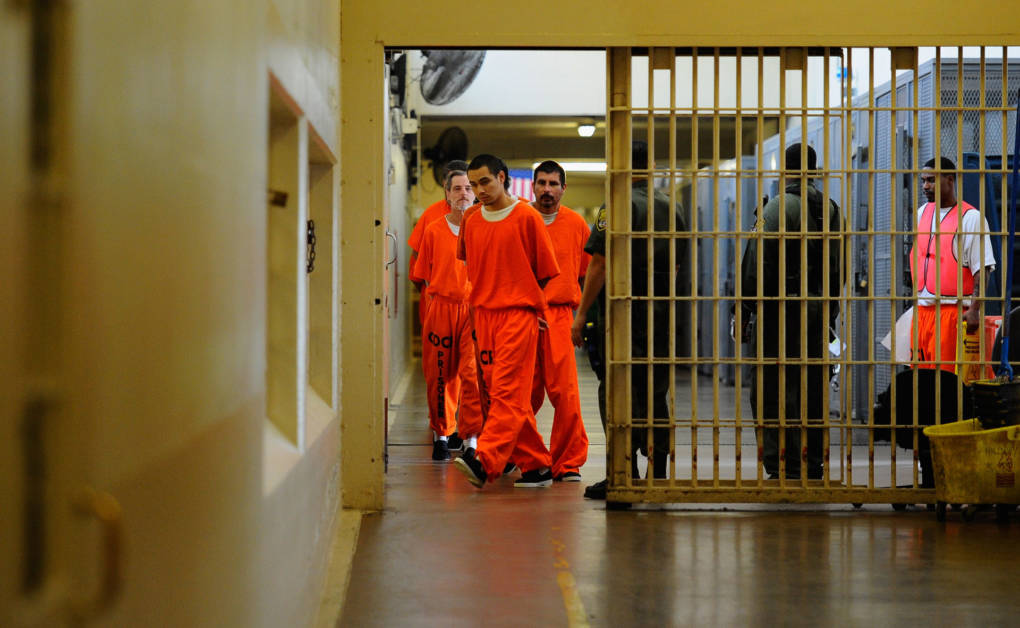
"caption": "Inmates at Chino State Prison walk the hallway in 2010.",
"description": "Inmates at Chino State Prison walk the hallway in 2010.",
"title": "ChinoInmates",
"credit": "Kevork Djansezian/Getty Images",
"status": "inherit",
"isLoading": false,
"fetchFailed": false
}
},
"audioPlayerReducer": {
"postId": "stream_live",
"isPaused": true,
"isPlaying": false,
"pfsActive": false,
"pledgeModalIsOpen": true,
"playerDrawerIsOpen": false,
"liveAudioPlayStartedAt": 0,
"liveAudioPlayContext": ""
},
"authorsReducer": {
"byline_news_11647375": {
"type": "authors",
"id": "byline_news_11647375",
"meta": {
"override": true
},
"slug": "byline_news_11647375",
"name": "Jonathan Cooper \u003cbr> Associated Press",
"isLoading": false
},
"byline_news_11647347": {
"type": "authors",
"id": "byline_news_11647347",
"meta": {
"override": true
},
"slug": "byline_news_11647347",
"name": "\u003cstrong>Paul Elias\u003cbr />Associated Press\u003c/strong>",
"isLoading": false
},
"byline_news_11647282": {
"type": "authors",
"id": "byline_news_11647282",
"meta": {
"override": true
},
"slug": "byline_news_11647282",
"name": "Ryan Lucas",
"isLoading": false
},
"byline_news_11647247": {
"type": "authors",
"id": "byline_news_11647247",
"meta": {
"override": true
},
"slug": "byline_news_11647247",
"name": "\u003cstrong>Ron Elving\u003cbr />NPR\u003c/strong>",
"isLoading": false
},
"byline_news_11647052": {
"type": "authors",
"id": "byline_news_11647052",
"meta": {
"override": true
},
"slug": "byline_news_11647052",
"name": "Jessica Taylor",
"isLoading": false
},
"byline_news_11647139": {
"type": "authors",
"id": "byline_news_11647139",
"meta": {
"override": true
},
"slug": "byline_news_11647139",
"name": "Sophia Bollag",
"isLoading": false
},
"dmarks": {
"type": "authors",
"id": "182",
"meta": {
"index": "authors_1716337520",
"id": "182",
"found": true
},
"name": "David Marks",
"firstName": "David",
"lastName": "Marks",
"slug": "dmarks",
"email": "dmarks@kqed.org",
"display_author_email": false,
"staff_mastheads": [],
"title": "KQED Editor",
"bio": "David Marks is a senior digital editor for KQED News. \u003c/a>Reach him at dmarks@kqed.org.",
"avatar": "https://secure.gravatar.com/avatar/b88bd6227ce6cb96ae33fefaf42b2a29?s=600&d=mm&r=g",
"twitter": "divadskram",
"facebook": null,
"instagram": null,
"linkedin": null,
"sites": [
{
"site": "news",
"roles": []
},
{
"site": "science",
"roles": []
},
{
"site": "perspectives",
"roles": []
},
{
"site": "liveblog",
"roles": []
}
],
"headData": {
"title": "David Marks | KQED",
"description": "KQED Editor",
"ogImgSrc": "https://secure.gravatar.com/avatar/b88bd6227ce6cb96ae33fefaf42b2a29?s=600&d=mm&r=g",
"twImgSrc": "https://secure.gravatar.com/avatar/b88bd6227ce6cb96ae33fefaf42b2a29?s=600&d=mm&r=g"
},
"isLoading": false,
"link": "/author/dmarks"
},
"scottshafer": {
"type": "authors",
"id": "255",
"meta": {
"index": "authors_1716337520",
"id": "255",
"found": true
},
"name": "Scott Shafer",
"firstName": "Scott",
"lastName": "Shafer",
"slug": "scottshafer",
"email": "sshafer@kqed.org",
"display_author_email": false,
"staff_mastheads": [
"news"
],
"title": "KQED Contributor",
"bio": "Scott Shafer is a senior editor with the KQED Politics and Government desk. He is co-host of Political Breakdown, the award-winning radio show and podcast with a personal take on the world of politics. Scott came to KQED in 1998 to host the statewide\u003cem> California Report\u003c/em>. Prior to that he had extended stints in politics and government\u003cem>.\u003c/em> He uses that inside experience at KQED in his, reporting, hosting and analysis for the politics desk. Scott collaborated \u003cem>Political Breakdown a\u003c/em>nd on \u003cem>The Political Mind of Jerry Brown, \u003c/em>an eight-part series about the life and extraordinary political career of the former governor. For fun, he plays water polo with the San Francisco Tsunami.",
"avatar": "https://secure.gravatar.com/avatar/a62ebae45b79d7aed1a39a0e3bf68104?s=600&d=blank&r=g",
"twitter": "scottshafer",
"bluesky": null,
"facebook": null,
"instagram": null,
"linkedin": null,
"sites": [
{
"site": "news",
"roles": [
"editor"
]
},
{
"site": "stateofhealth",
"roles": [
"author"
]
},
{
"site": "science",
"roles": [
"author"
]
},
{
"site": "forum",
"roles": [
"subscriber"
]
},
{
"site": "liveblog",
"roles": [
"author"
]
}
],
"headData": {
"title": "Scott Shafer | KQED",
"description": "KQED Contributor",
"ogImgSrc": "https://secure.gravatar.com/avatar/a62ebae45b79d7aed1a39a0e3bf68104?s=600&d=blank&r=g",
"twImgSrc": "https://secure.gravatar.com/avatar/a62ebae45b79d7aed1a39a0e3bf68104?s=600&d=blank&r=g"
},
"isLoading": false,
"link": "/author/scottshafer"
},
"tgoldberg": {
"type": "authors",
"id": "258",
"meta": {
"index": "authors_1716337520",
"id": "258",
"found": true
},
"name": "Ted Goldberg",
"firstName": "Ted",
"lastName": "Goldberg",
"slug": "tgoldberg",
"email": "tgoldberg@kqed.org",
"display_author_email": true,
"staff_mastheads": [
"news"
],
"title": "KQED Managing Editor, News and Newscasts",
"bio": "Ted Goldberg is Managing Editor of News and Newscasts at KQED. His main reporting beat is the Bay Area's oil refining industry.\r\n\r\nPrior to joining KQED in 2014, Ted worked at CBS News and WCBS AM in New York and Bay City News and KCBS Radio in San Francisco. He graduated from Oberlin College in Ohio in 1998.",
"avatar": "https://secure.gravatar.com/avatar/30ce2e4fe89135e104f89be2394d16225b9d36c121b5b3cb7651ce642978b96f?s=600&d=blank&r=g",
"twitter": "TedrickG",
"bluesky": null,
"facebook": null,
"instagram": null,
"linkedin": null,
"sites": [
{
"site": "news",
"roles": [
"editor"
]
},
{
"site": "science",
"roles": [
"editor"
]
}
],
"headData": {
"title": "Ted Goldberg | KQED",
"description": "KQED Managing Editor, News and Newscasts",
"ogImgSrc": "https://secure.gravatar.com/avatar/30ce2e4fe89135e104f89be2394d16225b9d36c121b5b3cb7651ce642978b96f?s=600&d=blank&r=g",
"twImgSrc": "https://secure.gravatar.com/avatar/30ce2e4fe89135e104f89be2394d16225b9d36c121b5b3cb7651ce642978b96f?s=600&d=blank&r=g"
},
"isLoading": false,
"link": "/author/tgoldberg"
},
"korr": {
"type": "authors",
"id": "11200",
"meta": {
"index": "authors_1716337520",
"id": "11200",
"found": true
},
"name": "Katie Orr",
"firstName": "Katie",
"lastName": "Orr",
"slug": "korr",
"email": "korr@kqed.org",
"display_author_email": false,
"staff_mastheads": [],
"title": "KQED Contributor",
"bio": "Katie Orr was a Sacramento-based reporter for KQED's Politics and Government Desk, covering the state Capitol and a variety of issues including women in politics, voting and elections and legislation. Prior to joining KQED in 2016, Katie was state government reporter for Capital Public Radio in Sacramento. She's also worked for KPBS in San Diego, where she covered City Hall.\r\n\r\nKatie received her masters degree in political science from San Diego State University and holds a Bachelors degree in broadcast journalism from Arizona State University.\r\n\r\nIn 2015 Katie won a national Clarion Award for a series of stories she did on women in California politics. She's been honored by the Society for Professional Journalists and, in 2013, was named by \u003cem>The Washington Post\u003c/em> as one of the country's top state Capitol reporters. She's also reported for the award-winning documentary series \u003cem>The View from Here \u003c/em>and was part of the team that won national PRNDI and Gabriel Awards in 2015. She lives in Sacramento with her husband. Twitter: @1KatieOrr",
"avatar": "https://secure.gravatar.com/avatar/41a40b25845adc78f50808670860449e?s=600&d=blank&r=g",
"twitter": "1katieorr",
"facebook": null,
"instagram": null,
"linkedin": null,
"sites": [
{
"site": "news",
"roles": [
"subscriber"
]
},
{
"site": "stateofhealth",
"roles": [
"author"
]
},
{
"site": "forum",
"roles": [
"author"
]
}
],
"headData": {
"title": "Katie Orr | KQED",
"description": "KQED Contributor",
"ogImgSrc": "https://secure.gravatar.com/avatar/41a40b25845adc78f50808670860449e?s=600&d=blank&r=g",
"twImgSrc": "https://secure.gravatar.com/avatar/41a40b25845adc78f50808670860449e?s=600&d=blank&r=g"
},
"isLoading": false,
"link": "/author/korr"
},
"vrancano": {
"type": "authors",
"id": "11276",
"meta": {
"index": "authors_1716337520",
"id": "11276",
"found": true
},
"name": "Vanessa Rancaño",
"firstName": "Vanessa",
"lastName": "Rancaño",
"slug": "vrancano",
"email": "vrancano@kqed.org",
"display_author_email": false,
"staff_mastheads": [
"news"
],
"title": "Reporter",
"bio": "Vanessa Rancaño is a features reporter for KQED. She’s also covered homelessness and education for the station and reported from the Central Valley. Her work has aired across public radio, from flagship national news shows to longform narrative podcasts. Before taking up a mic, she worked as a freelance print journalist. She’s been recognized with a number of national and regional awards. Vanessa grew up in California's Central Valley. She's a former NPR Kroc Fellow, and a graduate of the UC Berkeley Graduate School of Journalism.",
"avatar": "https://secure.gravatar.com/avatar/b3a383dfb0e7ee1c17568f2cf067904ab654d6e3de9743fc661f3c788ade1bed?s=600&d=blank&r=g",
"twitter": "vanessarancano",
"bluesky": null,
"facebook": null,
"instagram": null,
"linkedin": null,
"sites": [
{
"site": "arts",
"roles": [
"editor"
]
},
{
"site": "news",
"roles": [
"editor"
]
},
{
"site": "liveblog",
"roles": [
"contributor"
]
}
],
"headData": {
"title": "Vanessa Rancaño | KQED",
"description": "Reporter",
"ogImgSrc": "https://secure.gravatar.com/avatar/b3a383dfb0e7ee1c17568f2cf067904ab654d6e3de9743fc661f3c788ade1bed?s=600&d=blank&r=g",
"twImgSrc": "https://secure.gravatar.com/avatar/b3a383dfb0e7ee1c17568f2cf067904ab654d6e3de9743fc661f3c788ade1bed?s=600&d=blank&r=g"
},
"isLoading": false,
"link": "/author/vrancano"
},
"mleitsinger": {
"type": "authors",
"id": "11310",
"meta": {
"index": "authors_1716337520",
"id": "11310",
"found": true
},
"name": "Miranda Leitsinger",
"firstName": "Miranda",
"lastName": "Leitsinger",
"slug": "mleitsinger",
"email": "mleitsinger@KQED.org",
"display_author_email": false,
"staff_mastheads": [
"news"
],
"title": "KQED Contributor",
"bio": "Miranda Leitsinger has worked in journalism as a reporter and editor since 2000, including seven years at The Associated Press in locales such as Cambodia and Puerto Rico, four years at NBC News Digital in New York and 2.5 years at CNN.com International in Hong Kong. Major stories she has covered included sexual abuse in the yoga community, the rise of women in local politics post-2016 election, the struggle over LGBTQ inclusion in the Boy Scouts, aftermath of the 2004 and 2011 tsunamis, the Aurora movie theater attack, the Newtown school shooting, Superstorm Sandy and the Boston Marathon bombing.",
"avatar": "https://secure.gravatar.com/avatar/cdd00de7be92aab3b7fd3d915e02033d?s=600&d=blank&r=g",
"twitter": "mimileitsinger",
"facebook": null,
"instagram": null,
"linkedin": null,
"sites": [
{
"site": "arts",
"roles": [
"author"
]
},
{
"site": "news",
"roles": [
"subscriber"
]
},
{
"site": "futureofyou",
"roles": [
"editor"
]
},
{
"site": "stateofhealth",
"roles": [
"editor"
]
}
],
"headData": {
"title": "Miranda Leitsinger | KQED",
"description": "KQED Contributor",
"ogImgSrc": "https://secure.gravatar.com/avatar/cdd00de7be92aab3b7fd3d915e02033d?s=600&d=blank&r=g",
"twImgSrc": "https://secure.gravatar.com/avatar/cdd00de7be92aab3b7fd3d915e02033d?s=600&d=blank&r=g"
},
"isLoading": false,
"link": "/author/mleitsinger"
}
},
"pagesReducer": {
"news_program_news-fix": {
"type": "terms",
"id": "news_6944",
"meta": {
"index": "terms_1716263798",
"site": "news",
"id": "6944",
"score": 16.377554
},
"featImg": "https://ww2.kqed.org/app/uploads/sites/10/2014/10/News-Fix-Logo-Web-Banners-04.png",
"name": "News Fix",
"description": null,
"taxonomy": "program",
"headData": {
"twImgId": null,
"twTitle": null,
"ogTitle": null,
"ogImgId": null,
"twDescription": null,
"description": "The News Fix is a daily news podcast from KQED that breaks down the latest headlines and provides in-depth analysis of the stories that matter to the Bay Area.",
"title": "News Fix - Daily Dose of Bay Area News | KQED",
"ogDescription": null
},
"ttid": 6968,
"slug": "news-fix",
"isLoading": false,
"title": "News Fix",
"pageMeta": {
"site": "news",
"WpPageTemplate": "page-topic-editorial",
"currentPage": 30
},
"blocks": [
{
"blockName": "kqed/post-list",
"attrs": {
"layout": "cardArticle2",
"query": "posts/news?program=news-fix",
"seeMore": false,
"paginated": true,
"page": 30
}
},
{
"blockName": "kqed/ad"
}
]
}
},
"pfsSessionReducer": {},
"postsReducer": {
"stream_live": {
"type": "live",
"id": "stream_live",
"audioUrl": "https://streams.kqed.org/kqedradio",
"title": "Live Stream",
"excerpt": "Live Stream information currently unavailable.",
"link": "/radio",
"featImg": "",
"label": {
"name": "KQED Live",
"link": "/"
}
},
"stream_kqedNewscast": {
"type": "posts",
"id": "stream_kqedNewscast",
"audioUrl": "https://www.kqed.org/.stream/anon/radio/RDnews/newscast.mp3?_=1",
"title": "KQED Newscast",
"featImg": "",
"label": {
"name": "88.5 FM",
"link": "/"
}
},
"news_11647278": {
"type": "posts",
"id": "news_11647278",
"meta": {
"index": "posts_1716263798",
"site": "news",
"id": "11647278",
"score": null,
"sort": [
1517443905000
]
},
"parent": 0,
"labelTerm": {
"site": "news",
"term": 72
},
"blocks": [],
"publishDate": 1517443905,
"format": "audio",
"disqusTitle": "California Lawmaker Wants Free College Entrance Exams at School",
"title": "California Lawmaker Wants Free College Entrance Exams at School",
"headTitle": "The California Report | KQED News",
"content": "\u003cp>Earlier this week, Assemblyman Patrick O’Donnell introduced the Pathways to College Act, AB 1951, which would allow school districts to give students a college entrance exam like the SAT or ACT instead of the \u003ca href=\"https://www.cde.ca.gov/ta/tg/sa/\" target=\"_blank\" rel=\"noopener\">state-required test for 11th-graders\u003c/a>. Districts would give the test during school hours, and they’d do it for free.\u003c/p>\n\u003cp>\"Today we move California students forward,\" O'Donnell said at a press conference introducing his legislation on Tuesday. \"Our effort is to ensure California school districts are empowered and have the tools they need to help our students succeed and move forward.\"\u003c/p>\n\u003cp>The SAT and ACT each cost about $60, including the writing portions. In California about half of students who take the tests use fee waivers.\u003c/p>\n\u003cp>[contextly_sidebar id=\"RUGv284yy3wHg45kJO6DJc3Kd7yWppXW\"]\u003c/p>\n\u003cp>Back in high school, UC Berkeley junior Angelica Rodriguez qualified for free testing. But she said cost wasn’t the only obstacle students faced.\u003c/p>\n\u003cp>[ad fullwidth]\u003c/p>\n\u003cp>\"I would have to take them like 40 minutes away,\" she said of the tests, \"so I had to wake up pretty early for it and it was really stressful having to drive there.\"\u003c/p>\n\u003cp>She said being able to take the test at school would have made a difference. \u003ca href=\"https://www.mitpressjournals.org/doi/full/10.1162/EDFP_a_00206\" target=\"_blank\" rel=\"noopener\">Studies have found\u003c/a> that universal access to college entrance exams boosts college attendance rates, especially for low-income students.\u003c/p>\n\u003cfigure id=\"attachment_11647280\" class=\"wp-caption aligncenter\" style=\"max-width: 800px\">\u003cimg class=\"size-medium wp-image-11647280\" src=\"https://ww2.kqed.org/news/wp-content/uploads/sites/10/2018/01/Flickr1-800x600.jpg\" alt=\"Assemblymember O'Donnell says the goal of his legislation is to reduce the number of exams students take and to increase access to college.\" width=\"800\" height=\"600\">\u003cfigcaption class=\"wp-caption-text\">Assemblyman Patrick O'Donnell says the goal of his legislation is to reduce the number of exams students take and to increase access to college. \u003ccite>(\u003ca href=\"http://bit.ly/2rTG7Sl\">ccarlstead/Flickr\u003c/a>)\u003c/cite>\u003c/figcaption>\u003c/figure>\n\u003cp>More and more districts in California are moving toward free in-school testing, including Oakland, San Jose and West Contra Costa.\u003c/p>\n\u003cp>This school year, over 16,000 California students from 33 schools will take the ACT at district expense. More than 30 districts will offer the SAT free.\u003c/p>\n\u003cp>But they have to give the entrance exams in addition to the state-approved 11th-grade exam.\u003c/p>\n\u003cp>The bill by O’Donnell (D-Long Beach) would require the state Department of Education to approve an entrance exam that districts could give students instead of the current state-required assessment. The test they pick would have to meet state and federal standards.\u003c/p>\n\u003cp>\"The SAT is meaningful to students -- they have a stake in the results,\" O'Donnell said. \"They don’t always feel that with the current tests they take.\"\u003c/p>\n\u003cp>\u003c/p>\n\u003cp>He said his main goal is to reduce the number of exams students take and to increase access to college.\u003c/p>\n\n",
"disqusIdentifier": "11647278 https://ww2.kqed.org/news/?p=11647278",
"disqusUrl": "https://ww2.kqed.org/news/2018/01/31/california-lawmaker-wants-free-college-entrance-exams-at-school/",
"stats": {
"hasVideo": false,
"hasChartOrMap": false,
"hasAudio": false,
"hasPolis": false,
"wordCount": 410,
"hasGoogleForm": false,
"hasGallery": false,
"hasHearkenModule": false,
"iframeSrcs": [],
"paragraphCount": 15
},
"modified": 1517502842,
"excerpt": "Assemblyman Patrick O’Donnell introduced legislation in Sacramento this week to do just that.",
"headData": {
"twImgId": "",
"twTitle": "",
"ogTitle": "",
"ogImgId": "",
"twDescription": "",
"description": "Assemblyman Patrick O’Donnell introduced legislation in Sacramento this week to do just that.",
"title": "California Lawmaker Wants Free College Entrance Exams at School | KQED",
"ogDescription": "",
"schema": {
"@context": "https://schema.org",
"@type": "NewsArticle",
"headline": "California Lawmaker Wants Free College Entrance Exams at School",
"datePublished": "2018-01-31T16:11:45-08:00",
"dateModified": "2018-02-01T08:34:02-08:00",
"image": "https://cdn.kqed.org/wp-content/uploads/2020/02/KQED-OG-Image@1x.png",
"isAccessibleForFree": "True",
"publisher": {
"@type": "NewsMediaOrganization",
"@id": "https://www.kqed.org/#organization",
"name": "KQED",
"logo": "https://cdn.kqed.org/wp-content/uploads/2020/02/KQED-OG-Image@1x.png",
"url": "https://www.kqed.org",
"sameAs": [
"https://www.facebook.com/KQED",
"https://twitter.com/KQED",
"https://www.instagram.com/kqed/",
"https://www.tiktok.com/@kqedofficial",
"https://www.linkedin.com/company/kqed",
"https://www.youtube.com/channel/UCeC0IOo7i1P_61zVUWbJ4nw"
]
}
}
},
"guestAuthors": [],
"slug": "california-lawmaker-wants-free-college-entrance-exams-at-school",
"status": "publish",
"audioUrl": "https://www.kqed.org/.stream/anon/radio/tcr/2018/01/FreeSATRancano.mp3",
"path": "/news/11647278/california-lawmaker-wants-free-college-entrance-exams-at-school",
"audioDuration": 89000,
"audioTrackLength": null,
"parsedContent": [
{
"type": "contentString",
"content": "\u003cdiv class=\"post-body\">\u003cp>\u003cp>Earlier this week, Assemblyman Patrick O’Donnell introduced the Pathways to College Act, AB 1951, which would allow school districts to give students a college entrance exam like the SAT or ACT instead of the \u003ca href=\"https://www.cde.ca.gov/ta/tg/sa/\" target=\"_blank\" rel=\"noopener\">state-required test for 11th-graders\u003c/a>. Districts would give the test during school hours, and they’d do it for free.\u003c/p>\n\u003cp>\"Today we move California students forward,\" O'Donnell said at a press conference introducing his legislation on Tuesday. \"Our effort is to ensure California school districts are empowered and have the tools they need to help our students succeed and move forward.\"\u003c/p>\n\u003cp>The SAT and ACT each cost about $60, including the writing portions. In California about half of students who take the tests use fee waivers.\u003c/p>\n\u003cp>\u003c/p>\u003cp>\u003c/p>\u003cp>\u003c/p>\n\u003cp>Back in high school, UC Berkeley junior Angelica Rodriguez qualified for free testing. But she said cost wasn’t the only obstacle students faced.\u003c/p>\n\u003cp>\u003c/p>\u003c/div>",
"attributes": {
"named": {},
"numeric": []
}
},
{
"type": "component",
"content": "",
"name": "ad",
"attributes": {
"named": {
"label": "fullwidth"
},
"numeric": [
"fullwidth"
]
}
},
{
"type": "contentString",
"content": "\u003cdiv class=\"post-body\">\u003cp>\u003c/p>\n\u003cp>\"I would have to take them like 40 minutes away,\" she said of the tests, \"so I had to wake up pretty early for it and it was really stressful having to drive there.\"\u003c/p>\n\u003cp>She said being able to take the test at school would have made a difference. \u003ca href=\"https://www.mitpressjournals.org/doi/full/10.1162/EDFP_a_00206\" target=\"_blank\" rel=\"noopener\">Studies have found\u003c/a> that universal access to college entrance exams boosts college attendance rates, especially for low-income students.\u003c/p>\n\u003cfigure id=\"attachment_11647280\" class=\"wp-caption aligncenter\" style=\"max-width: 800px\">\u003cimg class=\"size-medium wp-image-11647280\" src=\"https://ww2.kqed.org/news/wp-content/uploads/sites/10/2018/01/Flickr1-800x600.jpg\" alt=\"Assemblymember O'Donnell says the goal of his legislation is to reduce the number of exams students take and to increase access to college.\" width=\"800\" height=\"600\">\u003cfigcaption class=\"wp-caption-text\">Assemblyman Patrick O'Donnell says the goal of his legislation is to reduce the number of exams students take and to increase access to college. \u003ccite>(\u003ca href=\"http://bit.ly/2rTG7Sl\">ccarlstead/Flickr\u003c/a>)\u003c/cite>\u003c/figcaption>\u003c/figure>\n\u003cp>More and more districts in California are moving toward free in-school testing, including Oakland, San Jose and West Contra Costa.\u003c/p>\n\u003cp>This school year, over 16,000 California students from 33 schools will take the ACT at district expense. More than 30 districts will offer the SAT free.\u003c/p>\n\u003cp>But they have to give the entrance exams in addition to the state-approved 11th-grade exam.\u003c/p>\n\u003cp>The bill by O’Donnell (D-Long Beach) would require the state Department of Education to approve an entrance exam that districts could give students instead of the current state-required assessment. The test they pick would have to meet state and federal standards.\u003c/p>\n\u003cp>\"The SAT is meaningful to students -- they have a stake in the results,\" O'Donnell said. \"They don’t always feel that with the current tests they take.\"\u003c/p>\n\u003cp>\u003c/p>\n\u003cp>He said his main goal is to reduce the number of exams students take and to increase access to college.\u003c/p>\n\n\u003c/div>\u003c/p>",
"attributes": {
"named": {},
"numeric": []
}
}
],
"link": "/news/11647278/california-lawmaker-wants-free-college-entrance-exams-at-school",
"authors": [
"11276"
],
"programs": [
"news_6944",
"news_72"
],
"categories": [
"news_18540",
"news_8"
],
"tags": [
"news_2704",
"news_18085",
"news_22489",
"news_17286"
],
"featImg": "news_11647400",
"label": "news_72"
},
"news_11647375": {
"type": "posts",
"id": "news_11647375",
"meta": {
"index": "posts_1716263798",
"site": "news",
"id": "11647375",
"score": null,
"sort": [
1517441181000
]
},
"guestAuthors": [],
"slug": "insurance-claims-from-california-wildfires-near-12-billion",
"title": "Insurance Claims From California Wildfires Near $12 Billion",
"publishDate": 1517441181,
"format": "image",
"headTitle": "Insurance Claims From California Wildfires Near $12 Billion | KQED",
"labelTerm": {
"term": 72,
"site": "news"
},
"content": "\u003cp>SACRAMENTO — Insurance claims from last fall’s deadly California wildfires have reached $11.8 billion, making it the most expensive series of wildfires in state history, an official said Wednesday.\u003c/p>\n\u003cp>The staggering number exceeds the total insurance claims from the top 10 previously most costly wildfires in California.\u003c/p>\n\u003cp>Until last year, California’s most expensive single fire was the 1991 East Bay Hills fire that prompted $2.7 billion in claims in today’s dollars, according to data from the Insurance Information Institute.\u003c/p>\n\u003cp>If treated as one disaster, the combined fires in October and December 2017 “represent one of the most damaging natural catastrophes in California history,” Insurance Commissioner Dave Jones said at a news conference in Los Angeles.\u003c/p>\n\u003cp>For comparison, insured losses from the 1994 Northridge earthquake — the costliest quake to strike the United States — were nearly $26 billion in 2017 dollars, according to data from the insurance institute.\u003c/p>\n\u003cp>[ad fullwidth]\u003c/p>\n\u003cp>[contextly_sidebar id=”FQ7yXEaxiwDNhJ7eEBnBCntdR9tCOw4c”]\u003c/p>\n\u003cp>Nearly $1.8 billion of the 2017 insurance claims stem from fires that swept through Southern California in December, a rare winter fire whipped by fierce winds. The Thomas Fire in Ventura and Santa Barbara counties became the largest by acreage in state history, charring 282,000 acres — larger than the city of San Diego.\u003c/p>\n\u003cp>The figures for Southern California are likely to grow as more people get through the time-consuming process of filing a claim.\u003c/p>\n\u003cp>The totals do not include claims related to \u003ca href=\"https://ww2.kqed.org/news/tag/montecito/\" target=\"_blank\" rel=\"noopener\">mudslides that buried homes and vehicles in Montecito\u003c/a> when torrential rain fell on hillsides burned in the December fires.\u003c/p>\n\u003cp>Insurance claims from a series of October fires grew to $10 billion, nearly all of them in Northern California’s wine country.\u003c/p>\n\u003cp>[contextly_sidebar id=”LNRnF0DTxYnxLKAiNnolb7c8tsTK8rpc”]\u003c/p>\n\u003cp>Crews this week finished removing debris from the devastated Coffey Park neighborhood in Santa Rosa, a tidy urban community that was leveled when flames rushed through in the middle of the night.\u003c/p>\n\u003cp>Jones said the combined firestorms damaged or destroyed 32,000 homes, 4,300 businesses and more than 8,200 vehicles, boats and other equipment. Dozens of people were killed.\u003c/p>\n\u003cp>The figures do not reflect losses suffered by people who were uninsured or at schools and other public buildings.\u003c/p>\n\u003cp>\u003c/p>\n\u003cp>Jones said insurers have enough reserves to pay the massive claims. But he said the fires may prompt them to re-evaluate the fire risk and raise premiums — or decline to sell insurance at all — especially for homes near forested areas.\u003c/p>\n\n",
"blocks": [],
"excerpt": "This fall's wildfires are now the most expensive in state history -- and totals don't include claims related to mudslides that struck Montecito after torrential rain fell on hillsides burned in the fires.",
"status": "publish",
"parent": 0,
"modified": 1722634688,
"stats": {
"hasAudio": false,
"hasVideo": false,
"hasChartOrMap": false,
"iframeSrcs": [],
"hasGoogleForm": false,
"hasGallery": false,
"hasHearkenModule": false,
"hasPolis": false,
"paragraphCount": 17,
"wordCount": 421
},
"headData": {
"title": "Insurance Claims From California Wildfires Near $12 Billion | KQED",
"description": "This fall's wildfires are now the most expensive in state history -- and totals don't include claims related to mudslides that struck Montecito after torrential rain fell on hillsides burned in the fires.",
"ogTitle": "",
"ogDescription": "",
"ogImgId": "",
"twTitle": "",
"twDescription": "",
"twImgId": "",
"schema": {
"@context": "https://schema.org",
"@type": "NewsArticle",
"headline": "Insurance Claims From California Wildfires Near $12 Billion",
"datePublished": "2018-01-31T15:26:21-08:00",
"dateModified": "2024-08-02T14:38:08-07:00",
"image": "https://cdn.kqed.org/wp-content/uploads/2020/02/KQED-OG-Image@1x.png",
"isAccessibleForFree": "True",
"publisher": {
"@type": "NewsMediaOrganization",
"@id": "https://www.kqed.org/#organization",
"name": "KQED",
"logo": "https://cdn.kqed.org/wp-content/uploads/2020/02/KQED-OG-Image@1x.png",
"url": "https://www.kqed.org",
"sameAs": [
"https://www.facebook.com/KQED",
"https://twitter.com/KQED",
"https://www.instagram.com/kqed/",
"https://www.tiktok.com/@kqedofficial",
"https://www.linkedin.com/company/kqed",
"https://www.youtube.com/channel/UCeC0IOo7i1P_61zVUWbJ4nw"
]
}
}
},
"sticky": false,
"nprByline": "Jonathan Cooper \u003cbr> Associated Press",
"path": "/news/11647375/insurance-claims-from-california-wildfires-near-12-billion",
"audioTrackLength": null,
"parsedContent": [
{
"type": "contentString",
"content": "\u003cdiv class=\"post-body\">\u003cp>\u003cp>SACRAMENTO — Insurance claims from last fall’s deadly California wildfires have reached $11.8 billion, making it the most expensive series of wildfires in state history, an official said Wednesday.\u003c/p>\n\u003cp>The staggering number exceeds the total insurance claims from the top 10 previously most costly wildfires in California.\u003c/p>\n\u003cp>Until last year, California’s most expensive single fire was the 1991 East Bay Hills fire that prompted $2.7 billion in claims in today’s dollars, according to data from the Insurance Information Institute.\u003c/p>\n\u003cp>If treated as one disaster, the combined fires in October and December 2017 “represent one of the most damaging natural catastrophes in California history,” Insurance Commissioner Dave Jones said at a news conference in Los Angeles.\u003c/p>\n\u003cp>For comparison, insured losses from the 1994 Northridge earthquake — the costliest quake to strike the United States — were nearly $26 billion in 2017 dollars, according to data from the insurance institute.\u003c/p>\n\u003cp>\u003c/p>\u003c/div>",
"attributes": {
"named": {},
"numeric": []
}
},
{
"type": "component",
"content": "",
"name": "ad",
"attributes": {
"named": {
"label": "fullwidth"
},
"numeric": [
"fullwidth"
]
}
},
{
"type": "contentString",
"content": "\u003cdiv class=\"post-body\">\u003cp>\u003c/p>\n\u003cp>\u003c/p>\u003cp>\u003c/p>\u003cp>\u003c/p>\n\u003cp>Nearly $1.8 billion of the 2017 insurance claims stem from fires that swept through Southern California in December, a rare winter fire whipped by fierce winds. The Thomas Fire in Ventura and Santa Barbara counties became the largest by acreage in state history, charring 282,000 acres — larger than the city of San Diego.\u003c/p>\n\u003cp>The figures for Southern California are likely to grow as more people get through the time-consuming process of filing a claim.\u003c/p>\n\u003cp>The totals do not include claims related to \u003ca href=\"https://ww2.kqed.org/news/tag/montecito/\" target=\"_blank\" rel=\"noopener\">mudslides that buried homes and vehicles in Montecito\u003c/a> when torrential rain fell on hillsides burned in the December fires.\u003c/p>\n\u003cp>Insurance claims from a series of October fires grew to $10 billion, nearly all of them in Northern California’s wine country.\u003c/p>\n\u003cp>\u003c/p>\u003cp>\u003c/p>\u003cp>\u003c/p>\n\u003cp>Crews this week finished removing debris from the devastated Coffey Park neighborhood in Santa Rosa, a tidy urban community that was leveled when flames rushed through in the middle of the night.\u003c/p>\n\u003cp>Jones said the combined firestorms damaged or destroyed 32,000 homes, 4,300 businesses and more than 8,200 vehicles, boats and other equipment. Dozens of people were killed.\u003c/p>\n\u003cp>The figures do not reflect losses suffered by people who were uninsured or at schools and other public buildings.\u003c/p>\n\u003cp>\u003c/p>\n\u003cp>Jones said insurers have enough reserves to pay the massive claims. But he said the fires may prompt them to re-evaluate the fire risk and raise premiums — or decline to sell insurance at all — especially for homes near forested areas.\u003c/p>\n\n\u003c/div>\u003c/p>",
"attributes": {
"named": {},
"numeric": []
}
}
],
"link": "/news/11647375/insurance-claims-from-california-wildfires-near-12-billion",
"authors": [
"byline_news_11647375"
],
"programs": [
"news_6944",
"news_72"
],
"categories": [
"news_19906",
"news_8"
],
"tags": [
"news_18159",
"news_17286",
"news_17041",
"news_22132",
"news_4463"
],
"featImg": "news_11647377",
"label": "news_72"
},
"news_11647234": {
"type": "posts",
"id": "news_11647234",
"meta": {
"index": "posts_1716263798",
"site": "news",
"id": "11647234",
"score": null,
"sort": [
1517438952000
]
},
"parent": 0,
"labelTerm": {
"site": "news",
"term": 6944
},
"blocks": [],
"publishDate": 1517438952,
"format": "standard",
"disqusTitle": "Smoke From Scrap Metal Yard Fire in Richmond May Have Violated Local Air Standards",
"title": "Smoke From Scrap Metal Yard Fire in Richmond May Have Violated Local Air Standards",
"headTitle": "News Fix | KQED News",
"content": "\u003cp>Air samples from smoke that wafted through Richmond Tuesday night and Wednesday morning from a large fire at a scrap metal yard included high levels of toxic particulate matter that were too dangerous to breathe, according to a top local air official.\u003c/p>\n\u003cp>\"For a shortened period of time there were some levels of smoke from this fire that were similar to the North Bay fires,\" said Contra Costa County Supervisor John Gioia, who sits on the Bay Area Air Quality Management District board.\u003c/p>\n\u003cp>The agency says it sent four inspectors to the scene of the fire at Sims Metal Management plant on South Fourth Street near the Port of Richmond. The blaze led to a series of shelter-in-place orders affecting thousands of city residents.\u003c/p>\n\u003cp>The fire began in a light-iron recycling pile at the facility, according to Jill Rodby, a spokeswoman for Sims, which runs \u003ca href=\"https://ww2.kqed.org/news/2015/07/18/draft-peninsula-press-on-sims-recycling/\" target=\"_blank\" rel=\"noopener\">another center in Redwood City\u003c/a> that went up in flames several years ago.\u003c/p>\n\u003cp>The blaze spread, prompting a two-alarm response from the Richmond Fire Department. Crews from the Chevron refinery in Richmond, the Shell refinery in Martinez and the Dow Chemical plant in Pittsburg brought in foam to help extinguish the blaze, according to Richmond Fire Capt. Rico Rincon.\u003c/p>\n\u003cp>[ad fullwidth]\u003c/p>\n\u003cp>The fire started around 5 p.m. Tuesday and was under control by around 4 a.m. Wednesday.\u003c/p>\n\u003cp>Air district officials are trying to determine what was burning during those 11 hours. Metal, plastic and fuel at the plant most likely ignited in the fire, according to Gioia.\u003c/p>\n\u003cp>\"I'm sure there will be an investigation that will lead to violation notices,\" Gioia said in an interview Wednesday morning.\u003c/p>\n\u003cp>The cause of the blaze is also under investigation. Richmond fire officials are spending the day interviewing workers and combing through burned debris, according to the city's fire chief, Adrian Sheppard.\u003c/p>\n\u003cp>Several Contra Costa County Community Warning System (CWS) alerts were issued in the hours after the fire began, urging residents to stay indoors.\u003c/p>\n\u003cp>Over an hour after the blaze started, Richmond Mayor Tom Butt received a county alert on his phone. Butt, a\u003ca href=\"https://ww2.kqed.org/news/2016/11/02/contra-costa-county-approves-contract-for-warning-system-that-had-malfunctioned/\" target=\"_blank\" rel=\"noopener\"> critic of the county's warning system\u003c/a>, said that amount of time was too long.\u003c/p>\n\u003cp>\"It's a joke. It's never worked. It did not work yesterday. I'm just very unhappy about this whole thing,\" Butt said, also in an interview.\u003c/p>\n\u003cp>When Butt returned to his home later in the evening, it was hard to breathe.\u003c/p>\n\u003cp>\"The whole area of southwest Richmond, including Point Richmond, was just in a toxic fog. There was limited visibility. It was so thick,\" Butt said.\u003c/p>\n\u003cp>\"The air was so bad, where I live, you literally couldn't take a breath. It was the worst I've ever seen. It was worse than the Chevron fire of 2012,\" Butt said.\u003c/p>\n\u003cp>During the major fire at the Chevron refinery in Richmond more than five years ago, thousands of residents went to local hospitals complaining of breathing problems.\u003c/p>\n\u003cp>This time around there were no reports of similar health complaints, and there were no injuries to workers, said Rodby, the Sims spokeswoman.\u003c/p>\n\u003cp>But the wind patterns changed -- sending the smoke into different residential neighborhoods. Smoke initially shot up into the air, creating a plume that trailed off in an eastward direction, according to Butt. The wind then shifted and stayed low to the ground.\u003c/p>\n\u003cp>Those changes led Richmond fire and county officials to expand their shelter-in-place orders.\u003c/p>\n\u003cp>The initial alert went out at 6:10 p.m., advising people on Wright Avenue to Ohio Avenue in the Nystrom Village area of the city to go inside and stay indoors.\u003c/p>\n\u003cp>Thirty-five minutes later the alert was extended to include the Santa Fe, Iron Triangle, Atchison Village and North Richmond neighborhoods.\u003c/p>\n\u003cp>At around 8 p.m. the order was extended to Point Richmond.\u003c/p>\n\u003cp>Less than an hour after that, the order was expanded yet again to an area between Garrard Boulevard, Ohio Avenue and W. Cutting Boulevard.\u003c/p>\n\u003cp>The computer-generated audio recordings that explained the new orders were difficult to interpret at times.\u003c/p>\n\u003cp>\"I found some of the alerts to be hard to understand. I don't think they were necessarily clear,\" Gioia said.\u003c/p>\n\u003cp>The orders stayed in place until just before 4 a.m. Wednesday, when an all-clear was issued.\u003c/p>\n\u003cp>As the smoke spread through the city and the shelter-in-place orders expanded, residents expressed criticism and confusion on social media forums like Nextdoor.\u003c/p>\n\u003cp>\"The fire started around 6, some are just now getting alerts, that's way too long a delay,\" posted Kent Langston at 7:42 p.m.\u003c/p>\n\u003cp>The Contra Costa County Sheriff's Office, which runs the alert system, released a statement late Wednesday, defending the program's work and disputed claims it was slow to act.\u003c/p>\n\u003cp>\"The CWS worked as designed,\" said Assistant Sheriff Mark Williams.\u003c/p>\n\u003cp>\"Mayor Butt's statement that it took an hour to get out the first alert after receiving the necessary information from Richmond Fire is totally inaccurate, misleading, and presumptuous,\" said Acting Sheriff Mark Williams.\u003c/p>\n\u003cp>The sheriff's department statement said to get out developing information, it used phone, text and email alerts, posted on social media and websites and developed a comprehensive map that included the affected areas.\u003c/p>\n\u003cp>But, it noted that the fire department did not request to use the warning system's sirens.\u003c/p>\n\u003cp>The county's hazardous materials program helped determine where the shelter-in-place orders should be expanded, according to the agency's chief environmental health and hazardous materials officer, Randy Sawyer.\u003c/p>\n\u003cp>\"When they started putting the fire out, it cooled down, so the smoke stayed closer to the ground and it moved around. So we added different areas for the shelter-in-place as the evening went on,\" Sawyer said.\u003c/p>\n\u003cp>Meantime, Sims says it will investigate the cause of the fire and look to make improvements to reduce the risk of blazes at the facility in the future.\u003c/p>\n\u003cp>\"We apologize for any inconvenience caused to the community by this incident and will continue to be committed to being a good corporate neighbor,\" a statement released Wednesday afternoon by the company reads.\u003c/p>\n\u003cp>[ad floatright]\u003c/p>\n\u003cp>\u003cem>This post was updated to include portions of statements from the Contra Costa County's sheriff's department and Sims Metal Management. \u003c/em>\u003c/p>\n\n",
"disqusIdentifier": "11647234 https://ww2.kqed.org/news/?p=11647234",
"disqusUrl": "https://ww2.kqed.org/news/2018/01/31/smoke-from-scrap-metal-yard-fire-in-richmond-may-have-violated-local-air-standards/",
"stats": {
"hasVideo": false,
"hasChartOrMap": false,
"hasAudio": false,
"hasPolis": false,
"wordCount": 1058,
"hasGoogleForm": false,
"hasGallery": false,
"hasHearkenModule": false,
"iframeSrcs": [],
"paragraphCount": 40
},
"modified": 1517496337,
"excerpt": "'The whole area of southwest Richmond, including Point Richmond, was just in a toxic fog,' said Richmond Mayor Tom Butt. ",
"headData": {
"twImgId": "",
"twTitle": "",
"ogTitle": "",
"ogImgId": "",
"twDescription": "",
"description": "'The whole area of southwest Richmond, including Point Richmond, was just in a toxic fog,' said Richmond Mayor Tom Butt. ",
"title": "Smoke From Scrap Metal Yard Fire in Richmond May Have Violated Local Air Standards | KQED",
"ogDescription": "",
"schema": {
"@context": "https://schema.org",
"@type": "NewsArticle",
"headline": "Smoke From Scrap Metal Yard Fire in Richmond May Have Violated Local Air Standards",
"datePublished": "2018-01-31T14:49:12-08:00",
"dateModified": "2018-02-01T06:45:37-08:00",
"image": "https://cdn.kqed.org/wp-content/uploads/2020/02/KQED-OG-Image@1x.png",
"isAccessibleForFree": "True",
"publisher": {
"@type": "NewsMediaOrganization",
"@id": "https://www.kqed.org/#organization",
"name": "KQED",
"logo": "https://cdn.kqed.org/wp-content/uploads/2020/02/KQED-OG-Image@1x.png",
"url": "https://www.kqed.org",
"sameAs": [
"https://www.facebook.com/KQED",
"https://twitter.com/KQED",
"https://www.instagram.com/kqed/",
"https://www.tiktok.com/@kqedofficial",
"https://www.linkedin.com/company/kqed",
"https://www.youtube.com/channel/UCeC0IOo7i1P_61zVUWbJ4nw"
]
}
}
},
"guestAuthors": [],
"slug": "smoke-from-scrap-metal-yard-fire-in-richmond-may-have-violated-local-air-standards",
"status": "publish",
"path": "/news/11647234/smoke-from-scrap-metal-yard-fire-in-richmond-may-have-violated-local-air-standards",
"audioTrackLength": null,
"parsedContent": [
{
"type": "contentString",
"content": "\u003cdiv class=\"post-body\">\u003cp>\u003cp>Air samples from smoke that wafted through Richmond Tuesday night and Wednesday morning from a large fire at a scrap metal yard included high levels of toxic particulate matter that were too dangerous to breathe, according to a top local air official.\u003c/p>\n\u003cp>\"For a shortened period of time there were some levels of smoke from this fire that were similar to the North Bay fires,\" said Contra Costa County Supervisor John Gioia, who sits on the Bay Area Air Quality Management District board.\u003c/p>\n\u003cp>The agency says it sent four inspectors to the scene of the fire at Sims Metal Management plant on South Fourth Street near the Port of Richmond. The blaze led to a series of shelter-in-place orders affecting thousands of city residents.\u003c/p>\n\u003cp>The fire began in a light-iron recycling pile at the facility, according to Jill Rodby, a spokeswoman for Sims, which runs \u003ca href=\"https://ww2.kqed.org/news/2015/07/18/draft-peninsula-press-on-sims-recycling/\" target=\"_blank\" rel=\"noopener\">another center in Redwood City\u003c/a> that went up in flames several years ago.\u003c/p>\n\u003cp>The blaze spread, prompting a two-alarm response from the Richmond Fire Department. Crews from the Chevron refinery in Richmond, the Shell refinery in Martinez and the Dow Chemical plant in Pittsburg brought in foam to help extinguish the blaze, according to Richmond Fire Capt. Rico Rincon.\u003c/p>\n\u003cp>\u003c/p>\u003c/div>",
"attributes": {
"named": {},
"numeric": []
}
},
{
"type": "component",
"content": "",
"name": "ad",
"attributes": {
"named": {
"label": "fullwidth"
},
"numeric": [
"fullwidth"
]
}
},
{
"type": "contentString",
"content": "\u003cdiv class=\"post-body\">\u003cp>\u003c/p>\n\u003cp>The fire started around 5 p.m. Tuesday and was under control by around 4 a.m. Wednesday.\u003c/p>\n\u003cp>Air district officials are trying to determine what was burning during those 11 hours. Metal, plastic and fuel at the plant most likely ignited in the fire, according to Gioia.\u003c/p>\n\u003cp>\"I'm sure there will be an investigation that will lead to violation notices,\" Gioia said in an interview Wednesday morning.\u003c/p>\n\u003cp>The cause of the blaze is also under investigation. Richmond fire officials are spending the day interviewing workers and combing through burned debris, according to the city's fire chief, Adrian Sheppard.\u003c/p>\n\u003cp>Several Contra Costa County Community Warning System (CWS) alerts were issued in the hours after the fire began, urging residents to stay indoors.\u003c/p>\n\u003cp>Over an hour after the blaze started, Richmond Mayor Tom Butt received a county alert on his phone. Butt, a\u003ca href=\"https://ww2.kqed.org/news/2016/11/02/contra-costa-county-approves-contract-for-warning-system-that-had-malfunctioned/\" target=\"_blank\" rel=\"noopener\"> critic of the county's warning system\u003c/a>, said that amount of time was too long.\u003c/p>\n\u003cp>\"It's a joke. It's never worked. It did not work yesterday. I'm just very unhappy about this whole thing,\" Butt said, also in an interview.\u003c/p>\n\u003cp>When Butt returned to his home later in the evening, it was hard to breathe.\u003c/p>\n\u003cp>\"The whole area of southwest Richmond, including Point Richmond, was just in a toxic fog. There was limited visibility. It was so thick,\" Butt said.\u003c/p>\n\u003cp>\"The air was so bad, where I live, you literally couldn't take a breath. It was the worst I've ever seen. It was worse than the Chevron fire of 2012,\" Butt said.\u003c/p>\n\u003cp>During the major fire at the Chevron refinery in Richmond more than five years ago, thousands of residents went to local hospitals complaining of breathing problems.\u003c/p>\n\u003cp>This time around there were no reports of similar health complaints, and there were no injuries to workers, said Rodby, the Sims spokeswoman.\u003c/p>\n\u003cp>But the wind patterns changed -- sending the smoke into different residential neighborhoods. Smoke initially shot up into the air, creating a plume that trailed off in an eastward direction, according to Butt. The wind then shifted and stayed low to the ground.\u003c/p>\n\u003cp>Those changes led Richmond fire and county officials to expand their shelter-in-place orders.\u003c/p>\n\u003cp>The initial alert went out at 6:10 p.m., advising people on Wright Avenue to Ohio Avenue in the Nystrom Village area of the city to go inside and stay indoors.\u003c/p>\n\u003cp>Thirty-five minutes later the alert was extended to include the Santa Fe, Iron Triangle, Atchison Village and North Richmond neighborhoods.\u003c/p>\n\u003cp>At around 8 p.m. the order was extended to Point Richmond.\u003c/p>\n\u003cp>Less than an hour after that, the order was expanded yet again to an area between Garrard Boulevard, Ohio Avenue and W. Cutting Boulevard.\u003c/p>\n\u003cp>The computer-generated audio recordings that explained the new orders were difficult to interpret at times.\u003c/p>\n\u003cp>\"I found some of the alerts to be hard to understand. I don't think they were necessarily clear,\" Gioia said.\u003c/p>\n\u003cp>The orders stayed in place until just before 4 a.m. Wednesday, when an all-clear was issued.\u003c/p>\n\u003cp>As the smoke spread through the city and the shelter-in-place orders expanded, residents expressed criticism and confusion on social media forums like Nextdoor.\u003c/p>\n\u003cp>\"The fire started around 6, some are just now getting alerts, that's way too long a delay,\" posted Kent Langston at 7:42 p.m.\u003c/p>\n\u003cp>The Contra Costa County Sheriff's Office, which runs the alert system, released a statement late Wednesday, defending the program's work and disputed claims it was slow to act.\u003c/p>\n\u003cp>\"The CWS worked as designed,\" said Assistant Sheriff Mark Williams.\u003c/p>\n\u003cp>\"Mayor Butt's statement that it took an hour to get out the first alert after receiving the necessary information from Richmond Fire is totally inaccurate, misleading, and presumptuous,\" said Acting Sheriff Mark Williams.\u003c/p>\n\u003cp>The sheriff's department statement said to get out developing information, it used phone, text and email alerts, posted on social media and websites and developed a comprehensive map that included the affected areas.\u003c/p>\n\u003cp>But, it noted that the fire department did not request to use the warning system's sirens.\u003c/p>\n\u003cp>The county's hazardous materials program helped determine where the shelter-in-place orders should be expanded, according to the agency's chief environmental health and hazardous materials officer, Randy Sawyer.\u003c/p>\n\u003cp>\"When they started putting the fire out, it cooled down, so the smoke stayed closer to the ground and it moved around. So we added different areas for the shelter-in-place as the evening went on,\" Sawyer said.\u003c/p>\n\u003cp>Meantime, Sims says it will investigate the cause of the fire and look to make improvements to reduce the risk of blazes at the facility in the future.\u003c/p>\n\u003cp>\"We apologize for any inconvenience caused to the community by this incident and will continue to be committed to being a good corporate neighbor,\" a statement released Wednesday afternoon by the company reads.\u003c/p>\n\u003cp>\u003c/p>\u003c/div>",
"attributes": {
"named": {},
"numeric": []
}
},
{
"type": "component",
"content": "",
"name": "ad",
"attributes": {
"named": {
"label": "floatright"
},
"numeric": [
"floatright"
]
}
},
{
"type": "contentString",
"content": "\u003cdiv class=\"post-body\">\u003cp>\u003c/p>\n\u003cp>\u003cem>This post was updated to include portions of statements from the Contra Costa County's sheriff's department and Sims Metal Management. \u003c/em>\u003c/p>\n\n\u003c/div>\u003c/p>",
"attributes": {
"named": {},
"numeric": []
}
}
],
"link": "/news/11647234/smoke-from-scrap-metal-yard-fire-in-richmond-may-have-violated-local-air-standards",
"authors": [
"258"
],
"programs": [
"news_6944"
],
"categories": [
"news_19906",
"news_457",
"news_8"
],
"tags": [
"news_212",
"news_579",
"news_22487"
],
"featImg": "news_11647338",
"label": "news_6944"
},
"news_11647347": {
"type": "posts",
"id": "news_11647347",
"meta": {
"index": "posts_1716263798",
"site": "news",
"id": "11647347",
"score": null,
"sort": [
1517437830000
]
},
"parent": 0,
"labelTerm": {},
"blocks": [],
"publishDate": 1517437830,
"format": "standard",
"disqusTitle": "San Francisco Plans to Wipe Out Thousands of Pot Convictions",
"title": "San Francisco Plans to Wipe Out Thousands of Pot Convictions",
"headTitle": "The California Report | KQED News",
"content": "\u003cp>San Francisco's district attorney announced Wednesday that city prosecutors will toss out or reduce thousands of criminal convictions for marijuana dating back decades, a move allowed under a 2016 ballot measure legalizing recreational use in California.\u003c/p>\n\u003cp>District Attorney George Gascón said his office will dismiss nearly 3,000 misdemeanor cases and review nearly 5,000 felony cases for possible action.\u003c/p>\n\u003cp>Proposition 64 legalized the recreational use of marijuana. It also allowed people convicted of marijuana charges to petition courts to toss out the cases or reduce penalties.\u003c/p>\n\u003cp>But Gascón says that process can be time-consuming and costly, so prosecutors in the district attorney's office plan to review and wipe out eligible cases en masse. Some people with convictions may not know they are eligible, Gascón said.\u003c/p>\n\u003cp>[audio src=\"https://www.kqed.org/.stream/anon/radio/RDnews/2018/01/2wayGasconPotConvictions.mp3\" Image=\"https://ww2.kqed.org/news/wp-content/uploads/sites/10/2016/08/prison-cell-1920-800x527.jpg\" Title=\"San Francisco Plans to Wipe Out Thousands of Pot Convictions\" program=\"KQED News\"]\u003c/p>\n\u003cp>\"A misdemeanor or felony conviction can have significant implications for employment, housing and other benefit,\" Gascón said. He said prosecutors will review cases from 1975 through passage of Proposition 64 in November 2016.\u003c/p>\n\u003cp>[ad fullwidth]\u003c/p>\n\u003cp>Gascón said 23 petitions for dismissal or reduction have been filed in San Francisco since passage of Proposition 64.\u003c/p>\n\u003cp>As of September 2017, around 5,000 people had applied for a change to their records, according to state data. That's a fraction of the people who experts estimate are eligible.\u003c/p>\n\u003cp>Laura Thomas, deputy state director for the pro-marijuana organization Drug Policy Alliance, estimated more than 100,000 people are eligible to have their records changed.\u003c/p>\n\u003cp>Assemblyman Rob Bonta, a Democrat from Oakland, introduced legislation on Jan. 9 that would require county courts to automatically expunge eligible records.\u003c/p>\n\u003cp>Recreational marijuana became legal in California last year, and on Jan. 1 it became legal for licensed dispensaries to sell it to non-medical patients.\u003c/p>\n\u003cp>\u003c/p>\n\u003cp>The U.S. Justice Department announced last week it's halting an Obama-era policy to take a hands-off approach toward states that have legalized marijuana, still illegal under federal law. That could lead to increased prosecutions of marijuana sellers and growers, although it's unclear how aggressive federal attorneys will be. More than half of states have legalized or decriminalized the drug and lawmakers in those states pledged forcefully to defend their policies.\u003c/p>\n\n",
"disqusIdentifier": "11647347 https://ww2.kqed.org/news/?p=11647347",
"disqusUrl": "https://ww2.kqed.org/news/2018/01/31/san-francisco-plans-to-wipe-out-thousands-of-pot-convictions/",
"stats": {
"hasVideo": false,
"hasChartOrMap": false,
"hasAudio": true,
"hasPolis": false,
"wordCount": 419,
"hasGoogleForm": false,
"hasGallery": false,
"hasHearkenModule": false,
"iframeSrcs": [],
"paragraphCount": 13
},
"modified": 1517534279,
"excerpt": "District Attorney George Gascón said his office will dismiss nearly 3,000 misdemeanor cases and review nearly 5,000 felony cases for possible action.",
"headData": {
"twImgId": "",
"twTitle": "",
"ogTitle": "",
"ogImgId": "",
"twDescription": "",
"description": "District Attorney George Gascón said his office will dismiss nearly 3,000 misdemeanor cases and review nearly 5,000 felony cases for possible action.",
"title": "San Francisco Plans to Wipe Out Thousands of Pot Convictions | KQED",
"ogDescription": "",
"schema": {
"@context": "https://schema.org",
"@type": "NewsArticle",
"headline": "San Francisco Plans to Wipe Out Thousands of Pot Convictions",
"datePublished": "2018-01-31T14:30:30-08:00",
"dateModified": "2018-02-01T17:17:59-08:00",
"image": "https://cdn.kqed.org/wp-content/uploads/2020/02/KQED-OG-Image@1x.png",
"isAccessibleForFree": "True",
"publisher": {
"@type": "NewsMediaOrganization",
"@id": "https://www.kqed.org/#organization",
"name": "KQED",
"logo": "https://cdn.kqed.org/wp-content/uploads/2020/02/KQED-OG-Image@1x.png",
"url": "https://www.kqed.org",
"sameAs": [
"https://www.facebook.com/KQED",
"https://twitter.com/KQED",
"https://www.instagram.com/kqed/",
"https://www.tiktok.com/@kqedofficial",
"https://www.linkedin.com/company/kqed",
"https://www.youtube.com/channel/UCeC0IOo7i1P_61zVUWbJ4nw"
]
}
}
},
"guestAuthors": [],
"slug": "san-francisco-plans-to-wipe-out-thousands-of-pot-convictions",
"status": "publish",
"audioUrl": "https://www.kqed.org/.stream/anon/radio/RDnews/2018/01/2wayGasconPotConvictions.mp3",
"nprByline": "\u003cstrong>Paul Elias\u003cbr />Associated Press\u003c/strong>",
"source": "Associated Press",
"path": "/news/11647347/san-francisco-plans-to-wipe-out-thousands-of-pot-convictions",
"audioDuration": 227000,
"audioTrackLength": null,
"parsedContent": [
{
"type": "contentString",
"content": "\u003cdiv class=\"post-body\">\u003cp>\u003cp>San Francisco's district attorney announced Wednesday that city prosecutors will toss out or reduce thousands of criminal convictions for marijuana dating back decades, a move allowed under a 2016 ballot measure legalizing recreational use in California.\u003c/p>\n\u003cp>District Attorney George Gascón said his office will dismiss nearly 3,000 misdemeanor cases and review nearly 5,000 felony cases for possible action.\u003c/p>\n\u003cp>Proposition 64 legalized the recreational use of marijuana. It also allowed people convicted of marijuana charges to petition courts to toss out the cases or reduce penalties.\u003c/p>\n\u003cp>But Gascón says that process can be time-consuming and costly, so prosecutors in the district attorney's office plan to review and wipe out eligible cases en masse. Some people with convictions may not know they are eligible, Gascón said.\u003c/p>\n\u003cp>\u003c/p>\u003c/div>",
"attributes": {
"named": {},
"numeric": []
}
},
{
"type": "component",
"content": "",
"name": "audio",
"attributes": {
"named": {
"src": "https://www.kqed.org/.stream/anon/radio/RDnews/2018/01/2wayGasconPotConvictions.mp3",
"image": "https://ww2.kqed.org/news/wp-content/uploads/sites/10/2016/08/prison-cell-1920-800x527.jpg",
"title": "San Francisco Plans to Wipe Out Thousands of Pot Convictions",
"program": "KQED News",
"label": ""
},
"numeric": []
}
},
{
"type": "contentString",
"content": "\u003cdiv class=\"post-body\">\u003cp>\u003c/p>\n\u003cp>\"A misdemeanor or felony conviction can have significant implications for employment, housing and other benefit,\" Gascón said. He said prosecutors will review cases from 1975 through passage of Proposition 64 in November 2016.\u003c/p>\n\u003cp>\u003c/p>\u003c/div>",
"attributes": {
"named": {},
"numeric": []
}
},
{
"type": "component",
"content": "",
"name": "ad",
"attributes": {
"named": {
"label": "fullwidth"
},
"numeric": [
"fullwidth"
]
}
},
{
"type": "contentString",
"content": "\u003cdiv class=\"post-body\">\u003cp>\u003c/p>\n\u003cp>Gascón said 23 petitions for dismissal or reduction have been filed in San Francisco since passage of Proposition 64.\u003c/p>\n\u003cp>As of September 2017, around 5,000 people had applied for a change to their records, according to state data. That's a fraction of the people who experts estimate are eligible.\u003c/p>\n\u003cp>Laura Thomas, deputy state director for the pro-marijuana organization Drug Policy Alliance, estimated more than 100,000 people are eligible to have their records changed.\u003c/p>\n\u003cp>Assemblyman Rob Bonta, a Democrat from Oakland, introduced legislation on Jan. 9 that would require county courts to automatically expunge eligible records.\u003c/p>\n\u003cp>Recreational marijuana became legal in California last year, and on Jan. 1 it became legal for licensed dispensaries to sell it to non-medical patients.\u003c/p>\n\u003cp>\u003c/p>\n\u003cp>The U.S. Justice Department announced last week it's halting an Obama-era policy to take a hands-off approach toward states that have legalized marijuana, still illegal under federal law. That could lead to increased prosecutions of marijuana sellers and growers, although it's unclear how aggressive federal attorneys will be. More than half of states have legalized or decriminalized the drug and lawmakers in those states pledged forcefully to defend their policies.\u003c/p>\n\n\u003c/div>\u003c/p>",
"attributes": {
"named": {},
"numeric": []
}
}
],
"link": "/news/11647347/san-francisco-plans-to-wipe-out-thousands-of-pot-convictions",
"authors": [
"byline_news_11647347"
],
"programs": [
"news_6944",
"news_72"
],
"categories": [
"news_6188",
"news_8"
],
"tags": [
"news_546",
"news_102",
"news_19895"
],
"featImg": "news_11647348",
"label": "source_news_11647347"
},
"news_11647144": {
"type": "posts",
"id": "news_11647144",
"meta": {
"index": "posts_1716263798",
"site": "news",
"id": "11647144",
"score": null,
"sort": [
1517432686000
]
},
"guestAuthors": [],
"slug": "should-california-create-a-public-bank-for-cannabis-businesses",
"title": "Should California Create a Public Bank for Cannabis Businesses?",
"publishDate": 1517432686,
"format": "standard",
"headTitle": "Should California Create a Public Bank for Cannabis Businesses? | KQED",
"labelTerm": {
"term": 72,
"site": "news"
},
"content": "\u003cp>California is \u003ca href=\"http://www.treasurer.ca.gov/cbwg/resources/reports/110717-cannabis-report.pdf\">starting to assess\u003c/a> whether a public bank would better serve the state’s marijuana industry.\u003c/p>\n\u003cp>On Tuesday, California Treasurer John Chiang announced that he and the state attorney general’s office will be moving forward with a feasibility study.\u003c/p>\n\u003cp>Most private banks won’t work with cannabis businesses because marijuana use is illegal under federal law. Chiang — who is running for governor — says California will conduct a two-part feasibility study on whether a state-backed bank would provide a viable alternative.\u003c/p>\n\u003cp>[audio src=\"https://www.kqed.org/.stream/anon/radio/tcr/2018/01/CannabisBankOrr.mp3\" Image=\"https://ww2.kqed.org/news/wp-content/uploads/sites/10/2017/04/PotPlants-1920x1280.jpg\" Title=\"California Weighs Creating a Public Bank for Cannabis Businesses\" program=\"The California Report\"]\u003c/p>\n\u003cp>Chiang’s office would look at operational issues, like whether the bank should be online or have physical locations. He says the attorney general will consider legal questions.\u003c/p>\n\u003cp>[ad fullwidth]\u003c/p>\n\u003cp>“We need answers to legal issues surrounding the regulation of a state bank for cannabis, such as whether establishing such a bank would provide greater protection for the institution and its customers,” Chiang says.\u003c/p>\n\u003cp>The completed study is expected to answer questions about costs, benefits, risks, and legal and regulatory issues.\u003c/p>\n\u003cp>[contextly_sidebar id=”DkOrE1M7tKxAtsqAeNOPmgDBLlfeiTLg”]\u003c/p>\n\u003cp>Chiang says the \u003ca href=\"https://ww2.kqed.org/news/2018/01/04/u-s-to-end-lenient-policy-that-let-legal-pot-flourish/\" target=\"_blank\" rel=\"noopener\">anti-marijuana stance of U.S. Attorney General Jeff Sessions\u003c/a> creates some additional challenges to finding a banking solution for the industry. Chiang says California is collaborating with other states to encourage a federal fix.\u003c/p>\n\u003cp>California’s cannabis industry is expected to bring in \u003ca href=\"https://ww2.kqed.org/news/2017/12/28/states-top-marijuana-regulator-has-a-big-job-in-runup-to-legal-sales/\">billions of dollars\u003c/a> in sales.\u003c/p>\n\u003cp>\u003c/p>\n\u003cp>Most of the business is currently \u003ca href=\"https://ww2.kqed.org/news/2017/11/08/why-legal-weed-might-mean-a-lot-more-armored-cars-on-the-street/\">conducted in cash\u003c/a>, which can attract crime.\u003c/p>\n\n",
"blocks": [],
"excerpt": "Treasurer John Chiang announced he and the state attorney general’s office will assess the feasibility of a state-backed bank for marijuana businesses.",
"status": "publish",
"parent": 0,
"modified": 1740181486,
"stats": {
"hasAudio": true,
"hasVideo": false,
"hasChartOrMap": false,
"iframeSrcs": [],
"hasGoogleForm": false,
"hasGallery": false,
"hasHearkenModule": false,
"hasPolis": false,
"paragraphCount": 12,
"wordCount": 288
},
"headData": {
"title": "Should California Create a Public Bank for Cannabis Businesses? | KQED",
"description": "Treasurer John Chiang announced he and the state attorney general’s office will assess the feasibility of a state-backed bank for marijuana businesses.",
"ogTitle": "",
"ogDescription": "",
"ogImgId": "",
"twTitle": "",
"twDescription": "",
"twImgId": "",
"schema": {
"@context": "https://schema.org",
"@type": "NewsArticle",
"headline": "Should California Create a Public Bank for Cannabis Businesses?",
"datePublished": "2018-01-31T13:04:46-08:00",
"dateModified": "2025-02-21T15:44:46-08:00",
"image": "https://cdn.kqed.org/wp-content/uploads/2020/02/KQED-OG-Image@1x.png",
"isAccessibleForFree": "True",
"publisher": {
"@type": "NewsMediaOrganization",
"@id": "https://www.kqed.org/#organization",
"name": "KQED",
"logo": "https://cdn.kqed.org/wp-content/uploads/2020/02/KQED-OG-Image@1x.png",
"url": "https://www.kqed.org",
"sameAs": [
"https://www.facebook.com/KQED",
"https://twitter.com/KQED",
"https://www.instagram.com/kqed/",
"https://www.tiktok.com/@kqedofficial",
"https://www.linkedin.com/company/kqed",
"https://www.youtube.com/channel/UCeC0IOo7i1P_61zVUWbJ4nw"
]
}
}
},
"audioUrl": "https://www.kqed.org/.stream/anon/radio/tcr/2018/01/CannabisBankOrr.mp3",
"sticky": false,
"path": "/news/11647144/should-california-create-a-public-bank-for-cannabis-businesses",
"audioDuration": 92000,
"audioTrackLength": null,
"parsedContent": [
{
"type": "contentString",
"content": "\u003cdiv class=\"post-body\">\u003cp>\u003cp>California is \u003ca href=\"http://www.treasurer.ca.gov/cbwg/resources/reports/110717-cannabis-report.pdf\">starting to assess\u003c/a> whether a public bank would better serve the state’s marijuana industry.\u003c/p>\n\u003cp>On Tuesday, California Treasurer John Chiang announced that he and the state attorney general’s office will be moving forward with a feasibility study.\u003c/p>\n\u003cp>Most private banks won’t work with cannabis businesses because marijuana use is illegal under federal law. Chiang — who is running for governor — says California will conduct a two-part feasibility study on whether a state-backed bank would provide a viable alternative.\u003c/p>\n\u003cp>\u003c/p>\u003c/div>",
"attributes": {
"named": {},
"numeric": []
}
},
{
"type": "component",
"content": "",
"name": "audio",
"attributes": {
"named": {
"src": "https://www.kqed.org/.stream/anon/radio/tcr/2018/01/CannabisBankOrr.mp3",
"image": "https://ww2.kqed.org/news/wp-content/uploads/sites/10/2017/04/PotPlants-1920x1280.jpg",
"title": "California Weighs Creating a Public Bank for Cannabis Businesses",
"program": "The California Report",
"label": ""
},
"numeric": []
}
},
{
"type": "contentString",
"content": "\u003cdiv class=\"post-body\">\u003cp>\u003c/p>\n\u003cp>Chiang’s office would look at operational issues, like whether the bank should be online or have physical locations. He says the attorney general will consider legal questions.\u003c/p>\n\u003cp>\u003c/p>\u003c/div>",
"attributes": {
"named": {},
"numeric": []
}
},
{
"type": "component",
"content": "",
"name": "ad",
"attributes": {
"named": {
"label": "fullwidth"
},
"numeric": [
"fullwidth"
]
}
},
{
"type": "contentString",
"content": "\u003cdiv class=\"post-body\">\u003cp>\u003c/p>\n\u003cp>“We need answers to legal issues surrounding the regulation of a state bank for cannabis, such as whether establishing such a bank would provide greater protection for the institution and its customers,” Chiang says.\u003c/p>\n\u003cp>The completed study is expected to answer questions about costs, benefits, risks, and legal and regulatory issues.\u003c/p>\n\u003cp>\u003c/p>\u003cp>\u003c/p>\u003cp>\u003c/p>\n\u003cp>Chiang says the \u003ca href=\"https://ww2.kqed.org/news/2018/01/04/u-s-to-end-lenient-policy-that-let-legal-pot-flourish/\" target=\"_blank\" rel=\"noopener\">anti-marijuana stance of U.S. Attorney General Jeff Sessions\u003c/a> creates some additional challenges to finding a banking solution for the industry. Chiang says California is collaborating with other states to encourage a federal fix.\u003c/p>\n\u003cp>California’s cannabis industry is expected to bring in \u003ca href=\"https://ww2.kqed.org/news/2017/12/28/states-top-marijuana-regulator-has-a-big-job-in-runup-to-legal-sales/\">billions of dollars\u003c/a> in sales.\u003c/p>\n\u003cp>\u003c/p>\n\u003cp>Most of the business is currently \u003ca href=\"https://ww2.kqed.org/news/2017/11/08/why-legal-weed-might-mean-a-lot-more-armored-cars-on-the-street/\">conducted in cash\u003c/a>, which can attract crime.\u003c/p>\n\n\u003c/div>\u003c/p>",
"attributes": {
"named": {},
"numeric": []
}
}
],
"link": "/news/11647144/should-california-create-a-public-bank-for-cannabis-businesses",
"authors": [
"11200"
],
"programs": [
"news_6944",
"news_72"
],
"categories": [
"news_1758",
"news_8",
"news_33520",
"news_13"
],
"tags": [
"news_69",
"news_20377",
"news_592",
"news_102",
"news_20089",
"news_17286"
],
"featImg": "news_11647303",
"label": "news_72"
},
"news_11647282": {
"type": "posts",
"id": "news_11647282",
"meta": {
"index": "posts_1716263798",
"site": "news",
"id": "11647282",
"score": null,
"sort": [
1517427639000
]
},
"parent": 0,
"labelTerm": {},
"blocks": [],
"publishDate": 1517427639,
"format": "standard",
"disqusTitle": "FBI Warns of 'Grave Concerns' About 'Accuracy' of GOP Snooping Memo",
"title": "FBI Warns of 'Grave Concerns' About 'Accuracy' of GOP Snooping Memo",
"headTitle": "The California Report | KQED News",
"content": "\u003cp>The FBI says it has \"grave concerns\" about the \"accuracy\" of the much-discussed Republican memo that alleges it and the Justice Department abused their surveillance authorities.\u003c/p>\n\u003cp>The bureau issued a rare two-paragraph statement undercutting the position taken by President Trump and his top aides that the memo, which the House Intelligence Committee has authorized for release, should be made public soon.\u003c/p>\n\u003cp>\"With regard to the House Intelligence Committee's memorandum, the FBI was provided a limited opportunity to review this memo the day before the committee voted to release it,\" the FBI said. \"As expressed during our initial review, we have grave concerns about material omissions of fact that fundamentally impact the memo's accuracy.\"\u003c/p>\n\u003cp>[contextly_sidebar id=\"6dCP0S9oTtMXDsXm9HwIm7XR69PaTGJU\"]\u003c/p>\n\u003cp>The FBI statement appeared amid a bitter political fight over the memo, which was drawn up by Intelligence Committee chairman Devin Nunes of California and the panel's Republican staff. Nunes and other GOP allies of President Trump say the memo makes the case about an epic scandal inside federal law enforcement.\u003c/p>\n\u003cp>[ad fullwidth]\u003c/p>\n\u003cp>Democrats, on the other hand, say the four-page document is misleading and part of an effort to undermine the bureau and Justice Department special counsel Robert Mueller. His office is investigating possible coordination between the Trump campaign and Russia's attack on the 2016 election. \u003c/p>\n\u003cp>The intelligence committee voted along party lines on Monday to release the memo to the public. The White House says it's currently reviewing the document, and the president said last night said that the chances of it being released are \"100 percent.\"\u003c/p>\n\u003cp>For now, the memo remains classified. Lawmakers who have read it say it alleges the FBI and Justice Department gave scurrilous or incomplete evidence to the Foreign Intelligence Surveillance Court in order to surveil people in the Trump camp.\u003c/p>\n\u003cp>In its statement, the FBI says it \"takes seriously\" its obligations to the FISA court that approves surveillance for foreign intelligence purposes. The bureau says it is \"committed to working with the appropriate oversight entities to ensure the continuing integrity of the FISA process.\"\u003c/p>\n\u003cp>[contextly_sidebar id=\"lFAVSom4Y5PvyJw5UzM4PLyYWLS9j0UU\"]\u003c/p>\n\u003cp>The FBI's response also followed accusations by a Democrat on the intelligence committee that Nunes, a close Trump ally and member of the president's transition team, of working with the White House to prepare and now release the memo. \u003c/p>\n\u003cp>On CNN Wednesday, Rep. Mike Quigley, D-Ill., relayed a conversation he said he had with Nunes during a committee meeting.\u003c/p>\n\u003cp>\"I asked the chairman, 'Did he work with'\" the Trump administration, \"and I asked all the preliminaries-- coordinate, discuss—and he said, 'not to my knowledge,'\" Quigley said. \"And I asked him, 'Did your staff?' And then he became quite agitated and he said, 'I'm not answering that.'\"\u003c/p>\n\u003cp>Quigley said there was a precedent for questioning Nunes' contacts with the White House. He pointed to what he called the Republican chairman's \"midnight ride\" to the White House in March \u003ca href=\"https://www.npr.org/sections/thetwo-way/2017/03/27/521667814/head-of-house-intel-committee-went-to-white-house-grounds-to-meet-source\">to receive classified documents from the administration\u003c/a> alleging improper \"unmasking\" of Trump associates in intelligence reports.\u003c/p>\n\u003cp>\"I fully believe that Chairman Nunes has not changed his tactics. He began this investigation as a subsidiary of the White House, as someone who was coordinating with them rather than being an independent investigator,\" Quigley said. \"The sad part is he is the chairman of the committee that is investigating the most important attack on our country's democracy in our lifetime.\"\u003c/p>\n\u003cp>Nunes' office did not immediately respond to a request for comment.\u003c/p>\n\u003cp>As Democrats raised questions about a possible White House role in crafting the memo, White House chief of staff John Kelly said he expected the memo to be made public soon.\u003c/p>\n\u003cp>\"It will be released here pretty quick, I think, and then the whole world can see it,\" Kelly told Fox News Radio on Wednesday. \u003c/p>\n\u003cp>Although the White House's preference for making the memo public is clear, it remains unclear, at this point, exactly how the document would be released.\u003c/p>\n\u003cp>A senior Republican on the intelligence committee, Rep. Michael Conaway of Texas, told NPR that the memo would be published in the Congressional Record.\u003c/p>\n\u003cp>\"As I understand the mechanics, the way we actually release is that we insert it in the Congressional Record. The House has to be in session to do that,\" he said.\u003c/p>\n\u003cp>\u003c/p>\n\u003cp>The House is currently out of session. It's scheduled to return for a pro-forma session Friday afternoon, so if Conaway is right, then late Friday is the earliest the memo could be officially released. \u003c/p>\n\u003cdiv class=\"fullattribution\">Copyright 2018 NPR. To see more, visit http://www.npr.org/.\u003cimg src=\"https://www.google-analytics.com/__utm.gif?utmac=UA-5828686-4&utmdt=FBI+Warns+Of+%27Grave+Concerns%27+About+%27Accuracy%27+Of+GOP+Snooping+Memo&utme=8(APIKey)9(MDAxOTAwOTE4MDEyMTkxMDAzNjczZDljZA004)\">\u003c/div>\n\n",
"disqusIdentifier": "11647282 https://ww2.kqed.org/news/?p=11647282",
"disqusUrl": "https://ww2.kqed.org/news/2018/01/31/fbi-warns-of-grave-concerns-about-accuracy-of-gop-snooping-memo/",
"stats": {
"hasVideo": false,
"hasChartOrMap": false,
"hasAudio": false,
"hasPolis": false,
"wordCount": 766,
"hasGoogleForm": false,
"hasGallery": false,
"hasHearkenModule": false,
"iframeSrcs": [],
"paragraphCount": 24
},
"modified": 1517427992,
"excerpt": "The FBI went on record faulting the much-discussed memo as the White House said it was working to make it public. It could appear as soon as this week. The memo was drawn up by California Rep. Devin Nunes.",
"headData": {
"twImgId": "",
"twTitle": "",
"ogTitle": "",
"ogImgId": "",
"twDescription": "",
"description": "The FBI went on record faulting the much-discussed memo as the White House said it was working to make it public. It could appear as soon as this week. The memo was drawn up by California Rep. Devin Nunes.",
"title": "FBI Warns of 'Grave Concerns' About 'Accuracy' of GOP Snooping Memo | KQED",
"ogDescription": "",
"schema": {
"@context": "https://schema.org",
"@type": "NewsArticle",
"headline": "FBI Warns of 'Grave Concerns' About 'Accuracy' of GOP Snooping Memo",
"datePublished": "2018-01-31T11:40:39-08:00",
"dateModified": "2018-01-31T11:46:32-08:00",
"image": "https://cdn.kqed.org/wp-content/uploads/2020/02/KQED-OG-Image@1x.png",
"isAccessibleForFree": "True",
"publisher": {
"@type": "NewsMediaOrganization",
"@id": "https://www.kqed.org/#organization",
"name": "KQED",
"logo": "https://cdn.kqed.org/wp-content/uploads/2020/02/KQED-OG-Image@1x.png",
"url": "https://www.kqed.org",
"sameAs": [
"https://www.facebook.com/KQED",
"https://twitter.com/KQED",
"https://www.instagram.com/kqed/",
"https://www.tiktok.com/@kqedofficial",
"https://www.linkedin.com/company/kqed",
"https://www.youtube.com/channel/UCeC0IOo7i1P_61zVUWbJ4nw"
]
}
}
},
"guestAuthors": [],
"slug": "fbi-warns-of-grave-concerns-about-accuracy-of-gop-snooping-memo",
"status": "publish",
"sourceUrl": "https://www.npr.org/",
"nprApiLink": "http://api.npr.org/query?id=582148612&apiKey=MDAxOTAwOTE4MDEyMTkxMDAzNjczZDljZA004",
"nprByline": "Ryan Lucas",
"nprStoryDate": "Wed, 31 Jan 2018 13:36:49 -0500",
"nprLastModifiedDate": "Wed, 31 Jan 2018 13:37:50 -0500",
"nprHtmlLink": "https://www.npr.org/2018/01/31/582148612/fbi-warns-of-grave-concerns-about-accuracy-of-gop-snooping-memo?ft=nprml&f=582148612",
"nprImageAgency": "AFP/Getty Images",
"nprImageCredit": "Saul Loeb",
"source": "NPR",
"nprStoryId": "582148612",
"nprRetrievedStory": "1",
"nprPubDate": "Wed, 31 Jan 2018 13:36:00 -0500",
"path": "/news/11647282/fbi-warns-of-grave-concerns-about-accuracy-of-gop-snooping-memo",
"audioTrackLength": null,
"parsedContent": [
{
"type": "contentString",
"content": "\u003cdiv class=\"post-body\">\u003cp>\u003cp>The FBI says it has \"grave concerns\" about the \"accuracy\" of the much-discussed Republican memo that alleges it and the Justice Department abused their surveillance authorities.\u003c/p>\n\u003cp>The bureau issued a rare two-paragraph statement undercutting the position taken by President Trump and his top aides that the memo, which the House Intelligence Committee has authorized for release, should be made public soon.\u003c/p>\n\u003cp>\"With regard to the House Intelligence Committee's memorandum, the FBI was provided a limited opportunity to review this memo the day before the committee voted to release it,\" the FBI said. \"As expressed during our initial review, we have grave concerns about material omissions of fact that fundamentally impact the memo's accuracy.\"\u003c/p>\n\u003cp>\u003c/p>\u003cp>\u003c/p>\u003cp>\u003c/p>\n\u003cp>The FBI statement appeared amid a bitter political fight over the memo, which was drawn up by Intelligence Committee chairman Devin Nunes of California and the panel's Republican staff. Nunes and other GOP allies of President Trump say the memo makes the case about an epic scandal inside federal law enforcement.\u003c/p>\n\u003cp>\u003c/p>\u003c/div>",
"attributes": {
"named": {},
"numeric": []
}
},
{
"type": "component",
"content": "",
"name": "ad",
"attributes": {
"named": {
"label": "fullwidth"
},
"numeric": [
"fullwidth"
]
}
},
{
"type": "contentString",
"content": "\u003cdiv class=\"post-body\">\u003cp>\u003c/p>\n\u003cp>Democrats, on the other hand, say the four-page document is misleading and part of an effort to undermine the bureau and Justice Department special counsel Robert Mueller. His office is investigating possible coordination between the Trump campaign and Russia's attack on the 2016 election. \u003c/p>\n\u003cp>The intelligence committee voted along party lines on Monday to release the memo to the public. The White House says it's currently reviewing the document, and the president said last night said that the chances of it being released are \"100 percent.\"\u003c/p>\n\u003cp>For now, the memo remains classified. Lawmakers who have read it say it alleges the FBI and Justice Department gave scurrilous or incomplete evidence to the Foreign Intelligence Surveillance Court in order to surveil people in the Trump camp.\u003c/p>\n\u003cp>In its statement, the FBI says it \"takes seriously\" its obligations to the FISA court that approves surveillance for foreign intelligence purposes. The bureau says it is \"committed to working with the appropriate oversight entities to ensure the continuing integrity of the FISA process.\"\u003c/p>\n\u003cp>\u003c/p>\u003cp>\u003c/p>\u003cp>\u003c/p>\n\u003cp>The FBI's response also followed accusations by a Democrat on the intelligence committee that Nunes, a close Trump ally and member of the president's transition team, of working with the White House to prepare and now release the memo. \u003c/p>\n\u003cp>On CNN Wednesday, Rep. Mike Quigley, D-Ill., relayed a conversation he said he had with Nunes during a committee meeting.\u003c/p>\n\u003cp>\"I asked the chairman, 'Did he work with'\" the Trump administration, \"and I asked all the preliminaries-- coordinate, discuss—and he said, 'not to my knowledge,'\" Quigley said. \"And I asked him, 'Did your staff?' And then he became quite agitated and he said, 'I'm not answering that.'\"\u003c/p>\n\u003cp>Quigley said there was a precedent for questioning Nunes' contacts with the White House. He pointed to what he called the Republican chairman's \"midnight ride\" to the White House in March \u003ca href=\"https://www.npr.org/sections/thetwo-way/2017/03/27/521667814/head-of-house-intel-committee-went-to-white-house-grounds-to-meet-source\">to receive classified documents from the administration\u003c/a> alleging improper \"unmasking\" of Trump associates in intelligence reports.\u003c/p>\n\u003cp>\"I fully believe that Chairman Nunes has not changed his tactics. He began this investigation as a subsidiary of the White House, as someone who was coordinating with them rather than being an independent investigator,\" Quigley said. \"The sad part is he is the chairman of the committee that is investigating the most important attack on our country's democracy in our lifetime.\"\u003c/p>\n\u003cp>Nunes' office did not immediately respond to a request for comment.\u003c/p>\n\u003cp>As Democrats raised questions about a possible White House role in crafting the memo, White House chief of staff John Kelly said he expected the memo to be made public soon.\u003c/p>\n\u003cp>\"It will be released here pretty quick, I think, and then the whole world can see it,\" Kelly told Fox News Radio on Wednesday. \u003c/p>\n\u003cp>Although the White House's preference for making the memo public is clear, it remains unclear, at this point, exactly how the document would be released.\u003c/p>\n\u003cp>A senior Republican on the intelligence committee, Rep. Michael Conaway of Texas, told NPR that the memo would be published in the Congressional Record.\u003c/p>\n\u003cp>\"As I understand the mechanics, the way we actually release is that we insert it in the Congressional Record. The House has to be in session to do that,\" he said.\u003c/p>\n\u003cp>\u003c/p>\n\u003cp>The House is currently out of session. It's scheduled to return for a pro-forma session Friday afternoon, so if Conaway is right, then late Friday is the earliest the memo could be officially released. \u003c/p>\n\u003cdiv class=\"fullattribution\">Copyright 2018 NPR. To see more, visit http://www.npr.org/.\u003cimg src=\"https://www.google-analytics.com/__utm.gif?utmac=UA-5828686-4&utmdt=FBI+Warns+Of+%27Grave+Concerns%27+About+%27Accuracy%27+Of+GOP+Snooping+Memo&utme=8(APIKey)9(MDAxOTAwOTE4MDEyMTkxMDAzNjczZDljZA004)\">\u003c/div>\n\n\u003c/div>\u003c/p>",
"attributes": {
"named": {},
"numeric": []
}
}
],
"link": "/news/11647282/fbi-warns-of-grave-concerns-about-accuracy-of-gop-snooping-memo",
"authors": [
"byline_news_11647282"
],
"programs": [
"news_6944",
"news_72"
],
"categories": [
"news_8",
"news_13"
],
"tags": [
"news_20597",
"news_1323",
"news_425",
"news_21120",
"news_17286",
"news_17041"
],
"affiliates": [
"news_253"
],
"featImg": "news_11647283",
"label": "source_news_11647282"
},
"news_11647242": {
"type": "posts",
"id": "news_11647242",
"meta": {
"index": "posts_1716263798",
"site": "news",
"id": "11647242",
"score": null,
"sort": [
1517423040000
]
},
"guestAuthors": [],
"slug": "photos-the-super-blue-blood-lunar-eclipse-in-california",
"title": "PHOTOS: The Super Blue Blood Lunar Eclipse in California",
"publishDate": 1517423040,
"format": "image",
"headTitle": "PHOTOS: The Super Blue Blood Lunar Eclipse in California | KQED",
"labelTerm": {
"term": 72,
"site": "news"
},
"content": "\u003cp>A super blue blood lunar eclipse — yes, a blue moon, a super moon and a total lunar eclipse — graced the skies early Wednesday.\u003c/p>\n\u003cp>As \u003cspan class=\"author\">\u003ca class=\"author url fn\" title=\"Posts by Ben Burress\" href=\"https://ww2.kqed.org/science/author/ben-burress/\" rel=\"author\">Ben Burress,\u003c/a> of the \u003cspan class=\"affiliation\">Chabot Space & Science Center, \u003ca href=\"http://ww2.kqed.org/science/2018/01/19/lunar-jackpot-full-moon-super-blue-eclipse/\">explained\u003c/a>: “\u003c/span>\u003c/span>A blue moon is the second full moon in a month, while a super moon is when the moon looks especially large and bright due to its close proximity to Earth at that time. A total lunar eclipse – what some call a blood moon for its reddish tinge – is when the moon becomes completely cloaked as it passes through Earth’s shadow.”\u003c/p>\n\u003cp>The last time these three events happened at the same time, Burress wrote, was in 1982 — it won’t occur again until 2037. Here are some photos of the super blue blood lunar eclipse in California.\u003c/p>\n\u003cfigure id=\"attachment_11647443\" class=\"wp-caption aligncenter\" style=\"max-width: 800px\">\u003cimg loading=\"lazy\" decoding=\"async\" src=\"https://ww2.kqed.org/news/wp-content/uploads/sites/10/2018/01/CoitMoon-800x532.jpg\" alt=\"The super blue blood moon hangs over San Francisco's Coit Tower before dawn on Jan. 31, 2018.\" width=\"800\" height=\"532\" class=\"size-medium wp-image-11647443\" srcset=\"https://cdn.kqed.org/wp-content/uploads/sites/10/2018/01/CoitMoon-800x532.jpg 800w, https://cdn.kqed.org/wp-content/uploads/sites/10/2018/01/CoitMoon-160x106.jpg 160w, https://cdn.kqed.org/wp-content/uploads/sites/10/2018/01/CoitMoon-1020x678.jpg 1020w, https://cdn.kqed.org/wp-content/uploads/sites/10/2018/01/CoitMoon.jpg 1920w, https://cdn.kqed.org/wp-content/uploads/sites/10/2018/01/CoitMoon-1180x784.jpg 1180w, https://cdn.kqed.org/wp-content/uploads/sites/10/2018/01/CoitMoon-960x638.jpg 960w, https://cdn.kqed.org/wp-content/uploads/sites/10/2018/01/CoitMoon-240x160.jpg 240w, https://cdn.kqed.org/wp-content/uploads/sites/10/2018/01/CoitMoon-375x249.jpg 375w, https://cdn.kqed.org/wp-content/uploads/sites/10/2018/01/CoitMoon-520x346.jpg 520w\" sizes=\"(max-width: 800px) 100vw, 800px\">\u003cfigcaption class=\"wp-caption-text\">The super blue blood moon hangs over San Francisco’s Coit Tower before dawn on Jan. 31, 2018. \u003ccite>( JOSH EDELSON/AFP/Getty Images)\u003c/cite>\u003c/figcaption>\u003c/figure>\n\u003cfigure id=\"attachment_11647243\" class=\"wp-caption aligncenter\" style=\"max-width: 800px\">\u003cimg loading=\"lazy\" decoding=\"async\" class=\"wp-image-11647243 size-medium\" src=\"https://ww2.kqed.org/news/wp-content/uploads/sites/10/2018/01/RS29079_GettyImages-912662858-qut-800x533.jpg\" alt=\"\" width=\"800\" height=\"533\" srcset=\"https://cdn.kqed.org/wp-content/uploads/sites/10/2018/01/RS29079_GettyImages-912662858-qut-800x533.jpg 800w, https://cdn.kqed.org/wp-content/uploads/sites/10/2018/01/RS29079_GettyImages-912662858-qut-160x107.jpg 160w, https://cdn.kqed.org/wp-content/uploads/sites/10/2018/01/RS29079_GettyImages-912662858-qut-1020x680.jpg 1020w, https://cdn.kqed.org/wp-content/uploads/sites/10/2018/01/RS29079_GettyImages-912662858-qut.jpg 1920w, https://cdn.kqed.org/wp-content/uploads/sites/10/2018/01/RS29079_GettyImages-912662858-qut-1180x787.jpg 1180w, https://cdn.kqed.org/wp-content/uploads/sites/10/2018/01/RS29079_GettyImages-912662858-qut-960x640.jpg 960w, https://cdn.kqed.org/wp-content/uploads/sites/10/2018/01/RS29079_GettyImages-912662858-qut-240x160.jpg 240w, https://cdn.kqed.org/wp-content/uploads/sites/10/2018/01/RS29079_GettyImages-912662858-qut-375x250.jpg 375w, https://cdn.kqed.org/wp-content/uploads/sites/10/2018/01/RS29079_GettyImages-912662858-qut-520x347.jpg 520w\" sizes=\"(max-width: 800px) 100vw, 800px\">\u003cfigcaption class=\"wp-caption-text\">A so-called ‘super blue blood moon’ sets behind Amboy Crater, a cinder cone volcano in the Mojave Desert, at the end of its total eclipse on Jan. 31, 2018 near Amboy, California. It’s a rare ‘lunar trifecta’ event in which the moon is at its closest to the Earth, appearing slightly bigger and about 14 percent brighter than usual, and is simultaneously a ‘blue moon’, the second full moon in the same month, and in total lunar eclipse or ‘blood moon’. Such a lunar event hasn’t been seen since 1866. \u003ccite>(David McNew/Getty Images))\u003c/cite>\u003c/figcaption>\u003c/figure>\n\u003cfigure id=\"attachment_11647455\" class=\"wp-caption aligncenter\" style=\"max-width: 800px\">\u003cimg loading=\"lazy\" decoding=\"async\" src=\"https://ww2.kqed.org/news/wp-content/uploads/sites/10/2018/01/Moongazers-800x495.jpg\" alt=\"Moongazers attend a lunar eclipse celebration at Griffith Observatory in Los Angeles early on Jan. 31, 2018.\" width=\"800\" height=\"495\" class=\"size-medium wp-image-11647455\" srcset=\"https://cdn.kqed.org/wp-content/uploads/sites/10/2018/01/Moongazers-800x495.jpg 800w, https://cdn.kqed.org/wp-content/uploads/sites/10/2018/01/Moongazers-160x99.jpg 160w, https://cdn.kqed.org/wp-content/uploads/sites/10/2018/01/Moongazers-1020x631.jpg 1020w, https://cdn.kqed.org/wp-content/uploads/sites/10/2018/01/Moongazers.jpg 1920w, https://cdn.kqed.org/wp-content/uploads/sites/10/2018/01/Moongazers-1180x730.jpg 1180w, https://cdn.kqed.org/wp-content/uploads/sites/10/2018/01/Moongazers-960x594.jpg 960w, https://cdn.kqed.org/wp-content/uploads/sites/10/2018/01/Moongazers-240x148.jpg 240w, https://cdn.kqed.org/wp-content/uploads/sites/10/2018/01/Moongazers-375x232.jpg 375w, https://cdn.kqed.org/wp-content/uploads/sites/10/2018/01/Moongazers-520x321.jpg 520w\" sizes=\"(max-width: 800px) 100vw, 800px\">\u003cfigcaption class=\"wp-caption-text\">Moongazers attend a lunar eclipse celebration at Griffith Observatory in Los Angeles early on Jan. 31, 2018. \u003ccite>(FREDERIC J. BROWN/AFP/Getty Images)\u003c/cite>\u003c/figcaption>\u003c/figure>\n\u003cfigure id=\"attachment_11647245\" class=\"wp-caption aligncenter\" style=\"max-width: 800px\">\u003cimg loading=\"lazy\" decoding=\"async\" class=\"wp-image-11647245 size-medium\" src=\"https://ww2.kqed.org/news/wp-content/uploads/sites/10/2018/01/RS29081_GettyImages-912652168-qut-800x545.jpg\" alt=\"\" width=\"800\" height=\"545\" srcset=\"https://cdn.kqed.org/wp-content/uploads/sites/10/2018/01/RS29081_GettyImages-912652168-qut-800x545.jpg 800w, https://cdn.kqed.org/wp-content/uploads/sites/10/2018/01/RS29081_GettyImages-912652168-qut-160x109.jpg 160w, https://cdn.kqed.org/wp-content/uploads/sites/10/2018/01/RS29081_GettyImages-912652168-qut-1020x694.jpg 1020w, https://cdn.kqed.org/wp-content/uploads/sites/10/2018/01/RS29081_GettyImages-912652168-qut.jpg 1920w, https://cdn.kqed.org/wp-content/uploads/sites/10/2018/01/RS29081_GettyImages-912652168-qut-1180x803.jpg 1180w, https://cdn.kqed.org/wp-content/uploads/sites/10/2018/01/RS29081_GettyImages-912652168-qut-960x654.jpg 960w, https://cdn.kqed.org/wp-content/uploads/sites/10/2018/01/RS29081_GettyImages-912652168-qut-240x163.jpg 240w, https://cdn.kqed.org/wp-content/uploads/sites/10/2018/01/RS29081_GettyImages-912652168-qut-375x255.jpg 375w, https://cdn.kqed.org/wp-content/uploads/sites/10/2018/01/RS29081_GettyImages-912652168-qut-520x354.jpg 520w\" sizes=\"(max-width: 800px) 100vw, 800px\">\u003cfigcaption class=\"wp-caption-text\">A partially eclipsed super blue blood moon sets behind the Golden Gate Bridge on Jan. 31, 2018 in San Francisco, California. The ‘super blue blood moon’ is a rare ‘lunar trifecta’ event in which the Moon is at its closest to the Earth, appearing about 14 percent brighter than usual, and is simultaneously a ‘blue moon’, the second full moon in the same month, as well as a total lunar eclipse or ‘blood moon’. This is the first such lunar event seen in North America since 1866. \u003ccite>(Justin Sullivan/Getty Images)\u003c/cite>\u003c/figcaption>\u003c/figure>\n\u003cfigure id=\"attachment_11647453\" class=\"wp-caption aligncenter\" style=\"max-width: 800px\">\u003cimg loading=\"lazy\" decoding=\"async\" src=\"https://ww2.kqed.org/news/wp-content/uploads/sites/10/2018/01/MojaveBloodMoon-800x533.jpg\" alt=\"The super blue blood moon hangs in total eclipse above the Mojave Desert on Jan. 31, 2018 near Amboy.\" width=\"800\" height=\"533\" class=\"size-medium wp-image-11647453\" srcset=\"https://cdn.kqed.org/wp-content/uploads/sites/10/2018/01/MojaveBloodMoon-800x533.jpg 800w, https://cdn.kqed.org/wp-content/uploads/sites/10/2018/01/MojaveBloodMoon-160x107.jpg 160w, https://cdn.kqed.org/wp-content/uploads/sites/10/2018/01/MojaveBloodMoon-1020x680.jpg 1020w, https://cdn.kqed.org/wp-content/uploads/sites/10/2018/01/MojaveBloodMoon.jpg 1920w, https://cdn.kqed.org/wp-content/uploads/sites/10/2018/01/MojaveBloodMoon-1180x787.jpg 1180w, https://cdn.kqed.org/wp-content/uploads/sites/10/2018/01/MojaveBloodMoon-960x640.jpg 960w, https://cdn.kqed.org/wp-content/uploads/sites/10/2018/01/MojaveBloodMoon-240x160.jpg 240w, https://cdn.kqed.org/wp-content/uploads/sites/10/2018/01/MojaveBloodMoon-375x250.jpg 375w, https://cdn.kqed.org/wp-content/uploads/sites/10/2018/01/MojaveBloodMoon-520x347.jpg 520w\" sizes=\"(max-width: 800px) 100vw, 800px\">\u003cfigcaption class=\"wp-caption-text\">The super blue blood moon hangs in total eclipse above the Mojave Desert on Jan. 31, 2018 near Amboy. \u003ccite>(David McNew/Getty Images)\u003c/cite>\u003c/figcaption>\u003c/figure>\n\u003cfigure id=\"attachment_11647451\" class=\"wp-caption aligncenter\" style=\"max-width: 800px\">\u003cimg loading=\"lazy\" decoding=\"async\" src=\"https://ww2.kqed.org/news/wp-content/uploads/sites/10/2018/01/SDMoonset-800x561.jpg\" alt=\"The super blue blood moon sets in San Diego on January 31, 2018.\" width=\"800\" height=\"561\" class=\"size-medium wp-image-11647451\" srcset=\"https://cdn.kqed.org/wp-content/uploads/sites/10/2018/01/SDMoonset-800x561.jpg 800w, https://cdn.kqed.org/wp-content/uploads/sites/10/2018/01/SDMoonset-160x112.jpg 160w, https://cdn.kqed.org/wp-content/uploads/sites/10/2018/01/SDMoonset-1020x715.jpg 1020w, https://cdn.kqed.org/wp-content/uploads/sites/10/2018/01/SDMoonset.jpg 1920w, https://cdn.kqed.org/wp-content/uploads/sites/10/2018/01/SDMoonset-1180x827.jpg 1180w, https://cdn.kqed.org/wp-content/uploads/sites/10/2018/01/SDMoonset-960x673.jpg 960w, https://cdn.kqed.org/wp-content/uploads/sites/10/2018/01/SDMoonset-240x168.jpg 240w, https://cdn.kqed.org/wp-content/uploads/sites/10/2018/01/SDMoonset-375x263.jpg 375w, https://cdn.kqed.org/wp-content/uploads/sites/10/2018/01/SDMoonset-520x365.jpg 520w\" sizes=\"(max-width: 800px) 100vw, 800px\">\u003cfigcaption class=\"wp-caption-text\">The super blue blood moon sets in San Diego on January 31, 2018. \u003ccite>(SANDY HUFFAKER/AFP/Getty Images)\u003c/cite>\u003c/figcaption>\u003c/figure>\n\u003cfigure id=\"attachment_11647246\" class=\"wp-caption aligncenter\" style=\"max-width: 800px\">\u003cimg loading=\"lazy\" decoding=\"async\" class=\"wp-image-11647246 size-medium\" src=\"https://ww2.kqed.org/news/wp-content/uploads/sites/10/2018/01/RS29082_GettyImages-912639436-qut-800x583.jpg\" alt=\"\" width=\"800\" height=\"583\" srcset=\"https://cdn.kqed.org/wp-content/uploads/sites/10/2018/01/RS29082_GettyImages-912639436-qut-800x583.jpg 800w, https://cdn.kqed.org/wp-content/uploads/sites/10/2018/01/RS29082_GettyImages-912639436-qut-160x117.jpg 160w, https://cdn.kqed.org/wp-content/uploads/sites/10/2018/01/RS29082_GettyImages-912639436-qut-1020x744.jpg 1020w, https://cdn.kqed.org/wp-content/uploads/sites/10/2018/01/RS29082_GettyImages-912639436-qut.jpg 1920w, https://cdn.kqed.org/wp-content/uploads/sites/10/2018/01/RS29082_GettyImages-912639436-qut-1180x860.jpg 1180w, https://cdn.kqed.org/wp-content/uploads/sites/10/2018/01/RS29082_GettyImages-912639436-qut-960x700.jpg 960w, https://cdn.kqed.org/wp-content/uploads/sites/10/2018/01/RS29082_GettyImages-912639436-qut-240x175.jpg 240w, https://cdn.kqed.org/wp-content/uploads/sites/10/2018/01/RS29082_GettyImages-912639436-qut-375x273.jpg 375w, https://cdn.kqed.org/wp-content/uploads/sites/10/2018/01/RS29082_GettyImages-912639436-qut-520x379.jpg 520w\" sizes=\"(max-width: 800px) 100vw, 800px\">\u003cfigcaption class=\"wp-caption-text\">An eclipsed super blue moon slips behind a building as it sets in Los Angeles, Jan. 2018. Stargazers across the globe — from the streets of Los Angeles to the slopes of a smoldering Philippine volcano — had the chance to witness a rare “super blue blood Moon” Wednesday, when Earth’s shadow bathed our satellite in a coppery hue. \u003ccite>(ROBYN BECK/AFP/Getty Images)\u003c/cite>\u003c/figcaption>\u003c/figure>\n\u003cfigure id=\"attachment_11647448\" class=\"wp-caption aligncenter\" style=\"max-width: 800px\">\u003cimg loading=\"lazy\" decoding=\"async\" src=\"https://ww2.kqed.org/news/wp-content/uploads/sites/10/2018/01/MoonSFDowntown-800x555.jpg\" alt=\"The super blue blood moon sets over Salesforce Tower in San Francisco before dawn on January 31, 2018.\" width=\"800\" height=\"555\" class=\"size-medium wp-image-11647448\" srcset=\"https://cdn.kqed.org/wp-content/uploads/sites/10/2018/01/MoonSFDowntown-800x555.jpg 800w, https://cdn.kqed.org/wp-content/uploads/sites/10/2018/01/MoonSFDowntown-160x111.jpg 160w, https://cdn.kqed.org/wp-content/uploads/sites/10/2018/01/MoonSFDowntown-1020x707.jpg 1020w, https://cdn.kqed.org/wp-content/uploads/sites/10/2018/01/MoonSFDowntown.jpg 1920w, https://cdn.kqed.org/wp-content/uploads/sites/10/2018/01/MoonSFDowntown-1180x818.jpg 1180w, https://cdn.kqed.org/wp-content/uploads/sites/10/2018/01/MoonSFDowntown-960x666.jpg 960w, https://cdn.kqed.org/wp-content/uploads/sites/10/2018/01/MoonSFDowntown-240x166.jpg 240w, https://cdn.kqed.org/wp-content/uploads/sites/10/2018/01/MoonSFDowntown-375x260.jpg 375w, https://cdn.kqed.org/wp-content/uploads/sites/10/2018/01/MoonSFDowntown-520x360.jpg 520w\" sizes=\"(max-width: 800px) 100vw, 800px\">\u003cfigcaption class=\"wp-caption-text\">The super blue blood moon sets over Salesforce Tower in San Francisco before dawn on January 31, 2018. \u003ccite>(JOSH EDELSON/AFP/Getty Images)\u003c/cite>\u003c/figcaption>\u003c/figure>\n\u003cp>[ad fullwidth]\u003c/p>\u003cp>\u003c/p>\n",
"blocks": [],
"excerpt": "The rare celestial event -- yes, a blue moon, a super moon and a total lunar eclipse -- graced the skies early Wednesday.",
"status": "publish",
"parent": 0,
"modified": 1721114033,
"stats": {
"hasAudio": false,
"hasVideo": false,
"hasChartOrMap": false,
"iframeSrcs": [],
"hasGoogleForm": false,
"hasGallery": false,
"hasHearkenModule": false,
"hasPolis": false,
"paragraphCount": 5,
"wordCount": 530
},
"headData": {
"title": "PHOTOS: The Super Blue Blood Lunar Eclipse in California | KQED",
"description": "The rare celestial event -- yes, a blue moon, a super moon and a total lunar eclipse -- graced the skies early Wednesday.",
"ogTitle": "",
"ogDescription": "",
"ogImgId": "",
"twTitle": "",
"twDescription": "",
"twImgId": "",
"schema": {
"@context": "https://schema.org",
"@type": "NewsArticle",
"headline": "PHOTOS: The Super Blue Blood Lunar Eclipse in California",
"datePublished": "2018-01-31T10:24:00-08:00",
"dateModified": "2024-07-16T00:13:53-07:00",
"image": "https://cdn.kqed.org/wp-content/uploads/2020/02/KQED-OG-Image@1x.png",
"isAccessibleForFree": "True",
"publisher": {
"@type": "NewsMediaOrganization",
"@id": "https://www.kqed.org/#organization",
"name": "KQED",
"logo": "https://cdn.kqed.org/wp-content/uploads/2020/02/KQED-OG-Image@1x.png",
"url": "https://www.kqed.org",
"sameAs": [
"https://www.facebook.com/KQED",
"https://twitter.com/KQED",
"https://www.instagram.com/kqed/",
"https://www.tiktok.com/@kqedofficial",
"https://www.linkedin.com/company/kqed",
"https://www.youtube.com/channel/UCeC0IOo7i1P_61zVUWbJ4nw"
]
}
}
},
"sticky": false,
"path": "/news/11647242/photos-the-super-blue-blood-lunar-eclipse-in-california",
"audioTrackLength": null,
"parsedContent": [
{
"type": "contentString",
"content": "\u003cdiv class=\"post-body\">\u003cp>\u003cp>A super blue blood lunar eclipse — yes, a blue moon, a super moon and a total lunar eclipse — graced the skies early Wednesday.\u003c/p>\n\u003cp>As \u003cspan class=\"author\">\u003ca class=\"author url fn\" title=\"Posts by Ben Burress\" href=\"https://ww2.kqed.org/science/author/ben-burress/\" rel=\"author\">Ben Burress,\u003c/a> of the \u003cspan class=\"affiliation\">Chabot Space & Science Center, \u003ca href=\"http://ww2.kqed.org/science/2018/01/19/lunar-jackpot-full-moon-super-blue-eclipse/\">explained\u003c/a>: “\u003c/span>\u003c/span>A blue moon is the second full moon in a month, while a super moon is when the moon looks especially large and bright due to its close proximity to Earth at that time. A total lunar eclipse – what some call a blood moon for its reddish tinge – is when the moon becomes completely cloaked as it passes through Earth’s shadow.”\u003c/p>\n\u003cp>The last time these three events happened at the same time, Burress wrote, was in 1982 — it won’t occur again until 2037. Here are some photos of the super blue blood lunar eclipse in California.\u003c/p>\n\u003cfigure id=\"attachment_11647443\" class=\"wp-caption aligncenter\" style=\"max-width: 800px\">\u003cimg loading=\"lazy\" decoding=\"async\" src=\"https://ww2.kqed.org/news/wp-content/uploads/sites/10/2018/01/CoitMoon-800x532.jpg\" alt=\"The super blue blood moon hangs over San Francisco's Coit Tower before dawn on Jan. 31, 2018.\" width=\"800\" height=\"532\" class=\"size-medium wp-image-11647443\" srcset=\"https://cdn.kqed.org/wp-content/uploads/sites/10/2018/01/CoitMoon-800x532.jpg 800w, https://cdn.kqed.org/wp-content/uploads/sites/10/2018/01/CoitMoon-160x106.jpg 160w, https://cdn.kqed.org/wp-content/uploads/sites/10/2018/01/CoitMoon-1020x678.jpg 1020w, https://cdn.kqed.org/wp-content/uploads/sites/10/2018/01/CoitMoon.jpg 1920w, https://cdn.kqed.org/wp-content/uploads/sites/10/2018/01/CoitMoon-1180x784.jpg 1180w, https://cdn.kqed.org/wp-content/uploads/sites/10/2018/01/CoitMoon-960x638.jpg 960w, https://cdn.kqed.org/wp-content/uploads/sites/10/2018/01/CoitMoon-240x160.jpg 240w, https://cdn.kqed.org/wp-content/uploads/sites/10/2018/01/CoitMoon-375x249.jpg 375w, https://cdn.kqed.org/wp-content/uploads/sites/10/2018/01/CoitMoon-520x346.jpg 520w\" sizes=\"(max-width: 800px) 100vw, 800px\">\u003cfigcaption class=\"wp-caption-text\">The super blue blood moon hangs over San Francisco’s Coit Tower before dawn on Jan. 31, 2018. \u003ccite>( JOSH EDELSON/AFP/Getty Images)\u003c/cite>\u003c/figcaption>\u003c/figure>\n\u003cfigure id=\"attachment_11647243\" class=\"wp-caption aligncenter\" style=\"max-width: 800px\">\u003cimg loading=\"lazy\" decoding=\"async\" class=\"wp-image-11647243 size-medium\" src=\"https://ww2.kqed.org/news/wp-content/uploads/sites/10/2018/01/RS29079_GettyImages-912662858-qut-800x533.jpg\" alt=\"\" width=\"800\" height=\"533\" srcset=\"https://cdn.kqed.org/wp-content/uploads/sites/10/2018/01/RS29079_GettyImages-912662858-qut-800x533.jpg 800w, https://cdn.kqed.org/wp-content/uploads/sites/10/2018/01/RS29079_GettyImages-912662858-qut-160x107.jpg 160w, https://cdn.kqed.org/wp-content/uploads/sites/10/2018/01/RS29079_GettyImages-912662858-qut-1020x680.jpg 1020w, https://cdn.kqed.org/wp-content/uploads/sites/10/2018/01/RS29079_GettyImages-912662858-qut.jpg 1920w, https://cdn.kqed.org/wp-content/uploads/sites/10/2018/01/RS29079_GettyImages-912662858-qut-1180x787.jpg 1180w, https://cdn.kqed.org/wp-content/uploads/sites/10/2018/01/RS29079_GettyImages-912662858-qut-960x640.jpg 960w, https://cdn.kqed.org/wp-content/uploads/sites/10/2018/01/RS29079_GettyImages-912662858-qut-240x160.jpg 240w, https://cdn.kqed.org/wp-content/uploads/sites/10/2018/01/RS29079_GettyImages-912662858-qut-375x250.jpg 375w, https://cdn.kqed.org/wp-content/uploads/sites/10/2018/01/RS29079_GettyImages-912662858-qut-520x347.jpg 520w\" sizes=\"(max-width: 800px) 100vw, 800px\">\u003cfigcaption class=\"wp-caption-text\">A so-called ‘super blue blood moon’ sets behind Amboy Crater, a cinder cone volcano in the Mojave Desert, at the end of its total eclipse on Jan. 31, 2018 near Amboy, California. It’s a rare ‘lunar trifecta’ event in which the moon is at its closest to the Earth, appearing slightly bigger and about 14 percent brighter than usual, and is simultaneously a ‘blue moon’, the second full moon in the same month, and in total lunar eclipse or ‘blood moon’. Such a lunar event hasn’t been seen since 1866. \u003ccite>(David McNew/Getty Images))\u003c/cite>\u003c/figcaption>\u003c/figure>\n\u003cfigure id=\"attachment_11647455\" class=\"wp-caption aligncenter\" style=\"max-width: 800px\">\u003cimg loading=\"lazy\" decoding=\"async\" src=\"https://ww2.kqed.org/news/wp-content/uploads/sites/10/2018/01/Moongazers-800x495.jpg\" alt=\"Moongazers attend a lunar eclipse celebration at Griffith Observatory in Los Angeles early on Jan. 31, 2018.\" width=\"800\" height=\"495\" class=\"size-medium wp-image-11647455\" srcset=\"https://cdn.kqed.org/wp-content/uploads/sites/10/2018/01/Moongazers-800x495.jpg 800w, https://cdn.kqed.org/wp-content/uploads/sites/10/2018/01/Moongazers-160x99.jpg 160w, https://cdn.kqed.org/wp-content/uploads/sites/10/2018/01/Moongazers-1020x631.jpg 1020w, https://cdn.kqed.org/wp-content/uploads/sites/10/2018/01/Moongazers.jpg 1920w, https://cdn.kqed.org/wp-content/uploads/sites/10/2018/01/Moongazers-1180x730.jpg 1180w, https://cdn.kqed.org/wp-content/uploads/sites/10/2018/01/Moongazers-960x594.jpg 960w, https://cdn.kqed.org/wp-content/uploads/sites/10/2018/01/Moongazers-240x148.jpg 240w, https://cdn.kqed.org/wp-content/uploads/sites/10/2018/01/Moongazers-375x232.jpg 375w, https://cdn.kqed.org/wp-content/uploads/sites/10/2018/01/Moongazers-520x321.jpg 520w\" sizes=\"(max-width: 800px) 100vw, 800px\">\u003cfigcaption class=\"wp-caption-text\">Moongazers attend a lunar eclipse celebration at Griffith Observatory in Los Angeles early on Jan. 31, 2018. \u003ccite>(FREDERIC J. BROWN/AFP/Getty Images)\u003c/cite>\u003c/figcaption>\u003c/figure>\n\u003cfigure id=\"attachment_11647245\" class=\"wp-caption aligncenter\" style=\"max-width: 800px\">\u003cimg loading=\"lazy\" decoding=\"async\" class=\"wp-image-11647245 size-medium\" src=\"https://ww2.kqed.org/news/wp-content/uploads/sites/10/2018/01/RS29081_GettyImages-912652168-qut-800x545.jpg\" alt=\"\" width=\"800\" height=\"545\" srcset=\"https://cdn.kqed.org/wp-content/uploads/sites/10/2018/01/RS29081_GettyImages-912652168-qut-800x545.jpg 800w, https://cdn.kqed.org/wp-content/uploads/sites/10/2018/01/RS29081_GettyImages-912652168-qut-160x109.jpg 160w, https://cdn.kqed.org/wp-content/uploads/sites/10/2018/01/RS29081_GettyImages-912652168-qut-1020x694.jpg 1020w, https://cdn.kqed.org/wp-content/uploads/sites/10/2018/01/RS29081_GettyImages-912652168-qut.jpg 1920w, https://cdn.kqed.org/wp-content/uploads/sites/10/2018/01/RS29081_GettyImages-912652168-qut-1180x803.jpg 1180w, https://cdn.kqed.org/wp-content/uploads/sites/10/2018/01/RS29081_GettyImages-912652168-qut-960x654.jpg 960w, https://cdn.kqed.org/wp-content/uploads/sites/10/2018/01/RS29081_GettyImages-912652168-qut-240x163.jpg 240w, https://cdn.kqed.org/wp-content/uploads/sites/10/2018/01/RS29081_GettyImages-912652168-qut-375x255.jpg 375w, https://cdn.kqed.org/wp-content/uploads/sites/10/2018/01/RS29081_GettyImages-912652168-qut-520x354.jpg 520w\" sizes=\"(max-width: 800px) 100vw, 800px\">\u003cfigcaption class=\"wp-caption-text\">A partially eclipsed super blue blood moon sets behind the Golden Gate Bridge on Jan. 31, 2018 in San Francisco, California. The ‘super blue blood moon’ is a rare ‘lunar trifecta’ event in which the Moon is at its closest to the Earth, appearing about 14 percent brighter than usual, and is simultaneously a ‘blue moon’, the second full moon in the same month, as well as a total lunar eclipse or ‘blood moon’. This is the first such lunar event seen in North America since 1866. \u003ccite>(Justin Sullivan/Getty Images)\u003c/cite>\u003c/figcaption>\u003c/figure>\n\u003cfigure id=\"attachment_11647453\" class=\"wp-caption aligncenter\" style=\"max-width: 800px\">\u003cimg loading=\"lazy\" decoding=\"async\" src=\"https://ww2.kqed.org/news/wp-content/uploads/sites/10/2018/01/MojaveBloodMoon-800x533.jpg\" alt=\"The super blue blood moon hangs in total eclipse above the Mojave Desert on Jan. 31, 2018 near Amboy.\" width=\"800\" height=\"533\" class=\"size-medium wp-image-11647453\" srcset=\"https://cdn.kqed.org/wp-content/uploads/sites/10/2018/01/MojaveBloodMoon-800x533.jpg 800w, https://cdn.kqed.org/wp-content/uploads/sites/10/2018/01/MojaveBloodMoon-160x107.jpg 160w, https://cdn.kqed.org/wp-content/uploads/sites/10/2018/01/MojaveBloodMoon-1020x680.jpg 1020w, https://cdn.kqed.org/wp-content/uploads/sites/10/2018/01/MojaveBloodMoon.jpg 1920w, https://cdn.kqed.org/wp-content/uploads/sites/10/2018/01/MojaveBloodMoon-1180x787.jpg 1180w, https://cdn.kqed.org/wp-content/uploads/sites/10/2018/01/MojaveBloodMoon-960x640.jpg 960w, https://cdn.kqed.org/wp-content/uploads/sites/10/2018/01/MojaveBloodMoon-240x160.jpg 240w, https://cdn.kqed.org/wp-content/uploads/sites/10/2018/01/MojaveBloodMoon-375x250.jpg 375w, https://cdn.kqed.org/wp-content/uploads/sites/10/2018/01/MojaveBloodMoon-520x347.jpg 520w\" sizes=\"(max-width: 800px) 100vw, 800px\">\u003cfigcaption class=\"wp-caption-text\">The super blue blood moon hangs in total eclipse above the Mojave Desert on Jan. 31, 2018 near Amboy. \u003ccite>(David McNew/Getty Images)\u003c/cite>\u003c/figcaption>\u003c/figure>\n\u003cfigure id=\"attachment_11647451\" class=\"wp-caption aligncenter\" style=\"max-width: 800px\">\u003cimg loading=\"lazy\" decoding=\"async\" src=\"https://ww2.kqed.org/news/wp-content/uploads/sites/10/2018/01/SDMoonset-800x561.jpg\" alt=\"The super blue blood moon sets in San Diego on January 31, 2018.\" width=\"800\" height=\"561\" class=\"size-medium wp-image-11647451\" srcset=\"https://cdn.kqed.org/wp-content/uploads/sites/10/2018/01/SDMoonset-800x561.jpg 800w, https://cdn.kqed.org/wp-content/uploads/sites/10/2018/01/SDMoonset-160x112.jpg 160w, https://cdn.kqed.org/wp-content/uploads/sites/10/2018/01/SDMoonset-1020x715.jpg 1020w, https://cdn.kqed.org/wp-content/uploads/sites/10/2018/01/SDMoonset.jpg 1920w, https://cdn.kqed.org/wp-content/uploads/sites/10/2018/01/SDMoonset-1180x827.jpg 1180w, https://cdn.kqed.org/wp-content/uploads/sites/10/2018/01/SDMoonset-960x673.jpg 960w, https://cdn.kqed.org/wp-content/uploads/sites/10/2018/01/SDMoonset-240x168.jpg 240w, https://cdn.kqed.org/wp-content/uploads/sites/10/2018/01/SDMoonset-375x263.jpg 375w, https://cdn.kqed.org/wp-content/uploads/sites/10/2018/01/SDMoonset-520x365.jpg 520w\" sizes=\"(max-width: 800px) 100vw, 800px\">\u003cfigcaption class=\"wp-caption-text\">The super blue blood moon sets in San Diego on January 31, 2018. \u003ccite>(SANDY HUFFAKER/AFP/Getty Images)\u003c/cite>\u003c/figcaption>\u003c/figure>\n\u003cfigure id=\"attachment_11647246\" class=\"wp-caption aligncenter\" style=\"max-width: 800px\">\u003cimg loading=\"lazy\" decoding=\"async\" class=\"wp-image-11647246 size-medium\" src=\"https://ww2.kqed.org/news/wp-content/uploads/sites/10/2018/01/RS29082_GettyImages-912639436-qut-800x583.jpg\" alt=\"\" width=\"800\" height=\"583\" srcset=\"https://cdn.kqed.org/wp-content/uploads/sites/10/2018/01/RS29082_GettyImages-912639436-qut-800x583.jpg 800w, https://cdn.kqed.org/wp-content/uploads/sites/10/2018/01/RS29082_GettyImages-912639436-qut-160x117.jpg 160w, https://cdn.kqed.org/wp-content/uploads/sites/10/2018/01/RS29082_GettyImages-912639436-qut-1020x744.jpg 1020w, https://cdn.kqed.org/wp-content/uploads/sites/10/2018/01/RS29082_GettyImages-912639436-qut.jpg 1920w, https://cdn.kqed.org/wp-content/uploads/sites/10/2018/01/RS29082_GettyImages-912639436-qut-1180x860.jpg 1180w, https://cdn.kqed.org/wp-content/uploads/sites/10/2018/01/RS29082_GettyImages-912639436-qut-960x700.jpg 960w, https://cdn.kqed.org/wp-content/uploads/sites/10/2018/01/RS29082_GettyImages-912639436-qut-240x175.jpg 240w, https://cdn.kqed.org/wp-content/uploads/sites/10/2018/01/RS29082_GettyImages-912639436-qut-375x273.jpg 375w, https://cdn.kqed.org/wp-content/uploads/sites/10/2018/01/RS29082_GettyImages-912639436-qut-520x379.jpg 520w\" sizes=\"(max-width: 800px) 100vw, 800px\">\u003cfigcaption class=\"wp-caption-text\">An eclipsed super blue moon slips behind a building as it sets in Los Angeles, Jan. 2018. Stargazers across the globe — from the streets of Los Angeles to the slopes of a smoldering Philippine volcano — had the chance to witness a rare “super blue blood Moon” Wednesday, when Earth’s shadow bathed our satellite in a coppery hue. \u003ccite>(ROBYN BECK/AFP/Getty Images)\u003c/cite>\u003c/figcaption>\u003c/figure>\n\u003cfigure id=\"attachment_11647448\" class=\"wp-caption aligncenter\" style=\"max-width: 800px\">\u003cimg loading=\"lazy\" decoding=\"async\" src=\"https://ww2.kqed.org/news/wp-content/uploads/sites/10/2018/01/MoonSFDowntown-800x555.jpg\" alt=\"The super blue blood moon sets over Salesforce Tower in San Francisco before dawn on January 31, 2018.\" width=\"800\" height=\"555\" class=\"size-medium wp-image-11647448\" srcset=\"https://cdn.kqed.org/wp-content/uploads/sites/10/2018/01/MoonSFDowntown-800x555.jpg 800w, https://cdn.kqed.org/wp-content/uploads/sites/10/2018/01/MoonSFDowntown-160x111.jpg 160w, https://cdn.kqed.org/wp-content/uploads/sites/10/2018/01/MoonSFDowntown-1020x707.jpg 1020w, https://cdn.kqed.org/wp-content/uploads/sites/10/2018/01/MoonSFDowntown.jpg 1920w, https://cdn.kqed.org/wp-content/uploads/sites/10/2018/01/MoonSFDowntown-1180x818.jpg 1180w, https://cdn.kqed.org/wp-content/uploads/sites/10/2018/01/MoonSFDowntown-960x666.jpg 960w, https://cdn.kqed.org/wp-content/uploads/sites/10/2018/01/MoonSFDowntown-240x166.jpg 240w, https://cdn.kqed.org/wp-content/uploads/sites/10/2018/01/MoonSFDowntown-375x260.jpg 375w, https://cdn.kqed.org/wp-content/uploads/sites/10/2018/01/MoonSFDowntown-520x360.jpg 520w\" sizes=\"(max-width: 800px) 100vw, 800px\">\u003cfigcaption class=\"wp-caption-text\">The super blue blood moon sets over Salesforce Tower in San Francisco before dawn on January 31, 2018. \u003ccite>(JOSH EDELSON/AFP/Getty Images)\u003c/cite>\u003c/figcaption>\u003c/figure>\n\u003cp>\u003c/p>\u003c/div>",
"attributes": {
"named": {},
"numeric": []
}
},
{
"type": "component",
"content": "",
"name": "ad",
"attributes": {
"named": {
"label": "fullwidth"
},
"numeric": [
"fullwidth"
]
}
},
{
"type": "contentString",
"content": "\u003cdiv class=\"post-body\">\u003cp>\u003c/p>\u003cp>\u003c/p>\n\u003c/div>\u003c/p>",
"attributes": {
"named": {},
"numeric": []
}
}
],
"link": "/news/11647242/photos-the-super-blue-blood-lunar-eclipse-in-california",
"authors": [
"11310",
"182"
],
"programs": [
"news_6944",
"news_72"
],
"categories": [
"news_19906",
"news_8"
],
"tags": [
"news_442",
"news_441"
],
"featImg": "news_11647244",
"label": "news_72"
},
"news_11647247": {
"type": "posts",
"id": "news_11647247",
"meta": {
"index": "posts_1716263798",
"site": "news",
"id": "11647247",
"score": null,
"sort": [
1517419471000
]
},
"parent": 0,
"labelTerm": {},
"blocks": [],
"publishDate": 1517419471,
"format": "standard",
"disqusTitle": "Trump's Big Speech: More Pep Rally Than Bipartisan Breakthrough",
"title": "Trump's Big Speech: More Pep Rally Than Bipartisan Breakthrough",
"headTitle": "The California Report | KQED News",
"content": "\u003cp>President Trump's first State of the Union address was billed as a bid for unity, a call for all to rise above party and faction in pursuit of national ideas and ideals.\u003c/p>\n\u003cp>In fact, scattered throughout the 80-minute speech were several moments that might qualify as outreach. But if you blinked, you might have missed them.\u003c/p>\n\u003cp>For example, halfway through his speech, the president made a passing reference to vocational schools. Then he quickly added these ten words -- \"And let's support working families by supporting paid family leave,\" a hat tip to a Democratic issue supported by his eldest daughter, Ivanka.\u003c/p>\n\u003cp>[contextly_sidebar id=\"m31MiyJ5kkGZhAqfawuA22o9mKrGvk4d\"]\u003c/p>\n\u003cp>Cameras cut to a happy Ivanka, clapping in the family gallery. Democrats, too, leaped to their feet, and many stayed there as the president followed up with a single sentence referring to another of their issues: \"[T]his year we will embark on reforming our prisons to help former inmates who have served their time get a second chance at life.\"\u003c/p>\n\u003cp>[ad fullwidth]\u003c/p>\n\u003cp>But anyone expecting a word of detail regarding any of these proposals or the resources they'd require, in fact, got no such thing. Last year, the president included paid family leave in his budget but left it up to the states to finance it. Nothing changed.\u003c/p>\n\u003cp>[contextly_sidebar id=\"HSi60deyIZ3FD6MnjeAJv7uZPu9e9t0E\"]\u003c/p>\n\u003cp>A bit earlier in the address, the president had this to say on another topic of urgency to many Democrats: \"One of my greatest priorities is to reduce the price of prescription drugs. (Applause.) In many other countries, these drugs cost far less than what we pay in the United States. And it's very, very unfair.\"\u003c/p>\n\u003cp>And the White House plan for addressing this?\u003c/p>\n\u003cp>\"[I]'ve directed my administration to make fixing the injustice of high drug prices one of my top priorities for the year,\" the president said, to general applause. \"And prices will come down substantially. Watch.\"\u003c/p>\n\u003cp>[contextly_sidebar id=\"8GlbKjgpRzlKHKuGtsorwVk9DfwFOnWN\"]\u003c/p>\n\u003cp>Some may note that the newly confirmed head of Trump's Department of Health and Human Services comes to the office from Eli Lilly, the pharmaceutical giant. So, watch we will.\u003c/p>\n\u003cp>Throughout the speech, when the president came to questions of policy, he fell back on a recitation of his campaign talking points. Much of the speech recalled his remarks at the pep rallies he has held in the past year, most of them deep in the heart of Trump Country.\u003c/p>\n\u003cp>It is true that Trump's tone and manner on Tuesday night were more restrained than his famously rousing style on the stump. But a somewhat more sedate delivery does not, in itself, constitute a conciliatory speech.\u003c/p>\n\u003cp>[contextly_sidebar id=\"D4moHSYG3tlcPyxUuEXBErkx0NQoob1D\"]\u003c/p>\n\u003cp>This was most in evidence when Trump turned to immigration and related topics, as he did again and again.\u003c/p>\n\u003cp>Among his salient points was a repeated emphasis on the MS-13 gang and its crimes. These included alleged crimes he has highlighted before, complete with the victims' grieving parents, who were seated in the visitors gallery and were asked to stand for a round of applause. By citing the MS-13 (\"horrible people\") repeatedly, Trump emphasized his view that lax enforcement in the past has resulted in substantial economic, criminal and terrorist threats.\u003c/p>\n\u003cp>Trump made the same point in speaking of \"open borders\" that allowed criminals and drugs to \"pour\" across.\u003c/p>\n\u003cp>[contextly_sidebar id=\"lwdj1A6ehhaZ2O6RvL5OHesS475P9Xje\"]\u003c/p>\n\u003cp>There were times when Trump's remarks could be heard and appreciated by all hearers. He laced his address with tributes to various American heroes whom all could salute and applaud -- often at length. These included rescuers who saved lives in the California wildfires and other natural disasters of the past year. There were several uniformed military and police personnel who had battled the nation's enemies foreign and domestic.\u003c/p>\n\u003cp>These moments had the desired effect of bringing all in the House chamber and, symbolically, all those watching at home, to share moments of common emotion and community feeling.\u003c/p>\n\u003cp>But here again, Trump veered into his favored themes of criminality and joblessness stemming from immigration. Some of his heroes were parents of young people who allegedly died at the hands of illegal immigrants.\u003c/p>\n\u003cp>It is understandable that victims of any crime committed by immigrants may blame immigration for their suffering. But the exploitation of that suffering to appeal to hardcore anti-immigration voters and members of Congress may not be the way to \"set politics aside and finally get the job done\" -- as the president said he wanted to do when it comes to changing the nation's immigration laws.\u003c/p>\n\u003cp>[contextly_sidebar id=\"x1jIgYSnw0Ej57Khb9sj12cyoFkAwgPv\"]\u003c/p>\n\u003cp>Even when discussing the DREAMers, whom he has said he would offer legal status and an eventual path to citizenship, the president was not letting go of the distinction between them and actual Americans.\u003c/p>\n\u003cp>DREAMers are the estimated 1.8 million U.S. residents brought to the country as minors without legal status. The president repeated his offer of status and eventual citizenship for these residents, made it conditional on Congress building his wall on the Mexico border and ending \"chain migration\" -- his inimical term for longstanding programs stressing family re-unification. Trump said ending such programs was intended \"to protect the nuclear family\" by limiting re-unification to immediate spouses and minor children.\u003c/p>\n\u003cp>\"Americans,\" the president said in a widely quoted passage, \"are Dreamers too.\" The distinction in the president's mind between Americans and these who aspire to be Americans could scarcely be clearer.\u003c/p>\n\u003cp>As the evening began, the usually celebratory atmosphere of such occasions was lacking. For some, at least, the moment was fraught with the divisiveness of immigration and issues of sexual assault and harassment. Some Democrats had invited DREAMers as their gallery guests, prompting Rep. Paul Gosar, R-Ariz., to suggest these guests be arrested by Capitol police and deported.\u003c/p>\n\u003cp>Given this tension, the president might have chosen to make a very different speech -- aimed at meeting his various opponents halfway. He might have credited, for example, some of the members of the Senate who have been trying to negotiate a compromise on immigration. He might have saluted the Democrats in the Senate who voted for his tax cut last year, or who have been negotiating with his administration on infrastructure and other areas of shared concern.\u003c/p>\n\u003cp>[contextly_sidebar id=\"jw5rglotzHYsAHPTbZbhfulyOHXhdD4n\"]\u003c/p>\n\u003cp>We know the president is capable of such behavior, we saw him do it when he hosted a bipartisan White House meeting of House and Senate leaders on immigration on Jan. 17. During that hourlong confab, with TV cameras still on, Trump listened to all sides and offered to embrace whatever they could produce.\u003c/p>\n\u003cp>Two days later, of course, the president famously rejected what he'd asked for and produced his own set of demands. After that, the immigration puzzle seemed as far as ever from a solution. And the State of the Union address left the two sides, or the many sides, just as far apart.\u003c/p>\n\u003cp>[contextly_sidebar id=\"YPTPmjjpOP0qnLNWtvBDlCOqtB8470jd\"]\u003c/p>\n\u003cp>And then there is the even more explosive question of the Department of Justice Russian election interference investigation. Trump mentioned Russia only once in his address, and then only in a drive-by reference to \"rival countries such as China and Russia.\" He never mentioned his struggles with the FBI, or his widely reported concerns about DOJ special counsel Robert Mueller. Perhaps it would have been surprising if he had. His lawyers might well have urged him not to, just as they probably beg him not to discuss the investigation on Twitter.\u003c/p>\n\u003cp>But would it have been impossible for Trump to have at least expressed respect for the legal process now underway? Would it be wrong for him to relieve the anxieties of many in his party who fear he might soon fire Mueller or Rod Rosenstein, the Justice Department official who appointed Mueller?\u003c/p>\n\u003cp>[contextly_sidebar id=\"74AE81tZcXGSOacKl1r1QUjg5RhtuTA0\"]\u003c/p>\n\u003cp>Even Richard Nixon took on Watergate, which was the elephant in the room when he gave his last State of the Union address early in 1974. \"One year of Watergate is enough,\" \u003ca href=\"http://www.cnn.com/videos/politics/2013/02/11/memorable-sotu-nixon.cnn\">Nixon said\u003c/a>, referring to the various probes that had dominated the news in 1973. Republicans in the chamber agreed and applauded.\u003c/p>\n\u003cp>Nixon apparently thought he was secure enough to urge dismissal of that matter at that time. Trump apparently feels secure enough not to address his own potential legal exposures at all.\u003c/p>\n\u003cp>In any event, leaving Russia out entirely represented yet another missed opportunity to make this speech a truly national and nonpartisan assessment of the state of the union. \u003c/p>\n\u003cp>[ad floatright]\u003c/p>\n\u003cp>Copyright 2018 NPR. To see more, visit http://www.npr.org/.\u003c/p>\n\n",
"disqusIdentifier": "11647247 https://ww2.kqed.org/news/?p=11647247",
"disqusUrl": "https://ww2.kqed.org/news/2018/01/31/trumps-big-speech-more-pep-rally-than-bipartisan-breakthrough/",
"stats": {
"hasVideo": false,
"hasChartOrMap": false,
"hasAudio": false,
"hasPolis": false,
"wordCount": 1428,
"hasGoogleForm": false,
"hasGallery": false,
"hasHearkenModule": false,
"iframeSrcs": [],
"paragraphCount": 42
},
"modified": 1517438927,
"excerpt": "It is true that Trump's tone and manner were more restrained than his famously rousing style on the stump. But a somewhat more sedate delivery does not, in itself, constitute a conciliatory speech.",
"headData": {
"twImgId": "",
"twTitle": "",
"ogTitle": "",
"ogImgId": "",
"twDescription": "",
"description": "It is true that Trump's tone and manner were more restrained than his famously rousing style on the stump. But a somewhat more sedate delivery does not, in itself, constitute a conciliatory speech.",
"title": "Trump's Big Speech: More Pep Rally Than Bipartisan Breakthrough | KQED",
"ogDescription": "",
"schema": {
"@context": "https://schema.org",
"@type": "NewsArticle",
"headline": "Trump's Big Speech: More Pep Rally Than Bipartisan Breakthrough",
"datePublished": "2018-01-31T09:24:31-08:00",
"dateModified": "2018-01-31T14:48:47-08:00",
"image": "https://cdn.kqed.org/wp-content/uploads/2020/02/KQED-OG-Image@1x.png",
"isAccessibleForFree": "True",
"publisher": {
"@type": "NewsMediaOrganization",
"@id": "https://www.kqed.org/#organization",
"name": "KQED",
"logo": "https://cdn.kqed.org/wp-content/uploads/2020/02/KQED-OG-Image@1x.png",
"url": "https://www.kqed.org",
"sameAs": [
"https://www.facebook.com/KQED",
"https://twitter.com/KQED",
"https://www.instagram.com/kqed/",
"https://www.tiktok.com/@kqedofficial",
"https://www.linkedin.com/company/kqed",
"https://www.youtube.com/channel/UCeC0IOo7i1P_61zVUWbJ4nw"
]
}
}
},
"guestAuthors": [],
"slug": "trumps-big-speech-more-pep-rally-than-bipartisan-breakthrough",
"status": "publish",
"sourceUrl": "https://www.npr.org/",
"nprApiLink": "http://api.npr.org/query?id=582047737&apiKey=MDAxOTAwOTE4MDEyMTkxMDAzNjczZDljZA004",
"nprByline": "\u003cstrong>Ron Elving\u003cbr />NPR\u003c/strong>",
"nprStoryDate": "Wed, 31 Jan 2018 05:00:00 -0500",
"nprLastModifiedDate": "Wed, 31 Jan 2018 09:17:47 -0500",
"nprHtmlLink": "https://www.npr.org/2018/01/31/582047737/trump-s-first-sotu-more-pep-rally-than-bipartisan-breakthrough?ft=nprml&f=582047737",
"nprImageAgency": "AP",
"nprImageCredit": "Susan Walsh",
"source": "NPR",
"nprStoryId": "582047737",
"nprRetrievedStory": "1",
"nprPubDate": "Wed, 31 Jan 2018 09:17:00 -0500",
"path": "/news/11647247/trumps-big-speech-more-pep-rally-than-bipartisan-breakthrough",
"audioTrackLength": null,
"parsedContent": [
{
"type": "contentString",
"content": "\u003cdiv class=\"post-body\">\u003cp>\u003cp>President Trump's first State of the Union address was billed as a bid for unity, a call for all to rise above party and faction in pursuit of national ideas and ideals.\u003c/p>\n\u003cp>In fact, scattered throughout the 80-minute speech were several moments that might qualify as outreach. But if you blinked, you might have missed them.\u003c/p>\n\u003cp>For example, halfway through his speech, the president made a passing reference to vocational schools. Then he quickly added these ten words -- \"And let's support working families by supporting paid family leave,\" a hat tip to a Democratic issue supported by his eldest daughter, Ivanka.\u003c/p>\n\u003cp>\u003c/p>\u003cp>\u003c/p>\u003cp>\u003c/p>\n\u003cp>Cameras cut to a happy Ivanka, clapping in the family gallery. Democrats, too, leaped to their feet, and many stayed there as the president followed up with a single sentence referring to another of their issues: \"[T]his year we will embark on reforming our prisons to help former inmates who have served their time get a second chance at life.\"\u003c/p>\n\u003cp>\u003c/p>\u003c/div>",
"attributes": {
"named": {},
"numeric": []
}
},
{
"type": "component",
"content": "",
"name": "ad",
"attributes": {
"named": {
"label": "fullwidth"
},
"numeric": [
"fullwidth"
]
}
},
{
"type": "contentString",
"content": "\u003cdiv class=\"post-body\">\u003cp>\u003c/p>\n\u003cp>But anyone expecting a word of detail regarding any of these proposals or the resources they'd require, in fact, got no such thing. Last year, the president included paid family leave in his budget but left it up to the states to finance it. Nothing changed.\u003c/p>\n\u003cp>\u003c/p>\u003cp>\u003c/p>\u003cp>\u003c/p>\n\u003cp>A bit earlier in the address, the president had this to say on another topic of urgency to many Democrats: \"One of my greatest priorities is to reduce the price of prescription drugs. (Applause.) In many other countries, these drugs cost far less than what we pay in the United States. And it's very, very unfair.\"\u003c/p>\n\u003cp>And the White House plan for addressing this?\u003c/p>\n\u003cp>\"[I]'ve directed my administration to make fixing the injustice of high drug prices one of my top priorities for the year,\" the president said, to general applause. \"And prices will come down substantially. Watch.\"\u003c/p>\n\u003cp>\u003c/p>\u003cp>\u003c/p>\u003cp>\u003c/p>\n\u003cp>Some may note that the newly confirmed head of Trump's Department of Health and Human Services comes to the office from Eli Lilly, the pharmaceutical giant. So, watch we will.\u003c/p>\n\u003cp>Throughout the speech, when the president came to questions of policy, he fell back on a recitation of his campaign talking points. Much of the speech recalled his remarks at the pep rallies he has held in the past year, most of them deep in the heart of Trump Country.\u003c/p>\n\u003cp>It is true that Trump's tone and manner on Tuesday night were more restrained than his famously rousing style on the stump. But a somewhat more sedate delivery does not, in itself, constitute a conciliatory speech.\u003c/p>\n\u003cp>\u003c/p>\u003cp>\u003c/p>\u003cp>\u003c/p>\n\u003cp>This was most in evidence when Trump turned to immigration and related topics, as he did again and again.\u003c/p>\n\u003cp>Among his salient points was a repeated emphasis on the MS-13 gang and its crimes. These included alleged crimes he has highlighted before, complete with the victims' grieving parents, who were seated in the visitors gallery and were asked to stand for a round of applause. By citing the MS-13 (\"horrible people\") repeatedly, Trump emphasized his view that lax enforcement in the past has resulted in substantial economic, criminal and terrorist threats.\u003c/p>\n\u003cp>Trump made the same point in speaking of \"open borders\" that allowed criminals and drugs to \"pour\" across.\u003c/p>\n\u003cp>\u003c/p>\u003cp>\u003c/p>\u003cp>\u003c/p>\n\u003cp>There were times when Trump's remarks could be heard and appreciated by all hearers. He laced his address with tributes to various American heroes whom all could salute and applaud -- often at length. These included rescuers who saved lives in the California wildfires and other natural disasters of the past year. There were several uniformed military and police personnel who had battled the nation's enemies foreign and domestic.\u003c/p>\n\u003cp>These moments had the desired effect of bringing all in the House chamber and, symbolically, all those watching at home, to share moments of common emotion and community feeling.\u003c/p>\n\u003cp>But here again, Trump veered into his favored themes of criminality and joblessness stemming from immigration. Some of his heroes were parents of young people who allegedly died at the hands of illegal immigrants.\u003c/p>\n\u003cp>It is understandable that victims of any crime committed by immigrants may blame immigration for their suffering. But the exploitation of that suffering to appeal to hardcore anti-immigration voters and members of Congress may not be the way to \"set politics aside and finally get the job done\" -- as the president said he wanted to do when it comes to changing the nation's immigration laws.\u003c/p>\n\u003cp>\u003c/p>\u003cp>\u003c/p>\u003cp>\u003c/p>\n\u003cp>Even when discussing the DREAMers, whom he has said he would offer legal status and an eventual path to citizenship, the president was not letting go of the distinction between them and actual Americans.\u003c/p>\n\u003cp>DREAMers are the estimated 1.8 million U.S. residents brought to the country as minors without legal status. The president repeated his offer of status and eventual citizenship for these residents, made it conditional on Congress building his wall on the Mexico border and ending \"chain migration\" -- his inimical term for longstanding programs stressing family re-unification. Trump said ending such programs was intended \"to protect the nuclear family\" by limiting re-unification to immediate spouses and minor children.\u003c/p>\n\u003cp>\"Americans,\" the president said in a widely quoted passage, \"are Dreamers too.\" The distinction in the president's mind between Americans and these who aspire to be Americans could scarcely be clearer.\u003c/p>\n\u003cp>As the evening began, the usually celebratory atmosphere of such occasions was lacking. For some, at least, the moment was fraught with the divisiveness of immigration and issues of sexual assault and harassment. Some Democrats had invited DREAMers as their gallery guests, prompting Rep. Paul Gosar, R-Ariz., to suggest these guests be arrested by Capitol police and deported.\u003c/p>\n\u003cp>Given this tension, the president might have chosen to make a very different speech -- aimed at meeting his various opponents halfway. He might have credited, for example, some of the members of the Senate who have been trying to negotiate a compromise on immigration. He might have saluted the Democrats in the Senate who voted for his tax cut last year, or who have been negotiating with his administration on infrastructure and other areas of shared concern.\u003c/p>\n\u003cp>\u003c/p>\u003cp>\u003c/p>\u003cp>\u003c/p>\n\u003cp>We know the president is capable of such behavior, we saw him do it when he hosted a bipartisan White House meeting of House and Senate leaders on immigration on Jan. 17. During that hourlong confab, with TV cameras still on, Trump listened to all sides and offered to embrace whatever they could produce.\u003c/p>\n\u003cp>Two days later, of course, the president famously rejected what he'd asked for and produced his own set of demands. After that, the immigration puzzle seemed as far as ever from a solution. And the State of the Union address left the two sides, or the many sides, just as far apart.\u003c/p>\n\u003cp>\u003c/p>\u003cp>\u003c/p>\u003cp>\u003c/p>\n\u003cp>And then there is the even more explosive question of the Department of Justice Russian election interference investigation. Trump mentioned Russia only once in his address, and then only in a drive-by reference to \"rival countries such as China and Russia.\" He never mentioned his struggles with the FBI, or his widely reported concerns about DOJ special counsel Robert Mueller. Perhaps it would have been surprising if he had. His lawyers might well have urged him not to, just as they probably beg him not to discuss the investigation on Twitter.\u003c/p>\n\u003cp>But would it have been impossible for Trump to have at least expressed respect for the legal process now underway? Would it be wrong for him to relieve the anxieties of many in his party who fear he might soon fire Mueller or Rod Rosenstein, the Justice Department official who appointed Mueller?\u003c/p>\n\u003cp>\u003c/p>\u003cp>\u003c/p>\u003cp>\u003c/p>\n\u003cp>Even Richard Nixon took on Watergate, which was the elephant in the room when he gave his last State of the Union address early in 1974. \"One year of Watergate is enough,\" \u003ca href=\"http://www.cnn.com/videos/politics/2013/02/11/memorable-sotu-nixon.cnn\">Nixon said\u003c/a>, referring to the various probes that had dominated the news in 1973. Republicans in the chamber agreed and applauded.\u003c/p>\n\u003cp>Nixon apparently thought he was secure enough to urge dismissal of that matter at that time. Trump apparently feels secure enough not to address his own potential legal exposures at all.\u003c/p>\n\u003cp>In any event, leaving Russia out entirely represented yet another missed opportunity to make this speech a truly national and nonpartisan assessment of the state of the union. \u003c/p>\n\u003cp>\u003c/p>\u003c/div>",
"attributes": {
"named": {},
"numeric": []
}
},
{
"type": "component",
"content": "",
"name": "ad",
"attributes": {
"named": {
"label": "floatright"
},
"numeric": [
"floatright"
]
}
},
{
"type": "contentString",
"content": "\u003cdiv class=\"post-body\">\u003cp>\u003c/p>\n\u003cp>Copyright 2018 NPR. To see more, visit http://www.npr.org/.\u003c/p>\n\n\u003c/div>\u003c/p>",
"attributes": {
"named": {},
"numeric": []
}
}
],
"link": "/news/11647247/trumps-big-speech-more-pep-rally-than-bipartisan-breakthrough",
"authors": [
"byline_news_11647247"
],
"programs": [
"news_6944",
"news_72"
],
"categories": [
"news_8",
"news_13"
],
"tags": [
"news_1323",
"news_716"
],
"affiliates": [
"news_253"
],
"featImg": "news_11647249",
"label": "source_news_11647247"
},
"news_11647137": {
"type": "posts",
"id": "news_11647137",
"meta": {
"index": "posts_1716263798",
"site": "news",
"id": "11647137",
"score": null,
"sort": [
1517417843000
]
},
"guestAuthors": [],
"slug": "will-s-f-mayors-race-re-open-old-wounds",
"title": "Will S.F. Mayor's Race Reopen Old Wounds?",
"publishDate": 1517417843,
"format": "audio",
"headTitle": "Will S.F. Mayor’s Race Reopen Old Wounds? | KQED",
"labelTerm": {
"term": 72,
"site": "news"
},
"content": "\u003cp>The unexpected death of San Francisco Mayor Ed Lee seven weeks ago has set off a ferocious power struggle in the city. With the June election approaching, the campaign backdrop is an economic boom that some fear is threatening what makes the city special.\u003c/p>\n\u003cp>The morning Mayor Lee died, London Breed, the 43-year-old president of the Board of Supervisors, automatically became acting mayor.\u003c/p>\n\u003cp>“And I now must assume the responsibility. And I ask for your patience, and I ask for your support, and I ask for your prayers,” Breed said at a City Hall press conference.\u003c/p>\n\u003cp>Breed is a native San Franciscan who grew up in one of the city’s toughest public housing projects. By San Francisco standards, Breed is seen as a moderate, and somewhat business-friendly. And that didn’t sit well with liberals, who felt her new high profile was giving her an unfair advantage in the June election.\u003c/p>\n\u003cp>During a public comment period at a board meeting last week, dozens of people gave impassioned testimony for and against Breed — some celebrating her as a female African-American leader, others saying she was in the pocket of wealthy tech moguls.\u003c/p>\n\u003cp>[ad fullwidth]\u003c/p>\n\u003cp>Supervisor Hillary Ronen gave a passionate assessment of how the high-tech boom was transforming the city.\u003c/p>\n\u003cp>“For years now San Francisco has been heading fast in an unrecognizable direction,” Ronen said. “It is quickly become a city where only the ultra-elite can prosper.”\u003c/p>\n\u003cp>After a raucous debate, the supervisors voted to replace Breed with another supervisor — a white former venture capitalist who represents some of the city’s wealthiest neighborhoods. Breed’s supporters — especially African-American women — were furious. “Shame, shame, shame” echoed through the board chambers. Some even shouted, “This is war!”\u003c/p>\n\u003cfigure id=\"attachment_11643955\" class=\"wp-caption alignright\" style=\"max-width: 800px\">\u003cimg loading=\"lazy\" decoding=\"async\" class=\"size-medium wp-image-11643955\" src=\"https://ww2.kqed.org/news/wp-content/uploads/sites/10/2018/01/markfarrell-800x908.jpg\" alt=\"\" width=\"800\" height=\"908\">\u003cfigcaption class=\"wp-caption-text\">Mark Farrell, elected Jan. 23, 2018, to be San Francisco’s interim mayor by fellow members of the Board of Supervisors. \u003ccite>(San Francisco Board of Supervisors)\u003c/cite>\u003c/figcaption>\u003c/figure>\n\u003cp>Supervisor Jeff Sheehy, who cast the deciding vote to make Supervisor Mark Farrell the new mayor, said the protests frightened him.\u003c/p>\n\u003cp>“It was scary,” Sheehy said this week. “I’m the closest one to the crowd. And so they moved me to the back of the chamber, so I couldn’t even occupy my seat safely. They took me to my office. They insisted on escorting me out of the building to a taxi. They said I shouldn’t take mass transit for a while.\u003c/p>\n\u003cp>“What did I do that was so terrible? I did my duty. I chose a successor mayor. That was the task that we had before us,” Sheehy said.\u003c/p>\n\u003cp>Asked afterward if her ouster was based in part on racism as her supporters were saying, Breed declined to say.\u003c/p>\n\u003cp>“Because it sadly has brought out the worst in some people,” a composed Breed said. “And so what I’m trying to do as the leader of this city is bring out the best in some people.”\u003c/p>\n\u003cp>Lee’s death — and the maneuvering for and against London Breed — have reopened painful wounds in San Francisco.\u003c/p>\n\u003cp>“It’s almost like these white liberals are undermining the black woman mayor on behalf of the black community,” said University of San Francisco political science professor James Taylor, who has written extensively on African-American political history.\u003c/p>\n\u003cp>“You can talk to most older African-American San Franciscans and if you mention redevelopment, they will tell you urban renewal was Negro removal. That sentiment has carried over for 40 years,” Taylor said.\u003c/p>\n\u003cp>As African-Americans have left the city, the Asian-American and Latino populations have grown. But they \u003cem>too\u003c/em> now feel the economic squeeze as tech workers — many of them white and well-paid — flood the city.\u003c/p>\n\u003cp>“Everything that made us so attractive that we became the boom place for tech — it was our tolerance, our values, our diversity, our beautiful community — the people who built that are being pushed out,” Supervisor Sheehy said.\u003c/p>\n\u003cp>While race is a backdrop for this skirmish, at its heart, this is a struggle for power: who \u003cem>has\u003c/em> it and who \u003cem>wants\u003c/em> it.\u003c/p>\n\u003cp>Among the candidates running for mayor besides Breed are \u003ca href=\"https://janekim.org/\" target=\"_blank\" rel=\"noopener\">Jane Kim\u003c/a>, another supervisor who is an Asian-American woman, and \u003ca href=\"http://www.markleno.com/\" target=\"_blank\" rel=\"noopener\">Mark Leno\u003c/a>, a former supervisor and state senator hoping to become the city’s first openly gay mayor. Also in the top tier is former Supervisor Angela Alioto, who has a historic connection to San Francisco through her father, former Mayor Joe Alioto.\u003c/p>\n\u003cp>City Supervisor Malia Cohen, who backs Breed, says the whole controversy is a distraction.\u003c/p>\n\u003cp>“We should be coming together to talk about homelessness and car break-ins and many of the issues that are at the forefront of people’s minds,” Cohen said. “But now race, gender and sexual orientation are going to be at the forefront.”\u003c/p>\n\u003cp>Cohen says she was stunned how the “backroom deal” that put Farrell in Room 200 highlighted how quickly progressives abandoned what they say they value, including gender equity and diversity.\u003c/p>\n\u003cp>“There are a lot of double standards here, and for me what was most unsettling was the hypocrisy,” Cohen said.\u003c/p>\n\u003cp>But David Lee, who’s active in the city’s Asian-American community, sees an upside to this political skirmish.\u003c/p>\n\u003cp>“I think people are really invested in this election in a way that I haven’t seen before,” Lee said. “And for the first time in a long time we’re going to have a really open election.”\u003c/p>\n\u003cp>\u003c/p>\n\u003cp>Whoever wins in June will serve only the rest of the late mayor’s term. So next year voters will once again decide who should lead this city.\u003c/p>\n\n",
"blocks": [],
"excerpt": "Replacing an African-American woman as acting mayor with a wealthy white male has left some raw feelings. ",
"status": "publish",
"parent": 0,
"modified": 1723499627,
"stats": {
"hasAudio": false,
"hasVideo": false,
"hasChartOrMap": false,
"iframeSrcs": [],
"hasGoogleForm": false,
"hasGallery": false,
"hasHearkenModule": false,
"hasPolis": false,
"paragraphCount": 29,
"wordCount": 998
},
"headData": {
"title": "Will S.F. Mayor's Race Reopen Old Wounds? | KQED",
"description": "Replacing an African-American woman as acting mayor with a wealthy white male has left some raw feelings. ",
"ogTitle": "",
"ogDescription": "",
"ogImgId": "",
"twTitle": "",
"twDescription": "",
"twImgId": "",
"schema": {
"@context": "https://schema.org",
"@type": "NewsArticle",
"headline": "Will S.F. Mayor's Race Reopen Old Wounds?",
"datePublished": "2018-01-31T08:57:23-08:00",
"dateModified": "2024-08-12T14:53:47-07:00",
"image": "https://cdn.kqed.org/wp-content/uploads/2020/02/KQED-OG-Image@1x.png",
"isAccessibleForFree": "True",
"publisher": {
"@type": "NewsMediaOrganization",
"@id": "https://www.kqed.org/#organization",
"name": "KQED",
"logo": "https://cdn.kqed.org/wp-content/uploads/2020/02/KQED-OG-Image@1x.png",
"url": "https://www.kqed.org",
"sameAs": [
"https://www.facebook.com/KQED",
"https://twitter.com/KQED",
"https://www.instagram.com/kqed/",
"https://www.tiktok.com/@kqedofficial",
"https://www.linkedin.com/company/kqed",
"https://www.youtube.com/channel/UCeC0IOo7i1P_61zVUWbJ4nw"
]
}
}
},
"audioUrl": "https://www.kqed.org/.stream/anon/radio/tcr/2018/01/SFMayoralShafer.mp3",
"sticky": false,
"path": "/news/11647137/will-s-f-mayors-race-re-open-old-wounds",
"audioDuration": 172000,
"audioTrackLength": null,
"parsedContent": [
{
"type": "contentString",
"content": "\u003cdiv class=\"post-body\">\u003cp>\u003cp>The unexpected death of San Francisco Mayor Ed Lee seven weeks ago has set off a ferocious power struggle in the city. With the June election approaching, the campaign backdrop is an economic boom that some fear is threatening what makes the city special.\u003c/p>\n\u003cp>The morning Mayor Lee died, London Breed, the 43-year-old president of the Board of Supervisors, automatically became acting mayor.\u003c/p>\n\u003cp>“And I now must assume the responsibility. And I ask for your patience, and I ask for your support, and I ask for your prayers,” Breed said at a City Hall press conference.\u003c/p>\n\u003cp>Breed is a native San Franciscan who grew up in one of the city’s toughest public housing projects. By San Francisco standards, Breed is seen as a moderate, and somewhat business-friendly. And that didn’t sit well with liberals, who felt her new high profile was giving her an unfair advantage in the June election.\u003c/p>\n\u003cp>During a public comment period at a board meeting last week, dozens of people gave impassioned testimony for and against Breed — some celebrating her as a female African-American leader, others saying she was in the pocket of wealthy tech moguls.\u003c/p>\n\u003cp>\u003c/p>\u003c/div>",
"attributes": {
"named": {},
"numeric": []
}
},
{
"type": "component",
"content": "",
"name": "ad",
"attributes": {
"named": {
"label": "fullwidth"
},
"numeric": [
"fullwidth"
]
}
},
{
"type": "contentString",
"content": "\u003cdiv class=\"post-body\">\u003cp>\u003c/p>\n\u003cp>Supervisor Hillary Ronen gave a passionate assessment of how the high-tech boom was transforming the city.\u003c/p>\n\u003cp>“For years now San Francisco has been heading fast in an unrecognizable direction,” Ronen said. “It is quickly become a city where only the ultra-elite can prosper.”\u003c/p>\n\u003cp>After a raucous debate, the supervisors voted to replace Breed with another supervisor — a white former venture capitalist who represents some of the city’s wealthiest neighborhoods. Breed’s supporters — especially African-American women — were furious. “Shame, shame, shame” echoed through the board chambers. Some even shouted, “This is war!”\u003c/p>\n\u003cfigure id=\"attachment_11643955\" class=\"wp-caption alignright\" style=\"max-width: 800px\">\u003cimg loading=\"lazy\" decoding=\"async\" class=\"size-medium wp-image-11643955\" src=\"https://ww2.kqed.org/news/wp-content/uploads/sites/10/2018/01/markfarrell-800x908.jpg\" alt=\"\" width=\"800\" height=\"908\">\u003cfigcaption class=\"wp-caption-text\">Mark Farrell, elected Jan. 23, 2018, to be San Francisco’s interim mayor by fellow members of the Board of Supervisors. \u003ccite>(San Francisco Board of Supervisors)\u003c/cite>\u003c/figcaption>\u003c/figure>\n\u003cp>Supervisor Jeff Sheehy, who cast the deciding vote to make Supervisor Mark Farrell the new mayor, said the protests frightened him.\u003c/p>\n\u003cp>“It was scary,” Sheehy said this week. “I’m the closest one to the crowd. And so they moved me to the back of the chamber, so I couldn’t even occupy my seat safely. They took me to my office. They insisted on escorting me out of the building to a taxi. They said I shouldn’t take mass transit for a while.\u003c/p>\n\u003cp>“What did I do that was so terrible? I did my duty. I chose a successor mayor. That was the task that we had before us,” Sheehy said.\u003c/p>\n\u003cp>Asked afterward if her ouster was based in part on racism as her supporters were saying, Breed declined to say.\u003c/p>\n\u003cp>“Because it sadly has brought out the worst in some people,” a composed Breed said. “And so what I’m trying to do as the leader of this city is bring out the best in some people.”\u003c/p>\n\u003cp>Lee’s death — and the maneuvering for and against London Breed — have reopened painful wounds in San Francisco.\u003c/p>\n\u003cp>“It’s almost like these white liberals are undermining the black woman mayor on behalf of the black community,” said University of San Francisco political science professor James Taylor, who has written extensively on African-American political history.\u003c/p>\n\u003cp>“You can talk to most older African-American San Franciscans and if you mention redevelopment, they will tell you urban renewal was Negro removal. That sentiment has carried over for 40 years,” Taylor said.\u003c/p>\n\u003cp>As African-Americans have left the city, the Asian-American and Latino populations have grown. But they \u003cem>too\u003c/em> now feel the economic squeeze as tech workers — many of them white and well-paid — flood the city.\u003c/p>\n\u003cp>“Everything that made us so attractive that we became the boom place for tech — it was our tolerance, our values, our diversity, our beautiful community — the people who built that are being pushed out,” Supervisor Sheehy said.\u003c/p>\n\u003cp>While race is a backdrop for this skirmish, at its heart, this is a struggle for power: who \u003cem>has\u003c/em> it and who \u003cem>wants\u003c/em> it.\u003c/p>\n\u003cp>Among the candidates running for mayor besides Breed are \u003ca href=\"https://janekim.org/\" target=\"_blank\" rel=\"noopener\">Jane Kim\u003c/a>, another supervisor who is an Asian-American woman, and \u003ca href=\"http://www.markleno.com/\" target=\"_blank\" rel=\"noopener\">Mark Leno\u003c/a>, a former supervisor and state senator hoping to become the city’s first openly gay mayor. Also in the top tier is former Supervisor Angela Alioto, who has a historic connection to San Francisco through her father, former Mayor Joe Alioto.\u003c/p>\n\u003cp>City Supervisor Malia Cohen, who backs Breed, says the whole controversy is a distraction.\u003c/p>\n\u003cp>“We should be coming together to talk about homelessness and car break-ins and many of the issues that are at the forefront of people’s minds,” Cohen said. “But now race, gender and sexual orientation are going to be at the forefront.”\u003c/p>\n\u003cp>Cohen says she was stunned how the “backroom deal” that put Farrell in Room 200 highlighted how quickly progressives abandoned what they say they value, including gender equity and diversity.\u003c/p>\n\u003cp>“There are a lot of double standards here, and for me what was most unsettling was the hypocrisy,” Cohen said.\u003c/p>\n\u003cp>But David Lee, who’s active in the city’s Asian-American community, sees an upside to this political skirmish.\u003c/p>\n\u003cp>“I think people are really invested in this election in a way that I haven’t seen before,” Lee said. “And for the first time in a long time we’re going to have a really open election.”\u003c/p>\n\u003cp>\u003c/p>\n\u003cp>Whoever wins in June will serve only the rest of the late mayor’s term. So next year voters will once again decide who should lead this city.\u003c/p>\n\n\u003c/div>\u003c/p>",
"attributes": {
"named": {},
"numeric": []
}
}
],
"link": "/news/11647137/will-s-f-mayors-race-re-open-old-wounds",
"authors": [
"255"
],
"programs": [
"news_6944",
"news_72"
],
"categories": [
"news_8",
"news_13"
],
"tags": [
"news_543",
"news_20191",
"news_19542",
"news_736",
"news_6931",
"news_22439",
"news_1665",
"news_34371",
"news_17286"
],
"featImg": "news_11647204",
"label": "news_72"
},
"news_11647052": {
"type": "posts",
"id": "news_11647052",
"meta": {
"index": "posts_1716263798",
"site": "news",
"id": "11647052",
"score": null,
"sort": [
1517364000000
]
},
"parent": 0,
"labelTerm": {},
"blocks": [],
"publishDate": 1517364000,
"format": "standard",
"disqusTitle": "Trump's Bipartisan Pitch: 'This Is Our New American Moment'",
"title": "Trump's Bipartisan Pitch: 'This Is Our New American Moment'",
"headTitle": "The California Report | KQED News",
"content": "\u003cp>Watch President Trump's Address:\u003c/p>\n\u003cp>\u003c!-- iframe plugin v.4.3 wordpress.org/plugins/iframe/ -->\u003cbr>\n\u003ciframe width=\"100%\" height=\"400\" src=\"https://www.npr.org/templates/event/embeddedVideo.php?storyId=580378279&mediaId=580381077\" frameborder=\"0\" scrolling=\"no\" class=\"iframe-class\">\u003c/iframe>\u003c/p>\n\u003cp>\u003ca href=\"https://www.npr.org/2018/01/30/580378279/trumps-state-of-the-union-address-annotated\" rel=\"noopener\" target=\"_blank\">Live annotation from NPR\u003c/a>:\u003c/p>\n\u003cp data-pym-annotation-loader data-child-src=\"https://apps.npr.org/factchecks/20180130-state-of-the-union/child.html\" id=\"responsive-embed-20180130-state-of-the-union\">Loading...\u003c/p>\n\u003cp>\u003cscript type=\"text/javascript\" src=\"https://pym.nprapps.org/npr-pym-annotation-loader.v2.min.js\">\u003c/script>\u003c/p>\n\u003cp>[ad fullwidth]\u003c/p>\n\u003cp>\u003cstrong>Updated at 7:16 p.m. ET\u003c/strong>\u003c/p>\n\u003cp>President Trump is planning a bipartisan pitch to Congress with his first State of the Union address on Tuesday, but he will have his work cut out for him with a public that is more divided than ever.\u003c/p>\n\u003cp>\"Tonight, I want to talk about what kind of future we are going to have, and what kind of nation we are going to be. All of us, together, as one team, one people, and one American family,\" Trump will say, according to excerpts of the speech released by the White House.\u003c/p>\n\u003cp>\"This is our New American Moment. There has never been a better time to start living the American Dream,\" the president will also say.\u003c/p>\n\u003cp>\"I want to see our country united,\" Trump told network anchors at a luncheon Tuesday previewing the speech. \"I want to bring our country back from a tremendous divisiveness,\" which he said dates back many years.\u003c/p>\n\u003cp>[contextly_sidebar id=\"2MjciqrlWGm8tL1cPfWCzn3aGiiX1tmK\"]\u003c/p>\n\u003cp>Sixty-one percent of Americans believe Trump has done more to divide the country than to unite it, according to a recent \u003ca href=\"https://www.npr.org/2018/01/18/578639915/majority-of-americans-see-trumps-first-year-as-a-failure\">NPR/PBS NewsHour/Marist poll\u003c/a>. A year into office, Trump's approval ratings are at record-low levels, and a majority of Americans see his first year as a failure.\u003c/p>\n\u003cp>A scripted speech like the State of the Union, with dedicated airtime, gives Trump a prime opportunity to lay out his agenda and try to set a new tone.\u003c/p>\n\u003cp>The theme of the speech will be \"building a safe, strong and proud America,\" a senior administration official told reporters, and the president will tout his \"record-setting\" accomplishments, which are \"lifting all Americans.\" The speech will reflect on his first year in office and highlight the country's economic upswing.\u003c/p>\n\u003cp>The official said the speech will be forward-looking and optimistic, much in the vein of Trump's \u003ca href=\"https://www.npr.org/2017/02/28/517826209/watch-live-president-trump-looks-for-reset-with-joint-address-to-congress\">first address to Congress in February 2017\u003c/a>, shortly after he was inaugurated, when he called for the \"renewal of the American spirit.\"\u003c/p>\n\u003cp>Tuesday night, Trump is expected to focus on five major policy areas: jobs and the economy, infrastructure, immigration, trade and national security. The president is expected to unveil some new policy proposals, though the official would not elaborate on what those would be.\u003c/p>\n\u003cp>[contextly_sidebar id=\"D3LpgXZ6glOW2SW032R3iKX4sbS0uaQQ\"]\u003c/p>\n\u003cp>The economy will be a major facet of Trump's look back. The president will tout the tax law passed in December by Congress, his administration's deregulation efforts and previous stock market gains.\u003c/p>\n\u003cp>In the \u003ca href=\"https://www.npr.org/2018/01/18/578639915/majority-of-americans-see-trumps-first-year-as-a-failure\">NPR poll\u003c/a>, 45 percent of Americans said the economy has improved under Trump, who inherited an upward economic trajectory from former President Barack Obama. The economy \u003ca href=\"https://www.npr.org/sections/thetwo-way/2018/01/26/580964131/as-2017-wound-down-u-s-growth-was-good-but-not-as-strong-as-expected\">didn't grow as quickly\u003c/a> in the final quarter of 2017 as many economists had projected, though. And the stock market taking a \u003ca href=\"https://www.nbcnews.com/business/markets/dow-jones-takes-triple-digit-tumble-just-hours-trump-s-n842711\">triple-digit tumble\u003c/a> on Tuesday just hours before Trump's speech will certainly cast a pall over any Wall Street highs that the president could tout.\u003c/p>\n\u003cp>Still, if the economy overall does remain strong, that is one mark that can work in the president's favor, and Republicans — especially heading into the 2018 midterms — hope that bonuses and higher paychecks resulting from the tax law will help boost voters come November.\u003c/p>\n\u003cp>\"Since we passed tax cuts, roughly 3 million workers have already gotten tax cut bonuses – many of them thousands of dollars per worker,\" Trump will say, according to excerpts.\u003c/p>\n\u003cp>[contextly_sidebar id=\"4JmHf6qPg0d4eXp4FYFYgL7CcXWipxqZ\"]\u003c/p>\n\u003cp>On infrastructure, the president will outline his $1 trillion plan to rebuild the country's roads, bridges and more — something he has long hoped to champion in Congress. Such an effort could draw bipartisan support, but has so far lacked specifics.\u003c/p>\n\u003cp>\"America is a nation of builders. We built the Empire State Building in just one year -- isn't it a disgrace that it can now take 10 years just to get a permit approved for a simple road?\" Trump will ask Congress.\u003c/p>\n\u003cp>Immigration will also be a critical component, with the White House proposing to offer protections for people in the Deferred Action for Childhood Arrivals program, also known as DACA, which is set to expire March 5. Under the plan outlined to congressional Republicans this week, the White House would support a 10- to 12-year path to citizenship for the roughly 700,000 undocumented immigrants currently enrolled in DACA who came to the country as children. The proposal would also offer that path to others who were eligible for DACA but not currently enrolled, which could be up to 1.8 million people in total.\u003c/p>\n\u003cp>In his lunch with television anchors, Trump said he empathizes with the DACA recipients.\u003c/p>\n\u003cp>\"I put myself in their position. Millions and millions of people are affected,\" Trump said.\u003c/p>\n\u003cp>[contextly_sidebar id=\"Wi9JFjiTMJjI483UsHjG7TC8PGHJTg1D\"]\u003c/p>\n\u003cp>He suggested that's one of the things he's learned during his first year in office.\u003c/p>\n\u003cp>\"You govern with all the instincts of a businessperson but you have to add much more heart and soul into your decisions than you would ever have even though of before.\"\u003c/p>\n\u003cp>The White House also wants $25 billion for Trump's proposed Southern border wall and other border security measures, along with an end to the visa lottery system and changes to policies by which immigrants legally in the U.S. are allowed to sponsor extended family members.\u003c/p>\n\u003cp>Those cuts to legal immigration in exchange for a DACA deal have been a nonstarter with many Democrats. At the same time, many in the president's conservative base are upset that he would offer any path to citizenship for DACA recipients and the broader group of immigrants known as DREAMers.\u003c/p>\n\u003cp>Trump will also talk about trade, which has been a key part of his populist platform and a theme of past speeches, including recently at the World Economic Forum in Davos, Switzerland. On Friday, Trump defended his \"America First\" approach to trade, saying that while the U.S. supports free trade, \"it needs to be fair and it needs to be reciprocal.\"\u003c/p>\n\u003cp>Trump pulled out of the Trans-Pacific Partnership trade deal when he came to the White House. His administration is also working on renegotiating the North American Free Trade Agreement; Trump has, at times, suggested leaving NAFTA altogether.\u003c/p>\n\u003cp>[contextly_sidebar id=\"BSDyXgzEcz6QaDspktXkZnzkT7nvjWec\"]\u003c/p>\n\u003cp>The president is expected to touch on themes similar to his Davos speech and to the remarks he gave last November at the \u003ca href=\"https://www.npr.org/sections/thetwo-way/2017/11/10/563219635/trump-talks-tough-on-trade-at-summit-in-vietnam\">Asia-Pacific Economic Cooperation (APEC) CEO Summit\u003c/a>, where he said, \"The United States will no longer turn a blind eye to violations, cheating, or economic aggression. Those days are over.\"\u003c/p>\n\u003cp>\"America has also finally turned the page on decades of unfair trade deals that sacrificed our prosperity and shipped away our companies, our jobs and our nation's wealth,\" Trump will say, according to the excerpts.\u003c/p>\n\u003cp>The final key part of Trump's speech will focus on national security, including efforts to rebuild the military and deal with foreign threats such as ISIS — another effort where he's received \u003ca href=\"https://www.npr.org/2018/01/18/578639915/majority-of-americans-see-trumps-first-year-as-a-failure\">positive marks\u003c/a> from Americans — North Korea and others.\u003c/p>\n\u003cp>\"Last year I pledged that we would work with our allies to extinguish ISIS from the face of the earth,\" the president will say. \"One year later, I'm proud to report that the coalition to defeat ISIS has liberated almost 100 percent of the territory once held by these killers in Iraq and Syria. But there is much more work to be done. We will continue our fight until ISIS is defeated.\"\u003c/p>\n\u003cp>[contextly_sidebar id=\"dQwLohfqxWYePHyzCPuv1H1zLSgano6K\"]\u003c/p>\n\u003cp>On North Korea, Trump has a record of using controversial rhetoric, including taunting North Korean Leader Kim Jong Un as \"\u003ca href=\"https://www.npr.org/2017/09/19/551229652/trump-addresses-u-n-general-assembly-for-the-first-time\">Little Rocket Man\u003c/a>\" and comparing the size of the countries' \"\u003ca href=\"https://www.npr.org/sections/thetwo-way/2018/01/03/575240956/trump-taunts-kim-my-nuclear-button-is-much-bigger-than-yours\">nuclear buttons\u003c/a>.\"\u003c/p>\n\u003cp>Historically, few promises that presidents lay out in these speeches \u003ca href=\"https://www.pbs.org/newshour/politics/dont-expect-congress-act-much-obama-proposes-state-union\">ever get implemented\u003c/a>, as PBS NewsHour noted in 2015. The speeches rarely change anyone's minds, either, \u003ca href=\"http://news.gallup.com/poll/125396/president-support-usually-unaffected-state-union.aspx\">Gallup reported in 2010\u003c/a>: \"Audiences for the State of the Union tend to be heavily tilted toward the president's existing supporters.\"\u003c/p>\n\u003cp>And while Trump will have an unfiltered platform to lay out his agenda, any proposals or promises to reach across the aisle could be undone by a tonal pivot in a tweet or in unscripted remarks.\u003c/p>\n\u003cp>Just days after last year's call for unity before a joint session of Congress, for example, Trump tweeted — without any evidence — that Obama had wiretapped his home in Trump Tower.\u003c/p>\n\u003cp>[ad floatright]\u003c/p>\n\u003cp>\u003cem>NPR White House Correspondent Tamara Keith and NPR political editor Domenico Montanaro contributed. \u003c/em>\u003c/p>\n\u003cdiv class=\"fullattribution\">Copyright 2018 NPR. To see more, visit http://www.npr.org/.\u003cimg src=\"https://www.google-analytics.com/__utm.gif?utmac=UA-5828686-4&utmdt=Trump+To+Make+Bipartisan+Pitch%3A+%27This+Is+Our+New+American+Moment%27&utme=8(APIKey)9(MDAxOTAwOTE4MDEyMTkxMDAzNjczZDljZA004)\">\u003c/div>\n\n",
"disqusIdentifier": "11647052 https://ww2.kqed.org/news/?p=11647052",
"disqusUrl": "https://ww2.kqed.org/news/2018/01/30/trump-to-make-bipartisan-pitch-to-a-divided-country-in-his-first-state-of-the-union/",
"stats": {
"hasVideo": false,
"hasChartOrMap": false,
"hasAudio": false,
"hasPolis": false,
"wordCount": 1435,
"hasGoogleForm": false,
"hasGallery": false,
"hasHearkenModule": false,
"iframeSrcs": [],
"paragraphCount": 46
},
"modified": 1517366178,
"excerpt": "The theme of the president's first State of the Union on Tuesday was \"building a safe, strong and proud America.\"",
"headData": {
"twImgId": "",
"twTitle": "",
"ogTitle": "",
"ogImgId": "",
"twDescription": "",
"description": "The theme of the president's first State of the Union on Tuesday was "building a safe, strong and proud America."",
"title": "Trump's Bipartisan Pitch: 'This Is Our New American Moment' | KQED",
"ogDescription": "",
"schema": {
"@context": "https://schema.org",
"@type": "NewsArticle",
"headline": "Trump's Bipartisan Pitch: 'This Is Our New American Moment'",
"datePublished": "2018-01-30T18:00:00-08:00",
"dateModified": "2018-01-30T18:36:18-08:00",
"image": "https://cdn.kqed.org/wp-content/uploads/2020/02/KQED-OG-Image@1x.png",
"isAccessibleForFree": "True",
"publisher": {
"@type": "NewsMediaOrganization",
"@id": "https://www.kqed.org/#organization",
"name": "KQED",
"logo": "https://cdn.kqed.org/wp-content/uploads/2020/02/KQED-OG-Image@1x.png",
"url": "https://www.kqed.org",
"sameAs": [
"https://www.facebook.com/KQED",
"https://twitter.com/KQED",
"https://www.instagram.com/kqed/",
"https://www.tiktok.com/@kqedofficial",
"https://www.linkedin.com/company/kqed",
"https://www.youtube.com/channel/UCeC0IOo7i1P_61zVUWbJ4nw"
]
}
}
},
"guestAuthors": [],
"slug": "trump-to-make-bipartisan-pitch-to-a-divided-country-in-his-first-state-of-the-union",
"status": "publish",
"sourceUrl": "https://www.npr.org/",
"nprApiLink": "http://api.npr.org/query?id=581221333&apiKey=MDAxOTAwOTE4MDEyMTkxMDAzNjczZDljZA004",
"nprByline": "Jessica Taylor",
"nprStoryDate": "Tue, 30 Jan 2018 05:00:00 -0500",
"nprLastModifiedDate": "Tue, 30 Jan 2018 19:17:00 -0500",
"nprHtmlLink": "https://www.npr.org/2018/01/30/581221333/trump-to-make-bipartisan-pitch-to-a-divided-country-in-his-first-state-of-the-un?ft=nprml&f=581221333",
"nprImageAgency": "AP",
"nprImageCredit": "Jim Lo Scalzo",
"source": "NPR",
"nprStoryId": "581221333",
"nprRetrievedStory": "1",
"nprPubDate": "Tue, 30 Jan 2018 19:17:00 -0500",
"path": "/news/11647052/trump-to-make-bipartisan-pitch-to-a-divided-country-in-his-first-state-of-the-union",
"audioTrackLength": null,
"parsedContent": [
{
"type": "contentString",
"content": "\u003cdiv class=\"post-body\">\u003cp>\u003cp>Watch President Trump's Address:\u003c/p>\n\u003cp>\u003c!-- iframe plugin v.4.3 wordpress.org/plugins/iframe/ -->\u003cbr>\n\u003ciframe width=\"100%\" height=\"400\" src=\"https://www.npr.org/templates/event/embeddedVideo.php?storyId=580378279&mediaId=580381077\" frameborder=\"0\" scrolling=\"no\" class=\"iframe-class\">\u003c/iframe>\u003c/p>\n\u003cp>\u003ca href=\"https://www.npr.org/2018/01/30/580378279/trumps-state-of-the-union-address-annotated\" rel=\"noopener\" target=\"_blank\">Live annotation from NPR\u003c/a>:\u003c/p>\n\u003cp data-pym-annotation-loader data-child-src=\"https://apps.npr.org/factchecks/20180130-state-of-the-union/child.html\" id=\"responsive-embed-20180130-state-of-the-union\">Loading...\u003c/p>\n\u003cp>\u003cscript type=\"text/javascript\" src=\"https://pym.nprapps.org/npr-pym-annotation-loader.v2.min.js\">\u003c/script>\u003c/p>\n\u003cp>\u003c/p>\u003c/div>",
"attributes": {
"named": {},
"numeric": []
}
},
{
"type": "component",
"content": "",
"name": "ad",
"attributes": {
"named": {
"label": "fullwidth"
},
"numeric": [
"fullwidth"
]
}
},
{
"type": "contentString",
"content": "\u003cdiv class=\"post-body\">\u003cp>\u003c/p>\n\u003cp>\u003cstrong>Updated at 7:16 p.m. ET\u003c/strong>\u003c/p>\n\u003cp>President Trump is planning a bipartisan pitch to Congress with his first State of the Union address on Tuesday, but he will have his work cut out for him with a public that is more divided than ever.\u003c/p>\n\u003cp>\"Tonight, I want to talk about what kind of future we are going to have, and what kind of nation we are going to be. All of us, together, as one team, one people, and one American family,\" Trump will say, according to excerpts of the speech released by the White House.\u003c/p>\n\u003cp>\"This is our New American Moment. There has never been a better time to start living the American Dream,\" the president will also say.\u003c/p>\n\u003cp>\"I want to see our country united,\" Trump told network anchors at a luncheon Tuesday previewing the speech. \"I want to bring our country back from a tremendous divisiveness,\" which he said dates back many years.\u003c/p>\n\u003cp>\u003c/p>\u003cp>\u003c/p>\u003cp>\u003c/p>\n\u003cp>Sixty-one percent of Americans believe Trump has done more to divide the country than to unite it, according to a recent \u003ca href=\"https://www.npr.org/2018/01/18/578639915/majority-of-americans-see-trumps-first-year-as-a-failure\">NPR/PBS NewsHour/Marist poll\u003c/a>. A year into office, Trump's approval ratings are at record-low levels, and a majority of Americans see his first year as a failure.\u003c/p>\n\u003cp>A scripted speech like the State of the Union, with dedicated airtime, gives Trump a prime opportunity to lay out his agenda and try to set a new tone.\u003c/p>\n\u003cp>The theme of the speech will be \"building a safe, strong and proud America,\" a senior administration official told reporters, and the president will tout his \"record-setting\" accomplishments, which are \"lifting all Americans.\" The speech will reflect on his first year in office and highlight the country's economic upswing.\u003c/p>\n\u003cp>The official said the speech will be forward-looking and optimistic, much in the vein of Trump's \u003ca href=\"https://www.npr.org/2017/02/28/517826209/watch-live-president-trump-looks-for-reset-with-joint-address-to-congress\">first address to Congress in February 2017\u003c/a>, shortly after he was inaugurated, when he called for the \"renewal of the American spirit.\"\u003c/p>\n\u003cp>Tuesday night, Trump is expected to focus on five major policy areas: jobs and the economy, infrastructure, immigration, trade and national security. The president is expected to unveil some new policy proposals, though the official would not elaborate on what those would be.\u003c/p>\n\u003cp>\u003c/p>\u003cp>\u003c/p>\u003cp>\u003c/p>\n\u003cp>The economy will be a major facet of Trump's look back. The president will tout the tax law passed in December by Congress, his administration's deregulation efforts and previous stock market gains.\u003c/p>\n\u003cp>In the \u003ca href=\"https://www.npr.org/2018/01/18/578639915/majority-of-americans-see-trumps-first-year-as-a-failure\">NPR poll\u003c/a>, 45 percent of Americans said the economy has improved under Trump, who inherited an upward economic trajectory from former President Barack Obama. The economy \u003ca href=\"https://www.npr.org/sections/thetwo-way/2018/01/26/580964131/as-2017-wound-down-u-s-growth-was-good-but-not-as-strong-as-expected\">didn't grow as quickly\u003c/a> in the final quarter of 2017 as many economists had projected, though. And the stock market taking a \u003ca href=\"https://www.nbcnews.com/business/markets/dow-jones-takes-triple-digit-tumble-just-hours-trump-s-n842711\">triple-digit tumble\u003c/a> on Tuesday just hours before Trump's speech will certainly cast a pall over any Wall Street highs that the president could tout.\u003c/p>\n\u003cp>Still, if the economy overall does remain strong, that is one mark that can work in the president's favor, and Republicans — especially heading into the 2018 midterms — hope that bonuses and higher paychecks resulting from the tax law will help boost voters come November.\u003c/p>\n\u003cp>\"Since we passed tax cuts, roughly 3 million workers have already gotten tax cut bonuses – many of them thousands of dollars per worker,\" Trump will say, according to excerpts.\u003c/p>\n\u003cp>\u003c/p>\u003cp>\u003c/p>\u003cp>\u003c/p>\n\u003cp>On infrastructure, the president will outline his $1 trillion plan to rebuild the country's roads, bridges and more — something he has long hoped to champion in Congress. Such an effort could draw bipartisan support, but has so far lacked specifics.\u003c/p>\n\u003cp>\"America is a nation of builders. We built the Empire State Building in just one year -- isn't it a disgrace that it can now take 10 years just to get a permit approved for a simple road?\" Trump will ask Congress.\u003c/p>\n\u003cp>Immigration will also be a critical component, with the White House proposing to offer protections for people in the Deferred Action for Childhood Arrivals program, also known as DACA, which is set to expire March 5. Under the plan outlined to congressional Republicans this week, the White House would support a 10- to 12-year path to citizenship for the roughly 700,000 undocumented immigrants currently enrolled in DACA who came to the country as children. The proposal would also offer that path to others who were eligible for DACA but not currently enrolled, which could be up to 1.8 million people in total.\u003c/p>\n\u003cp>In his lunch with television anchors, Trump said he empathizes with the DACA recipients.\u003c/p>\n\u003cp>\"I put myself in their position. Millions and millions of people are affected,\" Trump said.\u003c/p>\n\u003cp>\u003c/p>\u003cp>\u003c/p>\u003cp>\u003c/p>\n\u003cp>He suggested that's one of the things he's learned during his first year in office.\u003c/p>\n\u003cp>\"You govern with all the instincts of a businessperson but you have to add much more heart and soul into your decisions than you would ever have even though of before.\"\u003c/p>\n\u003cp>The White House also wants $25 billion for Trump's proposed Southern border wall and other border security measures, along with an end to the visa lottery system and changes to policies by which immigrants legally in the U.S. are allowed to sponsor extended family members.\u003c/p>\n\u003cp>Those cuts to legal immigration in exchange for a DACA deal have been a nonstarter with many Democrats. At the same time, many in the president's conservative base are upset that he would offer any path to citizenship for DACA recipients and the broader group of immigrants known as DREAMers.\u003c/p>\n\u003cp>Trump will also talk about trade, which has been a key part of his populist platform and a theme of past speeches, including recently at the World Economic Forum in Davos, Switzerland. On Friday, Trump defended his \"America First\" approach to trade, saying that while the U.S. supports free trade, \"it needs to be fair and it needs to be reciprocal.\"\u003c/p>\n\u003cp>Trump pulled out of the Trans-Pacific Partnership trade deal when he came to the White House. His administration is also working on renegotiating the North American Free Trade Agreement; Trump has, at times, suggested leaving NAFTA altogether.\u003c/p>\n\u003cp>\u003c/p>\u003cp>\u003c/p>\u003cp>\u003c/p>\n\u003cp>The president is expected to touch on themes similar to his Davos speech and to the remarks he gave last November at the \u003ca href=\"https://www.npr.org/sections/thetwo-way/2017/11/10/563219635/trump-talks-tough-on-trade-at-summit-in-vietnam\">Asia-Pacific Economic Cooperation (APEC) CEO Summit\u003c/a>, where he said, \"The United States will no longer turn a blind eye to violations, cheating, or economic aggression. Those days are over.\"\u003c/p>\n\u003cp>\"America has also finally turned the page on decades of unfair trade deals that sacrificed our prosperity and shipped away our companies, our jobs and our nation's wealth,\" Trump will say, according to the excerpts.\u003c/p>\n\u003cp>The final key part of Trump's speech will focus on national security, including efforts to rebuild the military and deal with foreign threats such as ISIS — another effort where he's received \u003ca href=\"https://www.npr.org/2018/01/18/578639915/majority-of-americans-see-trumps-first-year-as-a-failure\">positive marks\u003c/a> from Americans — North Korea and others.\u003c/p>\n\u003cp>\"Last year I pledged that we would work with our allies to extinguish ISIS from the face of the earth,\" the president will say. \"One year later, I'm proud to report that the coalition to defeat ISIS has liberated almost 100 percent of the territory once held by these killers in Iraq and Syria. But there is much more work to be done. We will continue our fight until ISIS is defeated.\"\u003c/p>\n\u003cp>\u003c/p>\u003cp>\u003c/p>\u003cp>\u003c/p>\n\u003cp>On North Korea, Trump has a record of using controversial rhetoric, including taunting North Korean Leader Kim Jong Un as \"\u003ca href=\"https://www.npr.org/2017/09/19/551229652/trump-addresses-u-n-general-assembly-for-the-first-time\">Little Rocket Man\u003c/a>\" and comparing the size of the countries' \"\u003ca href=\"https://www.npr.org/sections/thetwo-way/2018/01/03/575240956/trump-taunts-kim-my-nuclear-button-is-much-bigger-than-yours\">nuclear buttons\u003c/a>.\"\u003c/p>\n\u003cp>Historically, few promises that presidents lay out in these speeches \u003ca href=\"https://www.pbs.org/newshour/politics/dont-expect-congress-act-much-obama-proposes-state-union\">ever get implemented\u003c/a>, as PBS NewsHour noted in 2015. The speeches rarely change anyone's minds, either, \u003ca href=\"http://news.gallup.com/poll/125396/president-support-usually-unaffected-state-union.aspx\">Gallup reported in 2010\u003c/a>: \"Audiences for the State of the Union tend to be heavily tilted toward the president's existing supporters.\"\u003c/p>\n\u003cp>And while Trump will have an unfiltered platform to lay out his agenda, any proposals or promises to reach across the aisle could be undone by a tonal pivot in a tweet or in unscripted remarks.\u003c/p>\n\u003cp>Just days after last year's call for unity before a joint session of Congress, for example, Trump tweeted — without any evidence — that Obama had wiretapped his home in Trump Tower.\u003c/p>\n\u003cp>\u003c/p>\u003c/div>",
"attributes": {
"named": {},
"numeric": []
}
},
{
"type": "component",
"content": "",
"name": "ad",
"attributes": {
"named": {
"label": "floatright"
},
"numeric": [
"floatright"
]
}
},
{
"type": "contentString",
"content": "\u003cdiv class=\"post-body\">\u003cp>\u003c/p>\n\u003cp>\u003cem>NPR White House Correspondent Tamara Keith and NPR political editor Domenico Montanaro contributed. \u003c/em>\u003c/p>\n\u003cdiv class=\"fullattribution\">Copyright 2018 NPR. To see more, visit http://www.npr.org/.\u003cimg src=\"https://www.google-analytics.com/__utm.gif?utmac=UA-5828686-4&utmdt=Trump+To+Make+Bipartisan+Pitch%3A+%27This+Is+Our+New+American+Moment%27&utme=8(APIKey)9(MDAxOTAwOTE4MDEyMTkxMDAzNjczZDljZA004)\">\u003c/div>\n\n\u003c/div>\u003c/p>",
"attributes": {
"named": {},
"numeric": []
}
}
],
"link": "/news/11647052/trump-to-make-bipartisan-pitch-to-a-divided-country-in-his-first-state-of-the-union",
"authors": [
"byline_news_11647052"
],
"programs": [
"news_6944",
"news_72"
],
"categories": [
"news_1758",
"news_1169",
"news_8",
"news_13"
],
"tags": [
"news_1323",
"news_19542",
"news_716",
"news_17286",
"news_17041"
],
"affiliates": [
"news_253"
],
"featImg": "news_11647218",
"label": "source_news_11647052"
},
"news_11647031": {
"type": "posts",
"id": "news_11647031",
"meta": {
"index": "posts_1716263798",
"site": "news",
"id": "11647031",
"score": null,
"sort": [
1517355328000
]
},
"parent": 0,
"labelTerm": {
"site": "news",
"term": 72
},
"blocks": [],
"publishDate": 1517355328,
"format": "standard",
"disqusTitle": "State Assembly Rejects Bill to Increase Pesticide Fines",
"title": "State Assembly Rejects Bill to Increase Pesticide Fines",
"headTitle": "The California Report | KQED News",
"content": "\u003cp>Legislation that would expand the enforcement power of California's pesticide regulator and increase penalties for farming companies that violate the state's agricultural chemical laws failed in the state Assembly late Monday.\u003c/p>\n\u003cp>Assembly Bill 1419, authored by Assemblyman Bill Quirk, D-Hayward, would have given the California Department of Pesticide Regulation (DPR) the authority to issue $25,000 fines for serious violations of the laws. Currently, county agricultural commissioners can levy fines up to $5,000.\u003c/p>\n\u003cp>[contextly_sidebar id=\"MaShqjaCM44soE5c39TxikNTqZ8VHTah\"]\u003c/p>\n\u003cp>The legislation needed 41 votes to pass but got only 35. The bill garnered significant support from Democrats in committee, but 18 members of the party voted against it or declined to vote when it got to the Assembly floor.\u003c/p>\n\u003cp>\"I was surprised by the number of colleagues who did not vote for this bill that is meant to protect farmworkers,\" said Quirk in an emailed statement Tuesday.\u003c/p>\n\u003cp>[ad fullwidth]\u003c/p>\n\u003cp>The assemblyman's office had worked with state regulators and opponents of the legislation for more than a year.\u003c/p>\n\u003cp>Quirk was joined by advocates for agricultural employees in expressing concern that the bill was killed.\u003c/p>\n\u003cp>\"It's disappointing that the California Legislature has failed to stand up for some of our most vulnerable populations, particularly farmworkers and children in agricultural communities that are affected by pesticide drift,\" said Paul Towers, organizing director at Pesticide Action Network North America, in an interview.\u003c/p>\n\u003cp>\"As California looks to stand up to the Trump administration and show that it is the shining beacon of protecting immigrants and vulnerable communities ... this is a disappointing end for a bill that would have meant better protections for farmworkers from hazardous pesticides,\" Towers said.\u003c/p>\n\u003cp>[contextly_sidebar id=\"zADc6DK1jXz7hVE7deHbcXZePder7gYc\"]\u003c/p>\n\u003cp>Towers and other farmworker advocates had hoped recent attention placed on four separate chemical drift incidents in the Central Valley and Central Coast, which are believed to have sickened more than 150 agricultural employees, \u003ca href=\"https://ww2.kqed.org/news/2017/12/27/after-pesticide-incidents-sicken-farmworkers-advocates-push-to-make-penalties-stronger/\" target=\"_blank\" rel=\"noopener\">would push lawmakers\u003c/a> to approve the legislation.\u003c/p>\n\u003cp>But the bill faced \u003ca href=\"https://ww2.kqed.org/news/2018/01/22/ag-industry-fights-pesticide-penalties-and-state-efforts-to-increase-future-fines/\" target=\"_blank\" rel=\"noopener\">opposition from some of California's agricultural industry groups\u003c/a>, including the California Farm Bureau Federation, which questioned whether the fine increases would have been effective.\u003c/p>\n\u003cp>\"We believe current policies give county agricultural commissioners and DPR the authority they need to take appropriate action to enforce pesticide safety rules,\" said Cynthia Cory, the federation's director of environmental affairs, in a statement.\u003c/p>\n\u003cp>\"We remain committed to assuring the safety and health of farmers, their employees and neighbors,\" Cory said.\u003c/p>\n\u003cp>The timing of the vote seemed to catch Quirk's office by surprise.\u003c/p>\n\u003cp>\"We thought we had one more day to confirm votes,\" said Quirk's aide, Tomasa Dueñas, in an email. The office was told late Monday afternoon that the legislation would come up for a vote.\u003c/p>\n\u003cp>[contextly_sidebar id=\"mQgXENGNkyF6qAcVQlLDfs87evZIdhsT\"]\u003c/p>\n\u003cp>\"Unfortunately the bill didn't get enough votes to pass off the floor. AB 1419 is dead for the year,\" Dueñas said.\u003c/p>\n\u003cp>The vote took place earlier than expected and legislators did not have enough time to review the measure, according to Towers.\u003c/p>\n\u003cp>The bill sailed through two committee hearings but garnered 26 \"no\" votes, and 16 members of the Assembly -- all Democrats, some of whom represent more rural parts of the state -- declined to vote yes or no on the bill when it came to a floor vote.\u003c/p>\n\u003cp>\"Frankly, we did not have enough time to educate them on the issue,\" Towers said. \"Bills were moved more quickly than maybe they should have been and weren't given the proper discourse.\"\u003c/p>\n\u003cp>Most members who voted for the legislation were Democrats. However, Assemblyman Brian Maienschein (R-San Diego) voted for the measure, and two Democrats, Elk Grove Assemblyman Jim Cooper and Brentwood Assemblyman Jim Frazier, voted against it.\u003c/p>\n\u003cp>The Department of Pesticide Regulation was the bill's sponsor.\u003c/p>\n\u003cp>\u003c/p>\n\u003cp>\"DPR is still very much committed to this issue, and we will explore other options to make this a reality,\" agency spokeswoman Charlotte Fadipe said in an email.\u003c/p>\n\n",
"disqusIdentifier": "11647031 https://ww2.kqed.org/news/?p=11647031",
"disqusUrl": "https://ww2.kqed.org/news/2018/01/30/state-assembly-rejects-bill-to-increase-pesticide-fines/",
"stats": {
"hasVideo": false,
"hasChartOrMap": false,
"hasAudio": false,
"hasPolis": false,
"wordCount": 658,
"hasGoogleForm": false,
"hasGallery": false,
"hasHearkenModule": false,
"iframeSrcs": [],
"paragraphCount": 26
},
"modified": 1517358456,
"excerpt": "'The California Legislature has failed to stand up for some of our most vulnerable populations,' said farmworker advocate Paul Towers.",
"headData": {
"twImgId": "",
"twTitle": "",
"ogTitle": "",
"ogImgId": "",
"twDescription": "",
"description": "'The California Legislature has failed to stand up for some of our most vulnerable populations,' said farmworker advocate Paul Towers.",
"title": "State Assembly Rejects Bill to Increase Pesticide Fines | KQED",
"ogDescription": "",
"schema": {
"@context": "https://schema.org",
"@type": "NewsArticle",
"headline": "State Assembly Rejects Bill to Increase Pesticide Fines",
"datePublished": "2018-01-30T15:35:28-08:00",
"dateModified": "2018-01-30T16:27:36-08:00",
"image": "https://cdn.kqed.org/wp-content/uploads/2020/02/KQED-OG-Image@1x.png",
"isAccessibleForFree": "True",
"publisher": {
"@type": "NewsMediaOrganization",
"@id": "https://www.kqed.org/#organization",
"name": "KQED",
"logo": "https://cdn.kqed.org/wp-content/uploads/2020/02/KQED-OG-Image@1x.png",
"url": "https://www.kqed.org",
"sameAs": [
"https://www.facebook.com/KQED",
"https://twitter.com/KQED",
"https://www.instagram.com/kqed/",
"https://www.tiktok.com/@kqedofficial",
"https://www.linkedin.com/company/kqed",
"https://www.youtube.com/channel/UCeC0IOo7i1P_61zVUWbJ4nw"
]
}
}
},
"guestAuthors": [],
"slug": "state-assembly-rejects-bill-to-increase-pesticide-fines",
"status": "publish",
"path": "/news/11647031/state-assembly-rejects-bill-to-increase-pesticide-fines",
"audioTrackLength": null,
"parsedContent": [
{
"type": "contentString",
"content": "\u003cdiv class=\"post-body\">\u003cp>\u003cp>Legislation that would expand the enforcement power of California's pesticide regulator and increase penalties for farming companies that violate the state's agricultural chemical laws failed in the state Assembly late Monday.\u003c/p>\n\u003cp>Assembly Bill 1419, authored by Assemblyman Bill Quirk, D-Hayward, would have given the California Department of Pesticide Regulation (DPR) the authority to issue $25,000 fines for serious violations of the laws. Currently, county agricultural commissioners can levy fines up to $5,000.\u003c/p>\n\u003cp>\u003c/p>\u003cp>\u003c/p>\u003cp>\u003c/p>\n\u003cp>The legislation needed 41 votes to pass but got only 35. The bill garnered significant support from Democrats in committee, but 18 members of the party voted against it or declined to vote when it got to the Assembly floor.\u003c/p>\n\u003cp>\"I was surprised by the number of colleagues who did not vote for this bill that is meant to protect farmworkers,\" said Quirk in an emailed statement Tuesday.\u003c/p>\n\u003cp>\u003c/p>\u003c/div>",
"attributes": {
"named": {},
"numeric": []
}
},
{
"type": "component",
"content": "",
"name": "ad",
"attributes": {
"named": {
"label": "fullwidth"
},
"numeric": [
"fullwidth"
]
}
},
{
"type": "contentString",
"content": "\u003cdiv class=\"post-body\">\u003cp>\u003c/p>\n\u003cp>The assemblyman's office had worked with state regulators and opponents of the legislation for more than a year.\u003c/p>\n\u003cp>Quirk was joined by advocates for agricultural employees in expressing concern that the bill was killed.\u003c/p>\n\u003cp>\"It's disappointing that the California Legislature has failed to stand up for some of our most vulnerable populations, particularly farmworkers and children in agricultural communities that are affected by pesticide drift,\" said Paul Towers, organizing director at Pesticide Action Network North America, in an interview.\u003c/p>\n\u003cp>\"As California looks to stand up to the Trump administration and show that it is the shining beacon of protecting immigrants and vulnerable communities ... this is a disappointing end for a bill that would have meant better protections for farmworkers from hazardous pesticides,\" Towers said.\u003c/p>\n\u003cp>\u003c/p>\u003cp>\u003c/p>\u003cp>\u003c/p>\n\u003cp>Towers and other farmworker advocates had hoped recent attention placed on four separate chemical drift incidents in the Central Valley and Central Coast, which are believed to have sickened more than 150 agricultural employees, \u003ca href=\"https://ww2.kqed.org/news/2017/12/27/after-pesticide-incidents-sicken-farmworkers-advocates-push-to-make-penalties-stronger/\" target=\"_blank\" rel=\"noopener\">would push lawmakers\u003c/a> to approve the legislation.\u003c/p>\n\u003cp>But the bill faced \u003ca href=\"https://ww2.kqed.org/news/2018/01/22/ag-industry-fights-pesticide-penalties-and-state-efforts-to-increase-future-fines/\" target=\"_blank\" rel=\"noopener\">opposition from some of California's agricultural industry groups\u003c/a>, including the California Farm Bureau Federation, which questioned whether the fine increases would have been effective.\u003c/p>\n\u003cp>\"We believe current policies give county agricultural commissioners and DPR the authority they need to take appropriate action to enforce pesticide safety rules,\" said Cynthia Cory, the federation's director of environmental affairs, in a statement.\u003c/p>\n\u003cp>\"We remain committed to assuring the safety and health of farmers, their employees and neighbors,\" Cory said.\u003c/p>\n\u003cp>The timing of the vote seemed to catch Quirk's office by surprise.\u003c/p>\n\u003cp>\"We thought we had one more day to confirm votes,\" said Quirk's aide, Tomasa Dueñas, in an email. The office was told late Monday afternoon that the legislation would come up for a vote.\u003c/p>\n\u003cp>\u003c/p>\u003cp>\u003c/p>\u003cp>\u003c/p>\n\u003cp>\"Unfortunately the bill didn't get enough votes to pass off the floor. AB 1419 is dead for the year,\" Dueñas said.\u003c/p>\n\u003cp>The vote took place earlier than expected and legislators did not have enough time to review the measure, according to Towers.\u003c/p>\n\u003cp>The bill sailed through two committee hearings but garnered 26 \"no\" votes, and 16 members of the Assembly -- all Democrats, some of whom represent more rural parts of the state -- declined to vote yes or no on the bill when it came to a floor vote.\u003c/p>\n\u003cp>\"Frankly, we did not have enough time to educate them on the issue,\" Towers said. \"Bills were moved more quickly than maybe they should have been and weren't given the proper discourse.\"\u003c/p>\n\u003cp>Most members who voted for the legislation were Democrats. However, Assemblyman Brian Maienschein (R-San Diego) voted for the measure, and two Democrats, Elk Grove Assemblyman Jim Cooper and Brentwood Assemblyman Jim Frazier, voted against it.\u003c/p>\n\u003cp>The Department of Pesticide Regulation was the bill's sponsor.\u003c/p>\n\u003cp>\u003c/p>\n\u003cp>\"DPR is still very much committed to this issue, and we will explore other options to make this a reality,\" agency spokeswoman Charlotte Fadipe said in an email.\u003c/p>\n\n\u003c/div>\u003c/p>",
"attributes": {
"named": {},
"numeric": []
}
}
],
"link": "/news/11647031/state-assembly-rejects-bill-to-increase-pesticide-fines",
"authors": [
"258"
],
"programs": [
"news_6944",
"news_72"
],
"categories": [
"news_19906",
"news_457",
"news_8"
],
"tags": [
"news_311",
"news_22225"
],
"featImg": "news_11647151",
"label": "news_72"
},
"news_11647139": {
"type": "posts",
"id": "news_11647139",
"meta": {
"index": "posts_1716263798",
"site": "news",
"id": "11647139",
"score": null,
"sort": [
1517354791000
]
},
"parent": 0,
"labelTerm": {},
"blocks": [],
"publishDate": 1517354791,
"format": "image",
"disqusTitle": "California May Up Its Rehab Efforts to Keep Ex-inmates From Returning to Prison",
"title": "California May Up Its Rehab Efforts to Keep Ex-inmates From Returning to Prison",
"headTitle": "The California Report | KQED News",
"content": "\u003cp>Gov. Jerry Brown wants to add millions in new spending on programs to help former inmates stay out of jail—a proposal generating bipartisan praise because of concern they are returning to prison in large numbers. But some say it still isn't enough.\u003c/p>\n\u003cp>The proposed $50 million would expand job training for prisoners and assist them in finding jobs once they are released, such as training them to become firefighters.\u003c/p>\n\u003cp>The governor’s budget plan also includes $106 million for an existing incentive program that rewards counties for reducing recidivism.\u003c/p>\n\u003cp>Many supporters say California must invest more to ensure the state’s criminal justice overhaul—which reduced state prison overcrowding by transferring low-level offenders to county jails and local supervision—achieves its goal of keeping ex-inmates from returning to prison.\u003c/p>\n\u003cp>“The old way of locking people up and throwing away the key clearly hasn’t worked. It’s just led to a lot of costs but not a lot of results,” said Assemblyman Phil Ting, a San Francisco Democrat who chairs the Assembly’s budget committee. But he wants to see more money spent on efforts to prevent people who’ve served their time from committing crimes again, although he declined to give a specific amount.\u003c/p>\n\u003cp>[ad fullwidth]\u003c/p>\n\u003cp>[contextly_sidebar id=\"Ay62FJygo1DXjDEm0sTB26Fx7h751URL\"]\u003c/p>\n\u003cp>“What we would love to see this year is perhaps a longer-term investment that may actually help reduce the population because they’re not recidivating anymore,” he said. “It’s an area that we’ve talked a lot about, but I don’t think that we’ve done enough or taken a harder look at what’s working and what’s not working.”\u003c/p>\n\u003cp>Perhaps the most troubling evidence of what’s not working: Of some 36,000 \u003ca href=\"http://www.cdcr.ca.gov/Adult_Research_Branch/Research_Documents/2017-Outcome-Evaluation-Report.pdf\">state\u003c/a>\u003ca href=\"http://www.cdcr.ca.gov/Adult_Research_Branch/Research_Documents/2017-Outcome-Evaluation-Report.pdf\"> inmates\u003c/a> released in the most recent year for which state data are available, 46 percent were convicted of crimes again within three years.\u003c/p>\n\u003cp>“That’s a very miserable number. It indicates that the efforts, as currently constituted, are not being as successful as they need to be,” said Assemblyman Tom Lackey, a Palmdale Republican. He said he was happy to see the governor proposing new spending on anti-recidivism efforts, but plans to introduce legislation to audit rehabilitation programs to determine which are successful.\u003c/p>\n\u003cfigure id=\"attachment_11647152\" class=\"wp-caption aligncenter\" style=\"max-width: 800px\">\u003cimg class=\"size-medium wp-image-11647152\" src=\"https://ww2.kqed.org/news/wp-content/uploads/sites/10/2018/01/InmateFirefighters-800x531.jpg\" alt=\"Inmates have worked fighting many recent wildfires in California. \" width=\"800\" height=\"531\" srcset=\"https://ww2.kqed.org/app/uploads/sites/10/2018/01/InmateFirefighters-800x531.jpg 800w, https://ww2.kqed.org/app/uploads/sites/10/2018/01/InmateFirefighters-160x106.jpg 160w, https://ww2.kqed.org/app/uploads/sites/10/2018/01/InmateFirefighters-1020x677.jpg 1020w, https://ww2.kqed.org/app/uploads/sites/10/2018/01/InmateFirefighters.jpg 1920w, https://ww2.kqed.org/app/uploads/sites/10/2018/01/InmateFirefighters-1180x784.jpg 1180w, https://ww2.kqed.org/app/uploads/sites/10/2018/01/InmateFirefighters-960x638.jpg 960w, https://ww2.kqed.org/app/uploads/sites/10/2018/01/InmateFirefighters-240x159.jpg 240w, https://ww2.kqed.org/app/uploads/sites/10/2018/01/InmateFirefighters-375x249.jpg 375w, https://ww2.kqed.org/app/uploads/sites/10/2018/01/InmateFirefighters-520x345.jpg 520w\" sizes=\"(max-width: 800px) 100vw, 800px\">\u003cfigcaption class=\"wp-caption-text\">Inmates have worked fighting many recent wildfires in California. \u003ccite>(California Department of Corrections and Rehabilitation)\u003c/cite>\u003c/figcaption>\u003c/figure>\n\u003cp>Experts say it’s difficult to directly compare recidivism rates among states, but California’s rate is considered high, said Mia Bird, a research fellow at the nonpartisan Public Policy Institute of California. California’s state prison population is about 130,000. The state’s incarceration rate had been higher than the national average in the past, but it has \u003ca href=\"http://www.ppic.org/wp-content/uploads/r-118mlr.pdf\">fallen sharply\u003c/a>: Last year California had 334 state inmates for every 100,000 residents.\u003c/p>\n\u003cp>Part of that dramatic decline was driven by a policy known as realignment, which after 2011 assigned the responsibility for new offenders determined to be less serious from state prisons to local jails or back into the community under supervision. Lawmakers made that major switch in 2011 after federal courts ruled California prisons were too overcrowded to provide inmates adequate health care.\u003c/p>\n\u003cp>Supporters promoted realignment as a way to keep former inmates from reoffending by shifting more responsibility to county officials, who theoretically would understand better than the state what programs their communities need.\u003c/p>\n\u003cp>But a recent \u003ca href=\"http://www.ppic.org/wp-content/uploads/r_1217mbr.pdf\">study\u003c/a> by Bird and her colleagues found realignment had mixed effects.\u003c/p>\n\u003cp>[contextly_sidebar id=\"t5aJeUpXsipBafy1hAPPPX4NVLzeb14M\"]\u003c/p>\n\u003cp>“Recidivism rates didn’t change much after realignment, so everyone can breathe a sigh of relief that they didn’t go up dramatically,” Bird said. But she acknowledged that recidivism levels are still high and have been for a long time. “In the short run, we might need to spend a bit more money in order to have some long-run gains.”\u003c/p>\n\u003cp>After realignment kicked in, voters approved two initiatives to further lower incarceration rates by reducing punishment for low-level offenders: Proposition 47 in 2014 and \u003ca href=\"https://calmatters.org/articles/proposition-57-criminal-sentencing/\">Proposition 57\u003c/a> in 2016.\u003c/p>\n\u003cp>But neither realignment nor the other changes have resulted in the crime reductions or savings supporters promised, said Sacramento County District Attorney Anne Marie Schubert.\u003c/p>\n\u003cp>Proposition 47, which lessened penalties for lower-level crimes, including some types of theft and illegal drug use, “wreaked havoc” in California, she said, citing what she described as “rampant” and underreported retail theft as evidence the punishments under the law are too lenient to deter crime.\u003c/p>\n\u003cp>And although realignment successfully reduced the state prison population, it also placed new strain on counties. They’ve received several billion dollars to cover the increased costs to house and supervise more people, but critics say it still isn’t enough to fund needed rehabilitative services.\u003c/p>\n\u003cp>“We need more resources,” Schubert said. “It’s not a cheap process to help get people back on track, but we have to be willing to invest.”\u003c/p>\n\u003cp>\u003cimg class=\"alignright size-full wp-image-11647147\" src=\"https://ww2.kqed.org/news/wp-content/uploads/sites/10/2018/01/RECIDIVISM-graphic.png\" alt=\"\" width=\"550\" height=\"819\" srcset=\"https://ww2.kqed.org/app/uploads/sites/10/2018/01/RECIDIVISM-graphic.png 550w, https://ww2.kqed.org/app/uploads/sites/10/2018/01/RECIDIVISM-graphic-160x238.png 160w, https://ww2.kqed.org/app/uploads/sites/10/2018/01/RECIDIVISM-graphic-240x357.png 240w, https://ww2.kqed.org/app/uploads/sites/10/2018/01/RECIDIVISM-graphic-375x558.png 375w, https://ww2.kqed.org/app/uploads/sites/10/2018/01/RECIDIVISM-graphic-520x774.png 520w\" sizes=\"(max-width: 550px) 100vw, 550px\">\u003c/p>\n\u003cp>Brown proposes to spend about $12 billion—9 percent of the state’s general fund—for the Department of Corrections and Rehabilitation in the fiscal year that begins in July.\u003c/p>\n\u003cp>The budget includes more than $130 million to fix roofs, remove mold and update other aspects of aging infrastructure.\u003c/p>\n\u003cp>Although it’s important for prison facilities to be maintained, money could be better spent on services for former inmates after they leave prison, said John Bauters of Californians for Safety and Justice, a group that advocates for criminal justice reform. The governor’s budget doesn’t make any “dramatic” changes to money spent on rehabilitation programs for inmates, which need to be matched by programs to help people when they re-enter society, Bauters said.\u003c/p>\n\u003cp>“We’ve got so much money that is being spent right now on prison programs and the reality is that if we actually invest in proven prevention methods and rehabilitative programs, we won’t have the same need to spend that kind of money in the future,” he said.\u003c/p>\n\u003cp>Assemblyman Reggie Jones-Sawyer, who chairs the Assembly Public Safety Committee, also is advocating greater accountability—saying he’ll request a review of rehabilitation programs to ensure the state is investing in ones that work. The Los Angeles Democrat praised the investment in community incentives to lower recidivism rates, saying “I think it’s definitely going to be one of his legacy pieces.”\u003c/p>\n\u003cp>[contextly_sidebar id=\"YiAh5GAFkpZSz5lGEbraS4TXSwFdkZNR\"]\u003c/p>\n\u003cp>Prison reform has been a key goal of Brown’s throughout his current term as governor. He championed realignment and Proposition 57, which expands the portion of inmates eligible for parole.\u003c/p>\n\u003cp>“He’s been telling me for years that he really, really wanted to work on the overcrowding in our prisons,” Jones-Sawyer said. “He really felt for California to have one of the highest incarceration rates in the country, it really bothered him.”\u003c/p>\n\u003cp>Some have criticized Brown’s approach to policies as too soft on crime. Sen. Jeff Stone blames realignment and other policy changes for what he characterizes as high crime rates in the state. “We are letting too many people out of jail and we aren’t putting enough people in jail or prison,” the Temecula Republican said. “We’re not holding people accountable for their crimes.”\u003c/p>\n\u003cp>Between now and June, Brown and Democrats who run the Legislature will negotiate a final budget deal. Although the state is expecting a \u003ca href=\"https://calmatters.org/articles/california-sitting-surplus-dont-expect-refund/\">$6 billion surplus\u003c/a> this year, Brown has repeated his usual caution to Democratic lawmakers, who typically push for more spending, to save much of that money for a future recession.\u003c/p>\n\u003cp>But Ting says he sees a key opportunity this year to invest in efforts to stop recidivism. It’s Brown’s final year in office and therefore his last chance to solidify the criminal justice policy changes he oversaw.\u003c/p>\n\u003cp>“Our hope is that we can find significant common ground in this area,” Ting said. “We want to ensure that every individual who’s in the system, we’re doing everything possible to work with them so they don’t come back.”\u003c/p>\n\u003cp>[ad floatright]\u003c/p>\n\u003cp>\u003cem>Sophia Bollag is a contributing writer to \u003c/em>\u003ca href=\"http://calmatters.org\">\u003cem>CALmatters.org\u003c/em>\u003c/a>\u003cem>, a nonprofit, nonpartisan media venture explaining California policies and politics.\u003c/em>\u003c/p>\n\n",
"disqusIdentifier": "11647139 https://ww2.kqed.org/news/?p=11647139",
"disqusUrl": "https://ww2.kqed.org/news/2018/01/30/california-may-up-its-rehab-efforts-to-keep-ex-inmates-from-returning-to-prison/",
"stats": {
"hasVideo": false,
"hasChartOrMap": false,
"hasAudio": false,
"hasPolis": false,
"wordCount": 1434,
"hasGoogleForm": false,
"hasGallery": false,
"hasHearkenModule": false,
"iframeSrcs": [],
"paragraphCount": 36
},
"modified": 1517361071,
"excerpt": "Gov. Jerry Brown wants to add millions in new spending on programs to help former inmates stay out of jail. But some say it still isn’t enough.",
"headData": {
"twImgId": "",
"twTitle": "",
"ogTitle": "",
"ogImgId": "",
"twDescription": "",
"description": "Gov. Jerry Brown wants to add millions in new spending on programs to help former inmates stay out of jail. But some say it still isn’t enough.",
"title": "California May Up Its Rehab Efforts to Keep Ex-inmates From Returning to Prison | KQED",
"ogDescription": "",
"schema": {
"@context": "https://schema.org",
"@type": "NewsArticle",
"headline": "California May Up Its Rehab Efforts to Keep Ex-inmates From Returning to Prison",
"datePublished": "2018-01-30T15:26:31-08:00",
"dateModified": "2018-01-30T17:11:11-08:00",
"image": "https://cdn.kqed.org/wp-content/uploads/2020/02/KQED-OG-Image@1x.png",
"isAccessibleForFree": "True",
"publisher": {
"@type": "NewsMediaOrganization",
"@id": "https://www.kqed.org/#organization",
"name": "KQED",
"logo": "https://cdn.kqed.org/wp-content/uploads/2020/02/KQED-OG-Image@1x.png",
"url": "https://www.kqed.org",
"sameAs": [
"https://www.facebook.com/KQED",
"https://twitter.com/KQED",
"https://www.instagram.com/kqed/",
"https://www.tiktok.com/@kqedofficial",
"https://www.linkedin.com/company/kqed",
"https://www.youtube.com/channel/UCeC0IOo7i1P_61zVUWbJ4nw"
]
}
}
},
"guestAuthors": [],
"slug": "california-may-up-its-rehab-efforts-to-keep-ex-inmates-from-returning-to-prison",
"status": "publish",
"sourceUrl": "https://calmatters.org/",
"nprByline": "Sophia Bollag",
"source": "CALmatters",
"path": "/news/11647139/california-may-up-its-rehab-efforts-to-keep-ex-inmates-from-returning-to-prison",
"audioTrackLength": null,
"parsedContent": [
{
"type": "contentString",
"content": "\u003cdiv class=\"post-body\">\u003cp>\u003cp>Gov. Jerry Brown wants to add millions in new spending on programs to help former inmates stay out of jail—a proposal generating bipartisan praise because of concern they are returning to prison in large numbers. But some say it still isn't enough.\u003c/p>\n\u003cp>The proposed $50 million would expand job training for prisoners and assist them in finding jobs once they are released, such as training them to become firefighters.\u003c/p>\n\u003cp>The governor’s budget plan also includes $106 million for an existing incentive program that rewards counties for reducing recidivism.\u003c/p>\n\u003cp>Many supporters say California must invest more to ensure the state’s criminal justice overhaul—which reduced state prison overcrowding by transferring low-level offenders to county jails and local supervision—achieves its goal of keeping ex-inmates from returning to prison.\u003c/p>\n\u003cp>“The old way of locking people up and throwing away the key clearly hasn’t worked. It’s just led to a lot of costs but not a lot of results,” said Assemblyman Phil Ting, a San Francisco Democrat who chairs the Assembly’s budget committee. But he wants to see more money spent on efforts to prevent people who’ve served their time from committing crimes again, although he declined to give a specific amount.\u003c/p>\n\u003cp>\u003c/p>\u003c/div>",
"attributes": {
"named": {},
"numeric": []
}
},
{
"type": "component",
"content": "",
"name": "ad",
"attributes": {
"named": {
"label": "fullwidth"
},
"numeric": [
"fullwidth"
]
}
},
{
"type": "contentString",
"content": "\u003cdiv class=\"post-body\">\u003cp>\u003c/p>\n\u003cp>\u003c/p>\u003cp>\u003c/p>\u003cp>\u003c/p>\n\u003cp>“What we would love to see this year is perhaps a longer-term investment that may actually help reduce the population because they’re not recidivating anymore,” he said. “It’s an area that we’ve talked a lot about, but I don’t think that we’ve done enough or taken a harder look at what’s working and what’s not working.”\u003c/p>\n\u003cp>Perhaps the most troubling evidence of what’s not working: Of some 36,000 \u003ca href=\"http://www.cdcr.ca.gov/Adult_Research_Branch/Research_Documents/2017-Outcome-Evaluation-Report.pdf\">state\u003c/a>\u003ca href=\"http://www.cdcr.ca.gov/Adult_Research_Branch/Research_Documents/2017-Outcome-Evaluation-Report.pdf\"> inmates\u003c/a> released in the most recent year for which state data are available, 46 percent were convicted of crimes again within three years.\u003c/p>\n\u003cp>“That’s a very miserable number. It indicates that the efforts, as currently constituted, are not being as successful as they need to be,” said Assemblyman Tom Lackey, a Palmdale Republican. He said he was happy to see the governor proposing new spending on anti-recidivism efforts, but plans to introduce legislation to audit rehabilitation programs to determine which are successful.\u003c/p>\n\u003cfigure id=\"attachment_11647152\" class=\"wp-caption aligncenter\" style=\"max-width: 800px\">\u003cimg class=\"size-medium wp-image-11647152\" src=\"https://ww2.kqed.org/news/wp-content/uploads/sites/10/2018/01/InmateFirefighters-800x531.jpg\" alt=\"Inmates have worked fighting many recent wildfires in California. \" width=\"800\" height=\"531\" srcset=\"https://ww2.kqed.org/app/uploads/sites/10/2018/01/InmateFirefighters-800x531.jpg 800w, https://ww2.kqed.org/app/uploads/sites/10/2018/01/InmateFirefighters-160x106.jpg 160w, https://ww2.kqed.org/app/uploads/sites/10/2018/01/InmateFirefighters-1020x677.jpg 1020w, https://ww2.kqed.org/app/uploads/sites/10/2018/01/InmateFirefighters.jpg 1920w, https://ww2.kqed.org/app/uploads/sites/10/2018/01/InmateFirefighters-1180x784.jpg 1180w, https://ww2.kqed.org/app/uploads/sites/10/2018/01/InmateFirefighters-960x638.jpg 960w, https://ww2.kqed.org/app/uploads/sites/10/2018/01/InmateFirefighters-240x159.jpg 240w, https://ww2.kqed.org/app/uploads/sites/10/2018/01/InmateFirefighters-375x249.jpg 375w, https://ww2.kqed.org/app/uploads/sites/10/2018/01/InmateFirefighters-520x345.jpg 520w\" sizes=\"(max-width: 800px) 100vw, 800px\">\u003cfigcaption class=\"wp-caption-text\">Inmates have worked fighting many recent wildfires in California. \u003ccite>(California Department of Corrections and Rehabilitation)\u003c/cite>\u003c/figcaption>\u003c/figure>\n\u003cp>Experts say it’s difficult to directly compare recidivism rates among states, but California’s rate is considered high, said Mia Bird, a research fellow at the nonpartisan Public Policy Institute of California. California’s state prison population is about 130,000. The state’s incarceration rate had been higher than the national average in the past, but it has \u003ca href=\"http://www.ppic.org/wp-content/uploads/r-118mlr.pdf\">fallen sharply\u003c/a>: Last year California had 334 state inmates for every 100,000 residents.\u003c/p>\n\u003cp>Part of that dramatic decline was driven by a policy known as realignment, which after 2011 assigned the responsibility for new offenders determined to be less serious from state prisons to local jails or back into the community under supervision. Lawmakers made that major switch in 2011 after federal courts ruled California prisons were too overcrowded to provide inmates adequate health care.\u003c/p>\n\u003cp>Supporters promoted realignment as a way to keep former inmates from reoffending by shifting more responsibility to county officials, who theoretically would understand better than the state what programs their communities need.\u003c/p>\n\u003cp>But a recent \u003ca href=\"http://www.ppic.org/wp-content/uploads/r_1217mbr.pdf\">study\u003c/a> by Bird and her colleagues found realignment had mixed effects.\u003c/p>\n\u003cp>\u003c/p>\u003cp>\u003c/p>\u003cp>\u003c/p>\n\u003cp>“Recidivism rates didn’t change much after realignment, so everyone can breathe a sigh of relief that they didn’t go up dramatically,” Bird said. But she acknowledged that recidivism levels are still high and have been for a long time. “In the short run, we might need to spend a bit more money in order to have some long-run gains.”\u003c/p>\n\u003cp>After realignment kicked in, voters approved two initiatives to further lower incarceration rates by reducing punishment for low-level offenders: Proposition 47 in 2014 and \u003ca href=\"https://calmatters.org/articles/proposition-57-criminal-sentencing/\">Proposition 57\u003c/a> in 2016.\u003c/p>\n\u003cp>But neither realignment nor the other changes have resulted in the crime reductions or savings supporters promised, said Sacramento County District Attorney Anne Marie Schubert.\u003c/p>\n\u003cp>Proposition 47, which lessened penalties for lower-level crimes, including some types of theft and illegal drug use, “wreaked havoc” in California, she said, citing what she described as “rampant” and underreported retail theft as evidence the punishments under the law are too lenient to deter crime.\u003c/p>\n\u003cp>And although realignment successfully reduced the state prison population, it also placed new strain on counties. They’ve received several billion dollars to cover the increased costs to house and supervise more people, but critics say it still isn’t enough to fund needed rehabilitative services.\u003c/p>\n\u003cp>“We need more resources,” Schubert said. “It’s not a cheap process to help get people back on track, but we have to be willing to invest.”\u003c/p>\n\u003cp>\u003cimg class=\"alignright size-full wp-image-11647147\" src=\"https://ww2.kqed.org/news/wp-content/uploads/sites/10/2018/01/RECIDIVISM-graphic.png\" alt=\"\" width=\"550\" height=\"819\" srcset=\"https://ww2.kqed.org/app/uploads/sites/10/2018/01/RECIDIVISM-graphic.png 550w, https://ww2.kqed.org/app/uploads/sites/10/2018/01/RECIDIVISM-graphic-160x238.png 160w, https://ww2.kqed.org/app/uploads/sites/10/2018/01/RECIDIVISM-graphic-240x357.png 240w, https://ww2.kqed.org/app/uploads/sites/10/2018/01/RECIDIVISM-graphic-375x558.png 375w, https://ww2.kqed.org/app/uploads/sites/10/2018/01/RECIDIVISM-graphic-520x774.png 520w\" sizes=\"(max-width: 550px) 100vw, 550px\">\u003c/p>\n\u003cp>Brown proposes to spend about $12 billion—9 percent of the state’s general fund—for the Department of Corrections and Rehabilitation in the fiscal year that begins in July.\u003c/p>\n\u003cp>The budget includes more than $130 million to fix roofs, remove mold and update other aspects of aging infrastructure.\u003c/p>\n\u003cp>Although it’s important for prison facilities to be maintained, money could be better spent on services for former inmates after they leave prison, said John Bauters of Californians for Safety and Justice, a group that advocates for criminal justice reform. The governor’s budget doesn’t make any “dramatic” changes to money spent on rehabilitation programs for inmates, which need to be matched by programs to help people when they re-enter society, Bauters said.\u003c/p>\n\u003cp>“We’ve got so much money that is being spent right now on prison programs and the reality is that if we actually invest in proven prevention methods and rehabilitative programs, we won’t have the same need to spend that kind of money in the future,” he said.\u003c/p>\n\u003cp>Assemblyman Reggie Jones-Sawyer, who chairs the Assembly Public Safety Committee, also is advocating greater accountability—saying he’ll request a review of rehabilitation programs to ensure the state is investing in ones that work. The Los Angeles Democrat praised the investment in community incentives to lower recidivism rates, saying “I think it’s definitely going to be one of his legacy pieces.”\u003c/p>\n\u003cp>\u003c/p>\u003cp>\u003c/p>\u003cp>\u003c/p>\n\u003cp>Prison reform has been a key goal of Brown’s throughout his current term as governor. He championed realignment and Proposition 57, which expands the portion of inmates eligible for parole.\u003c/p>\n\u003cp>“He’s been telling me for years that he really, really wanted to work on the overcrowding in our prisons,” Jones-Sawyer said. “He really felt for California to have one of the highest incarceration rates in the country, it really bothered him.”\u003c/p>\n\u003cp>Some have criticized Brown’s approach to policies as too soft on crime. Sen. Jeff Stone blames realignment and other policy changes for what he characterizes as high crime rates in the state. “We are letting too many people out of jail and we aren’t putting enough people in jail or prison,” the Temecula Republican said. “We’re not holding people accountable for their crimes.”\u003c/p>\n\u003cp>Between now and June, Brown and Democrats who run the Legislature will negotiate a final budget deal. Although the state is expecting a \u003ca href=\"https://calmatters.org/articles/california-sitting-surplus-dont-expect-refund/\">$6 billion surplus\u003c/a> this year, Brown has repeated his usual caution to Democratic lawmakers, who typically push for more spending, to save much of that money for a future recession.\u003c/p>\n\u003cp>But Ting says he sees a key opportunity this year to invest in efforts to stop recidivism. It’s Brown’s final year in office and therefore his last chance to solidify the criminal justice policy changes he oversaw.\u003c/p>\n\u003cp>“Our hope is that we can find significant common ground in this area,” Ting said. “We want to ensure that every individual who’s in the system, we’re doing everything possible to work with them so they don’t come back.”\u003c/p>\n\u003cp>\u003c/p>\u003c/div>",
"attributes": {
"named": {},
"numeric": []
}
},
{
"type": "component",
"content": "",
"name": "ad",
"attributes": {
"named": {
"label": "floatright"
},
"numeric": [
"floatright"
]
}
},
{
"type": "contentString",
"content": "\u003cdiv class=\"post-body\">\u003cp>\u003c/p>\n\u003cp>\u003cem>Sophia Bollag is a contributing writer to \u003c/em>\u003ca href=\"http://calmatters.org\">\u003cem>CALmatters.org\u003c/em>\u003c/a>\u003cem>, a nonprofit, nonpartisan media venture explaining California policies and politics.\u003c/em>\u003c/p>\n\n\u003c/div>\u003c/p>",
"attributes": {
"named": {},
"numeric": []
}
}
],
"link": "/news/11647139/california-may-up-its-rehab-efforts-to-keep-ex-inmates-from-returning-to-prison",
"authors": [
"byline_news_11647139"
],
"programs": [
"news_6944",
"news_72"
],
"categories": [
"news_6188",
"news_8",
"news_13"
],
"tags": [
"news_17725",
"news_30",
"news_1471",
"news_765",
"news_17286"
],
"affiliates": [
"news_18481"
],
"featImg": "news_11647143",
"label": "source_news_11647139"
}
},
"podcastsReducer": {
"isFetching": false,
"fetchFailed": false,
"hasFetched": false,
"podcasts": {}
},
"radioProgramsReducer": {
"isFetching": false,
"fetchFailed": false,
"hasFetched": false,
"radioPrograms": {}
},
"radioSearchSegmentsReducer": {},
"programsReducer": {
"all-things-considered": {
"id": "all-things-considered",
"title": "All Things Considered",
"info": "Every weekday, \u003cem>All Things Considered\u003c/em> hosts Robert Siegel, Audie Cornish, Ari Shapiro, and Kelly McEvers present the program's trademark mix of news, interviews, commentaries, reviews, and offbeat features. Michel Martin hosts on the weekends.",
"airtime": "MON-FRI 1pm-2pm, 4:30pm-6:30pm\u003cbr />SAT-SUN 5pm-6pm",
"imageSrc": "https://cdn.kqed.org/wp-content/uploads/2024/04/All-Things-Considered-Podcast-Tile-360x360-1.jpg",
"officialWebsiteLink": "https://www.npr.org/programs/all-things-considered/",
"meta": {
"site": "news",
"source": "npr"
},
"link": "/radio/program/all-things-considered"
},
"american-suburb-podcast": {
"id": "american-suburb-podcast",
"title": "American Suburb: The Podcast",
"tagline": "The flip side of gentrification, told through one town",
"info": "Gentrification is changing cities across America, forcing people from neighborhoods they have long called home. Call them the displaced. Now those priced out of the Bay Area are looking for a better life in an unlikely place. American Suburb follows this migration to one California town along the Delta, 45 miles from San Francisco. But is this once sleepy suburb ready for them?",
"imageSrc": "https://cdn.kqed.org/wp-content/uploads/2024/04/American-Suburb-Podcast-Tile-703x703-1.jpg",
"officialWebsiteLink": "/news/series/american-suburb-podcast",
"meta": {
"site": "news",
"source": "kqed",
"order": 19
},
"link": "/news/series/american-suburb-podcast/",
"subscribe": {
"npr": "https://rpb3r.app.goo.gl/RBrW",
"apple": "https://itunes.apple.com/WebObjects/MZStore.woa/wa/viewPodcast?mt=2&id=1287748328",
"tuneIn": "https://tunein.com/radio/American-Suburb-p1086805/",
"rss": "https://ww2.kqed.org/news/series/american-suburb-podcast/feed/podcast",
"google": "https://podcasts.google.com/feed/aHR0cHM6Ly9mZWVkcy5tZWdhcGhvbmUuZm0vS1FJTkMzMDExODgxNjA5"
}
},
"baycurious": {
"id": "baycurious",
"title": "Bay Curious",
"tagline": "Exploring the Bay Area, one question at a time",
"info": "KQED’s new podcast, Bay Curious, gets to the bottom of the mysteries — both profound and peculiar — that give the Bay Area its unique identity. And we’ll do it with your help! You ask the questions. You decide what Bay Curious investigates. And you join us on the journey to find the answers.",
"imageSrc": "https://cdn.kqed.org/wp-content/uploads/2024/04/Bay-Curious-Podcast-Tile-703x703-1.jpg",
"imageAlt": "KQED Bay Curious",
"officialWebsiteLink": "/news/series/baycurious",
"meta": {
"site": "news",
"source": "kqed",
"order": 3
},
"link": "/podcasts/baycurious",
"subscribe": {
"apple": "https://podcasts.apple.com/us/podcast/bay-curious/id1172473406",
"npr": "https://www.npr.org/podcasts/500557090/bay-curious",
"rss": "https://ww2.kqed.org/news/category/bay-curious-podcast/feed/podcast",
"amazon": "https://music.amazon.com/podcasts/9a90d476-aa04-455d-9a4c-0871ed6216d4/bay-curious",
"stitcher": "https://www.stitcher.com/podcast/kqed/bay-curious",
"spotify": "https://open.spotify.com/show/6O76IdmhixfijmhTZLIJ8k"
}
},
"bbc-world-service": {
"id": "bbc-world-service",
"title": "BBC World Service",
"info": "The day's top stories from BBC News compiled twice daily in the week, once at weekends.",
"airtime": "MON-FRI 9pm-10pm, TUE-FRI 1am-2am",
"imageSrc": "https://cdn.kqed.org/wp-content/uploads/2024/04/BBC-World-Service-Podcast-Tile-360x360-1.jpg",
"officialWebsiteLink": "https://www.bbc.co.uk/sounds/play/live:bbc_world_service",
"meta": {
"site": "news",
"source": "BBC World Service"
},
"link": "/radio/program/bbc-world-service",
"subscribe": {
"apple": "https://itunes.apple.com/us/podcast/global-news-podcast/id135067274?mt=2",
"tuneIn": "https://tunein.com/radio/BBC-World-Service-p455581/",
"rss": "https://podcasts.files.bbci.co.uk/p02nq0gn.rss"
}
},
"californiareport": {
"id": "californiareport",
"title": "The California Report",
"tagline": "California, day by day",
"info": "KQED’s statewide radio news program providing daily coverage of issues, trends and public policy decisions.",
"imageSrc": "https://cdn.kqed.org/wp-content/uploads/2024/04/The-California-Report-Podcast-Tile-703x703-1.jpg",
"imageAlt": "KQED The California Report",
"officialWebsiteLink": "/californiareport",
"meta": {
"site": "news",
"source": "kqed",
"order": 8
},
"link": "/californiareport",
"subscribe": {
"apple": "https://podcasts.apple.com/us/podcast/kqeds-the-california-report/id79681292",
"amazon": "https://music.amazon.com/podcasts/26099305-72af-4542-9dde-ac1807fe36d5/kqed-s-the-california-report",
"npr": "https://www.npr.org/podcasts/432285393/the-california-report",
"stitcher": "https://www.stitcher.com/podcast/kqedfm-kqeds-the-california-report-podcast-8838",
"rss": "https://ww2.kqed.org/news/tag/tcram/feed/podcast"
}
},
"californiareportmagazine": {
"id": "californiareportmagazine",
"title": "The California Report Magazine",
"tagline": "Your state, your stories",
"info": "Every week, The California Report Magazine takes you on a road trip for the ears: to visit the places and meet the people who make California unique. The in-depth storytelling podcast from the California Report.",
"airtime": "FRI 4:30pm-5pm, 6:30pm-7pm, 11pm-11:30pm",
"imageSrc": "https://cdn.kqed.org/wp-content/uploads/2024/04/The-California-Report-Magazine-Podcast-Tile-703x703-1.jpg",
"imageAlt": "KQED The California Report Magazine",
"officialWebsiteLink": "/californiareportmagazine",
"meta": {
"site": "news",
"source": "kqed",
"order": 10
},
"link": "/californiareportmagazine",
"subscribe": {
"apple": "https://podcasts.apple.com/us/podcast/the-california-report-magazine/id1314750545",
"google": "https://podcasts.google.com/feed/aHR0cHM6Ly9mZWVkcy5tZWdhcGhvbmUuZm0vS1FJTkM3NjkwNjk1OTAz",
"npr": "https://www.npr.org/podcasts/564733126/the-california-report-magazine",
"stitcher": "https://www.stitcher.com/podcast/kqed/the-california-report-magazine",
"rss": "https://ww2.kqed.org/news/tag/tcrmag/feed/podcast"
}
},
"city-arts": {
"id": "city-arts",
"title": "City Arts & Lectures",
"info": "A one-hour radio program to hear celebrated writers, artists and thinkers address contemporary ideas and values, often discussing the creative process. Please note: tapes or transcripts are not available",
"imageSrc": "https://ww2.kqed.org/radio/wp-content/uploads/sites/50/2018/05/cityartsandlecture-300x300.jpg",
"officialWebsiteLink": "https://www.cityarts.net/",
"airtime": "SUN 1pm-2pm, TUE 10pm, WED 1am",
"meta": {
"site": "news",
"source": "City Arts & Lectures"
},
"link": "https://www.cityarts.net",
"subscribe": {
"tuneIn": "https://tunein.com/radio/City-Arts-and-Lectures-p692/",
"rss": "https://www.cityarts.net/feed/"
}
},
"closealltabs": {
"id": "closealltabs",
"title": "Close All Tabs",
"tagline": "Your irreverent guide to the trends redefining our world",
"info": "Close All Tabs breaks down how digital culture shapes our world through thoughtful insights and irreverent humor.",
"imageSrc": "https://cdn.kqed.org/wp-content/uploads/2025/02/CAT_2_Tile-scaled.jpg",
"imageAlt": "KQED Close All Tabs",
"officialWebsiteLink": "/podcasts/closealltabs",
"meta": {
"site": "news",
"source": "kqed",
"order": 1
},
"link": "/podcasts/closealltabs",
"subscribe": {
"apple": "https://podcasts.apple.com/us/podcast/close-all-tabs/id214663465",
"rss": "https://feeds.megaphone.fm/KQINC6993880386",
"amazon": "https://music.amazon.com/podcasts/92d9d4ac-67a3-4eed-b10a-fb45d45b1ef2/close-all-tabs",
"spotify": "https://open.spotify.com/show/6LAJFHnGK1pYXYzv6SIol6?si=deb0cae19813417c"
}
},
"code-switch-life-kit": {
"id": "code-switch-life-kit",
"title": "Code Switch / Life Kit",
"info": "\u003cem>Code Switch\u003c/em>, which listeners will hear in the first part of the hour, has fearless and much-needed conversations about race. Hosted by journalists of color, the show tackles the subject of race head-on, exploring how it impacts every part of society — from politics and pop culture to history, sports and more.\u003cbr />\u003cbr />\u003cem>Life Kit\u003c/em>, which will be in the second part of the hour, guides you through spaces and feelings no one prepares you for — from finances to mental health, from workplace microaggressions to imposter syndrome, from relationships to parenting. The show features experts with real world experience and shares their knowledge. Because everyone needs a little help being human.\u003cbr />\u003cbr />\u003ca href=\"https://www.npr.org/podcasts/510312/codeswitch\">\u003cem>Code Switch\u003c/em> offical site and podcast\u003c/a>\u003cbr />\u003ca href=\"https://www.npr.org/lifekit\">\u003cem>Life Kit\u003c/em> offical site and podcast\u003c/a>\u003cbr />",
"airtime": "SUN 9pm-10pm",
"imageSrc": "https://cdn.kqed.org/wp-content/uploads/2024/04/Code-Switch-Life-Kit-Podcast-Tile-360x360-1.jpg",
"meta": {
"site": "radio",
"source": "npr"
},
"link": "/radio/program/code-switch-life-kit",
"subscribe": {
"apple": "https://podcasts.apple.com/podcast/1112190608?mt=2&at=11l79Y&ct=nprdirectory",
"google": "https://podcasts.google.com/feed/aHR0cHM6Ly93d3cubnByLm9yZy9yc3MvcG9kY2FzdC5waHA_aWQ9NTEwMzEy",
"spotify": "https://open.spotify.com/show/3bExJ9JQpkwNhoHvaIIuyV",
"rss": "https://feeds.npr.org/510312/podcast.xml"
}
},
"commonwealth-club": {
"id": "commonwealth-club",
"title": "Commonwealth Club of California Podcast",
"info": "The Commonwealth Club of California is the nation's oldest and largest public affairs forum. As a non-partisan forum, The Club brings to the public airwaves diverse viewpoints on important topics. The Club's weekly radio broadcast - the oldest in the U.S., dating back to 1924 - is carried across the nation on public radio stations and is now podcasting. Our website archive features audio of our recent programs, as well as selected speeches from our long and distinguished history. This podcast feed is usually updated twice a week and is always un-edited.",
"airtime": "THU 10pm, FRI 1am",
"imageSrc": "https://cdn.kqed.org/wp-content/uploads/2024/04/Commonwealth-Club-Podcast-Tile-360x360-1.jpg",
"officialWebsiteLink": "https://www.commonwealthclub.org/podcasts",
"meta": {
"site": "news",
"source": "Commonwealth Club of California"
},
"link": "/radio/program/commonwealth-club",
"subscribe": {
"apple": "https://itunes.apple.com/us/podcast/commonwealth-club-of-california-podcast/id976334034?mt=2",
"google": "https://podcasts.google.com/feed/aHR0cDovL3d3dy5jb21tb253ZWFsdGhjbHViLm9yZy9hdWRpby9wb2RjYXN0L3dlZWtseS54bWw",
"tuneIn": "https://tunein.com/radio/Commonwealth-Club-of-California-p1060/"
}
},
"forum": {
"id": "forum",
"title": "Forum",
"tagline": "The conversation starts here",
"info": "KQED’s live call-in program discussing local, state, national and international issues, as well as in-depth interviews.",
"airtime": "MON-FRI 9am-11am, 10pm-11pm",
"imageSrc": "https://cdn.kqed.org/wp-content/uploads/2024/04/Forum-Podcast-Tile-703x703-1.jpg",
"imageAlt": "KQED Forum with Mina Kim and Alexis Madrigal",
"officialWebsiteLink": "/forum",
"meta": {
"site": "news",
"source": "kqed",
"order": 9
},
"link": "/forum",
"subscribe": {
"apple": "https://podcasts.apple.com/us/podcast/kqeds-forum/id73329719",
"google": "https://podcasts.google.com/feed/aHR0cHM6Ly9mZWVkcy5tZWdhcGhvbmUuZm0vS1FJTkM5NTU3MzgxNjMz",
"npr": "https://www.npr.org/podcasts/432307980/forum",
"stitcher": "https://www.stitcher.com/podcast/kqedfm-kqeds-forum-podcast",
"rss": "https://feeds.megaphone.fm/KQINC9557381633"
}
},
"freakonomics-radio": {
"id": "freakonomics-radio",
"title": "Freakonomics Radio",
"info": "Freakonomics Radio is a one-hour award-winning podcast and public-radio project hosted by Stephen Dubner, with co-author Steve Levitt as a regular guest. It is produced in partnership with WNYC.",
"imageSrc": "https://ww2.kqed.org/news/wp-content/uploads/sites/10/2018/05/freakonomicsRadio.png",
"officialWebsiteLink": "http://freakonomics.com/",
"airtime": "SUN 1am-2am, SAT 3pm-4pm",
"meta": {
"site": "radio",
"source": "WNYC"
},
"link": "/radio/program/freakonomics-radio",
"subscribe": {
"npr": "https://rpb3r.app.goo.gl/4s8b",
"apple": "https://itunes.apple.com/us/podcast/freakonomics-radio/id354668519",
"tuneIn": "https://tunein.com/podcasts/WNYC-Podcasts/Freakonomics-Radio-p272293/",
"rss": "https://feeds.feedburner.com/freakonomicsradio"
}
},
"fresh-air": {
"id": "fresh-air",
"title": "Fresh Air",
"info": "Hosted by Terry Gross, \u003cem>Fresh Air from WHYY\u003c/em> is the Peabody Award-winning weekday magazine of contemporary arts and issues. One of public radio's most popular programs, Fresh Air features intimate conversations with today's biggest luminaries.",
"airtime": "MON-FRI 7pm-8pm",
"imageSrc": "https://cdn.kqed.org/wp-content/uploads/2024/04/Fresh-Air-Podcast-Tile-360x360-1.jpg",
"officialWebsiteLink": "https://www.npr.org/programs/fresh-air/",
"meta": {
"site": "radio",
"source": "npr"
},
"link": "/radio/program/fresh-air",
"subscribe": {
"npr": "https://rpb3r.app.goo.gl/4s8b",
"apple": "https://itunes.apple.com/WebObjects/MZStore.woa/wa/viewPodcast?s=143441&mt=2&id=214089682&at=11l79Y&ct=nprdirectory",
"tuneIn": "https://tunein.com/radio/Fresh-Air-p17/",
"rss": "https://feeds.npr.org/381444908/podcast.xml"
}
},
"here-and-now": {
"id": "here-and-now",
"title": "Here & Now",
"info": "A live production of NPR and WBUR Boston, in collaboration with stations across the country, Here & Now reflects the fluid world of news as it's happening in the middle of the day, with timely, in-depth news, interviews and conversation. Hosted by Robin Young, Jeremy Hobson and Tonya Mosley.",
"airtime": "MON-THU 11am-12pm",
"imageSrc": "https://cdn.kqed.org/wp-content/uploads/2024/04/Here-And-Now-Podcast-Tile-360x360-1.jpg",
"officialWebsiteLink": "http://www.wbur.org/hereandnow",
"meta": {
"site": "news",
"source": "npr"
},
"link": "/radio/program/here-and-now",
"subsdcribe": {
"apple": "https://itunes.apple.com/WebObjects/MZStore.woa/wa/viewPodcast?mt=2&id=426698661",
"tuneIn": "https://tunein.com/radio/Here--Now-p211/",
"rss": "https://feeds.npr.org/510051/podcast.xml"
}
},
"hidden-brain": {
"id": "hidden-brain",
"title": "Hidden Brain",
"info": "Shankar Vedantam uses science and storytelling to reveal the unconscious patterns that drive human behavior, shape our choices and direct our relationships.",
"imageSrc": "https://ww2.kqed.org/radio/wp-content/uploads/sites/50/2018/05/hiddenbrain.jpg",
"officialWebsiteLink": "https://www.npr.org/series/423302056/hidden-brain",
"airtime": "SUN 7pm-8pm",
"meta": {
"site": "news",
"source": "NPR"
},
"link": "/radio/program/hidden-brain",
"subscribe": {
"apple": "https://itunes.apple.com/us/podcast/hidden-brain/id1028908750?mt=2",
"tuneIn": "https://tunein.com/podcasts/Science-Podcasts/Hidden-Brain-p787503/",
"rss": "https://feeds.npr.org/510308/podcast.xml"
}
},
"how-i-built-this": {
"id": "how-i-built-this",
"title": "How I Built This with Guy Raz",
"info": "Guy Raz dives into the stories behind some of the world's best known companies. How I Built This weaves a narrative journey about innovators, entrepreneurs and idealists—and the movements they built.",
"imageSrc": "https://ww2.kqed.org/news/wp-content/uploads/sites/10/2018/05/howIBuiltThis.png",
"officialWebsiteLink": "https://www.npr.org/podcasts/510313/how-i-built-this",
"airtime": "SUN 7:30pm-8pm",
"meta": {
"site": "news",
"source": "npr"
},
"link": "/radio/program/how-i-built-this",
"subscribe": {
"npr": "https://rpb3r.app.goo.gl/3zxy",
"apple": "https://itunes.apple.com/us/podcast/how-i-built-this-with-guy-raz/id1150510297?mt=2",
"tuneIn": "https://tunein.com/podcasts/Arts--Culture-Podcasts/How-I-Built-This-p910896/",
"rss": "https://feeds.npr.org/510313/podcast.xml"
}
},
"hyphenacion": {
"id": "hyphenacion",
"title": "Hyphenación",
"tagline": "Where conversation and cultura meet",
"info": "What kind of no sabo word is Hyphenación? For us, it’s about living within a hyphenation. Like being a third-gen Mexican-American from the Texas border now living that Bay Area Chicano life. Like Xorje! Each week we bring together a couple of hyphenated Latinos to talk all about personal life choices: family, careers, relationships, belonging … everything is on the table. ",
"imageSrc": "https://cdn.kqed.org/wp-content/uploads/2025/03/Hyphenacion_FinalAssets_PodcastTile.png",
"imageAlt": "KQED Hyphenación",
"officialWebsiteLink": "/podcasts/hyphenacion",
"meta": {
"site": "news",
"source": "kqed",
"order": 15
},
"link": "/podcasts/hyphenacion",
"subscribe": {
"apple": "https://podcasts.apple.com/us/podcast/hyphenaci%C3%B3n/id1191591838",
"spotify": "https://open.spotify.com/show/2p3Fifq96nw9BPcmFdIq0o?si=39209f7b25774f38",
"youtube": "https://www.youtube.com/c/kqedarts",
"amazon": "https://music.amazon.com/podcasts/6c3dd23c-93fb-4aab-97ba-1725fa6315f1/hyphenaci%C3%B3n",
"rss": "https://feeds.megaphone.fm/KQINC2275451163"
}
},
"jerrybrown": {
"id": "jerrybrown",
"title": "The Political Mind of Jerry Brown",
"tagline": "Lessons from a lifetime in politics",
"info": "The Political Mind of Jerry Brown brings listeners the wisdom of the former Governor, Mayor, and presidential candidate. Scott Shafer interviewed Brown for more than 40 hours, covering the former governor's life and half-century in the political game – and Brown has some lessons he'd like to share. ",
"imageSrc": "https://cdn.kqed.org/wp-content/uploads/2024/04/The-Political-Mind-of-Jerry-Brown-Podcast-Tile-703x703-1.jpg",
"imageAlt": "KQED The Political Mind of Jerry Brown",
"officialWebsiteLink": "/podcasts/jerrybrown",
"meta": {
"site": "news",
"source": "kqed",
"order": 18
},
"link": "/podcasts/jerrybrown",
"subscribe": {
"npr": "https://www.npr.org/podcasts/790253322/the-political-mind-of-jerry-brown",
"apple": "https://itunes.apple.com/us/podcast/id1492194549",
"rss": "https://ww2.kqed.org/news/series/jerrybrown/feed/podcast/",
"tuneIn": "http://tun.in/pjGcK",
"stitcher": "https://www.stitcher.com/podcast/kqed/the-political-mind-of-jerry-brown",
"spotify": "https://open.spotify.com/show/54C1dmuyFyKMFttY6X2j6r?si=K8SgRCoISNK6ZbjpXrX5-w",
"amazon": "https://music.amazon.com/podcasts/44420f75-3b0e-4301-ab3b-16da6b09e543/the-political-mind-of-jerry-brown"
}
},
"latino-usa": {
"id": "latino-usa",
"title": "Latino USA",
"airtime": "MON 1am-2am, SUN 6pm-7pm",
"info": "Latino USA, the radio journal of news and culture, is the only national, English-language radio program produced from a Latino perspective.",
"imageSrc": "https://ww2.kqed.org/radio/wp-content/uploads/sites/50/2018/04/latinoUsa.jpg",
"officialWebsiteLink": "http://latinousa.org/",
"meta": {
"site": "news",
"source": "npr"
},
"link": "/radio/program/latino-usa",
"subscribe": {
"npr": "https://rpb3r.app.goo.gl/xtTd",
"apple": "https://itunes.apple.com/WebObjects/MZStore.woa/wa/viewPodcast?s=143441&mt=2&id=79681317&at=11l79Y&ct=nprdirectory",
"tuneIn": "https://tunein.com/radio/Latino-USA-p621/",
"rss": "https://feeds.npr.org/510016/podcast.xml"
}
},
"marketplace": {
"id": "marketplace",
"title": "Marketplace",
"info": "Our flagship program, helmed by Kai Ryssdal, examines what the day in money delivered, through stories, conversations, newsworthy numbers and more. Updated Monday through Friday at about 3:30 p.m. PT.",
"airtime": "MON-FRI 4pm-4:30pm, MON-WED 6:30pm-7pm",
"imageSrc": "https://cdn.kqed.org/wp-content/uploads/2024/04/Marketplace-Podcast-Tile-360x360-1.jpg",
"officialWebsiteLink": "https://www.marketplace.org/",
"meta": {
"site": "news",
"source": "American Public Media"
},
"link": "/radio/program/marketplace",
"subscribe": {
"apple": "https://itunes.apple.com/WebObjects/MZStore.woa/wa/viewPodcast?s=143441&mt=2&id=201853034&at=11l79Y&ct=nprdirectory",
"tuneIn": "https://tunein.com/radio/APM-Marketplace-p88/",
"rss": "https://feeds.publicradio.org/public_feeds/marketplace-pm/rss/rss"
}
},
"masters-of-scale": {
"id": "masters-of-scale",
"title": "Masters of Scale",
"info": "Masters of Scale is an original podcast in which LinkedIn co-founder and Greylock Partner Reid Hoffman sets out to describe and prove theories that explain how great entrepreneurs take their companies from zero to a gazillion in ingenious fashion.",
"airtime": "Every other Wednesday June 12 through October 16 at 8pm (repeats Thursdays at 2am)",
"imageSrc": "https://cdn.kqed.org/wp-content/uploads/2024/04/Masters-of-Scale-Podcast-Tile-360x360-1.jpg",
"officialWebsiteLink": "https://mastersofscale.com/",
"meta": {
"site": "radio",
"source": "WaitWhat"
},
"link": "/radio/program/masters-of-scale",
"subscribe": {
"apple": "http://mastersofscale.app.link/",
"rss": "https://rss.art19.com/masters-of-scale"
}
},
"mindshift": {
"id": "mindshift",
"title": "MindShift",
"tagline": "A podcast about the future of learning and how we raise our kids",
"info": "The MindShift podcast explores the innovations in education that are shaping how kids learn. Hosts Ki Sung and Katrina Schwartz introduce listeners to educators, researchers, parents and students who are developing effective ways to improve how kids learn. We cover topics like how fed-up administrators are developing surprising tactics to deal with classroom disruptions; how listening to podcasts are helping kids develop reading skills; the consequences of overparenting; and why interdisciplinary learning can engage students on all ends of the traditional achievement spectrum. This podcast is part of the MindShift education site, a division of KQED News. KQED is an NPR/PBS member station based in San Francisco. You can also visit the MindShift website for episodes and supplemental blog posts or tweet us \u003ca href=\"https://twitter.com/MindShiftKQED\">@MindShiftKQED\u003c/a> or visit us at \u003ca href=\"/mindshift\">MindShift.KQED.org\u003c/a>",
"imageSrc": "https://cdn.kqed.org/wp-content/uploads/2024/04/Mindshift-Podcast-Tile-703x703-1.jpg",
"imageAlt": "KQED MindShift: How We Will Learn",
"officialWebsiteLink": "/mindshift/",
"meta": {
"site": "news",
"source": "kqed",
"order": 12
},
"link": "/podcasts/mindshift",
"subscribe": {
"apple": "https://podcasts.apple.com/us/podcast/mindshift-podcast/id1078765985",
"google": "https://podcasts.google.com/feed/aHR0cHM6Ly9mZWVkcy5tZWdhcGhvbmUuZm0vS1FJTkM1NzY0NjAwNDI5",
"npr": "https://www.npr.org/podcasts/464615685/mind-shift-podcast",
"stitcher": "https://www.stitcher.com/podcast/kqed/stories-teachers-share",
"spotify": "https://open.spotify.com/show/0MxSpNYZKNprFLCl7eEtyx"
}
},
"morning-edition": {
"id": "morning-edition",
"title": "Morning Edition",
"info": "\u003cem>Morning Edition\u003c/em> takes listeners around the country and the world with multi-faceted stories and commentaries every weekday. Hosts Steve Inskeep, David Greene and Rachel Martin bring you the latest breaking news and features to prepare you for the day.",
"airtime": "MON-FRI 3am-9am",
"imageSrc": "https://cdn.kqed.org/wp-content/uploads/2024/04/Morning-Edition-Podcast-Tile-360x360-1.jpg",
"officialWebsiteLink": "https://www.npr.org/programs/morning-edition/",
"meta": {
"site": "news",
"source": "npr"
},
"link": "/radio/program/morning-edition"
},
"onourwatch": {
"id": "onourwatch",
"title": "On Our Watch",
"tagline": "Deeply-reported investigative journalism",
"info": "For decades, the process for how police police themselves has been inconsistent – if not opaque. In some states, like California, these proceedings were completely hidden. After a new police transparency law unsealed scores of internal affairs files, our reporters set out to examine these cases and the shadow world of police discipline. On Our Watch brings listeners into the rooms where officers are questioned and witnesses are interrogated to find out who this system is really protecting. Is it the officers, or the public they've sworn to serve?",
"imageSrc": "https://cdn.kqed.org/wp-content/uploads/2024/04/On-Our-Watch-Podcast-Tile-703x703-1.jpg",
"imageAlt": "On Our Watch from NPR and KQED",
"officialWebsiteLink": "/podcasts/onourwatch",
"meta": {
"site": "news",
"source": "kqed",
"order": 11
},
"link": "/podcasts/onourwatch",
"subscribe": {
"apple": "https://podcasts.apple.com/podcast/id1567098962",
"google": "https://podcasts.google.com/feed/aHR0cHM6Ly9mZWVkcy5ucHIub3JnLzUxMDM2MC9wb2RjYXN0LnhtbD9zYz1nb29nbGVwb2RjYXN0cw",
"npr": "https://rpb3r.app.goo.gl/onourwatch",
"spotify": "https://open.spotify.com/show/0OLWoyizopu6tY1XiuX70x",
"tuneIn": "https://tunein.com/radio/On-Our-Watch-p1436229/",
"stitcher": "https://www.stitcher.com/show/on-our-watch",
"rss": "https://feeds.npr.org/510360/podcast.xml"
}
},
"on-the-media": {
"id": "on-the-media",
"title": "On The Media",
"info": "Our weekly podcast explores how the media 'sausage' is made, casts an incisive eye on fluctuations in the marketplace of ideas, and examines threats to the freedom of information and expression in America and abroad. For one hour a week, the show tries to lift the veil from the process of \"making media,\" especially news media, because it's through that lens that we see the world and the world sees us",
"airtime": "SUN 2pm-3pm, MON 12am-1am",
"imageSrc": "https://ww2.kqed.org/radio/wp-content/uploads/sites/50/2018/04/onTheMedia.png",
"officialWebsiteLink": "https://www.wnycstudios.org/shows/otm",
"meta": {
"site": "news",
"source": "wnyc"
},
"link": "/radio/program/on-the-media",
"subscribe": {
"apple": "https://itunes.apple.com/us/podcast/on-the-media/id73330715?mt=2",
"tuneIn": "https://tunein.com/radio/On-the-Media-p69/",
"rss": "http://feeds.wnyc.org/onthemedia"
}
},
"pbs-newshour": {
"id": "pbs-newshour",
"title": "PBS NewsHour",
"info": "Analysis, background reports and updates from the PBS NewsHour putting today's news in context.",
"airtime": "MON-FRI 3pm-4pm",
"imageSrc": "https://cdn.kqed.org/wp-content/uploads/2024/04/PBS-News-Hour-Podcast-Tile-360x360-1.jpg",
"officialWebsiteLink": "https://www.pbs.org/newshour/",
"meta": {
"site": "news",
"source": "pbs"
},
"link": "/radio/program/pbs-newshour",
"subscribe": {
"apple": "https://itunes.apple.com/us/podcast/pbs-newshour-full-show/id394432287?mt=2",
"tuneIn": "https://tunein.com/radio/PBS-NewsHour---Full-Show-p425698/",
"rss": "https://www.pbs.org/newshour/feeds/rss/podcasts/show"
}
},
"perspectives": {
"id": "perspectives",
"title": "Perspectives",
"tagline": "KQED's series of daily listener commentaries since 1991",
"info": "KQED's series of daily listener commentaries since 1991.",
"imageSrc": "https://cdn.kqed.org/wp-content/uploads/2025/01/Perspectives_Tile_Final.jpg",
"imageAlt": "KQED Perspectives",
"officialWebsiteLink": "/perspectives/",
"meta": {
"site": "radio",
"source": "kqed",
"order": 14
},
"link": "/perspectives",
"subscribe": {
"apple": "https://podcasts.apple.com/us/podcast/id73801135",
"npr": "https://www.npr.org/podcasts/432309616/perspectives",
"rss": "https://ww2.kqed.org/perspectives/category/perspectives/feed/",
"google": "https://podcasts.google.com/feed/aHR0cHM6Ly93dzIua3FlZC5vcmcvcGVyc3BlY3RpdmVzL2NhdGVnb3J5L3BlcnNwZWN0aXZlcy9mZWVkLw"
}
},
"planet-money": {
"id": "planet-money",
"title": "Planet Money",
"info": "The economy explained. Imagine you could call up a friend and say, Meet me at the bar and tell me what's going on with the economy. Now imagine that's actually a fun evening.",
"airtime": "SUN 3pm-4pm",
"imageSrc": "https://ww2.kqed.org/radio/wp-content/uploads/sites/50/2018/04/planetmoney.jpg",
"officialWebsiteLink": "https://www.npr.org/sections/money/",
"meta": {
"site": "news",
"source": "npr"
},
"link": "/radio/program/planet-money",
"subscribe": {
"npr": "https://rpb3r.app.goo.gl/M4f5",
"apple": "https://itunes.apple.com/us/podcast/planet-money/id290783428?mt=2",
"tuneIn": "https://tunein.com/podcasts/Business--Economics-Podcasts/Planet-Money-p164680/",
"rss": "https://feeds.npr.org/510289/podcast.xml"
}
},
"politicalbreakdown": {
"id": "politicalbreakdown",
"title": "Political Breakdown",
"tagline": "Politics from a personal perspective",
"info": "Political Breakdown is a new series that explores the political intersection of California and the nation. Each week hosts Scott Shafer and Marisa Lagos are joined with a new special guest to unpack politics -- with personality — and offer an insider’s glimpse at how politics happens.",
"airtime": "THU 6:30pm-7pm",
"imageSrc": "https://cdn.kqed.org/wp-content/uploads/2024/04/Political-Breakdown-2024-Podcast-Tile-703x703-1.jpg",
"imageAlt": "KQED Political Breakdown",
"officialWebsiteLink": "/podcasts/politicalbreakdown",
"meta": {
"site": "radio",
"source": "kqed",
"order": 5
},
"link": "/podcasts/politicalbreakdown",
"subscribe": {
"apple": "https://podcasts.apple.com/us/podcast/political-breakdown/id1327641087",
"amazon": "https://music.amazon.com/podcasts/e0c2d153-ad36-4c8d-901d-f1da6a724824/political-breakdown",
"npr": "https://www.npr.org/podcasts/572155894/political-breakdown",
"stitcher": "https://www.stitcher.com/podcast/kqed/political-breakdown",
"spotify": "https://open.spotify.com/show/07RVyIjIdk2WDuVehvBMoN",
"rss": "https://ww2.kqed.org/news/tag/political-breakdown/feed/podcast"
}
},
"possible": {
"id": "possible",
"title": "Possible",
"info": "Possible is hosted by entrepreneur Reid Hoffman and writer Aria Finger. Together in Possible, Hoffman and Finger lead enlightening discussions about building a brighter collective future. The show features interviews with visionary guests like Trevor Noah, Sam Altman and Janette Sadik-Khan. Possible paints an optimistic portrait of the world we can create through science, policy, business, art and our shared humanity. It asks: What if everything goes right for once? How can we get there? Each episode also includes a short fiction story generated by advanced AI GPT-4, serving as a thought-provoking springboard to speculate how humanity could leverage technology for good.",
"airtime": "SUN 2pm",
"imageSrc": "https://cdn.kqed.org/wp-content/uploads/2024/04/Possible-Podcast-Tile-360x360-1.jpg",
"officialWebsiteLink": "https://www.possible.fm/",
"meta": {
"site": "news",
"source": "Possible"
},
"link": "/radio/program/possible",
"subscribe": {
"apple": "https://podcasts.apple.com/us/podcast/possible/id1677184070",
"spotify": "https://open.spotify.com/show/730YpdUSNlMyPQwNnyjp4k"
}
},
"pri-the-world": {
"id": "pri-the-world",
"title": "PRI's The World: Latest Edition",
"info": "Each weekday, host Marco Werman and his team of producers bring you the world's most interesting stories in an hour of radio that reminds us just how small our planet really is.",
"airtime": "MON-FRI 2pm-3pm",
"imageSrc": "https://cdn.kqed.org/wp-content/uploads/2024/04/The-World-Podcast-Tile-360x360-1.jpg",
"officialWebsiteLink": "https://www.pri.org/programs/the-world",
"meta": {
"site": "news",
"source": "PRI"
},
"link": "/radio/program/pri-the-world",
"subscribe": {
"apple": "https://itunes.apple.com/us/podcast/pris-the-world-latest-edition/id278196007?mt=2",
"tuneIn": "https://tunein.com/podcasts/News--Politics-Podcasts/PRIs-The-World-p24/",
"rss": "http://feeds.feedburner.com/pri/theworld"
}
},
"radiolab": {
"id": "radiolab",
"title": "Radiolab",
"info": "A two-time Peabody Award-winner, Radiolab is an investigation told through sounds and stories, and centered around one big idea. In the Radiolab world, information sounds like music and science and culture collide. Hosted by Jad Abumrad and Robert Krulwich, the show is designed for listeners who demand skepticism, but appreciate wonder. WNYC Studios is the producer of other leading podcasts including Freakonomics Radio, Death, Sex & Money, On the Media and many more.",
"airtime": "SUN 12am-1am, SAT 2pm-3pm",
"imageSrc": "https://ww2.kqed.org/radio/wp-content/uploads/sites/50/2018/04/radiolab1400.png",
"officialWebsiteLink": "https://www.wnycstudios.org/shows/radiolab/",
"meta": {
"site": "science",
"source": "WNYC"
},
"link": "/radio/program/radiolab",
"subscribe": {
"apple": "https://itunes.apple.com/us/podcast/radiolab/id152249110?mt=2",
"tuneIn": "https://tunein.com/radio/RadioLab-p68032/",
"rss": "https://feeds.wnyc.org/radiolab"
}
},
"reveal": {
"id": "reveal",
"title": "Reveal",
"info": "Created by The Center for Investigative Reporting and PRX, Reveal is public radios first one-hour weekly radio show and podcast dedicated to investigative reporting. Credible, fact based and without a partisan agenda, Reveal combines the power and artistry of driveway moment storytelling with data-rich reporting on critically important issues. The result is stories that inform and inspire, arming our listeners with information to right injustices, hold the powerful accountable and improve lives.Reveal is hosted by Al Letson and showcases the award-winning work of CIR and newsrooms large and small across the nation. In a radio and podcast market crowded with choices, Reveal focuses on important and often surprising stories that illuminate the world for our listeners.",
"airtime": "SAT 4pm-5pm",
"imageSrc": "https://ww2.kqed.org/radio/wp-content/uploads/sites/50/2018/04/reveal300px.png",
"officialWebsiteLink": "https://www.revealnews.org/episodes/",
"meta": {
"site": "news",
"source": "npr"
},
"link": "/radio/program/reveal",
"subscribe": {
"apple": "https://itunes.apple.com/us/podcast/reveal/id886009669",
"tuneIn": "https://tunein.com/radio/Reveal-p679597/",
"rss": "http://feeds.revealradio.org/revealpodcast"
}
},
"rightnowish": {
"id": "rightnowish",
"title": "Rightnowish",
"tagline": "Art is where you find it",
"info": "Rightnowish digs into life in the Bay Area right now… ish. Journalist Pendarvis Harshaw takes us to galleries painted on the sides of liquor stores in West Oakland. We'll dance in warehouses in the Bayview, make smoothies with kids in South Berkeley, and listen to classical music in a 1984 Cutlass Supreme in Richmond. Every week, Pen talks to movers and shakers about how the Bay Area shapes what they create, and how they shape the place we call home.",
"imageSrc": "https://cdn.kqed.org/wp-content/uploads/2024/04/Rightnowish-Podcast-Tile-500x500-1.jpg",
"imageAlt": "KQED Rightnowish with Pendarvis Harshaw",
"officialWebsiteLink": "/podcasts/rightnowish",
"meta": {
"site": "arts",
"source": "kqed",
"order": 16
},
"link": "/podcasts/rightnowish",
"subscribe": {
"npr": "https://www.npr.org/podcasts/721590300/rightnowish",
"rss": "https://ww2.kqed.org/arts/programs/rightnowish/feed/podcast",
"apple": "https://podcasts.apple.com/us/podcast/rightnowish/id1482187648",
"stitcher": "https://www.stitcher.com/podcast/kqed/rightnowish",
"google": "https://podcasts.google.com/feed/aHR0cHM6Ly9mZWVkcy5tZWdhcGhvbmUuZm0vS1FJTkMxMjU5MTY3NDc4",
"spotify": "https://open.spotify.com/show/7kEJuafTzTVan7B78ttz1I"
}
},
"science-friday": {
"id": "science-friday",
"title": "Science Friday",
"info": "Science Friday is a weekly science talk show, broadcast live over public radio stations nationwide. Each week, the show focuses on science topics that are in the news and tries to bring an educated, balanced discussion to bear on the scientific issues at hand. Panels of expert guests join host Ira Flatow, a veteran science journalist, to discuss science and to take questions from listeners during the call-in portion of the program.",
"airtime": "FRI 11am-1pm",
"imageSrc": "https://cdn.kqed.org/wp-content/uploads/2024/04/Science-Friday-Podcast-Tile-360x360-1.jpg",
"officialWebsiteLink": "https://www.wnycstudios.org/shows/science-friday",
"meta": {
"site": "news",
"source": "npr"
},
"link": "/radio/program/science-friday",
"subscribe": {
"apple": "https://itunes.apple.com/WebObjects/MZStore.woa/wa/viewPodcast?s=143441&mt=2&id=73329284&at=11l79Y&ct=nprdirectory",
"tuneIn": "https://tunein.com/radio/Science-Friday-p394/",
"rss": "http://feeds.wnyc.org/science-friday"
}
},
"snap-judgment": {
"id": "snap-judgment",
"title": "Snap Judgment",
"tagline": "Real stories with killer beats",
"info": "The Snap Judgment radio show and podcast mixes real stories with killer beats to produce cinematic, dramatic radio. Snap's musical brand of storytelling dares listeners to see the world through the eyes of another. This is storytelling... with a BEAT!! Snap first aired on public radio stations nationwide in July 2010. Today, Snap Judgment airs on over 450 public radio stations and is brought to the airwaves by KQED & PRX.",
"airtime": "SAT 1pm-2pm, 9pm-10pm",
"imageSrc": "https://cdn.kqed.org/wp-content/uploads/2024/05/Snap-Judgment-Podcast-Tile-703x703-1.jpg",
"imageAlt": "KQED Snap Judgment",
"officialWebsiteLink": "https://snapjudgment.org",
"meta": {
"site": "arts",
"source": "kqed",
"order": 4
},
"link": "https://snapjudgment.org",
"subscribe": {
"apple": "https://podcasts.apple.com/us/podcast/snap-judgment/id283657561",
"npr": "https://www.npr.org/podcasts/449018144/snap-judgment",
"stitcher": "https://www.pandora.com/podcast/snap-judgment/PC:241?source=stitcher-sunset",
"spotify": "https://open.spotify.com/show/3Cct7ZWmxHNAtLgBTqjC5v",
"rss": "https://snap.feed.snapjudgment.org/"
}
},
"soldout": {
"id": "soldout",
"title": "SOLD OUT: Rethinking Housing in America",
"tagline": "A new future for housing",
"info": "Sold Out: Rethinking Housing in America",
"imageSrc": "https://cdn.kqed.org/wp-content/uploads/2024/04/Sold-Out-Podcast-Tile-703x703-1.jpg",
"imageAlt": "KQED Sold Out: Rethinking Housing in America",
"officialWebsiteLink": "/podcasts/soldout",
"meta": {
"site": "news",
"source": "kqed",
"order": 13
},
"link": "/podcasts/soldout",
"subscribe": {
"npr": "https://www.npr.org/podcasts/911586047/s-o-l-d-o-u-t-a-new-future-for-housing",
"apple": "https://podcasts.apple.com/us/podcast/introducing-sold-out-rethinking-housing-in-america/id1531354937",
"rss": "https://feeds.megaphone.fm/soldout",
"spotify": "https://open.spotify.com/show/38dTBSk2ISFoPiyYNoKn1X",
"stitcher": "https://www.stitcher.com/podcast/kqed/sold-out-rethinking-housing-in-america",
"tunein": "https://tunein.com/radio/SOLD-OUT-Rethinking-Housing-in-America-p1365871/"
}
},
"spooked": {
"id": "spooked",
"title": "Spooked",
"tagline": "True-life supernatural stories",
"info": "",
"imageSrc": "https://cdn.kqed.org/wp-content/uploads/2024/10/Spooked-Podcast-Tile-703x703-1.jpg",
"imageAlt": "KQED Spooked",
"officialWebsiteLink": "https://spookedpodcast.org/",
"meta": {
"site": "news",
"source": "kqed",
"order": 7
},
"link": "https://spookedpodcast.org/",
"subscribe": {
"apple": "https://podcasts.apple.com/us/podcast/spooked/id1279361017",
"npr": "https://www.npr.org/podcasts/549547848/snap-judgment-presents-spooked",
"spotify": "https://open.spotify.com/show/76571Rfl3m7PLJQZKQIGCT",
"rss": "https://feeds.simplecast.com/TBotaapn"
}
},
"tech-nation": {
"id": "tech-nation",
"title": "Tech Nation Radio Podcast",
"info": "Tech Nation is a weekly public radio program, hosted by Dr. Moira Gunn. Founded in 1993, it has grown from a simple interview show to a multi-faceted production, featuring conversations with noted technology and science leaders, and a weekly science and technology-related commentary.",
"airtime": "FRI 10pm",
"imageSrc": "https://cdn.kqed.org/wp-content/uploads/2024/04/Tech-Nation-Radio-Podcast-Tile-360x360-1.jpg",
"officialWebsiteLink": "http://technation.podomatic.com/",
"meta": {
"site": "science",
"source": "Tech Nation Media"
},
"link": "/radio/program/tech-nation",
"subscribe": {
"rss": "https://technation.podomatic.com/rss2.xml"
}
},
"ted-radio-hour": {
"id": "ted-radio-hour",
"title": "TED Radio Hour",
"info": "The TED Radio Hour is a journey through fascinating ideas, astonishing inventions, fresh approaches to old problems, and new ways to think and create.",
"airtime": "SUN 3pm-4pm, SAT 10pm-11pm",
"imageSrc": "https://ww2.kqed.org/radio/wp-content/uploads/sites/50/2018/04/tedRadioHour.jpg",
"officialWebsiteLink": "https://www.npr.org/programs/ted-radio-hour/?showDate=2018-06-22",
"meta": {
"site": "news",
"source": "npr"
},
"link": "/radio/program/ted-radio-hour",
"subscribe": {
"npr": "https://rpb3r.app.goo.gl/8vsS",
"apple": "https://itunes.apple.com/WebObjects/MZStore.woa/wa/viewPodcast?s=143441&mt=2&id=523121474&at=11l79Y&ct=nprdirectory",
"tuneIn": "https://tunein.com/radio/TED-Radio-Hour-p418021/",
"rss": "https://feeds.npr.org/510298/podcast.xml"
}
},
"thebay": {
"id": "thebay",
"title": "The Bay",
"tagline": "Local news to keep you rooted",
"info": "Host Devin Katayama walks you through the biggest story of the day with reporters and newsmakers.",
"imageSrc": "https://cdn.kqed.org/wp-content/uploads/2024/04/The-Bay-Podcast-Tile-703x703-1.jpg",
"imageAlt": "KQED The Bay",
"officialWebsiteLink": "/podcasts/thebay",
"meta": {
"site": "radio",
"source": "kqed",
"order": 2
},
"link": "/podcasts/thebay",
"subscribe": {
"apple": "https://podcasts.apple.com/us/podcast/the-bay/id1350043452",
"amazon": "https://music.amazon.com/podcasts/d800ea4c-7a2c-42f2-b861-edaf78a5db0b/the-bay",
"npr": "https://www.npr.org/podcasts/586725995/the-bay",
"stitcher": "https://www.stitcher.com/podcast/kqed/the-bay",
"spotify": "https://open.spotify.com/show/4BIKBKIujizLHlIlBNaAqQ",
"rss": "https://feeds.megaphone.fm/KQINC8259786327"
}
},
"thelatest": {
"id": "thelatest",
"title": "The Latest",
"tagline": "Trusted local news in real time",
"info": "",
"imageSrc": "https://cdn.kqed.org/wp-content/uploads/2025/05/The-Latest-2025-Podcast-Tile-703x703-1.jpg",
"imageAlt": "KQED The Latest",
"officialWebsiteLink": "/thelatest",
"meta": {
"site": "news",
"source": "kqed",
"order": 6
},
"link": "/thelatest",
"subscribe": {
"apple": "https://podcasts.apple.com/us/podcast/the-latest-from-kqed/id1197721799",
"npr": "https://www.npr.org/podcasts/1257949365/the-latest-from-k-q-e-d",
"spotify": "https://open.spotify.com/show/5KIIXMgM9GTi5AepwOYvIZ?si=bd3053fec7244dba",
"rss": "https://feeds.megaphone.fm/KQINC9137121918"
}
},
"theleap": {
"id": "theleap",
"title": "The Leap",
"tagline": "What if you closed your eyes, and jumped?",
"info": "Stories about people making dramatic, risky changes, told by award-winning public radio reporter Judy Campbell.",
"imageSrc": "https://cdn.kqed.org/wp-content/uploads/2024/04/The-Leap-Podcast-Tile-703x703-1.jpg",
"imageAlt": "KQED The Leap",
"officialWebsiteLink": "/podcasts/theleap",
"meta": {
"site": "news",
"source": "kqed",
"order": 17
},
"link": "/podcasts/theleap",
"subscribe": {
"apple": "https://podcasts.apple.com/us/podcast/the-leap/id1046668171",
"npr": "https://www.npr.org/podcasts/447248267/the-leap",
"stitcher": "https://www.stitcher.com/podcast/kqed/the-leap",
"spotify": "https://open.spotify.com/show/3sSlVHHzU0ytLwuGs1SD1U",
"rss": "https://ww2.kqed.org/news/programs/the-leap/feed/podcast"
}
},
"the-moth-radio-hour": {
"id": "the-moth-radio-hour",
"title": "The Moth Radio Hour",
"info": "Since its launch in 1997, The Moth has presented thousands of true stories, told live and without notes, to standing-room-only crowds worldwide. Moth storytellers stand alone, under a spotlight, with only a microphone and a roomful of strangers. The storyteller and the audience embark on a high-wire act of shared experience which is both terrifying and exhilarating. Since 2008, The Moth podcast has featured many of our favorite stories told live on Moth stages around the country. For information on all of our programs and live events, visit themoth.org.",
"airtime": "SAT 8pm-9pm and SUN 11am-12pm",
"imageSrc": "https://ww2.kqed.org/radio/wp-content/uploads/sites/50/2018/04/theMoth.jpg",
"officialWebsiteLink": "https://themoth.org/",
"meta": {
"site": "arts",
"source": "prx"
},
"link": "/radio/program/the-moth-radio-hour",
"subscribe": {
"apple": "https://itunes.apple.com/us/podcast/the-moth-podcast/id275699983?mt=2",
"tuneIn": "https://tunein.com/radio/The-Moth-p273888/",
"rss": "http://feeds.themoth.org/themothpodcast"
}
},
"the-new-yorker-radio-hour": {
"id": "the-new-yorker-radio-hour",
"title": "The New Yorker Radio Hour",
"info": "The New Yorker Radio Hour is a weekly program presented by the magazine's editor, David Remnick, and produced by WNYC Studios and The New Yorker. Each episode features a diverse mix of interviews, profiles, storytelling, and an occasional burst of humor inspired by the magazine, and shaped by its writers, artists, and editors. This isn't a radio version of a magazine, but something all its own, reflecting the rich possibilities of audio storytelling and conversation. Theme music for the show was composed and performed by Merrill Garbus of tUnE-YArDs.",
"airtime": "SAT 10am-11am",
"imageSrc": "https://cdn.kqed.org/wp-content/uploads/2024/04/The-New-Yorker-Podcast-Tile-360x360-1.jpg",
"officialWebsiteLink": "https://www.wnycstudios.org/shows/tnyradiohour",
"meta": {
"site": "arts",
"source": "WNYC"
},
"link": "/radio/program/the-new-yorker-radio-hour",
"subscribe": {
"apple": "https://itunes.apple.com/us/podcast/id1050430296",
"tuneIn": "https://tunein.com/podcasts/WNYC-Podcasts/New-Yorker-Radio-Hour-p803804/",
"rss": "https://feeds.feedburner.com/newyorkerradiohour"
}
},
"the-sam-sanders-show": {
"id": "the-sam-sanders-show",
"title": "The Sam Sanders Show",
"info": "One of public radio's most dynamic voices, Sam Sanders helped launch The NPR Politics Podcast and hosted NPR's hit show It's Been A Minute. Now, the award-winning host returns with something brand new, The Sam Sanders Show. Every week, Sam Sanders and friends dig into the culture that shapes our lives: what's driving the biggest trends, how artists really think, and even the memes you can't stop scrolling past. Sam is beloved for his way of unpacking the world and bringing you up close to fresh currents and engaging conversations. The Sam Sanders Show is smart, funny and always a good time.",
"airtime": "FRI 12-1pm AND SAT 11am-12pm",
"imageSrc": "https://cdn.kqed.org/wp-content/uploads/2025/11/The-Sam-Sanders-Show-Podcast-Tile-400x400-1.jpg",
"officialWebsiteLink": "https://www.kcrw.com/shows/the-sam-sanders-show/latest",
"meta": {
"site": "arts",
"source": "KCRW"
},
"link": "https://www.kcrw.com/shows/the-sam-sanders-show/latest",
"subscribe": {
"rss": "https://feed.cdnstream1.com/zjb/feed/download/ac/28/59/ac28594c-e1d0-4231-8728-61865cdc80e8.xml"
}
},
"the-splendid-table": {
"id": "the-splendid-table",
"title": "The Splendid Table",
"info": "\u003cem>The Splendid Table\u003c/em> hosts our nation's conversations about cooking, sustainability and food culture.",
"imageSrc": "https://cdn.kqed.org/wp-content/uploads/2024/04/The-Splendid-Table-Podcast-Tile-360x360-1.jpg",
"officialWebsiteLink": "https://www.splendidtable.org/",
"airtime": "SUN 10-11 pm",
"meta": {
"site": "radio",
"source": "npr"
},
"link": "/radio/program/the-splendid-table"
},
"this-american-life": {
"id": "this-american-life",
"title": "This American Life",
"info": "This American Life is a weekly public radio show, heard by 2.2 million people on more than 500 stations. Another 2.5 million people download the weekly podcast. It is hosted by Ira Glass, produced in collaboration with Chicago Public Media, delivered to stations by PRX The Public Radio Exchange, and has won all of the major broadcasting awards.",
"airtime": "SAT 12pm-1pm, 7pm-8pm",
"imageSrc": "https://ww2.kqed.org/radio/wp-content/uploads/sites/50/2018/04/thisAmericanLife.png",
"officialWebsiteLink": "https://www.thisamericanlife.org/",
"meta": {
"site": "news",
"source": "wbez"
},
"link": "/radio/program/this-american-life",
"subscribe": {
"apple": "https://itunes.apple.com/WebObjects/MZStore.woa/wa/viewPodcast?s=143441&mt=2&id=201671138&at=11l79Y&ct=nprdirectory",
"rss": "https://www.thisamericanlife.org/podcast/rss.xml"
}
},
"tinydeskradio": {
"id": "tinydeskradio",
"title": "Tiny Desk Radio",
"info": "We're bringing the best of Tiny Desk to the airwaves, only on public radio.",
"airtime": "SUN 8pm and SAT 9pm",
"imageSrc": "https://cdn.kqed.org/wp-content/uploads/2025/04/300x300-For-Member-Station-Logo-Tiny-Desk-Radio-@2x.png",
"officialWebsiteLink": "https://www.npr.org/series/g-s1-52030/tiny-desk-radio",
"meta": {
"site": "news",
"source": "npr"
},
"link": "/radio/program/tinydeskradio",
"subscribe": {
"rss": "https://feeds.npr.org/g-s1-52030/rss.xml"
}
},
"wait-wait-dont-tell-me": {
"id": "wait-wait-dont-tell-me",
"title": "Wait Wait... Don't Tell Me!",
"info": "Peter Sagal and Bill Kurtis host the weekly NPR News quiz show alongside some of the best and brightest news and entertainment personalities.",
"airtime": "SUN 10am-11am, SAT 11am-12pm, SAT 6pm-7pm",
"imageSrc": "https://cdn.kqed.org/wp-content/uploads/2024/04/Wait-Wait-Podcast-Tile-300x300-1.jpg",
"officialWebsiteLink": "https://www.npr.org/programs/wait-wait-dont-tell-me/",
"meta": {
"site": "news",
"source": "npr"
},
"link": "/radio/program/wait-wait-dont-tell-me",
"subscribe": {
"npr": "https://rpb3r.app.goo.gl/Xogv",
"apple": "https://itunes.apple.com/WebObjects/MZStore.woa/wa/viewPodcast?s=143441&mt=2&id=121493804&at=11l79Y&ct=nprdirectory",
"tuneIn": "https://tunein.com/radio/Wait-Wait-Dont-Tell-Me-p46/",
"rss": "https://feeds.npr.org/344098539/podcast.xml"
}
},
"weekend-edition-saturday": {
"id": "weekend-edition-saturday",
"title": "Weekend Edition Saturday",
"info": "Weekend Edition Saturday wraps up the week's news and offers a mix of analysis and features on a wide range of topics, including arts, sports, entertainment, and human interest stories. The two-hour program is hosted by NPR's Peabody Award-winning Scott Simon.",
"airtime": "SAT 5am-10am",
"imageSrc": "https://cdn.kqed.org/wp-content/uploads/2024/04/Weekend-Edition-Podcast-Tile-360x360-1.jpg",
"officialWebsiteLink": "https://www.npr.org/programs/weekend-edition-saturday/",
"meta": {
"site": "news",
"source": "npr"
},
"link": "/radio/program/weekend-edition-saturday"
},
"weekend-edition-sunday": {
"id": "weekend-edition-sunday",
"title": "Weekend Edition Sunday",
"info": "Weekend Edition Sunday features interviews with newsmakers, artists, scientists, politicians, musicians, writers, theologians and historians. The program has covered news events from Nelson Mandela's 1990 release from a South African prison to the capture of Saddam Hussein.",
"airtime": "SUN 5am-10am",
"imageSrc": "https://cdn.kqed.org/wp-content/uploads/2024/04/Weekend-Edition-Podcast-Tile-360x360-1.jpg",
"officialWebsiteLink": "https://www.npr.org/programs/weekend-edition-sunday/",
"meta": {
"site": "news",
"source": "npr"
},
"link": "/radio/program/weekend-edition-sunday"
}
},
"racesReducer": {},
"racesGenElectionReducer": {},
"racesGenElection2026Reducer": {},
"racesGenElection2026PresidentialReducer": {},
"radioSchedulesReducer": {},
"listsReducer": {
"posts/news?program=news-fix": {
"isFetching": false,
"latestQuery": {
"from": 348,
"size": 12
},
"vitalsOnly": false,
"totalRequested": 12,
"isLoading": false,
"isLoadingMore": true,
"total": {
"value": 10000,
"relation": "gte"
},
"items": [
"news_11647278",
"news_11647375",
"news_11647234",
"news_11647347",
"news_11647144",
"news_11647282",
"news_11647242",
"news_11647247",
"news_11647137",
"news_11647052",
"news_11647031",
"news_11647139"
],
"complete": true
}
},
"recallGuideReducer": {
"intros": {},
"policy": {},
"candidates": {}
},
"savedArticleReducer": {
"articles": [],
"status": {}
},
"newslettersReducer": {
"isFetching": false,
"fetchFailed": false,
"hasFetched": false,
"newsletters": {},
"isSubscribing": false,
"isUnsubscribing": false,
"subscribedNewsletters": {}
},
"termsReducer": {
"about": {
"name": "About",
"type": "terms",
"id": "about",
"slug": "about",
"link": "/about",
"taxonomy": "site"
},
"arts": {
"name": "Arts & Culture",
"grouping": [
"arts",
"pop",
"trulyca"
],
"description": "KQED Arts provides daily in-depth coverage of the Bay Area's music, art, film, performing arts, literature and arts news, as well as cultural commentary and criticism.",
"type": "terms",
"id": "arts",
"slug": "arts",
"link": "/arts",
"taxonomy": "site"
},
"artschool": {
"name": "Art School",
"parent": "arts",
"type": "terms",
"id": "artschool",
"slug": "artschool",
"link": "/artschool",
"taxonomy": "site"
},
"bayareabites": {
"name": "KQED food",
"grouping": [
"food",
"bayareabites",
"checkplease"
],
"parent": "food",
"type": "terms",
"id": "bayareabites",
"slug": "bayareabites",
"link": "/food",
"taxonomy": "site"
},
"bayareahiphop": {
"name": "Bay Area Hiphop",
"type": "terms",
"id": "bayareahiphop",
"slug": "bayareahiphop",
"link": "/bayareahiphop",
"taxonomy": "site"
},
"campaign21": {
"name": "Campaign 21",
"type": "terms",
"id": "campaign21",
"slug": "campaign21",
"link": "/campaign21",
"taxonomy": "site"
},
"careers": {
"name": "Careers",
"type": "terms",
"id": "careers",
"slug": "careers",
"link": "/careers",
"taxonomy": "site"
},
"checkplease": {
"name": "KQED food",
"grouping": [
"food",
"bayareabites",
"checkplease"
],
"parent": "food",
"type": "terms",
"id": "checkplease",
"slug": "checkplease",
"link": "/food",
"taxonomy": "site"
},
"education": {
"name": "Education",
"grouping": [
"education"
],
"type": "terms",
"id": "education",
"slug": "education",
"link": "/education",
"taxonomy": "site"
},
"elections": {
"name": "Elections",
"type": "terms",
"id": "elections",
"slug": "elections",
"link": "/elections",
"taxonomy": "site"
},
"events": {
"name": "Events",
"type": "terms",
"id": "events",
"slug": "events",
"link": "/events",
"taxonomy": "site"
},
"event": {
"name": "Event",
"alias": "events",
"type": "terms",
"id": "event",
"slug": "event",
"link": "/event",
"taxonomy": "site"
},
"filmschoolshorts": {
"name": "Film School Shorts",
"type": "terms",
"id": "filmschoolshorts",
"slug": "filmschoolshorts",
"link": "/filmschoolshorts",
"taxonomy": "site"
},
"food": {
"name": "KQED food",
"grouping": [
"food",
"bayareabites",
"checkplease"
],
"type": "terms",
"id": "food",
"slug": "food",
"link": "/food",
"taxonomy": "site"
},
"forum": {
"name": "Forum",
"relatedContentQuery": "posts/forum?",
"parent": "news",
"type": "terms",
"id": "forum",
"slug": "forum",
"link": "/forum",
"taxonomy": "site"
},
"futureofyou": {
"name": "Future of You",
"grouping": [
"science",
"futureofyou"
],
"parent": "science",
"type": "terms",
"id": "futureofyou",
"slug": "futureofyou",
"link": "/futureofyou",
"taxonomy": "site"
},
"jpepinheart": {
"name": "KQED food",
"relatedContentQuery": "posts/food,bayareabites,checkplease",
"parent": "food",
"type": "terms",
"id": "jpepinheart",
"slug": "jpepinheart",
"link": "/food",
"taxonomy": "site"
},
"liveblog": {
"name": "Live Blog",
"type": "terms",
"id": "liveblog",
"slug": "liveblog",
"link": "/liveblog",
"taxonomy": "site"
},
"livetv": {
"name": "Live TV",
"parent": "tv",
"type": "terms",
"id": "livetv",
"slug": "livetv",
"link": "/livetv",
"taxonomy": "site"
},
"lowdown": {
"name": "The Lowdown",
"relatedContentQuery": "posts/lowdown?",
"parent": "news",
"type": "terms",
"id": "lowdown",
"slug": "lowdown",
"link": "/lowdown",
"taxonomy": "site"
},
"mindshift": {
"name": "Mindshift",
"parent": "news",
"description": "MindShift explores the future of education by highlighting the innovative – and sometimes counterintuitive – ways educators and parents are helping all children succeed.",
"type": "terms",
"id": "mindshift",
"slug": "mindshift",
"link": "/mindshift",
"taxonomy": "site"
},
"news": {
"name": "News",
"grouping": [
"news",
"forum"
],
"type": "terms",
"id": "news",
"slug": "news",
"link": "/news",
"taxonomy": "site"
},
"newsletters": {
"name": "newsletters",
"type": "terms",
"id": "newsletters",
"slug": "newsletters",
"link": "/newsletters",
"taxonomy": "site"
},
"perspectives": {
"name": "Perspectives",
"parent": "radio",
"type": "terms",
"id": "perspectives",
"slug": "perspectives",
"link": "/perspectives",
"taxonomy": "site"
},
"podcasts": {
"name": "Podcasts",
"type": "terms",
"id": "podcasts",
"slug": "podcasts",
"link": "/podcasts",
"taxonomy": "site"
},
"pop": {
"name": "Pop",
"parent": "arts",
"type": "terms",
"id": "pop",
"slug": "pop",
"link": "/pop",
"taxonomy": "site"
},
"pressroom": {
"name": "Pressroom",
"type": "terms",
"id": "pressroom",
"slug": "pressroom",
"link": "/pressroom",
"taxonomy": "site"
},
"quest": {
"name": "Quest",
"parent": "science",
"type": "terms",
"id": "quest",
"slug": "quest",
"link": "/quest",
"taxonomy": "site"
},
"radio": {
"name": "Radio",
"grouping": [
"forum",
"perspectives"
],
"description": "Listen to KQED Public Radio – home of Forum and The California Report – on 88.5 FM in San Francisco, 89.3 FM in Sacramento, 88.3 FM in Santa Rosa and 88.1 FM in Martinez.",
"type": "terms",
"id": "radio",
"slug": "radio",
"link": "/radio",
"taxonomy": "site"
},
"root": {
"name": "KQED",
"image": "https://ww2.kqed.org/app/uploads/2020/02/KQED-OG-Image@1x.png",
"imageWidth": 1200,
"imageHeight": 630,
"headData": {
"title": "KQED | News, Radio, Podcasts, TV | Public Media for Northern California",
"description": "KQED provides public radio, television, and independent reporting on issues that matter to the Bay Area. We’re the NPR and PBS member station for Northern California."
},
"type": "terms",
"id": "root",
"slug": "root",
"link": "/root",
"taxonomy": "site"
},
"science": {
"name": "Science",
"grouping": [
"science",
"futureofyou"
],
"description": "KQED Science brings you award-winning science and environment coverage from the Bay Area and beyond.",
"type": "terms",
"id": "science",
"slug": "science",
"link": "/science",
"taxonomy": "site"
},
"stateofhealth": {
"name": "State of Health",
"parent": "science",
"type": "terms",
"id": "stateofhealth",
"slug": "stateofhealth",
"link": "/stateofhealth",
"taxonomy": "site"
},
"support": {
"name": "Support",
"type": "terms",
"id": "support",
"slug": "support",
"link": "/support",
"taxonomy": "site"
},
"thedolist": {
"name": "The Do List",
"parent": "arts",
"type": "terms",
"id": "thedolist",
"slug": "thedolist",
"link": "/thedolist",
"taxonomy": "site"
},
"trulyca": {
"name": "Truly CA",
"grouping": [
"arts",
"pop",
"trulyca"
],
"parent": "arts",
"type": "terms",
"id": "trulyca",
"slug": "trulyca",
"link": "/trulyca",
"taxonomy": "site"
},
"tv": {
"name": "TV",
"type": "terms",
"id": "tv",
"slug": "tv",
"link": "/tv",
"taxonomy": "site"
},
"voterguide": {
"name": "Voter Guide",
"parent": "elections",
"alias": "elections",
"type": "terms",
"id": "voterguide",
"slug": "voterguide",
"link": "/voterguide",
"taxonomy": "site"
},
"guiaelectoral": {
"name": "Guia Electoral",
"parent": "elections",
"alias": "elections",
"type": "terms",
"id": "guiaelectoral",
"slug": "guiaelectoral",
"link": "/guiaelectoral",
"taxonomy": "site"
},
"news_program_news-fix": {
"isLoading": true
},
"news_6944": {
"type": "terms",
"id": "news_6944",
"meta": {
"index": "terms_1716263798",
"site": "news",
"id": "6944",
"found": true
},
"relationships": {},
"featImg": "https://ww2.kqed.org/app/uploads/sites/10/2014/10/News-Fix-Logo-Web-Banners-04.png",
"name": "News Fix",
"description": null,
"taxonomy": "program",
"headData": {
"twImgId": null,
"twTitle": null,
"ogTitle": null,
"ogImgId": null,
"twDescription": null,
"description": "The News Fix is a daily news podcast from KQED that breaks down the latest headlines and provides in-depth analysis of the stories that matter to the Bay Area.",
"title": "News Fix - Daily Dose of Bay Area News | KQED",
"ogDescription": null
},
"ttid": 6968,
"slug": "news-fix",
"isLoading": false,
"link": "/news/program/news-fix"
},
"source_news_11647347": {
"type": "terms",
"id": "source_news_11647347",
"meta": {
"override": true
},
"name": "Associated Press",
"isLoading": false
},
"source_news_11647282": {
"type": "terms",
"id": "source_news_11647282",
"meta": {
"override": true
},
"name": "NPR",
"link": "https://www.npr.org/",
"isLoading": false
},
"source_news_11647247": {
"type": "terms",
"id": "source_news_11647247",
"meta": {
"override": true
},
"name": "NPR",
"link": "https://www.npr.org/",
"isLoading": false
},
"source_news_11647052": {
"type": "terms",
"id": "source_news_11647052",
"meta": {
"override": true
},
"name": "NPR",
"link": "https://www.npr.org/",
"isLoading": false
},
"source_news_11647139": {
"type": "terms",
"id": "source_news_11647139",
"meta": {
"override": true
},
"name": "CALmatters",
"link": "https://calmatters.org/",
"isLoading": false
},
"news_72": {
"type": "terms",
"id": "news_72",
"meta": {
"index": "terms_1716263798",
"site": "news",
"id": "72",
"found": true
},
"relationships": {},
"featImg": "https://ww2.kqed.org/app/uploads/sites/10/2014/10/TCR-2-Logo-Web-Banners-03.png",
"name": "The California Report",
"description": null,
"taxonomy": "program",
"headData": {
"twImgId": null,
"twTitle": null,
"ogTitle": null,
"ogImgId": null,
"twDescription": null,
"description": null,
"title": "The California Report Archives | KQED News",
"ogDescription": null
},
"ttid": 6969,
"slug": "the-california-report",
"isLoading": false,
"link": "/news/program/the-california-report"
},
"news_18540": {
"type": "terms",
"id": "news_18540",
"meta": {
"index": "terms_1716263798",
"site": "news",
"id": "18540",
"found": true
},
"relationships": {},
"featImg": null,
"name": "Education",
"description": null,
"taxonomy": "category",
"headData": {
"twImgId": null,
"twTitle": null,
"ogTitle": null,
"ogImgId": null,
"twDescription": null,
"description": null,
"title": "Education Archives | KQED News",
"ogDescription": null
},
"ttid": 2595,
"slug": "education",
"isLoading": false,
"link": "/news/category/education"
},
"news_8": {
"type": "terms",
"id": "news_8",
"meta": {
"index": "terms_1716263798",
"site": "news",
"id": "8",
"found": true
},
"relationships": {},
"featImg": null,
"name": "News",
"description": null,
"taxonomy": "category",
"headData": {
"twImgId": null,
"twTitle": null,
"ogTitle": null,
"ogImgId": null,
"twDescription": null,
"description": null,
"title": "News Archives | KQED News",
"ogDescription": null
},
"ttid": 8,
"slug": "news",
"isLoading": false,
"link": "/news/category/news"
},
"news_2704": {
"type": "terms",
"id": "news_2704",
"meta": {
"index": "terms_1716263798",
"site": "news",
"id": "2704",
"found": true
},
"relationships": {},
"featImg": null,
"name": "California Legislature",
"description": null,
"taxonomy": "tag",
"headData": {
"twImgId": null,
"twTitle": null,
"ogTitle": null,
"ogImgId": null,
"twDescription": null,
"description": null,
"title": "California Legislature Archives | KQED News",
"ogDescription": null
},
"ttid": 2722,
"slug": "california-legislature",
"isLoading": false,
"link": "/news/tag/california-legislature"
},
"news_18085": {
"type": "terms",
"id": "news_18085",
"meta": {
"index": "terms_1716263798",
"site": "news",
"id": "18085",
"found": true
},
"relationships": {},
"name": "College",
"slug": "college",
"taxonomy": "tag",
"description": null,
"featImg": null,
"headData": {
"title": "College | KQED News",
"description": null,
"ogTitle": null,
"ogDescription": null,
"ogImgId": null,
"twTitle": null,
"twDescription": null,
"twImgId": null
},
"ttid": 18119,
"isLoading": false,
"link": "/news/tag/college"
},
"news_22489": {
"type": "terms",
"id": "news_22489",
"meta": {
"index": "terms_1716263798",
"site": "news",
"id": "22489",
"found": true
},
"relationships": {},
"featImg": null,
"name": "SAT",
"description": null,
"taxonomy": "tag",
"headData": {
"twImgId": null,
"twTitle": null,
"ogTitle": null,
"ogImgId": null,
"twDescription": null,
"description": null,
"title": "SAT Archives | KQED News",
"ogDescription": null
},
"ttid": 22506,
"slug": "sat",
"isLoading": false,
"link": "/news/tag/sat"
},
"news_17286": {
"type": "terms",
"id": "news_17286",
"meta": {
"index": "terms_1716263798",
"site": "news",
"id": "17286",
"found": true
},
"relationships": {},
"featImg": null,
"name": "tcr",
"description": null,
"taxonomy": "tag",
"headData": {
"twImgId": null,
"twTitle": null,
"ogTitle": null,
"ogImgId": null,
"twDescription": null,
"description": null,
"title": "tcr Archives | KQED News",
"ogDescription": null
},
"ttid": 17318,
"slug": "tcr",
"isLoading": false,
"link": "/news/tag/tcr"
},
"news_19906": {
"type": "terms",
"id": "news_19906",
"meta": {
"index": "terms_1716263798",
"site": "news",
"id": "19906",
"found": true
},
"relationships": {},
"featImg": null,
"name": "Environment",
"description": null,
"taxonomy": "category",
"headData": {
"twImgId": null,
"twTitle": null,
"ogTitle": null,
"ogImgId": null,
"twDescription": null,
"description": null,
"title": "Environment Archives | KQED News",
"ogDescription": null
},
"ttid": 19923,
"slug": "environment",
"isLoading": false,
"link": "/news/category/environment"
},
"news_18159": {
"type": "terms",
"id": "news_18159",
"meta": {
"index": "terms_1716263798",
"site": "news",
"id": "18159",
"found": true
},
"relationships": {},
"featImg": null,
"name": "insurance",
"description": null,
"taxonomy": "tag",
"headData": {
"twImgId": null,
"twTitle": null,
"ogTitle": null,
"ogImgId": null,
"twDescription": null,
"description": null,
"title": "insurance Archives | KQED News",
"ogDescription": null
},
"ttid": 18193,
"slug": "insurance",
"isLoading": false,
"link": "/news/tag/insurance"
},
"news_17041": {
"type": "terms",
"id": "news_17041",
"meta": {
"index": "terms_1716263798",
"site": "news",
"id": "17041",
"found": true
},
"relationships": {},
"featImg": null,
"name": "the-california-report-featured",
"description": null,
"taxonomy": "tag",
"headData": {
"twImgId": null,
"twTitle": null,
"ogTitle": null,
"ogImgId": null,
"twDescription": null,
"description": null,
"title": "the-california-report-featured Archives | KQED News",
"ogDescription": null
},
"ttid": 17067,
"slug": "the-california-report-featured",
"isLoading": false,
"link": "/news/tag/the-california-report-featured"
},
"news_22132": {
"type": "terms",
"id": "news_22132",
"meta": {
"index": "terms_1716263798",
"site": "news",
"id": "22132",
"found": true
},
"relationships": {},
"featImg": null,
"name": "Thomas Fire",
"description": null,
"taxonomy": "tag",
"headData": {
"twImgId": null,
"twTitle": null,
"ogTitle": null,
"ogImgId": null,
"twDescription": null,
"description": null,
"title": "Thomas Fire Archives | KQED News",
"ogDescription": null
},
"ttid": 22149,
"slug": "thomas-fire",
"isLoading": false,
"link": "/news/tag/thomas-fire"
},
"news_4463": {
"type": "terms",
"id": "news_4463",
"meta": {
"index": "terms_1716263798",
"site": "news",
"id": "4463",
"found": true
},
"relationships": {},
"featImg": null,
"name": "wildfires",
"description": null,
"taxonomy": "tag",
"headData": {
"twImgId": null,
"twTitle": null,
"ogTitle": null,
"ogImgId": null,
"twDescription": null,
"description": null,
"title": "wildfires Archives | KQED News",
"ogDescription": null
},
"ttid": 4482,
"slug": "wildfires",
"isLoading": false,
"link": "/news/tag/wildfires"
},
"news_457": {
"type": "terms",
"id": "news_457",
"meta": {
"index": "terms_1716263798",
"site": "news",
"id": "457",
"found": true
},
"relationships": {},
"featImg": null,
"name": "Health",
"description": null,
"taxonomy": "category",
"headData": {
"twImgId": null,
"twTitle": null,
"ogTitle": null,
"ogImgId": null,
"twDescription": null,
"description": null,
"title": "Health Archives | KQED News",
"ogDescription": null
},
"ttid": 16998,
"slug": "health",
"isLoading": false,
"link": "/news/category/health"
},
"news_212": {
"type": "terms",
"id": "news_212",
"meta": {
"index": "terms_1716263798",
"site": "news",
"id": "212",
"found": true
},
"relationships": {},
"featImg": null,
"name": "Fire",
"description": null,
"taxonomy": "tag",
"headData": {
"twImgId": null,
"twTitle": null,
"ogTitle": null,
"ogImgId": null,
"twDescription": null,
"description": null,
"title": "Fire Archives | KQED News",
"ogDescription": null
},
"ttid": 220,
"slug": "fire",
"isLoading": false,
"link": "/news/tag/fire"
},
"news_579": {
"type": "terms",
"id": "news_579",
"meta": {
"index": "terms_1716263798",
"site": "news",
"id": "579",
"found": true
},
"relationships": {},
"featImg": null,
"name": "Richmond",
"description": null,
"taxonomy": "tag",
"headData": {
"twImgId": null,
"twTitle": null,
"ogTitle": null,
"ogImgId": null,
"twDescription": null,
"description": null,
"title": "Richmond Archives | KQED News",
"ogDescription": null
},
"ttid": 2717,
"slug": "richmond",
"isLoading": false,
"link": "/news/tag/richmond"
},
"news_22487": {
"type": "terms",
"id": "news_22487",
"meta": {
"index": "terms_1716263798",
"site": "news",
"id": "22487",
"found": true
},
"relationships": {},
"name": "Sims Metal Management",
"slug": "sims-metal-management",
"taxonomy": "tag",
"description": null,
"featImg": null,
"headData": {
"title": "Sims Metal Management | KQED News",
"description": null,
"ogTitle": null,
"ogDescription": null,
"ogImgId": null,
"twTitle": null,
"twDescription": null,
"twImgId": null,
"metaRobotsNoIndex": "noindex"
},
"ttid": 22504,
"isLoading": false,
"link": "/news/tag/sims-metal-management"
},
"news_6188": {
"type": "terms",
"id": "news_6188",
"meta": {
"index": "terms_1716263798",
"site": "news",
"id": "6188",
"found": true
},
"relationships": {},
"featImg": null,
"name": "Law and Justice",
"description": null,
"taxonomy": "category",
"headData": {
"twImgId": null,
"twTitle": null,
"ogTitle": null,
"ogImgId": null,
"twDescription": null,
"description": null,
"title": "Law and Justice Archives | KQED News",
"ogDescription": null
},
"ttid": 6212,
"slug": "law-and-justice",
"isLoading": false,
"link": "/news/category/law-and-justice"
},
"news_546": {
"type": "terms",
"id": "news_546",
"meta": {
"index": "terms_1716263798",
"site": "news",
"id": "546",
"found": true
},
"relationships": {},
"featImg": null,
"name": "George Gascon",
"description": null,
"taxonomy": "tag",
"headData": {
"twImgId": null,
"twTitle": null,
"ogTitle": null,
"ogImgId": null,
"twDescription": null,
"description": null,
"title": "George Gascon Archives | KQED News",
"ogDescription": null
},
"ttid": 555,
"slug": "george-gascon",
"isLoading": false,
"link": "/news/tag/george-gascon"
},
"news_102": {
"type": "terms",
"id": "news_102",
"meta": {
"index": "terms_1716263798",
"site": "news",
"id": "102",
"found": true
},
"relationships": {},
"featImg": null,
"name": "marijuana",
"description": null,
"taxonomy": "tag",
"headData": {
"twImgId": null,
"twTitle": null,
"ogTitle": null,
"ogImgId": null,
"twDescription": null,
"description": null,
"title": "marijuana Archives | KQED News",
"ogDescription": null
},
"ttid": 106,
"slug": "marijuana",
"isLoading": false,
"link": "/news/tag/marijuana"
},
"news_19895": {
"type": "terms",
"id": "news_19895",
"meta": {
"index": "terms_1716263798",
"site": "news",
"id": "19895",
"found": true
},
"relationships": {},
"featImg": null,
"name": "Proposition 64",
"description": null,
"taxonomy": "tag",
"headData": {
"twImgId": null,
"twTitle": null,
"ogTitle": null,
"ogImgId": null,
"twDescription": null,
"description": null,
"title": "Proposition 64 Archives | KQED News",
"ogDescription": null
},
"ttid": 19912,
"slug": "proposition-64",
"isLoading": false,
"link": "/news/tag/proposition-64"
},
"news_1758": {
"type": "terms",
"id": "news_1758",
"meta": {
"index": "terms_1716263798",
"site": "news",
"id": "1758",
"found": true
},
"relationships": {},
"featImg": null,
"name": "Economy",
"description": null,
"taxonomy": "category",
"headData": {
"twImgId": null,
"twTitle": null,
"ogTitle": null,
"ogImgId": null,
"twDescription": null,
"description": "Full coverage of the economy",
"title": "Economy Archives | KQED News",
"ogDescription": null
},
"ttid": 2648,
"slug": "economy",
"isLoading": false,
"link": "/news/category/economy"
},
"news_33520": {
"type": "terms",
"id": "news_33520",
"meta": {
"index": "terms_1716263798",
"site": "news",
"id": "33520",
"found": true
},
"relationships": {},
"featImg": null,
"name": "Podcast",
"description": null,
"taxonomy": "category",
"headData": {
"twImgId": null,
"twTitle": null,
"ogTitle": null,
"ogImgId": null,
"twDescription": null,
"description": null,
"title": "Podcast Archives | KQED News",
"ogDescription": null
},
"ttid": 33537,
"slug": "podcast",
"isLoading": false,
"link": "/news/category/podcast"
},
"news_13": {
"type": "terms",
"id": "news_13",
"meta": {
"index": "terms_1716263798",
"site": "news",
"id": "13",
"found": true
},
"relationships": {},
"name": "Politics",
"slug": "politics",
"taxonomy": "category",
"description": null,
"featImg": null,
"headData": {
"title": "Politics | KQED News",
"description": null,
"ogTitle": null,
"ogDescription": null,
"ogImgId": null,
"twTitle": null,
"twDescription": null,
"twImgId": null
},
"ttid": 13,
"isLoading": false,
"link": "/news/category/politics"
},
"news_69": {
"type": "terms",
"id": "news_69",
"meta": {
"index": "terms_1716263798",
"site": "news",
"id": "69",
"found": true
},
"relationships": {},
"name": "Banks",
"slug": "banks",
"taxonomy": "tag",
"description": null,
"featImg": null,
"headData": {
"title": "Banks | KQED News",
"description": null,
"ogTitle": null,
"ogDescription": null,
"ogImgId": null,
"twTitle": null,
"twDescription": null,
"twImgId": null
},
"ttid": 70,
"isLoading": false,
"link": "/news/tag/banks"
},
"news_20377": {
"type": "terms",
"id": "news_20377",
"meta": {
"index": "terms_1716263798",
"site": "news",
"id": "20377",
"found": true
},
"relationships": {},
"featImg": null,
"name": "jeff sessions",
"description": null,
"taxonomy": "tag",
"headData": {
"twImgId": null,
"twTitle": null,
"ogTitle": null,
"ogImgId": null,
"twDescription": null,
"description": null,
"title": "jeff sessions Archives | KQED News",
"ogDescription": null
},
"ttid": 20394,
"slug": "jeff-sessions",
"isLoading": false,
"link": "/news/tag/jeff-sessions"
},
"news_592": {
"type": "terms",
"id": "news_592",
"meta": {
"index": "terms_1716263798",
"site": "news",
"id": "592",
"found": true
},
"relationships": {},
"featImg": null,
"name": "John Chiang",
"description": null,
"taxonomy": "tag",
"headData": {
"twImgId": null,
"twTitle": null,
"ogTitle": null,
"ogImgId": null,
"twDescription": null,
"description": null,
"title": "John Chiang Archives | KQED News",
"ogDescription": null
},
"ttid": 601,
"slug": "john-chiang",
"isLoading": false,
"link": "/news/tag/john-chiang"
},
"news_20089": {
"type": "terms",
"id": "news_20089",
"meta": {
"index": "terms_1716263798",
"site": "news",
"id": "20089",
"found": true
},
"relationships": {},
"featImg": null,
"name": "recreational marijuana",
"description": null,
"taxonomy": "tag",
"headData": {
"twImgId": null,
"twTitle": null,
"ogTitle": null,
"ogImgId": null,
"twDescription": null,
"description": null,
"title": "recreational marijuana Archives | KQED News",
"ogDescription": null
},
"ttid": 20106,
"slug": "recreational-marijuana",
"isLoading": false,
"link": "/news/tag/recreational-marijuana"
},
"news_20597": {
"type": "terms",
"id": "news_20597",
"meta": {
"index": "terms_1716263798",
"site": "news",
"id": "20597",
"found": true
},
"relationships": {},
"featImg": null,
"name": "Devin Nunes",
"description": null,
"taxonomy": "tag",
"headData": {
"twImgId": null,
"twTitle": null,
"ogTitle": null,
"ogImgId": null,
"twDescription": null,
"description": null,
"title": "Devin Nunes Archives | KQED News",
"ogDescription": null
},
"ttid": 20614,
"slug": "devin-nunes",
"isLoading": false,
"link": "/news/tag/devin-nunes"
},
"news_1323": {
"type": "terms",
"id": "news_1323",
"meta": {
"index": "terms_1716263798",
"site": "news",
"id": "1323",
"found": true
},
"relationships": {},
"featImg": null,
"name": "Donald Trump",
"description": null,
"taxonomy": "tag",
"headData": {
"twImgId": null,
"twTitle": null,
"ogTitle": null,
"ogImgId": null,
"twDescription": null,
"description": null,
"title": "Donald Trump Archives | KQED News",
"ogDescription": null
},
"ttid": 1335,
"slug": "donald-trump",
"isLoading": false,
"link": "/news/tag/donald-trump"
},
"news_425": {
"type": "terms",
"id": "news_425",
"meta": {
"index": "terms_1716263798",
"site": "news",
"id": "425",
"found": true
},
"relationships": {},
"featImg": null,
"name": "FBI",
"description": null,
"taxonomy": "tag",
"headData": {
"twImgId": null,
"twTitle": null,
"ogTitle": null,
"ogImgId": null,
"twDescription": null,
"description": null,
"title": "FBI Archives | KQED News",
"ogDescription": null
},
"ttid": 434,
"slug": "fbi",
"isLoading": false,
"link": "/news/tag/fbi"
},
"news_21120": {
"type": "terms",
"id": "news_21120",
"meta": {
"index": "terms_1716263798",
"site": "news",
"id": "21120",
"found": true
},
"relationships": {},
"featImg": null,
"name": "Russia investigation",
"description": null,
"taxonomy": "tag",
"headData": {
"twImgId": null,
"twTitle": null,
"ogTitle": null,
"ogImgId": null,
"twDescription": null,
"description": null,
"title": "Russia investigation Archives | KQED News",
"ogDescription": null
},
"ttid": 21137,
"slug": "russia-investigation",
"isLoading": false,
"link": "/news/tag/russia-investigation"
},
"news_253": {
"type": "terms",
"id": "news_253",
"meta": {
"index": "terms_1716263798",
"site": "news",
"id": "253",
"found": true
},
"relationships": {},
"featImg": null,
"name": "NPR",
"description": null,
"taxonomy": "affiliate",
"headData": {
"twImgId": null,
"twTitle": null,
"ogTitle": null,
"ogImgId": null,
"twDescription": null,
"description": "KQED is the NPR station for the Bay Area, providing award-winning news, programming, and community engagement.",
"title": "NPR Archives - Get the Latest News and Reports from California | KQED",
"ogDescription": null
},
"ttid": 7083,
"slug": "npr",
"isLoading": false,
"link": "/news/affiliate/npr"
},
"news_442": {
"type": "terms",
"id": "news_442",
"meta": {
"index": "terms_1716263798",
"site": "news",
"id": "442",
"found": true
},
"relationships": {},
"featImg": null,
"name": "astronomy",
"description": null,
"taxonomy": "tag",
"headData": {
"twImgId": null,
"twTitle": null,
"ogTitle": null,
"ogImgId": null,
"twDescription": null,
"description": null,
"title": "astronomy Archives | KQED News",
"ogDescription": null
},
"ttid": 451,
"slug": "astronomy",
"isLoading": false,
"link": "/news/tag/astronomy"
},
"news_441": {
"type": "terms",
"id": "news_441",
"meta": {
"index": "terms_1716263798",
"site": "news",
"id": "441",
"found": true
},
"relationships": {},
"featImg": null,
"name": "lunar eclipse",
"description": null,
"taxonomy": "tag",
"headData": {
"twImgId": null,
"twTitle": null,
"ogTitle": null,
"ogImgId": null,
"twDescription": null,
"description": null,
"title": "lunar eclipse Archives | KQED News",
"ogDescription": null
},
"ttid": 450,
"slug": "lunar-eclipse",
"isLoading": false,
"link": "/news/tag/lunar-eclipse"
},
"news_716": {
"type": "terms",
"id": "news_716",
"meta": {
"index": "terms_1716263798",
"site": "news",
"id": "716",
"found": true
},
"relationships": {},
"featImg": null,
"name": "State of the Union",
"description": null,
"taxonomy": "tag",
"headData": {
"twImgId": null,
"twTitle": null,
"ogTitle": null,
"ogImgId": null,
"twDescription": null,
"description": null,
"title": "State of the Union Archives | KQED News",
"ogDescription": null
},
"ttid": 725,
"slug": "state-of-the-union",
"isLoading": false,
"link": "/news/tag/state-of-the-union"
},
"news_543": {
"type": "terms",
"id": "news_543",
"meta": {
"index": "terms_1716263798",
"site": "news",
"id": "543",
"found": true
},
"relationships": {},
"featImg": null,
"name": "Ed Lee",
"description": null,
"taxonomy": "tag",
"headData": {
"twImgId": null,
"twTitle": null,
"ogTitle": null,
"ogImgId": null,
"twDescription": null,
"description": null,
"title": "Ed Lee Archives | KQED News",
"ogDescription": null
},
"ttid": 552,
"slug": "ed-lee",
"isLoading": false,
"link": "/news/tag/ed-lee"
},
"news_20191": {
"type": "terms",
"id": "news_20191",
"meta": {
"index": "terms_1716263798",
"site": "news",
"id": "20191",
"found": true
},
"relationships": {},
"featImg": null,
"name": "election 2018",
"description": null,
"taxonomy": "tag",
"headData": {
"twImgId": null,
"twTitle": null,
"ogTitle": null,
"ogImgId": null,
"twDescription": null,
"description": null,
"title": "election 2018 Archives | KQED News",
"ogDescription": null
},
"ttid": 20208,
"slug": "election-2018",
"isLoading": false,
"link": "/news/tag/election-2018"
},
"news_19542": {
"type": "terms",
"id": "news_19542",
"meta": {
"index": "terms_1716263798",
"site": "news",
"id": "19542",
"found": true
},
"relationships": {},
"featImg": null,
"name": "featured",
"description": null,
"taxonomy": "tag",
"headData": {
"twImgId": null,
"twTitle": null,
"ogTitle": null,
"ogImgId": null,
"twDescription": null,
"description": null,
"title": "featured Archives | KQED News",
"ogDescription": null
},
"ttid": 19559,
"slug": "featured",
"isLoading": false,
"link": "/news/tag/featured"
},
"news_736": {
"type": "terms",
"id": "news_736",
"meta": {
"index": "terms_1716263798",
"site": "news",
"id": "736",
"found": true
},
"relationships": {},
"featImg": null,
"name": "Jane Kim",
"description": null,
"taxonomy": "tag",
"headData": {
"twImgId": null,
"twTitle": null,
"ogTitle": null,
"ogImgId": null,
"twDescription": null,
"description": null,
"title": "Jane Kim Archives | KQED News",
"ogDescription": null
},
"ttid": 745,
"slug": "jane-kim",
"isLoading": false,
"link": "/news/tag/jane-kim"
},
"news_6931": {
"type": "terms",
"id": "news_6931",
"meta": {
"index": "terms_1716263798",
"site": "news",
"id": "6931",
"found": true
},
"relationships": {},
"featImg": null,
"name": "London Breed",
"description": null,
"taxonomy": "tag",
"headData": {
"twImgId": null,
"twTitle": null,
"ogTitle": null,
"ogImgId": null,
"twDescription": null,
"description": null,
"title": "London Breed Archives | KQED News",
"ogDescription": null
},
"ttid": 6955,
"slug": "london-breed",
"isLoading": false,
"link": "/news/tag/london-breed"
},
"news_22439": {
"type": "terms",
"id": "news_22439",
"meta": {
"index": "terms_1716263798",
"site": "news",
"id": "22439",
"found": true
},
"relationships": {},
"featImg": null,
"name": "Mark Farrell",
"description": null,
"taxonomy": "tag",
"headData": {
"twImgId": null,
"twTitle": null,
"ogTitle": null,
"ogImgId": null,
"twDescription": null,
"description": null,
"title": "Mark Farrell Archives | KQED News",
"ogDescription": null
},
"ttid": 22456,
"slug": "mark-farrell",
"isLoading": false,
"link": "/news/tag/mark-farrell"
},
"news_1665": {
"type": "terms",
"id": "news_1665",
"meta": {
"index": "terms_1716263798",
"site": "news",
"id": "1665",
"found": true
},
"relationships": {},
"featImg": null,
"name": "Mark Leno",
"description": null,
"taxonomy": "tag",
"headData": {
"twImgId": null,
"twTitle": null,
"ogTitle": null,
"ogImgId": null,
"twDescription": null,
"description": null,
"title": "Mark Leno Archives | KQED News",
"ogDescription": null
},
"ttid": 1677,
"slug": "mark-leno",
"isLoading": false,
"link": "/news/tag/mark-leno"
},
"news_34371": {
"type": "terms",
"id": "news_34371",
"meta": {
"index": "terms_1716263798",
"site": "news",
"id": "34371",
"found": true
},
"relationships": {},
"name": "San Francisco Mayor Election",
"slug": "san-francisco-mayor-election",
"taxonomy": "tag",
"description": null,
"featImg": null,
"headData": {
"title": "San Francisco Mayor Election Archives | KQED News",
"description": null,
"ogTitle": null,
"ogDescription": null,
"ogImgId": null,
"twTitle": null,
"twDescription": null,
"twImgId": null
},
"ttid": 34388,
"isLoading": false,
"link": "/news/tag/san-francisco-mayor-election"
},
"news_1169": {
"type": "terms",
"id": "news_1169",
"meta": {
"index": "terms_1716263798",
"site": "news",
"id": "1169",
"found": true
},
"relationships": {},
"featImg": null,
"name": "Immigration",
"description": null,
"taxonomy": "category",
"headData": {
"twImgId": null,
"twTitle": null,
"ogTitle": null,
"ogImgId": null,
"twDescription": null,
"description": null,
"title": "Immigration Archives | KQED News",
"ogDescription": null
},
"ttid": 1180,
"slug": "immigration",
"isLoading": false,
"link": "/news/category/immigration"
},
"news_311": {
"type": "terms",
"id": "news_311",
"meta": {
"index": "terms_1716263798",
"site": "news",
"id": "311",
"found": true
},
"relationships": {},
"featImg": null,
"name": "Central Valley",
"description": null,
"taxonomy": "tag",
"headData": {
"twImgId": null,
"twTitle": null,
"ogTitle": null,
"ogImgId": null,
"twDescription": null,
"description": null,
"title": "Central Valley Archives | KQED News",
"ogDescription": null
},
"ttid": 319,
"slug": "central-valley",
"isLoading": false,
"link": "/news/tag/central-valley"
},
"news_22225": {
"type": "terms",
"id": "news_22225",
"meta": {
"index": "terms_1716263798",
"site": "news",
"id": "22225",
"found": true
},
"relationships": {},
"featImg": null,
"name": "pesticides",
"description": null,
"taxonomy": "tag",
"headData": {
"twImgId": null,
"twTitle": null,
"ogTitle": null,
"ogImgId": null,
"twDescription": null,
"description": null,
"title": "pesticides Archives | KQED News",
"ogDescription": null
},
"ttid": 22242,
"slug": "pesticides",
"isLoading": false,
"link": "/news/tag/pesticides"
},
"news_17725": {
"type": "terms",
"id": "news_17725",
"meta": {
"index": "terms_1716263798",
"site": "news",
"id": "17725",
"found": true
},
"relationships": {},
"featImg": null,
"name": "criminal justice",
"description": null,
"taxonomy": "tag",
"headData": {
"twImgId": null,
"twTitle": null,
"ogTitle": null,
"ogImgId": null,
"twDescription": null,
"description": null,
"title": "criminal justice Archives | KQED News",
"ogDescription": null
},
"ttid": 17759,
"slug": "criminal-justice",
"isLoading": false,
"link": "/news/tag/criminal-justice"
},
"news_30": {
"type": "terms",
"id": "news_30",
"meta": {
"index": "terms_1716263798",
"site": "news",
"id": "30",
"found": true
},
"relationships": {},
"featImg": null,
"name": "Jerry Brown",
"description": null,
"taxonomy": "tag",
"headData": {
"twImgId": null,
"twTitle": null,
"ogTitle": null,
"ogImgId": null,
"twDescription": null,
"description": null,
"title": "Jerry Brown Archives | KQED News",
"ogDescription": null
},
"ttid": 30,
"slug": "jerry-brown",
"isLoading": false,
"link": "/news/tag/jerry-brown"
},
"news_1471": {
"type": "terms",
"id": "news_1471",
"meta": {
"index": "terms_1716263798",
"site": "news",
"id": "1471",
"found": true
},
"relationships": {},
"featImg": null,
"name": "prisons",
"description": null,
"taxonomy": "tag",
"headData": {
"twImgId": null,
"twTitle": null,
"ogTitle": null,
"ogImgId": null,
"twDescription": null,
"description": null,
"title": "prisons Archives | KQED News",
"ogDescription": null
},
"ttid": 1483,
"slug": "prisons",
"isLoading": false,
"link": "/news/tag/prisons"
},
"news_765": {
"type": "terms",
"id": "news_765",
"meta": {
"index": "terms_1716263798",
"site": "news",
"id": "765",
"found": true
},
"relationships": {},
"featImg": null,
"name": "realignment",
"description": null,
"taxonomy": "tag",
"headData": {
"twImgId": null,
"twTitle": null,
"ogTitle": null,
"ogImgId": null,
"twDescription": null,
"description": null,
"title": "realignment Archives | KQED News",
"ogDescription": null
},
"ttid": 774,
"slug": "realignment",
"isLoading": false,
"link": "/news/tag/realignment"
},
"news_18481": {
"type": "terms",
"id": "news_18481",
"meta": {
"index": "terms_1716263798",
"site": "news",
"id": "18481",
"found": true
},
"relationships": {},
"featImg": null,
"name": "CALmatters",
"description": null,
"taxonomy": "affiliate",
"headData": {
"twImgId": null,
"twTitle": null,
"ogTitle": null,
"ogImgId": null,
"twDescription": null,
"description": null,
"title": "CALmatters Archives | KQED Arts",
"ogDescription": null
},
"ttid": 18515,
"slug": "calmatters",
"isLoading": false,
"link": "/news/affiliate/calmatters"
}
},
"userPermissionsReducer": {
"wpLoggedIn": false
},
"eventsReducer": {},
"fssReducer": {},
"tvDailyScheduleReducer": {},
"tvWeeklyScheduleReducer": {},
"tvPrimetimeScheduleReducer": {},
"tvMonthlyScheduleReducer": {},
"userAccountReducer": {
"user": {
"email": null,
"emailStatus": "EMAIL_UNVALIDATED",
"loggedStatus": "LOGGED_OUT",
"loggingChecked": false,
"articles": [],
"firstName": null,
"lastName": null,
"phoneNumber": null,
"fetchingMembership": false,
"membershipError": false,
"memberships": [
{
"id": null,
"startDate": null,
"firstName": null,
"lastName": null,
"familyNumber": null,
"memberNumber": null,
"memberSince": null,
"expirationDate": null,
"pfsEligible": false,
"isSustaining": false,
"membershipLevel": "Prospect",
"membershipStatus": "Non Member",
"lastGiftDate": null,
"renewalDate": null,
"lastDonationAmount": null
}
]
},
"authModal": {
"isOpen": false,
"view": "LANDING_VIEW"
},
"error": null
},
"youthMediaReducer": {},
"checkPleaseReducer": {
"filterData": {
"region": {
"key": "Restaurant Region",
"filters": [
"Any Region"
]
},
"cuisine": {
"key": "Restaurant Cuisine",
"filters": [
"Any Cuisine"
]
}
},
"restaurantDataById": {},
"restaurantIdsSorted": [],
"error": null
},
"userAgentReducer": {
"userAgent": "Mozilla/5.0 AppleWebKit/537.36 (KHTML, like Gecko; compatible; ClaudeBot/1.0; +claudebot@anthropic.com)",
"isBot": true
},
"requestOutcomesReducer": {
"notFound": []
}
}