window.__IS_SSR__=true
window.__INITIAL_STATE__={
"attachmentsReducer": {
"audio_0": {
"type": "attachments",
"id": "audio_0",
"imgSizes": {
"kqedFullSize": {
"file": "https://ww2.kqed.org/news/wp-content/themes/KQED-unified/img/audio_bgs/background0.jpg"
}
}
},
"audio_1": {
"type": "attachments",
"id": "audio_1",
"imgSizes": {
"kqedFullSize": {
"file": "https://ww2.kqed.org/news/wp-content/themes/KQED-unified/img/audio_bgs/background1.jpg"
}
}
},
"audio_2": {
"type": "attachments",
"id": "audio_2",
"imgSizes": {
"kqedFullSize": {
"file": "https://ww2.kqed.org/news/wp-content/themes/KQED-unified/img/audio_bgs/background2.jpg"
}
}
},
"audio_3": {
"type": "attachments",
"id": "audio_3",
"imgSizes": {
"kqedFullSize": {
"file": "https://ww2.kqed.org/news/wp-content/themes/KQED-unified/img/audio_bgs/background3.jpg"
}
}
},
"audio_4": {
"type": "attachments",
"id": "audio_4",
"imgSizes": {
"kqedFullSize": {
"file": "https://ww2.kqed.org/news/wp-content/themes/KQED-unified/img/audio_bgs/background4.jpg"
}
}
},
"placeholder": {
"type": "attachments",
"id": "placeholder",
"imgSizes": {
"thumbnail": {
"file": "https://cdn.kqed.org/wp-content/uploads/2024/12/KQED-Default-Image-816638274-2000x1333-1-160x107.jpg",
"width": 160,
"height": 107,
"mimeType": "image/jpeg"
},
"medium": {
"file": "https://cdn.kqed.org/wp-content/uploads/2024/12/KQED-Default-Image-816638274-2000x1333-1-800x533.jpg",
"width": 800,
"height": 533,
"mimeType": "image/jpeg"
},
"medium_large": {
"file": "https://cdn.kqed.org/wp-content/uploads/2024/12/KQED-Default-Image-816638274-2000x1333-1-768x512.jpg",
"width": 768,
"height": 512,
"mimeType": "image/jpeg"
},
"large": {
"file": "https://cdn.kqed.org/wp-content/uploads/2024/12/KQED-Default-Image-816638274-2000x1333-1-1020x680.jpg",
"width": 1020,
"height": 680,
"mimeType": "image/jpeg"
},
"1536x1536": {
"file": "https://cdn.kqed.org/wp-content/uploads/2024/12/KQED-Default-Image-816638274-2000x1333-1-1536x1024.jpg",
"width": 1536,
"height": 1024,
"mimeType": "image/jpeg"
},
"fd-lrg": {
"file": "https://cdn.kqed.org/wp-content/uploads/2024/12/KQED-Default-Image-816638274-2000x1333-1-1536x1024.jpg",
"width": 1536,
"height": 1024,
"mimeType": "image/jpeg"
},
"fd-med": {
"file": "https://cdn.kqed.org/wp-content/uploads/2024/12/KQED-Default-Image-816638274-2000x1333-1-1020x680.jpg",
"width": 1020,
"height": 680,
"mimeType": "image/jpeg"
},
"fd-sm": {
"file": "https://cdn.kqed.org/wp-content/uploads/2024/12/KQED-Default-Image-816638274-2000x1333-1-800x533.jpg",
"width": 800,
"height": 533,
"mimeType": "image/jpeg"
},
"post-thumbnail": {
"file": "https://cdn.kqed.org/wp-content/uploads/2024/12/KQED-Default-Image-816638274-2000x1333-1-672x372.jpg",
"width": 672,
"height": 372,
"mimeType": "image/jpeg"
},
"twentyfourteen-full-width": {
"file": "https://cdn.kqed.org/wp-content/uploads/2024/12/KQED-Default-Image-816638274-2000x1333-1-1038x576.jpg",
"width": 1038,
"height": 576,
"mimeType": "image/jpeg"
},
"xxsmall": {
"file": "https://cdn.kqed.org/wp-content/uploads/2024/12/KQED-Default-Image-816638274-2000x1333-1-160x107.jpg",
"width": 160,
"height": 107,
"mimeType": "image/jpeg"
},
"xsmall": {
"file": "https://cdn.kqed.org/wp-content/uploads/2024/12/KQED-Default-Image-816638274-2000x1333-1-672x372.jpg",
"width": 672,
"height": 372,
"mimeType": "image/jpeg"
},
"small": {
"file": "https://cdn.kqed.org/wp-content/uploads/2024/12/KQED-Default-Image-816638274-2000x1333-1-672x372.jpg",
"width": 672,
"height": 372,
"mimeType": "image/jpeg"
},
"xlarge": {
"file": "https://cdn.kqed.org/wp-content/uploads/2024/12/KQED-Default-Image-816638274-2000x1333-1-1020x680.jpg",
"width": 1020,
"height": 680,
"mimeType": "image/jpeg"
},
"full-width": {
"file": "https://cdn.kqed.org/wp-content/uploads/2024/12/KQED-Default-Image-816638274-2000x1333-1-1920x1280.jpg",
"width": 1920,
"height": 1280,
"mimeType": "image/jpeg"
},
"guest-author-32": {
"file": "https://cdn.kqed.org/wp-content/uploads/2025/01/KQED-Default-Image-816638274-1333x1333-1-160x160.jpg",
"width": 32,
"height": 32,
"mimeType": "image/jpeg"
},
"guest-author-50": {
"file": "https://cdn.kqed.org/wp-content/uploads/2025/01/KQED-Default-Image-816638274-1333x1333-1-160x160.jpg",
"width": 50,
"height": 50,
"mimeType": "image/jpeg"
},
"guest-author-64": {
"file": "https://cdn.kqed.org/wp-content/uploads/2025/01/KQED-Default-Image-816638274-1333x1333-1-160x160.jpg",
"width": 64,
"height": 64,
"mimeType": "image/jpeg"
},
"guest-author-96": {
"file": "https://cdn.kqed.org/wp-content/uploads/2025/01/KQED-Default-Image-816638274-1333x1333-1-160x160.jpg",
"width": 96,
"height": 96,
"mimeType": "image/jpeg"
},
"guest-author-128": {
"file": "https://cdn.kqed.org/wp-content/uploads/2025/01/KQED-Default-Image-816638274-1333x1333-1-160x160.jpg",
"width": 128,
"height": 128,
"mimeType": "image/jpeg"
},
"detail": {
"file": "https://cdn.kqed.org/wp-content/uploads/2025/01/KQED-Default-Image-816638274-1333x1333-1-160x160.jpg",
"width": 160,
"height": 160,
"mimeType": "image/jpeg"
},
"kqedFullSize": {
"file": "https://cdn.kqed.org/wp-content/uploads/2024/12/KQED-Default-Image-816638274-2000x1333-1.jpg",
"width": 2000,
"height": 1333
}
}
},
"news_11598747": {
"type": "attachments",
"id": "news_11598747",
"meta": {
"index": "attachments_1716263798",
"site": "news",
"id": "11598747",
"found": true
},
"parent": 11597341,
"imgSizes": {
"small": {
"file": "https://ww2.kqed.org/app/uploads/sites/10/2019/07/yuba_jail_final01-520x278.png",
"width": 520,
"mimeType": "image/png",
"height": 278
},
"twentyfourteen-full-width": {
"file": "https://ww2.kqed.org/app/uploads/sites/10/2019/07/yuba_jail_final01-1038x576.png",
"width": 1038,
"mimeType": "image/png",
"height": 576
},
"thumbnail": {
"file": "https://ww2.kqed.org/app/uploads/sites/10/2019/07/yuba_jail_final01-160x86.png",
"width": 160,
"mimeType": "image/png",
"height": 86
},
"fd-sm": {
"file": "https://ww2.kqed.org/app/uploads/sites/10/2019/07/yuba_jail_final01-960x514.png",
"width": 960,
"mimeType": "image/png",
"height": 514
},
"post-thumbnail": {
"file": "https://ww2.kqed.org/app/uploads/sites/10/2019/07/yuba_jail_final01-672x372.png",
"width": 672,
"mimeType": "image/png",
"height": 372
},
"xsmall": {
"file": "https://ww2.kqed.org/app/uploads/sites/10/2019/07/yuba_jail_final01-375x201.png",
"width": 375,
"mimeType": "image/png",
"height": 201
},
"kqedFullSize": {
"file": "https://ww2.kqed.org/app/uploads/sites/10/2019/07/yuba_jail_final01-e1501265848999.png",
"width": 1920,
"height": 1028
},
"large": {
"file": "https://ww2.kqed.org/app/uploads/sites/10/2019/07/yuba_jail_final01-1020x546.png",
"width": 1020,
"mimeType": "image/png",
"height": 546
},
"xlarge": {
"file": "https://ww2.kqed.org/app/uploads/sites/10/2019/07/yuba_jail_final01-1180x632.png",
"width": 1180,
"mimeType": "image/png",
"height": 632
},
"guest-author-50": {
"file": "https://ww2.kqed.org/app/uploads/sites/10/2019/07/yuba_jail_final01-50x50.png",
"width": 50,
"mimeType": "image/png",
"height": 50
},
"guest-author-96": {
"file": "https://ww2.kqed.org/app/uploads/sites/10/2019/07/yuba_jail_final01-96x96.png",
"width": 96,
"mimeType": "image/png",
"height": 96
},
"medium": {
"file": "https://ww2.kqed.org/app/uploads/sites/10/2019/07/yuba_jail_final01-800x428.png",
"width": 800,
"mimeType": "image/png",
"height": 428
},
"guest-author-64": {
"file": "https://ww2.kqed.org/app/uploads/sites/10/2019/07/yuba_jail_final01-64x64.png",
"width": 64,
"mimeType": "image/png",
"height": 64
},
"guest-author-32": {
"file": "https://ww2.kqed.org/app/uploads/sites/10/2019/07/yuba_jail_final01-32x32.png",
"width": 32,
"mimeType": "image/png",
"height": 32
},
"fd-lrg": {
"file": "https://ww2.kqed.org/app/uploads/sites/10/2019/07/yuba_jail_final01-1920x1028.png",
"width": 1920,
"mimeType": "image/png",
"height": 1028
},
"fd-med": {
"file": "https://ww2.kqed.org/app/uploads/sites/10/2019/07/yuba_jail_final01-1180x632.png",
"width": 1180,
"mimeType": "image/png",
"height": 632
},
"full-width": {
"file": "https://ww2.kqed.org/app/uploads/sites/10/2019/07/yuba_jail_final01-1920x1028.png",
"width": 1920,
"mimeType": "image/png",
"height": 1028
},
"detail": {
"file": "https://ww2.kqed.org/app/uploads/sites/10/2019/07/yuba_jail_final01-150x150.png",
"width": 150,
"mimeType": "image/png",
"height": 150
},
"guest-author-128": {
"file": "https://ww2.kqed.org/app/uploads/sites/10/2019/07/yuba_jail_final01-128x128.png",
"width": 128,
"mimeType": "image/png",
"height": 128
},
"xxsmall": {
"file": "https://ww2.kqed.org/app/uploads/sites/10/2019/07/yuba_jail_final01-240x128.png",
"width": 240,
"mimeType": "image/png",
"height": 128
}
},
"publishDate": 1501265800,
"modified": 1501265841,
"caption": null,
"description": null,
"title": "yuba_jail_final01",
"credit": "Mark Fiore/KQED",
"status": "inherit",
"isLoading": false,
"fetchFailed": false
},
"news_11606640": {
"type": "attachments",
"id": "news_11606640",
"meta": {
"index": "attachments_1716263798",
"site": "news",
"id": "11606640",
"found": true
},
"parent": 11606390,
"imgSizes": {
"small": {
"file": "https://ww2.kqed.org/app/uploads/sites/10/2017/08/Screen-Shot-2017-08-01-at-4.16.39-PM-520x288.png",
"width": 520,
"mimeType": "image/png",
"height": 288
},
"twentyfourteen-full-width": {
"file": "https://ww2.kqed.org/app/uploads/sites/10/2017/08/Screen-Shot-2017-08-01-at-4.16.39-PM-1038x576.png",
"width": 1038,
"mimeType": "image/png",
"height": 576
},
"thumbnail": {
"file": "https://ww2.kqed.org/app/uploads/sites/10/2017/08/Screen-Shot-2017-08-01-at-4.16.39-PM-160x89.png",
"width": 160,
"mimeType": "image/png",
"height": 89
},
"fd-sm": {
"file": "https://ww2.kqed.org/app/uploads/sites/10/2017/08/Screen-Shot-2017-08-01-at-4.16.39-PM-960x532.png",
"width": 960,
"mimeType": "image/png",
"height": 532
},
"post-thumbnail": {
"file": "https://ww2.kqed.org/app/uploads/sites/10/2017/08/Screen-Shot-2017-08-01-at-4.16.39-PM-672x372.png",
"width": 672,
"mimeType": "image/png",
"height": 372
},
"xsmall": {
"file": "https://ww2.kqed.org/app/uploads/sites/10/2017/08/Screen-Shot-2017-08-01-at-4.16.39-PM-375x208.png",
"width": 375,
"mimeType": "image/png",
"height": 208
},
"kqedFullSize": {
"file": "https://ww2.kqed.org/app/uploads/sites/10/2017/08/Screen-Shot-2017-08-01-at-4.16.39-PM.png",
"width": 1310,
"height": 726
},
"large": {
"file": "https://ww2.kqed.org/app/uploads/sites/10/2017/08/Screen-Shot-2017-08-01-at-4.16.39-PM-1020x565.png",
"width": 1020,
"mimeType": "image/png",
"height": 565
},
"xlarge": {
"file": "https://ww2.kqed.org/app/uploads/sites/10/2017/08/Screen-Shot-2017-08-01-at-4.16.39-PM-1180x654.png",
"width": 1180,
"mimeType": "image/png",
"height": 654
},
"guest-author-50": {
"file": "https://ww2.kqed.org/app/uploads/sites/10/2017/08/Screen-Shot-2017-08-01-at-4.16.39-PM-50x50.png",
"width": 50,
"mimeType": "image/png",
"height": 50
},
"guest-author-96": {
"file": "https://ww2.kqed.org/app/uploads/sites/10/2017/08/Screen-Shot-2017-08-01-at-4.16.39-PM-96x96.png",
"width": 96,
"mimeType": "image/png",
"height": 96
},
"medium": {
"file": "https://ww2.kqed.org/app/uploads/sites/10/2017/08/Screen-Shot-2017-08-01-at-4.16.39-PM-800x443.png",
"width": 800,
"mimeType": "image/png",
"height": 443
},
"guest-author-64": {
"file": "https://ww2.kqed.org/app/uploads/sites/10/2017/08/Screen-Shot-2017-08-01-at-4.16.39-PM-64x64.png",
"width": 64,
"mimeType": "image/png",
"height": 64
},
"guest-author-32": {
"file": "https://ww2.kqed.org/app/uploads/sites/10/2017/08/Screen-Shot-2017-08-01-at-4.16.39-PM-32x32.png",
"width": 32,
"mimeType": "image/png",
"height": 32
},
"fd-med": {
"file": "https://ww2.kqed.org/app/uploads/sites/10/2017/08/Screen-Shot-2017-08-01-at-4.16.39-PM-1180x654.png",
"width": 1180,
"mimeType": "image/png",
"height": 654
},
"detail": {
"file": "https://ww2.kqed.org/app/uploads/sites/10/2017/08/Screen-Shot-2017-08-01-at-4.16.39-PM-150x150.png",
"width": 150,
"mimeType": "image/png",
"height": 150
},
"guest-author-128": {
"file": "https://ww2.kqed.org/app/uploads/sites/10/2017/08/Screen-Shot-2017-08-01-at-4.16.39-PM-128x128.png",
"width": 128,
"mimeType": "image/png",
"height": 128
},
"xxsmall": {
"file": "https://ww2.kqed.org/app/uploads/sites/10/2017/08/Screen-Shot-2017-08-01-at-4.16.39-PM-240x133.png",
"width": 240,
"mimeType": "image/png",
"height": 133
}
},
"publishDate": 1501629451,
"modified": 1501629506,
"caption": "See where ICE detains people in the United States.",
"description": null,
"title": "Screen Shot 2017-08-01 at 4.16.39 PM",
"credit": "Lisa Pickoff-White/KQED",
"status": "inherit",
"isLoading": false,
"fetchFailed": false
},
"news_11597465": {
"type": "attachments",
"id": "news_11597465",
"meta": {
"index": "attachments_1716263798",
"site": "news",
"id": "11597465",
"found": true
},
"parent": 11597361,
"imgSizes": {
"small": {
"file": "https://ww2.kqed.org/app/uploads/sites/10/2017/07/IMG_2853-520x347.jpg",
"width": 520,
"mimeType": "image/jpeg",
"height": 347
},
"twentyfourteen-full-width": {
"file": "https://ww2.kqed.org/app/uploads/sites/10/2017/07/IMG_2853-1038x576.jpg",
"width": 1038,
"mimeType": "image/jpeg",
"height": 576
},
"thumbnail": {
"file": "https://ww2.kqed.org/app/uploads/sites/10/2017/07/IMG_2853-160x107.jpg",
"width": 160,
"mimeType": "image/jpeg",
"height": 107
},
"fd-sm": {
"file": "https://ww2.kqed.org/app/uploads/sites/10/2017/07/IMG_2853-960x640.jpg",
"width": 960,
"mimeType": "image/jpeg",
"height": 640
},
"post-thumbnail": {
"file": "https://ww2.kqed.org/app/uploads/sites/10/2017/07/IMG_2853-672x372.jpg",
"width": 672,
"mimeType": "image/jpeg",
"height": 372
},
"xsmall": {
"file": "https://ww2.kqed.org/app/uploads/sites/10/2017/07/IMG_2853-375x250.jpg",
"width": 375,
"mimeType": "image/jpeg",
"height": 250
},
"kqedFullSize": {
"file": "https://ww2.kqed.org/app/uploads/sites/10/2017/07/IMG_2853.jpg",
"width": 5472,
"height": 3648
},
"large": {
"file": "https://ww2.kqed.org/app/uploads/sites/10/2017/07/IMG_2853-1020x680.jpg",
"width": 1020,
"mimeType": "image/jpeg",
"height": 680
},
"xlarge": {
"file": "https://ww2.kqed.org/app/uploads/sites/10/2017/07/IMG_2853-1180x787.jpg",
"width": 1180,
"mimeType": "image/jpeg",
"height": 787
},
"guest-author-50": {
"file": "https://ww2.kqed.org/app/uploads/sites/10/2017/07/IMG_2853-50x50.jpg",
"width": 50,
"mimeType": "image/jpeg",
"height": 50
},
"guest-author-96": {
"file": "https://ww2.kqed.org/app/uploads/sites/10/2017/07/IMG_2853-96x96.jpg",
"width": 96,
"mimeType": "image/jpeg",
"height": 96
},
"medium": {
"file": "https://ww2.kqed.org/app/uploads/sites/10/2017/07/IMG_2853-800x533.jpg",
"width": 800,
"mimeType": "image/jpeg",
"height": 533
},
"guest-author-64": {
"file": "https://ww2.kqed.org/app/uploads/sites/10/2017/07/IMG_2853-64x64.jpg",
"width": 64,
"mimeType": "image/jpeg",
"height": 64
},
"guest-author-32": {
"file": "https://ww2.kqed.org/app/uploads/sites/10/2017/07/IMG_2853-32x32.jpg",
"width": 32,
"mimeType": "image/jpeg",
"height": 32
},
"fd-lrg": {
"file": "https://ww2.kqed.org/app/uploads/sites/10/2017/07/IMG_2853-1920x1280.jpg",
"width": 1920,
"mimeType": "image/jpeg",
"height": 1280
},
"fd-med": {
"file": "https://ww2.kqed.org/app/uploads/sites/10/2017/07/IMG_2853-1180x787.jpg",
"width": 1180,
"mimeType": "image/jpeg",
"height": 787
},
"full-width": {
"file": "https://ww2.kqed.org/app/uploads/sites/10/2017/07/IMG_2853-1920x1280.jpg",
"width": 1920,
"mimeType": "image/jpeg",
"height": 1280
},
"detail": {
"file": "https://ww2.kqed.org/app/uploads/sites/10/2017/07/IMG_2853-150x150.jpg",
"width": 150,
"mimeType": "image/jpeg",
"height": 150
},
"guest-author-128": {
"file": "https://ww2.kqed.org/app/uploads/sites/10/2017/07/IMG_2853-128x128.jpg",
"width": 128,
"mimeType": "image/jpeg",
"height": 128
},
"xxsmall": {
"file": "https://ww2.kqed.org/app/uploads/sites/10/2017/07/IMG_2853-240x160.jpg",
"width": 240,
"mimeType": "image/jpeg",
"height": 160
}
},
"publishDate": 1501202449,
"modified": 1501202484,
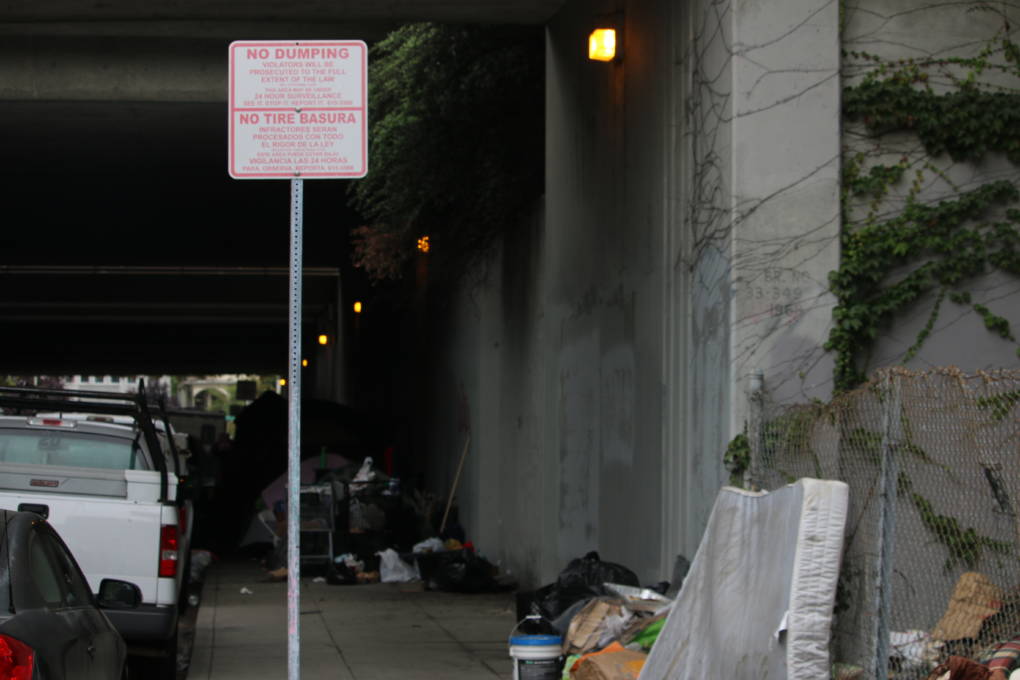
"caption": "Neighbors have sent the city of Oakland many complaints about a homeless encampment underneath the freeway on 29th Street in the Hoover-Foster neighborhood. The city has struggled to serve its homeless population, which grew about 26 percent between 2015 and 2017.",
"description": "Neighbors have sent the city of Oakland many complaints about a homeless encampment underneath the freeway on 29th Street in the Hoover-Foster neighborhood. The city has struggled to serve its homeless population, which grew about 26 percent between 2015 and 2017.",
"title": "IMG_2853",
"credit": "Devin Katayama/KQED ",
"status": "inherit",
"isLoading": false,
"fetchFailed": false
},
"stateofhealth_360144": {
"type": "attachments",
"id": "stateofhealth_360144",
"meta": {
"index": "attachments_1716263798",
"site": "stateofhealth",
"id": "360144",
"found": true
},
"parent": 360142,
"imgSizes": {
"small": {
"file": "https://ww2.kqed.org/app/uploads/sites/27/2017/08/Cov-Cal-logo-520x346.png",
"width": 520,
"mimeType": "image/png",
"height": 346
},
"twentyfourteen-full-width": {
"file": "https://ww2.kqed.org/app/uploads/sites/27/2017/08/Cov-Cal-logo-1024x576.png",
"width": 1024,
"mimeType": "image/png",
"height": 576
},
"thumbnail": {
"file": "https://ww2.kqed.org/app/uploads/sites/27/2017/08/Cov-Cal-logo-160x107.png",
"width": 160,
"mimeType": "image/png",
"height": 107
},
"fd-sm": {
"file": "https://ww2.kqed.org/app/uploads/sites/27/2017/08/Cov-Cal-logo-960x639.png",
"width": 960,
"mimeType": "image/png",
"height": 639
},
"post-thumbnail": {
"file": "https://ww2.kqed.org/app/uploads/sites/27/2017/08/Cov-Cal-logo-672x372.png",
"width": 672,
"mimeType": "image/png",
"height": 372
},
"xsmall": {
"file": "https://ww2.kqed.org/app/uploads/sites/27/2017/08/Cov-Cal-logo-375x250.png",
"width": 375,
"mimeType": "image/png",
"height": 250
},
"kqedFullSize": {
"file": "https://ww2.kqed.org/app/uploads/sites/27/2017/08/Cov-Cal-logo-e1501627792333.png",
"width": 1024,
"height": 682
},
"large": {
"file": "https://ww2.kqed.org/app/uploads/sites/27/2017/08/Cov-Cal-logo-1020x679.png",
"width": 1020,
"mimeType": "image/png",
"height": 679
},
"guest-author-50": {
"file": "https://ww2.kqed.org/app/uploads/sites/27/2017/08/Cov-Cal-logo-50x50.png",
"width": 50,
"mimeType": "image/png",
"height": 50
},
"guest-author-96": {
"file": "https://ww2.kqed.org/app/uploads/sites/27/2017/08/Cov-Cal-logo-96x96.png",
"width": 96,
"mimeType": "image/png",
"height": 96
},
"medium": {
"file": "https://ww2.kqed.org/app/uploads/sites/27/2017/08/Cov-Cal-logo-800x533.png",
"width": 800,
"mimeType": "image/png",
"height": 533
},
"guest-author-64": {
"file": "https://ww2.kqed.org/app/uploads/sites/27/2017/08/Cov-Cal-logo-64x64.png",
"width": 64,
"mimeType": "image/png",
"height": 64
},
"guest-author-32": {
"file": "https://ww2.kqed.org/app/uploads/sites/27/2017/08/Cov-Cal-logo-32x32.png",
"width": 32,
"mimeType": "image/png",
"height": 32
},
"detail": {
"file": "https://ww2.kqed.org/app/uploads/sites/27/2017/08/Cov-Cal-logo-150x150.png",
"width": 150,
"mimeType": "image/png",
"height": 150
},
"medium_large": {
"file": "https://ww2.kqed.org/app/uploads/sites/27/2017/08/Cov-Cal-logo-768x512.png",
"width": 768,
"mimeType": "image/png",
"height": 512
},
"guest-author-128": {
"file": "https://ww2.kqed.org/app/uploads/sites/27/2017/08/Cov-Cal-logo-128x128.png",
"width": 128,
"mimeType": "image/png",
"height": 128
},
"xxsmall": {
"file": "https://ww2.kqed.org/app/uploads/sites/27/2017/08/Cov-Cal-logo-240x160.png",
"width": 240,
"mimeType": "image/png",
"height": 160
}
},
"publishDate": 1501624598,
"modified": 1501624598,
"caption": null,
"description": null,
"title": "Cov Cal logo",
"credit": null,
"status": "inherit",
"isLoading": false,
"fetchFailed": false
},
"arts_13783728": {
"type": "attachments",
"id": "arts_13783728",
"meta": {
"index": "attachments_1716263798",
"site": "arts",
"id": "13783728",
"found": true
},
"parent": 13782903,
"imgSizes": {
"small": {
"file": "https://ww2.kqed.org/app/uploads/sites/2/2017/07/Ebony-McKinney3-520x293.jpg",
"width": 520,
"mimeType": "image/jpeg",
"height": 293
},
"twentyfourteen-full-width": {
"file": "https://ww2.kqed.org/app/uploads/sites/2/2017/07/Ebony-McKinney3-1038x576.jpg",
"width": 1038,
"mimeType": "image/jpeg",
"height": 576
},
"thumbnail": {
"file": "https://ww2.kqed.org/app/uploads/sites/2/2017/07/Ebony-McKinney3-160x90.jpg",
"width": 160,
"mimeType": "image/jpeg",
"height": 90
},
"fd-sm": {
"file": "https://ww2.kqed.org/app/uploads/sites/2/2017/07/Ebony-McKinney3-960x540.jpg",
"width": 960,
"mimeType": "image/jpeg",
"height": 540
},
"post-thumbnail": {
"file": "https://ww2.kqed.org/app/uploads/sites/2/2017/07/Ebony-McKinney3-672x372.jpg",
"width": 672,
"mimeType": "image/jpeg",
"height": 372
},
"xsmall": {
"file": "https://ww2.kqed.org/app/uploads/sites/2/2017/07/Ebony-McKinney3-375x211.jpg",
"width": 375,
"mimeType": "image/jpeg",
"height": 211
},
"kqedFullSize": {
"file": "https://ww2.kqed.org/app/uploads/sites/2/2017/07/Ebony-McKinney3.jpg",
"width": 1920,
"height": 1080
},
"large": {
"file": "https://ww2.kqed.org/app/uploads/sites/2/2017/07/Ebony-McKinney3-1020x574.jpg",
"width": 1020,
"mimeType": "image/jpeg",
"height": 574
},
"xlarge": {
"file": "https://ww2.kqed.org/app/uploads/sites/2/2017/07/Ebony-McKinney3-1180x664.jpg",
"width": 1180,
"mimeType": "image/jpeg",
"height": 664
},
"guest-author-50": {
"file": "https://ww2.kqed.org/app/uploads/sites/2/2017/07/Ebony-McKinney3-50x50.jpg",
"width": 50,
"mimeType": "image/jpeg",
"height": 50
},
"guest-author-96": {
"file": "https://ww2.kqed.org/app/uploads/sites/2/2017/07/Ebony-McKinney3-96x96.jpg",
"width": 96,
"mimeType": "image/jpeg",
"height": 96
},
"medium": {
"file": "https://ww2.kqed.org/app/uploads/sites/2/2017/07/Ebony-McKinney3-800x450.jpg",
"width": 800,
"mimeType": "image/jpeg",
"height": 450
},
"guest-author-64": {
"file": "https://ww2.kqed.org/app/uploads/sites/2/2017/07/Ebony-McKinney3-64x64.jpg",
"width": 64,
"mimeType": "image/jpeg",
"height": 64
},
"guest-author-32": {
"file": "https://ww2.kqed.org/app/uploads/sites/2/2017/07/Ebony-McKinney3-32x32.jpg",
"width": 32,
"mimeType": "image/jpeg",
"height": 32
},
"fd-lrg": {
"file": "https://ww2.kqed.org/app/uploads/sites/2/2017/07/Ebony-McKinney3-1920x1080.jpg",
"width": 1920,
"mimeType": "image/jpeg",
"height": 1080
},
"fd-med": {
"file": "https://ww2.kqed.org/app/uploads/sites/2/2017/07/Ebony-McKinney3-1180x664.jpg",
"width": 1180,
"mimeType": "image/jpeg",
"height": 664
},
"full-width": {
"file": "https://ww2.kqed.org/app/uploads/sites/2/2017/07/Ebony-McKinney3-1920x1080.jpg",
"width": 1920,
"mimeType": "image/jpeg",
"height": 1080
},
"detail": {
"file": "https://ww2.kqed.org/app/uploads/sites/2/2017/07/Ebony-McKinney3-150x150.jpg",
"width": 150,
"mimeType": "image/jpeg",
"height": 150
},
"medium_large": {
"file": "https://ww2.kqed.org/app/uploads/sites/2/2017/07/Ebony-McKinney3-768x432.jpg",
"width": 768,
"mimeType": "image/jpeg",
"height": 432
},
"guest-author-128": {
"file": "https://ww2.kqed.org/app/uploads/sites/2/2017/07/Ebony-McKinney3-128x128.jpg",
"width": 128,
"mimeType": "image/jpeg",
"height": 128
},
"xxsmall": {
"file": "https://ww2.kqed.org/app/uploads/sites/2/2017/07/Ebony-McKinney3-240x135.jpg",
"width": 240,
"mimeType": "image/jpeg",
"height": 135
}
},
"publishDate": 1501548384,
"modified": 1501561585,
"caption": "Ebony McKinney at the Women's Building in June 2014 for Emergence, the annual convening of Emerging Arts Professionals",
"description": "Ebony McKinney at the Women's Building in June 2014 for Emergence, the annual convening of Emerging Arts Professionals",
"title": "Ebony McKinney3",
"credit": "Courtesy of Emerging Arts Professionals/SFBA",
"status": "inherit",
"isLoading": false,
"fetchFailed": false
},
"news_11606377": {
"type": "attachments",
"id": "news_11606377",
"meta": {
"index": "attachments_1716263798",
"site": "news",
"id": "11606377",
"found": true
},
"parent": 11606374,
"imgSizes": {
"small": {
"file": "https://ww2.kqed.org/app/uploads/sites/10/2017/08/CoCo-At-Risk-Kids-1-520x195.jpg",
"width": 520,
"mimeType": "image/jpeg",
"height": 195
},
"thumbnail": {
"file": "https://ww2.kqed.org/app/uploads/sites/10/2017/08/CoCo-At-Risk-Kids-1-160x60.jpg",
"width": 160,
"mimeType": "image/jpeg",
"height": 60
},
"post-thumbnail": {
"file": "https://ww2.kqed.org/app/uploads/sites/10/2017/08/CoCo-At-Risk-Kids-1-672x300.jpg",
"width": 672,
"mimeType": "image/jpeg",
"height": 300
},
"xsmall": {
"file": "https://ww2.kqed.org/app/uploads/sites/10/2017/08/CoCo-At-Risk-Kids-1-375x141.jpg",
"width": 375,
"mimeType": "image/jpeg",
"height": 141
},
"kqedFullSize": {
"file": "https://ww2.kqed.org/app/uploads/sites/10/2017/08/CoCo-At-Risk-Kids-1.jpg",
"width": 800,
"height": 300
},
"guest-author-50": {
"file": "https://ww2.kqed.org/app/uploads/sites/10/2017/08/CoCo-At-Risk-Kids-1-50x50.jpg",
"width": 50,
"mimeType": "image/jpeg",
"height": 50
},
"guest-author-96": {
"file": "https://ww2.kqed.org/app/uploads/sites/10/2017/08/CoCo-At-Risk-Kids-1-96x96.jpg",
"width": 96,
"mimeType": "image/jpeg",
"height": 96
},
"medium": {
"file": "https://ww2.kqed.org/app/uploads/sites/10/2017/08/CoCo-At-Risk-Kids-1-800x300.jpg",
"width": 800,
"mimeType": "image/jpeg",
"height": 300
},
"guest-author-64": {
"file": "https://ww2.kqed.org/app/uploads/sites/10/2017/08/CoCo-At-Risk-Kids-1-64x64.jpg",
"width": 64,
"mimeType": "image/jpeg",
"height": 64
},
"guest-author-32": {
"file": "https://ww2.kqed.org/app/uploads/sites/10/2017/08/CoCo-At-Risk-Kids-1-32x32.jpg",
"width": 32,
"mimeType": "image/jpeg",
"height": 32
},
"detail": {
"file": "https://ww2.kqed.org/app/uploads/sites/10/2017/08/CoCo-At-Risk-Kids-1-150x150.jpg",
"width": 150,
"mimeType": "image/jpeg",
"height": 150
},
"guest-author-128": {
"file": "https://ww2.kqed.org/app/uploads/sites/10/2017/08/CoCo-At-Risk-Kids-1-128x128.jpg",
"width": 128,
"mimeType": "image/jpeg",
"height": 128
},
"xxsmall": {
"file": "https://ww2.kqed.org/app/uploads/sites/10/2017/08/CoCo-At-Risk-Kids-1-240x90.jpg",
"width": 240,
"mimeType": "image/jpeg",
"height": 90
}
},
"publishDate": 1501619784,
"modified": 1501623062,
"caption": null,
"description": null,
"title": "CoCo At-Risk Kids",
"credit": "Courtesy of Contra Costa Health Services",
"status": "inherit",
"isLoading": false,
"fetchFailed": false
},
"news_11606379": {
"type": "attachments",
"id": "news_11606379",
"meta": {
"index": "attachments_1716263798",
"site": "news",
"id": "11606379",
"found": true
},
"parent": 11606378,
"imgSizes": {
"small": {
"file": "https://ww2.kqed.org/app/uploads/sites/10/2017/08/gettyimages-669206180_wide-4050bd8ca0e2a73302ef648cdd808be1832f26b9-520x292.jpg",
"width": 520,
"mimeType": "image/jpeg",
"height": 292
},
"twentyfourteen-full-width": {
"file": "https://ww2.kqed.org/app/uploads/sites/10/2017/08/gettyimages-669206180_wide-4050bd8ca0e2a73302ef648cdd808be1832f26b9-1038x576.jpg",
"width": 1038,
"mimeType": "image/jpeg",
"height": 576
},
"thumbnail": {
"file": "https://ww2.kqed.org/app/uploads/sites/10/2017/08/gettyimages-669206180_wide-4050bd8ca0e2a73302ef648cdd808be1832f26b9-160x90.jpg",
"width": 160,
"mimeType": "image/jpeg",
"height": 90
},
"fd-sm": {
"file": "https://ww2.kqed.org/app/uploads/sites/10/2017/08/gettyimages-669206180_wide-4050bd8ca0e2a73302ef648cdd808be1832f26b9-960x540.jpg",
"width": 960,
"mimeType": "image/jpeg",
"height": 540
},
"post-thumbnail": {
"file": "https://ww2.kqed.org/app/uploads/sites/10/2017/08/gettyimages-669206180_wide-4050bd8ca0e2a73302ef648cdd808be1832f26b9-672x372.jpg",
"width": 672,
"mimeType": "image/jpeg",
"height": 372
},
"xsmall": {
"file": "https://ww2.kqed.org/app/uploads/sites/10/2017/08/gettyimages-669206180_wide-4050bd8ca0e2a73302ef648cdd808be1832f26b9-375x211.jpg",
"width": 375,
"mimeType": "image/jpeg",
"height": 211
},
"kqedFullSize": {
"file": "https://ww2.kqed.org/app/uploads/sites/10/2017/08/gettyimages-669206180_wide-4050bd8ca0e2a73302ef648cdd808be1832f26b9-e1501619970277.jpg",
"width": 1920,
"height": 1080
},
"large": {
"file": "https://ww2.kqed.org/app/uploads/sites/10/2017/08/gettyimages-669206180_wide-4050bd8ca0e2a73302ef648cdd808be1832f26b9-1020x574.jpg",
"width": 1020,
"mimeType": "image/jpeg",
"height": 574
},
"xlarge": {
"file": "https://ww2.kqed.org/app/uploads/sites/10/2017/08/gettyimages-669206180_wide-4050bd8ca0e2a73302ef648cdd808be1832f26b9-1180x664.jpg",
"width": 1180,
"mimeType": "image/jpeg",
"height": 664
},
"guest-author-50": {
"file": "https://ww2.kqed.org/app/uploads/sites/10/2017/08/gettyimages-669206180_wide-4050bd8ca0e2a73302ef648cdd808be1832f26b9-50x50.jpg",
"width": 50,
"mimeType": "image/jpeg",
"height": 50
},
"guest-author-96": {
"file": "https://ww2.kqed.org/app/uploads/sites/10/2017/08/gettyimages-669206180_wide-4050bd8ca0e2a73302ef648cdd808be1832f26b9-96x96.jpg",
"width": 96,
"mimeType": "image/jpeg",
"height": 96
},
"medium": {
"file": "https://ww2.kqed.org/app/uploads/sites/10/2017/08/gettyimages-669206180_wide-4050bd8ca0e2a73302ef648cdd808be1832f26b9-800x450.jpg",
"width": 800,
"mimeType": "image/jpeg",
"height": 450
},
"guest-author-64": {
"file": "https://ww2.kqed.org/app/uploads/sites/10/2017/08/gettyimages-669206180_wide-4050bd8ca0e2a73302ef648cdd808be1832f26b9-64x64.jpg",
"width": 64,
"mimeType": "image/jpeg",
"height": 64
},
"guest-author-32": {
"file": "https://ww2.kqed.org/app/uploads/sites/10/2017/08/gettyimages-669206180_wide-4050bd8ca0e2a73302ef648cdd808be1832f26b9-32x32.jpg",
"width": 32,
"mimeType": "image/jpeg",
"height": 32
},
"fd-lrg": {
"file": "https://ww2.kqed.org/app/uploads/sites/10/2017/08/gettyimages-669206180_wide-4050bd8ca0e2a73302ef648cdd808be1832f26b9-1920x1080.jpg",
"width": 1920,
"mimeType": "image/jpeg",
"height": 1080
},
"fd-med": {
"file": "https://ww2.kqed.org/app/uploads/sites/10/2017/08/gettyimages-669206180_wide-4050bd8ca0e2a73302ef648cdd808be1832f26b9-1180x664.jpg",
"width": 1180,
"mimeType": "image/jpeg",
"height": 664
},
"full-width": {
"file": "https://ww2.kqed.org/app/uploads/sites/10/2017/08/gettyimages-669206180_wide-4050bd8ca0e2a73302ef648cdd808be1832f26b9-1920x1080.jpg",
"width": 1920,
"mimeType": "image/jpeg",
"height": 1080
},
"detail": {
"file": "https://ww2.kqed.org/app/uploads/sites/10/2017/08/gettyimages-669206180_wide-4050bd8ca0e2a73302ef648cdd808be1832f26b9-150x150.jpg",
"width": 150,
"mimeType": "image/jpeg",
"height": 150
},
"guest-author-128": {
"file": "https://ww2.kqed.org/app/uploads/sites/10/2017/08/gettyimages-669206180_wide-4050bd8ca0e2a73302ef648cdd808be1832f26b9-128x128.jpg",
"width": 128,
"mimeType": "image/jpeg",
"height": 128
},
"xxsmall": {
"file": "https://ww2.kqed.org/app/uploads/sites/10/2017/08/gettyimages-669206180_wide-4050bd8ca0e2a73302ef648cdd808be1832f26b9-240x135.jpg",
"width": 240,
"mimeType": "image/jpeg",
"height": 135
}
},
"publishDate": 1501619803,
"modified": 1501619951,
"caption": "A Border Patrol agent keeps watch over the U.S.-Mexico border fence just south of San Diego earlier this year. The Department of Homeland Security announced Tuesday that it would waive environmental and other laws to expedite its construction of barriers and roads in the region.",
"description": "A Border Patrol agent keeps watch over the U.S.-Mexico border fence just south of San Diego earlier this year. The Department of Homeland Security announced Tuesday that it would waive environmental and other laws to expedite its construction of barriers and roads in the region.",
"title": "A Border Patrol agent keeps watch over the U.S.-Mexico border fence just south of San Diego earlier this year. The Department of Homeland Security announced Tuesday that it would waive environmental and other laws to expedite its construction of barriers and roads in the region.",
"credit": "Sandy Huffaker/AFP/Getty Images",
"status": "inherit",
"isLoading": false,
"fetchFailed": false
},
"arts_13782671": {
"type": "attachments",
"id": "arts_13782671",
"meta": {
"index": "attachments_1716263798",
"site": "arts",
"id": "13782671",
"found": true
},
"parent": 13782666,
"imgSizes": {
"small": {
"file": "https://ww2.kqed.org/app/uploads/sites/2/2017/07/Shepard-recently-e1501537159108-520x293.jpg",
"width": 520,
"mimeType": "image/jpeg",
"height": 293
},
"twentyfourteen-full-width": {
"file": "https://ww2.kqed.org/app/uploads/sites/2/2017/07/Shepard-recently-e1501537159108-1038x576.jpg",
"width": 1038,
"mimeType": "image/jpeg",
"height": 576
},
"thumbnail": {
"file": "https://ww2.kqed.org/app/uploads/sites/2/2017/07/Shepard-recently-e1501537159108-160x90.jpg",
"width": 160,
"mimeType": "image/jpeg",
"height": 90
},
"fd-sm": {
"file": "https://ww2.kqed.org/app/uploads/sites/2/2017/07/Shepard-recently-e1501537159108-960x540.jpg",
"width": 960,
"mimeType": "image/jpeg",
"height": 540
},
"post-thumbnail": {
"file": "https://ww2.kqed.org/app/uploads/sites/2/2017/07/Shepard-recently-e1501537159108-672x372.jpg",
"width": 672,
"mimeType": "image/jpeg",
"height": 372
},
"xsmall": {
"file": "https://ww2.kqed.org/app/uploads/sites/2/2017/07/Shepard-recently-e1501537159108-375x211.jpg",
"width": 375,
"mimeType": "image/jpeg",
"height": 211
},
"kqedFullSize": {
"file": "https://ww2.kqed.org/app/uploads/sites/2/2017/07/Shepard-recently-e1501537159108.jpg",
"width": 5616,
"height": 3159
},
"large": {
"file": "https://ww2.kqed.org/app/uploads/sites/2/2017/07/Shepard-recently-e1501537159108-1020x574.jpg",
"width": 1020,
"mimeType": "image/jpeg",
"height": 574
},
"xlarge": {
"file": "https://ww2.kqed.org/app/uploads/sites/2/2017/07/Shepard-recently-e1501537159108-1180x664.jpg",
"width": 1180,
"mimeType": "image/jpeg",
"height": 664
},
"guest-author-50": {
"file": "https://ww2.kqed.org/app/uploads/sites/2/2017/07/Shepard-recently-e1501537159108-50x50.jpg",
"width": 50,
"mimeType": "image/jpeg",
"height": 50
},
"guest-author-96": {
"file": "https://ww2.kqed.org/app/uploads/sites/2/2017/07/Shepard-recently-e1501537159108-96x96.jpg",
"width": 96,
"mimeType": "image/jpeg",
"height": 96
},
"medium": {
"file": "https://ww2.kqed.org/app/uploads/sites/2/2017/07/Shepard-recently-e1501537159108-800x450.jpg",
"width": 800,
"mimeType": "image/jpeg",
"height": 450
},
"guest-author-64": {
"file": "https://ww2.kqed.org/app/uploads/sites/2/2017/07/Shepard-recently-e1501537159108-64x64.jpg",
"width": 64,
"mimeType": "image/jpeg",
"height": 64
},
"guest-author-32": {
"file": "https://ww2.kqed.org/app/uploads/sites/2/2017/07/Shepard-recently-e1501537159108-32x32.jpg",
"width": 32,
"mimeType": "image/jpeg",
"height": 32
},
"fd-lrg": {
"file": "https://ww2.kqed.org/app/uploads/sites/2/2017/07/Shepard-recently-e1501537159108-1920x1080.jpg",
"width": 1920,
"mimeType": "image/jpeg",
"height": 1080
},
"fd-med": {
"file": "https://ww2.kqed.org/app/uploads/sites/2/2017/07/Shepard-recently-e1501537159108-1180x664.jpg",
"width": 1180,
"mimeType": "image/jpeg",
"height": 664
},
"full-width": {
"file": "https://ww2.kqed.org/app/uploads/sites/2/2017/07/Shepard-recently-e1501537159108-1920x1080.jpg",
"width": 1920,
"mimeType": "image/jpeg",
"height": 1080
},
"detail": {
"file": "https://ww2.kqed.org/app/uploads/sites/2/2017/07/Shepard-recently-e1501537159108-150x150.jpg",
"width": 150,
"mimeType": "image/jpeg",
"height": 150
},
"medium_large": {
"file": "https://ww2.kqed.org/app/uploads/sites/2/2017/07/Shepard-recently-e1501537159108-768x432.jpg",
"width": 768,
"mimeType": "image/jpeg",
"height": 432
},
"guest-author-128": {
"file": "https://ww2.kqed.org/app/uploads/sites/2/2017/07/Shepard-recently-e1501537159108-128x128.jpg",
"width": 128,
"mimeType": "image/jpeg",
"height": 128
},
"xxsmall": {
"file": "https://ww2.kqed.org/app/uploads/sites/2/2017/07/Shepard-recently-e1501537159108-240x135.jpg",
"width": 240,
"mimeType": "image/jpeg",
"height": 135
}
},
"publishDate": 1501537030,
"modified": 1501553475,
"caption": "Sam Shepard at a Magic Theatre reading in 2013.",
"description": "Sam Shepard at a Magic Theatre reading in 2013.",
"title": "Sam Shepard at a Magic Theatre reading in 2013.",
"credit": "Photo: Jennifer Reile",
"status": "inherit",
"isLoading": false,
"fetchFailed": false
},
"news_11606183": {
"type": "attachments",
"id": "news_11606183",
"meta": {
"index": "attachments_1716263798",
"site": "news",
"id": "11606183",
"found": true
},
"parent": 11604622,
"imgSizes": {
"small": {
"file": "https://ww2.kqed.org/app/uploads/sites/10/2017/08/PotScale-520x327.jpg",
"width": 520,
"mimeType": "image/jpeg",
"height": 327
},
"twentyfourteen-full-width": {
"file": "https://ww2.kqed.org/app/uploads/sites/10/2017/08/PotScale-1038x576.jpg",
"width": 1038,
"mimeType": "image/jpeg",
"height": 576
},
"thumbnail": {
"file": "https://ww2.kqed.org/app/uploads/sites/10/2017/08/PotScale-160x101.jpg",
"width": 160,
"mimeType": "image/jpeg",
"height": 101
},
"fd-sm": {
"file": "https://ww2.kqed.org/app/uploads/sites/10/2017/08/PotScale-960x605.jpg",
"width": 960,
"mimeType": "image/jpeg",
"height": 605
},
"post-thumbnail": {
"file": "https://ww2.kqed.org/app/uploads/sites/10/2017/08/PotScale-672x372.jpg",
"width": 672,
"mimeType": "image/jpeg",
"height": 372
},
"xsmall": {
"file": "https://ww2.kqed.org/app/uploads/sites/10/2017/08/PotScale-375x236.jpg",
"width": 375,
"mimeType": "image/jpeg",
"height": 236
},
"kqedFullSize": {
"file": "https://ww2.kqed.org/app/uploads/sites/10/2017/08/PotScale.jpg",
"width": 1920,
"height": 1209
},
"large": {
"file": "https://ww2.kqed.org/app/uploads/sites/10/2017/08/PotScale-1020x642.jpg",
"width": 1020,
"mimeType": "image/jpeg",
"height": 642
},
"xlarge": {
"file": "https://ww2.kqed.org/app/uploads/sites/10/2017/08/PotScale-1180x743.jpg",
"width": 1180,
"mimeType": "image/jpeg",
"height": 743
},
"guest-author-50": {
"file": "https://ww2.kqed.org/app/uploads/sites/10/2017/08/PotScale-50x50.jpg",
"width": 50,
"mimeType": "image/jpeg",
"height": 50
},
"guest-author-96": {
"file": "https://ww2.kqed.org/app/uploads/sites/10/2017/08/PotScale-96x96.jpg",
"width": 96,
"mimeType": "image/jpeg",
"height": 96
},
"medium": {
"file": "https://ww2.kqed.org/app/uploads/sites/10/2017/08/PotScale-800x504.jpg",
"width": 800,
"mimeType": "image/jpeg",
"height": 504
},
"guest-author-64": {
"file": "https://ww2.kqed.org/app/uploads/sites/10/2017/08/PotScale-64x64.jpg",
"width": 64,
"mimeType": "image/jpeg",
"height": 64
},
"guest-author-32": {
"file": "https://ww2.kqed.org/app/uploads/sites/10/2017/08/PotScale-32x32.jpg",
"width": 32,
"mimeType": "image/jpeg",
"height": 32
},
"fd-lrg": {
"file": "https://ww2.kqed.org/app/uploads/sites/10/2017/08/PotScale-1920x1209.jpg",
"width": 1920,
"mimeType": "image/jpeg",
"height": 1209
},
"fd-med": {
"file": "https://ww2.kqed.org/app/uploads/sites/10/2017/08/PotScale-1180x743.jpg",
"width": 1180,
"mimeType": "image/jpeg",
"height": 743
},
"full-width": {
"file": "https://ww2.kqed.org/app/uploads/sites/10/2017/08/PotScale-1920x1209.jpg",
"width": 1920,
"mimeType": "image/jpeg",
"height": 1209
},
"detail": {
"file": "https://ww2.kqed.org/app/uploads/sites/10/2017/08/PotScale-150x150.jpg",
"width": 150,
"mimeType": "image/jpeg",
"height": 150
},
"guest-author-128": {
"file": "https://ww2.kqed.org/app/uploads/sites/10/2017/08/PotScale-128x128.jpg",
"width": 128,
"mimeType": "image/jpeg",
"height": 128
},
"xxsmall": {
"file": "https://ww2.kqed.org/app/uploads/sites/10/2017/08/PotScale-240x151.jpg",
"width": 240,
"mimeType": "image/jpeg",
"height": 151
}
},
"publishDate": 1501613390,
"modified": 1501613474,
"caption": "A vendor weighs buds for medical marijuana patients in Los Angeles.",
"description": "A vendor weighs buds for medical marijuana patients in Los Angeles.",
"title": "PotScale",
"credit": "FREDERIC J. BROWN/AFP/Getty Images",
"status": "inherit",
"isLoading": false,
"fetchFailed": false
},
"news_11604945": {
"type": "attachments",
"id": "news_11604945",
"meta": {
"index": "attachments_1716263798",
"site": "news",
"id": "11604945",
"found": true
},
"parent": 11604944,
"imgSizes": {
"small": {
"file": "https://ww2.kqed.org/app/uploads/sites/10/2017/07/istock-693510540_custom-3f9bcc38f14522db26b0851899e693edd8505c45-520x347.jpg",
"width": 520,
"mimeType": "image/jpeg",
"height": 347
},
"twentyfourteen-full-width": {
"file": "https://ww2.kqed.org/app/uploads/sites/10/2017/07/istock-693510540_custom-3f9bcc38f14522db26b0851899e693edd8505c45-1038x576.jpg",
"width": 1038,
"mimeType": "image/jpeg",
"height": 576
},
"thumbnail": {
"file": "https://ww2.kqed.org/app/uploads/sites/10/2017/07/istock-693510540_custom-3f9bcc38f14522db26b0851899e693edd8505c45-160x107.jpg",
"width": 160,
"mimeType": "image/jpeg",
"height": 107
},
"fd-sm": {
"file": "https://ww2.kqed.org/app/uploads/sites/10/2017/07/istock-693510540_custom-3f9bcc38f14522db26b0851899e693edd8505c45-960x640.jpg",
"width": 960,
"mimeType": "image/jpeg",
"height": 640
},
"post-thumbnail": {
"file": "https://ww2.kqed.org/app/uploads/sites/10/2017/07/istock-693510540_custom-3f9bcc38f14522db26b0851899e693edd8505c45-672x372.jpg",
"width": 672,
"mimeType": "image/jpeg",
"height": 372
},
"xsmall": {
"file": "https://ww2.kqed.org/app/uploads/sites/10/2017/07/istock-693510540_custom-3f9bcc38f14522db26b0851899e693edd8505c45-375x250.jpg",
"width": 375,
"mimeType": "image/jpeg",
"height": 250
},
"kqedFullSize": {
"file": "https://ww2.kqed.org/app/uploads/sites/10/2017/07/istock-693510540_custom-3f9bcc38f14522db26b0851899e693edd8505c45-e1501609447480.jpg",
"width": 1920,
"height": 1280
},
"large": {
"file": "https://ww2.kqed.org/app/uploads/sites/10/2017/07/istock-693510540_custom-3f9bcc38f14522db26b0851899e693edd8505c45-1020x680.jpg",
"width": 1020,
"mimeType": "image/jpeg",
"height": 680
},
"xlarge": {
"file": "https://ww2.kqed.org/app/uploads/sites/10/2017/07/istock-693510540_custom-3f9bcc38f14522db26b0851899e693edd8505c45-1180x787.jpg",
"width": 1180,
"mimeType": "image/jpeg",
"height": 787
},
"guest-author-50": {
"file": "https://ww2.kqed.org/app/uploads/sites/10/2017/07/istock-693510540_custom-3f9bcc38f14522db26b0851899e693edd8505c45-50x50.jpg",
"width": 50,
"mimeType": "image/jpeg",
"height": 50
},
"guest-author-96": {
"file": "https://ww2.kqed.org/app/uploads/sites/10/2017/07/istock-693510540_custom-3f9bcc38f14522db26b0851899e693edd8505c45-96x96.jpg",
"width": 96,
"mimeType": "image/jpeg",
"height": 96
},
"medium": {
"file": "https://ww2.kqed.org/app/uploads/sites/10/2017/07/istock-693510540_custom-3f9bcc38f14522db26b0851899e693edd8505c45-800x533.jpg",
"width": 800,
"mimeType": "image/jpeg",
"height": 533
},
"guest-author-64": {
"file": "https://ww2.kqed.org/app/uploads/sites/10/2017/07/istock-693510540_custom-3f9bcc38f14522db26b0851899e693edd8505c45-64x64.jpg",
"width": 64,
"mimeType": "image/jpeg",
"height": 64
},
"guest-author-32": {
"file": "https://ww2.kqed.org/app/uploads/sites/10/2017/07/istock-693510540_custom-3f9bcc38f14522db26b0851899e693edd8505c45-32x32.jpg",
"width": 32,
"mimeType": "image/jpeg",
"height": 32
},
"fd-lrg": {
"file": "https://ww2.kqed.org/app/uploads/sites/10/2017/07/istock-693510540_custom-3f9bcc38f14522db26b0851899e693edd8505c45-1920x1280.jpg",
"width": 1920,
"mimeType": "image/jpeg",
"height": 1280
},
"fd-med": {
"file": "https://ww2.kqed.org/app/uploads/sites/10/2017/07/istock-693510540_custom-3f9bcc38f14522db26b0851899e693edd8505c45-1180x787.jpg",
"width": 1180,
"mimeType": "image/jpeg",
"height": 787
},
"full-width": {
"file": "https://ww2.kqed.org/app/uploads/sites/10/2017/07/istock-693510540_custom-3f9bcc38f14522db26b0851899e693edd8505c45-1920x1280.jpg",
"width": 1920,
"mimeType": "image/jpeg",
"height": 1280
},
"detail": {
"file": "https://ww2.kqed.org/app/uploads/sites/10/2017/07/istock-693510540_custom-3f9bcc38f14522db26b0851899e693edd8505c45-150x150.jpg",
"width": 150,
"mimeType": "image/jpeg",
"height": 150
},
"guest-author-128": {
"file": "https://ww2.kqed.org/app/uploads/sites/10/2017/07/istock-693510540_custom-3f9bcc38f14522db26b0851899e693edd8505c45-128x128.jpg",
"width": 128,
"mimeType": "image/jpeg",
"height": 128
},
"xxsmall": {
"file": "https://ww2.kqed.org/app/uploads/sites/10/2017/07/istock-693510540_custom-3f9bcc38f14522db26b0851899e693edd8505c45-240x160.jpg",
"width": 240,
"mimeType": "image/jpeg",
"height": 160
}
},
"publishDate": 1501549626,
"modified": 1501609431,
"caption": "While the number of Asian-American lawyers and law students increased greatly in recent decades, there are still few Asian-American lawyers in top positions in the legal field.",
"description": "While the number of Asian-American lawyers and law students increased greatly in recent decades, there are still few Asian-American lawyers in top positions in the legal field.",
"title": "While the number of Asian-Americans lawyers and law students increased greatly in recent decades, there are still few Asian-American lawyers in top positions in the legal field.",
"credit": "Tawatdchai Muelae/Getty Images/iStockphoto",
"status": "inherit",
"isLoading": false,
"fetchFailed": false
},
"news_11541311": {
"type": "attachments",
"id": "news_11541311",
"meta": {
"index": "attachments_1716263798",
"site": "news",
"id": "11541311",
"found": true
},
"parent": 11540965,
"imgSizes": {
"small": {
"file": "https://ww2.kqed.org/app/uploads/sites/10/2017/06/RS4606_alt_587-520x347.jpg",
"width": 520,
"mimeType": "image/jpeg",
"height": 347
},
"twentyfourteen-full-width": {
"file": "https://ww2.kqed.org/app/uploads/sites/10/2017/06/RS4606_alt_587-1038x576.jpg",
"width": 1038,
"mimeType": "image/jpeg",
"height": 576
},
"thumbnail": {
"file": "https://ww2.kqed.org/app/uploads/sites/10/2017/06/RS4606_alt_587-160x107.jpg",
"width": 160,
"mimeType": "image/jpeg",
"height": 107
},
"fd-sm": {
"file": "https://ww2.kqed.org/app/uploads/sites/10/2017/06/RS4606_alt_587-960x640.jpg",
"width": 960,
"mimeType": "image/jpeg",
"height": 640
},
"post-thumbnail": {
"file": "https://ww2.kqed.org/app/uploads/sites/10/2017/06/RS4606_alt_587-672x372.jpg",
"width": 672,
"mimeType": "image/jpeg",
"height": 372
},
"xsmall": {
"file": "https://ww2.kqed.org/app/uploads/sites/10/2017/06/RS4606_alt_587-375x250.jpg",
"width": 375,
"mimeType": "image/jpeg",
"height": 250
},
"kqedFullSize": {
"file": "https://ww2.kqed.org/app/uploads/sites/10/2017/06/RS4606_alt_587.jpg",
"width": 1920,
"height": 1280
},
"large": {
"file": "https://ww2.kqed.org/app/uploads/sites/10/2017/06/RS4606_alt_587-1020x680.jpg",
"width": 1020,
"mimeType": "image/jpeg",
"height": 680
},
"xlarge": {
"file": "https://ww2.kqed.org/app/uploads/sites/10/2017/06/RS4606_alt_587-1180x787.jpg",
"width": 1180,
"mimeType": "image/jpeg",
"height": 787
},
"guest-author-50": {
"file": "https://ww2.kqed.org/app/uploads/sites/10/2017/06/RS4606_alt_587-50x50.jpg",
"width": 50,
"mimeType": "image/jpeg",
"height": 50
},
"guest-author-96": {
"file": "https://ww2.kqed.org/app/uploads/sites/10/2017/06/RS4606_alt_587-96x96.jpg",
"width": 96,
"mimeType": "image/jpeg",
"height": 96
},
"medium": {
"file": "https://ww2.kqed.org/app/uploads/sites/10/2017/06/RS4606_alt_587-800x533.jpg",
"width": 800,
"mimeType": "image/jpeg",
"height": 533
},
"guest-author-64": {
"file": "https://ww2.kqed.org/app/uploads/sites/10/2017/06/RS4606_alt_587-64x64.jpg",
"width": 64,
"mimeType": "image/jpeg",
"height": 64
},
"guest-author-32": {
"file": "https://ww2.kqed.org/app/uploads/sites/10/2017/06/RS4606_alt_587-32x32.jpg",
"width": 32,
"mimeType": "image/jpeg",
"height": 32
},
"fd-lrg": {
"file": "https://ww2.kqed.org/app/uploads/sites/10/2017/06/RS4606_alt_587-1920x1280.jpg",
"width": 1920,
"mimeType": "image/jpeg",
"height": 1280
},
"fd-med": {
"file": "https://ww2.kqed.org/app/uploads/sites/10/2017/06/RS4606_alt_587-1180x787.jpg",
"width": 1180,
"mimeType": "image/jpeg",
"height": 787
},
"full-width": {
"file": "https://ww2.kqed.org/app/uploads/sites/10/2017/06/RS4606_alt_587-1920x1280.jpg",
"width": 1920,
"mimeType": "image/jpeg",
"height": 1280
},
"detail": {
"file": "https://ww2.kqed.org/app/uploads/sites/10/2017/06/RS4606_alt_587-150x150.jpg",
"width": 150,
"mimeType": "image/jpeg",
"height": 150
},
"guest-author-128": {
"file": "https://ww2.kqed.org/app/uploads/sites/10/2017/06/RS4606_alt_587-128x128.jpg",
"width": 128,
"mimeType": "image/jpeg",
"height": 128
},
"xxsmall": {
"file": "https://ww2.kqed.org/app/uploads/sites/10/2017/06/RS4606_alt_587-240x160.jpg",
"width": 240,
"mimeType": "image/jpeg",
"height": 160
}
},
"publishDate": 1498864280,
"modified": 1498864332,
"caption": "Farm fields in Salinas.",
"description": "Farm fields in Salinas.",
"title": "RS4606_alt_587",
"credit": "Deborah Svoboda/KQED",
"status": "inherit",
"isLoading": false,
"fetchFailed": false
},
"bayareabites_119505": {
"type": "attachments",
"id": "bayareabites_119505",
"meta": {
"index": "attachments_1716263798",
"site": "bayareabites",
"id": "119505",
"found": true
},
"parent": 119499,
"imgSizes": {
"small": {
"file": "https://ww2.kqed.org/app/uploads/sites/24/2017/07/GettyImages-497559128-520x347.jpg",
"width": 520,
"mimeType": "image/jpeg",
"height": 347
},
"twentyfourteen-full-width": {
"file": "https://ww2.kqed.org/app/uploads/sites/24/2017/07/GettyImages-497559128-1038x576.jpg",
"width": 1038,
"mimeType": "image/jpeg",
"height": 576
},
"thumbnail": {
"file": "https://ww2.kqed.org/app/uploads/sites/24/2017/07/GettyImages-497559128-160x107.jpg",
"width": 160,
"mimeType": "image/jpeg",
"height": 107
},
"fd-sm": {
"file": "https://ww2.kqed.org/app/uploads/sites/24/2017/07/GettyImages-497559128-960x640.jpg",
"width": 960,
"mimeType": "image/jpeg",
"height": 640
},
"post-thumbnail": {
"file": "https://ww2.kqed.org/app/uploads/sites/24/2017/07/GettyImages-497559128-672x372.jpg",
"width": 672,
"mimeType": "image/jpeg",
"height": 372
},
"xsmall": {
"file": "https://ww2.kqed.org/app/uploads/sites/24/2017/07/GettyImages-497559128-375x250.jpg",
"width": 375,
"mimeType": "image/jpeg",
"height": 250
},
"kqedFullSize": {
"file": "https://ww2.kqed.org/app/uploads/sites/24/2017/07/GettyImages-497559128-e1501538444104.jpg",
"width": 1920,
"height": 1280
},
"large": {
"file": "https://ww2.kqed.org/app/uploads/sites/24/2017/07/GettyImages-497559128-1020x680.jpg",
"width": 1020,
"mimeType": "image/jpeg",
"height": 680
},
"xlarge": {
"file": "https://ww2.kqed.org/app/uploads/sites/24/2017/07/GettyImages-497559128-1180x787.jpg",
"width": 1180,
"mimeType": "image/jpeg",
"height": 787
},
"guest-author-50": {
"file": "https://ww2.kqed.org/app/uploads/sites/24/2017/07/GettyImages-497559128-50x50.jpg",
"width": 50,
"mimeType": "image/jpeg",
"height": 50
},
"guest-author-96": {
"file": "https://ww2.kqed.org/app/uploads/sites/24/2017/07/GettyImages-497559128-96x96.jpg",
"width": 96,
"mimeType": "image/jpeg",
"height": 96
},
"medium": {
"file": "https://ww2.kqed.org/app/uploads/sites/24/2017/07/GettyImages-497559128-800x533.jpg",
"width": 800,
"mimeType": "image/jpeg",
"height": 533
},
"guest-author-64": {
"file": "https://ww2.kqed.org/app/uploads/sites/24/2017/07/GettyImages-497559128-64x64.jpg",
"width": 64,
"mimeType": "image/jpeg",
"height": 64
},
"guest-author-32": {
"file": "https://ww2.kqed.org/app/uploads/sites/24/2017/07/GettyImages-497559128-32x32.jpg",
"width": 32,
"mimeType": "image/jpeg",
"height": 32
},
"fd-lrg": {
"file": "https://ww2.kqed.org/app/uploads/sites/24/2017/07/GettyImages-497559128-1920x1280.jpg",
"width": 1920,
"mimeType": "image/jpeg",
"height": 1280
},
"fd-med": {
"file": "https://ww2.kqed.org/app/uploads/sites/24/2017/07/GettyImages-497559128-1180x787.jpg",
"width": 1180,
"mimeType": "image/jpeg",
"height": 787
},
"full-width": {
"file": "https://ww2.kqed.org/app/uploads/sites/24/2017/07/GettyImages-497559128-1920x1280.jpg",
"width": 1920,
"mimeType": "image/jpeg",
"height": 1280
},
"detail": {
"file": "https://ww2.kqed.org/app/uploads/sites/24/2017/07/GettyImages-497559128-150x150.jpg",
"width": 150,
"mimeType": "image/jpeg",
"height": 150
},
"medium_large": {
"file": "https://ww2.kqed.org/app/uploads/sites/24/2017/07/GettyImages-497559128-768x512.jpg",
"width": 768,
"mimeType": "image/jpeg",
"height": 512
},
"guest-author-128": {
"file": "https://ww2.kqed.org/app/uploads/sites/24/2017/07/GettyImages-497559128-128x128.jpg",
"width": 128,
"mimeType": "image/jpeg",
"height": 128
},
"xxsmall": {
"file": "https://ww2.kqed.org/app/uploads/sites/24/2017/07/GettyImages-497559128-240x160.jpg",
"width": 240,
"mimeType": "image/jpeg",
"height": 160
}
},
"publishDate": 1501536513,
"modified": 1501538501,
"caption": " Craft beer brands purchased by larger companies now almost dominate many supermarket and liquor store shelves.",
"description": null,
"title": "Corona Owner Constellation Brands Buys San Diego's Craft Brewer Ballast Point For 1 Billion",
"credit": "Justin Sullivan/Getty Images",
"status": "inherit",
"isLoading": false,
"fetchFailed": false
}
},
"audioPlayerReducer": {
"postId": "stream_live",
"isPaused": true,
"isPlaying": false,
"pfsActive": false,
"pledgeModalIsOpen": true,
"playerDrawerIsOpen": false,
"liveAudioPlayStartedAt": 0,
"liveAudioPlayContext": ""
},
"authorsReducer": {
"byline_news_11606378": {
"type": "authors",
"id": "byline_news_11606378",
"meta": {
"override": true
},
"slug": "byline_news_11606378",
"name": "Colin Dwyer",
"isLoading": false
},
"byline_news_11604944": {
"type": "authors",
"id": "byline_news_11604944",
"meta": {
"override": true
},
"slug": "byline_news_11604944",
"name": "Kat Chow",
"isLoading": false
},
"byline_bayareabites_119499": {
"type": "authors",
"id": "byline_bayareabites_119499",
"meta": {
"override": true
},
"slug": "byline_bayareabites_119499",
"name": "Alastair Bland, \u003ca href=\"https://ww2.kqed.org/bayareabites/author/nprfood/\">NPR Food\u003c/a>",
"isLoading": false
},
"kjones": {
"type": "authors",
"id": "93",
"meta": {
"index": "authors_1716337520",
"id": "93",
"found": true
},
"name": "Kevin L. Jones",
"firstName": "Kevin",
"lastName": "Jones",
"slug": "kjones",
"email": "kjones@kqed.org",
"display_author_email": false,
"staff_mastheads": [],
"title": null,
"bio": null,
"avatar": "https://secure.gravatar.com/avatar/12c65b5633ed39d0a59bb7f497eff645?s=600&d=blank&r=g",
"twitter": null,
"facebook": null,
"instagram": null,
"linkedin": null,
"sites": [
{
"site": "arts",
"roles": [
"subscriber"
]
},
{
"site": "styleguide",
"roles": [
"contributor"
]
},
{
"site": "artschool",
"roles": [
"subscriber"
]
},
{
"site": "news",
"roles": [
"subscriber"
]
},
{
"site": "pop",
"roles": [
"subscriber"
]
}
],
"headData": {
"title": "Kevin L. Jones | KQED",
"description": null,
"ogImgSrc": "https://secure.gravatar.com/avatar/12c65b5633ed39d0a59bb7f497eff645?s=600&d=blank&r=g",
"twImgSrc": "https://secure.gravatar.com/avatar/12c65b5633ed39d0a59bb7f497eff645?s=600&d=blank&r=g"
},
"isLoading": false,
"link": "/author/kjones"
},
"lisapickoffwhite-2": {
"type": "authors",
"id": "199",
"meta": {
"index": "authors_1716337520",
"id": "199",
"found": true
},
"name": "Lisa Pickoff-White",
"firstName": "Lisa",
"lastName": "Pickoff-White",
"slug": "lisapickoffwhite-2",
"email": "lpickoffwhite@kqed.org",
"display_author_email": false,
"staff_mastheads": [
"news"
],
"title": "Data Journalist, Senior Producer",
"bio": "Lisa Pickoff-White is KQED's data reporter. Lisa specializes in simplifying complex topics and bringing them to life through compelling visuals, including photography and data visualizations. She previously has worked at the Center for Investigative Reporting and other national outlets. Her work has been honored with awards from the Online News Association, Investigative Reporters and Editors, the Society of Professional Journalists and SXSW Interactive. \u003cstrong> \u003c/strong>",
"avatar": "https://secure.gravatar.com/avatar/5513c5f3967df792aa65bee2501e84d6?s=600&d=blank&r=g",
"twitter": "pickoffwhite",
"facebook": null,
"instagram": null,
"linkedin": null,
"sites": [
{
"site": "",
"roles": [
"editor"
]
},
{
"site": "arts",
"roles": []
},
{
"site": "news",
"roles": [
"administrator"
]
},
{
"site": "about",
"roles": [
"editor"
]
},
{
"site": "stateofhealth",
"roles": [
"administrator"
]
},
{
"site": "science",
"roles": [
"editor"
]
},
{
"site": "quest",
"roles": [
"editor"
]
},
{
"site": "forum",
"roles": [
"editor"
]
}
],
"headData": {
"title": "Lisa Pickoff-White | KQED",
"description": "Data Journalist, Senior Producer",
"ogImgSrc": "https://secure.gravatar.com/avatar/5513c5f3967df792aa65bee2501e84d6?s=600&d=blank&r=g",
"twImgSrc": "https://secure.gravatar.com/avatar/5513c5f3967df792aa65bee2501e84d6?s=600&d=blank&r=g"
},
"isLoading": false,
"link": "/author/lisapickoffwhite-2"
},
"tgoldberg": {
"type": "authors",
"id": "258",
"meta": {
"index": "authors_1716337520",
"id": "258",
"found": true
},
"name": "Ted Goldberg",
"firstName": "Ted",
"lastName": "Goldberg",
"slug": "tgoldberg",
"email": "tgoldberg@kqed.org",
"display_author_email": true,
"staff_mastheads": [
"news"
],
"title": "KQED Managing Editor, News and Newscasts",
"bio": "Ted Goldberg is Managing Editor of News and Newscasts at KQED. His main reporting beat is the Bay Area's oil refining industry.\r\n\r\nPrior to joining KQED in 2014, Ted worked at CBS News and WCBS AM in New York and Bay City News and KCBS Radio in San Francisco. He graduated from Oberlin College in Ohio in 1998.",
"avatar": "https://secure.gravatar.com/avatar/30ce2e4fe89135e104f89be2394d16225b9d36c121b5b3cb7651ce642978b96f?s=600&d=blank&r=g",
"twitter": "TedrickG",
"bluesky": null,
"facebook": null,
"instagram": null,
"linkedin": null,
"sites": [
{
"site": "news",
"roles": [
"editor"
]
},
{
"site": "science",
"roles": [
"editor"
]
}
],
"headData": {
"title": "Ted Goldberg | KQED",
"description": "KQED Managing Editor, News and Newscasts",
"ogImgSrc": "https://secure.gravatar.com/avatar/30ce2e4fe89135e104f89be2394d16225b9d36c121b5b3cb7651ce642978b96f?s=600&d=blank&r=g",
"twImgSrc": "https://secure.gravatar.com/avatar/30ce2e4fe89135e104f89be2394d16225b9d36c121b5b3cb7651ce642978b96f?s=600&d=blank&r=g"
},
"isLoading": false,
"link": "/author/tgoldberg"
},
"scuevas": {
"type": "authors",
"id": "2600",
"meta": {
"index": "authors_1716337520",
"id": "2600",
"found": true
},
"name": "Steven Cuevas",
"firstName": "Steven",
"lastName": "Cuevas",
"slug": "scuevas",
"email": "scuevas@kqed.org",
"display_author_email": false,
"staff_mastheads": [],
"title": "KQED Contributor",
"bio": "Steven is a former Los Angeles bureau chief for The California Report.\r\n\r\nHe reports on an array of issues across the Southland, from immigration and regional politics to religion, the performing arts and pop culture.\r\n\r\nPrior to joining KQED in 2012, Steven covered Inland southern California for KPCC in Pasadena. He also helped establish the first newsroom at \u003ca href=\"http://kut.org/\">KUT\u003c/a> in Austin, Texas where he was a general assignment reporter.\r\n\r\nSteven has received numerous awards for his reporting including an RTNDA Edward R. Murrow Award for investigative reporting in addition to awards from the LA Press Club, the Associated Press and the Society for Professional Journalists.\r\n\r\nSteven grew up in and around San Francisco and now lives in Pasadena just a short jog from the foot of the San Gabriel Mountains.",
"avatar": "https://secure.gravatar.com/avatar/2d253580794f8e026100fae05cfabbbd4889b4fe15146146cacb82a01974c538?s=600&d=blank&r=g",
"twitter": null,
"bluesky": null,
"facebook": null,
"instagram": null,
"linkedin": null,
"sites": [
{
"site": "news",
"roles": [
"subscriber"
]
}
],
"headData": {
"title": "Steven Cuevas | KQED",
"description": "KQED Contributor",
"ogImgSrc": "https://secure.gravatar.com/avatar/2d253580794f8e026100fae05cfabbbd4889b4fe15146146cacb82a01974c538?s=600&d=blank&r=g",
"twImgSrc": "https://secure.gravatar.com/avatar/2d253580794f8e026100fae05cfabbbd4889b4fe15146146cacb82a01974c538?s=600&d=blank&r=g"
},
"isLoading": false,
"link": "/author/scuevas"
},
"adembosky": {
"type": "authors",
"id": "3205",
"meta": {
"index": "authors_1716337520",
"id": "3205",
"found": true
},
"name": "April Dembosky",
"firstName": "April",
"lastName": "Dembosky",
"slug": "adembosky",
"email": "adembosky@kqed.org",
"display_author_email": false,
"staff_mastheads": [
"news",
"science"
],
"title": "KQED Health Correspondent",
"bio": "April Dembosky is the health correspondent for KQED News and a regular contributor to NPR. She specializes in covering altered states of mind, from postpartum depression to methamphetamine-induced psychosis to the insanity defense. Her investigative series on insurance companies sidestepping mental health laws won multiple awards, including first place in beat reporting from the national Association of Health Care Journalists. She is the recipient of numerous other prizes and fellowships, including a national Edward R. Murrow award for investigative reporting, a Society of Professional Journalists award for long-form storytelling, and a Carter Center Fellowship for Mental Health Journalism.\r\n\r\nDembosky reported and produced \u003cem>Soundtrack of Silence\u003c/em>, an audio documentary about music and memory that is currently being made into a feature film by Paramount Pictures.\r\n\r\nBefore joining KQED in 2013, Dembosky covered technology and Silicon Valley for \u003cem>The Financial Times of London,\u003c/em> and contributed business and arts stories to \u003cem>Marketplace \u003c/em>and \u003cem>The New York Times.\u003c/em> She got her undergraduate degree in philosophy from Smith College and her master's in journalism from the University of California, Berkeley. She is a classically trained violinist and proud alum of the first symphony orchestra at Burning Man.",
"avatar": "https://secure.gravatar.com/avatar/d6593cd737b732102fe0b6250b5351c2d3bc9b2987566514aa3c9a106494d684?s=600&d=blank&r=g",
"twitter": "adembosky",
"bluesky": null,
"facebook": null,
"instagram": null,
"linkedin": null,
"sites": [
{
"site": "arts",
"roles": [
"author"
]
},
{
"site": "news",
"roles": [
"editor"
]
},
{
"site": "futureofyou",
"roles": [
"author"
]
},
{
"site": "stateofhealth",
"roles": [
"editor"
]
},
{
"site": "science",
"roles": [
"editor"
]
},
{
"site": "forum",
"roles": [
"editor"
]
}
],
"headData": {
"title": "April Dembosky | KQED",
"description": "KQED Health Correspondent",
"ogImgSrc": "https://secure.gravatar.com/avatar/d6593cd737b732102fe0b6250b5351c2d3bc9b2987566514aa3c9a106494d684?s=600&d=blank&r=g",
"twImgSrc": "https://secure.gravatar.com/avatar/d6593cd737b732102fe0b6250b5351c2d3bc9b2987566514aa3c9a106494d684?s=600&d=blank&r=g"
},
"isLoading": false,
"link": "/author/adembosky"
},
"jsmall": {
"type": "authors",
"id": "6625",
"meta": {
"index": "authors_1716337520",
"id": "6625",
"found": true
},
"name": "Julie Small",
"firstName": "Julie",
"lastName": "Small",
"slug": "jsmall",
"email": "jsmall@kqed.org",
"display_author_email": true,
"staff_mastheads": [
"news"
],
"title": "KQED Contributor",
"bio": "Julie Small reports on criminal justice and immigration.\r\n\r\nShe was part of a team at KQED awarded a regional 2019 Edward R. Murrow award for continuing coverage of the Trump Administration's family separation policy.\r\n\r\nThe Society for Professional Journalists recognized Julie's 2018 \u003ca href=\"https://www.kqed.org/news/11636262/the-officer-tased-him-31-times-the-sheriff-called-his-death-an-accident\">reporting\u003c/a> on the San Joaquin County Sheriff's \u003ca href=\"https://www.kqed.org/news/11634689/autopsy-doctors-sheriff-overrode-death-findings-to-protect-law-enforcement\">interference\u003c/a> in death investigations with an Excellence in Journalism Award for Ongoing Coverage.\r\n\r\nJulie's\u003ca href=\"https://www.kqed.org/news/11039666/two-mentally-ill-inmates-died-one-month-in-santa-clara\"> reporting\u003c/a> with Lisa Pickoff-White on the treatment of mentally ill offenders in California jails earned a 2017 regional Edward R. Murrow Award for news reporting and an investigative reporting award from the SPJ of Northern California.\r\n\r\nBefore joining KQED, Julie covered government and politics in Sacramento for Southern California Public Radio (SCPR). Her 2010 \u003ca href=\"https://www.scpr.org/specials/prisonmedical/\">series\u003c/a> on lapses in California’s prison medical care also won a regional Edward R. Murrow Award for investigative reporting and a Golden Mic Award from the RTNDA of Southern California.\r\n\r\nJulie began her career in journalism in 2000 as the deputy foreign editor for public radio's \u003cem>Marketplace, \u003c/em>while earning her master's degree in journalism from USC’s Annenberg School of Communication.",
"avatar": "https://secure.gravatar.com/avatar/4baedf201468df97be97c2a9dd7585d0?s=600&d=blank&r=g",
"twitter": "@SmallRadio2",
"facebook": null,
"instagram": null,
"linkedin": null,
"sites": [
{
"site": "news",
"roles": [
"editor"
]
},
{
"site": "stateofhealth",
"roles": [
"author"
]
},
{
"site": "science",
"roles": [
"author"
]
}
],
"headData": {
"title": "Julie Small | KQED",
"description": "KQED Contributor",
"ogImgSrc": "https://secure.gravatar.com/avatar/4baedf201468df97be97c2a9dd7585d0?s=600&d=blank&r=g",
"twImgSrc": "https://secure.gravatar.com/avatar/4baedf201468df97be97c2a9dd7585d0?s=600&d=blank&r=g"
},
"isLoading": false,
"link": "/author/jsmall"
},
"dkatayama": {
"type": "authors",
"id": "7240",
"meta": {
"index": "authors_1716337520",
"id": "7240",
"found": true
},
"name": "Devin Katayama",
"firstName": "Devin",
"lastName": "Katayama",
"slug": "dkatayama",
"email": "dkatayama@kqed.org",
"display_author_email": true,
"staff_mastheads": [
"news"
],
"title": "Editor of Talent and Development",
"bio": "Devin Katayama is former Editor of Talent and Development for KQED. He supported our internship program and on-call staff by looking for equitable opportunities to improve the newsroom.\r\n\r\nHe previously hosted The Bay and American Suburb podcasts from KQED News. Prior to returning to the Bay Area in 2015, Devin was the education reporter for WFPL in Louisville and worked as a producer with radio stations in Chicago and Portland, OR. His work has appeared on NPR’s \u003cem>Morning Edition, All Things Considered, The Takeaway\u003c/em> and \u003cem>Here and Now.\u003c/em>\r\n\r\nDevin earned his MA in Journalism from Columbia College Chicago, where he was a Follett Fellow and the recipient of the 2011 Studs Terkel Community Media Workshop Scholarship for his story on Chicago's homeless youth. He won WBUR's 2014 Daniel Schorr award and a regional RTNDA Edward R. Murrow Award for his documentary \"At Risk\" that looked at issues facing some of Louisville's students. Devin has also received numerous local awards from the Associated Press and the Society of Professional Journalists.",
"avatar": "https://secure.gravatar.com/avatar/d0d2978a31002fb2de107921a8e18405?s=600&d=blank&r=g",
"twitter": "RadioDevin",
"facebook": null,
"instagram": null,
"linkedin": null,
"sites": [
{
"site": "arts",
"roles": []
},
{
"site": "news",
"roles": [
"author"
]
},
{
"site": "stateofhealth",
"roles": [
"author"
]
},
{
"site": "forum",
"roles": [
"editor"
]
},
{
"site": "perspectives",
"roles": [
"editor"
]
}
],
"headData": {
"title": "Devin Katayama | KQED",
"description": "Editor of Talent and Development",
"ogImgSrc": "https://secure.gravatar.com/avatar/d0d2978a31002fb2de107921a8e18405?s=600&d=blank&r=g",
"twImgSrc": "https://secure.gravatar.com/avatar/d0d2978a31002fb2de107921a8e18405?s=600&d=blank&r=g"
},
"isLoading": false,
"link": "/author/dkatayama"
},
"jwilkins": {
"type": "authors",
"id": "8668",
"meta": {
"index": "authors_1716337520",
"id": "8668",
"found": true
},
"name": "John Wilkins",
"firstName": "John",
"lastName": "Wilkins",
"slug": "jwilkins",
"email": "Johnrwilkins@aol.com",
"display_author_email": false,
"staff_mastheads": [],
"title": null,
"bio": "John Wilkins is the theater critic for KQED Arts. He was the Artistic Director of Last Planet Theatre for ten years and teaches in the Writing and Literature program at CCA. Follow him on Twitter @johnrwilkins2",
"avatar": "https://secure.gravatar.com/avatar/7798fcc8a10bee0e04387b724b492df7?s=600&d=blank&r=g",
"twitter": null,
"facebook": null,
"instagram": null,
"linkedin": null,
"sites": [
{
"site": "arts",
"roles": [
"subscriber"
]
}
],
"headData": {
"title": "John Wilkins | KQED",
"description": null,
"ogImgSrc": "https://secure.gravatar.com/avatar/7798fcc8a10bee0e04387b724b492df7?s=600&d=blank&r=g",
"twImgSrc": "https://secure.gravatar.com/avatar/7798fcc8a10bee0e04387b724b492df7?s=600&d=blank&r=g"
},
"isLoading": false,
"link": "/author/jwilkins"
},
"csaldana": {
"type": "authors",
"id": "11301",
"meta": {
"index": "authors_1716337520",
"id": "11301",
"found": true
},
"name": "Cesar Saldaña",
"firstName": "Cesar",
"lastName": "Saldaña",
"slug": "csaldana",
"email": "csaldana@kqed.org",
"display_author_email": false,
"staff_mastheads": [
"news"
],
"title": "KQED Contributor",
"bio": null,
"avatar": "https://secure.gravatar.com/avatar/04e89425007fe7102f750c79e76274bc?s=600&d=mm&r=g",
"twitter": null,
"facebook": null,
"instagram": null,
"linkedin": null,
"sites": [
{
"site": "news",
"roles": []
},
{
"site": "perspectives",
"roles": []
}
],
"headData": {
"title": "Cesar Saldaña | KQED",
"description": "KQED Contributor",
"ogImgSrc": "https://secure.gravatar.com/avatar/04e89425007fe7102f750c79e76274bc?s=600&d=mm&r=g",
"twImgSrc": "https://secure.gravatar.com/avatar/04e89425007fe7102f750c79e76274bc?s=600&d=mm&r=g"
},
"isLoading": false,
"link": "/author/csaldana"
}
},
"pagesReducer": {
"news_program_news-fix": {
"type": "terms",
"id": "news_6944",
"meta": {
"index": "terms_1716263798",
"site": "news",
"id": "6944",
"score": 16.378273
},
"featImg": "https://ww2.kqed.org/app/uploads/sites/10/2014/10/News-Fix-Logo-Web-Banners-04.png",
"name": "News Fix",
"description": null,
"taxonomy": "program",
"headData": {
"twImgId": null,
"twTitle": null,
"ogTitle": null,
"ogImgId": null,
"twDescription": null,
"description": "The News Fix is a daily news podcast from KQED that breaks down the latest headlines and provides in-depth analysis of the stories that matter to the Bay Area.",
"title": "News Fix - Daily Dose of Bay Area News | KQED",
"ogDescription": null
},
"ttid": 6968,
"slug": "news-fix",
"isLoading": false,
"title": "News Fix",
"pageMeta": {
"site": "news",
"WpPageTemplate": "page-topic-editorial",
"currentPage": 121
},
"blocks": [
{
"blockName": "kqed/post-list",
"attrs": {
"layout": "cardArticle2",
"query": "posts/news?program=news-fix",
"seeMore": false,
"paginated": true,
"page": 121
}
},
{
"blockName": "kqed/ad"
}
]
}
},
"pfsSessionReducer": {},
"postsReducer": {
"stream_live": {
"type": "live",
"id": "stream_live",
"audioUrl": "https://streams.kqed.org/kqedradio",
"title": "Live Stream",
"excerpt": "Live Stream information currently unavailable.",
"link": "/radio",
"featImg": "",
"label": {
"name": "KQED Live",
"link": "/"
}
},
"stream_kqedNewscast": {
"type": "posts",
"id": "stream_kqedNewscast",
"audioUrl": "https://www.kqed.org/.stream/anon/radio/RDnews/newscast.mp3?_=1",
"title": "KQED Newscast",
"featImg": "",
"label": {
"name": "88.5 FM",
"link": "/"
}
},
"news_11597341": {
"type": "posts",
"id": "news_11597341",
"meta": {
"index": "posts_1716263798",
"site": "news",
"id": "11597341",
"score": null,
"sort": [
1501678802000
]
},
"parent": 0,
"labelTerm": {
"site": "news",
"term": 72
},
"blocks": [],
"publishDate": 1501678802,
"format": "image",
"disqusTitle": "Jailing Immigrants Means Money and Jobs for Poor Areas. Is This Deal Humane?",
"title": "Jailing Immigrants Means Money and Jobs for Poor Areas. Is This Deal Humane?",
"headTitle": "The California Report | KQED News",
"content": "\u003cp>[dropcap]I[/dropcap]nside his cell in the Yuba County Jail, Rafael was vomiting again, too weak and dizzy to stand. He is HIV-positive and has hepatitis C. Without treatment, the two can be a deadly combination. But Rafael, 27, had not been treated for hepatitis C in six months, his medical records show.\u003c/p>\n\u003cp>KQED agreed not to use Rafael’s real name, to protect his medical privacy. More than once, Rafael says, he has been the target of violence as a result of the stigma of his illness.\u003c/p>\n\u003cp>By March, Rafael had been held in the jail for half a year, waiting to find out if he would be deported to Mexico, the country of his birth. He tried to tune out the arguments of the other inmates over what to watch on television -- a struggle between criminal defendants and immigration detainees, orange uniforms versus red ones. He tried to ignore the flooded bathroom sinks. He tried to ignore the nausea. More than anything else, he thought about seeing a regular doctor rather than the jail's medical staff, who seemed to dismiss his worsening condition.\u003c/p>\n\u003cp>[audio src=\"http://www.kqed.org/.stream/anon/radio/tcrmag/2017/08/TCRPM8417.mp3\" Image=\"https://u.s.kqed.net/2017/08/04/YubaJail.jpg\" Title=\"Jailing Immigrants Means Money and Jobs for Poor Areas. Is This Deal Humane?\" program=\"The California Report\"]\u003c/p>\n\u003cp>Rafael is one of roughly 200 men and women held by Immigration and Customs Enforcement at the Yuba jail on any given day. They make up about half of the jail population here in this rural county in the Sacramento Valley.\u003c/p>\n\u003cp>[ad fullwidth]\u003c/p>\n\u003cp>As the Trump administration moves to vastly expand the deportation of immigrants, county jails across the country could be increasingly put to use to detain them because ICE facilities have simply \u003ca href=\"https://ww2.kqed.org/news/2017/03/08/how-trump-could-detain-more-immigrants-in-california/\">run out of room\u003c/a>. But ICE itself has repeatedly faulted Yuba County -- and other jails where immigrant detainees are held -- for inadequate conditions that fail to meet ICE's own standards. Yuba also faces a lawsuit over what inmate advocates call “negligent” care.\u003c/p>\n\u003cp>[contextly_sidebar id=\"aH4OLFJMmfQXMe7RbpEM4sdPwSXBXKoO\"]\u003c/p>\n\u003cp>The concern over a lack of safe and humane conditions at Yuba, and across ICE's already strained detention system, is propelling some California lawmakers to try to disentangle the state from Trump's deportation push.\u003c/p>\n\u003cp>Three bills moving through the California Legislature could alter -- or end -- the ability of cities and counties to enter into detention contracts with ICE. But Yuba officials say that could spell disaster for their county’s finances.\u003c/p>\n\u003ch4>Expanding Detention and Deportation\u003c/h4>\n\u003cp>Yuba County is among about 200 U.S. cities and counties that hold ICE detainees in local jails and private prisons under multimillion-dollar contracts with the federal government. Nationally, an average of 37,706 people a day are locked up, facing deportation. That’s 17 percent more than in fiscal year 2016, according to ICE data.\u003c/p>\n\u003cp>The Yuba jail began detaining immigrants for the federal government in 1994. These days, the arrangement generates close to $6 million a year. That money supports half of the sheriff’s operations, according to a recent \u003ca href=\"http://www.co.yuba.ca.us/Departments/CAO/Budget/15-16/default.aspx\" target=\"_blank\" rel=\"noopener noreferrer\">county budget proposal\u003c/a>.\u003c/p>\n\u003cp>“You come to rely upon that,” said county spokesman Russ Brown. “We make no bones about that. We've been able to find some level of stability.”\u003c/p>\n\u003cp>Brown said Yuba County and other local governments that have held ICE contracts for decades are now caught in a political crossfire.\u003c/p>\n\u003cp>“Yuba County is conducting a service and (we) have been for years, and then because of a political battle Yuba County could very well see public safety fall off the map,\" Brown said.\u003c/p>\n\u003cfigure id=\"attachment_11599246\" class=\"wp-caption aligncenter\" style=\"max-width: 800px\">\u003cimg class=\"size-medium wp-image-11599246\" src=\"https://ww2.kqed.org/news/wp-content/uploads/sites/10/2019/07/women-detainees-800x555.jpg\" alt=\"\" width=\"800\" height=\"555\" srcset=\"https://ww2.kqed.org/app/uploads/sites/10/2019/07/women-detainees-800x555.jpg 800w, https://ww2.kqed.org/app/uploads/sites/10/2019/07/women-detainees-160x111.jpg 160w, https://ww2.kqed.org/app/uploads/sites/10/2019/07/women-detainees-1020x708.jpg 1020w, https://ww2.kqed.org/app/uploads/sites/10/2019/07/women-detainees.jpg 1920w, https://ww2.kqed.org/app/uploads/sites/10/2019/07/women-detainees-1180x819.jpg 1180w, https://ww2.kqed.org/app/uploads/sites/10/2019/07/women-detainees-960x667.jpg 960w, https://ww2.kqed.org/app/uploads/sites/10/2019/07/women-detainees-240x167.jpg 240w, https://ww2.kqed.org/app/uploads/sites/10/2019/07/women-detainees-375x260.jpg 375w, https://ww2.kqed.org/app/uploads/sites/10/2019/07/women-detainees-520x361.jpg 520w\" sizes=\"(max-width: 800px) 100vw, 800px\">\u003cfigcaption class=\"wp-caption-text\">Immigrant detainees help a sheriff's deputy carry items to a truck outside the Yuba County Jail. \u003ccite>(Lisa Pickoff-White/KQED)\u003c/cite>\u003c/figcaption>\u003c/figure>\n\u003ch4>Fleeing the Stigma of HIV\u003c/h4>\n\u003cp>Rafael was 6 months old when he came with his parents to the Bay Area from Mexico. He went to school in San Francisco and all of his family lives here, he says. As a kid he’d rent out local driveways and parking lots for 49ers football games. He punctuates every few words with “like” or “you know.” It wasn’t until he was in high school that he discovered he didn’t have legal status in the United States. That’s when his parents took him to meet an immigration lawyer after he was a victim of a crime.*\u003c/p>\n\u003cp>But before getting protection, he was arrested for drug possession and deported in 2010. In Mexico he discovered he was HIV-positive. That began a cycle of re-entries and deportations.\u003c/p>\n\u003cp>Rafael said he was physically threatened while seeking treatment for HIV in Mexico. He and his lawyers say he suffered even more traumatic incidents there. KQED agreed not to disclose them because he hasn’t shared what happened with his family. But he said he feared for his life, and fled back to the United States.\u003c/p>\n\u003cp>By 2016, Rafael had been diagnosed with hepatitis C, depression and post-traumatic stress disorder, along with HIV.\u003c/p>\n\u003cp>[contextly_sidebar id=\"0NJTy2xDyi95AQeLIu4cHmoSGupAD8wS\"]Last September, he was convicted of driving under the influence and served 42 days at an Alameda County jail. As he was being released, Rafael was apprehended in the jail lobby by two immigration officers who sent him to ICE detention near Sacramento, ICE records show.\u003c/p>\n\u003cp>This time, Rafael tried to get an attorney to fight his deportation. He composed letters to lawyers outlining his fears and his medical conditions. He hid them under his mattress, the only private place he could find. One day, he returned from court to the cell he shared with several other men and saw his private papers out in the open, spread on top of his bed.\u003c/p>\n\u003cp>“Usually everybody came in and greeted me, just said, ‘How’s it going?’ But that day everybody was just looking at me,” Rafael said. He described the incident later in a phone call from jail, speaking softly so other inmates wouldn’t overhear.\u003c/p>\n\u003cp>As the confrontation unfolded, Rafael said, a friend warned him that his cellmates had read his letters and were threatening to harm him if he didn’t leave the jail.\u003c/p>\n\u003cp>“Everybody thought that they were going to get my infections, through me sitting down on the toilet and stuff like that,” Rafael said. “So everybody just decided that I had to go.”\u003c/p>\n\u003cp>Rafael grabbed his belongings and rushed to the common area, where he pressed an emergency button to summon the guards.\u003c/p>\n\u003cp>For his safety, ICE transferred Rafael from Sacramento to the Yuba County Jail in Marysville on Oct. 27.\u003c/p>\n\u003ch4>Waiting for Treatment\u003c/h4>\n\u003cp>When ICE moves a detainee, the agency is supposed to transfer all of the person’s medical records. But documents show that Yuba County Jail staff didn’t know at first that Rafael had hepatitis C. Even after they had confirmed his diagnosis, they still did not treat him.\u003c/p>\n\u003cp>“They weren't trying to give me my medicine, and I had symptoms,” he said in an interview from the jail. “I always put (in) my request to see the doctors and all they do is just give me, like, just Tums,” he said.\u003c/p>\n\u003cfigure id=\"attachment_11599250\" class=\"wp-caption alignright\" style=\"max-width: 800px\">\u003cimg class=\"size-medium wp-image-11599250\" src=\"https://ww2.kqed.org/news/wp-content/uploads/sites/10/2019/07/kelly-engel-wells-800x1200.jpg\" alt=\"\" width=\"800\" height=\"1200\" srcset=\"https://ww2.kqed.org/app/uploads/sites/10/2019/07/kelly-engel-wells-800x1200.jpg 800w, https://ww2.kqed.org/app/uploads/sites/10/2019/07/kelly-engel-wells-160x240.jpg 160w, https://ww2.kqed.org/app/uploads/sites/10/2019/07/kelly-engel-wells-1020x1530.jpg 1020w, https://ww2.kqed.org/app/uploads/sites/10/2019/07/kelly-engel-wells-1180x1770.jpg 1180w, https://ww2.kqed.org/app/uploads/sites/10/2019/07/kelly-engel-wells-960x1440.jpg 960w, https://ww2.kqed.org/app/uploads/sites/10/2019/07/kelly-engel-wells-240x360.jpg 240w, https://ww2.kqed.org/app/uploads/sites/10/2019/07/kelly-engel-wells-375x563.jpg 375w, https://ww2.kqed.org/app/uploads/sites/10/2019/07/kelly-engel-wells-520x780.jpg 520w, https://ww2.kqed.org/app/uploads/sites/10/2019/07/kelly-engel-wells.jpg 1280w\" sizes=\"(max-width: 800px) 100vw, 800px\">\u003cfigcaption class=\"wp-caption-text\">Kelly Wells works in the small office she shares with other immigration attorneys at Dolores Street Community Services in San Francisco, California. \u003ccite>(Lisa Pickoff-White/KQED)\u003c/cite>\u003c/figcaption>\u003c/figure>\n\u003cp>Kelly Wells, an immigration attorney with \u003ca href=\"http://www.dscs.org/\" target=\"_blank\" rel=\"noopener noreferrer\">Dolores Street Community Services\u003c/a>, took on Rafael’s deportation case. But she said she ended up spending a lot of her time pushing jail officials to provide proper medical care.\u003c/p>\n\u003cp>“Hep C, HIV co-infection can proceed within a matter of months to liver failure and death. So obviously we had a lot of concerns. He was exhibiting symptoms at the time, too -- symptoms that we don’t know what they were, as lawyers,” Wells says. “What we know is, he needs to see a real doctor who knows hep C.”\u003c/p>\n\u003cp>Both Rafael and his attorneys, Wells and Frances Kreimer, submitted requests for him to see a specialist as he became more ill.\u003c/p>\n\u003cp>“They don't treat you like a human being (in jail),” Rafael said. “It’s really different outside. My doctors would stay and explain to me, you know, details and stuff like that. They would do blood work and they would do all kinds of stuff to make sure that I didn't have anything else, you know, [a] complication. But in here, they don't do none of that. I have to ask for, like, blood work. My lawyers have to call them.”\u003c/p>\n\u003cp>KQED requested an interview with Yuba County’s sheriff (and a tour inside the jail) many times over the course of five months. Sheriff Steven L. Durfor declined to speak with us, citing many reasons, including the lawsuit challenging jail conditions.\u003c/p>\n\u003cp>However in \u003ca href=\"https://www.documentcloud.org/documents/3898770-Dkt-180-Defs-Opp-to-Pls-MTE-1-18-17-1255-1.html\" target=\"_blank\" rel=\"noopener noreferrer\">court documents\u003c/a>, the Yuba County counsel wrote that jail guards and medical staff are appropriately trained, have passed inspections and successfully “balance the legitimate interests of the jail with the rights of inmates.”\u003c/p>\n\u003ch4>How Yuba County Got Entwined With ICE\u003c/h4>\n\u003cp>It’s not as if Yuba County set out to become so reliant on immigration detention.\u003c/p>\n\u003cp>County spokesman Russ Brown, who also handles legislative affairs, said the county’s financial dependence on ICE has grown over the years, largely due to elemental forces that eroded the local economy.\u003c/p>\n\u003cfigure id=\"attachment_11599241\" class=\"wp-caption alignleft\" style=\"max-width: 800px\">\u003cimg class=\"size-medium wp-image-11599241\" src=\"https://ww2.kqed.org/news/wp-content/uploads/sites/10/2019/07/russ-levee-800x513.jpg\" alt=\"\" width=\"800\" height=\"513\" srcset=\"https://ww2.kqed.org/app/uploads/sites/10/2019/07/russ-levee-800x513.jpg 800w, https://ww2.kqed.org/app/uploads/sites/10/2019/07/russ-levee-160x103.jpg 160w, https://ww2.kqed.org/app/uploads/sites/10/2019/07/russ-levee-1020x655.jpg 1020w, https://ww2.kqed.org/app/uploads/sites/10/2019/07/russ-levee.jpg 1920w, https://ww2.kqed.org/app/uploads/sites/10/2019/07/russ-levee-1180x757.jpg 1180w, https://ww2.kqed.org/app/uploads/sites/10/2019/07/russ-levee-960x616.jpg 960w, https://ww2.kqed.org/app/uploads/sites/10/2019/07/russ-levee-240x154.jpg 240w, https://ww2.kqed.org/app/uploads/sites/10/2019/07/russ-levee-375x241.jpg 375w, https://ww2.kqed.org/app/uploads/sites/10/2019/07/russ-levee-520x334.jpg 520w\" sizes=\"(max-width: 800px) 100vw, 800px\">\u003cfigcaption class=\"wp-caption-text\">County spokesman Russ Brown stands where a levee broke in 1986, leading to a devastating flood of the nearby towns of Olivehurst and Linda. \u003ccite>(Lisa Pickoff-White/KQED)\u003c/cite>\u003c/figcaption>\u003c/figure>\n\u003cp>Most people in Yuba County live and work near the confluence of the Feather and Yuba rivers -- an area prone to flooding.\u003c/p>\n\u003cp>Brown said a catastrophic flood in 1986 started a downward spiral.\u003c/p>\n\u003cp>That February, following a series of severe winter storms, a levee on the Yuba River collapsed, opening a 30-foot-wide gap that allowed water to engulf the towns of Linda and Olivehurst.\u003c/p>\n\u003cp>Aerial photographs of the flood show whole neighborhoods submerged in water, with only the rooftops of houses showing.\u003c/p>\n\u003cp>The flooding covered more than 30 square miles, killing one person, destroying nearly 900 homes and causing $95 million in damage, according to the \u003ca href=\"http://www.bepreparedyuba.org/pages/prepare/history.aspx\" target=\"_blank\" rel=\"noopener noreferrer\">Yuba County Office of Emergency Services\u003c/a>.\u003c/p>\n\u003cp>“It was one of those events,” Brown said. “It changes the status of a community overnight.”\u003c/p>\n\u003cfigure id=\"attachment_11604786\" class=\"wp-caption aligncenter\" style=\"max-width: 800px\">\u003cimg class=\"size-medium wp-image-11604786\" src=\"https://ww2.kqed.org/news/wp-content/uploads/sites/10/2017/08/yuba_vertical_final01-2-800x1360.png\" alt=\"\" width=\"800\" height=\"1360\" srcset=\"https://ww2.kqed.org/app/uploads/sites/10/2017/08/yuba_vertical_final01-2-800x1360.png 800w, https://ww2.kqed.org/app/uploads/sites/10/2017/08/yuba_vertical_final01-2-160x272.png 160w, https://ww2.kqed.org/app/uploads/sites/10/2017/08/yuba_vertical_final01-2-1020x1734.png 1020w, https://ww2.kqed.org/app/uploads/sites/10/2017/08/yuba_vertical_final01-2-1180x2006.png 1180w, https://ww2.kqed.org/app/uploads/sites/10/2017/08/yuba_vertical_final01-2-960x1632.png 960w, https://ww2.kqed.org/app/uploads/sites/10/2017/08/yuba_vertical_final01-2-240x408.png 240w, https://ww2.kqed.org/app/uploads/sites/10/2017/08/yuba_vertical_final01-2-375x638.png 375w, https://ww2.kqed.org/app/uploads/sites/10/2017/08/yuba_vertical_final01-2-520x884.png 520w, https://ww2.kqed.org/app/uploads/sites/10/2017/08/yuba_vertical_final01-2.png 1500w\" sizes=\"(max-width: 800px) 100vw, 800px\">\u003cfigcaption class=\"wp-caption-text\">Yuba County \u003ccite>(Mark Fiore/KQED)\u003c/cite>\u003c/figcaption>\u003c/figure>\n\u003cp>The flood also destroyed a vital economic driver for the county: the Peach Tree Mall in Linda.\u003c/p>\n\u003cp>Mary Jane Griego, a former Yuba County supervisor who owns and runs the popular \u003ca href=\"https://www.yelp.com/biz/dukes-diner-olivehurst\" target=\"_blank\" rel=\"noopener noreferrer\">Duke’s Diner\u003c/a> in Olivehurst, remembers she was driving right by the mall that evening in 1986 when a sheriff’s deputy stopped her.\u003c/p>\n\u003cp>“There was a deputy that skidded into the intersection,” Griego recalled, “And he said, ‘Lady, the levee broke and here comes the water!’ And I looked over there and this wall of water is coming right towards the mall and towards us.”\u003c/p>\n\u003cp>She tore off in her car and drove to higher ground.\u003c/p>\n\u003cp>The water rose to nearly the top of the mall, forcing people inside to escape to the roof, to be airlifted to safety.\u003c/p>\n\u003cfigure id=\"attachment_11599225\" class=\"wp-caption aligncenter\" style=\"max-width: 800px\">\u003cimg class=\"size-medium wp-image-11599225\" src=\"https://ww2.kqed.org/news/wp-content/uploads/sites/10/2019/07/USGS-peachtree-mall-flood-800x560.jpg\" alt=\"After a levee broke water rose almost to the top of the Peach Tree Mall. More than 30 years later the mall still sits empty.\" width=\"800\" height=\"560\" srcset=\"https://ww2.kqed.org/app/uploads/sites/10/2019/07/USGS-peachtree-mall-flood-800x560.jpg 800w, https://ww2.kqed.org/app/uploads/sites/10/2019/07/USGS-peachtree-mall-flood-160x112.jpg 160w, https://ww2.kqed.org/app/uploads/sites/10/2019/07/USGS-peachtree-mall-flood-1020x714.jpg 1020w, https://ww2.kqed.org/app/uploads/sites/10/2019/07/USGS-peachtree-mall-flood.jpg 1920w, https://ww2.kqed.org/app/uploads/sites/10/2019/07/USGS-peachtree-mall-flood-1180x826.jpg 1180w, https://ww2.kqed.org/app/uploads/sites/10/2019/07/USGS-peachtree-mall-flood-960x672.jpg 960w, https://ww2.kqed.org/app/uploads/sites/10/2019/07/USGS-peachtree-mall-flood-240x168.jpg 240w, https://ww2.kqed.org/app/uploads/sites/10/2019/07/USGS-peachtree-mall-flood-375x263.jpg 375w, https://ww2.kqed.org/app/uploads/sites/10/2019/07/USGS-peachtree-mall-flood-520x364.jpg 520w\" sizes=\"(max-width: 800px) 100vw, 800px\">\u003cfigcaption class=\"wp-caption-text\">After a levee broke, water rose almost to the top of the Peach Tree Mall. More than 30 years later, the mall still sits empty. \u003ccite>(Michael J. Nevins/U.S. Army Corps of Engineers)\u003c/cite>\u003c/figcaption>\u003c/figure>\n\u003ch4>ICE Contract Helps Yuba County Weather Economic Downturns\u003c/h4>\n\u003cp>Griego sees the destruction of the mall as an economic blow from which Yuba County has yet to recover, even three decades later.\u003c/p>\n\u003cp>When the Peach Tree Mall opened in the 1970s it held a movie theater, an arcade, and plenty of shops and eateries.\u003c/p>\n\u003cp>“That’s where all the kids hung out.” Griego recalled, “Either you were working there at the Orange Julius, meeting your friends there, or stopping by J.C. Penney’s to pick up some clothes for school. It was the place to be at!”\u003c/p>\n\u003cp>Today the Peach Tree Mall sits with boarded-up windows and doors chained shut. It’s too far gone to renovate, and too expensive to remove.\u003c/p>\n\u003cfigure id=\"attachment_11599231\" class=\"wp-caption aligncenter\" style=\"max-width: 800px\">\u003cimg class=\"size-medium wp-image-11599231\" src=\"https://ww2.kqed.org/news/wp-content/uploads/sites/10/2019/07/peachtreemall1-800x473.jpg\" alt=\"\" width=\"800\" height=\"473\" srcset=\"https://ww2.kqed.org/app/uploads/sites/10/2019/07/peachtreemall1-800x473.jpg 800w, https://ww2.kqed.org/app/uploads/sites/10/2019/07/peachtreemall1-160x95.jpg 160w, https://ww2.kqed.org/app/uploads/sites/10/2019/07/peachtreemall1-1020x604.jpg 1020w, https://ww2.kqed.org/app/uploads/sites/10/2019/07/peachtreemall1.jpg 1920w, https://ww2.kqed.org/app/uploads/sites/10/2019/07/peachtreemall1-1180x698.jpg 1180w, https://ww2.kqed.org/app/uploads/sites/10/2019/07/peachtreemall1-960x568.jpg 960w, https://ww2.kqed.org/app/uploads/sites/10/2019/07/peachtreemall1-240x142.jpg 240w, https://ww2.kqed.org/app/uploads/sites/10/2019/07/peachtreemall1-375x222.jpg 375w, https://ww2.kqed.org/app/uploads/sites/10/2019/07/peachtreemall1-520x308.jpg 520w\" sizes=\"(max-width: 800px) 100vw, 800px\">\u003cfigcaption class=\"wp-caption-text\">County officials tried moving government offices into the husk of the Peach Tree Mall. But it was too moldy for habitation. \u003ccite>(Lisa Pickoff-White/KQED)\u003c/cite>\u003c/figcaption>\u003c/figure>\n\u003cp>“It’s depressing to look at,” Griego said. “All 57 businesses left and not one of them came back.”\u003c/p>\n\u003cp>Most of those businesses relocated to a mall just across the Feather River in neighboring Sutter County, and most Yuba residents now cross the bridge to shop there.\u003c/p>\n\u003cp>Watching that sales tax revenue pour into another county, Griego said, makes her “resentful, mad, angry.”\u003c/p>\n\u003cp>Another catastrophic flood in 1997 caused an additional $300 million in economic losses.\u003c/p>\n\u003cp>Griego was first elected to the Board of Supervisors in 2000. She said the economy was in bad shape, forcing county officials to cut back vital services for residents.\u003c/p>\n\u003cp>“We cut a lot,” Griego recalled. “I mean we cut to the bone, and then we cut to the bone marrow after that. And then there was nothing left to cut.”\u003c/p>\n\u003cp>The hardship for Yuba residents would have been even worse, she said, had it not been for the revenue from the contract to detain immigrants for ICE.\u003c/p>\n\u003cp>In 2008, the Board of Supervisors approved an expansion of the contract to lease up to 220 jail beds -- more than half of the entire jail -- to ICE.\u003c/p>\n\u003ch4>Yuba County's History of Immigration\u003c/h4>\n\u003cp>[gallery type=\"slideshow\" link=\"file\" ids=\"11599331,11599327,11599330,11599236,11599326,11599316\"]\u003c/p>\n\u003ch4>Ongoing Allegations Over Negligent Medical Care\u003c/h4>\n\u003cp>While the contract has helped the county, inmates and their advocates say the funds from the ICE contract haven't led to improved jail conditions -- for immigration detainees or the rest of the jail population.\u003c/p>\n\u003cp>Grand juries, human rights advocates and lawyers for inmates -- along with ICE auditors and county officials -- all have documented problems, ranging from inadequate medical and mental health care to overcrowding.\u003c/p>\n\u003cp>The Yuba County Jail can hold up to 433 inmates, and it’s usually close to full, ICE audits and state data show. The jail shares a cramped building, originally built in 1962, with the courthouse, county records and part of the sheriff’s department.\u003c/p>\n\u003cp>KQED was not permitted inside the jail, but a view of the conditions can be gained from government records and photographs taken by lawyers. The cells have bars with flaking paint. The jail’s medical facilities are underground. A May 2015 \u003ca href=\"https://www.documentcloud.org/documents/3898574-Yuba-Grand-Jury-Report-2014.html\" target=\"_blank\" rel=\"noopener noreferrer\">grand jury report\u003c/a> noted that staff call part of the facility the “dungeon.” But the grand jury was more concerned with the lengthy delays for some inmates to see a doctor, or even a nurse.\u003c/p>\n\u003cfigure id=\"attachment_11599319\" class=\"wp-caption alignleft\" style=\"max-width: 390px\">\u003cimg class=\"size-full wp-image-11599319\" src=\"https://ww2.kqed.org/news/wp-content/uploads/sites/10/2019/07/yuba-29.jpg\" alt=\"\" width=\"390\" height=\"296\" srcset=\"https://ww2.kqed.org/app/uploads/sites/10/2019/07/yuba-29.jpg 390w, https://ww2.kqed.org/app/uploads/sites/10/2019/07/yuba-29-160x121.jpg 160w, https://ww2.kqed.org/app/uploads/sites/10/2019/07/yuba-29-240x182.jpg 240w, https://ww2.kqed.org/app/uploads/sites/10/2019/07/yuba-29-375x285.jpg 375w\" sizes=\"(max-width: 390px) 100vw, 390px\">\u003cfigcaption class=\"wp-caption-text\">One room houses Yuba County Jail's medical exam area, a telepsychiatry space and offices for medical staff. \u003ccite>(Photo from Yuba County's application to the Board of State and Community Corrections)\u003c/cite>\u003c/figcaption>\u003c/figure>\n\u003cp>The Yuba County Jail’s medical staff struggles to function in a small space, county officials wrote in \u003ca href=\"https://www.documentcloud.org/documents/3898590-Yuba-County-BSCC-Proposal.html\" target=\"_blank\" rel=\"noopener noreferrer\">a grant application\u003c/a> to the state. Staff members use a single room for medical exams, psychiatry appointments and as an office.\u003c/p>\n\u003cp>Rafael described the lack of privacy. “They take you in with a bunch of inmates, and other inmates are waiting for their appointment,” he said. “Everybody can hear clearly what you're talking about.”\u003c/p>\n\u003cp>Rafael said he wrote notes to the doctor as a way to explain his concerns privately. But then the doctor read the notes aloud.\u003c/p>\n\u003cp>“I’m still scared, you know,” he said. “I don’t like people finding out my medical situation.”\u003c/p>\n\u003cp>ICE’s \u003ca href=\"https://www.ice.gov/doclib/dro/detention-standards/pdf/medical_care.pdf\" target=\"_blank\" rel=\"noopener noreferrer\">medical policy\u003c/a> specifically requires facilities to ensure patient confidentiality, especially for people with HIV. In several reports ICE criticized the Yuba jail’s policy of allowing jail guards to read inmates’ medical requests.\u003c/p>\n\u003cp>Some inmates say they’ve suffered much more egregious problems with guards at the Yuba County Jail. Orsay Alegria-Simuta told KQED that he was beaten by a jail guard earlier this year while having an epileptic seizure. He said the staff denied him his prescribed medication and placed him in isolation for three days.\u003c/p>\n\u003cp>“I am not a criminal,” said Alegria-Simuta, who was held by ICE for months while in deportation proceedings. “I simply wanted my pills that day.”\u003c/p>\n\u003cp>Alegria-Simuta, a native of Mexico*, is no longer locked up. But he said his right hand remains damaged from the beating. ICE is investigating the incident. The jail guard resigned.\u003c/p>\n\u003cp>ICE officials say Yuba County does a poor job of monitoring its own jail. In recent audits ICE found that the facility did not properly investigate \u003ca href=\"https://www.documentcloud.org/documents/3898587-Yuba-County-Jail-August-2014-Inspection.html\" target=\"_blank\" rel=\"noopener noreferrer\">sexual assaults\u003c/a> or guards’ \u003ca href=\"https://www.documentcloud.org/documents/3898586-Yuba-County-Jail-April-2012-Inspection.html\" target=\"_blank\" rel=\"noopener noreferrer\">use of force\u003c/a>. Jail officials did not medically screen inmates after such incidents, and failed to inform ICE about what occurred, the audits found. County officials did not respond in writing to ICE audits.\u003c/p>\n\u003ch4>Attorneys Sue Over Jail Conditions\u003c/h4>\n\u003cp>Conditions at the jail have been notorious for so long that the county has been under \u003ca href=\"https://www.documentcloud.org/documents/3898596-Dkt-163-6-PROP-Order-Granting-MTE-CD-for-Further.html\" target=\"_blank\" rel=\"noopener noreferrer\">court order\u003c/a> to improve them for 38 years. Attorney Jennifer Stark, who helped with a lawsuit to enforce the order, has toured the jail several times and has spoken with immigrant detainees and other inmates.\u003c/p>\n\u003cp>Stark described an October 2014 incident in which a man attempted to hang himself in the shower, using a sheet. Other inmates found the man, but because there was no emergency call button they had to scream for several minutes to get the guards’ attention, she said. When the guards arrived, they weren’t carrying the proper masks to conduct CPR, so it was the inmates who worked to revive the man.\u003c/p>\n\u003cfigure id=\"attachment_11599237\" class=\"wp-caption alignright\" style=\"max-width: 640px\">\u003cimg class=\"size-full wp-image-11599237\" src=\"https://ww2.kqed.org/news/wp-content/uploads/sites/10/2019/07/G-H-I-Hallways-rec_d-11-10-15.jpg\" alt=\"\" width=\"640\" height=\"427\" srcset=\"https://ww2.kqed.org/app/uploads/sites/10/2019/07/G-H-I-Hallways-rec_d-11-10-15.jpg 640w, https://ww2.kqed.org/app/uploads/sites/10/2019/07/G-H-I-Hallways-rec_d-11-10-15-160x107.jpg 160w, https://ww2.kqed.org/app/uploads/sites/10/2019/07/G-H-I-Hallways-rec_d-11-10-15-240x160.jpg 240w, https://ww2.kqed.org/app/uploads/sites/10/2019/07/G-H-I-Hallways-rec_d-11-10-15-375x250.jpg 375w, https://ww2.kqed.org/app/uploads/sites/10/2019/07/G-H-I-Hallways-rec_d-11-10-15-520x347.jpg 520w\" sizes=\"(max-width: 640px) 100vw, 640px\">\u003cfigcaption class=\"wp-caption-text\">The hallway leading to sections of the jail, including the H-tank. \u003ccite>(Courtesy Rosen Bien Galvan & Grunfeld LLP)\u003c/cite>\u003c/figcaption>\u003c/figure>\n\u003cp>“The jail knew about this problem and did nothing,” said Stark. “No emergency call buttons were put into the old jail. … A few months later the very person who had been attempting CPR on his friend attempted to hang himself in the H-tank shower in the exact same way.”\u003c/p>\n\u003cp>In \u003ca href=\"https://www.documentcloud.org/documents/3898770-Dkt-180-Defs-Opp-to-Pls-MTE-1-18-17-1255-1.html\" target=\"_blank\" rel=\"noopener noreferrer\">court documents\u003c/a>, the Yuba County counsel called the concerns about suicide “exaggerated and misconceived.” The county noted that no inmates have died of suicide in the last 10 years and that “acts of self-harm do not equate a suicide attempt.” Court documents also show that, starting in March 2015, the jail added 16 emergency buttons and 13 security cameras, and is in the process of eliminating pipes that inmates could use to hang themselves.\u003c/p>\n\u003cp>However, a \u003ca href=\"https://www.documentcloud.org/documents/3898574-Yuba-Grand-Jury-Report-2014.html\" target=\"_blank\" rel=\"noopener noreferrer\">recent grand jury\u003c/a> was worried that inmates were unable to access psychiatric help, and when they did it was mainly through videoconferencing. When inmates told staff that they were having a mental health crisis, they were sometimes placed in isolation for days at a time, the \u003ca href=\"https://www.documentcloud.org/documents/3898574-Yuba-Grand-Jury-Report-2014.html\" target=\"_blank\" rel=\"noopener noreferrer\">grand jury\u003c/a> and \u003ca href=\"https://www.documentcloud.org/documents/3898587-Yuba-County-Jail-August-2014-Inspection.html\" target=\"_blank\" rel=\"noopener noreferrer\">ICE\u003c/a> found.\u003c/p>\n\u003cp>Rafael’s lawyer, Kelly Wells, told KQED that she had been representing Rafael for several months before he admitted he was having suicidal thoughts at Yuba.\u003c/p>\n\u003cp>“He told me that he hadn't revealed them to ICE specifically because he was afraid that he would be put into some kind of worse conditions,” Wells said.\u003c/p>\n\u003cp>A $20 million grant from the state will help pay for a new medical wing, scheduled to open in 2020, with more space for confidential treatment. In the meantime, jail officials have increased group therapy with a crisis counselor.\u003c/p>\n\u003cp>The most recent grand jury also \u003ca href=\"https://www.documentcloud.org/documents/3898576-Yuba-Grand-Jury-Report-2015-16.html\" target=\"_blank\" rel=\"noopener noreferrer\">noted \u003c/a>that despite problems, “overall, the Jail runs very effectively given their limited budget.“\u003c/p>\n\u003cp>In \u003ca href=\"https://www.documentcloud.org/documents/3898590-Yuba-County-BSCC-Proposal.html\" target=\"_blank\" rel=\"noopener noreferrer\">an application\u003c/a> for the grant to build the new medical and mental health wing for the jail, county officials wrote that “the existing mental health and medical treatment, dental treatment, medical holding, medical and mental health beds, inmate programs, staff support, and laundry spaces are all deficient or non-existent in this facility.”\u003c/p>\n\u003ch4>Conditions of Detention Spur State Response\u003c/h4>\n\u003cp>Ongoing reports of inadequate care for immigrant detainees in California jails and private prisons prompted several state lawmakers to try to overhaul the state’s role in ICE detention.\u003c/p>\n\u003cfigure id=\"attachment_11599240\" class=\"wp-caption alignright\" style=\"max-width: 800px\">\u003cimg class=\"size-medium wp-image-11599240\" src=\"https://ww2.kqed.org/news/wp-content/uploads/sites/10/2019/07/de-leon-1-800x1238.jpg\" alt=\"\" width=\"800\" height=\"1238\" srcset=\"https://ww2.kqed.org/app/uploads/sites/10/2019/07/de-leon-1-800x1238.jpg 800w, https://ww2.kqed.org/app/uploads/sites/10/2019/07/de-leon-1-160x248.jpg 160w, https://ww2.kqed.org/app/uploads/sites/10/2019/07/de-leon-1-1020x1578.jpg 1020w, https://ww2.kqed.org/app/uploads/sites/10/2019/07/de-leon-1.jpg 1920w, https://ww2.kqed.org/app/uploads/sites/10/2019/07/de-leon-1-1180x1826.jpg 1180w, https://ww2.kqed.org/app/uploads/sites/10/2019/07/de-leon-1-960x1486.jpg 960w, https://ww2.kqed.org/app/uploads/sites/10/2019/07/de-leon-1-240x371.jpg 240w, https://ww2.kqed.org/app/uploads/sites/10/2019/07/de-leon-1-375x580.jpg 375w, https://ww2.kqed.org/app/uploads/sites/10/2019/07/de-leon-1-520x805.jpg 520w\" sizes=\"(max-width: 800px) 100vw, 800px\">\u003cfigcaption class=\"wp-caption-text\">Senate President Pro Tem Kevin \u003cspan class=\"il\">de\u003c/span> \u003cspan class=\"il\">León\u003c/span> (D-Los Angeles) in his office in Sacramento. \u003ccite>(Lisa Pickoff-White/KQED)\u003c/cite>\u003c/figcaption>\u003c/figure>\n\u003cp>President Trump’s promise to deport millions more undocumented people added to the urgency.\u003c/p>\n\u003cp>Senate President Pro Tem Kevin \u003cspan class=\"il\">de\u003c/span> \u003cspan class=\"il\">León\u003c/span> (D-Los Angeles) introduced a bill this year that would prohibit local agencies from using resources “to investigate, interrogate, detain, detect, or arrest” people for immigration purposes.\u003c/p>\n\u003cp>“It begs some ethical questions: whether counties should be profiteering on a very polarizing and polemic issue, which is the issue of immigration,” \u003cspan class=\"il\">de\u003c/span> \u003cspan class=\"il\">León\u003c/span> says.\u003c/p>\n\u003cp>While \u003ca href=\"https://leginfo.legislature.ca.gov/faces/billNavClient.xhtml?bill_id=201720180SB54\" target=\"_blank\" rel=\"noopener noreferrer\">SB 54\u003c/a> does not explicitly target the ICE contracts of a dozen California cities and counties, including Yuba County, a \u003ca href=\"https://www.documentcloud.org/documents/3898594-2017-2018-SB54-Senate-Floor-Analyses.html\" target=\"_blank\" rel=\"noopener noreferrer\">legislative staff analysis\u003c/a> observes “prohibitions in the bill would make local law enforcement agencies legally unable to continue to carry out such a contract.”\u003c/p>\n\u003cp>Two other measures could also impact local jails.\u003c/p>\n\u003cp>\u003ca href=\"https://leginfo.legislature.ca.gov/faces/billNavClient.xhtml?bill_id=201720180SB29\" target=\"_blank\" rel=\"noopener noreferrer\">SB 29\u003c/a>, introduced by state Sen. Ricardo Lara (D-Los Angeles), would require local jails with ICE detainees to provide a higher standard of care and subject them to a new layer of scrutiny. The attorney general would also be able to sue counties and cities and private prisons for any gross violations.\u003c/p>\n\u003cp>\u003ca href=\"https://leginfo.legislature.ca.gov/faces/billNavClient.xhtml?bill_id=201720180SB630\" target=\"_blank\" rel=\"noopener noreferrer\">SB 630\u003c/a>, introduced by state Sen. Nancy Skinner (D-Berkeley), would withhold state funds for jail construction from counties, including Yuba, Orange and Contra Costa, that hold people for ICE.\u003c/p>\n\u003cp>All three bills have passed the state Senate. The Assembly will vote on them later this summer. If they pass it’s unclear whether Gov. Jerry Brown will sign them.\u003c/p>\n\u003ch4>Yuba Braces for Loss of Funds\u003c/h4>\n\u003cp>Sacramento’s legislative backlash against the Trump administration’s immigration agenda frustrates officials in Yuba County. They say struggling local governments, not the state, will pay for it.\u003c/p>\n\u003cp>County spokesman Brown said federal funds for detaining immigrants are now so closely intertwined with the general budget that any loss could force the county to shut down vital services.\u003c/p>\n\u003cp>“It will decimate the budget of this sheriff's department, it will cause severe problems in terms of how they're able to serve our residents,” Brown said.\u003c/p>\n\u003cp>The sheriff could be forced to cut deputies patrolling the streets -- or find other ways to economize, Brown says. \u003c/p>\n\u003cp>Ultimately Yuba County leaders fear they might have to shut down the jail.\u003c/p>\n\u003cfigure id=\"attachment_11599341\" class=\"wp-caption aligncenter\" style=\"max-width: 800px\">\u003cimg class=\"wp-image-11599341 size-medium\" src=\"https://ww2.kqed.org/news/wp-content/uploads/sites/10/2019/07/yuba-25-800x533.jpg\" alt=\"\" width=\"800\" height=\"533\" srcset=\"https://ww2.kqed.org/app/uploads/sites/10/2019/07/yuba-25-800x533.jpg 800w, https://ww2.kqed.org/app/uploads/sites/10/2019/07/yuba-25-160x107.jpg 160w, https://ww2.kqed.org/app/uploads/sites/10/2019/07/yuba-25-1020x680.jpg 1020w, https://ww2.kqed.org/app/uploads/sites/10/2019/07/yuba-25-1920x1280.jpg 1920w, https://ww2.kqed.org/app/uploads/sites/10/2019/07/yuba-25-1180x787.jpg 1180w, https://ww2.kqed.org/app/uploads/sites/10/2019/07/yuba-25-960x640.jpg 960w, https://ww2.kqed.org/app/uploads/sites/10/2019/07/yuba-25-240x160.jpg 240w, https://ww2.kqed.org/app/uploads/sites/10/2019/07/yuba-25-375x250.jpg 375w, https://ww2.kqed.org/app/uploads/sites/10/2019/07/yuba-25-520x347.jpg 520w\" sizes=\"(max-width: 800px) 100vw, 800px\">\u003cfigcaption class=\"wp-caption-text\">Sheriff's deputies drive through Marysville, California, the seat of Yuba County. \u003ccite>(Lisa Pickoff-White/KQED)\u003c/cite>\u003c/figcaption>\u003c/figure>\n\u003ch4>Rafael Gets His Day in Court\u003c/h4>\n\u003cp>None of these changes will directly impact Rafael. He was released from the Yuba County Jail in April after being locked up for eight months. The medical staff finally began giving him his hepatitis C medication in the last three weeks of his incarceration. At his final immigration hearing, a judge found that Rafael has a legitimate fear of persecution if he were deported to Mexico, and granted him “withholding of removal.” It allows him to stay in the United States legally, but does not provide a path to citizenship.\u003c/p>\n\u003cp>“I was really relieved for him because honestly, by that point, I had really started to lose faith in the immigration system,” said Rafael’s lawyer, Wells. “I've seen cases drag out and clients remain detained for so long for no reason.”\u003c/p>\n\u003cp>Just a few months after winning his freedom, Rafael found a new home and a new job in the Bay Area. Wells said Rafael is excited to spend more time with his two young children, who are both U.S. citizens. She’s currently helping him get health insurance so that he can see a doctor.\u003c/p>\n\u003cp>KQED asked Rafael for an interview after he was freed, but he declined. He said he doesn’t want to relive everything he’s been through.\u003c/p>\n\u003cp>[yubaDox]\u003c/p>\n\u003cp>[ad floatright]\u003c/p>\n\u003cp>\u003cem>*Note that this piece has been updated to clarify Rafael's first immigration consultation. We have also updated the story to state that Orsay Alegria-Simuta's is from Mexico.\u003c/em>\u003c/p>\n\n",
"disqusIdentifier": "11597341 https://ww2.kqed.org/news/?p=11597341",
"disqusUrl": "https://ww2.kqed.org/news/2017/08/02/these-immigrants-and-their-county-jailer-need-each-other-to-survive-will-they-make-it/",
"stats": {
"hasVideo": false,
"hasChartOrMap": false,
"hasAudio": true,
"hasPolis": false,
"wordCount": 4138,
"hasGoogleForm": false,
"hasGallery": true,
"hasHearkenModule": false,
"iframeSrcs": [],
"paragraphCount": 103
},
"modified": 1501889192,
"excerpt": "Federal dollars help keep rural Yuba County in the black, but critics say the jail is failing when it comes to inmates' medical needs.",
"headData": {
"twImgId": "",
"twTitle": "",
"ogTitle": "",
"ogImgId": "",
"twDescription": "",
"description": "Federal dollars help keep rural Yuba County in the black, but critics say the jail is failing when it comes to inmates' medical needs.",
"title": "Jailing Immigrants Means Money and Jobs for Poor Areas. Is This Deal Humane? | KQED",
"ogDescription": "",
"schema": {
"@context": "https://schema.org",
"@type": "NewsArticle",
"headline": "Jailing Immigrants Means Money and Jobs for Poor Areas. Is This Deal Humane?",
"datePublished": "2017-08-02T06:00:02-07:00",
"dateModified": "2017-08-04T16:26:32-07:00",
"image": "https://cdn.kqed.org/wp-content/uploads/2020/02/KQED-OG-Image@1x.png",
"isAccessibleForFree": "True",
"publisher": {
"@type": "NewsMediaOrganization",
"@id": "https://www.kqed.org/#organization",
"name": "KQED",
"logo": "https://cdn.kqed.org/wp-content/uploads/2020/02/KQED-OG-Image@1x.png",
"url": "https://www.kqed.org",
"sameAs": [
"https://www.facebook.com/KQED",
"https://twitter.com/KQED",
"https://www.instagram.com/kqed/",
"https://www.tiktok.com/@kqedofficial",
"https://www.linkedin.com/company/kqed",
"https://www.youtube.com/channel/UCeC0IOo7i1P_61zVUWbJ4nw"
]
}
}
},
"guestAuthors": [],
"slug": "these-immigrants-and-their-county-jailer-need-each-other-to-survive-will-they-make-it",
"status": "publish",
"path": "/news/11597341/these-immigrants-and-their-county-jailer-need-each-other-to-survive-will-they-make-it",
"audioTrackLength": null,
"parsedContent": [
{
"type": "contentString",
"content": "\u003cdiv class=\"post-body\">\u003cp>\u003cp>\u003c/p>\u003cp>\u003cspan class=\"utils-parseShortcode-shortcodes-__dropcapShortcode__dropcap\">I\u003c/span>\u003c/p>\u003cp>nside his cell in the Yuba County Jail, Rafael was vomiting again, too weak and dizzy to stand. He is HIV-positive and has hepatitis C. Without treatment, the two can be a deadly combination. But Rafael, 27, had not been treated for hepatitis C in six months, his medical records show.\u003c/p>\n\u003cp>KQED agreed not to use Rafael’s real name, to protect his medical privacy. More than once, Rafael says, he has been the target of violence as a result of the stigma of his illness.\u003c/p>\n\u003cp>By March, Rafael had been held in the jail for half a year, waiting to find out if he would be deported to Mexico, the country of his birth. He tried to tune out the arguments of the other inmates over what to watch on television -- a struggle between criminal defendants and immigration detainees, orange uniforms versus red ones. He tried to ignore the flooded bathroom sinks. He tried to ignore the nausea. More than anything else, he thought about seeing a regular doctor rather than the jail's medical staff, who seemed to dismiss his worsening condition.\u003c/p>\n\u003cp>\u003c/p>\u003c/div>",
"attributes": {
"named": {},
"numeric": []
}
},
{
"type": "component",
"content": "",
"name": "audio",
"attributes": {
"named": {
"src": "http://www.kqed.org/.stream/anon/radio/tcrmag/2017/08/TCRPM8417.mp3",
"image": "https://u.s.kqed.net/2017/08/04/YubaJail.jpg",
"title": "Jailing Immigrants Means Money and Jobs for Poor Areas. Is This Deal Humane?",
"program": "The California Report",
"label": ""
},
"numeric": []
}
},
{
"type": "contentString",
"content": "\u003cdiv class=\"post-body\">\u003cp>\u003c/p>\n\u003cp>Rafael is one of roughly 200 men and women held by Immigration and Customs Enforcement at the Yuba jail on any given day. They make up about half of the jail population here in this rural county in the Sacramento Valley.\u003c/p>\n\u003cp>\u003c/p>\u003c/div>",
"attributes": {
"named": {},
"numeric": []
}
},
{
"type": "component",
"content": "",
"name": "ad",
"attributes": {
"named": {
"label": "fullwidth"
},
"numeric": [
"fullwidth"
]
}
},
{
"type": "contentString",
"content": "\u003cdiv class=\"post-body\">\u003cp>\u003c/p>\n\u003cp>As the Trump administration moves to vastly expand the deportation of immigrants, county jails across the country could be increasingly put to use to detain them because ICE facilities have simply \u003ca href=\"https://ww2.kqed.org/news/2017/03/08/how-trump-could-detain-more-immigrants-in-california/\">run out of room\u003c/a>. But ICE itself has repeatedly faulted Yuba County -- and other jails where immigrant detainees are held -- for inadequate conditions that fail to meet ICE's own standards. Yuba also faces a lawsuit over what inmate advocates call “negligent” care.\u003c/p>\n\u003cp>\u003c/p>\u003cp>\u003c/p>\u003cp>\u003c/p>\n\u003cp>The concern over a lack of safe and humane conditions at Yuba, and across ICE's already strained detention system, is propelling some California lawmakers to try to disentangle the state from Trump's deportation push.\u003c/p>\n\u003cp>Three bills moving through the California Legislature could alter -- or end -- the ability of cities and counties to enter into detention contracts with ICE. But Yuba officials say that could spell disaster for their county’s finances.\u003c/p>\n\u003ch4>Expanding Detention and Deportation\u003c/h4>\n\u003cp>Yuba County is among about 200 U.S. cities and counties that hold ICE detainees in local jails and private prisons under multimillion-dollar contracts with the federal government. Nationally, an average of 37,706 people a day are locked up, facing deportation. That’s 17 percent more than in fiscal year 2016, according to ICE data.\u003c/p>\n\u003cp>The Yuba jail began detaining immigrants for the federal government in 1994. These days, the arrangement generates close to $6 million a year. That money supports half of the sheriff’s operations, according to a recent \u003ca href=\"http://www.co.yuba.ca.us/Departments/CAO/Budget/15-16/default.aspx\" target=\"_blank\" rel=\"noopener noreferrer\">county budget proposal\u003c/a>.\u003c/p>\n\u003cp>“You come to rely upon that,” said county spokesman Russ Brown. “We make no bones about that. We've been able to find some level of stability.”\u003c/p>\n\u003cp>Brown said Yuba County and other local governments that have held ICE contracts for decades are now caught in a political crossfire.\u003c/p>\n\u003cp>“Yuba County is conducting a service and (we) have been for years, and then because of a political battle Yuba County could very well see public safety fall off the map,\" Brown said.\u003c/p>\n\u003cfigure id=\"attachment_11599246\" class=\"wp-caption aligncenter\" style=\"max-width: 800px\">\u003cimg class=\"size-medium wp-image-11599246\" src=\"https://ww2.kqed.org/news/wp-content/uploads/sites/10/2019/07/women-detainees-800x555.jpg\" alt=\"\" width=\"800\" height=\"555\" srcset=\"https://ww2.kqed.org/app/uploads/sites/10/2019/07/women-detainees-800x555.jpg 800w, https://ww2.kqed.org/app/uploads/sites/10/2019/07/women-detainees-160x111.jpg 160w, https://ww2.kqed.org/app/uploads/sites/10/2019/07/women-detainees-1020x708.jpg 1020w, https://ww2.kqed.org/app/uploads/sites/10/2019/07/women-detainees.jpg 1920w, https://ww2.kqed.org/app/uploads/sites/10/2019/07/women-detainees-1180x819.jpg 1180w, https://ww2.kqed.org/app/uploads/sites/10/2019/07/women-detainees-960x667.jpg 960w, https://ww2.kqed.org/app/uploads/sites/10/2019/07/women-detainees-240x167.jpg 240w, https://ww2.kqed.org/app/uploads/sites/10/2019/07/women-detainees-375x260.jpg 375w, https://ww2.kqed.org/app/uploads/sites/10/2019/07/women-detainees-520x361.jpg 520w\" sizes=\"(max-width: 800px) 100vw, 800px\">\u003cfigcaption class=\"wp-caption-text\">Immigrant detainees help a sheriff's deputy carry items to a truck outside the Yuba County Jail. \u003ccite>(Lisa Pickoff-White/KQED)\u003c/cite>\u003c/figcaption>\u003c/figure>\n\u003ch4>Fleeing the Stigma of HIV\u003c/h4>\n\u003cp>Rafael was 6 months old when he came with his parents to the Bay Area from Mexico. He went to school in San Francisco and all of his family lives here, he says. As a kid he’d rent out local driveways and parking lots for 49ers football games. He punctuates every few words with “like” or “you know.” It wasn’t until he was in high school that he discovered he didn’t have legal status in the United States. That’s when his parents took him to meet an immigration lawyer after he was a victim of a crime.*\u003c/p>\n\u003cp>But before getting protection, he was arrested for drug possession and deported in 2010. In Mexico he discovered he was HIV-positive. That began a cycle of re-entries and deportations.\u003c/p>\n\u003cp>Rafael said he was physically threatened while seeking treatment for HIV in Mexico. He and his lawyers say he suffered even more traumatic incidents there. KQED agreed not to disclose them because he hasn’t shared what happened with his family. But he said he feared for his life, and fled back to the United States.\u003c/p>\n\u003cp>By 2016, Rafael had been diagnosed with hepatitis C, depression and post-traumatic stress disorder, along with HIV.\u003c/p>\n\u003cp>\u003c/p>\u003cp>\u003c/p>\u003cp>Last September, he was convicted of driving under the influence and served 42 days at an Alameda County jail. As he was being released, Rafael was apprehended in the jail lobby by two immigration officers who sent him to ICE detention near Sacramento, ICE records show.\u003c/p>\n\u003cp>This time, Rafael tried to get an attorney to fight his deportation. He composed letters to lawyers outlining his fears and his medical conditions. He hid them under his mattress, the only private place he could find. One day, he returned from court to the cell he shared with several other men and saw his private papers out in the open, spread on top of his bed.\u003c/p>\n\u003cp>“Usually everybody came in and greeted me, just said, ‘How’s it going?’ But that day everybody was just looking at me,” Rafael said. He described the incident later in a phone call from jail, speaking softly so other inmates wouldn’t overhear.\u003c/p>\n\u003cp>As the confrontation unfolded, Rafael said, a friend warned him that his cellmates had read his letters and were threatening to harm him if he didn’t leave the jail.\u003c/p>\n\u003cp>“Everybody thought that they were going to get my infections, through me sitting down on the toilet and stuff like that,” Rafael said. “So everybody just decided that I had to go.”\u003c/p>\n\u003cp>Rafael grabbed his belongings and rushed to the common area, where he pressed an emergency button to summon the guards.\u003c/p>\n\u003cp>For his safety, ICE transferred Rafael from Sacramento to the Yuba County Jail in Marysville on Oct. 27.\u003c/p>\n\u003ch4>Waiting for Treatment\u003c/h4>\n\u003cp>When ICE moves a detainee, the agency is supposed to transfer all of the person’s medical records. But documents show that Yuba County Jail staff didn’t know at first that Rafael had hepatitis C. Even after they had confirmed his diagnosis, they still did not treat him.\u003c/p>\n\u003cp>“They weren't trying to give me my medicine, and I had symptoms,” he said in an interview from the jail. “I always put (in) my request to see the doctors and all they do is just give me, like, just Tums,” he said.\u003c/p>\n\u003cfigure id=\"attachment_11599250\" class=\"wp-caption alignright\" style=\"max-width: 800px\">\u003cimg class=\"size-medium wp-image-11599250\" src=\"https://ww2.kqed.org/news/wp-content/uploads/sites/10/2019/07/kelly-engel-wells-800x1200.jpg\" alt=\"\" width=\"800\" height=\"1200\" srcset=\"https://ww2.kqed.org/app/uploads/sites/10/2019/07/kelly-engel-wells-800x1200.jpg 800w, https://ww2.kqed.org/app/uploads/sites/10/2019/07/kelly-engel-wells-160x240.jpg 160w, https://ww2.kqed.org/app/uploads/sites/10/2019/07/kelly-engel-wells-1020x1530.jpg 1020w, https://ww2.kqed.org/app/uploads/sites/10/2019/07/kelly-engel-wells-1180x1770.jpg 1180w, https://ww2.kqed.org/app/uploads/sites/10/2019/07/kelly-engel-wells-960x1440.jpg 960w, https://ww2.kqed.org/app/uploads/sites/10/2019/07/kelly-engel-wells-240x360.jpg 240w, https://ww2.kqed.org/app/uploads/sites/10/2019/07/kelly-engel-wells-375x563.jpg 375w, https://ww2.kqed.org/app/uploads/sites/10/2019/07/kelly-engel-wells-520x780.jpg 520w, https://ww2.kqed.org/app/uploads/sites/10/2019/07/kelly-engel-wells.jpg 1280w\" sizes=\"(max-width: 800px) 100vw, 800px\">\u003cfigcaption class=\"wp-caption-text\">Kelly Wells works in the small office she shares with other immigration attorneys at Dolores Street Community Services in San Francisco, California. \u003ccite>(Lisa Pickoff-White/KQED)\u003c/cite>\u003c/figcaption>\u003c/figure>\n\u003cp>Kelly Wells, an immigration attorney with \u003ca href=\"http://www.dscs.org/\" target=\"_blank\" rel=\"noopener noreferrer\">Dolores Street Community Services\u003c/a>, took on Rafael’s deportation case. But she said she ended up spending a lot of her time pushing jail officials to provide proper medical care.\u003c/p>\n\u003cp>“Hep C, HIV co-infection can proceed within a matter of months to liver failure and death. So obviously we had a lot of concerns. He was exhibiting symptoms at the time, too -- symptoms that we don’t know what they were, as lawyers,” Wells says. “What we know is, he needs to see a real doctor who knows hep C.”\u003c/p>\n\u003cp>Both Rafael and his attorneys, Wells and Frances Kreimer, submitted requests for him to see a specialist as he became more ill.\u003c/p>\n\u003cp>“They don't treat you like a human being (in jail),” Rafael said. “It’s really different outside. My doctors would stay and explain to me, you know, details and stuff like that. They would do blood work and they would do all kinds of stuff to make sure that I didn't have anything else, you know, [a] complication. But in here, they don't do none of that. I have to ask for, like, blood work. My lawyers have to call them.”\u003c/p>\n\u003cp>KQED requested an interview with Yuba County’s sheriff (and a tour inside the jail) many times over the course of five months. Sheriff Steven L. Durfor declined to speak with us, citing many reasons, including the lawsuit challenging jail conditions.\u003c/p>\n\u003cp>However in \u003ca href=\"https://www.documentcloud.org/documents/3898770-Dkt-180-Defs-Opp-to-Pls-MTE-1-18-17-1255-1.html\" target=\"_blank\" rel=\"noopener noreferrer\">court documents\u003c/a>, the Yuba County counsel wrote that jail guards and medical staff are appropriately trained, have passed inspections and successfully “balance the legitimate interests of the jail with the rights of inmates.”\u003c/p>\n\u003ch4>How Yuba County Got Entwined With ICE\u003c/h4>\n\u003cp>It’s not as if Yuba County set out to become so reliant on immigration detention.\u003c/p>\n\u003cp>County spokesman Russ Brown, who also handles legislative affairs, said the county’s financial dependence on ICE has grown over the years, largely due to elemental forces that eroded the local economy.\u003c/p>\n\u003cfigure id=\"attachment_11599241\" class=\"wp-caption alignleft\" style=\"max-width: 800px\">\u003cimg class=\"size-medium wp-image-11599241\" src=\"https://ww2.kqed.org/news/wp-content/uploads/sites/10/2019/07/russ-levee-800x513.jpg\" alt=\"\" width=\"800\" height=\"513\" srcset=\"https://ww2.kqed.org/app/uploads/sites/10/2019/07/russ-levee-800x513.jpg 800w, https://ww2.kqed.org/app/uploads/sites/10/2019/07/russ-levee-160x103.jpg 160w, https://ww2.kqed.org/app/uploads/sites/10/2019/07/russ-levee-1020x655.jpg 1020w, https://ww2.kqed.org/app/uploads/sites/10/2019/07/russ-levee.jpg 1920w, https://ww2.kqed.org/app/uploads/sites/10/2019/07/russ-levee-1180x757.jpg 1180w, https://ww2.kqed.org/app/uploads/sites/10/2019/07/russ-levee-960x616.jpg 960w, https://ww2.kqed.org/app/uploads/sites/10/2019/07/russ-levee-240x154.jpg 240w, https://ww2.kqed.org/app/uploads/sites/10/2019/07/russ-levee-375x241.jpg 375w, https://ww2.kqed.org/app/uploads/sites/10/2019/07/russ-levee-520x334.jpg 520w\" sizes=\"(max-width: 800px) 100vw, 800px\">\u003cfigcaption class=\"wp-caption-text\">County spokesman Russ Brown stands where a levee broke in 1986, leading to a devastating flood of the nearby towns of Olivehurst and Linda. \u003ccite>(Lisa Pickoff-White/KQED)\u003c/cite>\u003c/figcaption>\u003c/figure>\n\u003cp>Most people in Yuba County live and work near the confluence of the Feather and Yuba rivers -- an area prone to flooding.\u003c/p>\n\u003cp>Brown said a catastrophic flood in 1986 started a downward spiral.\u003c/p>\n\u003cp>That February, following a series of severe winter storms, a levee on the Yuba River collapsed, opening a 30-foot-wide gap that allowed water to engulf the towns of Linda and Olivehurst.\u003c/p>\n\u003cp>Aerial photographs of the flood show whole neighborhoods submerged in water, with only the rooftops of houses showing.\u003c/p>\n\u003cp>The flooding covered more than 30 square miles, killing one person, destroying nearly 900 homes and causing $95 million in damage, according to the \u003ca href=\"http://www.bepreparedyuba.org/pages/prepare/history.aspx\" target=\"_blank\" rel=\"noopener noreferrer\">Yuba County Office of Emergency Services\u003c/a>.\u003c/p>\n\u003cp>“It was one of those events,” Brown said. “It changes the status of a community overnight.”\u003c/p>\n\u003cfigure id=\"attachment_11604786\" class=\"wp-caption aligncenter\" style=\"max-width: 800px\">\u003cimg class=\"size-medium wp-image-11604786\" src=\"https://ww2.kqed.org/news/wp-content/uploads/sites/10/2017/08/yuba_vertical_final01-2-800x1360.png\" alt=\"\" width=\"800\" height=\"1360\" srcset=\"https://ww2.kqed.org/app/uploads/sites/10/2017/08/yuba_vertical_final01-2-800x1360.png 800w, https://ww2.kqed.org/app/uploads/sites/10/2017/08/yuba_vertical_final01-2-160x272.png 160w, https://ww2.kqed.org/app/uploads/sites/10/2017/08/yuba_vertical_final01-2-1020x1734.png 1020w, https://ww2.kqed.org/app/uploads/sites/10/2017/08/yuba_vertical_final01-2-1180x2006.png 1180w, https://ww2.kqed.org/app/uploads/sites/10/2017/08/yuba_vertical_final01-2-960x1632.png 960w, https://ww2.kqed.org/app/uploads/sites/10/2017/08/yuba_vertical_final01-2-240x408.png 240w, https://ww2.kqed.org/app/uploads/sites/10/2017/08/yuba_vertical_final01-2-375x638.png 375w, https://ww2.kqed.org/app/uploads/sites/10/2017/08/yuba_vertical_final01-2-520x884.png 520w, https://ww2.kqed.org/app/uploads/sites/10/2017/08/yuba_vertical_final01-2.png 1500w\" sizes=\"(max-width: 800px) 100vw, 800px\">\u003cfigcaption class=\"wp-caption-text\">Yuba County \u003ccite>(Mark Fiore/KQED)\u003c/cite>\u003c/figcaption>\u003c/figure>\n\u003cp>The flood also destroyed a vital economic driver for the county: the Peach Tree Mall in Linda.\u003c/p>\n\u003cp>Mary Jane Griego, a former Yuba County supervisor who owns and runs the popular \u003ca href=\"https://www.yelp.com/biz/dukes-diner-olivehurst\" target=\"_blank\" rel=\"noopener noreferrer\">Duke’s Diner\u003c/a> in Olivehurst, remembers she was driving right by the mall that evening in 1986 when a sheriff’s deputy stopped her.\u003c/p>\n\u003cp>“There was a deputy that skidded into the intersection,” Griego recalled, “And he said, ‘Lady, the levee broke and here comes the water!’ And I looked over there and this wall of water is coming right towards the mall and towards us.”\u003c/p>\n\u003cp>She tore off in her car and drove to higher ground.\u003c/p>\n\u003cp>The water rose to nearly the top of the mall, forcing people inside to escape to the roof, to be airlifted to safety.\u003c/p>\n\u003cfigure id=\"attachment_11599225\" class=\"wp-caption aligncenter\" style=\"max-width: 800px\">\u003cimg class=\"size-medium wp-image-11599225\" src=\"https://ww2.kqed.org/news/wp-content/uploads/sites/10/2019/07/USGS-peachtree-mall-flood-800x560.jpg\" alt=\"After a levee broke water rose almost to the top of the Peach Tree Mall. More than 30 years later the mall still sits empty.\" width=\"800\" height=\"560\" srcset=\"https://ww2.kqed.org/app/uploads/sites/10/2019/07/USGS-peachtree-mall-flood-800x560.jpg 800w, https://ww2.kqed.org/app/uploads/sites/10/2019/07/USGS-peachtree-mall-flood-160x112.jpg 160w, https://ww2.kqed.org/app/uploads/sites/10/2019/07/USGS-peachtree-mall-flood-1020x714.jpg 1020w, https://ww2.kqed.org/app/uploads/sites/10/2019/07/USGS-peachtree-mall-flood.jpg 1920w, https://ww2.kqed.org/app/uploads/sites/10/2019/07/USGS-peachtree-mall-flood-1180x826.jpg 1180w, https://ww2.kqed.org/app/uploads/sites/10/2019/07/USGS-peachtree-mall-flood-960x672.jpg 960w, https://ww2.kqed.org/app/uploads/sites/10/2019/07/USGS-peachtree-mall-flood-240x168.jpg 240w, https://ww2.kqed.org/app/uploads/sites/10/2019/07/USGS-peachtree-mall-flood-375x263.jpg 375w, https://ww2.kqed.org/app/uploads/sites/10/2019/07/USGS-peachtree-mall-flood-520x364.jpg 520w\" sizes=\"(max-width: 800px) 100vw, 800px\">\u003cfigcaption class=\"wp-caption-text\">After a levee broke, water rose almost to the top of the Peach Tree Mall. More than 30 years later, the mall still sits empty. \u003ccite>(Michael J. Nevins/U.S. Army Corps of Engineers)\u003c/cite>\u003c/figcaption>\u003c/figure>\n\u003ch4>ICE Contract Helps Yuba County Weather Economic Downturns\u003c/h4>\n\u003cp>Griego sees the destruction of the mall as an economic blow from which Yuba County has yet to recover, even three decades later.\u003c/p>\n\u003cp>When the Peach Tree Mall opened in the 1970s it held a movie theater, an arcade, and plenty of shops and eateries.\u003c/p>\n\u003cp>“That’s where all the kids hung out.” Griego recalled, “Either you were working there at the Orange Julius, meeting your friends there, or stopping by J.C. Penney’s to pick up some clothes for school. It was the place to be at!”\u003c/p>\n\u003cp>Today the Peach Tree Mall sits with boarded-up windows and doors chained shut. It’s too far gone to renovate, and too expensive to remove.\u003c/p>\n\u003cfigure id=\"attachment_11599231\" class=\"wp-caption aligncenter\" style=\"max-width: 800px\">\u003cimg class=\"size-medium wp-image-11599231\" src=\"https://ww2.kqed.org/news/wp-content/uploads/sites/10/2019/07/peachtreemall1-800x473.jpg\" alt=\"\" width=\"800\" height=\"473\" srcset=\"https://ww2.kqed.org/app/uploads/sites/10/2019/07/peachtreemall1-800x473.jpg 800w, https://ww2.kqed.org/app/uploads/sites/10/2019/07/peachtreemall1-160x95.jpg 160w, https://ww2.kqed.org/app/uploads/sites/10/2019/07/peachtreemall1-1020x604.jpg 1020w, https://ww2.kqed.org/app/uploads/sites/10/2019/07/peachtreemall1.jpg 1920w, https://ww2.kqed.org/app/uploads/sites/10/2019/07/peachtreemall1-1180x698.jpg 1180w, https://ww2.kqed.org/app/uploads/sites/10/2019/07/peachtreemall1-960x568.jpg 960w, https://ww2.kqed.org/app/uploads/sites/10/2019/07/peachtreemall1-240x142.jpg 240w, https://ww2.kqed.org/app/uploads/sites/10/2019/07/peachtreemall1-375x222.jpg 375w, https://ww2.kqed.org/app/uploads/sites/10/2019/07/peachtreemall1-520x308.jpg 520w\" sizes=\"(max-width: 800px) 100vw, 800px\">\u003cfigcaption class=\"wp-caption-text\">County officials tried moving government offices into the husk of the Peach Tree Mall. But it was too moldy for habitation. \u003ccite>(Lisa Pickoff-White/KQED)\u003c/cite>\u003c/figcaption>\u003c/figure>\n\u003cp>“It’s depressing to look at,” Griego said. “All 57 businesses left and not one of them came back.”\u003c/p>\n\u003cp>Most of those businesses relocated to a mall just across the Feather River in neighboring Sutter County, and most Yuba residents now cross the bridge to shop there.\u003c/p>\n\u003cp>Watching that sales tax revenue pour into another county, Griego said, makes her “resentful, mad, angry.”\u003c/p>\n\u003cp>Another catastrophic flood in 1997 caused an additional $300 million in economic losses.\u003c/p>\n\u003cp>Griego was first elected to the Board of Supervisors in 2000. She said the economy was in bad shape, forcing county officials to cut back vital services for residents.\u003c/p>\n\u003cp>“We cut a lot,” Griego recalled. “I mean we cut to the bone, and then we cut to the bone marrow after that. And then there was nothing left to cut.”\u003c/p>\n\u003cp>The hardship for Yuba residents would have been even worse, she said, had it not been for the revenue from the contract to detain immigrants for ICE.\u003c/p>\n\u003cp>In 2008, the Board of Supervisors approved an expansion of the contract to lease up to 220 jail beds -- more than half of the entire jail -- to ICE.\u003c/p>\n\u003ch4>Yuba County's History of Immigration\u003c/h4>\n\u003cp>\u003c/p>\u003c/div>",
"attributes": {
"named": {},
"numeric": []
}
},
{
"type": "component",
"content": "",
"name": "gallery",
"attributes": {
"named": {
"type": "slideshow",
"link": "file",
"ids": "11599331,11599327,11599330,11599236,11599326,11599316",
"label": ""
},
"numeric": []
}
},
{
"type": "contentString",
"content": "\u003cdiv class=\"post-body\">\u003cp>\u003c/p>\n\u003ch4>Ongoing Allegations Over Negligent Medical Care\u003c/h4>\n\u003cp>While the contract has helped the county, inmates and their advocates say the funds from the ICE contract haven't led to improved jail conditions -- for immigration detainees or the rest of the jail population.\u003c/p>\n\u003cp>Grand juries, human rights advocates and lawyers for inmates -- along with ICE auditors and county officials -- all have documented problems, ranging from inadequate medical and mental health care to overcrowding.\u003c/p>\n\u003cp>The Yuba County Jail can hold up to 433 inmates, and it’s usually close to full, ICE audits and state data show. The jail shares a cramped building, originally built in 1962, with the courthouse, county records and part of the sheriff’s department.\u003c/p>\n\u003cp>KQED was not permitted inside the jail, but a view of the conditions can be gained from government records and photographs taken by lawyers. The cells have bars with flaking paint. The jail’s medical facilities are underground. A May 2015 \u003ca href=\"https://www.documentcloud.org/documents/3898574-Yuba-Grand-Jury-Report-2014.html\" target=\"_blank\" rel=\"noopener noreferrer\">grand jury report\u003c/a> noted that staff call part of the facility the “dungeon.” But the grand jury was more concerned with the lengthy delays for some inmates to see a doctor, or even a nurse.\u003c/p>\n\u003cfigure id=\"attachment_11599319\" class=\"wp-caption alignleft\" style=\"max-width: 390px\">\u003cimg class=\"size-full wp-image-11599319\" src=\"https://ww2.kqed.org/news/wp-content/uploads/sites/10/2019/07/yuba-29.jpg\" alt=\"\" width=\"390\" height=\"296\" srcset=\"https://ww2.kqed.org/app/uploads/sites/10/2019/07/yuba-29.jpg 390w, https://ww2.kqed.org/app/uploads/sites/10/2019/07/yuba-29-160x121.jpg 160w, https://ww2.kqed.org/app/uploads/sites/10/2019/07/yuba-29-240x182.jpg 240w, https://ww2.kqed.org/app/uploads/sites/10/2019/07/yuba-29-375x285.jpg 375w\" sizes=\"(max-width: 390px) 100vw, 390px\">\u003cfigcaption class=\"wp-caption-text\">One room houses Yuba County Jail's medical exam area, a telepsychiatry space and offices for medical staff. \u003ccite>(Photo from Yuba County's application to the Board of State and Community Corrections)\u003c/cite>\u003c/figcaption>\u003c/figure>\n\u003cp>The Yuba County Jail’s medical staff struggles to function in a small space, county officials wrote in \u003ca href=\"https://www.documentcloud.org/documents/3898590-Yuba-County-BSCC-Proposal.html\" target=\"_blank\" rel=\"noopener noreferrer\">a grant application\u003c/a> to the state. Staff members use a single room for medical exams, psychiatry appointments and as an office.\u003c/p>\n\u003cp>Rafael described the lack of privacy. “They take you in with a bunch of inmates, and other inmates are waiting for their appointment,” he said. “Everybody can hear clearly what you're talking about.”\u003c/p>\n\u003cp>Rafael said he wrote notes to the doctor as a way to explain his concerns privately. But then the doctor read the notes aloud.\u003c/p>\n\u003cp>“I’m still scared, you know,” he said. “I don’t like people finding out my medical situation.”\u003c/p>\n\u003cp>ICE’s \u003ca href=\"https://www.ice.gov/doclib/dro/detention-standards/pdf/medical_care.pdf\" target=\"_blank\" rel=\"noopener noreferrer\">medical policy\u003c/a> specifically requires facilities to ensure patient confidentiality, especially for people with HIV. In several reports ICE criticized the Yuba jail’s policy of allowing jail guards to read inmates’ medical requests.\u003c/p>\n\u003cp>Some inmates say they’ve suffered much more egregious problems with guards at the Yuba County Jail. Orsay Alegria-Simuta told KQED that he was beaten by a jail guard earlier this year while having an epileptic seizure. He said the staff denied him his prescribed medication and placed him in isolation for three days.\u003c/p>\n\u003cp>“I am not a criminal,” said Alegria-Simuta, who was held by ICE for months while in deportation proceedings. “I simply wanted my pills that day.”\u003c/p>\n\u003cp>Alegria-Simuta, a native of Mexico*, is no longer locked up. But he said his right hand remains damaged from the beating. ICE is investigating the incident. The jail guard resigned.\u003c/p>\n\u003cp>ICE officials say Yuba County does a poor job of monitoring its own jail. In recent audits ICE found that the facility did not properly investigate \u003ca href=\"https://www.documentcloud.org/documents/3898587-Yuba-County-Jail-August-2014-Inspection.html\" target=\"_blank\" rel=\"noopener noreferrer\">sexual assaults\u003c/a> or guards’ \u003ca href=\"https://www.documentcloud.org/documents/3898586-Yuba-County-Jail-April-2012-Inspection.html\" target=\"_blank\" rel=\"noopener noreferrer\">use of force\u003c/a>. Jail officials did not medically screen inmates after such incidents, and failed to inform ICE about what occurred, the audits found. County officials did not respond in writing to ICE audits.\u003c/p>\n\u003ch4>Attorneys Sue Over Jail Conditions\u003c/h4>\n\u003cp>Conditions at the jail have been notorious for so long that the county has been under \u003ca href=\"https://www.documentcloud.org/documents/3898596-Dkt-163-6-PROP-Order-Granting-MTE-CD-for-Further.html\" target=\"_blank\" rel=\"noopener noreferrer\">court order\u003c/a> to improve them for 38 years. Attorney Jennifer Stark, who helped with a lawsuit to enforce the order, has toured the jail several times and has spoken with immigrant detainees and other inmates.\u003c/p>\n\u003cp>Stark described an October 2014 incident in which a man attempted to hang himself in the shower, using a sheet. Other inmates found the man, but because there was no emergency call button they had to scream for several minutes to get the guards’ attention, she said. When the guards arrived, they weren’t carrying the proper masks to conduct CPR, so it was the inmates who worked to revive the man.\u003c/p>\n\u003cfigure id=\"attachment_11599237\" class=\"wp-caption alignright\" style=\"max-width: 640px\">\u003cimg class=\"size-full wp-image-11599237\" src=\"https://ww2.kqed.org/news/wp-content/uploads/sites/10/2019/07/G-H-I-Hallways-rec_d-11-10-15.jpg\" alt=\"\" width=\"640\" height=\"427\" srcset=\"https://ww2.kqed.org/app/uploads/sites/10/2019/07/G-H-I-Hallways-rec_d-11-10-15.jpg 640w, https://ww2.kqed.org/app/uploads/sites/10/2019/07/G-H-I-Hallways-rec_d-11-10-15-160x107.jpg 160w, https://ww2.kqed.org/app/uploads/sites/10/2019/07/G-H-I-Hallways-rec_d-11-10-15-240x160.jpg 240w, https://ww2.kqed.org/app/uploads/sites/10/2019/07/G-H-I-Hallways-rec_d-11-10-15-375x250.jpg 375w, https://ww2.kqed.org/app/uploads/sites/10/2019/07/G-H-I-Hallways-rec_d-11-10-15-520x347.jpg 520w\" sizes=\"(max-width: 640px) 100vw, 640px\">\u003cfigcaption class=\"wp-caption-text\">The hallway leading to sections of the jail, including the H-tank. \u003ccite>(Courtesy Rosen Bien Galvan & Grunfeld LLP)\u003c/cite>\u003c/figcaption>\u003c/figure>\n\u003cp>“The jail knew about this problem and did nothing,” said Stark. “No emergency call buttons were put into the old jail. … A few months later the very person who had been attempting CPR on his friend attempted to hang himself in the H-tank shower in the exact same way.”\u003c/p>\n\u003cp>In \u003ca href=\"https://www.documentcloud.org/documents/3898770-Dkt-180-Defs-Opp-to-Pls-MTE-1-18-17-1255-1.html\" target=\"_blank\" rel=\"noopener noreferrer\">court documents\u003c/a>, the Yuba County counsel called the concerns about suicide “exaggerated and misconceived.” The county noted that no inmates have died of suicide in the last 10 years and that “acts of self-harm do not equate a suicide attempt.” Court documents also show that, starting in March 2015, the jail added 16 emergency buttons and 13 security cameras, and is in the process of eliminating pipes that inmates could use to hang themselves.\u003c/p>\n\u003cp>However, a \u003ca href=\"https://www.documentcloud.org/documents/3898574-Yuba-Grand-Jury-Report-2014.html\" target=\"_blank\" rel=\"noopener noreferrer\">recent grand jury\u003c/a> was worried that inmates were unable to access psychiatric help, and when they did it was mainly through videoconferencing. When inmates told staff that they were having a mental health crisis, they were sometimes placed in isolation for days at a time, the \u003ca href=\"https://www.documentcloud.org/documents/3898574-Yuba-Grand-Jury-Report-2014.html\" target=\"_blank\" rel=\"noopener noreferrer\">grand jury\u003c/a> and \u003ca href=\"https://www.documentcloud.org/documents/3898587-Yuba-County-Jail-August-2014-Inspection.html\" target=\"_blank\" rel=\"noopener noreferrer\">ICE\u003c/a> found.\u003c/p>\n\u003cp>Rafael’s lawyer, Kelly Wells, told KQED that she had been representing Rafael for several months before he admitted he was having suicidal thoughts at Yuba.\u003c/p>\n\u003cp>“He told me that he hadn't revealed them to ICE specifically because he was afraid that he would be put into some kind of worse conditions,” Wells said.\u003c/p>\n\u003cp>A $20 million grant from the state will help pay for a new medical wing, scheduled to open in 2020, with more space for confidential treatment. In the meantime, jail officials have increased group therapy with a crisis counselor.\u003c/p>\n\u003cp>The most recent grand jury also \u003ca href=\"https://www.documentcloud.org/documents/3898576-Yuba-Grand-Jury-Report-2015-16.html\" target=\"_blank\" rel=\"noopener noreferrer\">noted \u003c/a>that despite problems, “overall, the Jail runs very effectively given their limited budget.“\u003c/p>\n\u003cp>In \u003ca href=\"https://www.documentcloud.org/documents/3898590-Yuba-County-BSCC-Proposal.html\" target=\"_blank\" rel=\"noopener noreferrer\">an application\u003c/a> for the grant to build the new medical and mental health wing for the jail, county officials wrote that “the existing mental health and medical treatment, dental treatment, medical holding, medical and mental health beds, inmate programs, staff support, and laundry spaces are all deficient or non-existent in this facility.”\u003c/p>\n\u003ch4>Conditions of Detention Spur State Response\u003c/h4>\n\u003cp>Ongoing reports of inadequate care for immigrant detainees in California jails and private prisons prompted several state lawmakers to try to overhaul the state’s role in ICE detention.\u003c/p>\n\u003cfigure id=\"attachment_11599240\" class=\"wp-caption alignright\" style=\"max-width: 800px\">\u003cimg class=\"size-medium wp-image-11599240\" src=\"https://ww2.kqed.org/news/wp-content/uploads/sites/10/2019/07/de-leon-1-800x1238.jpg\" alt=\"\" width=\"800\" height=\"1238\" srcset=\"https://ww2.kqed.org/app/uploads/sites/10/2019/07/de-leon-1-800x1238.jpg 800w, https://ww2.kqed.org/app/uploads/sites/10/2019/07/de-leon-1-160x248.jpg 160w, https://ww2.kqed.org/app/uploads/sites/10/2019/07/de-leon-1-1020x1578.jpg 1020w, https://ww2.kqed.org/app/uploads/sites/10/2019/07/de-leon-1.jpg 1920w, https://ww2.kqed.org/app/uploads/sites/10/2019/07/de-leon-1-1180x1826.jpg 1180w, https://ww2.kqed.org/app/uploads/sites/10/2019/07/de-leon-1-960x1486.jpg 960w, https://ww2.kqed.org/app/uploads/sites/10/2019/07/de-leon-1-240x371.jpg 240w, https://ww2.kqed.org/app/uploads/sites/10/2019/07/de-leon-1-375x580.jpg 375w, https://ww2.kqed.org/app/uploads/sites/10/2019/07/de-leon-1-520x805.jpg 520w\" sizes=\"(max-width: 800px) 100vw, 800px\">\u003cfigcaption class=\"wp-caption-text\">Senate President Pro Tem Kevin \u003cspan class=\"il\">de\u003c/span> \u003cspan class=\"il\">León\u003c/span> (D-Los Angeles) in his office in Sacramento. \u003ccite>(Lisa Pickoff-White/KQED)\u003c/cite>\u003c/figcaption>\u003c/figure>\n\u003cp>President Trump’s promise to deport millions more undocumented people added to the urgency.\u003c/p>\n\u003cp>Senate President Pro Tem Kevin \u003cspan class=\"il\">de\u003c/span> \u003cspan class=\"il\">León\u003c/span> (D-Los Angeles) introduced a bill this year that would prohibit local agencies from using resources “to investigate, interrogate, detain, detect, or arrest” people for immigration purposes.\u003c/p>\n\u003cp>“It begs some ethical questions: whether counties should be profiteering on a very polarizing and polemic issue, which is the issue of immigration,” \u003cspan class=\"il\">de\u003c/span> \u003cspan class=\"il\">León\u003c/span> says.\u003c/p>\n\u003cp>While \u003ca href=\"https://leginfo.legislature.ca.gov/faces/billNavClient.xhtml?bill_id=201720180SB54\" target=\"_blank\" rel=\"noopener noreferrer\">SB 54\u003c/a> does not explicitly target the ICE contracts of a dozen California cities and counties, including Yuba County, a \u003ca href=\"https://www.documentcloud.org/documents/3898594-2017-2018-SB54-Senate-Floor-Analyses.html\" target=\"_blank\" rel=\"noopener noreferrer\">legislative staff analysis\u003c/a> observes “prohibitions in the bill would make local law enforcement agencies legally unable to continue to carry out such a contract.”\u003c/p>\n\u003cp>Two other measures could also impact local jails.\u003c/p>\n\u003cp>\u003ca href=\"https://leginfo.legislature.ca.gov/faces/billNavClient.xhtml?bill_id=201720180SB29\" target=\"_blank\" rel=\"noopener noreferrer\">SB 29\u003c/a>, introduced by state Sen. Ricardo Lara (D-Los Angeles), would require local jails with ICE detainees to provide a higher standard of care and subject them to a new layer of scrutiny. The attorney general would also be able to sue counties and cities and private prisons for any gross violations.\u003c/p>\n\u003cp>\u003ca href=\"https://leginfo.legislature.ca.gov/faces/billNavClient.xhtml?bill_id=201720180SB630\" target=\"_blank\" rel=\"noopener noreferrer\">SB 630\u003c/a>, introduced by state Sen. Nancy Skinner (D-Berkeley), would withhold state funds for jail construction from counties, including Yuba, Orange and Contra Costa, that hold people for ICE.\u003c/p>\n\u003cp>All three bills have passed the state Senate. The Assembly will vote on them later this summer. If they pass it’s unclear whether Gov. Jerry Brown will sign them.\u003c/p>\n\u003ch4>Yuba Braces for Loss of Funds\u003c/h4>\n\u003cp>Sacramento’s legislative backlash against the Trump administration’s immigration agenda frustrates officials in Yuba County. They say struggling local governments, not the state, will pay for it.\u003c/p>\n\u003cp>County spokesman Brown said federal funds for detaining immigrants are now so closely intertwined with the general budget that any loss could force the county to shut down vital services.\u003c/p>\n\u003cp>“It will decimate the budget of this sheriff's department, it will cause severe problems in terms of how they're able to serve our residents,” Brown said.\u003c/p>\n\u003cp>The sheriff could be forced to cut deputies patrolling the streets -- or find other ways to economize, Brown says. \u003c/p>\n\u003cp>Ultimately Yuba County leaders fear they might have to shut down the jail.\u003c/p>\n\u003cfigure id=\"attachment_11599341\" class=\"wp-caption aligncenter\" style=\"max-width: 800px\">\u003cimg class=\"wp-image-11599341 size-medium\" src=\"https://ww2.kqed.org/news/wp-content/uploads/sites/10/2019/07/yuba-25-800x533.jpg\" alt=\"\" width=\"800\" height=\"533\" srcset=\"https://ww2.kqed.org/app/uploads/sites/10/2019/07/yuba-25-800x533.jpg 800w, https://ww2.kqed.org/app/uploads/sites/10/2019/07/yuba-25-160x107.jpg 160w, https://ww2.kqed.org/app/uploads/sites/10/2019/07/yuba-25-1020x680.jpg 1020w, https://ww2.kqed.org/app/uploads/sites/10/2019/07/yuba-25-1920x1280.jpg 1920w, https://ww2.kqed.org/app/uploads/sites/10/2019/07/yuba-25-1180x787.jpg 1180w, https://ww2.kqed.org/app/uploads/sites/10/2019/07/yuba-25-960x640.jpg 960w, https://ww2.kqed.org/app/uploads/sites/10/2019/07/yuba-25-240x160.jpg 240w, https://ww2.kqed.org/app/uploads/sites/10/2019/07/yuba-25-375x250.jpg 375w, https://ww2.kqed.org/app/uploads/sites/10/2019/07/yuba-25-520x347.jpg 520w\" sizes=\"(max-width: 800px) 100vw, 800px\">\u003cfigcaption class=\"wp-caption-text\">Sheriff's deputies drive through Marysville, California, the seat of Yuba County. \u003ccite>(Lisa Pickoff-White/KQED)\u003c/cite>\u003c/figcaption>\u003c/figure>\n\u003ch4>Rafael Gets His Day in Court\u003c/h4>\n\u003cp>None of these changes will directly impact Rafael. He was released from the Yuba County Jail in April after being locked up for eight months. The medical staff finally began giving him his hepatitis C medication in the last three weeks of his incarceration. At his final immigration hearing, a judge found that Rafael has a legitimate fear of persecution if he were deported to Mexico, and granted him “withholding of removal.” It allows him to stay in the United States legally, but does not provide a path to citizenship.\u003c/p>\n\u003cp>“I was really relieved for him because honestly, by that point, I had really started to lose faith in the immigration system,” said Rafael’s lawyer, Wells. “I've seen cases drag out and clients remain detained for so long for no reason.”\u003c/p>\n\u003cp>Just a few months after winning his freedom, Rafael found a new home and a new job in the Bay Area. Wells said Rafael is excited to spend more time with his two young children, who are both U.S. citizens. She’s currently helping him get health insurance so that he can see a doctor.\u003c/p>\n\u003cp>KQED asked Rafael for an interview after he was freed, but he declined. He said he doesn’t want to relive everything he’s been through.\u003c/p>\n\u003cp>[yubaDox]\u003c/p>\n\u003cp>\u003c/p>\u003c/div>",
"attributes": {
"named": {},
"numeric": []
}
},
{
"type": "component",
"content": "",
"name": "ad",
"attributes": {
"named": {
"label": "floatright"
},
"numeric": [
"floatright"
]
}
},
{
"type": "contentString",
"content": "\u003cdiv class=\"post-body\">\u003cp>\u003c/p>\n\u003cp>\u003cem>*Note that this piece has been updated to clarify Rafael's first immigration consultation. We have also updated the story to state that Orsay Alegria-Simuta's is from Mexico.\u003c/em>\u003c/p>\n\n\u003c/div>\u003c/p>",
"attributes": {
"named": {},
"numeric": []
}
}
],
"link": "/news/11597341/these-immigrants-and-their-county-jailer-need-each-other-to-survive-will-they-make-it",
"authors": [
"199",
"6625"
],
"programs": [
"news_6944",
"news_72"
],
"categories": [
"news_457",
"news_1169",
"news_6188",
"news_8",
"news_13"
],
"tags": [
"news_19542",
"news_20584",
"news_17286",
"news_17041",
"news_20529",
"news_21355"
],
"featImg": "news_11598747",
"label": "news_72"
},
"news_11606390": {
"type": "posts",
"id": "news_11606390",
"meta": {
"index": "posts_1716263798",
"site": "news",
"id": "11606390",
"score": null,
"sort": [
1501678659000
]
},
"parent": 0,
"labelTerm": {
"site": "news",
"term": 72
},
"blocks": [],
"publishDate": 1501678659,
"format": "aside",
"title": "MAP: Where ICE Detains Immigrants",
"headTitle": "MAP: Where ICE Detains Immigrants | KQED",
"content": "\u003cp>This fiscal year immigration officials are detaining more people across the country in local jails and private prisons than they did last year.\u003c/p>\n\u003cp>Typically, the government must detain people before deporting them. The average number of people in immigration detention on any given day nationally increased by 17 percent from fiscal year 2016 to fiscal year 2017, according to data obtained by KQED through a Freedom of Information Act request. Data are only available for the first part of fiscal year 2017 from October 3, 2016 to March 20, 2017. The federal government’s fiscal year begins in October.\u003c/p>\n\u003cp>[contextly_sidebar id=”fOflMiW9vi8YxT1LjQiwyZhUnL4XMrRO”]Immigration and Customs Enforcement relies on a network of more than 200 locally operated jails (purple), private prisons (blue) and their own facilities (yellow) to hold all these people.\u003c/p>\n\u003cp>\u003ca href=\"https://ww2.kqed.org/app/uploads/sites/10/2017/08/Screen-Shot-2023-06-21-at-3.38.27-PM.png\">\u003cimg decoding=\"async\" loading=\"lazy\" src=\"https://ww2.kqed.org/app/uploads/sites/10/2017/08/Screen-Shot-2023-06-21-at-3.38.27-PM.png\" alt=\"\" width=\"1482\" height=\"1120\" class=\"alignnone size-full wp-image-11953646\" srcset=\"https://ww2.kqed.org/app/uploads/sites/10/2017/08/Screen-Shot-2023-06-21-at-3.38.27-PM.png 1482w, https://ww2.kqed.org/app/uploads/sites/10/2017/08/Screen-Shot-2023-06-21-at-3.38.27-PM-800x605.png 800w, https://ww2.kqed.org/app/uploads/sites/10/2017/08/Screen-Shot-2023-06-21-at-3.38.27-PM-1020x771.png 1020w, https://ww2.kqed.org/app/uploads/sites/10/2017/08/Screen-Shot-2023-06-21-at-3.38.27-PM-160x121.png 160w\" sizes=\"(max-width: 1482px) 100vw, 1482px\">\u003c/a>\u003cbr>\n\u003cspan style=\"font-size: 0.6255em;float: right;\">Lisa Pickoff-White/KQED\u003c/span>\u003cbr>\n\n\n\u003c/p>\u003cp>We can see that ICE has far more contracts with local county and city jails to hold people than with private companies. However, jails can hold only so many people because they’re often smaller than private prisons, and regular jail populations can vary drastically. So, although there are more local jails holding detainees, there are far more detainees in privately operated prisons. When we adjust for population, we can see how many more detainees are in private prisons.\u003c/p>\n\u003cp>[ad fullwidth]\u003c/p>\n\u003cp>Data show that over the last few months ICE has increasingly relied on private detention, where it’s generally cheaper to incarcerate people.\u003c/p>\n\u003cp>Between October 2016 and March 2017 the government signed additional contracts to detain people in eight new private facilities, seven new county jails and one new city jail. It also ended 28 contracts. However, most of those were with county jails that had not held detainees for years.\u003c/p>\n\u003cp>In March, ICE had contracts to hold people in:\u003c/p>\n\u003cul>\n\u003cli>44 private prisons\u003c/li>\n\u003cli>153 local jails\u003c/li>\n\u003cli>Five of its own facilities\u003c/li>\n\u003c/ul>\n\u003cp>As of March 20, 2017, about two-thirds of detainees were held in privately operated prisons.\u003c/p>\n\u003cdiv class=\"noborder callout aligncenter\">\n\u003cp>\u003c!-- iframe plugin v.4.3 wordpress.org/plugins/iframe/ -->\u003cbr>\n\u003ciframe loading=\"lazy\" id=\"datawrapper-chart-9PmdQ\" src=\"//datawrapper.dwcdn.net/9PmdQ/3/\" width=\"100%\" height=\"500\" scrolling=\"yes\" class=\"iframe-class\" frameborder=\"0\">\u003c/iframe>\u003cbr>\n\u003cscript type=\"text/javascript\">if(\"undefined\"==typeof window.datawrapper)window.datawrapper={};window.datawrapper[\"9PmdQ\"]={},window.datawrapper[\"9PmdQ\"].embedDeltas={\"100\":757,\"200\":571,\"300\":473,\"400\":456,\"500\":417,\"600\":400,\"700\":400,\"800\":400,\"900\":400,\"1000\":400},window.datawrapper[\"9PmdQ\"].iframe=document.getElementById(\"datawrapper-chart-9PmdQ\"),window.datawrapper[\"9PmdQ\"].iframe.style.height=window.datawrapper[\"9PmdQ\"].embedDeltas[Math.min(1e3,Math.max(100*Math.floor(window.datawrapper[\"9PmdQ\"].iframe.offsetWidth/100),100))]+\"px\",window.addEventListener(\"message\",function(a){if(\"undefined\"!=typeof a.data[\"datawrapper-height\"])for(var b in a.data[\"datawrapper-height\"])if(\"9PmdQ\"==b)window.datawrapper[\"9PmdQ\"].iframe.style.height=a.data[\"datawrapper-height\"][b]+\"px\"});\u003c/script>\u003cbr>\n\u003cspan style=\"font-size: 0.6255em;float: right;\">Lisa Pickoff-White/KQED\u003c/span>\u003cbr>\n\u003c/p>\u003c/div>\n\u003cp>The number of detainees is also increasing because of new policies to automatically detain more people. And those people are being detained longer, as more people go into immigration court.\u003c/p>\n\u003cp>Despite hiring \u003ca href=\"https://www.justice.gov/eoir/news-and-information\" target=\"_blank\" rel=\"noopener noreferrer\">45 new immigration judges\u003c/a> since January, the court’s backlog continues to grow, according to data from \u003ca href=\"http://trac.syr.edu/phptools/immigration/court_backlog/\" target=\"_blank\" rel=\"noopener noreferrer\">Syracuse University’s Transactional Records Access Clearinghouse\u003c/a>. As of June, it took an average of 667 days to close a case.\u003c/p>\n\u003cdiv class=\"callout noborder aligncenter\">\n\u003cp>\u003c!-- iframe plugin v.4.3 wordpress.org/plugins/iframe/ -->\u003cbr>\n\u003ciframe loading=\"lazy\" id=\"datawrapper-chart-WWuK4\" src=\"//datawrapper.dwcdn.net/WWuK4/2/\" width=\"100%\" height=\"500\" scrolling=\"yes\" class=\"iframe-class\" frameborder=\"0\">\u003c/iframe>\u003cbr>\n\u003cscript type=\"text/javascript\">if(\"undefined\"==typeof window.datawrapper)window.datawrapper={};window.datawrapper[\"WWuK4\"]={},window.datawrapper[\"WWuK4\"].embedDeltas={\"100\":410,\"200\":337,\"300\":312,\"400\":295,\"500\":295,\"600\":295,\"700\":295,\"800\":295,\"900\":295,\"1000\":295},window.datawrapper[\"WWuK4\"].iframe=document.getElementById(\"datawrapper-chart-WWuK4\"),window.datawrapper[\"WWuK4\"].iframe.style.height=window.datawrapper[\"WWuK4\"].embedDeltas[Math.min(1e3,Math.max(100*Math.floor(window.datawrapper[\"WWuK4\"].iframe.offsetWidth/100),100))]+\"px\",window.addEventListener(\"message\",function(a){if(\"undefined\"!=typeof a.data[\"datawrapper-height\"])for(var b in a.data[\"datawrapper-height\"])if(\"WWuK4\"==b)window.datawrapper[\"WWuK4\"].iframe.style.height=a.data[\"datawrapper-height\"][b]+\"px\"});\u003c/script>\u003cbr>\n\u003cspan style=\"font-size: 0.6255em; float:right;\">Lisa Pickoff-White/KQED\u003c/span>\n\u003c/p>\u003c/div>\n\u003cp>In the first four months of the Trump presidency, immigration officers \u003ca href=\"https://ww2.kqed.org/news/2017/05/17/immigration-arrests-climb-by-almost-40-percent-under-trump/\" target=\"_blank\" rel=\"noopener noreferrer\">arrested 38 percent more people\u003c/a> than in the same period last year.\u003c/p>\n\u003cp>Both immigration officials and advocates expect detention populations to continue to increase as more people are arrested, more people are automatically detained and the immigration court backlog increases.\u003c/p>\n\u003cp>\u003c/p>\n\u003cp>\u003cem>Julie Small contributed to this report.\u003c/em>\u003c/p>\n\n",
"stats": {
"hasVideo": false,
"hasChartOrMap": true,
"hasAudio": false,
"hasPolis": false,
"wordCount": 676,
"hasGoogleForm": false,
"hasGallery": false,
"hasHearkenModule": false,
"iframeSrcs": [
"//datawrapper.dwcdn.net/9PmdQ/3/",
"//datawrapper.dwcdn.net/WWuK4/2/"
],
"paragraphCount": 18
},
"modified": 1687380032,
"excerpt": "About two-thirds of detainees were held in privately operated prisons.",
"headData": {
"twImgId": "",
"twTitle": "",
"ogTitle": "",
"ogImgId": "",
"twDescription": "",
"description": "About two-thirds of detainees were held in privately operated prisons.",
"title": "MAP: Where ICE Detains Immigrants | KQED",
"ogDescription": "",
"schema": {
"@context": "https://schema.org",
"@type": "NewsArticle",
"headline": "MAP: Where ICE Detains Immigrants",
"datePublished": "2017-08-02T05:57:39-07:00",
"dateModified": "2023-06-21T13:40:32-07:00",
"image": "https://cdn.kqed.org/wp-content/uploads/2020/02/KQED-OG-Image@1x.png",
"isAccessibleForFree": "True",
"publisher": {
"@type": "NewsMediaOrganization",
"@id": "https://www.kqed.org/#organization",
"name": "KQED",
"logo": "https://cdn.kqed.org/wp-content/uploads/2020/02/KQED-OG-Image@1x.png",
"url": "https://www.kqed.org",
"sameAs": [
"https://www.facebook.com/KQED",
"https://twitter.com/KQED",
"https://www.instagram.com/kqed/",
"https://www.tiktok.com/@kqedofficial",
"https://www.linkedin.com/company/kqed",
"https://www.youtube.com/channel/UCeC0IOo7i1P_61zVUWbJ4nw"
]
}
}
},
"guestAuthors": [],
"slug": "map-where-ice-detains-people",
"status": "publish",
"excludeFromSiteSearch": "Include",
"articleAge": "0",
"path": "/news/11606390/map-where-ice-detains-people",
"audioTrackLength": null,
"parsedContent": [
{
"type": "contentString",
"content": "\u003cdiv class=\"post-body\">\u003cp>\u003cp>This fiscal year immigration officials are detaining more people across the country in local jails and private prisons than they did last year.\u003c/p>\n\u003cp>Typically, the government must detain people before deporting them. The average number of people in immigration detention on any given day nationally increased by 17 percent from fiscal year 2016 to fiscal year 2017, according to data obtained by KQED through a Freedom of Information Act request. Data are only available for the first part of fiscal year 2017 from October 3, 2016 to March 20, 2017. The federal government’s fiscal year begins in October.\u003c/p>\n\u003cp>\u003c/p>\u003cp>\u003c/p>\u003cp>Immigration and Customs Enforcement relies on a network of more than 200 locally operated jails (purple), private prisons (blue) and their own facilities (yellow) to hold all these people.\u003c/p>\n\u003cp>\u003ca href=\"https://ww2.kqed.org/app/uploads/sites/10/2017/08/Screen-Shot-2023-06-21-at-3.38.27-PM.png\">\u003cimg decoding=\"async\" loading=\"lazy\" src=\"https://ww2.kqed.org/app/uploads/sites/10/2017/08/Screen-Shot-2023-06-21-at-3.38.27-PM.png\" alt=\"\" width=\"1482\" height=\"1120\" class=\"alignnone size-full wp-image-11953646\" srcset=\"https://ww2.kqed.org/app/uploads/sites/10/2017/08/Screen-Shot-2023-06-21-at-3.38.27-PM.png 1482w, https://ww2.kqed.org/app/uploads/sites/10/2017/08/Screen-Shot-2023-06-21-at-3.38.27-PM-800x605.png 800w, https://ww2.kqed.org/app/uploads/sites/10/2017/08/Screen-Shot-2023-06-21-at-3.38.27-PM-1020x771.png 1020w, https://ww2.kqed.org/app/uploads/sites/10/2017/08/Screen-Shot-2023-06-21-at-3.38.27-PM-160x121.png 160w\" sizes=\"(max-width: 1482px) 100vw, 1482px\">\u003c/a>\u003cbr>\n\u003cspan style=\"font-size: 0.6255em;float: right;\">Lisa Pickoff-White/KQED\u003c/span>\u003cbr>\n\n\n\u003c/p>\u003cp>We can see that ICE has far more contracts with local county and city jails to hold people than with private companies. However, jails can hold only so many people because they’re often smaller than private prisons, and regular jail populations can vary drastically. So, although there are more local jails holding detainees, there are far more detainees in privately operated prisons. When we adjust for population, we can see how many more detainees are in private prisons.\u003c/p>\n\u003cp>\u003c/p>\u003c/div>",
"attributes": {
"named": {},
"numeric": []
}
},
{
"type": "component",
"content": "",
"name": "ad",
"attributes": {
"named": {
"label": "fullwidth"
},
"numeric": [
"fullwidth"
]
}
},
{
"type": "contentString",
"content": "\u003cdiv class=\"post-body\">\u003cp>\u003c/p>\n\u003cp>Data show that over the last few months ICE has increasingly relied on private detention, where it’s generally cheaper to incarcerate people.\u003c/p>\n\u003cp>Between October 2016 and March 2017 the government signed additional contracts to detain people in eight new private facilities, seven new county jails and one new city jail. It also ended 28 contracts. However, most of those were with county jails that had not held detainees for years.\u003c/p>\n\u003cp>In March, ICE had contracts to hold people in:\u003c/p>\n\u003cul>\n\u003cli>44 private prisons\u003c/li>\n\u003cli>153 local jails\u003c/li>\n\u003cli>Five of its own facilities\u003c/li>\n\u003c/ul>\n\u003cp>As of March 20, 2017, about two-thirds of detainees were held in privately operated prisons.\u003c/p>\n\u003cdiv class=\"noborder callout aligncenter\">\n\u003cp>\u003c!-- iframe plugin v.4.3 wordpress.org/plugins/iframe/ -->\u003cbr>\n\u003ciframe loading=\"lazy\" id=\"datawrapper-chart-9PmdQ\" src=\"//datawrapper.dwcdn.net/9PmdQ/3/\" width=\"100%\" height=\"500\" scrolling=\"yes\" class=\"iframe-class\" frameborder=\"0\">\u003c/iframe>\u003cbr>\n\u003cscript type=\"text/javascript\">if(\"undefined\"==typeof window.datawrapper)window.datawrapper={};window.datawrapper[\"9PmdQ\"]={},window.datawrapper[\"9PmdQ\"].embedDeltas={\"100\":757,\"200\":571,\"300\":473,\"400\":456,\"500\":417,\"600\":400,\"700\":400,\"800\":400,\"900\":400,\"1000\":400},window.datawrapper[\"9PmdQ\"].iframe=document.getElementById(\"datawrapper-chart-9PmdQ\"),window.datawrapper[\"9PmdQ\"].iframe.style.height=window.datawrapper[\"9PmdQ\"].embedDeltas[Math.min(1e3,Math.max(100*Math.floor(window.datawrapper[\"9PmdQ\"].iframe.offsetWidth/100),100))]+\"px\",window.addEventListener(\"message\",function(a){if(\"undefined\"!=typeof a.data[\"datawrapper-height\"])for(var b in a.data[\"datawrapper-height\"])if(\"9PmdQ\"==b)window.datawrapper[\"9PmdQ\"].iframe.style.height=a.data[\"datawrapper-height\"][b]+\"px\"});\u003c/script>\u003cbr>\n\u003cspan style=\"font-size: 0.6255em;float: right;\">Lisa Pickoff-White/KQED\u003c/span>\u003cbr>\n\u003c/p>\u003c/div>\n\u003cp>The number of detainees is also increasing because of new policies to automatically detain more people. And those people are being detained longer, as more people go into immigration court.\u003c/p>\n\u003cp>Despite hiring \u003ca href=\"https://www.justice.gov/eoir/news-and-information\" target=\"_blank\" rel=\"noopener noreferrer\">45 new immigration judges\u003c/a> since January, the court’s backlog continues to grow, according to data from \u003ca href=\"http://trac.syr.edu/phptools/immigration/court_backlog/\" target=\"_blank\" rel=\"noopener noreferrer\">Syracuse University’s Transactional Records Access Clearinghouse\u003c/a>. As of June, it took an average of 667 days to close a case.\u003c/p>\n\u003cdiv class=\"callout noborder aligncenter\">\n\u003cp>\u003c!-- iframe plugin v.4.3 wordpress.org/plugins/iframe/ -->\u003cbr>\n\u003ciframe loading=\"lazy\" id=\"datawrapper-chart-WWuK4\" src=\"//datawrapper.dwcdn.net/WWuK4/2/\" width=\"100%\" height=\"500\" scrolling=\"yes\" class=\"iframe-class\" frameborder=\"0\">\u003c/iframe>\u003cbr>\n\u003cscript type=\"text/javascript\">if(\"undefined\"==typeof window.datawrapper)window.datawrapper={};window.datawrapper[\"WWuK4\"]={},window.datawrapper[\"WWuK4\"].embedDeltas={\"100\":410,\"200\":337,\"300\":312,\"400\":295,\"500\":295,\"600\":295,\"700\":295,\"800\":295,\"900\":295,\"1000\":295},window.datawrapper[\"WWuK4\"].iframe=document.getElementById(\"datawrapper-chart-WWuK4\"),window.datawrapper[\"WWuK4\"].iframe.style.height=window.datawrapper[\"WWuK4\"].embedDeltas[Math.min(1e3,Math.max(100*Math.floor(window.datawrapper[\"WWuK4\"].iframe.offsetWidth/100),100))]+\"px\",window.addEventListener(\"message\",function(a){if(\"undefined\"!=typeof a.data[\"datawrapper-height\"])for(var b in a.data[\"datawrapper-height\"])if(\"WWuK4\"==b)window.datawrapper[\"WWuK4\"].iframe.style.height=a.data[\"datawrapper-height\"][b]+\"px\"});\u003c/script>\u003cbr>\n\u003cspan style=\"font-size: 0.6255em; float:right;\">Lisa Pickoff-White/KQED\u003c/span>\n\u003c/p>\u003c/div>\n\u003cp>In the first four months of the Trump presidency, immigration officers \u003ca href=\"https://ww2.kqed.org/news/2017/05/17/immigration-arrests-climb-by-almost-40-percent-under-trump/\" target=\"_blank\" rel=\"noopener noreferrer\">arrested 38 percent more people\u003c/a> than in the same period last year.\u003c/p>\n\u003cp>Both immigration officials and advocates expect detention populations to continue to increase as more people are arrested, more people are automatically detained and the immigration court backlog increases.\u003c/p>\n\u003cp>\u003c/p>\n\u003cp>\u003cem>Julie Small contributed to this report.\u003c/em>\u003c/p>\n\n\u003c/div>\u003c/p>",
"attributes": {
"named": {},
"numeric": []
}
}
],
"link": "/news/11606390/map-where-ice-detains-people",
"authors": [
"199"
],
"programs": [
"news_6944",
"news_72"
],
"categories": [
"news_1169",
"news_6188",
"news_8",
"news_13"
],
"tags": [
"news_6883",
"news_20584",
"news_17286",
"news_20529"
],
"featImg": "news_11606640",
"label": "news_72"
},
"news_11597361": {
"type": "posts",
"id": "news_11597361",
"meta": {
"index": "posts_1716263798",
"site": "news",
"id": "11597361",
"score": null,
"sort": [
1501657267000
]
},
"guestAuthors": [],
"slug": "oakland-residents-say-tent-encampments-threatening-neighborhoods",
"title": "Oakland Residents Say Tent Encampments Threatening Neighborhoods",
"publishDate": 1501657267,
"format": "audio",
"headTitle": "Oakland Residents Say Tent Encampments Threatening Neighborhoods | KQED",
"labelTerm": {
"term": 72,
"site": "news"
},
"content": "\u003cp>When Hilary Nevis bought her house last year on 29th Street in Oakland’s Hoover-Foster neighborhood, she remembers a single person sleeping under the freeway overpass a few dozen yards from her front door.\u003c/p>\n\u003cp>“It was a really small footprint. He didn’t bother anyone. He very much felt like my neighbor,” Nevis said.\u003c/p>\n\u003cp>Now the homeless encampment has grown to about a dozen tents — a sight familiar to many Oaklanders. Nevis feels like the city has become too lenient about responding to homelessness, and she’s not alone. Complaints about homelessness grew 600 percent between 2011 and 2016. The city is planning to roll out relief for some tent encampments, but isn’t planning to help them all.\u003c/p>\n\u003cp>\u003cstrong>We’re Not in This Together\u003c/strong>\u003c/p>\n\u003cp>Oakland’s unsheltered homeless population grew \u003ca href=\"https://ww2.kqed.org/news/2017/06/28/fires-at-oaklands-homeless-camps-point-to-growing-homelessness-crisis/\">37 percent\u003c/a> over a two-year period and has become the city’s most visible problem. Those with and without homes feel like the city hasn’t done nearly enough to solve the crisis.\u003c/p>\n\u003cp>[ad fullwidth]\u003c/p>\n\u003cp>After Nevis moved into her house last year, she would come home and find people sitting on her porch and using her outside electrical outlets to charge cellphones and other electronics. She decided to let this go.\u003c/p>\n\u003cp>“That always just kind of made me feel uncomfortable and I know some of my neighbors agree with that,” Nevis said.\u003c/p>\n\u003cfigure id=\"attachment_11597364\" class=\"wp-caption alignnone\" style=\"max-width: 800px\">\u003cimg loading=\"lazy\" decoding=\"async\" class=\"size-medium wp-image-11597364\" src=\"https://ww2.kqed.org/news/wp-content/uploads/sites/10/2017/07/IMG_2863-800x533.jpg\" alt=\"\" width=\"800\" height=\"533\" srcset=\"https://cdn.kqed.org/wp-content/uploads/sites/10/2017/07/IMG_2863-800x533.jpg 800w, https://cdn.kqed.org/wp-content/uploads/sites/10/2017/07/IMG_2863-160x107.jpg 160w, https://cdn.kqed.org/wp-content/uploads/sites/10/2017/07/IMG_2863-1020x680.jpg 1020w, https://cdn.kqed.org/wp-content/uploads/sites/10/2017/07/IMG_2863-1920x1280.jpg 1920w, https://cdn.kqed.org/wp-content/uploads/sites/10/2017/07/IMG_2863-1180x787.jpg 1180w, https://cdn.kqed.org/wp-content/uploads/sites/10/2017/07/IMG_2863-960x640.jpg 960w, https://cdn.kqed.org/wp-content/uploads/sites/10/2017/07/IMG_2863-240x160.jpg 240w, https://cdn.kqed.org/wp-content/uploads/sites/10/2017/07/IMG_2863-375x250.jpg 375w, https://cdn.kqed.org/wp-content/uploads/sites/10/2017/07/IMG_2863-520x347.jpg 520w\" sizes=\"auto, (max-width: 800px) 100vw, 800px\">\u003cfigcaption class=\"wp-caption-text\">Neighbors have sent Oakland many complaints about a homeless encampment underneath the freeway on 29th Street in the Hoover-Foster neighborhood. The city has struggled to serve its homeless population, which grew about 26 percent between 2015 and 2017. \u003ccite>(Devin Katayama/KQED)\u003c/cite>\u003c/figcaption>\u003c/figure>\n\u003cp>Then, on a recent spring night, someone pounded on her door looking for a stolen phone, she said. Nevis can’t confirm who the person was, but it flipped an emotional switch. She began trading stories with her neighbors about how bold homeless people in her neighborhood had become. Nevis went from believing she could live together with her homeless neighbors to feeling threatened by them.\u003c/p>\n\u003cp>“We were like, oh hey, we can be a community, like work together. And then one of those people tried to break into my house. I’m like, no, we’re not in this together,” said Nevis, who has aired her concerns on SeeClickFix, Oakland’s citizen complaint website.\u003c/p>\n\u003cp>Nevis started calling Oakland’s public works department and she eventually got Joe DeVries, an assistant city administrator who has overseen a lot of the city’s homeless initiatives. DeVries discussed ways Nevis could better protect her home, and he requested that Oakland’s police department enforce the “No Blocking Sidewalk/No Loitering” signs and asked police to “direct the encamped to leave.”\u003c/p>\n\u003cp>Nevis also tried to superglue her outside outlets shut, but on a recent morning she found the plugs had been pried off. Since the incident, Nevis says she has become overly sensitive to the encampment; she wants to feel safe in her home, she said.\u003c/p>\n\u003cp>“I feel like the lines have not been drawn very clearly for the people who live under there,” Nevis said.\u003c/p>\n\u003cp>\u003cstrong>Helping Some Encampments, Closing Others\u003c/strong>\u003c/p>\n\u003cp>Among those who feel Oakland has been slow to respond to its emerging homeless crisis are some at City Hall.\u003c/p>\n\u003cp>“Our response is slower than we’d like it to be and it’s not as thorough as we would like it to be,” DeVries said. “Hopefully with the new budget, that’ll change. But it’s not going to change as quickly as anyone would like.”\u003c/p>\n\u003cp>The Oakland City Council got a lot of pressure from activists to allocate an additional $3 million a year for homelessness, but the \u003ca href=\"https://beta.oaklandca.gov/issues/budget\" target=\"_blank\" rel=\"noopener noreferrer\">adopted budget\u003c/a> fell well short of that. The budget does include extra money for wash stations, portable toilets and garbage pickup at some encampments, but DeVries guesses only between 10 to 15 encampments will be served.\u003c/p>\n\u003cp>An encampment management team made up of staff from the public works, fire and police departments has been meeting to discuss which encampments will get the extra help, DeVries said. The decisions will be based on a number of factors, such as encampment size, ability to manage and location, he said. When asked whether a high number of neighbor complaints would play a role, DeVries said not necessarily.\u003c/p>\n\u003cp>“We have a responsibility to go out and evaluate each encampment compared to other encampments and then prioritize our work based on that evaluation, not based on 50 people complained and they used really colorful language or they jammed up my email,” he said.\u003c/p>\n\u003cp>[homelessOaklandMap]\u003c/p>\n\u003cp>The city also allocated $450,000 to develop a “safe haven” site, where people could live in temporary structures while they get help finding housing. DeVries said that would likely be in West Oakland, where a concentration of encampments exists.\u003c/p>\n\u003cp>Along with efforts to keep some encampments operating in place, the city could also decide to close some encampments, DeVries said, adding that the encampment near Nevis’ home would likely be considered.\u003c/p>\n\u003cp>“That particular encampment is so close to residential property and close to a school corridor where a lot of children walk. Those would be the ones that I personally think we need to evaluate for closure,” he said.\u003c/p>\n\u003cp>\u003cstrong>Getting Neighborhood Buy-In Is Important\u003c/strong>\u003c/p>\n\u003cp>Closing a camp \u003ca href=\"https://gspp.berkeley.edu/assets/uploads/page/15-13160_-_Goldman_Student_Report_-_Final_Draft_-_May_11_2015_reduced_size.pdf.pdf\">doesn’t do much\u003c/a> to solve homelessness unless there’s a long-term plan for where people can go. A lot of attention will likely be paid to how Oakland works with sheltered and unsheltered residents to address encampments in neighborhoods; and the city isn’t starting off with a great track record.\u003c/p>\n\u003cp>Activists protested in February when the city \u003ca href=\"https://ww2.kqed.org/news/2017/02/03/oakland-dismantles-tiny-houses-at-homeless-village/\">dismantled an encampment\u003c/a> at 36th Street and Martin Luther King Jr. Way known as “The Village.” Some neighbors in West Oakland were upset after the city promised to end a \u003ca href=\"https://ww2.kqed.org/news/2017/05/08/oaklands-sanctioned-homeless-camp-project-ends-on-sad-note/\">pilot project\u003c/a> serving a homeless encampment earlier this year, only to have more people move into the space after the city’s services stopped.\u003c/p>\n\u003cp>“I believe that this failure has damaged the city’s credibility to the extent that they will have to demonstrate one or two successful sanctioned encampments before most neighborhoods would be willing to discuss supporting a proximate sanctioned encampment,” said Ray Kidd, a member of the West Oakland Neighbors group.\u003c/p>\n\u003cp>Other neighborhood groups are asking the city for whatever services it can provide now. The Allen Temple Baptist Church in East Oakland hosted a number of city and county officials this month to discuss a response to an encampment nearby known as the “Living Room.” The city promised to provide bathrooms and washing stations as well as health services by Aug. 22, according to a church spokeswoman.\u003c/p>\n\u003cfigure id=\"attachment_11597452\" class=\"wp-caption aligncenter\" style=\"max-width: 800px\">\u003cimg loading=\"lazy\" decoding=\"async\" class=\"size-medium wp-image-11597452\" src=\"https://ww2.kqed.org/news/wp-content/uploads/sites/10/2017/07/IMG_2840-800x533.jpg\" alt=\"\" width=\"800\" height=\"533\" srcset=\"https://cdn.kqed.org/wp-content/uploads/sites/10/2017/07/IMG_2840-800x533.jpg 800w, https://cdn.kqed.org/wp-content/uploads/sites/10/2017/07/IMG_2840-160x107.jpg 160w, https://cdn.kqed.org/wp-content/uploads/sites/10/2017/07/IMG_2840-1020x680.jpg 1020w, https://cdn.kqed.org/wp-content/uploads/sites/10/2017/07/IMG_2840-1920x1280.jpg 1920w, https://cdn.kqed.org/wp-content/uploads/sites/10/2017/07/IMG_2840-1180x787.jpg 1180w, https://cdn.kqed.org/wp-content/uploads/sites/10/2017/07/IMG_2840-960x640.jpg 960w, https://cdn.kqed.org/wp-content/uploads/sites/10/2017/07/IMG_2840-240x160.jpg 240w, https://cdn.kqed.org/wp-content/uploads/sites/10/2017/07/IMG_2840-375x250.jpg 375w, https://cdn.kqed.org/wp-content/uploads/sites/10/2017/07/IMG_2840-520x347.jpg 520w\" sizes=\"auto, (max-width: 800px) 100vw, 800px\">\u003cfigcaption class=\"wp-caption-text\">A man who calls himself “Akie” says the encampment at 29th Street underneath the freeway overpass should not be closed down because it provides a quiet and safe place for him to be. \u003ccite>(Devin Katayama/KQED)\u003c/cite>\u003c/figcaption>\u003c/figure>\n\u003cp>Under the freeway overpass on 29th Street, a man who calls himself “Akie” is sitting on a twin mattress reading a newspaper. Akie believes some encampments will probably be shut down, but he doesn’t believe this one — on Hilary Nevis’ street — should be on the list.\u003c/p>\n\u003cp>“[I] think this is one of the safest and one of the quietest and peaceful-est encampments around, and this one should not be shut down,” he said.\u003c/p>\n\u003cp>Akie said what the encampment needs is clean water, bathrooms and garbage pickup. But that doesn’t look like it’s in the cards for this space.\u003c/p>\n\u003cp>[ad floatright]\u003c/p>\n\u003cp>Akie feels like people who live in this encampment would be responsive if homeowners approached them and talked about how to live together, but that hasn’t happened. For now, everyone is talking through the city, which doesn’t have a good response yet.\u003c/p>\n\n",
"blocks": [],
"excerpt": "Oakland has hundreds of thousands of dollars to help keep some homeless encampments clean. But it's not nearly enough.",
"status": "publish",
"parent": 0,
"modified": 1740517766,
"stats": {
"hasAudio": false,
"hasVideo": false,
"hasChartOrMap": false,
"iframeSrcs": [],
"hasGoogleForm": false,
"hasGallery": false,
"hasHearkenModule": false,
"hasPolis": false,
"paragraphCount": 33,
"wordCount": 1364
},
"headData": {
"title": "Oakland Residents Say Tent Encampments Threatening Neighborhoods | KQED",
"description": "Oakland has hundreds of thousands of dollars to help keep some homeless encampments clean. But it's not nearly enough.",
"ogTitle": "",
"ogDescription": "",
"ogImgId": "",
"twTitle": "",
"twDescription": "",
"twImgId": "",
"schema": {
"@context": "https://schema.org",
"@type": "NewsArticle",
"headline": "Oakland Residents Say Tent Encampments Threatening Neighborhoods",
"datePublished": "2017-08-02T00:01:07-07:00",
"dateModified": "2025-02-25T13:09:26-08:00",
"image": "https://cdn.kqed.org/wp-content/uploads/2020/02/KQED-OG-Image@1x.png",
"isAccessibleForFree": "True",
"publisher": {
"@type": "NewsMediaOrganization",
"@id": "https://www.kqed.org/#organization",
"name": "KQED",
"logo": "https://cdn.kqed.org/wp-content/uploads/2020/02/KQED-OG-Image@1x.png",
"url": "https://www.kqed.org",
"sameAs": [
"https://www.facebook.com/KQED",
"https://twitter.com/KQED",
"https://www.instagram.com/kqed/",
"https://www.tiktok.com/@kqedofficial",
"https://www.linkedin.com/company/kqed",
"https://www.youtube.com/channel/UCeC0IOo7i1P_61zVUWbJ4nw"
]
}
}
},
"audioUrl": "https://www.kqed.org/.stream/anon/radio/RDnews/2017/08/20170731KatayamaTentComplaints.mp3",
"sticky": false,
"path": "/news/11597361/oakland-residents-say-tent-encampments-threatening-neighborhoods",
"audioTrackLength": null,
"parsedContent": [
{
"type": "contentString",
"content": "\u003cdiv class=\"post-body\">\u003cp>\u003cp>When Hilary Nevis bought her house last year on 29th Street in Oakland’s Hoover-Foster neighborhood, she remembers a single person sleeping under the freeway overpass a few dozen yards from her front door.\u003c/p>\n\u003cp>“It was a really small footprint. He didn’t bother anyone. He very much felt like my neighbor,” Nevis said.\u003c/p>\n\u003cp>Now the homeless encampment has grown to about a dozen tents — a sight familiar to many Oaklanders. Nevis feels like the city has become too lenient about responding to homelessness, and she’s not alone. Complaints about homelessness grew 600 percent between 2011 and 2016. The city is planning to roll out relief for some tent encampments, but isn’t planning to help them all.\u003c/p>\n\u003cp>\u003cstrong>We’re Not in This Together\u003c/strong>\u003c/p>\n\u003cp>Oakland’s unsheltered homeless population grew \u003ca href=\"https://ww2.kqed.org/news/2017/06/28/fires-at-oaklands-homeless-camps-point-to-growing-homelessness-crisis/\">37 percent\u003c/a> over a two-year period and has become the city’s most visible problem. Those with and without homes feel like the city hasn’t done nearly enough to solve the crisis.\u003c/p>\n\u003cp>\u003c/p>\u003c/div>",
"attributes": {
"named": {},
"numeric": []
}
},
{
"type": "component",
"content": "",
"name": "ad",
"attributes": {
"named": {
"label": "fullwidth"
},
"numeric": [
"fullwidth"
]
}
},
{
"type": "contentString",
"content": "\u003cdiv class=\"post-body\">\u003cp>\u003c/p>\n\u003cp>After Nevis moved into her house last year, she would come home and find people sitting on her porch and using her outside electrical outlets to charge cellphones and other electronics. She decided to let this go.\u003c/p>\n\u003cp>“That always just kind of made me feel uncomfortable and I know some of my neighbors agree with that,” Nevis said.\u003c/p>\n\u003cfigure id=\"attachment_11597364\" class=\"wp-caption alignnone\" style=\"max-width: 800px\">\u003cimg loading=\"lazy\" decoding=\"async\" class=\"size-medium wp-image-11597364\" src=\"https://ww2.kqed.org/news/wp-content/uploads/sites/10/2017/07/IMG_2863-800x533.jpg\" alt=\"\" width=\"800\" height=\"533\" srcset=\"https://cdn.kqed.org/wp-content/uploads/sites/10/2017/07/IMG_2863-800x533.jpg 800w, https://cdn.kqed.org/wp-content/uploads/sites/10/2017/07/IMG_2863-160x107.jpg 160w, https://cdn.kqed.org/wp-content/uploads/sites/10/2017/07/IMG_2863-1020x680.jpg 1020w, https://cdn.kqed.org/wp-content/uploads/sites/10/2017/07/IMG_2863-1920x1280.jpg 1920w, https://cdn.kqed.org/wp-content/uploads/sites/10/2017/07/IMG_2863-1180x787.jpg 1180w, https://cdn.kqed.org/wp-content/uploads/sites/10/2017/07/IMG_2863-960x640.jpg 960w, https://cdn.kqed.org/wp-content/uploads/sites/10/2017/07/IMG_2863-240x160.jpg 240w, https://cdn.kqed.org/wp-content/uploads/sites/10/2017/07/IMG_2863-375x250.jpg 375w, https://cdn.kqed.org/wp-content/uploads/sites/10/2017/07/IMG_2863-520x347.jpg 520w\" sizes=\"auto, (max-width: 800px) 100vw, 800px\">\u003cfigcaption class=\"wp-caption-text\">Neighbors have sent Oakland many complaints about a homeless encampment underneath the freeway on 29th Street in the Hoover-Foster neighborhood. The city has struggled to serve its homeless population, which grew about 26 percent between 2015 and 2017. \u003ccite>(Devin Katayama/KQED)\u003c/cite>\u003c/figcaption>\u003c/figure>\n\u003cp>Then, on a recent spring night, someone pounded on her door looking for a stolen phone, she said. Nevis can’t confirm who the person was, but it flipped an emotional switch. She began trading stories with her neighbors about how bold homeless people in her neighborhood had become. Nevis went from believing she could live together with her homeless neighbors to feeling threatened by them.\u003c/p>\n\u003cp>“We were like, oh hey, we can be a community, like work together. And then one of those people tried to break into my house. I’m like, no, we’re not in this together,” said Nevis, who has aired her concerns on SeeClickFix, Oakland’s citizen complaint website.\u003c/p>\n\u003cp>Nevis started calling Oakland’s public works department and she eventually got Joe DeVries, an assistant city administrator who has overseen a lot of the city’s homeless initiatives. DeVries discussed ways Nevis could better protect her home, and he requested that Oakland’s police department enforce the “No Blocking Sidewalk/No Loitering” signs and asked police to “direct the encamped to leave.”\u003c/p>\n\u003cp>Nevis also tried to superglue her outside outlets shut, but on a recent morning she found the plugs had been pried off. Since the incident, Nevis says she has become overly sensitive to the encampment; she wants to feel safe in her home, she said.\u003c/p>\n\u003cp>“I feel like the lines have not been drawn very clearly for the people who live under there,” Nevis said.\u003c/p>\n\u003cp>\u003cstrong>Helping Some Encampments, Closing Others\u003c/strong>\u003c/p>\n\u003cp>Among those who feel Oakland has been slow to respond to its emerging homeless crisis are some at City Hall.\u003c/p>\n\u003cp>“Our response is slower than we’d like it to be and it’s not as thorough as we would like it to be,” DeVries said. “Hopefully with the new budget, that’ll change. But it’s not going to change as quickly as anyone would like.”\u003c/p>\n\u003cp>The Oakland City Council got a lot of pressure from activists to allocate an additional $3 million a year for homelessness, but the \u003ca href=\"https://beta.oaklandca.gov/issues/budget\" target=\"_blank\" rel=\"noopener noreferrer\">adopted budget\u003c/a> fell well short of that. The budget does include extra money for wash stations, portable toilets and garbage pickup at some encampments, but DeVries guesses only between 10 to 15 encampments will be served.\u003c/p>\n\u003cp>An encampment management team made up of staff from the public works, fire and police departments has been meeting to discuss which encampments will get the extra help, DeVries said. The decisions will be based on a number of factors, such as encampment size, ability to manage and location, he said. When asked whether a high number of neighbor complaints would play a role, DeVries said not necessarily.\u003c/p>\n\u003cp>“We have a responsibility to go out and evaluate each encampment compared to other encampments and then prioritize our work based on that evaluation, not based on 50 people complained and they used really colorful language or they jammed up my email,” he said.\u003c/p>\n\u003cp>[homelessOaklandMap]\u003c/p>\n\u003cp>The city also allocated $450,000 to develop a “safe haven” site, where people could live in temporary structures while they get help finding housing. DeVries said that would likely be in West Oakland, where a concentration of encampments exists.\u003c/p>\n\u003cp>Along with efforts to keep some encampments operating in place, the city could also decide to close some encampments, DeVries said, adding that the encampment near Nevis’ home would likely be considered.\u003c/p>\n\u003cp>“That particular encampment is so close to residential property and close to a school corridor where a lot of children walk. Those would be the ones that I personally think we need to evaluate for closure,” he said.\u003c/p>\n\u003cp>\u003cstrong>Getting Neighborhood Buy-In Is Important\u003c/strong>\u003c/p>\n\u003cp>Closing a camp \u003ca href=\"https://gspp.berkeley.edu/assets/uploads/page/15-13160_-_Goldman_Student_Report_-_Final_Draft_-_May_11_2015_reduced_size.pdf.pdf\">doesn’t do much\u003c/a> to solve homelessness unless there’s a long-term plan for where people can go. A lot of attention will likely be paid to how Oakland works with sheltered and unsheltered residents to address encampments in neighborhoods; and the city isn’t starting off with a great track record.\u003c/p>\n\u003cp>Activists protested in February when the city \u003ca href=\"https://ww2.kqed.org/news/2017/02/03/oakland-dismantles-tiny-houses-at-homeless-village/\">dismantled an encampment\u003c/a> at 36th Street and Martin Luther King Jr. Way known as “The Village.” Some neighbors in West Oakland were upset after the city promised to end a \u003ca href=\"https://ww2.kqed.org/news/2017/05/08/oaklands-sanctioned-homeless-camp-project-ends-on-sad-note/\">pilot project\u003c/a> serving a homeless encampment earlier this year, only to have more people move into the space after the city’s services stopped.\u003c/p>\n\u003cp>“I believe that this failure has damaged the city’s credibility to the extent that they will have to demonstrate one or two successful sanctioned encampments before most neighborhoods would be willing to discuss supporting a proximate sanctioned encampment,” said Ray Kidd, a member of the West Oakland Neighbors group.\u003c/p>\n\u003cp>Other neighborhood groups are asking the city for whatever services it can provide now. The Allen Temple Baptist Church in East Oakland hosted a number of city and county officials this month to discuss a response to an encampment nearby known as the “Living Room.” The city promised to provide bathrooms and washing stations as well as health services by Aug. 22, according to a church spokeswoman.\u003c/p>\n\u003cfigure id=\"attachment_11597452\" class=\"wp-caption aligncenter\" style=\"max-width: 800px\">\u003cimg loading=\"lazy\" decoding=\"async\" class=\"size-medium wp-image-11597452\" src=\"https://ww2.kqed.org/news/wp-content/uploads/sites/10/2017/07/IMG_2840-800x533.jpg\" alt=\"\" width=\"800\" height=\"533\" srcset=\"https://cdn.kqed.org/wp-content/uploads/sites/10/2017/07/IMG_2840-800x533.jpg 800w, https://cdn.kqed.org/wp-content/uploads/sites/10/2017/07/IMG_2840-160x107.jpg 160w, https://cdn.kqed.org/wp-content/uploads/sites/10/2017/07/IMG_2840-1020x680.jpg 1020w, https://cdn.kqed.org/wp-content/uploads/sites/10/2017/07/IMG_2840-1920x1280.jpg 1920w, https://cdn.kqed.org/wp-content/uploads/sites/10/2017/07/IMG_2840-1180x787.jpg 1180w, https://cdn.kqed.org/wp-content/uploads/sites/10/2017/07/IMG_2840-960x640.jpg 960w, https://cdn.kqed.org/wp-content/uploads/sites/10/2017/07/IMG_2840-240x160.jpg 240w, https://cdn.kqed.org/wp-content/uploads/sites/10/2017/07/IMG_2840-375x250.jpg 375w, https://cdn.kqed.org/wp-content/uploads/sites/10/2017/07/IMG_2840-520x347.jpg 520w\" sizes=\"auto, (max-width: 800px) 100vw, 800px\">\u003cfigcaption class=\"wp-caption-text\">A man who calls himself “Akie” says the encampment at 29th Street underneath the freeway overpass should not be closed down because it provides a quiet and safe place for him to be. \u003ccite>(Devin Katayama/KQED)\u003c/cite>\u003c/figcaption>\u003c/figure>\n\u003cp>Under the freeway overpass on 29th Street, a man who calls himself “Akie” is sitting on a twin mattress reading a newspaper. Akie believes some encampments will probably be shut down, but he doesn’t believe this one — on Hilary Nevis’ street — should be on the list.\u003c/p>\n\u003cp>“[I] think this is one of the safest and one of the quietest and peaceful-est encampments around, and this one should not be shut down,” he said.\u003c/p>\n\u003cp>Akie said what the encampment needs is clean water, bathrooms and garbage pickup. But that doesn’t look like it’s in the cards for this space.\u003c/p>\n\u003cp>\u003c/p>\u003c/div>",
"attributes": {
"named": {},
"numeric": []
}
},
{
"type": "component",
"content": "",
"name": "ad",
"attributes": {
"named": {
"label": "floatright"
},
"numeric": [
"floatright"
]
}
},
{
"type": "contentString",
"content": "\u003cdiv class=\"post-body\">\u003cp>\u003c/p>\n\u003cp>Akie feels like people who live in this encampment would be responsive if homeowners approached them and talked about how to live together, but that hasn’t happened. For now, everyone is talking through the city, which doesn’t have a good response yet.\u003c/p>\n\n\u003c/div>\u003c/p>",
"attributes": {
"named": {},
"numeric": []
}
}
],
"link": "/news/11597361/oakland-residents-say-tent-encampments-threatening-neighborhoods",
"authors": [
"7240"
],
"programs": [
"news_6944",
"news_72"
],
"categories": [
"news_6266",
"news_8",
"news_33520"
],
"tags": [
"news_4613",
"news_4020"
],
"featImg": "news_11597465",
"label": "news_72"
},
"stateofhealth_360160": {
"type": "posts",
"id": "stateofhealth_360160",
"meta": {
"index": "posts_1716263798",
"site": "stateofhealth",
"id": "360160",
"score": null,
"sort": [
1501633399000
]
},
"parent": 0,
"labelTerm": {
"site": "stateofhealth"
},
"blocks": [],
"publishDate": 1501633399,
"format": "standard",
"disqusTitle": "Health Premiums Go Up 12.5% in 2018, and Anthem Exits Much of California",
"title": "Health Premiums Go Up 12.5% in 2018, and Anthem Exits Much of California",
"headTitle": "State of Health | KQED News",
"content": "\u003cp>More than half of the Californians who have an individual health insurance policy from Anthem Blue Cross will have to shop for a new plan next year.\u003c/p>\n\u003cp>The company is pulling out of the individual market in all but three regions of the state, abandoning 153,000 of its customers. Of those, 30,000 will be left with just one plan on offer through Covered California.\u003c/p>\n\u003cp>But the former Anthem customers who do have a choice of plans will be able to find reasonable alternatives.\u003c/p>\n\u003cp>“In a number of areas where consumers in Anthem will now be forced to shop, they will find much more cost-competitive options,” said Peter Lee, executive director of Covered California.\u003c/p>\n\u003cp>Statewide, premium rates will go up an average 12.5 percent in 2018 in the state’s Affordable Care Act marketplace. But in San Francisco, the average premium increase will be just 6.6 percent. In Fresno, Kings, and Madera counties, the average increase will be 4.7 percent.\u003c/p>\n\u003cp>[ad fullwidth]\u003c/p>\n\u003cp>Anthem customers can keep their plan if they live in the far rural northern part of the state, parts of the Central Valley, and Santa Clara County. But in areas where Anthem is one of only two plans offered for sale – like Modoc, Lassen, and Siskiyou counties in the far north – customers will pay as much as 54 percent more for their Anthem plan. The alternative, Blue Shield, will charge up to 24 percent more next year.\u003c/p>\n\u003cp>In a statement, Anthem said its price increases and partial departure from the market are due largely to federal changes and uncertainty around the future of the Affordable Care Act.\u003c/p>\n\u003cp>“Planning and pricing for ACA-compliant health plans has become increasingly difficult,” it said, because of “continual changes in federal operations, rules and guidance.”\u003c/p>\n\u003cp>The overall lack of predictability “simply does not provide a sustainable path forward to providing affordable plan choices for all California consumers,” the company said.\u003c/p>\n\u003cp>Uncertainty also affected the prices the remaining marketplace insurers plan to charge next year. Of the overall 12.5 percent average increase, 3 percent is due to uncertainty alone, Lee said.\u003c/p>\n\u003cp>Lee warned that some plans will see an additional 12 percent surcharge, on top of the 12.5 percent average increase, if President Trump makes good on his threat to stop so-called \"Cost-Sharing Reduction\" payments to insurers. These CSR payments help insurers provide discounts on co-pays and deductibles for low-income consumers, as they are required to do by the Affordable Care Act.\u003c/p>\n\u003cp>But even if the Trump administration withdraws the money, and insurers add the surcharge to premiums, Lee says most Californians won’t feel it, because the federal subsidy will also go up in kind, covering most of the premium increase.\u003c/p>\n\u003cp>“We do not want to implement this workaround,” Lee said. “It will cause unnecessary confusion, and ultimately cost the federal government billions of dollars more than they would have spent by [just] making the CSR payments directly to health plans.”\u003c/p>\n\u003cp>Covered California submitted \u003ca href=\"http://www.coveredca.com/news/pdfs/CoveredCA_CL_2018_Rates-HHSLetter.pdf\">a letter\u003c/a> to federal health officials, saying there's an urgent need to get clarity on the future of the cost-sharing reduction payments. California will have to decide by the end of August whether to add the surcharge to monthly premiums or not. After that, it cannot make changes to \u003ca href=\"http://www.coveredca.com/news/PDFs/CoveredCA_2018_Plans_and_Rates_8-1-2017.pdf\">2018 rates\u003c/a>.\u003c/p>\n\u003cp>\"I'm expecting to be dealing with a lot of angry and frustrated consumers as we head into 2018 open enrollment,\" said Jonathan Greer, a health insurance broker with Rockridge Health Benefits in Oakland. \"Unfortunately, many consumers will experience sticker shock this year, especially if the Trump Administration stops making the cost-sharing payments.\"\u003c/p>\n\u003cp>Insurers are also worried that the federal government will make changes to the Affordable Care Act in the middle of next year, after rates are locked in. In addition to the CSR payments, they are concerned the IRS will stop enforcing the individual mandate, the ACA's requirement that almost all Americans buy insurance. The mandate helps balance insurance \"risk pools\" by ensuring young, healthy people also buy policies, to help cover the costs of care for the sick.\u003c/p>\n\u003cp>Covered California had to fend off requests for premium increases well beyond the 12.5 percent average because of these fears.\u003c/p>\n\u003cp>“One of the things that many of the health plans said to us is ‘What if policies change mid-year? Our actuaries are saying, ‘Be really conservative and bump rates a boatload,’” Peter Lee said, recalling the tensions underlying the negotiations. “We said, ‘Take a deep breath. Before you bump up rates a boatload, instead, what can we do to help you plan over the long term?’”\u003c/p>\n\u003cp>The agency convinced insurers to keep the increases in check by drafting a plan that would allow them to make up for any 2018 losses in subsequent years. This backup plan, which still has to be approved by state regulators, wouldn’t cost the state money, Lee said. But it would allow insurers to shift costs internally so they could replenish the coffers in later years.\u003c/p>\n\u003cp>But Lee predicts the state probably won’t have to implement the backup plan. By keeping increases relatively low this year, more people will sign up for health plans, which will give insurers the stability they need to keep prices low in 2019 and beyond.\u003c/p>\n\u003cp> \u003c/p>\n\u003cp>\u003c/p>\n\u003cp> \u003c/p>\n\n",
"disqusIdentifier": "360160 https://ww2.kqed.org/stateofhealth/?p=360160",
"disqusUrl": "https://ww2.kqed.org/stateofhealth/2017/08/01/health-premiums-go-up-12-5-in-2018-and-anthem-exits-much-of-california/",
"stats": {
"hasVideo": false,
"hasChartOrMap": false,
"hasAudio": false,
"hasPolis": false,
"wordCount": 922,
"hasGoogleForm": false,
"hasGallery": false,
"hasHearkenModule": false,
"iframeSrcs": [],
"paragraphCount": 22
},
"modified": 1501635400,
"excerpt": "Uncertainty around the Affordable Care Act is pushing rates higher in California and has Anthem scaling back coverage.",
"headData": {
"twImgId": "",
"twTitle": "",
"ogTitle": "",
"ogImgId": "",
"twDescription": "",
"description": "Uncertainty around the Affordable Care Act is pushing rates higher in California and has Anthem scaling back coverage.",
"title": "Health Premiums Go Up 12.5% in 2018, and Anthem Exits Much of California | KQED",
"ogDescription": "",
"schema": {
"@context": "https://schema.org",
"@type": "Article",
"headline": "Health Premiums Go Up 12.5% in 2018, and Anthem Exits Much of California",
"datePublished": "2017-08-01T17:23:19-07:00",
"dateModified": "2017-08-01T17:56:40-07:00",
"image": "https://cdn.kqed.org/wp-content/uploads/2020/02/KQED-OG-Image@1x.png"
}
},
"guestAuthors": [],
"slug": "health-premiums-go-up-12-5-in-2018-and-anthem-exits-much-of-california",
"status": "publish",
"path": "/stateofhealth/360160/health-premiums-go-up-12-5-in-2018-and-anthem-exits-much-of-california",
"audioTrackLength": null,
"parsedContent": [
{
"type": "contentString",
"content": "\u003cdiv class=\"post-body\">\u003cp>\u003cp>More than half of the Californians who have an individual health insurance policy from Anthem Blue Cross will have to shop for a new plan next year.\u003c/p>\n\u003cp>The company is pulling out of the individual market in all but three regions of the state, abandoning 153,000 of its customers. Of those, 30,000 will be left with just one plan on offer through Covered California.\u003c/p>\n\u003cp>But the former Anthem customers who do have a choice of plans will be able to find reasonable alternatives.\u003c/p>\n\u003cp>“In a number of areas where consumers in Anthem will now be forced to shop, they will find much more cost-competitive options,” said Peter Lee, executive director of Covered California.\u003c/p>\n\u003cp>Statewide, premium rates will go up an average 12.5 percent in 2018 in the state’s Affordable Care Act marketplace. But in San Francisco, the average premium increase will be just 6.6 percent. In Fresno, Kings, and Madera counties, the average increase will be 4.7 percent.\u003c/p>\n\u003cp>\u003c/p>\u003c/div>",
"attributes": {
"named": {},
"numeric": []
}
},
{
"type": "component",
"content": "",
"name": "ad",
"attributes": {
"named": {
"label": "fullwidth"
},
"numeric": [
"fullwidth"
]
}
},
{
"type": "contentString",
"content": "\u003cdiv class=\"post-body\">\u003cp>\u003c/p>\n\u003cp>Anthem customers can keep their plan if they live in the far rural northern part of the state, parts of the Central Valley, and Santa Clara County. But in areas where Anthem is one of only two plans offered for sale – like Modoc, Lassen, and Siskiyou counties in the far north – customers will pay as much as 54 percent more for their Anthem plan. The alternative, Blue Shield, will charge up to 24 percent more next year.\u003c/p>\n\u003cp>In a statement, Anthem said its price increases and partial departure from the market are due largely to federal changes and uncertainty around the future of the Affordable Care Act.\u003c/p>\n\u003cp>“Planning and pricing for ACA-compliant health plans has become increasingly difficult,” it said, because of “continual changes in federal operations, rules and guidance.”\u003c/p>\n\u003cp>The overall lack of predictability “simply does not provide a sustainable path forward to providing affordable plan choices for all California consumers,” the company said.\u003c/p>\n\u003cp>Uncertainty also affected the prices the remaining marketplace insurers plan to charge next year. Of the overall 12.5 percent average increase, 3 percent is due to uncertainty alone, Lee said.\u003c/p>\n\u003cp>Lee warned that some plans will see an additional 12 percent surcharge, on top of the 12.5 percent average increase, if President Trump makes good on his threat to stop so-called \"Cost-Sharing Reduction\" payments to insurers. These CSR payments help insurers provide discounts on co-pays and deductibles for low-income consumers, as they are required to do by the Affordable Care Act.\u003c/p>\n\u003cp>But even if the Trump administration withdraws the money, and insurers add the surcharge to premiums, Lee says most Californians won’t feel it, because the federal subsidy will also go up in kind, covering most of the premium increase.\u003c/p>\n\u003cp>“We do not want to implement this workaround,” Lee said. “It will cause unnecessary confusion, and ultimately cost the federal government billions of dollars more than they would have spent by [just] making the CSR payments directly to health plans.”\u003c/p>\n\u003cp>Covered California submitted \u003ca href=\"http://www.coveredca.com/news/pdfs/CoveredCA_CL_2018_Rates-HHSLetter.pdf\">a letter\u003c/a> to federal health officials, saying there's an urgent need to get clarity on the future of the cost-sharing reduction payments. California will have to decide by the end of August whether to add the surcharge to monthly premiums or not. After that, it cannot make changes to \u003ca href=\"http://www.coveredca.com/news/PDFs/CoveredCA_2018_Plans_and_Rates_8-1-2017.pdf\">2018 rates\u003c/a>.\u003c/p>\n\u003cp>\"I'm expecting to be dealing with a lot of angry and frustrated consumers as we head into 2018 open enrollment,\" said Jonathan Greer, a health insurance broker with Rockridge Health Benefits in Oakland. \"Unfortunately, many consumers will experience sticker shock this year, especially if the Trump Administration stops making the cost-sharing payments.\"\u003c/p>\n\u003cp>Insurers are also worried that the federal government will make changes to the Affordable Care Act in the middle of next year, after rates are locked in. In addition to the CSR payments, they are concerned the IRS will stop enforcing the individual mandate, the ACA's requirement that almost all Americans buy insurance. The mandate helps balance insurance \"risk pools\" by ensuring young, healthy people also buy policies, to help cover the costs of care for the sick.\u003c/p>\n\u003cp>Covered California had to fend off requests for premium increases well beyond the 12.5 percent average because of these fears.\u003c/p>\n\u003cp>“One of the things that many of the health plans said to us is ‘What if policies change mid-year? Our actuaries are saying, ‘Be really conservative and bump rates a boatload,’” Peter Lee said, recalling the tensions underlying the negotiations. “We said, ‘Take a deep breath. Before you bump up rates a boatload, instead, what can we do to help you plan over the long term?’”\u003c/p>\n\u003cp>The agency convinced insurers to keep the increases in check by drafting a plan that would allow them to make up for any 2018 losses in subsequent years. This backup plan, which still has to be approved by state regulators, wouldn’t cost the state money, Lee said. But it would allow insurers to shift costs internally so they could replenish the coffers in later years.\u003c/p>\n\u003cp>But Lee predicts the state probably won’t have to implement the backup plan. By keeping increases relatively low this year, more people will sign up for health plans, which will give insurers the stability they need to keep prices low in 2019 and beyond.\u003c/p>\n\u003cp> \u003c/p>\n\u003cp>\u003c/p>\n\u003cp> \u003c/p>\n\n\u003c/div>\u003c/p>",
"attributes": {
"named": {},
"numeric": []
}
}
],
"link": "/stateofhealth/360160/health-premiums-go-up-12-5-in-2018-and-anthem-exits-much-of-california",
"authors": [
"3205"
],
"categories": [
"stateofhealth_15",
"stateofhealth_14"
],
"tags": [
"stateofhealth_38",
"stateofhealth_368",
"stateofhealth_2808",
"stateofhealth_28",
"stateofhealth_2519",
"stateofhealth_365",
"stateofhealth_3143"
],
"featImg": "stateofhealth_360144",
"label": "stateofhealth"
},
"arts_13782903": {
"type": "posts",
"id": "arts_13782903",
"meta": {
"index": "posts_1716263798",
"site": "arts",
"id": "13782903",
"score": null,
"sort": [
1501560578000
]
},
"guestAuthors": [],
"slug": "ebony-mckinney-tireless-advocate-for-the-arts-dies-unexpectedly",
"title": "Ebony McKinney, Tireless Advocate for the Arts, Dies Unexpectedly",
"publishDate": 1501560578,
"format": "image",
"headTitle": "Ebony McKinney, Tireless Advocate for the Arts, Dies Unexpectedly | KQED",
"labelTerm": {
"site": "arts"
},
"content": "\u003cp>Ebony McKinney, a tireless advocate for the arts who pushed for diversity in the community and for unity among local organizations, died unexpectedly on Saturday from complications related to pneumonia and lupus. She was 41.\u003c/p>\n\u003cp>The San Francisco Art Commission (\u003ca href=\"http://www.sfartscommission.org/\" target=\"_blank\" rel=\"noopener noreferrer\">SFAC\u003c/a>), where McKinney has worked off-and-on since 2005, announced McKinney’s passing in a statement released Monday afternoon.\u003c/p>\n\u003cp>“Ebony was a beloved leader in the Bay Area and national arts communities and we appreciate the outpouring of love and support from friends and colleagues,” SFAC’s Director of Cultural Affairs, Tom DeCaigny, wrote. “This is a shock for all of us.”\u003c/p>\n\u003cp>McKinney worked for 15 years in the art world, starting at a theater in Pittsburgh before coming to San Francisco in 2005. Here in the Bay Area, she held many positions that found or provided funding for various arts organizations and projects. She also served on the boards of influential organizations and committees, such as the City of Oakland’s Funding Advisory Committee and the Citizens Advisory Committee to Grants for the Arts.\u003c/p>\n\u003cfigure id=\"attachment_13783727\" class=\"wp-caption aligncenter\" style=\"max-width: 800px\">\u003cimg loading=\"lazy\" decoding=\"async\" class=\"size-medium wp-image-13783727\" src=\"https://ww2.kqed.org/arts/wp-content/uploads/sites/2/2017/07/Ebony-McKinney2-800x450.png\" alt=\"Ebony McKinney\" width=\"800\" height=\"450\" srcset=\"https://cdn.kqed.org/wp-content/uploads/sites/2/2017/07/Ebony-McKinney2-800x450.png 800w, https://cdn.kqed.org/wp-content/uploads/sites/2/2017/07/Ebony-McKinney2-160x90.png 160w, https://cdn.kqed.org/wp-content/uploads/sites/2/2017/07/Ebony-McKinney2-768x432.png 768w, https://cdn.kqed.org/wp-content/uploads/sites/2/2017/07/Ebony-McKinney2-1020x574.png 1020w, https://cdn.kqed.org/wp-content/uploads/sites/2/2017/07/Ebony-McKinney2.png 1920w, https://cdn.kqed.org/wp-content/uploads/sites/2/2017/07/Ebony-McKinney2-1180x664.png 1180w, https://cdn.kqed.org/wp-content/uploads/sites/2/2017/07/Ebony-McKinney2-960x540.png 960w, https://cdn.kqed.org/wp-content/uploads/sites/2/2017/07/Ebony-McKinney2-240x135.png 240w, https://cdn.kqed.org/wp-content/uploads/sites/2/2017/07/Ebony-McKinney2-375x211.png 375w, https://cdn.kqed.org/wp-content/uploads/sites/2/2017/07/Ebony-McKinney2-520x293.png 520w\" sizes=\"(max-width: 800px) 100vw, 800px\">\u003cfigcaption class=\"wp-caption-text\">Ebony McKinney \u003ccite>(Courtesy of Emerging Arts Professionals/SFBA)\u003c/cite>\u003c/figcaption>\u003c/figure>\n\u003cp>“She was an absolute force in the San Francisco arts community. Ebony was a coalition builder, a deeply analytical strategist, and she walked the walk,” arts consultant and friend Marc Vogl said.\u003c/p>\n\u003cp>[ad fullwidth]\u003c/p>\n\u003cp>Though she worked enthusiastically on the funding side of the arts world, McKinney’s friends said her legacy will remain with the two organizations she helped start: \u003ca href=\"http://emergingsf.org\" target=\"_blank\" rel=\"noopener noreferrer\">Emerging Arts Professionals/San Francisco Bay Area\u003c/a> (EAP/SFBA), a network focused on training the next generation of arts and culture workers; and \u003ca href=\"http://arts4bayarea.nationbuilder.com/\" target=\"_blank\" rel=\"noopener noreferrer\">Arts for a Better Bay Area\u003c/a>, also known as ABBA, a coalition of San Francisco arts organizations that works to ensure the city funds the arts.\u003c/p>\n\u003cp>McKinney started EAP/SFBA in 2008 with local composer \u003ca href=\"http://www.emergingsf.org/portfolio-item/6718/\" target=\"_blank\" rel=\"noopener noreferrer\">Adam Fong,\u003c/a> who says the idea came up at a focus group hosted by the Hewlett Foundation. The topic was finding new people to fill leadership positions in arts organizations around the Bay Area.\u003c/p>\n\u003cp>“There hadn’t been a concerted effort to prepare young people to work in the arts community,” Fong said.\u003c/p>\n\u003cp>https://www.youtube.com/watch?v=98cGyA3VgQE\u003c/p>\n\u003cp>McKinney and Fong decided that the diversity of the local community needed to be represented in the next generation of leaders, and they began holding meetings on their own. After hosting two events at SOMArts, an art center in San Francisco’s South of Market neighborhood, EAP/SFBA started a fellowship program in 2010. Since its inception, the program has trained around 100 budding arts professionals, Fong said.\u003c/p>\n\u003cp>In the fall of 2014, McKinney attended an arts symposium where Supervisor Jane Kim told the local arts organizations in attendance that they needed to \u003ca href=\"http://www.sfgate.com/bayarea/article/Big-little-S-F-arts-groups-bury-hatchet-divvy-6295538.php\" target=\"_blank\" rel=\"noopener noreferrer\">present a unified arts budget\u003c/a> in the face of disagreements over the allocation of funds.\u003c/p>\n\u003cp>Once again, McKinney saw an issue she was inspired to fix. She partnered up with Lex Leifheit, the executive director of SOMArts, and together conducted a series of interviews with various city leaders and heads of organizations to find what needed to be done to bring everyone to the table. This lead to the creation of ABBA, which used its clout to lobby the city for more arts funding. The plan worked: San Francisco’s 2015 budget saw a $7 million increase in arts funding, its largest in years.\u003c/p>\n\u003cp>“ABBA wouldn’t have happened without her,” Leifheit said.\u003c/p>\n\u003cp>Leifheit, who now works in San Francisco’s Office of Economic and Workforce Development, said that McKinney was always focused on what needed to be done for the arts in San Francisco. And while she accomplished so much in her short life, she still had more to do when she died.\u003c/p>\n\u003cp>“She was always looking ahead,” Leifheit said. “She never stopped. She was always challenging everyone to be better.”\u003c/p>\n\u003cp>\u003cimg loading=\"lazy\" decoding=\"async\" class=\"aligncenter size-medium wp-image-12127869\" src=\"https://ww2.kqed.org/arts/wp-content/uploads/sites/2/2016/09/Q.Logo_.Break_-800x78.jpg\" alt=\"\" width=\"800\" height=\"78\" srcset=\"https://cdn.kqed.org/wp-content/uploads/sites/2/2016/09/Q.Logo_.Break_.jpg 800w, https://cdn.kqed.org/wp-content/uploads/sites/2/2016/09/Q.Logo_.Break_-400x39.jpg 400w, https://cdn.kqed.org/wp-content/uploads/sites/2/2016/09/Q.Logo_.Break_-768x75.jpg 768w\" sizes=\"(max-width: 800px) 100vw, 800px\">\u003c/p>\n\u003cp>\u003cem>The SFAC will be holding an informal get together in honor of McKinney this Thursday, Aug. 3 at SOMArts from 4pm to 7pm. A local memorial is expected to be held at a later date.\u003c/em>\u003c/p>\n\u003cp>\u003c/p>\n\u003cp>\u003cem>The SFAC also adds that in lieu of flowers, donations should be made in Ebony’s honor to the \u003ca href=\"http://redpoppyarthouse.org\" target=\"_blank\" rel=\"noopener noreferrer\">Red Poppy Art House\u003c/a> or \u003ca href=\"http://againstthestream.org\" target=\"_blank\" rel=\"noopener noreferrer\">Against the Stream Buddhist Meditation Society\u003c/a>.\u003c/em>\u003c/p>\n\n",
"blocks": [],
"excerpt": "The 41-year-old arts administrator pushed for diversity in the community and for unity among local cultural organizations. ",
"status": "publish",
"parent": 0,
"modified": 1726707225,
"stats": {
"hasAudio": false,
"hasVideo": true,
"hasChartOrMap": false,
"iframeSrcs": [],
"hasGoogleForm": false,
"hasGallery": false,
"hasHearkenModule": false,
"hasPolis": false,
"paragraphCount": 19,
"wordCount": 736
},
"headData": {
"title": "Ebony McKinney, Tireless Advocate for the Arts, Dies Unexpectedly | KQED",
"description": "The 41-year-old arts administrator pushed for diversity in the community and for unity among local cultural organizations. ",
"ogTitle": "",
"ogDescription": "",
"ogImgId": "",
"twTitle": "",
"twDescription": "",
"twImgId": "",
"schema": {
"@context": "https://schema.org",
"@type": "Article",
"headline": "Ebony McKinney, Tireless Advocate for the Arts, Dies Unexpectedly",
"datePublished": "2017-07-31T21:09:38-07:00",
"dateModified": "2024-09-18T17:53:45-07:00",
"image": "https://cdn.kqed.org/wp-content/uploads/2020/02/KQED-OG-Image@1x.png"
}
},
"sticky": false,
"path": "/arts/13782903/ebony-mckinney-tireless-advocate-for-the-arts-dies-unexpectedly",
"audioTrackLength": null,
"parsedContent": [
{
"type": "contentString",
"content": "\u003cdiv class=\"post-body\">\u003cp>\u003cp>Ebony McKinney, a tireless advocate for the arts who pushed for diversity in the community and for unity among local organizations, died unexpectedly on Saturday from complications related to pneumonia and lupus. She was 41.\u003c/p>\n\u003cp>The San Francisco Art Commission (\u003ca href=\"http://www.sfartscommission.org/\" target=\"_blank\" rel=\"noopener noreferrer\">SFAC\u003c/a>), where McKinney has worked off-and-on since 2005, announced McKinney’s passing in a statement released Monday afternoon.\u003c/p>\n\u003cp>“Ebony was a beloved leader in the Bay Area and national arts communities and we appreciate the outpouring of love and support from friends and colleagues,” SFAC’s Director of Cultural Affairs, Tom DeCaigny, wrote. “This is a shock for all of us.”\u003c/p>\n\u003cp>McKinney worked for 15 years in the art world, starting at a theater in Pittsburgh before coming to San Francisco in 2005. Here in the Bay Area, she held many positions that found or provided funding for various arts organizations and projects. She also served on the boards of influential organizations and committees, such as the City of Oakland’s Funding Advisory Committee and the Citizens Advisory Committee to Grants for the Arts.\u003c/p>\n\u003cfigure id=\"attachment_13783727\" class=\"wp-caption aligncenter\" style=\"max-width: 800px\">\u003cimg loading=\"lazy\" decoding=\"async\" class=\"size-medium wp-image-13783727\" src=\"https://ww2.kqed.org/arts/wp-content/uploads/sites/2/2017/07/Ebony-McKinney2-800x450.png\" alt=\"Ebony McKinney\" width=\"800\" height=\"450\" srcset=\"https://cdn.kqed.org/wp-content/uploads/sites/2/2017/07/Ebony-McKinney2-800x450.png 800w, https://cdn.kqed.org/wp-content/uploads/sites/2/2017/07/Ebony-McKinney2-160x90.png 160w, https://cdn.kqed.org/wp-content/uploads/sites/2/2017/07/Ebony-McKinney2-768x432.png 768w, https://cdn.kqed.org/wp-content/uploads/sites/2/2017/07/Ebony-McKinney2-1020x574.png 1020w, https://cdn.kqed.org/wp-content/uploads/sites/2/2017/07/Ebony-McKinney2.png 1920w, https://cdn.kqed.org/wp-content/uploads/sites/2/2017/07/Ebony-McKinney2-1180x664.png 1180w, https://cdn.kqed.org/wp-content/uploads/sites/2/2017/07/Ebony-McKinney2-960x540.png 960w, https://cdn.kqed.org/wp-content/uploads/sites/2/2017/07/Ebony-McKinney2-240x135.png 240w, https://cdn.kqed.org/wp-content/uploads/sites/2/2017/07/Ebony-McKinney2-375x211.png 375w, https://cdn.kqed.org/wp-content/uploads/sites/2/2017/07/Ebony-McKinney2-520x293.png 520w\" sizes=\"(max-width: 800px) 100vw, 800px\">\u003cfigcaption class=\"wp-caption-text\">Ebony McKinney \u003ccite>(Courtesy of Emerging Arts Professionals/SFBA)\u003c/cite>\u003c/figcaption>\u003c/figure>\n\u003cp>“She was an absolute force in the San Francisco arts community. Ebony was a coalition builder, a deeply analytical strategist, and she walked the walk,” arts consultant and friend Marc Vogl said.\u003c/p>\n\u003cp>\u003c/p>\u003c/div>",
"attributes": {
"named": {},
"numeric": []
}
},
{
"type": "component",
"content": "",
"name": "ad",
"attributes": {
"named": {
"label": "fullwidth"
},
"numeric": [
"fullwidth"
]
}
},
{
"type": "contentString",
"content": "\u003cdiv class=\"post-body\">\u003cp>\u003c/p>\n\u003cp>Though she worked enthusiastically on the funding side of the arts world, McKinney’s friends said her legacy will remain with the two organizations she helped start: \u003ca href=\"http://emergingsf.org\" target=\"_blank\" rel=\"noopener noreferrer\">Emerging Arts Professionals/San Francisco Bay Area\u003c/a> (EAP/SFBA), a network focused on training the next generation of arts and culture workers; and \u003ca href=\"http://arts4bayarea.nationbuilder.com/\" target=\"_blank\" rel=\"noopener noreferrer\">Arts for a Better Bay Area\u003c/a>, also known as ABBA, a coalition of San Francisco arts organizations that works to ensure the city funds the arts.\u003c/p>\n\u003cp>McKinney started EAP/SFBA in 2008 with local composer \u003ca href=\"http://www.emergingsf.org/portfolio-item/6718/\" target=\"_blank\" rel=\"noopener noreferrer\">Adam Fong,\u003c/a> who says the idea came up at a focus group hosted by the Hewlett Foundation. The topic was finding new people to fill leadership positions in arts organizations around the Bay Area.\u003c/p>\n\u003cp>“There hadn’t been a concerted effort to prepare young people to work in the arts community,” Fong said.\u003c/p>\u003c/p>\u003cp>\u003cspan class='utils-parseShortcode-shortcodes-__youtubeShortcode__embedYoutube'>\n \u003cspan class='utils-parseShortcode-shortcodes-__youtubeShortcode__embedYoutubeInside'>\n \u003ciframe\n loading='lazy'\n class='utils-parseShortcode-shortcodes-__youtubeShortcode__youtubePlayer'\n type='text/html'\n src='//www.youtube.com/embed/98cGyA3VgQE'\n title='//www.youtube.com/embed/98cGyA3VgQE'\n allowfullscreen='true'\n style='border:0;'>\u003c/iframe>\n \u003c/span>\n \u003c/span>\u003c/p>\u003cp>\u003cp>McKinney and Fong decided that the diversity of the local community needed to be represented in the next generation of leaders, and they began holding meetings on their own. After hosting two events at SOMArts, an art center in San Francisco’s South of Market neighborhood, EAP/SFBA started a fellowship program in 2010. Since its inception, the program has trained around 100 budding arts professionals, Fong said.\u003c/p>\n\u003cp>In the fall of 2014, McKinney attended an arts symposium where Supervisor Jane Kim told the local arts organizations in attendance that they needed to \u003ca href=\"http://www.sfgate.com/bayarea/article/Big-little-S-F-arts-groups-bury-hatchet-divvy-6295538.php\" target=\"_blank\" rel=\"noopener noreferrer\">present a unified arts budget\u003c/a> in the face of disagreements over the allocation of funds.\u003c/p>\n\u003cp>Once again, McKinney saw an issue she was inspired to fix. She partnered up with Lex Leifheit, the executive director of SOMArts, and together conducted a series of interviews with various city leaders and heads of organizations to find what needed to be done to bring everyone to the table. This lead to the creation of ABBA, which used its clout to lobby the city for more arts funding. The plan worked: San Francisco’s 2015 budget saw a $7 million increase in arts funding, its largest in years.\u003c/p>\n\u003cp>“ABBA wouldn’t have happened without her,” Leifheit said.\u003c/p>\n\u003cp>Leifheit, who now works in San Francisco’s Office of Economic and Workforce Development, said that McKinney was always focused on what needed to be done for the arts in San Francisco. And while she accomplished so much in her short life, she still had more to do when she died.\u003c/p>\n\u003cp>“She was always looking ahead,” Leifheit said. “She never stopped. She was always challenging everyone to be better.”\u003c/p>\n\u003cp>\u003cimg loading=\"lazy\" decoding=\"async\" class=\"aligncenter size-medium wp-image-12127869\" src=\"https://ww2.kqed.org/arts/wp-content/uploads/sites/2/2016/09/Q.Logo_.Break_-800x78.jpg\" alt=\"\" width=\"800\" height=\"78\" srcset=\"https://cdn.kqed.org/wp-content/uploads/sites/2/2016/09/Q.Logo_.Break_.jpg 800w, https://cdn.kqed.org/wp-content/uploads/sites/2/2016/09/Q.Logo_.Break_-400x39.jpg 400w, https://cdn.kqed.org/wp-content/uploads/sites/2/2016/09/Q.Logo_.Break_-768x75.jpg 768w\" sizes=\"(max-width: 800px) 100vw, 800px\">\u003c/p>\n\u003cp>\u003cem>The SFAC will be holding an informal get together in honor of McKinney this Thursday, Aug. 3 at SOMArts from 4pm to 7pm. A local memorial is expected to be held at a later date.\u003c/em>\u003c/p>\n\u003cp>\u003c/p>\n\u003cp>\u003cem>The SFAC also adds that in lieu of flowers, donations should be made in Ebony’s honor to the \u003ca href=\"http://redpoppyarthouse.org\" target=\"_blank\" rel=\"noopener noreferrer\">Red Poppy Art House\u003c/a> or \u003ca href=\"http://againstthestream.org\" target=\"_blank\" rel=\"noopener noreferrer\">Against the Stream Buddhist Meditation Society\u003c/a>.\u003c/em>\u003c/p>\n\n\u003c/div>\u003c/p>",
"attributes": {
"named": {},
"numeric": []
}
}
],
"link": "/arts/13782903/ebony-mckinney-tireless-advocate-for-the-arts-dies-unexpectedly",
"authors": [
"93"
],
"categories": [
"arts_1",
"arts_235"
],
"tags": [
"arts_1448",
"arts_596"
],
"featImg": "arts_13783728",
"label": "arts"
},
"news_11606374": {
"type": "posts",
"id": "news_11606374",
"meta": {
"index": "posts_1716263798",
"site": "news",
"id": "11606374",
"score": null,
"sort": [
1501624021000
]
},
"guestAuthors": [],
"slug": "contra-costas-at-risk-youth-suffer-from-shortage-of-psychiatrists",
"title": "Contra Costa’s At-Risk Youth Suffer From Shortage of Psychiatrists",
"publishDate": 1501624021,
"format": "standard",
"headTitle": "Contra Costa’s At-Risk Youth Suffer From Shortage of Psychiatrists | KQED",
"labelTerm": {
"term": 6944,
"site": "news"
},
"content": "\u003cp>Since July 1, 2016, Contra Costa County lost five psychiatrists who serve the county’s at-risk youth — minors in foster care and juvenile hall and victims of child sexual exploitation and domestic violence — and they have yet to replace them.\u003c/p>\n\u003cp>At a Family and Human Services Committee hearing on Monday, county officials responded to a civil grand jury report claiming that there is on average a 1-to-310 ratio of psychiatrists to cases of children with moderate to severe mental health issues. Sometimes it’s even worse.\u003c/p>\n\u003cp>That was an alarming ratio for most in the room, but committee members said they couldn’t be sure the statistic was accurate because they don’t know where the grand jury got its data. So Cynthia Belon, director of Contra Costa’s Behavioral Health Services, was asked to dig deeper.\u003c/p>\n\u003cp>“We will then be able to see that all these tables are accurate or not, which we believe they’re not, but we need to actually do further analysis,” Belon said.\u003c/p>\n\u003cp>The committee requested that Belon put together a report for its Aug. 15 meeting. It is expected to include the number of currently open cases and the number of psychiatrists on staff and how they are distributed. The committee also requested demographic breakdowns to see if the deficit is disproportionately affecting black and Latino children.\u003c/p>\n\u003cp>[ad fullwidth]\u003c/p>\n\u003cp>According to Belon, only two full-time and seven part-time psychiatrists are currently working in the county’s three mental health clinics for children in Richmond, Antioch and Concord.\u003c/p>\n\u003cp>Belon says the county is always recruiting for mental health professionals, but that the budget poses limits.\u003c/p>\n\u003cp>Psychiatrists are expensive, and Contra Costa is competing with other counties and the private sector, which can pay 25 percent to 50 percent more, according to Dr. Frank Barham, a retired county psychiatrist.\u003c/p>\n\u003cp>He says it wasn’t uncommon for grandparents to bring children in to see him because their parents were either in rehab or jail. He treated these kids for issues like depression and dyslexia, among others.\u003c/p>\n\u003cp>“The problems are generally quite severe, and they’re not going to be able to function in society [without help],” he said.\u003c/p>\n\u003cp>Behavioral Health Services is expected to suggest a pay increase to the committee, based on salaries of other Bay Area county psychiatrists.\u003c/p>\n\u003cp>Still, Barham, says there’s a snowball effect happening at the children’s mental health clinics because of high turnover rates and low pay.\u003c/p>\n\u003cp>“[It’s] going to get worse because, when you get fewer staff, that means there’s an overload on those there. Case in point, which is the worst, is East County, where they had hundreds of kids on the waitlist,” he said.\u003c/p>\n\u003cp>Belon said she couldn’t be sure how many kids are on the waitlist, but that at-risk youth receive a referral to see a mental health clinician within eight to 13 days of reaching out.\u003c/p>\n\u003cp>\u003c/p>\n\u003cp>Barham stressed the importance of these children seeing psychiatrists, and not just mental health clinicians, who he said don’t have the training or knowledge of how to correctly diagnosis mental health issues in children or track their development.\u003c/p>\n\n",
"blocks": [],
"excerpt": "Within the last year, Contra Costa lost five county psychiatrists that used to see at-risk youth. Now a civil grand jury and mental health experts are calling for the county to address the problem. ",
"status": "publish",
"parent": 0,
"modified": 1726009345,
"stats": {
"hasAudio": false,
"hasVideo": false,
"hasChartOrMap": false,
"iframeSrcs": [],
"hasGoogleForm": false,
"hasGallery": false,
"hasHearkenModule": false,
"hasPolis": false,
"paragraphCount": 17,
"wordCount": 552
},
"headData": {
"title": "Contra Costa’s At-Risk Youth Suffer From Shortage of Psychiatrists | KQED",
"description": "Within the last year, Contra Costa lost five county psychiatrists that used to see at-risk youth. Now a civil grand jury and mental health experts are calling for the county to address the problem. ",
"ogTitle": "",
"ogDescription": "",
"ogImgId": "",
"twTitle": "",
"twDescription": "",
"twImgId": "",
"schema": {
"@context": "https://schema.org",
"@type": "NewsArticle",
"headline": "Contra Costa’s At-Risk Youth Suffer From Shortage of Psychiatrists",
"datePublished": "2017-08-01T14:47:01-07:00",
"dateModified": "2024-09-10T16:02:25-07:00",
"image": "https://cdn.kqed.org/wp-content/uploads/2020/02/KQED-OG-Image@1x.png",
"isAccessibleForFree": "True",
"publisher": {
"@type": "NewsMediaOrganization",
"@id": "https://www.kqed.org/#organization",
"name": "KQED",
"logo": "https://cdn.kqed.org/wp-content/uploads/2020/02/KQED-OG-Image@1x.png",
"url": "https://www.kqed.org",
"sameAs": [
"https://www.facebook.com/KQED",
"https://twitter.com/KQED",
"https://www.instagram.com/kqed/",
"https://www.tiktok.com/@kqedofficial",
"https://www.linkedin.com/company/kqed",
"https://www.youtube.com/channel/UCeC0IOo7i1P_61zVUWbJ4nw"
]
}
}
},
"sticky": false,
"path": "/news/11606374/contra-costas-at-risk-youth-suffer-from-shortage-of-psychiatrists",
"audioTrackLength": null,
"parsedContent": [
{
"type": "contentString",
"content": "\u003cdiv class=\"post-body\">\u003cp>\u003cp>Since July 1, 2016, Contra Costa County lost five psychiatrists who serve the county’s at-risk youth — minors in foster care and juvenile hall and victims of child sexual exploitation and domestic violence — and they have yet to replace them.\u003c/p>\n\u003cp>At a Family and Human Services Committee hearing on Monday, county officials responded to a civil grand jury report claiming that there is on average a 1-to-310 ratio of psychiatrists to cases of children with moderate to severe mental health issues. Sometimes it’s even worse.\u003c/p>\n\u003cp>That was an alarming ratio for most in the room, but committee members said they couldn’t be sure the statistic was accurate because they don’t know where the grand jury got its data. So Cynthia Belon, director of Contra Costa’s Behavioral Health Services, was asked to dig deeper.\u003c/p>\n\u003cp>“We will then be able to see that all these tables are accurate or not, which we believe they’re not, but we need to actually do further analysis,” Belon said.\u003c/p>\n\u003cp>The committee requested that Belon put together a report for its Aug. 15 meeting. It is expected to include the number of currently open cases and the number of psychiatrists on staff and how they are distributed. The committee also requested demographic breakdowns to see if the deficit is disproportionately affecting black and Latino children.\u003c/p>\n\u003cp>\u003c/p>\u003c/div>",
"attributes": {
"named": {},
"numeric": []
}
},
{
"type": "component",
"content": "",
"name": "ad",
"attributes": {
"named": {
"label": "fullwidth"
},
"numeric": [
"fullwidth"
]
}
},
{
"type": "contentString",
"content": "\u003cdiv class=\"post-body\">\u003cp>\u003c/p>\n\u003cp>According to Belon, only two full-time and seven part-time psychiatrists are currently working in the county’s three mental health clinics for children in Richmond, Antioch and Concord.\u003c/p>\n\u003cp>Belon says the county is always recruiting for mental health professionals, but that the budget poses limits.\u003c/p>\n\u003cp>Psychiatrists are expensive, and Contra Costa is competing with other counties and the private sector, which can pay 25 percent to 50 percent more, according to Dr. Frank Barham, a retired county psychiatrist.\u003c/p>\n\u003cp>He says it wasn’t uncommon for grandparents to bring children in to see him because their parents were either in rehab or jail. He treated these kids for issues like depression and dyslexia, among others.\u003c/p>\n\u003cp>“The problems are generally quite severe, and they’re not going to be able to function in society [without help],” he said.\u003c/p>\n\u003cp>Behavioral Health Services is expected to suggest a pay increase to the committee, based on salaries of other Bay Area county psychiatrists.\u003c/p>\n\u003cp>Still, Barham, says there’s a snowball effect happening at the children’s mental health clinics because of high turnover rates and low pay.\u003c/p>\n\u003cp>“[It’s] going to get worse because, when you get fewer staff, that means there’s an overload on those there. Case in point, which is the worst, is East County, where they had hundreds of kids on the waitlist,” he said.\u003c/p>\n\u003cp>Belon said she couldn’t be sure how many kids are on the waitlist, but that at-risk youth receive a referral to see a mental health clinician within eight to 13 days of reaching out.\u003c/p>\n\u003cp>\u003c/p>\n\u003cp>Barham stressed the importance of these children seeing psychiatrists, and not just mental health clinicians, who he said don’t have the training or knowledge of how to correctly diagnosis mental health issues in children or track their development.\u003c/p>\n\n\u003c/div>\u003c/p>",
"attributes": {
"named": {},
"numeric": []
}
}
],
"link": "/news/11606374/contra-costas-at-risk-youth-suffer-from-shortage-of-psychiatrists",
"authors": [
"11301"
],
"programs": [
"news_6944"
],
"categories": [
"news_457",
"news_8"
],
"tags": [
"news_18543",
"news_2109",
"news_98"
],
"featImg": "news_11606377",
"label": "news_6944"
},
"news_11606378": {
"type": "posts",
"id": "news_11606378",
"meta": {
"index": "posts_1716263798",
"site": "news",
"id": "11606378",
"score": null,
"sort": [
1501620503000
]
},
"parent": 0,
"labelTerm": {},
"blocks": [],
"publishDate": 1501620503,
"format": "image",
"disqusTitle": "Homeland Security to Waive Environmental Rules on Border Wall Projects",
"title": "Homeland Security to Waive Environmental Rules on Border Wall Projects",
"headTitle": "The California Report | KQED News",
"content": "\u003cp>\u003cstrong>Updated at 4:31 p.m. ET\u003c/strong>\u003c/p>\n\u003cp>The Department of Homeland Security \u003ca href=\"https://www.dhs.gov/news/2017/08/01/dhs-issues-waiver-expedite-border-construction-projects-san-diego-area\">announced Tuesday\u003c/a> that it will use its authority to bypass environmental laws and other regulations to \"ensure the expeditious construction of barriers and roads\" near the U.S.-Mexico border south of San Diego.\u003c/p>\n\u003cp>\"The sector remains an area of high illegal entry for which there is an immediate need to improve current infrastructure and construct additional border barriers and roads,\" the agency \u003ca href=\"https://www.dhs.gov/news/2017/08/01/dhs-issues-waiver-expedite-border-construction-projects-san-diego-area\">said in a statement\u003c/a>. \"To begin to meet the need for additional border infrastructure in this area, DHS will implement various border infrastructure projects.\"\u003c/p>\n\u003cp>The waiver, which focuses on 15 miles of contiguous land stretching eastward from the Pacific Ocean, would make it easier for the agency to embark on those \"infrastructure projects,\" which include building \u003ca href=\"http://www.npr.org/sections/thetwo-way/2017/04/05/522712279/photos-the-many-possible-shapes-of-trumps-border-wall\">several prototypes\u003c/a> of the border wall President Trump called for in a \u003ca href=\"http://www.npr.org/sections/thetwo-way/2017/01/25/511565740/trump-expected-to-order-building-of-u-s-mexico-wall-wednesday\">January executive action\u003c/a>. The agency also plans to replace sections of the fence that stands in the area.\u003c/p>\n\u003cp>[contextly_sidebar id=\"RdqYOtsdfDg9KNmSPm0JZwJ5CwXtoMky\"]\u003c/p>\n\u003cp>By using the waiver, it would be able to avoid the legal requirement to complete an environmental impact study before building on public lands. In fact, the agency says it has \"the authority to waive all legal requirements\" the Homeland Security secretary deems necessary \"to deter illegal crossings in areas of high illegal entry into the United States.\"\u003c/p>\n\u003cp>[ad fullwidth]\u003c/p>\n\u003cp>And Homeland Security spokesman David Lapan tells NPR's Eric Westervelt this portion of the border could certainly be described as one of those areas.\u003c/p>\n\u003cp>\"Last fiscal year 2016, Customs and Border Patrol apprehended more than 31,000 illegal aliens and seized about 1,300 pounds of cocaine just in the San Diego sector alone,\" Lapan explains.\u003c/p>\n\u003cp>Lapan also says it's not the first time the agency has used such a waiver, noting the department under Michael Chertoff, a homeland security secretary in George W. Bush's administration, invoked it five times.\u003c/p>\n\u003cp>Nevertheless, the move is likely to anger environmental activists, who have already lodged significant protests against Trump's proposed border wall project.\u003c/p>\n\u003cp>Member station \u003ca href=\"http://www.kpbs.org/news/2017/jul/14/trumps-border-wall-project-san-diego-faces-environ/\">KPBS points out\u003c/a> that the nonprofit Center for Biological Diversity already sued the federal government last month for failing \"to prepare and publish legally required environmental impact analyses for the border wall.\"\u003c/p>\n\u003cp>\"The proposed construction of the replacement border wall in San Diego, like many areas along the border lands, has a high concentration of endangered species,\" Brian Segee, the group's senior attorney, tells NPR. \"There are a lot of impacts that can occur to the environment — especially in the absence of prior environmental studies.\"\u003c/p>\n\u003cp>[contextly_sidebar id=\"5RQ2lTDBjUVHulWE5xGDPKjrg6fi0d5Z\"]\u003c/p>\n\u003cp>\"And that's exactly what these waivers do,\" Segee adds. \"They create a lawless situation whereby DHS and CPB will undertake this massive boondoggle of a border wall project, and they will do it without the benefit of key environmental laws like the National Environmental Policy Act, the Endangered Species Act, the Clean Water Act — the list goes on and on.\"\u003c/p>\n\u003cp>Still, DHS plans to forge ahead, on the replacement fencing at least.\u003c/p>\n\u003cp>Lapan says building of the prototypes has been delayed by another set of protests — this time lodged against the department by some of the contractors whose bids were not selected. One of those protests remains under consideration by the Government Accountability Office.\u003c/p>\n\u003cp>\u003c/p>\n\u003cp>Lapan expects that work on the prototypes themselves might get underway as late as November.\u003c/p>\n\u003cdiv class=\"fullattribution\">Copyright 2017 NPR. To see more, visit http://www.npr.org/.\u003cimg src=\"https://www.google-analytics.com/__utm.gif?utmac=UA-5828686-4&utmdt=Homeland+Security+To+Waive+Environmental+Rules+On+Border+Wall+Projects&utme=8(APIKey)9(MDAxOTAwOTE4MDEyMTkxMDAzNjczZDljZA004)\">\u003c/div>\n\n",
"disqusIdentifier": "11606378 https://ww2.kqed.org/news/?p=11606378",
"disqusUrl": "https://ww2.kqed.org/news/2017/08/01/homeland-security-to-waive-environmental-rules-on-border-wall-projects/",
"stats": {
"hasVideo": false,
"hasChartOrMap": false,
"hasAudio": false,
"hasPolis": false,
"wordCount": 574,
"hasGoogleForm": false,
"hasGallery": false,
"hasHearkenModule": false,
"iframeSrcs": [],
"paragraphCount": 19
},
"modified": 1501622751,
"excerpt": "The agency says it will bypass rules requiring studies before building, hoping to ease the construction of prototypes for Trump's proposed border wall.",
"headData": {
"twImgId": "",
"twTitle": "",
"ogTitle": "",
"ogImgId": "",
"twDescription": "",
"description": "The agency says it will bypass rules requiring studies before building, hoping to ease the construction of prototypes for Trump's proposed border wall.",
"title": "Homeland Security to Waive Environmental Rules on Border Wall Projects | KQED",
"ogDescription": "",
"schema": {
"@context": "https://schema.org",
"@type": "NewsArticle",
"headline": "Homeland Security to Waive Environmental Rules on Border Wall Projects",
"datePublished": "2017-08-01T13:48:23-07:00",
"dateModified": "2017-08-01T14:25:51-07:00",
"image": "https://cdn.kqed.org/wp-content/uploads/2020/02/KQED-OG-Image@1x.png",
"isAccessibleForFree": "True",
"publisher": {
"@type": "NewsMediaOrganization",
"@id": "https://www.kqed.org/#organization",
"name": "KQED",
"logo": "https://cdn.kqed.org/wp-content/uploads/2020/02/KQED-OG-Image@1x.png",
"url": "https://www.kqed.org",
"sameAs": [
"https://www.facebook.com/KQED",
"https://twitter.com/KQED",
"https://www.instagram.com/kqed/",
"https://www.tiktok.com/@kqedofficial",
"https://www.linkedin.com/company/kqed",
"https://www.youtube.com/channel/UCeC0IOo7i1P_61zVUWbJ4nw"
]
}
}
},
"guestAuthors": [],
"slug": "homeland-security-to-waive-environmental-rules-on-border-wall-projects",
"status": "publish",
"sourceUrl": "http://www.npr.org/",
"nprApiLink": "http://api.npr.org/query?id=540892890&apiKey=MDAxOTAwOTE4MDEyMTkxMDAzNjczZDljZA004",
"nprByline": "Colin Dwyer",
"nprStoryDate": "Tue, 01 Aug 2017 14:29:00 -0400",
"nprLastModifiedDate": "Tue, 01 Aug 2017 16:34:08 -0400",
"nprHtmlLink": "http://www.npr.org/sections/thetwo-way/2017/08/01/540892890/homeland-security-to-waive-environmental-rules-on-border-wall-projects?ft=nprml&f=540892890",
"nprImageAgency": "AFP/Getty Images",
"nprImageCredit": "Sandy Huffaker",
"source": "NPR",
"nprStoryId": "540892890",
"nprRetrievedStory": "1",
"nprPubDate": "Tue, 01 Aug 2017 16:34:00 -0400",
"path": "/news/11606378/homeland-security-to-waive-environmental-rules-on-border-wall-projects",
"audioTrackLength": null,
"parsedContent": [
{
"type": "contentString",
"content": "\u003cdiv class=\"post-body\">\u003cp>\u003cp>\u003cstrong>Updated at 4:31 p.m. ET\u003c/strong>\u003c/p>\n\u003cp>The Department of Homeland Security \u003ca href=\"https://www.dhs.gov/news/2017/08/01/dhs-issues-waiver-expedite-border-construction-projects-san-diego-area\">announced Tuesday\u003c/a> that it will use its authority to bypass environmental laws and other regulations to \"ensure the expeditious construction of barriers and roads\" near the U.S.-Mexico border south of San Diego.\u003c/p>\n\u003cp>\"The sector remains an area of high illegal entry for which there is an immediate need to improve current infrastructure and construct additional border barriers and roads,\" the agency \u003ca href=\"https://www.dhs.gov/news/2017/08/01/dhs-issues-waiver-expedite-border-construction-projects-san-diego-area\">said in a statement\u003c/a>. \"To begin to meet the need for additional border infrastructure in this area, DHS will implement various border infrastructure projects.\"\u003c/p>\n\u003cp>The waiver, which focuses on 15 miles of contiguous land stretching eastward from the Pacific Ocean, would make it easier for the agency to embark on those \"infrastructure projects,\" which include building \u003ca href=\"http://www.npr.org/sections/thetwo-way/2017/04/05/522712279/photos-the-many-possible-shapes-of-trumps-border-wall\">several prototypes\u003c/a> of the border wall President Trump called for in a \u003ca href=\"http://www.npr.org/sections/thetwo-way/2017/01/25/511565740/trump-expected-to-order-building-of-u-s-mexico-wall-wednesday\">January executive action\u003c/a>. The agency also plans to replace sections of the fence that stands in the area.\u003c/p>\n\u003cp>\u003c/p>\u003cp>\u003c/p>\u003cp>\u003c/p>\n\u003cp>By using the waiver, it would be able to avoid the legal requirement to complete an environmental impact study before building on public lands. In fact, the agency says it has \"the authority to waive all legal requirements\" the Homeland Security secretary deems necessary \"to deter illegal crossings in areas of high illegal entry into the United States.\"\u003c/p>\n\u003cp>\u003c/p>\u003c/div>",
"attributes": {
"named": {},
"numeric": []
}
},
{
"type": "component",
"content": "",
"name": "ad",
"attributes": {
"named": {
"label": "fullwidth"
},
"numeric": [
"fullwidth"
]
}
},
{
"type": "contentString",
"content": "\u003cdiv class=\"post-body\">\u003cp>\u003c/p>\n\u003cp>And Homeland Security spokesman David Lapan tells NPR's Eric Westervelt this portion of the border could certainly be described as one of those areas.\u003c/p>\n\u003cp>\"Last fiscal year 2016, Customs and Border Patrol apprehended more than 31,000 illegal aliens and seized about 1,300 pounds of cocaine just in the San Diego sector alone,\" Lapan explains.\u003c/p>\n\u003cp>Lapan also says it's not the first time the agency has used such a waiver, noting the department under Michael Chertoff, a homeland security secretary in George W. Bush's administration, invoked it five times.\u003c/p>\n\u003cp>Nevertheless, the move is likely to anger environmental activists, who have already lodged significant protests against Trump's proposed border wall project.\u003c/p>\n\u003cp>Member station \u003ca href=\"http://www.kpbs.org/news/2017/jul/14/trumps-border-wall-project-san-diego-faces-environ/\">KPBS points out\u003c/a> that the nonprofit Center for Biological Diversity already sued the federal government last month for failing \"to prepare and publish legally required environmental impact analyses for the border wall.\"\u003c/p>\n\u003cp>\"The proposed construction of the replacement border wall in San Diego, like many areas along the border lands, has a high concentration of endangered species,\" Brian Segee, the group's senior attorney, tells NPR. \"There are a lot of impacts that can occur to the environment — especially in the absence of prior environmental studies.\"\u003c/p>\n\u003cp>\u003c/p>\u003cp>\u003c/p>\u003cp>\u003c/p>\n\u003cp>\"And that's exactly what these waivers do,\" Segee adds. \"They create a lawless situation whereby DHS and CPB will undertake this massive boondoggle of a border wall project, and they will do it without the benefit of key environmental laws like the National Environmental Policy Act, the Endangered Species Act, the Clean Water Act — the list goes on and on.\"\u003c/p>\n\u003cp>Still, DHS plans to forge ahead, on the replacement fencing at least.\u003c/p>\n\u003cp>Lapan says building of the prototypes has been delayed by another set of protests — this time lodged against the department by some of the contractors whose bids were not selected. One of those protests remains under consideration by the Government Accountability Office.\u003c/p>\n\u003cp>\u003c/p>\n\u003cp>Lapan expects that work on the prototypes themselves might get underway as late as November.\u003c/p>\n\u003cdiv class=\"fullattribution\">Copyright 2017 NPR. To see more, visit http://www.npr.org/.\u003cimg src=\"https://www.google-analytics.com/__utm.gif?utmac=UA-5828686-4&utmdt=Homeland+Security+To+Waive+Environmental+Rules+On+Border+Wall+Projects&utme=8(APIKey)9(MDAxOTAwOTE4MDEyMTkxMDAzNjczZDljZA004)\">\u003c/div>\n\n\u003c/div>\u003c/p>",
"attributes": {
"named": {},
"numeric": []
}
}
],
"link": "/news/11606378/homeland-security-to-waive-environmental-rules-on-border-wall-projects",
"authors": [
"byline_news_11606378"
],
"programs": [
"news_6944",
"news_72"
],
"categories": [
"news_19906",
"news_1169",
"news_8",
"news_13",
"news_356"
],
"tags": [
"news_20446",
"news_17286",
"news_21038"
],
"affiliates": [
"news_253"
],
"featImg": "news_11606379",
"label": "source_news_11606378"
},
"arts_13782666": {
"type": "posts",
"id": "arts_13782666",
"meta": {
"index": "posts_1716263798",
"site": "arts",
"id": "13782666",
"score": null,
"sort": [
1501592413000
]
},
"parent": 0,
"labelTerm": {
"site": "arts"
},
"blocks": [],
"publishDate": 1501592413,
"format": "standard",
"title": "What Sam Shepard Meant to the Bay Area",
"headTitle": "What Sam Shepard Meant to the Bay Area | KQED",
"content": "\u003cp>In a world drowning in celebrity, the news of Sam Shepard’s death from amyotrophic lateral sclerosis\u003cem> (\u003c/em>ALS) is a shock of the old kind: A powerful and elusive presence has vanished. It’s the type of disappearance Shepard captured with élan not just in his plays, but also with his striking, affectless acting and even in the way he carried himself through and along the edges of a culture increasingly dedicated to fame as a weapon and commodity.\u003c/p>\n\u003cp>It’s true that Shepard was showered with the type of accolades people pay attention to — a Pulitzer Prize, in 1979, for his play \u003cem>Buried Child\u003c/em>, an Oscar nomination for Phillip Kaufman’s epic history movie \u003cem>The Right Stuff\u003c/em> (1983), and a long relationship with a real Hollywood star, Jessica Lange. Yet these noteworthy accomplishments barely capture the force of his art and influence, especially in the Bay Area of the late 1970s and early ’80s.\u003c/p>\n\u003cfigure id=\"attachment_13783049\" class=\"wp-caption aligncenter\" style=\"max-width: 800px\">\u003cimg loading=\"lazy\" decoding=\"async\" class=\"size-medium wp-image-13783049\" src=\"https://ww2.kqed.org/arts/wp-content/uploads/sites/2/2017/07/Sam-Shepard3-800x450.jpg\" alt='Sam Shepard recites a short story at \"Toil and Trouble . . Stories of Experiments Gone Wrong\" at the World Science Festival held at The Moth at Symphony Space on May 29, 2008 in New York City. ' width=\"800\" height=\"450\" srcset=\"https://cdn.kqed.org/wp-content/uploads/sites/2/2017/07/Sam-Shepard3-800x450.jpg 800w, https://cdn.kqed.org/wp-content/uploads/sites/2/2017/07/Sam-Shepard3-160x90.jpg 160w, https://cdn.kqed.org/wp-content/uploads/sites/2/2017/07/Sam-Shepard3-768x432.jpg 768w, https://cdn.kqed.org/wp-content/uploads/sites/2/2017/07/Sam-Shepard3-1020x574.jpg 1020w, https://cdn.kqed.org/wp-content/uploads/sites/2/2017/07/Sam-Shepard3.jpg 1920w, https://cdn.kqed.org/wp-content/uploads/sites/2/2017/07/Sam-Shepard3-1180x664.jpg 1180w, https://cdn.kqed.org/wp-content/uploads/sites/2/2017/07/Sam-Shepard3-960x540.jpg 960w, https://cdn.kqed.org/wp-content/uploads/sites/2/2017/07/Sam-Shepard3-240x135.jpg 240w, https://cdn.kqed.org/wp-content/uploads/sites/2/2017/07/Sam-Shepard3-375x211.jpg 375w, https://cdn.kqed.org/wp-content/uploads/sites/2/2017/07/Sam-Shepard3-520x293.jpg 520w\" sizes=\"(max-width: 800px) 100vw, 800px\">\u003cfigcaption class=\"wp-caption-text\">Sam Shepard recites a short story at “Toil and Trouble . . Stories of Experiments Gone Wrong” at the World Science Festival held at The Moth at Symphony Space on May 29, 2008 in New York City. \u003ccite>(Photo: Amy Sussman/Getty Images for World Science Festival)\u003c/cite>\u003c/figcaption>\u003c/figure>\n\u003cp>By the time Shepard became the playwright-in-residence at the Magic Theatre in 1975, he had written almost 30 plays. Without directly chronicling the Summer of Love generation, say in the way \u003cem>Hair \u003c/em>(1967), \u003cem>Godspell\u003c/em> (1970), and \u003cem>Jesus Christ Superstar\u003c/em> (1970) would attempt, Shepard’s early work captures the dislocation, societal upheaval, and jazzy, jagged rhythms of an America in revolt against itself.\u003c/p>\n\u003cp>Those qualities made many of his plays such as \u003cem>Icarus’s Mother\u003c/em> (1965), \u003cem>The Unseen Hand\u003c/em> (1969), \u003cem>Cowboy Mouth\u003c/em> (co-written with then girlfriend Patti Smith, 1971), \u003cem>The Tooth of the Crime\u003c/em> (1972), and \u003cem>Action\u003c/em> (1975) seem like documentaries of the Manson family’s early years. To the mainstream and even avant-garde theatrical establishment, Shepard was barely writing plays. Instead, he was creating theatrical events that more closely resembled the force of music.\u003c/p>\n\u003cfigure id=\"attachment_13783057\" class=\"wp-caption aligncenter\" style=\"max-width: 800px\">\u003cimg loading=\"lazy\" decoding=\"async\" class=\"wp-image-13783057 size-medium\" src=\"https://ww2.kqed.org/arts/wp-content/uploads/sites/2/2017/07/Sam-Shepard-and-John-Lion-edit-800x450.jpg\" alt=\"(L to R) Sam Shepard and Magic Theatre artistic director and founder John Lion.\" width=\"800\" height=\"450\" srcset=\"https://cdn.kqed.org/wp-content/uploads/sites/2/2017/07/Sam-Shepard-and-John-Lion-edit-800x450.jpg 800w, https://cdn.kqed.org/wp-content/uploads/sites/2/2017/07/Sam-Shepard-and-John-Lion-edit-160x90.jpg 160w, https://cdn.kqed.org/wp-content/uploads/sites/2/2017/07/Sam-Shepard-and-John-Lion-edit-768x432.jpg 768w, https://cdn.kqed.org/wp-content/uploads/sites/2/2017/07/Sam-Shepard-and-John-Lion-edit-240x135.jpg 240w, https://cdn.kqed.org/wp-content/uploads/sites/2/2017/07/Sam-Shepard-and-John-Lion-edit-375x211.jpg 375w, https://cdn.kqed.org/wp-content/uploads/sites/2/2017/07/Sam-Shepard-and-John-Lion-edit-520x293.jpg 520w, https://cdn.kqed.org/wp-content/uploads/sites/2/2017/07/Sam-Shepard-and-John-Lion-edit.jpg 832w\" sizes=\"(max-width: 800px) 100vw, 800px\">\u003cfigcaption class=\"wp-caption-text\">(L to R) Sam Shepard and Magic Theatre artistic director and founder John Lion. \u003ccite>(Photo: Courtesy of Magic Theatre Archives)\u003c/cite>\u003c/figcaption>\u003c/figure>\n\u003cp>The question was, where was Shepard heading? The answer was west, and to a slightly different aesthetic — one that would reimagine what realism might be after the revolution.\u003c/p>\n\u003cp>[ad fullwidth]\u003c/p>\n\u003cp>To say that Shepard’s Magic Theatre world premieres were significant is a vast understatement. Without losing any of its edge or inventiveness, his work mutated from experimental and oppositional to simply present. He wasn’t an outsider anymore; he was the eye of the storm.\u003c/p>\n\u003cp>Bay Area audiences were the first to see \u003cem>Buried Child\u003c/em>, \u003cem>True West\u003c/em> (1980) and \u003cem>Fool for Love\u003c/em> (1983), along with \u003cem>Action\u003c/em>, \u003cem>Angel City\u003c/em> (1976) and his collaboration with director Joseph Chaikin, \u003cem>Tongues\u003c/em> (1978\u003cem>)\u003c/em>. This bounty secured the Magic’s national reputation as a playwright’s theater of true importance.\u003c/p>\n\u003cp>Of course, this type of fact is the stuff of testimonial. Look at the work, we say. Look at all the good that was done. It’s an appropriate way to celebrate the dead, though I’m not sure it quite works for Shepard.\u003c/p>\n\u003cfigure id=\"attachment_13783043\" class=\"wp-caption aligncenter\" style=\"max-width: 669px\">\u003cimg loading=\"lazy\" decoding=\"async\" class=\"size-full wp-image-13783043\" src=\"https://ww2.kqed.org/arts/wp-content/uploads/sites/2/2017/07/Fool-OG-1-e1501540723981.png\" alt=\"Ed Harris and Dennis Ludlow in the original production of 'Fool for Love' at the Magic Theatre.\" width=\"669\" height=\"376\" srcset=\"https://cdn.kqed.org/wp-content/uploads/sites/2/2017/07/Fool-OG-1-e1501540723981.png 669w, https://cdn.kqed.org/wp-content/uploads/sites/2/2017/07/Fool-OG-1-e1501540723981-160x90.png 160w, https://cdn.kqed.org/wp-content/uploads/sites/2/2017/07/Fool-OG-1-e1501540723981-240x135.png 240w, https://cdn.kqed.org/wp-content/uploads/sites/2/2017/07/Fool-OG-1-e1501540723981-375x211.png 375w, https://cdn.kqed.org/wp-content/uploads/sites/2/2017/07/Fool-OG-1-e1501540723981-520x292.png 520w\" sizes=\"(max-width: 669px) 100vw, 669px\">\u003cfigcaption class=\"wp-caption-text\">Ed Harris and Dennis Ludlow in the original production of ‘Fool for Love’ at the Magic Theatre. \u003ccite>(Photo: Courtesy of the Magic Theatre archives)\u003c/cite>\u003c/figcaption>\u003c/figure>\n\u003cp>What was strange about this artist’s achievements was how electric and transforming they were. Shepard’s work and presence imbued the Bay Area with a desire for significant theater — and so it wasn’t just the Magic that flourished, but also the Berkeley Stage, the Eureka Theatre, the Julian Theater, and a host of other experimental groups that picked up on, responded to, and took on his shifty, off-beat challenges (in part, that they too might command the center of the national stage, or at least Shepard made it all seem possible).\u003c/p>\n\u003cp>Sam Shepard was a great playwright whose plays are a product not of the times, or institutions, but of a vision. And visions are rare. They don’t come because we want them to, or because there’s a grant for them, or because we create the proper organization. They come because some people feel the world with more intensity, and follow the stars before them to wherever they might lead. And in turn, we follow them with an equal intensity, and suffer a real loss when they’re no longer around to show the way.\u003c/p>\n\u003cp>\u003c/p>\n\u003cp>\u003cimg loading=\"lazy\" decoding=\"async\" class=\"aligncenter size-medium wp-image-12127869\" src=\"https://ww2.kqed.org/arts/wp-content/uploads/sites/2/2016/09/Q.Logo_.Break_-800x78.jpg\" alt=\"\" width=\"800\" height=\"78\" srcset=\"https://cdn.kqed.org/wp-content/uploads/sites/2/2016/09/Q.Logo_.Break_.jpg 800w, https://cdn.kqed.org/wp-content/uploads/sites/2/2016/09/Q.Logo_.Break_-400x39.jpg 400w, https://cdn.kqed.org/wp-content/uploads/sites/2/2016/09/Q.Logo_.Break_-768x75.jpg 768w\" sizes=\"(max-width: 800px) 100vw, 800px\">\u003c/p>\n\n",
"stats": {
"hasVideo": false,
"hasChartOrMap": false,
"hasAudio": false,
"hasPolis": false,
"wordCount": 792,
"hasGoogleForm": false,
"hasGallery": false,
"hasHearkenModule": false,
"iframeSrcs": [],
"paragraphCount": 13
},
"modified": 1705029890,
"excerpt": "The Pulitzer-winning, Oscar-nominated artist's noteworthy accomplishments barely capture the force of his art and influence, especially in the Bay Area of the late 1970s and early '80s.\r\n\r\n",
"headData": {
"twImgId": "",
"twTitle": "",
"ogTitle": "",
"ogImgId": "",
"twDescription": "",
"description": "The Pulitzer-winning, Oscar-nominated artist's noteworthy accomplishments barely capture the force of his art and influence, especially in the Bay Area of the late 1970s and early '80s.\r\n\r\n",
"title": "What Sam Shepard Meant to the Bay Area | KQED",
"ogDescription": "",
"schema": {
"@context": "https://schema.org",
"@type": "Article",
"headline": "What Sam Shepard Meant to the Bay Area",
"datePublished": "2017-08-01T06:00:13-07:00",
"dateModified": "2024-01-11T19:24:50-08:00",
"image": "https://cdn.kqed.org/wp-content/uploads/2020/02/KQED-OG-Image@1x.png"
}
},
"guestAuthors": [],
"slug": "what-sam-shepard-meant-to-the-bay-area",
"status": "publish",
"sticky": false,
"path": "/arts/13782666/what-sam-shepard-meant-to-the-bay-area",
"audioTrackLength": null,
"parsedContent": [
{
"type": "contentString",
"content": "\u003cdiv class=\"post-body\">\u003cp>\u003cp>In a world drowning in celebrity, the news of Sam Shepard’s death from amyotrophic lateral sclerosis\u003cem> (\u003c/em>ALS) is a shock of the old kind: A powerful and elusive presence has vanished. It’s the type of disappearance Shepard captured with élan not just in his plays, but also with his striking, affectless acting and even in the way he carried himself through and along the edges of a culture increasingly dedicated to fame as a weapon and commodity.\u003c/p>\n\u003cp>It’s true that Shepard was showered with the type of accolades people pay attention to — a Pulitzer Prize, in 1979, for his play \u003cem>Buried Child\u003c/em>, an Oscar nomination for Phillip Kaufman’s epic history movie \u003cem>The Right Stuff\u003c/em> (1983), and a long relationship with a real Hollywood star, Jessica Lange. Yet these noteworthy accomplishments barely capture the force of his art and influence, especially in the Bay Area of the late 1970s and early ’80s.\u003c/p>\n\u003cfigure id=\"attachment_13783049\" class=\"wp-caption aligncenter\" style=\"max-width: 800px\">\u003cimg loading=\"lazy\" decoding=\"async\" class=\"size-medium wp-image-13783049\" src=\"https://ww2.kqed.org/arts/wp-content/uploads/sites/2/2017/07/Sam-Shepard3-800x450.jpg\" alt='Sam Shepard recites a short story at \"Toil and Trouble . . Stories of Experiments Gone Wrong\" at the World Science Festival held at The Moth at Symphony Space on May 29, 2008 in New York City. ' width=\"800\" height=\"450\" srcset=\"https://cdn.kqed.org/wp-content/uploads/sites/2/2017/07/Sam-Shepard3-800x450.jpg 800w, https://cdn.kqed.org/wp-content/uploads/sites/2/2017/07/Sam-Shepard3-160x90.jpg 160w, https://cdn.kqed.org/wp-content/uploads/sites/2/2017/07/Sam-Shepard3-768x432.jpg 768w, https://cdn.kqed.org/wp-content/uploads/sites/2/2017/07/Sam-Shepard3-1020x574.jpg 1020w, https://cdn.kqed.org/wp-content/uploads/sites/2/2017/07/Sam-Shepard3.jpg 1920w, https://cdn.kqed.org/wp-content/uploads/sites/2/2017/07/Sam-Shepard3-1180x664.jpg 1180w, https://cdn.kqed.org/wp-content/uploads/sites/2/2017/07/Sam-Shepard3-960x540.jpg 960w, https://cdn.kqed.org/wp-content/uploads/sites/2/2017/07/Sam-Shepard3-240x135.jpg 240w, https://cdn.kqed.org/wp-content/uploads/sites/2/2017/07/Sam-Shepard3-375x211.jpg 375w, https://cdn.kqed.org/wp-content/uploads/sites/2/2017/07/Sam-Shepard3-520x293.jpg 520w\" sizes=\"(max-width: 800px) 100vw, 800px\">\u003cfigcaption class=\"wp-caption-text\">Sam Shepard recites a short story at “Toil and Trouble . . Stories of Experiments Gone Wrong” at the World Science Festival held at The Moth at Symphony Space on May 29, 2008 in New York City. \u003ccite>(Photo: Amy Sussman/Getty Images for World Science Festival)\u003c/cite>\u003c/figcaption>\u003c/figure>\n\u003cp>By the time Shepard became the playwright-in-residence at the Magic Theatre in 1975, he had written almost 30 plays. Without directly chronicling the Summer of Love generation, say in the way \u003cem>Hair \u003c/em>(1967), \u003cem>Godspell\u003c/em> (1970), and \u003cem>Jesus Christ Superstar\u003c/em> (1970) would attempt, Shepard’s early work captures the dislocation, societal upheaval, and jazzy, jagged rhythms of an America in revolt against itself.\u003c/p>\n\u003cp>Those qualities made many of his plays such as \u003cem>Icarus’s Mother\u003c/em> (1965), \u003cem>The Unseen Hand\u003c/em> (1969), \u003cem>Cowboy Mouth\u003c/em> (co-written with then girlfriend Patti Smith, 1971), \u003cem>The Tooth of the Crime\u003c/em> (1972), and \u003cem>Action\u003c/em> (1975) seem like documentaries of the Manson family’s early years. To the mainstream and even avant-garde theatrical establishment, Shepard was barely writing plays. Instead, he was creating theatrical events that more closely resembled the force of music.\u003c/p>\n\u003cfigure id=\"attachment_13783057\" class=\"wp-caption aligncenter\" style=\"max-width: 800px\">\u003cimg loading=\"lazy\" decoding=\"async\" class=\"wp-image-13783057 size-medium\" src=\"https://ww2.kqed.org/arts/wp-content/uploads/sites/2/2017/07/Sam-Shepard-and-John-Lion-edit-800x450.jpg\" alt=\"(L to R) Sam Shepard and Magic Theatre artistic director and founder John Lion.\" width=\"800\" height=\"450\" srcset=\"https://cdn.kqed.org/wp-content/uploads/sites/2/2017/07/Sam-Shepard-and-John-Lion-edit-800x450.jpg 800w, https://cdn.kqed.org/wp-content/uploads/sites/2/2017/07/Sam-Shepard-and-John-Lion-edit-160x90.jpg 160w, https://cdn.kqed.org/wp-content/uploads/sites/2/2017/07/Sam-Shepard-and-John-Lion-edit-768x432.jpg 768w, https://cdn.kqed.org/wp-content/uploads/sites/2/2017/07/Sam-Shepard-and-John-Lion-edit-240x135.jpg 240w, https://cdn.kqed.org/wp-content/uploads/sites/2/2017/07/Sam-Shepard-and-John-Lion-edit-375x211.jpg 375w, https://cdn.kqed.org/wp-content/uploads/sites/2/2017/07/Sam-Shepard-and-John-Lion-edit-520x293.jpg 520w, https://cdn.kqed.org/wp-content/uploads/sites/2/2017/07/Sam-Shepard-and-John-Lion-edit.jpg 832w\" sizes=\"(max-width: 800px) 100vw, 800px\">\u003cfigcaption class=\"wp-caption-text\">(L to R) Sam Shepard and Magic Theatre artistic director and founder John Lion. \u003ccite>(Photo: Courtesy of Magic Theatre Archives)\u003c/cite>\u003c/figcaption>\u003c/figure>\n\u003cp>The question was, where was Shepard heading? The answer was west, and to a slightly different aesthetic — one that would reimagine what realism might be after the revolution.\u003c/p>\n\u003cp>\u003c/p>\u003c/div>",
"attributes": {
"named": {},
"numeric": []
}
},
{
"type": "component",
"content": "",
"name": "ad",
"attributes": {
"named": {
"label": "fullwidth"
},
"numeric": [
"fullwidth"
]
}
},
{
"type": "contentString",
"content": "\u003cdiv class=\"post-body\">\u003cp>\u003c/p>\n\u003cp>To say that Shepard’s Magic Theatre world premieres were significant is a vast understatement. Without losing any of its edge or inventiveness, his work mutated from experimental and oppositional to simply present. He wasn’t an outsider anymore; he was the eye of the storm.\u003c/p>\n\u003cp>Bay Area audiences were the first to see \u003cem>Buried Child\u003c/em>, \u003cem>True West\u003c/em> (1980) and \u003cem>Fool for Love\u003c/em> (1983), along with \u003cem>Action\u003c/em>, \u003cem>Angel City\u003c/em> (1976) and his collaboration with director Joseph Chaikin, \u003cem>Tongues\u003c/em> (1978\u003cem>)\u003c/em>. This bounty secured the Magic’s national reputation as a playwright’s theater of true importance.\u003c/p>\n\u003cp>Of course, this type of fact is the stuff of testimonial. Look at the work, we say. Look at all the good that was done. It’s an appropriate way to celebrate the dead, though I’m not sure it quite works for Shepard.\u003c/p>\n\u003cfigure id=\"attachment_13783043\" class=\"wp-caption aligncenter\" style=\"max-width: 669px\">\u003cimg loading=\"lazy\" decoding=\"async\" class=\"size-full wp-image-13783043\" src=\"https://ww2.kqed.org/arts/wp-content/uploads/sites/2/2017/07/Fool-OG-1-e1501540723981.png\" alt=\"Ed Harris and Dennis Ludlow in the original production of 'Fool for Love' at the Magic Theatre.\" width=\"669\" height=\"376\" srcset=\"https://cdn.kqed.org/wp-content/uploads/sites/2/2017/07/Fool-OG-1-e1501540723981.png 669w, https://cdn.kqed.org/wp-content/uploads/sites/2/2017/07/Fool-OG-1-e1501540723981-160x90.png 160w, https://cdn.kqed.org/wp-content/uploads/sites/2/2017/07/Fool-OG-1-e1501540723981-240x135.png 240w, https://cdn.kqed.org/wp-content/uploads/sites/2/2017/07/Fool-OG-1-e1501540723981-375x211.png 375w, https://cdn.kqed.org/wp-content/uploads/sites/2/2017/07/Fool-OG-1-e1501540723981-520x292.png 520w\" sizes=\"(max-width: 669px) 100vw, 669px\">\u003cfigcaption class=\"wp-caption-text\">Ed Harris and Dennis Ludlow in the original production of ‘Fool for Love’ at the Magic Theatre. \u003ccite>(Photo: Courtesy of the Magic Theatre archives)\u003c/cite>\u003c/figcaption>\u003c/figure>\n\u003cp>What was strange about this artist’s achievements was how electric and transforming they were. Shepard’s work and presence imbued the Bay Area with a desire for significant theater — and so it wasn’t just the Magic that flourished, but also the Berkeley Stage, the Eureka Theatre, the Julian Theater, and a host of other experimental groups that picked up on, responded to, and took on his shifty, off-beat challenges (in part, that they too might command the center of the national stage, or at least Shepard made it all seem possible).\u003c/p>\n\u003cp>Sam Shepard was a great playwright whose plays are a product not of the times, or institutions, but of a vision. And visions are rare. They don’t come because we want them to, or because there’s a grant for them, or because we create the proper organization. They come because some people feel the world with more intensity, and follow the stars before them to wherever they might lead. And in turn, we follow them with an equal intensity, and suffer a real loss when they’re no longer around to show the way.\u003c/p>\n\u003cp>\u003c/p>\n\u003cp>\u003cimg loading=\"lazy\" decoding=\"async\" class=\"aligncenter size-medium wp-image-12127869\" src=\"https://ww2.kqed.org/arts/wp-content/uploads/sites/2/2016/09/Q.Logo_.Break_-800x78.jpg\" alt=\"\" width=\"800\" height=\"78\" srcset=\"https://cdn.kqed.org/wp-content/uploads/sites/2/2016/09/Q.Logo_.Break_.jpg 800w, https://cdn.kqed.org/wp-content/uploads/sites/2/2016/09/Q.Logo_.Break_-400x39.jpg 400w, https://cdn.kqed.org/wp-content/uploads/sites/2/2016/09/Q.Logo_.Break_-768x75.jpg 768w\" sizes=\"(max-width: 800px) 100vw, 800px\">\u003c/p>\n\n\u003c/div>\u003c/p>",
"attributes": {
"named": {},
"numeric": []
}
}
],
"link": "/arts/13782666/what-sam-shepard-meant-to-the-bay-area",
"authors": [
"8668"
],
"categories": [
"arts_235",
"arts_967"
],
"tags": [
"arts_1118",
"arts_2020",
"arts_596",
"arts_1091"
],
"featImg": "arts_13782671",
"label": "arts"
},
"news_11604622": {
"type": "posts",
"id": "news_11604622",
"meta": {
"index": "posts_1716263798",
"site": "news",
"id": "11604622",
"score": null,
"sort": [
1501613978000
]
},
"guestAuthors": [],
"slug": "l-a-councilman-says-pot-industry-needs-a-bank-and-city-could-provide-one",
"title": "L.A. Councilman Says Pot Industry Needs a Bank, and City Could Provide One",
"publishDate": 1501613978,
"format": "audio",
"headTitle": "L.A. Councilman Says Pot Industry Needs a Bank, and City Could Provide One | KQED",
"labelTerm": {
"term": 72,
"site": "news"
},
"content": "\u003cp>When L.A. City Council President Herb Wesson pitched the idea of a Bank of Los Angeles last week, he singled out the city’s growing pot industry as one that could really benefit.\u003c/p>\n\u003cp>“Do you know we got people that are going to go home tonight that got a million dollars in cash buried in the backyard, and a million buried in the walls?” asked Wesson.\u003c/p>\n\u003cp>“We have to make this industry work.”\u003c/p>\n\u003cp>Even though pot is now legal in California, it’s still illegal under federal law. And since banks are federally regulated, they have to abstain from the marijuana business. So legal marijuana growers and retailers operate in a largely cash-based economy.\u003c/p>\n\u003cp>“They’re basically forcing these business to commit money-laundering,” said Susan Soares, executive director of the marijuana advocacy group \u003ca href=\"http://www.cannabisawarenessresearcheconomics.org/\" target=\"_blank\" rel=\"noopener noreferrer\">C.A.R.E.\u003c/a>\u003c/p>\n\u003cp>[ad fullwidth]\u003c/p>\n\u003cp>“Because sleeping with your money under your mattress is only half the equation. How do you spend that money? You end up commingling funds or set up all kinds of entities and play the shell game,” said Soares.\u003c/p>\n\u003cfigure id=\"attachment_11606180\" class=\"wp-caption aligncenter\" style=\"max-width: 800px\">\u003cimg loading=\"lazy\" decoding=\"async\" class=\"wp-image-11606180 size-medium\" src=\"https://ww2.kqed.org/news/wp-content/uploads/sites/10/2017/08/HerbWesson-800x518.jpg\" alt=\"L.A. City Council President Herb Wesson\" width=\"800\" height=\"518\" srcset=\"https://cdn.kqed.org/wp-content/uploads/sites/10/2017/08/HerbWesson-800x518.jpg 800w, https://cdn.kqed.org/wp-content/uploads/sites/10/2017/08/HerbWesson-160x104.jpg 160w, https://cdn.kqed.org/wp-content/uploads/sites/10/2017/08/HerbWesson-1020x661.jpg 1020w, https://cdn.kqed.org/wp-content/uploads/sites/10/2017/08/HerbWesson.jpg 1920w, https://cdn.kqed.org/wp-content/uploads/sites/10/2017/08/HerbWesson-1180x765.jpg 1180w, https://cdn.kqed.org/wp-content/uploads/sites/10/2017/08/HerbWesson-960x622.jpg 960w, https://cdn.kqed.org/wp-content/uploads/sites/10/2017/08/HerbWesson-240x156.jpg 240w, https://cdn.kqed.org/wp-content/uploads/sites/10/2017/08/HerbWesson-375x243.jpg 375w, https://cdn.kqed.org/wp-content/uploads/sites/10/2017/08/HerbWesson-520x337.jpg 520w\" sizes=\"auto, (max-width: 800px) 100vw, 800px\">\u003cfigcaption class=\"wp-caption-text\">When L.A. City Council President Herb Wesson pitched the idea of a Bank of Los Angeles, he singled out the city’s growing pot industry as one that could benefit. \u003ccite>(Ken James/Getty Images)\u003c/cite>\u003c/figcaption>\u003c/figure>\n\u003cp>There’s yet to be a city or state in the U.S. to create an independent banking system designed to accommodate the legal pot industry, though Colorado lawmakers endorsed so-called cannabis credit co-ops that would work kind of like credit unions.\u003c/p>\n\u003cp>San Francisco and Oakland are exploring the creation of locally controlled banks. As in those cities, L.A.’s would also focus on areas of the local economy outside of marijuana.\u003c/p>\n\u003cp>Skeptics like Jack Humphreville say a locally controlled bank sounds like a good idea on paper. But in reality he believes it’s fraught with a host of challenges and potential conflicts for city leaders.\u003c/p>\n\u003cp>Humphreville keeps an eye on city politics through his blog \u003ca href=\"http://www.citywatchla.com/index.php/contributors/1644-jack-humphreville\" target=\"_blank\" rel=\"noopener noreferrer\">City Watch LA\u003c/a>.\u003c/p>\n\u003cp>“There’s a lot of regulation. You need money, and you need management,” said Humphreville.\u003c/p>\n\u003cp>“Will (officials) use this as a honey pot, will they be giving loans to all their friends who don’t deserve credit?” he wondered.\u003c/p>\n\u003cp>\u003c/p>\n\u003cp>An L.A. budget committee led by Councilman Paul Kerkorian is working through those details and is expected to report back to the City Council in the coming weeks.\u003c/p>\n\n",
"blocks": [],
"excerpt": "L.A. is one of several California cities hoping to help cannabis industry move away from a cash-only economy.",
"status": "publish",
"parent": 0,
"modified": 1740181491,
"stats": {
"hasAudio": false,
"hasVideo": false,
"hasChartOrMap": false,
"iframeSrcs": [],
"hasGoogleForm": false,
"hasGallery": false,
"hasHearkenModule": false,
"hasPolis": false,
"paragraphCount": 15,
"wordCount": 427
},
"headData": {
"title": "L.A. Councilman Says Pot Industry Needs a Bank, and City Could Provide One | KQED",
"description": "L.A. is one of several California cities hoping to help cannabis industry move away from a cash-only economy.",
"ogTitle": "",
"ogDescription": "",
"ogImgId": "",
"twTitle": "",
"twDescription": "",
"twImgId": "",
"schema": {
"@context": "https://schema.org",
"@type": "NewsArticle",
"headline": "L.A. Councilman Says Pot Industry Needs a Bank, and City Could Provide One",
"datePublished": "2017-08-01T11:59:38-07:00",
"dateModified": "2025-02-21T15:44:51-08:00",
"image": "https://cdn.kqed.org/wp-content/uploads/2020/02/KQED-OG-Image@1x.png",
"isAccessibleForFree": "True",
"publisher": {
"@type": "NewsMediaOrganization",
"@id": "https://www.kqed.org/#organization",
"name": "KQED",
"logo": "https://cdn.kqed.org/wp-content/uploads/2020/02/KQED-OG-Image@1x.png",
"url": "https://www.kqed.org",
"sameAs": [
"https://www.facebook.com/KQED",
"https://twitter.com/KQED",
"https://www.instagram.com/kqed/",
"https://www.tiktok.com/@kqedofficial",
"https://www.linkedin.com/company/kqed",
"https://www.youtube.com/channel/UCeC0IOo7i1P_61zVUWbJ4nw"
]
}
}
},
"audioUrl": "http://www.kqed.org/.stream/anon/radio/tcr/2017/08/CuevasPotBank.mp3",
"guestFields": "0",
"sticky": false,
"path": "/news/11604622/l-a-councilman-says-pot-industry-needs-a-bank-and-city-could-provide-one",
"audioTrackLength": null,
"parsedContent": [
{
"type": "contentString",
"content": "\u003cdiv class=\"post-body\">\u003cp>\u003cp>When L.A. City Council President Herb Wesson pitched the idea of a Bank of Los Angeles last week, he singled out the city’s growing pot industry as one that could really benefit.\u003c/p>\n\u003cp>“Do you know we got people that are going to go home tonight that got a million dollars in cash buried in the backyard, and a million buried in the walls?” asked Wesson.\u003c/p>\n\u003cp>“We have to make this industry work.”\u003c/p>\n\u003cp>Even though pot is now legal in California, it’s still illegal under federal law. And since banks are federally regulated, they have to abstain from the marijuana business. So legal marijuana growers and retailers operate in a largely cash-based economy.\u003c/p>\n\u003cp>“They’re basically forcing these business to commit money-laundering,” said Susan Soares, executive director of the marijuana advocacy group \u003ca href=\"http://www.cannabisawarenessresearcheconomics.org/\" target=\"_blank\" rel=\"noopener noreferrer\">C.A.R.E.\u003c/a>\u003c/p>\n\u003cp>\u003c/p>\u003c/div>",
"attributes": {
"named": {},
"numeric": []
}
},
{
"type": "component",
"content": "",
"name": "ad",
"attributes": {
"named": {
"label": "fullwidth"
},
"numeric": [
"fullwidth"
]
}
},
{
"type": "contentString",
"content": "\u003cdiv class=\"post-body\">\u003cp>\u003c/p>\n\u003cp>“Because sleeping with your money under your mattress is only half the equation. How do you spend that money? You end up commingling funds or set up all kinds of entities and play the shell game,” said Soares.\u003c/p>\n\u003cfigure id=\"attachment_11606180\" class=\"wp-caption aligncenter\" style=\"max-width: 800px\">\u003cimg loading=\"lazy\" decoding=\"async\" class=\"wp-image-11606180 size-medium\" src=\"https://ww2.kqed.org/news/wp-content/uploads/sites/10/2017/08/HerbWesson-800x518.jpg\" alt=\"L.A. City Council President Herb Wesson\" width=\"800\" height=\"518\" srcset=\"https://cdn.kqed.org/wp-content/uploads/sites/10/2017/08/HerbWesson-800x518.jpg 800w, https://cdn.kqed.org/wp-content/uploads/sites/10/2017/08/HerbWesson-160x104.jpg 160w, https://cdn.kqed.org/wp-content/uploads/sites/10/2017/08/HerbWesson-1020x661.jpg 1020w, https://cdn.kqed.org/wp-content/uploads/sites/10/2017/08/HerbWesson.jpg 1920w, https://cdn.kqed.org/wp-content/uploads/sites/10/2017/08/HerbWesson-1180x765.jpg 1180w, https://cdn.kqed.org/wp-content/uploads/sites/10/2017/08/HerbWesson-960x622.jpg 960w, https://cdn.kqed.org/wp-content/uploads/sites/10/2017/08/HerbWesson-240x156.jpg 240w, https://cdn.kqed.org/wp-content/uploads/sites/10/2017/08/HerbWesson-375x243.jpg 375w, https://cdn.kqed.org/wp-content/uploads/sites/10/2017/08/HerbWesson-520x337.jpg 520w\" sizes=\"auto, (max-width: 800px) 100vw, 800px\">\u003cfigcaption class=\"wp-caption-text\">When L.A. City Council President Herb Wesson pitched the idea of a Bank of Los Angeles, he singled out the city’s growing pot industry as one that could benefit. \u003ccite>(Ken James/Getty Images)\u003c/cite>\u003c/figcaption>\u003c/figure>\n\u003cp>There’s yet to be a city or state in the U.S. to create an independent banking system designed to accommodate the legal pot industry, though Colorado lawmakers endorsed so-called cannabis credit co-ops that would work kind of like credit unions.\u003c/p>\n\u003cp>San Francisco and Oakland are exploring the creation of locally controlled banks. As in those cities, L.A.’s would also focus on areas of the local economy outside of marijuana.\u003c/p>\n\u003cp>Skeptics like Jack Humphreville say a locally controlled bank sounds like a good idea on paper. But in reality he believes it’s fraught with a host of challenges and potential conflicts for city leaders.\u003c/p>\n\u003cp>Humphreville keeps an eye on city politics through his blog \u003ca href=\"http://www.citywatchla.com/index.php/contributors/1644-jack-humphreville\" target=\"_blank\" rel=\"noopener noreferrer\">City Watch LA\u003c/a>.\u003c/p>\n\u003cp>“There’s a lot of regulation. You need money, and you need management,” said Humphreville.\u003c/p>\n\u003cp>“Will (officials) use this as a honey pot, will they be giving loans to all their friends who don’t deserve credit?” he wondered.\u003c/p>\n\u003cp>\u003c/p>\n\u003cp>An L.A. budget committee led by Councilman Paul Kerkorian is working through those details and is expected to report back to the City Council in the coming weeks.\u003c/p>\n\n\u003c/div>\u003c/p>",
"attributes": {
"named": {},
"numeric": []
}
}
],
"link": "/news/11604622/l-a-councilman-says-pot-industry-needs-a-bank-and-city-could-provide-one",
"authors": [
"2600"
],
"programs": [
"news_6944",
"news_72"
],
"categories": [
"news_1758",
"news_6188",
"news_8",
"news_33520"
],
"tags": [
"news_69",
"news_19963",
"news_4",
"news_102",
"news_17286"
],
"featImg": "news_11606183",
"label": "news_72"
},
"news_11604944": {
"type": "posts",
"id": "news_11604944",
"meta": {
"index": "posts_1716263798",
"site": "news",
"id": "11604944",
"score": null,
"sort": [
1501610449000
]
},
"parent": 0,
"labelTerm": {},
"blocks": [],
"publishDate": 1501610449,
"format": "image",
"disqusTitle": "What's Keeping Asian-American Lawyers From Ascending the Legal Ranks?",
"title": "What's Keeping Asian-American Lawyers From Ascending the Legal Ranks?",
"headTitle": "The California Report | KQED News",
"content": "\u003cp>In 1872, 13-year-old Hong Yen Chang came to the U.S. to be groomed as a diplomat. He earned degrees from Yale University and Columbia University's law school, and passed the bar exam.\u003c/p>\n\u003cp>He became the first Chinese-American lawyer in the U.S. in 1888, when he was admitted to the New York bar. But not all states were as welcoming. When Chang applied for a California law license in 1892, the state's Supreme Court denied his application citing bar association rules, which precluded noncitizens from joining. Chang was unable to become a citizen because of the Chinese Exclusion Act of 1882.\u003c/p>\n\u003cp>More than a century later, Chang's descendants petitioned for their relative to be granted posthumous bar admission and brought the case before the California Supreme Court.\u003c/p>\n\u003cp>In 2015, the California Supreme Court reversed the ruling. \"Even if we cannot undo history, we can acknowledge it and, in doing so, accord a full measure of recognition to Chang's path-breaking efforts to become the first lawyer of Chinese descent in the United States,\" \u003ca href=\"http://www.latimes.com/local/lanow/la-me-ln-chinese-lawyer-20150316-story.html\">the judges wrote\u003c/a> in their decision.\u003c/p>\n\u003cp>\"That case got me thinking about the fact that Asian-Americans have been formally excluded from the legal profession as Chang was, and of course, [with] all the informal barriers,\" says California Supreme Court justice Goodwin Liu, who reviewed the case. He said he realized he hadn't seen a comprehensive study of how Asian-Americans came into the legal profession — so he took it upon himself to lead one.\u003c/p>\n\u003cp>[ad fullwidth]\u003c/p>\n\u003cp>[audio src=\"http://www.kqed.org/.stream/anon/radio/tcr/2017/08/GordonLiu2way.mp3\" Image=\"https://u.s.kqed.net/2017/08/01/Liu.jpg\" Title=\"Goodwin Liu on What's Keeping Asian-Americans From Ascending the Legal Ranks\" program=\"The California Report\"]\u003c/p>\n\u003cp>In the study, Liu shows that though Asian-Americans are the fastest-growing minority group in the legal field, there's still a stark lack of Asian-American lawyers in top positions in this country.\u003c/p>\n\u003cp>In 2015, 10 percent of graduates at the top-30 law schools were Asian-American, according to the study. Yet they comprised only about 6 percent of federal law clerks and 4 percent of state law clerks. Compare that to white students, and you'll see a striking contrast: 58 percent of students from top-30 schools were white, but still landed 82 percent of all federal clerkships and 80 percent of all state clerkships.\u003c/p>\n\u003cp>Liu and his co-researchers also found that while Asian-Americans comprise 5 percent of lawyers in the U.S. and 7 percent of law students, only 3 percent of federal judges are Asian-American, and three out of 94 U.S. attorneys last year were Asian-American.\u003c/p>\n\u003cp>The study noted that some obstacles Asian-Americans face include a lack of access to mentors, as well as stereotypes of Asians as being unable to assimilate or socially awkward.\u003c/p>\n\u003cp>\"Whereas Asian Americans are regarded as having the 'hard skills' required for lawyerly competence, they are regarded as lacking many important 'soft skills,' \" the researchers wrote.\u003c/p>\n\u003cp>The study also pointed out that there's a dearth of Asian-American lawyers in public service roles:\u003c/p>\n\u003cblockquote>\u003cp>\"It is notable that few Asian Americans appear motivated to pursue law in order to gain a pathway into government or politics. ... Greater penetration into these public leadership roles is critical if the increasing number of Asian American attorneys is to translate into increasing influence of Asian Americans in the legal profession and throughout society. A major challenge is to encourage Asian American lawyers to pursue public service roles and to eliminate barriers for those who do.\"\u003c/p>\u003c/blockquote>\n\u003cp>When asked to break out the data further by ethnicity, Xiaonan Hu, one of the researchers, told NPR that she noticed Filipino-American and Indian-American respondents were more likely to say they enrolled in law school to work in government or politics than, say, Japanese-American or Korean-American respondents. Two percent of respondents who were Japanese-American and 3 percent of Korean-Americans ranked the entry into government or politics as a top motivator for going to law school, compared to 11 percent of Filipino-Americans and 5 percent of Indian-Americans.\u003c/p>\n\u003cp>So what could account for this?\u003c/p>\n\u003cp>\"It doesn't seem like it's as much about those groups [being] MORE interested in government and politics, but less averse to it,\" Karthick Ramakrishnan, a professor of political science at UC Riverside, wrote in an email.\u003c/p>\n\u003cp>\"For Filipino Americans, many of them made advancements in government and local politics in California and Hawaii, where they have large populations and there were relatively long-standing Filipino communities,\" said Ramakrishnan, who also runs the project \u003ca href=\"http://aapidata.com/\">AAPI DATA\u003c/a>.\u003c/p>\n\u003cp>\"Indian Americans, by comparison, are much more recently arrived in the United States (with their population booming in the last two decades). That normally would mean that we would not expect them to be involved in politics. But, past research indicates that prior experience with democracy and high English proficiency tend to mean greater political participation.\"\u003c/p>\n\u003cp>And while there are rampant structural issues that need to be addressed, Chris Kang, former national director of the National Council of Asian Pacific Americans, said that emphasizing role models can sometimes be powerful.\u003c/p>\n\u003cp>When Kang was working with the Obama administration as President Obama's deputy counsel, he helped appoint federal judges. Kang said he and his team tried to highlight each new justice's ethnicity and gender.\u003c/p>\n\u003cp>\"It wasn't just 'the first Asian-American judge in the district,' but we really went and highlighted 'the first Vietnamese-American, the first Filipino-American,' \" Kang told NPR.\u003c/p>\n\u003cp>\u003c/p>\n\u003cp>\"If there's someone of your particular ethnicity — or an Asian-American woman, [where there's] only been two to the federal bench before — seeing now a dozen of them starts to make a difference,\" Kang said, \"and you start to think as you're going into law school or you're a lawyer considering what's next for you, that a judgeship might be possible.\"\u003c/p>\n\u003cdiv class=\"fullattribution\">Copyright 2017 NPR. To see more, visit http://www.npr.org/.\u003cimg src=\"https://www.google-analytics.com/__utm.gif?utmac=UA-5828686-4&utmdt=What%27s+Keeping+Asian-American+Lawyers+From+Ascending+The+Legal+Ranks%3F&utme=8(APIKey)9(MDAxOTAwOTE4MDEyMTkxMDAzNjczZDljZA004)\">\u003c/div>\n\n",
"disqusIdentifier": "11604944 https://ww2.kqed.org/news/?p=11604944",
"disqusUrl": "https://ww2.kqed.org/news/2017/08/01/whats-keeping-asian-american-lawyers-from-ascending-the-legal-ranks/",
"stats": {
"hasVideo": false,
"hasChartOrMap": false,
"hasAudio": true,
"hasPolis": false,
"wordCount": 1022,
"hasGoogleForm": false,
"hasGallery": false,
"hasHearkenModule": false,
"iframeSrcs": [],
"paragraphCount": 23
},
"modified": 1501626403,
"excerpt": "While the number of Asian-Americans lawyers and law students increased greatly in recent decades, there are few Asian-American lawyers in top positions in the legal field.",
"headData": {
"twImgId": "",
"twTitle": "",
"ogTitle": "",
"ogImgId": "",
"twDescription": "",
"description": "While the number of Asian-Americans lawyers and law students increased greatly in recent decades, there are few Asian-American lawyers in top positions in the legal field.",
"title": "What's Keeping Asian-American Lawyers From Ascending the Legal Ranks? | KQED",
"ogDescription": "",
"schema": {
"@context": "https://schema.org",
"@type": "NewsArticle",
"headline": "What's Keeping Asian-American Lawyers From Ascending the Legal Ranks?",
"datePublished": "2017-08-01T11:00:49-07:00",
"dateModified": "2017-08-01T15:26:43-07:00",
"image": "https://cdn.kqed.org/wp-content/uploads/2020/02/KQED-OG-Image@1x.png",
"isAccessibleForFree": "True",
"publisher": {
"@type": "NewsMediaOrganization",
"@id": "https://www.kqed.org/#organization",
"name": "KQED",
"logo": "https://cdn.kqed.org/wp-content/uploads/2020/02/KQED-OG-Image@1x.png",
"url": "https://www.kqed.org",
"sameAs": [
"https://www.facebook.com/KQED",
"https://twitter.com/KQED",
"https://www.instagram.com/kqed/",
"https://www.tiktok.com/@kqedofficial",
"https://www.linkedin.com/company/kqed",
"https://www.youtube.com/channel/UCeC0IOo7i1P_61zVUWbJ4nw"
]
}
}
},
"guestAuthors": [],
"slug": "whats-keeping-asian-american-lawyers-from-ascending-the-legal-ranks",
"status": "publish",
"sourceUrl": "http://www.npr.org/",
"nprApiLink": "http://api.npr.org/query?id=538299755&apiKey=MDAxOTAwOTE4MDEyMTkxMDAzNjczZDljZA004",
"nprByline": "Kat Chow",
"nprStoryDate": "Mon, 31 Jul 2017 18:00:26 -0400",
"nprLastModifiedDate": "Mon, 31 Jul 2017 18:00:26 -0400",
"nprHtmlLink": "http://www.npr.org/sections/codeswitch/2017/07/31/538299755/whats-keeping-asian-american-lawyers-from-ascending-the-legal-ranks?ft=nprml&f=538299755",
"nprImageAgency": "Getty Images/iStockphoto",
"nprImageCredit": "Tawatdchai Muelae",
"source": "NPR",
"nprStoryId": "538299755",
"nprRetrievedStory": "1",
"nprPubDate": "Mon, 31 Jul 2017 18:00:00 -0400",
"path": "/news/11604944/whats-keeping-asian-american-lawyers-from-ascending-the-legal-ranks",
"audioTrackLength": null,
"parsedContent": [
{
"type": "contentString",
"content": "\u003cdiv class=\"post-body\">\u003cp>\u003cp>In 1872, 13-year-old Hong Yen Chang came to the U.S. to be groomed as a diplomat. He earned degrees from Yale University and Columbia University's law school, and passed the bar exam.\u003c/p>\n\u003cp>He became the first Chinese-American lawyer in the U.S. in 1888, when he was admitted to the New York bar. But not all states were as welcoming. When Chang applied for a California law license in 1892, the state's Supreme Court denied his application citing bar association rules, which precluded noncitizens from joining. Chang was unable to become a citizen because of the Chinese Exclusion Act of 1882.\u003c/p>\n\u003cp>More than a century later, Chang's descendants petitioned for their relative to be granted posthumous bar admission and brought the case before the California Supreme Court.\u003c/p>\n\u003cp>In 2015, the California Supreme Court reversed the ruling. \"Even if we cannot undo history, we can acknowledge it and, in doing so, accord a full measure of recognition to Chang's path-breaking efforts to become the first lawyer of Chinese descent in the United States,\" \u003ca href=\"http://www.latimes.com/local/lanow/la-me-ln-chinese-lawyer-20150316-story.html\">the judges wrote\u003c/a> in their decision.\u003c/p>\n\u003cp>\"That case got me thinking about the fact that Asian-Americans have been formally excluded from the legal profession as Chang was, and of course, [with] all the informal barriers,\" says California Supreme Court justice Goodwin Liu, who reviewed the case. He said he realized he hadn't seen a comprehensive study of how Asian-Americans came into the legal profession — so he took it upon himself to lead one.\u003c/p>\n\u003cp>\u003c/p>\u003c/div>",
"attributes": {
"named": {},
"numeric": []
}
},
{
"type": "component",
"content": "",
"name": "ad",
"attributes": {
"named": {
"label": "fullwidth"
},
"numeric": [
"fullwidth"
]
}
},
{
"type": "contentString",
"content": "\u003cdiv class=\"post-body\">\u003cp>\u003c/p>\n\u003cp>\u003c/p>\u003c/div>",
"attributes": {
"named": {},
"numeric": []
}
},
{
"type": "component",
"content": "",
"name": "audio",
"attributes": {
"named": {
"src": "http://www.kqed.org/.stream/anon/radio/tcr/2017/08/GordonLiu2way.mp3",
"image": "https://u.s.kqed.net/2017/08/01/Liu.jpg",
"title": "Goodwin Liu on What's Keeping Asian-Americans From Ascending the Legal Ranks",
"program": "The California Report",
"label": ""
},
"numeric": []
}
},
{
"type": "contentString",
"content": "\u003cdiv class=\"post-body\">\u003cp>\u003c/p>\n\u003cp>In the study, Liu shows that though Asian-Americans are the fastest-growing minority group in the legal field, there's still a stark lack of Asian-American lawyers in top positions in this country.\u003c/p>\n\u003cp>In 2015, 10 percent of graduates at the top-30 law schools were Asian-American, according to the study. Yet they comprised only about 6 percent of federal law clerks and 4 percent of state law clerks. Compare that to white students, and you'll see a striking contrast: 58 percent of students from top-30 schools were white, but still landed 82 percent of all federal clerkships and 80 percent of all state clerkships.\u003c/p>\n\u003cp>Liu and his co-researchers also found that while Asian-Americans comprise 5 percent of lawyers in the U.S. and 7 percent of law students, only 3 percent of federal judges are Asian-American, and three out of 94 U.S. attorneys last year were Asian-American.\u003c/p>\n\u003cp>The study noted that some obstacles Asian-Americans face include a lack of access to mentors, as well as stereotypes of Asians as being unable to assimilate or socially awkward.\u003c/p>\n\u003cp>\"Whereas Asian Americans are regarded as having the 'hard skills' required for lawyerly competence, they are regarded as lacking many important 'soft skills,' \" the researchers wrote.\u003c/p>\n\u003cp>The study also pointed out that there's a dearth of Asian-American lawyers in public service roles:\u003c/p>\n\u003cblockquote>\u003cp>\"It is notable that few Asian Americans appear motivated to pursue law in order to gain a pathway into government or politics. ... Greater penetration into these public leadership roles is critical if the increasing number of Asian American attorneys is to translate into increasing influence of Asian Americans in the legal profession and throughout society. A major challenge is to encourage Asian American lawyers to pursue public service roles and to eliminate barriers for those who do.\"\u003c/p>\u003c/blockquote>\n\u003cp>When asked to break out the data further by ethnicity, Xiaonan Hu, one of the researchers, told NPR that she noticed Filipino-American and Indian-American respondents were more likely to say they enrolled in law school to work in government or politics than, say, Japanese-American or Korean-American respondents. Two percent of respondents who were Japanese-American and 3 percent of Korean-Americans ranked the entry into government or politics as a top motivator for going to law school, compared to 11 percent of Filipino-Americans and 5 percent of Indian-Americans.\u003c/p>\n\u003cp>So what could account for this?\u003c/p>\n\u003cp>\"It doesn't seem like it's as much about those groups [being] MORE interested in government and politics, but less averse to it,\" Karthick Ramakrishnan, a professor of political science at UC Riverside, wrote in an email.\u003c/p>\n\u003cp>\"For Filipino Americans, many of them made advancements in government and local politics in California and Hawaii, where they have large populations and there were relatively long-standing Filipino communities,\" said Ramakrishnan, who also runs the project \u003ca href=\"http://aapidata.com/\">AAPI DATA\u003c/a>.\u003c/p>\n\u003cp>\"Indian Americans, by comparison, are much more recently arrived in the United States (with their population booming in the last two decades). That normally would mean that we would not expect them to be involved in politics. But, past research indicates that prior experience with democracy and high English proficiency tend to mean greater political participation.\"\u003c/p>\n\u003cp>And while there are rampant structural issues that need to be addressed, Chris Kang, former national director of the National Council of Asian Pacific Americans, said that emphasizing role models can sometimes be powerful.\u003c/p>\n\u003cp>When Kang was working with the Obama administration as President Obama's deputy counsel, he helped appoint federal judges. Kang said he and his team tried to highlight each new justice's ethnicity and gender.\u003c/p>\n\u003cp>\"It wasn't just 'the first Asian-American judge in the district,' but we really went and highlighted 'the first Vietnamese-American, the first Filipino-American,' \" Kang told NPR.\u003c/p>\n\u003cp>\u003c/p>\n\u003cp>\"If there's someone of your particular ethnicity — or an Asian-American woman, [where there's] only been two to the federal bench before — seeing now a dozen of them starts to make a difference,\" Kang said, \"and you start to think as you're going into law school or you're a lawyer considering what's next for you, that a judgeship might be possible.\"\u003c/p>\n\u003cdiv class=\"fullattribution\">Copyright 2017 NPR. To see more, visit http://www.npr.org/.\u003cimg src=\"https://www.google-analytics.com/__utm.gif?utmac=UA-5828686-4&utmdt=What%27s+Keeping+Asian-American+Lawyers+From+Ascending+The+Legal+Ranks%3F&utme=8(APIKey)9(MDAxOTAwOTE4MDEyMTkxMDAzNjczZDljZA004)\">\u003c/div>\n\n\u003c/div>\u003c/p>",
"attributes": {
"named": {},
"numeric": []
}
}
],
"link": "/news/11604944/whats-keeping-asian-american-lawyers-from-ascending-the-legal-ranks",
"authors": [
"byline_news_11604944"
],
"programs": [
"news_6944",
"news_72"
],
"categories": [
"news_6188",
"news_8"
],
"tags": [
"news_20075",
"news_1457",
"news_17286"
],
"affiliates": [
"news_253"
],
"featImg": "news_11604945",
"label": "source_news_11604944"
},
"news_11598859": {
"type": "posts",
"id": "news_11598859",
"meta": {
"index": "posts_1716263798",
"site": "news",
"id": "11598859",
"score": null,
"sort": [
1501592750000
]
},
"parent": 0,
"labelTerm": {
"site": "news",
"term": 72
},
"blocks": [],
"publishDate": 1501592750,
"format": "image",
"disqusTitle": "Dole, Driscoll’s Tied to Watsonville Chemical Incident That Sickened Farmworkers",
"title": "Dole, Driscoll’s Tied to Watsonville Chemical Incident That Sickened Farmworkers",
"headTitle": "The California Report | KQED News",
"content": "\u003cp>\u003cstrong>\u003cem>Updated 1 p.m. Aug. 1, 2017\u003c/em>\u003c/strong>\u003c/p>\n\u003cp>Two firms affiliated with the Dole Food Co. and another tied to Driscoll's, a major berry distributor, are under investigation in connection with a release of insecticides, fungicides and other chemicals believed to have sickened raspberry workers in Watsonville in late June.\u003c/p>\n\u003cp>A Santa Cruz County official released the names after a California Public Records Act request by KQED following several refusals by the county's agricultural commissioner to identify the firms tied to the June 29 incident near Highway 152, which caused some of the workers to vomit.\u003c/p>\n\u003cp>The agricultural commissioner is investigating Coastal Berry North, Garrett Farms, FMG Farm Contracting and Los Amigos Harvesting, according to Jason Hoppin, a Santa Cruz County spokesman, who stressed that the companies' inclusion in the investigation does not imply guilt.\u003c/p>\n\u003cp>Coastal Berry was bought by Dole in 2004 and operates under the name Dole Berry Co., according to Dole spokesman William Goldfield. Dole Berry uses FMG as a farm labor contractor, said Goldfield.\u003c/p>\n\u003cp>[ad fullwidth]\u003c/p>\n\u003cp>Garrett Farms does work for Driscoll's.\u003c/p>\n\u003cp>Word that major produce firms were tied to a local investigation into potential pesticide illnesses prompted a strong response from farmworker advocates.\u003c/p>\n\u003cp>\"It's really concerning and it's really disappointing that large-scale growers put the health of farmworkers and even the communities surrounding agricultural fields at risk in order to grow the large amount of berries that they grow,\" said Lucia Calderon, an organizer for \u003ca href=\"http://safeagsafeschools.org/home\" target=\"_blank\" rel=\"noopener noreferrer\">Safe Ag Safe Schools\u003c/a>, a coalition of groups that aims to reduce the use of dangerous pesticides in the Monterey Bay area.\u003c/p>\n\u003cp>[contextly_sidebar id=\"UtBi2ZiJi6bRaL6LD3Vur08e0JfFvKym\"]\u003c/p>\n\u003cp>The owner of Garrett Farms, the firm that works for Driscoll's, was not happy his company's name was identified in connection with farmworker illnesses.\u003c/p>\n\u003cp>\"We're disappointed in the decision to name Garrett Farms as part of this ongoing investigation, as formal conclusions have not been reached,\" Steve Garrett said in an email.\u003c/p>\n\u003cp>The company is cooperating with the investigation into the incident that took place in a field near his farm, Garrett said.\u003c/p>\n\u003cp>\"We greatly respect all agricultural workers, and value their contribution to the Watsonville community. Our thoughts are with those workers involved in the incident, and we hope for their quick recovery,\" Garrett said. He added that the farm is family-owned and a long-standing member of the area's agricultural community that strives to make safety a \"number one priority.\"\u003c/p>\n\u003cp>Driscoll's issued a similar statement.\u003c/p>\n\u003cp>\"Our thoughts are with those farmworkers who became ill, and we hope for a quick recovery,\" the company said in an email.\u003c/p>\n\u003cp>\"We do know that the incident occurred in a field near one of our independent growers. We have been in contact with the involved operations to understand the circumstances behind the incident and to provide any needed support,\" the statement reads. \"Driscoll's is committed to working with independent growers who not only adhere to all applicable local laws but also strive to make safety a number one priority.\"\u003c/p>\n\u003cp>Goldfield, the Dole spokesman, said in an email Tuesday the six workers taken to the hospital all worked for FMG.\u003c/p>\n\u003cp>While the FMG workers were picking raspberries, Goldfield said, an employee from another company working on a neighboring block began to spray a pesticide mixture.\u003c/p>\n\u003cp>The Watsonville incident was one of \u003ca href=\"https://ww2.kqed.org/news/2017/06/30/chemicals-sicken-two-dozen-central-coast-farm-workers-in-one-week/\" target=\"_blank\" rel=\"noopener noreferrer\">two apparent chemical-drift cases\u003c/a> in Santa Cruz and Monterey counties in June that sent a total of 24 agricultural employees to the hospital, \u003ca href=\"https://ww2.kqed.org/news/2017/07/06/advocates-concerned-about-chemical-drifts-that-sickened-central-coast-farmworkers/\" target=\"_blank\" rel=\"noopener noreferrer\">alarming labor experts and advocates\u003c/a> for farmworkers.\u003c/p>\n\u003cp>Monterey County's agricultural commissioner is investigating a release that may be responsible for sending 18 celery workers to the Salinas Valley Memorial Healthcare System's emergency room after some of them became ill on June 22.\u003c/p>\n\u003cp>The county identified Tanimura & Antle as the company it’s investigating in connection with that incident.\u003c/p>\n\u003cp>Santa Cruz County agricultural commissioner Juan Hidalgo refused several times to release the names in the Watsonville case.\u003c/p>\n\u003cp>Hidalgo initially said that the growers his agency would interview might not feel comfortable talking to investigators if they were publicly identified.\u003c/p>\n\u003cp>On July 5 Hidalgo said he would release the names after those interviews.\u003c/p>\n\u003cp>\"We hope to conclude interviews late next week at which point I would be able to release the name of the operation under investigation,\" Hidalgo wrote in an email that day.\u003c/p>\n\u003cp>However, when asked to identify the growers close to two weeks later, he refused again. \"The names of the companies involved as well as conclusions reached in this case will be available once the investigation is complete,\" he wrote on July 17.\u003c/p>\n\u003cp>When KQED reminded him of his email, suggesting he would release the names after interviews, Hildago again refused. \"I feel it is essential to maintain the integrity of the investigation,\" he wrote July 18.\u003c/p>\n\u003cp>That lack of disclosure has bothered farmworker advocates.\u003c/p>\n\u003cp>\"We believe that it's the public's right to know what growers are hurting our farmworkers and our communities,\" said Calderon from Safe Ag Safe Schools. \"We are really concerned that it took so much effort just to get that simple information out. By not releasing the information of the growers, they were protecting identity of ... Driscoll's.\"\u003c/p>\n\u003cp>\u003c/p>\n\u003cp>\u003cem>Story updated to include new information about the two companies tied to the Dole Food Co. that were involved in the June incident near Watsonville.\u003c/em>\u003c/p>\n\n",
"disqusIdentifier": "11598859 https://ww2.kqed.org/news/?p=11598859",
"disqusUrl": "https://ww2.kqed.org/news/2017/08/01/driscolls-tied-to-central-coast-chemical-incident-that-sickened-farmworkers/",
"stats": {
"hasVideo": false,
"hasChartOrMap": false,
"hasAudio": false,
"hasPolis": false,
"wordCount": 901,
"hasGoogleForm": false,
"hasGallery": false,
"hasHearkenModule": false,
"iframeSrcs": [],
"paragraphCount": 32
},
"modified": 1501627801,
"excerpt": "Santa Cruz County identifies growers being investigated in connection with release believed to have sickened raspberry pickers in Watsonville in late June.",
"headData": {
"twImgId": "",
"twTitle": "",
"ogTitle": "",
"ogImgId": "",
"twDescription": "",
"description": "Santa Cruz County identifies growers being investigated in connection with release believed to have sickened raspberry pickers in Watsonville in late June.",
"title": "Dole, Driscoll’s Tied to Watsonville Chemical Incident That Sickened Farmworkers | KQED",
"ogDescription": "",
"schema": {
"@context": "https://schema.org",
"@type": "NewsArticle",
"headline": "Dole, Driscoll’s Tied to Watsonville Chemical Incident That Sickened Farmworkers",
"datePublished": "2017-08-01T06:05:50-07:00",
"dateModified": "2017-08-01T15:50:01-07:00",
"image": "https://cdn.kqed.org/wp-content/uploads/2020/02/KQED-OG-Image@1x.png",
"isAccessibleForFree": "True",
"publisher": {
"@type": "NewsMediaOrganization",
"@id": "https://www.kqed.org/#organization",
"name": "KQED",
"logo": "https://cdn.kqed.org/wp-content/uploads/2020/02/KQED-OG-Image@1x.png",
"url": "https://www.kqed.org",
"sameAs": [
"https://www.facebook.com/KQED",
"https://twitter.com/KQED",
"https://www.instagram.com/kqed/",
"https://www.tiktok.com/@kqedofficial",
"https://www.linkedin.com/company/kqed",
"https://www.youtube.com/channel/UCeC0IOo7i1P_61zVUWbJ4nw"
]
}
}
},
"guestAuthors": [],
"slug": "driscolls-tied-to-central-coast-chemical-incident-that-sickened-farmworkers",
"status": "publish",
"path": "/news/11598859/driscolls-tied-to-central-coast-chemical-incident-that-sickened-farmworkers",
"audioTrackLength": null,
"parsedContent": [
{
"type": "contentString",
"content": "\u003cdiv class=\"post-body\">\u003cp>\u003cp>\u003cstrong>\u003cem>Updated 1 p.m. Aug. 1, 2017\u003c/em>\u003c/strong>\u003c/p>\n\u003cp>Two firms affiliated with the Dole Food Co. and another tied to Driscoll's, a major berry distributor, are under investigation in connection with a release of insecticides, fungicides and other chemicals believed to have sickened raspberry workers in Watsonville in late June.\u003c/p>\n\u003cp>A Santa Cruz County official released the names after a California Public Records Act request by KQED following several refusals by the county's agricultural commissioner to identify the firms tied to the June 29 incident near Highway 152, which caused some of the workers to vomit.\u003c/p>\n\u003cp>The agricultural commissioner is investigating Coastal Berry North, Garrett Farms, FMG Farm Contracting and Los Amigos Harvesting, according to Jason Hoppin, a Santa Cruz County spokesman, who stressed that the companies' inclusion in the investigation does not imply guilt.\u003c/p>\n\u003cp>Coastal Berry was bought by Dole in 2004 and operates under the name Dole Berry Co., according to Dole spokesman William Goldfield. Dole Berry uses FMG as a farm labor contractor, said Goldfield.\u003c/p>\n\u003cp>\u003c/p>\u003c/div>",
"attributes": {
"named": {},
"numeric": []
}
},
{
"type": "component",
"content": "",
"name": "ad",
"attributes": {
"named": {
"label": "fullwidth"
},
"numeric": [
"fullwidth"
]
}
},
{
"type": "contentString",
"content": "\u003cdiv class=\"post-body\">\u003cp>\u003c/p>\n\u003cp>Garrett Farms does work for Driscoll's.\u003c/p>\n\u003cp>Word that major produce firms were tied to a local investigation into potential pesticide illnesses prompted a strong response from farmworker advocates.\u003c/p>\n\u003cp>\"It's really concerning and it's really disappointing that large-scale growers put the health of farmworkers and even the communities surrounding agricultural fields at risk in order to grow the large amount of berries that they grow,\" said Lucia Calderon, an organizer for \u003ca href=\"http://safeagsafeschools.org/home\" target=\"_blank\" rel=\"noopener noreferrer\">Safe Ag Safe Schools\u003c/a>, a coalition of groups that aims to reduce the use of dangerous pesticides in the Monterey Bay area.\u003c/p>\n\u003cp>\u003c/p>\u003cp>\u003c/p>\u003cp>\u003c/p>\n\u003cp>The owner of Garrett Farms, the firm that works for Driscoll's, was not happy his company's name was identified in connection with farmworker illnesses.\u003c/p>\n\u003cp>\"We're disappointed in the decision to name Garrett Farms as part of this ongoing investigation, as formal conclusions have not been reached,\" Steve Garrett said in an email.\u003c/p>\n\u003cp>The company is cooperating with the investigation into the incident that took place in a field near his farm, Garrett said.\u003c/p>\n\u003cp>\"We greatly respect all agricultural workers, and value their contribution to the Watsonville community. Our thoughts are with those workers involved in the incident, and we hope for their quick recovery,\" Garrett said. He added that the farm is family-owned and a long-standing member of the area's agricultural community that strives to make safety a \"number one priority.\"\u003c/p>\n\u003cp>Driscoll's issued a similar statement.\u003c/p>\n\u003cp>\"Our thoughts are with those farmworkers who became ill, and we hope for a quick recovery,\" the company said in an email.\u003c/p>\n\u003cp>\"We do know that the incident occurred in a field near one of our independent growers. We have been in contact with the involved operations to understand the circumstances behind the incident and to provide any needed support,\" the statement reads. \"Driscoll's is committed to working with independent growers who not only adhere to all applicable local laws but also strive to make safety a number one priority.\"\u003c/p>\n\u003cp>Goldfield, the Dole spokesman, said in an email Tuesday the six workers taken to the hospital all worked for FMG.\u003c/p>\n\u003cp>While the FMG workers were picking raspberries, Goldfield said, an employee from another company working on a neighboring block began to spray a pesticide mixture.\u003c/p>\n\u003cp>The Watsonville incident was one of \u003ca href=\"https://ww2.kqed.org/news/2017/06/30/chemicals-sicken-two-dozen-central-coast-farm-workers-in-one-week/\" target=\"_blank\" rel=\"noopener noreferrer\">two apparent chemical-drift cases\u003c/a> in Santa Cruz and Monterey counties in June that sent a total of 24 agricultural employees to the hospital, \u003ca href=\"https://ww2.kqed.org/news/2017/07/06/advocates-concerned-about-chemical-drifts-that-sickened-central-coast-farmworkers/\" target=\"_blank\" rel=\"noopener noreferrer\">alarming labor experts and advocates\u003c/a> for farmworkers.\u003c/p>\n\u003cp>Monterey County's agricultural commissioner is investigating a release that may be responsible for sending 18 celery workers to the Salinas Valley Memorial Healthcare System's emergency room after some of them became ill on June 22.\u003c/p>\n\u003cp>The county identified Tanimura & Antle as the company it’s investigating in connection with that incident.\u003c/p>\n\u003cp>Santa Cruz County agricultural commissioner Juan Hidalgo refused several times to release the names in the Watsonville case.\u003c/p>\n\u003cp>Hidalgo initially said that the growers his agency would interview might not feel comfortable talking to investigators if they were publicly identified.\u003c/p>\n\u003cp>On July 5 Hidalgo said he would release the names after those interviews.\u003c/p>\n\u003cp>\"We hope to conclude interviews late next week at which point I would be able to release the name of the operation under investigation,\" Hidalgo wrote in an email that day.\u003c/p>\n\u003cp>However, when asked to identify the growers close to two weeks later, he refused again. \"The names of the companies involved as well as conclusions reached in this case will be available once the investigation is complete,\" he wrote on July 17.\u003c/p>\n\u003cp>When KQED reminded him of his email, suggesting he would release the names after interviews, Hildago again refused. \"I feel it is essential to maintain the integrity of the investigation,\" he wrote July 18.\u003c/p>\n\u003cp>That lack of disclosure has bothered farmworker advocates.\u003c/p>\n\u003cp>\"We believe that it's the public's right to know what growers are hurting our farmworkers and our communities,\" said Calderon from Safe Ag Safe Schools. \"We are really concerned that it took so much effort just to get that simple information out. By not releasing the information of the growers, they were protecting identity of ... Driscoll's.\"\u003c/p>\n\u003cp>\u003c/p>\n\u003cp>\u003cem>Story updated to include new information about the two companies tied to the Dole Food Co. that were involved in the June incident near Watsonville.\u003c/em>\u003c/p>\n\n\u003c/div>\u003c/p>",
"attributes": {
"named": {},
"numeric": []
}
}
],
"link": "/news/11598859/driscolls-tied-to-central-coast-chemical-incident-that-sickened-farmworkers",
"authors": [
"258"
],
"programs": [
"news_6944",
"news_72"
],
"categories": [
"news_1758",
"news_19906",
"news_457",
"news_8",
"news_356"
],
"tags": [
"news_18269",
"news_19542",
"news_19904",
"news_17041"
],
"featImg": "news_11541311",
"label": "news_72"
},
"bayareabites_119499": {
"type": "posts",
"id": "bayareabites_119499",
"meta": {
"index": "posts_1716263798",
"site": "bayareabites",
"id": "119499",
"score": null,
"sort": [
1501539067000
]
},
"parent": 0,
"labelTerm": {},
"blocks": [],
"publishDate": 1501539067,
"format": "standard",
"disqusTitle": "Craft Beer, Brought To You By Big Beer",
"title": "Craft Beer, Brought To You By Big Beer",
"headTitle": "Bay Area Bites | KQED Food",
"content": "\u003cp>You may not be aware that Ballast Point Brewing Company, famed for its Sculpin IPA and fruity renditions of the same beer, was bought in 2015 for $1 billion by Constellation Brands,\u003cstrong> \u003c/strong>the company that owns Corona. Or that Lagunitas Brewing Company is now owned fully by Heineken or that Goose Island has since 2011 been a brand of Anheuser-Busch InBev, the global brewing giant that owns Budweiser.\u003c/p>\n\u003cp>These are just three of more than a dozen of the country's most popular and beloved craft breweries that have been purchased by global beverage companies in the past seven years. Indeed, beer brands recently purchased by larger companies now almost dominate many supermarket or liquor store shelves.\u003c/p>\n\u003cp>It isn't clear how many consumers know this is happening or whether they would care if they did. It also remains to be seen how these transactions will affect how the newly acquired brands taste.\u003c/p>\n\u003cp>But one thing is clear to craft beer brewers, lovers and lobbyists: They feel they're under attack by what they bitterly call \"Big Beer\" or \"Big Alcohol.\"\u003c/p>\n\u003cp>Bob Pease, CEO and president of the Brewers Association, a Boulder, Colo., trade group representing independent craft brewers, says the incursion began six or seven years ago, after large companies, eyeing craft beer's growing market share, tried but essentially failed at brewing their own imitations of craft beer — like the short-lived \u003ca href=\"https://www.ratebeer.com/beer/budweiser-american-ale/90235/\">Budweiser American Ale\u003c/a>.\u003c/p>\n\u003cp>[ad fullwidth]\u003c/p>\n\u003cp>\"So in 2011, AB InBev hit on this strategy of just buying the breweries that had the kind of mojo or street cred that they weren't nimble enough to replicate in their own breweries,\" he says.\u003c/p>\n\u003cp>Today, AB InBev alone owns 10 brands that until a few years ago were independently owned craft breweries.\u003c/p>\n\u003cp>The way Pease sees it, this system of taking ownership of craft brands has allowed larger beverage companies to strategically pressure beer distributors and retailers into dropping independently owned beers in favor of their own newly acquired brands. As a result, Pease says, small craft brands are being squeezed out of warehouses, delivery vans and, ultimately, supermarkets as shelves become increasingly stacked with what detractors like to call \"crafty\" beer.\u003c/p>\n\u003cp>\"You'll find Goose Island on tap practically everywhere across the country, and you'll say, 'I didn't know they were that popular,' and they aren't,\" Pease says. \"The distributors are just pushing these brands out there.\"\u003c/p>\n\u003cp>Felipe Szpigel — president of The High End, a business unit of Anheuser-Busch — was unavailable to speak by phone. But in an email, he says the United States \"is the most competitive beer market in the world\" and he indicates that the market is a fair one. \u003cstrong> \u003c/strong>\u003c/p>\n\u003cp>\"We are partners with just 10 craft breweries, and work with the entire industry to encourage growth and choice,\" he writes. \"The verdict on each craft beer will be made by consumers. No amount of distribution or promotion will keep substandard beers on the shelf.\"\u003c/p>\n\u003cp>Christian Kazakoff, brewer at Iron Springs Pub and Brewery in Fairfax, Calif., says the changing landscape of craft brewery ownership has made it harder for breweries like his to get their beer into retail spaces.\u003c/p>\n\u003cp>\"We really have to hustle now,\" Kazakoff says. He says some small breweries have resorted to serving their beer strictly at their own brewpubs because competition on the retail market has become so stacked against companies without strong market leverage.\u003c/p>\n\u003cp>To Tom McCormick, executive director of the California Craft Brewers Association, a trade group that represents more than 500 of California's 800-plus craft breweries, it's obvious that small craft breweries are taking a hit as Big Beer knocks them off shelves.\u003c/p>\n\u003cp>\"Craft breweries used to have to compete among themselves,\" McCormick says. \"Now, big breweries are taking this if-you-can't-beat-them-buy-them approach, and all of a sudden, retailers are carrying 10 Barrel, Elysian, Goose Island and all the other brands now owned by AB InBev, when there are plenty of other good brands made by small local breweries.\"\u003c/p>\n\u003cp>From the consumer's perspective, all of this may not matter. For instance, even in the wake of Heineken's total buyout of Lagunitas, McCormick suspects the quality of the beer produced by Lagunitas' breweries (one in Chicago, one in Petaluma, Calif.) will remain the same, because — according to the brand's founder, Tony Magee — the beer will continue to be made by the same staff on the same equipment.\u003c/p>\n\u003cp>\"With Lagunitas, I don't think the new ownership is going to change anything,\" McCormick says. We should note that Lagunitas is an NPR sponsor.\u003c/p>\n\u003cp>But he is less confident that the quality of other former craft brands will be sustained under new management.\u003c/p>\n\u003cp>\"In the case of Anheuser-Busch, they're now brewing some of those brands they've bought in their own facilities, and I think that will change how the beer tastes,\" he says. \"With Ballast Point, some of those recipes, because they have so many hops, are going to be very difficult to produce at the larger scales they've projected.\"\u003c/p>\n\u003cp>Szpigel, at Anheuser-Busch, promises that the company's quality-assurance processes will keep the flavor and consistency the same in acquired brands now being brewed on AB InBev equipment, like Elysian and Goose Island.\u003c/p>\n\u003cp>Representatives from Constellation Brands said they were unavailable to comment.\u003c/p>\n\u003cfigure id=\"attachment_119500\" class=\"wp-caption aligncenter\" style=\"max-width: 800px\">\u003cimg src=\"https://ww2.kqed.org/bayareabites/wp-content/uploads/sites/24/2017/07/ba17_independentseal_packaging-5-_custom-39a09192e6a54b329c3d88cad4a8547be0f2ef8b.jpg\" alt=\"The Brewers Association recently introduced this "independent craft brewer seal." The image and logo will only be issued to beer brands that meet the Brewers Association's definition of the term "craft."\" width=\"800\" height=\"638\" class=\"size-full wp-image-119500\" srcset=\"https://ww2.kqed.org/app/uploads/sites/24/2017/07/ba17_independentseal_packaging-5-_custom-39a09192e6a54b329c3d88cad4a8547be0f2ef8b.jpg 800w, https://ww2.kqed.org/app/uploads/sites/24/2017/07/ba17_independentseal_packaging-5-_custom-39a09192e6a54b329c3d88cad4a8547be0f2ef8b-160x128.jpg 160w, https://ww2.kqed.org/app/uploads/sites/24/2017/07/ba17_independentseal_packaging-5-_custom-39a09192e6a54b329c3d88cad4a8547be0f2ef8b-768x612.jpg 768w, https://ww2.kqed.org/app/uploads/sites/24/2017/07/ba17_independentseal_packaging-5-_custom-39a09192e6a54b329c3d88cad4a8547be0f2ef8b-240x191.jpg 240w, https://ww2.kqed.org/app/uploads/sites/24/2017/07/ba17_independentseal_packaging-5-_custom-39a09192e6a54b329c3d88cad4a8547be0f2ef8b-375x299.jpg 375w, https://ww2.kqed.org/app/uploads/sites/24/2017/07/ba17_independentseal_packaging-5-_custom-39a09192e6a54b329c3d88cad4a8547be0f2ef8b-520x415.jpg 520w\" sizes=\"(max-width: 800px) 100vw, 800px\">\u003cfigcaption class=\"wp-caption-text\">The Brewers Association recently introduced this \"independent craft brewer seal.\" The image and logo will only be issued to beer brands that meet the Brewers Association's definition of the term \"craft.\" \u003ccite>(Courtesy of Brewers Association)\u003c/cite>\u003c/figcaption>\u003c/figure>\n\u003cp>Convinced that consumers will support small breweries if they are able to identify them, the Brewers Association recently introduced a so-called \"independent craft brewer seal.\" Pease says the image and logo will only be issued to beer brands that meet the Brewers Association's \u003ca href=\"https://www.brewersassociation.org/statistics/craft-brewer-defined/\">definition of the term \"craft.\"\u003c/a> The Brewers Association requires, among other things, that a craft brewery be small — producing less than 6 million barrels per year — and independently owned. \u003cstrong> \u003c/strong>\u003c/p>\n\u003cp>Will such a seal affect how beer drinkers make choices in the beer aisle? Probably to some degree, at least. A recent \u003ca href=\"http://www.nielsen.com/us/en/insights/news/2017/the-sales-buzz-on-craft-beer-terminology.html\">consumer survey\u003c/a> from the Nielsen marketing research group indicates roughly a third of craft beer buyers prefer beer that is not mass-produced.\u003c/p>\n\u003cp>McCormick says the craft brewers seal \"will allow people to identify craft brands\" and, probably, significantly influence what they buy.\u003c/p>\n\u003cp>\"All other things being equal, if you have two brands next to each other, one independently or family owned, and the other owned by Big Alcohol, I think most people would choose the small, independently owned brand — no doubt about it,\" McCormick says.\u003c/p>\n\u003cp>Then again, Kazakoff already knows very well that Ballast Point is owned by Constellation Brands.\u003c/p>\n\u003cp>\"But it hasn't stopped me from buying a Grapefruit Sculpin now and then,\" he admits. \u003c/p>\n\u003cp>[ad floatright]\u003c/p>\n\u003cp> \u003cem>Copyright 2017 \u003ca href=\"http://www.npr.org/\">NPR\u003c/a>.\u003c/em> \u003c/p>\n\n",
"disqusIdentifier": "119499 https://ww2.kqed.org/bayareabites/?p=119499",
"disqusUrl": "https://ww2.kqed.org/bayareabites/2017/07/31/craft-beer-brought-to-you-by-big-beer/",
"stats": {
"hasVideo": false,
"hasChartOrMap": false,
"hasAudio": false,
"hasPolis": false,
"wordCount": 1159,
"hasGoogleForm": false,
"hasGallery": false,
"hasHearkenModule": false,
"iframeSrcs": [],
"paragraphCount": 30
},
"modified": 1501539067,
"excerpt": "More than a dozen of America's most popular craft breweries have been bought by global beverage companies in recent years. Craft beer brewers say they're under attack by what they call \"Big Beer.\"",
"headData": {
"twImgId": "",
"twTitle": "",
"ogTitle": "",
"ogImgId": "",
"twDescription": "",
"description": "More than a dozen of America's most popular craft breweries have been bought by global beverage companies in recent years. Craft beer brewers say they're under attack by what they call "Big Beer."",
"title": "Craft Beer, Brought To You By Big Beer | KQED",
"ogDescription": "",
"schema": {
"@context": "https://schema.org",
"@type": "Article",
"headline": "Craft Beer, Brought To You By Big Beer",
"datePublished": "2017-07-31T15:11:07-07:00",
"dateModified": "2017-07-31T15:11:07-07:00",
"image": "https://cdn.kqed.org/wp-content/uploads/2020/02/KQED-OG-Image@1x.png"
}
},
"guestAuthors": [],
"slug": "craft-beer-brought-to-you-by-big-beer",
"status": "publish",
"sourceUrl": "https://ww2.kqed.org/bayareabites/category/beverages-2/beer/",
"nprApiLink": "http://api.npr.org/query?id=539760477&apiKey=MDAxOTAwOTE4MDEyMTkxMDAzNjczZDljZA004",
"nprByline": "Alastair Bland, \u003ca href=\"https://ww2.kqed.org/bayareabites/author/nprfood/\">NPR Food\u003c/a>",
"nprStoryDate": "Fri, 28 Jul 2017 12:03:00 -0400",
"nprLastModifiedDate": "Fri, 28 Jul 2017 15:32:48 -0400",
"nprHtmlLink": "http://www.npr.org/sections/thesalt/2017/07/28/539760477/craft-beer-brought-to-you-by-big-beer?ft=nprml&f=539760477",
"nprImageAgency": "Courtesy of Brewers Association",
"source": "Beer",
"nprStoryId": "539760477",
"nprRetrievedStory": "1",
"nprPubDate": "Fri, 28 Jul 2017 15:27:00 -0400",
"path": "/bayareabites/119499/craft-beer-brought-to-you-by-big-beer",
"audioTrackLength": null,
"parsedContent": [
{
"type": "contentString",
"content": "\u003cdiv class=\"post-body\">\u003cp>\u003cp>You may not be aware that Ballast Point Brewing Company, famed for its Sculpin IPA and fruity renditions of the same beer, was bought in 2015 for $1 billion by Constellation Brands,\u003cstrong> \u003c/strong>the company that owns Corona. Or that Lagunitas Brewing Company is now owned fully by Heineken or that Goose Island has since 2011 been a brand of Anheuser-Busch InBev, the global brewing giant that owns Budweiser.\u003c/p>\n\u003cp>These are just three of more than a dozen of the country's most popular and beloved craft breweries that have been purchased by global beverage companies in the past seven years. Indeed, beer brands recently purchased by larger companies now almost dominate many supermarket or liquor store shelves.\u003c/p>\n\u003cp>It isn't clear how many consumers know this is happening or whether they would care if they did. It also remains to be seen how these transactions will affect how the newly acquired brands taste.\u003c/p>\n\u003cp>But one thing is clear to craft beer brewers, lovers and lobbyists: They feel they're under attack by what they bitterly call \"Big Beer\" or \"Big Alcohol.\"\u003c/p>\n\u003cp>Bob Pease, CEO and president of the Brewers Association, a Boulder, Colo., trade group representing independent craft brewers, says the incursion began six or seven years ago, after large companies, eyeing craft beer's growing market share, tried but essentially failed at brewing their own imitations of craft beer — like the short-lived \u003ca href=\"https://www.ratebeer.com/beer/budweiser-american-ale/90235/\">Budweiser American Ale\u003c/a>.\u003c/p>\n\u003cp>\u003c/p>\u003c/div>",
"attributes": {
"named": {},
"numeric": []
}
},
{
"type": "component",
"content": "",
"name": "ad",
"attributes": {
"named": {
"label": "fullwidth"
},
"numeric": [
"fullwidth"
]
}
},
{
"type": "contentString",
"content": "\u003cdiv class=\"post-body\">\u003cp>\u003c/p>\n\u003cp>\"So in 2011, AB InBev hit on this strategy of just buying the breweries that had the kind of mojo or street cred that they weren't nimble enough to replicate in their own breweries,\" he says.\u003c/p>\n\u003cp>Today, AB InBev alone owns 10 brands that until a few years ago were independently owned craft breweries.\u003c/p>\n\u003cp>The way Pease sees it, this system of taking ownership of craft brands has allowed larger beverage companies to strategically pressure beer distributors and retailers into dropping independently owned beers in favor of their own newly acquired brands. As a result, Pease says, small craft brands are being squeezed out of warehouses, delivery vans and, ultimately, supermarkets as shelves become increasingly stacked with what detractors like to call \"crafty\" beer.\u003c/p>\n\u003cp>\"You'll find Goose Island on tap practically everywhere across the country, and you'll say, 'I didn't know they were that popular,' and they aren't,\" Pease says. \"The distributors are just pushing these brands out there.\"\u003c/p>\n\u003cp>Felipe Szpigel — president of The High End, a business unit of Anheuser-Busch — was unavailable to speak by phone. But in an email, he says the United States \"is the most competitive beer market in the world\" and he indicates that the market is a fair one. \u003cstrong> \u003c/strong>\u003c/p>\n\u003cp>\"We are partners with just 10 craft breweries, and work with the entire industry to encourage growth and choice,\" he writes. \"The verdict on each craft beer will be made by consumers. No amount of distribution or promotion will keep substandard beers on the shelf.\"\u003c/p>\n\u003cp>Christian Kazakoff, brewer at Iron Springs Pub and Brewery in Fairfax, Calif., says the changing landscape of craft brewery ownership has made it harder for breweries like his to get their beer into retail spaces.\u003c/p>\n\u003cp>\"We really have to hustle now,\" Kazakoff says. He says some small breweries have resorted to serving their beer strictly at their own brewpubs because competition on the retail market has become so stacked against companies without strong market leverage.\u003c/p>\n\u003cp>To Tom McCormick, executive director of the California Craft Brewers Association, a trade group that represents more than 500 of California's 800-plus craft breweries, it's obvious that small craft breweries are taking a hit as Big Beer knocks them off shelves.\u003c/p>\n\u003cp>\"Craft breweries used to have to compete among themselves,\" McCormick says. \"Now, big breweries are taking this if-you-can't-beat-them-buy-them approach, and all of a sudden, retailers are carrying 10 Barrel, Elysian, Goose Island and all the other brands now owned by AB InBev, when there are plenty of other good brands made by small local breweries.\"\u003c/p>\n\u003cp>From the consumer's perspective, all of this may not matter. For instance, even in the wake of Heineken's total buyout of Lagunitas, McCormick suspects the quality of the beer produced by Lagunitas' breweries (one in Chicago, one in Petaluma, Calif.) will remain the same, because — according to the brand's founder, Tony Magee — the beer will continue to be made by the same staff on the same equipment.\u003c/p>\n\u003cp>\"With Lagunitas, I don't think the new ownership is going to change anything,\" McCormick says. We should note that Lagunitas is an NPR sponsor.\u003c/p>\n\u003cp>But he is less confident that the quality of other former craft brands will be sustained under new management.\u003c/p>\n\u003cp>\"In the case of Anheuser-Busch, they're now brewing some of those brands they've bought in their own facilities, and I think that will change how the beer tastes,\" he says. \"With Ballast Point, some of those recipes, because they have so many hops, are going to be very difficult to produce at the larger scales they've projected.\"\u003c/p>\n\u003cp>Szpigel, at Anheuser-Busch, promises that the company's quality-assurance processes will keep the flavor and consistency the same in acquired brands now being brewed on AB InBev equipment, like Elysian and Goose Island.\u003c/p>\n\u003cp>Representatives from Constellation Brands said they were unavailable to comment.\u003c/p>\n\u003cfigure id=\"attachment_119500\" class=\"wp-caption aligncenter\" style=\"max-width: 800px\">\u003cimg src=\"https://ww2.kqed.org/bayareabites/wp-content/uploads/sites/24/2017/07/ba17_independentseal_packaging-5-_custom-39a09192e6a54b329c3d88cad4a8547be0f2ef8b.jpg\" alt=\"The Brewers Association recently introduced this "independent craft brewer seal." The image and logo will only be issued to beer brands that meet the Brewers Association's definition of the term "craft."\" width=\"800\" height=\"638\" class=\"size-full wp-image-119500\" srcset=\"https://ww2.kqed.org/app/uploads/sites/24/2017/07/ba17_independentseal_packaging-5-_custom-39a09192e6a54b329c3d88cad4a8547be0f2ef8b.jpg 800w, https://ww2.kqed.org/app/uploads/sites/24/2017/07/ba17_independentseal_packaging-5-_custom-39a09192e6a54b329c3d88cad4a8547be0f2ef8b-160x128.jpg 160w, https://ww2.kqed.org/app/uploads/sites/24/2017/07/ba17_independentseal_packaging-5-_custom-39a09192e6a54b329c3d88cad4a8547be0f2ef8b-768x612.jpg 768w, https://ww2.kqed.org/app/uploads/sites/24/2017/07/ba17_independentseal_packaging-5-_custom-39a09192e6a54b329c3d88cad4a8547be0f2ef8b-240x191.jpg 240w, https://ww2.kqed.org/app/uploads/sites/24/2017/07/ba17_independentseal_packaging-5-_custom-39a09192e6a54b329c3d88cad4a8547be0f2ef8b-375x299.jpg 375w, https://ww2.kqed.org/app/uploads/sites/24/2017/07/ba17_independentseal_packaging-5-_custom-39a09192e6a54b329c3d88cad4a8547be0f2ef8b-520x415.jpg 520w\" sizes=\"(max-width: 800px) 100vw, 800px\">\u003cfigcaption class=\"wp-caption-text\">The Brewers Association recently introduced this \"independent craft brewer seal.\" The image and logo will only be issued to beer brands that meet the Brewers Association's definition of the term \"craft.\" \u003ccite>(Courtesy of Brewers Association)\u003c/cite>\u003c/figcaption>\u003c/figure>\n\u003cp>Convinced that consumers will support small breweries if they are able to identify them, the Brewers Association recently introduced a so-called \"independent craft brewer seal.\" Pease says the image and logo will only be issued to beer brands that meet the Brewers Association's \u003ca href=\"https://www.brewersassociation.org/statistics/craft-brewer-defined/\">definition of the term \"craft.\"\u003c/a> The Brewers Association requires, among other things, that a craft brewery be small — producing less than 6 million barrels per year — and independently owned. \u003cstrong> \u003c/strong>\u003c/p>\n\u003cp>Will such a seal affect how beer drinkers make choices in the beer aisle? Probably to some degree, at least. A recent \u003ca href=\"http://www.nielsen.com/us/en/insights/news/2017/the-sales-buzz-on-craft-beer-terminology.html\">consumer survey\u003c/a> from the Nielsen marketing research group indicates roughly a third of craft beer buyers prefer beer that is not mass-produced.\u003c/p>\n\u003cp>McCormick says the craft brewers seal \"will allow people to identify craft brands\" and, probably, significantly influence what they buy.\u003c/p>\n\u003cp>\"All other things being equal, if you have two brands next to each other, one independently or family owned, and the other owned by Big Alcohol, I think most people would choose the small, independently owned brand — no doubt about it,\" McCormick says.\u003c/p>\n\u003cp>Then again, Kazakoff already knows very well that Ballast Point is owned by Constellation Brands.\u003c/p>\n\u003cp>\"But it hasn't stopped me from buying a Grapefruit Sculpin now and then,\" he admits. \u003c/p>\n\u003cp>\u003c/p>\u003c/div>",
"attributes": {
"named": {},
"numeric": []
}
},
{
"type": "component",
"content": "",
"name": "ad",
"attributes": {
"named": {
"label": "floatright"
},
"numeric": [
"floatright"
]
}
},
{
"type": "contentString",
"content": "\u003cdiv class=\"post-body\">\u003cp>\u003c/p>\n\u003cp> \u003cem>Copyright 2017 \u003ca href=\"http://www.npr.org/\">NPR\u003c/a>.\u003c/em> \u003c/p>\n\n\u003c/div>\u003c/p>",
"attributes": {
"named": {},
"numeric": []
}
}
],
"link": "/bayareabites/119499/craft-beer-brought-to-you-by-big-beer",
"authors": [
"byline_bayareabites_119499"
],
"categories": [
"bayareabites_301",
"bayareabites_13306",
"bayareabites_11028",
"bayareabites_10028",
"bayareabites_358"
],
"tags": [
"bayareabites_15927",
"bayareabites_11160"
],
"featImg": "bayareabites_119505",
"label": "source_bayareabites_119499"
}
},
"podcastsReducer": {
"isFetching": false,
"fetchFailed": false,
"hasFetched": false,
"podcasts": {}
},
"radioProgramsReducer": {
"isFetching": false,
"fetchFailed": false,
"hasFetched": false,
"radioPrograms": {}
},
"radioSearchSegmentsReducer": {},
"programsReducer": {
"all-things-considered": {
"id": "all-things-considered",
"title": "All Things Considered",
"info": "Every weekday, \u003cem>All Things Considered\u003c/em> hosts Robert Siegel, Audie Cornish, Ari Shapiro, and Kelly McEvers present the program's trademark mix of news, interviews, commentaries, reviews, and offbeat features. Michel Martin hosts on the weekends.",
"airtime": "MON-FRI 1pm-2pm, 4:30pm-6:30pm\u003cbr />SAT-SUN 5pm-6pm",
"imageSrc": "https://cdn.kqed.org/wp-content/uploads/2024/04/All-Things-Considered-Podcast-Tile-360x360-1.jpg",
"officialWebsiteLink": "https://www.npr.org/programs/all-things-considered/",
"meta": {
"site": "news",
"source": "npr"
},
"link": "/radio/program/all-things-considered"
},
"american-suburb-podcast": {
"id": "american-suburb-podcast",
"title": "American Suburb: The Podcast",
"tagline": "The flip side of gentrification, told through one town",
"info": "Gentrification is changing cities across America, forcing people from neighborhoods they have long called home. Call them the displaced. Now those priced out of the Bay Area are looking for a better life in an unlikely place. American Suburb follows this migration to one California town along the Delta, 45 miles from San Francisco. But is this once sleepy suburb ready for them?",
"imageSrc": "https://cdn.kqed.org/wp-content/uploads/2024/04/American-Suburb-Podcast-Tile-703x703-1.jpg",
"officialWebsiteLink": "/news/series/american-suburb-podcast",
"meta": {
"site": "news",
"source": "kqed",
"order": 19
},
"link": "/news/series/american-suburb-podcast/",
"subscribe": {
"npr": "https://rpb3r.app.goo.gl/RBrW",
"apple": "https://itunes.apple.com/WebObjects/MZStore.woa/wa/viewPodcast?mt=2&id=1287748328",
"tuneIn": "https://tunein.com/radio/American-Suburb-p1086805/",
"rss": "https://ww2.kqed.org/news/series/american-suburb-podcast/feed/podcast",
"google": "https://podcasts.google.com/feed/aHR0cHM6Ly9mZWVkcy5tZWdhcGhvbmUuZm0vS1FJTkMzMDExODgxNjA5"
}
},
"baycurious": {
"id": "baycurious",
"title": "Bay Curious",
"tagline": "Exploring the Bay Area, one question at a time",
"info": "KQED’s new podcast, Bay Curious, gets to the bottom of the mysteries — both profound and peculiar — that give the Bay Area its unique identity. And we’ll do it with your help! You ask the questions. You decide what Bay Curious investigates. And you join us on the journey to find the answers.",
"imageSrc": "https://cdn.kqed.org/wp-content/uploads/2024/04/Bay-Curious-Podcast-Tile-703x703-1.jpg",
"imageAlt": "KQED Bay Curious",
"officialWebsiteLink": "/news/series/baycurious",
"meta": {
"site": "news",
"source": "kqed",
"order": 3
},
"link": "/podcasts/baycurious",
"subscribe": {
"apple": "https://podcasts.apple.com/us/podcast/bay-curious/id1172473406",
"npr": "https://www.npr.org/podcasts/500557090/bay-curious",
"rss": "https://ww2.kqed.org/news/category/bay-curious-podcast/feed/podcast",
"amazon": "https://music.amazon.com/podcasts/9a90d476-aa04-455d-9a4c-0871ed6216d4/bay-curious",
"stitcher": "https://www.stitcher.com/podcast/kqed/bay-curious",
"spotify": "https://open.spotify.com/show/6O76IdmhixfijmhTZLIJ8k"
}
},
"bbc-world-service": {
"id": "bbc-world-service",
"title": "BBC World Service",
"info": "The day's top stories from BBC News compiled twice daily in the week, once at weekends.",
"airtime": "MON-FRI 9pm-10pm, TUE-FRI 1am-2am",
"imageSrc": "https://cdn.kqed.org/wp-content/uploads/2024/04/BBC-World-Service-Podcast-Tile-360x360-1.jpg",
"officialWebsiteLink": "https://www.bbc.co.uk/sounds/play/live:bbc_world_service",
"meta": {
"site": "news",
"source": "BBC World Service"
},
"link": "/radio/program/bbc-world-service",
"subscribe": {
"apple": "https://itunes.apple.com/us/podcast/global-news-podcast/id135067274?mt=2",
"tuneIn": "https://tunein.com/radio/BBC-World-Service-p455581/",
"rss": "https://podcasts.files.bbci.co.uk/p02nq0gn.rss"
}
},
"californiareport": {
"id": "californiareport",
"title": "The California Report",
"tagline": "California, day by day",
"info": "KQED’s statewide radio news program providing daily coverage of issues, trends and public policy decisions.",
"imageSrc": "https://cdn.kqed.org/wp-content/uploads/2024/04/The-California-Report-Podcast-Tile-703x703-1.jpg",
"imageAlt": "KQED The California Report",
"officialWebsiteLink": "/californiareport",
"meta": {
"site": "news",
"source": "kqed",
"order": 8
},
"link": "/californiareport",
"subscribe": {
"apple": "https://podcasts.apple.com/us/podcast/kqeds-the-california-report/id79681292",
"amazon": "https://music.amazon.com/podcasts/26099305-72af-4542-9dde-ac1807fe36d5/kqed-s-the-california-report",
"npr": "https://www.npr.org/podcasts/432285393/the-california-report",
"stitcher": "https://www.stitcher.com/podcast/kqedfm-kqeds-the-california-report-podcast-8838",
"rss": "https://ww2.kqed.org/news/tag/tcram/feed/podcast"
}
},
"californiareportmagazine": {
"id": "californiareportmagazine",
"title": "The California Report Magazine",
"tagline": "Your state, your stories",
"info": "Every week, The California Report Magazine takes you on a road trip for the ears: to visit the places and meet the people who make California unique. The in-depth storytelling podcast from the California Report.",
"airtime": "FRI 4:30pm-5pm, 6:30pm-7pm, 11pm-11:30pm",
"imageSrc": "https://cdn.kqed.org/wp-content/uploads/2024/04/The-California-Report-Magazine-Podcast-Tile-703x703-1.jpg",
"imageAlt": "KQED The California Report Magazine",
"officialWebsiteLink": "/californiareportmagazine",
"meta": {
"site": "news",
"source": "kqed",
"order": 10
},
"link": "/californiareportmagazine",
"subscribe": {
"apple": "https://podcasts.apple.com/us/podcast/the-california-report-magazine/id1314750545",
"google": "https://podcasts.google.com/feed/aHR0cHM6Ly9mZWVkcy5tZWdhcGhvbmUuZm0vS1FJTkM3NjkwNjk1OTAz",
"npr": "https://www.npr.org/podcasts/564733126/the-california-report-magazine",
"stitcher": "https://www.stitcher.com/podcast/kqed/the-california-report-magazine",
"rss": "https://ww2.kqed.org/news/tag/tcrmag/feed/podcast"
}
},
"city-arts": {
"id": "city-arts",
"title": "City Arts & Lectures",
"info": "A one-hour radio program to hear celebrated writers, artists and thinkers address contemporary ideas and values, often discussing the creative process. Please note: tapes or transcripts are not available",
"imageSrc": "https://ww2.kqed.org/radio/wp-content/uploads/sites/50/2018/05/cityartsandlecture-300x300.jpg",
"officialWebsiteLink": "https://www.cityarts.net/",
"airtime": "SUN 1pm-2pm, TUE 10pm, WED 1am",
"meta": {
"site": "news",
"source": "City Arts & Lectures"
},
"link": "https://www.cityarts.net",
"subscribe": {
"tuneIn": "https://tunein.com/radio/City-Arts-and-Lectures-p692/",
"rss": "https://www.cityarts.net/feed/"
}
},
"closealltabs": {
"id": "closealltabs",
"title": "Close All Tabs",
"tagline": "Your irreverent guide to the trends redefining our world",
"info": "Close All Tabs breaks down how digital culture shapes our world through thoughtful insights and irreverent humor.",
"imageSrc": "https://cdn.kqed.org/wp-content/uploads/2025/02/CAT_2_Tile-scaled.jpg",
"imageAlt": "KQED Close All Tabs",
"officialWebsiteLink": "/podcasts/closealltabs",
"meta": {
"site": "news",
"source": "kqed",
"order": 1
},
"link": "/podcasts/closealltabs",
"subscribe": {
"apple": "https://podcasts.apple.com/us/podcast/close-all-tabs/id214663465",
"rss": "https://feeds.megaphone.fm/KQINC6993880386",
"amazon": "https://music.amazon.com/podcasts/92d9d4ac-67a3-4eed-b10a-fb45d45b1ef2/close-all-tabs",
"spotify": "https://open.spotify.com/show/6LAJFHnGK1pYXYzv6SIol6?si=deb0cae19813417c"
}
},
"code-switch-life-kit": {
"id": "code-switch-life-kit",
"title": "Code Switch / Life Kit",
"info": "\u003cem>Code Switch\u003c/em>, which listeners will hear in the first part of the hour, has fearless and much-needed conversations about race. Hosted by journalists of color, the show tackles the subject of race head-on, exploring how it impacts every part of society — from politics and pop culture to history, sports and more.\u003cbr />\u003cbr />\u003cem>Life Kit\u003c/em>, which will be in the second part of the hour, guides you through spaces and feelings no one prepares you for — from finances to mental health, from workplace microaggressions to imposter syndrome, from relationships to parenting. The show features experts with real world experience and shares their knowledge. Because everyone needs a little help being human.\u003cbr />\u003cbr />\u003ca href=\"https://www.npr.org/podcasts/510312/codeswitch\">\u003cem>Code Switch\u003c/em> offical site and podcast\u003c/a>\u003cbr />\u003ca href=\"https://www.npr.org/lifekit\">\u003cem>Life Kit\u003c/em> offical site and podcast\u003c/a>\u003cbr />",
"airtime": "SUN 9pm-10pm",
"imageSrc": "https://cdn.kqed.org/wp-content/uploads/2024/04/Code-Switch-Life-Kit-Podcast-Tile-360x360-1.jpg",
"meta": {
"site": "radio",
"source": "npr"
},
"link": "/radio/program/code-switch-life-kit",
"subscribe": {
"apple": "https://podcasts.apple.com/podcast/1112190608?mt=2&at=11l79Y&ct=nprdirectory",
"google": "https://podcasts.google.com/feed/aHR0cHM6Ly93d3cubnByLm9yZy9yc3MvcG9kY2FzdC5waHA_aWQ9NTEwMzEy",
"spotify": "https://open.spotify.com/show/3bExJ9JQpkwNhoHvaIIuyV",
"rss": "https://feeds.npr.org/510312/podcast.xml"
}
},
"commonwealth-club": {
"id": "commonwealth-club",
"title": "Commonwealth Club of California Podcast",
"info": "The Commonwealth Club of California is the nation's oldest and largest public affairs forum. As a non-partisan forum, The Club brings to the public airwaves diverse viewpoints on important topics. The Club's weekly radio broadcast - the oldest in the U.S., dating back to 1924 - is carried across the nation on public radio stations and is now podcasting. Our website archive features audio of our recent programs, as well as selected speeches from our long and distinguished history. This podcast feed is usually updated twice a week and is always un-edited.",
"airtime": "THU 10pm, FRI 1am",
"imageSrc": "https://cdn.kqed.org/wp-content/uploads/2024/04/Commonwealth-Club-Podcast-Tile-360x360-1.jpg",
"officialWebsiteLink": "https://www.commonwealthclub.org/podcasts",
"meta": {
"site": "news",
"source": "Commonwealth Club of California"
},
"link": "/radio/program/commonwealth-club",
"subscribe": {
"apple": "https://itunes.apple.com/us/podcast/commonwealth-club-of-california-podcast/id976334034?mt=2",
"google": "https://podcasts.google.com/feed/aHR0cDovL3d3dy5jb21tb253ZWFsdGhjbHViLm9yZy9hdWRpby9wb2RjYXN0L3dlZWtseS54bWw",
"tuneIn": "https://tunein.com/radio/Commonwealth-Club-of-California-p1060/"
}
},
"forum": {
"id": "forum",
"title": "Forum",
"tagline": "The conversation starts here",
"info": "KQED’s live call-in program discussing local, state, national and international issues, as well as in-depth interviews.",
"airtime": "MON-FRI 9am-11am, 10pm-11pm",
"imageSrc": "https://cdn.kqed.org/wp-content/uploads/2024/04/Forum-Podcast-Tile-703x703-1.jpg",
"imageAlt": "KQED Forum with Mina Kim and Alexis Madrigal",
"officialWebsiteLink": "/forum",
"meta": {
"site": "news",
"source": "kqed",
"order": 9
},
"link": "/forum",
"subscribe": {
"apple": "https://podcasts.apple.com/us/podcast/kqeds-forum/id73329719",
"google": "https://podcasts.google.com/feed/aHR0cHM6Ly9mZWVkcy5tZWdhcGhvbmUuZm0vS1FJTkM5NTU3MzgxNjMz",
"npr": "https://www.npr.org/podcasts/432307980/forum",
"stitcher": "https://www.stitcher.com/podcast/kqedfm-kqeds-forum-podcast",
"rss": "https://feeds.megaphone.fm/KQINC9557381633"
}
},
"freakonomics-radio": {
"id": "freakonomics-radio",
"title": "Freakonomics Radio",
"info": "Freakonomics Radio is a one-hour award-winning podcast and public-radio project hosted by Stephen Dubner, with co-author Steve Levitt as a regular guest. It is produced in partnership with WNYC.",
"imageSrc": "https://ww2.kqed.org/news/wp-content/uploads/sites/10/2018/05/freakonomicsRadio.png",
"officialWebsiteLink": "http://freakonomics.com/",
"airtime": "SUN 1am-2am, SAT 3pm-4pm",
"meta": {
"site": "radio",
"source": "WNYC"
},
"link": "/radio/program/freakonomics-radio",
"subscribe": {
"npr": "https://rpb3r.app.goo.gl/4s8b",
"apple": "https://itunes.apple.com/us/podcast/freakonomics-radio/id354668519",
"tuneIn": "https://tunein.com/podcasts/WNYC-Podcasts/Freakonomics-Radio-p272293/",
"rss": "https://feeds.feedburner.com/freakonomicsradio"
}
},
"fresh-air": {
"id": "fresh-air",
"title": "Fresh Air",
"info": "Hosted by Terry Gross, \u003cem>Fresh Air from WHYY\u003c/em> is the Peabody Award-winning weekday magazine of contemporary arts and issues. One of public radio's most popular programs, Fresh Air features intimate conversations with today's biggest luminaries.",
"airtime": "MON-FRI 7pm-8pm",
"imageSrc": "https://cdn.kqed.org/wp-content/uploads/2024/04/Fresh-Air-Podcast-Tile-360x360-1.jpg",
"officialWebsiteLink": "https://www.npr.org/programs/fresh-air/",
"meta": {
"site": "radio",
"source": "npr"
},
"link": "/radio/program/fresh-air",
"subscribe": {
"npr": "https://rpb3r.app.goo.gl/4s8b",
"apple": "https://itunes.apple.com/WebObjects/MZStore.woa/wa/viewPodcast?s=143441&mt=2&id=214089682&at=11l79Y&ct=nprdirectory",
"tuneIn": "https://tunein.com/radio/Fresh-Air-p17/",
"rss": "https://feeds.npr.org/381444908/podcast.xml"
}
},
"here-and-now": {
"id": "here-and-now",
"title": "Here & Now",
"info": "A live production of NPR and WBUR Boston, in collaboration with stations across the country, Here & Now reflects the fluid world of news as it's happening in the middle of the day, with timely, in-depth news, interviews and conversation. Hosted by Robin Young, Jeremy Hobson and Tonya Mosley.",
"airtime": "MON-THU 11am-12pm",
"imageSrc": "https://cdn.kqed.org/wp-content/uploads/2024/04/Here-And-Now-Podcast-Tile-360x360-1.jpg",
"officialWebsiteLink": "http://www.wbur.org/hereandnow",
"meta": {
"site": "news",
"source": "npr"
},
"link": "/radio/program/here-and-now",
"subsdcribe": {
"apple": "https://itunes.apple.com/WebObjects/MZStore.woa/wa/viewPodcast?mt=2&id=426698661",
"tuneIn": "https://tunein.com/radio/Here--Now-p211/",
"rss": "https://feeds.npr.org/510051/podcast.xml"
}
},
"hidden-brain": {
"id": "hidden-brain",
"title": "Hidden Brain",
"info": "Shankar Vedantam uses science and storytelling to reveal the unconscious patterns that drive human behavior, shape our choices and direct our relationships.",
"imageSrc": "https://ww2.kqed.org/radio/wp-content/uploads/sites/50/2018/05/hiddenbrain.jpg",
"officialWebsiteLink": "https://www.npr.org/series/423302056/hidden-brain",
"airtime": "SUN 7pm-8pm",
"meta": {
"site": "news",
"source": "NPR"
},
"link": "/radio/program/hidden-brain",
"subscribe": {
"apple": "https://itunes.apple.com/us/podcast/hidden-brain/id1028908750?mt=2",
"tuneIn": "https://tunein.com/podcasts/Science-Podcasts/Hidden-Brain-p787503/",
"rss": "https://feeds.npr.org/510308/podcast.xml"
}
},
"how-i-built-this": {
"id": "how-i-built-this",
"title": "How I Built This with Guy Raz",
"info": "Guy Raz dives into the stories behind some of the world's best known companies. How I Built This weaves a narrative journey about innovators, entrepreneurs and idealists—and the movements they built.",
"imageSrc": "https://ww2.kqed.org/news/wp-content/uploads/sites/10/2018/05/howIBuiltThis.png",
"officialWebsiteLink": "https://www.npr.org/podcasts/510313/how-i-built-this",
"airtime": "SUN 7:30pm-8pm",
"meta": {
"site": "news",
"source": "npr"
},
"link": "/radio/program/how-i-built-this",
"subscribe": {
"npr": "https://rpb3r.app.goo.gl/3zxy",
"apple": "https://itunes.apple.com/us/podcast/how-i-built-this-with-guy-raz/id1150510297?mt=2",
"tuneIn": "https://tunein.com/podcasts/Arts--Culture-Podcasts/How-I-Built-This-p910896/",
"rss": "https://feeds.npr.org/510313/podcast.xml"
}
},
"hyphenacion": {
"id": "hyphenacion",
"title": "Hyphenación",
"tagline": "Where conversation and cultura meet",
"info": "What kind of no sabo word is Hyphenación? For us, it’s about living within a hyphenation. Like being a third-gen Mexican-American from the Texas border now living that Bay Area Chicano life. Like Xorje! Each week we bring together a couple of hyphenated Latinos to talk all about personal life choices: family, careers, relationships, belonging … everything is on the table. ",
"imageSrc": "https://cdn.kqed.org/wp-content/uploads/2025/03/Hyphenacion_FinalAssets_PodcastTile.png",
"imageAlt": "KQED Hyphenación",
"officialWebsiteLink": "/podcasts/hyphenacion",
"meta": {
"site": "news",
"source": "kqed",
"order": 15
},
"link": "/podcasts/hyphenacion",
"subscribe": {
"apple": "https://podcasts.apple.com/us/podcast/hyphenaci%C3%B3n/id1191591838",
"spotify": "https://open.spotify.com/show/2p3Fifq96nw9BPcmFdIq0o?si=39209f7b25774f38",
"youtube": "https://www.youtube.com/c/kqedarts",
"amazon": "https://music.amazon.com/podcasts/6c3dd23c-93fb-4aab-97ba-1725fa6315f1/hyphenaci%C3%B3n",
"rss": "https://feeds.megaphone.fm/KQINC2275451163"
}
},
"jerrybrown": {
"id": "jerrybrown",
"title": "The Political Mind of Jerry Brown",
"tagline": "Lessons from a lifetime in politics",
"info": "The Political Mind of Jerry Brown brings listeners the wisdom of the former Governor, Mayor, and presidential candidate. Scott Shafer interviewed Brown for more than 40 hours, covering the former governor's life and half-century in the political game – and Brown has some lessons he'd like to share. ",
"imageSrc": "https://cdn.kqed.org/wp-content/uploads/2024/04/The-Political-Mind-of-Jerry-Brown-Podcast-Tile-703x703-1.jpg",
"imageAlt": "KQED The Political Mind of Jerry Brown",
"officialWebsiteLink": "/podcasts/jerrybrown",
"meta": {
"site": "news",
"source": "kqed",
"order": 18
},
"link": "/podcasts/jerrybrown",
"subscribe": {
"npr": "https://www.npr.org/podcasts/790253322/the-political-mind-of-jerry-brown",
"apple": "https://itunes.apple.com/us/podcast/id1492194549",
"rss": "https://ww2.kqed.org/news/series/jerrybrown/feed/podcast/",
"tuneIn": "http://tun.in/pjGcK",
"stitcher": "https://www.stitcher.com/podcast/kqed/the-political-mind-of-jerry-brown",
"spotify": "https://open.spotify.com/show/54C1dmuyFyKMFttY6X2j6r?si=K8SgRCoISNK6ZbjpXrX5-w",
"amazon": "https://music.amazon.com/podcasts/44420f75-3b0e-4301-ab3b-16da6b09e543/the-political-mind-of-jerry-brown"
}
},
"latino-usa": {
"id": "latino-usa",
"title": "Latino USA",
"airtime": "MON 1am-2am, SUN 6pm-7pm",
"info": "Latino USA, the radio journal of news and culture, is the only national, English-language radio program produced from a Latino perspective.",
"imageSrc": "https://ww2.kqed.org/radio/wp-content/uploads/sites/50/2018/04/latinoUsa.jpg",
"officialWebsiteLink": "http://latinousa.org/",
"meta": {
"site": "news",
"source": "npr"
},
"link": "/radio/program/latino-usa",
"subscribe": {
"npr": "https://rpb3r.app.goo.gl/xtTd",
"apple": "https://itunes.apple.com/WebObjects/MZStore.woa/wa/viewPodcast?s=143441&mt=2&id=79681317&at=11l79Y&ct=nprdirectory",
"tuneIn": "https://tunein.com/radio/Latino-USA-p621/",
"rss": "https://feeds.npr.org/510016/podcast.xml"
}
},
"marketplace": {
"id": "marketplace",
"title": "Marketplace",
"info": "Our flagship program, helmed by Kai Ryssdal, examines what the day in money delivered, through stories, conversations, newsworthy numbers and more. Updated Monday through Friday at about 3:30 p.m. PT.",
"airtime": "MON-FRI 4pm-4:30pm, MON-WED 6:30pm-7pm",
"imageSrc": "https://cdn.kqed.org/wp-content/uploads/2024/04/Marketplace-Podcast-Tile-360x360-1.jpg",
"officialWebsiteLink": "https://www.marketplace.org/",
"meta": {
"site": "news",
"source": "American Public Media"
},
"link": "/radio/program/marketplace",
"subscribe": {
"apple": "https://itunes.apple.com/WebObjects/MZStore.woa/wa/viewPodcast?s=143441&mt=2&id=201853034&at=11l79Y&ct=nprdirectory",
"tuneIn": "https://tunein.com/radio/APM-Marketplace-p88/",
"rss": "https://feeds.publicradio.org/public_feeds/marketplace-pm/rss/rss"
}
},
"masters-of-scale": {
"id": "masters-of-scale",
"title": "Masters of Scale",
"info": "Masters of Scale is an original podcast in which LinkedIn co-founder and Greylock Partner Reid Hoffman sets out to describe and prove theories that explain how great entrepreneurs take their companies from zero to a gazillion in ingenious fashion.",
"airtime": "Every other Wednesday June 12 through October 16 at 8pm (repeats Thursdays at 2am)",
"imageSrc": "https://cdn.kqed.org/wp-content/uploads/2024/04/Masters-of-Scale-Podcast-Tile-360x360-1.jpg",
"officialWebsiteLink": "https://mastersofscale.com/",
"meta": {
"site": "radio",
"source": "WaitWhat"
},
"link": "/radio/program/masters-of-scale",
"subscribe": {
"apple": "http://mastersofscale.app.link/",
"rss": "https://rss.art19.com/masters-of-scale"
}
},
"mindshift": {
"id": "mindshift",
"title": "MindShift",
"tagline": "A podcast about the future of learning and how we raise our kids",
"info": "The MindShift podcast explores the innovations in education that are shaping how kids learn. Hosts Ki Sung and Katrina Schwartz introduce listeners to educators, researchers, parents and students who are developing effective ways to improve how kids learn. We cover topics like how fed-up administrators are developing surprising tactics to deal with classroom disruptions; how listening to podcasts are helping kids develop reading skills; the consequences of overparenting; and why interdisciplinary learning can engage students on all ends of the traditional achievement spectrum. This podcast is part of the MindShift education site, a division of KQED News. KQED is an NPR/PBS member station based in San Francisco. You can also visit the MindShift website for episodes and supplemental blog posts or tweet us \u003ca href=\"https://twitter.com/MindShiftKQED\">@MindShiftKQED\u003c/a> or visit us at \u003ca href=\"/mindshift\">MindShift.KQED.org\u003c/a>",
"imageSrc": "https://cdn.kqed.org/wp-content/uploads/2024/04/Mindshift-Podcast-Tile-703x703-1.jpg",
"imageAlt": "KQED MindShift: How We Will Learn",
"officialWebsiteLink": "/mindshift/",
"meta": {
"site": "news",
"source": "kqed",
"order": 12
},
"link": "/podcasts/mindshift",
"subscribe": {
"apple": "https://podcasts.apple.com/us/podcast/mindshift-podcast/id1078765985",
"google": "https://podcasts.google.com/feed/aHR0cHM6Ly9mZWVkcy5tZWdhcGhvbmUuZm0vS1FJTkM1NzY0NjAwNDI5",
"npr": "https://www.npr.org/podcasts/464615685/mind-shift-podcast",
"stitcher": "https://www.stitcher.com/podcast/kqed/stories-teachers-share",
"spotify": "https://open.spotify.com/show/0MxSpNYZKNprFLCl7eEtyx"
}
},
"morning-edition": {
"id": "morning-edition",
"title": "Morning Edition",
"info": "\u003cem>Morning Edition\u003c/em> takes listeners around the country and the world with multi-faceted stories and commentaries every weekday. Hosts Steve Inskeep, David Greene and Rachel Martin bring you the latest breaking news and features to prepare you for the day.",
"airtime": "MON-FRI 3am-9am",
"imageSrc": "https://cdn.kqed.org/wp-content/uploads/2024/04/Morning-Edition-Podcast-Tile-360x360-1.jpg",
"officialWebsiteLink": "https://www.npr.org/programs/morning-edition/",
"meta": {
"site": "news",
"source": "npr"
},
"link": "/radio/program/morning-edition"
},
"onourwatch": {
"id": "onourwatch",
"title": "On Our Watch",
"tagline": "Deeply-reported investigative journalism",
"info": "For decades, the process for how police police themselves has been inconsistent – if not opaque. In some states, like California, these proceedings were completely hidden. After a new police transparency law unsealed scores of internal affairs files, our reporters set out to examine these cases and the shadow world of police discipline. On Our Watch brings listeners into the rooms where officers are questioned and witnesses are interrogated to find out who this system is really protecting. Is it the officers, or the public they've sworn to serve?",
"imageSrc": "https://cdn.kqed.org/wp-content/uploads/2024/04/On-Our-Watch-Podcast-Tile-703x703-1.jpg",
"imageAlt": "On Our Watch from NPR and KQED",
"officialWebsiteLink": "/podcasts/onourwatch",
"meta": {
"site": "news",
"source": "kqed",
"order": 11
},
"link": "/podcasts/onourwatch",
"subscribe": {
"apple": "https://podcasts.apple.com/podcast/id1567098962",
"google": "https://podcasts.google.com/feed/aHR0cHM6Ly9mZWVkcy5ucHIub3JnLzUxMDM2MC9wb2RjYXN0LnhtbD9zYz1nb29nbGVwb2RjYXN0cw",
"npr": "https://rpb3r.app.goo.gl/onourwatch",
"spotify": "https://open.spotify.com/show/0OLWoyizopu6tY1XiuX70x",
"tuneIn": "https://tunein.com/radio/On-Our-Watch-p1436229/",
"stitcher": "https://www.stitcher.com/show/on-our-watch",
"rss": "https://feeds.npr.org/510360/podcast.xml"
}
},
"on-the-media": {
"id": "on-the-media",
"title": "On The Media",
"info": "Our weekly podcast explores how the media 'sausage' is made, casts an incisive eye on fluctuations in the marketplace of ideas, and examines threats to the freedom of information and expression in America and abroad. For one hour a week, the show tries to lift the veil from the process of \"making media,\" especially news media, because it's through that lens that we see the world and the world sees us",
"airtime": "SUN 2pm-3pm, MON 12am-1am",
"imageSrc": "https://ww2.kqed.org/radio/wp-content/uploads/sites/50/2018/04/onTheMedia.png",
"officialWebsiteLink": "https://www.wnycstudios.org/shows/otm",
"meta": {
"site": "news",
"source": "wnyc"
},
"link": "/radio/program/on-the-media",
"subscribe": {
"apple": "https://itunes.apple.com/us/podcast/on-the-media/id73330715?mt=2",
"tuneIn": "https://tunein.com/radio/On-the-Media-p69/",
"rss": "http://feeds.wnyc.org/onthemedia"
}
},
"pbs-newshour": {
"id": "pbs-newshour",
"title": "PBS NewsHour",
"info": "Analysis, background reports and updates from the PBS NewsHour putting today's news in context.",
"airtime": "MON-FRI 3pm-4pm",
"imageSrc": "https://cdn.kqed.org/wp-content/uploads/2024/04/PBS-News-Hour-Podcast-Tile-360x360-1.jpg",
"officialWebsiteLink": "https://www.pbs.org/newshour/",
"meta": {
"site": "news",
"source": "pbs"
},
"link": "/radio/program/pbs-newshour",
"subscribe": {
"apple": "https://itunes.apple.com/us/podcast/pbs-newshour-full-show/id394432287?mt=2",
"tuneIn": "https://tunein.com/radio/PBS-NewsHour---Full-Show-p425698/",
"rss": "https://www.pbs.org/newshour/feeds/rss/podcasts/show"
}
},
"perspectives": {
"id": "perspectives",
"title": "Perspectives",
"tagline": "KQED's series of daily listener commentaries since 1991",
"info": "KQED's series of daily listener commentaries since 1991.",
"imageSrc": "https://cdn.kqed.org/wp-content/uploads/2025/01/Perspectives_Tile_Final.jpg",
"imageAlt": "KQED Perspectives",
"officialWebsiteLink": "/perspectives/",
"meta": {
"site": "radio",
"source": "kqed",
"order": 14
},
"link": "/perspectives",
"subscribe": {
"apple": "https://podcasts.apple.com/us/podcast/id73801135",
"npr": "https://www.npr.org/podcasts/432309616/perspectives",
"rss": "https://ww2.kqed.org/perspectives/category/perspectives/feed/",
"google": "https://podcasts.google.com/feed/aHR0cHM6Ly93dzIua3FlZC5vcmcvcGVyc3BlY3RpdmVzL2NhdGVnb3J5L3BlcnNwZWN0aXZlcy9mZWVkLw"
}
},
"planet-money": {
"id": "planet-money",
"title": "Planet Money",
"info": "The economy explained. Imagine you could call up a friend and say, Meet me at the bar and tell me what's going on with the economy. Now imagine that's actually a fun evening.",
"airtime": "SUN 3pm-4pm",
"imageSrc": "https://ww2.kqed.org/radio/wp-content/uploads/sites/50/2018/04/planetmoney.jpg",
"officialWebsiteLink": "https://www.npr.org/sections/money/",
"meta": {
"site": "news",
"source": "npr"
},
"link": "/radio/program/planet-money",
"subscribe": {
"npr": "https://rpb3r.app.goo.gl/M4f5",
"apple": "https://itunes.apple.com/us/podcast/planet-money/id290783428?mt=2",
"tuneIn": "https://tunein.com/podcasts/Business--Economics-Podcasts/Planet-Money-p164680/",
"rss": "https://feeds.npr.org/510289/podcast.xml"
}
},
"politicalbreakdown": {
"id": "politicalbreakdown",
"title": "Political Breakdown",
"tagline": "Politics from a personal perspective",
"info": "Political Breakdown is a new series that explores the political intersection of California and the nation. Each week hosts Scott Shafer and Marisa Lagos are joined with a new special guest to unpack politics -- with personality — and offer an insider’s glimpse at how politics happens.",
"airtime": "THU 6:30pm-7pm",
"imageSrc": "https://cdn.kqed.org/wp-content/uploads/2024/04/Political-Breakdown-2024-Podcast-Tile-703x703-1.jpg",
"imageAlt": "KQED Political Breakdown",
"officialWebsiteLink": "/podcasts/politicalbreakdown",
"meta": {
"site": "radio",
"source": "kqed",
"order": 5
},
"link": "/podcasts/politicalbreakdown",
"subscribe": {
"apple": "https://podcasts.apple.com/us/podcast/political-breakdown/id1327641087",
"amazon": "https://music.amazon.com/podcasts/e0c2d153-ad36-4c8d-901d-f1da6a724824/political-breakdown",
"npr": "https://www.npr.org/podcasts/572155894/political-breakdown",
"stitcher": "https://www.stitcher.com/podcast/kqed/political-breakdown",
"spotify": "https://open.spotify.com/show/07RVyIjIdk2WDuVehvBMoN",
"rss": "https://ww2.kqed.org/news/tag/political-breakdown/feed/podcast"
}
},
"possible": {
"id": "possible",
"title": "Possible",
"info": "Possible is hosted by entrepreneur Reid Hoffman and writer Aria Finger. Together in Possible, Hoffman and Finger lead enlightening discussions about building a brighter collective future. The show features interviews with visionary guests like Trevor Noah, Sam Altman and Janette Sadik-Khan. Possible paints an optimistic portrait of the world we can create through science, policy, business, art and our shared humanity. It asks: What if everything goes right for once? How can we get there? Each episode also includes a short fiction story generated by advanced AI GPT-4, serving as a thought-provoking springboard to speculate how humanity could leverage technology for good.",
"airtime": "SUN 2pm",
"imageSrc": "https://cdn.kqed.org/wp-content/uploads/2024/04/Possible-Podcast-Tile-360x360-1.jpg",
"officialWebsiteLink": "https://www.possible.fm/",
"meta": {
"site": "news",
"source": "Possible"
},
"link": "/radio/program/possible",
"subscribe": {
"apple": "https://podcasts.apple.com/us/podcast/possible/id1677184070",
"spotify": "https://open.spotify.com/show/730YpdUSNlMyPQwNnyjp4k"
}
},
"pri-the-world": {
"id": "pri-the-world",
"title": "PRI's The World: Latest Edition",
"info": "Each weekday, host Marco Werman and his team of producers bring you the world's most interesting stories in an hour of radio that reminds us just how small our planet really is.",
"airtime": "MON-FRI 2pm-3pm",
"imageSrc": "https://cdn.kqed.org/wp-content/uploads/2024/04/The-World-Podcast-Tile-360x360-1.jpg",
"officialWebsiteLink": "https://www.pri.org/programs/the-world",
"meta": {
"site": "news",
"source": "PRI"
},
"link": "/radio/program/pri-the-world",
"subscribe": {
"apple": "https://itunes.apple.com/us/podcast/pris-the-world-latest-edition/id278196007?mt=2",
"tuneIn": "https://tunein.com/podcasts/News--Politics-Podcasts/PRIs-The-World-p24/",
"rss": "http://feeds.feedburner.com/pri/theworld"
}
},
"radiolab": {
"id": "radiolab",
"title": "Radiolab",
"info": "A two-time Peabody Award-winner, Radiolab is an investigation told through sounds and stories, and centered around one big idea. In the Radiolab world, information sounds like music and science and culture collide. Hosted by Jad Abumrad and Robert Krulwich, the show is designed for listeners who demand skepticism, but appreciate wonder. WNYC Studios is the producer of other leading podcasts including Freakonomics Radio, Death, Sex & Money, On the Media and many more.",
"airtime": "SUN 12am-1am, SAT 2pm-3pm",
"imageSrc": "https://ww2.kqed.org/radio/wp-content/uploads/sites/50/2018/04/radiolab1400.png",
"officialWebsiteLink": "https://www.wnycstudios.org/shows/radiolab/",
"meta": {
"site": "science",
"source": "WNYC"
},
"link": "/radio/program/radiolab",
"subscribe": {
"apple": "https://itunes.apple.com/us/podcast/radiolab/id152249110?mt=2",
"tuneIn": "https://tunein.com/radio/RadioLab-p68032/",
"rss": "https://feeds.wnyc.org/radiolab"
}
},
"reveal": {
"id": "reveal",
"title": "Reveal",
"info": "Created by The Center for Investigative Reporting and PRX, Reveal is public radios first one-hour weekly radio show and podcast dedicated to investigative reporting. Credible, fact based and without a partisan agenda, Reveal combines the power and artistry of driveway moment storytelling with data-rich reporting on critically important issues. The result is stories that inform and inspire, arming our listeners with information to right injustices, hold the powerful accountable and improve lives.Reveal is hosted by Al Letson and showcases the award-winning work of CIR and newsrooms large and small across the nation. In a radio and podcast market crowded with choices, Reveal focuses on important and often surprising stories that illuminate the world for our listeners.",
"airtime": "SAT 4pm-5pm",
"imageSrc": "https://ww2.kqed.org/radio/wp-content/uploads/sites/50/2018/04/reveal300px.png",
"officialWebsiteLink": "https://www.revealnews.org/episodes/",
"meta": {
"site": "news",
"source": "npr"
},
"link": "/radio/program/reveal",
"subscribe": {
"apple": "https://itunes.apple.com/us/podcast/reveal/id886009669",
"tuneIn": "https://tunein.com/radio/Reveal-p679597/",
"rss": "http://feeds.revealradio.org/revealpodcast"
}
},
"rightnowish": {
"id": "rightnowish",
"title": "Rightnowish",
"tagline": "Art is where you find it",
"info": "Rightnowish digs into life in the Bay Area right now… ish. Journalist Pendarvis Harshaw takes us to galleries painted on the sides of liquor stores in West Oakland. We'll dance in warehouses in the Bayview, make smoothies with kids in South Berkeley, and listen to classical music in a 1984 Cutlass Supreme in Richmond. Every week, Pen talks to movers and shakers about how the Bay Area shapes what they create, and how they shape the place we call home.",
"imageSrc": "https://cdn.kqed.org/wp-content/uploads/2024/04/Rightnowish-Podcast-Tile-500x500-1.jpg",
"imageAlt": "KQED Rightnowish with Pendarvis Harshaw",
"officialWebsiteLink": "/podcasts/rightnowish",
"meta": {
"site": "arts",
"source": "kqed",
"order": 16
},
"link": "/podcasts/rightnowish",
"subscribe": {
"npr": "https://www.npr.org/podcasts/721590300/rightnowish",
"rss": "https://ww2.kqed.org/arts/programs/rightnowish/feed/podcast",
"apple": "https://podcasts.apple.com/us/podcast/rightnowish/id1482187648",
"stitcher": "https://www.stitcher.com/podcast/kqed/rightnowish",
"google": "https://podcasts.google.com/feed/aHR0cHM6Ly9mZWVkcy5tZWdhcGhvbmUuZm0vS1FJTkMxMjU5MTY3NDc4",
"spotify": "https://open.spotify.com/show/7kEJuafTzTVan7B78ttz1I"
}
},
"science-friday": {
"id": "science-friday",
"title": "Science Friday",
"info": "Science Friday is a weekly science talk show, broadcast live over public radio stations nationwide. Each week, the show focuses on science topics that are in the news and tries to bring an educated, balanced discussion to bear on the scientific issues at hand. Panels of expert guests join host Ira Flatow, a veteran science journalist, to discuss science and to take questions from listeners during the call-in portion of the program.",
"airtime": "FRI 11am-1pm",
"imageSrc": "https://cdn.kqed.org/wp-content/uploads/2024/04/Science-Friday-Podcast-Tile-360x360-1.jpg",
"officialWebsiteLink": "https://www.wnycstudios.org/shows/science-friday",
"meta": {
"site": "news",
"source": "npr"
},
"link": "/radio/program/science-friday",
"subscribe": {
"apple": "https://itunes.apple.com/WebObjects/MZStore.woa/wa/viewPodcast?s=143441&mt=2&id=73329284&at=11l79Y&ct=nprdirectory",
"tuneIn": "https://tunein.com/radio/Science-Friday-p394/",
"rss": "http://feeds.wnyc.org/science-friday"
}
},
"snap-judgment": {
"id": "snap-judgment",
"title": "Snap Judgment",
"tagline": "Real stories with killer beats",
"info": "The Snap Judgment radio show and podcast mixes real stories with killer beats to produce cinematic, dramatic radio. Snap's musical brand of storytelling dares listeners to see the world through the eyes of another. This is storytelling... with a BEAT!! Snap first aired on public radio stations nationwide in July 2010. Today, Snap Judgment airs on over 450 public radio stations and is brought to the airwaves by KQED & PRX.",
"airtime": "SAT 1pm-2pm, 9pm-10pm",
"imageSrc": "https://cdn.kqed.org/wp-content/uploads/2024/05/Snap-Judgment-Podcast-Tile-703x703-1.jpg",
"imageAlt": "KQED Snap Judgment",
"officialWebsiteLink": "https://snapjudgment.org",
"meta": {
"site": "arts",
"source": "kqed",
"order": 4
},
"link": "https://snapjudgment.org",
"subscribe": {
"apple": "https://podcasts.apple.com/us/podcast/snap-judgment/id283657561",
"npr": "https://www.npr.org/podcasts/449018144/snap-judgment",
"stitcher": "https://www.pandora.com/podcast/snap-judgment/PC:241?source=stitcher-sunset",
"spotify": "https://open.spotify.com/show/3Cct7ZWmxHNAtLgBTqjC5v",
"rss": "https://snap.feed.snapjudgment.org/"
}
},
"soldout": {
"id": "soldout",
"title": "SOLD OUT: Rethinking Housing in America",
"tagline": "A new future for housing",
"info": "Sold Out: Rethinking Housing in America",
"imageSrc": "https://cdn.kqed.org/wp-content/uploads/2024/04/Sold-Out-Podcast-Tile-703x703-1.jpg",
"imageAlt": "KQED Sold Out: Rethinking Housing in America",
"officialWebsiteLink": "/podcasts/soldout",
"meta": {
"site": "news",
"source": "kqed",
"order": 13
},
"link": "/podcasts/soldout",
"subscribe": {
"npr": "https://www.npr.org/podcasts/911586047/s-o-l-d-o-u-t-a-new-future-for-housing",
"apple": "https://podcasts.apple.com/us/podcast/introducing-sold-out-rethinking-housing-in-america/id1531354937",
"rss": "https://feeds.megaphone.fm/soldout",
"spotify": "https://open.spotify.com/show/38dTBSk2ISFoPiyYNoKn1X",
"stitcher": "https://www.stitcher.com/podcast/kqed/sold-out-rethinking-housing-in-america",
"tunein": "https://tunein.com/radio/SOLD-OUT-Rethinking-Housing-in-America-p1365871/"
}
},
"spooked": {
"id": "spooked",
"title": "Spooked",
"tagline": "True-life supernatural stories",
"info": "",
"imageSrc": "https://cdn.kqed.org/wp-content/uploads/2024/10/Spooked-Podcast-Tile-703x703-1.jpg",
"imageAlt": "KQED Spooked",
"officialWebsiteLink": "https://spookedpodcast.org/",
"meta": {
"site": "news",
"source": "kqed",
"order": 7
},
"link": "https://spookedpodcast.org/",
"subscribe": {
"apple": "https://podcasts.apple.com/us/podcast/spooked/id1279361017",
"npr": "https://www.npr.org/podcasts/549547848/snap-judgment-presents-spooked",
"spotify": "https://open.spotify.com/show/76571Rfl3m7PLJQZKQIGCT",
"rss": "https://feeds.simplecast.com/TBotaapn"
}
},
"tech-nation": {
"id": "tech-nation",
"title": "Tech Nation Radio Podcast",
"info": "Tech Nation is a weekly public radio program, hosted by Dr. Moira Gunn. Founded in 1993, it has grown from a simple interview show to a multi-faceted production, featuring conversations with noted technology and science leaders, and a weekly science and technology-related commentary.",
"airtime": "FRI 10pm",
"imageSrc": "https://cdn.kqed.org/wp-content/uploads/2024/04/Tech-Nation-Radio-Podcast-Tile-360x360-1.jpg",
"officialWebsiteLink": "http://technation.podomatic.com/",
"meta": {
"site": "science",
"source": "Tech Nation Media"
},
"link": "/radio/program/tech-nation",
"subscribe": {
"rss": "https://technation.podomatic.com/rss2.xml"
}
},
"ted-radio-hour": {
"id": "ted-radio-hour",
"title": "TED Radio Hour",
"info": "The TED Radio Hour is a journey through fascinating ideas, astonishing inventions, fresh approaches to old problems, and new ways to think and create.",
"airtime": "SUN 3pm-4pm, SAT 10pm-11pm",
"imageSrc": "https://ww2.kqed.org/radio/wp-content/uploads/sites/50/2018/04/tedRadioHour.jpg",
"officialWebsiteLink": "https://www.npr.org/programs/ted-radio-hour/?showDate=2018-06-22",
"meta": {
"site": "news",
"source": "npr"
},
"link": "/radio/program/ted-radio-hour",
"subscribe": {
"npr": "https://rpb3r.app.goo.gl/8vsS",
"apple": "https://itunes.apple.com/WebObjects/MZStore.woa/wa/viewPodcast?s=143441&mt=2&id=523121474&at=11l79Y&ct=nprdirectory",
"tuneIn": "https://tunein.com/radio/TED-Radio-Hour-p418021/",
"rss": "https://feeds.npr.org/510298/podcast.xml"
}
},
"thebay": {
"id": "thebay",
"title": "The Bay",
"tagline": "Local news to keep you rooted",
"info": "Host Devin Katayama walks you through the biggest story of the day with reporters and newsmakers.",
"imageSrc": "https://cdn.kqed.org/wp-content/uploads/2024/04/The-Bay-Podcast-Tile-703x703-1.jpg",
"imageAlt": "KQED The Bay",
"officialWebsiteLink": "/podcasts/thebay",
"meta": {
"site": "radio",
"source": "kqed",
"order": 2
},
"link": "/podcasts/thebay",
"subscribe": {
"apple": "https://podcasts.apple.com/us/podcast/the-bay/id1350043452",
"amazon": "https://music.amazon.com/podcasts/d800ea4c-7a2c-42f2-b861-edaf78a5db0b/the-bay",
"npr": "https://www.npr.org/podcasts/586725995/the-bay",
"stitcher": "https://www.stitcher.com/podcast/kqed/the-bay",
"spotify": "https://open.spotify.com/show/4BIKBKIujizLHlIlBNaAqQ",
"rss": "https://feeds.megaphone.fm/KQINC8259786327"
}
},
"thelatest": {
"id": "thelatest",
"title": "The Latest",
"tagline": "Trusted local news in real time",
"info": "",
"imageSrc": "https://cdn.kqed.org/wp-content/uploads/2025/05/The-Latest-2025-Podcast-Tile-703x703-1.jpg",
"imageAlt": "KQED The Latest",
"officialWebsiteLink": "/thelatest",
"meta": {
"site": "news",
"source": "kqed",
"order": 6
},
"link": "/thelatest",
"subscribe": {
"apple": "https://podcasts.apple.com/us/podcast/the-latest-from-kqed/id1197721799",
"npr": "https://www.npr.org/podcasts/1257949365/the-latest-from-k-q-e-d",
"spotify": "https://open.spotify.com/show/5KIIXMgM9GTi5AepwOYvIZ?si=bd3053fec7244dba",
"rss": "https://feeds.megaphone.fm/KQINC9137121918"
}
},
"theleap": {
"id": "theleap",
"title": "The Leap",
"tagline": "What if you closed your eyes, and jumped?",
"info": "Stories about people making dramatic, risky changes, told by award-winning public radio reporter Judy Campbell.",
"imageSrc": "https://cdn.kqed.org/wp-content/uploads/2024/04/The-Leap-Podcast-Tile-703x703-1.jpg",
"imageAlt": "KQED The Leap",
"officialWebsiteLink": "/podcasts/theleap",
"meta": {
"site": "news",
"source": "kqed",
"order": 17
},
"link": "/podcasts/theleap",
"subscribe": {
"apple": "https://podcasts.apple.com/us/podcast/the-leap/id1046668171",
"npr": "https://www.npr.org/podcasts/447248267/the-leap",
"stitcher": "https://www.stitcher.com/podcast/kqed/the-leap",
"spotify": "https://open.spotify.com/show/3sSlVHHzU0ytLwuGs1SD1U",
"rss": "https://ww2.kqed.org/news/programs/the-leap/feed/podcast"
}
},
"the-moth-radio-hour": {
"id": "the-moth-radio-hour",
"title": "The Moth Radio Hour",
"info": "Since its launch in 1997, The Moth has presented thousands of true stories, told live and without notes, to standing-room-only crowds worldwide. Moth storytellers stand alone, under a spotlight, with only a microphone and a roomful of strangers. The storyteller and the audience embark on a high-wire act of shared experience which is both terrifying and exhilarating. Since 2008, The Moth podcast has featured many of our favorite stories told live on Moth stages around the country. For information on all of our programs and live events, visit themoth.org.",
"airtime": "SAT 8pm-9pm and SUN 11am-12pm",
"imageSrc": "https://ww2.kqed.org/radio/wp-content/uploads/sites/50/2018/04/theMoth.jpg",
"officialWebsiteLink": "https://themoth.org/",
"meta": {
"site": "arts",
"source": "prx"
},
"link": "/radio/program/the-moth-radio-hour",
"subscribe": {
"apple": "https://itunes.apple.com/us/podcast/the-moth-podcast/id275699983?mt=2",
"tuneIn": "https://tunein.com/radio/The-Moth-p273888/",
"rss": "http://feeds.themoth.org/themothpodcast"
}
},
"the-new-yorker-radio-hour": {
"id": "the-new-yorker-radio-hour",
"title": "The New Yorker Radio Hour",
"info": "The New Yorker Radio Hour is a weekly program presented by the magazine's editor, David Remnick, and produced by WNYC Studios and The New Yorker. Each episode features a diverse mix of interviews, profiles, storytelling, and an occasional burst of humor inspired by the magazine, and shaped by its writers, artists, and editors. This isn't a radio version of a magazine, but something all its own, reflecting the rich possibilities of audio storytelling and conversation. Theme music for the show was composed and performed by Merrill Garbus of tUnE-YArDs.",
"airtime": "SAT 10am-11am",
"imageSrc": "https://cdn.kqed.org/wp-content/uploads/2024/04/The-New-Yorker-Podcast-Tile-360x360-1.jpg",
"officialWebsiteLink": "https://www.wnycstudios.org/shows/tnyradiohour",
"meta": {
"site": "arts",
"source": "WNYC"
},
"link": "/radio/program/the-new-yorker-radio-hour",
"subscribe": {
"apple": "https://itunes.apple.com/us/podcast/id1050430296",
"tuneIn": "https://tunein.com/podcasts/WNYC-Podcasts/New-Yorker-Radio-Hour-p803804/",
"rss": "https://feeds.feedburner.com/newyorkerradiohour"
}
},
"the-sam-sanders-show": {
"id": "the-sam-sanders-show",
"title": "The Sam Sanders Show",
"info": "One of public radio's most dynamic voices, Sam Sanders helped launch The NPR Politics Podcast and hosted NPR's hit show It's Been A Minute. Now, the award-winning host returns with something brand new, The Sam Sanders Show. Every week, Sam Sanders and friends dig into the culture that shapes our lives: what's driving the biggest trends, how artists really think, and even the memes you can't stop scrolling past. Sam is beloved for his way of unpacking the world and bringing you up close to fresh currents and engaging conversations. The Sam Sanders Show is smart, funny and always a good time.",
"airtime": "FRI 12-1pm AND SAT 11am-12pm",
"imageSrc": "https://cdn.kqed.org/wp-content/uploads/2025/11/The-Sam-Sanders-Show-Podcast-Tile-400x400-1.jpg",
"officialWebsiteLink": "https://www.kcrw.com/shows/the-sam-sanders-show/latest",
"meta": {
"site": "arts",
"source": "KCRW"
},
"link": "https://www.kcrw.com/shows/the-sam-sanders-show/latest",
"subscribe": {
"rss": "https://feed.cdnstream1.com/zjb/feed/download/ac/28/59/ac28594c-e1d0-4231-8728-61865cdc80e8.xml"
}
},
"the-splendid-table": {
"id": "the-splendid-table",
"title": "The Splendid Table",
"info": "\u003cem>The Splendid Table\u003c/em> hosts our nation's conversations about cooking, sustainability and food culture.",
"imageSrc": "https://cdn.kqed.org/wp-content/uploads/2024/04/The-Splendid-Table-Podcast-Tile-360x360-1.jpg",
"officialWebsiteLink": "https://www.splendidtable.org/",
"airtime": "SUN 10-11 pm",
"meta": {
"site": "radio",
"source": "npr"
},
"link": "/radio/program/the-splendid-table"
},
"this-american-life": {
"id": "this-american-life",
"title": "This American Life",
"info": "This American Life is a weekly public radio show, heard by 2.2 million people on more than 500 stations. Another 2.5 million people download the weekly podcast. It is hosted by Ira Glass, produced in collaboration with Chicago Public Media, delivered to stations by PRX The Public Radio Exchange, and has won all of the major broadcasting awards.",
"airtime": "SAT 12pm-1pm, 7pm-8pm",
"imageSrc": "https://ww2.kqed.org/radio/wp-content/uploads/sites/50/2018/04/thisAmericanLife.png",
"officialWebsiteLink": "https://www.thisamericanlife.org/",
"meta": {
"site": "news",
"source": "wbez"
},
"link": "/radio/program/this-american-life",
"subscribe": {
"apple": "https://itunes.apple.com/WebObjects/MZStore.woa/wa/viewPodcast?s=143441&mt=2&id=201671138&at=11l79Y&ct=nprdirectory",
"rss": "https://www.thisamericanlife.org/podcast/rss.xml"
}
},
"tinydeskradio": {
"id": "tinydeskradio",
"title": "Tiny Desk Radio",
"info": "We're bringing the best of Tiny Desk to the airwaves, only on public radio.",
"airtime": "SUN 8pm and SAT 9pm",
"imageSrc": "https://cdn.kqed.org/wp-content/uploads/2025/04/300x300-For-Member-Station-Logo-Tiny-Desk-Radio-@2x.png",
"officialWebsiteLink": "https://www.npr.org/series/g-s1-52030/tiny-desk-radio",
"meta": {
"site": "news",
"source": "npr"
},
"link": "/radio/program/tinydeskradio",
"subscribe": {
"rss": "https://feeds.npr.org/g-s1-52030/rss.xml"
}
},
"wait-wait-dont-tell-me": {
"id": "wait-wait-dont-tell-me",
"title": "Wait Wait... Don't Tell Me!",
"info": "Peter Sagal and Bill Kurtis host the weekly NPR News quiz show alongside some of the best and brightest news and entertainment personalities.",
"airtime": "SUN 10am-11am, SAT 11am-12pm, SAT 6pm-7pm",
"imageSrc": "https://cdn.kqed.org/wp-content/uploads/2024/04/Wait-Wait-Podcast-Tile-300x300-1.jpg",
"officialWebsiteLink": "https://www.npr.org/programs/wait-wait-dont-tell-me/",
"meta": {
"site": "news",
"source": "npr"
},
"link": "/radio/program/wait-wait-dont-tell-me",
"subscribe": {
"npr": "https://rpb3r.app.goo.gl/Xogv",
"apple": "https://itunes.apple.com/WebObjects/MZStore.woa/wa/viewPodcast?s=143441&mt=2&id=121493804&at=11l79Y&ct=nprdirectory",
"tuneIn": "https://tunein.com/radio/Wait-Wait-Dont-Tell-Me-p46/",
"rss": "https://feeds.npr.org/344098539/podcast.xml"
}
},
"weekend-edition-saturday": {
"id": "weekend-edition-saturday",
"title": "Weekend Edition Saturday",
"info": "Weekend Edition Saturday wraps up the week's news and offers a mix of analysis and features on a wide range of topics, including arts, sports, entertainment, and human interest stories. The two-hour program is hosted by NPR's Peabody Award-winning Scott Simon.",
"airtime": "SAT 5am-10am",
"imageSrc": "https://cdn.kqed.org/wp-content/uploads/2024/04/Weekend-Edition-Podcast-Tile-360x360-1.jpg",
"officialWebsiteLink": "https://www.npr.org/programs/weekend-edition-saturday/",
"meta": {
"site": "news",
"source": "npr"
},
"link": "/radio/program/weekend-edition-saturday"
},
"weekend-edition-sunday": {
"id": "weekend-edition-sunday",
"title": "Weekend Edition Sunday",
"info": "Weekend Edition Sunday features interviews with newsmakers, artists, scientists, politicians, musicians, writers, theologians and historians. The program has covered news events from Nelson Mandela's 1990 release from a South African prison to the capture of Saddam Hussein.",
"airtime": "SUN 5am-10am",
"imageSrc": "https://cdn.kqed.org/wp-content/uploads/2024/04/Weekend-Edition-Podcast-Tile-360x360-1.jpg",
"officialWebsiteLink": "https://www.npr.org/programs/weekend-edition-sunday/",
"meta": {
"site": "news",
"source": "npr"
},
"link": "/radio/program/weekend-edition-sunday"
}
},
"racesReducer": {},
"racesGenElectionReducer": {},
"racesGenElection2026Reducer": {},
"racesGenElection2026PresidentialReducer": {},
"radioSchedulesReducer": {},
"listsReducer": {
"posts/news?program=news-fix": {
"isFetching": false,
"latestQuery": {
"from": 1440,
"size": 12
},
"vitalsOnly": false,
"totalRequested": 12,
"isLoading": false,
"isLoadingMore": true,
"total": {
"value": 10000,
"relation": "gte"
},
"items": [
"news_11597341",
"news_11606390",
"news_11597361",
"stateofhealth_360160",
"arts_13782903",
"news_11606374",
"news_11606378",
"arts_13782666",
"news_11604622",
"news_11604944",
"news_11598859",
"bayareabites_119499"
],
"complete": true
}
},
"recallGuideReducer": {
"intros": {},
"policy": {},
"candidates": {}
},
"savedArticleReducer": {
"articles": [],
"status": {}
},
"newslettersReducer": {
"isFetching": false,
"fetchFailed": false,
"hasFetched": false,
"newsletters": {},
"isSubscribing": false,
"isUnsubscribing": false,
"subscribedNewsletters": {}
},
"termsReducer": {
"about": {
"name": "About",
"type": "terms",
"id": "about",
"slug": "about",
"link": "/about",
"taxonomy": "site"
},
"arts": {
"name": "Arts & Culture",
"grouping": [
"arts",
"pop",
"trulyca"
],
"description": "KQED Arts provides daily in-depth coverage of the Bay Area's music, art, film, performing arts, literature and arts news, as well as cultural commentary and criticism.",
"type": "terms",
"id": "arts",
"slug": "arts",
"link": "/arts",
"taxonomy": "site"
},
"artschool": {
"name": "Art School",
"parent": "arts",
"type": "terms",
"id": "artschool",
"slug": "artschool",
"link": "/artschool",
"taxonomy": "site"
},
"bayareabites": {
"name": "KQED food",
"grouping": [
"food",
"bayareabites",
"checkplease"
],
"parent": "food",
"type": "terms",
"id": "bayareabites",
"slug": "bayareabites",
"link": "/food",
"taxonomy": "site"
},
"bayareahiphop": {
"name": "Bay Area Hiphop",
"type": "terms",
"id": "bayareahiphop",
"slug": "bayareahiphop",
"link": "/bayareahiphop",
"taxonomy": "site"
},
"campaign21": {
"name": "Campaign 21",
"type": "terms",
"id": "campaign21",
"slug": "campaign21",
"link": "/campaign21",
"taxonomy": "site"
},
"careers": {
"name": "Careers",
"type": "terms",
"id": "careers",
"slug": "careers",
"link": "/careers",
"taxonomy": "site"
},
"checkplease": {
"name": "KQED food",
"grouping": [
"food",
"bayareabites",
"checkplease"
],
"parent": "food",
"type": "terms",
"id": "checkplease",
"slug": "checkplease",
"link": "/food",
"taxonomy": "site"
},
"education": {
"name": "Education",
"grouping": [
"education"
],
"type": "terms",
"id": "education",
"slug": "education",
"link": "/education",
"taxonomy": "site"
},
"elections": {
"name": "Elections",
"type": "terms",
"id": "elections",
"slug": "elections",
"link": "/elections",
"taxonomy": "site"
},
"events": {
"name": "Events",
"type": "terms",
"id": "events",
"slug": "events",
"link": "/events",
"taxonomy": "site"
},
"event": {
"name": "Event",
"alias": "events",
"type": "terms",
"id": "event",
"slug": "event",
"link": "/event",
"taxonomy": "site"
},
"filmschoolshorts": {
"name": "Film School Shorts",
"type": "terms",
"id": "filmschoolshorts",
"slug": "filmschoolshorts",
"link": "/filmschoolshorts",
"taxonomy": "site"
},
"food": {
"name": "KQED food",
"grouping": [
"food",
"bayareabites",
"checkplease"
],
"type": "terms",
"id": "food",
"slug": "food",
"link": "/food",
"taxonomy": "site"
},
"forum": {
"name": "Forum",
"relatedContentQuery": "posts/forum?",
"parent": "news",
"type": "terms",
"id": "forum",
"slug": "forum",
"link": "/forum",
"taxonomy": "site"
},
"futureofyou": {
"name": "Future of You",
"grouping": [
"science",
"futureofyou"
],
"parent": "science",
"type": "terms",
"id": "futureofyou",
"slug": "futureofyou",
"link": "/futureofyou",
"taxonomy": "site"
},
"jpepinheart": {
"name": "KQED food",
"relatedContentQuery": "posts/food,bayareabites,checkplease",
"parent": "food",
"type": "terms",
"id": "jpepinheart",
"slug": "jpepinheart",
"link": "/food",
"taxonomy": "site"
},
"liveblog": {
"name": "Live Blog",
"type": "terms",
"id": "liveblog",
"slug": "liveblog",
"link": "/liveblog",
"taxonomy": "site"
},
"livetv": {
"name": "Live TV",
"parent": "tv",
"type": "terms",
"id": "livetv",
"slug": "livetv",
"link": "/livetv",
"taxonomy": "site"
},
"lowdown": {
"name": "The Lowdown",
"relatedContentQuery": "posts/lowdown?",
"parent": "news",
"type": "terms",
"id": "lowdown",
"slug": "lowdown",
"link": "/lowdown",
"taxonomy": "site"
},
"mindshift": {
"name": "Mindshift",
"parent": "news",
"description": "MindShift explores the future of education by highlighting the innovative – and sometimes counterintuitive – ways educators and parents are helping all children succeed.",
"type": "terms",
"id": "mindshift",
"slug": "mindshift",
"link": "/mindshift",
"taxonomy": "site"
},
"news": {
"name": "News",
"grouping": [
"news",
"forum"
],
"type": "terms",
"id": "news",
"slug": "news",
"link": "/news",
"taxonomy": "site"
},
"newsletters": {
"name": "newsletters",
"type": "terms",
"id": "newsletters",
"slug": "newsletters",
"link": "/newsletters",
"taxonomy": "site"
},
"perspectives": {
"name": "Perspectives",
"parent": "radio",
"type": "terms",
"id": "perspectives",
"slug": "perspectives",
"link": "/perspectives",
"taxonomy": "site"
},
"podcasts": {
"name": "Podcasts",
"type": "terms",
"id": "podcasts",
"slug": "podcasts",
"link": "/podcasts",
"taxonomy": "site"
},
"pop": {
"name": "Pop",
"parent": "arts",
"type": "terms",
"id": "pop",
"slug": "pop",
"link": "/pop",
"taxonomy": "site"
},
"pressroom": {
"name": "Pressroom",
"type": "terms",
"id": "pressroom",
"slug": "pressroom",
"link": "/pressroom",
"taxonomy": "site"
},
"quest": {
"name": "Quest",
"parent": "science",
"type": "terms",
"id": "quest",
"slug": "quest",
"link": "/quest",
"taxonomy": "site"
},
"radio": {
"name": "Radio",
"grouping": [
"forum",
"perspectives"
],
"description": "Listen to KQED Public Radio – home of Forum and The California Report – on 88.5 FM in San Francisco, 89.3 FM in Sacramento, 88.3 FM in Santa Rosa and 88.1 FM in Martinez.",
"type": "terms",
"id": "radio",
"slug": "radio",
"link": "/radio",
"taxonomy": "site"
},
"root": {
"name": "KQED",
"image": "https://ww2.kqed.org/app/uploads/2020/02/KQED-OG-Image@1x.png",
"imageWidth": 1200,
"imageHeight": 630,
"headData": {
"title": "KQED | News, Radio, Podcasts, TV | Public Media for Northern California",
"description": "KQED provides public radio, television, and independent reporting on issues that matter to the Bay Area. We’re the NPR and PBS member station for Northern California."
},
"type": "terms",
"id": "root",
"slug": "root",
"link": "/root",
"taxonomy": "site"
},
"science": {
"name": "Science",
"grouping": [
"science",
"futureofyou"
],
"description": "KQED Science brings you award-winning science and environment coverage from the Bay Area and beyond.",
"type": "terms",
"id": "science",
"slug": "science",
"link": "/science",
"taxonomy": "site"
},
"stateofhealth": {
"name": "State of Health",
"parent": "science",
"type": "terms",
"id": "stateofhealth",
"slug": "stateofhealth",
"link": "/stateofhealth",
"taxonomy": "site"
},
"support": {
"name": "Support",
"type": "terms",
"id": "support",
"slug": "support",
"link": "/support",
"taxonomy": "site"
},
"thedolist": {
"name": "The Do List",
"parent": "arts",
"type": "terms",
"id": "thedolist",
"slug": "thedolist",
"link": "/thedolist",
"taxonomy": "site"
},
"trulyca": {
"name": "Truly CA",
"grouping": [
"arts",
"pop",
"trulyca"
],
"parent": "arts",
"type": "terms",
"id": "trulyca",
"slug": "trulyca",
"link": "/trulyca",
"taxonomy": "site"
},
"tv": {
"name": "TV",
"type": "terms",
"id": "tv",
"slug": "tv",
"link": "/tv",
"taxonomy": "site"
},
"voterguide": {
"name": "Voter Guide",
"parent": "elections",
"alias": "elections",
"type": "terms",
"id": "voterguide",
"slug": "voterguide",
"link": "/voterguide",
"taxonomy": "site"
},
"guiaelectoral": {
"name": "Guia Electoral",
"parent": "elections",
"alias": "elections",
"type": "terms",
"id": "guiaelectoral",
"slug": "guiaelectoral",
"link": "/guiaelectoral",
"taxonomy": "site"
},
"news_program_news-fix": {
"isLoading": true
},
"news_6944": {
"type": "terms",
"id": "news_6944",
"meta": {
"index": "terms_1716263798",
"site": "news",
"id": "6944",
"found": true
},
"relationships": {},
"featImg": "https://ww2.kqed.org/app/uploads/sites/10/2014/10/News-Fix-Logo-Web-Banners-04.png",
"name": "News Fix",
"description": null,
"taxonomy": "program",
"headData": {
"twImgId": null,
"twTitle": null,
"ogTitle": null,
"ogImgId": null,
"twDescription": null,
"description": "The News Fix is a daily news podcast from KQED that breaks down the latest headlines and provides in-depth analysis of the stories that matter to the Bay Area.",
"title": "News Fix - Daily Dose of Bay Area News | KQED",
"ogDescription": null
},
"ttid": 6968,
"slug": "news-fix",
"isLoading": false,
"link": "/news/program/news-fix"
},
"source_news_11606378": {
"type": "terms",
"id": "source_news_11606378",
"meta": {
"override": true
},
"name": "NPR",
"link": "http://www.npr.org/",
"isLoading": false
},
"source_news_11604944": {
"type": "terms",
"id": "source_news_11604944",
"meta": {
"override": true
},
"name": "NPR",
"link": "http://www.npr.org/",
"isLoading": false
},
"source_bayareabites_119499": {
"type": "terms",
"id": "source_bayareabites_119499",
"meta": {
"override": true
},
"name": "Beer",
"link": "https://ww2.kqed.org/bayareabites/category/beverages-2/beer/",
"isLoading": false
},
"news_72": {
"type": "terms",
"id": "news_72",
"meta": {
"index": "terms_1716263798",
"site": "news",
"id": "72",
"found": true
},
"relationships": {},
"featImg": "https://ww2.kqed.org/app/uploads/sites/10/2014/10/TCR-2-Logo-Web-Banners-03.png",
"name": "The California Report",
"description": null,
"taxonomy": "program",
"headData": {
"twImgId": null,
"twTitle": null,
"ogTitle": null,
"ogImgId": null,
"twDescription": null,
"description": null,
"title": "The California Report Archives | KQED News",
"ogDescription": null
},
"ttid": 6969,
"slug": "the-california-report",
"isLoading": false,
"link": "/news/program/the-california-report"
},
"news_457": {
"type": "terms",
"id": "news_457",
"meta": {
"index": "terms_1716263798",
"site": "news",
"id": "457",
"found": true
},
"relationships": {},
"featImg": null,
"name": "Health",
"description": null,
"taxonomy": "category",
"headData": {
"twImgId": null,
"twTitle": null,
"ogTitle": null,
"ogImgId": null,
"twDescription": null,
"description": null,
"title": "Health Archives | KQED News",
"ogDescription": null
},
"ttid": 16998,
"slug": "health",
"isLoading": false,
"link": "/news/category/health"
},
"news_1169": {
"type": "terms",
"id": "news_1169",
"meta": {
"index": "terms_1716263798",
"site": "news",
"id": "1169",
"found": true
},
"relationships": {},
"featImg": null,
"name": "Immigration",
"description": null,
"taxonomy": "category",
"headData": {
"twImgId": null,
"twTitle": null,
"ogTitle": null,
"ogImgId": null,
"twDescription": null,
"description": null,
"title": "Immigration Archives | KQED News",
"ogDescription": null
},
"ttid": 1180,
"slug": "immigration",
"isLoading": false,
"link": "/news/category/immigration"
},
"news_6188": {
"type": "terms",
"id": "news_6188",
"meta": {
"index": "terms_1716263798",
"site": "news",
"id": "6188",
"found": true
},
"relationships": {},
"featImg": null,
"name": "Law and Justice",
"description": null,
"taxonomy": "category",
"headData": {
"twImgId": null,
"twTitle": null,
"ogTitle": null,
"ogImgId": null,
"twDescription": null,
"description": null,
"title": "Law and Justice Archives | KQED News",
"ogDescription": null
},
"ttid": 6212,
"slug": "law-and-justice",
"isLoading": false,
"link": "/news/category/law-and-justice"
},
"news_8": {
"type": "terms",
"id": "news_8",
"meta": {
"index": "terms_1716263798",
"site": "news",
"id": "8",
"found": true
},
"relationships": {},
"featImg": null,
"name": "News",
"description": null,
"taxonomy": "category",
"headData": {
"twImgId": null,
"twTitle": null,
"ogTitle": null,
"ogImgId": null,
"twDescription": null,
"description": null,
"title": "News Archives | KQED News",
"ogDescription": null
},
"ttid": 8,
"slug": "news",
"isLoading": false,
"link": "/news/category/news"
},
"news_13": {
"type": "terms",
"id": "news_13",
"meta": {
"index": "terms_1716263798",
"site": "news",
"id": "13",
"found": true
},
"relationships": {},
"name": "Politics",
"slug": "politics",
"taxonomy": "category",
"description": null,
"featImg": null,
"headData": {
"title": "Politics | KQED News",
"description": null,
"ogTitle": null,
"ogDescription": null,
"ogImgId": null,
"twTitle": null,
"twDescription": null,
"twImgId": null
},
"ttid": 13,
"isLoading": false,
"link": "/news/category/politics"
},
"news_19542": {
"type": "terms",
"id": "news_19542",
"meta": {
"index": "terms_1716263798",
"site": "news",
"id": "19542",
"found": true
},
"relationships": {},
"featImg": null,
"name": "featured",
"description": null,
"taxonomy": "tag",
"headData": {
"twImgId": null,
"twTitle": null,
"ogTitle": null,
"ogImgId": null,
"twDescription": null,
"description": null,
"title": "featured Archives | KQED News",
"ogDescription": null
},
"ttid": 19559,
"slug": "featured",
"isLoading": false,
"link": "/news/tag/featured"
},
"news_20584": {
"type": "terms",
"id": "news_20584",
"meta": {
"index": "terms_1716263798",
"site": "news",
"id": "20584",
"found": true
},
"relationships": {},
"featImg": null,
"name": "immigration detention",
"description": null,
"taxonomy": "tag",
"headData": {
"twImgId": null,
"twTitle": null,
"ogTitle": null,
"ogImgId": null,
"twDescription": null,
"description": null,
"title": "immigration detention Archives | KQED News",
"ogDescription": null
},
"ttid": 20601,
"slug": "immigration-detention",
"isLoading": false,
"link": "/news/tag/immigration-detention"
},
"news_17286": {
"type": "terms",
"id": "news_17286",
"meta": {
"index": "terms_1716263798",
"site": "news",
"id": "17286",
"found": true
},
"relationships": {},
"featImg": null,
"name": "tcr",
"description": null,
"taxonomy": "tag",
"headData": {
"twImgId": null,
"twTitle": null,
"ogTitle": null,
"ogImgId": null,
"twDescription": null,
"description": null,
"title": "tcr Archives | KQED News",
"ogDescription": null
},
"ttid": 17318,
"slug": "tcr",
"isLoading": false,
"link": "/news/tag/tcr"
},
"news_17041": {
"type": "terms",
"id": "news_17041",
"meta": {
"index": "terms_1716263798",
"site": "news",
"id": "17041",
"found": true
},
"relationships": {},
"featImg": null,
"name": "the-california-report-featured",
"description": null,
"taxonomy": "tag",
"headData": {
"twImgId": null,
"twTitle": null,
"ogTitle": null,
"ogImgId": null,
"twDescription": null,
"description": null,
"title": "the-california-report-featured Archives | KQED News",
"ogDescription": null
},
"ttid": 17067,
"slug": "the-california-report-featured",
"isLoading": false,
"link": "/news/tag/the-california-report-featured"
},
"news_20529": {
"type": "terms",
"id": "news_20529",
"meta": {
"index": "terms_1716263798",
"site": "news",
"id": "20529",
"found": true
},
"relationships": {},
"featImg": null,
"name": "U.S. Immigration and Customs Enforcement",
"description": null,
"taxonomy": "tag",
"headData": {
"twImgId": null,
"twTitle": null,
"ogTitle": null,
"ogImgId": null,
"twDescription": null,
"description": null,
"title": "U.S. Immigration and Customs Enforcement Archives | KQED News",
"ogDescription": null
},
"ttid": 20546,
"slug": "u-s-immigration-and-customs-enforcement",
"isLoading": false,
"link": "/news/tag/u-s-immigration-and-customs-enforcement"
},
"news_21355": {
"type": "terms",
"id": "news_21355",
"meta": {
"index": "terms_1716263798",
"site": "news",
"id": "21355",
"found": true
},
"relationships": {},
"name": "Yuba County",
"slug": "yuba-county",
"taxonomy": "tag",
"description": null,
"featImg": null,
"headData": {
"title": "Yuba County | KQED News",
"description": null,
"ogTitle": null,
"ogDescription": null,
"ogImgId": null,
"twTitle": null,
"twDescription": null,
"twImgId": null,
"metaRobotsNoIndex": "noindex"
},
"ttid": 21372,
"isLoading": false,
"link": "/news/tag/yuba-county"
},
"news_6883": {
"type": "terms",
"id": "news_6883",
"meta": {
"index": "terms_1716263798",
"site": "news",
"id": "6883",
"found": true
},
"relationships": {},
"featImg": null,
"name": "immigration courts",
"description": null,
"taxonomy": "tag",
"headData": {
"twImgId": null,
"twTitle": null,
"ogTitle": null,
"ogImgId": null,
"twDescription": null,
"description": null,
"title": "immigration courts Archives | KQED News",
"ogDescription": null
},
"ttid": 6907,
"slug": "immigration-courts",
"isLoading": false,
"link": "/news/tag/immigration-courts"
},
"news_6266": {
"type": "terms",
"id": "news_6266",
"meta": {
"index": "terms_1716263798",
"site": "news",
"id": "6266",
"found": true
},
"relationships": {},
"featImg": null,
"name": "Housing",
"description": null,
"taxonomy": "category",
"headData": {
"twImgId": null,
"twTitle": null,
"ogTitle": null,
"ogImgId": null,
"twDescription": null,
"description": null,
"title": "Housing Archives | KQED News",
"ogDescription": null
},
"ttid": 6290,
"slug": "housing",
"isLoading": false,
"link": "/news/category/housing"
},
"news_33520": {
"type": "terms",
"id": "news_33520",
"meta": {
"index": "terms_1716263798",
"site": "news",
"id": "33520",
"found": true
},
"relationships": {},
"featImg": null,
"name": "Podcast",
"description": null,
"taxonomy": "category",
"headData": {
"twImgId": null,
"twTitle": null,
"ogTitle": null,
"ogImgId": null,
"twDescription": null,
"description": null,
"title": "Podcast Archives | KQED News",
"ogDescription": null
},
"ttid": 33537,
"slug": "podcast",
"isLoading": false,
"link": "/news/category/podcast"
},
"news_4613": {
"type": "terms",
"id": "news_4613",
"meta": {
"index": "terms_1716263798",
"site": "news",
"id": "4613",
"found": true
},
"relationships": {},
"featImg": null,
"name": "gentrification",
"description": null,
"taxonomy": "tag",
"headData": {
"twImgId": null,
"twTitle": null,
"ogTitle": null,
"ogImgId": null,
"twDescription": null,
"description": null,
"title": "gentrification Archives | KQED News",
"ogDescription": null
},
"ttid": 4632,
"slug": "gentrification",
"isLoading": false,
"link": "/news/tag/gentrification"
},
"news_4020": {
"type": "terms",
"id": "news_4020",
"meta": {
"index": "terms_1716263798",
"site": "news",
"id": "4020",
"found": true
},
"relationships": {},
"name": "Homelessness",
"slug": "homelessness",
"taxonomy": "tag",
"description": null,
"featImg": null,
"headData": {
"title": "Homelessness | KQED News",
"description": null,
"ogTitle": null,
"ogDescription": null,
"ogImgId": null,
"twTitle": null,
"twDescription": null,
"twImgId": null,
"metaRobotsNoIndex": "index"
},
"ttid": 4039,
"isLoading": false,
"link": "/news/tag/homelessness"
},
"stateofhealth_15": {
"type": "terms",
"id": "stateofhealth_15",
"meta": {
"index": "terms_1716263798",
"site": "stateofhealth",
"id": "15",
"found": true
},
"relationships": {},
"featImg": null,
"name": "Obamacare",
"description": "The Affordable Care Act celebrates its seventh birthday this year. California has embraced the law, but will it survive a new Congress and President? \r\n",
"taxonomy": "category",
"headData": {
"twImgId": null,
"twTitle": null,
"ogTitle": null,
"ogImgId": null,
"twDescription": null,
"description": "The Affordable Care Act celebrates its seventh birthday this year. California has embraced the law, but will it survive a new Congress and President?",
"title": "Obamacare Archives | KQED Arts",
"ogDescription": null
},
"ttid": 15,
"slug": "reform",
"isLoading": false,
"link": "/stateofhealth/category/reform"
},
"stateofhealth_14": {
"type": "terms",
"id": "stateofhealth_14",
"meta": {
"index": "terms_1716263798",
"site": "stateofhealth",
"id": "14",
"found": true
},
"relationships": {},
"featImg": null,
"name": "Policy",
"description": "Actions by people in power – lawmakers, regulators and the like – can make a difference to your health, for better or for worse. We keep you informed",
"taxonomy": "category",
"headData": {
"twImgId": null,
"twTitle": null,
"ogTitle": null,
"ogImgId": null,
"twDescription": null,
"description": "Actions by people in power – lawmakers, regulators and the like – can make a difference to your health, for better or for worse. We keep you informed",
"title": "Policy Archives | KQED Arts",
"ogDescription": null
},
"ttid": 14,
"slug": "policy",
"isLoading": false,
"link": "/stateofhealth/category/policy"
},
"stateofhealth_38": {
"type": "terms",
"id": "stateofhealth_38",
"meta": {
"index": "terms_1716263798",
"site": "stateofhealth",
"id": "38",
"found": true
},
"relationships": {},
"featImg": null,
"name": "Affordable Care Act",
"description": null,
"taxonomy": "tag",
"headData": {
"twImgId": null,
"twTitle": null,
"ogTitle": null,
"ogImgId": null,
"twDescription": null,
"description": null,
"title": "Affordable Care Act Archives | KQED Arts",
"ogDescription": null
},
"ttid": 38,
"slug": "affordable-care-act",
"isLoading": false,
"link": "/stateofhealth/tag/affordable-care-act"
},
"stateofhealth_368": {
"type": "terms",
"id": "stateofhealth_368",
"meta": {
"index": "terms_1716263798",
"site": "stateofhealth",
"id": "368",
"found": true
},
"relationships": {},
"featImg": null,
"name": "Covered California",
"description": null,
"taxonomy": "tag",
"headData": {
"twImgId": null,
"twTitle": null,
"ogTitle": null,
"ogImgId": null,
"twDescription": null,
"description": null,
"title": "Covered California Archives | KQED Arts",
"ogDescription": null
},
"ttid": 369,
"slug": "covered-california",
"isLoading": false,
"link": "/stateofhealth/tag/covered-california"
},
"stateofhealth_2808": {
"type": "terms",
"id": "stateofhealth_2808",
"meta": {
"index": "terms_1716263798",
"site": "stateofhealth",
"id": "2808",
"found": true
},
"relationships": {},
"featImg": null,
"name": "featured",
"description": null,
"taxonomy": "tag",
"headData": {
"twImgId": null,
"twTitle": null,
"ogTitle": null,
"ogImgId": null,
"twDescription": null,
"description": null,
"title": "featured Archives | KQED Arts",
"ogDescription": null
},
"ttid": 2817,
"slug": "featured",
"isLoading": false,
"link": "/stateofhealth/tag/featured"
},
"stateofhealth_28": {
"type": "terms",
"id": "stateofhealth_28",
"meta": {
"index": "terms_1716263798",
"site": "stateofhealth",
"id": "28",
"found": true
},
"relationships": {},
"featImg": null,
"name": "health insurance",
"description": null,
"taxonomy": "tag",
"headData": {
"twImgId": null,
"twTitle": null,
"ogTitle": null,
"ogImgId": null,
"twDescription": null,
"description": null,
"title": "health insurance Archives | KQED Arts",
"ogDescription": null
},
"ttid": 28,
"slug": "health-insurance",
"isLoading": false,
"link": "/stateofhealth/tag/health-insurance"
},
"stateofhealth_2519": {
"type": "terms",
"id": "stateofhealth_2519",
"meta": {
"index": "terms_1716263798",
"site": "stateofhealth",
"id": "2519",
"found": true
},
"relationships": {},
"featImg": null,
"name": "News",
"description": null,
"taxonomy": "tag",
"headData": {
"twImgId": null,
"twTitle": null,
"ogTitle": null,
"ogImgId": null,
"twDescription": null,
"description": null,
"title": "News Archives | KQED Arts",
"ogDescription": null
},
"ttid": 2528,
"slug": "news",
"isLoading": false,
"link": "/stateofhealth/tag/news"
},
"stateofhealth_365": {
"type": "terms",
"id": "stateofhealth_365",
"meta": {
"index": "terms_1716263798",
"site": "stateofhealth",
"id": "365",
"found": true
},
"relationships": {},
"featImg": null,
"name": "Obamacare",
"description": null,
"taxonomy": "tag",
"headData": {
"twImgId": null,
"twTitle": null,
"ogTitle": null,
"ogImgId": null,
"twDescription": null,
"description": null,
"title": "Obamacare Archives | KQED Arts",
"ogDescription": null
},
"ttid": 366,
"slug": "obamacare",
"isLoading": false,
"link": "/stateofhealth/tag/obamacare"
},
"stateofhealth_3143": {
"type": "terms",
"id": "stateofhealth_3143",
"meta": {
"index": "terms_1716263798",
"site": "stateofhealth",
"id": "3143",
"found": true
},
"relationships": {},
"featImg": null,
"name": "uncertainty",
"description": null,
"taxonomy": "tag",
"headData": {
"twImgId": null,
"twTitle": null,
"ogTitle": null,
"ogImgId": null,
"twDescription": null,
"description": null,
"title": "uncertainty Archives | KQED Arts",
"ogDescription": null
},
"ttid": 3152,
"slug": "uncertainty",
"isLoading": false,
"link": "/stateofhealth/tag/uncertainty"
},
"arts_1": {
"type": "terms",
"id": "arts_1",
"meta": {
"index": "terms_1716263798",
"site": "arts",
"id": "1",
"found": true
},
"relationships": {},
"featImg": null,
"name": "Arts",
"description": null,
"taxonomy": "category",
"headData": {
"twImgId": null,
"twTitle": null,
"ogTitle": null,
"ogImgId": null,
"twDescription": null,
"description": null,
"title": "Arts Archives | KQED Arts",
"ogDescription": null
},
"ttid": 1,
"slug": "arts",
"isLoading": false,
"link": "/arts/category/arts"
},
"arts_235": {
"type": "terms",
"id": "arts_235",
"meta": {
"index": "terms_1716263798",
"site": "arts",
"id": "235",
"found": true
},
"relationships": {},
"featImg": null,
"name": "News",
"description": null,
"taxonomy": "category",
"headData": {
"twImgId": null,
"twTitle": null,
"ogTitle": null,
"ogImgId": null,
"twDescription": null,
"description": null,
"title": "News Archives | KQED Arts",
"ogDescription": null
},
"ttid": 236,
"slug": "news",
"isLoading": false,
"link": "/arts/category/news"
},
"arts_1448": {
"type": "terms",
"id": "arts_1448",
"meta": {
"index": "terms_1716263798",
"site": "arts",
"id": "1448",
"found": true
},
"relationships": {},
"featImg": null,
"name": "art wire",
"description": null,
"taxonomy": "tag",
"headData": {
"twImgId": null,
"twTitle": null,
"ogTitle": null,
"ogImgId": null,
"twDescription": null,
"description": null,
"title": "art wire Archives | KQED Arts",
"ogDescription": null
},
"ttid": 1460,
"slug": "art-wire",
"isLoading": false,
"link": "/arts/tag/art-wire"
},
"arts_596": {
"type": "terms",
"id": "arts_596",
"meta": {
"index": "terms_1716263798",
"site": "arts",
"id": "596",
"found": true
},
"relationships": {},
"featImg": null,
"name": "ntv",
"description": null,
"taxonomy": "tag",
"headData": {
"twImgId": null,
"twTitle": null,
"ogTitle": null,
"ogImgId": null,
"twDescription": null,
"description": null,
"title": "ntv Archives | KQED Arts",
"ogDescription": null
},
"ttid": 602,
"slug": "ntv",
"isLoading": false,
"link": "/arts/tag/ntv"
},
"news_18543": {
"type": "terms",
"id": "news_18543",
"meta": {
"index": "terms_1716263798",
"site": "news",
"id": "18543",
"found": true
},
"relationships": {},
"featImg": null,
"name": "Health",
"description": null,
"taxonomy": "tag",
"headData": {
"twImgId": null,
"twTitle": null,
"ogTitle": null,
"ogImgId": null,
"twDescription": null,
"description": null,
"title": "Health Archives | KQED News",
"ogDescription": null
},
"ttid": 466,
"slug": "health",
"isLoading": false,
"link": "/news/tag/health"
},
"news_2109": {
"type": "terms",
"id": "news_2109",
"meta": {
"index": "terms_1716263798",
"site": "news",
"id": "2109",
"found": true
},
"relationships": {},
"featImg": null,
"name": "mental health",
"description": null,
"taxonomy": "tag",
"headData": {
"twImgId": null,
"twTitle": null,
"ogTitle": null,
"ogImgId": null,
"twDescription": null,
"description": null,
"title": "mental health Archives | KQED News",
"ogDescription": null
},
"ttid": 2124,
"slug": "mental-health",
"isLoading": false,
"link": "/news/tag/mental-health"
},
"news_98": {
"type": "terms",
"id": "news_98",
"meta": {
"index": "terms_1716263798",
"site": "news",
"id": "98",
"found": true
},
"relationships": {},
"featImg": null,
"name": "Youth",
"description": null,
"taxonomy": "tag",
"headData": {
"twImgId": null,
"twTitle": null,
"ogTitle": null,
"ogImgId": null,
"twDescription": null,
"description": null,
"title": "Youth Archives | KQED News",
"ogDescription": null
},
"ttid": 101,
"slug": "youth",
"isLoading": false,
"link": "/news/tag/youth"
},
"news_19906": {
"type": "terms",
"id": "news_19906",
"meta": {
"index": "terms_1716263798",
"site": "news",
"id": "19906",
"found": true
},
"relationships": {},
"featImg": null,
"name": "Environment",
"description": null,
"taxonomy": "category",
"headData": {
"twImgId": null,
"twTitle": null,
"ogTitle": null,
"ogImgId": null,
"twDescription": null,
"description": null,
"title": "Environment Archives | KQED News",
"ogDescription": null
},
"ttid": 19923,
"slug": "environment",
"isLoading": false,
"link": "/news/category/environment"
},
"news_356": {
"type": "terms",
"id": "news_356",
"meta": {
"index": "terms_1716263798",
"site": "news",
"id": "356",
"found": true
},
"relationships": {},
"featImg": null,
"name": "Science",
"description": null,
"taxonomy": "category",
"headData": {
"twImgId": null,
"twTitle": null,
"ogTitle": null,
"ogImgId": null,
"twDescription": null,
"description": null,
"title": "Science Archives | KQED News",
"ogDescription": null
},
"ttid": 364,
"slug": "science",
"isLoading": false,
"link": "/news/category/science"
},
"news_20446": {
"type": "terms",
"id": "news_20446",
"meta": {
"index": "terms_1716263798",
"site": "news",
"id": "20446",
"found": true
},
"relationships": {},
"featImg": null,
"name": "Border Wall",
"description": null,
"taxonomy": "tag",
"headData": {
"twImgId": null,
"twTitle": null,
"ogTitle": null,
"ogImgId": null,
"twDescription": null,
"description": null,
"title": "Border Wall Archives | KQED News",
"ogDescription": null
},
"ttid": 20463,
"slug": "border-wall",
"isLoading": false,
"link": "/news/tag/border-wall"
},
"news_21038": {
"type": "terms",
"id": "news_21038",
"meta": {
"index": "terms_1716263798",
"site": "news",
"id": "21038",
"found": true
},
"relationships": {},
"featImg": null,
"name": "U.S. Mexico border",
"description": null,
"taxonomy": "tag",
"headData": {
"twImgId": null,
"twTitle": null,
"ogTitle": null,
"ogImgId": null,
"twDescription": null,
"description": null,
"title": "U.S. Mexico border Archives | KQED News",
"ogDescription": null
},
"ttid": 21055,
"slug": "u-s-mexico-border",
"isLoading": false,
"link": "/news/tag/u-s-mexico-border"
},
"news_253": {
"type": "terms",
"id": "news_253",
"meta": {
"index": "terms_1716263798",
"site": "news",
"id": "253",
"found": true
},
"relationships": {},
"featImg": null,
"name": "NPR",
"description": null,
"taxonomy": "affiliate",
"headData": {
"twImgId": null,
"twTitle": null,
"ogTitle": null,
"ogImgId": null,
"twDescription": null,
"description": "KQED is the NPR station for the Bay Area, providing award-winning news, programming, and community engagement.",
"title": "NPR Archives - Get the Latest News and Reports from California | KQED",
"ogDescription": null
},
"ttid": 7083,
"slug": "npr",
"isLoading": false,
"link": "/news/affiliate/npr"
},
"arts_967": {
"type": "terms",
"id": "arts_967",
"meta": {
"index": "terms_1716263798",
"site": "arts",
"id": "967",
"found": true
},
"relationships": {},
"featImg": null,
"name": "Theater",
"description": null,
"taxonomy": "category",
"headData": {
"twImgId": null,
"twTitle": null,
"ogTitle": null,
"ogImgId": null,
"twDescription": null,
"description": null,
"title": "Theater Archives | KQED Arts",
"ogDescription": null
},
"ttid": 985,
"slug": "theater",
"isLoading": false,
"link": "/arts/category/theater"
},
"arts_1118": {
"type": "terms",
"id": "arts_1118",
"meta": {
"index": "terms_1716263798",
"site": "arts",
"id": "1118",
"found": true
},
"relationships": {},
"featImg": null,
"name": "featured",
"description": null,
"taxonomy": "tag",
"headData": {
"twImgId": null,
"twTitle": null,
"ogTitle": null,
"ogImgId": null,
"twDescription": null,
"description": null,
"title": "featured Archives | KQED Arts",
"ogDescription": null
},
"ttid": 1135,
"slug": "featured",
"isLoading": false,
"link": "/arts/tag/featured"
},
"arts_2020": {
"type": "terms",
"id": "arts_2020",
"meta": {
"index": "terms_1716263798",
"site": "arts",
"id": "2020",
"found": true
},
"relationships": {},
"featImg": null,
"name": "magic theatre",
"description": null,
"taxonomy": "tag",
"headData": {
"twImgId": null,
"twTitle": null,
"ogTitle": null,
"ogImgId": null,
"twDescription": null,
"description": null,
"title": "magic theatre Archives | KQED Arts",
"ogDescription": null
},
"ttid": 2032,
"slug": "magic-theatre",
"isLoading": false,
"link": "/arts/tag/magic-theatre"
},
"arts_1091": {
"type": "terms",
"id": "arts_1091",
"meta": {
"index": "terms_1716263798",
"site": "arts",
"id": "1091",
"found": true
},
"relationships": {},
"featImg": null,
"name": "obit",
"description": null,
"taxonomy": "tag",
"headData": {
"twImgId": null,
"twTitle": null,
"ogTitle": null,
"ogImgId": null,
"twDescription": null,
"description": null,
"title": "obit Archives | KQED Arts",
"ogDescription": null
},
"ttid": 1108,
"slug": "obit",
"isLoading": false,
"link": "/arts/tag/obit"
},
"news_1758": {
"type": "terms",
"id": "news_1758",
"meta": {
"index": "terms_1716263798",
"site": "news",
"id": "1758",
"found": true
},
"relationships": {},
"featImg": null,
"name": "Economy",
"description": null,
"taxonomy": "category",
"headData": {
"twImgId": null,
"twTitle": null,
"ogTitle": null,
"ogImgId": null,
"twDescription": null,
"description": "Full coverage of the economy",
"title": "Economy Archives | KQED News",
"ogDescription": null
},
"ttid": 2648,
"slug": "economy",
"isLoading": false,
"link": "/news/category/economy"
},
"news_69": {
"type": "terms",
"id": "news_69",
"meta": {
"index": "terms_1716263798",
"site": "news",
"id": "69",
"found": true
},
"relationships": {},
"name": "Banks",
"slug": "banks",
"taxonomy": "tag",
"description": null,
"featImg": null,
"headData": {
"title": "Banks | KQED News",
"description": null,
"ogTitle": null,
"ogDescription": null,
"ogImgId": null,
"twTitle": null,
"twDescription": null,
"twImgId": null
},
"ttid": 70,
"isLoading": false,
"link": "/news/tag/banks"
},
"news_19963": {
"type": "terms",
"id": "news_19963",
"meta": {
"index": "terms_1716263798",
"site": "news",
"id": "19963",
"found": true
},
"relationships": {},
"featImg": null,
"name": "Cannabis",
"description": null,
"taxonomy": "tag",
"headData": {
"twImgId": null,
"twTitle": null,
"ogTitle": null,
"ogImgId": null,
"twDescription": null,
"description": null,
"title": "Cannabis Archives | KQED News",
"ogDescription": null
},
"ttid": 19980,
"slug": "cannabis",
"isLoading": false,
"link": "/news/tag/cannabis"
},
"news_4": {
"type": "terms",
"id": "news_4",
"meta": {
"index": "terms_1716263798",
"site": "news",
"id": "4",
"found": true
},
"relationships": {},
"featImg": null,
"name": "los angeles",
"description": null,
"taxonomy": "tag",
"headData": {
"twImgId": null,
"twTitle": null,
"ogTitle": null,
"ogImgId": null,
"twDescription": null,
"description": null,
"title": "los angeles Archives | KQED News",
"ogDescription": null
},
"ttid": 4,
"slug": "los-angeles",
"isLoading": false,
"link": "/news/tag/los-angeles"
},
"news_102": {
"type": "terms",
"id": "news_102",
"meta": {
"index": "terms_1716263798",
"site": "news",
"id": "102",
"found": true
},
"relationships": {},
"featImg": null,
"name": "marijuana",
"description": null,
"taxonomy": "tag",
"headData": {
"twImgId": null,
"twTitle": null,
"ogTitle": null,
"ogImgId": null,
"twDescription": null,
"description": null,
"title": "marijuana Archives | KQED News",
"ogDescription": null
},
"ttid": 106,
"slug": "marijuana",
"isLoading": false,
"link": "/news/tag/marijuana"
},
"news_20075": {
"type": "terms",
"id": "news_20075",
"meta": {
"index": "terms_1716263798",
"site": "news",
"id": "20075",
"found": true
},
"relationships": {},
"featImg": null,
"name": "asian americans",
"description": null,
"taxonomy": "tag",
"headData": {
"twImgId": null,
"twTitle": null,
"ogTitle": null,
"ogImgId": null,
"twDescription": null,
"description": null,
"title": "asian americans Archives | KQED News",
"ogDescription": null
},
"ttid": 20092,
"slug": "asian-americans",
"isLoading": false,
"link": "/news/tag/asian-americans"
},
"news_1457": {
"type": "terms",
"id": "news_1457",
"meta": {
"index": "terms_1716263798",
"site": "news",
"id": "1457",
"found": true
},
"relationships": {},
"name": "Goodwin Liu",
"slug": "goodwin-liu",
"taxonomy": "tag",
"description": null,
"featImg": null,
"headData": {
"title": "Goodwin Liu | KQED News",
"description": null,
"ogTitle": null,
"ogDescription": null,
"ogImgId": null,
"twTitle": null,
"twDescription": null,
"twImgId": null,
"metaRobotsNoIndex": "noindex"
},
"ttid": 1469,
"isLoading": false,
"link": "/news/tag/goodwin-liu"
},
"news_18269": {
"type": "terms",
"id": "news_18269",
"meta": {
"index": "terms_1716263798",
"site": "news",
"id": "18269",
"found": true
},
"relationships": {},
"featImg": null,
"name": "farmworkers",
"description": null,
"taxonomy": "tag",
"headData": {
"twImgId": null,
"twTitle": null,
"ogTitle": null,
"ogImgId": null,
"twDescription": null,
"description": null,
"title": "farmworkers Archives | KQED News",
"ogDescription": null
},
"ttid": 18303,
"slug": "farmworkers",
"isLoading": false,
"link": "/news/tag/farmworkers"
},
"news_19904": {
"type": "terms",
"id": "news_19904",
"meta": {
"index": "terms_1716263798",
"site": "news",
"id": "19904",
"found": true
},
"relationships": {},
"name": "Labor",
"slug": "labor",
"taxonomy": "tag",
"description": null,
"featImg": null,
"headData": {
"title": "Labor | KQED News",
"description": null,
"ogTitle": null,
"ogDescription": null,
"ogImgId": null,
"twTitle": null,
"twDescription": null,
"twImgId": null
},
"ttid": 19921,
"isLoading": false,
"link": "/news/tag/labor"
},
"bayareabites_301": {
"type": "terms",
"id": "bayareabites_301",
"meta": {
"index": "terms_1716263798",
"site": "bayareabites",
"id": "301",
"found": true
},
"relationships": {},
"featImg": null,
"name": "beer",
"description": "Beer",
"taxonomy": "category",
"headData": {
"twImgId": null,
"twTitle": null,
"ogTitle": null,
"ogImgId": null,
"twDescription": null,
"description": "beer",
"title": "beer Archives | KQED Bay Area Bites",
"ogDescription": null
},
"ttid": 1071,
"slug": "beer",
"isLoading": false,
"link": "/bayareabites/category/beer"
},
"bayareabites_13306": {
"type": "terms",
"id": "bayareabites_13306",
"meta": {
"index": "terms_1716263798",
"site": "bayareabites",
"id": "13306",
"found": true
},
"relationships": {},
"featImg": null,
"name": "beverages",
"description": null,
"taxonomy": "category",
"headData": {
"twImgId": null,
"twTitle": null,
"ogTitle": null,
"ogImgId": null,
"twDescription": null,
"description": null,
"title": "beverages Archives | KQED Bay Area Bites",
"ogDescription": null
},
"ttid": 7773,
"slug": "beverages",
"isLoading": false,
"link": "/bayareabites/category/beverages"
},
"bayareabites_11028": {
"type": "terms",
"id": "bayareabites_11028",
"meta": {
"index": "terms_1716263798",
"site": "bayareabites",
"id": "11028",
"found": true
},
"relationships": {},
"featImg": null,
"name": "food art",
"description": null,
"taxonomy": "category",
"headData": {
"twImgId": null,
"twTitle": null,
"ogTitle": null,
"ogImgId": null,
"twDescription": null,
"description": null,
"title": "food art Archives | KQED Bay Area Bites",
"ogDescription": null
},
"ttid": 7736,
"slug": "food-art",
"isLoading": false,
"link": "/bayareabites/category/food-art"
},
"bayareabites_10028": {
"type": "terms",
"id": "bayareabites_10028",
"meta": {
"index": "terms_1716263798",
"site": "bayareabites",
"id": "10028",
"found": true
},
"relationships": {},
"featImg": null,
"name": "food news",
"description": null,
"taxonomy": "category",
"headData": {
"twImgId": null,
"twTitle": null,
"ogTitle": null,
"ogImgId": null,
"twDescription": null,
"description": null,
"title": "food news Archives | KQED Bay Area Bites",
"ogDescription": null
},
"ttid": 8301,
"slug": "food-news",
"isLoading": false,
"link": "/bayareabites/category/food-news"
},
"bayareabites_358": {
"type": "terms",
"id": "bayareabites_358",
"meta": {
"index": "terms_1716263798",
"site": "bayareabites",
"id": "358",
"found": true
},
"relationships": {},
"featImg": null,
"name": "science",
"description": null,
"taxonomy": "category",
"headData": {
"twImgId": null,
"twTitle": null,
"ogTitle": null,
"ogImgId": null,
"twDescription": null,
"description": null,
"title": "science Archives | KQED Bay Area Bites",
"ogDescription": null
},
"ttid": 7943,
"slug": "science",
"isLoading": false,
"link": "/bayareabites/category/science"
},
"bayareabites_15927": {
"type": "terms",
"id": "bayareabites_15927",
"meta": {
"index": "terms_1716263798",
"site": "bayareabites",
"id": "15927",
"found": true
},
"relationships": {},
"featImg": null,
"name": "big beer",
"description": null,
"taxonomy": "tag",
"headData": {
"twImgId": null,
"twTitle": null,
"ogTitle": null,
"ogImgId": null,
"twDescription": null,
"description": null,
"title": "big beer Archives | KQED Bay Area Bites",
"ogDescription": null
},
"ttid": 100257,
"slug": "big-beer",
"isLoading": false,
"link": "/bayareabites/tag/big-beer"
},
"bayareabites_11160": {
"type": "terms",
"id": "bayareabites_11160",
"meta": {
"index": "terms_1716263798",
"site": "bayareabites",
"id": "11160",
"found": true
},
"relationships": {},
"featImg": null,
"name": "craft beer",
"description": null,
"taxonomy": "tag",
"headData": {
"twImgId": null,
"twTitle": null,
"ogTitle": null,
"ogImgId": null,
"twDescription": null,
"description": null,
"title": "craft beer Archives | KQED Bay Area Bites",
"ogDescription": null
},
"ttid": 5619,
"slug": "craft-beer",
"isLoading": false,
"link": "/bayareabites/tag/craft-beer"
}
},
"userPermissionsReducer": {
"wpLoggedIn": false
},
"eventsReducer": {},
"fssReducer": {},
"tvDailyScheduleReducer": {},
"tvWeeklyScheduleReducer": {},
"tvPrimetimeScheduleReducer": {},
"tvMonthlyScheduleReducer": {},
"userAccountReducer": {
"user": {
"email": null,
"emailStatus": "EMAIL_UNVALIDATED",
"loggedStatus": "LOGGED_OUT",
"loggingChecked": false,
"articles": [],
"firstName": null,
"lastName": null,
"phoneNumber": null,
"fetchingMembership": false,
"membershipError": false,
"memberships": [
{
"id": null,
"startDate": null,
"firstName": null,
"lastName": null,
"familyNumber": null,
"memberNumber": null,
"memberSince": null,
"expirationDate": null,
"pfsEligible": false,
"isSustaining": false,
"membershipLevel": "Prospect",
"membershipStatus": "Non Member",
"lastGiftDate": null,
"renewalDate": null,
"lastDonationAmount": null
}
]
},
"authModal": {
"isOpen": false,
"view": "LANDING_VIEW"
},
"error": null
},
"youthMediaReducer": {},
"checkPleaseReducer": {
"filterData": {
"region": {
"key": "Restaurant Region",
"filters": [
"Any Region"
]
},
"cuisine": {
"key": "Restaurant Cuisine",
"filters": [
"Any Cuisine"
]
}
},
"restaurantDataById": {},
"restaurantIdsSorted": [],
"error": null
},
"userAgentReducer": {
"userAgent": "Mozilla/5.0 AppleWebKit/537.36 (KHTML, like Gecko; compatible; ClaudeBot/1.0; +claudebot@anthropic.com)",
"isBot": true
},
"requestOutcomesReducer": {
"notFound": []
}
}