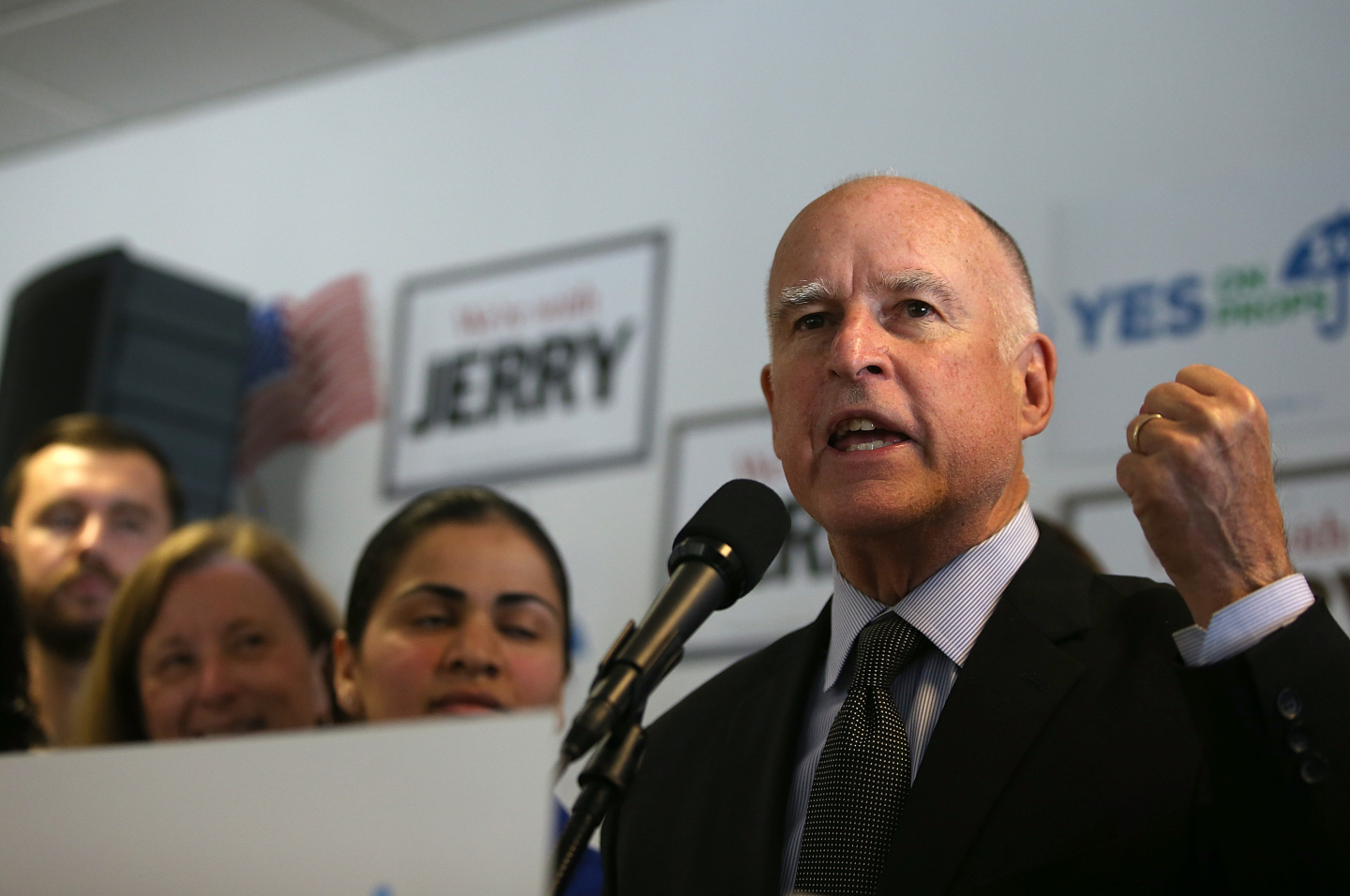
window.__IS_SSR__=true
window.__INITIAL_STATE__={
"attachmentsReducer": {
"audio_0": {
"type": "attachments",
"id": "audio_0",
"imgSizes": {
"kqedFullSize": {
"file": "https://ww2.kqed.org/news/wp-content/themes/KQED-unified/img/audio_bgs/background0.jpg"
}
}
},
"audio_1": {
"type": "attachments",
"id": "audio_1",
"imgSizes": {
"kqedFullSize": {
"file": "https://ww2.kqed.org/news/wp-content/themes/KQED-unified/img/audio_bgs/background1.jpg"
}
}
},
"audio_2": {
"type": "attachments",
"id": "audio_2",
"imgSizes": {
"kqedFullSize": {
"file": "https://ww2.kqed.org/news/wp-content/themes/KQED-unified/img/audio_bgs/background2.jpg"
}
}
},
"audio_3": {
"type": "attachments",
"id": "audio_3",
"imgSizes": {
"kqedFullSize": {
"file": "https://ww2.kqed.org/news/wp-content/themes/KQED-unified/img/audio_bgs/background3.jpg"
}
}
},
"audio_4": {
"type": "attachments",
"id": "audio_4",
"imgSizes": {
"kqedFullSize": {
"file": "https://ww2.kqed.org/news/wp-content/themes/KQED-unified/img/audio_bgs/background4.jpg"
}
}
},
"placeholder": {
"type": "attachments",
"id": "placeholder",
"imgSizes": {
"thumbnail": {
"file": "https://cdn.kqed.org/wp-content/uploads/2024/12/KQED-Default-Image-816638274-2000x1333-1-160x107.jpg",
"width": 160,
"height": 107,
"mimeType": "image/jpeg"
},
"medium": {
"file": "https://cdn.kqed.org/wp-content/uploads/2024/12/KQED-Default-Image-816638274-2000x1333-1-800x533.jpg",
"width": 800,
"height": 533,
"mimeType": "image/jpeg"
},
"medium_large": {
"file": "https://cdn.kqed.org/wp-content/uploads/2024/12/KQED-Default-Image-816638274-2000x1333-1-768x512.jpg",
"width": 768,
"height": 512,
"mimeType": "image/jpeg"
},
"large": {
"file": "https://cdn.kqed.org/wp-content/uploads/2024/12/KQED-Default-Image-816638274-2000x1333-1-1020x680.jpg",
"width": 1020,
"height": 680,
"mimeType": "image/jpeg"
},
"1536x1536": {
"file": "https://cdn.kqed.org/wp-content/uploads/2024/12/KQED-Default-Image-816638274-2000x1333-1-1536x1024.jpg",
"width": 1536,
"height": 1024,
"mimeType": "image/jpeg"
},
"fd-lrg": {
"file": "https://cdn.kqed.org/wp-content/uploads/2024/12/KQED-Default-Image-816638274-2000x1333-1-1536x1024.jpg",
"width": 1536,
"height": 1024,
"mimeType": "image/jpeg"
},
"fd-med": {
"file": "https://cdn.kqed.org/wp-content/uploads/2024/12/KQED-Default-Image-816638274-2000x1333-1-1020x680.jpg",
"width": 1020,
"height": 680,
"mimeType": "image/jpeg"
},
"fd-sm": {
"file": "https://cdn.kqed.org/wp-content/uploads/2024/12/KQED-Default-Image-816638274-2000x1333-1-800x533.jpg",
"width": 800,
"height": 533,
"mimeType": "image/jpeg"
},
"post-thumbnail": {
"file": "https://cdn.kqed.org/wp-content/uploads/2024/12/KQED-Default-Image-816638274-2000x1333-1-672x372.jpg",
"width": 672,
"height": 372,
"mimeType": "image/jpeg"
},
"twentyfourteen-full-width": {
"file": "https://cdn.kqed.org/wp-content/uploads/2024/12/KQED-Default-Image-816638274-2000x1333-1-1038x576.jpg",
"width": 1038,
"height": 576,
"mimeType": "image/jpeg"
},
"xxsmall": {
"file": "https://cdn.kqed.org/wp-content/uploads/2024/12/KQED-Default-Image-816638274-2000x1333-1-160x107.jpg",
"width": 160,
"height": 107,
"mimeType": "image/jpeg"
},
"xsmall": {
"file": "https://cdn.kqed.org/wp-content/uploads/2024/12/KQED-Default-Image-816638274-2000x1333-1-672x372.jpg",
"width": 672,
"height": 372,
"mimeType": "image/jpeg"
},
"small": {
"file": "https://cdn.kqed.org/wp-content/uploads/2024/12/KQED-Default-Image-816638274-2000x1333-1-672x372.jpg",
"width": 672,
"height": 372,
"mimeType": "image/jpeg"
},
"xlarge": {
"file": "https://cdn.kqed.org/wp-content/uploads/2024/12/KQED-Default-Image-816638274-2000x1333-1-1020x680.jpg",
"width": 1020,
"height": 680,
"mimeType": "image/jpeg"
},
"full-width": {
"file": "https://cdn.kqed.org/wp-content/uploads/2024/12/KQED-Default-Image-816638274-2000x1333-1-1920x1280.jpg",
"width": 1920,
"height": 1280,
"mimeType": "image/jpeg"
},
"guest-author-32": {
"file": "https://cdn.kqed.org/wp-content/uploads/2025/01/KQED-Default-Image-816638274-1333x1333-1-160x160.jpg",
"width": 32,
"height": 32,
"mimeType": "image/jpeg"
},
"guest-author-50": {
"file": "https://cdn.kqed.org/wp-content/uploads/2025/01/KQED-Default-Image-816638274-1333x1333-1-160x160.jpg",
"width": 50,
"height": 50,
"mimeType": "image/jpeg"
},
"guest-author-64": {
"file": "https://cdn.kqed.org/wp-content/uploads/2025/01/KQED-Default-Image-816638274-1333x1333-1-160x160.jpg",
"width": 64,
"height": 64,
"mimeType": "image/jpeg"
},
"guest-author-96": {
"file": "https://cdn.kqed.org/wp-content/uploads/2025/01/KQED-Default-Image-816638274-1333x1333-1-160x160.jpg",
"width": 96,
"height": 96,
"mimeType": "image/jpeg"
},
"guest-author-128": {
"file": "https://cdn.kqed.org/wp-content/uploads/2025/01/KQED-Default-Image-816638274-1333x1333-1-160x160.jpg",
"width": 128,
"height": 128,
"mimeType": "image/jpeg"
},
"detail": {
"file": "https://cdn.kqed.org/wp-content/uploads/2025/01/KQED-Default-Image-816638274-1333x1333-1-160x160.jpg",
"width": 160,
"height": 160,
"mimeType": "image/jpeg"
},
"kqedFullSize": {
"file": "https://cdn.kqed.org/wp-content/uploads/2024/12/KQED-Default-Image-816638274-2000x1333-1.jpg",
"width": 2000,
"height": 1333
}
}
},
"news_10343106": {
"type": "attachments",
"id": "news_10343106",
"meta": {
"index": "attachments_1716263798",
"site": "news",
"id": "10343106",
"found": true
},
"parent": 10343101,
"imgSizes": {
"thumbnail": {
"file": "https://ww2.kqed.org/app/uploads/sites/10/2014/10/Screenshot-2014-10-09-08.28.34-400x218.png",
"width": 400,
"mimeType": "image/png",
"height": 218
},
"post-thumbnail": {
"file": "https://ww2.kqed.org/app/uploads/sites/10/2014/10/Screenshot-2014-10-09-08.28.34-672x372.png",
"width": 672,
"mimeType": "image/png",
"height": 372
},
"kqedFullSize": {
"file": "https://ww2.kqed.org/app/uploads/sites/10/2014/10/Screenshot-2014-10-09-08.28.34.png",
"width": 990,
"height": 540
},
"guest-author-96": {
"file": "https://ww2.kqed.org/app/uploads/sites/10/2014/10/Screenshot-2014-10-09-08.28.34-96x96.png",
"width": 96,
"mimeType": "image/png",
"height": 96
},
"medium": {
"file": "https://ww2.kqed.org/app/uploads/sites/10/2014/10/Screenshot-2014-10-09-08.28.34-800x436.png",
"width": 800,
"mimeType": "image/png",
"height": 436
},
"guest-author-64": {
"file": "https://ww2.kqed.org/app/uploads/sites/10/2014/10/Screenshot-2014-10-09-08.28.34-64x64.png",
"width": 64,
"mimeType": "image/png",
"height": 64
},
"detail": {
"file": "https://ww2.kqed.org/app/uploads/sites/10/2014/10/Screenshot-2014-10-09-08.28.34-75x75.png",
"width": 75,
"mimeType": "image/png",
"height": 75
},
"guest-author-32": {
"file": "https://ww2.kqed.org/app/uploads/sites/10/2014/10/Screenshot-2014-10-09-08.28.34-32x32.png",
"width": 32,
"mimeType": "image/png",
"height": 32
},
"guest-author-128": {
"file": "https://ww2.kqed.org/app/uploads/sites/10/2014/10/Screenshot-2014-10-09-08.28.34-128x128.png",
"width": 128,
"mimeType": "image/png",
"height": 128
}
},
"publishDate": 1412868690,
"modified": 1412868690,
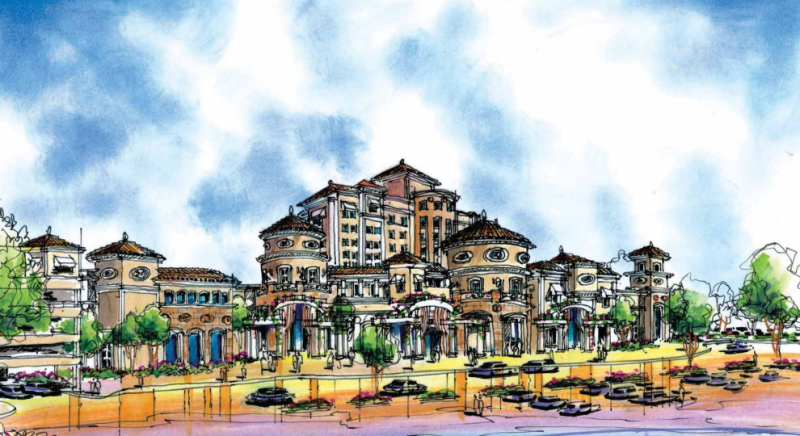
"caption": "Architectural rendering of Madera County casino that's the subject of Proposition 48. (\u003ca href=\"http://www.northforkeis.com/documents/final_eis/report.htm\" target=\"_blank\">North Fork Casino environmental impact statement\u003c/a>)",
"description": "Architectural rendering of Madera County casino that's the subject of Proposition 48. (<a href="http://www.northforkeis.com/documents/final_eis/report.htm" target="_blank"North Fork Casino environmental impact statement\u003c/a>)",
"title": "North Fork Rancheria Casino",
"credit": null,
"status": "inherit",
"isLoading": false,
"fetchFailed": false
},
"news_149152": {
"type": "attachments",
"id": "news_149152",
"meta": {
"index": "attachments_1716263798",
"site": "news",
"id": "149152",
"found": true
},
"parent": 149149,
"imgSizes": {
"narrow-featured-image": {
"file": "https://ww2.kqed.org/app/uploads/sites/10/2014/10/OldPersonCaneGeneric-620x413-400x300.jpg",
"width": 400,
"mimeType": "image/jpeg",
"height": 300
},
"wide-featured-image": {
"file": "https://ww2.kqed.org/app/uploads/sites/10/2014/10/OldPersonCaneGeneric-620x413-600x300.jpg",
"width": 600,
"mimeType": "image/jpeg",
"height": 300
},
"featured-page": {
"file": "https://ww2.kqed.org/app/uploads/sites/10/2014/10/OldPersonCaneGeneric-620x413-315x145.jpg",
"width": 315,
"mimeType": "image/jpeg",
"height": 145
},
"thumbnail": {
"file": "https://ww2.kqed.org/app/uploads/sites/10/2014/10/OldPersonCaneGeneric-620x413-300x300.jpg",
"width": 300,
"mimeType": "image/jpeg",
"height": 300
},
"kqedFullSize": {
"file": "https://ww2.kqed.org/app/uploads/sites/10/2014/10/OldPersonCaneGeneric-620x413.jpg",
"width": 620,
"height": 413
},
"wide-featured-image-full": {
"file": "https://ww2.kqed.org/app/uploads/sites/10/2014/10/OldPersonCaneGeneric-620x413-620x300.jpg",
"width": 620,
"mimeType": "image/jpeg",
"height": 300
},
"guest-author-96": {
"file": "https://ww2.kqed.org/app/uploads/sites/10/2014/10/OldPersonCaneGeneric-620x413-96x96.jpg",
"width": 96,
"mimeType": "image/jpeg",
"height": 96
},
"narrow-featured-image-full": {
"file": "https://ww2.kqed.org/app/uploads/sites/10/2014/10/OldPersonCaneGeneric-620x413-620x360.jpg",
"width": 620,
"mimeType": "image/jpeg",
"height": 360
},
"guest-author-64": {
"file": "https://ww2.kqed.org/app/uploads/sites/10/2014/10/OldPersonCaneGeneric-620x413-64x64.jpg",
"width": 64,
"mimeType": "image/jpeg",
"height": 64
},
"detail": {
"file": "https://ww2.kqed.org/app/uploads/sites/10/2014/10/OldPersonCaneGeneric-620x413-75x75.jpg",
"width": 75,
"mimeType": "image/jpeg",
"height": 75
},
"guest-author-32": {
"file": "https://ww2.kqed.org/app/uploads/sites/10/2014/10/OldPersonCaneGeneric-620x413-32x32.jpg",
"width": 32,
"mimeType": "image/jpeg",
"height": 32
},
"guest-author-128": {
"file": "https://ww2.kqed.org/app/uploads/sites/10/2014/10/OldPersonCaneGeneric-620x413-128x128.jpg",
"width": 128,
"mimeType": "image/jpeg",
"height": 128
}
},
"publishDate": 1412194823,
"modified": 1418752165,
"caption": null,
"description": null,
"title": "Senior-Cane-Stock Photo",
"credit": "Getty Images",
"status": "inherit",
"isLoading": false,
"fetchFailed": false
},
"news_10348014": {
"type": "attachments",
"id": "news_10348014",
"meta": {
"index": "attachments_1716263798",
"site": "news",
"id": "10348014",
"found": true
},
"parent": 10347248,
"imgSizes": {
"twentyfourteen-full-width": {
"file": "https://ww2.kqed.org/app/uploads/sites/10/2014/11/2117_transform-1038x576.jpg",
"width": 1038,
"mimeType": "image/jpeg",
"height": 576
},
"thumbnail": {
"file": "https://ww2.kqed.org/app/uploads/sites/10/2014/11/2117_transform-400x294.jpg",
"width": 400,
"mimeType": "image/jpeg",
"height": 294
},
"post-thumbnail": {
"file": "https://ww2.kqed.org/app/uploads/sites/10/2014/11/2117_transform-672x372.jpg",
"width": 672,
"mimeType": "image/jpeg",
"height": 372
},
"kqedFullSize": {
"file": "https://ww2.kqed.org/app/uploads/sites/10/2014/11/2117_transform.jpg",
"width": 1440,
"height": 1060
},
"guest-author-96": {
"file": "https://ww2.kqed.org/app/uploads/sites/10/2014/11/2117_transform-96x96.jpg",
"width": 96,
"mimeType": "image/jpeg",
"height": 96
},
"medium": {
"file": "https://ww2.kqed.org/app/uploads/sites/10/2014/11/2117_transform-800x588.jpg",
"width": 800,
"mimeType": "image/jpeg",
"height": 588
},
"guest-author-64": {
"file": "https://ww2.kqed.org/app/uploads/sites/10/2014/11/2117_transform-64x64.jpg",
"width": 64,
"mimeType": "image/jpeg",
"height": 64
},
"detail": {
"file": "https://ww2.kqed.org/app/uploads/sites/10/2014/11/2117_transform-75x75.jpg",
"width": 75,
"mimeType": "image/jpeg",
"height": 75
},
"guest-author-32": {
"file": "https://ww2.kqed.org/app/uploads/sites/10/2014/11/2117_transform-32x32.jpg",
"width": 32,
"mimeType": "image/jpeg",
"height": 32
},
"guest-author-128": {
"file": "https://ww2.kqed.org/app/uploads/sites/10/2014/11/2117_transform-128x128.jpg",
"width": 128,
"mimeType": "image/jpeg",
"height": 128
}
},
"publishDate": 1415677736,
"modified": 1444683175,
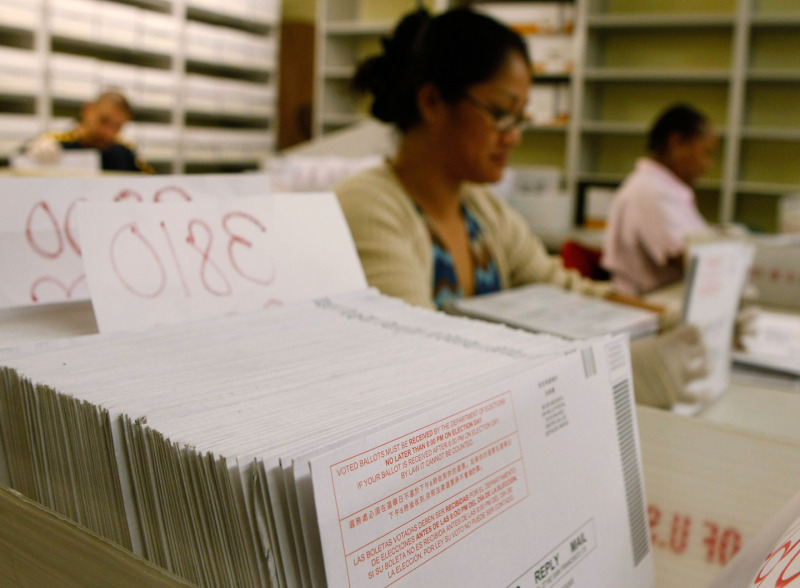
"caption": "Workers at the San Francisco Department of Elections sort stacks of vote-by-mail ballots by precinct during a past election. (Justin Sullivan/Getty Images)",
"description": "Workers at the San Francisco Department of Elections sort stacks of vote-by-mail ballots by precinct during a past election. (Justin Sullivan/Getty Images)",
"title": "Workers Sort California Mail In Primary Ballots",
"credit": "Photo by Justin Sullivan/Getty Images",
"status": "inherit",
"isLoading": false,
"fetchFailed": false
},
"news_147946": {
"type": "attachments",
"id": "news_147946",
"meta": {
"index": "attachments_1716263798",
"site": "news",
"id": "147946",
"found": true
},
"parent": 147922,
"imgSizes": {
"wide-featured-image": {
"file": "https://ww2.kqed.org/app/uploads/sites/10/2014/09/RS8355_73908800-lpr-600x300.jpg",
"width": 600,
"mimeType": "image/jpeg",
"height": 300
},
"featured-page": {
"file": "https://ww2.kqed.org/app/uploads/sites/10/2014/09/RS8355_73908800-lpr-315x145.jpg",
"width": 315,
"mimeType": "image/jpeg",
"height": 145
},
"thumbnail": {
"file": "https://ww2.kqed.org/app/uploads/sites/10/2014/09/RS8355_73908800-lpr-300x300.jpg",
"width": 300,
"mimeType": "image/jpeg",
"height": 300
},
"kqedFullSize": {
"file": "https://ww2.kqed.org/app/uploads/sites/10/2014/09/RS8355_73908800-lpr-e1411000730983.jpg",
"width": 800,
"height": 541
},
"large": {
"file": "https://ww2.kqed.org/app/uploads/sites/10/2014/09/RS8355_73908800-lpr-1028x695.jpg",
"width": 1028,
"mimeType": "image/jpeg",
"height": 695
},
"wide-featured-image-full": {
"file": "https://ww2.kqed.org/app/uploads/sites/10/2014/09/RS8355_73908800-lpr-960x300.jpg",
"width": 960,
"mimeType": "image/jpeg",
"height": 300
},
"guest-author-96": {
"file": "https://ww2.kqed.org/app/uploads/sites/10/2014/09/RS8355_73908800-lpr-96x96.jpg",
"width": 96,
"mimeType": "image/jpeg",
"height": 96
},
"medium": {
"file": "https://ww2.kqed.org/app/uploads/sites/10/2014/09/RS8355_73908800-lpr-640x432.jpg",
"width": 640,
"mimeType": "image/jpeg",
"height": 432
},
"guest-author-64": {
"file": "https://ww2.kqed.org/app/uploads/sites/10/2014/09/RS8355_73908800-lpr-64x64.jpg",
"width": 64,
"mimeType": "image/jpeg",
"height": 64
},
"guest-author-32": {
"file": "https://ww2.kqed.org/app/uploads/sites/10/2014/09/RS8355_73908800-lpr-32x32.jpg",
"width": 32,
"mimeType": "image/jpeg",
"height": 32
},
"narrow-featured-image": {
"file": "https://ww2.kqed.org/app/uploads/sites/10/2014/09/RS8355_73908800-lpr-400x300.jpg",
"width": 400,
"mimeType": "image/jpeg",
"height": 300
},
"narrow-featured-image-full": {
"file": "https://ww2.kqed.org/app/uploads/sites/10/2014/09/RS8355_73908800-lpr-640x360.jpg",
"width": 640,
"mimeType": "image/jpeg",
"height": 360
},
"detail": {
"file": "https://ww2.kqed.org/app/uploads/sites/10/2014/09/RS8355_73908800-lpr-75x75.jpg",
"width": 75,
"mimeType": "image/jpeg",
"height": 75
},
"guest-author-128": {
"file": "https://ww2.kqed.org/app/uploads/sites/10/2014/09/RS8355_73908800-lpr-128x128.jpg",
"width": 128,
"mimeType": "image/jpeg",
"height": 128
}
},
"publishDate": 1410999667,
"modified": 1416430055,
"caption": null,
"description": null,
"title": "UC Berkeley ",
"credit": null,
"status": "inherit",
"isLoading": false,
"fetchFailed": false
},
"news_10347449": {
"type": "attachments",
"id": "news_10347449",
"meta": {
"index": "attachments_1716263798",
"site": "news",
"id": "10347449",
"found": true
},
"parent": 10347424,
"imgSizes": {
"twentyfourteen-full-width": {
"file": "https://ww2.kqed.org/app/uploads/sites/10/2014/11/UC-2-1038x576.jpg",
"width": 1038,
"mimeType": "image/jpeg",
"height": 576
},
"thumbnail": {
"file": "https://ww2.kqed.org/app/uploads/sites/10/2014/11/UC-2-400x281.jpg",
"width": 400,
"mimeType": "image/jpeg",
"height": 281
},
"post-thumbnail": {
"file": "https://ww2.kqed.org/app/uploads/sites/10/2014/11/UC-2-672x372.jpg",
"width": 672,
"mimeType": "image/jpeg",
"height": 372
},
"kqedFullSize": {
"file": "https://ww2.kqed.org/app/uploads/sites/10/2014/11/UC-2.jpg",
"width": 1440,
"height": 1012
},
"guest-author-96": {
"file": "https://ww2.kqed.org/app/uploads/sites/10/2014/11/UC-2-96x96.jpg",
"width": 96,
"mimeType": "image/jpeg",
"height": 96
},
"medium": {
"file": "https://ww2.kqed.org/app/uploads/sites/10/2014/11/UC-2-800x562.jpg",
"width": 800,
"mimeType": "image/jpeg",
"height": 562
},
"guest-author-64": {
"file": "https://ww2.kqed.org/app/uploads/sites/10/2014/11/UC-2-64x64.jpg",
"width": 64,
"mimeType": "image/jpeg",
"height": 64
},
"detail": {
"file": "https://ww2.kqed.org/app/uploads/sites/10/2014/11/UC-2-75x75.jpg",
"width": 75,
"mimeType": "image/jpeg",
"height": 75
},
"guest-author-32": {
"file": "https://ww2.kqed.org/app/uploads/sites/10/2014/11/UC-2-32x32.jpg",
"width": 32,
"mimeType": "image/jpeg",
"height": 32
},
"guest-author-128": {
"file": "https://ww2.kqed.org/app/uploads/sites/10/2014/11/UC-2-128x128.jpg",
"width": 128,
"mimeType": "image/jpeg",
"height": 128
}
},
"publishDate": 1415313981,
"modified": 1425488438,
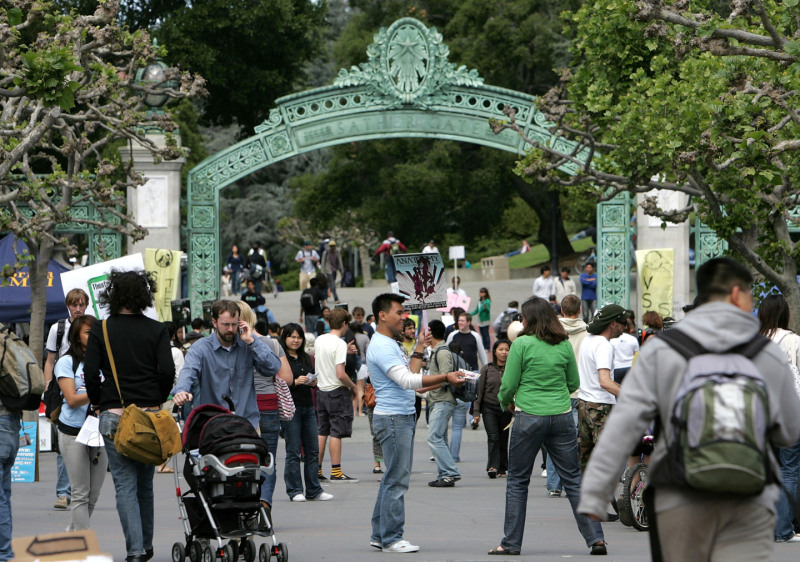
"caption": "UC Berkeley students walk through Sproul Plaza. ",
"description": "BERKELEY, CA - APRIL 17: UC Berkeley students walk through Sproul Plaza on the UC Berkeley campus.",
"title": "UC Berkeley-Sproul Plaza",
"credit": "Justin Sullivan/Getty Images",
"status": "inherit",
"isLoading": false,
"fetchFailed": false
},
"news_10363535": {
"type": "attachments",
"id": "news_10363535",
"meta": {
"index": "attachments_1716263798",
"site": "news",
"id": "10363535",
"found": true
},
"parent": 0,
"imgSizes": {
"twentyfourteen-full-width": {
"file": "https://ww2.kqed.org/app/uploads/sites/10/2014/12/RS1449_saccapitoldome090911-lpr-1038x576.jpg",
"width": 1038,
"mimeType": "image/jpeg",
"height": 576
},
"thumbnail": {
"file": "https://ww2.kqed.org/app/uploads/sites/10/2014/12/RS1449_saccapitoldome090911-lpr-400x266.jpg",
"width": 400,
"mimeType": "image/jpeg",
"height": 266
},
"post-thumbnail": {
"file": "https://ww2.kqed.org/app/uploads/sites/10/2014/12/RS1449_saccapitoldome090911-lpr-672x372.jpg",
"width": 672,
"mimeType": "image/jpeg",
"height": 372
},
"kqedFullSize": {
"file": "https://ww2.kqed.org/app/uploads/sites/10/2014/12/RS1449_saccapitoldome090911-lpr-e1417458546855.jpg",
"width": 1440,
"height": 960
},
"large": {
"file": "https://ww2.kqed.org/app/uploads/sites/10/2014/12/RS1449_saccapitoldome090911-lpr-1440x959.jpg",
"width": 1440,
"mimeType": "image/jpeg",
"height": 959
},
"guest-author-96": {
"file": "https://ww2.kqed.org/app/uploads/sites/10/2014/12/RS1449_saccapitoldome090911-lpr-96x96.jpg",
"width": 96,
"mimeType": "image/jpeg",
"height": 96
},
"medium": {
"file": "https://ww2.kqed.org/app/uploads/sites/10/2014/12/RS1449_saccapitoldome090911-lpr-800x533.jpg",
"width": 800,
"mimeType": "image/jpeg",
"height": 533
},
"guest-author-64": {
"file": "https://ww2.kqed.org/app/uploads/sites/10/2014/12/RS1449_saccapitoldome090911-lpr-64x64.jpg",
"width": 64,
"mimeType": "image/jpeg",
"height": 64
},
"detail": {
"file": "https://ww2.kqed.org/app/uploads/sites/10/2014/12/RS1449_saccapitoldome090911-lpr-75x75.jpg",
"width": 75,
"mimeType": "image/jpeg",
"height": 75
},
"guest-author-32": {
"file": "https://ww2.kqed.org/app/uploads/sites/10/2014/12/RS1449_saccapitoldome090911-lpr-32x32.jpg",
"width": 32,
"mimeType": "image/jpeg",
"height": 32
},
"guest-author-128": {
"file": "https://ww2.kqed.org/app/uploads/sites/10/2014/12/RS1449_saccapitoldome090911-lpr-128x128.jpg",
"width": 128,
"mimeType": "image/jpeg",
"height": 128
}
},
"publishDate": 1417458536,
"modified": 1452004969,
"caption": "The State Capitol. ",
"description": "Sacramento, state capitol",
"title": "RS1449_saccapitoldome090911-lpr",
"credit": "(Justin Sullivan/Getty Images)",
"status": "inherit",
"isLoading": false,
"fetchFailed": false
},
"news_128760": {
"type": "attachments",
"id": "news_128760",
"meta": {
"index": "attachments_1716263798",
"site": "news",
"id": "128760",
"found": true
},
"parent": 128758,
"imgSizes": {
"kqedFullSize": {
"file": "https://ww2.kqed.org/app/uploads/sites/10/2014/03/RS3925_votedhands20121102.jpg",
"width": 1536,
"height": 1025
}
},
"publishDate": 1394235743,
"modified": 1394235743,
"caption": "(Brendan Smialowski/Getty Images)",
"description": "(Brendan Smialowski/Getty Images)",
"title": "I Voted-Election Day",
"credit": null,
"status": "inherit",
"isLoading": false,
"fetchFailed": false
},
"news_68602": {
"type": "attachments",
"id": "news_68602",
"meta": {
"index": "attachments_1716263798",
"site": "news",
"id": "68602",
"found": true
},
"title": "Tobacco Tax",
"publishDate": 1340402492,
"status": "inherit",
"parent": 68574,
"modified": 1778867514,
"caption": "A sign signaling \"No Smoking\" in the vicinity. ",
"credit": "Sean Gallop/Getty Images",
"altTag": "Can backers of a new tobacco tax in 2016 succeed where others have failed? (Sean Gallop/Getty Images)",
"description": "Can backers of a new tobacco tax in 2016 succeed where others have failed? (Sean Gallop/Getty Images)",
"imgSizes": {
"kqedFullSize": {
"file": "https://cdn.kqed.org/wp-content/uploads/sites/10/2012/06/smokingban201205221-e1778867482661.jpg",
"width": 2000,
"height": 1367
}
},
"isLoading": false,
"fetchFailed": false
},
"news_137444": {
"type": "attachments",
"id": "news_137444",
"meta": {
"index": "attachments_1716263798",
"site": "news",
"id": "137444",
"found": true
},
"parent": 137442,
"imgSizes": {
"kqedFullSize": {
"file": "https://ww2.kqed.org/app/uploads/sites/10/2014/05/RS1394_57641874-lpr-e1416433920296.jpg",
"width": 1440,
"height": 958
}
},
"publishDate": 1401387722,
"modified": 1416435726,
"caption": "School funding increases under new state budget projections. (David McNew/Getty Images)",
"description": null,
"title": "School-Generic ",
"credit": null,
"status": "inherit",
"isLoading": false,
"fetchFailed": false
},
"news_10344796": {
"type": "attachments",
"id": "news_10344796",
"meta": {
"index": "attachments_1716263798",
"site": "news",
"id": "10344796",
"found": true
},
"parent": 10344778,
"imgSizes": {
"twentyfourteen-full-width": {
"file": "https://ww2.kqed.org/app/uploads/sites/10/2014/10/Photo-Jun-05-11-15-06-AM-e1414015168600-1038x576.jpg",
"width": 1038,
"mimeType": "image/jpeg",
"height": 576
},
"thumbnail": {
"file": "https://ww2.kqed.org/app/uploads/sites/10/2014/10/Photo-Jun-05-11-15-06-AM-e1414015168600-400x342.jpg",
"width": 400,
"mimeType": "image/jpeg",
"height": 342
},
"post-thumbnail": {
"file": "https://ww2.kqed.org/app/uploads/sites/10/2014/10/Photo-Jun-05-11-15-06-AM-e1414015168600-672x372.jpg",
"width": 672,
"mimeType": "image/jpeg",
"height": 372
},
"kqedFullSize": {
"file": "https://ww2.kqed.org/app/uploads/sites/10/2014/10/Photo-Jun-05-11-15-06-AM-e1414015168600.jpg",
"width": 1898,
"height": 1626
},
"large": {
"file": "https://ww2.kqed.org/app/uploads/sites/10/2014/10/Photo-Jun-05-11-15-06-AM-e1414015168600-1440x1233.jpg",
"width": 1440,
"mimeType": "image/jpeg",
"height": 1233
},
"guest-author-96": {
"file": "https://ww2.kqed.org/app/uploads/sites/10/2014/10/Photo-Jun-05-11-15-06-AM-e1414015168600-96x96.jpg",
"width": 96,
"mimeType": "image/jpeg",
"height": 96
},
"medium": {
"file": "https://ww2.kqed.org/app/uploads/sites/10/2014/10/Photo-Jun-05-11-15-06-AM-e1414015168600-800x685.jpg",
"width": 800,
"mimeType": "image/jpeg",
"height": 685
},
"guest-author-64": {
"file": "https://ww2.kqed.org/app/uploads/sites/10/2014/10/Photo-Jun-05-11-15-06-AM-e1414015168600-64x64.jpg",
"width": 64,
"mimeType": "image/jpeg",
"height": 64
},
"detail": {
"file": "https://ww2.kqed.org/app/uploads/sites/10/2014/10/Photo-Jun-05-11-15-06-AM-e1414015168600-75x75.jpg",
"width": 75,
"mimeType": "image/jpeg",
"height": 75
},
"guest-author-32": {
"file": "https://ww2.kqed.org/app/uploads/sites/10/2014/10/Photo-Jun-05-11-15-06-AM-e1414015168600-32x32.jpg",
"width": 32,
"mimeType": "image/jpeg",
"height": 32
},
"guest-author-128": {
"file": "https://ww2.kqed.org/app/uploads/sites/10/2014/10/Photo-Jun-05-11-15-06-AM-e1414015168600-128x128.jpg",
"width": 128,
"mimeType": "image/jpeg",
"height": 128
}
},
"publishDate": 1414015139,
"modified": 1414547283,
"caption": "Voting sign. (John Myers/KQED)",
"description": "Voting sign. (John Myers/KQED)",
"title": "Voting sign. (John Myers/KQED)",
"credit": null,
"status": "inherit",
"isLoading": false,
"fetchFailed": false
},
"news_10347047": {
"type": "attachments",
"id": "news_10347047",
"meta": {
"index": "attachments_1716263798",
"site": "news",
"id": "10347047",
"found": true
},
"parent": 10346646,
"imgSizes": {
"twentyfourteen-full-width": {
"file": "https://ww2.kqed.org/app/uploads/sites/10/2014/11/457957492-1038x576.jpg",
"width": 1038,
"mimeType": "image/jpeg",
"height": 576
},
"thumbnail": {
"file": "https://ww2.kqed.org/app/uploads/sites/10/2014/11/457957492-400x265.jpg",
"width": 400,
"mimeType": "image/jpeg",
"height": 265
},
"post-thumbnail": {
"file": "https://ww2.kqed.org/app/uploads/sites/10/2014/11/457957492-672x372.jpg",
"width": 672,
"mimeType": "image/jpeg",
"height": 372
},
"kqedFullSize": {
"file": "https://ww2.kqed.org/app/uploads/sites/10/2014/11/457957492-e1415163505606.jpg",
"width": 1440,
"height": 956
},
"large": {
"file": "https://ww2.kqed.org/app/uploads/sites/10/2014/11/457957492-1440x956.jpg",
"width": 1440,
"mimeType": "image/jpeg",
"height": 956
},
"guest-author-96": {
"file": "https://ww2.kqed.org/app/uploads/sites/10/2014/11/457957492-96x96.jpg",
"width": 96,
"mimeType": "image/jpeg",
"height": 96
},
"medium": {
"file": "https://ww2.kqed.org/app/uploads/sites/10/2014/11/457957492-800x531.jpg",
"width": 800,
"mimeType": "image/jpeg",
"height": 531
},
"guest-author-64": {
"file": "https://ww2.kqed.org/app/uploads/sites/10/2014/11/457957492-64x64.jpg",
"width": 64,
"mimeType": "image/jpeg",
"height": 64
},
"detail": {
"file": "https://ww2.kqed.org/app/uploads/sites/10/2014/11/457957492-75x75.jpg",
"width": 75,
"mimeType": "image/jpeg",
"height": 75
},
"guest-author-32": {
"file": "https://ww2.kqed.org/app/uploads/sites/10/2014/11/457957492-32x32.jpg",
"width": 32,
"mimeType": "image/jpeg",
"height": 32
},
"guest-author-128": {
"file": "https://ww2.kqed.org/app/uploads/sites/10/2014/11/457957492-128x128.jpg",
"width": 128,
"mimeType": "image/jpeg",
"height": 128
}
},
"publishDate": 1415163489,
"modified": 1415163544,
"caption": "Jerry Brown won an unprecedented fourth term as California governor. (Justin Sullivan/Getty Images)",
"description": "Jerry Brown won an unprecedented fourth term as California governor. (Justin Sullivan/Getty Images)",
"title": "CA Gov. Jerry Brown Holds Get Out The Vote Rally",
"credit": null,
"status": "inherit",
"isLoading": false,
"fetchFailed": false
},
"news_10346509": {
"type": "attachments",
"id": "news_10346509",
"meta": {
"index": "attachments_1716263798",
"site": "news",
"id": "10346509",
"found": true
},
"parent": 10346492,
"imgSizes": {
"twentyfourteen-full-width": {
"file": "https://ww2.kqed.org/app/uploads/sites/10/2014/11/IMG_4053-e1415038329566-1038x576.jpg",
"width": 1038,
"mimeType": "image/jpeg",
"height": 576
},
"thumbnail": {
"file": "https://ww2.kqed.org/app/uploads/sites/10/2014/11/IMG_4053-e1415038329566-400x293.jpg",
"width": 400,
"mimeType": "image/jpeg",
"height": 293
},
"post-thumbnail": {
"file": "https://ww2.kqed.org/app/uploads/sites/10/2014/11/IMG_4053-e1415038329566-672x372.jpg",
"width": 672,
"mimeType": "image/jpeg",
"height": 372
},
"kqedFullSize": {
"file": "https://ww2.kqed.org/app/uploads/sites/10/2014/11/IMG_4053-e1415038344337.jpg",
"width": 800,
"height": 587
},
"large": {
"file": "https://ww2.kqed.org/app/uploads/sites/10/2014/11/IMG_4053-e1415038329566-1440x1057.jpg",
"width": 1440,
"mimeType": "image/jpeg",
"height": 1057
},
"guest-author-96": {
"file": "https://ww2.kqed.org/app/uploads/sites/10/2014/11/IMG_4053-e1415038329566-96x96.jpg",
"width": 96,
"mimeType": "image/jpeg",
"height": 96
},
"medium": {
"file": "https://ww2.kqed.org/app/uploads/sites/10/2014/11/IMG_4053-e1415038329566-800x587.jpg",
"width": 800,
"mimeType": "image/jpeg",
"height": 587
},
"guest-author-64": {
"file": "https://ww2.kqed.org/app/uploads/sites/10/2014/11/IMG_4053-e1415038329566-64x64.jpg",
"width": 64,
"mimeType": "image/jpeg",
"height": 64
},
"detail": {
"file": "https://ww2.kqed.org/app/uploads/sites/10/2014/11/IMG_4053-e1415038329566-75x75.jpg",
"width": 75,
"mimeType": "image/jpeg",
"height": 75
},
"guest-author-32": {
"file": "https://ww2.kqed.org/app/uploads/sites/10/2014/11/IMG_4053-e1415038329566-32x32.jpg",
"width": 32,
"mimeType": "image/jpeg",
"height": 32
},
"guest-author-128": {
"file": "https://ww2.kqed.org/app/uploads/sites/10/2014/11/IMG_4053-e1415038329566-128x128.jpg",
"width": 128,
"mimeType": "image/jpeg",
"height": 128
}
},
"publishDate": 1415038269,
"modified": 1415121858,
"caption": "Photo by John Myers/KQED",
"description": "polling place sign",
"title": "Polling Place",
"credit": "John Myers, KQED",
"status": "inherit",
"isLoading": false,
"fetchFailed": false
}
},
"audioPlayerReducer": {
"postId": "stream_live",
"isPaused": true,
"isPlaying": false,
"pfsActive": false,
"pledgeModalIsOpen": true,
"playerDrawerIsOpen": false,
"liveAudioPlayStartedAt": 0,
"liveAudioPlayContext": ""
},
"authorsReducer": {
"jmyers": {
"type": "authors",
"id": "232",
"meta": {
"index": "authors_1716337520",
"id": "232",
"found": true
},
"name": "John Myers",
"firstName": "John",
"lastName": "Myers",
"slug": "jmyers",
"email": "jmyers@kqed.org",
"display_author_email": false,
"staff_mastheads": [],
"title": null,
"bio": "John Myers is Senior Editor of KQED's new California Politics and Government Desk. A veteran of almost two decades of political coverage, he was KQED's longest serving statehouse bureau chief and recently was political editor for Sacramento's ABC affiliate, News10 (KXTV). John was moderator of the only 2014 gubernatorial debate, and was named by \u003cem>The Washington Post\u003c/em> to two \"Best Of\" lists: the 2015 list of top state politics reporters and 2014's list of America's most influential statehouse reporters.",
"avatar": "https://secure.gravatar.com/avatar/c0ac98482caf0b8229a792662b38722a?s=600&d=blank&r=g",
"twitter": "johnmyers",
"facebook": null,
"instagram": null,
"linkedin": null,
"sites": [
{
"site": "news",
"roles": [
"subscriber"
]
}
],
"headData": {
"title": "John Myers | KQED",
"description": null,
"ogImgSrc": "https://secure.gravatar.com/avatar/c0ac98482caf0b8229a792662b38722a?s=600&d=blank&r=g",
"twImgSrc": "https://secure.gravatar.com/avatar/c0ac98482caf0b8229a792662b38722a?s=600&d=blank&r=g"
},
"isLoading": false,
"link": "/author/jmyers"
}
},
"pagesReducer": {
"news_program_faultlines": {
"type": "terms",
"id": "news_7051",
"meta": {
"index": "terms_1716263798",
"site": "news",
"id": "7051",
"score": 16.377258
},
"featImg": "https://ww2.kqed.org/app/uploads/sites/10/2014/10/Faultlines-2.png",
"name": "FaultLines",
"description": null,
"taxonomy": "program",
"headData": {
"twImgId": null,
"twTitle": null,
"ogTitle": null,
"ogImgId": null,
"twDescription": null,
"description": null,
"title": "FaultLines Archives | KQED News",
"ogDescription": null
},
"ttid": 7077,
"slug": "faultlines",
"isLoading": false,
"title": "FaultLines",
"pageMeta": {
"site": "news",
"WpPageTemplate": "page-topic-editorial",
"currentPage": 13
},
"blocks": [
{
"blockName": "kqed/post-list",
"attrs": {
"layout": "cardArticle2",
"query": "posts/news?program=faultlines",
"seeMore": false,
"paginated": true,
"page": 13
}
},
{
"blockName": "kqed/ad"
}
]
}
},
"pfsSessionReducer": {},
"postsReducer": {
"stream_live": {
"type": "live",
"id": "stream_live",
"audioUrl": "https://streams.kqed.org/kqedradio",
"title": "Live Stream",
"excerpt": "Live Stream information currently unavailable.",
"link": "/radio",
"featImg": "",
"label": {
"name": "KQED Live",
"link": "/"
}
},
"stream_kqedNewscast": {
"type": "posts",
"id": "stream_kqedNewscast",
"audioUrl": "https://www.kqed.org/.stream/anon/radio/RDnews/newscast.mp3?_=1",
"title": "KQED Newscast",
"featImg": "",
"label": {
"name": "88.5 FM",
"link": "/"
}
},
"news_10392204": {
"type": "posts",
"id": "news_10392204",
"meta": {
"index": "posts_1716263798",
"site": "news",
"id": "10392204",
"score": null,
"sort": [
1419957115000
]
},
"parent": 0,
"labelTerm": {
"site": "news",
"term": 7051
},
"blocks": [],
"publishDate": 1419957115,
"format": "standard",
"disqusTitle": "Indian Casino, Nixed By Voters, May Not Be Dead",
"title": "Indian Casino, Nixed By Voters, May Not Be Dead",
"headTitle": "FaultLines | KQED News",
"content": "\u003cp>Long before Californians weighed November's referendum of a proposed Central Valley tribal casino, powerful forces on both sides quietly admitted something that wasn't being talked about: The ballot measure wouldn't be the final word.\u003c/p>\n\u003cp>Now, weeks after voters overwhelmingly rejected the project, it's increasingly clear that Proposition 48 will be ultimately not much more than a brief distraction.\u003c/p>\n\u003cp>\"We're now trying to figure out, 'Well, what does it really mean to our project?' \" said Charles Banks-Altekruse, a spokesman for the North Fork Rancheria of Mono Indians.\u003c/p>\n\u003cp>What the tribe clearly does not believe, though, is that Prop. 48 officially killed its casino dreams. And neither do some opponents.\u003c/p>\n\u003cp>[soundcloud url=\"https://api.soundcloud.com/tracks/183748461\" params=\"color=ff5500&auto_play=false&hide_related=false&show_comments=true&show_user=true&show_reposts=false\" width=\"100%\" height=\"166\" iframe=\"true\" /]\u003c/p>\n\u003cp>\u003cstrong>Precedent or Not?\u003c/strong>\u003c/p>\n\u003cp>[ad fullwidth]\u003c/p>\n\u003cp>Voters \u003ca href=\"http://vote2014.sos.ca.gov/returns/maps/ballot-measures/prop/48/\" target=\"_blank\">rejected Prop. 48 by an almost 2-1 margin\u003c/a> on Nov. 4, thus weighing in against a large-scale casino alongside Highway 99 in Madera County. Opponents, led by two tribes with nearby casinos, raised almost $16.3 million for their political campaign.\u003c/p>\n\u003cp>\"We were outspent in the range of 50-to-1,\" said North Fork spokesman Banks-Altekruse.\u003c/p>\n\u003cp>Opponents argued that the North Fork project would \u003ca href=\"http://ww2.kqed.org/news/2014/10/09/proposition-48-north-fork-rancheria-casino-madera-county\" target=\"_blank\">open the floodgates to an unprecedented expansion of tribal gaming\u003c/a>. But supporters, including advisers to Gov. Jerry Brown, maintained that the Central Valley project is a unique deal for a tribe without a true reservation, a deal that won Brown's backing only after the tribe agreed to a number of environmental and monetary concessions.\u003c/p>\n\u003cp>And from the beginning of the referendum process, the governor made clear that there was a chance that voters wouldn't get the last word.\u003c/p>\n\u003cp>\"Some interpretations of the law suggest that the federal government can impose that (casino) compact,\" said Brown \u003ca href=\"http://www.news10.net/news/article/258773/2/Casino-referendum-likely-but-panned-by-Brown\" target=\"_blank\">in a brief interview with me in late September 2013\u003c/a>.\u003c/p>\n\u003cp>\u003cstrong>Can Feds Ignore Prop. 48's Defeat?\u003c/strong>\u003c/p>\n\u003cp>That legal opinion is not universally shared, but it continues to circulate for one simple reason: The 1988 federal law that legalized tribal gaming has no provision for a state's voters to reject a casino project that's received the green light from its governor.\u003c/p>\n\u003cp>North Fork tribal leaders have made no decision on whether they would ask U.S. Secretary of the Interior Sally Jewell to just override the electoral results. One leading opponent thinks the tribe, at least for now, can't do that.\u003c/p>\n\u003cp>\"I believe it is too soon,\" said Cheryl Schmit, Prop. 48's proponent and a longtime critic of tribal gaming expansion.\u003c/p>\n\u003cp>Schmit points to two long-standing lawsuits against the North Fork project: a federal court fight over how the Madera parcel of land was cleared for a casino, and a state legal battle over the power of Brown to agree to a casino built on land that wasn't already eligible for tribal gaming when voters approved Proposition 1A in 2000.\u003c/p>\n\u003cp>\"I believe those issues must be resolved before the tribe moves forward,\" said Schmit.\u003c/p>\n\u003cp>\u003cstrong>Lawsuits And Debate Continue\u003c/strong>\u003c/p>\n\u003cp>A similar fight, in that it involves land newly acquired for a tribal casino, is also brewing in Yuba County north of Sacramento. There, the Enterprise Rancheria of the Estom Yumeka Maidu has its own federal-state agreement for a casino. The ratification of that project by the Legislature has been stalled for more than a year, however, after legislative leaders suggested they wanted a statewide framework for such proposals in the wake of the North Fork fight.\u003c/p>\n\u003cp>\u003c/p>\n\u003cp>Both the Yuba and Madera casino projects face court dates in early 2015, a fight that's a long time away from the rhetoric of the fall referendum campaign ... where voters could be forgiven for thinking they were making the final judgment.\u003c/p>\n\n",
"disqusIdentifier": "10392204 http://ww2.kqed.org/news/?p=10392204",
"disqusUrl": "https://ww2.kqed.org/news/2014/12/30/indian-casino-nixed-by-voters-may-not-be-dead/",
"stats": {
"hasVideo": false,
"hasChartOrMap": false,
"hasAudio": false,
"hasPolis": false,
"wordCount": 642,
"hasGoogleForm": false,
"hasGallery": false,
"hasHearkenModule": false,
"iframeSrcs": [],
"paragraphCount": 22
},
"modified": 1432324683,
"excerpt": "Voters rejected a new Central Valley casino on Nov. 4. So how could it possibly still be built?",
"headData": {
"twImgId": "",
"twTitle": "",
"ogTitle": "",
"ogImgId": "",
"twDescription": "",
"description": "Voters rejected a new Central Valley casino on Nov. 4. So how could it possibly still be built?",
"title": "Indian Casino, Nixed By Voters, May Not Be Dead | KQED",
"ogDescription": "",
"schema": {
"@context": "https://schema.org",
"@type": "NewsArticle",
"headline": "Indian Casino, Nixed By Voters, May Not Be Dead",
"datePublished": "2014-12-30T08:31:55-08:00",
"dateModified": "2015-05-22T12:58:03-07:00",
"image": "https://cdn.kqed.org/wp-content/uploads/2020/02/KQED-OG-Image@1x.png",
"isAccessibleForFree": "True",
"publisher": {
"@type": "NewsMediaOrganization",
"@id": "https://www.kqed.org/#organization",
"name": "KQED",
"logo": "https://cdn.kqed.org/wp-content/uploads/2020/02/KQED-OG-Image@1x.png",
"url": "https://www.kqed.org",
"sameAs": [
"https://www.facebook.com/KQED",
"https://twitter.com/KQED",
"https://www.instagram.com/kqed/",
"https://www.tiktok.com/@kqedofficial",
"https://www.linkedin.com/company/kqed",
"https://www.youtube.com/channel/UCeC0IOo7i1P_61zVUWbJ4nw"
]
}
}
},
"guestAuthors": [],
"slug": "indian-casino-nixed-by-voters-may-not-be-dead",
"status": "publish",
"customPermalink": "central-valley-indian-casino-blocked-by-proposition-48-may-not-be-dead/",
"path": "/news/10392204/indian-casino-nixed-by-voters-may-not-be-dead",
"audioTrackLength": null,
"parsedContent": [
{
"type": "contentString",
"content": "\u003cdiv class=\"post-body\">\u003cp>\u003cp>Long before Californians weighed November's referendum of a proposed Central Valley tribal casino, powerful forces on both sides quietly admitted something that wasn't being talked about: The ballot measure wouldn't be the final word.\u003c/p>\n\u003cp>Now, weeks after voters overwhelmingly rejected the project, it's increasingly clear that Proposition 48 will be ultimately not much more than a brief distraction.\u003c/p>\n\u003cp>\"We're now trying to figure out, 'Well, what does it really mean to our project?' \" said Charles Banks-Altekruse, a spokesman for the North Fork Rancheria of Mono Indians.\u003c/p>\n\u003cp>What the tribe clearly does not believe, though, is that Prop. 48 officially killed its casino dreams. And neither do some opponents.\u003c/p>\n\u003cp>\u003c/p>\u003cp>\u003cdiv class='utils-parseShortcode-shortcodes-__shortcodes__shortcodeWrapper'>\n \u003ciframe width='100%' height='166'\n scrolling='no' frameborder='no'\n src='https://w.soundcloud.com/player/?url=https://api.soundcloud.com/tracks/183748461&visual=true&color=ff5500&auto_play=false&hide_related=false&show_comments=true&show_user=true&show_reposts=false'\n title='https://api.soundcloud.com/tracks/183748461'>\n \u003c/iframe>\n \u003c/div>\u003c/p>\u003cp>\u003c/p>\n\u003cp>\u003cstrong>Precedent or Not?\u003c/strong>\u003c/p>\n\u003cp>\u003c/p>\u003c/div>",
"attributes": {
"named": {},
"numeric": []
}
},
{
"type": "component",
"content": "",
"name": "ad",
"attributes": {
"named": {
"label": "fullwidth"
},
"numeric": [
"fullwidth"
]
}
},
{
"type": "contentString",
"content": "\u003cdiv class=\"post-body\">\u003cp>\u003c/p>\n\u003cp>Voters \u003ca href=\"http://vote2014.sos.ca.gov/returns/maps/ballot-measures/prop/48/\" target=\"_blank\">rejected Prop. 48 by an almost 2-1 margin\u003c/a> on Nov. 4, thus weighing in against a large-scale casino alongside Highway 99 in Madera County. Opponents, led by two tribes with nearby casinos, raised almost $16.3 million for their political campaign.\u003c/p>\n\u003cp>\"We were outspent in the range of 50-to-1,\" said North Fork spokesman Banks-Altekruse.\u003c/p>\n\u003cp>Opponents argued that the North Fork project would \u003ca href=\"http://ww2.kqed.org/news/2014/10/09/proposition-48-north-fork-rancheria-casino-madera-county\" target=\"_blank\">open the floodgates to an unprecedented expansion of tribal gaming\u003c/a>. But supporters, including advisers to Gov. Jerry Brown, maintained that the Central Valley project is a unique deal for a tribe without a true reservation, a deal that won Brown's backing only after the tribe agreed to a number of environmental and monetary concessions.\u003c/p>\n\u003cp>And from the beginning of the referendum process, the governor made clear that there was a chance that voters wouldn't get the last word.\u003c/p>\n\u003cp>\"Some interpretations of the law suggest that the federal government can impose that (casino) compact,\" said Brown \u003ca href=\"http://www.news10.net/news/article/258773/2/Casino-referendum-likely-but-panned-by-Brown\" target=\"_blank\">in a brief interview with me in late September 2013\u003c/a>.\u003c/p>\n\u003cp>\u003cstrong>Can Feds Ignore Prop. 48's Defeat?\u003c/strong>\u003c/p>\n\u003cp>That legal opinion is not universally shared, but it continues to circulate for one simple reason: The 1988 federal law that legalized tribal gaming has no provision for a state's voters to reject a casino project that's received the green light from its governor.\u003c/p>\n\u003cp>North Fork tribal leaders have made no decision on whether they would ask U.S. Secretary of the Interior Sally Jewell to just override the electoral results. One leading opponent thinks the tribe, at least for now, can't do that.\u003c/p>\n\u003cp>\"I believe it is too soon,\" said Cheryl Schmit, Prop. 48's proponent and a longtime critic of tribal gaming expansion.\u003c/p>\n\u003cp>Schmit points to two long-standing lawsuits against the North Fork project: a federal court fight over how the Madera parcel of land was cleared for a casino, and a state legal battle over the power of Brown to agree to a casino built on land that wasn't already eligible for tribal gaming when voters approved Proposition 1A in 2000.\u003c/p>\n\u003cp>\"I believe those issues must be resolved before the tribe moves forward,\" said Schmit.\u003c/p>\n\u003cp>\u003cstrong>Lawsuits And Debate Continue\u003c/strong>\u003c/p>\n\u003cp>A similar fight, in that it involves land newly acquired for a tribal casino, is also brewing in Yuba County north of Sacramento. There, the Enterprise Rancheria of the Estom Yumeka Maidu has its own federal-state agreement for a casino. The ratification of that project by the Legislature has been stalled for more than a year, however, after legislative leaders suggested they wanted a statewide framework for such proposals in the wake of the North Fork fight.\u003c/p>\n\u003cp>\u003c/p>\n\u003cp>Both the Yuba and Madera casino projects face court dates in early 2015, a fight that's a long time away from the rhetoric of the fall referendum campaign ... where voters could be forgiven for thinking they were making the final judgment.\u003c/p>\n\n\u003c/div>\u003c/p>",
"attributes": {
"named": {},
"numeric": []
}
}
],
"link": "/news/10392204/indian-casino-nixed-by-voters-may-not-be-dead",
"authors": [
"232"
],
"programs": [
"news_7051"
],
"categories": [
"news_8",
"news_13"
],
"tags": [
"news_17041"
],
"featImg": "news_10343106",
"label": "news_7051"
},
"news_10379786": {
"type": "posts",
"id": "news_10379786",
"meta": {
"index": "posts_1716263798",
"site": "news",
"id": "10379786",
"score": null,
"sort": [
1418749194000
]
},
"parent": 0,
"labelTerm": {
"site": "news",
"term": 7051
},
"blocks": [],
"publishDate": 1418749194,
"format": "standard",
"disqusTitle": "California's Retiree Health Care Debt Rises ... Again",
"title": "California's Retiree Health Care Debt Rises ... Again",
"headTitle": "FaultLines | KQED News",
"content": "\u003cp>In this new era of California tackling more of its future debt obligations, get ready for a new conversation about one that's been under the radar for a very long time: the cost of long-term health benefits for retired government workers.\u003c/p>\n\u003cp>And here's why it's a doozy: Unlike with pensions, there has been no money set aside for these future costs. Zero. Nada.\u003c/p>\n\u003cp>A new report issued on Tuesday, the latest in a series of analyses from the state controller's office in the past few years, \u003ca href=\"http://www.sco.ca.gov/eo_pressrel_15870.html\" target=\"_blank\">concludes that California is on the hook for $71.8 billion worth of retiree health care benefits\u003c/a> -- and that's just what those \u003cem>future\u003c/em> benefits would cost in \u003cem>today's\u003c/em> dollars.\u003c/p>\n\u003cp>\"The price tag associated with providing health care to retired state workers has quietly grown to rival or even eclipse the funding gap associated with public pensions,\" said state Controller John Chiang in a written statement.\u003c/p>\n\u003cp>Chiang, who's on the way out the door as the state's chief fiscal officer and about to take the oath as state treasurer, has been ringing the retiree health care bell for several years. And it's been hard to find anyone listening. Since his first actuarial report in 2007, the long-term debt for covering California's public sector retiree health care has risen by $24 billion -- a 33 percent increase.\u003c/p>\n\u003cp>[ad fullwidth]\u003c/p>\n\u003cp>The state handles the costs on a \"pay as you go\" basis, meaning that money needed to cover future retiree health benefits isn't set aside in advance -- a key difference from public sector pensions, which, even when underfunded, are premised on money that's put away years before it's needed.\u003c/p>\n\u003cp>We're not alone in this problem, though some states have worked to find a strategy to fund their employees' long-term health care costs. California's retiree health care debt has been the nation's largest for years, but analysts often conclude it's hard to compare states on the issue, given the wide range of \"other post-employment benefits\" (\u003ca href=\"http://www.gasb.org/opeb\" target=\"_blank\">OPEB\u003c/a>) that are offered.\u003c/p>\n\u003cp>An interesting note about the new debt number, which is an estimate of the obligation due as of this past June 30: The recent changes in the affordability of health care should have actually led to a leveling out, a fiscal hole that didn't get any deeper. What happened? Here's the explanation offered by the controller's report:\u003c/p>\n\u003cblockquote>\u003cp>\"...Those positive events were outweighed by new mortality assumptions that alone added $7.1 billion to the liability. Specifically, men are assumed to live approximately 2 years longer than previously expected. For women, the new mortality assumptions increase life expectancy by up to 1.8 years.\"\u003c/p>\u003c/blockquote>\n\u003cp>Yes, we're living longer. And every year that life expectancy rises, there's the potential for the costs to rise even more.\u003c/p>\n\u003cp>Retiree health care has been the stealth issue in California debt circles, at least compared with the much noisier battle over public employee pension benefits. But there's a sign that might be changing, with the man who seems focused on debt -- Gov. Jerry Brown -- apparently ready to engage.\u003c/p>\n\u003cp>\"We're going to have to tackle that,\" said Brown's top adviser, Nancy McFadden, about retiree health care at a Sacramento event earlier this month. \"We can't talk about fiscal stability without dealing with some significant unfunded liabilities.\"\u003c/p>\n\u003cp>Just what Brown might propose, of course, remains a mystery. Those in government circles around the state Capitol took McFadden's comments as a sign of something to come in 2015, but there are no guarantees.\u003c/p>\n\u003cp>That means the state keeps on paying the medical and dental bills of retirees as they come due -- a dicey proposition when it comes to how much larger a slice of the budget pie those bills will amount to in years to come. But any solution would also mean fewer dollars for other services. The new actuarial report concludes that the state should be setting aside $5 billion a year for current and future retiree health care costs, far more than the $1.9 billion in this year's state budget.\u003c/p>\n\u003cp>Chiang's announcement of the new, deeper hole includes his own proposal, \u003ca href=\"http://www.sco.ca.gov/eo_pressrel_14701.html\" target=\"_blank\">one similar to an idea he first suggested in March\u003c/a>: a five-year fix to slowly add in more dollars for future retiree health care. Under his scenario, those future services would be fully \"pre-funded\" for current government workers by the summer of 2020, thus reducing the state's long-term shortfall by almost $20 billion.\u003c/p>\n\u003cp>\u003c/p>\n\u003cp>Again, though, that means writing checks for that retirement account today. Perhaps, then, it's appropriate to use a medically inspired idiom: For politicians, that's a bitter pill to swallow.\u003c/p>\n\n",
"disqusIdentifier": "10379786 http://ww2.kqed.org/news/?p=10379786",
"disqusUrl": "https://ww2.kqed.org/news/2014/12/16/californias-retiree-health-care-debt-rises-again/",
"stats": {
"hasVideo": false,
"hasChartOrMap": false,
"hasAudio": false,
"hasPolis": false,
"wordCount": 805,
"hasGoogleForm": false,
"hasGallery": false,
"hasHearkenModule": false,
"iframeSrcs": [],
"paragraphCount": 18
},
"modified": 1432324694,
"excerpt": "It's a stealth issue and, unlike with pensions, there has been no money set aside for these future costs.",
"headData": {
"twImgId": "",
"twTitle": "",
"ogTitle": "",
"ogImgId": "",
"twDescription": "",
"description": "Unlike government worker pensions, there has been no money set aside for these future costs. Zero.",
"title": "California's Retiree Health Care Debt Rises ... Again | KQED",
"ogDescription": "",
"schema": {
"@context": "https://schema.org",
"@type": "NewsArticle",
"headline": "California's Retiree Health Care Debt Rises ... Again",
"datePublished": "2014-12-16T08:59:54-08:00",
"dateModified": "2015-05-22T12:58:14-07:00",
"image": "https://cdn.kqed.org/wp-content/uploads/2020/02/KQED-OG-Image@1x.png",
"isAccessibleForFree": "True",
"publisher": {
"@type": "NewsMediaOrganization",
"@id": "https://www.kqed.org/#organization",
"name": "KQED",
"logo": "https://cdn.kqed.org/wp-content/uploads/2020/02/KQED-OG-Image@1x.png",
"url": "https://www.kqed.org",
"sameAs": [
"https://www.facebook.com/KQED",
"https://twitter.com/KQED",
"https://www.instagram.com/kqed/",
"https://www.tiktok.com/@kqedofficial",
"https://www.linkedin.com/company/kqed",
"https://www.youtube.com/channel/UCeC0IOo7i1P_61zVUWbJ4nw"
]
}
}
},
"guestAuthors": [],
"slug": "californias-retiree-health-care-debt-rises-again",
"status": "publish",
"customPermalink": "2014/12/16/california-government-retiree-health-care-debt-rises-again/",
"path": "/news/10379786/californias-retiree-health-care-debt-rises-again",
"audioTrackLength": null,
"parsedContent": [
{
"type": "contentString",
"content": "\u003cdiv class=\"post-body\">\u003cp>\u003cp>In this new era of California tackling more of its future debt obligations, get ready for a new conversation about one that's been under the radar for a very long time: the cost of long-term health benefits for retired government workers.\u003c/p>\n\u003cp>And here's why it's a doozy: Unlike with pensions, there has been no money set aside for these future costs. Zero. Nada.\u003c/p>\n\u003cp>A new report issued on Tuesday, the latest in a series of analyses from the state controller's office in the past few years, \u003ca href=\"http://www.sco.ca.gov/eo_pressrel_15870.html\" target=\"_blank\">concludes that California is on the hook for $71.8 billion worth of retiree health care benefits\u003c/a> -- and that's just what those \u003cem>future\u003c/em> benefits would cost in \u003cem>today's\u003c/em> dollars.\u003c/p>\n\u003cp>\"The price tag associated with providing health care to retired state workers has quietly grown to rival or even eclipse the funding gap associated with public pensions,\" said state Controller John Chiang in a written statement.\u003c/p>\n\u003cp>Chiang, who's on the way out the door as the state's chief fiscal officer and about to take the oath as state treasurer, has been ringing the retiree health care bell for several years. And it's been hard to find anyone listening. Since his first actuarial report in 2007, the long-term debt for covering California's public sector retiree health care has risen by $24 billion -- a 33 percent increase.\u003c/p>\n\u003cp>\u003c/p>\u003c/div>",
"attributes": {
"named": {},
"numeric": []
}
},
{
"type": "component",
"content": "",
"name": "ad",
"attributes": {
"named": {
"label": "fullwidth"
},
"numeric": [
"fullwidth"
]
}
},
{
"type": "contentString",
"content": "\u003cdiv class=\"post-body\">\u003cp>\u003c/p>\n\u003cp>The state handles the costs on a \"pay as you go\" basis, meaning that money needed to cover future retiree health benefits isn't set aside in advance -- a key difference from public sector pensions, which, even when underfunded, are premised on money that's put away years before it's needed.\u003c/p>\n\u003cp>We're not alone in this problem, though some states have worked to find a strategy to fund their employees' long-term health care costs. California's retiree health care debt has been the nation's largest for years, but analysts often conclude it's hard to compare states on the issue, given the wide range of \"other post-employment benefits\" (\u003ca href=\"http://www.gasb.org/opeb\" target=\"_blank\">OPEB\u003c/a>) that are offered.\u003c/p>\n\u003cp>An interesting note about the new debt number, which is an estimate of the obligation due as of this past June 30: The recent changes in the affordability of health care should have actually led to a leveling out, a fiscal hole that didn't get any deeper. What happened? Here's the explanation offered by the controller's report:\u003c/p>\n\u003cblockquote>\u003cp>\"...Those positive events were outweighed by new mortality assumptions that alone added $7.1 billion to the liability. Specifically, men are assumed to live approximately 2 years longer than previously expected. For women, the new mortality assumptions increase life expectancy by up to 1.8 years.\"\u003c/p>\u003c/blockquote>\n\u003cp>Yes, we're living longer. And every year that life expectancy rises, there's the potential for the costs to rise even more.\u003c/p>\n\u003cp>Retiree health care has been the stealth issue in California debt circles, at least compared with the much noisier battle over public employee pension benefits. But there's a sign that might be changing, with the man who seems focused on debt -- Gov. Jerry Brown -- apparently ready to engage.\u003c/p>\n\u003cp>\"We're going to have to tackle that,\" said Brown's top adviser, Nancy McFadden, about retiree health care at a Sacramento event earlier this month. \"We can't talk about fiscal stability without dealing with some significant unfunded liabilities.\"\u003c/p>\n\u003cp>Just what Brown might propose, of course, remains a mystery. Those in government circles around the state Capitol took McFadden's comments as a sign of something to come in 2015, but there are no guarantees.\u003c/p>\n\u003cp>That means the state keeps on paying the medical and dental bills of retirees as they come due -- a dicey proposition when it comes to how much larger a slice of the budget pie those bills will amount to in years to come. But any solution would also mean fewer dollars for other services. The new actuarial report concludes that the state should be setting aside $5 billion a year for current and future retiree health care costs, far more than the $1.9 billion in this year's state budget.\u003c/p>\n\u003cp>Chiang's announcement of the new, deeper hole includes his own proposal, \u003ca href=\"http://www.sco.ca.gov/eo_pressrel_14701.html\" target=\"_blank\">one similar to an idea he first suggested in March\u003c/a>: a five-year fix to slowly add in more dollars for future retiree health care. Under his scenario, those future services would be fully \"pre-funded\" for current government workers by the summer of 2020, thus reducing the state's long-term shortfall by almost $20 billion.\u003c/p>\n\u003cp>\u003c/p>\n\u003cp>Again, though, that means writing checks for that retirement account today. Perhaps, then, it's appropriate to use a medically inspired idiom: For politicians, that's a bitter pill to swallow.\u003c/p>\n\n\u003c/div>\u003c/p>",
"attributes": {
"named": {},
"numeric": []
}
}
],
"link": "/news/10379786/californias-retiree-health-care-debt-rises-again",
"authors": [
"232"
],
"programs": [
"news_7051"
],
"categories": [
"news_13"
],
"tags": [
"news_592",
"news_17041"
],
"featImg": "news_149152",
"label": "news_7051"
},
"news_10375306": {
"type": "posts",
"id": "news_10375306",
"meta": {
"index": "posts_1716263798",
"site": "news",
"id": "10375306",
"score": null,
"sort": [
1418331869000
]
},
"parent": 0,
"labelTerm": {
"site": "news",
"term": 7051
},
"blocks": [],
"publishDate": 1418331869,
"format": "standard",
"disqusTitle": "The Retro Election? Fewest Votes for California Governor Since 1978",
"title": "The Retro Election? Fewest Votes for California Governor Since 1978",
"headTitle": "California Election Watch 2014 | FaultLines | KQED News",
"content": "\u003cp>It's sobering to consider how many things have changed since the last time so few votes were cast in the race for governor of California: The state's population was 40 percent smaller. Donna Summer had the No. 1 song on the charts. Jerry Brown handily won re-election as governor.\u003c/p>\n\u003cp>Actually, that last one is pretty much the same as it was 36 years ago, which brings us back to the reality of what happened on Nov. 4.\u003c/p>\n\u003cp>The final tally from elections officials is that 7,317,581 votes were cast in the two-man race between Brown and GOP challenger Neel Kashkari. Brown won 60 percent of those votes, the most lopsided gubernatorial contest since 1986. It was also, it seems, the least inspiring in more than a generation.\u003c/p>\n\u003cp>State elections data show last month's gubernatorial election saw fewer votes cast than in \u003cem>the previous eight quadrennial contests\u003c/em>. Only \u003ca href=\"http://en.wikipedia.org/wiki/California_gubernatorial_election,_1978\" target=\"_blank\">1978's race between Brown and Republican Evelle Younger\u003c/a> saw fewer total votes cast (6,922,378) than did 2014.\u003c/p>\n\u003cfigure id=\"attachment_10375578\" class=\"wp-caption alignleft\" style=\"max-width: 400px\">\u003ca href=\"http://ww2.kqed.org/news/wp-content/uploads/sites/10/2014/12/RS12930_457957492-qut.jpg\">\u003cimg class=\"size-thumbnail wp-image-10375578\" src=\"http://ww2.kqed.org/news/wp-content/uploads/sites/10/2014/12/RS12930_457957492-qut-400x265.jpg\" alt=\"Gov. Jerry Brown speaks during a get-out-the-vote rally at the Alameda County Democratic Party headquarters on October 27, 2014 . (Justin Sullivan/Getty Images)\" width=\"400\" height=\"265\" srcset=\"https://ww2.kqed.org/app/uploads/sites/10/2014/12/RS12930_457957492-qut-400x265.jpg 400w, https://ww2.kqed.org/app/uploads/sites/10/2014/12/RS12930_457957492-qut-800x531.jpg 800w, https://ww2.kqed.org/app/uploads/sites/10/2014/12/RS12930_457957492-qut.jpg 1440w\" sizes=\"(max-width: 400px) 100vw, 400px\">\u003c/a>\u003cfigcaption class=\"wp-caption-text\">Gov. Jerry Brown speaks during a get-out-the-vote rally at Alameda County Democratic Party headquarters on Oct. 27, 2014 . (Justin Sullivan/Getty Images)\u003c/figcaption>\u003c/figure>\n\u003cp>This year's race for governor, of course, was only part of a much larger gloomy headline: \u003ca href=\"http://www.sacbee.com/news/politics-government/election/article4237488.html\" target=\"_blank\">the lowest turnout for any California gubernatorial election in history\u003c/a> -- ballots cast by just 42.2 percent of the state's 17.8 million registered voters.\u003c/p>\n\u003cp>[ad fullwidth]\u003c/p>\n\u003cp>There's been some criticism in political circles over the past few weeks that the lackluster contest between Brown and Kashkari may hold some of the blame, but it's unlikely we'll ever have a definitive answer as to why so many voters took a pass this fall.\u003c/p>\n\u003cp>But the gubernatorial numbers alone are striking when compared with previous elections. In 2010, more than 10 million votes were cast in the race for governor; and even the previous record holder for the most ho-hum race, the 2002 re-election of Gov. Gray Davis, drew some 450,000 more votes than the 2014 gubernatorial matchup.\u003c/p>\n\u003cp>As we pointed out just after the election, \u003ca href=\"http://ww2.kqed.org/news/2014/11/12-might-california-low-voter-turnout-spark-2016-initiative-frenzy/\" target=\"_blank\">the real legacy of the tepid turnout is the amazingly new low threshold for getting an initiative or referendum on the 2016 and 2018 ballot\u003c/a> -- a threshold that by law is set by the total number of votes cast for governor.\u003c/p>\n\u003cp>We took a closer look at that phenomenon on Thursday morning's edition of \u003cem>The California Report\u003c/em>.\u003c/p>\n\u003cp>[soundcloud url=\"https://api.soundcloud.com/tracks/181042661\" params=\"color=ff5500&auto_play=false&hide_related=false&show_comments=true&show_user=true&show_reposts=false\" width=\"100%\" height=\"166\" iframe=\"true\" /]\u003c/p>\n\u003cp>Political consultants believe it will dramatically drive down the cost of using paid signature gatherers to qualify an initiative -- a new bargain of perhaps less than $1 million, and a possible impetus for a frenzy of initiatives over the next two election cycles.\u003c/p>\n\u003cp>Perhaps the lasting question is whether those initiative thresholds, set in the state constitution by \u003ca href=\"http://ballotpedia.org/California_Proposition_7,_the_Initiative_%26_Referendum_Amendment_%28October_1911%29\" target=\"_blank\">the 1911 effort that created the state's direct democracy system\u003c/a>, need another look when it comes to the 21st century and beyond.\u003c/p>\n\u003cp>Just compare the relative impact of the 1978 and 2014 gubernatorial elections on California's initiative process.\u003c/p>\n\u003cp>For the 1980 and 1982 election cycles, the threshold to qualify an initiative -- 346,119 voter signatures -- represented about 3.4 percent of the state's registered voters.\u003c/p>\n\u003cp>For the 2016 and 2018 election cycles, the threshold to qualify an initiative -- what we think will be 365,879 voter signatures -- will represent just 2 percent of registered voters. And if you look at the state's \u003cem>eligible\u003c/em> electorate, a group that's vastly larger than it was in 1978, it's clear that there's about to be a big boost of power for a relatively small number of Californians in forcing a statewide vote on a proposal of their choosing.\u003c/p>\n\u003cp>\u003c/p>\n\u003cp>Yes, a lot has changed since 1978. But electorally speaking, the next four years may feel like a blast from the past.\u003c/p>\n\n",
"disqusIdentifier": "10375306 http://ww2.kqed.org/news/?p=10375306",
"disqusUrl": "https://ww2.kqed.org/news/2014/12/11/the-retro-election-fewest-votes-for-california-governor-since-1978/",
"stats": {
"hasVideo": false,
"hasChartOrMap": false,
"hasAudio": false,
"hasPolis": false,
"wordCount": 682,
"hasGoogleForm": false,
"hasGallery": false,
"hasHearkenModule": false,
"iframeSrcs": [],
"paragraphCount": 18
},
"modified": 1432324712,
"excerpt": "We find out why that record-low voter turnout will mean even more ballot initiatives in 2016.",
"headData": {
"twImgId": "",
"twTitle": "",
"ogTitle": "",
"ogImgId": "",
"twDescription": "",
"description": "Fewer votes were cast than in the past eight quadrennial races for governor.",
"title": "The Retro Election? Fewest Votes for California Governor Since 1978 | KQED",
"ogDescription": "",
"schema": {
"@context": "https://schema.org",
"@type": "NewsArticle",
"headline": "The Retro Election? Fewest Votes for California Governor Since 1978",
"datePublished": "2014-12-11T13:04:29-08:00",
"dateModified": "2015-05-22T12:58:32-07:00",
"image": "https://cdn.kqed.org/wp-content/uploads/2020/02/KQED-OG-Image@1x.png",
"isAccessibleForFree": "True",
"publisher": {
"@type": "NewsMediaOrganization",
"@id": "https://www.kqed.org/#organization",
"name": "KQED",
"logo": "https://cdn.kqed.org/wp-content/uploads/2020/02/KQED-OG-Image@1x.png",
"url": "https://www.kqed.org",
"sameAs": [
"https://www.facebook.com/KQED",
"https://twitter.com/KQED",
"https://www.instagram.com/kqed/",
"https://www.tiktok.com/@kqedofficial",
"https://www.linkedin.com/company/kqed",
"https://www.youtube.com/channel/UCeC0IOo7i1P_61zVUWbJ4nw"
]
}
}
},
"guestAuthors": [],
"slug": "the-retro-election-fewest-votes-for-california-governor-since-1978",
"status": "publish",
"customPermalink": "2014/12/11/fewest-votes-cast-for-governor-since-1978/",
"path": "/news/10375306/the-retro-election-fewest-votes-for-california-governor-since-1978",
"audioTrackLength": null,
"parsedContent": [
{
"type": "contentString",
"content": "\u003cdiv class=\"post-body\">\u003cp>\u003cp>It's sobering to consider how many things have changed since the last time so few votes were cast in the race for governor of California: The state's population was 40 percent smaller. Donna Summer had the No. 1 song on the charts. Jerry Brown handily won re-election as governor.\u003c/p>\n\u003cp>Actually, that last one is pretty much the same as it was 36 years ago, which brings us back to the reality of what happened on Nov. 4.\u003c/p>\n\u003cp>The final tally from elections officials is that 7,317,581 votes were cast in the two-man race between Brown and GOP challenger Neel Kashkari. Brown won 60 percent of those votes, the most lopsided gubernatorial contest since 1986. It was also, it seems, the least inspiring in more than a generation.\u003c/p>\n\u003cp>State elections data show last month's gubernatorial election saw fewer votes cast than in \u003cem>the previous eight quadrennial contests\u003c/em>. Only \u003ca href=\"http://en.wikipedia.org/wiki/California_gubernatorial_election,_1978\" target=\"_blank\">1978's race between Brown and Republican Evelle Younger\u003c/a> saw fewer total votes cast (6,922,378) than did 2014.\u003c/p>\n\u003cfigure id=\"attachment_10375578\" class=\"wp-caption alignleft\" style=\"max-width: 400px\">\u003ca href=\"http://ww2.kqed.org/news/wp-content/uploads/sites/10/2014/12/RS12930_457957492-qut.jpg\">\u003cimg class=\"size-thumbnail wp-image-10375578\" src=\"http://ww2.kqed.org/news/wp-content/uploads/sites/10/2014/12/RS12930_457957492-qut-400x265.jpg\" alt=\"Gov. Jerry Brown speaks during a get-out-the-vote rally at the Alameda County Democratic Party headquarters on October 27, 2014 . (Justin Sullivan/Getty Images)\" width=\"400\" height=\"265\" srcset=\"https://ww2.kqed.org/app/uploads/sites/10/2014/12/RS12930_457957492-qut-400x265.jpg 400w, https://ww2.kqed.org/app/uploads/sites/10/2014/12/RS12930_457957492-qut-800x531.jpg 800w, https://ww2.kqed.org/app/uploads/sites/10/2014/12/RS12930_457957492-qut.jpg 1440w\" sizes=\"(max-width: 400px) 100vw, 400px\">\u003c/a>\u003cfigcaption class=\"wp-caption-text\">Gov. Jerry Brown speaks during a get-out-the-vote rally at Alameda County Democratic Party headquarters on Oct. 27, 2014 . (Justin Sullivan/Getty Images)\u003c/figcaption>\u003c/figure>\n\u003cp>This year's race for governor, of course, was only part of a much larger gloomy headline: \u003ca href=\"http://www.sacbee.com/news/politics-government/election/article4237488.html\" target=\"_blank\">the lowest turnout for any California gubernatorial election in history\u003c/a> -- ballots cast by just 42.2 percent of the state's 17.8 million registered voters.\u003c/p>\n\u003cp>\u003c/p>\u003c/div>",
"attributes": {
"named": {},
"numeric": []
}
},
{
"type": "component",
"content": "",
"name": "ad",
"attributes": {
"named": {
"label": "fullwidth"
},
"numeric": [
"fullwidth"
]
}
},
{
"type": "contentString",
"content": "\u003cdiv class=\"post-body\">\u003cp>\u003c/p>\n\u003cp>There's been some criticism in political circles over the past few weeks that the lackluster contest between Brown and Kashkari may hold some of the blame, but it's unlikely we'll ever have a definitive answer as to why so many voters took a pass this fall.\u003c/p>\n\u003cp>But the gubernatorial numbers alone are striking when compared with previous elections. In 2010, more than 10 million votes were cast in the race for governor; and even the previous record holder for the most ho-hum race, the 2002 re-election of Gov. Gray Davis, drew some 450,000 more votes than the 2014 gubernatorial matchup.\u003c/p>\n\u003cp>As we pointed out just after the election, \u003ca href=\"http://ww2.kqed.org/news/2014/11/12-might-california-low-voter-turnout-spark-2016-initiative-frenzy/\" target=\"_blank\">the real legacy of the tepid turnout is the amazingly new low threshold for getting an initiative or referendum on the 2016 and 2018 ballot\u003c/a> -- a threshold that by law is set by the total number of votes cast for governor.\u003c/p>\n\u003cp>We took a closer look at that phenomenon on Thursday morning's edition of \u003cem>The California Report\u003c/em>.\u003c/p>\n\u003cp>\u003c/p>\u003cp>\u003cdiv class='utils-parseShortcode-shortcodes-__shortcodes__shortcodeWrapper'>\n \u003ciframe width='100%' height='166'\n scrolling='no' frameborder='no'\n src='https://w.soundcloud.com/player/?url=https://api.soundcloud.com/tracks/181042661&visual=true&color=ff5500&auto_play=false&hide_related=false&show_comments=true&show_user=true&show_reposts=false'\n title='https://api.soundcloud.com/tracks/181042661'>\n \u003c/iframe>\n \u003c/div>\u003c/p>\u003cp>\u003c/p>\n\u003cp>Political consultants believe it will dramatically drive down the cost of using paid signature gatherers to qualify an initiative -- a new bargain of perhaps less than $1 million, and a possible impetus for a frenzy of initiatives over the next two election cycles.\u003c/p>\n\u003cp>Perhaps the lasting question is whether those initiative thresholds, set in the state constitution by \u003ca href=\"http://ballotpedia.org/California_Proposition_7,_the_Initiative_%26_Referendum_Amendment_%28October_1911%29\" target=\"_blank\">the 1911 effort that created the state's direct democracy system\u003c/a>, need another look when it comes to the 21st century and beyond.\u003c/p>\n\u003cp>Just compare the relative impact of the 1978 and 2014 gubernatorial elections on California's initiative process.\u003c/p>\n\u003cp>For the 1980 and 1982 election cycles, the threshold to qualify an initiative -- 346,119 voter signatures -- represented about 3.4 percent of the state's registered voters.\u003c/p>\n\u003cp>For the 2016 and 2018 election cycles, the threshold to qualify an initiative -- what we think will be 365,879 voter signatures -- will represent just 2 percent of registered voters. And if you look at the state's \u003cem>eligible\u003c/em> electorate, a group that's vastly larger than it was in 1978, it's clear that there's about to be a big boost of power for a relatively small number of Californians in forcing a statewide vote on a proposal of their choosing.\u003c/p>\n\u003cp>\u003c/p>\n\u003cp>Yes, a lot has changed since 1978. But electorally speaking, the next four years may feel like a blast from the past.\u003c/p>\n\n\u003c/div>\u003c/p>",
"attributes": {
"named": {},
"numeric": []
}
}
],
"link": "/news/10375306/the-retro-election-fewest-votes-for-california-governor-since-1978",
"authors": [
"232"
],
"programs": [
"news_7051"
],
"series": [
"news_6304"
],
"categories": [
"news_13"
],
"tags": [
"news_5530",
"news_6310",
"news_30",
"news_17286",
"news_17041"
],
"featImg": "news_10348014",
"label": "news_7051"
},
"news_10368568": {
"type": "posts",
"id": "news_10368568",
"meta": {
"index": "posts_1716263798",
"site": "news",
"id": "10368568",
"score": null,
"sort": [
1417822518000
]
},
"parent": 0,
"labelTerm": {
"site": "news",
"term": 7051
},
"blocks": [],
"publishDate": 1417822518,
"format": "standard",
"disqusTitle": "Should UC's Independent Status Be Revoked?",
"title": "Should UC's Independent Status Be Revoked?",
"headTitle": "FaultLines | KQED News",
"content": "\u003cp>It's a fact that, through the years, seems to come up only when there's some crisis on the campuses of the University of California -- a crisis that either the public or elected officials have concluded isn't being properly handled by the men and women who run the state's 146-year-old landmark institution of higher education.\u003c/p>\n\u003cp>Yes, the University of California has enormous independence from the government that funds it, an autonomy rare by comparison to other schools and one that's enshrined in the state constitution.\u003c/p>\n\u003cp>But should it?\u003c/p>\n\u003cp>We'll get another round of musing on that issue in 2015, as two state senators -- one Democrat, one Republican -- introduced a constitutional amendment this week to strip the UC system of that hallowed independence.\u003c/p>\n\u003cp>\"It behooves us, and ultimately the voters, to revisit the concentrated power and autonomy of the UC Board of Regents which appears to be out of touch with average working-class families,\" said state Sen. Ricard Lara (D-Bell Gardens) \u003ca href=\"http://sd33.senate.ca.gov/news/2014-12-04-bipartisan-constitutional-amendment-introduced-hold-uc-accountable-increase-transpar\" target=\"_blank\">in a statement on Thursday\u003c/a>.\u003c/p>\n\u003cp>[ad fullwidth]\u003c/p>\n\u003cp>The proposal comes after a \u003ca href=\"http://dailybruin.com/2014/11/19/uc-regents-committee-approves-five-year-tuition-increase-plan-despite-protests/\" target=\"_blank\">vote by UC regents last month to approve a plan that could boost tuition by 5 percent a year for the next five years\u003c/a> if the university system doesn't get the money it says it needs from state lawmakers.\u003c/p>\n\u003cp>\u003ca href=\"http://www.leginfo.ca.gov/pub/15-16/bill/sen/sb_0001-0050/sca_1_bill_20141204_introduced.htm\" target=\"_blank\">Senate Constitutional Amendment 1\u003c/a> would make it crystal clear: UC's 10 campuses and its governing board would be \"subject to legislative control as may be provided by statute.\" The legislation would also allow the governor and legislators to remove sitting UC regents before their 12-year terms expire. Having said all of that, the hurdles to actually making this happen are high: The bill would need a supermajority vote of support in both the Assembly and Senate, and then approval by voters as a ballot measure in 2016.\u003c/p>\n\u003cp>And again, what's fascinating is how many times the same kind of angst has come -- and gone -- over \u003ca href=\"http://sunsite.berkeley.edu/~ucalhist/archives_exhibits/masterplan/law2.html\" target=\"_blank\">UC's constitutional autonomy\u003c/a>. Its sibling system, the California State University, does not enjoy the same kind of elevated status. Only five other university systems in the United States have some legal independence from the political muscle of their respective legislatures and governors, with only that of the University of Michigan coming close to that given to UC.\u003c/p>\n\u003cp>Just \u003ca href=\"http://articles.latimes.com/2009/may/28/local/me-uc28\" target=\"_blank\">roll back to the clock to 2009\u003c/a> if you want to find the last big push in Sacramento to zap the University of California's constitutional status. Then, it was also a fight over tuition and fees paid by students -- sprinkled with a dash of what lawmakers thought were overly generous salary and benefit packages being given to UC executives. One of the state senators involved in that effort \u003ca href=\"http://articles.latimes.com/2009/may/28/local/me-uc28\" target=\"_blank\">derided the University of California's leadership as running a \"fiefdom\" that wasn't accountable to the public\u003c/a>.\u003c/p>\n\u003cp>And before that, historians will point out how picking a fight with one UC campus helped a washed-up actor become governor. \u003ca href=\"http://berkeley.edu/news/media/releases/2004/06/08_reagan.shtml\" target=\"_blank\">Ronald Reagan's promise to \"clean up the mess at Berkeley\" and its anti-war protests\u003c/a> helped him win the 1966 gubernatorial campaign against Gov. Pat Brown. Once in office, Reagan pressured UC regents to fire Berkeley's chancellor, Clark Kerr. That would have been a lot easier under the new SCA1, given that it calls for regents to be removed by state lawmakers before their terms have ended.\u003c/p>\n\u003cp>No doubt another governor, Gov. Pete Wilson, would have also liked to have that power in 1995 -- \u003ca href=\"http://articles.latimes.com/1995-07-21/news/mn-26379_1_regents-vote-affirmative-action-university-of-california-regents\" target=\"_blank\">when he lobbied UC regents to dismantle affirmative action policies at the university\u003c/a>.\u003c/p>\n\u003cp>Peter Schrag, one of \u003ca href=\"http://books.google.com/books/about/California.html?id=EIPF5yWu3a8C\" target=\"_blank\">California's most celebrated political writers\u003c/a>, was a critic of the 2009 plan to do away with UC's autonomy, \u003ca href=\"http://articles.latimes.com/2009/jun/08/news/OE-SCHRAG8\" target=\"_blank\">pointing out at the time\u003c/a> previous threats from state lawmakers to academic freedom -- most notably, during the anti-Communist campaigns of the 1950s. Schrag thinks this new attempt is the wrong approach, too.\u003c/p>\n\u003cp>\"UC's constitutional autonomy has been very useful,\" said Schrag earlier this week. He agrees that the university has often hurt its independence with \"self-serving practices, pretensions, and a lot of budgetary fudging,\" but argues the UC independent-or-not-independent debate is really just part of a much larger issue.\u003c/p>\n\u003cp>\"That's the inherent tension between the meritocratic and the democratic values of public higher education,\" said Schrag. \"Places like Berkeley, UCLA and [UC] San Diego are particularly afflicted by that tension. It's not often pretty, but I'm still surprised by how well the selective UCs have walked that line.\"\u003c/p>\n\u003cp>Nonetheless, the tension between the political and academic worlds is again on the rise. There are signs that, while publicly sizing each other up for a fight, lawmakers and UC's top brass realize that neither can outmuscle the other, and the legislation could simply be meant as a shot across UC's bow.\u003c/p>\n\u003cp>\u003c/p>\n\u003cp>Still, UC leaders face real pressures from Sacramento, including \u003ca href=\"https://twitter.com/johnmyers/status/539521116520202240\" target=\"_blank\">a new call\u003c/a> from Assembly Speaker Toni Atkins (D-San Diego) for a line-item review of the entire system's expenditures. And while UC still has its constitutional freedom, Brown and legislators could -- if things really got bad -- invoke a nuclear option: simply decrease UC's budget by the amount the regents increase tuition, a dollar-for-dollar cut. After all, while the university has independence in how it spends money, it still needs the state to actually give it the cash.\u003c/p>\n\n",
"disqusIdentifier": "10368568 http://ww2.kqed.org/news/?p=10368568",
"disqusUrl": "https://ww2.kqed.org/news/2014/12/05/should-ucs-independent-status-be-revoked/",
"stats": {
"hasVideo": false,
"hasChartOrMap": false,
"hasAudio": false,
"hasPolis": false,
"wordCount": 912,
"hasGoogleForm": false,
"hasGallery": false,
"hasHearkenModule": false,
"iframeSrcs": [],
"paragraphCount": 18
},
"modified": 1432324722,
"excerpt": "University's autonomy, rare compared to other schools, is enshrined in state constitution.",
"headData": {
"twImgId": "",
"twTitle": "",
"ogTitle": "",
"ogImgId": "",
"twDescription": "",
"description": "Efforts to rein in the University of California have come, and gone, through the years.",
"title": "Should UC's Independent Status Be Revoked? | KQED",
"ogDescription": "",
"schema": {
"@context": "https://schema.org",
"@type": "NewsArticle",
"headline": "Should UC's Independent Status Be Revoked?",
"datePublished": "2014-12-05T15:35:18-08:00",
"dateModified": "2015-05-22T12:58:42-07:00",
"image": "https://cdn.kqed.org/wp-content/uploads/2020/02/KQED-OG-Image@1x.png",
"isAccessibleForFree": "True",
"publisher": {
"@type": "NewsMediaOrganization",
"@id": "https://www.kqed.org/#organization",
"name": "KQED",
"logo": "https://cdn.kqed.org/wp-content/uploads/2020/02/KQED-OG-Image@1x.png",
"url": "https://www.kqed.org",
"sameAs": [
"https://www.facebook.com/KQED",
"https://twitter.com/KQED",
"https://www.instagram.com/kqed/",
"https://www.tiktok.com/@kqedofficial",
"https://www.linkedin.com/company/kqed",
"https://www.youtube.com/channel/UCeC0IOo7i1P_61zVUWbJ4nw"
]
}
}
},
"guestAuthors": [],
"slug": "should-ucs-independent-status-be-revoked",
"status": "publish",
"customPermalink": "2014/12/05/should-UC-independent-status-be-revoked/",
"path": "/news/10368568/should-ucs-independent-status-be-revoked",
"audioTrackLength": null,
"parsedContent": [
{
"type": "contentString",
"content": "\u003cdiv class=\"post-body\">\u003cp>\u003cp>It's a fact that, through the years, seems to come up only when there's some crisis on the campuses of the University of California -- a crisis that either the public or elected officials have concluded isn't being properly handled by the men and women who run the state's 146-year-old landmark institution of higher education.\u003c/p>\n\u003cp>Yes, the University of California has enormous independence from the government that funds it, an autonomy rare by comparison to other schools and one that's enshrined in the state constitution.\u003c/p>\n\u003cp>But should it?\u003c/p>\n\u003cp>We'll get another round of musing on that issue in 2015, as two state senators -- one Democrat, one Republican -- introduced a constitutional amendment this week to strip the UC system of that hallowed independence.\u003c/p>\n\u003cp>\"It behooves us, and ultimately the voters, to revisit the concentrated power and autonomy of the UC Board of Regents which appears to be out of touch with average working-class families,\" said state Sen. Ricard Lara (D-Bell Gardens) \u003ca href=\"http://sd33.senate.ca.gov/news/2014-12-04-bipartisan-constitutional-amendment-introduced-hold-uc-accountable-increase-transpar\" target=\"_blank\">in a statement on Thursday\u003c/a>.\u003c/p>\n\u003cp>\u003c/p>\u003c/div>",
"attributes": {
"named": {},
"numeric": []
}
},
{
"type": "component",
"content": "",
"name": "ad",
"attributes": {
"named": {
"label": "fullwidth"
},
"numeric": [
"fullwidth"
]
}
},
{
"type": "contentString",
"content": "\u003cdiv class=\"post-body\">\u003cp>\u003c/p>\n\u003cp>The proposal comes after a \u003ca href=\"http://dailybruin.com/2014/11/19/uc-regents-committee-approves-five-year-tuition-increase-plan-despite-protests/\" target=\"_blank\">vote by UC regents last month to approve a plan that could boost tuition by 5 percent a year for the next five years\u003c/a> if the university system doesn't get the money it says it needs from state lawmakers.\u003c/p>\n\u003cp>\u003ca href=\"http://www.leginfo.ca.gov/pub/15-16/bill/sen/sb_0001-0050/sca_1_bill_20141204_introduced.htm\" target=\"_blank\">Senate Constitutional Amendment 1\u003c/a> would make it crystal clear: UC's 10 campuses and its governing board would be \"subject to legislative control as may be provided by statute.\" The legislation would also allow the governor and legislators to remove sitting UC regents before their 12-year terms expire. Having said all of that, the hurdles to actually making this happen are high: The bill would need a supermajority vote of support in both the Assembly and Senate, and then approval by voters as a ballot measure in 2016.\u003c/p>\n\u003cp>And again, what's fascinating is how many times the same kind of angst has come -- and gone -- over \u003ca href=\"http://sunsite.berkeley.edu/~ucalhist/archives_exhibits/masterplan/law2.html\" target=\"_blank\">UC's constitutional autonomy\u003c/a>. Its sibling system, the California State University, does not enjoy the same kind of elevated status. Only five other university systems in the United States have some legal independence from the political muscle of their respective legislatures and governors, with only that of the University of Michigan coming close to that given to UC.\u003c/p>\n\u003cp>Just \u003ca href=\"http://articles.latimes.com/2009/may/28/local/me-uc28\" target=\"_blank\">roll back to the clock to 2009\u003c/a> if you want to find the last big push in Sacramento to zap the University of California's constitutional status. Then, it was also a fight over tuition and fees paid by students -- sprinkled with a dash of what lawmakers thought were overly generous salary and benefit packages being given to UC executives. One of the state senators involved in that effort \u003ca href=\"http://articles.latimes.com/2009/may/28/local/me-uc28\" target=\"_blank\">derided the University of California's leadership as running a \"fiefdom\" that wasn't accountable to the public\u003c/a>.\u003c/p>\n\u003cp>And before that, historians will point out how picking a fight with one UC campus helped a washed-up actor become governor. \u003ca href=\"http://berkeley.edu/news/media/releases/2004/06/08_reagan.shtml\" target=\"_blank\">Ronald Reagan's promise to \"clean up the mess at Berkeley\" and its anti-war protests\u003c/a> helped him win the 1966 gubernatorial campaign against Gov. Pat Brown. Once in office, Reagan pressured UC regents to fire Berkeley's chancellor, Clark Kerr. That would have been a lot easier under the new SCA1, given that it calls for regents to be removed by state lawmakers before their terms have ended.\u003c/p>\n\u003cp>No doubt another governor, Gov. Pete Wilson, would have also liked to have that power in 1995 -- \u003ca href=\"http://articles.latimes.com/1995-07-21/news/mn-26379_1_regents-vote-affirmative-action-university-of-california-regents\" target=\"_blank\">when he lobbied UC regents to dismantle affirmative action policies at the university\u003c/a>.\u003c/p>\n\u003cp>Peter Schrag, one of \u003ca href=\"http://books.google.com/books/about/California.html?id=EIPF5yWu3a8C\" target=\"_blank\">California's most celebrated political writers\u003c/a>, was a critic of the 2009 plan to do away with UC's autonomy, \u003ca href=\"http://articles.latimes.com/2009/jun/08/news/OE-SCHRAG8\" target=\"_blank\">pointing out at the time\u003c/a> previous threats from state lawmakers to academic freedom -- most notably, during the anti-Communist campaigns of the 1950s. Schrag thinks this new attempt is the wrong approach, too.\u003c/p>\n\u003cp>\"UC's constitutional autonomy has been very useful,\" said Schrag earlier this week. He agrees that the university has often hurt its independence with \"self-serving practices, pretensions, and a lot of budgetary fudging,\" but argues the UC independent-or-not-independent debate is really just part of a much larger issue.\u003c/p>\n\u003cp>\"That's the inherent tension between the meritocratic and the democratic values of public higher education,\" said Schrag. \"Places like Berkeley, UCLA and [UC] San Diego are particularly afflicted by that tension. It's not often pretty, but I'm still surprised by how well the selective UCs have walked that line.\"\u003c/p>\n\u003cp>Nonetheless, the tension between the political and academic worlds is again on the rise. There are signs that, while publicly sizing each other up for a fight, lawmakers and UC's top brass realize that neither can outmuscle the other, and the legislation could simply be meant as a shot across UC's bow.\u003c/p>\n\u003cp>\u003c/p>\n\u003cp>Still, UC leaders face real pressures from Sacramento, including \u003ca href=\"https://twitter.com/johnmyers/status/539521116520202240\" target=\"_blank\">a new call\u003c/a> from Assembly Speaker Toni Atkins (D-San Diego) for a line-item review of the entire system's expenditures. And while UC still has its constitutional freedom, Brown and legislators could -- if things really got bad -- invoke a nuclear option: simply decrease UC's budget by the amount the regents increase tuition, a dollar-for-dollar cut. After all, while the university has independence in how it spends money, it still needs the state to actually give it the cash.\u003c/p>\n\n\u003c/div>\u003c/p>",
"attributes": {
"named": {},
"numeric": []
}
}
],
"link": "/news/10368568/should-ucs-independent-status-be-revoked",
"authors": [
"232"
],
"programs": [
"news_7051"
],
"categories": [
"news_18540",
"news_13"
],
"tags": [
"news_2704",
"news_17041",
"news_206"
],
"featImg": "news_147946",
"label": "news_7051"
},
"news_10363844": {
"type": "posts",
"id": "news_10363844",
"meta": {
"index": "posts_1716263798",
"site": "news",
"id": "10363844",
"score": null,
"sort": [
1417496439000
]
},
"parent": 0,
"labelTerm": {
"site": "news",
"term": 7051
},
"blocks": [],
"publishDate": 1417496439,
"format": "standard",
"disqusTitle": "Voters to University Leaders and Lawmakers: Find The Money",
"title": "Voters to University Leaders and Lawmakers: Find The Money",
"headTitle": "FaultLines | KQED News",
"content": "\u003cp>Interpreting poll results is often a dicey proposition, given that it's not always clear what Californians are saying they want or don't want.\u003c/p>\n\u003cp>The latest statewide poll is, however, crystal clear: Don't balance the books of the University of California or Cal State by raising tuition. But don't ask us for any new taxes either.\u003c/p>\n\u003cp>Simple message, but a tough issue -- and no doubt some intense political debate is coming in the weeks and months ahead.\u003c/p>\n\u003cp>Monday night's poll from the nonpartisan Public Policy Institute of California suggests a strong preference for university and state leaders to solve the university system's fiscal needs with the resources already in place.\u003c/p>\n\u003cp>Fifty-nine percent of those surveyed say there's not enough current funding for higher education in California, with even more concern among Democrats and ethnic communities. While the overall number is down compared with PPIC polls asking the same question in 2010 and 2011, those were also recession years in which government funding for everything was being cut to balance the books.\u003c/p>\n\u003cp>[ad fullwidth]\u003c/p>\n\u003cp>But when asked whether they'd favor higher tuition or new taxes, Californians in the new survey pretty much say no to both options: 56 percent oppose an earmarked tax increase, 77 percent oppose an increase in tuition.\u003c/p>\n\u003cp>It's a pretty safe bet that these new poll numbers will be used by state legislators who are angry at both the recent actions taken by the UC Board of Regents in backing tuition hikes and by Gov. Jerry Brown in vetoing a spending increase from existing tax dollars.\u003c/p>\n\u003cp>\"We, collectively, need to be creative,\" said Senate President pro Tem Kevin de León in a brief Q&A with Capitol reporters on Monday afternoon.\u003c/p>\n\u003cp>De León and his fellow state Senate Democrats are expected to roll out a UC funding proposal on Tuesday that would sidestep the potential \u003ca href=\"http://www.latimes.com/local/lanow/la-me-ln-protesting-tuition-hikes-cal-students-to-wear-green-ribbons-at-big-game-20141122-story.html\" target=\"_blank\">5 percent tuition increase approved by UC regents last month\u003c/a>, a plan spearheaded by UC President Janet Napolitano -- and one that elected officials continue to criticize.\u003c/p>\n\u003cp>CSU trustees, meantime, have made other suggestions to live with the smaller-than-they-hoped for subsidy agreed to by Brown this past summer. Already under fire for what are called \u003ca href=\"http://www.scpr.org/blogs/education/2014/11/13/17565/csu-trustees-hear-protests-of-student-fees-approve/\" target=\"_blank\">\"success fees\"\u003c/a> at some CSU campuses, trustees have also pondered the return of caps on new student enrollment to keep down costs.\u003c/p>\n\u003cp>The new poll finds pessimism about the success of California's colleges and universities in preparing the workforce of tomorrow; 47 percent of those surveyed say they think the Golden State won't have enough college-educated adults ready for the jobs that will be available in years to come. And yet 76 percent say they think public higher education is very important to the quality of life and the economy in California over the next two decades.\u003c/p>\n\u003cp>Which Californians most worry about college affordability? Bay Area residents, says the new poll; 68 percent of those polled say it's a big problem. Least worried, it seems, are residents of the Central Valley (56 percent say it's a big problem in PPIC's poll).\u003c/p>\n\u003cp>Meantime, voters may not want to raise taxes specifically to fund colleges and universities, but the new survey does find some support for a few tax ideas -- which could prove to be fodder in the state Capitol budget debates of 2015 and beyond. PPIC finds 52 percent of likely voters would consider extending California's temporary Proposition 30 taxes (though the governor, \u003ca href=\"http://ww2.kqed.org/news/2014/10/30/long-term-debate-over-Jerry-Brown-temporary-tax-Proposition-30/\" target=\"_blank\">as he told us during the campaign\u003c/a>, is opposed); and the poll finds big support for a conceptual boost in taxes on tobacco and alcohol (74 percent and 68 percent, respectively).\u003c/p>\n\u003cp>\u003c/p>\n\u003cp>But when it comes to paying for higher education, the poll makes it clear that Californians first want those in charge to take another look at the money already being collected. After all, the new poll finds that 59 percent of likely voters think that state government wastes \"a lot\" of the money paid in taxes. That perception may make it hard for them to see why they should do more to keep colleges and universities open and thriving.\u003c/p>\n\n",
"disqusIdentifier": "10363844 http://ww2.kqed.org/news/?p=10363844",
"disqusUrl": "https://ww2.kqed.org/news/2014/12/01/voters-to-university-leaders-and-lawmakers-find-the-money/",
"stats": {
"hasVideo": false,
"hasChartOrMap": false,
"hasAudio": false,
"hasPolis": false,
"wordCount": 702,
"hasGoogleForm": false,
"hasGallery": false,
"hasHearkenModule": false,
"iframeSrcs": [],
"paragraphCount": 16
},
"modified": 1432324732,
"excerpt": "Public Policy Institute of California poll finds opposition to both tuition hikes and tax increases.",
"headData": {
"twImgId": "",
"twTitle": "",
"ogTitle": "",
"ogImgId": "",
"twDescription": "",
"description": "A new poll finds strong opposition to UC tuition hikes or any new taxes to help fund the university system.",
"title": "Voters to University Leaders and Lawmakers: Find The Money | KQED",
"ogDescription": "",
"schema": {
"@context": "https://schema.org",
"@type": "NewsArticle",
"headline": "Voters to University Leaders and Lawmakers: Find The Money",
"datePublished": "2014-12-01T21:00:39-08:00",
"dateModified": "2015-05-22T12:58:52-07:00",
"image": "https://cdn.kqed.org/wp-content/uploads/2020/02/KQED-OG-Image@1x.png",
"isAccessibleForFree": "True",
"publisher": {
"@type": "NewsMediaOrganization",
"@id": "https://www.kqed.org/#organization",
"name": "KQED",
"logo": "https://cdn.kqed.org/wp-content/uploads/2020/02/KQED-OG-Image@1x.png",
"url": "https://www.kqed.org",
"sameAs": [
"https://www.facebook.com/KQED",
"https://twitter.com/KQED",
"https://www.instagram.com/kqed/",
"https://www.tiktok.com/@kqedofficial",
"https://www.linkedin.com/company/kqed",
"https://www.youtube.com/channel/UCeC0IOo7i1P_61zVUWbJ4nw"
]
}
}
},
"guestAuthors": [],
"slug": "voters-to-university-leaders-and-lawmakers-find-the-money",
"status": "publish",
"customPermalink": "2014/12/01/voters-say-no-UC-tuition-hike-and-no-new-taxes-for-colleges/",
"path": "/news/10363844/voters-to-university-leaders-and-lawmakers-find-the-money",
"audioTrackLength": null,
"parsedContent": [
{
"type": "contentString",
"content": "\u003cdiv class=\"post-body\">\u003cp>\u003cp>Interpreting poll results is often a dicey proposition, given that it's not always clear what Californians are saying they want or don't want.\u003c/p>\n\u003cp>The latest statewide poll is, however, crystal clear: Don't balance the books of the University of California or Cal State by raising tuition. But don't ask us for any new taxes either.\u003c/p>\n\u003cp>Simple message, but a tough issue -- and no doubt some intense political debate is coming in the weeks and months ahead.\u003c/p>\n\u003cp>Monday night's poll from the nonpartisan Public Policy Institute of California suggests a strong preference for university and state leaders to solve the university system's fiscal needs with the resources already in place.\u003c/p>\n\u003cp>Fifty-nine percent of those surveyed say there's not enough current funding for higher education in California, with even more concern among Democrats and ethnic communities. While the overall number is down compared with PPIC polls asking the same question in 2010 and 2011, those were also recession years in which government funding for everything was being cut to balance the books.\u003c/p>\n\u003cp>\u003c/p>\u003c/div>",
"attributes": {
"named": {},
"numeric": []
}
},
{
"type": "component",
"content": "",
"name": "ad",
"attributes": {
"named": {
"label": "fullwidth"
},
"numeric": [
"fullwidth"
]
}
},
{
"type": "contentString",
"content": "\u003cdiv class=\"post-body\">\u003cp>\u003c/p>\n\u003cp>But when asked whether they'd favor higher tuition or new taxes, Californians in the new survey pretty much say no to both options: 56 percent oppose an earmarked tax increase, 77 percent oppose an increase in tuition.\u003c/p>\n\u003cp>It's a pretty safe bet that these new poll numbers will be used by state legislators who are angry at both the recent actions taken by the UC Board of Regents in backing tuition hikes and by Gov. Jerry Brown in vetoing a spending increase from existing tax dollars.\u003c/p>\n\u003cp>\"We, collectively, need to be creative,\" said Senate President pro Tem Kevin de León in a brief Q&A with Capitol reporters on Monday afternoon.\u003c/p>\n\u003cp>De León and his fellow state Senate Democrats are expected to roll out a UC funding proposal on Tuesday that would sidestep the potential \u003ca href=\"http://www.latimes.com/local/lanow/la-me-ln-protesting-tuition-hikes-cal-students-to-wear-green-ribbons-at-big-game-20141122-story.html\" target=\"_blank\">5 percent tuition increase approved by UC regents last month\u003c/a>, a plan spearheaded by UC President Janet Napolitano -- and one that elected officials continue to criticize.\u003c/p>\n\u003cp>CSU trustees, meantime, have made other suggestions to live with the smaller-than-they-hoped for subsidy agreed to by Brown this past summer. Already under fire for what are called \u003ca href=\"http://www.scpr.org/blogs/education/2014/11/13/17565/csu-trustees-hear-protests-of-student-fees-approve/\" target=\"_blank\">\"success fees\"\u003c/a> at some CSU campuses, trustees have also pondered the return of caps on new student enrollment to keep down costs.\u003c/p>\n\u003cp>The new poll finds pessimism about the success of California's colleges and universities in preparing the workforce of tomorrow; 47 percent of those surveyed say they think the Golden State won't have enough college-educated adults ready for the jobs that will be available in years to come. And yet 76 percent say they think public higher education is very important to the quality of life and the economy in California over the next two decades.\u003c/p>\n\u003cp>Which Californians most worry about college affordability? Bay Area residents, says the new poll; 68 percent of those polled say it's a big problem. Least worried, it seems, are residents of the Central Valley (56 percent say it's a big problem in PPIC's poll).\u003c/p>\n\u003cp>Meantime, voters may not want to raise taxes specifically to fund colleges and universities, but the new survey does find some support for a few tax ideas -- which could prove to be fodder in the state Capitol budget debates of 2015 and beyond. PPIC finds 52 percent of likely voters would consider extending California's temporary Proposition 30 taxes (though the governor, \u003ca href=\"http://ww2.kqed.org/news/2014/10/30/long-term-debate-over-Jerry-Brown-temporary-tax-Proposition-30/\" target=\"_blank\">as he told us during the campaign\u003c/a>, is opposed); and the poll finds big support for a conceptual boost in taxes on tobacco and alcohol (74 percent and 68 percent, respectively).\u003c/p>\n\u003cp>\u003c/p>\n\u003cp>But when it comes to paying for higher education, the poll makes it clear that Californians first want those in charge to take another look at the money already being collected. After all, the new poll finds that 59 percent of likely voters think that state government wastes \"a lot\" of the money paid in taxes. That perception may make it hard for them to see why they should do more to keep colleges and universities open and thriving.\u003c/p>\n\n\u003c/div>\u003c/p>",
"attributes": {
"named": {},
"numeric": []
}
}
],
"link": "/news/10363844/voters-to-university-leaders-and-lawmakers-find-the-money",
"authors": [
"232"
],
"programs": [
"news_7051"
],
"categories": [
"news_18540",
"news_8",
"news_13"
],
"tags": [
"news_30",
"news_17286"
],
"featImg": "news_10347449",
"label": "news_7051"
},
"news_10363541": {
"type": "posts",
"id": "news_10363541",
"meta": {
"index": "posts_1716263798",
"site": "news",
"id": "10363541",
"score": null,
"sort": [
1417476165000
]
},
"parent": 0,
"labelTerm": {
"site": "news",
"term": 7051
},
"blocks": [],
"publishDate": 1417476165,
"format": "standard",
"disqusTitle": "Legislature Convenes; Let the Battles Begin",
"title": "Legislature Convenes; Let the Battles Begin",
"headTitle": "FaultLines | KQED News",
"content": "\u003cp>Think of it as the biannual celebration in Sacramento of cognitive dissonance. Politically speaking, that is.\u003c/p>\n\u003cp>The pomp and circumstance of a new session of the California Legislature always leave one with a sense of hope and optimism. Hugs and high-fives were everywhere on Monday afternoon in the ornate chambers of the state Assembly and Senate. New and familiar faces, a sense of starting fresh, and pledges of working together for the good of all Californians.\u003c/p>\n\u003cp>\"Even though we have different experiences and backgrounds, there is also so much that binds us together,\" said Assembly Speaker Toni Atkins (D-San Diego) in her welcoming remarks to the 80 members of the lower house and the standing-room-only crush of family and friends on the Assembly floor.\u003c/p>\n\u003cp>And yet, that sense of conflicting thoughts and feelings -- the cognitive dissonance of it all -- was also on display via the bills and issues being bandied about by Monday afternoon.\u003c/p>\n\u003cp>From the political right came a new fight against the 2015 expansion of California's climate change law. Criticizing what he called \"one gigantic slush fund,\" state Sen. Ted Gaines (R-Roseville) \u003ca href=\"http://district1.cssrc.us/content/senator-gaines-moves-kill-hidden-gas-tax\" target=\"_blank\">introduced a bill Monday\u003c/a> to suspend the law's expansion into a cap on carbon emissions from fuel production -- what he and other critics call a \"gas tax\" that could boost the per-gallon price at the pump.\u003c/p>\n\u003cp>[ad fullwidth]\u003c/p>\n\u003cp>Gaines, who lost the race for state insurance commissioner last month, knows a good wedge issue when he sees one. Just this past summer, a group of centrist Democrats \u003ca href=\"http://blogs.kqed.org/science/2014/08/07/cap-and-trade-faces-first-major-political-test/\" target=\"_blank\">led their own effort\u003c/a> to delay the carbon emission cap on fuels. None of those legislators have signed on to the new bill, but the issue threatens to again spark intense debate inside Democratic ranks in the state Capitol.\u003c/p>\n\u003cp>And from the political left came a renewed vow to raise California's minimum wage faster and higher than a high-profile effort signed by Gov. Jerry Brown in 2013. State Sen. Mark Leno (D-San Francisco) \u003ca href=\"http://sd11.senate.ca.gov/news/2014-12-01-sen-leno-proposes-minimum-wage-hike-address-income-inequality\" target=\"_blank\">introduced legislation on Monday\u003c/a> to not only boost base pay to $11 an hour in 2016, but to do something Brown and business interest groups rejected two years ago: create an automatic inflation adjustment that could boost the minimum wage even higher in years to come.\u003c/p>\n\u003cp>Interest groups also know these early days of a new Legislature can be a good time to fire warning shots over the bow. School groups on Monday demanded a change in this summer's state law that limits how much cash that school districts can keep in their reserve funds, a law connected to (but not enshrined in) the newly enacted Proposition 2 state budget reserve plan.\u003c/p>\n\u003cp>\"The cap on school districts' reserves is an affront not only to local control but to sensibility,\" said Josephine Lucey, president of the California School Boards Association, \u003ca href=\"http://www.csba.org/Newsroom/PressReleases/2014/2014_1201_ReserveReport.aspx\" target=\"_blank\">in a written statement\u003c/a>.\u003c/p>\n\u003cp>The issue could certainly gain some traction among fiscally conservative legislators of both parties and force the generally pro-local-control governor to explain why it's a good idea for the state to tell local schools they can't save money.\u003c/p>\n\u003cp>And from there, the list will only grow longer. Of course, there are also issues with bipartisan -- and VIP support -- that also threaten to quickly end the feel-good era of a new year. Both Speaker Atkins and Senate President pro Tem Kevin de León (D-Los Angeles) jabbed on Monday at \u003ca href=\"http://ww2.kqed.org/news/2014/11/19/gov-brown-tries-to-derail-proposed-uc-tuition-increase\" target=\"_blank\">the recent vote by UC regents to raise tuition\u003c/a> -- a fight that both seem eager to take to UC President Janet Napolitano.\u003c/p>\n\u003cp>\"Janet Napolitano has a lot of moxie for doing what she did,\" de León told reporters at the end of Monday's Senate session about the approved increases -- a maximum of 5 percent a year over each of the next five years. \"That's a tax hike, as far as I'm concerned, on these kids.\"\u003c/p>\n\u003cp>To that point, the Assembly will convene hearings asking UC officials to explain perhaps every penny of the state tax dollars the university system spends. It was an announcement made by Atkins in her prepared remarks that drew bipartisan applause.\u003c/p>\n\u003cp>\u003c/p>\n\u003cp>But don't be surprised if that's the last one of these political \"\u003ca href=\"http://www.npr.org/2012/01/13/145059502/when-did-kumbaya-become-such-a-bad-thing\" target=\"_blank\">Kumbaya\u003c/a>\" moments at the Capitol for a while.\u003c/p>\n\n",
"disqusIdentifier": "10363541 http://ww2.kqed.org/news/?p=10363541",
"disqusUrl": "https://ww2.kqed.org/news/2014/12/01/legislature-convenes-let-the-battles-begin/",
"stats": {
"hasVideo": false,
"hasChartOrMap": false,
"hasAudio": false,
"hasPolis": false,
"wordCount": 724,
"hasGoogleForm": false,
"hasGallery": false,
"hasHearkenModule": false,
"iframeSrcs": [],
"paragraphCount": 16
},
"modified": 1432324803,
"excerpt": "First day of new session features hope and optimism aplenty -- and a few shots across the bow, too. ",
"headData": {
"twImgId": "",
"twTitle": "",
"ogTitle": "",
"ogImgId": "",
"twDescription": "",
"description": "Legislators return to Sacramento and already are ready to do battle over some big issues on the horizon.",
"title": "Legislature Convenes; Let the Battles Begin | KQED",
"ogDescription": "",
"schema": {
"@context": "https://schema.org",
"@type": "NewsArticle",
"headline": "Legislature Convenes; Let the Battles Begin",
"datePublished": "2014-12-01T15:22:45-08:00",
"dateModified": "2015-05-22T13:00:03-07:00",
"image": "https://cdn.kqed.org/wp-content/uploads/2020/02/KQED-OG-Image@1x.png",
"isAccessibleForFree": "True",
"publisher": {
"@type": "NewsMediaOrganization",
"@id": "https://www.kqed.org/#organization",
"name": "KQED",
"logo": "https://cdn.kqed.org/wp-content/uploads/2020/02/KQED-OG-Image@1x.png",
"url": "https://www.kqed.org",
"sameAs": [
"https://www.facebook.com/KQED",
"https://twitter.com/KQED",
"https://www.instagram.com/kqed/",
"https://www.tiktok.com/@kqedofficial",
"https://www.linkedin.com/company/kqed",
"https://www.youtube.com/channel/UCeC0IOo7i1P_61zVUWbJ4nw"
]
}
}
},
"guestAuthors": [],
"slug": "legislature-convenes-let-the-battles-begin",
"status": "publish",
"customPermalink": "california-legislature-convenes-battles-begin/",
"path": "/news/10363541/legislature-convenes-let-the-battles-begin",
"audioTrackLength": null,
"parsedContent": [
{
"type": "contentString",
"content": "\u003cdiv class=\"post-body\">\u003cp>\u003cp>Think of it as the biannual celebration in Sacramento of cognitive dissonance. Politically speaking, that is.\u003c/p>\n\u003cp>The pomp and circumstance of a new session of the California Legislature always leave one with a sense of hope and optimism. Hugs and high-fives were everywhere on Monday afternoon in the ornate chambers of the state Assembly and Senate. New and familiar faces, a sense of starting fresh, and pledges of working together for the good of all Californians.\u003c/p>\n\u003cp>\"Even though we have different experiences and backgrounds, there is also so much that binds us together,\" said Assembly Speaker Toni Atkins (D-San Diego) in her welcoming remarks to the 80 members of the lower house and the standing-room-only crush of family and friends on the Assembly floor.\u003c/p>\n\u003cp>And yet, that sense of conflicting thoughts and feelings -- the cognitive dissonance of it all -- was also on display via the bills and issues being bandied about by Monday afternoon.\u003c/p>\n\u003cp>From the political right came a new fight against the 2015 expansion of California's climate change law. Criticizing what he called \"one gigantic slush fund,\" state Sen. Ted Gaines (R-Roseville) \u003ca href=\"http://district1.cssrc.us/content/senator-gaines-moves-kill-hidden-gas-tax\" target=\"_blank\">introduced a bill Monday\u003c/a> to suspend the law's expansion into a cap on carbon emissions from fuel production -- what he and other critics call a \"gas tax\" that could boost the per-gallon price at the pump.\u003c/p>\n\u003cp>\u003c/p>\u003c/div>",
"attributes": {
"named": {},
"numeric": []
}
},
{
"type": "component",
"content": "",
"name": "ad",
"attributes": {
"named": {
"label": "fullwidth"
},
"numeric": [
"fullwidth"
]
}
},
{
"type": "contentString",
"content": "\u003cdiv class=\"post-body\">\u003cp>\u003c/p>\n\u003cp>Gaines, who lost the race for state insurance commissioner last month, knows a good wedge issue when he sees one. Just this past summer, a group of centrist Democrats \u003ca href=\"http://blogs.kqed.org/science/2014/08/07/cap-and-trade-faces-first-major-political-test/\" target=\"_blank\">led their own effort\u003c/a> to delay the carbon emission cap on fuels. None of those legislators have signed on to the new bill, but the issue threatens to again spark intense debate inside Democratic ranks in the state Capitol.\u003c/p>\n\u003cp>And from the political left came a renewed vow to raise California's minimum wage faster and higher than a high-profile effort signed by Gov. Jerry Brown in 2013. State Sen. Mark Leno (D-San Francisco) \u003ca href=\"http://sd11.senate.ca.gov/news/2014-12-01-sen-leno-proposes-minimum-wage-hike-address-income-inequality\" target=\"_blank\">introduced legislation on Monday\u003c/a> to not only boost base pay to $11 an hour in 2016, but to do something Brown and business interest groups rejected two years ago: create an automatic inflation adjustment that could boost the minimum wage even higher in years to come.\u003c/p>\n\u003cp>Interest groups also know these early days of a new Legislature can be a good time to fire warning shots over the bow. School groups on Monday demanded a change in this summer's state law that limits how much cash that school districts can keep in their reserve funds, a law connected to (but not enshrined in) the newly enacted Proposition 2 state budget reserve plan.\u003c/p>\n\u003cp>\"The cap on school districts' reserves is an affront not only to local control but to sensibility,\" said Josephine Lucey, president of the California School Boards Association, \u003ca href=\"http://www.csba.org/Newsroom/PressReleases/2014/2014_1201_ReserveReport.aspx\" target=\"_blank\">in a written statement\u003c/a>.\u003c/p>\n\u003cp>The issue could certainly gain some traction among fiscally conservative legislators of both parties and force the generally pro-local-control governor to explain why it's a good idea for the state to tell local schools they can't save money.\u003c/p>\n\u003cp>And from there, the list will only grow longer. Of course, there are also issues with bipartisan -- and VIP support -- that also threaten to quickly end the feel-good era of a new year. Both Speaker Atkins and Senate President pro Tem Kevin de León (D-Los Angeles) jabbed on Monday at \u003ca href=\"http://ww2.kqed.org/news/2014/11/19/gov-brown-tries-to-derail-proposed-uc-tuition-increase\" target=\"_blank\">the recent vote by UC regents to raise tuition\u003c/a> -- a fight that both seem eager to take to UC President Janet Napolitano.\u003c/p>\n\u003cp>\"Janet Napolitano has a lot of moxie for doing what she did,\" de León told reporters at the end of Monday's Senate session about the approved increases -- a maximum of 5 percent a year over each of the next five years. \"That's a tax hike, as far as I'm concerned, on these kids.\"\u003c/p>\n\u003cp>To that point, the Assembly will convene hearings asking UC officials to explain perhaps every penny of the state tax dollars the university system spends. It was an announcement made by Atkins in her prepared remarks that drew bipartisan applause.\u003c/p>\n\u003cp>\u003c/p>\n\u003cp>But don't be surprised if that's the last one of these political \"\u003ca href=\"http://www.npr.org/2012/01/13/145059502/when-did-kumbaya-become-such-a-bad-thing\" target=\"_blank\">Kumbaya\u003c/a>\" moments at the Capitol for a while.\u003c/p>\n\n\u003c/div>\u003c/p>",
"attributes": {
"named": {},
"numeric": []
}
}
],
"link": "/news/10363541/legislature-convenes-let-the-battles-begin",
"authors": [
"232"
],
"programs": [
"news_7051"
],
"categories": [
"news_13"
],
"tags": [
"news_2704",
"news_17286"
],
"featImg": "news_10363535",
"label": "news_7051"
},
"news_10355985": {
"type": "posts",
"id": "news_10355985",
"meta": {
"index": "posts_1716263798",
"site": "news",
"id": "10355985",
"score": null,
"sort": [
1417161701000
]
},
"parent": 0,
"labelTerm": {
"site": "news",
"term": 7051
},
"blocks": [],
"publishDate": 1417161701,
"format": "standard",
"disqusTitle": "Across California, Many Politicians Picked By Few Voters",
"title": "Across California, Many Politicians Picked By Few Voters",
"headTitle": "California Election Watch 2014 | FaultLines | KQED News",
"content": "\u003cp>A nail-biter of an election is the \u003cem>pièce de résistance\u003c/em> in political reporting, a dramatic finish that can leave everyone on the edge of their seats. But 2014's close contests are also a bit of a distraction from the real news: the apparent nadir, in some California communities, of representative democracy.\u003c/p>\n\u003cp>Case in point: \u003ca href=\"http://vote.sos.ca.gov/returns/state-assembly/district/39/\" target=\"_blank\">the surprise defeat of an incumbent Los Angeles assemblyman by 467 votes\u003c/a>, a stunning upset that now has the political world focused on musings about \u003ca href=\"http://www.sacbee.com/news/politics-government/capitol-alert/article4124459.html\" target=\"_blank\">the order of names on the ballot\u003c/a> or \u003ca href=\"http://www.dailynews.com/government-and-politics/20141112/election-2014-raul-bocanegra-campaign-accuses-patty-lopez-of-using-republican-operative/1\" target=\"_blank\">alleged chicanery on the part of Republicans\u003c/a> seeking to influence a Democrat versus Democrat contest.\u003c/p>\n\u003cp>The real story, though, is not how the incumbent lost ... but how few of his constituents even bothered to vote. And even then, it's part of a larger story, about how several California lawmakers -- now packing their bags for Sacramento or Washington, D.C. -- were chosen by incredibly small slices of the electorate.\u003c/p>\n\u003cp>The abysmal turnout of California voters in the Nov. 4 elections was widely predicted. The final numbers won't be available for a few more days, but the statewide vote appears to reflect \u003ca href=\"http://vote.sos.ca.gov/returns/status/\" target=\"_blank\">a turnout of about 42 percent\u003c/a>, a new record for lowest turnout in a California gubernatorial election.\u003c/p>\n\u003cp>But a deeper dive into the numbers finds a much lower percentage of votes -- in some cases \u003cem>less than half of that statewide turnout \u003c/em>-- cast in several races for the California Legislature and the U.S. House of Representatives.\u003c/p>\n\u003cp>[ad fullwidth]\u003c/p>\n\u003cp>Let's go back to that Los Angeles race for the state's 39th Assembly District, where freshman incumbent Assemblyman Raul Bocanegra (D-Pacoima) conceded defeat on Monday to fellow Democrat Patty Lopez, a local activist whose campaign was well under the political universe's radar until the votes started to be tallied on Election Night.\u003c/p>\n\u003cp>\"While the vote tally is incredibly close,\" said \u003ca href=\"http://www.capitolmr.com/UserFiles/File/20141125/11-24-14%20Vote%20Statement.pdf\" target=\"_blank\">a statement from Bocanegra\u003c/a> on Monday evening, \"it is clear that my opponent will be victorious by the narrowest of margins.\"\u003c/p>\n\u003cp>\u003cstrong>Handful of Voters Decide Race\u003c/strong>\u003c/p>\n\u003cp>The real killer, though, was overall turnout. The final tally by Los Angeles County elections officials shows only 45,033 votes were cast in the Bocanegra versus Lopez race. That's only 22 percent of all registered voters in the San Fernando Valley district.\u003c/p>\n\u003cp>Even worse: Lopez will take the oath of office on Dec. 1 in Sacramento with the backing of just 22,750 voters -- \u003cem>that's slightly less than 5 percent of all the people who live in her Los Angeles County district\u003c/em> (using census data compiled during the 2011 redrawing of political districts).\u003c/p>\n\u003cp>\"I think we have to take a long, honest look at our voting process and better understand why so many people are choosing not to participate,\" said Kim Alexander, president of the nonpartisan California Voter Foundation.\u003c/p>\n\u003cp>\"This is not good for the health of our civil society. It's in everybody's interest to maximize voter participation and give all the people in our state a path to make themselves heard.\"\u003c/p>\n\u003cfigure id=\"attachment_10356044\" class=\"wp-caption aligncenter\" style=\"max-width: 800px\">\u003cimg class=\"size-medium wp-image-10356044\" src=\"http://ww2.kqed.org/news/wp-content/uploads/sites/10/2014/11/AssemblyDistsLA-800x605.jpg\" alt=\"In state Assembly districts around Los Angeles, turnout on Nov. 4 hovered around 20 percent. (Diagram: Citizen's Redistricting Commission)\" width=\"800\" height=\"605\" srcset=\"https://ww2.kqed.org/app/uploads/sites/10/2014/11/AssemblyDistsLA-800x605.jpg 800w, https://ww2.kqed.org/app/uploads/sites/10/2014/11/AssemblyDistsLA-400x302.jpg 400w, https://ww2.kqed.org/app/uploads/sites/10/2014/11/AssemblyDistsLA.jpg 816w\" sizes=\"(max-width: 800px) 100vw, 800px\">\u003cfigcaption class=\"wp-caption-text\">In state Assembly districts around Los Angeles, turnout on Nov. 4 hovered around 20 percent. (Diagram: Citizen's Redistricting Commission)\u003c/figcaption>\u003c/figure>\n\u003cp>A district-by-district analysis reveals a high concentration of low turnout races in and around Los Angeles. Eleven of the county's Assembly districts had races where fewer than 27 percent of the registered votes were cast on Election Day. Three races -- for the 53rd, 63rd and 64th Assembly districts -- all saw turnout around 21 percent, even lower than the Bocanegra-Lopez contest in the northern San Fernando Valley.\u003c/p>\n\u003cp>A few congressional races in the L.A. area fared just as badly. Only 26 percent of registered voters cast a ballot in a race won by incumbent U.S. Rep. Grace Napolitano (D-Norwalk). Her 50,353 votes represent about 8 percent of the constituents in California's 32nd Congressional District. Even fewer voters elected her colleague, U.S. Rep. Lucille Roybal-Allard (D-Los Angeles), to an 11th term on Capitol Hill.\u003c/p>\n\u003cp>\u003cstrong>Low Turnout Up North\u003c/strong>\u003c/p>\n\u003cp>But lest you think the only dismal voting numbers were in L.A. legislative and congressional districts, let's move the map northward. In another Election Night shocker, veteran U.S. Rep. Jim Costa (D-Fresno) barely held onto his post representing California's 16th Congressional District. Votes cast: about 26 percent of the registered electorate.\u003c/p>\n\u003cp>Some will argue that the weak turnout reflects races that weren't competitive, or ones where the two candidates weren't well known. But that's not a complete explanation.\u003c/p>\n\u003cp>Move up to some Northern California races where the candidates were well known, and ones where the competition was fierce this election season, and again ... the data show anemic turnout. In Sacramento, a Democrat versus Democrat race for the 7th Assembly District featured two well-known members of the City Council, Kevin McCarty and Steve Cohn. Only 38 percent of voters in the district cast a ballot in the race, won by McCarty.\u003c/p>\n\u003cp>And in one of 2014's nastiest, and most costly, state Senate races -- pitting two incumbent assemblymen against each other in the Sacramento region -- there was yet more voter apathy. Millions of dollars in outside spending helped boost the winning campaign of Richard Pan against fellow Democrat Roger Dickinson. Turnout in the hotly contested 6th state Senate district? Forty-one percent ... pretty much the statewide average.\u003c/p>\n\u003cp>There's at least some hint that the voter apathy was more profound in Democratic-leaning legislative and congressional districts, which lines up with the sense that Republicans cast a disproportionately larger number of votes on Nov. 4.\u003c/p>\n\u003cp>\"Our representative form of government depends on voter participation and engagement,\" said Dean Logan, registrar of voters in Los Angeles County. \"The low turnout in the November election is concerning.\"\u003c/p>\n\u003cp>Logan has been leading an effort to try and figure out the secret ingredient to \u003ca href=\"http://www.scpr.org/news/2014/10/23/47525/can-this-bureaucrat-get-young-citizens-to-vote/\" target=\"_blank\">getting more voters to cast ballots, especially young voters\u003c/a>. But it won't be easy. And legislative or congressional contests, so-called down-ticket races, are especially hard ones for inspiring turnout. Voters often skip these races, which is counted as an \"under vote,\" a ballot that leaves some races blank.\u003c/p>\n\u003cp>[ad floatright]\u003c/p>\n\u003cp>That may be easier to do in 2016, when a presidential contest will no doubt draw more voters to the polls. Four years ago, 56 percent of voters in the 39th Assembly District cast a ballot, more than double the number that showed up this time as 2012's winner, Raul Bocanegra, is now 2014's loser.\u003c/p>\n\n",
"disqusIdentifier": "10355985 http://ww2.kqed.org/news/?p=10355985",
"disqusUrl": "https://ww2.kqed.org/news/2014/11/28/across-california-many-politicians-picked-by-few-voters/",
"stats": {
"hasVideo": false,
"hasChartOrMap": false,
"hasAudio": false,
"hasPolis": false,
"wordCount": 1114,
"hasGoogleForm": false,
"hasGallery": false,
"hasHearkenModule": false,
"iframeSrcs": [],
"paragraphCount": 25
},
"modified": 1432324779,
"excerpt": "Although overall statewide turnout was abysmal, there was even less Interest in some races.",
"headData": {
"twImgId": "",
"twTitle": "",
"ogTitle": "",
"ogImgId": "",
"twDescription": "",
"description": "Voters stayed home in droves on Nov. 4, especially in low-profile legislative and congressional races.",
"title": "Across California, Many Politicians Picked By Few Voters | KQED",
"ogDescription": "",
"schema": {
"@context": "https://schema.org",
"@type": "NewsArticle",
"headline": "Across California, Many Politicians Picked By Few Voters",
"datePublished": "2014-11-28T00:01:41-08:00",
"dateModified": "2015-05-22T12:59:39-07:00",
"image": "https://cdn.kqed.org/wp-content/uploads/2020/02/KQED-OG-Image@1x.png",
"isAccessibleForFree": "True",
"publisher": {
"@type": "NewsMediaOrganization",
"@id": "https://www.kqed.org/#organization",
"name": "KQED",
"logo": "https://cdn.kqed.org/wp-content/uploads/2020/02/KQED-OG-Image@1x.png",
"url": "https://www.kqed.org",
"sameAs": [
"https://www.facebook.com/KQED",
"https://twitter.com/KQED",
"https://www.instagram.com/kqed/",
"https://www.tiktok.com/@kqedofficial",
"https://www.linkedin.com/company/kqed",
"https://www.youtube.com/channel/UCeC0IOo7i1P_61zVUWbJ4nw"
]
}
}
},
"guestAuthors": [],
"slug": "across-california-many-politicians-picked-by-few-voters",
"status": "publish",
"customPermalink": "2014/11/28/California-politicians-picked-by-few-voters/",
"path": "/news/10355985/across-california-many-politicians-picked-by-few-voters",
"audioTrackLength": null,
"parsedContent": [
{
"type": "contentString",
"content": "\u003cdiv class=\"post-body\">\u003cp>\u003cp>A nail-biter of an election is the \u003cem>pièce de résistance\u003c/em> in political reporting, a dramatic finish that can leave everyone on the edge of their seats. But 2014's close contests are also a bit of a distraction from the real news: the apparent nadir, in some California communities, of representative democracy.\u003c/p>\n\u003cp>Case in point: \u003ca href=\"http://vote.sos.ca.gov/returns/state-assembly/district/39/\" target=\"_blank\">the surprise defeat of an incumbent Los Angeles assemblyman by 467 votes\u003c/a>, a stunning upset that now has the political world focused on musings about \u003ca href=\"http://www.sacbee.com/news/politics-government/capitol-alert/article4124459.html\" target=\"_blank\">the order of names on the ballot\u003c/a> or \u003ca href=\"http://www.dailynews.com/government-and-politics/20141112/election-2014-raul-bocanegra-campaign-accuses-patty-lopez-of-using-republican-operative/1\" target=\"_blank\">alleged chicanery on the part of Republicans\u003c/a> seeking to influence a Democrat versus Democrat contest.\u003c/p>\n\u003cp>The real story, though, is not how the incumbent lost ... but how few of his constituents even bothered to vote. And even then, it's part of a larger story, about how several California lawmakers -- now packing their bags for Sacramento or Washington, D.C. -- were chosen by incredibly small slices of the electorate.\u003c/p>\n\u003cp>The abysmal turnout of California voters in the Nov. 4 elections was widely predicted. The final numbers won't be available for a few more days, but the statewide vote appears to reflect \u003ca href=\"http://vote.sos.ca.gov/returns/status/\" target=\"_blank\">a turnout of about 42 percent\u003c/a>, a new record for lowest turnout in a California gubernatorial election.\u003c/p>\n\u003cp>But a deeper dive into the numbers finds a much lower percentage of votes -- in some cases \u003cem>less than half of that statewide turnout \u003c/em>-- cast in several races for the California Legislature and the U.S. House of Representatives.\u003c/p>\n\u003cp>\u003c/p>\u003c/div>",
"attributes": {
"named": {},
"numeric": []
}
},
{
"type": "component",
"content": "",
"name": "ad",
"attributes": {
"named": {
"label": "fullwidth"
},
"numeric": [
"fullwidth"
]
}
},
{
"type": "contentString",
"content": "\u003cdiv class=\"post-body\">\u003cp>\u003c/p>\n\u003cp>Let's go back to that Los Angeles race for the state's 39th Assembly District, where freshman incumbent Assemblyman Raul Bocanegra (D-Pacoima) conceded defeat on Monday to fellow Democrat Patty Lopez, a local activist whose campaign was well under the political universe's radar until the votes started to be tallied on Election Night.\u003c/p>\n\u003cp>\"While the vote tally is incredibly close,\" said \u003ca href=\"http://www.capitolmr.com/UserFiles/File/20141125/11-24-14%20Vote%20Statement.pdf\" target=\"_blank\">a statement from Bocanegra\u003c/a> on Monday evening, \"it is clear that my opponent will be victorious by the narrowest of margins.\"\u003c/p>\n\u003cp>\u003cstrong>Handful of Voters Decide Race\u003c/strong>\u003c/p>\n\u003cp>The real killer, though, was overall turnout. The final tally by Los Angeles County elections officials shows only 45,033 votes were cast in the Bocanegra versus Lopez race. That's only 22 percent of all registered voters in the San Fernando Valley district.\u003c/p>\n\u003cp>Even worse: Lopez will take the oath of office on Dec. 1 in Sacramento with the backing of just 22,750 voters -- \u003cem>that's slightly less than 5 percent of all the people who live in her Los Angeles County district\u003c/em> (using census data compiled during the 2011 redrawing of political districts).\u003c/p>\n\u003cp>\"I think we have to take a long, honest look at our voting process and better understand why so many people are choosing not to participate,\" said Kim Alexander, president of the nonpartisan California Voter Foundation.\u003c/p>\n\u003cp>\"This is not good for the health of our civil society. It's in everybody's interest to maximize voter participation and give all the people in our state a path to make themselves heard.\"\u003c/p>\n\u003cfigure id=\"attachment_10356044\" class=\"wp-caption aligncenter\" style=\"max-width: 800px\">\u003cimg class=\"size-medium wp-image-10356044\" src=\"http://ww2.kqed.org/news/wp-content/uploads/sites/10/2014/11/AssemblyDistsLA-800x605.jpg\" alt=\"In state Assembly districts around Los Angeles, turnout on Nov. 4 hovered around 20 percent. (Diagram: Citizen's Redistricting Commission)\" width=\"800\" height=\"605\" srcset=\"https://ww2.kqed.org/app/uploads/sites/10/2014/11/AssemblyDistsLA-800x605.jpg 800w, https://ww2.kqed.org/app/uploads/sites/10/2014/11/AssemblyDistsLA-400x302.jpg 400w, https://ww2.kqed.org/app/uploads/sites/10/2014/11/AssemblyDistsLA.jpg 816w\" sizes=\"(max-width: 800px) 100vw, 800px\">\u003cfigcaption class=\"wp-caption-text\">In state Assembly districts around Los Angeles, turnout on Nov. 4 hovered around 20 percent. (Diagram: Citizen's Redistricting Commission)\u003c/figcaption>\u003c/figure>\n\u003cp>A district-by-district analysis reveals a high concentration of low turnout races in and around Los Angeles. Eleven of the county's Assembly districts had races where fewer than 27 percent of the registered votes were cast on Election Day. Three races -- for the 53rd, 63rd and 64th Assembly districts -- all saw turnout around 21 percent, even lower than the Bocanegra-Lopez contest in the northern San Fernando Valley.\u003c/p>\n\u003cp>A few congressional races in the L.A. area fared just as badly. Only 26 percent of registered voters cast a ballot in a race won by incumbent U.S. Rep. Grace Napolitano (D-Norwalk). Her 50,353 votes represent about 8 percent of the constituents in California's 32nd Congressional District. Even fewer voters elected her colleague, U.S. Rep. Lucille Roybal-Allard (D-Los Angeles), to an 11th term on Capitol Hill.\u003c/p>\n\u003cp>\u003cstrong>Low Turnout Up North\u003c/strong>\u003c/p>\n\u003cp>But lest you think the only dismal voting numbers were in L.A. legislative and congressional districts, let's move the map northward. In another Election Night shocker, veteran U.S. Rep. Jim Costa (D-Fresno) barely held onto his post representing California's 16th Congressional District. Votes cast: about 26 percent of the registered electorate.\u003c/p>\n\u003cp>Some will argue that the weak turnout reflects races that weren't competitive, or ones where the two candidates weren't well known. But that's not a complete explanation.\u003c/p>\n\u003cp>Move up to some Northern California races where the candidates were well known, and ones where the competition was fierce this election season, and again ... the data show anemic turnout. In Sacramento, a Democrat versus Democrat race for the 7th Assembly District featured two well-known members of the City Council, Kevin McCarty and Steve Cohn. Only 38 percent of voters in the district cast a ballot in the race, won by McCarty.\u003c/p>\n\u003cp>And in one of 2014's nastiest, and most costly, state Senate races -- pitting two incumbent assemblymen against each other in the Sacramento region -- there was yet more voter apathy. Millions of dollars in outside spending helped boost the winning campaign of Richard Pan against fellow Democrat Roger Dickinson. Turnout in the hotly contested 6th state Senate district? Forty-one percent ... pretty much the statewide average.\u003c/p>\n\u003cp>There's at least some hint that the voter apathy was more profound in Democratic-leaning legislative and congressional districts, which lines up with the sense that Republicans cast a disproportionately larger number of votes on Nov. 4.\u003c/p>\n\u003cp>\"Our representative form of government depends on voter participation and engagement,\" said Dean Logan, registrar of voters in Los Angeles County. \"The low turnout in the November election is concerning.\"\u003c/p>\n\u003cp>Logan has been leading an effort to try and figure out the secret ingredient to \u003ca href=\"http://www.scpr.org/news/2014/10/23/47525/can-this-bureaucrat-get-young-citizens-to-vote/\" target=\"_blank\">getting more voters to cast ballots, especially young voters\u003c/a>. But it won't be easy. And legislative or congressional contests, so-called down-ticket races, are especially hard ones for inspiring turnout. Voters often skip these races, which is counted as an \"under vote,\" a ballot that leaves some races blank.\u003c/p>\n\u003cp>\u003c/p>\u003c/div>",
"attributes": {
"named": {},
"numeric": []
}
},
{
"type": "component",
"content": "",
"name": "ad",
"attributes": {
"named": {
"label": "floatright"
},
"numeric": [
"floatright"
]
}
},
{
"type": "contentString",
"content": "\u003cdiv class=\"post-body\">\u003cp>\u003c/p>\n\u003cp>That may be easier to do in 2016, when a presidential contest will no doubt draw more voters to the polls. Four years ago, 56 percent of voters in the 39th Assembly District cast a ballot, more than double the number that showed up this time as 2012's winner, Raul Bocanegra, is now 2014's loser.\u003c/p>\n\n\u003c/div>\u003c/p>",
"attributes": {
"named": {},
"numeric": []
}
}
],
"link": "/news/10355985/across-california-many-politicians-picked-by-few-voters",
"authors": [
"232"
],
"programs": [
"news_7051"
],
"series": [
"news_6304"
],
"categories": [
"news_8",
"news_13"
],
"tags": [
"news_2704",
"news_6310"
],
"featImg": "news_128760",
"label": "news_7051"
},
"news_10350439": {
"type": "posts",
"id": "news_10350439",
"meta": {
"index": "posts_1716263798",
"site": "news",
"id": "10350439",
"score": null,
"sort": [
1416528771000
]
},
"parent": 0,
"labelTerm": {
"site": "news",
"term": 7051
},
"blocks": [],
"publishDate": 1416528771,
"format": "standard",
"disqusTitle": "Boosting California's Tobacco Tax Won't Be Easy. Or Cheap.",
"title": "Boosting California's Tobacco Tax Won't Be Easy. Or Cheap.",
"headTitle": "FaultLines | KQED News",
"content": "\u003cp>There is no shortage of clever ways to describe a political fight over raising California's state tax on cigarettes: a smoldering battle ... efforts going up in smoke ... lighting up a new campaign. You get the picture.\u003c/p>\n\u003cp>But here's one that's probably true: It's an addictive policy and political habit, one both supporters and critics just can't seem to kick.\u003c/p>\n\u003cp>Thursday's announcement of a new effort to raise California's tax on tobacco by $2 per pack of cigarettes is the latest in a long line of attempts to make it more expensive to smoke. It's been almost \u003ca href=\"http://ballotpedia.org/California_Proposition_10,_%22First_5%22_Early_Childhood_Cigarette_Tax_%281998%29\" target=\"_blank\">16 years since the state raised the tax\u003c/a> on smoking (and chewing) tobacco, a very long time compared with almost every other state across the nation. As a result, 32 other states now have a higher tobacco tax than California does.\u003c/p>\n\u003cfigure id=\"attachment_10350587\" class=\"wp-caption aligncenter\" style=\"max-width: 800px\">\u003cimg class=\"size-medium wp-image-10350587\" src=\"http://ww2.kqed.org/news/wp-content/uploads/sites/10/2014/11/LAO-tobacco-tax-800x528.jpg\" alt=\"Table: Legislative Analyst's Office\" width=\"800\" height=\"528\" srcset=\"https://ww2.kqed.org/app/uploads/sites/10/2014/11/LAO-tobacco-tax-800x528.jpg 800w, https://ww2.kqed.org/app/uploads/sites/10/2014/11/LAO-tobacco-tax-400x264.jpg 400w, https://ww2.kqed.org/app/uploads/sites/10/2014/11/LAO-tobacco-tax.jpg 1416w\" sizes=\"(max-width: 800px) 100vw, 800px\">\u003cfigcaption class=\"wp-caption-text\">Table: Legislative Analyst's Office\u003c/figcaption>\u003c/figure>\n\u003cp>And it's not like California voters don't, in principle, support the idea of boosting the tax on lighting up. Multiple public polls through the years (usually offering it as a way to balance deficit-ridden state budgets) have found support for raising so-called sin taxes on things like tobacco and alcohol.\u003c/p>\n\u003cp>But theoretical support is one thing; a winning effort is another -- which is why this new effort faces a very tough road.\u003c/p>\n\u003cp>[ad fullwidth]\u003c/p>\n\u003cp>The \u003ca href=\"http://www.savelivesca.com/\" target=\"_blank\">new campaign unveiled on Thursday in Sacramento\u003c/a> is led by familiar faces, like the American Lung Association and the American Heart Association. It also has some political heavyweights, including the California Medical Association and SEIU California.\u003c/p>\n\u003cp>The coalition \u003ca href=\"http://blog.savelivesca.com/unprecedented-coalition-unites-to-save-lives-with-2-per-pack-tobacco-tax/\" target=\"_blank\">believes the money should be used to fund existing, and successful, state tobacco treatment and prevention programs\u003c/a>. And the campaign, launched on the same day as the annual \u003ca href=\"http://www.cancer.org/healthy/stayawayfromtobacco/greatamericansmokeout/history-of-the-great-american-smokeout\" target=\"_blank\">Great American Smokeout\u003c/a>, is for a tax increase either by the Legislature on via the statewide ballot in 2016.\u003c/p>\n\u003cp>Getting that tax increase inside the halls of the state Capitol would be especially tough, given that it would likely require a supermajority vote of both the Assembly and Senate -- which, after this election, means votes from both Democratic and Republican legislators. The odds are daunting; \u003ca href=\"http://www.leginfo.ca.gov/pub/13-14/bill/sen/sb_0751-0800/sb_768_bill_20130514_amended_sen_v96.htm\" target=\"_blank\">a similar bill\u003c/a> was invisibly killed earlier this year in the state Senate.\u003c/p>\n\u003cp>Then there's the ballot.\u003c/p>\n\u003cp>A slim majority of voters who cast ballots in June 2012 said no to the last tobacco tax proposal, \u003ca href=\"http://ballotpedia.org/California_Proposition_29,_Tobacco_Tax_for_Cancer_Research_Act_%28June_2012%29\" target=\"_blank\">Proposition 29\u003c/a>. The initiative, an effort to increase the tax by $1 a pack and use the money for cancer research and other programs, lost by fewer than 30,000 votes out of more than 5 million cast statewide. Tobacco companies shelled out some $45 million to kill Prop. 29, painting it as a poorly written and bureaucratic boondoggle. Right or wrong on that front, Big Tobacco squeaked out a win.\u003c/p>\n\u003cp>A number of groups eyed a rematch in 2014, \u003ca href=\"http://archive.news10.net/capitol/budget/article/226176/526/Tobacco-tax-hike-eyed-for-2014-state-ballot\" target=\"_blank\">with one prominent effort suggesting a tax hike earmarked for funding colleges and universities\u003c/a>. Those ideas, though, were later dropped.\u003c/p>\n\u003cp>Still, it's possible that tax supporters who were massively outspent in 2012 could have some heavy financial firepower this time. Doctors and insurance companies, fresh off their $59 million victory over a medical malpractice initiative this fall, could probably pony up some serious cash.\u003c/p>\n\u003cp>Policy-wise, tobacco taxes have always been an interesting -- and not so clear-cut -- issue. Analysts have long noted the tax's generally regressive nature; \u003ca href=\"http://itep.org/itep_reports/2011/10/cigarette-taxes-issues-and-options.php#.VG52RpPF-wZ\" target=\"_blank\">a 2009 national study estimates that the economic burden of a tobacco tax is about 10 times larger on the poorest Americans than it is on the most wealthy\u003c/a>. Then there's the issue of how best to use the tax revenues, which an analysis of this year's failed legislation (also calling for a $2-a-pack increase) \u003ca href=\"http://www.leginfo.ca.gov/pub/13-14/bill/sen/sb_0751-0800/sb_768_cfa_20130523_102353_sen_comm.html\" target=\"_blank\">estimated at $1.4 billion a year\u003c/a>. Some groups believe that legislators should have discretion in how to use tobacco tax revenues, though ballot initiatives are usually built around rigid guidelines -- lest voters think that elected officials might be able to waste the cash.\u003c/p>\n\u003cp>No doubt all of these issues will come up again in 2015 and 2016, even if supporters of boosting California's relatively modest tobacco tax tell everyone that it's a no-brainer.\u003c/p>\n\u003cp>\u003c/p>\n\u003cp>In theory, they might be right. But, remember, there's a reason -- several reasons, in fact -- that Californians haven't been forced to pay more for their smokes in a very long time.\u003c/p>\n\n",
"disqusIdentifier": "10350439 http://ww2.kqed.org/news/?p=10350439",
"disqusUrl": "https://ww2.kqed.org/news/2014/11/20/boosting-californias-tobacco-tax-wont-be-easy-or-cheap/",
"stats": {
"hasVideo": false,
"hasChartOrMap": false,
"hasAudio": false,
"hasPolis": false,
"wordCount": 742,
"hasGoogleForm": false,
"hasGallery": false,
"hasHearkenModule": false,
"iframeSrcs": [],
"paragraphCount": 17
},
"modified": 1432324785,
"excerpt": "Thirty-two other states now have a higher tobacco tax than California, which last raised it 16 years ago.",
"headData": {
"twImgId": "",
"twTitle": "",
"ogTitle": "",
"ogImgId": "",
"twDescription": "",
"description": "Thirty-two other states now have a higher tobacco tax than California, which last raised it 16 years ago.",
"title": "Boosting California's Tobacco Tax Won't Be Easy. Or Cheap. | KQED",
"ogDescription": "",
"schema": {
"@context": "https://schema.org",
"@type": "NewsArticle",
"headline": "Boosting California's Tobacco Tax Won't Be Easy. Or Cheap.",
"datePublished": "2014-11-20T16:12:51-08:00",
"dateModified": "2015-05-22T12:59:45-07:00",
"image": "https://cdn.kqed.org/wp-content/uploads/2020/02/KQED-OG-Image@1x.png",
"isAccessibleForFree": "True",
"publisher": {
"@type": "NewsMediaOrganization",
"@id": "https://www.kqed.org/#organization",
"name": "KQED",
"logo": "https://cdn.kqed.org/wp-content/uploads/2020/02/KQED-OG-Image@1x.png",
"url": "https://www.kqed.org",
"sameAs": [
"https://www.facebook.com/KQED",
"https://twitter.com/KQED",
"https://www.instagram.com/kqed/",
"https://www.tiktok.com/@kqedofficial",
"https://www.linkedin.com/company/kqed",
"https://www.youtube.com/channel/UCeC0IOo7i1P_61zVUWbJ4nw"
]
}
}
},
"guestAuthors": [],
"slug": "boosting-californias-tobacco-tax-wont-be-easy-or-cheap",
"status": "publish",
"customPermalink": "2014/11/20/boosting-california-tobacco-tax-will-not-be-easy/",
"path": "/news/10350439/boosting-californias-tobacco-tax-wont-be-easy-or-cheap",
"audioTrackLength": null,
"parsedContent": [
{
"type": "contentString",
"content": "\u003cdiv class=\"post-body\">\u003cp>\u003cp>There is no shortage of clever ways to describe a political fight over raising California's state tax on cigarettes: a smoldering battle ... efforts going up in smoke ... lighting up a new campaign. You get the picture.\u003c/p>\n\u003cp>But here's one that's probably true: It's an addictive policy and political habit, one both supporters and critics just can't seem to kick.\u003c/p>\n\u003cp>Thursday's announcement of a new effort to raise California's tax on tobacco by $2 per pack of cigarettes is the latest in a long line of attempts to make it more expensive to smoke. It's been almost \u003ca href=\"http://ballotpedia.org/California_Proposition_10,_%22First_5%22_Early_Childhood_Cigarette_Tax_%281998%29\" target=\"_blank\">16 years since the state raised the tax\u003c/a> on smoking (and chewing) tobacco, a very long time compared with almost every other state across the nation. As a result, 32 other states now have a higher tobacco tax than California does.\u003c/p>\n\u003cfigure id=\"attachment_10350587\" class=\"wp-caption aligncenter\" style=\"max-width: 800px\">\u003cimg class=\"size-medium wp-image-10350587\" src=\"http://ww2.kqed.org/news/wp-content/uploads/sites/10/2014/11/LAO-tobacco-tax-800x528.jpg\" alt=\"Table: Legislative Analyst's Office\" width=\"800\" height=\"528\" srcset=\"https://ww2.kqed.org/app/uploads/sites/10/2014/11/LAO-tobacco-tax-800x528.jpg 800w, https://ww2.kqed.org/app/uploads/sites/10/2014/11/LAO-tobacco-tax-400x264.jpg 400w, https://ww2.kqed.org/app/uploads/sites/10/2014/11/LAO-tobacco-tax.jpg 1416w\" sizes=\"(max-width: 800px) 100vw, 800px\">\u003cfigcaption class=\"wp-caption-text\">Table: Legislative Analyst's Office\u003c/figcaption>\u003c/figure>\n\u003cp>And it's not like California voters don't, in principle, support the idea of boosting the tax on lighting up. Multiple public polls through the years (usually offering it as a way to balance deficit-ridden state budgets) have found support for raising so-called sin taxes on things like tobacco and alcohol.\u003c/p>\n\u003cp>But theoretical support is one thing; a winning effort is another -- which is why this new effort faces a very tough road.\u003c/p>\n\u003cp>\u003c/p>\u003c/div>",
"attributes": {
"named": {},
"numeric": []
}
},
{
"type": "component",
"content": "",
"name": "ad",
"attributes": {
"named": {
"label": "fullwidth"
},
"numeric": [
"fullwidth"
]
}
},
{
"type": "contentString",
"content": "\u003cdiv class=\"post-body\">\u003cp>\u003c/p>\n\u003cp>The \u003ca href=\"http://www.savelivesca.com/\" target=\"_blank\">new campaign unveiled on Thursday in Sacramento\u003c/a> is led by familiar faces, like the American Lung Association and the American Heart Association. It also has some political heavyweights, including the California Medical Association and SEIU California.\u003c/p>\n\u003cp>The coalition \u003ca href=\"http://blog.savelivesca.com/unprecedented-coalition-unites-to-save-lives-with-2-per-pack-tobacco-tax/\" target=\"_blank\">believes the money should be used to fund existing, and successful, state tobacco treatment and prevention programs\u003c/a>. And the campaign, launched on the same day as the annual \u003ca href=\"http://www.cancer.org/healthy/stayawayfromtobacco/greatamericansmokeout/history-of-the-great-american-smokeout\" target=\"_blank\">Great American Smokeout\u003c/a>, is for a tax increase either by the Legislature on via the statewide ballot in 2016.\u003c/p>\n\u003cp>Getting that tax increase inside the halls of the state Capitol would be especially tough, given that it would likely require a supermajority vote of both the Assembly and Senate -- which, after this election, means votes from both Democratic and Republican legislators. The odds are daunting; \u003ca href=\"http://www.leginfo.ca.gov/pub/13-14/bill/sen/sb_0751-0800/sb_768_bill_20130514_amended_sen_v96.htm\" target=\"_blank\">a similar bill\u003c/a> was invisibly killed earlier this year in the state Senate.\u003c/p>\n\u003cp>Then there's the ballot.\u003c/p>\n\u003cp>A slim majority of voters who cast ballots in June 2012 said no to the last tobacco tax proposal, \u003ca href=\"http://ballotpedia.org/California_Proposition_29,_Tobacco_Tax_for_Cancer_Research_Act_%28June_2012%29\" target=\"_blank\">Proposition 29\u003c/a>. The initiative, an effort to increase the tax by $1 a pack and use the money for cancer research and other programs, lost by fewer than 30,000 votes out of more than 5 million cast statewide. Tobacco companies shelled out some $45 million to kill Prop. 29, painting it as a poorly written and bureaucratic boondoggle. Right or wrong on that front, Big Tobacco squeaked out a win.\u003c/p>\n\u003cp>A number of groups eyed a rematch in 2014, \u003ca href=\"http://archive.news10.net/capitol/budget/article/226176/526/Tobacco-tax-hike-eyed-for-2014-state-ballot\" target=\"_blank\">with one prominent effort suggesting a tax hike earmarked for funding colleges and universities\u003c/a>. Those ideas, though, were later dropped.\u003c/p>\n\u003cp>Still, it's possible that tax supporters who were massively outspent in 2012 could have some heavy financial firepower this time. Doctors and insurance companies, fresh off their $59 million victory over a medical malpractice initiative this fall, could probably pony up some serious cash.\u003c/p>\n\u003cp>Policy-wise, tobacco taxes have always been an interesting -- and not so clear-cut -- issue. Analysts have long noted the tax's generally regressive nature; \u003ca href=\"http://itep.org/itep_reports/2011/10/cigarette-taxes-issues-and-options.php#.VG52RpPF-wZ\" target=\"_blank\">a 2009 national study estimates that the economic burden of a tobacco tax is about 10 times larger on the poorest Americans than it is on the most wealthy\u003c/a>. Then there's the issue of how best to use the tax revenues, which an analysis of this year's failed legislation (also calling for a $2-a-pack increase) \u003ca href=\"http://www.leginfo.ca.gov/pub/13-14/bill/sen/sb_0751-0800/sb_768_cfa_20130523_102353_sen_comm.html\" target=\"_blank\">estimated at $1.4 billion a year\u003c/a>. Some groups believe that legislators should have discretion in how to use tobacco tax revenues, though ballot initiatives are usually built around rigid guidelines -- lest voters think that elected officials might be able to waste the cash.\u003c/p>\n\u003cp>No doubt all of these issues will come up again in 2015 and 2016, even if supporters of boosting California's relatively modest tobacco tax tell everyone that it's a no-brainer.\u003c/p>\n\u003cp>\u003c/p>\n\u003cp>In theory, they might be right. But, remember, there's a reason -- several reasons, in fact -- that Californians haven't been forced to pay more for their smokes in a very long time.\u003c/p>\n\n\u003c/div>\u003c/p>",
"attributes": {
"named": {},
"numeric": []
}
}
],
"link": "/news/10350439/boosting-californias-tobacco-tax-wont-be-easy-or-cheap",
"authors": [
"232"
],
"programs": [
"news_7051"
],
"categories": [
"news_8",
"news_13"
],
"tags": [
"news_2704"
],
"featImg": "news_68602",
"label": "news_7051"
},
"news_10349426": {
"type": "posts",
"id": "news_10349426",
"meta": {
"index": "posts_1716263798",
"site": "news",
"id": "10349426",
"score": null,
"sort": [
1416434433000
]
},
"parent": 0,
"labelTerm": {
"site": "news",
"term": 7051
},
"blocks": [],
"publishDate": 1416434433,
"format": "standard",
"disqusTitle": "California Revenues Up, Schools Get The Cash",
"title": "California Revenues Up, Schools Get The Cash",
"headTitle": "FaultLines | KQED News",
"content": "\u003cp>It's exactly what voters said they wanted when they amended the California Constitution in 1988: When the state's coffers fill up with tax dollars, public schools should be guaranteed the single-largest portion of the cash.\u003c/p>\n\u003cp>And so consider it good news from the Legislature's independent fiscal watchdogs that tax revenues in the current fiscal year are beating expectations to the tune of $2 billion, and that K-12 schools and community colleges get all of the money. Plus a tad more.\u003c/p>\n\u003cp>\"Schools are the big winner,\" said Legislative Analyst Mac Taylor after a meeting with Capitol reporters to discuss his team's new projections, part of an \u003ca href=\"http://www.lao.ca.gov/reports/2014/budget/fiscal-outlook/fiscal-outlook-111914.aspx\" target=\"_blank\">annual fiscal forecast\u003c/a>.\u003c/p>\n\u003cp>Those projections show school funding, controlled by \u003ca href=\"http://www.lao.ca.gov/2005/prop_98_primer/prop_98_primer_020805.htm\" target=\"_blank\">1988's Proposition 98\u003c/a>, will grow by $2.3 billon in the budget year that ends next summer. Most of that will come from the state's general fund, with a small portion, by law, chipped in from local property tax revenues.\u003c/p>\n\u003cp>The new analysis projects even \u003cem>more\u003c/em> school money in the years to come -- another $2.6 billion in the fiscal year beginning next July, and another $2.2 billion on top of that in 2016-17. All told, that's close to a $5 billion boost in funding by the time this year's high school freshmen finish their junior year.\u003c/p>\n\u003cp>[ad fullwidth]\u003c/p>\n\u003cp>Even under the most pessimistic assumptions released Wednesday by the Legislative Analyst's Office, public schools would see more money over the next few years, though a housing and real estate slowdown could come close to flattening that growth. Under their most optimistic projections, it could grow by as much as an additional $1 billion. The LAO team says it is advising lawmakers to use their middle-of-the-road guess, which is the $2.3 billion short-term increase.\u003c/p>\n\u003cp>Still, though, a flatter growth rate is a far cry from the early years of the decade, where multbillion-dollar state deficits meant an automatic shrinking of the school funding guarantee -- to say nothing of billions of dollars in IOUs incurred by the state under the Prop. 98 formulas.\u003c/p>\n\u003cp>And it's those debts, or deferrals, that may make for one of the more fascinating parts of the budget debate in Sacramento in the new year. The existing state spending plan mandates that some of these unexpected tax revenues (assuming they actually materialize) go immediately to debts owed to schools from the recession years. But legislators and Gov. Jerry Brown may want to earmark more of the expected tax surplus toward these kinds of expenses. As the LAO report makes clear, the school year is already under way and there's probably merit to using a good chunk of the cash for one-time expenses.\u003c/p>\n\u003cp>\u003c/p>\n\u003cp>That certainly would fall in line with Brown's main political push during his soon-to-conclude term as governor, and all signs are that he'll do more of the same after taking the oath of office for an unprecedented fourth time in January.\u003c/p>\n\n",
"disqusIdentifier": "10349426 http://ww2.kqed.org/news/?p=10349426",
"disqusUrl": "https://ww2.kqed.org/news/2014/11/19/california-revenues-up-schools-get-the-cash/",
"stats": {
"hasVideo": false,
"hasChartOrMap": false,
"hasAudio": false,
"hasPolis": false,
"wordCount": 515,
"hasGoogleForm": false,
"hasGallery": false,
"hasHearkenModule": false,
"iframeSrcs": [],
"paragraphCount": 11
},
"modified": 1432324792,
"excerpt": "Latest estimate from state's legislative analyst shows series of windfalls -- if economy remains strong.",
"headData": {
"twImgId": "",
"twTitle": "",
"ogTitle": "",
"ogImgId": "",
"twDescription": "",
"description": "A new state fiscal analysis predicts $2.3 billion more for K-14 schools through next summer.",
"title": "California Revenues Up, Schools Get The Cash | KQED",
"ogDescription": "",
"schema": {
"@context": "https://schema.org",
"@type": "NewsArticle",
"headline": "California Revenues Up, Schools Get The Cash",
"datePublished": "2014-11-19T14:00:33-08:00",
"dateModified": "2015-05-22T12:59:52-07:00",
"image": "https://cdn.kqed.org/wp-content/uploads/2020/02/KQED-OG-Image@1x.png",
"isAccessibleForFree": "True",
"publisher": {
"@type": "NewsMediaOrganization",
"@id": "https://www.kqed.org/#organization",
"name": "KQED",
"logo": "https://cdn.kqed.org/wp-content/uploads/2020/02/KQED-OG-Image@1x.png",
"url": "https://www.kqed.org",
"sameAs": [
"https://www.facebook.com/KQED",
"https://twitter.com/KQED",
"https://www.instagram.com/kqed/",
"https://www.tiktok.com/@kqedofficial",
"https://www.linkedin.com/company/kqed",
"https://www.youtube.com/channel/UCeC0IOo7i1P_61zVUWbJ4nw"
]
}
}
},
"guestAuthors": [],
"slug": "california-revenues-up-schools-get-the-cash",
"status": "publish",
"customPermalink": "2014/11/19/california-tax-revenues-boom-and-money-goes-to-schools/",
"path": "/news/10349426/california-revenues-up-schools-get-the-cash",
"audioTrackLength": null,
"parsedContent": [
{
"type": "contentString",
"content": "\u003cdiv class=\"post-body\">\u003cp>\u003cp>It's exactly what voters said they wanted when they amended the California Constitution in 1988: When the state's coffers fill up with tax dollars, public schools should be guaranteed the single-largest portion of the cash.\u003c/p>\n\u003cp>And so consider it good news from the Legislature's independent fiscal watchdogs that tax revenues in the current fiscal year are beating expectations to the tune of $2 billion, and that K-12 schools and community colleges get all of the money. Plus a tad more.\u003c/p>\n\u003cp>\"Schools are the big winner,\" said Legislative Analyst Mac Taylor after a meeting with Capitol reporters to discuss his team's new projections, part of an \u003ca href=\"http://www.lao.ca.gov/reports/2014/budget/fiscal-outlook/fiscal-outlook-111914.aspx\" target=\"_blank\">annual fiscal forecast\u003c/a>.\u003c/p>\n\u003cp>Those projections show school funding, controlled by \u003ca href=\"http://www.lao.ca.gov/2005/prop_98_primer/prop_98_primer_020805.htm\" target=\"_blank\">1988's Proposition 98\u003c/a>, will grow by $2.3 billon in the budget year that ends next summer. Most of that will come from the state's general fund, with a small portion, by law, chipped in from local property tax revenues.\u003c/p>\n\u003cp>The new analysis projects even \u003cem>more\u003c/em> school money in the years to come -- another $2.6 billion in the fiscal year beginning next July, and another $2.2 billion on top of that in 2016-17. All told, that's close to a $5 billion boost in funding by the time this year's high school freshmen finish their junior year.\u003c/p>\n\u003cp>\u003c/p>\u003c/div>",
"attributes": {
"named": {},
"numeric": []
}
},
{
"type": "component",
"content": "",
"name": "ad",
"attributes": {
"named": {
"label": "fullwidth"
},
"numeric": [
"fullwidth"
]
}
},
{
"type": "contentString",
"content": "\u003cdiv class=\"post-body\">\u003cp>\u003c/p>\n\u003cp>Even under the most pessimistic assumptions released Wednesday by the Legislative Analyst's Office, public schools would see more money over the next few years, though a housing and real estate slowdown could come close to flattening that growth. Under their most optimistic projections, it could grow by as much as an additional $1 billion. The LAO team says it is advising lawmakers to use their middle-of-the-road guess, which is the $2.3 billion short-term increase.\u003c/p>\n\u003cp>Still, though, a flatter growth rate is a far cry from the early years of the decade, where multbillion-dollar state deficits meant an automatic shrinking of the school funding guarantee -- to say nothing of billions of dollars in IOUs incurred by the state under the Prop. 98 formulas.\u003c/p>\n\u003cp>And it's those debts, or deferrals, that may make for one of the more fascinating parts of the budget debate in Sacramento in the new year. The existing state spending plan mandates that some of these unexpected tax revenues (assuming they actually materialize) go immediately to debts owed to schools from the recession years. But legislators and Gov. Jerry Brown may want to earmark more of the expected tax surplus toward these kinds of expenses. As the LAO report makes clear, the school year is already under way and there's probably merit to using a good chunk of the cash for one-time expenses.\u003c/p>\n\u003cp>\u003c/p>\n\u003cp>That certainly would fall in line with Brown's main political push during his soon-to-conclude term as governor, and all signs are that he'll do more of the same after taking the oath of office for an unprecedented fourth time in January.\u003c/p>\n\n\u003c/div>\u003c/p>",
"attributes": {
"named": {},
"numeric": []
}
}
],
"link": "/news/10349426/california-revenues-up-schools-get-the-cash",
"authors": [
"232"
],
"programs": [
"news_7051"
],
"categories": [
"news_18540",
"news_8"
],
"tags": [
"news_30"
],
"featImg": "news_137444",
"label": "news_7051"
},
"news_10348228": {
"type": "posts",
"id": "news_10348228",
"meta": {
"index": "posts_1716263798",
"site": "news",
"id": "10348228",
"score": null,
"sort": [
1415834010000
]
},
"parent": 0,
"labelTerm": {
"site": "news",
"term": 7051
},
"blocks": [],
"publishDate": 1415834010,
"format": "standard",
"disqusTitle": "Might California's Low Voter Turnout Spark 2016 Initiative Frenzy?",
"title": "Might California's Low Voter Turnout Spark 2016 Initiative Frenzy?",
"headTitle": "California Election Watch 2014 | FaultLines | KQED News",
"content": "\u003cp>Here's one to ponder as we await the tallying of tens of thousands of uncounted ballots: Will this fall's voter malaise in California plant the seeds for a ballot initiative frenzy in two years?\u003c/p>\n\u003cp>What's the connection, you say? Simple. It's in the state constitution -- a little-talked-about provision that uses votes cast in a gubernatorial election as the measuring stick for future initiatives.\u003c/p>\n\u003cp>\u003ca href=\"http://www.leginfo.ca.gov/.const/.article_2\" target=\"_blank\">Article II of the California Constitution\u003c/a> says that the number of valid voter signatures to qualify an initiative is based on the total votes cast in the most recent race for governor. For initiatives that seek to amend the state constitution, the signatures must equal at least 8 percent of the gubernatorial vote; for those that would create new statutes (state law), it's 5 percent of the gubernatorial vote.\u003c/p>\n\u003cp>For the 2012 and 2014 elections, that threshold was set in the 2010 contest between Gov. Jerry Brown and GOP challenger Meg Whitman. For 2016 and 2018, the threshold will be set by what happened on Nov. 4.\u003c/p>\n\u003cp>And as we're now seeing, that total vote was low. Historically low.\u003c/p>\n\u003cp>[ad fullwidth]\u003c/p>\n\u003cp>As of now, \u003ca href=\"http://vote.sos.ca.gov/returns/governor/\" target=\"_blank\">state elections officials have reported\u003c/a> that just shy of 6.5 million votes were cast in the duel between Brown and Republican Neel Kashkari.\u003c/p>\n\u003cp>That means that backers of any potential 2016 or 2018 ballot measures to write state law could qualify their initiative for the ballot with as few as 325,000 valid signatures. Compare that with the existing threshold for a statutory initiative, which is 504,760.\u003c/p>\n\u003cp>Big, big difference.\u003c/p>\n\u003cp>\"It's going to cost a lot less to qualify for the ballot,\" said Beth Miller, a GOP political strategist who was a top aide to former Secretary of State Bill Jones.\u003c/p>\n\u003cp>For initiatives that seek to rewrite the state constitution, California's governance blueprint, the threshold for qualification could drop to close to 521,000 signatures -- compared with its current level of 807,615.\u003c/p>\n\u003cp>And for a coming election cycle where everyone already expects a torrent of ballot initiatives, from \u003ca href=\"http://www.laweekly.com/informer/2014/09/29/full-legalization-of-marijuana-could-come-to-california-in-2016\" target=\"_blank\">legal pot\u003c/a> to \u003ca href=\"http://ww2.kqed.org/news/2014/10/30/long-term-debate-over-Jerry-Brown-temporary-tax-Proposition-30/\" target=\"_blank\">tax hikes\u003c/a> and beyond, these super-low thresholds could make it a lot easier to get an issue in front of voters.\u003c/p>\n\u003cp>Before anyone sounds the alarm over the potential boost in political power of well-heeled interest groups, consider that low initiative thresholds in 2016 and 2018 could also provide a boost to all kinds of grass-roots political efforts -- efforts, some would argue, that are exactly \u003ca href=\"http://www.economist.com/node/18548119\" target=\"_blank\">the kind of populist power envisioned when California created its direct democracy system in 1911\u003c/a>.\u003c/p>\n\u003cp>The actual threshold for initiatives won't be known until a formal certification of the Nov. 4 vote, which comes next month. Still, most expect the dismally low turnout -- now at just a little above 37 percent of registered voters statewide -- to set a new record for low participation in a California gubernatorial election.\u003c/p>\n\u003cp>Now, consider a couple of other changes the low Brown-Kashkari vote totals could make to the initiative process.\u003c/p>\n\u003cp>First, backers of initiative efforts often turn their energy and money to the ballot box when they fail to get action on their issue(s) at the state Capitol. Case in point: this fall's defeated \u003ca href=\"http://www.npr.org/blogs/health/2014/10/14/356050478/california-ballot-measure-pits-doctors-against-lawyers\" target=\"_blank\">Proposition 46\u003c/a>, which grew out of \u003ca href=\"http://www.news10.net/story/news/politics/john-myers/2014/01/22/4758601/\" target=\"_blank\">a Sacramento stalemate on the issue of loosening the state law that caps pain-and-suffering awards in medical malpractice lawsuits\u003c/a>.\u003c/p>\n\u003cp>An easier path to the ballot may make activists on an issue less patient with the bickering and negotiating inside the Legislature.\u003c/p>\n\u003cp>\"I think that people who are frustrated with the legislative process will be looking to use the initiative process more quickly,\" said strategist Miller.\u003c/p>\n\u003cp>But then consider \u003ca href=\"http://www.latimes.com/local/political/la-me-pc-gov-brown-oks-bill-allowing-changes-and-more-transparency-for-initiatives-20140926-story.html\" target=\"_blank\">the law signed by Brown this fall to make small but important changes to the initiative process\u003c/a>. Those changes will allow initiative backers more time to gather signatures; a chance for the backers to amend their proposal even after filing it with state officials; and a window of time for legislators and the governor to enact a law rather than see the issue head to the ballot.\u003c/p>\n\u003cp>Of course, even this tweak in election law would be impacted by the expected new, and low, threshold for initiatives: It mandates legislative hearings on a proposal after it has collected just 25 percent of the signatures needed for qualification. At current rates, that means that anyone who can get about 82,000 signatures will force the Legislature to engage on the issue.\u003c/p>\n\u003cp>The threshold for getting an initiative on the ballot in California has waxed and waned in the past. But don't forget, the last record low turnout for a gubernatorial election was in 2002 ... which made it easier for critics of then-Gov. Gray Davis to qualify the recall measure that removed him from office in 2003.\u003c/p>\n\u003cp>The new low bar for initiatives will last only for two election cycles. But even those election cycles will be different from earlier eras, under \u003ca href=\"http://blogs.kqed.org/capitalnotes/2011/09/09/good-government-or-political-power-play/\" target=\"_blank\">a still hotly debated change that was pushed through by Democrats in 2011\u003c/a>: moving all initiative and referendum propositions to November ballots and off June statewide ballots. Translation: The statewide ballot on Nov. 8, 2016 and Nov. 6, 2018 could be long -- very long.\u003c/p>\n\u003cp>\u003c/p>\n\u003cp>And if so, it may all go back to the fact that millions of registered California voters decided to take this year off from casting a ballot.\u003c/p>\n\n",
"disqusIdentifier": "10348228 http://ww2.kqed.org/news/?p=10348228",
"disqusUrl": "https://ww2.kqed.org/news/2014/11/12/might-californias-low-voter-turnout-spark-2016-initiative-frenzy/",
"stats": {
"hasVideo": false,
"hasChartOrMap": false,
"hasAudio": false,
"hasPolis": false,
"wordCount": 911,
"hasGoogleForm": false,
"hasGallery": false,
"hasHearkenModule": false,
"iframeSrcs": [],
"paragraphCount": 24
},
"modified": 1432324813,
"excerpt": "Little-known provision uses votes cast in gubernatorial election as measuring stick in future initiatives",
"headData": {
"twImgId": "",
"twTitle": "",
"ogTitle": "",
"ogImgId": "",
"twDescription": "",
"description": "California's system links initiative qualification to votes cast in the most recent race for governor.",
"title": "Might California's Low Voter Turnout Spark 2016 Initiative Frenzy? | KQED",
"ogDescription": "",
"schema": {
"@context": "https://schema.org",
"@type": "NewsArticle",
"headline": "Might California's Low Voter Turnout Spark 2016 Initiative Frenzy?",
"datePublished": "2014-11-12T15:13:30-08:00",
"dateModified": "2015-05-22T13:00:13-07:00",
"image": "https://cdn.kqed.org/wp-content/uploads/2020/02/KQED-OG-Image@1x.png",
"isAccessibleForFree": "True",
"publisher": {
"@type": "NewsMediaOrganization",
"@id": "https://www.kqed.org/#organization",
"name": "KQED",
"logo": "https://cdn.kqed.org/wp-content/uploads/2020/02/KQED-OG-Image@1x.png",
"url": "https://www.kqed.org",
"sameAs": [
"https://www.facebook.com/KQED",
"https://twitter.com/KQED",
"https://www.instagram.com/kqed/",
"https://www.tiktok.com/@kqedofficial",
"https://www.linkedin.com/company/kqed",
"https://www.youtube.com/channel/UCeC0IOo7i1P_61zVUWbJ4nw"
]
}
}
},
"guestAuthors": [],
"slug": "might-californias-low-voter-turnout-spark-2016-initiative-frenzy",
"status": "publish",
"customPermalink": "2014/11/12-might-california-low-voter-turnout-spark-2016-initiative-frenzy/",
"path": "/news/10348228/might-californias-low-voter-turnout-spark-2016-initiative-frenzy",
"audioTrackLength": null,
"parsedContent": [
{
"type": "contentString",
"content": "\u003cdiv class=\"post-body\">\u003cp>\u003cp>Here's one to ponder as we await the tallying of tens of thousands of uncounted ballots: Will this fall's voter malaise in California plant the seeds for a ballot initiative frenzy in two years?\u003c/p>\n\u003cp>What's the connection, you say? Simple. It's in the state constitution -- a little-talked-about provision that uses votes cast in a gubernatorial election as the measuring stick for future initiatives.\u003c/p>\n\u003cp>\u003ca href=\"http://www.leginfo.ca.gov/.const/.article_2\" target=\"_blank\">Article II of the California Constitution\u003c/a> says that the number of valid voter signatures to qualify an initiative is based on the total votes cast in the most recent race for governor. For initiatives that seek to amend the state constitution, the signatures must equal at least 8 percent of the gubernatorial vote; for those that would create new statutes (state law), it's 5 percent of the gubernatorial vote.\u003c/p>\n\u003cp>For the 2012 and 2014 elections, that threshold was set in the 2010 contest between Gov. Jerry Brown and GOP challenger Meg Whitman. For 2016 and 2018, the threshold will be set by what happened on Nov. 4.\u003c/p>\n\u003cp>And as we're now seeing, that total vote was low. Historically low.\u003c/p>\n\u003cp>\u003c/p>\u003c/div>",
"attributes": {
"named": {},
"numeric": []
}
},
{
"type": "component",
"content": "",
"name": "ad",
"attributes": {
"named": {
"label": "fullwidth"
},
"numeric": [
"fullwidth"
]
}
},
{
"type": "contentString",
"content": "\u003cdiv class=\"post-body\">\u003cp>\u003c/p>\n\u003cp>As of now, \u003ca href=\"http://vote.sos.ca.gov/returns/governor/\" target=\"_blank\">state elections officials have reported\u003c/a> that just shy of 6.5 million votes were cast in the duel between Brown and Republican Neel Kashkari.\u003c/p>\n\u003cp>That means that backers of any potential 2016 or 2018 ballot measures to write state law could qualify their initiative for the ballot with as few as 325,000 valid signatures. Compare that with the existing threshold for a statutory initiative, which is 504,760.\u003c/p>\n\u003cp>Big, big difference.\u003c/p>\n\u003cp>\"It's going to cost a lot less to qualify for the ballot,\" said Beth Miller, a GOP political strategist who was a top aide to former Secretary of State Bill Jones.\u003c/p>\n\u003cp>For initiatives that seek to rewrite the state constitution, California's governance blueprint, the threshold for qualification could drop to close to 521,000 signatures -- compared with its current level of 807,615.\u003c/p>\n\u003cp>And for a coming election cycle where everyone already expects a torrent of ballot initiatives, from \u003ca href=\"http://www.laweekly.com/informer/2014/09/29/full-legalization-of-marijuana-could-come-to-california-in-2016\" target=\"_blank\">legal pot\u003c/a> to \u003ca href=\"http://ww2.kqed.org/news/2014/10/30/long-term-debate-over-Jerry-Brown-temporary-tax-Proposition-30/\" target=\"_blank\">tax hikes\u003c/a> and beyond, these super-low thresholds could make it a lot easier to get an issue in front of voters.\u003c/p>\n\u003cp>Before anyone sounds the alarm over the potential boost in political power of well-heeled interest groups, consider that low initiative thresholds in 2016 and 2018 could also provide a boost to all kinds of grass-roots political efforts -- efforts, some would argue, that are exactly \u003ca href=\"http://www.economist.com/node/18548119\" target=\"_blank\">the kind of populist power envisioned when California created its direct democracy system in 1911\u003c/a>.\u003c/p>\n\u003cp>The actual threshold for initiatives won't be known until a formal certification of the Nov. 4 vote, which comes next month. Still, most expect the dismally low turnout -- now at just a little above 37 percent of registered voters statewide -- to set a new record for low participation in a California gubernatorial election.\u003c/p>\n\u003cp>Now, consider a couple of other changes the low Brown-Kashkari vote totals could make to the initiative process.\u003c/p>\n\u003cp>First, backers of initiative efforts often turn their energy and money to the ballot box when they fail to get action on their issue(s) at the state Capitol. Case in point: this fall's defeated \u003ca href=\"http://www.npr.org/blogs/health/2014/10/14/356050478/california-ballot-measure-pits-doctors-against-lawyers\" target=\"_blank\">Proposition 46\u003c/a>, which grew out of \u003ca href=\"http://www.news10.net/story/news/politics/john-myers/2014/01/22/4758601/\" target=\"_blank\">a Sacramento stalemate on the issue of loosening the state law that caps pain-and-suffering awards in medical malpractice lawsuits\u003c/a>.\u003c/p>\n\u003cp>An easier path to the ballot may make activists on an issue less patient with the bickering and negotiating inside the Legislature.\u003c/p>\n\u003cp>\"I think that people who are frustrated with the legislative process will be looking to use the initiative process more quickly,\" said strategist Miller.\u003c/p>\n\u003cp>But then consider \u003ca href=\"http://www.latimes.com/local/political/la-me-pc-gov-brown-oks-bill-allowing-changes-and-more-transparency-for-initiatives-20140926-story.html\" target=\"_blank\">the law signed by Brown this fall to make small but important changes to the initiative process\u003c/a>. Those changes will allow initiative backers more time to gather signatures; a chance for the backers to amend their proposal even after filing it with state officials; and a window of time for legislators and the governor to enact a law rather than see the issue head to the ballot.\u003c/p>\n\u003cp>Of course, even this tweak in election law would be impacted by the expected new, and low, threshold for initiatives: It mandates legislative hearings on a proposal after it has collected just 25 percent of the signatures needed for qualification. At current rates, that means that anyone who can get about 82,000 signatures will force the Legislature to engage on the issue.\u003c/p>\n\u003cp>The threshold for getting an initiative on the ballot in California has waxed and waned in the past. But don't forget, the last record low turnout for a gubernatorial election was in 2002 ... which made it easier for critics of then-Gov. Gray Davis to qualify the recall measure that removed him from office in 2003.\u003c/p>\n\u003cp>The new low bar for initiatives will last only for two election cycles. But even those election cycles will be different from earlier eras, under \u003ca href=\"http://blogs.kqed.org/capitalnotes/2011/09/09/good-government-or-political-power-play/\" target=\"_blank\">a still hotly debated change that was pushed through by Democrats in 2011\u003c/a>: moving all initiative and referendum propositions to November ballots and off June statewide ballots. Translation: The statewide ballot on Nov. 8, 2016 and Nov. 6, 2018 could be long -- very long.\u003c/p>\n\u003cp>\u003c/p>\n\u003cp>And if so, it may all go back to the fact that millions of registered California voters decided to take this year off from casting a ballot.\u003c/p>\n\n\u003c/div>\u003c/p>",
"attributes": {
"named": {},
"numeric": []
}
}
],
"link": "/news/10348228/might-californias-low-voter-turnout-spark-2016-initiative-frenzy",
"authors": [
"232"
],
"programs": [
"news_7051"
],
"series": [
"news_6304"
],
"categories": [
"news_8",
"news_13"
],
"featImg": "news_10344796",
"label": "news_7051"
},
"news_10346986": {
"type": "posts",
"id": "news_10346986",
"meta": {
"index": "posts_1716263798",
"site": "news",
"id": "10346986",
"score": null,
"sort": [
1415182589000
]
},
"parent": 0,
"labelTerm": {
"site": "news",
"term": 7051
},
"blocks": [],
"publishDate": 1415182589,
"format": "standard",
"disqusTitle": "Five Takeaways From Election Day in California",
"title": "Five Takeaways From Election Day in California",
"headTitle": "California Election Watch 2014 | FaultLines | KQED News",
"content": "\u003cp>It was, as one political observer \u003ca href=\"https://twitter.com/johnmyers/status/527130884508377088\" target=\"_blank\">called it\u003c/a>, the \"meh election\" in California -- a mismatch in the state's marquee race, a nasty and largely confusing fight over health care initiatives, and an electorate both a little gloomy about the future ... but mostly unwilling to cast a vote for change.\u003c/p>\n\u003cp>Still, there was history made on Tuesday night. Voters put Edmund G. Brown Jr. in the history books as the only person to ever be elected governor of California four times. The 76-year-old Brown handily beat his newcomer GOP challenger almost four decades to the day after he first won the office in 1974. And Democrats, even in a year when Republicans were more energized, managed to largely dominate all the important contests.\u003c/p>\n\u003cp>A look at the big takeaways -- five in all -- from a California election that, well, may not be that memorable in the years to come.\u003c/p>\n\u003cp>\u003cstrong>Everything's Coming Up Jerry\u003c/strong>: The state's unconventional governor has had his ups and downs, but it's hard to see a downside as the final votes are counted in this election. A thumping of Republican Neel Kashkari, a resounding victory for the two ballot measures -- Proposition 1 and Proposition 2 -- that he urged voters to approve, and at least a gentle breeze of a good economy at his back.\u003c/p>\n\u003cp>\"I take the opportunity and the responsibility very seriously,\" Brown told reporters in his brief Q&A Tuesday night in Sacramento. This, after a very low-key private dinner (takeout, natch) inside the historic governor's mansion.\u003c/p>\n\u003cp>[ad fullwidth]\u003c/p>\n\u003cp>The governor has a pretty good take on the California electorate, and so how he envisions this final term as chief executive will be the biggest story in state government in 2015 ... and perhaps beyond. Tax reform? More changes to public employee pensions? Expanded improvements to the state's infrastructure? Or just more of what he's already done on water, public safety realignment and education changes?\u003c/p>\n\u003cp>\u003cstrong>Second Straight Shutout\u003c/strong>: If this were \u003cem>Jeopardy!\u003c/em> the answer would be, \"Arnold Schwarzenegger and Steve Poizner.\" The question, of course: Who were the last two Republicans elected statewide in California?\u003c/p>\n\u003cp>Unofficial election returns suggest 2006 will remain the last time a Republican won statewide office. Tuesday night's buzz of possible wins in the races for state controller and secretary of state faded by the stroke of midnight -- races where Republicans seemed to have a real shot at some statewide visibility.\u003c/p>\n\u003cp>\"We have a numerical disadvantage,\" state GOP Vice Chair Harmeet Dhillon said on KQED Tuesday night.\u003c/p>\n\u003cp>True, but Republican leaders -- and big donors -- focused more of their energies in the fall election on legislative and congressional races, seeing those contests as the best way to refocus a party that's widely seen as having lost its way.\u003c/p>\n\u003cp>\u003cstrong>First Loss For Indian Gaming\u003c/strong>: The defeat of Proposition 48 -- a shellacking, in non-technical terms -- was the first time California voters have rejected a ballot measure in support of either new tribal gaming or expanded tribal gaming.\u003c/p>\n\u003cp>Prop. 48, \u003ca href=\"http://ww2.kqed.org/news/2014/10/09/proposition-48-north-fork-rancheria-casino-madera-county\" target=\"_blank\">a referendum on the state's approval of a Madera County casino project\u003c/a>, was portrayed as a potential precedent for other tribes seeking new land for gaming. In elections in 1998, 2000 and 2008, voters backed Indian casino propositions. Not this time, though.\u003c/p>\n\u003cp>Prop. 48 even appeared to have lost in Madera County, where the North Fork Rancheria of Mono Indians had believed it had strong local support for its casino project. And then, an issue left somewhat unanswered: Can federal officials -- who have already signed off on the tribal gaming plan -- simply ignore Tuesday's vote and allow the project to move forward? If that sounds like it has the potential for a lawsuit, you're probably right.\u003c/p>\n\u003cp>\u003cstrong>Johnny T. Makes It Three\u003c/strong>: We had expected two tight races for incumbent California congressional Democrats, but Johnny Tacherra wasn't on the radar. On Tuesday, the Fresno County dairy farmer \u003ca href=\"http://vote.sos.ca.gov/returns/us-rep/district/16/\" target=\"_blank\">looked like a potential winner\u003c/a> in an upset of Rep. Jim Costa (D-Fresno) -- a race where virtually no money was spent by Republicans, and in a district where Democrats hold more than a 16-point registration advantage.\u003c/p>\n\u003cp>And the man who calls himself \"Johnny T\" \u003ca href=\"https://www.youtube.com/watch?v=pFeiIf-gzY4\" target=\"_blank\">in his one campaign video\u003c/a> wasn't alone. Republicans also either took Democratic incumbent congressmen to the wire ... or beat them ... in Sacramento County and in San Diego.\u003c/p>\n\u003cp>\u003c/p>\n\u003cp>\u003cstrong>And Finally, These Tidbits\u003c/strong>: So what else was there to ponder about this statewide general election? How about the passage of the nation's \u003ca href=\"http://blogs.kqed.org/stateofhealth/2014/11/04/will-berkeley-and-san-francisco-soda-tax-measures-set-precedent/\" target=\"_blank\">first soda tax in Berkeley\u003c/a> (one some observers said may be dismissed by the Big Soda industry as \"Well, it's Berkeley, of course\") or the headaches in Santa Clara County, whose elections officials struggled to fix some technical glitches and thus sparked some chuckles about this happening in the heart of Silicon Valley, or \u003ca href=\"https://twitter.com/GavinNewsom/status/529884298921267201\" target=\"_blank\">the warm and fuzzy tweets between Gavin Newsom and Ron Nehring\u003c/a> after Newsom won a second term as lieutenant governor -- even though the two had traded nasty barbs for weeks. All's fair in love, war, and politics. Right?\u003c/p>\n\n",
"disqusIdentifier": "10346986 http://ww2.kqed.org/news/?p=10346986",
"disqusUrl": "https://ww2.kqed.org/news/2014/11/05/five-takeaways-from-election-day-in-california/",
"stats": {
"hasVideo": false,
"hasChartOrMap": false,
"hasAudio": false,
"hasPolis": false,
"wordCount": 862,
"hasGoogleForm": false,
"hasGallery": false,
"hasHearkenModule": false,
"iframeSrcs": [],
"paragraphCount": 18
},
"modified": 1432324821,
"excerpt": "Among other things: Everything's coming up Jerry ... and the GOP is shut out in statewide races.",
"headData": {
"twImgId": "",
"twTitle": "",
"ogTitle": "",
"ogImgId": "",
"twDescription": "",
"description": "California's "meh" election... what will be remembered once the dust settles?",
"title": "Five Takeaways From Election Day in California | KQED",
"ogDescription": "",
"schema": {
"@context": "https://schema.org",
"@type": "NewsArticle",
"headline": "Five Takeaways From Election Day in California",
"datePublished": "2014-11-05T02:16:29-08:00",
"dateModified": "2015-05-22T13:00:21-07:00",
"image": "https://cdn.kqed.org/wp-content/uploads/2020/02/KQED-OG-Image@1x.png",
"isAccessibleForFree": "True",
"publisher": {
"@type": "NewsMediaOrganization",
"@id": "https://www.kqed.org/#organization",
"name": "KQED",
"logo": "https://cdn.kqed.org/wp-content/uploads/2020/02/KQED-OG-Image@1x.png",
"url": "https://www.kqed.org",
"sameAs": [
"https://www.facebook.com/KQED",
"https://twitter.com/KQED",
"https://www.instagram.com/kqed/",
"https://www.tiktok.com/@kqedofficial",
"https://www.linkedin.com/company/kqed",
"https://www.youtube.com/channel/UCeC0IOo7i1P_61zVUWbJ4nw"
]
}
}
},
"guestAuthors": [],
"slug": "five-takeaways-from-election-day-in-california",
"status": "publish",
"customPermalink": "2014/11/05-5-takeaways-from-election-day-2014-in-California/",
"path": "/news/10346986/five-takeaways-from-election-day-in-california",
"audioTrackLength": null,
"parsedContent": [
{
"type": "contentString",
"content": "\u003cdiv class=\"post-body\">\u003cp>\u003cp>It was, as one political observer \u003ca href=\"https://twitter.com/johnmyers/status/527130884508377088\" target=\"_blank\">called it\u003c/a>, the \"meh election\" in California -- a mismatch in the state's marquee race, a nasty and largely confusing fight over health care initiatives, and an electorate both a little gloomy about the future ... but mostly unwilling to cast a vote for change.\u003c/p>\n\u003cp>Still, there was history made on Tuesday night. Voters put Edmund G. Brown Jr. in the history books as the only person to ever be elected governor of California four times. The 76-year-old Brown handily beat his newcomer GOP challenger almost four decades to the day after he first won the office in 1974. And Democrats, even in a year when Republicans were more energized, managed to largely dominate all the important contests.\u003c/p>\n\u003cp>A look at the big takeaways -- five in all -- from a California election that, well, may not be that memorable in the years to come.\u003c/p>\n\u003cp>\u003cstrong>Everything's Coming Up Jerry\u003c/strong>: The state's unconventional governor has had his ups and downs, but it's hard to see a downside as the final votes are counted in this election. A thumping of Republican Neel Kashkari, a resounding victory for the two ballot measures -- Proposition 1 and Proposition 2 -- that he urged voters to approve, and at least a gentle breeze of a good economy at his back.\u003c/p>\n\u003cp>\"I take the opportunity and the responsibility very seriously,\" Brown told reporters in his brief Q&A Tuesday night in Sacramento. This, after a very low-key private dinner (takeout, natch) inside the historic governor's mansion.\u003c/p>\n\u003cp>\u003c/p>\u003c/div>",
"attributes": {
"named": {},
"numeric": []
}
},
{
"type": "component",
"content": "",
"name": "ad",
"attributes": {
"named": {
"label": "fullwidth"
},
"numeric": [
"fullwidth"
]
}
},
{
"type": "contentString",
"content": "\u003cdiv class=\"post-body\">\u003cp>\u003c/p>\n\u003cp>The governor has a pretty good take on the California electorate, and so how he envisions this final term as chief executive will be the biggest story in state government in 2015 ... and perhaps beyond. Tax reform? More changes to public employee pensions? Expanded improvements to the state's infrastructure? Or just more of what he's already done on water, public safety realignment and education changes?\u003c/p>\n\u003cp>\u003cstrong>Second Straight Shutout\u003c/strong>: If this were \u003cem>Jeopardy!\u003c/em> the answer would be, \"Arnold Schwarzenegger and Steve Poizner.\" The question, of course: Who were the last two Republicans elected statewide in California?\u003c/p>\n\u003cp>Unofficial election returns suggest 2006 will remain the last time a Republican won statewide office. Tuesday night's buzz of possible wins in the races for state controller and secretary of state faded by the stroke of midnight -- races where Republicans seemed to have a real shot at some statewide visibility.\u003c/p>\n\u003cp>\"We have a numerical disadvantage,\" state GOP Vice Chair Harmeet Dhillon said on KQED Tuesday night.\u003c/p>\n\u003cp>True, but Republican leaders -- and big donors -- focused more of their energies in the fall election on legislative and congressional races, seeing those contests as the best way to refocus a party that's widely seen as having lost its way.\u003c/p>\n\u003cp>\u003cstrong>First Loss For Indian Gaming\u003c/strong>: The defeat of Proposition 48 -- a shellacking, in non-technical terms -- was the first time California voters have rejected a ballot measure in support of either new tribal gaming or expanded tribal gaming.\u003c/p>\n\u003cp>Prop. 48, \u003ca href=\"http://ww2.kqed.org/news/2014/10/09/proposition-48-north-fork-rancheria-casino-madera-county\" target=\"_blank\">a referendum on the state's approval of a Madera County casino project\u003c/a>, was portrayed as a potential precedent for other tribes seeking new land for gaming. In elections in 1998, 2000 and 2008, voters backed Indian casino propositions. Not this time, though.\u003c/p>\n\u003cp>Prop. 48 even appeared to have lost in Madera County, where the North Fork Rancheria of Mono Indians had believed it had strong local support for its casino project. And then, an issue left somewhat unanswered: Can federal officials -- who have already signed off on the tribal gaming plan -- simply ignore Tuesday's vote and allow the project to move forward? If that sounds like it has the potential for a lawsuit, you're probably right.\u003c/p>\n\u003cp>\u003cstrong>Johnny T. Makes It Three\u003c/strong>: We had expected two tight races for incumbent California congressional Democrats, but Johnny Tacherra wasn't on the radar. On Tuesday, the Fresno County dairy farmer \u003ca href=\"http://vote.sos.ca.gov/returns/us-rep/district/16/\" target=\"_blank\">looked like a potential winner\u003c/a> in an upset of Rep. Jim Costa (D-Fresno) -- a race where virtually no money was spent by Republicans, and in a district where Democrats hold more than a 16-point registration advantage.\u003c/p>\n\u003cp>And the man who calls himself \"Johnny T\" \u003ca href=\"https://www.youtube.com/watch?v=pFeiIf-gzY4\" target=\"_blank\">in his one campaign video\u003c/a> wasn't alone. Republicans also either took Democratic incumbent congressmen to the wire ... or beat them ... in Sacramento County and in San Diego.\u003c/p>\n\u003cp>\u003c/p>\n\u003cp>\u003cstrong>And Finally, These Tidbits\u003c/strong>: So what else was there to ponder about this statewide general election? How about the passage of the nation's \u003ca href=\"http://blogs.kqed.org/stateofhealth/2014/11/04/will-berkeley-and-san-francisco-soda-tax-measures-set-precedent/\" target=\"_blank\">first soda tax in Berkeley\u003c/a> (one some observers said may be dismissed by the Big Soda industry as \"Well, it's Berkeley, of course\") or the headaches in Santa Clara County, whose elections officials struggled to fix some technical glitches and thus sparked some chuckles about this happening in the heart of Silicon Valley, or \u003ca href=\"https://twitter.com/GavinNewsom/status/529884298921267201\" target=\"_blank\">the warm and fuzzy tweets between Gavin Newsom and Ron Nehring\u003c/a> after Newsom won a second term as lieutenant governor -- even though the two had traded nasty barbs for weeks. All's fair in love, war, and politics. Right?\u003c/p>\n\n\u003c/div>\u003c/p>",
"attributes": {
"named": {},
"numeric": []
}
}
],
"link": "/news/10346986/five-takeaways-from-election-day-in-california",
"authors": [
"232"
],
"programs": [
"news_7051"
],
"series": [
"news_6304"
],
"categories": [
"news_13"
],
"tags": [
"news_2601",
"news_30",
"news_17041"
],
"featImg": "news_10347047",
"label": "news_7051"
},
"news_10346492": {
"type": "posts",
"id": "news_10346492",
"meta": {
"index": "posts_1716263798",
"site": "news",
"id": "10346492",
"score": null,
"sort": [
1415088072000
]
},
"parent": 0,
"labelTerm": {
"site": "news",
"term": 7051
},
"blocks": [],
"publishDate": 1415088072,
"format": "standard",
"disqusTitle": "Election Day 2014: A California Index",
"title": "Election Day 2014: A California Index",
"headTitle": "California Election Watch 2014 | FaultLines | KQED News",
"content": "\u003cp>Ready, set ... vote.\u003c/p>\n\u003cp>Election Day is, for politics fans, kind of like the Super Bowl. Huge excitement, armchair analysis, a lot of pizza. But until the returns start coming in, it's also a chance to take stock of some of the mounds of data and anecdotes about the candidates and campaigns that have been laboring so intensely for your vote.\u003c/p>\n\u003cp>And so, as an homage to \u003ca href=\"http://harpers.org/departments/harpers-index/\" target=\"_blank\">the legendary index of all things notable\u003c/a>, a political index, California Election Watch 2014 style:\u003c/p>\n\u003cul>\n\u003cli>\u003ca href=\"http://www.sos.ca.gov/elections/ror/ror-pages/15day-general-2014/hist-reg-stats.pdf\" target=\"_blank\">Estimated number\u003c/a> of Californians eligible to vote: \u003cstrong>24,288,145\u003c/strong>\u003c/li>\n\u003cli>\u003cstrong>Registered voters\u003c/strong>: \u003cstrong>17,803,823\u003c/strong>\u003c/li>\n\u003cli>\u003cstrong>Highest general election turnout\u003c/strong>, presidential election year: Nov. 3, 1964 \u003cstrong>(88.38 percent of registered voters)\u003c/strong>\u003c/li>\n\u003cli>Highest general election turnout, \u003cstrong>non-presidential year\u003c/strong>: Nov. 4, 1958 \u003cstrong>(79.47 percent of registered voters)\u003c/strong>\u003c/li>\n\u003cli>\u003cstrong>Lowest general election turnout\u003c/strong>, non-presidential year: Nov. 5, 2002 \u003cstrong>(50.57 percent of registered voters)\u003c/strong>\u003c/li>\n\u003cli>\u003cstrong>Total number of candidates\u003c/strong> on Tuesday's ballot in statewide, legislative and congressional races: \u003cstrong>330\u003c/strong>\u003c/li>\n\u003cli>Total \u003cstrong>candidates for those same races in 2010\u003c/strong>, the last general election before the Top Two primary: \u003cstrong>463\u003c/strong>\u003c/li>\n\u003cli>California congressional or legislative races where both candidates are \u003cstrong>from the same party:\u003c/strong> \u003cstrong>24\u003c/strong>\u003c/li>\n\u003cli>Total cash \u003cstrong>raised by GOP gubernatorial candidate Neel Kashkar\u003c/strong>i in October: \u003cstrong>$1,677,170\u003c/strong>\u003c/li>\n\u003cli>Total amount \u003cstrong>raised by Gov. Jerry Brown\u003c/strong> in October: \u003cstrong>$14,275,016\u003c/strong>\u003c/li>\n\u003cli>Number of \u003cstrong>California Supreme Court justices\u003c/strong> on Tuesday's ballot for a \"retention\" vote: \u003cstrong>3\u003c/strong>\u003c/li>\n\u003cli>Last time voters actually \u003cstrong>removed justices\u003c/strong> in a \"retention\" vote: \u003cstrong>1986 (Rose Bird, Cruz Reynoso, Joseph Grodin)\u003c/strong>\u003c/li>\n\u003cli>Percentage of California's \u003cstrong>registered\u003c/strong> electorate that is Republican: \u003cstrong>28.1\u003c/strong>\u003c/li>\n\u003cli>Percentage of Tuesday's \u003cstrong>expected\u003c/strong> electorate that will be Republican, per the nonpartisan Field Poll: \u003cstrong>34\u003c/strong>\u003c/li>\n\u003cli>\u003cstrong>Most expensive\u003c/strong> 2014 ballot measure campaign: \u003ca href=\"http://blogs.kqed.org/stateofhealth/tag/prop-46/\" target=\"_blank\">Proposition 46\u003c/a>, \u003cstrong>almost $69 million\u003c/strong>\u003c/li>\n\u003cli>\u003cstrong>Biggest single donor\u003c/strong> in California this election cycle: \u003cstrong>Kaiser Foundation Health Plan\u003c/strong>, spending $22 million, mostly to kill Propositions 45 and 46\u003c/li>\n\u003cli>Percentage of California's registered voters \u003cstrong>identified as Latino\u003c/strong>: \u003cstrong>23\u003c/strong>\u003c/li>\n\u003cli>Percentage of \u003cstrong>absentee ballots from Latino voters\u003c/strong> as of Monday (data via bipartisan Political Data, Inc): \u003cstrong>11\u003c/strong>\u003c/li>\n\u003cli>Attorney General \u003ca href=\"https://twitter.com/KamalaHarris\" target=\"_blank\">Kamala Harris'\u003c/a> \u003cstrong>followers\u003c/strong> on Twitter: \u003cstrong>30,580\u003c/strong>\u003c/li>\n\u003cli>\u003cstrong>Twitter followers\u003c/strong> of Harris' GOP opponent, \u003ca href=\"https://twitter.com/VoteRonGoldAG\" target=\"_blank\">Ron Gold\u003c/a>: \u003cstrong>18\u003c/strong>\u003c/li>\n\u003cli>\u003cstrong>Twitter followers \u003c/strong>of \u003ca href=\"https://twitter.com/SutterBrown\" target=\"_blank\">Sutter\u003c/a>, Gov. Jerry Brown's dog: \u003cstrong>7,506\u003c/strong>\u003c/li>\n\u003cli>Percentage of California \u003cstrong>homeowners\u003c/strong> in \u003ca href=\"http://www.ppic.org/content/pubs/other/APR_Obama1014.pdf\" target=\"_blank\">October public poll\u003c/a> who \u003cstrong>disapprove\u003c/strong> of President Obama's job performance: \u003cstrong>55\u003c/strong>\u003c/li>\n\u003cli>Percentage of \u003cstrong>renters\u003c/strong> in same poll who \u003cstrong>approve\u003c/strong> of President Obama's job performance: \u003cstrong>55\u003c/strong>\u003c/li>\n\u003cli>\u003cstrong>Last time a Republican was elected\u003c/strong> to statewide office in California: 2006 (\u003cstrong>two: Gov. Arnold Schwarzenegger, Insurance Commissioner Steve Poizner\u003c/strong>)\u003c/li>\n\u003cli>County with highest percentage of \u003cstrong>Green Party members\u003c/strong>: Mendocino (\u003cstrong>3.77 percent\u003c/strong>)\u003c/li>\n\u003cli>Legislative candidates receiving \u003ca href=\"http://cal-access.sos.ca.gov/Campaign/Committees/Detail.aspx?id=1333198&session=2013&view=late2\" target=\"_blank\">campaign donations from Facebook\u003c/a>: \u003cstrong>37\u003c/strong>\u003c/li>\n\u003cli>\u003cstrong>Days \u003c/strong>between first statewide race won by Jerry Brown (elected secretary of state on Nov. 3, 1970) and Tuesday's election: \u003cstrong>16,072\u003c/strong>\u003c/li>\n\u003c/ul>\n\u003cp>[ad fullwidth]\u003c/p>\u003cp>\u003c/p>\n",
"disqusIdentifier": "10346492 http://ww2.kqed.org/news/?p=10346492",
"disqusUrl": "https://ww2.kqed.org/news/2014/11/04/election-day-2014-a-california-index/",
"stats": {
"hasVideo": false,
"hasChartOrMap": false,
"hasAudio": false,
"hasPolis": false,
"wordCount": 468,
"hasGoogleForm": false,
"hasGallery": false,
"hasHearkenModule": false,
"iframeSrcs": [],
"paragraphCount": 5
},
"modified": 1415128689,
"excerpt": null,
"headData": {
"twImgId": "",
"twTitle": "",
"ogTitle": "",
"ogImgId": "",
"twDescription": "",
"description": "A few morsels to ponder of the political season at hand before returns start coming in on Election Night.",
"title": "Election Day 2014: A California Index | KQED",
"ogDescription": "",
"schema": {
"@context": "https://schema.org",
"@type": "NewsArticle",
"headline": "Election Day 2014: A California Index",
"datePublished": "2014-11-04T00:01:12-08:00",
"dateModified": "2014-11-04T11:18:09-08:00",
"image": "https://cdn.kqed.org/wp-content/uploads/2020/02/KQED-OG-Image@1x.png",
"isAccessibleForFree": "True",
"publisher": {
"@type": "NewsMediaOrganization",
"@id": "https://www.kqed.org/#organization",
"name": "KQED",
"logo": "https://cdn.kqed.org/wp-content/uploads/2020/02/KQED-OG-Image@1x.png",
"url": "https://www.kqed.org",
"sameAs": [
"https://www.facebook.com/KQED",
"https://twitter.com/KQED",
"https://www.instagram.com/kqed/",
"https://www.tiktok.com/@kqedofficial",
"https://www.linkedin.com/company/kqed",
"https://www.youtube.com/channel/UCeC0IOo7i1P_61zVUWbJ4nw"
]
}
}
},
"guestAuthors": [],
"slug": "election-day-2014-a-california-index",
"status": "publish",
"customPermalink": "2014/11/04/election-day-2014-california-index/",
"path": "/news/10346492/election-day-2014-a-california-index",
"audioTrackLength": null,
"parsedContent": [
{
"type": "contentString",
"content": "\u003cdiv class=\"post-body\">\u003cp>\u003cp>Ready, set ... vote.\u003c/p>\n\u003cp>Election Day is, for politics fans, kind of like the Super Bowl. Huge excitement, armchair analysis, a lot of pizza. But until the returns start coming in, it's also a chance to take stock of some of the mounds of data and anecdotes about the candidates and campaigns that have been laboring so intensely for your vote.\u003c/p>\n\u003cp>And so, as an homage to \u003ca href=\"http://harpers.org/departments/harpers-index/\" target=\"_blank\">the legendary index of all things notable\u003c/a>, a political index, California Election Watch 2014 style:\u003c/p>\n\u003cul>\n\u003cli>\u003ca href=\"http://www.sos.ca.gov/elections/ror/ror-pages/15day-general-2014/hist-reg-stats.pdf\" target=\"_blank\">Estimated number\u003c/a> of Californians eligible to vote: \u003cstrong>24,288,145\u003c/strong>\u003c/li>\n\u003cli>\u003cstrong>Registered voters\u003c/strong>: \u003cstrong>17,803,823\u003c/strong>\u003c/li>\n\u003cli>\u003cstrong>Highest general election turnout\u003c/strong>, presidential election year: Nov. 3, 1964 \u003cstrong>(88.38 percent of registered voters)\u003c/strong>\u003c/li>\n\u003cli>Highest general election turnout, \u003cstrong>non-presidential year\u003c/strong>: Nov. 4, 1958 \u003cstrong>(79.47 percent of registered voters)\u003c/strong>\u003c/li>\n\u003cli>\u003cstrong>Lowest general election turnout\u003c/strong>, non-presidential year: Nov. 5, 2002 \u003cstrong>(50.57 percent of registered voters)\u003c/strong>\u003c/li>\n\u003cli>\u003cstrong>Total number of candidates\u003c/strong> on Tuesday's ballot in statewide, legislative and congressional races: \u003cstrong>330\u003c/strong>\u003c/li>\n\u003cli>Total \u003cstrong>candidates for those same races in 2010\u003c/strong>, the last general election before the Top Two primary: \u003cstrong>463\u003c/strong>\u003c/li>\n\u003cli>California congressional or legislative races where both candidates are \u003cstrong>from the same party:\u003c/strong> \u003cstrong>24\u003c/strong>\u003c/li>\n\u003cli>Total cash \u003cstrong>raised by GOP gubernatorial candidate Neel Kashkar\u003c/strong>i in October: \u003cstrong>$1,677,170\u003c/strong>\u003c/li>\n\u003cli>Total amount \u003cstrong>raised by Gov. Jerry Brown\u003c/strong> in October: \u003cstrong>$14,275,016\u003c/strong>\u003c/li>\n\u003cli>Number of \u003cstrong>California Supreme Court justices\u003c/strong> on Tuesday's ballot for a \"retention\" vote: \u003cstrong>3\u003c/strong>\u003c/li>\n\u003cli>Last time voters actually \u003cstrong>removed justices\u003c/strong> in a \"retention\" vote: \u003cstrong>1986 (Rose Bird, Cruz Reynoso, Joseph Grodin)\u003c/strong>\u003c/li>\n\u003cli>Percentage of California's \u003cstrong>registered\u003c/strong> electorate that is Republican: \u003cstrong>28.1\u003c/strong>\u003c/li>\n\u003cli>Percentage of Tuesday's \u003cstrong>expected\u003c/strong> electorate that will be Republican, per the nonpartisan Field Poll: \u003cstrong>34\u003c/strong>\u003c/li>\n\u003cli>\u003cstrong>Most expensive\u003c/strong> 2014 ballot measure campaign: \u003ca href=\"http://blogs.kqed.org/stateofhealth/tag/prop-46/\" target=\"_blank\">Proposition 46\u003c/a>, \u003cstrong>almost $69 million\u003c/strong>\u003c/li>\n\u003cli>\u003cstrong>Biggest single donor\u003c/strong> in California this election cycle: \u003cstrong>Kaiser Foundation Health Plan\u003c/strong>, spending $22 million, mostly to kill Propositions 45 and 46\u003c/li>\n\u003cli>Percentage of California's registered voters \u003cstrong>identified as Latino\u003c/strong>: \u003cstrong>23\u003c/strong>\u003c/li>\n\u003cli>Percentage of \u003cstrong>absentee ballots from Latino voters\u003c/strong> as of Monday (data via bipartisan Political Data, Inc): \u003cstrong>11\u003c/strong>\u003c/li>\n\u003cli>Attorney General \u003ca href=\"https://twitter.com/KamalaHarris\" target=\"_blank\">Kamala Harris'\u003c/a> \u003cstrong>followers\u003c/strong> on Twitter: \u003cstrong>30,580\u003c/strong>\u003c/li>\n\u003cli>\u003cstrong>Twitter followers\u003c/strong> of Harris' GOP opponent, \u003ca href=\"https://twitter.com/VoteRonGoldAG\" target=\"_blank\">Ron Gold\u003c/a>: \u003cstrong>18\u003c/strong>\u003c/li>\n\u003cli>\u003cstrong>Twitter followers \u003c/strong>of \u003ca href=\"https://twitter.com/SutterBrown\" target=\"_blank\">Sutter\u003c/a>, Gov. Jerry Brown's dog: \u003cstrong>7,506\u003c/strong>\u003c/li>\n\u003cli>Percentage of California \u003cstrong>homeowners\u003c/strong> in \u003ca href=\"http://www.ppic.org/content/pubs/other/APR_Obama1014.pdf\" target=\"_blank\">October public poll\u003c/a> who \u003cstrong>disapprove\u003c/strong> of President Obama's job performance: \u003cstrong>55\u003c/strong>\u003c/li>\n\u003cli>Percentage of \u003cstrong>renters\u003c/strong> in same poll who \u003cstrong>approve\u003c/strong> of President Obama's job performance: \u003cstrong>55\u003c/strong>\u003c/li>\n\u003cli>\u003cstrong>Last time a Republican was elected\u003c/strong> to statewide office in California: 2006 (\u003cstrong>two: Gov. Arnold Schwarzenegger, Insurance Commissioner Steve Poizner\u003c/strong>)\u003c/li>\n\u003cli>County with highest percentage of \u003cstrong>Green Party members\u003c/strong>: Mendocino (\u003cstrong>3.77 percent\u003c/strong>)\u003c/li>\n\u003cli>Legislative candidates receiving \u003ca href=\"http://cal-access.sos.ca.gov/Campaign/Committees/Detail.aspx?id=1333198&session=2013&view=late2\" target=\"_blank\">campaign donations from Facebook\u003c/a>: \u003cstrong>37\u003c/strong>\u003c/li>\n\u003cli>\u003cstrong>Days \u003c/strong>between first statewide race won by Jerry Brown (elected secretary of state on Nov. 3, 1970) and Tuesday's election: \u003cstrong>16,072\u003c/strong>\u003c/li>\n\u003c/ul>\n\u003cp>\u003c/p>\u003c/div>",
"attributes": {
"named": {},
"numeric": []
}
},
{
"type": "component",
"content": "",
"name": "ad",
"attributes": {
"named": {
"label": "fullwidth"
},
"numeric": [
"fullwidth"
]
}
},
{
"type": "contentString",
"content": "\u003cdiv class=\"post-body\">\u003cp>\u003c/p>\u003cp>\u003c/p>\n\u003c/div>\u003c/p>",
"attributes": {
"named": {},
"numeric": []
}
}
],
"link": "/news/10346492/election-day-2014-a-california-index",
"authors": [
"232"
],
"programs": [
"news_7051"
],
"series": [
"news_6304"
],
"categories": [
"news_13"
],
"tags": [
"news_6310"
],
"featImg": "news_10346509",
"label": "news_7051"
}
},
"podcastsReducer": {
"isFetching": false,
"fetchFailed": false,
"hasFetched": false,
"podcasts": {}
},
"radioProgramsReducer": {
"isFetching": false,
"fetchFailed": false,
"hasFetched": false,
"radioPrograms": {}
},
"radioSearchSegmentsReducer": {},
"programsReducer": {
"all-things-considered": {
"id": "all-things-considered",
"title": "All Things Considered",
"info": "Every weekday, \u003cem>All Things Considered\u003c/em> hosts Robert Siegel, Audie Cornish, Ari Shapiro, and Kelly McEvers present the program's trademark mix of news, interviews, commentaries, reviews, and offbeat features. Michel Martin hosts on the weekends.",
"airtime": "MON-FRI 1pm-2pm, 4:30pm-6:30pm\u003cbr />SAT-SUN 5pm-6pm",
"imageSrc": "https://cdn.kqed.org/wp-content/uploads/2024/04/All-Things-Considered-Podcast-Tile-360x360-1.jpg",
"officialWebsiteLink": "https://www.npr.org/programs/all-things-considered/",
"meta": {
"site": "news",
"source": "npr"
},
"link": "/radio/program/all-things-considered"
},
"american-suburb-podcast": {
"id": "american-suburb-podcast",
"title": "American Suburb: The Podcast",
"tagline": "The flip side of gentrification, told through one town",
"info": "Gentrification is changing cities across America, forcing people from neighborhoods they have long called home. Call them the displaced. Now those priced out of the Bay Area are looking for a better life in an unlikely place. American Suburb follows this migration to one California town along the Delta, 45 miles from San Francisco. But is this once sleepy suburb ready for them?",
"imageSrc": "https://cdn.kqed.org/wp-content/uploads/2024/04/American-Suburb-Podcast-Tile-703x703-1.jpg",
"officialWebsiteLink": "/news/series/american-suburb-podcast",
"meta": {
"site": "news",
"source": "kqed",
"order": 19
},
"link": "/news/series/american-suburb-podcast/",
"subscribe": {
"npr": "https://rpb3r.app.goo.gl/RBrW",
"apple": "https://itunes.apple.com/WebObjects/MZStore.woa/wa/viewPodcast?mt=2&id=1287748328",
"tuneIn": "https://tunein.com/radio/American-Suburb-p1086805/",
"rss": "https://ww2.kqed.org/news/series/american-suburb-podcast/feed/podcast",
"google": "https://podcasts.google.com/feed/aHR0cHM6Ly9mZWVkcy5tZWdhcGhvbmUuZm0vS1FJTkMzMDExODgxNjA5"
}
},
"baycurious": {
"id": "baycurious",
"title": "Bay Curious",
"tagline": "Exploring the Bay Area, one question at a time",
"info": "KQED’s new podcast, Bay Curious, gets to the bottom of the mysteries — both profound and peculiar — that give the Bay Area its unique identity. And we’ll do it with your help! You ask the questions. You decide what Bay Curious investigates. And you join us on the journey to find the answers.",
"imageSrc": "https://cdn.kqed.org/wp-content/uploads/2024/04/Bay-Curious-Podcast-Tile-703x703-1.jpg",
"imageAlt": "KQED Bay Curious",
"officialWebsiteLink": "/news/series/baycurious",
"meta": {
"site": "news",
"source": "kqed",
"order": 3
},
"link": "/podcasts/baycurious",
"subscribe": {
"apple": "https://podcasts.apple.com/us/podcast/bay-curious/id1172473406",
"npr": "https://www.npr.org/podcasts/500557090/bay-curious",
"rss": "https://ww2.kqed.org/news/category/bay-curious-podcast/feed/podcast",
"amazon": "https://music.amazon.com/podcasts/9a90d476-aa04-455d-9a4c-0871ed6216d4/bay-curious",
"stitcher": "https://www.stitcher.com/podcast/kqed/bay-curious",
"spotify": "https://open.spotify.com/show/6O76IdmhixfijmhTZLIJ8k"
}
},
"bbc-world-service": {
"id": "bbc-world-service",
"title": "BBC World Service",
"info": "The day's top stories from BBC News compiled twice daily in the week, once at weekends.",
"airtime": "MON-FRI 9pm-10pm, TUE-FRI 1am-2am",
"imageSrc": "https://cdn.kqed.org/wp-content/uploads/2024/04/BBC-World-Service-Podcast-Tile-360x360-1.jpg",
"officialWebsiteLink": "https://www.bbc.co.uk/sounds/play/live:bbc_world_service",
"meta": {
"site": "news",
"source": "BBC World Service"
},
"link": "/radio/program/bbc-world-service",
"subscribe": {
"apple": "https://itunes.apple.com/us/podcast/global-news-podcast/id135067274?mt=2",
"tuneIn": "https://tunein.com/radio/BBC-World-Service-p455581/",
"rss": "https://podcasts.files.bbci.co.uk/p02nq0gn.rss"
}
},
"californiareport": {
"id": "californiareport",
"title": "The California Report",
"tagline": "California, day by day",
"info": "KQED’s statewide radio news program providing daily coverage of issues, trends and public policy decisions.",
"imageSrc": "https://cdn.kqed.org/wp-content/uploads/2024/04/The-California-Report-Podcast-Tile-703x703-1.jpg",
"imageAlt": "KQED The California Report",
"officialWebsiteLink": "/californiareport",
"meta": {
"site": "news",
"source": "kqed",
"order": 8
},
"link": "/californiareport",
"subscribe": {
"apple": "https://podcasts.apple.com/us/podcast/kqeds-the-california-report/id79681292",
"amazon": "https://music.amazon.com/podcasts/26099305-72af-4542-9dde-ac1807fe36d5/kqed-s-the-california-report",
"npr": "https://www.npr.org/podcasts/432285393/the-california-report",
"stitcher": "https://www.stitcher.com/podcast/kqedfm-kqeds-the-california-report-podcast-8838",
"rss": "https://ww2.kqed.org/news/tag/tcram/feed/podcast"
}
},
"californiareportmagazine": {
"id": "californiareportmagazine",
"title": "The California Report Magazine",
"tagline": "Your state, your stories",
"info": "Every week, The California Report Magazine takes you on a road trip for the ears: to visit the places and meet the people who make California unique. The in-depth storytelling podcast from the California Report.",
"airtime": "FRI 4:30pm-5pm, 6:30pm-7pm, 11pm-11:30pm",
"imageSrc": "https://cdn.kqed.org/wp-content/uploads/2024/04/The-California-Report-Magazine-Podcast-Tile-703x703-1.jpg",
"imageAlt": "KQED The California Report Magazine",
"officialWebsiteLink": "/californiareportmagazine",
"meta": {
"site": "news",
"source": "kqed",
"order": 10
},
"link": "/californiareportmagazine",
"subscribe": {
"apple": "https://podcasts.apple.com/us/podcast/the-california-report-magazine/id1314750545",
"google": "https://podcasts.google.com/feed/aHR0cHM6Ly9mZWVkcy5tZWdhcGhvbmUuZm0vS1FJTkM3NjkwNjk1OTAz",
"npr": "https://www.npr.org/podcasts/564733126/the-california-report-magazine",
"stitcher": "https://www.stitcher.com/podcast/kqed/the-california-report-magazine",
"rss": "https://ww2.kqed.org/news/tag/tcrmag/feed/podcast"
}
},
"city-arts": {
"id": "city-arts",
"title": "City Arts & Lectures",
"info": "A one-hour radio program to hear celebrated writers, artists and thinkers address contemporary ideas and values, often discussing the creative process. Please note: tapes or transcripts are not available",
"imageSrc": "https://ww2.kqed.org/radio/wp-content/uploads/sites/50/2018/05/cityartsandlecture-300x300.jpg",
"officialWebsiteLink": "https://www.cityarts.net/",
"airtime": "SUN 1pm-2pm, TUE 10pm, WED 1am",
"meta": {
"site": "news",
"source": "City Arts & Lectures"
},
"link": "https://www.cityarts.net",
"subscribe": {
"tuneIn": "https://tunein.com/radio/City-Arts-and-Lectures-p692/",
"rss": "https://www.cityarts.net/feed/"
}
},
"closealltabs": {
"id": "closealltabs",
"title": "Close All Tabs",
"tagline": "Your irreverent guide to the trends redefining our world",
"info": "Close All Tabs breaks down how digital culture shapes our world through thoughtful insights and irreverent humor.",
"imageSrc": "https://cdn.kqed.org/wp-content/uploads/2025/02/CAT_2_Tile-scaled.jpg",
"imageAlt": "KQED Close All Tabs",
"officialWebsiteLink": "/podcasts/closealltabs",
"meta": {
"site": "news",
"source": "kqed",
"order": 1
},
"link": "/podcasts/closealltabs",
"subscribe": {
"apple": "https://podcasts.apple.com/us/podcast/close-all-tabs/id214663465",
"rss": "https://feeds.megaphone.fm/KQINC6993880386",
"amazon": "https://music.amazon.com/podcasts/92d9d4ac-67a3-4eed-b10a-fb45d45b1ef2/close-all-tabs",
"spotify": "https://open.spotify.com/show/6LAJFHnGK1pYXYzv6SIol6?si=deb0cae19813417c"
}
},
"code-switch-life-kit": {
"id": "code-switch-life-kit",
"title": "Code Switch / Life Kit",
"info": "\u003cem>Code Switch\u003c/em>, which listeners will hear in the first part of the hour, has fearless and much-needed conversations about race. Hosted by journalists of color, the show tackles the subject of race head-on, exploring how it impacts every part of society — from politics and pop culture to history, sports and more.\u003cbr />\u003cbr />\u003cem>Life Kit\u003c/em>, which will be in the second part of the hour, guides you through spaces and feelings no one prepares you for — from finances to mental health, from workplace microaggressions to imposter syndrome, from relationships to parenting. The show features experts with real world experience and shares their knowledge. Because everyone needs a little help being human.\u003cbr />\u003cbr />\u003ca href=\"https://www.npr.org/podcasts/510312/codeswitch\">\u003cem>Code Switch\u003c/em> offical site and podcast\u003c/a>\u003cbr />\u003ca href=\"https://www.npr.org/lifekit\">\u003cem>Life Kit\u003c/em> offical site and podcast\u003c/a>\u003cbr />",
"airtime": "SUN 9pm-10pm",
"imageSrc": "https://cdn.kqed.org/wp-content/uploads/2024/04/Code-Switch-Life-Kit-Podcast-Tile-360x360-1.jpg",
"meta": {
"site": "radio",
"source": "npr"
},
"link": "/radio/program/code-switch-life-kit",
"subscribe": {
"apple": "https://podcasts.apple.com/podcast/1112190608?mt=2&at=11l79Y&ct=nprdirectory",
"google": "https://podcasts.google.com/feed/aHR0cHM6Ly93d3cubnByLm9yZy9yc3MvcG9kY2FzdC5waHA_aWQ9NTEwMzEy",
"spotify": "https://open.spotify.com/show/3bExJ9JQpkwNhoHvaIIuyV",
"rss": "https://feeds.npr.org/510312/podcast.xml"
}
},
"commonwealth-club": {
"id": "commonwealth-club",
"title": "Commonwealth Club of California Podcast",
"info": "The Commonwealth Club of California is the nation's oldest and largest public affairs forum. As a non-partisan forum, The Club brings to the public airwaves diverse viewpoints on important topics. The Club's weekly radio broadcast - the oldest in the U.S., dating back to 1924 - is carried across the nation on public radio stations and is now podcasting. Our website archive features audio of our recent programs, as well as selected speeches from our long and distinguished history. This podcast feed is usually updated twice a week and is always un-edited.",
"airtime": "THU 10pm, FRI 1am",
"imageSrc": "https://cdn.kqed.org/wp-content/uploads/2024/04/Commonwealth-Club-Podcast-Tile-360x360-1.jpg",
"officialWebsiteLink": "https://www.commonwealthclub.org/podcasts",
"meta": {
"site": "news",
"source": "Commonwealth Club of California"
},
"link": "/radio/program/commonwealth-club",
"subscribe": {
"apple": "https://itunes.apple.com/us/podcast/commonwealth-club-of-california-podcast/id976334034?mt=2",
"google": "https://podcasts.google.com/feed/aHR0cDovL3d3dy5jb21tb253ZWFsdGhjbHViLm9yZy9hdWRpby9wb2RjYXN0L3dlZWtseS54bWw",
"tuneIn": "https://tunein.com/radio/Commonwealth-Club-of-California-p1060/"
}
},
"forum": {
"id": "forum",
"title": "Forum",
"tagline": "The conversation starts here",
"info": "KQED’s live call-in program discussing local, state, national and international issues, as well as in-depth interviews.",
"airtime": "MON-FRI 9am-11am, 10pm-11pm",
"imageSrc": "https://cdn.kqed.org/wp-content/uploads/2024/04/Forum-Podcast-Tile-703x703-1.jpg",
"imageAlt": "KQED Forum with Mina Kim and Alexis Madrigal",
"officialWebsiteLink": "/forum",
"meta": {
"site": "news",
"source": "kqed",
"order": 9
},
"link": "/forum",
"subscribe": {
"apple": "https://podcasts.apple.com/us/podcast/kqeds-forum/id73329719",
"google": "https://podcasts.google.com/feed/aHR0cHM6Ly9mZWVkcy5tZWdhcGhvbmUuZm0vS1FJTkM5NTU3MzgxNjMz",
"npr": "https://www.npr.org/podcasts/432307980/forum",
"stitcher": "https://www.stitcher.com/podcast/kqedfm-kqeds-forum-podcast",
"rss": "https://feeds.megaphone.fm/KQINC9557381633"
}
},
"freakonomics-radio": {
"id": "freakonomics-radio",
"title": "Freakonomics Radio",
"info": "Freakonomics Radio is a one-hour award-winning podcast and public-radio project hosted by Stephen Dubner, with co-author Steve Levitt as a regular guest. It is produced in partnership with WNYC.",
"imageSrc": "https://ww2.kqed.org/news/wp-content/uploads/sites/10/2018/05/freakonomicsRadio.png",
"officialWebsiteLink": "http://freakonomics.com/",
"airtime": "SUN 1am-2am, SAT 3pm-4pm",
"meta": {
"site": "radio",
"source": "WNYC"
},
"link": "/radio/program/freakonomics-radio",
"subscribe": {
"npr": "https://rpb3r.app.goo.gl/4s8b",
"apple": "https://itunes.apple.com/us/podcast/freakonomics-radio/id354668519",
"tuneIn": "https://tunein.com/podcasts/WNYC-Podcasts/Freakonomics-Radio-p272293/",
"rss": "https://feeds.feedburner.com/freakonomicsradio"
}
},
"fresh-air": {
"id": "fresh-air",
"title": "Fresh Air",
"info": "Hosted by Terry Gross, \u003cem>Fresh Air from WHYY\u003c/em> is the Peabody Award-winning weekday magazine of contemporary arts and issues. One of public radio's most popular programs, Fresh Air features intimate conversations with today's biggest luminaries.",
"airtime": "MON-FRI 7pm-8pm",
"imageSrc": "https://cdn.kqed.org/wp-content/uploads/2024/04/Fresh-Air-Podcast-Tile-360x360-1.jpg",
"officialWebsiteLink": "https://www.npr.org/programs/fresh-air/",
"meta": {
"site": "radio",
"source": "npr"
},
"link": "/radio/program/fresh-air",
"subscribe": {
"npr": "https://rpb3r.app.goo.gl/4s8b",
"apple": "https://itunes.apple.com/WebObjects/MZStore.woa/wa/viewPodcast?s=143441&mt=2&id=214089682&at=11l79Y&ct=nprdirectory",
"tuneIn": "https://tunein.com/radio/Fresh-Air-p17/",
"rss": "https://feeds.npr.org/381444908/podcast.xml"
}
},
"here-and-now": {
"id": "here-and-now",
"title": "Here & Now",
"info": "A live production of NPR and WBUR Boston, in collaboration with stations across the country, Here & Now reflects the fluid world of news as it's happening in the middle of the day, with timely, in-depth news, interviews and conversation. Hosted by Robin Young, Jeremy Hobson and Tonya Mosley.",
"airtime": "MON-THU 11am-12pm",
"imageSrc": "https://cdn.kqed.org/wp-content/uploads/2024/04/Here-And-Now-Podcast-Tile-360x360-1.jpg",
"officialWebsiteLink": "http://www.wbur.org/hereandnow",
"meta": {
"site": "news",
"source": "npr"
},
"link": "/radio/program/here-and-now",
"subsdcribe": {
"apple": "https://itunes.apple.com/WebObjects/MZStore.woa/wa/viewPodcast?mt=2&id=426698661",
"tuneIn": "https://tunein.com/radio/Here--Now-p211/",
"rss": "https://feeds.npr.org/510051/podcast.xml"
}
},
"hidden-brain": {
"id": "hidden-brain",
"title": "Hidden Brain",
"info": "Shankar Vedantam uses science and storytelling to reveal the unconscious patterns that drive human behavior, shape our choices and direct our relationships.",
"imageSrc": "https://ww2.kqed.org/radio/wp-content/uploads/sites/50/2018/05/hiddenbrain.jpg",
"officialWebsiteLink": "https://www.npr.org/series/423302056/hidden-brain",
"airtime": "SUN 7pm-8pm",
"meta": {
"site": "news",
"source": "NPR"
},
"link": "/radio/program/hidden-brain",
"subscribe": {
"apple": "https://itunes.apple.com/us/podcast/hidden-brain/id1028908750?mt=2",
"tuneIn": "https://tunein.com/podcasts/Science-Podcasts/Hidden-Brain-p787503/",
"rss": "https://feeds.npr.org/510308/podcast.xml"
}
},
"how-i-built-this": {
"id": "how-i-built-this",
"title": "How I Built This with Guy Raz",
"info": "Guy Raz dives into the stories behind some of the world's best known companies. How I Built This weaves a narrative journey about innovators, entrepreneurs and idealists—and the movements they built.",
"imageSrc": "https://ww2.kqed.org/news/wp-content/uploads/sites/10/2018/05/howIBuiltThis.png",
"officialWebsiteLink": "https://www.npr.org/podcasts/510313/how-i-built-this",
"airtime": "SUN 7:30pm-8pm",
"meta": {
"site": "news",
"source": "npr"
},
"link": "/radio/program/how-i-built-this",
"subscribe": {
"npr": "https://rpb3r.app.goo.gl/3zxy",
"apple": "https://itunes.apple.com/us/podcast/how-i-built-this-with-guy-raz/id1150510297?mt=2",
"tuneIn": "https://tunein.com/podcasts/Arts--Culture-Podcasts/How-I-Built-This-p910896/",
"rss": "https://feeds.npr.org/510313/podcast.xml"
}
},
"hyphenacion": {
"id": "hyphenacion",
"title": "Hyphenación",
"tagline": "Where conversation and cultura meet",
"info": "What kind of no sabo word is Hyphenación? For us, it’s about living within a hyphenation. Like being a third-gen Mexican-American from the Texas border now living that Bay Area Chicano life. Like Xorje! Each week we bring together a couple of hyphenated Latinos to talk all about personal life choices: family, careers, relationships, belonging … everything is on the table. ",
"imageSrc": "https://cdn.kqed.org/wp-content/uploads/2025/03/Hyphenacion_FinalAssets_PodcastTile.png",
"imageAlt": "KQED Hyphenación",
"officialWebsiteLink": "/podcasts/hyphenacion",
"meta": {
"site": "news",
"source": "kqed",
"order": 15
},
"link": "/podcasts/hyphenacion",
"subscribe": {
"apple": "https://podcasts.apple.com/us/podcast/hyphenaci%C3%B3n/id1191591838",
"spotify": "https://open.spotify.com/show/2p3Fifq96nw9BPcmFdIq0o?si=39209f7b25774f38",
"youtube": "https://www.youtube.com/c/kqedarts",
"amazon": "https://music.amazon.com/podcasts/6c3dd23c-93fb-4aab-97ba-1725fa6315f1/hyphenaci%C3%B3n",
"rss": "https://feeds.megaphone.fm/KQINC2275451163"
}
},
"jerrybrown": {
"id": "jerrybrown",
"title": "The Political Mind of Jerry Brown",
"tagline": "Lessons from a lifetime in politics",
"info": "The Political Mind of Jerry Brown brings listeners the wisdom of the former Governor, Mayor, and presidential candidate. Scott Shafer interviewed Brown for more than 40 hours, covering the former governor's life and half-century in the political game – and Brown has some lessons he'd like to share. ",
"imageSrc": "https://cdn.kqed.org/wp-content/uploads/2024/04/The-Political-Mind-of-Jerry-Brown-Podcast-Tile-703x703-1.jpg",
"imageAlt": "KQED The Political Mind of Jerry Brown",
"officialWebsiteLink": "/podcasts/jerrybrown",
"meta": {
"site": "news",
"source": "kqed",
"order": 18
},
"link": "/podcasts/jerrybrown",
"subscribe": {
"npr": "https://www.npr.org/podcasts/790253322/the-political-mind-of-jerry-brown",
"apple": "https://itunes.apple.com/us/podcast/id1492194549",
"rss": "https://ww2.kqed.org/news/series/jerrybrown/feed/podcast/",
"tuneIn": "http://tun.in/pjGcK",
"stitcher": "https://www.stitcher.com/podcast/kqed/the-political-mind-of-jerry-brown",
"spotify": "https://open.spotify.com/show/54C1dmuyFyKMFttY6X2j6r?si=K8SgRCoISNK6ZbjpXrX5-w",
"amazon": "https://music.amazon.com/podcasts/44420f75-3b0e-4301-ab3b-16da6b09e543/the-political-mind-of-jerry-brown"
}
},
"latino-usa": {
"id": "latino-usa",
"title": "Latino USA",
"airtime": "MON 1am-2am, SUN 6pm-7pm",
"info": "Latino USA, the radio journal of news and culture, is the only national, English-language radio program produced from a Latino perspective.",
"imageSrc": "https://ww2.kqed.org/radio/wp-content/uploads/sites/50/2018/04/latinoUsa.jpg",
"officialWebsiteLink": "http://latinousa.org/",
"meta": {
"site": "news",
"source": "npr"
},
"link": "/radio/program/latino-usa",
"subscribe": {
"npr": "https://rpb3r.app.goo.gl/xtTd",
"apple": "https://itunes.apple.com/WebObjects/MZStore.woa/wa/viewPodcast?s=143441&mt=2&id=79681317&at=11l79Y&ct=nprdirectory",
"tuneIn": "https://tunein.com/radio/Latino-USA-p621/",
"rss": "https://feeds.npr.org/510016/podcast.xml"
}
},
"marketplace": {
"id": "marketplace",
"title": "Marketplace",
"info": "Our flagship program, helmed by Kai Ryssdal, examines what the day in money delivered, through stories, conversations, newsworthy numbers and more. Updated Monday through Friday at about 3:30 p.m. PT.",
"airtime": "MON-FRI 4pm-4:30pm, MON-WED 6:30pm-7pm",
"imageSrc": "https://cdn.kqed.org/wp-content/uploads/2024/04/Marketplace-Podcast-Tile-360x360-1.jpg",
"officialWebsiteLink": "https://www.marketplace.org/",
"meta": {
"site": "news",
"source": "American Public Media"
},
"link": "/radio/program/marketplace",
"subscribe": {
"apple": "https://itunes.apple.com/WebObjects/MZStore.woa/wa/viewPodcast?s=143441&mt=2&id=201853034&at=11l79Y&ct=nprdirectory",
"tuneIn": "https://tunein.com/radio/APM-Marketplace-p88/",
"rss": "https://feeds.publicradio.org/public_feeds/marketplace-pm/rss/rss"
}
},
"masters-of-scale": {
"id": "masters-of-scale",
"title": "Masters of Scale",
"info": "Masters of Scale is an original podcast in which LinkedIn co-founder and Greylock Partner Reid Hoffman sets out to describe and prove theories that explain how great entrepreneurs take their companies from zero to a gazillion in ingenious fashion.",
"airtime": "Every other Wednesday June 12 through October 16 at 8pm (repeats Thursdays at 2am)",
"imageSrc": "https://cdn.kqed.org/wp-content/uploads/2024/04/Masters-of-Scale-Podcast-Tile-360x360-1.jpg",
"officialWebsiteLink": "https://mastersofscale.com/",
"meta": {
"site": "radio",
"source": "WaitWhat"
},
"link": "/radio/program/masters-of-scale",
"subscribe": {
"apple": "http://mastersofscale.app.link/",
"rss": "https://rss.art19.com/masters-of-scale"
}
},
"mindshift": {
"id": "mindshift",
"title": "MindShift",
"tagline": "A podcast about the future of learning and how we raise our kids",
"info": "The MindShift podcast explores the innovations in education that are shaping how kids learn. Hosts Ki Sung and Katrina Schwartz introduce listeners to educators, researchers, parents and students who are developing effective ways to improve how kids learn. We cover topics like how fed-up administrators are developing surprising tactics to deal with classroom disruptions; how listening to podcasts are helping kids develop reading skills; the consequences of overparenting; and why interdisciplinary learning can engage students on all ends of the traditional achievement spectrum. This podcast is part of the MindShift education site, a division of KQED News. KQED is an NPR/PBS member station based in San Francisco. You can also visit the MindShift website for episodes and supplemental blog posts or tweet us \u003ca href=\"https://twitter.com/MindShiftKQED\">@MindShiftKQED\u003c/a> or visit us at \u003ca href=\"/mindshift\">MindShift.KQED.org\u003c/a>",
"imageSrc": "https://cdn.kqed.org/wp-content/uploads/2024/04/Mindshift-Podcast-Tile-703x703-1.jpg",
"imageAlt": "KQED MindShift: How We Will Learn",
"officialWebsiteLink": "/mindshift/",
"meta": {
"site": "news",
"source": "kqed",
"order": 12
},
"link": "/podcasts/mindshift",
"subscribe": {
"apple": "https://podcasts.apple.com/us/podcast/mindshift-podcast/id1078765985",
"google": "https://podcasts.google.com/feed/aHR0cHM6Ly9mZWVkcy5tZWdhcGhvbmUuZm0vS1FJTkM1NzY0NjAwNDI5",
"npr": "https://www.npr.org/podcasts/464615685/mind-shift-podcast",
"stitcher": "https://www.stitcher.com/podcast/kqed/stories-teachers-share",
"spotify": "https://open.spotify.com/show/0MxSpNYZKNprFLCl7eEtyx"
}
},
"morning-edition": {
"id": "morning-edition",
"title": "Morning Edition",
"info": "\u003cem>Morning Edition\u003c/em> takes listeners around the country and the world with multi-faceted stories and commentaries every weekday. Hosts Steve Inskeep, David Greene and Rachel Martin bring you the latest breaking news and features to prepare you for the day.",
"airtime": "MON-FRI 3am-9am",
"imageSrc": "https://cdn.kqed.org/wp-content/uploads/2024/04/Morning-Edition-Podcast-Tile-360x360-1.jpg",
"officialWebsiteLink": "https://www.npr.org/programs/morning-edition/",
"meta": {
"site": "news",
"source": "npr"
},
"link": "/radio/program/morning-edition"
},
"onourwatch": {
"id": "onourwatch",
"title": "On Our Watch",
"tagline": "Deeply-reported investigative journalism",
"info": "For decades, the process for how police police themselves has been inconsistent – if not opaque. In some states, like California, these proceedings were completely hidden. After a new police transparency law unsealed scores of internal affairs files, our reporters set out to examine these cases and the shadow world of police discipline. On Our Watch brings listeners into the rooms where officers are questioned and witnesses are interrogated to find out who this system is really protecting. Is it the officers, or the public they've sworn to serve?",
"imageSrc": "https://cdn.kqed.org/wp-content/uploads/2024/04/On-Our-Watch-Podcast-Tile-703x703-1.jpg",
"imageAlt": "On Our Watch from NPR and KQED",
"officialWebsiteLink": "/podcasts/onourwatch",
"meta": {
"site": "news",
"source": "kqed",
"order": 11
},
"link": "/podcasts/onourwatch",
"subscribe": {
"apple": "https://podcasts.apple.com/podcast/id1567098962",
"google": "https://podcasts.google.com/feed/aHR0cHM6Ly9mZWVkcy5ucHIub3JnLzUxMDM2MC9wb2RjYXN0LnhtbD9zYz1nb29nbGVwb2RjYXN0cw",
"npr": "https://rpb3r.app.goo.gl/onourwatch",
"spotify": "https://open.spotify.com/show/0OLWoyizopu6tY1XiuX70x",
"tuneIn": "https://tunein.com/radio/On-Our-Watch-p1436229/",
"stitcher": "https://www.stitcher.com/show/on-our-watch",
"rss": "https://feeds.npr.org/510360/podcast.xml"
}
},
"on-the-media": {
"id": "on-the-media",
"title": "On The Media",
"info": "Our weekly podcast explores how the media 'sausage' is made, casts an incisive eye on fluctuations in the marketplace of ideas, and examines threats to the freedom of information and expression in America and abroad. For one hour a week, the show tries to lift the veil from the process of \"making media,\" especially news media, because it's through that lens that we see the world and the world sees us",
"airtime": "SUN 2pm-3pm, MON 12am-1am",
"imageSrc": "https://ww2.kqed.org/radio/wp-content/uploads/sites/50/2018/04/onTheMedia.png",
"officialWebsiteLink": "https://www.wnycstudios.org/shows/otm",
"meta": {
"site": "news",
"source": "wnyc"
},
"link": "/radio/program/on-the-media",
"subscribe": {
"apple": "https://itunes.apple.com/us/podcast/on-the-media/id73330715?mt=2",
"tuneIn": "https://tunein.com/radio/On-the-Media-p69/",
"rss": "http://feeds.wnyc.org/onthemedia"
}
},
"pbs-newshour": {
"id": "pbs-newshour",
"title": "PBS NewsHour",
"info": "Analysis, background reports and updates from the PBS NewsHour putting today's news in context.",
"airtime": "MON-FRI 3pm-4pm",
"imageSrc": "https://cdn.kqed.org/wp-content/uploads/2024/04/PBS-News-Hour-Podcast-Tile-360x360-1.jpg",
"officialWebsiteLink": "https://www.pbs.org/newshour/",
"meta": {
"site": "news",
"source": "pbs"
},
"link": "/radio/program/pbs-newshour",
"subscribe": {
"apple": "https://itunes.apple.com/us/podcast/pbs-newshour-full-show/id394432287?mt=2",
"tuneIn": "https://tunein.com/radio/PBS-NewsHour---Full-Show-p425698/",
"rss": "https://www.pbs.org/newshour/feeds/rss/podcasts/show"
}
},
"perspectives": {
"id": "perspectives",
"title": "Perspectives",
"tagline": "KQED's series of daily listener commentaries since 1991",
"info": "KQED's series of daily listener commentaries since 1991.",
"imageSrc": "https://cdn.kqed.org/wp-content/uploads/2025/01/Perspectives_Tile_Final.jpg",
"imageAlt": "KQED Perspectives",
"officialWebsiteLink": "/perspectives/",
"meta": {
"site": "radio",
"source": "kqed",
"order": 14
},
"link": "/perspectives",
"subscribe": {
"apple": "https://podcasts.apple.com/us/podcast/id73801135",
"npr": "https://www.npr.org/podcasts/432309616/perspectives",
"rss": "https://ww2.kqed.org/perspectives/category/perspectives/feed/",
"google": "https://podcasts.google.com/feed/aHR0cHM6Ly93dzIua3FlZC5vcmcvcGVyc3BlY3RpdmVzL2NhdGVnb3J5L3BlcnNwZWN0aXZlcy9mZWVkLw"
}
},
"planet-money": {
"id": "planet-money",
"title": "Planet Money",
"info": "The economy explained. Imagine you could call up a friend and say, Meet me at the bar and tell me what's going on with the economy. Now imagine that's actually a fun evening.",
"airtime": "SUN 3pm-4pm",
"imageSrc": "https://ww2.kqed.org/radio/wp-content/uploads/sites/50/2018/04/planetmoney.jpg",
"officialWebsiteLink": "https://www.npr.org/sections/money/",
"meta": {
"site": "news",
"source": "npr"
},
"link": "/radio/program/planet-money",
"subscribe": {
"npr": "https://rpb3r.app.goo.gl/M4f5",
"apple": "https://itunes.apple.com/us/podcast/planet-money/id290783428?mt=2",
"tuneIn": "https://tunein.com/podcasts/Business--Economics-Podcasts/Planet-Money-p164680/",
"rss": "https://feeds.npr.org/510289/podcast.xml"
}
},
"politicalbreakdown": {
"id": "politicalbreakdown",
"title": "Political Breakdown",
"tagline": "Politics from a personal perspective",
"info": "Political Breakdown is a new series that explores the political intersection of California and the nation. Each week hosts Scott Shafer and Marisa Lagos are joined with a new special guest to unpack politics -- with personality — and offer an insider’s glimpse at how politics happens.",
"airtime": "THU 6:30pm-7pm",
"imageSrc": "https://cdn.kqed.org/wp-content/uploads/2024/04/Political-Breakdown-2024-Podcast-Tile-703x703-1.jpg",
"imageAlt": "KQED Political Breakdown",
"officialWebsiteLink": "/podcasts/politicalbreakdown",
"meta": {
"site": "radio",
"source": "kqed",
"order": 5
},
"link": "/podcasts/politicalbreakdown",
"subscribe": {
"apple": "https://podcasts.apple.com/us/podcast/political-breakdown/id1327641087",
"amazon": "https://music.amazon.com/podcasts/e0c2d153-ad36-4c8d-901d-f1da6a724824/political-breakdown",
"npr": "https://www.npr.org/podcasts/572155894/political-breakdown",
"stitcher": "https://www.stitcher.com/podcast/kqed/political-breakdown",
"spotify": "https://open.spotify.com/show/07RVyIjIdk2WDuVehvBMoN",
"rss": "https://ww2.kqed.org/news/tag/political-breakdown/feed/podcast"
}
},
"possible": {
"id": "possible",
"title": "Possible",
"info": "Possible is hosted by entrepreneur Reid Hoffman and writer Aria Finger. Together in Possible, Hoffman and Finger lead enlightening discussions about building a brighter collective future. The show features interviews with visionary guests like Trevor Noah, Sam Altman and Janette Sadik-Khan. Possible paints an optimistic portrait of the world we can create through science, policy, business, art and our shared humanity. It asks: What if everything goes right for once? How can we get there? Each episode also includes a short fiction story generated by advanced AI GPT-4, serving as a thought-provoking springboard to speculate how humanity could leverage technology for good.",
"airtime": "SUN 2pm",
"imageSrc": "https://cdn.kqed.org/wp-content/uploads/2024/04/Possible-Podcast-Tile-360x360-1.jpg",
"officialWebsiteLink": "https://www.possible.fm/",
"meta": {
"site": "news",
"source": "Possible"
},
"link": "/radio/program/possible",
"subscribe": {
"apple": "https://podcasts.apple.com/us/podcast/possible/id1677184070",
"spotify": "https://open.spotify.com/show/730YpdUSNlMyPQwNnyjp4k"
}
},
"pri-the-world": {
"id": "pri-the-world",
"title": "PRI's The World: Latest Edition",
"info": "Each weekday, host Marco Werman and his team of producers bring you the world's most interesting stories in an hour of radio that reminds us just how small our planet really is.",
"airtime": "MON-FRI 2pm-3pm",
"imageSrc": "https://cdn.kqed.org/wp-content/uploads/2024/04/The-World-Podcast-Tile-360x360-1.jpg",
"officialWebsiteLink": "https://www.pri.org/programs/the-world",
"meta": {
"site": "news",
"source": "PRI"
},
"link": "/radio/program/pri-the-world",
"subscribe": {
"apple": "https://itunes.apple.com/us/podcast/pris-the-world-latest-edition/id278196007?mt=2",
"tuneIn": "https://tunein.com/podcasts/News--Politics-Podcasts/PRIs-The-World-p24/",
"rss": "http://feeds.feedburner.com/pri/theworld"
}
},
"radiolab": {
"id": "radiolab",
"title": "Radiolab",
"info": "A two-time Peabody Award-winner, Radiolab is an investigation told through sounds and stories, and centered around one big idea. In the Radiolab world, information sounds like music and science and culture collide. Hosted by Jad Abumrad and Robert Krulwich, the show is designed for listeners who demand skepticism, but appreciate wonder. WNYC Studios is the producer of other leading podcasts including Freakonomics Radio, Death, Sex & Money, On the Media and many more.",
"airtime": "SUN 12am-1am, SAT 2pm-3pm",
"imageSrc": "https://ww2.kqed.org/radio/wp-content/uploads/sites/50/2018/04/radiolab1400.png",
"officialWebsiteLink": "https://www.wnycstudios.org/shows/radiolab/",
"meta": {
"site": "science",
"source": "WNYC"
},
"link": "/radio/program/radiolab",
"subscribe": {
"apple": "https://itunes.apple.com/us/podcast/radiolab/id152249110?mt=2",
"tuneIn": "https://tunein.com/radio/RadioLab-p68032/",
"rss": "https://feeds.wnyc.org/radiolab"
}
},
"reveal": {
"id": "reveal",
"title": "Reveal",
"info": "Created by The Center for Investigative Reporting and PRX, Reveal is public radios first one-hour weekly radio show and podcast dedicated to investigative reporting. Credible, fact based and without a partisan agenda, Reveal combines the power and artistry of driveway moment storytelling with data-rich reporting on critically important issues. The result is stories that inform and inspire, arming our listeners with information to right injustices, hold the powerful accountable and improve lives.Reveal is hosted by Al Letson and showcases the award-winning work of CIR and newsrooms large and small across the nation. In a radio and podcast market crowded with choices, Reveal focuses on important and often surprising stories that illuminate the world for our listeners.",
"airtime": "SAT 4pm-5pm",
"imageSrc": "https://ww2.kqed.org/radio/wp-content/uploads/sites/50/2018/04/reveal300px.png",
"officialWebsiteLink": "https://www.revealnews.org/episodes/",
"meta": {
"site": "news",
"source": "npr"
},
"link": "/radio/program/reveal",
"subscribe": {
"apple": "https://itunes.apple.com/us/podcast/reveal/id886009669",
"tuneIn": "https://tunein.com/radio/Reveal-p679597/",
"rss": "http://feeds.revealradio.org/revealpodcast"
}
},
"rightnowish": {
"id": "rightnowish",
"title": "Rightnowish",
"tagline": "Art is where you find it",
"info": "Rightnowish digs into life in the Bay Area right now… ish. Journalist Pendarvis Harshaw takes us to galleries painted on the sides of liquor stores in West Oakland. We'll dance in warehouses in the Bayview, make smoothies with kids in South Berkeley, and listen to classical music in a 1984 Cutlass Supreme in Richmond. Every week, Pen talks to movers and shakers about how the Bay Area shapes what they create, and how they shape the place we call home.",
"imageSrc": "https://cdn.kqed.org/wp-content/uploads/2024/04/Rightnowish-Podcast-Tile-500x500-1.jpg",
"imageAlt": "KQED Rightnowish with Pendarvis Harshaw",
"officialWebsiteLink": "/podcasts/rightnowish",
"meta": {
"site": "arts",
"source": "kqed",
"order": 16
},
"link": "/podcasts/rightnowish",
"subscribe": {
"npr": "https://www.npr.org/podcasts/721590300/rightnowish",
"rss": "https://ww2.kqed.org/arts/programs/rightnowish/feed/podcast",
"apple": "https://podcasts.apple.com/us/podcast/rightnowish/id1482187648",
"stitcher": "https://www.stitcher.com/podcast/kqed/rightnowish",
"google": "https://podcasts.google.com/feed/aHR0cHM6Ly9mZWVkcy5tZWdhcGhvbmUuZm0vS1FJTkMxMjU5MTY3NDc4",
"spotify": "https://open.spotify.com/show/7kEJuafTzTVan7B78ttz1I"
}
},
"science-friday": {
"id": "science-friday",
"title": "Science Friday",
"info": "Science Friday is a weekly science talk show, broadcast live over public radio stations nationwide. Each week, the show focuses on science topics that are in the news and tries to bring an educated, balanced discussion to bear on the scientific issues at hand. Panels of expert guests join host Ira Flatow, a veteran science journalist, to discuss science and to take questions from listeners during the call-in portion of the program.",
"airtime": "FRI 11am-1pm",
"imageSrc": "https://cdn.kqed.org/wp-content/uploads/2024/04/Science-Friday-Podcast-Tile-360x360-1.jpg",
"officialWebsiteLink": "https://www.wnycstudios.org/shows/science-friday",
"meta": {
"site": "news",
"source": "npr"
},
"link": "/radio/program/science-friday",
"subscribe": {
"apple": "https://itunes.apple.com/WebObjects/MZStore.woa/wa/viewPodcast?s=143441&mt=2&id=73329284&at=11l79Y&ct=nprdirectory",
"tuneIn": "https://tunein.com/radio/Science-Friday-p394/",
"rss": "http://feeds.wnyc.org/science-friday"
}
},
"snap-judgment": {
"id": "snap-judgment",
"title": "Snap Judgment",
"tagline": "Real stories with killer beats",
"info": "The Snap Judgment radio show and podcast mixes real stories with killer beats to produce cinematic, dramatic radio. Snap's musical brand of storytelling dares listeners to see the world through the eyes of another. This is storytelling... with a BEAT!! Snap first aired on public radio stations nationwide in July 2010. Today, Snap Judgment airs on over 450 public radio stations and is brought to the airwaves by KQED & PRX.",
"airtime": "SAT 1pm-2pm, 9pm-10pm",
"imageSrc": "https://cdn.kqed.org/wp-content/uploads/2024/05/Snap-Judgment-Podcast-Tile-703x703-1.jpg",
"imageAlt": "KQED Snap Judgment",
"officialWebsiteLink": "https://snapjudgment.org",
"meta": {
"site": "arts",
"source": "kqed",
"order": 4
},
"link": "https://snapjudgment.org",
"subscribe": {
"apple": "https://podcasts.apple.com/us/podcast/snap-judgment/id283657561",
"npr": "https://www.npr.org/podcasts/449018144/snap-judgment",
"stitcher": "https://www.pandora.com/podcast/snap-judgment/PC:241?source=stitcher-sunset",
"spotify": "https://open.spotify.com/show/3Cct7ZWmxHNAtLgBTqjC5v",
"rss": "https://snap.feed.snapjudgment.org/"
}
},
"soldout": {
"id": "soldout",
"title": "SOLD OUT: Rethinking Housing in America",
"tagline": "A new future for housing",
"info": "Sold Out: Rethinking Housing in America",
"imageSrc": "https://cdn.kqed.org/wp-content/uploads/2024/04/Sold-Out-Podcast-Tile-703x703-1.jpg",
"imageAlt": "KQED Sold Out: Rethinking Housing in America",
"officialWebsiteLink": "/podcasts/soldout",
"meta": {
"site": "news",
"source": "kqed",
"order": 13
},
"link": "/podcasts/soldout",
"subscribe": {
"npr": "https://www.npr.org/podcasts/911586047/s-o-l-d-o-u-t-a-new-future-for-housing",
"apple": "https://podcasts.apple.com/us/podcast/introducing-sold-out-rethinking-housing-in-america/id1531354937",
"rss": "https://feeds.megaphone.fm/soldout",
"spotify": "https://open.spotify.com/show/38dTBSk2ISFoPiyYNoKn1X",
"stitcher": "https://www.stitcher.com/podcast/kqed/sold-out-rethinking-housing-in-america",
"tunein": "https://tunein.com/radio/SOLD-OUT-Rethinking-Housing-in-America-p1365871/"
}
},
"spooked": {
"id": "spooked",
"title": "Spooked",
"tagline": "True-life supernatural stories",
"info": "",
"imageSrc": "https://cdn.kqed.org/wp-content/uploads/2024/10/Spooked-Podcast-Tile-703x703-1.jpg",
"imageAlt": "KQED Spooked",
"officialWebsiteLink": "https://spookedpodcast.org/",
"meta": {
"site": "news",
"source": "kqed",
"order": 7
},
"link": "https://spookedpodcast.org/",
"subscribe": {
"apple": "https://podcasts.apple.com/us/podcast/spooked/id1279361017",
"npr": "https://www.npr.org/podcasts/549547848/snap-judgment-presents-spooked",
"spotify": "https://open.spotify.com/show/76571Rfl3m7PLJQZKQIGCT",
"rss": "https://feeds.simplecast.com/TBotaapn"
}
},
"tech-nation": {
"id": "tech-nation",
"title": "Tech Nation Radio Podcast",
"info": "Tech Nation is a weekly public radio program, hosted by Dr. Moira Gunn. Founded in 1993, it has grown from a simple interview show to a multi-faceted production, featuring conversations with noted technology and science leaders, and a weekly science and technology-related commentary.",
"airtime": "FRI 10pm",
"imageSrc": "https://cdn.kqed.org/wp-content/uploads/2024/04/Tech-Nation-Radio-Podcast-Tile-360x360-1.jpg",
"officialWebsiteLink": "http://technation.podomatic.com/",
"meta": {
"site": "science",
"source": "Tech Nation Media"
},
"link": "/radio/program/tech-nation",
"subscribe": {
"rss": "https://technation.podomatic.com/rss2.xml"
}
},
"ted-radio-hour": {
"id": "ted-radio-hour",
"title": "TED Radio Hour",
"info": "The TED Radio Hour is a journey through fascinating ideas, astonishing inventions, fresh approaches to old problems, and new ways to think and create.",
"airtime": "SUN 3pm-4pm, SAT 10pm-11pm",
"imageSrc": "https://ww2.kqed.org/radio/wp-content/uploads/sites/50/2018/04/tedRadioHour.jpg",
"officialWebsiteLink": "https://www.npr.org/programs/ted-radio-hour/?showDate=2018-06-22",
"meta": {
"site": "news",
"source": "npr"
},
"link": "/radio/program/ted-radio-hour",
"subscribe": {
"npr": "https://rpb3r.app.goo.gl/8vsS",
"apple": "https://itunes.apple.com/WebObjects/MZStore.woa/wa/viewPodcast?s=143441&mt=2&id=523121474&at=11l79Y&ct=nprdirectory",
"tuneIn": "https://tunein.com/radio/TED-Radio-Hour-p418021/",
"rss": "https://feeds.npr.org/510298/podcast.xml"
}
},
"thebay": {
"id": "thebay",
"title": "The Bay",
"tagline": "Local news to keep you rooted",
"info": "Host Devin Katayama walks you through the biggest story of the day with reporters and newsmakers.",
"imageSrc": "https://cdn.kqed.org/wp-content/uploads/2024/04/The-Bay-Podcast-Tile-703x703-1.jpg",
"imageAlt": "KQED The Bay",
"officialWebsiteLink": "/podcasts/thebay",
"meta": {
"site": "radio",
"source": "kqed",
"order": 2
},
"link": "/podcasts/thebay",
"subscribe": {
"apple": "https://podcasts.apple.com/us/podcast/the-bay/id1350043452",
"amazon": "https://music.amazon.com/podcasts/d800ea4c-7a2c-42f2-b861-edaf78a5db0b/the-bay",
"npr": "https://www.npr.org/podcasts/586725995/the-bay",
"stitcher": "https://www.stitcher.com/podcast/kqed/the-bay",
"spotify": "https://open.spotify.com/show/4BIKBKIujizLHlIlBNaAqQ",
"rss": "https://feeds.megaphone.fm/KQINC8259786327"
}
},
"thelatest": {
"id": "thelatest",
"title": "The Latest",
"tagline": "Trusted local news in real time",
"info": "",
"imageSrc": "https://cdn.kqed.org/wp-content/uploads/2025/05/The-Latest-2025-Podcast-Tile-703x703-1.jpg",
"imageAlt": "KQED The Latest",
"officialWebsiteLink": "/thelatest",
"meta": {
"site": "news",
"source": "kqed",
"order": 6
},
"link": "/thelatest",
"subscribe": {
"apple": "https://podcasts.apple.com/us/podcast/the-latest-from-kqed/id1197721799",
"npr": "https://www.npr.org/podcasts/1257949365/the-latest-from-k-q-e-d",
"spotify": "https://open.spotify.com/show/5KIIXMgM9GTi5AepwOYvIZ?si=bd3053fec7244dba",
"rss": "https://feeds.megaphone.fm/KQINC9137121918"
}
},
"theleap": {
"id": "theleap",
"title": "The Leap",
"tagline": "What if you closed your eyes, and jumped?",
"info": "Stories about people making dramatic, risky changes, told by award-winning public radio reporter Judy Campbell.",
"imageSrc": "https://cdn.kqed.org/wp-content/uploads/2024/04/The-Leap-Podcast-Tile-703x703-1.jpg",
"imageAlt": "KQED The Leap",
"officialWebsiteLink": "/podcasts/theleap",
"meta": {
"site": "news",
"source": "kqed",
"order": 17
},
"link": "/podcasts/theleap",
"subscribe": {
"apple": "https://podcasts.apple.com/us/podcast/the-leap/id1046668171",
"npr": "https://www.npr.org/podcasts/447248267/the-leap",
"stitcher": "https://www.stitcher.com/podcast/kqed/the-leap",
"spotify": "https://open.spotify.com/show/3sSlVHHzU0ytLwuGs1SD1U",
"rss": "https://ww2.kqed.org/news/programs/the-leap/feed/podcast"
}
},
"the-moth-radio-hour": {
"id": "the-moth-radio-hour",
"title": "The Moth Radio Hour",
"info": "Since its launch in 1997, The Moth has presented thousands of true stories, told live and without notes, to standing-room-only crowds worldwide. Moth storytellers stand alone, under a spotlight, with only a microphone and a roomful of strangers. The storyteller and the audience embark on a high-wire act of shared experience which is both terrifying and exhilarating. Since 2008, The Moth podcast has featured many of our favorite stories told live on Moth stages around the country. For information on all of our programs and live events, visit themoth.org.",
"airtime": "SAT 8pm-9pm and SUN 11am-12pm",
"imageSrc": "https://ww2.kqed.org/radio/wp-content/uploads/sites/50/2018/04/theMoth.jpg",
"officialWebsiteLink": "https://themoth.org/",
"meta": {
"site": "arts",
"source": "prx"
},
"link": "/radio/program/the-moth-radio-hour",
"subscribe": {
"apple": "https://itunes.apple.com/us/podcast/the-moth-podcast/id275699983?mt=2",
"tuneIn": "https://tunein.com/radio/The-Moth-p273888/",
"rss": "http://feeds.themoth.org/themothpodcast"
}
},
"the-new-yorker-radio-hour": {
"id": "the-new-yorker-radio-hour",
"title": "The New Yorker Radio Hour",
"info": "The New Yorker Radio Hour is a weekly program presented by the magazine's editor, David Remnick, and produced by WNYC Studios and The New Yorker. Each episode features a diverse mix of interviews, profiles, storytelling, and an occasional burst of humor inspired by the magazine, and shaped by its writers, artists, and editors. This isn't a radio version of a magazine, but something all its own, reflecting the rich possibilities of audio storytelling and conversation. Theme music for the show was composed and performed by Merrill Garbus of tUnE-YArDs.",
"airtime": "SAT 10am-11am",
"imageSrc": "https://cdn.kqed.org/wp-content/uploads/2024/04/The-New-Yorker-Podcast-Tile-360x360-1.jpg",
"officialWebsiteLink": "https://www.wnycstudios.org/shows/tnyradiohour",
"meta": {
"site": "arts",
"source": "WNYC"
},
"link": "/radio/program/the-new-yorker-radio-hour",
"subscribe": {
"apple": "https://itunes.apple.com/us/podcast/id1050430296",
"tuneIn": "https://tunein.com/podcasts/WNYC-Podcasts/New-Yorker-Radio-Hour-p803804/",
"rss": "https://feeds.feedburner.com/newyorkerradiohour"
}
},
"the-sam-sanders-show": {
"id": "the-sam-sanders-show",
"title": "The Sam Sanders Show",
"info": "One of public radio's most dynamic voices, Sam Sanders helped launch The NPR Politics Podcast and hosted NPR's hit show It's Been A Minute. Now, the award-winning host returns with something brand new, The Sam Sanders Show. Every week, Sam Sanders and friends dig into the culture that shapes our lives: what's driving the biggest trends, how artists really think, and even the memes you can't stop scrolling past. Sam is beloved for his way of unpacking the world and bringing you up close to fresh currents and engaging conversations. The Sam Sanders Show is smart, funny and always a good time.",
"airtime": "FRI 12-1pm AND SAT 11am-12pm",
"imageSrc": "https://cdn.kqed.org/wp-content/uploads/2025/11/The-Sam-Sanders-Show-Podcast-Tile-400x400-1.jpg",
"officialWebsiteLink": "https://www.kcrw.com/shows/the-sam-sanders-show/latest",
"meta": {
"site": "arts",
"source": "KCRW"
},
"link": "https://www.kcrw.com/shows/the-sam-sanders-show/latest",
"subscribe": {
"rss": "https://feed.cdnstream1.com/zjb/feed/download/ac/28/59/ac28594c-e1d0-4231-8728-61865cdc80e8.xml"
}
},
"the-splendid-table": {
"id": "the-splendid-table",
"title": "The Splendid Table",
"info": "\u003cem>The Splendid Table\u003c/em> hosts our nation's conversations about cooking, sustainability and food culture.",
"imageSrc": "https://cdn.kqed.org/wp-content/uploads/2024/04/The-Splendid-Table-Podcast-Tile-360x360-1.jpg",
"officialWebsiteLink": "https://www.splendidtable.org/",
"airtime": "SUN 10-11 pm",
"meta": {
"site": "radio",
"source": "npr"
},
"link": "/radio/program/the-splendid-table"
},
"this-american-life": {
"id": "this-american-life",
"title": "This American Life",
"info": "This American Life is a weekly public radio show, heard by 2.2 million people on more than 500 stations. Another 2.5 million people download the weekly podcast. It is hosted by Ira Glass, produced in collaboration with Chicago Public Media, delivered to stations by PRX The Public Radio Exchange, and has won all of the major broadcasting awards.",
"airtime": "SAT 12pm-1pm, 7pm-8pm",
"imageSrc": "https://ww2.kqed.org/radio/wp-content/uploads/sites/50/2018/04/thisAmericanLife.png",
"officialWebsiteLink": "https://www.thisamericanlife.org/",
"meta": {
"site": "news",
"source": "wbez"
},
"link": "/radio/program/this-american-life",
"subscribe": {
"apple": "https://itunes.apple.com/WebObjects/MZStore.woa/wa/viewPodcast?s=143441&mt=2&id=201671138&at=11l79Y&ct=nprdirectory",
"rss": "https://www.thisamericanlife.org/podcast/rss.xml"
}
},
"tinydeskradio": {
"id": "tinydeskradio",
"title": "Tiny Desk Radio",
"info": "We're bringing the best of Tiny Desk to the airwaves, only on public radio.",
"airtime": "SUN 8pm and SAT 9pm",
"imageSrc": "https://cdn.kqed.org/wp-content/uploads/2025/04/300x300-For-Member-Station-Logo-Tiny-Desk-Radio-@2x.png",
"officialWebsiteLink": "https://www.npr.org/series/g-s1-52030/tiny-desk-radio",
"meta": {
"site": "news",
"source": "npr"
},
"link": "/radio/program/tinydeskradio",
"subscribe": {
"rss": "https://feeds.npr.org/g-s1-52030/rss.xml"
}
},
"wait-wait-dont-tell-me": {
"id": "wait-wait-dont-tell-me",
"title": "Wait Wait... Don't Tell Me!",
"info": "Peter Sagal and Bill Kurtis host the weekly NPR News quiz show alongside some of the best and brightest news and entertainment personalities.",
"airtime": "SUN 10am-11am, SAT 11am-12pm, SAT 6pm-7pm",
"imageSrc": "https://cdn.kqed.org/wp-content/uploads/2024/04/Wait-Wait-Podcast-Tile-300x300-1.jpg",
"officialWebsiteLink": "https://www.npr.org/programs/wait-wait-dont-tell-me/",
"meta": {
"site": "news",
"source": "npr"
},
"link": "/radio/program/wait-wait-dont-tell-me",
"subscribe": {
"npr": "https://rpb3r.app.goo.gl/Xogv",
"apple": "https://itunes.apple.com/WebObjects/MZStore.woa/wa/viewPodcast?s=143441&mt=2&id=121493804&at=11l79Y&ct=nprdirectory",
"tuneIn": "https://tunein.com/radio/Wait-Wait-Dont-Tell-Me-p46/",
"rss": "https://feeds.npr.org/344098539/podcast.xml"
}
},
"weekend-edition-saturday": {
"id": "weekend-edition-saturday",
"title": "Weekend Edition Saturday",
"info": "Weekend Edition Saturday wraps up the week's news and offers a mix of analysis and features on a wide range of topics, including arts, sports, entertainment, and human interest stories. The two-hour program is hosted by NPR's Peabody Award-winning Scott Simon.",
"airtime": "SAT 5am-10am",
"imageSrc": "https://cdn.kqed.org/wp-content/uploads/2024/04/Weekend-Edition-Podcast-Tile-360x360-1.jpg",
"officialWebsiteLink": "https://www.npr.org/programs/weekend-edition-saturday/",
"meta": {
"site": "news",
"source": "npr"
},
"link": "/radio/program/weekend-edition-saturday"
},
"weekend-edition-sunday": {
"id": "weekend-edition-sunday",
"title": "Weekend Edition Sunday",
"info": "Weekend Edition Sunday features interviews with newsmakers, artists, scientists, politicians, musicians, writers, theologians and historians. The program has covered news events from Nelson Mandela's 1990 release from a South African prison to the capture of Saddam Hussein.",
"airtime": "SUN 5am-10am",
"imageSrc": "https://cdn.kqed.org/wp-content/uploads/2024/04/Weekend-Edition-Podcast-Tile-360x360-1.jpg",
"officialWebsiteLink": "https://www.npr.org/programs/weekend-edition-sunday/",
"meta": {
"site": "news",
"source": "npr"
},
"link": "/radio/program/weekend-edition-sunday"
}
},
"racesReducer": {},
"racesGenElectionReducer": {},
"racesGenElection2026Reducer": {},
"racesGenElection2026PresidentialReducer": {},
"radioSchedulesReducer": {},
"listsReducer": {
"posts/news?program=faultlines": {
"isFetching": false,
"latestQuery": {
"from": 144,
"size": 12
},
"vitalsOnly": false,
"totalRequested": 12,
"isLoading": false,
"isLoadingMore": true,
"total": {
"value": 169,
"relation": "eq"
},
"items": [
"news_10392204",
"news_10379786",
"news_10375306",
"news_10368568",
"news_10363844",
"news_10363541",
"news_10355985",
"news_10350439",
"news_10349426",
"news_10348228",
"news_10346986",
"news_10346492"
],
"complete": true
}
},
"recallGuideReducer": {
"intros": {},
"policy": {},
"candidates": {}
},
"savedArticleReducer": {
"articles": [],
"status": {}
},
"newslettersReducer": {
"isFetching": false,
"fetchFailed": false,
"hasFetched": false,
"newsletters": {},
"isSubscribing": false,
"isUnsubscribing": false,
"subscribedNewsletters": {}
},
"termsReducer": {
"about": {
"name": "About",
"type": "terms",
"id": "about",
"slug": "about",
"link": "/about",
"taxonomy": "site"
},
"arts": {
"name": "Arts & Culture",
"grouping": [
"arts",
"pop",
"trulyca"
],
"description": "KQED Arts provides daily in-depth coverage of the Bay Area's music, art, film, performing arts, literature and arts news, as well as cultural commentary and criticism.",
"type": "terms",
"id": "arts",
"slug": "arts",
"link": "/arts",
"taxonomy": "site"
},
"artschool": {
"name": "Art School",
"parent": "arts",
"type": "terms",
"id": "artschool",
"slug": "artschool",
"link": "/artschool",
"taxonomy": "site"
},
"bayareabites": {
"name": "KQED food",
"grouping": [
"food",
"bayareabites",
"checkplease"
],
"parent": "food",
"type": "terms",
"id": "bayareabites",
"slug": "bayareabites",
"link": "/food",
"taxonomy": "site"
},
"bayareahiphop": {
"name": "Bay Area Hiphop",
"type": "terms",
"id": "bayareahiphop",
"slug": "bayareahiphop",
"link": "/bayareahiphop",
"taxonomy": "site"
},
"campaign21": {
"name": "Campaign 21",
"type": "terms",
"id": "campaign21",
"slug": "campaign21",
"link": "/campaign21",
"taxonomy": "site"
},
"careers": {
"name": "Careers",
"type": "terms",
"id": "careers",
"slug": "careers",
"link": "/careers",
"taxonomy": "site"
},
"checkplease": {
"name": "KQED food",
"grouping": [
"food",
"bayareabites",
"checkplease"
],
"parent": "food",
"type": "terms",
"id": "checkplease",
"slug": "checkplease",
"link": "/food",
"taxonomy": "site"
},
"education": {
"name": "Education",
"grouping": [
"education"
],
"type": "terms",
"id": "education",
"slug": "education",
"link": "/education",
"taxonomy": "site"
},
"elections": {
"name": "Elections",
"type": "terms",
"id": "elections",
"slug": "elections",
"link": "/elections",
"taxonomy": "site"
},
"events": {
"name": "Events",
"type": "terms",
"id": "events",
"slug": "events",
"link": "/events",
"taxonomy": "site"
},
"event": {
"name": "Event",
"alias": "events",
"type": "terms",
"id": "event",
"slug": "event",
"link": "/event",
"taxonomy": "site"
},
"filmschoolshorts": {
"name": "Film School Shorts",
"type": "terms",
"id": "filmschoolshorts",
"slug": "filmschoolshorts",
"link": "/filmschoolshorts",
"taxonomy": "site"
},
"food": {
"name": "KQED food",
"grouping": [
"food",
"bayareabites",
"checkplease"
],
"type": "terms",
"id": "food",
"slug": "food",
"link": "/food",
"taxonomy": "site"
},
"forum": {
"name": "Forum",
"relatedContentQuery": "posts/forum?",
"parent": "news",
"type": "terms",
"id": "forum",
"slug": "forum",
"link": "/forum",
"taxonomy": "site"
},
"futureofyou": {
"name": "Future of You",
"grouping": [
"science",
"futureofyou"
],
"parent": "science",
"type": "terms",
"id": "futureofyou",
"slug": "futureofyou",
"link": "/futureofyou",
"taxonomy": "site"
},
"jpepinheart": {
"name": "KQED food",
"relatedContentQuery": "posts/food,bayareabites,checkplease",
"parent": "food",
"type": "terms",
"id": "jpepinheart",
"slug": "jpepinheart",
"link": "/food",
"taxonomy": "site"
},
"liveblog": {
"name": "Live Blog",
"type": "terms",
"id": "liveblog",
"slug": "liveblog",
"link": "/liveblog",
"taxonomy": "site"
},
"livetv": {
"name": "Live TV",
"parent": "tv",
"type": "terms",
"id": "livetv",
"slug": "livetv",
"link": "/livetv",
"taxonomy": "site"
},
"lowdown": {
"name": "The Lowdown",
"relatedContentQuery": "posts/lowdown?",
"parent": "news",
"type": "terms",
"id": "lowdown",
"slug": "lowdown",
"link": "/lowdown",
"taxonomy": "site"
},
"mindshift": {
"name": "Mindshift",
"parent": "news",
"description": "MindShift explores the future of education by highlighting the innovative – and sometimes counterintuitive – ways educators and parents are helping all children succeed.",
"type": "terms",
"id": "mindshift",
"slug": "mindshift",
"link": "/mindshift",
"taxonomy": "site"
},
"news": {
"name": "News",
"grouping": [
"news",
"forum"
],
"type": "terms",
"id": "news",
"slug": "news",
"link": "/news",
"taxonomy": "site"
},
"newsletters": {
"name": "newsletters",
"type": "terms",
"id": "newsletters",
"slug": "newsletters",
"link": "/newsletters",
"taxonomy": "site"
},
"perspectives": {
"name": "Perspectives",
"parent": "radio",
"type": "terms",
"id": "perspectives",
"slug": "perspectives",
"link": "/perspectives",
"taxonomy": "site"
},
"podcasts": {
"name": "Podcasts",
"type": "terms",
"id": "podcasts",
"slug": "podcasts",
"link": "/podcasts",
"taxonomy": "site"
},
"pop": {
"name": "Pop",
"parent": "arts",
"type": "terms",
"id": "pop",
"slug": "pop",
"link": "/pop",
"taxonomy": "site"
},
"pressroom": {
"name": "Pressroom",
"type": "terms",
"id": "pressroom",
"slug": "pressroom",
"link": "/pressroom",
"taxonomy": "site"
},
"quest": {
"name": "Quest",
"parent": "science",
"type": "terms",
"id": "quest",
"slug": "quest",
"link": "/quest",
"taxonomy": "site"
},
"radio": {
"name": "Radio",
"grouping": [
"forum",
"perspectives"
],
"description": "Listen to KQED Public Radio – home of Forum and The California Report – on 88.5 FM in San Francisco, 89.3 FM in Sacramento, 88.3 FM in Santa Rosa and 88.1 FM in Martinez.",
"type": "terms",
"id": "radio",
"slug": "radio",
"link": "/radio",
"taxonomy": "site"
},
"root": {
"name": "KQED",
"image": "https://ww2.kqed.org/app/uploads/2020/02/KQED-OG-Image@1x.png",
"imageWidth": 1200,
"imageHeight": 630,
"headData": {
"title": "KQED | News, Radio, Podcasts, TV | Public Media for Northern California",
"description": "KQED provides public radio, television, and independent reporting on issues that matter to the Bay Area. We’re the NPR and PBS member station for Northern California."
},
"type": "terms",
"id": "root",
"slug": "root",
"link": "/root",
"taxonomy": "site"
},
"science": {
"name": "Science",
"grouping": [
"science",
"futureofyou"
],
"description": "KQED Science brings you award-winning science and environment coverage from the Bay Area and beyond.",
"type": "terms",
"id": "science",
"slug": "science",
"link": "/science",
"taxonomy": "site"
},
"stateofhealth": {
"name": "State of Health",
"parent": "science",
"type": "terms",
"id": "stateofhealth",
"slug": "stateofhealth",
"link": "/stateofhealth",
"taxonomy": "site"
},
"support": {
"name": "Support",
"type": "terms",
"id": "support",
"slug": "support",
"link": "/support",
"taxonomy": "site"
},
"thedolist": {
"name": "The Do List",
"parent": "arts",
"type": "terms",
"id": "thedolist",
"slug": "thedolist",
"link": "/thedolist",
"taxonomy": "site"
},
"trulyca": {
"name": "Truly CA",
"grouping": [
"arts",
"pop",
"trulyca"
],
"parent": "arts",
"type": "terms",
"id": "trulyca",
"slug": "trulyca",
"link": "/trulyca",
"taxonomy": "site"
},
"tv": {
"name": "TV",
"type": "terms",
"id": "tv",
"slug": "tv",
"link": "/tv",
"taxonomy": "site"
},
"voterguide": {
"name": "Voter Guide",
"parent": "elections",
"alias": "elections",
"type": "terms",
"id": "voterguide",
"slug": "voterguide",
"link": "/voterguide",
"taxonomy": "site"
},
"guiaelectoral": {
"name": "Guia Electoral",
"parent": "elections",
"alias": "elections",
"type": "terms",
"id": "guiaelectoral",
"slug": "guiaelectoral",
"link": "/guiaelectoral",
"taxonomy": "site"
},
"news_program_faultlines": {
"isLoading": true
},
"news_7051": {
"type": "terms",
"id": "news_7051",
"meta": {
"index": "terms_1716263798",
"site": "news",
"id": "7051",
"found": true
},
"relationships": {},
"featImg": "https://ww2.kqed.org/app/uploads/sites/10/2014/10/Faultlines-2.png",
"name": "FaultLines",
"description": null,
"taxonomy": "program",
"headData": {
"twImgId": null,
"twTitle": null,
"ogTitle": null,
"ogImgId": null,
"twDescription": null,
"description": null,
"title": "FaultLines Archives | KQED News",
"ogDescription": null
},
"ttid": 7077,
"slug": "faultlines",
"isLoading": false,
"link": "/news/program/faultlines"
},
"news_8": {
"type": "terms",
"id": "news_8",
"meta": {
"index": "terms_1716263798",
"site": "news",
"id": "8",
"found": true
},
"relationships": {},
"featImg": null,
"name": "News",
"description": null,
"taxonomy": "category",
"headData": {
"twImgId": null,
"twTitle": null,
"ogTitle": null,
"ogImgId": null,
"twDescription": null,
"description": null,
"title": "News Archives | KQED News",
"ogDescription": null
},
"ttid": 8,
"slug": "news",
"isLoading": false,
"link": "/news/category/news"
},
"news_13": {
"type": "terms",
"id": "news_13",
"meta": {
"index": "terms_1716263798",
"site": "news",
"id": "13",
"found": true
},
"relationships": {},
"name": "Politics",
"slug": "politics",
"taxonomy": "category",
"description": null,
"featImg": null,
"headData": {
"title": "Politics | KQED News",
"description": null,
"ogTitle": null,
"ogDescription": null,
"ogImgId": null,
"twTitle": null,
"twDescription": null,
"twImgId": null
},
"ttid": 13,
"isLoading": false,
"link": "/news/category/politics"
},
"news_17041": {
"type": "terms",
"id": "news_17041",
"meta": {
"index": "terms_1716263798",
"site": "news",
"id": "17041",
"found": true
},
"relationships": {},
"featImg": null,
"name": "the-california-report-featured",
"description": null,
"taxonomy": "tag",
"headData": {
"twImgId": null,
"twTitle": null,
"ogTitle": null,
"ogImgId": null,
"twDescription": null,
"description": null,
"title": "the-california-report-featured Archives | KQED News",
"ogDescription": null
},
"ttid": 17067,
"slug": "the-california-report-featured",
"isLoading": false,
"link": "/news/tag/the-california-report-featured"
},
"news_592": {
"type": "terms",
"id": "news_592",
"meta": {
"index": "terms_1716263798",
"site": "news",
"id": "592",
"found": true
},
"relationships": {},
"featImg": null,
"name": "John Chiang",
"description": null,
"taxonomy": "tag",
"headData": {
"twImgId": null,
"twTitle": null,
"ogTitle": null,
"ogImgId": null,
"twDescription": null,
"description": null,
"title": "John Chiang Archives | KQED News",
"ogDescription": null
},
"ttid": 601,
"slug": "john-chiang",
"isLoading": false,
"link": "/news/tag/john-chiang"
},
"news_6304": {
"type": "terms",
"id": "news_6304",
"meta": {
"index": "terms_1716263798",
"site": "news",
"id": "6304",
"found": true
},
"relationships": {},
"featImg": null,
"name": "California Election Watch 2014",
"description": "\u003cstyle>\r\n.column-left{ float: left; width: 33%; }\r\n.column-right{ float: right; width: 33%; }\r\n.column-center{ display: inline-block; width: 33%; }\r\n.archive-title{display:none;}\r\n@media screen and (max-width: 680px) {\r\n.column-left, .column-right, .column-center { float: none; width: auto; }\r\n}\r\n\u003c/style>\r\n\u003cimg class=\"aligncenter size-medium wp-image-10343791\" src=\"http://u.s.kqed.net/2014/10/14/cewseries.png\" alt=\"\" width=\"500px\" />\r\n\u003cdiv class=\"column-left\">\r\n\u003ch3>Get The Latest\u003c/h3>\r\n\u003cul>\r\n\u003cli>\u003ca href=\"https://twitter.com/kqednews\" target=\"_blank\">Follow @KQEDNews\u003c/a>\u003c/li>\r\n\u003c/ul>\r\n\u003ch3>Propositions\u003c/h3>\r\n\u003cul>\r\n\u003cli>\u003ca href=\"http://ww2.kqed.org/news/tag/proposition-1/\" target=\"_blank\">Prop 1\u003c/a>\u003c/li>\r\n\u003cli>\u003ca href=\"http://ww2.kqed.org/news/tag/proposition-2/\" target=\"_blank\">Prop 2\u003c/a>\u003c/li>\r\n\u003cli>\u003ca href=\"http://ww2.kqed.org/news/tag/proposition-45/\" target=\"_blank\">Prop 45\u003c/a>\u003c/li>\r\n\u003cli>\u003ca href=\"http://ww2.kqed.org/news/tag/proposition-46/\" target=\"_blank\">Prop 46\u003c/a>\u003c/li>\r\n\u003cli>\u003ca href=\"http://ww2.kqed.org/news/tag/proposition-47/\" target=\"_blank\">Prop 47\u003c/a>\u003c/li>\r\n\u003cli>\u003ca href=\"http://ww2.kqed.org/news/tag/proposition-48/\" target=\"_blank\">Prop 48\u003c/a>\u003c/li>\r\n\u003c/ul>\r\n\u003c/div>\r\n\u003cdiv class=\"column-center\">\r\n\u003ch3>Statewide Races\u003c/h3>\r\n\u003cul>\r\n\u003cli>\u003ca href=\"http://ww2.kqed.org/news/tag/governor/\" target=\"_blank\">Governor\u003c/a>\u003c/li>\r\n\u003cli>\u003ca href=\"http://ww2.kqed.org/news/tag/lieutenant-governor/\" target=\"_blank\">Lieutenant Governor\u003c/a>\u003c/li>\r\n\u003cli>\u003ca href=\"http://ww2.kqed.org/news/tag/attorney-general/\" target=\"_blank\">Attorney General\u003c/a>\u003c/li>\r\n\u003cli>\u003ca href=\"http://ww2.kqed.org/news/tag/secretary-of-state\" target=\"_blank\">Secretary of State\u003c/a>\u003c/li>\r\n\u003cli>\u003ca href=\"http://ww2.kqed.org/news/tag/controller\" target=\"_blank\">Controller\u003c/a>\u003c/li>\r\n\u003cli>\u003ca href=\"http://ww2.kqed.org/news/tag/treasurer\" target=\"_blank\">Treasurer\u003c/a>\u003c/li>\r\n\u003cli>\u003ca href=\"http://ww2.kqed.org/news/tag/insurance-commissioner\" target=\"_blank\">Insurance Commissioner\u003c/a>\u003c/li>\r\n\u003cli>\u003ca href=\"http://ww2.kqed.org/news/tag/Superintendent-of-Public-Instruction\" target=\"_blank\">Superintendent of Public Instruction\u003c/a>\u003c/li>\r\n\u003c/ul>\r\n\u003c/div>\r\n\u003cdiv class=\"column-right\">\r\n\u003ch3>Local Measures & Races\u003c/h3>\r\n\u003cul>\r\n\u003cli>\u003ca href=\"http://ww2.kqed.org/news/tag/soda-tax\" target=\"_blank\">Soda Tax\u003c/a>\u003c/li>\r\n\u003cli>\u003ca href=\"http://ww2.kqed.org/news/tag/17th-congressional-district\" target=\"_blank\">Congressional District 17\u003c/a>\u003c/li>\r\n\u003cli>\u003ca href=\"http://ww2.kqed.org/news/tag/district-17\" target=\"_blank\">Assembly District 17\u003c/a>\u003c/li>\r\n\u003cli>\u003ca href=\"http://ww2.kqed.org/news/tag/oakland-mayor\" target=\"_blank\">Oakland Mayoral\u003c/a>\u003c/li>\r\n\u003cli>\u003ca href=\"http://ww2.kqed.org/news/tag/san-jose-mayor\" target=\"_blank\">San Jose Mayoral\u003c/a>\u003c/li>\r\n\u003c/ul>\r\n\u003ch3>Guides\u003c/h3>\r\n\u003cul>\r\n\u003cli>\u003ca href=\"http://ww2.kqed.org/news/2014/10/03/california-watch-2014-election-guide\" target=\"_blank\">KQED Election Guide\u003c/a>\u003c/li>\r\n\u003cbr />\r\n\u003c/ul>\r\n\u003c/div>\r\n\u003ch2>Latest Coverage\u003c/h2>",
"taxonomy": "series",
"headData": {
"twImgId": null,
"twTitle": null,
"ogTitle": null,
"ogImgId": null,
"twDescription": null,
"description": "Get The Latest Follow @KQEDNews Propositions Prop 1 Prop 2 Prop 45 Prop 46 Prop 47 Prop 48 Statewide Races Governor Lieutenant Governor Attorney General Secretary of State Controller Treasurer Insurance Commissioner Superintendent of Public Instruction Local Measures & Races Soda Tax Congressional District 17 Assembly District 17 Oakland Mayoral San Jose Mayoral Guides KQED Election Guide Latest Coverage",
"title": "California Election Watch 2014 Archives | KQED News",
"ogDescription": null
},
"ttid": 6328,
"slug": "election-watch-2014",
"isLoading": false,
"link": "/news/series/election-watch-2014"
},
"news_6310": {
"type": "terms",
"id": "news_6310",
"meta": {
"index": "terms_1716263798",
"site": "news",
"id": "6310",
"found": true
},
"relationships": {},
"featImg": null,
"name": "Election Watch 2014",
"description": null,
"taxonomy": "tag",
"headData": {
"twImgId": null,
"twTitle": null,
"ogTitle": null,
"ogImgId": null,
"twDescription": null,
"description": null,
"title": "Election Watch 2014 Archives | KQED News",
"ogDescription": null
},
"ttid": 6334,
"slug": "election-watch-2014-2",
"isLoading": false,
"link": "/news/tag/election-watch-2014-2"
},
"news_30": {
"type": "terms",
"id": "news_30",
"meta": {
"index": "terms_1716263798",
"site": "news",
"id": "30",
"found": true
},
"relationships": {},
"featImg": null,
"name": "Jerry Brown",
"description": null,
"taxonomy": "tag",
"headData": {
"twImgId": null,
"twTitle": null,
"ogTitle": null,
"ogImgId": null,
"twDescription": null,
"description": null,
"title": "Jerry Brown Archives | KQED News",
"ogDescription": null
},
"ttid": 30,
"slug": "jerry-brown",
"isLoading": false,
"link": "/news/tag/jerry-brown"
},
"news_17286": {
"type": "terms",
"id": "news_17286",
"meta": {
"index": "terms_1716263798",
"site": "news",
"id": "17286",
"found": true
},
"relationships": {},
"featImg": null,
"name": "tcr",
"description": null,
"taxonomy": "tag",
"headData": {
"twImgId": null,
"twTitle": null,
"ogTitle": null,
"ogImgId": null,
"twDescription": null,
"description": null,
"title": "tcr Archives | KQED News",
"ogDescription": null
},
"ttid": 17318,
"slug": "tcr",
"isLoading": false,
"link": "/news/tag/tcr"
},
"news_18540": {
"type": "terms",
"id": "news_18540",
"meta": {
"index": "terms_1716263798",
"site": "news",
"id": "18540",
"found": true
},
"relationships": {},
"featImg": null,
"name": "Education",
"description": null,
"taxonomy": "category",
"headData": {
"twImgId": null,
"twTitle": null,
"ogTitle": null,
"ogImgId": null,
"twDescription": null,
"description": null,
"title": "Education Archives | KQED News",
"ogDescription": null
},
"ttid": 2595,
"slug": "education",
"isLoading": false,
"link": "/news/category/education"
},
"news_2704": {
"type": "terms",
"id": "news_2704",
"meta": {
"index": "terms_1716263798",
"site": "news",
"id": "2704",
"found": true
},
"relationships": {},
"featImg": null,
"name": "California Legislature",
"description": null,
"taxonomy": "tag",
"headData": {
"twImgId": null,
"twTitle": null,
"ogTitle": null,
"ogImgId": null,
"twDescription": null,
"description": null,
"title": "California Legislature Archives | KQED News",
"ogDescription": null
},
"ttid": 2722,
"slug": "california-legislature",
"isLoading": false,
"link": "/news/tag/california-legislature"
},
"news_206": {
"type": "terms",
"id": "news_206",
"meta": {
"index": "terms_1716263798",
"site": "news",
"id": "206",
"found": true
},
"relationships": {},
"featImg": null,
"name": "University of California",
"description": null,
"taxonomy": "tag",
"headData": {
"twImgId": null,
"twTitle": null,
"ogTitle": null,
"ogImgId": null,
"twDescription": null,
"description": null,
"title": "University of California Archives | KQED News",
"ogDescription": null
},
"ttid": 214,
"slug": "university-of-california",
"isLoading": false,
"link": "/news/tag/university-of-california"
},
"news_2601": {
"type": "terms",
"id": "news_2601",
"meta": {
"index": "terms_1716263798",
"site": "news",
"id": "2601",
"found": true
},
"relationships": {},
"name": "Governor",
"slug": "governor",
"taxonomy": "tag",
"description": null,
"featImg": null,
"headData": {
"title": "Governor | KQED News",
"description": null,
"ogTitle": null,
"ogDescription": null,
"ogImgId": null,
"twTitle": null,
"twDescription": null,
"twImgId": null
},
"ttid": 2617,
"isLoading": false,
"link": "/news/tag/governor"
}
},
"userPermissionsReducer": {
"wpLoggedIn": false
},
"eventsReducer": {},
"fssReducer": {},
"tvDailyScheduleReducer": {},
"tvWeeklyScheduleReducer": {},
"tvPrimetimeScheduleReducer": {},
"tvMonthlyScheduleReducer": {},
"userAccountReducer": {
"user": {
"email": null,
"emailStatus": "EMAIL_UNVALIDATED",
"loggedStatus": "LOGGED_OUT",
"loggingChecked": false,
"articles": [],
"firstName": null,
"lastName": null,
"phoneNumber": null,
"fetchingMembership": false,
"membershipError": false,
"memberships": [
{
"id": null,
"startDate": null,
"firstName": null,
"lastName": null,
"familyNumber": null,
"memberNumber": null,
"memberSince": null,
"expirationDate": null,
"pfsEligible": false,
"isSustaining": false,
"membershipLevel": "Prospect",
"membershipStatus": "Non Member",
"lastGiftDate": null,
"renewalDate": null,
"lastDonationAmount": null
}
]
},
"authModal": {
"isOpen": false,
"view": "LANDING_VIEW"
},
"error": null
},
"youthMediaReducer": {},
"checkPleaseReducer": {
"filterData": {
"region": {
"key": "Restaurant Region",
"filters": [
"Any Region"
]
},
"cuisine": {
"key": "Restaurant Cuisine",
"filters": [
"Any Cuisine"
]
}
},
"restaurantDataById": {},
"restaurantIdsSorted": [],
"error": null
},
"userAgentReducer": {
"userAgent": "Mozilla/5.0 AppleWebKit/537.36 (KHTML, like Gecko; compatible; ClaudeBot/1.0; +claudebot@anthropic.com)",
"isBot": true
},
"requestOutcomesReducer": {
"notFound": []
}
}