window.__IS_SSR__=true
window.__INITIAL_STATE__={
"attachmentsReducer": {
"audio_0": {
"type": "attachments",
"id": "audio_0",
"imgSizes": {
"kqedFullSize": {
"file": "https://ww2.kqed.org/news/wp-content/themes/KQED-unified/img/audio_bgs/background0.jpg"
}
}
},
"audio_1": {
"type": "attachments",
"id": "audio_1",
"imgSizes": {
"kqedFullSize": {
"file": "https://ww2.kqed.org/news/wp-content/themes/KQED-unified/img/audio_bgs/background1.jpg"
}
}
},
"audio_2": {
"type": "attachments",
"id": "audio_2",
"imgSizes": {
"kqedFullSize": {
"file": "https://ww2.kqed.org/news/wp-content/themes/KQED-unified/img/audio_bgs/background2.jpg"
}
}
},
"audio_3": {
"type": "attachments",
"id": "audio_3",
"imgSizes": {
"kqedFullSize": {
"file": "https://ww2.kqed.org/news/wp-content/themes/KQED-unified/img/audio_bgs/background3.jpg"
}
}
},
"audio_4": {
"type": "attachments",
"id": "audio_4",
"imgSizes": {
"kqedFullSize": {
"file": "https://ww2.kqed.org/news/wp-content/themes/KQED-unified/img/audio_bgs/background4.jpg"
}
}
},
"placeholder": {
"type": "attachments",
"id": "placeholder",
"imgSizes": {
"thumbnail": {
"file": "https://cdn.kqed.org/wp-content/uploads/2024/12/KQED-Default-Image-816638274-2000x1333-1-160x107.jpg",
"width": 160,
"height": 107,
"mimeType": "image/jpeg"
},
"medium": {
"file": "https://cdn.kqed.org/wp-content/uploads/2024/12/KQED-Default-Image-816638274-2000x1333-1-800x533.jpg",
"width": 800,
"height": 533,
"mimeType": "image/jpeg"
},
"medium_large": {
"file": "https://cdn.kqed.org/wp-content/uploads/2024/12/KQED-Default-Image-816638274-2000x1333-1-768x512.jpg",
"width": 768,
"height": 512,
"mimeType": "image/jpeg"
},
"large": {
"file": "https://cdn.kqed.org/wp-content/uploads/2024/12/KQED-Default-Image-816638274-2000x1333-1-1020x680.jpg",
"width": 1020,
"height": 680,
"mimeType": "image/jpeg"
},
"1536x1536": {
"file": "https://cdn.kqed.org/wp-content/uploads/2024/12/KQED-Default-Image-816638274-2000x1333-1-1536x1024.jpg",
"width": 1536,
"height": 1024,
"mimeType": "image/jpeg"
},
"fd-lrg": {
"file": "https://cdn.kqed.org/wp-content/uploads/2024/12/KQED-Default-Image-816638274-2000x1333-1-1536x1024.jpg",
"width": 1536,
"height": 1024,
"mimeType": "image/jpeg"
},
"fd-med": {
"file": "https://cdn.kqed.org/wp-content/uploads/2024/12/KQED-Default-Image-816638274-2000x1333-1-1020x680.jpg",
"width": 1020,
"height": 680,
"mimeType": "image/jpeg"
},
"fd-sm": {
"file": "https://cdn.kqed.org/wp-content/uploads/2024/12/KQED-Default-Image-816638274-2000x1333-1-800x533.jpg",
"width": 800,
"height": 533,
"mimeType": "image/jpeg"
},
"post-thumbnail": {
"file": "https://cdn.kqed.org/wp-content/uploads/2024/12/KQED-Default-Image-816638274-2000x1333-1-672x372.jpg",
"width": 672,
"height": 372,
"mimeType": "image/jpeg"
},
"twentyfourteen-full-width": {
"file": "https://cdn.kqed.org/wp-content/uploads/2024/12/KQED-Default-Image-816638274-2000x1333-1-1038x576.jpg",
"width": 1038,
"height": 576,
"mimeType": "image/jpeg"
},
"xxsmall": {
"file": "https://cdn.kqed.org/wp-content/uploads/2024/12/KQED-Default-Image-816638274-2000x1333-1-160x107.jpg",
"width": 160,
"height": 107,
"mimeType": "image/jpeg"
},
"xsmall": {
"file": "https://cdn.kqed.org/wp-content/uploads/2024/12/KQED-Default-Image-816638274-2000x1333-1-672x372.jpg",
"width": 672,
"height": 372,
"mimeType": "image/jpeg"
},
"small": {
"file": "https://cdn.kqed.org/wp-content/uploads/2024/12/KQED-Default-Image-816638274-2000x1333-1-672x372.jpg",
"width": 672,
"height": 372,
"mimeType": "image/jpeg"
},
"xlarge": {
"file": "https://cdn.kqed.org/wp-content/uploads/2024/12/KQED-Default-Image-816638274-2000x1333-1-1020x680.jpg",
"width": 1020,
"height": 680,
"mimeType": "image/jpeg"
},
"full-width": {
"file": "https://cdn.kqed.org/wp-content/uploads/2024/12/KQED-Default-Image-816638274-2000x1333-1-1920x1280.jpg",
"width": 1920,
"height": 1280,
"mimeType": "image/jpeg"
},
"guest-author-32": {
"file": "https://cdn.kqed.org/wp-content/uploads/2025/01/KQED-Default-Image-816638274-1333x1333-1-160x160.jpg",
"width": 32,
"height": 32,
"mimeType": "image/jpeg"
},
"guest-author-50": {
"file": "https://cdn.kqed.org/wp-content/uploads/2025/01/KQED-Default-Image-816638274-1333x1333-1-160x160.jpg",
"width": 50,
"height": 50,
"mimeType": "image/jpeg"
},
"guest-author-64": {
"file": "https://cdn.kqed.org/wp-content/uploads/2025/01/KQED-Default-Image-816638274-1333x1333-1-160x160.jpg",
"width": 64,
"height": 64,
"mimeType": "image/jpeg"
},
"guest-author-96": {
"file": "https://cdn.kqed.org/wp-content/uploads/2025/01/KQED-Default-Image-816638274-1333x1333-1-160x160.jpg",
"width": 96,
"height": 96,
"mimeType": "image/jpeg"
},
"guest-author-128": {
"file": "https://cdn.kqed.org/wp-content/uploads/2025/01/KQED-Default-Image-816638274-1333x1333-1-160x160.jpg",
"width": 128,
"height": 128,
"mimeType": "image/jpeg"
},
"detail": {
"file": "https://cdn.kqed.org/wp-content/uploads/2025/01/KQED-Default-Image-816638274-1333x1333-1-160x160.jpg",
"width": 160,
"height": 160,
"mimeType": "image/jpeg"
},
"kqedFullSize": {
"file": "https://cdn.kqed.org/wp-content/uploads/2024/12/KQED-Default-Image-816638274-2000x1333-1.jpg",
"width": 2000,
"height": 1333
}
}
},
"news_11318347": {
"type": "attachments",
"id": "news_11318347",
"meta": {
"index": "attachments_1716263798",
"site": "news",
"id": "11318347",
"found": true
},
"parent": 11307601,
"imgSizes": {
"small": {
"file": "https://ww2.kqed.org/app/uploads/sites/10/2017/02/16915654472_4b60953e33_k-520x390.jpg",
"width": 520,
"mimeType": "image/jpeg",
"height": 390
},
"twentyfourteen-full-width": {
"file": "https://ww2.kqed.org/app/uploads/sites/10/2017/02/16915654472_4b60953e33_k-1038x576.jpg",
"width": 1038,
"mimeType": "image/jpeg",
"height": 576
},
"thumbnail": {
"file": "https://ww2.kqed.org/app/uploads/sites/10/2017/02/16915654472_4b60953e33_k-160x120.jpg",
"width": 160,
"mimeType": "image/jpeg",
"height": 120
},
"fd-sm": {
"file": "https://ww2.kqed.org/app/uploads/sites/10/2017/02/16915654472_4b60953e33_k-960x720.jpg",
"width": 960,
"mimeType": "image/jpeg",
"height": 720
},
"post-thumbnail": {
"file": "https://ww2.kqed.org/app/uploads/sites/10/2017/02/16915654472_4b60953e33_k-672x372.jpg",
"width": 672,
"mimeType": "image/jpeg",
"height": 372
},
"xsmall": {
"file": "https://ww2.kqed.org/app/uploads/sites/10/2017/02/16915654472_4b60953e33_k-375x281.jpg",
"width": 375,
"mimeType": "image/jpeg",
"height": 281
},
"kqedFullSize": {
"file": "https://ww2.kqed.org/app/uploads/sites/10/2017/02/16915654472_4b60953e33_k-e1487198044271.jpg",
"width": 1920,
"height": 1440
},
"large": {
"file": "https://ww2.kqed.org/app/uploads/sites/10/2017/02/16915654472_4b60953e33_k-1020x765.jpg",
"width": 1020,
"mimeType": "image/jpeg",
"height": 765
},
"xlarge": {
"file": "https://ww2.kqed.org/app/uploads/sites/10/2017/02/16915654472_4b60953e33_k-1180x885.jpg",
"width": 1180,
"mimeType": "image/jpeg",
"height": 885
},
"guest-author-50": {
"file": "https://ww2.kqed.org/app/uploads/sites/10/2017/02/16915654472_4b60953e33_k-50x50.jpg",
"width": 50,
"mimeType": "image/jpeg",
"height": 50
},
"guest-author-96": {
"file": "https://ww2.kqed.org/app/uploads/sites/10/2017/02/16915654472_4b60953e33_k-96x96.jpg",
"width": 96,
"mimeType": "image/jpeg",
"height": 96
},
"medium": {
"file": "https://ww2.kqed.org/app/uploads/sites/10/2017/02/16915654472_4b60953e33_k-800x600.jpg",
"width": 800,
"mimeType": "image/jpeg",
"height": 600
},
"guest-author-64": {
"file": "https://ww2.kqed.org/app/uploads/sites/10/2017/02/16915654472_4b60953e33_k-64x64.jpg",
"width": 64,
"mimeType": "image/jpeg",
"height": 64
},
"guest-author-32": {
"file": "https://ww2.kqed.org/app/uploads/sites/10/2017/02/16915654472_4b60953e33_k-32x32.jpg",
"width": 32,
"mimeType": "image/jpeg",
"height": 32
},
"fd-lrg": {
"file": "https://ww2.kqed.org/app/uploads/sites/10/2017/02/16915654472_4b60953e33_k-1920x1440.jpg",
"width": 1920,
"mimeType": "image/jpeg",
"height": 1440
},
"fd-med": {
"file": "https://ww2.kqed.org/app/uploads/sites/10/2017/02/16915654472_4b60953e33_k-1180x885.jpg",
"width": 1180,
"mimeType": "image/jpeg",
"height": 885
},
"full-width": {
"file": "https://ww2.kqed.org/app/uploads/sites/10/2017/02/16915654472_4b60953e33_k-1920x1440.jpg",
"width": 1920,
"mimeType": "image/jpeg",
"height": 1440
},
"detail": {
"file": "https://ww2.kqed.org/app/uploads/sites/10/2017/02/16915654472_4b60953e33_k-150x150.jpg",
"width": 150,
"mimeType": "image/jpeg",
"height": 150
},
"guest-author-128": {
"file": "https://ww2.kqed.org/app/uploads/sites/10/2017/02/16915654472_4b60953e33_k-128x128.jpg",
"width": 128,
"mimeType": "image/jpeg",
"height": 128
},
"xxsmall": {
"file": "https://ww2.kqed.org/app/uploads/sites/10/2017/02/16915654472_4b60953e33_k-240x180.jpg",
"width": 240,
"mimeType": "image/jpeg",
"height": 180
}
},
"publishDate": 1487198029,
"modified": 1487198115,
"caption": "The city of Sausalito in Marin County. ",
"description": null,
"title": "16915654472_4b60953e33_k",
"credit": "\u003ca href=\"https://www.flickr.com/photos/pangyuliu/16915654472/\">Pang Yu Liu\u003c/a>/Flickr",
"status": "inherit",
"isLoading": false,
"fetchFailed": false
},
"news_11307772": {
"type": "attachments",
"id": "news_11307772",
"meta": {
"index": "attachments_1716263798",
"site": "news",
"id": "11307772",
"found": true
},
"parent": 11307279,
"imgSizes": {
"small": {
"file": "https://ww2.kqed.org/app/uploads/sites/10/2017/02/GettyImages-85403566-520x380.jpg",
"width": 520,
"mimeType": "image/jpeg",
"height": 380
},
"twentyfourteen-full-width": {
"file": "https://ww2.kqed.org/app/uploads/sites/10/2017/02/GettyImages-85403566-1024x576.jpg",
"width": 1024,
"mimeType": "image/jpeg",
"height": 576
},
"thumbnail": {
"file": "https://ww2.kqed.org/app/uploads/sites/10/2017/02/GettyImages-85403566-160x117.jpg",
"width": 160,
"mimeType": "image/jpeg",
"height": 117
},
"fd-sm": {
"file": "https://ww2.kqed.org/app/uploads/sites/10/2017/02/GettyImages-85403566-960x702.jpg",
"width": 960,
"mimeType": "image/jpeg",
"height": 702
},
"post-thumbnail": {
"file": "https://ww2.kqed.org/app/uploads/sites/10/2017/02/GettyImages-85403566-672x372.jpg",
"width": 672,
"mimeType": "image/jpeg",
"height": 372
},
"xsmall": {
"file": "https://ww2.kqed.org/app/uploads/sites/10/2017/02/GettyImages-85403566-375x274.jpg",
"width": 375,
"mimeType": "image/jpeg",
"height": 274
},
"kqedFullSize": {
"file": "https://ww2.kqed.org/app/uploads/sites/10/2017/02/GettyImages-85403566.jpg",
"width": 1024,
"height": 749
},
"large": {
"file": "https://ww2.kqed.org/app/uploads/sites/10/2017/02/GettyImages-85403566-1020x746.jpg",
"width": 1020,
"mimeType": "image/jpeg",
"height": 746
},
"guest-author-50": {
"file": "https://ww2.kqed.org/app/uploads/sites/10/2017/02/GettyImages-85403566-50x50.jpg",
"width": 50,
"mimeType": "image/jpeg",
"height": 50
},
"guest-author-96": {
"file": "https://ww2.kqed.org/app/uploads/sites/10/2017/02/GettyImages-85403566-96x96.jpg",
"width": 96,
"mimeType": "image/jpeg",
"height": 96
},
"medium": {
"file": "https://ww2.kqed.org/app/uploads/sites/10/2017/02/GettyImages-85403566-800x585.jpg",
"width": 800,
"mimeType": "image/jpeg",
"height": 585
},
"guest-author-64": {
"file": "https://ww2.kqed.org/app/uploads/sites/10/2017/02/GettyImages-85403566-64x64.jpg",
"width": 64,
"mimeType": "image/jpeg",
"height": 64
},
"guest-author-32": {
"file": "https://ww2.kqed.org/app/uploads/sites/10/2017/02/GettyImages-85403566-32x32.jpg",
"width": 32,
"mimeType": "image/jpeg",
"height": 32
},
"detail": {
"file": "https://ww2.kqed.org/app/uploads/sites/10/2017/02/GettyImages-85403566-150x150.jpg",
"width": 150,
"mimeType": "image/jpeg",
"height": 150
},
"guest-author-128": {
"file": "https://ww2.kqed.org/app/uploads/sites/10/2017/02/GettyImages-85403566-128x128.jpg",
"width": 128,
"mimeType": "image/jpeg",
"height": 128
},
"xxsmall": {
"file": "https://ww2.kqed.org/app/uploads/sites/10/2017/02/GettyImages-85403566-240x176.jpg",
"width": 240,
"mimeType": "image/jpeg",
"height": 176
}
},
"publishDate": 1486602856,
"modified": 1486680391,
"caption": "Community advocacy group ACORN (Association of Community Organizations for Reform Now) leads 'Tent City' protest over home foreclosure auction.",
"description": null,
"title": "community advocacy group ACORN (Association of Community Organizations for Reform Now) Leads \"Tent City\" Protest Over Home Foreclosure Auction",
"credit": "Justin Sullivan/Getty Images",
"status": "inherit",
"isLoading": false,
"fetchFailed": false
},
"news_11296502": {
"type": "attachments",
"id": "news_11296502",
"meta": {
"index": "attachments_1716263798",
"site": "news",
"id": "11296502",
"found": true
},
"parent": 10953849,
"imgSizes": {
"small": {
"file": "https://ww2.kqed.org/app/uploads/sites/10/2016/09/SanJose2-520x293.png",
"width": 520,
"mimeType": "image/png",
"height": 293
},
"thumbnail": {
"file": "https://ww2.kqed.org/app/uploads/sites/10/2016/09/SanJose2-160x90.png",
"width": 160,
"mimeType": "image/png",
"height": 90
},
"post-thumbnail": {
"file": "https://ww2.kqed.org/app/uploads/sites/10/2016/09/SanJose2-672x372.png",
"width": 672,
"mimeType": "image/png",
"height": 372
},
"xsmall": {
"file": "https://ww2.kqed.org/app/uploads/sites/10/2016/09/SanJose2-375x211.png",
"width": 375,
"mimeType": "image/png",
"height": 211
},
"kqedFullSize": {
"file": "https://ww2.kqed.org/app/uploads/sites/10/2016/09/SanJose2.png",
"width": 679,
"height": 382
},
"guest-author-50": {
"file": "https://ww2.kqed.org/app/uploads/sites/10/2016/09/SanJose2-50x50.png",
"width": 50,
"mimeType": "image/png",
"height": 50
},
"guest-author-96": {
"file": "https://ww2.kqed.org/app/uploads/sites/10/2016/09/SanJose2-96x96.png",
"width": 96,
"mimeType": "image/png",
"height": 96
},
"guest-author-64": {
"file": "https://ww2.kqed.org/app/uploads/sites/10/2016/09/SanJose2-64x64.png",
"width": 64,
"mimeType": "image/png",
"height": 64
},
"guest-author-32": {
"file": "https://ww2.kqed.org/app/uploads/sites/10/2016/09/SanJose2-32x32.png",
"width": 32,
"mimeType": "image/png",
"height": 32
},
"jmtc-small-thumb": {
"file": "https://ww2.kqed.org/app/uploads/sites/10/2016/09/SanJose2-280x150.png",
"width": 280,
"mimeType": "image/png",
"height": 150
},
"detail": {
"file": "https://ww2.kqed.org/app/uploads/sites/10/2016/09/SanJose2-150x150.png",
"width": 150,
"mimeType": "image/png",
"height": 150
},
"guest-author-128": {
"file": "https://ww2.kqed.org/app/uploads/sites/10/2016/09/SanJose2-128x128.png",
"width": 128,
"mimeType": "image/png",
"height": 128
},
"xxsmall": {
"file": "https://ww2.kqed.org/app/uploads/sites/10/2016/09/SanJose2-240x135.png",
"width": 240,
"mimeType": "image/png",
"height": 135
}
},
"publishDate": 1485978794,
"modified": 1485978794,
"caption": null,
"description": null,
"title": "SanJose2",
"credit": null,
"status": "inherit",
"isLoading": false,
"fetchFailed": false
},
"news_11283357": {
"type": "attachments",
"id": "news_11283357",
"meta": {
"index": "attachments_1716263798",
"site": "news",
"id": "11283357",
"found": true
},
"parent": 11276904,
"imgSizes": {
"small": {
"file": "https://ww2.kqed.org/app/uploads/sites/10/2017/01/GettyImages-81708081-1-520x347.jpg",
"width": 520,
"mimeType": "image/jpeg",
"height": 347
},
"twentyfourteen-full-width": {
"file": "https://ww2.kqed.org/app/uploads/sites/10/2017/01/GettyImages-81708081-1-1024x576.jpg",
"width": 1024,
"mimeType": "image/jpeg",
"height": 576
},
"thumbnail": {
"file": "https://ww2.kqed.org/app/uploads/sites/10/2017/01/GettyImages-81708081-1-160x107.jpg",
"width": 160,
"mimeType": "image/jpeg",
"height": 107
},
"fd-sm": {
"file": "https://ww2.kqed.org/app/uploads/sites/10/2017/01/GettyImages-81708081-1-960x640.jpg",
"width": 960,
"mimeType": "image/jpeg",
"height": 640
},
"post-thumbnail": {
"file": "https://ww2.kqed.org/app/uploads/sites/10/2017/01/GettyImages-81708081-1-672x372.jpg",
"width": 672,
"mimeType": "image/jpeg",
"height": 372
},
"xsmall": {
"file": "https://ww2.kqed.org/app/uploads/sites/10/2017/01/GettyImages-81708081-1-375x250.jpg",
"width": 375,
"mimeType": "image/jpeg",
"height": 250
},
"kqedFullSize": {
"file": "https://ww2.kqed.org/app/uploads/sites/10/2017/01/GettyImages-81708081-1.jpg",
"width": 1024,
"height": 683
},
"large": {
"file": "https://ww2.kqed.org/app/uploads/sites/10/2017/01/GettyImages-81708081-1-1020x680.jpg",
"width": 1020,
"mimeType": "image/jpeg",
"height": 680
},
"guest-author-50": {
"file": "https://ww2.kqed.org/app/uploads/sites/10/2017/01/GettyImages-81708081-1-50x50.jpg",
"width": 50,
"mimeType": "image/jpeg",
"height": 50
},
"guest-author-96": {
"file": "https://ww2.kqed.org/app/uploads/sites/10/2017/01/GettyImages-81708081-1-96x96.jpg",
"width": 96,
"mimeType": "image/jpeg",
"height": 96
},
"medium": {
"file": "https://ww2.kqed.org/app/uploads/sites/10/2017/01/GettyImages-81708081-1-800x534.jpg",
"width": 800,
"mimeType": "image/jpeg",
"height": 534
},
"guest-author-64": {
"file": "https://ww2.kqed.org/app/uploads/sites/10/2017/01/GettyImages-81708081-1-64x64.jpg",
"width": 64,
"mimeType": "image/jpeg",
"height": 64
},
"guest-author-32": {
"file": "https://ww2.kqed.org/app/uploads/sites/10/2017/01/GettyImages-81708081-1-32x32.jpg",
"width": 32,
"mimeType": "image/jpeg",
"height": 32
},
"jmtc-small-thumb": {
"file": "https://ww2.kqed.org/app/uploads/sites/10/2017/01/GettyImages-81708081-1-280x150.jpg",
"width": 280,
"mimeType": "image/jpeg",
"height": 150
},
"detail": {
"file": "https://ww2.kqed.org/app/uploads/sites/10/2017/01/GettyImages-81708081-1-150x150.jpg",
"width": 150,
"mimeType": "image/jpeg",
"height": 150
},
"guest-author-128": {
"file": "https://ww2.kqed.org/app/uploads/sites/10/2017/01/GettyImages-81708081-1-128x128.jpg",
"width": 128,
"mimeType": "image/jpeg",
"height": 128
},
"xxsmall": {
"file": "https://ww2.kqed.org/app/uploads/sites/10/2017/01/GettyImages-81708081-1-240x160.jpg",
"width": 240,
"mimeType": "image/jpeg",
"height": 160
}
},
"publishDate": 1485202804,
"modified": 1549667538,
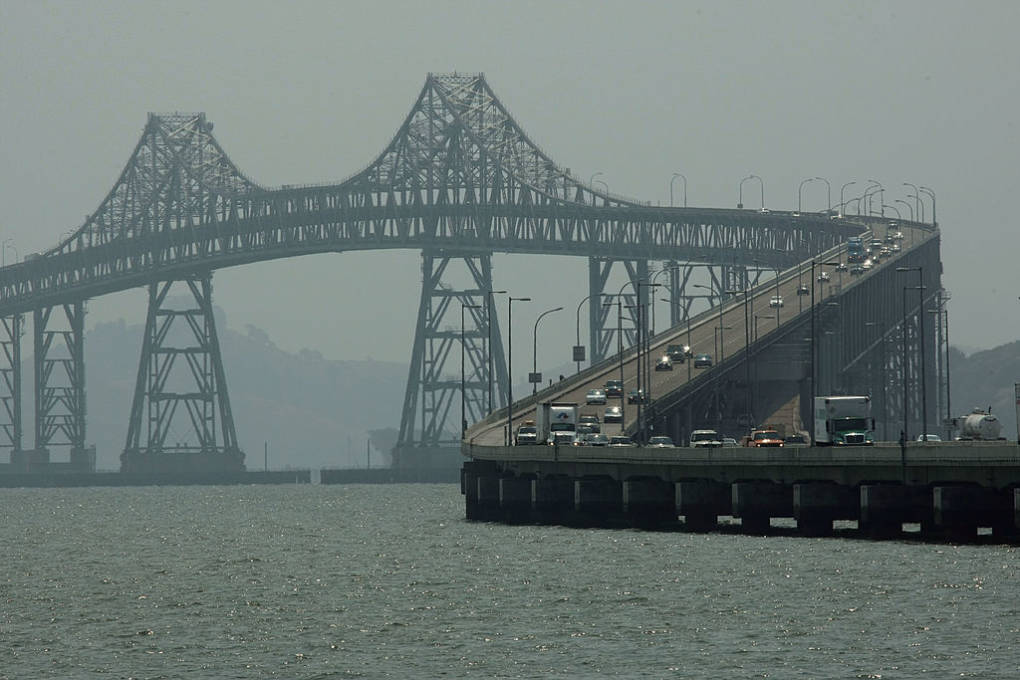
"caption": "The view of the Richmond-San Rafael bridge is partially obscured by hazy smoke-filled air in June 2008, when Northern California suffered from numerous wildfires.",
"description": "The view of the Richmond-San Rafael bridge is partially obscured by hazy smoke-filled air in June 2008, when Northern California suffered from numerous wildfires.",
"title": null,
"credit": "Justin Sullivan/Getty Images",
"status": "inherit",
"isLoading": false,
"fetchFailed": false
},
"news_11272505": {
"type": "attachments",
"id": "news_11272505",
"meta": {
"index": "attachments_1716263798",
"site": "news",
"id": "11272505",
"found": true
},
"parent": 11272504,
"imgSizes": {
"small": {
"file": "https://ww2.kqed.org/app/uploads/sites/10/2017/01/RS23445_161219_GGFoghorns_bhs07-qut-520x347.jpg",
"width": 520,
"mimeType": "image/jpeg",
"height": 347
},
"twentyfourteen-full-width": {
"file": "https://ww2.kqed.org/app/uploads/sites/10/2017/01/RS23445_161219_GGFoghorns_bhs07-qut-1038x576.jpg",
"width": 1038,
"mimeType": "image/jpeg",
"height": 576
},
"thumbnail": {
"file": "https://ww2.kqed.org/app/uploads/sites/10/2017/01/RS23445_161219_GGFoghorns_bhs07-qut-160x107.jpg",
"width": 160,
"mimeType": "image/jpeg",
"height": 107
},
"fd-sm": {
"file": "https://ww2.kqed.org/app/uploads/sites/10/2017/01/RS23445_161219_GGFoghorns_bhs07-qut-960x640.jpg",
"width": 960,
"mimeType": "image/jpeg",
"height": 640
},
"post-thumbnail": {
"file": "https://ww2.kqed.org/app/uploads/sites/10/2017/01/RS23445_161219_GGFoghorns_bhs07-qut-672x372.jpg",
"width": 672,
"mimeType": "image/jpeg",
"height": 372
},
"xsmall": {
"file": "https://ww2.kqed.org/app/uploads/sites/10/2017/01/RS23445_161219_GGFoghorns_bhs07-qut-375x250.jpg",
"width": 375,
"mimeType": "image/jpeg",
"height": 250
},
"kqedFullSize": {
"file": "https://ww2.kqed.org/app/uploads/sites/10/2017/01/RS23445_161219_GGFoghorns_bhs07-qut.jpg",
"width": 1920,
"height": 1280
},
"large": {
"file": "https://ww2.kqed.org/app/uploads/sites/10/2017/01/RS23445_161219_GGFoghorns_bhs07-qut-1020x680.jpg",
"width": 1020,
"mimeType": "image/jpeg",
"height": 680
},
"xlarge": {
"file": "https://ww2.kqed.org/app/uploads/sites/10/2017/01/RS23445_161219_GGFoghorns_bhs07-qut-1180x787.jpg",
"width": 1180,
"mimeType": "image/jpeg",
"height": 787
},
"guest-author-50": {
"file": "https://ww2.kqed.org/app/uploads/sites/10/2017/01/RS23445_161219_GGFoghorns_bhs07-qut-50x50.jpg",
"width": 50,
"mimeType": "image/jpeg",
"height": 50
},
"guest-author-96": {
"file": "https://ww2.kqed.org/app/uploads/sites/10/2017/01/RS23445_161219_GGFoghorns_bhs07-qut-96x96.jpg",
"width": 96,
"mimeType": "image/jpeg",
"height": 96
},
"medium": {
"file": "https://ww2.kqed.org/app/uploads/sites/10/2017/01/RS23445_161219_GGFoghorns_bhs07-qut-800x533.jpg",
"width": 800,
"mimeType": "image/jpeg",
"height": 533
},
"guest-author-64": {
"file": "https://ww2.kqed.org/app/uploads/sites/10/2017/01/RS23445_161219_GGFoghorns_bhs07-qut-64x64.jpg",
"width": 64,
"mimeType": "image/jpeg",
"height": 64
},
"guest-author-32": {
"file": "https://ww2.kqed.org/app/uploads/sites/10/2017/01/RS23445_161219_GGFoghorns_bhs07-qut-32x32.jpg",
"width": 32,
"mimeType": "image/jpeg",
"height": 32
},
"jmtc-small-thumb": {
"file": "https://ww2.kqed.org/app/uploads/sites/10/2017/01/RS23445_161219_GGFoghorns_bhs07-qut-280x150.jpg",
"width": 280,
"mimeType": "image/jpeg",
"height": 150
},
"fd-lrg": {
"file": "https://ww2.kqed.org/app/uploads/sites/10/2017/01/RS23445_161219_GGFoghorns_bhs07-qut-1920x1280.jpg",
"width": 1920,
"mimeType": "image/jpeg",
"height": 1280
},
"fd-med": {
"file": "https://ww2.kqed.org/app/uploads/sites/10/2017/01/RS23445_161219_GGFoghorns_bhs07-qut-1180x787.jpg",
"width": 1180,
"mimeType": "image/jpeg",
"height": 787
},
"full-width": {
"file": "https://ww2.kqed.org/app/uploads/sites/10/2017/01/RS23445_161219_GGFoghorns_bhs07-qut-1920x1280.jpg",
"width": 1920,
"mimeType": "image/jpeg",
"height": 1280
},
"detail": {
"file": "https://ww2.kqed.org/app/uploads/sites/10/2017/01/RS23445_161219_GGFoghorns_bhs07-qut-150x150.jpg",
"width": 150,
"mimeType": "image/jpeg",
"height": 150
},
"guest-author-128": {
"file": "https://ww2.kqed.org/app/uploads/sites/10/2017/01/RS23445_161219_GGFoghorns_bhs07-qut-128x128.jpg",
"width": 128,
"mimeType": "image/jpeg",
"height": 128
},
"xxsmall": {
"file": "https://ww2.kqed.org/app/uploads/sites/10/2017/01/RS23445_161219_GGFoghorns_bhs07-qut-240x160.jpg",
"width": 240,
"mimeType": "image/jpeg",
"height": 160
}
},
"publishDate": 1484615498,
"modified": 1484788377,
"caption": "This Golden Gate Bridge foghorn points west on the concrete base of the bridge's south tower, guiding ships safely in the fog.",
"description": "This Golden Gate Bridge fog horn points west on the concrete base of the bridge's south tower, guiding ships safely in the fog.",
"title": "RS23445_161219_GGFoghorns_bhs07-qut",
"credit": "Brittany Hosea-Small/KQED",
"status": "inherit",
"isLoading": false,
"fetchFailed": false
},
"news_11048011": {
"type": "attachments",
"id": "news_11048011",
"meta": {
"index": "attachments_1716263798",
"site": "news",
"id": "11048011",
"found": true
},
"parent": 11033429,
"imgSizes": {
"twentyfourteen-full-width": {
"file": "https://ww2.kqed.org/app/uploads/sites/10/2016/08/RS20485_160729_CLUBNBDancers_bhs04-1038x576.jpg",
"width": 1038,
"mimeType": "image/jpeg",
"height": 576
},
"thumbnail": {
"file": "https://ww2.kqed.org/app/uploads/sites/10/2016/08/RS20485_160729_CLUBNBDancers_bhs04-400x267.jpg",
"width": 400,
"mimeType": "image/jpeg",
"height": 267
},
"fd-sm": {
"file": "https://ww2.kqed.org/app/uploads/sites/10/2016/08/RS20485_160729_CLUBNBDancers_bhs04-960x640.jpg",
"width": 960,
"mimeType": "image/jpeg",
"height": 640
},
"post-thumbnail": {
"file": "https://ww2.kqed.org/app/uploads/sites/10/2016/08/RS20485_160729_CLUBNBDancers_bhs04-672x372.jpg",
"width": 672,
"mimeType": "image/jpeg",
"height": 372
},
"kqedFullSize": {
"file": "https://ww2.kqed.org/app/uploads/sites/10/2016/08/RS20485_160729_CLUBNBDancers_bhs04.jpg",
"width": 1920,
"height": 1280
},
"large": {
"file": "https://ww2.kqed.org/app/uploads/sites/10/2016/08/RS20485_160729_CLUBNBDancers_bhs04-1920x1280.jpg",
"width": 1920,
"mimeType": "image/jpeg",
"height": 1280
},
"guest-author-50": {
"file": "https://ww2.kqed.org/app/uploads/sites/10/2016/08/RS20485_160729_CLUBNBDancers_bhs04-50x50.jpg",
"width": 50,
"mimeType": "image/jpeg",
"height": 50
},
"guest-author-96": {
"file": "https://ww2.kqed.org/app/uploads/sites/10/2016/08/RS20485_160729_CLUBNBDancers_bhs04-96x96.jpg",
"width": 96,
"mimeType": "image/jpeg",
"height": 96
},
"medium": {
"file": "https://ww2.kqed.org/app/uploads/sites/10/2016/08/RS20485_160729_CLUBNBDancers_bhs04-800x533.jpg",
"width": 800,
"mimeType": "image/jpeg",
"height": 533
},
"guest-author-64": {
"file": "https://ww2.kqed.org/app/uploads/sites/10/2016/08/RS20485_160729_CLUBNBDancers_bhs04-64x64.jpg",
"width": 64,
"mimeType": "image/jpeg",
"height": 64
},
"guest-author-32": {
"file": "https://ww2.kqed.org/app/uploads/sites/10/2016/08/RS20485_160729_CLUBNBDancers_bhs04-32x32.jpg",
"width": 32,
"mimeType": "image/jpeg",
"height": 32
},
"jmtc-small-thumb": {
"file": "https://ww2.kqed.org/app/uploads/sites/10/2016/08/RS20485_160729_CLUBNBDancers_bhs04-280x150.jpg",
"width": 280,
"mimeType": "image/jpeg",
"height": 150
},
"fd-lrg": {
"file": "https://ww2.kqed.org/app/uploads/sites/10/2016/08/RS20485_160729_CLUBNBDancers_bhs04-1920x1280.jpg",
"width": 1920,
"mimeType": "image/jpeg",
"height": 1280
},
"fd-med": {
"file": "https://ww2.kqed.org/app/uploads/sites/10/2016/08/RS20485_160729_CLUBNBDancers_bhs04-1180x787.jpg",
"width": 1180,
"mimeType": "image/jpeg",
"height": 787
},
"detail": {
"file": "https://ww2.kqed.org/app/uploads/sites/10/2016/08/RS20485_160729_CLUBNBDancers_bhs04-150x150.jpg",
"width": 150,
"mimeType": "image/jpeg",
"height": 150
},
"guest-author-128": {
"file": "https://ww2.kqed.org/app/uploads/sites/10/2016/08/RS20485_160729_CLUBNBDancers_bhs04-128x128.jpg",
"width": 128,
"mimeType": "image/jpeg",
"height": 128
}
},
"publishDate": 1470935567,
"modified": 1484270094,
"caption": "Entertainer Cocoa Diamond dances on stage at Club BNB in Oakland.",
"description": "Entertainer Cocoa Diamond dances on stage at Club BnB in Oakland.",
"title": "RS20485_160729_CLUBNBDancers_bhs04",
"credit": "Brittany Hosea-Small/KQED",
"status": "inherit",
"isLoading": false,
"fetchFailed": false
},
"news_10566860": {
"type": "attachments",
"id": "news_10566860",
"meta": {
"index": "attachments_1716263798",
"site": "news",
"id": "10566860",
"found": true
},
"parent": 10564542,
"imgSizes": {
"twentyfourteen-full-width": {
"file": "https://ww2.kqed.org/app/uploads/sites/10/2015/06/sutro-1038x576.jpg",
"width": 1038,
"mimeType": "image/jpeg",
"height": 576
},
"thumbnail": {
"file": "https://ww2.kqed.org/app/uploads/sites/10/2015/06/sutro-400x225.jpg",
"width": 400,
"mimeType": "image/jpeg",
"height": 225
},
"fd-sm": {
"file": "https://ww2.kqed.org/app/uploads/sites/10/2015/06/sutro-960x540.jpg",
"width": 960,
"mimeType": "image/jpeg",
"height": 540
},
"post-thumbnail": {
"file": "https://ww2.kqed.org/app/uploads/sites/10/2015/06/sutro-672x372.jpg",
"width": 672,
"mimeType": "image/jpeg",
"height": 372
},
"kqedFullSize": {
"file": "https://ww2.kqed.org/app/uploads/sites/10/2015/06/sutro-e1437783158182.jpg",
"width": 1920,
"height": 1080
},
"large": {
"file": "https://ww2.kqed.org/app/uploads/sites/10/2015/06/sutro-1440x810.jpg",
"width": 1440,
"mimeType": "image/jpeg",
"height": 810
},
"guest-author-96": {
"file": "https://ww2.kqed.org/app/uploads/sites/10/2015/06/sutro-96x96.jpg",
"width": 96,
"mimeType": "image/jpeg",
"height": 96
},
"medium": {
"file": "https://ww2.kqed.org/app/uploads/sites/10/2015/06/sutro-800x450.jpg",
"width": 800,
"mimeType": "image/jpeg",
"height": 450
},
"guest-author-64": {
"file": "https://ww2.kqed.org/app/uploads/sites/10/2015/06/sutro-64x64.jpg",
"width": 64,
"mimeType": "image/jpeg",
"height": 64
},
"guest-author-32": {
"file": "https://ww2.kqed.org/app/uploads/sites/10/2015/06/sutro-32x32.jpg",
"width": 32,
"mimeType": "image/jpeg",
"height": 32
},
"jmtc-small-thumb": {
"file": "https://ww2.kqed.org/app/uploads/sites/10/2015/06/sutro-280x150.jpg",
"width": 280,
"mimeType": "image/jpeg",
"height": 150
},
"fd-med": {
"file": "https://ww2.kqed.org/app/uploads/sites/10/2015/06/sutro-1180x664.jpg",
"width": 1180,
"mimeType": "image/jpeg",
"height": 664
},
"detail": {
"file": "https://ww2.kqed.org/app/uploads/sites/10/2015/06/sutro-75x75.jpg",
"width": 75,
"mimeType": "image/jpeg",
"height": 75
},
"guest-author-128": {
"file": "https://ww2.kqed.org/app/uploads/sites/10/2015/06/sutro-128x128.jpg",
"width": 128,
"mimeType": "image/jpeg",
"height": 128
}
},
"publishDate": 1434570542,
"modified": 1434570575,
"caption": "Many in the city hated the design of Sutro Tower when it was first built. ",
"description": "Many in the city hated the design of Sutro Tower when it was first built. ",
"title": "sutro",
"credit": "Adam Grossberg/KQED",
"status": "inherit",
"isLoading": false,
"fetchFailed": false
},
"news_11242250": {
"type": "attachments",
"id": "news_11242250",
"meta": {
"index": "attachments_1716263798",
"site": "news",
"id": "11242250",
"found": true
},
"parent": 11231284,
"imgSizes": {
"small": {
"file": "https://ww2.kqed.org/app/uploads/sites/10/2016/12/guyscheers-520x293.jpg",
"width": 520,
"mimeType": "image/jpeg",
"height": 293
},
"twentyfourteen-full-width": {
"file": "https://ww2.kqed.org/app/uploads/sites/10/2016/12/guyscheers-1038x576.jpg",
"width": 1038,
"mimeType": "image/jpeg",
"height": 576
},
"thumbnail": {
"file": "https://ww2.kqed.org/app/uploads/sites/10/2016/12/guyscheers-160x90.jpg",
"width": 160,
"mimeType": "image/jpeg",
"height": 90
},
"fd-sm": {
"file": "https://ww2.kqed.org/app/uploads/sites/10/2016/12/guyscheers-960x540.jpg",
"width": 960,
"mimeType": "image/jpeg",
"height": 540
},
"post-thumbnail": {
"file": "https://ww2.kqed.org/app/uploads/sites/10/2016/12/guyscheers-672x372.jpg",
"width": 672,
"mimeType": "image/jpeg",
"height": 372
},
"xsmall": {
"file": "https://ww2.kqed.org/app/uploads/sites/10/2016/12/guyscheers-375x211.jpg",
"width": 375,
"mimeType": "image/jpeg",
"height": 211
},
"kqedFullSize": {
"file": "https://ww2.kqed.org/app/uploads/sites/10/2016/12/guyscheers.jpg",
"width": 3236,
"height": 1821
},
"large": {
"file": "https://ww2.kqed.org/app/uploads/sites/10/2016/12/guyscheers-1020x574.jpg",
"width": 1020,
"mimeType": "image/jpeg",
"height": 574
},
"xlarge": {
"file": "https://ww2.kqed.org/app/uploads/sites/10/2016/12/guyscheers-1180x664.jpg",
"width": 1180,
"mimeType": "image/jpeg",
"height": 664
},
"guest-author-50": {
"file": "https://ww2.kqed.org/app/uploads/sites/10/2016/12/guyscheers-50x50.jpg",
"width": 50,
"mimeType": "image/jpeg",
"height": 50
},
"guest-author-96": {
"file": "https://ww2.kqed.org/app/uploads/sites/10/2016/12/guyscheers-96x96.jpg",
"width": 96,
"mimeType": "image/jpeg",
"height": 96
},
"medium": {
"file": "https://ww2.kqed.org/app/uploads/sites/10/2016/12/guyscheers-800x450.jpg",
"width": 800,
"mimeType": "image/jpeg",
"height": 450
},
"guest-author-64": {
"file": "https://ww2.kqed.org/app/uploads/sites/10/2016/12/guyscheers-64x64.jpg",
"width": 64,
"mimeType": "image/jpeg",
"height": 64
},
"guest-author-32": {
"file": "https://ww2.kqed.org/app/uploads/sites/10/2016/12/guyscheers-32x32.jpg",
"width": 32,
"mimeType": "image/jpeg",
"height": 32
},
"jmtc-small-thumb": {
"file": "https://ww2.kqed.org/app/uploads/sites/10/2016/12/guyscheers-280x150.jpg",
"width": 280,
"mimeType": "image/jpeg",
"height": 150
},
"fd-lrg": {
"file": "https://ww2.kqed.org/app/uploads/sites/10/2016/12/guyscheers-1920x1080.jpg",
"width": 1920,
"mimeType": "image/jpeg",
"height": 1080
},
"fd-med": {
"file": "https://ww2.kqed.org/app/uploads/sites/10/2016/12/guyscheers-1180x664.jpg",
"width": 1180,
"mimeType": "image/jpeg",
"height": 664
},
"full-width": {
"file": "https://ww2.kqed.org/app/uploads/sites/10/2016/12/guyscheers-1920x1080.jpg",
"width": 1920,
"mimeType": "image/jpeg",
"height": 1080
},
"detail": {
"file": "https://ww2.kqed.org/app/uploads/sites/10/2016/12/guyscheers-150x150.jpg",
"width": 150,
"mimeType": "image/jpeg",
"height": 150
},
"guest-author-128": {
"file": "https://ww2.kqed.org/app/uploads/sites/10/2016/12/guyscheers-128x128.jpg",
"width": 128,
"mimeType": "image/jpeg",
"height": 128
},
"xxsmall": {
"file": "https://ww2.kqed.org/app/uploads/sites/10/2016/12/guyscheers-240x135.jpg",
"width": 240,
"mimeType": "image/jpeg",
"height": 135
}
},
"publishDate": 1482974471,
"modified": 1483040306,
"caption": "There are more young single men in San Jose than young single women. ",
"description": "There are more young, single men in San Jose than young, single women. ",
"title": "guyscheers",
"credit": "\u003ca href=\"https://www.flickr.com/photos/markjsebastian/869655640/\">Mark Sebastian\u003c/a>/Flickr",
"status": "inherit",
"isLoading": false,
"fetchFailed": false
},
"news_11198367": {
"type": "attachments",
"id": "news_11198367",
"meta": {
"index": "attachments_1716263798",
"site": "news",
"id": "11198367",
"found": true
},
"parent": 11187250,
"imgSizes": {
"small": {
"file": "https://ww2.kqed.org/app/uploads/sites/10/2016/11/semaphorescolors-520x282.jpg",
"width": 520,
"mimeType": "image/jpeg",
"height": 282
},
"twentyfourteen-full-width": {
"file": "https://ww2.kqed.org/app/uploads/sites/10/2016/11/semaphorescolors-1038x576.jpg",
"width": 1038,
"mimeType": "image/jpeg",
"height": 576
},
"thumbnail": {
"file": "https://ww2.kqed.org/app/uploads/sites/10/2016/11/semaphorescolors-160x87.jpg",
"width": 160,
"mimeType": "image/jpeg",
"height": 87
},
"fd-sm": {
"file": "https://ww2.kqed.org/app/uploads/sites/10/2016/11/semaphorescolors-960x520.jpg",
"width": 960,
"mimeType": "image/jpeg",
"height": 520
},
"post-thumbnail": {
"file": "https://ww2.kqed.org/app/uploads/sites/10/2016/11/semaphorescolors-672x372.jpg",
"width": 672,
"mimeType": "image/jpeg",
"height": 372
},
"xsmall": {
"file": "https://ww2.kqed.org/app/uploads/sites/10/2016/11/semaphorescolors-375x203.jpg",
"width": 375,
"mimeType": "image/jpeg",
"height": 203
},
"kqedFullSize": {
"file": "https://ww2.kqed.org/app/uploads/sites/10/2016/11/semaphorescolors.jpg",
"width": 1956,
"height": 1059
},
"large": {
"file": "https://ww2.kqed.org/app/uploads/sites/10/2016/11/semaphorescolors-1020x552.jpg",
"width": 1020,
"mimeType": "image/jpeg",
"height": 552
},
"xlarge": {
"file": "https://ww2.kqed.org/app/uploads/sites/10/2016/11/semaphorescolors-1180x639.jpg",
"width": 1180,
"mimeType": "image/jpeg",
"height": 639
},
"guest-author-50": {
"file": "https://ww2.kqed.org/app/uploads/sites/10/2016/11/semaphorescolors-50x50.jpg",
"width": 50,
"mimeType": "image/jpeg",
"height": 50
},
"guest-author-96": {
"file": "https://ww2.kqed.org/app/uploads/sites/10/2016/11/semaphorescolors-96x96.jpg",
"width": 96,
"mimeType": "image/jpeg",
"height": 96
},
"medium": {
"file": "https://ww2.kqed.org/app/uploads/sites/10/2016/11/semaphorescolors-800x433.jpg",
"width": 800,
"mimeType": "image/jpeg",
"height": 433
},
"guest-author-64": {
"file": "https://ww2.kqed.org/app/uploads/sites/10/2016/11/semaphorescolors-64x64.jpg",
"width": 64,
"mimeType": "image/jpeg",
"height": 64
},
"guest-author-32": {
"file": "https://ww2.kqed.org/app/uploads/sites/10/2016/11/semaphorescolors-32x32.jpg",
"width": 32,
"mimeType": "image/jpeg",
"height": 32
},
"jmtc-small-thumb": {
"file": "https://ww2.kqed.org/app/uploads/sites/10/2016/11/semaphorescolors-280x150.jpg",
"width": 280,
"mimeType": "image/jpeg",
"height": 150
},
"fd-lrg": {
"file": "https://ww2.kqed.org/app/uploads/sites/10/2016/11/semaphorescolors-1920x1040.jpg",
"width": 1920,
"mimeType": "image/jpeg",
"height": 1040
},
"fd-med": {
"file": "https://ww2.kqed.org/app/uploads/sites/10/2016/11/semaphorescolors-1180x639.jpg",
"width": 1180,
"mimeType": "image/jpeg",
"height": 639
},
"full-width": {
"file": "https://ww2.kqed.org/app/uploads/sites/10/2016/11/semaphorescolors-1920x1040.jpg",
"width": 1920,
"mimeType": "image/jpeg",
"height": 1040
},
"detail": {
"file": "https://ww2.kqed.org/app/uploads/sites/10/2016/11/semaphorescolors-150x150.jpg",
"width": 150,
"mimeType": "image/jpeg",
"height": 150
},
"guest-author-128": {
"file": "https://ww2.kqed.org/app/uploads/sites/10/2016/11/semaphorescolors-128x128.jpg",
"width": 128,
"mimeType": "image/jpeg",
"height": 128
},
"xxsmall": {
"file": "https://ww2.kqed.org/app/uploads/sites/10/2016/11/semaphorescolors-240x130.jpg",
"width": 240,
"mimeType": "image/jpeg",
"height": 130
}
},
"publishDate": 1480541065,
"modified": 1480550920,
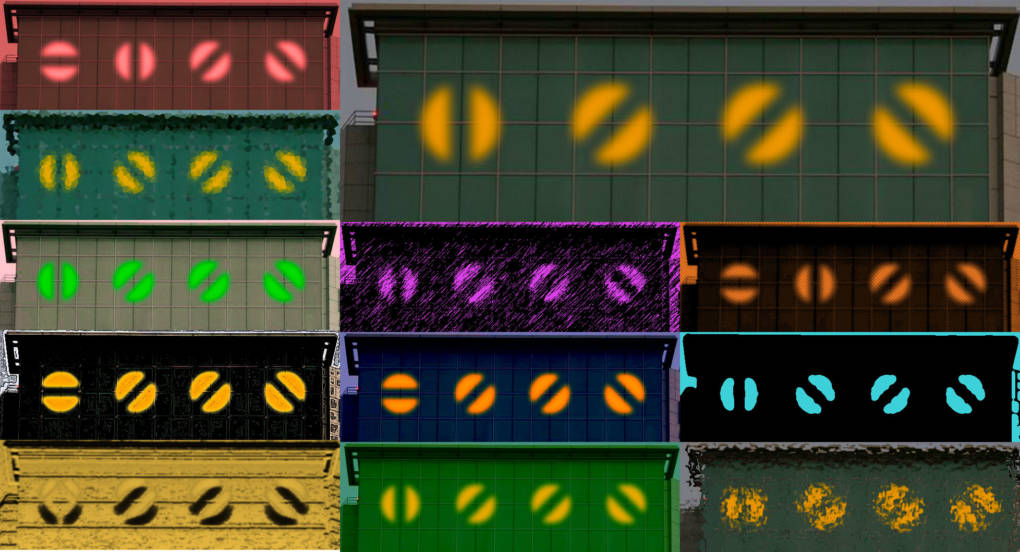
"caption": "A mashup of San Jose Semaphore, shown in different positions.",
"description": "A mashup of San Jose Semaphore, shown in different positions.",
"title": "semaphorescolors",
"credit": "Olivia Allen-Price/KQED",
"status": "inherit",
"isLoading": false,
"fetchFailed": false
},
"news_10975828": {
"type": "attachments",
"id": "news_10975828",
"meta": {
"index": "attachments_1716263798",
"site": "news",
"id": "10975828",
"found": true
},
"parent": 10953748,
"imgSizes": {
"twentyfourteen-full-width": {
"file": "https://ww2.kqed.org/app/uploads/sites/10/2016/06/helicopter-1038x576.jpg",
"width": 1038,
"mimeType": "image/jpeg",
"height": 576
},
"thumbnail": {
"file": "https://ww2.kqed.org/app/uploads/sites/10/2016/06/helicopter-400x267.jpg",
"width": 400,
"mimeType": "image/jpeg",
"height": 267
},
"fd-sm": {
"file": "https://ww2.kqed.org/app/uploads/sites/10/2016/06/helicopter-960x640.jpg",
"width": 960,
"mimeType": "image/jpeg",
"height": 640
},
"post-thumbnail": {
"file": "https://ww2.kqed.org/app/uploads/sites/10/2016/06/helicopter-672x372.jpg",
"width": 672,
"mimeType": "image/jpeg",
"height": 372
},
"kqedFullSize": {
"file": "https://ww2.kqed.org/app/uploads/sites/10/2016/06/helicopter.jpg",
"width": 1920,
"height": 1280
},
"large": {
"file": "https://ww2.kqed.org/app/uploads/sites/10/2016/06/helicopter-1920x1280.jpg",
"width": 1920,
"mimeType": "image/jpeg",
"height": 1280
},
"guest-author-50": {
"file": "https://ww2.kqed.org/app/uploads/sites/10/2016/06/helicopter-50x50.jpg",
"width": 50,
"mimeType": "image/jpeg",
"height": 50
},
"guest-author-96": {
"file": "https://ww2.kqed.org/app/uploads/sites/10/2016/06/helicopter-96x96.jpg",
"width": 96,
"mimeType": "image/jpeg",
"height": 96
},
"medium": {
"file": "https://ww2.kqed.org/app/uploads/sites/10/2016/06/helicopter-800x533.jpg",
"width": 800,
"mimeType": "image/jpeg",
"height": 533
},
"guest-author-64": {
"file": "https://ww2.kqed.org/app/uploads/sites/10/2016/06/helicopter-64x64.jpg",
"width": 64,
"mimeType": "image/jpeg",
"height": 64
},
"guest-author-32": {
"file": "https://ww2.kqed.org/app/uploads/sites/10/2016/06/helicopter-32x32.jpg",
"width": 32,
"mimeType": "image/jpeg",
"height": 32
},
"jmtc-small-thumb": {
"file": "https://ww2.kqed.org/app/uploads/sites/10/2016/06/helicopter-280x150.jpg",
"width": 280,
"mimeType": "image/jpeg",
"height": 150
},
"fd-lrg": {
"file": "https://ww2.kqed.org/app/uploads/sites/10/2016/06/helicopter-1920x1280.jpg",
"width": 1920,
"mimeType": "image/jpeg",
"height": 1280
},
"fd-med": {
"file": "https://ww2.kqed.org/app/uploads/sites/10/2016/06/helicopter-1180x787.jpg",
"width": 1180,
"mimeType": "image/jpeg",
"height": 787
},
"detail": {
"file": "https://ww2.kqed.org/app/uploads/sites/10/2016/06/helicopter-150x150.jpg",
"width": 150,
"mimeType": "image/jpeg",
"height": 150
},
"guest-author-128": {
"file": "https://ww2.kqed.org/app/uploads/sites/10/2016/06/helicopter-128x128.jpg",
"width": 128,
"mimeType": "image/jpeg",
"height": 128
}
},
"publishDate": 1464914287,
"modified": 1467233485,
"caption": "The view of the Carquinez Bridge from inside a CHP helicopter.",
"description": "The view of the Carquinez Bridge from inside a CHP helicopter.",
"title": "helicopter",
"credit": "Kelly O'Mara/KQED",
"status": "inherit",
"isLoading": false,
"fetchFailed": false
},
"news_10799482": {
"type": "attachments",
"id": "news_10799482",
"meta": {
"index": "attachments_1716263798",
"site": "news",
"id": "10799482",
"found": true
},
"parent": 10799472,
"imgSizes": {
"jmtc-small-thumb": {
"file": "https://ww2.kqed.org/app/uploads/sites/10/2015/12/Loading-steel-cans_star-280x150.jpg",
"width": 280,
"mimeType": "image/jpeg",
"height": 150
},
"thumbnail": {
"file": "https://ww2.kqed.org/app/uploads/sites/10/2015/12/Loading-steel-cans_star-400x222.jpg",
"width": 400,
"mimeType": "image/jpeg",
"height": 222
},
"fd-sm": {
"file": "https://ww2.kqed.org/app/uploads/sites/10/2015/12/Loading-steel-cans_star-960x534.jpg",
"width": 960,
"mimeType": "image/jpeg",
"height": 534
},
"post-thumbnail": {
"file": "https://ww2.kqed.org/app/uploads/sites/10/2015/12/Loading-steel-cans_star-672x372.jpg",
"width": 672,
"mimeType": "image/jpeg",
"height": 372
},
"kqedFullSize": {
"file": "https://ww2.kqed.org/app/uploads/sites/10/2015/12/Loading-steel-cans_star.jpg",
"width": 991,
"height": 551
},
"guest-author-96": {
"file": "https://ww2.kqed.org/app/uploads/sites/10/2015/12/Loading-steel-cans_star-96x96.jpg",
"width": 96,
"mimeType": "image/jpeg",
"height": 96
},
"medium": {
"file": "https://ww2.kqed.org/app/uploads/sites/10/2015/12/Loading-steel-cans_star-800x445.jpg",
"width": 800,
"mimeType": "image/jpeg",
"height": 445
},
"guest-author-64": {
"file": "https://ww2.kqed.org/app/uploads/sites/10/2015/12/Loading-steel-cans_star-64x64.jpg",
"width": 64,
"mimeType": "image/jpeg",
"height": 64
},
"detail": {
"file": "https://ww2.kqed.org/app/uploads/sites/10/2015/12/Loading-steel-cans_star-75x75.jpg",
"width": 75,
"mimeType": "image/jpeg",
"height": 75
},
"guest-author-32": {
"file": "https://ww2.kqed.org/app/uploads/sites/10/2015/12/Loading-steel-cans_star-32x32.jpg",
"width": 32,
"mimeType": "image/jpeg",
"height": 32
},
"medium_large": {
"file": "https://ww2.kqed.org/app/uploads/sites/10/2015/12/Loading-steel-cans_star-768x427.jpg",
"width": 768,
"mimeType": "image/jpeg",
"height": 427
},
"guest-author-128": {
"file": "https://ww2.kqed.org/app/uploads/sites/10/2015/12/Loading-steel-cans_star-128x128.jpg",
"width": 128,
"mimeType": "image/jpeg",
"height": 128
}
},
"publishDate": 1450471621,
"modified": 1481847793,
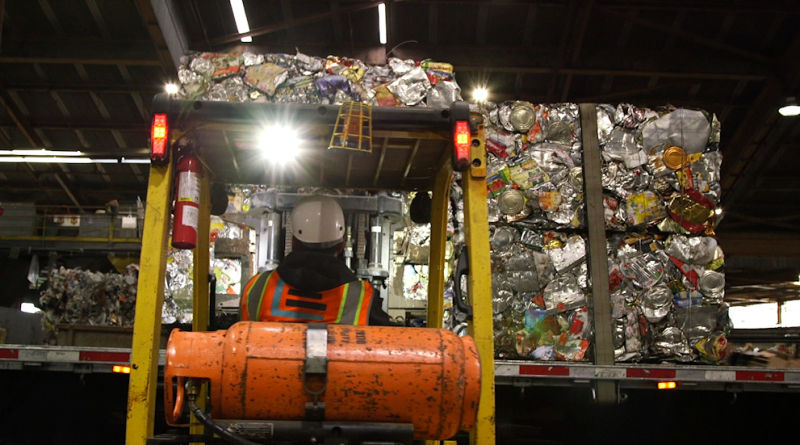
"caption": "A San Francisco Recology worker loads a bale of steel onto a truck where it'll be taken to McMinnville, Oregon, and turned into rebar.",
"description": null,
"title": "Loading steel cans_star",
"credit": "Adam Grossberg/KQED",
"status": "inherit",
"isLoading": false,
"fetchFailed": false
},
"news_11210050": {
"type": "attachments",
"id": "news_11210050",
"meta": {
"index": "attachments_1716263798",
"site": "news",
"id": "11210050",
"found": true
},
"parent": 0,
"imgSizes": {
"small": {
"file": "https://ww2.kqed.org/app/uploads/sites/10/2016/12/377125pr-520x373.jpg",
"width": 520,
"mimeType": "image/jpeg",
"height": 373
},
"thumbnail": {
"file": "https://ww2.kqed.org/app/uploads/sites/10/2016/12/377125pr-160x115.jpg",
"width": 160,
"mimeType": "image/jpeg",
"height": 115
},
"post-thumbnail": {
"file": "https://ww2.kqed.org/app/uploads/sites/10/2016/12/377125pr-640x372.jpg",
"width": 640,
"mimeType": "image/jpeg",
"height": 372
},
"xsmall": {
"file": "https://ww2.kqed.org/app/uploads/sites/10/2016/12/377125pr-375x269.jpg",
"width": 375,
"mimeType": "image/jpeg",
"height": 269
},
"kqedFullSize": {
"file": "https://ww2.kqed.org/app/uploads/sites/10/2016/12/377125pr.jpg",
"width": 640,
"height": 459
},
"guest-author-50": {
"file": "https://ww2.kqed.org/app/uploads/sites/10/2016/12/377125pr-50x50.jpg",
"width": 50,
"mimeType": "image/jpeg",
"height": 50
},
"guest-author-96": {
"file": "https://ww2.kqed.org/app/uploads/sites/10/2016/12/377125pr-96x96.jpg",
"width": 96,
"mimeType": "image/jpeg",
"height": 96
},
"guest-author-64": {
"file": "https://ww2.kqed.org/app/uploads/sites/10/2016/12/377125pr-64x64.jpg",
"width": 64,
"mimeType": "image/jpeg",
"height": 64
},
"guest-author-32": {
"file": "https://ww2.kqed.org/app/uploads/sites/10/2016/12/377125pr-32x32.jpg",
"width": 32,
"mimeType": "image/jpeg",
"height": 32
},
"jmtc-small-thumb": {
"file": "https://ww2.kqed.org/app/uploads/sites/10/2016/12/377125pr-280x150.jpg",
"width": 280,
"mimeType": "image/jpeg",
"height": 150
},
"detail": {
"file": "https://ww2.kqed.org/app/uploads/sites/10/2016/12/377125pr-150x150.jpg",
"width": 150,
"mimeType": "image/jpeg",
"height": 150
},
"guest-author-128": {
"file": "https://ww2.kqed.org/app/uploads/sites/10/2016/12/377125pr-128x128.jpg",
"width": 128,
"mimeType": "image/jpeg",
"height": 128
},
"xxsmall": {
"file": "https://ww2.kqed.org/app/uploads/sites/10/2016/12/377125pr-240x172.jpg",
"width": 240,
"mimeType": "image/jpeg",
"height": 172
}
},
"publishDate": 1481158657,
"modified": 1481239974,
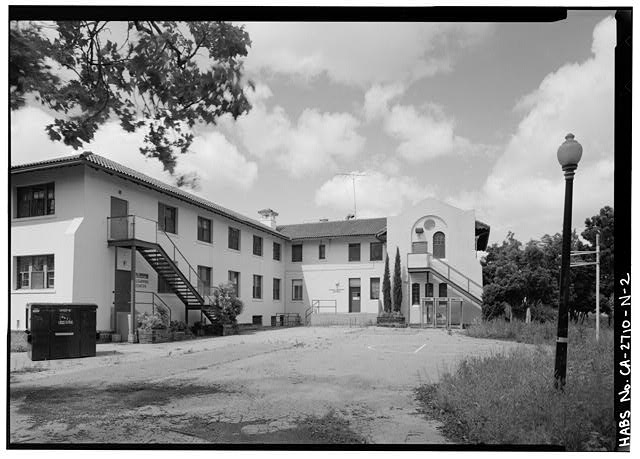
"caption": "The 'Demented Men's Building' at Agnews State Hospital.",
"description": "The \"Demented Men's Building\" at Agnews State Hospital.",
"title": "The \"Demented Men's Building\" at Agnews State Hospital.",
"credit": "Library of Congress",
"status": "inherit",
"isLoading": false,
"fetchFailed": false
}
},
"audioPlayerReducer": {
"postId": "stream_live",
"isPaused": true,
"isPlaying": false,
"pfsActive": false,
"pledgeModalIsOpen": true,
"playerDrawerIsOpen": false,
"liveAudioPlayStartedAt": 0,
"liveAudioPlayContext": ""
},
"authorsReducer": {
"ohubertallen": {
"type": "authors",
"id": "102",
"meta": {
"index": "authors_1716337520",
"id": "102",
"found": true
},
"name": "Olivia Allen-Price",
"firstName": "Olivia",
"lastName": "Allen-Price",
"slug": "ohubertallen",
"email": "oallenprice@kqed.org",
"display_author_email": false,
"staff_mastheads": [
"news"
],
"title": "Senior Editor",
"bio": "Olivia Allen-Price is senior editor and host of the award-winning Bay Curious podcast. Prior to joining KQED in 2013, Olivia worked at The Baltimore Sun and The Virginian-Pilot in Norfolk, Va. She holds degrees in journalism and political science from Elon University. Her work has earned awards from the Society of Professional Journalists, the Hearst Foundation and Hearken. She loves to talk about running and curly hair.\r\n\r\nFollow: \u003ca href=\"https://twitter.com/oallenprice\">@oallenprice\u003c/a>\r\nEmail: \u003ca href=\"mailto:oallenprice@kqed.org\">oallenprice@kqed.org\u003c/a>",
"avatar": "https://secure.gravatar.com/avatar/07f7803c1f6be56f3be58ef276dfa64dce898502e0554408ef4858451a8294f7?s=600&d=blank&r=g",
"twitter": "oallenprice",
"bluesky": null,
"facebook": null,
"instagram": null,
"linkedin": null,
"sites": [
{
"site": "",
"roles": [
"editor"
]
},
{
"site": "arts",
"roles": [
"subscriber"
]
},
{
"site": "news",
"roles": [
"administrator"
]
},
{
"site": "pop",
"roles": [
"administrator"
]
},
{
"site": "bayareabites",
"roles": [
"contributor"
]
},
{
"site": "stateofhealth",
"roles": [
"administrator"
]
},
{
"site": "science",
"roles": [
"editor"
]
}
],
"headData": {
"title": "Olivia Allen-Price | KQED",
"description": "Senior Editor",
"ogImgSrc": "https://secure.gravatar.com/avatar/07f7803c1f6be56f3be58ef276dfa64dce898502e0554408ef4858451a8294f7?s=600&d=blank&r=g",
"twImgSrc": "https://secure.gravatar.com/avatar/07f7803c1f6be56f3be58ef276dfa64dce898502e0554408ef4858451a8294f7?s=600&d=blank&r=g"
},
"isLoading": false,
"link": "/author/ohubertallen"
},
"aeghan": {
"type": "authors",
"id": "195",
"meta": {
"index": "authors_1716337520",
"id": "195",
"found": true
},
"name": "Adizah Eghan",
"firstName": "Adizah",
"lastName": "Eghan",
"slug": "aeghan",
"email": "adizah.e@gmail.com",
"display_author_email": false,
"staff_mastheads": [],
"title": "KQED Contributor",
"bio": "Adizah Eghan is a former reporter at KQED News and writer for KQED Arts. She caught the radio bug as an intern for PRI's The World and landed in KQED's newsroom after a stint teaching English in India. She covers culture, the arts, and global music in the Bay Area. This is where she tweets: \u003ca class=\"ProfileHeaderCard-screennameLink u-linkComplex js-nav\" style=\"color: #8899a6;\" href=\"https://twitter.com/Adizah_E\">@\u003cspan class=\"u-linkComplex-target\">Adizah_E\u003c/span>\u003c/a>",
"avatar": "https://secure.gravatar.com/avatar/d6e30ed9ca504243b4d8ee5d7ca32324?s=600&d=blank&r=g",
"twitter": "Adizah_E",
"facebook": null,
"instagram": null,
"linkedin": null,
"sites": [
{
"site": "arts",
"roles": [
"contributor"
]
},
{
"site": "news",
"roles": [
"subscriber"
]
},
{
"site": "stateofhealth",
"roles": [
"author"
]
}
],
"headData": {
"title": "Adizah Eghan | KQED",
"description": "KQED Contributor",
"ogImgSrc": "https://secure.gravatar.com/avatar/d6e30ed9ca504243b4d8ee5d7ca32324?s=600&d=blank&r=g",
"twImgSrc": "https://secure.gravatar.com/avatar/d6e30ed9ca504243b4d8ee5d7ca32324?s=600&d=blank&r=g"
},
"isLoading": false,
"link": "/author/aeghan"
},
"rachael-myrow": {
"type": "authors",
"id": "251",
"meta": {
"index": "authors_1716337520",
"id": "251",
"found": true
},
"name": "Rachael Myrow",
"firstName": "Rachael",
"lastName": "Myrow",
"slug": "rachael-myrow",
"email": "rmyrow@kqed.org",
"display_author_email": true,
"staff_mastheads": [
"news"
],
"title": "Senior Editor of KQED's Silicon Valley News Desk",
"bio": "• I write and edit stories about how Silicon Valley power and policies shape everyday life in California. I’m also passionate about making Bay Area history and culture more accessible to a broad public. • I’ve been a journalist for most of my life, starting in high school with The Franklin Press in Los Angeles, where I grew up. While earning my first degree in English at UC Berkeley, I got my start in public radio at KALX-FM. After completing a second degree in journalism at Cal, I landed my first professional job at Marketplace, then moved on to KPCC (now LAist), and then KQED, where I hosted The California Report for more than seven years. • My reporting has appeared on NPR, The World, WBUR’s \u003ci>Here & Now\u003c/i>, and the BBC. I also guest host for KQED’s \u003ci>Forum\u003c/i>, as well as the Commonwealth Club in San Francisco. • I speak periodically on media, democracy and technology issues, and do voiceover work for documentaries and educational video projects. • Outside of the studio, you'll find me hiking Bay Area trails and whipping up Insta-ready meals in my kitchen. • I do not accept gifts, money, or favors from anyone connected to my reporting, I don't pay people for information, and I do not support or donate to political causes. • I strive to treat the people I report on with fairness, honesty, and respect. I also recognize there are often multiple sides to a story and work to verify information through multiple sources and documentation. If I get something wrong, I correct it.",
"avatar": "https://secure.gravatar.com/avatar/3ed8a3c5f26025e4a805ba634cda8cd764906b97438a6d9ce216b044e340da4e?s=600&d=blank&r=g",
"twitter": "rachaelmyrow",
"bluesky": null,
"facebook": null,
"instagram": null,
"linkedin": "https://www.linkedin.com/in/rachaelmyrow/",
"sites": [
{
"site": "arts",
"roles": [
"administrator"
]
},
{
"site": "news",
"roles": [
"edit_others_posts",
"editor"
]
},
{
"site": "futureofyou",
"roles": [
"editor"
]
},
{
"site": "bayareabites",
"roles": [
"editor"
]
},
{
"site": "stateofhealth",
"roles": [
"editor"
]
},
{
"site": "science",
"roles": [
"editor"
]
},
{
"site": "food",
"roles": [
"editor"
]
},
{
"site": "forum",
"roles": [
"editor"
]
},
{
"site": "liveblog",
"roles": [
"author"
]
}
],
"headData": {
"title": "Rachael Myrow | KQED",
"description": "Senior Editor of KQED's Silicon Valley News Desk",
"ogImgSrc": "https://secure.gravatar.com/avatar/3ed8a3c5f26025e4a805ba634cda8cd764906b97438a6d9ce216b044e340da4e?s=600&d=blank&r=g",
"twImgSrc": "https://secure.gravatar.com/avatar/3ed8a3c5f26025e4a805ba634cda8cd764906b97438a6d9ce216b044e340da4e?s=600&d=blank&r=g"
},
"isLoading": false,
"link": "/author/rachael-myrow"
},
"kdomara": {
"type": "authors",
"id": "1459",
"meta": {
"index": "authors_1716337520",
"id": "1459",
"found": true
},
"name": "Kelly O'Mara",
"firstName": "Kelly",
"lastName": "O'Mara",
"slug": "kdomara",
"email": "komara@kqed.org",
"display_author_email": false,
"staff_mastheads": [
"news"
],
"title": "KQED Contributor",
"bio": "Kelly O'Mara is a writer and reporter in the San Francisco Bay Area. She writes about food, health, sports, travel, business and California news. Her work has appeared on KQED, online for Outside Magazine, epsnW, VICE and in Competitor Magazine, among others. Follow Kelly on Twitter \u003ca href=\"https://twitter.com/kellydomara\">@kellydomara\u003c/a>.",
"avatar": "https://secure.gravatar.com/avatar/768fec7412028b72f13bdd0f5f9d8186?s=600&d=blank&r=g",
"twitter": null,
"facebook": null,
"instagram": null,
"linkedin": null,
"sites": [
{
"site": "arts",
"roles": []
},
{
"site": "news",
"roles": []
},
{
"site": "bayareabites",
"roles": []
},
{
"site": "stateofhealth",
"roles": []
},
{
"site": "science",
"roles": []
},
{
"site": "checkplease",
"roles": [
"editor"
]
},
{
"site": "food",
"roles": []
},
{
"site": "forum",
"roles": [
"editor"
]
},
{
"site": "liveblog",
"roles": [
"editor"
]
}
],
"headData": {
"title": "Kelly O'Mara | KQED",
"description": "KQED Contributor",
"ogImgSrc": "https://secure.gravatar.com/avatar/768fec7412028b72f13bdd0f5f9d8186?s=600&d=blank&r=g",
"twImgSrc": "https://secure.gravatar.com/avatar/768fec7412028b72f13bdd0f5f9d8186?s=600&d=blank&r=g"
},
"isLoading": false,
"link": "/author/kdomara"
},
"lindseyhoshaw": {
"type": "authors",
"id": "5432",
"meta": {
"index": "authors_1716337520",
"id": "5432",
"found": true
},
"name": "Lindsey Hoshaw",
"firstName": "Lindsey",
"lastName": "Hoshaw",
"slug": "lindseyhoshaw",
"email": "lhoshaw@kqed.org",
"display_author_email": false,
"staff_mastheads": [],
"title": "KQED Contributor",
"bio": "Lindsey Hoshaw is a former interactive producer for KQED Science. Before joining KQED, Lindsey was a science correspondent for The New York Times, The Boston Globe, Forbes and Scientific American. On Twitter @lindseyhoshaw",
"avatar": "https://secure.gravatar.com/avatar/274b07694c998eaa8f26cfabaa941186?s=600&d=mm&r=g",
"twitter": "lindseyhoshaw",
"facebook": "lindsey.hoshaw.9",
"instagram": null,
"linkedin": null,
"sites": [
{
"site": "arts",
"roles": [
"author"
]
},
{
"site": "news",
"roles": [
"subscriber"
]
},
{
"site": "futureofyou",
"roles": [
"editor"
]
},
{
"site": "bayareabites",
"roles": [
"contributor"
]
},
{
"site": "stateofhealth",
"roles": [
"author"
]
},
{
"site": "science",
"roles": [
"edit_theme_options",
"subscriber"
]
},
{
"site": "quest",
"roles": [
"edit_post_subscriptions",
"edit_usergroups",
"unfiltered_html",
"unfiltered_upload",
"leadcoordinator",
"editor"
]
},
{
"site": "food",
"roles": []
}
],
"headData": {
"title": "Lindsey Hoshaw | KQED",
"description": "KQED Contributor",
"ogImgSrc": "https://secure.gravatar.com/avatar/274b07694c998eaa8f26cfabaa941186?s=600&d=mm&r=g",
"twImgSrc": "https://secure.gravatar.com/avatar/274b07694c998eaa8f26cfabaa941186?s=600&d=mm&r=g"
},
"isLoading": false,
"link": "/author/lindseyhoshaw"
},
"jplaczek": {
"type": "authors",
"id": "8606",
"meta": {
"index": "authors_1716337520",
"id": "8606",
"found": true
},
"name": "Jessica Placzek",
"firstName": "Jessica",
"lastName": "Placzek",
"slug": "jplaczek",
"email": "jessicalplaczek@gmail.com",
"display_author_email": false,
"staff_mastheads": [
"news"
],
"title": "KQED Contributor",
"bio": "Jessica Placzek is a former senior editor of podcasts at KQED where she served as the editorial lead of the podcast department. She worked with shows like MindShift, Rightnowish, Consider This, SOLD OUT, Bay Curious and The Bay. She’s also been a reporter and audio producer at KQED, KPFA, and KALW. She taught audio production to men incarcerated at California State Prison Solano and edited pieces they produced for the Uncuffed podcast through KALW. In 2018 she co-hosted and produced the third season of Raw Material for SFMOMA. In New Orleans she wrote for the Nola Defender. Her work has also appeared on Marketplace, All Things Considered, The California Report, and Vice. You can find more at jessicaplaczek.com",
"avatar": "https://secure.gravatar.com/avatar/5ead103b5880f672eceb84ce75eecd1b4b6f74a47edc457684a73ad5b8b158e9?s=600&d=blank&r=g",
"twitter": null,
"bluesky": null,
"facebook": null,
"instagram": null,
"linkedin": null,
"sites": [
{
"site": "arts",
"roles": [
"subscriber"
]
},
{
"site": "news",
"roles": [
"subscriber"
]
},
{
"site": "stateofhealth",
"roles": [
"editor"
]
},
{
"site": "forum",
"roles": [
"editor"
]
}
],
"headData": {
"title": "Jessica Placzek | KQED",
"description": "KQED Contributor",
"ogImgSrc": "https://secure.gravatar.com/avatar/5ead103b5880f672eceb84ce75eecd1b4b6f74a47edc457684a73ad5b8b158e9?s=600&d=blank&r=g",
"twImgSrc": "https://secure.gravatar.com/avatar/5ead103b5880f672eceb84ce75eecd1b4b6f74a47edc457684a73ad5b8b158e9?s=600&d=blank&r=g"
},
"isLoading": false,
"link": "/author/jplaczek"
},
"lklivans": {
"type": "authors",
"id": "8648",
"meta": {
"index": "authors_1716337520",
"id": "8648",
"found": true
},
"name": "Laura Klivans",
"firstName": "Laura",
"lastName": "Klivans",
"slug": "lklivans",
"email": "lklivans@kqed.org",
"display_author_email": true,
"staff_mastheads": [
"news",
"science"
],
"title": "Reporter",
"bio": "Laura Klivans is an award-winning science reporter for KQED News, where she covers climate change with an eye on both groundbreaking progress and gaps in action. She is the former host of KQED's blockbuster video series about tiny, amazing animals, \u003cem>Deep Look\u003c/em>. Her work reaches national audiences through NPR, \u003cem>Here & Now, \u003c/em>PRI, and other major outlets. \r\n\r\nLaura’s won five Northern California Area Emmy Awards for Deep Look and First Place in the Greater Bay Area Journalism Awards for a podcast exploring how one Oakland neighborhood teamed up to reduce planet-heating pollution.\r\n\r\nBeyond her reporting, she hosts and moderates events. In the past, she taught audio storytelling at the UC Berkeley Graduate School of Journalism, led international education programs, worked with immigrants and refugees along the Thai-Burmese border, taught high schoolers sex ed, and was an actress. \r\n\r\nShe's a former UC Berkeley Human Rights Fellow, USC Center for Health Journalism's California Fellow and Coro Fellow in Public Affairs. Laura has a master’s in journalism from UC Berkeley, a master’s in education from Harvard, and an undergraduate degree from Northwestern University.\r\n\r\nShe loves trying to riddle the meaning out of vanity license plates.",
"avatar": "https://secure.gravatar.com/avatar/2d2ecd1550a494cc10ad4a503406965585902124739e775a9b3817eebf1d88be?s=600&d=blank&r=g",
"twitter": "lauraklivans",
"bluesky": null,
"facebook": null,
"instagram": null,
"linkedin": null,
"sites": [
{
"site": "news",
"roles": [
"editor"
]
},
{
"site": "stateofhealth",
"roles": [
"contributor",
"editor"
]
},
{
"site": "science",
"roles": [
"editor"
]
},
{
"site": "forum",
"roles": [
"editor"
]
}
],
"headData": {
"title": "Laura Klivans | KQED",
"description": "Reporter",
"ogImgSrc": "https://secure.gravatar.com/avatar/2d2ecd1550a494cc10ad4a503406965585902124739e775a9b3817eebf1d88be?s=600&d=blank&r=g",
"twImgSrc": "https://secure.gravatar.com/avatar/2d2ecd1550a494cc10ad4a503406965585902124739e775a9b3817eebf1d88be?s=600&d=blank&r=g"
},
"isLoading": false,
"link": "/author/lklivans"
},
"ecruzguevarra": {
"type": "authors",
"id": "8654",
"meta": {
"index": "authors_1716337520",
"id": "8654",
"found": true
},
"name": "Ericka Cruz Guevarra",
"firstName": "Ericka",
"lastName": "Cruz Guevarra",
"slug": "ecruzguevarra",
"email": "ecruzguevarra@kqed.org",
"display_author_email": true,
"staff_mastheads": [
"news"
],
"title": "Producer, The Bay Podcast",
"bio": "Ericka Cruz Guevarra is host of \u003ca href=\"https://www.kqed.org/podcasts/thebay\">\u003cem>The Bay\u003c/em>\u003c/a> podcast at KQED. Before host, she was the show’s producer. Her work in that capacity includes a three-part reported series on policing in Vallejo, which won a 2020 excellence in journalism award from the Society of Professional Journalists. Ericka has worked as a breaking news reporter at Oregon Public Broadcasting, helped produce the Code Switch podcast, and was KQED’s inaugural Raul Ramirez Diversity Fund intern. She’s also an alumna of NPR’s Next Generation Radio program. Send her an email if you have strong feelings about whether Fairfield and Suisun City are the Bay. Ericka is represented by SAG-AFTRA.",
"avatar": "https://secure.gravatar.com/avatar/accefc1de4bafc7e234b69bcb9b6f6536c130fd84709bc3069ef11a78787e1bb?s=600&d=blank&r=g",
"twitter": "NotoriousECG",
"bluesky": null,
"facebook": null,
"instagram": null,
"linkedin": null,
"sites": [
{
"site": "arts",
"roles": [
"subscriber"
]
},
{
"site": "news",
"roles": [
"editor",
"manage_categories"
]
},
{
"site": "futureofyou",
"roles": [
"subscriber"
]
},
{
"site": "stateofhealth",
"roles": [
"subscriber"
]
},
{
"site": "science",
"roles": [
"editor"
]
},
{
"site": "forum",
"roles": [
"subscriber"
]
}
],
"headData": {
"title": "Ericka Cruz Guevarra | KQED",
"description": "Producer, The Bay Podcast",
"ogImgSrc": "https://secure.gravatar.com/avatar/accefc1de4bafc7e234b69bcb9b6f6536c130fd84709bc3069ef11a78787e1bb?s=600&d=blank&r=g",
"twImgSrc": "https://secure.gravatar.com/avatar/accefc1de4bafc7e234b69bcb9b6f6536c130fd84709bc3069ef11a78787e1bb?s=600&d=blank&r=g"
},
"isLoading": false,
"link": "/author/ecruzguevarra"
},
"mbeagle": {
"type": "authors",
"id": "11273",
"meta": {
"index": "authors_1716337520",
"id": "11273",
"found": true
},
"name": "Matt Beagle",
"firstName": "Matt",
"lastName": "Beagle",
"slug": "mbeagle",
"email": "mbeagle@KQED.org",
"display_author_email": false,
"staff_mastheads": [],
"title": null,
"bio": "\u003cspan style=\"font-weight: 400;\">Matt Beagle is a freelance radio producer and reporter for KQED News. He’s also a reporter and editor for online publications, Oakland North and Richmond confidential and the creator of several podcasts including, \u003c/span>\u003ci>\u003cspan style=\"font-weight: 400;\">Tales of Two Cities\u003c/span>\u003c/i>\u003cspan style=\"font-weight: 400;\">, \u003c/span>\u003ci>\u003cspan style=\"font-weight: 400;\">Matt and Aaron Make a Podcast\u003c/span>\u003c/i>\u003cspan style=\"font-weight: 400;\">, and \u003c/span>\u003ci>\u003cspan style=\"font-weight: 400;\">The Joke\u003c/span>\u003c/i>\u003cspan style=\"font-weight: 400;\">. An Oakland native, Matt got his start in radio as an intern with The Kitchen Sisters. Previously, he performed stand up comedy throughout the Bay Area.\u003c/span>",
"avatar": "https://secure.gravatar.com/avatar/cd65b00dfa74f15b1b363dab47089243?s=600&d=blank&r=g",
"twitter": null,
"facebook": null,
"instagram": null,
"linkedin": null,
"sites": [
{
"site": "arts",
"roles": [
"author"
]
},
{
"site": "news",
"roles": [
"contributor"
]
}
],
"headData": {
"title": "Matt Beagle | KQED",
"description": null,
"ogImgSrc": "https://secure.gravatar.com/avatar/cd65b00dfa74f15b1b363dab47089243?s=600&d=blank&r=g",
"twImgSrc": "https://secure.gravatar.com/avatar/cd65b00dfa74f15b1b363dab47089243?s=600&d=blank&r=g"
},
"isLoading": false,
"link": "/author/mbeagle"
}
},
"pagesReducer": {
"news_program_bay-curious": {
"type": "terms",
"id": "news_33523",
"meta": {
"index": "terms_1716263798",
"site": "news",
"id": "33523",
"score": 15.085616
},
"featImg": null,
"name": "Bay Curious",
"description": null,
"taxonomy": "program",
"headData": {
"twImgId": null,
"twTitle": null,
"ogTitle": null,
"ogImgId": null,
"twDescription": null,
"description": null,
"title": "Bay Curious Archives | KQED News",
"ogDescription": null
},
"ttid": 33540,
"slug": "bay-curious",
"isLoading": false,
"title": "Bay Curious",
"pageMeta": {
"site": "news",
"WpPageTemplate": "page-topic-editorial",
"currentPage": 41
},
"blocks": [
{
"blockName": "kqed/post-list",
"attrs": {
"layout": "cardArticle2",
"query": "posts/news?program=bay-curious",
"seeMore": false,
"paginated": true,
"page": 41
}
},
{
"blockName": "kqed/ad"
}
]
}
},
"pfsSessionReducer": {},
"postsReducer": {
"stream_live": {
"type": "live",
"id": "stream_live",
"audioUrl": "https://streams.kqed.org/kqedradio",
"title": "Live Stream",
"excerpt": "Live Stream information currently unavailable.",
"link": "/radio",
"featImg": "",
"label": {
"name": "KQED Live",
"link": "/"
}
},
"stream_kqedNewscast": {
"type": "posts",
"id": "stream_kqedNewscast",
"audioUrl": "https://www.kqed.org/.stream/anon/radio/RDnews/newscast.mp3?_=1",
"title": "KQED Newscast",
"featImg": "",
"label": {
"name": "88.5 FM",
"link": "/"
}
},
"news_11307601": {
"type": "posts",
"id": "news_11307601",
"meta": {
"index": "posts_1716263798",
"site": "news",
"id": "11307601",
"score": null,
"sort": [
1487268906000
]
},
"guestAuthors": [],
"slug": "why-is-marin-county-so-white",
"title": "Why is Marin County So White?",
"publishDate": 1487268906,
"format": "audio",
"headTitle": "Why is Marin County So White? | KQED",
"labelTerm": {
"term": 33523,
"site": "news"
},
"content": "\u003cp>\u003cem>Take a trip through some pivotal moments in Marin history that contributed to its demographics today. \u003ca href=\"http://kqed.org/baycurious\" target=\"_blank\" rel=\"noopener\">Bay Curious\u003c/a> is a \u003ca href=\"https://itunes.apple.com/us/podcast/bay-curious/id1172473406\" target=\"_blank\" rel=\"noopener\">podcast\u003c/a> from KQED that answers your questions about the Bay Area. \u003c/em>\u003c/p>\n\u003cp>[dropcap]S[/dropcap]ix years ago, Henry Ma moved to the Bay Area with his wife from New York City. They settled in San Rafael — the perfect location between both of their jobs.\u003c/p>\n\u003cp>[baycuriouspodcastinfo]\u003c/p>\n\u003cp>When they had two girls, he started to notice something about where he lived in Marin County.\u003c/p>\n\u003cp>“Our daughter was the only Asian in the school of 72 kids,” Ma said.\u003c/p>\n\u003cp>[ad fullwidth]\u003c/p>\n\u003cp>It made him wonder: “The Bay Area is one of the most diverse places in the country. Within the Bay Area, why is Marin County the least diverse?”\u003c/p>\n\u003cfigure id=\"attachment_11312354\" class=\"wp-caption alignright\" style=\"max-width: 300px\">\u003cimg loading=\"lazy\" decoding=\"async\" class=\"wp-image-11312354\" title=\"Courtesy of Henry Ma\" src=\"https://ww2.kqed.org/news/wp-content/uploads/sites/10/2017/02/attachment-8-e1486850618807-800x1106.jpg\" alt=\"attachment (8)\" width=\"300\" height=\"415\" srcset=\"https://cdn.kqed.org/wp-content/uploads/sites/10/2017/02/attachment-8-e1486850618807-800x1106.jpg 800w, https://cdn.kqed.org/wp-content/uploads/sites/10/2017/02/attachment-8-e1486850618807-160x221.jpg 160w, https://cdn.kqed.org/wp-content/uploads/sites/10/2017/02/attachment-8-e1486850618807-1020x1410.jpg 1020w, https://cdn.kqed.org/wp-content/uploads/sites/10/2017/02/attachment-8-e1486850618807-1920x2655.jpg 1920w, https://cdn.kqed.org/wp-content/uploads/sites/10/2017/02/attachment-8-e1486850618807-1180x1632.jpg 1180w, https://cdn.kqed.org/wp-content/uploads/sites/10/2017/02/attachment-8-e1486850618807-960x1327.jpg 960w, https://cdn.kqed.org/wp-content/uploads/sites/10/2017/02/attachment-8-e1486850618807-240x332.jpg 240w, https://cdn.kqed.org/wp-content/uploads/sites/10/2017/02/attachment-8-e1486850618807-375x518.jpg 375w, https://cdn.kqed.org/wp-content/uploads/sites/10/2017/02/attachment-8-e1486850618807-520x719.jpg 520w\" sizes=\"(max-width: 300px) 100vw, 300px\">\u003cfigcaption class=\"wp-caption-text\">Henry Ma lives in San Rafael \u003ccite>(Courtesy of Henry Ma)\u003c/cite>\u003c/figcaption>\u003c/figure>\n\u003ch3>Looking at the Numbers\u003c/h3>\n\u003cp>The data back up Henry’s experience. According to the most recent U.S. Census data, a huge majority — as in 72 percent — of people who live in Marin County identify their race as white. And that doesn’t include Hispanic/Latino folks who also identify as white.\u003c/p>\n\u003cp>For comparison,\u003cspan style=\"font-weight: 400\"> Alameda County is 33 percent white and 29 percent Asian. Asians make up just 6 percent of people in Marin County.\u003c/span>\u003c/p>\n\u003cp>But look back at Marin County’s history and you’ll find that it wasn’t always that way. In fact, its demographic history is not too far off from the rest of the Bay Area’s. Archives at the \u003ca href=\"http://www.marinlibrary.org/californiaroom/\">Anne T. Kent California Room\u003c/a> show that what is now Marin County was once almost completely occupied by tribes of the Coast Miwok Indians.\u003c/p>\n\u003cp>In 1817, the Spanish established Mission San Rafael Arcangel in what is now the city of San Rafael. Between 1834-1846, significant portions of Marin were owned by people of Spanish and Mexican descent.\u003c/p>\n\u003cp>Finally, there was a huge influx of African-Americans who came to work in the shipyards during World War II, though it wasn’t enough to change the demographics significantly.\u003c/p>\n\u003cp>So what explains the county’s demographics as they look today?\u003c/p>\n\u003cp>A common guess is that it has to do with the lack of public transportation options in Marin County. BART, for example, doesn’t reach the North Bay.\u003c/p>\n\u003cp>Low-income residents who live in San Rafael — home to the highest percentage of Latinos in Marin County — \u003ca href=\"http://www.kqed.org/a/kqednews/RN201111300630/a\">have reported\u003c/a> that they live there because of the public transportation options. San Rafael has the most used transit service in the county, and some residents say that better transit throughout the county would \u003ca href=\"http://www.reimaginerpe.org/node/2813\">allow them to move.\u003c/a>\u003c/p>\n\u003cp>But there’s a lot more to it.\u003c/p>\n\u003ch3>How Conservation Efforts Took Up Space\u003c/h3>\n\u003cp>There were a few huge moments in Marin County history that played a role in changing the demographics of the county.\u003c/p>\n\u003cp>The first came in 1896, when a couple of business-minded conservationists built the\u003ca href=\"https://www.nps.gov/muwo/learn/historyculture/upload/MtTamMUWOrrIDP.pdf\"> Mount Tamalpais Scenic Railway.\u003c/a>\u003c/p>\n\u003cp>\u003ciframe loading=\"lazy\" title=\"Mt. Tamalpais & Muir Woods Railroad, 1926\" width=\"640\" height=\"480\" src=\"https://www.youtube.com/embed/V8KlsOxpzAM?feature=oembed\" frameborder=\"0\" allow=\"accelerometer; autoplay; clipboard-write; encrypted-media; gyroscope; picture-in-picture; web-share\" referrerpolicy=\"strict-origin-when-cross-origin\" allowfullscreen>\u003c/iframe>\u003c/p>\n\u003cp>The railway was an 8-mile long, open-air ride up the side of Mount Tamalpais. At the peak of the mountain was a spectacular view of the San Francisco Bay Area. There was a resort, a grand restaurant, bar and tavern where visitors could stay the night. People from the East Coast and even Europe would travel to Marin County to ride the railway in long dresses and three-piece suits.\u003c/p>\n\u003cp>But the main purpose of the railway was to showcase the natural beauty of Marin so that people would want to preserve it.\u003c/p>\n\u003cp>“Seeing those things inspired people to want to create the national parks they have now,” said Fred Runner, \u003ca href=\"http://www.marinij.com/article/NO/20170102/NEWS/170109973\">a historian\u003c/a> who wrote a book on the historic railway. “Their whole thing was to show off the lovely scenery and to try to promote wilderness conservation. Everybody who worked on the railroad believed in that.”\u003c/p>\n\u003cfigure id=\"attachment_11312357\" class=\"wp-caption aligncenter\" style=\"max-width: 640px\">\u003cimg loading=\"lazy\" decoding=\"async\" class=\"size-large wp-image-11312357\" src=\"https://ww2.kqed.org/news/wp-content/uploads/sites/10/2017/02/IMG_3351-e1486850814149-1020x650.jpg\" alt=\"Fred Runner stands in front of the Book Depot in Mill Valley, where the Mt. Tam Science Railway trains would board passengers.\" width=\"640\" height=\"408\" srcset=\"https://cdn.kqed.org/wp-content/uploads/sites/10/2017/02/IMG_3351-e1486850814149-1020x650.jpg 1020w, https://cdn.kqed.org/wp-content/uploads/sites/10/2017/02/IMG_3351-e1486850814149-160x102.jpg 160w, https://cdn.kqed.org/wp-content/uploads/sites/10/2017/02/IMG_3351-e1486850814149-800x510.jpg 800w, https://cdn.kqed.org/wp-content/uploads/sites/10/2017/02/IMG_3351-e1486850814149-1180x752.jpg 1180w, https://cdn.kqed.org/wp-content/uploads/sites/10/2017/02/IMG_3351-e1486850814149-960x612.jpg 960w, https://cdn.kqed.org/wp-content/uploads/sites/10/2017/02/IMG_3351-e1486850814149-240x153.jpg 240w, https://cdn.kqed.org/wp-content/uploads/sites/10/2017/02/IMG_3351-e1486850814149-375x239.jpg 375w, https://cdn.kqed.org/wp-content/uploads/sites/10/2017/02/IMG_3351-e1486850814149-520x332.jpg 520w, https://cdn.kqed.org/wp-content/uploads/sites/10/2017/02/IMG_3351-e1486850814149.jpg 1752w\" sizes=\"(max-width: 640px) 100vw, 640px\">\u003cfigcaption class=\"wp-caption-text\">Fred Runner stands in front of the Book Depot in Mill Valley, where the Mount Tamalpais Scenic Railway trains would board passengers. \u003ccite>(Ericka Cruz Guevarra/KQED)\u003c/cite>\u003c/figcaption>\u003c/figure>\n\u003cp>The railway was just the start of fruitful conservation efforts in Marin County — efforts that today leave around \u003ca href=\"http://www.marincounty.org/main/county-press-releases/press-releases/2016/deeper-affordablehousing-071416\">80 percent\u003c/a> of the county undeveloped because of long-standing commitments to land preservation.\u003c/p>\n\u003cp>Marin County has \u003ca href=\"http://www.mercurynews.com/2012/05/22/bay-area-open-space-75-percent-is-being-protected-but-300000-acres-are-still-at-risk/\">the most\u003c/a> land set aside for preservation of any Bay Area county.\u003c/p>\n\u003cp>“One of the battles that raged early on was to try and stop building homes,” said Runner. “There were a number of legal battles around that — just by the skin of their teeth — being able to stop housing developments and create preserved wilderness.”\u003c/p>\n\u003cfigure id=\"attachment_11315553\" class=\"wp-caption aligncenter\" style=\"max-width: 640px\">\u003cimg loading=\"lazy\" decoding=\"async\" class=\"size-large wp-image-11315553\" src=\"https://ww2.kqed.org/news/wp-content/uploads/sites/10/2017/02/21046960594_a078496170_k-1020x680.jpg\" alt=\"The Mt. Tamalpais Watershed\" width=\"640\" height=\"427\">\u003cfigcaption class=\"wp-caption-text\">The Mount Tamalpais Watershed \u003ccite>( \u003ca href=\"https://www.flickr.com/photos/jesse/21046960594/in/photolist-2kcPC3-2kcPAu-2kcPxq-2kcPxG-2kcPBG-2kcPAm-7HgJCy-gPaXKd-9Doaub-q1GG9S-q1GGFJ-p71GvU-pLpPow-aMxGi6-p74km2-aMxEbZ-7UCwmZ-p71HHU-2k8UNr-aomb5K-aooWsG-aokUfH-wBdWNn-p74k4t-jWF2Ao-pLpPrs-6Cetsq-q3Cwbr-pLpPBh-dtbMoy-6qaEXZ-aMxFHc-aMxC2R-5FY3DA-6CerH9-6CesJ9-6nsL7e-6CaiW2-aMxDQB-E93ukJ-aMxBXF-4nr8vF-xtUmm-6CetkY-aomxxK-aokU6B-Gk5gcg-B6unam-y4Rb7W-dtbzLK/\">Jesse Wagstaff\u003c/a>/Flickr)\u003c/cite>\u003c/figcaption>\u003c/figure>\n\u003cp>A combination of limited land, zoning laws and Marin County’s proximity to San Francisco created a scenario in which the demand for housing far outweighed supply.\u003c/p>\n\u003cp>The homes that were built were very expensive. Who doesn’t want to live next to a giant park, right? Today, the median household income is nearly $94,000 a year, according to census data. This, over time, began to limit who was able to move into Marin County.\u003c/p>\n\u003cfigure id=\"attachment_11312513\" class=\"wp-caption aligncenter\" style=\"max-width: 640px\">\u003cimg loading=\"lazy\" decoding=\"async\" class=\"size-large wp-image-11312513\" src=\"https://ww2.kqed.org/news/wp-content/uploads/sites/10/2017/02/IMG_3364-1-1020x680.jpg\" alt=\"Fred Runner shows historic photos of the Mount Tam Scenic Railway from his book.\" width=\"640\" height=\"427\">\u003cfigcaption class=\"wp-caption-text\">Fred Runner shows historic photos of the Mount Tam Scenic Railway from his book. \u003ccite>(Ericka Cruz Guevarra/KQED)\u003c/cite>\u003c/figcaption>\u003c/figure>\n\u003ch3>Fights Over Affordable Housing\u003c/h3>\n\u003cp>Marin’s skewed demographics caught the attention of the Department of Housing and Urban Development in 2011, and it conducted \u003ca href=\"http://www.kqed.org/a/kqednews/RN201111300630/a\">an audit\u003c/a> on the county. It sought to answer: Was the county working hard enough to include people of color in its housing plans?\u003c/p>\n\u003cp>“HUD identified Marin as a county of interest because Marin County is primarily white,” said Jessica Tankersley Sparks, who co-wrote a report called the \u003ca href=\"http://www.marincounty.org/~/media/files/departments/cd/federal-grants/analysis_of_impediments_to_fair_housing_choice.pdf\">“Analysis of Impediments to Fair Housing Choice”\u003c/a> for Marin County. “In comparison to surrounding counties, those demographics are strikingly different from the demographics in Marin County.”\u003c/p>\n\u003cfigure id=\"attachment_11315486\" class=\"wp-caption alignnone\" style=\"max-width: 640px\">\u003cimg loading=\"lazy\" decoding=\"async\" class=\"size-large wp-image-11315486\" src=\"https://ww2.kqed.org/news/wp-content/uploads/sites/10/2017/02/26672489733_ae180a6d9e_k-1020x574.jpg\" alt=\"The median household income in Marin County is almost $94,000 a year. \" width=\"640\" height=\"360\">\u003cfigcaption class=\"wp-caption-text\">The median household income in Marin County is almost $94,000 a year. \u003ccite>( \u003ca href=\"https://www.flickr.com/photos/elchode/26672489733/in/photolist-GCXtWD-Hsjcj4-dvCB1v-dvCzUF-dvCERa-dvCFAR-dvCA1T-dvCDf8-dvJcz3-dvJdZC-dvCBpR-dvCAAe-dvJbnW-dvJfL1-dvCGfv-dvCDCp-dvCF3z-dvCE4x-dvCGtx-dvJcMw-dvCG2H-dvCEEM-dvJf1w-dvCFqa-dvCAo8-dvCBdc-dvCAd8-dvCCra-bo1BCA-Mdhpkp-8PGSn4-aZMCSn-bmMDpE-bnbqaY-62BHuv-62FYHJ-dayJcL-di1JFY-di1Js5-LAPshW-Lufx11-LAPktL-LufF45-fiEDBv-fiEFip-fiEBHM-fiUPBj-fiUNZ9-fiEFZB-fiUV9L\">Garden State Hiker\u003c/a>/Flickr)\u003c/cite>\u003c/figcaption>\u003c/figure>\n\u003cp>The county’s demographics looked a lot like Westchester County in New York, which became the site of a famous fair housing lawsuit related to patterns of residential segregation. Officials suspected the same thing might be happening in Marin County.\u003c/p>\n\u003cp>“When you talk about Marin County, you really have to look at the history of segregation,” said Caroline Peattie, executive director of \u003ca href=\"http://www.fairhousingnorcal.org/\">Fair Housing Advocates of Northern California \u003c/a>and another co-author of the audit. “In some ways it’s not atypical. It just played out in slightly different ways.”\u003c/p>\n\u003cfigure id=\"attachment_11319043\" class=\"wp-caption aligncenter\" style=\"max-width: 640px\">\u003cimg loading=\"lazy\" decoding=\"async\" class=\"size-large wp-image-11319043\" src=\"https://ww2.kqed.org/news/wp-content/uploads/sites/10/2017/02/IMG_3271-e1487232694215-1020x651.jpg\" alt=\"Caroline Peattie, executive director of Fair Housing Advocates of Northern California, sits in her office in San Rafael.\" width=\"640\" height=\"408\" srcset=\"https://cdn.kqed.org/wp-content/uploads/sites/10/2017/02/IMG_3271-e1487232694215-1020x651.jpg 1020w, https://cdn.kqed.org/wp-content/uploads/sites/10/2017/02/IMG_3271-e1487232694215-160x102.jpg 160w, https://cdn.kqed.org/wp-content/uploads/sites/10/2017/02/IMG_3271-e1487232694215-800x511.jpg 800w, https://cdn.kqed.org/wp-content/uploads/sites/10/2017/02/IMG_3271-e1487232694215-1180x753.jpg 1180w, https://cdn.kqed.org/wp-content/uploads/sites/10/2017/02/IMG_3271-e1487232694215-960x613.jpg 960w, https://cdn.kqed.org/wp-content/uploads/sites/10/2017/02/IMG_3271-e1487232694215-240x153.jpg 240w, https://cdn.kqed.org/wp-content/uploads/sites/10/2017/02/IMG_3271-e1487232694215-375x239.jpg 375w, https://cdn.kqed.org/wp-content/uploads/sites/10/2017/02/IMG_3271-e1487232694215-520x332.jpg 520w, https://cdn.kqed.org/wp-content/uploads/sites/10/2017/02/IMG_3271-e1487232694215.jpg 1690w\" sizes=\"(max-width: 640px) 100vw, 640px\">\u003cfigcaption class=\"wp-caption-text\">Caroline Peattie, executive director of Fair Housing Advocates of Northern California, sits in her office in San Rafael. \u003ccite>(Ericka Cruz Guevarra/KQED)\u003c/cite>\u003c/figcaption>\u003c/figure>\n\u003cp>The audit found that the county had \u003ca href=\"http://www.kqed.org/a/kqednews/RN201111300630/a\">failed to comply\u003c/a> with fair housing and civil rights laws, agreeing that it had built only a fraction of the low-income housing mandated by the Association of Bay Area Governments.\u003c/p>\n\u003cp>By failing to comply with these laws, the audit found, Marin County had failed to take active steps to welcome the people those laws sought to protect — including people of color.\u003c/p>\n\u003cp>[baycuriousbug]“What we saw by and large was that the effective opposition to affordable housing had a corollary effect of creating impediments to housing choice to people in protected classes,” said Sparks. “[That includes] people of color, people with children, people with disabilities.”\u003c/p>\n\u003cp>Marin County isn’t the only place with some history of opposition to affordable housing. But other factors — namely, all of the land set aside for conservation — made it that much more difficult to find suitable places to build affordable housing.\u003c/p>\n\u003cfigure id=\"attachment_11319045\" class=\"wp-caption aligncenter\" style=\"max-width: 640px\">\u003cimg loading=\"lazy\" decoding=\"async\" class=\"wp-image-11319045 size-large\" src=\"https://ww2.kqed.org/news/wp-content/uploads/sites/10/2017/02/IMG_3289-1020x589.jpg\" alt='A painting that reads \"Good neighbors come in all colors\" hangs in the office at Fair Housing Advocates of Northern California, which was formerly known as Fair Housing of Marin. ' width=\"640\" height=\"370\">\u003cfigcaption class=\"wp-caption-text\">A painting that reads “good neighbors come in all colors” hangs in the office of Fair Housing Advocates of Northern California, which was formerly known as Fair Housing of Marin. \u003ccite>(Ericka Cruz Guevarra/KQED)\u003c/cite>\u003c/figcaption>\u003c/figure>\n\u003cp>“Marin is very wealthy and the houses here cost quite a bit,” said Peattie. “It’s hard to own property here [and it’s] easy to say, ‘Oh, it’s just a question about money, it’s not about race at all.’ But it’s not that simple.”\u003c/p>\n\u003ch3>The Role of Reputation\u003c/h3>\n\u003cp>While the lack of affordable housing answers why low-income people of color might not move into Marin, why aren’t high-income people of color moving there?\u003c/p>\n\u003cp>\u003ca href=\"http://www.responsiblelending.org/research-publication/drought-continues-mortgage-credit-runs-dry-californians-color\">A report \u003c/a>from the Center for Responsible Lending found that people of color in California who can afford to move into expensive neighborhoods typically choose not to. Instead, they mostly still choose to live in low-income, majority-minority neighborhoods.\u003c/p>\n\u003cp>[contextly_sidebar id=”rIdDhGSTpcv7i0SqEAzWbFQegR0YIq4O”]\u003c/p>\n\u003cp>People are quick to turn to a “self-segregation” argument, says professor Maria Krysan, head of the \u003ca href=\"https://soc.uic.edu/\">sociology department\u003c/a> at the University of Illinois at Chicago. She thinks that argument doesn’t hold up.\u003c/p>\n\u003cp>“The desire to avoid those settings is not driven by an affinity to live with their own kind, but a desire to avoid negative treatment by their neighbors,” says Krysan. “Certainly a perception or reputation of a community, and its openness to people of your own race and ethnicity, is something that comes up more often for African-Americans and Latinos than it does for whites.”\u003c/p>\n\u003cp>This anticipation for hostility, she says, has historical precedence.\u003c/p>\n\u003cp>“[It] comes from a history of discrimination and discriminatory treatment. It comes from a long history of that for African-Americans moving into white neighborhoods,” she said. “People trying to move into these communities were met with a great deal of hostility and violence, and I think that the memory of that and the repeat performance of that over time, creates a dynamic of anticipated discrimination that can make it an unpleasant prospect to move into an all-white neighborhood — especially if that neighborhood has been making the news or has reinforced that reputation of not being welcoming.”\u003c/p>\n\u003caside class=\"pullquote alignright\">“It’s hard to own property here, and it’s easy to say, ‘Oh, it’s just a question about money, it’s not about race at all.’ But it’s not that simple.”\u003ccite>Caroline Peattie, Executive Director of Fair Housing Advocates of Northern California\u003c/cite>\u003c/aside>\n\u003caside class=\"pullquote alignright\">\u003c/aside>\n\u003caside class=\"pullquote alignright\">\u003c/aside>\n\u003ch3>Fighting Perception\u003c/h3>\n\u003cp>I met a guy named John Young, who was born and raised in Marin City. \u003cspan style=\"font-weight: 400\">He’s African-American and he says he knows people of color who have floated around this idea of Marin as a place just for white people.\u003c/span>\u003c/p>\n\u003cp>\u003cspan style=\"font-weight: 400\">“That’s why a lot of people of color stay away,” he said.\u003c/span>\u003c/p>\n\u003cp>But Young hoped to change that. He became executive director of a group called Marin Grassroots, which was all about empowering people of color in local politics in Marin — a task he says was a challenging one.\u003c/p>\n\u003cfigure id=\"attachment_11319047\" class=\"wp-caption aligncenter\" style=\"max-width: 640px\">\u003cimg loading=\"lazy\" decoding=\"async\" class=\"size-large wp-image-11319047\" src=\"https://ww2.kqed.org/news/wp-content/uploads/sites/10/2017/02/IMG_3375-1020x680.jpg\" alt=\"John Young sits in his Vallejo home, where he's lived for 17 years now. He was born and raised in Marin City.\" width=\"640\" height=\"427\">\u003cfigcaption class=\"wp-caption-text\">John Young sits in his Vallejo home, where he’s lived for 17 years now. He was born and raised in Marin City. \u003ccite>(Ericka Cruz Guevarra/KQED)\u003c/cite>\u003c/figcaption>\u003c/figure>\n\u003cp>“There was no baseline for social justice anywhere there,” he said. “Even the language of social justice, social equity … there was none of that present in Marin.”\u003c/p>\n\u003cp>Young admits that he had his fair share of encounters with cops because of “driving while black.” But he also says he loves Marin.\u003c/p>\n\u003cp>“We didn’t really have whites on this side, blacks on [that side],” he said. “I didn’t walk outside saying, ‘Oh, this is a racist place where I live at.'”\u003c/p>\n\u003cp>\u003cspan style=\"font-weight: 400\">John lives in Vallejo now because he couldn’t afford to stay. But if he could move back, he would. He says there are people in Marin County who recognize the lack of diversity, and who are working to change it — including white people. \u003c/span>\u003c/p>\n\u003ch3>A Setting That ‘Represents Society’\u003c/h3>\n\u003cp>Marin has made some changes that some say are steps in the right direction. County supervisors are trying to get landlords to rent to more Section 8 voucher holders, for example. They’ve also taken \u003ca href=\"http://www.marinij.com/article/NO/20151119/NEWS/151119763\">some measures\u003c/a> to begin making up for their shortage of affordable housing.\u003c/p>\n\u003cp>When I asked Henry Ma why he asked us this question, it was personal — especially when it came to his kids.\u003c/p>\n\u003cp>“We don’t want them to think that they are such a rare occurrence — that being Asian is such a rare situation,” said Ma. “We don’t know how it’s going to shape their view.”\u003c/p>\n\u003cp>And that’s important to him.\u003c/p>\n\u003cp>[ad floatright]\u003c/p>\n\u003cp>“We just think that when they get out to society that the representation is not going to be like this,” he said. “We want to expose them to a setting that represents society. That’s all that we want to ask for.”\u003c/p>\n\n",
"blocks": [],
"excerpt": "A look at the pivotal moments in Marin history that contributed to its demographics today. ",
"status": "publish",
"parent": 0,
"modified": 1725927707,
"stats": {
"hasAudio": false,
"hasVideo": true,
"hasChartOrMap": false,
"iframeSrcs": [],
"hasGoogleForm": false,
"hasGallery": false,
"hasHearkenModule": false,
"hasPolis": false,
"paragraphCount": 56,
"wordCount": 2200
},
"headData": {
"title": "Why is Marin County So White? | KQED",
"description": "A look at the pivotal moments in Marin history that contributed to its demographics today. ",
"ogTitle": "",
"ogDescription": "",
"ogImgId": "",
"twTitle": "",
"twDescription": "",
"twImgId": "",
"schema": {
"@context": "https://schema.org",
"@type": "NewsArticle",
"headline": "Why is Marin County So White?",
"datePublished": "2017-02-16T10:15:06-08:00",
"dateModified": "2024-09-09T17:21:47-07:00",
"image": "https://cdn.kqed.org/wp-content/uploads/2020/02/KQED-OG-Image@1x.png",
"isAccessibleForFree": "True",
"publisher": {
"@type": "NewsMediaOrganization",
"@id": "https://www.kqed.org/#organization",
"name": "KQED",
"logo": "https://cdn.kqed.org/wp-content/uploads/2020/02/KQED-OG-Image@1x.png",
"url": "https://www.kqed.org",
"sameAs": [
"https://www.facebook.com/KQED",
"https://twitter.com/KQED",
"https://www.instagram.com/kqed/",
"https://www.tiktok.com/@kqedofficial",
"https://www.linkedin.com/company/kqed",
"https://www.youtube.com/channel/UCeC0IOo7i1P_61zVUWbJ4nw"
]
}
}
},
"audioUrl": "https://www.kqed.org/.stream/anon/radio/bay-curious/2017/02/NorthBaySoWhitepodcastmastered.mp3",
"sticky": false,
"path": "/news/11307601/why-is-marin-county-so-white",
"audioDuration": 617000,
"audioTrackLength": null,
"parsedContent": [
{
"type": "contentString",
"content": "\u003cdiv class=\"post-body\">\u003cp>\u003cp>\u003cem>Take a trip through some pivotal moments in Marin history that contributed to its demographics today. \u003ca href=\"http://kqed.org/baycurious\" target=\"_blank\" rel=\"noopener\">Bay Curious\u003c/a> is a \u003ca href=\"https://itunes.apple.com/us/podcast/bay-curious/id1172473406\" target=\"_blank\" rel=\"noopener\">podcast\u003c/a> from KQED that answers your questions about the Bay Area. \u003c/em>\u003c/p>\n\u003cp>\u003c/p>\u003cp>\u003cspan class=\"utils-parseShortcode-shortcodes-__dropcapShortcode__dropcap\">S\u003c/span>\u003c/p>\u003cp>ix years ago, Henry Ma moved to the Bay Area with his wife from New York City. They settled in San Rafael — the perfect location between both of their jobs.\u003c/p>\n\u003cp>\u003c/p>\u003cp>\u003caside class=\"alignleft utils-parseShortcode-shortcodes-__bayCuriousPodcastShortcode__bayCurious\">\u003cimg src=https://cdn.kqed.org/wp-content/uploads/2023/02/bayCuriousLogo.png alt=\"Bay Curious Podcast\" loading=\"lazy\" />\n \u003ca href=\"/news/series/baycurious\">Bay Curious\u003c/a> is a podcast that answers your questions about the Bay Area.\n Subscribe on \u003ca href=\"https://itunes.apple.com/us/podcast/bay-curious/id1172473406\" target=\"_blank\" rel=\"noopener noreferrer\">Apple Podcasts\u003c/a>,\n \u003ca href=\"http://www.npr.org/podcasts/500557090/bay-curious\" target=\"_blank\" rel=\"noopener noreferrer\">NPR One\u003c/a> or your favorite podcast platform.\u003c/aside>\u003c/p>\u003cp>\u003c/p>\n\u003cp>When they had two girls, he started to notice something about where he lived in Marin County.\u003c/p>\n\u003cp>“Our daughter was the only Asian in the school of 72 kids,” Ma said.\u003c/p>\n\u003cp>\u003c/p>\u003c/div>",
"attributes": {
"named": {},
"numeric": []
}
},
{
"type": "component",
"content": "",
"name": "ad",
"attributes": {
"named": {
"label": "fullwidth"
},
"numeric": [
"fullwidth"
]
}
},
{
"type": "contentString",
"content": "\u003cdiv class=\"post-body\">\u003cp>\u003c/p>\n\u003cp>It made him wonder: “The Bay Area is one of the most diverse places in the country. Within the Bay Area, why is Marin County the least diverse?”\u003c/p>\n\u003cfigure id=\"attachment_11312354\" class=\"wp-caption alignright\" style=\"max-width: 300px\">\u003cimg loading=\"lazy\" decoding=\"async\" class=\"wp-image-11312354\" title=\"Courtesy of Henry Ma\" src=\"https://ww2.kqed.org/news/wp-content/uploads/sites/10/2017/02/attachment-8-e1486850618807-800x1106.jpg\" alt=\"attachment (8)\" width=\"300\" height=\"415\" srcset=\"https://cdn.kqed.org/wp-content/uploads/sites/10/2017/02/attachment-8-e1486850618807-800x1106.jpg 800w, https://cdn.kqed.org/wp-content/uploads/sites/10/2017/02/attachment-8-e1486850618807-160x221.jpg 160w, https://cdn.kqed.org/wp-content/uploads/sites/10/2017/02/attachment-8-e1486850618807-1020x1410.jpg 1020w, https://cdn.kqed.org/wp-content/uploads/sites/10/2017/02/attachment-8-e1486850618807-1920x2655.jpg 1920w, https://cdn.kqed.org/wp-content/uploads/sites/10/2017/02/attachment-8-e1486850618807-1180x1632.jpg 1180w, https://cdn.kqed.org/wp-content/uploads/sites/10/2017/02/attachment-8-e1486850618807-960x1327.jpg 960w, https://cdn.kqed.org/wp-content/uploads/sites/10/2017/02/attachment-8-e1486850618807-240x332.jpg 240w, https://cdn.kqed.org/wp-content/uploads/sites/10/2017/02/attachment-8-e1486850618807-375x518.jpg 375w, https://cdn.kqed.org/wp-content/uploads/sites/10/2017/02/attachment-8-e1486850618807-520x719.jpg 520w\" sizes=\"(max-width: 300px) 100vw, 300px\">\u003cfigcaption class=\"wp-caption-text\">Henry Ma lives in San Rafael \u003ccite>(Courtesy of Henry Ma)\u003c/cite>\u003c/figcaption>\u003c/figure>\n\u003ch3>Looking at the Numbers\u003c/h3>\n\u003cp>The data back up Henry’s experience. According to the most recent U.S. Census data, a huge majority — as in 72 percent — of people who live in Marin County identify their race as white. And that doesn’t include Hispanic/Latino folks who also identify as white.\u003c/p>\n\u003cp>For comparison,\u003cspan style=\"font-weight: 400\"> Alameda County is 33 percent white and 29 percent Asian. Asians make up just 6 percent of people in Marin County.\u003c/span>\u003c/p>\n\u003cp>But look back at Marin County’s history and you’ll find that it wasn’t always that way. In fact, its demographic history is not too far off from the rest of the Bay Area’s. Archives at the \u003ca href=\"http://www.marinlibrary.org/californiaroom/\">Anne T. Kent California Room\u003c/a> show that what is now Marin County was once almost completely occupied by tribes of the Coast Miwok Indians.\u003c/p>\n\u003cp>In 1817, the Spanish established Mission San Rafael Arcangel in what is now the city of San Rafael. Between 1834-1846, significant portions of Marin were owned by people of Spanish and Mexican descent.\u003c/p>\n\u003cp>Finally, there was a huge influx of African-Americans who came to work in the shipyards during World War II, though it wasn’t enough to change the demographics significantly.\u003c/p>\n\u003cp>So what explains the county’s demographics as they look today?\u003c/p>\n\u003cp>A common guess is that it has to do with the lack of public transportation options in Marin County. BART, for example, doesn’t reach the North Bay.\u003c/p>\n\u003cp>Low-income residents who live in San Rafael — home to the highest percentage of Latinos in Marin County — \u003ca href=\"http://www.kqed.org/a/kqednews/RN201111300630/a\">have reported\u003c/a> that they live there because of the public transportation options. San Rafael has the most used transit service in the county, and some residents say that better transit throughout the county would \u003ca href=\"http://www.reimaginerpe.org/node/2813\">allow them to move.\u003c/a>\u003c/p>\n\u003cp>But there’s a lot more to it.\u003c/p>\n\u003ch3>How Conservation Efforts Took Up Space\u003c/h3>\n\u003cp>There were a few huge moments in Marin County history that played a role in changing the demographics of the county.\u003c/p>\n\u003cp>The first came in 1896, when a couple of business-minded conservationists built the\u003ca href=\"https://www.nps.gov/muwo/learn/historyculture/upload/MtTamMUWOrrIDP.pdf\"> Mount Tamalpais Scenic Railway.\u003c/a>\u003c/p>\n\u003cp>\u003ciframe loading=\"lazy\" title=\"Mt. Tamalpais & Muir Woods Railroad, 1926\" width=\"640\" height=\"480\" src=\"https://www.youtube.com/embed/V8KlsOxpzAM?feature=oembed\" frameborder=\"0\" allow=\"accelerometer; autoplay; clipboard-write; encrypted-media; gyroscope; picture-in-picture; web-share\" referrerpolicy=\"strict-origin-when-cross-origin\" allowfullscreen>\u003c/iframe>\u003c/p>\n\u003cp>The railway was an 8-mile long, open-air ride up the side of Mount Tamalpais. At the peak of the mountain was a spectacular view of the San Francisco Bay Area. There was a resort, a grand restaurant, bar and tavern where visitors could stay the night. People from the East Coast and even Europe would travel to Marin County to ride the railway in long dresses and three-piece suits.\u003c/p>\n\u003cp>But the main purpose of the railway was to showcase the natural beauty of Marin so that people would want to preserve it.\u003c/p>\n\u003cp>“Seeing those things inspired people to want to create the national parks they have now,” said Fred Runner, \u003ca href=\"http://www.marinij.com/article/NO/20170102/NEWS/170109973\">a historian\u003c/a> who wrote a book on the historic railway. “Their whole thing was to show off the lovely scenery and to try to promote wilderness conservation. Everybody who worked on the railroad believed in that.”\u003c/p>\n\u003cfigure id=\"attachment_11312357\" class=\"wp-caption aligncenter\" style=\"max-width: 640px\">\u003cimg loading=\"lazy\" decoding=\"async\" class=\"size-large wp-image-11312357\" src=\"https://ww2.kqed.org/news/wp-content/uploads/sites/10/2017/02/IMG_3351-e1486850814149-1020x650.jpg\" alt=\"Fred Runner stands in front of the Book Depot in Mill Valley, where the Mt. Tam Science Railway trains would board passengers.\" width=\"640\" height=\"408\" srcset=\"https://cdn.kqed.org/wp-content/uploads/sites/10/2017/02/IMG_3351-e1486850814149-1020x650.jpg 1020w, https://cdn.kqed.org/wp-content/uploads/sites/10/2017/02/IMG_3351-e1486850814149-160x102.jpg 160w, https://cdn.kqed.org/wp-content/uploads/sites/10/2017/02/IMG_3351-e1486850814149-800x510.jpg 800w, https://cdn.kqed.org/wp-content/uploads/sites/10/2017/02/IMG_3351-e1486850814149-1180x752.jpg 1180w, https://cdn.kqed.org/wp-content/uploads/sites/10/2017/02/IMG_3351-e1486850814149-960x612.jpg 960w, https://cdn.kqed.org/wp-content/uploads/sites/10/2017/02/IMG_3351-e1486850814149-240x153.jpg 240w, https://cdn.kqed.org/wp-content/uploads/sites/10/2017/02/IMG_3351-e1486850814149-375x239.jpg 375w, https://cdn.kqed.org/wp-content/uploads/sites/10/2017/02/IMG_3351-e1486850814149-520x332.jpg 520w, https://cdn.kqed.org/wp-content/uploads/sites/10/2017/02/IMG_3351-e1486850814149.jpg 1752w\" sizes=\"(max-width: 640px) 100vw, 640px\">\u003cfigcaption class=\"wp-caption-text\">Fred Runner stands in front of the Book Depot in Mill Valley, where the Mount Tamalpais Scenic Railway trains would board passengers. \u003ccite>(Ericka Cruz Guevarra/KQED)\u003c/cite>\u003c/figcaption>\u003c/figure>\n\u003cp>The railway was just the start of fruitful conservation efforts in Marin County — efforts that today leave around \u003ca href=\"http://www.marincounty.org/main/county-press-releases/press-releases/2016/deeper-affordablehousing-071416\">80 percent\u003c/a> of the county undeveloped because of long-standing commitments to land preservation.\u003c/p>\n\u003cp>Marin County has \u003ca href=\"http://www.mercurynews.com/2012/05/22/bay-area-open-space-75-percent-is-being-protected-but-300000-acres-are-still-at-risk/\">the most\u003c/a> land set aside for preservation of any Bay Area county.\u003c/p>\n\u003cp>“One of the battles that raged early on was to try and stop building homes,” said Runner. “There were a number of legal battles around that — just by the skin of their teeth — being able to stop housing developments and create preserved wilderness.”\u003c/p>\n\u003cfigure id=\"attachment_11315553\" class=\"wp-caption aligncenter\" style=\"max-width: 640px\">\u003cimg loading=\"lazy\" decoding=\"async\" class=\"size-large wp-image-11315553\" src=\"https://ww2.kqed.org/news/wp-content/uploads/sites/10/2017/02/21046960594_a078496170_k-1020x680.jpg\" alt=\"The Mt. Tamalpais Watershed\" width=\"640\" height=\"427\">\u003cfigcaption class=\"wp-caption-text\">The Mount Tamalpais Watershed \u003ccite>( \u003ca href=\"https://www.flickr.com/photos/jesse/21046960594/in/photolist-2kcPC3-2kcPAu-2kcPxq-2kcPxG-2kcPBG-2kcPAm-7HgJCy-gPaXKd-9Doaub-q1GG9S-q1GGFJ-p71GvU-pLpPow-aMxGi6-p74km2-aMxEbZ-7UCwmZ-p71HHU-2k8UNr-aomb5K-aooWsG-aokUfH-wBdWNn-p74k4t-jWF2Ao-pLpPrs-6Cetsq-q3Cwbr-pLpPBh-dtbMoy-6qaEXZ-aMxFHc-aMxC2R-5FY3DA-6CerH9-6CesJ9-6nsL7e-6CaiW2-aMxDQB-E93ukJ-aMxBXF-4nr8vF-xtUmm-6CetkY-aomxxK-aokU6B-Gk5gcg-B6unam-y4Rb7W-dtbzLK/\">Jesse Wagstaff\u003c/a>/Flickr)\u003c/cite>\u003c/figcaption>\u003c/figure>\n\u003cp>A combination of limited land, zoning laws and Marin County’s proximity to San Francisco created a scenario in which the demand for housing far outweighed supply.\u003c/p>\n\u003cp>The homes that were built were very expensive. Who doesn’t want to live next to a giant park, right? Today, the median household income is nearly $94,000 a year, according to census data. This, over time, began to limit who was able to move into Marin County.\u003c/p>\n\u003cfigure id=\"attachment_11312513\" class=\"wp-caption aligncenter\" style=\"max-width: 640px\">\u003cimg loading=\"lazy\" decoding=\"async\" class=\"size-large wp-image-11312513\" src=\"https://ww2.kqed.org/news/wp-content/uploads/sites/10/2017/02/IMG_3364-1-1020x680.jpg\" alt=\"Fred Runner shows historic photos of the Mount Tam Scenic Railway from his book.\" width=\"640\" height=\"427\">\u003cfigcaption class=\"wp-caption-text\">Fred Runner shows historic photos of the Mount Tam Scenic Railway from his book. \u003ccite>(Ericka Cruz Guevarra/KQED)\u003c/cite>\u003c/figcaption>\u003c/figure>\n\u003ch3>Fights Over Affordable Housing\u003c/h3>\n\u003cp>Marin’s skewed demographics caught the attention of the Department of Housing and Urban Development in 2011, and it conducted \u003ca href=\"http://www.kqed.org/a/kqednews/RN201111300630/a\">an audit\u003c/a> on the county. It sought to answer: Was the county working hard enough to include people of color in its housing plans?\u003c/p>\n\u003cp>“HUD identified Marin as a county of interest because Marin County is primarily white,” said Jessica Tankersley Sparks, who co-wrote a report called the \u003ca href=\"http://www.marincounty.org/~/media/files/departments/cd/federal-grants/analysis_of_impediments_to_fair_housing_choice.pdf\">“Analysis of Impediments to Fair Housing Choice”\u003c/a> for Marin County. “In comparison to surrounding counties, those demographics are strikingly different from the demographics in Marin County.”\u003c/p>\n\u003cfigure id=\"attachment_11315486\" class=\"wp-caption alignnone\" style=\"max-width: 640px\">\u003cimg loading=\"lazy\" decoding=\"async\" class=\"size-large wp-image-11315486\" src=\"https://ww2.kqed.org/news/wp-content/uploads/sites/10/2017/02/26672489733_ae180a6d9e_k-1020x574.jpg\" alt=\"The median household income in Marin County is almost $94,000 a year. \" width=\"640\" height=\"360\">\u003cfigcaption class=\"wp-caption-text\">The median household income in Marin County is almost $94,000 a year. \u003ccite>( \u003ca href=\"https://www.flickr.com/photos/elchode/26672489733/in/photolist-GCXtWD-Hsjcj4-dvCB1v-dvCzUF-dvCERa-dvCFAR-dvCA1T-dvCDf8-dvJcz3-dvJdZC-dvCBpR-dvCAAe-dvJbnW-dvJfL1-dvCGfv-dvCDCp-dvCF3z-dvCE4x-dvCGtx-dvJcMw-dvCG2H-dvCEEM-dvJf1w-dvCFqa-dvCAo8-dvCBdc-dvCAd8-dvCCra-bo1BCA-Mdhpkp-8PGSn4-aZMCSn-bmMDpE-bnbqaY-62BHuv-62FYHJ-dayJcL-di1JFY-di1Js5-LAPshW-Lufx11-LAPktL-LufF45-fiEDBv-fiEFip-fiEBHM-fiUPBj-fiUNZ9-fiEFZB-fiUV9L\">Garden State Hiker\u003c/a>/Flickr)\u003c/cite>\u003c/figcaption>\u003c/figure>\n\u003cp>The county’s demographics looked a lot like Westchester County in New York, which became the site of a famous fair housing lawsuit related to patterns of residential segregation. Officials suspected the same thing might be happening in Marin County.\u003c/p>\n\u003cp>“When you talk about Marin County, you really have to look at the history of segregation,” said Caroline Peattie, executive director of \u003ca href=\"http://www.fairhousingnorcal.org/\">Fair Housing Advocates of Northern California \u003c/a>and another co-author of the audit. “In some ways it’s not atypical. It just played out in slightly different ways.”\u003c/p>\n\u003cfigure id=\"attachment_11319043\" class=\"wp-caption aligncenter\" style=\"max-width: 640px\">\u003cimg loading=\"lazy\" decoding=\"async\" class=\"size-large wp-image-11319043\" src=\"https://ww2.kqed.org/news/wp-content/uploads/sites/10/2017/02/IMG_3271-e1487232694215-1020x651.jpg\" alt=\"Caroline Peattie, executive director of Fair Housing Advocates of Northern California, sits in her office in San Rafael.\" width=\"640\" height=\"408\" srcset=\"https://cdn.kqed.org/wp-content/uploads/sites/10/2017/02/IMG_3271-e1487232694215-1020x651.jpg 1020w, https://cdn.kqed.org/wp-content/uploads/sites/10/2017/02/IMG_3271-e1487232694215-160x102.jpg 160w, https://cdn.kqed.org/wp-content/uploads/sites/10/2017/02/IMG_3271-e1487232694215-800x511.jpg 800w, https://cdn.kqed.org/wp-content/uploads/sites/10/2017/02/IMG_3271-e1487232694215-1180x753.jpg 1180w, https://cdn.kqed.org/wp-content/uploads/sites/10/2017/02/IMG_3271-e1487232694215-960x613.jpg 960w, https://cdn.kqed.org/wp-content/uploads/sites/10/2017/02/IMG_3271-e1487232694215-240x153.jpg 240w, https://cdn.kqed.org/wp-content/uploads/sites/10/2017/02/IMG_3271-e1487232694215-375x239.jpg 375w, https://cdn.kqed.org/wp-content/uploads/sites/10/2017/02/IMG_3271-e1487232694215-520x332.jpg 520w, https://cdn.kqed.org/wp-content/uploads/sites/10/2017/02/IMG_3271-e1487232694215.jpg 1690w\" sizes=\"(max-width: 640px) 100vw, 640px\">\u003cfigcaption class=\"wp-caption-text\">Caroline Peattie, executive director of Fair Housing Advocates of Northern California, sits in her office in San Rafael. \u003ccite>(Ericka Cruz Guevarra/KQED)\u003c/cite>\u003c/figcaption>\u003c/figure>\n\u003cp>The audit found that the county had \u003ca href=\"http://www.kqed.org/a/kqednews/RN201111300630/a\">failed to comply\u003c/a> with fair housing and civil rights laws, agreeing that it had built only a fraction of the low-income housing mandated by the Association of Bay Area Governments.\u003c/p>\n\u003cp>By failing to comply with these laws, the audit found, Marin County had failed to take active steps to welcome the people those laws sought to protect — including people of color.\u003c/p>\n\u003cp>\u003c/p>\u003cp>\u003caside class=\"alignleft utils-parseShortcode-shortcodes-__bayCuriousPodcastShortcode__bayCurious\">\u003cimg src=https://cdn.kqed.org/wp-content/uploads/2023/02/bayCuriousLogo.png alt=\"Bay Curious Podcast\" loading=\"lazy\" />\n What do you wonder about the Bay Area, its culture or people that you want KQED to investigate?\n \u003ca href=\"/news/series/baycurious\">Ask Bay Curious.\u003c/a>\u003c/aside>\u003c/p>\u003cp>“What we saw by and large was that the effective opposition to affordable housing had a corollary effect of creating impediments to housing choice to people in protected classes,” said Sparks. “[That includes] people of color, people with children, people with disabilities.”\u003c/p>\n\u003cp>Marin County isn’t the only place with some history of opposition to affordable housing. But other factors — namely, all of the land set aside for conservation — made it that much more difficult to find suitable places to build affordable housing.\u003c/p>\n\u003cfigure id=\"attachment_11319045\" class=\"wp-caption aligncenter\" style=\"max-width: 640px\">\u003cimg loading=\"lazy\" decoding=\"async\" class=\"wp-image-11319045 size-large\" src=\"https://ww2.kqed.org/news/wp-content/uploads/sites/10/2017/02/IMG_3289-1020x589.jpg\" alt='A painting that reads \"Good neighbors come in all colors\" hangs in the office at Fair Housing Advocates of Northern California, which was formerly known as Fair Housing of Marin. ' width=\"640\" height=\"370\">\u003cfigcaption class=\"wp-caption-text\">A painting that reads “good neighbors come in all colors” hangs in the office of Fair Housing Advocates of Northern California, which was formerly known as Fair Housing of Marin. \u003ccite>(Ericka Cruz Guevarra/KQED)\u003c/cite>\u003c/figcaption>\u003c/figure>\n\u003cp>“Marin is very wealthy and the houses here cost quite a bit,” said Peattie. “It’s hard to own property here [and it’s] easy to say, ‘Oh, it’s just a question about money, it’s not about race at all.’ But it’s not that simple.”\u003c/p>\n\u003ch3>The Role of Reputation\u003c/h3>\n\u003cp>While the lack of affordable housing answers why low-income people of color might not move into Marin, why aren’t high-income people of color moving there?\u003c/p>\n\u003cp>\u003ca href=\"http://www.responsiblelending.org/research-publication/drought-continues-mortgage-credit-runs-dry-californians-color\">A report \u003c/a>from the Center for Responsible Lending found that people of color in California who can afford to move into expensive neighborhoods typically choose not to. Instead, they mostly still choose to live in low-income, majority-minority neighborhoods.\u003c/p>\n\u003cp>\u003c/p>\u003cp>\u003c/p>\u003cp>\u003c/p>\n\u003cp>People are quick to turn to a “self-segregation” argument, says professor Maria Krysan, head of the \u003ca href=\"https://soc.uic.edu/\">sociology department\u003c/a> at the University of Illinois at Chicago. She thinks that argument doesn’t hold up.\u003c/p>\n\u003cp>“The desire to avoid those settings is not driven by an affinity to live with their own kind, but a desire to avoid negative treatment by their neighbors,” says Krysan. “Certainly a perception or reputation of a community, and its openness to people of your own race and ethnicity, is something that comes up more often for African-Americans and Latinos than it does for whites.”\u003c/p>\n\u003cp>This anticipation for hostility, she says, has historical precedence.\u003c/p>\n\u003cp>“[It] comes from a history of discrimination and discriminatory treatment. It comes from a long history of that for African-Americans moving into white neighborhoods,” she said. “People trying to move into these communities were met with a great deal of hostility and violence, and I think that the memory of that and the repeat performance of that over time, creates a dynamic of anticipated discrimination that can make it an unpleasant prospect to move into an all-white neighborhood — especially if that neighborhood has been making the news or has reinforced that reputation of not being welcoming.”\u003c/p>\n\u003caside class=\"pullquote alignright\">“It’s hard to own property here, and it’s easy to say, ‘Oh, it’s just a question about money, it’s not about race at all.’ But it’s not that simple.”\u003ccite>Caroline Peattie, Executive Director of Fair Housing Advocates of Northern California\u003c/cite>\u003c/aside>\n\u003caside class=\"pullquote alignright\">\u003c/aside>\n\u003caside class=\"pullquote alignright\">\u003c/aside>\n\u003ch3>Fighting Perception\u003c/h3>\n\u003cp>I met a guy named John Young, who was born and raised in Marin City. \u003cspan style=\"font-weight: 400\">He’s African-American and he says he knows people of color who have floated around this idea of Marin as a place just for white people.\u003c/span>\u003c/p>\n\u003cp>\u003cspan style=\"font-weight: 400\">“That’s why a lot of people of color stay away,” he said.\u003c/span>\u003c/p>\n\u003cp>But Young hoped to change that. He became executive director of a group called Marin Grassroots, which was all about empowering people of color in local politics in Marin — a task he says was a challenging one.\u003c/p>\n\u003cfigure id=\"attachment_11319047\" class=\"wp-caption aligncenter\" style=\"max-width: 640px\">\u003cimg loading=\"lazy\" decoding=\"async\" class=\"size-large wp-image-11319047\" src=\"https://ww2.kqed.org/news/wp-content/uploads/sites/10/2017/02/IMG_3375-1020x680.jpg\" alt=\"John Young sits in his Vallejo home, where he's lived for 17 years now. He was born and raised in Marin City.\" width=\"640\" height=\"427\">\u003cfigcaption class=\"wp-caption-text\">John Young sits in his Vallejo home, where he’s lived for 17 years now. He was born and raised in Marin City. \u003ccite>(Ericka Cruz Guevarra/KQED)\u003c/cite>\u003c/figcaption>\u003c/figure>\n\u003cp>“There was no baseline for social justice anywhere there,” he said. “Even the language of social justice, social equity … there was none of that present in Marin.”\u003c/p>\n\u003cp>Young admits that he had his fair share of encounters with cops because of “driving while black.” But he also says he loves Marin.\u003c/p>\n\u003cp>“We didn’t really have whites on this side, blacks on [that side],” he said. “I didn’t walk outside saying, ‘Oh, this is a racist place where I live at.'”\u003c/p>\n\u003cp>\u003cspan style=\"font-weight: 400\">John lives in Vallejo now because he couldn’t afford to stay. But if he could move back, he would. He says there are people in Marin County who recognize the lack of diversity, and who are working to change it — including white people. \u003c/span>\u003c/p>\n\u003ch3>A Setting That ‘Represents Society’\u003c/h3>\n\u003cp>Marin has made some changes that some say are steps in the right direction. County supervisors are trying to get landlords to rent to more Section 8 voucher holders, for example. They’ve also taken \u003ca href=\"http://www.marinij.com/article/NO/20151119/NEWS/151119763\">some measures\u003c/a> to begin making up for their shortage of affordable housing.\u003c/p>\n\u003cp>When I asked Henry Ma why he asked us this question, it was personal — especially when it came to his kids.\u003c/p>\n\u003cp>“We don’t want them to think that they are such a rare occurrence — that being Asian is such a rare situation,” said Ma. “We don’t know how it’s going to shape their view.”\u003c/p>\n\u003cp>And that’s important to him.\u003c/p>\n\u003cp>\u003c/p>\u003c/div>",
"attributes": {
"named": {},
"numeric": []
}
},
{
"type": "component",
"content": "",
"name": "ad",
"attributes": {
"named": {
"label": "floatright"
},
"numeric": [
"floatright"
]
}
},
{
"type": "contentString",
"content": "\u003cdiv class=\"post-body\">\u003cp>\u003c/p>\n\u003cp>“We just think that when they get out to society that the representation is not going to be like this,” he said. “We want to expose them to a setting that represents society. That’s all that we want to ask for.”\u003c/p>\n\n\u003c/div>\u003c/p>",
"attributes": {
"named": {},
"numeric": []
}
}
],
"link": "/news/11307601/why-is-marin-county-so-white",
"authors": [
"8654"
],
"programs": [
"news_6944",
"news_33523"
],
"series": [
"news_17986"
],
"categories": [
"news_6266",
"news_8",
"news_33520"
],
"tags": [
"news_3921",
"news_20397",
"news_17687",
"news_3729"
],
"featImg": "news_11318347",
"label": "news_33523"
},
"news_11307279": {
"type": "posts",
"id": "news_11307279",
"meta": {
"index": "posts_1716263798",
"site": "news",
"id": "11307279",
"score": null,
"sort": [
1486648858000
]
},
"parent": 0,
"labelTerm": {
"site": "news",
"term": 33523
},
"blocks": [],
"publishDate": 1486648858,
"format": "audio",
"title": "How Many Are Being Displaced by Gentrification in Oakland?",
"headTitle": "How Many Are Being Displaced by Gentrification in Oakland? | KQED",
"content": "\u003cp>[dropcap]T[/dropcap]here are a couple of go-to topics of conversation when you meet someone new in the Bay Area — the weather and the crushing cost of housing. The first is a bit befuddling for a place that sees so little weather variation from day to day, and even month to month. But housing on the other hand … \u003cem>ooof\u003c/em>. There is so much to say.\u003c/p>\n\u003cp>Rents are up. Housing prices are up. We’re all paying more and it seems no one is immune.\u003c/p>\n\u003cp>The place where prices are rising the fastest isn’t San Francisco anymore — \u003ca href=\"https://www.bloomberg.com/news/articles/2016-08-23/san-francisco-housing-frenzy-shifts-across-the-bay-to-oakland\" target=\"_blank\" rel=\"noopener\">it’s Oakland\u003c/a>. Between July 2011 and July 2016 the median price of a home nearly doubled to $626,000, according to real estate website \u003ca href=\"https://www.trulia.com/\" target=\"_blank\" rel=\"noopener\">Trulia\u003c/a>. And median rents went up by $1,100 during that time.\u003c/p>\n\u003cp>[contextly_sidebar id=”2lmzFzBbk5JUfVdELogJbDbtSdG7YjUi”]\u003c/p>\n\u003cp>Seeing these market forces at play, \u003ca href=\"http://baycurious.org/\" target=\"_blank\" rel=\"noopener\">Bay Curious\u003c/a> listener Elena Foshay wonders: “How many people are actually being displaced by gentrification in Oakland?”\u003c/p>\n\u003ch3>Driving at a Number\u003c/h3>\n\u003cp>Ok, first, a disclaimer: It’s nearly impossible to get an exact number of how many people are being displaced because we can’t know \u003cem>why\u003c/em> everyone decides, or is forced, to move. It’s not like there is an exit survey that people fill out when they drive their U-Haul across the Oakland border.\u003c/p>\n\u003cp>[ad fullwidth]\u003c/p>\n\u003cp>We \u003cem>can\u003c/em> use \u003ca href=\"https://censusreporter.org/data/table/?table=B07410&geo_ids=16000US0653000,05000US06001,04000US06,01000US&primary_geo_id=16000US0653000#valueType%7Cestimate\" target=\"_blank\" rel=\"noopener\">U.S. Census Bureau outmigration data\u003c/a> to learn about \u003cem>who\u003c/em> is leaving Oakland, and that can give us some clues about the magnitude of economic displacement.\u003c/p>\n\u003cp>Assuming that all things are fair and equal (I know, I know, use your imagination for a moment), we would expect people of different income groups to move out of a city at a rate proportional to their population in the city. In Oakland, 14.6 percent of households make less than $30,000, so we’d expect about 14.6 percent of people in that income level to leave the city.\u003c/p>\n\u003cp>[baycuriouspodcastinfo]\u003c/p>\n\u003cp>Between 2010 and 2014, \u003ca href=\"https://www.trulia.com/blog/trends/priced-out-migration/\" target=\"_blank\" rel=\"noopener\">Trulia\u003c/a> found 28 percent of those leaving Oakland made less than $30,000. That’s nearly double what we would expect, and confirms that low-income people are leaving the city at disproportionately high rates. At the other end of the spectrum, high-income earners making $150,000 or more are leaving at a rate about 30 percent lower than expected. All this points to cost being a major driver of who has to leave and who gets to stay.\u003c/p>\n\u003cp>How many people are we talking about?\u003c/p>\n\u003cp>During that five-year span between 2010 and 2014, 104,544 people left Oakland. (Sidenote: 108,649 people moved in, so overall the city grew.) So, we’ll speculate that during the five-year span, at least 14,008 left Oakland for economic reasons.\u003c/p>\n\u003cp>That number is likely on the low end of reality because it doesn’t factor in households making more than $30,000. There are certainly many people making middle or high incomes who can’t afford a comfortable life in Oakland, especially with a family.\u003c/p>\n\u003cp>We can also tell from census data that people of color are leaving Oakland in record numbers. Since 2000, the city has lost 30 percent of its black population — a notable trend for a city that was once 47 percent black, and home to the Black Panther Party.\u003c/p>\n\u003ch3>Where is Everybody Going?\u003c/h3>\n\u003cp>According to census data, the majority of residents being pushed out of Oakland are staying in California.\u003c/p>\n\u003cfigure id=\"attachment_11307804\" class=\"wp-caption alignright\" style=\"max-width: 500px\">\u003cimg decoding=\"async\" loading=\"lazy\" class=\"wp-image-11307804\" src=\"https://ww2.kqed.org/news/wp-content/uploads/sites/10/2017/02/saleprice-1020x574.png\" alt=\"saleprice\" width=\"500\" height=\"281\" srcset=\"https://ww2.kqed.org/app/uploads/sites/10/2017/02/saleprice-1020x574.png 1020w, https://ww2.kqed.org/app/uploads/sites/10/2017/02/saleprice-160x90.png 160w, https://ww2.kqed.org/app/uploads/sites/10/2017/02/saleprice-800x450.png 800w, https://ww2.kqed.org/app/uploads/sites/10/2017/02/saleprice-1180x664.png 1180w, https://ww2.kqed.org/app/uploads/sites/10/2017/02/saleprice-960x540.png 960w, https://ww2.kqed.org/app/uploads/sites/10/2017/02/saleprice-240x135.png 240w, https://ww2.kqed.org/app/uploads/sites/10/2017/02/saleprice-375x211.png 375w, https://ww2.kqed.org/app/uploads/sites/10/2017/02/saleprice-520x293.png 520w, https://ww2.kqed.org/app/uploads/sites/10/2017/02/saleprice.png 1280w\" sizes=\"(max-width: 500px) 100vw, 500px\">\u003cfigcaption class=\"wp-caption-text\">Housing prices are on the rise in Antioch, too.\u003c/figcaption>\u003c/figure>\n\u003cp>KQED reporters Devin Katayama and Sandhya Dirks spent a year reporting on the outmigration of low-income residents and people of color from Oakland, San Francisco and Richmond to the surrounding suburbs.\u003c/p>\n\u003cp>“As we were reporting on Oakland we kept hearing, ‘Oh, they’re going out to Antioch,’ ‘He moved to Antioch,’ ‘She moved to Antioch,’ ” says Dirks. “So, we went to Antioch.”\u003c/p>\n\u003cp>The traditionally white working-class community about 45 miles east of San Francisco is undergoing a change that is often overlooked in reports about gentrification in the Bay Area.\u003c/p>\n\u003cp>Listen to the first episode of their project, \u003ca href=\"https://ww2.kqed.org/news/programs/qedup/\" target=\"_blank\" rel=\"noopener\">American Suburb\u003c/a>, which is Season 1 of KQED’s \u003ca href=\"https://ww2.kqed.org/news/programs/qedup/\" target=\"_blank\" rel=\"noopener\">Q’ed Up podcast\u003c/a>. Their work answers many more questions about the impacts of gentrification on Oakland and beyond.\u003c/p>\n\u003cp>\u003c/p>\n\u003cp>[audio src=\"https://dts.podtrac.com/redirect.mp3/www.kqed.org/.stream/mp3splice/radio/qed-up/2017/02/Chapter1TippingPointMastereddk2.mp3\" Image=\"https://ww2.kqed.org/news/wp-content/uploads/sites/10/2017/02/RS24041__MG_65391.jpg\" Title=\"American Suburb: The Tipping Point\" program=\"Q'ed Up\"]\u003c/p>\n\n",
"stats": {
"hasVideo": false,
"hasChartOrMap": false,
"hasAudio": true,
"hasPolis": false,
"wordCount": 790,
"hasGoogleForm": false,
"hasGallery": false,
"hasHearkenModule": false,
"iframeSrcs": [],
"paragraphCount": 21
},
"modified": 1700597781,
"excerpt": "Putting a number on displacement is a tall order, but we do have an idea about who is leaving Oakland.",
"headData": {
"twImgId": "",
"twTitle": "",
"ogTitle": "",
"ogImgId": "",
"twDescription": "",
"description": "Putting a number on displacement is a tall order, but we do have an idea about who is leaving Oakland.",
"title": "How Many Are Being Displaced by Gentrification in Oakland? | KQED",
"ogDescription": "",
"schema": {
"@context": "https://schema.org",
"@type": "NewsArticle",
"headline": "How Many Are Being Displaced by Gentrification in Oakland?",
"datePublished": "2017-02-09T06:00:58-08:00",
"dateModified": "2023-11-21T12:16:21-08:00",
"image": "https://cdn.kqed.org/wp-content/uploads/2020/02/KQED-OG-Image@1x.png",
"isAccessibleForFree": "True",
"publisher": {
"@type": "NewsMediaOrganization",
"@id": "https://www.kqed.org/#organization",
"name": "KQED",
"logo": "https://cdn.kqed.org/wp-content/uploads/2020/02/KQED-OG-Image@1x.png",
"url": "https://www.kqed.org",
"sameAs": [
"https://www.facebook.com/KQED",
"https://twitter.com/KQED",
"https://www.instagram.com/kqed/",
"https://www.tiktok.com/@kqedofficial",
"https://www.linkedin.com/company/kqed",
"https://www.youtube.com/channel/UCeC0IOo7i1P_61zVUWbJ4nw"
]
}
}
},
"guestAuthors": [],
"slug": "how-many-are-being-displaced-by-gentrification-in-oakland",
"status": "publish",
"audioUrl": "https://www.kqed.org/.stream/anon/radio/bay-curious/2017/02/American-Suburb.mp3",
"path": "/news/11307279/how-many-are-being-displaced-by-gentrification-in-oakland",
"audioDuration": 611000,
"audioTrackLength": null,
"parsedContent": [
{
"type": "contentString",
"content": "\u003cdiv class=\"post-body\">\u003cp>\u003cp>\u003c/p>\u003cp>\u003cspan class=\"utils-parseShortcode-shortcodes-__dropcapShortcode__dropcap\">T\u003c/span>\u003c/p>\u003cp>here are a couple of go-to topics of conversation when you meet someone new in the Bay Area — the weather and the crushing cost of housing. The first is a bit befuddling for a place that sees so little weather variation from day to day, and even month to month. But housing on the other hand … \u003cem>ooof\u003c/em>. There is so much to say.\u003c/p>\n\u003cp>Rents are up. Housing prices are up. We’re all paying more and it seems no one is immune.\u003c/p>\n\u003cp>The place where prices are rising the fastest isn’t San Francisco anymore — \u003ca href=\"https://www.bloomberg.com/news/articles/2016-08-23/san-francisco-housing-frenzy-shifts-across-the-bay-to-oakland\" target=\"_blank\" rel=\"noopener\">it’s Oakland\u003c/a>. Between July 2011 and July 2016 the median price of a home nearly doubled to $626,000, according to real estate website \u003ca href=\"https://www.trulia.com/\" target=\"_blank\" rel=\"noopener\">Trulia\u003c/a>. And median rents went up by $1,100 during that time.\u003c/p>\n\u003cp>\u003c/p>\u003cp>\u003c/p>\u003cp>\u003c/p>\n\u003cp>Seeing these market forces at play, \u003ca href=\"http://baycurious.org/\" target=\"_blank\" rel=\"noopener\">Bay Curious\u003c/a> listener Elena Foshay wonders: “How many people are actually being displaced by gentrification in Oakland?”\u003c/p>\n\u003ch3>Driving at a Number\u003c/h3>\n\u003cp>Ok, first, a disclaimer: It’s nearly impossible to get an exact number of how many people are being displaced because we can’t know \u003cem>why\u003c/em> everyone decides, or is forced, to move. It’s not like there is an exit survey that people fill out when they drive their U-Haul across the Oakland border.\u003c/p>\n\u003cp>\u003c/p>\u003c/div>",
"attributes": {
"named": {},
"numeric": []
}
},
{
"type": "component",
"content": "",
"name": "ad",
"attributes": {
"named": {
"label": "fullwidth"
},
"numeric": [
"fullwidth"
]
}
},
{
"type": "contentString",
"content": "\u003cdiv class=\"post-body\">\u003cp>\u003c/p>\n\u003cp>We \u003cem>can\u003c/em> use \u003ca href=\"https://censusreporter.org/data/table/?table=B07410&geo_ids=16000US0653000,05000US06001,04000US06,01000US&primary_geo_id=16000US0653000#valueType%7Cestimate\" target=\"_blank\" rel=\"noopener\">U.S. Census Bureau outmigration data\u003c/a> to learn about \u003cem>who\u003c/em> is leaving Oakland, and that can give us some clues about the magnitude of economic displacement.\u003c/p>\n\u003cp>Assuming that all things are fair and equal (I know, I know, use your imagination for a moment), we would expect people of different income groups to move out of a city at a rate proportional to their population in the city. In Oakland, 14.6 percent of households make less than $30,000, so we’d expect about 14.6 percent of people in that income level to leave the city.\u003c/p>\n\u003cp>\u003c/p>\u003cp>\u003caside class=\"alignleft utils-parseShortcode-shortcodes-__bayCuriousPodcastShortcode__bayCurious\">\u003cimg src=https://cdn.kqed.org/wp-content/uploads/2023/02/bayCuriousLogo.png alt=\"Bay Curious Podcast\" loading=\"lazy\" />\n \u003ca href=\"/news/series/baycurious\">Bay Curious\u003c/a> is a podcast that answers your questions about the Bay Area.\n Subscribe on \u003ca href=\"https://itunes.apple.com/us/podcast/bay-curious/id1172473406\" target=\"_blank\" rel=\"noopener noreferrer\">Apple Podcasts\u003c/a>,\n \u003ca href=\"http://www.npr.org/podcasts/500557090/bay-curious\" target=\"_blank\" rel=\"noopener noreferrer\">NPR One\u003c/a> or your favorite podcast platform.\u003c/aside>\u003c/p>\u003cp>\u003c/p>\n\u003cp>Between 2010 and 2014, \u003ca href=\"https://www.trulia.com/blog/trends/priced-out-migration/\" target=\"_blank\" rel=\"noopener\">Trulia\u003c/a> found 28 percent of those leaving Oakland made less than $30,000. That’s nearly double what we would expect, and confirms that low-income people are leaving the city at disproportionately high rates. At the other end of the spectrum, high-income earners making $150,000 or more are leaving at a rate about 30 percent lower than expected. All this points to cost being a major driver of who has to leave and who gets to stay.\u003c/p>\n\u003cp>How many people are we talking about?\u003c/p>\n\u003cp>During that five-year span between 2010 and 2014, 104,544 people left Oakland. (Sidenote: 108,649 people moved in, so overall the city grew.) So, we’ll speculate that during the five-year span, at least 14,008 left Oakland for economic reasons.\u003c/p>\n\u003cp>That number is likely on the low end of reality because it doesn’t factor in households making more than $30,000. There are certainly many people making middle or high incomes who can’t afford a comfortable life in Oakland, especially with a family.\u003c/p>\n\u003cp>We can also tell from census data that people of color are leaving Oakland in record numbers. Since 2000, the city has lost 30 percent of its black population — a notable trend for a city that was once 47 percent black, and home to the Black Panther Party.\u003c/p>\n\u003ch3>Where is Everybody Going?\u003c/h3>\n\u003cp>According to census data, the majority of residents being pushed out of Oakland are staying in California.\u003c/p>\n\u003cfigure id=\"attachment_11307804\" class=\"wp-caption alignright\" style=\"max-width: 500px\">\u003cimg decoding=\"async\" loading=\"lazy\" class=\"wp-image-11307804\" src=\"https://ww2.kqed.org/news/wp-content/uploads/sites/10/2017/02/saleprice-1020x574.png\" alt=\"saleprice\" width=\"500\" height=\"281\" srcset=\"https://ww2.kqed.org/app/uploads/sites/10/2017/02/saleprice-1020x574.png 1020w, https://ww2.kqed.org/app/uploads/sites/10/2017/02/saleprice-160x90.png 160w, https://ww2.kqed.org/app/uploads/sites/10/2017/02/saleprice-800x450.png 800w, https://ww2.kqed.org/app/uploads/sites/10/2017/02/saleprice-1180x664.png 1180w, https://ww2.kqed.org/app/uploads/sites/10/2017/02/saleprice-960x540.png 960w, https://ww2.kqed.org/app/uploads/sites/10/2017/02/saleprice-240x135.png 240w, https://ww2.kqed.org/app/uploads/sites/10/2017/02/saleprice-375x211.png 375w, https://ww2.kqed.org/app/uploads/sites/10/2017/02/saleprice-520x293.png 520w, https://ww2.kqed.org/app/uploads/sites/10/2017/02/saleprice.png 1280w\" sizes=\"(max-width: 500px) 100vw, 500px\">\u003cfigcaption class=\"wp-caption-text\">Housing prices are on the rise in Antioch, too.\u003c/figcaption>\u003c/figure>\n\u003cp>KQED reporters Devin Katayama and Sandhya Dirks spent a year reporting on the outmigration of low-income residents and people of color from Oakland, San Francisco and Richmond to the surrounding suburbs.\u003c/p>\n\u003cp>“As we were reporting on Oakland we kept hearing, ‘Oh, they’re going out to Antioch,’ ‘He moved to Antioch,’ ‘She moved to Antioch,’ ” says Dirks. “So, we went to Antioch.”\u003c/p>\n\u003cp>The traditionally white working-class community about 45 miles east of San Francisco is undergoing a change that is often overlooked in reports about gentrification in the Bay Area.\u003c/p>\n\u003cp>Listen to the first episode of their project, \u003ca href=\"https://ww2.kqed.org/news/programs/qedup/\" target=\"_blank\" rel=\"noopener\">American Suburb\u003c/a>, which is Season 1 of KQED’s \u003ca href=\"https://ww2.kqed.org/news/programs/qedup/\" target=\"_blank\" rel=\"noopener\">Q’ed Up podcast\u003c/a>. Their work answers many more questions about the impacts of gentrification on Oakland and beyond.\u003c/p>\n\u003cp>\u003c/p>\n\u003cp>\u003c/p>\u003c/div>",
"attributes": {
"named": {},
"numeric": []
}
},
{
"type": "component",
"content": "",
"name": "audio",
"attributes": {
"named": {
"src": "https://dts.podtrac.com/redirect.mp3/www.kqed.org/.stream/mp3splice/radio/qed-up/2017/02/Chapter1TippingPointMastereddk2.mp3",
"image": "https://ww2.kqed.org/news/wp-content/uploads/sites/10/2017/02/RS24041__MG_65391.jpg",
"title": "American Suburb: The Tipping Point",
"program": "Q'ed Up",
"label": ""
},
"numeric": []
}
},
{
"type": "contentString",
"content": "\u003cdiv class=\"post-body\">\u003cp>\u003c/p>\n\n\u003c/div>\u003c/p>",
"attributes": {
"named": {},
"numeric": []
}
}
],
"link": "/news/11307279/how-many-are-being-displaced-by-gentrification-in-oakland",
"authors": [
"102"
],
"programs": [
"news_6944",
"news_33523"
],
"series": [
"news_17986"
],
"categories": [
"news_6266",
"news_8",
"news_33520"
],
"tags": [
"news_19122",
"news_20519",
"news_4613",
"news_18"
],
"featImg": "news_11307772",
"label": "news_33523"
},
"news_10953849": {
"type": "posts",
"id": "news_10953849",
"meta": {
"index": "posts_1716263798",
"site": "news",
"id": "10953849",
"score": null,
"sort": [
1486045333000
]
},
"parent": 0,
"labelTerm": {
"site": "news",
"term": 33523
},
"blocks": [],
"publishDate": 1486045333,
"format": "audio",
"title": "Why Does San Jose Have So Many Urban Islands?",
"headTitle": "Why Does San Jose Have So Many Urban Islands? | KQED",
"content": "\u003cp>\u003ca href=\"http://ww2.kqed.org/news/series/baycurious\" target=\"_blank\" rel=\"noopener\">Bay Curious\u003c/a> listener Kristin Seitz was looking at a map of San Jose when she noticed an awful lot of holes. The city’s territory isn’t one undivided shape, but rather resembles a piece of Swiss cheese.\u003c/p>\n\u003cp>Seitz wondered: Why are there so many unincorporated “urban islands” in the San Jose area?\u003c/p>\n\u003cp>To find out, first we went to Jane Power’s house. When you stand on her front porch, you’d think you’re in San Jose. Walk 10 minutes south and you can be at San Jose City College. Drive a few miles east and you can be in the city’s downtown.\u003c/p>\n\u003cp>[baycuriouspodcastinfo]\u003c/p>\n\u003cp>But when Power and her neighbors cast their ballots, they don’t get to vote for San Jose representatives or ballot measures.\u003c/p>\n\u003cp>[ad fullwidth]\u003c/p>\n\u003cp>And when they call for police, it’s not the San Jose police that will come.\u003c/p>\n\u003cp>That’s because despite being completely surrounded by San Jose on all sides, Power doesn’t live in San Jose.\u003c/p>\n\u003cp>She lives in the unincorporated island of Burbank.\u003c/p>\n\u003cfigure id=\"attachment_10961044\" class=\"wp-caption alignright\" style=\"max-width: 400px\">\u003cimg decoding=\"async\" loading=\"lazy\" class=\"size-thumbnail wp-image-10961044\" src=\"http://ww2.kqed.org/news/wp-content/uploads/sites/10/2016/05/0M6A4738-400x334.jpg\" alt=\"Jane Power stands in front of her home in Burbank, an unincorporated island in San Jose. \" width=\"400\" height=\"334\" srcset=\"https://ww2.kqed.org/app/uploads/sites/10/2016/05/0M6A4738-400x334.jpg 400w, https://ww2.kqed.org/app/uploads/sites/10/2016/05/0M6A4738-800x668.jpg 800w, https://ww2.kqed.org/app/uploads/sites/10/2016/05/0M6A4738-1920x1603.jpg 1920w, https://ww2.kqed.org/app/uploads/sites/10/2016/05/0M6A4738-1180x985.jpg 1180w, https://ww2.kqed.org/app/uploads/sites/10/2016/05/0M6A4738-960x802.jpg 960w\" sizes=\"(max-width: 400px) 100vw, 400px\">\u003cfigcaption class=\"wp-caption-text\">Jane Power stands in front of her home in Burbank, an unincorporated island in San Jose. \u003ccite>(Ericka Cruz Guevarra/KQED)\u003c/cite>\u003c/figcaption>\u003c/figure>\n\u003cp>“I like being special and Burbank is special,” says Power, who chairs the \u003ca href=\"http://www.burbanksj.org/\">Burbank Community Association\u003c/a>, a collection of residents who gather to talk about community issues. “There’s a feeling of neighborhood. That’s something that a lot of places in the Bay Area just don’t have.”\u003c/p>\n\u003cp>All around San Jose you’ll find islands just like Burbank — small communities that are completely surrounded or bordered by San Jose or Campbell, but aren’t actually part of any city at all.\u003c/p>\n\u003cp>While some of these islands are open land, many look just like any other neighborhood. Nearly 5,000 people live in Central Burbank alone, and they fall under the jurisdiction of Santa Clara County.\u003c/p>\n\u003cp> \u003c/p>\n\u003cfigure id=\"attachment_10958602\" class=\"wp-caption aligncenter\" style=\"max-width: 640px\">\u003cimg decoding=\"async\" loading=\"lazy\" class=\"wp-image-10958602 size-large\" src=\"http://ww2.kqed.org/news/wp-content/uploads/sites/10/2016/05/0M6A4757-1920x1280.jpg\" alt=\"Henni Kaufman, Jane Power, Pete Sclafani and Ken Colson, members of the Burbank Community Council, stand in front of Power's home in Burbank.\" width=\"640\" height=\"427\" srcset=\"https://ww2.kqed.org/app/uploads/sites/10/2016/05/0M6A4757-1920x1280.jpg 1920w, https://ww2.kqed.org/app/uploads/sites/10/2016/05/0M6A4757-400x267.jpg 400w, https://ww2.kqed.org/app/uploads/sites/10/2016/05/0M6A4757-800x533.jpg 800w, https://ww2.kqed.org/app/uploads/sites/10/2016/05/0M6A4757-1180x787.jpg 1180w, https://ww2.kqed.org/app/uploads/sites/10/2016/05/0M6A4757-960x640.jpg 960w\" sizes=\"(max-width: 640px) 100vw, 640px\">\u003cfigcaption class=\"wp-caption-text\">Henni Kaufman, Jane Power, Pete Sclafani and Ken Colson, members of the Burbank Community Association, stand in front of Power’s home in Burbank. \u003ccite>(Ericka Cruz Guevarra/KQED)\u003c/cite>\u003c/figcaption>\u003c/figure>\n\u003cp>But what is it that Burbank \u003cem>doesn’t\u003c/em> have that an incorporated city might?\u003c/p>\n\u003cp>For one, there are no city taxes. There’s no city government or business tax, and if there’s an issue that might sound like a job for city government, residents call their county supervisor. When someone in Burbank calls 911, the county sheriff responds — not San Jose police.\u003c/p>\n\u003cp>[soundcloud url=”https://api.soundcloud.com/tracks/282905937″ params=”color=ff5500&auto_play=false&hide_related=false&show_comments=true&show_user=true&show_reposts=false” width=”100%” height=”166″ iframe=”true” /]\u003c/p>\n\u003cp>Burbank’s school district consists of \u003ca href=\"http://www.lbsd.k12.ca.us/Page/1\"> one elementary school \u003c/a>with a different enrollment process than schools just a few miles away. Burbank isn’t connected to San Jose’s sewer system, so in 1940 they established\u003ca href=\"http://www.burbanksanitary.org/\"> their own sanitary district.\u003c/a>\u003c/p>\n\u003cp>Burbank residents say they feel removed from the high-rises and tech industries changing San Jose. The small bungalows and Craftsman-style homes built for cannery workers and blue-collar folks leave them with a desire to preserve a way of life that predates the modern definition of Silicon Valley.\u003c/p>\n\u003cp>“It’s almost like the ’50s,” says Henni Kaufman, treasurer of the Burbank Community Association. “I do a lot of yard work and I’m out there and the kids come and talk to me. They ride their bicycles up and down the sidewalk, and neighbors really watch out for one another.”\u003c/p>\n\u003cp>The former San Jose resident had no idea that she was moving into an unincorporated community when she bought her home in 1984. Now, the difference is clear.\u003c/p>\n\u003caside class=\"pullquote alignright\">‘I have the opportunity to do something to improve the quality of the community because it’s manageable.’\u003ccite>Ken Colson, Director of the Burbank Sanitary District\u003c/cite>\u003c/aside>\n\u003cp>The community feel translates on a political level, too, says Ken Colson, who sits on the board of directors of the Burbank Sanitary District.\u003c/p>\n\u003cp>“I have the opportunity to do something to improve the quality of the community [because] it’s manageable,” says Colson. “We can get on the phone and call our county supervisor and he has a staff that responds. The city? [That] would be tough.”\u003c/p>\n\u003ch3>A Historic Artifact\u003c/h3>\n\u003cp>Jane Power’s home was one of the first houses built in her subdivision in 1905. The bedrooms have no closets and the street in front of her home is so narrow that you can park on only one side of it. Perhaps it was the perfect width for a horse-drawn carriage, but not enough for the cars of today.\u003c/p>\n\u003cp>Areas like Burbank developed long before the neighborhoods around them did, says Bill Shoe, the principal planner of the \u003ca href=\"https://www.sccgov.org/sites/dpd/Programs/Islands/Pages/UrbanIslands.aspx\">Santa Clara Planning Department\u003c/a>. In fact, developers began building the first residential tracts in Burbank as early as 1904. Shoe says these islands are a direct result of the way San Jose expanded.\u003c/p>\n\u003cp>“They’re like a window into the history of urbanization in the county,” he says.\u003c/p>\n\u003cp>[baycuriousbug]\u003c/p>\n\u003cp>After World War II, the suburbanization of San Jose mirrored national trends. Returning veterans, the advent of the car and expanding freeways incentivized the city to expand its borders as a way to grow its tax base.\u003c/p>\n\u003cp>But this growth wasn’t always uniform or rational. Because some land was easier to annex than others, the city would skip over pockets of land to continue its outward growth.\u003c/p>\n\u003cp>“It resulted in an irregular and dysfunctional set of boundaries,” Shoe says.\u003c/p>\n\u003cp>The pockets of land that got skipped over were often neighborhoods with homes built by those who worked at the canneries or in agriculture before the war — long before anyone thought about suburbanization.\u003c/p>\n\u003cfigure id=\"attachment_10961231\" class=\"wp-caption alignright\" style=\"max-width: 400px\">\u003cimg decoding=\"async\" loading=\"lazy\" class=\"wp-image-10961231 size-thumbnail\" src=\"http://ww2.kqed.org/news/wp-content/uploads/sites/10/2016/05/6074154702_c17ae6e62d_o-400x320.jpg\" alt=\"The Burbank Community Theater\" width=\"400\" height=\"320\" srcset=\"https://ww2.kqed.org/app/uploads/sites/10/2016/05/6074154702_c17ae6e62d_o-400x320.jpg 400w, https://ww2.kqed.org/app/uploads/sites/10/2016/05/6074154702_c17ae6e62d_o.jpg 500w\" sizes=\"(max-width: 400px) 100vw, 400px\">\u003cfigcaption class=\"wp-caption-text\">The Burbank Theater on Bascom Avenue opened in 1949. \u003ccite>(\u003ca href=\"https://www.flickr.com/photos/bvna/6074154702/in/photolist-afKCuN-afGWjt-9Q2eb-69rpNv-h2x6F-afKEeS-h2xac-9Q2fB-afGWc2-h2x5e-fmGgu-afGStK-afGSpt-9Q2dN-h2x9o-9Q2dC-h2x6e-afGTXX-afKEGh-afGV8B-9Q2fj-h2x5v-9Q2fN-fmGjX-afGUR6-9Q2gW-afKEvW-afKFFE-h2xb9-h2x7F-9Q2g6-9Q2hs-h2x7f-9Q2ei-h2xc9-9Q2hm-9Q2dw-afKCzd-afKGKE-afGUMg-h2x8p-afGV3g-9Q2gR-afGUfx-fmGhC-h2x8T-afGVZH-h2xaJ-fmGj7-h2xbB\">BVNA\u003c/a>)\u003c/cite>\u003c/figcaption>\u003c/figure>\n\u003cp>“It’s a reflection of the history,” says Shoe. “Of the time when cars were not as predominant, and when people still had horses and carriages.”\u003c/p>\n\u003cp>At their peak, there were likely hundreds of unincorporated islands in Santa Clara County, but the county did not keep documentation of these islands until they launched an island annexation program in the 1990s.\u003c/p>\n\u003cp>In 2005, the county still had 180 unincorporated areas. Eighty-nine percent of them were smaller than 150 acres. That number has been whittled down to 87 islands that remain today. The largest and most well-known include Burbank, Alum Rock and Cambrian.\u003c/p>\n\u003ch3>Plans to Annex\u003c/h3>\n\u003cp>While there aren’t as many unincorporated urban islands as there once were, the county plans to eventually dissolve them all into neighboring and surrounding cities, says Neelima Palacherla, executive officer of the Local Agency Formation Commission of Santa Clara County.\u003c/p>\n\u003cp>Palacherla says the county simply wasn’t built to provide services to unincorporated islands. Sometimes, she says, this system gets confusing for both the county and unincorporated residents.\u003c/p>\n\u003cp>“There could be a lot of confusion for residents who live in an island regarding who provides services to them in an emergency. Who do they call?” says Palacherla.\u003c/p>\n\u003cp>New residents, like Henni Kaufman, sometimes have no idea they moved into an unincorporated area. Some don’t find out until an emergency or an election.\u003c/p>\n\u003cp>Then there are things like sidewalks. In San Jose, all major developments must have sidewalks. In unincorporated islands, they’re simply not required — though sometimes residents put them in themselves.\u003c/p>\n\u003cfigure id=\"attachment_10954171\" class=\"wp-caption aligncenter\" style=\"max-width: 866px\">\u003cimg decoding=\"async\" loading=\"lazy\" class=\"wp-image-10954171 size-full\" src=\"http://ww2.kqed.org/news/wp-content/uploads/sites/10/2016/05/UnincorporatedSCC.jpg\" alt=\"The unincorporated island of Burbank. \" width=\"866\" height=\"560\" srcset=\"https://ww2.kqed.org/app/uploads/sites/10/2016/05/UnincorporatedSCC.jpg 866w, https://ww2.kqed.org/app/uploads/sites/10/2016/05/UnincorporatedSCC-400x259.jpg 400w, https://ww2.kqed.org/app/uploads/sites/10/2016/05/UnincorporatedSCC-800x517.jpg 800w\" sizes=\"(max-width: 866px) 100vw, 866px\">\u003cfigcaption class=\"wp-caption-text\">The unincorporated island of Burbank. \u003ccite>(\u003ca href=\"https://www.sccgov.org/sites/dpd/Programs/Islands/Pages/UrbanIslands.aspx\">Santa Clara Department of Planning and Development\u003c/a>)\u003c/cite>\u003c/figcaption>\u003c/figure>\n\u003cp>“By annexing into a city, they know that they’re receiving or will be receiving services from an agency — which is the city — that was created and geared to provide services to their neighborhood and their area, as opposed to the county, which has to provide these services in a very scattered manner,” Palacherla says.\u003c/p>\n\u003cp>But don’t expect mass annexation any time soon. There are plenty of obstacles.\u003c/p>\n\u003cp>“Because of … just how lengthy [annexation] could be, and how expensive and cumbersome, many of the city’s residents and county are not interested in going through this process,” Palacherla says.\u003c/p>\n\u003cp>Annexation is perceived to be so cumbersome, she says, that the county is working on creating a more streamlined process. The traditional process starts with the proposed annexation, then moves onto zoning designations, community meetings for larger areas, and planning commission and city council hearings. Sometimes, in between all of this, there are protests from residents. In other cases, cities simply don’t see any financial benefit to annexation.\u003c/p>\n\u003cp>The most contentious annexation battle in recent history happened in 2011, when San Jose and the neighboring city of Campbell fought to win over the hearts of 1,000 residents in a 103-acre island known as Cambrian 36.\u003c/p>\n\u003cp>Cambrian residents had a strong unincorporated neighborhood association that protested annexation at public hearings in San Jose. The city had its eye on the promise of new tax revenue to be generated by the island’s annexation. The deal ended in a $1 million settlement between the two cities. Campbell got the island, and San Jose got the money.\u003c/p>\n\u003cp>San Jose has stepped up its annexation proceedings over the last 10 years, taking over dozens of islands as part of an \u003ca href=\"http://www.sanjoseca.gov/DocumentCenter/View/1632\">annexation collaboration\u003c/a> between the county and San Jose.\u003c/p>\n\u003cp>“There might be a time in the near future when it becomes a focus of the cities, but it’s hard to predict,” says Shoe.\u003c/p>\n\u003cp>Burbank residents who want to hold onto their unincorporated status are nervous.\u003c/p>\n\u003cfigure id=\"attachment_10958604\" class=\"wp-caption alignright\" style=\"max-width: 640px\">\u003cimg decoding=\"async\" loading=\"lazy\" class=\"wp-image-10958604 size-large\" src=\"http://ww2.kqed.org/news/wp-content/uploads/sites/10/2016/05/0M6A4771-1920x1280.jpg\" alt=\"A welcome sign in Burbank. \" width=\"640\" height=\"427\" srcset=\"https://ww2.kqed.org/app/uploads/sites/10/2016/05/0M6A4771-1920x1280.jpg 1920w, https://ww2.kqed.org/app/uploads/sites/10/2016/05/0M6A4771-400x267.jpg 400w, https://ww2.kqed.org/app/uploads/sites/10/2016/05/0M6A4771-800x533.jpg 800w, https://ww2.kqed.org/app/uploads/sites/10/2016/05/0M6A4771-1180x787.jpg 1180w, https://ww2.kqed.org/app/uploads/sites/10/2016/05/0M6A4771-960x640.jpg 960w\" sizes=\"(max-width: 640px) 100vw, 640px\">\u003cfigcaption class=\"wp-caption-text\">A welcome sign in Burbank. \u003ccite>(Ericka Cruz Guevarra)\u003c/cite>\u003c/figcaption>\u003c/figure>\n\u003cp>“We in the Burbank area are challenged,” Colson says. “We’re brainstorming how we can keep some semblance of an identity here and keep this kind of character.”\u003c/p>\n\u003cp>Residents like Jane Power say it’s about saving the community from the redevelopment that has changed San Jose.\u003c/p>\n\u003cp>“We want to keep the unique housing,” she says. “We don’t want to have it bulldozed down and have another high-rise take up three or four lots where we have single-family housing.”\u003c/p>\n\u003cp>For now, Shoe says it’s unclear when full annexation of the remaining pockets will happen.\u003c/p>\n\u003cp>[ad floatright]\u003c/p>\n\u003cp>Until then, Burbank will remain exactly the way Jane Power likes it: special.\u003c/p>\n\n",
"stats": {
"hasVideo": false,
"hasChartOrMap": false,
"hasAudio": false,
"hasPolis": false,
"wordCount": 1817,
"hasGoogleForm": false,
"hasGallery": false,
"hasHearkenModule": false,
"iframeSrcs": [],
"paragraphCount": 52
},
"modified": 1700598457,
"excerpt": "For the residents of one unincorporated urban island, there's a uniqueness to their community they want to preserve. ",
"headData": {
"twImgId": "",
"twTitle": "",
"ogTitle": "",
"ogImgId": "",
"twDescription": "",
"description": "For the residents of one unincorporated urban island, there's a uniqueness to their community they want to preserve. ",
"title": "Why Does San Jose Have So Many Urban Islands? | KQED",
"ogDescription": "",
"schema": {
"@context": "https://schema.org",
"@type": "NewsArticle",
"headline": "Why Does San Jose Have So Many Urban Islands?",
"datePublished": "2017-02-02T06:22:13-08:00",
"dateModified": "2023-11-21T12:27:37-08:00",
"image": "https://cdn.kqed.org/wp-content/uploads/2020/02/KQED-OG-Image@1x.png",
"isAccessibleForFree": "True",
"publisher": {
"@type": "NewsMediaOrganization",
"@id": "https://www.kqed.org/#organization",
"name": "KQED",
"logo": "https://cdn.kqed.org/wp-content/uploads/2020/02/KQED-OG-Image@1x.png",
"url": "https://www.kqed.org",
"sameAs": [
"https://www.facebook.com/KQED",
"https://twitter.com/KQED",
"https://www.instagram.com/kqed/",
"https://www.tiktok.com/@kqedofficial",
"https://www.linkedin.com/company/kqed",
"https://www.youtube.com/channel/UCeC0IOo7i1P_61zVUWbJ4nw"
]
}
}
},
"guestAuthors": [],
"slug": "whats-it-like-to-live-in-an-urban-island",
"status": "publish",
"customPermalink": "2016/09/14/whats-it-like-to-live-in-an-urban-island/",
"audioUrl": "https://www.kqed.org/.stream/anon/radio/bay-curious/2017/02/BCUrbanIslands.mp3",
"excludeFromSiteSearch": "Include",
"articleAge": "0",
"nprStoryId": "493926703",
"path": "/news/10953849/whats-it-like-to-live-in-an-urban-island",
"audioDuration": 314000,
"audioTrackLength": null,
"parsedContent": [
{
"type": "contentString",
"content": "\u003cdiv class=\"post-body\">\u003cp>\u003cp>\u003ca href=\"http://ww2.kqed.org/news/series/baycurious\" target=\"_blank\" rel=\"noopener\">Bay Curious\u003c/a> listener Kristin Seitz was looking at a map of San Jose when she noticed an awful lot of holes. The city’s territory isn’t one undivided shape, but rather resembles a piece of Swiss cheese.\u003c/p>\n\u003cp>Seitz wondered: Why are there so many unincorporated “urban islands” in the San Jose area?\u003c/p>\n\u003cp>To find out, first we went to Jane Power’s house. When you stand on her front porch, you’d think you’re in San Jose. Walk 10 minutes south and you can be at San Jose City College. Drive a few miles east and you can be in the city’s downtown.\u003c/p>\n\u003cp>\u003c/p>\u003cp>\u003caside class=\"alignleft utils-parseShortcode-shortcodes-__bayCuriousPodcastShortcode__bayCurious\">\u003cimg src=https://cdn.kqed.org/wp-content/uploads/2023/02/bayCuriousLogo.png alt=\"Bay Curious Podcast\" loading=\"lazy\" />\n \u003ca href=\"/news/series/baycurious\">Bay Curious\u003c/a> is a podcast that answers your questions about the Bay Area.\n Subscribe on \u003ca href=\"https://itunes.apple.com/us/podcast/bay-curious/id1172473406\" target=\"_blank\" rel=\"noopener noreferrer\">Apple Podcasts\u003c/a>,\n \u003ca href=\"http://www.npr.org/podcasts/500557090/bay-curious\" target=\"_blank\" rel=\"noopener noreferrer\">NPR One\u003c/a> or your favorite podcast platform.\u003c/aside>\u003c/p>\u003cp>\u003c/p>\n\u003cp>But when Power and her neighbors cast their ballots, they don’t get to vote for San Jose representatives or ballot measures.\u003c/p>\n\u003cp>\u003c/p>\u003c/div>",
"attributes": {
"named": {},
"numeric": []
}
},
{
"type": "component",
"content": "",
"name": "ad",
"attributes": {
"named": {
"label": "fullwidth"
},
"numeric": [
"fullwidth"
]
}
},
{
"type": "contentString",
"content": "\u003cdiv class=\"post-body\">\u003cp>\u003c/p>\n\u003cp>And when they call for police, it’s not the San Jose police that will come.\u003c/p>\n\u003cp>That’s because despite being completely surrounded by San Jose on all sides, Power doesn’t live in San Jose.\u003c/p>\n\u003cp>She lives in the unincorporated island of Burbank.\u003c/p>\n\u003cfigure id=\"attachment_10961044\" class=\"wp-caption alignright\" style=\"max-width: 400px\">\u003cimg decoding=\"async\" loading=\"lazy\" class=\"size-thumbnail wp-image-10961044\" src=\"http://ww2.kqed.org/news/wp-content/uploads/sites/10/2016/05/0M6A4738-400x334.jpg\" alt=\"Jane Power stands in front of her home in Burbank, an unincorporated island in San Jose. \" width=\"400\" height=\"334\" srcset=\"https://ww2.kqed.org/app/uploads/sites/10/2016/05/0M6A4738-400x334.jpg 400w, https://ww2.kqed.org/app/uploads/sites/10/2016/05/0M6A4738-800x668.jpg 800w, https://ww2.kqed.org/app/uploads/sites/10/2016/05/0M6A4738-1920x1603.jpg 1920w, https://ww2.kqed.org/app/uploads/sites/10/2016/05/0M6A4738-1180x985.jpg 1180w, https://ww2.kqed.org/app/uploads/sites/10/2016/05/0M6A4738-960x802.jpg 960w\" sizes=\"(max-width: 400px) 100vw, 400px\">\u003cfigcaption class=\"wp-caption-text\">Jane Power stands in front of her home in Burbank, an unincorporated island in San Jose. \u003ccite>(Ericka Cruz Guevarra/KQED)\u003c/cite>\u003c/figcaption>\u003c/figure>\n\u003cp>“I like being special and Burbank is special,” says Power, who chairs the \u003ca href=\"http://www.burbanksj.org/\">Burbank Community Association\u003c/a>, a collection of residents who gather to talk about community issues. “There’s a feeling of neighborhood. That’s something that a lot of places in the Bay Area just don’t have.”\u003c/p>\n\u003cp>All around San Jose you’ll find islands just like Burbank — small communities that are completely surrounded or bordered by San Jose or Campbell, but aren’t actually part of any city at all.\u003c/p>\n\u003cp>While some of these islands are open land, many look just like any other neighborhood. Nearly 5,000 people live in Central Burbank alone, and they fall under the jurisdiction of Santa Clara County.\u003c/p>\n\u003cp> \u003c/p>\n\u003cfigure id=\"attachment_10958602\" class=\"wp-caption aligncenter\" style=\"max-width: 640px\">\u003cimg decoding=\"async\" loading=\"lazy\" class=\"wp-image-10958602 size-large\" src=\"http://ww2.kqed.org/news/wp-content/uploads/sites/10/2016/05/0M6A4757-1920x1280.jpg\" alt=\"Henni Kaufman, Jane Power, Pete Sclafani and Ken Colson, members of the Burbank Community Council, stand in front of Power's home in Burbank.\" width=\"640\" height=\"427\" srcset=\"https://ww2.kqed.org/app/uploads/sites/10/2016/05/0M6A4757-1920x1280.jpg 1920w, https://ww2.kqed.org/app/uploads/sites/10/2016/05/0M6A4757-400x267.jpg 400w, https://ww2.kqed.org/app/uploads/sites/10/2016/05/0M6A4757-800x533.jpg 800w, https://ww2.kqed.org/app/uploads/sites/10/2016/05/0M6A4757-1180x787.jpg 1180w, https://ww2.kqed.org/app/uploads/sites/10/2016/05/0M6A4757-960x640.jpg 960w\" sizes=\"(max-width: 640px) 100vw, 640px\">\u003cfigcaption class=\"wp-caption-text\">Henni Kaufman, Jane Power, Pete Sclafani and Ken Colson, members of the Burbank Community Association, stand in front of Power’s home in Burbank. \u003ccite>(Ericka Cruz Guevarra/KQED)\u003c/cite>\u003c/figcaption>\u003c/figure>\n\u003cp>But what is it that Burbank \u003cem>doesn’t\u003c/em> have that an incorporated city might?\u003c/p>\n\u003cp>For one, there are no city taxes. There’s no city government or business tax, and if there’s an issue that might sound like a job for city government, residents call their county supervisor. When someone in Burbank calls 911, the county sheriff responds — not San Jose police.\u003c/p>\n\u003cp>\u003c/p>\u003cp>\u003cdiv class='utils-parseShortcode-shortcodes-__shortcodes__shortcodeWrapper'>\n \u003ciframe width='”100%”' height='”166″'\n scrolling='no' frameborder='no'\n src='https://w.soundcloud.com/player/?url=”https://api.soundcloud.com/tracks/282905937″&visual=true&”color=ff5500&auto_play=false&hide_related=false&show_comments=true&show_user=true&show_reposts=false”'\n title='”https://api.soundcloud.com/tracks/282905937″'>\n \u003c/iframe>\n \u003c/div>\u003c/p>\u003cp>\u003c/p>\n\u003cp>Burbank’s school district consists of \u003ca href=\"http://www.lbsd.k12.ca.us/Page/1\"> one elementary school \u003c/a>with a different enrollment process than schools just a few miles away. Burbank isn’t connected to San Jose’s sewer system, so in 1940 they established\u003ca href=\"http://www.burbanksanitary.org/\"> their own sanitary district.\u003c/a>\u003c/p>\n\u003cp>Burbank residents say they feel removed from the high-rises and tech industries changing San Jose. The small bungalows and Craftsman-style homes built for cannery workers and blue-collar folks leave them with a desire to preserve a way of life that predates the modern definition of Silicon Valley.\u003c/p>\n\u003cp>“It’s almost like the ’50s,” says Henni Kaufman, treasurer of the Burbank Community Association. “I do a lot of yard work and I’m out there and the kids come and talk to me. They ride their bicycles up and down the sidewalk, and neighbors really watch out for one another.”\u003c/p>\n\u003cp>The former San Jose resident had no idea that she was moving into an unincorporated community when she bought her home in 1984. Now, the difference is clear.\u003c/p>\n\u003caside class=\"pullquote alignright\">‘I have the opportunity to do something to improve the quality of the community because it’s manageable.’\u003ccite>Ken Colson, Director of the Burbank Sanitary District\u003c/cite>\u003c/aside>\n\u003cp>The community feel translates on a political level, too, says Ken Colson, who sits on the board of directors of the Burbank Sanitary District.\u003c/p>\n\u003cp>“I have the opportunity to do something to improve the quality of the community [because] it’s manageable,” says Colson. “We can get on the phone and call our county supervisor and he has a staff that responds. The city? [That] would be tough.”\u003c/p>\n\u003ch3>A Historic Artifact\u003c/h3>\n\u003cp>Jane Power’s home was one of the first houses built in her subdivision in 1905. The bedrooms have no closets and the street in front of her home is so narrow that you can park on only one side of it. Perhaps it was the perfect width for a horse-drawn carriage, but not enough for the cars of today.\u003c/p>\n\u003cp>Areas like Burbank developed long before the neighborhoods around them did, says Bill Shoe, the principal planner of the \u003ca href=\"https://www.sccgov.org/sites/dpd/Programs/Islands/Pages/UrbanIslands.aspx\">Santa Clara Planning Department\u003c/a>. In fact, developers began building the first residential tracts in Burbank as early as 1904. Shoe says these islands are a direct result of the way San Jose expanded.\u003c/p>\n\u003cp>“They’re like a window into the history of urbanization in the county,” he says.\u003c/p>\n\u003cp>\u003c/p>\u003cp>\u003caside class=\"alignleft utils-parseShortcode-shortcodes-__bayCuriousPodcastShortcode__bayCurious\">\u003cimg src=https://cdn.kqed.org/wp-content/uploads/2023/02/bayCuriousLogo.png alt=\"Bay Curious Podcast\" loading=\"lazy\" />\n What do you wonder about the Bay Area, its culture or people that you want KQED to investigate?\n \u003ca href=\"/news/series/baycurious\">Ask Bay Curious.\u003c/a>\u003c/aside>\u003c/p>\u003cp>\u003c/p>\n\u003cp>After World War II, the suburbanization of San Jose mirrored national trends. Returning veterans, the advent of the car and expanding freeways incentivized the city to expand its borders as a way to grow its tax base.\u003c/p>\n\u003cp>But this growth wasn’t always uniform or rational. Because some land was easier to annex than others, the city would skip over pockets of land to continue its outward growth.\u003c/p>\n\u003cp>“It resulted in an irregular and dysfunctional set of boundaries,” Shoe says.\u003c/p>\n\u003cp>The pockets of land that got skipped over were often neighborhoods with homes built by those who worked at the canneries or in agriculture before the war — long before anyone thought about suburbanization.\u003c/p>\n\u003cfigure id=\"attachment_10961231\" class=\"wp-caption alignright\" style=\"max-width: 400px\">\u003cimg decoding=\"async\" loading=\"lazy\" class=\"wp-image-10961231 size-thumbnail\" src=\"http://ww2.kqed.org/news/wp-content/uploads/sites/10/2016/05/6074154702_c17ae6e62d_o-400x320.jpg\" alt=\"The Burbank Community Theater\" width=\"400\" height=\"320\" srcset=\"https://ww2.kqed.org/app/uploads/sites/10/2016/05/6074154702_c17ae6e62d_o-400x320.jpg 400w, https://ww2.kqed.org/app/uploads/sites/10/2016/05/6074154702_c17ae6e62d_o.jpg 500w\" sizes=\"(max-width: 400px) 100vw, 400px\">\u003cfigcaption class=\"wp-caption-text\">The Burbank Theater on Bascom Avenue opened in 1949. \u003ccite>(\u003ca href=\"https://www.flickr.com/photos/bvna/6074154702/in/photolist-afKCuN-afGWjt-9Q2eb-69rpNv-h2x6F-afKEeS-h2xac-9Q2fB-afGWc2-h2x5e-fmGgu-afGStK-afGSpt-9Q2dN-h2x9o-9Q2dC-h2x6e-afGTXX-afKEGh-afGV8B-9Q2fj-h2x5v-9Q2fN-fmGjX-afGUR6-9Q2gW-afKEvW-afKFFE-h2xb9-h2x7F-9Q2g6-9Q2hs-h2x7f-9Q2ei-h2xc9-9Q2hm-9Q2dw-afKCzd-afKGKE-afGUMg-h2x8p-afGV3g-9Q2gR-afGUfx-fmGhC-h2x8T-afGVZH-h2xaJ-fmGj7-h2xbB\">BVNA\u003c/a>)\u003c/cite>\u003c/figcaption>\u003c/figure>\n\u003cp>“It’s a reflection of the history,” says Shoe. “Of the time when cars were not as predominant, and when people still had horses and carriages.”\u003c/p>\n\u003cp>At their peak, there were likely hundreds of unincorporated islands in Santa Clara County, but the county did not keep documentation of these islands until they launched an island annexation program in the 1990s.\u003c/p>\n\u003cp>In 2005, the county still had 180 unincorporated areas. Eighty-nine percent of them were smaller than 150 acres. That number has been whittled down to 87 islands that remain today. The largest and most well-known include Burbank, Alum Rock and Cambrian.\u003c/p>\n\u003ch3>Plans to Annex\u003c/h3>\n\u003cp>While there aren’t as many unincorporated urban islands as there once were, the county plans to eventually dissolve them all into neighboring and surrounding cities, says Neelima Palacherla, executive officer of the Local Agency Formation Commission of Santa Clara County.\u003c/p>\n\u003cp>Palacherla says the county simply wasn’t built to provide services to unincorporated islands. Sometimes, she says, this system gets confusing for both the county and unincorporated residents.\u003c/p>\n\u003cp>“There could be a lot of confusion for residents who live in an island regarding who provides services to them in an emergency. Who do they call?” says Palacherla.\u003c/p>\n\u003cp>New residents, like Henni Kaufman, sometimes have no idea they moved into an unincorporated area. Some don’t find out until an emergency or an election.\u003c/p>\n\u003cp>Then there are things like sidewalks. In San Jose, all major developments must have sidewalks. In unincorporated islands, they’re simply not required — though sometimes residents put them in themselves.\u003c/p>\n\u003cfigure id=\"attachment_10954171\" class=\"wp-caption aligncenter\" style=\"max-width: 866px\">\u003cimg decoding=\"async\" loading=\"lazy\" class=\"wp-image-10954171 size-full\" src=\"http://ww2.kqed.org/news/wp-content/uploads/sites/10/2016/05/UnincorporatedSCC.jpg\" alt=\"The unincorporated island of Burbank. \" width=\"866\" height=\"560\" srcset=\"https://ww2.kqed.org/app/uploads/sites/10/2016/05/UnincorporatedSCC.jpg 866w, https://ww2.kqed.org/app/uploads/sites/10/2016/05/UnincorporatedSCC-400x259.jpg 400w, https://ww2.kqed.org/app/uploads/sites/10/2016/05/UnincorporatedSCC-800x517.jpg 800w\" sizes=\"(max-width: 866px) 100vw, 866px\">\u003cfigcaption class=\"wp-caption-text\">The unincorporated island of Burbank. \u003ccite>(\u003ca href=\"https://www.sccgov.org/sites/dpd/Programs/Islands/Pages/UrbanIslands.aspx\">Santa Clara Department of Planning and Development\u003c/a>)\u003c/cite>\u003c/figcaption>\u003c/figure>\n\u003cp>“By annexing into a city, they know that they’re receiving or will be receiving services from an agency — which is the city — that was created and geared to provide services to their neighborhood and their area, as opposed to the county, which has to provide these services in a very scattered manner,” Palacherla says.\u003c/p>\n\u003cp>But don’t expect mass annexation any time soon. There are plenty of obstacles.\u003c/p>\n\u003cp>“Because of … just how lengthy [annexation] could be, and how expensive and cumbersome, many of the city’s residents and county are not interested in going through this process,” Palacherla says.\u003c/p>\n\u003cp>Annexation is perceived to be so cumbersome, she says, that the county is working on creating a more streamlined process. The traditional process starts with the proposed annexation, then moves onto zoning designations, community meetings for larger areas, and planning commission and city council hearings. Sometimes, in between all of this, there are protests from residents. In other cases, cities simply don’t see any financial benefit to annexation.\u003c/p>\n\u003cp>The most contentious annexation battle in recent history happened in 2011, when San Jose and the neighboring city of Campbell fought to win over the hearts of 1,000 residents in a 103-acre island known as Cambrian 36.\u003c/p>\n\u003cp>Cambrian residents had a strong unincorporated neighborhood association that protested annexation at public hearings in San Jose. The city had its eye on the promise of new tax revenue to be generated by the island’s annexation. The deal ended in a $1 million settlement between the two cities. Campbell got the island, and San Jose got the money.\u003c/p>\n\u003cp>San Jose has stepped up its annexation proceedings over the last 10 years, taking over dozens of islands as part of an \u003ca href=\"http://www.sanjoseca.gov/DocumentCenter/View/1632\">annexation collaboration\u003c/a> between the county and San Jose.\u003c/p>\n\u003cp>“There might be a time in the near future when it becomes a focus of the cities, but it’s hard to predict,” says Shoe.\u003c/p>\n\u003cp>Burbank residents who want to hold onto their unincorporated status are nervous.\u003c/p>\n\u003cfigure id=\"attachment_10958604\" class=\"wp-caption alignright\" style=\"max-width: 640px\">\u003cimg decoding=\"async\" loading=\"lazy\" class=\"wp-image-10958604 size-large\" src=\"http://ww2.kqed.org/news/wp-content/uploads/sites/10/2016/05/0M6A4771-1920x1280.jpg\" alt=\"A welcome sign in Burbank. \" width=\"640\" height=\"427\" srcset=\"https://ww2.kqed.org/app/uploads/sites/10/2016/05/0M6A4771-1920x1280.jpg 1920w, https://ww2.kqed.org/app/uploads/sites/10/2016/05/0M6A4771-400x267.jpg 400w, https://ww2.kqed.org/app/uploads/sites/10/2016/05/0M6A4771-800x533.jpg 800w, https://ww2.kqed.org/app/uploads/sites/10/2016/05/0M6A4771-1180x787.jpg 1180w, https://ww2.kqed.org/app/uploads/sites/10/2016/05/0M6A4771-960x640.jpg 960w\" sizes=\"(max-width: 640px) 100vw, 640px\">\u003cfigcaption class=\"wp-caption-text\">A welcome sign in Burbank. \u003ccite>(Ericka Cruz Guevarra)\u003c/cite>\u003c/figcaption>\u003c/figure>\n\u003cp>“We in the Burbank area are challenged,” Colson says. “We’re brainstorming how we can keep some semblance of an identity here and keep this kind of character.”\u003c/p>\n\u003cp>Residents like Jane Power say it’s about saving the community from the redevelopment that has changed San Jose.\u003c/p>\n\u003cp>“We want to keep the unique housing,” she says. “We don’t want to have it bulldozed down and have another high-rise take up three or four lots where we have single-family housing.”\u003c/p>\n\u003cp>For now, Shoe says it’s unclear when full annexation of the remaining pockets will happen.\u003c/p>\n\u003cp>\u003c/p>\u003c/div>",
"attributes": {
"named": {},
"numeric": []
}
},
{
"type": "component",
"content": "",
"name": "ad",
"attributes": {
"named": {
"label": "floatright"
},
"numeric": [
"floatright"
]
}
},
{
"type": "contentString",
"content": "\u003cdiv class=\"post-body\">\u003cp>\u003c/p>\n\u003cp>Until then, Burbank will remain exactly the way Jane Power likes it: special.\u003c/p>\n\n\u003c/div>\u003c/p>",
"attributes": {
"named": {},
"numeric": []
}
}
],
"link": "/news/10953849/whats-it-like-to-live-in-an-urban-island",
"authors": [
"8654"
],
"programs": [
"news_6944",
"news_33523"
],
"series": [
"news_17986"
],
"categories": [
"news_8",
"news_33520"
],
"tags": [
"news_19542",
"news_18541"
],
"featImg": "news_11296502",
"label": "news_33523"
},
"news_11276904": {
"type": "posts",
"id": "news_11276904",
"meta": {
"index": "posts_1716263798",
"site": "news",
"id": "11276904",
"score": null,
"sort": [
1485458317000
]
},
"guestAuthors": [],
"slug": "is-air-quality-in-the-bay-area-getting-worse",
"title": "Is Air Quality in the Bay Area Getting Worse?",
"publishDate": 1485458317,
"format": "audio",
"headTitle": "Is Air Quality in the Bay Area Getting Worse? | KQED",
"labelTerm": {
"term": 33523,
"site": "news"
},
"content": "\u003cp>Jenny Wread is one of several KQED listeners who wanted to know more about air quality in the Bay Area.\u003c/p>\n\u003cp>Last summer, she was commuting regularly between Marin and the East Bay and noticed a lot of smog.\u003c/p>\n\u003cp>So she contacted Bay Curious, and we met up for a stroll in Berkeley recently.\u003c/p>\n\u003cfigure id=\"attachment_11285053\" class=\"wp-caption alignright\" style=\"max-width: 300px\">\u003cimg loading=\"lazy\" decoding=\"async\" class=\"wp-image-11285053\" src=\"https://ww2.kqed.org/news/wp-content/uploads/sites/10/2017/01/Jenny_AirQualityQA-1020x1099.jpeg\" alt=\"Question-asker Jenny Wread with her children.\" width=\"300\" height=\"323\" srcset=\"https://cdn.kqed.org/wp-content/uploads/sites/10/2017/01/Jenny_AirQualityQA-1020x1099.jpeg 1020w, https://cdn.kqed.org/wp-content/uploads/sites/10/2017/01/Jenny_AirQualityQA-160x172.jpeg 160w, https://cdn.kqed.org/wp-content/uploads/sites/10/2017/01/Jenny_AirQualityQA-800x862.jpeg 800w, https://cdn.kqed.org/wp-content/uploads/sites/10/2017/01/Jenny_AirQualityQA-1920x2069.jpeg 1920w, https://cdn.kqed.org/wp-content/uploads/sites/10/2017/01/Jenny_AirQualityQA-1180x1271.jpeg 1180w, https://cdn.kqed.org/wp-content/uploads/sites/10/2017/01/Jenny_AirQualityQA-960x1034.jpeg 960w, https://cdn.kqed.org/wp-content/uploads/sites/10/2017/01/Jenny_AirQualityQA-240x259.jpeg 240w, https://cdn.kqed.org/wp-content/uploads/sites/10/2017/01/Jenny_AirQualityQA-375x404.jpeg 375w, https://cdn.kqed.org/wp-content/uploads/sites/10/2017/01/Jenny_AirQualityQA-520x560.jpeg 520w\" sizes=\"(max-width: 300px) 100vw, 300px\">\u003cfigcaption class=\"wp-caption-text\">Question-asker Jenny Wread with her children. \u003ccite>(Courtesy of Jenny Wread)\u003c/cite>\u003c/figcaption>\u003c/figure>\n\u003cp>“Look at the trees,” she said. “They don’t look green. It’s like looking through a dirty window. Everything’s gray!”\u003c/p>\n\u003cp>Wread’s hypothesis: “My guess is that there’s just a lot more cars on the road and the air quality has gotten worse.”\u003c/p>\n\u003ch3>How do we measure air quality?\u003c/h3>\n\u003cp>We took Wread’s concern to the experts. The \u003ca href=\"http://www.baaqmd.gov/\">Bay Area Air Quality Management District\u003c/a> is the agency that monitors our air. Eric Stevenson oversees the agency’s monitoring network of 35 stations. He says there’s at least one station in each Bay Area county.\u003c/p>\n\u003cp>[ad fullwidth]\u003c/p>\n\u003cp>The measuring posts are in city centers and rural spots, to get a range of data. Stevenson says there are also monitoring stations near industrial pollution sources like refineries, power plants and ports.\u003c/p>\n\u003cp>The stations can look like mini trailers by the side of the road or probes on the tops of buildings. They’re made to be pretty unobtrusive.\u003c/p>\n\u003cp>They’re continually taking measurements of various pollutants. The Environmental Protection Agency requires monitoring of six so-called criteria pollutants: carbon monoxide, lead, ozone, particulate matter, nitrogen dioxide and sulfur dioxide.\u003c/p>\n\u003cfigure id=\"attachment_11284899\" class=\"wp-caption alignright\" style=\"max-width: 457px\">\u003cimg loading=\"lazy\" decoding=\"async\" class=\"wp-image-11284899 size-full\" src=\"https://ww2.kqed.org/news/wp-content/uploads/sites/10/2017/01/air-monitoring-station.jpg\" alt=\"Example of an air monitoring station. The Air District runs a network of 35 stations throughout the Bay Area.\" width=\"457\" height=\"640\" srcset=\"https://cdn.kqed.org/wp-content/uploads/sites/10/2017/01/air-monitoring-station.jpg 457w, https://cdn.kqed.org/wp-content/uploads/sites/10/2017/01/air-monitoring-station-160x224.jpg 160w, https://cdn.kqed.org/wp-content/uploads/sites/10/2017/01/air-monitoring-station-240x336.jpg 240w, https://cdn.kqed.org/wp-content/uploads/sites/10/2017/01/air-monitoring-station-375x525.jpg 375w\" sizes=\"(max-width: 457px) 100vw, 457px\">\u003cfigcaption class=\"wp-caption-text\">An air monitoring station. The Bay Area Air Quality Management District runs a network of 35 stations throughout the Bay Area. \u003ccite>(Bay Area Air Quality Management District)\u003c/cite>\u003c/figcaption>\u003c/figure>\n\u003cp>The two most harmful to human health are ozone and particulate matter called PM2.5 (which includes all particulate matter 2.5 micrometers or smaller).\u003c/p>\n\u003cp>Ozone comes from cars, power plants and refineries, when emissions react with sunlight. It’s a bigger problem in the summer.\u003c/p>\n\u003cp>Particulate matter comes from emissions and from burning things. It could originate from industrial sources like a power plant or even a cozy fire in your fireplace. Particulate matter is more of a wintertime concern.\u003c/p>\n\u003cp>When we talk about air quality, we’re talking about concentrations of these pollutants.\u003c/p>\n\u003ch3>How dirty is it?\u003c/h3>\n\u003cp>It turns out that the air in the Bay Area is among the cleanest in the nation for a metropolitan area of its size.\u003c/p>\n\u003cp>Stevenson at BAAQMD says air pollution in the Bay Area has been decreasing over time, and is way down since the 1960s.\u003c/p>\n\u003cp>\u003ca href=\"http://www.vitalsigns.mtc.ca.gov/ozone-concentrations\">Average ozone levels\u003c/a> in the Bay Area have dropped by more than a third from their peak in the 1970s. \u003ca href=\"http://www.vitalsigns.mtc.ca.gov/particulate-concentrations\">Particulate matter concentration\u003c/a> has dropped almost 40 percent since the air district started measuring it in 2000.\u003c/p>\n\u003cp>[baycuriouspodcastinfo]\u003c/p>\n\u003cp>Stevenson said the biggest reason for the improvement is stricter regulations on emissions from cars and industrial sources.\u003c/p>\n\u003cp>“The California Air Resources Board has authority over cars and they set very strict limits,” he said. “Cars now are significantly cleaner than the ’70s and ’80s. That has really helped improve air quality.”\u003c/p>\n\u003cp>The Clean Air Act allows California to set stricter standards than the federal government on emissions from cars. Good to note: The state needs a waiver from the EPA to set the stricter threshold, and different administrations have differed on whether to allow it. Some are worried that \u003ca href=\"https://ww2.kqed.org/science/2017/01/10/trump-congress-could-halt-state-action-on-climate/\">it may be\u003c/a> halted under a Trump administration.\u003c/p>\n\u003ch3>What about Spare the Air alerts?\u003c/h3>\n\u003cp>Wread was convinced the air was dirtier in the Bay Area because she was hearing more Spare the Air alerts. The air district issues alerts when it appears that pollution levels will exceed national standards for safety. The idea is to get people to drive less and not put more pollution into the air by, say, burning stuff. KQED and other stations broadcast these alerts as a public service.\u003c/p>\n\u003cp>Whether people follow the advice is \u003ca href=\"https://ww2.kqed.org/science/2016/05/27/do-people-drive-less-on-spare-the-air-days/\" target=\"_blank\" rel=\"noopener\">another story\u003c/a>.\u003c/p>\n\u003cp>“It used to be just in the summertime, a couple of days. Now you get them in the winter and all summer long,” Wread said. “It’s like year-round now!”\u003c/p>\n\u003cp>On this, Wread is correct. The air district called 27 Spare the Air days in the summer of 2016, which is \u003ca href=\"http://sparetheair.org/stay-informed/ozone/ozone-box-scores\">three times as many as the previous \u003c/a>summer and significantly higher than any year since 1996, which had 25 alerts. (Wintertime alerts are \u003ca href=\"http://sparetheair.org/stay-informed/particulate-matter/pm-box-scores\" target=\"_blank\" rel=\"noopener\">tracked separately\u003c/a>.)\u003c/p>\n\u003cp>Does that necessarily mean that air quality is worse? It turns out, no. And here’s why.\u003c/p>\n\u003cp>The Air Quality Management District says the actual reason there are more Spare the Air alerts now is because in 2015 the Environmental Protection Agency tightened the standards for ozone levels from 75 parts per billion to 70 parts per billion. The air district had to call more alerts to meet the new standard.\u003c/p>\n\u003cp>So while Wread’s logic was sound, the data she was using had shifted.\u003c/p>\n\u003cp>[bapopgrowth]\u003c/p>\n\u003ch3>Air inequality\u003c/h3>\n\u003cp>While air quality has improved overall in the Bay Area, not everyone is breathing the same air.\u003c/p>\n\u003cp>West Oakland and Bayview-Hunters Point in San Francisco are two hot spots that are more polluted because they’re near major sources of pollution like ports and freeways.\u003c/p>\n\u003cp>John Balmes of UC San Francisco and UC Berkeley says neighborhoods that are more polluted often have some things in common.\u003c/p>\n\u003cp>“They tend to be in communities of color with lower socioeconomic status where there’s lots of stuff going on, typically more freeways, power plants, refineries and other kinds of transportation corridors,” he says.\u003c/p>\n\u003cp>Balmes says these communities are at greater risk for health problems like \u003ca href=\"https://ww2.kqed.org/stateofhealth/tag/asthma/\">asthma\u003c/a> and heart conditions.\u003c/p>\n\u003cp>Despite this inequity, there is a silver lining. All over the Bay Area, air quality is getting better. Balmes says that partly we can thank stricter rules on heavy-duty diesel trucks that often operate near industrial sources.\u003c/p>\n\u003cp>“There’s still a disparity,” he says, “But everywhere has gotten better.”\u003c/p>\n\u003ch3>What about L.A.?\u003c/h3>\n\u003cp>Whether it’s a baseball game or good food or average ozone levels, Bay Area locals love to beat L.A.\u003c/p>\n\u003cp>So, how does our air compare? Well, L.A. is, literally, the worst.\u003c/p>\n\u003cp>[baycuriousbug]\u003c/p>\n\u003cp>But, bragging rights might not really be earned here, because Stevenson says a lot of it has to do with factors beyond our control.\u003c/p>\n\u003cp>“The L.A. basin is kind of a bowl,” he says. “And it’s hot and so that forms ozone. We can’t blame it all on them. They would have these problems even if people didn’t live there.”\u003c/p>\n\u003cp>The Bay Area, on the other hand, is pretty fortunate when it comes to how topography affects air quality. Strong winds called prevailing westerlies push dirty air east all the way to the Sierra. Many argue that pollution from the Bay Area (\u003ca href=\"https://ww2.kqed.org/stateofhealth/2015/03/31/is-pollution-from-asia-making-the-central-valleys-bad-air-even-worse/\">and maybe Asia\u003c/a>) contributes to poor air quality in the inland San Joaquin Valley.\u003c/p>\n\u003cp>[ad floatright]\u003c/p>\n\u003cp>So, for now Bay Area residents, you can breathe a sigh of relief and know it was a relatively clean one.\u003c/p>\n\n",
"blocks": [],
"excerpt": "There were 27 Spare the Air alerts last summer. But our air quality is actually looking up.",
"status": "publish",
"parent": 0,
"modified": 1721151886,
"stats": {
"hasAudio": false,
"hasVideo": false,
"hasChartOrMap": false,
"iframeSrcs": [],
"hasGoogleForm": false,
"hasGallery": false,
"hasHearkenModule": false,
"hasPolis": false,
"paragraphCount": 44,
"wordCount": 1280
},
"headData": {
"title": "Is Air Quality in the Bay Area Getting Worse? | KQED",
"description": "There were 27 Spare the Air alerts last summer. But our air quality is actually looking up.",
"ogTitle": "",
"ogDescription": "",
"ogImgId": "",
"twTitle": "",
"twDescription": "",
"twImgId": "",
"schema": {
"@context": "https://schema.org",
"@type": "NewsArticle",
"headline": "Is Air Quality in the Bay Area Getting Worse?",
"datePublished": "2017-01-26T11:18:37-08:00",
"dateModified": "2024-07-16T10:44:46-07:00",
"image": "https://cdn.kqed.org/wp-content/uploads/2020/02/KQED-OG-Image@1x.png",
"isAccessibleForFree": "True",
"publisher": {
"@type": "NewsMediaOrganization",
"@id": "https://www.kqed.org/#organization",
"name": "KQED",
"logo": "https://cdn.kqed.org/wp-content/uploads/2020/02/KQED-OG-Image@1x.png",
"url": "https://www.kqed.org",
"sameAs": [
"https://www.facebook.com/KQED",
"https://twitter.com/KQED",
"https://www.instagram.com/kqed/",
"https://www.tiktok.com/@kqedofficial",
"https://www.linkedin.com/company/kqed",
"https://www.youtube.com/channel/UCeC0IOo7i1P_61zVUWbJ4nw"
]
}
}
},
"audioUrl": "https://www.kqed.org/.stream/anon/radio/bay-curious/2017/01/air-quality.mp3",
"guestFields": "0",
"sticky": false,
"path": "/news/11276904/is-air-quality-in-the-bay-area-getting-worse",
"audioDuration": 467000,
"audioTrackLength": null,
"parsedContent": [
{
"type": "contentString",
"content": "\u003cdiv class=\"post-body\">\u003cp>\u003cp>Jenny Wread is one of several KQED listeners who wanted to know more about air quality in the Bay Area.\u003c/p>\n\u003cp>Last summer, she was commuting regularly between Marin and the East Bay and noticed a lot of smog.\u003c/p>\n\u003cp>So she contacted Bay Curious, and we met up for a stroll in Berkeley recently.\u003c/p>\n\u003cfigure id=\"attachment_11285053\" class=\"wp-caption alignright\" style=\"max-width: 300px\">\u003cimg loading=\"lazy\" decoding=\"async\" class=\"wp-image-11285053\" src=\"https://ww2.kqed.org/news/wp-content/uploads/sites/10/2017/01/Jenny_AirQualityQA-1020x1099.jpeg\" alt=\"Question-asker Jenny Wread with her children.\" width=\"300\" height=\"323\" srcset=\"https://cdn.kqed.org/wp-content/uploads/sites/10/2017/01/Jenny_AirQualityQA-1020x1099.jpeg 1020w, https://cdn.kqed.org/wp-content/uploads/sites/10/2017/01/Jenny_AirQualityQA-160x172.jpeg 160w, https://cdn.kqed.org/wp-content/uploads/sites/10/2017/01/Jenny_AirQualityQA-800x862.jpeg 800w, https://cdn.kqed.org/wp-content/uploads/sites/10/2017/01/Jenny_AirQualityQA-1920x2069.jpeg 1920w, https://cdn.kqed.org/wp-content/uploads/sites/10/2017/01/Jenny_AirQualityQA-1180x1271.jpeg 1180w, https://cdn.kqed.org/wp-content/uploads/sites/10/2017/01/Jenny_AirQualityQA-960x1034.jpeg 960w, https://cdn.kqed.org/wp-content/uploads/sites/10/2017/01/Jenny_AirQualityQA-240x259.jpeg 240w, https://cdn.kqed.org/wp-content/uploads/sites/10/2017/01/Jenny_AirQualityQA-375x404.jpeg 375w, https://cdn.kqed.org/wp-content/uploads/sites/10/2017/01/Jenny_AirQualityQA-520x560.jpeg 520w\" sizes=\"(max-width: 300px) 100vw, 300px\">\u003cfigcaption class=\"wp-caption-text\">Question-asker Jenny Wread with her children. \u003ccite>(Courtesy of Jenny Wread)\u003c/cite>\u003c/figcaption>\u003c/figure>\n\u003cp>“Look at the trees,” she said. “They don’t look green. It’s like looking through a dirty window. Everything’s gray!”\u003c/p>\n\u003cp>Wread’s hypothesis: “My guess is that there’s just a lot more cars on the road and the air quality has gotten worse.”\u003c/p>\n\u003ch3>How do we measure air quality?\u003c/h3>\n\u003cp>We took Wread’s concern to the experts. The \u003ca href=\"http://www.baaqmd.gov/\">Bay Area Air Quality Management District\u003c/a> is the agency that monitors our air. Eric Stevenson oversees the agency’s monitoring network of 35 stations. He says there’s at least one station in each Bay Area county.\u003c/p>\n\u003cp>\u003c/p>\u003c/div>",
"attributes": {
"named": {},
"numeric": []
}
},
{
"type": "component",
"content": "",
"name": "ad",
"attributes": {
"named": {
"label": "fullwidth"
},
"numeric": [
"fullwidth"
]
}
},
{
"type": "contentString",
"content": "\u003cdiv class=\"post-body\">\u003cp>\u003c/p>\n\u003cp>The measuring posts are in city centers and rural spots, to get a range of data. Stevenson says there are also monitoring stations near industrial pollution sources like refineries, power plants and ports.\u003c/p>\n\u003cp>The stations can look like mini trailers by the side of the road or probes on the tops of buildings. They’re made to be pretty unobtrusive.\u003c/p>\n\u003cp>They’re continually taking measurements of various pollutants. The Environmental Protection Agency requires monitoring of six so-called criteria pollutants: carbon monoxide, lead, ozone, particulate matter, nitrogen dioxide and sulfur dioxide.\u003c/p>\n\u003cfigure id=\"attachment_11284899\" class=\"wp-caption alignright\" style=\"max-width: 457px\">\u003cimg loading=\"lazy\" decoding=\"async\" class=\"wp-image-11284899 size-full\" src=\"https://ww2.kqed.org/news/wp-content/uploads/sites/10/2017/01/air-monitoring-station.jpg\" alt=\"Example of an air monitoring station. The Air District runs a network of 35 stations throughout the Bay Area.\" width=\"457\" height=\"640\" srcset=\"https://cdn.kqed.org/wp-content/uploads/sites/10/2017/01/air-monitoring-station.jpg 457w, https://cdn.kqed.org/wp-content/uploads/sites/10/2017/01/air-monitoring-station-160x224.jpg 160w, https://cdn.kqed.org/wp-content/uploads/sites/10/2017/01/air-monitoring-station-240x336.jpg 240w, https://cdn.kqed.org/wp-content/uploads/sites/10/2017/01/air-monitoring-station-375x525.jpg 375w\" sizes=\"(max-width: 457px) 100vw, 457px\">\u003cfigcaption class=\"wp-caption-text\">An air monitoring station. The Bay Area Air Quality Management District runs a network of 35 stations throughout the Bay Area. \u003ccite>(Bay Area Air Quality Management District)\u003c/cite>\u003c/figcaption>\u003c/figure>\n\u003cp>The two most harmful to human health are ozone and particulate matter called PM2.5 (which includes all particulate matter 2.5 micrometers or smaller).\u003c/p>\n\u003cp>Ozone comes from cars, power plants and refineries, when emissions react with sunlight. It’s a bigger problem in the summer.\u003c/p>\n\u003cp>Particulate matter comes from emissions and from burning things. It could originate from industrial sources like a power plant or even a cozy fire in your fireplace. Particulate matter is more of a wintertime concern.\u003c/p>\n\u003cp>When we talk about air quality, we’re talking about concentrations of these pollutants.\u003c/p>\n\u003ch3>How dirty is it?\u003c/h3>\n\u003cp>It turns out that the air in the Bay Area is among the cleanest in the nation for a metropolitan area of its size.\u003c/p>\n\u003cp>Stevenson at BAAQMD says air pollution in the Bay Area has been decreasing over time, and is way down since the 1960s.\u003c/p>\n\u003cp>\u003ca href=\"http://www.vitalsigns.mtc.ca.gov/ozone-concentrations\">Average ozone levels\u003c/a> in the Bay Area have dropped by more than a third from their peak in the 1970s. \u003ca href=\"http://www.vitalsigns.mtc.ca.gov/particulate-concentrations\">Particulate matter concentration\u003c/a> has dropped almost 40 percent since the air district started measuring it in 2000.\u003c/p>\n\u003cp>\u003c/p>\u003cp>\u003caside class=\"alignleft utils-parseShortcode-shortcodes-__bayCuriousPodcastShortcode__bayCurious\">\u003cimg src=https://cdn.kqed.org/wp-content/uploads/2023/02/bayCuriousLogo.png alt=\"Bay Curious Podcast\" loading=\"lazy\" />\n \u003ca href=\"/news/series/baycurious\">Bay Curious\u003c/a> is a podcast that answers your questions about the Bay Area.\n Subscribe on \u003ca href=\"https://itunes.apple.com/us/podcast/bay-curious/id1172473406\" target=\"_blank\" rel=\"noopener noreferrer\">Apple Podcasts\u003c/a>,\n \u003ca href=\"http://www.npr.org/podcasts/500557090/bay-curious\" target=\"_blank\" rel=\"noopener noreferrer\">NPR One\u003c/a> or your favorite podcast platform.\u003c/aside>\u003c/p>\u003cp>\u003c/p>\n\u003cp>Stevenson said the biggest reason for the improvement is stricter regulations on emissions from cars and industrial sources.\u003c/p>\n\u003cp>“The California Air Resources Board has authority over cars and they set very strict limits,” he said. “Cars now are significantly cleaner than the ’70s and ’80s. That has really helped improve air quality.”\u003c/p>\n\u003cp>The Clean Air Act allows California to set stricter standards than the federal government on emissions from cars. Good to note: The state needs a waiver from the EPA to set the stricter threshold, and different administrations have differed on whether to allow it. Some are worried that \u003ca href=\"https://ww2.kqed.org/science/2017/01/10/trump-congress-could-halt-state-action-on-climate/\">it may be\u003c/a> halted under a Trump administration.\u003c/p>\n\u003ch3>What about Spare the Air alerts?\u003c/h3>\n\u003cp>Wread was convinced the air was dirtier in the Bay Area because she was hearing more Spare the Air alerts. The air district issues alerts when it appears that pollution levels will exceed national standards for safety. The idea is to get people to drive less and not put more pollution into the air by, say, burning stuff. KQED and other stations broadcast these alerts as a public service.\u003c/p>\n\u003cp>Whether people follow the advice is \u003ca href=\"https://ww2.kqed.org/science/2016/05/27/do-people-drive-less-on-spare-the-air-days/\" target=\"_blank\" rel=\"noopener\">another story\u003c/a>.\u003c/p>\n\u003cp>“It used to be just in the summertime, a couple of days. Now you get them in the winter and all summer long,” Wread said. “It’s like year-round now!”\u003c/p>\n\u003cp>On this, Wread is correct. The air district called 27 Spare the Air days in the summer of 2016, which is \u003ca href=\"http://sparetheair.org/stay-informed/ozone/ozone-box-scores\">three times as many as the previous \u003c/a>summer and significantly higher than any year since 1996, which had 25 alerts. (Wintertime alerts are \u003ca href=\"http://sparetheair.org/stay-informed/particulate-matter/pm-box-scores\" target=\"_blank\" rel=\"noopener\">tracked separately\u003c/a>.)\u003c/p>\n\u003cp>Does that necessarily mean that air quality is worse? It turns out, no. And here’s why.\u003c/p>\n\u003cp>The Air Quality Management District says the actual reason there are more Spare the Air alerts now is because in 2015 the Environmental Protection Agency tightened the standards for ozone levels from 75 parts per billion to 70 parts per billion. The air district had to call more alerts to meet the new standard.\u003c/p>\n\u003cp>So while Wread’s logic was sound, the data she was using had shifted.\u003c/p>\n\u003cp>[bapopgrowth]\u003c/p>\n\u003ch3>Air inequality\u003c/h3>\n\u003cp>While air quality has improved overall in the Bay Area, not everyone is breathing the same air.\u003c/p>\n\u003cp>West Oakland and Bayview-Hunters Point in San Francisco are two hot spots that are more polluted because they’re near major sources of pollution like ports and freeways.\u003c/p>\n\u003cp>John Balmes of UC San Francisco and UC Berkeley says neighborhoods that are more polluted often have some things in common.\u003c/p>\n\u003cp>“They tend to be in communities of color with lower socioeconomic status where there’s lots of stuff going on, typically more freeways, power plants, refineries and other kinds of transportation corridors,” he says.\u003c/p>\n\u003cp>Balmes says these communities are at greater risk for health problems like \u003ca href=\"https://ww2.kqed.org/stateofhealth/tag/asthma/\">asthma\u003c/a> and heart conditions.\u003c/p>\n\u003cp>Despite this inequity, there is a silver lining. All over the Bay Area, air quality is getting better. Balmes says that partly we can thank stricter rules on heavy-duty diesel trucks that often operate near industrial sources.\u003c/p>\n\u003cp>“There’s still a disparity,” he says, “But everywhere has gotten better.”\u003c/p>\n\u003ch3>What about L.A.?\u003c/h3>\n\u003cp>Whether it’s a baseball game or good food or average ozone levels, Bay Area locals love to beat L.A.\u003c/p>\n\u003cp>So, how does our air compare? Well, L.A. is, literally, the worst.\u003c/p>\n\u003cp>\u003c/p>\u003cp>\u003caside class=\"alignleft utils-parseShortcode-shortcodes-__bayCuriousPodcastShortcode__bayCurious\">\u003cimg src=https://cdn.kqed.org/wp-content/uploads/2023/02/bayCuriousLogo.png alt=\"Bay Curious Podcast\" loading=\"lazy\" />\n What do you wonder about the Bay Area, its culture or people that you want KQED to investigate?\n \u003ca href=\"/news/series/baycurious\">Ask Bay Curious.\u003c/a>\u003c/aside>\u003c/p>\u003cp>\u003c/p>\n\u003cp>But, bragging rights might not really be earned here, because Stevenson says a lot of it has to do with factors beyond our control.\u003c/p>\n\u003cp>“The L.A. basin is kind of a bowl,” he says. “And it’s hot and so that forms ozone. We can’t blame it all on them. They would have these problems even if people didn’t live there.”\u003c/p>\n\u003cp>The Bay Area, on the other hand, is pretty fortunate when it comes to how topography affects air quality. Strong winds called prevailing westerlies push dirty air east all the way to the Sierra. Many argue that pollution from the Bay Area (\u003ca href=\"https://ww2.kqed.org/stateofhealth/2015/03/31/is-pollution-from-asia-making-the-central-valleys-bad-air-even-worse/\">and maybe Asia\u003c/a>) contributes to poor air quality in the inland San Joaquin Valley.\u003c/p>\n\u003cp>\u003c/p>\u003c/div>",
"attributes": {
"named": {},
"numeric": []
}
},
{
"type": "component",
"content": "",
"name": "ad",
"attributes": {
"named": {
"label": "floatright"
},
"numeric": [
"floatright"
]
}
},
{
"type": "contentString",
"content": "\u003cdiv class=\"post-body\">\u003cp>\u003c/p>\n\u003cp>So, for now Bay Area residents, you can breathe a sigh of relief and know it was a relatively clean one.\u003c/p>\n\n\u003c/div>\u003c/p>",
"attributes": {
"named": {},
"numeric": []
}
}
],
"link": "/news/11276904/is-air-quality-in-the-bay-area-getting-worse",
"authors": [
"11273"
],
"programs": [
"news_6944",
"news_33523"
],
"series": [
"news_17986"
],
"categories": [
"news_19906",
"news_457",
"news_8",
"news_33520",
"news_356"
],
"tags": [
"news_2928",
"news_18145",
"news_2940"
],
"featImg": "news_11283357",
"label": "news_33523"
},
"news_11272504": {
"type": "posts",
"id": "news_11272504",
"meta": {
"index": "posts_1716263798",
"site": "news",
"id": "11272504",
"score": null,
"sort": [
1484859638000
]
},
"parent": 0,
"labelTerm": {
"site": "news",
"term": 33523
},
"blocks": [],
"publishDate": 1484859638,
"format": "audio",
"title": "Foghorns: Who Presses The Play Button?",
"headTitle": "Foghorns: Who Presses The Play Button? | KQED",
"content": "\u003cp>If you live in the Bay Area, a foggy day can be a good excuse for some guilt-free time indoors. If you live near the water, days like that bring something else: foghorns.\u003c/p>\n\u003cp>[baycuriouspodcastinfo]\u003c/p>\n\u003cp>That’s the topic of a question we got at Bay Curious.\u003c/p>\n\u003cp>San Francisco residents Andy MacKinnon and Jen Liu live in the Sunset District near Ocean Beach.\u003c/p>\n\u003cp>From their apartment, MacKinnon says, “We can see the fog rolling in off the ocean and creeping up the street until our house is completely engulfed by fog. And shortly after that happens, we start hearing foghorns.”\u003c/p>\n\u003cfigure id=\"attachment_11275302\" class=\"wp-caption aligncenter\" style=\"max-width: 800px\">\u003cimg decoding=\"async\" loading=\"lazy\" class=\"wp-image-11275302 size-medium\" src=\"http://ww2.kqed.org/news/wp-content/uploads/sites/10/2017/01/RS23654_Andy-and-Jen-qut-800x600.jpg\" alt=\"Jen Liu and Andy MacKinnon. This pair is bay curious about fog horns.\" width=\"800\" height=\"600\" srcset=\"https://ww2.kqed.org/app/uploads/sites/10/2017/01/RS23654_Andy-and-Jen-qut-800x600.jpg 800w, https://ww2.kqed.org/app/uploads/sites/10/2017/01/RS23654_Andy-and-Jen-qut-160x120.jpg 160w, https://ww2.kqed.org/app/uploads/sites/10/2017/01/RS23654_Andy-and-Jen-qut-1020x765.jpg 1020w, https://ww2.kqed.org/app/uploads/sites/10/2017/01/RS23654_Andy-and-Jen-qut.jpg 1920w, https://ww2.kqed.org/app/uploads/sites/10/2017/01/RS23654_Andy-and-Jen-qut-1180x885.jpg 1180w, https://ww2.kqed.org/app/uploads/sites/10/2017/01/RS23654_Andy-and-Jen-qut-960x720.jpg 960w, https://ww2.kqed.org/app/uploads/sites/10/2017/01/RS23654_Andy-and-Jen-qut-240x180.jpg 240w, https://ww2.kqed.org/app/uploads/sites/10/2017/01/RS23654_Andy-and-Jen-qut-375x281.jpg 375w, https://ww2.kqed.org/app/uploads/sites/10/2017/01/RS23654_Andy-and-Jen-qut-520x390.jpg 520w\" sizes=\"(max-width: 800px) 100vw, 800px\">\u003cfigcaption class=\"wp-caption-text\">Jen Liu and Andy MacKinnon. This pair is curious about foghorns. \u003ccite>(Courtesy Andy MacKinnon)\u003c/cite>\u003c/figcaption>\u003c/figure>\n\u003cp>Sometimes they can hear three foghorns all at once, and it’s hard to figure out where they’re coming from.\u003c/p>\n\u003cp>[ad fullwidth]\u003c/p>\n\u003cp>MacKinnon and Liu have a boatload of questions about the sounds that help vessels navigate safely through the water. They want to know:\u003c/p>\n\u003col>\n\u003cli>Where are these foghorns?\u003c/li>\n\u003cli>How many of them are there?\u003c/li>\n\u003cli>Why do we still use them despite technologies like radar and GPS?\u003c/li>\n\u003cli>Who or what turns them on?\u003c/li>\n\u003c/ol>\n\u003cp>Let’s find some answers.\u003c/p>\n\u003cp>[soundcloud url=”https://api.soundcloud.com/tracks/303438492″ params=”color=ff5500&auto_play=false&hide_related=false&show_comments=true&show_user=true&show_reposts=false” width=”100%” height=”166″ iframe=”true” /]\u003c/p>\n\u003cp>\u003cstrong>Where are the foghorns and how many are there? \u003c/strong>\u003c/p>\n\u003cp>We start on Yerba Buena Island, right in the middle of the Bay Bridge, with U.S. Coast Guard Petty Officer John Sherwood of the Aids to Navigation Team San Francisco. One aspect of his job is maintaining foghorns, lights and other signals that are essentially the road signs of the water.\u003c/p>\n\u003cfigure id=\"attachment_11275301\" class=\"wp-caption aligncenter\" style=\"max-width: 800px\">\u003cimg decoding=\"async\" loading=\"lazy\" class=\"size-medium wp-image-11275301\" src=\"http://ww2.kqed.org/news/wp-content/uploads/sites/10/2017/01/RS23653_John-Sherwood-qut-800x600.jpg\" alt=\"U.S. Coast Guard Petty Officer John Sherwood poses with a map of sound signals across the San Francisco Bay.\" width=\"800\" height=\"600\" srcset=\"https://ww2.kqed.org/app/uploads/sites/10/2017/01/RS23653_John-Sherwood-qut-800x600.jpg 800w, https://ww2.kqed.org/app/uploads/sites/10/2017/01/RS23653_John-Sherwood-qut-160x120.jpg 160w, https://ww2.kqed.org/app/uploads/sites/10/2017/01/RS23653_John-Sherwood-qut-1020x765.jpg 1020w, https://ww2.kqed.org/app/uploads/sites/10/2017/01/RS23653_John-Sherwood-qut.jpg 1920w, https://ww2.kqed.org/app/uploads/sites/10/2017/01/RS23653_John-Sherwood-qut-1180x885.jpg 1180w, https://ww2.kqed.org/app/uploads/sites/10/2017/01/RS23653_John-Sherwood-qut-960x720.jpg 960w, https://ww2.kqed.org/app/uploads/sites/10/2017/01/RS23653_John-Sherwood-qut-240x180.jpg 240w, https://ww2.kqed.org/app/uploads/sites/10/2017/01/RS23653_John-Sherwood-qut-375x281.jpg 375w, https://ww2.kqed.org/app/uploads/sites/10/2017/01/RS23653_John-Sherwood-qut-520x390.jpg 520w\" sizes=\"(max-width: 800px) 100vw, 800px\">\u003cfigcaption class=\"wp-caption-text\">U.S. Coast Guard Petty Officer John Sherwood poses with a map of sound signals across the San Francisco Bay. \u003ccite>(Laura Klivans/KQED)\u003c/cite>\u003c/figcaption>\u003c/figure>\n\u003cp>Sherwood shows me a map listing these aids to navigation — things like buoys, signs and foghorns. Sherwood counts 11 foghorns that the Coast Guard operates in the bay, and roughly 20 more operated by other entities.\u003c/p>\n\u003cp>“We have horns located at Point Bonita, Yerba Buena Island, Alcatraz Island, Angel Island,” he says. They’re not only on islands, but also at bridges and lighthouses.\u003c/p>\n\u003cp>Each foghorn has a distinct sound and plays at a different interval, which is intentional. Sherwood says that in low visibility it’s possible to figure out which point of land is closest if you learn the sounds of each foghorn well enough.\u003c/p>\n\u003cp>Sherwood also shows me around a Coast Guard parking lot. It looks like an island of misfit toys, with several 20-foot-long metal buoys on their sides.\u003c/p>\n\u003cfigure id=\"attachment_11275307\" class=\"wp-caption aligncenter\" style=\"max-width: 800px\">\u003cimg decoding=\"async\" loading=\"lazy\" class=\"wp-image-11275307 size-medium\" src=\"https://ww2.kqed.org/news/wp-content/uploads/sites/10/2017/01/RS23619_IMG_6321-qut-800x600.jpg\" alt='A buoy with a bell on it awaits repair in this \"buoy depot\" next to a U.S. Coast Guard building on Yerba Buena Island.' width=\"800\" height=\"600\" srcset=\"https://ww2.kqed.org/app/uploads/sites/10/2017/01/RS23619_IMG_6321-qut-800x600.jpg 800w, https://ww2.kqed.org/app/uploads/sites/10/2017/01/RS23619_IMG_6321-qut-160x120.jpg 160w, https://ww2.kqed.org/app/uploads/sites/10/2017/01/RS23619_IMG_6321-qut-1020x765.jpg 1020w, https://ww2.kqed.org/app/uploads/sites/10/2017/01/RS23619_IMG_6321-qut.jpg 1920w, https://ww2.kqed.org/app/uploads/sites/10/2017/01/RS23619_IMG_6321-qut-1180x885.jpg 1180w, https://ww2.kqed.org/app/uploads/sites/10/2017/01/RS23619_IMG_6321-qut-960x720.jpg 960w, https://ww2.kqed.org/app/uploads/sites/10/2017/01/RS23619_IMG_6321-qut-240x180.jpg 240w, https://ww2.kqed.org/app/uploads/sites/10/2017/01/RS23619_IMG_6321-qut-375x281.jpg 375w, https://ww2.kqed.org/app/uploads/sites/10/2017/01/RS23619_IMG_6321-qut-520x390.jpg 520w\" sizes=\"(max-width: 800px) 100vw, 800px\">\u003cfigcaption class=\"wp-caption-text\">A buoy with a bell on it awaits repair in this ‘buoy depot’ next to a U.S. Coast Guard building on Yerba Buena Island. \u003ccite>(Laura Klivans/KQED)\u003c/cite>\u003c/figcaption>\u003c/figure>\n\u003cp>Sherwood calls this area a “buoy depot.” Here, the Coast Guard repairs buoys to put them back out in the water. The buoys are important instruments in the orchestra of the sea. Foghorns make music, but buoys do as well.\u003c/p>\n\u003cp>Sherwood says some buoys have huge bells that sound off when swayed by rough waves. Others have gongs — made of stacks of metal plates. And there are also whistles.\u003c/p>\n\u003cp>Sherwood says that if we think we’ve never heard these before, it’s more likely that we don’t recognize them or know to listen for them. Some of these noises could be making their way to MacKinnon’s and Liu’s apartment, too.\u003c/p>\n\u003cp>\u003cstrong>Why do we still use foghorns if we now have sophisticated navigational systems?\u003c/strong>\u003c/p>\n\u003cp>To answer this one, I go to Vallejo, right by the Carquinez Bridge, to the \u003ca href=\"https://www.csum.edu/web/mycampus/home\" target=\"_blank\" rel=\"noopener\">California State University Maritime Academy\u003c/a>. It’s an institution that teaches students the ways of the sea.\u003c/p>\n\u003cfigure id=\"attachment_11275476\" class=\"wp-caption aligncenter\" style=\"max-width: 800px\">\u003cimg decoding=\"async\" loading=\"lazy\" class=\"size-medium wp-image-11275476\" src=\"https://ww2.kqed.org/news/wp-content/uploads/sites/10/2017/01/RS23616_IMG_6304-qut-800x600.jpg\" alt=\"Training Ship Golden Bear's Captain Harry Bolton looks out from the ship's bridge.\" width=\"800\" height=\"600\" srcset=\"https://ww2.kqed.org/app/uploads/sites/10/2017/01/RS23616_IMG_6304-qut-800x600.jpg 800w, https://ww2.kqed.org/app/uploads/sites/10/2017/01/RS23616_IMG_6304-qut-160x120.jpg 160w, https://ww2.kqed.org/app/uploads/sites/10/2017/01/RS23616_IMG_6304-qut-1020x765.jpg 1020w, https://ww2.kqed.org/app/uploads/sites/10/2017/01/RS23616_IMG_6304-qut.jpg 1920w, https://ww2.kqed.org/app/uploads/sites/10/2017/01/RS23616_IMG_6304-qut-1180x885.jpg 1180w, https://ww2.kqed.org/app/uploads/sites/10/2017/01/RS23616_IMG_6304-qut-960x720.jpg 960w, https://ww2.kqed.org/app/uploads/sites/10/2017/01/RS23616_IMG_6304-qut-240x180.jpg 240w, https://ww2.kqed.org/app/uploads/sites/10/2017/01/RS23616_IMG_6304-qut-375x281.jpg 375w, https://ww2.kqed.org/app/uploads/sites/10/2017/01/RS23616_IMG_6304-qut-520x390.jpg 520w\" sizes=\"(max-width: 800px) 100vw, 800px\">\u003cfigcaption class=\"wp-caption-text\">Training Ship Golden Bear Capt. Harry Bolton looks out from the ship’s bridge. \u003ccite>(Laura Klivans/KQED)\u003c/cite>\u003c/figcaption>\u003c/figure>\n\u003cp>Harry Bolton is the captain of the \u003ca href=\"https://www.csum.edu/web/about/tsgb\" target=\"_blank\" rel=\"noopener\">United States Training Ship Golden Bear\u003c/a>. He shows me two large computers in the ship’s bridge, which is like a command center.\u003c/p>\n\u003cp>Bolton says the ship’s radar and electronic navigation systems use the latest technology. But not all boats are equipped with it. Smaller vessels especially may still need foghorns to guide them.\u003c/p>\n\u003cp>“We sound the fog signals, so that if they don’t have this equipment they can avoid hitting us,” Bolton says.\u003c/p>\n\u003cp>He says all these sounds, including the simpler technologies, are redundant, and together they make the bay a safer place.\u003c/p>\n\u003cfigure id=\"attachment_11275485\" class=\"wp-caption aligncenter\" style=\"max-width: 800px\">\u003cimg decoding=\"async\" loading=\"lazy\" class=\"size-medium wp-image-11275485\" src=\"https://ww2.kqed.org/news/wp-content/uploads/sites/10/2017/01/RS23617_IMG_6306-qut-800x600.jpg\" alt=\"The smoke stack of the Training Ship Golden Bear is adorned with a foghorn and a golden grizzly bear. The over 10,000-ton ship serves as a training vessel for students attending California State University Maritime Academy.\" width=\"800\" height=\"600\" srcset=\"https://ww2.kqed.org/app/uploads/sites/10/2017/01/RS23617_IMG_6306-qut-800x600.jpg 800w, https://ww2.kqed.org/app/uploads/sites/10/2017/01/RS23617_IMG_6306-qut-160x120.jpg 160w, https://ww2.kqed.org/app/uploads/sites/10/2017/01/RS23617_IMG_6306-qut-1020x765.jpg 1020w, https://ww2.kqed.org/app/uploads/sites/10/2017/01/RS23617_IMG_6306-qut.jpg 1920w, https://ww2.kqed.org/app/uploads/sites/10/2017/01/RS23617_IMG_6306-qut-1180x885.jpg 1180w, https://ww2.kqed.org/app/uploads/sites/10/2017/01/RS23617_IMG_6306-qut-960x720.jpg 960w, https://ww2.kqed.org/app/uploads/sites/10/2017/01/RS23617_IMG_6306-qut-240x180.jpg 240w, https://ww2.kqed.org/app/uploads/sites/10/2017/01/RS23617_IMG_6306-qut-375x281.jpg 375w, https://ww2.kqed.org/app/uploads/sites/10/2017/01/RS23617_IMG_6306-qut-520x390.jpg 520w\" sizes=\"(max-width: 800px) 100vw, 800px\">\u003cfigcaption class=\"wp-caption-text\">The smokestack of the Training Ship Golden Bear is adorned with a foghorn and a golden grizzly bear. The over 10,000-ton ship serves as a training vessel for students attending California State University Maritime Academy. \u003ccite>(Laura Klivans/KQED)\u003c/cite>\u003c/figcaption>\u003c/figure>\n\u003cp>So when it seems to MacKinnon and Liu that a foghorn is like a moving target, it’s because it might actually be a horn coming from a ship.\u003c/p>\n\u003cp>\u003cstrong>Who or what turns on the foghorns?\u003c/strong>\u003c/p>\n\u003cp>These days, a lot of foghorns are automatic. Angel Island, for example, has a sensor that detects particulates in the air. When there are enough particles, the foghorn goes off.\u003c/p>\n\u003cp>But some foghorns, even some very important ones, require a human to flip a switch or press a button.\u003c/p>\n\u003cp>This brings us to our final stop: the Golden Gate Bridge. Our guide is operating engineer Mario Territo with the \u003ca href=\"http://goldengate.org/\" target=\"_blank\" rel=\"noopener\">Golden Gate Bridge, Highway & Transportation District\u003c/a>.\u003c/p>\n\u003cp>When the bridge opened in the 1930s, he says, there were a lot of complaints from people who lived in San Francisco because they were being kept awake by the foghorns.\u003c/p>\n\u003cp>“They run 149 decibels,” Territo says. That’s nine decibels louder than the point at which a person starts to feel pain.\u003c/p>\n\u003cp>So, Territo says they redirected the foghorns more toward the center of the bay.\u003c/p>\n\u003cp>“And then the Alcatraz prisoners were complaining that it was interrupting their sleep,” he says. Those complaints were largely ignored, however, and the foghorns stayed that way.\u003c/p>\n\u003cp>I meet Territo with the goal of seeing the Golden Gate Bridge foghorns. They’re frequent favorites with some nautical experts because of their design: The horns run on compressed air, while more modern ones are electric. I also want to get a sense of just how loud these are, and find out who turns them on.\u003c/p>\n\u003cp>To get to two out of the five foghorns on the bridge, we have to go down 240 feet through a secret door that, if you’ve ever walked across the Golden Gate Bridge, you have passed and likely not noticed. Then we squeeze into a phone booth-size elevator inside the South Tower of the bridge.\u003c/p>\n\u003cp>When we scramble out onto a concrete platform, we’re just 40 feet above the bay waves.\u003c/p>\n\u003cfigure id=\"attachment_11275755\" class=\"wp-caption aligncenter\" style=\"max-width: 800px\">\u003cimg decoding=\"async\" loading=\"lazy\" class=\"size-medium wp-image-11275755\" src=\"https://ww2.kqed.org/news/wp-content/uploads/sites/10/2017/01/RS23442_161219_GGFoghorns_bhs04-qut-800x1200.jpg\" alt=\"A rare view of the Golden Gate Bridge from the concrete base of its South Tower.\" width=\"800\" height=\"1200\" srcset=\"https://ww2.kqed.org/app/uploads/sites/10/2017/01/RS23442_161219_GGFoghorns_bhs04-qut-800x1200.jpg 800w, https://ww2.kqed.org/app/uploads/sites/10/2017/01/RS23442_161219_GGFoghorns_bhs04-qut-160x240.jpg 160w, https://ww2.kqed.org/app/uploads/sites/10/2017/01/RS23442_161219_GGFoghorns_bhs04-qut-1020x1530.jpg 1020w, https://ww2.kqed.org/app/uploads/sites/10/2017/01/RS23442_161219_GGFoghorns_bhs04-qut-1180x1770.jpg 1180w, https://ww2.kqed.org/app/uploads/sites/10/2017/01/RS23442_161219_GGFoghorns_bhs04-qut-960x1440.jpg 960w, https://ww2.kqed.org/app/uploads/sites/10/2017/01/RS23442_161219_GGFoghorns_bhs04-qut-240x360.jpg 240w, https://ww2.kqed.org/app/uploads/sites/10/2017/01/RS23442_161219_GGFoghorns_bhs04-qut-375x563.jpg 375w, https://ww2.kqed.org/app/uploads/sites/10/2017/01/RS23442_161219_GGFoghorns_bhs04-qut-520x780.jpg 520w, https://ww2.kqed.org/app/uploads/sites/10/2017/01/RS23442_161219_GGFoghorns_bhs04-qut.jpg 1280w\" sizes=\"(max-width: 800px) 100vw, 800px\">\u003cfigcaption class=\"wp-caption-text\">A rare view of the Golden Gate Bridge from the concrete base of its South Tower. \u003ccite>(Brittany Hosea-Small/KQED)\u003c/cite>\u003c/figcaption>\u003c/figure>\n\u003cp>“As you can see, we’re on the South Tower Pier,” Territo says.\u003c/p>\n\u003cp>He points to two orange tanks on the concrete platform. They are each about the size of a four-door car.\u003c/p>\n\u003cp>“We had an original air tank for the foghorns that was put in here in 1937 and it rusted out about a year ago,” he says. They’ve replaced both.\u003c/p>\n\u003cp>The foghorns work by pushing compressed air through the noisemakers. This air is pumped to the tanks from a building right by the bridge toll booths.\u003c/p>\n\u003cp>At one end of the platform where we stand, there, in all of its international-orange glory, is a 4-foot-long foghorn.\u003c/p>\n\u003cfigure id=\"attachment_11275759\" class=\"wp-caption aligncenter\" style=\"max-width: 800px\">\u003cimg decoding=\"async\" loading=\"lazy\" class=\"size-medium wp-image-11275759\" src=\"https://ww2.kqed.org/news/wp-content/uploads/sites/10/2017/01/RS23587_161219_GGFoghorns_bhs09-qut-800x533.jpg\" alt=\"Mario Territo, operating engineer for the Golden Gate Bridge Highway & Transportation District, shows off this international-orange foghorn.\" width=\"800\" height=\"533\" srcset=\"https://ww2.kqed.org/app/uploads/sites/10/2017/01/RS23587_161219_GGFoghorns_bhs09-qut-800x533.jpg 800w, https://ww2.kqed.org/app/uploads/sites/10/2017/01/RS23587_161219_GGFoghorns_bhs09-qut-160x107.jpg 160w, https://ww2.kqed.org/app/uploads/sites/10/2017/01/RS23587_161219_GGFoghorns_bhs09-qut-1020x680.jpg 1020w, https://ww2.kqed.org/app/uploads/sites/10/2017/01/RS23587_161219_GGFoghorns_bhs09-qut.jpg 1920w, https://ww2.kqed.org/app/uploads/sites/10/2017/01/RS23587_161219_GGFoghorns_bhs09-qut-1180x787.jpg 1180w, https://ww2.kqed.org/app/uploads/sites/10/2017/01/RS23587_161219_GGFoghorns_bhs09-qut-960x640.jpg 960w, https://ww2.kqed.org/app/uploads/sites/10/2017/01/RS23587_161219_GGFoghorns_bhs09-qut-240x160.jpg 240w, https://ww2.kqed.org/app/uploads/sites/10/2017/01/RS23587_161219_GGFoghorns_bhs09-qut-375x250.jpg 375w, https://ww2.kqed.org/app/uploads/sites/10/2017/01/RS23587_161219_GGFoghorns_bhs09-qut-520x347.jpg 520w\" sizes=\"(max-width: 800px) 100vw, 800px\">\u003cfigcaption class=\"wp-caption-text\">Mario Territo, operating engineer for the Golden Gate Bridge, Highway & Transportation District, shows off this international-orange foghorn. \u003ccite>(Brittany Hosea-Small/KQED)\u003c/cite>\u003c/figcaption>\u003c/figure>\n\u003cp>We shove neon earplugs into our ears. Territo radios engineers to blow the foghorns. The way they operate something very old is through something very new: a touch-screen monitor. While it’s not foggy in the slightest, they do it. For me. For you. For Andy MacKinnon and Jen Liu.\u003c/p>\n\u003cp>Territo summarizes the feeling best.\u003c/p>\n\u003cp>[ad floatright]\u003c/p>\n\u003cp>“If you’re standing next to it,” he says, “it vibrates your bones.”\u003c/p>\n\n",
"stats": {
"hasVideo": false,
"hasChartOrMap": false,
"hasAudio": false,
"hasPolis": false,
"wordCount": 1453,
"hasGoogleForm": false,
"hasGallery": false,
"hasHearkenModule": false,
"iframeSrcs": [],
"paragraphCount": 46
},
"modified": 1700598481,
"excerpt": "Our listeners asked a boatload of questions about foghorns. We've got answers.",
"headData": {
"twImgId": "",
"twTitle": "",
"ogTitle": "",
"ogImgId": "",
"twDescription": "",
"description": "Our listeners asked a boatload of questions about foghorns. We've got answers.",
"title": "Foghorns: Who Presses The Play Button? | KQED",
"ogDescription": "",
"schema": {
"@context": "https://schema.org",
"@type": "NewsArticle",
"headline": "Foghorns: Who Presses The Play Button?",
"datePublished": "2017-01-19T13:00:38-08:00",
"dateModified": "2023-11-21T12:28:01-08:00",
"image": "https://cdn.kqed.org/wp-content/uploads/2020/02/KQED-OG-Image@1x.png",
"isAccessibleForFree": "True",
"publisher": {
"@type": "NewsMediaOrganization",
"@id": "https://www.kqed.org/#organization",
"name": "KQED",
"logo": "https://cdn.kqed.org/wp-content/uploads/2020/02/KQED-OG-Image@1x.png",
"url": "https://www.kqed.org",
"sameAs": [
"https://www.facebook.com/KQED",
"https://twitter.com/KQED",
"https://www.instagram.com/kqed/",
"https://www.tiktok.com/@kqedofficial",
"https://www.linkedin.com/company/kqed",
"https://www.youtube.com/channel/UCeC0IOo7i1P_61zVUWbJ4nw"
]
}
}
},
"guestAuthors": [],
"slug": "foghorns-who-presses-the-play-button",
"status": "publish",
"audioUrl": "https://www.kqed.org/.stream/anon/radio/bay-curious/2017/01/foghorns.mp3",
"guestFields": "0",
"path": "/news/11272504/foghorns-who-presses-the-play-button",
"audioTrackLength": null,
"parsedContent": [
{
"type": "contentString",
"content": "\u003cdiv class=\"post-body\">\u003cp>\u003cp>If you live in the Bay Area, a foggy day can be a good excuse for some guilt-free time indoors. If you live near the water, days like that bring something else: foghorns.\u003c/p>\n\u003cp>\u003c/p>\u003cp>\u003caside class=\"alignleft utils-parseShortcode-shortcodes-__bayCuriousPodcastShortcode__bayCurious\">\u003cimg src=https://cdn.kqed.org/wp-content/uploads/2023/02/bayCuriousLogo.png alt=\"Bay Curious Podcast\" loading=\"lazy\" />\n \u003ca href=\"/news/series/baycurious\">Bay Curious\u003c/a> is a podcast that answers your questions about the Bay Area.\n Subscribe on \u003ca href=\"https://itunes.apple.com/us/podcast/bay-curious/id1172473406\" target=\"_blank\" rel=\"noopener noreferrer\">Apple Podcasts\u003c/a>,\n \u003ca href=\"http://www.npr.org/podcasts/500557090/bay-curious\" target=\"_blank\" rel=\"noopener noreferrer\">NPR One\u003c/a> or your favorite podcast platform.\u003c/aside>\u003c/p>\u003cp>\u003c/p>\n\u003cp>That’s the topic of a question we got at Bay Curious.\u003c/p>\n\u003cp>San Francisco residents Andy MacKinnon and Jen Liu live in the Sunset District near Ocean Beach.\u003c/p>\n\u003cp>From their apartment, MacKinnon says, “We can see the fog rolling in off the ocean and creeping up the street until our house is completely engulfed by fog. And shortly after that happens, we start hearing foghorns.”\u003c/p>\n\u003cfigure id=\"attachment_11275302\" class=\"wp-caption aligncenter\" style=\"max-width: 800px\">\u003cimg decoding=\"async\" loading=\"lazy\" class=\"wp-image-11275302 size-medium\" src=\"http://ww2.kqed.org/news/wp-content/uploads/sites/10/2017/01/RS23654_Andy-and-Jen-qut-800x600.jpg\" alt=\"Jen Liu and Andy MacKinnon. This pair is bay curious about fog horns.\" width=\"800\" height=\"600\" srcset=\"https://ww2.kqed.org/app/uploads/sites/10/2017/01/RS23654_Andy-and-Jen-qut-800x600.jpg 800w, https://ww2.kqed.org/app/uploads/sites/10/2017/01/RS23654_Andy-and-Jen-qut-160x120.jpg 160w, https://ww2.kqed.org/app/uploads/sites/10/2017/01/RS23654_Andy-and-Jen-qut-1020x765.jpg 1020w, https://ww2.kqed.org/app/uploads/sites/10/2017/01/RS23654_Andy-and-Jen-qut.jpg 1920w, https://ww2.kqed.org/app/uploads/sites/10/2017/01/RS23654_Andy-and-Jen-qut-1180x885.jpg 1180w, https://ww2.kqed.org/app/uploads/sites/10/2017/01/RS23654_Andy-and-Jen-qut-960x720.jpg 960w, https://ww2.kqed.org/app/uploads/sites/10/2017/01/RS23654_Andy-and-Jen-qut-240x180.jpg 240w, https://ww2.kqed.org/app/uploads/sites/10/2017/01/RS23654_Andy-and-Jen-qut-375x281.jpg 375w, https://ww2.kqed.org/app/uploads/sites/10/2017/01/RS23654_Andy-and-Jen-qut-520x390.jpg 520w\" sizes=\"(max-width: 800px) 100vw, 800px\">\u003cfigcaption class=\"wp-caption-text\">Jen Liu and Andy MacKinnon. This pair is curious about foghorns. \u003ccite>(Courtesy Andy MacKinnon)\u003c/cite>\u003c/figcaption>\u003c/figure>\n\u003cp>Sometimes they can hear three foghorns all at once, and it’s hard to figure out where they’re coming from.\u003c/p>\n\u003cp>\u003c/p>\u003c/div>",
"attributes": {
"named": {},
"numeric": []
}
},
{
"type": "component",
"content": "",
"name": "ad",
"attributes": {
"named": {
"label": "fullwidth"
},
"numeric": [
"fullwidth"
]
}
},
{
"type": "contentString",
"content": "\u003cdiv class=\"post-body\">\u003cp>\u003c/p>\n\u003cp>MacKinnon and Liu have a boatload of questions about the sounds that help vessels navigate safely through the water. They want to know:\u003c/p>\n\u003col>\n\u003cli>Where are these foghorns?\u003c/li>\n\u003cli>How many of them are there?\u003c/li>\n\u003cli>Why do we still use them despite technologies like radar and GPS?\u003c/li>\n\u003cli>Who or what turns them on?\u003c/li>\n\u003c/ol>\n\u003cp>Let’s find some answers.\u003c/p>\n\u003cp>\u003c/p>\u003cp>\u003cdiv class='utils-parseShortcode-shortcodes-__shortcodes__shortcodeWrapper'>\n \u003ciframe width='”100%”' height='”166″'\n scrolling='no' frameborder='no'\n src='https://w.soundcloud.com/player/?url=”https://api.soundcloud.com/tracks/303438492″&visual=true&”color=ff5500&auto_play=false&hide_related=false&show_comments=true&show_user=true&show_reposts=false”'\n title='”https://api.soundcloud.com/tracks/303438492″'>\n \u003c/iframe>\n \u003c/div>\u003c/p>\u003cp>\u003c/p>\n\u003cp>\u003cstrong>Where are the foghorns and how many are there? \u003c/strong>\u003c/p>\n\u003cp>We start on Yerba Buena Island, right in the middle of the Bay Bridge, with U.S. Coast Guard Petty Officer John Sherwood of the Aids to Navigation Team San Francisco. One aspect of his job is maintaining foghorns, lights and other signals that are essentially the road signs of the water.\u003c/p>\n\u003cfigure id=\"attachment_11275301\" class=\"wp-caption aligncenter\" style=\"max-width: 800px\">\u003cimg decoding=\"async\" loading=\"lazy\" class=\"size-medium wp-image-11275301\" src=\"http://ww2.kqed.org/news/wp-content/uploads/sites/10/2017/01/RS23653_John-Sherwood-qut-800x600.jpg\" alt=\"U.S. Coast Guard Petty Officer John Sherwood poses with a map of sound signals across the San Francisco Bay.\" width=\"800\" height=\"600\" srcset=\"https://ww2.kqed.org/app/uploads/sites/10/2017/01/RS23653_John-Sherwood-qut-800x600.jpg 800w, https://ww2.kqed.org/app/uploads/sites/10/2017/01/RS23653_John-Sherwood-qut-160x120.jpg 160w, https://ww2.kqed.org/app/uploads/sites/10/2017/01/RS23653_John-Sherwood-qut-1020x765.jpg 1020w, https://ww2.kqed.org/app/uploads/sites/10/2017/01/RS23653_John-Sherwood-qut.jpg 1920w, https://ww2.kqed.org/app/uploads/sites/10/2017/01/RS23653_John-Sherwood-qut-1180x885.jpg 1180w, https://ww2.kqed.org/app/uploads/sites/10/2017/01/RS23653_John-Sherwood-qut-960x720.jpg 960w, https://ww2.kqed.org/app/uploads/sites/10/2017/01/RS23653_John-Sherwood-qut-240x180.jpg 240w, https://ww2.kqed.org/app/uploads/sites/10/2017/01/RS23653_John-Sherwood-qut-375x281.jpg 375w, https://ww2.kqed.org/app/uploads/sites/10/2017/01/RS23653_John-Sherwood-qut-520x390.jpg 520w\" sizes=\"(max-width: 800px) 100vw, 800px\">\u003cfigcaption class=\"wp-caption-text\">U.S. Coast Guard Petty Officer John Sherwood poses with a map of sound signals across the San Francisco Bay. \u003ccite>(Laura Klivans/KQED)\u003c/cite>\u003c/figcaption>\u003c/figure>\n\u003cp>Sherwood shows me a map listing these aids to navigation — things like buoys, signs and foghorns. Sherwood counts 11 foghorns that the Coast Guard operates in the bay, and roughly 20 more operated by other entities.\u003c/p>\n\u003cp>“We have horns located at Point Bonita, Yerba Buena Island, Alcatraz Island, Angel Island,” he says. They’re not only on islands, but also at bridges and lighthouses.\u003c/p>\n\u003cp>Each foghorn has a distinct sound and plays at a different interval, which is intentional. Sherwood says that in low visibility it’s possible to figure out which point of land is closest if you learn the sounds of each foghorn well enough.\u003c/p>\n\u003cp>Sherwood also shows me around a Coast Guard parking lot. It looks like an island of misfit toys, with several 20-foot-long metal buoys on their sides.\u003c/p>\n\u003cfigure id=\"attachment_11275307\" class=\"wp-caption aligncenter\" style=\"max-width: 800px\">\u003cimg decoding=\"async\" loading=\"lazy\" class=\"wp-image-11275307 size-medium\" src=\"https://ww2.kqed.org/news/wp-content/uploads/sites/10/2017/01/RS23619_IMG_6321-qut-800x600.jpg\" alt='A buoy with a bell on it awaits repair in this \"buoy depot\" next to a U.S. Coast Guard building on Yerba Buena Island.' width=\"800\" height=\"600\" srcset=\"https://ww2.kqed.org/app/uploads/sites/10/2017/01/RS23619_IMG_6321-qut-800x600.jpg 800w, https://ww2.kqed.org/app/uploads/sites/10/2017/01/RS23619_IMG_6321-qut-160x120.jpg 160w, https://ww2.kqed.org/app/uploads/sites/10/2017/01/RS23619_IMG_6321-qut-1020x765.jpg 1020w, https://ww2.kqed.org/app/uploads/sites/10/2017/01/RS23619_IMG_6321-qut.jpg 1920w, https://ww2.kqed.org/app/uploads/sites/10/2017/01/RS23619_IMG_6321-qut-1180x885.jpg 1180w, https://ww2.kqed.org/app/uploads/sites/10/2017/01/RS23619_IMG_6321-qut-960x720.jpg 960w, https://ww2.kqed.org/app/uploads/sites/10/2017/01/RS23619_IMG_6321-qut-240x180.jpg 240w, https://ww2.kqed.org/app/uploads/sites/10/2017/01/RS23619_IMG_6321-qut-375x281.jpg 375w, https://ww2.kqed.org/app/uploads/sites/10/2017/01/RS23619_IMG_6321-qut-520x390.jpg 520w\" sizes=\"(max-width: 800px) 100vw, 800px\">\u003cfigcaption class=\"wp-caption-text\">A buoy with a bell on it awaits repair in this ‘buoy depot’ next to a U.S. Coast Guard building on Yerba Buena Island. \u003ccite>(Laura Klivans/KQED)\u003c/cite>\u003c/figcaption>\u003c/figure>\n\u003cp>Sherwood calls this area a “buoy depot.” Here, the Coast Guard repairs buoys to put them back out in the water. The buoys are important instruments in the orchestra of the sea. Foghorns make music, but buoys do as well.\u003c/p>\n\u003cp>Sherwood says some buoys have huge bells that sound off when swayed by rough waves. Others have gongs — made of stacks of metal plates. And there are also whistles.\u003c/p>\n\u003cp>Sherwood says that if we think we’ve never heard these before, it’s more likely that we don’t recognize them or know to listen for them. Some of these noises could be making their way to MacKinnon’s and Liu’s apartment, too.\u003c/p>\n\u003cp>\u003cstrong>Why do we still use foghorns if we now have sophisticated navigational systems?\u003c/strong>\u003c/p>\n\u003cp>To answer this one, I go to Vallejo, right by the Carquinez Bridge, to the \u003ca href=\"https://www.csum.edu/web/mycampus/home\" target=\"_blank\" rel=\"noopener\">California State University Maritime Academy\u003c/a>. It’s an institution that teaches students the ways of the sea.\u003c/p>\n\u003cfigure id=\"attachment_11275476\" class=\"wp-caption aligncenter\" style=\"max-width: 800px\">\u003cimg decoding=\"async\" loading=\"lazy\" class=\"size-medium wp-image-11275476\" src=\"https://ww2.kqed.org/news/wp-content/uploads/sites/10/2017/01/RS23616_IMG_6304-qut-800x600.jpg\" alt=\"Training Ship Golden Bear's Captain Harry Bolton looks out from the ship's bridge.\" width=\"800\" height=\"600\" srcset=\"https://ww2.kqed.org/app/uploads/sites/10/2017/01/RS23616_IMG_6304-qut-800x600.jpg 800w, https://ww2.kqed.org/app/uploads/sites/10/2017/01/RS23616_IMG_6304-qut-160x120.jpg 160w, https://ww2.kqed.org/app/uploads/sites/10/2017/01/RS23616_IMG_6304-qut-1020x765.jpg 1020w, https://ww2.kqed.org/app/uploads/sites/10/2017/01/RS23616_IMG_6304-qut.jpg 1920w, https://ww2.kqed.org/app/uploads/sites/10/2017/01/RS23616_IMG_6304-qut-1180x885.jpg 1180w, https://ww2.kqed.org/app/uploads/sites/10/2017/01/RS23616_IMG_6304-qut-960x720.jpg 960w, https://ww2.kqed.org/app/uploads/sites/10/2017/01/RS23616_IMG_6304-qut-240x180.jpg 240w, https://ww2.kqed.org/app/uploads/sites/10/2017/01/RS23616_IMG_6304-qut-375x281.jpg 375w, https://ww2.kqed.org/app/uploads/sites/10/2017/01/RS23616_IMG_6304-qut-520x390.jpg 520w\" sizes=\"(max-width: 800px) 100vw, 800px\">\u003cfigcaption class=\"wp-caption-text\">Training Ship Golden Bear Capt. Harry Bolton looks out from the ship’s bridge. \u003ccite>(Laura Klivans/KQED)\u003c/cite>\u003c/figcaption>\u003c/figure>\n\u003cp>Harry Bolton is the captain of the \u003ca href=\"https://www.csum.edu/web/about/tsgb\" target=\"_blank\" rel=\"noopener\">United States Training Ship Golden Bear\u003c/a>. He shows me two large computers in the ship’s bridge, which is like a command center.\u003c/p>\n\u003cp>Bolton says the ship’s radar and electronic navigation systems use the latest technology. But not all boats are equipped with it. Smaller vessels especially may still need foghorns to guide them.\u003c/p>\n\u003cp>“We sound the fog signals, so that if they don’t have this equipment they can avoid hitting us,” Bolton says.\u003c/p>\n\u003cp>He says all these sounds, including the simpler technologies, are redundant, and together they make the bay a safer place.\u003c/p>\n\u003cfigure id=\"attachment_11275485\" class=\"wp-caption aligncenter\" style=\"max-width: 800px\">\u003cimg decoding=\"async\" loading=\"lazy\" class=\"size-medium wp-image-11275485\" src=\"https://ww2.kqed.org/news/wp-content/uploads/sites/10/2017/01/RS23617_IMG_6306-qut-800x600.jpg\" alt=\"The smoke stack of the Training Ship Golden Bear is adorned with a foghorn and a golden grizzly bear. The over 10,000-ton ship serves as a training vessel for students attending California State University Maritime Academy.\" width=\"800\" height=\"600\" srcset=\"https://ww2.kqed.org/app/uploads/sites/10/2017/01/RS23617_IMG_6306-qut-800x600.jpg 800w, https://ww2.kqed.org/app/uploads/sites/10/2017/01/RS23617_IMG_6306-qut-160x120.jpg 160w, https://ww2.kqed.org/app/uploads/sites/10/2017/01/RS23617_IMG_6306-qut-1020x765.jpg 1020w, https://ww2.kqed.org/app/uploads/sites/10/2017/01/RS23617_IMG_6306-qut.jpg 1920w, https://ww2.kqed.org/app/uploads/sites/10/2017/01/RS23617_IMG_6306-qut-1180x885.jpg 1180w, https://ww2.kqed.org/app/uploads/sites/10/2017/01/RS23617_IMG_6306-qut-960x720.jpg 960w, https://ww2.kqed.org/app/uploads/sites/10/2017/01/RS23617_IMG_6306-qut-240x180.jpg 240w, https://ww2.kqed.org/app/uploads/sites/10/2017/01/RS23617_IMG_6306-qut-375x281.jpg 375w, https://ww2.kqed.org/app/uploads/sites/10/2017/01/RS23617_IMG_6306-qut-520x390.jpg 520w\" sizes=\"(max-width: 800px) 100vw, 800px\">\u003cfigcaption class=\"wp-caption-text\">The smokestack of the Training Ship Golden Bear is adorned with a foghorn and a golden grizzly bear. The over 10,000-ton ship serves as a training vessel for students attending California State University Maritime Academy. \u003ccite>(Laura Klivans/KQED)\u003c/cite>\u003c/figcaption>\u003c/figure>\n\u003cp>So when it seems to MacKinnon and Liu that a foghorn is like a moving target, it’s because it might actually be a horn coming from a ship.\u003c/p>\n\u003cp>\u003cstrong>Who or what turns on the foghorns?\u003c/strong>\u003c/p>\n\u003cp>These days, a lot of foghorns are automatic. Angel Island, for example, has a sensor that detects particulates in the air. When there are enough particles, the foghorn goes off.\u003c/p>\n\u003cp>But some foghorns, even some very important ones, require a human to flip a switch or press a button.\u003c/p>\n\u003cp>This brings us to our final stop: the Golden Gate Bridge. Our guide is operating engineer Mario Territo with the \u003ca href=\"http://goldengate.org/\" target=\"_blank\" rel=\"noopener\">Golden Gate Bridge, Highway & Transportation District\u003c/a>.\u003c/p>\n\u003cp>When the bridge opened in the 1930s, he says, there were a lot of complaints from people who lived in San Francisco because they were being kept awake by the foghorns.\u003c/p>\n\u003cp>“They run 149 decibels,” Territo says. That’s nine decibels louder than the point at which a person starts to feel pain.\u003c/p>\n\u003cp>So, Territo says they redirected the foghorns more toward the center of the bay.\u003c/p>\n\u003cp>“And then the Alcatraz prisoners were complaining that it was interrupting their sleep,” he says. Those complaints were largely ignored, however, and the foghorns stayed that way.\u003c/p>\n\u003cp>I meet Territo with the goal of seeing the Golden Gate Bridge foghorns. They’re frequent favorites with some nautical experts because of their design: The horns run on compressed air, while more modern ones are electric. I also want to get a sense of just how loud these are, and find out who turns them on.\u003c/p>\n\u003cp>To get to two out of the five foghorns on the bridge, we have to go down 240 feet through a secret door that, if you’ve ever walked across the Golden Gate Bridge, you have passed and likely not noticed. Then we squeeze into a phone booth-size elevator inside the South Tower of the bridge.\u003c/p>\n\u003cp>When we scramble out onto a concrete platform, we’re just 40 feet above the bay waves.\u003c/p>\n\u003cfigure id=\"attachment_11275755\" class=\"wp-caption aligncenter\" style=\"max-width: 800px\">\u003cimg decoding=\"async\" loading=\"lazy\" class=\"size-medium wp-image-11275755\" src=\"https://ww2.kqed.org/news/wp-content/uploads/sites/10/2017/01/RS23442_161219_GGFoghorns_bhs04-qut-800x1200.jpg\" alt=\"A rare view of the Golden Gate Bridge from the concrete base of its South Tower.\" width=\"800\" height=\"1200\" srcset=\"https://ww2.kqed.org/app/uploads/sites/10/2017/01/RS23442_161219_GGFoghorns_bhs04-qut-800x1200.jpg 800w, https://ww2.kqed.org/app/uploads/sites/10/2017/01/RS23442_161219_GGFoghorns_bhs04-qut-160x240.jpg 160w, https://ww2.kqed.org/app/uploads/sites/10/2017/01/RS23442_161219_GGFoghorns_bhs04-qut-1020x1530.jpg 1020w, https://ww2.kqed.org/app/uploads/sites/10/2017/01/RS23442_161219_GGFoghorns_bhs04-qut-1180x1770.jpg 1180w, https://ww2.kqed.org/app/uploads/sites/10/2017/01/RS23442_161219_GGFoghorns_bhs04-qut-960x1440.jpg 960w, https://ww2.kqed.org/app/uploads/sites/10/2017/01/RS23442_161219_GGFoghorns_bhs04-qut-240x360.jpg 240w, https://ww2.kqed.org/app/uploads/sites/10/2017/01/RS23442_161219_GGFoghorns_bhs04-qut-375x563.jpg 375w, https://ww2.kqed.org/app/uploads/sites/10/2017/01/RS23442_161219_GGFoghorns_bhs04-qut-520x780.jpg 520w, https://ww2.kqed.org/app/uploads/sites/10/2017/01/RS23442_161219_GGFoghorns_bhs04-qut.jpg 1280w\" sizes=\"(max-width: 800px) 100vw, 800px\">\u003cfigcaption class=\"wp-caption-text\">A rare view of the Golden Gate Bridge from the concrete base of its South Tower. \u003ccite>(Brittany Hosea-Small/KQED)\u003c/cite>\u003c/figcaption>\u003c/figure>\n\u003cp>“As you can see, we’re on the South Tower Pier,” Territo says.\u003c/p>\n\u003cp>He points to two orange tanks on the concrete platform. They are each about the size of a four-door car.\u003c/p>\n\u003cp>“We had an original air tank for the foghorns that was put in here in 1937 and it rusted out about a year ago,” he says. They’ve replaced both.\u003c/p>\n\u003cp>The foghorns work by pushing compressed air through the noisemakers. This air is pumped to the tanks from a building right by the bridge toll booths.\u003c/p>\n\u003cp>At one end of the platform where we stand, there, in all of its international-orange glory, is a 4-foot-long foghorn.\u003c/p>\n\u003cfigure id=\"attachment_11275759\" class=\"wp-caption aligncenter\" style=\"max-width: 800px\">\u003cimg decoding=\"async\" loading=\"lazy\" class=\"size-medium wp-image-11275759\" src=\"https://ww2.kqed.org/news/wp-content/uploads/sites/10/2017/01/RS23587_161219_GGFoghorns_bhs09-qut-800x533.jpg\" alt=\"Mario Territo, operating engineer for the Golden Gate Bridge Highway & Transportation District, shows off this international-orange foghorn.\" width=\"800\" height=\"533\" srcset=\"https://ww2.kqed.org/app/uploads/sites/10/2017/01/RS23587_161219_GGFoghorns_bhs09-qut-800x533.jpg 800w, https://ww2.kqed.org/app/uploads/sites/10/2017/01/RS23587_161219_GGFoghorns_bhs09-qut-160x107.jpg 160w, https://ww2.kqed.org/app/uploads/sites/10/2017/01/RS23587_161219_GGFoghorns_bhs09-qut-1020x680.jpg 1020w, https://ww2.kqed.org/app/uploads/sites/10/2017/01/RS23587_161219_GGFoghorns_bhs09-qut.jpg 1920w, https://ww2.kqed.org/app/uploads/sites/10/2017/01/RS23587_161219_GGFoghorns_bhs09-qut-1180x787.jpg 1180w, https://ww2.kqed.org/app/uploads/sites/10/2017/01/RS23587_161219_GGFoghorns_bhs09-qut-960x640.jpg 960w, https://ww2.kqed.org/app/uploads/sites/10/2017/01/RS23587_161219_GGFoghorns_bhs09-qut-240x160.jpg 240w, https://ww2.kqed.org/app/uploads/sites/10/2017/01/RS23587_161219_GGFoghorns_bhs09-qut-375x250.jpg 375w, https://ww2.kqed.org/app/uploads/sites/10/2017/01/RS23587_161219_GGFoghorns_bhs09-qut-520x347.jpg 520w\" sizes=\"(max-width: 800px) 100vw, 800px\">\u003cfigcaption class=\"wp-caption-text\">Mario Territo, operating engineer for the Golden Gate Bridge, Highway & Transportation District, shows off this international-orange foghorn. \u003ccite>(Brittany Hosea-Small/KQED)\u003c/cite>\u003c/figcaption>\u003c/figure>\n\u003cp>We shove neon earplugs into our ears. Territo radios engineers to blow the foghorns. The way they operate something very old is through something very new: a touch-screen monitor. While it’s not foggy in the slightest, they do it. For me. For you. For Andy MacKinnon and Jen Liu.\u003c/p>\n\u003cp>Territo summarizes the feeling best.\u003c/p>\n\u003cp>\u003c/p>\u003c/div>",
"attributes": {
"named": {},
"numeric": []
}
},
{
"type": "component",
"content": "",
"name": "ad",
"attributes": {
"named": {
"label": "floatright"
},
"numeric": [
"floatright"
]
}
},
{
"type": "contentString",
"content": "\u003cdiv class=\"post-body\">\u003cp>\u003c/p>\n\u003cp>“If you’re standing next to it,” he says, “it vibrates your bones.”\u003c/p>\n\n\u003c/div>\u003c/p>",
"attributes": {
"named": {},
"numeric": []
}
}
],
"link": "/news/11272504/foghorns-who-presses-the-play-button",
"authors": [
"8648"
],
"programs": [
"news_6944",
"news_33523"
],
"series": [
"news_17986"
],
"categories": [
"news_33520",
"news_1397"
],
"tags": [
"news_2192"
],
"featImg": "news_11272505",
"label": "news_33523"
},
"news_11033429": {
"type": "posts",
"id": "news_11033429",
"meta": {
"index": "posts_1716263798",
"site": "news",
"id": "11033429",
"score": null,
"sort": [
1484236850000
]
},
"parent": 0,
"labelTerm": {
"site": "news",
"term": 33523
},
"blocks": [],
"publishDate": 1484236850,
"format": "audio",
"title": "Why Aren't There Any Strip Clubs in the East Bay?",
"headTitle": "Why Aren’t There Any Strip Clubs in the East Bay? | KQED",
"content": "\u003cp>\u003cem> In the 1960s, San Francisco was in the midst of a sexual revolution. Officials across the bay in Oakland wanted none of it. \u003ca href=\"http://ww2.kqed.org/news/series/baycurious\">Bay Curious\u003c/a> is a new podcast from KQED that answers your questions about the Bay Area.\u003c/em>\u003c/p>\n\u003cp>Listener Alicia Gallo was out with friends one night, and they couldn’t find any strip clubs to go to in the East Bay. She got to thinking, San Francisco has plenty of them. She remembers going to one in S.F. for a friend’s birthday party back in college. Stumped, she asked Bay Curious, “Why aren’t there any strip clubs in the East Bay?”\u003c/p>\n\u003cp>[baycuriouspodcastinfo]\u003c/p>\n\u003ch3>Are There Really None?\u003c/h3>\n\u003cp>\u003cspan style=\"font-weight: 400\">Like Alicia Gallo, I couldn’t find any strip clubs in the East Bay. But I did find strippers. After asking around a bit, I met an Oakland club promoter named Trina McQueen. \u003c/span>\u003c/p>\n\u003cp>\u003cspan style=\"font-weight: 400\">“When I came to Oakland there was no strip clubs,” McQueen says. “So my girlfriend and I and all of her friends brought it to Oakland. That was in 1991. And it shot off the roof.”\u003c/span>\u003c/p>\n\u003cp>[ad fullwidth]\u003c/p>\n\u003cp>\u003cspan style=\"font-weight: 400\">McQueen’s dancers work at Club BNB, an LGBT bar in downtown Oakland. They dance and strip — but not all the way.\u003c/span>\u003c/p>\n\u003cfigure id=\"attachment_11048013\" class=\"wp-caption aligncenter\" style=\"max-width: 800px\">\u003cimg decoding=\"async\" loading=\"lazy\" class=\"wp-image-11048013 size-medium\" src=\"http://ww2.kqed.org/news/wp-content/uploads/sites/10/2016/08/RS20483_160729_CLUBNBDancers_bhs02-800x533.jpg\" alt=\"Promoter Trina McQueen emcees on stage at Club BnB while her dancers perform.\" width=\"800\" height=\"533\" srcset=\"https://ww2.kqed.org/app/uploads/sites/10/2016/08/RS20483_160729_CLUBNBDancers_bhs02-800x533.jpg 800w, https://ww2.kqed.org/app/uploads/sites/10/2016/08/RS20483_160729_CLUBNBDancers_bhs02-400x267.jpg 400w, https://ww2.kqed.org/app/uploads/sites/10/2016/08/RS20483_160729_CLUBNBDancers_bhs02.jpg 1920w, https://ww2.kqed.org/app/uploads/sites/10/2016/08/RS20483_160729_CLUBNBDancers_bhs02-1180x787.jpg 1180w, https://ww2.kqed.org/app/uploads/sites/10/2016/08/RS20483_160729_CLUBNBDancers_bhs02-960x640.jpg 960w\" sizes=\"(max-width: 800px) 100vw, 800px\">\u003cfigcaption class=\"wp-caption-text\">Promoter Trina McQueen emcees onstage at Club BNB while her dancers perform. \u003ccite>(Brittany Hosea-Small/KQED)\u003c/cite>\u003c/figcaption>\u003c/figure>\n\u003cp>\u003cspan style=\"font-weight: 400\">There’s a reason her dancers don’t disrobe beyond their pasties and G-strings. It’s against the law for dancers to go nude in Oakland, or anywhere in Alameda County.\u003c/span>\u003c/p>\n\u003cp>\u003cspan style=\"font-weight: 400\">“My show is not a nude show,” McQueen says.\u003c/span>\u003c/p>\n\u003cp>[soundcloud url=”https://api.soundcloud.com/tracks/302386770″ params=”color=ff5500&auto_play=false&hide_related=false&show_comments=true&show_user=true&show_reposts=false” width=”100%” height=”166″ iframe=”true” /]\u003c/p>\n\u003ch3>‘No Breasts or Private Parts’\u003c/h3>\n\u003cp>According to \u003ca href=\"https://www2.municode.com/library/ca/oakland/codes/code_of_ordinances?nodeId=TIT9PUPEMOWE_CH9.28NUDA\">Chapter 9.28 of the Oakland Municipal Code\u003c/a>, it’s a misdemeanor for women to expose their breasts “while participating in any live act, demonstration, or exhibition in any public place.” Even simulating that nipple with a pasty is questionable.\u003c/p>\n\u003cblockquote>\u003cp>Every female is guilty of a misdemeanor who, while participating in any live act, demonstration, or exhibition in any public place, place open to the public, or place open to public view, or while serving food or drink or both to any customer:\u003c/p>\n\u003cp>A. Exposes any portion of either breast below a straight line so drawn that both nipples and all portions of both breasts which have a different pigmentation than that of the main portion of the breasts are below such straight line; or\u003c/p>\n\u003cp>B. Employs any device or covering which is intended to simulate such portions of the breast below such line; or\u003c/p>\n\u003cp>C. Wears any type of clothing so that any portion of such part of the breast may be observed.\u003c/p>\u003c/blockquote>\n\u003cp>Another section \u003ca href=\"https://www2.municode.com/library/ca/oakland/codes/code_of_ordinances?nodeId=TIT9PUPEMOWE_CH9.28NUDA_9.28.040PRAGDIPRPA\">prohibits the display of “private parts”\u003c/a> for women or men.\u003c/p>\n\u003cp>\u003cspan style=\"font-weight: 400\">The Oakland City Council passed this ordinance in 1970. But why? For the answer, you need to cross the Bay to San Francisco, where commercial sex was booming, says \u003c/span>\u003cspan style=\"font-weight: 400\">Josh Sides, the Whitsett Professor of California History at Cal State Northridge.\u003c/span>\u003c/p>\n\u003cfigure id=\"attachment_11048059\" class=\"wp-caption aligncenter\" style=\"max-width: 640px\">\u003cimg decoding=\"async\" loading=\"lazy\" class=\"size-large wp-image-11048059\" src=\"http://ww2.kqed.org/news/wp-content/uploads/sites/10/2016/08/RS20385_160721_condorplaque_bhs02-qut-1-1920x1280.jpg\" alt=\"A plaque hangs outside the Condor Club in San Francisco.\" width=\"640\" height=\"427\" srcset=\"https://ww2.kqed.org/app/uploads/sites/10/2016/08/RS20385_160721_condorplaque_bhs02-qut-1.jpg 1920w, https://ww2.kqed.org/app/uploads/sites/10/2016/08/RS20385_160721_condorplaque_bhs02-qut-1-400x267.jpg 400w, https://ww2.kqed.org/app/uploads/sites/10/2016/08/RS20385_160721_condorplaque_bhs02-qut-1-800x533.jpg 800w, https://ww2.kqed.org/app/uploads/sites/10/2016/08/RS20385_160721_condorplaque_bhs02-qut-1-1180x787.jpg 1180w, https://ww2.kqed.org/app/uploads/sites/10/2016/08/RS20385_160721_condorplaque_bhs02-qut-1-960x640.jpg 960w\" sizes=\"(max-width: 640px) 100vw, 640px\">\u003cfigcaption class=\"wp-caption-text\">A plaque hangs outside the Condor Club in San Francisco’s North Beach. \u003ccite>(Brittany Hosea-Small/KQED)\u003c/cite>\u003c/figcaption>\u003c/figure>\n\u003ch2>Carol Doda Goes Topless For the First Time\u003c/h2>\n\u003cp>\u003cspan style=\"font-weight: 400\">In the 1960s, people watched dancers perform in pasties and swimsuits at go-go bars on Broadway in North Beach.\u003c/span>\u003c/p>\n\u003cp>\u003cspan style=\"font-weight: 400\">On June 19, 1964, at the Condor Club, a cocktail waitress named Carol Doda tossed aside her pasties and did The Swim dance in a topless monokini.\u003c/span>\u003c/p>\n\u003cfigure id=\"attachment_11034913\" class=\"wp-caption alignleft\" style=\"max-width: 266px\">\u003cimg decoding=\"async\" loading=\"lazy\" class=\"wp-image-11034913 \" src=\"http://ww2.kqed.org/news/wp-content/uploads/sites/10/2016/07/Doda-e1469758914511-400x396.jpg\" alt=\"Carol Doda acquitted on indecency charge, 1965. \" width=\"266\" height=\"263\" srcset=\"https://ww2.kqed.org/app/uploads/sites/10/2016/07/Doda-e1469758914511-400x396.jpg 400w, https://ww2.kqed.org/app/uploads/sites/10/2016/07/Doda-e1469758914511-32x32.jpg 32w, https://ww2.kqed.org/app/uploads/sites/10/2016/07/Doda-e1469758914511-50x50.jpg 50w, https://ww2.kqed.org/app/uploads/sites/10/2016/07/Doda-e1469758914511-64x64.jpg 64w, https://ww2.kqed.org/app/uploads/sites/10/2016/07/Doda-e1469758914511-96x96.jpg 96w, https://ww2.kqed.org/app/uploads/sites/10/2016/07/Doda-e1469758914511-128x128.jpg 128w, https://ww2.kqed.org/app/uploads/sites/10/2016/07/Doda-e1469758914511.jpg 561w\" sizes=\"(max-width: 266px) 100vw, 266px\">\u003cfigcaption class=\"wp-caption-text\">Carol Doda acquitted on indecency charge, 1965. \u003ccite>(United Press International)\u003c/cite>\u003c/figcaption>\u003c/figure>\n\u003cp>\u003cspan style=\"font-weight: 400\">Doda, who’s \u003c/span>\u003ca href=\"http://ww2.kqed.org/news/2015/11/11/legendary-san-francisco-stripper-carol-doda-dies/\">\u003cspan style=\"font-weight: 400\">now deceased\u003c/span>\u003c/a>\u003cspan style=\"font-weight: 400\">, said in a 1997 KRON-TV \u003ca href=\"https://diva.sfsu.edu/collections/sfbatv/bundles/227176\" target=\"_blank\" rel=\"noopener\">documentary \u003c/a>that the audience was captivated.\u003c/span>\u003c/p>\n\u003cp>\u003cspan style=\"font-weight: 400\">“They were lined up around the corner. It’s like they had never seen bare breasts before in their lives,” she said. Baring her nipples was a big deal, she added — “the greatest thing since sliced bread.”\u003c/span>\u003c/p>\n\u003cp>\u003cspan style=\"font-weight: 400\">Doda’s dance sparked a sexual revolution of its own. There was an explosion of adult bookstores, erotic massage parlors and porn theaters, particularly in the North Beach and Tenderloin neighborhoods.\u003c/span>\u003c/p>\n\u003cp>\u003cspan style=\"font-weight: 400\">Sides says San Francisco went from having no topless clubs in 1964 to having about 40 within a year.\u003c/span>\u003c/p>\n\u003cp>\u003cspan style=\"font-weight: 400\">“San Francisco became the sort of example that every city wanted to avoid,” he said.\u003c/span>\u003c/p>\n\u003ch3>The Smut Capital of America\u003c/h3>\n\u003cp>\u003cspan style=\"font-weight: 400\">In 1969, local and state lawmakers started to crack down on obscenity and indecency. Dianne Feinstein was running for the San Francisco Board of Supervisors that year, and she pointed to “the growth of obscenity” as one of the things ruining the city.\u003c/span>\u003c/p>\n\u003cfigure id=\"attachment_11034916\" class=\"wp-caption alignleft\" style=\"max-width: 243px\">\u003cimg decoding=\"async\" loading=\"lazy\" class=\" wp-image-11034916\" src=\"http://ww2.kqed.org/news/wp-content/uploads/sites/10/2016/07/RS20464_Topless-qut-e1469757250357-400x703.jpg\" alt=\"An ad for a topless bar in the Oakland Tribune during the topless and bottomless craze in 1969.\" width=\"243\" height=\"427\" srcset=\"https://ww2.kqed.org/app/uploads/sites/10/2016/07/RS20464_Topless-qut-e1469757250357-400x703.jpg 400w, https://ww2.kqed.org/app/uploads/sites/10/2016/07/RS20464_Topless-qut-e1469757250357-800x1407.jpg 800w, https://ww2.kqed.org/app/uploads/sites/10/2016/07/RS20464_Topless-qut-e1469757250357.jpg 816w\" sizes=\"(max-width: 243px) 100vw, 243px\">\u003cfigcaption class=\"wp-caption-text\">An ad for a topless bar in the Oakland Tribune during the topless and bottomless craze in 1969. \u003ccite>(Oakland Public Library)\u003c/cite>\u003c/figcaption>\u003c/figure>\n\u003cp>\u003cspan style=\"font-weight: 400\">In September 1969, Gov. Ronald Reagan signed the \u003ca href=\"http://codes.findlaw.com/ca/penal-code/pen-sect-318-5.html\" target=\"_blank\" rel=\"noopener\">Quimby-Walsh Act.\u003c/a> The law allowed cities and counties to regulate how waiters, waitresses and entertainers dress in bars and restaurants.\u003c/span>\u003c/p>\n\u003cp>\u003cspan style=\"font-weight: 400\">On Jan. 22, 1970, Oakland passed an ordinance prohibiting “exposure of portions of the human body in specified places.” City officials had been waiting for Reagan to sign the Quimby-Walsh Act so they could stifle the topless — and emerging bottomless — craze.\u003c/span>\u003c/p>\n\u003cp>\u003cspan style=\"font-weight: 400\">To this day, that ordinance is what keeps strip clubs out of Oakland.\u003c/span>\u003c/p>\n\u003cp>\u003cspan style=\"font-weight: 400\">“We get quite a bit of interest of individuals wanting to start strip clubs in Oakland, but unfortunately the city’s policies and regulations don’t allow that at this time,” says Juno Thomas, Small Business Assistance Center coordinator for the Oakland Economic and Workforce Development Department.\u003c/span>\u003c/p>\n\u003ch3>We Don’t Want You Here!\u003c/h3>\n\u003cp>The ban over all of Alameda County means there’s also no legal strip clubs in cities like Hayward, Emeryville or Berkeley.\u003c/p>\n\u003cp>Other cities in the East Bay use zoning rules to discourage strip clubs and restrict where they try to open. That’s how it’s done in Contra Costa County — home to the cities of Richmond and Walnut Creek. In fact, zoning is the most common way municipalities deal with strip clubs.\u003c/p>\n\u003cp>\u003cspan style=\"font-weight: 400\">As for McQueen, she’s hoping Oakland will change its rules to match San Francisco.\u003c/span>\u003c/p>\n\u003cp>[baycuriousbug]\u003c/p>\n\u003cp>\u003cspan style=\"font-weight: 400\">“I don’t feel like my dancers that live in Oakland need to go make their money in San Francisco,” McQueen says. “I just feel like they need to be able to make their money where they live.”\u003c/span>\u003c/p>\n\u003cp>\u003cspan style=\"font-weight: 400\">For now, she’ll just keep doing her thing — pasties and G-strings — in Oakland.\u003c/span>\u003c/p>\n\u003cp>[ad floatright]\u003c/p>\n\u003cp>\u003cem>Got a question you want to see the \u003ca href=\"http://ww2.kqed.org/news/series/baycurious\">Bay Curious\u003c/a> team take on? Submit it!\u003c/em>\u003c/p>\n\n",
"stats": {
"hasVideo": false,
"hasChartOrMap": false,
"hasAudio": false,
"hasPolis": false,
"wordCount": 1159,
"hasGoogleForm": false,
"hasGallery": false,
"hasHearkenModule": false,
"iframeSrcs": [],
"paragraphCount": 37
},
"modified": 1700598492,
"excerpt": "In the 1960s, San Francisco was in the midst of a sexual revolution. Oakland wanted none of it.",
"headData": {
"twImgId": "",
"twTitle": "",
"ogTitle": "",
"ogImgId": "",
"twDescription": "",
"description": "In the 1960s, San Francisco was in the midst of a sexual revolution. Oakland wanted none of it.",
"title": "Why Aren't There Any Strip Clubs in the East Bay? | KQED",
"ogDescription": "",
"schema": {
"@context": "https://schema.org",
"@type": "NewsArticle",
"headline": "Why Aren't There Any Strip Clubs in the East Bay?",
"datePublished": "2017-01-12T08:00:50-08:00",
"dateModified": "2023-11-21T12:28:12-08:00",
"image": "https://cdn.kqed.org/wp-content/uploads/2020/02/KQED-OG-Image@1x.png",
"isAccessibleForFree": "True",
"publisher": {
"@type": "NewsMediaOrganization",
"@id": "https://www.kqed.org/#organization",
"name": "KQED",
"logo": "https://cdn.kqed.org/wp-content/uploads/2020/02/KQED-OG-Image@1x.png",
"url": "https://www.kqed.org",
"sameAs": [
"https://www.facebook.com/KQED",
"https://twitter.com/KQED",
"https://www.instagram.com/kqed/",
"https://www.tiktok.com/@kqedofficial",
"https://www.linkedin.com/company/kqed",
"https://www.youtube.com/channel/UCeC0IOo7i1P_61zVUWbJ4nw"
]
}
}
},
"guestAuthors": [],
"slug": "why-arent-there-any-strip-clubs-in-the-east-bay",
"status": "publish",
"customPermalink": "2016/08/16/why-arent-there-any-strip-clubs-in-the-east-bay/",
"audioUrl": "https://www.kqed.org/.stream/anon/radio/bay-curious/2017/01/strip-clubs-oakland.mp3",
"guestFields": "0",
"path": "/news/11033429/why-arent-there-any-strip-clubs-in-the-east-bay",
"audioDuration": 346000,
"audioTrackLength": null,
"parsedContent": [
{
"type": "contentString",
"content": "\u003cdiv class=\"post-body\">\u003cp>\u003cp>\u003cem> In the 1960s, San Francisco was in the midst of a sexual revolution. Officials across the bay in Oakland wanted none of it. \u003ca href=\"http://ww2.kqed.org/news/series/baycurious\">Bay Curious\u003c/a> is a new podcast from KQED that answers your questions about the Bay Area.\u003c/em>\u003c/p>\n\u003cp>Listener Alicia Gallo was out with friends one night, and they couldn’t find any strip clubs to go to in the East Bay. She got to thinking, San Francisco has plenty of them. She remembers going to one in S.F. for a friend’s birthday party back in college. Stumped, she asked Bay Curious, “Why aren’t there any strip clubs in the East Bay?”\u003c/p>\n\u003cp>\u003c/p>\u003cp>\u003caside class=\"alignleft utils-parseShortcode-shortcodes-__bayCuriousPodcastShortcode__bayCurious\">\u003cimg src=https://cdn.kqed.org/wp-content/uploads/2023/02/bayCuriousLogo.png alt=\"Bay Curious Podcast\" loading=\"lazy\" />\n \u003ca href=\"/news/series/baycurious\">Bay Curious\u003c/a> is a podcast that answers your questions about the Bay Area.\n Subscribe on \u003ca href=\"https://itunes.apple.com/us/podcast/bay-curious/id1172473406\" target=\"_blank\" rel=\"noopener noreferrer\">Apple Podcasts\u003c/a>,\n \u003ca href=\"http://www.npr.org/podcasts/500557090/bay-curious\" target=\"_blank\" rel=\"noopener noreferrer\">NPR One\u003c/a> or your favorite podcast platform.\u003c/aside>\u003c/p>\u003cp>\u003c/p>\n\u003ch3>Are There Really None?\u003c/h3>\n\u003cp>\u003cspan style=\"font-weight: 400\">Like Alicia Gallo, I couldn’t find any strip clubs in the East Bay. But I did find strippers. After asking around a bit, I met an Oakland club promoter named Trina McQueen. \u003c/span>\u003c/p>\n\u003cp>\u003cspan style=\"font-weight: 400\">“When I came to Oakland there was no strip clubs,” McQueen says. “So my girlfriend and I and all of her friends brought it to Oakland. That was in 1991. And it shot off the roof.”\u003c/span>\u003c/p>\n\u003cp>\u003c/p>\u003c/div>",
"attributes": {
"named": {},
"numeric": []
}
},
{
"type": "component",
"content": "",
"name": "ad",
"attributes": {
"named": {
"label": "fullwidth"
},
"numeric": [
"fullwidth"
]
}
},
{
"type": "contentString",
"content": "\u003cdiv class=\"post-body\">\u003cp>\u003c/p>\n\u003cp>\u003cspan style=\"font-weight: 400\">McQueen’s dancers work at Club BNB, an LGBT bar in downtown Oakland. They dance and strip — but not all the way.\u003c/span>\u003c/p>\n\u003cfigure id=\"attachment_11048013\" class=\"wp-caption aligncenter\" style=\"max-width: 800px\">\u003cimg decoding=\"async\" loading=\"lazy\" class=\"wp-image-11048013 size-medium\" src=\"http://ww2.kqed.org/news/wp-content/uploads/sites/10/2016/08/RS20483_160729_CLUBNBDancers_bhs02-800x533.jpg\" alt=\"Promoter Trina McQueen emcees on stage at Club BnB while her dancers perform.\" width=\"800\" height=\"533\" srcset=\"https://ww2.kqed.org/app/uploads/sites/10/2016/08/RS20483_160729_CLUBNBDancers_bhs02-800x533.jpg 800w, https://ww2.kqed.org/app/uploads/sites/10/2016/08/RS20483_160729_CLUBNBDancers_bhs02-400x267.jpg 400w, https://ww2.kqed.org/app/uploads/sites/10/2016/08/RS20483_160729_CLUBNBDancers_bhs02.jpg 1920w, https://ww2.kqed.org/app/uploads/sites/10/2016/08/RS20483_160729_CLUBNBDancers_bhs02-1180x787.jpg 1180w, https://ww2.kqed.org/app/uploads/sites/10/2016/08/RS20483_160729_CLUBNBDancers_bhs02-960x640.jpg 960w\" sizes=\"(max-width: 800px) 100vw, 800px\">\u003cfigcaption class=\"wp-caption-text\">Promoter Trina McQueen emcees onstage at Club BNB while her dancers perform. \u003ccite>(Brittany Hosea-Small/KQED)\u003c/cite>\u003c/figcaption>\u003c/figure>\n\u003cp>\u003cspan style=\"font-weight: 400\">There’s a reason her dancers don’t disrobe beyond their pasties and G-strings. It’s against the law for dancers to go nude in Oakland, or anywhere in Alameda County.\u003c/span>\u003c/p>\n\u003cp>\u003cspan style=\"font-weight: 400\">“My show is not a nude show,” McQueen says.\u003c/span>\u003c/p>\n\u003cp>\u003c/p>\u003cp>\u003cdiv class='utils-parseShortcode-shortcodes-__shortcodes__shortcodeWrapper'>\n \u003ciframe width='”100%”' height='”166″'\n scrolling='no' frameborder='no'\n src='https://w.soundcloud.com/player/?url=”https://api.soundcloud.com/tracks/302386770″&visual=true&”color=ff5500&auto_play=false&hide_related=false&show_comments=true&show_user=true&show_reposts=false”'\n title='”https://api.soundcloud.com/tracks/302386770″'>\n \u003c/iframe>\n \u003c/div>\u003c/p>\u003cp>\u003c/p>\n\u003ch3>‘No Breasts or Private Parts’\u003c/h3>\n\u003cp>According to \u003ca href=\"https://www2.municode.com/library/ca/oakland/codes/code_of_ordinances?nodeId=TIT9PUPEMOWE_CH9.28NUDA\">Chapter 9.28 of the Oakland Municipal Code\u003c/a>, it’s a misdemeanor for women to expose their breasts “while participating in any live act, demonstration, or exhibition in any public place.” Even simulating that nipple with a pasty is questionable.\u003c/p>\n\u003cblockquote>\u003cp>Every female is guilty of a misdemeanor who, while participating in any live act, demonstration, or exhibition in any public place, place open to the public, or place open to public view, or while serving food or drink or both to any customer:\u003c/p>\n\u003cp>A. Exposes any portion of either breast below a straight line so drawn that both nipples and all portions of both breasts which have a different pigmentation than that of the main portion of the breasts are below such straight line; or\u003c/p>\n\u003cp>B. Employs any device or covering which is intended to simulate such portions of the breast below such line; or\u003c/p>\n\u003cp>C. Wears any type of clothing so that any portion of such part of the breast may be observed.\u003c/p>\u003c/blockquote>\n\u003cp>Another section \u003ca href=\"https://www2.municode.com/library/ca/oakland/codes/code_of_ordinances?nodeId=TIT9PUPEMOWE_CH9.28NUDA_9.28.040PRAGDIPRPA\">prohibits the display of “private parts”\u003c/a> for women or men.\u003c/p>\n\u003cp>\u003cspan style=\"font-weight: 400\">The Oakland City Council passed this ordinance in 1970. But why? For the answer, you need to cross the Bay to San Francisco, where commercial sex was booming, says \u003c/span>\u003cspan style=\"font-weight: 400\">Josh Sides, the Whitsett Professor of California History at Cal State Northridge.\u003c/span>\u003c/p>\n\u003cfigure id=\"attachment_11048059\" class=\"wp-caption aligncenter\" style=\"max-width: 640px\">\u003cimg decoding=\"async\" loading=\"lazy\" class=\"size-large wp-image-11048059\" src=\"http://ww2.kqed.org/news/wp-content/uploads/sites/10/2016/08/RS20385_160721_condorplaque_bhs02-qut-1-1920x1280.jpg\" alt=\"A plaque hangs outside the Condor Club in San Francisco.\" width=\"640\" height=\"427\" srcset=\"https://ww2.kqed.org/app/uploads/sites/10/2016/08/RS20385_160721_condorplaque_bhs02-qut-1.jpg 1920w, https://ww2.kqed.org/app/uploads/sites/10/2016/08/RS20385_160721_condorplaque_bhs02-qut-1-400x267.jpg 400w, https://ww2.kqed.org/app/uploads/sites/10/2016/08/RS20385_160721_condorplaque_bhs02-qut-1-800x533.jpg 800w, https://ww2.kqed.org/app/uploads/sites/10/2016/08/RS20385_160721_condorplaque_bhs02-qut-1-1180x787.jpg 1180w, https://ww2.kqed.org/app/uploads/sites/10/2016/08/RS20385_160721_condorplaque_bhs02-qut-1-960x640.jpg 960w\" sizes=\"(max-width: 640px) 100vw, 640px\">\u003cfigcaption class=\"wp-caption-text\">A plaque hangs outside the Condor Club in San Francisco’s North Beach. \u003ccite>(Brittany Hosea-Small/KQED)\u003c/cite>\u003c/figcaption>\u003c/figure>\n\u003ch2>Carol Doda Goes Topless For the First Time\u003c/h2>\n\u003cp>\u003cspan style=\"font-weight: 400\">In the 1960s, people watched dancers perform in pasties and swimsuits at go-go bars on Broadway in North Beach.\u003c/span>\u003c/p>\n\u003cp>\u003cspan style=\"font-weight: 400\">On June 19, 1964, at the Condor Club, a cocktail waitress named Carol Doda tossed aside her pasties and did The Swim dance in a topless monokini.\u003c/span>\u003c/p>\n\u003cfigure id=\"attachment_11034913\" class=\"wp-caption alignleft\" style=\"max-width: 266px\">\u003cimg decoding=\"async\" loading=\"lazy\" class=\"wp-image-11034913 \" src=\"http://ww2.kqed.org/news/wp-content/uploads/sites/10/2016/07/Doda-e1469758914511-400x396.jpg\" alt=\"Carol Doda acquitted on indecency charge, 1965. \" width=\"266\" height=\"263\" srcset=\"https://ww2.kqed.org/app/uploads/sites/10/2016/07/Doda-e1469758914511-400x396.jpg 400w, https://ww2.kqed.org/app/uploads/sites/10/2016/07/Doda-e1469758914511-32x32.jpg 32w, https://ww2.kqed.org/app/uploads/sites/10/2016/07/Doda-e1469758914511-50x50.jpg 50w, https://ww2.kqed.org/app/uploads/sites/10/2016/07/Doda-e1469758914511-64x64.jpg 64w, https://ww2.kqed.org/app/uploads/sites/10/2016/07/Doda-e1469758914511-96x96.jpg 96w, https://ww2.kqed.org/app/uploads/sites/10/2016/07/Doda-e1469758914511-128x128.jpg 128w, https://ww2.kqed.org/app/uploads/sites/10/2016/07/Doda-e1469758914511.jpg 561w\" sizes=\"(max-width: 266px) 100vw, 266px\">\u003cfigcaption class=\"wp-caption-text\">Carol Doda acquitted on indecency charge, 1965. \u003ccite>(United Press International)\u003c/cite>\u003c/figcaption>\u003c/figure>\n\u003cp>\u003cspan style=\"font-weight: 400\">Doda, who’s \u003c/span>\u003ca href=\"http://ww2.kqed.org/news/2015/11/11/legendary-san-francisco-stripper-carol-doda-dies/\">\u003cspan style=\"font-weight: 400\">now deceased\u003c/span>\u003c/a>\u003cspan style=\"font-weight: 400\">, said in a 1997 KRON-TV \u003ca href=\"https://diva.sfsu.edu/collections/sfbatv/bundles/227176\" target=\"_blank\" rel=\"noopener\">documentary \u003c/a>that the audience was captivated.\u003c/span>\u003c/p>\n\u003cp>\u003cspan style=\"font-weight: 400\">“They were lined up around the corner. It’s like they had never seen bare breasts before in their lives,” she said. Baring her nipples was a big deal, she added — “the greatest thing since sliced bread.”\u003c/span>\u003c/p>\n\u003cp>\u003cspan style=\"font-weight: 400\">Doda’s dance sparked a sexual revolution of its own. There was an explosion of adult bookstores, erotic massage parlors and porn theaters, particularly in the North Beach and Tenderloin neighborhoods.\u003c/span>\u003c/p>\n\u003cp>\u003cspan style=\"font-weight: 400\">Sides says San Francisco went from having no topless clubs in 1964 to having about 40 within a year.\u003c/span>\u003c/p>\n\u003cp>\u003cspan style=\"font-weight: 400\">“San Francisco became the sort of example that every city wanted to avoid,” he said.\u003c/span>\u003c/p>\n\u003ch3>The Smut Capital of America\u003c/h3>\n\u003cp>\u003cspan style=\"font-weight: 400\">In 1969, local and state lawmakers started to crack down on obscenity and indecency. Dianne Feinstein was running for the San Francisco Board of Supervisors that year, and she pointed to “the growth of obscenity” as one of the things ruining the city.\u003c/span>\u003c/p>\n\u003cfigure id=\"attachment_11034916\" class=\"wp-caption alignleft\" style=\"max-width: 243px\">\u003cimg decoding=\"async\" loading=\"lazy\" class=\" wp-image-11034916\" src=\"http://ww2.kqed.org/news/wp-content/uploads/sites/10/2016/07/RS20464_Topless-qut-e1469757250357-400x703.jpg\" alt=\"An ad for a topless bar in the Oakland Tribune during the topless and bottomless craze in 1969.\" width=\"243\" height=\"427\" srcset=\"https://ww2.kqed.org/app/uploads/sites/10/2016/07/RS20464_Topless-qut-e1469757250357-400x703.jpg 400w, https://ww2.kqed.org/app/uploads/sites/10/2016/07/RS20464_Topless-qut-e1469757250357-800x1407.jpg 800w, https://ww2.kqed.org/app/uploads/sites/10/2016/07/RS20464_Topless-qut-e1469757250357.jpg 816w\" sizes=\"(max-width: 243px) 100vw, 243px\">\u003cfigcaption class=\"wp-caption-text\">An ad for a topless bar in the Oakland Tribune during the topless and bottomless craze in 1969. \u003ccite>(Oakland Public Library)\u003c/cite>\u003c/figcaption>\u003c/figure>\n\u003cp>\u003cspan style=\"font-weight: 400\">In September 1969, Gov. Ronald Reagan signed the \u003ca href=\"http://codes.findlaw.com/ca/penal-code/pen-sect-318-5.html\" target=\"_blank\" rel=\"noopener\">Quimby-Walsh Act.\u003c/a> The law allowed cities and counties to regulate how waiters, waitresses and entertainers dress in bars and restaurants.\u003c/span>\u003c/p>\n\u003cp>\u003cspan style=\"font-weight: 400\">On Jan. 22, 1970, Oakland passed an ordinance prohibiting “exposure of portions of the human body in specified places.” City officials had been waiting for Reagan to sign the Quimby-Walsh Act so they could stifle the topless — and emerging bottomless — craze.\u003c/span>\u003c/p>\n\u003cp>\u003cspan style=\"font-weight: 400\">To this day, that ordinance is what keeps strip clubs out of Oakland.\u003c/span>\u003c/p>\n\u003cp>\u003cspan style=\"font-weight: 400\">“We get quite a bit of interest of individuals wanting to start strip clubs in Oakland, but unfortunately the city’s policies and regulations don’t allow that at this time,” says Juno Thomas, Small Business Assistance Center coordinator for the Oakland Economic and Workforce Development Department.\u003c/span>\u003c/p>\n\u003ch3>We Don’t Want You Here!\u003c/h3>\n\u003cp>The ban over all of Alameda County means there’s also no legal strip clubs in cities like Hayward, Emeryville or Berkeley.\u003c/p>\n\u003cp>Other cities in the East Bay use zoning rules to discourage strip clubs and restrict where they try to open. That’s how it’s done in Contra Costa County — home to the cities of Richmond and Walnut Creek. In fact, zoning is the most common way municipalities deal with strip clubs.\u003c/p>\n\u003cp>\u003cspan style=\"font-weight: 400\">As for McQueen, she’s hoping Oakland will change its rules to match San Francisco.\u003c/span>\u003c/p>\n\u003cp>\u003c/p>\u003cp>\u003caside class=\"alignleft utils-parseShortcode-shortcodes-__bayCuriousPodcastShortcode__bayCurious\">\u003cimg src=https://cdn.kqed.org/wp-content/uploads/2023/02/bayCuriousLogo.png alt=\"Bay Curious Podcast\" loading=\"lazy\" />\n What do you wonder about the Bay Area, its culture or people that you want KQED to investigate?\n \u003ca href=\"/news/series/baycurious\">Ask Bay Curious.\u003c/a>\u003c/aside>\u003c/p>\u003cp>\u003c/p>\n\u003cp>\u003cspan style=\"font-weight: 400\">“I don’t feel like my dancers that live in Oakland need to go make their money in San Francisco,” McQueen says. “I just feel like they need to be able to make their money where they live.”\u003c/span>\u003c/p>\n\u003cp>\u003cspan style=\"font-weight: 400\">For now, she’ll just keep doing her thing — pasties and G-strings — in Oakland.\u003c/span>\u003c/p>\n\u003cp>\u003c/p>\u003c/div>",
"attributes": {
"named": {},
"numeric": []
}
},
{
"type": "component",
"content": "",
"name": "ad",
"attributes": {
"named": {
"label": "floatright"
},
"numeric": [
"floatright"
]
}
},
{
"type": "contentString",
"content": "\u003cdiv class=\"post-body\">\u003cp>\u003c/p>\n\u003cp>\u003cem>Got a question you want to see the \u003ca href=\"http://ww2.kqed.org/news/series/baycurious\">Bay Curious\u003c/a> team take on? Submit it!\u003c/em>\u003c/p>\n\n\u003c/div>\u003c/p>",
"attributes": {
"named": {},
"numeric": []
}
}
],
"link": "/news/11033429/why-arent-there-any-strip-clubs-in-the-east-bay",
"authors": [
"195"
],
"programs": [
"news_6944",
"news_33523"
],
"series": [
"news_17986"
],
"categories": [
"news_223",
"news_33520"
],
"tags": [
"news_18352"
],
"featImg": "news_11048011",
"label": "news_33523"
},
"news_10564542": {
"type": "posts",
"id": "news_10564542",
"meta": {
"index": "posts_1716263798",
"site": "news",
"id": "10564542",
"score": null,
"sort": [
1483633805000
]
},
"parent": 0,
"labelTerm": {
"site": "news",
"term": 33523
},
"blocks": [],
"publishDate": 1483633805,
"format": "audio",
"title": "Sutro Tower: The Origins of an 'Eyesore'",
"headTitle": "Sutro Tower: The Origins of an ‘Eyesore’ | KQED",
"content": "\u003cp>\u003cem>When Sutro Tower was first proposed in San Francisco, nearly everybody hated it. How did it get built? \u003ca href=\"https://ww2.kqed.org/news/series/baycurious/\">Bay Curious\u003c/a> is a new podcast from KQED that answers your questions about the Bay Area.\u003c/em> This question comes from Craig Rubens, who wanted to know:\u003c/p>\n\u003cp>\u003cstrong>What is the story behind the construction and approval of Sutro Tower?\u003c/strong>\u003c/p>\n\u003cp>Back in the 1960s, San Francisco had \u003cem>really \u003c/em>bad television reception. By many accounts, it was the worst of any city in America.\u003c/p>\n\u003cp>[baycuriouspodcastinfo]\u003c/p>\n\u003cp>Good reception required a clear line of sight from the broadcast tower to your TV antenna, and in hilly San Francisco this was a challenge.\u003c/p>\n\u003cp>[ad fullwidth]\u003c/p>\n\u003cp>Broadcasters began the hunt for a location to build a very tall tower that could send a clear TV signal far and wide.\u003c/p>\n\u003cp>ABC already had a 588-foot tower on top of Mount Sutro, and it started lobbying for the new tower to be built there.\u003c/p>\n\u003cfigure id=\"attachment_10566922\" class=\"wp-caption alignright\" style=\"max-width: 481px\">\u003ca href=\"http://ww2.kqed.org/news/wp-content/uploads/sites/10/2015/06/sutro1.png\">\u003cimg decoding=\"async\" loading=\"lazy\" class=\"size-full wp-image-10566922\" src=\"http://ww2.kqed.org/news/wp-content/uploads/sites/10/2015/06/sutro1.png\" alt=\"Early design renderings of Sutro Tower included a restaurant at the top.\" width=\"481\" height=\"641\" srcset=\"https://ww2.kqed.org/app/uploads/sites/10/2015/06/sutro1.png 481w, https://ww2.kqed.org/app/uploads/sites/10/2015/06/sutro1-400x533.png 400w\" sizes=\"(max-width: 481px) 100vw, 481px\">\u003c/a>\u003cfigcaption class=\"wp-caption-text\">Early design renderings of Sutro Tower included a restaurant at the top. \u003ccite>(Courtesy of Christine Linnenbach.)\u003c/cite>\u003c/figcaption>\u003c/figure>\n\u003cp>Designs were drawn up, and ABC started showing off a tower that looked like a sleek golden Seattle Space Needle. It even included a restaurant at the top.\u003c/p>\n\u003ch3>Scared Into Silence\u003c/h3>\n\u003cp>ABC invited residents around Mount Sutro to discuss the plans during two meetings. Initially, neighbors had concerns over safety, property values and the city skyline.\u003c/p>\n\u003cp>“What the people were told was very simply this: Either you go away and you let us build our tower, or we will make sure the open space around Mount Sutro is torn down and all of the green belt is removed,” says Christine Linnenbach, a lawyer who has fought Sutro Tower Inc. in court and whose childhood home is a few blocks from the tower.\u003c/p>\n\u003cp>Linnenbach says ABC delivered an ultimatum: a tower and a park or no tower and no park.\u003c/p>\n\u003cp>The neighbors didn’t know that this was an empty threat. The park was already included in the city’s plan for a green belt. But their fear of losing the park caused residents to keep quiet, and ABC used the “lack of neighborhood opposition” to help push the Mount Sutro site through.\u003c/p>\n\u003cp>\u003c!-- iframe plugin v.4.3 wordpress.org/plugins/iframe/ -->\u003cbr>\n\u003ciframe loading=\"lazy\" src=\"https://player.vimeo.com/video/131040168?title=0&byline=0\" width=\"640\" height=\"360\" frameborder=\"0\" scrolling=\"yes\" class=\"iframe-class\">\u003c/iframe>\u003c/p>\n\u003ch3>Getting Government Approval\u003c/h3>\n\u003cp>Among the loudest opponents of Sutro Tower was the San Francisco Chronicle. Lawyers representing the paper fought the tower at hearings in front of the San Francisco Planning Commission and the San Francisco Board of Supervisors.\u003c/p>\n\u003cp>The paper argued Sutro Tower would ruin the skyline, and it questioned the logic of placing a tower within striking distance of an elementary school, reservoirs and hundreds of homes.\u003c/p>\n\u003cp>But the Chronicle wasn’t an impartial observer. The paper had its own television station and wanted to see the tower built on San Bruno Mountain.\u003c/p>\n\u003cp>Ultimately, the Federal Aviation Authority rejected the proposal because it was too close to the airport.\u003c/p>\n\u003cp>In 1966, the San Francisco Planning Commission approved the site at Mount Sutro, passing the decision on to the San Francisco Board of Supervisors.\u003c/p>\n\u003cp>The supervisors voted 6-to-4 against building the tower, but two more votes were needed to overturn the Planning Commission’s approval.\u003c/p>\n\u003cp>The decision was final; a tower would be built on Mount Sutro.\u003c/p>\n\u003ch3>Designing the Tower\u003c/h3>\n\u003cp>Leading up to construction, the tower’s design underwent huge changes by Los Angeles architecture firm \u003ca href=\"http://www.acmartin.com/\" target=\"_blank\" rel=\"noopener\">AC Martin and Associates\u003c/a>. It became more skeletal-looking with a broader top and waist.\u003c/p>\n\u003cfigure id=\"attachment_10567235\" class=\"wp-caption alignleft\" style=\"max-width: 400px\">\u003ca href=\"http://ww2.kqed.org/news/wp-content/uploads/sites/10/2015/06/image002.png\">\u003cimg decoding=\"async\" loading=\"lazy\" class=\"wp-image-10567235 size-thumbnail\" src=\"http://ww2.kqed.org/news/wp-content/uploads/sites/10/2015/06/image002-400x510.png\" alt=\"Later architectural drawings of the tower show the red and white stripes we've come to know today. \" width=\"400\" height=\"510\" srcset=\"https://ww2.kqed.org/app/uploads/sites/10/2015/06/image002-400x510.png 400w, https://ww2.kqed.org/app/uploads/sites/10/2015/06/image002.png 481w\" sizes=\"(max-width: 400px) 100vw, 400px\">\u003c/a>\u003cfigcaption class=\"wp-caption-text\">Later architectural drawings of the tower show the red-and-white stripes we’ve come to know today. \u003ccite>(Courtesy of Christine Linnenbach)\u003c/cite>\u003c/figcaption>\u003c/figure>\n\u003cp>Eric Dausman, general manager of Sutro Tower, says the architect’s decision to taper the center was entirely aesthetic.\u003c/p>\n\u003cp>“All the engineers since then want to shoot him. It made it a more difficult structure to maintain, and it is a more difficult structure to keep perfectly upright and in a great condition,” says Dausman.\u003c/p>\n\u003cp>The other major change was the color. Original plans showed a tower with a golden hue, but aviation regulations required the tower be painted alternating stripes of red and white to ward off possible plane collisions.\u003c/p>\n\u003ch3>Construction\u003c/h3>\n\u003cp>By the 1970s, public interest in Sutro Tower had ebbed and few news outlets were reporting on it. The tower’s fiercest opponent, the Chronicle, had warmed to the tower after its television station became a partner in building it.\u003c/p>\n\u003cfigure id=\"attachment_10567312\" class=\"wp-caption aligncenter\" style=\"max-width: 800px\">\u003ca href=\"http://ww2.kqed.org/news/wp-content/uploads/sites/10/2015/06/JV0A5882.jpg\">\u003cimg decoding=\"async\" loading=\"lazy\" class=\"size-medium wp-image-10567312\" src=\"http://ww2.kqed.org/news/wp-content/uploads/sites/10/2015/06/JV0A5882-800x533.jpg\" alt=\"By the time the public was largely aware the tower was being built, it was too late to stop construction.\" width=\"800\" height=\"533\" srcset=\"https://ww2.kqed.org/app/uploads/sites/10/2015/06/JV0A5882-800x533.jpg 800w, https://ww2.kqed.org/app/uploads/sites/10/2015/06/JV0A5882-400x267.jpg 400w, https://ww2.kqed.org/app/uploads/sites/10/2015/06/JV0A5882-1440x960.jpg 1440w, https://ww2.kqed.org/app/uploads/sites/10/2015/06/JV0A5882-1180x787.jpg 1180w, https://ww2.kqed.org/app/uploads/sites/10/2015/06/JV0A5882-960x640.jpg 960w\" sizes=\"(max-width: 800px) 100vw, 800px\">\u003c/a>\u003cfigcaption class=\"wp-caption-text\">By the time the public was largely aware the tower was being built, it was too late to stop construction. \u003ccite>(Adam Grossberg/KQED)\u003c/cite>\u003c/figcaption>\u003c/figure>\n\u003cp>When construction finally began in 1971, the local media were silent. Television stations involved had made a gentleman’s agreement not to report on the tower. Some called it a media blackout.\u003c/p>\n\u003cp>In their defense, the four stations, KTVU, KPIX, KGO and KRON, claimed it was so that nobody would have the jump on advertising the new tower.\u003c/p>\n\u003cp>But an editorial that ran in the San Rafael Daily Independent Journal suggested the group was silent because they knew the tower would be unpopular.\u003c/p>\n\u003caside class=\"alignright\">\n\u003ch2>Fun Facts about Sutro Tower\u003c/h2>\n\u003cul>\n\u003cli>The legs are anchored in 15 million pounds of cement.\u003c/li>\n\u003cli>The tower is composed of 3.5 million pounds of steel.\u003c/li>\n\u003cli>It is 977 feet tall. The highest point is 1811 feet above sea level.\u003c/li>\n\u003cli>Construction cost $4 million in 1971.\u003c/li>\n\u003cli>The tower hasn’t been painted in over 20 years. “The biggest problem with painting is that we also painted a lot of the neighbors’ houses and cars. … The crew is as careful as they can be, but they’re 700, 800, 900 feet in the air, and a drip goes a long way,” says Dausman.\u003cstrong> \u003c/strong>\u003c/li>\n\u003c/ul>\n\u003c/aside>\n\u003cp>When bulldozers began taking out trees on top of Mount Sutro, KQED Newsroom reporter Tom De Vries and cameraman Charles Rudnick hiked up to the construction site.\u003c/p>\n\u003cp>“We started taking pictures and a man came running out of the work office, running towards us saying, ‘You can’t film here! There’s an agreement!’ … Well, the story just got way better,” says De Vries.\u003c/p>\n\u003cp>KQED-TV ran the story, sparking new efforts to stop the tower by University of San Francisco law students and two San Francisco Supervisors.\u003c/p>\n\u003cp>None were successful.\u003c/p>\n\u003ch3>Final Touches\u003c/h3>\n\u003cp>Sutro Tower beamed out its first transmission on July 4, 1973.\u003c/p>\n\u003cp>In designing the tower, engineers realized that the antennas would sway in strong winds, so they added girders and a network of cables to keep it in place.\u003c/p>\n\u003cp>“Unfortunately, one of the byproducts was that wind would rush through these newly created guide wires, and the whole tower would sound like a moaning harp,” says Linnenbach.\u003c/p>\n\u003cp>The cables have since been redesigned and are not as loud.\u003c/p>\n\u003cp> \u003c/p>\n\u003cfigure id=\"attachment_10567311\" class=\"wp-caption aligncenter\" style=\"max-width: 800px\">\u003ca href=\"http://ww2.kqed.org/news/wp-content/uploads/sites/10/2015/06/JV0A5854.jpg\">\u003cimg decoding=\"async\" loading=\"lazy\" class=\"wp-image-10567311 size-medium\" src=\"http://ww2.kqed.org/news/wp-content/uploads/sites/10/2015/06/JV0A5854-800x533.jpg\" alt=\"Reporter Jessica Placzek and Sutro Tower Spokesman Dave Hyams near the top of the tower.\" width=\"800\" height=\"533\" srcset=\"https://ww2.kqed.org/app/uploads/sites/10/2015/06/JV0A5854-800x533.jpg 800w, https://ww2.kqed.org/app/uploads/sites/10/2015/06/JV0A5854-400x267.jpg 400w, https://ww2.kqed.org/app/uploads/sites/10/2015/06/JV0A5854-1440x960.jpg 1440w, https://ww2.kqed.org/app/uploads/sites/10/2015/06/JV0A5854-1180x787.jpg 1180w, https://ww2.kqed.org/app/uploads/sites/10/2015/06/JV0A5854-960x640.jpg 960w\" sizes=\"(max-width: 800px) 100vw, 800px\">\u003c/a>\u003cfigcaption class=\"wp-caption-text\">Reporter Jessica Placzek and Sutro Tower spokesman Dave Hyams near the top of the tower. \u003ccite>(Adam Grossberg/KQED)\u003c/cite>\u003c/figcaption>\u003c/figure>\n\u003ch3>Sutro Tower Today\u003c/h3>\n\u003cp>Dausman says he understands people who consider the tower an eyesore. If it were up to him, the tower wouldn’t even be here.\u003c/p>\n\u003cp>“This is the wrong place for a broadcast tower to serve all of the Bay Area as it has emerged in the last 40 years,” Dausman says. “It’s not really in the center.”\u003c/p>\n\u003cp>He thinks the ideal spot would be somewhere in Hayward. But at this point, the tower is isn’t going anywhere.\u003c/p>\n\u003cp>These days Sutro Tower is used for more than just television. Emergency responders, traffic control, taxi dispatchers, law enforcement and radio all use the structure.\u003c/p>\n\u003cp>[baycuriousbug]\u003c/p>\n\u003cp>And many residents have come to love Sutro Tower.\u003c/p>\n\u003cp>You can find the icon in boutiques and even tattooed onto people’s bodies. Newcomers use the tower’s prominence to navigate the city, while other San Franciscans profess to love the structure that many tourists find ugly and strange.\u003c/p>\n\u003cp>[ad floatright]\u003c/p>\n\u003cp>When fog swirls in around the foot of the tower, people describe it as a ship sailing atop the clouds, a ladder to the blue skies always just out of reach in San Francisco.\u003c/p>\n\u003cfigure id=\"attachment_10568088\" class=\"wp-caption aligncenter\" style=\"max-width: 800px\">\u003ca href=\"http://ww2.kqed.org/news/wp-content/uploads/sites/10/2015/06/sutro-in-the-clouds.jpeg\">\u003cimg decoding=\"async\" loading=\"lazy\" class=\"wp-image-10568088 size-medium\" src=\"http://ww2.kqed.org/news/wp-content/uploads/sites/10/2015/06/sutro-in-the-clouds-800x450.jpeg\" alt=\"sutro in the clouds\" width=\"800\" height=\"450\" srcset=\"https://ww2.kqed.org/app/uploads/sites/10/2015/06/sutro-in-the-clouds-800x450.jpeg 800w, https://ww2.kqed.org/app/uploads/sites/10/2015/06/sutro-in-the-clouds-400x225.jpeg 400w, https://ww2.kqed.org/app/uploads/sites/10/2015/06/sutro-in-the-clouds-1440x810.jpeg 1440w, https://ww2.kqed.org/app/uploads/sites/10/2015/06/sutro-in-the-clouds-1180x664.jpeg 1180w, https://ww2.kqed.org/app/uploads/sites/10/2015/06/sutro-in-the-clouds-960x540.jpeg 960w\" sizes=\"(max-width: 800px) 100vw, 800px\">\u003c/a>\u003cfigcaption class=\"wp-caption-text\">Sutro Tower in the fog. \u003ccite>(Olivia Allen-Price/KQED)\u003c/cite>\u003c/figcaption>\u003c/figure>\n\n",
"stats": {
"hasVideo": true,
"hasChartOrMap": false,
"hasAudio": false,
"hasPolis": false,
"wordCount": 1402,
"hasGoogleForm": false,
"hasGallery": false,
"hasHearkenModule": false,
"iframeSrcs": [],
"paragraphCount": 46
},
"modified": 1700598503,
"excerpt": "When Sutro Tower was first proposed, nearly everybody hated it. How did it get built?",
"headData": {
"twImgId": "",
"twTitle": "",
"ogTitle": "",
"ogImgId": "",
"twDescription": "",
"description": "When Sutro Tower was first proposed, nearly everybody hated it. How did it get built?",
"title": "Sutro Tower: The Origins of an 'Eyesore' | KQED",
"ogDescription": "",
"schema": {
"@context": "https://schema.org",
"@type": "NewsArticle",
"headline": "Sutro Tower: The Origins of an 'Eyesore'",
"datePublished": "2017-01-05T08:30:05-08:00",
"dateModified": "2023-11-21T12:28:23-08:00",
"image": "https://cdn.kqed.org/wp-content/uploads/2020/02/KQED-OG-Image@1x.png",
"isAccessibleForFree": "True",
"publisher": {
"@type": "NewsMediaOrganization",
"@id": "https://www.kqed.org/#organization",
"name": "KQED",
"logo": "https://cdn.kqed.org/wp-content/uploads/2020/02/KQED-OG-Image@1x.png",
"url": "https://www.kqed.org",
"sameAs": [
"https://www.facebook.com/KQED",
"https://twitter.com/KQED",
"https://www.instagram.com/kqed/",
"https://www.tiktok.com/@kqedofficial",
"https://www.linkedin.com/company/kqed",
"https://www.youtube.com/channel/UCeC0IOo7i1P_61zVUWbJ4nw"
]
}
}
},
"guestAuthors": [],
"slug": "sutro-tower-the-origins-of-an-eyesore",
"status": "publish",
"customPermalink": "2015/06/18/sutro-tower-the-origins-of-an-eyesore/",
"videoEmbed": "https://vimeo.com/131040168",
"audioUrl": "https://www.kqed.org/.stream/anon/radio/bay-curious/2017/01/sutro-tower.mp3",
"audioTrackLength": 461,
"path": "/news/10564542/sutro-tower-the-origins-of-an-eyesore",
"audioDuration": 458000,
"parsedContent": [
{
"type": "contentString",
"content": "\u003cdiv class=\"post-body\">\u003cp>\u003cp>\u003cem>When Sutro Tower was first proposed in San Francisco, nearly everybody hated it. How did it get built? \u003ca href=\"https://ww2.kqed.org/news/series/baycurious/\">Bay Curious\u003c/a> is a new podcast from KQED that answers your questions about the Bay Area.\u003c/em> This question comes from Craig Rubens, who wanted to know:\u003c/p>\n\u003cp>\u003cstrong>What is the story behind the construction and approval of Sutro Tower?\u003c/strong>\u003c/p>\n\u003cp>Back in the 1960s, San Francisco had \u003cem>really \u003c/em>bad television reception. By many accounts, it was the worst of any city in America.\u003c/p>\n\u003cp>\u003c/p>\u003cp>\u003caside class=\"alignleft utils-parseShortcode-shortcodes-__bayCuriousPodcastShortcode__bayCurious\">\u003cimg src=https://cdn.kqed.org/wp-content/uploads/2023/02/bayCuriousLogo.png alt=\"Bay Curious Podcast\" loading=\"lazy\" />\n \u003ca href=\"/news/series/baycurious\">Bay Curious\u003c/a> is a podcast that answers your questions about the Bay Area.\n Subscribe on \u003ca href=\"https://itunes.apple.com/us/podcast/bay-curious/id1172473406\" target=\"_blank\" rel=\"noopener noreferrer\">Apple Podcasts\u003c/a>,\n \u003ca href=\"http://www.npr.org/podcasts/500557090/bay-curious\" target=\"_blank\" rel=\"noopener noreferrer\">NPR One\u003c/a> or your favorite podcast platform.\u003c/aside>\u003c/p>\u003cp>\u003c/p>\n\u003cp>Good reception required a clear line of sight from the broadcast tower to your TV antenna, and in hilly San Francisco this was a challenge.\u003c/p>\n\u003cp>\u003c/p>\u003c/div>",
"attributes": {
"named": {},
"numeric": []
}
},
{
"type": "component",
"content": "",
"name": "ad",
"attributes": {
"named": {
"label": "fullwidth"
},
"numeric": [
"fullwidth"
]
}
},
{
"type": "contentString",
"content": "\u003cdiv class=\"post-body\">\u003cp>\u003c/p>\n\u003cp>Broadcasters began the hunt for a location to build a very tall tower that could send a clear TV signal far and wide.\u003c/p>\n\u003cp>ABC already had a 588-foot tower on top of Mount Sutro, and it started lobbying for the new tower to be built there.\u003c/p>\n\u003cfigure id=\"attachment_10566922\" class=\"wp-caption alignright\" style=\"max-width: 481px\">\u003ca href=\"http://ww2.kqed.org/news/wp-content/uploads/sites/10/2015/06/sutro1.png\">\u003cimg decoding=\"async\" loading=\"lazy\" class=\"size-full wp-image-10566922\" src=\"http://ww2.kqed.org/news/wp-content/uploads/sites/10/2015/06/sutro1.png\" alt=\"Early design renderings of Sutro Tower included a restaurant at the top.\" width=\"481\" height=\"641\" srcset=\"https://ww2.kqed.org/app/uploads/sites/10/2015/06/sutro1.png 481w, https://ww2.kqed.org/app/uploads/sites/10/2015/06/sutro1-400x533.png 400w\" sizes=\"(max-width: 481px) 100vw, 481px\">\u003c/a>\u003cfigcaption class=\"wp-caption-text\">Early design renderings of Sutro Tower included a restaurant at the top. \u003ccite>(Courtesy of Christine Linnenbach.)\u003c/cite>\u003c/figcaption>\u003c/figure>\n\u003cp>Designs were drawn up, and ABC started showing off a tower that looked like a sleek golden Seattle Space Needle. It even included a restaurant at the top.\u003c/p>\n\u003ch3>Scared Into Silence\u003c/h3>\n\u003cp>ABC invited residents around Mount Sutro to discuss the plans during two meetings. Initially, neighbors had concerns over safety, property values and the city skyline.\u003c/p>\n\u003cp>“What the people were told was very simply this: Either you go away and you let us build our tower, or we will make sure the open space around Mount Sutro is torn down and all of the green belt is removed,” says Christine Linnenbach, a lawyer who has fought Sutro Tower Inc. in court and whose childhood home is a few blocks from the tower.\u003c/p>\n\u003cp>Linnenbach says ABC delivered an ultimatum: a tower and a park or no tower and no park.\u003c/p>\n\u003cp>The neighbors didn’t know that this was an empty threat. The park was already included in the city’s plan for a green belt. But their fear of losing the park caused residents to keep quiet, and ABC used the “lack of neighborhood opposition” to help push the Mount Sutro site through.\u003c/p>\n\u003cp>\u003c!-- iframe plugin v.4.3 wordpress.org/plugins/iframe/ -->\u003cbr>\n\u003ciframe loading=\"lazy\" src=\"https://player.vimeo.com/video/131040168?title=0&byline=0\" width=\"640\" height=\"360\" frameborder=\"0\" scrolling=\"yes\" class=\"iframe-class\">\u003c/iframe>\u003c/p>\n\u003ch3>Getting Government Approval\u003c/h3>\n\u003cp>Among the loudest opponents of Sutro Tower was the San Francisco Chronicle. Lawyers representing the paper fought the tower at hearings in front of the San Francisco Planning Commission and the San Francisco Board of Supervisors.\u003c/p>\n\u003cp>The paper argued Sutro Tower would ruin the skyline, and it questioned the logic of placing a tower within striking distance of an elementary school, reservoirs and hundreds of homes.\u003c/p>\n\u003cp>But the Chronicle wasn’t an impartial observer. The paper had its own television station and wanted to see the tower built on San Bruno Mountain.\u003c/p>\n\u003cp>Ultimately, the Federal Aviation Authority rejected the proposal because it was too close to the airport.\u003c/p>\n\u003cp>In 1966, the San Francisco Planning Commission approved the site at Mount Sutro, passing the decision on to the San Francisco Board of Supervisors.\u003c/p>\n\u003cp>The supervisors voted 6-to-4 against building the tower, but two more votes were needed to overturn the Planning Commission’s approval.\u003c/p>\n\u003cp>The decision was final; a tower would be built on Mount Sutro.\u003c/p>\n\u003ch3>Designing the Tower\u003c/h3>\n\u003cp>Leading up to construction, the tower’s design underwent huge changes by Los Angeles architecture firm \u003ca href=\"http://www.acmartin.com/\" target=\"_blank\" rel=\"noopener\">AC Martin and Associates\u003c/a>. It became more skeletal-looking with a broader top and waist.\u003c/p>\n\u003cfigure id=\"attachment_10567235\" class=\"wp-caption alignleft\" style=\"max-width: 400px\">\u003ca href=\"http://ww2.kqed.org/news/wp-content/uploads/sites/10/2015/06/image002.png\">\u003cimg decoding=\"async\" loading=\"lazy\" class=\"wp-image-10567235 size-thumbnail\" src=\"http://ww2.kqed.org/news/wp-content/uploads/sites/10/2015/06/image002-400x510.png\" alt=\"Later architectural drawings of the tower show the red and white stripes we've come to know today. \" width=\"400\" height=\"510\" srcset=\"https://ww2.kqed.org/app/uploads/sites/10/2015/06/image002-400x510.png 400w, https://ww2.kqed.org/app/uploads/sites/10/2015/06/image002.png 481w\" sizes=\"(max-width: 400px) 100vw, 400px\">\u003c/a>\u003cfigcaption class=\"wp-caption-text\">Later architectural drawings of the tower show the red-and-white stripes we’ve come to know today. \u003ccite>(Courtesy of Christine Linnenbach)\u003c/cite>\u003c/figcaption>\u003c/figure>\n\u003cp>Eric Dausman, general manager of Sutro Tower, says the architect’s decision to taper the center was entirely aesthetic.\u003c/p>\n\u003cp>“All the engineers since then want to shoot him. It made it a more difficult structure to maintain, and it is a more difficult structure to keep perfectly upright and in a great condition,” says Dausman.\u003c/p>\n\u003cp>The other major change was the color. Original plans showed a tower with a golden hue, but aviation regulations required the tower be painted alternating stripes of red and white to ward off possible plane collisions.\u003c/p>\n\u003ch3>Construction\u003c/h3>\n\u003cp>By the 1970s, public interest in Sutro Tower had ebbed and few news outlets were reporting on it. The tower’s fiercest opponent, the Chronicle, had warmed to the tower after its television station became a partner in building it.\u003c/p>\n\u003cfigure id=\"attachment_10567312\" class=\"wp-caption aligncenter\" style=\"max-width: 800px\">\u003ca href=\"http://ww2.kqed.org/news/wp-content/uploads/sites/10/2015/06/JV0A5882.jpg\">\u003cimg decoding=\"async\" loading=\"lazy\" class=\"size-medium wp-image-10567312\" src=\"http://ww2.kqed.org/news/wp-content/uploads/sites/10/2015/06/JV0A5882-800x533.jpg\" alt=\"By the time the public was largely aware the tower was being built, it was too late to stop construction.\" width=\"800\" height=\"533\" srcset=\"https://ww2.kqed.org/app/uploads/sites/10/2015/06/JV0A5882-800x533.jpg 800w, https://ww2.kqed.org/app/uploads/sites/10/2015/06/JV0A5882-400x267.jpg 400w, https://ww2.kqed.org/app/uploads/sites/10/2015/06/JV0A5882-1440x960.jpg 1440w, https://ww2.kqed.org/app/uploads/sites/10/2015/06/JV0A5882-1180x787.jpg 1180w, https://ww2.kqed.org/app/uploads/sites/10/2015/06/JV0A5882-960x640.jpg 960w\" sizes=\"(max-width: 800px) 100vw, 800px\">\u003c/a>\u003cfigcaption class=\"wp-caption-text\">By the time the public was largely aware the tower was being built, it was too late to stop construction. \u003ccite>(Adam Grossberg/KQED)\u003c/cite>\u003c/figcaption>\u003c/figure>\n\u003cp>When construction finally began in 1971, the local media were silent. Television stations involved had made a gentleman’s agreement not to report on the tower. Some called it a media blackout.\u003c/p>\n\u003cp>In their defense, the four stations, KTVU, KPIX, KGO and KRON, claimed it was so that nobody would have the jump on advertising the new tower.\u003c/p>\n\u003cp>But an editorial that ran in the San Rafael Daily Independent Journal suggested the group was silent because they knew the tower would be unpopular.\u003c/p>\n\u003caside class=\"alignright\">\n\u003ch2>Fun Facts about Sutro Tower\u003c/h2>\n\u003cul>\n\u003cli>The legs are anchored in 15 million pounds of cement.\u003c/li>\n\u003cli>The tower is composed of 3.5 million pounds of steel.\u003c/li>\n\u003cli>It is 977 feet tall. The highest point is 1811 feet above sea level.\u003c/li>\n\u003cli>Construction cost $4 million in 1971.\u003c/li>\n\u003cli>The tower hasn’t been painted in over 20 years. “The biggest problem with painting is that we also painted a lot of the neighbors’ houses and cars. … The crew is as careful as they can be, but they’re 700, 800, 900 feet in the air, and a drip goes a long way,” says Dausman.\u003cstrong> \u003c/strong>\u003c/li>\n\u003c/ul>\n\u003c/aside>\n\u003cp>When bulldozers began taking out trees on top of Mount Sutro, KQED Newsroom reporter Tom De Vries and cameraman Charles Rudnick hiked up to the construction site.\u003c/p>\n\u003cp>“We started taking pictures and a man came running out of the work office, running towards us saying, ‘You can’t film here! There’s an agreement!’ … Well, the story just got way better,” says De Vries.\u003c/p>\n\u003cp>KQED-TV ran the story, sparking new efforts to stop the tower by University of San Francisco law students and two San Francisco Supervisors.\u003c/p>\n\u003cp>None were successful.\u003c/p>\n\u003ch3>Final Touches\u003c/h3>\n\u003cp>Sutro Tower beamed out its first transmission on July 4, 1973.\u003c/p>\n\u003cp>In designing the tower, engineers realized that the antennas would sway in strong winds, so they added girders and a network of cables to keep it in place.\u003c/p>\n\u003cp>“Unfortunately, one of the byproducts was that wind would rush through these newly created guide wires, and the whole tower would sound like a moaning harp,” says Linnenbach.\u003c/p>\n\u003cp>The cables have since been redesigned and are not as loud.\u003c/p>\n\u003cp> \u003c/p>\n\u003cfigure id=\"attachment_10567311\" class=\"wp-caption aligncenter\" style=\"max-width: 800px\">\u003ca href=\"http://ww2.kqed.org/news/wp-content/uploads/sites/10/2015/06/JV0A5854.jpg\">\u003cimg decoding=\"async\" loading=\"lazy\" class=\"wp-image-10567311 size-medium\" src=\"http://ww2.kqed.org/news/wp-content/uploads/sites/10/2015/06/JV0A5854-800x533.jpg\" alt=\"Reporter Jessica Placzek and Sutro Tower Spokesman Dave Hyams near the top of the tower.\" width=\"800\" height=\"533\" srcset=\"https://ww2.kqed.org/app/uploads/sites/10/2015/06/JV0A5854-800x533.jpg 800w, https://ww2.kqed.org/app/uploads/sites/10/2015/06/JV0A5854-400x267.jpg 400w, https://ww2.kqed.org/app/uploads/sites/10/2015/06/JV0A5854-1440x960.jpg 1440w, https://ww2.kqed.org/app/uploads/sites/10/2015/06/JV0A5854-1180x787.jpg 1180w, https://ww2.kqed.org/app/uploads/sites/10/2015/06/JV0A5854-960x640.jpg 960w\" sizes=\"(max-width: 800px) 100vw, 800px\">\u003c/a>\u003cfigcaption class=\"wp-caption-text\">Reporter Jessica Placzek and Sutro Tower spokesman Dave Hyams near the top of the tower. \u003ccite>(Adam Grossberg/KQED)\u003c/cite>\u003c/figcaption>\u003c/figure>\n\u003ch3>Sutro Tower Today\u003c/h3>\n\u003cp>Dausman says he understands people who consider the tower an eyesore. If it were up to him, the tower wouldn’t even be here.\u003c/p>\n\u003cp>“This is the wrong place for a broadcast tower to serve all of the Bay Area as it has emerged in the last 40 years,” Dausman says. “It’s not really in the center.”\u003c/p>\n\u003cp>He thinks the ideal spot would be somewhere in Hayward. But at this point, the tower is isn’t going anywhere.\u003c/p>\n\u003cp>These days Sutro Tower is used for more than just television. Emergency responders, traffic control, taxi dispatchers, law enforcement and radio all use the structure.\u003c/p>\n\u003cp>\u003c/p>\u003cp>\u003caside class=\"alignleft utils-parseShortcode-shortcodes-__bayCuriousPodcastShortcode__bayCurious\">\u003cimg src=https://cdn.kqed.org/wp-content/uploads/2023/02/bayCuriousLogo.png alt=\"Bay Curious Podcast\" loading=\"lazy\" />\n What do you wonder about the Bay Area, its culture or people that you want KQED to investigate?\n \u003ca href=\"/news/series/baycurious\">Ask Bay Curious.\u003c/a>\u003c/aside>\u003c/p>\u003cp>\u003c/p>\n\u003cp>And many residents have come to love Sutro Tower.\u003c/p>\n\u003cp>You can find the icon in boutiques and even tattooed onto people’s bodies. Newcomers use the tower’s prominence to navigate the city, while other San Franciscans profess to love the structure that many tourists find ugly and strange.\u003c/p>\n\u003cp>\u003c/p>\u003c/div>",
"attributes": {
"named": {},
"numeric": []
}
},
{
"type": "component",
"content": "",
"name": "ad",
"attributes": {
"named": {
"label": "floatright"
},
"numeric": [
"floatright"
]
}
},
{
"type": "contentString",
"content": "\u003cdiv class=\"post-body\">\u003cp>\u003c/p>\n\u003cp>When fog swirls in around the foot of the tower, people describe it as a ship sailing atop the clouds, a ladder to the blue skies always just out of reach in San Francisco.\u003c/p>\n\u003cfigure id=\"attachment_10568088\" class=\"wp-caption aligncenter\" style=\"max-width: 800px\">\u003ca href=\"http://ww2.kqed.org/news/wp-content/uploads/sites/10/2015/06/sutro-in-the-clouds.jpeg\">\u003cimg decoding=\"async\" loading=\"lazy\" class=\"wp-image-10568088 size-medium\" src=\"http://ww2.kqed.org/news/wp-content/uploads/sites/10/2015/06/sutro-in-the-clouds-800x450.jpeg\" alt=\"sutro in the clouds\" width=\"800\" height=\"450\" srcset=\"https://ww2.kqed.org/app/uploads/sites/10/2015/06/sutro-in-the-clouds-800x450.jpeg 800w, https://ww2.kqed.org/app/uploads/sites/10/2015/06/sutro-in-the-clouds-400x225.jpeg 400w, https://ww2.kqed.org/app/uploads/sites/10/2015/06/sutro-in-the-clouds-1440x810.jpeg 1440w, https://ww2.kqed.org/app/uploads/sites/10/2015/06/sutro-in-the-clouds-1180x664.jpeg 1180w, https://ww2.kqed.org/app/uploads/sites/10/2015/06/sutro-in-the-clouds-960x540.jpeg 960w\" sizes=\"(max-width: 800px) 100vw, 800px\">\u003c/a>\u003cfigcaption class=\"wp-caption-text\">Sutro Tower in the fog. \u003ccite>(Olivia Allen-Price/KQED)\u003c/cite>\u003c/figcaption>\u003c/figure>\n\n\u003c/div>\u003c/p>",
"attributes": {
"named": {},
"numeric": []
}
}
],
"link": "/news/10564542/sutro-tower-the-origins-of-an-eyesore",
"authors": [
"8606"
],
"programs": [
"news_6944",
"news_33523"
],
"series": [
"news_17986"
],
"categories": [
"news_223",
"news_8",
"news_33520"
],
"featImg": "news_10566860",
"label": "news_33523"
},
"news_11231284": {
"type": "posts",
"id": "news_11231284",
"meta": {
"index": "posts_1716263798",
"site": "news",
"id": "11231284",
"score": null,
"sort": [
1483041607000
]
},
"parent": 0,
"labelTerm": {
"site": "news",
"term": 33523
},
"blocks": [],
"publishDate": 1483041607,
"format": "audio",
"title": "Does San Jose Deserve the Nickname 'Man Jose'?",
"headTitle": "Does San Jose Deserve the Nickname ‘Man Jose’? | KQED",
"content": "\u003cp>\u003cem>The Big Apple, Sin City, the Big Easy — all famous nicknames for American cities. But have you heard of Man Jose? This week we explore if San Jose should be called Man Jose. \u003ca href=\"https://ww2.kqed.org/news/series/baycurious/\">Bay Curious\u003c/a> is a new podcast from KQED that answers your questions about the Bay Area.\u003c/em>\u003c/p>\n\u003cp>Listener Paul Schindler asked Bay Curious: “Does San Jose really deserve the nickname Man Jose?”\u003c/p>\n\u003cp>If you look at just the top-level census numbers, there are roughly the same number of men and women living in San Jose.\u003c/p>\n\u003cp>Break those numbers down further, though, and you’ll find a \u003cem>big\u003c/em> difference among single people in their 20s and 30s. According to the \u003ca href=\"https://censusreporter.org/data/table/?table=B12002&geo_ids=16000US0668000&primary_geo_id=16000US0668000#valueType%7Cestimate\">2015 American Community Survey\u003c/a>, in this group there were roughly 134 men for every 100 women in San Jose. That’s a big disparity!\u003c/p>\n\u003cp>[soundcloud url=”https://api.soundcloud.com/tracks/299994983″ params=”color=ff5500&auto_play=false&hide_related=false&show_comments=true&show_user=true&show_reposts=false” width=”100%” height=”166″ iframe=”true” /]\u003c/p>\n\u003cp>It’s been this way for a while. In 2000, San Jose had more single guys than the entire state of Alaska.\u003c/p>\n\u003cp>[ad fullwidth]\u003c/p>\n\u003cp>“The region is dominated by technology companies, and men tend to major in those kinds of degrees, like engineering or computer science, at higher rates than women,” says Marianne Cooper, a Stanford professor at the Clayman Institute for Gender Research. “It seems they are coming out here for the jobs.”\u003c/p>\n\u003ch2>What happens when there are more single men?\u003c/h2>\n\u003cp>In 2015, \u003ca href=\"http://www.economist.com/news/asia/21648715-distorted-sex-ratios-birth-generation-ago-are-changing-marriage-and-damaging-societies-asias\">China\u003c/a> had 116 boys born for every 100 girls, and the Indian state of \u003ca href=\"http://www.economist.com/news/asia/21648715-distorted-sex-ratios-birth-generation-ago-are-changing-marriage-and-damaging-societies-asias\">Haryana\u003c/a> had an overall population of 114 males for every 100 females. Some claim that these imbalanced gender ratios will lead to large numbers of unmarried men in impoverished areas, causing spikes in violence and crime. Others argue these claims are \u003ca href=\"http://www.slate.com/blogs/xx_factor/2014/10/10/gender_ratios_and_violence_a_surplus_of_men_in_society_does_not_cause_more.html\">oversimplified\u003c/a>.\u003c/p>\n\u003cp>[baycuriouspodcastinfo]\u003c/p>\n\u003cp>Kristine Kilanski is a sociologist at Stanford studying boomtowns with distorted gender ratios.\u003c/p>\n\u003cp>“When we look at working-class men, we hold assumptions about them and how they treat women. We don’t have the same assumptions about how middle-class men treat women. We know that workplace harassment is commonplace in the tech industry and the oil and gas industry,” she says.\u003c/p>\n\u003cp>Kilanski lived in an oil boomtown for her research.\u003c/p>\n\u003cp>“There’s all these discourses about how putting a lot men together creates a lot of fights,” says Kilanski. “And there were a lot of fights in the bars. But I also saw men shopping in packs to get their groceries. They were living very much in family formations away from their homes.”\u003c/p>\n\u003cp>Because San Jose’s single male population is largely employed and high-earning, it doesn’t receive the same kind of criticism as impoverished areas of China or oil boomtowns. Sometimes the gender disparity in San Jose is even viewed positively. In 2014,\u003ca href=\"http://www.pewresearch.org/fact-tank/2014/10/02/the-best-and-worst-cities-for-women-looking-to-marry/\"> the Pew Research Center\u003c/a> wrote that San Jose is the best place to go for women looking to marry.\u003c/p>\n\u003cp>Businesses have sprung up to cater to the dating needs of these well-to-do single guys.\u003c/p>\n\u003cp>Amy Andersen is the founder and CEO of\u003ca href=\"http://www.linxdating.com/\"> Linx Dating\u003c/a>, a matchmaking service in the heart of Silicon Valley. Her beautiful office is in Ansel Adams’ old studio. Anderson got her start as a matchmaker after noticing the gender ratios while living in Palo Alto.\u003c/p>\n\u003cp>“If you’re looking for good guys, come to Silicon Valley to find them,” says Andersen.\u003c/p>\n\u003cfigure id=\"attachment_11231400\" class=\"wp-caption alignnone\" style=\"max-width: 800px\">\u003cimg decoding=\"async\" loading=\"lazy\" class=\"wp-image-11231400 size-medium\" src=\"http://ww2.kqed.org/news/wp-content/uploads/sites/10/2016/12/IMG_3876-800x600.jpg\" alt=\"Amy Anderson of Linx Dating\" width=\"800\" height=\"600\">\u003cfigcaption class=\"wp-caption-text\">Amy Andersen of Linx Dating \u003ccite>(Jessica Placzek/KQED)\u003c/cite>\u003c/figcaption>\u003c/figure>\n\u003cp>You could use Tinder to find a partner, but Andersen is for those who seek committed partnerships and might even be willing to move for it. She sets up couples across the Peninsula and beyond.\u003c/p>\n\u003cp>“I get a lot of emails from women based down in Los Angeles. These women are professionals, and these women are really crying out. They write me and say, ‘Amy, do you represent any gainfully employed men?’ They are looking for a guy who isn’t a wannabe actor or part-time model,” says Andersen.\u003c/p>\n\u003cp>Other companies play the numbers in more extreme ways. \u003ca href=\"http://nymag.com/thecut/2014/05/shipped-to-california.html\">One dating service\u003c/a> flew a plane full of single women from New York to meet Bay Area guys.\u003c/p>\n\u003cp>[youtube https://www.youtube.com/watch?v=sLrnA85zm5w]\u003c/p>\n\u003ch2>What’s the dating scene like?\u003c/h2>\n\u003cp>After talking to two dozen young people on the street, most had not heard the nickname Man Jose, but a number of them had noticed the distorted sex ratios.\u003c/p>\n\u003cp>“Probably when you’re at the bars you see the most males,” said local fitness instructor Justin Sweat. “They’re like vultures out there sometimes. When it’s like a 2-to-1 ratio, they’re definitely competing.”\u003c/p>\n\u003cp>“I definitely feel that way. I don’t really notice it when I’m walking around, but when we are out at night I definitely feel like there’s a ton of guys trying to hit on us,” said resident Rachel Cucciara.\u003c/p>\n\u003ch2>Does having more single men in San Jose mean there is a thriving gay scene?\u003c/h2>\n\u003cp>With large numbers of young single men, you might think that the local gay scene would be poppin’. But Larry, a bartender at Mac’s Club, says it’s quite the opposite.\u003c/p>\n\u003cp>“With all the gay people here, no one really is out,” he says.\u003c/p>\n\u003cp>Mac’s Club is one of the oldest gay bars in San Jose, and attracts patrons of all ages. Larry’s been bartending there for almost 20 years.\u003c/p>\n\u003cp>“When [gay guys] are out, they’re in San Francisco and not here. I don’t know why it’s like that. And it hasn’t always been like that, but more so lately. One time there was more than 10 bars, now there’s only two, maybe three. … It’s shrunk quite a bit,” he says.\u003c/p>\n\u003cp>[baycuriousbug]\u003c/p>\n\u003cp>At Splash, a gay bar down the street, the bar’s average patron is in his late 20s or early 30s.\u003c/p>\n\u003cp>Bar manager Andrew Rulloda says, “San Jose is where you build your family. I’ve come to find it’s a lot easier to make friends here. We’re never seeing different people, because everyone here knows each other.”\u003c/p>\n\u003cp>“I used to use the term Man Jose all the time,” says Rulloda.\u003c/p>\n\u003cp>[ad floatright]\u003c/p>\n\u003cp>\u003cem>Podcast Credits: Reported by Jessica Placzek. Produced and edited by Olivia Allen-Price, Vinnee Tong, Paul Lancour and Julia McEvoy. Theme music by Pat Mesiti-Miller.\u003c/em>\u003c/p>\n\n",
"stats": {
"hasVideo": true,
"hasChartOrMap": false,
"hasAudio": false,
"hasPolis": false,
"wordCount": 1157,
"hasGoogleForm": false,
"hasGallery": false,
"hasHearkenModule": false,
"iframeSrcs": [],
"paragraphCount": 35
},
"modified": 1700598515,
"excerpt": "The Big Apple, Sin City, the Big Easy -- all famous nicknames for American cities. But have you heard of Man Jose?",
"headData": {
"twImgId": "",
"twTitle": "",
"ogTitle": "",
"ogImgId": "",
"twDescription": "",
"description": "The Big Apple, Sin City, the Big Easy -- all famous nicknames for American cities. But have you heard of Man Jose?",
"title": "Does San Jose Deserve the Nickname 'Man Jose'? | KQED",
"ogDescription": "",
"schema": {
"@context": "https://schema.org",
"@type": "NewsArticle",
"headline": "Does San Jose Deserve the Nickname 'Man Jose'?",
"datePublished": "2016-12-29T12:00:07-08:00",
"dateModified": "2023-11-21T12:28:35-08:00",
"image": "https://cdn.kqed.org/wp-content/uploads/2020/02/KQED-OG-Image@1x.png",
"isAccessibleForFree": "True",
"publisher": {
"@type": "NewsMediaOrganization",
"@id": "https://www.kqed.org/#organization",
"name": "KQED",
"logo": "https://cdn.kqed.org/wp-content/uploads/2020/02/KQED-OG-Image@1x.png",
"url": "https://www.kqed.org",
"sameAs": [
"https://www.facebook.com/KQED",
"https://twitter.com/KQED",
"https://www.instagram.com/kqed/",
"https://www.tiktok.com/@kqedofficial",
"https://www.linkedin.com/company/kqed",
"https://www.youtube.com/channel/UCeC0IOo7i1P_61zVUWbJ4nw"
]
}
}
},
"guestAuthors": [],
"slug": "does-san-jose-deserve-the-nickname-man-jose",
"status": "publish",
"audioUrl": "https://www.kqed.org/.stream/anon/radio/bay-curious/2016/12/man-jose.mp3",
"guestFields": "0",
"path": "/news/11231284/does-san-jose-deserve-the-nickname-man-jose",
"audioDuration": null,
"audioTrackLength": null,
"parsedContent": [
{
"type": "contentString",
"content": "\u003cdiv class=\"post-body\">\u003cp>\u003cp>\u003cem>The Big Apple, Sin City, the Big Easy — all famous nicknames for American cities. But have you heard of Man Jose? This week we explore if San Jose should be called Man Jose. \u003ca href=\"https://ww2.kqed.org/news/series/baycurious/\">Bay Curious\u003c/a> is a new podcast from KQED that answers your questions about the Bay Area.\u003c/em>\u003c/p>\n\u003cp>Listener Paul Schindler asked Bay Curious: “Does San Jose really deserve the nickname Man Jose?”\u003c/p>\n\u003cp>If you look at just the top-level census numbers, there are roughly the same number of men and women living in San Jose.\u003c/p>\n\u003cp>Break those numbers down further, though, and you’ll find a \u003cem>big\u003c/em> difference among single people in their 20s and 30s. According to the \u003ca href=\"https://censusreporter.org/data/table/?table=B12002&geo_ids=16000US0668000&primary_geo_id=16000US0668000#valueType%7Cestimate\">2015 American Community Survey\u003c/a>, in this group there were roughly 134 men for every 100 women in San Jose. That’s a big disparity!\u003c/p>\n\u003cp>\u003c/p>\u003cp>\u003cdiv class='utils-parseShortcode-shortcodes-__shortcodes__shortcodeWrapper'>\n \u003ciframe width='”100%”' height='”166″'\n scrolling='no' frameborder='no'\n src='https://w.soundcloud.com/player/?url=”https://api.soundcloud.com/tracks/299994983″&visual=true&”color=ff5500&auto_play=false&hide_related=false&show_comments=true&show_user=true&show_reposts=false”'\n title='”https://api.soundcloud.com/tracks/299994983″'>\n \u003c/iframe>\n \u003c/div>\u003c/p>\u003cp>\u003c/p>\n\u003cp>It’s been this way for a while. In 2000, San Jose had more single guys than the entire state of Alaska.\u003c/p>\n\u003cp>\u003c/p>\u003c/div>",
"attributes": {
"named": {},
"numeric": []
}
},
{
"type": "component",
"content": "",
"name": "ad",
"attributes": {
"named": {
"label": "fullwidth"
},
"numeric": [
"fullwidth"
]
}
},
{
"type": "contentString",
"content": "\u003cdiv class=\"post-body\">\u003cp>\u003c/p>\n\u003cp>“The region is dominated by technology companies, and men tend to major in those kinds of degrees, like engineering or computer science, at higher rates than women,” says Marianne Cooper, a Stanford professor at the Clayman Institute for Gender Research. “It seems they are coming out here for the jobs.”\u003c/p>\n\u003ch2>What happens when there are more single men?\u003c/h2>\n\u003cp>In 2015, \u003ca href=\"http://www.economist.com/news/asia/21648715-distorted-sex-ratios-birth-generation-ago-are-changing-marriage-and-damaging-societies-asias\">China\u003c/a> had 116 boys born for every 100 girls, and the Indian state of \u003ca href=\"http://www.economist.com/news/asia/21648715-distorted-sex-ratios-birth-generation-ago-are-changing-marriage-and-damaging-societies-asias\">Haryana\u003c/a> had an overall population of 114 males for every 100 females. Some claim that these imbalanced gender ratios will lead to large numbers of unmarried men in impoverished areas, causing spikes in violence and crime. Others argue these claims are \u003ca href=\"http://www.slate.com/blogs/xx_factor/2014/10/10/gender_ratios_and_violence_a_surplus_of_men_in_society_does_not_cause_more.html\">oversimplified\u003c/a>.\u003c/p>\n\u003cp>\u003c/p>\u003cp>\u003caside class=\"alignleft utils-parseShortcode-shortcodes-__bayCuriousPodcastShortcode__bayCurious\">\u003cimg src=https://cdn.kqed.org/wp-content/uploads/2023/02/bayCuriousLogo.png alt=\"Bay Curious Podcast\" loading=\"lazy\" />\n \u003ca href=\"/news/series/baycurious\">Bay Curious\u003c/a> is a podcast that answers your questions about the Bay Area.\n Subscribe on \u003ca href=\"https://itunes.apple.com/us/podcast/bay-curious/id1172473406\" target=\"_blank\" rel=\"noopener noreferrer\">Apple Podcasts\u003c/a>,\n \u003ca href=\"http://www.npr.org/podcasts/500557090/bay-curious\" target=\"_blank\" rel=\"noopener noreferrer\">NPR One\u003c/a> or your favorite podcast platform.\u003c/aside>\u003c/p>\u003cp>\u003c/p>\n\u003cp>Kristine Kilanski is a sociologist at Stanford studying boomtowns with distorted gender ratios.\u003c/p>\n\u003cp>“When we look at working-class men, we hold assumptions about them and how they treat women. We don’t have the same assumptions about how middle-class men treat women. We know that workplace harassment is commonplace in the tech industry and the oil and gas industry,” she says.\u003c/p>\n\u003cp>Kilanski lived in an oil boomtown for her research.\u003c/p>\n\u003cp>“There’s all these discourses about how putting a lot men together creates a lot of fights,” says Kilanski. “And there were a lot of fights in the bars. But I also saw men shopping in packs to get their groceries. They were living very much in family formations away from their homes.”\u003c/p>\n\u003cp>Because San Jose’s single male population is largely employed and high-earning, it doesn’t receive the same kind of criticism as impoverished areas of China or oil boomtowns. Sometimes the gender disparity in San Jose is even viewed positively. In 2014,\u003ca href=\"http://www.pewresearch.org/fact-tank/2014/10/02/the-best-and-worst-cities-for-women-looking-to-marry/\"> the Pew Research Center\u003c/a> wrote that San Jose is the best place to go for women looking to marry.\u003c/p>\n\u003cp>Businesses have sprung up to cater to the dating needs of these well-to-do single guys.\u003c/p>\n\u003cp>Amy Andersen is the founder and CEO of\u003ca href=\"http://www.linxdating.com/\"> Linx Dating\u003c/a>, a matchmaking service in the heart of Silicon Valley. Her beautiful office is in Ansel Adams’ old studio. Anderson got her start as a matchmaker after noticing the gender ratios while living in Palo Alto.\u003c/p>\n\u003cp>“If you’re looking for good guys, come to Silicon Valley to find them,” says Andersen.\u003c/p>\n\u003cfigure id=\"attachment_11231400\" class=\"wp-caption alignnone\" style=\"max-width: 800px\">\u003cimg decoding=\"async\" loading=\"lazy\" class=\"wp-image-11231400 size-medium\" src=\"http://ww2.kqed.org/news/wp-content/uploads/sites/10/2016/12/IMG_3876-800x600.jpg\" alt=\"Amy Anderson of Linx Dating\" width=\"800\" height=\"600\">\u003cfigcaption class=\"wp-caption-text\">Amy Andersen of Linx Dating \u003ccite>(Jessica Placzek/KQED)\u003c/cite>\u003c/figcaption>\u003c/figure>\n\u003cp>You could use Tinder to find a partner, but Andersen is for those who seek committed partnerships and might even be willing to move for it. She sets up couples across the Peninsula and beyond.\u003c/p>\n\u003cp>“I get a lot of emails from women based down in Los Angeles. These women are professionals, and these women are really crying out. They write me and say, ‘Amy, do you represent any gainfully employed men?’ They are looking for a guy who isn’t a wannabe actor or part-time model,” says Andersen.\u003c/p>\n\u003cp>Other companies play the numbers in more extreme ways. \u003ca href=\"http://nymag.com/thecut/2014/05/shipped-to-california.html\">One dating service\u003c/a> flew a plane full of single women from New York to meet Bay Area guys.\u003c/p>\n\u003cp>\u003c/p>\u003cp>\u003cspan class='utils-parseShortcode-shortcodes-__youtubeShortcode__embedYoutube'>\n \u003cspan class='utils-parseShortcode-shortcodes-__youtubeShortcode__embedYoutubeInside'>\n \u003ciframe\n loading='lazy'\n class='utils-parseShortcode-shortcodes-__youtubeShortcode__youtubePlayer'\n type='text/html'\n src='//www.youtube.com/embed/sLrnA85zm5w'\n title='//www.youtube.com/embed/sLrnA85zm5w'\n allowfullscreen='true'\n style='border:0;'>\u003c/iframe>\n \u003c/span>\n \u003c/span>\u003c/p>\u003cp>\u003c/p>\n\u003ch2>What’s the dating scene like?\u003c/h2>\n\u003cp>After talking to two dozen young people on the street, most had not heard the nickname Man Jose, but a number of them had noticed the distorted sex ratios.\u003c/p>\n\u003cp>“Probably when you’re at the bars you see the most males,” said local fitness instructor Justin Sweat. “They’re like vultures out there sometimes. When it’s like a 2-to-1 ratio, they’re definitely competing.”\u003c/p>\n\u003cp>“I definitely feel that way. I don’t really notice it when I’m walking around, but when we are out at night I definitely feel like there’s a ton of guys trying to hit on us,” said resident Rachel Cucciara.\u003c/p>\n\u003ch2>Does having more single men in San Jose mean there is a thriving gay scene?\u003c/h2>\n\u003cp>With large numbers of young single men, you might think that the local gay scene would be poppin’. But Larry, a bartender at Mac’s Club, says it’s quite the opposite.\u003c/p>\n\u003cp>“With all the gay people here, no one really is out,” he says.\u003c/p>\n\u003cp>Mac’s Club is one of the oldest gay bars in San Jose, and attracts patrons of all ages. Larry’s been bartending there for almost 20 years.\u003c/p>\n\u003cp>“When [gay guys] are out, they’re in San Francisco and not here. I don’t know why it’s like that. And it hasn’t always been like that, but more so lately. One time there was more than 10 bars, now there’s only two, maybe three. … It’s shrunk quite a bit,” he says.\u003c/p>\n\u003cp>\u003c/p>\u003cp>\u003caside class=\"alignleft utils-parseShortcode-shortcodes-__bayCuriousPodcastShortcode__bayCurious\">\u003cimg src=https://cdn.kqed.org/wp-content/uploads/2023/02/bayCuriousLogo.png alt=\"Bay Curious Podcast\" loading=\"lazy\" />\n What do you wonder about the Bay Area, its culture or people that you want KQED to investigate?\n \u003ca href=\"/news/series/baycurious\">Ask Bay Curious.\u003c/a>\u003c/aside>\u003c/p>\u003cp>\u003c/p>\n\u003cp>At Splash, a gay bar down the street, the bar’s average patron is in his late 20s or early 30s.\u003c/p>\n\u003cp>Bar manager Andrew Rulloda says, “San Jose is where you build your family. I’ve come to find it’s a lot easier to make friends here. We’re never seeing different people, because everyone here knows each other.”\u003c/p>\n\u003cp>“I used to use the term Man Jose all the time,” says Rulloda.\u003c/p>\n\u003cp>\u003c/p>\u003c/div>",
"attributes": {
"named": {},
"numeric": []
}
},
{
"type": "component",
"content": "",
"name": "ad",
"attributes": {
"named": {
"label": "floatright"
},
"numeric": [
"floatright"
]
}
},
{
"type": "contentString",
"content": "\u003cdiv class=\"post-body\">\u003cp>\u003c/p>\n\u003cp>\u003cem>Podcast Credits: Reported by Jessica Placzek. Produced and edited by Olivia Allen-Price, Vinnee Tong, Paul Lancour and Julia McEvoy. Theme music by Pat Mesiti-Miller.\u003c/em>\u003c/p>\n\n\u003c/div>\u003c/p>",
"attributes": {
"named": {},
"numeric": []
}
}
],
"link": "/news/11231284/does-san-jose-deserve-the-nickname-man-jose",
"authors": [
"8606"
],
"programs": [
"news_6944",
"news_33523"
],
"series": [
"news_17986"
],
"categories": [
"news_8",
"news_33520"
],
"tags": [
"news_18541"
],
"featImg": "news_11242250",
"label": "news_33523"
},
"news_11187250": {
"type": "posts",
"id": "news_11187250",
"meta": {
"index": "posts_1716263798",
"site": "news",
"id": "11187250",
"score": null,
"sort": [
1482939909000
]
},
"guestAuthors": [],
"slug": "theres-a-secret-message-to-decode-in-san-jose",
"title": "There's a Secret Message to Decode in San Jose",
"publishDate": 1482939909,
"format": "audio",
"headTitle": "There’s a Secret Message to Decode in San Jose | KQED",
"labelTerm": {
"term": 33523,
"site": "news"
},
"content": "\u003cp>[dropcap]I[/dropcap]f you’ve walked past Adobe’s corporate headquarters in downtown San Jose, you may have spotted them: four big orange LED lights that look like flat-head screws, turning in apparently random patterns.\u003c/p>\n\u003cp>This week’s Bay Curious question comes from listener Geoff Morgan, who wanted to know:\u003c/p>\n\u003cp>\u003cstrong>What do the turning wheels on the top of the Adobe building mean?\u003c/strong>\u003c/p>\n\u003cp>[baycuriouspodcastinfo]\u003c/p>\n\u003cp>To start with, it helps to know Adobe makes computer software for people who work with words, pictures and sound.\u003c/p>\n\u003cp>[ad fullwidth]\u003c/p>\n\u003cp>“At the core of our DNA, really, is art and technology,” says Siri Lackovic, the company’s senior brand strategist.\u003c/p>\n\u003cp>That’s why you’ll find clever art installations all over their office towers.\u003c/p>\n\u003cp>[youtube https://www.youtube.com/watch?v=pbkhD0SDyI8]\u003c/p>\n\u003cp>Siri is one of the two people on the planet who know the whole story behind the glowing orange orbs Geoff noticed. The other person, of course, is the guy who came up with the concept, New York artist \u003ca href=\"https://vimeo.com/benrubin\" target=\"_blank\" rel=\"noopener noreferrer\">Ben Rubin.\u003c/a>\u003c/p>\n\u003cp>“The hope is that someone would look up and say: ‘What is that?’ ” Ben says. “What is that thing trying to say, you know? What is its message?”\u003c/p>\n\u003cp>The name of this installation is San Jose Semaphore.\u003c/p>\n\u003cp>“Semaphore, by definition, is really a form of visual communication,” Siri explains.\u003c/p>\n\u003cp>Way back when, the only way to communicate surreptitiously over a short distance — say, from land to a ship — would be to rely on flag bearers.\u003c/p>\n\u003cp>“They would hold up the flag, and depending on the position of the flag, would let them know if it was safe to come in, or better to stay put,” she says.\u003c/p>\n\u003cp>This resonates with Geoff, the KQED listener who asked the question.\u003c/p>\n\u003cp>“I actually was in the Navy, and so I remember people communicating with flags, and it was always interesting to me because it looked very official, but a lot of times, they were talking about the latest baseball scores from ship to ship and things like that,” he says.\u003c/p>\n\u003cp>So, the short story on San Jose Semaphore is that it’s an art installation. The \u003cem>long\u003c/em> story stretches back to artist Ben Rubin’s childhood in Boston during the 1970s. Back then, he owned a Heathkit shortwave radio. Sometimes, when he turned it on, he’d hear the strangest things.\u003c/p>\n\u003cp>“These sort of clicks and beeps and mechanized announcements,” Ben says. “Who could not listen to an encrypted message and not wonder what it says, you know?”\u003c/p>\n\u003cp>As NPR reported in a 2000 feature for the “Lost and Found Sound” series, these were \u003ca href=\"https://www.youtube.com/watch?v=QP5J9-D7_jw\" target=\"_blank\" rel=\"noopener noreferrer\">numbers stations\u003c/a>, shortwave radio broadcasts that historians believe transmitted messages to spies stationed around the world, starting in World War I.\u003c/p>\n\u003cp>To the average listener, the letters, numbers and songs broadcast on the stations sound random. But if you have the key to decode the gobbledygook — it’s a message.\u003c/p>\n\u003cp>[youtube https://www.youtube.com/watch?v=QnXPqUU6fI0]\u003c/p>\n\u003cp>Ben was fascinated by these numbers stations. So when it came time for college, he got a bachelor’s degree in computer science and semiotics, the study of signs and symbols. After graduation, he starting making art inspired by his studies. Now he makes media installations using technology, sound, images and physical structures — like the piece on the top of Adobe’s building in San Jose.\u003c/p>\n\u003ch2>Silicon Valley Loves A Challenge\u003c/h2>\n\u003cp>Each of these orange discs can assume four positions: horizontal, left-leaning diagonal, vertical, right-leaning diagonal. Four positions, plus four discs, means there are 256 possible combinations.\u003c/p>\n\u003cp>Every 7.2 seconds, those wheels turn to a new configuration of sort of positions. Then they rest.\u003c/p>\n\u003cp>“When they’re in that resting position, that actually is a word or a letter,” Siri says.\u003c/p>\n\u003cp>For those of us who think with our ears better than with our eyes, Ben made an audio version of the code that plays on \u003ca href=\"http://www.adobe.com/aboutadobe/philanthropy/sjsemaphore/transmission.html\" target=\"_blank\" rel=\"noopener noreferrer\">Adobe\u003c/a>’s website. Here’s a sample …\u003c/p>\n\u003cp>[soundcloud url=”https://api.soundcloud.com/tracks/294475506″ params=”color=ff5500&inverse=false&auto_play=false&show_user=true” width=”100%” height=”20″ iframe=”true” /]\u003c/p>\n\u003cp>Using just the audio alone, you could solve the code.\u003c/p>\n\u003cp>“Somebody could,” Siri says. “I don’t know if I could have guessed that, but yes.”\u003c/p>\n\u003cp>I don’t know about you, but this seems way too complicated for a person of average intelligence to crack. In fact, the technology Ben Rubin is using is a variation on state-of-the-art World War II cryptography.\u003c/p>\n\u003cp>Back then, it \u003cem>did\u003c/em> take a genius to figure out: Alan Turing, a pioneer of modern-day computing and the subject of that movie, \u003cem>\u003ca href=\"http://theimitationgamemovie.com/\" target=\"_blank\" rel=\"noopener noreferrer\">“The Imitation Game.”\u003c/a>\u003c/em>\u003c/p>\n\u003cp>In World War II, the Germans developed something called “the enigma machine,” a diabolical typewriter with several rotating discs in the back. Every time you pressed, say, an “a,” a different letter popped up on the paper. Totally confusing. The messages are almost impossible to crack, unless you \u003cem>also\u003c/em> have an enigma machine, and directions so that your rotating discs are set up the exact same way they are at headquarters.\u003c/p>\n\u003ch2>Because Some of You Are Seriously Curious\u003c/h2>\n\u003cp>[youtube https://www.youtube.com/watch?v=mcX7iO_XCFA]\u003c/p>\n\u003cp>Now, with San Jose Semaphore, Ben isn’t using an enigma machine, and neither are you. So he has to include the key to decode the message in the transmission. Periodically, the discs will flash a line, which, when decoded, says something like this:\u003c/p>\n\u003cp>\u003cstrong>START MESSAGE TRANSMISSION 2-4-1: ROTUNDA\u003c/strong>\u003cbr>\nor\u003cbr>\n\u003cstrong>START MESSAGE TRANSMISSION 2-2-6: FACTION\u003c/strong>\u003c/p>\n\u003cp>It always begins with “Start message transmission.” And then three numbers. And then a word. This is followed by chunks of text that make no sense unless you realize that the “start message” line is actually a header — a key — with the information necessary to decode the paragraph that follows.\u003c/p>\n\u003cp>“Just the way that the German enigma operators needed, at the beginning of each day, to establish certain settings in the machine,” Ben says.\u003c/p>\n\u003cp>Also, just for fun, Ben added another confusing element, inspired by the fact planes headed to and from San Jose International Airport fly incessantly over downtown. Every time an airplane passes close by Adobe’s office towers, the orange discs spin wildly for a bit, before returning to their regularly scheduled programming.\u003c/p>\n\u003cp>[contextly_sidebar id=”mL8GtpojMBuTzckG7Fn18oAuKY06lOyE”]\u003c/p>\n\u003cp>But as complicated as all of this sounds, the code was cracked within a month of installation by Bob Mayo and Mark Snesrud, two scientists who were in town for a conference. They spotted the semaphore and became obsessed. They wrote an entire \u003ca href=\"http://www.adobe.com/aboutadobe/philanthropy/sjsemaphore/pdf/decoding.pdf\" target=\"_blank\" rel=\"noopener noreferrer\">scientific paper\u003c/a> explaining how they broke the code. The first sentence they decoded was …\u003c/p>\n\u003cp>“The beginning of that performance was clear enough.”\u003c/p>\n\u003cp>All they had to do then was plug that sentence in to Google, and presto: It’s a line from Thomas Pynchon’s \u003ca href=\"https://en.wikipedia.org/wiki/The_Crying_of_Lot_49\" target=\"_blank\" rel=\"noopener noreferrer\">“The Crying of Lot 49.”\u003c/a>\u003c/p>\n\u003cp>“It’s a novel that [Pynchon] wrote in the late ’60s that’s set in a kind of proto-Silicon Valley part of California,” Ben says.\u003c/p>\n\u003cp>The message was the entire book, from end to end, which took about three months to transmit.\u003c/p>\n\u003cp>“I was both impressed and disappointed that it had fallen so quickly,” Ben laughs.\u003c/p>\n\u003cp>So he came up with a second code (a tougher code!) that hasn’t been cracked in four years.\u003c/p>\n\u003cp>“We get a lot of, ‘I think it says: Buy Adobe products,’ ” Siri says.\u003c/p>\n\u003cp>Nope.\u003c/p>\n\u003cp>“I think ‘Beam me up, Scotty,’ was probably the funniest one,” she says.\u003c/p>\n\u003cp>[baycuriousbug]\u003c/p>\n\u003cp>Nope, it’s not that either.\u003c/p>\n\u003cp>Honestly, folks: If the first code was “The Crying of Lot 49,” the second code is not going to be so obvious.\u003c/p>\n\u003cp>“You want to know who knows what the code is?” Siri teases. “Only two people in the world — the artist and then one other person.”\u003c/p>\n\u003cp>No, she won’t give it up. But she does drop a hint.\u003c/p>\n\u003cp>“It doesn’t need to be a book. It could just be a series of words put together.”\u003c/p>\n\u003cp>Is our listener, Geoff, going to try to crack the code?\u003c/p>\n\u003cp>“I’m going to leave that to greater minds than me. But I can’t wait to see who cracks it. I think this will be great,” he laughs.\u003c/p>\n\u003cp>Take a crack at decoding \u003ca href=\"http://www.adobe.com/aboutadobe/philanthropy/sjsemaphore/transmission.html\" target=\"_blank\" rel=\"noopener noreferrer\">San Jose Semaphore’s new message\u003c/a>. And let us know if you solve it!\u003c/p>\n\u003cp>\u003cem>This podcast features music by Yusuke Tsutsumi (“Untitled 9”) and Eric & Ryan Kilkenny (“Bongo Avenger”).\u003c/em>\u003c/p>\n\u003cp>[ad floatright]\u003c/p>\n\u003cp>\u003cem>Got a question you want to see the Bay Curious team take on? \u003ca href=\"http://ww2.kqed.org/news/series/baycurious\" target=\"_blank\" rel=\"noopener noreferrer\">Submit it!\u003c/a> Be sure to subscribe on \u003ca href=\"https://itunes.apple.com/us/podcast/bay-curious/id1172473406\" target=\"_blank\" rel=\"noopener noreferrer\">iTunes\u003c/a>, \u003ca href=\"https://play.google.com/music/listen?u=0#/ps/Ipi2mc5aqfen4nr2daayiziiyuy\">Google Play\u003c/a> or \u003ca href=\"http://www.npr.org/podcasts/500557090/bay-curious\">NPR One\u003c/a>.\u003c/em>\u003c/p>\n\n",
"blocks": [],
"excerpt": "There is a mysterious code being displayed at the top of Adobe's corporate headquarters in San Jose.",
"status": "publish",
"parent": 0,
"modified": 1729029625,
"stats": {
"hasAudio": false,
"hasVideo": true,
"hasChartOrMap": false,
"iframeSrcs": [],
"hasGoogleForm": false,
"hasGallery": false,
"hasHearkenModule": false,
"hasPolis": false,
"paragraphCount": 62,
"wordCount": 1562
},
"headData": {
"title": "There's a Secret Message to Decode in San Jose | KQED",
"description": "There is a mysterious code being displayed at the top of Adobe's corporate headquarters in San Jose.",
"ogTitle": "",
"ogDescription": "",
"ogImgId": "",
"twTitle": "",
"twDescription": "",
"twImgId": "",
"schema": {
"@context": "https://schema.org",
"@type": "NewsArticle",
"headline": "There's a Secret Message to Decode in San Jose",
"datePublished": "2016-12-28T07:45:09-08:00",
"dateModified": "2024-10-15T15:00:25-07:00",
"image": "https://cdn.kqed.org/wp-content/uploads/2020/02/KQED-OG-Image@1x.png",
"isAccessibleForFree": "True",
"publisher": {
"@type": "NewsMediaOrganization",
"@id": "https://www.kqed.org/#organization",
"name": "KQED",
"logo": "https://cdn.kqed.org/wp-content/uploads/2020/02/KQED-OG-Image@1x.png",
"url": "https://www.kqed.org",
"sameAs": [
"https://www.facebook.com/KQED",
"https://twitter.com/KQED",
"https://www.instagram.com/kqed/",
"https://www.tiktok.com/@kqedofficial",
"https://www.linkedin.com/company/kqed",
"https://www.youtube.com/channel/UCeC0IOo7i1P_61zVUWbJ4nw"
]
}
}
},
"audioUrl": "https://www.kqed.org/.stream/anon/radio/bay-curious/2016/11/Semaphorespodcastmastered.mp3",
"sticky": false,
"customPermalink": "2016/12/01/theres-a-secret-message-to-decode-in-san-jose/",
"path": "/news/11187250/theres-a-secret-message-to-decode-in-san-jose",
"audioTrackLength": null,
"parsedContent": [
{
"type": "contentString",
"content": "\u003cdiv class=\"post-body\">\u003cp>\u003cp>\u003c/p>\u003cp>\u003cspan class=\"utils-parseShortcode-shortcodes-__dropcapShortcode__dropcap\">I\u003c/span>\u003c/p>\u003cp>f you’ve walked past Adobe’s corporate headquarters in downtown San Jose, you may have spotted them: four big orange LED lights that look like flat-head screws, turning in apparently random patterns.\u003c/p>\n\u003cp>This week’s Bay Curious question comes from listener Geoff Morgan, who wanted to know:\u003c/p>\n\u003cp>\u003cstrong>What do the turning wheels on the top of the Adobe building mean?\u003c/strong>\u003c/p>\n\u003cp>\u003c/p>\u003cp>\u003caside class=\"alignleft utils-parseShortcode-shortcodes-__bayCuriousPodcastShortcode__bayCurious\">\u003cimg src=https://cdn.kqed.org/wp-content/uploads/2023/02/bayCuriousLogo.png alt=\"Bay Curious Podcast\" loading=\"lazy\" />\n \u003ca href=\"/news/series/baycurious\">Bay Curious\u003c/a> is a podcast that answers your questions about the Bay Area.\n Subscribe on \u003ca href=\"https://itunes.apple.com/us/podcast/bay-curious/id1172473406\" target=\"_blank\" rel=\"noopener noreferrer\">Apple Podcasts\u003c/a>,\n \u003ca href=\"http://www.npr.org/podcasts/500557090/bay-curious\" target=\"_blank\" rel=\"noopener noreferrer\">NPR One\u003c/a> or your favorite podcast platform.\u003c/aside>\u003c/p>\u003cp>\u003c/p>\n\u003cp>To start with, it helps to know Adobe makes computer software for people who work with words, pictures and sound.\u003c/p>\n\u003cp>\u003c/p>\u003c/div>",
"attributes": {
"named": {},
"numeric": []
}
},
{
"type": "component",
"content": "",
"name": "ad",
"attributes": {
"named": {
"label": "fullwidth"
},
"numeric": [
"fullwidth"
]
}
},
{
"type": "contentString",
"content": "\u003cdiv class=\"post-body\">\u003cp>\u003c/p>\n\u003cp>“At the core of our DNA, really, is art and technology,” says Siri Lackovic, the company’s senior brand strategist.\u003c/p>\n\u003cp>That’s why you’ll find clever art installations all over their office towers.\u003c/p>\n\u003cp>\u003c/p>\u003cp>\u003cspan class='utils-parseShortcode-shortcodes-__youtubeShortcode__embedYoutube'>\n \u003cspan class='utils-parseShortcode-shortcodes-__youtubeShortcode__embedYoutubeInside'>\n \u003ciframe\n loading='lazy'\n class='utils-parseShortcode-shortcodes-__youtubeShortcode__youtubePlayer'\n type='text/html'\n src='//www.youtube.com/embed/pbkhD0SDyI8'\n title='//www.youtube.com/embed/pbkhD0SDyI8'\n allowfullscreen='true'\n style='border:0;'>\u003c/iframe>\n \u003c/span>\n \u003c/span>\u003c/p>\u003cp>\u003c/p>\n\u003cp>Siri is one of the two people on the planet who know the whole story behind the glowing orange orbs Geoff noticed. The other person, of course, is the guy who came up with the concept, New York artist \u003ca href=\"https://vimeo.com/benrubin\" target=\"_blank\" rel=\"noopener noreferrer\">Ben Rubin.\u003c/a>\u003c/p>\n\u003cp>“The hope is that someone would look up and say: ‘What is that?’ ” Ben says. “What is that thing trying to say, you know? What is its message?”\u003c/p>\n\u003cp>The name of this installation is San Jose Semaphore.\u003c/p>\n\u003cp>“Semaphore, by definition, is really a form of visual communication,” Siri explains.\u003c/p>\n\u003cp>Way back when, the only way to communicate surreptitiously over a short distance — say, from land to a ship — would be to rely on flag bearers.\u003c/p>\n\u003cp>“They would hold up the flag, and depending on the position of the flag, would let them know if it was safe to come in, or better to stay put,” she says.\u003c/p>\n\u003cp>This resonates with Geoff, the KQED listener who asked the question.\u003c/p>\n\u003cp>“I actually was in the Navy, and so I remember people communicating with flags, and it was always interesting to me because it looked very official, but a lot of times, they were talking about the latest baseball scores from ship to ship and things like that,” he says.\u003c/p>\n\u003cp>So, the short story on San Jose Semaphore is that it’s an art installation. The \u003cem>long\u003c/em> story stretches back to artist Ben Rubin’s childhood in Boston during the 1970s. Back then, he owned a Heathkit shortwave radio. Sometimes, when he turned it on, he’d hear the strangest things.\u003c/p>\n\u003cp>“These sort of clicks and beeps and mechanized announcements,” Ben says. “Who could not listen to an encrypted message and not wonder what it says, you know?”\u003c/p>\n\u003cp>As NPR reported in a 2000 feature for the “Lost and Found Sound” series, these were \u003ca href=\"https://www.youtube.com/watch?v=QP5J9-D7_jw\" target=\"_blank\" rel=\"noopener noreferrer\">numbers stations\u003c/a>, shortwave radio broadcasts that historians believe transmitted messages to spies stationed around the world, starting in World War I.\u003c/p>\n\u003cp>To the average listener, the letters, numbers and songs broadcast on the stations sound random. But if you have the key to decode the gobbledygook — it’s a message.\u003c/p>\n\u003cp>\u003c/p>\u003cp>\u003cspan class='utils-parseShortcode-shortcodes-__youtubeShortcode__embedYoutube'>\n \u003cspan class='utils-parseShortcode-shortcodes-__youtubeShortcode__embedYoutubeInside'>\n \u003ciframe\n loading='lazy'\n class='utils-parseShortcode-shortcodes-__youtubeShortcode__youtubePlayer'\n type='text/html'\n src='//www.youtube.com/embed/QnXPqUU6fI0'\n title='//www.youtube.com/embed/QnXPqUU6fI0'\n allowfullscreen='true'\n style='border:0;'>\u003c/iframe>\n \u003c/span>\n \u003c/span>\u003c/p>\u003cp>\u003c/p>\n\u003cp>Ben was fascinated by these numbers stations. So when it came time for college, he got a bachelor’s degree in computer science and semiotics, the study of signs and symbols. After graduation, he starting making art inspired by his studies. Now he makes media installations using technology, sound, images and physical structures — like the piece on the top of Adobe’s building in San Jose.\u003c/p>\n\u003ch2>Silicon Valley Loves A Challenge\u003c/h2>\n\u003cp>Each of these orange discs can assume four positions: horizontal, left-leaning diagonal, vertical, right-leaning diagonal. Four positions, plus four discs, means there are 256 possible combinations.\u003c/p>\n\u003cp>Every 7.2 seconds, those wheels turn to a new configuration of sort of positions. Then they rest.\u003c/p>\n\u003cp>“When they’re in that resting position, that actually is a word or a letter,” Siri says.\u003c/p>\n\u003cp>For those of us who think with our ears better than with our eyes, Ben made an audio version of the code that plays on \u003ca href=\"http://www.adobe.com/aboutadobe/philanthropy/sjsemaphore/transmission.html\" target=\"_blank\" rel=\"noopener noreferrer\">Adobe\u003c/a>’s website. Here’s a sample …\u003c/p>\n\u003cp>\u003c/p>\u003cp>\u003cdiv class='utils-parseShortcode-shortcodes-__shortcodes__shortcodeWrapper'>\n \u003ciframe width='”100%”' height='”20″'\n scrolling='no' frameborder='no'\n src='https://w.soundcloud.com/player/?url=”https://api.soundcloud.com/tracks/294475506″&visual=true&”color=ff5500&inverse=false&auto_play=false&show_user=true”'\n title='”https://api.soundcloud.com/tracks/294475506″'>\n \u003c/iframe>\n \u003c/div>\u003c/p>\u003cp>\u003c/p>\n\u003cp>Using just the audio alone, you could solve the code.\u003c/p>\n\u003cp>“Somebody could,” Siri says. “I don’t know if I could have guessed that, but yes.”\u003c/p>\n\u003cp>I don’t know about you, but this seems way too complicated for a person of average intelligence to crack. In fact, the technology Ben Rubin is using is a variation on state-of-the-art World War II cryptography.\u003c/p>\n\u003cp>Back then, it \u003cem>did\u003c/em> take a genius to figure out: Alan Turing, a pioneer of modern-day computing and the subject of that movie, \u003cem>\u003ca href=\"http://theimitationgamemovie.com/\" target=\"_blank\" rel=\"noopener noreferrer\">“The Imitation Game.”\u003c/a>\u003c/em>\u003c/p>\n\u003cp>In World War II, the Germans developed something called “the enigma machine,” a diabolical typewriter with several rotating discs in the back. Every time you pressed, say, an “a,” a different letter popped up on the paper. Totally confusing. The messages are almost impossible to crack, unless you \u003cem>also\u003c/em> have an enigma machine, and directions so that your rotating discs are set up the exact same way they are at headquarters.\u003c/p>\n\u003ch2>Because Some of You Are Seriously Curious\u003c/h2>\n\u003cp>\u003c/p>\u003cp>\u003cspan class='utils-parseShortcode-shortcodes-__youtubeShortcode__embedYoutube'>\n \u003cspan class='utils-parseShortcode-shortcodes-__youtubeShortcode__embedYoutubeInside'>\n \u003ciframe\n loading='lazy'\n class='utils-parseShortcode-shortcodes-__youtubeShortcode__youtubePlayer'\n type='text/html'\n src='//www.youtube.com/embed/mcX7iO_XCFA'\n title='//www.youtube.com/embed/mcX7iO_XCFA'\n allowfullscreen='true'\n style='border:0;'>\u003c/iframe>\n \u003c/span>\n \u003c/span>\u003c/p>\u003cp>\u003c/p>\n\u003cp>Now, with San Jose Semaphore, Ben isn’t using an enigma machine, and neither are you. So he has to include the key to decode the message in the transmission. Periodically, the discs will flash a line, which, when decoded, says something like this:\u003c/p>\n\u003cp>\u003cstrong>START MESSAGE TRANSMISSION 2-4-1: ROTUNDA\u003c/strong>\u003cbr>\nor\u003cbr>\n\u003cstrong>START MESSAGE TRANSMISSION 2-2-6: FACTION\u003c/strong>\u003c/p>\n\u003cp>It always begins with “Start message transmission.” And then three numbers. And then a word. This is followed by chunks of text that make no sense unless you realize that the “start message” line is actually a header — a key — with the information necessary to decode the paragraph that follows.\u003c/p>\n\u003cp>“Just the way that the German enigma operators needed, at the beginning of each day, to establish certain settings in the machine,” Ben says.\u003c/p>\n\u003cp>Also, just for fun, Ben added another confusing element, inspired by the fact planes headed to and from San Jose International Airport fly incessantly over downtown. Every time an airplane passes close by Adobe’s office towers, the orange discs spin wildly for a bit, before returning to their regularly scheduled programming.\u003c/p>\n\u003cp>\u003c/p>\u003cp>\u003c/p>\u003cp>\u003c/p>\n\u003cp>But as complicated as all of this sounds, the code was cracked within a month of installation by Bob Mayo and Mark Snesrud, two scientists who were in town for a conference. They spotted the semaphore and became obsessed. They wrote an entire \u003ca href=\"http://www.adobe.com/aboutadobe/philanthropy/sjsemaphore/pdf/decoding.pdf\" target=\"_blank\" rel=\"noopener noreferrer\">scientific paper\u003c/a> explaining how they broke the code. The first sentence they decoded was …\u003c/p>\n\u003cp>“The beginning of that performance was clear enough.”\u003c/p>\n\u003cp>All they had to do then was plug that sentence in to Google, and presto: It’s a line from Thomas Pynchon’s \u003ca href=\"https://en.wikipedia.org/wiki/The_Crying_of_Lot_49\" target=\"_blank\" rel=\"noopener noreferrer\">“The Crying of Lot 49.”\u003c/a>\u003c/p>\n\u003cp>“It’s a novel that [Pynchon] wrote in the late ’60s that’s set in a kind of proto-Silicon Valley part of California,” Ben says.\u003c/p>\n\u003cp>The message was the entire book, from end to end, which took about three months to transmit.\u003c/p>\n\u003cp>“I was both impressed and disappointed that it had fallen so quickly,” Ben laughs.\u003c/p>\n\u003cp>So he came up with a second code (a tougher code!) that hasn’t been cracked in four years.\u003c/p>\n\u003cp>“We get a lot of, ‘I think it says: Buy Adobe products,’ ” Siri says.\u003c/p>\n\u003cp>Nope.\u003c/p>\n\u003cp>“I think ‘Beam me up, Scotty,’ was probably the funniest one,” she says.\u003c/p>\n\u003cp>\u003c/p>\u003cp>\u003caside class=\"alignleft utils-parseShortcode-shortcodes-__bayCuriousPodcastShortcode__bayCurious\">\u003cimg src=https://cdn.kqed.org/wp-content/uploads/2023/02/bayCuriousLogo.png alt=\"Bay Curious Podcast\" loading=\"lazy\" />\n What do you wonder about the Bay Area, its culture or people that you want KQED to investigate?\n \u003ca href=\"/news/series/baycurious\">Ask Bay Curious.\u003c/a>\u003c/aside>\u003c/p>\u003cp>\u003c/p>\n\u003cp>Nope, it’s not that either.\u003c/p>\n\u003cp>Honestly, folks: If the first code was “The Crying of Lot 49,” the second code is not going to be so obvious.\u003c/p>\n\u003cp>“You want to know who knows what the code is?” Siri teases. “Only two people in the world — the artist and then one other person.”\u003c/p>\n\u003cp>No, she won’t give it up. But she does drop a hint.\u003c/p>\n\u003cp>“It doesn’t need to be a book. It could just be a series of words put together.”\u003c/p>\n\u003cp>Is our listener, Geoff, going to try to crack the code?\u003c/p>\n\u003cp>“I’m going to leave that to greater minds than me. But I can’t wait to see who cracks it. I think this will be great,” he laughs.\u003c/p>\n\u003cp>Take a crack at decoding \u003ca href=\"http://www.adobe.com/aboutadobe/philanthropy/sjsemaphore/transmission.html\" target=\"_blank\" rel=\"noopener noreferrer\">San Jose Semaphore’s new message\u003c/a>. And let us know if you solve it!\u003c/p>\n\u003cp>\u003cem>This podcast features music by Yusuke Tsutsumi (“Untitled 9”) and Eric & Ryan Kilkenny (“Bongo Avenger”).\u003c/em>\u003c/p>\n\u003cp>\u003c/p>\u003c/div>",
"attributes": {
"named": {},
"numeric": []
}
},
{
"type": "component",
"content": "",
"name": "ad",
"attributes": {
"named": {
"label": "floatright"
},
"numeric": [
"floatright"
]
}
},
{
"type": "contentString",
"content": "\u003cdiv class=\"post-body\">\u003cp>\u003c/p>\n\u003cp>\u003cem>Got a question you want to see the Bay Curious team take on? \u003ca href=\"http://ww2.kqed.org/news/series/baycurious\" target=\"_blank\" rel=\"noopener noreferrer\">Submit it!\u003c/a> Be sure to subscribe on \u003ca href=\"https://itunes.apple.com/us/podcast/bay-curious/id1172473406\" target=\"_blank\" rel=\"noopener noreferrer\">iTunes\u003c/a>, \u003ca href=\"https://play.google.com/music/listen?u=0#/ps/Ipi2mc5aqfen4nr2daayiziiyuy\">Google Play\u003c/a> or \u003ca href=\"http://www.npr.org/podcasts/500557090/bay-curious\">NPR One\u003c/a>.\u003c/em>\u003c/p>\n\n\u003c/div>\u003c/p>",
"attributes": {
"named": {},
"numeric": []
}
}
],
"link": "/news/11187250/theres-a-secret-message-to-decode-in-san-jose",
"authors": [
"251"
],
"programs": [
"news_28779",
"news_34552",
"news_6944",
"news_33523"
],
"series": [
"news_17986"
],
"categories": [
"news_223",
"news_8",
"news_33520",
"news_356",
"news_248"
],
"tags": [
"news_2011",
"news_18541",
"news_1631"
],
"featImg": "news_11198367",
"label": "news_33523"
},
"news_10953748": {
"type": "posts",
"id": "news_10953748",
"meta": {
"index": "posts_1716263798",
"site": "news",
"id": "10953748",
"score": null,
"sort": [
1482422436000
]
},
"parent": 0,
"labelTerm": {
"site": "news",
"term": 33523
},
"blocks": [],
"publishDate": 1482422436,
"format": "audio",
"title": "How Much Truth Is There to Those 'Speed Enforced by Aircraft' Signs?",
"headTitle": "How Much Truth Is There to Those ‘Speed Enforced by Aircraft’ Signs? | KQED",
"content": "\u003cp>\u003cem>We’ve all seen the signs along the freeway warning us of eyes in the sky looking for speeders. A Bay Curious listener wanted to find out if someone really was up there ready to hand out tickets.\u003c/em>\u003c/p>\n\u003cp>[dropcap]E[/dropcap]very time Aaron Perry-Zucker drives down I-5 between San Francisco and Los Angeles, he sees the signs: “Speed enforced by aircraft.” But he’s never seen an aircraft issue a ticket, and he can’t imagine how that even would work.\u003c/p>\n\u003cp>“It never really made sense,” he said. “It didn’t seem believable.”\u003c/p>\n\u003cp>So Perry-Zucker asked \u003ca href=\"https://ww2.kqed.org/news/series/baycurious\" target=\"_blank\" rel=\"noopener\">Bay Curious\u003c/a>:\u003c/p>\n\u003cp>\u003cstrong>Are there \u003cem>really\u003c/em> helicopters and airplanes patrolling Bay Area traffic? How do they ticket someone from the air?\u003c/strong>\u003c/p>\n\u003cp>[audio src=\"https://www.kqed.org/.stream/anon/radio/bay-curious/2016/12/SpeedLimitpodcastmastered.mp3\" Image=\"https://ww2.kqed.org/wp-content/uploads/sites/10/2016/06/helicopter-1920x1280.jpg\" Title=\"How Much Truth Is There to Those 'Speed Enforced by Aircraft' Signs?\" program=\"Bay Curious\"]\u003c/p>\n\u003cp>Or, he speculated, are the signs simply an exaggeration meant to deter speeding motorists — without any real aircraft on patrol?\u003c/p>\n\u003cp>Jim Andrews says those signs are \u003cem>definitely\u003c/em> real. And he should know. He’s been a California Highway Patrol pilot for decades.\u003c/p>\n\u003cp>[baycuriousbug]\u003c/p>\n\u003cp>“We don’t necessarily set up as many specific speed enforcement details as we did 10 or 15 years ago, predominantly because of the advent of Lidar,” said Andrews. (Lidar lets officers use lasers to pinpoint the speed of a vehicle.) “But there are still circumstances where we are definitely valuable, where traditional ground enforcement may not work.”\u003c/p>\n\u003cp>It’s easier from above, for example, to see drag racing or drivers crossing the double yellow.\u003c/p>\n\u003ch3>Patrolling from Above\u003c/h3>\n\u003cp>To find out how it all works, I climbed into one of the two helicopters that serve the CHP Golden Gate Division, which oversees all nine Bay Area counties. The air enforcement office also has two small airplanes at its headquarters at Napa County Airport — but that’s it for the fleet.\u003c/p>\n\u003cfigure id=\"attachment_10975832\" class=\"wp-caption alignright\" style=\"max-width: 800px\">\u003ca href=\"http://ww2.kqed.org/news/wp-content/uploads/sites/10/2016/06/helicopter5.jpg\">\u003cimg decoding=\"async\" loading=\"lazy\" class=\"wp-image-10975832 size-medium\" src=\"http://ww2.kqed.org/news/wp-content/uploads/sites/10/2016/06/helicopter5-800x533.jpg\" alt=\"Things are cramped inside the helicopter.\" width=\"800\" height=\"533\" srcset=\"https://ww2.kqed.org/app/uploads/sites/10/2016/06/helicopter5-800x533.jpg 800w, https://ww2.kqed.org/app/uploads/sites/10/2016/06/helicopter5-400x267.jpg 400w, https://ww2.kqed.org/app/uploads/sites/10/2016/06/helicopter5.jpg 1920w, https://ww2.kqed.org/app/uploads/sites/10/2016/06/helicopter5-1180x787.jpg 1180w, https://ww2.kqed.org/app/uploads/sites/10/2016/06/helicopter5-960x640.jpg 960w\" sizes=\"(max-width: 800px) 100vw, 800px\">\u003c/a>\u003cfigcaption class=\"wp-caption-text\">Things are cramped inside the helicopter. \u003ccite>(Kelly O'Mara/KQED)\u003c/cite>\u003c/figcaption>\u003c/figure>\n\u003cp>Each aircraft has a pilot and paramedic on board, both CHP officers. That makes for cramped quarters in the back, where I stuff myself in between emergency equipment: oxygen tanks, a stretcher and medical supplies.\u003c/p>\n\u003cp>But as soon as we’re flying over I-580, it’s easy to see that Andrews is right. From up high, you can quickly get the lay of the land and spot speeding cars.\u003c/p>\n\u003cp>You can also get nauseous really quickly.\u003c/p>\n\u003cp>While we fly, radio calls come in from different voices and agencies. I can’t decipher them all, but Andrews points out a red car that officers have identified over the radio.\u003c/p>\n\u003cp>“It’s very easy to see. It stands out when someone’s going considerably faster,” he said. Pilots once used binoculars to spot the cars, but now the aircraft are equipped with high-definition cameras. Despite the technology, they still rely first and foremost on their eyes.\u003c/p>\n\u003cp>After spotting a suspected speeder, Andrews has to confirm that the car is, in fact, speeding. It’s not a high-tech process. He simply flies low above the car at either the same speed or slower.\u003c/p>\n\u003cp>On most freeways in the state, Caltrans has measured and painted perpendicular white lines every mile on the side of the road. You can see them from the helicopter window, or if you look closely when you drive by. Those are used to calculate speed.\u003c/p>\n\u003cp>Andrews starts his stopwatch when he flies over one and stops it when he hits the next. He knows the helicopter’s ground speed. And, since he’s flying the same speed or slower than the car below, he can tell if the car is speeding.\u003c/p>\n\u003cfigure id=\"attachment_10975829\" class=\"wp-caption aligncenter\" style=\"max-width: 1920px\">\u003ca href=\"http://ww2.kqed.org/news/wp-content/uploads/sites/10/2016/06/helicopter2.png\">\u003cimg decoding=\"async\" loading=\"lazy\" class=\"size-full wp-image-10975829\" src=\"http://ww2.kqed.org/news/wp-content/uploads/sites/10/2016/06/helicopter2.png\" alt=\"CHP helicopters fly low over the roadways to spot lawbreakers.\" width=\"1920\" height=\"1218\" srcset=\"https://ww2.kqed.org/app/uploads/sites/10/2016/06/helicopter2.png 1920w, https://ww2.kqed.org/app/uploads/sites/10/2016/06/helicopter2-400x254.png 400w, https://ww2.kqed.org/app/uploads/sites/10/2016/06/helicopter2-800x508.png 800w, https://ww2.kqed.org/app/uploads/sites/10/2016/06/helicopter2-1180x749.png 1180w, https://ww2.kqed.org/app/uploads/sites/10/2016/06/helicopter2-960x609.png 960w\" sizes=\"(max-width: 1920px) 100vw, 1920px\">\u003c/a>\u003cfigcaption class=\"wp-caption-text\">CHP helicopters fly low over the roadways to spot lawbreakers. \u003ccite>(Kelly O'Mara/KQED)\u003c/cite>\u003c/figcaption>\u003c/figure>\n\u003cp>The officers in the air don’t actually land and issue tickets. That might cause a traffic accident. Instead, they radio down to another officer in a more ground-friendly vehicle, who then pulls over the offender. Typically, that officer is waiting and ready to go at a predetermined location. Both officers’ names are on the ticket and both must appear in court.\u003c/p>\n\u003cp>CHP press officer Daniel Hill said they once ticketed a motorcyclist who was caught racing through the streets. He got all the way home and was then surprised when an officer knocked on his door 20 minutes later. Helicopters had been watching him from the air and captured him on camera.\u003c/p>\n\u003ch3>But How Common Is It … Really?\u003c/h3>\n\u003cp>The California Highway Patrol used to rely heavily on this system of helicopters and small airplanes to monitor traffic, but these days aircraft enforcement has gone out of style. Budget cuts have rolled back the number of CHP aircraft and their total flying time. The small planes used to go on speed patrol once or twice a day. Now, they simply monitor speed while on general patrol for other things.\u003c/p>\n\u003cp>“It never was cost-effective for [helicopters] to go out and loiter over a section of freeway,” said Andrews.\u003c/p>\n\u003cp>Speed enforcement by aircraft has become especially rare in the last decade, since radar and Lidar devices made it possible for officers on the ground to catch speeders more efficiently.\u003c/p>\n\u003cp>Radar, which uses Doppler waves, sends that signal out across all lanes of traffic — feeding back whatever are the fastest and slowest speeds on the road. But it’s the relatively new precision of Lidar, or Light Detection and Ranging, utilizing laser technology, that has truly been a game changer.\u003c/p>\n\u003cp>[ad fullwidth]\u003c/p>\n\u003cp>Hill said it is impossible to say exactly how many tickets are issued each year by aircraft. That kind of data isn’t tracked in their database. But he admits it’s not many.\u003c/p>\n\u003cp>There are around 1 million traffic tickets issued annually in the Golden Gate District, so I asked: Is the number that comes from aircraft 10 or 10,000?\u003c/p>\n\u003cp>“It’s closer to 10,” said Hill.\u003c/p>\n\u003cp>And as long as there’s any chance it could happen, those “speed enforced by aircraft” signs aren’t just a scare tactic. They legally have to be posted, no matter how remote the possibility.\u003c/p>\n\u003ch3>Fighting Back\u003c/h3>\n\u003cp>“In the Bay Area, the only place I’ve ever dealt with it is out on 280,” said John Stanko, a traffic defense attorney in the Bay Area for the last 20 years. He’s defended a few clients who were ticketed by aircraft in that area, and said it’s most common in rural areas.\u003c/p>\n\u003cp>It’s possible to fight an aircraft-issued ticket, just as it’s possible to fight a regular one.\u003c/p>\n\u003caside class=\"alignright\">\n\u003ch2>Things That Must Happen for a Ticket to Hold Up in Court\u003c/h2>\n\u003cul>\n\u003cli>The speedometers in CHP cars must be calibrated every three months. Radar and Lidar devices must also be checked before each patrol.\u003c/li>\n\u003cli>Officers must complete three days of radar training, in addition to Lidar and visual estimation training. To be certified, they have to accurately estimate within 5 mph the speed of multiple cars during a test.\u003c/li>\n\u003cli>To use radar or Lidar for ticketing on non-highway roads, there also must be an up-to-date traffic and engineering survey for that road on file. Those surveys determine the 85th percentile of speed for all cars driving on that road. The speed limit then has to be set within the nearest 5 mph increment of that 85th percentile. You can see how on surface roads, where almost everyone drives significantly faster than the current posted speed limit, this can be problematic, Stanko pointed out.\u003c/li>\n\u003cli>If officials want to set the speed limit higher than the 85th percentile, they have to “justify where they set the speed,” said Stanko, meaning arguments must be made for unique or unsafe conditions.\u003c/li>\n\u003c/ul>\n\u003c/aside>\n\u003cp>Again, both the air and ground officers have to appear in court if you choose to take the issue to court. Stanko also objects to the calculation of speed using a stopwatch from the helicopter and believes it’s more challenging for officers to identify a driver from the air, or to prove that they have the right person once the officer on the ground writes the ticket.\u003c/p>\n\u003cp>“There are a lot of arguments against these tickets,” he said, though he acknowledges they can be hard to win.\u003c/p>\n\u003cp>There also have to be signs posted at specific heights and sizes — those signs that our question-asker, Aaron Perry-Zucker, sees on Highway 5.\u003c/p>\n\u003ch3>Why Fly At All?\u003c/h3>\n\u003cp>If budgets are tight and speed enforcement by air is rare, then why use the aircraft at all?\u003c/p>\n\u003cp>“We’re patrolling the whole Bay Area,” Andrews said in the helicopter. “We’re available 24 hours a day, seven days a week.” The CHP aircraft can respond to incidents that local police or agencies don’t have the resources for.\u003c/p>\n\u003cp>The entire time we’re in the helicopter, Andrews keeps saying “anything can happen” when he’s on patrol, and you never know what’s coming.\u003c/p>\n\u003cp>I’m skeptical. How much can happen on a brief speed enforcement helicopter ride? What can they \u003cem>really \u003c/em>do on patrol from up here?\u003c/p>\n\u003cp>But then a call comes in over the radio. It involves codes and numbers and the stilted shorthand of emergency personnel and law enforcement, but I do catch a few details: 10-year-old male down, possible hit-and-run, juvenile on bike hit by a car, med-evac requested, someone is en route.\u003c/p>\n\u003cfigure id=\"attachment_10975831\" class=\"wp-caption alignleft\" style=\"max-width: 800px\">\u003ca href=\"http://ww2.kqed.org/news/wp-content/uploads/sites/10/2016/06/helicopter4.png\">\u003cimg decoding=\"async\" loading=\"lazy\" class=\"wp-image-10975831 size-medium\" src=\"http://ww2.kqed.org/news/wp-content/uploads/sites/10/2016/06/helicopter4-800x530.png\" alt=\"Andrews and a hospital medic discuss the situation on the roof of John Muir Medical Center.\" width=\"800\" height=\"530\" srcset=\"https://ww2.kqed.org/app/uploads/sites/10/2016/06/helicopter4-800x530.png 800w, https://ww2.kqed.org/app/uploads/sites/10/2016/06/helicopter4-400x265.png 400w, https://ww2.kqed.org/app/uploads/sites/10/2016/06/helicopter4.png 1920w, https://ww2.kqed.org/app/uploads/sites/10/2016/06/helicopter4-1180x781.png 1180w, https://ww2.kqed.org/app/uploads/sites/10/2016/06/helicopter4-960x636.png 960w\" sizes=\"(max-width: 800px) 100vw, 800px\">\u003c/a>\u003cfigcaption class=\"wp-caption-text\">Andrews and a hospital medic discuss the situation on the roof of John Muir Medical Center. \u003ccite>(Kelly O'Mara/KQED)\u003c/cite>\u003c/figcaption>\u003c/figure>\n\u003cp>Andrews responds: This is CHP, we’re closer than whoever’s already been called, one minute out and available. Wave us in if needed.\u003c/p>\n\u003cp>Suddenly we’re descending into a parking lot in Richmond as the paramedic leans out the open helicopter door to guide Andrews into the painted asphalt circle that serves as a landing pad — while I try not to throw up and make things worse.\u003c/p>\n\u003cp>The chairs and equipment are quickly pulled out and rearranged, and a boy — conscious and without any obvious major injuries — is strapped to a stretcher across the floor of the helicopter. I wedge myself back behind the pilot’s seat and within 25 minutes from when the call came in, we’ve delivered him to the roof of the John Muir Medical Center in Walnut Creek.\u003c/p>\n\u003cp>After it’s over and we’re back at the CHP’s air enforcement office at Napa County Airport, I ask about a sign on the wall: “Speed enforced by drone.” It was a joke made by a Marin resident and gifted to the office. But don’t worry, said Andrews: “I don’t believe that’s ever going to happen.”\u003c/p>\n\u003cp>Drones capable of monitoring traffic would be even less cost-effective than helicopters, he said, and a drone wouldn’t be able to med-evac anyone.\u003c/p>\n\u003cp>[ad floatright]\u003c/p>\n",
"stats": {
"hasVideo": false,
"hasChartOrMap": false,
"hasAudio": true,
"hasPolis": false,
"wordCount": 1946,
"hasGoogleForm": false,
"hasGallery": false,
"hasHearkenModule": false,
"iframeSrcs": [],
"paragraphCount": 46
},
"modified": 1700598537,
"excerpt": "You can still get a speeding ticket via helicopter -- even if the likelihood these days is low.",
"headData": {
"twImgId": "",
"twTitle": "",
"ogTitle": "",
"ogImgId": "",
"twDescription": "",
"description": "You can still get a speeding ticket via helicopter -- even if the likelihood these days is low.",
"title": "How Much Truth Is There to Those 'Speed Enforced by Aircraft' Signs? | KQED",
"ogDescription": "",
"schema": {
"@context": "https://schema.org",
"@type": "NewsArticle",
"headline": "How Much Truth Is There to Those 'Speed Enforced by Aircraft' Signs?",
"datePublished": "2016-12-22T08:00:36-08:00",
"dateModified": "2023-11-21T12:28:57-08:00",
"image": "https://cdn.kqed.org/wp-content/uploads/2020/02/KQED-OG-Image@1x.png",
"isAccessibleForFree": "True",
"publisher": {
"@type": "NewsMediaOrganization",
"@id": "https://www.kqed.org/#organization",
"name": "KQED",
"logo": "https://cdn.kqed.org/wp-content/uploads/2020/02/KQED-OG-Image@1x.png",
"url": "https://www.kqed.org",
"sameAs": [
"https://www.facebook.com/KQED",
"https://twitter.com/KQED",
"https://www.instagram.com/kqed/",
"https://www.tiktok.com/@kqedofficial",
"https://www.linkedin.com/company/kqed",
"https://www.youtube.com/channel/UCeC0IOo7i1P_61zVUWbJ4nw"
]
}
}
},
"guestAuthors": [],
"slug": "how-much-truth-is-there-to-those-speed-enforced-by-aircraft-signs",
"status": "publish",
"customPermalink": "2016/06/30/how-much-truth-is-there-to-those-speed-enforced-by-aircraft-signs/",
"audioUrl": "https://www.kqed.org/.stream/anon/radio/bay-curious/2016/12/SpeedLimitpodcastmastered.mp3",
"audioTrackLength": 240,
"path": "/news/10953748/how-much-truth-is-there-to-those-speed-enforced-by-aircraft-signs",
"audioDuration": 254000,
"parsedContent": [
{
"type": "contentString",
"content": "\u003cdiv class=\"post-body\">\u003cp>\u003cp>\u003cem>We’ve all seen the signs along the freeway warning us of eyes in the sky looking for speeders. A Bay Curious listener wanted to find out if someone really was up there ready to hand out tickets.\u003c/em>\u003c/p>\n\u003cp>\u003c/p>\u003cp>\u003cspan class=\"utils-parseShortcode-shortcodes-__dropcapShortcode__dropcap\">E\u003c/span>\u003c/p>\u003cp>very time Aaron Perry-Zucker drives down I-5 between San Francisco and Los Angeles, he sees the signs: “Speed enforced by aircraft.” But he’s never seen an aircraft issue a ticket, and he can’t imagine how that even would work.\u003c/p>\n\u003cp>“It never really made sense,” he said. “It didn’t seem believable.”\u003c/p>\n\u003cp>So Perry-Zucker asked \u003ca href=\"https://ww2.kqed.org/news/series/baycurious\" target=\"_blank\" rel=\"noopener\">Bay Curious\u003c/a>:\u003c/p>\n\u003cp>\u003cstrong>Are there \u003cem>really\u003c/em> helicopters and airplanes patrolling Bay Area traffic? How do they ticket someone from the air?\u003c/strong>\u003c/p>\n\u003cp>\u003c/p>\u003c/div>",
"attributes": {
"named": {},
"numeric": []
}
},
{
"type": "component",
"content": "",
"name": "audio",
"attributes": {
"named": {
"src": "https://www.kqed.org/.stream/anon/radio/bay-curious/2016/12/SpeedLimitpodcastmastered.mp3",
"image": "https://ww2.kqed.org/wp-content/uploads/sites/10/2016/06/helicopter-1920x1280.jpg",
"title": "How Much Truth Is There to Those 'Speed Enforced by Aircraft' Signs?",
"program": "Bay Curious",
"label": ""
},
"numeric": []
}
},
{
"type": "contentString",
"content": "\u003cdiv class=\"post-body\">\u003cp>\u003c/p>\n\u003cp>Or, he speculated, are the signs simply an exaggeration meant to deter speeding motorists — without any real aircraft on patrol?\u003c/p>\n\u003cp>Jim Andrews says those signs are \u003cem>definitely\u003c/em> real. And he should know. He’s been a California Highway Patrol pilot for decades.\u003c/p>\n\u003cp>\u003c/p>\u003cp>\u003caside class=\"alignleft utils-parseShortcode-shortcodes-__bayCuriousPodcastShortcode__bayCurious\">\u003cimg src=https://cdn.kqed.org/wp-content/uploads/2023/02/bayCuriousLogo.png alt=\"Bay Curious Podcast\" loading=\"lazy\" />\n What do you wonder about the Bay Area, its culture or people that you want KQED to investigate?\n \u003ca href=\"/news/series/baycurious\">Ask Bay Curious.\u003c/a>\u003c/aside>\u003c/p>\u003cp>\u003c/p>\n\u003cp>“We don’t necessarily set up as many specific speed enforcement details as we did 10 or 15 years ago, predominantly because of the advent of Lidar,” said Andrews. (Lidar lets officers use lasers to pinpoint the speed of a vehicle.) “But there are still circumstances where we are definitely valuable, where traditional ground enforcement may not work.”\u003c/p>\n\u003cp>It’s easier from above, for example, to see drag racing or drivers crossing the double yellow.\u003c/p>\n\u003ch3>Patrolling from Above\u003c/h3>\n\u003cp>To find out how it all works, I climbed into one of the two helicopters that serve the CHP Golden Gate Division, which oversees all nine Bay Area counties. The air enforcement office also has two small airplanes at its headquarters at Napa County Airport — but that’s it for the fleet.\u003c/p>\n\u003cfigure id=\"attachment_10975832\" class=\"wp-caption alignright\" style=\"max-width: 800px\">\u003ca href=\"http://ww2.kqed.org/news/wp-content/uploads/sites/10/2016/06/helicopter5.jpg\">\u003cimg decoding=\"async\" loading=\"lazy\" class=\"wp-image-10975832 size-medium\" src=\"http://ww2.kqed.org/news/wp-content/uploads/sites/10/2016/06/helicopter5-800x533.jpg\" alt=\"Things are cramped inside the helicopter.\" width=\"800\" height=\"533\" srcset=\"https://ww2.kqed.org/app/uploads/sites/10/2016/06/helicopter5-800x533.jpg 800w, https://ww2.kqed.org/app/uploads/sites/10/2016/06/helicopter5-400x267.jpg 400w, https://ww2.kqed.org/app/uploads/sites/10/2016/06/helicopter5.jpg 1920w, https://ww2.kqed.org/app/uploads/sites/10/2016/06/helicopter5-1180x787.jpg 1180w, https://ww2.kqed.org/app/uploads/sites/10/2016/06/helicopter5-960x640.jpg 960w\" sizes=\"(max-width: 800px) 100vw, 800px\">\u003c/a>\u003cfigcaption class=\"wp-caption-text\">Things are cramped inside the helicopter. \u003ccite>(Kelly O'Mara/KQED)\u003c/cite>\u003c/figcaption>\u003c/figure>\n\u003cp>Each aircraft has a pilot and paramedic on board, both CHP officers. That makes for cramped quarters in the back, where I stuff myself in between emergency equipment: oxygen tanks, a stretcher and medical supplies.\u003c/p>\n\u003cp>But as soon as we’re flying over I-580, it’s easy to see that Andrews is right. From up high, you can quickly get the lay of the land and spot speeding cars.\u003c/p>\n\u003cp>You can also get nauseous really quickly.\u003c/p>\n\u003cp>While we fly, radio calls come in from different voices and agencies. I can’t decipher them all, but Andrews points out a red car that officers have identified over the radio.\u003c/p>\n\u003cp>“It’s very easy to see. It stands out when someone’s going considerably faster,” he said. Pilots once used binoculars to spot the cars, but now the aircraft are equipped with high-definition cameras. Despite the technology, they still rely first and foremost on their eyes.\u003c/p>\n\u003cp>After spotting a suspected speeder, Andrews has to confirm that the car is, in fact, speeding. It’s not a high-tech process. He simply flies low above the car at either the same speed or slower.\u003c/p>\n\u003cp>On most freeways in the state, Caltrans has measured and painted perpendicular white lines every mile on the side of the road. You can see them from the helicopter window, or if you look closely when you drive by. Those are used to calculate speed.\u003c/p>\n\u003cp>Andrews starts his stopwatch when he flies over one and stops it when he hits the next. He knows the helicopter’s ground speed. And, since he’s flying the same speed or slower than the car below, he can tell if the car is speeding.\u003c/p>\n\u003cfigure id=\"attachment_10975829\" class=\"wp-caption aligncenter\" style=\"max-width: 1920px\">\u003ca href=\"http://ww2.kqed.org/news/wp-content/uploads/sites/10/2016/06/helicopter2.png\">\u003cimg decoding=\"async\" loading=\"lazy\" class=\"size-full wp-image-10975829\" src=\"http://ww2.kqed.org/news/wp-content/uploads/sites/10/2016/06/helicopter2.png\" alt=\"CHP helicopters fly low over the roadways to spot lawbreakers.\" width=\"1920\" height=\"1218\" srcset=\"https://ww2.kqed.org/app/uploads/sites/10/2016/06/helicopter2.png 1920w, https://ww2.kqed.org/app/uploads/sites/10/2016/06/helicopter2-400x254.png 400w, https://ww2.kqed.org/app/uploads/sites/10/2016/06/helicopter2-800x508.png 800w, https://ww2.kqed.org/app/uploads/sites/10/2016/06/helicopter2-1180x749.png 1180w, https://ww2.kqed.org/app/uploads/sites/10/2016/06/helicopter2-960x609.png 960w\" sizes=\"(max-width: 1920px) 100vw, 1920px\">\u003c/a>\u003cfigcaption class=\"wp-caption-text\">CHP helicopters fly low over the roadways to spot lawbreakers. \u003ccite>(Kelly O'Mara/KQED)\u003c/cite>\u003c/figcaption>\u003c/figure>\n\u003cp>The officers in the air don’t actually land and issue tickets. That might cause a traffic accident. Instead, they radio down to another officer in a more ground-friendly vehicle, who then pulls over the offender. Typically, that officer is waiting and ready to go at a predetermined location. Both officers’ names are on the ticket and both must appear in court.\u003c/p>\n\u003cp>CHP press officer Daniel Hill said they once ticketed a motorcyclist who was caught racing through the streets. He got all the way home and was then surprised when an officer knocked on his door 20 minutes later. Helicopters had been watching him from the air and captured him on camera.\u003c/p>\n\u003ch3>But How Common Is It … Really?\u003c/h3>\n\u003cp>The California Highway Patrol used to rely heavily on this system of helicopters and small airplanes to monitor traffic, but these days aircraft enforcement has gone out of style. Budget cuts have rolled back the number of CHP aircraft and their total flying time. The small planes used to go on speed patrol once or twice a day. Now, they simply monitor speed while on general patrol for other things.\u003c/p>\n\u003cp>“It never was cost-effective for [helicopters] to go out and loiter over a section of freeway,” said Andrews.\u003c/p>\n\u003cp>Speed enforcement by aircraft has become especially rare in the last decade, since radar and Lidar devices made it possible for officers on the ground to catch speeders more efficiently.\u003c/p>\n\u003cp>Radar, which uses Doppler waves, sends that signal out across all lanes of traffic — feeding back whatever are the fastest and slowest speeds on the road. But it’s the relatively new precision of Lidar, or Light Detection and Ranging, utilizing laser technology, that has truly been a game changer.\u003c/p>\n\u003cp>\u003c/p>\u003c/div>",
"attributes": {
"named": {},
"numeric": []
}
},
{
"type": "component",
"content": "",
"name": "ad",
"attributes": {
"named": {
"label": "fullwidth"
},
"numeric": [
"fullwidth"
]
}
},
{
"type": "contentString",
"content": "\u003cdiv class=\"post-body\">\u003cp>\u003c/p>\n\u003cp>Hill said it is impossible to say exactly how many tickets are issued each year by aircraft. That kind of data isn’t tracked in their database. But he admits it’s not many.\u003c/p>\n\u003cp>There are around 1 million traffic tickets issued annually in the Golden Gate District, so I asked: Is the number that comes from aircraft 10 or 10,000?\u003c/p>\n\u003cp>“It’s closer to 10,” said Hill.\u003c/p>\n\u003cp>And as long as there’s any chance it could happen, those “speed enforced by aircraft” signs aren’t just a scare tactic. They legally have to be posted, no matter how remote the possibility.\u003c/p>\n\u003ch3>Fighting Back\u003c/h3>\n\u003cp>“In the Bay Area, the only place I’ve ever dealt with it is out on 280,” said John Stanko, a traffic defense attorney in the Bay Area for the last 20 years. He’s defended a few clients who were ticketed by aircraft in that area, and said it’s most common in rural areas.\u003c/p>\n\u003cp>It’s possible to fight an aircraft-issued ticket, just as it’s possible to fight a regular one.\u003c/p>\n\u003caside class=\"alignright\">\n\u003ch2>Things That Must Happen for a Ticket to Hold Up in Court\u003c/h2>\n\u003cul>\n\u003cli>The speedometers in CHP cars must be calibrated every three months. Radar and Lidar devices must also be checked before each patrol.\u003c/li>\n\u003cli>Officers must complete three days of radar training, in addition to Lidar and visual estimation training. To be certified, they have to accurately estimate within 5 mph the speed of multiple cars during a test.\u003c/li>\n\u003cli>To use radar or Lidar for ticketing on non-highway roads, there also must be an up-to-date traffic and engineering survey for that road on file. Those surveys determine the 85th percentile of speed for all cars driving on that road. The speed limit then has to be set within the nearest 5 mph increment of that 85th percentile. You can see how on surface roads, where almost everyone drives significantly faster than the current posted speed limit, this can be problematic, Stanko pointed out.\u003c/li>\n\u003cli>If officials want to set the speed limit higher than the 85th percentile, they have to “justify where they set the speed,” said Stanko, meaning arguments must be made for unique or unsafe conditions.\u003c/li>\n\u003c/ul>\n\u003c/aside>\n\u003cp>Again, both the air and ground officers have to appear in court if you choose to take the issue to court. Stanko also objects to the calculation of speed using a stopwatch from the helicopter and believes it’s more challenging for officers to identify a driver from the air, or to prove that they have the right person once the officer on the ground writes the ticket.\u003c/p>\n\u003cp>“There are a lot of arguments against these tickets,” he said, though he acknowledges they can be hard to win.\u003c/p>\n\u003cp>There also have to be signs posted at specific heights and sizes — those signs that our question-asker, Aaron Perry-Zucker, sees on Highway 5.\u003c/p>\n\u003ch3>Why Fly At All?\u003c/h3>\n\u003cp>If budgets are tight and speed enforcement by air is rare, then why use the aircraft at all?\u003c/p>\n\u003cp>“We’re patrolling the whole Bay Area,” Andrews said in the helicopter. “We’re available 24 hours a day, seven days a week.” The CHP aircraft can respond to incidents that local police or agencies don’t have the resources for.\u003c/p>\n\u003cp>The entire time we’re in the helicopter, Andrews keeps saying “anything can happen” when he’s on patrol, and you never know what’s coming.\u003c/p>\n\u003cp>I’m skeptical. How much can happen on a brief speed enforcement helicopter ride? What can they \u003cem>really \u003c/em>do on patrol from up here?\u003c/p>\n\u003cp>But then a call comes in over the radio. It involves codes and numbers and the stilted shorthand of emergency personnel and law enforcement, but I do catch a few details: 10-year-old male down, possible hit-and-run, juvenile on bike hit by a car, med-evac requested, someone is en route.\u003c/p>\n\u003cfigure id=\"attachment_10975831\" class=\"wp-caption alignleft\" style=\"max-width: 800px\">\u003ca href=\"http://ww2.kqed.org/news/wp-content/uploads/sites/10/2016/06/helicopter4.png\">\u003cimg decoding=\"async\" loading=\"lazy\" class=\"wp-image-10975831 size-medium\" src=\"http://ww2.kqed.org/news/wp-content/uploads/sites/10/2016/06/helicopter4-800x530.png\" alt=\"Andrews and a hospital medic discuss the situation on the roof of John Muir Medical Center.\" width=\"800\" height=\"530\" srcset=\"https://ww2.kqed.org/app/uploads/sites/10/2016/06/helicopter4-800x530.png 800w, https://ww2.kqed.org/app/uploads/sites/10/2016/06/helicopter4-400x265.png 400w, https://ww2.kqed.org/app/uploads/sites/10/2016/06/helicopter4.png 1920w, https://ww2.kqed.org/app/uploads/sites/10/2016/06/helicopter4-1180x781.png 1180w, https://ww2.kqed.org/app/uploads/sites/10/2016/06/helicopter4-960x636.png 960w\" sizes=\"(max-width: 800px) 100vw, 800px\">\u003c/a>\u003cfigcaption class=\"wp-caption-text\">Andrews and a hospital medic discuss the situation on the roof of John Muir Medical Center. \u003ccite>(Kelly O'Mara/KQED)\u003c/cite>\u003c/figcaption>\u003c/figure>\n\u003cp>Andrews responds: This is CHP, we’re closer than whoever’s already been called, one minute out and available. Wave us in if needed.\u003c/p>\n\u003cp>Suddenly we’re descending into a parking lot in Richmond as the paramedic leans out the open helicopter door to guide Andrews into the painted asphalt circle that serves as a landing pad — while I try not to throw up and make things worse.\u003c/p>\n\u003cp>The chairs and equipment are quickly pulled out and rearranged, and a boy — conscious and without any obvious major injuries — is strapped to a stretcher across the floor of the helicopter. I wedge myself back behind the pilot’s seat and within 25 minutes from when the call came in, we’ve delivered him to the roof of the John Muir Medical Center in Walnut Creek.\u003c/p>\n\u003cp>After it’s over and we’re back at the CHP’s air enforcement office at Napa County Airport, I ask about a sign on the wall: “Speed enforced by drone.” It was a joke made by a Marin resident and gifted to the office. But don’t worry, said Andrews: “I don’t believe that’s ever going to happen.”\u003c/p>\n\u003cp>Drones capable of monitoring traffic would be even less cost-effective than helicopters, he said, and a drone wouldn’t be able to med-evac anyone.\u003c/p>\n\u003cp>\u003c/p>\u003c/div>",
"attributes": {
"named": {},
"numeric": []
}
},
{
"type": "component",
"content": "",
"name": "ad",
"attributes": {
"named": {
"label": "floatright"
},
"numeric": [
"floatright"
]
}
},
{
"type": "contentString",
"content": "\u003cdiv class=\"post-body\">\u003cp>\u003c/p>\n\u003c/div>\u003c/p>",
"attributes": {
"named": {},
"numeric": []
}
}
],
"link": "/news/10953748/how-much-truth-is-there-to-those-speed-enforced-by-aircraft-signs",
"authors": [
"1459"
],
"programs": [
"news_6944",
"news_33523"
],
"series": [
"news_17986"
],
"categories": [
"news_8",
"news_33520",
"news_1397"
],
"tags": [
"news_4090",
"news_4100"
],
"featImg": "news_10975828",
"label": "news_33523"
},
"news_10799472": {
"type": "posts",
"id": "news_10799472",
"meta": {
"index": "posts_1716263798",
"site": "news",
"id": "10799472",
"score": null,
"sort": [
1481824813000
]
},
"guestAuthors": [],
"slug": "what-happens-to-san-franciscos-recycling-once-it-leaves-the-curb",
"title": "What Happens to San Francisco's Recycling Once It Leaves the Curb?",
"publishDate": 1481824813,
"format": "audio",
"headTitle": "What Happens to San Francisco’s Recycling Once It Leaves the Curb? | KQED",
"labelTerm": {
"term": 33523,
"site": "news"
},
"content": "\u003cp>\u003cem>Take a trip to Recology’s Recycle Central, where San Francisco’s waste is sorted and sent off for processing. This week on\u003c/em>\u003cem> \u003ca href=\"http://ww2.kqed.org/news/series/baycurious\" target=\"_blank\" rel=\"noopener\">Bay Curious\u003c/a>, we answer a question from Noe Valley resident Charlie Spiegel, who wondered where his recycling ends up.\u003c/em>\u003c/p>\n\u003cp>[dropcap]C[/dropcap]harlie Spiegel is one of those people obsessed with getting recycling right.\u003c/p>\n\u003cp>“Like the peanut butter canister. If I throw this into the recycling — this plastic thing that’s got peanut butter in it — I have no idea what they do with it,” he says, as he stands in the kitchen of his Noe Valley home.\u003c/p>\n\u003cp>[baycuriousbug]\u003c/p>\n\u003cp>He’s pulling empty glass and plastic containers out of his dishwasher.\u003c/p>\n\u003cp>[ad fullwidth]\u003c/p>\n\u003cp>“Do you really wash these things?” I ask.\u003c/p>\n\u003cp>“Oh yeah, yeah,” he says. “And then they come out melted.”\u003c/p>\n\u003cp>Charlie has \u003cem>a lot\u003c/em> of questions when it comes to recycling. Like what happens to stuff that can’t be recycled that gets mixed up in the blue bins? Does he need to continue washing his plastics and jars? And what do those numbers on the bottom of his plastics mean?\u003c/p>\n\u003caside class=\"alignright\">\n\u003ch2>\u003ca href=\"https://ww2.kqed.org/news/2016/12/15/quiz-test-your-recycling-i-q/\" target=\"_blank\" rel=\"noopener\">Take Our Recycling Quiz\u003c/a>\u003c/h2>\n\u003cp>Test your recycling I.Q. to see how well you know San Francisco’s recycling rules.\u003cbr>\n\u003c/p>\u003c/aside>\n\u003ch2>Is Rinsing Recyclables Necessary?\u003c/h2>\n\u003cp>The answers to all of Charlie’s questions were at Recology’s recycling center at Pier 96 near Hunters Point.\u003c/p>\n\u003cp>Inside the 200,000-square-foot warehouse, I meet Robert Reed, a project manager for Recology. He takes me to an open room called the tipping floor, where the recycling trucks first dump their contents after they leave your neighborhood.\u003c/p>\n\u003cp>https://www.youtube.com/watch?v=55yXRsIX30A\u003c/p>\n\u003cp>Plastic water bottles, cardboard Amazon boxes, plastic bags and soup containers are corralled by tractors into colossal 30-foot mountains.\u003c/p>\n\u003cp>Six hundred tons of material come through the tipping floor each day, says Robert. That’s equivalent to the weight of 38 Muni buses.\u003c/p>\n\u003cp>I bring up Charlie’s first question: Do people need to rinse their recyclables?\u003c/p>\n\u003caside class=\"alignright\">\n\u003ch2>Definitely don’t recycle:\u003c/h2>\n\u003cul>\n\u003cli>\u003cstrong>Plastic Bags:\u003c/strong> They clog up Recology’s machines so toss them in the trash.\u003c/li>\n\u003cli>\u003cstrong>Wire Coat Hangers:\u003c/strong> These also damage the machines, so throw them out.\u003c/li>\n\u003cli>\u003cstrong>Greasy pizza boxes:\u003c/strong> The greasy bottom is compostable, the clean top can be recycled.\u003c/li>\n\u003cli>\u003cstrong>Styrofoam:\u003c/strong> This isn’t recyclable anywhere so make sure it ends up in the garbage.\u003c/li>\n\u003c/ul>\n\u003c/aside>\n\u003cp>He says a \u003cem>half-full\u003c/em> jar of peanut butter would be too much, but their equipment is prepared to handle some residue.\u003c/p>\n\u003cp>But Recology does ask people to \u003ca href=\"https://www.recology.com/faq/do-i-have-to-rinse-jars-bottles-and-cans/\" rel=\"noopener\" target=\"_blank\">rinse out\u003c/a> their plastics because it can pose a problem for \u003cem>paper\u003c/em> products in single-stream recycling. If the food residue gets onto paper in your bin, it could make that paper non-recyclable. \u003c/p>\n\u003ch2>How The Recycling Is Sorted\u003c/h2>\n\u003cp>We leave the tipping floor, and follow the recyclables as they are scooped onto conveyor belts moving up toward a second floor.\u003c/p>\n\u003cp>Ayanna Banks is hand-sorting the material as it comes down the conveyer belt.\u003c/p>\n\u003cp>“I got here at 3:45 a.m.,” she says. “It’s a hard shift because you gotta get used to waking up.”\u003c/p>\n\u003cp>It’s dusty and loud at the plant — so loud, you can’t hear a person 5 feet away from you.\u003c/p>\n\u003cfigure id=\"attachment_10799481\" class=\"wp-caption aligncenter\" style=\"max-width: 800px\">\u003cimg loading=\"lazy\" decoding=\"async\" class=\"wp-image-10799481 size-medium\" src=\"http://ww2.kqed.org/news/wp-content/uploads/sites/10/2015/12/Ayanna_sorting_star-800x446.jpg\" alt=\"Ayanna_sorting_star\" width=\"800\" height=\"446\" srcset=\"https://cdn.kqed.org/wp-content/uploads/sites/10/2015/12/Ayanna_sorting_star-800x446.jpg 800w, https://cdn.kqed.org/wp-content/uploads/sites/10/2015/12/Ayanna_sorting_star-400x223.jpg 400w, https://cdn.kqed.org/wp-content/uploads/sites/10/2015/12/Ayanna_sorting_star-768x428.jpg 768w, https://cdn.kqed.org/wp-content/uploads/sites/10/2015/12/Ayanna_sorting_star-1440x803.jpg 1440w, https://cdn.kqed.org/wp-content/uploads/sites/10/2015/12/Ayanna_sorting_star-1920x1071.jpg 1920w, https://cdn.kqed.org/wp-content/uploads/sites/10/2015/12/Ayanna_sorting_star-1180x658.jpg 1180w, https://cdn.kqed.org/wp-content/uploads/sites/10/2015/12/Ayanna_sorting_star-960x535.jpg 960w\" sizes=\"(max-width: 800px) 100vw, 800px\">\u003cfigcaption class=\"wp-caption-text\">Ayanna Banks has seen some pretty unusual stuff come through the line — like car bumpers and a bank safe. (Adam Grossberg/KQED)\u003c/figcaption>\u003c/figure>\n\u003cp>Fortunately, Ayanna has her headphones and there’s one type of music that keeps her going — gospel.\u003c/p>\n\u003cp>“That’s mostly what I listen to in the morning, keep my spirits up,” laughs Ayanna, who says she likes to sing along, too.\u003c/p>\n\u003cp>Ayanna removes aluminum and cardboard from the paper, and separates out the trash, which is tossed into a chute for the landfill.\u003c/p>\n\u003cp>Paper goes straight to a high-density bailer, and plastics head toward one of the coolest machines in the whole warehouse — an optical sorter.\u003c/p>\n\u003cfigure id=\"attachment_10799479\" class=\"wp-caption alignright\" style=\"max-width: 400px\">\u003cimg loading=\"lazy\" decoding=\"async\" class=\"wp-image-10799479 size-thumbnail\" src=\"http://ww2.kqed.org/news/wp-content/uploads/sites/10/2015/12/Sorting_star-400x499.jpg\" alt=\"Sorting_star\" width=\"400\" height=\"499\" srcset=\"https://cdn.kqed.org/wp-content/uploads/sites/10/2015/12/Sorting_star-400x499.jpg 400w, https://cdn.kqed.org/wp-content/uploads/sites/10/2015/12/Sorting_star-800x997.jpg 800w, https://cdn.kqed.org/wp-content/uploads/sites/10/2015/12/Sorting_star-768x957.jpg 768w, https://cdn.kqed.org/wp-content/uploads/sites/10/2015/12/Sorting_star-960x1197.jpg 960w, https://cdn.kqed.org/wp-content/uploads/sites/10/2015/12/Sorting_star.jpg 1014w\" sizes=\"(max-width: 400px) 100vw, 400px\">\u003cfigcaption class=\"wp-caption-text\">Some parts of the recycling process are done by hand. (Adam Grossberg/KQED)\u003c/figcaption>\u003c/figure>\n\u003cp>“You can see how it hits certain items with a puff of air,” says Robert.\u003c/p>\n\u003cp>The machine works like a human eyeball, visually sorting the plastics by color and type. As the plastics approach the end of the conveyor belt, the machine shoots puffs of air at each item to direct it toward a bin of similar plastics.\u003c/p>\n\u003cp>Then they’re baled and sent to Central California, where they’ll be turned into new products, like new recycling bins or water bottles.\u003c/p>\n\u003ch2>And What About Those Numbers?\u003c/h2>\n\u003cp>Charlie’s final question was about those hard-to-decode numbers on the bottom of most plastics. Robert says those matter at other recycling plants, but not here in San Francisco. Recology can process any hard plastics it receives.\u003c/p>\n\u003cp>… Even if they’re melted.\u003c/p>\n\u003ch2>Reporting Back to Charlie\u003c/h2>\n\u003cp>When I returned to Charlie’s house, I opened my laptop and played a video we took of the recycling process.\u003c/p>\n\u003cp>“Wow, labor intensive, my God they’re picking out stuff as they go … wow,” he says.\u003c/p>\n\u003cp>I asked if it’s what he imagined.\u003c/p>\n\u003cp>“It’s amazing the volumes they’re going through,” says Charlie. “And it’s amazing to me how labor intensive it is, ‘cuz I just had no idea.”\u003c/p>\n\u003cp>When I told him that food residue isn’t an issue, he was elated.\u003c/p>\n\u003cp>He can finally stop melting his plastic jars in the dishwasher.\u003c/p>\n\u003cp>\u003cem>An earlier version of this story said Recology users did not need to rinse out plastic recyclables. Recology has since updated its guidelines to ask users to rinse food residue from plastics to avoid contaminating paper recyclables.\u003c/em>\u003c/p>\n\u003cp>\u003c/p>\n\u003cp>\u003cem>Got a question you want KQED’s Bay Curious team to investigate? \u003ca href=\"http://ww2.kqed.org/news/series/baycurious\">Ask!\u003c/a>\u003c/em>\u003c/p>\n\u003cfigure id=\"attachment_10799483\" class=\"wp-caption aligncenter\" style=\"max-width: 800px\">\u003cimg loading=\"lazy\" decoding=\"async\" class=\"wp-image-10799483 size-medium\" src=\"http://ww2.kqed.org/news/wp-content/uploads/sites/10/2015/12/Wall-of-aluminum_star-800x448.jpg\" alt=\"Wall of aluminum_star\" width=\"800\" height=\"448\" srcset=\"https://cdn.kqed.org/wp-content/uploads/sites/10/2015/12/Wall-of-aluminum_star-800x448.jpg 800w, https://cdn.kqed.org/wp-content/uploads/sites/10/2015/12/Wall-of-aluminum_star-400x224.jpg 400w, https://cdn.kqed.org/wp-content/uploads/sites/10/2015/12/Wall-of-aluminum_star-768x430.jpg 768w, https://cdn.kqed.org/wp-content/uploads/sites/10/2015/12/Wall-of-aluminum_star-960x538.jpg 960w, https://cdn.kqed.org/wp-content/uploads/sites/10/2015/12/Wall-of-aluminum_star.jpg 989w\" sizes=\"(max-width: 800px) 100vw, 800px\">\u003cfigcaption class=\"wp-caption-text\">An eddy-current separator repels aluminum cans off the line. They are then baled and sent to foundries in Tennessee. (Adam Grossberg/KQED)\u003c/figcaption>\u003c/figure>\n\n",
"blocks": [],
"excerpt": "An inside look at how 600 tons of recycling get sorted each day.",
"status": "publish",
"parent": 0,
"modified": 1721103889,
"stats": {
"hasAudio": false,
"hasVideo": true,
"hasChartOrMap": false,
"iframeSrcs": [],
"hasGoogleForm": false,
"hasGallery": false,
"hasHearkenModule": false,
"hasPolis": false,
"paragraphCount": 39,
"wordCount": 1040
},
"headData": {
"title": "What Happens to San Francisco's Recycling Once It Leaves the Curb? | KQED",
"description": "An inside look at how 600 tons of recycling get sorted each day.",
"ogTitle": "",
"ogDescription": "",
"ogImgId": "",
"twTitle": "",
"twDescription": "",
"twImgId": "",
"schema": {
"@context": "https://schema.org",
"@type": "NewsArticle",
"headline": "What Happens to San Francisco's Recycling Once It Leaves the Curb?",
"datePublished": "2016-12-15T10:00:13-08:00",
"dateModified": "2024-07-15T21:24:49-07:00",
"image": "https://cdn.kqed.org/wp-content/uploads/2020/02/KQED-OG-Image@1x.png",
"isAccessibleForFree": "True",
"publisher": {
"@type": "NewsMediaOrganization",
"@id": "https://www.kqed.org/#organization",
"name": "KQED",
"logo": "https://cdn.kqed.org/wp-content/uploads/2020/02/KQED-OG-Image@1x.png",
"url": "https://www.kqed.org",
"sameAs": [
"https://www.facebook.com/KQED",
"https://twitter.com/KQED",
"https://www.instagram.com/kqed/",
"https://www.tiktok.com/@kqedofficial",
"https://www.linkedin.com/company/kqed",
"https://www.youtube.com/channel/UCeC0IOo7i1P_61zVUWbJ4nw"
]
}
}
},
"videoEmbed": "https://youtu.be/55yXRsIX30A",
"audioUrl": "https://www.kqed.org/.stream/anon/radio/bay-curious/2016/12/BayCuriousRecyclingPodcast.mp3",
"sticky": false,
"customPermalink": "2016/01/05/what-happens-to-san-franciscos-recycling-once-it-leaves-the-curb/",
"audioTrackLength": 604,
"path": "/news/10799472/what-happens-to-san-franciscos-recycling-once-it-leaves-the-curb",
"audioDuration": 604000,
"parsedContent": [
{
"type": "contentString",
"content": "\u003cdiv class=\"post-body\">\u003cp>\u003cp>\u003cem>Take a trip to Recology’s Recycle Central, where San Francisco’s waste is sorted and sent off for processing. This week on\u003c/em>\u003cem> \u003ca href=\"http://ww2.kqed.org/news/series/baycurious\" target=\"_blank\" rel=\"noopener\">Bay Curious\u003c/a>, we answer a question from Noe Valley resident Charlie Spiegel, who wondered where his recycling ends up.\u003c/em>\u003c/p>\n\u003cp>\u003c/p>\u003cp>\u003cspan class=\"utils-parseShortcode-shortcodes-__dropcapShortcode__dropcap\">C\u003c/span>\u003c/p>\u003cp>harlie Spiegel is one of those people obsessed with getting recycling right.\u003c/p>\n\u003cp>“Like the peanut butter canister. If I throw this into the recycling — this plastic thing that’s got peanut butter in it — I have no idea what they do with it,” he says, as he stands in the kitchen of his Noe Valley home.\u003c/p>\n\u003cp>\u003c/p>\u003cp>\u003caside class=\"alignleft utils-parseShortcode-shortcodes-__bayCuriousPodcastShortcode__bayCurious\">\u003cimg src=https://cdn.kqed.org/wp-content/uploads/2023/02/bayCuriousLogo.png alt=\"Bay Curious Podcast\" loading=\"lazy\" />\n What do you wonder about the Bay Area, its culture or people that you want KQED to investigate?\n \u003ca href=\"/news/series/baycurious\">Ask Bay Curious.\u003c/a>\u003c/aside>\u003c/p>\u003cp>\u003c/p>\n\u003cp>He’s pulling empty glass and plastic containers out of his dishwasher.\u003c/p>\n\u003cp>\u003c/p>\u003c/div>",
"attributes": {
"named": {},
"numeric": []
}
},
{
"type": "component",
"content": "",
"name": "ad",
"attributes": {
"named": {
"label": "fullwidth"
},
"numeric": [
"fullwidth"
]
}
},
{
"type": "contentString",
"content": "\u003cdiv class=\"post-body\">\u003cp>\u003c/p>\n\u003cp>“Do you really wash these things?” I ask.\u003c/p>\n\u003cp>“Oh yeah, yeah,” he says. “And then they come out melted.”\u003c/p>\n\u003cp>Charlie has \u003cem>a lot\u003c/em> of questions when it comes to recycling. Like what happens to stuff that can’t be recycled that gets mixed up in the blue bins? Does he need to continue washing his plastics and jars? And what do those numbers on the bottom of his plastics mean?\u003c/p>\n\u003caside class=\"alignright\">\n\u003ch2>\u003ca href=\"https://ww2.kqed.org/news/2016/12/15/quiz-test-your-recycling-i-q/\" target=\"_blank\" rel=\"noopener\">Take Our Recycling Quiz\u003c/a>\u003c/h2>\n\u003cp>Test your recycling I.Q. to see how well you know San Francisco’s recycling rules.\u003cbr>\n\u003c/p>\u003c/aside>\n\u003ch2>Is Rinsing Recyclables Necessary?\u003c/h2>\n\u003cp>The answers to all of Charlie’s questions were at Recology’s recycling center at Pier 96 near Hunters Point.\u003c/p>\n\u003cp>Inside the 200,000-square-foot warehouse, I meet Robert Reed, a project manager for Recology. He takes me to an open room called the tipping floor, where the recycling trucks first dump their contents after they leave your neighborhood.\u003c/p>\u003c/p>\u003cp>\u003cspan class='utils-parseShortcode-shortcodes-__youtubeShortcode__embedYoutube'>\n \u003cspan class='utils-parseShortcode-shortcodes-__youtubeShortcode__embedYoutubeInside'>\n \u003ciframe\n loading='lazy'\n class='utils-parseShortcode-shortcodes-__youtubeShortcode__youtubePlayer'\n type='text/html'\n src='//www.youtube.com/embed/55yXRsIX30A'\n title='//www.youtube.com/embed/55yXRsIX30A'\n allowfullscreen='true'\n style='border:0;'>\u003c/iframe>\n \u003c/span>\n \u003c/span>\u003c/p>\u003cp>\u003cp>Plastic water bottles, cardboard Amazon boxes, plastic bags and soup containers are corralled by tractors into colossal 30-foot mountains.\u003c/p>\n\u003cp>Six hundred tons of material come through the tipping floor each day, says Robert. That’s equivalent to the weight of 38 Muni buses.\u003c/p>\n\u003cp>I bring up Charlie’s first question: Do people need to rinse their recyclables?\u003c/p>\n\u003caside class=\"alignright\">\n\u003ch2>Definitely don’t recycle:\u003c/h2>\n\u003cul>\n\u003cli>\u003cstrong>Plastic Bags:\u003c/strong> They clog up Recology’s machines so toss them in the trash.\u003c/li>\n\u003cli>\u003cstrong>Wire Coat Hangers:\u003c/strong> These also damage the machines, so throw them out.\u003c/li>\n\u003cli>\u003cstrong>Greasy pizza boxes:\u003c/strong> The greasy bottom is compostable, the clean top can be recycled.\u003c/li>\n\u003cli>\u003cstrong>Styrofoam:\u003c/strong> This isn’t recyclable anywhere so make sure it ends up in the garbage.\u003c/li>\n\u003c/ul>\n\u003c/aside>\n\u003cp>He says a \u003cem>half-full\u003c/em> jar of peanut butter would be too much, but their equipment is prepared to handle some residue.\u003c/p>\n\u003cp>But Recology does ask people to \u003ca href=\"https://www.recology.com/faq/do-i-have-to-rinse-jars-bottles-and-cans/\" rel=\"noopener\" target=\"_blank\">rinse out\u003c/a> their plastics because it can pose a problem for \u003cem>paper\u003c/em> products in single-stream recycling. If the food residue gets onto paper in your bin, it could make that paper non-recyclable. \u003c/p>\n\u003ch2>How The Recycling Is Sorted\u003c/h2>\n\u003cp>We leave the tipping floor, and follow the recyclables as they are scooped onto conveyor belts moving up toward a second floor.\u003c/p>\n\u003cp>Ayanna Banks is hand-sorting the material as it comes down the conveyer belt.\u003c/p>\n\u003cp>“I got here at 3:45 a.m.,” she says. “It’s a hard shift because you gotta get used to waking up.”\u003c/p>\n\u003cp>It’s dusty and loud at the plant — so loud, you can’t hear a person 5 feet away from you.\u003c/p>\n\u003cfigure id=\"attachment_10799481\" class=\"wp-caption aligncenter\" style=\"max-width: 800px\">\u003cimg loading=\"lazy\" decoding=\"async\" class=\"wp-image-10799481 size-medium\" src=\"http://ww2.kqed.org/news/wp-content/uploads/sites/10/2015/12/Ayanna_sorting_star-800x446.jpg\" alt=\"Ayanna_sorting_star\" width=\"800\" height=\"446\" srcset=\"https://cdn.kqed.org/wp-content/uploads/sites/10/2015/12/Ayanna_sorting_star-800x446.jpg 800w, https://cdn.kqed.org/wp-content/uploads/sites/10/2015/12/Ayanna_sorting_star-400x223.jpg 400w, https://cdn.kqed.org/wp-content/uploads/sites/10/2015/12/Ayanna_sorting_star-768x428.jpg 768w, https://cdn.kqed.org/wp-content/uploads/sites/10/2015/12/Ayanna_sorting_star-1440x803.jpg 1440w, https://cdn.kqed.org/wp-content/uploads/sites/10/2015/12/Ayanna_sorting_star-1920x1071.jpg 1920w, https://cdn.kqed.org/wp-content/uploads/sites/10/2015/12/Ayanna_sorting_star-1180x658.jpg 1180w, https://cdn.kqed.org/wp-content/uploads/sites/10/2015/12/Ayanna_sorting_star-960x535.jpg 960w\" sizes=\"(max-width: 800px) 100vw, 800px\">\u003cfigcaption class=\"wp-caption-text\">Ayanna Banks has seen some pretty unusual stuff come through the line — like car bumpers and a bank safe. (Adam Grossberg/KQED)\u003c/figcaption>\u003c/figure>\n\u003cp>Fortunately, Ayanna has her headphones and there’s one type of music that keeps her going — gospel.\u003c/p>\n\u003cp>“That’s mostly what I listen to in the morning, keep my spirits up,” laughs Ayanna, who says she likes to sing along, too.\u003c/p>\n\u003cp>Ayanna removes aluminum and cardboard from the paper, and separates out the trash, which is tossed into a chute for the landfill.\u003c/p>\n\u003cp>Paper goes straight to a high-density bailer, and plastics head toward one of the coolest machines in the whole warehouse — an optical sorter.\u003c/p>\n\u003cfigure id=\"attachment_10799479\" class=\"wp-caption alignright\" style=\"max-width: 400px\">\u003cimg loading=\"lazy\" decoding=\"async\" class=\"wp-image-10799479 size-thumbnail\" src=\"http://ww2.kqed.org/news/wp-content/uploads/sites/10/2015/12/Sorting_star-400x499.jpg\" alt=\"Sorting_star\" width=\"400\" height=\"499\" srcset=\"https://cdn.kqed.org/wp-content/uploads/sites/10/2015/12/Sorting_star-400x499.jpg 400w, https://cdn.kqed.org/wp-content/uploads/sites/10/2015/12/Sorting_star-800x997.jpg 800w, https://cdn.kqed.org/wp-content/uploads/sites/10/2015/12/Sorting_star-768x957.jpg 768w, https://cdn.kqed.org/wp-content/uploads/sites/10/2015/12/Sorting_star-960x1197.jpg 960w, https://cdn.kqed.org/wp-content/uploads/sites/10/2015/12/Sorting_star.jpg 1014w\" sizes=\"(max-width: 400px) 100vw, 400px\">\u003cfigcaption class=\"wp-caption-text\">Some parts of the recycling process are done by hand. (Adam Grossberg/KQED)\u003c/figcaption>\u003c/figure>\n\u003cp>“You can see how it hits certain items with a puff of air,” says Robert.\u003c/p>\n\u003cp>The machine works like a human eyeball, visually sorting the plastics by color and type. As the plastics approach the end of the conveyor belt, the machine shoots puffs of air at each item to direct it toward a bin of similar plastics.\u003c/p>\n\u003cp>Then they’re baled and sent to Central California, where they’ll be turned into new products, like new recycling bins or water bottles.\u003c/p>\n\u003ch2>And What About Those Numbers?\u003c/h2>\n\u003cp>Charlie’s final question was about those hard-to-decode numbers on the bottom of most plastics. Robert says those matter at other recycling plants, but not here in San Francisco. Recology can process any hard plastics it receives.\u003c/p>\n\u003cp>… Even if they’re melted.\u003c/p>\n\u003ch2>Reporting Back to Charlie\u003c/h2>\n\u003cp>When I returned to Charlie’s house, I opened my laptop and played a video we took of the recycling process.\u003c/p>\n\u003cp>“Wow, labor intensive, my God they’re picking out stuff as they go … wow,” he says.\u003c/p>\n\u003cp>I asked if it’s what he imagined.\u003c/p>\n\u003cp>“It’s amazing the volumes they’re going through,” says Charlie. “And it’s amazing to me how labor intensive it is, ‘cuz I just had no idea.”\u003c/p>\n\u003cp>When I told him that food residue isn’t an issue, he was elated.\u003c/p>\n\u003cp>He can finally stop melting his plastic jars in the dishwasher.\u003c/p>\n\u003cp>\u003cem>An earlier version of this story said Recology users did not need to rinse out plastic recyclables. Recology has since updated its guidelines to ask users to rinse food residue from plastics to avoid contaminating paper recyclables.\u003c/em>\u003c/p>\n\u003cp>\u003c/p>\n\u003cp>\u003cem>Got a question you want KQED’s Bay Curious team to investigate? \u003ca href=\"http://ww2.kqed.org/news/series/baycurious\">Ask!\u003c/a>\u003c/em>\u003c/p>\n\u003cfigure id=\"attachment_10799483\" class=\"wp-caption aligncenter\" style=\"max-width: 800px\">\u003cimg loading=\"lazy\" decoding=\"async\" class=\"wp-image-10799483 size-medium\" src=\"http://ww2.kqed.org/news/wp-content/uploads/sites/10/2015/12/Wall-of-aluminum_star-800x448.jpg\" alt=\"Wall of aluminum_star\" width=\"800\" height=\"448\" srcset=\"https://cdn.kqed.org/wp-content/uploads/sites/10/2015/12/Wall-of-aluminum_star-800x448.jpg 800w, https://cdn.kqed.org/wp-content/uploads/sites/10/2015/12/Wall-of-aluminum_star-400x224.jpg 400w, https://cdn.kqed.org/wp-content/uploads/sites/10/2015/12/Wall-of-aluminum_star-768x430.jpg 768w, https://cdn.kqed.org/wp-content/uploads/sites/10/2015/12/Wall-of-aluminum_star-960x538.jpg 960w, https://cdn.kqed.org/wp-content/uploads/sites/10/2015/12/Wall-of-aluminum_star.jpg 989w\" sizes=\"(max-width: 800px) 100vw, 800px\">\u003cfigcaption class=\"wp-caption-text\">An eddy-current separator repels aluminum cans off the line. They are then baled and sent to foundries in Tennessee. (Adam Grossberg/KQED)\u003c/figcaption>\u003c/figure>\n\n\u003c/div>\u003c/p>",
"attributes": {
"named": {},
"numeric": []
}
}
],
"link": "/news/10799472/what-happens-to-san-franciscos-recycling-once-it-leaves-the-curb",
"authors": [
"5432"
],
"programs": [
"news_6944",
"news_33523"
],
"series": [
"news_17986"
],
"categories": [
"news_19906",
"news_8",
"news_33520",
"news_356"
],
"tags": [
"news_18426",
"news_903",
"news_382"
],
"featImg": "news_10799482",
"label": "news_33523"
},
"news_11209729": {
"type": "posts",
"id": "news_11209729",
"meta": {
"index": "posts_1716263798",
"site": "news",
"id": "11209729",
"score": null,
"sort": [
1481184158000
]
},
"parent": 0,
"labelTerm": {
"site": "news",
"term": 33523
},
"blocks": [],
"publishDate": 1481184158,
"format": "audio",
"title": "Did the Emptying of Mental Hospitals Contribute to Homelessness?",
"headTitle": "Did the Emptying of Mental Hospitals Contribute to Homelessness? | KQED",
"content": "\u003cp>\u003ci>After patients were released from mental hospitals, there wasn’t always a place for them to go. On this week’s episode, we explore if deinstitutionalization was a factor in the Bay Area’s homeless crisis.\u003ca href=\"http://ww2.kqed.org/news/series/baycurious\"> Bay Curious\u003c/a> is a new podcast from KQED that’s all about answering your questions about the Bay Area.\u003c/i>\u003c/p>\n\u003cp>Earlier this year, we asked for your questions on homelessness. More than 1,300 of you responded and we answered many of your questions \u003ca href=\"https://ww2.kqed.org/news/2016/06/28/homelessness-youve-got-questions-weve-got-answers/\">in our first round of reporting\u003c/a>.\u003c/p>\n\u003cp>[baycuriouspodcastinfo]\u003c/p>\n\u003cp>There was one topic that kept coming up again and again as we sorted your questions. This week on the podcast, we answer listener Debbie Ow’s question:\u003c/p>\n\u003cp>“Is the situation as bad as it is because of the closure of mental health facilities in our state?”\u003c/p>\n\u003cp>[ad fullwidth]\u003c/p>\n\u003cp>Click the red play button above for the full story, and look below for a timeline of deinstitutionalization.\u003c/p>\n\u003ch2>Deinstitutionalization: A History\u003c/h2>\n\u003cp>\u003cb>1833\u003c/b>\u003cspan style=\"font-weight: 400\"> Worcester State Hospital opens in Massachusetts as the first mental hospital fully supported by state funds.\u003c/span>\u003c/p>\n\u003cfigure id=\"attachment_11209885\" class=\"wp-caption alignright\" style=\"max-width: 550px\">\u003cimg decoding=\"async\" loading=\"lazy\" class=\"wp-image-11209885 size-full\" src=\"http://ww2.kqed.org/news/wp-content/uploads/sites/10/2016/12/worchester.jpg\" alt=\"Worcester State Asylum in Worcester, Massachusetts, dated 1905.\" width=\"550\" height=\"348\" srcset=\"https://ww2.kqed.org/app/uploads/sites/10/2016/12/worchester.jpg 550w, https://ww2.kqed.org/app/uploads/sites/10/2016/12/worchester-160x101.jpg 160w, https://ww2.kqed.org/app/uploads/sites/10/2016/12/worchester-240x152.jpg 240w, https://ww2.kqed.org/app/uploads/sites/10/2016/12/worchester-375x237.jpg 375w, https://ww2.kqed.org/app/uploads/sites/10/2016/12/worchester-520x329.jpg 520w\" sizes=\"(max-width: 550px) 100vw, 550px\">\u003cfigcaption class=\"wp-caption-text\">Worcester State Asylum in Worcester, Massachusetts, dated 1905. \u003ccite>(Wikimedia Commons)\u003c/cite>\u003c/figcaption>\u003c/figure>\n\u003cp>\u003cb>1860\u003c/b>\u003cspan style=\"font-weight: 400\"> Twenty-eight of the 33 existing U.S. states have state psychiatric hospitals.\u003c/span>\u003c/p>\n\u003cp>\u003cb>1939-1945\u003c/b>\u003cspan style=\"font-weight: 400\"> During World War II conscientious objectors enter state psychiatric hospitals to replace doctors who were sent away for the war effort. \u003c/span>\u003c/p>\n\u003cp>\u003cb>1946 \u003c/b>\u003cspan style=\"font-weight: 400\">\u003ca href=\"http://www.pbs.org/wgbh/americanexperience/features/primary-resources/lobotomist-bedlam-1946/\">Life Magazine\u003c/a> publishes photos depicting the horrors inside the hospitals.\u003c/span>\u003c/p>\n\u003cp>\u003cb>1954\u003c/b>\u003cspan style=\"font-weight: 400\">\u003ca href=\"http://pubs.acs.org/cen/coverstory/83/8325/8325thorazine.html\"> Chlorpromazine\u003c/a>, marketed as Thorazine, is approved by the Food and Drug Administration. It’s the first anti-psychotic drug widely used to treat the symptoms of mental illness. For many, it brought hope that some patients could live among the community. \u003c/span>\u003c/p>\n\u003cfigure id=\"attachment_11209886\" class=\"wp-caption aligncenter\" style=\"max-width: 800px\">\u003cimg decoding=\"async\" loading=\"lazy\" class=\"wp-image-11209886 size-medium\" src=\"http://ww2.kqed.org/news/wp-content/uploads/sites/10/2016/12/lifemag-800x540.jpg\" alt='\"Bedlam 1946\" spread from Life Magazine.' width=\"800\" height=\"540\" srcset=\"https://ww2.kqed.org/app/uploads/sites/10/2016/12/lifemag-800x540.jpg 800w, https://ww2.kqed.org/app/uploads/sites/10/2016/12/lifemag-160x108.jpg 160w, https://ww2.kqed.org/app/uploads/sites/10/2016/12/lifemag-240x162.jpg 240w, https://ww2.kqed.org/app/uploads/sites/10/2016/12/lifemag-375x253.jpg 375w, https://ww2.kqed.org/app/uploads/sites/10/2016/12/lifemag-520x351.jpg 520w, https://ww2.kqed.org/app/uploads/sites/10/2016/12/lifemag.jpg 850w\" sizes=\"(max-width: 800px) 100vw, 800px\">\u003cfigcaption class=\"wp-caption-text\">‘Bedlam 1946’ spread from Life Magazine. \u003ccite>(The Jerry Cooke Archives)\u003c/cite>\u003c/figcaption>\u003c/figure>\n\u003cp>\u003cb>1955\u003c/b>\u003cspan style=\"font-weight: 400\"> The number of patients inside public mental hospitals nationwide peaks at 560,000.\u003c/span>\u003c/p>\n\u003cp>\u003cb>1959\u003c/b>\u003cspan style=\"font-weight: 400\"> The number of patients in California state mental hospitals peaks at\u003ca href=\"http://www.nytimes.com/1984/10/30/science/how-release-of-mental-patients-began.html?pagewanted=all\"> 37,000\u003c/a>. \u003c/span>\u003c/p>\n\u003cfigure id=\"attachment_11210398\" class=\"wp-caption alignright\" style=\"max-width: 250px\">\u003cimg decoding=\"async\" loading=\"lazy\" class=\"wp-image-11210398\" src=\"http://ww2.kqed.org/news/wp-content/uploads/sites/10/2016/12/3a53304r.jpg\" alt=\"President John. F. Kennedy\" width=\"250\" height=\"308\" srcset=\"https://ww2.kqed.org/app/uploads/sites/10/2016/12/3a53304r.jpg 520w, https://ww2.kqed.org/app/uploads/sites/10/2016/12/3a53304r-160x197.jpg 160w, https://ww2.kqed.org/app/uploads/sites/10/2016/12/3a53304r-240x295.jpg 240w, https://ww2.kqed.org/app/uploads/sites/10/2016/12/3a53304r-375x462.jpg 375w\" sizes=\"(max-width: 250px) 100vw, 250px\">\u003cfigcaption class=\"wp-caption-text\">President John. F. Kennedy \u003ccite>(Library of Congress)\u003c/cite>\u003c/figcaption>\u003c/figure>\n\u003cp>\u003cb>1963\u003c/b>\u003cspan style=\"font-weight: 400\"> President John F. Kennedy signs \u003ca href=\"http://www.presidency.ucsb.edu/ws/?pid=9546\">the Community Mental Health Act\u003c/a>. \u003c/span>\u003cspan style=\"font-weight: 400\">This pushes the responsibility of mentally ill patients from the state toward the federal government. \u003c/span>\u003cspan style=\"font-weight: 400\">JFK wanted to create a network of community mental health centers where mentally ill people could live in the community while receiving care. JFK could have been inspired to act because his \u003cspan style=\"font-weight: 400\">younger sister, \u003ca href=\"https://ww2.kqed.org/pop/2016/08/15/rosemary-kennedy-the-tragic-story-of-why-jfks-sister-disappeared-from-public-view/\">Rosemary\u003c/a>, was mentally disabled, received a lobotomy and spent her life hidden away. \u003c/span>\u003c/span>\u003c/p>\n\u003cp>Less than a month after signing the new legislation, \u003ca href=\"https://www.jfklibrary.org/JFK/JFK-in-History/November-22-1963-Death-of-the-President.aspx\">JFK is assassinated\u003c/a>. The community mental health centers never receive stable funding, and even 15 years later less than half the promised centers are built.\u003c/p>\n\u003cfigure id=\"attachment_11209904\" class=\"wp-caption alignright\" style=\"max-width: 588px\">\u003cimg decoding=\"async\" loading=\"lazy\" class=\"size-full wp-image-11209904\" src=\"http://ww2.kqed.org/news/wp-content/uploads/sites/10/2016/12/Screen-Shot-2016-12-07-at-3.45.57-PM.png\" alt=\"The Community Mental Health Act of 1963.\" width=\"588\" height=\"467\" srcset=\"https://ww2.kqed.org/app/uploads/sites/10/2016/12/Screen-Shot-2016-12-07-at-3.45.57-PM.png 588w, https://ww2.kqed.org/app/uploads/sites/10/2016/12/Screen-Shot-2016-12-07-at-3.45.57-PM-160x127.png 160w, https://ww2.kqed.org/app/uploads/sites/10/2016/12/Screen-Shot-2016-12-07-at-3.45.57-PM-240x191.png 240w, https://ww2.kqed.org/app/uploads/sites/10/2016/12/Screen-Shot-2016-12-07-at-3.45.57-PM-375x298.png 375w, https://ww2.kqed.org/app/uploads/sites/10/2016/12/Screen-Shot-2016-12-07-at-3.45.57-PM-520x413.png 520w\" sizes=\"(max-width: 588px) 100vw, 588px\">\u003cfigcaption class=\"wp-caption-text\">The Community Mental Health Act of 1963.\u003c/figcaption>\u003c/figure>\n\u003cp>\u003cb>1965\u003c/b>\u003cspan style=\"font-weight: 400\"> The U.S. Congress establishes \u003ca href=\"http://mentalillnesspolicy.org/imd/imd-medicaid-mentally-ill.html\">Medicaid and Medicare\u003c/a>. Mentally disabled people living in the community are eligible for benefits but those in psychiatric hospitals are excluded. By encouraging patients to be discharged, state legislators could shift the cost of care for mentally ill patients to the federal government. \u003c/span>\u003c/p>\n\u003cp>\u003cb>1967\u003c/b>\u003cspan style=\"font-weight: 400\"> Ronald Reagan is elected governor of California. At this point, the number of patients in state hospitals had fallen to 22,000, and the Reagan administration uses the decline as a reason to make cuts to the Department of Mental Hygiene. They cut 2,600 jobs and 10 percent of the budget despite reports showing that hospitals were already below recommended staffing levels.\u003c/span>\u003c/p>\n\u003cp>\u003cb>1967\u003c/b>\u003cspan style=\"font-weight: 400\"> Reagan signs the \u003ca href=\"http://www.lacourt.org/division/mentalhealth/MH0017.aspx\">Lanterman-Petris-Short Act\u003c/a> and ends the practice of institutionalizing patients against their will, or for indefinite amounts of time. This law is regarded by some as a “patient’s bill of rights”. Sadly, the care outside state hospitals was inadequate. The year after the law goes into effect, a study shows the number of mentally ill people entering San Mateo’s criminal justice system doubles.\u003c/span>\u003c/p>\n\u003cp>\u003cb>1969\u003c/b>\u003cspan style=\"font-weight: 400\"> Reagan reverses earlier budget cuts. He increases spending on the Department of Mental Hygiene by a record $28 million.\u003c/span>\u003c/p>\n\u003cp>\u003cb>1973\u003c/b>\u003cspan style=\"font-weight: 400\"> The number of patients in California State mental hospitals falls to 7,000.\u003c/span>\u003c/p>\n\u003cp>\u003cb>1980\u003c/b>\u003cspan style=\"font-weight: 400\"> President Jimmy Carter signs the \u003ca href=\"http://www.presidency.ucsb.edu/ws/?pid=45228\">Mental Health Systems Act\u003c/a> to improve on Kennedy’s dream.\u003c/span>\u003c/p>\n\u003cfigure id=\"attachment_11210068\" class=\"wp-caption aligncenter\" style=\"max-width: 800px\">\u003cimg decoding=\"async\" loading=\"lazy\" class=\"wp-image-11210068 size-medium\" src=\"http://ww2.kqed.org/news/wp-content/uploads/sites/10/2016/12/RonaldReagan-e1481161333952-800x508.jpg\" alt=\"President Ronald Reagan\" width=\"800\" height=\"508\" srcset=\"https://ww2.kqed.org/app/uploads/sites/10/2016/12/RonaldReagan-e1481161333952-800x508.jpg 800w, https://ww2.kqed.org/app/uploads/sites/10/2016/12/RonaldReagan-e1481161333952-160x102.jpg 160w, https://ww2.kqed.org/app/uploads/sites/10/2016/12/RonaldReagan-e1481161333952-960x609.jpg 960w, https://ww2.kqed.org/app/uploads/sites/10/2016/12/RonaldReagan-e1481161333952-240x152.jpg 240w, https://ww2.kqed.org/app/uploads/sites/10/2016/12/RonaldReagan-e1481161333952-375x238.jpg 375w, https://ww2.kqed.org/app/uploads/sites/10/2016/12/RonaldReagan-e1481161333952-520x330.jpg 520w, https://ww2.kqed.org/app/uploads/sites/10/2016/12/RonaldReagan-e1481161333952.jpg 983w\" sizes=\"(max-width: 800px) 100vw, 800px\">\u003cfigcaption class=\"wp-caption-text\">President Ronald Reagan \u003ccite>(Library of Congress)\u003c/cite>\u003c/figcaption>\u003c/figure>\n\u003cp>\u003cb>1981\u003c/b>\u003cspan style=\"font-weight: 400\"> President Reagan repeals Carter’s legislation with the \u003ca href=\"https://www.nih.gov/about-nih/what-we-do/nih-almanac/national-institute-mental-health-nimh\">Omnibus Budget Reconciliation Act.\u003c/a> This pushes the responsibility of mentally ill patients back to the states. The legislation creates block grants for the states, but federal spending on mental illness declines. \u003c/span>\u003c/p>\n\u003cp>[baycuriousbug]\u003c/p>\n\u003cp>\u003cb>2004\u003c/b>\u003cspan style=\"font-weight: 400\"> The U.S. Department of Justice estimates that \u003ca href=\"http://www.treatmentadvocacycenter.org/storage/documents/backgrounders/how%20many%20individuals%20with%20serious%20mental%20illness%20are%20in%20jails%20and%20prisons%20final.pdf\">10 percent\u003c/a> of state prisoners have symptoms that meet criteria for a psychotic disorder.\u003c/span>\u003c/p>\n\u003cp>\u003c/p>\n\u003cp>\u003cb>2015\u003c/b>\u003cspan style=\"font-weight: 400\"> In \u003ca href=\"http://sfgov.org/lhcb/sites/default/files/2015%20San%20Francisco%20Homeless%20Count%20%20Report_0.pdf\">the San Francisco Homeless Count\u003c/a>, 55 percent of people experiencing chronic homelessness report they have emotional or psychiatric conditions.\u003c/span>\u003c/p>\n\n",
"stats": {
"hasVideo": false,
"hasChartOrMap": false,
"hasAudio": false,
"hasPolis": false,
"wordCount": 789,
"hasGoogleForm": false,
"hasGallery": false,
"hasHearkenModule": false,
"iframeSrcs": [],
"paragraphCount": 27
},
"modified": 1700598560,
"excerpt": "After patients were released from mental hospitals, there wasn't always a place for them to go.",
"headData": {
"twImgId": "",
"twTitle": "",
"ogTitle": "",
"ogImgId": "",
"twDescription": "",
"description": "After patients were released from mental hospitals, there wasn't always a place for them to go.",
"title": "Did the Emptying of Mental Hospitals Contribute to Homelessness? | KQED",
"ogDescription": "",
"schema": {
"@context": "https://schema.org",
"@type": "NewsArticle",
"headline": "Did the Emptying of Mental Hospitals Contribute to Homelessness?",
"datePublished": "2016-12-08T00:02:38-08:00",
"dateModified": "2023-11-21T12:29:20-08:00",
"image": "https://cdn.kqed.org/wp-content/uploads/2020/02/KQED-OG-Image@1x.png",
"isAccessibleForFree": "True",
"publisher": {
"@type": "NewsMediaOrganization",
"@id": "https://www.kqed.org/#organization",
"name": "KQED",
"logo": "https://cdn.kqed.org/wp-content/uploads/2020/02/KQED-OG-Image@1x.png",
"url": "https://www.kqed.org",
"sameAs": [
"https://www.facebook.com/KQED",
"https://twitter.com/KQED",
"https://www.instagram.com/kqed/",
"https://www.tiktok.com/@kqedofficial",
"https://www.linkedin.com/company/kqed",
"https://www.youtube.com/channel/UCeC0IOo7i1P_61zVUWbJ4nw"
]
}
}
},
"guestAuthors": [],
"slug": "did-the-emptying-of-mental-hospitals-contribute-to-homelessness-here",
"status": "publish",
"audioUrl": "https://www.kqed.org/.stream/anon/radio/bay-curious/2016/12/MentalIllnessmastered.mp3",
"audioTrackLength": 533,
"path": "/news/11209729/did-the-emptying-of-mental-hospitals-contribute-to-homelessness-here",
"audioDuration": 547000,
"parsedContent": [
{
"type": "contentString",
"content": "\u003cdiv class=\"post-body\">\u003cp>\u003cp>\u003ci>After patients were released from mental hospitals, there wasn’t always a place for them to go. On this week’s episode, we explore if deinstitutionalization was a factor in the Bay Area’s homeless crisis.\u003ca href=\"http://ww2.kqed.org/news/series/baycurious\"> Bay Curious\u003c/a> is a new podcast from KQED that’s all about answering your questions about the Bay Area.\u003c/i>\u003c/p>\n\u003cp>Earlier this year, we asked for your questions on homelessness. More than 1,300 of you responded and we answered many of your questions \u003ca href=\"https://ww2.kqed.org/news/2016/06/28/homelessness-youve-got-questions-weve-got-answers/\">in our first round of reporting\u003c/a>.\u003c/p>\n\u003cp>\u003c/p>\u003cp>\u003caside class=\"alignleft utils-parseShortcode-shortcodes-__bayCuriousPodcastShortcode__bayCurious\">\u003cimg src=https://cdn.kqed.org/wp-content/uploads/2023/02/bayCuriousLogo.png alt=\"Bay Curious Podcast\" loading=\"lazy\" />\n \u003ca href=\"/news/series/baycurious\">Bay Curious\u003c/a> is a podcast that answers your questions about the Bay Area.\n Subscribe on \u003ca href=\"https://itunes.apple.com/us/podcast/bay-curious/id1172473406\" target=\"_blank\" rel=\"noopener noreferrer\">Apple Podcasts\u003c/a>,\n \u003ca href=\"http://www.npr.org/podcasts/500557090/bay-curious\" target=\"_blank\" rel=\"noopener noreferrer\">NPR One\u003c/a> or your favorite podcast platform.\u003c/aside>\u003c/p>\u003cp>\u003c/p>\n\u003cp>There was one topic that kept coming up again and again as we sorted your questions. This week on the podcast, we answer listener Debbie Ow’s question:\u003c/p>\n\u003cp>“Is the situation as bad as it is because of the closure of mental health facilities in our state?”\u003c/p>\n\u003cp>\u003c/p>\u003c/div>",
"attributes": {
"named": {},
"numeric": []
}
},
{
"type": "component",
"content": "",
"name": "ad",
"attributes": {
"named": {
"label": "fullwidth"
},
"numeric": [
"fullwidth"
]
}
},
{
"type": "contentString",
"content": "\u003cdiv class=\"post-body\">\u003cp>\u003c/p>\n\u003cp>Click the red play button above for the full story, and look below for a timeline of deinstitutionalization.\u003c/p>\n\u003ch2>Deinstitutionalization: A History\u003c/h2>\n\u003cp>\u003cb>1833\u003c/b>\u003cspan style=\"font-weight: 400\"> Worcester State Hospital opens in Massachusetts as the first mental hospital fully supported by state funds.\u003c/span>\u003c/p>\n\u003cfigure id=\"attachment_11209885\" class=\"wp-caption alignright\" style=\"max-width: 550px\">\u003cimg decoding=\"async\" loading=\"lazy\" class=\"wp-image-11209885 size-full\" src=\"http://ww2.kqed.org/news/wp-content/uploads/sites/10/2016/12/worchester.jpg\" alt=\"Worcester State Asylum in Worcester, Massachusetts, dated 1905.\" width=\"550\" height=\"348\" srcset=\"https://ww2.kqed.org/app/uploads/sites/10/2016/12/worchester.jpg 550w, https://ww2.kqed.org/app/uploads/sites/10/2016/12/worchester-160x101.jpg 160w, https://ww2.kqed.org/app/uploads/sites/10/2016/12/worchester-240x152.jpg 240w, https://ww2.kqed.org/app/uploads/sites/10/2016/12/worchester-375x237.jpg 375w, https://ww2.kqed.org/app/uploads/sites/10/2016/12/worchester-520x329.jpg 520w\" sizes=\"(max-width: 550px) 100vw, 550px\">\u003cfigcaption class=\"wp-caption-text\">Worcester State Asylum in Worcester, Massachusetts, dated 1905. \u003ccite>(Wikimedia Commons)\u003c/cite>\u003c/figcaption>\u003c/figure>\n\u003cp>\u003cb>1860\u003c/b>\u003cspan style=\"font-weight: 400\"> Twenty-eight of the 33 existing U.S. states have state psychiatric hospitals.\u003c/span>\u003c/p>\n\u003cp>\u003cb>1939-1945\u003c/b>\u003cspan style=\"font-weight: 400\"> During World War II conscientious objectors enter state psychiatric hospitals to replace doctors who were sent away for the war effort. \u003c/span>\u003c/p>\n\u003cp>\u003cb>1946 \u003c/b>\u003cspan style=\"font-weight: 400\">\u003ca href=\"http://www.pbs.org/wgbh/americanexperience/features/primary-resources/lobotomist-bedlam-1946/\">Life Magazine\u003c/a> publishes photos depicting the horrors inside the hospitals.\u003c/span>\u003c/p>\n\u003cp>\u003cb>1954\u003c/b>\u003cspan style=\"font-weight: 400\">\u003ca href=\"http://pubs.acs.org/cen/coverstory/83/8325/8325thorazine.html\"> Chlorpromazine\u003c/a>, marketed as Thorazine, is approved by the Food and Drug Administration. It’s the first anti-psychotic drug widely used to treat the symptoms of mental illness. For many, it brought hope that some patients could live among the community. \u003c/span>\u003c/p>\n\u003cfigure id=\"attachment_11209886\" class=\"wp-caption aligncenter\" style=\"max-width: 800px\">\u003cimg decoding=\"async\" loading=\"lazy\" class=\"wp-image-11209886 size-medium\" src=\"http://ww2.kqed.org/news/wp-content/uploads/sites/10/2016/12/lifemag-800x540.jpg\" alt='\"Bedlam 1946\" spread from Life Magazine.' width=\"800\" height=\"540\" srcset=\"https://ww2.kqed.org/app/uploads/sites/10/2016/12/lifemag-800x540.jpg 800w, https://ww2.kqed.org/app/uploads/sites/10/2016/12/lifemag-160x108.jpg 160w, https://ww2.kqed.org/app/uploads/sites/10/2016/12/lifemag-240x162.jpg 240w, https://ww2.kqed.org/app/uploads/sites/10/2016/12/lifemag-375x253.jpg 375w, https://ww2.kqed.org/app/uploads/sites/10/2016/12/lifemag-520x351.jpg 520w, https://ww2.kqed.org/app/uploads/sites/10/2016/12/lifemag.jpg 850w\" sizes=\"(max-width: 800px) 100vw, 800px\">\u003cfigcaption class=\"wp-caption-text\">‘Bedlam 1946’ spread from Life Magazine. \u003ccite>(The Jerry Cooke Archives)\u003c/cite>\u003c/figcaption>\u003c/figure>\n\u003cp>\u003cb>1955\u003c/b>\u003cspan style=\"font-weight: 400\"> The number of patients inside public mental hospitals nationwide peaks at 560,000.\u003c/span>\u003c/p>\n\u003cp>\u003cb>1959\u003c/b>\u003cspan style=\"font-weight: 400\"> The number of patients in California state mental hospitals peaks at\u003ca href=\"http://www.nytimes.com/1984/10/30/science/how-release-of-mental-patients-began.html?pagewanted=all\"> 37,000\u003c/a>. \u003c/span>\u003c/p>\n\u003cfigure id=\"attachment_11210398\" class=\"wp-caption alignright\" style=\"max-width: 250px\">\u003cimg decoding=\"async\" loading=\"lazy\" class=\"wp-image-11210398\" src=\"http://ww2.kqed.org/news/wp-content/uploads/sites/10/2016/12/3a53304r.jpg\" alt=\"President John. F. Kennedy\" width=\"250\" height=\"308\" srcset=\"https://ww2.kqed.org/app/uploads/sites/10/2016/12/3a53304r.jpg 520w, https://ww2.kqed.org/app/uploads/sites/10/2016/12/3a53304r-160x197.jpg 160w, https://ww2.kqed.org/app/uploads/sites/10/2016/12/3a53304r-240x295.jpg 240w, https://ww2.kqed.org/app/uploads/sites/10/2016/12/3a53304r-375x462.jpg 375w\" sizes=\"(max-width: 250px) 100vw, 250px\">\u003cfigcaption class=\"wp-caption-text\">President John. F. Kennedy \u003ccite>(Library of Congress)\u003c/cite>\u003c/figcaption>\u003c/figure>\n\u003cp>\u003cb>1963\u003c/b>\u003cspan style=\"font-weight: 400\"> President John F. Kennedy signs \u003ca href=\"http://www.presidency.ucsb.edu/ws/?pid=9546\">the Community Mental Health Act\u003c/a>. \u003c/span>\u003cspan style=\"font-weight: 400\">This pushes the responsibility of mentally ill patients from the state toward the federal government. \u003c/span>\u003cspan style=\"font-weight: 400\">JFK wanted to create a network of community mental health centers where mentally ill people could live in the community while receiving care. JFK could have been inspired to act because his \u003cspan style=\"font-weight: 400\">younger sister, \u003ca href=\"https://ww2.kqed.org/pop/2016/08/15/rosemary-kennedy-the-tragic-story-of-why-jfks-sister-disappeared-from-public-view/\">Rosemary\u003c/a>, was mentally disabled, received a lobotomy and spent her life hidden away. \u003c/span>\u003c/span>\u003c/p>\n\u003cp>Less than a month after signing the new legislation, \u003ca href=\"https://www.jfklibrary.org/JFK/JFK-in-History/November-22-1963-Death-of-the-President.aspx\">JFK is assassinated\u003c/a>. The community mental health centers never receive stable funding, and even 15 years later less than half the promised centers are built.\u003c/p>\n\u003cfigure id=\"attachment_11209904\" class=\"wp-caption alignright\" style=\"max-width: 588px\">\u003cimg decoding=\"async\" loading=\"lazy\" class=\"size-full wp-image-11209904\" src=\"http://ww2.kqed.org/news/wp-content/uploads/sites/10/2016/12/Screen-Shot-2016-12-07-at-3.45.57-PM.png\" alt=\"The Community Mental Health Act of 1963.\" width=\"588\" height=\"467\" srcset=\"https://ww2.kqed.org/app/uploads/sites/10/2016/12/Screen-Shot-2016-12-07-at-3.45.57-PM.png 588w, https://ww2.kqed.org/app/uploads/sites/10/2016/12/Screen-Shot-2016-12-07-at-3.45.57-PM-160x127.png 160w, https://ww2.kqed.org/app/uploads/sites/10/2016/12/Screen-Shot-2016-12-07-at-3.45.57-PM-240x191.png 240w, https://ww2.kqed.org/app/uploads/sites/10/2016/12/Screen-Shot-2016-12-07-at-3.45.57-PM-375x298.png 375w, https://ww2.kqed.org/app/uploads/sites/10/2016/12/Screen-Shot-2016-12-07-at-3.45.57-PM-520x413.png 520w\" sizes=\"(max-width: 588px) 100vw, 588px\">\u003cfigcaption class=\"wp-caption-text\">The Community Mental Health Act of 1963.\u003c/figcaption>\u003c/figure>\n\u003cp>\u003cb>1965\u003c/b>\u003cspan style=\"font-weight: 400\"> The U.S. Congress establishes \u003ca href=\"http://mentalillnesspolicy.org/imd/imd-medicaid-mentally-ill.html\">Medicaid and Medicare\u003c/a>. Mentally disabled people living in the community are eligible for benefits but those in psychiatric hospitals are excluded. By encouraging patients to be discharged, state legislators could shift the cost of care for mentally ill patients to the federal government. \u003c/span>\u003c/p>\n\u003cp>\u003cb>1967\u003c/b>\u003cspan style=\"font-weight: 400\"> Ronald Reagan is elected governor of California. At this point, the number of patients in state hospitals had fallen to 22,000, and the Reagan administration uses the decline as a reason to make cuts to the Department of Mental Hygiene. They cut 2,600 jobs and 10 percent of the budget despite reports showing that hospitals were already below recommended staffing levels.\u003c/span>\u003c/p>\n\u003cp>\u003cb>1967\u003c/b>\u003cspan style=\"font-weight: 400\"> Reagan signs the \u003ca href=\"http://www.lacourt.org/division/mentalhealth/MH0017.aspx\">Lanterman-Petris-Short Act\u003c/a> and ends the practice of institutionalizing patients against their will, or for indefinite amounts of time. This law is regarded by some as a “patient’s bill of rights”. Sadly, the care outside state hospitals was inadequate. The year after the law goes into effect, a study shows the number of mentally ill people entering San Mateo’s criminal justice system doubles.\u003c/span>\u003c/p>\n\u003cp>\u003cb>1969\u003c/b>\u003cspan style=\"font-weight: 400\"> Reagan reverses earlier budget cuts. He increases spending on the Department of Mental Hygiene by a record $28 million.\u003c/span>\u003c/p>\n\u003cp>\u003cb>1973\u003c/b>\u003cspan style=\"font-weight: 400\"> The number of patients in California State mental hospitals falls to 7,000.\u003c/span>\u003c/p>\n\u003cp>\u003cb>1980\u003c/b>\u003cspan style=\"font-weight: 400\"> President Jimmy Carter signs the \u003ca href=\"http://www.presidency.ucsb.edu/ws/?pid=45228\">Mental Health Systems Act\u003c/a> to improve on Kennedy’s dream.\u003c/span>\u003c/p>\n\u003cfigure id=\"attachment_11210068\" class=\"wp-caption aligncenter\" style=\"max-width: 800px\">\u003cimg decoding=\"async\" loading=\"lazy\" class=\"wp-image-11210068 size-medium\" src=\"http://ww2.kqed.org/news/wp-content/uploads/sites/10/2016/12/RonaldReagan-e1481161333952-800x508.jpg\" alt=\"President Ronald Reagan\" width=\"800\" height=\"508\" srcset=\"https://ww2.kqed.org/app/uploads/sites/10/2016/12/RonaldReagan-e1481161333952-800x508.jpg 800w, https://ww2.kqed.org/app/uploads/sites/10/2016/12/RonaldReagan-e1481161333952-160x102.jpg 160w, https://ww2.kqed.org/app/uploads/sites/10/2016/12/RonaldReagan-e1481161333952-960x609.jpg 960w, https://ww2.kqed.org/app/uploads/sites/10/2016/12/RonaldReagan-e1481161333952-240x152.jpg 240w, https://ww2.kqed.org/app/uploads/sites/10/2016/12/RonaldReagan-e1481161333952-375x238.jpg 375w, https://ww2.kqed.org/app/uploads/sites/10/2016/12/RonaldReagan-e1481161333952-520x330.jpg 520w, https://ww2.kqed.org/app/uploads/sites/10/2016/12/RonaldReagan-e1481161333952.jpg 983w\" sizes=\"(max-width: 800px) 100vw, 800px\">\u003cfigcaption class=\"wp-caption-text\">President Ronald Reagan \u003ccite>(Library of Congress)\u003c/cite>\u003c/figcaption>\u003c/figure>\n\u003cp>\u003cb>1981\u003c/b>\u003cspan style=\"font-weight: 400\"> President Reagan repeals Carter’s legislation with the \u003ca href=\"https://www.nih.gov/about-nih/what-we-do/nih-almanac/national-institute-mental-health-nimh\">Omnibus Budget Reconciliation Act.\u003c/a> This pushes the responsibility of mentally ill patients back to the states. The legislation creates block grants for the states, but federal spending on mental illness declines. \u003c/span>\u003c/p>\n\u003cp>\u003c/p>\u003cp>\u003caside class=\"alignleft utils-parseShortcode-shortcodes-__bayCuriousPodcastShortcode__bayCurious\">\u003cimg src=https://cdn.kqed.org/wp-content/uploads/2023/02/bayCuriousLogo.png alt=\"Bay Curious Podcast\" loading=\"lazy\" />\n What do you wonder about the Bay Area, its culture or people that you want KQED to investigate?\n \u003ca href=\"/news/series/baycurious\">Ask Bay Curious.\u003c/a>\u003c/aside>\u003c/p>\u003cp>\u003c/p>\n\u003cp>\u003cb>2004\u003c/b>\u003cspan style=\"font-weight: 400\"> The U.S. Department of Justice estimates that \u003ca href=\"http://www.treatmentadvocacycenter.org/storage/documents/backgrounders/how%20many%20individuals%20with%20serious%20mental%20illness%20are%20in%20jails%20and%20prisons%20final.pdf\">10 percent\u003c/a> of state prisoners have symptoms that meet criteria for a psychotic disorder.\u003c/span>\u003c/p>\n\u003cp>\u003c/p>\n\u003cp>\u003cb>2015\u003c/b>\u003cspan style=\"font-weight: 400\"> In \u003ca href=\"http://sfgov.org/lhcb/sites/default/files/2015%20San%20Francisco%20Homeless%20Count%20%20Report_0.pdf\">the San Francisco Homeless Count\u003c/a>, 55 percent of people experiencing chronic homelessness report they have emotional or psychiatric conditions.\u003c/span>\u003c/p>\n\n\u003c/div>\u003c/p>",
"attributes": {
"named": {},
"numeric": []
}
}
],
"link": "/news/11209729/did-the-emptying-of-mental-hospitals-contribute-to-homelessness-here",
"authors": [
"8606"
],
"programs": [
"news_6944",
"news_72",
"news_33523"
],
"series": [
"news_17986",
"news_19491"
],
"categories": [
"news_457",
"news_6266",
"news_8",
"news_33520"
],
"featImg": "news_11210050",
"label": "news_33523"
}
},
"podcastsReducer": {
"isFetching": false,
"fetchFailed": false,
"hasFetched": false,
"podcasts": {}
},
"radioProgramsReducer": {
"isFetching": false,
"fetchFailed": false,
"hasFetched": false,
"radioPrograms": {}
},
"radioSearchSegmentsReducer": {},
"programsReducer": {
"all-things-considered": {
"id": "all-things-considered",
"title": "All Things Considered",
"info": "Every weekday, \u003cem>All Things Considered\u003c/em> hosts Robert Siegel, Audie Cornish, Ari Shapiro, and Kelly McEvers present the program's trademark mix of news, interviews, commentaries, reviews, and offbeat features. Michel Martin hosts on the weekends.",
"airtime": "MON-FRI 1pm-2pm, 4:30pm-6:30pm\u003cbr />SAT-SUN 5pm-6pm",
"imageSrc": "https://cdn.kqed.org/wp-content/uploads/2024/04/All-Things-Considered-Podcast-Tile-360x360-1.jpg",
"officialWebsiteLink": "https://www.npr.org/programs/all-things-considered/",
"meta": {
"site": "news",
"source": "npr"
},
"link": "/radio/program/all-things-considered"
},
"american-suburb-podcast": {
"id": "american-suburb-podcast",
"title": "American Suburb: The Podcast",
"tagline": "The flip side of gentrification, told through one town",
"info": "Gentrification is changing cities across America, forcing people from neighborhoods they have long called home. Call them the displaced. Now those priced out of the Bay Area are looking for a better life in an unlikely place. American Suburb follows this migration to one California town along the Delta, 45 miles from San Francisco. But is this once sleepy suburb ready for them?",
"imageSrc": "https://cdn.kqed.org/wp-content/uploads/2024/04/American-Suburb-Podcast-Tile-703x703-1.jpg",
"officialWebsiteLink": "/news/series/american-suburb-podcast",
"meta": {
"site": "news",
"source": "kqed",
"order": 19
},
"link": "/news/series/american-suburb-podcast/",
"subscribe": {
"npr": "https://rpb3r.app.goo.gl/RBrW",
"apple": "https://itunes.apple.com/WebObjects/MZStore.woa/wa/viewPodcast?mt=2&id=1287748328",
"tuneIn": "https://tunein.com/radio/American-Suburb-p1086805/",
"rss": "https://ww2.kqed.org/news/series/american-suburb-podcast/feed/podcast",
"google": "https://podcasts.google.com/feed/aHR0cHM6Ly9mZWVkcy5tZWdhcGhvbmUuZm0vS1FJTkMzMDExODgxNjA5"
}
},
"baycurious": {
"id": "baycurious",
"title": "Bay Curious",
"tagline": "Exploring the Bay Area, one question at a time",
"info": "KQED’s new podcast, Bay Curious, gets to the bottom of the mysteries — both profound and peculiar — that give the Bay Area its unique identity. And we’ll do it with your help! You ask the questions. You decide what Bay Curious investigates. And you join us on the journey to find the answers.",
"imageSrc": "https://cdn.kqed.org/wp-content/uploads/2024/04/Bay-Curious-Podcast-Tile-703x703-1.jpg",
"imageAlt": "KQED Bay Curious",
"officialWebsiteLink": "/news/series/baycurious",
"meta": {
"site": "news",
"source": "kqed",
"order": 3
},
"link": "/podcasts/baycurious",
"subscribe": {
"apple": "https://podcasts.apple.com/us/podcast/bay-curious/id1172473406",
"npr": "https://www.npr.org/podcasts/500557090/bay-curious",
"rss": "https://ww2.kqed.org/news/category/bay-curious-podcast/feed/podcast",
"amazon": "https://music.amazon.com/podcasts/9a90d476-aa04-455d-9a4c-0871ed6216d4/bay-curious",
"stitcher": "https://www.stitcher.com/podcast/kqed/bay-curious",
"spotify": "https://open.spotify.com/show/6O76IdmhixfijmhTZLIJ8k"
}
},
"bbc-world-service": {
"id": "bbc-world-service",
"title": "BBC World Service",
"info": "The day's top stories from BBC News compiled twice daily in the week, once at weekends.",
"airtime": "MON-FRI 9pm-10pm, TUE-FRI 1am-2am",
"imageSrc": "https://cdn.kqed.org/wp-content/uploads/2024/04/BBC-World-Service-Podcast-Tile-360x360-1.jpg",
"officialWebsiteLink": "https://www.bbc.co.uk/sounds/play/live:bbc_world_service",
"meta": {
"site": "news",
"source": "BBC World Service"
},
"link": "/radio/program/bbc-world-service",
"subscribe": {
"apple": "https://itunes.apple.com/us/podcast/global-news-podcast/id135067274?mt=2",
"tuneIn": "https://tunein.com/radio/BBC-World-Service-p455581/",
"rss": "https://podcasts.files.bbci.co.uk/p02nq0gn.rss"
}
},
"californiareport": {
"id": "californiareport",
"title": "The California Report",
"tagline": "California, day by day",
"info": "KQED’s statewide radio news program providing daily coverage of issues, trends and public policy decisions.",
"imageSrc": "https://cdn.kqed.org/wp-content/uploads/2024/04/The-California-Report-Podcast-Tile-703x703-1.jpg",
"imageAlt": "KQED The California Report",
"officialWebsiteLink": "/californiareport",
"meta": {
"site": "news",
"source": "kqed",
"order": 8
},
"link": "/californiareport",
"subscribe": {
"apple": "https://podcasts.apple.com/us/podcast/kqeds-the-california-report/id79681292",
"amazon": "https://music.amazon.com/podcasts/26099305-72af-4542-9dde-ac1807fe36d5/kqed-s-the-california-report",
"npr": "https://www.npr.org/podcasts/432285393/the-california-report",
"stitcher": "https://www.stitcher.com/podcast/kqedfm-kqeds-the-california-report-podcast-8838",
"rss": "https://ww2.kqed.org/news/tag/tcram/feed/podcast"
}
},
"californiareportmagazine": {
"id": "californiareportmagazine",
"title": "The California Report Magazine",
"tagline": "Your state, your stories",
"info": "Every week, The California Report Magazine takes you on a road trip for the ears: to visit the places and meet the people who make California unique. The in-depth storytelling podcast from the California Report.",
"airtime": "FRI 4:30pm-5pm, 6:30pm-7pm, 11pm-11:30pm",
"imageSrc": "https://cdn.kqed.org/wp-content/uploads/2024/04/The-California-Report-Magazine-Podcast-Tile-703x703-1.jpg",
"imageAlt": "KQED The California Report Magazine",
"officialWebsiteLink": "/californiareportmagazine",
"meta": {
"site": "news",
"source": "kqed",
"order": 10
},
"link": "/californiareportmagazine",
"subscribe": {
"apple": "https://podcasts.apple.com/us/podcast/the-california-report-magazine/id1314750545",
"google": "https://podcasts.google.com/feed/aHR0cHM6Ly9mZWVkcy5tZWdhcGhvbmUuZm0vS1FJTkM3NjkwNjk1OTAz",
"npr": "https://www.npr.org/podcasts/564733126/the-california-report-magazine",
"stitcher": "https://www.stitcher.com/podcast/kqed/the-california-report-magazine",
"rss": "https://ww2.kqed.org/news/tag/tcrmag/feed/podcast"
}
},
"city-arts": {
"id": "city-arts",
"title": "City Arts & Lectures",
"info": "A one-hour radio program to hear celebrated writers, artists and thinkers address contemporary ideas and values, often discussing the creative process. Please note: tapes or transcripts are not available",
"imageSrc": "https://ww2.kqed.org/radio/wp-content/uploads/sites/50/2018/05/cityartsandlecture-300x300.jpg",
"officialWebsiteLink": "https://www.cityarts.net/",
"airtime": "SUN 1pm-2pm, TUE 10pm, WED 1am",
"meta": {
"site": "news",
"source": "City Arts & Lectures"
},
"link": "https://www.cityarts.net",
"subscribe": {
"tuneIn": "https://tunein.com/radio/City-Arts-and-Lectures-p692/",
"rss": "https://www.cityarts.net/feed/"
}
},
"closealltabs": {
"id": "closealltabs",
"title": "Close All Tabs",
"tagline": "Your irreverent guide to the trends redefining our world",
"info": "Close All Tabs breaks down how digital culture shapes our world through thoughtful insights and irreverent humor.",
"imageSrc": "https://cdn.kqed.org/wp-content/uploads/2025/02/CAT_2_Tile-scaled.jpg",
"imageAlt": "KQED Close All Tabs",
"officialWebsiteLink": "/podcasts/closealltabs",
"meta": {
"site": "news",
"source": "kqed",
"order": 1
},
"link": "/podcasts/closealltabs",
"subscribe": {
"apple": "https://podcasts.apple.com/us/podcast/close-all-tabs/id214663465",
"rss": "https://feeds.megaphone.fm/KQINC6993880386",
"amazon": "https://music.amazon.com/podcasts/92d9d4ac-67a3-4eed-b10a-fb45d45b1ef2/close-all-tabs",
"spotify": "https://open.spotify.com/show/6LAJFHnGK1pYXYzv6SIol6?si=deb0cae19813417c"
}
},
"code-switch-life-kit": {
"id": "code-switch-life-kit",
"title": "Code Switch / Life Kit",
"info": "\u003cem>Code Switch\u003c/em>, which listeners will hear in the first part of the hour, has fearless and much-needed conversations about race. Hosted by journalists of color, the show tackles the subject of race head-on, exploring how it impacts every part of society — from politics and pop culture to history, sports and more.\u003cbr />\u003cbr />\u003cem>Life Kit\u003c/em>, which will be in the second part of the hour, guides you through spaces and feelings no one prepares you for — from finances to mental health, from workplace microaggressions to imposter syndrome, from relationships to parenting. The show features experts with real world experience and shares their knowledge. Because everyone needs a little help being human.\u003cbr />\u003cbr />\u003ca href=\"https://www.npr.org/podcasts/510312/codeswitch\">\u003cem>Code Switch\u003c/em> offical site and podcast\u003c/a>\u003cbr />\u003ca href=\"https://www.npr.org/lifekit\">\u003cem>Life Kit\u003c/em> offical site and podcast\u003c/a>\u003cbr />",
"airtime": "SUN 9pm-10pm",
"imageSrc": "https://cdn.kqed.org/wp-content/uploads/2024/04/Code-Switch-Life-Kit-Podcast-Tile-360x360-1.jpg",
"meta": {
"site": "radio",
"source": "npr"
},
"link": "/radio/program/code-switch-life-kit",
"subscribe": {
"apple": "https://podcasts.apple.com/podcast/1112190608?mt=2&at=11l79Y&ct=nprdirectory",
"google": "https://podcasts.google.com/feed/aHR0cHM6Ly93d3cubnByLm9yZy9yc3MvcG9kY2FzdC5waHA_aWQ9NTEwMzEy",
"spotify": "https://open.spotify.com/show/3bExJ9JQpkwNhoHvaIIuyV",
"rss": "https://feeds.npr.org/510312/podcast.xml"
}
},
"commonwealth-club": {
"id": "commonwealth-club",
"title": "Commonwealth Club of California Podcast",
"info": "The Commonwealth Club of California is the nation's oldest and largest public affairs forum. As a non-partisan forum, The Club brings to the public airwaves diverse viewpoints on important topics. The Club's weekly radio broadcast - the oldest in the U.S., dating back to 1924 - is carried across the nation on public radio stations and is now podcasting. Our website archive features audio of our recent programs, as well as selected speeches from our long and distinguished history. This podcast feed is usually updated twice a week and is always un-edited.",
"airtime": "THU 10pm, FRI 1am",
"imageSrc": "https://cdn.kqed.org/wp-content/uploads/2024/04/Commonwealth-Club-Podcast-Tile-360x360-1.jpg",
"officialWebsiteLink": "https://www.commonwealthclub.org/podcasts",
"meta": {
"site": "news",
"source": "Commonwealth Club of California"
},
"link": "/radio/program/commonwealth-club",
"subscribe": {
"apple": "https://itunes.apple.com/us/podcast/commonwealth-club-of-california-podcast/id976334034?mt=2",
"google": "https://podcasts.google.com/feed/aHR0cDovL3d3dy5jb21tb253ZWFsdGhjbHViLm9yZy9hdWRpby9wb2RjYXN0L3dlZWtseS54bWw",
"tuneIn": "https://tunein.com/radio/Commonwealth-Club-of-California-p1060/"
}
},
"forum": {
"id": "forum",
"title": "Forum",
"tagline": "The conversation starts here",
"info": "KQED’s live call-in program discussing local, state, national and international issues, as well as in-depth interviews.",
"airtime": "MON-FRI 9am-11am, 10pm-11pm",
"imageSrc": "https://cdn.kqed.org/wp-content/uploads/2024/04/Forum-Podcast-Tile-703x703-1.jpg",
"imageAlt": "KQED Forum with Mina Kim and Alexis Madrigal",
"officialWebsiteLink": "/forum",
"meta": {
"site": "news",
"source": "kqed",
"order": 9
},
"link": "/forum",
"subscribe": {
"apple": "https://podcasts.apple.com/us/podcast/kqeds-forum/id73329719",
"google": "https://podcasts.google.com/feed/aHR0cHM6Ly9mZWVkcy5tZWdhcGhvbmUuZm0vS1FJTkM5NTU3MzgxNjMz",
"npr": "https://www.npr.org/podcasts/432307980/forum",
"stitcher": "https://www.stitcher.com/podcast/kqedfm-kqeds-forum-podcast",
"rss": "https://feeds.megaphone.fm/KQINC9557381633"
}
},
"freakonomics-radio": {
"id": "freakonomics-radio",
"title": "Freakonomics Radio",
"info": "Freakonomics Radio is a one-hour award-winning podcast and public-radio project hosted by Stephen Dubner, with co-author Steve Levitt as a regular guest. It is produced in partnership with WNYC.",
"imageSrc": "https://ww2.kqed.org/news/wp-content/uploads/sites/10/2018/05/freakonomicsRadio.png",
"officialWebsiteLink": "http://freakonomics.com/",
"airtime": "SUN 1am-2am, SAT 3pm-4pm",
"meta": {
"site": "radio",
"source": "WNYC"
},
"link": "/radio/program/freakonomics-radio",
"subscribe": {
"npr": "https://rpb3r.app.goo.gl/4s8b",
"apple": "https://itunes.apple.com/us/podcast/freakonomics-radio/id354668519",
"tuneIn": "https://tunein.com/podcasts/WNYC-Podcasts/Freakonomics-Radio-p272293/",
"rss": "https://feeds.feedburner.com/freakonomicsradio"
}
},
"fresh-air": {
"id": "fresh-air",
"title": "Fresh Air",
"info": "Hosted by Terry Gross, \u003cem>Fresh Air from WHYY\u003c/em> is the Peabody Award-winning weekday magazine of contemporary arts and issues. One of public radio's most popular programs, Fresh Air features intimate conversations with today's biggest luminaries.",
"airtime": "MON-FRI 7pm-8pm",
"imageSrc": "https://cdn.kqed.org/wp-content/uploads/2024/04/Fresh-Air-Podcast-Tile-360x360-1.jpg",
"officialWebsiteLink": "https://www.npr.org/programs/fresh-air/",
"meta": {
"site": "radio",
"source": "npr"
},
"link": "/radio/program/fresh-air",
"subscribe": {
"npr": "https://rpb3r.app.goo.gl/4s8b",
"apple": "https://itunes.apple.com/WebObjects/MZStore.woa/wa/viewPodcast?s=143441&mt=2&id=214089682&at=11l79Y&ct=nprdirectory",
"tuneIn": "https://tunein.com/radio/Fresh-Air-p17/",
"rss": "https://feeds.npr.org/381444908/podcast.xml"
}
},
"here-and-now": {
"id": "here-and-now",
"title": "Here & Now",
"info": "A live production of NPR and WBUR Boston, in collaboration with stations across the country, Here & Now reflects the fluid world of news as it's happening in the middle of the day, with timely, in-depth news, interviews and conversation. Hosted by Robin Young, Jeremy Hobson and Tonya Mosley.",
"airtime": "MON-THU 11am-12pm",
"imageSrc": "https://cdn.kqed.org/wp-content/uploads/2024/04/Here-And-Now-Podcast-Tile-360x360-1.jpg",
"officialWebsiteLink": "http://www.wbur.org/hereandnow",
"meta": {
"site": "news",
"source": "npr"
},
"link": "/radio/program/here-and-now",
"subsdcribe": {
"apple": "https://itunes.apple.com/WebObjects/MZStore.woa/wa/viewPodcast?mt=2&id=426698661",
"tuneIn": "https://tunein.com/radio/Here--Now-p211/",
"rss": "https://feeds.npr.org/510051/podcast.xml"
}
},
"hidden-brain": {
"id": "hidden-brain",
"title": "Hidden Brain",
"info": "Shankar Vedantam uses science and storytelling to reveal the unconscious patterns that drive human behavior, shape our choices and direct our relationships.",
"imageSrc": "https://ww2.kqed.org/radio/wp-content/uploads/sites/50/2018/05/hiddenbrain.jpg",
"officialWebsiteLink": "https://www.npr.org/series/423302056/hidden-brain",
"airtime": "SUN 7pm-8pm",
"meta": {
"site": "news",
"source": "NPR"
},
"link": "/radio/program/hidden-brain",
"subscribe": {
"apple": "https://itunes.apple.com/us/podcast/hidden-brain/id1028908750?mt=2",
"tuneIn": "https://tunein.com/podcasts/Science-Podcasts/Hidden-Brain-p787503/",
"rss": "https://feeds.npr.org/510308/podcast.xml"
}
},
"how-i-built-this": {
"id": "how-i-built-this",
"title": "How I Built This with Guy Raz",
"info": "Guy Raz dives into the stories behind some of the world's best known companies. How I Built This weaves a narrative journey about innovators, entrepreneurs and idealists—and the movements they built.",
"imageSrc": "https://ww2.kqed.org/news/wp-content/uploads/sites/10/2018/05/howIBuiltThis.png",
"officialWebsiteLink": "https://www.npr.org/podcasts/510313/how-i-built-this",
"airtime": "SUN 7:30pm-8pm",
"meta": {
"site": "news",
"source": "npr"
},
"link": "/radio/program/how-i-built-this",
"subscribe": {
"npr": "https://rpb3r.app.goo.gl/3zxy",
"apple": "https://itunes.apple.com/us/podcast/how-i-built-this-with-guy-raz/id1150510297?mt=2",
"tuneIn": "https://tunein.com/podcasts/Arts--Culture-Podcasts/How-I-Built-This-p910896/",
"rss": "https://feeds.npr.org/510313/podcast.xml"
}
},
"hyphenacion": {
"id": "hyphenacion",
"title": "Hyphenación",
"tagline": "Where conversation and cultura meet",
"info": "What kind of no sabo word is Hyphenación? For us, it’s about living within a hyphenation. Like being a third-gen Mexican-American from the Texas border now living that Bay Area Chicano life. Like Xorje! Each week we bring together a couple of hyphenated Latinos to talk all about personal life choices: family, careers, relationships, belonging … everything is on the table. ",
"imageSrc": "https://cdn.kqed.org/wp-content/uploads/2025/03/Hyphenacion_FinalAssets_PodcastTile.png",
"imageAlt": "KQED Hyphenación",
"officialWebsiteLink": "/podcasts/hyphenacion",
"meta": {
"site": "news",
"source": "kqed",
"order": 15
},
"link": "/podcasts/hyphenacion",
"subscribe": {
"apple": "https://podcasts.apple.com/us/podcast/hyphenaci%C3%B3n/id1191591838",
"spotify": "https://open.spotify.com/show/2p3Fifq96nw9BPcmFdIq0o?si=39209f7b25774f38",
"youtube": "https://www.youtube.com/c/kqedarts",
"amazon": "https://music.amazon.com/podcasts/6c3dd23c-93fb-4aab-97ba-1725fa6315f1/hyphenaci%C3%B3n",
"rss": "https://feeds.megaphone.fm/KQINC2275451163"
}
},
"jerrybrown": {
"id": "jerrybrown",
"title": "The Political Mind of Jerry Brown",
"tagline": "Lessons from a lifetime in politics",
"info": "The Political Mind of Jerry Brown brings listeners the wisdom of the former Governor, Mayor, and presidential candidate. Scott Shafer interviewed Brown for more than 40 hours, covering the former governor's life and half-century in the political game – and Brown has some lessons he'd like to share. ",
"imageSrc": "https://cdn.kqed.org/wp-content/uploads/2024/04/The-Political-Mind-of-Jerry-Brown-Podcast-Tile-703x703-1.jpg",
"imageAlt": "KQED The Political Mind of Jerry Brown",
"officialWebsiteLink": "/podcasts/jerrybrown",
"meta": {
"site": "news",
"source": "kqed",
"order": 18
},
"link": "/podcasts/jerrybrown",
"subscribe": {
"npr": "https://www.npr.org/podcasts/790253322/the-political-mind-of-jerry-brown",
"apple": "https://itunes.apple.com/us/podcast/id1492194549",
"rss": "https://ww2.kqed.org/news/series/jerrybrown/feed/podcast/",
"tuneIn": "http://tun.in/pjGcK",
"stitcher": "https://www.stitcher.com/podcast/kqed/the-political-mind-of-jerry-brown",
"spotify": "https://open.spotify.com/show/54C1dmuyFyKMFttY6X2j6r?si=K8SgRCoISNK6ZbjpXrX5-w",
"amazon": "https://music.amazon.com/podcasts/44420f75-3b0e-4301-ab3b-16da6b09e543/the-political-mind-of-jerry-brown"
}
},
"latino-usa": {
"id": "latino-usa",
"title": "Latino USA",
"airtime": "MON 1am-2am, SUN 6pm-7pm",
"info": "Latino USA, the radio journal of news and culture, is the only national, English-language radio program produced from a Latino perspective.",
"imageSrc": "https://ww2.kqed.org/radio/wp-content/uploads/sites/50/2018/04/latinoUsa.jpg",
"officialWebsiteLink": "http://latinousa.org/",
"meta": {
"site": "news",
"source": "npr"
},
"link": "/radio/program/latino-usa",
"subscribe": {
"npr": "https://rpb3r.app.goo.gl/xtTd",
"apple": "https://itunes.apple.com/WebObjects/MZStore.woa/wa/viewPodcast?s=143441&mt=2&id=79681317&at=11l79Y&ct=nprdirectory",
"tuneIn": "https://tunein.com/radio/Latino-USA-p621/",
"rss": "https://feeds.npr.org/510016/podcast.xml"
}
},
"marketplace": {
"id": "marketplace",
"title": "Marketplace",
"info": "Our flagship program, helmed by Kai Ryssdal, examines what the day in money delivered, through stories, conversations, newsworthy numbers and more. Updated Monday through Friday at about 3:30 p.m. PT.",
"airtime": "MON-FRI 4pm-4:30pm, MON-WED 6:30pm-7pm",
"imageSrc": "https://cdn.kqed.org/wp-content/uploads/2024/04/Marketplace-Podcast-Tile-360x360-1.jpg",
"officialWebsiteLink": "https://www.marketplace.org/",
"meta": {
"site": "news",
"source": "American Public Media"
},
"link": "/radio/program/marketplace",
"subscribe": {
"apple": "https://itunes.apple.com/WebObjects/MZStore.woa/wa/viewPodcast?s=143441&mt=2&id=201853034&at=11l79Y&ct=nprdirectory",
"tuneIn": "https://tunein.com/radio/APM-Marketplace-p88/",
"rss": "https://feeds.publicradio.org/public_feeds/marketplace-pm/rss/rss"
}
},
"masters-of-scale": {
"id": "masters-of-scale",
"title": "Masters of Scale",
"info": "Masters of Scale is an original podcast in which LinkedIn co-founder and Greylock Partner Reid Hoffman sets out to describe and prove theories that explain how great entrepreneurs take their companies from zero to a gazillion in ingenious fashion.",
"airtime": "Every other Wednesday June 12 through October 16 at 8pm (repeats Thursdays at 2am)",
"imageSrc": "https://cdn.kqed.org/wp-content/uploads/2024/04/Masters-of-Scale-Podcast-Tile-360x360-1.jpg",
"officialWebsiteLink": "https://mastersofscale.com/",
"meta": {
"site": "radio",
"source": "WaitWhat"
},
"link": "/radio/program/masters-of-scale",
"subscribe": {
"apple": "http://mastersofscale.app.link/",
"rss": "https://rss.art19.com/masters-of-scale"
}
},
"mindshift": {
"id": "mindshift",
"title": "MindShift",
"tagline": "A podcast about the future of learning and how we raise our kids",
"info": "The MindShift podcast explores the innovations in education that are shaping how kids learn. Hosts Ki Sung and Katrina Schwartz introduce listeners to educators, researchers, parents and students who are developing effective ways to improve how kids learn. We cover topics like how fed-up administrators are developing surprising tactics to deal with classroom disruptions; how listening to podcasts are helping kids develop reading skills; the consequences of overparenting; and why interdisciplinary learning can engage students on all ends of the traditional achievement spectrum. This podcast is part of the MindShift education site, a division of KQED News. KQED is an NPR/PBS member station based in San Francisco. You can also visit the MindShift website for episodes and supplemental blog posts or tweet us \u003ca href=\"https://twitter.com/MindShiftKQED\">@MindShiftKQED\u003c/a> or visit us at \u003ca href=\"/mindshift\">MindShift.KQED.org\u003c/a>",
"imageSrc": "https://cdn.kqed.org/wp-content/uploads/2024/04/Mindshift-Podcast-Tile-703x703-1.jpg",
"imageAlt": "KQED MindShift: How We Will Learn",
"officialWebsiteLink": "/mindshift/",
"meta": {
"site": "news",
"source": "kqed",
"order": 12
},
"link": "/podcasts/mindshift",
"subscribe": {
"apple": "https://podcasts.apple.com/us/podcast/mindshift-podcast/id1078765985",
"google": "https://podcasts.google.com/feed/aHR0cHM6Ly9mZWVkcy5tZWdhcGhvbmUuZm0vS1FJTkM1NzY0NjAwNDI5",
"npr": "https://www.npr.org/podcasts/464615685/mind-shift-podcast",
"stitcher": "https://www.stitcher.com/podcast/kqed/stories-teachers-share",
"spotify": "https://open.spotify.com/show/0MxSpNYZKNprFLCl7eEtyx"
}
},
"morning-edition": {
"id": "morning-edition",
"title": "Morning Edition",
"info": "\u003cem>Morning Edition\u003c/em> takes listeners around the country and the world with multi-faceted stories and commentaries every weekday. Hosts Steve Inskeep, David Greene and Rachel Martin bring you the latest breaking news and features to prepare you for the day.",
"airtime": "MON-FRI 3am-9am",
"imageSrc": "https://cdn.kqed.org/wp-content/uploads/2024/04/Morning-Edition-Podcast-Tile-360x360-1.jpg",
"officialWebsiteLink": "https://www.npr.org/programs/morning-edition/",
"meta": {
"site": "news",
"source": "npr"
},
"link": "/radio/program/morning-edition"
},
"onourwatch": {
"id": "onourwatch",
"title": "On Our Watch",
"tagline": "Deeply-reported investigative journalism",
"info": "For decades, the process for how police police themselves has been inconsistent – if not opaque. In some states, like California, these proceedings were completely hidden. After a new police transparency law unsealed scores of internal affairs files, our reporters set out to examine these cases and the shadow world of police discipline. On Our Watch brings listeners into the rooms where officers are questioned and witnesses are interrogated to find out who this system is really protecting. Is it the officers, or the public they've sworn to serve?",
"imageSrc": "https://cdn.kqed.org/wp-content/uploads/2024/04/On-Our-Watch-Podcast-Tile-703x703-1.jpg",
"imageAlt": "On Our Watch from NPR and KQED",
"officialWebsiteLink": "/podcasts/onourwatch",
"meta": {
"site": "news",
"source": "kqed",
"order": 11
},
"link": "/podcasts/onourwatch",
"subscribe": {
"apple": "https://podcasts.apple.com/podcast/id1567098962",
"google": "https://podcasts.google.com/feed/aHR0cHM6Ly9mZWVkcy5ucHIub3JnLzUxMDM2MC9wb2RjYXN0LnhtbD9zYz1nb29nbGVwb2RjYXN0cw",
"npr": "https://rpb3r.app.goo.gl/onourwatch",
"spotify": "https://open.spotify.com/show/0OLWoyizopu6tY1XiuX70x",
"tuneIn": "https://tunein.com/radio/On-Our-Watch-p1436229/",
"stitcher": "https://www.stitcher.com/show/on-our-watch",
"rss": "https://feeds.npr.org/510360/podcast.xml"
}
},
"on-the-media": {
"id": "on-the-media",
"title": "On The Media",
"info": "Our weekly podcast explores how the media 'sausage' is made, casts an incisive eye on fluctuations in the marketplace of ideas, and examines threats to the freedom of information and expression in America and abroad. For one hour a week, the show tries to lift the veil from the process of \"making media,\" especially news media, because it's through that lens that we see the world and the world sees us",
"airtime": "SUN 2pm-3pm, MON 12am-1am",
"imageSrc": "https://ww2.kqed.org/radio/wp-content/uploads/sites/50/2018/04/onTheMedia.png",
"officialWebsiteLink": "https://www.wnycstudios.org/shows/otm",
"meta": {
"site": "news",
"source": "wnyc"
},
"link": "/radio/program/on-the-media",
"subscribe": {
"apple": "https://itunes.apple.com/us/podcast/on-the-media/id73330715?mt=2",
"tuneIn": "https://tunein.com/radio/On-the-Media-p69/",
"rss": "http://feeds.wnyc.org/onthemedia"
}
},
"pbs-newshour": {
"id": "pbs-newshour",
"title": "PBS NewsHour",
"info": "Analysis, background reports and updates from the PBS NewsHour putting today's news in context.",
"airtime": "MON-FRI 3pm-4pm",
"imageSrc": "https://cdn.kqed.org/wp-content/uploads/2024/04/PBS-News-Hour-Podcast-Tile-360x360-1.jpg",
"officialWebsiteLink": "https://www.pbs.org/newshour/",
"meta": {
"site": "news",
"source": "pbs"
},
"link": "/radio/program/pbs-newshour",
"subscribe": {
"apple": "https://itunes.apple.com/us/podcast/pbs-newshour-full-show/id394432287?mt=2",
"tuneIn": "https://tunein.com/radio/PBS-NewsHour---Full-Show-p425698/",
"rss": "https://www.pbs.org/newshour/feeds/rss/podcasts/show"
}
},
"perspectives": {
"id": "perspectives",
"title": "Perspectives",
"tagline": "KQED's series of daily listener commentaries since 1991",
"info": "KQED's series of daily listener commentaries since 1991.",
"imageSrc": "https://cdn.kqed.org/wp-content/uploads/2025/01/Perspectives_Tile_Final.jpg",
"imageAlt": "KQED Perspectives",
"officialWebsiteLink": "/perspectives/",
"meta": {
"site": "radio",
"source": "kqed",
"order": 14
},
"link": "/perspectives",
"subscribe": {
"apple": "https://podcasts.apple.com/us/podcast/id73801135",
"npr": "https://www.npr.org/podcasts/432309616/perspectives",
"rss": "https://ww2.kqed.org/perspectives/category/perspectives/feed/",
"google": "https://podcasts.google.com/feed/aHR0cHM6Ly93dzIua3FlZC5vcmcvcGVyc3BlY3RpdmVzL2NhdGVnb3J5L3BlcnNwZWN0aXZlcy9mZWVkLw"
}
},
"planet-money": {
"id": "planet-money",
"title": "Planet Money",
"info": "The economy explained. Imagine you could call up a friend and say, Meet me at the bar and tell me what's going on with the economy. Now imagine that's actually a fun evening.",
"airtime": "SUN 3pm-4pm",
"imageSrc": "https://ww2.kqed.org/radio/wp-content/uploads/sites/50/2018/04/planetmoney.jpg",
"officialWebsiteLink": "https://www.npr.org/sections/money/",
"meta": {
"site": "news",
"source": "npr"
},
"link": "/radio/program/planet-money",
"subscribe": {
"npr": "https://rpb3r.app.goo.gl/M4f5",
"apple": "https://itunes.apple.com/us/podcast/planet-money/id290783428?mt=2",
"tuneIn": "https://tunein.com/podcasts/Business--Economics-Podcasts/Planet-Money-p164680/",
"rss": "https://feeds.npr.org/510289/podcast.xml"
}
},
"politicalbreakdown": {
"id": "politicalbreakdown",
"title": "Political Breakdown",
"tagline": "Politics from a personal perspective",
"info": "Political Breakdown is a new series that explores the political intersection of California and the nation. Each week hosts Scott Shafer and Marisa Lagos are joined with a new special guest to unpack politics -- with personality — and offer an insider’s glimpse at how politics happens.",
"airtime": "THU 6:30pm-7pm",
"imageSrc": "https://cdn.kqed.org/wp-content/uploads/2024/04/Political-Breakdown-2024-Podcast-Tile-703x703-1.jpg",
"imageAlt": "KQED Political Breakdown",
"officialWebsiteLink": "/podcasts/politicalbreakdown",
"meta": {
"site": "radio",
"source": "kqed",
"order": 5
},
"link": "/podcasts/politicalbreakdown",
"subscribe": {
"apple": "https://podcasts.apple.com/us/podcast/political-breakdown/id1327641087",
"amazon": "https://music.amazon.com/podcasts/e0c2d153-ad36-4c8d-901d-f1da6a724824/political-breakdown",
"npr": "https://www.npr.org/podcasts/572155894/political-breakdown",
"stitcher": "https://www.stitcher.com/podcast/kqed/political-breakdown",
"spotify": "https://open.spotify.com/show/07RVyIjIdk2WDuVehvBMoN",
"rss": "https://ww2.kqed.org/news/tag/political-breakdown/feed/podcast"
}
},
"possible": {
"id": "possible",
"title": "Possible",
"info": "Possible is hosted by entrepreneur Reid Hoffman and writer Aria Finger. Together in Possible, Hoffman and Finger lead enlightening discussions about building a brighter collective future. The show features interviews with visionary guests like Trevor Noah, Sam Altman and Janette Sadik-Khan. Possible paints an optimistic portrait of the world we can create through science, policy, business, art and our shared humanity. It asks: What if everything goes right for once? How can we get there? Each episode also includes a short fiction story generated by advanced AI GPT-4, serving as a thought-provoking springboard to speculate how humanity could leverage technology for good.",
"airtime": "SUN 2pm",
"imageSrc": "https://cdn.kqed.org/wp-content/uploads/2024/04/Possible-Podcast-Tile-360x360-1.jpg",
"officialWebsiteLink": "https://www.possible.fm/",
"meta": {
"site": "news",
"source": "Possible"
},
"link": "/radio/program/possible",
"subscribe": {
"apple": "https://podcasts.apple.com/us/podcast/possible/id1677184070",
"spotify": "https://open.spotify.com/show/730YpdUSNlMyPQwNnyjp4k"
}
},
"pri-the-world": {
"id": "pri-the-world",
"title": "PRI's The World: Latest Edition",
"info": "Each weekday, host Marco Werman and his team of producers bring you the world's most interesting stories in an hour of radio that reminds us just how small our planet really is.",
"airtime": "MON-FRI 2pm-3pm",
"imageSrc": "https://cdn.kqed.org/wp-content/uploads/2024/04/The-World-Podcast-Tile-360x360-1.jpg",
"officialWebsiteLink": "https://www.pri.org/programs/the-world",
"meta": {
"site": "news",
"source": "PRI"
},
"link": "/radio/program/pri-the-world",
"subscribe": {
"apple": "https://itunes.apple.com/us/podcast/pris-the-world-latest-edition/id278196007?mt=2",
"tuneIn": "https://tunein.com/podcasts/News--Politics-Podcasts/PRIs-The-World-p24/",
"rss": "http://feeds.feedburner.com/pri/theworld"
}
},
"radiolab": {
"id": "radiolab",
"title": "Radiolab",
"info": "A two-time Peabody Award-winner, Radiolab is an investigation told through sounds and stories, and centered around one big idea. In the Radiolab world, information sounds like music and science and culture collide. Hosted by Jad Abumrad and Robert Krulwich, the show is designed for listeners who demand skepticism, but appreciate wonder. WNYC Studios is the producer of other leading podcasts including Freakonomics Radio, Death, Sex & Money, On the Media and many more.",
"airtime": "SUN 12am-1am, SAT 2pm-3pm",
"imageSrc": "https://ww2.kqed.org/radio/wp-content/uploads/sites/50/2018/04/radiolab1400.png",
"officialWebsiteLink": "https://www.wnycstudios.org/shows/radiolab/",
"meta": {
"site": "science",
"source": "WNYC"
},
"link": "/radio/program/radiolab",
"subscribe": {
"apple": "https://itunes.apple.com/us/podcast/radiolab/id152249110?mt=2",
"tuneIn": "https://tunein.com/radio/RadioLab-p68032/",
"rss": "https://feeds.wnyc.org/radiolab"
}
},
"reveal": {
"id": "reveal",
"title": "Reveal",
"info": "Created by The Center for Investigative Reporting and PRX, Reveal is public radios first one-hour weekly radio show and podcast dedicated to investigative reporting. Credible, fact based and without a partisan agenda, Reveal combines the power and artistry of driveway moment storytelling with data-rich reporting on critically important issues. The result is stories that inform and inspire, arming our listeners with information to right injustices, hold the powerful accountable and improve lives.Reveal is hosted by Al Letson and showcases the award-winning work of CIR and newsrooms large and small across the nation. In a radio and podcast market crowded with choices, Reveal focuses on important and often surprising stories that illuminate the world for our listeners.",
"airtime": "SAT 4pm-5pm",
"imageSrc": "https://ww2.kqed.org/radio/wp-content/uploads/sites/50/2018/04/reveal300px.png",
"officialWebsiteLink": "https://www.revealnews.org/episodes/",
"meta": {
"site": "news",
"source": "npr"
},
"link": "/radio/program/reveal",
"subscribe": {
"apple": "https://itunes.apple.com/us/podcast/reveal/id886009669",
"tuneIn": "https://tunein.com/radio/Reveal-p679597/",
"rss": "http://feeds.revealradio.org/revealpodcast"
}
},
"rightnowish": {
"id": "rightnowish",
"title": "Rightnowish",
"tagline": "Art is where you find it",
"info": "Rightnowish digs into life in the Bay Area right now… ish. Journalist Pendarvis Harshaw takes us to galleries painted on the sides of liquor stores in West Oakland. We'll dance in warehouses in the Bayview, make smoothies with kids in South Berkeley, and listen to classical music in a 1984 Cutlass Supreme in Richmond. Every week, Pen talks to movers and shakers about how the Bay Area shapes what they create, and how they shape the place we call home.",
"imageSrc": "https://cdn.kqed.org/wp-content/uploads/2024/04/Rightnowish-Podcast-Tile-500x500-1.jpg",
"imageAlt": "KQED Rightnowish with Pendarvis Harshaw",
"officialWebsiteLink": "/podcasts/rightnowish",
"meta": {
"site": "arts",
"source": "kqed",
"order": 16
},
"link": "/podcasts/rightnowish",
"subscribe": {
"npr": "https://www.npr.org/podcasts/721590300/rightnowish",
"rss": "https://ww2.kqed.org/arts/programs/rightnowish/feed/podcast",
"apple": "https://podcasts.apple.com/us/podcast/rightnowish/id1482187648",
"stitcher": "https://www.stitcher.com/podcast/kqed/rightnowish",
"google": "https://podcasts.google.com/feed/aHR0cHM6Ly9mZWVkcy5tZWdhcGhvbmUuZm0vS1FJTkMxMjU5MTY3NDc4",
"spotify": "https://open.spotify.com/show/7kEJuafTzTVan7B78ttz1I"
}
},
"science-friday": {
"id": "science-friday",
"title": "Science Friday",
"info": "Science Friday is a weekly science talk show, broadcast live over public radio stations nationwide. Each week, the show focuses on science topics that are in the news and tries to bring an educated, balanced discussion to bear on the scientific issues at hand. Panels of expert guests join host Ira Flatow, a veteran science journalist, to discuss science and to take questions from listeners during the call-in portion of the program.",
"airtime": "FRI 11am-1pm",
"imageSrc": "https://cdn.kqed.org/wp-content/uploads/2024/04/Science-Friday-Podcast-Tile-360x360-1.jpg",
"officialWebsiteLink": "https://www.wnycstudios.org/shows/science-friday",
"meta": {
"site": "news",
"source": "npr"
},
"link": "/radio/program/science-friday",
"subscribe": {
"apple": "https://itunes.apple.com/WebObjects/MZStore.woa/wa/viewPodcast?s=143441&mt=2&id=73329284&at=11l79Y&ct=nprdirectory",
"tuneIn": "https://tunein.com/radio/Science-Friday-p394/",
"rss": "http://feeds.wnyc.org/science-friday"
}
},
"snap-judgment": {
"id": "snap-judgment",
"title": "Snap Judgment",
"tagline": "Real stories with killer beats",
"info": "The Snap Judgment radio show and podcast mixes real stories with killer beats to produce cinematic, dramatic radio. Snap's musical brand of storytelling dares listeners to see the world through the eyes of another. This is storytelling... with a BEAT!! Snap first aired on public radio stations nationwide in July 2010. Today, Snap Judgment airs on over 450 public radio stations and is brought to the airwaves by KQED & PRX.",
"airtime": "SAT 1pm-2pm, 9pm-10pm",
"imageSrc": "https://cdn.kqed.org/wp-content/uploads/2024/05/Snap-Judgment-Podcast-Tile-703x703-1.jpg",
"imageAlt": "KQED Snap Judgment",
"officialWebsiteLink": "https://snapjudgment.org",
"meta": {
"site": "arts",
"source": "kqed",
"order": 4
},
"link": "https://snapjudgment.org",
"subscribe": {
"apple": "https://podcasts.apple.com/us/podcast/snap-judgment/id283657561",
"npr": "https://www.npr.org/podcasts/449018144/snap-judgment",
"stitcher": "https://www.pandora.com/podcast/snap-judgment/PC:241?source=stitcher-sunset",
"spotify": "https://open.spotify.com/show/3Cct7ZWmxHNAtLgBTqjC5v",
"rss": "https://snap.feed.snapjudgment.org/"
}
},
"soldout": {
"id": "soldout",
"title": "SOLD OUT: Rethinking Housing in America",
"tagline": "A new future for housing",
"info": "Sold Out: Rethinking Housing in America",
"imageSrc": "https://cdn.kqed.org/wp-content/uploads/2024/04/Sold-Out-Podcast-Tile-703x703-1.jpg",
"imageAlt": "KQED Sold Out: Rethinking Housing in America",
"officialWebsiteLink": "/podcasts/soldout",
"meta": {
"site": "news",
"source": "kqed",
"order": 13
},
"link": "/podcasts/soldout",
"subscribe": {
"npr": "https://www.npr.org/podcasts/911586047/s-o-l-d-o-u-t-a-new-future-for-housing",
"apple": "https://podcasts.apple.com/us/podcast/introducing-sold-out-rethinking-housing-in-america/id1531354937",
"rss": "https://feeds.megaphone.fm/soldout",
"spotify": "https://open.spotify.com/show/38dTBSk2ISFoPiyYNoKn1X",
"stitcher": "https://www.stitcher.com/podcast/kqed/sold-out-rethinking-housing-in-america",
"tunein": "https://tunein.com/radio/SOLD-OUT-Rethinking-Housing-in-America-p1365871/"
}
},
"spooked": {
"id": "spooked",
"title": "Spooked",
"tagline": "True-life supernatural stories",
"info": "",
"imageSrc": "https://cdn.kqed.org/wp-content/uploads/2024/10/Spooked-Podcast-Tile-703x703-1.jpg",
"imageAlt": "KQED Spooked",
"officialWebsiteLink": "https://spookedpodcast.org/",
"meta": {
"site": "news",
"source": "kqed",
"order": 7
},
"link": "https://spookedpodcast.org/",
"subscribe": {
"apple": "https://podcasts.apple.com/us/podcast/spooked/id1279361017",
"npr": "https://www.npr.org/podcasts/549547848/snap-judgment-presents-spooked",
"spotify": "https://open.spotify.com/show/76571Rfl3m7PLJQZKQIGCT",
"rss": "https://feeds.simplecast.com/TBotaapn"
}
},
"tech-nation": {
"id": "tech-nation",
"title": "Tech Nation Radio Podcast",
"info": "Tech Nation is a weekly public radio program, hosted by Dr. Moira Gunn. Founded in 1993, it has grown from a simple interview show to a multi-faceted production, featuring conversations with noted technology and science leaders, and a weekly science and technology-related commentary.",
"airtime": "FRI 10pm",
"imageSrc": "https://cdn.kqed.org/wp-content/uploads/2024/04/Tech-Nation-Radio-Podcast-Tile-360x360-1.jpg",
"officialWebsiteLink": "http://technation.podomatic.com/",
"meta": {
"site": "science",
"source": "Tech Nation Media"
},
"link": "/radio/program/tech-nation",
"subscribe": {
"rss": "https://technation.podomatic.com/rss2.xml"
}
},
"ted-radio-hour": {
"id": "ted-radio-hour",
"title": "TED Radio Hour",
"info": "The TED Radio Hour is a journey through fascinating ideas, astonishing inventions, fresh approaches to old problems, and new ways to think and create.",
"airtime": "SUN 3pm-4pm, SAT 10pm-11pm",
"imageSrc": "https://ww2.kqed.org/radio/wp-content/uploads/sites/50/2018/04/tedRadioHour.jpg",
"officialWebsiteLink": "https://www.npr.org/programs/ted-radio-hour/?showDate=2018-06-22",
"meta": {
"site": "news",
"source": "npr"
},
"link": "/radio/program/ted-radio-hour",
"subscribe": {
"npr": "https://rpb3r.app.goo.gl/8vsS",
"apple": "https://itunes.apple.com/WebObjects/MZStore.woa/wa/viewPodcast?s=143441&mt=2&id=523121474&at=11l79Y&ct=nprdirectory",
"tuneIn": "https://tunein.com/radio/TED-Radio-Hour-p418021/",
"rss": "https://feeds.npr.org/510298/podcast.xml"
}
},
"thebay": {
"id": "thebay",
"title": "The Bay",
"tagline": "Local news to keep you rooted",
"info": "Host Devin Katayama walks you through the biggest story of the day with reporters and newsmakers.",
"imageSrc": "https://cdn.kqed.org/wp-content/uploads/2024/04/The-Bay-Podcast-Tile-703x703-1.jpg",
"imageAlt": "KQED The Bay",
"officialWebsiteLink": "/podcasts/thebay",
"meta": {
"site": "radio",
"source": "kqed",
"order": 2
},
"link": "/podcasts/thebay",
"subscribe": {
"apple": "https://podcasts.apple.com/us/podcast/the-bay/id1350043452",
"amazon": "https://music.amazon.com/podcasts/d800ea4c-7a2c-42f2-b861-edaf78a5db0b/the-bay",
"npr": "https://www.npr.org/podcasts/586725995/the-bay",
"stitcher": "https://www.stitcher.com/podcast/kqed/the-bay",
"spotify": "https://open.spotify.com/show/4BIKBKIujizLHlIlBNaAqQ",
"rss": "https://feeds.megaphone.fm/KQINC8259786327"
}
},
"thelatest": {
"id": "thelatest",
"title": "The Latest",
"tagline": "Trusted local news in real time",
"info": "",
"imageSrc": "https://cdn.kqed.org/wp-content/uploads/2025/05/The-Latest-2025-Podcast-Tile-703x703-1.jpg",
"imageAlt": "KQED The Latest",
"officialWebsiteLink": "/thelatest",
"meta": {
"site": "news",
"source": "kqed",
"order": 6
},
"link": "/thelatest",
"subscribe": {
"apple": "https://podcasts.apple.com/us/podcast/the-latest-from-kqed/id1197721799",
"npr": "https://www.npr.org/podcasts/1257949365/the-latest-from-k-q-e-d",
"spotify": "https://open.spotify.com/show/5KIIXMgM9GTi5AepwOYvIZ?si=bd3053fec7244dba",
"rss": "https://feeds.megaphone.fm/KQINC9137121918"
}
},
"theleap": {
"id": "theleap",
"title": "The Leap",
"tagline": "What if you closed your eyes, and jumped?",
"info": "Stories about people making dramatic, risky changes, told by award-winning public radio reporter Judy Campbell.",
"imageSrc": "https://cdn.kqed.org/wp-content/uploads/2024/04/The-Leap-Podcast-Tile-703x703-1.jpg",
"imageAlt": "KQED The Leap",
"officialWebsiteLink": "/podcasts/theleap",
"meta": {
"site": "news",
"source": "kqed",
"order": 17
},
"link": "/podcasts/theleap",
"subscribe": {
"apple": "https://podcasts.apple.com/us/podcast/the-leap/id1046668171",
"npr": "https://www.npr.org/podcasts/447248267/the-leap",
"stitcher": "https://www.stitcher.com/podcast/kqed/the-leap",
"spotify": "https://open.spotify.com/show/3sSlVHHzU0ytLwuGs1SD1U",
"rss": "https://ww2.kqed.org/news/programs/the-leap/feed/podcast"
}
},
"the-moth-radio-hour": {
"id": "the-moth-radio-hour",
"title": "The Moth Radio Hour",
"info": "Since its launch in 1997, The Moth has presented thousands of true stories, told live and without notes, to standing-room-only crowds worldwide. Moth storytellers stand alone, under a spotlight, with only a microphone and a roomful of strangers. The storyteller and the audience embark on a high-wire act of shared experience which is both terrifying and exhilarating. Since 2008, The Moth podcast has featured many of our favorite stories told live on Moth stages around the country. For information on all of our programs and live events, visit themoth.org.",
"airtime": "SAT 8pm-9pm and SUN 11am-12pm",
"imageSrc": "https://ww2.kqed.org/radio/wp-content/uploads/sites/50/2018/04/theMoth.jpg",
"officialWebsiteLink": "https://themoth.org/",
"meta": {
"site": "arts",
"source": "prx"
},
"link": "/radio/program/the-moth-radio-hour",
"subscribe": {
"apple": "https://itunes.apple.com/us/podcast/the-moth-podcast/id275699983?mt=2",
"tuneIn": "https://tunein.com/radio/The-Moth-p273888/",
"rss": "http://feeds.themoth.org/themothpodcast"
}
},
"the-new-yorker-radio-hour": {
"id": "the-new-yorker-radio-hour",
"title": "The New Yorker Radio Hour",
"info": "The New Yorker Radio Hour is a weekly program presented by the magazine's editor, David Remnick, and produced by WNYC Studios and The New Yorker. Each episode features a diverse mix of interviews, profiles, storytelling, and an occasional burst of humor inspired by the magazine, and shaped by its writers, artists, and editors. This isn't a radio version of a magazine, but something all its own, reflecting the rich possibilities of audio storytelling and conversation. Theme music for the show was composed and performed by Merrill Garbus of tUnE-YArDs.",
"airtime": "SAT 10am-11am",
"imageSrc": "https://cdn.kqed.org/wp-content/uploads/2024/04/The-New-Yorker-Podcast-Tile-360x360-1.jpg",
"officialWebsiteLink": "https://www.wnycstudios.org/shows/tnyradiohour",
"meta": {
"site": "arts",
"source": "WNYC"
},
"link": "/radio/program/the-new-yorker-radio-hour",
"subscribe": {
"apple": "https://itunes.apple.com/us/podcast/id1050430296",
"tuneIn": "https://tunein.com/podcasts/WNYC-Podcasts/New-Yorker-Radio-Hour-p803804/",
"rss": "https://feeds.feedburner.com/newyorkerradiohour"
}
},
"the-sam-sanders-show": {
"id": "the-sam-sanders-show",
"title": "The Sam Sanders Show",
"info": "One of public radio's most dynamic voices, Sam Sanders helped launch The NPR Politics Podcast and hosted NPR's hit show It's Been A Minute. Now, the award-winning host returns with something brand new, The Sam Sanders Show. Every week, Sam Sanders and friends dig into the culture that shapes our lives: what's driving the biggest trends, how artists really think, and even the memes you can't stop scrolling past. Sam is beloved for his way of unpacking the world and bringing you up close to fresh currents and engaging conversations. The Sam Sanders Show is smart, funny and always a good time.",
"airtime": "FRI 12-1pm AND SAT 11am-12pm",
"imageSrc": "https://cdn.kqed.org/wp-content/uploads/2025/11/The-Sam-Sanders-Show-Podcast-Tile-400x400-1.jpg",
"officialWebsiteLink": "https://www.kcrw.com/shows/the-sam-sanders-show/latest",
"meta": {
"site": "arts",
"source": "KCRW"
},
"link": "https://www.kcrw.com/shows/the-sam-sanders-show/latest",
"subscribe": {
"rss": "https://feed.cdnstream1.com/zjb/feed/download/ac/28/59/ac28594c-e1d0-4231-8728-61865cdc80e8.xml"
}
},
"the-splendid-table": {
"id": "the-splendid-table",
"title": "The Splendid Table",
"info": "\u003cem>The Splendid Table\u003c/em> hosts our nation's conversations about cooking, sustainability and food culture.",
"imageSrc": "https://cdn.kqed.org/wp-content/uploads/2024/04/The-Splendid-Table-Podcast-Tile-360x360-1.jpg",
"officialWebsiteLink": "https://www.splendidtable.org/",
"airtime": "SUN 10-11 pm",
"meta": {
"site": "radio",
"source": "npr"
},
"link": "/radio/program/the-splendid-table"
},
"this-american-life": {
"id": "this-american-life",
"title": "This American Life",
"info": "This American Life is a weekly public radio show, heard by 2.2 million people on more than 500 stations. Another 2.5 million people download the weekly podcast. It is hosted by Ira Glass, produced in collaboration with Chicago Public Media, delivered to stations by PRX The Public Radio Exchange, and has won all of the major broadcasting awards.",
"airtime": "SAT 12pm-1pm, 7pm-8pm",
"imageSrc": "https://ww2.kqed.org/radio/wp-content/uploads/sites/50/2018/04/thisAmericanLife.png",
"officialWebsiteLink": "https://www.thisamericanlife.org/",
"meta": {
"site": "news",
"source": "wbez"
},
"link": "/radio/program/this-american-life",
"subscribe": {
"apple": "https://itunes.apple.com/WebObjects/MZStore.woa/wa/viewPodcast?s=143441&mt=2&id=201671138&at=11l79Y&ct=nprdirectory",
"rss": "https://www.thisamericanlife.org/podcast/rss.xml"
}
},
"tinydeskradio": {
"id": "tinydeskradio",
"title": "Tiny Desk Radio",
"info": "We're bringing the best of Tiny Desk to the airwaves, only on public radio.",
"airtime": "SUN 8pm and SAT 9pm",
"imageSrc": "https://cdn.kqed.org/wp-content/uploads/2025/04/300x300-For-Member-Station-Logo-Tiny-Desk-Radio-@2x.png",
"officialWebsiteLink": "https://www.npr.org/series/g-s1-52030/tiny-desk-radio",
"meta": {
"site": "news",
"source": "npr"
},
"link": "/radio/program/tinydeskradio",
"subscribe": {
"rss": "https://feeds.npr.org/g-s1-52030/rss.xml"
}
},
"wait-wait-dont-tell-me": {
"id": "wait-wait-dont-tell-me",
"title": "Wait Wait... Don't Tell Me!",
"info": "Peter Sagal and Bill Kurtis host the weekly NPR News quiz show alongside some of the best and brightest news and entertainment personalities.",
"airtime": "SUN 10am-11am, SAT 11am-12pm, SAT 6pm-7pm",
"imageSrc": "https://cdn.kqed.org/wp-content/uploads/2024/04/Wait-Wait-Podcast-Tile-300x300-1.jpg",
"officialWebsiteLink": "https://www.npr.org/programs/wait-wait-dont-tell-me/",
"meta": {
"site": "news",
"source": "npr"
},
"link": "/radio/program/wait-wait-dont-tell-me",
"subscribe": {
"npr": "https://rpb3r.app.goo.gl/Xogv",
"apple": "https://itunes.apple.com/WebObjects/MZStore.woa/wa/viewPodcast?s=143441&mt=2&id=121493804&at=11l79Y&ct=nprdirectory",
"tuneIn": "https://tunein.com/radio/Wait-Wait-Dont-Tell-Me-p46/",
"rss": "https://feeds.npr.org/344098539/podcast.xml"
}
},
"weekend-edition-saturday": {
"id": "weekend-edition-saturday",
"title": "Weekend Edition Saturday",
"info": "Weekend Edition Saturday wraps up the week's news and offers a mix of analysis and features on a wide range of topics, including arts, sports, entertainment, and human interest stories. The two-hour program is hosted by NPR's Peabody Award-winning Scott Simon.",
"airtime": "SAT 5am-10am",
"imageSrc": "https://cdn.kqed.org/wp-content/uploads/2024/04/Weekend-Edition-Podcast-Tile-360x360-1.jpg",
"officialWebsiteLink": "https://www.npr.org/programs/weekend-edition-saturday/",
"meta": {
"site": "news",
"source": "npr"
},
"link": "/radio/program/weekend-edition-saturday"
},
"weekend-edition-sunday": {
"id": "weekend-edition-sunday",
"title": "Weekend Edition Sunday",
"info": "Weekend Edition Sunday features interviews with newsmakers, artists, scientists, politicians, musicians, writers, theologians and historians. The program has covered news events from Nelson Mandela's 1990 release from a South African prison to the capture of Saddam Hussein.",
"airtime": "SUN 5am-10am",
"imageSrc": "https://cdn.kqed.org/wp-content/uploads/2024/04/Weekend-Edition-Podcast-Tile-360x360-1.jpg",
"officialWebsiteLink": "https://www.npr.org/programs/weekend-edition-sunday/",
"meta": {
"site": "news",
"source": "npr"
},
"link": "/radio/program/weekend-edition-sunday"
}
},
"racesReducer": {},
"racesGenElectionReducer": {},
"racesGenElection2026Reducer": {},
"radioSchedulesReducer": {},
"listsReducer": {
"posts/news?program=bay-curious": {
"isFetching": false,
"latestQuery": {
"from": 480,
"size": 12
},
"vitalsOnly": false,
"totalRequested": 12,
"isLoading": false,
"isLoadingMore": true,
"total": {
"value": 497,
"relation": "eq"
},
"items": [
"news_11307601",
"news_11307279",
"news_10953849",
"news_11276904",
"news_11272504",
"news_11033429",
"news_10564542",
"news_11231284",
"news_11187250",
"news_10953748",
"news_10799472",
"news_11209729"
],
"complete": true
}
},
"recallGuideReducer": {
"intros": {},
"policy": {},
"candidates": {}
},
"savedArticleReducer": {
"articles": [],
"status": {}
},
"newslettersReducer": {
"isFetching": false,
"fetchFailed": false,
"hasFetched": false,
"newsletters": {},
"isSubscribing": false,
"isUnsubscribing": false,
"subscribedNewsletters": {}
},
"termsReducer": {
"about": {
"name": "About",
"type": "terms",
"id": "about",
"slug": "about",
"link": "/about",
"taxonomy": "site"
},
"arts": {
"name": "Arts & Culture",
"grouping": [
"arts",
"pop",
"trulyca"
],
"description": "KQED Arts provides daily in-depth coverage of the Bay Area's music, art, film, performing arts, literature and arts news, as well as cultural commentary and criticism.",
"type": "terms",
"id": "arts",
"slug": "arts",
"link": "/arts",
"taxonomy": "site"
},
"artschool": {
"name": "Art School",
"parent": "arts",
"type": "terms",
"id": "artschool",
"slug": "artschool",
"link": "/artschool",
"taxonomy": "site"
},
"bayareabites": {
"name": "KQED food",
"grouping": [
"food",
"bayareabites",
"checkplease"
],
"parent": "food",
"type": "terms",
"id": "bayareabites",
"slug": "bayareabites",
"link": "/food",
"taxonomy": "site"
},
"bayareahiphop": {
"name": "Bay Area Hiphop",
"type": "terms",
"id": "bayareahiphop",
"slug": "bayareahiphop",
"link": "/bayareahiphop",
"taxonomy": "site"
},
"campaign21": {
"name": "Campaign 21",
"type": "terms",
"id": "campaign21",
"slug": "campaign21",
"link": "/campaign21",
"taxonomy": "site"
},
"careers": {
"name": "Careers",
"type": "terms",
"id": "careers",
"slug": "careers",
"link": "/careers",
"taxonomy": "site"
},
"checkplease": {
"name": "KQED food",
"grouping": [
"food",
"bayareabites",
"checkplease"
],
"parent": "food",
"type": "terms",
"id": "checkplease",
"slug": "checkplease",
"link": "/food",
"taxonomy": "site"
},
"education": {
"name": "Education",
"grouping": [
"education"
],
"type": "terms",
"id": "education",
"slug": "education",
"link": "/education",
"taxonomy": "site"
},
"elections": {
"name": "Elections",
"type": "terms",
"id": "elections",
"slug": "elections",
"link": "/elections",
"taxonomy": "site"
},
"events": {
"name": "Events",
"type": "terms",
"id": "events",
"slug": "events",
"link": "/events",
"taxonomy": "site"
},
"event": {
"name": "Event",
"alias": "events",
"type": "terms",
"id": "event",
"slug": "event",
"link": "/event",
"taxonomy": "site"
},
"filmschoolshorts": {
"name": "Film School Shorts",
"type": "terms",
"id": "filmschoolshorts",
"slug": "filmschoolshorts",
"link": "/filmschoolshorts",
"taxonomy": "site"
},
"food": {
"name": "KQED food",
"grouping": [
"food",
"bayareabites",
"checkplease"
],
"type": "terms",
"id": "food",
"slug": "food",
"link": "/food",
"taxonomy": "site"
},
"forum": {
"name": "Forum",
"relatedContentQuery": "posts/forum?",
"parent": "news",
"type": "terms",
"id": "forum",
"slug": "forum",
"link": "/forum",
"taxonomy": "site"
},
"futureofyou": {
"name": "Future of You",
"grouping": [
"science",
"futureofyou"
],
"parent": "science",
"type": "terms",
"id": "futureofyou",
"slug": "futureofyou",
"link": "/futureofyou",
"taxonomy": "site"
},
"jpepinheart": {
"name": "KQED food",
"relatedContentQuery": "posts/food,bayareabites,checkplease",
"parent": "food",
"type": "terms",
"id": "jpepinheart",
"slug": "jpepinheart",
"link": "/food",
"taxonomy": "site"
},
"liveblog": {
"name": "Live Blog",
"type": "terms",
"id": "liveblog",
"slug": "liveblog",
"link": "/liveblog",
"taxonomy": "site"
},
"livetv": {
"name": "Live TV",
"parent": "tv",
"type": "terms",
"id": "livetv",
"slug": "livetv",
"link": "/livetv",
"taxonomy": "site"
},
"lowdown": {
"name": "The Lowdown",
"relatedContentQuery": "posts/lowdown?",
"parent": "news",
"type": "terms",
"id": "lowdown",
"slug": "lowdown",
"link": "/lowdown",
"taxonomy": "site"
},
"mindshift": {
"name": "Mindshift",
"parent": "news",
"description": "MindShift explores the future of education by highlighting the innovative – and sometimes counterintuitive – ways educators and parents are helping all children succeed.",
"type": "terms",
"id": "mindshift",
"slug": "mindshift",
"link": "/mindshift",
"taxonomy": "site"
},
"news": {
"name": "News",
"grouping": [
"news",
"forum"
],
"type": "terms",
"id": "news",
"slug": "news",
"link": "/news",
"taxonomy": "site"
},
"newsletters": {
"name": "newsletters",
"type": "terms",
"id": "newsletters",
"slug": "newsletters",
"link": "/newsletters",
"taxonomy": "site"
},
"perspectives": {
"name": "Perspectives",
"parent": "radio",
"type": "terms",
"id": "perspectives",
"slug": "perspectives",
"link": "/perspectives",
"taxonomy": "site"
},
"podcasts": {
"name": "Podcasts",
"type": "terms",
"id": "podcasts",
"slug": "podcasts",
"link": "/podcasts",
"taxonomy": "site"
},
"pop": {
"name": "Pop",
"parent": "arts",
"type": "terms",
"id": "pop",
"slug": "pop",
"link": "/pop",
"taxonomy": "site"
},
"pressroom": {
"name": "Pressroom",
"type": "terms",
"id": "pressroom",
"slug": "pressroom",
"link": "/pressroom",
"taxonomy": "site"
},
"quest": {
"name": "Quest",
"parent": "science",
"type": "terms",
"id": "quest",
"slug": "quest",
"link": "/quest",
"taxonomy": "site"
},
"radio": {
"name": "Radio",
"grouping": [
"forum",
"perspectives"
],
"description": "Listen to KQED Public Radio – home of Forum and The California Report – on 88.5 FM in San Francisco, 89.3 FM in Sacramento, 88.3 FM in Santa Rosa and 88.1 FM in Martinez.",
"type": "terms",
"id": "radio",
"slug": "radio",
"link": "/radio",
"taxonomy": "site"
},
"root": {
"name": "KQED",
"image": "https://ww2.kqed.org/app/uploads/2020/02/KQED-OG-Image@1x.png",
"imageWidth": 1200,
"imageHeight": 630,
"headData": {
"title": "KQED | News, Radio, Podcasts, TV | Public Media for Northern California",
"description": "KQED provides public radio, television, and independent reporting on issues that matter to the Bay Area. We’re the NPR and PBS member station for Northern California."
},
"type": "terms",
"id": "root",
"slug": "root",
"link": "/root",
"taxonomy": "site"
},
"science": {
"name": "Science",
"grouping": [
"science",
"futureofyou"
],
"description": "KQED Science brings you award-winning science and environment coverage from the Bay Area and beyond.",
"type": "terms",
"id": "science",
"slug": "science",
"link": "/science",
"taxonomy": "site"
},
"stateofhealth": {
"name": "State of Health",
"parent": "science",
"type": "terms",
"id": "stateofhealth",
"slug": "stateofhealth",
"link": "/stateofhealth",
"taxonomy": "site"
},
"support": {
"name": "Support",
"type": "terms",
"id": "support",
"slug": "support",
"link": "/support",
"taxonomy": "site"
},
"thedolist": {
"name": "The Do List",
"parent": "arts",
"type": "terms",
"id": "thedolist",
"slug": "thedolist",
"link": "/thedolist",
"taxonomy": "site"
},
"trulyca": {
"name": "Truly CA",
"grouping": [
"arts",
"pop",
"trulyca"
],
"parent": "arts",
"type": "terms",
"id": "trulyca",
"slug": "trulyca",
"link": "/trulyca",
"taxonomy": "site"
},
"tv": {
"name": "TV",
"type": "terms",
"id": "tv",
"slug": "tv",
"link": "/tv",
"taxonomy": "site"
},
"voterguide": {
"name": "Voter Guide",
"parent": "elections",
"alias": "elections",
"type": "terms",
"id": "voterguide",
"slug": "voterguide",
"link": "/voterguide",
"taxonomy": "site"
},
"guiaelectoral": {
"name": "Guia Electoral",
"parent": "elections",
"alias": "elections",
"type": "terms",
"id": "guiaelectoral",
"slug": "guiaelectoral",
"link": "/guiaelectoral",
"taxonomy": "site"
},
"news_program_bay-curious": {
"isLoading": true
},
"news_33523": {
"type": "terms",
"id": "news_33523",
"meta": {
"index": "terms_1716263798",
"site": "news",
"id": "33523",
"found": true
},
"relationships": {},
"featImg": null,
"name": "Bay Curious",
"description": null,
"taxonomy": "program",
"headData": {
"twImgId": null,
"twTitle": null,
"ogTitle": null,
"ogImgId": null,
"twDescription": null,
"description": null,
"title": "Bay Curious Archives | KQED News",
"ogDescription": null
},
"ttid": 33540,
"slug": "bay-curious",
"isLoading": false,
"link": "/news/program/bay-curious"
},
"news_6944": {
"type": "terms",
"id": "news_6944",
"meta": {
"index": "terms_1716263798",
"site": "news",
"id": "6944",
"found": true
},
"relationships": {},
"featImg": "https://ww2.kqed.org/app/uploads/sites/10/2014/10/News-Fix-Logo-Web-Banners-04.png",
"name": "News Fix",
"description": null,
"taxonomy": "program",
"headData": {
"twImgId": null,
"twTitle": null,
"ogTitle": null,
"ogImgId": null,
"twDescription": null,
"description": "The News Fix is a daily news podcast from KQED that breaks down the latest headlines and provides in-depth analysis of the stories that matter to the Bay Area.",
"title": "News Fix - Daily Dose of Bay Area News | KQED",
"ogDescription": null
},
"ttid": 6968,
"slug": "news-fix",
"isLoading": false,
"link": "/news/program/news-fix"
},
"news_17986": {
"type": "terms",
"id": "news_17986",
"meta": {
"index": "terms_1716263798",
"site": "news",
"id": "17986",
"found": true
},
"relationships": {},
"featImg": "https://ww2.kqed.org/app/uploads/sites/10/2016/11/BayCuriousLogoFinal01-e1493662037229.png",
"name": "Bay Curious",
"description": "\u003ch2>A podcast exploring the Bay Area one question at a time\u003c/h2>\r\n\r\n\u003caside>\r\n\u003cdiv style=\"width: 100%; padding-right: 20px;\">\r\n\r\nKQED’s \u003cstrong>Bay Curious\u003c/strong> gets to the bottom of the mysteries — both profound and peculiar — that give the Bay Area its unique identity. And we’ll do it with your help! You ask the questions. You decide what Bay Curious investigates. And you join us on the journey to find the answers.\r\n\u003cbr />\r\n\u003cspan class=\"alignleft\">\u003ca href=\"https://itunes.apple.com/us/podcast/id1172473406\">\u003cimg width=\"75px\" src=\"https://ww2.kqed.org/news/wp-content/uploads/sites/10/2016/11/DownloadOniTunes_100x100.png\">\u003c/a> \u003ca href=\"https://goo.gl/app/playmusic?ibi=com.google.PlayMusic&isi=691797987&ius=googleplaymusic&link=https://play.google.com/music/m/Ipi2mc5aqfen4nr2daayiziiyuy?t%3DBay_Curious\">\u003cimg width=\"75px\" src=\"https://ww2.kqed.org/news/wp-content/uploads/sites/10/2016/11/Google_Play_100x100.png\">\u003c/a>\u003c/span>\u003c/div>\r\n\u003c/aside> \r\n\u003ch2>What's your question?\u003c/h2>\r\n\u003cdiv id=\"huxq6\" class=\"curiosity-module\" data-pym-src=\"//modules.wearehearken.com/kqed/curiosity_modules/133\">\u003c/div>\r\n\u003cscript src=\"//assets.wearehearken.com/production/thirdparty/p.m.js\">\u003c/script>\r\n\u003ch2>Bay Curious monthly newsletter\u003c/h2>\r\nWe're launching it soon! \u003ca href=\"https://docs.google.com/forms/d/e/1FAIpQLSdEtzbyNbSQkRHCCAkKhoGiAl3Bd0zWxhk0ZseJ1KH_o_ZDjQ/viewform\" target=\"_blank\">Sign up\u003c/a> so you don't miss it when it drops.\r\n",
"taxonomy": "series",
"headData": {
"twImgId": null,
"twTitle": null,
"ogTitle": null,
"ogImgId": null,
"twDescription": null,
"description": "A podcast exploring the Bay Area one question at a time KQED’s Bay Curious gets to the bottom of the mysteries — both profound and peculiar — that give the Bay Area its unique identity. And we’ll do it with your help! You ask the questions. You decide what Bay Curious investigates. And you join us on the journey to find the answers. What's your question? Bay Curious monthly newsletter We're launching it soon! Sign up so you don't miss it when it drops.",
"title": "Bay Curious Archives | KQED News",
"ogDescription": null
},
"ttid": 18020,
"slug": "baycurious",
"isLoading": false,
"link": "/news/series/baycurious"
},
"news_6266": {
"type": "terms",
"id": "news_6266",
"meta": {
"index": "terms_1716263798",
"site": "news",
"id": "6266",
"found": true
},
"relationships": {},
"featImg": null,
"name": "Housing",
"description": null,
"taxonomy": "category",
"headData": {
"twImgId": null,
"twTitle": null,
"ogTitle": null,
"ogImgId": null,
"twDescription": null,
"description": null,
"title": "Housing Archives | KQED News",
"ogDescription": null
},
"ttid": 6290,
"slug": "housing",
"isLoading": false,
"link": "/news/category/housing"
},
"news_8": {
"type": "terms",
"id": "news_8",
"meta": {
"index": "terms_1716263798",
"site": "news",
"id": "8",
"found": true
},
"relationships": {},
"featImg": null,
"name": "News",
"description": null,
"taxonomy": "category",
"headData": {
"twImgId": null,
"twTitle": null,
"ogTitle": null,
"ogImgId": null,
"twDescription": null,
"description": null,
"title": "News Archives | KQED News",
"ogDescription": null
},
"ttid": 8,
"slug": "news",
"isLoading": false,
"link": "/news/category/news"
},
"news_33520": {
"type": "terms",
"id": "news_33520",
"meta": {
"index": "terms_1716263798",
"site": "news",
"id": "33520",
"found": true
},
"relationships": {},
"featImg": null,
"name": "Podcast",
"description": null,
"taxonomy": "category",
"headData": {
"twImgId": null,
"twTitle": null,
"ogTitle": null,
"ogImgId": null,
"twDescription": null,
"description": null,
"title": "Podcast Archives | KQED News",
"ogDescription": null
},
"ttid": 33537,
"slug": "podcast",
"isLoading": false,
"link": "/news/category/podcast"
},
"news_3921": {
"type": "terms",
"id": "news_3921",
"meta": {
"index": "terms_1716263798",
"site": "news",
"id": "3921",
"found": true
},
"relationships": {},
"featImg": null,
"name": "affordable housing",
"description": null,
"taxonomy": "tag",
"headData": {
"twImgId": null,
"twTitle": null,
"ogTitle": null,
"ogImgId": null,
"twDescription": null,
"description": null,
"title": "affordable housing Archives | KQED News",
"ogDescription": null
},
"ttid": 3940,
"slug": "affordable-housing",
"isLoading": false,
"link": "/news/tag/affordable-housing"
},
"news_20397": {
"type": "terms",
"id": "news_20397",
"meta": {
"index": "terms_1716263798",
"site": "news",
"id": "20397",
"found": true
},
"relationships": {},
"featImg": null,
"name": "California history",
"description": null,
"taxonomy": "tag",
"headData": {
"twImgId": null,
"twTitle": null,
"ogTitle": null,
"ogImgId": null,
"twDescription": null,
"description": null,
"title": "California history Archives | KQED News",
"ogDescription": null
},
"ttid": 20414,
"slug": "california-history",
"isLoading": false,
"link": "/news/tag/california-history"
},
"news_17687": {
"type": "terms",
"id": "news_17687",
"meta": {
"index": "terms_1716263798",
"site": "news",
"id": "17687",
"found": true
},
"relationships": {},
"featImg": null,
"name": "diversity",
"description": null,
"taxonomy": "tag",
"headData": {
"twImgId": null,
"twTitle": null,
"ogTitle": null,
"ogImgId": null,
"twDescription": null,
"description": null,
"title": "diversity Archives | KQED News",
"ogDescription": null
},
"ttid": 17721,
"slug": "diversity",
"isLoading": false,
"link": "/news/tag/diversity"
},
"news_3729": {
"type": "terms",
"id": "news_3729",
"meta": {
"index": "terms_1716263798",
"site": "news",
"id": "3729",
"found": true
},
"relationships": {},
"featImg": null,
"name": "Marin County",
"description": null,
"taxonomy": "tag",
"headData": {
"twImgId": null,
"twTitle": null,
"ogTitle": null,
"ogImgId": null,
"twDescription": null,
"description": null,
"title": "Marin County Archives | KQED News",
"ogDescription": null
},
"ttid": 3747,
"slug": "marin-county",
"isLoading": false,
"link": "/news/tag/marin-county"
},
"news_19122": {
"type": "terms",
"id": "news_19122",
"meta": {
"index": "terms_1716263798",
"site": "news",
"id": "19122",
"found": true
},
"relationships": {},
"featImg": null,
"name": "Antioch",
"description": null,
"taxonomy": "tag",
"headData": {
"twImgId": null,
"twTitle": null,
"ogTitle": null,
"ogImgId": null,
"twDescription": null,
"description": null,
"title": "Antioch Archives | KQED News",
"ogDescription": null
},
"ttid": 19139,
"slug": "antioch",
"isLoading": false,
"link": "/news/tag/antioch"
},
"news_20519": {
"type": "terms",
"id": "news_20519",
"meta": {
"index": "terms_1716263798",
"site": "news",
"id": "20519",
"found": true
},
"relationships": {},
"featImg": null,
"name": "displacement",
"description": null,
"taxonomy": "tag",
"headData": {
"twImgId": null,
"twTitle": null,
"ogTitle": null,
"ogImgId": null,
"twDescription": null,
"description": null,
"title": "displacement Archives | KQED News",
"ogDescription": null
},
"ttid": 20536,
"slug": "displacement",
"isLoading": false,
"link": "/news/tag/displacement"
},
"news_4613": {
"type": "terms",
"id": "news_4613",
"meta": {
"index": "terms_1716263798",
"site": "news",
"id": "4613",
"found": true
},
"relationships": {},
"featImg": null,
"name": "gentrification",
"description": null,
"taxonomy": "tag",
"headData": {
"twImgId": null,
"twTitle": null,
"ogTitle": null,
"ogImgId": null,
"twDescription": null,
"description": null,
"title": "gentrification Archives | KQED News",
"ogDescription": null
},
"ttid": 4632,
"slug": "gentrification",
"isLoading": false,
"link": "/news/tag/gentrification"
},
"news_19542": {
"type": "terms",
"id": "news_19542",
"meta": {
"index": "terms_1716263798",
"site": "news",
"id": "19542",
"found": true
},
"relationships": {},
"featImg": null,
"name": "featured",
"description": null,
"taxonomy": "tag",
"headData": {
"twImgId": null,
"twTitle": null,
"ogTitle": null,
"ogImgId": null,
"twDescription": null,
"description": null,
"title": "featured Archives | KQED News",
"ogDescription": null
},
"ttid": 19559,
"slug": "featured",
"isLoading": false,
"link": "/news/tag/featured"
},
"news_18541": {
"type": "terms",
"id": "news_18541",
"meta": {
"index": "terms_1716263798",
"site": "news",
"id": "18541",
"found": true
},
"relationships": {},
"featImg": null,
"name": "San Jose",
"description": null,
"taxonomy": "tag",
"headData": {
"twImgId": null,
"twTitle": null,
"ogTitle": null,
"ogImgId": null,
"twDescription": null,
"description": null,
"title": "San Jose Archives | KQED News",
"ogDescription": null
},
"ttid": 91,
"slug": "san-jose",
"isLoading": false,
"link": "/news/tag/san-jose"
},
"news_19906": {
"type": "terms",
"id": "news_19906",
"meta": {
"index": "terms_1716263798",
"site": "news",
"id": "19906",
"found": true
},
"relationships": {},
"featImg": null,
"name": "Environment",
"description": null,
"taxonomy": "category",
"headData": {
"twImgId": null,
"twTitle": null,
"ogTitle": null,
"ogImgId": null,
"twDescription": null,
"description": null,
"title": "Environment Archives | KQED News",
"ogDescription": null
},
"ttid": 19923,
"slug": "environment",
"isLoading": false,
"link": "/news/category/environment"
},
"news_457": {
"type": "terms",
"id": "news_457",
"meta": {
"index": "terms_1716263798",
"site": "news",
"id": "457",
"found": true
},
"relationships": {},
"featImg": null,
"name": "Health",
"description": null,
"taxonomy": "category",
"headData": {
"twImgId": null,
"twTitle": null,
"ogTitle": null,
"ogImgId": null,
"twDescription": null,
"description": null,
"title": "Health Archives | KQED News",
"ogDescription": null
},
"ttid": 16998,
"slug": "health",
"isLoading": false,
"link": "/news/category/health"
},
"news_356": {
"type": "terms",
"id": "news_356",
"meta": {
"index": "terms_1716263798",
"site": "news",
"id": "356",
"found": true
},
"relationships": {},
"featImg": null,
"name": "Science",
"description": null,
"taxonomy": "category",
"headData": {
"twImgId": null,
"twTitle": null,
"ogTitle": null,
"ogImgId": null,
"twDescription": null,
"description": null,
"title": "Science Archives | KQED News",
"ogDescription": null
},
"ttid": 364,
"slug": "science",
"isLoading": false,
"link": "/news/category/science"
},
"news_2928": {
"type": "terms",
"id": "news_2928",
"meta": {
"index": "terms_1716263798",
"site": "news",
"id": "2928",
"found": true
},
"relationships": {},
"featImg": null,
"name": "air quality",
"description": null,
"taxonomy": "tag",
"headData": {
"twImgId": null,
"twTitle": null,
"ogTitle": null,
"ogImgId": null,
"twDescription": null,
"description": null,
"title": "air quality Archives | KQED News",
"ogDescription": null
},
"ttid": 2946,
"slug": "air-quality",
"isLoading": false,
"link": "/news/tag/air-quality"
},
"news_18145": {
"type": "terms",
"id": "news_18145",
"meta": {
"index": "terms_1716263798",
"site": "news",
"id": "18145",
"found": true
},
"relationships": {},
"featImg": null,
"name": "asthma",
"description": null,
"taxonomy": "tag",
"headData": {
"twImgId": null,
"twTitle": null,
"ogTitle": null,
"ogImgId": null,
"twDescription": null,
"description": null,
"title": "asthma Archives | KQED News",
"ogDescription": null
},
"ttid": 18179,
"slug": "asthma",
"isLoading": false,
"link": "/news/tag/asthma"
},
"news_2940": {
"type": "terms",
"id": "news_2940",
"meta": {
"index": "terms_1716263798",
"site": "news",
"id": "2940",
"found": true
},
"relationships": {},
"featImg": null,
"name": "BAAQMD",
"description": null,
"taxonomy": "tag",
"headData": {
"twImgId": null,
"twTitle": null,
"ogTitle": null,
"ogImgId": null,
"twDescription": null,
"description": null,
"title": "BAAQMD Archives | KQED News",
"ogDescription": null
},
"ttid": 2958,
"slug": "baaqmd",
"isLoading": false,
"link": "/news/tag/baaqmd"
},
"news_1397": {
"type": "terms",
"id": "news_1397",
"meta": {
"index": "terms_1716263798",
"site": "news",
"id": "1397",
"found": true
},
"relationships": {},
"featImg": null,
"name": "Transportation",
"description": null,
"taxonomy": "category",
"headData": {
"twImgId": null,
"twTitle": null,
"ogTitle": null,
"ogImgId": null,
"twDescription": null,
"description": null,
"title": "Transportation Archives | KQED News",
"ogDescription": null
},
"ttid": 1409,
"slug": "transportation",
"isLoading": false,
"link": "/news/category/transportation"
},
"news_2192": {
"type": "terms",
"id": "news_2192",
"meta": {
"index": "terms_1716263798",
"site": "news",
"id": "2192",
"found": true
},
"relationships": {},
"featImg": null,
"name": "fog",
"description": null,
"taxonomy": "tag",
"headData": {
"twImgId": null,
"twTitle": null,
"ogTitle": null,
"ogImgId": null,
"twDescription": null,
"description": null,
"title": "fog Archives | KQED News",
"ogDescription": null
},
"ttid": 2207,
"slug": "fog",
"isLoading": false,
"link": "/news/tag/fog"
},
"news_223": {
"type": "terms",
"id": "news_223",
"meta": {
"index": "terms_1716263798",
"site": "news",
"id": "223",
"found": true
},
"relationships": {},
"featImg": null,
"name": "Arts and Culture",
"description": null,
"taxonomy": "category",
"headData": {
"twImgId": null,
"twTitle": null,
"ogTitle": null,
"ogImgId": null,
"twDescription": null,
"description": null,
"title": "Arts and Culture Archives | KQED News",
"ogDescription": null
},
"ttid": 231,
"slug": "arts-and-culture",
"isLoading": false,
"link": "/news/category/arts-and-culture"
},
"news_18352": {
"type": "terms",
"id": "news_18352",
"meta": {
"index": "terms_1716263798",
"site": "news",
"id": "18352",
"found": true
},
"relationships": {},
"featImg": null,
"name": "East Bay",
"description": null,
"taxonomy": "tag",
"headData": {
"twImgId": null,
"twTitle": null,
"ogTitle": null,
"ogImgId": null,
"twDescription": null,
"description": null,
"title": "East Bay Archives | KQED News",
"ogDescription": null
},
"ttid": 18386,
"slug": "east-bay",
"isLoading": false,
"link": "/news/tag/east-bay"
},
"news_28779": {
"type": "terms",
"id": "news_28779",
"meta": {
"index": "terms_1716263798",
"site": "news",
"id": "28779",
"found": true
},
"relationships": {},
"featImg": null,
"name": "The Bay",
"description": null,
"taxonomy": "program",
"headData": {
"twImgId": null,
"twTitle": null,
"ogTitle": null,
"ogImgId": null,
"twDescription": null,
"description": "The Bay is a daily news and culture program from KQED that covers the latest headlines, trends, and stories that matter to the Bay Area.",
"title": "The Bay Area Archives | KQED",
"ogDescription": null
},
"ttid": 28796,
"slug": "the-bay",
"isLoading": false,
"link": "/news/program/the-bay"
},
"news_34552": {
"type": "terms",
"id": "news_34552",
"meta": {
"index": "terms_1716263798",
"site": "news",
"id": "34552",
"found": true
},
"relationships": {},
"name": "baycurious",
"slug": "baycurious",
"taxonomy": "program",
"description": null,
"featImg": null,
"headData": {
"title": "baycurious | KQED News",
"description": null,
"ogTitle": null,
"ogDescription": null,
"ogImgId": null,
"twTitle": null,
"twDescription": null,
"twImgId": null
},
"ttid": 34569,
"isLoading": false,
"link": "/news/program/baycurious"
},
"news_248": {
"type": "terms",
"id": "news_248",
"meta": {
"index": "terms_1716263798",
"site": "news",
"id": "248",
"found": true
},
"relationships": {},
"featImg": null,
"name": "Technology",
"description": null,
"taxonomy": "category",
"headData": {
"twImgId": null,
"twTitle": null,
"ogTitle": null,
"ogImgId": null,
"twDescription": null,
"description": null,
"title": "Technology Archives | KQED News",
"ogDescription": null
},
"ttid": 256,
"slug": "technology",
"isLoading": false,
"link": "/news/category/technology"
},
"news_2011": {
"type": "terms",
"id": "news_2011",
"meta": {
"index": "terms_1716263798",
"site": "news",
"id": "2011",
"found": true
},
"relationships": {},
"featImg": null,
"name": "Rachael Myrow",
"description": null,
"taxonomy": "tag",
"headData": {
"twImgId": null,
"twTitle": null,
"ogTitle": null,
"ogImgId": null,
"twDescription": null,
"description": null,
"title": "Rachael Myrow Archives | KQED News",
"ogDescription": null
},
"ttid": 2026,
"slug": "rachael-myrow-2",
"isLoading": false,
"link": "/news/tag/rachael-myrow-2"
},
"news_1631": {
"type": "terms",
"id": "news_1631",
"meta": {
"index": "terms_1716263798",
"site": "news",
"id": "1631",
"found": true
},
"relationships": {},
"name": "Technology",
"slug": "technology",
"taxonomy": "tag",
"description": null,
"featImg": null,
"headData": {
"title": "Technology | KQED News",
"description": null,
"ogTitle": null,
"ogDescription": null,
"ogImgId": null,
"twTitle": null,
"twDescription": null,
"twImgId": null
},
"ttid": 1643,
"isLoading": false,
"link": "/news/tag/technology"
},
"news_4090": {
"type": "terms",
"id": "news_4090",
"meta": {
"index": "terms_1716263798",
"site": "news",
"id": "4090",
"found": true
},
"relationships": {},
"featImg": null,
"name": "Bay Area Traffic",
"description": null,
"taxonomy": "tag",
"headData": {
"twImgId": null,
"twTitle": null,
"ogTitle": null,
"ogImgId": null,
"twDescription": null,
"description": "KQED's Bay Area Traffic is your go-to source for the latest updates on traffic conditions. We share real-time traffic reports to help commuters stay informed.",
"title": "Bay Area Traffic Archives | KQED News",
"ogDescription": null
},
"ttid": 4109,
"slug": "bay-area-traffic",
"isLoading": false,
"link": "/news/tag/bay-area-traffic"
},
"news_4100": {
"type": "terms",
"id": "news_4100",
"meta": {
"index": "terms_1716263798",
"site": "news",
"id": "4100",
"found": true
},
"relationships": {},
"featImg": null,
"name": "CHP",
"description": null,
"taxonomy": "tag",
"headData": {
"twImgId": null,
"twTitle": null,
"ogTitle": null,
"ogImgId": null,
"twDescription": null,
"description": null,
"title": "CHP Archives | KQED News",
"ogDescription": null
},
"ttid": 4119,
"slug": "chp",
"isLoading": false,
"link": "/news/tag/chp"
},
"news_18426": {
"type": "terms",
"id": "news_18426",
"meta": {
"index": "terms_1716263798",
"site": "news",
"id": "18426",
"found": true
},
"relationships": {},
"featImg": null,
"name": "Bay Curious",
"description": null,
"taxonomy": "tag",
"headData": {
"twImgId": null,
"twTitle": null,
"ogTitle": null,
"ogImgId": null,
"twDescription": null,
"description": null,
"title": "Bay Curious Archives | KQED News",
"ogDescription": null
},
"ttid": 18460,
"slug": "bay-curious",
"isLoading": false,
"link": "/news/tag/bay-curious"
},
"news_903": {
"type": "terms",
"id": "news_903",
"meta": {
"index": "terms_1716263798",
"site": "news",
"id": "903",
"found": true
},
"relationships": {},
"featImg": null,
"name": "Recology",
"description": null,
"taxonomy": "tag",
"headData": {
"twImgId": null,
"twTitle": null,
"ogTitle": null,
"ogImgId": null,
"twDescription": null,
"description": null,
"title": "Recology Archives | KQED News",
"ogDescription": null
},
"ttid": 913,
"slug": "recology",
"isLoading": false,
"link": "/news/tag/recology"
},
"news_382": {
"type": "terms",
"id": "news_382",
"meta": {
"index": "terms_1716263798",
"site": "news",
"id": "382",
"found": true
},
"relationships": {},
"featImg": null,
"name": "recycling",
"description": null,
"taxonomy": "tag",
"headData": {
"twImgId": null,
"twTitle": null,
"ogTitle": null,
"ogImgId": null,
"twDescription": null,
"description": null,
"title": "recycling Archives | KQED News",
"ogDescription": null
},
"ttid": 390,
"slug": "recycling",
"isLoading": false,
"link": "/news/tag/recycling"
},
"news_72": {
"type": "terms",
"id": "news_72",
"meta": {
"index": "terms_1716263798",
"site": "news",
"id": "72",
"found": true
},
"relationships": {},
"featImg": "https://ww2.kqed.org/app/uploads/sites/10/2014/10/TCR-2-Logo-Web-Banners-03.png",
"name": "The California Report",
"description": null,
"taxonomy": "program",
"headData": {
"twImgId": null,
"twTitle": null,
"ogTitle": null,
"ogImgId": null,
"twDescription": null,
"description": null,
"title": "The California Report Archives | KQED News",
"ogDescription": null
},
"ttid": 6969,
"slug": "the-california-report",
"isLoading": false,
"link": "/news/program/the-california-report"
},
"news_19491": {
"type": "terms",
"id": "news_19491",
"meta": {
"index": "terms_1716263798",
"site": "news",
"id": "19491",
"found": true
},
"relationships": {},
"featImg": "https://ww2.kqed.org/app/uploads/sites/10/2016/06/SFHomeless_long_Horizontal-02-e1467163328567.png",
"name": "SF Homeless Project",
"description": "Thousands of people are homeless in San Francisco, and even more throughout the Bay Area. Despite years of concern and millions of dollars of investment, the problem persists.\r\n\r\nWho are the people who live on the streets and on the edge of homelessness? Why have we failed to create lasting change? And are there solutions that offer hope for the future? \u003cstrong>As part of a collaboration with dozens of Bay Area news organizations, KQED is exploring these questions, and more.\u003c/strong>",
"taxonomy": "series",
"headData": {
"twImgId": null,
"twTitle": null,
"ogTitle": null,
"ogImgId": null,
"twDescription": null,
"description": "KQED's SF Homeless Project is an in-depth look at homelessness in SF. We explore the causes, the challenges, and the efforts being made to address this crisis.",
"title": "SF Homeless Project: Diving into Homelessness in SF | KQED",
"ogDescription": null
},
"ttid": 19508,
"slug": "sf-homeless-project",
"isLoading": false,
"link": "/news/series/sf-homeless-project"
}
},
"userPermissionsReducer": {
"wpLoggedIn": false
},
"eventsReducer": {},
"fssReducer": {},
"tvDailyScheduleReducer": {},
"tvWeeklyScheduleReducer": {},
"tvPrimetimeScheduleReducer": {},
"tvMonthlyScheduleReducer": {},
"userAccountReducer": {
"user": {
"email": null,
"emailStatus": "EMAIL_UNVALIDATED",
"loggedStatus": "LOGGED_OUT",
"loggingChecked": false,
"articles": [],
"firstName": null,
"lastName": null,
"phoneNumber": null,
"fetchingMembership": false,
"membershipError": false,
"memberships": [
{
"id": null,
"startDate": null,
"firstName": null,
"lastName": null,
"familyNumber": null,
"memberNumber": null,
"memberSince": null,
"expirationDate": null,
"pfsEligible": false,
"isSustaining": false,
"membershipLevel": "Prospect",
"membershipStatus": "Non Member",
"lastGiftDate": null,
"renewalDate": null,
"lastDonationAmount": null
}
]
},
"authModal": {
"isOpen": false,
"view": "LANDING_VIEW"
},
"error": null
},
"youthMediaReducer": {},
"checkPleaseReducer": {
"filterData": {
"region": {
"key": "Restaurant Region",
"filters": [
"Any Region"
]
},
"cuisine": {
"key": "Restaurant Cuisine",
"filters": [
"Any Cuisine"
]
}
},
"restaurantDataById": {},
"restaurantIdsSorted": [],
"error": null
},
"userAgentReducer": {
"userAgent": "Mozilla/5.0 AppleWebKit/537.36 (KHTML, like Gecko; compatible; ClaudeBot/1.0; +claudebot@anthropic.com)",
"isBot": true
},
"requestOutcomesReducer": {
"notFound": []
}
}