window.__IS_SSR__=true
window.__INITIAL_STATE__={
"attachmentsReducer": {
"audio_0": {
"type": "attachments",
"id": "audio_0",
"imgSizes": {
"kqedFullSize": {
"file": "https://ww2.kqed.org/news/wp-content/themes/KQED-unified/img/audio_bgs/background0.jpg"
}
}
},
"audio_1": {
"type": "attachments",
"id": "audio_1",
"imgSizes": {
"kqedFullSize": {
"file": "https://ww2.kqed.org/news/wp-content/themes/KQED-unified/img/audio_bgs/background1.jpg"
}
}
},
"audio_2": {
"type": "attachments",
"id": "audio_2",
"imgSizes": {
"kqedFullSize": {
"file": "https://ww2.kqed.org/news/wp-content/themes/KQED-unified/img/audio_bgs/background2.jpg"
}
}
},
"audio_3": {
"type": "attachments",
"id": "audio_3",
"imgSizes": {
"kqedFullSize": {
"file": "https://ww2.kqed.org/news/wp-content/themes/KQED-unified/img/audio_bgs/background3.jpg"
}
}
},
"audio_4": {
"type": "attachments",
"id": "audio_4",
"imgSizes": {
"kqedFullSize": {
"file": "https://ww2.kqed.org/news/wp-content/themes/KQED-unified/img/audio_bgs/background4.jpg"
}
}
},
"placeholder": {
"type": "attachments",
"id": "placeholder",
"imgSizes": {
"thumbnail": {
"file": "https://cdn.kqed.org/wp-content/uploads/2024/12/KQED-Default-Image-816638274-2000x1333-1-160x107.jpg",
"width": 160,
"height": 107,
"mimeType": "image/jpeg"
},
"medium": {
"file": "https://cdn.kqed.org/wp-content/uploads/2024/12/KQED-Default-Image-816638274-2000x1333-1-800x533.jpg",
"width": 800,
"height": 533,
"mimeType": "image/jpeg"
},
"medium_large": {
"file": "https://cdn.kqed.org/wp-content/uploads/2024/12/KQED-Default-Image-816638274-2000x1333-1-768x512.jpg",
"width": 768,
"height": 512,
"mimeType": "image/jpeg"
},
"large": {
"file": "https://cdn.kqed.org/wp-content/uploads/2024/12/KQED-Default-Image-816638274-2000x1333-1-1020x680.jpg",
"width": 1020,
"height": 680,
"mimeType": "image/jpeg"
},
"1536x1536": {
"file": "https://cdn.kqed.org/wp-content/uploads/2024/12/KQED-Default-Image-816638274-2000x1333-1-1536x1024.jpg",
"width": 1536,
"height": 1024,
"mimeType": "image/jpeg"
},
"fd-lrg": {
"file": "https://cdn.kqed.org/wp-content/uploads/2024/12/KQED-Default-Image-816638274-2000x1333-1-1536x1024.jpg",
"width": 1536,
"height": 1024,
"mimeType": "image/jpeg"
},
"fd-med": {
"file": "https://cdn.kqed.org/wp-content/uploads/2024/12/KQED-Default-Image-816638274-2000x1333-1-1020x680.jpg",
"width": 1020,
"height": 680,
"mimeType": "image/jpeg"
},
"fd-sm": {
"file": "https://cdn.kqed.org/wp-content/uploads/2024/12/KQED-Default-Image-816638274-2000x1333-1-800x533.jpg",
"width": 800,
"height": 533,
"mimeType": "image/jpeg"
},
"post-thumbnail": {
"file": "https://cdn.kqed.org/wp-content/uploads/2024/12/KQED-Default-Image-816638274-2000x1333-1-672x372.jpg",
"width": 672,
"height": 372,
"mimeType": "image/jpeg"
},
"twentyfourteen-full-width": {
"file": "https://cdn.kqed.org/wp-content/uploads/2024/12/KQED-Default-Image-816638274-2000x1333-1-1038x576.jpg",
"width": 1038,
"height": 576,
"mimeType": "image/jpeg"
},
"xxsmall": {
"file": "https://cdn.kqed.org/wp-content/uploads/2024/12/KQED-Default-Image-816638274-2000x1333-1-160x107.jpg",
"width": 160,
"height": 107,
"mimeType": "image/jpeg"
},
"xsmall": {
"file": "https://cdn.kqed.org/wp-content/uploads/2024/12/KQED-Default-Image-816638274-2000x1333-1-672x372.jpg",
"width": 672,
"height": 372,
"mimeType": "image/jpeg"
},
"small": {
"file": "https://cdn.kqed.org/wp-content/uploads/2024/12/KQED-Default-Image-816638274-2000x1333-1-672x372.jpg",
"width": 672,
"height": 372,
"mimeType": "image/jpeg"
},
"xlarge": {
"file": "https://cdn.kqed.org/wp-content/uploads/2024/12/KQED-Default-Image-816638274-2000x1333-1-1020x680.jpg",
"width": 1020,
"height": 680,
"mimeType": "image/jpeg"
},
"full-width": {
"file": "https://cdn.kqed.org/wp-content/uploads/2024/12/KQED-Default-Image-816638274-2000x1333-1-1920x1280.jpg",
"width": 1920,
"height": 1280,
"mimeType": "image/jpeg"
},
"guest-author-32": {
"file": "https://cdn.kqed.org/wp-content/uploads/2025/01/KQED-Default-Image-816638274-1333x1333-1-160x160.jpg",
"width": 32,
"height": 32,
"mimeType": "image/jpeg"
},
"guest-author-50": {
"file": "https://cdn.kqed.org/wp-content/uploads/2025/01/KQED-Default-Image-816638274-1333x1333-1-160x160.jpg",
"width": 50,
"height": 50,
"mimeType": "image/jpeg"
},
"guest-author-64": {
"file": "https://cdn.kqed.org/wp-content/uploads/2025/01/KQED-Default-Image-816638274-1333x1333-1-160x160.jpg",
"width": 64,
"height": 64,
"mimeType": "image/jpeg"
},
"guest-author-96": {
"file": "https://cdn.kqed.org/wp-content/uploads/2025/01/KQED-Default-Image-816638274-1333x1333-1-160x160.jpg",
"width": 96,
"height": 96,
"mimeType": "image/jpeg"
},
"guest-author-128": {
"file": "https://cdn.kqed.org/wp-content/uploads/2025/01/KQED-Default-Image-816638274-1333x1333-1-160x160.jpg",
"width": 128,
"height": 128,
"mimeType": "image/jpeg"
},
"detail": {
"file": "https://cdn.kqed.org/wp-content/uploads/2025/01/KQED-Default-Image-816638274-1333x1333-1-160x160.jpg",
"width": 160,
"height": 160,
"mimeType": "image/jpeg"
},
"kqedFullSize": {
"file": "https://cdn.kqed.org/wp-content/uploads/2024/12/KQED-Default-Image-816638274-2000x1333-1.jpg",
"width": 2000,
"height": 1333
}
}
},
"news_11682009": {
"type": "attachments",
"id": "news_11682009",
"meta": {
"index": "attachments_1716263798",
"site": "news",
"id": "11682009",
"found": true
},
"parent": 11682006,
"imgSizes": {
"small": {
"file": "https://ww2.kqed.org/app/uploads/sites/10/2018/07/42394186861_c9fc8680a6_k-520x422.jpg",
"width": 520,
"mimeType": "image/jpeg",
"height": 422
},
"twentyfourteen-full-width": {
"file": "https://ww2.kqed.org/app/uploads/sites/10/2018/07/42394186861_c9fc8680a6_k-1038x576.jpg",
"width": 1038,
"mimeType": "image/jpeg",
"height": 576
},
"thumbnail": {
"file": "https://ww2.kqed.org/app/uploads/sites/10/2018/07/42394186861_c9fc8680a6_k-160x130.jpg",
"width": 160,
"mimeType": "image/jpeg",
"height": 130
},
"fd-sm": {
"file": "https://ww2.kqed.org/app/uploads/sites/10/2018/07/42394186861_c9fc8680a6_k-960x780.jpg",
"width": 960,
"mimeType": "image/jpeg",
"height": 780
},
"post-thumbnail": {
"file": "https://ww2.kqed.org/app/uploads/sites/10/2018/07/42394186861_c9fc8680a6_k-672x372.jpg",
"width": 672,
"mimeType": "image/jpeg",
"height": 372
},
"xsmall": {
"file": "https://ww2.kqed.org/app/uploads/sites/10/2018/07/42394186861_c9fc8680a6_k-375x305.jpg",
"width": 375,
"mimeType": "image/jpeg",
"height": 305
},
"kqedFullSize": {
"file": "https://ww2.kqed.org/app/uploads/sites/10/2018/07/42394186861_c9fc8680a6_k-e1532337779743.jpg",
"width": 1920,
"height": 1559
},
"large": {
"file": "https://ww2.kqed.org/app/uploads/sites/10/2018/07/42394186861_c9fc8680a6_k-1020x828.jpg",
"width": 1020,
"mimeType": "image/jpeg",
"height": 828
},
"xlarge": {
"file": "https://ww2.kqed.org/app/uploads/sites/10/2018/07/42394186861_c9fc8680a6_k-1180x958.jpg",
"width": 1180,
"mimeType": "image/jpeg",
"height": 958
},
"complete_open_graph": {
"file": "https://ww2.kqed.org/app/uploads/sites/10/2018/07/42394186861_c9fc8680a6_k-1200x974.jpg",
"width": 1200,
"mimeType": "image/jpeg",
"height": 974
},
"guest-author-50": {
"file": "https://ww2.kqed.org/app/uploads/sites/10/2018/07/42394186861_c9fc8680a6_k-50x50.jpg",
"width": 50,
"mimeType": "image/jpeg",
"height": 50
},
"guest-author-96": {
"file": "https://ww2.kqed.org/app/uploads/sites/10/2018/07/42394186861_c9fc8680a6_k-96x96.jpg",
"width": 96,
"mimeType": "image/jpeg",
"height": 96
},
"medium": {
"file": "https://ww2.kqed.org/app/uploads/sites/10/2018/07/42394186861_c9fc8680a6_k-800x650.jpg",
"width": 800,
"mimeType": "image/jpeg",
"height": 650
},
"guest-author-64": {
"file": "https://ww2.kqed.org/app/uploads/sites/10/2018/07/42394186861_c9fc8680a6_k-64x64.jpg",
"width": 64,
"mimeType": "image/jpeg",
"height": 64
},
"guest-author-32": {
"file": "https://ww2.kqed.org/app/uploads/sites/10/2018/07/42394186861_c9fc8680a6_k-32x32.jpg",
"width": 32,
"mimeType": "image/jpeg",
"height": 32
},
"fd-lrg": {
"file": "https://ww2.kqed.org/app/uploads/sites/10/2018/07/42394186861_c9fc8680a6_k-1920x1559.jpg",
"width": 1920,
"mimeType": "image/jpeg",
"height": 1559
},
"fd-med": {
"file": "https://ww2.kqed.org/app/uploads/sites/10/2018/07/42394186861_c9fc8680a6_k-1180x958.jpg",
"width": 1180,
"mimeType": "image/jpeg",
"height": 958
},
"full-width": {
"file": "https://ww2.kqed.org/app/uploads/sites/10/2018/07/42394186861_c9fc8680a6_k-1920x1559.jpg",
"width": 1920,
"mimeType": "image/jpeg",
"height": 1559
},
"detail": {
"file": "https://ww2.kqed.org/app/uploads/sites/10/2018/07/42394186861_c9fc8680a6_k-150x150.jpg",
"width": 150,
"mimeType": "image/jpeg",
"height": 150
},
"guest-author-128": {
"file": "https://ww2.kqed.org/app/uploads/sites/10/2018/07/42394186861_c9fc8680a6_k-128x128.jpg",
"width": 128,
"mimeType": "image/jpeg",
"height": 128
},
"xxsmall": {
"file": "https://ww2.kqed.org/app/uploads/sites/10/2018/07/42394186861_c9fc8680a6_k-240x195.jpg",
"width": 240,
"mimeType": "image/jpeg",
"height": 195
}
},
"publishDate": 1532337619,
"modified": 1532388781,
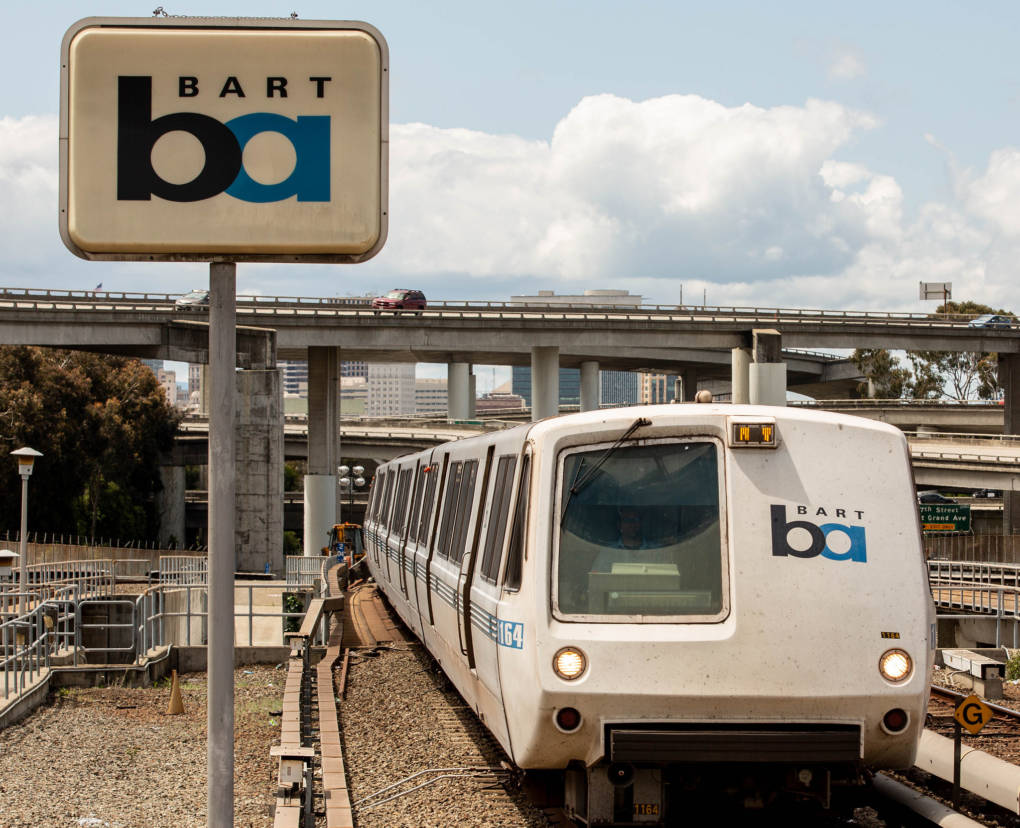
"caption": "A BART train bound for Pittsburg-Bay Point rolls into MacArthur Station.",
"description": "A BART train bound for Pittsburg-Bay Point rolls into MacArthur station.",
"title": "BART",
"credit": "Dan Brekke/KQED",
"status": "inherit",
"isLoading": false,
"fetchFailed": false
},
"news_11685003": {
"type": "attachments",
"id": "news_11685003",
"meta": {
"index": "attachments_1716263798",
"site": "news",
"id": "11685003",
"found": true
},
"parent": 11684989,
"imgSizes": {
"small": {
"file": "https://ww2.kqed.org/app/uploads/sites/10/2018/08/helmets_080618_final-520x343.jpg",
"width": 520,
"mimeType": "image/jpeg",
"height": 343
},
"twentyfourteen-full-width": {
"file": "https://ww2.kqed.org/app/uploads/sites/10/2018/08/helmets_080618_final-1038x576.jpg",
"width": 1038,
"mimeType": "image/jpeg",
"height": 576
},
"thumbnail": {
"file": "https://ww2.kqed.org/app/uploads/sites/10/2018/08/helmets_080618_final-160x106.jpg",
"width": 160,
"mimeType": "image/jpeg",
"height": 106
},
"fd-sm": {
"file": "https://ww2.kqed.org/app/uploads/sites/10/2018/08/helmets_080618_final-960x634.jpg",
"width": 960,
"mimeType": "image/jpeg",
"height": 634
},
"post-thumbnail": {
"file": "https://ww2.kqed.org/app/uploads/sites/10/2018/08/helmets_080618_final-672x372.jpg",
"width": 672,
"mimeType": "image/jpeg",
"height": 372
},
"xsmall": {
"file": "https://ww2.kqed.org/app/uploads/sites/10/2018/08/helmets_080618_final-375x247.jpg",
"width": 375,
"mimeType": "image/jpeg",
"height": 247
},
"kqedFullSize": {
"file": "https://ww2.kqed.org/app/uploads/sites/10/2018/08/helmets_080618_final.jpg",
"width": 1920,
"height": 1267
},
"large": {
"file": "https://ww2.kqed.org/app/uploads/sites/10/2018/08/helmets_080618_final-1020x673.jpg",
"width": 1020,
"mimeType": "image/jpeg",
"height": 673
},
"xlarge": {
"file": "https://ww2.kqed.org/app/uploads/sites/10/2018/08/helmets_080618_final-1180x779.jpg",
"width": 1180,
"mimeType": "image/jpeg",
"height": 779
},
"complete_open_graph": {
"file": "https://ww2.kqed.org/app/uploads/sites/10/2018/08/helmets_080618_final-1200x792.jpg",
"width": 1200,
"mimeType": "image/jpeg",
"height": 792
},
"guest-author-50": {
"file": "https://ww2.kqed.org/app/uploads/sites/10/2018/08/helmets_080618_final-50x50.jpg",
"width": 50,
"mimeType": "image/jpeg",
"height": 50
},
"guest-author-96": {
"file": "https://ww2.kqed.org/app/uploads/sites/10/2018/08/helmets_080618_final-96x96.jpg",
"width": 96,
"mimeType": "image/jpeg",
"height": 96
},
"medium": {
"file": "https://ww2.kqed.org/app/uploads/sites/10/2018/08/helmets_080618_final-800x528.jpg",
"width": 800,
"mimeType": "image/jpeg",
"height": 528
},
"guest-author-64": {
"file": "https://ww2.kqed.org/app/uploads/sites/10/2018/08/helmets_080618_final-64x64.jpg",
"width": 64,
"mimeType": "image/jpeg",
"height": 64
},
"guest-author-32": {
"file": "https://ww2.kqed.org/app/uploads/sites/10/2018/08/helmets_080618_final-32x32.jpg",
"width": 32,
"mimeType": "image/jpeg",
"height": 32
},
"fd-lrg": {
"file": "https://ww2.kqed.org/app/uploads/sites/10/2018/08/helmets_080618_final-1920x1267.jpg",
"width": 1920,
"mimeType": "image/jpeg",
"height": 1267
},
"fd-med": {
"file": "https://ww2.kqed.org/app/uploads/sites/10/2018/08/helmets_080618_final-1180x779.jpg",
"width": 1180,
"mimeType": "image/jpeg",
"height": 779
},
"full-width": {
"file": "https://ww2.kqed.org/app/uploads/sites/10/2018/08/helmets_080618_final-1920x1267.jpg",
"width": 1920,
"mimeType": "image/jpeg",
"height": 1267
},
"detail": {
"file": "https://ww2.kqed.org/app/uploads/sites/10/2018/08/helmets_080618_final-150x150.jpg",
"width": 150,
"mimeType": "image/jpeg",
"height": 150
},
"guest-author-128": {
"file": "https://ww2.kqed.org/app/uploads/sites/10/2018/08/helmets_080618_final-128x128.jpg",
"width": 128,
"mimeType": "image/jpeg",
"height": 128
},
"xxsmall": {
"file": "https://ww2.kqed.org/app/uploads/sites/10/2018/08/helmets_080618_final-240x158.jpg",
"width": 240,
"mimeType": "image/jpeg",
"height": 158
}
},
"publishDate": 1533566400,
"modified": 1533566418,
"caption": null,
"description": null,
"title": "helmets_080618_final",
"credit": null,
"status": "inherit",
"isLoading": false,
"fetchFailed": false
},
"news_11684630": {
"type": "attachments",
"id": "news_11684630",
"meta": {
"index": "attachments_1716263798",
"site": "news",
"id": "11684630",
"found": true
},
"parent": 11636192,
"imgSizes": {
"small": {
"file": "https://ww2.kqed.org/app/uploads/sites/10/2018/08/received_784146825091614-e1533313334991-520x441.jpeg",
"width": 520,
"mimeType": "image/jpeg",
"height": 441
},
"twentyfourteen-full-width": {
"file": "https://ww2.kqed.org/app/uploads/sites/10/2018/08/received_784146825091614-e1533313334991-720x576.jpeg",
"width": 720,
"mimeType": "image/jpeg",
"height": 576
},
"thumbnail": {
"file": "https://ww2.kqed.org/app/uploads/sites/10/2018/08/received_784146825091614-e1533313334991-160x136.jpeg",
"width": 160,
"mimeType": "image/jpeg",
"height": 136
},
"post-thumbnail": {
"file": "https://ww2.kqed.org/app/uploads/sites/10/2018/08/received_784146825091614-e1533313334991-672x372.jpeg",
"width": 672,
"mimeType": "image/jpeg",
"height": 372
},
"xsmall": {
"file": "https://ww2.kqed.org/app/uploads/sites/10/2018/08/received_784146825091614-e1533313334991-375x318.jpeg",
"width": 375,
"mimeType": "image/jpeg",
"height": 318
},
"kqedFullSize": {
"file": "https://ww2.kqed.org/app/uploads/sites/10/2018/08/received_784146825091614-e1533313334991.jpeg",
"width": 720,
"height": 611
},
"complete_open_graph": {
"file": "https://ww2.kqed.org/app/uploads/sites/10/2018/08/received_784146825091614-675x1200.jpeg",
"width": 675,
"mimeType": "image/jpeg",
"height": 1200
},
"guest-author-50": {
"file": "https://ww2.kqed.org/app/uploads/sites/10/2018/08/received_784146825091614-e1533313334991-50x50.jpeg",
"width": 50,
"mimeType": "image/jpeg",
"height": 50
},
"guest-author-96": {
"file": "https://ww2.kqed.org/app/uploads/sites/10/2018/08/received_784146825091614-e1533313334991-96x96.jpeg",
"width": 96,
"mimeType": "image/jpeg",
"height": 96
},
"guest-author-64": {
"file": "https://ww2.kqed.org/app/uploads/sites/10/2018/08/received_784146825091614-e1533313334991-64x64.jpeg",
"width": 64,
"mimeType": "image/jpeg",
"height": 64
},
"guest-author-32": {
"file": "https://ww2.kqed.org/app/uploads/sites/10/2018/08/received_784146825091614-e1533313334991-32x32.jpeg",
"width": 32,
"mimeType": "image/jpeg",
"height": 32
},
"detail": {
"file": "https://ww2.kqed.org/app/uploads/sites/10/2018/08/received_784146825091614-e1533313334991-150x150.jpeg",
"width": 150,
"mimeType": "image/jpeg",
"height": 150
},
"guest-author-128": {
"file": "https://ww2.kqed.org/app/uploads/sites/10/2018/08/received_784146825091614-e1533313334991-128x128.jpeg",
"width": 128,
"mimeType": "image/jpeg",
"height": 128
},
"xxsmall": {
"file": "https://ww2.kqed.org/app/uploads/sites/10/2018/08/received_784146825091614-e1533313334991-240x204.jpeg",
"width": 240,
"mimeType": "image/jpeg",
"height": 204
}
},
"publishDate": 1533301962,
"modified": 1533539079,
"caption": "A selfie that firefighter Garrett Paiz took and sent his wife in the days before the truck he was driving crashed in Napa County. ",
"description": "A photo of Garrett Paiz that he took and sent his wife in the days before the truck he was driving crashed in Napa County. ",
"title": "Garrett Paiz",
"credit": "Courtesy of Bobbie Paiz",
"status": "inherit",
"isLoading": false,
"fetchFailed": false
},
"news_11682969": {
"type": "attachments",
"id": "news_11682969",
"meta": {
"index": "attachments_1716263798",
"site": "news",
"id": "11682969",
"found": true
},
"parent": 11682901,
"imgSizes": {
"small": {
"file": "https://ww2.kqed.org/app/uploads/sites/10/2018/07/RS32022_IMG_1307-520x347.jpg",
"width": 520,
"mimeType": "image/jpeg",
"height": 347
},
"twentyfourteen-full-width": {
"file": "https://ww2.kqed.org/app/uploads/sites/10/2018/07/RS32022_IMG_1307-1038x576.jpg",
"width": 1038,
"mimeType": "image/jpeg",
"height": 576
},
"thumbnail": {
"file": "https://ww2.kqed.org/app/uploads/sites/10/2018/07/RS32022_IMG_1307-160x107.jpg",
"width": 160,
"mimeType": "image/jpeg",
"height": 107
},
"fd-sm": {
"file": "https://ww2.kqed.org/app/uploads/sites/10/2018/07/RS32022_IMG_1307-960x640.jpg",
"width": 960,
"mimeType": "image/jpeg",
"height": 640
},
"post-thumbnail": {
"file": "https://ww2.kqed.org/app/uploads/sites/10/2018/07/RS32022_IMG_1307-672x372.jpg",
"width": 672,
"mimeType": "image/jpeg",
"height": 372
},
"xsmall": {
"file": "https://ww2.kqed.org/app/uploads/sites/10/2018/07/RS32022_IMG_1307-375x250.jpg",
"width": 375,
"mimeType": "image/jpeg",
"height": 250
},
"kqedFullSize": {
"file": "https://ww2.kqed.org/app/uploads/sites/10/2018/07/RS32022_IMG_1307-e1532646453849.jpg",
"width": 1920,
"height": 1280
},
"large": {
"file": "https://ww2.kqed.org/app/uploads/sites/10/2018/07/RS32022_IMG_1307-1020x680.jpg",
"width": 1020,
"mimeType": "image/jpeg",
"height": 680
},
"xlarge": {
"file": "https://ww2.kqed.org/app/uploads/sites/10/2018/07/RS32022_IMG_1307-1180x787.jpg",
"width": 1180,
"mimeType": "image/jpeg",
"height": 787
},
"complete_open_graph": {
"file": "https://ww2.kqed.org/app/uploads/sites/10/2018/07/RS32022_IMG_1307-1200x800.jpg",
"width": 1200,
"mimeType": "image/jpeg",
"height": 800
},
"guest-author-50": {
"file": "https://ww2.kqed.org/app/uploads/sites/10/2018/07/RS32022_IMG_1307-50x50.jpg",
"width": 50,
"mimeType": "image/jpeg",
"height": 50
},
"guest-author-96": {
"file": "https://ww2.kqed.org/app/uploads/sites/10/2018/07/RS32022_IMG_1307-96x96.jpg",
"width": 96,
"mimeType": "image/jpeg",
"height": 96
},
"medium": {
"file": "https://ww2.kqed.org/app/uploads/sites/10/2018/07/RS32022_IMG_1307-800x533.jpg",
"width": 800,
"mimeType": "image/jpeg",
"height": 533
},
"guest-author-64": {
"file": "https://ww2.kqed.org/app/uploads/sites/10/2018/07/RS32022_IMG_1307-64x64.jpg",
"width": 64,
"mimeType": "image/jpeg",
"height": 64
},
"guest-author-32": {
"file": "https://ww2.kqed.org/app/uploads/sites/10/2018/07/RS32022_IMG_1307-32x32.jpg",
"width": 32,
"mimeType": "image/jpeg",
"height": 32
},
"fd-lrg": {
"file": "https://ww2.kqed.org/app/uploads/sites/10/2018/07/RS32022_IMG_1307-1920x1280.jpg",
"width": 1920,
"mimeType": "image/jpeg",
"height": 1280
},
"fd-med": {
"file": "https://ww2.kqed.org/app/uploads/sites/10/2018/07/RS32022_IMG_1307-1180x787.jpg",
"width": 1180,
"mimeType": "image/jpeg",
"height": 787
},
"full-width": {
"file": "https://ww2.kqed.org/app/uploads/sites/10/2018/07/RS32022_IMG_1307-1920x1280.jpg",
"width": 1920,
"mimeType": "image/jpeg",
"height": 1280
},
"detail": {
"file": "https://ww2.kqed.org/app/uploads/sites/10/2018/07/RS32022_IMG_1307-150x150.jpg",
"width": 150,
"mimeType": "image/jpeg",
"height": 150
},
"guest-author-128": {
"file": "https://ww2.kqed.org/app/uploads/sites/10/2018/07/RS32022_IMG_1307-128x128.jpg",
"width": 128,
"mimeType": "image/jpeg",
"height": 128
},
"xxsmall": {
"file": "https://ww2.kqed.org/app/uploads/sites/10/2018/07/RS32022_IMG_1307-240x160.jpg",
"width": 240,
"mimeType": "image/jpeg",
"height": 160
}
},
"publishDate": 1532646422,
"modified": 1533343063,
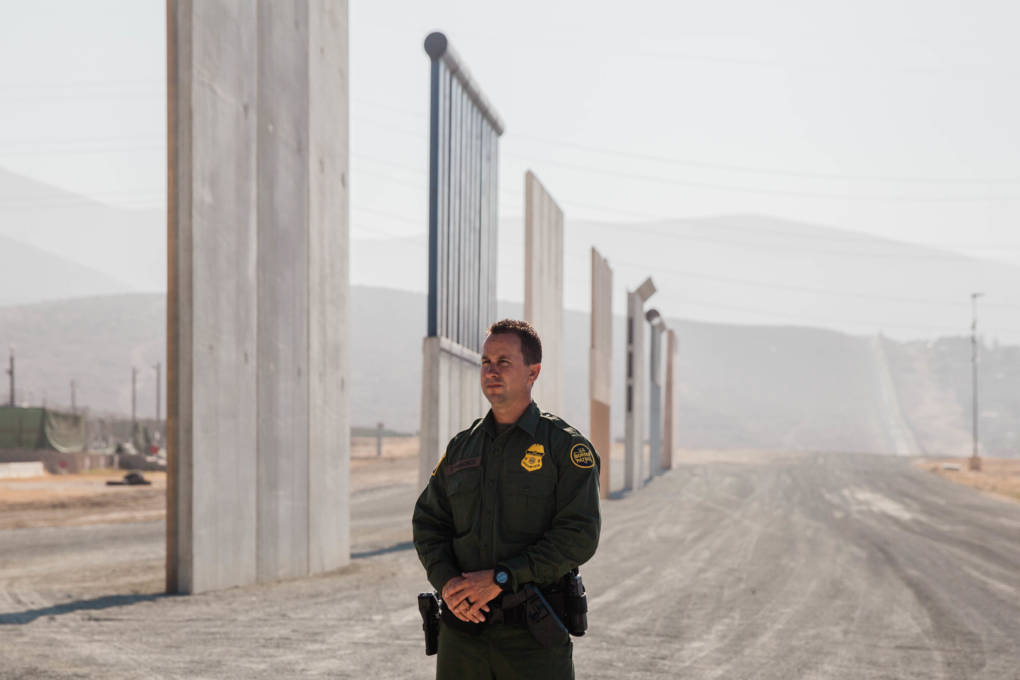
"caption": "Theron Francisco, the Public Affairs Officer with the U.S. Border Patrol, stands in front of the border wall prototypes in Otay Mesa, Calif. Before joining the U.S. Border Patrol, Theron worked in construction. He said his grandmother came to the United States from Tijuana when she was very young.",
"description": "Theron Francisco, the Public Affairs Officer with the U.S. Border Patrol, stands in front of the border wall prototypes in Otay Mesa, Calif. Before joining the U.S. Border Patrol, Theron worked in construction. He said his grandmother came to the United States from Tijuana when she was very young.",
"title": "RS32022_IMG_1307",
"credit": "Ariana Drehsler/KQED",
"status": "inherit",
"isLoading": false,
"fetchFailed": false
},
"news_11684488": {
"type": "attachments",
"id": "news_11684488",
"meta": {
"index": "attachments_1716263798",
"site": "news",
"id": "11684488",
"found": true
},
"parent": 11684478,
"imgSizes": {
"small": {
"file": "https://ww2.kqed.org/app/uploads/sites/10/2018/08/RS7013_175333538-520x348.jpg",
"width": 520,
"mimeType": "image/jpeg",
"height": 348
},
"twentyfourteen-full-width": {
"file": "https://ww2.kqed.org/app/uploads/sites/10/2018/08/RS7013_175333538-1038x576.jpg",
"width": 1038,
"mimeType": "image/jpeg",
"height": 576
},
"thumbnail": {
"file": "https://ww2.kqed.org/app/uploads/sites/10/2018/08/RS7013_175333538-160x107.jpg",
"width": 160,
"mimeType": "image/jpeg",
"height": 107
},
"fd-sm": {
"file": "https://ww2.kqed.org/app/uploads/sites/10/2018/08/RS7013_175333538-960x642.jpg",
"width": 960,
"mimeType": "image/jpeg",
"height": 642
},
"post-thumbnail": {
"file": "https://ww2.kqed.org/app/uploads/sites/10/2018/08/RS7013_175333538-672x372.jpg",
"width": 672,
"mimeType": "image/jpeg",
"height": 372
},
"xsmall": {
"file": "https://ww2.kqed.org/app/uploads/sites/10/2018/08/RS7013_175333538-375x251.jpg",
"width": 375,
"mimeType": "image/jpeg",
"height": 251
},
"kqedFullSize": {
"file": "https://ww2.kqed.org/app/uploads/sites/10/2018/08/RS7013_175333538-e1634255281256.jpg",
"width": 1920,
"height": 1284
},
"large": {
"file": "https://ww2.kqed.org/app/uploads/sites/10/2018/08/RS7013_175333538-1020x682.jpg",
"width": 1020,
"mimeType": "image/jpeg",
"height": 682
},
"xlarge": {
"file": "https://ww2.kqed.org/app/uploads/sites/10/2018/08/RS7013_175333538-1180x789.jpg",
"width": 1180,
"mimeType": "image/jpeg",
"height": 789
},
"complete_open_graph": {
"file": "https://ww2.kqed.org/app/uploads/sites/10/2018/08/RS7013_175333538-1200x803.jpg",
"width": 1200,
"mimeType": "image/jpeg",
"height": 803
},
"guest-author-50": {
"file": "https://ww2.kqed.org/app/uploads/sites/10/2018/08/RS7013_175333538-50x50.jpg",
"width": 50,
"mimeType": "image/jpeg",
"height": 50
},
"guest-author-96": {
"file": "https://ww2.kqed.org/app/uploads/sites/10/2018/08/RS7013_175333538-96x96.jpg",
"width": 96,
"mimeType": "image/jpeg",
"height": 96
},
"medium": {
"file": "https://ww2.kqed.org/app/uploads/sites/10/2018/08/RS7013_175333538-800x535.jpg",
"width": 800,
"mimeType": "image/jpeg",
"height": 535
},
"guest-author-64": {
"file": "https://ww2.kqed.org/app/uploads/sites/10/2018/08/RS7013_175333538-64x64.jpg",
"width": 64,
"mimeType": "image/jpeg",
"height": 64
},
"guest-author-32": {
"file": "https://ww2.kqed.org/app/uploads/sites/10/2018/08/RS7013_175333538-32x32.jpg",
"width": 32,
"mimeType": "image/jpeg",
"height": 32
},
"fd-lrg": {
"file": "https://ww2.kqed.org/app/uploads/sites/10/2018/08/RS7013_175333538-1920x1284.jpg",
"width": 1920,
"mimeType": "image/jpeg",
"height": 1284
},
"fd-med": {
"file": "https://ww2.kqed.org/app/uploads/sites/10/2018/08/RS7013_175333538-1180x789.jpg",
"width": 1180,
"mimeType": "image/jpeg",
"height": 789
},
"full-width": {
"file": "https://ww2.kqed.org/app/uploads/sites/10/2018/08/RS7013_175333538-1920x1284.jpg",
"width": 1920,
"mimeType": "image/jpeg",
"height": 1284
},
"detail": {
"file": "https://ww2.kqed.org/app/uploads/sites/10/2018/08/RS7013_175333538-150x150.jpg",
"width": 150,
"mimeType": "image/jpeg",
"height": 150
},
"guest-author-128": {
"file": "https://ww2.kqed.org/app/uploads/sites/10/2018/08/RS7013_175333538-128x128.jpg",
"width": 128,
"mimeType": "image/jpeg",
"height": 128
},
"xxsmall": {
"file": "https://ww2.kqed.org/app/uploads/sites/10/2018/08/RS7013_175333538-240x161.jpg",
"width": 240,
"mimeType": "image/jpeg",
"height": 161
}
},
"publishDate": 1533250091,
"modified": 1634257757,
"caption": "A BART train pulls away from Rockridge Station in Oakland.",
"description": null,
"title": "Bay Area Transportation Workers Strike Looms Ahead Of Monday Deadline",
"credit": "Justin Sullivan/Getty Images",
"status": "inherit",
"altTag": "A BART Train in Oakland.",
"isLoading": false,
"fetchFailed": false
},
"news_11684443": {
"type": "attachments",
"id": "news_11684443",
"meta": {
"index": "attachments_1716263798",
"site": "news",
"id": "11684443",
"found": true
},
"parent": 11684435,
"imgSizes": {
"small": {
"file": "https://ww2.kqed.org/app/uploads/sites/10/2018/08/fueleconomy_080218_final-520x338.jpg",
"width": 520,
"mimeType": "image/jpeg",
"height": 338
},
"twentyfourteen-full-width": {
"file": "https://ww2.kqed.org/app/uploads/sites/10/2018/08/fueleconomy_080218_final-1038x576.jpg",
"width": 1038,
"mimeType": "image/jpeg",
"height": 576
},
"thumbnail": {
"file": "https://ww2.kqed.org/app/uploads/sites/10/2018/08/fueleconomy_080218_final-160x104.jpg",
"width": 160,
"mimeType": "image/jpeg",
"height": 104
},
"fd-sm": {
"file": "https://ww2.kqed.org/app/uploads/sites/10/2018/08/fueleconomy_080218_final-960x625.jpg",
"width": 960,
"mimeType": "image/jpeg",
"height": 625
},
"post-thumbnail": {
"file": "https://ww2.kqed.org/app/uploads/sites/10/2018/08/fueleconomy_080218_final-672x372.jpg",
"width": 672,
"mimeType": "image/jpeg",
"height": 372
},
"xsmall": {
"file": "https://ww2.kqed.org/app/uploads/sites/10/2018/08/fueleconomy_080218_final-375x244.jpg",
"width": 375,
"mimeType": "image/jpeg",
"height": 244
},
"kqedFullSize": {
"file": "https://ww2.kqed.org/app/uploads/sites/10/2018/08/fueleconomy_080218_final.jpg",
"width": 1920,
"height": 1249
},
"large": {
"file": "https://ww2.kqed.org/app/uploads/sites/10/2018/08/fueleconomy_080218_final-1020x664.jpg",
"width": 1020,
"mimeType": "image/jpeg",
"height": 664
},
"xlarge": {
"file": "https://ww2.kqed.org/app/uploads/sites/10/2018/08/fueleconomy_080218_final-1180x768.jpg",
"width": 1180,
"mimeType": "image/jpeg",
"height": 768
},
"complete_open_graph": {
"file": "https://ww2.kqed.org/app/uploads/sites/10/2018/08/fueleconomy_080218_final-1200x781.jpg",
"width": 1200,
"mimeType": "image/jpeg",
"height": 781
},
"guest-author-50": {
"file": "https://ww2.kqed.org/app/uploads/sites/10/2018/08/fueleconomy_080218_final-50x50.jpg",
"width": 50,
"mimeType": "image/jpeg",
"height": 50
},
"guest-author-96": {
"file": "https://ww2.kqed.org/app/uploads/sites/10/2018/08/fueleconomy_080218_final-96x96.jpg",
"width": 96,
"mimeType": "image/jpeg",
"height": 96
},
"medium": {
"file": "https://ww2.kqed.org/app/uploads/sites/10/2018/08/fueleconomy_080218_final-800x520.jpg",
"width": 800,
"mimeType": "image/jpeg",
"height": 520
},
"guest-author-64": {
"file": "https://ww2.kqed.org/app/uploads/sites/10/2018/08/fueleconomy_080218_final-64x64.jpg",
"width": 64,
"mimeType": "image/jpeg",
"height": 64
},
"guest-author-32": {
"file": "https://ww2.kqed.org/app/uploads/sites/10/2018/08/fueleconomy_080218_final-32x32.jpg",
"width": 32,
"mimeType": "image/jpeg",
"height": 32
},
"fd-lrg": {
"file": "https://ww2.kqed.org/app/uploads/sites/10/2018/08/fueleconomy_080218_final-1920x1249.jpg",
"width": 1920,
"mimeType": "image/jpeg",
"height": 1249
},
"fd-med": {
"file": "https://ww2.kqed.org/app/uploads/sites/10/2018/08/fueleconomy_080218_final-1180x768.jpg",
"width": 1180,
"mimeType": "image/jpeg",
"height": 768
},
"full-width": {
"file": "https://ww2.kqed.org/app/uploads/sites/10/2018/08/fueleconomy_080218_final-1920x1249.jpg",
"width": 1920,
"mimeType": "image/jpeg",
"height": 1249
},
"detail": {
"file": "https://ww2.kqed.org/app/uploads/sites/10/2018/08/fueleconomy_080218_final-150x150.jpg",
"width": 150,
"mimeType": "image/jpeg",
"height": 150
},
"guest-author-128": {
"file": "https://ww2.kqed.org/app/uploads/sites/10/2018/08/fueleconomy_080218_final-128x128.jpg",
"width": 128,
"mimeType": "image/jpeg",
"height": 128
},
"xxsmall": {
"file": "https://ww2.kqed.org/app/uploads/sites/10/2018/08/fueleconomy_080218_final-240x156.jpg",
"width": 240,
"mimeType": "image/jpeg",
"height": 156
}
},
"publishDate": 1533245880,
"modified": 1533245900,
"caption": null,
"description": null,
"title": "fueleconomy_080218_final",
"credit": null,
"status": "inherit",
"isLoading": false,
"fetchFailed": false
},
"news_11683820": {
"type": "attachments",
"id": "news_11683820",
"meta": {
"index": "attachments_1716263798",
"site": "news",
"id": "11683820",
"found": true
},
"parent": 11683791,
"imgSizes": {
"small": {
"file": "https://ww2.kqed.org/app/uploads/sites/10/2018/07/bayfairbartsuspect-520x336.jpg",
"width": 520,
"mimeType": "image/jpeg",
"height": 336
},
"thumbnail": {
"file": "https://ww2.kqed.org/app/uploads/sites/10/2018/07/bayfairbartsuspect-160x103.jpg",
"width": 160,
"mimeType": "image/jpeg",
"height": 103
},
"post-thumbnail": {
"file": "https://ww2.kqed.org/app/uploads/sites/10/2018/07/bayfairbartsuspect-606x372.jpg",
"width": 606,
"mimeType": "image/jpeg",
"height": 372
},
"xsmall": {
"file": "https://ww2.kqed.org/app/uploads/sites/10/2018/07/bayfairbartsuspect-375x243.jpg",
"width": 375,
"mimeType": "image/jpeg",
"height": 243
},
"kqedFullSize": {
"file": "https://ww2.kqed.org/app/uploads/sites/10/2018/07/bayfairbartsuspect.jpg",
"width": 606,
"height": 392
},
"guest-author-50": {
"file": "https://ww2.kqed.org/app/uploads/sites/10/2018/07/bayfairbartsuspect-50x50.jpg",
"width": 50,
"mimeType": "image/jpeg",
"height": 50
},
"guest-author-96": {
"file": "https://ww2.kqed.org/app/uploads/sites/10/2018/07/bayfairbartsuspect-96x96.jpg",
"width": 96,
"mimeType": "image/jpeg",
"height": 96
},
"guest-author-64": {
"file": "https://ww2.kqed.org/app/uploads/sites/10/2018/07/bayfairbartsuspect-64x64.jpg",
"width": 64,
"mimeType": "image/jpeg",
"height": 64
},
"detail": {
"file": "https://ww2.kqed.org/app/uploads/sites/10/2018/07/bayfairbartsuspect-150x150.jpg",
"width": 150,
"mimeType": "image/jpeg",
"height": 150
},
"guest-author-32": {
"file": "https://ww2.kqed.org/app/uploads/sites/10/2018/07/bayfairbartsuspect-32x32.jpg",
"width": 32,
"mimeType": "image/jpeg",
"height": 32
},
"guest-author-128": {
"file": "https://ww2.kqed.org/app/uploads/sites/10/2018/07/bayfairbartsuspect-128x128.jpg",
"width": 128,
"mimeType": "image/jpeg",
"height": 128
},
"xxsmall": {
"file": "https://ww2.kqed.org/app/uploads/sites/10/2018/07/bayfairbartsuspect-240x155.jpg",
"width": 240,
"mimeType": "image/jpeg",
"height": 155
}
},
"publishDate": 1532990435,
"modified": 1532997235,
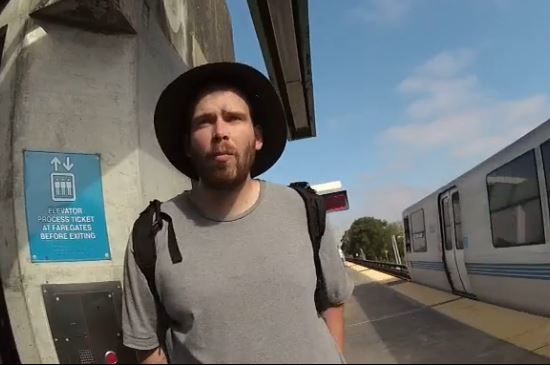
"caption": "A BART security camera image of a man the transit agency identified Monday as Jashawn Combs, 24, of Fremont. Police sought Combs in connection with a fatal attack on a fellow passenger at the Bay Fair BART station. He surrendered to Oakland police on Monday. ",
"description": null,
"title": "Bay Fair BART Suspect",
"credit": "BART",
"status": "inherit",
"isLoading": false,
"fetchFailed": false
},
"news_11683316": {
"type": "attachments",
"id": "news_11683316",
"meta": {
"index": "attachments_1716263798",
"site": "news",
"id": "11683316",
"found": true
},
"parent": 11683314,
"imgSizes": {
"small": {
"file": "https://ww2.kqed.org/app/uploads/sites/10/2018/07/NR539_Marq_3-520x293.jpg",
"width": 520,
"mimeType": "image/jpeg",
"height": 293
},
"twentyfourteen-full-width": {
"file": "https://ww2.kqed.org/app/uploads/sites/10/2018/07/NR539_Marq_3-1038x576.jpg",
"width": 1038,
"mimeType": "image/jpeg",
"height": 576
},
"thumbnail": {
"file": "https://ww2.kqed.org/app/uploads/sites/10/2018/07/NR539_Marq_3-160x90.jpg",
"width": 160,
"mimeType": "image/jpeg",
"height": 90
},
"fd-sm": {
"file": "https://ww2.kqed.org/app/uploads/sites/10/2018/07/NR539_Marq_3-960x540.jpg",
"width": 960,
"mimeType": "image/jpeg",
"height": 540
},
"post-thumbnail": {
"file": "https://ww2.kqed.org/app/uploads/sites/10/2018/07/NR539_Marq_3-672x372.jpg",
"width": 672,
"mimeType": "image/jpeg",
"height": 372
},
"xsmall": {
"file": "https://ww2.kqed.org/app/uploads/sites/10/2018/07/NR539_Marq_3-375x211.jpg",
"width": 375,
"mimeType": "image/jpeg",
"height": 211
},
"kqedFullSize": {
"file": "https://ww2.kqed.org/app/uploads/sites/10/2018/07/NR539_Marq_3.jpg",
"width": 1280,
"height": 720
},
"large": {
"file": "https://ww2.kqed.org/app/uploads/sites/10/2018/07/NR539_Marq_3-1020x574.jpg",
"width": 1020,
"mimeType": "image/jpeg",
"height": 574
},
"xlarge": {
"file": "https://ww2.kqed.org/app/uploads/sites/10/2018/07/NR539_Marq_3-1180x664.jpg",
"width": 1180,
"mimeType": "image/jpeg",
"height": 664
},
"complete_open_graph": {
"file": "https://ww2.kqed.org/app/uploads/sites/10/2018/07/NR539_Marq_3-1200x675.jpg",
"width": 1200,
"mimeType": "image/jpeg",
"height": 675
},
"guest-author-50": {
"file": "https://ww2.kqed.org/app/uploads/sites/10/2018/07/NR539_Marq_3-50x50.jpg",
"width": 50,
"mimeType": "image/jpeg",
"height": 50
},
"guest-author-96": {
"file": "https://ww2.kqed.org/app/uploads/sites/10/2018/07/NR539_Marq_3-96x96.jpg",
"width": 96,
"mimeType": "image/jpeg",
"height": 96
},
"medium": {
"file": "https://ww2.kqed.org/app/uploads/sites/10/2018/07/NR539_Marq_3-800x450.jpg",
"width": 800,
"mimeType": "image/jpeg",
"height": 450
},
"guest-author-64": {
"file": "https://ww2.kqed.org/app/uploads/sites/10/2018/07/NR539_Marq_3-64x64.jpg",
"width": 64,
"mimeType": "image/jpeg",
"height": 64
},
"guest-author-32": {
"file": "https://ww2.kqed.org/app/uploads/sites/10/2018/07/NR539_Marq_3-32x32.jpg",
"width": 32,
"mimeType": "image/jpeg",
"height": 32
},
"fd-med": {
"file": "https://ww2.kqed.org/app/uploads/sites/10/2018/07/NR539_Marq_3-1180x664.jpg",
"width": 1180,
"mimeType": "image/jpeg",
"height": 664
},
"detail": {
"file": "https://ww2.kqed.org/app/uploads/sites/10/2018/07/NR539_Marq_3-150x150.jpg",
"width": 150,
"mimeType": "image/jpeg",
"height": 150
},
"guest-author-128": {
"file": "https://ww2.kqed.org/app/uploads/sites/10/2018/07/NR539_Marq_3-128x128.jpg",
"width": 128,
"mimeType": "image/jpeg",
"height": 128
},
"xxsmall": {
"file": "https://ww2.kqed.org/app/uploads/sites/10/2018/07/NR539_Marq_3-240x135.jpg",
"width": 240,
"mimeType": "image/jpeg",
"height": 135
}
},
"publishDate": 1532731119,
"modified": 1532731119,
"caption": null,
"description": null,
"title": "NR539_Marq_3",
"credit": null,
"status": "inherit",
"isLoading": false,
"fetchFailed": false
},
"news_11682062": {
"type": "attachments",
"id": "news_11682062",
"meta": {
"index": "attachments_1716263798",
"site": "news",
"id": "11682062",
"found": true
},
"parent": 11682006,
"imgSizes": {
"small": {
"file": "https://ww2.kqed.org/app/uploads/sites/10/2018/07/cowell-520x345.jpg",
"width": 520,
"mimeType": "image/jpeg",
"height": 345
},
"thumbnail": {
"file": "https://ww2.kqed.org/app/uploads/sites/10/2018/07/cowell-160x106.jpg",
"width": 160,
"mimeType": "image/jpeg",
"height": 106
},
"xsmall": {
"file": "https://ww2.kqed.org/app/uploads/sites/10/2018/07/cowell-375x249.jpg",
"width": 375,
"mimeType": "image/jpeg",
"height": 249
},
"kqedFullSize": {
"file": "https://ww2.kqed.org/app/uploads/sites/10/2018/07/cowell.jpg",
"width": 550,
"height": 365
},
"guest-author-50": {
"file": "https://ww2.kqed.org/app/uploads/sites/10/2018/07/cowell-50x50.jpg",
"width": 50,
"mimeType": "image/jpeg",
"height": 50
},
"guest-author-96": {
"file": "https://ww2.kqed.org/app/uploads/sites/10/2018/07/cowell-96x96.jpg",
"width": 96,
"mimeType": "image/jpeg",
"height": 96
},
"guest-author-64": {
"file": "https://ww2.kqed.org/app/uploads/sites/10/2018/07/cowell-64x64.jpg",
"width": 64,
"mimeType": "image/jpeg",
"height": 64
},
"detail": {
"file": "https://ww2.kqed.org/app/uploads/sites/10/2018/07/cowell-150x150.jpg",
"width": 150,
"mimeType": "image/jpeg",
"height": 150
},
"guest-author-32": {
"file": "https://ww2.kqed.org/app/uploads/sites/10/2018/07/cowell-32x32.jpg",
"width": 32,
"mimeType": "image/jpeg",
"height": 32
},
"guest-author-128": {
"file": "https://ww2.kqed.org/app/uploads/sites/10/2018/07/cowell-128x128.jpg",
"width": 128,
"mimeType": "image/jpeg",
"height": 128
},
"xxsmall": {
"file": "https://ww2.kqed.org/app/uploads/sites/10/2018/07/cowell-240x159.jpg",
"width": 240,
"mimeType": "image/jpeg",
"height": 159
}
},
"publishDate": 1532374617,
"modified": 1563399959,
"caption": "John Lee Cowell was arrested for murder in the fatal July 22, 2018, stabbing of Nia Wilson, 18, of Oakland, at the MacArthur BART Station.",
"description": null,
"title": "BART-John Lee Cowell",
"credit": "BART",
"status": "inherit",
"isLoading": false,
"fetchFailed": false
},
"news_11681294": {
"type": "attachments",
"id": "news_11681294",
"meta": {
"index": "attachments_1716263798",
"site": "news",
"id": "11681294",
"found": true
},
"parent": 11681049,
"imgSizes": {
"small": {
"file": "https://ww2.kqed.org/app/uploads/sites/10/2018/07/Protest-Photo-520x390.jpg",
"width": 520,
"mimeType": "image/jpeg",
"height": 390
},
"twentyfourteen-full-width": {
"file": "https://ww2.kqed.org/app/uploads/sites/10/2018/07/Protest-Photo-1038x576.jpg",
"width": 1038,
"mimeType": "image/jpeg",
"height": 576
},
"thumbnail": {
"file": "https://ww2.kqed.org/app/uploads/sites/10/2018/07/Protest-Photo-160x120.jpg",
"width": 160,
"mimeType": "image/jpeg",
"height": 120
},
"fd-sm": {
"file": "https://ww2.kqed.org/app/uploads/sites/10/2018/07/Protest-Photo-960x720.jpg",
"width": 960,
"mimeType": "image/jpeg",
"height": 720
},
"post-thumbnail": {
"file": "https://ww2.kqed.org/app/uploads/sites/10/2018/07/Protest-Photo-672x372.jpg",
"width": 672,
"mimeType": "image/jpeg",
"height": 372
},
"xsmall": {
"file": "https://ww2.kqed.org/app/uploads/sites/10/2018/07/Protest-Photo-375x281.jpg",
"width": 375,
"mimeType": "image/jpeg",
"height": 281
},
"kqedFullSize": {
"file": "https://ww2.kqed.org/app/uploads/sites/10/2018/07/Protest-Photo-e1532042910148.jpg",
"width": 1920,
"height": 1440
},
"large": {
"file": "https://ww2.kqed.org/app/uploads/sites/10/2018/07/Protest-Photo-1020x765.jpg",
"width": 1020,
"mimeType": "image/jpeg",
"height": 765
},
"xlarge": {
"file": "https://ww2.kqed.org/app/uploads/sites/10/2018/07/Protest-Photo-1180x885.jpg",
"width": 1180,
"mimeType": "image/jpeg",
"height": 885
},
"complete_open_graph": {
"file": "https://ww2.kqed.org/app/uploads/sites/10/2018/07/Protest-Photo-1200x900.jpg",
"width": 1200,
"mimeType": "image/jpeg",
"height": 900
},
"guest-author-50": {
"file": "https://ww2.kqed.org/app/uploads/sites/10/2018/07/Protest-Photo-50x50.jpg",
"width": 50,
"mimeType": "image/jpeg",
"height": 50
},
"guest-author-96": {
"file": "https://ww2.kqed.org/app/uploads/sites/10/2018/07/Protest-Photo-96x96.jpg",
"width": 96,
"mimeType": "image/jpeg",
"height": 96
},
"medium": {
"file": "https://ww2.kqed.org/app/uploads/sites/10/2018/07/Protest-Photo-800x600.jpg",
"width": 800,
"mimeType": "image/jpeg",
"height": 600
},
"guest-author-64": {
"file": "https://ww2.kqed.org/app/uploads/sites/10/2018/07/Protest-Photo-64x64.jpg",
"width": 64,
"mimeType": "image/jpeg",
"height": 64
},
"guest-author-32": {
"file": "https://ww2.kqed.org/app/uploads/sites/10/2018/07/Protest-Photo-32x32.jpg",
"width": 32,
"mimeType": "image/jpeg",
"height": 32
},
"fd-lrg": {
"file": "https://ww2.kqed.org/app/uploads/sites/10/2018/07/Protest-Photo-1920x1440.jpg",
"width": 1920,
"mimeType": "image/jpeg",
"height": 1440
},
"fd-med": {
"file": "https://ww2.kqed.org/app/uploads/sites/10/2018/07/Protest-Photo-1180x885.jpg",
"width": 1180,
"mimeType": "image/jpeg",
"height": 885
},
"full-width": {
"file": "https://ww2.kqed.org/app/uploads/sites/10/2018/07/Protest-Photo-1920x1440.jpg",
"width": 1920,
"mimeType": "image/jpeg",
"height": 1440
},
"detail": {
"file": "https://ww2.kqed.org/app/uploads/sites/10/2018/07/Protest-Photo-150x150.jpg",
"width": 150,
"mimeType": "image/jpeg",
"height": 150
},
"guest-author-128": {
"file": "https://ww2.kqed.org/app/uploads/sites/10/2018/07/Protest-Photo-128x128.jpg",
"width": 128,
"mimeType": "image/jpeg",
"height": 128
},
"xxsmall": {
"file": "https://ww2.kqed.org/app/uploads/sites/10/2018/07/Protest-Photo-240x180.jpg",
"width": 240,
"mimeType": "image/jpeg",
"height": 180
}
},
"publishDate": 1531954961,
"modified": 1531955003,
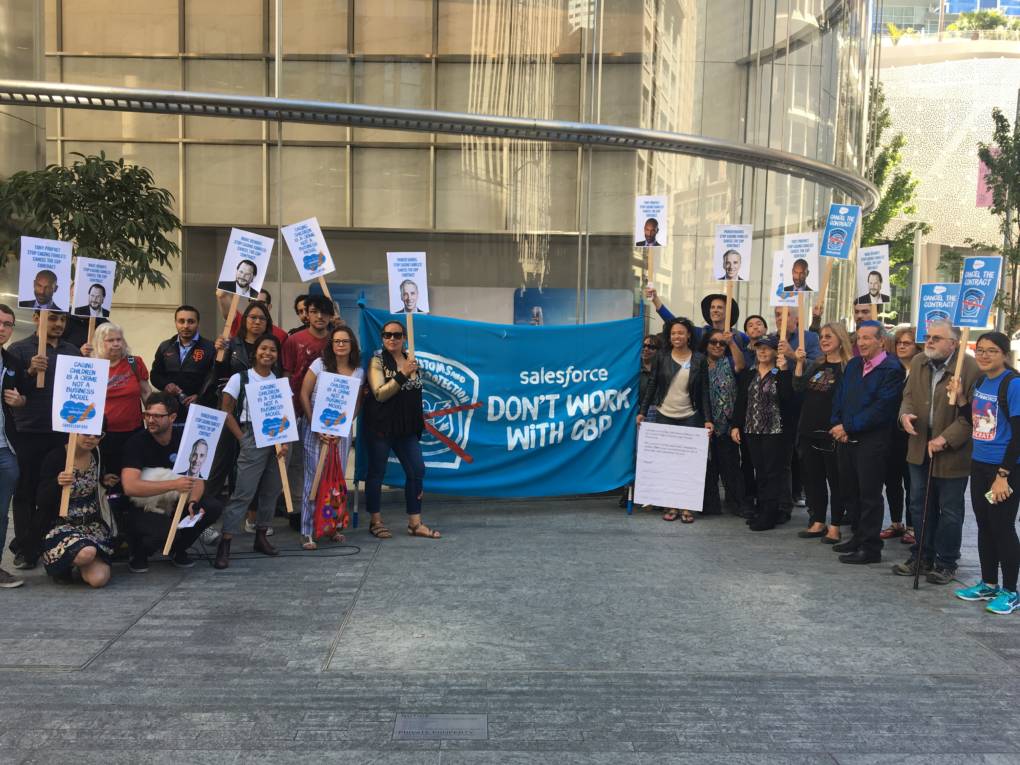
"caption": "Those active in the Tech Workers Coalition came out to support Salesforce employees who are speaking out against the company.",
"description": null,
"title": "Protest Photo",
"credit": "Sam Harnett/KQED",
"status": "inherit",
"isLoading": false,
"fetchFailed": false
},
"news_11681305": {
"type": "attachments",
"id": "news_11681305",
"meta": {
"index": "attachments_1716263798",
"site": "news",
"id": "11681305",
"found": true
},
"parent": 11681197,
"imgSizes": {
"small": {
"file": "https://ww2.kqed.org/app/uploads/sites/10/2018/07/20180718_115751-520x693.jpg",
"width": 520,
"mimeType": "image/jpeg",
"height": 693
},
"twentyfourteen-full-width": {
"file": "https://ww2.kqed.org/app/uploads/sites/10/2018/07/20180718_115751-1038x576.jpg",
"width": 1038,
"mimeType": "image/jpeg",
"height": 576
},
"thumbnail": {
"file": "https://ww2.kqed.org/app/uploads/sites/10/2018/07/20180718_115751-160x213.jpg",
"width": 160,
"mimeType": "image/jpeg",
"height": 213
},
"fd-sm": {
"file": "https://ww2.kqed.org/app/uploads/sites/10/2018/07/20180718_115751-960x1280.jpg",
"width": 960,
"mimeType": "image/jpeg",
"height": 1280
},
"post-thumbnail": {
"file": "https://ww2.kqed.org/app/uploads/sites/10/2018/07/20180718_115751-672x372.jpg",
"width": 672,
"mimeType": "image/jpeg",
"height": 372
},
"xsmall": {
"file": "https://ww2.kqed.org/app/uploads/sites/10/2018/07/20180718_115751-375x500.jpg",
"width": 375,
"mimeType": "image/jpeg",
"height": 500
},
"kqedFullSize": {
"file": "https://ww2.kqed.org/app/uploads/sites/10/2018/07/20180718_115751.jpg",
"width": 3024,
"height": 4032
},
"large": {
"file": "https://ww2.kqed.org/app/uploads/sites/10/2018/07/20180718_115751-1020x1360.jpg",
"width": 1020,
"mimeType": "image/jpeg",
"height": 1360
},
"xlarge": {
"file": "https://ww2.kqed.org/app/uploads/sites/10/2018/07/20180718_115751-1180x1573.jpg",
"width": 1180,
"mimeType": "image/jpeg",
"height": 1573
},
"complete_open_graph": {
"file": "https://ww2.kqed.org/app/uploads/sites/10/2018/07/20180718_115751-900x1200.jpg",
"width": 900,
"mimeType": "image/jpeg",
"height": 1200
},
"guest-author-50": {
"file": "https://ww2.kqed.org/app/uploads/sites/10/2018/07/20180718_115751-50x50.jpg",
"width": 50,
"mimeType": "image/jpeg",
"height": 50
},
"guest-author-96": {
"file": "https://ww2.kqed.org/app/uploads/sites/10/2018/07/20180718_115751-96x96.jpg",
"width": 96,
"mimeType": "image/jpeg",
"height": 96
},
"medium": {
"file": "https://ww2.kqed.org/app/uploads/sites/10/2018/07/20180718_115751-800x1067.jpg",
"width": 800,
"mimeType": "image/jpeg",
"height": 1067
},
"guest-author-64": {
"file": "https://ww2.kqed.org/app/uploads/sites/10/2018/07/20180718_115751-64x64.jpg",
"width": 64,
"mimeType": "image/jpeg",
"height": 64
},
"guest-author-32": {
"file": "https://ww2.kqed.org/app/uploads/sites/10/2018/07/20180718_115751-32x32.jpg",
"width": 32,
"mimeType": "image/jpeg",
"height": 32
},
"fd-lrg": {
"file": "https://ww2.kqed.org/app/uploads/sites/10/2018/07/20180718_115751-1920x2560.jpg",
"width": 1920,
"mimeType": "image/jpeg",
"height": 2560
},
"fd-med": {
"file": "https://ww2.kqed.org/app/uploads/sites/10/2018/07/20180718_115751-1180x1573.jpg",
"width": 1180,
"mimeType": "image/jpeg",
"height": 1573
},
"full-width": {
"file": "https://ww2.kqed.org/app/uploads/sites/10/2018/07/20180718_115751-1920x2560.jpg",
"width": 1920,
"mimeType": "image/jpeg",
"height": 2560
},
"detail": {
"file": "https://ww2.kqed.org/app/uploads/sites/10/2018/07/20180718_115751-150x150.jpg",
"width": 150,
"mimeType": "image/jpeg",
"height": 150
},
"guest-author-128": {
"file": "https://ww2.kqed.org/app/uploads/sites/10/2018/07/20180718_115751-128x128.jpg",
"width": 128,
"mimeType": "image/jpeg",
"height": 128
},
"xxsmall": {
"file": "https://ww2.kqed.org/app/uploads/sites/10/2018/07/20180718_115751-240x320.jpg",
"width": 240,
"mimeType": "image/jpeg",
"height": 320
}
},
"publishDate": 1531955497,
"modified": 1532036171,
"caption": "Muni passengers will soon get a time extension on their tickets -- from 90 minutes up to two hours. ",
"description": null,
"title": "20180718_115751",
"credit": "Anna Kusmer/KQED",
"status": "inherit",
"isLoading": false,
"fetchFailed": false
},
"news_11680939": {
"type": "attachments",
"id": "news_11680939",
"meta": {
"index": "attachments_1716263798",
"site": "news",
"id": "11680939",
"found": true
},
"parent": 11680481,
"imgSizes": {
"small": {
"file": "https://ww2.kqed.org/app/uploads/sites/10/2018/07/RS31871_IMG_0240-qut-520x342.jpg",
"width": 520,
"mimeType": "image/jpeg",
"height": 342
},
"twentyfourteen-full-width": {
"file": "https://ww2.kqed.org/app/uploads/sites/10/2018/07/RS31871_IMG_0240-qut-1038x576.jpg",
"width": 1038,
"mimeType": "image/jpeg",
"height": 576
},
"thumbnail": {
"file": "https://ww2.kqed.org/app/uploads/sites/10/2018/07/RS31871_IMG_0240-qut-160x105.jpg",
"width": 160,
"mimeType": "image/jpeg",
"height": 105
},
"fd-sm": {
"file": "https://ww2.kqed.org/app/uploads/sites/10/2018/07/RS31871_IMG_0240-qut-960x632.jpg",
"width": 960,
"mimeType": "image/jpeg",
"height": 632
},
"post-thumbnail": {
"file": "https://ww2.kqed.org/app/uploads/sites/10/2018/07/RS31871_IMG_0240-qut-672x372.jpg",
"width": 672,
"mimeType": "image/jpeg",
"height": 372
},
"xsmall": {
"file": "https://ww2.kqed.org/app/uploads/sites/10/2018/07/RS31871_IMG_0240-qut-375x247.jpg",
"width": 375,
"mimeType": "image/jpeg",
"height": 247
},
"kqedFullSize": {
"file": "https://ww2.kqed.org/app/uploads/sites/10/2018/07/RS31871_IMG_0240-qut.jpg",
"width": 1920,
"height": 1264
},
"large": {
"file": "https://ww2.kqed.org/app/uploads/sites/10/2018/07/RS31871_IMG_0240-qut-1020x672.jpg",
"width": 1020,
"mimeType": "image/jpeg",
"height": 672
},
"xlarge": {
"file": "https://ww2.kqed.org/app/uploads/sites/10/2018/07/RS31871_IMG_0240-qut-1180x777.jpg",
"width": 1180,
"mimeType": "image/jpeg",
"height": 777
},
"complete_open_graph": {
"file": "https://ww2.kqed.org/app/uploads/sites/10/2018/07/RS31871_IMG_0240-qut-1200x790.jpg",
"width": 1200,
"mimeType": "image/jpeg",
"height": 790
},
"guest-author-50": {
"file": "https://ww2.kqed.org/app/uploads/sites/10/2018/07/RS31871_IMG_0240-qut-50x50.jpg",
"width": 50,
"mimeType": "image/jpeg",
"height": 50
},
"guest-author-96": {
"file": "https://ww2.kqed.org/app/uploads/sites/10/2018/07/RS31871_IMG_0240-qut-96x96.jpg",
"width": 96,
"mimeType": "image/jpeg",
"height": 96
},
"medium": {
"file": "https://ww2.kqed.org/app/uploads/sites/10/2018/07/RS31871_IMG_0240-qut-800x527.jpg",
"width": 800,
"mimeType": "image/jpeg",
"height": 527
},
"guest-author-64": {
"file": "https://ww2.kqed.org/app/uploads/sites/10/2018/07/RS31871_IMG_0240-qut-64x64.jpg",
"width": 64,
"mimeType": "image/jpeg",
"height": 64
},
"guest-author-32": {
"file": "https://ww2.kqed.org/app/uploads/sites/10/2018/07/RS31871_IMG_0240-qut-32x32.jpg",
"width": 32,
"mimeType": "image/jpeg",
"height": 32
},
"fd-lrg": {
"file": "https://ww2.kqed.org/app/uploads/sites/10/2018/07/RS31871_IMG_0240-qut-1920x1264.jpg",
"width": 1920,
"mimeType": "image/jpeg",
"height": 1264
},
"fd-med": {
"file": "https://ww2.kqed.org/app/uploads/sites/10/2018/07/RS31871_IMG_0240-qut-1180x777.jpg",
"width": 1180,
"mimeType": "image/jpeg",
"height": 777
},
"full-width": {
"file": "https://ww2.kqed.org/app/uploads/sites/10/2018/07/RS31871_IMG_0240-qut-1920x1264.jpg",
"width": 1920,
"mimeType": "image/jpeg",
"height": 1264
},
"detail": {
"file": "https://ww2.kqed.org/app/uploads/sites/10/2018/07/RS31871_IMG_0240-qut-150x150.jpg",
"width": 150,
"mimeType": "image/jpeg",
"height": 150
},
"guest-author-128": {
"file": "https://ww2.kqed.org/app/uploads/sites/10/2018/07/RS31871_IMG_0240-qut-128x128.jpg",
"width": 128,
"mimeType": "image/jpeg",
"height": 128
},
"xxsmall": {
"file": "https://ww2.kqed.org/app/uploads/sites/10/2018/07/RS31871_IMG_0240-qut-240x158.jpg",
"width": 240,
"mimeType": "image/jpeg",
"height": 158
}
},
"publishDate": 1531846792,
"modified": 1531847222,
"caption": "California is the only state in the country where it is legal to lane split.",
"description": "California is the only state in the country where it is legal to lane split.",
"title": "RS31871_IMG_0240-qut",
"credit": "Craig Miller/KQED",
"status": "inherit",
"isLoading": false,
"fetchFailed": false
}
},
"audioPlayerReducer": {
"postId": "stream_live",
"isPaused": true,
"isPlaying": false,
"pfsActive": false,
"pledgeModalIsOpen": true,
"playerDrawerIsOpen": false,
"liveAudioPlayStartedAt": 0,
"liveAudioPlayContext": ""
},
"authorsReducer": {
"danbrekke": {
"type": "authors",
"id": "222",
"meta": {
"index": "authors_1716337520",
"id": "222",
"found": true
},
"name": "Dan Brekke",
"firstName": "Dan",
"lastName": "Brekke",
"slug": "danbrekke",
"email": "dbrekke@kqed.org",
"display_author_email": true,
"staff_mastheads": [
"news",
"science"
],
"title": "KQED Editor and Reporter",
"bio": "Dan Brekke is a reporter and editor for KQED News, responsible for coverage of topics ranging from California water issues to the Bay Area's transportation challenges. In a newsroom career that began in Chicago in 1972, Dan has worked for \u003cem>The San Francisco Examiner,\u003c/em> Wired and TechTV and has been published in The New York Times, The New York Times Magazine, Business 2.0, Salon and elsewhere.\r\n\r\nSince joining KQED in 2007, Dan has reported, edited and produced both radio and online features and breaking news pieces. He has shared as both editor and reporter in four Society of Professional Journalists Norcal Excellence in Journalism awards and one Edward R. Murrow regional award. He was chosen for a spring 2017 residency at the Mesa Refuge to advance his research on California salmon.\r\n\r\nEmail Dan at: \u003ca href=\"mailto:dbrekke@kqed.org\">dbrekke@kqed.org\u003c/a>\r\n\r\n\u003cstrong>Twitter:\u003c/strong> \u003ca href=\"https://twitter.com/danbrekke\" rel=\"noopener noreferrer\">twitter.com/danbrekke\u003c/a>\r\n\u003cstrong>Facebook:\u003c/strong> \u003ca href=\"https://www.facebook.com/danbrekke\" rel=\"noopener noreferrer\">www.facebook.com/danbrekke\u003c/a>\r\n\u003cstrong>LinkedIn:\u003c/strong> \u003ca href=\"https://www.linkedin.com/in/danbrekke\" rel=\"noopener noreferrer\">www.linkedin.com/in/danbrekke\u003c/a>",
"avatar": "https://secure.gravatar.com/avatar/8f1f0d2a978fb3b23426c922c7e2af558fa36905b49c4ce76a97dc3c72d27226?s=600&d=mm&r=g",
"twitter": "danbrekke",
"bluesky": null,
"facebook": null,
"instagram": "https://www.instagram.com/dan.brekke/",
"linkedin": "https://www.linkedin.com/in/danbrekke/",
"sites": [
{
"site": "news",
"roles": [
"administrator",
"create_posts"
]
},
{
"site": "stateofhealth",
"roles": [
"editor"
]
},
{
"site": "science",
"roles": [
"editor"
]
},
{
"site": "quest",
"roles": [
"contributor"
]
},
{
"site": "food",
"roles": [
"contributor"
]
},
{
"site": "forum",
"roles": [
"contributor"
]
},
{
"site": "elections",
"roles": [
"editor"
]
},
{
"site": "liveblog",
"roles": [
"editor"
]
}
],
"headData": {
"title": "Dan Brekke | KQED",
"description": "KQED Editor and Reporter",
"ogImgSrc": "https://secure.gravatar.com/avatar/8f1f0d2a978fb3b23426c922c7e2af558fa36905b49c4ce76a97dc3c72d27226?s=600&d=mm&r=g",
"twImgSrc": "https://secure.gravatar.com/avatar/8f1f0d2a978fb3b23426c922c7e2af558fa36905b49c4ce76a97dc3c72d27226?s=600&d=mm&r=g"
},
"isLoading": false,
"link": "/author/danbrekke"
},
"kqed": {
"type": "authors",
"id": "236",
"meta": {
"index": "authors_1716337520",
"id": "236",
"found": true
},
"name": "KQED News Staff",
"firstName": "KQED News Staff",
"lastName": null,
"slug": "kqed",
"email": "faq@kqed.org",
"display_author_email": false,
"staff_mastheads": [],
"title": null,
"bio": null,
"avatar": "https://secure.gravatar.com/avatar/ef0e801a68c4c54afa9180db14084167?s=600&d=blank&r=g",
"twitter": null,
"facebook": null,
"instagram": null,
"linkedin": null,
"sites": [
{
"site": "arts",
"roles": [
"contributor"
]
},
{
"site": "news",
"roles": [
"editor"
]
},
{
"site": "futureofyou",
"roles": [
"author"
]
}
],
"headData": {
"title": "KQED News Staff | KQED",
"description": null,
"ogImgSrc": "https://secure.gravatar.com/avatar/ef0e801a68c4c54afa9180db14084167?s=600&d=blank&r=g",
"twImgSrc": "https://secure.gravatar.com/avatar/ef0e801a68c4c54afa9180db14084167?s=600&d=blank&r=g"
},
"isLoading": false,
"link": "/author/kqed"
},
"samharnett": {
"type": "authors",
"id": "253",
"meta": {
"index": "authors_1716337520",
"id": "253",
"found": true
},
"name": "Sam Harnett",
"firstName": "Sam",
"lastName": "Harnett",
"slug": "samharnett",
"email": "samharnett@gmail.com",
"display_author_email": false,
"staff_mastheads": [],
"title": "KQED Contributor",
"bio": "Sam Harnett covered tech and work at KQED. He is the co-creator of \u003cem>\u003ca href=\"http://www.theworldaccordingtosound.org\">The World According to Sound\u003c/a>,\u003c/em> a 90-second podcast that features different sounds and the stories behind them.\r\n\r\nBefore coming to KQED, Sam worked as an independent reporter who contributed regularly to \u003cem>The California Report, Marketplace,\u003c/em> \u003cem>The World \u003c/em>and NPR.",
"avatar": "https://secure.gravatar.com/avatar/2538b972ac02f2b9546c7a6c59a0f3d0?s=600&d=blank&r=g",
"twitter": "Samwharnett",
"facebook": null,
"instagram": null,
"linkedin": null,
"sites": [
{
"site": "news",
"roles": [
"edit_others_posts",
"subscriber"
]
},
{
"site": "stateofhealth",
"roles": [
"author"
]
},
{
"site": "science",
"roles": [
"editor"
]
},
{
"site": "quest",
"roles": [
"subscriber"
]
}
],
"headData": {
"title": "Sam Harnett | KQED",
"description": "KQED Contributor",
"ogImgSrc": "https://secure.gravatar.com/avatar/2538b972ac02f2b9546c7a6c59a0f3d0?s=600&d=blank&r=g",
"twImgSrc": "https://secure.gravatar.com/avatar/2538b972ac02f2b9546c7a6c59a0f3d0?s=600&d=blank&r=g"
},
"isLoading": false,
"link": "/author/samharnett"
},
"tgoldberg": {
"type": "authors",
"id": "258",
"meta": {
"index": "authors_1716337520",
"id": "258",
"found": true
},
"name": "Ted Goldberg",
"firstName": "Ted",
"lastName": "Goldberg",
"slug": "tgoldberg",
"email": "tgoldberg@kqed.org",
"display_author_email": true,
"staff_mastheads": [
"news"
],
"title": "KQED Managing Editor, News and Newscasts",
"bio": "Ted Goldberg is Managing Editor of News and Newscasts at KQED. His main reporting beat is the Bay Area's oil refining industry.\r\n\r\nPrior to joining KQED in 2014, Ted worked at CBS News and WCBS AM in New York and Bay City News and KCBS Radio in San Francisco. He graduated from Oberlin College in Ohio in 1998.",
"avatar": "https://secure.gravatar.com/avatar/30ce2e4fe89135e104f89be2394d16225b9d36c121b5b3cb7651ce642978b96f?s=600&d=blank&r=g",
"twitter": "TedrickG",
"bluesky": null,
"facebook": null,
"instagram": null,
"linkedin": null,
"sites": [
{
"site": "news",
"roles": [
"editor"
]
},
{
"site": "science",
"roles": [
"editor"
]
}
],
"headData": {
"title": "Ted Goldberg | KQED",
"description": "KQED Managing Editor, News and Newscasts",
"ogImgSrc": "https://secure.gravatar.com/avatar/30ce2e4fe89135e104f89be2394d16225b9d36c121b5b3cb7651ce642978b96f?s=600&d=blank&r=g",
"twImgSrc": "https://secure.gravatar.com/avatar/30ce2e4fe89135e104f89be2394d16225b9d36c121b5b3cb7651ce642978b96f?s=600&d=blank&r=g"
},
"isLoading": false,
"link": "/author/tgoldberg"
},
"markfiore": {
"type": "authors",
"id": "3236",
"meta": {
"index": "authors_1716337520",
"id": "3236",
"found": true
},
"name": "Mark Fiore",
"firstName": "Mark",
"lastName": "Fiore",
"slug": "markfiore",
"email": "mark@markfiore.com",
"display_author_email": false,
"staff_mastheads": [
"news"
],
"title": "KQED News Cartoonist",
"bio": "\u003ca href=\"http://www.MarkFiore.com\">MarkFiore.com\u003c/a> | \u003ca href=\"https://twitter.com/markfiore\">Follow on Twitter\u003c/a> | \u003ca href=\"https://www.facebook.com/pages/Mark-Fiore-Animated-Political-Cartoons/94451707396?ref=bookmarks\">Facebook\u003c/a> | \u003ca href=\"mailto:mark@markfiore.com\">email\u003c/a>\r\n\r\nPulitzer Prize-winner, Mark Fiore, who the Wall Street Journal has called “the undisputed guru of the form,” creates animated political cartoons in San Francisco, where his work has been featured regularly on the San Francisco Chronicle’s web site, SFGate.com. His work has appeared on Newsweek.com, Slate.com, CBSNews.com, MotherJones.com, DailyKos.com and NPR’s web site. Fiore’s political animation has appeared on CNN, Frontline, Bill Moyers Journal, Salon.com and cable and broadcast outlets across the globe.\r\n\r\nBeginning his professional life by drawing traditional political cartoons for newspapers, Fiore’s work appeared in publications ranging from the Washington Post to the Los Angeles Times. In the late 1990s, he began to experiment with animating political cartoons and, after a short stint at the San Jose Mercury News as their staff cartoonist, Fiore devoted all his energies to animation.\r\nGrowing up in California, Fiore also spent a good portion of his life in the backwoods of Idaho. It was this combination that shaped him politically. Mark majored in political science at Colorado College, where, in a perfect send-off for a cartoonist, he received his diploma in 1991 as commencement speaker Dick Cheney smiled approvingly.\r\nMark Fiore was awarded the Pulitzer Prize for political cartooning in 2010, a Robert F. Kennedy Journalism Award in 2004 and has twice received an Online Journalism Award for commentary from the Online News Association (2002, 2008). Fiore has received two awards for his work in new media from the National Cartoonists Society (2001, 2002), and in 2006 received The James Madison Freedom of Information Award from The Society of Professional Journalists.",
"avatar": "https://secure.gravatar.com/avatar/fc4e2a612b15b67bad0c6f0e1db4ca9b?s=600&d=blank&r=g",
"twitter": "MarkFiore",
"facebook": null,
"instagram": "https://www.instagram.com/markfiore/?hl=en",
"linkedin": null,
"sites": [
{
"site": "arts",
"roles": [
"contributor"
]
},
{
"site": "news",
"roles": [
"editor"
]
},
{
"site": "futureofyou",
"roles": [
"editor"
]
},
{
"site": "science",
"roles": [
"editor"
]
}
],
"headData": {
"title": "Mark Fiore | KQED",
"description": "KQED News Cartoonist",
"ogImgSrc": "https://secure.gravatar.com/avatar/fc4e2a612b15b67bad0c6f0e1db4ca9b?s=600&d=blank&r=g",
"twImgSrc": "https://secure.gravatar.com/avatar/fc4e2a612b15b67bad0c6f0e1db4ca9b?s=600&d=blank&r=g"
},
"isLoading": false,
"link": "/author/markfiore"
},
"rlevi": {
"type": "authors",
"id": "11260",
"meta": {
"index": "authors_1716337520",
"id": "11260",
"found": true
},
"name": "Ryan Levi",
"firstName": "Ryan",
"lastName": "Levi",
"slug": "rlevi",
"email": "rlevi@KQED.org",
"display_author_email": false,
"staff_mastheads": [],
"title": "KQED Contributor",
"bio": "Ryan Levi was a reporter and podcast producer at KQED News from 2016-2019. He worked on \u003ca href=\"https://www.kqed.org/news/series/baycurious\">Bay Curious\u003c/a>, \u003ca href=\"https://www.kqed.org/news/tag/the-bay/\">The Bay, \u003c/a>and \u003ca href=\"https://podcasts.apple.com/us/podcast/the-california-report-magazine/id1314750545\">The California Report Magazine\u003c/a>, as well as hosting and producing the weekly \u003ca href=\"https://www.kqed.org/news/program/qedup/\">Q'ed Up podcast. \u003c/a>He also helped inaugurate KQED's weekend news coverage in 2017 as one of two original digital producers. Ryan holds degrees in multimedia journalism and Spanish from the University of Missouri.",
"avatar": "https://secure.gravatar.com/avatar/4cb2ddd028ac8807d1adf09609c5555d?s=600&d=blank&r=g",
"twitter": "ryan_levi",
"facebook": null,
"instagram": null,
"linkedin": null,
"sites": [
{
"site": "arts",
"roles": [
"editor"
]
},
{
"site": "news",
"roles": [
"subscriber"
]
},
{
"site": "stateofhealth",
"roles": [
"editor"
]
},
{
"site": "science",
"roles": [
"editor"
]
},
{
"site": "forum",
"roles": [
"administrator"
]
},
{
"site": "perspectives",
"roles": [
"administrator"
]
}
],
"headData": {
"title": "Ryan Levi | KQED",
"description": "KQED Contributor",
"ogImgSrc": "https://secure.gravatar.com/avatar/4cb2ddd028ac8807d1adf09609c5555d?s=600&d=blank&r=g",
"twImgSrc": "https://secure.gravatar.com/avatar/4cb2ddd028ac8807d1adf09609c5555d?s=600&d=blank&r=g"
},
"isLoading": false,
"link": "/author/rlevi"
},
"akusmer": {
"type": "authors",
"id": "11361",
"meta": {
"index": "authors_1716337520",
"id": "11361",
"found": true
},
"name": "Anna Kusmer",
"firstName": "Anna",
"lastName": "Kusmer",
"slug": "akusmer",
"email": "akusmer@kqed.org",
"display_author_email": false,
"staff_mastheads": [],
"title": "News Intern",
"bio": "Anna Kusmer was a 2018 KQED News intern. She has worked as an ecologist and a hamburger flipper. She is also a freelance writer with stories appearing in NPR and PBS.",
"avatar": "https://secure.gravatar.com/avatar/307ee2fc39d2a9dffeaad0482e616c80?s=600&d=blank&r=g",
"twitter": "askusmer",
"facebook": null,
"instagram": null,
"linkedin": null,
"sites": [
{
"site": "news",
"roles": [
"subscriber"
]
},
{
"site": "futureofyou",
"roles": [
"editor"
]
},
{
"site": "science",
"roles": []
}
],
"headData": {
"title": "Anna Kusmer | KQED",
"description": "News Intern",
"ogImgSrc": "https://secure.gravatar.com/avatar/307ee2fc39d2a9dffeaad0482e616c80?s=600&d=blank&r=g",
"twImgSrc": "https://secure.gravatar.com/avatar/307ee2fc39d2a9dffeaad0482e616c80?s=600&d=blank&r=g"
},
"isLoading": false,
"link": "/author/akusmer"
},
"mwiley": {
"type": "authors",
"id": "11526",
"meta": {
"index": "authors_1716337520",
"id": "11526",
"found": true
},
"name": "Michelle Wiley",
"firstName": "Michelle",
"lastName": "Wiley",
"slug": "mwiley",
"email": "mwiley@KQED.org",
"display_author_email": true,
"staff_mastheads": [],
"title": null,
"bio": "Michelle Wiley was the senior editor of weekends.",
"avatar": "https://secure.gravatar.com/avatar/3b897d82a09e8587e8e73fa69fbcc635?s=600&d=blank&r=g",
"twitter": "michelleewiley",
"facebook": null,
"instagram": null,
"linkedin": null,
"sites": [
{
"site": "",
"roles": [
"editor"
]
},
{
"site": "arts",
"roles": [
"editor"
]
},
{
"site": "news",
"roles": [
"subscriber"
]
},
{
"site": "lowdown",
"roles": [
"editor"
]
},
{
"site": "science",
"roles": [
"editor"
]
},
{
"site": "podcasts",
"roles": [
"editor"
]
}
],
"headData": {
"title": "Michelle Wiley | KQED",
"description": null,
"ogImgSrc": "https://secure.gravatar.com/avatar/3b897d82a09e8587e8e73fa69fbcc635?s=600&d=blank&r=g",
"twImgSrc": "https://secure.gravatar.com/avatar/3b897d82a09e8587e8e73fa69fbcc635?s=600&d=blank&r=g"
},
"isLoading": false,
"link": "/author/mwiley"
}
},
"pagesReducer": {
"news_category_transportation": {
"type": "terms",
"id": "news_1397",
"meta": {
"index": "terms_1716263798",
"site": "news",
"id": "1397",
"score": 12.940365
},
"featImg": null,
"name": "Transportation",
"description": null,
"taxonomy": "category",
"headData": {
"twImgId": null,
"twTitle": null,
"ogTitle": null,
"ogImgId": null,
"twDescription": null,
"description": null,
"title": "Transportation Archives | KQED News",
"ogDescription": null
},
"ttid": 1409,
"slug": "transportation",
"isLoading": false,
"title": "Transportation",
"pageMeta": {
"site": "news",
"WpPageTemplate": "page-topic-editorial",
"currentPage": 61
},
"blocks": [
{
"blockName": "kqed/post-list",
"attrs": {
"layout": "cardArticle2",
"query": "posts/news?category=transportation",
"seeMore": false,
"paginated": true,
"page": 61
}
},
{
"blockName": "kqed/ad"
}
]
}
},
"pfsSessionReducer": {},
"postsReducer": {
"stream_live": {
"type": "live",
"id": "stream_live",
"audioUrl": "https://streams.kqed.org/kqedradio",
"title": "Live Stream",
"excerpt": "Live Stream information currently unavailable.",
"link": "/radio",
"featImg": "",
"label": {
"name": "KQED Live",
"link": "/"
}
},
"stream_kqedNewscast": {
"type": "posts",
"id": "stream_kqedNewscast",
"audioUrl": "https://www.kqed.org/.stream/anon/radio/RDnews/newscast.mp3?_=1",
"title": "KQED Newscast",
"featImg": "",
"label": {
"name": "88.5 FM",
"link": "/"
}
},
"news_11685081": {
"type": "posts",
"id": "news_11685081",
"meta": {
"index": "posts_1716263798",
"site": "news",
"id": "11685081",
"score": null,
"sort": [
1533589697000
]
},
"guestAuthors": [],
"slug": "as-bart-violence-spikes-agency-proposes-comprehensive-security-plan",
"title": "As BART Violence Spikes, Agency Proposes 'Comprehensive' Security Plan",
"publishDate": 1533589697,
"format": "standard",
"headTitle": "As BART Violence Spikes, Agency Proposes ‘Comprehensive’ Security Plan | KQED",
"labelTerm": {
"site": "news"
},
"content": "\u003cp>\u003cem>Updated 3 p.m. Monday\u003c/em>\u003c/p>\n\u003cp>In the midst of a highly publicized spate of violence on its trains and in its stations, BART announced Monday that it plans to launch what it’s calling a “comprehensive security and action plan” to address crime.\u003c/p>\n\u003cp>Immediate steps include canceling regular days off for BART police. Longer term fixes include accelerating work to bar fare evaders, increasing the visible presence of BART personnel late into the evening, and implementing more advanced surveillance cameras and monitoring system. If fully implemented, the proposals would cost at least $25 million over the next five years.\u003c/p>\n\u003cp>“It’s what’s needed,” BART Board President Robert Raburn said Monday. “We need some options to consider in the near term. Is it complete? The board and the public will get a chance to discuss that” at Thursday’s regular meeting of district directors. \u003c/p>\n\u003cp>“I’m very glad the general manager heard the board, that we wanted to come out with something in response to the horrible violence we’ve seen in the last two weeks,” Raburn said. \u003c/p>\n\u003cp>[ad fullwidth]\u003c/p>\n\u003cp>That has involved three homicides — including a passenger’s \u003ca href=\"https://www.kqed.org/news/11682006/one-killed-one-wounded-in-oakland-bart-stabbing\" target=\"_blank\" rel=\"noopener\">fatal July 22 knife attack on Nia Wilson, 18,\u003c/a> at MacArthur Station.\u003c/p>\n\u003cp>The same station was also the scene of an incident Friday night in which a man BART police have identified as Solomon Espinosa, 27, of Oakland, \u003ca href=\"https://www.kqed.org/news/11684907/police-search-for-man-accused-of-stabbing-two-people-on-bart\" target=\"_blank\" rel=\"noopener\">allegedly slashed two men\u003c/a> with a knife or box cutter. Neither victim suffered life-threatening injuries.\u003c/p>\n\u003cp>The attack on Wilson, which also injured her sister, has prompted \u003ca href=\"http://www.ktvu.com/news/law-firm-representing-nia-wilson-s-family-plans-to-sue-bart\" target=\"_blank\" rel=\"noopener\">the promise of a lawsuit\u003c/a> alleging that BART’s failure to deny entry to fare evaders has made the system more vulnerable to crime.\u003c/p>\n\u003cp>In a statement Monday, BART said that as of Monday it had instituted emergency staffing for its police force — a step \u003ca href=\"https://www.kqed.org/news/11424842/bart-cops-investigating-weekend-train-robbery-in-oakland\" target=\"_blank\" rel=\"noopener\">it also took last year\u003c/a> after a series of high-profile robberies and assaults at Oakland’s Coliseum Station.\u003c/p>\n\u003cp>The emergency staffing order cancels off days for all of the BART Police Department’s 180 or so officers and mandates six 10-hour shifts a week. To increase police visibility on the system, officers working on their normal days off have been ordered to ride trains for their full shifts.\u003c/p>\n\u003cp>Other steps that BART General Manager Grace Crunican will present to the board — all excerpted here from BART’s press release — include:\u003c/p>\n\u003cul>\n\u003cli>Deploying BART employee teams and enhancing employee security training. Teams of BART employees would be trained to staff trains and stations while wearing high-visibility vests to provide an additional layer of visibility to BART’s safety efforts. Teams would be deployed temporarily at times of greatest need.\u003c/li>\n\u003cli>Accelerating station-hardening efforts to make it harder to bypass fare gates. These efforts include raising barriers to 5 feet and adding additional fencing to include elevators in paid areas. This proposal will be presented to the board in September.\u003c/li>\n\u003cli>Adding a second proof-of-payment team for evenings. The new eight-member team would also increase the non-sworn police presence in the system.\u003c/li>\n\u003cli>Installing emergency call boxes on platforms. Three emergency call boxes would be installed on each platform with a direct connection to BART police dispatchers. High-priority stations would get the call boxes as early as this fall. A systemwide implementation could take two years and cost an estimated $5.2 million.\u003c/li>\n\u003cli>Systemwide deployment of a “physical security information management system” capable of monitoring thousands of simultaneous video streams and automating response recommendations to BART police. Systemwide implementation could take 12 months. Estimated cost is $4 million for implementation and $1.3 million in ongoing costs.\u003c/li>\n\u003cli>Replacement of existing analog security cameras in stations, parking lots and garages with an all-digital camera network. BART says the project would cost about $15 million and take roughly 4½ years to complete.\u003c/li>\n\u003cli>Installing video screens showing real-time station images and enhanced video surveillance signage. The idea would be tested at San Francisco’s Civic Center Station, where video screens would be placed at station entrances to remind riders the area is under surveillance.\u003c/li>\n\u003cli>Adoption of a no-panhandling ordinance within paid areas of BART subject to board adoption.\u003c/li>\n\u003cli>Ramping up “ride safe” public outreach campaign to distribute safety tips at stations, on trains and via social media.\u003c/li>\n\u003c/ul>\n\u003cp>Beyond those proposals, BART said Monday its Police Department has contracted with the University of North Texas to develop a strategic patrol staffing plan — including recommendations or appropriate staffing levels for the BART system. The final version of this report is expected to be submitted this fall.\u003c/p>\n\u003cp>\u003c/p>\n\u003cp>Updates:\u003cbr>\n3 p.m. Monday: To include comment from BART Board President Robert Raburn. \u003c/p>\n\n",
"blocks": [],
"excerpt": "Proposals include program to increase visibility of BART personnel on trains as well as tougher fare enforcement. ",
"status": "publish",
"parent": 0,
"modified": 1730493760,
"stats": {
"hasAudio": false,
"hasVideo": false,
"hasChartOrMap": false,
"iframeSrcs": [],
"hasGoogleForm": false,
"hasGallery": false,
"hasHearkenModule": false,
"hasPolis": false,
"paragraphCount": 15,
"wordCount": 801
},
"headData": {
"title": "As BART Violence Spikes, Agency Proposes 'Comprehensive' Security Plan | KQED",
"description": "Proposals include program to increase visibility of BART personnel on trains as well as tougher fare enforcement. ",
"ogTitle": "",
"ogDescription": "",
"ogImgId": "",
"twTitle": "",
"twDescription": "",
"twImgId": "",
"schema": {
"@context": "https://schema.org",
"@type": "NewsArticle",
"headline": "As BART Violence Spikes, Agency Proposes 'Comprehensive' Security Plan",
"datePublished": "2018-08-06T14:08:17-07:00",
"dateModified": "2024-11-01T13:42:40-07:00",
"image": "https://cdn.kqed.org/wp-content/uploads/2020/02/KQED-OG-Image@1x.png",
"isAccessibleForFree": "True",
"publisher": {
"@type": "NewsMediaOrganization",
"@id": "https://www.kqed.org/#organization",
"name": "KQED",
"logo": "https://cdn.kqed.org/wp-content/uploads/2020/02/KQED-OG-Image@1x.png",
"url": "https://www.kqed.org",
"sameAs": [
"https://www.facebook.com/KQED",
"https://twitter.com/KQED",
"https://www.instagram.com/kqed/",
"https://www.tiktok.com/@kqedofficial",
"https://www.linkedin.com/company/kqed",
"https://www.youtube.com/channel/UCeC0IOo7i1P_61zVUWbJ4nw"
]
}
}
},
"sticky": false,
"path": "/news/11685081/as-bart-violence-spikes-agency-proposes-comprehensive-security-plan",
"audioTrackLength": null,
"parsedContent": [
{
"type": "contentString",
"content": "\u003cdiv class=\"post-body\">\u003cp>\u003cp>\u003cem>Updated 3 p.m. Monday\u003c/em>\u003c/p>\n\u003cp>In the midst of a highly publicized spate of violence on its trains and in its stations, BART announced Monday that it plans to launch what it’s calling a “comprehensive security and action plan” to address crime.\u003c/p>\n\u003cp>Immediate steps include canceling regular days off for BART police. Longer term fixes include accelerating work to bar fare evaders, increasing the visible presence of BART personnel late into the evening, and implementing more advanced surveillance cameras and monitoring system. If fully implemented, the proposals would cost at least $25 million over the next five years.\u003c/p>\n\u003cp>“It’s what’s needed,” BART Board President Robert Raburn said Monday. “We need some options to consider in the near term. Is it complete? The board and the public will get a chance to discuss that” at Thursday’s regular meeting of district directors. \u003c/p>\n\u003cp>“I’m very glad the general manager heard the board, that we wanted to come out with something in response to the horrible violence we’ve seen in the last two weeks,” Raburn said. \u003c/p>\n\u003cp>\u003c/p>\u003c/div>",
"attributes": {
"named": {},
"numeric": []
}
},
{
"type": "component",
"content": "",
"name": "ad",
"attributes": {
"named": {
"label": "fullwidth"
},
"numeric": [
"fullwidth"
]
}
},
{
"type": "contentString",
"content": "\u003cdiv class=\"post-body\">\u003cp>\u003c/p>\n\u003cp>That has involved three homicides — including a passenger’s \u003ca href=\"https://www.kqed.org/news/11682006/one-killed-one-wounded-in-oakland-bart-stabbing\" target=\"_blank\" rel=\"noopener\">fatal July 22 knife attack on Nia Wilson, 18,\u003c/a> at MacArthur Station.\u003c/p>\n\u003cp>The same station was also the scene of an incident Friday night in which a man BART police have identified as Solomon Espinosa, 27, of Oakland, \u003ca href=\"https://www.kqed.org/news/11684907/police-search-for-man-accused-of-stabbing-two-people-on-bart\" target=\"_blank\" rel=\"noopener\">allegedly slashed two men\u003c/a> with a knife or box cutter. Neither victim suffered life-threatening injuries.\u003c/p>\n\u003cp>The attack on Wilson, which also injured her sister, has prompted \u003ca href=\"http://www.ktvu.com/news/law-firm-representing-nia-wilson-s-family-plans-to-sue-bart\" target=\"_blank\" rel=\"noopener\">the promise of a lawsuit\u003c/a> alleging that BART’s failure to deny entry to fare evaders has made the system more vulnerable to crime.\u003c/p>\n\u003cp>In a statement Monday, BART said that as of Monday it had instituted emergency staffing for its police force — a step \u003ca href=\"https://www.kqed.org/news/11424842/bart-cops-investigating-weekend-train-robbery-in-oakland\" target=\"_blank\" rel=\"noopener\">it also took last year\u003c/a> after a series of high-profile robberies and assaults at Oakland’s Coliseum Station.\u003c/p>\n\u003cp>The emergency staffing order cancels off days for all of the BART Police Department’s 180 or so officers and mandates six 10-hour shifts a week. To increase police visibility on the system, officers working on their normal days off have been ordered to ride trains for their full shifts.\u003c/p>\n\u003cp>Other steps that BART General Manager Grace Crunican will present to the board — all excerpted here from BART’s press release — include:\u003c/p>\n\u003cul>\n\u003cli>Deploying BART employee teams and enhancing employee security training. Teams of BART employees would be trained to staff trains and stations while wearing high-visibility vests to provide an additional layer of visibility to BART’s safety efforts. Teams would be deployed temporarily at times of greatest need.\u003c/li>\n\u003cli>Accelerating station-hardening efforts to make it harder to bypass fare gates. These efforts include raising barriers to 5 feet and adding additional fencing to include elevators in paid areas. This proposal will be presented to the board in September.\u003c/li>\n\u003cli>Adding a second proof-of-payment team for evenings. The new eight-member team would also increase the non-sworn police presence in the system.\u003c/li>\n\u003cli>Installing emergency call boxes on platforms. Three emergency call boxes would be installed on each platform with a direct connection to BART police dispatchers. High-priority stations would get the call boxes as early as this fall. A systemwide implementation could take two years and cost an estimated $5.2 million.\u003c/li>\n\u003cli>Systemwide deployment of a “physical security information management system” capable of monitoring thousands of simultaneous video streams and automating response recommendations to BART police. Systemwide implementation could take 12 months. Estimated cost is $4 million for implementation and $1.3 million in ongoing costs.\u003c/li>\n\u003cli>Replacement of existing analog security cameras in stations, parking lots and garages with an all-digital camera network. BART says the project would cost about $15 million and take roughly 4½ years to complete.\u003c/li>\n\u003cli>Installing video screens showing real-time station images and enhanced video surveillance signage. The idea would be tested at San Francisco’s Civic Center Station, where video screens would be placed at station entrances to remind riders the area is under surveillance.\u003c/li>\n\u003cli>Adoption of a no-panhandling ordinance within paid areas of BART subject to board adoption.\u003c/li>\n\u003cli>Ramping up “ride safe” public outreach campaign to distribute safety tips at stations, on trains and via social media.\u003c/li>\n\u003c/ul>\n\u003cp>Beyond those proposals, BART said Monday its Police Department has contracted with the University of North Texas to develop a strategic patrol staffing plan — including recommendations or appropriate staffing levels for the BART system. The final version of this report is expected to be submitted this fall.\u003c/p>\n\u003cp>\u003c/p>\n\u003cp>Updates:\u003cbr>\n3 p.m. Monday: To include comment from BART Board President Robert Raburn. \u003c/p>\n\n\u003c/div>\u003c/p>",
"attributes": {
"named": {},
"numeric": []
}
}
],
"link": "/news/11685081/as-bart-violence-spikes-agency-proposes-comprehensive-security-plan",
"authors": [
"222"
],
"categories": [
"news_8",
"news_1397"
],
"tags": [
"news_269",
"news_17626",
"news_24620",
"news_23776"
],
"featImg": "news_11682009",
"label": "news"
},
"news_11684989": {
"type": "posts",
"id": "news_11684989",
"meta": {
"index": "posts_1716263798",
"site": "news",
"id": "11684989",
"score": null,
"sort": [
1533568448000
]
},
"parent": 0,
"labelTerm": {
"site": "news",
"term": 18515
},
"blocks": [],
"publishDate": 1533568448,
"format": "standard",
"disqusTitle": "Helmets? Under Bill, They're Not for the Birds",
"title": "Helmets? Under Bill, They're Not for the Birds",
"headTitle": "Mark Fiore: Drawn to the Bay | KQED News",
"content": "\u003cp>Dockless electric scooter company Bird has sponsored mostly under-the-radar \u003ca href=\"https://leginfo.legislature.ca.gov/faces/billVotesClient.xhtml?bill_id=201720180AB2989\" target=\"_blank\" rel=\"noopener\">legislation\u003c/a> that would ease helmet requirements.\u003c/p>\n\u003cp>While giving away \u003ca href=\"https://www.bird.co/safety\" target=\"_blank\" rel=\"noopener\">free helmets\u003c/a> to users who pay for shipping, Bird is at the same time pushing AB 2989, a bill making its way through the Legislature that would require scooter operators under 18 years old to wear a helmet.\u003c/p>\n\u003cp>Current \u003ca href=\"https://leginfo.legislature.ca.gov/faces/codes_displaySection.xhtml?lawCode=VEH§ionNum=21235\" target=\"_blank\" rel=\"noopener\">California vehicle code\u003c/a> requires helmets for all people who drive motorized scooters, regardless of age.\u003c/p>\n\u003cp>\u003ca href=\"https://leginfo.legislature.ca.gov/faces/billAnalysisClient.xhtml?bill_id=201720180AB2989\" target=\"_blank\" rel=\"noopener\">Senate analysis\u003c/a> of the bill states that Bird is concerned the \"chilling effect\" of requiring helmets may make motorized scooters inconvenient and less attractive to customers. \u003c/p>\n\u003cp>In the non-motorized bicycle department, helmets are only required for riders under the age of 18.\u003c/p>\n\u003cp>[ad fullwidth]\u003c/p>\u003cp>\u003c/p>\n",
"disqusIdentifier": "11684989 https://ww2.kqed.org/news/?p=11684989",
"disqusUrl": "https://ww2.kqed.org/news/2018/08/06/helmets-under-bill-theyre-not-for-the-birds/",
"stats": {
"hasVideo": false,
"hasChartOrMap": false,
"hasAudio": false,
"hasPolis": false,
"wordCount": 119,
"hasGoogleForm": false,
"hasGallery": false,
"hasHearkenModule": false,
"iframeSrcs": [],
"paragraphCount": 7
},
"modified": 1533568448,
"excerpt": "Dockless electric scooter company Bird has sponsored legislation that would ease helmet requirements and allow scooters to be driven faster.",
"headData": {
"twImgId": "",
"twTitle": "",
"ogTitle": "",
"ogImgId": "",
"twDescription": "",
"description": "Dockless electric scooter company Bird has sponsored legislation that would ease helmet requirements and allow scooters to be driven faster.",
"title": "Helmets? Under Bill, They're Not for the Birds | KQED",
"ogDescription": "",
"schema": {
"@context": "https://schema.org",
"@type": "NewsArticle",
"headline": "Helmets? Under Bill, They're Not for the Birds",
"datePublished": "2018-08-06T08:14:08-07:00",
"dateModified": "2018-08-06T08:14:08-07:00",
"image": "https://cdn.kqed.org/wp-content/uploads/2020/02/KQED-OG-Image@1x.png",
"isAccessibleForFree": "True",
"publisher": {
"@type": "NewsMediaOrganization",
"@id": "https://www.kqed.org/#organization",
"name": "KQED",
"logo": "https://cdn.kqed.org/wp-content/uploads/2020/02/KQED-OG-Image@1x.png",
"url": "https://www.kqed.org",
"sameAs": [
"https://www.facebook.com/KQED",
"https://twitter.com/KQED",
"https://www.instagram.com/kqed/",
"https://www.tiktok.com/@kqedofficial",
"https://www.linkedin.com/company/kqed",
"https://www.youtube.com/channel/UCeC0IOo7i1P_61zVUWbJ4nw"
]
}
}
},
"guestAuthors": [],
"slug": "helmets-under-bill-theyre-not-for-the-birds",
"status": "publish",
"path": "/news/11684989/helmets-under-bill-theyre-not-for-the-birds",
"audioTrackLength": null,
"parsedContent": [
{
"type": "contentString",
"content": "\u003cdiv class=\"post-body\">\u003cp>\u003cp>Dockless electric scooter company Bird has sponsored mostly under-the-radar \u003ca href=\"https://leginfo.legislature.ca.gov/faces/billVotesClient.xhtml?bill_id=201720180AB2989\" target=\"_blank\" rel=\"noopener\">legislation\u003c/a> that would ease helmet requirements.\u003c/p>\n\u003cp>While giving away \u003ca href=\"https://www.bird.co/safety\" target=\"_blank\" rel=\"noopener\">free helmets\u003c/a> to users who pay for shipping, Bird is at the same time pushing AB 2989, a bill making its way through the Legislature that would require scooter operators under 18 years old to wear a helmet.\u003c/p>\n\u003cp>Current \u003ca href=\"https://leginfo.legislature.ca.gov/faces/codes_displaySection.xhtml?lawCode=VEH§ionNum=21235\" target=\"_blank\" rel=\"noopener\">California vehicle code\u003c/a> requires helmets for all people who drive motorized scooters, regardless of age.\u003c/p>\n\u003cp>\u003ca href=\"https://leginfo.legislature.ca.gov/faces/billAnalysisClient.xhtml?bill_id=201720180AB2989\" target=\"_blank\" rel=\"noopener\">Senate analysis\u003c/a> of the bill states that Bird is concerned the \"chilling effect\" of requiring helmets may make motorized scooters inconvenient and less attractive to customers. \u003c/p>\n\u003cp>In the non-motorized bicycle department, helmets are only required for riders under the age of 18.\u003c/p>\n\u003cp>\u003c/p>\u003c/div>",
"attributes": {
"named": {},
"numeric": []
}
},
{
"type": "component",
"content": "",
"name": "ad",
"attributes": {
"named": {
"label": "fullwidth"
},
"numeric": [
"fullwidth"
]
}
},
{
"type": "contentString",
"content": "\u003cdiv class=\"post-body\">\u003cp>\u003c/p>\u003cp>\u003c/p>\n\u003c/div>\u003c/p>",
"attributes": {
"named": {},
"numeric": []
}
}
],
"link": "/news/11684989/helmets-under-bill-theyre-not-for-the-birds",
"authors": [
"3236"
],
"series": [
"news_18515"
],
"categories": [
"news_8",
"news_13",
"news_1397"
],
"tags": [
"news_22953",
"news_20949",
"news_22983"
],
"featImg": "news_11685003",
"label": "news_18515"
},
"news_11636192": {
"type": "posts",
"id": "news_11636192",
"meta": {
"index": "posts_1716263798",
"site": "news",
"id": "11636192",
"score": null,
"sort": [
1533538879000
]
},
"guestAuthors": [],
"slug": "chp-blames-bad-brakes-for-crash-that-killed-water-tender-driver-in-north-bay-fires",
"title": "CHP Blames Bad Brakes for Crash That Killed Water-Tanker Driver in North Bay Fires",
"publishDate": 1533538879,
"format": "standard",
"headTitle": "CHP Blames Bad Brakes for Crash That Killed Water-Tanker Driver in North Bay Fires | KQED",
"labelTerm": {
"term": 72,
"site": "news"
},
"content": "\u003cp>A water tanker that crashed last October in Napa County, killing a private contractor helping firefighters battle the North Bay wildfires, was mechanically deficient and should not have been allowed on the road, the California Highway Patrol has concluded.\u003c/p>\n\u003cp>Garrett Paiz died after the Kenworth tanker truck he was driving crashed on Oakville Grade, just east of Highway 29 and northwest of Yountville. He was the only firefighter killed in the battle to control the fire siege that devastated parts of Sonoma, Napa, Mendocino and Lake counties.\u003c/p>\n\u003cp>A CHP inspection of the 24-year-old vehicle, which had been converted from a logging truck into a water tender, found 12 deficiencies in its braking system.\u003c/p>\n\u003cp>“This would have put the truck out of service based on regulatory requirements,” said CHP Sgt. Ed Clarke, who supervises the agency’s Multidisciplinary Accident Investigation Team that probed the crash.\u003c/p>\n\u003cp>“If an inspection was done on this truck prior to this incident, it would have been placed out of service,” Clarke said.\u003c/p>\n\u003cp>[ad fullwidth]\u003c/p>\n\u003cp>The CHP’s investigative findings, which KQED obtained through a public records request, blame the incident on the water tender’s “diminished” braking capacity, along with the vehicle’s speed and turns Paiz attempted as the truck hurtled down the steep, twisting grade.\u003c/p>\n\u003cp>Paiz lost control of his truck about 7 a.m. on Oct. 16 as he was descending the road on his way to a fire hydrant.\u003c/p>\n\u003cp>The truck veered right and then rolled onto its left, the CHP report said. The truck slid 75 feet down the pavement before smashing through a guardrail on the left side of the road. \u003c/p>\n\u003cp>Paiz was pronounced dead at the scene. \u003c/p>\n\u003cp>One of the first CHP officers to arrive painted a stark picture of the surrounding scene.\u003c/p>\n\u003cp>“Of note at the time of this collision, Napa Valley was experiencing a historic wildfire, with hillsides burning near the collision scene,” the officer wrote.\u003c/p>\n\u003cp>The crash ripped the water tank from the vehicle, and the truck came to rest on its roof. Its driver-side door was missing. One exhaust pipe was crushed inward, another was twisted. All of the windows were missing.\u003c/p>\n\u003cp>Three days before the crash Paiz texted his wife, Bobbie, who was in their hometown of Noel, Missouri.\u003c/p>\n\u003cp>“I’m headed to the fire line. Pray for us. This one is bad,” he wrote.\u003c/p>\n\u003cp>A couple of nights later, he sent her a brief video that shows flames in the distance.\u003c/p>\n\u003cp>\u003c!-- iframe plugin v.4.3 wordpress.org/plugins/iframe/ -->\u003cbr>\n\u003ciframe loading=\"lazy\" src=\"https://player.vimeo.com/video/283100699\" width=\"800\" height=\"600\" frameborder=\"0\" scrolling=\"yes\" class=\"iframe-class\">\u003c/iframe>\u003c/p>\n\u003cp>“This is our fire. That’s where I’m supplying water to,” he said, adding ironically: “It’s a lot of fun over there.”\u003c/p>\n\u003cp>\u003cstrong>Employer Lacked Workers’ Comp\u003c/strong>\u003c/p>\n\u003cp>Paiz had been serving as a volunteer firefighter in Noel, Missouri. He grew up in Southern California’s Coachella Valley.\u003c/p>\n\u003cp>He was hired by Red Bluff-based Tehama Transport, one of the hundreds of private contractors that supply firefighting equipment, such as water tenders and bulldozers, to Cal Fire and the U.S. Forest Service.\u003c/p>\n\u003cp>After the crash, California regulators \u003ca href=\"https://www.kqed.org/news/11624536/state-investigating-employer-of-driver-killed-fighting-north-bay-wildfires\" target=\"_blank\" rel=\"noopener\">learned\u003c/a> that Tehama Transport did not have workers’ compensation insurance. The state Labor Commissioner’s Office \u003ca href=\"https://www.kqed.org/news/11630802/state-cites-employer-of-truck-driver-killed-helping-battle-north-bay-wildfires\" target=\"_blank\" rel=\"noopener\">fined\u003c/a> the company and ordered it to cease operations.\u003c/p>\n\u003cp>A hearing officer \u003ca href=\"https://www.kqed.org/news/11634318/state-rejects-appeal-by-employer-of-truck-driver-killed-in-north-bay-fire\" target=\"_blank\" rel=\"noopener\">rejected claims\u003c/a> by the company’s attorney, Scott Rubright, that requiring small firms like Tehama to treat workers as full-time employees with benefits could put many of them out of business.\u003c/p>\n\u003cp>Rubright argued that those requirements could deprive firefighting agencies of resources that are \u003ca href=\"https://www.kqed.org/news/11367902/casualties-in-big-sur-blaze-point-to-hazards-of-wildfire-gig-economy\" target=\"_blank\" rel=\"noopener\">essential\u003c/a> to combating big blazes across California.\u003c/p>\n\u003cp>Rubright said Tehama no longer supplies heavy equipment for Cal Fire’s firefighting efforts.\u003c/p>\n\u003cp>“Tehama Transport is now out of the fire business, which is unfortunate, because we could certainly use them on the fire here in Redding,” Rubright said in an email last week, referring to the Carr Fire that has been burning in Shasta County.\u003c/p>\n\u003cp>\u003cstrong>Truck’s Safety Problems\u003c/strong>\u003c/p>\n\u003cp>CHP \u003ca href=\"https://www.kqed.org/news/11626758/chp-gave-safety-clearance-to-water-truck-involved-in-firefighters-fatal-crash\" target=\"_blank\" rel=\"noopener\">documents disclosed after after the crash\u003c/a> showed the water tanker had been briefly taken off the road in 2016 because of maintenance concerns.\u003c/p>\n\u003cp>The documents showed that a June 2016 safety inspection of the vehicle at an agency facility in Shasta County found five violations, including one that was serious enough that the Highway Patrol ordered the truck out of service until the problem was corrected.\u003c/p>\n\u003cp>The post-crash inspection found several “pre-existing” mechanical problems with the vehicle.\u003c/p>\n\u003cp>Three of the truck’s six brakes were out of adjustment and all six of its brake drums were oversized.\u003c/p>\n\u003cp>“These deficiencies directly affected the safe operation of the vehicle on the roadway and they were determined to be a contributing factor in this collision,” the report said. “It was evident that the motor carrier’s systematic maintenance program was inadequate.”\u003c/p>\n\u003cp>Sgt. Clarke, with the CHP’s crash investigation team, said the brake problems were so serious that the water tender should not have been in operation.\u003c/p>\n\u003cp>“That truck should not have been on the road,” Clarke said.\u003c/p>\n\u003cp>The CHP determined that the water tender was traveling too fast downhill but it could not conclude exactly what speed it was going at the time of the crash.\u003c/p>\n\u003cp>The agency’s investigative findings also point to decisions Paiz made right before the crash.\u003c/p>\n\u003cp>They note that Paiz “entered a series of sharp downhill curves, at an increasing and unsafe speed.”\u003c/p>\n\u003cp>“It’s hard to say that the person behind the wheel has no fault in this crash,” Clarke said. “It’s obviously a tragedy. He died trying to help stop these wildfires. But in the grand scheme of things, there’s only one person in that truck.”\u003c/p>\n\u003cp>The CHP investigation says Paiz made an “unsafe steering input” that resulted in the vehicle overturning.\u003c/p>\n\u003cp>Tire friction marks found on Oakville Grade indicated a significant amount of “weight shifting” in the truck before the crash. Investigators believe Paiz was making increasingly severe left and right turns, some of which may have been a part of his struggle to maintain control.\u003c/p>\n\u003cp>[ad floatright]\u003c/p>\n\u003cp>A witness interviewed by the CHP said that the truck’s water tank was near empty. Clarke says the fact that the tank was not full inside the truck may have contributed to the vehicle’s swerving.\u003c/p>\n\n",
"blocks": [],
"excerpt": "'That truck should not have been on the road,' said CHP Sgt. Ed Clarke. ",
"status": "publish",
"parent": 0,
"modified": 1722634534,
"stats": {
"hasAudio": false,
"hasVideo": true,
"hasChartOrMap": false,
"iframeSrcs": [],
"hasGoogleForm": false,
"hasGallery": false,
"hasHearkenModule": false,
"hasPolis": false,
"paragraphCount": 42,
"wordCount": 1090
},
"headData": {
"title": "CHP Blames Bad Brakes for Crash That Killed Water-Tanker Driver in North Bay Fires | KQED",
"description": "'That truck should not have been on the road,' said CHP Sgt. Ed Clarke. ",
"ogTitle": "",
"ogDescription": "",
"ogImgId": "",
"twTitle": "",
"twDescription": "",
"twImgId": "",
"schema": {
"@context": "https://schema.org",
"@type": "NewsArticle",
"headline": "CHP Blames Bad Brakes for Crash That Killed Water-Tanker Driver in North Bay Fires",
"datePublished": "2018-08-06T00:01:19-07:00",
"dateModified": "2024-08-02T14:35:34-07:00",
"image": "https://cdn.kqed.org/wp-content/uploads/2020/02/KQED-OG-Image@1x.png",
"isAccessibleForFree": "True",
"publisher": {
"@type": "NewsMediaOrganization",
"@id": "https://www.kqed.org/#organization",
"name": "KQED",
"logo": "https://cdn.kqed.org/wp-content/uploads/2020/02/KQED-OG-Image@1x.png",
"url": "https://www.kqed.org",
"sameAs": [
"https://www.facebook.com/KQED",
"https://twitter.com/KQED",
"https://www.instagram.com/kqed/",
"https://www.tiktok.com/@kqedofficial",
"https://www.linkedin.com/company/kqed",
"https://www.youtube.com/channel/UCeC0IOo7i1P_61zVUWbJ4nw"
]
}
}
},
"sticky": false,
"path": "/news/11636192/chp-blames-bad-brakes-for-crash-that-killed-water-tender-driver-in-north-bay-fires",
"audioTrackLength": null,
"parsedContent": [
{
"type": "contentString",
"content": "\u003cdiv class=\"post-body\">\u003cp>\u003cp>A water tanker that crashed last October in Napa County, killing a private contractor helping firefighters battle the North Bay wildfires, was mechanically deficient and should not have been allowed on the road, the California Highway Patrol has concluded.\u003c/p>\n\u003cp>Garrett Paiz died after the Kenworth tanker truck he was driving crashed on Oakville Grade, just east of Highway 29 and northwest of Yountville. He was the only firefighter killed in the battle to control the fire siege that devastated parts of Sonoma, Napa, Mendocino and Lake counties.\u003c/p>\n\u003cp>A CHP inspection of the 24-year-old vehicle, which had been converted from a logging truck into a water tender, found 12 deficiencies in its braking system.\u003c/p>\n\u003cp>“This would have put the truck out of service based on regulatory requirements,” said CHP Sgt. Ed Clarke, who supervises the agency’s Multidisciplinary Accident Investigation Team that probed the crash.\u003c/p>\n\u003cp>“If an inspection was done on this truck prior to this incident, it would have been placed out of service,” Clarke said.\u003c/p>\n\u003cp>\u003c/p>\u003c/div>",
"attributes": {
"named": {},
"numeric": []
}
},
{
"type": "component",
"content": "",
"name": "ad",
"attributes": {
"named": {
"label": "fullwidth"
},
"numeric": [
"fullwidth"
]
}
},
{
"type": "contentString",
"content": "\u003cdiv class=\"post-body\">\u003cp>\u003c/p>\n\u003cp>The CHP’s investigative findings, which KQED obtained through a public records request, blame the incident on the water tender’s “diminished” braking capacity, along with the vehicle’s speed and turns Paiz attempted as the truck hurtled down the steep, twisting grade.\u003c/p>\n\u003cp>Paiz lost control of his truck about 7 a.m. on Oct. 16 as he was descending the road on his way to a fire hydrant.\u003c/p>\n\u003cp>The truck veered right and then rolled onto its left, the CHP report said. The truck slid 75 feet down the pavement before smashing through a guardrail on the left side of the road. \u003c/p>\n\u003cp>Paiz was pronounced dead at the scene. \u003c/p>\n\u003cp>One of the first CHP officers to arrive painted a stark picture of the surrounding scene.\u003c/p>\n\u003cp>“Of note at the time of this collision, Napa Valley was experiencing a historic wildfire, with hillsides burning near the collision scene,” the officer wrote.\u003c/p>\n\u003cp>The crash ripped the water tank from the vehicle, and the truck came to rest on its roof. Its driver-side door was missing. One exhaust pipe was crushed inward, another was twisted. All of the windows were missing.\u003c/p>\n\u003cp>Three days before the crash Paiz texted his wife, Bobbie, who was in their hometown of Noel, Missouri.\u003c/p>\n\u003cp>“I’m headed to the fire line. Pray for us. This one is bad,” he wrote.\u003c/p>\n\u003cp>A couple of nights later, he sent her a brief video that shows flames in the distance.\u003c/p>\n\u003cp>\u003c!-- iframe plugin v.4.3 wordpress.org/plugins/iframe/ -->\u003cbr>\n\u003ciframe loading=\"lazy\" src=\"https://player.vimeo.com/video/283100699\" width=\"800\" height=\"600\" frameborder=\"0\" scrolling=\"yes\" class=\"iframe-class\">\u003c/iframe>\u003c/p>\n\u003cp>“This is our fire. That’s where I’m supplying water to,” he said, adding ironically: “It’s a lot of fun over there.”\u003c/p>\n\u003cp>\u003cstrong>Employer Lacked Workers’ Comp\u003c/strong>\u003c/p>\n\u003cp>Paiz had been serving as a volunteer firefighter in Noel, Missouri. He grew up in Southern California’s Coachella Valley.\u003c/p>\n\u003cp>He was hired by Red Bluff-based Tehama Transport, one of the hundreds of private contractors that supply firefighting equipment, such as water tenders and bulldozers, to Cal Fire and the U.S. Forest Service.\u003c/p>\n\u003cp>After the crash, California regulators \u003ca href=\"https://www.kqed.org/news/11624536/state-investigating-employer-of-driver-killed-fighting-north-bay-wildfires\" target=\"_blank\" rel=\"noopener\">learned\u003c/a> that Tehama Transport did not have workers’ compensation insurance. The state Labor Commissioner’s Office \u003ca href=\"https://www.kqed.org/news/11630802/state-cites-employer-of-truck-driver-killed-helping-battle-north-bay-wildfires\" target=\"_blank\" rel=\"noopener\">fined\u003c/a> the company and ordered it to cease operations.\u003c/p>\n\u003cp>A hearing officer \u003ca href=\"https://www.kqed.org/news/11634318/state-rejects-appeal-by-employer-of-truck-driver-killed-in-north-bay-fire\" target=\"_blank\" rel=\"noopener\">rejected claims\u003c/a> by the company’s attorney, Scott Rubright, that requiring small firms like Tehama to treat workers as full-time employees with benefits could put many of them out of business.\u003c/p>\n\u003cp>Rubright argued that those requirements could deprive firefighting agencies of resources that are \u003ca href=\"https://www.kqed.org/news/11367902/casualties-in-big-sur-blaze-point-to-hazards-of-wildfire-gig-economy\" target=\"_blank\" rel=\"noopener\">essential\u003c/a> to combating big blazes across California.\u003c/p>\n\u003cp>Rubright said Tehama no longer supplies heavy equipment for Cal Fire’s firefighting efforts.\u003c/p>\n\u003cp>“Tehama Transport is now out of the fire business, which is unfortunate, because we could certainly use them on the fire here in Redding,” Rubright said in an email last week, referring to the Carr Fire that has been burning in Shasta County.\u003c/p>\n\u003cp>\u003cstrong>Truck’s Safety Problems\u003c/strong>\u003c/p>\n\u003cp>CHP \u003ca href=\"https://www.kqed.org/news/11626758/chp-gave-safety-clearance-to-water-truck-involved-in-firefighters-fatal-crash\" target=\"_blank\" rel=\"noopener\">documents disclosed after after the crash\u003c/a> showed the water tanker had been briefly taken off the road in 2016 because of maintenance concerns.\u003c/p>\n\u003cp>The documents showed that a June 2016 safety inspection of the vehicle at an agency facility in Shasta County found five violations, including one that was serious enough that the Highway Patrol ordered the truck out of service until the problem was corrected.\u003c/p>\n\u003cp>The post-crash inspection found several “pre-existing” mechanical problems with the vehicle.\u003c/p>\n\u003cp>Three of the truck’s six brakes were out of adjustment and all six of its brake drums were oversized.\u003c/p>\n\u003cp>“These deficiencies directly affected the safe operation of the vehicle on the roadway and they were determined to be a contributing factor in this collision,” the report said. “It was evident that the motor carrier’s systematic maintenance program was inadequate.”\u003c/p>\n\u003cp>Sgt. Clarke, with the CHP’s crash investigation team, said the brake problems were so serious that the water tender should not have been in operation.\u003c/p>\n\u003cp>“That truck should not have been on the road,” Clarke said.\u003c/p>\n\u003cp>The CHP determined that the water tender was traveling too fast downhill but it could not conclude exactly what speed it was going at the time of the crash.\u003c/p>\n\u003cp>The agency’s investigative findings also point to decisions Paiz made right before the crash.\u003c/p>\n\u003cp>They note that Paiz “entered a series of sharp downhill curves, at an increasing and unsafe speed.”\u003c/p>\n\u003cp>“It’s hard to say that the person behind the wheel has no fault in this crash,” Clarke said. “It’s obviously a tragedy. He died trying to help stop these wildfires. But in the grand scheme of things, there’s only one person in that truck.”\u003c/p>\n\u003cp>The CHP investigation says Paiz made an “unsafe steering input” that resulted in the vehicle overturning.\u003c/p>\n\u003cp>Tire friction marks found on Oakville Grade indicated a significant amount of “weight shifting” in the truck before the crash. Investigators believe Paiz was making increasingly severe left and right turns, some of which may have been a part of his struggle to maintain control.\u003c/p>\n\u003cp>\u003c/p>\u003c/div>",
"attributes": {
"named": {},
"numeric": []
}
},
{
"type": "component",
"content": "",
"name": "ad",
"attributes": {
"named": {
"label": "floatright"
},
"numeric": [
"floatright"
]
}
},
{
"type": "contentString",
"content": "\u003cdiv class=\"post-body\">\u003cp>\u003c/p>\n\u003cp>A witness interviewed by the CHP said that the truck’s water tank was near empty. Clarke says the fact that the tank was not full inside the truck may have contributed to the vehicle’s swerving.\u003c/p>\n\n\u003c/div>\u003c/p>",
"attributes": {
"named": {},
"numeric": []
}
}
],
"link": "/news/11636192/chp-blames-bad-brakes-for-crash-that-killed-water-tender-driver-in-north-bay-fires",
"authors": [
"258"
],
"programs": [
"news_72"
],
"categories": [
"news_8",
"news_1397"
],
"tags": [
"news_6383",
"news_23831",
"news_4463"
],
"featImg": "news_11684630",
"label": "news_72"
},
"news_11684795": {
"type": "posts",
"id": "news_11684795",
"meta": {
"index": "posts_1716263798",
"site": "news",
"id": "11684795",
"score": null,
"sort": [
1533343186000
]
},
"guestAuthors": [],
"slug": "john-garamendi-week-in-politics-border-wall-prototypes",
"title": "John Garamendi, Border Wall Prototypes, Week in Politics",
"publishDate": 1533343186,
"format": "video",
"headTitle": "John Garamendi, Border Wall Prototypes, Week in Politics | KQED",
"labelTerm": {
"term": 7052,
"site": "news"
},
"content": "\u003cp>\u003cb>U.S. Rep. John Garamendi\u003cbr>\n\u003c/b>\u003cspan style=\"font-weight: 400\">This week, the Trump administration announced its plan to slash regulations planned under President Barack Obama to fight air pollution from cars. The plan would roll back requirements that automakers roughly double the fuel economy of cars to about 54 miles per gallon by 2025. The administration is also targeting the right of states like California to set their own stricter pollution standards. We interview Sacramento Valley \u003c/span>\u003cb>\u003ci>Rep. John Garamendi\u003c/i>\u003c/b>\u003cspan style=\"font-weight: 400\">.\u003c/span>\u003c/p>\n\u003cp>\u003cb>The Week in Politics\u003cbr>\n\u003c/b>\u003cspan style=\"font-weight: 400\">Our expert panel discusses the week’s political news, including concerns about the security and integrity of U.S. elections, Facebook’s announcement that it removed 32 fake accounts being used to influence American politics, and the sold-out fundraisers headlined by democratic socialist Alexandria Ocasio-Cortez in the Bay Area. \u003c/span>\u003c/p>\n\u003cp>\u003cspan style=\"font-weight: 400\">Guests:\u003c/span>\u003c/p>\n\u003cul>\n\u003cli style=\"font-weight: 400\">\u003cb>\u003ci>Jeremy Owens\u003c/i>\u003c/b>\u003cspan style=\"font-weight: 400\">, tech editor, MarketWatch.com\u003c/span>\u003c/li>\n\u003cli style=\"font-weight: 400\">\u003cb>\u003ci>Sean Walsh\u003c/i>\u003c/b>\u003cspan style=\"font-weight: 400\">, Wilson Walsh Consulting\u003c/span>\u003c/li>\n\u003cli style=\"font-weight: 400\">\u003cb>\u003ci>Carla Marinucci\u003c/i>\u003c/b>\u003cspan style=\"font-weight: 400\">, Politico’s California Playbook reporter\u003c/span>\u003c/li>\n\u003c/ul>\n\u003cp>\u003cb>Border Wall Prototypes\u003cbr>\n\u003c/b>\u003cspan style=\"font-weight: 400\">President Trump has threatened to shut down the government if Democrats don’t approve funding for a new wall along the U.S.-Mexico border. \u003c/span>\u003cb>\u003ci>KQED immigration reporter Julie Small \u003c/i>\u003c/b>\u003cspan style=\"font-weight: 400\">went to see the concrete and steel prototypes for Trump’s proposed border wall. Small also talked to a U.S. Customs and Border Protection agent about what it’s like to apprehend migrants in the desert.\u003c/span>\u003c/p>\n\u003cp>[ad fullwidth]\u003c/p>\u003cp>\u003c/p>\n",
"blocks": [],
"excerpt": "Host Thuy Vu interviews U.S Rep. John Garamendi and KQED reporter Julie Small tours the border.",
"status": "publish",
"parent": 0,
"modified": 1728425684,
"stats": {
"hasAudio": false,
"hasVideo": false,
"hasChartOrMap": false,
"iframeSrcs": [],
"hasGoogleForm": false,
"hasGallery": false,
"hasHearkenModule": false,
"hasPolis": false,
"paragraphCount": 6,
"wordCount": 227
},
"headData": {
"title": "John Garamendi, Border Wall Prototypes, Week in Politics | KQED",
"description": "Host Thuy Vu interviews U.S Rep. John Garamendi and KQED reporter Julie Small tours the border.",
"ogTitle": "",
"ogDescription": "",
"ogImgId": "",
"twTitle": "",
"twDescription": "",
"twImgId": "",
"schema": {
"@context": "https://schema.org",
"@type": "NewsArticle",
"headline": "John Garamendi, Border Wall Prototypes, Week in Politics",
"datePublished": "2018-08-03T17:39:46-07:00",
"dateModified": "2024-10-08T15:14:44-07:00",
"image": "https://cdn.kqed.org/wp-content/uploads/2020/02/KQED-OG-Image@1x.png",
"isAccessibleForFree": "True",
"publisher": {
"@type": "NewsMediaOrganization",
"@id": "https://www.kqed.org/#organization",
"name": "KQED",
"logo": "https://cdn.kqed.org/wp-content/uploads/2020/02/KQED-OG-Image@1x.png",
"url": "https://www.kqed.org",
"sameAs": [
"https://www.facebook.com/KQED",
"https://twitter.com/KQED",
"https://www.instagram.com/kqed/",
"https://www.tiktok.com/@kqedofficial",
"https://www.linkedin.com/company/kqed",
"https://www.youtube.com/channel/UCeC0IOo7i1P_61zVUWbJ4nw"
]
}
}
},
"videoEmbed": "https://youtu.be/OGWN1vog_Mg",
"sticky": false,
"path": "/news/11684795/john-garamendi-week-in-politics-border-wall-prototypes",
"audioTrackLength": null,
"parsedContent": [
{
"type": "contentString",
"content": "\u003cdiv class=\"post-body\">\u003cp>\u003cp>\u003cb>U.S. Rep. John Garamendi\u003cbr>\n\u003c/b>\u003cspan style=\"font-weight: 400\">This week, the Trump administration announced its plan to slash regulations planned under President Barack Obama to fight air pollution from cars. The plan would roll back requirements that automakers roughly double the fuel economy of cars to about 54 miles per gallon by 2025. The administration is also targeting the right of states like California to set their own stricter pollution standards. We interview Sacramento Valley \u003c/span>\u003cb>\u003ci>Rep. John Garamendi\u003c/i>\u003c/b>\u003cspan style=\"font-weight: 400\">.\u003c/span>\u003c/p>\n\u003cp>\u003cb>The Week in Politics\u003cbr>\n\u003c/b>\u003cspan style=\"font-weight: 400\">Our expert panel discusses the week’s political news, including concerns about the security and integrity of U.S. elections, Facebook’s announcement that it removed 32 fake accounts being used to influence American politics, and the sold-out fundraisers headlined by democratic socialist Alexandria Ocasio-Cortez in the Bay Area. \u003c/span>\u003c/p>\n\u003cp>\u003cspan style=\"font-weight: 400\">Guests:\u003c/span>\u003c/p>\n\u003cul>\n\u003cli style=\"font-weight: 400\">\u003cb>\u003ci>Jeremy Owens\u003c/i>\u003c/b>\u003cspan style=\"font-weight: 400\">, tech editor, MarketWatch.com\u003c/span>\u003c/li>\n\u003cli style=\"font-weight: 400\">\u003cb>\u003ci>Sean Walsh\u003c/i>\u003c/b>\u003cspan style=\"font-weight: 400\">, Wilson Walsh Consulting\u003c/span>\u003c/li>\n\u003cli style=\"font-weight: 400\">\u003cb>\u003ci>Carla Marinucci\u003c/i>\u003c/b>\u003cspan style=\"font-weight: 400\">, Politico’s California Playbook reporter\u003c/span>\u003c/li>\n\u003c/ul>\n\u003cp>\u003cb>Border Wall Prototypes\u003cbr>\n\u003c/b>\u003cspan style=\"font-weight: 400\">President Trump has threatened to shut down the government if Democrats don’t approve funding for a new wall along the U.S.-Mexico border. \u003c/span>\u003cb>\u003ci>KQED immigration reporter Julie Small \u003c/i>\u003c/b>\u003cspan style=\"font-weight: 400\">went to see the concrete and steel prototypes for Trump’s proposed border wall. Small also talked to a U.S. Customs and Border Protection agent about what it’s like to apprehend migrants in the desert.\u003c/span>\u003c/p>\n\u003cp>\u003c/p>\u003c/div>",
"attributes": {
"named": {},
"numeric": []
}
},
{
"type": "component",
"content": "",
"name": "ad",
"attributes": {
"named": {
"label": "fullwidth"
},
"numeric": [
"fullwidth"
]
}
},
{
"type": "contentString",
"content": "\u003cdiv class=\"post-body\">\u003cp>\u003c/p>\u003cp>\u003c/p>\n\u003c/div>\u003c/p>",
"attributes": {
"named": {},
"numeric": []
}
}
],
"link": "/news/11684795/john-garamendi-week-in-politics-border-wall-prototypes",
"authors": [
"236"
],
"programs": [
"news_7052"
],
"categories": [
"news_19906",
"news_1169",
"news_8",
"news_13",
"news_1397"
],
"tags": [
"news_2036",
"news_20458",
"news_21693",
"news_20023",
"news_249",
"news_1537",
"news_20297",
"news_19177",
"news_17968",
"news_20279",
"news_20517",
"news_4463"
],
"featImg": "news_11682969",
"label": "news_7052"
},
"news_11684478": {
"type": "posts",
"id": "news_11684478",
"meta": {
"index": "posts_1716263798",
"site": "news",
"id": "11684478",
"score": null,
"sort": [
1533301200000
]
},
"parent": 0,
"labelTerm": {
"site": "news"
},
"blocks": [],
"publishDate": 1533301200,
"format": "standard",
"disqusTitle": "Big BART Maintenance Project Will Slow Weekend Trips Between East Bay, S.F.",
"title": "Big BART Maintenance Project Will Slow Weekend Trips Between East Bay, S.F.",
"headTitle": "KQED News",
"content": "\u003cp>BART is closing down a key portion of its system in Oakland this weekend as part of a major rail replacement project -- a shutdown that will disrupt service between the East Bay and San Francisco.\u003c/p>\n\u003cp>There will be no BART service between West Oakland and 19th Street stations or between West Oakland and Lake Merritt stations. The work will start at 1:30 a.m. Saturday and end just before the system opens for the Monday morning commute.\u003c/p>\n\u003cp>The agency will provide a free shuttle service using AC Transit buses between 19th Street and West Oakland.\u003c/p>\n\u003cfigure id=\"attachment_11684491\" class=\"wp-caption aligncenter\" style=\"max-width: 800px\">\u003cimg class=\"size-medium wp-image-11684491\" src=\"https://ww2.kqed.org/news/wp-content/uploads/sites/10/2018/08/MO3-service-map-800x604.png\" alt=\"\" width=\"800\" height=\"604\" srcset=\"https://ww2.kqed.org/app/uploads/sites/10/2018/08/MO3-service-map-800x604.png 800w, https://ww2.kqed.org/app/uploads/sites/10/2018/08/MO3-service-map-160x121.png 160w, https://ww2.kqed.org/app/uploads/sites/10/2018/08/MO3-service-map-1020x770.png 1020w, https://ww2.kqed.org/app/uploads/sites/10/2018/08/MO3-service-map-1200x906.png 1200w, https://ww2.kqed.org/app/uploads/sites/10/2018/08/MO3-service-map-1920x1450.png 1920w, https://ww2.kqed.org/app/uploads/sites/10/2018/08/MO3-service-map-1180x891.png 1180w, https://ww2.kqed.org/app/uploads/sites/10/2018/08/MO3-service-map-960x725.png 960w, https://ww2.kqed.org/app/uploads/sites/10/2018/08/MO3-service-map-240x181.png 240w, https://ww2.kqed.org/app/uploads/sites/10/2018/08/MO3-service-map-375x283.png 375w, https://ww2.kqed.org/app/uploads/sites/10/2018/08/MO3-service-map-520x393.png 520w, https://ww2.kqed.org/app/uploads/sites/10/2018/08/MO3-service-map.png 1925w\" sizes=\"(max-width: 800px) 100vw, 800px\">\u003cfigcaption class=\"wp-caption-text\">A map of the planned service taking place this weekend. \u003ccite>(Map courtesy of BART)\u003c/cite>\u003c/figcaption>\u003c/figure>\n\u003cp>BART spokeswoman Anna Duckworth said Thursday the work will be on the several lines that converge at West Oakland.\u003c/p>\n\u003cp>“It’s a really critical part of our system,” Duckworth said. “We’re going to be replacing welded rail as well as replacing restraining rail, which acts as a guardrail for our wheels.”\u003c/p>\n\u003cp>[ad fullwidth]\u003c/p>\n\u003cp>The work will include replacing direct fixation pads, which help keep the track in place, and installing new crossing panels, cover boards and insulators.\u003c/p>\n\u003cfigure id=\"attachment_11684496\" class=\"wp-caption alignnone\" style=\"max-width: 800px\">\u003cimg class=\"size-medium wp-image-11684496\" src=\"https://ww2.kqed.org/news/wp-content/uploads/sites/10/2018/08/MO3-West-Oak-route-800x583.png\" alt=\"\" width=\"800\" height=\"583\" srcset=\"https://ww2.kqed.org/app/uploads/sites/10/2018/08/MO3-West-Oak-route-800x583.png 800w, https://ww2.kqed.org/app/uploads/sites/10/2018/08/MO3-West-Oak-route-160x117.png 160w, https://ww2.kqed.org/app/uploads/sites/10/2018/08/MO3-West-Oak-route-1020x744.png 1020w, https://ww2.kqed.org/app/uploads/sites/10/2018/08/MO3-West-Oak-route-1200x875.png 1200w, https://ww2.kqed.org/app/uploads/sites/10/2018/08/MO3-West-Oak-route-1180x861.png 1180w, https://ww2.kqed.org/app/uploads/sites/10/2018/08/MO3-West-Oak-route-960x700.png 960w, https://ww2.kqed.org/app/uploads/sites/10/2018/08/MO3-West-Oak-route-240x175.png 240w, https://ww2.kqed.org/app/uploads/sites/10/2018/08/MO3-West-Oak-route-375x273.png 375w, https://ww2.kqed.org/app/uploads/sites/10/2018/08/MO3-West-Oak-route-520x379.png 520w, https://ww2.kqed.org/app/uploads/sites/10/2018/08/MO3-West-Oak-route.png 1522w\" sizes=\"(max-width: 800px) 100vw, 800px\">\u003cfigcaption class=\"wp-caption-text\">The bus route from West Oakland Station to 19th Street Station. \u003ccite>(Map courtesy of BART)\u003c/cite>\u003c/figcaption>\u003c/figure>\n\u003cp>The weekend shuttle buses will run in a kind of square. From West Oakland Station, buses will travel east on Seventh Street to Broadway, then go north on Broadway to drop passengers at the 17th Street entrance to 19th Street Station.\u003c/p>\n\u003cfigure id=\"attachment_11684498\" class=\"wp-caption alignnone\" style=\"max-width: 800px\">\u003cimg class=\"size-medium wp-image-11684498\" src=\"https://ww2.kqed.org/news/wp-content/uploads/sites/10/2018/08/MO3-19th-st-route-800x533.png\" alt=\"\" width=\"800\" height=\"533\" srcset=\"https://ww2.kqed.org/app/uploads/sites/10/2018/08/MO3-19th-st-route-800x533.png 800w, https://ww2.kqed.org/app/uploads/sites/10/2018/08/MO3-19th-st-route-160x107.png 160w, https://ww2.kqed.org/app/uploads/sites/10/2018/08/MO3-19th-st-route-1020x680.png 1020w, https://ww2.kqed.org/app/uploads/sites/10/2018/08/MO3-19th-st-route-1200x800.png 1200w, https://ww2.kqed.org/app/uploads/sites/10/2018/08/MO3-19th-st-route-1180x786.png 1180w, https://ww2.kqed.org/app/uploads/sites/10/2018/08/MO3-19th-st-route-960x640.png 960w, https://ww2.kqed.org/app/uploads/sites/10/2018/08/MO3-19th-st-route-240x160.png 240w, https://ww2.kqed.org/app/uploads/sites/10/2018/08/MO3-19th-st-route-375x250.png 375w, https://ww2.kqed.org/app/uploads/sites/10/2018/08/MO3-19th-st-route-520x347.png 520w, https://ww2.kqed.org/app/uploads/sites/10/2018/08/MO3-19th-st-route.png 1664w\" sizes=\"(max-width: 800px) 100vw, 800px\">\u003cfigcaption class=\"wp-caption-text\">The planned bus route from 19th Street Station to West Oakland \u003ccite>(Map courtesy of BART)\u003c/cite>\u003c/figcaption>\u003c/figure>\n\u003cp>In the opposite direction, buses leaving 19th Street and Broadway will turn west on 20th, north on San Pablo, then west on West Grand Avenue to Mandela Parkway, where they'll head south to West Oakland Station.\u003c/p>\n\u003cp>This weekend's work is the first of several scheduled shutdowns, continuing into September. The next closure is scheduled for Aug. 25-26.\u003c/p>\n\u003cp>Duckworth says when this round of maintenance is completed, passengers will notice the difference.\u003c/p>\n\u003cp>\u003c/p>\n\u003cp>“We did a similar shutdown between Concord and Pleasant Hill and we heard from our passengers that it was a quieter ride,\" she said. \"So we know this works to keep the system quieter, safer and more reliable.”\u003c/p>\n\n",
"disqusIdentifier": "11684478 https://ww2.kqed.org/news/?p=11684478",
"disqusUrl": "https://ww2.kqed.org/news/2018/08/03/big-bart-maintenance-project-will-slow-weekend-trips-between-east-bay-s-f/",
"stats": {
"hasVideo": false,
"hasChartOrMap": false,
"hasAudio": false,
"hasPolis": false,
"wordCount": 380,
"hasGoogleForm": false,
"hasGallery": false,
"hasHearkenModule": false,
"iframeSrcs": [],
"paragraphCount": 13
},
"modified": 1533337307,
"excerpt": "Transit agency continues with major rail replacement project that will require riders to take shuttle buses between 19th Street and West Oakland. ",
"headData": {
"twImgId": "",
"twTitle": "",
"ogTitle": "",
"ogImgId": "",
"twDescription": "",
"description": "Transit agency continues with major rail replacement project that will require riders to take shuttle buses between 19th Street and West Oakland. ",
"title": "Big BART Maintenance Project Will Slow Weekend Trips Between East Bay, S.F. | KQED",
"ogDescription": "",
"schema": {
"@context": "https://schema.org",
"@type": "NewsArticle",
"headline": "Big BART Maintenance Project Will Slow Weekend Trips Between East Bay, S.F.",
"datePublished": "2018-08-03T06:00:00-07:00",
"dateModified": "2018-08-03T16:01:47-07:00",
"image": "https://cdn.kqed.org/wp-content/uploads/2020/02/KQED-OG-Image@1x.png",
"isAccessibleForFree": "True",
"publisher": {
"@type": "NewsMediaOrganization",
"@id": "https://www.kqed.org/#organization",
"name": "KQED",
"logo": "https://cdn.kqed.org/wp-content/uploads/2020/02/KQED-OG-Image@1x.png",
"url": "https://www.kqed.org",
"sameAs": [
"https://www.facebook.com/KQED",
"https://twitter.com/KQED",
"https://www.instagram.com/kqed/",
"https://www.tiktok.com/@kqedofficial",
"https://www.linkedin.com/company/kqed",
"https://www.youtube.com/channel/UCeC0IOo7i1P_61zVUWbJ4nw"
]
}
}
},
"guestAuthors": [],
"slug": "big-bart-maintenance-project-will-slow-weekend-trips-between-east-bay-s-f",
"status": "publish",
"path": "/news/11684478/big-bart-maintenance-project-will-slow-weekend-trips-between-east-bay-s-f",
"audioTrackLength": null,
"parsedContent": [
{
"type": "contentString",
"content": "\u003cdiv class=\"post-body\">\u003cp>\u003cp>BART is closing down a key portion of its system in Oakland this weekend as part of a major rail replacement project -- a shutdown that will disrupt service between the East Bay and San Francisco.\u003c/p>\n\u003cp>There will be no BART service between West Oakland and 19th Street stations or between West Oakland and Lake Merritt stations. The work will start at 1:30 a.m. Saturday and end just before the system opens for the Monday morning commute.\u003c/p>\n\u003cp>The agency will provide a free shuttle service using AC Transit buses between 19th Street and West Oakland.\u003c/p>\n\u003cfigure id=\"attachment_11684491\" class=\"wp-caption aligncenter\" style=\"max-width: 800px\">\u003cimg class=\"size-medium wp-image-11684491\" src=\"https://ww2.kqed.org/news/wp-content/uploads/sites/10/2018/08/MO3-service-map-800x604.png\" alt=\"\" width=\"800\" height=\"604\" srcset=\"https://ww2.kqed.org/app/uploads/sites/10/2018/08/MO3-service-map-800x604.png 800w, https://ww2.kqed.org/app/uploads/sites/10/2018/08/MO3-service-map-160x121.png 160w, https://ww2.kqed.org/app/uploads/sites/10/2018/08/MO3-service-map-1020x770.png 1020w, https://ww2.kqed.org/app/uploads/sites/10/2018/08/MO3-service-map-1200x906.png 1200w, https://ww2.kqed.org/app/uploads/sites/10/2018/08/MO3-service-map-1920x1450.png 1920w, https://ww2.kqed.org/app/uploads/sites/10/2018/08/MO3-service-map-1180x891.png 1180w, https://ww2.kqed.org/app/uploads/sites/10/2018/08/MO3-service-map-960x725.png 960w, https://ww2.kqed.org/app/uploads/sites/10/2018/08/MO3-service-map-240x181.png 240w, https://ww2.kqed.org/app/uploads/sites/10/2018/08/MO3-service-map-375x283.png 375w, https://ww2.kqed.org/app/uploads/sites/10/2018/08/MO3-service-map-520x393.png 520w, https://ww2.kqed.org/app/uploads/sites/10/2018/08/MO3-service-map.png 1925w\" sizes=\"(max-width: 800px) 100vw, 800px\">\u003cfigcaption class=\"wp-caption-text\">A map of the planned service taking place this weekend. \u003ccite>(Map courtesy of BART)\u003c/cite>\u003c/figcaption>\u003c/figure>\n\u003cp>BART spokeswoman Anna Duckworth said Thursday the work will be on the several lines that converge at West Oakland.\u003c/p>\n\u003cp>“It’s a really critical part of our system,” Duckworth said. “We’re going to be replacing welded rail as well as replacing restraining rail, which acts as a guardrail for our wheels.”\u003c/p>\n\u003cp>\u003c/p>\u003c/div>",
"attributes": {
"named": {},
"numeric": []
}
},
{
"type": "component",
"content": "",
"name": "ad",
"attributes": {
"named": {
"label": "fullwidth"
},
"numeric": [
"fullwidth"
]
}
},
{
"type": "contentString",
"content": "\u003cdiv class=\"post-body\">\u003cp>\u003c/p>\n\u003cp>The work will include replacing direct fixation pads, which help keep the track in place, and installing new crossing panels, cover boards and insulators.\u003c/p>\n\u003cfigure id=\"attachment_11684496\" class=\"wp-caption alignnone\" style=\"max-width: 800px\">\u003cimg class=\"size-medium wp-image-11684496\" src=\"https://ww2.kqed.org/news/wp-content/uploads/sites/10/2018/08/MO3-West-Oak-route-800x583.png\" alt=\"\" width=\"800\" height=\"583\" srcset=\"https://ww2.kqed.org/app/uploads/sites/10/2018/08/MO3-West-Oak-route-800x583.png 800w, https://ww2.kqed.org/app/uploads/sites/10/2018/08/MO3-West-Oak-route-160x117.png 160w, https://ww2.kqed.org/app/uploads/sites/10/2018/08/MO3-West-Oak-route-1020x744.png 1020w, https://ww2.kqed.org/app/uploads/sites/10/2018/08/MO3-West-Oak-route-1200x875.png 1200w, https://ww2.kqed.org/app/uploads/sites/10/2018/08/MO3-West-Oak-route-1180x861.png 1180w, https://ww2.kqed.org/app/uploads/sites/10/2018/08/MO3-West-Oak-route-960x700.png 960w, https://ww2.kqed.org/app/uploads/sites/10/2018/08/MO3-West-Oak-route-240x175.png 240w, https://ww2.kqed.org/app/uploads/sites/10/2018/08/MO3-West-Oak-route-375x273.png 375w, https://ww2.kqed.org/app/uploads/sites/10/2018/08/MO3-West-Oak-route-520x379.png 520w, https://ww2.kqed.org/app/uploads/sites/10/2018/08/MO3-West-Oak-route.png 1522w\" sizes=\"(max-width: 800px) 100vw, 800px\">\u003cfigcaption class=\"wp-caption-text\">The bus route from West Oakland Station to 19th Street Station. \u003ccite>(Map courtesy of BART)\u003c/cite>\u003c/figcaption>\u003c/figure>\n\u003cp>The weekend shuttle buses will run in a kind of square. From West Oakland Station, buses will travel east on Seventh Street to Broadway, then go north on Broadway to drop passengers at the 17th Street entrance to 19th Street Station.\u003c/p>\n\u003cfigure id=\"attachment_11684498\" class=\"wp-caption alignnone\" style=\"max-width: 800px\">\u003cimg class=\"size-medium wp-image-11684498\" src=\"https://ww2.kqed.org/news/wp-content/uploads/sites/10/2018/08/MO3-19th-st-route-800x533.png\" alt=\"\" width=\"800\" height=\"533\" srcset=\"https://ww2.kqed.org/app/uploads/sites/10/2018/08/MO3-19th-st-route-800x533.png 800w, https://ww2.kqed.org/app/uploads/sites/10/2018/08/MO3-19th-st-route-160x107.png 160w, https://ww2.kqed.org/app/uploads/sites/10/2018/08/MO3-19th-st-route-1020x680.png 1020w, https://ww2.kqed.org/app/uploads/sites/10/2018/08/MO3-19th-st-route-1200x800.png 1200w, https://ww2.kqed.org/app/uploads/sites/10/2018/08/MO3-19th-st-route-1180x786.png 1180w, https://ww2.kqed.org/app/uploads/sites/10/2018/08/MO3-19th-st-route-960x640.png 960w, https://ww2.kqed.org/app/uploads/sites/10/2018/08/MO3-19th-st-route-240x160.png 240w, https://ww2.kqed.org/app/uploads/sites/10/2018/08/MO3-19th-st-route-375x250.png 375w, https://ww2.kqed.org/app/uploads/sites/10/2018/08/MO3-19th-st-route-520x347.png 520w, https://ww2.kqed.org/app/uploads/sites/10/2018/08/MO3-19th-st-route.png 1664w\" sizes=\"(max-width: 800px) 100vw, 800px\">\u003cfigcaption class=\"wp-caption-text\">The planned bus route from 19th Street Station to West Oakland \u003ccite>(Map courtesy of BART)\u003c/cite>\u003c/figcaption>\u003c/figure>\n\u003cp>In the opposite direction, buses leaving 19th Street and Broadway will turn west on 20th, north on San Pablo, then west on West Grand Avenue to Mandela Parkway, where they'll head south to West Oakland Station.\u003c/p>\n\u003cp>This weekend's work is the first of several scheduled shutdowns, continuing into September. The next closure is scheduled for Aug. 25-26.\u003c/p>\n\u003cp>Duckworth says when this round of maintenance is completed, passengers will notice the difference.\u003c/p>\n\u003cp>\u003c/p>\n\u003cp>“We did a similar shutdown between Concord and Pleasant Hill and we heard from our passengers that it was a quieter ride,\" she said. \"So we know this works to keep the system quieter, safer and more reliable.”\u003c/p>\n\n\u003c/div>\u003c/p>",
"attributes": {
"named": {},
"numeric": []
}
}
],
"link": "/news/11684478/big-bart-maintenance-project-will-slow-weekend-trips-between-east-bay-s-f",
"authors": [
"11526"
],
"categories": [
"news_8",
"news_1397"
],
"tags": [
"news_269",
"news_19542"
],
"featImg": "news_11684488",
"label": "news"
},
"news_11684435": {
"type": "posts",
"id": "news_11684435",
"meta": {
"index": "posts_1716263798",
"site": "news",
"id": "11684435",
"score": null,
"sort": [
1533247624000
]
},
"guestAuthors": [],
"slug": "california-in-the-epas-crosshairs",
"title": "California in the EPA's Crosshairs",
"publishDate": 1533247624,
"format": "standard",
"headTitle": "California in the EPA’s Crosshairs | KQED",
"labelTerm": {
"term": 72,
"site": "news"
},
"content": "\u003cp>The \u003ca href=\"http://bit.ly/fiorefuelefficiency\" target=\"_blank\" rel=\"noopener\">Environmental Protection Agency is targeting California’s tougher fuel efficiency standards\u003c/a>, leading Gov. Jerry Brown to vow the state would “fight this stupidity in every conceivable way possible.”\u003c/p>\n\u003cp>Started under the \u003ca href=\"https://www.kqed.org/science/1926934/scott-pruitt-out-at-epa\" target=\"_blank\" rel=\"noopener\">scandal-plagued\u003c/a> former EPA Administrator Scott Pruitt, the rollback would freeze national fuel efficiency standards at 35 miles-per-gallon and challenge California’s tougher mandates.\u003c/p>\n\u003cp>If the Trump administration proposal goes into effect, it would eliminate much higher Obama-era fuel efficiency standards.\u003c/p>\n\u003cp>[ad fullwidth]\u003c/p>\u003cp>\u003c/p>\n",
"blocks": [],
"excerpt": "The EPA is targeting California's tougher fuel efficiency standards, leading Gov. Jerry Brown to vow the state would \"fight this stupidity in every conceivable way possible.\"",
"status": "publish",
"parent": 0,
"modified": 1726004132,
"stats": {
"hasAudio": false,
"hasVideo": false,
"hasChartOrMap": false,
"iframeSrcs": [],
"hasGoogleForm": false,
"hasGallery": false,
"hasHearkenModule": false,
"hasPolis": false,
"paragraphCount": 5,
"wordCount": 82
},
"headData": {
"title": "California in the EPA's Crosshairs | KQED",
"description": "The EPA is targeting California's tougher fuel efficiency standards, leading Gov. Jerry Brown to vow the state would "fight this stupidity in every conceivable way possible."",
"ogTitle": "",
"ogDescription": "",
"ogImgId": "",
"twTitle": "",
"twDescription": "",
"twImgId": "",
"schema": {
"@context": "https://schema.org",
"@type": "NewsArticle",
"headline": "California in the EPA's Crosshairs",
"datePublished": "2018-08-02T15:07:04-07:00",
"dateModified": "2024-09-10T14:35:32-07:00",
"image": "https://cdn.kqed.org/wp-content/uploads/2020/02/KQED-OG-Image@1x.png",
"isAccessibleForFree": "True",
"publisher": {
"@type": "NewsMediaOrganization",
"@id": "https://www.kqed.org/#organization",
"name": "KQED",
"logo": "https://cdn.kqed.org/wp-content/uploads/2020/02/KQED-OG-Image@1x.png",
"url": "https://www.kqed.org",
"sameAs": [
"https://www.facebook.com/KQED",
"https://twitter.com/KQED",
"https://www.instagram.com/kqed/",
"https://www.tiktok.com/@kqedofficial",
"https://www.linkedin.com/company/kqed",
"https://www.youtube.com/channel/UCeC0IOo7i1P_61zVUWbJ4nw"
]
}
}
},
"sticky": false,
"path": "/news/11684435/california-in-the-epas-crosshairs",
"audioTrackLength": null,
"parsedContent": [
{
"type": "contentString",
"content": "\u003cdiv class=\"post-body\">\u003cp>\u003cp>The \u003ca href=\"http://bit.ly/fiorefuelefficiency\" target=\"_blank\" rel=\"noopener\">Environmental Protection Agency is targeting California’s tougher fuel efficiency standards\u003c/a>, leading Gov. Jerry Brown to vow the state would “fight this stupidity in every conceivable way possible.”\u003c/p>\n\u003cp>Started under the \u003ca href=\"https://www.kqed.org/science/1926934/scott-pruitt-out-at-epa\" target=\"_blank\" rel=\"noopener\">scandal-plagued\u003c/a> former EPA Administrator Scott Pruitt, the rollback would freeze national fuel efficiency standards at 35 miles-per-gallon and challenge California’s tougher mandates.\u003c/p>\n\u003cp>If the Trump administration proposal goes into effect, it would eliminate much higher Obama-era fuel efficiency standards.\u003c/p>\n\u003cp>\u003c/p>\u003c/div>",
"attributes": {
"named": {},
"numeric": []
}
},
{
"type": "component",
"content": "",
"name": "ad",
"attributes": {
"named": {
"label": "fullwidth"
},
"numeric": [
"fullwidth"
]
}
},
{
"type": "contentString",
"content": "\u003cdiv class=\"post-body\">\u003cp>\u003c/p>\u003cp>\u003c/p>\n\u003c/div>\u003c/p>",
"attributes": {
"named": {},
"numeric": []
}
}
],
"link": "/news/11684435/california-in-the-epas-crosshairs",
"authors": [
"3236"
],
"programs": [
"news_72"
],
"series": [
"news_18515"
],
"categories": [
"news_34165",
"news_1758",
"news_19906",
"news_8",
"news_13",
"news_356",
"news_1397"
],
"tags": [
"news_255",
"news_20023",
"news_1116",
"news_328",
"news_20949"
],
"featImg": "news_11684443",
"label": "news_72"
},
"news_11683791": {
"type": "posts",
"id": "news_11683791",
"meta": {
"index": "posts_1716263798",
"site": "news",
"id": "11683791",
"score": null,
"sort": [
1532989962000
]
},
"guestAuthors": [],
"slug": "suspect-in-fatal-bay-fair-bart-assault-surrenders-to-police",
"title": "Suspect in Fatal Bay Fair BART Assault Surrenders to Police",
"publishDate": 1532989962,
"format": "standard",
"headTitle": "Suspect in Fatal Bay Fair BART Assault Surrenders to Police | KQED",
"labelTerm": {
"site": "news"
},
"content": "\u003cp>A man BART police sought for allegedly punching and fatally injuring a fellow passenger earlier this month at San Leandro’s Bay Fair station has been taken into custody, the transit agency says.\u003c/p>\n\u003cp>BART said Jashawn Combs, 24, of Fremont, turned himself in to Oakland police on Monday. \u003c/p>\n\u003cp>The announcement comes a week after the agency, in the midst of responding to \u003ca href=\"https://www.kqed.org/news/11682006/one-killed-one-wounded-in-oakland-bart-stabbing\" rel=\"noopener\" target=\"_blank\">the July 22 killing of Nia Wilson\u003c/a> at MacArthur station, disclosed that it was also investigating two other apparent homicides. \u003c/p>\n\u003cp>The Bay Fair case involved an attack on a man named Don Stevens, 47. BART police said that an unidentified man struck Stevens on the side of the head with a closed fist after an argument. Stevens hit his head on the concrete floor of the platform.\u003c/p>\n\u003cp>“The best way I could describe it is cold-cocking him in the side of the head,” BART Police Chief Carlos Rojas said in a media briefing last Monday. “It’s completely unexpected.”\u003c/p>\n\u003cp>[ad fullwidth]\u003c/p>\n\u003cp>Police officers performed CPR until paramedics arrived, BART said, but Stevens was declared brain-dead at a local hospital. He was removed from life support and died Sunday afternoon.\u003c/p>\n\u003cp>BART released images last week of the unidentified suspect in the attack. Monday, it said the images, captured aboard a train and an AC Transit bus, depicted Combs. \u003c/p>\n\u003cp>BART police had already made arrests in the two other fatal incidents involving the agency. \u003c/p>\n\u003cp>Aided by tips from passengers, BART police arrested John Lee Cowell last Monday for the knife attack that killed Nia Wilson and injured her sister, Lahtifa, 26, the previous evening. Cowell \u003ca href=\"https://www.kqed.org/news/11682614/bart-stabbing-suspect-charged-with-murder\" rel=\"noopener\" target=\"_blank\">has been charged\u003c/a> with murder.\u003c/p>\n\u003cp>In the third incident, BART reported that Gerald Busbee, 51, of Pittsburg, died July 20, two days after suffering what appeared to be minor injuries in an altercation at the Pleasant Hill Station with a fellow passenger, Abdul Bey, 20.\u003c/p>\n\u003cp>Chief Rojas said that Busbee was injured July 18 in a fight apparently provoked by what he described as “mad-dogging” — a staredown — between the two passengers. Busbee suffered a cut lip and a cut on his knee that Rojas described as about one-eighth of an inch long.\u003c/p>\n\u003cp>Bey was arrested after a lengthy foot pursuit, Rojas said. He was charged at the time with one count of battery on a transit passenger and five counts of resisting arrest.\u003c/p>\n\u003cp>Busbee later went to a local hospital, complaining he wasn’t feeling well, Rojas said. He was sent home after an examination, but was found dead in bed at his home on Friday.\u003c/p>\n\u003cp>The BART chief said an autopsy had determined that the cause of death appeared to be an infection arising from the cut on Busbee’s knee. He said the investigation is ongoing and BART police are conferring with Contra Costa authorities about charges in the case.\u003c/p>\n\u003cp>The three fatal incidents in less than a week appear unprecedented in BART history. The last incident in which a BART passenger died as a result of an attack by a fellow rider occurred in January 2016.\u003c/p>\n\u003cp>That’s when Carlos Misael Funez-Romero, 19, of Antioch was shot and killed aboard a San Francisco-bound train pulling into the West Oakland station.\u003c/p>\n\u003cp>Prior to that killing, the most recent homicide aboard BART was believed to have occurred in the late 1990s.\u003c/p>\n\u003cp>The Funez-Romero killing has not been solved. However, the incident brought to light the fact that virtually all of the “cameras” aboard BART’s train fleet were actually decoys.\u003c/p>\n\u003cp>\u003c/p>\n\u003cp>The agency has since installed working cameras on all its cars.\u003c/p>\n\n",
"blocks": [],
"excerpt": "Transit agency says suspect seen in surveillance camera images turned himself in to Oakland police. ",
"status": "publish",
"parent": 0,
"modified": 1730493766,
"stats": {
"hasAudio": false,
"hasVideo": false,
"hasChartOrMap": false,
"iframeSrcs": [],
"hasGoogleForm": false,
"hasGallery": false,
"hasHearkenModule": false,
"hasPolis": false,
"paragraphCount": 21,
"wordCount": 610
},
"headData": {
"title": "Suspect in Fatal Bay Fair BART Assault Surrenders to Police | KQED",
"description": "Transit agency says suspect seen in surveillance camera images turned himself in to Oakland police. ",
"ogTitle": "",
"ogDescription": "",
"ogImgId": "",
"twTitle": "",
"twDescription": "",
"twImgId": "",
"schema": {
"@context": "https://schema.org",
"@type": "NewsArticle",
"headline": "Suspect in Fatal Bay Fair BART Assault Surrenders to Police",
"datePublished": "2018-07-30T15:32:42-07:00",
"dateModified": "2024-11-01T13:42:46-07:00",
"image": "https://cdn.kqed.org/wp-content/uploads/2020/02/KQED-OG-Image@1x.png",
"isAccessibleForFree": "True",
"publisher": {
"@type": "NewsMediaOrganization",
"@id": "https://www.kqed.org/#organization",
"name": "KQED",
"logo": "https://cdn.kqed.org/wp-content/uploads/2020/02/KQED-OG-Image@1x.png",
"url": "https://www.kqed.org",
"sameAs": [
"https://www.facebook.com/KQED",
"https://twitter.com/KQED",
"https://www.instagram.com/kqed/",
"https://www.tiktok.com/@kqedofficial",
"https://www.linkedin.com/company/kqed",
"https://www.youtube.com/channel/UCeC0IOo7i1P_61zVUWbJ4nw"
]
}
}
},
"sticky": false,
"path": "/news/11683791/suspect-in-fatal-bay-fair-bart-assault-surrenders-to-police",
"audioTrackLength": null,
"parsedContent": [
{
"type": "contentString",
"content": "\u003cdiv class=\"post-body\">\u003cp>\u003cp>A man BART police sought for allegedly punching and fatally injuring a fellow passenger earlier this month at San Leandro’s Bay Fair station has been taken into custody, the transit agency says.\u003c/p>\n\u003cp>BART said Jashawn Combs, 24, of Fremont, turned himself in to Oakland police on Monday. \u003c/p>\n\u003cp>The announcement comes a week after the agency, in the midst of responding to \u003ca href=\"https://www.kqed.org/news/11682006/one-killed-one-wounded-in-oakland-bart-stabbing\" rel=\"noopener\" target=\"_blank\">the July 22 killing of Nia Wilson\u003c/a> at MacArthur station, disclosed that it was also investigating two other apparent homicides. \u003c/p>\n\u003cp>The Bay Fair case involved an attack on a man named Don Stevens, 47. BART police said that an unidentified man struck Stevens on the side of the head with a closed fist after an argument. Stevens hit his head on the concrete floor of the platform.\u003c/p>\n\u003cp>“The best way I could describe it is cold-cocking him in the side of the head,” BART Police Chief Carlos Rojas said in a media briefing last Monday. “It’s completely unexpected.”\u003c/p>\n\u003cp>\u003c/p>\u003c/div>",
"attributes": {
"named": {},
"numeric": []
}
},
{
"type": "component",
"content": "",
"name": "ad",
"attributes": {
"named": {
"label": "fullwidth"
},
"numeric": [
"fullwidth"
]
}
},
{
"type": "contentString",
"content": "\u003cdiv class=\"post-body\">\u003cp>\u003c/p>\n\u003cp>Police officers performed CPR until paramedics arrived, BART said, but Stevens was declared brain-dead at a local hospital. He was removed from life support and died Sunday afternoon.\u003c/p>\n\u003cp>BART released images last week of the unidentified suspect in the attack. Monday, it said the images, captured aboard a train and an AC Transit bus, depicted Combs. \u003c/p>\n\u003cp>BART police had already made arrests in the two other fatal incidents involving the agency. \u003c/p>\n\u003cp>Aided by tips from passengers, BART police arrested John Lee Cowell last Monday for the knife attack that killed Nia Wilson and injured her sister, Lahtifa, 26, the previous evening. Cowell \u003ca href=\"https://www.kqed.org/news/11682614/bart-stabbing-suspect-charged-with-murder\" rel=\"noopener\" target=\"_blank\">has been charged\u003c/a> with murder.\u003c/p>\n\u003cp>In the third incident, BART reported that Gerald Busbee, 51, of Pittsburg, died July 20, two days after suffering what appeared to be minor injuries in an altercation at the Pleasant Hill Station with a fellow passenger, Abdul Bey, 20.\u003c/p>\n\u003cp>Chief Rojas said that Busbee was injured July 18 in a fight apparently provoked by what he described as “mad-dogging” — a staredown — between the two passengers. Busbee suffered a cut lip and a cut on his knee that Rojas described as about one-eighth of an inch long.\u003c/p>\n\u003cp>Bey was arrested after a lengthy foot pursuit, Rojas said. He was charged at the time with one count of battery on a transit passenger and five counts of resisting arrest.\u003c/p>\n\u003cp>Busbee later went to a local hospital, complaining he wasn’t feeling well, Rojas said. He was sent home after an examination, but was found dead in bed at his home on Friday.\u003c/p>\n\u003cp>The BART chief said an autopsy had determined that the cause of death appeared to be an infection arising from the cut on Busbee’s knee. He said the investigation is ongoing and BART police are conferring with Contra Costa authorities about charges in the case.\u003c/p>\n\u003cp>The three fatal incidents in less than a week appear unprecedented in BART history. The last incident in which a BART passenger died as a result of an attack by a fellow rider occurred in January 2016.\u003c/p>\n\u003cp>That’s when Carlos Misael Funez-Romero, 19, of Antioch was shot and killed aboard a San Francisco-bound train pulling into the West Oakland station.\u003c/p>\n\u003cp>Prior to that killing, the most recent homicide aboard BART was believed to have occurred in the late 1990s.\u003c/p>\n\u003cp>The Funez-Romero killing has not been solved. However, the incident brought to light the fact that virtually all of the “cameras” aboard BART’s train fleet were actually decoys.\u003c/p>\n\u003cp>\u003c/p>\n\u003cp>The agency has since installed working cameras on all its cars.\u003c/p>\n\n\u003c/div>\u003c/p>",
"attributes": {
"named": {},
"numeric": []
}
}
],
"link": "/news/11683791/suspect-in-fatal-bay-fair-bart-assault-surrenders-to-police",
"authors": [
"222"
],
"categories": [
"news_6188",
"news_8",
"news_1397"
],
"tags": [
"news_269",
"news_17626",
"news_24620"
],
"featImg": "news_11683820",
"label": "news"
},
"news_11683314": {
"type": "posts",
"id": "news_11683314",
"meta": {
"index": "posts_1716263798",
"site": "news",
"id": "11683314",
"score": null,
"sort": [
1532739174000
]
},
"guestAuthors": [],
"slug": "bart-safety-leon-panetta-week-in-politics",
"title": "BART Safety, Leon Panetta, Week in Politics",
"publishDate": 1532739174,
"format": "video",
"headTitle": "BART Safety, Leon Panetta, Week in Politics | KQED",
"labelTerm": {
"term": 7052,
"site": "news"
},
"content": "\u003cp>\u003cb>BART Safety\u003c/b>\u003c/p>\n\u003cp>\u003cspan style=\"font-weight: 400\">Following the horrific stabbing of two young women at MacArthur BART Station this week that left an 18-year-old dead, riders are on edge. The transit system is also under fire for not immediately notifying the public about two other recent assaults that turned fatal. BART’s police department is understaffed and is also grappling with a concentration of homeless people and drug use at some stations. We interview \u003c/span>\u003cb>\u003ci>BART Police Chief Carlos Rojas\u003c/i>\u003c/b>\u003cspan style=\"font-weight: 400\">.\u003c/span>\u003c/p>\n\u003cp>\u003cb>Leon Panetta\u003c/b>\u003c/p>\n\u003cp>\u003cspan style=\"font-weight: 400\">Secretary of State Mike Pompeo faced tough questions about Russia before the Senate this week. He also indicated that the denuclearization process with North Korea isn’t going as planned. Meanwhile, President Trump took to Twitter to rattle his rhetorical saber at Iran. For some perspective on the week’s international news, we check in with \u003c/span>\u003cb>\u003ci>Leon Panetta\u003c/i>\u003c/b>\u003cspan style=\"font-weight: 400\">, the former CIA director and secretary of Defense under President Barack Obama. \u003c/span>\u003c/p>\n\u003cp>\u003cb>The Week’s Politics\u003c/b>\u003c/p>\n\u003cp>[ad fullwidth]\u003c/p>\n\u003cp>\u003cspan style=\"font-weight: 400\">Our expert panel discusses the deadline to reunite migrant families separated at the border, the effect of tariffs on California businesses, President Trump’s pattern of walking back major policy statements, and the question of who should be held liable for damage caused by wildfires.\u003c/span>\u003c/p>\n\u003cp>\u003c/p>\n\u003cp>\u003cspan style=\"font-weight: 400\">Guests:\u003c/span>\u003c/p>\n\u003cul>\n\u003cli>\u003cb>\u003ci>Lanhee Chen\u003c/i>\u003c/b>\u003cspan style=\"font-weight: 400\">, Hoover Institution fellow\u003c/span>\u003c/li>\n\u003cli>\u003cb>\u003ci>Marisa Lagos\u003c/i>\u003c/b>\u003cspan style=\"font-weight: 400\">, KQED politics and government reporter\u003c/span>\u003c/li>\n\u003cli>\u003cb>\u003ci>Carla Marinucci\u003c/i>\u003c/b>\u003cspan style=\"font-weight: 400\">, Politico’s California Playbook reporter\u003c/span>\u003c/li>\n\u003c/ul>\n\n",
"blocks": [],
"excerpt": "Interview with BART Police Chief Carlos Rojas, former CIA Director Leon Panetta, and a look at this week's political developments",
"status": "publish",
"parent": 0,
"modified": 1738179040,
"stats": {
"hasAudio": false,
"hasVideo": false,
"hasChartOrMap": false,
"iframeSrcs": [],
"hasGoogleForm": false,
"hasGallery": false,
"hasHearkenModule": false,
"hasPolis": false,
"paragraphCount": 9,
"wordCount": 226
},
"headData": {
"title": "BART Safety, Leon Panetta, Week in Politics | KQED",
"description": "Interview with BART Police Chief Carlos Rojas, former CIA Director Leon Panetta, and a look at this week's political developments",
"ogTitle": "",
"ogDescription": "",
"ogImgId": "",
"twTitle": "",
"twDescription": "",
"twImgId": "",
"schema": {
"@context": "https://schema.org",
"@type": "NewsArticle",
"headline": "BART Safety, Leon Panetta, Week in Politics",
"datePublished": "2018-07-27T17:52:54-07:00",
"dateModified": "2025-01-29T11:30:40-08:00",
"image": "https://cdn.kqed.org/wp-content/uploads/2020/02/KQED-OG-Image@1x.png",
"isAccessibleForFree": "True",
"publisher": {
"@type": "NewsMediaOrganization",
"@id": "https://www.kqed.org/#organization",
"name": "KQED",
"logo": "https://cdn.kqed.org/wp-content/uploads/2020/02/KQED-OG-Image@1x.png",
"url": "https://www.kqed.org",
"sameAs": [
"https://www.facebook.com/KQED",
"https://twitter.com/KQED",
"https://www.instagram.com/kqed/",
"https://www.tiktok.com/@kqedofficial",
"https://www.linkedin.com/company/kqed",
"https://www.youtube.com/channel/UCeC0IOo7i1P_61zVUWbJ4nw"
]
}
}
},
"videoEmbed": "https://youtu.be/tiYCXVAe6MU",
"sticky": false,
"path": "/news/11683314/bart-safety-leon-panetta-week-in-politics",
"audioTrackLength": null,
"parsedContent": [
{
"type": "contentString",
"content": "\u003cdiv class=\"post-body\">\u003cp>\u003cp>\u003cb>BART Safety\u003c/b>\u003c/p>\n\u003cp>\u003cspan style=\"font-weight: 400\">Following the horrific stabbing of two young women at MacArthur BART Station this week that left an 18-year-old dead, riders are on edge. The transit system is also under fire for not immediately notifying the public about two other recent assaults that turned fatal. BART’s police department is understaffed and is also grappling with a concentration of homeless people and drug use at some stations. We interview \u003c/span>\u003cb>\u003ci>BART Police Chief Carlos Rojas\u003c/i>\u003c/b>\u003cspan style=\"font-weight: 400\">.\u003c/span>\u003c/p>\n\u003cp>\u003cb>Leon Panetta\u003c/b>\u003c/p>\n\u003cp>\u003cspan style=\"font-weight: 400\">Secretary of State Mike Pompeo faced tough questions about Russia before the Senate this week. He also indicated that the denuclearization process with North Korea isn’t going as planned. Meanwhile, President Trump took to Twitter to rattle his rhetorical saber at Iran. For some perspective on the week’s international news, we check in with \u003c/span>\u003cb>\u003ci>Leon Panetta\u003c/i>\u003c/b>\u003cspan style=\"font-weight: 400\">, the former CIA director and secretary of Defense under President Barack Obama. \u003c/span>\u003c/p>\n\u003cp>\u003cb>The Week’s Politics\u003c/b>\u003c/p>\n\u003cp>\u003c/p>\u003c/div>",
"attributes": {
"named": {},
"numeric": []
}
},
{
"type": "component",
"content": "",
"name": "ad",
"attributes": {
"named": {
"label": "fullwidth"
},
"numeric": [
"fullwidth"
]
}
},
{
"type": "contentString",
"content": "\u003cdiv class=\"post-body\">\u003cp>\u003c/p>\n\u003cp>\u003cspan style=\"font-weight: 400\">Our expert panel discusses the deadline to reunite migrant families separated at the border, the effect of tariffs on California businesses, President Trump’s pattern of walking back major policy statements, and the question of who should be held liable for damage caused by wildfires.\u003c/span>\u003c/p>\n\u003cp>\u003c/p>\n\u003cp>\u003cspan style=\"font-weight: 400\">Guests:\u003c/span>\u003c/p>\n\u003cul>\n\u003cli>\u003cb>\u003ci>Lanhee Chen\u003c/i>\u003c/b>\u003cspan style=\"font-weight: 400\">, Hoover Institution fellow\u003c/span>\u003c/li>\n\u003cli>\u003cb>\u003ci>Marisa Lagos\u003c/i>\u003c/b>\u003cspan style=\"font-weight: 400\">, KQED politics and government reporter\u003c/span>\u003c/li>\n\u003cli>\u003cb>\u003ci>Carla Marinucci\u003c/i>\u003c/b>\u003cspan style=\"font-weight: 400\">, Politico’s California Playbook reporter\u003c/span>\u003c/li>\n\u003c/ul>\n\n\u003c/div>\u003c/p>",
"attributes": {
"named": {},
"numeric": []
}
}
],
"link": "/news/11683314/bart-safety-leon-panetta-week-in-politics",
"authors": [
"236"
],
"programs": [
"news_7052"
],
"categories": [
"news_1169",
"news_8",
"news_13",
"news_1397"
],
"tags": [
"news_269",
"news_20458",
"news_1323",
"news_20202",
"news_4593",
"news_20297",
"news_19177",
"news_20279"
],
"featImg": "news_11683316",
"label": "news_7052"
},
"news_11682006": {
"type": "posts",
"id": "news_11682006",
"meta": {
"index": "posts_1716263798",
"site": "news",
"id": "11682006",
"score": null,
"sort": [
1532397618000
]
},
"guestAuthors": [],
"slug": "one-killed-one-wounded-in-oakland-bart-stabbing",
"title": "BART Police Arrest Suspect in Fatal MacArthur Station Knife Attack",
"publishDate": 1532397618,
"format": "standard",
"headTitle": "BART Police Arrest Suspect in Fatal MacArthur Station Knife Attack | KQED",
"labelTerm": {
"term": 72,
"site": "news"
},
"content": "\u003cp>\u003cstrong>Later coverage:\u003c/strong> \u003ca href=\"https://www.kqed.org/news/11682614/bart-stabbing-suspect-charged-with-murder\" rel=\"noopener\" target=\"_blank\">BART Stabbing Suspect Charged With Murder\u003c/a>\u003c/p>\n\u003cp>\u003cstrong>Update, 1:10 p.m. Tuesday:\u003c/strong> John Lee Cowell has been booked under suspicion of first-degree murder and assault with a deadly weapon not a firearm following a fatal stabbing at Oakland’s MacArthur BART Station on Sunday night.\u003c/p>\n\u003cp>Cowell is accused of stabbing Nia Wilson, 18, and her sister, Lahtifa Wilson, 26. Nia died at the scene. Lahtifa was critically injured and has been released from the hospital.\u003c/p>\n\u003cp>Alameda County sheriff’s Sgt. Ray Kelly said Cowell is being held in protective custody at Santa Rita Jail “based on the severity of his charges and the amount of public attention this case is getting.”\u003c/p>\n\u003cp>“There’s people within the jail, I’m sure if they could take a shot at Mr. Cowell, they probably would based on a lot of the sentiment that’s out there right now,” Kelly said.\u003c/p>\n\u003cp>[ad fullwidth]\u003c/p>\n\u003cp>Cowell is expected to be arraigned on Wednesday morning. Kelly said the Sheriff’s Department expects the arraignment will draw large crowds, and the department will likely have extra deputies at the courthouse for security.\u003c/p>\n\u003cp>\u003cstrong>Update, 8:30 p.m. Monday:\u003c/strong> BART says its police officers arrested murder suspect John Lee Cowell at the system’s Pleasant Hill Station.\u003c/p>\n\u003cp>BART said officers took Cowell into custody “without incident” after an anonymous tip from a passenger. Cowell, who police say was captured on surveillance video Sunday night stabbing two women at Oakland’s MacArthur Station, was aboard an Antioch-bound train when he was arrested.\u003c/p>\n\u003cp>Nia Wilson, 18, of Oakland, died in the Sunday night attack. Her sister, Lahtifa Wilson, 26, was critically injured.\u003c/p>\n\u003cp>BART Police Chief Carlos Rojas said during a media briefing in Oakland that two officers found Cowell during a search of the train, which had been held at Pleasant Hill following a passenger’s call that the murder suspect was aboard.\u003c/p>\n\u003cp>Rojas said that Cowell readily admitted his identity and provided a California ID card when officers requested it. Rojas added that Cowell was unarmed when officers detained him around 6:30 p.m.\u003c/p>\n\u003cp>Meantime, a vigil for the stabbing victims at MacArthur Station early Monday evening was followed by a march to downtown Oakland. East Bay Express reporter Darwin BondGraham estimated the crowd that moved south on Telegraph Avenue at 1,000.\u003c/p>\n\u003cp>https://twitter.com/DarwinBondGraha/status/1021568669002825728\u003c/p>\n\u003cp>KQED’s Alex Helmick said several dozen people later gathered at 20th and Broadway, shouting “Pigs go home,” prompting a contingent of five BART police officers to leave the area.\u003c/p>\n\u003cp>Helicopter video from KTVU and ABC7 showed about 50 people gathered nearby, at 17th Street and Telegraph Avenue, with dozens more facing a police line farther down Broadway.\u003c/p>\n\u003cfigure id=\"attachment_11682187\" class=\"wp-caption alignnone\" style=\"max-width: 800px\">\u003ca href=\"https://ww2.kqed.org/news/wp-content/uploads/sites/10/2018/07/wilsonvigil180723.jpg\">\u003cimg loading=\"lazy\" decoding=\"async\" class=\"size-medium wp-image-11682187\" src=\"https://ww2.kqed.org/news/wp-content/uploads/sites/10/2018/07/wilsonvigil180723-800x563.jpg\" alt=\"\" width=\"800\" height=\"563\" srcset=\"https://cdn.kqed.org/wp-content/uploads/sites/10/2018/07/wilsonvigil180723-800x563.jpg 800w, https://cdn.kqed.org/wp-content/uploads/sites/10/2018/07/wilsonvigil180723-160x113.jpg 160w, https://cdn.kqed.org/wp-content/uploads/sites/10/2018/07/wilsonvigil180723-1020x718.jpg 1020w, https://cdn.kqed.org/wp-content/uploads/sites/10/2018/07/wilsonvigil180723-1200x844.jpg 1200w, https://cdn.kqed.org/wp-content/uploads/sites/10/2018/07/wilsonvigil180723.jpg 1920w, https://cdn.kqed.org/wp-content/uploads/sites/10/2018/07/wilsonvigil180723-1180x830.jpg 1180w, https://cdn.kqed.org/wp-content/uploads/sites/10/2018/07/wilsonvigil180723-960x676.jpg 960w, https://cdn.kqed.org/wp-content/uploads/sites/10/2018/07/wilsonvigil180723-240x169.jpg 240w, https://cdn.kqed.org/wp-content/uploads/sites/10/2018/07/wilsonvigil180723-375x264.jpg 375w, https://cdn.kqed.org/wp-content/uploads/sites/10/2018/07/wilsonvigil180723-520x366.jpg 520w\" sizes=\"(max-width: 800px) 100vw, 800px\">\u003c/a>\u003cfigcaption class=\"wp-caption-text\">A vigil for BART stabbing victim Nia Wilson at MacArthur BART turned into a march downtown. Small crowds like this one at 20th Street and Broadway gathered at several locations early Monday evening. \u003ccite>(Alex Helmick/KQED)\u003c/cite>\u003c/figcaption>\u003c/figure>\n\u003cp>\u003cstrong>Original post, last updated 3:30 p.m. Monday:\u003c/strong> Police are searching for a 27-year-old man they say escaped after fatally stabbing an Oakland teenager and seriously wounding her sister at the transit agency’s MacArthur Station.\u003c/p>\n\u003cp>BART Police Chief Carlos Rojas said in a media briefing Monday afternoon that the suspect, identified as John Lee Cowell, was seen in surveillance video attacking the two victims, then changing clothes as he fled through a nearby parking structure.\u003c/p>\n\u003cp>BART also disclosed Monday the deaths of two other patrons that occurred in unrelated incidents over the past week.\u003c/p>\n\u003cp>According to a BART statement on the Sunday night stabbing, the suspect boarded a train with the victims at the system’s Concord Station.\u003c/p>\n\u003cp>BART said transit police officers who were already at MacArthur were alerted at 9:36 p.m. Sunday about a man with a knife on one the station’s two platforms. When they responded, they found Nia Wilson, 18, of Oakland, and her 26-year-old sister, Lahtifa, suffering from stab wounds.\u003c/p>\n\u003cp>Rojas said the two women, along with a third sister, were on the platform to transfer to another train when the suspect approached them with a knife and “struck very rapidly.” He called it “one of the most vicious attacks I’ve seen” in nearly 30 years of police experience.\u003c/p>\n\u003cp>“It was reminiscent of a prison yard assault, where you have an individual with a sharp object or a shank,” Rojas said. “And they do their attack so quickly that before anybody can really react, the person takes off running.”\u003c/p>\n\u003cp>Nia Wilson died at the scene. Her sister was rushed to a hospital with life-threatening injuries.\u003c/p>\n\u003cp>https://twitter.com/meganrcassidy/status/1021296996697559040\u003c/p>\n\u003cp>BART said officers identified Cowell from surveillance images captured by onboard and station platform cameras. They described Cowell as white, 5 feet 8 inches tall, weighing 190 pounds, with short, dark hair and a closely cropped beard and mustache.\u003c/p>\n\u003cp>Rojas said Cowell, who was described as a transient, is “a violent felon who is currently on parole.” He said officers had found a knife they believe to be the weapon used in the attack from a construction site adjacent to MacArthur Station.\u003c/p>\n\u003cfigure id=\"attachment_11682082\" class=\"wp-caption alignright\" style=\"max-width: 204px\">\u003ca href=\"https://ww2.kqed.org/news/wp-content/uploads/sites/10/2018/07/macarthur-murder-suspect-on-platform_original.png\">\u003cimg loading=\"lazy\" decoding=\"async\" class=\"size-full wp-image-11682082\" src=\"https://ww2.kqed.org/news/wp-content/uploads/sites/10/2018/07/macarthur-murder-suspect-on-platform_original.png\" alt=\"\" width=\"204\" height=\"416\" srcset=\"https://cdn.kqed.org/wp-content/uploads/sites/10/2018/07/macarthur-murder-suspect-on-platform_original.png 204w, https://cdn.kqed.org/wp-content/uploads/sites/10/2018/07/macarthur-murder-suspect-on-platform_original-160x326.png 160w\" sizes=\"(max-width: 204px) 100vw, 204px\">\u003c/a>\u003cfigcaption class=\"wp-caption-text\">BART released this surveillance image of John Lee Cowell, named as the suspect in a fatal Sunday night knife attack at Oakland’s MacArthur Station. \u003ccite>(BART)\u003c/cite>\u003c/figcaption>\u003c/figure>\n\u003cp>BART police said Cowell should be considered dangerous and anyone who sees him should immediately call 911.\u003c/p>\n\u003cp>Rojas said the motive for the attack was unknown.\u003c/p>\n\u003cp>Daryle Allums, Nia Wilson’s godfather and a member of Oakland’s “Stop Killing Our Kids” anti-violence group, appeared with Rojas at the media briefing. He said Nia Wilson and her sister “didn’t ask to get cut or stabbed. Those are baby girls. Those are our children.”\u003c/p>\n\u003cp>In the midst of social media threads that have pointed to a possible racial motive for a white suspect’s attack on black women, Allums said, “We need the community, especially the African-American community, to stand down. … I’m in fear right now. We don’t know if this was racist, we don’t know if it was random, we don’t know what it was.”\u003c/p>\n\u003cp>He said Stop Killing Our Kids would hold a vigil at MacArthur Station from 4 p.m. to 7 p.m. Monday.\u003c/p>\n\u003cp>In answer to a reporter’s question, Rojas said police don’t have any information connecting Cowell to hate groups.\u003c/p>\n\u003cp>“But that’s something we haven’t taken off the table, and we’ll look into that,” he said. “I know there’s been a lot of conversation on social media regarding that, but I don’t have one piece of evidence that this is race-related.”\u003c/p>\n\u003ch3>BART Discloses Fatalities in Two Other Incidents\u003c/h3>\n\u003cp>BART police also reported Monday that they were working to identify a suspect seen in a fatal assault early Saturday at Bay Fair Station in San Leandro. They said that at 1:20 a.m. Saturday, officers responded to a report of a man injured on the station platform.\u003c/p>\n\u003cp>The transit agency said a review of surveillance images showed that a man struck Don Stevens, 47, on the side of the head with a closed fist after an argument. Stevens struck his head on the concrete floor of the platform.\u003c/p>\n\u003cp>“The best way I could describe it is cold-cocking him in the side of the head,” Rojas said. “It’s completely unexpected.”\u003c/p>\n\u003cp>Police officers performed CPR until paramedics arrived, BART said, but Stevens was declared brain-dead at a local hospital. He was removed from life support and died Sunday afternoon.\u003c/p>\n\u003cp>BART police describe the suspect as a black male, 5 feet 8 inches tall with a medium build, shoulder-length dreadlocks in a ponytail, and a scruffy beard. The suspect was wearing a white T-shirt and a green jacket at the time of the incident.\u003c/p>\n\u003cfigure id=\"attachment_11682071\" class=\"wp-caption alignnone\" style=\"max-width: 606px\">\u003ca href=\"https://ww2.kqed.org/news/wp-content/uploads/sites/10/2018/07/bayfairsuspect.png\">\u003cimg loading=\"lazy\" decoding=\"async\" class=\"size-full wp-image-11682071\" src=\"https://ww2.kqed.org/news/wp-content/uploads/sites/10/2018/07/bayfairsuspect.png\" alt=\"\" width=\"606\" height=\"743\">\u003c/a>\u003cfigcaption class=\"wp-caption-text\">BART police released this surveillance image of a man they say is a suspect in a fatal assault on another man early Saturday at Bay Fair Station in San Leandro. \u003ccite>(BART)\u003c/cite>\u003c/figcaption>\u003c/figure>\n\u003cp>In a third incident, BART reported that Gerald Busbee, 51, of Pittsburg, died last week two days after suffering what appeared to be minor injuries in an altercation at the Pleasant Hill Station with a fellow passenger identified as Abdul Bey, 20.\u003c/p>\n\u003cp>Rojas said that Busbee was injured in a fight last Wednesday apparently provoked by what he described as “mad-dogging” — a staredown — between the two passengers. Busbee suffered a cut lip and a cut on his knee that Rojas described as about one-eighth of an inch long.\u003c/p>\n\u003cp>Bey was arrested after a lengthy foot pursuit, Rojas said. He was charged at the time with one count of battery on a transit passenger and five counts of resisting arrest.\u003c/p>\n\u003cp>Busbee later went to a local hospital, complaining he wasn’t feeling well, Rojas said. He was sent home after an examination, but was found dead in bed at his home on Friday.\u003c/p>\n\u003cp>The BART chief said an autopsy had determined that the cause of death appeared to be an infection arising from the cut on Busbee’s knee. He said the investigation is ongoing and BART police are conferring with Contra Costa authorities about charges in the case.\u003c/p>\n\u003cp>The three fatal incidents in less than a week appear unprecedented in BART history. The last incident in which a BART passenger died as a result of an attack by a fellow rider occurred in January 2016.\u003c/p>\n\u003cp>That’s when Carlos Misael Funez-Romero, 19, of Antioch was \u003ca href=\"https://www.kqed.org/news/10827994/suspect-escaped-after-fatal-bart-shooting-on-saturday-night\" target=\"_blank\" rel=\"noopener\">shot and killed\u003c/a> aboard a San Francisco-bound train pulling into the West Oakland station.\u003c/p>\n\u003cp>Prior to that killing, the most recent homicide aboard BART was believed to have occurred in the late 1990s.\u003c/p>\n\u003cp>The Funez-Romero killing has not been solved. However, the incident brought to light the fact that virtually all of the “cameras” aboard BART’s train fleet were actually decoys.\u003c/p>\n\u003cp>[ad floatright]\u003c/p>\n\u003cp>The agency has since installed working cameras on all its cars.\u003c/p>\n\n",
"blocks": [],
"excerpt": "Agency says its officers took 27-year-old suspect into custody aboard train at Pleasant Hill station. ",
"status": "publish",
"parent": 0,
"modified": 1730493777,
"stats": {
"hasAudio": false,
"hasVideo": false,
"hasChartOrMap": false,
"iframeSrcs": [],
"hasGoogleForm": false,
"hasGallery": false,
"hasHearkenModule": false,
"hasPolis": false,
"paragraphCount": 48,
"wordCount": 1739
},
"headData": {
"title": "BART Police Arrest Suspect in Fatal MacArthur Station Knife Attack | KQED",
"description": "Agency says its officers took 27-year-old suspect into custody aboard train at Pleasant Hill station. ",
"ogTitle": "",
"ogDescription": "",
"ogImgId": "",
"twTitle": "",
"twDescription": "",
"twImgId": "",
"schema": {
"@context": "https://schema.org",
"@type": "NewsArticle",
"headline": "BART Police Arrest Suspect in Fatal MacArthur Station Knife Attack",
"datePublished": "2018-07-23T19:00:18-07:00",
"dateModified": "2024-11-01T13:42:57-07:00",
"image": "https://cdn.kqed.org/wp-content/uploads/2020/02/KQED-OG-Image@1x.png",
"isAccessibleForFree": "True",
"publisher": {
"@type": "NewsMediaOrganization",
"@id": "https://www.kqed.org/#organization",
"name": "KQED",
"logo": "https://cdn.kqed.org/wp-content/uploads/2020/02/KQED-OG-Image@1x.png",
"url": "https://www.kqed.org",
"sameAs": [
"https://www.facebook.com/KQED",
"https://twitter.com/KQED",
"https://www.instagram.com/kqed/",
"https://www.tiktok.com/@kqedofficial",
"https://www.linkedin.com/company/kqed",
"https://www.youtube.com/channel/UCeC0IOo7i1P_61zVUWbJ4nw"
]
}
}
},
"sticky": false,
"path": "/news/11682006/one-killed-one-wounded-in-oakland-bart-stabbing",
"audioTrackLength": null,
"parsedContent": [
{
"type": "contentString",
"content": "\u003cdiv class=\"post-body\">\u003cp>\u003cp>\u003cstrong>Later coverage:\u003c/strong> \u003ca href=\"https://www.kqed.org/news/11682614/bart-stabbing-suspect-charged-with-murder\" rel=\"noopener\" target=\"_blank\">BART Stabbing Suspect Charged With Murder\u003c/a>\u003c/p>\n\u003cp>\u003cstrong>Update, 1:10 p.m. Tuesday:\u003c/strong> John Lee Cowell has been booked under suspicion of first-degree murder and assault with a deadly weapon not a firearm following a fatal stabbing at Oakland’s MacArthur BART Station on Sunday night.\u003c/p>\n\u003cp>Cowell is accused of stabbing Nia Wilson, 18, and her sister, Lahtifa Wilson, 26. Nia died at the scene. Lahtifa was critically injured and has been released from the hospital.\u003c/p>\n\u003cp>Alameda County sheriff’s Sgt. Ray Kelly said Cowell is being held in protective custody at Santa Rita Jail “based on the severity of his charges and the amount of public attention this case is getting.”\u003c/p>\n\u003cp>“There’s people within the jail, I’m sure if they could take a shot at Mr. Cowell, they probably would based on a lot of the sentiment that’s out there right now,” Kelly said.\u003c/p>\n\u003cp>\u003c/p>\u003c/div>",
"attributes": {
"named": {},
"numeric": []
}
},
{
"type": "component",
"content": "",
"name": "ad",
"attributes": {
"named": {
"label": "fullwidth"
},
"numeric": [
"fullwidth"
]
}
},
{
"type": "contentString",
"content": "\u003cdiv class=\"post-body\">\u003cp>\u003c/p>\n\u003cp>Cowell is expected to be arraigned on Wednesday morning. Kelly said the Sheriff’s Department expects the arraignment will draw large crowds, and the department will likely have extra deputies at the courthouse for security.\u003c/p>\n\u003cp>\u003cstrong>Update, 8:30 p.m. Monday:\u003c/strong> BART says its police officers arrested murder suspect John Lee Cowell at the system’s Pleasant Hill Station.\u003c/p>\n\u003cp>BART said officers took Cowell into custody “without incident” after an anonymous tip from a passenger. Cowell, who police say was captured on surveillance video Sunday night stabbing two women at Oakland’s MacArthur Station, was aboard an Antioch-bound train when he was arrested.\u003c/p>\n\u003cp>Nia Wilson, 18, of Oakland, died in the Sunday night attack. Her sister, Lahtifa Wilson, 26, was critically injured.\u003c/p>\n\u003cp>BART Police Chief Carlos Rojas said during a media briefing in Oakland that two officers found Cowell during a search of the train, which had been held at Pleasant Hill following a passenger’s call that the murder suspect was aboard.\u003c/p>\n\u003cp>Rojas said that Cowell readily admitted his identity and provided a California ID card when officers requested it. Rojas added that Cowell was unarmed when officers detained him around 6:30 p.m.\u003c/p>\n\u003cp>Meantime, a vigil for the stabbing victims at MacArthur Station early Monday evening was followed by a march to downtown Oakland. East Bay Express reporter Darwin BondGraham estimated the crowd that moved south on Telegraph Avenue at 1,000.\u003c/p>\u003c/p>\u003c/div>",
"attributes": {
"named": {},
"numeric": []
}
},
{
"type": "component",
"content": "",
"name": "singleTwitterStatus",
"attributes": {
"named": {
"id": "1021568669002825728"
},
"numeric": []
}
},
{
"type": "contentString",
"content": "\u003cdiv class=\"post-body\">\u003cp>\n\u003cp>KQED’s Alex Helmick said several dozen people later gathered at 20th and Broadway, shouting “Pigs go home,” prompting a contingent of five BART police officers to leave the area.\u003c/p>\n\u003cp>Helicopter video from KTVU and ABC7 showed about 50 people gathered nearby, at 17th Street and Telegraph Avenue, with dozens more facing a police line farther down Broadway.\u003c/p>\n\u003cfigure id=\"attachment_11682187\" class=\"wp-caption alignnone\" style=\"max-width: 800px\">\u003ca href=\"https://ww2.kqed.org/news/wp-content/uploads/sites/10/2018/07/wilsonvigil180723.jpg\">\u003cimg loading=\"lazy\" decoding=\"async\" class=\"size-medium wp-image-11682187\" src=\"https://ww2.kqed.org/news/wp-content/uploads/sites/10/2018/07/wilsonvigil180723-800x563.jpg\" alt=\"\" width=\"800\" height=\"563\" srcset=\"https://cdn.kqed.org/wp-content/uploads/sites/10/2018/07/wilsonvigil180723-800x563.jpg 800w, https://cdn.kqed.org/wp-content/uploads/sites/10/2018/07/wilsonvigil180723-160x113.jpg 160w, https://cdn.kqed.org/wp-content/uploads/sites/10/2018/07/wilsonvigil180723-1020x718.jpg 1020w, https://cdn.kqed.org/wp-content/uploads/sites/10/2018/07/wilsonvigil180723-1200x844.jpg 1200w, https://cdn.kqed.org/wp-content/uploads/sites/10/2018/07/wilsonvigil180723.jpg 1920w, https://cdn.kqed.org/wp-content/uploads/sites/10/2018/07/wilsonvigil180723-1180x830.jpg 1180w, https://cdn.kqed.org/wp-content/uploads/sites/10/2018/07/wilsonvigil180723-960x676.jpg 960w, https://cdn.kqed.org/wp-content/uploads/sites/10/2018/07/wilsonvigil180723-240x169.jpg 240w, https://cdn.kqed.org/wp-content/uploads/sites/10/2018/07/wilsonvigil180723-375x264.jpg 375w, https://cdn.kqed.org/wp-content/uploads/sites/10/2018/07/wilsonvigil180723-520x366.jpg 520w\" sizes=\"(max-width: 800px) 100vw, 800px\">\u003c/a>\u003cfigcaption class=\"wp-caption-text\">A vigil for BART stabbing victim Nia Wilson at MacArthur BART turned into a march downtown. Small crowds like this one at 20th Street and Broadway gathered at several locations early Monday evening. \u003ccite>(Alex Helmick/KQED)\u003c/cite>\u003c/figcaption>\u003c/figure>\n\u003cp>\u003cstrong>Original post, last updated 3:30 p.m. Monday:\u003c/strong> Police are searching for a 27-year-old man they say escaped after fatally stabbing an Oakland teenager and seriously wounding her sister at the transit agency’s MacArthur Station.\u003c/p>\n\u003cp>BART Police Chief Carlos Rojas said in a media briefing Monday afternoon that the suspect, identified as John Lee Cowell, was seen in surveillance video attacking the two victims, then changing clothes as he fled through a nearby parking structure.\u003c/p>\n\u003cp>BART also disclosed Monday the deaths of two other patrons that occurred in unrelated incidents over the past week.\u003c/p>\n\u003cp>According to a BART statement on the Sunday night stabbing, the suspect boarded a train with the victims at the system’s Concord Station.\u003c/p>\n\u003cp>BART said transit police officers who were already at MacArthur were alerted at 9:36 p.m. Sunday about a man with a knife on one the station’s two platforms. When they responded, they found Nia Wilson, 18, of Oakland, and her 26-year-old sister, Lahtifa, suffering from stab wounds.\u003c/p>\n\u003cp>Rojas said the two women, along with a third sister, were on the platform to transfer to another train when the suspect approached them with a knife and “struck very rapidly.” He called it “one of the most vicious attacks I’ve seen” in nearly 30 years of police experience.\u003c/p>\n\u003cp>“It was reminiscent of a prison yard assault, where you have an individual with a sharp object or a shank,” Rojas said. “And they do their attack so quickly that before anybody can really react, the person takes off running.”\u003c/p>\n\u003cp>Nia Wilson died at the scene. Her sister was rushed to a hospital with life-threatening injuries.\u003c/p>\u003c/p>\u003c/div>",
"attributes": {
"named": {},
"numeric": []
}
},
{
"type": "component",
"content": "",
"name": "singleTwitterStatus",
"attributes": {
"named": {
"id": "1021296996697559040"
},
"numeric": []
}
},
{
"type": "contentString",
"content": "\u003cdiv class=\"post-body\">\u003cp>\n\u003cp>BART said officers identified Cowell from surveillance images captured by onboard and station platform cameras. They described Cowell as white, 5 feet 8 inches tall, weighing 190 pounds, with short, dark hair and a closely cropped beard and mustache.\u003c/p>\n\u003cp>Rojas said Cowell, who was described as a transient, is “a violent felon who is currently on parole.” He said officers had found a knife they believe to be the weapon used in the attack from a construction site adjacent to MacArthur Station.\u003c/p>\n\u003cfigure id=\"attachment_11682082\" class=\"wp-caption alignright\" style=\"max-width: 204px\">\u003ca href=\"https://ww2.kqed.org/news/wp-content/uploads/sites/10/2018/07/macarthur-murder-suspect-on-platform_original.png\">\u003cimg loading=\"lazy\" decoding=\"async\" class=\"size-full wp-image-11682082\" src=\"https://ww2.kqed.org/news/wp-content/uploads/sites/10/2018/07/macarthur-murder-suspect-on-platform_original.png\" alt=\"\" width=\"204\" height=\"416\" srcset=\"https://cdn.kqed.org/wp-content/uploads/sites/10/2018/07/macarthur-murder-suspect-on-platform_original.png 204w, https://cdn.kqed.org/wp-content/uploads/sites/10/2018/07/macarthur-murder-suspect-on-platform_original-160x326.png 160w\" sizes=\"(max-width: 204px) 100vw, 204px\">\u003c/a>\u003cfigcaption class=\"wp-caption-text\">BART released this surveillance image of John Lee Cowell, named as the suspect in a fatal Sunday night knife attack at Oakland’s MacArthur Station. \u003ccite>(BART)\u003c/cite>\u003c/figcaption>\u003c/figure>\n\u003cp>BART police said Cowell should be considered dangerous and anyone who sees him should immediately call 911.\u003c/p>\n\u003cp>Rojas said the motive for the attack was unknown.\u003c/p>\n\u003cp>Daryle Allums, Nia Wilson’s godfather and a member of Oakland’s “Stop Killing Our Kids” anti-violence group, appeared with Rojas at the media briefing. He said Nia Wilson and her sister “didn’t ask to get cut or stabbed. Those are baby girls. Those are our children.”\u003c/p>\n\u003cp>In the midst of social media threads that have pointed to a possible racial motive for a white suspect’s attack on black women, Allums said, “We need the community, especially the African-American community, to stand down. … I’m in fear right now. We don’t know if this was racist, we don’t know if it was random, we don’t know what it was.”\u003c/p>\n\u003cp>He said Stop Killing Our Kids would hold a vigil at MacArthur Station from 4 p.m. to 7 p.m. Monday.\u003c/p>\n\u003cp>In answer to a reporter’s question, Rojas said police don’t have any information connecting Cowell to hate groups.\u003c/p>\n\u003cp>“But that’s something we haven’t taken off the table, and we’ll look into that,” he said. “I know there’s been a lot of conversation on social media regarding that, but I don’t have one piece of evidence that this is race-related.”\u003c/p>\n\u003ch3>BART Discloses Fatalities in Two Other Incidents\u003c/h3>\n\u003cp>BART police also reported Monday that they were working to identify a suspect seen in a fatal assault early Saturday at Bay Fair Station in San Leandro. They said that at 1:20 a.m. Saturday, officers responded to a report of a man injured on the station platform.\u003c/p>\n\u003cp>The transit agency said a review of surveillance images showed that a man struck Don Stevens, 47, on the side of the head with a closed fist after an argument. Stevens struck his head on the concrete floor of the platform.\u003c/p>\n\u003cp>“The best way I could describe it is cold-cocking him in the side of the head,” Rojas said. “It’s completely unexpected.”\u003c/p>\n\u003cp>Police officers performed CPR until paramedics arrived, BART said, but Stevens was declared brain-dead at a local hospital. He was removed from life support and died Sunday afternoon.\u003c/p>\n\u003cp>BART police describe the suspect as a black male, 5 feet 8 inches tall with a medium build, shoulder-length dreadlocks in a ponytail, and a scruffy beard. The suspect was wearing a white T-shirt and a green jacket at the time of the incident.\u003c/p>\n\u003cfigure id=\"attachment_11682071\" class=\"wp-caption alignnone\" style=\"max-width: 606px\">\u003ca href=\"https://ww2.kqed.org/news/wp-content/uploads/sites/10/2018/07/bayfairsuspect.png\">\u003cimg loading=\"lazy\" decoding=\"async\" class=\"size-full wp-image-11682071\" src=\"https://ww2.kqed.org/news/wp-content/uploads/sites/10/2018/07/bayfairsuspect.png\" alt=\"\" width=\"606\" height=\"743\">\u003c/a>\u003cfigcaption class=\"wp-caption-text\">BART police released this surveillance image of a man they say is a suspect in a fatal assault on another man early Saturday at Bay Fair Station in San Leandro. \u003ccite>(BART)\u003c/cite>\u003c/figcaption>\u003c/figure>\n\u003cp>In a third incident, BART reported that Gerald Busbee, 51, of Pittsburg, died last week two days after suffering what appeared to be minor injuries in an altercation at the Pleasant Hill Station with a fellow passenger identified as Abdul Bey, 20.\u003c/p>\n\u003cp>Rojas said that Busbee was injured in a fight last Wednesday apparently provoked by what he described as “mad-dogging” — a staredown — between the two passengers. Busbee suffered a cut lip and a cut on his knee that Rojas described as about one-eighth of an inch long.\u003c/p>\n\u003cp>Bey was arrested after a lengthy foot pursuit, Rojas said. He was charged at the time with one count of battery on a transit passenger and five counts of resisting arrest.\u003c/p>\n\u003cp>Busbee later went to a local hospital, complaining he wasn’t feeling well, Rojas said. He was sent home after an examination, but was found dead in bed at his home on Friday.\u003c/p>\n\u003cp>The BART chief said an autopsy had determined that the cause of death appeared to be an infection arising from the cut on Busbee’s knee. He said the investigation is ongoing and BART police are conferring with Contra Costa authorities about charges in the case.\u003c/p>\n\u003cp>The three fatal incidents in less than a week appear unprecedented in BART history. The last incident in which a BART passenger died as a result of an attack by a fellow rider occurred in January 2016.\u003c/p>\n\u003cp>That’s when Carlos Misael Funez-Romero, 19, of Antioch was \u003ca href=\"https://www.kqed.org/news/10827994/suspect-escaped-after-fatal-bart-shooting-on-saturday-night\" target=\"_blank\" rel=\"noopener\">shot and killed\u003c/a> aboard a San Francisco-bound train pulling into the West Oakland station.\u003c/p>\n\u003cp>Prior to that killing, the most recent homicide aboard BART was believed to have occurred in the late 1990s.\u003c/p>\n\u003cp>The Funez-Romero killing has not been solved. However, the incident brought to light the fact that virtually all of the “cameras” aboard BART’s train fleet were actually decoys.\u003c/p>\n\u003cp>\u003c/p>\u003c/div>",
"attributes": {
"named": {},
"numeric": []
}
},
{
"type": "component",
"content": "",
"name": "ad",
"attributes": {
"named": {
"label": "floatright"
},
"numeric": [
"floatright"
]
}
},
{
"type": "contentString",
"content": "\u003cdiv class=\"post-body\">\u003cp>\u003c/p>\n\u003cp>The agency has since installed working cameras on all its cars.\u003c/p>\n\n\u003c/div>\u003c/p>",
"attributes": {
"named": {},
"numeric": []
}
}
],
"link": "/news/11682006/one-killed-one-wounded-in-oakland-bart-stabbing",
"authors": [
"222"
],
"programs": [
"news_72"
],
"categories": [
"news_18540",
"news_8",
"news_33520",
"news_1397"
],
"tags": [
"news_269",
"news_17626",
"news_24620",
"news_20013",
"news_19542",
"news_23776"
],
"featImg": "news_11682062",
"label": "news_72"
},
"news_11681049": {
"type": "posts",
"id": "news_11681049",
"meta": {
"index": "posts_1716263798",
"site": "news",
"id": "11681049",
"score": null,
"sort": [
1532048326000
]
},
"guestAuthors": [],
"slug": "the-latest-tech-disruption-labor-organizing",
"title": "The Latest Tech 'Disruption': Labor Organizing",
"publishDate": 1532048326,
"format": "image",
"headTitle": "The Latest Tech ‘Disruption’: Labor Organizing | KQED",
"labelTerm": {
"term": 72,
"site": "news"
},
"content": "\u003cp>It’s 7:15 in the evening and standing room only. Workers from some of the biggest tech companies in Silicon Valley sit along the walls of a small, stuffy room at the Women’s Building in San Francisco. About a dozen others jockey for space in the hallway. Many are here straight from work, carrying backpacks and purses laden with laptops. The nervous energy is palpable.\u003c/p>\n\u003cp>As the room settles, a few volunteers from the Tech Workers Coalition tack a sign along the back wall. It says: “Tech Workers Demand Justice.”\u003c/p>\n\u003cp>“This is a safe space,” says one of the organizers to the crowd. “Raise your hand if you’d like to speak, and I’ll add you to the list.” Hands shoot up, and for two hours, more than 100 tech workers listen and talk openly and critically about the companies they work for. The conversations range from frustrations over the lack of diversity to worries about their company’s relationships with the government.\u003c/p>\n\u003cp>One anecdote that came up again and again throughout the evening: how IBM had built technology to help Nazis murder Jews. At one point, a person standing at the back of the wall said it was up to workers to make sure something like that didn’t happen again. He said that if we don’t build it, no one will. The crowd murmured in agreement.\u003c/p>\n\u003cp>“I often feel like my co-workers just want to focus on building tools and building apps and are not worried about these larger issues,” said one of the volunteers from the Tech Workers Coalition. She was hesitant to talk, and preferred to stay anonymous. She works for a well-known tech company, and believes giving her name could put her job in jeopardy.\u003c/p>\n\u003cp>[ad fullwidth]\u003c/p>\n\u003cp>This latest meeting at the Women’s Building in early July was the first, according to the Tech Workers Coalition, of what will be an ongoing series of forums to educate and assist tech workers who would like to collectively organize. The organization describes itself as an all-volunteer group for employees in the tech industry who are unhappy with what their companies are building and the direction of the industry. And in this politically charged age of the Trump presidency, members of the coalition say the organization is growing.\u003c/p>\n\u003cp>\u003cstrong>Barriers to Organizing\u003c/strong>\u003c/p>\n\u003cp>Over the last few years, a number of tech worker organizing groups have formed in the Bay Area. Some, like the TechEquity Collaborative, are trying to get those who work in the industry more plugged into the communities they live in and impact. Others, like Silicon Valley Rising, focus on the labor organizing of service workers on tech campuses — the bus drivers, security guards and cafeteria staff who are scrambling to get by as the industry’s wealth transforms the region.\u003c/p>\n\u003cp>But overall, labor unions have had little success enticing the relatively well-paid workers in the industry — the programmers, engineers and product managers. The reasons why are often complex. Some tech workers who spoke at the meeting said big tech companies have created cultures that discourage workers from organizing, like forcing employees to sign nondisclosure agreements, which discourage communication between workers from other companies and also the media.\u003c/p>\n\u003cfigure id=\"attachment_11681071\" class=\"wp-caption alignleft\" style=\"max-width: 420px\">\u003cimg loading=\"lazy\" decoding=\"async\" class=\" wp-image-11681071\" src=\"https://ww2.kqed.org/news/wp-content/uploads/sites/10/2018/07/Flyer-3B-e1531868134316-800x1123.jpg\" alt=\"\" width=\"420\" height=\"589\" srcset=\"https://cdn.kqed.org/wp-content/uploads/sites/10/2018/07/Flyer-3B-e1531868134316-800x1123.jpg 800w, https://cdn.kqed.org/wp-content/uploads/sites/10/2018/07/Flyer-3B-e1531868134316-160x225.jpg 160w, https://cdn.kqed.org/wp-content/uploads/sites/10/2018/07/Flyer-3B-e1531868134316-1020x1431.jpg 1020w, https://cdn.kqed.org/wp-content/uploads/sites/10/2018/07/Flyer-3B-e1531868134316-855x1200.jpg 855w, https://cdn.kqed.org/wp-content/uploads/sites/10/2018/07/Flyer-3B-e1531868134316-1920x2694.jpg 1920w, https://cdn.kqed.org/wp-content/uploads/sites/10/2018/07/Flyer-3B-e1531868134316-1180x1656.jpg 1180w, https://cdn.kqed.org/wp-content/uploads/sites/10/2018/07/Flyer-3B-e1531868134316-960x1347.jpg 960w, https://cdn.kqed.org/wp-content/uploads/sites/10/2018/07/Flyer-3B-e1531868134316-240x337.jpg 240w, https://cdn.kqed.org/wp-content/uploads/sites/10/2018/07/Flyer-3B-e1531868134316-375x526.jpg 375w, https://cdn.kqed.org/wp-content/uploads/sites/10/2018/07/Flyer-3B-e1531868134316-520x730.jpg 520w\" sizes=\"auto, (max-width: 420px) 100vw, 420px\">\u003cfigcaption class=\"wp-caption-text\">A flyer from a recent TWC forum urges tech workers to organize. \u003ccite>(Sam Harnett / KQED)\u003c/cite>\u003c/figcaption>\u003c/figure>\n\u003cp>\u003cstrong>Isolation and Involvement\u003c/strong>\u003c/p>\n\u003cp>By 9 p.m., organizers of the forum at the Women’s Building in San Francisco had to wrap up the discussion, leaving a list of people still waiting to speak. Workers spilled into the lobby, continuing the conversation, exchanging contact information.\u003c/p>\n\u003cp>Many of the forum’s key organizers were women and people of color. Others, like Ares Geovanos, a mechanical engineer, pointed out that many of the people who have chosen to organize have had non-conventional paths into the tech industry.\u003c/p>\n\u003cp>“You get a lot of people that have done boot camps and stuff or maybe they were baristas, you know,” Geovanos says. “They haven’t been indoctrinated with a lot of the mythology of the tech industry.”\u003c/p>\n\u003cp>Geovanos says his parents were working-class immigrants, and he worked in residential construction for four years. Doing that job, Geovanos says, let him experience class struggle in a way he wouldn’t have at a privileged university or high-paying tech job.\u003c/p>\n\u003cp>“We’re not taught the history of the labor movement in-depth,” Geovanos says. “It’s kind of hidden from us, obscured from us even at work.”\u003c/p>\n\u003cp>He now organizes sessions through the Tech Workers Coalition to teach tech workers about the labor movement, and he’s bringing in experts like longtime organizer Gifford Hartman to help lead these conversations.\u003c/p>\n\u003cp>Hartman has been a part of the labor movement since the 1980s. Back then he built a contact list for people upset about things like South African apartheid and the CIA’s involvement in Central America.\u003c/p>\n\u003cp>Today Hartman gives walking tours to tech workers interested in learning more about labor and organizing efforts in the Bay Area.\u003c/p>\n\u003cp>“If people are never given the history of fighting back, they never try to fight back. They don’t know what they’re building on,” said Hartman during a recent tour of the Embarcadero, which revisited the key sites of the 1934 General Strike in San Francisco.\u003c/p>\n\u003cp>As Hartman spoke, a tech worker on the tour brought out a notebook and pen, and began taking meticulous notes.\u003c/p>\n\u003cp>\u003cstrong>Old Tactics, New Protests\u003c/strong>\u003c/p>\n\u003cp>Recently, in addition to meetings, volunteers in the Tech Workers Coalition have taken traditional organizing tactics to push for change within tech companies. They helped organize a rally to show solidarity with Salesforce workers, upset with the company’s relationship with U.S. Customs and Border Protection. More than 650 people signed an open letter to the company.\u003c/p>\n\u003cp>It’s the latest in a slew of outward calls to action. Microsoft employees recently spoke out against the company’s ongoing business with U.S. Immigration and Customs Enforcement. Amazon workers are criticizing the company for providing facial recognition software to police departments. And Google employees urged it to drop its contract to develop military drone technology.\u003c/p>\n\u003cp>While these actions have gotten some press and response from the companies themselves, the number of employees participating is relatively small compared to the size of the companies. The Tech Workers Coalition says it is hoping to stoke the fire of this nascent activism and to create a sense of solidarity in the industry so other workers will feel comfortable speaking out.\u003c/p>\n\u003cp>“As we start to grow and as we get stronger, it will be easier for people to stand up and be to more public about this,” remarked one tech worker, a programmer, who didn’t want to give his name. “For the time being we have to carve out a way to take action that still protects us.”\u003c/p>\n\u003cp>[ad floatright]\u003c/p>\n\u003cp>He hopes these first steps in organizing are a signal to tech workers: You aren’t alone. He says if enough of them come together, maybe they won’t have to hide who they are or what they think.\u003c/p>\n\n",
"blocks": [],
"excerpt": "Tech workers want more control over what their companies are building and how they are run.",
"status": "publish",
"parent": 0,
"modified": 1740180811,
"stats": {
"hasAudio": false,
"hasVideo": false,
"hasChartOrMap": false,
"iframeSrcs": [],
"hasGoogleForm": false,
"hasGallery": false,
"hasHearkenModule": false,
"hasPolis": false,
"paragraphCount": 28,
"wordCount": 1235
},
"headData": {
"title": "The Latest Tech 'Disruption': Labor Organizing | KQED",
"description": "Tech workers want more control over what their companies are building and how they are run.",
"ogTitle": "",
"ogDescription": "",
"ogImgId": "",
"twTitle": "",
"twDescription": "",
"twImgId": "",
"schema": {
"@context": "https://schema.org",
"@type": "NewsArticle",
"headline": "The Latest Tech 'Disruption': Labor Organizing",
"datePublished": "2018-07-19T17:58:46-07:00",
"dateModified": "2025-02-21T15:33:31-08:00",
"image": "https://cdn.kqed.org/wp-content/uploads/2020/02/KQED-OG-Image@1x.png",
"isAccessibleForFree": "True",
"publisher": {
"@type": "NewsMediaOrganization",
"@id": "https://www.kqed.org/#organization",
"name": "KQED",
"logo": "https://cdn.kqed.org/wp-content/uploads/2020/02/KQED-OG-Image@1x.png",
"url": "https://www.kqed.org",
"sameAs": [
"https://www.facebook.com/KQED",
"https://twitter.com/KQED",
"https://www.instagram.com/kqed/",
"https://www.tiktok.com/@kqedofficial",
"https://www.linkedin.com/company/kqed",
"https://www.youtube.com/channel/UCeC0IOo7i1P_61zVUWbJ4nw"
]
}
}
},
"sticky": false,
"path": "/news/11681049/the-latest-tech-disruption-labor-organizing",
"audioUrl": "https://www.kqed.org/.stream/anon/radio/RDnews/2018/07/HarnettTechWorkersOrganizing.mp3",
"audioDuration": 284000,
"audioTrackLength": null,
"parsedContent": [
{
"type": "contentString",
"content": "\u003cdiv class=\"post-body\">\u003cp>\u003cp>It’s 7:15 in the evening and standing room only. Workers from some of the biggest tech companies in Silicon Valley sit along the walls of a small, stuffy room at the Women’s Building in San Francisco. About a dozen others jockey for space in the hallway. Many are here straight from work, carrying backpacks and purses laden with laptops. The nervous energy is palpable.\u003c/p>\n\u003cp>As the room settles, a few volunteers from the Tech Workers Coalition tack a sign along the back wall. It says: “Tech Workers Demand Justice.”\u003c/p>\n\u003cp>“This is a safe space,” says one of the organizers to the crowd. “Raise your hand if you’d like to speak, and I’ll add you to the list.” Hands shoot up, and for two hours, more than 100 tech workers listen and talk openly and critically about the companies they work for. The conversations range from frustrations over the lack of diversity to worries about their company’s relationships with the government.\u003c/p>\n\u003cp>One anecdote that came up again and again throughout the evening: how IBM had built technology to help Nazis murder Jews. At one point, a person standing at the back of the wall said it was up to workers to make sure something like that didn’t happen again. He said that if we don’t build it, no one will. The crowd murmured in agreement.\u003c/p>\n\u003cp>“I often feel like my co-workers just want to focus on building tools and building apps and are not worried about these larger issues,” said one of the volunteers from the Tech Workers Coalition. She was hesitant to talk, and preferred to stay anonymous. She works for a well-known tech company, and believes giving her name could put her job in jeopardy.\u003c/p>\n\u003cp>\u003c/p>\u003c/div>",
"attributes": {
"named": {},
"numeric": []
}
},
{
"type": "component",
"content": "",
"name": "ad",
"attributes": {
"named": {
"label": "fullwidth"
},
"numeric": [
"fullwidth"
]
}
},
{
"type": "contentString",
"content": "\u003cdiv class=\"post-body\">\u003cp>\u003c/p>\n\u003cp>This latest meeting at the Women’s Building in early July was the first, according to the Tech Workers Coalition, of what will be an ongoing series of forums to educate and assist tech workers who would like to collectively organize. The organization describes itself as an all-volunteer group for employees in the tech industry who are unhappy with what their companies are building and the direction of the industry. And in this politically charged age of the Trump presidency, members of the coalition say the organization is growing.\u003c/p>\n\u003cp>\u003cstrong>Barriers to Organizing\u003c/strong>\u003c/p>\n\u003cp>Over the last few years, a number of tech worker organizing groups have formed in the Bay Area. Some, like the TechEquity Collaborative, are trying to get those who work in the industry more plugged into the communities they live in and impact. Others, like Silicon Valley Rising, focus on the labor organizing of service workers on tech campuses — the bus drivers, security guards and cafeteria staff who are scrambling to get by as the industry’s wealth transforms the region.\u003c/p>\n\u003cp>But overall, labor unions have had little success enticing the relatively well-paid workers in the industry — the programmers, engineers and product managers. The reasons why are often complex. Some tech workers who spoke at the meeting said big tech companies have created cultures that discourage workers from organizing, like forcing employees to sign nondisclosure agreements, which discourage communication between workers from other companies and also the media.\u003c/p>\n\u003cfigure id=\"attachment_11681071\" class=\"wp-caption alignleft\" style=\"max-width: 420px\">\u003cimg loading=\"lazy\" decoding=\"async\" class=\" wp-image-11681071\" src=\"https://ww2.kqed.org/news/wp-content/uploads/sites/10/2018/07/Flyer-3B-e1531868134316-800x1123.jpg\" alt=\"\" width=\"420\" height=\"589\" srcset=\"https://cdn.kqed.org/wp-content/uploads/sites/10/2018/07/Flyer-3B-e1531868134316-800x1123.jpg 800w, https://cdn.kqed.org/wp-content/uploads/sites/10/2018/07/Flyer-3B-e1531868134316-160x225.jpg 160w, https://cdn.kqed.org/wp-content/uploads/sites/10/2018/07/Flyer-3B-e1531868134316-1020x1431.jpg 1020w, https://cdn.kqed.org/wp-content/uploads/sites/10/2018/07/Flyer-3B-e1531868134316-855x1200.jpg 855w, https://cdn.kqed.org/wp-content/uploads/sites/10/2018/07/Flyer-3B-e1531868134316-1920x2694.jpg 1920w, https://cdn.kqed.org/wp-content/uploads/sites/10/2018/07/Flyer-3B-e1531868134316-1180x1656.jpg 1180w, https://cdn.kqed.org/wp-content/uploads/sites/10/2018/07/Flyer-3B-e1531868134316-960x1347.jpg 960w, https://cdn.kqed.org/wp-content/uploads/sites/10/2018/07/Flyer-3B-e1531868134316-240x337.jpg 240w, https://cdn.kqed.org/wp-content/uploads/sites/10/2018/07/Flyer-3B-e1531868134316-375x526.jpg 375w, https://cdn.kqed.org/wp-content/uploads/sites/10/2018/07/Flyer-3B-e1531868134316-520x730.jpg 520w\" sizes=\"auto, (max-width: 420px) 100vw, 420px\">\u003cfigcaption class=\"wp-caption-text\">A flyer from a recent TWC forum urges tech workers to organize. \u003ccite>(Sam Harnett / KQED)\u003c/cite>\u003c/figcaption>\u003c/figure>\n\u003cp>\u003cstrong>Isolation and Involvement\u003c/strong>\u003c/p>\n\u003cp>By 9 p.m., organizers of the forum at the Women’s Building in San Francisco had to wrap up the discussion, leaving a list of people still waiting to speak. Workers spilled into the lobby, continuing the conversation, exchanging contact information.\u003c/p>\n\u003cp>Many of the forum’s key organizers were women and people of color. Others, like Ares Geovanos, a mechanical engineer, pointed out that many of the people who have chosen to organize have had non-conventional paths into the tech industry.\u003c/p>\n\u003cp>“You get a lot of people that have done boot camps and stuff or maybe they were baristas, you know,” Geovanos says. “They haven’t been indoctrinated with a lot of the mythology of the tech industry.”\u003c/p>\n\u003cp>Geovanos says his parents were working-class immigrants, and he worked in residential construction for four years. Doing that job, Geovanos says, let him experience class struggle in a way he wouldn’t have at a privileged university or high-paying tech job.\u003c/p>\n\u003cp>“We’re not taught the history of the labor movement in-depth,” Geovanos says. “It’s kind of hidden from us, obscured from us even at work.”\u003c/p>\n\u003cp>He now organizes sessions through the Tech Workers Coalition to teach tech workers about the labor movement, and he’s bringing in experts like longtime organizer Gifford Hartman to help lead these conversations.\u003c/p>\n\u003cp>Hartman has been a part of the labor movement since the 1980s. Back then he built a contact list for people upset about things like South African apartheid and the CIA’s involvement in Central America.\u003c/p>\n\u003cp>Today Hartman gives walking tours to tech workers interested in learning more about labor and organizing efforts in the Bay Area.\u003c/p>\n\u003cp>“If people are never given the history of fighting back, they never try to fight back. They don’t know what they’re building on,” said Hartman during a recent tour of the Embarcadero, which revisited the key sites of the 1934 General Strike in San Francisco.\u003c/p>\n\u003cp>As Hartman spoke, a tech worker on the tour brought out a notebook and pen, and began taking meticulous notes.\u003c/p>\n\u003cp>\u003cstrong>Old Tactics, New Protests\u003c/strong>\u003c/p>\n\u003cp>Recently, in addition to meetings, volunteers in the Tech Workers Coalition have taken traditional organizing tactics to push for change within tech companies. They helped organize a rally to show solidarity with Salesforce workers, upset with the company’s relationship with U.S. Customs and Border Protection. More than 650 people signed an open letter to the company.\u003c/p>\n\u003cp>It’s the latest in a slew of outward calls to action. Microsoft employees recently spoke out against the company’s ongoing business with U.S. Immigration and Customs Enforcement. Amazon workers are criticizing the company for providing facial recognition software to police departments. And Google employees urged it to drop its contract to develop military drone technology.\u003c/p>\n\u003cp>While these actions have gotten some press and response from the companies themselves, the number of employees participating is relatively small compared to the size of the companies. The Tech Workers Coalition says it is hoping to stoke the fire of this nascent activism and to create a sense of solidarity in the industry so other workers will feel comfortable speaking out.\u003c/p>\n\u003cp>“As we start to grow and as we get stronger, it will be easier for people to stand up and be to more public about this,” remarked one tech worker, a programmer, who didn’t want to give his name. “For the time being we have to carve out a way to take action that still protects us.”\u003c/p>\n\u003cp>\u003c/p>\u003c/div>",
"attributes": {
"named": {},
"numeric": []
}
},
{
"type": "component",
"content": "",
"name": "ad",
"attributes": {
"named": {
"label": "floatright"
},
"numeric": [
"floatright"
]
}
},
{
"type": "contentString",
"content": "\u003cdiv class=\"post-body\">\u003cp>\u003c/p>\n\u003cp>He hopes these first steps in organizing are a signal to tech workers: You aren’t alone. He says if enough of them come together, maybe they won’t have to hide who they are or what they think.\u003c/p>\n\n\u003c/div>\u003c/p>",
"attributes": {
"named": {},
"numeric": []
}
}
],
"link": "/news/11681049/the-latest-tech-disruption-labor-organizing",
"authors": [
"253"
],
"programs": [
"news_72"
],
"categories": [
"news_8",
"news_33520",
"news_1397"
],
"tags": [
"news_19904",
"news_23732",
"news_1100",
"news_22800",
"news_23369",
"news_23372"
],
"featImg": "news_11681294",
"label": "news_72"
},
"news_11681197": {
"type": "posts",
"id": "news_11681197",
"meta": {
"index": "posts_1716263798",
"site": "news",
"id": "11681197",
"score": null,
"sort": [
1532033690000
]
},
"parent": 0,
"labelTerm": {
"site": "news"
},
"blocks": [],
"publishDate": 1532033690,
"format": "audio",
"disqusTitle": "Muni Riders Get a Break: 30 Extra Minutes to Make Transfers",
"title": "Muni Riders Get a Break: 30 Extra Minutes to Make Transfers",
"headTitle": "KQED News",
"content": "\u003cp>Genesis Garcia grew up in San Francisco's Visitacion Valley, riding Muni's 8-Bayshore, 44-O'Shaughnessy and 54-Felton lines.\u003c/p>\n\u003cp>She had an experience familiar to many Muni riders: Traveling across the city, she'd run up against the 90-minute limit to transfer from one line to another. An expired transfer would mean having to pay a second fare to get to her destination.\u003c/p>\n\u003cp>\"It was so frustrating,\" she said earlier this week. \"I thought, 'What can I do?' \"\u003c/p>\n\u003cp>It dawned on her that extending the transfer time would be a way to alleviate the stress and expense for riders with long commutes across the city. She joined San Francisco Transit Riders, a public advocacy group, and went to work trying to get Muni to extend the transfer window.\u003c/p>\n\u003cp>And this week, she succeeded.\u003c/p>\n\u003cp>[ad fullwidth]\u003c/p>\n\u003cp>The San Francisco Municipal Transportation Agency board voted unanimously on Tuesday to change the transfer limit for bus and train passengers from 90 minutes to two hours. The policy takes effect Sept. 1.\u003c/p>\n\u003cp>\"We're really grateful to SFMTA for actually listening and hearing us out on this,\" said Rachel Hyden, executive director of the transit riders group. \"We asked for a little extra time to make sure that transit riders can get all the way across the city with only paying once.\"\u003c/p>\n\u003cp>The policy is a win-win for Muni and its customers. According to an SFMTA staff report, increased ridership is expected to make up for whatever revenue may be lost because of the increased transfer time limit.\u003c/p>\n\u003cfigure id=\"attachment_11681304\" class=\"wp-caption alignnone\" style=\"max-width: 800px\">\u003cimg class=\"size-medium wp-image-11681304\" src=\"https://ww2.kqed.org/news/wp-content/uploads/sites/10/2018/07/20180718_120210-800x600.jpg\" alt=\"\" width=\"800\" height=\"600\" srcset=\"https://ww2.kqed.org/app/uploads/sites/10/2018/07/20180718_120210-800x600.jpg 800w, https://ww2.kqed.org/app/uploads/sites/10/2018/07/20180718_120210-160x120.jpg 160w, https://ww2.kqed.org/app/uploads/sites/10/2018/07/20180718_120210-1020x765.jpg 1020w, https://ww2.kqed.org/app/uploads/sites/10/2018/07/20180718_120210-1200x900.jpg 1200w, https://ww2.kqed.org/app/uploads/sites/10/2018/07/20180718_120210-1920x1440.jpg 1920w, https://ww2.kqed.org/app/uploads/sites/10/2018/07/20180718_120210-1180x885.jpg 1180w, https://ww2.kqed.org/app/uploads/sites/10/2018/07/20180718_120210-960x720.jpg 960w, https://ww2.kqed.org/app/uploads/sites/10/2018/07/20180718_120210-240x180.jpg 240w, https://ww2.kqed.org/app/uploads/sites/10/2018/07/20180718_120210-375x281.jpg 375w, https://ww2.kqed.org/app/uploads/sites/10/2018/07/20180718_120210-520x390.jpg 520w\" sizes=\"(max-width: 800px) 100vw, 800px\">\u003cfigcaption class=\"wp-caption-text\">Genesis Garcia rides Muni every day. She helped persuade the SFMTA board to extend the time limit for transfers from 90 minutes to two hours. \u003ccite>(Anna Kusmer/KQED)\u003c/cite>\u003c/figcaption>\u003c/figure>\n\u003cp>\"This new policy is meant to encourage more people to ride Muni,\" SFMTA spokesman Paul Rose said. \"We heard from several riders and organizations that said that 90 minutes was not enough time for some trips. Our goal is to make the Muni riding experience more convenient.\"\u003c/p>\n\u003cp>And the best part? Garcia and Hyden approached the SFMTA only a couple of months ago. When it comes to changing city policy, that's a quick turnaround.\u003c/p>\n\u003cp>\u003c/p>\n\u003cp>\"This is great,\" said Garcia. \"Sometimes small fixes take so long, and this is one where we didn't have to wait.\"\u003c/p>\n\n",
"disqusIdentifier": "11681197 https://ww2.kqed.org/news/?p=11681197",
"disqusUrl": "https://ww2.kqed.org/news/2018/07/19/muni-riders-get-a-break-30-extra-minutes-to-make-transfers/",
"stats": {
"hasVideo": false,
"hasChartOrMap": false,
"hasAudio": false,
"hasPolis": false,
"wordCount": 386,
"hasGoogleForm": false,
"hasGallery": false,
"hasHearkenModule": false,
"iframeSrcs": [],
"paragraphCount": 13
},
"modified": 1532039448,
"excerpt": "The San Francisco Municipal Transportation Agency board votes to extend the time limit for transferring from one line to another from 90 minutes to two hours. ",
"headData": {
"twImgId": "",
"twTitle": "",
"ogTitle": "",
"ogImgId": "",
"twDescription": "",
"description": "The San Francisco Municipal Transportation Agency board votes to extend the time limit for transferring from one line to another from 90 minutes to two hours. ",
"title": "Muni Riders Get a Break: 30 Extra Minutes to Make Transfers | KQED",
"ogDescription": "",
"schema": {
"@context": "https://schema.org",
"@type": "NewsArticle",
"headline": "Muni Riders Get a Break: 30 Extra Minutes to Make Transfers",
"datePublished": "2018-07-19T13:54:50-07:00",
"dateModified": "2018-07-19T15:30:48-07:00",
"image": "https://cdn.kqed.org/wp-content/uploads/2020/02/KQED-OG-Image@1x.png",
"isAccessibleForFree": "True",
"publisher": {
"@type": "NewsMediaOrganization",
"@id": "https://www.kqed.org/#organization",
"name": "KQED",
"logo": "https://cdn.kqed.org/wp-content/uploads/2020/02/KQED-OG-Image@1x.png",
"url": "https://www.kqed.org",
"sameAs": [
"https://www.facebook.com/KQED",
"https://twitter.com/KQED",
"https://www.instagram.com/kqed/",
"https://www.tiktok.com/@kqedofficial",
"https://www.linkedin.com/company/kqed",
"https://www.youtube.com/channel/UCeC0IOo7i1P_61zVUWbJ4nw"
]
}
}
},
"guestAuthors": [],
"slug": "muni-riders-get-a-break-30-extra-minutes-to-make-transfers",
"status": "publish",
"audioUrl": "https://www.kqed.org/.stream/anon/radio/RDnews/2018/07/KusmerMuniTransfers.mp3",
"path": "/news/11681197/muni-riders-get-a-break-30-extra-minutes-to-make-transfers",
"audioTrackLength": null,
"parsedContent": [
{
"type": "contentString",
"content": "\u003cdiv class=\"post-body\">\u003cp>\u003cp>Genesis Garcia grew up in San Francisco's Visitacion Valley, riding Muni's 8-Bayshore, 44-O'Shaughnessy and 54-Felton lines.\u003c/p>\n\u003cp>She had an experience familiar to many Muni riders: Traveling across the city, she'd run up against the 90-minute limit to transfer from one line to another. An expired transfer would mean having to pay a second fare to get to her destination.\u003c/p>\n\u003cp>\"It was so frustrating,\" she said earlier this week. \"I thought, 'What can I do?' \"\u003c/p>\n\u003cp>It dawned on her that extending the transfer time would be a way to alleviate the stress and expense for riders with long commutes across the city. She joined San Francisco Transit Riders, a public advocacy group, and went to work trying to get Muni to extend the transfer window.\u003c/p>\n\u003cp>And this week, she succeeded.\u003c/p>\n\u003cp>\u003c/p>\u003c/div>",
"attributes": {
"named": {},
"numeric": []
}
},
{
"type": "component",
"content": "",
"name": "ad",
"attributes": {
"named": {
"label": "fullwidth"
},
"numeric": [
"fullwidth"
]
}
},
{
"type": "contentString",
"content": "\u003cdiv class=\"post-body\">\u003cp>\u003c/p>\n\u003cp>The San Francisco Municipal Transportation Agency board voted unanimously on Tuesday to change the transfer limit for bus and train passengers from 90 minutes to two hours. The policy takes effect Sept. 1.\u003c/p>\n\u003cp>\"We're really grateful to SFMTA for actually listening and hearing us out on this,\" said Rachel Hyden, executive director of the transit riders group. \"We asked for a little extra time to make sure that transit riders can get all the way across the city with only paying once.\"\u003c/p>\n\u003cp>The policy is a win-win for Muni and its customers. According to an SFMTA staff report, increased ridership is expected to make up for whatever revenue may be lost because of the increased transfer time limit.\u003c/p>\n\u003cfigure id=\"attachment_11681304\" class=\"wp-caption alignnone\" style=\"max-width: 800px\">\u003cimg class=\"size-medium wp-image-11681304\" src=\"https://ww2.kqed.org/news/wp-content/uploads/sites/10/2018/07/20180718_120210-800x600.jpg\" alt=\"\" width=\"800\" height=\"600\" srcset=\"https://ww2.kqed.org/app/uploads/sites/10/2018/07/20180718_120210-800x600.jpg 800w, https://ww2.kqed.org/app/uploads/sites/10/2018/07/20180718_120210-160x120.jpg 160w, https://ww2.kqed.org/app/uploads/sites/10/2018/07/20180718_120210-1020x765.jpg 1020w, https://ww2.kqed.org/app/uploads/sites/10/2018/07/20180718_120210-1200x900.jpg 1200w, https://ww2.kqed.org/app/uploads/sites/10/2018/07/20180718_120210-1920x1440.jpg 1920w, https://ww2.kqed.org/app/uploads/sites/10/2018/07/20180718_120210-1180x885.jpg 1180w, https://ww2.kqed.org/app/uploads/sites/10/2018/07/20180718_120210-960x720.jpg 960w, https://ww2.kqed.org/app/uploads/sites/10/2018/07/20180718_120210-240x180.jpg 240w, https://ww2.kqed.org/app/uploads/sites/10/2018/07/20180718_120210-375x281.jpg 375w, https://ww2.kqed.org/app/uploads/sites/10/2018/07/20180718_120210-520x390.jpg 520w\" sizes=\"(max-width: 800px) 100vw, 800px\">\u003cfigcaption class=\"wp-caption-text\">Genesis Garcia rides Muni every day. She helped persuade the SFMTA board to extend the time limit for transfers from 90 minutes to two hours. \u003ccite>(Anna Kusmer/KQED)\u003c/cite>\u003c/figcaption>\u003c/figure>\n\u003cp>\"This new policy is meant to encourage more people to ride Muni,\" SFMTA spokesman Paul Rose said. \"We heard from several riders and organizations that said that 90 minutes was not enough time for some trips. Our goal is to make the Muni riding experience more convenient.\"\u003c/p>\n\u003cp>And the best part? Garcia and Hyden approached the SFMTA only a couple of months ago. When it comes to changing city policy, that's a quick turnaround.\u003c/p>\n\u003cp>\u003c/p>\n\u003cp>\"This is great,\" said Garcia. \"Sometimes small fixes take so long, and this is one where we didn't have to wait.\"\u003c/p>\n\n\u003c/div>\u003c/p>",
"attributes": {
"named": {},
"numeric": []
}
}
],
"link": "/news/11681197/muni-riders-get-a-break-30-extra-minutes-to-make-transfers",
"authors": [
"11361"
],
"categories": [
"news_8",
"news_1397"
],
"tags": [
"news_320",
"news_38",
"news_1334",
"news_2684"
],
"featImg": "news_11681305",
"label": "news"
},
"news_11680481": {
"type": "posts",
"id": "news_11680481",
"meta": {
"index": "posts_1716263798",
"site": "news",
"id": "11680481",
"score": null,
"sort": [
1531994428000
]
},
"guestAuthors": [],
"slug": "10-things-you-need-to-know-to-understand-lane-splitting-in-california",
"title": "10 Things to Know About Lane Splitting in California (No. 1? Yes, It's Legal)",
"publishDate": 1531994428,
"format": "image",
"headTitle": "10 Things to Know About Lane Splitting in California (No. 1? Yes, It’s Legal) | KQED",
"labelTerm": {},
"content": "\u003cp>\u003cem>Update: On Sept. 27, 2018, the California Highway Patrol released its “\u003ca href=\"https://www.documentcloud.org/documents/4946461-Lane-Splitting-Press-Release.html\" rel=\"noopener\" target=\"_blank\">Lane Splitting Safety Tips\u003c/a>,” two years after a new state law instructed the agency — along with other stakeholders — to develop guidelines.\u003c/em>\u003c/p>\n\u003cp>If you’ve ever driven in California, you’ve probably had a motorcycle drive between you and another car.\u003c/p>\n\u003cp>This is called lane splitting (also known as lane sharing or filtering), and a \u003ca href=\"http://lanesplittingislegal.com/assets/studies-surveys/OTS-California-Lane-Splitting-Habits-Survey-2014.pdf\" target=\"_blank\" rel=\"noopener\">2014 study\u003c/a> found that 80 percent of California motorcyclists lane split on the freeway, with more than half saying they do it “often” or “always.”\u003cbr>\n[baycuriouspodcastinfo]\u003cbr>\nPeople have a lot of feelings about it, but they don’t always have all the information. So here are 10 things you need to know to understand lane splitting in California.\u003c/p>\n\u003ch2>1. It’s legal\u003c/h2>\n\u003cp>One of the biggest misconceptions is that when motorcyclists are lane splitting, they are breaking the law. They’re not.\u003c/p>\n\u003cp>“The practice of lane splitting or lane sharing has never been prohibited by California law,” said Sgt. Larry Starkey, who runs the California Highway Patrol’s California Motorcyclist Safety Program. “So therefore it’s always been an acceptable practice.”\u003c/p>\n\u003cp>[ad fullwidth]\u003c/p>\n\u003cp>According to the 2014 study, only 60.7 percent of vehicle drivers knew that lane splitting was legal.\u003c/p>\n\u003cp>Motorcyclists who are lane splitting still have to obey speed limits and other rules of the road, and can be ticketed if they don’t lane split responsibly.\u003c/p>\n\u003ch2>2. A new law changed things … sort of\u003c/h2>\n\u003cp>In 2016, Gov. Jerry Brown signed \u003ca href=\"https://leginfo.legislature.ca.gov/faces/billNavClient.xhtml?bill_id=201520160AB51\" target=\"_blank\" rel=\"noopener\">AB 51\u003c/a> into law, which defined lane splitting as “driving a motorcycle … that has two wheels in contact with the ground, between rows of stopped or moving vehicles in the same lane, including on both divided and undivided streets, roads, or highways.”\u003c/p>\n\u003cp>According to the CHP, this didn’t actually change state law. What it did was give CHP the power to develop guidelines around lane splitting.\u003c/p>\n\u003cfigure id=\"attachment_11681406\" class=\"wp-caption aligncenter\" style=\"max-width: 800px\">\u003cimg loading=\"lazy\" decoding=\"async\" class=\"size-medium wp-image-11681406\" src=\"https://ww2.kqed.org/news/wp-content/uploads/sites/10/2018/07/RS31880_IMG_9869-qut-1-800x584.jpg\" alt=\"A motorcyclist lane splits on a California freeway.\" width=\"800\" height=\"584\" srcset=\"https://cdn.kqed.org/wp-content/uploads/sites/10/2018/07/RS31880_IMG_9869-qut-1-800x584.jpg 800w, https://cdn.kqed.org/wp-content/uploads/sites/10/2018/07/RS31880_IMG_9869-qut-1-160x117.jpg 160w, https://cdn.kqed.org/wp-content/uploads/sites/10/2018/07/RS31880_IMG_9869-qut-1-1020x744.jpg 1020w, https://cdn.kqed.org/wp-content/uploads/sites/10/2018/07/RS31880_IMG_9869-qut-1-1200x876.jpg 1200w, https://cdn.kqed.org/wp-content/uploads/sites/10/2018/07/RS31880_IMG_9869-qut-1.jpg 1920w, https://cdn.kqed.org/wp-content/uploads/sites/10/2018/07/RS31880_IMG_9869-qut-1-1180x861.jpg 1180w, https://cdn.kqed.org/wp-content/uploads/sites/10/2018/07/RS31880_IMG_9869-qut-1-960x701.jpg 960w, https://cdn.kqed.org/wp-content/uploads/sites/10/2018/07/RS31880_IMG_9869-qut-1-240x175.jpg 240w, https://cdn.kqed.org/wp-content/uploads/sites/10/2018/07/RS31880_IMG_9869-qut-1-375x274.jpg 375w, https://cdn.kqed.org/wp-content/uploads/sites/10/2018/07/RS31880_IMG_9869-qut-1-520x379.jpg 520w\" sizes=\"(max-width: 800px) 100vw, 800px\">\u003cfigcaption class=\"wp-caption-text\">A motorcyclist lane splits on a California freeway. \u003ccite>(Craig Miller/KQED)\u003c/cite>\u003c/figcaption>\u003c/figure>\n\u003cp>This was important because the CHP put up \u003ca href=\"http://lanesplittingislegal.com/assets/docs/CHP-lane-splitting-guidelines-California.pdf\" target=\"_blank\" rel=\"noopener\">lane splitting guidelines\u003c/a> in 2013, but \u003ca href=\"https://www.sfgate.com/news/article/Motorcyclists-revved-up-about-removal-of-5642436.php\" target=\"_blank\" rel=\"noopener\">took them down\u003c/a> a year later after a complaint was made to the state’s Office of Administrative Law. The guidelines could be seen as CHP establishing a new law.\u003c/p>\n\u003cp>AB 51 officially gave CHP the power to create those guidelines. Starkey said that after the law took effect on Jan. 1, 2017, the CHP worked with Department of Transportation, Department of Motor Vehicles, Office of Traffic Safety and motorcycle safety organizations to create new guidelines, which were \u003ca href=\"https://www.americanmotorcyclist.com/Home/News-Story/california-highway-patrol-releases-lane-splitting-tips\" target=\"_blank\" rel=\"noopener\">released in September 2018\u003c/a>.\u003c/p>\n\u003cp>The “\u003ca href=\"https://www.documentcloud.org/documents/4946467-CHP-Lane-Splitting-Tips.html\" rel=\"noopener\" target=\"_blank\">Lane Splitting Safety Tips\u003c/a>” begin with disclaimer that, “Lane splitting can be dangerous and extreme caution should be exercised. It should not be performed by inexperienced riders.” They include tips for motorcyclists (be aware of your surroundings, avoid lane splitting between large vehicles, danger increases at higher speeds and speed differentials) as well as messages for other vehicle drivers (lane splitting is legal, intentionally blocking a lane splitter is not).\u003c/p>\n\u003cfigure id=\"attachment_11694952\" class=\"wp-caption aligncenter\" style=\"max-width: 513px\">\u003cimg loading=\"lazy\" decoding=\"async\" class=\"wp-image-11694952 size-full\" src=\"https://ww2.kqed.org/news/wp-content/uploads/sites/10/2018/07/Lane-Splitting-Safety-tips-Side-one.jpg\" alt=\"Page one of the 'Lane Splitting Safety Tips' released by the California Highway Patrol on Sept. 27, 2018.\" width=\"513\" height=\"645\" srcset=\"https://cdn.kqed.org/wp-content/uploads/sites/10/2018/07/Lane-Splitting-Safety-tips-Side-one.jpg 513w, https://cdn.kqed.org/wp-content/uploads/sites/10/2018/07/Lane-Splitting-Safety-tips-Side-one-160x201.jpg 160w, https://cdn.kqed.org/wp-content/uploads/sites/10/2018/07/Lane-Splitting-Safety-tips-Side-one-240x302.jpg 240w, https://cdn.kqed.org/wp-content/uploads/sites/10/2018/07/Lane-Splitting-Safety-tips-Side-one-375x471.jpg 375w\" sizes=\"(max-width: 513px) 100vw, 513px\">\u003cfigcaption class=\"wp-caption-text\">Page one of the ‘Lane Splitting Safety Tips’ released by the California Highway Patrol on Sept. 27, 2018. \u003ccite>(California Highway Patrol)\u003c/cite>\u003c/figcaption>\u003c/figure>\n\u003cfigure id=\"attachment_11694953\" class=\"wp-caption aligncenter\" style=\"max-width: 515px\">\u003cimg loading=\"lazy\" decoding=\"async\" class=\"wp-image-11694953 size-full\" src=\"https://ww2.kqed.org/news/wp-content/uploads/sites/10/2018/07/Lane-Splitting-Safety-Tips-Side-two.jpg\" alt=\"Page two of the 'Lane Splitting Safety Tips' released by the California Highway Patrol on Sept. 27, 2018.\" width=\"515\" height=\"657\" srcset=\"https://cdn.kqed.org/wp-content/uploads/sites/10/2018/07/Lane-Splitting-Safety-Tips-Side-two.jpg 515w, https://cdn.kqed.org/wp-content/uploads/sites/10/2018/07/Lane-Splitting-Safety-Tips-Side-two-160x204.jpg 160w, https://cdn.kqed.org/wp-content/uploads/sites/10/2018/07/Lane-Splitting-Safety-Tips-Side-two-240x306.jpg 240w, https://cdn.kqed.org/wp-content/uploads/sites/10/2018/07/Lane-Splitting-Safety-Tips-Side-two-375x478.jpg 375w\" sizes=\"(max-width: 515px) 100vw, 515px\">\u003cfigcaption class=\"wp-caption-text\">Page two of the ‘Lane Splitting Safety Tips’ released by the California Highway Patrol on Sept. 27, 2018. \u003ccite>(California Highway Patrol)\u003c/cite>\u003c/figcaption>\u003c/figure>\n\u003ch2>3. It’s legal only in California\u003c/h2>\n\u003cp>According to the \u003ca href=\"http://www.americanmotorcyclist.com/Rights/State-Laws-Database\" target=\"_blank\" rel=\"noopener\">American Motorcyclist Association’s website\u003c/a>, every state except California bans the practice of lane splitting. Specifically, the states prohibit motorcycles from passing a vehicle in the same lane and riding between lanes of traffic or rows of vehicles.\u003c/p>\n\u003ch2>4. Other states are trying to legalize it\u003c/h2>\n\u003cp>At least nine other states have considered legislation that would allow lane splitting, and some are expected to take up the issue again in the next legislative session, according to Nick Haris, the Western states representative for the American Motorcyclist Association.\u003c/p>\n\u003cp>“I think as a nation, as we see traffic and attempts to address issues with gridlock, I think this is just going to be one of those things that’s identified as a good way to go,” Haris said of the increased interest in legalizing lane splitting.\u003c/p>\n\u003ch2>5. It’s legal in lots of other countries\u003c/h2>\n\u003cfigure id=\"attachment_11680943\" class=\"wp-caption aligncenter\" style=\"max-width: 800px\">\u003cimg loading=\"lazy\" decoding=\"async\" class=\"size-medium wp-image-11680943\" src=\"https://ww2.kqed.org/news/wp-content/uploads/sites/10/2018/07/RS31882_Motorcyclists_lane_splitting_in_Bangkok_Thailand-qut-1-800x532.jpg\" alt=\"Motorcyclists lane split in Bangkok, Thailand. Lane splitting is common practice in much of Asia and Europe.\" width=\"800\" height=\"532\" srcset=\"https://cdn.kqed.org/wp-content/uploads/sites/10/2018/07/RS31882_Motorcyclists_lane_splitting_in_Bangkok_Thailand-qut-1-800x532.jpg 800w, https://cdn.kqed.org/wp-content/uploads/sites/10/2018/07/RS31882_Motorcyclists_lane_splitting_in_Bangkok_Thailand-qut-1-160x106.jpg 160w, https://cdn.kqed.org/wp-content/uploads/sites/10/2018/07/RS31882_Motorcyclists_lane_splitting_in_Bangkok_Thailand-qut-1-1020x678.jpg 1020w, https://cdn.kqed.org/wp-content/uploads/sites/10/2018/07/RS31882_Motorcyclists_lane_splitting_in_Bangkok_Thailand-qut-1-1200x798.jpg 1200w, https://cdn.kqed.org/wp-content/uploads/sites/10/2018/07/RS31882_Motorcyclists_lane_splitting_in_Bangkok_Thailand-qut-1.jpg 1920w, https://cdn.kqed.org/wp-content/uploads/sites/10/2018/07/RS31882_Motorcyclists_lane_splitting_in_Bangkok_Thailand-qut-1-1180x785.jpg 1180w, https://cdn.kqed.org/wp-content/uploads/sites/10/2018/07/RS31882_Motorcyclists_lane_splitting_in_Bangkok_Thailand-qut-1-960x639.jpg 960w, https://cdn.kqed.org/wp-content/uploads/sites/10/2018/07/RS31882_Motorcyclists_lane_splitting_in_Bangkok_Thailand-qut-1-240x160.jpg 240w, https://cdn.kqed.org/wp-content/uploads/sites/10/2018/07/RS31882_Motorcyclists_lane_splitting_in_Bangkok_Thailand-qut-1-375x249.jpg 375w, https://cdn.kqed.org/wp-content/uploads/sites/10/2018/07/RS31882_Motorcyclists_lane_splitting_in_Bangkok_Thailand-qut-1-520x346.jpg 520w\" sizes=\"(max-width: 800px) 100vw, 800px\">\u003cfigcaption class=\"wp-caption-text\">Motorcyclists lane split in Bangkok, Thailand. Lane splitting is common practice in much of Asia and Europe. \u003ccite>(Roland Dobbins via Wikimedia Commons)\u003c/cite>\u003c/figcaption>\u003c/figure>\n\u003cp>Lane splitting is legal and widespread in many European and Asian countries.\u003c/p>\n\u003cp>“It really is a way of life in Europe,” said Emma Booton, who grew up in England and has been riding motorcycles for 41 years.\u003c/p>\n\u003cp>“I’ve ridden in New Zealand where everybody just basically waved you around,” Haris said. “It was kind of surprising if you weren’t lane splitting.”\u003c/p>\n\u003ch2>6. People have been lane splitting in California for a long time\u003c/h2>\n\u003cp>News reports of Californians lane splitting go back to at least the 1960s. Starkey said the practice started as a way for motorcyclists to get through the state’s notoriously bad traffic.\u003c/p>\n\u003cp>“As the traffic got slower and slower throughout the decades, [motorcyclists] began the practice of lane splitting or lane sharing by moving in between the stopped rows of traffic on the highways,” Starkey said, “which prevented their vehicles from overheating, and also helped reduce congestion and ultimately let them get to their destination a little bit quicker as well.”\u003c/p>\n\u003ch2>7. Very little data exists on how safe it is\u003c/h2>\n\u003cp>One of the big problems with lane splitting is the lack of data on it.\u003c/p>\n\u003cp>A \u003ca href=\"http://lanesplittingislegal.com/assets/studies-surveys/lane-splitting-safety-california_may-29-2015.pdf\" target=\"_blank\" rel=\"noopener\">2015 study\u003c/a> from the Safe Transportation Research & Education Center at UC Berkeley found that 17 percent of about 6,000 motorcyclists who crashed between June 2012 through August 2013 were lane splitting at the time of their collision.\u003c/p>\n\u003cp>According to the study, “Lane-splitting appears to be a relatively safe motorcycle riding strategy if done in traffic moving at 50 mph or less and if motorcyclists do not exceed the speed of other vehicles by more than 15 mph.”\u003c/p>\n\u003cp>But the authors also say that the study cannot be used to compare the overall safety of lane splitting:\u003c/p>\n\u003cblockquote>\u003cp>To estimate how the risk of being involved in a collision changes when motorcyclists chose to lane-split, we would require information on both the lane-splitting and non-lane-splitting riding that is done by some identifiable sample of motorcyclists. The collection of these data is fraught with problems, and the current study did not attempt to collect such data.\u003c/p>\u003c/blockquote>\n\u003cp>In other words, researchers would need to collect pre-crash data from motorcyclists who lane split and those who don’t, and see if one population is more likely to get into a crash than the other in order to determine the safety of the practice overall.\u003c/p>\n\u003cp>Data from the \u003ca href=\"https://cdan.nhtsa.gov/STSI.htm\" target=\"_blank\" rel=\"noopener\">National Highway Traffic Safety Administration show\u003c/a> that even though California is the only state in the country where lane splitting is legal, it’s in the middle of the pack when it comes to motorcyclist fatalities per 100,000 registered motorcycles compared to other states. But this doesn’t take into account other differences between state laws, including helmet laws and motorcycle riding culture.\u003c/p>\n\u003cp>At the end of the day, there are no conclusive data on how safe or not safe lane splitting is.\u003c/p>\n\u003ch2>8. Here’s what motorcyclists say\u003c/h2>\n\u003cp>Motorcycle riders say they lane split for two big reasons: speed and safety.\u003c/p>\n\u003cp>Lane splitting allows motorcycles to weave through traffic much more quickly than cars can, and bikers argue it also improves traffic for all commuters.\u003c/p>\n\u003cp>“You’re taking vehicles out of that line, and it’s less of a clog on the highways,” said Liza Miller, who runs a motorcycle repair and community gathering space out of her Santa Cruz home.\u003c/p>\n\u003cfigure id=\"attachment_11680944\" class=\"wp-caption aligncenter\" style=\"max-width: 800px\">\u003cimg loading=\"lazy\" decoding=\"async\" class=\"size-medium wp-image-11680944\" src=\"https://ww2.kqed.org/news/wp-content/uploads/sites/10/2018/07/RS31884_DSC_1467-qut-1-800x530.jpg\" alt=\"Riders work on their motorcycles at Re-Cycle Santa Cruz, a motorcycle garage and community space.\" width=\"800\" height=\"530\" srcset=\"https://cdn.kqed.org/wp-content/uploads/sites/10/2018/07/RS31884_DSC_1467-qut-1-800x530.jpg 800w, https://cdn.kqed.org/wp-content/uploads/sites/10/2018/07/RS31884_DSC_1467-qut-1-160x106.jpg 160w, https://cdn.kqed.org/wp-content/uploads/sites/10/2018/07/RS31884_DSC_1467-qut-1-1020x676.jpg 1020w, https://cdn.kqed.org/wp-content/uploads/sites/10/2018/07/RS31884_DSC_1467-qut-1-1200x795.jpg 1200w, https://cdn.kqed.org/wp-content/uploads/sites/10/2018/07/RS31884_DSC_1467-qut-1.jpg 1920w, https://cdn.kqed.org/wp-content/uploads/sites/10/2018/07/RS31884_DSC_1467-qut-1-1180x782.jpg 1180w, https://cdn.kqed.org/wp-content/uploads/sites/10/2018/07/RS31884_DSC_1467-qut-1-960x636.jpg 960w, https://cdn.kqed.org/wp-content/uploads/sites/10/2018/07/RS31884_DSC_1467-qut-1-240x159.jpg 240w, https://cdn.kqed.org/wp-content/uploads/sites/10/2018/07/RS31884_DSC_1467-qut-1-375x248.jpg 375w, https://cdn.kqed.org/wp-content/uploads/sites/10/2018/07/RS31884_DSC_1467-qut-1-520x345.jpg 520w\" sizes=\"(max-width: 800px) 100vw, 800px\">\u003cfigcaption class=\"wp-caption-text\">Riders work on their motorcycles at Re-Cycle Santa Cruz, a motorcycle garage and community space. \u003ccite>(Ryan Levi/KQED)\u003c/cite>\u003c/figcaption>\u003c/figure>\n\u003cp>A \u003ca href=\"http://www.tmleuven.be/project/motorcyclesandcommuting/20110921_Motorfietsen_eindrapport_Eng.pdf\" target=\"_blank\" rel=\"noopener\">2011 study from Brussels\u003c/a> — where lane splitting is legal — found that if you replaced 10 percent of cars on the road with motorcycles, it could cut the time everyone spends in traffic by 40 percent, in part because of lane splitting.\u003c/p>\n\u003cp>While safety is often used by drivers as a critique of lane splitting, motorcyclists say it actually makes them feel more safe while riding. Getting rear-ended while stationary or in motion is an especially big concern of motorcyclists.\u003cbr>\n[baycuriousbug]\u003cbr>\n“We don’t like to be sitting ducks,” Miller said. “When we’re going faster than the cars, we’re in control, and we’re monitoring and looking at what’s happening.”\u003c/p>\n\u003cp>Miller and Starkey also said motorcycles and motorcyclists can overheat if they are stationary for extended periods of time.\u003c/p>\n\u003cp>Motorcyclists also argue that drivers’ perceptions of lane splitting are skewed because they more clearly remember the times when a motorcyclists does it recklessly, at a high speed, as opposed to when a rider lane splits responsibly at low speeds.\u003c/p>\n\u003cp>“You might have 10 motorcycles go by that you don’t even give a second thought,” Haris said. “And then all of a sudden, either you’re not paying attention or someone goes by at a speed that you consider unsafe. And so that stands out in your mind. ‘Oh my gosh. That was dangerous.’ ”\u003c/p>\n\u003ch2>9. Here’s what drivers say\u003c/h2>\n\u003cp>The 2014 study found that 60 percent of drivers disapproved of lane splitting. More than half of those who disapproved said it was because they felt lane splitting was unsafe. Other reasons include fear that it will lead to a crash, it startles drivers, motorcyclists are going too fast, lane splitting is “unfair” or illegal.\u003c/p>\n\u003cp>“I think it’s rather unsafe,” said Edwin Martinez, who commutes to work across the Bay Bridge. “It’s unsafe for the person riding the motorcycle and also for the drivers of vehicles.”\u003c/p>\n\u003cfigure id=\"attachment_11680938\" class=\"wp-caption aligncenter\" style=\"max-width: 800px\">\u003cimg loading=\"lazy\" decoding=\"async\" class=\"size-medium wp-image-11680938\" src=\"https://ww2.kqed.org/news/wp-content/uploads/sites/10/2018/07/RS31878_IMG_8745-qut-800x593.jpg\" alt=\"Drivers often say they disapprove of lane splitting because they believe it is unsafe.\" width=\"800\" height=\"593\" srcset=\"https://cdn.kqed.org/wp-content/uploads/sites/10/2018/07/RS31878_IMG_8745-qut-800x593.jpg 800w, https://cdn.kqed.org/wp-content/uploads/sites/10/2018/07/RS31878_IMG_8745-qut-160x119.jpg 160w, https://cdn.kqed.org/wp-content/uploads/sites/10/2018/07/RS31878_IMG_8745-qut-1020x755.jpg 1020w, https://cdn.kqed.org/wp-content/uploads/sites/10/2018/07/RS31878_IMG_8745-qut-1200x889.jpg 1200w, https://cdn.kqed.org/wp-content/uploads/sites/10/2018/07/RS31878_IMG_8745-qut.jpg 1920w, https://cdn.kqed.org/wp-content/uploads/sites/10/2018/07/RS31878_IMG_8745-qut-1180x874.jpg 1180w, https://cdn.kqed.org/wp-content/uploads/sites/10/2018/07/RS31878_IMG_8745-qut-960x711.jpg 960w, https://cdn.kqed.org/wp-content/uploads/sites/10/2018/07/RS31878_IMG_8745-qut-240x178.jpg 240w, https://cdn.kqed.org/wp-content/uploads/sites/10/2018/07/RS31878_IMG_8745-qut-375x278.jpg 375w, https://cdn.kqed.org/wp-content/uploads/sites/10/2018/07/RS31878_IMG_8745-qut-520x385.jpg 520w\" sizes=\"(max-width: 800px) 100vw, 800px\">\u003cfigcaption class=\"wp-caption-text\">Drivers often say they disapprove of lane splitting because they believe it is unsafe. \u003ccite>(Craig Miller/KQED)\u003c/cite>\u003c/figcaption>\u003c/figure>\n\u003cp>Drivers have also reported motorcyclists intentionally knocking off side mirrors as they lane split.\u003c/p>\n\u003cp>“I have been clipped by a motorcycle,” said Gaurav Kapur, another daily Bay Bridge commuter, “and they didn’t stop for me. They didn’t stop and look what damage they did to the car.”\u003c/p>\n\u003cp>Kapur — who used to ride a motorcycle himself — said motorcycles can be hard to see when they lane split quickly through slow traffic.\u003c/p>\n\u003cp>“I love bikes,” he said, “but it’s just not safe. It’s highly unpredictable.”\u003c/p>\n\u003ch2>10. Lane splitting misunderstandings can lead to road rage\u003c/h2>\n\u003cp>If you search “lane splitting road rage” on YouTube, you’ll find lots of videos of lane splitting triggering angry reactions from drivers.\u003c/p>\n\u003cp>“For me, it resulted in somebody crossing a double yellow and running me up onto a sidewalk,” said Kat Taylor, who has been riding for about four years. “I ended up crashing trying to get away from them, and I broke 15 bones, and I got road rash over 40 percent of my body.”\u003c/p>\n\u003cp>Taylor said she no longer discusses lane splitting because of the disagreements it provokes, but other riders said they often have productive conversations about lane splitting.\u003c/p>\n\u003cp>“I think half the time they think it’s illegal,” Haris said. “So that oftentimes will change the discussion.”\u003c/p>\n\u003cp>[ad floatright]\u003c/p>\n\u003cp>[baycuriousquestion]\u003c/p>\n\n",
"blocks": [],
"excerpt": "California is the only state in the country where lane splitting is legal, and it always has been.",
"status": "publish",
"parent": 0,
"modified": 1721109513,
"stats": {
"hasAudio": false,
"hasVideo": false,
"hasChartOrMap": false,
"iframeSrcs": [],
"hasGoogleForm": false,
"hasGallery": false,
"hasHearkenModule": true,
"hasPolis": false,
"paragraphCount": 49,
"wordCount": 1972
},
"headData": {
"title": "10 Things to Know About Lane Splitting in California (No. 1? Yes, It's Legal) | KQED",
"description": "California is the only state in the country where lane splitting is legal, and it always has been.",
"ogTitle": "",
"ogDescription": "",
"ogImgId": "",
"twTitle": "",
"twDescription": "",
"twImgId": "",
"schema": {
"@context": "https://schema.org",
"@type": "NewsArticle",
"headline": "10 Things to Know About Lane Splitting in California (No. 1? Yes, It's Legal)",
"datePublished": "2018-07-19T03:00:28-07:00",
"dateModified": "2024-07-15T22:58:33-07:00",
"image": "https://cdn.kqed.org/wp-content/uploads/2020/02/KQED-OG-Image@1x.png",
"isAccessibleForFree": "True",
"publisher": {
"@type": "NewsMediaOrganization",
"@id": "https://www.kqed.org/#organization",
"name": "KQED",
"logo": "https://cdn.kqed.org/wp-content/uploads/2020/02/KQED-OG-Image@1x.png",
"url": "https://www.kqed.org",
"sameAs": [
"https://www.facebook.com/KQED",
"https://twitter.com/KQED",
"https://www.instagram.com/kqed/",
"https://www.tiktok.com/@kqedofficial",
"https://www.linkedin.com/company/kqed",
"https://www.youtube.com/channel/UCeC0IOo7i1P_61zVUWbJ4nw"
]
}
}
},
"source": "Bay Curious",
"sourceUrl": "https://www.kqed.org/news/series/baycurious",
"sticky": false,
"audioTrackLength": 544,
"path": "/news/11680481/10-things-you-need-to-know-to-understand-lane-splitting-in-california",
"audioUrl": "https://www.kqed.org/.stream/anon/radio/new-bay-curious/2018/07/LaneSplitting.mp3",
"audioDuration": 562000,
"parsedContent": [
{
"type": "contentString",
"content": "\u003cdiv class=\"post-body\">\u003cp>\u003cp>\u003cem>Update: On Sept. 27, 2018, the California Highway Patrol released its “\u003ca href=\"https://www.documentcloud.org/documents/4946461-Lane-Splitting-Press-Release.html\" rel=\"noopener\" target=\"_blank\">Lane Splitting Safety Tips\u003c/a>,” two years after a new state law instructed the agency — along with other stakeholders — to develop guidelines.\u003c/em>\u003c/p>\n\u003cp>If you’ve ever driven in California, you’ve probably had a motorcycle drive between you and another car.\u003c/p>\n\u003cp>This is called lane splitting (also known as lane sharing or filtering), and a \u003ca href=\"http://lanesplittingislegal.com/assets/studies-surveys/OTS-California-Lane-Splitting-Habits-Survey-2014.pdf\" target=\"_blank\" rel=\"noopener\">2014 study\u003c/a> found that 80 percent of California motorcyclists lane split on the freeway, with more than half saying they do it “often” or “always.”\u003cbr>\n\u003c/p>\u003cp>\u003caside class=\"alignleft utils-parseShortcode-shortcodes-__bayCuriousPodcastShortcode__bayCurious\">\u003cimg src=https://cdn.kqed.org/wp-content/uploads/2023/02/bayCuriousLogo.png alt=\"Bay Curious Podcast\" loading=\"lazy\" />\n \u003ca href=\"/news/series/baycurious\">Bay Curious\u003c/a> is a podcast that answers your questions about the Bay Area.\n Subscribe on \u003ca href=\"https://itunes.apple.com/us/podcast/bay-curious/id1172473406\" target=\"_blank\" rel=\"noopener noreferrer\">Apple Podcasts\u003c/a>,\n \u003ca href=\"http://www.npr.org/podcasts/500557090/bay-curious\" target=\"_blank\" rel=\"noopener noreferrer\">NPR One\u003c/a> or your favorite podcast platform.\u003c/aside>\u003c/p>\u003cp>\u003cbr>\nPeople have a lot of feelings about it, but they don’t always have all the information. So here are 10 things you need to know to understand lane splitting in California.\u003c/p>\n\u003ch2>1. It’s legal\u003c/h2>\n\u003cp>One of the biggest misconceptions is that when motorcyclists are lane splitting, they are breaking the law. They’re not.\u003c/p>\n\u003cp>“The practice of lane splitting or lane sharing has never been prohibited by California law,” said Sgt. Larry Starkey, who runs the California Highway Patrol’s California Motorcyclist Safety Program. “So therefore it’s always been an acceptable practice.”\u003c/p>\n\u003cp>\u003c/p>\u003c/div>",
"attributes": {
"named": {},
"numeric": []
}
},
{
"type": "component",
"content": "",
"name": "ad",
"attributes": {
"named": {
"label": "fullwidth"
},
"numeric": [
"fullwidth"
]
}
},
{
"type": "contentString",
"content": "\u003cdiv class=\"post-body\">\u003cp>\u003c/p>\n\u003cp>According to the 2014 study, only 60.7 percent of vehicle drivers knew that lane splitting was legal.\u003c/p>\n\u003cp>Motorcyclists who are lane splitting still have to obey speed limits and other rules of the road, and can be ticketed if they don’t lane split responsibly.\u003c/p>\n\u003ch2>2. A new law changed things … sort of\u003c/h2>\n\u003cp>In 2016, Gov. Jerry Brown signed \u003ca href=\"https://leginfo.legislature.ca.gov/faces/billNavClient.xhtml?bill_id=201520160AB51\" target=\"_blank\" rel=\"noopener\">AB 51\u003c/a> into law, which defined lane splitting as “driving a motorcycle … that has two wheels in contact with the ground, between rows of stopped or moving vehicles in the same lane, including on both divided and undivided streets, roads, or highways.”\u003c/p>\n\u003cp>According to the CHP, this didn’t actually change state law. What it did was give CHP the power to develop guidelines around lane splitting.\u003c/p>\n\u003cfigure id=\"attachment_11681406\" class=\"wp-caption aligncenter\" style=\"max-width: 800px\">\u003cimg loading=\"lazy\" decoding=\"async\" class=\"size-medium wp-image-11681406\" src=\"https://ww2.kqed.org/news/wp-content/uploads/sites/10/2018/07/RS31880_IMG_9869-qut-1-800x584.jpg\" alt=\"A motorcyclist lane splits on a California freeway.\" width=\"800\" height=\"584\" srcset=\"https://cdn.kqed.org/wp-content/uploads/sites/10/2018/07/RS31880_IMG_9869-qut-1-800x584.jpg 800w, https://cdn.kqed.org/wp-content/uploads/sites/10/2018/07/RS31880_IMG_9869-qut-1-160x117.jpg 160w, https://cdn.kqed.org/wp-content/uploads/sites/10/2018/07/RS31880_IMG_9869-qut-1-1020x744.jpg 1020w, https://cdn.kqed.org/wp-content/uploads/sites/10/2018/07/RS31880_IMG_9869-qut-1-1200x876.jpg 1200w, https://cdn.kqed.org/wp-content/uploads/sites/10/2018/07/RS31880_IMG_9869-qut-1.jpg 1920w, https://cdn.kqed.org/wp-content/uploads/sites/10/2018/07/RS31880_IMG_9869-qut-1-1180x861.jpg 1180w, https://cdn.kqed.org/wp-content/uploads/sites/10/2018/07/RS31880_IMG_9869-qut-1-960x701.jpg 960w, https://cdn.kqed.org/wp-content/uploads/sites/10/2018/07/RS31880_IMG_9869-qut-1-240x175.jpg 240w, https://cdn.kqed.org/wp-content/uploads/sites/10/2018/07/RS31880_IMG_9869-qut-1-375x274.jpg 375w, https://cdn.kqed.org/wp-content/uploads/sites/10/2018/07/RS31880_IMG_9869-qut-1-520x379.jpg 520w\" sizes=\"(max-width: 800px) 100vw, 800px\">\u003cfigcaption class=\"wp-caption-text\">A motorcyclist lane splits on a California freeway. \u003ccite>(Craig Miller/KQED)\u003c/cite>\u003c/figcaption>\u003c/figure>\n\u003cp>This was important because the CHP put up \u003ca href=\"http://lanesplittingislegal.com/assets/docs/CHP-lane-splitting-guidelines-California.pdf\" target=\"_blank\" rel=\"noopener\">lane splitting guidelines\u003c/a> in 2013, but \u003ca href=\"https://www.sfgate.com/news/article/Motorcyclists-revved-up-about-removal-of-5642436.php\" target=\"_blank\" rel=\"noopener\">took them down\u003c/a> a year later after a complaint was made to the state’s Office of Administrative Law. The guidelines could be seen as CHP establishing a new law.\u003c/p>\n\u003cp>AB 51 officially gave CHP the power to create those guidelines. Starkey said that after the law took effect on Jan. 1, 2017, the CHP worked with Department of Transportation, Department of Motor Vehicles, Office of Traffic Safety and motorcycle safety organizations to create new guidelines, which were \u003ca href=\"https://www.americanmotorcyclist.com/Home/News-Story/california-highway-patrol-releases-lane-splitting-tips\" target=\"_blank\" rel=\"noopener\">released in September 2018\u003c/a>.\u003c/p>\n\u003cp>The “\u003ca href=\"https://www.documentcloud.org/documents/4946467-CHP-Lane-Splitting-Tips.html\" rel=\"noopener\" target=\"_blank\">Lane Splitting Safety Tips\u003c/a>” begin with disclaimer that, “Lane splitting can be dangerous and extreme caution should be exercised. It should not be performed by inexperienced riders.” They include tips for motorcyclists (be aware of your surroundings, avoid lane splitting between large vehicles, danger increases at higher speeds and speed differentials) as well as messages for other vehicle drivers (lane splitting is legal, intentionally blocking a lane splitter is not).\u003c/p>\n\u003cfigure id=\"attachment_11694952\" class=\"wp-caption aligncenter\" style=\"max-width: 513px\">\u003cimg loading=\"lazy\" decoding=\"async\" class=\"wp-image-11694952 size-full\" src=\"https://ww2.kqed.org/news/wp-content/uploads/sites/10/2018/07/Lane-Splitting-Safety-tips-Side-one.jpg\" alt=\"Page one of the 'Lane Splitting Safety Tips' released by the California Highway Patrol on Sept. 27, 2018.\" width=\"513\" height=\"645\" srcset=\"https://cdn.kqed.org/wp-content/uploads/sites/10/2018/07/Lane-Splitting-Safety-tips-Side-one.jpg 513w, https://cdn.kqed.org/wp-content/uploads/sites/10/2018/07/Lane-Splitting-Safety-tips-Side-one-160x201.jpg 160w, https://cdn.kqed.org/wp-content/uploads/sites/10/2018/07/Lane-Splitting-Safety-tips-Side-one-240x302.jpg 240w, https://cdn.kqed.org/wp-content/uploads/sites/10/2018/07/Lane-Splitting-Safety-tips-Side-one-375x471.jpg 375w\" sizes=\"(max-width: 513px) 100vw, 513px\">\u003cfigcaption class=\"wp-caption-text\">Page one of the ‘Lane Splitting Safety Tips’ released by the California Highway Patrol on Sept. 27, 2018. \u003ccite>(California Highway Patrol)\u003c/cite>\u003c/figcaption>\u003c/figure>\n\u003cfigure id=\"attachment_11694953\" class=\"wp-caption aligncenter\" style=\"max-width: 515px\">\u003cimg loading=\"lazy\" decoding=\"async\" class=\"wp-image-11694953 size-full\" src=\"https://ww2.kqed.org/news/wp-content/uploads/sites/10/2018/07/Lane-Splitting-Safety-Tips-Side-two.jpg\" alt=\"Page two of the 'Lane Splitting Safety Tips' released by the California Highway Patrol on Sept. 27, 2018.\" width=\"515\" height=\"657\" srcset=\"https://cdn.kqed.org/wp-content/uploads/sites/10/2018/07/Lane-Splitting-Safety-Tips-Side-two.jpg 515w, https://cdn.kqed.org/wp-content/uploads/sites/10/2018/07/Lane-Splitting-Safety-Tips-Side-two-160x204.jpg 160w, https://cdn.kqed.org/wp-content/uploads/sites/10/2018/07/Lane-Splitting-Safety-Tips-Side-two-240x306.jpg 240w, https://cdn.kqed.org/wp-content/uploads/sites/10/2018/07/Lane-Splitting-Safety-Tips-Side-two-375x478.jpg 375w\" sizes=\"(max-width: 515px) 100vw, 515px\">\u003cfigcaption class=\"wp-caption-text\">Page two of the ‘Lane Splitting Safety Tips’ released by the California Highway Patrol on Sept. 27, 2018. \u003ccite>(California Highway Patrol)\u003c/cite>\u003c/figcaption>\u003c/figure>\n\u003ch2>3. It’s legal only in California\u003c/h2>\n\u003cp>According to the \u003ca href=\"http://www.americanmotorcyclist.com/Rights/State-Laws-Database\" target=\"_blank\" rel=\"noopener\">American Motorcyclist Association’s website\u003c/a>, every state except California bans the practice of lane splitting. Specifically, the states prohibit motorcycles from passing a vehicle in the same lane and riding between lanes of traffic or rows of vehicles.\u003c/p>\n\u003ch2>4. Other states are trying to legalize it\u003c/h2>\n\u003cp>At least nine other states have considered legislation that would allow lane splitting, and some are expected to take up the issue again in the next legislative session, according to Nick Haris, the Western states representative for the American Motorcyclist Association.\u003c/p>\n\u003cp>“I think as a nation, as we see traffic and attempts to address issues with gridlock, I think this is just going to be one of those things that’s identified as a good way to go,” Haris said of the increased interest in legalizing lane splitting.\u003c/p>\n\u003ch2>5. It’s legal in lots of other countries\u003c/h2>\n\u003cfigure id=\"attachment_11680943\" class=\"wp-caption aligncenter\" style=\"max-width: 800px\">\u003cimg loading=\"lazy\" decoding=\"async\" class=\"size-medium wp-image-11680943\" src=\"https://ww2.kqed.org/news/wp-content/uploads/sites/10/2018/07/RS31882_Motorcyclists_lane_splitting_in_Bangkok_Thailand-qut-1-800x532.jpg\" alt=\"Motorcyclists lane split in Bangkok, Thailand. Lane splitting is common practice in much of Asia and Europe.\" width=\"800\" height=\"532\" srcset=\"https://cdn.kqed.org/wp-content/uploads/sites/10/2018/07/RS31882_Motorcyclists_lane_splitting_in_Bangkok_Thailand-qut-1-800x532.jpg 800w, https://cdn.kqed.org/wp-content/uploads/sites/10/2018/07/RS31882_Motorcyclists_lane_splitting_in_Bangkok_Thailand-qut-1-160x106.jpg 160w, https://cdn.kqed.org/wp-content/uploads/sites/10/2018/07/RS31882_Motorcyclists_lane_splitting_in_Bangkok_Thailand-qut-1-1020x678.jpg 1020w, https://cdn.kqed.org/wp-content/uploads/sites/10/2018/07/RS31882_Motorcyclists_lane_splitting_in_Bangkok_Thailand-qut-1-1200x798.jpg 1200w, https://cdn.kqed.org/wp-content/uploads/sites/10/2018/07/RS31882_Motorcyclists_lane_splitting_in_Bangkok_Thailand-qut-1.jpg 1920w, https://cdn.kqed.org/wp-content/uploads/sites/10/2018/07/RS31882_Motorcyclists_lane_splitting_in_Bangkok_Thailand-qut-1-1180x785.jpg 1180w, https://cdn.kqed.org/wp-content/uploads/sites/10/2018/07/RS31882_Motorcyclists_lane_splitting_in_Bangkok_Thailand-qut-1-960x639.jpg 960w, https://cdn.kqed.org/wp-content/uploads/sites/10/2018/07/RS31882_Motorcyclists_lane_splitting_in_Bangkok_Thailand-qut-1-240x160.jpg 240w, https://cdn.kqed.org/wp-content/uploads/sites/10/2018/07/RS31882_Motorcyclists_lane_splitting_in_Bangkok_Thailand-qut-1-375x249.jpg 375w, https://cdn.kqed.org/wp-content/uploads/sites/10/2018/07/RS31882_Motorcyclists_lane_splitting_in_Bangkok_Thailand-qut-1-520x346.jpg 520w\" sizes=\"(max-width: 800px) 100vw, 800px\">\u003cfigcaption class=\"wp-caption-text\">Motorcyclists lane split in Bangkok, Thailand. Lane splitting is common practice in much of Asia and Europe. \u003ccite>(Roland Dobbins via Wikimedia Commons)\u003c/cite>\u003c/figcaption>\u003c/figure>\n\u003cp>Lane splitting is legal and widespread in many European and Asian countries.\u003c/p>\n\u003cp>“It really is a way of life in Europe,” said Emma Booton, who grew up in England and has been riding motorcycles for 41 years.\u003c/p>\n\u003cp>“I’ve ridden in New Zealand where everybody just basically waved you around,” Haris said. “It was kind of surprising if you weren’t lane splitting.”\u003c/p>\n\u003ch2>6. People have been lane splitting in California for a long time\u003c/h2>\n\u003cp>News reports of Californians lane splitting go back to at least the 1960s. Starkey said the practice started as a way for motorcyclists to get through the state’s notoriously bad traffic.\u003c/p>\n\u003cp>“As the traffic got slower and slower throughout the decades, [motorcyclists] began the practice of lane splitting or lane sharing by moving in between the stopped rows of traffic on the highways,” Starkey said, “which prevented their vehicles from overheating, and also helped reduce congestion and ultimately let them get to their destination a little bit quicker as well.”\u003c/p>\n\u003ch2>7. Very little data exists on how safe it is\u003c/h2>\n\u003cp>One of the big problems with lane splitting is the lack of data on it.\u003c/p>\n\u003cp>A \u003ca href=\"http://lanesplittingislegal.com/assets/studies-surveys/lane-splitting-safety-california_may-29-2015.pdf\" target=\"_blank\" rel=\"noopener\">2015 study\u003c/a> from the Safe Transportation Research & Education Center at UC Berkeley found that 17 percent of about 6,000 motorcyclists who crashed between June 2012 through August 2013 were lane splitting at the time of their collision.\u003c/p>\n\u003cp>According to the study, “Lane-splitting appears to be a relatively safe motorcycle riding strategy if done in traffic moving at 50 mph or less and if motorcyclists do not exceed the speed of other vehicles by more than 15 mph.”\u003c/p>\n\u003cp>But the authors also say that the study cannot be used to compare the overall safety of lane splitting:\u003c/p>\n\u003cblockquote>\u003cp>To estimate how the risk of being involved in a collision changes when motorcyclists chose to lane-split, we would require information on both the lane-splitting and non-lane-splitting riding that is done by some identifiable sample of motorcyclists. The collection of these data is fraught with problems, and the current study did not attempt to collect such data.\u003c/p>\u003c/blockquote>\n\u003cp>In other words, researchers would need to collect pre-crash data from motorcyclists who lane split and those who don’t, and see if one population is more likely to get into a crash than the other in order to determine the safety of the practice overall.\u003c/p>\n\u003cp>Data from the \u003ca href=\"https://cdan.nhtsa.gov/STSI.htm\" target=\"_blank\" rel=\"noopener\">National Highway Traffic Safety Administration show\u003c/a> that even though California is the only state in the country where lane splitting is legal, it’s in the middle of the pack when it comes to motorcyclist fatalities per 100,000 registered motorcycles compared to other states. But this doesn’t take into account other differences between state laws, including helmet laws and motorcycle riding culture.\u003c/p>\n\u003cp>At the end of the day, there are no conclusive data on how safe or not safe lane splitting is.\u003c/p>\n\u003ch2>8. Here’s what motorcyclists say\u003c/h2>\n\u003cp>Motorcycle riders say they lane split for two big reasons: speed and safety.\u003c/p>\n\u003cp>Lane splitting allows motorcycles to weave through traffic much more quickly than cars can, and bikers argue it also improves traffic for all commuters.\u003c/p>\n\u003cp>“You’re taking vehicles out of that line, and it’s less of a clog on the highways,” said Liza Miller, who runs a motorcycle repair and community gathering space out of her Santa Cruz home.\u003c/p>\n\u003cfigure id=\"attachment_11680944\" class=\"wp-caption aligncenter\" style=\"max-width: 800px\">\u003cimg loading=\"lazy\" decoding=\"async\" class=\"size-medium wp-image-11680944\" src=\"https://ww2.kqed.org/news/wp-content/uploads/sites/10/2018/07/RS31884_DSC_1467-qut-1-800x530.jpg\" alt=\"Riders work on their motorcycles at Re-Cycle Santa Cruz, a motorcycle garage and community space.\" width=\"800\" height=\"530\" srcset=\"https://cdn.kqed.org/wp-content/uploads/sites/10/2018/07/RS31884_DSC_1467-qut-1-800x530.jpg 800w, https://cdn.kqed.org/wp-content/uploads/sites/10/2018/07/RS31884_DSC_1467-qut-1-160x106.jpg 160w, https://cdn.kqed.org/wp-content/uploads/sites/10/2018/07/RS31884_DSC_1467-qut-1-1020x676.jpg 1020w, https://cdn.kqed.org/wp-content/uploads/sites/10/2018/07/RS31884_DSC_1467-qut-1-1200x795.jpg 1200w, https://cdn.kqed.org/wp-content/uploads/sites/10/2018/07/RS31884_DSC_1467-qut-1.jpg 1920w, https://cdn.kqed.org/wp-content/uploads/sites/10/2018/07/RS31884_DSC_1467-qut-1-1180x782.jpg 1180w, https://cdn.kqed.org/wp-content/uploads/sites/10/2018/07/RS31884_DSC_1467-qut-1-960x636.jpg 960w, https://cdn.kqed.org/wp-content/uploads/sites/10/2018/07/RS31884_DSC_1467-qut-1-240x159.jpg 240w, https://cdn.kqed.org/wp-content/uploads/sites/10/2018/07/RS31884_DSC_1467-qut-1-375x248.jpg 375w, https://cdn.kqed.org/wp-content/uploads/sites/10/2018/07/RS31884_DSC_1467-qut-1-520x345.jpg 520w\" sizes=\"(max-width: 800px) 100vw, 800px\">\u003cfigcaption class=\"wp-caption-text\">Riders work on their motorcycles at Re-Cycle Santa Cruz, a motorcycle garage and community space. \u003ccite>(Ryan Levi/KQED)\u003c/cite>\u003c/figcaption>\u003c/figure>\n\u003cp>A \u003ca href=\"http://www.tmleuven.be/project/motorcyclesandcommuting/20110921_Motorfietsen_eindrapport_Eng.pdf\" target=\"_blank\" rel=\"noopener\">2011 study from Brussels\u003c/a> — where lane splitting is legal — found that if you replaced 10 percent of cars on the road with motorcycles, it could cut the time everyone spends in traffic by 40 percent, in part because of lane splitting.\u003c/p>\n\u003cp>While safety is often used by drivers as a critique of lane splitting, motorcyclists say it actually makes them feel more safe while riding. Getting rear-ended while stationary or in motion is an especially big concern of motorcyclists.\u003cbr>\n\u003c/p>\u003cp>\u003caside class=\"alignleft utils-parseShortcode-shortcodes-__bayCuriousPodcastShortcode__bayCurious\">\u003cimg src=https://cdn.kqed.org/wp-content/uploads/2023/02/bayCuriousLogo.png alt=\"Bay Curious Podcast\" loading=\"lazy\" />\n What do you wonder about the Bay Area, its culture or people that you want KQED to investigate?\n \u003ca href=\"/news/series/baycurious\">Ask Bay Curious.\u003c/a>\u003c/aside>\u003c/p>\u003cp>\u003cbr>\n“We don’t like to be sitting ducks,” Miller said. “When we’re going faster than the cars, we’re in control, and we’re monitoring and looking at what’s happening.”\u003c/p>\n\u003cp>Miller and Starkey also said motorcycles and motorcyclists can overheat if they are stationary for extended periods of time.\u003c/p>\n\u003cp>Motorcyclists also argue that drivers’ perceptions of lane splitting are skewed because they more clearly remember the times when a motorcyclists does it recklessly, at a high speed, as opposed to when a rider lane splits responsibly at low speeds.\u003c/p>\n\u003cp>“You might have 10 motorcycles go by that you don’t even give a second thought,” Haris said. “And then all of a sudden, either you’re not paying attention or someone goes by at a speed that you consider unsafe. And so that stands out in your mind. ‘Oh my gosh. That was dangerous.’ ”\u003c/p>\n\u003ch2>9. Here’s what drivers say\u003c/h2>\n\u003cp>The 2014 study found that 60 percent of drivers disapproved of lane splitting. More than half of those who disapproved said it was because they felt lane splitting was unsafe. Other reasons include fear that it will lead to a crash, it startles drivers, motorcyclists are going too fast, lane splitting is “unfair” or illegal.\u003c/p>\n\u003cp>“I think it’s rather unsafe,” said Edwin Martinez, who commutes to work across the Bay Bridge. “It’s unsafe for the person riding the motorcycle and also for the drivers of vehicles.”\u003c/p>\n\u003cfigure id=\"attachment_11680938\" class=\"wp-caption aligncenter\" style=\"max-width: 800px\">\u003cimg loading=\"lazy\" decoding=\"async\" class=\"size-medium wp-image-11680938\" src=\"https://ww2.kqed.org/news/wp-content/uploads/sites/10/2018/07/RS31878_IMG_8745-qut-800x593.jpg\" alt=\"Drivers often say they disapprove of lane splitting because they believe it is unsafe.\" width=\"800\" height=\"593\" srcset=\"https://cdn.kqed.org/wp-content/uploads/sites/10/2018/07/RS31878_IMG_8745-qut-800x593.jpg 800w, https://cdn.kqed.org/wp-content/uploads/sites/10/2018/07/RS31878_IMG_8745-qut-160x119.jpg 160w, https://cdn.kqed.org/wp-content/uploads/sites/10/2018/07/RS31878_IMG_8745-qut-1020x755.jpg 1020w, https://cdn.kqed.org/wp-content/uploads/sites/10/2018/07/RS31878_IMG_8745-qut-1200x889.jpg 1200w, https://cdn.kqed.org/wp-content/uploads/sites/10/2018/07/RS31878_IMG_8745-qut.jpg 1920w, https://cdn.kqed.org/wp-content/uploads/sites/10/2018/07/RS31878_IMG_8745-qut-1180x874.jpg 1180w, https://cdn.kqed.org/wp-content/uploads/sites/10/2018/07/RS31878_IMG_8745-qut-960x711.jpg 960w, https://cdn.kqed.org/wp-content/uploads/sites/10/2018/07/RS31878_IMG_8745-qut-240x178.jpg 240w, https://cdn.kqed.org/wp-content/uploads/sites/10/2018/07/RS31878_IMG_8745-qut-375x278.jpg 375w, https://cdn.kqed.org/wp-content/uploads/sites/10/2018/07/RS31878_IMG_8745-qut-520x385.jpg 520w\" sizes=\"(max-width: 800px) 100vw, 800px\">\u003cfigcaption class=\"wp-caption-text\">Drivers often say they disapprove of lane splitting because they believe it is unsafe. \u003ccite>(Craig Miller/KQED)\u003c/cite>\u003c/figcaption>\u003c/figure>\n\u003cp>Drivers have also reported motorcyclists intentionally knocking off side mirrors as they lane split.\u003c/p>\n\u003cp>“I have been clipped by a motorcycle,” said Gaurav Kapur, another daily Bay Bridge commuter, “and they didn’t stop for me. They didn’t stop and look what damage they did to the car.”\u003c/p>\n\u003cp>Kapur — who used to ride a motorcycle himself — said motorcycles can be hard to see when they lane split quickly through slow traffic.\u003c/p>\n\u003cp>“I love bikes,” he said, “but it’s just not safe. It’s highly unpredictable.”\u003c/p>\n\u003ch2>10. Lane splitting misunderstandings can lead to road rage\u003c/h2>\n\u003cp>If you search “lane splitting road rage” on YouTube, you’ll find lots of videos of lane splitting triggering angry reactions from drivers.\u003c/p>\n\u003cp>“For me, it resulted in somebody crossing a double yellow and running me up onto a sidewalk,” said Kat Taylor, who has been riding for about four years. “I ended up crashing trying to get away from them, and I broke 15 bones, and I got road rash over 40 percent of my body.”\u003c/p>\n\u003cp>Taylor said she no longer discusses lane splitting because of the disagreements it provokes, but other riders said they often have productive conversations about lane splitting.\u003c/p>\n\u003cp>“I think half the time they think it’s illegal,” Haris said. “So that oftentimes will change the discussion.”\u003c/p>\n\u003cp>\u003c/p>\u003c/div>",
"attributes": {
"named": {},
"numeric": []
}
},
{
"type": "component",
"content": "",
"name": "ad",
"attributes": {
"named": {
"label": "floatright"
},
"numeric": [
"floatright"
]
}
},
{
"type": "contentString",
"content": "\u003cdiv class=\"post-body\">\u003cp>\u003c/p>\n\u003cp>\u003c/p>\u003c/div>",
"attributes": {
"named": {},
"numeric": []
}
},
{
"type": "component",
"content": "",
"name": "baycuriousquestion",
"attributes": {
"named": {
"label": ""
},
"numeric": []
}
},
{
"type": "contentString",
"content": "\u003cdiv class=\"post-body\">\u003cp>\u003c/p>\n\n\u003c/div>\u003c/p>",
"attributes": {
"named": {},
"numeric": []
}
}
],
"link": "/news/11680481/10-things-you-need-to-know-to-understand-lane-splitting-in-california",
"authors": [
"11260"
],
"programs": [
"news_72",
"news_33523"
],
"series": [
"news_17986"
],
"categories": [
"news_8",
"news_33520",
"news_1397"
],
"tags": [
"news_18426",
"news_19542",
"news_2684",
"news_20517"
],
"featImg": "news_11680939",
"label": "source_news_11680481"
}
},
"podcastsReducer": {
"isFetching": false,
"fetchFailed": false,
"hasFetched": false,
"podcasts": {}
},
"radioProgramsReducer": {
"isFetching": false,
"fetchFailed": false,
"hasFetched": false,
"radioPrograms": {}
},
"radioSearchSegmentsReducer": {},
"programsReducer": {
"all-things-considered": {
"id": "all-things-considered",
"title": "All Things Considered",
"info": "Every weekday, \u003cem>All Things Considered\u003c/em> hosts Robert Siegel, Audie Cornish, Ari Shapiro, and Kelly McEvers present the program's trademark mix of news, interviews, commentaries, reviews, and offbeat features. Michel Martin hosts on the weekends.",
"airtime": "MON-FRI 1pm-2pm, 4:30pm-6:30pm\u003cbr />SAT-SUN 5pm-6pm",
"imageSrc": "https://cdn.kqed.org/wp-content/uploads/2024/04/All-Things-Considered-Podcast-Tile-360x360-1.jpg",
"officialWebsiteLink": "https://www.npr.org/programs/all-things-considered/",
"meta": {
"site": "news",
"source": "npr"
},
"link": "/radio/program/all-things-considered"
},
"american-suburb-podcast": {
"id": "american-suburb-podcast",
"title": "American Suburb: The Podcast",
"tagline": "The flip side of gentrification, told through one town",
"info": "Gentrification is changing cities across America, forcing people from neighborhoods they have long called home. Call them the displaced. Now those priced out of the Bay Area are looking for a better life in an unlikely place. American Suburb follows this migration to one California town along the Delta, 45 miles from San Francisco. But is this once sleepy suburb ready for them?",
"imageSrc": "https://cdn.kqed.org/wp-content/uploads/2024/04/American-Suburb-Podcast-Tile-703x703-1.jpg",
"officialWebsiteLink": "/news/series/american-suburb-podcast",
"meta": {
"site": "news",
"source": "kqed",
"order": 19
},
"link": "/news/series/american-suburb-podcast/",
"subscribe": {
"npr": "https://rpb3r.app.goo.gl/RBrW",
"apple": "https://itunes.apple.com/WebObjects/MZStore.woa/wa/viewPodcast?mt=2&id=1287748328",
"tuneIn": "https://tunein.com/radio/American-Suburb-p1086805/",
"rss": "https://ww2.kqed.org/news/series/american-suburb-podcast/feed/podcast",
"google": "https://podcasts.google.com/feed/aHR0cHM6Ly9mZWVkcy5tZWdhcGhvbmUuZm0vS1FJTkMzMDExODgxNjA5"
}
},
"baycurious": {
"id": "baycurious",
"title": "Bay Curious",
"tagline": "Exploring the Bay Area, one question at a time",
"info": "KQED’s new podcast, Bay Curious, gets to the bottom of the mysteries — both profound and peculiar — that give the Bay Area its unique identity. And we’ll do it with your help! You ask the questions. You decide what Bay Curious investigates. And you join us on the journey to find the answers.",
"imageSrc": "https://cdn.kqed.org/wp-content/uploads/2024/04/Bay-Curious-Podcast-Tile-703x703-1.jpg",
"imageAlt": "KQED Bay Curious",
"officialWebsiteLink": "/news/series/baycurious",
"meta": {
"site": "news",
"source": "kqed",
"order": 3
},
"link": "/podcasts/baycurious",
"subscribe": {
"apple": "https://podcasts.apple.com/us/podcast/bay-curious/id1172473406",
"npr": "https://www.npr.org/podcasts/500557090/bay-curious",
"rss": "https://ww2.kqed.org/news/category/bay-curious-podcast/feed/podcast",
"amazon": "https://music.amazon.com/podcasts/9a90d476-aa04-455d-9a4c-0871ed6216d4/bay-curious",
"stitcher": "https://www.stitcher.com/podcast/kqed/bay-curious",
"spotify": "https://open.spotify.com/show/6O76IdmhixfijmhTZLIJ8k"
}
},
"bbc-world-service": {
"id": "bbc-world-service",
"title": "BBC World Service",
"info": "The day's top stories from BBC News compiled twice daily in the week, once at weekends.",
"airtime": "MON-FRI 9pm-10pm, TUE-FRI 1am-2am",
"imageSrc": "https://cdn.kqed.org/wp-content/uploads/2024/04/BBC-World-Service-Podcast-Tile-360x360-1.jpg",
"officialWebsiteLink": "https://www.bbc.co.uk/sounds/play/live:bbc_world_service",
"meta": {
"site": "news",
"source": "BBC World Service"
},
"link": "/radio/program/bbc-world-service",
"subscribe": {
"apple": "https://itunes.apple.com/us/podcast/global-news-podcast/id135067274?mt=2",
"tuneIn": "https://tunein.com/radio/BBC-World-Service-p455581/",
"rss": "https://podcasts.files.bbci.co.uk/p02nq0gn.rss"
}
},
"californiareport": {
"id": "californiareport",
"title": "The California Report",
"tagline": "California, day by day",
"info": "KQED’s statewide radio news program providing daily coverage of issues, trends and public policy decisions.",
"imageSrc": "https://cdn.kqed.org/wp-content/uploads/2024/04/The-California-Report-Podcast-Tile-703x703-1.jpg",
"imageAlt": "KQED The California Report",
"officialWebsiteLink": "/californiareport",
"meta": {
"site": "news",
"source": "kqed",
"order": 8
},
"link": "/californiareport",
"subscribe": {
"apple": "https://podcasts.apple.com/us/podcast/kqeds-the-california-report/id79681292",
"amazon": "https://music.amazon.com/podcasts/26099305-72af-4542-9dde-ac1807fe36d5/kqed-s-the-california-report",
"npr": "https://www.npr.org/podcasts/432285393/the-california-report",
"stitcher": "https://www.stitcher.com/podcast/kqedfm-kqeds-the-california-report-podcast-8838",
"rss": "https://ww2.kqed.org/news/tag/tcram/feed/podcast"
}
},
"californiareportmagazine": {
"id": "californiareportmagazine",
"title": "The California Report Magazine",
"tagline": "Your state, your stories",
"info": "Every week, The California Report Magazine takes you on a road trip for the ears: to visit the places and meet the people who make California unique. The in-depth storytelling podcast from the California Report.",
"airtime": "FRI 4:30pm-5pm, 6:30pm-7pm, 11pm-11:30pm",
"imageSrc": "https://cdn.kqed.org/wp-content/uploads/2024/04/The-California-Report-Magazine-Podcast-Tile-703x703-1.jpg",
"imageAlt": "KQED The California Report Magazine",
"officialWebsiteLink": "/californiareportmagazine",
"meta": {
"site": "news",
"source": "kqed",
"order": 10
},
"link": "/californiareportmagazine",
"subscribe": {
"apple": "https://podcasts.apple.com/us/podcast/the-california-report-magazine/id1314750545",
"google": "https://podcasts.google.com/feed/aHR0cHM6Ly9mZWVkcy5tZWdhcGhvbmUuZm0vS1FJTkM3NjkwNjk1OTAz",
"npr": "https://www.npr.org/podcasts/564733126/the-california-report-magazine",
"stitcher": "https://www.stitcher.com/podcast/kqed/the-california-report-magazine",
"rss": "https://ww2.kqed.org/news/tag/tcrmag/feed/podcast"
}
},
"city-arts": {
"id": "city-arts",
"title": "City Arts & Lectures",
"info": "A one-hour radio program to hear celebrated writers, artists and thinkers address contemporary ideas and values, often discussing the creative process. Please note: tapes or transcripts are not available",
"imageSrc": "https://ww2.kqed.org/radio/wp-content/uploads/sites/50/2018/05/cityartsandlecture-300x300.jpg",
"officialWebsiteLink": "https://www.cityarts.net/",
"airtime": "SUN 1pm-2pm, TUE 10pm, WED 1am",
"meta": {
"site": "news",
"source": "City Arts & Lectures"
},
"link": "https://www.cityarts.net",
"subscribe": {
"tuneIn": "https://tunein.com/radio/City-Arts-and-Lectures-p692/",
"rss": "https://www.cityarts.net/feed/"
}
},
"closealltabs": {
"id": "closealltabs",
"title": "Close All Tabs",
"tagline": "Your irreverent guide to the trends redefining our world",
"info": "Close All Tabs breaks down how digital culture shapes our world through thoughtful insights and irreverent humor.",
"imageSrc": "https://cdn.kqed.org/wp-content/uploads/2025/02/CAT_2_Tile-scaled.jpg",
"imageAlt": "KQED Close All Tabs",
"officialWebsiteLink": "/podcasts/closealltabs",
"meta": {
"site": "news",
"source": "kqed",
"order": 1
},
"link": "/podcasts/closealltabs",
"subscribe": {
"apple": "https://podcasts.apple.com/us/podcast/close-all-tabs/id214663465",
"rss": "https://feeds.megaphone.fm/KQINC6993880386",
"amazon": "https://music.amazon.com/podcasts/92d9d4ac-67a3-4eed-b10a-fb45d45b1ef2/close-all-tabs",
"spotify": "https://open.spotify.com/show/6LAJFHnGK1pYXYzv6SIol6?si=deb0cae19813417c"
}
},
"code-switch-life-kit": {
"id": "code-switch-life-kit",
"title": "Code Switch / Life Kit",
"info": "\u003cem>Code Switch\u003c/em>, which listeners will hear in the first part of the hour, has fearless and much-needed conversations about race. Hosted by journalists of color, the show tackles the subject of race head-on, exploring how it impacts every part of society — from politics and pop culture to history, sports and more.\u003cbr />\u003cbr />\u003cem>Life Kit\u003c/em>, which will be in the second part of the hour, guides you through spaces and feelings no one prepares you for — from finances to mental health, from workplace microaggressions to imposter syndrome, from relationships to parenting. The show features experts with real world experience and shares their knowledge. Because everyone needs a little help being human.\u003cbr />\u003cbr />\u003ca href=\"https://www.npr.org/podcasts/510312/codeswitch\">\u003cem>Code Switch\u003c/em> offical site and podcast\u003c/a>\u003cbr />\u003ca href=\"https://www.npr.org/lifekit\">\u003cem>Life Kit\u003c/em> offical site and podcast\u003c/a>\u003cbr />",
"airtime": "SUN 9pm-10pm",
"imageSrc": "https://cdn.kqed.org/wp-content/uploads/2024/04/Code-Switch-Life-Kit-Podcast-Tile-360x360-1.jpg",
"meta": {
"site": "radio",
"source": "npr"
},
"link": "/radio/program/code-switch-life-kit",
"subscribe": {
"apple": "https://podcasts.apple.com/podcast/1112190608?mt=2&at=11l79Y&ct=nprdirectory",
"google": "https://podcasts.google.com/feed/aHR0cHM6Ly93d3cubnByLm9yZy9yc3MvcG9kY2FzdC5waHA_aWQ9NTEwMzEy",
"spotify": "https://open.spotify.com/show/3bExJ9JQpkwNhoHvaIIuyV",
"rss": "https://feeds.npr.org/510312/podcast.xml"
}
},
"commonwealth-club": {
"id": "commonwealth-club",
"title": "Commonwealth Club of California Podcast",
"info": "The Commonwealth Club of California is the nation's oldest and largest public affairs forum. As a non-partisan forum, The Club brings to the public airwaves diverse viewpoints on important topics. The Club's weekly radio broadcast - the oldest in the U.S., dating back to 1924 - is carried across the nation on public radio stations and is now podcasting. Our website archive features audio of our recent programs, as well as selected speeches from our long and distinguished history. This podcast feed is usually updated twice a week and is always un-edited.",
"airtime": "THU 10pm, FRI 1am",
"imageSrc": "https://cdn.kqed.org/wp-content/uploads/2024/04/Commonwealth-Club-Podcast-Tile-360x360-1.jpg",
"officialWebsiteLink": "https://www.commonwealthclub.org/podcasts",
"meta": {
"site": "news",
"source": "Commonwealth Club of California"
},
"link": "/radio/program/commonwealth-club",
"subscribe": {
"apple": "https://itunes.apple.com/us/podcast/commonwealth-club-of-california-podcast/id976334034?mt=2",
"google": "https://podcasts.google.com/feed/aHR0cDovL3d3dy5jb21tb253ZWFsdGhjbHViLm9yZy9hdWRpby9wb2RjYXN0L3dlZWtseS54bWw",
"tuneIn": "https://tunein.com/radio/Commonwealth-Club-of-California-p1060/"
}
},
"forum": {
"id": "forum",
"title": "Forum",
"tagline": "The conversation starts here",
"info": "KQED’s live call-in program discussing local, state, national and international issues, as well as in-depth interviews.",
"airtime": "MON-FRI 9am-11am, 10pm-11pm",
"imageSrc": "https://cdn.kqed.org/wp-content/uploads/2024/04/Forum-Podcast-Tile-703x703-1.jpg",
"imageAlt": "KQED Forum with Mina Kim and Alexis Madrigal",
"officialWebsiteLink": "/forum",
"meta": {
"site": "news",
"source": "kqed",
"order": 9
},
"link": "/forum",
"subscribe": {
"apple": "https://podcasts.apple.com/us/podcast/kqeds-forum/id73329719",
"google": "https://podcasts.google.com/feed/aHR0cHM6Ly9mZWVkcy5tZWdhcGhvbmUuZm0vS1FJTkM5NTU3MzgxNjMz",
"npr": "https://www.npr.org/podcasts/432307980/forum",
"stitcher": "https://www.stitcher.com/podcast/kqedfm-kqeds-forum-podcast",
"rss": "https://feeds.megaphone.fm/KQINC9557381633"
}
},
"freakonomics-radio": {
"id": "freakonomics-radio",
"title": "Freakonomics Radio",
"info": "Freakonomics Radio is a one-hour award-winning podcast and public-radio project hosted by Stephen Dubner, with co-author Steve Levitt as a regular guest. It is produced in partnership with WNYC.",
"imageSrc": "https://ww2.kqed.org/news/wp-content/uploads/sites/10/2018/05/freakonomicsRadio.png",
"officialWebsiteLink": "http://freakonomics.com/",
"airtime": "SUN 1am-2am, SAT 3pm-4pm",
"meta": {
"site": "radio",
"source": "WNYC"
},
"link": "/radio/program/freakonomics-radio",
"subscribe": {
"npr": "https://rpb3r.app.goo.gl/4s8b",
"apple": "https://itunes.apple.com/us/podcast/freakonomics-radio/id354668519",
"tuneIn": "https://tunein.com/podcasts/WNYC-Podcasts/Freakonomics-Radio-p272293/",
"rss": "https://feeds.feedburner.com/freakonomicsradio"
}
},
"fresh-air": {
"id": "fresh-air",
"title": "Fresh Air",
"info": "Hosted by Terry Gross, \u003cem>Fresh Air from WHYY\u003c/em> is the Peabody Award-winning weekday magazine of contemporary arts and issues. One of public radio's most popular programs, Fresh Air features intimate conversations with today's biggest luminaries.",
"airtime": "MON-FRI 7pm-8pm",
"imageSrc": "https://cdn.kqed.org/wp-content/uploads/2024/04/Fresh-Air-Podcast-Tile-360x360-1.jpg",
"officialWebsiteLink": "https://www.npr.org/programs/fresh-air/",
"meta": {
"site": "radio",
"source": "npr"
},
"link": "/radio/program/fresh-air",
"subscribe": {
"npr": "https://rpb3r.app.goo.gl/4s8b",
"apple": "https://itunes.apple.com/WebObjects/MZStore.woa/wa/viewPodcast?s=143441&mt=2&id=214089682&at=11l79Y&ct=nprdirectory",
"tuneIn": "https://tunein.com/radio/Fresh-Air-p17/",
"rss": "https://feeds.npr.org/381444908/podcast.xml"
}
},
"here-and-now": {
"id": "here-and-now",
"title": "Here & Now",
"info": "A live production of NPR and WBUR Boston, in collaboration with stations across the country, Here & Now reflects the fluid world of news as it's happening in the middle of the day, with timely, in-depth news, interviews and conversation. Hosted by Robin Young, Jeremy Hobson and Tonya Mosley.",
"airtime": "MON-THU 11am-12pm",
"imageSrc": "https://cdn.kqed.org/wp-content/uploads/2024/04/Here-And-Now-Podcast-Tile-360x360-1.jpg",
"officialWebsiteLink": "http://www.wbur.org/hereandnow",
"meta": {
"site": "news",
"source": "npr"
},
"link": "/radio/program/here-and-now",
"subsdcribe": {
"apple": "https://itunes.apple.com/WebObjects/MZStore.woa/wa/viewPodcast?mt=2&id=426698661",
"tuneIn": "https://tunein.com/radio/Here--Now-p211/",
"rss": "https://feeds.npr.org/510051/podcast.xml"
}
},
"hidden-brain": {
"id": "hidden-brain",
"title": "Hidden Brain",
"info": "Shankar Vedantam uses science and storytelling to reveal the unconscious patterns that drive human behavior, shape our choices and direct our relationships.",
"imageSrc": "https://ww2.kqed.org/radio/wp-content/uploads/sites/50/2018/05/hiddenbrain.jpg",
"officialWebsiteLink": "https://www.npr.org/series/423302056/hidden-brain",
"airtime": "SUN 7pm-8pm",
"meta": {
"site": "news",
"source": "NPR"
},
"link": "/radio/program/hidden-brain",
"subscribe": {
"apple": "https://itunes.apple.com/us/podcast/hidden-brain/id1028908750?mt=2",
"tuneIn": "https://tunein.com/podcasts/Science-Podcasts/Hidden-Brain-p787503/",
"rss": "https://feeds.npr.org/510308/podcast.xml"
}
},
"how-i-built-this": {
"id": "how-i-built-this",
"title": "How I Built This with Guy Raz",
"info": "Guy Raz dives into the stories behind some of the world's best known companies. How I Built This weaves a narrative journey about innovators, entrepreneurs and idealists—and the movements they built.",
"imageSrc": "https://ww2.kqed.org/news/wp-content/uploads/sites/10/2018/05/howIBuiltThis.png",
"officialWebsiteLink": "https://www.npr.org/podcasts/510313/how-i-built-this",
"airtime": "SUN 7:30pm-8pm",
"meta": {
"site": "news",
"source": "npr"
},
"link": "/radio/program/how-i-built-this",
"subscribe": {
"npr": "https://rpb3r.app.goo.gl/3zxy",
"apple": "https://itunes.apple.com/us/podcast/how-i-built-this-with-guy-raz/id1150510297?mt=2",
"tuneIn": "https://tunein.com/podcasts/Arts--Culture-Podcasts/How-I-Built-This-p910896/",
"rss": "https://feeds.npr.org/510313/podcast.xml"
}
},
"hyphenacion": {
"id": "hyphenacion",
"title": "Hyphenación",
"tagline": "Where conversation and cultura meet",
"info": "What kind of no sabo word is Hyphenación? For us, it’s about living within a hyphenation. Like being a third-gen Mexican-American from the Texas border now living that Bay Area Chicano life. Like Xorje! Each week we bring together a couple of hyphenated Latinos to talk all about personal life choices: family, careers, relationships, belonging … everything is on the table. ",
"imageSrc": "https://cdn.kqed.org/wp-content/uploads/2025/03/Hyphenacion_FinalAssets_PodcastTile.png",
"imageAlt": "KQED Hyphenación",
"officialWebsiteLink": "/podcasts/hyphenacion",
"meta": {
"site": "news",
"source": "kqed",
"order": 15
},
"link": "/podcasts/hyphenacion",
"subscribe": {
"apple": "https://podcasts.apple.com/us/podcast/hyphenaci%C3%B3n/id1191591838",
"spotify": "https://open.spotify.com/show/2p3Fifq96nw9BPcmFdIq0o?si=39209f7b25774f38",
"youtube": "https://www.youtube.com/c/kqedarts",
"amazon": "https://music.amazon.com/podcasts/6c3dd23c-93fb-4aab-97ba-1725fa6315f1/hyphenaci%C3%B3n",
"rss": "https://feeds.megaphone.fm/KQINC2275451163"
}
},
"jerrybrown": {
"id": "jerrybrown",
"title": "The Political Mind of Jerry Brown",
"tagline": "Lessons from a lifetime in politics",
"info": "The Political Mind of Jerry Brown brings listeners the wisdom of the former Governor, Mayor, and presidential candidate. Scott Shafer interviewed Brown for more than 40 hours, covering the former governor's life and half-century in the political game – and Brown has some lessons he'd like to share. ",
"imageSrc": "https://cdn.kqed.org/wp-content/uploads/2024/04/The-Political-Mind-of-Jerry-Brown-Podcast-Tile-703x703-1.jpg",
"imageAlt": "KQED The Political Mind of Jerry Brown",
"officialWebsiteLink": "/podcasts/jerrybrown",
"meta": {
"site": "news",
"source": "kqed",
"order": 18
},
"link": "/podcasts/jerrybrown",
"subscribe": {
"npr": "https://www.npr.org/podcasts/790253322/the-political-mind-of-jerry-brown",
"apple": "https://itunes.apple.com/us/podcast/id1492194549",
"rss": "https://ww2.kqed.org/news/series/jerrybrown/feed/podcast/",
"tuneIn": "http://tun.in/pjGcK",
"stitcher": "https://www.stitcher.com/podcast/kqed/the-political-mind-of-jerry-brown",
"spotify": "https://open.spotify.com/show/54C1dmuyFyKMFttY6X2j6r?si=K8SgRCoISNK6ZbjpXrX5-w",
"amazon": "https://music.amazon.com/podcasts/44420f75-3b0e-4301-ab3b-16da6b09e543/the-political-mind-of-jerry-brown"
}
},
"latino-usa": {
"id": "latino-usa",
"title": "Latino USA",
"airtime": "MON 1am-2am, SUN 6pm-7pm",
"info": "Latino USA, the radio journal of news and culture, is the only national, English-language radio program produced from a Latino perspective.",
"imageSrc": "https://ww2.kqed.org/radio/wp-content/uploads/sites/50/2018/04/latinoUsa.jpg",
"officialWebsiteLink": "http://latinousa.org/",
"meta": {
"site": "news",
"source": "npr"
},
"link": "/radio/program/latino-usa",
"subscribe": {
"npr": "https://rpb3r.app.goo.gl/xtTd",
"apple": "https://itunes.apple.com/WebObjects/MZStore.woa/wa/viewPodcast?s=143441&mt=2&id=79681317&at=11l79Y&ct=nprdirectory",
"tuneIn": "https://tunein.com/radio/Latino-USA-p621/",
"rss": "https://feeds.npr.org/510016/podcast.xml"
}
},
"marketplace": {
"id": "marketplace",
"title": "Marketplace",
"info": "Our flagship program, helmed by Kai Ryssdal, examines what the day in money delivered, through stories, conversations, newsworthy numbers and more. Updated Monday through Friday at about 3:30 p.m. PT.",
"airtime": "MON-FRI 4pm-4:30pm, MON-WED 6:30pm-7pm",
"imageSrc": "https://cdn.kqed.org/wp-content/uploads/2024/04/Marketplace-Podcast-Tile-360x360-1.jpg",
"officialWebsiteLink": "https://www.marketplace.org/",
"meta": {
"site": "news",
"source": "American Public Media"
},
"link": "/radio/program/marketplace",
"subscribe": {
"apple": "https://itunes.apple.com/WebObjects/MZStore.woa/wa/viewPodcast?s=143441&mt=2&id=201853034&at=11l79Y&ct=nprdirectory",
"tuneIn": "https://tunein.com/radio/APM-Marketplace-p88/",
"rss": "https://feeds.publicradio.org/public_feeds/marketplace-pm/rss/rss"
}
},
"masters-of-scale": {
"id": "masters-of-scale",
"title": "Masters of Scale",
"info": "Masters of Scale is an original podcast in which LinkedIn co-founder and Greylock Partner Reid Hoffman sets out to describe and prove theories that explain how great entrepreneurs take their companies from zero to a gazillion in ingenious fashion.",
"airtime": "Every other Wednesday June 12 through October 16 at 8pm (repeats Thursdays at 2am)",
"imageSrc": "https://cdn.kqed.org/wp-content/uploads/2024/04/Masters-of-Scale-Podcast-Tile-360x360-1.jpg",
"officialWebsiteLink": "https://mastersofscale.com/",
"meta": {
"site": "radio",
"source": "WaitWhat"
},
"link": "/radio/program/masters-of-scale",
"subscribe": {
"apple": "http://mastersofscale.app.link/",
"rss": "https://rss.art19.com/masters-of-scale"
}
},
"mindshift": {
"id": "mindshift",
"title": "MindShift",
"tagline": "A podcast about the future of learning and how we raise our kids",
"info": "The MindShift podcast explores the innovations in education that are shaping how kids learn. Hosts Ki Sung and Katrina Schwartz introduce listeners to educators, researchers, parents and students who are developing effective ways to improve how kids learn. We cover topics like how fed-up administrators are developing surprising tactics to deal with classroom disruptions; how listening to podcasts are helping kids develop reading skills; the consequences of overparenting; and why interdisciplinary learning can engage students on all ends of the traditional achievement spectrum. This podcast is part of the MindShift education site, a division of KQED News. KQED is an NPR/PBS member station based in San Francisco. You can also visit the MindShift website for episodes and supplemental blog posts or tweet us \u003ca href=\"https://twitter.com/MindShiftKQED\">@MindShiftKQED\u003c/a> or visit us at \u003ca href=\"/mindshift\">MindShift.KQED.org\u003c/a>",
"imageSrc": "https://cdn.kqed.org/wp-content/uploads/2024/04/Mindshift-Podcast-Tile-703x703-1.jpg",
"imageAlt": "KQED MindShift: How We Will Learn",
"officialWebsiteLink": "/mindshift/",
"meta": {
"site": "news",
"source": "kqed",
"order": 12
},
"link": "/podcasts/mindshift",
"subscribe": {
"apple": "https://podcasts.apple.com/us/podcast/mindshift-podcast/id1078765985",
"google": "https://podcasts.google.com/feed/aHR0cHM6Ly9mZWVkcy5tZWdhcGhvbmUuZm0vS1FJTkM1NzY0NjAwNDI5",
"npr": "https://www.npr.org/podcasts/464615685/mind-shift-podcast",
"stitcher": "https://www.stitcher.com/podcast/kqed/stories-teachers-share",
"spotify": "https://open.spotify.com/show/0MxSpNYZKNprFLCl7eEtyx"
}
},
"morning-edition": {
"id": "morning-edition",
"title": "Morning Edition",
"info": "\u003cem>Morning Edition\u003c/em> takes listeners around the country and the world with multi-faceted stories and commentaries every weekday. Hosts Steve Inskeep, David Greene and Rachel Martin bring you the latest breaking news and features to prepare you for the day.",
"airtime": "MON-FRI 3am-9am",
"imageSrc": "https://cdn.kqed.org/wp-content/uploads/2024/04/Morning-Edition-Podcast-Tile-360x360-1.jpg",
"officialWebsiteLink": "https://www.npr.org/programs/morning-edition/",
"meta": {
"site": "news",
"source": "npr"
},
"link": "/radio/program/morning-edition"
},
"onourwatch": {
"id": "onourwatch",
"title": "On Our Watch",
"tagline": "Deeply-reported investigative journalism",
"info": "For decades, the process for how police police themselves has been inconsistent – if not opaque. In some states, like California, these proceedings were completely hidden. After a new police transparency law unsealed scores of internal affairs files, our reporters set out to examine these cases and the shadow world of police discipline. On Our Watch brings listeners into the rooms where officers are questioned and witnesses are interrogated to find out who this system is really protecting. Is it the officers, or the public they've sworn to serve?",
"imageSrc": "https://cdn.kqed.org/wp-content/uploads/2024/04/On-Our-Watch-Podcast-Tile-703x703-1.jpg",
"imageAlt": "On Our Watch from NPR and KQED",
"officialWebsiteLink": "/podcasts/onourwatch",
"meta": {
"site": "news",
"source": "kqed",
"order": 11
},
"link": "/podcasts/onourwatch",
"subscribe": {
"apple": "https://podcasts.apple.com/podcast/id1567098962",
"google": "https://podcasts.google.com/feed/aHR0cHM6Ly9mZWVkcy5ucHIub3JnLzUxMDM2MC9wb2RjYXN0LnhtbD9zYz1nb29nbGVwb2RjYXN0cw",
"npr": "https://rpb3r.app.goo.gl/onourwatch",
"spotify": "https://open.spotify.com/show/0OLWoyizopu6tY1XiuX70x",
"tuneIn": "https://tunein.com/radio/On-Our-Watch-p1436229/",
"stitcher": "https://www.stitcher.com/show/on-our-watch",
"rss": "https://feeds.npr.org/510360/podcast.xml"
}
},
"on-the-media": {
"id": "on-the-media",
"title": "On The Media",
"info": "Our weekly podcast explores how the media 'sausage' is made, casts an incisive eye on fluctuations in the marketplace of ideas, and examines threats to the freedom of information and expression in America and abroad. For one hour a week, the show tries to lift the veil from the process of \"making media,\" especially news media, because it's through that lens that we see the world and the world sees us",
"airtime": "SUN 2pm-3pm, MON 12am-1am",
"imageSrc": "https://ww2.kqed.org/radio/wp-content/uploads/sites/50/2018/04/onTheMedia.png",
"officialWebsiteLink": "https://www.wnycstudios.org/shows/otm",
"meta": {
"site": "news",
"source": "wnyc"
},
"link": "/radio/program/on-the-media",
"subscribe": {
"apple": "https://itunes.apple.com/us/podcast/on-the-media/id73330715?mt=2",
"tuneIn": "https://tunein.com/radio/On-the-Media-p69/",
"rss": "http://feeds.wnyc.org/onthemedia"
}
},
"pbs-newshour": {
"id": "pbs-newshour",
"title": "PBS NewsHour",
"info": "Analysis, background reports and updates from the PBS NewsHour putting today's news in context.",
"airtime": "MON-FRI 3pm-4pm",
"imageSrc": "https://cdn.kqed.org/wp-content/uploads/2024/04/PBS-News-Hour-Podcast-Tile-360x360-1.jpg",
"officialWebsiteLink": "https://www.pbs.org/newshour/",
"meta": {
"site": "news",
"source": "pbs"
},
"link": "/radio/program/pbs-newshour",
"subscribe": {
"apple": "https://itunes.apple.com/us/podcast/pbs-newshour-full-show/id394432287?mt=2",
"tuneIn": "https://tunein.com/radio/PBS-NewsHour---Full-Show-p425698/",
"rss": "https://www.pbs.org/newshour/feeds/rss/podcasts/show"
}
},
"perspectives": {
"id": "perspectives",
"title": "Perspectives",
"tagline": "KQED's series of daily listener commentaries since 1991",
"info": "KQED's series of daily listener commentaries since 1991.",
"imageSrc": "https://cdn.kqed.org/wp-content/uploads/2025/01/Perspectives_Tile_Final.jpg",
"imageAlt": "KQED Perspectives",
"officialWebsiteLink": "/perspectives/",
"meta": {
"site": "radio",
"source": "kqed",
"order": 14
},
"link": "/perspectives",
"subscribe": {
"apple": "https://podcasts.apple.com/us/podcast/id73801135",
"npr": "https://www.npr.org/podcasts/432309616/perspectives",
"rss": "https://ww2.kqed.org/perspectives/category/perspectives/feed/",
"google": "https://podcasts.google.com/feed/aHR0cHM6Ly93dzIua3FlZC5vcmcvcGVyc3BlY3RpdmVzL2NhdGVnb3J5L3BlcnNwZWN0aXZlcy9mZWVkLw"
}
},
"planet-money": {
"id": "planet-money",
"title": "Planet Money",
"info": "The economy explained. Imagine you could call up a friend and say, Meet me at the bar and tell me what's going on with the economy. Now imagine that's actually a fun evening.",
"airtime": "SUN 3pm-4pm",
"imageSrc": "https://ww2.kqed.org/radio/wp-content/uploads/sites/50/2018/04/planetmoney.jpg",
"officialWebsiteLink": "https://www.npr.org/sections/money/",
"meta": {
"site": "news",
"source": "npr"
},
"link": "/radio/program/planet-money",
"subscribe": {
"npr": "https://rpb3r.app.goo.gl/M4f5",
"apple": "https://itunes.apple.com/us/podcast/planet-money/id290783428?mt=2",
"tuneIn": "https://tunein.com/podcasts/Business--Economics-Podcasts/Planet-Money-p164680/",
"rss": "https://feeds.npr.org/510289/podcast.xml"
}
},
"politicalbreakdown": {
"id": "politicalbreakdown",
"title": "Political Breakdown",
"tagline": "Politics from a personal perspective",
"info": "Political Breakdown is a new series that explores the political intersection of California and the nation. Each week hosts Scott Shafer and Marisa Lagos are joined with a new special guest to unpack politics -- with personality — and offer an insider’s glimpse at how politics happens.",
"airtime": "THU 6:30pm-7pm",
"imageSrc": "https://cdn.kqed.org/wp-content/uploads/2024/04/Political-Breakdown-2024-Podcast-Tile-703x703-1.jpg",
"imageAlt": "KQED Political Breakdown",
"officialWebsiteLink": "/podcasts/politicalbreakdown",
"meta": {
"site": "radio",
"source": "kqed",
"order": 5
},
"link": "/podcasts/politicalbreakdown",
"subscribe": {
"apple": "https://podcasts.apple.com/us/podcast/political-breakdown/id1327641087",
"amazon": "https://music.amazon.com/podcasts/e0c2d153-ad36-4c8d-901d-f1da6a724824/political-breakdown",
"npr": "https://www.npr.org/podcasts/572155894/political-breakdown",
"stitcher": "https://www.stitcher.com/podcast/kqed/political-breakdown",
"spotify": "https://open.spotify.com/show/07RVyIjIdk2WDuVehvBMoN",
"rss": "https://ww2.kqed.org/news/tag/political-breakdown/feed/podcast"
}
},
"possible": {
"id": "possible",
"title": "Possible",
"info": "Possible is hosted by entrepreneur Reid Hoffman and writer Aria Finger. Together in Possible, Hoffman and Finger lead enlightening discussions about building a brighter collective future. The show features interviews with visionary guests like Trevor Noah, Sam Altman and Janette Sadik-Khan. Possible paints an optimistic portrait of the world we can create through science, policy, business, art and our shared humanity. It asks: What if everything goes right for once? How can we get there? Each episode also includes a short fiction story generated by advanced AI GPT-4, serving as a thought-provoking springboard to speculate how humanity could leverage technology for good.",
"airtime": "SUN 2pm",
"imageSrc": "https://cdn.kqed.org/wp-content/uploads/2024/04/Possible-Podcast-Tile-360x360-1.jpg",
"officialWebsiteLink": "https://www.possible.fm/",
"meta": {
"site": "news",
"source": "Possible"
},
"link": "/radio/program/possible",
"subscribe": {
"apple": "https://podcasts.apple.com/us/podcast/possible/id1677184070",
"spotify": "https://open.spotify.com/show/730YpdUSNlMyPQwNnyjp4k"
}
},
"pri-the-world": {
"id": "pri-the-world",
"title": "PRI's The World: Latest Edition",
"info": "Each weekday, host Marco Werman and his team of producers bring you the world's most interesting stories in an hour of radio that reminds us just how small our planet really is.",
"airtime": "MON-FRI 2pm-3pm",
"imageSrc": "https://cdn.kqed.org/wp-content/uploads/2024/04/The-World-Podcast-Tile-360x360-1.jpg",
"officialWebsiteLink": "https://www.pri.org/programs/the-world",
"meta": {
"site": "news",
"source": "PRI"
},
"link": "/radio/program/pri-the-world",
"subscribe": {
"apple": "https://itunes.apple.com/us/podcast/pris-the-world-latest-edition/id278196007?mt=2",
"tuneIn": "https://tunein.com/podcasts/News--Politics-Podcasts/PRIs-The-World-p24/",
"rss": "http://feeds.feedburner.com/pri/theworld"
}
},
"radiolab": {
"id": "radiolab",
"title": "Radiolab",
"info": "A two-time Peabody Award-winner, Radiolab is an investigation told through sounds and stories, and centered around one big idea. In the Radiolab world, information sounds like music and science and culture collide. Hosted by Jad Abumrad and Robert Krulwich, the show is designed for listeners who demand skepticism, but appreciate wonder. WNYC Studios is the producer of other leading podcasts including Freakonomics Radio, Death, Sex & Money, On the Media and many more.",
"airtime": "SUN 12am-1am, SAT 2pm-3pm",
"imageSrc": "https://ww2.kqed.org/radio/wp-content/uploads/sites/50/2018/04/radiolab1400.png",
"officialWebsiteLink": "https://www.wnycstudios.org/shows/radiolab/",
"meta": {
"site": "science",
"source": "WNYC"
},
"link": "/radio/program/radiolab",
"subscribe": {
"apple": "https://itunes.apple.com/us/podcast/radiolab/id152249110?mt=2",
"tuneIn": "https://tunein.com/radio/RadioLab-p68032/",
"rss": "https://feeds.wnyc.org/radiolab"
}
},
"reveal": {
"id": "reveal",
"title": "Reveal",
"info": "Created by The Center for Investigative Reporting and PRX, Reveal is public radios first one-hour weekly radio show and podcast dedicated to investigative reporting. Credible, fact based and without a partisan agenda, Reveal combines the power and artistry of driveway moment storytelling with data-rich reporting on critically important issues. The result is stories that inform and inspire, arming our listeners with information to right injustices, hold the powerful accountable and improve lives.Reveal is hosted by Al Letson and showcases the award-winning work of CIR and newsrooms large and small across the nation. In a radio and podcast market crowded with choices, Reveal focuses on important and often surprising stories that illuminate the world for our listeners.",
"airtime": "SAT 4pm-5pm",
"imageSrc": "https://ww2.kqed.org/radio/wp-content/uploads/sites/50/2018/04/reveal300px.png",
"officialWebsiteLink": "https://www.revealnews.org/episodes/",
"meta": {
"site": "news",
"source": "npr"
},
"link": "/radio/program/reveal",
"subscribe": {
"apple": "https://itunes.apple.com/us/podcast/reveal/id886009669",
"tuneIn": "https://tunein.com/radio/Reveal-p679597/",
"rss": "http://feeds.revealradio.org/revealpodcast"
}
},
"rightnowish": {
"id": "rightnowish",
"title": "Rightnowish",
"tagline": "Art is where you find it",
"info": "Rightnowish digs into life in the Bay Area right now… ish. Journalist Pendarvis Harshaw takes us to galleries painted on the sides of liquor stores in West Oakland. We'll dance in warehouses in the Bayview, make smoothies with kids in South Berkeley, and listen to classical music in a 1984 Cutlass Supreme in Richmond. Every week, Pen talks to movers and shakers about how the Bay Area shapes what they create, and how they shape the place we call home.",
"imageSrc": "https://cdn.kqed.org/wp-content/uploads/2024/04/Rightnowish-Podcast-Tile-500x500-1.jpg",
"imageAlt": "KQED Rightnowish with Pendarvis Harshaw",
"officialWebsiteLink": "/podcasts/rightnowish",
"meta": {
"site": "arts",
"source": "kqed",
"order": 16
},
"link": "/podcasts/rightnowish",
"subscribe": {
"npr": "https://www.npr.org/podcasts/721590300/rightnowish",
"rss": "https://ww2.kqed.org/arts/programs/rightnowish/feed/podcast",
"apple": "https://podcasts.apple.com/us/podcast/rightnowish/id1482187648",
"stitcher": "https://www.stitcher.com/podcast/kqed/rightnowish",
"google": "https://podcasts.google.com/feed/aHR0cHM6Ly9mZWVkcy5tZWdhcGhvbmUuZm0vS1FJTkMxMjU5MTY3NDc4",
"spotify": "https://open.spotify.com/show/7kEJuafTzTVan7B78ttz1I"
}
},
"science-friday": {
"id": "science-friday",
"title": "Science Friday",
"info": "Science Friday is a weekly science talk show, broadcast live over public radio stations nationwide. Each week, the show focuses on science topics that are in the news and tries to bring an educated, balanced discussion to bear on the scientific issues at hand. Panels of expert guests join host Ira Flatow, a veteran science journalist, to discuss science and to take questions from listeners during the call-in portion of the program.",
"airtime": "FRI 11am-1pm",
"imageSrc": "https://cdn.kqed.org/wp-content/uploads/2024/04/Science-Friday-Podcast-Tile-360x360-1.jpg",
"officialWebsiteLink": "https://www.wnycstudios.org/shows/science-friday",
"meta": {
"site": "news",
"source": "npr"
},
"link": "/radio/program/science-friday",
"subscribe": {
"apple": "https://itunes.apple.com/WebObjects/MZStore.woa/wa/viewPodcast?s=143441&mt=2&id=73329284&at=11l79Y&ct=nprdirectory",
"tuneIn": "https://tunein.com/radio/Science-Friday-p394/",
"rss": "http://feeds.wnyc.org/science-friday"
}
},
"snap-judgment": {
"id": "snap-judgment",
"title": "Snap Judgment",
"tagline": "Real stories with killer beats",
"info": "The Snap Judgment radio show and podcast mixes real stories with killer beats to produce cinematic, dramatic radio. Snap's musical brand of storytelling dares listeners to see the world through the eyes of another. This is storytelling... with a BEAT!! Snap first aired on public radio stations nationwide in July 2010. Today, Snap Judgment airs on over 450 public radio stations and is brought to the airwaves by KQED & PRX.",
"airtime": "SAT 1pm-2pm, 9pm-10pm",
"imageSrc": "https://cdn.kqed.org/wp-content/uploads/2024/05/Snap-Judgment-Podcast-Tile-703x703-1.jpg",
"imageAlt": "KQED Snap Judgment",
"officialWebsiteLink": "https://snapjudgment.org",
"meta": {
"site": "arts",
"source": "kqed",
"order": 4
},
"link": "https://snapjudgment.org",
"subscribe": {
"apple": "https://podcasts.apple.com/us/podcast/snap-judgment/id283657561",
"npr": "https://www.npr.org/podcasts/449018144/snap-judgment",
"stitcher": "https://www.pandora.com/podcast/snap-judgment/PC:241?source=stitcher-sunset",
"spotify": "https://open.spotify.com/show/3Cct7ZWmxHNAtLgBTqjC5v",
"rss": "https://snap.feed.snapjudgment.org/"
}
},
"soldout": {
"id": "soldout",
"title": "SOLD OUT: Rethinking Housing in America",
"tagline": "A new future for housing",
"info": "Sold Out: Rethinking Housing in America",
"imageSrc": "https://cdn.kqed.org/wp-content/uploads/2024/04/Sold-Out-Podcast-Tile-703x703-1.jpg",
"imageAlt": "KQED Sold Out: Rethinking Housing in America",
"officialWebsiteLink": "/podcasts/soldout",
"meta": {
"site": "news",
"source": "kqed",
"order": 13
},
"link": "/podcasts/soldout",
"subscribe": {
"npr": "https://www.npr.org/podcasts/911586047/s-o-l-d-o-u-t-a-new-future-for-housing",
"apple": "https://podcasts.apple.com/us/podcast/introducing-sold-out-rethinking-housing-in-america/id1531354937",
"rss": "https://feeds.megaphone.fm/soldout",
"spotify": "https://open.spotify.com/show/38dTBSk2ISFoPiyYNoKn1X",
"stitcher": "https://www.stitcher.com/podcast/kqed/sold-out-rethinking-housing-in-america",
"tunein": "https://tunein.com/radio/SOLD-OUT-Rethinking-Housing-in-America-p1365871/"
}
},
"spooked": {
"id": "spooked",
"title": "Spooked",
"tagline": "True-life supernatural stories",
"info": "",
"imageSrc": "https://cdn.kqed.org/wp-content/uploads/2024/10/Spooked-Podcast-Tile-703x703-1.jpg",
"imageAlt": "KQED Spooked",
"officialWebsiteLink": "https://spookedpodcast.org/",
"meta": {
"site": "news",
"source": "kqed",
"order": 7
},
"link": "https://spookedpodcast.org/",
"subscribe": {
"apple": "https://podcasts.apple.com/us/podcast/spooked/id1279361017",
"npr": "https://www.npr.org/podcasts/549547848/snap-judgment-presents-spooked",
"spotify": "https://open.spotify.com/show/76571Rfl3m7PLJQZKQIGCT",
"rss": "https://feeds.simplecast.com/TBotaapn"
}
},
"tech-nation": {
"id": "tech-nation",
"title": "Tech Nation Radio Podcast",
"info": "Tech Nation is a weekly public radio program, hosted by Dr. Moira Gunn. Founded in 1993, it has grown from a simple interview show to a multi-faceted production, featuring conversations with noted technology and science leaders, and a weekly science and technology-related commentary.",
"airtime": "FRI 10pm",
"imageSrc": "https://cdn.kqed.org/wp-content/uploads/2024/04/Tech-Nation-Radio-Podcast-Tile-360x360-1.jpg",
"officialWebsiteLink": "http://technation.podomatic.com/",
"meta": {
"site": "science",
"source": "Tech Nation Media"
},
"link": "/radio/program/tech-nation",
"subscribe": {
"rss": "https://technation.podomatic.com/rss2.xml"
}
},
"ted-radio-hour": {
"id": "ted-radio-hour",
"title": "TED Radio Hour",
"info": "The TED Radio Hour is a journey through fascinating ideas, astonishing inventions, fresh approaches to old problems, and new ways to think and create.",
"airtime": "SUN 3pm-4pm, SAT 10pm-11pm",
"imageSrc": "https://ww2.kqed.org/radio/wp-content/uploads/sites/50/2018/04/tedRadioHour.jpg",
"officialWebsiteLink": "https://www.npr.org/programs/ted-radio-hour/?showDate=2018-06-22",
"meta": {
"site": "news",
"source": "npr"
},
"link": "/radio/program/ted-radio-hour",
"subscribe": {
"npr": "https://rpb3r.app.goo.gl/8vsS",
"apple": "https://itunes.apple.com/WebObjects/MZStore.woa/wa/viewPodcast?s=143441&mt=2&id=523121474&at=11l79Y&ct=nprdirectory",
"tuneIn": "https://tunein.com/radio/TED-Radio-Hour-p418021/",
"rss": "https://feeds.npr.org/510298/podcast.xml"
}
},
"thebay": {
"id": "thebay",
"title": "The Bay",
"tagline": "Local news to keep you rooted",
"info": "Host Devin Katayama walks you through the biggest story of the day with reporters and newsmakers.",
"imageSrc": "https://cdn.kqed.org/wp-content/uploads/2024/04/The-Bay-Podcast-Tile-703x703-1.jpg",
"imageAlt": "KQED The Bay",
"officialWebsiteLink": "/podcasts/thebay",
"meta": {
"site": "radio",
"source": "kqed",
"order": 2
},
"link": "/podcasts/thebay",
"subscribe": {
"apple": "https://podcasts.apple.com/us/podcast/the-bay/id1350043452",
"amazon": "https://music.amazon.com/podcasts/d800ea4c-7a2c-42f2-b861-edaf78a5db0b/the-bay",
"npr": "https://www.npr.org/podcasts/586725995/the-bay",
"stitcher": "https://www.stitcher.com/podcast/kqed/the-bay",
"spotify": "https://open.spotify.com/show/4BIKBKIujizLHlIlBNaAqQ",
"rss": "https://feeds.megaphone.fm/KQINC8259786327"
}
},
"thelatest": {
"id": "thelatest",
"title": "The Latest",
"tagline": "Trusted local news in real time",
"info": "",
"imageSrc": "https://cdn.kqed.org/wp-content/uploads/2025/05/The-Latest-2025-Podcast-Tile-703x703-1.jpg",
"imageAlt": "KQED The Latest",
"officialWebsiteLink": "/thelatest",
"meta": {
"site": "news",
"source": "kqed",
"order": 6
},
"link": "/thelatest",
"subscribe": {
"apple": "https://podcasts.apple.com/us/podcast/the-latest-from-kqed/id1197721799",
"npr": "https://www.npr.org/podcasts/1257949365/the-latest-from-k-q-e-d",
"spotify": "https://open.spotify.com/show/5KIIXMgM9GTi5AepwOYvIZ?si=bd3053fec7244dba",
"rss": "https://feeds.megaphone.fm/KQINC9137121918"
}
},
"theleap": {
"id": "theleap",
"title": "The Leap",
"tagline": "What if you closed your eyes, and jumped?",
"info": "Stories about people making dramatic, risky changes, told by award-winning public radio reporter Judy Campbell.",
"imageSrc": "https://cdn.kqed.org/wp-content/uploads/2024/04/The-Leap-Podcast-Tile-703x703-1.jpg",
"imageAlt": "KQED The Leap",
"officialWebsiteLink": "/podcasts/theleap",
"meta": {
"site": "news",
"source": "kqed",
"order": 17
},
"link": "/podcasts/theleap",
"subscribe": {
"apple": "https://podcasts.apple.com/us/podcast/the-leap/id1046668171",
"npr": "https://www.npr.org/podcasts/447248267/the-leap",
"stitcher": "https://www.stitcher.com/podcast/kqed/the-leap",
"spotify": "https://open.spotify.com/show/3sSlVHHzU0ytLwuGs1SD1U",
"rss": "https://ww2.kqed.org/news/programs/the-leap/feed/podcast"
}
},
"the-moth-radio-hour": {
"id": "the-moth-radio-hour",
"title": "The Moth Radio Hour",
"info": "Since its launch in 1997, The Moth has presented thousands of true stories, told live and without notes, to standing-room-only crowds worldwide. Moth storytellers stand alone, under a spotlight, with only a microphone and a roomful of strangers. The storyteller and the audience embark on a high-wire act of shared experience which is both terrifying and exhilarating. Since 2008, The Moth podcast has featured many of our favorite stories told live on Moth stages around the country. For information on all of our programs and live events, visit themoth.org.",
"airtime": "SAT 8pm-9pm and SUN 11am-12pm",
"imageSrc": "https://ww2.kqed.org/radio/wp-content/uploads/sites/50/2018/04/theMoth.jpg",
"officialWebsiteLink": "https://themoth.org/",
"meta": {
"site": "arts",
"source": "prx"
},
"link": "/radio/program/the-moth-radio-hour",
"subscribe": {
"apple": "https://itunes.apple.com/us/podcast/the-moth-podcast/id275699983?mt=2",
"tuneIn": "https://tunein.com/radio/The-Moth-p273888/",
"rss": "http://feeds.themoth.org/themothpodcast"
}
},
"the-new-yorker-radio-hour": {
"id": "the-new-yorker-radio-hour",
"title": "The New Yorker Radio Hour",
"info": "The New Yorker Radio Hour is a weekly program presented by the magazine's editor, David Remnick, and produced by WNYC Studios and The New Yorker. Each episode features a diverse mix of interviews, profiles, storytelling, and an occasional burst of humor inspired by the magazine, and shaped by its writers, artists, and editors. This isn't a radio version of a magazine, but something all its own, reflecting the rich possibilities of audio storytelling and conversation. Theme music for the show was composed and performed by Merrill Garbus of tUnE-YArDs.",
"airtime": "SAT 10am-11am",
"imageSrc": "https://cdn.kqed.org/wp-content/uploads/2024/04/The-New-Yorker-Podcast-Tile-360x360-1.jpg",
"officialWebsiteLink": "https://www.wnycstudios.org/shows/tnyradiohour",
"meta": {
"site": "arts",
"source": "WNYC"
},
"link": "/radio/program/the-new-yorker-radio-hour",
"subscribe": {
"apple": "https://itunes.apple.com/us/podcast/id1050430296",
"tuneIn": "https://tunein.com/podcasts/WNYC-Podcasts/New-Yorker-Radio-Hour-p803804/",
"rss": "https://feeds.feedburner.com/newyorkerradiohour"
}
},
"the-sam-sanders-show": {
"id": "the-sam-sanders-show",
"title": "The Sam Sanders Show",
"info": "One of public radio's most dynamic voices, Sam Sanders helped launch The NPR Politics Podcast and hosted NPR's hit show It's Been A Minute. Now, the award-winning host returns with something brand new, The Sam Sanders Show. Every week, Sam Sanders and friends dig into the culture that shapes our lives: what's driving the biggest trends, how artists really think, and even the memes you can't stop scrolling past. Sam is beloved for his way of unpacking the world and bringing you up close to fresh currents and engaging conversations. The Sam Sanders Show is smart, funny and always a good time.",
"airtime": "FRI 12-1pm AND SAT 11am-12pm",
"imageSrc": "https://cdn.kqed.org/wp-content/uploads/2025/11/The-Sam-Sanders-Show-Podcast-Tile-400x400-1.jpg",
"officialWebsiteLink": "https://www.kcrw.com/shows/the-sam-sanders-show/latest",
"meta": {
"site": "arts",
"source": "KCRW"
},
"link": "https://www.kcrw.com/shows/the-sam-sanders-show/latest",
"subscribe": {
"rss": "https://feed.cdnstream1.com/zjb/feed/download/ac/28/59/ac28594c-e1d0-4231-8728-61865cdc80e8.xml"
}
},
"the-splendid-table": {
"id": "the-splendid-table",
"title": "The Splendid Table",
"info": "\u003cem>The Splendid Table\u003c/em> hosts our nation's conversations about cooking, sustainability and food culture.",
"imageSrc": "https://cdn.kqed.org/wp-content/uploads/2024/04/The-Splendid-Table-Podcast-Tile-360x360-1.jpg",
"officialWebsiteLink": "https://www.splendidtable.org/",
"airtime": "SUN 10-11 pm",
"meta": {
"site": "radio",
"source": "npr"
},
"link": "/radio/program/the-splendid-table"
},
"this-american-life": {
"id": "this-american-life",
"title": "This American Life",
"info": "This American Life is a weekly public radio show, heard by 2.2 million people on more than 500 stations. Another 2.5 million people download the weekly podcast. It is hosted by Ira Glass, produced in collaboration with Chicago Public Media, delivered to stations by PRX The Public Radio Exchange, and has won all of the major broadcasting awards.",
"airtime": "SAT 12pm-1pm, 7pm-8pm",
"imageSrc": "https://ww2.kqed.org/radio/wp-content/uploads/sites/50/2018/04/thisAmericanLife.png",
"officialWebsiteLink": "https://www.thisamericanlife.org/",
"meta": {
"site": "news",
"source": "wbez"
},
"link": "/radio/program/this-american-life",
"subscribe": {
"apple": "https://itunes.apple.com/WebObjects/MZStore.woa/wa/viewPodcast?s=143441&mt=2&id=201671138&at=11l79Y&ct=nprdirectory",
"rss": "https://www.thisamericanlife.org/podcast/rss.xml"
}
},
"tinydeskradio": {
"id": "tinydeskradio",
"title": "Tiny Desk Radio",
"info": "We're bringing the best of Tiny Desk to the airwaves, only on public radio.",
"airtime": "SUN 8pm and SAT 9pm",
"imageSrc": "https://cdn.kqed.org/wp-content/uploads/2025/04/300x300-For-Member-Station-Logo-Tiny-Desk-Radio-@2x.png",
"officialWebsiteLink": "https://www.npr.org/series/g-s1-52030/tiny-desk-radio",
"meta": {
"site": "news",
"source": "npr"
},
"link": "/radio/program/tinydeskradio",
"subscribe": {
"rss": "https://feeds.npr.org/g-s1-52030/rss.xml"
}
},
"wait-wait-dont-tell-me": {
"id": "wait-wait-dont-tell-me",
"title": "Wait Wait... Don't Tell Me!",
"info": "Peter Sagal and Bill Kurtis host the weekly NPR News quiz show alongside some of the best and brightest news and entertainment personalities.",
"airtime": "SUN 10am-11am, SAT 11am-12pm, SAT 6pm-7pm",
"imageSrc": "https://cdn.kqed.org/wp-content/uploads/2024/04/Wait-Wait-Podcast-Tile-300x300-1.jpg",
"officialWebsiteLink": "https://www.npr.org/programs/wait-wait-dont-tell-me/",
"meta": {
"site": "news",
"source": "npr"
},
"link": "/radio/program/wait-wait-dont-tell-me",
"subscribe": {
"npr": "https://rpb3r.app.goo.gl/Xogv",
"apple": "https://itunes.apple.com/WebObjects/MZStore.woa/wa/viewPodcast?s=143441&mt=2&id=121493804&at=11l79Y&ct=nprdirectory",
"tuneIn": "https://tunein.com/radio/Wait-Wait-Dont-Tell-Me-p46/",
"rss": "https://feeds.npr.org/344098539/podcast.xml"
}
},
"weekend-edition-saturday": {
"id": "weekend-edition-saturday",
"title": "Weekend Edition Saturday",
"info": "Weekend Edition Saturday wraps up the week's news and offers a mix of analysis and features on a wide range of topics, including arts, sports, entertainment, and human interest stories. The two-hour program is hosted by NPR's Peabody Award-winning Scott Simon.",
"airtime": "SAT 5am-10am",
"imageSrc": "https://cdn.kqed.org/wp-content/uploads/2024/04/Weekend-Edition-Podcast-Tile-360x360-1.jpg",
"officialWebsiteLink": "https://www.npr.org/programs/weekend-edition-saturday/",
"meta": {
"site": "news",
"source": "npr"
},
"link": "/radio/program/weekend-edition-saturday"
},
"weekend-edition-sunday": {
"id": "weekend-edition-sunday",
"title": "Weekend Edition Sunday",
"info": "Weekend Edition Sunday features interviews with newsmakers, artists, scientists, politicians, musicians, writers, theologians and historians. The program has covered news events from Nelson Mandela's 1990 release from a South African prison to the capture of Saddam Hussein.",
"airtime": "SUN 5am-10am",
"imageSrc": "https://cdn.kqed.org/wp-content/uploads/2024/04/Weekend-Edition-Podcast-Tile-360x360-1.jpg",
"officialWebsiteLink": "https://www.npr.org/programs/weekend-edition-sunday/",
"meta": {
"site": "news",
"source": "npr"
},
"link": "/radio/program/weekend-edition-sunday"
}
},
"racesReducer": {},
"racesGenElectionReducer": {},
"racesGenElection2026Reducer": {},
"racesGenElection2026PresidentialReducer": {},
"radioSchedulesReducer": {},
"listsReducer": {
"posts/news?category=transportation": {
"isFetching": false,
"latestQuery": {
"from": 720,
"size": 12
},
"vitalsOnly": false,
"totalRequested": 12,
"isLoading": false,
"isLoadingMore": true,
"total": {
"value": 1951,
"relation": "eq"
},
"items": [
"news_11685081",
"news_11684989",
"news_11636192",
"news_11684795",
"news_11684478",
"news_11684435",
"news_11683791",
"news_11683314",
"news_11682006",
"news_11681049",
"news_11681197",
"news_11680481"
],
"complete": true
}
},
"recallGuideReducer": {
"intros": {},
"policy": {},
"candidates": {}
},
"savedArticleReducer": {
"articles": [],
"status": {}
},
"newslettersReducer": {
"isFetching": false,
"fetchFailed": false,
"hasFetched": false,
"newsletters": {},
"isSubscribing": false,
"isUnsubscribing": false,
"subscribedNewsletters": {}
},
"termsReducer": {
"about": {
"name": "About",
"type": "terms",
"id": "about",
"slug": "about",
"link": "/about",
"taxonomy": "site"
},
"arts": {
"name": "Arts & Culture",
"grouping": [
"arts",
"pop",
"trulyca"
],
"description": "KQED Arts provides daily in-depth coverage of the Bay Area's music, art, film, performing arts, literature and arts news, as well as cultural commentary and criticism.",
"type": "terms",
"id": "arts",
"slug": "arts",
"link": "/arts",
"taxonomy": "site"
},
"artschool": {
"name": "Art School",
"parent": "arts",
"type": "terms",
"id": "artschool",
"slug": "artschool",
"link": "/artschool",
"taxonomy": "site"
},
"bayareabites": {
"name": "KQED food",
"grouping": [
"food",
"bayareabites",
"checkplease"
],
"parent": "food",
"type": "terms",
"id": "bayareabites",
"slug": "bayareabites",
"link": "/food",
"taxonomy": "site"
},
"bayareahiphop": {
"name": "Bay Area Hiphop",
"type": "terms",
"id": "bayareahiphop",
"slug": "bayareahiphop",
"link": "/bayareahiphop",
"taxonomy": "site"
},
"campaign21": {
"name": "Campaign 21",
"type": "terms",
"id": "campaign21",
"slug": "campaign21",
"link": "/campaign21",
"taxonomy": "site"
},
"careers": {
"name": "Careers",
"type": "terms",
"id": "careers",
"slug": "careers",
"link": "/careers",
"taxonomy": "site"
},
"checkplease": {
"name": "KQED food",
"grouping": [
"food",
"bayareabites",
"checkplease"
],
"parent": "food",
"type": "terms",
"id": "checkplease",
"slug": "checkplease",
"link": "/food",
"taxonomy": "site"
},
"education": {
"name": "Education",
"grouping": [
"education"
],
"type": "terms",
"id": "education",
"slug": "education",
"link": "/education",
"taxonomy": "site"
},
"elections": {
"name": "Elections",
"type": "terms",
"id": "elections",
"slug": "elections",
"link": "/elections",
"taxonomy": "site"
},
"events": {
"name": "Events",
"type": "terms",
"id": "events",
"slug": "events",
"link": "/events",
"taxonomy": "site"
},
"event": {
"name": "Event",
"alias": "events",
"type": "terms",
"id": "event",
"slug": "event",
"link": "/event",
"taxonomy": "site"
},
"filmschoolshorts": {
"name": "Film School Shorts",
"type": "terms",
"id": "filmschoolshorts",
"slug": "filmschoolshorts",
"link": "/filmschoolshorts",
"taxonomy": "site"
},
"food": {
"name": "KQED food",
"grouping": [
"food",
"bayareabites",
"checkplease"
],
"type": "terms",
"id": "food",
"slug": "food",
"link": "/food",
"taxonomy": "site"
},
"forum": {
"name": "Forum",
"relatedContentQuery": "posts/forum?",
"parent": "news",
"type": "terms",
"id": "forum",
"slug": "forum",
"link": "/forum",
"taxonomy": "site"
},
"futureofyou": {
"name": "Future of You",
"grouping": [
"science",
"futureofyou"
],
"parent": "science",
"type": "terms",
"id": "futureofyou",
"slug": "futureofyou",
"link": "/futureofyou",
"taxonomy": "site"
},
"jpepinheart": {
"name": "KQED food",
"relatedContentQuery": "posts/food,bayareabites,checkplease",
"parent": "food",
"type": "terms",
"id": "jpepinheart",
"slug": "jpepinheart",
"link": "/food",
"taxonomy": "site"
},
"liveblog": {
"name": "Live Blog",
"type": "terms",
"id": "liveblog",
"slug": "liveblog",
"link": "/liveblog",
"taxonomy": "site"
},
"livetv": {
"name": "Live TV",
"parent": "tv",
"type": "terms",
"id": "livetv",
"slug": "livetv",
"link": "/livetv",
"taxonomy": "site"
},
"lowdown": {
"name": "The Lowdown",
"relatedContentQuery": "posts/lowdown?",
"parent": "news",
"type": "terms",
"id": "lowdown",
"slug": "lowdown",
"link": "/lowdown",
"taxonomy": "site"
},
"mindshift": {
"name": "Mindshift",
"parent": "news",
"description": "MindShift explores the future of education by highlighting the innovative – and sometimes counterintuitive – ways educators and parents are helping all children succeed.",
"type": "terms",
"id": "mindshift",
"slug": "mindshift",
"link": "/mindshift",
"taxonomy": "site"
},
"news": {
"name": "News",
"grouping": [
"news",
"forum"
],
"type": "terms",
"id": "news",
"slug": "news",
"link": "/news",
"taxonomy": "site"
},
"newsletters": {
"name": "newsletters",
"type": "terms",
"id": "newsletters",
"slug": "newsletters",
"link": "/newsletters",
"taxonomy": "site"
},
"perspectives": {
"name": "Perspectives",
"parent": "radio",
"type": "terms",
"id": "perspectives",
"slug": "perspectives",
"link": "/perspectives",
"taxonomy": "site"
},
"podcasts": {
"name": "Podcasts",
"type": "terms",
"id": "podcasts",
"slug": "podcasts",
"link": "/podcasts",
"taxonomy": "site"
},
"pop": {
"name": "Pop",
"parent": "arts",
"type": "terms",
"id": "pop",
"slug": "pop",
"link": "/pop",
"taxonomy": "site"
},
"pressroom": {
"name": "Pressroom",
"type": "terms",
"id": "pressroom",
"slug": "pressroom",
"link": "/pressroom",
"taxonomy": "site"
},
"quest": {
"name": "Quest",
"parent": "science",
"type": "terms",
"id": "quest",
"slug": "quest",
"link": "/quest",
"taxonomy": "site"
},
"radio": {
"name": "Radio",
"grouping": [
"forum",
"perspectives"
],
"description": "Listen to KQED Public Radio – home of Forum and The California Report – on 88.5 FM in San Francisco, 89.3 FM in Sacramento, 88.3 FM in Santa Rosa and 88.1 FM in Martinez.",
"type": "terms",
"id": "radio",
"slug": "radio",
"link": "/radio",
"taxonomy": "site"
},
"root": {
"name": "KQED",
"image": "https://ww2.kqed.org/app/uploads/2020/02/KQED-OG-Image@1x.png",
"imageWidth": 1200,
"imageHeight": 630,
"headData": {
"title": "KQED | News, Radio, Podcasts, TV | Public Media for Northern California",
"description": "KQED provides public radio, television, and independent reporting on issues that matter to the Bay Area. We’re the NPR and PBS member station for Northern California."
},
"type": "terms",
"id": "root",
"slug": "root",
"link": "/root",
"taxonomy": "site"
},
"science": {
"name": "Science",
"grouping": [
"science",
"futureofyou"
],
"description": "KQED Science brings you award-winning science and environment coverage from the Bay Area and beyond.",
"type": "terms",
"id": "science",
"slug": "science",
"link": "/science",
"taxonomy": "site"
},
"stateofhealth": {
"name": "State of Health",
"parent": "science",
"type": "terms",
"id": "stateofhealth",
"slug": "stateofhealth",
"link": "/stateofhealth",
"taxonomy": "site"
},
"support": {
"name": "Support",
"type": "terms",
"id": "support",
"slug": "support",
"link": "/support",
"taxonomy": "site"
},
"thedolist": {
"name": "The Do List",
"parent": "arts",
"type": "terms",
"id": "thedolist",
"slug": "thedolist",
"link": "/thedolist",
"taxonomy": "site"
},
"trulyca": {
"name": "Truly CA",
"grouping": [
"arts",
"pop",
"trulyca"
],
"parent": "arts",
"type": "terms",
"id": "trulyca",
"slug": "trulyca",
"link": "/trulyca",
"taxonomy": "site"
},
"tv": {
"name": "TV",
"type": "terms",
"id": "tv",
"slug": "tv",
"link": "/tv",
"taxonomy": "site"
},
"voterguide": {
"name": "Voter Guide",
"parent": "elections",
"alias": "elections",
"type": "terms",
"id": "voterguide",
"slug": "voterguide",
"link": "/voterguide",
"taxonomy": "site"
},
"guiaelectoral": {
"name": "Guia Electoral",
"parent": "elections",
"alias": "elections",
"type": "terms",
"id": "guiaelectoral",
"slug": "guiaelectoral",
"link": "/guiaelectoral",
"taxonomy": "site"
},
"news_category_transportation": {
"isLoading": true
},
"news_1397": {
"type": "terms",
"id": "news_1397",
"meta": {
"index": "terms_1716263798",
"site": "news",
"id": "1397",
"found": true
},
"relationships": {},
"featImg": null,
"name": "Transportation",
"description": null,
"taxonomy": "category",
"headData": {
"twImgId": null,
"twTitle": null,
"ogTitle": null,
"ogImgId": null,
"twDescription": null,
"description": null,
"title": "Transportation Archives | KQED News",
"ogDescription": null
},
"ttid": 1409,
"slug": "transportation",
"isLoading": false,
"link": "/news/category/transportation"
},
"source_news_11680481": {
"type": "terms",
"id": "source_news_11680481",
"meta": {
"override": true
},
"name": "Bay Curious",
"link": "https://www.kqed.org/news/series/baycurious",
"isLoading": false
},
"news_8": {
"type": "terms",
"id": "news_8",
"meta": {
"index": "terms_1716263798",
"site": "news",
"id": "8",
"found": true
},
"relationships": {},
"featImg": null,
"name": "News",
"description": null,
"taxonomy": "category",
"headData": {
"twImgId": null,
"twTitle": null,
"ogTitle": null,
"ogImgId": null,
"twDescription": null,
"description": null,
"title": "News Archives | KQED News",
"ogDescription": null
},
"ttid": 8,
"slug": "news",
"isLoading": false,
"link": "/news/category/news"
},
"news_269": {
"type": "terms",
"id": "news_269",
"meta": {
"index": "terms_1716263798",
"site": "news",
"id": "269",
"found": true
},
"relationships": {},
"featImg": null,
"name": "BART",
"description": null,
"taxonomy": "tag",
"headData": {
"twImgId": null,
"twTitle": null,
"ogTitle": null,
"ogImgId": null,
"twDescription": null,
"description": null,
"title": "BART Archives | KQED News",
"ogDescription": null
},
"ttid": 277,
"slug": "bart",
"isLoading": false,
"link": "/news/tag/bart"
},
"news_17626": {
"type": "terms",
"id": "news_17626",
"meta": {
"index": "terms_1716263798",
"site": "news",
"id": "17626",
"found": true
},
"relationships": {},
"featImg": null,
"name": "crime",
"description": null,
"taxonomy": "tag",
"headData": {
"twImgId": null,
"twTitle": null,
"ogTitle": null,
"ogImgId": null,
"twDescription": null,
"description": null,
"title": "crime Archives | KQED News",
"ogDescription": null
},
"ttid": 17660,
"slug": "crime",
"isLoading": false,
"link": "/news/tag/crime"
},
"news_24620": {
"type": "terms",
"id": "news_24620",
"meta": {
"index": "terms_1716263798",
"site": "news",
"id": "24620",
"found": true
},
"relationships": {},
"featImg": null,
"name": "Dan Brekke",
"description": null,
"taxonomy": "tag",
"headData": {
"twImgId": null,
"twTitle": null,
"ogTitle": null,
"ogImgId": null,
"twDescription": null,
"description": null,
"title": "Dan Brekke Archives | KQED News",
"ogDescription": null
},
"ttid": 24637,
"slug": "dan-brekke",
"isLoading": false,
"link": "/news/tag/dan-brekke"
},
"news_23776": {
"type": "terms",
"id": "news_23776",
"meta": {
"index": "terms_1716263798",
"site": "news",
"id": "23776",
"found": true
},
"relationships": {},
"featImg": null,
"name": "Nia Wilson",
"description": null,
"taxonomy": "tag",
"headData": {
"twImgId": null,
"twTitle": null,
"ogTitle": null,
"ogImgId": null,
"twDescription": null,
"description": null,
"title": "Nia Wilson Archives | KQED News",
"ogDescription": null
},
"ttid": 23793,
"slug": "nia-wilson",
"isLoading": false,
"link": "/news/tag/nia-wilson"
},
"news_18515": {
"type": "terms",
"id": "news_18515",
"meta": {
"index": "terms_1716263798",
"site": "news",
"id": "18515",
"found": true
},
"relationships": {},
"featImg": "https://ww2.kqed.org/app/uploads/sites/10/2015/09/DrawnBayHeader.jpg",
"name": "Mark Fiore: Drawn to the Bay",
"description": "\"Mark Fiore: Drawn to the Bay\" is a look at the Bay Area through the eyes of a longtime local cartoonist. Sometimes current, sometimes quirky, always interesting and engaging, you can find Drawn to the Bay here and on KQED’s Facebook, Twitter and Instagram feeds Monday through Friday. Mark Fiore is a Pulitzer Prize-winning political animator and cartoonist who hatched in California before the Intertubes were even invented.\r\n",
"taxonomy": "series",
"headData": {
"twImgId": null,
"twTitle": null,
"ogTitle": null,
"ogImgId": null,
"twDescription": null,
"description": "\"Mark Fiore: Drawn to the Bay\" is a look at the Bay Area through the eyes of a longtime local cartoonist. Sometimes current, sometimes quirky, always interesting and engaging, you can find Drawn to the Bay here and on KQED’s Facebook, Twitter and Instagram feeds Monday through Friday. Mark Fiore is a Pulitzer Prize-winning political animator and cartoonist who hatched in California before the Intertubes were even invented.",
"title": "Mark Fiore: Drawn to the Bay Archives | KQED News",
"ogDescription": null
},
"ttid": 18549,
"slug": "mark-fiore-drawn-to-the-bay",
"isLoading": false,
"link": "/news/series/mark-fiore-drawn-to-the-bay"
},
"news_13": {
"type": "terms",
"id": "news_13",
"meta": {
"index": "terms_1716263798",
"site": "news",
"id": "13",
"found": true
},
"relationships": {},
"name": "Politics",
"slug": "politics",
"taxonomy": "category",
"description": null,
"featImg": null,
"headData": {
"title": "Politics | KQED News",
"description": null,
"ogTitle": null,
"ogDescription": null,
"ogImgId": null,
"twTitle": null,
"twDescription": null,
"twImgId": null
},
"ttid": 13,
"isLoading": false,
"link": "/news/category/politics"
},
"news_22953": {
"type": "terms",
"id": "news_22953",
"meta": {
"index": "terms_1716263798",
"site": "news",
"id": "22953",
"found": true
},
"relationships": {},
"featImg": null,
"name": "dockless scooters",
"description": null,
"taxonomy": "tag",
"headData": {
"twImgId": null,
"twTitle": null,
"ogTitle": null,
"ogImgId": null,
"twDescription": null,
"description": null,
"title": "dockless scooters Archives | KQED News",
"ogDescription": null
},
"ttid": 22970,
"slug": "dockless-scooters",
"isLoading": false,
"link": "/news/tag/dockless-scooters"
},
"news_20949": {
"type": "terms",
"id": "news_20949",
"meta": {
"index": "terms_1716263798",
"site": "news",
"id": "20949",
"found": true
},
"relationships": {},
"featImg": null,
"name": "mark-fiore-drawn-to-the-bay-featured",
"description": null,
"taxonomy": "tag",
"headData": {
"twImgId": null,
"twTitle": null,
"ogTitle": null,
"ogImgId": null,
"twDescription": null,
"description": null,
"title": "mark-fiore-drawn-to-the-bay-featured Archives | KQED News",
"ogDescription": null
},
"ttid": 20966,
"slug": "mark-fiore-drawn-to-the-bay-featured",
"isLoading": false,
"link": "/news/tag/mark-fiore-drawn-to-the-bay-featured"
},
"news_22983": {
"type": "terms",
"id": "news_22983",
"meta": {
"index": "terms_1716263798",
"site": "news",
"id": "22983",
"found": true
},
"relationships": {},
"featImg": null,
"name": "scooters",
"description": null,
"taxonomy": "tag",
"headData": {
"twImgId": null,
"twTitle": null,
"ogTitle": null,
"ogImgId": null,
"twDescription": null,
"description": null,
"title": "scooters Archives | KQED News",
"ogDescription": null
},
"ttid": 23000,
"slug": "scooters",
"isLoading": false,
"link": "/news/tag/scooters"
},
"news_72": {
"type": "terms",
"id": "news_72",
"meta": {
"index": "terms_1716263798",
"site": "news",
"id": "72",
"found": true
},
"relationships": {},
"featImg": "https://ww2.kqed.org/app/uploads/sites/10/2014/10/TCR-2-Logo-Web-Banners-03.png",
"name": "The California Report",
"description": null,
"taxonomy": "program",
"headData": {
"twImgId": null,
"twTitle": null,
"ogTitle": null,
"ogImgId": null,
"twDescription": null,
"description": null,
"title": "The California Report Archives | KQED News",
"ogDescription": null
},
"ttid": 6969,
"slug": "the-california-report",
"isLoading": false,
"link": "/news/program/the-california-report"
},
"news_6383": {
"type": "terms",
"id": "news_6383",
"meta": {
"index": "terms_1716263798",
"site": "news",
"id": "6383",
"found": true
},
"relationships": {},
"featImg": null,
"name": "Cal Fire",
"description": null,
"taxonomy": "tag",
"headData": {
"twImgId": null,
"twTitle": null,
"ogTitle": null,
"ogImgId": null,
"twDescription": null,
"description": null,
"title": "Cal Fire Archives | KQED News",
"ogDescription": null
},
"ttid": 6407,
"slug": "cal-fire",
"isLoading": false,
"link": "/news/tag/cal-fire"
},
"news_23831": {
"type": "terms",
"id": "news_23831",
"meta": {
"index": "terms_1716263798",
"site": "news",
"id": "23831",
"found": true
},
"relationships": {},
"featImg": null,
"name": "firefighter safety",
"description": null,
"taxonomy": "tag",
"headData": {
"twImgId": null,
"twTitle": null,
"ogTitle": null,
"ogImgId": null,
"twDescription": null,
"description": null,
"title": "firefighter safety Archives | KQED News",
"ogDescription": null
},
"ttid": 23848,
"slug": "firefighter-safety",
"isLoading": false,
"link": "/news/tag/firefighter-safety"
},
"news_4463": {
"type": "terms",
"id": "news_4463",
"meta": {
"index": "terms_1716263798",
"site": "news",
"id": "4463",
"found": true
},
"relationships": {},
"featImg": null,
"name": "wildfires",
"description": null,
"taxonomy": "tag",
"headData": {
"twImgId": null,
"twTitle": null,
"ogTitle": null,
"ogImgId": null,
"twDescription": null,
"description": null,
"title": "wildfires Archives | KQED News",
"ogDescription": null
},
"ttid": 4482,
"slug": "wildfires",
"isLoading": false,
"link": "/news/tag/wildfires"
},
"news_7052": {
"type": "terms",
"id": "news_7052",
"meta": {
"index": "terms_1716263798",
"site": "news",
"id": "7052",
"found": true
},
"relationships": {
"ogImgId": {
"data": {
"type": "attachments",
"id": "news_117396"
}
}
},
"featImg": "https://ww2.kqed.org/app/uploads/sites/10/2014/10/KQED-Newsroom-Logo-Web-Banners-051.png",
"name": "KQED Newsroom",
"description": null,
"taxonomy": "program",
"headData": {
"twImgId": null,
"twTitle": null,
"ogTitle": "KQED Newsroom",
"ogImgId": "news_117396",
"twDescription": null,
"description": "KQED Newsroom airs every Friday on KQED-9",
"title": "KQED Newsroom | KQED Arts",
"ogDescription": "KQED Newsroom is our weekly show highlighting the issues that matter most to the people of Northern California."
},
"ttid": 7078,
"slug": "kqed-newsroom",
"isLoading": false,
"link": "/news/program/kqed-newsroom"
},
"news_19906": {
"type": "terms",
"id": "news_19906",
"meta": {
"index": "terms_1716263798",
"site": "news",
"id": "19906",
"found": true
},
"relationships": {},
"featImg": null,
"name": "Environment",
"description": null,
"taxonomy": "category",
"headData": {
"twImgId": null,
"twTitle": null,
"ogTitle": null,
"ogImgId": null,
"twDescription": null,
"description": null,
"title": "Environment Archives | KQED News",
"ogDescription": null
},
"ttid": 19923,
"slug": "environment",
"isLoading": false,
"link": "/news/category/environment"
},
"news_1169": {
"type": "terms",
"id": "news_1169",
"meta": {
"index": "terms_1716263798",
"site": "news",
"id": "1169",
"found": true
},
"relationships": {},
"featImg": null,
"name": "Immigration",
"description": null,
"taxonomy": "category",
"headData": {
"twImgId": null,
"twTitle": null,
"ogTitle": null,
"ogImgId": null,
"twDescription": null,
"description": null,
"title": "Immigration Archives | KQED News",
"ogDescription": null
},
"ttid": 1180,
"slug": "immigration",
"isLoading": false,
"link": "/news/category/immigration"
},
"news_2036": {
"type": "terms",
"id": "news_2036",
"meta": {
"index": "terms_1716263798",
"site": "news",
"id": "2036",
"found": true
},
"relationships": {},
"featImg": null,
"name": "air pollution",
"description": null,
"taxonomy": "tag",
"headData": {
"twImgId": null,
"twTitle": null,
"ogTitle": null,
"ogImgId": null,
"twDescription": null,
"description": null,
"title": "air pollution Archives | KQED News",
"ogDescription": null
},
"ttid": 2051,
"slug": "air-pollution",
"isLoading": false,
"link": "/news/tag/air-pollution"
},
"news_20458": {
"type": "terms",
"id": "news_20458",
"meta": {
"index": "terms_1716263798",
"site": "news",
"id": "20458",
"found": true
},
"relationships": {},
"featImg": null,
"name": "border",
"description": null,
"taxonomy": "tag",
"headData": {
"twImgId": null,
"twTitle": null,
"ogTitle": null,
"ogImgId": null,
"twDescription": null,
"description": null,
"title": "border Archives | KQED News",
"ogDescription": null
},
"ttid": 20475,
"slug": "border",
"isLoading": false,
"link": "/news/tag/border"
},
"news_21693": {
"type": "terms",
"id": "news_21693",
"meta": {
"index": "terms_1716263798",
"site": "news",
"id": "21693",
"found": true
},
"relationships": {},
"featImg": null,
"name": "Car emissions",
"description": null,
"taxonomy": "tag",
"headData": {
"twImgId": null,
"twTitle": null,
"ogTitle": null,
"ogImgId": null,
"twDescription": null,
"description": null,
"title": "Car emissions Archives | KQED News",
"ogDescription": null
},
"ttid": 21710,
"slug": "car-emissions",
"isLoading": false,
"link": "/news/tag/car-emissions"
},
"news_20023": {
"type": "terms",
"id": "news_20023",
"meta": {
"index": "terms_1716263798",
"site": "news",
"id": "20023",
"found": true
},
"relationships": {},
"featImg": null,
"name": "environment",
"description": null,
"taxonomy": "tag",
"headData": {
"twImgId": null,
"twTitle": null,
"ogTitle": null,
"ogImgId": null,
"twDescription": null,
"description": null,
"title": "environment Archives | KQED News",
"ogDescription": null
},
"ttid": 20040,
"slug": "environment",
"isLoading": false,
"link": "/news/tag/environment"
},
"news_249": {
"type": "terms",
"id": "news_249",
"meta": {
"index": "terms_1716263798",
"site": "news",
"id": "249",
"found": true
},
"relationships": {},
"featImg": null,
"name": "Facebook",
"description": null,
"taxonomy": "tag",
"headData": {
"twImgId": null,
"twTitle": null,
"ogTitle": null,
"ogImgId": null,
"twDescription": null,
"description": null,
"title": "Facebook Archives | KQED News",
"ogDescription": null
},
"ttid": 257,
"slug": "facebook",
"isLoading": false,
"link": "/news/tag/facebook"
},
"news_1537": {
"type": "terms",
"id": "news_1537",
"meta": {
"index": "terms_1716263798",
"site": "news",
"id": "1537",
"found": true
},
"relationships": {},
"featImg": null,
"name": "John Garamendi",
"description": null,
"taxonomy": "tag",
"headData": {
"twImgId": null,
"twTitle": null,
"ogTitle": null,
"ogImgId": null,
"twDescription": null,
"description": null,
"title": "John Garamendi Archives | KQED News",
"ogDescription": null
},
"ttid": 1549,
"slug": "john-garamendi",
"isLoading": false,
"link": "/news/tag/john-garamendi"
},
"news_20297": {
"type": "terms",
"id": "news_20297",
"meta": {
"index": "terms_1716263798",
"site": "news",
"id": "20297",
"found": true
},
"relationships": {},
"featImg": "https://ww2.kqed.org/app/uploads/sites/10/2014/10/KQED-Newsroom-Logo-Web-Banners-051.png",
"name": "KQED Newsroom Full Episodes",
"description": null,
"taxonomy": "tag",
"headData": {
"twImgId": null,
"twTitle": null,
"ogTitle": null,
"ogImgId": null,
"twDescription": null,
"description": null,
"title": "KQED Newsroom Full Episodes Archives | KQED News",
"ogDescription": null
},
"ttid": 20314,
"slug": "kqed-newsroom-episode",
"isLoading": false,
"link": "/news/tag/kqed-newsroom-episode"
},
"news_19177": {
"type": "terms",
"id": "news_19177",
"meta": {
"index": "terms_1716263798",
"site": "news",
"id": "19177",
"found": true
},
"relationships": {},
"featImg": null,
"name": "kqed-newsroom-featured",
"description": null,
"taxonomy": "tag",
"headData": {
"twImgId": null,
"twTitle": null,
"ogTitle": null,
"ogImgId": null,
"twDescription": null,
"description": null,
"title": "kqed-newsroom-featured Archives | KQED News",
"ogDescription": null
},
"ttid": 19194,
"slug": "kqed-newsroom-featured",
"isLoading": false,
"link": "/news/tag/kqed-newsroom-featured"
},
"news_17968": {
"type": "terms",
"id": "news_17968",
"meta": {
"index": "terms_1716263798",
"site": "news",
"id": "17968",
"found": true
},
"relationships": {},
"name": "Politics",
"slug": "politics",
"taxonomy": "tag",
"description": null,
"featImg": null,
"headData": {
"title": "Politics | KQED News",
"description": null,
"ogTitle": null,
"ogDescription": null,
"ogImgId": null,
"twTitle": null,
"twDescription": null,
"twImgId": null
},
"ttid": 18002,
"isLoading": false,
"link": "/news/tag/politics"
},
"news_20279": {
"type": "terms",
"id": "news_20279",
"meta": {
"index": "terms_1716263798",
"site": "news",
"id": "20279",
"found": true
},
"relationships": {},
"featImg": null,
"name": "Russia",
"description": null,
"taxonomy": "tag",
"headData": {
"twImgId": null,
"twTitle": null,
"ogTitle": null,
"ogImgId": null,
"twDescription": null,
"description": null,
"title": "Russia Archives | KQED News",
"ogDescription": null
},
"ttid": 20296,
"slug": "russia",
"isLoading": false,
"link": "/news/tag/russia"
},
"news_20517": {
"type": "terms",
"id": "news_20517",
"meta": {
"index": "terms_1716263798",
"site": "news",
"id": "20517",
"found": true
},
"relationships": {},
"featImg": null,
"name": "transportation",
"description": null,
"taxonomy": "tag",
"headData": {
"twImgId": null,
"twTitle": null,
"ogTitle": null,
"ogImgId": null,
"twDescription": null,
"description": null,
"title": "transportation Archives | KQED News",
"ogDescription": null
},
"ttid": 20534,
"slug": "transportation",
"isLoading": false,
"link": "/news/tag/transportation"
},
"news_19542": {
"type": "terms",
"id": "news_19542",
"meta": {
"index": "terms_1716263798",
"site": "news",
"id": "19542",
"found": true
},
"relationships": {},
"featImg": null,
"name": "featured",
"description": null,
"taxonomy": "tag",
"headData": {
"twImgId": null,
"twTitle": null,
"ogTitle": null,
"ogImgId": null,
"twDescription": null,
"description": null,
"title": "featured Archives | KQED News",
"ogDescription": null
},
"ttid": 19559,
"slug": "featured",
"isLoading": false,
"link": "/news/tag/featured"
},
"news_34165": {
"type": "terms",
"id": "news_34165",
"meta": {
"index": "terms_1716263798",
"site": "news",
"id": "34165",
"found": true
},
"relationships": {},
"name": "Climate",
"slug": "climate",
"taxonomy": "category",
"description": null,
"featImg": null,
"headData": {
"title": "Climate Archives | KQED News",
"description": null,
"ogTitle": null,
"ogDescription": null,
"ogImgId": null,
"twTitle": null,
"twDescription": null,
"twImgId": null
},
"ttid": 34182,
"isLoading": false,
"link": "/news/category/climate"
},
"news_1758": {
"type": "terms",
"id": "news_1758",
"meta": {
"index": "terms_1716263798",
"site": "news",
"id": "1758",
"found": true
},
"relationships": {},
"featImg": null,
"name": "Economy",
"description": null,
"taxonomy": "category",
"headData": {
"twImgId": null,
"twTitle": null,
"ogTitle": null,
"ogImgId": null,
"twDescription": null,
"description": "Full coverage of the economy",
"title": "Economy Archives | KQED News",
"ogDescription": null
},
"ttid": 2648,
"slug": "economy",
"isLoading": false,
"link": "/news/category/economy"
},
"news_356": {
"type": "terms",
"id": "news_356",
"meta": {
"index": "terms_1716263798",
"site": "news",
"id": "356",
"found": true
},
"relationships": {},
"featImg": null,
"name": "Science",
"description": null,
"taxonomy": "category",
"headData": {
"twImgId": null,
"twTitle": null,
"ogTitle": null,
"ogImgId": null,
"twDescription": null,
"description": null,
"title": "Science Archives | KQED News",
"ogDescription": null
},
"ttid": 364,
"slug": "science",
"isLoading": false,
"link": "/news/category/science"
},
"news_255": {
"type": "terms",
"id": "news_255",
"meta": {
"index": "terms_1716263798",
"site": "news",
"id": "255",
"found": true
},
"relationships": {},
"featImg": null,
"name": "climate change",
"description": null,
"taxonomy": "tag",
"headData": {
"twImgId": null,
"twTitle": null,
"ogTitle": null,
"ogImgId": null,
"twDescription": null,
"description": null,
"title": "climate change Archives | KQED News",
"ogDescription": null
},
"ttid": 263,
"slug": "climate-change",
"isLoading": false,
"link": "/news/tag/climate-change"
},
"news_1116": {
"type": "terms",
"id": "news_1116",
"meta": {
"index": "terms_1716263798",
"site": "news",
"id": "1116",
"found": true
},
"relationships": {},
"featImg": null,
"name": "EPA",
"description": null,
"taxonomy": "tag",
"headData": {
"twImgId": null,
"twTitle": null,
"ogTitle": null,
"ogImgId": null,
"twDescription": null,
"description": null,
"title": "EPA Archives | KQED News",
"ogDescription": null
},
"ttid": 1127,
"slug": "epa",
"isLoading": false,
"link": "/news/tag/epa"
},
"news_328": {
"type": "terms",
"id": "news_328",
"meta": {
"index": "terms_1716263798",
"site": "news",
"id": "328",
"found": true
},
"relationships": {},
"featImg": null,
"name": "global warming",
"description": null,
"taxonomy": "tag",
"headData": {
"twImgId": null,
"twTitle": null,
"ogTitle": null,
"ogImgId": null,
"twDescription": null,
"description": null,
"title": "global warming Archives | KQED News",
"ogDescription": null
},
"ttid": 336,
"slug": "global-warming",
"isLoading": false,
"link": "/news/tag/global-warming"
},
"news_6188": {
"type": "terms",
"id": "news_6188",
"meta": {
"index": "terms_1716263798",
"site": "news",
"id": "6188",
"found": true
},
"relationships": {},
"featImg": null,
"name": "Law and Justice",
"description": null,
"taxonomy": "category",
"headData": {
"twImgId": null,
"twTitle": null,
"ogTitle": null,
"ogImgId": null,
"twDescription": null,
"description": null,
"title": "Law and Justice Archives | KQED News",
"ogDescription": null
},
"ttid": 6212,
"slug": "law-and-justice",
"isLoading": false,
"link": "/news/category/law-and-justice"
},
"news_1323": {
"type": "terms",
"id": "news_1323",
"meta": {
"index": "terms_1716263798",
"site": "news",
"id": "1323",
"found": true
},
"relationships": {},
"featImg": null,
"name": "Donald Trump",
"description": null,
"taxonomy": "tag",
"headData": {
"twImgId": null,
"twTitle": null,
"ogTitle": null,
"ogImgId": null,
"twDescription": null,
"description": null,
"title": "Donald Trump Archives | KQED News",
"ogDescription": null
},
"ttid": 1335,
"slug": "donald-trump",
"isLoading": false,
"link": "/news/tag/donald-trump"
},
"news_20202": {
"type": "terms",
"id": "news_20202",
"meta": {
"index": "terms_1716263798",
"site": "news",
"id": "20202",
"found": true
},
"relationships": {},
"featImg": null,
"name": "immigration",
"description": null,
"taxonomy": "tag",
"headData": {
"twImgId": null,
"twTitle": null,
"ogTitle": null,
"ogImgId": null,
"twDescription": null,
"description": null,
"title": "immigration Archives | KQED News",
"ogDescription": null
},
"ttid": 20219,
"slug": "immigration",
"isLoading": false,
"link": "/news/tag/immigration"
},
"news_4593": {
"type": "terms",
"id": "news_4593",
"meta": {
"index": "terms_1716263798",
"site": "news",
"id": "4593",
"found": true
},
"relationships": {},
"featImg": null,
"name": "KQED newsroom",
"description": null,
"taxonomy": "tag",
"headData": {
"twImgId": null,
"twTitle": null,
"ogTitle": null,
"ogImgId": null,
"twDescription": null,
"description": null,
"title": "KQED newsroom Archives | KQED News",
"ogDescription": null
},
"ttid": 4612,
"slug": "newsroom-kqed",
"isLoading": false,
"link": "/news/tag/newsroom-kqed"
},
"news_18540": {
"type": "terms",
"id": "news_18540",
"meta": {
"index": "terms_1716263798",
"site": "news",
"id": "18540",
"found": true
},
"relationships": {},
"featImg": null,
"name": "Education",
"description": null,
"taxonomy": "category",
"headData": {
"twImgId": null,
"twTitle": null,
"ogTitle": null,
"ogImgId": null,
"twDescription": null,
"description": null,
"title": "Education Archives | KQED News",
"ogDescription": null
},
"ttid": 2595,
"slug": "education",
"isLoading": false,
"link": "/news/category/education"
},
"news_33520": {
"type": "terms",
"id": "news_33520",
"meta": {
"index": "terms_1716263798",
"site": "news",
"id": "33520",
"found": true
},
"relationships": {},
"featImg": null,
"name": "Podcast",
"description": null,
"taxonomy": "category",
"headData": {
"twImgId": null,
"twTitle": null,
"ogTitle": null,
"ogImgId": null,
"twDescription": null,
"description": null,
"title": "Podcast Archives | KQED News",
"ogDescription": null
},
"ttid": 33537,
"slug": "podcast",
"isLoading": false,
"link": "/news/category/podcast"
},
"news_20013": {
"type": "terms",
"id": "news_20013",
"meta": {
"index": "terms_1716263798",
"site": "news",
"id": "20013",
"found": true
},
"relationships": {},
"featImg": null,
"name": "education",
"description": null,
"taxonomy": "tag",
"headData": {
"twImgId": null,
"twTitle": null,
"ogTitle": null,
"ogImgId": null,
"twDescription": null,
"description": null,
"title": "education Archives | KQED News",
"ogDescription": null
},
"ttid": 20030,
"slug": "education",
"isLoading": false,
"link": "/news/tag/education"
},
"news_19904": {
"type": "terms",
"id": "news_19904",
"meta": {
"index": "terms_1716263798",
"site": "news",
"id": "19904",
"found": true
},
"relationships": {},
"name": "Labor",
"slug": "labor",
"taxonomy": "tag",
"description": null,
"featImg": null,
"headData": {
"title": "Labor | KQED News",
"description": null,
"ogTitle": null,
"ogDescription": null,
"ogImgId": null,
"twTitle": null,
"twDescription": null,
"twImgId": null
},
"ttid": 19921,
"isLoading": false,
"link": "/news/tag/labor"
},
"news_23732": {
"type": "terms",
"id": "news_23732",
"meta": {
"index": "terms_1716263798",
"site": "news",
"id": "23732",
"found": true
},
"relationships": {},
"featImg": null,
"name": "Organizing",
"description": null,
"taxonomy": "tag",
"headData": {
"twImgId": null,
"twTitle": null,
"ogTitle": null,
"ogImgId": null,
"twDescription": null,
"description": null,
"title": "Organizing Archives | KQED News",
"ogDescription": null
},
"ttid": 23749,
"slug": "organizing",
"isLoading": false,
"link": "/news/tag/organizing"
},
"news_1100": {
"type": "terms",
"id": "news_1100",
"meta": {
"index": "terms_1716263798",
"site": "news",
"id": "1100",
"found": true
},
"relationships": {},
"featImg": null,
"name": "protest",
"description": null,
"taxonomy": "tag",
"headData": {
"twImgId": null,
"twTitle": null,
"ogTitle": null,
"ogImgId": null,
"twDescription": null,
"description": null,
"title": "protest Archives | KQED News",
"ogDescription": null
},
"ttid": 1111,
"slug": "protest",
"isLoading": false,
"link": "/news/tag/protest"
},
"news_22800": {
"type": "terms",
"id": "news_22800",
"meta": {
"index": "terms_1716263798",
"site": "news",
"id": "22800",
"found": true
},
"relationships": {},
"featImg": null,
"name": "Sam Harnett",
"description": null,
"taxonomy": "tag",
"headData": {
"twImgId": null,
"twTitle": null,
"ogTitle": null,
"ogImgId": null,
"twDescription": null,
"description": null,
"title": "Sam Harnett Archives | KQED News",
"ogDescription": null
},
"ttid": 22817,
"slug": "sam-harnett",
"isLoading": false,
"link": "/news/tag/sam-harnett"
},
"news_23369": {
"type": "terms",
"id": "news_23369",
"meta": {
"index": "terms_1716263798",
"site": "news",
"id": "23369",
"found": true
},
"relationships": {},
"featImg": null,
"name": "SV feature",
"description": null,
"taxonomy": "tag",
"headData": {
"twImgId": null,
"twTitle": null,
"ogTitle": null,
"ogImgId": null,
"twDescription": null,
"description": null,
"title": "SV feature Archives | KQED News",
"ogDescription": null
},
"ttid": 23386,
"slug": "sv-feature",
"isLoading": false,
"link": "/news/tag/sv-feature"
},
"news_23372": {
"type": "terms",
"id": "news_23372",
"meta": {
"index": "terms_1716263798",
"site": "news",
"id": "23372",
"found": true
},
"relationships": {},
"featImg": null,
"name": "SVaccountability",
"description": null,
"taxonomy": "tag",
"headData": {
"twImgId": null,
"twTitle": null,
"ogTitle": null,
"ogImgId": null,
"twDescription": null,
"description": null,
"title": "SVaccountability Archives | KQED News",
"ogDescription": null
},
"ttid": 23389,
"slug": "svaccountability",
"isLoading": false,
"link": "/news/tag/svaccountability"
},
"news_320": {
"type": "terms",
"id": "news_320",
"meta": {
"index": "terms_1716263798",
"site": "news",
"id": "320",
"found": true
},
"relationships": {},
"featImg": null,
"name": "Muni",
"description": null,
"taxonomy": "tag",
"headData": {
"twImgId": null,
"twTitle": null,
"ogTitle": null,
"ogImgId": null,
"twDescription": null,
"description": null,
"title": "Muni Archives | KQED News",
"ogDescription": null
},
"ttid": 328,
"slug": "muni",
"isLoading": false,
"link": "/news/tag/muni"
},
"news_38": {
"type": "terms",
"id": "news_38",
"meta": {
"index": "terms_1716263798",
"site": "news",
"id": "38",
"found": true
},
"relationships": {},
"featImg": null,
"name": "San Francisco",
"description": null,
"taxonomy": "tag",
"headData": {
"twImgId": null,
"twTitle": null,
"ogTitle": null,
"ogImgId": null,
"twDescription": null,
"description": null,
"title": "San Francisco Archives | KQED News",
"ogDescription": null
},
"ttid": 58,
"slug": "san-francisco",
"isLoading": false,
"link": "/news/tag/san-francisco"
},
"news_1334": {
"type": "terms",
"id": "news_1334",
"meta": {
"index": "terms_1716263798",
"site": "news",
"id": "1334",
"found": true
},
"relationships": {},
"featImg": null,
"name": "SFMTA",
"description": null,
"taxonomy": "tag",
"headData": {
"twImgId": null,
"twTitle": null,
"ogTitle": null,
"ogImgId": null,
"twDescription": null,
"description": null,
"title": "SFMTA Archives | KQED News",
"ogDescription": null
},
"ttid": 1346,
"slug": "sfmta",
"isLoading": false,
"link": "/news/tag/sfmta"
},
"news_2684": {
"type": "terms",
"id": "news_2684",
"meta": {
"index": "terms_1716263798",
"site": "news",
"id": "2684",
"found": true
},
"relationships": {},
"featImg": null,
"name": "transit",
"description": null,
"taxonomy": "tag",
"headData": {
"twImgId": null,
"twTitle": null,
"ogTitle": null,
"ogImgId": null,
"twDescription": null,
"description": null,
"title": "transit Archives | KQED News",
"ogDescription": null
},
"ttid": 2701,
"slug": "transit",
"isLoading": false,
"link": "/news/tag/transit"
},
"news_33523": {
"type": "terms",
"id": "news_33523",
"meta": {
"index": "terms_1716263798",
"site": "news",
"id": "33523",
"found": true
},
"relationships": {},
"featImg": null,
"name": "Bay Curious",
"description": null,
"taxonomy": "program",
"headData": {
"twImgId": null,
"twTitle": null,
"ogTitle": null,
"ogImgId": null,
"twDescription": null,
"description": null,
"title": "Bay Curious Archives | KQED News",
"ogDescription": null
},
"ttid": 33540,
"slug": "bay-curious",
"isLoading": false,
"link": "/news/program/bay-curious"
},
"news_17986": {
"type": "terms",
"id": "news_17986",
"meta": {
"index": "terms_1716263798",
"site": "news",
"id": "17986",
"found": true
},
"relationships": {},
"featImg": "https://ww2.kqed.org/app/uploads/sites/10/2016/11/BayCuriousLogoFinal01-e1493662037229.png",
"name": "Bay Curious",
"description": "\u003ch2>A podcast exploring the Bay Area one question at a time\u003c/h2>\r\n\r\n\u003caside>\r\n\u003cdiv style=\"width: 100%; padding-right: 20px;\">\r\n\r\nKQED’s \u003cstrong>Bay Curious\u003c/strong> gets to the bottom of the mysteries — both profound and peculiar — that give the Bay Area its unique identity. And we’ll do it with your help! You ask the questions. You decide what Bay Curious investigates. And you join us on the journey to find the answers.\r\n\u003cbr />\r\n\u003cspan class=\"alignleft\">\u003ca href=\"https://itunes.apple.com/us/podcast/id1172473406\">\u003cimg width=\"75px\" src=\"https://ww2.kqed.org/news/wp-content/uploads/sites/10/2016/11/DownloadOniTunes_100x100.png\">\u003c/a> \u003ca href=\"https://goo.gl/app/playmusic?ibi=com.google.PlayMusic&isi=691797987&ius=googleplaymusic&link=https://play.google.com/music/m/Ipi2mc5aqfen4nr2daayiziiyuy?t%3DBay_Curious\">\u003cimg width=\"75px\" src=\"https://ww2.kqed.org/news/wp-content/uploads/sites/10/2016/11/Google_Play_100x100.png\">\u003c/a>\u003c/span>\u003c/div>\r\n\u003c/aside> \r\n\u003ch2>What's your question?\u003c/h2>\r\n\u003cdiv id=\"huxq6\" class=\"curiosity-module\" data-pym-src=\"//modules.wearehearken.com/kqed/curiosity_modules/133\">\u003c/div>\r\n\u003cscript src=\"//assets.wearehearken.com/production/thirdparty/p.m.js\">\u003c/script>\r\n\u003ch2>Bay Curious monthly newsletter\u003c/h2>\r\nWe're launching it soon! \u003ca href=\"https://docs.google.com/forms/d/e/1FAIpQLSdEtzbyNbSQkRHCCAkKhoGiAl3Bd0zWxhk0ZseJ1KH_o_ZDjQ/viewform\" target=\"_blank\">Sign up\u003c/a> so you don't miss it when it drops.\r\n",
"taxonomy": "series",
"headData": {
"twImgId": null,
"twTitle": null,
"ogTitle": null,
"ogImgId": null,
"twDescription": null,
"description": "A podcast exploring the Bay Area one question at a time KQED’s Bay Curious gets to the bottom of the mysteries — both profound and peculiar — that give the Bay Area its unique identity. And we’ll do it with your help! You ask the questions. You decide what Bay Curious investigates. And you join us on the journey to find the answers. What's your question? Bay Curious monthly newsletter We're launching it soon! Sign up so you don't miss it when it drops.",
"title": "Bay Curious Archives | KQED News",
"ogDescription": null
},
"ttid": 18020,
"slug": "baycurious",
"isLoading": false,
"link": "/news/series/baycurious"
},
"news_18426": {
"type": "terms",
"id": "news_18426",
"meta": {
"index": "terms_1716263798",
"site": "news",
"id": "18426",
"found": true
},
"relationships": {},
"featImg": null,
"name": "Bay Curious",
"description": null,
"taxonomy": "tag",
"headData": {
"twImgId": null,
"twTitle": null,
"ogTitle": null,
"ogImgId": null,
"twDescription": null,
"description": null,
"title": "Bay Curious Archives | KQED News",
"ogDescription": null
},
"ttid": 18460,
"slug": "bay-curious",
"isLoading": false,
"link": "/news/tag/bay-curious"
}
},
"userPermissionsReducer": {
"wpLoggedIn": false
},
"eventsReducer": {},
"fssReducer": {},
"tvDailyScheduleReducer": {},
"tvWeeklyScheduleReducer": {},
"tvPrimetimeScheduleReducer": {},
"tvMonthlyScheduleReducer": {},
"userAccountReducer": {
"user": {
"email": null,
"emailStatus": "EMAIL_UNVALIDATED",
"loggedStatus": "LOGGED_OUT",
"loggingChecked": false,
"articles": [],
"firstName": null,
"lastName": null,
"phoneNumber": null,
"fetchingMembership": false,
"membershipError": false,
"memberships": [
{
"id": null,
"startDate": null,
"firstName": null,
"lastName": null,
"familyNumber": null,
"memberNumber": null,
"memberSince": null,
"expirationDate": null,
"pfsEligible": false,
"isSustaining": false,
"membershipLevel": "Prospect",
"membershipStatus": "Non Member",
"lastGiftDate": null,
"renewalDate": null,
"lastDonationAmount": null
}
]
},
"authModal": {
"isOpen": false,
"view": "LANDING_VIEW"
},
"error": null
},
"youthMediaReducer": {},
"checkPleaseReducer": {
"filterData": {
"region": {
"key": "Restaurant Region",
"filters": [
"Any Region"
]
},
"cuisine": {
"key": "Restaurant Cuisine",
"filters": [
"Any Cuisine"
]
}
},
"restaurantDataById": {},
"restaurantIdsSorted": [],
"error": null
},
"userAgentReducer": {
"userAgent": "Mozilla/5.0 AppleWebKit/537.36 (KHTML, like Gecko; compatible; ClaudeBot/1.0; +claudebot@anthropic.com)",
"isBot": true
},
"requestOutcomesReducer": {
"notFound": []
}
}