window.__IS_SSR__=true
window.__INITIAL_STATE__={
"attachmentsReducer": {
"audio_0": {
"type": "attachments",
"id": "audio_0",
"imgSizes": {
"kqedFullSize": {
"file": "https://ww2.kqed.org/news/wp-content/themes/KQED-unified/img/audio_bgs/background0.jpg"
}
}
},
"audio_1": {
"type": "attachments",
"id": "audio_1",
"imgSizes": {
"kqedFullSize": {
"file": "https://ww2.kqed.org/news/wp-content/themes/KQED-unified/img/audio_bgs/background1.jpg"
}
}
},
"audio_2": {
"type": "attachments",
"id": "audio_2",
"imgSizes": {
"kqedFullSize": {
"file": "https://ww2.kqed.org/news/wp-content/themes/KQED-unified/img/audio_bgs/background2.jpg"
}
}
},
"audio_3": {
"type": "attachments",
"id": "audio_3",
"imgSizes": {
"kqedFullSize": {
"file": "https://ww2.kqed.org/news/wp-content/themes/KQED-unified/img/audio_bgs/background3.jpg"
}
}
},
"audio_4": {
"type": "attachments",
"id": "audio_4",
"imgSizes": {
"kqedFullSize": {
"file": "https://ww2.kqed.org/news/wp-content/themes/KQED-unified/img/audio_bgs/background4.jpg"
}
}
},
"placeholder": {
"type": "attachments",
"id": "placeholder",
"imgSizes": {
"thumbnail": {
"file": "https://cdn.kqed.org/wp-content/uploads/2024/12/KQED-Default-Image-816638274-2000x1333-1-160x107.jpg",
"width": 160,
"height": 107,
"mimeType": "image/jpeg"
},
"medium": {
"file": "https://cdn.kqed.org/wp-content/uploads/2024/12/KQED-Default-Image-816638274-2000x1333-1-800x533.jpg",
"width": 800,
"height": 533,
"mimeType": "image/jpeg"
},
"medium_large": {
"file": "https://cdn.kqed.org/wp-content/uploads/2024/12/KQED-Default-Image-816638274-2000x1333-1-768x512.jpg",
"width": 768,
"height": 512,
"mimeType": "image/jpeg"
},
"large": {
"file": "https://cdn.kqed.org/wp-content/uploads/2024/12/KQED-Default-Image-816638274-2000x1333-1-1020x680.jpg",
"width": 1020,
"height": 680,
"mimeType": "image/jpeg"
},
"1536x1536": {
"file": "https://cdn.kqed.org/wp-content/uploads/2024/12/KQED-Default-Image-816638274-2000x1333-1-1536x1024.jpg",
"width": 1536,
"height": 1024,
"mimeType": "image/jpeg"
},
"fd-lrg": {
"file": "https://cdn.kqed.org/wp-content/uploads/2024/12/KQED-Default-Image-816638274-2000x1333-1-1536x1024.jpg",
"width": 1536,
"height": 1024,
"mimeType": "image/jpeg"
},
"fd-med": {
"file": "https://cdn.kqed.org/wp-content/uploads/2024/12/KQED-Default-Image-816638274-2000x1333-1-1020x680.jpg",
"width": 1020,
"height": 680,
"mimeType": "image/jpeg"
},
"fd-sm": {
"file": "https://cdn.kqed.org/wp-content/uploads/2024/12/KQED-Default-Image-816638274-2000x1333-1-800x533.jpg",
"width": 800,
"height": 533,
"mimeType": "image/jpeg"
},
"post-thumbnail": {
"file": "https://cdn.kqed.org/wp-content/uploads/2024/12/KQED-Default-Image-816638274-2000x1333-1-672x372.jpg",
"width": 672,
"height": 372,
"mimeType": "image/jpeg"
},
"twentyfourteen-full-width": {
"file": "https://cdn.kqed.org/wp-content/uploads/2024/12/KQED-Default-Image-816638274-2000x1333-1-1038x576.jpg",
"width": 1038,
"height": 576,
"mimeType": "image/jpeg"
},
"xxsmall": {
"file": "https://cdn.kqed.org/wp-content/uploads/2024/12/KQED-Default-Image-816638274-2000x1333-1-160x107.jpg",
"width": 160,
"height": 107,
"mimeType": "image/jpeg"
},
"xsmall": {
"file": "https://cdn.kqed.org/wp-content/uploads/2024/12/KQED-Default-Image-816638274-2000x1333-1-672x372.jpg",
"width": 672,
"height": 372,
"mimeType": "image/jpeg"
},
"small": {
"file": "https://cdn.kqed.org/wp-content/uploads/2024/12/KQED-Default-Image-816638274-2000x1333-1-672x372.jpg",
"width": 672,
"height": 372,
"mimeType": "image/jpeg"
},
"xlarge": {
"file": "https://cdn.kqed.org/wp-content/uploads/2024/12/KQED-Default-Image-816638274-2000x1333-1-1020x680.jpg",
"width": 1020,
"height": 680,
"mimeType": "image/jpeg"
},
"full-width": {
"file": "https://cdn.kqed.org/wp-content/uploads/2024/12/KQED-Default-Image-816638274-2000x1333-1-1920x1280.jpg",
"width": 1920,
"height": 1280,
"mimeType": "image/jpeg"
},
"guest-author-32": {
"file": "https://cdn.kqed.org/wp-content/uploads/2025/01/KQED-Default-Image-816638274-1333x1333-1-160x160.jpg",
"width": 32,
"height": 32,
"mimeType": "image/jpeg"
},
"guest-author-50": {
"file": "https://cdn.kqed.org/wp-content/uploads/2025/01/KQED-Default-Image-816638274-1333x1333-1-160x160.jpg",
"width": 50,
"height": 50,
"mimeType": "image/jpeg"
},
"guest-author-64": {
"file": "https://cdn.kqed.org/wp-content/uploads/2025/01/KQED-Default-Image-816638274-1333x1333-1-160x160.jpg",
"width": 64,
"height": 64,
"mimeType": "image/jpeg"
},
"guest-author-96": {
"file": "https://cdn.kqed.org/wp-content/uploads/2025/01/KQED-Default-Image-816638274-1333x1333-1-160x160.jpg",
"width": 96,
"height": 96,
"mimeType": "image/jpeg"
},
"guest-author-128": {
"file": "https://cdn.kqed.org/wp-content/uploads/2025/01/KQED-Default-Image-816638274-1333x1333-1-160x160.jpg",
"width": 128,
"height": 128,
"mimeType": "image/jpeg"
},
"detail": {
"file": "https://cdn.kqed.org/wp-content/uploads/2025/01/KQED-Default-Image-816638274-1333x1333-1-160x160.jpg",
"width": 160,
"height": 160,
"mimeType": "image/jpeg"
},
"kqedFullSize": {
"file": "https://cdn.kqed.org/wp-content/uploads/2024/12/KQED-Default-Image-816638274-2000x1333-1.jpg",
"width": 2000,
"height": 1333
}
}
},
"news_12007816": {
"type": "attachments",
"id": "news_12007816",
"meta": {
"index": "attachments_1716263798",
"site": "news",
"id": "12007816",
"found": true
},
"title": "016_KQED_16thStreetStationOakland_02162022_qed",
"publishDate": 1727988673,
"status": "inherit",
"parent": 12007789,
"modified": 1727988761,
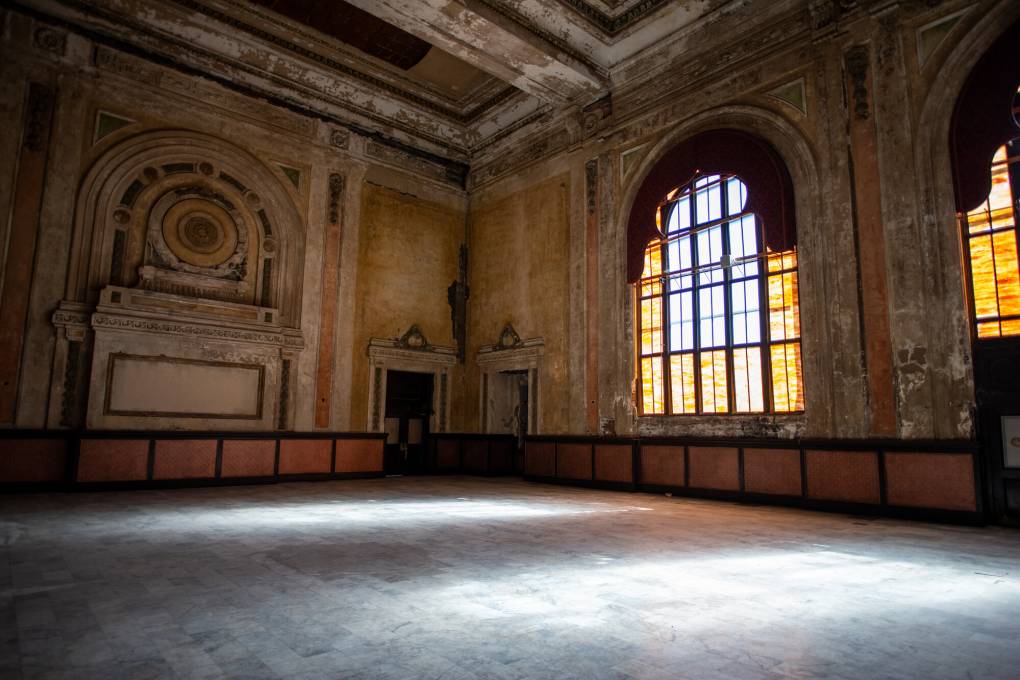
"caption": "Light shines through windows in the Main Hall of the now abandoned 16th Street Station in West Oakland on Feb. 16, 2022.",
"credit": "Beth LaBerge/KQED",
"altTag": "The interior hall of an abandoned building.",
"description": null,
"imgSizes": {
"medium": {
"file": "https://cdn.kqed.org/wp-content/uploads/sites/10/2024/10/016_KQED_16thStreetStationOakland_02162022_qed-800x533.jpg",
"width": 800,
"height": 533,
"mimeType": "image/jpeg"
},
"large": {
"file": "https://cdn.kqed.org/wp-content/uploads/sites/10/2024/10/016_KQED_16thStreetStationOakland_02162022_qed-1020x680.jpg",
"width": 1020,
"height": 680,
"mimeType": "image/jpeg"
},
"thumbnail": {
"file": "https://cdn.kqed.org/wp-content/uploads/sites/10/2024/10/016_KQED_16thStreetStationOakland_02162022_qed-160x107.jpg",
"width": 160,
"height": 107,
"mimeType": "image/jpeg"
},
"1536x1536": {
"file": "https://cdn.kqed.org/wp-content/uploads/sites/10/2024/10/016_KQED_16thStreetStationOakland_02162022_qed-1536x1024.jpg",
"width": 1536,
"height": 1024,
"mimeType": "image/jpeg"
},
"post-thumbnail": {
"file": "https://cdn.kqed.org/wp-content/uploads/sites/10/2024/10/016_KQED_16thStreetStationOakland_02162022_qed-672x372.jpg",
"width": 672,
"height": 372,
"mimeType": "image/jpeg"
},
"twentyfourteen-full-width": {
"file": "https://cdn.kqed.org/wp-content/uploads/sites/10/2024/10/016_KQED_16thStreetStationOakland_02162022_qed-1038x576.jpg",
"width": 1038,
"height": 576,
"mimeType": "image/jpeg"
},
"full-width": {
"file": "https://cdn.kqed.org/wp-content/uploads/sites/10/2024/10/016_KQED_16thStreetStationOakland_02162022_qed-1920x1280.jpg",
"width": 1920,
"height": 1280,
"mimeType": "image/jpeg"
},
"kqedFullSize": {
"file": "https://cdn.kqed.org/wp-content/uploads/sites/10/2024/10/016_KQED_16thStreetStationOakland_02162022_qed.jpg",
"width": 1999,
"height": 1333
}
},
"isLoading": false,
"fetchFailed": false
},
"news_12014596": {
"type": "attachments",
"id": "news_12014596",
"meta": {
"index": "attachments_1716263798",
"site": "news",
"id": "12014596",
"found": true
},
"title": "San Francisco Mayor Asks Muni To Study Eliminating Transit Fares",
"publishDate": 1731698421,
"status": "inherit",
"parent": 12014573,
"modified": 1731720725,
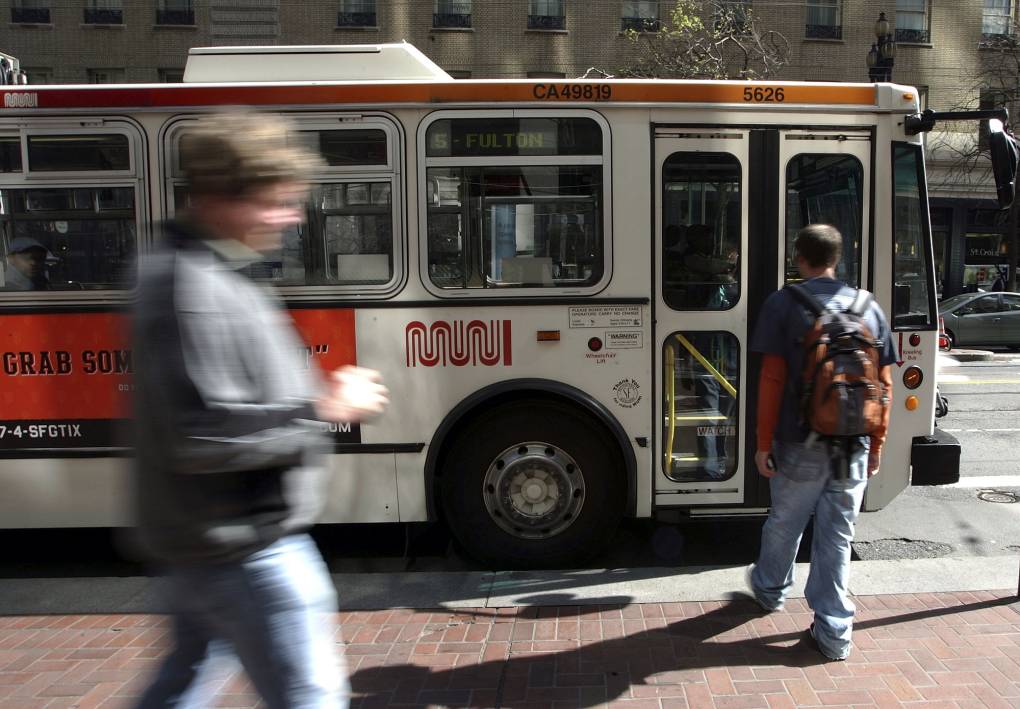
"caption": "Passengers board a San Francisco MUNI bus on March 7, 2007.",
"credit": "Justin Sullivan/Getty Images",
"altTag": null,
"description": null,
"imgSizes": {
"medium": {
"file": "https://cdn.kqed.org/wp-content/uploads/sites/10/2024/11/MUNISF-800x556.jpg",
"width": 800,
"height": 556,
"mimeType": "image/jpeg"
},
"large": {
"file": "https://cdn.kqed.org/wp-content/uploads/sites/10/2024/11/MUNISF-1020x709.jpg",
"width": 1020,
"height": 709,
"mimeType": "image/jpeg"
},
"thumbnail": {
"file": "https://cdn.kqed.org/wp-content/uploads/sites/10/2024/11/MUNISF-160x111.jpg",
"width": 160,
"height": 111,
"mimeType": "image/jpeg"
},
"1536x1536": {
"file": "https://cdn.kqed.org/wp-content/uploads/sites/10/2024/11/MUNISF-1536x1068.jpg",
"width": 1536,
"height": 1068,
"mimeType": "image/jpeg"
},
"post-thumbnail": {
"file": "https://cdn.kqed.org/wp-content/uploads/sites/10/2024/11/MUNISF-672x372.jpg",
"width": 672,
"height": 372,
"mimeType": "image/jpeg"
},
"twentyfourteen-full-width": {
"file": "https://cdn.kqed.org/wp-content/uploads/sites/10/2024/11/MUNISF-1038x576.jpg",
"width": 1038,
"height": 576,
"mimeType": "image/jpeg"
},
"full-width": {
"file": "https://cdn.kqed.org/wp-content/uploads/sites/10/2024/11/MUNISF-1920x1335.jpg",
"width": 1920,
"height": 1335,
"mimeType": "image/jpeg"
},
"kqedFullSize": {
"file": "https://cdn.kqed.org/wp-content/uploads/sites/10/2024/11/MUNISF.jpg",
"width": 2000,
"height": 1391
}
},
"isLoading": false,
"fetchFailed": false
},
"news_11982792": {
"type": "attachments",
"id": "news_11982792",
"meta": {
"index": "attachments_1716263798",
"site": "news",
"id": "11982792",
"found": true
},
"title": "240412-OAKAIRPORT-027-BL-KQED",
"publishDate": 1712942276,
"status": "inherit",
"parent": 0,
"modified": 1731461196,
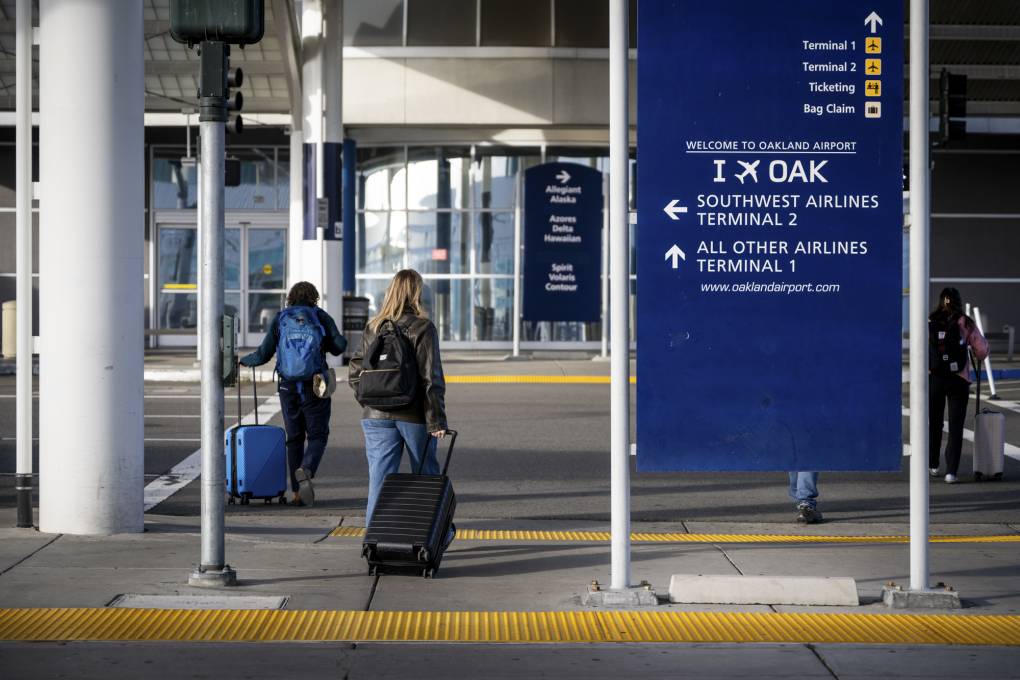
"caption": "Passengers enter the Oakland International Airport in Oakland on April 12, 2024.",
"credit": "Beth LaBerge/KQED",
"altTag": null,
"description": null,
"imgSizes": {
"medium": {
"file": "https://cdn.kqed.org/wp-content/uploads/sites/10/2024/04/240412-OAKAIRPORT-027-BL-KQED-800x533.jpg",
"width": 800,
"height": 533,
"mimeType": "image/jpeg"
},
"large": {
"file": "https://cdn.kqed.org/wp-content/uploads/sites/10/2024/04/240412-OAKAIRPORT-027-BL-KQED-1020x680.jpg",
"width": 1020,
"height": 680,
"mimeType": "image/jpeg"
},
"thumbnail": {
"file": "https://cdn.kqed.org/wp-content/uploads/sites/10/2024/04/240412-OAKAIRPORT-027-BL-KQED-160x107.jpg",
"width": 160,
"height": 107,
"mimeType": "image/jpeg"
},
"1536x1536": {
"file": "https://cdn.kqed.org/wp-content/uploads/sites/10/2024/04/240412-OAKAIRPORT-027-BL-KQED-1536x1024.jpg",
"width": 1536,
"height": 1024,
"mimeType": "image/jpeg"
},
"post-thumbnail": {
"file": "https://cdn.kqed.org/wp-content/uploads/sites/10/2024/04/240412-OAKAIRPORT-027-BL-KQED-672x372.jpg",
"width": 672,
"height": 372,
"mimeType": "image/jpeg"
},
"twentyfourteen-full-width": {
"file": "https://cdn.kqed.org/wp-content/uploads/sites/10/2024/04/240412-OAKAIRPORT-027-BL-KQED-1038x576.jpg",
"width": 1038,
"height": 576,
"mimeType": "image/jpeg"
},
"full-width": {
"file": "https://cdn.kqed.org/wp-content/uploads/sites/10/2024/04/240412-OAKAIRPORT-027-BL-KQED-1920x1280.jpg",
"width": 1920,
"height": 1280,
"mimeType": "image/jpeg"
},
"kqedFullSize": {
"file": "https://cdn.kqed.org/wp-content/uploads/sites/10/2024/04/240412-OAKAIRPORT-027-BL-KQED.jpg",
"width": 2000,
"height": 1333
}
},
"isLoading": false,
"fetchFailed": false
},
"news_12013895": {
"type": "attachments",
"id": "news_12013895",
"meta": {
"index": "attachments_1716263798",
"site": "news",
"id": "12013895",
"found": true
},
"title": "240129-EVFILE-KSM-26_qed",
"publishDate": 1731189616,
"status": "inherit",
"parent": 12013891,
"modified": 1784234191,
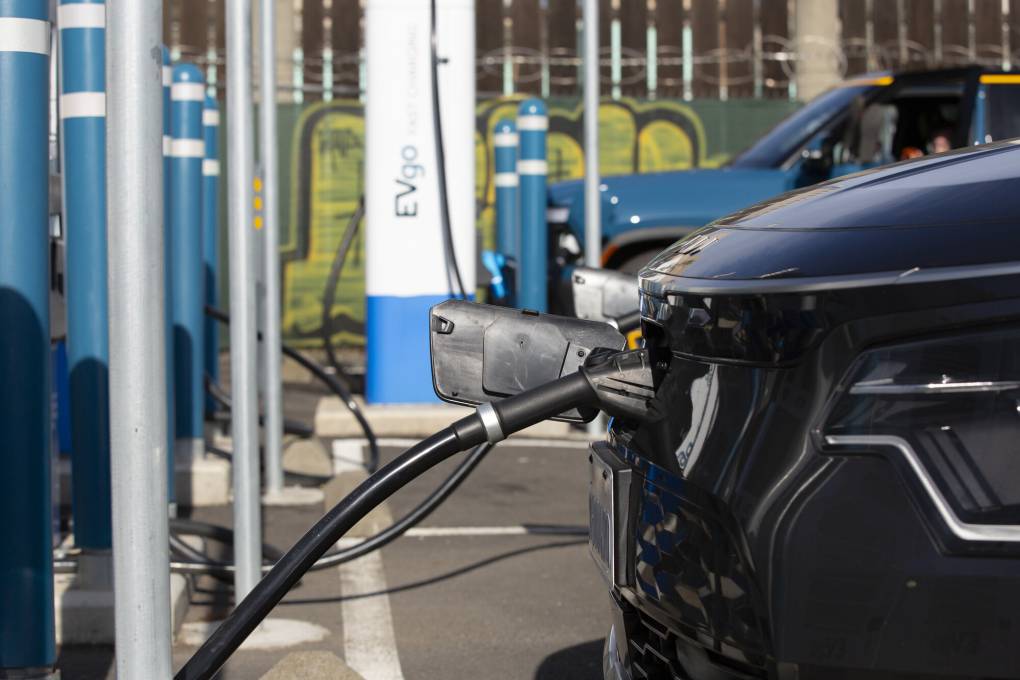
"caption": "Electric vehicles charge at an EVgo fast charging station in Oakland on Jan. 29, 2024.",
"credit": "Kathryn Styer Martínez/KQED",
"altTag": null,
"description": null,
"imgSizes": {
"medium": {
"file": "https://cdn.kqed.org/wp-content/uploads/sites/10/2024/11/240129-EVFILE-KSM-26_qed-800x533.jpg",
"width": 800,
"height": 533,
"mimeType": "image/jpeg"
},
"large": {
"file": "https://cdn.kqed.org/wp-content/uploads/sites/10/2024/11/240129-EVFILE-KSM-26_qed-1020x680.jpg",
"width": 1020,
"height": 680,
"mimeType": "image/jpeg"
},
"thumbnail": {
"file": "https://cdn.kqed.org/wp-content/uploads/sites/10/2024/11/240129-EVFILE-KSM-26_qed-160x107.jpg",
"width": 160,
"height": 107,
"mimeType": "image/jpeg"
},
"1536x1536": {
"file": "https://cdn.kqed.org/wp-content/uploads/sites/10/2024/11/240129-EVFILE-KSM-26_qed-1536x1024.jpg",
"width": 1536,
"height": 1024,
"mimeType": "image/jpeg"
},
"post-thumbnail": {
"file": "https://cdn.kqed.org/wp-content/uploads/sites/10/2024/11/240129-EVFILE-KSM-26_qed-672x372.jpg",
"width": 672,
"height": 372,
"mimeType": "image/jpeg"
},
"twentyfourteen-full-width": {
"file": "https://cdn.kqed.org/wp-content/uploads/sites/10/2024/11/240129-EVFILE-KSM-26_qed-1038x576.jpg",
"width": 1038,
"height": 576,
"mimeType": "image/jpeg"
},
"full-width": {
"file": "https://cdn.kqed.org/wp-content/uploads/sites/10/2024/11/240129-EVFILE-KSM-26_qed-1920x1280.jpg",
"width": 1920,
"height": 1280,
"mimeType": "image/jpeg"
},
"kqedFullSize": {
"file": "https://cdn.kqed.org/wp-content/uploads/sites/10/2024/11/240129-EVFILE-KSM-26_qed.jpg",
"width": 2000,
"height": 1333
}
},
"isLoading": false,
"fetchFailed": false
},
"news_12013862": {
"type": "attachments",
"id": "news_12013862",
"meta": {
"index": "attachments_1716263798",
"site": "news",
"id": "12013862",
"found": true
},
"title": "241108-SF-PEDS-GZ-02-KQED",
"publishDate": 1731179226,
"status": "inherit",
"parent": 12013807,
"modified": 1731439212,
"caption": "(From left to right) Jenny Po Wah Yu, Christian Rose and Julie Nicholson hang a memorial sign and flowers for Thomas McKean, the 29-year-old pedestrian who was fatally struck at South Van Ness and 18th on July 9, 2023.",
"credit": "Gilare Zada/KQED",
"altTag": null,
"description": null,
"imgSizes": {
"medium": {
"file": "https://cdn.kqed.org/wp-content/uploads/sites/10/2024/11/241108-SF-PEDS-GZ-02-KQED-1-800x533.jpg",
"width": 800,
"height": 533,
"mimeType": "image/jpeg"
},
"large": {
"file": "https://cdn.kqed.org/wp-content/uploads/sites/10/2024/11/241108-SF-PEDS-GZ-02-KQED-1-1020x680.jpg",
"width": 1020,
"height": 680,
"mimeType": "image/jpeg"
},
"thumbnail": {
"file": "https://cdn.kqed.org/wp-content/uploads/sites/10/2024/11/241108-SF-PEDS-GZ-02-KQED-1-160x107.jpg",
"width": 160,
"height": 107,
"mimeType": "image/jpeg"
},
"1536x1536": {
"file": "https://cdn.kqed.org/wp-content/uploads/sites/10/2024/11/241108-SF-PEDS-GZ-02-KQED-1-1536x1024.jpg",
"width": 1536,
"height": 1024,
"mimeType": "image/jpeg"
},
"post-thumbnail": {
"file": "https://cdn.kqed.org/wp-content/uploads/sites/10/2024/11/241108-SF-PEDS-GZ-02-KQED-1-672x372.jpg",
"width": 672,
"height": 372,
"mimeType": "image/jpeg"
},
"twentyfourteen-full-width": {
"file": "https://cdn.kqed.org/wp-content/uploads/sites/10/2024/11/241108-SF-PEDS-GZ-02-KQED-1-1038x576.jpg",
"width": 1038,
"height": 576,
"mimeType": "image/jpeg"
},
"full-width": {
"file": "https://cdn.kqed.org/wp-content/uploads/sites/10/2024/11/241108-SF-PEDS-GZ-02-KQED-1-1920x1280.jpg",
"width": 1920,
"height": 1280,
"mimeType": "image/jpeg"
},
"kqedFullSize": {
"file": "https://cdn.kqed.org/wp-content/uploads/sites/10/2024/11/241108-SF-PEDS-GZ-02-KQED-1.jpg",
"width": 2000,
"height": 1333
}
},
"isLoading": false,
"fetchFailed": false
},
"news_12011910": {
"type": "attachments",
"id": "news_12011910",
"meta": {
"index": "attachments_1716263798",
"site": "news",
"id": "12011910",
"found": true
},
"title": "Cars drive along the Great Highway in San Francisco on Oct. 30, 2024.",
"publishDate": 1730399925,
"status": "inherit",
"parent": 0,
"modified": 1730399938,
"caption": "Cars drive along the Great Highway in San Francisco on Oct. 30, 2024.",
"credit": "Beth LaBerge/KQED",
"altTag": null,
"description": null,
"imgSizes": {
"medium": {
"file": "https://cdn.kqed.org/wp-content/uploads/sites/10/2024/10/241030-PropK-26-BL_qed-800x533.jpg",
"width": 800,
"height": 533,
"mimeType": "image/jpeg"
},
"large": {
"file": "https://cdn.kqed.org/wp-content/uploads/sites/10/2024/10/241030-PropK-26-BL_qed-1020x680.jpg",
"width": 1020,
"height": 680,
"mimeType": "image/jpeg"
},
"thumbnail": {
"file": "https://cdn.kqed.org/wp-content/uploads/sites/10/2024/10/241030-PropK-26-BL_qed-160x107.jpg",
"width": 160,
"height": 107,
"mimeType": "image/jpeg"
},
"1536x1536": {
"file": "https://cdn.kqed.org/wp-content/uploads/sites/10/2024/10/241030-PropK-26-BL_qed-1536x1024.jpg",
"width": 1536,
"height": 1024,
"mimeType": "image/jpeg"
},
"post-thumbnail": {
"file": "https://cdn.kqed.org/wp-content/uploads/sites/10/2024/10/241030-PropK-26-BL_qed-672x372.jpg",
"width": 672,
"height": 372,
"mimeType": "image/jpeg"
},
"twentyfourteen-full-width": {
"file": "https://cdn.kqed.org/wp-content/uploads/sites/10/2024/10/241030-PropK-26-BL_qed-1038x576.jpg",
"width": 1038,
"height": 576,
"mimeType": "image/jpeg"
},
"full-width": {
"file": "https://cdn.kqed.org/wp-content/uploads/sites/10/2024/10/241030-PropK-26-BL_qed-1920x1280.jpg",
"width": 1920,
"height": 1280,
"mimeType": "image/jpeg"
},
"kqedFullSize": {
"file": "https://cdn.kqed.org/wp-content/uploads/sites/10/2024/10/241030-PropK-26-BL_qed.jpg",
"width": 2000,
"height": 1333
}
},
"isLoading": false,
"fetchFailed": false
},
"news_12011138": {
"type": "attachments",
"id": "news_12011138",
"meta": {
"index": "attachments_1716263798",
"site": "news",
"id": "12011138",
"found": true
},
"title": "241025-FATAL UCSF DUMP TRUCK CRASH-MD-02-KQED",
"publishDate": 1729882394,
"status": "inherit",
"parent": 0,
"modified": 1729953336,
"caption": "A memorial at the intersection of Stanyan Street and Parnassus Avenue, where a pedestrian was recently hit and killed by a dump truck, on Oct. 25, 2024.",
"credit": "Martin do Nascimento/KQED",
"altTag": null,
"description": null,
"imgSizes": {
"medium": {
"file": "https://cdn.kqed.org/wp-content/uploads/sites/10/2024/10/241025-FATAL-UCSF-DUMP-TRUCK-CRASH-MD-02-KQED-800x533.jpg",
"width": 800,
"height": 533,
"mimeType": "image/jpeg"
},
"large": {
"file": "https://cdn.kqed.org/wp-content/uploads/sites/10/2024/10/241025-FATAL-UCSF-DUMP-TRUCK-CRASH-MD-02-KQED-1020x680.jpg",
"width": 1020,
"height": 680,
"mimeType": "image/jpeg"
},
"thumbnail": {
"file": "https://cdn.kqed.org/wp-content/uploads/sites/10/2024/10/241025-FATAL-UCSF-DUMP-TRUCK-CRASH-MD-02-KQED-160x107.jpg",
"width": 160,
"height": 107,
"mimeType": "image/jpeg"
},
"1536x1536": {
"file": "https://cdn.kqed.org/wp-content/uploads/sites/10/2024/10/241025-FATAL-UCSF-DUMP-TRUCK-CRASH-MD-02-KQED-1536x1024.jpg",
"width": 1536,
"height": 1024,
"mimeType": "image/jpeg"
},
"post-thumbnail": {
"file": "https://cdn.kqed.org/wp-content/uploads/sites/10/2024/10/241025-FATAL-UCSF-DUMP-TRUCK-CRASH-MD-02-KQED-672x372.jpg",
"width": 672,
"height": 372,
"mimeType": "image/jpeg"
},
"twentyfourteen-full-width": {
"file": "https://cdn.kqed.org/wp-content/uploads/sites/10/2024/10/241025-FATAL-UCSF-DUMP-TRUCK-CRASH-MD-02-KQED-1038x576.jpg",
"width": 1038,
"height": 576,
"mimeType": "image/jpeg"
},
"full-width": {
"file": "https://cdn.kqed.org/wp-content/uploads/sites/10/2024/10/241025-FATAL-UCSF-DUMP-TRUCK-CRASH-MD-02-KQED-1920x1280.jpg",
"width": 1920,
"height": 1280,
"mimeType": "image/jpeg"
},
"kqedFullSize": {
"file": "https://cdn.kqed.org/wp-content/uploads/sites/10/2024/10/241025-FATAL-UCSF-DUMP-TRUCK-CRASH-MD-02-KQED.jpg",
"width": 2000,
"height": 1333
}
},
"isLoading": false,
"fetchFailed": false
},
"news_11796751": {
"type": "attachments",
"id": "news_11796751",
"meta": {
"index": "attachments_1716263798",
"site": "news",
"id": "11796751",
"found": true
},
"title": "Investigation Continues Into Tesla Driver's Death While In Autopilot Mode",
"publishDate": 1579299477,
"status": "inherit",
"parent": 11796657,
"modified": 1729283665,
"caption": "Tesla vehicles sit parked outside of a new Tesla showroom and service center in New York. ",
"credit": "Spencer Platt/Getty Images",
"altTag": null,
"description": null,
"imgSizes": {
"thumbnail": {
"file": "https://cdn.kqed.org/wp-content/uploads/sites/10/2020/01/GettyImages-545144484-160x107.jpg",
"width": 160,
"height": 107,
"mimeType": "image/jpeg"
},
"medium": {
"file": "https://cdn.kqed.org/wp-content/uploads/sites/10/2020/01/GettyImages-545144484-800x533.jpg",
"width": 800,
"height": 533,
"mimeType": "image/jpeg"
},
"large": {
"file": "https://cdn.kqed.org/wp-content/uploads/sites/10/2020/01/GettyImages-545144484-1020x680.jpg",
"width": 1020,
"height": 680,
"mimeType": "image/jpeg"
},
"post-thumbnail": {
"file": "https://cdn.kqed.org/wp-content/uploads/sites/10/2020/01/GettyImages-545144484-672x372.jpg",
"width": 672,
"height": 372,
"mimeType": "image/jpeg"
},
"twentyfourteen-full-width": {
"file": "https://cdn.kqed.org/wp-content/uploads/sites/10/2020/01/GettyImages-545144484-1038x576.jpg",
"width": 1038,
"height": 576,
"mimeType": "image/jpeg"
},
"full-width": {
"file": "https://cdn.kqed.org/wp-content/uploads/sites/10/2020/01/GettyImages-545144484-1920x1280.jpg",
"width": 1920,
"height": 1280,
"mimeType": "image/jpeg"
},
"apple_news_ca_landscape_12_9": {
"file": "https://cdn.kqed.org/wp-content/uploads/sites/10/2020/01/GettyImages-545144484-1832x1374.jpg",
"width": 1832,
"height": 1374,
"mimeType": "image/jpeg"
},
"apple_news_ca_landscape_9_7": {
"file": "https://cdn.kqed.org/wp-content/uploads/sites/10/2020/01/GettyImages-545144484-1376x1032.jpg",
"width": 1376,
"height": 1032,
"mimeType": "image/jpeg"
},
"apple_news_ca_landscape_5_5": {
"file": "https://cdn.kqed.org/wp-content/uploads/sites/10/2020/01/GettyImages-545144484-1044x783.jpg",
"width": 1044,
"height": 783,
"mimeType": "image/jpeg"
},
"apple_news_ca_landscape_4_7": {
"file": "https://cdn.kqed.org/wp-content/uploads/sites/10/2020/01/GettyImages-545144484-632x474.jpg",
"width": 632,
"height": 474,
"mimeType": "image/jpeg"
},
"apple_news_ca_landscape_4_0": {
"file": "https://cdn.kqed.org/wp-content/uploads/sites/10/2020/01/GettyImages-545144484-536x402.jpg",
"width": 536,
"height": 402,
"mimeType": "image/jpeg"
},
"apple_news_ca_portrait_12_9": {
"file": "https://cdn.kqed.org/wp-content/uploads/sites/10/2020/01/GettyImages-545144484-1122x1496.jpg",
"width": 1122,
"height": 1496,
"mimeType": "image/jpeg"
},
"apple_news_ca_portrait_9_7": {
"file": "https://cdn.kqed.org/wp-content/uploads/sites/10/2020/01/GettyImages-545144484-840x1120.jpg",
"width": 840,
"height": 1120,
"mimeType": "image/jpeg"
},
"apple_news_ca_portrait_5_5": {
"file": "https://cdn.kqed.org/wp-content/uploads/sites/10/2020/01/GettyImages-545144484-687x916.jpg",
"width": 687,
"height": 916,
"mimeType": "image/jpeg"
},
"apple_news_ca_portrait_4_7": {
"file": "https://cdn.kqed.org/wp-content/uploads/sites/10/2020/01/GettyImages-545144484-414x552.jpg",
"width": 414,
"height": 552,
"mimeType": "image/jpeg"
},
"apple_news_ca_portrait_4_0": {
"file": "https://cdn.kqed.org/wp-content/uploads/sites/10/2020/01/GettyImages-545144484-354x472.jpg",
"width": 354,
"height": 472,
"mimeType": "image/jpeg"
},
"apple_news_ca_square_12_9": {
"file": "https://cdn.kqed.org/wp-content/uploads/sites/10/2020/01/GettyImages-545144484-1472x1472.jpg",
"width": 1472,
"height": 1472,
"mimeType": "image/jpeg"
},
"apple_news_ca_square_9_7": {
"file": "https://cdn.kqed.org/wp-content/uploads/sites/10/2020/01/GettyImages-545144484-1104x1104.jpg",
"width": 1104,
"height": 1104,
"mimeType": "image/jpeg"
},
"apple_news_ca_square_5_5": {
"file": "https://cdn.kqed.org/wp-content/uploads/sites/10/2020/01/GettyImages-545144484-912x912.jpg",
"width": 912,
"height": 912,
"mimeType": "image/jpeg"
},
"apple_news_ca_square_4_7": {
"file": "https://cdn.kqed.org/wp-content/uploads/sites/10/2020/01/GettyImages-545144484-550x550.jpg",
"width": 550,
"height": 550,
"mimeType": "image/jpeg"
},
"apple_news_ca_square_4_0": {
"file": "https://cdn.kqed.org/wp-content/uploads/sites/10/2020/01/GettyImages-545144484-470x470.jpg",
"width": 470,
"height": 470,
"mimeType": "image/jpeg"
},
"kqedFullSize": {
"file": "https://cdn.kqed.org/wp-content/uploads/sites/10/2020/01/GettyImages-545144484.jpg",
"width": 3000,
"height": 2000
}
},
"isLoading": false,
"fetchFailed": false
},
"news_11992098": {
"type": "attachments",
"id": "news_11992098",
"meta": {
"index": "attachments_1716263798",
"site": "news",
"id": "11992098",
"found": true
},
"title": "240313-BART CRISIS INTERVENTION UNIT-MD-15",
"publishDate": 1719434084,
"status": "inherit",
"parent": 11992041,
"modified": 1726695343,
"caption": "A passenger watches a train go by at the Lake Merritt BART station on March 13, 2024.",
"credit": "Martin do Nascimento/KQED",
"altTag": "A man stands at a train platform as a train leaves the station. A sign above says \"Lake Merritt.\"",
"description": null,
"imgSizes": {
"medium": {
"file": "https://cdn.kqed.org/wp-content/uploads/sites/10/2024/06/240313-BART-CRISIS-INTERVENTION-UNIT-MD-15-800x533.jpg",
"width": 800,
"height": 533,
"mimeType": "image/jpeg"
},
"large": {
"file": "https://cdn.kqed.org/wp-content/uploads/sites/10/2024/06/240313-BART-CRISIS-INTERVENTION-UNIT-MD-15-1020x679.jpg",
"width": 1020,
"height": 679,
"mimeType": "image/jpeg"
},
"thumbnail": {
"file": "https://cdn.kqed.org/wp-content/uploads/sites/10/2024/06/240313-BART-CRISIS-INTERVENTION-UNIT-MD-15-160x107.jpg",
"width": 160,
"height": 107,
"mimeType": "image/jpeg"
},
"1536x1536": {
"file": "https://cdn.kqed.org/wp-content/uploads/sites/10/2024/06/240313-BART-CRISIS-INTERVENTION-UNIT-MD-15-1536x1023.jpg",
"width": 1536,
"height": 1023,
"mimeType": "image/jpeg"
},
"post-thumbnail": {
"file": "https://cdn.kqed.org/wp-content/uploads/sites/10/2024/06/240313-BART-CRISIS-INTERVENTION-UNIT-MD-15-672x372.jpg",
"width": 672,
"height": 372,
"mimeType": "image/jpeg"
},
"twentyfourteen-full-width": {
"file": "https://cdn.kqed.org/wp-content/uploads/sites/10/2024/06/240313-BART-CRISIS-INTERVENTION-UNIT-MD-15-1038x576.jpg",
"width": 1038,
"height": 576,
"mimeType": "image/jpeg"
},
"kqedFullSize": {
"file": "https://cdn.kqed.org/wp-content/uploads/sites/10/2024/06/240313-BART-CRISIS-INTERVENTION-UNIT-MD-15.jpg",
"width": 1920,
"height": 1279
}
},
"isLoading": false,
"fetchFailed": false
},
"news_12009225": {
"type": "attachments",
"id": "news_12009225",
"meta": {
"index": "attachments_1716263798",
"site": "news",
"id": "12009225",
"found": true
},
"title": "Gas Prices Jump Back Up After Long Decline",
"publishDate": 1728688778,
"status": "inherit",
"parent": 12009203,
"modified": 1728688825,
"caption": "Gas prices over $6 a gallon are displayed at a Chevron gas station on Sept. 27, 2022 in San Rafael. ",
"credit": "Justin Sullivan/Getty Images",
"altTag": null,
"description": null,
"imgSizes": {
"medium": {
"file": "https://cdn.kqed.org/wp-content/uploads/sites/10/2024/10/GettyImages-1428106333-800x534.jpg",
"width": 800,
"height": 534,
"mimeType": "image/jpeg"
},
"large": {
"file": "https://cdn.kqed.org/wp-content/uploads/sites/10/2024/10/GettyImages-1428106333-1020x681.jpg",
"width": 1020,
"height": 681,
"mimeType": "image/jpeg"
},
"thumbnail": {
"file": "https://cdn.kqed.org/wp-content/uploads/sites/10/2024/10/GettyImages-1428106333-160x107.jpg",
"width": 160,
"height": 107,
"mimeType": "image/jpeg"
},
"post-thumbnail": {
"file": "https://cdn.kqed.org/wp-content/uploads/sites/10/2024/10/GettyImages-1428106333-672x372.jpg",
"width": 672,
"height": 372,
"mimeType": "image/jpeg"
},
"twentyfourteen-full-width": {
"file": "https://cdn.kqed.org/wp-content/uploads/sites/10/2024/10/GettyImages-1428106333-1024x576.jpg",
"width": 1024,
"height": 576,
"mimeType": "image/jpeg"
},
"kqedFullSize": {
"file": "https://cdn.kqed.org/wp-content/uploads/sites/10/2024/10/GettyImages-1428106333.jpg",
"width": 1024,
"height": 684
}
},
"isLoading": false,
"fetchFailed": false
},
"news_12008879": {
"type": "attachments",
"id": "news_12008879",
"meta": {
"index": "attachments_1716263798",
"site": "news",
"id": "12008879",
"found": true
},
"title": "240111-TransitFile-19-BL_qed",
"publishDate": 1728583167,
"status": "inherit",
"parent": 12008877,
"modified": 1728583182,
"caption": "BART fare gates at the 24th Street Mission station in San Francisco on Jan. 11, 2024.",
"credit": "Beth LaBerge/KQED",
"altTag": null,
"description": null,
"imgSizes": {
"medium": {
"file": "https://cdn.kqed.org/wp-content/uploads/sites/10/2024/10/240111-TransitFile-19-BL_qed-800x533.jpg",
"width": 800,
"height": 533,
"mimeType": "image/jpeg"
},
"large": {
"file": "https://cdn.kqed.org/wp-content/uploads/sites/10/2024/10/240111-TransitFile-19-BL_qed-1020x680.jpg",
"width": 1020,
"height": 680,
"mimeType": "image/jpeg"
},
"thumbnail": {
"file": "https://cdn.kqed.org/wp-content/uploads/sites/10/2024/10/240111-TransitFile-19-BL_qed-160x107.jpg",
"width": 160,
"height": 107,
"mimeType": "image/jpeg"
},
"1536x1536": {
"file": "https://cdn.kqed.org/wp-content/uploads/sites/10/2024/10/240111-TransitFile-19-BL_qed-1536x1024.jpg",
"width": 1536,
"height": 1024,
"mimeType": "image/jpeg"
},
"post-thumbnail": {
"file": "https://cdn.kqed.org/wp-content/uploads/sites/10/2024/10/240111-TransitFile-19-BL_qed-672x372.jpg",
"width": 672,
"height": 372,
"mimeType": "image/jpeg"
},
"twentyfourteen-full-width": {
"file": "https://cdn.kqed.org/wp-content/uploads/sites/10/2024/10/240111-TransitFile-19-BL_qed-1038x576.jpg",
"width": 1038,
"height": 576,
"mimeType": "image/jpeg"
},
"full-width": {
"file": "https://cdn.kqed.org/wp-content/uploads/sites/10/2024/10/240111-TransitFile-19-BL_qed-1920x1280.jpg",
"width": 1920,
"height": 1280,
"mimeType": "image/jpeg"
},
"kqedFullSize": {
"file": "https://cdn.kqed.org/wp-content/uploads/sites/10/2024/10/240111-TransitFile-19-BL_qed.jpg",
"width": 2000,
"height": 1333
}
},
"isLoading": false,
"fetchFailed": false
},
"news_11797566": {
"type": "attachments",
"id": "news_11797566",
"meta": {
"index": "attachments_1716263798",
"site": "news",
"id": "11797566",
"found": true
},
"title": "Market Street Car-Free traffic",
"publishDate": 1579813888,
"status": "inherit",
"parent": 11797562,
"modified": 1727483341,
"caption": "Traffic on Market Street in San Francisco.",
"credit": "Beth LaBerge/KQED",
"altTag": "Cars drive down Market Street in San Francisco on Thursday, less than a week before the street will go car-free.",
"description": "Cars drive down Market Street in San Francisco on Thursday, less than a week before the street will go car-free.",
"imgSizes": {
"thumbnail": {
"file": "https://cdn.kqed.org/wp-content/uploads/sites/10/2020/01/RS40878_001_KQED_MarketStCarFree_01232020_8469-qut-160x107.jpg",
"width": 160,
"height": 107,
"mimeType": "image/jpeg"
},
"medium": {
"file": "https://cdn.kqed.org/wp-content/uploads/sites/10/2020/01/RS40878_001_KQED_MarketStCarFree_01232020_8469-qut-800x533.jpg",
"width": 800,
"height": 533,
"mimeType": "image/jpeg"
},
"large": {
"file": "https://cdn.kqed.org/wp-content/uploads/sites/10/2020/01/RS40878_001_KQED_MarketStCarFree_01232020_8469-qut-1020x680.jpg",
"width": 1020,
"height": 680,
"mimeType": "image/jpeg"
},
"post-thumbnail": {
"file": "https://cdn.kqed.org/wp-content/uploads/sites/10/2020/01/RS40878_001_KQED_MarketStCarFree_01232020_8469-qut-672x372.jpg",
"width": 672,
"height": 372,
"mimeType": "image/jpeg"
},
"twentyfourteen-full-width": {
"file": "https://cdn.kqed.org/wp-content/uploads/sites/10/2020/01/RS40878_001_KQED_MarketStCarFree_01232020_8469-qut-1038x576.jpg",
"width": 1038,
"height": 576,
"mimeType": "image/jpeg"
},
"full-width": {
"file": "https://cdn.kqed.org/wp-content/uploads/sites/10/2020/01/RS40878_001_KQED_MarketStCarFree_01232020_8469-qut-1920x1280.jpg",
"width": 1920,
"height": 1280,
"mimeType": "image/jpeg"
},
"apple_news_ca_landscape_12_9": {
"file": "https://cdn.kqed.org/wp-content/uploads/sites/10/2020/01/RS40878_001_KQED_MarketStCarFree_01232020_8469-qut-1832x1280.jpg",
"width": 1832,
"height": 1280,
"mimeType": "image/jpeg"
},
"apple_news_ca_landscape_9_7": {
"file": "https://cdn.kqed.org/wp-content/uploads/sites/10/2020/01/RS40878_001_KQED_MarketStCarFree_01232020_8469-qut-1376x1032.jpg",
"width": 1376,
"height": 1032,
"mimeType": "image/jpeg"
},
"apple_news_ca_landscape_5_5": {
"file": "https://cdn.kqed.org/wp-content/uploads/sites/10/2020/01/RS40878_001_KQED_MarketStCarFree_01232020_8469-qut-1044x783.jpg",
"width": 1044,
"height": 783,
"mimeType": "image/jpeg"
},
"apple_news_ca_landscape_4_7": {
"file": "https://cdn.kqed.org/wp-content/uploads/sites/10/2020/01/RS40878_001_KQED_MarketStCarFree_01232020_8469-qut-632x474.jpg",
"width": 632,
"height": 474,
"mimeType": "image/jpeg"
},
"apple_news_ca_landscape_4_0": {
"file": "https://cdn.kqed.org/wp-content/uploads/sites/10/2020/01/RS40878_001_KQED_MarketStCarFree_01232020_8469-qut-536x402.jpg",
"width": 536,
"height": 402,
"mimeType": "image/jpeg"
},
"apple_news_ca_portrait_12_9": {
"file": "https://cdn.kqed.org/wp-content/uploads/sites/10/2020/01/RS40878_001_KQED_MarketStCarFree_01232020_8469-qut-1122x1280.jpg",
"width": 1122,
"height": 1280,
"mimeType": "image/jpeg"
},
"apple_news_ca_portrait_9_7": {
"file": "https://cdn.kqed.org/wp-content/uploads/sites/10/2020/01/RS40878_001_KQED_MarketStCarFree_01232020_8469-qut-840x1120.jpg",
"width": 840,
"height": 1120,
"mimeType": "image/jpeg"
},
"apple_news_ca_portrait_5_5": {
"file": "https://cdn.kqed.org/wp-content/uploads/sites/10/2020/01/RS40878_001_KQED_MarketStCarFree_01232020_8469-qut-687x916.jpg",
"width": 687,
"height": 916,
"mimeType": "image/jpeg"
},
"apple_news_ca_portrait_4_7": {
"file": "https://cdn.kqed.org/wp-content/uploads/sites/10/2020/01/RS40878_001_KQED_MarketStCarFree_01232020_8469-qut-414x552.jpg",
"width": 414,
"height": 552,
"mimeType": "image/jpeg"
},
"apple_news_ca_portrait_4_0": {
"file": "https://cdn.kqed.org/wp-content/uploads/sites/10/2020/01/RS40878_001_KQED_MarketStCarFree_01232020_8469-qut-354x472.jpg",
"width": 354,
"height": 472,
"mimeType": "image/jpeg"
},
"apple_news_ca_square_12_9": {
"file": "https://cdn.kqed.org/wp-content/uploads/sites/10/2020/01/RS40878_001_KQED_MarketStCarFree_01232020_8469-qut-1472x1280.jpg",
"width": 1472,
"height": 1280,
"mimeType": "image/jpeg"
},
"apple_news_ca_square_9_7": {
"file": "https://cdn.kqed.org/wp-content/uploads/sites/10/2020/01/RS40878_001_KQED_MarketStCarFree_01232020_8469-qut-1104x1104.jpg",
"width": 1104,
"height": 1104,
"mimeType": "image/jpeg"
},
"apple_news_ca_square_5_5": {
"file": "https://cdn.kqed.org/wp-content/uploads/sites/10/2020/01/RS40878_001_KQED_MarketStCarFree_01232020_8469-qut-912x912.jpg",
"width": 912,
"height": 912,
"mimeType": "image/jpeg"
},
"apple_news_ca_square_4_7": {
"file": "https://cdn.kqed.org/wp-content/uploads/sites/10/2020/01/RS40878_001_KQED_MarketStCarFree_01232020_8469-qut-550x550.jpg",
"width": 550,
"height": 550,
"mimeType": "image/jpeg"
},
"apple_news_ca_square_4_0": {
"file": "https://cdn.kqed.org/wp-content/uploads/sites/10/2020/01/RS40878_001_KQED_MarketStCarFree_01232020_8469-qut-470x470.jpg",
"width": 470,
"height": 470,
"mimeType": "image/jpeg"
},
"kqedFullSize": {
"file": "https://cdn.kqed.org/wp-content/uploads/sites/10/2020/01/RS40878_001_KQED_MarketStCarFree_01232020_8469-qut.jpg",
"width": 1920,
"height": 1280
}
},
"isLoading": false,
"fetchFailed": false
}
},
"audioPlayerReducer": {
"postId": "stream_live",
"isPaused": true,
"isPlaying": false,
"pfsActive": false,
"pledgeModalIsOpen": true,
"playerDrawerIsOpen": false,
"liveAudioPlayStartedAt": 0,
"liveAudioPlayContext": ""
},
"authorsReducer": {
"byline_news_12013891": {
"type": "authors",
"id": "byline_news_12013891",
"meta": {
"override": true
},
"slug": "byline_news_12013891",
"name": "Sophie Austin, Associated Press",
"isLoading": false
},
"byline_news_12010070": {
"type": "authors",
"id": "byline_news_12010070",
"meta": {
"override": true
},
"slug": "byline_news_12010070",
"name": "Tom Krisher, The Associated Press",
"isLoading": false
},
"byline_news_12009203": {
"type": "authors",
"id": "byline_news_12009203",
"meta": {
"override": true
},
"slug": "byline_news_12009203",
"name": "Sophie Austin, Associated Press",
"isLoading": false
},
"danbrekke": {
"type": "authors",
"id": "222",
"meta": {
"index": "authors_1716337520",
"id": "222",
"found": true
},
"name": "Dan Brekke",
"firstName": "Dan",
"lastName": "Brekke",
"slug": "danbrekke",
"email": "dbrekke@kqed.org",
"display_author_email": true,
"staff_mastheads": [
"news",
"science"
],
"title": "KQED Editor and Reporter",
"bio": "Dan Brekke is a reporter and editor for KQED News, responsible for coverage of topics ranging from California water issues to the Bay Area's transportation challenges. In a newsroom career that began in Chicago in 1972, Dan has worked for \u003cem>The San Francisco Examiner,\u003c/em> Wired and TechTV and has been published in The New York Times, The New York Times Magazine, Business 2.0, Salon and elsewhere.\r\n\r\nSince joining KQED in 2007, Dan has reported, edited and produced both radio and online features and breaking news pieces. He has shared as both editor and reporter in four Society of Professional Journalists Norcal Excellence in Journalism awards and one Edward R. Murrow regional award. He was chosen for a spring 2017 residency at the Mesa Refuge to advance his research on California salmon.\r\n\r\nEmail Dan at: \u003ca href=\"mailto:dbrekke@kqed.org\">dbrekke@kqed.org\u003c/a>\r\n\r\n\u003cstrong>Twitter:\u003c/strong> \u003ca href=\"https://twitter.com/danbrekke\" rel=\"noopener noreferrer\">twitter.com/danbrekke\u003c/a>\r\n\u003cstrong>Facebook:\u003c/strong> \u003ca href=\"https://www.facebook.com/danbrekke\" rel=\"noopener noreferrer\">www.facebook.com/danbrekke\u003c/a>\r\n\u003cstrong>LinkedIn:\u003c/strong> \u003ca href=\"https://www.linkedin.com/in/danbrekke\" rel=\"noopener noreferrer\">www.linkedin.com/in/danbrekke\u003c/a>",
"avatar": "https://secure.gravatar.com/avatar/8f1f0d2a978fb3b23426c922c7e2af558fa36905b49c4ce76a97dc3c72d27226?s=600&d=mm&r=g",
"twitter": "danbrekke",
"bluesky": null,
"facebook": null,
"instagram": "https://www.instagram.com/dan.brekke/",
"linkedin": "https://www.linkedin.com/in/danbrekke/",
"sites": [
{
"site": "news",
"roles": [
"administrator",
"create_posts"
]
},
{
"site": "stateofhealth",
"roles": [
"editor"
]
},
{
"site": "science",
"roles": [
"editor"
]
},
{
"site": "quest",
"roles": [
"contributor"
]
},
{
"site": "food",
"roles": [
"contributor"
]
},
{
"site": "forum",
"roles": [
"contributor"
]
},
{
"site": "elections",
"roles": [
"editor"
]
},
{
"site": "liveblog",
"roles": [
"editor"
]
}
],
"headData": {
"title": "Dan Brekke | KQED",
"description": "KQED Editor and Reporter",
"ogImgSrc": "https://secure.gravatar.com/avatar/8f1f0d2a978fb3b23426c922c7e2af558fa36905b49c4ce76a97dc3c72d27226?s=600&d=mm&r=g",
"twImgSrc": "https://secure.gravatar.com/avatar/8f1f0d2a978fb3b23426c922c7e2af558fa36905b49c4ce76a97dc3c72d27226?s=600&d=mm&r=g"
},
"isLoading": false,
"link": "/author/danbrekke"
},
"eromero": {
"type": "authors",
"id": "11746",
"meta": {
"index": "authors_1716337520",
"id": "11746",
"found": true
},
"name": "Ezra David Romero",
"firstName": "Ezra David",
"lastName": "Romero",
"slug": "eromero",
"email": "eromero@kqed.org",
"display_author_email": true,
"staff_mastheads": [
"news",
"science"
],
"title": "Climate Reporter",
"bio": "Ezra David Romero is a climate reporter for KQED News. He covers the absence and excess of water in the Bay Area — think sea level rise, flooding and drought. For nearly a decade he’s covered how warming temperatures are altering the lives of Californians. He’s reported on farmers worried their pistachio trees aren’t getting enough sleep, families desperate for water, scientists studying dying giant sequoias, and alongside firefighters containing wildfires. His work has appeared on local stations across California and nationally on public radio shows like Morning Edition, Here and Now, All Things Considered and Science Friday. ",
"avatar": "https://secure.gravatar.com/avatar/c76404d287c10ed40224227551ac36e24352c7306f106632caf6fead76f8801f?s=600&d=blank&r=g",
"twitter": "ezraromero",
"bluesky": null,
"facebook": null,
"instagram": null,
"linkedin": null,
"sites": [
{
"site": "arts",
"roles": [
"editor"
]
},
{
"site": "news",
"roles": [
"editor"
]
},
{
"site": "science",
"roles": [
"editor"
]
},
{
"site": "liveblog",
"roles": [
"author"
]
}
],
"headData": {
"title": "Ezra David Romero | KQED",
"description": "Climate Reporter",
"ogImgSrc": "https://secure.gravatar.com/avatar/c76404d287c10ed40224227551ac36e24352c7306f106632caf6fead76f8801f?s=600&d=blank&r=g",
"twImgSrc": "https://secure.gravatar.com/avatar/c76404d287c10ed40224227551ac36e24352c7306f106632caf6fead76f8801f?s=600&d=blank&r=g"
},
"isLoading": false,
"link": "/author/eromero"
},
"adahlstromeckman": {
"type": "authors",
"id": "11785",
"meta": {
"index": "authors_1716337520",
"id": "11785",
"found": true
},
"name": "Azul Dahlstrom-Eckman",
"firstName": "Azul",
"lastName": "Dahlstrom-Eckman",
"slug": "adahlstromeckman",
"email": "adahlstrom-eckman@kqed.org",
"display_author_email": true,
"staff_mastheads": [],
"title": "Reporter",
"bio": "Azul is a reporter for KQED focusing on transportation and features. He joined KQED in 2021 as an alumna of KALW's Audio Academy radio journalism training program.",
"avatar": "https://secure.gravatar.com/avatar/9cb750298435add7815a777f55bf1f46845c1386bb8452555c60a7b820b5aba3?s=600&d=blank&r=g",
"twitter": "@zuliemann",
"bluesky": "@azul415.bsky.social",
"facebook": null,
"instagram": null,
"linkedin": null,
"sites": [
{
"site": "arts",
"roles": [
"editor"
]
},
{
"site": "news",
"roles": [
"editor"
]
},
{
"site": "science",
"roles": [
"editor"
]
},
{
"site": "liveblog",
"roles": [
"author"
]
}
],
"headData": {
"title": "Azul Dahlstrom-Eckman | KQED",
"description": "Reporter",
"ogImgSrc": "https://secure.gravatar.com/avatar/9cb750298435add7815a777f55bf1f46845c1386bb8452555c60a7b820b5aba3?s=600&d=blank&r=g",
"twImgSrc": "https://secure.gravatar.com/avatar/9cb750298435add7815a777f55bf1f46845c1386bb8452555c60a7b820b5aba3?s=600&d=blank&r=g"
},
"isLoading": false,
"link": "/author/adahlstromeckman"
},
"slim": {
"type": "authors",
"id": "11920",
"meta": {
"index": "authors_1716337520",
"id": "11920",
"found": true
},
"name": "Samantha Lim",
"firstName": "Samantha",
"lastName": "Lim",
"slug": "slim",
"email": "slim@KQED.org",
"display_author_email": false,
"staff_mastheads": [],
"title": "KQED Contributor",
"bio": null,
"avatar": "https://secure.gravatar.com/avatar/82e592e6c15fe1a04d385e8ad0fb0b4e?s=600&d=blank&r=g",
"twitter": null,
"facebook": null,
"instagram": null,
"linkedin": null,
"sites": [
{
"site": "news",
"roles": []
}
],
"headData": {
"title": "Samantha Lim | KQED",
"description": "KQED Contributor",
"ogImgSrc": "https://secure.gravatar.com/avatar/82e592e6c15fe1a04d385e8ad0fb0b4e?s=600&d=blank&r=g",
"twImgSrc": "https://secure.gravatar.com/avatar/82e592e6c15fe1a04d385e8ad0fb0b4e?s=600&d=blank&r=g"
},
"isLoading": false,
"link": "/author/slim"
},
"emanoukian": {
"type": "authors",
"id": "11925",
"meta": {
"index": "authors_1716337520",
"id": "11925",
"found": true
},
"name": "Elize Manoukian",
"firstName": "Elize",
"lastName": "Manoukian",
"slug": "emanoukian",
"email": "emanoukian@KQED.org",
"display_author_email": false,
"staff_mastheads": [
"news"
],
"title": "Digital News Editor",
"bio": "Elize Manoukian is an award-winning audio producer and Senior Editor on the Express Desk, KQED's digital news platform. Her work has appeared on KPFA, Interlochen Public Radio, Oregon Public Broadcast, the New York Daily News, LA Times and the San Diego Union-Tribune.",
"avatar": "https://secure.gravatar.com/avatar/4525f1a8e46ccb30933b32653d9772064cfefe3fa655eb45b3b3a80341f6bdad?s=600&d=blank&r=g",
"twitter": null,
"bluesky": null,
"facebook": null,
"instagram": null,
"linkedin": null,
"sites": [
{
"site": "arts",
"roles": [
"editor"
]
},
{
"site": "news",
"roles": [
"editor"
]
},
{
"site": "science",
"roles": [
"editor"
]
}
],
"headData": {
"title": "Elize Manoukian | KQED",
"description": "Digital News Editor",
"ogImgSrc": "https://secure.gravatar.com/avatar/4525f1a8e46ccb30933b32653d9772064cfefe3fa655eb45b3b3a80341f6bdad?s=600&d=blank&r=g",
"twImgSrc": "https://secure.gravatar.com/avatar/4525f1a8e46ccb30933b32653d9772064cfefe3fa655eb45b3b3a80341f6bdad?s=600&d=blank&r=g"
},
"isLoading": false,
"link": "/author/emanoukian"
},
"gzada": {
"type": "authors",
"id": "11929",
"meta": {
"index": "authors_1716337520",
"id": "11929",
"found": true
},
"name": "Gilare Zada",
"firstName": "Gilare",
"lastName": "Zada",
"slug": "gzada",
"email": "gzada@kqed.org",
"display_author_email": true,
"staff_mastheads": [
"news"
],
"title": null,
"bio": "Gilare Zada is a Kurdish-American from San Diego, CA. Storytelling, fitness, and binge reading are some of her passions outside of news reporting. Her work has appeared in Mission Local, the Peninsula Press, the San Francisco Press Club, and more. She also writes as a class correspondent for the Stanford Magazine - go Card!",
"avatar": "https://secure.gravatar.com/avatar/33a75f2b947669a488a805edec3fbf3838c1cedaedda710e983770633b4d6a75?s=600&d=blank&r=g",
"twitter": null,
"bluesky": null,
"facebook": null,
"instagram": null,
"linkedin": null,
"sites": [
{
"site": "",
"roles": [
"editor"
]
},
{
"site": "arts",
"roles": [
"editor"
]
},
{
"site": "news",
"roles": [
"administrator"
]
},
{
"site": "science",
"roles": [
"editor"
]
}
],
"headData": {
"title": "Gilare Zada | KQED",
"description": null,
"ogImgSrc": "https://secure.gravatar.com/avatar/33a75f2b947669a488a805edec3fbf3838c1cedaedda710e983770633b4d6a75?s=600&d=blank&r=g",
"twImgSrc": "https://secure.gravatar.com/avatar/33a75f2b947669a488a805edec3fbf3838c1cedaedda710e983770633b4d6a75?s=600&d=blank&r=g"
},
"isLoading": false,
"link": "/author/gzada"
}
},
"pagesReducer": {
"news_category_transportation": {
"type": "terms",
"id": "news_1397",
"meta": {
"index": "terms_1716263798",
"site": "news",
"id": "1397",
"score": 12.939901
},
"featImg": null,
"name": "Transportation",
"description": null,
"taxonomy": "category",
"headData": {
"twImgId": null,
"twTitle": null,
"ogTitle": null,
"ogImgId": null,
"twDescription": null,
"description": null,
"title": "Transportation Archives | KQED News",
"ogDescription": null
},
"ttid": 1409,
"slug": "transportation",
"isLoading": false,
"title": "Transportation",
"pageMeta": {
"site": "news",
"WpPageTemplate": "page-topic-editorial",
"currentPage": 24
},
"blocks": [
{
"blockName": "kqed/post-list",
"attrs": {
"layout": "cardArticle2",
"query": "posts/news?category=transportation",
"seeMore": false,
"paginated": true,
"page": 24
}
},
{
"blockName": "kqed/ad"
}
]
}
},
"pfsSessionReducer": {},
"postsReducer": {
"stream_live": {
"type": "live",
"id": "stream_live",
"audioUrl": "https://streams.kqed.org/kqedradio",
"title": "Live Stream",
"excerpt": "Live Stream information currently unavailable.",
"link": "/radio",
"featImg": "",
"label": {
"name": "KQED Live",
"link": "/"
}
},
"stream_kqedNewscast": {
"type": "posts",
"id": "stream_kqedNewscast",
"audioUrl": "https://www.kqed.org/.stream/anon/radio/RDnews/newscast.mp3?_=1",
"title": "KQED Newscast",
"featImg": "",
"label": {
"name": "88.5 FM",
"link": "/"
}
},
"news_12014677": {
"type": "posts",
"id": "news_12014677",
"meta": {
"index": "posts_1716263798",
"site": "news",
"id": "12014677",
"score": null,
"sort": [
1731771034000
]
},
"guestAuthors": [],
"slug": "advocates-historic-oakland-train-station-fallen-disrepair-eye-lifeline",
"title": "Advocates for Historic Oakland Train Station, Fallen Into Disrepair, Eye a Lifeline",
"publishDate": 1731771034,
"format": "standard",
"headTitle": "Advocates for Historic Oakland Train Station, Fallen Into Disrepair, Eye a Lifeline | KQED",
"labelTerm": {
"site": "news"
},
"content": "\u003cp>People who have been advocating for decades to restore \u003ca href=\"https://www.kqed.org/news/tag/west-oakland\">West Oakland\u003c/a>’s once-bustling 16th Street train station see a potential light at the end of their tunnel in the form of federal historic recognition.\u003c/p>\n\u003cp>By early January, the National Park Service will decide whether to list the station — which played a critical role in the development of West Oakland as a thriving Black neighborhood — on the National Register of Historic Places. That would open it up to a 20% tax credit that could be used to help with badly needed repairs and rehabilitation work, estimated to cost $50 million.\u003c/p>\n\u003cp>“It’s about time. I’m hoping this will get folks to say, ‘Well, what can we really do with this asset?’” said Feleciai Favroth, the treasurer of the Oakland Heritage Alliance, a nonprofit organization that submitted the station’s application to the California State Historical Resources Commission.\u003c/p>\n\u003cp>The commission voted unanimously last week to nominate the station and its signal tower for consideration to the national register, citing its cultural, architectural and transportation-related significance.\u003c/p>\n\u003cp>[ad fullwidth]\u003c/p>\n\u003cp>In addition to the tax credit, the Oakland Heritage Alliance hopes designation as a historic place will attract grants and additional attention that could give the station a second life.\u003c/p>\n\u003cp>Opened in 1912, the station was once a sort of Grand Central Station of the West, welcoming generations of newly arrived Oaklanders from all parts of the country on their way to the city’s once-plentiful jobs working for the railroad, Navy and other industries.\u003c/p>\n\u003cfigure id=\"attachment_12007815\" class=\"wp-caption aligncenter\" style=\"max-width: 2000px\">\u003cimg loading=\"lazy\" decoding=\"async\" class=\"size-full wp-image-12007815\" src=\"https://cdn.kqed.org/wp-content/uploads/sites/10/2024/10/007_KQED_16thStreetStationOakland_02162022_qed.jpg\" alt=\"The front exterior of an abandoned building with fencing around it.\" width=\"2000\" height=\"1333\" srcset=\"https://cdn.kqed.org/wp-content/uploads/sites/10/2024/10/007_KQED_16thStreetStationOakland_02162022_qed.jpg 2000w, https://cdn.kqed.org/wp-content/uploads/sites/10/2024/10/007_KQED_16thStreetStationOakland_02162022_qed-800x533.jpg 800w, https://cdn.kqed.org/wp-content/uploads/sites/10/2024/10/007_KQED_16thStreetStationOakland_02162022_qed-1020x680.jpg 1020w, https://cdn.kqed.org/wp-content/uploads/sites/10/2024/10/007_KQED_16thStreetStationOakland_02162022_qed-160x107.jpg 160w, https://cdn.kqed.org/wp-content/uploads/sites/10/2024/10/007_KQED_16thStreetStationOakland_02162022_qed-1536x1024.jpg 1536w, https://cdn.kqed.org/wp-content/uploads/sites/10/2024/10/007_KQED_16thStreetStationOakland_02162022_qed-1920x1280.jpg 1920w\" sizes=\"(max-width: 2000px) 100vw, 2000px\">\u003cfigcaption class=\"wp-caption-text\">The front exterior of the now abandoned 16th Street Station in West Oakland on Feb. 16, 2022. \u003ccite>(Beth LaBerge/KQED)\u003c/cite>\u003c/figcaption>\u003c/figure>\n\u003cp>“Soaring arched windows evoke Roman baths and flood the grand main hall with natural light, providing the visitor with a majestic portal into Oakland,” reads the Oakland Heritage Alliance’s application for the station.\u003c/p>\n\u003cp>Porters who worked out of the station’s baggage wing established the West Coast headquarters for the Brotherhood of Sleeping Car Porters — the first Black union in the United States.\u003c/p>\n\u003cp>However, after the slow decline of rail travel and the deindustrialization of Oakland, the station fell out of use and into disrepair. After being damaged in the 1989 Loma Prieta earthquake, it saw its last train in 1994 and has sat vacant and in neglect for the past 30 years.\u003c/p>\n\u003cp>If the station is repaired, Favroth said she would hope to see it used in a way that benefits the West Oakland community now and honors its past. She suggested the space could be used as a hybrid events space and business incubator.\u003c/p>\n\u003cfigure id=\"attachment_11910897\" class=\"wp-caption aligncenter\" style=\"max-width: 1920px\">\u003cimg loading=\"lazy\" decoding=\"async\" class=\"size-full wp-image-11910897\" src=\"https://cdn.kqed.org/wp-content/uploads/sites/10/2022/04/Disrepair_16thStreetStationOakland_02162022-qut.jpg\" alt=\"\" width=\"1920\" height=\"1280\" srcset=\"https://cdn.kqed.org/wp-content/uploads/sites/10/2022/04/Disrepair_16thStreetStationOakland_02162022-qut.jpg 1920w, https://cdn.kqed.org/wp-content/uploads/sites/10/2022/04/Disrepair_16thStreetStationOakland_02162022-qut-800x533.jpg 800w, https://cdn.kqed.org/wp-content/uploads/sites/10/2022/04/Disrepair_16thStreetStationOakland_02162022-qut-1020x680.jpg 1020w, https://cdn.kqed.org/wp-content/uploads/sites/10/2022/04/Disrepair_16thStreetStationOakland_02162022-qut-160x107.jpg 160w, https://cdn.kqed.org/wp-content/uploads/sites/10/2022/04/Disrepair_16thStreetStationOakland_02162022-qut-1536x1024.jpg 1536w\" sizes=\"(max-width: 1920px) 100vw, 1920px\">\u003cfigcaption class=\"wp-caption-text\">Plaster has crumbled to reveal brick in the Main Hall of 16th Street Station in West Oakland on Feb. 16, 2022. \u003ccite>(Beth LaBerge/KQED)\u003c/cite>\u003c/figcaption>\u003c/figure>\n\u003cp>“African American places are rarely saved, rarely counted, rarely documented. This is an opportunity to say to West Oakland in particular, we hear you, your stories are important, and we are willing to help you save a physical asset that hopefully will reinvigorate the community and be able to be a physical representation of your story,” Favroth said.\u003c/p>\n\u003cp>The current owner, housing developer City Ventures, has an application pending with the city of Oakland to build a 77-unit townhome-style development — dubbed “Signal House” — in the areas around the station.\u003c/p>\n\u003cp>[aside postID=news_11910890 hero='https://cdn.kqed.org/wp-content/uploads/sites/10/2022/04/16thStreetStationOakland_02162022-qut-1038x576.jpg']\u003c/p>\n\u003cp>The proposal has been under review since May 2023 and does not include rehabilitation of the station. City Ventures has hired the OE Consulting firm to explore fundraising for the repair of the station.\u003c/p>\n\u003cp>“We and our client are delighted with the nomination and grateful to the Oakland Heritage Alliance for their efforts,” said Arthur Combs, the principal of OE Consulting. “The prospect of tax credits helps with our funder conversations. In order to be successful, this restoration campaign will have to make use of every possible avenue for resources; it’s always a complex mix of private and public support, and this will be no different.”\u003c/p>\n\u003cp>Members of the Oakland Heritage Alliance are hopeful that if the station is added to the national register, it will spur a drive to repair it before it falls.\u003c/p>\n\u003cp>“We really look forward to finding a way to get this station rejuvenated as an activity hub for West Oakland, and celebrating its role in Oakland’s rail, and multimodal transportation history,” said Naomi Schiff, secretary of the Oakland Heritage Alliance.\u003c/p>\n\u003cp>Favroth said a place on the national register would cement the station’s significance not just as an architectural gem but also as a place of significance for the community.\u003c/p>\n\u003cp>“We need the world to know that it’s more than just this physical structure that trains went through. We need to talk about the people,” Favroth said.\u003c/p>\n\u003cp>The State Historical Resources Commission passed the nomination on to the National Park Service on Nov. 7. The park service has 60 days to respond.\u003c/p>\n\u003cp>\u003c/p>\n",
"blocks": [],
"excerpt": "West Oakland’s long-vacant 16th Street station is up for a spot on the National Register of Historic Places, which could spur much needed rehabilitation work. ",
"status": "publish",
"parent": 0,
"modified": 1731722195,
"stats": {
"hasAudio": false,
"hasVideo": false,
"hasChartOrMap": false,
"iframeSrcs": [],
"hasGoogleForm": false,
"hasGallery": false,
"hasHearkenModule": false,
"hasPolis": false,
"paragraphCount": 22,
"wordCount": 859
},
"headData": {
"title": "Advocates for Historic Oakland Train Station, Fallen Into Disrepair, Eye a Lifeline | KQED",
"description": "West Oakland’s long-vacant 16th Street station is up for a spot on the National Register of Historic Places, which could spur much needed rehabilitation work. ",
"ogTitle": "",
"ogDescription": "",
"ogImgId": "",
"twTitle": "",
"twDescription": "",
"twImgId": "",
"schema": {
"@context": "https://schema.org",
"@type": "NewsArticle",
"headline": "Advocates for Historic Oakland Train Station, Fallen Into Disrepair, Eye a Lifeline",
"datePublished": "2024-11-16T07:30:34-08:00",
"dateModified": "2024-11-15T17:56:35-08:00",
"image": "https://cdn.kqed.org/wp-content/uploads/2020/02/KQED-OG-Image@1x.png",
"isAccessibleForFree": "True",
"publisher": {
"@type": "NewsMediaOrganization",
"@id": "https://www.kqed.org/#organization",
"name": "KQED",
"logo": "https://cdn.kqed.org/wp-content/uploads/2020/02/KQED-OG-Image@1x.png",
"url": "https://www.kqed.org",
"sameAs": [
"https://www.facebook.com/KQED",
"https://twitter.com/KQED",
"https://www.instagram.com/kqed/",
"https://www.tiktok.com/@kqedofficial",
"https://www.linkedin.com/company/kqed",
"https://www.youtube.com/channel/UCeC0IOo7i1P_61zVUWbJ4nw"
]
}
}
},
"sticky": false,
"excludeFromSiteSearch": "Include",
"articleAge": "0",
"path": "/news/12014677/advocates-historic-oakland-train-station-fallen-disrepair-eye-lifeline",
"audioTrackLength": null,
"parsedContent": [
{
"type": "contentString",
"content": "\u003cdiv class=\"post-body\">\u003cp>\u003cp>People who have been advocating for decades to restore \u003ca href=\"https://www.kqed.org/news/tag/west-oakland\">West Oakland\u003c/a>’s once-bustling 16th Street train station see a potential light at the end of their tunnel in the form of federal historic recognition.\u003c/p>\n\u003cp>By early January, the National Park Service will decide whether to list the station — which played a critical role in the development of West Oakland as a thriving Black neighborhood — on the National Register of Historic Places. That would open it up to a 20% tax credit that could be used to help with badly needed repairs and rehabilitation work, estimated to cost $50 million.\u003c/p>\n\u003cp>“It’s about time. I’m hoping this will get folks to say, ‘Well, what can we really do with this asset?’” said Feleciai Favroth, the treasurer of the Oakland Heritage Alliance, a nonprofit organization that submitted the station’s application to the California State Historical Resources Commission.\u003c/p>\n\u003cp>The commission voted unanimously last week to nominate the station and its signal tower for consideration to the national register, citing its cultural, architectural and transportation-related significance.\u003c/p>\n\u003cp>\u003c/p>\u003c/div>",
"attributes": {
"named": {},
"numeric": []
}
},
{
"type": "component",
"content": "",
"name": "ad",
"attributes": {
"named": {
"label": "fullwidth"
},
"numeric": [
"fullwidth"
]
}
},
{
"type": "contentString",
"content": "\u003cdiv class=\"post-body\">\u003cp>\u003c/p>\n\u003cp>In addition to the tax credit, the Oakland Heritage Alliance hopes designation as a historic place will attract grants and additional attention that could give the station a second life.\u003c/p>\n\u003cp>Opened in 1912, the station was once a sort of Grand Central Station of the West, welcoming generations of newly arrived Oaklanders from all parts of the country on their way to the city’s once-plentiful jobs working for the railroad, Navy and other industries.\u003c/p>\n\u003cfigure id=\"attachment_12007815\" class=\"wp-caption aligncenter\" style=\"max-width: 2000px\">\u003cimg loading=\"lazy\" decoding=\"async\" class=\"size-full wp-image-12007815\" src=\"https://cdn.kqed.org/wp-content/uploads/sites/10/2024/10/007_KQED_16thStreetStationOakland_02162022_qed.jpg\" alt=\"The front exterior of an abandoned building with fencing around it.\" width=\"2000\" height=\"1333\" srcset=\"https://cdn.kqed.org/wp-content/uploads/sites/10/2024/10/007_KQED_16thStreetStationOakland_02162022_qed.jpg 2000w, https://cdn.kqed.org/wp-content/uploads/sites/10/2024/10/007_KQED_16thStreetStationOakland_02162022_qed-800x533.jpg 800w, https://cdn.kqed.org/wp-content/uploads/sites/10/2024/10/007_KQED_16thStreetStationOakland_02162022_qed-1020x680.jpg 1020w, https://cdn.kqed.org/wp-content/uploads/sites/10/2024/10/007_KQED_16thStreetStationOakland_02162022_qed-160x107.jpg 160w, https://cdn.kqed.org/wp-content/uploads/sites/10/2024/10/007_KQED_16thStreetStationOakland_02162022_qed-1536x1024.jpg 1536w, https://cdn.kqed.org/wp-content/uploads/sites/10/2024/10/007_KQED_16thStreetStationOakland_02162022_qed-1920x1280.jpg 1920w\" sizes=\"(max-width: 2000px) 100vw, 2000px\">\u003cfigcaption class=\"wp-caption-text\">The front exterior of the now abandoned 16th Street Station in West Oakland on Feb. 16, 2022. \u003ccite>(Beth LaBerge/KQED)\u003c/cite>\u003c/figcaption>\u003c/figure>\n\u003cp>“Soaring arched windows evoke Roman baths and flood the grand main hall with natural light, providing the visitor with a majestic portal into Oakland,” reads the Oakland Heritage Alliance’s application for the station.\u003c/p>\n\u003cp>Porters who worked out of the station’s baggage wing established the West Coast headquarters for the Brotherhood of Sleeping Car Porters — the first Black union in the United States.\u003c/p>\n\u003cp>However, after the slow decline of rail travel and the deindustrialization of Oakland, the station fell out of use and into disrepair. After being damaged in the 1989 Loma Prieta earthquake, it saw its last train in 1994 and has sat vacant and in neglect for the past 30 years.\u003c/p>\n\u003cp>If the station is repaired, Favroth said she would hope to see it used in a way that benefits the West Oakland community now and honors its past. She suggested the space could be used as a hybrid events space and business incubator.\u003c/p>\n\u003cfigure id=\"attachment_11910897\" class=\"wp-caption aligncenter\" style=\"max-width: 1920px\">\u003cimg loading=\"lazy\" decoding=\"async\" class=\"size-full wp-image-11910897\" src=\"https://cdn.kqed.org/wp-content/uploads/sites/10/2022/04/Disrepair_16thStreetStationOakland_02162022-qut.jpg\" alt=\"\" width=\"1920\" height=\"1280\" srcset=\"https://cdn.kqed.org/wp-content/uploads/sites/10/2022/04/Disrepair_16thStreetStationOakland_02162022-qut.jpg 1920w, https://cdn.kqed.org/wp-content/uploads/sites/10/2022/04/Disrepair_16thStreetStationOakland_02162022-qut-800x533.jpg 800w, https://cdn.kqed.org/wp-content/uploads/sites/10/2022/04/Disrepair_16thStreetStationOakland_02162022-qut-1020x680.jpg 1020w, https://cdn.kqed.org/wp-content/uploads/sites/10/2022/04/Disrepair_16thStreetStationOakland_02162022-qut-160x107.jpg 160w, https://cdn.kqed.org/wp-content/uploads/sites/10/2022/04/Disrepair_16thStreetStationOakland_02162022-qut-1536x1024.jpg 1536w\" sizes=\"(max-width: 1920px) 100vw, 1920px\">\u003cfigcaption class=\"wp-caption-text\">Plaster has crumbled to reveal brick in the Main Hall of 16th Street Station in West Oakland on Feb. 16, 2022. \u003ccite>(Beth LaBerge/KQED)\u003c/cite>\u003c/figcaption>\u003c/figure>\n\u003cp>“African American places are rarely saved, rarely counted, rarely documented. This is an opportunity to say to West Oakland in particular, we hear you, your stories are important, and we are willing to help you save a physical asset that hopefully will reinvigorate the community and be able to be a physical representation of your story,” Favroth said.\u003c/p>\n\u003cp>The current owner, housing developer City Ventures, has an application pending with the city of Oakland to build a 77-unit townhome-style development — dubbed “Signal House” — in the areas around the station.\u003c/p>\n\u003cp>\u003c/p>\u003c/div>",
"attributes": {
"named": {},
"numeric": []
}
},
{
"type": "component",
"content": "",
"name": "aside",
"attributes": {
"named": {
"postid": "news_11910890",
"hero": "https://cdn.kqed.org/wp-content/uploads/sites/10/2022/04/16thStreetStationOakland_02162022-qut-1038x576.jpg",
"label": ""
},
"numeric": []
}
},
{
"type": "contentString",
"content": "\u003cdiv class=\"post-body\">\u003cp>\u003c/p>\n\u003cp>The proposal has been under review since May 2023 and does not include rehabilitation of the station. City Ventures has hired the OE Consulting firm to explore fundraising for the repair of the station.\u003c/p>\n\u003cp>“We and our client are delighted with the nomination and grateful to the Oakland Heritage Alliance for their efforts,” said Arthur Combs, the principal of OE Consulting. “The prospect of tax credits helps with our funder conversations. In order to be successful, this restoration campaign will have to make use of every possible avenue for resources; it’s always a complex mix of private and public support, and this will be no different.”\u003c/p>\n\u003cp>Members of the Oakland Heritage Alliance are hopeful that if the station is added to the national register, it will spur a drive to repair it before it falls.\u003c/p>\n\u003cp>“We really look forward to finding a way to get this station rejuvenated as an activity hub for West Oakland, and celebrating its role in Oakland’s rail, and multimodal transportation history,” said Naomi Schiff, secretary of the Oakland Heritage Alliance.\u003c/p>\n\u003cp>Favroth said a place on the national register would cement the station’s significance not just as an architectural gem but also as a place of significance for the community.\u003c/p>\n\u003cp>“We need the world to know that it’s more than just this physical structure that trains went through. We need to talk about the people,” Favroth said.\u003c/p>\n\u003cp>The State Historical Resources Commission passed the nomination on to the National Park Service on Nov. 7. The park service has 60 days to respond.\u003c/p>\n\u003cp>\u003c/p>\n\u003c/div>\u003c/p>",
"attributes": {
"named": {},
"numeric": []
}
}
],
"link": "/news/12014677/advocates-historic-oakland-train-station-fallen-disrepair-eye-lifeline",
"authors": [
"11785"
],
"categories": [
"news_28250",
"news_8",
"news_1397"
],
"tags": [
"news_269",
"news_5540",
"news_34054",
"news_1764",
"news_1533",
"news_2318"
],
"featImg": "news_12007816",
"label": "news"
},
"news_12014573": {
"type": "posts",
"id": "news_12014573",
"meta": {
"index": "posts_1716263798",
"site": "news",
"id": "12014573",
"score": null,
"sort": [
1731765635000
]
},
"guestAuthors": [],
"slug": "sf-muni-dire-need-funding-without-cuts-could-be-devastating",
"title": "SF Muni Is in Dire Need of Funding. Without It, Cuts Could Be ‘Devastating’",
"publishDate": 1731765635,
"format": "standard",
"headTitle": "SF Muni Is in Dire Need of Funding. Without It, Cuts Could Be ‘Devastating’ | KQED",
"labelTerm": {
"site": "news"
},
"content": "\u003cp>San Franciscans got a shocking look this week at what their city’s much-celebrated but \u003ca href=\"https://www.kqed.org/news/11988365/a-bill-to-save-bay-area-transit-from-fiscal-disaster-is-dead-at-least-for-now\">financially fragile transit system\u003c/a> might be reduced to if city leaders fail to come up with a workable plan to raise more funding.\u003c/p>\n\u003cp>\u003ca href=\"https://www.kqed.org/news/tag/san-francisco-municipal-transportation-agency\">Municipal Transportation Agency\u003c/a> leaders unveiled a short but sobering list of possible cuts during a Wednesday meeting of a special panel set up this year to come up with a Muni rescue plan.\u003c/p>\n\u003cp>The service reductions that the SFMTA said could be needed to help reduce future annual deficits topping $300 million include reducing the frequency of many busy bus and train lines, ending service on bus routes with the lowest ridership and mothballing the city’s historic cable cars and trolleys.\u003c/p>\n\u003cp>That presentation came just days after what should have been good news for the Bay Area’s busiest transit system: \u003ca href=\"https://www.kqed.org/elections/results/sanfrancisco/propositions#proposition-l\">Proposition L\u003c/a>, a community-led ballot measure that would have raised about $25 million a year through a new tax on ride-hailing services, won 57% approval. However, to take effect, the measure would have had to outpoll another successful tax measure, \u003ca href=\"https://www.kqed.org/elections/results/sanfrancisco/propositions#proposition-m\">Proposition M\u003c/a>, which won a 70% “yes” vote.\u003c/p>\n\u003cp>[ad fullwidth]\u003c/p>\n\u003cp>Although revenue from Proposition L would not have been enough to make or break Muni’s $1.4 billion annual budget, funds would have been earmarked for transit operations — the day-to-day work of getting service on the street for its half-million weekday passengers.\u003c/p>\n\u003cp>In Muni’s current precarious state, that $25 million would make a difference.\u003c/p>\n\u003cfigure id=\"attachment_11868497\" class=\"wp-caption aligncenter\" style=\"max-width: 1920px\">\u003cimg loading=\"lazy\" decoding=\"async\" class=\"size-full wp-image-11868497\" src=\"https://cdn.kqed.org/wp-content/uploads/sites/10/2021/04/RS42845_GettyImages-1217248264-qut.jpg\" alt=\"San Francisco MUNI buses sit parked at an SF Municipal Railway yard during the coronavirus (COVID-19) pandemic on April 06, 2020 in San Francisco, California. The San Francisco Municipal Transportation Agency (SFMTA) announced that they are cutting service to a majority of their 89 bus lines in the City of San Francisco as ridership plummets due to the coronavirus shelter in place.\" width=\"1920\" height=\"1280\" srcset=\"https://cdn.kqed.org/wp-content/uploads/sites/10/2021/04/RS42845_GettyImages-1217248264-qut.jpg 1920w, https://cdn.kqed.org/wp-content/uploads/sites/10/2021/04/RS42845_GettyImages-1217248264-qut-800x533.jpg 800w, https://cdn.kqed.org/wp-content/uploads/sites/10/2021/04/RS42845_GettyImages-1217248264-qut-1020x680.jpg 1020w, https://cdn.kqed.org/wp-content/uploads/sites/10/2021/04/RS42845_GettyImages-1217248264-qut-160x107.jpg 160w, https://cdn.kqed.org/wp-content/uploads/sites/10/2021/04/RS42845_GettyImages-1217248264-qut-1536x1024.jpg 1536w\" sizes=\"(max-width: 1920px) 100vw, 1920px\">\u003cfigcaption class=\"wp-caption-text\">San Francisco MUNI buses sit parked at an SF Municipal Railway yard. \u003ccite>(Justin Sullivan/Getty Images))\u003c/cite>\u003c/figcaption>\u003c/figure>\n\u003cp>SFMTA Executive Director Jeff Tumlin told the \u003ca href=\"https://www.sf.gov/muni-funding-working-group\">Muni Funding Working Group\u003c/a> on Wednesday that his goal in outlining the draconian service-reduction scenarios is to show the importance of coming up with a politically viable revenue solution that can get on the ballot in 2026.\u003c/p>\n\u003cp>His ultimate goal is to avoid service cuts and continue to rebuild and improve Muni’s service, which was scaled back during the pandemic.\u003c/p>\n\u003cp>“But in order to do that, we need to have a real conversation about just how dire our situation is and what is at stake so that one, we can come to agreement on new revenue, and two, we can win,” Tumlin said.\u003c/p>\n\u003cp>Muni’s money-saving saving scenarios include:\u003c/p>\n\u003cul>\n\u003cli>\u003cstrong>Suspending service on lower-utilized routes:\u003c/strong> This would eliminate 20 routes serving about 50,000 riders. Net savings: $63 million.\u003c/li>\n\u003cli>\u003cstrong>Reducing service frequency by as much as 50%:\u003c/strong> Would affect the system’s busiest routes, including the 14/14R-Mission and 38/38R-Geary, and all six Muni Metro lines. Net savings: $71 million.\u003c/li>\n\u003cli>\u003cstrong>Suspending regular bus and train service at 9 p.m.\u003c/strong> each night and replace with less frequent Owl Service. It would affect as many as 28 routes. Net savings: $14 million.\u003c/li>\n\u003cli>\u003cstrong>Suspending cable car and historic streetcar service:\u003c/strong> Net savings: $33 million.\u003c/li>\n\u003c/ul>\n\u003cp>The agency said it could save millions more by reducing fare subsidies for youth, seniors, lower-income residents and people with disabilities.\u003c/p>\n\u003cp>Those steps, which would likely gut Muni’s service and lead to significant ridership losses, would save about $200 million a year, which is not nearly enough to close the agency’s future funding gap fully. The reductions would also compromise Muni’s efforts to equitably serve a ridership that’s 38% low-income and 70% people of color.\u003c/p>\n\u003cfigure id=\"attachment_11748204\" class=\"wp-caption aligncenter\" style=\"max-width: 2000px\">\u003cimg loading=\"lazy\" decoding=\"async\" class=\"size-full wp-image-11748204\" src=\"https://cdn.kqed.org/wp-content/uploads/sites/10/2019/05/GettyImages-180418381-e1731715381902.jpg\" alt=\"Cable cars have been roaming San Francisco streets for more than a century, but a lot of locals have never taken a ride.\" width=\"2000\" height=\"1425\">\u003cfigcaption class=\"wp-caption-text\">Cable cars have been roaming San Francisco streets for more than a century, but a lot of locals have never taken a ride. \u003ccite>(Jamie Squire/Getty Images)\u003c/cite>\u003c/figcaption>\u003c/figure>\n\u003cp>Julie Kirschbaum, SFMTA’s director of transit, said service cuts of the magnitude the agency presented would have deep, long-lasting effects beyond the loss of daily service.\u003c/p>\n\u003cp>“This would dramatically slow down the actual and perceived recovery of San Francisco” from its pandemic-era economic troubles, she said. “Customer satisfaction will take a devastating hit, and regaining that public trust will take decades.”\u003c/p>\n\u003cp>This week, the SFMTA also announced it has slowed down hiring of bus and train operators because of its tight budget. That hiring slowdown, in turn, has prompted Muni to plan what it’s calling “incremental” service reductions beginning in February.\u003c/p>\n\u003cp>However, service suspension on the scale needed to save $200 million a year, Kirschbaum said, would be “very difficult to reverse.”\u003c/p>\n\u003cp>[aside postID=news_12014130 hero='https://cdn.kqed.org/wp-content/uploads/sites/10/2024/04/240412-OAKAIRPORT-027-BL-KQED-1020x680.jpg']\u003c/p>\n\u003cp>“There’s nothing to say that if we temporarily suspended a route, we couldn’t add it back,” she said. “But even just a six-month slowdown in operator hiring takes 18 months to recover. … Stopping something like the cable car, there’s no telling what the cost would be to restart it.”\u003c/p>\n\u003cp>The prospect of devastating service cuts was the big motivator for a grass-roots group of transit activists to put together Proposition L, which proposed a gross-receipts tax on ride-hailing services like Uber and Lyft. The object, communicated in the campaign’s “Fund the Bus!” title, was simple: to raise money to help Muni avoid service reductions.\u003c/p>\n\u003cp>The campaign needed 50% plus one vote to win, but it faced a much steeper challenge: Proposition M, a suite of tax reforms that included a provision requiring any “conflicting” proposal to get more votes to take effect. Proposition L was deemed a conflicting measure. Though it easily won citywide and ran up huge majorities in transit-dependent neighborhoods like the Mission, it fell far short of Proposition M’s level of approval. Thus, it won, and it lost.\u003c/p>\n\u003cp>Proposition L organizer Cyrus Hall said in an interview that Proposition M’s “poison pill” provision was all but impossible to overcome. An opposition campaign in which Uber spent more than $1 million to shoot down the measure made things even tougher, Hall said.\u003c/p>\n\u003cp>“I think 58% or 57%, whatever we end up, that is a really great result,” he said. “It shows that a simple pro-transit, positive message is resilient to that sort of huge money spending from corporations.”\u003c/p>\n\u003cp>\u003c/p>\n",
"blocks": [],
"excerpt": "San Francisco transit leaders said that without a workable plan to raise more funding, bus routes could be slashed and historic cable cars could be suspended.",
"status": "publish",
"parent": 0,
"modified": 1731721629,
"stats": {
"hasAudio": false,
"hasVideo": false,
"hasChartOrMap": false,
"iframeSrcs": [],
"hasGoogleForm": false,
"hasGallery": false,
"hasHearkenModule": false,
"hasPolis": false,
"paragraphCount": 24,
"wordCount": 1059
},
"headData": {
"title": "SF Muni Is in Dire Need of Funding. Without It, Cuts Could Be ‘Devastating’ | KQED",
"description": "San Francisco transit leaders said that without a workable plan to raise more funding, bus routes could be slashed and historic cable cars could be suspended.",
"ogTitle": "",
"ogDescription": "",
"ogImgId": "",
"twTitle": "",
"twDescription": "",
"twImgId": "",
"schema": {
"@context": "https://schema.org",
"@type": "NewsArticle",
"headline": "SF Muni Is in Dire Need of Funding. Without It, Cuts Could Be ‘Devastating’",
"datePublished": "2024-11-16T06:00:35-08:00",
"dateModified": "2024-11-15T17:47:09-08:00",
"image": "https://cdn.kqed.org/wp-content/uploads/2020/02/KQED-OG-Image@1x.png",
"isAccessibleForFree": "True",
"publisher": {
"@type": "NewsMediaOrganization",
"@id": "https://www.kqed.org/#organization",
"name": "KQED",
"logo": "https://cdn.kqed.org/wp-content/uploads/2020/02/KQED-OG-Image@1x.png",
"url": "https://www.kqed.org",
"sameAs": [
"https://www.facebook.com/KQED",
"https://twitter.com/KQED",
"https://www.instagram.com/kqed/",
"https://www.tiktok.com/@kqedofficial",
"https://www.linkedin.com/company/kqed",
"https://www.youtube.com/channel/UCeC0IOo7i1P_61zVUWbJ4nw"
]
}
}
},
"sticky": false,
"excludeFromSiteSearch": "Include",
"articleAge": "0",
"path": "/news/12014573/sf-muni-dire-need-funding-without-cuts-could-be-devastating",
"audioTrackLength": null,
"parsedContent": [
{
"type": "contentString",
"content": "\u003cdiv class=\"post-body\">\u003cp>\u003cp>San Franciscans got a shocking look this week at what their city’s much-celebrated but \u003ca href=\"https://www.kqed.org/news/11988365/a-bill-to-save-bay-area-transit-from-fiscal-disaster-is-dead-at-least-for-now\">financially fragile transit system\u003c/a> might be reduced to if city leaders fail to come up with a workable plan to raise more funding.\u003c/p>\n\u003cp>\u003ca href=\"https://www.kqed.org/news/tag/san-francisco-municipal-transportation-agency\">Municipal Transportation Agency\u003c/a> leaders unveiled a short but sobering list of possible cuts during a Wednesday meeting of a special panel set up this year to come up with a Muni rescue plan.\u003c/p>\n\u003cp>The service reductions that the SFMTA said could be needed to help reduce future annual deficits topping $300 million include reducing the frequency of many busy bus and train lines, ending service on bus routes with the lowest ridership and mothballing the city’s historic cable cars and trolleys.\u003c/p>\n\u003cp>That presentation came just days after what should have been good news for the Bay Area’s busiest transit system: \u003ca href=\"https://www.kqed.org/elections/results/sanfrancisco/propositions#proposition-l\">Proposition L\u003c/a>, a community-led ballot measure that would have raised about $25 million a year through a new tax on ride-hailing services, won 57% approval. However, to take effect, the measure would have had to outpoll another successful tax measure, \u003ca href=\"https://www.kqed.org/elections/results/sanfrancisco/propositions#proposition-m\">Proposition M\u003c/a>, which won a 70% “yes” vote.\u003c/p>\n\u003cp>\u003c/p>\u003c/div>",
"attributes": {
"named": {},
"numeric": []
}
},
{
"type": "component",
"content": "",
"name": "ad",
"attributes": {
"named": {
"label": "fullwidth"
},
"numeric": [
"fullwidth"
]
}
},
{
"type": "contentString",
"content": "\u003cdiv class=\"post-body\">\u003cp>\u003c/p>\n\u003cp>Although revenue from Proposition L would not have been enough to make or break Muni’s $1.4 billion annual budget, funds would have been earmarked for transit operations — the day-to-day work of getting service on the street for its half-million weekday passengers.\u003c/p>\n\u003cp>In Muni’s current precarious state, that $25 million would make a difference.\u003c/p>\n\u003cfigure id=\"attachment_11868497\" class=\"wp-caption aligncenter\" style=\"max-width: 1920px\">\u003cimg loading=\"lazy\" decoding=\"async\" class=\"size-full wp-image-11868497\" src=\"https://cdn.kqed.org/wp-content/uploads/sites/10/2021/04/RS42845_GettyImages-1217248264-qut.jpg\" alt=\"San Francisco MUNI buses sit parked at an SF Municipal Railway yard during the coronavirus (COVID-19) pandemic on April 06, 2020 in San Francisco, California. The San Francisco Municipal Transportation Agency (SFMTA) announced that they are cutting service to a majority of their 89 bus lines in the City of San Francisco as ridership plummets due to the coronavirus shelter in place.\" width=\"1920\" height=\"1280\" srcset=\"https://cdn.kqed.org/wp-content/uploads/sites/10/2021/04/RS42845_GettyImages-1217248264-qut.jpg 1920w, https://cdn.kqed.org/wp-content/uploads/sites/10/2021/04/RS42845_GettyImages-1217248264-qut-800x533.jpg 800w, https://cdn.kqed.org/wp-content/uploads/sites/10/2021/04/RS42845_GettyImages-1217248264-qut-1020x680.jpg 1020w, https://cdn.kqed.org/wp-content/uploads/sites/10/2021/04/RS42845_GettyImages-1217248264-qut-160x107.jpg 160w, https://cdn.kqed.org/wp-content/uploads/sites/10/2021/04/RS42845_GettyImages-1217248264-qut-1536x1024.jpg 1536w\" sizes=\"(max-width: 1920px) 100vw, 1920px\">\u003cfigcaption class=\"wp-caption-text\">San Francisco MUNI buses sit parked at an SF Municipal Railway yard. \u003ccite>(Justin Sullivan/Getty Images))\u003c/cite>\u003c/figcaption>\u003c/figure>\n\u003cp>SFMTA Executive Director Jeff Tumlin told the \u003ca href=\"https://www.sf.gov/muni-funding-working-group\">Muni Funding Working Group\u003c/a> on Wednesday that his goal in outlining the draconian service-reduction scenarios is to show the importance of coming up with a politically viable revenue solution that can get on the ballot in 2026.\u003c/p>\n\u003cp>His ultimate goal is to avoid service cuts and continue to rebuild and improve Muni’s service, which was scaled back during the pandemic.\u003c/p>\n\u003cp>“But in order to do that, we need to have a real conversation about just how dire our situation is and what is at stake so that one, we can come to agreement on new revenue, and two, we can win,” Tumlin said.\u003c/p>\n\u003cp>Muni’s money-saving saving scenarios include:\u003c/p>\n\u003cul>\n\u003cli>\u003cstrong>Suspending service on lower-utilized routes:\u003c/strong> This would eliminate 20 routes serving about 50,000 riders. Net savings: $63 million.\u003c/li>\n\u003cli>\u003cstrong>Reducing service frequency by as much as 50%:\u003c/strong> Would affect the system’s busiest routes, including the 14/14R-Mission and 38/38R-Geary, and all six Muni Metro lines. Net savings: $71 million.\u003c/li>\n\u003cli>\u003cstrong>Suspending regular bus and train service at 9 p.m.\u003c/strong> each night and replace with less frequent Owl Service. It would affect as many as 28 routes. Net savings: $14 million.\u003c/li>\n\u003cli>\u003cstrong>Suspending cable car and historic streetcar service:\u003c/strong> Net savings: $33 million.\u003c/li>\n\u003c/ul>\n\u003cp>The agency said it could save millions more by reducing fare subsidies for youth, seniors, lower-income residents and people with disabilities.\u003c/p>\n\u003cp>Those steps, which would likely gut Muni’s service and lead to significant ridership losses, would save about $200 million a year, which is not nearly enough to close the agency’s future funding gap fully. The reductions would also compromise Muni’s efforts to equitably serve a ridership that’s 38% low-income and 70% people of color.\u003c/p>\n\u003cfigure id=\"attachment_11748204\" class=\"wp-caption aligncenter\" style=\"max-width: 2000px\">\u003cimg loading=\"lazy\" decoding=\"async\" class=\"size-full wp-image-11748204\" src=\"https://cdn.kqed.org/wp-content/uploads/sites/10/2019/05/GettyImages-180418381-e1731715381902.jpg\" alt=\"Cable cars have been roaming San Francisco streets for more than a century, but a lot of locals have never taken a ride.\" width=\"2000\" height=\"1425\">\u003cfigcaption class=\"wp-caption-text\">Cable cars have been roaming San Francisco streets for more than a century, but a lot of locals have never taken a ride. \u003ccite>(Jamie Squire/Getty Images)\u003c/cite>\u003c/figcaption>\u003c/figure>\n\u003cp>Julie Kirschbaum, SFMTA’s director of transit, said service cuts of the magnitude the agency presented would have deep, long-lasting effects beyond the loss of daily service.\u003c/p>\n\u003cp>“This would dramatically slow down the actual and perceived recovery of San Francisco” from its pandemic-era economic troubles, she said. “Customer satisfaction will take a devastating hit, and regaining that public trust will take decades.”\u003c/p>\n\u003cp>This week, the SFMTA also announced it has slowed down hiring of bus and train operators because of its tight budget. That hiring slowdown, in turn, has prompted Muni to plan what it’s calling “incremental” service reductions beginning in February.\u003c/p>\n\u003cp>However, service suspension on the scale needed to save $200 million a year, Kirschbaum said, would be “very difficult to reverse.”\u003c/p>\n\u003cp>\u003c/p>\u003c/div>",
"attributes": {
"named": {},
"numeric": []
}
},
{
"type": "component",
"content": "",
"name": "aside",
"attributes": {
"named": {
"postid": "news_12014130",
"hero": "https://cdn.kqed.org/wp-content/uploads/sites/10/2024/04/240412-OAKAIRPORT-027-BL-KQED-1020x680.jpg",
"label": ""
},
"numeric": []
}
},
{
"type": "contentString",
"content": "\u003cdiv class=\"post-body\">\u003cp>\u003c/p>\n\u003cp>“There’s nothing to say that if we temporarily suspended a route, we couldn’t add it back,” she said. “But even just a six-month slowdown in operator hiring takes 18 months to recover. … Stopping something like the cable car, there’s no telling what the cost would be to restart it.”\u003c/p>\n\u003cp>The prospect of devastating service cuts was the big motivator for a grass-roots group of transit activists to put together Proposition L, which proposed a gross-receipts tax on ride-hailing services like Uber and Lyft. The object, communicated in the campaign’s “Fund the Bus!” title, was simple: to raise money to help Muni avoid service reductions.\u003c/p>\n\u003cp>The campaign needed 50% plus one vote to win, but it faced a much steeper challenge: Proposition M, a suite of tax reforms that included a provision requiring any “conflicting” proposal to get more votes to take effect. Proposition L was deemed a conflicting measure. Though it easily won citywide and ran up huge majorities in transit-dependent neighborhoods like the Mission, it fell far short of Proposition M’s level of approval. Thus, it won, and it lost.\u003c/p>\n\u003cp>Proposition L organizer Cyrus Hall said in an interview that Proposition M’s “poison pill” provision was all but impossible to overcome. An opposition campaign in which Uber spent more than $1 million to shoot down the measure made things even tougher, Hall said.\u003c/p>\n\u003cp>“I think 58% or 57%, whatever we end up, that is a really great result,” he said. “It shows that a simple pro-transit, positive message is resilient to that sort of huge money spending from corporations.”\u003c/p>\n\u003cp>\u003c/p>\n\u003c/div>\u003c/p>",
"attributes": {
"named": {},
"numeric": []
}
}
],
"link": "/news/12014573/sf-muni-dire-need-funding-without-cuts-could-be-devastating",
"authors": [
"222"
],
"categories": [
"news_31795",
"news_8",
"news_1397"
],
"tags": [
"news_19904",
"news_320",
"news_17968",
"news_1334",
"news_20517"
],
"featImg": "news_12014596",
"label": "news"
},
"news_12014130": {
"type": "posts",
"id": "news_12014130",
"meta": {
"index": "posts_1716263798",
"site": "news",
"id": "12014130",
"score": null,
"sort": [
1731459981000
]
},
"guestAuthors": [],
"slug": "judge-blocks-oakland-from-using-san-francisco-bay-in-airport-name",
"title": "Judge Blocks Oakland From Using ‘San Francisco Bay’ in Airport Name",
"publishDate": 1731459981,
"format": "standard",
"headTitle": "Judge Blocks Oakland From Using ‘San Francisco Bay’ in Airport Name | KQED",
"labelTerm": {
"site": "news"
},
"content": "\u003cp>\u003cem>Updated 5:35 p.m. Tuesday\u003c/em>\u003c/p>\n\u003cp>U.S. Magistrate Judge Thomas Hixson issued a \u003ca href=\"https://s3.documentcloud.org/documents/25290393/ccsf-v-city-of-oakland-airport-name-dispute-241112.pdf\">preliminary injunction\u003c/a> on Tuesday that blocks \u003ca href=\"https://www.kqed.org/news/tag/oakland\">Oakland’s\u003c/a> use of the name “San Francisco Bay Oakland International Airport.”\u003c/p>\n\u003cp>\u003ca href=\"https://www.kqed.org/news/tag/san-francisco\">San Francisco\u003c/a> filed a \u003ca href=\"https://www.kqed.org/news/11983384/san-francisco-sues-oakland-over-plan-to-change-airport-name\">trademark infringement suit\u003c/a> against the Port of Oakland after the port adopted the new name earlier this year. In September, San Francisco sought an order to halt further use of the name.\u003c/p>\n\u003cp>In a 34-page ruling, Hixson agreed with San Francisco’s argument that the city would suffer irreparable harm if the Port of Oakland was allowed to continue to use the new name.\u003c/p>\n\u003cp>[ad fullwidth]\u003c/p>\n\u003cp>He wrote that while there’s little evidence travelers have confused the two airports since the renaming, Oakland officials had appropriated San Francisco’s trademark in a way that would falsely imply their relatively lightly-used airport is somehow affiliated with the much busier one just across the bay.\u003c/p>\n\u003cp>[aside postID=news_12014067 hero='https://cdn.kqed.org/wp-content/uploads/sites/10/2024/04/240409-SF-LIBRARY-RALLY-MD-19-KQED-4-1020x680.jpg']\u003c/p>\n\u003cp>“The port has taken San Francisco’s valuable mark and applied it to a smaller, less successful, and lower-rated airport,” Hixson wrote. “San Francisco’s mark is now literally in the name of the Oakland airport. This damages the goodwill and value of San Francisco’s Mark and deprives San Francisco of control over its mark.”\u003c/p>\n\u003cp>In a Zoom media briefing, San Francisco City Attorney called Hixson’s ruling “an important win for tourists and consumers and visitors and those who use our airport system.” He said the city has spent “hundreds of millions of dollars” building the “San Francisco International Airport” brand, which was first used in 1954.\u003c/p>\n\u003cp>“We’re happy that the court agreed that our brand should be legally protected from trademark infringement,” Chiu said.\u003c/p>\n\u003cp>Port of Oakland spokesman Robert Bernardo said in an emailed statement that the agency is reviewing the ruling “and considering all available options.”\u003c/p>\n\u003cp>The court order issued Tuesday does not end the legal dispute over “San Francisco Bay Oakland International Airport.” The preliminary injunction does block Oakland’s use of the new airport name and reflects the court’s judgment that San Francisco is likely to prevail in a full trial on its trademark infringement claims.\u003c/p>\n\u003cp>\u003c/p>\n",
"blocks": [],
"excerpt": "The court order does not end the legal dispute over the renaming of Oakland’s airport to San Francisco Bay Oakland International Airport.",
"status": "publish",
"parent": 0,
"modified": 1731465846,
"stats": {
"hasAudio": false,
"hasVideo": false,
"hasChartOrMap": false,
"iframeSrcs": [],
"hasGoogleForm": false,
"hasGallery": false,
"hasHearkenModule": false,
"hasPolis": false,
"paragraphCount": 13,
"wordCount": 411
},
"headData": {
"title": "Judge Blocks Oakland From Using ‘San Francisco Bay’ in Airport Name | KQED",
"description": "The court order does not end the legal dispute over the renaming of Oakland’s airport to San Francisco Bay Oakland International Airport.",
"ogTitle": "",
"ogDescription": "",
"ogImgId": "",
"twTitle": "",
"twDescription": "",
"twImgId": "",
"schema": {
"@context": "https://schema.org",
"@type": "NewsArticle",
"headline": "Judge Blocks Oakland From Using ‘San Francisco Bay’ in Airport Name",
"datePublished": "2024-11-12T17:06:21-08:00",
"dateModified": "2024-11-12T18:44:06-08:00",
"image": "https://cdn.kqed.org/wp-content/uploads/2020/02/KQED-OG-Image@1x.png",
"isAccessibleForFree": "True",
"publisher": {
"@type": "NewsMediaOrganization",
"@id": "https://www.kqed.org/#organization",
"name": "KQED",
"logo": "https://cdn.kqed.org/wp-content/uploads/2020/02/KQED-OG-Image@1x.png",
"url": "https://www.kqed.org",
"sameAs": [
"https://www.facebook.com/KQED",
"https://twitter.com/KQED",
"https://www.instagram.com/kqed/",
"https://www.tiktok.com/@kqedofficial",
"https://www.linkedin.com/company/kqed",
"https://www.youtube.com/channel/UCeC0IOo7i1P_61zVUWbJ4nw"
]
}
}
},
"sticky": false,
"nprStoryId": "kqed-12014130",
"excludeFromSiteSearch": "Include",
"articleAge": "0",
"path": "/news/12014130/judge-blocks-oakland-from-using-san-francisco-bay-in-airport-name",
"audioTrackLength": null,
"parsedContent": [
{
"type": "contentString",
"content": "\u003cdiv class=\"post-body\">\u003cp>\u003cp>\u003cem>Updated 5:35 p.m. Tuesday\u003c/em>\u003c/p>\n\u003cp>U.S. Magistrate Judge Thomas Hixson issued a \u003ca href=\"https://s3.documentcloud.org/documents/25290393/ccsf-v-city-of-oakland-airport-name-dispute-241112.pdf\">preliminary injunction\u003c/a> on Tuesday that blocks \u003ca href=\"https://www.kqed.org/news/tag/oakland\">Oakland’s\u003c/a> use of the name “San Francisco Bay Oakland International Airport.”\u003c/p>\n\u003cp>\u003ca href=\"https://www.kqed.org/news/tag/san-francisco\">San Francisco\u003c/a> filed a \u003ca href=\"https://www.kqed.org/news/11983384/san-francisco-sues-oakland-over-plan-to-change-airport-name\">trademark infringement suit\u003c/a> against the Port of Oakland after the port adopted the new name earlier this year. In September, San Francisco sought an order to halt further use of the name.\u003c/p>\n\u003cp>In a 34-page ruling, Hixson agreed with San Francisco’s argument that the city would suffer irreparable harm if the Port of Oakland was allowed to continue to use the new name.\u003c/p>\n\u003cp>\u003c/p>\u003c/div>",
"attributes": {
"named": {},
"numeric": []
}
},
{
"type": "component",
"content": "",
"name": "ad",
"attributes": {
"named": {
"label": "fullwidth"
},
"numeric": [
"fullwidth"
]
}
},
{
"type": "contentString",
"content": "\u003cdiv class=\"post-body\">\u003cp>\u003c/p>\n\u003cp>He wrote that while there’s little evidence travelers have confused the two airports since the renaming, Oakland officials had appropriated San Francisco’s trademark in a way that would falsely imply their relatively lightly-used airport is somehow affiliated with the much busier one just across the bay.\u003c/p>\n\u003cp>\u003c/p>\u003c/div>",
"attributes": {
"named": {},
"numeric": []
}
},
{
"type": "component",
"content": "",
"name": "aside",
"attributes": {
"named": {
"postid": "news_12014067",
"hero": "https://cdn.kqed.org/wp-content/uploads/sites/10/2024/04/240409-SF-LIBRARY-RALLY-MD-19-KQED-4-1020x680.jpg",
"label": ""
},
"numeric": []
}
},
{
"type": "contentString",
"content": "\u003cdiv class=\"post-body\">\u003cp>\u003c/p>\n\u003cp>“The port has taken San Francisco’s valuable mark and applied it to a smaller, less successful, and lower-rated airport,” Hixson wrote. “San Francisco’s mark is now literally in the name of the Oakland airport. This damages the goodwill and value of San Francisco’s Mark and deprives San Francisco of control over its mark.”\u003c/p>\n\u003cp>In a Zoom media briefing, San Francisco City Attorney called Hixson’s ruling “an important win for tourists and consumers and visitors and those who use our airport system.” He said the city has spent “hundreds of millions of dollars” building the “San Francisco International Airport” brand, which was first used in 1954.\u003c/p>\n\u003cp>“We’re happy that the court agreed that our brand should be legally protected from trademark infringement,” Chiu said.\u003c/p>\n\u003cp>Port of Oakland spokesman Robert Bernardo said in an emailed statement that the agency is reviewing the ruling “and considering all available options.”\u003c/p>\n\u003cp>The court order issued Tuesday does not end the legal dispute over “San Francisco Bay Oakland International Airport.” The preliminary injunction does block Oakland’s use of the new airport name and reflects the court’s judgment that San Francisco is likely to prevail in a full trial on its trademark infringement claims.\u003c/p>\n\u003cp>\u003c/p>\n\u003c/div>\u003c/p>",
"attributes": {
"named": {},
"numeric": []
}
}
],
"link": "/news/12014130/judge-blocks-oakland-from-using-san-francisco-bay-in-airport-name",
"authors": [
"222"
],
"categories": [
"news_31795",
"news_8",
"news_1397"
],
"tags": [
"news_167",
"news_34054",
"news_38",
"news_34758",
"news_20517"
],
"featImg": "news_11982792",
"label": "news"
},
"news_12013891": {
"type": "posts",
"id": "news_12013891",
"meta": {
"index": "posts_1716263798",
"site": "news",
"id": "12013891",
"score": null,
"sort": [
1731189753000
]
},
"guestAuthors": [],
"slug": "california-air-regulators-approve-changes-to-climate-program-that-could-raise-gas-prices",
"title": "California Air Regulators Approve Changes to Climate Program That Could Raise Gas Prices",
"publishDate": 1731189753,
"format": "standard",
"headTitle": "California Air Regulators Approve Changes to Climate Program That Could Raise Gas Prices | KQED",
"labelTerm": {
"site": "news"
},
"content": "\u003cp>California air regulators voted to approve changes to a key climate program aimed at reducing planet-warming emissions that has a wide swath of critics and could increase gas prices statewide.\u003c/p>\n\u003cp>The California Air Resources Board voted to make significant updates to the low carbon fuel standard, or LCFS, which requires the state to reduce the environmental impact of gas and other transportation fuels by incentivizing producers to cut emissions.\u003c/p>\n\u003cp>The plan approved late Friday at the end of a 12-hour meeting will increase the state’s emission reduction targets and fund charging infrastructure for zero-emission vehicles. It also will phase out incentives for capturing methane emissions from dairy farms to \u003ca href=\"https://apnews.com/article/dairies-digesters-methane-c4c39b3519fce4219d76d17332e4aa8a\">turn into fuel\u003c/a>.\u003c/p>\n\u003cp>[ad fullwidth]\u003c/p>\n\u003cp>Environmental groups have criticized the program for stimulating the production of biofuels, which are derived from sources including plants and animal waste, when they say the state should focus more on supporting power for electric vehicles. They argue the proposal fails to adequately address those concerns.\u003c/p>\n\u003cp>The oil industry, state lawmakers and others have said the agency hasn’t been transparent about how the proposed updates could increase gas prices.\u003c/p>\n\u003cp>Agency staff released a cost-benefit analysis last year estimating the initial proposal could have led to an increase in gas prices by 47 cents per gallon by 2025. But the staff has not repeated the analysis since later updating the proposal and the agency contends it cannot accurately predict gas prices.\u003c/p>\n\u003cp>“If you’re going to ask drivers to pay a lot, which is what this program proposal is going to do, I think you need to be able to make the case that it’s worth paying for,” said Danny Cullenward, a climate economist with the University of Pennsylvania’s Kleinman Center for Energy Policy. “What concerns me most about this is I think a lot of the things that are being credited do not actually help the climate.”\u003c/p>\n\u003cp>Gas prices could increase by as high as 85 cents per gallon by 2030 and $1.50 per gallon by 2035 under the proposal, according to an estimate from Cullenward. Cullenward said his figures and the estimates initially released by board staff are not an apples-to-apples comparison, in part because his projection uses 2023 dollars and the board staff used 2021 dollars.\u003c/p>\n\u003cp>State Assemblymember Tom Lackey, a Republican representing Palmdale in Southern California, said at the meeting that his constituents cannot afford an increase in gas prices.\u003c/p>\n\u003cp>“On behalf of the people of the 34th Assembly District, I ask you to not approve this rulemaking and find other alternatives that won’t cost us quite that much,” he said.\u003c/p>\n\u003cp>The California Air Resources Board says the program will ultimately lower the cost of sustainable transportation fuels.\u003c/p>\n\u003cp>The agency first approved the low carbon fuel standard in 2009, the first of its kind in the nation. It is part of California’s overall plan to achieve so-called \u003ca href=\"https://apnews.com/article/california-agriculture-climate-and-environment-2591f7c60f1a143e08b599610dc49fce\">carbon neutrality by 2045\u003c/a>, meaning the state will remove as many carbon emissions from the atmosphere as it emits. The state has passed policies in recent years to phase out the sale of new fossil-fuel powered \u003ca href=\"https://apnews.com/article/technology-california-air-resources-board-climate-and-environment-dc75c11280f85a8ab134cf392497be68\">cars\u003c/a>, \u003ca href=\"https://apnews.com/article/california-truck-drayage-emissions-climate-change-ab703c7f6274e35d408e020c7a1a823e\">trucks\u003c/a>, \u003ca href=\"https://apnews.com/article/california-rail-train-emissions-climate-change-1b3e39ea4731422bc630a07c08c6a826\">trains\u003c/a> and \u003ca href=\"https://apnews.com/article/business-gavin-newsom-california-pollution-environment-and-nature-a0110d773785d920558134c0009ba694\">lawn mowers\u003c/a>.\u003c/p>\n\u003cp>“The low carbon fuel standard has already successfully created lower-cost, lower-carbon alternatives, and the benefits of the proposal vastly outweigh those costs,” Steven Cliff, the agency’s executive officer, said last month.[aside label=\"Related Stories\" postID=\"science_1991185,science_1992222,news_11980088\"]Suncheth Bhat, chief commercial officer for EV Realty, an electric vehicle infrastructure company, called the program “one of the most powerful, transformational policies” to speed up the transition to electric vehicles.\u003c/p>\n\u003cp>The vote comes a day after Democratic Gov. Gavin Newsom called the state Legislature into a \u003ca href=\"https://apnews.com/article/california-donald-trump-gavin-newsom-special-session-32511d5887409d68d692e094ed50a272\">special session\u003c/a> to protect some of California’s environmental and other liberal policies ahead of former President Donald Trump’s second term in office.\u003c/p>\n\u003cp>“CARB’s justification for this version of the LCFS as a bridge for combustion fuels while we transition to zero-emissions needs to be reconsidered in light of the profoundly altered landscape we suddenly landed in this week,” Adrian Martinez, deputy managing attorney at environmental nonprofit Earthjustice, said of Trump’s election win.\u003c/p>\n\u003cp>The Trump administration in 2019 \u003ca href=\"https://apnews.com/article/a4f50324410e45f9b28907c48270ce95\">revoked California’s ability\u003c/a> to enforce its own tailpipe emissions standards. President Joe Biden later \u003ca href=\"https://apnews.com/article/climate-technology-business-donald-trump-environment-5934e806a1f72f8010780bb8fd922c0c\">restored the state’s authority\u003c/a>, which was \u003ca href=\"https://apnews.com/article/california-climate-vehicle-emissions-rules-b649b3fe05a97876a51b55a52af7ea1e\">upheld in federal court\u003c/a>.\u003c/p>\n\u003cp>Future challenges from the Trump administration could lead to long court battles, said David Pettit, a senior attorney with the Center for Biological Diversity’s Climate Law Institute.\u003c/p>\n\u003cp>“In the meantime, I think we still need something … to enhance the development of electric vehicles and the electric vehicle infrastructure,” Pettit said. “The LCFS is a way that we might be able to do that.”\u003c/p>\n\u003cp>\u003c/p>\n",
"blocks": [],
"excerpt": null,
"status": "publish",
"parent": 0,
"modified": 1731189927,
"stats": {
"hasAudio": false,
"hasVideo": false,
"hasChartOrMap": false,
"iframeSrcs": [],
"hasGoogleForm": false,
"hasGallery": false,
"hasHearkenModule": false,
"hasPolis": false,
"paragraphCount": 20,
"wordCount": 837
},
"headData": {
"title": "California Air Regulators Approve Changes to Climate Program That Could Raise Gas Prices | KQED",
"description": "California air regulators voted to approve changes to a key climate program aimed at reducing planet-warming emissions that has a wide swath of critics and could increase gas prices statewide. The California Air Resources Board voted to make significant updates to the low carbon fuel standard, or LCFS, which requires the state to reduce the environmental impact of gas and other transportation fuels by incentivizing producers to cut emissions. The plan approved late Friday at the end of a 12-hour meeting will increase the state’s emission reduction targets and fund charging infrastructure for zero-emission vehicles. It also will phase out",
"ogTitle": "",
"ogDescription": "",
"ogImgId": "",
"twTitle": "",
"twDescription": "",
"twImgId": "",
"schema": {
"@context": "https://schema.org",
"@type": "NewsArticle",
"headline": "California Air Regulators Approve Changes to Climate Program That Could Raise Gas Prices",
"datePublished": "2024-11-09T14:02:33-08:00",
"dateModified": "2024-11-09T14:05:27-08:00",
"image": "https://cdn.kqed.org/wp-content/uploads/2020/02/KQED-OG-Image@1x.png",
"isAccessibleForFree": "True",
"publisher": {
"@type": "NewsMediaOrganization",
"@id": "https://www.kqed.org/#organization",
"name": "KQED",
"logo": "https://cdn.kqed.org/wp-content/uploads/2020/02/KQED-OG-Image@1x.png",
"url": "https://www.kqed.org",
"sameAs": [
"https://www.facebook.com/KQED",
"https://twitter.com/KQED",
"https://www.instagram.com/kqed/",
"https://www.tiktok.com/@kqedofficial",
"https://www.linkedin.com/company/kqed",
"https://www.youtube.com/channel/UCeC0IOo7i1P_61zVUWbJ4nw"
]
}
}
},
"sticky": false,
"nprByline": "Sophie Austin, Associated Press",
"nprStoryId": "kqed-12013891",
"excludeFromSiteSearch": "Include",
"showOnAuthorArchivePages": "No",
"articleAge": "0",
"path": "/news/12013891/california-air-regulators-approve-changes-to-climate-program-that-could-raise-gas-prices",
"audioTrackLength": null,
"parsedContent": [
{
"type": "contentString",
"content": "\u003cdiv class=\"post-body\">\u003cp>\u003cp>California air regulators voted to approve changes to a key climate program aimed at reducing planet-warming emissions that has a wide swath of critics and could increase gas prices statewide.\u003c/p>\n\u003cp>The California Air Resources Board voted to make significant updates to the low carbon fuel standard, or LCFS, which requires the state to reduce the environmental impact of gas and other transportation fuels by incentivizing producers to cut emissions.\u003c/p>\n\u003cp>The plan approved late Friday at the end of a 12-hour meeting will increase the state’s emission reduction targets and fund charging infrastructure for zero-emission vehicles. It also will phase out incentives for capturing methane emissions from dairy farms to \u003ca href=\"https://apnews.com/article/dairies-digesters-methane-c4c39b3519fce4219d76d17332e4aa8a\">turn into fuel\u003c/a>.\u003c/p>\n\u003cp>\u003c/p>\u003c/div>",
"attributes": {
"named": {},
"numeric": []
}
},
{
"type": "component",
"content": "",
"name": "ad",
"attributes": {
"named": {
"label": "fullwidth"
},
"numeric": [
"fullwidth"
]
}
},
{
"type": "contentString",
"content": "\u003cdiv class=\"post-body\">\u003cp>\u003c/p>\n\u003cp>Environmental groups have criticized the program for stimulating the production of biofuels, which are derived from sources including plants and animal waste, when they say the state should focus more on supporting power for electric vehicles. They argue the proposal fails to adequately address those concerns.\u003c/p>\n\u003cp>The oil industry, state lawmakers and others have said the agency hasn’t been transparent about how the proposed updates could increase gas prices.\u003c/p>\n\u003cp>Agency staff released a cost-benefit analysis last year estimating the initial proposal could have led to an increase in gas prices by 47 cents per gallon by 2025. But the staff has not repeated the analysis since later updating the proposal and the agency contends it cannot accurately predict gas prices.\u003c/p>\n\u003cp>“If you’re going to ask drivers to pay a lot, which is what this program proposal is going to do, I think you need to be able to make the case that it’s worth paying for,” said Danny Cullenward, a climate economist with the University of Pennsylvania’s Kleinman Center for Energy Policy. “What concerns me most about this is I think a lot of the things that are being credited do not actually help the climate.”\u003c/p>\n\u003cp>Gas prices could increase by as high as 85 cents per gallon by 2030 and $1.50 per gallon by 2035 under the proposal, according to an estimate from Cullenward. Cullenward said his figures and the estimates initially released by board staff are not an apples-to-apples comparison, in part because his projection uses 2023 dollars and the board staff used 2021 dollars.\u003c/p>\n\u003cp>State Assemblymember Tom Lackey, a Republican representing Palmdale in Southern California, said at the meeting that his constituents cannot afford an increase in gas prices.\u003c/p>\n\u003cp>“On behalf of the people of the 34th Assembly District, I ask you to not approve this rulemaking and find other alternatives that won’t cost us quite that much,” he said.\u003c/p>\n\u003cp>The California Air Resources Board says the program will ultimately lower the cost of sustainable transportation fuels.\u003c/p>\n\u003cp>The agency first approved the low carbon fuel standard in 2009, the first of its kind in the nation. It is part of California’s overall plan to achieve so-called \u003ca href=\"https://apnews.com/article/california-agriculture-climate-and-environment-2591f7c60f1a143e08b599610dc49fce\">carbon neutrality by 2045\u003c/a>, meaning the state will remove as many carbon emissions from the atmosphere as it emits. The state has passed policies in recent years to phase out the sale of new fossil-fuel powered \u003ca href=\"https://apnews.com/article/technology-california-air-resources-board-climate-and-environment-dc75c11280f85a8ab134cf392497be68\">cars\u003c/a>, \u003ca href=\"https://apnews.com/article/california-truck-drayage-emissions-climate-change-ab703c7f6274e35d408e020c7a1a823e\">trucks\u003c/a>, \u003ca href=\"https://apnews.com/article/california-rail-train-emissions-climate-change-1b3e39ea4731422bc630a07c08c6a826\">trains\u003c/a> and \u003ca href=\"https://apnews.com/article/business-gavin-newsom-california-pollution-environment-and-nature-a0110d773785d920558134c0009ba694\">lawn mowers\u003c/a>.\u003c/p>\n\u003cp>“The low carbon fuel standard has already successfully created lower-cost, lower-carbon alternatives, and the benefits of the proposal vastly outweigh those costs,” Steven Cliff, the agency’s executive officer, said last month.\u003c/p>\u003c/div>",
"attributes": {
"named": {},
"numeric": []
}
},
{
"type": "component",
"content": "",
"name": "aside",
"attributes": {
"named": {
"label": "Related Stories ",
"postid": "science_1991185,science_1992222,news_11980088"
},
"numeric": []
}
},
{
"type": "contentString",
"content": "\u003cdiv class=\"post-body\">\u003cp>Suncheth Bhat, chief commercial officer for EV Realty, an electric vehicle infrastructure company, called the program “one of the most powerful, transformational policies” to speed up the transition to electric vehicles.\u003c/p>\n\u003cp>The vote comes a day after Democratic Gov. Gavin Newsom called the state Legislature into a \u003ca href=\"https://apnews.com/article/california-donald-trump-gavin-newsom-special-session-32511d5887409d68d692e094ed50a272\">special session\u003c/a> to protect some of California’s environmental and other liberal policies ahead of former President Donald Trump’s second term in office.\u003c/p>\n\u003cp>“CARB’s justification for this version of the LCFS as a bridge for combustion fuels while we transition to zero-emissions needs to be reconsidered in light of the profoundly altered landscape we suddenly landed in this week,” Adrian Martinez, deputy managing attorney at environmental nonprofit Earthjustice, said of Trump’s election win.\u003c/p>\n\u003cp>The Trump administration in 2019 \u003ca href=\"https://apnews.com/article/a4f50324410e45f9b28907c48270ce95\">revoked California’s ability\u003c/a> to enforce its own tailpipe emissions standards. President Joe Biden later \u003ca href=\"https://apnews.com/article/climate-technology-business-donald-trump-environment-5934e806a1f72f8010780bb8fd922c0c\">restored the state’s authority\u003c/a>, which was \u003ca href=\"https://apnews.com/article/california-climate-vehicle-emissions-rules-b649b3fe05a97876a51b55a52af7ea1e\">upheld in federal court\u003c/a>.\u003c/p>\n\u003cp>Future challenges from the Trump administration could lead to long court battles, said David Pettit, a senior attorney with the Center for Biological Diversity’s Climate Law Institute.\u003c/p>\n\u003cp>“In the meantime, I think we still need something … to enhance the development of electric vehicles and the electric vehicle infrastructure,” Pettit said. “The LCFS is a way that we might be able to do that.”\u003c/p>\n\u003cp>\u003c/p>\n\u003c/div>\u003c/p>",
"attributes": {
"named": {},
"numeric": []
}
}
],
"link": "/news/12013891/california-air-regulators-approve-changes-to-climate-program-that-could-raise-gas-prices",
"authors": [
"byline_news_12013891"
],
"categories": [
"news_31795",
"news_34165",
"news_1758",
"news_19906",
"news_8",
"news_356",
"news_1397"
],
"tags": [
"news_21693",
"news_23716",
"news_22457",
"news_34146",
"news_6402"
],
"featImg": "news_12013895",
"label": "news"
},
"news_12013807": {
"type": "posts",
"id": "news_12013807",
"meta": {
"index": "posts_1716263798",
"site": "news",
"id": "12013807",
"score": null,
"sort": [
1731182581000
]
},
"guestAuthors": [],
"slug": "sf-safety-groups-hang-memorials-at-hundreds-of-intersections-where-pedestrians-were-killed",
"title": "SF Safety Groups Hang Memorials at Hundreds of Intersections Where Pedestrians Were Killed",
"publishDate": 1731182581,
"format": "standard",
"headTitle": "SF Safety Groups Hang Memorials at Hundreds of Intersections Where Pedestrians Were Killed | KQED",
"labelTerm": {
"site": "news"
},
"content": "\u003cp>San Francisco pedestrian safety advocates on Friday began hanging memorial signs and pairs of shoes at hundreds of intersections across the city, marking sites where pedestrians were fatally struck over the last decade.\u003c/p>\n\u003cp>Crash survivors and family members of victims helped paint shoes and hang signs to mark the launch of the awareness campaign organized by \u003ca href=\"https://walksf.org/\">Walk San Francisco\u003c/a> and \u003ca href=\"https://walksf.org/families-for-safe-streets/\">San Francisco Bay Area Families for Safe Streets\u003c/a>.\u003c/p>\n\u003cp>Their effort to raise the alarm on pedestrian deaths has intensified in the lead-up to World Day of Remembrance for Road Traffic Victims on Nov. 17.\u003c/p>\n\u003cp>[ad fullwidth]\u003c/p>\n\u003cp>The two groups plan to hang signs and pairs of shoes for each of the 317 pedestrians who have been killed in traffic accidents since 2014, the year the city launched its ambitious \u003ca href=\"https://www.kqed.org/news/tag/vision-zero\">Vision Zero plan to eliminate all traffic fatalities within 10 years. \u003c/a>\u003c/p>\n\u003cp>But the city has \u003ca href=\"https://www.kqed.org/news/12010882/tragic-sf-pedestrian-death-raises-question-vision-zero-failure\">fallen far short of that goal\u003c/a>. Already this year, 24 pedestrians have been fatally struck on San Francisco streets, surpassing the 18 pedestrian deaths in all of 2023, according to the San Francisco Police Department.\u003c/p>\n\u003cp>Dr. Christian Rose, an emergency physician and professor at Stanford University, who attended Friday’s event in the Mission, recalled biking on Arguello Boulevard in 2017 when he was struck by a vehicle that turned left into a pedestrian-protected intersection.\u003c/p>\n\u003cp>“I truly believe that better cities have safe infrastructure for these things,” Rose said. “It made me feel sort of lucky that I am able to walk again afterward — it took about eight months to learn how to walk again and run.”\u003c/p>\n\u003cfigure id=\"attachment_12013861\" class=\"wp-caption aligncenter\" style=\"max-width: 2000px\">\u003cimg loading=\"lazy\" decoding=\"async\" class=\"size-full wp-image-12013861\" src=\"https://cdn.kqed.org/wp-content/uploads/sites/10/2024/11/241108-SF-PEDS-GZ-03-KQED-1.jpg\" alt=\"\" width=\"2000\" height=\"1333\" srcset=\"https://cdn.kqed.org/wp-content/uploads/sites/10/2024/11/241108-SF-PEDS-GZ-03-KQED-1.jpg 2000w, https://cdn.kqed.org/wp-content/uploads/sites/10/2024/11/241108-SF-PEDS-GZ-03-KQED-1-800x533.jpg 800w, https://cdn.kqed.org/wp-content/uploads/sites/10/2024/11/241108-SF-PEDS-GZ-03-KQED-1-1020x680.jpg 1020w, https://cdn.kqed.org/wp-content/uploads/sites/10/2024/11/241108-SF-PEDS-GZ-03-KQED-1-160x107.jpg 160w, https://cdn.kqed.org/wp-content/uploads/sites/10/2024/11/241108-SF-PEDS-GZ-03-KQED-1-1536x1024.jpg 1536w, https://cdn.kqed.org/wp-content/uploads/sites/10/2024/11/241108-SF-PEDS-GZ-03-KQED-1-1920x1280.jpg 1920w\" sizes=\"(max-width: 2000px) 100vw, 2000px\">\u003cfigcaption class=\"wp-caption-text\">A Walk SF volunteer dips their paintbrush into a can as they paint a pair of shoes for the pedestrian memorial. \u003ccite>(Gilare Zada/KQED)\u003c/cite>\u003c/figcaption>\u003c/figure>\n\u003cp>Rose said that most traffic incidents are spurred by actions that seem fairly insignificant and innocuous, such as — rolling through stop signs or sidewalks not being completely monitored by drivers, data shows. But he also points out what he believes to be a fatal misunderstanding of traffic safety:\u003c/p>\n\u003cp>“There’s very rarely the recognition of a car as a heavy piece of machinery that is not the same as a human on a crosswalk or a bicycle,” he said. “This is part of the narrative we need to get over.”\u003c/p>\n\u003cp>The group of three safety advocates walked to various intersections throughout the Mission District neighborhood, stopping at South Van Ness and 18th to hang a memorial for Thomas McKean, a 29-year-old San Francisco resident who was fatally struck by a car last year.\u003c/p>\n\u003cp>Julie Nicholson, who was struck and seriously injured while running in the Panhandle in 2020, shed tears for the deceased McKean as she hoisted up a sign reading “Remembering the life lost here” to tape onto a pole.\u003c/p>\n\u003cfigure id=\"attachment_12013863\" class=\"wp-caption aligncenter\" style=\"max-width: 2000px\">\u003cimg loading=\"lazy\" decoding=\"async\" class=\"size-full wp-image-12013863\" src=\"https://cdn.kqed.org/wp-content/uploads/sites/10/2024/11/241108-SF-PEDS-GZ-01-KQED-1.jpg\" alt=\"\" width=\"2000\" height=\"1333\" srcset=\"https://cdn.kqed.org/wp-content/uploads/sites/10/2024/11/241108-SF-PEDS-GZ-01-KQED-1.jpg 2000w, https://cdn.kqed.org/wp-content/uploads/sites/10/2024/11/241108-SF-PEDS-GZ-01-KQED-1-800x533.jpg 800w, https://cdn.kqed.org/wp-content/uploads/sites/10/2024/11/241108-SF-PEDS-GZ-01-KQED-1-1020x680.jpg 1020w, https://cdn.kqed.org/wp-content/uploads/sites/10/2024/11/241108-SF-PEDS-GZ-01-KQED-1-160x107.jpg 160w, https://cdn.kqed.org/wp-content/uploads/sites/10/2024/11/241108-SF-PEDS-GZ-01-KQED-1-1536x1024.jpg 1536w, https://cdn.kqed.org/wp-content/uploads/sites/10/2024/11/241108-SF-PEDS-GZ-01-KQED-1-1920x1280.jpg 1920w\" sizes=\"(max-width: 2000px) 100vw, 2000px\">\u003cfigcaption class=\"wp-caption-text\">A Walk SF volunteer paints shoes outside the foundation’s Mission District office. \u003ccite>(Gilare Zada/KQED)\u003c/cite>\u003c/figcaption>\u003c/figure>\n\u003cp>She said that goals like Vision Zero are her North Star.\u003c/p>\n\u003cp>“I know it’s a privilege that I’m here with my life and fully healed,” Nicholson said, having suffered a broken back and hip as a result of her injuries. “That’s why I’m here, and that’s why I’ll continue to be here, to be part of the solution.”\u003c/p>\n\u003cp>Advocates plan to set up a memorial at City Hall on Nov. 17 to honor both the 317 pedestrians killed and the more than 5,000 others injured since 2014.\u003c/p>\n\u003cp>Marta Lindsey, a spokesperson for Walk SF, said the campaign intends to invite Mayor-elect Daniel Lurie to the City Hall memorial.\u003c/p>\n\u003cp>“If Daniel Lurie wants to make our city better, traffic safety needs to be one of his top priorities,” Lindsey said. “We hope he will attend to stand with those who have been hurt and killed on our streets.”\u003c/p>\n\u003cp>\u003c/p>\n",
"blocks": [],
"excerpt": "There have already been 22 pedestrian deaths reported in San Francisco this year, up from 18 in 2023, despite the city's ambitious traffic safety goals. ",
"status": "publish",
"parent": 0,
"modified": 1731441853,
"stats": {
"hasAudio": false,
"hasVideo": false,
"hasChartOrMap": false,
"iframeSrcs": [],
"hasGoogleForm": false,
"hasGallery": false,
"hasHearkenModule": false,
"hasPolis": false,
"paragraphCount": 18,
"wordCount": 661
},
"headData": {
"title": "SF Safety Groups Hang Memorials at Hundreds of Intersections Where Pedestrians Were Killed | KQED",
"description": "There have already been 22 pedestrian deaths reported in San Francisco this year, up from 18 in 2023, despite the city's ambitious traffic safety goals. ",
"ogTitle": "",
"ogDescription": "",
"ogImgId": "",
"twTitle": "",
"twDescription": "",
"twImgId": "",
"schema": {
"@context": "https://schema.org",
"@type": "NewsArticle",
"headline": "SF Safety Groups Hang Memorials at Hundreds of Intersections Where Pedestrians Were Killed",
"datePublished": "2024-11-09T12:03:01-08:00",
"dateModified": "2024-11-12T12:04:13-08:00",
"image": "https://cdn.kqed.org/wp-content/uploads/2020/02/KQED-OG-Image@1x.png",
"isAccessibleForFree": "True",
"publisher": {
"@type": "NewsMediaOrganization",
"@id": "https://www.kqed.org/#organization",
"name": "KQED",
"logo": "https://cdn.kqed.org/wp-content/uploads/2020/02/KQED-OG-Image@1x.png",
"url": "https://www.kqed.org",
"sameAs": [
"https://www.facebook.com/KQED",
"https://twitter.com/KQED",
"https://www.instagram.com/kqed/",
"https://www.tiktok.com/@kqedofficial",
"https://www.linkedin.com/company/kqed",
"https://www.youtube.com/channel/UCeC0IOo7i1P_61zVUWbJ4nw"
]
}
}
},
"sticky": false,
"nprStoryId": "kqed-12013807",
"excludeFromSiteSearch": "Include",
"articleAge": "0",
"path": "/news/12013807/sf-safety-groups-hang-memorials-at-hundreds-of-intersections-where-pedestrians-were-killed",
"audioTrackLength": null,
"parsedContent": [
{
"type": "contentString",
"content": "\u003cdiv class=\"post-body\">\u003cp>\u003cp>San Francisco pedestrian safety advocates on Friday began hanging memorial signs and pairs of shoes at hundreds of intersections across the city, marking sites where pedestrians were fatally struck over the last decade.\u003c/p>\n\u003cp>Crash survivors and family members of victims helped paint shoes and hang signs to mark the launch of the awareness campaign organized by \u003ca href=\"https://walksf.org/\">Walk San Francisco\u003c/a> and \u003ca href=\"https://walksf.org/families-for-safe-streets/\">San Francisco Bay Area Families for Safe Streets\u003c/a>.\u003c/p>\n\u003cp>Their effort to raise the alarm on pedestrian deaths has intensified in the lead-up to World Day of Remembrance for Road Traffic Victims on Nov. 17.\u003c/p>\n\u003cp>\u003c/p>\u003c/div>",
"attributes": {
"named": {},
"numeric": []
}
},
{
"type": "component",
"content": "",
"name": "ad",
"attributes": {
"named": {
"label": "fullwidth"
},
"numeric": [
"fullwidth"
]
}
},
{
"type": "contentString",
"content": "\u003cdiv class=\"post-body\">\u003cp>\u003c/p>\n\u003cp>The two groups plan to hang signs and pairs of shoes for each of the 317 pedestrians who have been killed in traffic accidents since 2014, the year the city launched its ambitious \u003ca href=\"https://www.kqed.org/news/tag/vision-zero\">Vision Zero plan to eliminate all traffic fatalities within 10 years. \u003c/a>\u003c/p>\n\u003cp>But the city has \u003ca href=\"https://www.kqed.org/news/12010882/tragic-sf-pedestrian-death-raises-question-vision-zero-failure\">fallen far short of that goal\u003c/a>. Already this year, 24 pedestrians have been fatally struck on San Francisco streets, surpassing the 18 pedestrian deaths in all of 2023, according to the San Francisco Police Department.\u003c/p>\n\u003cp>Dr. Christian Rose, an emergency physician and professor at Stanford University, who attended Friday’s event in the Mission, recalled biking on Arguello Boulevard in 2017 when he was struck by a vehicle that turned left into a pedestrian-protected intersection.\u003c/p>\n\u003cp>“I truly believe that better cities have safe infrastructure for these things,” Rose said. “It made me feel sort of lucky that I am able to walk again afterward — it took about eight months to learn how to walk again and run.”\u003c/p>\n\u003cfigure id=\"attachment_12013861\" class=\"wp-caption aligncenter\" style=\"max-width: 2000px\">\u003cimg loading=\"lazy\" decoding=\"async\" class=\"size-full wp-image-12013861\" src=\"https://cdn.kqed.org/wp-content/uploads/sites/10/2024/11/241108-SF-PEDS-GZ-03-KQED-1.jpg\" alt=\"\" width=\"2000\" height=\"1333\" srcset=\"https://cdn.kqed.org/wp-content/uploads/sites/10/2024/11/241108-SF-PEDS-GZ-03-KQED-1.jpg 2000w, https://cdn.kqed.org/wp-content/uploads/sites/10/2024/11/241108-SF-PEDS-GZ-03-KQED-1-800x533.jpg 800w, https://cdn.kqed.org/wp-content/uploads/sites/10/2024/11/241108-SF-PEDS-GZ-03-KQED-1-1020x680.jpg 1020w, https://cdn.kqed.org/wp-content/uploads/sites/10/2024/11/241108-SF-PEDS-GZ-03-KQED-1-160x107.jpg 160w, https://cdn.kqed.org/wp-content/uploads/sites/10/2024/11/241108-SF-PEDS-GZ-03-KQED-1-1536x1024.jpg 1536w, https://cdn.kqed.org/wp-content/uploads/sites/10/2024/11/241108-SF-PEDS-GZ-03-KQED-1-1920x1280.jpg 1920w\" sizes=\"(max-width: 2000px) 100vw, 2000px\">\u003cfigcaption class=\"wp-caption-text\">A Walk SF volunteer dips their paintbrush into a can as they paint a pair of shoes for the pedestrian memorial. \u003ccite>(Gilare Zada/KQED)\u003c/cite>\u003c/figcaption>\u003c/figure>\n\u003cp>Rose said that most traffic incidents are spurred by actions that seem fairly insignificant and innocuous, such as — rolling through stop signs or sidewalks not being completely monitored by drivers, data shows. But he also points out what he believes to be a fatal misunderstanding of traffic safety:\u003c/p>\n\u003cp>“There’s very rarely the recognition of a car as a heavy piece of machinery that is not the same as a human on a crosswalk or a bicycle,” he said. “This is part of the narrative we need to get over.”\u003c/p>\n\u003cp>The group of three safety advocates walked to various intersections throughout the Mission District neighborhood, stopping at South Van Ness and 18th to hang a memorial for Thomas McKean, a 29-year-old San Francisco resident who was fatally struck by a car last year.\u003c/p>\n\u003cp>Julie Nicholson, who was struck and seriously injured while running in the Panhandle in 2020, shed tears for the deceased McKean as she hoisted up a sign reading “Remembering the life lost here” to tape onto a pole.\u003c/p>\n\u003cfigure id=\"attachment_12013863\" class=\"wp-caption aligncenter\" style=\"max-width: 2000px\">\u003cimg loading=\"lazy\" decoding=\"async\" class=\"size-full wp-image-12013863\" src=\"https://cdn.kqed.org/wp-content/uploads/sites/10/2024/11/241108-SF-PEDS-GZ-01-KQED-1.jpg\" alt=\"\" width=\"2000\" height=\"1333\" srcset=\"https://cdn.kqed.org/wp-content/uploads/sites/10/2024/11/241108-SF-PEDS-GZ-01-KQED-1.jpg 2000w, https://cdn.kqed.org/wp-content/uploads/sites/10/2024/11/241108-SF-PEDS-GZ-01-KQED-1-800x533.jpg 800w, https://cdn.kqed.org/wp-content/uploads/sites/10/2024/11/241108-SF-PEDS-GZ-01-KQED-1-1020x680.jpg 1020w, https://cdn.kqed.org/wp-content/uploads/sites/10/2024/11/241108-SF-PEDS-GZ-01-KQED-1-160x107.jpg 160w, https://cdn.kqed.org/wp-content/uploads/sites/10/2024/11/241108-SF-PEDS-GZ-01-KQED-1-1536x1024.jpg 1536w, https://cdn.kqed.org/wp-content/uploads/sites/10/2024/11/241108-SF-PEDS-GZ-01-KQED-1-1920x1280.jpg 1920w\" sizes=\"(max-width: 2000px) 100vw, 2000px\">\u003cfigcaption class=\"wp-caption-text\">A Walk SF volunteer paints shoes outside the foundation’s Mission District office. \u003ccite>(Gilare Zada/KQED)\u003c/cite>\u003c/figcaption>\u003c/figure>\n\u003cp>She said that goals like Vision Zero are her North Star.\u003c/p>\n\u003cp>“I know it’s a privilege that I’m here with my life and fully healed,” Nicholson said, having suffered a broken back and hip as a result of her injuries. “That’s why I’m here, and that’s why I’ll continue to be here, to be part of the solution.”\u003c/p>\n\u003cp>Advocates plan to set up a memorial at City Hall on Nov. 17 to honor both the 317 pedestrians killed and the more than 5,000 others injured since 2014.\u003c/p>\n\u003cp>Marta Lindsey, a spokesperson for Walk SF, said the campaign intends to invite Mayor-elect Daniel Lurie to the City Hall memorial.\u003c/p>\n\u003cp>“If Daniel Lurie wants to make our city better, traffic safety needs to be one of his top priorities,” Lindsey said. “We hope he will attend to stand with those who have been hurt and killed on our streets.”\u003c/p>\n\u003cp>\u003c/p>\n\u003c/div>\u003c/p>",
"attributes": {
"named": {},
"numeric": []
}
}
],
"link": "/news/12013807/sf-safety-groups-hang-memorials-at-hundreds-of-intersections-where-pedestrians-were-killed",
"authors": [
"11929"
],
"categories": [
"news_8",
"news_1397"
],
"tags": [
"news_5535",
"news_92",
"news_18120",
"news_31838"
],
"featImg": "news_12013862",
"label": "news"
},
"news_12012231": {
"type": "posts",
"id": "news_12012231",
"meta": {
"index": "posts_1716263798",
"site": "news",
"id": "12012231",
"score": null,
"sort": [
1730878704000
]
},
"guestAuthors": [],
"slug": "s-f-ready-to-transform-great-highway-into-a-park-prop-k-jumps-out-ahead",
"title": "SF Ready to Transform Great Highway Into a Park? Proposition K Jumps Out Ahead",
"publishDate": 1730878704,
"format": "standard",
"headTitle": "SF Ready to Transform Great Highway Into a Park? Proposition K Jumps Out Ahead | KQED",
"labelTerm": {
"site": "news"
},
"content": "\u003cp>\u003cspan style=\"font-weight: 400\">With most precincts reported so far, the plan to permanently turn part of the Great Highway in San Francisco into a park is inching toward becoming a reality. Proposition K led Tuesday night with 53% of votes in favor and 47% against. \u003c/span>\u003c/p>\n\u003cp>\u003cspan style=\"font-weight: 400\">“We’re cautiously optimistic,” said Lucas Lux, campaign manager for the Yes on K campaign. “If K passes, it would be a win for the whole city to enjoy the coast in new ways, and it’s reclaiming a space for people to enjoy.”\u003c/span>\u003c/p>\n\u003cp>[aside label=\"Live 2024 Election Results\" link1='https://www.kqed.org/elections/results/sanfrancisco,San Francisco: Stay informed with the latest results for elected leaders and measures passed' hero=https://cdn.kqed.org/wp-content/uploads/sites/80/2024/10/Aside-Results-Local-Elections-San-Francisco-1200x1200-1.png]\u003c/p>\n\u003cp>One of the most contentious election fights in San Francisco during this election cycle — besides the mayor’s race — has been over Prop. K, which would ban all car traffic on the Upper Great Highway between Lincoln Way and Sloat Boulevard.\u003c/p>\n\u003cp>Another section of the highway further south is slated to close in early 2025 because of erosion.\u003c/p>\n\u003cp>“We will never be able to use the Great Highway again for a direct connection to Daly City and the 280,” said Supervisor Joel Engardio in a campaign video, who introduced the bill. “We need to focus on how to make lemonade out of this lemon.”\u003c/p>\n\u003cp>Engardio cosponsored Prop. K and said the city could address potential issues the highway closure may cause with road improvements, such as replacing stop signs with traffic lights.\u003c/p>\n\u003cp>San Francisco closed the Upper Great Highway to car traffic during a COVID-19 pandemic-era pilot program, allowing people to bicycle, skate, walk and listen to live music performances along the historic road.\u003c/p>\n\u003cp>If passed, Prop. K would be a big step in turning the road into a public recreation space. Emergency vehicles will still have access to the road. It requires a majority Yes to pass. Currently, the roadway is open to car traffic on weekdays and closed on the weekends.\u003c/p>\n\u003cp>[ad fullwidth]\u003c/p>\n\u003cp>San Francisco-based politicians support the proposition, including Mayor London Breed, state Sen. Scott Wiener and Speaker Emerita Nancy Pelosi. It’s opposed by three of the candidates who are challenging Mayor London Breed for her seat: Daniel Lurie, Aaron Peskin and Mark Farrell. District 1 Supervisor Connie Chan, representing the Richmond District, also opposes the ballot measure.[aside label='More Election Coverage' tag='election-2024']The San Francisco Estuary Institute published an October \u003ca href=\"https://www.kqed.org/news/12009607/turning-sfs-great-highway-park-major-ecological-benefits-report-says\">report\u003c/a> detailing three future scenarios for the highway: banning cars, maintaining the status quo or returning cars altogether.\u003c/p>\n\u003cp>“While all planning scenarios for the Great Highway present some opportunities to enhance or protect ecosystem health, closing the roadway to cars entirely has the greatest and most immediate ecological benefits,” the report said.\u003c/p>\n\u003cp>Sea-level rise and coastal erosion threaten the highway and closing it would benefit the area by rehabilitating dunes as a buffer against sea level rise. However, opponents claim that permanently closing it will increase traffic and congestion in nearby neighborhoods.\u003c/p>\n\u003cp>“Closing this road would permanently push vehicles onto adjacent neighborhood streets, bringing noise, traffic snarls and potential accidents,” said Richie Greenberg, who authored the \u003ca href=\"https://richiegreenberg.org/ugh.html\">opposition argument against Prop. K\u003c/a>.\u003c/p>\n\u003cp>\u003c/p>\n",
"blocks": [],
"excerpt": "Prop. K has been one of the most contentious election fights in San Francisco during this election cycle, besides the mayor’s race.",
"status": "publish",
"parent": 0,
"modified": 1730879394,
"stats": {
"hasAudio": false,
"hasVideo": false,
"hasChartOrMap": false,
"iframeSrcs": [],
"hasGoogleForm": false,
"hasGallery": false,
"hasHearkenModule": false,
"hasPolis": false,
"paragraphCount": 15,
"wordCount": 567
},
"headData": {
"title": "SF Ready to Transform Great Highway Into a Park? Proposition K Jumps Out Ahead | KQED",
"description": "Prop. K has been one of the most contentious election fights in San Francisco during this election cycle, besides the mayor’s race.",
"ogTitle": "",
"ogDescription": "",
"ogImgId": "",
"twTitle": "",
"twDescription": "",
"twImgId": "",
"schema": {
"@context": "https://schema.org",
"@type": "NewsArticle",
"headline": "SF Ready to Transform Great Highway Into a Park? Proposition K Jumps Out Ahead",
"datePublished": "2024-11-05T23:38:24-08:00",
"dateModified": "2024-11-05T23:49:54-08:00",
"image": "https://cdn.kqed.org/wp-content/uploads/2020/02/KQED-OG-Image@1x.png",
"isAccessibleForFree": "True",
"publisher": {
"@type": "NewsMediaOrganization",
"@id": "https://www.kqed.org/#organization",
"name": "KQED",
"logo": "https://cdn.kqed.org/wp-content/uploads/2020/02/KQED-OG-Image@1x.png",
"url": "https://www.kqed.org",
"sameAs": [
"https://www.facebook.com/KQED",
"https://twitter.com/KQED",
"https://www.instagram.com/kqed/",
"https://www.tiktok.com/@kqedofficial",
"https://www.linkedin.com/company/kqed",
"https://www.youtube.com/channel/UCeC0IOo7i1P_61zVUWbJ4nw"
]
}
}
},
"sticky": false,
"nprStoryId": "kqed-12012231",
"excludeFromSiteSearch": "Include",
"articleAge": "0",
"path": "/news/12012231/s-f-ready-to-transform-great-highway-into-a-park-prop-k-jumps-out-ahead",
"audioTrackLength": null,
"parsedContent": [
{
"type": "contentString",
"content": "\u003cdiv class=\"post-body\">\u003cp>\u003cp>\u003cspan style=\"font-weight: 400\">With most precincts reported so far, the plan to permanently turn part of the Great Highway in San Francisco into a park is inching toward becoming a reality. Proposition K led Tuesday night with 53% of votes in favor and 47% against. \u003c/span>\u003c/p>\n\u003cp>\u003cspan style=\"font-weight: 400\">“We’re cautiously optimistic,” said Lucas Lux, campaign manager for the Yes on K campaign. “If K passes, it would be a win for the whole city to enjoy the coast in new ways, and it’s reclaiming a space for people to enjoy.”\u003c/span>\u003c/p>\n\u003cp>\u003c/p>\u003c/div>",
"attributes": {
"named": {},
"numeric": []
}
},
{
"type": "component",
"content": "",
"name": "aside",
"attributes": {
"named": {
"label": "Live 2024 Election Results ",
"link1": "https://www.kqed.org/elections/results/sanfrancisco,San Francisco: Stay informed with the latest results for elected leaders and measures passed",
"hero": "https://cdn.kqed.org/wp-content/uploads/sites/80/2024/10/Aside-Results-Local-Elections-San-Francisco-1200x1200-1.png"
},
"numeric": []
}
},
{
"type": "contentString",
"content": "\u003cdiv class=\"post-body\">\u003cp>\u003c/p>\n\u003cp>One of the most contentious election fights in San Francisco during this election cycle — besides the mayor’s race — has been over Prop. K, which would ban all car traffic on the Upper Great Highway between Lincoln Way and Sloat Boulevard.\u003c/p>\n\u003cp>Another section of the highway further south is slated to close in early 2025 because of erosion.\u003c/p>\n\u003cp>“We will never be able to use the Great Highway again for a direct connection to Daly City and the 280,” said Supervisor Joel Engardio in a campaign video, who introduced the bill. “We need to focus on how to make lemonade out of this lemon.”\u003c/p>\n\u003cp>Engardio cosponsored Prop. K and said the city could address potential issues the highway closure may cause with road improvements, such as replacing stop signs with traffic lights.\u003c/p>\n\u003cp>San Francisco closed the Upper Great Highway to car traffic during a COVID-19 pandemic-era pilot program, allowing people to bicycle, skate, walk and listen to live music performances along the historic road.\u003c/p>\n\u003cp>If passed, Prop. K would be a big step in turning the road into a public recreation space. Emergency vehicles will still have access to the road. It requires a majority Yes to pass. Currently, the roadway is open to car traffic on weekdays and closed on the weekends.\u003c/p>\n\u003cp>\u003c/p>\u003c/div>",
"attributes": {
"named": {},
"numeric": []
}
},
{
"type": "component",
"content": "",
"name": "ad",
"attributes": {
"named": {
"label": "fullwidth"
},
"numeric": [
"fullwidth"
]
}
},
{
"type": "contentString",
"content": "\u003cdiv class=\"post-body\">\u003cp>\u003c/p>\n\u003cp>San Francisco-based politicians support the proposition, including Mayor London Breed, state Sen. Scott Wiener and Speaker Emerita Nancy Pelosi. It’s opposed by three of the candidates who are challenging Mayor London Breed for her seat: Daniel Lurie, Aaron Peskin and Mark Farrell. District 1 Supervisor Connie Chan, representing the Richmond District, also opposes the ballot measure.\u003c/p>\u003c/div>",
"attributes": {
"named": {},
"numeric": []
}
},
{
"type": "component",
"content": "",
"name": "aside",
"attributes": {
"named": {
"label": "More Election Coverage ",
"tag": "election-2024"
},
"numeric": []
}
},
{
"type": "contentString",
"content": "\u003cdiv class=\"post-body\">\u003cp>The San Francisco Estuary Institute published an October \u003ca href=\"https://www.kqed.org/news/12009607/turning-sfs-great-highway-park-major-ecological-benefits-report-says\">report\u003c/a> detailing three future scenarios for the highway: banning cars, maintaining the status quo or returning cars altogether.\u003c/p>\n\u003cp>“While all planning scenarios for the Great Highway present some opportunities to enhance or protect ecosystem health, closing the roadway to cars entirely has the greatest and most immediate ecological benefits,” the report said.\u003c/p>\n\u003cp>Sea-level rise and coastal erosion threaten the highway and closing it would benefit the area by rehabilitating dunes as a buffer against sea level rise. However, opponents claim that permanently closing it will increase traffic and congestion in nearby neighborhoods.\u003c/p>\n\u003cp>“Closing this road would permanently push vehicles onto adjacent neighborhood streets, bringing noise, traffic snarls and potential accidents,” said Richie Greenberg, who authored the \u003ca href=\"https://richiegreenberg.org/ugh.html\">opposition argument against Prop. K\u003c/a>.\u003c/p>\n\u003cp>\u003c/p>\n\u003c/div>\u003c/p>",
"attributes": {
"named": {},
"numeric": []
}
}
],
"link": "/news/12012231/s-f-ready-to-transform-great-highway-into-a-park-prop-k-jumps-out-ahead",
"authors": [
"11746"
],
"categories": [
"news_19906",
"news_28250",
"news_8",
"news_13",
"news_1397"
],
"tags": [
"news_32839",
"news_3841",
"news_17968",
"news_38"
],
"featImg": "news_12011910",
"label": "news"
},
"news_12010882": {
"type": "posts",
"id": "news_12010882",
"meta": {
"index": "posts_1716263798",
"site": "news",
"id": "12010882",
"score": null,
"sort": [
1729953009000
]
},
"guestAuthors": [],
"slug": "tragic-sf-pedestrian-death-raises-question-vision-zero-failure",
"title": "Another Tragic SF Pedestrian Death Raises the Question: Is Vision Zero a Failure?",
"publishDate": 1729953009,
"format": "standard",
"headTitle": "Another Tragic SF Pedestrian Death Raises the Question: Is Vision Zero a Failure? | KQED",
"labelTerm": {
"site": "news"
},
"content": "\u003cp>\u003cem>Updated 1:30 p.m. Monday, Oct. 28\u003c/em>\u003c/p>\n\u003cp>Fairuz Qari still feels the shock of what she heard on Tuesday morning.\u003c/p>\n\u003cp>“Screaming people,” said Qari, the owner of Tabroun, a Palestinian restaurant on the picturesque corner where \u003ca href=\"https://www.kqed.org/news/tag/san-francisco\">San Francisco\u003c/a>’s Cole Valley meets Parnassus Heights.\u003c/p>\n\u003cp>Qari followed the sounds outside to a gruesome scene. Across the street, a dump truck making a right turn from Stanyan Street had struck a 70-year-old man crossing Parnassus Avenue. First responders pronounced the man dead and covered his body with a tarp.\u003c/p>\n\u003cp>“I wish I could unsee this,” she told KQED the day after the collision. “Because until now, my body is very sad.”\u003c/p>\n\u003cp>[ad fullwidth]\u003c/p>\n\u003cp>The crash marked the city’s 20th \u003ca href=\"https://www.kqed.org/news/11981195/in-wake-of-deadly-west-portal-collision-breed-announces-initiatives-to-improve-traffic-safety\">pedestrian fatality\u003c/a> this year and was followed days later by the 21st, when a man was killed Friday morning \toutside a hospital on Geary Boulevard near Divisadero Street. They come at the end of a decade-long initiative to eliminate traffic deaths by 2024, a grim reminder that San Francisco is about as far as it’s ever been from its \u003ca href=\"https://www.kqed.org/news/11958918/advocates-rally-at-fatal-crash-site-in-soma-demand-safety-changes\">Vision Zero goal\u003c/a>.\u003c/p>\n\u003cp>“Twenty is too many,” said Jodie Medeiros, executive director of advocacy group Walk SF. “We always say that we can’t imagine what San Francisco would be like if we didn’t adopt Vision Zero. But things just haven’t gone far enough.”\u003c/p>\n\u003cfigure id=\"attachment_12011142\" class=\"wp-caption aligncenter\" style=\"max-width: 2000px\">\u003cimg loading=\"lazy\" decoding=\"async\" class=\"wp-image-12011142 size-full\" src=\"https://cdn.kqed.org/wp-content/uploads/sites/10/2024/10/241025-FATAL-UCSF-DUMP-TRUCK-CRASH-MD-06-KQED.jpg\" alt=\"\" width=\"2000\" height=\"1333\" srcset=\"https://cdn.kqed.org/wp-content/uploads/sites/10/2024/10/241025-FATAL-UCSF-DUMP-TRUCK-CRASH-MD-06-KQED.jpg 2000w, https://cdn.kqed.org/wp-content/uploads/sites/10/2024/10/241025-FATAL-UCSF-DUMP-TRUCK-CRASH-MD-06-KQED-800x533.jpg 800w, https://cdn.kqed.org/wp-content/uploads/sites/10/2024/10/241025-FATAL-UCSF-DUMP-TRUCK-CRASH-MD-06-KQED-1020x680.jpg 1020w, https://cdn.kqed.org/wp-content/uploads/sites/10/2024/10/241025-FATAL-UCSF-DUMP-TRUCK-CRASH-MD-06-KQED-160x107.jpg 160w, https://cdn.kqed.org/wp-content/uploads/sites/10/2024/10/241025-FATAL-UCSF-DUMP-TRUCK-CRASH-MD-06-KQED-1536x1024.jpg 1536w, https://cdn.kqed.org/wp-content/uploads/sites/10/2024/10/241025-FATAL-UCSF-DUMP-TRUCK-CRASH-MD-06-KQED-1920x1280.jpg 1920w\" sizes=\"(max-width: 2000px) 100vw, 2000px\">\u003cfigcaption class=\"wp-caption-text\">A dump truck is filled at the construction site at UCSF on Oct. 25, 2024. \u003ccite>(Martin do Nascimento/KQED)\u003c/cite>\u003c/figcaption>\u003c/figure>\n\u003cp>Pedestrians now make up 70% of the city’s traffic fatalities this year — up 5 percentage points from the average. According to city data, 2024 is the deadliest year for pedestrians since 2014, when 21 were killed. And since the pandemic, small streets — like the intersection of Stanyan and Parnassus — are becoming more dangerous.\u003c/p>\n\u003cp>“We have seen such a shift in where crashes are happening,” said Marta Lindsay, a spokesperson for Walk SF. “And to me, it’s really scary because now every street is becoming high risk. It’s because of this deadly combination of aggressive driving, speeding, larger, heavier vehicles and more traffic. It’s turned little streets into ones where someone could die tomorrow.”\u003c/p>\n\u003cp>Those problems are especially concerning in the area of this week’s deadly crash on Parnassus, where neighbors said large trucks often drive through the hilly, residential streets on their way to and from a construction site at UC San Francisco.\u003c/p>\n\u003cp>A construction worker who asked not to be named confirmed that the dump truck involved in the crash was contracted to remove dirt from the ongoing hospital project site at Parnassus and Hill Point Avenue. The truck was identified by \u003ca href=\"https://www.ktvu.com/news/pedestrian-dies-san-francisco-near-ucsf\">KTVU \u003c/a>footage as operated by Lally Trucking Inc., which is based in Modesto. While the phone line at Lally appeared to be disconnected, safety reports published on the company’s website show zero involvement in past reportable crashes.\u003c/p>\n\u003cfigure id=\"attachment_12011139\" class=\"wp-caption aligncenter\" style=\"max-width: 2000px\">\u003cimg loading=\"lazy\" decoding=\"async\" class=\"size-full wp-image-12011139\" src=\"https://cdn.kqed.org/wp-content/uploads/sites/10/2024/10/241025-FATAL-UCSF-DUMP-TRUCK-CRASH-MD-03-KQED.jpg\" alt=\"\" width=\"2000\" height=\"1333\" srcset=\"https://cdn.kqed.org/wp-content/uploads/sites/10/2024/10/241025-FATAL-UCSF-DUMP-TRUCK-CRASH-MD-03-KQED.jpg 2000w, https://cdn.kqed.org/wp-content/uploads/sites/10/2024/10/241025-FATAL-UCSF-DUMP-TRUCK-CRASH-MD-03-KQED-800x533.jpg 800w, https://cdn.kqed.org/wp-content/uploads/sites/10/2024/10/241025-FATAL-UCSF-DUMP-TRUCK-CRASH-MD-03-KQED-1020x680.jpg 1020w, https://cdn.kqed.org/wp-content/uploads/sites/10/2024/10/241025-FATAL-UCSF-DUMP-TRUCK-CRASH-MD-03-KQED-160x107.jpg 160w, https://cdn.kqed.org/wp-content/uploads/sites/10/2024/10/241025-FATAL-UCSF-DUMP-TRUCK-CRASH-MD-03-KQED-1536x1024.jpg 1536w, https://cdn.kqed.org/wp-content/uploads/sites/10/2024/10/241025-FATAL-UCSF-DUMP-TRUCK-CRASH-MD-03-KQED-1920x1280.jpg 1920w\" sizes=\"(max-width: 2000px) 100vw, 2000px\">\u003cfigcaption class=\"wp-caption-text\">Ilya Kaltman looks at the memorial at the intersection of Stanyan Street and Parnassus Avenue. “I’m 71 years old, and it could have been me,” Kaltman said. \u003ccite>(Martin do Nascimento/KQED)\u003c/cite>\u003c/figcaption>\u003c/figure>\n\u003cp>The truck’s driver remained on the scene and did not appear to be under the influence, police said in a statement. The medical examiner’s office identified the victim as Jose Chow, 70, of San Francisco.\u003c/p>\n\u003cp>On Wednesday morning, Lydia Byers and her husband, Neil, paused at a memorial on the street corner where Chow was killed. Walk SF and community members held a vigil the night of the crash and left yellow paper hearts, marigolds and a handwritten sign that read: “A driver killed our neighbor here, Oct. 22, 2024.”\u003c/p>\n\u003cp>Across the street, at Sunny Country market, bright sunflower bouquets bloomed out of barrels, with more flowers displayed in rows in front of the store’s tall windows. Bunches of woven baskets hung for sale under the market’s burgundy awning. As trucks and other large construction vehicles rumbled by, the couple looked both ways at the crosswalk and tried to understand how the crash could have happened.\u003c/p>\n\u003cp>“This is our neighborhood,” said Byers, who said she has lived in the area much of her life. “This is my intersection that I frequent. It’s really scary that your life could be gone in a flash due to someone making a turn and not paying attention.”\u003c/p>\n\u003cfigure id=\"attachment_12011141\" class=\"wp-caption aligncenter\" style=\"max-width: 2000px\">\u003cimg loading=\"lazy\" decoding=\"async\" class=\"size-full wp-image-12011141\" src=\"https://cdn.kqed.org/wp-content/uploads/sites/10/2024/10/241025-FATAL-UCSF-DUMP-TRUCK-CRASH-MD-05-KQED.jpg\" alt=\"\" width=\"2000\" height=\"1333\" srcset=\"https://cdn.kqed.org/wp-content/uploads/sites/10/2024/10/241025-FATAL-UCSF-DUMP-TRUCK-CRASH-MD-05-KQED.jpg 2000w, https://cdn.kqed.org/wp-content/uploads/sites/10/2024/10/241025-FATAL-UCSF-DUMP-TRUCK-CRASH-MD-05-KQED-800x533.jpg 800w, https://cdn.kqed.org/wp-content/uploads/sites/10/2024/10/241025-FATAL-UCSF-DUMP-TRUCK-CRASH-MD-05-KQED-1020x680.jpg 1020w, https://cdn.kqed.org/wp-content/uploads/sites/10/2024/10/241025-FATAL-UCSF-DUMP-TRUCK-CRASH-MD-05-KQED-160x107.jpg 160w, https://cdn.kqed.org/wp-content/uploads/sites/10/2024/10/241025-FATAL-UCSF-DUMP-TRUCK-CRASH-MD-05-KQED-1536x1024.jpg 1536w, https://cdn.kqed.org/wp-content/uploads/sites/10/2024/10/241025-FATAL-UCSF-DUMP-TRUCK-CRASH-MD-05-KQED-1920x1280.jpg 1920w\" sizes=\"(max-width: 2000px) 100vw, 2000px\">\u003cfigcaption class=\"wp-caption-text\">Pedestrians cross the street in front of construction at UCSF on Oct. 25, 2024. \u003ccite>(Martin do Nascimento/KQED)\u003c/cite>\u003c/figcaption>\u003c/figure>\n\u003cp>“Just cut out right turns,” her husband added. “What’s a couple of seconds?”\u003c/p>\n\u003cp>Erica Kato, a spokesperson for the San Francisco Municipal Transportation Agency, said in an email that the intersection has “painted daylighting” in the direction the truck was driving. Daylighting uses markers or red paint to prevent cars from parking near crosswalks to make sure drivers’ views of pedestrians are not obstructed.\u003c/p>\n\u003cp>However, on Wednesday, a red SUV was parked at the top of the steep hill approaching Parnassus, next to the red curb.\u003c/p>\n\u003cp>Although the intersection has not had a pedestrian collision in the last 10 years, Medeiros said neighbors described plenty of close calls, as well as a lack of pedestrian signals at the crosswalk. Both the driver and the victim had a green light.\u003c/p>\n\u003cp>“We need something,” Qari said. “In the morning, this is a very busy area. We have two schools [nearby — Haight Ashbury Cooperative and Grattan Elementary —] and a lot of kids. Traffic drives very fast, and you see a lot of trucks at the corner. We have to do something and put an extra light up to slow down the traffic.”\u003c/p>\n\u003cp>Kato said the MTA is conducting a “rapid response review” of the deadly crash to evaluate the existing site and make recommendations for improvements. The location is on a list for future pedestrian signal upgrades.\u003c/p>\n\u003cp>[aside postID=news_12008419 hero='https://cdn.kqed.org/wp-content/uploads/sites/10/2024/10/GettyImages-1280030498-1020x680.jpg']\u003c/p>\n\u003cp>Supervisor Rafael Mandelman, who represents Cole Valley, visited the vigil and promised improvements to the city’s roads.\u003c/p>\n\u003cp>“My office has been in touch with SFPD, the MTA, UCSF and concerned neighbors since yesterday morning,” Mandelman \u003ca href=\"https://x.com/RafaelMandelman/status/1849240420926329144\">posted\u003c/a> Wednesday on social media platform X, “and we will continue working with stakeholders both to understand what could have been done to avoid this particular tragedy and to prevent future crashes and deaths at this intersection and elsewhere.”\u003c/p>\n\u003cp>Still, improvements at the intersection would add it to a long list of streets where it took a tragedy to spur change. Transportation advocates have long argued for a more proactive approach to making streets safer for all.\u003c/p>\n\u003cp>Since San Francisco \u003ca href=\"https://www.kqed.org/news/10413631/san-francisco-fire-department-signs-on-to-vision-zero-pedestrian-safety-plan\">committed to Vision Zero\u003c/a> in 2014, advocates say the city has made considerable improvements to public safety, especially in the city’s “high-injury network,” or the 12% of streets where more than two-thirds of its traffic collisions occur.\u003c/p>\n\u003cp>But in that time, 326 people have been killed by traffic violence on San Francisco streets, according to the Department of Public Health. That equates to a traffic-related fatality, which includes cyclists and motorcyclists, every 12.11 days.\u003c/p>\n\u003cfigure id=\"attachment_12011296\" class=\"wp-caption aligncenter\" style=\"max-width: 2000px\">\u003cimg loading=\"lazy\" decoding=\"async\" class=\"size-full wp-image-12011296\" src=\"https://cdn.kqed.org/wp-content/uploads/sites/10/2024/10/241025-FATAL-UCSF-DUMP-TRUCK-CRASH-MD-01-KQED.jpg\" alt=\"\" width=\"2000\" height=\"1333\" srcset=\"https://cdn.kqed.org/wp-content/uploads/sites/10/2024/10/241025-FATAL-UCSF-DUMP-TRUCK-CRASH-MD-01-KQED.jpg 2000w, https://cdn.kqed.org/wp-content/uploads/sites/10/2024/10/241025-FATAL-UCSF-DUMP-TRUCK-CRASH-MD-01-KQED-800x533.jpg 800w, https://cdn.kqed.org/wp-content/uploads/sites/10/2024/10/241025-FATAL-UCSF-DUMP-TRUCK-CRASH-MD-01-KQED-1020x680.jpg 1020w, https://cdn.kqed.org/wp-content/uploads/sites/10/2024/10/241025-FATAL-UCSF-DUMP-TRUCK-CRASH-MD-01-KQED-160x107.jpg 160w, https://cdn.kqed.org/wp-content/uploads/sites/10/2024/10/241025-FATAL-UCSF-DUMP-TRUCK-CRASH-MD-01-KQED-1536x1024.jpg 1536w, https://cdn.kqed.org/wp-content/uploads/sites/10/2024/10/241025-FATAL-UCSF-DUMP-TRUCK-CRASH-MD-01-KQED-1920x1280.jpg 1920w\" sizes=\"(max-width: 2000px) 100vw, 2000px\">\u003cfigcaption class=\"wp-caption-text\">Pedestrians wait to cross the intersection at Stanyan Street and Parnassus Avenue on Oct. 25, 2024. \u003ccite>(Martin do Nascimento/KQED)\u003c/cite>\u003c/figcaption>\u003c/figure>\n\u003cp>In San Francisco, where speeding drivers are one of the leading causes of pedestrian deaths, city officials are working to \u003ca href=\"https://www.kqed.org/news/11976252/as-traffic-fatalities-rise-more-cities-and-states-consider-automated-speed-cameras\">install speed cameras\u003c/a> in areas with the highest crash rates as part of a statewide pilot program \u003ca href=\"https://www.kqed.org/news/11956244/controversial-speeding-ticket-cameras-could-come-to-3-bay-area-cities-under-proposed-california-bill\">funded by Assembly Bill 645\u003c/a>. Starting next year, drivers will be ticketed for going 11 mph or more over the speed limit in 25 mph zones, according to the MTA.\u003c/p>\n\u003cp>Proponents have said cities like New York have already embraced speed safety cameras with dramatic success. They say detection systems shift behavior and can reduce the number of severe and fatal crashes by as much as 58%.\u003c/p>\n\u003cp>However, advocates say it will take more funding and urgency from city officials to truly end traffic fatalities.\u003c/p>\n\u003cp>“We’re in an election year right now,” Medeiros said. “Our decision-makers need to talk about it as the crisis it is.”\u003c/p>\n\u003cp>\u003cem>KQED’s \u003c/em>\u003ca href=\"https://www.kqed.org/author/gzada\">\u003cem>Gilare Zada\u003c/em>\u003c/a>\u003cem> contributed to this report.\u003c/em>\u003c/p>\n\u003cp>[ad floatright]\u003c/p>\n",
"blocks": [],
"excerpt": "Ten years ago, San Francisco committed to eliminating traffic deaths by 2024. After the year's 20th and 21st pedestrian deaths came this week, advocates demand safer streets.",
"status": "publish",
"parent": 0,
"modified": 1730148829,
"stats": {
"hasAudio": false,
"hasVideo": false,
"hasChartOrMap": false,
"iframeSrcs": [],
"hasGoogleForm": false,
"hasGallery": false,
"hasHearkenModule": false,
"hasPolis": false,
"paragraphCount": 34,
"wordCount": 1428
},
"headData": {
"title": "Another Tragic SF Pedestrian Death Raises the Question: Is Vision Zero a Failure? | KQED",
"description": "Ten years ago, San Francisco committed to eliminating traffic deaths by 2024. After the year's 20th and 21st pedestrian deaths came this week, advocates demand safer streets.",
"ogTitle": "",
"ogDescription": "",
"ogImgId": "",
"twTitle": "",
"twDescription": "",
"twImgId": "",
"schema": {
"@context": "https://schema.org",
"@type": "NewsArticle",
"headline": "Another Tragic SF Pedestrian Death Raises the Question: Is Vision Zero a Failure?",
"datePublished": "2024-10-26T07:30:09-07:00",
"dateModified": "2024-10-28T13:53:49-07:00",
"image": "https://cdn.kqed.org/wp-content/uploads/2020/02/KQED-OG-Image@1x.png",
"isAccessibleForFree": "True",
"publisher": {
"@type": "NewsMediaOrganization",
"@id": "https://www.kqed.org/#organization",
"name": "KQED",
"logo": "https://cdn.kqed.org/wp-content/uploads/2020/02/KQED-OG-Image@1x.png",
"url": "https://www.kqed.org",
"sameAs": [
"https://www.facebook.com/KQED",
"https://twitter.com/KQED",
"https://www.instagram.com/kqed/",
"https://www.tiktok.com/@kqedofficial",
"https://www.linkedin.com/company/kqed",
"https://www.youtube.com/channel/UCeC0IOo7i1P_61zVUWbJ4nw"
]
}
}
},
"sticky": false,
"nprStoryId": "kqed-12010882",
"excludeFromSiteSearch": "Include",
"articleAge": "0",
"path": "/news/12010882/tragic-sf-pedestrian-death-raises-question-vision-zero-failure",
"audioTrackLength": null,
"parsedContent": [
{
"type": "contentString",
"content": "\u003cdiv class=\"post-body\">\u003cp>\u003cp>\u003cem>Updated 1:30 p.m. Monday, Oct. 28\u003c/em>\u003c/p>\n\u003cp>Fairuz Qari still feels the shock of what she heard on Tuesday morning.\u003c/p>\n\u003cp>“Screaming people,” said Qari, the owner of Tabroun, a Palestinian restaurant on the picturesque corner where \u003ca href=\"https://www.kqed.org/news/tag/san-francisco\">San Francisco\u003c/a>’s Cole Valley meets Parnassus Heights.\u003c/p>\n\u003cp>Qari followed the sounds outside to a gruesome scene. Across the street, a dump truck making a right turn from Stanyan Street had struck a 70-year-old man crossing Parnassus Avenue. First responders pronounced the man dead and covered his body with a tarp.\u003c/p>\n\u003cp>“I wish I could unsee this,” she told KQED the day after the collision. “Because until now, my body is very sad.”\u003c/p>\n\u003cp>\u003c/p>\u003c/div>",
"attributes": {
"named": {},
"numeric": []
}
},
{
"type": "component",
"content": "",
"name": "ad",
"attributes": {
"named": {
"label": "fullwidth"
},
"numeric": [
"fullwidth"
]
}
},
{
"type": "contentString",
"content": "\u003cdiv class=\"post-body\">\u003cp>\u003c/p>\n\u003cp>The crash marked the city’s 20th \u003ca href=\"https://www.kqed.org/news/11981195/in-wake-of-deadly-west-portal-collision-breed-announces-initiatives-to-improve-traffic-safety\">pedestrian fatality\u003c/a> this year and was followed days later by the 21st, when a man was killed Friday morning \toutside a hospital on Geary Boulevard near Divisadero Street. They come at the end of a decade-long initiative to eliminate traffic deaths by 2024, a grim reminder that San Francisco is about as far as it’s ever been from its \u003ca href=\"https://www.kqed.org/news/11958918/advocates-rally-at-fatal-crash-site-in-soma-demand-safety-changes\">Vision Zero goal\u003c/a>.\u003c/p>\n\u003cp>“Twenty is too many,” said Jodie Medeiros, executive director of advocacy group Walk SF. “We always say that we can’t imagine what San Francisco would be like if we didn’t adopt Vision Zero. But things just haven’t gone far enough.”\u003c/p>\n\u003cfigure id=\"attachment_12011142\" class=\"wp-caption aligncenter\" style=\"max-width: 2000px\">\u003cimg loading=\"lazy\" decoding=\"async\" class=\"wp-image-12011142 size-full\" src=\"https://cdn.kqed.org/wp-content/uploads/sites/10/2024/10/241025-FATAL-UCSF-DUMP-TRUCK-CRASH-MD-06-KQED.jpg\" alt=\"\" width=\"2000\" height=\"1333\" srcset=\"https://cdn.kqed.org/wp-content/uploads/sites/10/2024/10/241025-FATAL-UCSF-DUMP-TRUCK-CRASH-MD-06-KQED.jpg 2000w, https://cdn.kqed.org/wp-content/uploads/sites/10/2024/10/241025-FATAL-UCSF-DUMP-TRUCK-CRASH-MD-06-KQED-800x533.jpg 800w, https://cdn.kqed.org/wp-content/uploads/sites/10/2024/10/241025-FATAL-UCSF-DUMP-TRUCK-CRASH-MD-06-KQED-1020x680.jpg 1020w, https://cdn.kqed.org/wp-content/uploads/sites/10/2024/10/241025-FATAL-UCSF-DUMP-TRUCK-CRASH-MD-06-KQED-160x107.jpg 160w, https://cdn.kqed.org/wp-content/uploads/sites/10/2024/10/241025-FATAL-UCSF-DUMP-TRUCK-CRASH-MD-06-KQED-1536x1024.jpg 1536w, https://cdn.kqed.org/wp-content/uploads/sites/10/2024/10/241025-FATAL-UCSF-DUMP-TRUCK-CRASH-MD-06-KQED-1920x1280.jpg 1920w\" sizes=\"(max-width: 2000px) 100vw, 2000px\">\u003cfigcaption class=\"wp-caption-text\">A dump truck is filled at the construction site at UCSF on Oct. 25, 2024. \u003ccite>(Martin do Nascimento/KQED)\u003c/cite>\u003c/figcaption>\u003c/figure>\n\u003cp>Pedestrians now make up 70% of the city’s traffic fatalities this year — up 5 percentage points from the average. According to city data, 2024 is the deadliest year for pedestrians since 2014, when 21 were killed. And since the pandemic, small streets — like the intersection of Stanyan and Parnassus — are becoming more dangerous.\u003c/p>\n\u003cp>“We have seen such a shift in where crashes are happening,” said Marta Lindsay, a spokesperson for Walk SF. “And to me, it’s really scary because now every street is becoming high risk. It’s because of this deadly combination of aggressive driving, speeding, larger, heavier vehicles and more traffic. It’s turned little streets into ones where someone could die tomorrow.”\u003c/p>\n\u003cp>Those problems are especially concerning in the area of this week’s deadly crash on Parnassus, where neighbors said large trucks often drive through the hilly, residential streets on their way to and from a construction site at UC San Francisco.\u003c/p>\n\u003cp>A construction worker who asked not to be named confirmed that the dump truck involved in the crash was contracted to remove dirt from the ongoing hospital project site at Parnassus and Hill Point Avenue. The truck was identified by \u003ca href=\"https://www.ktvu.com/news/pedestrian-dies-san-francisco-near-ucsf\">KTVU \u003c/a>footage as operated by Lally Trucking Inc., which is based in Modesto. While the phone line at Lally appeared to be disconnected, safety reports published on the company’s website show zero involvement in past reportable crashes.\u003c/p>\n\u003cfigure id=\"attachment_12011139\" class=\"wp-caption aligncenter\" style=\"max-width: 2000px\">\u003cimg loading=\"lazy\" decoding=\"async\" class=\"size-full wp-image-12011139\" src=\"https://cdn.kqed.org/wp-content/uploads/sites/10/2024/10/241025-FATAL-UCSF-DUMP-TRUCK-CRASH-MD-03-KQED.jpg\" alt=\"\" width=\"2000\" height=\"1333\" srcset=\"https://cdn.kqed.org/wp-content/uploads/sites/10/2024/10/241025-FATAL-UCSF-DUMP-TRUCK-CRASH-MD-03-KQED.jpg 2000w, https://cdn.kqed.org/wp-content/uploads/sites/10/2024/10/241025-FATAL-UCSF-DUMP-TRUCK-CRASH-MD-03-KQED-800x533.jpg 800w, https://cdn.kqed.org/wp-content/uploads/sites/10/2024/10/241025-FATAL-UCSF-DUMP-TRUCK-CRASH-MD-03-KQED-1020x680.jpg 1020w, https://cdn.kqed.org/wp-content/uploads/sites/10/2024/10/241025-FATAL-UCSF-DUMP-TRUCK-CRASH-MD-03-KQED-160x107.jpg 160w, https://cdn.kqed.org/wp-content/uploads/sites/10/2024/10/241025-FATAL-UCSF-DUMP-TRUCK-CRASH-MD-03-KQED-1536x1024.jpg 1536w, https://cdn.kqed.org/wp-content/uploads/sites/10/2024/10/241025-FATAL-UCSF-DUMP-TRUCK-CRASH-MD-03-KQED-1920x1280.jpg 1920w\" sizes=\"(max-width: 2000px) 100vw, 2000px\">\u003cfigcaption class=\"wp-caption-text\">Ilya Kaltman looks at the memorial at the intersection of Stanyan Street and Parnassus Avenue. “I’m 71 years old, and it could have been me,” Kaltman said. \u003ccite>(Martin do Nascimento/KQED)\u003c/cite>\u003c/figcaption>\u003c/figure>\n\u003cp>The truck’s driver remained on the scene and did not appear to be under the influence, police said in a statement. The medical examiner’s office identified the victim as Jose Chow, 70, of San Francisco.\u003c/p>\n\u003cp>On Wednesday morning, Lydia Byers and her husband, Neil, paused at a memorial on the street corner where Chow was killed. Walk SF and community members held a vigil the night of the crash and left yellow paper hearts, marigolds and a handwritten sign that read: “A driver killed our neighbor here, Oct. 22, 2024.”\u003c/p>\n\u003cp>Across the street, at Sunny Country market, bright sunflower bouquets bloomed out of barrels, with more flowers displayed in rows in front of the store’s tall windows. Bunches of woven baskets hung for sale under the market’s burgundy awning. As trucks and other large construction vehicles rumbled by, the couple looked both ways at the crosswalk and tried to understand how the crash could have happened.\u003c/p>\n\u003cp>“This is our neighborhood,” said Byers, who said she has lived in the area much of her life. “This is my intersection that I frequent. It’s really scary that your life could be gone in a flash due to someone making a turn and not paying attention.”\u003c/p>\n\u003cfigure id=\"attachment_12011141\" class=\"wp-caption aligncenter\" style=\"max-width: 2000px\">\u003cimg loading=\"lazy\" decoding=\"async\" class=\"size-full wp-image-12011141\" src=\"https://cdn.kqed.org/wp-content/uploads/sites/10/2024/10/241025-FATAL-UCSF-DUMP-TRUCK-CRASH-MD-05-KQED.jpg\" alt=\"\" width=\"2000\" height=\"1333\" srcset=\"https://cdn.kqed.org/wp-content/uploads/sites/10/2024/10/241025-FATAL-UCSF-DUMP-TRUCK-CRASH-MD-05-KQED.jpg 2000w, https://cdn.kqed.org/wp-content/uploads/sites/10/2024/10/241025-FATAL-UCSF-DUMP-TRUCK-CRASH-MD-05-KQED-800x533.jpg 800w, https://cdn.kqed.org/wp-content/uploads/sites/10/2024/10/241025-FATAL-UCSF-DUMP-TRUCK-CRASH-MD-05-KQED-1020x680.jpg 1020w, https://cdn.kqed.org/wp-content/uploads/sites/10/2024/10/241025-FATAL-UCSF-DUMP-TRUCK-CRASH-MD-05-KQED-160x107.jpg 160w, https://cdn.kqed.org/wp-content/uploads/sites/10/2024/10/241025-FATAL-UCSF-DUMP-TRUCK-CRASH-MD-05-KQED-1536x1024.jpg 1536w, https://cdn.kqed.org/wp-content/uploads/sites/10/2024/10/241025-FATAL-UCSF-DUMP-TRUCK-CRASH-MD-05-KQED-1920x1280.jpg 1920w\" sizes=\"(max-width: 2000px) 100vw, 2000px\">\u003cfigcaption class=\"wp-caption-text\">Pedestrians cross the street in front of construction at UCSF on Oct. 25, 2024. \u003ccite>(Martin do Nascimento/KQED)\u003c/cite>\u003c/figcaption>\u003c/figure>\n\u003cp>“Just cut out right turns,” her husband added. “What’s a couple of seconds?”\u003c/p>\n\u003cp>Erica Kato, a spokesperson for the San Francisco Municipal Transportation Agency, said in an email that the intersection has “painted daylighting” in the direction the truck was driving. Daylighting uses markers or red paint to prevent cars from parking near crosswalks to make sure drivers’ views of pedestrians are not obstructed.\u003c/p>\n\u003cp>However, on Wednesday, a red SUV was parked at the top of the steep hill approaching Parnassus, next to the red curb.\u003c/p>\n\u003cp>Although the intersection has not had a pedestrian collision in the last 10 years, Medeiros said neighbors described plenty of close calls, as well as a lack of pedestrian signals at the crosswalk. Both the driver and the victim had a green light.\u003c/p>\n\u003cp>“We need something,” Qari said. “In the morning, this is a very busy area. We have two schools [nearby — Haight Ashbury Cooperative and Grattan Elementary —] and a lot of kids. Traffic drives very fast, and you see a lot of trucks at the corner. We have to do something and put an extra light up to slow down the traffic.”\u003c/p>\n\u003cp>Kato said the MTA is conducting a “rapid response review” of the deadly crash to evaluate the existing site and make recommendations for improvements. The location is on a list for future pedestrian signal upgrades.\u003c/p>\n\u003cp>\u003c/p>\u003c/div>",
"attributes": {
"named": {},
"numeric": []
}
},
{
"type": "component",
"content": "",
"name": "aside",
"attributes": {
"named": {
"postid": "news_12008419",
"hero": "https://cdn.kqed.org/wp-content/uploads/sites/10/2024/10/GettyImages-1280030498-1020x680.jpg",
"label": ""
},
"numeric": []
}
},
{
"type": "contentString",
"content": "\u003cdiv class=\"post-body\">\u003cp>\u003c/p>\n\u003cp>Supervisor Rafael Mandelman, who represents Cole Valley, visited the vigil and promised improvements to the city’s roads.\u003c/p>\n\u003cp>“My office has been in touch with SFPD, the MTA, UCSF and concerned neighbors since yesterday morning,” Mandelman \u003ca href=\"https://x.com/RafaelMandelman/status/1849240420926329144\">posted\u003c/a> Wednesday on social media platform X, “and we will continue working with stakeholders both to understand what could have been done to avoid this particular tragedy and to prevent future crashes and deaths at this intersection and elsewhere.”\u003c/p>\n\u003cp>Still, improvements at the intersection would add it to a long list of streets where it took a tragedy to spur change. Transportation advocates have long argued for a more proactive approach to making streets safer for all.\u003c/p>\n\u003cp>Since San Francisco \u003ca href=\"https://www.kqed.org/news/10413631/san-francisco-fire-department-signs-on-to-vision-zero-pedestrian-safety-plan\">committed to Vision Zero\u003c/a> in 2014, advocates say the city has made considerable improvements to public safety, especially in the city’s “high-injury network,” or the 12% of streets where more than two-thirds of its traffic collisions occur.\u003c/p>\n\u003cp>But in that time, 326 people have been killed by traffic violence on San Francisco streets, according to the Department of Public Health. That equates to a traffic-related fatality, which includes cyclists and motorcyclists, every 12.11 days.\u003c/p>\n\u003cfigure id=\"attachment_12011296\" class=\"wp-caption aligncenter\" style=\"max-width: 2000px\">\u003cimg loading=\"lazy\" decoding=\"async\" class=\"size-full wp-image-12011296\" src=\"https://cdn.kqed.org/wp-content/uploads/sites/10/2024/10/241025-FATAL-UCSF-DUMP-TRUCK-CRASH-MD-01-KQED.jpg\" alt=\"\" width=\"2000\" height=\"1333\" srcset=\"https://cdn.kqed.org/wp-content/uploads/sites/10/2024/10/241025-FATAL-UCSF-DUMP-TRUCK-CRASH-MD-01-KQED.jpg 2000w, https://cdn.kqed.org/wp-content/uploads/sites/10/2024/10/241025-FATAL-UCSF-DUMP-TRUCK-CRASH-MD-01-KQED-800x533.jpg 800w, https://cdn.kqed.org/wp-content/uploads/sites/10/2024/10/241025-FATAL-UCSF-DUMP-TRUCK-CRASH-MD-01-KQED-1020x680.jpg 1020w, https://cdn.kqed.org/wp-content/uploads/sites/10/2024/10/241025-FATAL-UCSF-DUMP-TRUCK-CRASH-MD-01-KQED-160x107.jpg 160w, https://cdn.kqed.org/wp-content/uploads/sites/10/2024/10/241025-FATAL-UCSF-DUMP-TRUCK-CRASH-MD-01-KQED-1536x1024.jpg 1536w, https://cdn.kqed.org/wp-content/uploads/sites/10/2024/10/241025-FATAL-UCSF-DUMP-TRUCK-CRASH-MD-01-KQED-1920x1280.jpg 1920w\" sizes=\"(max-width: 2000px) 100vw, 2000px\">\u003cfigcaption class=\"wp-caption-text\">Pedestrians wait to cross the intersection at Stanyan Street and Parnassus Avenue on Oct. 25, 2024. \u003ccite>(Martin do Nascimento/KQED)\u003c/cite>\u003c/figcaption>\u003c/figure>\n\u003cp>In San Francisco, where speeding drivers are one of the leading causes of pedestrian deaths, city officials are working to \u003ca href=\"https://www.kqed.org/news/11976252/as-traffic-fatalities-rise-more-cities-and-states-consider-automated-speed-cameras\">install speed cameras\u003c/a> in areas with the highest crash rates as part of a statewide pilot program \u003ca href=\"https://www.kqed.org/news/11956244/controversial-speeding-ticket-cameras-could-come-to-3-bay-area-cities-under-proposed-california-bill\">funded by Assembly Bill 645\u003c/a>. Starting next year, drivers will be ticketed for going 11 mph or more over the speed limit in 25 mph zones, according to the MTA.\u003c/p>\n\u003cp>Proponents have said cities like New York have already embraced speed safety cameras with dramatic success. They say detection systems shift behavior and can reduce the number of severe and fatal crashes by as much as 58%.\u003c/p>\n\u003cp>However, advocates say it will take more funding and urgency from city officials to truly end traffic fatalities.\u003c/p>\n\u003cp>“We’re in an election year right now,” Medeiros said. “Our decision-makers need to talk about it as the crisis it is.”\u003c/p>\n\u003cp>\u003cem>KQED’s \u003c/em>\u003ca href=\"https://www.kqed.org/author/gzada\">\u003cem>Gilare Zada\u003c/em>\u003c/a>\u003cem> contributed to this report.\u003c/em>\u003c/p>\n\u003cp>\u003c/p>\u003c/div>",
"attributes": {
"named": {},
"numeric": []
}
},
{
"type": "component",
"content": "",
"name": "ad",
"attributes": {
"named": {
"label": "floatright"
},
"numeric": [
"floatright"
]
}
},
{
"type": "contentString",
"content": "\u003cdiv class=\"post-body\">\u003cp>\u003c/p>\n\u003c/div>\u003c/p>",
"attributes": {
"named": {},
"numeric": []
}
}
],
"link": "/news/12010882/tragic-sf-pedestrian-death-raises-question-vision-zero-failure",
"authors": [
"11925"
],
"categories": [
"news_28250",
"news_8",
"news_1397"
],
"tags": [
"news_22434",
"news_27626",
"news_34377",
"news_17968",
"news_1334",
"news_92",
"news_20517",
"news_922"
],
"featImg": "news_12011138",
"label": "news"
},
"news_12010070": {
"type": "posts",
"id": "news_12010070",
"meta": {
"index": "posts_1716263798",
"site": "news",
"id": "12010070",
"score": null,
"sort": [
1729292458000
]
},
"guestAuthors": [],
"slug": "feds-investigate-tesla-after-deadly-full-self-driving-crash",
"title": "Feds Investigate Tesla After Deadly 'Full Self-Driving' Crash",
"publishDate": 1729292458,
"format": "standard",
"headTitle": "Feds Investigate Tesla After Deadly ‘Full Self-Driving’ Crash | KQED",
"labelTerm": {
"site": "news"
},
"content": "\u003cp>The U.S. government’s road safety agency is investigating Tesla’s “Full Self-Driving” system after getting reports of crashes in low-visibility conditions, including one that killed a pedestrian.\u003c/p>\n\u003cp>The National Highway Traffic Safety Administration said in documents that it opened the probe on Thursday after the company reported four crashes when Teslas encountered sun glare, fog and airborne dust.\u003c/p>\n\u003cp>In addition to the pedestrian’s death, another crash involved an injury, the agency said.\u003c/p>\n\u003cp>Investigators will look into the ability of “Full Self-Driving” to “detect and respond appropriately to reduced roadway visibility conditions, and if so, the contributing circumstances for these crashes.”\u003c/p>\n\u003cp>The investigation covers roughly 2.4 million Teslas from the 2016 through 2024 model years.\u003c/p>\n\u003cp>[ad fullwidth]\u003c/p>\n\u003cp>A message was left early Friday seeking comment from Tesla, which has repeatedly said the system cannot drive itself and human drivers must be ready to intervene at all times.\u003c/p>\n\u003cp>Last week, Tesla held an event at a Hollywood studio to unveil a fully autonomous robotaxi without a steering wheel or pedals. Musk, who has promised autonomous vehicles before, said the company plans to have autonomous Models Y and 3 running without human drivers next year. Robotaxis without steering wheels would be available in 2026, starting in California and Texas, he said.\u003c/p>\n\u003cfigure id=\"attachment_11997842\" class=\"wp-caption alignnone\" style=\"max-width: 800px\">\u003cimg loading=\"lazy\" decoding=\"async\" class=\"size-medium wp-image-11997842\" src=\"https://cdn.kqed.org/wp-content/uploads/sites/10/2024/07/GettyImages-2158244120-800x534.jpg\" alt=\"\" width=\"800\" height=\"534\" srcset=\"https://cdn.kqed.org/wp-content/uploads/sites/10/2024/07/GettyImages-2158244120-800x534.jpg 800w, https://cdn.kqed.org/wp-content/uploads/sites/10/2024/07/GettyImages-2158244120-1020x681.jpg 1020w, https://cdn.kqed.org/wp-content/uploads/sites/10/2024/07/GettyImages-2158244120-160x107.jpg 160w, https://cdn.kqed.org/wp-content/uploads/sites/10/2024/07/GettyImages-2158244120-1536x1025.jpg 1536w, https://cdn.kqed.org/wp-content/uploads/sites/10/2024/07/GettyImages-2158244120.jpg 1920w\" sizes=\"auto, (max-width: 800px) 100vw, 800px\">\u003cfigcaption class=\"wp-caption-text\">Elon Musk at an event on June 19, 2024, in Cannes, France. \u003ccite>(Marc Piasecki/Getty Images)\u003c/cite>\u003c/figcaption>\u003c/figure>\n\u003cp>The investigation’s impact on Tesla’s self-driving ambitions isn’t clear. NHTSA would have to approve any robotaxi without pedals or a steering wheel, and it’s unlikely that would happen while the investigation is in progress. However, if the company tries to deploy autonomous vehicles in its existing models, that likely would fall to state regulations. There are no federal regulations specifically focused on autonomous vehicles, although they must meet broader safety rules.\u003c/p>\n\u003cp>NHTSA also said it would look into whether any other similar crashes involving “Full Self-Driving” have happened in low visibility conditions, and it will seek information from the company on whether any updates affected the system’s performance in those conditions.\u003c/p>\n\u003cp>“In particular, this review will assess the timing, purpose and capabilities of any such updates, as well as Tesla’s assessment of their safety impact,” the documents said.\u003c/p>\n\u003cp>[aside label='Related Coverage' tag='tesla']\u003c/p>\n\u003cp>Tesla reported the four crashes to NHTSA under an order from the agency covering all automakers. An agency database said the pedestrian was killed in Rimrock, Arizona, in November of 2023 after being hit by a 2021 Tesla Model Y. Rimrock is about 100 miles north of Phoenix.\u003c/p>\n\u003cp>The Arizona Department of Public Safety said in a statement that the crash happened just after 5 p.m. Nov. 27 on Interstate 17. Two vehicles collided on the freeway, blocking the left lane. A Toyota 4Runner stopped, and two people got out to help with traffic control. A red Tesla Model Y then hit the 4Runner and one of the people who exited from it. A 71-year-old woman from Mesa, Arizona, was pronounced dead at the scene. Further details weren’t immediately available.\u003c/p>\n\u003cp>Tesla has twice recalled “Full Self-Driving” under pressure from NHTSA, which in July sought information from law enforcement and the company after a Tesla using the system struck and killed a motorcyclist near Seattle.\u003c/p>\n\u003cp>The recalls were issued because the system was programmed to run stop signs at slow speeds and because the system disobeyed other traffic laws. Both problems were to be fixed with online software updates.\u003c/p>\n\u003cp>Critics have said that Tesla’s system, which uses only cameras to spot hazards, doesn’t have proper sensors to be fully self-driving. Nearly all other companies working on autonomous vehicles use radar and laser sensors in addition to cameras to see better in the dark or poor visibility conditions.\u003c/p>\n\u003cp>Musk has said that humans drive with only eyesight, so cars should be able to drive with just cameras. He has called lidar (light detection and ranging), which uses lasers to detect objects, a “fool’s errand.”\u003c/p>\n\u003cfigure id=\"attachment_11872864\" class=\"wp-caption alignnone\" style=\"max-width: 800px\">\u003cimg loading=\"lazy\" decoding=\"async\" class=\"size-medium wp-image-11872864\" src=\"https://cdn.kqed.org/wp-content/uploads/sites/10/2021/05/1920_GettyImages-1224454538-800x450.jpg\" alt=\"\" width=\"800\" height=\"450\" srcset=\"https://cdn.kqed.org/wp-content/uploads/sites/10/2021/05/1920_GettyImages-1224454538-800x450.jpg 800w, https://cdn.kqed.org/wp-content/uploads/sites/10/2021/05/1920_GettyImages-1224454538-1020x574.jpg 1020w, https://cdn.kqed.org/wp-content/uploads/sites/10/2021/05/1920_GettyImages-1224454538-160x90.jpg 160w, https://cdn.kqed.org/wp-content/uploads/sites/10/2021/05/1920_GettyImages-1224454538-1536x864.jpg 1536w, https://cdn.kqed.org/wp-content/uploads/sites/10/2021/05/1920_GettyImages-1224454538-2048x1152.jpg 2048w, https://cdn.kqed.org/wp-content/uploads/sites/10/2021/05/1920_GettyImages-1224454538-1920x1080.jpg 1920w\" sizes=\"auto, (max-width: 800px) 100vw, 800px\">\u003cfigcaption class=\"wp-caption-text\">An aerial view of the Tesla Fremont Factory on May 12, 2020, in Fremont, California. \u003ccite>(Justin Sullivan/Getty Images)\u003c/cite>\u003c/figcaption>\u003c/figure>\n\u003cp>The “Full Self-Driving” recalls arrived after a three-year investigation into Tesla’s less-sophisticated Autopilot system crashing into emergency and other vehicles parked on highways, many with warning lights flashing.\u003c/p>\n\u003cp>That investigation was closed last April after the agency pressured Tesla into recalling its vehicles to bolster a weak system that made sure drivers were paying attention. A few weeks after the recall, NHTSA began investigating whether the recall was working.\u003c/p>\n\u003cp>NHTSA began its Autopilot crash investigation in 2021 after receiving 11 reports that Teslas that were using Autopilot struck parked emergency vehicles. In documents explaining why the investigation was ended, NHTSA said it ultimately found 467 crashes involving Autopilot, resulting in 54 injuries and 14 deaths. Autopilot is a fancy version of cruise control, while “Full Self-Driving” has been billed by Musk as capable of driving without human intervention.\u003c/p>\n\u003cp>The investigation that was opened Thursday enters new territory for NHTSA, which previously had viewed Tesla’s systems as assisting drivers rather than driving themselves. With the new probe, the agency focuses on the capabilities of “Full Self-Driving” rather than simply ensuring drivers are paying attention.\u003c/p>\n\u003cp>Michael Brooks, executive director of the nonprofit Center for Auto Safety, said the previous investigation of Autopilot didn’t look at why the Teslas weren’t seeing and stopping for emergency vehicles.\u003c/p>\n\u003cp>\u003c/p>\n\u003cp>“Before, they were kind of putting the onus on the driver rather than the car,” he said. “Here they’re saying these systems are not capable of appropriately detecting safety hazards whether the drivers are paying attention or not.”\u003c/p>\n\n",
"blocks": [],
"excerpt": "A federal road safety agency is investigating Tesla after reports of crashes in low-visibility conditions.",
"status": "publish",
"parent": 0,
"modified": 1740181230,
"stats": {
"hasAudio": false,
"hasVideo": false,
"hasChartOrMap": false,
"iframeSrcs": [],
"hasGoogleForm": false,
"hasGallery": false,
"hasHearkenModule": false,
"hasPolis": false,
"paragraphCount": 25,
"wordCount": 996
},
"headData": {
"title": "Feds Investigate Tesla After Deadly 'Full Self-Driving' Crash | KQED",
"description": "A federal road safety agency is investigating Tesla after reports of crashes in low-visibility conditions.",
"ogTitle": "",
"ogDescription": "",
"ogImgId": "",
"twTitle": "",
"twDescription": "",
"twImgId": "",
"schema": {
"@context": "https://schema.org",
"@type": "NewsArticle",
"headline": "Feds Investigate Tesla After Deadly 'Full Self-Driving' Crash",
"datePublished": "2024-10-18T16:00:58-07:00",
"dateModified": "2025-02-21T15:40:30-08:00",
"image": "https://cdn.kqed.org/wp-content/uploads/2020/02/KQED-OG-Image@1x.png",
"isAccessibleForFree": "True",
"publisher": {
"@type": "NewsMediaOrganization",
"@id": "https://www.kqed.org/#organization",
"name": "KQED",
"logo": "https://cdn.kqed.org/wp-content/uploads/2020/02/KQED-OG-Image@1x.png",
"url": "https://www.kqed.org",
"sameAs": [
"https://www.facebook.com/KQED",
"https://twitter.com/KQED",
"https://www.instagram.com/kqed/",
"https://www.tiktok.com/@kqedofficial",
"https://www.linkedin.com/company/kqed",
"https://www.youtube.com/channel/UCeC0IOo7i1P_61zVUWbJ4nw"
]
}
}
},
"sticky": false,
"nprByline": "Tom Krisher, The Associated Press",
"nprStoryId": "kqed-12010070",
"excludeFromSiteSearch": "Include",
"showOnAuthorArchivePages": "No",
"articleAge": "0",
"path": "/news/12010070/feds-investigate-tesla-after-deadly-full-self-driving-crash",
"audioTrackLength": null,
"parsedContent": [
{
"type": "contentString",
"content": "\u003cdiv class=\"post-body\">\u003cp>\u003cp>The U.S. government’s road safety agency is investigating Tesla’s “Full Self-Driving” system after getting reports of crashes in low-visibility conditions, including one that killed a pedestrian.\u003c/p>\n\u003cp>The National Highway Traffic Safety Administration said in documents that it opened the probe on Thursday after the company reported four crashes when Teslas encountered sun glare, fog and airborne dust.\u003c/p>\n\u003cp>In addition to the pedestrian’s death, another crash involved an injury, the agency said.\u003c/p>\n\u003cp>Investigators will look into the ability of “Full Self-Driving” to “detect and respond appropriately to reduced roadway visibility conditions, and if so, the contributing circumstances for these crashes.”\u003c/p>\n\u003cp>The investigation covers roughly 2.4 million Teslas from the 2016 through 2024 model years.\u003c/p>\n\u003cp>\u003c/p>\u003c/div>",
"attributes": {
"named": {},
"numeric": []
}
},
{
"type": "component",
"content": "",
"name": "ad",
"attributes": {
"named": {
"label": "fullwidth"
},
"numeric": [
"fullwidth"
]
}
},
{
"type": "contentString",
"content": "\u003cdiv class=\"post-body\">\u003cp>\u003c/p>\n\u003cp>A message was left early Friday seeking comment from Tesla, which has repeatedly said the system cannot drive itself and human drivers must be ready to intervene at all times.\u003c/p>\n\u003cp>Last week, Tesla held an event at a Hollywood studio to unveil a fully autonomous robotaxi without a steering wheel or pedals. Musk, who has promised autonomous vehicles before, said the company plans to have autonomous Models Y and 3 running without human drivers next year. Robotaxis without steering wheels would be available in 2026, starting in California and Texas, he said.\u003c/p>\n\u003cfigure id=\"attachment_11997842\" class=\"wp-caption alignnone\" style=\"max-width: 800px\">\u003cimg loading=\"lazy\" decoding=\"async\" class=\"size-medium wp-image-11997842\" src=\"https://cdn.kqed.org/wp-content/uploads/sites/10/2024/07/GettyImages-2158244120-800x534.jpg\" alt=\"\" width=\"800\" height=\"534\" srcset=\"https://cdn.kqed.org/wp-content/uploads/sites/10/2024/07/GettyImages-2158244120-800x534.jpg 800w, https://cdn.kqed.org/wp-content/uploads/sites/10/2024/07/GettyImages-2158244120-1020x681.jpg 1020w, https://cdn.kqed.org/wp-content/uploads/sites/10/2024/07/GettyImages-2158244120-160x107.jpg 160w, https://cdn.kqed.org/wp-content/uploads/sites/10/2024/07/GettyImages-2158244120-1536x1025.jpg 1536w, https://cdn.kqed.org/wp-content/uploads/sites/10/2024/07/GettyImages-2158244120.jpg 1920w\" sizes=\"auto, (max-width: 800px) 100vw, 800px\">\u003cfigcaption class=\"wp-caption-text\">Elon Musk at an event on June 19, 2024, in Cannes, France. \u003ccite>(Marc Piasecki/Getty Images)\u003c/cite>\u003c/figcaption>\u003c/figure>\n\u003cp>The investigation’s impact on Tesla’s self-driving ambitions isn’t clear. NHTSA would have to approve any robotaxi without pedals or a steering wheel, and it’s unlikely that would happen while the investigation is in progress. However, if the company tries to deploy autonomous vehicles in its existing models, that likely would fall to state regulations. There are no federal regulations specifically focused on autonomous vehicles, although they must meet broader safety rules.\u003c/p>\n\u003cp>NHTSA also said it would look into whether any other similar crashes involving “Full Self-Driving” have happened in low visibility conditions, and it will seek information from the company on whether any updates affected the system’s performance in those conditions.\u003c/p>\n\u003cp>“In particular, this review will assess the timing, purpose and capabilities of any such updates, as well as Tesla’s assessment of their safety impact,” the documents said.\u003c/p>\n\u003cp>\u003c/p>\u003c/div>",
"attributes": {
"named": {},
"numeric": []
}
},
{
"type": "component",
"content": "",
"name": "aside",
"attributes": {
"named": {
"label": "Related Coverage ",
"tag": "tesla"
},
"numeric": []
}
},
{
"type": "contentString",
"content": "\u003cdiv class=\"post-body\">\u003cp>\u003c/p>\n\u003cp>Tesla reported the four crashes to NHTSA under an order from the agency covering all automakers. An agency database said the pedestrian was killed in Rimrock, Arizona, in November of 2023 after being hit by a 2021 Tesla Model Y. Rimrock is about 100 miles north of Phoenix.\u003c/p>\n\u003cp>The Arizona Department of Public Safety said in a statement that the crash happened just after 5 p.m. Nov. 27 on Interstate 17. Two vehicles collided on the freeway, blocking the left lane. A Toyota 4Runner stopped, and two people got out to help with traffic control. A red Tesla Model Y then hit the 4Runner and one of the people who exited from it. A 71-year-old woman from Mesa, Arizona, was pronounced dead at the scene. Further details weren’t immediately available.\u003c/p>\n\u003cp>Tesla has twice recalled “Full Self-Driving” under pressure from NHTSA, which in July sought information from law enforcement and the company after a Tesla using the system struck and killed a motorcyclist near Seattle.\u003c/p>\n\u003cp>The recalls were issued because the system was programmed to run stop signs at slow speeds and because the system disobeyed other traffic laws. Both problems were to be fixed with online software updates.\u003c/p>\n\u003cp>Critics have said that Tesla’s system, which uses only cameras to spot hazards, doesn’t have proper sensors to be fully self-driving. Nearly all other companies working on autonomous vehicles use radar and laser sensors in addition to cameras to see better in the dark or poor visibility conditions.\u003c/p>\n\u003cp>Musk has said that humans drive with only eyesight, so cars should be able to drive with just cameras. He has called lidar (light detection and ranging), which uses lasers to detect objects, a “fool’s errand.”\u003c/p>\n\u003cfigure id=\"attachment_11872864\" class=\"wp-caption alignnone\" style=\"max-width: 800px\">\u003cimg loading=\"lazy\" decoding=\"async\" class=\"size-medium wp-image-11872864\" src=\"https://cdn.kqed.org/wp-content/uploads/sites/10/2021/05/1920_GettyImages-1224454538-800x450.jpg\" alt=\"\" width=\"800\" height=\"450\" srcset=\"https://cdn.kqed.org/wp-content/uploads/sites/10/2021/05/1920_GettyImages-1224454538-800x450.jpg 800w, https://cdn.kqed.org/wp-content/uploads/sites/10/2021/05/1920_GettyImages-1224454538-1020x574.jpg 1020w, https://cdn.kqed.org/wp-content/uploads/sites/10/2021/05/1920_GettyImages-1224454538-160x90.jpg 160w, https://cdn.kqed.org/wp-content/uploads/sites/10/2021/05/1920_GettyImages-1224454538-1536x864.jpg 1536w, https://cdn.kqed.org/wp-content/uploads/sites/10/2021/05/1920_GettyImages-1224454538-2048x1152.jpg 2048w, https://cdn.kqed.org/wp-content/uploads/sites/10/2021/05/1920_GettyImages-1224454538-1920x1080.jpg 1920w\" sizes=\"auto, (max-width: 800px) 100vw, 800px\">\u003cfigcaption class=\"wp-caption-text\">An aerial view of the Tesla Fremont Factory on May 12, 2020, in Fremont, California. \u003ccite>(Justin Sullivan/Getty Images)\u003c/cite>\u003c/figcaption>\u003c/figure>\n\u003cp>The “Full Self-Driving” recalls arrived after a three-year investigation into Tesla’s less-sophisticated Autopilot system crashing into emergency and other vehicles parked on highways, many with warning lights flashing.\u003c/p>\n\u003cp>That investigation was closed last April after the agency pressured Tesla into recalling its vehicles to bolster a weak system that made sure drivers were paying attention. A few weeks after the recall, NHTSA began investigating whether the recall was working.\u003c/p>\n\u003cp>NHTSA began its Autopilot crash investigation in 2021 after receiving 11 reports that Teslas that were using Autopilot struck parked emergency vehicles. In documents explaining why the investigation was ended, NHTSA said it ultimately found 467 crashes involving Autopilot, resulting in 54 injuries and 14 deaths. Autopilot is a fancy version of cruise control, while “Full Self-Driving” has been billed by Musk as capable of driving without human intervention.\u003c/p>\n\u003cp>The investigation that was opened Thursday enters new territory for NHTSA, which previously had viewed Tesla’s systems as assisting drivers rather than driving themselves. With the new probe, the agency focuses on the capabilities of “Full Self-Driving” rather than simply ensuring drivers are paying attention.\u003c/p>\n\u003cp>Michael Brooks, executive director of the nonprofit Center for Auto Safety, said the previous investigation of Autopilot didn’t look at why the Teslas weren’t seeing and stopping for emergency vehicles.\u003c/p>\n\u003cp>\u003c/p>\n\u003cp>“Before, they were kind of putting the onus on the driver rather than the car,” he said. “Here they’re saying these systems are not capable of appropriately detecting safety hazards whether the drivers are paying attention or not.”\u003c/p>\n\n\u003c/div>\u003c/p>",
"attributes": {
"named": {},
"numeric": []
}
}
],
"link": "/news/12010070/feds-investigate-tesla-after-deadly-full-self-driving-crash",
"authors": [
"byline_news_12010070"
],
"categories": [
"news_8",
"news_248",
"news_1397"
],
"tags": [
"news_34681",
"news_3897",
"news_18078",
"news_34586",
"news_1631",
"news_57",
"news_20517",
"news_4523"
],
"featImg": "news_11796751",
"label": "news"
},
"news_12009951": {
"type": "posts",
"id": "news_12009951",
"meta": {
"index": "posts_1716263798",
"site": "news",
"id": "12009951",
"score": null,
"sort": [
1729209694000
]
},
"guestAuthors": [],
"slug": "oaklands-lake-merritt-bart-station-renamed-soon",
"title": "Oakland’s Lake Merritt BART Station Could Be Renamed Soon",
"publishDate": 1729209694,
"format": "standard",
"headTitle": "Oakland’s Lake Merritt BART Station Could Be Renamed Soon | KQED",
"labelTerm": {
"site": "news"
},
"content": "\u003cp>\u003ca href=\"https://www.kqed.org/news/tag/oakland\">Oakland’s\u003c/a> Lake Merritt BART Station may soon have a new name: Oakland Chinatown Station.\u003c/p>\n\u003cp>At a groundbreaking ceremony on Thursday for a senior housing development that will be on top of the station, BART Board Member Robert Raburn told KQED he plans to introduce a resolution to rename the station at next week’s board meeting.\u003c/p>\n\u003cp>“It’s a no-brainer,” Raburn said following the ceremony.\u003c/p>\n\u003cp>[ad fullwidth]\u003c/p>\n\u003cp>The proposed name change comes as the community celebrated the Chinatown Transit Oriented Development Affordable Housing Project, which will include 97 homes, 44 of which will be set aside for seniors at risk of homelessness. For many at the ceremony, both the project and the name change are a way to begin repairing past harm to the Chinese community in Oakland.\u003c/p>\n\u003cp>Ted Dang, 80, who grew up in the neighborhood, said that when BART was being built, \u003ca href=\"https://www.kqed.org/news/11986396/when-bart-was-built-people-and-houses-had-to-go\">the agency used eminent domain\u003c/a> to acquire property for the Lake Merritt Station, tearing apart the vibrant immigrant community that lived there.\u003c/p>\n\u003cfigure id=\"attachment_12009954\" class=\"wp-caption aligncenter\" style=\"max-width: 2000px\">\u003cimg loading=\"lazy\" decoding=\"async\" class=\"size-full wp-image-12009954\" src=\"https://cdn.kqed.org/wp-content/uploads/sites/10/2024/10/LakeMerrittBART.jpg\" alt=\"\" width=\"2000\" height=\"1500\" srcset=\"https://cdn.kqed.org/wp-content/uploads/sites/10/2024/10/LakeMerrittBART.jpg 2000w, https://cdn.kqed.org/wp-content/uploads/sites/10/2024/10/LakeMerrittBART-800x600.jpg 800w, https://cdn.kqed.org/wp-content/uploads/sites/10/2024/10/LakeMerrittBART-1020x765.jpg 1020w, https://cdn.kqed.org/wp-content/uploads/sites/10/2024/10/LakeMerrittBART-160x120.jpg 160w, https://cdn.kqed.org/wp-content/uploads/sites/10/2024/10/LakeMerrittBART-1536x1152.jpg 1536w, https://cdn.kqed.org/wp-content/uploads/sites/10/2024/10/LakeMerrittBART-1920x1440.jpg 1920w\" sizes=\"(max-width: 2000px) 100vw, 2000px\">\u003cfigcaption class=\"wp-caption-text\">A groundbreaking ceremony for the Chinatown TOD Senior Affordable Housing Project at Lake Merritt BART Station in Oakland on Thursday, Oct. 17, 2024. \u003ccite>(Azul Dahlstrom-Eckman/KQED)\u003c/cite>\u003c/figcaption>\u003c/figure>\n\u003cp>“A lot of my friends and their families were displaced,” Dang said.\u003c/p>\n\u003cp>Dang said it wasn’t just BART, though.\u003c/p>\n\u003cp>“The County of Alameda acquired additional blocks for housing,” he said. “Laney College took residential properties as well. The Oakland Museum took residential properties. There was no organization that advocated for the community needs.”\u003c/p>\n\u003cp>Oakland City Council President Nikki Fortunato Bas, whose district includes Chinatown, said she supports Raburn’s proposal to rename the station.\u003c/p>\n\u003cp>[aside postID=news_12008877 hero='https://cdn.kqed.org/wp-content/uploads/sites/10/2024/10/240111-TransitFile-19-BL_qed-1020x680.jpg']\u003c/p>\n\u003cp>“The community really wants to take ownership of naming this area as Chinatown. We want to collaborate with our BART Board of Directors to make that happen,” Fortunato Bas said.\u003c/p>\n\u003cp>The housing project promises to make dramatic changes to the plaza on top of the station. The first phase of construction will include housing and a public park, and subsequent phases will feature mixed-use spaces and office and residential buildings centered around the station.\u003c/p>\n\u003cp>“What it represents is an opportunity to create a sense of not being a 20th century Chinatown that was kind of insular and looking inwards, but a 21st century Chinatown that looks outward, that looks to connect people — connect to the region, bring people in, and share our culture,” said Ener Chiu, the executive vice president of community building at the East Bay Asian Local Development Corporation, the master developer of the project.\u003c/p>\n\u003cp>Fortunato Bas said she hasn’t yet heard any pushback to renaming the station.\u003c/p>\n\u003cp>“Part of what we’re going to do with this groundbreaking is start to educate the community about the history of how Chinatown was disrupted and how families were pushed out so that we can let people know why renaming it would be important,” Fortunato Bas said.\u003c/p>\n\u003cp>\u003c/p>\n",
"blocks": [],
"excerpt": "East Bay elected officials support renaming the stop to Oakland Chinatown Station. ",
"status": "publish",
"parent": 0,
"modified": 1729212273,
"stats": {
"hasAudio": false,
"hasVideo": false,
"hasChartOrMap": false,
"iframeSrcs": [],
"hasGoogleForm": false,
"hasGallery": false,
"hasHearkenModule": false,
"hasPolis": false,
"paragraphCount": 17,
"wordCount": 522
},
"headData": {
"title": "Oakland’s Lake Merritt BART Station Could Be Renamed Soon | KQED",
"description": "East Bay elected officials support renaming the stop to Oakland Chinatown Station. ",
"ogTitle": "",
"ogDescription": "",
"ogImgId": "",
"twTitle": "",
"twDescription": "",
"twImgId": "",
"schema": {
"@context": "https://schema.org",
"@type": "NewsArticle",
"headline": "Oakland’s Lake Merritt BART Station Could Be Renamed Soon",
"datePublished": "2024-10-17T17:01:34-07:00",
"dateModified": "2024-10-17T17:44:33-07:00",
"image": "https://cdn.kqed.org/wp-content/uploads/2020/02/KQED-OG-Image@1x.png",
"isAccessibleForFree": "True",
"publisher": {
"@type": "NewsMediaOrganization",
"@id": "https://www.kqed.org/#organization",
"name": "KQED",
"logo": "https://cdn.kqed.org/wp-content/uploads/2020/02/KQED-OG-Image@1x.png",
"url": "https://www.kqed.org",
"sameAs": [
"https://www.facebook.com/KQED",
"https://twitter.com/KQED",
"https://www.instagram.com/kqed/",
"https://www.tiktok.com/@kqedofficial",
"https://www.linkedin.com/company/kqed",
"https://www.youtube.com/channel/UCeC0IOo7i1P_61zVUWbJ4nw"
]
}
}
},
"sticky": false,
"nprStoryId": "kqed-12009951",
"excludeFromSiteSearch": "Include",
"articleAge": "0",
"path": "/news/12009951/oaklands-lake-merritt-bart-station-renamed-soon",
"audioTrackLength": null,
"parsedContent": [
{
"type": "contentString",
"content": "\u003cdiv class=\"post-body\">\u003cp>\u003cp>\u003ca href=\"https://www.kqed.org/news/tag/oakland\">Oakland’s\u003c/a> Lake Merritt BART Station may soon have a new name: Oakland Chinatown Station.\u003c/p>\n\u003cp>At a groundbreaking ceremony on Thursday for a senior housing development that will be on top of the station, BART Board Member Robert Raburn told KQED he plans to introduce a resolution to rename the station at next week’s board meeting.\u003c/p>\n\u003cp>“It’s a no-brainer,” Raburn said following the ceremony.\u003c/p>\n\u003cp>\u003c/p>\u003c/div>",
"attributes": {
"named": {},
"numeric": []
}
},
{
"type": "component",
"content": "",
"name": "ad",
"attributes": {
"named": {
"label": "fullwidth"
},
"numeric": [
"fullwidth"
]
}
},
{
"type": "contentString",
"content": "\u003cdiv class=\"post-body\">\u003cp>\u003c/p>\n\u003cp>The proposed name change comes as the community celebrated the Chinatown Transit Oriented Development Affordable Housing Project, which will include 97 homes, 44 of which will be set aside for seniors at risk of homelessness. For many at the ceremony, both the project and the name change are a way to begin repairing past harm to the Chinese community in Oakland.\u003c/p>\n\u003cp>Ted Dang, 80, who grew up in the neighborhood, said that when BART was being built, \u003ca href=\"https://www.kqed.org/news/11986396/when-bart-was-built-people-and-houses-had-to-go\">the agency used eminent domain\u003c/a> to acquire property for the Lake Merritt Station, tearing apart the vibrant immigrant community that lived there.\u003c/p>\n\u003cfigure id=\"attachment_12009954\" class=\"wp-caption aligncenter\" style=\"max-width: 2000px\">\u003cimg loading=\"lazy\" decoding=\"async\" class=\"size-full wp-image-12009954\" src=\"https://cdn.kqed.org/wp-content/uploads/sites/10/2024/10/LakeMerrittBART.jpg\" alt=\"\" width=\"2000\" height=\"1500\" srcset=\"https://cdn.kqed.org/wp-content/uploads/sites/10/2024/10/LakeMerrittBART.jpg 2000w, https://cdn.kqed.org/wp-content/uploads/sites/10/2024/10/LakeMerrittBART-800x600.jpg 800w, https://cdn.kqed.org/wp-content/uploads/sites/10/2024/10/LakeMerrittBART-1020x765.jpg 1020w, https://cdn.kqed.org/wp-content/uploads/sites/10/2024/10/LakeMerrittBART-160x120.jpg 160w, https://cdn.kqed.org/wp-content/uploads/sites/10/2024/10/LakeMerrittBART-1536x1152.jpg 1536w, https://cdn.kqed.org/wp-content/uploads/sites/10/2024/10/LakeMerrittBART-1920x1440.jpg 1920w\" sizes=\"(max-width: 2000px) 100vw, 2000px\">\u003cfigcaption class=\"wp-caption-text\">A groundbreaking ceremony for the Chinatown TOD Senior Affordable Housing Project at Lake Merritt BART Station in Oakland on Thursday, Oct. 17, 2024. \u003ccite>(Azul Dahlstrom-Eckman/KQED)\u003c/cite>\u003c/figcaption>\u003c/figure>\n\u003cp>“A lot of my friends and their families were displaced,” Dang said.\u003c/p>\n\u003cp>Dang said it wasn’t just BART, though.\u003c/p>\n\u003cp>“The County of Alameda acquired additional blocks for housing,” he said. “Laney College took residential properties as well. The Oakland Museum took residential properties. There was no organization that advocated for the community needs.”\u003c/p>\n\u003cp>Oakland City Council President Nikki Fortunato Bas, whose district includes Chinatown, said she supports Raburn’s proposal to rename the station.\u003c/p>\n\u003cp>\u003c/p>\u003c/div>",
"attributes": {
"named": {},
"numeric": []
}
},
{
"type": "component",
"content": "",
"name": "aside",
"attributes": {
"named": {
"postid": "news_12008877",
"hero": "https://cdn.kqed.org/wp-content/uploads/sites/10/2024/10/240111-TransitFile-19-BL_qed-1020x680.jpg",
"label": ""
},
"numeric": []
}
},
{
"type": "contentString",
"content": "\u003cdiv class=\"post-body\">\u003cp>\u003c/p>\n\u003cp>“The community really wants to take ownership of naming this area as Chinatown. We want to collaborate with our BART Board of Directors to make that happen,” Fortunato Bas said.\u003c/p>\n\u003cp>The housing project promises to make dramatic changes to the plaza on top of the station. The first phase of construction will include housing and a public park, and subsequent phases will feature mixed-use spaces and office and residential buildings centered around the station.\u003c/p>\n\u003cp>“What it represents is an opportunity to create a sense of not being a 20th century Chinatown that was kind of insular and looking inwards, but a 21st century Chinatown that looks outward, that looks to connect people — connect to the region, bring people in, and share our culture,” said Ener Chiu, the executive vice president of community building at the East Bay Asian Local Development Corporation, the master developer of the project.\u003c/p>\n\u003cp>Fortunato Bas said she hasn’t yet heard any pushback to renaming the station.\u003c/p>\n\u003cp>“Part of what we’re going to do with this groundbreaking is start to educate the community about the history of how Chinatown was disrupted and how families were pushed out so that we can let people know why renaming it would be important,” Fortunato Bas said.\u003c/p>\n\u003cp>\u003c/p>\n\u003c/div>\u003c/p>",
"attributes": {
"named": {},
"numeric": []
}
}
],
"link": "/news/12009951/oaklands-lake-merritt-bart-station-renamed-soon",
"authors": [
"11785"
],
"categories": [
"news_31795",
"news_8",
"news_1397"
],
"tags": [
"news_269",
"news_1604",
"news_34054",
"news_29160",
"news_20517"
],
"featImg": "news_11992098",
"label": "news"
},
"news_12009203": {
"type": "posts",
"id": "news_12009203",
"meta": {
"index": "posts_1716263798",
"site": "news",
"id": "12009203",
"score": null,
"sort": [
1728689134000
]
},
"guestAuthors": [],
"slug": "california-senate-passes-bill-aimed-at-preventing-gas-price-spikes",
"title": "California Senate Passes Bill Aimed at Preventing Gas Price Spikes",
"publishDate": 1728689134,
"format": "standard",
"headTitle": "California Senate Passes Bill Aimed at Preventing Gas Price Spikes | KQED",
"labelTerm": {
"site": "news"
},
"content": "\u003cp>The California state Senate passed a measure Friday to prevent gas prices from spiking in a state where it is notoriously expensive to fill up at the pump.\u003c/p>\n\u003cp>The proposal, \u003ca href=\"https://apnews.com/article/business-california-legislature-gavin-newsom-personal-taxes-e661495b9344e20a1ac474c4065db600\">backed by Gov. Gavin Newsom\u003c/a>, would give energy regulators the authority to require that refiners keep a certain amount of fuel on hand. The goal is to try to \u003ca href=\"https://apnews.com/article/california-gas-price-gov-newsom-spike-1bf913e3cc0b478af557dab034e0435e\">keep prices from increasing suddenly\u003c/a> when refiners go offline for maintenance. Proponents say it would save Californians billions of dollars at the pump.\u003c/p>\n\u003cp>The bill was inspired by findings from the state’s Division of Petroleum Market Oversight, which demonstrated that gas price spikes are largely caused by increases in global crude oil prices and unplanned refinery outages.\u003c/p>\n\u003cp>[ad fullwidth]\u003c/p>\n\u003cp>State Sen. Nancy Skinner, a Democrat representing Berkeley, said the proposal is about saving money for consumers.\u003c/p>\n\u003cp>“While global crude prices are not something we can control, a shortage of refined gasoline is something that we can prepare for,” she said.\u003c/p>\n\u003cp>Newsom unveiled the legislation in August, during the last week of the regular legislative session. But lawmakers in the state Assembly said they needed more time to consider it. The governor called the Legislature into a special session to try to pass it.\u003c/p>\n\u003cp>The bill needs final approval by the state Assembly before it can reach Newsom’s desk.\u003c/p>\n\u003cp>It has received intense pushback from Republican lawmakers, labor groups and the oil industry. Some opponents say it could unintentionally raise overall gas prices and threaten the safety of workers by giving the state more oversight over refinery maintenance schedules. They argued delaying necessary maintenance could lead to accidents.\u003c/p>\n\u003cp>The Western States Petroleum Association criticized Newsom and the Democratic lawmakers supporting the bill, saying it would not benefit consumers.\u003c/p>\n\u003cp>“If they were serious about affordability, they’d be working with our industry on real solutions,” Catherine Reheis-Boyd, the group’s president, said in a statement. “Instead, they’re forcing a system they don’t understand, and Californians will pay the price.”\u003c/p>\n\u003cp>Californians pay the highest rates at the pump due to taxes and environmental regulations. The average price for regular unleaded gas in the state is about $4.67 per gallon as of Friday, compared to the national average of $3.21, according to AAA.[aside label=\"Related Stories\" postID=\"news_12007232,news_12006862,news_12003090\"]Republican state Sen. Brian Dahle said there shouldn’t have been a special session to weigh the proposal, because the bill does not do anything urgent. The proposal fails to address the state taxes and regulations that contribute to higher gas prices, he said.\u003c/p>\n\u003cp>“So, who’s making the money?” Dahle said. “Who’s gouging Californians for every gallon of gas? It’s the government.”\u003c/p>\n\u003cp>Last month, governors representing Nevada and Arizona, which import gas from California, sent a letter urging Newsom to reconsider the proposal. They said at the time they were concerned it could increase prices in their states.\u003c/p>\n\u003cp>It’s not the first time Newsom has tried to apply pressure on the Legislature to pass oil and gas regulations. He \u003ca href=\"https://apnews.com/article/business-california-legislature-gavin-newsom-personal-taxes-e661495b9344e20a1ac474c4065db600\">called a special session in 2022\u003c/a> to pass a tax on oil company profits. The governor then said \u003ca href=\"https://apnews.com/article/business-california-legislature-sacramento-gavin-newsom-f67b8f4a8e0d7a978d4bf34ada1ea256\">he wanted a penalty, not a tax\u003c/a>. The law he ended up signing months later \u003ca href=\"https://apnews.com/article/california-oil-company-profits-penalty-bill-7092c33a80bcab63658e118bbcbabf11\">gave state regulators the power\u003c/a> to penalize oil companies for making too much money.\u003c/p>\n\u003cp>McGuire, a Democrat representing the North Coast, said the bill lawmakers advanced Friday would help address a problem that drastically impacts people’s lives.\u003c/p>\n\u003cp>“Putting mechanisms in place to help prevent costs from spiking and sending family budgets into a tailspin benefits us all, and working together, we’ve been able to do just that,” he said in a statement.\u003c/p>\n\u003cp>\u003c/p>\n",
"blocks": [],
"excerpt": "The state Senate has passed a bill aimed at preventing gas prices from spiking at the pump, with Newsom backing the proposal.",
"status": "publish",
"parent": 0,
"modified": 1728689135,
"stats": {
"hasAudio": false,
"hasVideo": false,
"hasChartOrMap": false,
"iframeSrcs": [],
"hasGoogleForm": false,
"hasGallery": false,
"hasHearkenModule": false,
"hasPolis": false,
"paragraphCount": 18,
"wordCount": 646
},
"headData": {
"title": "California Senate Passes Bill Aimed at Preventing Gas Price Spikes | KQED",
"description": "The state Senate has passed a bill aimed at preventing gas prices from spiking at the pump, with Newsom backing the proposal.",
"ogTitle": "",
"ogDescription": "",
"ogImgId": "",
"twTitle": "",
"twDescription": "",
"twImgId": "",
"schema": {
"@context": "https://schema.org",
"@type": "NewsArticle",
"headline": "California Senate Passes Bill Aimed at Preventing Gas Price Spikes",
"datePublished": "2024-10-11T16:25:34-07:00",
"dateModified": "2024-10-11T16:25:35-07:00",
"image": "https://cdn.kqed.org/wp-content/uploads/2020/02/KQED-OG-Image@1x.png",
"isAccessibleForFree": "True",
"publisher": {
"@type": "NewsMediaOrganization",
"@id": "https://www.kqed.org/#organization",
"name": "KQED",
"logo": "https://cdn.kqed.org/wp-content/uploads/2020/02/KQED-OG-Image@1x.png",
"url": "https://www.kqed.org",
"sameAs": [
"https://www.facebook.com/KQED",
"https://twitter.com/KQED",
"https://www.instagram.com/kqed/",
"https://www.tiktok.com/@kqedofficial",
"https://www.linkedin.com/company/kqed",
"https://www.youtube.com/channel/UCeC0IOo7i1P_61zVUWbJ4nw"
]
}
}
},
"sticky": false,
"nprByline": "Sophie Austin, Associated Press",
"nprStoryId": "kqed-12009203",
"excludeFromSiteSearch": "Include",
"showOnAuthorArchivePages": "No",
"articleAge": "0",
"path": "/news/12009203/california-senate-passes-bill-aimed-at-preventing-gas-price-spikes",
"audioTrackLength": null,
"parsedContent": [
{
"type": "contentString",
"content": "\u003cdiv class=\"post-body\">\u003cp>\u003cp>The California state Senate passed a measure Friday to prevent gas prices from spiking in a state where it is notoriously expensive to fill up at the pump.\u003c/p>\n\u003cp>The proposal, \u003ca href=\"https://apnews.com/article/business-california-legislature-gavin-newsom-personal-taxes-e661495b9344e20a1ac474c4065db600\">backed by Gov. Gavin Newsom\u003c/a>, would give energy regulators the authority to require that refiners keep a certain amount of fuel on hand. The goal is to try to \u003ca href=\"https://apnews.com/article/california-gas-price-gov-newsom-spike-1bf913e3cc0b478af557dab034e0435e\">keep prices from increasing suddenly\u003c/a> when refiners go offline for maintenance. Proponents say it would save Californians billions of dollars at the pump.\u003c/p>\n\u003cp>The bill was inspired by findings from the state’s Division of Petroleum Market Oversight, which demonstrated that gas price spikes are largely caused by increases in global crude oil prices and unplanned refinery outages.\u003c/p>\n\u003cp>\u003c/p>\u003c/div>",
"attributes": {
"named": {},
"numeric": []
}
},
{
"type": "component",
"content": "",
"name": "ad",
"attributes": {
"named": {
"label": "fullwidth"
},
"numeric": [
"fullwidth"
]
}
},
{
"type": "contentString",
"content": "\u003cdiv class=\"post-body\">\u003cp>\u003c/p>\n\u003cp>State Sen. Nancy Skinner, a Democrat representing Berkeley, said the proposal is about saving money for consumers.\u003c/p>\n\u003cp>“While global crude prices are not something we can control, a shortage of refined gasoline is something that we can prepare for,” she said.\u003c/p>\n\u003cp>Newsom unveiled the legislation in August, during the last week of the regular legislative session. But lawmakers in the state Assembly said they needed more time to consider it. The governor called the Legislature into a special session to try to pass it.\u003c/p>\n\u003cp>The bill needs final approval by the state Assembly before it can reach Newsom’s desk.\u003c/p>\n\u003cp>It has received intense pushback from Republican lawmakers, labor groups and the oil industry. Some opponents say it could unintentionally raise overall gas prices and threaten the safety of workers by giving the state more oversight over refinery maintenance schedules. They argued delaying necessary maintenance could lead to accidents.\u003c/p>\n\u003cp>The Western States Petroleum Association criticized Newsom and the Democratic lawmakers supporting the bill, saying it would not benefit consumers.\u003c/p>\n\u003cp>“If they were serious about affordability, they’d be working with our industry on real solutions,” Catherine Reheis-Boyd, the group’s president, said in a statement. “Instead, they’re forcing a system they don’t understand, and Californians will pay the price.”\u003c/p>\n\u003cp>Californians pay the highest rates at the pump due to taxes and environmental regulations. The average price for regular unleaded gas in the state is about $4.67 per gallon as of Friday, compared to the national average of $3.21, according to AAA.\u003c/p>\u003c/div>",
"attributes": {
"named": {},
"numeric": []
}
},
{
"type": "component",
"content": "",
"name": "aside",
"attributes": {
"named": {
"label": "Related Stories ",
"postid": "news_12007232,news_12006862,news_12003090"
},
"numeric": []
}
},
{
"type": "contentString",
"content": "\u003cdiv class=\"post-body\">\u003cp>Republican state Sen. Brian Dahle said there shouldn’t have been a special session to weigh the proposal, because the bill does not do anything urgent. The proposal fails to address the state taxes and regulations that contribute to higher gas prices, he said.\u003c/p>\n\u003cp>“So, who’s making the money?” Dahle said. “Who’s gouging Californians for every gallon of gas? It’s the government.”\u003c/p>\n\u003cp>Last month, governors representing Nevada and Arizona, which import gas from California, sent a letter urging Newsom to reconsider the proposal. They said at the time they were concerned it could increase prices in their states.\u003c/p>\n\u003cp>It’s not the first time Newsom has tried to apply pressure on the Legislature to pass oil and gas regulations. He \u003ca href=\"https://apnews.com/article/business-california-legislature-gavin-newsom-personal-taxes-e661495b9344e20a1ac474c4065db600\">called a special session in 2022\u003c/a> to pass a tax on oil company profits. The governor then said \u003ca href=\"https://apnews.com/article/business-california-legislature-sacramento-gavin-newsom-f67b8f4a8e0d7a978d4bf34ada1ea256\">he wanted a penalty, not a tax\u003c/a>. The law he ended up signing months later \u003ca href=\"https://apnews.com/article/california-oil-company-profits-penalty-bill-7092c33a80bcab63658e118bbcbabf11\">gave state regulators the power\u003c/a> to penalize oil companies for making too much money.\u003c/p>\n\u003cp>McGuire, a Democrat representing the North Coast, said the bill lawmakers advanced Friday would help address a problem that drastically impacts people’s lives.\u003c/p>\n\u003cp>“Putting mechanisms in place to help prevent costs from spiking and sending family budgets into a tailspin benefits us all, and working together, we’ve been able to do just that,” he said in a statement.\u003c/p>\n\u003cp>\u003c/p>\n\u003c/div>\u003c/p>",
"attributes": {
"named": {},
"numeric": []
}
}
],
"link": "/news/12009203/california-senate-passes-bill-aimed-at-preventing-gas-price-spikes",
"authors": [
"byline_news_12009203"
],
"categories": [
"news_31795",
"news_1758",
"news_8",
"news_13",
"news_1397"
],
"tags": [
"news_913",
"news_2704",
"news_914",
"news_641",
"news_3273",
"news_16"
],
"featImg": "news_12009225",
"label": "news"
},
"news_12008877": {
"type": "posts",
"id": "news_12008877",
"meta": {
"index": "posts_1716263798",
"site": "news",
"id": "12008877",
"score": null,
"sort": [
1728599307000
]
},
"guestAuthors": [],
"slug": "bart-riders-free-discounted-transfers-bay-area-transit-systems",
"title": "BART Riders Are Set for Free or Discounted Transfers Between Bay Area Transit Systems",
"publishDate": 1728599307,
"format": "standard",
"headTitle": "BART Riders Are Set for Free or Discounted Transfers Between Bay Area Transit Systems | KQED",
"labelTerm": {
"site": "news"
},
"content": "\u003cp>\u003ca href=\"https://www.kqed.org/news/tag/bart\">BART\u003c/a> riders transferring to and from nearly two dozen other Bay Area transit systems will get free or discounted fares next spring under a new pilot program.\u003c/p>\n\u003cp>Riders who pay with a Clipper Card will receive $2.50 off each transfer between BART and 21 other transit agencies during a two-hour window. If the fare is lower than that, it will be free.\u003c/p>\n\u003cp>BART directors approved a motion to join the pilot program during their Thursday morning board meeting\u003c/p>\n\u003cp>“This is an important opportunity to improve the rider experience and a great example of coordination across 22 agencies to increase ridership and to deliver real benefits to riders at a low cost,” Pamela Herhold, assistant general manager of performance and budget at BART, said during the meeting.\u003c/p>\n\u003cp>[ad fullwidth]\u003c/p>\n\u003cp>The program is one of four key strategies introduced by a task force created by BART and the regional Metropolitan Transportation Commission with the goal of improving transit fare integration in the Bay Area. The others include a Clipper BayPass pilot program to offer free rides for some students and residents of affordable housing communities, an all-agency transit pass and a vision for a shared zone or distance-based fare for regional transit.\u003c/p>\n\u003cp>“The idea behind the pilot is that a customer should not have to pay extra just for switching agencies,” said Lisa Raffetto, principal financial analyst at BART. “We want customers to be able to make use of the whole network as one transit system.”\u003c/p>\n\u003cp>[aside postID=news_12005173 hero='https://cdn.kqed.org/wp-content/uploads/sites/10/2024/09/240823-ValenciaTelegraphBikeLanes-05-BL_qed-1020x680.jpg']\u003c/p>\n\u003cp>According to BART spokesperson Alicia Trost, the program is set to begin next spring after the new generation of Clipper Cards are released. It will last 18 to 24 months and is estimated to cost the agency $3 million to $4 million.\u003c/p>\n\u003cp>As part of the program, BART will contribute $0.50 per transfer discount. The MTC and other participating transit agencies will cover the remainder of the cost. MTC will grant BART $22 million in Transit Transformation Action Plan implementation funds, according to a presentation from the board meeting.\u003c/p>\n\u003cp>For Bay Area transit users, the new program is projected to both increase ridership and improve rider experience. The program is estimated to save some regular transfer riders over $1,000 a year and will especially benefit those with lower incomes.\u003c/p>\n\u003cp>“I really think people are going to acknowledge less and less when they’re moving between agencies as there’s no longer a fare penalty,” BART director Rebecca Saltzman said during the meeting. “The impact on riders who are struggling right now and [for whom] this is such a big portion of their income to spend on transit, this is going to have a huge impact.”\u003c/p>\n\u003cp>According to the board meeting presentation, transit costs are the third-largest expense for lower-income households in California.\u003c/p>\n\u003cfigure id=\"attachment_11992927\" class=\"wp-caption aligncenter\" style=\"max-width: 2000px\">\u003cimg loading=\"lazy\" decoding=\"async\" class=\"size-full wp-image-11992927\" src=\"https://cdn.kqed.org/wp-content/uploads/sites/10/2024/07/20231128-Muni-010-JY_qed.jpg\" alt=\"\" width=\"2000\" height=\"1333\" srcset=\"https://cdn.kqed.org/wp-content/uploads/sites/10/2024/07/20231128-Muni-010-JY_qed.jpg 2000w, https://cdn.kqed.org/wp-content/uploads/sites/10/2024/07/20231128-Muni-010-JY_qed-800x533.jpg 800w, https://cdn.kqed.org/wp-content/uploads/sites/10/2024/07/20231128-Muni-010-JY_qed-1020x680.jpg 1020w, https://cdn.kqed.org/wp-content/uploads/sites/10/2024/07/20231128-Muni-010-JY_qed-160x107.jpg 160w, https://cdn.kqed.org/wp-content/uploads/sites/10/2024/07/20231128-Muni-010-JY_qed-1536x1024.jpg 1536w, https://cdn.kqed.org/wp-content/uploads/sites/10/2024/07/20231128-Muni-010-JY_qed-1920x1280.jpg 1920w\" sizes=\"(max-width: 2000px) 100vw, 2000px\">\u003cfigcaption class=\"wp-caption-text\">The L Bus arrives at West Portal Station in San Francisco on Tuesday, Nov. 28, 2023. \u003ccite>(Juliana Yamada/KQED)\u003c/cite>\u003c/figcaption>\u003c/figure>\n\u003cp>Saltzman said the pilot program will make using the system more feasible and affordable for the people who rely on it.\u003c/p>\n\u003cp>“It reflects the larger idea that BART is the people’s system,” said frequent BART rider Aleta Dupree during public comment.\u003c/p>\n\u003cp>In addition to BART, the other participating transit agencies are:\u003c/p>\n\u003cul>\n\u003cli>Alameda-Contra Costa Transit District (AC Transit)\u003c/li>\n\u003cli>Golden Gate Bridge Highway and Transportation District\u003c/li>\n\u003cli>The City and County of San Francisco, acting by and through its Municipal Transportation Agency (SFMTA or Muni)\u003c/li>\n\u003cli>The San Mateo County Transit District (SamTrans)\u003c/li>\n\u003cli>The Santa Clara Valley Transportation Authority (VTA)\u003c/li>\n\u003cli>The Peninsula Corridor Joint Powers Board (Caltrain)\u003c/li>\n\u003cli>Central Contra Costa Transit Authority\u003c/li>\n\u003cli>The City of Fairfield, as the operator of FAST\u003c/li>\n\u003cli>The City of Petaluma\u003c/li>\n\u003cli>Eastern Contra Costa Transit Authority\u003c/li>\n\u003cli>Livermore/Amador Valley Transit Authority\u003c/li>\n\u003cli>Marin County Transit District\u003c/li>\n\u003cli>Napa Valley Transportation Authority\u003c/li>\n\u003cli>Solano County Transit\u003c/li>\n\u003cli>Sonoma County Transit\u003c/li>\n\u003cli>Sonoma-Marin Area Rail Transit (SMART)\u003c/li>\n\u003cli>Vacaville City Coach\u003c/li>\n\u003cli>Western Contra Costa Transit Authority\u003c/li>\n\u003cli>San Francisco Bay Area Water Emergency Transportation Authority\u003c/li>\n\u003cli>The City of Santa Rosa\u003c/li>\n\u003cli>The City of Union City\u003c/li>\n\u003c/ul>\n\u003cp>\u003c/p>\n",
"blocks": [],
"excerpt": "BART directors voted to join a pilot program that will provide $2.50 off transfers for riders using Clipper Card starting next spring.",
"status": "publish",
"parent": 0,
"modified": 1728600420,
"stats": {
"hasAudio": false,
"hasVideo": false,
"hasChartOrMap": false,
"iframeSrcs": [],
"hasGoogleForm": false,
"hasGallery": false,
"hasHearkenModule": false,
"hasPolis": false,
"paragraphCount": 17,
"wordCount": 697
},
"headData": {
"title": "BART Riders Are Set for Free or Discounted Transfers Between Bay Area Transit Systems | KQED",
"description": "BART directors voted to join a pilot program that will provide $2.50 off transfers for riders using Clipper Card starting next spring.",
"ogTitle": "",
"ogDescription": "",
"ogImgId": "",
"twTitle": "",
"twDescription": "",
"twImgId": "",
"schema": {
"@context": "https://schema.org",
"@type": "NewsArticle",
"headline": "BART Riders Are Set for Free or Discounted Transfers Between Bay Area Transit Systems",
"datePublished": "2024-10-10T15:28:27-07:00",
"dateModified": "2024-10-10T15:47:00-07:00",
"image": "https://cdn.kqed.org/wp-content/uploads/2020/02/KQED-OG-Image@1x.png",
"isAccessibleForFree": "True",
"publisher": {
"@type": "NewsMediaOrganization",
"@id": "https://www.kqed.org/#organization",
"name": "KQED",
"logo": "https://cdn.kqed.org/wp-content/uploads/2020/02/KQED-OG-Image@1x.png",
"url": "https://www.kqed.org",
"sameAs": [
"https://www.facebook.com/KQED",
"https://twitter.com/KQED",
"https://www.instagram.com/kqed/",
"https://www.tiktok.com/@kqedofficial",
"https://www.linkedin.com/company/kqed",
"https://www.youtube.com/channel/UCeC0IOo7i1P_61zVUWbJ4nw"
]
}
}
},
"sticky": false,
"nprStoryId": "kqed-12008877",
"excludeFromSiteSearch": "Include",
"articleAge": "0",
"path": "/news/12008877/bart-riders-free-discounted-transfers-bay-area-transit-systems",
"audioTrackLength": null,
"parsedContent": [
{
"type": "contentString",
"content": "\u003cdiv class=\"post-body\">\u003cp>\u003cp>\u003ca href=\"https://www.kqed.org/news/tag/bart\">BART\u003c/a> riders transferring to and from nearly two dozen other Bay Area transit systems will get free or discounted fares next spring under a new pilot program.\u003c/p>\n\u003cp>Riders who pay with a Clipper Card will receive $2.50 off each transfer between BART and 21 other transit agencies during a two-hour window. If the fare is lower than that, it will be free.\u003c/p>\n\u003cp>BART directors approved a motion to join the pilot program during their Thursday morning board meeting\u003c/p>\n\u003cp>“This is an important opportunity to improve the rider experience and a great example of coordination across 22 agencies to increase ridership and to deliver real benefits to riders at a low cost,” Pamela Herhold, assistant general manager of performance and budget at BART, said during the meeting.\u003c/p>\n\u003cp>\u003c/p>\u003c/div>",
"attributes": {
"named": {},
"numeric": []
}
},
{
"type": "component",
"content": "",
"name": "ad",
"attributes": {
"named": {
"label": "fullwidth"
},
"numeric": [
"fullwidth"
]
}
},
{
"type": "contentString",
"content": "\u003cdiv class=\"post-body\">\u003cp>\u003c/p>\n\u003cp>The program is one of four key strategies introduced by a task force created by BART and the regional Metropolitan Transportation Commission with the goal of improving transit fare integration in the Bay Area. The others include a Clipper BayPass pilot program to offer free rides for some students and residents of affordable housing communities, an all-agency transit pass and a vision for a shared zone or distance-based fare for regional transit.\u003c/p>\n\u003cp>“The idea behind the pilot is that a customer should not have to pay extra just for switching agencies,” said Lisa Raffetto, principal financial analyst at BART. “We want customers to be able to make use of the whole network as one transit system.”\u003c/p>\n\u003cp>\u003c/p>\u003c/div>",
"attributes": {
"named": {},
"numeric": []
}
},
{
"type": "component",
"content": "",
"name": "aside",
"attributes": {
"named": {
"postid": "news_12005173",
"hero": "https://cdn.kqed.org/wp-content/uploads/sites/10/2024/09/240823-ValenciaTelegraphBikeLanes-05-BL_qed-1020x680.jpg",
"label": ""
},
"numeric": []
}
},
{
"type": "contentString",
"content": "\u003cdiv class=\"post-body\">\u003cp>\u003c/p>\n\u003cp>According to BART spokesperson Alicia Trost, the program is set to begin next spring after the new generation of Clipper Cards are released. It will last 18 to 24 months and is estimated to cost the agency $3 million to $4 million.\u003c/p>\n\u003cp>As part of the program, BART will contribute $0.50 per transfer discount. The MTC and other participating transit agencies will cover the remainder of the cost. MTC will grant BART $22 million in Transit Transformation Action Plan implementation funds, according to a presentation from the board meeting.\u003c/p>\n\u003cp>For Bay Area transit users, the new program is projected to both increase ridership and improve rider experience. The program is estimated to save some regular transfer riders over $1,000 a year and will especially benefit those with lower incomes.\u003c/p>\n\u003cp>“I really think people are going to acknowledge less and less when they’re moving between agencies as there’s no longer a fare penalty,” BART director Rebecca Saltzman said during the meeting. “The impact on riders who are struggling right now and [for whom] this is such a big portion of their income to spend on transit, this is going to have a huge impact.”\u003c/p>\n\u003cp>According to the board meeting presentation, transit costs are the third-largest expense for lower-income households in California.\u003c/p>\n\u003cfigure id=\"attachment_11992927\" class=\"wp-caption aligncenter\" style=\"max-width: 2000px\">\u003cimg loading=\"lazy\" decoding=\"async\" class=\"size-full wp-image-11992927\" src=\"https://cdn.kqed.org/wp-content/uploads/sites/10/2024/07/20231128-Muni-010-JY_qed.jpg\" alt=\"\" width=\"2000\" height=\"1333\" srcset=\"https://cdn.kqed.org/wp-content/uploads/sites/10/2024/07/20231128-Muni-010-JY_qed.jpg 2000w, https://cdn.kqed.org/wp-content/uploads/sites/10/2024/07/20231128-Muni-010-JY_qed-800x533.jpg 800w, https://cdn.kqed.org/wp-content/uploads/sites/10/2024/07/20231128-Muni-010-JY_qed-1020x680.jpg 1020w, https://cdn.kqed.org/wp-content/uploads/sites/10/2024/07/20231128-Muni-010-JY_qed-160x107.jpg 160w, https://cdn.kqed.org/wp-content/uploads/sites/10/2024/07/20231128-Muni-010-JY_qed-1536x1024.jpg 1536w, https://cdn.kqed.org/wp-content/uploads/sites/10/2024/07/20231128-Muni-010-JY_qed-1920x1280.jpg 1920w\" sizes=\"(max-width: 2000px) 100vw, 2000px\">\u003cfigcaption class=\"wp-caption-text\">The L Bus arrives at West Portal Station in San Francisco on Tuesday, Nov. 28, 2023. \u003ccite>(Juliana Yamada/KQED)\u003c/cite>\u003c/figcaption>\u003c/figure>\n\u003cp>Saltzman said the pilot program will make using the system more feasible and affordable for the people who rely on it.\u003c/p>\n\u003cp>“It reflects the larger idea that BART is the people’s system,” said frequent BART rider Aleta Dupree during public comment.\u003c/p>\n\u003cp>In addition to BART, the other participating transit agencies are:\u003c/p>\n\u003cul>\n\u003cli>Alameda-Contra Costa Transit District (AC Transit)\u003c/li>\n\u003cli>Golden Gate Bridge Highway and Transportation District\u003c/li>\n\u003cli>The City and County of San Francisco, acting by and through its Municipal Transportation Agency (SFMTA or Muni)\u003c/li>\n\u003cli>The San Mateo County Transit District (SamTrans)\u003c/li>\n\u003cli>The Santa Clara Valley Transportation Authority (VTA)\u003c/li>\n\u003cli>The Peninsula Corridor Joint Powers Board (Caltrain)\u003c/li>\n\u003cli>Central Contra Costa Transit Authority\u003c/li>\n\u003cli>The City of Fairfield, as the operator of FAST\u003c/li>\n\u003cli>The City of Petaluma\u003c/li>\n\u003cli>Eastern Contra Costa Transit Authority\u003c/li>\n\u003cli>Livermore/Amador Valley Transit Authority\u003c/li>\n\u003cli>Marin County Transit District\u003c/li>\n\u003cli>Napa Valley Transportation Authority\u003c/li>\n\u003cli>Solano County Transit\u003c/li>\n\u003cli>Sonoma County Transit\u003c/li>\n\u003cli>Sonoma-Marin Area Rail Transit (SMART)\u003c/li>\n\u003cli>Vacaville City Coach\u003c/li>\n\u003cli>Western Contra Costa Transit Authority\u003c/li>\n\u003cli>San Francisco Bay Area Water Emergency Transportation Authority\u003c/li>\n\u003cli>The City of Santa Rosa\u003c/li>\n\u003cli>The City of Union City\u003c/li>\n\u003c/ul>\n\u003cp>\u003c/p>\n\u003c/div>\u003c/p>",
"attributes": {
"named": {},
"numeric": []
}
}
],
"link": "/news/12008877/bart-riders-free-discounted-transfers-bay-area-transit-systems",
"authors": [
"11920"
],
"categories": [
"news_31795",
"news_8",
"news_1397"
],
"tags": [
"news_269",
"news_1386",
"news_34342",
"news_17768",
"news_320",
"news_34054",
"news_38",
"news_20517"
],
"featImg": "news_12008879",
"label": "news"
},
"news_12006976": {
"type": "posts",
"id": "news_12006976",
"meta": {
"index": "posts_1716263798",
"site": "news",
"id": "12006976",
"score": null,
"sort": [
1727521207000
]
},
"guestAuthors": [],
"slug": "san-francisco-advocates-intensify-call-for-newsom-to-sign-traffic-safety-bill-after-recent-pedestrian-deaths",
"title": "Newsom Vetoes Traffic Safety Bill, Despite Pressure After Recent Pedestrian Deaths",
"publishDate": 1727521207,
"format": "standard",
"headTitle": "Newsom Vetoes Traffic Safety Bill, Despite Pressure After Recent Pedestrian Deaths | KQED",
"labelTerm": {
"site": "news"
},
"content": "\u003cp>\u003cem>Updated 6 p.m. Saturday\u003c/em>\u003c/p>\n\u003cp>Gov. Gavin Newsom has vetoed a bill that would have required most passenger vehicles sold in California to have additional passive intelligent speed assistance systems to alert drivers when they go 10 miles per hour or more over the speed limit.\u003c/p>\n\u003cp>San Francisco pedestrian advocates had been ramping up pressure on Newsom to sign the state bill, saying it would have helped reduce traffic-related deaths and serious injuries in the city.\u003c/p>\n\u003cp>The calls for Newsom to sign the bill, authored by state Sen. Scott Wiener of San Francisco, intensified after two pedestrians were killed on Lombard St. in just the last two weeks.\u003c/p>\n\u003cp>Walk SF’s Marta Lindsey said that, despite the efforts by officials to curtail traffic-related fatalities, the data speaks for itself.\u003c/p>\n\u003cp>[ad fullwidth]\u003c/p>\n\u003cp>“We are dealing with a multi-headed beast,” Lindsey said. “How our streets are designed is so important in terms of how drivers behave, and so in the last 10 years, the city has been doing a lot of the right things, but it hasn’t happened at the scale or the number of layers needed to address the fact that the threat has risen.”\u003c/p>\n\u003cp>“The rise in road deaths in California is a completely preventable tragedy,” Wiener said in a statement. “The evidence is clear: Rising levels of dangerous speeding are placing all Californians in danger, and by taking prudent steps to improve safety, we can save lives.”\u003c/p>\n\u003cp>San Francisco Police are still pursuing their \u003ca href=\"https://www.kqed.org/news/10413631/san-francisco-fire-department-signs-on-to-vision-zero-pedestrian-safety-plan\">Vision Zero \u003c/a>goal, six months after the deadline that the city set in its 2014 initiative to reduce citywide traffic-related deaths to zero within 10 years.\u003c/p>\n\u003cp>[aside label=\"related coverage\" tag=\"pedestrian-safety\"]\u003c/p>\n\u003cp>But San Francisco has seemingly made little consistent progress on that front: \u003ca href=\"https://www.sf.gov/data/traffic-fatalities#traffic-fatalities\">39 pedestrians \u003c/a>were killed in 2022 alone, the deadliest year for traffic-related fatalities since 2007.\u003c/p>\n\u003cp>And the city’s Department of Public Health has already reported 23 traffic fatalities so far this year, exceeding the 22 recorded in all of 2023.\u003c/p>\n\u003cp>William Riggs, a USCF professor who focuses on mobility and transportation issues, believes that educating the public in simple terms is an often overlooked piece of the Vision Zero puzzle.\u003c/p>\n\u003cp>“When we consider Vision Zero, I think we forget substantive components about how we influence not only drivers but bicyclists and pedestrians to be responsible roadway users,” Riggs said. He points to a unique approach that San Francisco police took last week when an officer donned an inflatable chicken suit and crossed the road at the intersection of Alemany Boulevard and Rousseau Street in the city’s Excelsior neighborhood, where a 76-year-old man \u003ca href=\"https://www.sfchronicle.com/bayarea/article/pedestrian-dies-hit-and-run-s-f-18690047.php\"> was killed in a hit-and-run earlier this year.\u003c/a>\u003c/p>\n\u003cp>Drivers who didn’t stop for the officer in the chicken suit were immediately flagged by other officers standing by and issued citations for failing to yield to a pedestrian. A video of the chicken exercise was \u003ca href=\"https://x.com/collinrugg/status/1837639499247178090?s=12\"> posted on X\u003c/a>, drawing about 6 million views.\u003c/p>\n\u003cp>“There are many different kinds of educational frames we can put on what is happening on the roadway that don’t involve planner speak or engineering speak,” Riggs said.\u003c/p>\n\u003cp>In a formal veto request letter to Newsom, the California Senate Republican Caucus called SB 961 “overly prescriptive” and said that “the real focus should be on increasing law enforcement presence in our communities and appropriately punishing those who blatantly disregard traffic laws.”\u003c/p>\n\u003cp>But Cathy Chase, the president of Advocates for Highway and Auto Safety, which supported the bill, said, “We need to flip the script and think about how many people are being killed on our roadways — preventably — when we have solutions at hand.”\u003c/p>\n\u003cp>She added, “We need a multipronged approach where there is more effective law enforcement of traffic safety violations, and also the use of available technology to slow cars down.”\u003c/p>\n\u003cp>Lindsey, of Walk SF, said she was not at all surprised about pushback against the bill.\u003c/p>\n\u003cp>\u003c/p>\n\u003cp>“They fought seatbelts, by the way, they fought windshield wipers, they fought airbags, they fought the rearview cameras,” she said, referring to the auto industry and anti-regulatory lawmakers. “They fight all of this stuff.”\u003c/p>\n\n",
"blocks": [],
"excerpt": "Gov. Gavin Newsom has vetoed SB 961, which would have required most passenger vehicles sold in California to have additional passive intelligent speed assistance systems to alert drivers when they go 10 miles per hour or more over the speed limit.",
"status": "publish",
"parent": 0,
"modified": 1729709701,
"stats": {
"hasAudio": false,
"hasVideo": false,
"hasChartOrMap": false,
"iframeSrcs": [],
"hasGoogleForm": false,
"hasGallery": false,
"hasHearkenModule": false,
"hasPolis": false,
"paragraphCount": 22,
"wordCount": 723
},
"headData": {
"title": "Newsom Vetoes Traffic Safety Bill, Despite Pressure After Recent Pedestrian Deaths | KQED",
"description": "Gov. Gavin Newsom has vetoed SB 961, which would have required most passenger vehicles sold in California to have additional passive intelligent speed assistance systems to alert drivers when they go 10 miles per hour or more over the speed limit.",
"ogTitle": "",
"ogDescription": "",
"ogImgId": "",
"twTitle": "",
"twDescription": "",
"twImgId": "",
"schema": {
"@context": "https://schema.org",
"@type": "NewsArticle",
"headline": "Newsom Vetoes Traffic Safety Bill, Despite Pressure After Recent Pedestrian Deaths",
"datePublished": "2024-09-28T04:00:07-07:00",
"dateModified": "2024-10-23T11:55:01-07:00",
"image": "https://cdn.kqed.org/wp-content/uploads/2020/02/KQED-OG-Image@1x.png",
"isAccessibleForFree": "True",
"publisher": {
"@type": "NewsMediaOrganization",
"@id": "https://www.kqed.org/#organization",
"name": "KQED",
"logo": "https://cdn.kqed.org/wp-content/uploads/2020/02/KQED-OG-Image@1x.png",
"url": "https://www.kqed.org",
"sameAs": [
"https://www.facebook.com/KQED",
"https://twitter.com/KQED",
"https://www.instagram.com/kqed/",
"https://www.tiktok.com/@kqedofficial",
"https://www.linkedin.com/company/kqed",
"https://www.youtube.com/channel/UCeC0IOo7i1P_61zVUWbJ4nw"
]
}
}
},
"sticky": false,
"nprStoryId": "kqed-12006976",
"excludeFromSiteSearch": "Include",
"showOnAuthorArchivePages": "No",
"articleAge": "0",
"path": "/news/12006976/san-francisco-advocates-intensify-call-for-newsom-to-sign-traffic-safety-bill-after-recent-pedestrian-deaths",
"audioTrackLength": null,
"parsedContent": [
{
"type": "contentString",
"content": "\u003cdiv class=\"post-body\">\u003cp>\u003cp>\u003cem>Updated 6 p.m. Saturday\u003c/em>\u003c/p>\n\u003cp>Gov. Gavin Newsom has vetoed a bill that would have required most passenger vehicles sold in California to have additional passive intelligent speed assistance systems to alert drivers when they go 10 miles per hour or more over the speed limit.\u003c/p>\n\u003cp>San Francisco pedestrian advocates had been ramping up pressure on Newsom to sign the state bill, saying it would have helped reduce traffic-related deaths and serious injuries in the city.\u003c/p>\n\u003cp>The calls for Newsom to sign the bill, authored by state Sen. Scott Wiener of San Francisco, intensified after two pedestrians were killed on Lombard St. in just the last two weeks.\u003c/p>\n\u003cp>Walk SF’s Marta Lindsey said that, despite the efforts by officials to curtail traffic-related fatalities, the data speaks for itself.\u003c/p>\n\u003cp>\u003c/p>\u003c/div>",
"attributes": {
"named": {},
"numeric": []
}
},
{
"type": "component",
"content": "",
"name": "ad",
"attributes": {
"named": {
"label": "fullwidth"
},
"numeric": [
"fullwidth"
]
}
},
{
"type": "contentString",
"content": "\u003cdiv class=\"post-body\">\u003cp>\u003c/p>\n\u003cp>“We are dealing with a multi-headed beast,” Lindsey said. “How our streets are designed is so important in terms of how drivers behave, and so in the last 10 years, the city has been doing a lot of the right things, but it hasn’t happened at the scale or the number of layers needed to address the fact that the threat has risen.”\u003c/p>\n\u003cp>“The rise in road deaths in California is a completely preventable tragedy,” Wiener said in a statement. “The evidence is clear: Rising levels of dangerous speeding are placing all Californians in danger, and by taking prudent steps to improve safety, we can save lives.”\u003c/p>\n\u003cp>San Francisco Police are still pursuing their \u003ca href=\"https://www.kqed.org/news/10413631/san-francisco-fire-department-signs-on-to-vision-zero-pedestrian-safety-plan\">Vision Zero \u003c/a>goal, six months after the deadline that the city set in its 2014 initiative to reduce citywide traffic-related deaths to zero within 10 years.\u003c/p>\n\u003cp>\u003c/p>\u003c/div>",
"attributes": {
"named": {},
"numeric": []
}
},
{
"type": "component",
"content": "",
"name": "aside",
"attributes": {
"named": {
"label": "related coverage ",
"tag": "pedestrian-safety"
},
"numeric": []
}
},
{
"type": "contentString",
"content": "\u003cdiv class=\"post-body\">\u003cp>\u003c/p>\n\u003cp>But San Francisco has seemingly made little consistent progress on that front: \u003ca href=\"https://www.sf.gov/data/traffic-fatalities#traffic-fatalities\">39 pedestrians \u003c/a>were killed in 2022 alone, the deadliest year for traffic-related fatalities since 2007.\u003c/p>\n\u003cp>And the city’s Department of Public Health has already reported 23 traffic fatalities so far this year, exceeding the 22 recorded in all of 2023.\u003c/p>\n\u003cp>William Riggs, a USCF professor who focuses on mobility and transportation issues, believes that educating the public in simple terms is an often overlooked piece of the Vision Zero puzzle.\u003c/p>\n\u003cp>“When we consider Vision Zero, I think we forget substantive components about how we influence not only drivers but bicyclists and pedestrians to be responsible roadway users,” Riggs said. He points to a unique approach that San Francisco police took last week when an officer donned an inflatable chicken suit and crossed the road at the intersection of Alemany Boulevard and Rousseau Street in the city’s Excelsior neighborhood, where a 76-year-old man \u003ca href=\"https://www.sfchronicle.com/bayarea/article/pedestrian-dies-hit-and-run-s-f-18690047.php\"> was killed in a hit-and-run earlier this year.\u003c/a>\u003c/p>\n\u003cp>Drivers who didn’t stop for the officer in the chicken suit were immediately flagged by other officers standing by and issued citations for failing to yield to a pedestrian. A video of the chicken exercise was \u003ca href=\"https://x.com/collinrugg/status/1837639499247178090?s=12\"> posted on X\u003c/a>, drawing about 6 million views.\u003c/p>\n\u003cp>“There are many different kinds of educational frames we can put on what is happening on the roadway that don’t involve planner speak or engineering speak,” Riggs said.\u003c/p>\n\u003cp>In a formal veto request letter to Newsom, the California Senate Republican Caucus called SB 961 “overly prescriptive” and said that “the real focus should be on increasing law enforcement presence in our communities and appropriately punishing those who blatantly disregard traffic laws.”\u003c/p>\n\u003cp>But Cathy Chase, the president of Advocates for Highway and Auto Safety, which supported the bill, said, “We need to flip the script and think about how many people are being killed on our roadways — preventably — when we have solutions at hand.”\u003c/p>\n\u003cp>She added, “We need a multipronged approach where there is more effective law enforcement of traffic safety violations, and also the use of available technology to slow cars down.”\u003c/p>\n\u003cp>Lindsey, of Walk SF, said she was not at all surprised about pushback against the bill.\u003c/p>\n\u003cp>\u003c/p>\n\u003cp>“They fought seatbelts, by the way, they fought windshield wipers, they fought airbags, they fought the rearview cameras,” she said, referring to the auto industry and anti-regulatory lawmakers. “They fight all of this stuff.”\u003c/p>\n\n\u003c/div>\u003c/p>",
"attributes": {
"named": {},
"numeric": []
}
}
],
"link": "/news/12006976/san-francisco-advocates-intensify-call-for-newsom-to-sign-traffic-safety-bill-after-recent-pedestrian-deaths",
"authors": [
"11929"
],
"categories": [
"news_8",
"news_13",
"news_1397"
],
"tags": [
"news_16",
"news_5535",
"news_17968",
"news_92",
"news_20517"
],
"featImg": "news_11797566",
"label": "news"
}
},
"podcastsReducer": {
"isFetching": false,
"fetchFailed": false,
"hasFetched": false,
"podcasts": {}
},
"radioProgramsReducer": {
"isFetching": false,
"fetchFailed": false,
"hasFetched": false,
"radioPrograms": {}
},
"radioSearchSegmentsReducer": {},
"programsReducer": {
"all-things-considered": {
"id": "all-things-considered",
"title": "All Things Considered",
"info": "Every weekday, \u003cem>All Things Considered\u003c/em> hosts Robert Siegel, Audie Cornish, Ari Shapiro, and Kelly McEvers present the program's trademark mix of news, interviews, commentaries, reviews, and offbeat features. Michel Martin hosts on the weekends.",
"airtime": "MON-FRI 1pm-2pm, 4:30pm-6:30pm\u003cbr />SAT-SUN 5pm-6pm",
"imageSrc": "https://cdn.kqed.org/wp-content/uploads/2024/04/All-Things-Considered-Podcast-Tile-360x360-1.jpg",
"officialWebsiteLink": "https://www.npr.org/programs/all-things-considered/",
"meta": {
"site": "news",
"source": "npr"
},
"link": "/radio/program/all-things-considered"
},
"american-suburb-podcast": {
"id": "american-suburb-podcast",
"title": "American Suburb: The Podcast",
"tagline": "The flip side of gentrification, told through one town",
"info": "Gentrification is changing cities across America, forcing people from neighborhoods they have long called home. Call them the displaced. Now those priced out of the Bay Area are looking for a better life in an unlikely place. American Suburb follows this migration to one California town along the Delta, 45 miles from San Francisco. But is this once sleepy suburb ready for them?",
"imageSrc": "https://cdn.kqed.org/wp-content/uploads/2024/04/American-Suburb-Podcast-Tile-703x703-1.jpg",
"officialWebsiteLink": "/news/series/american-suburb-podcast",
"meta": {
"site": "news",
"source": "kqed",
"order": 19
},
"link": "/news/series/american-suburb-podcast/",
"subscribe": {
"npr": "https://rpb3r.app.goo.gl/RBrW",
"apple": "https://itunes.apple.com/WebObjects/MZStore.woa/wa/viewPodcast?mt=2&id=1287748328",
"tuneIn": "https://tunein.com/radio/American-Suburb-p1086805/",
"rss": "https://ww2.kqed.org/news/series/american-suburb-podcast/feed/podcast",
"google": "https://podcasts.google.com/feed/aHR0cHM6Ly9mZWVkcy5tZWdhcGhvbmUuZm0vS1FJTkMzMDExODgxNjA5"
}
},
"baycurious": {
"id": "baycurious",
"title": "Bay Curious",
"tagline": "Exploring the Bay Area, one question at a time",
"info": "KQED’s new podcast, Bay Curious, gets to the bottom of the mysteries — both profound and peculiar — that give the Bay Area its unique identity. And we’ll do it with your help! You ask the questions. You decide what Bay Curious investigates. And you join us on the journey to find the answers.",
"imageSrc": "https://cdn.kqed.org/wp-content/uploads/2024/04/Bay-Curious-Podcast-Tile-703x703-1.jpg",
"imageAlt": "KQED Bay Curious",
"officialWebsiteLink": "/news/series/baycurious",
"meta": {
"site": "news",
"source": "kqed",
"order": 3
},
"link": "/podcasts/baycurious",
"subscribe": {
"apple": "https://podcasts.apple.com/us/podcast/bay-curious/id1172473406",
"npr": "https://www.npr.org/podcasts/500557090/bay-curious",
"rss": "https://ww2.kqed.org/news/category/bay-curious-podcast/feed/podcast",
"amazon": "https://music.amazon.com/podcasts/9a90d476-aa04-455d-9a4c-0871ed6216d4/bay-curious",
"stitcher": "https://www.stitcher.com/podcast/kqed/bay-curious",
"spotify": "https://open.spotify.com/show/6O76IdmhixfijmhTZLIJ8k"
}
},
"bbc-world-service": {
"id": "bbc-world-service",
"title": "BBC World Service",
"info": "The day's top stories from BBC News compiled twice daily in the week, once at weekends.",
"airtime": "MON-FRI 9pm-10pm, TUE-FRI 1am-2am",
"imageSrc": "https://cdn.kqed.org/wp-content/uploads/2024/04/BBC-World-Service-Podcast-Tile-360x360-1.jpg",
"officialWebsiteLink": "https://www.bbc.co.uk/sounds/play/live:bbc_world_service",
"meta": {
"site": "news",
"source": "BBC World Service"
},
"link": "/radio/program/bbc-world-service",
"subscribe": {
"apple": "https://itunes.apple.com/us/podcast/global-news-podcast/id135067274?mt=2",
"tuneIn": "https://tunein.com/radio/BBC-World-Service-p455581/",
"rss": "https://podcasts.files.bbci.co.uk/p02nq0gn.rss"
}
},
"californiareport": {
"id": "californiareport",
"title": "The California Report",
"tagline": "California, day by day",
"info": "KQED’s statewide radio news program providing daily coverage of issues, trends and public policy decisions.",
"imageSrc": "https://cdn.kqed.org/wp-content/uploads/2024/04/The-California-Report-Podcast-Tile-703x703-1.jpg",
"imageAlt": "KQED The California Report",
"officialWebsiteLink": "/californiareport",
"meta": {
"site": "news",
"source": "kqed",
"order": 8
},
"link": "/californiareport",
"subscribe": {
"apple": "https://podcasts.apple.com/us/podcast/kqeds-the-california-report/id79681292",
"amazon": "https://music.amazon.com/podcasts/26099305-72af-4542-9dde-ac1807fe36d5/kqed-s-the-california-report",
"npr": "https://www.npr.org/podcasts/432285393/the-california-report",
"stitcher": "https://www.stitcher.com/podcast/kqedfm-kqeds-the-california-report-podcast-8838",
"rss": "https://ww2.kqed.org/news/tag/tcram/feed/podcast"
}
},
"californiareportmagazine": {
"id": "californiareportmagazine",
"title": "The California Report Magazine",
"tagline": "Your state, your stories",
"info": "Every week, The California Report Magazine takes you on a road trip for the ears: to visit the places and meet the people who make California unique. The in-depth storytelling podcast from the California Report.",
"airtime": "FRI 4:30pm-5pm, 6:30pm-7pm, 11pm-11:30pm",
"imageSrc": "https://cdn.kqed.org/wp-content/uploads/2024/04/The-California-Report-Magazine-Podcast-Tile-703x703-1.jpg",
"imageAlt": "KQED The California Report Magazine",
"officialWebsiteLink": "/californiareportmagazine",
"meta": {
"site": "news",
"source": "kqed",
"order": 10
},
"link": "/californiareportmagazine",
"subscribe": {
"apple": "https://podcasts.apple.com/us/podcast/the-california-report-magazine/id1314750545",
"google": "https://podcasts.google.com/feed/aHR0cHM6Ly9mZWVkcy5tZWdhcGhvbmUuZm0vS1FJTkM3NjkwNjk1OTAz",
"npr": "https://www.npr.org/podcasts/564733126/the-california-report-magazine",
"stitcher": "https://www.stitcher.com/podcast/kqed/the-california-report-magazine",
"rss": "https://ww2.kqed.org/news/tag/tcrmag/feed/podcast"
}
},
"city-arts": {
"id": "city-arts",
"title": "City Arts & Lectures",
"info": "A one-hour radio program to hear celebrated writers, artists and thinkers address contemporary ideas and values, often discussing the creative process. Please note: tapes or transcripts are not available",
"imageSrc": "https://ww2.kqed.org/radio/wp-content/uploads/sites/50/2018/05/cityartsandlecture-300x300.jpg",
"officialWebsiteLink": "https://www.cityarts.net/",
"airtime": "SUN 1pm-2pm, TUE 10pm, WED 1am",
"meta": {
"site": "news",
"source": "City Arts & Lectures"
},
"link": "https://www.cityarts.net",
"subscribe": {
"tuneIn": "https://tunein.com/radio/City-Arts-and-Lectures-p692/",
"rss": "https://www.cityarts.net/feed/"
}
},
"closealltabs": {
"id": "closealltabs",
"title": "Close All Tabs",
"tagline": "Your irreverent guide to the trends redefining our world",
"info": "Close All Tabs breaks down how digital culture shapes our world through thoughtful insights and irreverent humor.",
"imageSrc": "https://cdn.kqed.org/wp-content/uploads/2025/02/CAT_2_Tile-scaled.jpg",
"imageAlt": "KQED Close All Tabs",
"officialWebsiteLink": "/podcasts/closealltabs",
"meta": {
"site": "news",
"source": "kqed",
"order": 1
},
"link": "/podcasts/closealltabs",
"subscribe": {
"apple": "https://podcasts.apple.com/us/podcast/close-all-tabs/id214663465",
"rss": "https://feeds.megaphone.fm/KQINC6993880386",
"amazon": "https://music.amazon.com/podcasts/92d9d4ac-67a3-4eed-b10a-fb45d45b1ef2/close-all-tabs",
"spotify": "https://open.spotify.com/show/6LAJFHnGK1pYXYzv6SIol6?si=deb0cae19813417c"
}
},
"code-switch-life-kit": {
"id": "code-switch-life-kit",
"title": "Code Switch / Life Kit",
"info": "\u003cem>Code Switch\u003c/em>, which listeners will hear in the first part of the hour, has fearless and much-needed conversations about race. Hosted by journalists of color, the show tackles the subject of race head-on, exploring how it impacts every part of society — from politics and pop culture to history, sports and more.\u003cbr />\u003cbr />\u003cem>Life Kit\u003c/em>, which will be in the second part of the hour, guides you through spaces and feelings no one prepares you for — from finances to mental health, from workplace microaggressions to imposter syndrome, from relationships to parenting. The show features experts with real world experience and shares their knowledge. Because everyone needs a little help being human.\u003cbr />\u003cbr />\u003ca href=\"https://www.npr.org/podcasts/510312/codeswitch\">\u003cem>Code Switch\u003c/em> offical site and podcast\u003c/a>\u003cbr />\u003ca href=\"https://www.npr.org/lifekit\">\u003cem>Life Kit\u003c/em> offical site and podcast\u003c/a>\u003cbr />",
"airtime": "SUN 9pm-10pm",
"imageSrc": "https://cdn.kqed.org/wp-content/uploads/2024/04/Code-Switch-Life-Kit-Podcast-Tile-360x360-1.jpg",
"meta": {
"site": "radio",
"source": "npr"
},
"link": "/radio/program/code-switch-life-kit",
"subscribe": {
"apple": "https://podcasts.apple.com/podcast/1112190608?mt=2&at=11l79Y&ct=nprdirectory",
"google": "https://podcasts.google.com/feed/aHR0cHM6Ly93d3cubnByLm9yZy9yc3MvcG9kY2FzdC5waHA_aWQ9NTEwMzEy",
"spotify": "https://open.spotify.com/show/3bExJ9JQpkwNhoHvaIIuyV",
"rss": "https://feeds.npr.org/510312/podcast.xml"
}
},
"commonwealth-club": {
"id": "commonwealth-club",
"title": "Commonwealth Club of California Podcast",
"info": "The Commonwealth Club of California is the nation's oldest and largest public affairs forum. As a non-partisan forum, The Club brings to the public airwaves diverse viewpoints on important topics. The Club's weekly radio broadcast - the oldest in the U.S., dating back to 1924 - is carried across the nation on public radio stations and is now podcasting. Our website archive features audio of our recent programs, as well as selected speeches from our long and distinguished history. This podcast feed is usually updated twice a week and is always un-edited.",
"airtime": "THU 10pm, FRI 1am",
"imageSrc": "https://cdn.kqed.org/wp-content/uploads/2024/04/Commonwealth-Club-Podcast-Tile-360x360-1.jpg",
"officialWebsiteLink": "https://www.commonwealthclub.org/podcasts",
"meta": {
"site": "news",
"source": "Commonwealth Club of California"
},
"link": "/radio/program/commonwealth-club",
"subscribe": {
"apple": "https://itunes.apple.com/us/podcast/commonwealth-club-of-california-podcast/id976334034?mt=2",
"google": "https://podcasts.google.com/feed/aHR0cDovL3d3dy5jb21tb253ZWFsdGhjbHViLm9yZy9hdWRpby9wb2RjYXN0L3dlZWtseS54bWw",
"tuneIn": "https://tunein.com/radio/Commonwealth-Club-of-California-p1060/"
}
},
"forum": {
"id": "forum",
"title": "Forum",
"tagline": "The conversation starts here",
"info": "KQED’s live call-in program discussing local, state, national and international issues, as well as in-depth interviews.",
"airtime": "MON-FRI 9am-11am, 10pm-11pm",
"imageSrc": "https://cdn.kqed.org/wp-content/uploads/2024/04/Forum-Podcast-Tile-703x703-1.jpg",
"imageAlt": "KQED Forum with Mina Kim and Alexis Madrigal",
"officialWebsiteLink": "/forum",
"meta": {
"site": "news",
"source": "kqed",
"order": 9
},
"link": "/forum",
"subscribe": {
"apple": "https://podcasts.apple.com/us/podcast/kqeds-forum/id73329719",
"google": "https://podcasts.google.com/feed/aHR0cHM6Ly9mZWVkcy5tZWdhcGhvbmUuZm0vS1FJTkM5NTU3MzgxNjMz",
"npr": "https://www.npr.org/podcasts/432307980/forum",
"stitcher": "https://www.stitcher.com/podcast/kqedfm-kqeds-forum-podcast",
"rss": "https://feeds.megaphone.fm/KQINC9557381633"
}
},
"freakonomics-radio": {
"id": "freakonomics-radio",
"title": "Freakonomics Radio",
"info": "Freakonomics Radio is a one-hour award-winning podcast and public-radio project hosted by Stephen Dubner, with co-author Steve Levitt as a regular guest. It is produced in partnership with WNYC.",
"imageSrc": "https://ww2.kqed.org/news/wp-content/uploads/sites/10/2018/05/freakonomicsRadio.png",
"officialWebsiteLink": "http://freakonomics.com/",
"airtime": "SUN 1am-2am, SAT 3pm-4pm",
"meta": {
"site": "radio",
"source": "WNYC"
},
"link": "/radio/program/freakonomics-radio",
"subscribe": {
"npr": "https://rpb3r.app.goo.gl/4s8b",
"apple": "https://itunes.apple.com/us/podcast/freakonomics-radio/id354668519",
"tuneIn": "https://tunein.com/podcasts/WNYC-Podcasts/Freakonomics-Radio-p272293/",
"rss": "https://feeds.feedburner.com/freakonomicsradio"
}
},
"fresh-air": {
"id": "fresh-air",
"title": "Fresh Air",
"info": "Hosted by Terry Gross, \u003cem>Fresh Air from WHYY\u003c/em> is the Peabody Award-winning weekday magazine of contemporary arts and issues. One of public radio's most popular programs, Fresh Air features intimate conversations with today's biggest luminaries.",
"airtime": "MON-FRI 7pm-8pm",
"imageSrc": "https://cdn.kqed.org/wp-content/uploads/2024/04/Fresh-Air-Podcast-Tile-360x360-1.jpg",
"officialWebsiteLink": "https://www.npr.org/programs/fresh-air/",
"meta": {
"site": "radio",
"source": "npr"
},
"link": "/radio/program/fresh-air",
"subscribe": {
"npr": "https://rpb3r.app.goo.gl/4s8b",
"apple": "https://itunes.apple.com/WebObjects/MZStore.woa/wa/viewPodcast?s=143441&mt=2&id=214089682&at=11l79Y&ct=nprdirectory",
"tuneIn": "https://tunein.com/radio/Fresh-Air-p17/",
"rss": "https://feeds.npr.org/381444908/podcast.xml"
}
},
"here-and-now": {
"id": "here-and-now",
"title": "Here & Now",
"info": "A live production of NPR and WBUR Boston, in collaboration with stations across the country, Here & Now reflects the fluid world of news as it's happening in the middle of the day, with timely, in-depth news, interviews and conversation. Hosted by Robin Young, Jeremy Hobson and Tonya Mosley.",
"airtime": "MON-THU 11am-12pm",
"imageSrc": "https://cdn.kqed.org/wp-content/uploads/2024/04/Here-And-Now-Podcast-Tile-360x360-1.jpg",
"officialWebsiteLink": "http://www.wbur.org/hereandnow",
"meta": {
"site": "news",
"source": "npr"
},
"link": "/radio/program/here-and-now",
"subsdcribe": {
"apple": "https://itunes.apple.com/WebObjects/MZStore.woa/wa/viewPodcast?mt=2&id=426698661",
"tuneIn": "https://tunein.com/radio/Here--Now-p211/",
"rss": "https://feeds.npr.org/510051/podcast.xml"
}
},
"hidden-brain": {
"id": "hidden-brain",
"title": "Hidden Brain",
"info": "Shankar Vedantam uses science and storytelling to reveal the unconscious patterns that drive human behavior, shape our choices and direct our relationships.",
"imageSrc": "https://ww2.kqed.org/radio/wp-content/uploads/sites/50/2018/05/hiddenbrain.jpg",
"officialWebsiteLink": "https://www.npr.org/series/423302056/hidden-brain",
"airtime": "SUN 7pm-8pm",
"meta": {
"site": "news",
"source": "NPR"
},
"link": "/radio/program/hidden-brain",
"subscribe": {
"apple": "https://itunes.apple.com/us/podcast/hidden-brain/id1028908750?mt=2",
"tuneIn": "https://tunein.com/podcasts/Science-Podcasts/Hidden-Brain-p787503/",
"rss": "https://feeds.npr.org/510308/podcast.xml"
}
},
"how-i-built-this": {
"id": "how-i-built-this",
"title": "How I Built This with Guy Raz",
"info": "Guy Raz dives into the stories behind some of the world's best known companies. How I Built This weaves a narrative journey about innovators, entrepreneurs and idealists—and the movements they built.",
"imageSrc": "https://ww2.kqed.org/news/wp-content/uploads/sites/10/2018/05/howIBuiltThis.png",
"officialWebsiteLink": "https://www.npr.org/podcasts/510313/how-i-built-this",
"airtime": "SUN 7:30pm-8pm",
"meta": {
"site": "news",
"source": "npr"
},
"link": "/radio/program/how-i-built-this",
"subscribe": {
"npr": "https://rpb3r.app.goo.gl/3zxy",
"apple": "https://itunes.apple.com/us/podcast/how-i-built-this-with-guy-raz/id1150510297?mt=2",
"tuneIn": "https://tunein.com/podcasts/Arts--Culture-Podcasts/How-I-Built-This-p910896/",
"rss": "https://feeds.npr.org/510313/podcast.xml"
}
},
"hyphenacion": {
"id": "hyphenacion",
"title": "Hyphenación",
"tagline": "Where conversation and cultura meet",
"info": "What kind of no sabo word is Hyphenación? For us, it’s about living within a hyphenation. Like being a third-gen Mexican-American from the Texas border now living that Bay Area Chicano life. Like Xorje! Each week we bring together a couple of hyphenated Latinos to talk all about personal life choices: family, careers, relationships, belonging … everything is on the table. ",
"imageSrc": "https://cdn.kqed.org/wp-content/uploads/2025/03/Hyphenacion_FinalAssets_PodcastTile.png",
"imageAlt": "KQED Hyphenación",
"officialWebsiteLink": "/podcasts/hyphenacion",
"meta": {
"site": "news",
"source": "kqed",
"order": 15
},
"link": "/podcasts/hyphenacion",
"subscribe": {
"apple": "https://podcasts.apple.com/us/podcast/hyphenaci%C3%B3n/id1191591838",
"spotify": "https://open.spotify.com/show/2p3Fifq96nw9BPcmFdIq0o?si=39209f7b25774f38",
"youtube": "https://www.youtube.com/c/kqedarts",
"amazon": "https://music.amazon.com/podcasts/6c3dd23c-93fb-4aab-97ba-1725fa6315f1/hyphenaci%C3%B3n",
"rss": "https://feeds.megaphone.fm/KQINC2275451163"
}
},
"jerrybrown": {
"id": "jerrybrown",
"title": "The Political Mind of Jerry Brown",
"tagline": "Lessons from a lifetime in politics",
"info": "The Political Mind of Jerry Brown brings listeners the wisdom of the former Governor, Mayor, and presidential candidate. Scott Shafer interviewed Brown for more than 40 hours, covering the former governor's life and half-century in the political game – and Brown has some lessons he'd like to share. ",
"imageSrc": "https://cdn.kqed.org/wp-content/uploads/2024/04/The-Political-Mind-of-Jerry-Brown-Podcast-Tile-703x703-1.jpg",
"imageAlt": "KQED The Political Mind of Jerry Brown",
"officialWebsiteLink": "/podcasts/jerrybrown",
"meta": {
"site": "news",
"source": "kqed",
"order": 18
},
"link": "/podcasts/jerrybrown",
"subscribe": {
"npr": "https://www.npr.org/podcasts/790253322/the-political-mind-of-jerry-brown",
"apple": "https://itunes.apple.com/us/podcast/id1492194549",
"rss": "https://ww2.kqed.org/news/series/jerrybrown/feed/podcast/",
"tuneIn": "http://tun.in/pjGcK",
"stitcher": "https://www.stitcher.com/podcast/kqed/the-political-mind-of-jerry-brown",
"spotify": "https://open.spotify.com/show/54C1dmuyFyKMFttY6X2j6r?si=K8SgRCoISNK6ZbjpXrX5-w",
"amazon": "https://music.amazon.com/podcasts/44420f75-3b0e-4301-ab3b-16da6b09e543/the-political-mind-of-jerry-brown"
}
},
"latino-usa": {
"id": "latino-usa",
"title": "Latino USA",
"airtime": "MON 1am-2am, SUN 6pm-7pm",
"info": "Latino USA, the radio journal of news and culture, is the only national, English-language radio program produced from a Latino perspective.",
"imageSrc": "https://ww2.kqed.org/radio/wp-content/uploads/sites/50/2018/04/latinoUsa.jpg",
"officialWebsiteLink": "http://latinousa.org/",
"meta": {
"site": "news",
"source": "npr"
},
"link": "/radio/program/latino-usa",
"subscribe": {
"npr": "https://rpb3r.app.goo.gl/xtTd",
"apple": "https://itunes.apple.com/WebObjects/MZStore.woa/wa/viewPodcast?s=143441&mt=2&id=79681317&at=11l79Y&ct=nprdirectory",
"tuneIn": "https://tunein.com/radio/Latino-USA-p621/",
"rss": "https://feeds.npr.org/510016/podcast.xml"
}
},
"marketplace": {
"id": "marketplace",
"title": "Marketplace",
"info": "Our flagship program, helmed by Kai Ryssdal, examines what the day in money delivered, through stories, conversations, newsworthy numbers and more. Updated Monday through Friday at about 3:30 p.m. PT.",
"airtime": "MON-FRI 4pm-4:30pm, MON-WED 6:30pm-7pm",
"imageSrc": "https://cdn.kqed.org/wp-content/uploads/2024/04/Marketplace-Podcast-Tile-360x360-1.jpg",
"officialWebsiteLink": "https://www.marketplace.org/",
"meta": {
"site": "news",
"source": "American Public Media"
},
"link": "/radio/program/marketplace",
"subscribe": {
"apple": "https://itunes.apple.com/WebObjects/MZStore.woa/wa/viewPodcast?s=143441&mt=2&id=201853034&at=11l79Y&ct=nprdirectory",
"tuneIn": "https://tunein.com/radio/APM-Marketplace-p88/",
"rss": "https://feeds.publicradio.org/public_feeds/marketplace-pm/rss/rss"
}
},
"masters-of-scale": {
"id": "masters-of-scale",
"title": "Masters of Scale",
"info": "Masters of Scale is an original podcast in which LinkedIn co-founder and Greylock Partner Reid Hoffman sets out to describe and prove theories that explain how great entrepreneurs take their companies from zero to a gazillion in ingenious fashion.",
"airtime": "Every other Wednesday June 12 through October 16 at 8pm (repeats Thursdays at 2am)",
"imageSrc": "https://cdn.kqed.org/wp-content/uploads/2024/04/Masters-of-Scale-Podcast-Tile-360x360-1.jpg",
"officialWebsiteLink": "https://mastersofscale.com/",
"meta": {
"site": "radio",
"source": "WaitWhat"
},
"link": "/radio/program/masters-of-scale",
"subscribe": {
"apple": "http://mastersofscale.app.link/",
"rss": "https://rss.art19.com/masters-of-scale"
}
},
"mindshift": {
"id": "mindshift",
"title": "MindShift",
"tagline": "A podcast about the future of learning and how we raise our kids",
"info": "The MindShift podcast explores the innovations in education that are shaping how kids learn. Hosts Ki Sung and Katrina Schwartz introduce listeners to educators, researchers, parents and students who are developing effective ways to improve how kids learn. We cover topics like how fed-up administrators are developing surprising tactics to deal with classroom disruptions; how listening to podcasts are helping kids develop reading skills; the consequences of overparenting; and why interdisciplinary learning can engage students on all ends of the traditional achievement spectrum. This podcast is part of the MindShift education site, a division of KQED News. KQED is an NPR/PBS member station based in San Francisco. You can also visit the MindShift website for episodes and supplemental blog posts or tweet us \u003ca href=\"https://twitter.com/MindShiftKQED\">@MindShiftKQED\u003c/a> or visit us at \u003ca href=\"/mindshift\">MindShift.KQED.org\u003c/a>",
"imageSrc": "https://cdn.kqed.org/wp-content/uploads/2024/04/Mindshift-Podcast-Tile-703x703-1.jpg",
"imageAlt": "KQED MindShift: How We Will Learn",
"officialWebsiteLink": "/mindshift/",
"meta": {
"site": "news",
"source": "kqed",
"order": 12
},
"link": "/podcasts/mindshift",
"subscribe": {
"apple": "https://podcasts.apple.com/us/podcast/mindshift-podcast/id1078765985",
"google": "https://podcasts.google.com/feed/aHR0cHM6Ly9mZWVkcy5tZWdhcGhvbmUuZm0vS1FJTkM1NzY0NjAwNDI5",
"npr": "https://www.npr.org/podcasts/464615685/mind-shift-podcast",
"stitcher": "https://www.stitcher.com/podcast/kqed/stories-teachers-share",
"spotify": "https://open.spotify.com/show/0MxSpNYZKNprFLCl7eEtyx"
}
},
"morning-edition": {
"id": "morning-edition",
"title": "Morning Edition",
"info": "\u003cem>Morning Edition\u003c/em> takes listeners around the country and the world with multi-faceted stories and commentaries every weekday. Hosts Steve Inskeep, David Greene and Rachel Martin bring you the latest breaking news and features to prepare you for the day.",
"airtime": "MON-FRI 3am-9am",
"imageSrc": "https://cdn.kqed.org/wp-content/uploads/2024/04/Morning-Edition-Podcast-Tile-360x360-1.jpg",
"officialWebsiteLink": "https://www.npr.org/programs/morning-edition/",
"meta": {
"site": "news",
"source": "npr"
},
"link": "/radio/program/morning-edition"
},
"onourwatch": {
"id": "onourwatch",
"title": "On Our Watch",
"tagline": "Deeply-reported investigative journalism",
"info": "For decades, the process for how police police themselves has been inconsistent – if not opaque. In some states, like California, these proceedings were completely hidden. After a new police transparency law unsealed scores of internal affairs files, our reporters set out to examine these cases and the shadow world of police discipline. On Our Watch brings listeners into the rooms where officers are questioned and witnesses are interrogated to find out who this system is really protecting. Is it the officers, or the public they've sworn to serve?",
"imageSrc": "https://cdn.kqed.org/wp-content/uploads/2024/04/On-Our-Watch-Podcast-Tile-703x703-1.jpg",
"imageAlt": "On Our Watch from NPR and KQED",
"officialWebsiteLink": "/podcasts/onourwatch",
"meta": {
"site": "news",
"source": "kqed",
"order": 11
},
"link": "/podcasts/onourwatch",
"subscribe": {
"apple": "https://podcasts.apple.com/podcast/id1567098962",
"google": "https://podcasts.google.com/feed/aHR0cHM6Ly9mZWVkcy5ucHIub3JnLzUxMDM2MC9wb2RjYXN0LnhtbD9zYz1nb29nbGVwb2RjYXN0cw",
"npr": "https://rpb3r.app.goo.gl/onourwatch",
"spotify": "https://open.spotify.com/show/0OLWoyizopu6tY1XiuX70x",
"tuneIn": "https://tunein.com/radio/On-Our-Watch-p1436229/",
"stitcher": "https://www.stitcher.com/show/on-our-watch",
"rss": "https://feeds.npr.org/510360/podcast.xml"
}
},
"on-the-media": {
"id": "on-the-media",
"title": "On The Media",
"info": "Our weekly podcast explores how the media 'sausage' is made, casts an incisive eye on fluctuations in the marketplace of ideas, and examines threats to the freedom of information and expression in America and abroad. For one hour a week, the show tries to lift the veil from the process of \"making media,\" especially news media, because it's through that lens that we see the world and the world sees us",
"airtime": "SUN 2pm-3pm, MON 12am-1am",
"imageSrc": "https://ww2.kqed.org/radio/wp-content/uploads/sites/50/2018/04/onTheMedia.png",
"officialWebsiteLink": "https://www.wnycstudios.org/shows/otm",
"meta": {
"site": "news",
"source": "wnyc"
},
"link": "/radio/program/on-the-media",
"subscribe": {
"apple": "https://itunes.apple.com/us/podcast/on-the-media/id73330715?mt=2",
"tuneIn": "https://tunein.com/radio/On-the-Media-p69/",
"rss": "http://feeds.wnyc.org/onthemedia"
}
},
"pbs-newshour": {
"id": "pbs-newshour",
"title": "PBS NewsHour",
"info": "Analysis, background reports and updates from the PBS NewsHour putting today's news in context.",
"airtime": "MON-FRI 3pm-4pm",
"imageSrc": "https://cdn.kqed.org/wp-content/uploads/2024/04/PBS-News-Hour-Podcast-Tile-360x360-1.jpg",
"officialWebsiteLink": "https://www.pbs.org/newshour/",
"meta": {
"site": "news",
"source": "pbs"
},
"link": "/radio/program/pbs-newshour",
"subscribe": {
"apple": "https://itunes.apple.com/us/podcast/pbs-newshour-full-show/id394432287?mt=2",
"tuneIn": "https://tunein.com/radio/PBS-NewsHour---Full-Show-p425698/",
"rss": "https://www.pbs.org/newshour/feeds/rss/podcasts/show"
}
},
"perspectives": {
"id": "perspectives",
"title": "Perspectives",
"tagline": "KQED's series of daily listener commentaries since 1991",
"info": "KQED's series of daily listener commentaries since 1991.",
"imageSrc": "https://cdn.kqed.org/wp-content/uploads/2025/01/Perspectives_Tile_Final.jpg",
"imageAlt": "KQED Perspectives",
"officialWebsiteLink": "/perspectives/",
"meta": {
"site": "radio",
"source": "kqed",
"order": 14
},
"link": "/perspectives",
"subscribe": {
"apple": "https://podcasts.apple.com/us/podcast/id73801135",
"npr": "https://www.npr.org/podcasts/432309616/perspectives",
"rss": "https://ww2.kqed.org/perspectives/category/perspectives/feed/",
"google": "https://podcasts.google.com/feed/aHR0cHM6Ly93dzIua3FlZC5vcmcvcGVyc3BlY3RpdmVzL2NhdGVnb3J5L3BlcnNwZWN0aXZlcy9mZWVkLw"
}
},
"planet-money": {
"id": "planet-money",
"title": "Planet Money",
"info": "The economy explained. Imagine you could call up a friend and say, Meet me at the bar and tell me what's going on with the economy. Now imagine that's actually a fun evening.",
"airtime": "SUN 3pm-4pm",
"imageSrc": "https://ww2.kqed.org/radio/wp-content/uploads/sites/50/2018/04/planetmoney.jpg",
"officialWebsiteLink": "https://www.npr.org/sections/money/",
"meta": {
"site": "news",
"source": "npr"
},
"link": "/radio/program/planet-money",
"subscribe": {
"npr": "https://rpb3r.app.goo.gl/M4f5",
"apple": "https://itunes.apple.com/us/podcast/planet-money/id290783428?mt=2",
"tuneIn": "https://tunein.com/podcasts/Business--Economics-Podcasts/Planet-Money-p164680/",
"rss": "https://feeds.npr.org/510289/podcast.xml"
}
},
"politicalbreakdown": {
"id": "politicalbreakdown",
"title": "Political Breakdown",
"tagline": "Politics from a personal perspective",
"info": "Political Breakdown is a new series that explores the political intersection of California and the nation. Each week hosts Scott Shafer and Marisa Lagos are joined with a new special guest to unpack politics -- with personality — and offer an insider’s glimpse at how politics happens.",
"airtime": "THU 6:30pm-7pm",
"imageSrc": "https://cdn.kqed.org/wp-content/uploads/2024/04/Political-Breakdown-2024-Podcast-Tile-703x703-1.jpg",
"imageAlt": "KQED Political Breakdown",
"officialWebsiteLink": "/podcasts/politicalbreakdown",
"meta": {
"site": "radio",
"source": "kqed",
"order": 5
},
"link": "/podcasts/politicalbreakdown",
"subscribe": {
"apple": "https://podcasts.apple.com/us/podcast/political-breakdown/id1327641087",
"amazon": "https://music.amazon.com/podcasts/e0c2d153-ad36-4c8d-901d-f1da6a724824/political-breakdown",
"npr": "https://www.npr.org/podcasts/572155894/political-breakdown",
"stitcher": "https://www.stitcher.com/podcast/kqed/political-breakdown",
"spotify": "https://open.spotify.com/show/07RVyIjIdk2WDuVehvBMoN",
"rss": "https://ww2.kqed.org/news/tag/political-breakdown/feed/podcast"
}
},
"possible": {
"id": "possible",
"title": "Possible",
"info": "Possible is hosted by entrepreneur Reid Hoffman and writer Aria Finger. Together in Possible, Hoffman and Finger lead enlightening discussions about building a brighter collective future. The show features interviews with visionary guests like Trevor Noah, Sam Altman and Janette Sadik-Khan. Possible paints an optimistic portrait of the world we can create through science, policy, business, art and our shared humanity. It asks: What if everything goes right for once? How can we get there? Each episode also includes a short fiction story generated by advanced AI GPT-4, serving as a thought-provoking springboard to speculate how humanity could leverage technology for good.",
"airtime": "SUN 2pm",
"imageSrc": "https://cdn.kqed.org/wp-content/uploads/2024/04/Possible-Podcast-Tile-360x360-1.jpg",
"officialWebsiteLink": "https://www.possible.fm/",
"meta": {
"site": "news",
"source": "Possible"
},
"link": "/radio/program/possible",
"subscribe": {
"apple": "https://podcasts.apple.com/us/podcast/possible/id1677184070",
"spotify": "https://open.spotify.com/show/730YpdUSNlMyPQwNnyjp4k"
}
},
"pri-the-world": {
"id": "pri-the-world",
"title": "PRI's The World: Latest Edition",
"info": "Each weekday, host Marco Werman and his team of producers bring you the world's most interesting stories in an hour of radio that reminds us just how small our planet really is.",
"airtime": "MON-FRI 2pm-3pm",
"imageSrc": "https://cdn.kqed.org/wp-content/uploads/2024/04/The-World-Podcast-Tile-360x360-1.jpg",
"officialWebsiteLink": "https://www.pri.org/programs/the-world",
"meta": {
"site": "news",
"source": "PRI"
},
"link": "/radio/program/pri-the-world",
"subscribe": {
"apple": "https://itunes.apple.com/us/podcast/pris-the-world-latest-edition/id278196007?mt=2",
"tuneIn": "https://tunein.com/podcasts/News--Politics-Podcasts/PRIs-The-World-p24/",
"rss": "http://feeds.feedburner.com/pri/theworld"
}
},
"radiolab": {
"id": "radiolab",
"title": "Radiolab",
"info": "A two-time Peabody Award-winner, Radiolab is an investigation told through sounds and stories, and centered around one big idea. In the Radiolab world, information sounds like music and science and culture collide. Hosted by Jad Abumrad and Robert Krulwich, the show is designed for listeners who demand skepticism, but appreciate wonder. WNYC Studios is the producer of other leading podcasts including Freakonomics Radio, Death, Sex & Money, On the Media and many more.",
"airtime": "SUN 12am-1am, SAT 2pm-3pm",
"imageSrc": "https://ww2.kqed.org/radio/wp-content/uploads/sites/50/2018/04/radiolab1400.png",
"officialWebsiteLink": "https://www.wnycstudios.org/shows/radiolab/",
"meta": {
"site": "science",
"source": "WNYC"
},
"link": "/radio/program/radiolab",
"subscribe": {
"apple": "https://itunes.apple.com/us/podcast/radiolab/id152249110?mt=2",
"tuneIn": "https://tunein.com/radio/RadioLab-p68032/",
"rss": "https://feeds.wnyc.org/radiolab"
}
},
"reveal": {
"id": "reveal",
"title": "Reveal",
"info": "Created by The Center for Investigative Reporting and PRX, Reveal is public radios first one-hour weekly radio show and podcast dedicated to investigative reporting. Credible, fact based and without a partisan agenda, Reveal combines the power and artistry of driveway moment storytelling with data-rich reporting on critically important issues. The result is stories that inform and inspire, arming our listeners with information to right injustices, hold the powerful accountable and improve lives.Reveal is hosted by Al Letson and showcases the award-winning work of CIR and newsrooms large and small across the nation. In a radio and podcast market crowded with choices, Reveal focuses on important and often surprising stories that illuminate the world for our listeners.",
"airtime": "SAT 4pm-5pm",
"imageSrc": "https://ww2.kqed.org/radio/wp-content/uploads/sites/50/2018/04/reveal300px.png",
"officialWebsiteLink": "https://www.revealnews.org/episodes/",
"meta": {
"site": "news",
"source": "npr"
},
"link": "/radio/program/reveal",
"subscribe": {
"apple": "https://itunes.apple.com/us/podcast/reveal/id886009669",
"tuneIn": "https://tunein.com/radio/Reveal-p679597/",
"rss": "http://feeds.revealradio.org/revealpodcast"
}
},
"rightnowish": {
"id": "rightnowish",
"title": "Rightnowish",
"tagline": "Art is where you find it",
"info": "Rightnowish digs into life in the Bay Area right now… ish. Journalist Pendarvis Harshaw takes us to galleries painted on the sides of liquor stores in West Oakland. We'll dance in warehouses in the Bayview, make smoothies with kids in South Berkeley, and listen to classical music in a 1984 Cutlass Supreme in Richmond. Every week, Pen talks to movers and shakers about how the Bay Area shapes what they create, and how they shape the place we call home.",
"imageSrc": "https://cdn.kqed.org/wp-content/uploads/2024/04/Rightnowish-Podcast-Tile-500x500-1.jpg",
"imageAlt": "KQED Rightnowish with Pendarvis Harshaw",
"officialWebsiteLink": "/podcasts/rightnowish",
"meta": {
"site": "arts",
"source": "kqed",
"order": 16
},
"link": "/podcasts/rightnowish",
"subscribe": {
"npr": "https://www.npr.org/podcasts/721590300/rightnowish",
"rss": "https://ww2.kqed.org/arts/programs/rightnowish/feed/podcast",
"apple": "https://podcasts.apple.com/us/podcast/rightnowish/id1482187648",
"stitcher": "https://www.stitcher.com/podcast/kqed/rightnowish",
"google": "https://podcasts.google.com/feed/aHR0cHM6Ly9mZWVkcy5tZWdhcGhvbmUuZm0vS1FJTkMxMjU5MTY3NDc4",
"spotify": "https://open.spotify.com/show/7kEJuafTzTVan7B78ttz1I"
}
},
"science-friday": {
"id": "science-friday",
"title": "Science Friday",
"info": "Science Friday is a weekly science talk show, broadcast live over public radio stations nationwide. Each week, the show focuses on science topics that are in the news and tries to bring an educated, balanced discussion to bear on the scientific issues at hand. Panels of expert guests join host Ira Flatow, a veteran science journalist, to discuss science and to take questions from listeners during the call-in portion of the program.",
"airtime": "FRI 11am-1pm",
"imageSrc": "https://cdn.kqed.org/wp-content/uploads/2024/04/Science-Friday-Podcast-Tile-360x360-1.jpg",
"officialWebsiteLink": "https://www.wnycstudios.org/shows/science-friday",
"meta": {
"site": "news",
"source": "npr"
},
"link": "/radio/program/science-friday",
"subscribe": {
"apple": "https://itunes.apple.com/WebObjects/MZStore.woa/wa/viewPodcast?s=143441&mt=2&id=73329284&at=11l79Y&ct=nprdirectory",
"tuneIn": "https://tunein.com/radio/Science-Friday-p394/",
"rss": "http://feeds.wnyc.org/science-friday"
}
},
"snap-judgment": {
"id": "snap-judgment",
"title": "Snap Judgment",
"tagline": "Real stories with killer beats",
"info": "The Snap Judgment radio show and podcast mixes real stories with killer beats to produce cinematic, dramatic radio. Snap's musical brand of storytelling dares listeners to see the world through the eyes of another. This is storytelling... with a BEAT!! Snap first aired on public radio stations nationwide in July 2010. Today, Snap Judgment airs on over 450 public radio stations and is brought to the airwaves by KQED & PRX.",
"airtime": "SAT 1pm-2pm, 9pm-10pm",
"imageSrc": "https://cdn.kqed.org/wp-content/uploads/2024/05/Snap-Judgment-Podcast-Tile-703x703-1.jpg",
"imageAlt": "KQED Snap Judgment",
"officialWebsiteLink": "https://snapjudgment.org",
"meta": {
"site": "arts",
"source": "kqed",
"order": 4
},
"link": "https://snapjudgment.org",
"subscribe": {
"apple": "https://podcasts.apple.com/us/podcast/snap-judgment/id283657561",
"npr": "https://www.npr.org/podcasts/449018144/snap-judgment",
"stitcher": "https://www.pandora.com/podcast/snap-judgment/PC:241?source=stitcher-sunset",
"spotify": "https://open.spotify.com/show/3Cct7ZWmxHNAtLgBTqjC5v",
"rss": "https://snap.feed.snapjudgment.org/"
}
},
"soldout": {
"id": "soldout",
"title": "SOLD OUT: Rethinking Housing in America",
"tagline": "A new future for housing",
"info": "Sold Out: Rethinking Housing in America",
"imageSrc": "https://cdn.kqed.org/wp-content/uploads/2024/04/Sold-Out-Podcast-Tile-703x703-1.jpg",
"imageAlt": "KQED Sold Out: Rethinking Housing in America",
"officialWebsiteLink": "/podcasts/soldout",
"meta": {
"site": "news",
"source": "kqed",
"order": 13
},
"link": "/podcasts/soldout",
"subscribe": {
"npr": "https://www.npr.org/podcasts/911586047/s-o-l-d-o-u-t-a-new-future-for-housing",
"apple": "https://podcasts.apple.com/us/podcast/introducing-sold-out-rethinking-housing-in-america/id1531354937",
"rss": "https://feeds.megaphone.fm/soldout",
"spotify": "https://open.spotify.com/show/38dTBSk2ISFoPiyYNoKn1X",
"stitcher": "https://www.stitcher.com/podcast/kqed/sold-out-rethinking-housing-in-america",
"tunein": "https://tunein.com/radio/SOLD-OUT-Rethinking-Housing-in-America-p1365871/"
}
},
"spooked": {
"id": "spooked",
"title": "Spooked",
"tagline": "True-life supernatural stories",
"info": "",
"imageSrc": "https://cdn.kqed.org/wp-content/uploads/2024/10/Spooked-Podcast-Tile-703x703-1.jpg",
"imageAlt": "KQED Spooked",
"officialWebsiteLink": "https://spookedpodcast.org/",
"meta": {
"site": "news",
"source": "kqed",
"order": 7
},
"link": "https://spookedpodcast.org/",
"subscribe": {
"apple": "https://podcasts.apple.com/us/podcast/spooked/id1279361017",
"npr": "https://www.npr.org/podcasts/549547848/snap-judgment-presents-spooked",
"spotify": "https://open.spotify.com/show/76571Rfl3m7PLJQZKQIGCT",
"rss": "https://feeds.simplecast.com/TBotaapn"
}
},
"tech-nation": {
"id": "tech-nation",
"title": "Tech Nation Radio Podcast",
"info": "Tech Nation is a weekly public radio program, hosted by Dr. Moira Gunn. Founded in 1993, it has grown from a simple interview show to a multi-faceted production, featuring conversations with noted technology and science leaders, and a weekly science and technology-related commentary.",
"airtime": "FRI 10pm",
"imageSrc": "https://cdn.kqed.org/wp-content/uploads/2024/04/Tech-Nation-Radio-Podcast-Tile-360x360-1.jpg",
"officialWebsiteLink": "http://technation.podomatic.com/",
"meta": {
"site": "science",
"source": "Tech Nation Media"
},
"link": "/radio/program/tech-nation",
"subscribe": {
"rss": "https://technation.podomatic.com/rss2.xml"
}
},
"ted-radio-hour": {
"id": "ted-radio-hour",
"title": "TED Radio Hour",
"info": "The TED Radio Hour is a journey through fascinating ideas, astonishing inventions, fresh approaches to old problems, and new ways to think and create.",
"airtime": "SUN 3pm-4pm, SAT 10pm-11pm",
"imageSrc": "https://ww2.kqed.org/radio/wp-content/uploads/sites/50/2018/04/tedRadioHour.jpg",
"officialWebsiteLink": "https://www.npr.org/programs/ted-radio-hour/?showDate=2018-06-22",
"meta": {
"site": "news",
"source": "npr"
},
"link": "/radio/program/ted-radio-hour",
"subscribe": {
"npr": "https://rpb3r.app.goo.gl/8vsS",
"apple": "https://itunes.apple.com/WebObjects/MZStore.woa/wa/viewPodcast?s=143441&mt=2&id=523121474&at=11l79Y&ct=nprdirectory",
"tuneIn": "https://tunein.com/radio/TED-Radio-Hour-p418021/",
"rss": "https://feeds.npr.org/510298/podcast.xml"
}
},
"thebay": {
"id": "thebay",
"title": "The Bay",
"tagline": "Local news to keep you rooted",
"info": "Host Devin Katayama walks you through the biggest story of the day with reporters and newsmakers.",
"imageSrc": "https://cdn.kqed.org/wp-content/uploads/2024/04/The-Bay-Podcast-Tile-703x703-1.jpg",
"imageAlt": "KQED The Bay",
"officialWebsiteLink": "/podcasts/thebay",
"meta": {
"site": "radio",
"source": "kqed",
"order": 2
},
"link": "/podcasts/thebay",
"subscribe": {
"apple": "https://podcasts.apple.com/us/podcast/the-bay/id1350043452",
"amazon": "https://music.amazon.com/podcasts/d800ea4c-7a2c-42f2-b861-edaf78a5db0b/the-bay",
"npr": "https://www.npr.org/podcasts/586725995/the-bay",
"stitcher": "https://www.stitcher.com/podcast/kqed/the-bay",
"spotify": "https://open.spotify.com/show/4BIKBKIujizLHlIlBNaAqQ",
"rss": "https://feeds.megaphone.fm/KQINC8259786327"
}
},
"thelatest": {
"id": "thelatest",
"title": "The Latest",
"tagline": "Trusted local news in real time",
"info": "",
"imageSrc": "https://cdn.kqed.org/wp-content/uploads/2025/05/The-Latest-2025-Podcast-Tile-703x703-1.jpg",
"imageAlt": "KQED The Latest",
"officialWebsiteLink": "/thelatest",
"meta": {
"site": "news",
"source": "kqed",
"order": 6
},
"link": "/thelatest",
"subscribe": {
"apple": "https://podcasts.apple.com/us/podcast/the-latest-from-kqed/id1197721799",
"npr": "https://www.npr.org/podcasts/1257949365/the-latest-from-k-q-e-d",
"spotify": "https://open.spotify.com/show/5KIIXMgM9GTi5AepwOYvIZ?si=bd3053fec7244dba",
"rss": "https://feeds.megaphone.fm/KQINC9137121918"
}
},
"theleap": {
"id": "theleap",
"title": "The Leap",
"tagline": "What if you closed your eyes, and jumped?",
"info": "Stories about people making dramatic, risky changes, told by award-winning public radio reporter Judy Campbell.",
"imageSrc": "https://cdn.kqed.org/wp-content/uploads/2024/04/The-Leap-Podcast-Tile-703x703-1.jpg",
"imageAlt": "KQED The Leap",
"officialWebsiteLink": "/podcasts/theleap",
"meta": {
"site": "news",
"source": "kqed",
"order": 17
},
"link": "/podcasts/theleap",
"subscribe": {
"apple": "https://podcasts.apple.com/us/podcast/the-leap/id1046668171",
"npr": "https://www.npr.org/podcasts/447248267/the-leap",
"stitcher": "https://www.stitcher.com/podcast/kqed/the-leap",
"spotify": "https://open.spotify.com/show/3sSlVHHzU0ytLwuGs1SD1U",
"rss": "https://ww2.kqed.org/news/programs/the-leap/feed/podcast"
}
},
"the-moth-radio-hour": {
"id": "the-moth-radio-hour",
"title": "The Moth Radio Hour",
"info": "Since its launch in 1997, The Moth has presented thousands of true stories, told live and without notes, to standing-room-only crowds worldwide. Moth storytellers stand alone, under a spotlight, with only a microphone and a roomful of strangers. The storyteller and the audience embark on a high-wire act of shared experience which is both terrifying and exhilarating. Since 2008, The Moth podcast has featured many of our favorite stories told live on Moth stages around the country. For information on all of our programs and live events, visit themoth.org.",
"airtime": "SAT 8pm-9pm and SUN 11am-12pm",
"imageSrc": "https://ww2.kqed.org/radio/wp-content/uploads/sites/50/2018/04/theMoth.jpg",
"officialWebsiteLink": "https://themoth.org/",
"meta": {
"site": "arts",
"source": "prx"
},
"link": "/radio/program/the-moth-radio-hour",
"subscribe": {
"apple": "https://itunes.apple.com/us/podcast/the-moth-podcast/id275699983?mt=2",
"tuneIn": "https://tunein.com/radio/The-Moth-p273888/",
"rss": "http://feeds.themoth.org/themothpodcast"
}
},
"the-new-yorker-radio-hour": {
"id": "the-new-yorker-radio-hour",
"title": "The New Yorker Radio Hour",
"info": "The New Yorker Radio Hour is a weekly program presented by the magazine's editor, David Remnick, and produced by WNYC Studios and The New Yorker. Each episode features a diverse mix of interviews, profiles, storytelling, and an occasional burst of humor inspired by the magazine, and shaped by its writers, artists, and editors. This isn't a radio version of a magazine, but something all its own, reflecting the rich possibilities of audio storytelling and conversation. Theme music for the show was composed and performed by Merrill Garbus of tUnE-YArDs.",
"airtime": "SAT 10am-11am",
"imageSrc": "https://cdn.kqed.org/wp-content/uploads/2024/04/The-New-Yorker-Podcast-Tile-360x360-1.jpg",
"officialWebsiteLink": "https://www.wnycstudios.org/shows/tnyradiohour",
"meta": {
"site": "arts",
"source": "WNYC"
},
"link": "/radio/program/the-new-yorker-radio-hour",
"subscribe": {
"apple": "https://itunes.apple.com/us/podcast/id1050430296",
"tuneIn": "https://tunein.com/podcasts/WNYC-Podcasts/New-Yorker-Radio-Hour-p803804/",
"rss": "https://feeds.feedburner.com/newyorkerradiohour"
}
},
"the-sam-sanders-show": {
"id": "the-sam-sanders-show",
"title": "The Sam Sanders Show",
"info": "One of public radio's most dynamic voices, Sam Sanders helped launch The NPR Politics Podcast and hosted NPR's hit show It's Been A Minute. Now, the award-winning host returns with something brand new, The Sam Sanders Show. Every week, Sam Sanders and friends dig into the culture that shapes our lives: what's driving the biggest trends, how artists really think, and even the memes you can't stop scrolling past. Sam is beloved for his way of unpacking the world and bringing you up close to fresh currents and engaging conversations. The Sam Sanders Show is smart, funny and always a good time.",
"airtime": "FRI 12-1pm AND SAT 11am-12pm",
"imageSrc": "https://cdn.kqed.org/wp-content/uploads/2025/11/The-Sam-Sanders-Show-Podcast-Tile-400x400-1.jpg",
"officialWebsiteLink": "https://www.kcrw.com/shows/the-sam-sanders-show/latest",
"meta": {
"site": "arts",
"source": "KCRW"
},
"link": "https://www.kcrw.com/shows/the-sam-sanders-show/latest",
"subscribe": {
"rss": "https://feed.cdnstream1.com/zjb/feed/download/ac/28/59/ac28594c-e1d0-4231-8728-61865cdc80e8.xml"
}
},
"the-splendid-table": {
"id": "the-splendid-table",
"title": "The Splendid Table",
"info": "\u003cem>The Splendid Table\u003c/em> hosts our nation's conversations about cooking, sustainability and food culture.",
"imageSrc": "https://cdn.kqed.org/wp-content/uploads/2024/04/The-Splendid-Table-Podcast-Tile-360x360-1.jpg",
"officialWebsiteLink": "https://www.splendidtable.org/",
"airtime": "SUN 10-11 pm",
"meta": {
"site": "radio",
"source": "npr"
},
"link": "/radio/program/the-splendid-table"
},
"this-american-life": {
"id": "this-american-life",
"title": "This American Life",
"info": "This American Life is a weekly public radio show, heard by 2.2 million people on more than 500 stations. Another 2.5 million people download the weekly podcast. It is hosted by Ira Glass, produced in collaboration with Chicago Public Media, delivered to stations by PRX The Public Radio Exchange, and has won all of the major broadcasting awards.",
"airtime": "SAT 12pm-1pm, 7pm-8pm",
"imageSrc": "https://ww2.kqed.org/radio/wp-content/uploads/sites/50/2018/04/thisAmericanLife.png",
"officialWebsiteLink": "https://www.thisamericanlife.org/",
"meta": {
"site": "news",
"source": "wbez"
},
"link": "/radio/program/this-american-life",
"subscribe": {
"apple": "https://itunes.apple.com/WebObjects/MZStore.woa/wa/viewPodcast?s=143441&mt=2&id=201671138&at=11l79Y&ct=nprdirectory",
"rss": "https://www.thisamericanlife.org/podcast/rss.xml"
}
},
"tinydeskradio": {
"id": "tinydeskradio",
"title": "Tiny Desk Radio",
"info": "We're bringing the best of Tiny Desk to the airwaves, only on public radio.",
"airtime": "SUN 8pm and SAT 9pm",
"imageSrc": "https://cdn.kqed.org/wp-content/uploads/2025/04/300x300-For-Member-Station-Logo-Tiny-Desk-Radio-@2x.png",
"officialWebsiteLink": "https://www.npr.org/series/g-s1-52030/tiny-desk-radio",
"meta": {
"site": "news",
"source": "npr"
},
"link": "/radio/program/tinydeskradio",
"subscribe": {
"rss": "https://feeds.npr.org/g-s1-52030/rss.xml"
}
},
"wait-wait-dont-tell-me": {
"id": "wait-wait-dont-tell-me",
"title": "Wait Wait... Don't Tell Me!",
"info": "Peter Sagal and Bill Kurtis host the weekly NPR News quiz show alongside some of the best and brightest news and entertainment personalities.",
"airtime": "SUN 10am-11am, SAT 11am-12pm, SAT 6pm-7pm",
"imageSrc": "https://cdn.kqed.org/wp-content/uploads/2024/04/Wait-Wait-Podcast-Tile-300x300-1.jpg",
"officialWebsiteLink": "https://www.npr.org/programs/wait-wait-dont-tell-me/",
"meta": {
"site": "news",
"source": "npr"
},
"link": "/radio/program/wait-wait-dont-tell-me",
"subscribe": {
"npr": "https://rpb3r.app.goo.gl/Xogv",
"apple": "https://itunes.apple.com/WebObjects/MZStore.woa/wa/viewPodcast?s=143441&mt=2&id=121493804&at=11l79Y&ct=nprdirectory",
"tuneIn": "https://tunein.com/radio/Wait-Wait-Dont-Tell-Me-p46/",
"rss": "https://feeds.npr.org/344098539/podcast.xml"
}
},
"weekend-edition-saturday": {
"id": "weekend-edition-saturday",
"title": "Weekend Edition Saturday",
"info": "Weekend Edition Saturday wraps up the week's news and offers a mix of analysis and features on a wide range of topics, including arts, sports, entertainment, and human interest stories. The two-hour program is hosted by NPR's Peabody Award-winning Scott Simon.",
"airtime": "SAT 5am-10am",
"imageSrc": "https://cdn.kqed.org/wp-content/uploads/2024/04/Weekend-Edition-Podcast-Tile-360x360-1.jpg",
"officialWebsiteLink": "https://www.npr.org/programs/weekend-edition-saturday/",
"meta": {
"site": "news",
"source": "npr"
},
"link": "/radio/program/weekend-edition-saturday"
},
"weekend-edition-sunday": {
"id": "weekend-edition-sunday",
"title": "Weekend Edition Sunday",
"info": "Weekend Edition Sunday features interviews with newsmakers, artists, scientists, politicians, musicians, writers, theologians and historians. The program has covered news events from Nelson Mandela's 1990 release from a South African prison to the capture of Saddam Hussein.",
"airtime": "SUN 5am-10am",
"imageSrc": "https://cdn.kqed.org/wp-content/uploads/2024/04/Weekend-Edition-Podcast-Tile-360x360-1.jpg",
"officialWebsiteLink": "https://www.npr.org/programs/weekend-edition-sunday/",
"meta": {
"site": "news",
"source": "npr"
},
"link": "/radio/program/weekend-edition-sunday"
}
},
"racesReducer": {},
"racesGenElectionReducer": {},
"racesGenElection2026Reducer": {},
"racesGenElection2026PresidentialReducer": {},
"radioSchedulesReducer": {},
"listsReducer": {
"posts/news?category=transportation": {
"isFetching": false,
"latestQuery": {
"from": 276,
"size": 12
},
"vitalsOnly": false,
"totalRequested": 12,
"isLoading": false,
"isLoadingMore": true,
"total": {
"value": 1950,
"relation": "eq"
},
"items": [
"news_12014677",
"news_12014573",
"news_12014130",
"news_12013891",
"news_12013807",
"news_12012231",
"news_12010882",
"news_12010070",
"news_12009951",
"news_12009203",
"news_12008877",
"news_12006976"
],
"complete": true
}
},
"recallGuideReducer": {
"intros": {},
"policy": {},
"candidates": {}
},
"savedArticleReducer": {
"articles": [],
"status": {}
},
"newslettersReducer": {
"isFetching": false,
"fetchFailed": false,
"hasFetched": false,
"newsletters": {},
"isSubscribing": false,
"isUnsubscribing": false,
"subscribedNewsletters": {}
},
"termsReducer": {
"about": {
"name": "About",
"type": "terms",
"id": "about",
"slug": "about",
"link": "/about",
"taxonomy": "site"
},
"arts": {
"name": "Arts & Culture",
"grouping": [
"arts",
"pop",
"trulyca"
],
"description": "KQED Arts provides daily in-depth coverage of the Bay Area's music, art, film, performing arts, literature and arts news, as well as cultural commentary and criticism.",
"type": "terms",
"id": "arts",
"slug": "arts",
"link": "/arts",
"taxonomy": "site"
},
"artschool": {
"name": "Art School",
"parent": "arts",
"type": "terms",
"id": "artschool",
"slug": "artschool",
"link": "/artschool",
"taxonomy": "site"
},
"bayareabites": {
"name": "KQED food",
"grouping": [
"food",
"bayareabites",
"checkplease"
],
"parent": "food",
"type": "terms",
"id": "bayareabites",
"slug": "bayareabites",
"link": "/food",
"taxonomy": "site"
},
"bayareahiphop": {
"name": "Bay Area Hiphop",
"type": "terms",
"id": "bayareahiphop",
"slug": "bayareahiphop",
"link": "/bayareahiphop",
"taxonomy": "site"
},
"campaign21": {
"name": "Campaign 21",
"type": "terms",
"id": "campaign21",
"slug": "campaign21",
"link": "/campaign21",
"taxonomy": "site"
},
"careers": {
"name": "Careers",
"type": "terms",
"id": "careers",
"slug": "careers",
"link": "/careers",
"taxonomy": "site"
},
"checkplease": {
"name": "KQED food",
"grouping": [
"food",
"bayareabites",
"checkplease"
],
"parent": "food",
"type": "terms",
"id": "checkplease",
"slug": "checkplease",
"link": "/food",
"taxonomy": "site"
},
"education": {
"name": "Education",
"grouping": [
"education"
],
"type": "terms",
"id": "education",
"slug": "education",
"link": "/education",
"taxonomy": "site"
},
"elections": {
"name": "Elections",
"type": "terms",
"id": "elections",
"slug": "elections",
"link": "/elections",
"taxonomy": "site"
},
"events": {
"name": "Events",
"type": "terms",
"id": "events",
"slug": "events",
"link": "/events",
"taxonomy": "site"
},
"event": {
"name": "Event",
"alias": "events",
"type": "terms",
"id": "event",
"slug": "event",
"link": "/event",
"taxonomy": "site"
},
"filmschoolshorts": {
"name": "Film School Shorts",
"type": "terms",
"id": "filmschoolshorts",
"slug": "filmschoolshorts",
"link": "/filmschoolshorts",
"taxonomy": "site"
},
"food": {
"name": "KQED food",
"grouping": [
"food",
"bayareabites",
"checkplease"
],
"type": "terms",
"id": "food",
"slug": "food",
"link": "/food",
"taxonomy": "site"
},
"forum": {
"name": "Forum",
"relatedContentQuery": "posts/forum?",
"parent": "news",
"type": "terms",
"id": "forum",
"slug": "forum",
"link": "/forum",
"taxonomy": "site"
},
"futureofyou": {
"name": "Future of You",
"grouping": [
"science",
"futureofyou"
],
"parent": "science",
"type": "terms",
"id": "futureofyou",
"slug": "futureofyou",
"link": "/futureofyou",
"taxonomy": "site"
},
"jpepinheart": {
"name": "KQED food",
"relatedContentQuery": "posts/food,bayareabites,checkplease",
"parent": "food",
"type": "terms",
"id": "jpepinheart",
"slug": "jpepinheart",
"link": "/food",
"taxonomy": "site"
},
"liveblog": {
"name": "Live Blog",
"type": "terms",
"id": "liveblog",
"slug": "liveblog",
"link": "/liveblog",
"taxonomy": "site"
},
"livetv": {
"name": "Live TV",
"parent": "tv",
"type": "terms",
"id": "livetv",
"slug": "livetv",
"link": "/livetv",
"taxonomy": "site"
},
"lowdown": {
"name": "The Lowdown",
"relatedContentQuery": "posts/lowdown?",
"parent": "news",
"type": "terms",
"id": "lowdown",
"slug": "lowdown",
"link": "/lowdown",
"taxonomy": "site"
},
"mindshift": {
"name": "Mindshift",
"parent": "news",
"description": "MindShift explores the future of education by highlighting the innovative – and sometimes counterintuitive – ways educators and parents are helping all children succeed.",
"type": "terms",
"id": "mindshift",
"slug": "mindshift",
"link": "/mindshift",
"taxonomy": "site"
},
"news": {
"name": "News",
"grouping": [
"news",
"forum"
],
"type": "terms",
"id": "news",
"slug": "news",
"link": "/news",
"taxonomy": "site"
},
"newsletters": {
"name": "newsletters",
"type": "terms",
"id": "newsletters",
"slug": "newsletters",
"link": "/newsletters",
"taxonomy": "site"
},
"perspectives": {
"name": "Perspectives",
"parent": "radio",
"type": "terms",
"id": "perspectives",
"slug": "perspectives",
"link": "/perspectives",
"taxonomy": "site"
},
"podcasts": {
"name": "Podcasts",
"type": "terms",
"id": "podcasts",
"slug": "podcasts",
"link": "/podcasts",
"taxonomy": "site"
},
"pop": {
"name": "Pop",
"parent": "arts",
"type": "terms",
"id": "pop",
"slug": "pop",
"link": "/pop",
"taxonomy": "site"
},
"pressroom": {
"name": "Pressroom",
"type": "terms",
"id": "pressroom",
"slug": "pressroom",
"link": "/pressroom",
"taxonomy": "site"
},
"quest": {
"name": "Quest",
"parent": "science",
"type": "terms",
"id": "quest",
"slug": "quest",
"link": "/quest",
"taxonomy": "site"
},
"radio": {
"name": "Radio",
"grouping": [
"forum",
"perspectives"
],
"description": "Listen to KQED Public Radio – home of Forum and The California Report – on 88.5 FM in San Francisco, 89.3 FM in Sacramento, 88.3 FM in Santa Rosa and 88.1 FM in Martinez.",
"type": "terms",
"id": "radio",
"slug": "radio",
"link": "/radio",
"taxonomy": "site"
},
"root": {
"name": "KQED",
"image": "https://ww2.kqed.org/app/uploads/2020/02/KQED-OG-Image@1x.png",
"imageWidth": 1200,
"imageHeight": 630,
"headData": {
"title": "KQED | News, Radio, Podcasts, TV | Public Media for Northern California",
"description": "KQED provides public radio, television, and independent reporting on issues that matter to the Bay Area. We’re the NPR and PBS member station for Northern California."
},
"type": "terms",
"id": "root",
"slug": "root",
"link": "/root",
"taxonomy": "site"
},
"science": {
"name": "Science",
"grouping": [
"science",
"futureofyou"
],
"description": "KQED Science brings you award-winning science and environment coverage from the Bay Area and beyond.",
"type": "terms",
"id": "science",
"slug": "science",
"link": "/science",
"taxonomy": "site"
},
"stateofhealth": {
"name": "State of Health",
"parent": "science",
"type": "terms",
"id": "stateofhealth",
"slug": "stateofhealth",
"link": "/stateofhealth",
"taxonomy": "site"
},
"support": {
"name": "Support",
"type": "terms",
"id": "support",
"slug": "support",
"link": "/support",
"taxonomy": "site"
},
"thedolist": {
"name": "The Do List",
"parent": "arts",
"type": "terms",
"id": "thedolist",
"slug": "thedolist",
"link": "/thedolist",
"taxonomy": "site"
},
"trulyca": {
"name": "Truly CA",
"grouping": [
"arts",
"pop",
"trulyca"
],
"parent": "arts",
"type": "terms",
"id": "trulyca",
"slug": "trulyca",
"link": "/trulyca",
"taxonomy": "site"
},
"tv": {
"name": "TV",
"type": "terms",
"id": "tv",
"slug": "tv",
"link": "/tv",
"taxonomy": "site"
},
"voterguide": {
"name": "Voter Guide",
"parent": "elections",
"alias": "elections",
"type": "terms",
"id": "voterguide",
"slug": "voterguide",
"link": "/voterguide",
"taxonomy": "site"
},
"guiaelectoral": {
"name": "Guia Electoral",
"parent": "elections",
"alias": "elections",
"type": "terms",
"id": "guiaelectoral",
"slug": "guiaelectoral",
"link": "/guiaelectoral",
"taxonomy": "site"
},
"news_category_transportation": {
"isLoading": true
},
"news_1397": {
"type": "terms",
"id": "news_1397",
"meta": {
"index": "terms_1716263798",
"site": "news",
"id": "1397",
"found": true
},
"relationships": {},
"featImg": null,
"name": "Transportation",
"description": null,
"taxonomy": "category",
"headData": {
"twImgId": null,
"twTitle": null,
"ogTitle": null,
"ogImgId": null,
"twDescription": null,
"description": null,
"title": "Transportation Archives | KQED News",
"ogDescription": null
},
"ttid": 1409,
"slug": "transportation",
"isLoading": false,
"link": "/news/category/transportation"
},
"news_28250": {
"type": "terms",
"id": "news_28250",
"meta": {
"index": "terms_1716263798",
"site": "news",
"id": "28250",
"found": true
},
"relationships": {},
"featImg": null,
"name": "Local",
"description": null,
"taxonomy": "category",
"headData": {
"twImgId": null,
"twTitle": null,
"ogTitle": null,
"ogImgId": null,
"twDescription": null,
"description": null,
"title": "Local Archives | KQED News",
"ogDescription": null
},
"ttid": 28267,
"slug": "local",
"isLoading": false,
"link": "/news/category/local"
},
"news_8": {
"type": "terms",
"id": "news_8",
"meta": {
"index": "terms_1716263798",
"site": "news",
"id": "8",
"found": true
},
"relationships": {},
"featImg": null,
"name": "News",
"description": null,
"taxonomy": "category",
"headData": {
"twImgId": null,
"twTitle": null,
"ogTitle": null,
"ogImgId": null,
"twDescription": null,
"description": null,
"title": "News Archives | KQED News",
"ogDescription": null
},
"ttid": 8,
"slug": "news",
"isLoading": false,
"link": "/news/category/news"
},
"news_269": {
"type": "terms",
"id": "news_269",
"meta": {
"index": "terms_1716263798",
"site": "news",
"id": "269",
"found": true
},
"relationships": {},
"featImg": null,
"name": "BART",
"description": null,
"taxonomy": "tag",
"headData": {
"twImgId": null,
"twTitle": null,
"ogTitle": null,
"ogImgId": null,
"twDescription": null,
"description": null,
"title": "BART Archives | KQED News",
"ogDescription": null
},
"ttid": 277,
"slug": "bart",
"isLoading": false,
"link": "/news/tag/bart"
},
"news_5540": {
"type": "terms",
"id": "news_5540",
"meta": {
"index": "terms_1716263798",
"site": "news",
"id": "5540",
"found": true
},
"relationships": {},
"featImg": null,
"name": "landmarks",
"description": null,
"taxonomy": "tag",
"headData": {
"twImgId": null,
"twTitle": null,
"ogTitle": null,
"ogImgId": null,
"twDescription": null,
"description": null,
"title": "landmarks Archives | KQED News",
"ogDescription": null
},
"ttid": 5563,
"slug": "landmarks",
"isLoading": false,
"link": "/news/tag/landmarks"
},
"news_34054": {
"type": "terms",
"id": "news_34054",
"meta": {
"index": "terms_1716263798",
"site": "news",
"id": "34054",
"found": true
},
"relationships": {},
"featImg": null,
"name": "oakland",
"description": null,
"taxonomy": "tag",
"headData": {
"twImgId": null,
"twTitle": null,
"ogTitle": null,
"ogImgId": null,
"twDescription": null,
"description": null,
"title": "oakland Archives | KQED News",
"ogDescription": null
},
"ttid": 34071,
"slug": "oakland",
"isLoading": false,
"link": "/news/tag/oakland"
},
"news_1764": {
"type": "terms",
"id": "news_1764",
"meta": {
"index": "terms_1716263798",
"site": "news",
"id": "1764",
"found": true
},
"relationships": {},
"featImg": null,
"name": "public transit",
"description": null,
"taxonomy": "tag",
"headData": {
"twImgId": null,
"twTitle": null,
"ogTitle": null,
"ogImgId": null,
"twDescription": null,
"description": null,
"title": "public transit Archives | KQED News",
"ogDescription": null
},
"ttid": 1777,
"slug": "public-transit",
"isLoading": false,
"link": "/news/tag/public-transit"
},
"news_1533": {
"type": "terms",
"id": "news_1533",
"meta": {
"index": "terms_1716263798",
"site": "news",
"id": "1533",
"found": true
},
"relationships": {},
"featImg": null,
"name": "public transportation",
"description": null,
"taxonomy": "tag",
"headData": {
"twImgId": null,
"twTitle": null,
"ogTitle": null,
"ogImgId": null,
"twDescription": null,
"description": null,
"title": "public transportation Archives | KQED News",
"ogDescription": null
},
"ttid": 1545,
"slug": "public-transportation",
"isLoading": false,
"link": "/news/tag/public-transportation"
},
"news_2318": {
"type": "terms",
"id": "news_2318",
"meta": {
"index": "terms_1716263798",
"site": "news",
"id": "2318",
"found": true
},
"relationships": {},
"featImg": null,
"name": "West Oakland",
"description": null,
"taxonomy": "tag",
"headData": {
"twImgId": null,
"twTitle": null,
"ogTitle": null,
"ogImgId": null,
"twDescription": null,
"description": null,
"title": "West Oakland Archives | KQED News",
"ogDescription": null
},
"ttid": 2333,
"slug": "west-oakland",
"isLoading": false,
"link": "/news/tag/west-oakland"
},
"news_33741": {
"type": "terms",
"id": "news_33741",
"meta": {
"index": "terms_1716263798",
"site": "news",
"id": "33741",
"found": true
},
"relationships": {},
"featImg": null,
"name": "East Bay",
"description": null,
"taxonomy": "interest",
"headData": {
"twImgId": null,
"twTitle": null,
"ogTitle": null,
"ogImgId": null,
"twDescription": null,
"description": null,
"title": "East Bay Archives | KQED News",
"ogDescription": null
},
"ttid": 33758,
"slug": "east-bay",
"isLoading": false,
"link": "/news/interest/east-bay"
},
"news_33733": {
"type": "terms",
"id": "news_33733",
"meta": {
"index": "terms_1716263798",
"site": "news",
"id": "33733",
"found": true
},
"relationships": {},
"featImg": null,
"name": "News",
"description": null,
"taxonomy": "interest",
"headData": {
"twImgId": null,
"twTitle": null,
"ogTitle": null,
"ogImgId": null,
"twDescription": null,
"description": null,
"title": "News Archives | KQED News",
"ogDescription": null
},
"ttid": 33750,
"slug": "news",
"isLoading": false,
"link": "/news/interest/news"
},
"news_33730": {
"type": "terms",
"id": "news_33730",
"meta": {
"index": "terms_1716263798",
"site": "news",
"id": "33730",
"found": true
},
"relationships": {},
"featImg": null,
"name": "Oakland",
"description": null,
"taxonomy": "interest",
"headData": {
"twImgId": null,
"twTitle": null,
"ogTitle": null,
"ogImgId": null,
"twDescription": null,
"description": null,
"title": "Oakland Archives | KQED News",
"ogDescription": null
},
"ttid": 33747,
"slug": "oakland",
"isLoading": false,
"link": "/news/interest/oakland"
},
"news_31795": {
"type": "terms",
"id": "news_31795",
"meta": {
"index": "terms_1716263798",
"site": "news",
"id": "31795",
"found": true
},
"relationships": {},
"featImg": null,
"name": "California",
"description": null,
"taxonomy": "category",
"headData": {
"twImgId": null,
"twTitle": null,
"ogTitle": null,
"ogImgId": null,
"twDescription": null,
"description": null,
"title": "California Archives | KQED News",
"ogDescription": null
},
"ttid": 31812,
"slug": "california",
"isLoading": false,
"link": "/news/category/california"
},
"news_19904": {
"type": "terms",
"id": "news_19904",
"meta": {
"index": "terms_1716263798",
"site": "news",
"id": "19904",
"found": true
},
"relationships": {},
"name": "Labor",
"slug": "labor",
"taxonomy": "tag",
"description": null,
"featImg": null,
"headData": {
"title": "Labor | KQED News",
"description": null,
"ogTitle": null,
"ogDescription": null,
"ogImgId": null,
"twTitle": null,
"twDescription": null,
"twImgId": null
},
"ttid": 19921,
"isLoading": false,
"link": "/news/tag/labor"
},
"news_320": {
"type": "terms",
"id": "news_320",
"meta": {
"index": "terms_1716263798",
"site": "news",
"id": "320",
"found": true
},
"relationships": {},
"featImg": null,
"name": "Muni",
"description": null,
"taxonomy": "tag",
"headData": {
"twImgId": null,
"twTitle": null,
"ogTitle": null,
"ogImgId": null,
"twDescription": null,
"description": null,
"title": "Muni Archives | KQED News",
"ogDescription": null
},
"ttid": 328,
"slug": "muni",
"isLoading": false,
"link": "/news/tag/muni"
},
"news_17968": {
"type": "terms",
"id": "news_17968",
"meta": {
"index": "terms_1716263798",
"site": "news",
"id": "17968",
"found": true
},
"relationships": {},
"name": "Politics",
"slug": "politics",
"taxonomy": "tag",
"description": null,
"featImg": null,
"headData": {
"title": "Politics | KQED News",
"description": null,
"ogTitle": null,
"ogDescription": null,
"ogImgId": null,
"twTitle": null,
"twDescription": null,
"twImgId": null
},
"ttid": 18002,
"isLoading": false,
"link": "/news/tag/politics"
},
"news_1334": {
"type": "terms",
"id": "news_1334",
"meta": {
"index": "terms_1716263798",
"site": "news",
"id": "1334",
"found": true
},
"relationships": {},
"featImg": null,
"name": "SFMTA",
"description": null,
"taxonomy": "tag",
"headData": {
"twImgId": null,
"twTitle": null,
"ogTitle": null,
"ogImgId": null,
"twDescription": null,
"description": null,
"title": "SFMTA Archives | KQED News",
"ogDescription": null
},
"ttid": 1346,
"slug": "sfmta",
"isLoading": false,
"link": "/news/tag/sfmta"
},
"news_20517": {
"type": "terms",
"id": "news_20517",
"meta": {
"index": "terms_1716263798",
"site": "news",
"id": "20517",
"found": true
},
"relationships": {},
"featImg": null,
"name": "transportation",
"description": null,
"taxonomy": "tag",
"headData": {
"twImgId": null,
"twTitle": null,
"ogTitle": null,
"ogImgId": null,
"twDescription": null,
"description": null,
"title": "transportation Archives | KQED News",
"ogDescription": null
},
"ttid": 20534,
"slug": "transportation",
"isLoading": false,
"link": "/news/tag/transportation"
},
"news_33734": {
"type": "terms",
"id": "news_33734",
"meta": {
"index": "terms_1716263798",
"site": "news",
"id": "33734",
"found": true
},
"relationships": {},
"featImg": null,
"name": "Local Politics",
"description": null,
"taxonomy": "interest",
"headData": {
"twImgId": null,
"twTitle": null,
"ogTitle": null,
"ogImgId": null,
"twDescription": null,
"description": null,
"title": "Local Politics Archives | KQED News",
"ogDescription": null
},
"ttid": 33751,
"slug": "local-politics",
"isLoading": false,
"link": "/news/interest/local-politics"
},
"news_33729": {
"type": "terms",
"id": "news_33729",
"meta": {
"index": "terms_1716263798",
"site": "news",
"id": "33729",
"found": true
},
"relationships": {},
"featImg": null,
"name": "San Francisco",
"description": null,
"taxonomy": "interest",
"headData": {
"twImgId": null,
"twTitle": null,
"ogTitle": null,
"ogImgId": null,
"twDescription": null,
"description": null,
"title": "San Francisco Archives | KQED News",
"ogDescription": null
},
"ttid": 33746,
"slug": "san-francisco",
"isLoading": false,
"link": "/news/interest/san-francisco"
},
"news_167": {
"type": "terms",
"id": "news_167",
"meta": {
"index": "terms_1716263798",
"site": "news",
"id": "167",
"found": true
},
"relationships": {},
"featImg": null,
"name": "David Chiu",
"description": null,
"taxonomy": "tag",
"headData": {
"twImgId": null,
"twTitle": null,
"ogTitle": null,
"ogImgId": null,
"twDescription": null,
"description": null,
"title": "David Chiu Archives | KQED News",
"ogDescription": null
},
"ttid": 174,
"slug": "david-chiu",
"isLoading": false,
"link": "/news/tag/david-chiu"
},
"news_38": {
"type": "terms",
"id": "news_38",
"meta": {
"index": "terms_1716263798",
"site": "news",
"id": "38",
"found": true
},
"relationships": {},
"featImg": null,
"name": "San Francisco",
"description": null,
"taxonomy": "tag",
"headData": {
"twImgId": null,
"twTitle": null,
"ogTitle": null,
"ogImgId": null,
"twDescription": null,
"description": null,
"title": "San Francisco Archives | KQED News",
"ogDescription": null
},
"ttid": 58,
"slug": "san-francisco",
"isLoading": false,
"link": "/news/tag/san-francisco"
},
"news_34758": {
"type": "terms",
"id": "news_34758",
"meta": {
"index": "terms_1716263798",
"site": "news",
"id": "34758",
"found": true
},
"relationships": {},
"name": "trademarks",
"slug": "trademarks",
"taxonomy": "tag",
"description": null,
"featImg": null,
"headData": {
"title": "trademarks | KQED News",
"description": null,
"ogTitle": null,
"ogDescription": null,
"ogImgId": null,
"twTitle": null,
"twDescription": null,
"twImgId": null,
"metaRobotsNoIndex": "noindex"
},
"ttid": 34775,
"isLoading": false,
"link": "/news/tag/trademarks"
},
"news_33738": {
"type": "terms",
"id": "news_33738",
"meta": {
"index": "terms_1716263798",
"site": "news",
"id": "33738",
"found": true
},
"relationships": {},
"featImg": null,
"name": "California",
"description": null,
"taxonomy": "interest",
"headData": {
"twImgId": null,
"twTitle": null,
"ogTitle": null,
"ogImgId": null,
"twDescription": null,
"description": null,
"title": "California Archives | KQED News",
"ogDescription": null
},
"ttid": 33755,
"slug": "california",
"isLoading": false,
"link": "/news/interest/california"
},
"news_34165": {
"type": "terms",
"id": "news_34165",
"meta": {
"index": "terms_1716263798",
"site": "news",
"id": "34165",
"found": true
},
"relationships": {},
"name": "Climate",
"slug": "climate",
"taxonomy": "category",
"description": null,
"featImg": null,
"headData": {
"title": "Climate Archives | KQED News",
"description": null,
"ogTitle": null,
"ogDescription": null,
"ogImgId": null,
"twTitle": null,
"twDescription": null,
"twImgId": null
},
"ttid": 34182,
"isLoading": false,
"link": "/news/category/climate"
},
"news_1758": {
"type": "terms",
"id": "news_1758",
"meta": {
"index": "terms_1716263798",
"site": "news",
"id": "1758",
"found": true
},
"relationships": {},
"featImg": null,
"name": "Economy",
"description": null,
"taxonomy": "category",
"headData": {
"twImgId": null,
"twTitle": null,
"ogTitle": null,
"ogImgId": null,
"twDescription": null,
"description": "Full coverage of the economy",
"title": "Economy Archives | KQED News",
"ogDescription": null
},
"ttid": 2648,
"slug": "economy",
"isLoading": false,
"link": "/news/category/economy"
},
"news_19906": {
"type": "terms",
"id": "news_19906",
"meta": {
"index": "terms_1716263798",
"site": "news",
"id": "19906",
"found": true
},
"relationships": {},
"featImg": null,
"name": "Environment",
"description": null,
"taxonomy": "category",
"headData": {
"twImgId": null,
"twTitle": null,
"ogTitle": null,
"ogImgId": null,
"twDescription": null,
"description": null,
"title": "Environment Archives | KQED News",
"ogDescription": null
},
"ttid": 19923,
"slug": "environment",
"isLoading": false,
"link": "/news/category/environment"
},
"news_356": {
"type": "terms",
"id": "news_356",
"meta": {
"index": "terms_1716263798",
"site": "news",
"id": "356",
"found": true
},
"relationships": {},
"featImg": null,
"name": "Science",
"description": null,
"taxonomy": "category",
"headData": {
"twImgId": null,
"twTitle": null,
"ogTitle": null,
"ogImgId": null,
"twDescription": null,
"description": null,
"title": "Science Archives | KQED News",
"ogDescription": null
},
"ttid": 364,
"slug": "science",
"isLoading": false,
"link": "/news/category/science"
},
"news_21693": {
"type": "terms",
"id": "news_21693",
"meta": {
"index": "terms_1716263798",
"site": "news",
"id": "21693",
"found": true
},
"relationships": {},
"featImg": null,
"name": "Car emissions",
"description": null,
"taxonomy": "tag",
"headData": {
"twImgId": null,
"twTitle": null,
"ogTitle": null,
"ogImgId": null,
"twDescription": null,
"description": null,
"title": "Car emissions Archives | KQED News",
"ogDescription": null
},
"ttid": 21710,
"slug": "car-emissions",
"isLoading": false,
"link": "/news/tag/car-emissions"
},
"news_23716": {
"type": "terms",
"id": "news_23716",
"meta": {
"index": "terms_1716263798",
"site": "news",
"id": "23716",
"found": true
},
"relationships": {},
"featImg": null,
"name": "carbon emissions",
"description": null,
"taxonomy": "tag",
"headData": {
"twImgId": null,
"twTitle": null,
"ogTitle": null,
"ogImgId": null,
"twDescription": null,
"description": null,
"title": "carbon emissions Archives | KQED News",
"ogDescription": null
},
"ttid": 23733,
"slug": "carbon-emissions",
"isLoading": false,
"link": "/news/tag/carbon-emissions"
},
"news_22457": {
"type": "terms",
"id": "news_22457",
"meta": {
"index": "terms_1716263798",
"site": "news",
"id": "22457",
"found": true
},
"relationships": {},
"featImg": null,
"name": "electric cars",
"description": null,
"taxonomy": "tag",
"headData": {
"twImgId": null,
"twTitle": null,
"ogTitle": null,
"ogImgId": null,
"twDescription": null,
"description": null,
"title": "electric cars Archives | KQED News",
"ogDescription": null
},
"ttid": 22474,
"slug": "electric-cars",
"isLoading": false,
"link": "/news/tag/electric-cars"
},
"news_34146": {
"type": "terms",
"id": "news_34146",
"meta": {
"index": "terms_1716263798",
"site": "news",
"id": "34146",
"found": true
},
"relationships": {},
"name": "EVs",
"slug": "evs",
"taxonomy": "tag",
"description": null,
"featImg": null,
"headData": {
"title": "EVs Archives | KQED News",
"description": null,
"ogTitle": null,
"ogDescription": null,
"ogImgId": null,
"twTitle": null,
"twDescription": null,
"twImgId": null
},
"ttid": 34163,
"isLoading": false,
"link": "/news/tag/evs"
},
"news_6402": {
"type": "terms",
"id": "news_6402",
"meta": {
"index": "terms_1716263798",
"site": "news",
"id": "6402",
"found": true
},
"relationships": {},
"featImg": null,
"name": "greenhouse emissions",
"description": null,
"taxonomy": "tag",
"headData": {
"twImgId": null,
"twTitle": null,
"ogTitle": null,
"ogImgId": null,
"twDescription": null,
"description": null,
"title": "greenhouse emissions Archives | KQED News",
"ogDescription": null
},
"ttid": 6426,
"slug": "greenhouse-emissions",
"isLoading": false,
"link": "/news/tag/greenhouse-emissions"
},
"news_33750": {
"type": "terms",
"id": "news_33750",
"meta": {
"index": "terms_1716263798",
"site": "news",
"id": "33750",
"found": true
},
"relationships": {},
"featImg": null,
"name": "Climate",
"description": null,
"taxonomy": "interest",
"headData": {
"twImgId": null,
"twTitle": null,
"ogTitle": null,
"ogImgId": null,
"twDescription": null,
"description": null,
"title": "Climate Archives | KQED News",
"ogDescription": null
},
"ttid": 33767,
"slug": "climate",
"isLoading": false,
"link": "/news/interest/climate"
},
"news_33737": {
"type": "terms",
"id": "news_33737",
"meta": {
"index": "terms_1716263798",
"site": "news",
"id": "33737",
"found": true
},
"relationships": {},
"featImg": null,
"name": "Science",
"description": null,
"taxonomy": "interest",
"headData": {
"twImgId": null,
"twTitle": null,
"ogTitle": null,
"ogImgId": null,
"twDescription": null,
"description": null,
"title": "Science Archives | KQED News",
"ogDescription": null
},
"ttid": 33754,
"slug": "science",
"isLoading": false,
"link": "/news/interest/science"
},
"news_5535": {
"type": "terms",
"id": "news_5535",
"meta": {
"index": "terms_1716263798",
"site": "news",
"id": "5535",
"found": true
},
"relationships": {},
"featImg": null,
"name": "pedestrian safety",
"description": null,
"taxonomy": "tag",
"headData": {
"twImgId": null,
"twTitle": null,
"ogTitle": null,
"ogImgId": null,
"twDescription": null,
"description": null,
"title": "pedestrian safety Archives | KQED News",
"ogDescription": null
},
"ttid": 5558,
"slug": "pedestrian-safety",
"isLoading": false,
"link": "/news/tag/pedestrian-safety"
},
"news_92": {
"type": "terms",
"id": "news_92",
"meta": {
"index": "terms_1716263798",
"site": "news",
"id": "92",
"found": true
},
"relationships": {},
"featImg": null,
"name": "traffic",
"description": null,
"taxonomy": "tag",
"headData": {
"twImgId": null,
"twTitle": null,
"ogTitle": null,
"ogImgId": null,
"twDescription": null,
"description": null,
"title": "traffic Archives | KQED News",
"ogDescription": null
},
"ttid": 95,
"slug": "traffic",
"isLoading": false,
"link": "/news/tag/traffic"
},
"news_18120": {
"type": "terms",
"id": "news_18120",
"meta": {
"index": "terms_1716263798",
"site": "news",
"id": "18120",
"found": true
},
"relationships": {},
"featImg": null,
"name": "Vision Zero",
"description": null,
"taxonomy": "tag",
"headData": {
"twImgId": null,
"twTitle": null,
"ogTitle": null,
"ogImgId": null,
"twDescription": null,
"description": null,
"title": "Vision Zero Archives | KQED News",
"ogDescription": null
},
"ttid": 18154,
"slug": "vision-zero",
"isLoading": false,
"link": "/news/tag/vision-zero"
},
"news_31838": {
"type": "terms",
"id": "news_31838",
"meta": {
"index": "terms_1716263798",
"site": "news",
"id": "31838",
"found": true
},
"relationships": {},
"featImg": null,
"name": "Vision Zero SF",
"description": null,
"taxonomy": "tag",
"headData": {
"twImgId": null,
"twTitle": null,
"ogTitle": null,
"ogImgId": null,
"twDescription": null,
"description": null,
"title": "Vision Zero SF Archives | KQED News",
"ogDescription": null
},
"ttid": 31855,
"slug": "vision-zero-sf",
"isLoading": false,
"link": "/news/tag/vision-zero-sf"
},
"news_13": {
"type": "terms",
"id": "news_13",
"meta": {
"index": "terms_1716263798",
"site": "news",
"id": "13",
"found": true
},
"relationships": {},
"name": "Politics",
"slug": "politics",
"taxonomy": "category",
"description": null,
"featImg": null,
"headData": {
"title": "Politics | KQED News",
"description": null,
"ogTitle": null,
"ogDescription": null,
"ogImgId": null,
"twTitle": null,
"twDescription": null,
"twImgId": null
},
"ttid": 13,
"isLoading": false,
"link": "/news/category/politics"
},
"news_32839": {
"type": "terms",
"id": "news_32839",
"meta": {
"index": "terms_1716263798",
"site": "news",
"id": "32839",
"found": true
},
"relationships": {},
"featImg": null,
"name": "Election 2024",
"description": null,
"taxonomy": "tag",
"headData": {
"twImgId": null,
"twTitle": null,
"ogTitle": null,
"ogImgId": null,
"twDescription": null,
"description": null,
"title": "Election 2024 Archives | KQED News",
"ogDescription": null
},
"ttid": 32856,
"slug": "election-2024",
"isLoading": false,
"link": "/news/tag/election-2024"
},
"news_3841": {
"type": "terms",
"id": "news_3841",
"meta": {
"index": "terms_1716263798",
"site": "news",
"id": "3841",
"found": true
},
"relationships": {},
"featImg": null,
"name": "Great Highway",
"description": null,
"taxonomy": "tag",
"headData": {
"twImgId": null,
"twTitle": null,
"ogTitle": null,
"ogImgId": null,
"twDescription": null,
"description": null,
"title": "Great Highway Archives | KQED News",
"ogDescription": null
},
"ttid": 3860,
"slug": "great-highway",
"isLoading": false,
"link": "/news/tag/great-highway"
},
"news_33744": {
"type": "terms",
"id": "news_33744",
"meta": {
"index": "terms_1716263798",
"site": "news",
"id": "33744",
"found": true
},
"relationships": {},
"featImg": null,
"name": "Peninsula",
"description": null,
"taxonomy": "interest",
"headData": {
"twImgId": null,
"twTitle": null,
"ogTitle": null,
"ogImgId": null,
"twDescription": null,
"description": null,
"title": "Peninsula Archives | KQED News",
"ogDescription": null
},
"ttid": 33761,
"slug": "peninsula",
"isLoading": false,
"link": "/news/interest/peninsula"
},
"news_22434": {
"type": "terms",
"id": "news_22434",
"meta": {
"index": "terms_1716263798",
"site": "news",
"id": "22434",
"found": true
},
"relationships": {},
"featImg": null,
"name": "death",
"description": null,
"taxonomy": "tag",
"headData": {
"twImgId": null,
"twTitle": null,
"ogTitle": null,
"ogImgId": null,
"twDescription": null,
"description": null,
"title": "death Archives | KQED News",
"ogDescription": null
},
"ttid": 22451,
"slug": "death",
"isLoading": false,
"link": "/news/tag/death"
},
"news_27626": {
"type": "terms",
"id": "news_27626",
"meta": {
"index": "terms_1716263798",
"site": "news",
"id": "27626",
"found": true
},
"relationships": {},
"featImg": null,
"name": "featured-news",
"description": null,
"taxonomy": "tag",
"headData": {
"twImgId": null,
"twTitle": null,
"ogTitle": null,
"ogImgId": null,
"twDescription": null,
"description": null,
"title": "featured-news Archives | KQED News",
"ogDescription": null
},
"ttid": 27643,
"slug": "featured-news",
"isLoading": false,
"link": "/news/tag/featured-news"
},
"news_34377": {
"type": "terms",
"id": "news_34377",
"meta": {
"index": "terms_1716263798",
"site": "news",
"id": "34377",
"found": true
},
"relationships": {},
"name": "featured-politics",
"slug": "featured-politics",
"taxonomy": "tag",
"description": null,
"featImg": null,
"headData": {
"title": "featured-politics Archives | KQED News",
"description": null,
"ogTitle": null,
"ogDescription": null,
"ogImgId": null,
"twTitle": null,
"twDescription": null,
"twImgId": null
},
"ttid": 34394,
"isLoading": false,
"link": "/news/tag/featured-politics"
},
"news_922": {
"type": "terms",
"id": "news_922",
"meta": {
"index": "terms_1716263798",
"site": "news",
"id": "922",
"found": true
},
"relationships": {},
"featImg": null,
"name": "ucsf",
"description": null,
"taxonomy": "tag",
"headData": {
"twImgId": null,
"twTitle": null,
"ogTitle": null,
"ogImgId": null,
"twDescription": null,
"description": null,
"title": "ucsf Archives | KQED News",
"ogDescription": null
},
"ttid": 932,
"slug": "ucsf",
"isLoading": false,
"link": "/news/tag/ucsf"
},
"news_248": {
"type": "terms",
"id": "news_248",
"meta": {
"index": "terms_1716263798",
"site": "news",
"id": "248",
"found": true
},
"relationships": {},
"featImg": null,
"name": "Technology",
"description": null,
"taxonomy": "category",
"headData": {
"twImgId": null,
"twTitle": null,
"ogTitle": null,
"ogImgId": null,
"twDescription": null,
"description": null,
"title": "Technology Archives | KQED News",
"ogDescription": null
},
"ttid": 256,
"slug": "technology",
"isLoading": false,
"link": "/news/category/technology"
},
"news_34681": {
"type": "terms",
"id": "news_34681",
"meta": {
"index": "terms_1716263798",
"site": "news",
"id": "34681",
"found": true
},
"relationships": {},
"name": "automobiles",
"slug": "automobiles",
"taxonomy": "tag",
"description": null,
"featImg": null,
"headData": {
"title": "automobiles | KQED News",
"description": null,
"ogTitle": null,
"ogDescription": null,
"ogImgId": null,
"twTitle": null,
"twDescription": null,
"twImgId": null
},
"ttid": 34698,
"isLoading": false,
"link": "/news/tag/automobiles"
},
"news_3897": {
"type": "terms",
"id": "news_3897",
"meta": {
"index": "terms_1716263798",
"site": "news",
"id": "3897",
"found": true
},
"relationships": {},
"featImg": null,
"name": "Elon Musk",
"description": null,
"taxonomy": "tag",
"headData": {
"twImgId": null,
"twTitle": null,
"ogTitle": null,
"ogImgId": null,
"twDescription": null,
"description": null,
"title": "Elon Musk Archives | KQED News",
"ogDescription": null
},
"ttid": 3916,
"slug": "elon-musk",
"isLoading": false,
"link": "/news/tag/elon-musk"
},
"news_18078": {
"type": "terms",
"id": "news_18078",
"meta": {
"index": "terms_1716263798",
"site": "news",
"id": "18078",
"found": true
},
"relationships": {},
"featImg": null,
"name": "self-driving cars",
"description": null,
"taxonomy": "tag",
"headData": {
"twImgId": null,
"twTitle": null,
"ogTitle": null,
"ogImgId": null,
"twDescription": null,
"description": null,
"title": "self-driving cars Archives | KQED News",
"ogDescription": null
},
"ttid": 18112,
"slug": "self-driving-cars",
"isLoading": false,
"link": "/news/tag/self-driving-cars"
},
"news_34586": {
"type": "terms",
"id": "news_34586",
"meta": {
"index": "terms_1716263798",
"site": "news",
"id": "34586",
"found": true
},
"relationships": {},
"name": "Silicon Valley",
"slug": "silicon-valley",
"taxonomy": "tag",
"description": null,
"featImg": null,
"headData": {
"title": "Silicon Valley | KQED News",
"description": null,
"ogTitle": null,
"ogDescription": null,
"ogImgId": null,
"twTitle": null,
"twDescription": null,
"twImgId": null
},
"ttid": 34603,
"isLoading": false,
"link": "/news/tag/silicon-valley"
},
"news_1631": {
"type": "terms",
"id": "news_1631",
"meta": {
"index": "terms_1716263798",
"site": "news",
"id": "1631",
"found": true
},
"relationships": {},
"name": "Technology",
"slug": "technology",
"taxonomy": "tag",
"description": null,
"featImg": null,
"headData": {
"title": "Technology | KQED News",
"description": null,
"ogTitle": null,
"ogDescription": null,
"ogImgId": null,
"twTitle": null,
"twDescription": null,
"twImgId": null
},
"ttid": 1643,
"isLoading": false,
"link": "/news/tag/technology"
},
"news_57": {
"type": "terms",
"id": "news_57",
"meta": {
"index": "terms_1716263798",
"site": "news",
"id": "57",
"found": true
},
"relationships": {},
"featImg": null,
"name": "Tesla",
"description": null,
"taxonomy": "tag",
"headData": {
"twImgId": null,
"twTitle": null,
"ogTitle": null,
"ogImgId": null,
"twDescription": null,
"description": null,
"title": "Tesla Archives | KQED News",
"ogDescription": null
},
"ttid": 57,
"slug": "tesla",
"isLoading": false,
"link": "/news/tag/tesla"
},
"news_4523": {
"type": "terms",
"id": "news_4523",
"meta": {
"index": "terms_1716263798",
"site": "news",
"id": "4523",
"found": true
},
"relationships": {},
"featImg": null,
"name": "Uber",
"description": null,
"taxonomy": "tag",
"headData": {
"twImgId": null,
"twTitle": null,
"ogTitle": null,
"ogImgId": null,
"twDescription": null,
"description": null,
"title": "Uber Archives | KQED News",
"ogDescription": null
},
"ttid": 4542,
"slug": "uber",
"isLoading": false,
"link": "/news/tag/uber"
},
"news_33732": {
"type": "terms",
"id": "news_33732",
"meta": {
"index": "terms_1716263798",
"site": "news",
"id": "33732",
"found": true
},
"relationships": {},
"featImg": null,
"name": "Technology",
"description": null,
"taxonomy": "interest",
"headData": {
"twImgId": null,
"twTitle": null,
"ogTitle": null,
"ogImgId": null,
"twDescription": null,
"description": null,
"title": "Technology Archives | KQED News",
"ogDescription": null
},
"ttid": 33749,
"slug": "technology",
"isLoading": false,
"link": "/news/interest/technology"
},
"news_1604": {
"type": "terms",
"id": "news_1604",
"meta": {
"index": "terms_1716263798",
"site": "news",
"id": "1604",
"found": true
},
"relationships": {},
"featImg": null,
"name": "Lake Merritt",
"description": null,
"taxonomy": "tag",
"headData": {
"twImgId": null,
"twTitle": null,
"ogTitle": null,
"ogImgId": null,
"twDescription": null,
"description": null,
"title": "Lake Merritt Archives | KQED News",
"ogDescription": null
},
"ttid": 1616,
"slug": "lake-merritt",
"isLoading": false,
"link": "/news/tag/lake-merritt"
},
"news_29160": {
"type": "terms",
"id": "news_29160",
"meta": {
"index": "terms_1716263798",
"site": "news",
"id": "29160",
"found": true
},
"relationships": {},
"featImg": null,
"name": "Oakland Chinatown",
"description": null,
"taxonomy": "tag",
"headData": {
"twImgId": null,
"twTitle": null,
"ogTitle": null,
"ogImgId": null,
"twDescription": null,
"description": null,
"title": "Oakland Chinatown Archives | KQED News",
"ogDescription": null
},
"ttid": 29177,
"slug": "oakland-chinatown",
"isLoading": false,
"link": "/news/tag/oakland-chinatown"
},
"news_913": {
"type": "terms",
"id": "news_913",
"meta": {
"index": "terms_1716263798",
"site": "news",
"id": "913",
"found": true
},
"relationships": {},
"featImg": null,
"name": "California Assembly",
"description": null,
"taxonomy": "tag",
"headData": {
"twImgId": null,
"twTitle": null,
"ogTitle": null,
"ogImgId": null,
"twDescription": null,
"description": null,
"title": "California Assembly Archives | KQED News",
"ogDescription": null
},
"ttid": 923,
"slug": "california-assembly",
"isLoading": false,
"link": "/news/tag/california-assembly"
},
"news_2704": {
"type": "terms",
"id": "news_2704",
"meta": {
"index": "terms_1716263798",
"site": "news",
"id": "2704",
"found": true
},
"relationships": {},
"featImg": null,
"name": "California Legislature",
"description": null,
"taxonomy": "tag",
"headData": {
"twImgId": null,
"twTitle": null,
"ogTitle": null,
"ogImgId": null,
"twDescription": null,
"description": null,
"title": "California Legislature Archives | KQED News",
"ogDescription": null
},
"ttid": 2722,
"slug": "california-legislature",
"isLoading": false,
"link": "/news/tag/california-legislature"
},
"news_914": {
"type": "terms",
"id": "news_914",
"meta": {
"index": "terms_1716263798",
"site": "news",
"id": "914",
"found": true
},
"relationships": {},
"featImg": null,
"name": "California Senate",
"description": null,
"taxonomy": "tag",
"headData": {
"twImgId": null,
"twTitle": null,
"ogTitle": null,
"ogImgId": null,
"twDescription": null,
"description": null,
"title": "California Senate Archives | KQED News",
"ogDescription": null
},
"ttid": 924,
"slug": "california-senate",
"isLoading": false,
"link": "/news/tag/california-senate"
},
"news_641": {
"type": "terms",
"id": "news_641",
"meta": {
"index": "terms_1716263798",
"site": "news",
"id": "641",
"found": true
},
"relationships": {},
"featImg": null,
"name": "gas prices",
"description": null,
"taxonomy": "tag",
"headData": {
"twImgId": null,
"twTitle": null,
"ogTitle": null,
"ogImgId": null,
"twDescription": null,
"description": null,
"title": "gas prices Archives | KQED News",
"ogDescription": null
},
"ttid": 650,
"slug": "gas-prices",
"isLoading": false,
"link": "/news/tag/gas-prices"
},
"news_3273": {
"type": "terms",
"id": "news_3273",
"meta": {
"index": "terms_1716263798",
"site": "news",
"id": "3273",
"found": true
},
"relationships": {},
"featImg": null,
"name": "gasoline",
"description": null,
"taxonomy": "tag",
"headData": {
"twImgId": null,
"twTitle": null,
"ogTitle": null,
"ogImgId": null,
"twDescription": null,
"description": null,
"title": "gasoline Archives | KQED News",
"ogDescription": null
},
"ttid": 3291,
"slug": "gasoline",
"isLoading": false,
"link": "/news/tag/gasoline"
},
"news_16": {
"type": "terms",
"id": "news_16",
"meta": {
"index": "terms_1716263798",
"site": "news",
"id": "16",
"found": true
},
"relationships": {},
"featImg": null,
"name": "Gavin Newsom",
"description": null,
"taxonomy": "tag",
"headData": {
"twImgId": null,
"twTitle": null,
"ogTitle": null,
"ogImgId": null,
"twDescription": null,
"description": null,
"title": "Gavin Newsom Archives | KQED News",
"ogDescription": null
},
"ttid": 16,
"slug": "gavin-newsom",
"isLoading": false,
"link": "/news/tag/gavin-newsom"
},
"news_1386": {
"type": "terms",
"id": "news_1386",
"meta": {
"index": "terms_1716263798",
"site": "news",
"id": "1386",
"found": true
},
"relationships": {},
"featImg": null,
"name": "Bay Area",
"description": null,
"taxonomy": "tag",
"headData": {
"twImgId": null,
"twTitle": null,
"ogTitle": null,
"ogImgId": null,
"twDescription": null,
"description": null,
"title": "Bay Area Archives | KQED News",
"ogDescription": null
},
"ttid": 1398,
"slug": "bay-area",
"isLoading": false,
"link": "/news/tag/bay-area"
},
"news_34342": {
"type": "terms",
"id": "news_34342",
"meta": {
"index": "terms_1716263798",
"site": "news",
"id": "34342",
"found": true
},
"relationships": {},
"name": "bus stops",
"slug": "bus-stops",
"taxonomy": "tag",
"description": null,
"featImg": null,
"headData": {
"title": "bus stops Archives | KQED News",
"description": null,
"ogTitle": null,
"ogDescription": null,
"ogImgId": null,
"twTitle": null,
"twDescription": null,
"twImgId": null
},
"ttid": 34359,
"isLoading": false,
"link": "/news/tag/bus-stops"
},
"news_17768": {
"type": "terms",
"id": "news_17768",
"meta": {
"index": "terms_1716263798",
"site": "news",
"id": "17768",
"found": true
},
"relationships": {},
"featImg": null,
"name": "commuting",
"description": null,
"taxonomy": "tag",
"headData": {
"twImgId": null,
"twTitle": null,
"ogTitle": null,
"ogImgId": null,
"twDescription": null,
"description": null,
"title": "commuting Archives | KQED News",
"ogDescription": null
},
"ttid": 17802,
"slug": "commuting",
"isLoading": false,
"link": "/news/tag/commuting"
}
},
"userPermissionsReducer": {
"wpLoggedIn": false
},
"eventsReducer": {},
"fssReducer": {},
"tvDailyScheduleReducer": {},
"tvWeeklyScheduleReducer": {},
"tvPrimetimeScheduleReducer": {},
"tvMonthlyScheduleReducer": {},
"userAccountReducer": {
"user": {
"email": null,
"emailStatus": "EMAIL_UNVALIDATED",
"loggedStatus": "LOGGED_OUT",
"loggingChecked": false,
"articles": [],
"firstName": null,
"lastName": null,
"phoneNumber": null,
"fetchingMembership": false,
"membershipError": false,
"memberships": [
{
"id": null,
"startDate": null,
"firstName": null,
"lastName": null,
"familyNumber": null,
"memberNumber": null,
"memberSince": null,
"expirationDate": null,
"pfsEligible": false,
"isSustaining": false,
"membershipLevel": "Prospect",
"membershipStatus": "Non Member",
"lastGiftDate": null,
"renewalDate": null,
"lastDonationAmount": null
}
]
},
"authModal": {
"isOpen": false,
"view": "LANDING_VIEW"
},
"error": null
},
"youthMediaReducer": {},
"checkPleaseReducer": {
"filterData": {
"region": {
"key": "Restaurant Region",
"filters": [
"Any Region"
]
},
"cuisine": {
"key": "Restaurant Cuisine",
"filters": [
"Any Cuisine"
]
}
},
"restaurantDataById": {},
"restaurantIdsSorted": [],
"error": null
},
"userAgentReducer": {
"userAgent": "Mozilla/5.0 AppleWebKit/537.36 (KHTML, like Gecko; compatible; ClaudeBot/1.0; +claudebot@anthropic.com)",
"isBot": true
},
"requestOutcomesReducer": {
"notFound": []
}
}