window.__IS_SSR__=true
window.__INITIAL_STATE__={
"attachmentsReducer": {
"audio_0": {
"type": "attachments",
"id": "audio_0",
"imgSizes": {
"kqedFullSize": {
"file": "https://ww2.kqed.org/news/wp-content/themes/KQED-unified/img/audio_bgs/background0.jpg"
}
}
},
"audio_1": {
"type": "attachments",
"id": "audio_1",
"imgSizes": {
"kqedFullSize": {
"file": "https://ww2.kqed.org/news/wp-content/themes/KQED-unified/img/audio_bgs/background1.jpg"
}
}
},
"audio_2": {
"type": "attachments",
"id": "audio_2",
"imgSizes": {
"kqedFullSize": {
"file": "https://ww2.kqed.org/news/wp-content/themes/KQED-unified/img/audio_bgs/background2.jpg"
}
}
},
"audio_3": {
"type": "attachments",
"id": "audio_3",
"imgSizes": {
"kqedFullSize": {
"file": "https://ww2.kqed.org/news/wp-content/themes/KQED-unified/img/audio_bgs/background3.jpg"
}
}
},
"audio_4": {
"type": "attachments",
"id": "audio_4",
"imgSizes": {
"kqedFullSize": {
"file": "https://ww2.kqed.org/news/wp-content/themes/KQED-unified/img/audio_bgs/background4.jpg"
}
}
},
"placeholder": {
"type": "attachments",
"id": "placeholder",
"imgSizes": {
"thumbnail": {
"file": "https://cdn.kqed.org/wp-content/uploads/2024/12/KQED-Default-Image-816638274-2000x1333-1-160x107.jpg",
"width": 160,
"height": 107,
"mimeType": "image/jpeg"
},
"medium": {
"file": "https://cdn.kqed.org/wp-content/uploads/2024/12/KQED-Default-Image-816638274-2000x1333-1-800x533.jpg",
"width": 800,
"height": 533,
"mimeType": "image/jpeg"
},
"medium_large": {
"file": "https://cdn.kqed.org/wp-content/uploads/2024/12/KQED-Default-Image-816638274-2000x1333-1-768x512.jpg",
"width": 768,
"height": 512,
"mimeType": "image/jpeg"
},
"large": {
"file": "https://cdn.kqed.org/wp-content/uploads/2024/12/KQED-Default-Image-816638274-2000x1333-1-1020x680.jpg",
"width": 1020,
"height": 680,
"mimeType": "image/jpeg"
},
"1536x1536": {
"file": "https://cdn.kqed.org/wp-content/uploads/2024/12/KQED-Default-Image-816638274-2000x1333-1-1536x1024.jpg",
"width": 1536,
"height": 1024,
"mimeType": "image/jpeg"
},
"fd-lrg": {
"file": "https://cdn.kqed.org/wp-content/uploads/2024/12/KQED-Default-Image-816638274-2000x1333-1-1536x1024.jpg",
"width": 1536,
"height": 1024,
"mimeType": "image/jpeg"
},
"fd-med": {
"file": "https://cdn.kqed.org/wp-content/uploads/2024/12/KQED-Default-Image-816638274-2000x1333-1-1020x680.jpg",
"width": 1020,
"height": 680,
"mimeType": "image/jpeg"
},
"fd-sm": {
"file": "https://cdn.kqed.org/wp-content/uploads/2024/12/KQED-Default-Image-816638274-2000x1333-1-800x533.jpg",
"width": 800,
"height": 533,
"mimeType": "image/jpeg"
},
"post-thumbnail": {
"file": "https://cdn.kqed.org/wp-content/uploads/2024/12/KQED-Default-Image-816638274-2000x1333-1-672x372.jpg",
"width": 672,
"height": 372,
"mimeType": "image/jpeg"
},
"twentyfourteen-full-width": {
"file": "https://cdn.kqed.org/wp-content/uploads/2024/12/KQED-Default-Image-816638274-2000x1333-1-1038x576.jpg",
"width": 1038,
"height": 576,
"mimeType": "image/jpeg"
},
"xxsmall": {
"file": "https://cdn.kqed.org/wp-content/uploads/2024/12/KQED-Default-Image-816638274-2000x1333-1-160x107.jpg",
"width": 160,
"height": 107,
"mimeType": "image/jpeg"
},
"xsmall": {
"file": "https://cdn.kqed.org/wp-content/uploads/2024/12/KQED-Default-Image-816638274-2000x1333-1-672x372.jpg",
"width": 672,
"height": 372,
"mimeType": "image/jpeg"
},
"small": {
"file": "https://cdn.kqed.org/wp-content/uploads/2024/12/KQED-Default-Image-816638274-2000x1333-1-672x372.jpg",
"width": 672,
"height": 372,
"mimeType": "image/jpeg"
},
"xlarge": {
"file": "https://cdn.kqed.org/wp-content/uploads/2024/12/KQED-Default-Image-816638274-2000x1333-1-1020x680.jpg",
"width": 1020,
"height": 680,
"mimeType": "image/jpeg"
},
"full-width": {
"file": "https://cdn.kqed.org/wp-content/uploads/2024/12/KQED-Default-Image-816638274-2000x1333-1-1920x1280.jpg",
"width": 1920,
"height": 1280,
"mimeType": "image/jpeg"
},
"guest-author-32": {
"file": "https://cdn.kqed.org/wp-content/uploads/2025/01/KQED-Default-Image-816638274-1333x1333-1-160x160.jpg",
"width": 32,
"height": 32,
"mimeType": "image/jpeg"
},
"guest-author-50": {
"file": "https://cdn.kqed.org/wp-content/uploads/2025/01/KQED-Default-Image-816638274-1333x1333-1-160x160.jpg",
"width": 50,
"height": 50,
"mimeType": "image/jpeg"
},
"guest-author-64": {
"file": "https://cdn.kqed.org/wp-content/uploads/2025/01/KQED-Default-Image-816638274-1333x1333-1-160x160.jpg",
"width": 64,
"height": 64,
"mimeType": "image/jpeg"
},
"guest-author-96": {
"file": "https://cdn.kqed.org/wp-content/uploads/2025/01/KQED-Default-Image-816638274-1333x1333-1-160x160.jpg",
"width": 96,
"height": 96,
"mimeType": "image/jpeg"
},
"guest-author-128": {
"file": "https://cdn.kqed.org/wp-content/uploads/2025/01/KQED-Default-Image-816638274-1333x1333-1-160x160.jpg",
"width": 128,
"height": 128,
"mimeType": "image/jpeg"
},
"detail": {
"file": "https://cdn.kqed.org/wp-content/uploads/2025/01/KQED-Default-Image-816638274-1333x1333-1-160x160.jpg",
"width": 160,
"height": 160,
"mimeType": "image/jpeg"
},
"kqedFullSize": {
"file": "https://cdn.kqed.org/wp-content/uploads/2024/12/KQED-Default-Image-816638274-2000x1333-1.jpg",
"width": 2000,
"height": 1333
}
}
},
"news_124522": {
"type": "attachments",
"id": "news_124522",
"meta": {
"index": "attachments_1716263798",
"site": "news",
"id": "124522",
"found": true
},
"parent": 124517,
"imgSizes": {
"kqedFullSize": {
"file": "https://ww2.kqed.org/app/uploads/sites/10/2014/01/lufthansa2.png",
"width": 639,
"height": 353
}
},
"publishDate": 1390859490,
"modified": 1390859490,
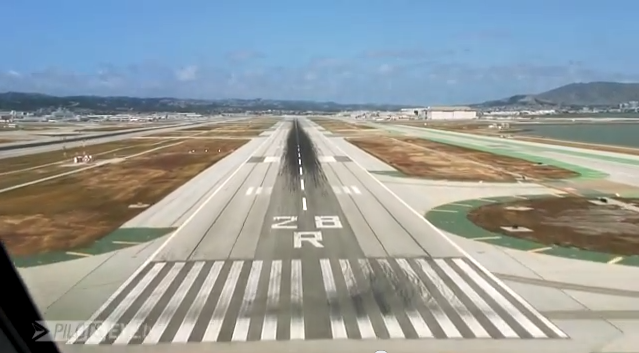
"caption": "(PilotsEYE.tv/YouTube screen capture)",
"description": "(YouTube screen capture)",
"title": "SFO Landing",
"credit": null,
"status": "inherit",
"isLoading": false,
"fetchFailed": false
},
"news_92879": {
"type": "attachments",
"id": "news_92879",
"meta": {
"index": "attachments_1716263798",
"site": "news",
"id": "92879",
"found": true
},
"parent": 92873,
"imgSizes": {
"kqedFullSize": {
"file": "https://ww2.kqed.org/app/uploads/sites/10/2013/03/bay-bridge-bolts.jpg",
"width": 640,
"height": 450
}
},
"publishDate": 1364582741,
"modified": 1364582741,
"caption": "A key problem on the Bay Bridge’s new self-anchored suspension span: Massive steel rods designed to anchor seismic safety devices snapped soon after the nuts were tightened early last year. (Deborah Svoboda/KQED)",
"description": "A key problem on the Bay Bridge’s new self-anchored suspension span: Massive steel rods designed to anchor seismic safety devices snapped soon after the nuts were tightened early last year. (Deborah Svoboda/KQED)",
"title": "Bay Bridge Bolts",
"credit": null,
"status": "inherit",
"isLoading": false,
"fetchFailed": false
},
"news_120270": {
"type": "attachments",
"id": "news_120270",
"meta": {
"index": "attachments_1716263798",
"site": "news",
"id": "120270",
"found": true
},
"parent": 120264,
"imgSizes": {
"kqedFullSize": {
"file": "https://ww2.kqed.org/app/uploads/sites/10/2013/12/11293201603_070575a91a_o-e1386615496451.jpg",
"width": 640,
"height": 416
}
},
"publishDate": 1386615439,
"modified": 1386615439,
"caption": "In a December protest, activists surround a Google bus at 24th and Valencia streets Monday in protest aimed at evictions and displacement in San Francisco's Mission District. (Steve Rhodes via Flickr)",
"description": "In a December protest, activists surround a Google bus at 24th and Valencia streets Monday in protest aimed at evictions and displacement in San Francisco's Mission District. (Steve Rhodes via Flickr)",
"title": "Google Bus",
"credit": null,
"status": "inherit",
"isLoading": false,
"fetchFailed": false
},
"news_105244": {
"type": "attachments",
"id": "news_105244",
"meta": {
"index": "attachments_1716263798",
"site": "news",
"id": "105244",
"found": true
},
"parent": 105242,
"imgSizes": {
"kqedFullSize": {
"file": "https://ww2.kqed.org/app/uploads/sites/10/2013/07/lyftstache.png",
"width": 640,
"height": 646
}
},
"publishDate": 1375314164,
"modified": 1375314164,
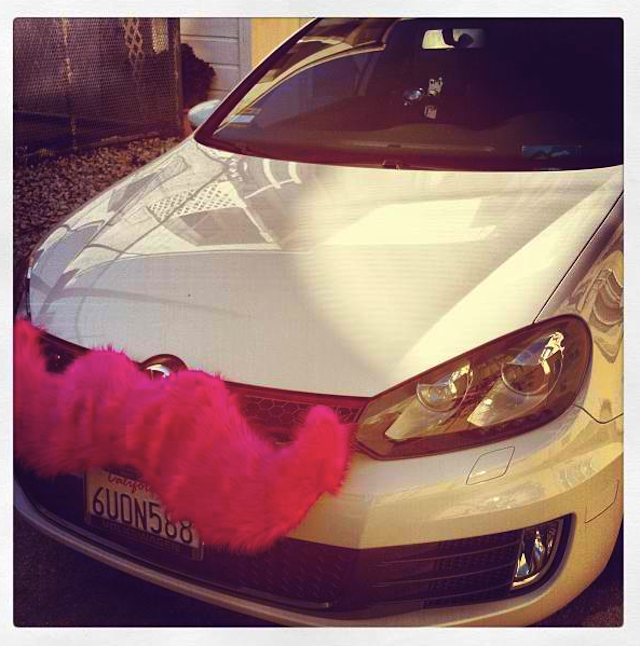
"caption": "A car for the ride-share company Lyft. (Photo courtesy of Lyft).",
"description": "Ride-share company Lyft is the subject of a class action complaint. (Photo courtesy of Lyft).",
"title": "lyftstache",
"credit": null,
"status": "inherit",
"isLoading": false,
"fetchFailed": false
},
"news_10410685": {
"type": "attachments",
"id": "news_10410685",
"meta": {
"index": "attachments_1716263798",
"site": "news",
"id": "10410685",
"found": true
},
"parent": 123914,
"imgSizes": {
"twentyfourteen-full-width": {
"file": "https://ww2.kqed.org/app/uploads/sites/10/2014/01/parking-1038x576.jpg",
"width": 1038,
"mimeType": "image/jpeg",
"height": 576
},
"thumbnail": {
"file": "https://ww2.kqed.org/app/uploads/sites/10/2014/01/parking-400x266.jpg",
"width": 400,
"mimeType": "image/jpeg",
"height": 266
},
"post-thumbnail": {
"file": "https://ww2.kqed.org/app/uploads/sites/10/2014/01/parking-672x372.jpg",
"width": 672,
"mimeType": "image/jpeg",
"height": 372
},
"kqedFullSize": {
"file": "https://ww2.kqed.org/app/uploads/sites/10/2014/01/parking-e1421692177386.jpg",
"width": 1440,
"height": 960
},
"large": {
"file": "https://ww2.kqed.org/app/uploads/sites/10/2014/01/parking-1440x959.jpg",
"width": 1440,
"mimeType": "image/jpeg",
"height": 959
},
"guest-author-96": {
"file": "https://ww2.kqed.org/app/uploads/sites/10/2014/01/parking-96x96.jpg",
"width": 96,
"mimeType": "image/jpeg",
"height": 96
},
"medium": {
"file": "https://ww2.kqed.org/app/uploads/sites/10/2014/01/parking-800x533.jpg",
"width": 800,
"mimeType": "image/jpeg",
"height": 533
},
"guest-author-64": {
"file": "https://ww2.kqed.org/app/uploads/sites/10/2014/01/parking-64x64.jpg",
"width": 64,
"mimeType": "image/jpeg",
"height": 64
},
"detail": {
"file": "https://ww2.kqed.org/app/uploads/sites/10/2014/01/parking-75x75.jpg",
"width": 75,
"mimeType": "image/jpeg",
"height": 75
},
"guest-author-32": {
"file": "https://ww2.kqed.org/app/uploads/sites/10/2014/01/parking-32x32.jpg",
"width": 32,
"mimeType": "image/jpeg",
"height": 32
},
"guest-author-128": {
"file": "https://ww2.kqed.org/app/uploads/sites/10/2014/01/parking-128x128.jpg",
"width": 128,
"mimeType": "image/jpeg",
"height": 128
}
},
"publishDate": 1421692145,
"modified": 1424104118,
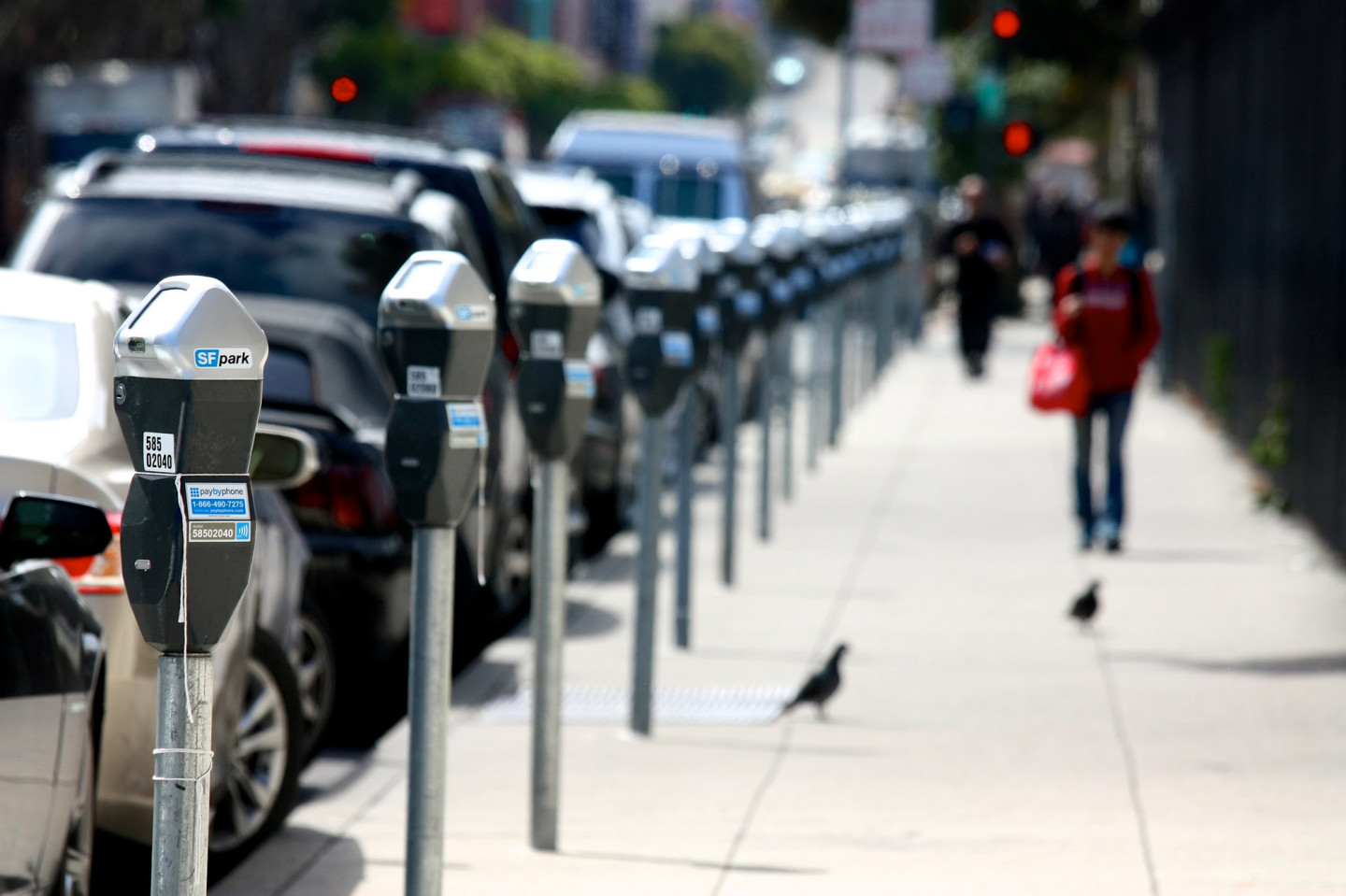
"caption": "FILE PHOTO: Parking meters in San Francisco.",
"description": "Parking meters in San Francisco.",
"title": "parking",
"credit": "Panchenks/Flickr",
"status": "inherit",
"isLoading": false,
"fetchFailed": false
},
"news_122490": {
"type": "attachments",
"id": "news_122490",
"meta": {
"index": "attachments_1716263798",
"site": "news",
"id": "122490",
"found": true
},
"parent": 122446,
"imgSizes": {
"kqedFullSize": {
"file": "https://ww2.kqed.org/app/uploads/sites/10/2014/01/pedestrian1-e1388695607211.jpg",
"width": 640,
"height": 427
}
},
"publishDate": 1388695573,
"modified": 1388695573,
"caption": "A memorial at the intersection of Polk and Ellis streets in San Francisco, where a 6-year-old girl was struck by a car and killed on New Year's Eve. (Sara Bloomberg/KQED)",
"description": "A memorial at the intersection of Polk and Ellis streets in San Francisco, where a 6-year-old girl was struck by a car and killed on New Year's Eve. (Sara Bloomberg/KQED)",
"title": "pedestrian",
"credit": null,
"status": "inherit",
"isLoading": false,
"fetchFailed": false
},
"news_123385": {
"type": "attachments",
"id": "news_123385",
"meta": {
"index": "attachments_1716263798",
"site": "news",
"id": "123385",
"found": true
},
"parent": 123382,
"imgSizes": {
"kqedFullSize": {
"file": "https://ww2.kqed.org/app/uploads/sites/10/2014/01/153056965.jpg",
"width": 1538,
"height": 1022
}
},
"publishDate": 1389741358,
"modified": 1389741358,
"caption": "Construction crews on I-405 in Los Angeles in September 2012 during the second of two \"Carmageddon\" closures designed to facilitate work on the freeway. (Getty Images/Kevork Djansezian)",
"description": "Construction crews on I-405 in Los Angeles in September 2012 during the second of two \"Carmageddon\" closures designed to facilitate work on the freeway. (Getty Images/Kevork Djansezian)",
"title": "153056965",
"credit": null,
"status": "inherit",
"isLoading": false,
"fetchFailed": false
},
"news_123251": {
"type": "attachments",
"id": "news_123251",
"meta": {
"index": "attachments_1716263798",
"site": "news",
"id": "123251",
"found": true
},
"parent": 123178,
"imgSizes": {
"kqedFullSize": {
"file": "https://ww2.kqed.org/app/uploads/sites/10/2014/01/RS5446_asianasfocrash20130706-lpr.jpg",
"width": 1568,
"height": 1004
}
},
"publishDate": 1389403467,
"modified": 1389403467,
"caption": "Fire trucks surround an Asiana Airlines Boeing 777 on the runway at San Francisco International Airport after it crash landed on July 6, 2013. (Josh Edelson/AFP/Getty Images)",
"description": null,
"title": "RS5446_asianasfocrash20130706-lpr",
"credit": null,
"status": "inherit",
"isLoading": false,
"fetchFailed": false
},
"news_122545": {
"type": "attachments",
"id": "news_122545",
"meta": {
"index": "attachments_1716263798",
"site": "news",
"id": "122545",
"found": true
},
"parent": 122538,
"imgSizes": {
"kqedFullSize": {
"file": "https://ww2.kqed.org/app/uploads/sites/10/2014/01/ped-memorial2.jpg",
"width": 1279,
"height": 900
}
},
"publishDate": 1388705218,
"modified": 1420069844,
"caption": "A memorial at the intersection of Polk and Ellis streets in San Francisco, where a 6-year-old girl was struck by a car and killed on New Year’s Eve. (Sara Bloomberg/KQED)",
"description": "A memorial at the intersection of Polk and Ellis streets in San Francisco, where a 6-year-old girl was struck by a car and killed on New Year’s Eve. (Sara Bloomberg/KQED)",
"title": "Uber Collision-Sofia Liu",
"credit": null,
"status": "inherit",
"isLoading": false,
"fetchFailed": false
},
"news_122931": {
"type": "attachments",
"id": "news_122931",
"meta": {
"index": "attachments_1716263798",
"site": "news",
"id": "122931",
"found": true
},
"parent": 122930,
"imgSizes": {
"kqedFullSize": {
"file": "https://ww2.kqed.org/app/uploads/sites/10/2014/01/Triumphant-Port_running2_x1.jpg",
"width": 650,
"height": 331
}
},
"publishDate": 1389198815,
"modified": 1389198815,
"caption": "The Triumphant, a catamaran that's being used as part of a monthlong Google ferry experiment. (Photo: All-American Marine)",
"description": "The Triumphant, a catamaran that's being used as part of a monthlong Google ferry experiment. (Photo: All-American Marine)",
"title": "Google Ferry-M.V. Triumphant",
"credit": null,
"status": "inherit",
"isLoading": false,
"fetchFailed": false
},
"news_120267": {
"type": "attachments",
"id": "news_120267",
"meta": {
"index": "attachments_1716263798",
"site": "news",
"id": "120267",
"found": true
},
"parent": 120264,
"imgSizes": {
"kqedFullSize": {
"file": "https://ww2.kqed.org/app/uploads/sites/10/2013/12/RS5753_TechBuses20130722-scr-e1386614790147.jpg",
"width": 640,
"height": 360
}
},
"publishDate": 1386614527,
"modified": 1386614527,
"caption": "A Google bus plying the streets of the Mission. (David Marks/KQED)",
"description": null,
"title": "Google Bus",
"credit": null,
"status": "inherit",
"isLoading": false,
"fetchFailed": false
}
},
"audioPlayerReducer": {
"postId": "stream_live",
"isPaused": true,
"isPlaying": false,
"pfsActive": false,
"pledgeModalIsOpen": true,
"playerDrawerIsOpen": false,
"liveAudioPlayStartedAt": 0,
"liveAudioPlayContext": ""
},
"authorsReducer": {
"jbrooks": {
"type": "authors",
"id": "80",
"meta": {
"index": "authors_1716337520",
"id": "80",
"found": true
},
"name": "Jon Brooks",
"firstName": "Jon",
"lastName": "Brooks",
"slug": "jbrooks",
"email": "jbrooks@kqed.org",
"display_author_email": true,
"staff_mastheads": [
"science"
],
"title": "Digital Editor",
"bio": "Jon Brooks is a former Digital Editor for KQED Science. He is the former editor of KQED’s daily news blog, News Fix. In 2014, he won a California Journalism Award for his coverage of ride services like Uber and Lyft and the taxi industry. A veteran blogger, he previously worked for Yahoo! in various news writing and editing roles. Jon is also a playwright whose work has been produced in San Francisco, New York, Italy, and around the U.S. He has written about film for his own blog and studied film at Boston University.",
"avatar": "https://secure.gravatar.com/avatar/98887f7ed1c876ed414d4c915e969584?s=600&d=blank&r=g",
"twitter": "jbrooksfoy",
"facebook": null,
"instagram": null,
"linkedin": null,
"sites": [
{
"site": "arts",
"roles": [
"Contributor",
"editor"
]
},
{
"site": "news",
"roles": [
"author"
]
},
{
"site": "futureofyou",
"roles": [
"administrator"
]
},
{
"site": "mindshift",
"roles": [
"editor"
]
},
{
"site": "stateofhealth",
"roles": [
"editor"
]
},
{
"site": "science",
"roles": [
"administrator"
]
},
{
"site": "quest",
"roles": [
"editor"
]
}
],
"headData": {
"title": "Jon Brooks | KQED",
"description": "Digital Editor",
"ogImgSrc": "https://secure.gravatar.com/avatar/98887f7ed1c876ed414d4c915e969584?s=600&d=blank&r=g",
"twImgSrc": "https://secure.gravatar.com/avatar/98887f7ed1c876ed414d4c915e969584?s=600&d=blank&r=g"
},
"isLoading": false,
"link": "/author/jbrooks"
},
"bgoebel": {
"type": "authors",
"id": "214",
"meta": {
"index": "authors_1716337520",
"id": "214",
"found": true
},
"name": "Bryan Goebel",
"firstName": "Bryan",
"lastName": "Goebel",
"slug": "bgoebel",
"email": "bgoebel@kqed.org",
"display_author_email": false,
"staff_mastheads": [],
"title": null,
"bio": "Bryan Goebel is a reporter focused on transportation and housing issues. He was previously the editor of Streetsblog San Francisco, and an anchor/editor at KCBS Radio. He's a lifelong Californian and has also worked at radio stations in Barstow, Redding and Sacramento.",
"avatar": "https://secure.gravatar.com/avatar/7fdd6b065bfe9a23a71bcfa80848df88?s=600&d=blank&r=g",
"twitter": "velobry",
"facebook": null,
"instagram": null,
"linkedin": null,
"sites": [
{
"site": "news",
"roles": [
"subscriber"
]
},
{
"site": "stateofhealth",
"roles": [
"subscriber"
]
}
],
"headData": {
"title": "Bryan Goebel | KQED",
"description": null,
"ogImgSrc": "https://secure.gravatar.com/avatar/7fdd6b065bfe9a23a71bcfa80848df88?s=600&d=blank&r=g",
"twImgSrc": "https://secure.gravatar.com/avatar/7fdd6b065bfe9a23a71bcfa80848df88?s=600&d=blank&r=g"
},
"isLoading": false,
"link": "/author/bgoebel"
},
"danbrekke": {
"type": "authors",
"id": "222",
"meta": {
"index": "authors_1716337520",
"id": "222",
"found": true
},
"name": "Dan Brekke",
"firstName": "Dan",
"lastName": "Brekke",
"slug": "danbrekke",
"email": "dbrekke@kqed.org",
"display_author_email": true,
"staff_mastheads": [
"news",
"science"
],
"title": "KQED Editor and Reporter",
"bio": "Dan Brekke is a reporter and editor for KQED News, responsible for coverage of topics ranging from California water issues to the Bay Area's transportation challenges. In a newsroom career that began in Chicago in 1972, Dan has worked for \u003cem>The San Francisco Examiner,\u003c/em> Wired and TechTV and has been published in The New York Times, The New York Times Magazine, Business 2.0, Salon and elsewhere.\r\n\r\nSince joining KQED in 2007, Dan has reported, edited and produced both radio and online features and breaking news pieces. He has shared as both editor and reporter in four Society of Professional Journalists Norcal Excellence in Journalism awards and one Edward R. Murrow regional award. He was chosen for a spring 2017 residency at the Mesa Refuge to advance his research on California salmon.\r\n\r\nEmail Dan at: \u003ca href=\"mailto:dbrekke@kqed.org\">dbrekke@kqed.org\u003c/a>\r\n\r\n\u003cstrong>Twitter:\u003c/strong> \u003ca href=\"https://twitter.com/danbrekke\" rel=\"noopener noreferrer\">twitter.com/danbrekke\u003c/a>\r\n\u003cstrong>Facebook:\u003c/strong> \u003ca href=\"https://www.facebook.com/danbrekke\" rel=\"noopener noreferrer\">www.facebook.com/danbrekke\u003c/a>\r\n\u003cstrong>LinkedIn:\u003c/strong> \u003ca href=\"https://www.linkedin.com/in/danbrekke\" rel=\"noopener noreferrer\">www.linkedin.com/in/danbrekke\u003c/a>",
"avatar": "https://secure.gravatar.com/avatar/8f1f0d2a978fb3b23426c922c7e2af558fa36905b49c4ce76a97dc3c72d27226?s=600&d=mm&r=g",
"twitter": "danbrekke",
"bluesky": null,
"facebook": null,
"instagram": "https://www.instagram.com/dan.brekke/",
"linkedin": "https://www.linkedin.com/in/danbrekke/",
"sites": [
{
"site": "news",
"roles": [
"administrator",
"create_posts"
]
},
{
"site": "stateofhealth",
"roles": [
"editor"
]
},
{
"site": "science",
"roles": [
"editor"
]
},
{
"site": "quest",
"roles": [
"contributor"
]
},
{
"site": "food",
"roles": [
"contributor"
]
},
{
"site": "forum",
"roles": [
"contributor"
]
},
{
"site": "elections",
"roles": [
"editor"
]
},
{
"site": "liveblog",
"roles": [
"editor"
]
}
],
"headData": {
"title": "Dan Brekke | KQED",
"description": "KQED Editor and Reporter",
"ogImgSrc": "https://secure.gravatar.com/avatar/8f1f0d2a978fb3b23426c922c7e2af558fa36905b49c4ce76a97dc3c72d27226?s=600&d=mm&r=g",
"twImgSrc": "https://secure.gravatar.com/avatar/8f1f0d2a978fb3b23426c922c7e2af558fa36905b49c4ce76a97dc3c72d27226?s=600&d=mm&r=g"
},
"isLoading": false,
"link": "/author/danbrekke"
},
"kqed": {
"type": "authors",
"id": "236",
"meta": {
"index": "authors_1716337520",
"id": "236",
"found": true
},
"name": "KQED News Staff",
"firstName": "KQED News Staff",
"lastName": null,
"slug": "kqed",
"email": "faq@kqed.org",
"display_author_email": false,
"staff_mastheads": [],
"title": null,
"bio": null,
"avatar": "https://secure.gravatar.com/avatar/ef0e801a68c4c54afa9180db14084167?s=600&d=blank&r=g",
"twitter": null,
"facebook": null,
"instagram": null,
"linkedin": null,
"sites": [
{
"site": "arts",
"roles": [
"contributor"
]
},
{
"site": "news",
"roles": [
"editor"
]
},
{
"site": "futureofyou",
"roles": [
"author"
]
}
],
"headData": {
"title": "KQED News Staff | KQED",
"description": null,
"ogImgSrc": "https://secure.gravatar.com/avatar/ef0e801a68c4c54afa9180db14084167?s=600&d=blank&r=g",
"twImgSrc": "https://secure.gravatar.com/avatar/ef0e801a68c4c54afa9180db14084167?s=600&d=blank&r=g"
},
"isLoading": false,
"link": "/author/kqed"
}
},
"pagesReducer": {
"news_category_transportation": {
"type": "terms",
"id": "news_1397",
"meta": {
"index": "terms_1716263798",
"site": "news",
"id": "1397",
"score": 12.940155
},
"featImg": null,
"name": "Transportation",
"description": null,
"taxonomy": "category",
"headData": {
"twImgId": null,
"twTitle": null,
"ogTitle": null,
"ogImgId": null,
"twDescription": null,
"description": null,
"title": "Transportation Archives | KQED News",
"ogDescription": null
},
"ttid": 1409,
"slug": "transportation",
"isLoading": false,
"title": "Transportation",
"pageMeta": {
"site": "news",
"WpPageTemplate": "page-topic-editorial",
"currentPage": 122
},
"blocks": [
{
"blockName": "kqed/post-list",
"attrs": {
"layout": "cardArticle2",
"query": "posts/news?category=transportation",
"seeMore": false,
"paginated": true,
"page": 122
}
},
{
"blockName": "kqed/ad"
}
]
}
},
"pfsSessionReducer": {},
"postsReducer": {
"stream_live": {
"type": "live",
"id": "stream_live",
"audioUrl": "https://streams.kqed.org/kqedradio",
"title": "Live Stream",
"excerpt": "Live Stream information currently unavailable.",
"link": "/radio",
"featImg": "",
"label": {
"name": "KQED Live",
"link": "/"
}
},
"stream_kqedNewscast": {
"type": "posts",
"id": "stream_kqedNewscast",
"audioUrl": "https://www.kqed.org/.stream/anon/radio/RDnews/newscast.mp3?_=1",
"title": "KQED Newscast",
"featImg": "",
"label": {
"name": "88.5 FM",
"link": "/"
}
},
"news_124517": {
"type": "posts",
"id": "news_124517",
"meta": {
"index": "posts_1716263798",
"site": "news",
"id": "124517",
"score": null,
"sort": [
1390921209000
]
},
"parent": 0,
"labelTerm": {
"site": "news",
"term": 6944
},
"blocks": [],
"publishDate": 1390921209,
"format": "aside",
"disqusTitle": "Excellent Aviation Video: A Lufthansa A380 Lands at SFO",
"title": "Excellent Aviation Video: A Lufthansa A380 Lands at SFO",
"headTitle": "News Fix | KQED News",
"content": "\u003cdiv class=\"single-video\">\u003ciframe src=\"//www.youtube.com/embed/ENe89j89tBA\" frameborder=\"0\" width=\"640\" height=\"360\">\u003c/iframe>\u003c/div>\n\u003cp>Colleague Craig Miller, editor with \u003ca href=\"http://blogs.kqed.org/science/\" target=\"_blank\">KQED's Science\u003c/a> unit and something of an aviation geek, alerted us to the video above. It features a Lufthansa crew landing an A380 — make that a Giant Super Jumbo Airbus A380, the Biggest Jet in the World — at San Francisco International Airport.\u003c/p>\n\u003cp>It's not news, really: It was apparently posted last July \u003ca href=\"http://www.youtube.com/user/PilotsEye?feature=watch\" target=\"_blank\">on PilotsEYE.tv's YouTube channel\u003c/a>. And it's not even the first video of an A380 landing at SFO (see below, \u003ca href=\"http://youtu.be/Lkx4BcCfkmI\" target=\"_blank\">a nice passenger's seat video\u003c/a> apparently posted in 2012).\u003c/p>\n\u003cp>But it \u003cem>is\u003c/em> cool. I especially like the pilot's calling out local landmarks to his passengers: \u003cem>\"Auf die linken Seite jetzt, Alcatraz, die Golden Gate und downtown San Francisco. ...\"\u003c/em>\u003c/p>\n\u003cp>The video is also full of Bay Area aerial beauty shots.\u003c/p>\n\u003cdiv class=\"single-video\">\u003ciframe src=\"//www.youtube.com/embed/Lkx4BcCfkmI\" frameborder=\"0\" width=\"560\" height=\"315\">\u003c/iframe>\u003c/div>\n\u003cp>[ad fullwidth]\u003c/p>\u003cp>\u003c/p>\n",
"disqusIdentifier": "124517 http://ww2.kqed.org/news/?p=124517",
"disqusUrl": "https://ww2.kqed.org/news/2014/01/28/excellent-aviation-video-a-lufthansa-a380-lands-at-sfo/",
"stats": {
"hasVideo": true,
"hasChartOrMap": false,
"hasAudio": false,
"hasPolis": false,
"wordCount": 137,
"hasGoogleForm": false,
"hasGallery": false,
"hasHearkenModule": false,
"iframeSrcs": [],
"paragraphCount": 6
},
"modified": 1390861828,
"excerpt": "The world's largest commercial aircraft on approach to SFO, complete with a litany of local landmarks. ",
"headData": {
"twImgId": "",
"twTitle": "",
"ogTitle": "",
"ogImgId": "",
"twDescription": "",
"description": "The world's largest commercial aircraft on approach to SFO, complete with a litany of local landmarks. ",
"title": "Excellent Aviation Video: A Lufthansa A380 Lands at SFO | KQED",
"ogDescription": "",
"schema": {
"@context": "https://schema.org",
"@type": "NewsArticle",
"headline": "Excellent Aviation Video: A Lufthansa A380 Lands at SFO",
"datePublished": "2014-01-28T07:00:09-08:00",
"dateModified": "2014-01-27T14:30:28-08:00",
"image": "https://cdn.kqed.org/wp-content/uploads/2020/02/KQED-OG-Image@1x.png",
"isAccessibleForFree": "True",
"publisher": {
"@type": "NewsMediaOrganization",
"@id": "https://www.kqed.org/#organization",
"name": "KQED",
"logo": "https://cdn.kqed.org/wp-content/uploads/2020/02/KQED-OG-Image@1x.png",
"url": "https://www.kqed.org",
"sameAs": [
"https://www.facebook.com/KQED",
"https://twitter.com/KQED",
"https://www.instagram.com/kqed/",
"https://www.tiktok.com/@kqedofficial",
"https://www.linkedin.com/company/kqed",
"https://www.youtube.com/channel/UCeC0IOo7i1P_61zVUWbJ4nw"
]
}
}
},
"guestAuthors": [],
"slug": "excellent-aviation-video-a-lufthansa-a380-lands-at-sfo",
"status": "publish",
"customPermalink": "2014/01/27/lufthansa-a380-lands-at-sfo-video/",
"path": "/news/124517/excellent-aviation-video-a-lufthansa-a380-lands-at-sfo",
"audioTrackLength": null,
"parsedContent": [
{
"type": "contentString",
"content": "\u003cdiv class=\"post-body\">\u003cp>\u003cdiv class=\"single-video\">\u003ciframe src=\"//www.youtube.com/embed/ENe89j89tBA\" frameborder=\"0\" width=\"640\" height=\"360\">\u003c/iframe>\u003c/div>\n\u003cp>Colleague Craig Miller, editor with \u003ca href=\"http://blogs.kqed.org/science/\" target=\"_blank\">KQED's Science\u003c/a> unit and something of an aviation geek, alerted us to the video above. It features a Lufthansa crew landing an A380 — make that a Giant Super Jumbo Airbus A380, the Biggest Jet in the World — at San Francisco International Airport.\u003c/p>\n\u003cp>It's not news, really: It was apparently posted last July \u003ca href=\"http://www.youtube.com/user/PilotsEye?feature=watch\" target=\"_blank\">on PilotsEYE.tv's YouTube channel\u003c/a>. And it's not even the first video of an A380 landing at SFO (see below, \u003ca href=\"http://youtu.be/Lkx4BcCfkmI\" target=\"_blank\">a nice passenger's seat video\u003c/a> apparently posted in 2012).\u003c/p>\n\u003cp>But it \u003cem>is\u003c/em> cool. I especially like the pilot's calling out local landmarks to his passengers: \u003cem>\"Auf die linken Seite jetzt, Alcatraz, die Golden Gate und downtown San Francisco. ...\"\u003c/em>\u003c/p>\n\u003cp>The video is also full of Bay Area aerial beauty shots.\u003c/p>\n\u003cdiv class=\"single-video\">\u003ciframe src=\"//www.youtube.com/embed/Lkx4BcCfkmI\" frameborder=\"0\" width=\"560\" height=\"315\">\u003c/iframe>\u003c/div>\n\u003cp>\u003c/p>\u003c/div>",
"attributes": {
"named": {},
"numeric": []
}
},
{
"type": "component",
"content": "",
"name": "ad",
"attributes": {
"named": {
"label": "fullwidth"
},
"numeric": [
"fullwidth"
]
}
},
{
"type": "contentString",
"content": "\u003cdiv class=\"post-body\">\u003cp>\u003c/p>\u003cp>\u003c/p>\n\u003c/div>\u003c/p>",
"attributes": {
"named": {},
"numeric": []
}
}
],
"link": "/news/124517/excellent-aviation-video-a-lufthansa-a380-lands-at-sfo",
"authors": [
"222"
],
"programs": [
"news_6944"
],
"categories": [
"news_8",
"news_1397"
],
"tags": [
"news_5593",
"news_5595",
"news_5594",
"news_5591",
"news_451"
],
"featImg": "news_124522",
"label": "news_6944"
},
"news_124267": {
"type": "posts",
"id": "news_124267",
"meta": {
"index": "posts_1716263798",
"site": "news",
"id": "124267",
"score": null,
"sort": [
1390510647000
]
},
"parent": 0,
"labelTerm": {
"site": "news",
"term": 6944
},
"blocks": [],
"publishDate": 1390510647,
"format": "aside",
"disqusTitle": "Report Blasts Caltrans for Handling of Bay Bridge Construction Problems ",
"title": "Report Blasts Caltrans for Handling of Bay Bridge Construction Problems ",
"headTitle": "News Fix | KQED News",
"content": "\u003cfigure id=\"attachment_92879\" class=\"wp-caption aligncenter\" style=\"max-width: 640px\">\u003ca href=\"http://ww2.kqed.org/news/wp-content/uploads/sites/10/2013/03/bay-bridge-bolts.jpg\">\u003cimg class=\"size-full wp-image-92879\" src=\"http://ww2.kqed.org/news/wp-content/uploads/sites/10/2013/03/bay-bridge-bolts.jpg\" alt=\"A key problem on the Bay Bridge’s new self-anchored suspension span: Massive steel rods designed to anchor seismic safety devices snapped soon after the nuts were tightened early last year. (Deborah Svoboda/KQED)\" width=\"640\" height=\"450\">\u003c/a>\u003cfigcaption class=\"wp-caption-text\">A key problem on the Bay Bridge’s new self-anchored suspension span: Massive steel rods designed to anchor seismic safety devices snapped soon after the nuts were tightened early last year. (Deborah Svoboda/KQED)\u003c/figcaption>\u003c/figure>\n\u003cp>A report commissioned by a state Senate committee contains a litany of criticisms of Caltrans for its handling of construction problems on the new eastern span of the Bay Bridge.\u003c/p>\n\u003cp>The report was put together in preparation for \u003ca href=\"http://stran.senate.ca.gov/agenda\" target=\"_blank\">an investigatory hearing Friday\u003c/a> by the Senate Committee on Transportation and Housing. The panel, chaired by Concord Democrat Mark DeSaulnier, is in the midst of a review of infrastructure \"megaprojects.\" That inquiry was prompted by delays and cost overruns in building the new Bay Bridge span, a project that had an original price tag of about $1.4 billion but which ultimately took nearly $6.5 billion to complete.\u003c/p>\n\u003cp>The report, titled \"\u003ca href=\"http://stran.senate.ca.gov/sites/stran.senate.ca.gov/files/DeWolkreportfinal.pdf\" target=\"_blank\">The San Francisco-Oakland Bay Bridge: Basic Reforms for the Future\u003c/a>,\" blasts Caltrans for lack of accountability for problems with the project and \"chronic attempts to keep many of the serious safety allegations quiet.\" (The complete 39-page report is embedded at the end of this post.)\u003c/p>\n\u003caside class=\"pullquote alignleft\">'This inquiry has come to the inevitable conclusion that there are legitimate concerns that this appears to be part of an institutionalized ... lack of transparency in the project.'\u003c/aside>\n\u003cp>\"This inquiry has come to the inevitable conclusion that there are legitimate concerns that this appears to be part of an institutionalized, if not malicious, lack of transparency in the project,\" the report says. The document was prepared by veteran Bay Area journalist Roland De Wolk.\u003c/p>\n\u003cp>Caltrans, which by now has been dealing with years of bad press over the bridge project, says it's studying the report and will respond during the Senate committee hearing Friday.\u003c/p>\n\u003cp>[ad fullwidth]\u003c/p>\n\u003cp>The report has gotten widespread media attention. A couple sample leads:\u003c/p>\n\u003cp>\u003cstrong>Lisa Vorderbrueggen\u003c/strong>, Contra Costa Times: \u003ca href=\"http://www.contracostatimes.com/news/ci_24970599/bay-bridge-construction-managers-systematically-shut-down-safety\" target=\"_blank\">Bay Bridge construction managers systematically shut down safety critics, investigation concludes\u003c/a>\u003c/p>\n\u003cblockquote>\u003cp>Caltrans systematically squelched serious allegations about the structural safety of the new eastern span of the Bay Bridge, concluded an investigation commissioned by the state Senate Transportation Committee.\u003c/p>\n\u003cp>Caltrans managers marginalized dissenters, fired critics, reassigned outspoken engineers and urged those involved to avoid putting details of problems or issues in writing that would have to be disclosed under the state's Public Records Act, the report concluded.\u003c/p>\u003c/blockquote>\n\u003cp>\u003cstrong>Jaxon Van Derbeken\u003c/strong>, San Francisco Chronicle: \u003ca href=\"http://www.sfgate.com/default/article/Caltrans-accused-of-trying-to-hide-Bay-Bridge-5166927.php\" target=\"_blank\">Caltrans accused of trying to hide Bay Bridge problems\u003c/a>\u003c/p>\n\u003cblockquote>\u003cp>A Caltrans engineer and an outside expert working on the Bay Bridge eastern span accused agency officials of discounting warnings about cracked welds on the bridge, and telling them not to put their concerns in writing to keep them from becoming public, according to a report commissioned for a state Senate committee.\u003c/p>\n\u003cp>An official overseeing the long-delayed, $6.4 billion project told a Caltrans engineer who had examined the Chinese-made welds \"not to record his concerns in writing, either on paper or e-mail, but rather to communicate orally,\" said the report for the Senate Transportation and Housing Committee, which was released Wednesday. A quality-control consultant said Caltrans supervisors \"did not want a record that would be legally available through the California Public Records Act,\" the report said.\u003c/p>\u003c/blockquote>\n\u003cp>And \u003cstrong>Charles Piller\u003c/strong> of the Sacramento Bee \u003ca href=\"http://www.sacbee.com/2014/01/22/6093564/senate-report-caltrans-ignored.html\" target=\"_blank\">runs down the report's key disclosures\u003c/a>:\u003c/p>\n\u003cul>\n\u003cul>\n\u003cli>Quality control managers found thousands of cracks in welds produced by a Chinese contractor for the span’s signature tower and roadway. Rather than ordering all needed fixes, top California Department of Transportation managers replaced those who discovered the problems.\u003c/li>\n\u003cli>Millions of dollars were paid to the same Chinese contractor to speed up work after it fell behind schedule and bridge officials urgently wanted faster results.\u003c/li>\n\u003cli>Bridge officials rejected warnings in 2008 that suspect anchor rods for the suspension span were not adequately tested; some of those rods snapped last year.\u003c/li>\n\u003cli>Officials frequently told contractors and employees not to put concerns about quality into writing – ostensibly to avoid disclosure under the state Public Records Act\u003c/li>\n\u003c/ul>\n\u003c/ul>\n\u003cp>.\u003c/p>\n\u003cp>Here's the latest from the Associated Press on the Bay Bridge report, followed by the report itself:\u003c/p>\n\u003cp>\u003cstrong>\u003ca href=\"https://twitter.com/JHDearen\" target=\"_blank\">Jason Dearen\u003c/a>\u003cbr>\nAssociated Press\u003c/strong>\u003c/p>\n\u003cp>A California Senate report released Wednesday on the construction of the new eastern span of the San Francisco-Oakland Bay Bridge raises questions about the quality of workmanship used to build the $6.3 billion span.\u003c/p>\n\u003cp>The report by the state Senate's Transportation and Housing Committee contains testimony from engineers that question the durability of welds on bridge pieces produced in China and the integrity of large bolts used to hold earthquake-safety equipment in place.\u003c/p>\n\u003cp>Still, both engineers say that despite the defects, they don't believe the bridge to be unsafe, but that parts of it will need expensive retrofitting sooner than they should.\u003c/p>\n\u003cp>The report's investigators found that California Department of Transportation managers dismissed concerns from quality-assurance experts that the Chinese firm Shanghai Zhenhua Heavy Industry Co. Ltd, or ZPMC, hired to do key bridge welds, lacked the experience to meet standards.\u003c/p>\n\u003cp>James Merrill, an engineer who oversaw weld inspections in China, told investigators that his staff found hundreds of weld cracks. He told Caltrans officials they were taking a \"great risk\" in allowing ZPMC to do the work, according to the report.\u003c/p>\n\u003cp>At the time, the contract with ZPMC called for no cracks at all, so Merrill's firm MacTec Engineering rejected the pieces, leading to severe delays.\u003c/p>\n\u003cp>Merrill said Caltrans was concerned about the delays, and that he was told he was being \"too rigorous\" in his inspections.\u003c/p>\n\u003cp>Caltrans failed to renew MacTec's contract after the disagreement over ZPMC's work and hired another firm, Alta Vista Solutions, that turned out not to be qualified for the job, according to the report.\u003c/p>\n\u003cp>Bridge spokesman Andrew Gordon said officials would address the report's findings at a meeting on Friday before the committee.\u003c/p>\n\u003cp>The report also found that Caltrans forced another of its supervising bridge engineers off the job after supervising work on the welds being made in China.\u003c/p>\n\u003cp>\"The Chinese were not catching stuff,\" former Caltrans bridge engineer Douglas Coe, a 25-year department veteran, told the report's authors. \"Why are we finding all these cracks?\"\u003c/p>\n\u003cp>Coe said he felt pressure from bridge managers Tony Anziano and Peter Siegenthaler not to stop work, and that eventually he argued that Caltrans should change the language in the contract — which permitted no cracks in the welds — if managers were going to order them through.\u003c/p>\n\u003cp>Caltrans eventually changed that language.\u003c/p>\n\u003cp>\"This is the first time in my career the engineering wasn't allowed to be done right,\" Coe told investigators. \"I'm mad as hell that the Department (Caltrans) put me in a position to have to say this. ... But if that bridge starts to crack in five years it's all going come out.\"\u003c/p>\n\u003cp>Caltrans' Anziano and Siegenthaler told the investigators that the weld cracks in question were repairable and have been mostly fixed. They maintain that the bridge is safe.\u003c/p>\n\u003cp>\"No one was discouraged in reporting quality assurance,\" Anziano said in the report.\u003c/p>\n\u003cp>The report also faulted Caltrans with allowing a number of giant steel bolts to be installed despite a lack of quality-assurance testing.\u003c/p>\n\u003cp>Instead of rejecting the bolts, Caltrans managers \"resolved the situation by changing the specifications on the bolt fabrication contract and then accepted them 'as is,' \" the report found.\u003c/p>\n\u003cp>Dozens of the bolts ended up snapping after being tightened in March, leading to a $25 million repair job.\u003c/p>\n\u003cp>MacTec's Merrill told investigators that he suggested the bolts undergo more testing.\u003c/p>\n\u003cp>\"I got told we weren't doing any testing and to stop mentioning it,\" Merrill told the panel's investigators. \"I was basically told to stop bringing it up. That was the end of that.\"\u003c/p>\n\u003cp>Caltrans has disputed that it dismissed quality-assurance concerns to get the bolts installed on time.\u003c/p>\n\u003cp>[ad floatright]\u003c/p>\n\u003cp>\u003ciframe id=\"doc_14831\" src=\"//www.scribd.com/embeds/201753200/content?start_page=1&view_mode=scroll&show_recommendations=true\" frameborder=\"0\" scrolling=\"no\" width=\"100%\" height=\"600\">\u003c/iframe>\u003c/p>\n\n",
"disqusIdentifier": "124267 http://ww2.kqed.org/news/?p=124267",
"disqusUrl": "https://ww2.kqed.org/news/2014/01/23/report-blasts-caltrans-for-trying-handling-of-bay-bridge-construction-problems/",
"stats": {
"hasVideo": false,
"hasChartOrMap": false,
"hasAudio": false,
"hasPolis": false,
"wordCount": 1323,
"hasGoogleForm": false,
"hasGallery": false,
"hasHearkenModule": false,
"iframeSrcs": [],
"paragraphCount": 41
},
"modified": 1390849951,
"excerpt": "Study describes agency's 'institutionalized lack of transparency' in responding to the project's flaws",
"headData": {
"twImgId": "",
"twTitle": "",
"ogTitle": "",
"ogImgId": "",
"twDescription": "",
"description": "Study describes agency's 'institutionalized lack of transparency' in responding to the project's flaws",
"title": "Report Blasts Caltrans for Handling of Bay Bridge Construction Problems | KQED",
"ogDescription": "",
"schema": {
"@context": "https://schema.org",
"@type": "NewsArticle",
"headline": "Report Blasts Caltrans for Handling of Bay Bridge Construction Problems ",
"datePublished": "2014-01-23T12:57:27-08:00",
"dateModified": "2014-01-27T11:12:31-08:00",
"image": "https://cdn.kqed.org/wp-content/uploads/2020/02/KQED-OG-Image@1x.png",
"isAccessibleForFree": "True",
"publisher": {
"@type": "NewsMediaOrganization",
"@id": "https://www.kqed.org/#organization",
"name": "KQED",
"logo": "https://cdn.kqed.org/wp-content/uploads/2020/02/KQED-OG-Image@1x.png",
"url": "https://www.kqed.org",
"sameAs": [
"https://www.facebook.com/KQED",
"https://twitter.com/KQED",
"https://www.instagram.com/kqed/",
"https://www.tiktok.com/@kqedofficial",
"https://www.linkedin.com/company/kqed",
"https://www.youtube.com/channel/UCeC0IOo7i1P_61zVUWbJ4nw"
]
}
}
},
"guestAuthors": [],
"slug": "report-blasts-caltrans-for-trying-handling-of-bay-bridge-construction-problems",
"status": "publish",
"customPermalink": "2014/01/23/state-senate-report-on-bay-bridge-construction/",
"path": "/news/124267/report-blasts-caltrans-for-trying-handling-of-bay-bridge-construction-problems",
"audioTrackLength": null,
"parsedContent": [
{
"type": "contentString",
"content": "\u003cdiv class=\"post-body\">\u003cp>\u003cfigure id=\"attachment_92879\" class=\"wp-caption aligncenter\" style=\"max-width: 640px\">\u003ca href=\"http://ww2.kqed.org/news/wp-content/uploads/sites/10/2013/03/bay-bridge-bolts.jpg\">\u003cimg class=\"size-full wp-image-92879\" src=\"http://ww2.kqed.org/news/wp-content/uploads/sites/10/2013/03/bay-bridge-bolts.jpg\" alt=\"A key problem on the Bay Bridge’s new self-anchored suspension span: Massive steel rods designed to anchor seismic safety devices snapped soon after the nuts were tightened early last year. (Deborah Svoboda/KQED)\" width=\"640\" height=\"450\">\u003c/a>\u003cfigcaption class=\"wp-caption-text\">A key problem on the Bay Bridge’s new self-anchored suspension span: Massive steel rods designed to anchor seismic safety devices snapped soon after the nuts were tightened early last year. (Deborah Svoboda/KQED)\u003c/figcaption>\u003c/figure>\n\u003cp>A report commissioned by a state Senate committee contains a litany of criticisms of Caltrans for its handling of construction problems on the new eastern span of the Bay Bridge.\u003c/p>\n\u003cp>The report was put together in preparation for \u003ca href=\"http://stran.senate.ca.gov/agenda\" target=\"_blank\">an investigatory hearing Friday\u003c/a> by the Senate Committee on Transportation and Housing. The panel, chaired by Concord Democrat Mark DeSaulnier, is in the midst of a review of infrastructure \"megaprojects.\" That inquiry was prompted by delays and cost overruns in building the new Bay Bridge span, a project that had an original price tag of about $1.4 billion but which ultimately took nearly $6.5 billion to complete.\u003c/p>\n\u003cp>The report, titled \"\u003ca href=\"http://stran.senate.ca.gov/sites/stran.senate.ca.gov/files/DeWolkreportfinal.pdf\" target=\"_blank\">The San Francisco-Oakland Bay Bridge: Basic Reforms for the Future\u003c/a>,\" blasts Caltrans for lack of accountability for problems with the project and \"chronic attempts to keep many of the serious safety allegations quiet.\" (The complete 39-page report is embedded at the end of this post.)\u003c/p>\n\u003caside class=\"pullquote alignleft\">'This inquiry has come to the inevitable conclusion that there are legitimate concerns that this appears to be part of an institutionalized ... lack of transparency in the project.'\u003c/aside>\n\u003cp>\"This inquiry has come to the inevitable conclusion that there are legitimate concerns that this appears to be part of an institutionalized, if not malicious, lack of transparency in the project,\" the report says. The document was prepared by veteran Bay Area journalist Roland De Wolk.\u003c/p>\n\u003cp>Caltrans, which by now has been dealing with years of bad press over the bridge project, says it's studying the report and will respond during the Senate committee hearing Friday.\u003c/p>\n\u003cp>\u003c/p>\u003c/div>",
"attributes": {
"named": {},
"numeric": []
}
},
{
"type": "component",
"content": "",
"name": "ad",
"attributes": {
"named": {
"label": "fullwidth"
},
"numeric": [
"fullwidth"
]
}
},
{
"type": "contentString",
"content": "\u003cdiv class=\"post-body\">\u003cp>\u003c/p>\n\u003cp>The report has gotten widespread media attention. A couple sample leads:\u003c/p>\n\u003cp>\u003cstrong>Lisa Vorderbrueggen\u003c/strong>, Contra Costa Times: \u003ca href=\"http://www.contracostatimes.com/news/ci_24970599/bay-bridge-construction-managers-systematically-shut-down-safety\" target=\"_blank\">Bay Bridge construction managers systematically shut down safety critics, investigation concludes\u003c/a>\u003c/p>\n\u003cblockquote>\u003cp>Caltrans systematically squelched serious allegations about the structural safety of the new eastern span of the Bay Bridge, concluded an investigation commissioned by the state Senate Transportation Committee.\u003c/p>\n\u003cp>Caltrans managers marginalized dissenters, fired critics, reassigned outspoken engineers and urged those involved to avoid putting details of problems or issues in writing that would have to be disclosed under the state's Public Records Act, the report concluded.\u003c/p>\u003c/blockquote>\n\u003cp>\u003cstrong>Jaxon Van Derbeken\u003c/strong>, San Francisco Chronicle: \u003ca href=\"http://www.sfgate.com/default/article/Caltrans-accused-of-trying-to-hide-Bay-Bridge-5166927.php\" target=\"_blank\">Caltrans accused of trying to hide Bay Bridge problems\u003c/a>\u003c/p>\n\u003cblockquote>\u003cp>A Caltrans engineer and an outside expert working on the Bay Bridge eastern span accused agency officials of discounting warnings about cracked welds on the bridge, and telling them not to put their concerns in writing to keep them from becoming public, according to a report commissioned for a state Senate committee.\u003c/p>\n\u003cp>An official overseeing the long-delayed, $6.4 billion project told a Caltrans engineer who had examined the Chinese-made welds \"not to record his concerns in writing, either on paper or e-mail, but rather to communicate orally,\" said the report for the Senate Transportation and Housing Committee, which was released Wednesday. A quality-control consultant said Caltrans supervisors \"did not want a record that would be legally available through the California Public Records Act,\" the report said.\u003c/p>\u003c/blockquote>\n\u003cp>And \u003cstrong>Charles Piller\u003c/strong> of the Sacramento Bee \u003ca href=\"http://www.sacbee.com/2014/01/22/6093564/senate-report-caltrans-ignored.html\" target=\"_blank\">runs down the report's key disclosures\u003c/a>:\u003c/p>\n\u003cul>\n\u003cul>\n\u003cli>Quality control managers found thousands of cracks in welds produced by a Chinese contractor for the span’s signature tower and roadway. Rather than ordering all needed fixes, top California Department of Transportation managers replaced those who discovered the problems.\u003c/li>\n\u003cli>Millions of dollars were paid to the same Chinese contractor to speed up work after it fell behind schedule and bridge officials urgently wanted faster results.\u003c/li>\n\u003cli>Bridge officials rejected warnings in 2008 that suspect anchor rods for the suspension span were not adequately tested; some of those rods snapped last year.\u003c/li>\n\u003cli>Officials frequently told contractors and employees not to put concerns about quality into writing – ostensibly to avoid disclosure under the state Public Records Act\u003c/li>\n\u003c/ul>\n\u003c/ul>\n\u003cp>.\u003c/p>\n\u003cp>Here's the latest from the Associated Press on the Bay Bridge report, followed by the report itself:\u003c/p>\n\u003cp>\u003cstrong>\u003ca href=\"https://twitter.com/JHDearen\" target=\"_blank\">Jason Dearen\u003c/a>\u003cbr>\nAssociated Press\u003c/strong>\u003c/p>\n\u003cp>A California Senate report released Wednesday on the construction of the new eastern span of the San Francisco-Oakland Bay Bridge raises questions about the quality of workmanship used to build the $6.3 billion span.\u003c/p>\n\u003cp>The report by the state Senate's Transportation and Housing Committee contains testimony from engineers that question the durability of welds on bridge pieces produced in China and the integrity of large bolts used to hold earthquake-safety equipment in place.\u003c/p>\n\u003cp>Still, both engineers say that despite the defects, they don't believe the bridge to be unsafe, but that parts of it will need expensive retrofitting sooner than they should.\u003c/p>\n\u003cp>The report's investigators found that California Department of Transportation managers dismissed concerns from quality-assurance experts that the Chinese firm Shanghai Zhenhua Heavy Industry Co. Ltd, or ZPMC, hired to do key bridge welds, lacked the experience to meet standards.\u003c/p>\n\u003cp>James Merrill, an engineer who oversaw weld inspections in China, told investigators that his staff found hundreds of weld cracks. He told Caltrans officials they were taking a \"great risk\" in allowing ZPMC to do the work, according to the report.\u003c/p>\n\u003cp>At the time, the contract with ZPMC called for no cracks at all, so Merrill's firm MacTec Engineering rejected the pieces, leading to severe delays.\u003c/p>\n\u003cp>Merrill said Caltrans was concerned about the delays, and that he was told he was being \"too rigorous\" in his inspections.\u003c/p>\n\u003cp>Caltrans failed to renew MacTec's contract after the disagreement over ZPMC's work and hired another firm, Alta Vista Solutions, that turned out not to be qualified for the job, according to the report.\u003c/p>\n\u003cp>Bridge spokesman Andrew Gordon said officials would address the report's findings at a meeting on Friday before the committee.\u003c/p>\n\u003cp>The report also found that Caltrans forced another of its supervising bridge engineers off the job after supervising work on the welds being made in China.\u003c/p>\n\u003cp>\"The Chinese were not catching stuff,\" former Caltrans bridge engineer Douglas Coe, a 25-year department veteran, told the report's authors. \"Why are we finding all these cracks?\"\u003c/p>\n\u003cp>Coe said he felt pressure from bridge managers Tony Anziano and Peter Siegenthaler not to stop work, and that eventually he argued that Caltrans should change the language in the contract — which permitted no cracks in the welds — if managers were going to order them through.\u003c/p>\n\u003cp>Caltrans eventually changed that language.\u003c/p>\n\u003cp>\"This is the first time in my career the engineering wasn't allowed to be done right,\" Coe told investigators. \"I'm mad as hell that the Department (Caltrans) put me in a position to have to say this. ... But if that bridge starts to crack in five years it's all going come out.\"\u003c/p>\n\u003cp>Caltrans' Anziano and Siegenthaler told the investigators that the weld cracks in question were repairable and have been mostly fixed. They maintain that the bridge is safe.\u003c/p>\n\u003cp>\"No one was discouraged in reporting quality assurance,\" Anziano said in the report.\u003c/p>\n\u003cp>The report also faulted Caltrans with allowing a number of giant steel bolts to be installed despite a lack of quality-assurance testing.\u003c/p>\n\u003cp>Instead of rejecting the bolts, Caltrans managers \"resolved the situation by changing the specifications on the bolt fabrication contract and then accepted them 'as is,' \" the report found.\u003c/p>\n\u003cp>Dozens of the bolts ended up snapping after being tightened in March, leading to a $25 million repair job.\u003c/p>\n\u003cp>MacTec's Merrill told investigators that he suggested the bolts undergo more testing.\u003c/p>\n\u003cp>\"I got told we weren't doing any testing and to stop mentioning it,\" Merrill told the panel's investigators. \"I was basically told to stop bringing it up. That was the end of that.\"\u003c/p>\n\u003cp>Caltrans has disputed that it dismissed quality-assurance concerns to get the bolts installed on time.\u003c/p>\n\u003cp>\u003c/p>\u003c/div>",
"attributes": {
"named": {},
"numeric": []
}
},
{
"type": "component",
"content": "",
"name": "ad",
"attributes": {
"named": {
"label": "floatright"
},
"numeric": [
"floatright"
]
}
},
{
"type": "contentString",
"content": "\u003cdiv class=\"post-body\">\u003cp>\u003c/p>\n\u003cp>\u003ciframe id=\"doc_14831\" src=\"//www.scribd.com/embeds/201753200/content?start_page=1&view_mode=scroll&show_recommendations=true\" frameborder=\"0\" scrolling=\"no\" width=\"100%\" height=\"600\">\u003c/iframe>\u003c/p>\n\n\u003c/div>\u003c/p>",
"attributes": {
"named": {},
"numeric": []
}
}
],
"link": "/news/124267/report-blasts-caltrans-for-trying-handling-of-bay-bridge-construction-problems",
"authors": [
"222"
],
"programs": [
"news_6944"
],
"categories": [
"news_8",
"news_1397"
],
"tags": [
"news_231",
"news_943",
"news_152",
"news_1730"
],
"featImg": "news_92879",
"label": "news_6944"
},
"news_124024": {
"type": "posts",
"id": "news_124024",
"meta": {
"index": "posts_1716263798",
"site": "news",
"id": "124024",
"score": null,
"sort": [
1390350307000
]
},
"guestAuthors": [],
"slug": "yet-another-protest-against-tech-buses-in-san-francisco",
"title": "Yet Another Protest Against Tech Buses as San Francisco Adopts Shuttle Plan",
"publishDate": 1390350307,
"format": "aside",
"headTitle": "Yet Another Protest Against Tech Buses as San Francisco Adopts Shuttle Plan | KQED",
"labelTerm": {
"term": 6944,
"site": "news"
},
"content": "\u003cfigure id=\"attachment_120270\" class=\"wp-caption alignright\" style=\"max-width: 640px\">\u003ca href=\"http://ww2.kqed.org/news/wp-content/uploads/sites/10/2013/12/11293201603_070575a91a_o-e1386615496451.jpg\">\u003cimg loading=\"lazy\" decoding=\"async\" class=\"size-medium wp-image-120270\" src=\"http://ww2.kqed.org/news/wp-content/uploads/sites/10/2013/12/11293201603_070575a91a_o-640x480.jpg\" alt=\"In a December protest, activists surround a Google bus at 24th and Valencia streets Monday in protest aimed at evictions and displacement in San Francisco's Mission District. (Steve Rhodes via Flickr)\" width=\"640\" height=\"480\">\u003c/a>\u003cfigcaption class=\"wp-caption-text\">In a December protest, activists surround a Google bus at 24th and Valencia streets Monday in protest aimed at evictions and displacement in San Francisco’s Mission District. (Steve Rhodes via Flickr)\u003c/figcaption>\u003c/figure>\n\u003cp>\u003cstrong>Update, 4:25 p.m.:\u003c/strong> The San Francisco Municipal Transportation Agency board of directors has just approved \u003ca href=\"http://www.sfmta.com/projects-planning/projects/commuter-shuttles-policy-and-pilot-program\" target=\"_blank\">a pilot program\u003c/a> to begin regulating employee shuttles in the city.\u003c/p>\n\u003cp>The proposal was passed by a unanimous voice vote that came after two hours of sometimes angry public comment.\u003c/p>\n\u003cp>The hearing took place after anti-displacement protesters held another in a series of protests against the buses, which are used by Google, Facebook, Apple and other tech firms to transport workers to the South Bay. In today’s action, marchers blocked buses reportedly headed for Google and Facebook at 8th and Market Streets for about 30 minutes during the morning rush hour. The activists, who are demanding the city take action to slow the pace of evictions and limit rent increases, then marched to the San Francisco Association of Realtors before holding a rally at City Hall.\u003c/p>\n\u003cp>The SFMTA’s pilot program would cover shuttles for UCSF and other colleges in the city as well as bus services operated on behalf of large office buildings and the Silicon Valley technology companies. If approved, the SFMTA proposal would:\u003c/p>\n\u003cul>\n\u003cli>Require shuttle operators — both bus firms and companies that set up shuttles for workers — to get permits to operate in San Francisco.\u003c/li>\n\u003cli>Designate 200 stops for shuttle use, many of which are Muni bus stops.\u003c/li>\n\u003cli>Impose rules to prevent shuttles from blocking Muni vehicles or other traffic.\u003c/li>\n\u003cli>Charge buses $1 for every stop they make. SFMTA planners say that will raise $1.5 million over the life of the 18-month pilot and defray the program ‘s costs.\u003c/li>\n\u003c/ul>\n\u003cp>The SFMTA board heard about two hours of public comment on the proposal. On the anti-side, residents and activists said the $1 per stop price was too low, that the buses are out of control on the streets, that they pose a danger to pedestrians and cyclists, and that they’re helping fuel the displacement of tenants unable to pay rents driven upward by the influx of highly paid tech workers.\u003c/p>\n\u003cp>[ad fullwidth]\u003c/p>\n\u003cp>“Nothing’s going to change until people rise up and do something, and stopping these buses would be a step in the right direction,” one speaker said.\u003c/p>\n\u003cp>On the other side, several tech company and bus service employees said they supported both the shuttles and the pilot program. They said the buses reduce car trips, cut pollution and provide economic benefits to the city both by fostering the current tech boom and by encouraging those who commute to Silicon Valley via bus to spend more in the city.\u003c/p>\n\u003cp>A speaker who identified herself as Krista Jones, an employee of bus service Bauer’s Transportation, said activists were indulging in “misplaced hostility” by blaming the buses for the city’s housing and displacement issues. “Wake the hell up to what’s really going on,” she said.\u003c/p>\n\u003cp>KQED’s Mina Kim talks with News Fix editor Dan Brekke about the details of the pilot program:\u003c/p>\n\u003cp>\u003ciframe loading=\"lazy\" src=\"https://w.soundcloud.com/player/?url=https%3A//api.soundcloud.com/tracks/130737142&color=ff6600&auto_play=false&show_artwork=true\" frameborder=\"no\" scrolling=\"no\" width=\"100%\" height=\"166\">\u003c/iframe>\u003c/p>\n\u003cp>\u003cstrong>Update, 2 p.m.:\u003c/strong> The San Francisco Municipal Transportation Agency board meeting has started. On the agenda: \u003ca href=\"http://www.sfmta.com/projects-planning/projects/commuter-shuttles-policy-and-pilot-program\" target=\"_blank\">a pilot program under which shuttle operators would pay for using city-owned and -maintained stops\u003c/a>. (Before that item came up, the MTA board heard public comments calling on the agency to do something to respond to a rising number of pedestrians being struck and killed by cars in the city.)\u003c/p>\n\u003cp>KQED News reporter \u003ca href=\"https://twitter.com/SFNewsReporter\">Alex Emslie\u003c/a> is at the meeting:\u003c/p>\n\u003cblockquote class=\"twitter-tweet\" lang=\"en\">\u003cp>\u003ca href=\"https://twitter.com/search?q=%23SFMTA&src=hash\">#SFMTA\u003c/a> Mtng on \u003ca href=\"https://twitter.com/search?q=%23techshuttle&src=hash\">#techshuttle\u003c/a> regulations getting underway … packed room. Just avoided getting kicked out. \u003ca href=\"http://t.co/Q0xscmFHUL\">pic.twitter.com/Q0xscmFHUL\u003c/a>\u003c/p>\n\u003cp>— Alex Emslie (@SFNewsReporter) \u003ca href=\"https://twitter.com/SFNewsReporter/statuses/425740190708006912\">January 21, 2014\u003c/a>\u003c/p>\u003c/blockquote>\n\u003cblockquote class=\"twitter-tweet\" lang=\"en\">\u003cp>At least 27 speakers waiting to sound off to \u003ca href=\"https://twitter.com/search?q=%23SFMTA&src=hash\">#SFMTA\u003c/a> board abt \u003ca href=\"https://twitter.com/search?q=%23techshuttle&src=hash\">#techshuttle\u003c/a> regulation… next item after director’s report.\u003c/p>\n\u003cp>— Alex Emslie (@SFNewsReporter) \u003ca href=\"https://twitter.com/SFNewsReporter/statuses/425743732051169280\">January 21, 2014\u003c/a>\u003c/p>\u003c/blockquote>\n\u003cp>\u003cstrong>Update, Noon\u003c/strong>:\u003c/p>\n\u003cp>\u003cstrong>Bay City News\u003c/strong>\u003c/p>\n\u003cp>Rebecca Solnit, a local author and historian who has written extensively about the impact of tech workers moving into San Francisco, said today’s protest is about fighting for the “San Francisco dream.”\u003c/p>\n\u003cp>“It’s the dream that you can be idealistic, that you can lead a really meaningful life … that you can live in a city that has room for everyone,” she told the crowd gathered at City Hall this morning.\u003c/p>\n\u003cp>“I think the reason a lot of us were out there blockading this morning is that we’re looking at a city that could become homogeneous, that could become a very dense suburb … as it becomes a bedroom community for the Silicon Valley,” Solnit said.\u003c/p>\n\u003cp>\u003cstrong>Update 10:30 a.m.\u003c/strong>\u003c/p>\n\u003cp>\u003cstrong>Bay City News \u003c/strong>\u003c/p>\n\u003cp>A group of several dozen protesters briefly blocked two tech buses at Market and Eighth streets in San Francisco this morning. As of 10 a.m., the buses had been allowed to leave and the protesters had marched up Market Street to the offices of the San Francisco Association of Realtors at Grove and Franklin streets.\u003c/p>\n\u003cp>“This is ground zero for the battle of renters in San Francisco,” a woman yelled through a bullhorn while gesturing at the building.\u003c/p>\n\u003cp>Other protesters played musical instruments including drums, a saxophone, a trombone and a clarinet. The crowd chanted, “What do we want? Stop the evictions!”\u003c/p>\n\u003cp>Bernal Heights resident Amanda Ream, 38, said she is participating in today’s protest because she wants San Francisco to “maintain the diversity and culture that I love about it.”\u003c/p>\n\u003cp>Protester Barry Hermanson, 62, a homeowner in the Sunset District, said, “The eviction crisis is out of hand…The gentrification in this city is incredible.” Hermanson said he is running for Congress, in part because he says he is concerned about a lack of affordable housing.\u003c/p>\n\u003cp>The group protested outside the Realtors’ office for about 10 minutes before heading back toward Civic Center.\u003c/p>\n\u003cp>***\u003c/p>\n\u003cp>\u003cstrong>[Picking up with our original post:] \u003c/strong>\u003cbr>\nReports via Twitter showed dozens of protesters stopped two buses at 8th and Market streets. It’s unknown right now which tech companies are connected to the vehicles:\u003c/p>\n\u003cblockquote class=\"twitter-tweet\" lang=\"en\">\u003cp>Protesters against the \u003ca href=\"https://twitter.com/google\">@google\u003c/a> bus are at 8th and market. Lots of backed up traffic. Police just arrived \u003ca href=\"https://twitter.com/search?q=%23googlebus&src=hash\">#googlebus\u003c/a> \u003ca href=\"http://t.co/tMHg6EMnTp\">pic.twitter.com/tMHg6EMnTp\u003c/a>\u003c/p>\n\u003cp>— Kyle Wong (@kwong47) \u003ca href=\"https://twitter.com/kwong47/statuses/425683423215120385\">January 21, 2014\u003c/a>\u003c/p>\u003c/blockquote>\n\u003cblockquote class=\"twitter-tweet\" lang=\"en\">\u003cp>RT \u003ca href=\"https://twitter.com/kurtisalexander\">@kurtisalexander\u003c/a>: Exchange between police and tech protesters in downtown S.F. getting testy. \u003ca href=\"https://twitter.com/search?q=%23GoogleBus&src=hash\">#GoogleBus\u003c/a> \u003ca href=\"http://t.co/We5osJRUx1\">pic.twitter.com/We5osJRUx1\u003c/a>\u003c/p>\n\u003cp>— SFGate.com (@SFGate) \u003ca href=\"https://twitter.com/SFGate/statuses/425682837258268673\">January 21, 2014\u003c/a>\u003c/p>\u003c/blockquote>\n\u003cp>[ad floatright]\u003c/p>\n\u003cp>Here’s a press release from the anti-eviction/anti-displacement group that organized this morning’s protest:\u003c/p>\n\u003cblockquote>\u003cp>\u003cstrong>Subject: Embargoed Press Release: Anti-Displacement Action Against the Relationship of Tech, Real Estate Speculation, and City Politics\u003c/strong>\u003c/p>\n\u003cp>Embargoed Press Release (keep embargo until 9am PST on 1/21/14).\u003c/p>\n\u003cp>Press Contacts:\u003cbr>\nRebecca Gourevitch (650)248-1295\u003cbr>\nRoberto Hernandez (415)206-0577\u003c/p>\n\u003cp>\u003cstrong>What: \u003c/strong>Anti-Displacement Action Against the Impacts of the Tech Boom, Real Estate Speculation and City Politics\u003c/p>\n\u003cp>\u003cstrong>Where:\u003c/strong> Beginning at UN Plaza, marching to three locations\u003c/p>\n\u003cp>\u003cstrong>When:\u003c/strong> 8:30am, Tuesday 1/21/14. We will conclude by 11am. Some of us will reconvene at City Hall at 1pm for the SFMTA Hearing on the Tech Bus Pilot Program\u003c/p>\n\u003cp>On Tuesday 1/21/14 at 8:30am, a group of activists, organizers, and community members will join together at UN Plaza to protest the augmenting levels of displacement shattering the heart of San Francisco.\u003c/p>\n\u003cp>The three target locations will highlight what we see as the main causal relationship of displacement in San Francisco: real estate speculators and investors are capitalizing on the tech class that big tech corporations are inputting into the city. The city gives the tech industry major incentives to move in, be they tax breaks or practically free use of public bus stops and other infrastructure. Real estate speculators take advantage of this, abusing state laws such as the Ellis Act to displace longtime residents, disproportionately those who are elderly, disabled, and/or in other ways marginalized. This industry too has long had its hands in the pockets of politicians. The collusion between tech, real estate, and city/state politics is responsible for the unprecedented levels of displacement. Ellis Act evictions have gone up 170% over the last 12 months; no-fault evictions are up 83% over the last three years. Rents are up 20% along tech bus routes, and evictions have skyrocketed in SOMA directly correlating to Twitter settling.\u003c/p>\n\u003cp>We will march to three locations and will have speakers at each one, including community leaders, writers, and tenants who are being displaced.\u003c/p>\n\u003cp>We will reconvene at City Hall at 1pm for the SFMTA Board meeting on the $1/bus stop proposal. We maintain that $1 doesn’t stop displacement.\u003c/p>\u003c/blockquote>\n\n",
"blocks": [],
"excerpt": "Protest blocks buses as city transit board approves plan to formally allow the buses to use Muni stops.",
"status": "publish",
"parent": 0,
"modified": 1740180749,
"stats": {
"hasAudio": true,
"hasVideo": false,
"hasChartOrMap": false,
"iframeSrcs": [],
"hasGoogleForm": false,
"hasGallery": false,
"hasHearkenModule": false,
"hasPolis": false,
"paragraphCount": 48,
"wordCount": 1507
},
"headData": {
"title": "Yet Another Protest Against Tech Buses as San Francisco Adopts Shuttle Plan | KQED",
"description": "Protest blocks buses as city transit board approves plan to formally allow the buses to use Muni stops.",
"ogTitle": "",
"ogDescription": "",
"ogImgId": "",
"twTitle": "",
"twDescription": "",
"twImgId": "",
"schema": {
"@context": "https://schema.org",
"@type": "NewsArticle",
"headline": "Yet Another Protest Against Tech Buses as San Francisco Adopts Shuttle Plan",
"datePublished": "2014-01-21T16:25:07-08:00",
"dateModified": "2025-02-21T15:32:29-08:00",
"image": "https://cdn.kqed.org/wp-content/uploads/2020/02/KQED-OG-Image@1x.png",
"isAccessibleForFree": "True",
"publisher": {
"@type": "NewsMediaOrganization",
"@id": "https://www.kqed.org/#organization",
"name": "KQED",
"logo": "https://cdn.kqed.org/wp-content/uploads/2020/02/KQED-OG-Image@1x.png",
"url": "https://www.kqed.org",
"sameAs": [
"https://www.facebook.com/KQED",
"https://twitter.com/KQED",
"https://www.instagram.com/kqed/",
"https://www.tiktok.com/@kqedofficial",
"https://www.linkedin.com/company/kqed",
"https://www.youtube.com/channel/UCeC0IOo7i1P_61zVUWbJ4nw"
]
}
}
},
"sticky": false,
"customPermalink": "2014/01/21/yet-another-protest-against-tech-buses/",
"path": "/news/124024/yet-another-protest-against-tech-buses-in-san-francisco",
"audioTrackLength": null,
"parsedContent": [
{
"type": "contentString",
"content": "\u003cdiv class=\"post-body\">\u003cp>\u003cfigure id=\"attachment_120270\" class=\"wp-caption alignright\" style=\"max-width: 640px\">\u003ca href=\"http://ww2.kqed.org/news/wp-content/uploads/sites/10/2013/12/11293201603_070575a91a_o-e1386615496451.jpg\">\u003cimg loading=\"lazy\" decoding=\"async\" class=\"size-medium wp-image-120270\" src=\"http://ww2.kqed.org/news/wp-content/uploads/sites/10/2013/12/11293201603_070575a91a_o-640x480.jpg\" alt=\"In a December protest, activists surround a Google bus at 24th and Valencia streets Monday in protest aimed at evictions and displacement in San Francisco's Mission District. (Steve Rhodes via Flickr)\" width=\"640\" height=\"480\">\u003c/a>\u003cfigcaption class=\"wp-caption-text\">In a December protest, activists surround a Google bus at 24th and Valencia streets Monday in protest aimed at evictions and displacement in San Francisco’s Mission District. (Steve Rhodes via Flickr)\u003c/figcaption>\u003c/figure>\n\u003cp>\u003cstrong>Update, 4:25 p.m.:\u003c/strong> The San Francisco Municipal Transportation Agency board of directors has just approved \u003ca href=\"http://www.sfmta.com/projects-planning/projects/commuter-shuttles-policy-and-pilot-program\" target=\"_blank\">a pilot program\u003c/a> to begin regulating employee shuttles in the city.\u003c/p>\n\u003cp>The proposal was passed by a unanimous voice vote that came after two hours of sometimes angry public comment.\u003c/p>\n\u003cp>The hearing took place after anti-displacement protesters held another in a series of protests against the buses, which are used by Google, Facebook, Apple and other tech firms to transport workers to the South Bay. In today’s action, marchers blocked buses reportedly headed for Google and Facebook at 8th and Market Streets for about 30 minutes during the morning rush hour. The activists, who are demanding the city take action to slow the pace of evictions and limit rent increases, then marched to the San Francisco Association of Realtors before holding a rally at City Hall.\u003c/p>\n\u003cp>The SFMTA’s pilot program would cover shuttles for UCSF and other colleges in the city as well as bus services operated on behalf of large office buildings and the Silicon Valley technology companies. If approved, the SFMTA proposal would:\u003c/p>\n\u003cul>\n\u003cli>Require shuttle operators — both bus firms and companies that set up shuttles for workers — to get permits to operate in San Francisco.\u003c/li>\n\u003cli>Designate 200 stops for shuttle use, many of which are Muni bus stops.\u003c/li>\n\u003cli>Impose rules to prevent shuttles from blocking Muni vehicles or other traffic.\u003c/li>\n\u003cli>Charge buses $1 for every stop they make. SFMTA planners say that will raise $1.5 million over the life of the 18-month pilot and defray the program ‘s costs.\u003c/li>\n\u003c/ul>\n\u003cp>The SFMTA board heard about two hours of public comment on the proposal. On the anti-side, residents and activists said the $1 per stop price was too low, that the buses are out of control on the streets, that they pose a danger to pedestrians and cyclists, and that they’re helping fuel the displacement of tenants unable to pay rents driven upward by the influx of highly paid tech workers.\u003c/p>\n\u003cp>\u003c/p>\u003c/div>",
"attributes": {
"named": {},
"numeric": []
}
},
{
"type": "component",
"content": "",
"name": "ad",
"attributes": {
"named": {
"label": "fullwidth"
},
"numeric": [
"fullwidth"
]
}
},
{
"type": "contentString",
"content": "\u003cdiv class=\"post-body\">\u003cp>\u003c/p>\n\u003cp>“Nothing’s going to change until people rise up and do something, and stopping these buses would be a step in the right direction,” one speaker said.\u003c/p>\n\u003cp>On the other side, several tech company and bus service employees said they supported both the shuttles and the pilot program. They said the buses reduce car trips, cut pollution and provide economic benefits to the city both by fostering the current tech boom and by encouraging those who commute to Silicon Valley via bus to spend more in the city.\u003c/p>\n\u003cp>A speaker who identified herself as Krista Jones, an employee of bus service Bauer’s Transportation, said activists were indulging in “misplaced hostility” by blaming the buses for the city’s housing and displacement issues. “Wake the hell up to what’s really going on,” she said.\u003c/p>\n\u003cp>KQED’s Mina Kim talks with News Fix editor Dan Brekke about the details of the pilot program:\u003c/p>\n\u003cp>\u003ciframe loading=\"lazy\" src=\"https://w.soundcloud.com/player/?url=https%3A//api.soundcloud.com/tracks/130737142&color=ff6600&auto_play=false&show_artwork=true\" frameborder=\"no\" scrolling=\"no\" width=\"100%\" height=\"166\">\u003c/iframe>\u003c/p>\n\u003cp>\u003cstrong>Update, 2 p.m.:\u003c/strong> The San Francisco Municipal Transportation Agency board meeting has started. On the agenda: \u003ca href=\"http://www.sfmta.com/projects-planning/projects/commuter-shuttles-policy-and-pilot-program\" target=\"_blank\">a pilot program under which shuttle operators would pay for using city-owned and -maintained stops\u003c/a>. (Before that item came up, the MTA board heard public comments calling on the agency to do something to respond to a rising number of pedestrians being struck and killed by cars in the city.)\u003c/p>\n\u003cp>KQED News reporter \u003ca href=\"https://twitter.com/SFNewsReporter\">Alex Emslie\u003c/a> is at the meeting:\u003c/p>\n\u003cblockquote class=\"twitter-tweet\" lang=\"en\">\u003cp>\u003ca href=\"https://twitter.com/search?q=%23SFMTA&src=hash\">#SFMTA\u003c/a> Mtng on \u003ca href=\"https://twitter.com/search?q=%23techshuttle&src=hash\">#techshuttle\u003c/a> regulations getting underway … packed room. Just avoided getting kicked out. \u003ca href=\"http://t.co/Q0xscmFHUL\">pic.twitter.com/Q0xscmFHUL\u003c/a>\u003c/p>\n\u003cp>— Alex Emslie (@SFNewsReporter) \u003ca href=\"https://twitter.com/SFNewsReporter/statuses/425740190708006912\">January 21, 2014\u003c/a>\u003c/p>\u003c/blockquote>\n\u003cblockquote class=\"twitter-tweet\" lang=\"en\">\u003cp>At least 27 speakers waiting to sound off to \u003ca href=\"https://twitter.com/search?q=%23SFMTA&src=hash\">#SFMTA\u003c/a> board abt \u003ca href=\"https://twitter.com/search?q=%23techshuttle&src=hash\">#techshuttle\u003c/a> regulation… next item after director’s report.\u003c/p>\n\u003cp>— Alex Emslie (@SFNewsReporter) \u003ca href=\"https://twitter.com/SFNewsReporter/statuses/425743732051169280\">January 21, 2014\u003c/a>\u003c/p>\u003c/blockquote>\n\u003cp>\u003cstrong>Update, Noon\u003c/strong>:\u003c/p>\n\u003cp>\u003cstrong>Bay City News\u003c/strong>\u003c/p>\n\u003cp>Rebecca Solnit, a local author and historian who has written extensively about the impact of tech workers moving into San Francisco, said today’s protest is about fighting for the “San Francisco dream.”\u003c/p>\n\u003cp>“It’s the dream that you can be idealistic, that you can lead a really meaningful life … that you can live in a city that has room for everyone,” she told the crowd gathered at City Hall this morning.\u003c/p>\n\u003cp>“I think the reason a lot of us were out there blockading this morning is that we’re looking at a city that could become homogeneous, that could become a very dense suburb … as it becomes a bedroom community for the Silicon Valley,” Solnit said.\u003c/p>\n\u003cp>\u003cstrong>Update 10:30 a.m.\u003c/strong>\u003c/p>\n\u003cp>\u003cstrong>Bay City News \u003c/strong>\u003c/p>\n\u003cp>A group of several dozen protesters briefly blocked two tech buses at Market and Eighth streets in San Francisco this morning. As of 10 a.m., the buses had been allowed to leave and the protesters had marched up Market Street to the offices of the San Francisco Association of Realtors at Grove and Franklin streets.\u003c/p>\n\u003cp>“This is ground zero for the battle of renters in San Francisco,” a woman yelled through a bullhorn while gesturing at the building.\u003c/p>\n\u003cp>Other protesters played musical instruments including drums, a saxophone, a trombone and a clarinet. The crowd chanted, “What do we want? Stop the evictions!”\u003c/p>\n\u003cp>Bernal Heights resident Amanda Ream, 38, said she is participating in today’s protest because she wants San Francisco to “maintain the diversity and culture that I love about it.”\u003c/p>\n\u003cp>Protester Barry Hermanson, 62, a homeowner in the Sunset District, said, “The eviction crisis is out of hand…The gentrification in this city is incredible.” Hermanson said he is running for Congress, in part because he says he is concerned about a lack of affordable housing.\u003c/p>\n\u003cp>The group protested outside the Realtors’ office for about 10 minutes before heading back toward Civic Center.\u003c/p>\n\u003cp>***\u003c/p>\n\u003cp>\u003cstrong>[Picking up with our original post:] \u003c/strong>\u003cbr>\nReports via Twitter showed dozens of protesters stopped two buses at 8th and Market streets. It’s unknown right now which tech companies are connected to the vehicles:\u003c/p>\n\u003cblockquote class=\"twitter-tweet\" lang=\"en\">\u003cp>Protesters against the \u003ca href=\"https://twitter.com/google\">@google\u003c/a> bus are at 8th and market. Lots of backed up traffic. Police just arrived \u003ca href=\"https://twitter.com/search?q=%23googlebus&src=hash\">#googlebus\u003c/a> \u003ca href=\"http://t.co/tMHg6EMnTp\">pic.twitter.com/tMHg6EMnTp\u003c/a>\u003c/p>\n\u003cp>— Kyle Wong (@kwong47) \u003ca href=\"https://twitter.com/kwong47/statuses/425683423215120385\">January 21, 2014\u003c/a>\u003c/p>\u003c/blockquote>\n\u003cblockquote class=\"twitter-tweet\" lang=\"en\">\u003cp>RT \u003ca href=\"https://twitter.com/kurtisalexander\">@kurtisalexander\u003c/a>: Exchange between police and tech protesters in downtown S.F. getting testy. \u003ca href=\"https://twitter.com/search?q=%23GoogleBus&src=hash\">#GoogleBus\u003c/a> \u003ca href=\"http://t.co/We5osJRUx1\">pic.twitter.com/We5osJRUx1\u003c/a>\u003c/p>\n\u003cp>— SFGate.com (@SFGate) \u003ca href=\"https://twitter.com/SFGate/statuses/425682837258268673\">January 21, 2014\u003c/a>\u003c/p>\u003c/blockquote>\n\u003cp>\u003c/p>\u003c/div>",
"attributes": {
"named": {},
"numeric": []
}
},
{
"type": "component",
"content": "",
"name": "ad",
"attributes": {
"named": {
"label": "floatright"
},
"numeric": [
"floatright"
]
}
},
{
"type": "contentString",
"content": "\u003cdiv class=\"post-body\">\u003cp>\u003c/p>\n\u003cp>Here’s a press release from the anti-eviction/anti-displacement group that organized this morning’s protest:\u003c/p>\n\u003cblockquote>\u003cp>\u003cstrong>Subject: Embargoed Press Release: Anti-Displacement Action Against the Relationship of Tech, Real Estate Speculation, and City Politics\u003c/strong>\u003c/p>\n\u003cp>Embargoed Press Release (keep embargo until 9am PST on 1/21/14).\u003c/p>\n\u003cp>Press Contacts:\u003cbr>\nRebecca Gourevitch (650)248-1295\u003cbr>\nRoberto Hernandez (415)206-0577\u003c/p>\n\u003cp>\u003cstrong>What: \u003c/strong>Anti-Displacement Action Against the Impacts of the Tech Boom, Real Estate Speculation and City Politics\u003c/p>\n\u003cp>\u003cstrong>Where:\u003c/strong> Beginning at UN Plaza, marching to three locations\u003c/p>\n\u003cp>\u003cstrong>When:\u003c/strong> 8:30am, Tuesday 1/21/14. We will conclude by 11am. Some of us will reconvene at City Hall at 1pm for the SFMTA Hearing on the Tech Bus Pilot Program\u003c/p>\n\u003cp>On Tuesday 1/21/14 at 8:30am, a group of activists, organizers, and community members will join together at UN Plaza to protest the augmenting levels of displacement shattering the heart of San Francisco.\u003c/p>\n\u003cp>The three target locations will highlight what we see as the main causal relationship of displacement in San Francisco: real estate speculators and investors are capitalizing on the tech class that big tech corporations are inputting into the city. The city gives the tech industry major incentives to move in, be they tax breaks or practically free use of public bus stops and other infrastructure. Real estate speculators take advantage of this, abusing state laws such as the Ellis Act to displace longtime residents, disproportionately those who are elderly, disabled, and/or in other ways marginalized. This industry too has long had its hands in the pockets of politicians. The collusion between tech, real estate, and city/state politics is responsible for the unprecedented levels of displacement. Ellis Act evictions have gone up 170% over the last 12 months; no-fault evictions are up 83% over the last three years. Rents are up 20% along tech bus routes, and evictions have skyrocketed in SOMA directly correlating to Twitter settling.\u003c/p>\n\u003cp>We will march to three locations and will have speakers at each one, including community leaders, writers, and tenants who are being displaced.\u003c/p>\n\u003cp>We will reconvene at City Hall at 1pm for the SFMTA Board meeting on the $1/bus stop proposal. We maintain that $1 doesn’t stop displacement.\u003c/p>\u003c/blockquote>\n\n\u003c/div>\u003c/p>",
"attributes": {
"named": {},
"numeric": []
}
}
],
"link": "/news/124024/yet-another-protest-against-tech-buses-in-san-francisco",
"authors": [
"222"
],
"programs": [
"news_6944"
],
"series": [
"news_18549"
],
"categories": [
"news_6266",
"news_248",
"news_1397"
],
"tags": [
"news_5384",
"news_1775",
"news_320",
"news_38",
"news_1334",
"news_20517"
],
"featImg": "news_120270",
"label": "news_6944"
},
"news_123929": {
"type": "posts",
"id": "news_123929",
"meta": {
"index": "posts_1716263798",
"site": "news",
"id": "123929",
"score": null,
"sort": [
1390324508000
]
},
"parent": 0,
"labelTerm": {
"site": "news",
"term": 6944
},
"blocks": [],
"publishDate": 1390324508,
"format": "aside",
"disqusTitle": "How Many Ride-Share Drivers Are Hiding Status From Insurers?",
"title": "How Many Ride-Share Drivers Are Hiding Status From Insurers?",
"headTitle": "News Fix | KQED News",
"content": "\u003cfigure id=\"attachment_118115\" class=\"wp-caption aligncenter\" style=\"max-width: 640px\">\u003cimg class=\"size-full wp-image-118115\" src=\"http://ww2.kqed.org/news/wp-content/uploads/sites/10/2014/11/lyft.jpg\" alt=\"Two agents from the same insurance company gave TNC driver different answers on whether they could provide coverage. (Deborah Svoboda/KQED)\" width=\"640\" height=\"360\">\u003cfigcaption class=\"wp-caption-text\">A Lyft vehicle on the streets of San Francisco. (Deborah Svoboda/KQED)\u003c/figcaption>\u003c/figure>\n\u003cp>\u003cspan style=\"font-size: 4.6875em;float: left;line-height: 0.733em;padding: 0.05em 0.1em 0 0;font-family: times, serif, georgia\">I\u003c/span>n November we reported on the \u003ca href=\"http://ww2.kqed.org/news/2013/11/14/who-pays-when-ride-share-driver-crashes\" target=\"_blank\">widespread confusion over insurance\u003c/a> for ride-share drivers who work for companies such as Lyft, Sidecar and UberX. These companies use smartphone apps to connect ordinary car owners with those seeking a ride. The growing industry has \u003ca href=\"http://ww2.kqed.org/news/2013/11/07/taxis-lyft-ride-service-war-on-streets-of-san-francisco\" target=\"_blank\">given the taxi industry fits\u003c/a>, siphoning off both customers and drivers. In San Francisco, where it has long been notoriously hard to find a cab, the transportation network companies, or TNCs for short, have stepped in to fill the gap.\u003c/p>\n\u003cp>One downside for both passengers and riders, however, is uncertainty over insurance coverage if a TNC driver gets into an accident, as several have in the past few weeks. Here's what we found:\u003c/p>\n\u003cul>\n\u003cli>Ride-service companies like Lyft and Sidecar say drivers’ personal insurance policies will cover some claims. But the insurance industry says the policies won’t provide any coverage.\u003c/li>\n\u003cli>The insurance industry says ride-service drivers will have to buy commercial insurance to be covered when they’re driving for hire and maybe even when they’re not.\u003c/li>\n\u003cli>At least some ride-service drivers are keeping their status secret from their insurance companies because they’re afraid of losing coverage.\u003c/li>\n\u003c/ul>\n\u003cp>These issues might take on increasing urgency as more and more drivers sign up and accidents occur. A \u003ca href=\"http://blogs.sfweekly.com/thesnitch/2014/01/elderly_pedestrian_hit_by_car.php\" target=\"_blank\">Lyft driver was involved in an accident\u003c/a> in San Francisco on Friday, and an UberX driver \u003ca href=\"http://ww2.kqed.org/news/2014/01/02/122446/\" target=\"_blank\">struck and killed a 6-year-old girl\u003c/a> on New Year's Eve.\u003c/p>\n\u003cp>[contextly_sidebar id=\"bc1da10c030fd708c761553593624a03\"]\u003c/p>\n\u003cp>One question we posed in the past: \u003ca href=\"http://ww2.kqed.org/news/2013/11/14/can-lyft-uberx-drivers-lose-their-insurance\" target=\"_blank\">Are ride-service drivers at risk of losing their insurance?\u003c/a>\u003c/p>\n\u003cp>[ad fullwidth]\u003c/p>\n\u003cp>Last week on the Lyft Lounge, a Facebook meeting area for drivers, one member posted a cancellation notice she received from Geico. The termination was for \"commercial use of your 2012 Toyota Prius.\" The posting has sparked a long online discussion among Lyft drivers. Wrote one fellow Lyft driver in response:\u003c/p>\n\u003cp>\"No one, I mean no one told me my insurance would have a problem with it. What's Lyft's response to the fact that serving for them may end up with us losing insurance and possibly our livelihood?\"\u003c/p>\n\u003cp>Last year, journalist Josh Wolf, \u003ca href=\"http://www.sfbg.com/2013/08/06/driven-take-risks\" target=\"_blank\">writing for the San Francisco Bay Guardian\u003c/a>, reported on a similar cancellation of a Lyft driver's insurance.\u003c/p>\n\u003cp>Lyft has not gotten back to us with a response.\u003c/p>\n\u003cp>\u003cstrong>Keeping TNC Status a Secret\u003c/strong>\u003c/p>\n\u003cp>Because of the fear over such cancellations, at least some ride-service drivers have kept their status a secret from their insurance companies. Several Lyft drivers we spoke to previously said they did not want their names used for this reason.\u003c/p>\n\u003cp>“I have heard about people being denied coverage because it was discovered they were driving for Lyft, and therefore their personal insurance policy would not be renewed, or canceled,\" Lyft driver Dan told us.\u003c/p>\n\u003cp>Said another driver: \"I don’t think I should let my insurance company know because I’ll probably get dropped.\"\u003c/p>\n\u003cp>And another: “I figure the less they know the better.\"\u003c/p>\n\u003cp>I spoke Monday to yet another Lyft driver about the issue, and again he would talk only on the condition of anonymity out of fear of having his insurance canceled. This driver said he noted one bit of advice on the Lyft Lounge recently: If you get into an accident, end your ride immediately and turn off your app, so you cannot be identified as a ride-service driver.\u003c/p>\n\u003caside class=\"pullquote alignleft\">'No one, I mean no one told me my insurance would have a problem with it.'\u003c/aside>\n\u003cp>He also said he displays the famous pink mustache that identifies Lyft vehicles only when picking up a passenger, then throws it in the back seat, against both Lyft rules and state regulations. He does this to lessen the risk of being identified as a TNC driver and also because he does not want to get \u003ca href=\"http://ww2.kqed.org/news/2013/11/07/taxis-lyft-ride-service-war-on-streets-of-san-francisco\" target=\"_blank\">hassled by taxi drivers\u003c/a>.\u003c/p>\n\u003cp>There does seem to be a distinct feeling among some TNC drivers that it is bad practice to go public with your professional driver status. On the Reddit Uber Drivers subgroup, someone recently put up a post titled: \"\u003ca href=\"http://www.reddit.com/r/uberdrivers/comments/1v0lwd/do_not_mention_your_work_as_an_uber_driver_on_any/\" target=\"_blank\">Do not mention your work as an Uber Driver on any social media. Good way to get coverage denied in the case of an accident\u003c/a>.\"\u003c/p>\n\u003cp>\u003cstrong>Can You Get Insurance for TNC Work?\u003c/strong>\u003c/p>\n\u003cp>Under \u003ca href=\"http://docs.cpuc.ca.gov/PublishedDocs/Published/G000/M077/K192/77192335.PDF\" target=\"_blank\">rules adopted last September\u003c/a>, the California Public Utilities Commission requires ride-service companies to carry at least $1 million in liability insurance for their drivers. But it remains unclear just when that insurance is in effect.\u003c/p>\n\u003cp>Graham Archer, the attorney for Syed Muzaffar, the UberX driver involved in the fatal accident on New Year’s Eve, says his client had driven to San Francisco with the express intent of serving UberX users and had already completed one trip.\u003c/p>\n\u003cp>But although Muzaffar was logged in and awaiting another customer, he wasn’t on a call at the moment of the accident, so UberX does not consider him covered under its policy.\u003c/p>\n\u003cp>The companies' commercial insurance won't cover the personal use of a TNC vehicle — for instance, when a driver is running personal errands or going on a road trip. There is a real question as to whether ride-service drivers can obtain personal insurance if they tell insurance companies the true nature of their intended use of the vehicle. During my reporting last year, I contacted the American Automobile Association and Allstate to see if they’d insure me for the personal use of my car if I also wanted to use it for transporting paying passengers as a TNC. Both said they wouldn't.\u003c/p>\n\u003cp>“If they discover that your car’s being used that way, then that’s going to raise the red flag for any claim,” an Allstate broker told me. “Tracking if accidents have occurred involving such vehicles is difficult, as the insurer will not always have the knowledge that the passenger paid for transport.”\u003c/p>\n\u003cp>The recent experiences of two taxi drivers who wanted to switch to UberX also shows how hard it is for TNC drivers to get insurance coverage. Each uses Uber Taxi, a service that connects passengers with regular cabs. Each said they considered driving for UberX after learning Uber offers financing for that service's drivers to buy new vehicles. But each said their plans hit a roadblock when they found they couldn't get insurance for the new cars.\u003c/p>\n\u003cp>One of those drivers was John Han, who drives for Yellow Cab in San Francisco.\u003c/p>\n\u003cp>\"I couldn't find anybody who would insure an UberX vehicle,\" he says. \"When I talked to my personal insurance company, I was trying to be very honest. I said I had just been approved for a car loan but wanted to work for UberX. They said they can’t insure that.\"\u003c/p>\n\u003cp>Han says he was referred to a company that provides limousine insurance, but the broker said she couldn't find anyone to cover an UberX vehicle.\u003c/p>\n\u003cp>\"You can’t really insure a car as both a personal vehicle and commercial at the same time,\" says Han, who has written about taxi issues for his own blog. \"Someone might create that kind of package. But it doesn't exist now. The insurance industry is under no obligation to insure something just because the CPUC says it’s OK.\"\u003c/p>\n\u003cp>\"The only way I can do UberX would be to lie to my insurance company. I didn't want to do it that way.\"\u003c/p>\n\u003caside class=\"pullquote alignleft\">'You can see my dilemma. It seems to me the only way to comply with Uber by getting personal insurance would be to misrepresent my use of the vehicle.'\u003c/aside>\n\u003cp>Bill Clark drives for Luxor Cab and was also ready to try driving for UberX. He says he was part of a group of about 25 cab drivers that Uber was encouraging to convert to its ride-service platform. He says he was turned down for insurance when he tried to buy a new car for his planned UberX work.\u003c/p>\n\u003cp>\"I went to Geico, filled out an application and told them I was going to transport people,\" he says. \"The application was declined as 'undesirable.'\"\u003c/p>\n\u003cp>Like Han, he then tried to get commercial insurance, going through a broker, and couldn't find anyone to insure a TNC vehicle. \"They had never heard of TNCs,\" he said.\u003c/p>\n\u003cp>\u003cstrong>No Answer to Request for Advice\u003c/strong>\u003c/p>\n\u003cp>Clark then emailed the following to a contact at Uber complaining that he couldn't obtain insurance:\u003c/p>\n\u003cblockquote>\u003cp>I would like to discuss some concerns that have come up in researching the insurance for TNCs. According to the law the requirements to operate a TNC vehicle are: The California PUC requires personal insurance from the driver and excess liability insurance from the TNC (UBER). However when I applied for personal insurance from Geico and I truthfully represented the use of the vehicle, they declined, stating that my use was commercial. It also seems they do not offer the type of commercial insurance I would need.\u003c/p>\n\u003cp>You can see my dilemma. It seems to me the only way to comply with Uber by getting personal insurance would be to misrepresent my use of the vehicle, which I do not feel comfortable with. My conclusion from this indicates that if there were claims against a TNC driver and the insurance company found out that the true use of the vehicle was falsified, they would deny coverage.\u003c/p>\u003c/blockquote>\n\u003cp>The Uber rep told Clark he would see what he could do. Clark then wrote a followup email saying he was still excited about working for Uber, but that the insurance matter needed to be resolved.\u003c/p>\n\u003cp>He says he never got any answers and he now assumes the other cab drivers in his group who obtained insurance for TNC work told insurance companies their new cars were for personal use.\u003c/p>\n\u003cp>Musing about his quest to leave the taxi business, Clark says, \"I could get a brand-new Prius, drive any time I wanted to, and just make money. That’s like a dream; too good to be true. In fact, it was too good to be true. You can’t get insurance on them.\"\u003c/p>\n\u003cp>Obviously, many people are obtaining insurance on vehicles for TNC use. But it's unclear how many insurers, if any, know about the insured's ride-service work and would balk at coverage if they found out. Almost all personal insurance policies contain an exclusion for commercial use of vehicles.\u003c/p>\n\u003cp>\"Many insurers don’t know their customers are involved in these kinds of program,\" says Pete Moraga of the Insurance Information Network of California. \"If these drivers aren’t telling their insurers, there’s no way for them to know.\"\u003c/p>\n\u003cp>Meanwhile, the California Department of Insurance has \u003ca href=\"http://www.insurance.ca.gov/0250-insurers/0300-insurers/0200-bulletins/bulletin-notices-commiss-opinion/TransNetwkDrvrs.cfm\" target=\"_blank\">issued a warning to TNC drivers\u003c/a> about possible gaps in insurance coverage.\u003c/p>\n\u003cp>I sent Uber a number of questions about insurance, including one asking the company if it could name any personal insurers who were willing to insure a TNC vehicle. The company would not answer any of those questions on the record.\u003c/p>\n\u003cp>\u003cstrong>Update Jan 22:\u003c/strong> Uber now tells us it did respond to Clark in a phone conversation. Clark, however, says that while an Uber rep did call him, he merely listened to Clark's concerns, saying he would get back to him with a response. But Clark never heard back with any answers.\u003c/p>\n\u003cp>\u003cstrong>Update 2: \u003c/strong>Kara Cross, general counsel for the Personal Insurance Federation of California, an industry group made up of State Farm, Farmers', Progressive, Allstate, Liberty Mutual, and Mercury, contacted us with some insurance implications for TNC passengers.\u003c/p>\n\u003cp>[ad floatright]\u003c/p>\n\u003cp>Cross says that if you are injured as a result of riding in a TNC vehicle, you can draw on the $1 million-per-incident coverage TNCs are required to have, but only if the TNC driver is judged to be at fault. If the other vehicle is judged to be at fault, you will have to rely on that driver's insurance, which will very likely cover a much lower amount than $1 million if it is a private vehicle.\u003c/p>\n\n",
"disqusIdentifier": "123929 http://ww2.kqed.org/news/?p=123929",
"disqusUrl": "https://ww2.kqed.org/news/2014/01/21/insurance-for-ride-share-vehicles-remains-elusive/",
"stats": {
"hasVideo": false,
"hasChartOrMap": false,
"hasAudio": false,
"hasPolis": false,
"wordCount": 2052,
"hasGoogleForm": false,
"hasGallery": false,
"hasHearkenModule": false,
"iframeSrcs": [],
"paragraphCount": 48
},
"modified": 1420845368,
"excerpt": "Questions about coverage get new attention after a series of accidents involving ride-service drivers.",
"headData": {
"twImgId": "",
"twTitle": "",
"ogTitle": "",
"ogImgId": "",
"twDescription": "",
"description": "Questions about coverage get new attention after a series of accidents involving ride-service drivers.",
"title": "How Many Ride-Share Drivers Are Hiding Status From Insurers? | KQED",
"ogDescription": "",
"schema": {
"@context": "https://schema.org",
"@type": "NewsArticle",
"headline": "How Many Ride-Share Drivers Are Hiding Status From Insurers?",
"datePublished": "2014-01-21T09:15:08-08:00",
"dateModified": "2015-01-09T15:16:08-08:00",
"image": "https://cdn.kqed.org/wp-content/uploads/2020/02/KQED-OG-Image@1x.png",
"isAccessibleForFree": "True",
"publisher": {
"@type": "NewsMediaOrganization",
"@id": "https://www.kqed.org/#organization",
"name": "KQED",
"logo": "https://cdn.kqed.org/wp-content/uploads/2020/02/KQED-OG-Image@1x.png",
"url": "https://www.kqed.org",
"sameAs": [
"https://www.facebook.com/KQED",
"https://twitter.com/KQED",
"https://www.instagram.com/kqed/",
"https://www.tiktok.com/@kqedofficial",
"https://www.linkedin.com/company/kqed",
"https://www.youtube.com/channel/UCeC0IOo7i1P_61zVUWbJ4nw"
]
}
}
},
"guestAuthors": [],
"slug": "insurance-for-ride-share-vehicles-remains-elusive",
"status": "publish",
"customPermalink": "2014/01/20/ride-sharing-insurance-lyft-uberx-sidecar/",
"path": "/news/123929/insurance-for-ride-share-vehicles-remains-elusive",
"audioTrackLength": null,
"parsedContent": [
{
"type": "contentString",
"content": "\u003cdiv class=\"post-body\">\u003cp>\u003cfigure id=\"attachment_118115\" class=\"wp-caption aligncenter\" style=\"max-width: 640px\">\u003cimg class=\"size-full wp-image-118115\" src=\"http://ww2.kqed.org/news/wp-content/uploads/sites/10/2014/11/lyft.jpg\" alt=\"Two agents from the same insurance company gave TNC driver different answers on whether they could provide coverage. (Deborah Svoboda/KQED)\" width=\"640\" height=\"360\">\u003cfigcaption class=\"wp-caption-text\">A Lyft vehicle on the streets of San Francisco. (Deborah Svoboda/KQED)\u003c/figcaption>\u003c/figure>\n\u003cp>\u003cspan style=\"font-size: 4.6875em;float: left;line-height: 0.733em;padding: 0.05em 0.1em 0 0;font-family: times, serif, georgia\">I\u003c/span>n November we reported on the \u003ca href=\"http://ww2.kqed.org/news/2013/11/14/who-pays-when-ride-share-driver-crashes\" target=\"_blank\">widespread confusion over insurance\u003c/a> for ride-share drivers who work for companies such as Lyft, Sidecar and UberX. These companies use smartphone apps to connect ordinary car owners with those seeking a ride. The growing industry has \u003ca href=\"http://ww2.kqed.org/news/2013/11/07/taxis-lyft-ride-service-war-on-streets-of-san-francisco\" target=\"_blank\">given the taxi industry fits\u003c/a>, siphoning off both customers and drivers. In San Francisco, where it has long been notoriously hard to find a cab, the transportation network companies, or TNCs for short, have stepped in to fill the gap.\u003c/p>\n\u003cp>One downside for both passengers and riders, however, is uncertainty over insurance coverage if a TNC driver gets into an accident, as several have in the past few weeks. Here's what we found:\u003c/p>\n\u003cul>\n\u003cli>Ride-service companies like Lyft and Sidecar say drivers’ personal insurance policies will cover some claims. But the insurance industry says the policies won’t provide any coverage.\u003c/li>\n\u003cli>The insurance industry says ride-service drivers will have to buy commercial insurance to be covered when they’re driving for hire and maybe even when they’re not.\u003c/li>\n\u003cli>At least some ride-service drivers are keeping their status secret from their insurance companies because they’re afraid of losing coverage.\u003c/li>\n\u003c/ul>\n\u003cp>These issues might take on increasing urgency as more and more drivers sign up and accidents occur. A \u003ca href=\"http://blogs.sfweekly.com/thesnitch/2014/01/elderly_pedestrian_hit_by_car.php\" target=\"_blank\">Lyft driver was involved in an accident\u003c/a> in San Francisco on Friday, and an UberX driver \u003ca href=\"http://ww2.kqed.org/news/2014/01/02/122446/\" target=\"_blank\">struck and killed a 6-year-old girl\u003c/a> on New Year's Eve.\u003c/p>\n\u003cp>\u003c/p>\u003cp>\u003c/p>\u003cp>\u003c/p>\n\u003cp>One question we posed in the past: \u003ca href=\"http://ww2.kqed.org/news/2013/11/14/can-lyft-uberx-drivers-lose-their-insurance\" target=\"_blank\">Are ride-service drivers at risk of losing their insurance?\u003c/a>\u003c/p>\n\u003cp>\u003c/p>\u003c/div>",
"attributes": {
"named": {},
"numeric": []
}
},
{
"type": "component",
"content": "",
"name": "ad",
"attributes": {
"named": {
"label": "fullwidth"
},
"numeric": [
"fullwidth"
]
}
},
{
"type": "contentString",
"content": "\u003cdiv class=\"post-body\">\u003cp>\u003c/p>\n\u003cp>Last week on the Lyft Lounge, a Facebook meeting area for drivers, one member posted a cancellation notice she received from Geico. The termination was for \"commercial use of your 2012 Toyota Prius.\" The posting has sparked a long online discussion among Lyft drivers. Wrote one fellow Lyft driver in response:\u003c/p>\n\u003cp>\"No one, I mean no one told me my insurance would have a problem with it. What's Lyft's response to the fact that serving for them may end up with us losing insurance and possibly our livelihood?\"\u003c/p>\n\u003cp>Last year, journalist Josh Wolf, \u003ca href=\"http://www.sfbg.com/2013/08/06/driven-take-risks\" target=\"_blank\">writing for the San Francisco Bay Guardian\u003c/a>, reported on a similar cancellation of a Lyft driver's insurance.\u003c/p>\n\u003cp>Lyft has not gotten back to us with a response.\u003c/p>\n\u003cp>\u003cstrong>Keeping TNC Status a Secret\u003c/strong>\u003c/p>\n\u003cp>Because of the fear over such cancellations, at least some ride-service drivers have kept their status a secret from their insurance companies. Several Lyft drivers we spoke to previously said they did not want their names used for this reason.\u003c/p>\n\u003cp>“I have heard about people being denied coverage because it was discovered they were driving for Lyft, and therefore their personal insurance policy would not be renewed, or canceled,\" Lyft driver Dan told us.\u003c/p>\n\u003cp>Said another driver: \"I don’t think I should let my insurance company know because I’ll probably get dropped.\"\u003c/p>\n\u003cp>And another: “I figure the less they know the better.\"\u003c/p>\n\u003cp>I spoke Monday to yet another Lyft driver about the issue, and again he would talk only on the condition of anonymity out of fear of having his insurance canceled. This driver said he noted one bit of advice on the Lyft Lounge recently: If you get into an accident, end your ride immediately and turn off your app, so you cannot be identified as a ride-service driver.\u003c/p>\n\u003caside class=\"pullquote alignleft\">'No one, I mean no one told me my insurance would have a problem with it.'\u003c/aside>\n\u003cp>He also said he displays the famous pink mustache that identifies Lyft vehicles only when picking up a passenger, then throws it in the back seat, against both Lyft rules and state regulations. He does this to lessen the risk of being identified as a TNC driver and also because he does not want to get \u003ca href=\"http://ww2.kqed.org/news/2013/11/07/taxis-lyft-ride-service-war-on-streets-of-san-francisco\" target=\"_blank\">hassled by taxi drivers\u003c/a>.\u003c/p>\n\u003cp>There does seem to be a distinct feeling among some TNC drivers that it is bad practice to go public with your professional driver status. On the Reddit Uber Drivers subgroup, someone recently put up a post titled: \"\u003ca href=\"http://www.reddit.com/r/uberdrivers/comments/1v0lwd/do_not_mention_your_work_as_an_uber_driver_on_any/\" target=\"_blank\">Do not mention your work as an Uber Driver on any social media. Good way to get coverage denied in the case of an accident\u003c/a>.\"\u003c/p>\n\u003cp>\u003cstrong>Can You Get Insurance for TNC Work?\u003c/strong>\u003c/p>\n\u003cp>Under \u003ca href=\"http://docs.cpuc.ca.gov/PublishedDocs/Published/G000/M077/K192/77192335.PDF\" target=\"_blank\">rules adopted last September\u003c/a>, the California Public Utilities Commission requires ride-service companies to carry at least $1 million in liability insurance for their drivers. But it remains unclear just when that insurance is in effect.\u003c/p>\n\u003cp>Graham Archer, the attorney for Syed Muzaffar, the UberX driver involved in the fatal accident on New Year’s Eve, says his client had driven to San Francisco with the express intent of serving UberX users and had already completed one trip.\u003c/p>\n\u003cp>But although Muzaffar was logged in and awaiting another customer, he wasn’t on a call at the moment of the accident, so UberX does not consider him covered under its policy.\u003c/p>\n\u003cp>The companies' commercial insurance won't cover the personal use of a TNC vehicle — for instance, when a driver is running personal errands or going on a road trip. There is a real question as to whether ride-service drivers can obtain personal insurance if they tell insurance companies the true nature of their intended use of the vehicle. During my reporting last year, I contacted the American Automobile Association and Allstate to see if they’d insure me for the personal use of my car if I also wanted to use it for transporting paying passengers as a TNC. Both said they wouldn't.\u003c/p>\n\u003cp>“If they discover that your car’s being used that way, then that’s going to raise the red flag for any claim,” an Allstate broker told me. “Tracking if accidents have occurred involving such vehicles is difficult, as the insurer will not always have the knowledge that the passenger paid for transport.”\u003c/p>\n\u003cp>The recent experiences of two taxi drivers who wanted to switch to UberX also shows how hard it is for TNC drivers to get insurance coverage. Each uses Uber Taxi, a service that connects passengers with regular cabs. Each said they considered driving for UberX after learning Uber offers financing for that service's drivers to buy new vehicles. But each said their plans hit a roadblock when they found they couldn't get insurance for the new cars.\u003c/p>\n\u003cp>One of those drivers was John Han, who drives for Yellow Cab in San Francisco.\u003c/p>\n\u003cp>\"I couldn't find anybody who would insure an UberX vehicle,\" he says. \"When I talked to my personal insurance company, I was trying to be very honest. I said I had just been approved for a car loan but wanted to work for UberX. They said they can’t insure that.\"\u003c/p>\n\u003cp>Han says he was referred to a company that provides limousine insurance, but the broker said she couldn't find anyone to cover an UberX vehicle.\u003c/p>\n\u003cp>\"You can’t really insure a car as both a personal vehicle and commercial at the same time,\" says Han, who has written about taxi issues for his own blog. \"Someone might create that kind of package. But it doesn't exist now. The insurance industry is under no obligation to insure something just because the CPUC says it’s OK.\"\u003c/p>\n\u003cp>\"The only way I can do UberX would be to lie to my insurance company. I didn't want to do it that way.\"\u003c/p>\n\u003caside class=\"pullquote alignleft\">'You can see my dilemma. It seems to me the only way to comply with Uber by getting personal insurance would be to misrepresent my use of the vehicle.'\u003c/aside>\n\u003cp>Bill Clark drives for Luxor Cab and was also ready to try driving for UberX. He says he was part of a group of about 25 cab drivers that Uber was encouraging to convert to its ride-service platform. He says he was turned down for insurance when he tried to buy a new car for his planned UberX work.\u003c/p>\n\u003cp>\"I went to Geico, filled out an application and told them I was going to transport people,\" he says. \"The application was declined as 'undesirable.'\"\u003c/p>\n\u003cp>Like Han, he then tried to get commercial insurance, going through a broker, and couldn't find anyone to insure a TNC vehicle. \"They had never heard of TNCs,\" he said.\u003c/p>\n\u003cp>\u003cstrong>No Answer to Request for Advice\u003c/strong>\u003c/p>\n\u003cp>Clark then emailed the following to a contact at Uber complaining that he couldn't obtain insurance:\u003c/p>\n\u003cblockquote>\u003cp>I would like to discuss some concerns that have come up in researching the insurance for TNCs. According to the law the requirements to operate a TNC vehicle are: The California PUC requires personal insurance from the driver and excess liability insurance from the TNC (UBER). However when I applied for personal insurance from Geico and I truthfully represented the use of the vehicle, they declined, stating that my use was commercial. It also seems they do not offer the type of commercial insurance I would need.\u003c/p>\n\u003cp>You can see my dilemma. It seems to me the only way to comply with Uber by getting personal insurance would be to misrepresent my use of the vehicle, which I do not feel comfortable with. My conclusion from this indicates that if there were claims against a TNC driver and the insurance company found out that the true use of the vehicle was falsified, they would deny coverage.\u003c/p>\u003c/blockquote>\n\u003cp>The Uber rep told Clark he would see what he could do. Clark then wrote a followup email saying he was still excited about working for Uber, but that the insurance matter needed to be resolved.\u003c/p>\n\u003cp>He says he never got any answers and he now assumes the other cab drivers in his group who obtained insurance for TNC work told insurance companies their new cars were for personal use.\u003c/p>\n\u003cp>Musing about his quest to leave the taxi business, Clark says, \"I could get a brand-new Prius, drive any time I wanted to, and just make money. That’s like a dream; too good to be true. In fact, it was too good to be true. You can’t get insurance on them.\"\u003c/p>\n\u003cp>Obviously, many people are obtaining insurance on vehicles for TNC use. But it's unclear how many insurers, if any, know about the insured's ride-service work and would balk at coverage if they found out. Almost all personal insurance policies contain an exclusion for commercial use of vehicles.\u003c/p>\n\u003cp>\"Many insurers don’t know their customers are involved in these kinds of program,\" says Pete Moraga of the Insurance Information Network of California. \"If these drivers aren’t telling their insurers, there’s no way for them to know.\"\u003c/p>\n\u003cp>Meanwhile, the California Department of Insurance has \u003ca href=\"http://www.insurance.ca.gov/0250-insurers/0300-insurers/0200-bulletins/bulletin-notices-commiss-opinion/TransNetwkDrvrs.cfm\" target=\"_blank\">issued a warning to TNC drivers\u003c/a> about possible gaps in insurance coverage.\u003c/p>\n\u003cp>I sent Uber a number of questions about insurance, including one asking the company if it could name any personal insurers who were willing to insure a TNC vehicle. The company would not answer any of those questions on the record.\u003c/p>\n\u003cp>\u003cstrong>Update Jan 22:\u003c/strong> Uber now tells us it did respond to Clark in a phone conversation. Clark, however, says that while an Uber rep did call him, he merely listened to Clark's concerns, saying he would get back to him with a response. But Clark never heard back with any answers.\u003c/p>\n\u003cp>\u003cstrong>Update 2: \u003c/strong>Kara Cross, general counsel for the Personal Insurance Federation of California, an industry group made up of State Farm, Farmers', Progressive, Allstate, Liberty Mutual, and Mercury, contacted us with some insurance implications for TNC passengers.\u003c/p>\n\u003cp>\u003c/p>\u003c/div>",
"attributes": {
"named": {},
"numeric": []
}
},
{
"type": "component",
"content": "",
"name": "ad",
"attributes": {
"named": {
"label": "floatright"
},
"numeric": [
"floatright"
]
}
},
{
"type": "contentString",
"content": "\u003cdiv class=\"post-body\">\u003cp>\u003c/p>\n\u003cp>Cross says that if you are injured as a result of riding in a TNC vehicle, you can draw on the $1 million-per-incident coverage TNCs are required to have, but only if the TNC driver is judged to be at fault. If the other vehicle is judged to be at fault, you will have to rely on that driver's insurance, which will very likely cover a much lower amount than $1 million if it is a private vehicle.\u003c/p>\n\n\u003c/div>\u003c/p>",
"attributes": {
"named": {},
"numeric": []
}
}
],
"link": "/news/123929/insurance-for-ride-share-vehicles-remains-elusive",
"authors": [
"80"
],
"programs": [
"news_6944"
],
"categories": [
"news_1758",
"news_1397"
],
"tags": [
"news_4524",
"news_4756",
"news_38",
"news_4952",
"news_4523",
"news_4953"
],
"featImg": "news_105244",
"label": "news_6944"
},
"news_123914": {
"type": "posts",
"id": "news_123914",
"meta": {
"index": "posts_1716263798",
"site": "news",
"id": "123914",
"score": null,
"sort": [
1390239113000
]
},
"parent": 0,
"labelTerm": {
"site": "news",
"term": 6944
},
"blocks": [],
"publishDate": 1390239113,
"format": "aside",
"disqusTitle": "MLK Day Parking in San Francisco, Oakland, San Jose",
"title": "MLK Day Parking in San Francisco, Oakland, San Jose",
"headTitle": "News Fix | KQED News",
"content": "\u003cp>Here's the skinny on what is what what is not enforced today. In San Francisco, watch out for those parking meters -- ya still gotta pay. \u003c/p>\n\u003cp>\u003cstrong>\u003ca href=\"http://www.sfmta.com/getting-around/parking/holiday-enforcement\" target=\"_blank\">San Francisco\u003c/a>\u003c/strong>\u003c/p>\n\u003cp>\u003cem>Not enforced\u003c/em>\u003c/p>\n\u003cul>\n\u003cli>Residential Permit\u003c/li>\n\u003cli>M-F daytime street sweeping\u003c/li>\n\u003cli>Commuter towaway\u003c/li>\n\u003c/ul>\n\u003cp>\u003cem>Enforced\u003c/em>\u003c/p>\n\u003cul>\n\u003cli>7-Day street sweeping\u003c/li>\n\u003cli>Parking meters\u003c/li>\n\u003c/ul>\n\u003cp>\u003cstrong>\u003ca href=\"http://www.oaklandnet.com/government/fwawebsite/parking/parking_mc&r.htm\" target=\"_blank\">Oakland\u003c/a>\u003c/strong>\u003c/p>\n\u003cp>[ad fullwidth]\u003c/p>\n\u003cp>\u003cem>Not enforced\u003c/em>\u003c/p>\n\u003cul>\n\u003cli>Street sweeping\u003c/li>\n\u003cli>Parking meters\u003c/li>\n\u003c/ul>\n\u003cp>\u003cstrong>\u003ca href=\"http://www.sanjoseca.gov/index.aspx?NID=1877\" target=\"_blank\">San Jose\u003c/a>\u003c/strong>\u003c/p>\n\u003cp>\u003c/p>\n\u003cp>\u003cem>Not enforced\u003c/em>\u003c/p>\n\u003cul>\n\u003cli>Parking meters\u003c/li>\n\u003c/ul>\n\n",
"disqusIdentifier": "123914 http://ww2.kqed.org/news/?p=123914",
"disqusUrl": "https://ww2.kqed.org/news/2014/01/20/san-francisco-and-oakland-mlk-day-parking/",
"stats": {
"hasVideo": false,
"hasChartOrMap": false,
"hasAudio": false,
"hasPolis": false,
"wordCount": 61,
"hasGoogleForm": false,
"hasGallery": false,
"hasHearkenModule": false,
"iframeSrcs": [],
"paragraphCount": 10
},
"modified": 1421692268,
"excerpt": "In San Francisco, you still have to feed your parking meter. What is and what isn't enforced today ...",
"headData": {
"twImgId": "",
"twTitle": "",
"ogTitle": "",
"ogImgId": "",
"twDescription": "",
"description": "In San Francisco, you still have to feed your parking meter. What is and what isn't enforced today ...",
"title": "MLK Day Parking in San Francisco, Oakland, San Jose | KQED",
"ogDescription": "",
"schema": {
"@context": "https://schema.org",
"@type": "NewsArticle",
"headline": "MLK Day Parking in San Francisco, Oakland, San Jose",
"datePublished": "2014-01-20T09:31:53-08:00",
"dateModified": "2015-01-19T10:31:08-08:00",
"image": "https://cdn.kqed.org/wp-content/uploads/2020/02/KQED-OG-Image@1x.png",
"isAccessibleForFree": "True",
"publisher": {
"@type": "NewsMediaOrganization",
"@id": "https://www.kqed.org/#organization",
"name": "KQED",
"logo": "https://cdn.kqed.org/wp-content/uploads/2020/02/KQED-OG-Image@1x.png",
"url": "https://www.kqed.org",
"sameAs": [
"https://www.facebook.com/KQED",
"https://twitter.com/KQED",
"https://www.instagram.com/kqed/",
"https://www.tiktok.com/@kqedofficial",
"https://www.linkedin.com/company/kqed",
"https://www.youtube.com/channel/UCeC0IOo7i1P_61zVUWbJ4nw"
]
}
}
},
"guestAuthors": [],
"slug": "san-francisco-and-oakland-mlk-day-parking",
"status": "publish",
"customPermalink": "2014/01/20/mlk-jr-day-parking-san-francisco/",
"path": "/news/123914/san-francisco-and-oakland-mlk-day-parking",
"audioTrackLength": null,
"parsedContent": [
{
"type": "contentString",
"content": "\u003cdiv class=\"post-body\">\u003cp>\u003cp>Here's the skinny on what is what what is not enforced today. In San Francisco, watch out for those parking meters -- ya still gotta pay. \u003c/p>\n\u003cp>\u003cstrong>\u003ca href=\"http://www.sfmta.com/getting-around/parking/holiday-enforcement\" target=\"_blank\">San Francisco\u003c/a>\u003c/strong>\u003c/p>\n\u003cp>\u003cem>Not enforced\u003c/em>\u003c/p>\n\u003cul>\n\u003cli>Residential Permit\u003c/li>\n\u003cli>M-F daytime street sweeping\u003c/li>\n\u003cli>Commuter towaway\u003c/li>\n\u003c/ul>\n\u003cp>\u003cem>Enforced\u003c/em>\u003c/p>\n\u003cul>\n\u003cli>7-Day street sweeping\u003c/li>\n\u003cli>Parking meters\u003c/li>\n\u003c/ul>\n\u003cp>\u003cstrong>\u003ca href=\"http://www.oaklandnet.com/government/fwawebsite/parking/parking_mc&r.htm\" target=\"_blank\">Oakland\u003c/a>\u003c/strong>\u003c/p>\n\u003cp>\u003c/p>\u003c/div>",
"attributes": {
"named": {},
"numeric": []
}
},
{
"type": "component",
"content": "",
"name": "ad",
"attributes": {
"named": {
"label": "fullwidth"
},
"numeric": [
"fullwidth"
]
}
},
{
"type": "contentString",
"content": "\u003cdiv class=\"post-body\">\u003cp>\u003c/p>\n\u003cp>\u003cem>Not enforced\u003c/em>\u003c/p>\n\u003cul>\n\u003cli>Street sweeping\u003c/li>\n\u003cli>Parking meters\u003c/li>\n\u003c/ul>\n\u003cp>\u003cstrong>\u003ca href=\"http://www.sanjoseca.gov/index.aspx?NID=1877\" target=\"_blank\">San Jose\u003c/a>\u003c/strong>\u003c/p>\n\u003cp>\u003c/p>\n\u003cp>\u003cem>Not enforced\u003c/em>\u003c/p>\n\u003cul>\n\u003cli>Parking meters\u003c/li>\n\u003c/ul>\n\n\u003c/div>\u003c/p>",
"attributes": {
"named": {},
"numeric": []
}
}
],
"link": "/news/123914/san-francisco-and-oakland-mlk-day-parking",
"authors": [
"80"
],
"programs": [
"news_6944"
],
"categories": [
"news_8",
"news_1397"
],
"featImg": "news_10410685",
"label": "news_6944"
},
"news_123737": {
"type": "posts",
"id": "news_123737",
"meta": {
"index": "posts_1716263798",
"site": "news",
"id": "123737",
"score": null,
"sort": [
1389975297000
]
},
"parent": 0,
"labelTerm": {
"site": "news",
"term": 6944
},
"blocks": [],
"publishDate": 1389975297,
"format": "aside",
"disqusTitle": "San Francisco Police Vow Tougher Enforcement to Curb Pedestrian Deaths",
"title": "San Francisco Police Vow Tougher Enforcement to Curb Pedestrian Deaths",
"headTitle": "News Fix | KQED News",
"content": "\u003cdiv class=\"single-video\">\u003ciframe src=\"//www.youtube.com/embed/c3GgZhn3gkY\" frameborder=\"0\" width=\"560\" height=\"315\">\u003c/iframe>\u003c/div>\n\u003cp>San Francisco Police Chief Greg Suhr is promising to implement new enforcement measures to help curb a disturbing rise in pedestrian deaths in the city.\u003c/p>\n\u003cp>At a four-hour joint hearing of the San Francisco Police Commission and the Board of Supervisors Neighborhood Services and Safety Committee Thursday night, Suhr said the department plans to target drivers at the city's most dangerous intersections.\u003c/p>\n\u003cp>Officers will prioritize citations for the five primary causes of collisions that injure pedestrians and bicyclists: speeding, red light violations, failure to yield to pedestrians in a crosswalk, failure to yield while making a left or U-turn and failure to stop at the limit line. (\u003ca href=\"http://www.dmv.ca.gov/pubs/vctop/d01/vc377.htm\" target=\"_blank\">Limit lines\u003c/a> are the broad white lines painted at major intersections to stop cars from encroaching in crosswalks.)\u003c/p>\n\u003caside class=\"pullquote alignleft\">'We've been hearing stories of people ... being told they're not hurt badly enough.'\u003cbr>\n\u003ccite>— Leah Shahum,\u003cbr>\nSan Francisco Bicycle Coalition\u003c/cite>\u003c/aside>\n\u003cp>\"We are committed to a new normal in San Francisco, where as our staffing bumps up, so will the tickets,\" Suhr said. The department plans to beef up staffing levels in its traffic company over the next year.\u003c/p>\n\u003cp>Last year, 21 pedestrians were killed by drivers on San Francisco streets. Six of those fatal collisions happened in December, putting the total number of pedestrian deaths at a six-year high.\u003c/p>\n\u003cp>[ad fullwidth]\u003c/p>\n\u003cp>\"We will work collaboratively toward a goal of zero fatalities,\" Suhr said, referring to a resolution introduced by Supervisors Jane Kim, John Avalos and Norman Yee that calls on Mayor Ed Lee and the San Francisco Municipal Transportation Agency to \u003ca href=\"http://sf.streetsblog.org/2014/01/14/imagine-no-deaths-supes-safe-streets-advocates-call-for-vision-zero/\">adopt a \"Vision Zero\" policy\u003c/a> to cut traffic deaths over the next ten years.\u003c/p>\n\u003cp>The City Hall hearing, which drew a crowd of more than 200 people, was the second to look into how the department investigates collisions involving pedestrians and bicyclists.\u003c/p>\n\u003cp>The hearings were called following \u003ca href=\"http://sf.streetsblog.org/2013/08/30/sfpd-faults-trucker-in-le-moullacs-death-apologizes-for-ernsts-behavior/\" target=\"_blank\">the bungled investigation\u003c/a> into the death of 24-year-old \u003ca href=\"http://sf.streetsblog.org/2013/08/15/folsom-truck-victim-identified-as-24-year-old-amelie-le-moullac/\" target=\"_blank\">Amelie Le Moullac\u003c/a>, a bike rider killed by a truck driver in SoMa last August. \u003ca href=\"http://ww2.kqed.org/news/2013/08/27/108647/\">Biking and walking advocates said the Police Department\u003c/a> has a history of not properly investigating these types of collisions.\u003c/p>\n\u003cp>\"We are concerned that there is a bias among some in the Police Department against people who walk and bike,\" said Leah Shahum, executive director of the \u003ca href=\"http://www.sfbike.org/\" target=\"_blank\">San Francisco Bike Coalition\u003c/a>. \"We've been hearing stories of people not getting reports taken, being denied and people told they're not hurt badly enough.\"\u003c/p>\n\u003cp>In what Suhr described later as a \"seismic change\" in policy, officers will now issue citations or arrest motorists at the scene of serious collisions involving pedestrians and bicyclists if the drivers are found to be at fault. The previous policy was to refer cases to the district attorney without making an arrest.\u003c/p>\n\u003cp>The department has also stopped referring to these types of crashes as accidents because they are preventable, said Suhr. Instead, the department officially calls them collisions. \"Ninety-nine-point-nine percent of the time there can be a determination as to who's at fault,\" Suhr said.\u003c/p>\n\u003cp>During the hearing, a number of people, including some who have been hit by drivers, urged the city to take stronger action to prevent pedestrian deaths and injuries.\u003c/p>\n\u003cp>\"Only 20 percent of the trips in San Francisco are made by foot,\" said Natalie Burdick of \u003ca href=\"http://walksf.org/\" target=\"_blank\">Walk San Francisco\u003c/a>. \"Yet 50 percent of the traffic deaths are pedestrians. That's an injustice.\"\u003c/p>\n\u003cp>She played a documentary that tells the story of Jikaiah Stevens, who was hit by a driver in a crosswalk last year. The driver was not charged or ticketed and Stevens, who is still recovering, has medical bills totaling more than $141,000.\u003c/p>\n\u003cp>Biking and walking advocates are pushing for a \"\u003ca href=\"http://www.visionzeroinitiative.com/\" target=\"_blank\">Vision Zero\u003c/a>\" policy in San Francisco, a street-safety initiative that originated in Sweden and which has already been adopted by cities like New York and Chicago.\u003c/p>\n\u003cp>While Mayor Ed Lee has not taken a public position on Vision Zero and the policies it calls for, SFMTA Director Ed Reiskin said the agency is likely to support it.\u003c/p>\n\u003cp>\"I think this is the direction that we need to go. We shouldn't have people dying on our streets just trying to get around the city,\" Reiskin said.\u003c/p>\n\u003cp>He added: \"While I think there's a lot of good work that's been happening, both in education and enforcement and the work that we're trying to do to redesign the rights of way, I think we all need to step up the effort.\"\u003c/p>\n\u003cp>\u003c/p>\n\u003cp>\u003ciframe width=\"100%\" height=\"166\" scrolling=\"no\" frameborder=\"no\" src=\"https://w.soundcloud.com/player/?url=https%3A//api.soundcloud.com/tracks/129907125&color=ff6600&auto_play=false&show_artwork=true\">\u003c/iframe>\u003c/p>\n\n",
"disqusIdentifier": "123737 http://ww2.kqed.org/news/?p=123737",
"disqusUrl": "https://ww2.kqed.org/news/2014/01/17/san-francisco-police-vow-tougher-enforcement-to-curb-pedestrian-deaths/",
"stats": {
"hasVideo": true,
"hasChartOrMap": false,
"hasAudio": true,
"hasPolis": false,
"wordCount": 753,
"hasGoogleForm": false,
"hasGallery": false,
"hasHearkenModule": false,
"iframeSrcs": [],
"paragraphCount": 21
},
"modified": 1390004276,
"excerpt": "Police chief promises focus on dangerous intersections and a crackdown on most common infractions. ",
"headData": {
"twImgId": "",
"twTitle": "",
"ogTitle": "",
"ogImgId": "",
"twDescription": "",
"description": "Police chief promises focus on dangerous intersections and a crackdown on most common infractions. ",
"title": "San Francisco Police Vow Tougher Enforcement to Curb Pedestrian Deaths | KQED",
"ogDescription": "",
"schema": {
"@context": "https://schema.org",
"@type": "NewsArticle",
"headline": "San Francisco Police Vow Tougher Enforcement to Curb Pedestrian Deaths",
"datePublished": "2014-01-17T08:14:57-08:00",
"dateModified": "2014-01-17T16:17:56-08:00",
"image": "https://cdn.kqed.org/wp-content/uploads/2020/02/KQED-OG-Image@1x.png",
"isAccessibleForFree": "True",
"publisher": {
"@type": "NewsMediaOrganization",
"@id": "https://www.kqed.org/#organization",
"name": "KQED",
"logo": "https://cdn.kqed.org/wp-content/uploads/2020/02/KQED-OG-Image@1x.png",
"url": "https://www.kqed.org",
"sameAs": [
"https://www.facebook.com/KQED",
"https://twitter.com/KQED",
"https://www.instagram.com/kqed/",
"https://www.tiktok.com/@kqedofficial",
"https://www.linkedin.com/company/kqed",
"https://www.youtube.com/channel/UCeC0IOo7i1P_61zVUWbJ4nw"
]
}
}
},
"guestAuthors": [],
"slug": "san-francisco-police-vow-tougher-enforcement-to-curb-pedestrian-deaths",
"status": "publish",
"customPermalink": "2014/01/17/sfpd-vows-to-beef-up-traffic-enforcement-to-prevent-pedestrian-deaths/",
"path": "/news/123737/san-francisco-police-vow-tougher-enforcement-to-curb-pedestrian-deaths",
"audioTrackLength": null,
"parsedContent": [
{
"type": "contentString",
"content": "\u003cdiv class=\"post-body\">\u003cp>\u003cdiv class=\"single-video\">\u003ciframe src=\"//www.youtube.com/embed/c3GgZhn3gkY\" frameborder=\"0\" width=\"560\" height=\"315\">\u003c/iframe>\u003c/div>\n\u003cp>San Francisco Police Chief Greg Suhr is promising to implement new enforcement measures to help curb a disturbing rise in pedestrian deaths in the city.\u003c/p>\n\u003cp>At a four-hour joint hearing of the San Francisco Police Commission and the Board of Supervisors Neighborhood Services and Safety Committee Thursday night, Suhr said the department plans to target drivers at the city's most dangerous intersections.\u003c/p>\n\u003cp>Officers will prioritize citations for the five primary causes of collisions that injure pedestrians and bicyclists: speeding, red light violations, failure to yield to pedestrians in a crosswalk, failure to yield while making a left or U-turn and failure to stop at the limit line. (\u003ca href=\"http://www.dmv.ca.gov/pubs/vctop/d01/vc377.htm\" target=\"_blank\">Limit lines\u003c/a> are the broad white lines painted at major intersections to stop cars from encroaching in crosswalks.)\u003c/p>\n\u003caside class=\"pullquote alignleft\">'We've been hearing stories of people ... being told they're not hurt badly enough.'\u003cbr>\n\u003ccite>— Leah Shahum,\u003cbr>\nSan Francisco Bicycle Coalition\u003c/cite>\u003c/aside>\n\u003cp>\"We are committed to a new normal in San Francisco, where as our staffing bumps up, so will the tickets,\" Suhr said. The department plans to beef up staffing levels in its traffic company over the next year.\u003c/p>\n\u003cp>Last year, 21 pedestrians were killed by drivers on San Francisco streets. Six of those fatal collisions happened in December, putting the total number of pedestrian deaths at a six-year high.\u003c/p>\n\u003cp>\u003c/p>\u003c/div>",
"attributes": {
"named": {},
"numeric": []
}
},
{
"type": "component",
"content": "",
"name": "ad",
"attributes": {
"named": {
"label": "fullwidth"
},
"numeric": [
"fullwidth"
]
}
},
{
"type": "contentString",
"content": "\u003cdiv class=\"post-body\">\u003cp>\u003c/p>\n\u003cp>\"We will work collaboratively toward a goal of zero fatalities,\" Suhr said, referring to a resolution introduced by Supervisors Jane Kim, John Avalos and Norman Yee that calls on Mayor Ed Lee and the San Francisco Municipal Transportation Agency to \u003ca href=\"http://sf.streetsblog.org/2014/01/14/imagine-no-deaths-supes-safe-streets-advocates-call-for-vision-zero/\">adopt a \"Vision Zero\" policy\u003c/a> to cut traffic deaths over the next ten years.\u003c/p>\n\u003cp>The City Hall hearing, which drew a crowd of more than 200 people, was the second to look into how the department investigates collisions involving pedestrians and bicyclists.\u003c/p>\n\u003cp>The hearings were called following \u003ca href=\"http://sf.streetsblog.org/2013/08/30/sfpd-faults-trucker-in-le-moullacs-death-apologizes-for-ernsts-behavior/\" target=\"_blank\">the bungled investigation\u003c/a> into the death of 24-year-old \u003ca href=\"http://sf.streetsblog.org/2013/08/15/folsom-truck-victim-identified-as-24-year-old-amelie-le-moullac/\" target=\"_blank\">Amelie Le Moullac\u003c/a>, a bike rider killed by a truck driver in SoMa last August. \u003ca href=\"http://ww2.kqed.org/news/2013/08/27/108647/\">Biking and walking advocates said the Police Department\u003c/a> has a history of not properly investigating these types of collisions.\u003c/p>\n\u003cp>\"We are concerned that there is a bias among some in the Police Department against people who walk and bike,\" said Leah Shahum, executive director of the \u003ca href=\"http://www.sfbike.org/\" target=\"_blank\">San Francisco Bike Coalition\u003c/a>. \"We've been hearing stories of people not getting reports taken, being denied and people told they're not hurt badly enough.\"\u003c/p>\n\u003cp>In what Suhr described later as a \"seismic change\" in policy, officers will now issue citations or arrest motorists at the scene of serious collisions involving pedestrians and bicyclists if the drivers are found to be at fault. The previous policy was to refer cases to the district attorney without making an arrest.\u003c/p>\n\u003cp>The department has also stopped referring to these types of crashes as accidents because they are preventable, said Suhr. Instead, the department officially calls them collisions. \"Ninety-nine-point-nine percent of the time there can be a determination as to who's at fault,\" Suhr said.\u003c/p>\n\u003cp>During the hearing, a number of people, including some who have been hit by drivers, urged the city to take stronger action to prevent pedestrian deaths and injuries.\u003c/p>\n\u003cp>\"Only 20 percent of the trips in San Francisco are made by foot,\" said Natalie Burdick of \u003ca href=\"http://walksf.org/\" target=\"_blank\">Walk San Francisco\u003c/a>. \"Yet 50 percent of the traffic deaths are pedestrians. That's an injustice.\"\u003c/p>\n\u003cp>She played a documentary that tells the story of Jikaiah Stevens, who was hit by a driver in a crosswalk last year. The driver was not charged or ticketed and Stevens, who is still recovering, has medical bills totaling more than $141,000.\u003c/p>\n\u003cp>Biking and walking advocates are pushing for a \"\u003ca href=\"http://www.visionzeroinitiative.com/\" target=\"_blank\">Vision Zero\u003c/a>\" policy in San Francisco, a street-safety initiative that originated in Sweden and which has already been adopted by cities like New York and Chicago.\u003c/p>\n\u003cp>While Mayor Ed Lee has not taken a public position on Vision Zero and the policies it calls for, SFMTA Director Ed Reiskin said the agency is likely to support it.\u003c/p>\n\u003cp>\"I think this is the direction that we need to go. We shouldn't have people dying on our streets just trying to get around the city,\" Reiskin said.\u003c/p>\n\u003cp>He added: \"While I think there's a lot of good work that's been happening, both in education and enforcement and the work that we're trying to do to redesign the rights of way, I think we all need to step up the effort.\"\u003c/p>\n\u003cp>\u003c/p>\n\u003cp>\u003ciframe width=\"100%\" height=\"166\" scrolling=\"no\" frameborder=\"no\" src=\"https://w.soundcloud.com/player/?url=https%3A//api.soundcloud.com/tracks/129907125&color=ff6600&auto_play=false&show_artwork=true\">\u003c/iframe>\u003c/p>\n\n\u003c/div>\u003c/p>",
"attributes": {
"named": {},
"numeric": []
}
}
],
"link": "/news/123737/san-francisco-police-vow-tougher-enforcement-to-curb-pedestrian-deaths",
"authors": [
"214"
],
"programs": [
"news_6944"
],
"categories": [
"news_8",
"news_1397"
],
"tags": [
"news_2851",
"news_1300",
"news_5535",
"news_38"
],
"featImg": "news_122490",
"label": "news_6944"
},
"news_123382": {
"type": "posts",
"id": "news_123382",
"meta": {
"index": "posts_1716263798",
"site": "news",
"id": "123382",
"score": null,
"sort": [
1389741739000
]
},
"guestAuthors": [],
"slug": "l-a-s-new-traffic-nightmare-jamzilla",
"title": "L.A.'s New Traffic Nightmare: 'Jamzilla'",
"publishDate": 1389741739,
"format": "aside",
"headTitle": "L.A.’s New Traffic Nightmare: ‘Jamzilla’ | KQED",
"labelTerm": {
"term": 6944,
"site": "news"
},
"content": "\u003cfigure id=\"attachment_123385\" class=\"wp-caption aligncenter\" style=\"max-width: 640px\">\u003ca href=\"405%20in%20\">\u003cimg loading=\"lazy\" decoding=\"async\" class=\"size-medium wp-image-123385\" src=\"http://ww2.kqed.org/news/wp-content/uploads/sites/10/2014/01/153056965-640x425.jpg\" alt='Construction crews on I-405 in Los Angeles in September 2012 during the second of two \"Carmageddon\" closures designed to facilitate work on the freeway. (Getty Images/Kevork Djansezian)' width=\"640\" height=\"425\">\u003c/a>\u003cfigcaption class=\"wp-caption-text\">Construction crews on I-405 in Los Angeles in September 2012 during the second of two “Carmageddon” closures designed to facilitate work on the freeway. (Getty Images/Kevork Djansezian)\u003c/figcaption>\u003c/figure>\n\u003cp>Los Angeles is the city that not only hosts some of the most nightmarish traffic jams in the world but also gives them cute names. So in 2011 and 2012, drivers had to contend with Carmageddon, Parts I and II, a pair of freeway closures staged to facilitate work on Interstate 405 between central L.A. and the San Fernando Valley.\u003c/p>\n\u003cp>Next month, the Los Angeles Metropolitan Transportation Authority says, \u003ca href=\"http://thesource.metro.net/2014/01/14/jamzilla-is-coming-unprecedented-80-hour-paving-operation-planned-for-northbound-405-presidents-day-weekend/\" target=\"_blank\" rel=\"noopener\">Jamzilla\u003c/a> will visit the region’s roadways.\u003c/p>\n\u003cp>The agency known locally as Metro says a major paving project, part of a years-long project to widen and improve the freeway, will shut down all lanes on northbound I-405 for four nights over Presidents Day weekend. Officials say “Jamzilla” reflects the possibility of “monstrous” traffic conditions during the closure.\u003c/p>\n\u003cp>It will be noted that Angeleños seemed to soldier on during the previous shutdowns of what Southern Californians persist in calling “the 405.”\u003c/p>\n\u003cp>Here’s the video from Metro’s Jamzilla press conference:\u003c/p>\n\u003cdiv class=\"single-video\">\u003ciframe loading=\"lazy\" src=\"//www.youtube.com/embed/CiiCGn5ZStA\" frameborder=\"0\" width=\"560\" height=\"315\">\u003c/iframe>\u003c/div>\n\u003cp>[ad fullwidth]\u003c/p>\u003cp>\u003c/p>\n",
"blocks": [],
"excerpt": "Officials warn that Presidents Day weekend roadwork could unleash traffic monster. ",
"status": "publish",
"parent": 0,
"modified": 1721149590,
"stats": {
"hasAudio": false,
"hasVideo": true,
"hasChartOrMap": false,
"iframeSrcs": [],
"hasGoogleForm": false,
"hasGallery": false,
"hasHearkenModule": false,
"hasPolis": false,
"paragraphCount": 7,
"wordCount": 206
},
"headData": {
"title": "L.A.'s New Traffic Nightmare: 'Jamzilla' | KQED",
"description": "Officials warn that Presidents Day weekend roadwork could unleash traffic monster. ",
"ogTitle": "",
"ogDescription": "",
"ogImgId": "",
"twTitle": "",
"twDescription": "",
"twImgId": "",
"schema": {
"@context": "https://schema.org",
"@type": "NewsArticle",
"headline": "L.A.'s New Traffic Nightmare: 'Jamzilla'",
"datePublished": "2014-01-14T15:22:19-08:00",
"dateModified": "2024-07-16T10:06:30-07:00",
"image": "https://cdn.kqed.org/wp-content/uploads/2020/02/KQED-OG-Image@1x.png",
"isAccessibleForFree": "True",
"publisher": {
"@type": "NewsMediaOrganization",
"@id": "https://www.kqed.org/#organization",
"name": "KQED",
"logo": "https://cdn.kqed.org/wp-content/uploads/2020/02/KQED-OG-Image@1x.png",
"url": "https://www.kqed.org",
"sameAs": [
"https://www.facebook.com/KQED",
"https://twitter.com/KQED",
"https://www.instagram.com/kqed/",
"https://www.tiktok.com/@kqedofficial",
"https://www.linkedin.com/company/kqed",
"https://www.youtube.com/channel/UCeC0IOo7i1P_61zVUWbJ4nw"
]
}
}
},
"sticky": false,
"customPermalink": "2014/01/14/los-angeles-new-traffic-nightmare-jamzilla/",
"path": "/news/123382/l-a-s-new-traffic-nightmare-jamzilla",
"audioTrackLength": null,
"parsedContent": [
{
"type": "contentString",
"content": "\u003cdiv class=\"post-body\">\u003cp>\u003cfigure id=\"attachment_123385\" class=\"wp-caption aligncenter\" style=\"max-width: 640px\">\u003ca href=\"405%20in%20\">\u003cimg loading=\"lazy\" decoding=\"async\" class=\"size-medium wp-image-123385\" src=\"http://ww2.kqed.org/news/wp-content/uploads/sites/10/2014/01/153056965-640x425.jpg\" alt='Construction crews on I-405 in Los Angeles in September 2012 during the second of two \"Carmageddon\" closures designed to facilitate work on the freeway. (Getty Images/Kevork Djansezian)' width=\"640\" height=\"425\">\u003c/a>\u003cfigcaption class=\"wp-caption-text\">Construction crews on I-405 in Los Angeles in September 2012 during the second of two “Carmageddon” closures designed to facilitate work on the freeway. (Getty Images/Kevork Djansezian)\u003c/figcaption>\u003c/figure>\n\u003cp>Los Angeles is the city that not only hosts some of the most nightmarish traffic jams in the world but also gives them cute names. So in 2011 and 2012, drivers had to contend with Carmageddon, Parts I and II, a pair of freeway closures staged to facilitate work on Interstate 405 between central L.A. and the San Fernando Valley.\u003c/p>\n\u003cp>Next month, the Los Angeles Metropolitan Transportation Authority says, \u003ca href=\"http://thesource.metro.net/2014/01/14/jamzilla-is-coming-unprecedented-80-hour-paving-operation-planned-for-northbound-405-presidents-day-weekend/\" target=\"_blank\" rel=\"noopener\">Jamzilla\u003c/a> will visit the region’s roadways.\u003c/p>\n\u003cp>The agency known locally as Metro says a major paving project, part of a years-long project to widen and improve the freeway, will shut down all lanes on northbound I-405 for four nights over Presidents Day weekend. Officials say “Jamzilla” reflects the possibility of “monstrous” traffic conditions during the closure.\u003c/p>\n\u003cp>It will be noted that Angeleños seemed to soldier on during the previous shutdowns of what Southern Californians persist in calling “the 405.”\u003c/p>\n\u003cp>Here’s the video from Metro’s Jamzilla press conference:\u003c/p>\n\u003cdiv class=\"single-video\">\u003ciframe loading=\"lazy\" src=\"//www.youtube.com/embed/CiiCGn5ZStA\" frameborder=\"0\" width=\"560\" height=\"315\">\u003c/iframe>\u003c/div>\n\u003cp>\u003c/p>\u003c/div>",
"attributes": {
"named": {},
"numeric": []
}
},
{
"type": "component",
"content": "",
"name": "ad",
"attributes": {
"named": {
"label": "fullwidth"
},
"numeric": [
"fullwidth"
]
}
},
{
"type": "contentString",
"content": "\u003cdiv class=\"post-body\">\u003cp>\u003c/p>\u003cp>\u003c/p>\n\u003c/div>\u003c/p>",
"attributes": {
"named": {},
"numeric": []
}
}
],
"link": "/news/123382/l-a-s-new-traffic-nightmare-jamzilla",
"authors": [
"222"
],
"programs": [
"news_6944"
],
"categories": [
"news_8",
"news_1397"
],
"tags": [
"news_34038",
"news_4",
"news_20517"
],
"featImg": "news_123385",
"label": "news_6944"
},
"news_123178": {
"type": "posts",
"id": "news_123178",
"meta": {
"index": "posts_1716263798",
"site": "news",
"id": "123178",
"score": null,
"sort": [
1389406738000
]
},
"parent": 0,
"labelTerm": {
"site": "news",
"term": 6944
},
"blocks": [],
"publishDate": 1389406738,
"format": "aside",
"disqusTitle": "New Video Shows Events Leading to Death of Asiana Crash Victim ",
"title": "New Video Shows Events Leading to Death of Asiana Crash Victim ",
"headTitle": "News Fix | KQED News",
"content": "\u003cfigure id=\"attachment_123251\" class=\"wp-caption alignnone\" style=\"max-width: 640px\">\u003ca href=\"http://ww2.kqed.org/news/wp-content/uploads/sites/10/2014/01/RS5446_asianasfocrash20130706-lpr.jpg\">\u003cimg class=\"size-medium wp-image-123251\" src=\"http://ww2.kqed.org/news/wp-content/uploads/sites/10/2014/01/RS5446_asianasfocrash20130706-lpr-640x409.jpg\" alt=\"Fire trucks surround an Asiana Airlines Boeing 777 on the runway at San Francisco International Airport after it crashed last July. (Josh Edelson/AFP/Getty Images)\" width=\"640\" height=\"409\">\u003c/a>\u003cfigcaption class=\"wp-caption-text\">Fire trucks surround an Asiana Airlines Boeing 777 on the runway at San Francisco International Airport after it crashed last July. (Josh Edelson/AFP/Getty Images)\u003c/figcaption>\u003c/figure>\n\u003cp>\u003cstrong>By Grace Rubenstein and Mina Kim\u003c/strong>\u003c/p>\n\u003cp>A video obtained by the San Francisco Chronicle sheds new light on how two fire vehicles struck and killed a teenager who had survived last July's Asiana Airlines crash at SFO.\u003c/p>\n\u003cp>In a report published Friday, Chronicle reporter Jaxon Van Derbeken says the video is from a camera mounted on the dashboard of the first truck that hit 16-year-old Ye Meng Yuan as she lay near the damaged plane. It shows that another firefighter pointed out Ye to the driver of the vehicle less than 15 minutes before he ran over her. And the same rig sprayed much of the fire-retardant foam that covered and hid Ye, who was still alive, from other drivers.\u003c/p>\n\u003caside class=\"pullquote alignleft\">'The rig video shows him headed straight for her. It's a kind of a perilous thing to watch.'\u003cbr>\n\u003ccite>— Jaxon Van Derbeken\u003c/cite>\u003c/aside>\n\u003cp>Van Derbeken reported the video shows emergency personnel looking at the girl — whom they later reported they thought was dead — but at no point does the video show them directly checking her for signs of life. They also did not mark her with a casualty flag, as is common at disaster scenes.\u003c/p>\n\u003cp>The Chronicle says a source provided the video on condition that it not be shared publicly because it is so graphic. Van Derbeken talked Friday with KQED's Mina Kim about the video and the new perspective it gives on the Asiana tragedy: \u003c/p>\n\u003cp>[ad fullwidth]\u003c/p>\n\u003cp>\u003ciframe src=\"https://w.soundcloud.com/player/?url=https%3A//api.soundcloud.com/tracks/128922385&color=ff6600&auto_play=false&show_artwork=true\" frameborder=\"no\" scrolling=\"no\" width=\"100%\" height=\"166\">\u003c/iframe>\u003c/p>\n\u003cp>In his story, Van Derbeken \u003ca href=\"http://www.sfgate.com/bayarea/article/Fire-rig-alerted-to-Asiana-victim-before-running-5130278.php\" target=\"_blank\">described the sequence of events\u003c/a> it shows:\u003c/p>\n\u003cul>\n\u003cli>The rig called Rescue 10, driven by San Francisco firefighter Jimmy Yee, approaches the smoking plane within minutes after the 11:27 a.m. crash.\u003c/li>\n\u003cli>Another firefighter waves his arms to direct Yee around the girl, who is lying alone on an open field of grass. Other passengers have already evacuated the area.\u003c/li>\n\u003cli>Rescue 10 drives around Ye and sprays foam on the plane wing.\u003c/li>\n\u003cli>Yee circles the rig around to its original spot and starts spraying foam in the area in front of the wing (arguably to protect a fuel leak, Van Derbeken said), partially covering the girl with foam. By now there are no firefighters near her. An autopsy would later reveal that she is still alive during this time.\u003c/li>\n\u003cli>Then, at 11:50 a.m., Van Derbeken said, \"The rig video shows him headed straight for her. It's a kind of a perilous thing to watch, because there's a partly covered human who is doomed, arguably, by this rig coming straight for it.\" Rescue 10 runs over Ye.\u003c/li>\n\u003cli>Video from a separate, helmet-mounted camera shows that Ye is completely obscured by foam 11 minutes later, when a different rig runs over her. Van Derbeken said it's unclear whether she is still alive before this second hit.\u003c/li>\n\u003c/ul>\n\u003cp>The San Francisco Fire Department has not responded directly to the video but has called Ye's death a \"tragic accident.\" Van Derbeken's story included this account from firefighter Roger Phillips, the one who initially motioned Rescue 10 around Ye:\u003c/p>\n\u003cblockquote>\u003cp>Phillips later told investigators with the National Transportation Safety Board that the girl was in the fetal position, her eyes rolled up, her face waxen and wearing a grimace.\u003c/p>\u003c/blockquote>\n\u003cp>Ye's parents filed a claim against the city of San Francisco earlier this week, saying rescuers were reckless and poorly trained. The city has 45 days to respond, and if it denies the claim, Ye's parents may sue. A key fight in any legal case is likely to be about whether the legal protections that normally cover firefighters working in the line of duty should apply.\u003c/p>\n\u003cp>Van Derbeken said the video evidence raises questions about that.\u003c/p>\n\u003cp>\"Its importance lies as much in what it doesn't show as what it does. It doesn't show a chaotic situation. It doesn't show many, many people scurrying about or victims being triaged on the ground. It shows one victim being identified as such and this rig directed around it. ... The idea that this is a highly dynamic and complex situation -- it's one truck, one plane, one victim that's out there in plain view, initially.\"\u003c/p>\n\u003cp>Ye was one of three Chinese teens who died in the July 6 crash. The 304 other passengers on Flight 214 from Seoul survived.\u003c/p>\n\u003cp>\u003c/p>\n\u003cp>Her death has prompted new training for firefighters who work at San Francisco International Airport, including 40 to 80 hours of advanced instruction at Dallas-Fort Worth International Airport.\u003c/p>\n\n",
"disqusIdentifier": "123178 http://ww2.kqed.org/news/?p=123178",
"disqusUrl": "https://ww2.kqed.org/news/2014/01/10/fire-rig-driver-alerted-to-asiana-crash-victim-before-striking-her/",
"stats": {
"hasVideo": false,
"hasChartOrMap": false,
"hasAudio": true,
"hasPolis": false,
"wordCount": 777,
"hasGoogleForm": false,
"hasGallery": false,
"hasHearkenModule": false,
"iframeSrcs": [],
"paragraphCount": 16
},
"modified": 1389426983,
"excerpt": "KQED News talks to San Francisco Chronicle reporter Jaxon Van Derbeken about newly obtained evidence. ",
"headData": {
"twImgId": "",
"twTitle": "",
"ogTitle": "",
"ogImgId": "",
"twDescription": "",
"description": "KQED News talks to San Francisco Chronicle reporter Jaxon Van Derbeken about newly obtained evidence. ",
"title": "New Video Shows Events Leading to Death of Asiana Crash Victim | KQED",
"ogDescription": "",
"schema": {
"@context": "https://schema.org",
"@type": "NewsArticle",
"headline": "New Video Shows Events Leading to Death of Asiana Crash Victim ",
"datePublished": "2014-01-10T18:18:58-08:00",
"dateModified": "2014-01-10T23:56:23-08:00",
"image": "https://cdn.kqed.org/wp-content/uploads/2020/02/KQED-OG-Image@1x.png",
"isAccessibleForFree": "True",
"publisher": {
"@type": "NewsMediaOrganization",
"@id": "https://www.kqed.org/#organization",
"name": "KQED",
"logo": "https://cdn.kqed.org/wp-content/uploads/2020/02/KQED-OG-Image@1x.png",
"url": "https://www.kqed.org",
"sameAs": [
"https://www.facebook.com/KQED",
"https://twitter.com/KQED",
"https://www.instagram.com/kqed/",
"https://www.tiktok.com/@kqedofficial",
"https://www.linkedin.com/company/kqed",
"https://www.youtube.com/channel/UCeC0IOo7i1P_61zVUWbJ4nw"
]
}
}
},
"guestAuthors": [],
"slug": "fire-rig-driver-alerted-to-asiana-crash-victim-before-striking-her",
"status": "publish",
"customPermalink": "2014/01/10/123178/fire-rig-driver-alerted-to-SFO-Asiana-crash-victim/",
"path": "/news/123178/fire-rig-driver-alerted-to-asiana-crash-victim-before-striking-her",
"audioTrackLength": null,
"parsedContent": [
{
"type": "contentString",
"content": "\u003cdiv class=\"post-body\">\u003cp>\u003cfigure id=\"attachment_123251\" class=\"wp-caption alignnone\" style=\"max-width: 640px\">\u003ca href=\"http://ww2.kqed.org/news/wp-content/uploads/sites/10/2014/01/RS5446_asianasfocrash20130706-lpr.jpg\">\u003cimg class=\"size-medium wp-image-123251\" src=\"http://ww2.kqed.org/news/wp-content/uploads/sites/10/2014/01/RS5446_asianasfocrash20130706-lpr-640x409.jpg\" alt=\"Fire trucks surround an Asiana Airlines Boeing 777 on the runway at San Francisco International Airport after it crashed last July. (Josh Edelson/AFP/Getty Images)\" width=\"640\" height=\"409\">\u003c/a>\u003cfigcaption class=\"wp-caption-text\">Fire trucks surround an Asiana Airlines Boeing 777 on the runway at San Francisco International Airport after it crashed last July. (Josh Edelson/AFP/Getty Images)\u003c/figcaption>\u003c/figure>\n\u003cp>\u003cstrong>By Grace Rubenstein and Mina Kim\u003c/strong>\u003c/p>\n\u003cp>A video obtained by the San Francisco Chronicle sheds new light on how two fire vehicles struck and killed a teenager who had survived last July's Asiana Airlines crash at SFO.\u003c/p>\n\u003cp>In a report published Friday, Chronicle reporter Jaxon Van Derbeken says the video is from a camera mounted on the dashboard of the first truck that hit 16-year-old Ye Meng Yuan as she lay near the damaged plane. It shows that another firefighter pointed out Ye to the driver of the vehicle less than 15 minutes before he ran over her. And the same rig sprayed much of the fire-retardant foam that covered and hid Ye, who was still alive, from other drivers.\u003c/p>\n\u003caside class=\"pullquote alignleft\">'The rig video shows him headed straight for her. It's a kind of a perilous thing to watch.'\u003cbr>\n\u003ccite>— Jaxon Van Derbeken\u003c/cite>\u003c/aside>\n\u003cp>Van Derbeken reported the video shows emergency personnel looking at the girl — whom they later reported they thought was dead — but at no point does the video show them directly checking her for signs of life. They also did not mark her with a casualty flag, as is common at disaster scenes.\u003c/p>\n\u003cp>The Chronicle says a source provided the video on condition that it not be shared publicly because it is so graphic. Van Derbeken talked Friday with KQED's Mina Kim about the video and the new perspective it gives on the Asiana tragedy: \u003c/p>\n\u003cp>\u003c/p>\u003c/div>",
"attributes": {
"named": {},
"numeric": []
}
},
{
"type": "component",
"content": "",
"name": "ad",
"attributes": {
"named": {
"label": "fullwidth"
},
"numeric": [
"fullwidth"
]
}
},
{
"type": "contentString",
"content": "\u003cdiv class=\"post-body\">\u003cp>\u003c/p>\n\u003cp>\u003ciframe src=\"https://w.soundcloud.com/player/?url=https%3A//api.soundcloud.com/tracks/128922385&color=ff6600&auto_play=false&show_artwork=true\" frameborder=\"no\" scrolling=\"no\" width=\"100%\" height=\"166\">\u003c/iframe>\u003c/p>\n\u003cp>In his story, Van Derbeken \u003ca href=\"http://www.sfgate.com/bayarea/article/Fire-rig-alerted-to-Asiana-victim-before-running-5130278.php\" target=\"_blank\">described the sequence of events\u003c/a> it shows:\u003c/p>\n\u003cul>\n\u003cli>The rig called Rescue 10, driven by San Francisco firefighter Jimmy Yee, approaches the smoking plane within minutes after the 11:27 a.m. crash.\u003c/li>\n\u003cli>Another firefighter waves his arms to direct Yee around the girl, who is lying alone on an open field of grass. Other passengers have already evacuated the area.\u003c/li>\n\u003cli>Rescue 10 drives around Ye and sprays foam on the plane wing.\u003c/li>\n\u003cli>Yee circles the rig around to its original spot and starts spraying foam in the area in front of the wing (arguably to protect a fuel leak, Van Derbeken said), partially covering the girl with foam. By now there are no firefighters near her. An autopsy would later reveal that she is still alive during this time.\u003c/li>\n\u003cli>Then, at 11:50 a.m., Van Derbeken said, \"The rig video shows him headed straight for her. It's a kind of a perilous thing to watch, because there's a partly covered human who is doomed, arguably, by this rig coming straight for it.\" Rescue 10 runs over Ye.\u003c/li>\n\u003cli>Video from a separate, helmet-mounted camera shows that Ye is completely obscured by foam 11 minutes later, when a different rig runs over her. Van Derbeken said it's unclear whether she is still alive before this second hit.\u003c/li>\n\u003c/ul>\n\u003cp>The San Francisco Fire Department has not responded directly to the video but has called Ye's death a \"tragic accident.\" Van Derbeken's story included this account from firefighter Roger Phillips, the one who initially motioned Rescue 10 around Ye:\u003c/p>\n\u003cblockquote>\u003cp>Phillips later told investigators with the National Transportation Safety Board that the girl was in the fetal position, her eyes rolled up, her face waxen and wearing a grimace.\u003c/p>\u003c/blockquote>\n\u003cp>Ye's parents filed a claim against the city of San Francisco earlier this week, saying rescuers were reckless and poorly trained. The city has 45 days to respond, and if it denies the claim, Ye's parents may sue. A key fight in any legal case is likely to be about whether the legal protections that normally cover firefighters working in the line of duty should apply.\u003c/p>\n\u003cp>Van Derbeken said the video evidence raises questions about that.\u003c/p>\n\u003cp>\"Its importance lies as much in what it doesn't show as what it does. It doesn't show a chaotic situation. It doesn't show many, many people scurrying about or victims being triaged on the ground. It shows one victim being identified as such and this rig directed around it. ... The idea that this is a highly dynamic and complex situation -- it's one truck, one plane, one victim that's out there in plain view, initially.\"\u003c/p>\n\u003cp>Ye was one of three Chinese teens who died in the July 6 crash. The 304 other passengers on Flight 214 from Seoul survived.\u003c/p>\n\u003cp>\u003c/p>\n\u003cp>Her death has prompted new training for firefighters who work at San Francisco International Airport, including 40 to 80 hours of advanced instruction at Dallas-Fort Worth International Airport.\u003c/p>\n\n\u003c/div>\u003c/p>",
"attributes": {
"named": {},
"numeric": []
}
}
],
"link": "/news/123178/fire-rig-driver-alerted-to-asiana-crash-victim-before-striking-her",
"authors": [
"236"
],
"programs": [
"news_6944"
],
"categories": [
"news_6188",
"news_1397"
],
"tags": [
"news_17600",
"news_38",
"news_451"
],
"featImg": "news_123251",
"label": "news_6944"
},
"news_122972": {
"type": "posts",
"id": "news_122972",
"meta": {
"index": "posts_1716263798",
"site": "news",
"id": "122972",
"score": null,
"sort": [
1389223037000
]
},
"parent": 0,
"labelTerm": {
"site": "news",
"term": 6944
},
"blocks": [],
"publishDate": 1389223037,
"format": "aside",
"disqusTitle": "Taxi Drivers Want San Francisco to Crack Down on 'Ride Share' Insurance ",
"title": "Taxi Drivers Want San Francisco to Crack Down on 'Ride Share' Insurance ",
"headTitle": "News Fix | KQED News",
"content": "\u003cfigure id=\"attachment_122545\" class=\"wp-caption aligncenter\" style=\"max-width: 640px\">\u003ca href=\"http://ww2.kqed.org/news/2014/01/02/news-pix-tenderloin-pedestrian-memorial-anti-gentrification-protest-and-new-years-traditions/n-of-polk-and-ellis-streets-2/\" rel=\"attachment wp-att-122545\">\u003cimg class=\"size-medium wp-image-122545\" src=\"http://ww2.kqed.org/news/wp-content/uploads/sites/10/2014/01/ped-memorial2-640x450.jpg\" alt=\"A memorial at the intersection of Polk and Ellis streets in San Francisco, where a 6-year-old girl was struck by a car and killed on New Year’s Eve. (Sara Bloomberg/KQED)\" width=\"640\" height=\"450\">\u003c/a>\u003cfigcaption class=\"wp-caption-text\">A memorial at the intersection of Polk and Ellis streets in San Francisco, where a 6-year-old girl was struck by a car and killed on New Year’s Eve. (Sara Bloomberg/KQED)\u003c/figcaption>\u003c/figure>\n\u003cp>We \u003ca href=\"http://ww2.kqed.org/news/2014/01/02/122446/\" target=\"_blank\">told you last week \u003c/a>about the repercussions from a New Year's Eve tragedy in which a driver for smartphone ride service UberX struck a mother and two children in a San Francisco crosswalk. One of the children, Sophia Liu, 6, was killed.\u003c/p>\n\u003cp>[contextly_sidebar id=\"d8f086c14fb86d9f3f640b0a4d443e29\"]\u003c/p>\n\u003cp>UberX acknowledged the driver, whom police identified as Syed Muzzafar of Union City, was a \"partner,\" though it said he was not making a trip for the company at the time of the incident. Police arrested Muzzafar on suspicion of vehicular manslaughter, and he was later released after posting bail.\u003c/p>\n\u003cp>The death highlighted an issue that both taxi companies and their drivers have been raising as the ride services — including Lyft, Sidecar, UberX and others — become more popular. Namely: Are the services adequately insured?\u003c/p>\n\u003cp>Later today, we're going to hear that question asked very loudly at City Hall. Members of the \u003ca href=\"http://www.sfcda.org/\" target=\"_blank\">San Francisco Cab Drivers Association\u003c/a> promise to appear at \u003ca href=\"http://sf-police.org/index.aspx?page=4444\" target=\"_blank\">this evening's meeting of the Police Commission\u003c/a> to demand the city enforce its insurance requirements on drivers and vehicles operating as part of the smartphone ride services.\u003c/p>\n\u003cp>[ad fullwidth]\u003c/p>\n\u003cp>The California Public Utility Commission requires the ride services, which it has dubbed transportation network companies(TNCs), to carry policies that provide $1 million in liability coverage per incident. But as KQED's \u003ca href=\"http://ww2.kqed.org/news/2013/11/14/who-pays-when-ride-share-driver-crashes\" target=\"_blank\">Jon Brooks has reported\u003c/a>, a lot is unknown about the TNC insurance policies. For instance:\u003c/p>\n\u003cul>\n\u003cli>The TNCs provide \"excess\" instead of \"primary\" insurance coverage. The policies are designed to pay for claims uncovered by other insurance -- say, a driver's personal auto insurance policy.\u003c/li>\n\u003cli>The TNCs have said drivers' personal insurance policies will cover some claims if there's an accident; the insurance industry says those policies won't provide any coverage.\u003c/li>\n\u003cli>The insurance industry says ride-service drivers will have to buy commercial insurance to be covered when they're driving for hire and maybe even when they're not.\u003c/li>\n\u003c/ul>\n\u003cp>As a result of the uncertainty surrounding the insurance policies, some TNC drivers say they keep their status secret from their insurers. The taxi industry says the situation leaves the public unprotected. Barry Korengold, president of the cab drivers association, said in a statement today, \"If this practice is knowingly allowed to continue, the city of San Francisco must bear financial responsibility for accidents such as the tragedy that occurred this past New Year's Eve.\"\u003c/p>\n\u003cp>\u003c/p>\n\u003cp>For their part, the ride-service companies say their insurance is adequate and that drivers and passengers are protected.\u003c/p>\n\n",
"disqusIdentifier": "122972 http://ww2.kqed.org/news/?p=122972",
"disqusUrl": "https://ww2.kqed.org/news/2014/01/08/taxi-activists-want-insurance-crackdown-on-ride-share-companies/",
"stats": {
"hasVideo": false,
"hasChartOrMap": false,
"hasAudio": false,
"hasPolis": false,
"wordCount": 454,
"hasGoogleForm": false,
"hasGallery": false,
"hasHearkenModule": false,
"iframeSrcs": [],
"paragraphCount": 10
},
"modified": 1389310489,
"excerpt": "After New Year's Eve fatality involving a 'ride share' driver, taxi operators want city to take action. ",
"headData": {
"twImgId": "",
"twTitle": "",
"ogTitle": "",
"ogImgId": "",
"twDescription": "",
"description": "After New Year's Eve fatality involving a 'ride share' driver, taxi operators want city to take action. ",
"title": "Taxi Drivers Want San Francisco to Crack Down on 'Ride Share' Insurance | KQED",
"ogDescription": "",
"schema": {
"@context": "https://schema.org",
"@type": "NewsArticle",
"headline": "Taxi Drivers Want San Francisco to Crack Down on 'Ride Share' Insurance ",
"datePublished": "2014-01-08T15:17:17-08:00",
"dateModified": "2014-01-09T15:34:49-08:00",
"image": "https://cdn.kqed.org/wp-content/uploads/2020/02/KQED-OG-Image@1x.png",
"isAccessibleForFree": "True",
"publisher": {
"@type": "NewsMediaOrganization",
"@id": "https://www.kqed.org/#organization",
"name": "KQED",
"logo": "https://cdn.kqed.org/wp-content/uploads/2020/02/KQED-OG-Image@1x.png",
"url": "https://www.kqed.org",
"sameAs": [
"https://www.facebook.com/KQED",
"https://twitter.com/KQED",
"https://www.instagram.com/kqed/",
"https://www.tiktok.com/@kqedofficial",
"https://www.linkedin.com/company/kqed",
"https://www.youtube.com/channel/UCeC0IOo7i1P_61zVUWbJ4nw"
]
}
}
},
"guestAuthors": [],
"slug": "taxi-activists-want-insurance-crackdown-on-ride-share-companies",
"status": "publish",
"customPermalink": "2014/01/08/taxi-drivers-want-insurance-crackdown-on-ride-share-companies/",
"path": "/news/122972/taxi-activists-want-insurance-crackdown-on-ride-share-companies",
"audioTrackLength": null,
"parsedContent": [
{
"type": "contentString",
"content": "\u003cdiv class=\"post-body\">\u003cp>\u003cfigure id=\"attachment_122545\" class=\"wp-caption aligncenter\" style=\"max-width: 640px\">\u003ca href=\"http://ww2.kqed.org/news/2014/01/02/news-pix-tenderloin-pedestrian-memorial-anti-gentrification-protest-and-new-years-traditions/n-of-polk-and-ellis-streets-2/\" rel=\"attachment wp-att-122545\">\u003cimg class=\"size-medium wp-image-122545\" src=\"http://ww2.kqed.org/news/wp-content/uploads/sites/10/2014/01/ped-memorial2-640x450.jpg\" alt=\"A memorial at the intersection of Polk and Ellis streets in San Francisco, where a 6-year-old girl was struck by a car and killed on New Year’s Eve. (Sara Bloomberg/KQED)\" width=\"640\" height=\"450\">\u003c/a>\u003cfigcaption class=\"wp-caption-text\">A memorial at the intersection of Polk and Ellis streets in San Francisco, where a 6-year-old girl was struck by a car and killed on New Year’s Eve. (Sara Bloomberg/KQED)\u003c/figcaption>\u003c/figure>\n\u003cp>We \u003ca href=\"http://ww2.kqed.org/news/2014/01/02/122446/\" target=\"_blank\">told you last week \u003c/a>about the repercussions from a New Year's Eve tragedy in which a driver for smartphone ride service UberX struck a mother and two children in a San Francisco crosswalk. One of the children, Sophia Liu, 6, was killed.\u003c/p>\n\u003cp>\u003c/p>\u003cp>\u003c/p>\u003cp>\u003c/p>\n\u003cp>UberX acknowledged the driver, whom police identified as Syed Muzzafar of Union City, was a \"partner,\" though it said he was not making a trip for the company at the time of the incident. Police arrested Muzzafar on suspicion of vehicular manslaughter, and he was later released after posting bail.\u003c/p>\n\u003cp>The death highlighted an issue that both taxi companies and their drivers have been raising as the ride services — including Lyft, Sidecar, UberX and others — become more popular. Namely: Are the services adequately insured?\u003c/p>\n\u003cp>Later today, we're going to hear that question asked very loudly at City Hall. Members of the \u003ca href=\"http://www.sfcda.org/\" target=\"_blank\">San Francisco Cab Drivers Association\u003c/a> promise to appear at \u003ca href=\"http://sf-police.org/index.aspx?page=4444\" target=\"_blank\">this evening's meeting of the Police Commission\u003c/a> to demand the city enforce its insurance requirements on drivers and vehicles operating as part of the smartphone ride services.\u003c/p>\n\u003cp>\u003c/p>\u003c/div>",
"attributes": {
"named": {},
"numeric": []
}
},
{
"type": "component",
"content": "",
"name": "ad",
"attributes": {
"named": {
"label": "fullwidth"
},
"numeric": [
"fullwidth"
]
}
},
{
"type": "contentString",
"content": "\u003cdiv class=\"post-body\">\u003cp>\u003c/p>\n\u003cp>The California Public Utility Commission requires the ride services, which it has dubbed transportation network companies(TNCs), to carry policies that provide $1 million in liability coverage per incident. But as KQED's \u003ca href=\"http://ww2.kqed.org/news/2013/11/14/who-pays-when-ride-share-driver-crashes\" target=\"_blank\">Jon Brooks has reported\u003c/a>, a lot is unknown about the TNC insurance policies. For instance:\u003c/p>\n\u003cul>\n\u003cli>The TNCs provide \"excess\" instead of \"primary\" insurance coverage. The policies are designed to pay for claims uncovered by other insurance -- say, a driver's personal auto insurance policy.\u003c/li>\n\u003cli>The TNCs have said drivers' personal insurance policies will cover some claims if there's an accident; the insurance industry says those policies won't provide any coverage.\u003c/li>\n\u003cli>The insurance industry says ride-service drivers will have to buy commercial insurance to be covered when they're driving for hire and maybe even when they're not.\u003c/li>\n\u003c/ul>\n\u003cp>As a result of the uncertainty surrounding the insurance policies, some TNC drivers say they keep their status secret from their insurers. The taxi industry says the situation leaves the public unprotected. Barry Korengold, president of the cab drivers association, said in a statement today, \"If this practice is knowingly allowed to continue, the city of San Francisco must bear financial responsibility for accidents such as the tragedy that occurred this past New Year's Eve.\"\u003c/p>\n\u003cp>\u003c/p>\n\u003cp>For their part, the ride-service companies say their insurance is adequate and that drivers and passengers are protected.\u003c/p>\n\n\u003c/div>\u003c/p>",
"attributes": {
"named": {},
"numeric": []
}
}
],
"link": "/news/122972/taxi-activists-want-insurance-crackdown-on-ride-share-companies",
"authors": [
"222"
],
"programs": [
"news_6944"
],
"categories": [
"news_8",
"news_1397"
],
"tags": [
"news_4524",
"news_4658",
"news_4940",
"news_3078",
"news_2024",
"news_4952",
"news_4523",
"news_4953"
],
"featImg": "news_122545",
"label": "news_6944"
},
"news_122930": {
"type": "posts",
"id": "news_122930",
"meta": {
"index": "posts_1716263798",
"site": "news",
"id": "122930",
"score": null,
"sort": [
1389199151000
]
},
"parent": 0,
"labelTerm": {
"site": "news",
"term": 6944
},
"blocks": [],
"publishDate": 1389199151,
"format": "aside",
"disqusTitle": "Forget the Bus -- Google Tries Out Ferry Service for Workers",
"title": "Forget the Bus -- Google Tries Out Ferry Service for Workers",
"headTitle": "News Fix | KQED News",
"content": "\u003cdiv class=\"single-video\">\u003ciframe src=\"http://embed.newsinc.com/Single/iframe.html?WID=1&VID=25503293&freewheel=69016&sitesection=selatimes&width=600&height=400\" frameborder=\"0\" marginwidth=\"0\" marginheight=\"0\" scrolling=\"no\" width=\"600\" height=\"400\">\u003c/iframe>\u003c/div>\n\u003cp>With the Google bus now a potent San Francisco \u003ca href=\"http://ww2.kqed.org/news/2014/01/07/good-read/\" target=\"_blank\">cultural symbol\u003c/a> and \u003ca href=\"http://ww2.kqed.org/news/2013/12/20/eviction-protesters-oakland-san-francisco-target-silicon-valley-buses\" target=\"_blank\">magnet for controversy\u003c/a>, the company is exploring new transportation frontiers. \u003ca href=\"http://sanfrancisco.cbslocal.com/2014/01/07/google-launches-private-sf-bay-ferry-service-to-shuttle-workers/\" target=\"_blank\">KPIX reported Tuesday\u003c/a>, and everyone including yours truly is jumping on the story, that the purveyors of \u003ca href=\"http://www.google.com/about/company/philosophy/\" target=\"_blank\">Don't Be Evil\u003c/a> products and services have launched a 30-day trial ferry service for workers traveling from San Francisco down the Peninsula.\u003c/p>\n\u003cp>The service, not to be confused with the still mysterious \u003ca href=\"http://ww2.kqed.org/news/2013/10/31/google-barge/\" target=\"_blank\">Google barge\u003c/a>, is being run aboard the \u003ca href=\"http://www.allamericanmarine.com/project/83-whale-watch-tour-catamaran/\" target=\"_blank\">M.V. Triumphant\u003c/a>. It's a New Zealand-designed 83-foot whale-watching catamaran owned by Washington state's All-American Marine. KPIX says the boat, which can carry 150 passengers, is making two runs every morning from San Francisco's Ferry Building to Redwood City and two return trips in the evening.\u003c/p>\n\u003cp>Google's buses, along with the rest of the armada of big motor coaches carrying Silicon Valley workers to work from San Francisco every day, have drawn demands that employers and vehicle operators pay for using Muni bus stops in the city. On Monday, the San Francisco Municipal Transportation Agency announced \u003ca href=\"http://ww2.kqed.org/news/2014/01/06/san-francisco-cuts-deal-to-allow-tech-shuttles/\" target=\"_blank\">an 18-month pilot program \u003c/a>under which tech companies and charter bus operators will pay to use about 200 of the bus stops. They'll pay an estimated total of $1.5 million during the year-and-a-half experiment.\u003c/p>\n\u003cp>The buses are also the focus of protesters who point to tech-sector workers as driving runaway home and apartment prices in the city. \u003ca href=\"http://ww2.kqed.org/news/2013/12/20/eviction-protesters-oakland-san-francisco-target-silicon-valley-buses\" target=\"_blank\">Twice in December\u003c/a>, anti-displacement activists blockaded Silicon Valley motor coaches in the Mission District.\u003c/p>\n\u003cp>Independent technology news site \u003ca href=\"http://recode.net/2014/01/07/google-takes-to-the-sea-tests-ferry-shuttle-for-workers/\" target=\"_blank\">Re/code quotes a Google statement\u003c/a> that suggests the Triumphant trial is, in part, a response to the bus controversy: \"We certainly don’t want to cause any inconvenience to SF residents and we’re trying alternative ways to get Googlers to work,\" the statement said.\u003c/p>\n\u003cp>[ad fullwidth]\u003c/p>\n\u003cp>\u003c/p>\n\u003cp>Personally, I love ferry travel and the only downside I can imagine to the Google boat is that I picture it as crowded with people staring down at laptops, tablets and other screens who look up only to see what \u003ca href=\"http://www.google.com/glass/start/\" target=\"_blank\">Google Glass\u003c/a> has to tell them about their surroundings. People, the whole point of riding a boat on the bay is to take in the sights in all their sublimity, maybe while sipping a cool beverage. I hope the Triumphant at least has a bar.\u003c/p>\n\n",
"disqusIdentifier": "122930 http://ww2.kqed.org/news/?p=122930",
"disqusUrl": "https://ww2.kqed.org/news/2014/01/08/forget-the-bus-google-tries-out-ferry-service-for-workers/",
"stats": {
"hasVideo": false,
"hasChartOrMap": false,
"hasAudio": false,
"hasPolis": false,
"wordCount": 402,
"hasGoogleForm": false,
"hasGallery": false,
"hasHearkenModule": false,
"iframeSrcs": [],
"paragraphCount": 8
},
"modified": 1389232374,
"excerpt": "Google starts what's reported to be a monthlong test of service from San Francisco to Redwood City. ",
"headData": {
"twImgId": "",
"twTitle": "",
"ogTitle": "",
"ogImgId": "",
"twDescription": "",
"description": "Google starts what's reported to be a monthlong test of service from San Francisco to Redwood City. ",
"title": "Forget the Bus -- Google Tries Out Ferry Service for Workers | KQED",
"ogDescription": "",
"schema": {
"@context": "https://schema.org",
"@type": "NewsArticle",
"headline": "Forget the Bus -- Google Tries Out Ferry Service for Workers",
"datePublished": "2014-01-08T08:39:11-08:00",
"dateModified": "2014-01-08T17:52:54-08:00",
"image": "https://cdn.kqed.org/wp-content/uploads/2020/02/KQED-OG-Image@1x.png",
"isAccessibleForFree": "True",
"publisher": {
"@type": "NewsMediaOrganization",
"@id": "https://www.kqed.org/#organization",
"name": "KQED",
"logo": "https://cdn.kqed.org/wp-content/uploads/2020/02/KQED-OG-Image@1x.png",
"url": "https://www.kqed.org",
"sameAs": [
"https://www.facebook.com/KQED",
"https://twitter.com/KQED",
"https://www.instagram.com/kqed/",
"https://www.tiktok.com/@kqedofficial",
"https://www.linkedin.com/company/kqed",
"https://www.youtube.com/channel/UCeC0IOo7i1P_61zVUWbJ4nw"
]
}
}
},
"guestAuthors": [],
"slug": "forget-the-bus-google-tries-out-ferry-service-for-workers",
"status": "publish",
"customPermalink": "2014/01/08/forget-the-bus-google-commuters-now-take-to-bay/",
"path": "/news/122930/forget-the-bus-google-tries-out-ferry-service-for-workers",
"audioTrackLength": null,
"parsedContent": [
{
"type": "contentString",
"content": "\u003cdiv class=\"post-body\">\u003cp>\u003cdiv class=\"single-video\">\u003ciframe src=\"http://embed.newsinc.com/Single/iframe.html?WID=1&VID=25503293&freewheel=69016&sitesection=selatimes&width=600&height=400\" frameborder=\"0\" marginwidth=\"0\" marginheight=\"0\" scrolling=\"no\" width=\"600\" height=\"400\">\u003c/iframe>\u003c/div>\n\u003cp>With the Google bus now a potent San Francisco \u003ca href=\"http://ww2.kqed.org/news/2014/01/07/good-read/\" target=\"_blank\">cultural symbol\u003c/a> and \u003ca href=\"http://ww2.kqed.org/news/2013/12/20/eviction-protesters-oakland-san-francisco-target-silicon-valley-buses\" target=\"_blank\">magnet for controversy\u003c/a>, the company is exploring new transportation frontiers. \u003ca href=\"http://sanfrancisco.cbslocal.com/2014/01/07/google-launches-private-sf-bay-ferry-service-to-shuttle-workers/\" target=\"_blank\">KPIX reported Tuesday\u003c/a>, and everyone including yours truly is jumping on the story, that the purveyors of \u003ca href=\"http://www.google.com/about/company/philosophy/\" target=\"_blank\">Don't Be Evil\u003c/a> products and services have launched a 30-day trial ferry service for workers traveling from San Francisco down the Peninsula.\u003c/p>\n\u003cp>The service, not to be confused with the still mysterious \u003ca href=\"http://ww2.kqed.org/news/2013/10/31/google-barge/\" target=\"_blank\">Google barge\u003c/a>, is being run aboard the \u003ca href=\"http://www.allamericanmarine.com/project/83-whale-watch-tour-catamaran/\" target=\"_blank\">M.V. Triumphant\u003c/a>. It's a New Zealand-designed 83-foot whale-watching catamaran owned by Washington state's All-American Marine. KPIX says the boat, which can carry 150 passengers, is making two runs every morning from San Francisco's Ferry Building to Redwood City and two return trips in the evening.\u003c/p>\n\u003cp>Google's buses, along with the rest of the armada of big motor coaches carrying Silicon Valley workers to work from San Francisco every day, have drawn demands that employers and vehicle operators pay for using Muni bus stops in the city. On Monday, the San Francisco Municipal Transportation Agency announced \u003ca href=\"http://ww2.kqed.org/news/2014/01/06/san-francisco-cuts-deal-to-allow-tech-shuttles/\" target=\"_blank\">an 18-month pilot program \u003c/a>under which tech companies and charter bus operators will pay to use about 200 of the bus stops. They'll pay an estimated total of $1.5 million during the year-and-a-half experiment.\u003c/p>\n\u003cp>The buses are also the focus of protesters who point to tech-sector workers as driving runaway home and apartment prices in the city. \u003ca href=\"http://ww2.kqed.org/news/2013/12/20/eviction-protesters-oakland-san-francisco-target-silicon-valley-buses\" target=\"_blank\">Twice in December\u003c/a>, anti-displacement activists blockaded Silicon Valley motor coaches in the Mission District.\u003c/p>\n\u003cp>Independent technology news site \u003ca href=\"http://recode.net/2014/01/07/google-takes-to-the-sea-tests-ferry-shuttle-for-workers/\" target=\"_blank\">Re/code quotes a Google statement\u003c/a> that suggests the Triumphant trial is, in part, a response to the bus controversy: \"We certainly don’t want to cause any inconvenience to SF residents and we’re trying alternative ways to get Googlers to work,\" the statement said.\u003c/p>\n\u003cp>\u003c/p>\u003c/div>",
"attributes": {
"named": {},
"numeric": []
}
},
{
"type": "component",
"content": "",
"name": "ad",
"attributes": {
"named": {
"label": "fullwidth"
},
"numeric": [
"fullwidth"
]
}
},
{
"type": "contentString",
"content": "\u003cdiv class=\"post-body\">\u003cp>\u003c/p>\n\u003cp>\u003c/p>\n\u003cp>Personally, I love ferry travel and the only downside I can imagine to the Google boat is that I picture it as crowded with people staring down at laptops, tablets and other screens who look up only to see what \u003ca href=\"http://www.google.com/glass/start/\" target=\"_blank\">Google Glass\u003c/a> has to tell them about their surroundings. People, the whole point of riding a boat on the bay is to take in the sights in all their sublimity, maybe while sipping a cool beverage. I hope the Triumphant at least has a bar.\u003c/p>\n\n\u003c/div>\u003c/p>",
"attributes": {
"named": {},
"numeric": []
}
}
],
"link": "/news/122930/forget-the-bus-google-tries-out-ferry-service-for-workers",
"authors": [
"222"
],
"programs": [
"news_6944"
],
"categories": [
"news_8",
"news_1397"
],
"tags": [
"news_93",
"news_5014",
"news_5269",
"news_5469",
"news_38"
],
"featImg": "news_122931",
"label": "news_6944"
},
"news_122895": {
"type": "posts",
"id": "news_122895",
"meta": {
"index": "posts_1716263798",
"site": "news",
"id": "122895",
"score": null,
"sort": [
1389193223000
]
},
"guestAuthors": [],
"slug": "good-read-rebecca-solnit-takes-on-the-tech-buses-again",
"title": "Good Read: Rebecca Solnit vs. the Tech Buses, Round 2",
"publishDate": 1389193223,
"format": "aside",
"headTitle": "Good Read: Rebecca Solnit vs. the Tech Buses, Round 2 | KQED",
"labelTerm": {
"term": 6944,
"site": "news"
},
"content": "\u003cfigure id=\"attachment_120270\" class=\"wp-caption aligncenter\" style=\"max-width: 640px\">\u003ca href=\"http://ww2.kqed.org/news/2013/12/09/activists/11293201603_070575a91a_o/\" rel=\"attachment wp-att-120270\">\u003cimg loading=\"lazy\" decoding=\"async\" class=\"size-medium wp-image-120270\" src=\"http://ww2.kqed.org/news/wp-content/uploads/sites/10/2013/12/11293201603_070575a91a_o-640x480.jpg\" alt=\"Protesters surround a Google bus at 24th and Valencia streets Monday in protest aimed at evictions and displacement in San Francisco's Mission District. (Steve Rhodes)\" width=\"640\" height=\"480\">\u003c/a>\u003cfigcaption class=\"wp-caption-text\">Protesters surround a Google bus at 24th and Valencia streets Monday in a protest aimed at evictions and displacement in San Francisco’s Mission District. (Steve Rhodes)\u003c/figcaption>\u003c/figure>\n\u003cp>\u003cstrong>Read: “\u003ca href=\"http://www.guernicamag.com/daily/rebecca-solnit-resisting-monoculture/\" target=\"_blank\" rel=\"noopener\">Resisting Monoculture\u003c/a>” by Rebecca Solnit in Guernica. \u003c/strong>\u003c/p>\n\u003cp>San Francisco author Rebecca Solnit has got a thing or two to say on a wide array of subjects, from pioneering photographer \u003ca href=\"http://www.goodreads.com/book/show/28054.River_of_Shadows\" target=\"_blank\" rel=\"noopener\">Edward Muybridge\u003c/a> to the \u003ca href=\"http://www.goodreads.com/book/show/78287.Wanderlust\" target=\"_blank\" rel=\"noopener\">history of walking\u003c/a> to the landscape, politics and culture of the West, particularly her longtime hometown of \u003ca href=\"http://www.goodreads.com/book/show/8058236-infinite-city\" target=\"_blank\" rel=\"noopener\">San Francisco\u003c/a>.\u003c/p>\n\u003caside class=\"pullquote alignleft\">‘The biodiversity of the city is being laid waste, and in its place springs up a monocrop of technology workers.’\u003cbr>\n\u003ccite>—Rebecca Solnit\u003c/cite>\u003c/aside>\n\u003cp>Last year, she wrote \u003ca href=\"http://www.lrb.co.uk/v35/n03/rebecca-solnit/diary\" target=\"_blank\" rel=\"noopener\">an essay\u003c/a> for the London Review of Books on the meaning of San Francisco’s rapidly proliferating fleet of technology shuttle buses. I think lots of people were noticing the big white motor coaches swooping into Muni bus zones around the city to carry workers to Apple, Google, Facebook and other Silicon Valley corporate campuses. But Solnit’s piece was a sort of declaration that the buses are a key part of the engine remaking the city in a particularly unfriendly way for anyone not employed with the technology industry or engaged in some other lucrative enterprise. “Most of them are gleaming white,” she wrote in opening the essay, “with dark-tinted windows, like limousines, and some days I think of them as the spaceships on which our alien overlords have landed to rule over us.”\u003c/p>\n\u003cp>Anyway, here we are in 2014, and \u003ca href=\"http://ww2.kqed.org/news/2013/12/20/eviction-protesters-oakland-san-francisco-target-silicon-valley-buses\" target=\"_blank\" rel=\"noopener\">the buses have become targets of protests\u003c/a> by activists fighting the sharp increase in rents and evictions in the city. The buses have also drawn their defenders, who argue mainly they cut the number of private cars crowding the roads from the city to Silicon Valley. Among those speaking up on behalf of the buses is Ben Adler, a writer for the environmental news site Grist, \u003ca href=\"http://grist.org/cities/hey-protester-leave-those-google-buses-alone/\" target=\"_blank\" rel=\"noopener\">who took Solnit and other bus critics to task\u003c/a> for ignoring the buses’ claimed benefits:\u003c/p>\n\u003cblockquote>\u003cp>Solnit’s complaint that Google thinks its employees are too important to “drive themselves” is backward and nonsensical. Driving in one’s own private car is far more elitist than sharing a bus with one’s coworkers. It is also vastly worse for the environment. The buses take cars off the road. Fewer cars mean less traffic, and less idling in traffic, which is especially polluting.\u003c/p>\u003c/blockquote>\n\u003cp>Now Solnit is back with another broadside that takes aim at Adler and Grist, questions the environmental claims made for the buses and broadens her critique of the tech sector’s impact on the city. Her new essay, “\u003ca href=\"http://www.guernicamag.com/daily/rebecca-solnit-resisting-monoculture/\" target=\"_blank\" rel=\"noopener\">Resisting Monoculture\u003c/a>,” was published Tuesday by online culture journal Guernica. She says in part:\u003c/p>\n\u003cblockquote>\u003cp>I’m seeing the town that gave birth to the Sierra Club and Rainforest Action Network and seminal movements for human rights, a town that produced great insurrection and antiwar activism and idealism and new social ideas, become a place where you can’t afford to live unless you’re doing something incredibly lucrative and time-consuming — and probably involving technology corporations. A young human rights activist is not so likely to be able to afford to live here, or a nurse’s aide, or a baker, and so the biodiversity of the city is being laid waste, and in its place springs up a monocrop of technology workers. If this continues, the contributions San Francisco has given the world will not be given any more.\u003c/p>\n\u003cp>People who like green transit need to consider that when a place becomes the economic equivalent of a luxury resort, the urban equivalent of Jackson Hole, the laborers who really keep the place running — the people who clean and cook and drive and build and care for the old, the young, the frail — need to come in from far away. And no luxury coaches come to fetch the home healthcare worker from Richmond or the construction worker from Tracy. It’s unhealthy when firefighters and teachers can’t afford to live in the community they care for, and San Francisco was already tough that way: it’s now, thanks to the Silicon Valley incursion, getting a lot worse.\u003c/p>\u003c/blockquote>\n\u003cp>[ad fullwidth]\u003c/p>\u003cp>\u003c/p>\n",
"blocks": [],
"excerpt": "San Francisco author expands critique of the buses and of the tech sector's impact in the city. ",
"status": "publish",
"parent": 0,
"modified": 1729029902,
"stats": {
"hasAudio": false,
"hasVideo": false,
"hasChartOrMap": false,
"iframeSrcs": [],
"hasGoogleForm": false,
"hasGallery": false,
"hasHearkenModule": false,
"hasPolis": false,
"paragraphCount": 10,
"wordCount": 725
},
"headData": {
"title": "Good Read: Rebecca Solnit vs. the Tech Buses, Round 2 | KQED",
"description": "San Francisco author expands critique of the buses and of the tech sector's impact in the city. ",
"ogTitle": "",
"ogDescription": "",
"ogImgId": "",
"twTitle": "",
"twDescription": "",
"twImgId": "",
"schema": {
"@context": "https://schema.org",
"@type": "NewsArticle",
"headline": "Good Read: Rebecca Solnit vs. the Tech Buses, Round 2",
"datePublished": "2014-01-08T07:00:23-08:00",
"dateModified": "2024-10-15T15:05:02-07:00",
"image": "https://cdn.kqed.org/wp-content/uploads/2020/02/KQED-OG-Image@1x.png",
"isAccessibleForFree": "True",
"publisher": {
"@type": "NewsMediaOrganization",
"@id": "https://www.kqed.org/#organization",
"name": "KQED",
"logo": "https://cdn.kqed.org/wp-content/uploads/2020/02/KQED-OG-Image@1x.png",
"url": "https://www.kqed.org",
"sameAs": [
"https://www.facebook.com/KQED",
"https://twitter.com/KQED",
"https://www.instagram.com/kqed/",
"https://www.tiktok.com/@kqedofficial",
"https://www.linkedin.com/company/kqed",
"https://www.youtube.com/channel/UCeC0IOo7i1P_61zVUWbJ4nw"
]
}
}
},
"sticky": false,
"customPermalink": "2014/01/07/good-read/",
"path": "/news/122895/good-read-rebecca-solnit-takes-on-the-tech-buses-again",
"audioTrackLength": null,
"parsedContent": [
{
"type": "contentString",
"content": "\u003cdiv class=\"post-body\">\u003cp>\u003cfigure id=\"attachment_120270\" class=\"wp-caption aligncenter\" style=\"max-width: 640px\">\u003ca href=\"http://ww2.kqed.org/news/2013/12/09/activists/11293201603_070575a91a_o/\" rel=\"attachment wp-att-120270\">\u003cimg loading=\"lazy\" decoding=\"async\" class=\"size-medium wp-image-120270\" src=\"http://ww2.kqed.org/news/wp-content/uploads/sites/10/2013/12/11293201603_070575a91a_o-640x480.jpg\" alt=\"Protesters surround a Google bus at 24th and Valencia streets Monday in protest aimed at evictions and displacement in San Francisco's Mission District. (Steve Rhodes)\" width=\"640\" height=\"480\">\u003c/a>\u003cfigcaption class=\"wp-caption-text\">Protesters surround a Google bus at 24th and Valencia streets Monday in a protest aimed at evictions and displacement in San Francisco’s Mission District. (Steve Rhodes)\u003c/figcaption>\u003c/figure>\n\u003cp>\u003cstrong>Read: “\u003ca href=\"http://www.guernicamag.com/daily/rebecca-solnit-resisting-monoculture/\" target=\"_blank\" rel=\"noopener\">Resisting Monoculture\u003c/a>” by Rebecca Solnit in Guernica. \u003c/strong>\u003c/p>\n\u003cp>San Francisco author Rebecca Solnit has got a thing or two to say on a wide array of subjects, from pioneering photographer \u003ca href=\"http://www.goodreads.com/book/show/28054.River_of_Shadows\" target=\"_blank\" rel=\"noopener\">Edward Muybridge\u003c/a> to the \u003ca href=\"http://www.goodreads.com/book/show/78287.Wanderlust\" target=\"_blank\" rel=\"noopener\">history of walking\u003c/a> to the landscape, politics and culture of the West, particularly her longtime hometown of \u003ca href=\"http://www.goodreads.com/book/show/8058236-infinite-city\" target=\"_blank\" rel=\"noopener\">San Francisco\u003c/a>.\u003c/p>\n\u003caside class=\"pullquote alignleft\">‘The biodiversity of the city is being laid waste, and in its place springs up a monocrop of technology workers.’\u003cbr>\n\u003ccite>—Rebecca Solnit\u003c/cite>\u003c/aside>\n\u003cp>Last year, she wrote \u003ca href=\"http://www.lrb.co.uk/v35/n03/rebecca-solnit/diary\" target=\"_blank\" rel=\"noopener\">an essay\u003c/a> for the London Review of Books on the meaning of San Francisco’s rapidly proliferating fleet of technology shuttle buses. I think lots of people were noticing the big white motor coaches swooping into Muni bus zones around the city to carry workers to Apple, Google, Facebook and other Silicon Valley corporate campuses. But Solnit’s piece was a sort of declaration that the buses are a key part of the engine remaking the city in a particularly unfriendly way for anyone not employed with the technology industry or engaged in some other lucrative enterprise. “Most of them are gleaming white,” she wrote in opening the essay, “with dark-tinted windows, like limousines, and some days I think of them as the spaceships on which our alien overlords have landed to rule over us.”\u003c/p>\n\u003cp>Anyway, here we are in 2014, and \u003ca href=\"http://ww2.kqed.org/news/2013/12/20/eviction-protesters-oakland-san-francisco-target-silicon-valley-buses\" target=\"_blank\" rel=\"noopener\">the buses have become targets of protests\u003c/a> by activists fighting the sharp increase in rents and evictions in the city. The buses have also drawn their defenders, who argue mainly they cut the number of private cars crowding the roads from the city to Silicon Valley. Among those speaking up on behalf of the buses is Ben Adler, a writer for the environmental news site Grist, \u003ca href=\"http://grist.org/cities/hey-protester-leave-those-google-buses-alone/\" target=\"_blank\" rel=\"noopener\">who took Solnit and other bus critics to task\u003c/a> for ignoring the buses’ claimed benefits:\u003c/p>\n\u003cblockquote>\u003cp>Solnit’s complaint that Google thinks its employees are too important to “drive themselves” is backward and nonsensical. Driving in one’s own private car is far more elitist than sharing a bus with one’s coworkers. It is also vastly worse for the environment. The buses take cars off the road. Fewer cars mean less traffic, and less idling in traffic, which is especially polluting.\u003c/p>\u003c/blockquote>\n\u003cp>Now Solnit is back with another broadside that takes aim at Adler and Grist, questions the environmental claims made for the buses and broadens her critique of the tech sector’s impact on the city. Her new essay, “\u003ca href=\"http://www.guernicamag.com/daily/rebecca-solnit-resisting-monoculture/\" target=\"_blank\" rel=\"noopener\">Resisting Monoculture\u003c/a>,” was published Tuesday by online culture journal Guernica. She says in part:\u003c/p>\n\u003cblockquote>\u003cp>I’m seeing the town that gave birth to the Sierra Club and Rainforest Action Network and seminal movements for human rights, a town that produced great insurrection and antiwar activism and idealism and new social ideas, become a place where you can’t afford to live unless you’re doing something incredibly lucrative and time-consuming — and probably involving technology corporations. A young human rights activist is not so likely to be able to afford to live here, or a nurse’s aide, or a baker, and so the biodiversity of the city is being laid waste, and in its place springs up a monocrop of technology workers. If this continues, the contributions San Francisco has given the world will not be given any more.\u003c/p>\n\u003cp>People who like green transit need to consider that when a place becomes the economic equivalent of a luxury resort, the urban equivalent of Jackson Hole, the laborers who really keep the place running — the people who clean and cook and drive and build and care for the old, the young, the frail — need to come in from far away. And no luxury coaches come to fetch the home healthcare worker from Richmond or the construction worker from Tracy. It’s unhealthy when firefighters and teachers can’t afford to live in the community they care for, and San Francisco was already tough that way: it’s now, thanks to the Silicon Valley incursion, getting a lot worse.\u003c/p>\u003c/blockquote>\n\u003cp>\u003c/p>\u003c/div>",
"attributes": {
"named": {},
"numeric": []
}
},
{
"type": "component",
"content": "",
"name": "ad",
"attributes": {
"named": {
"label": "fullwidth"
},
"numeric": [
"fullwidth"
]
}
},
{
"type": "contentString",
"content": "\u003cdiv class=\"post-body\">\u003cp>\u003c/p>\u003cp>\u003c/p>\n\u003c/div>\u003c/p>",
"attributes": {
"named": {},
"numeric": []
}
}
],
"link": "/news/122895/good-read-rebecca-solnit-takes-on-the-tech-buses-again",
"authors": [
"222"
],
"programs": [
"news_6944"
],
"series": [
"news_18549"
],
"categories": [
"news_8",
"news_248",
"news_1397"
],
"tags": [
"news_5384",
"news_5269",
"news_702",
"news_38",
"news_1631"
],
"featImg": "news_120270",
"label": "news_6944"
},
"news_122837": {
"type": "posts",
"id": "news_122837",
"meta": {
"index": "posts_1716263798",
"site": "news",
"id": "122837",
"score": null,
"sort": [
1389057230000
]
},
"parent": 0,
"labelTerm": {
"site": "news",
"term": 6944
},
"blocks": [],
"publishDate": 1389057230,
"format": "aside",
"disqusTitle": "San Francisco Cuts Deal to Allow Shuttles to Use Muni Stops ",
"title": "San Francisco Cuts Deal to Allow Shuttles to Use Muni Stops ",
"headTitle": "News Fix | KQED News",
"content": "\u003cfigure id=\"attachment_120267\" class=\"wp-caption alignright\" style=\"max-width: 640px\">\u003ca href=\"http://ww2.kqed.org/news/2013/12/09/activists/rs5753_techbuses20130722-scr/\" rel=\"attachment wp-att-120267\">\u003cimg class=\"size-full wp-image-120267 \" src=\"http://ww2.kqed.org/news/wp-content/uploads/sites/10/2013/12/RS5753_TechBuses20130722-scr-e1386614790147.jpg\" alt=\"A string of tech company buses plying the streets of the Mission. (David Gartner/Flickr)\" width=\"640\" height=\"360\">\u003c/a>\u003cfigcaption class=\"wp-caption-text\">A string of tech company buses plying the streets of the Mission. (David Gartner/Flickr)\u003c/figcaption>\u003c/figure>\n\u003cp>San Francisco officials say major tech companies and shuttle bus operators have agreed to an 18-month experiment during which they'll pay to use some Muni bus stops and take other steps to cooperate with public transit in the city.\u003c/p>\n\u003cp>At a press conference this afternoon at the San Francisco Municipal Transportation Agency, Mayor Ed Lee said the city will issue permits to both tech companies and bus operators and charge them to use about 200 of Muni's 2,500 bus stops. As part of the agreement, the companies and charter operators have agreed to not block Muni buses at the stops, to stay away from stops for which they don't have permits and to stay off the city's narrower, steeper streets.\u003c/p>\n\u003cp>Ed Reiskin, the director of the transportation agency, said companies will pay a dollar for every stop they make at the 200 stops — a total of about $1.5 million over the life of the 18-month pilot. Google, Genentech, Apple, Facebook and other companies are participating in the experiment along with UC San Francisco, other college campuses and some office buildings that run shuttles in the city.\u003c/p>\n\u003cp>The city estimates that employee shuttles account for 35,000 passenger boardings every weekday and play a key role in reducing congestion and vehicle emissions. But the shuttles — typically massive white motor coaches with dark-tinted windows, are controversial for using Muni stops without any compensation of the city's expense to provide the stops. They've also become symbols in the city's current affordable-housing crisis, as the buses are used mostly by younger technology sector workers perceived as affluent, aloof from the life of the city and responsible for displacing longer-term residents by driving up rents and home prices. Anti-eviction protesters in San Francisco's Mission District \u003ca href=\"http://ww2.kqed.org/news/2013/12/20/eviction-protesters-oakland-san-francisco-target-silicon-valley-buses\" target=\"_blank\">halted tech shuttles twice in Decembe\u003c/a>r. In \u003ca href=\"http://ww2.kqed.org/news/2013/12/20/google-bus-protesters-manifesto-get-o/\" target=\"_blank\">a similar incident in Oakland\u003c/a>, protesters vandalized a shuttle.\u003c/p>\n\u003cp>Mayor Lee acknowledged the controversy, and defended the bus services, at today's press conference.\u003c/p>\n\u003cp>[ad fullwidth]\u003c/p>\n\u003cp>\"I know that the more recent voices have been identifying these for purposes of political agendas and rhetoric, and I want to say the commuter shuttles have been of benefit,\" Lee said. \"Although they're symbolic of other things that people are perhaps angry about, I think they provide a good service.\"\u003c/p>\n\u003cp>Supervisor Scott Wiener, another news conference participant, said he was \"thrilled\" with the pilot program and the cooperation between the city, the tech companies and shuttle operators. He also said it's time to get past the controversy over the shuttles:\u003c/p>\n\u003cblockquote>\u003cp>We need to stop politicizing people's ability to get to work, 'cause that is really what this is about. Thousands and thousands of San Franciscans, San Francisco residents, some people who just moved here, some people who have lived here for decades, for longer than a lot of us have lived here, thousands of San Franciscans rely on these shuttles to get to work and to earn a livelihood every day.\u003c/p>\u003c/blockquote>\n\u003cp>\u003c/p>\n\u003cp>SFMTA Director Reiskin said the agency's board will consider the pilot plan at its meeting Jan. 21.\u003c/p>\n\n",
"disqusIdentifier": "122837 http://ww2.kqed.org/news/?p=122837",
"disqusUrl": "https://ww2.kqed.org/news/2014/01/06/san-francisco-cuts-deal-to-allow-shuttles-to-use-muni-stops/",
"stats": {
"hasVideo": false,
"hasChartOrMap": false,
"hasAudio": false,
"hasPolis": false,
"wordCount": 539,
"hasGoogleForm": false,
"hasGallery": false,
"hasHearkenModule": false,
"iframeSrcs": [],
"paragraphCount": 11
},
"modified": 1389127216,
"excerpt": "City announces 18-month pilot plan that will issue permits and charge fees for using Muni facilities.",
"headData": {
"twImgId": "",
"twTitle": "",
"ogTitle": "",
"ogImgId": "",
"twDescription": "",
"description": "City announces 18-month pilot plan that will issue permits and charge fees for using Muni facilities.",
"title": "San Francisco Cuts Deal to Allow Shuttles to Use Muni Stops | KQED",
"ogDescription": "",
"schema": {
"@context": "https://schema.org",
"@type": "NewsArticle",
"headline": "San Francisco Cuts Deal to Allow Shuttles to Use Muni Stops ",
"datePublished": "2014-01-06T17:13:50-08:00",
"dateModified": "2014-01-07T12:40:16-08:00",
"image": "https://cdn.kqed.org/wp-content/uploads/2020/02/KQED-OG-Image@1x.png",
"isAccessibleForFree": "True",
"publisher": {
"@type": "NewsMediaOrganization",
"@id": "https://www.kqed.org/#organization",
"name": "KQED",
"logo": "https://cdn.kqed.org/wp-content/uploads/2020/02/KQED-OG-Image@1x.png",
"url": "https://www.kqed.org",
"sameAs": [
"https://www.facebook.com/KQED",
"https://twitter.com/KQED",
"https://www.instagram.com/kqed/",
"https://www.tiktok.com/@kqedofficial",
"https://www.linkedin.com/company/kqed",
"https://www.youtube.com/channel/UCeC0IOo7i1P_61zVUWbJ4nw"
]
}
}
},
"guestAuthors": [],
"slug": "san-francisco-cuts-deal-to-allow-shuttles-to-use-muni-stops",
"status": "publish",
"customPermalink": "2014/01/06/san-francisco-cuts-deal-to-allow-tech-shuttles/",
"path": "/news/122837/san-francisco-cuts-deal-to-allow-shuttles-to-use-muni-stops",
"audioTrackLength": null,
"parsedContent": [
{
"type": "contentString",
"content": "\u003cdiv class=\"post-body\">\u003cp>\u003cfigure id=\"attachment_120267\" class=\"wp-caption alignright\" style=\"max-width: 640px\">\u003ca href=\"http://ww2.kqed.org/news/2013/12/09/activists/rs5753_techbuses20130722-scr/\" rel=\"attachment wp-att-120267\">\u003cimg class=\"size-full wp-image-120267 \" src=\"http://ww2.kqed.org/news/wp-content/uploads/sites/10/2013/12/RS5753_TechBuses20130722-scr-e1386614790147.jpg\" alt=\"A string of tech company buses plying the streets of the Mission. (David Gartner/Flickr)\" width=\"640\" height=\"360\">\u003c/a>\u003cfigcaption class=\"wp-caption-text\">A string of tech company buses plying the streets of the Mission. (David Gartner/Flickr)\u003c/figcaption>\u003c/figure>\n\u003cp>San Francisco officials say major tech companies and shuttle bus operators have agreed to an 18-month experiment during which they'll pay to use some Muni bus stops and take other steps to cooperate with public transit in the city.\u003c/p>\n\u003cp>At a press conference this afternoon at the San Francisco Municipal Transportation Agency, Mayor Ed Lee said the city will issue permits to both tech companies and bus operators and charge them to use about 200 of Muni's 2,500 bus stops. As part of the agreement, the companies and charter operators have agreed to not block Muni buses at the stops, to stay away from stops for which they don't have permits and to stay off the city's narrower, steeper streets.\u003c/p>\n\u003cp>Ed Reiskin, the director of the transportation agency, said companies will pay a dollar for every stop they make at the 200 stops — a total of about $1.5 million over the life of the 18-month pilot. Google, Genentech, Apple, Facebook and other companies are participating in the experiment along with UC San Francisco, other college campuses and some office buildings that run shuttles in the city.\u003c/p>\n\u003cp>The city estimates that employee shuttles account for 35,000 passenger boardings every weekday and play a key role in reducing congestion and vehicle emissions. But the shuttles — typically massive white motor coaches with dark-tinted windows, are controversial for using Muni stops without any compensation of the city's expense to provide the stops. They've also become symbols in the city's current affordable-housing crisis, as the buses are used mostly by younger technology sector workers perceived as affluent, aloof from the life of the city and responsible for displacing longer-term residents by driving up rents and home prices. Anti-eviction protesters in San Francisco's Mission District \u003ca href=\"http://ww2.kqed.org/news/2013/12/20/eviction-protesters-oakland-san-francisco-target-silicon-valley-buses\" target=\"_blank\">halted tech shuttles twice in Decembe\u003c/a>r. In \u003ca href=\"http://ww2.kqed.org/news/2013/12/20/google-bus-protesters-manifesto-get-o/\" target=\"_blank\">a similar incident in Oakland\u003c/a>, protesters vandalized a shuttle.\u003c/p>\n\u003cp>Mayor Lee acknowledged the controversy, and defended the bus services, at today's press conference.\u003c/p>\n\u003cp>\u003c/p>\u003c/div>",
"attributes": {
"named": {},
"numeric": []
}
},
{
"type": "component",
"content": "",
"name": "ad",
"attributes": {
"named": {
"label": "fullwidth"
},
"numeric": [
"fullwidth"
]
}
},
{
"type": "contentString",
"content": "\u003cdiv class=\"post-body\">\u003cp>\u003c/p>\n\u003cp>\"I know that the more recent voices have been identifying these for purposes of political agendas and rhetoric, and I want to say the commuter shuttles have been of benefit,\" Lee said. \"Although they're symbolic of other things that people are perhaps angry about, I think they provide a good service.\"\u003c/p>\n\u003cp>Supervisor Scott Wiener, another news conference participant, said he was \"thrilled\" with the pilot program and the cooperation between the city, the tech companies and shuttle operators. He also said it's time to get past the controversy over the shuttles:\u003c/p>\n\u003cblockquote>\u003cp>We need to stop politicizing people's ability to get to work, 'cause that is really what this is about. Thousands and thousands of San Franciscans, San Francisco residents, some people who just moved here, some people who have lived here for decades, for longer than a lot of us have lived here, thousands of San Franciscans rely on these shuttles to get to work and to earn a livelihood every day.\u003c/p>\u003c/blockquote>\n\u003cp>\u003c/p>\n\u003cp>SFMTA Director Reiskin said the agency's board will consider the pilot plan at its meeting Jan. 21.\u003c/p>\n\n\u003c/div>\u003c/p>",
"attributes": {
"named": {},
"numeric": []
}
}
],
"link": "/news/122837/san-francisco-cuts-deal-to-allow-shuttles-to-use-muni-stops",
"authors": [
"222"
],
"programs": [
"news_6944"
],
"categories": [
"news_8",
"news_1397"
],
"tags": [
"news_543",
"news_5384",
"news_320",
"news_38"
],
"featImg": "news_120267",
"label": "news_6944"
}
},
"podcastsReducer": {
"isFetching": false,
"fetchFailed": false,
"hasFetched": false,
"podcasts": {}
},
"radioProgramsReducer": {
"isFetching": false,
"fetchFailed": false,
"hasFetched": false,
"radioPrograms": {}
},
"radioSearchSegmentsReducer": {},
"programsReducer": {
"all-things-considered": {
"id": "all-things-considered",
"title": "All Things Considered",
"info": "Every weekday, \u003cem>All Things Considered\u003c/em> hosts Robert Siegel, Audie Cornish, Ari Shapiro, and Kelly McEvers present the program's trademark mix of news, interviews, commentaries, reviews, and offbeat features. Michel Martin hosts on the weekends.",
"airtime": "MON-FRI 1pm-2pm, 4:30pm-6:30pm\u003cbr />SAT-SUN 5pm-6pm",
"imageSrc": "https://cdn.kqed.org/wp-content/uploads/2024/04/All-Things-Considered-Podcast-Tile-360x360-1.jpg",
"officialWebsiteLink": "https://www.npr.org/programs/all-things-considered/",
"meta": {
"site": "news",
"source": "npr"
},
"link": "/radio/program/all-things-considered"
},
"american-suburb-podcast": {
"id": "american-suburb-podcast",
"title": "American Suburb: The Podcast",
"tagline": "The flip side of gentrification, told through one town",
"info": "Gentrification is changing cities across America, forcing people from neighborhoods they have long called home. Call them the displaced. Now those priced out of the Bay Area are looking for a better life in an unlikely place. American Suburb follows this migration to one California town along the Delta, 45 miles from San Francisco. But is this once sleepy suburb ready for them?",
"imageSrc": "https://cdn.kqed.org/wp-content/uploads/2024/04/American-Suburb-Podcast-Tile-703x703-1.jpg",
"officialWebsiteLink": "/news/series/american-suburb-podcast",
"meta": {
"site": "news",
"source": "kqed",
"order": 19
},
"link": "/news/series/american-suburb-podcast/",
"subscribe": {
"npr": "https://rpb3r.app.goo.gl/RBrW",
"apple": "https://itunes.apple.com/WebObjects/MZStore.woa/wa/viewPodcast?mt=2&id=1287748328",
"tuneIn": "https://tunein.com/radio/American-Suburb-p1086805/",
"rss": "https://ww2.kqed.org/news/series/american-suburb-podcast/feed/podcast",
"google": "https://podcasts.google.com/feed/aHR0cHM6Ly9mZWVkcy5tZWdhcGhvbmUuZm0vS1FJTkMzMDExODgxNjA5"
}
},
"baycurious": {
"id": "baycurious",
"title": "Bay Curious",
"tagline": "Exploring the Bay Area, one question at a time",
"info": "KQED’s new podcast, Bay Curious, gets to the bottom of the mysteries — both profound and peculiar — that give the Bay Area its unique identity. And we’ll do it with your help! You ask the questions. You decide what Bay Curious investigates. And you join us on the journey to find the answers.",
"imageSrc": "https://cdn.kqed.org/wp-content/uploads/2024/04/Bay-Curious-Podcast-Tile-703x703-1.jpg",
"imageAlt": "KQED Bay Curious",
"officialWebsiteLink": "/news/series/baycurious",
"meta": {
"site": "news",
"source": "kqed",
"order": 3
},
"link": "/podcasts/baycurious",
"subscribe": {
"apple": "https://podcasts.apple.com/us/podcast/bay-curious/id1172473406",
"npr": "https://www.npr.org/podcasts/500557090/bay-curious",
"rss": "https://ww2.kqed.org/news/category/bay-curious-podcast/feed/podcast",
"amazon": "https://music.amazon.com/podcasts/9a90d476-aa04-455d-9a4c-0871ed6216d4/bay-curious",
"stitcher": "https://www.stitcher.com/podcast/kqed/bay-curious",
"spotify": "https://open.spotify.com/show/6O76IdmhixfijmhTZLIJ8k"
}
},
"bbc-world-service": {
"id": "bbc-world-service",
"title": "BBC World Service",
"info": "The day's top stories from BBC News compiled twice daily in the week, once at weekends.",
"airtime": "MON-FRI 9pm-10pm, TUE-FRI 1am-2am",
"imageSrc": "https://cdn.kqed.org/wp-content/uploads/2024/04/BBC-World-Service-Podcast-Tile-360x360-1.jpg",
"officialWebsiteLink": "https://www.bbc.co.uk/sounds/play/live:bbc_world_service",
"meta": {
"site": "news",
"source": "BBC World Service"
},
"link": "/radio/program/bbc-world-service",
"subscribe": {
"apple": "https://itunes.apple.com/us/podcast/global-news-podcast/id135067274?mt=2",
"tuneIn": "https://tunein.com/radio/BBC-World-Service-p455581/",
"rss": "https://podcasts.files.bbci.co.uk/p02nq0gn.rss"
}
},
"californiareport": {
"id": "californiareport",
"title": "The California Report",
"tagline": "California, day by day",
"info": "KQED’s statewide radio news program providing daily coverage of issues, trends and public policy decisions.",
"imageSrc": "https://cdn.kqed.org/wp-content/uploads/2024/04/The-California-Report-Podcast-Tile-703x703-1.jpg",
"imageAlt": "KQED The California Report",
"officialWebsiteLink": "/californiareport",
"meta": {
"site": "news",
"source": "kqed",
"order": 8
},
"link": "/californiareport",
"subscribe": {
"apple": "https://podcasts.apple.com/us/podcast/kqeds-the-california-report/id79681292",
"amazon": "https://music.amazon.com/podcasts/26099305-72af-4542-9dde-ac1807fe36d5/kqed-s-the-california-report",
"npr": "https://www.npr.org/podcasts/432285393/the-california-report",
"stitcher": "https://www.stitcher.com/podcast/kqedfm-kqeds-the-california-report-podcast-8838",
"rss": "https://ww2.kqed.org/news/tag/tcram/feed/podcast"
}
},
"californiareportmagazine": {
"id": "californiareportmagazine",
"title": "The California Report Magazine",
"tagline": "Your state, your stories",
"info": "Every week, The California Report Magazine takes you on a road trip for the ears: to visit the places and meet the people who make California unique. The in-depth storytelling podcast from the California Report.",
"airtime": "FRI 4:30pm-5pm, 6:30pm-7pm, 11pm-11:30pm",
"imageSrc": "https://cdn.kqed.org/wp-content/uploads/2024/04/The-California-Report-Magazine-Podcast-Tile-703x703-1.jpg",
"imageAlt": "KQED The California Report Magazine",
"officialWebsiteLink": "/californiareportmagazine",
"meta": {
"site": "news",
"source": "kqed",
"order": 10
},
"link": "/californiareportmagazine",
"subscribe": {
"apple": "https://podcasts.apple.com/us/podcast/the-california-report-magazine/id1314750545",
"google": "https://podcasts.google.com/feed/aHR0cHM6Ly9mZWVkcy5tZWdhcGhvbmUuZm0vS1FJTkM3NjkwNjk1OTAz",
"npr": "https://www.npr.org/podcasts/564733126/the-california-report-magazine",
"stitcher": "https://www.stitcher.com/podcast/kqed/the-california-report-magazine",
"rss": "https://ww2.kqed.org/news/tag/tcrmag/feed/podcast"
}
},
"city-arts": {
"id": "city-arts",
"title": "City Arts & Lectures",
"info": "A one-hour radio program to hear celebrated writers, artists and thinkers address contemporary ideas and values, often discussing the creative process. Please note: tapes or transcripts are not available",
"imageSrc": "https://ww2.kqed.org/radio/wp-content/uploads/sites/50/2018/05/cityartsandlecture-300x300.jpg",
"officialWebsiteLink": "https://www.cityarts.net/",
"airtime": "SUN 1pm-2pm, TUE 10pm, WED 1am",
"meta": {
"site": "news",
"source": "City Arts & Lectures"
},
"link": "https://www.cityarts.net",
"subscribe": {
"tuneIn": "https://tunein.com/radio/City-Arts-and-Lectures-p692/",
"rss": "https://www.cityarts.net/feed/"
}
},
"closealltabs": {
"id": "closealltabs",
"title": "Close All Tabs",
"tagline": "Your irreverent guide to the trends redefining our world",
"info": "Close All Tabs breaks down how digital culture shapes our world through thoughtful insights and irreverent humor.",
"imageSrc": "https://cdn.kqed.org/wp-content/uploads/2025/02/CAT_2_Tile-scaled.jpg",
"imageAlt": "KQED Close All Tabs",
"officialWebsiteLink": "/podcasts/closealltabs",
"meta": {
"site": "news",
"source": "kqed",
"order": 1
},
"link": "/podcasts/closealltabs",
"subscribe": {
"apple": "https://podcasts.apple.com/us/podcast/close-all-tabs/id214663465",
"rss": "https://feeds.megaphone.fm/KQINC6993880386",
"amazon": "https://music.amazon.com/podcasts/92d9d4ac-67a3-4eed-b10a-fb45d45b1ef2/close-all-tabs",
"spotify": "https://open.spotify.com/show/6LAJFHnGK1pYXYzv6SIol6?si=deb0cae19813417c"
}
},
"code-switch-life-kit": {
"id": "code-switch-life-kit",
"title": "Code Switch / Life Kit",
"info": "\u003cem>Code Switch\u003c/em>, which listeners will hear in the first part of the hour, has fearless and much-needed conversations about race. Hosted by journalists of color, the show tackles the subject of race head-on, exploring how it impacts every part of society — from politics and pop culture to history, sports and more.\u003cbr />\u003cbr />\u003cem>Life Kit\u003c/em>, which will be in the second part of the hour, guides you through spaces and feelings no one prepares you for — from finances to mental health, from workplace microaggressions to imposter syndrome, from relationships to parenting. The show features experts with real world experience and shares their knowledge. Because everyone needs a little help being human.\u003cbr />\u003cbr />\u003ca href=\"https://www.npr.org/podcasts/510312/codeswitch\">\u003cem>Code Switch\u003c/em> offical site and podcast\u003c/a>\u003cbr />\u003ca href=\"https://www.npr.org/lifekit\">\u003cem>Life Kit\u003c/em> offical site and podcast\u003c/a>\u003cbr />",
"airtime": "SUN 9pm-10pm",
"imageSrc": "https://cdn.kqed.org/wp-content/uploads/2024/04/Code-Switch-Life-Kit-Podcast-Tile-360x360-1.jpg",
"meta": {
"site": "radio",
"source": "npr"
},
"link": "/radio/program/code-switch-life-kit",
"subscribe": {
"apple": "https://podcasts.apple.com/podcast/1112190608?mt=2&at=11l79Y&ct=nprdirectory",
"google": "https://podcasts.google.com/feed/aHR0cHM6Ly93d3cubnByLm9yZy9yc3MvcG9kY2FzdC5waHA_aWQ9NTEwMzEy",
"spotify": "https://open.spotify.com/show/3bExJ9JQpkwNhoHvaIIuyV",
"rss": "https://feeds.npr.org/510312/podcast.xml"
}
},
"commonwealth-club": {
"id": "commonwealth-club",
"title": "Commonwealth Club of California Podcast",
"info": "The Commonwealth Club of California is the nation's oldest and largest public affairs forum. As a non-partisan forum, The Club brings to the public airwaves diverse viewpoints on important topics. The Club's weekly radio broadcast - the oldest in the U.S., dating back to 1924 - is carried across the nation on public radio stations and is now podcasting. Our website archive features audio of our recent programs, as well as selected speeches from our long and distinguished history. This podcast feed is usually updated twice a week and is always un-edited.",
"airtime": "THU 10pm, FRI 1am",
"imageSrc": "https://cdn.kqed.org/wp-content/uploads/2024/04/Commonwealth-Club-Podcast-Tile-360x360-1.jpg",
"officialWebsiteLink": "https://www.commonwealthclub.org/podcasts",
"meta": {
"site": "news",
"source": "Commonwealth Club of California"
},
"link": "/radio/program/commonwealth-club",
"subscribe": {
"apple": "https://itunes.apple.com/us/podcast/commonwealth-club-of-california-podcast/id976334034?mt=2",
"google": "https://podcasts.google.com/feed/aHR0cDovL3d3dy5jb21tb253ZWFsdGhjbHViLm9yZy9hdWRpby9wb2RjYXN0L3dlZWtseS54bWw",
"tuneIn": "https://tunein.com/radio/Commonwealth-Club-of-California-p1060/"
}
},
"forum": {
"id": "forum",
"title": "Forum",
"tagline": "The conversation starts here",
"info": "KQED’s live call-in program discussing local, state, national and international issues, as well as in-depth interviews.",
"airtime": "MON-FRI 9am-11am, 10pm-11pm",
"imageSrc": "https://cdn.kqed.org/wp-content/uploads/2024/04/Forum-Podcast-Tile-703x703-1.jpg",
"imageAlt": "KQED Forum with Mina Kim and Alexis Madrigal",
"officialWebsiteLink": "/forum",
"meta": {
"site": "news",
"source": "kqed",
"order": 9
},
"link": "/forum",
"subscribe": {
"apple": "https://podcasts.apple.com/us/podcast/kqeds-forum/id73329719",
"google": "https://podcasts.google.com/feed/aHR0cHM6Ly9mZWVkcy5tZWdhcGhvbmUuZm0vS1FJTkM5NTU3MzgxNjMz",
"npr": "https://www.npr.org/podcasts/432307980/forum",
"stitcher": "https://www.stitcher.com/podcast/kqedfm-kqeds-forum-podcast",
"rss": "https://feeds.megaphone.fm/KQINC9557381633"
}
},
"freakonomics-radio": {
"id": "freakonomics-radio",
"title": "Freakonomics Radio",
"info": "Freakonomics Radio is a one-hour award-winning podcast and public-radio project hosted by Stephen Dubner, with co-author Steve Levitt as a regular guest. It is produced in partnership with WNYC.",
"imageSrc": "https://ww2.kqed.org/news/wp-content/uploads/sites/10/2018/05/freakonomicsRadio.png",
"officialWebsiteLink": "http://freakonomics.com/",
"airtime": "SUN 1am-2am, SAT 3pm-4pm",
"meta": {
"site": "radio",
"source": "WNYC"
},
"link": "/radio/program/freakonomics-radio",
"subscribe": {
"npr": "https://rpb3r.app.goo.gl/4s8b",
"apple": "https://itunes.apple.com/us/podcast/freakonomics-radio/id354668519",
"tuneIn": "https://tunein.com/podcasts/WNYC-Podcasts/Freakonomics-Radio-p272293/",
"rss": "https://feeds.feedburner.com/freakonomicsradio"
}
},
"fresh-air": {
"id": "fresh-air",
"title": "Fresh Air",
"info": "Hosted by Terry Gross, \u003cem>Fresh Air from WHYY\u003c/em> is the Peabody Award-winning weekday magazine of contemporary arts and issues. One of public radio's most popular programs, Fresh Air features intimate conversations with today's biggest luminaries.",
"airtime": "MON-FRI 7pm-8pm",
"imageSrc": "https://cdn.kqed.org/wp-content/uploads/2024/04/Fresh-Air-Podcast-Tile-360x360-1.jpg",
"officialWebsiteLink": "https://www.npr.org/programs/fresh-air/",
"meta": {
"site": "radio",
"source": "npr"
},
"link": "/radio/program/fresh-air",
"subscribe": {
"npr": "https://rpb3r.app.goo.gl/4s8b",
"apple": "https://itunes.apple.com/WebObjects/MZStore.woa/wa/viewPodcast?s=143441&mt=2&id=214089682&at=11l79Y&ct=nprdirectory",
"tuneIn": "https://tunein.com/radio/Fresh-Air-p17/",
"rss": "https://feeds.npr.org/381444908/podcast.xml"
}
},
"here-and-now": {
"id": "here-and-now",
"title": "Here & Now",
"info": "A live production of NPR and WBUR Boston, in collaboration with stations across the country, Here & Now reflects the fluid world of news as it's happening in the middle of the day, with timely, in-depth news, interviews and conversation. Hosted by Robin Young, Jeremy Hobson and Tonya Mosley.",
"airtime": "MON-THU 11am-12pm",
"imageSrc": "https://cdn.kqed.org/wp-content/uploads/2024/04/Here-And-Now-Podcast-Tile-360x360-1.jpg",
"officialWebsiteLink": "http://www.wbur.org/hereandnow",
"meta": {
"site": "news",
"source": "npr"
},
"link": "/radio/program/here-and-now",
"subsdcribe": {
"apple": "https://itunes.apple.com/WebObjects/MZStore.woa/wa/viewPodcast?mt=2&id=426698661",
"tuneIn": "https://tunein.com/radio/Here--Now-p211/",
"rss": "https://feeds.npr.org/510051/podcast.xml"
}
},
"hidden-brain": {
"id": "hidden-brain",
"title": "Hidden Brain",
"info": "Shankar Vedantam uses science and storytelling to reveal the unconscious patterns that drive human behavior, shape our choices and direct our relationships.",
"imageSrc": "https://ww2.kqed.org/radio/wp-content/uploads/sites/50/2018/05/hiddenbrain.jpg",
"officialWebsiteLink": "https://www.npr.org/series/423302056/hidden-brain",
"airtime": "SUN 7pm-8pm",
"meta": {
"site": "news",
"source": "NPR"
},
"link": "/radio/program/hidden-brain",
"subscribe": {
"apple": "https://itunes.apple.com/us/podcast/hidden-brain/id1028908750?mt=2",
"tuneIn": "https://tunein.com/podcasts/Science-Podcasts/Hidden-Brain-p787503/",
"rss": "https://feeds.npr.org/510308/podcast.xml"
}
},
"how-i-built-this": {
"id": "how-i-built-this",
"title": "How I Built This with Guy Raz",
"info": "Guy Raz dives into the stories behind some of the world's best known companies. How I Built This weaves a narrative journey about innovators, entrepreneurs and idealists—and the movements they built.",
"imageSrc": "https://ww2.kqed.org/news/wp-content/uploads/sites/10/2018/05/howIBuiltThis.png",
"officialWebsiteLink": "https://www.npr.org/podcasts/510313/how-i-built-this",
"airtime": "SUN 7:30pm-8pm",
"meta": {
"site": "news",
"source": "npr"
},
"link": "/radio/program/how-i-built-this",
"subscribe": {
"npr": "https://rpb3r.app.goo.gl/3zxy",
"apple": "https://itunes.apple.com/us/podcast/how-i-built-this-with-guy-raz/id1150510297?mt=2",
"tuneIn": "https://tunein.com/podcasts/Arts--Culture-Podcasts/How-I-Built-This-p910896/",
"rss": "https://feeds.npr.org/510313/podcast.xml"
}
},
"hyphenacion": {
"id": "hyphenacion",
"title": "Hyphenación",
"tagline": "Where conversation and cultura meet",
"info": "What kind of no sabo word is Hyphenación? For us, it’s about living within a hyphenation. Like being a third-gen Mexican-American from the Texas border now living that Bay Area Chicano life. Like Xorje! Each week we bring together a couple of hyphenated Latinos to talk all about personal life choices: family, careers, relationships, belonging … everything is on the table. ",
"imageSrc": "https://cdn.kqed.org/wp-content/uploads/2025/03/Hyphenacion_FinalAssets_PodcastTile.png",
"imageAlt": "KQED Hyphenación",
"officialWebsiteLink": "/podcasts/hyphenacion",
"meta": {
"site": "news",
"source": "kqed",
"order": 15
},
"link": "/podcasts/hyphenacion",
"subscribe": {
"apple": "https://podcasts.apple.com/us/podcast/hyphenaci%C3%B3n/id1191591838",
"spotify": "https://open.spotify.com/show/2p3Fifq96nw9BPcmFdIq0o?si=39209f7b25774f38",
"youtube": "https://www.youtube.com/c/kqedarts",
"amazon": "https://music.amazon.com/podcasts/6c3dd23c-93fb-4aab-97ba-1725fa6315f1/hyphenaci%C3%B3n",
"rss": "https://feeds.megaphone.fm/KQINC2275451163"
}
},
"jerrybrown": {
"id": "jerrybrown",
"title": "The Political Mind of Jerry Brown",
"tagline": "Lessons from a lifetime in politics",
"info": "The Political Mind of Jerry Brown brings listeners the wisdom of the former Governor, Mayor, and presidential candidate. Scott Shafer interviewed Brown for more than 40 hours, covering the former governor's life and half-century in the political game – and Brown has some lessons he'd like to share. ",
"imageSrc": "https://cdn.kqed.org/wp-content/uploads/2024/04/The-Political-Mind-of-Jerry-Brown-Podcast-Tile-703x703-1.jpg",
"imageAlt": "KQED The Political Mind of Jerry Brown",
"officialWebsiteLink": "/podcasts/jerrybrown",
"meta": {
"site": "news",
"source": "kqed",
"order": 18
},
"link": "/podcasts/jerrybrown",
"subscribe": {
"npr": "https://www.npr.org/podcasts/790253322/the-political-mind-of-jerry-brown",
"apple": "https://itunes.apple.com/us/podcast/id1492194549",
"rss": "https://ww2.kqed.org/news/series/jerrybrown/feed/podcast/",
"tuneIn": "http://tun.in/pjGcK",
"stitcher": "https://www.stitcher.com/podcast/kqed/the-political-mind-of-jerry-brown",
"spotify": "https://open.spotify.com/show/54C1dmuyFyKMFttY6X2j6r?si=K8SgRCoISNK6ZbjpXrX5-w",
"amazon": "https://music.amazon.com/podcasts/44420f75-3b0e-4301-ab3b-16da6b09e543/the-political-mind-of-jerry-brown"
}
},
"latino-usa": {
"id": "latino-usa",
"title": "Latino USA",
"airtime": "MON 1am-2am, SUN 6pm-7pm",
"info": "Latino USA, the radio journal of news and culture, is the only national, English-language radio program produced from a Latino perspective.",
"imageSrc": "https://ww2.kqed.org/radio/wp-content/uploads/sites/50/2018/04/latinoUsa.jpg",
"officialWebsiteLink": "http://latinousa.org/",
"meta": {
"site": "news",
"source": "npr"
},
"link": "/radio/program/latino-usa",
"subscribe": {
"npr": "https://rpb3r.app.goo.gl/xtTd",
"apple": "https://itunes.apple.com/WebObjects/MZStore.woa/wa/viewPodcast?s=143441&mt=2&id=79681317&at=11l79Y&ct=nprdirectory",
"tuneIn": "https://tunein.com/radio/Latino-USA-p621/",
"rss": "https://feeds.npr.org/510016/podcast.xml"
}
},
"marketplace": {
"id": "marketplace",
"title": "Marketplace",
"info": "Our flagship program, helmed by Kai Ryssdal, examines what the day in money delivered, through stories, conversations, newsworthy numbers and more. Updated Monday through Friday at about 3:30 p.m. PT.",
"airtime": "MON-FRI 4pm-4:30pm, MON-WED 6:30pm-7pm",
"imageSrc": "https://cdn.kqed.org/wp-content/uploads/2024/04/Marketplace-Podcast-Tile-360x360-1.jpg",
"officialWebsiteLink": "https://www.marketplace.org/",
"meta": {
"site": "news",
"source": "American Public Media"
},
"link": "/radio/program/marketplace",
"subscribe": {
"apple": "https://itunes.apple.com/WebObjects/MZStore.woa/wa/viewPodcast?s=143441&mt=2&id=201853034&at=11l79Y&ct=nprdirectory",
"tuneIn": "https://tunein.com/radio/APM-Marketplace-p88/",
"rss": "https://feeds.publicradio.org/public_feeds/marketplace-pm/rss/rss"
}
},
"masters-of-scale": {
"id": "masters-of-scale",
"title": "Masters of Scale",
"info": "Masters of Scale is an original podcast in which LinkedIn co-founder and Greylock Partner Reid Hoffman sets out to describe and prove theories that explain how great entrepreneurs take their companies from zero to a gazillion in ingenious fashion.",
"airtime": "Every other Wednesday June 12 through October 16 at 8pm (repeats Thursdays at 2am)",
"imageSrc": "https://cdn.kqed.org/wp-content/uploads/2024/04/Masters-of-Scale-Podcast-Tile-360x360-1.jpg",
"officialWebsiteLink": "https://mastersofscale.com/",
"meta": {
"site": "radio",
"source": "WaitWhat"
},
"link": "/radio/program/masters-of-scale",
"subscribe": {
"apple": "http://mastersofscale.app.link/",
"rss": "https://rss.art19.com/masters-of-scale"
}
},
"mindshift": {
"id": "mindshift",
"title": "MindShift",
"tagline": "A podcast about the future of learning and how we raise our kids",
"info": "The MindShift podcast explores the innovations in education that are shaping how kids learn. Hosts Ki Sung and Katrina Schwartz introduce listeners to educators, researchers, parents and students who are developing effective ways to improve how kids learn. We cover topics like how fed-up administrators are developing surprising tactics to deal with classroom disruptions; how listening to podcasts are helping kids develop reading skills; the consequences of overparenting; and why interdisciplinary learning can engage students on all ends of the traditional achievement spectrum. This podcast is part of the MindShift education site, a division of KQED News. KQED is an NPR/PBS member station based in San Francisco. You can also visit the MindShift website for episodes and supplemental blog posts or tweet us \u003ca href=\"https://twitter.com/MindShiftKQED\">@MindShiftKQED\u003c/a> or visit us at \u003ca href=\"/mindshift\">MindShift.KQED.org\u003c/a>",
"imageSrc": "https://cdn.kqed.org/wp-content/uploads/2024/04/Mindshift-Podcast-Tile-703x703-1.jpg",
"imageAlt": "KQED MindShift: How We Will Learn",
"officialWebsiteLink": "/mindshift/",
"meta": {
"site": "news",
"source": "kqed",
"order": 12
},
"link": "/podcasts/mindshift",
"subscribe": {
"apple": "https://podcasts.apple.com/us/podcast/mindshift-podcast/id1078765985",
"google": "https://podcasts.google.com/feed/aHR0cHM6Ly9mZWVkcy5tZWdhcGhvbmUuZm0vS1FJTkM1NzY0NjAwNDI5",
"npr": "https://www.npr.org/podcasts/464615685/mind-shift-podcast",
"stitcher": "https://www.stitcher.com/podcast/kqed/stories-teachers-share",
"spotify": "https://open.spotify.com/show/0MxSpNYZKNprFLCl7eEtyx"
}
},
"morning-edition": {
"id": "morning-edition",
"title": "Morning Edition",
"info": "\u003cem>Morning Edition\u003c/em> takes listeners around the country and the world with multi-faceted stories and commentaries every weekday. Hosts Steve Inskeep, David Greene and Rachel Martin bring you the latest breaking news and features to prepare you for the day.",
"airtime": "MON-FRI 3am-9am",
"imageSrc": "https://cdn.kqed.org/wp-content/uploads/2024/04/Morning-Edition-Podcast-Tile-360x360-1.jpg",
"officialWebsiteLink": "https://www.npr.org/programs/morning-edition/",
"meta": {
"site": "news",
"source": "npr"
},
"link": "/radio/program/morning-edition"
},
"onourwatch": {
"id": "onourwatch",
"title": "On Our Watch",
"tagline": "Deeply-reported investigative journalism",
"info": "For decades, the process for how police police themselves has been inconsistent – if not opaque. In some states, like California, these proceedings were completely hidden. After a new police transparency law unsealed scores of internal affairs files, our reporters set out to examine these cases and the shadow world of police discipline. On Our Watch brings listeners into the rooms where officers are questioned and witnesses are interrogated to find out who this system is really protecting. Is it the officers, or the public they've sworn to serve?",
"imageSrc": "https://cdn.kqed.org/wp-content/uploads/2024/04/On-Our-Watch-Podcast-Tile-703x703-1.jpg",
"imageAlt": "On Our Watch from NPR and KQED",
"officialWebsiteLink": "/podcasts/onourwatch",
"meta": {
"site": "news",
"source": "kqed",
"order": 11
},
"link": "/podcasts/onourwatch",
"subscribe": {
"apple": "https://podcasts.apple.com/podcast/id1567098962",
"google": "https://podcasts.google.com/feed/aHR0cHM6Ly9mZWVkcy5ucHIub3JnLzUxMDM2MC9wb2RjYXN0LnhtbD9zYz1nb29nbGVwb2RjYXN0cw",
"npr": "https://rpb3r.app.goo.gl/onourwatch",
"spotify": "https://open.spotify.com/show/0OLWoyizopu6tY1XiuX70x",
"tuneIn": "https://tunein.com/radio/On-Our-Watch-p1436229/",
"stitcher": "https://www.stitcher.com/show/on-our-watch",
"rss": "https://feeds.npr.org/510360/podcast.xml"
}
},
"on-the-media": {
"id": "on-the-media",
"title": "On The Media",
"info": "Our weekly podcast explores how the media 'sausage' is made, casts an incisive eye on fluctuations in the marketplace of ideas, and examines threats to the freedom of information and expression in America and abroad. For one hour a week, the show tries to lift the veil from the process of \"making media,\" especially news media, because it's through that lens that we see the world and the world sees us",
"airtime": "SUN 2pm-3pm, MON 12am-1am",
"imageSrc": "https://ww2.kqed.org/radio/wp-content/uploads/sites/50/2018/04/onTheMedia.png",
"officialWebsiteLink": "https://www.wnycstudios.org/shows/otm",
"meta": {
"site": "news",
"source": "wnyc"
},
"link": "/radio/program/on-the-media",
"subscribe": {
"apple": "https://itunes.apple.com/us/podcast/on-the-media/id73330715?mt=2",
"tuneIn": "https://tunein.com/radio/On-the-Media-p69/",
"rss": "http://feeds.wnyc.org/onthemedia"
}
},
"pbs-newshour": {
"id": "pbs-newshour",
"title": "PBS NewsHour",
"info": "Analysis, background reports and updates from the PBS NewsHour putting today's news in context.",
"airtime": "MON-FRI 3pm-4pm",
"imageSrc": "https://cdn.kqed.org/wp-content/uploads/2024/04/PBS-News-Hour-Podcast-Tile-360x360-1.jpg",
"officialWebsiteLink": "https://www.pbs.org/newshour/",
"meta": {
"site": "news",
"source": "pbs"
},
"link": "/radio/program/pbs-newshour",
"subscribe": {
"apple": "https://itunes.apple.com/us/podcast/pbs-newshour-full-show/id394432287?mt=2",
"tuneIn": "https://tunein.com/radio/PBS-NewsHour---Full-Show-p425698/",
"rss": "https://www.pbs.org/newshour/feeds/rss/podcasts/show"
}
},
"perspectives": {
"id": "perspectives",
"title": "Perspectives",
"tagline": "KQED's series of daily listener commentaries since 1991",
"info": "KQED's series of daily listener commentaries since 1991.",
"imageSrc": "https://cdn.kqed.org/wp-content/uploads/2025/01/Perspectives_Tile_Final.jpg",
"imageAlt": "KQED Perspectives",
"officialWebsiteLink": "/perspectives/",
"meta": {
"site": "radio",
"source": "kqed",
"order": 14
},
"link": "/perspectives",
"subscribe": {
"apple": "https://podcasts.apple.com/us/podcast/id73801135",
"npr": "https://www.npr.org/podcasts/432309616/perspectives",
"rss": "https://ww2.kqed.org/perspectives/category/perspectives/feed/",
"google": "https://podcasts.google.com/feed/aHR0cHM6Ly93dzIua3FlZC5vcmcvcGVyc3BlY3RpdmVzL2NhdGVnb3J5L3BlcnNwZWN0aXZlcy9mZWVkLw"
}
},
"planet-money": {
"id": "planet-money",
"title": "Planet Money",
"info": "The economy explained. Imagine you could call up a friend and say, Meet me at the bar and tell me what's going on with the economy. Now imagine that's actually a fun evening.",
"airtime": "SUN 3pm-4pm",
"imageSrc": "https://ww2.kqed.org/radio/wp-content/uploads/sites/50/2018/04/planetmoney.jpg",
"officialWebsiteLink": "https://www.npr.org/sections/money/",
"meta": {
"site": "news",
"source": "npr"
},
"link": "/radio/program/planet-money",
"subscribe": {
"npr": "https://rpb3r.app.goo.gl/M4f5",
"apple": "https://itunes.apple.com/us/podcast/planet-money/id290783428?mt=2",
"tuneIn": "https://tunein.com/podcasts/Business--Economics-Podcasts/Planet-Money-p164680/",
"rss": "https://feeds.npr.org/510289/podcast.xml"
}
},
"politicalbreakdown": {
"id": "politicalbreakdown",
"title": "Political Breakdown",
"tagline": "Politics from a personal perspective",
"info": "Political Breakdown is a new series that explores the political intersection of California and the nation. Each week hosts Scott Shafer and Marisa Lagos are joined with a new special guest to unpack politics -- with personality — and offer an insider’s glimpse at how politics happens.",
"airtime": "THU 6:30pm-7pm",
"imageSrc": "https://cdn.kqed.org/wp-content/uploads/2024/04/Political-Breakdown-2024-Podcast-Tile-703x703-1.jpg",
"imageAlt": "KQED Political Breakdown",
"officialWebsiteLink": "/podcasts/politicalbreakdown",
"meta": {
"site": "radio",
"source": "kqed",
"order": 5
},
"link": "/podcasts/politicalbreakdown",
"subscribe": {
"apple": "https://podcasts.apple.com/us/podcast/political-breakdown/id1327641087",
"amazon": "https://music.amazon.com/podcasts/e0c2d153-ad36-4c8d-901d-f1da6a724824/political-breakdown",
"npr": "https://www.npr.org/podcasts/572155894/political-breakdown",
"stitcher": "https://www.stitcher.com/podcast/kqed/political-breakdown",
"spotify": "https://open.spotify.com/show/07RVyIjIdk2WDuVehvBMoN",
"rss": "https://ww2.kqed.org/news/tag/political-breakdown/feed/podcast"
}
},
"possible": {
"id": "possible",
"title": "Possible",
"info": "Possible is hosted by entrepreneur Reid Hoffman and writer Aria Finger. Together in Possible, Hoffman and Finger lead enlightening discussions about building a brighter collective future. The show features interviews with visionary guests like Trevor Noah, Sam Altman and Janette Sadik-Khan. Possible paints an optimistic portrait of the world we can create through science, policy, business, art and our shared humanity. It asks: What if everything goes right for once? How can we get there? Each episode also includes a short fiction story generated by advanced AI GPT-4, serving as a thought-provoking springboard to speculate how humanity could leverage technology for good.",
"airtime": "SUN 2pm",
"imageSrc": "https://cdn.kqed.org/wp-content/uploads/2024/04/Possible-Podcast-Tile-360x360-1.jpg",
"officialWebsiteLink": "https://www.possible.fm/",
"meta": {
"site": "news",
"source": "Possible"
},
"link": "/radio/program/possible",
"subscribe": {
"apple": "https://podcasts.apple.com/us/podcast/possible/id1677184070",
"spotify": "https://open.spotify.com/show/730YpdUSNlMyPQwNnyjp4k"
}
},
"pri-the-world": {
"id": "pri-the-world",
"title": "PRI's The World: Latest Edition",
"info": "Each weekday, host Marco Werman and his team of producers bring you the world's most interesting stories in an hour of radio that reminds us just how small our planet really is.",
"airtime": "MON-FRI 2pm-3pm",
"imageSrc": "https://cdn.kqed.org/wp-content/uploads/2024/04/The-World-Podcast-Tile-360x360-1.jpg",
"officialWebsiteLink": "https://www.pri.org/programs/the-world",
"meta": {
"site": "news",
"source": "PRI"
},
"link": "/radio/program/pri-the-world",
"subscribe": {
"apple": "https://itunes.apple.com/us/podcast/pris-the-world-latest-edition/id278196007?mt=2",
"tuneIn": "https://tunein.com/podcasts/News--Politics-Podcasts/PRIs-The-World-p24/",
"rss": "http://feeds.feedburner.com/pri/theworld"
}
},
"radiolab": {
"id": "radiolab",
"title": "Radiolab",
"info": "A two-time Peabody Award-winner, Radiolab is an investigation told through sounds and stories, and centered around one big idea. In the Radiolab world, information sounds like music and science and culture collide. Hosted by Jad Abumrad and Robert Krulwich, the show is designed for listeners who demand skepticism, but appreciate wonder. WNYC Studios is the producer of other leading podcasts including Freakonomics Radio, Death, Sex & Money, On the Media and many more.",
"airtime": "SUN 12am-1am, SAT 2pm-3pm",
"imageSrc": "https://ww2.kqed.org/radio/wp-content/uploads/sites/50/2018/04/radiolab1400.png",
"officialWebsiteLink": "https://www.wnycstudios.org/shows/radiolab/",
"meta": {
"site": "science",
"source": "WNYC"
},
"link": "/radio/program/radiolab",
"subscribe": {
"apple": "https://itunes.apple.com/us/podcast/radiolab/id152249110?mt=2",
"tuneIn": "https://tunein.com/radio/RadioLab-p68032/",
"rss": "https://feeds.wnyc.org/radiolab"
}
},
"reveal": {
"id": "reveal",
"title": "Reveal",
"info": "Created by The Center for Investigative Reporting and PRX, Reveal is public radios first one-hour weekly radio show and podcast dedicated to investigative reporting. Credible, fact based and without a partisan agenda, Reveal combines the power and artistry of driveway moment storytelling with data-rich reporting on critically important issues. The result is stories that inform and inspire, arming our listeners with information to right injustices, hold the powerful accountable and improve lives.Reveal is hosted by Al Letson and showcases the award-winning work of CIR and newsrooms large and small across the nation. In a radio and podcast market crowded with choices, Reveal focuses on important and often surprising stories that illuminate the world for our listeners.",
"airtime": "SAT 4pm-5pm",
"imageSrc": "https://ww2.kqed.org/radio/wp-content/uploads/sites/50/2018/04/reveal300px.png",
"officialWebsiteLink": "https://www.revealnews.org/episodes/",
"meta": {
"site": "news",
"source": "npr"
},
"link": "/radio/program/reveal",
"subscribe": {
"apple": "https://itunes.apple.com/us/podcast/reveal/id886009669",
"tuneIn": "https://tunein.com/radio/Reveal-p679597/",
"rss": "http://feeds.revealradio.org/revealpodcast"
}
},
"rightnowish": {
"id": "rightnowish",
"title": "Rightnowish",
"tagline": "Art is where you find it",
"info": "Rightnowish digs into life in the Bay Area right now… ish. Journalist Pendarvis Harshaw takes us to galleries painted on the sides of liquor stores in West Oakland. We'll dance in warehouses in the Bayview, make smoothies with kids in South Berkeley, and listen to classical music in a 1984 Cutlass Supreme in Richmond. Every week, Pen talks to movers and shakers about how the Bay Area shapes what they create, and how they shape the place we call home.",
"imageSrc": "https://cdn.kqed.org/wp-content/uploads/2024/04/Rightnowish-Podcast-Tile-500x500-1.jpg",
"imageAlt": "KQED Rightnowish with Pendarvis Harshaw",
"officialWebsiteLink": "/podcasts/rightnowish",
"meta": {
"site": "arts",
"source": "kqed",
"order": 16
},
"link": "/podcasts/rightnowish",
"subscribe": {
"npr": "https://www.npr.org/podcasts/721590300/rightnowish",
"rss": "https://ww2.kqed.org/arts/programs/rightnowish/feed/podcast",
"apple": "https://podcasts.apple.com/us/podcast/rightnowish/id1482187648",
"stitcher": "https://www.stitcher.com/podcast/kqed/rightnowish",
"google": "https://podcasts.google.com/feed/aHR0cHM6Ly9mZWVkcy5tZWdhcGhvbmUuZm0vS1FJTkMxMjU5MTY3NDc4",
"spotify": "https://open.spotify.com/show/7kEJuafTzTVan7B78ttz1I"
}
},
"science-friday": {
"id": "science-friday",
"title": "Science Friday",
"info": "Science Friday is a weekly science talk show, broadcast live over public radio stations nationwide. Each week, the show focuses on science topics that are in the news and tries to bring an educated, balanced discussion to bear on the scientific issues at hand. Panels of expert guests join host Ira Flatow, a veteran science journalist, to discuss science and to take questions from listeners during the call-in portion of the program.",
"airtime": "FRI 11am-1pm",
"imageSrc": "https://cdn.kqed.org/wp-content/uploads/2024/04/Science-Friday-Podcast-Tile-360x360-1.jpg",
"officialWebsiteLink": "https://www.wnycstudios.org/shows/science-friday",
"meta": {
"site": "news",
"source": "npr"
},
"link": "/radio/program/science-friday",
"subscribe": {
"apple": "https://itunes.apple.com/WebObjects/MZStore.woa/wa/viewPodcast?s=143441&mt=2&id=73329284&at=11l79Y&ct=nprdirectory",
"tuneIn": "https://tunein.com/radio/Science-Friday-p394/",
"rss": "http://feeds.wnyc.org/science-friday"
}
},
"snap-judgment": {
"id": "snap-judgment",
"title": "Snap Judgment",
"tagline": "Real stories with killer beats",
"info": "The Snap Judgment radio show and podcast mixes real stories with killer beats to produce cinematic, dramatic radio. Snap's musical brand of storytelling dares listeners to see the world through the eyes of another. This is storytelling... with a BEAT!! Snap first aired on public radio stations nationwide in July 2010. Today, Snap Judgment airs on over 450 public radio stations and is brought to the airwaves by KQED & PRX.",
"airtime": "SAT 1pm-2pm, 9pm-10pm",
"imageSrc": "https://cdn.kqed.org/wp-content/uploads/2024/05/Snap-Judgment-Podcast-Tile-703x703-1.jpg",
"imageAlt": "KQED Snap Judgment",
"officialWebsiteLink": "https://snapjudgment.org",
"meta": {
"site": "arts",
"source": "kqed",
"order": 4
},
"link": "https://snapjudgment.org",
"subscribe": {
"apple": "https://podcasts.apple.com/us/podcast/snap-judgment/id283657561",
"npr": "https://www.npr.org/podcasts/449018144/snap-judgment",
"stitcher": "https://www.pandora.com/podcast/snap-judgment/PC:241?source=stitcher-sunset",
"spotify": "https://open.spotify.com/show/3Cct7ZWmxHNAtLgBTqjC5v",
"rss": "https://snap.feed.snapjudgment.org/"
}
},
"soldout": {
"id": "soldout",
"title": "SOLD OUT: Rethinking Housing in America",
"tagline": "A new future for housing",
"info": "Sold Out: Rethinking Housing in America",
"imageSrc": "https://cdn.kqed.org/wp-content/uploads/2024/04/Sold-Out-Podcast-Tile-703x703-1.jpg",
"imageAlt": "KQED Sold Out: Rethinking Housing in America",
"officialWebsiteLink": "/podcasts/soldout",
"meta": {
"site": "news",
"source": "kqed",
"order": 13
},
"link": "/podcasts/soldout",
"subscribe": {
"npr": "https://www.npr.org/podcasts/911586047/s-o-l-d-o-u-t-a-new-future-for-housing",
"apple": "https://podcasts.apple.com/us/podcast/introducing-sold-out-rethinking-housing-in-america/id1531354937",
"rss": "https://feeds.megaphone.fm/soldout",
"spotify": "https://open.spotify.com/show/38dTBSk2ISFoPiyYNoKn1X",
"stitcher": "https://www.stitcher.com/podcast/kqed/sold-out-rethinking-housing-in-america",
"tunein": "https://tunein.com/radio/SOLD-OUT-Rethinking-Housing-in-America-p1365871/"
}
},
"spooked": {
"id": "spooked",
"title": "Spooked",
"tagline": "True-life supernatural stories",
"info": "",
"imageSrc": "https://cdn.kqed.org/wp-content/uploads/2024/10/Spooked-Podcast-Tile-703x703-1.jpg",
"imageAlt": "KQED Spooked",
"officialWebsiteLink": "https://spookedpodcast.org/",
"meta": {
"site": "news",
"source": "kqed",
"order": 7
},
"link": "https://spookedpodcast.org/",
"subscribe": {
"apple": "https://podcasts.apple.com/us/podcast/spooked/id1279361017",
"npr": "https://www.npr.org/podcasts/549547848/snap-judgment-presents-spooked",
"spotify": "https://open.spotify.com/show/76571Rfl3m7PLJQZKQIGCT",
"rss": "https://feeds.simplecast.com/TBotaapn"
}
},
"tech-nation": {
"id": "tech-nation",
"title": "Tech Nation Radio Podcast",
"info": "Tech Nation is a weekly public radio program, hosted by Dr. Moira Gunn. Founded in 1993, it has grown from a simple interview show to a multi-faceted production, featuring conversations with noted technology and science leaders, and a weekly science and technology-related commentary.",
"airtime": "FRI 10pm",
"imageSrc": "https://cdn.kqed.org/wp-content/uploads/2024/04/Tech-Nation-Radio-Podcast-Tile-360x360-1.jpg",
"officialWebsiteLink": "http://technation.podomatic.com/",
"meta": {
"site": "science",
"source": "Tech Nation Media"
},
"link": "/radio/program/tech-nation",
"subscribe": {
"rss": "https://technation.podomatic.com/rss2.xml"
}
},
"ted-radio-hour": {
"id": "ted-radio-hour",
"title": "TED Radio Hour",
"info": "The TED Radio Hour is a journey through fascinating ideas, astonishing inventions, fresh approaches to old problems, and new ways to think and create.",
"airtime": "SUN 3pm-4pm, SAT 10pm-11pm",
"imageSrc": "https://ww2.kqed.org/radio/wp-content/uploads/sites/50/2018/04/tedRadioHour.jpg",
"officialWebsiteLink": "https://www.npr.org/programs/ted-radio-hour/?showDate=2018-06-22",
"meta": {
"site": "news",
"source": "npr"
},
"link": "/radio/program/ted-radio-hour",
"subscribe": {
"npr": "https://rpb3r.app.goo.gl/8vsS",
"apple": "https://itunes.apple.com/WebObjects/MZStore.woa/wa/viewPodcast?s=143441&mt=2&id=523121474&at=11l79Y&ct=nprdirectory",
"tuneIn": "https://tunein.com/radio/TED-Radio-Hour-p418021/",
"rss": "https://feeds.npr.org/510298/podcast.xml"
}
},
"thebay": {
"id": "thebay",
"title": "The Bay",
"tagline": "Local news to keep you rooted",
"info": "Host Devin Katayama walks you through the biggest story of the day with reporters and newsmakers.",
"imageSrc": "https://cdn.kqed.org/wp-content/uploads/2024/04/The-Bay-Podcast-Tile-703x703-1.jpg",
"imageAlt": "KQED The Bay",
"officialWebsiteLink": "/podcasts/thebay",
"meta": {
"site": "radio",
"source": "kqed",
"order": 2
},
"link": "/podcasts/thebay",
"subscribe": {
"apple": "https://podcasts.apple.com/us/podcast/the-bay/id1350043452",
"amazon": "https://music.amazon.com/podcasts/d800ea4c-7a2c-42f2-b861-edaf78a5db0b/the-bay",
"npr": "https://www.npr.org/podcasts/586725995/the-bay",
"stitcher": "https://www.stitcher.com/podcast/kqed/the-bay",
"spotify": "https://open.spotify.com/show/4BIKBKIujizLHlIlBNaAqQ",
"rss": "https://feeds.megaphone.fm/KQINC8259786327"
}
},
"thelatest": {
"id": "thelatest",
"title": "The Latest",
"tagline": "Trusted local news in real time",
"info": "",
"imageSrc": "https://cdn.kqed.org/wp-content/uploads/2025/05/The-Latest-2025-Podcast-Tile-703x703-1.jpg",
"imageAlt": "KQED The Latest",
"officialWebsiteLink": "/thelatest",
"meta": {
"site": "news",
"source": "kqed",
"order": 6
},
"link": "/thelatest",
"subscribe": {
"apple": "https://podcasts.apple.com/us/podcast/the-latest-from-kqed/id1197721799",
"npr": "https://www.npr.org/podcasts/1257949365/the-latest-from-k-q-e-d",
"spotify": "https://open.spotify.com/show/5KIIXMgM9GTi5AepwOYvIZ?si=bd3053fec7244dba",
"rss": "https://feeds.megaphone.fm/KQINC9137121918"
}
},
"theleap": {
"id": "theleap",
"title": "The Leap",
"tagline": "What if you closed your eyes, and jumped?",
"info": "Stories about people making dramatic, risky changes, told by award-winning public radio reporter Judy Campbell.",
"imageSrc": "https://cdn.kqed.org/wp-content/uploads/2024/04/The-Leap-Podcast-Tile-703x703-1.jpg",
"imageAlt": "KQED The Leap",
"officialWebsiteLink": "/podcasts/theleap",
"meta": {
"site": "news",
"source": "kqed",
"order": 17
},
"link": "/podcasts/theleap",
"subscribe": {
"apple": "https://podcasts.apple.com/us/podcast/the-leap/id1046668171",
"npr": "https://www.npr.org/podcasts/447248267/the-leap",
"stitcher": "https://www.stitcher.com/podcast/kqed/the-leap",
"spotify": "https://open.spotify.com/show/3sSlVHHzU0ytLwuGs1SD1U",
"rss": "https://ww2.kqed.org/news/programs/the-leap/feed/podcast"
}
},
"the-moth-radio-hour": {
"id": "the-moth-radio-hour",
"title": "The Moth Radio Hour",
"info": "Since its launch in 1997, The Moth has presented thousands of true stories, told live and without notes, to standing-room-only crowds worldwide. Moth storytellers stand alone, under a spotlight, with only a microphone and a roomful of strangers. The storyteller and the audience embark on a high-wire act of shared experience which is both terrifying and exhilarating. Since 2008, The Moth podcast has featured many of our favorite stories told live on Moth stages around the country. For information on all of our programs and live events, visit themoth.org.",
"airtime": "SAT 8pm-9pm and SUN 11am-12pm",
"imageSrc": "https://ww2.kqed.org/radio/wp-content/uploads/sites/50/2018/04/theMoth.jpg",
"officialWebsiteLink": "https://themoth.org/",
"meta": {
"site": "arts",
"source": "prx"
},
"link": "/radio/program/the-moth-radio-hour",
"subscribe": {
"apple": "https://itunes.apple.com/us/podcast/the-moth-podcast/id275699983?mt=2",
"tuneIn": "https://tunein.com/radio/The-Moth-p273888/",
"rss": "http://feeds.themoth.org/themothpodcast"
}
},
"the-new-yorker-radio-hour": {
"id": "the-new-yorker-radio-hour",
"title": "The New Yorker Radio Hour",
"info": "The New Yorker Radio Hour is a weekly program presented by the magazine's editor, David Remnick, and produced by WNYC Studios and The New Yorker. Each episode features a diverse mix of interviews, profiles, storytelling, and an occasional burst of humor inspired by the magazine, and shaped by its writers, artists, and editors. This isn't a radio version of a magazine, but something all its own, reflecting the rich possibilities of audio storytelling and conversation. Theme music for the show was composed and performed by Merrill Garbus of tUnE-YArDs.",
"airtime": "SAT 10am-11am",
"imageSrc": "https://cdn.kqed.org/wp-content/uploads/2024/04/The-New-Yorker-Podcast-Tile-360x360-1.jpg",
"officialWebsiteLink": "https://www.wnycstudios.org/shows/tnyradiohour",
"meta": {
"site": "arts",
"source": "WNYC"
},
"link": "/radio/program/the-new-yorker-radio-hour",
"subscribe": {
"apple": "https://itunes.apple.com/us/podcast/id1050430296",
"tuneIn": "https://tunein.com/podcasts/WNYC-Podcasts/New-Yorker-Radio-Hour-p803804/",
"rss": "https://feeds.feedburner.com/newyorkerradiohour"
}
},
"the-sam-sanders-show": {
"id": "the-sam-sanders-show",
"title": "The Sam Sanders Show",
"info": "One of public radio's most dynamic voices, Sam Sanders helped launch The NPR Politics Podcast and hosted NPR's hit show It's Been A Minute. Now, the award-winning host returns with something brand new, The Sam Sanders Show. Every week, Sam Sanders and friends dig into the culture that shapes our lives: what's driving the biggest trends, how artists really think, and even the memes you can't stop scrolling past. Sam is beloved for his way of unpacking the world and bringing you up close to fresh currents and engaging conversations. The Sam Sanders Show is smart, funny and always a good time.",
"airtime": "FRI 12-1pm AND SAT 11am-12pm",
"imageSrc": "https://cdn.kqed.org/wp-content/uploads/2025/11/The-Sam-Sanders-Show-Podcast-Tile-400x400-1.jpg",
"officialWebsiteLink": "https://www.kcrw.com/shows/the-sam-sanders-show/latest",
"meta": {
"site": "arts",
"source": "KCRW"
},
"link": "https://www.kcrw.com/shows/the-sam-sanders-show/latest",
"subscribe": {
"rss": "https://feed.cdnstream1.com/zjb/feed/download/ac/28/59/ac28594c-e1d0-4231-8728-61865cdc80e8.xml"
}
},
"the-splendid-table": {
"id": "the-splendid-table",
"title": "The Splendid Table",
"info": "\u003cem>The Splendid Table\u003c/em> hosts our nation's conversations about cooking, sustainability and food culture.",
"imageSrc": "https://cdn.kqed.org/wp-content/uploads/2024/04/The-Splendid-Table-Podcast-Tile-360x360-1.jpg",
"officialWebsiteLink": "https://www.splendidtable.org/",
"airtime": "SUN 10-11 pm",
"meta": {
"site": "radio",
"source": "npr"
},
"link": "/radio/program/the-splendid-table"
},
"this-american-life": {
"id": "this-american-life",
"title": "This American Life",
"info": "This American Life is a weekly public radio show, heard by 2.2 million people on more than 500 stations. Another 2.5 million people download the weekly podcast. It is hosted by Ira Glass, produced in collaboration with Chicago Public Media, delivered to stations by PRX The Public Radio Exchange, and has won all of the major broadcasting awards.",
"airtime": "SAT 12pm-1pm, 7pm-8pm",
"imageSrc": "https://ww2.kqed.org/radio/wp-content/uploads/sites/50/2018/04/thisAmericanLife.png",
"officialWebsiteLink": "https://www.thisamericanlife.org/",
"meta": {
"site": "news",
"source": "wbez"
},
"link": "/radio/program/this-american-life",
"subscribe": {
"apple": "https://itunes.apple.com/WebObjects/MZStore.woa/wa/viewPodcast?s=143441&mt=2&id=201671138&at=11l79Y&ct=nprdirectory",
"rss": "https://www.thisamericanlife.org/podcast/rss.xml"
}
},
"tinydeskradio": {
"id": "tinydeskradio",
"title": "Tiny Desk Radio",
"info": "We're bringing the best of Tiny Desk to the airwaves, only on public radio.",
"airtime": "SUN 8pm and SAT 9pm",
"imageSrc": "https://cdn.kqed.org/wp-content/uploads/2025/04/300x300-For-Member-Station-Logo-Tiny-Desk-Radio-@2x.png",
"officialWebsiteLink": "https://www.npr.org/series/g-s1-52030/tiny-desk-radio",
"meta": {
"site": "news",
"source": "npr"
},
"link": "/radio/program/tinydeskradio",
"subscribe": {
"rss": "https://feeds.npr.org/g-s1-52030/rss.xml"
}
},
"wait-wait-dont-tell-me": {
"id": "wait-wait-dont-tell-me",
"title": "Wait Wait... Don't Tell Me!",
"info": "Peter Sagal and Bill Kurtis host the weekly NPR News quiz show alongside some of the best and brightest news and entertainment personalities.",
"airtime": "SUN 10am-11am, SAT 11am-12pm, SAT 6pm-7pm",
"imageSrc": "https://cdn.kqed.org/wp-content/uploads/2024/04/Wait-Wait-Podcast-Tile-300x300-1.jpg",
"officialWebsiteLink": "https://www.npr.org/programs/wait-wait-dont-tell-me/",
"meta": {
"site": "news",
"source": "npr"
},
"link": "/radio/program/wait-wait-dont-tell-me",
"subscribe": {
"npr": "https://rpb3r.app.goo.gl/Xogv",
"apple": "https://itunes.apple.com/WebObjects/MZStore.woa/wa/viewPodcast?s=143441&mt=2&id=121493804&at=11l79Y&ct=nprdirectory",
"tuneIn": "https://tunein.com/radio/Wait-Wait-Dont-Tell-Me-p46/",
"rss": "https://feeds.npr.org/344098539/podcast.xml"
}
},
"weekend-edition-saturday": {
"id": "weekend-edition-saturday",
"title": "Weekend Edition Saturday",
"info": "Weekend Edition Saturday wraps up the week's news and offers a mix of analysis and features on a wide range of topics, including arts, sports, entertainment, and human interest stories. The two-hour program is hosted by NPR's Peabody Award-winning Scott Simon.",
"airtime": "SAT 5am-10am",
"imageSrc": "https://cdn.kqed.org/wp-content/uploads/2024/04/Weekend-Edition-Podcast-Tile-360x360-1.jpg",
"officialWebsiteLink": "https://www.npr.org/programs/weekend-edition-saturday/",
"meta": {
"site": "news",
"source": "npr"
},
"link": "/radio/program/weekend-edition-saturday"
},
"weekend-edition-sunday": {
"id": "weekend-edition-sunday",
"title": "Weekend Edition Sunday",
"info": "Weekend Edition Sunday features interviews with newsmakers, artists, scientists, politicians, musicians, writers, theologians and historians. The program has covered news events from Nelson Mandela's 1990 release from a South African prison to the capture of Saddam Hussein.",
"airtime": "SUN 5am-10am",
"imageSrc": "https://cdn.kqed.org/wp-content/uploads/2024/04/Weekend-Edition-Podcast-Tile-360x360-1.jpg",
"officialWebsiteLink": "https://www.npr.org/programs/weekend-edition-sunday/",
"meta": {
"site": "news",
"source": "npr"
},
"link": "/radio/program/weekend-edition-sunday"
}
},
"racesReducer": {},
"racesGenElectionReducer": {},
"racesGenElection2026Reducer": {},
"racesGenElection2026PresidentialReducer": {},
"radioSchedulesReducer": {},
"listsReducer": {
"posts/news?category=transportation": {
"isFetching": false,
"latestQuery": {
"from": 1452,
"size": 12
},
"vitalsOnly": false,
"totalRequested": 12,
"isLoading": false,
"isLoadingMore": true,
"total": {
"value": 1951,
"relation": "eq"
},
"items": [
"news_124517",
"news_124267",
"news_124024",
"news_123929",
"news_123914",
"news_123737",
"news_123382",
"news_123178",
"news_122972",
"news_122930",
"news_122895",
"news_122837"
],
"complete": true
}
},
"recallGuideReducer": {
"intros": {},
"policy": {},
"candidates": {}
},
"savedArticleReducer": {
"articles": [],
"status": {}
},
"newslettersReducer": {
"isFetching": false,
"fetchFailed": false,
"hasFetched": false,
"newsletters": {},
"isSubscribing": false,
"isUnsubscribing": false,
"subscribedNewsletters": {}
},
"termsReducer": {
"about": {
"name": "About",
"type": "terms",
"id": "about",
"slug": "about",
"link": "/about",
"taxonomy": "site"
},
"arts": {
"name": "Arts & Culture",
"grouping": [
"arts",
"pop",
"trulyca"
],
"description": "KQED Arts provides daily in-depth coverage of the Bay Area's music, art, film, performing arts, literature and arts news, as well as cultural commentary and criticism.",
"type": "terms",
"id": "arts",
"slug": "arts",
"link": "/arts",
"taxonomy": "site"
},
"artschool": {
"name": "Art School",
"parent": "arts",
"type": "terms",
"id": "artschool",
"slug": "artschool",
"link": "/artschool",
"taxonomy": "site"
},
"bayareabites": {
"name": "KQED food",
"grouping": [
"food",
"bayareabites",
"checkplease"
],
"parent": "food",
"type": "terms",
"id": "bayareabites",
"slug": "bayareabites",
"link": "/food",
"taxonomy": "site"
},
"bayareahiphop": {
"name": "Bay Area Hiphop",
"type": "terms",
"id": "bayareahiphop",
"slug": "bayareahiphop",
"link": "/bayareahiphop",
"taxonomy": "site"
},
"campaign21": {
"name": "Campaign 21",
"type": "terms",
"id": "campaign21",
"slug": "campaign21",
"link": "/campaign21",
"taxonomy": "site"
},
"careers": {
"name": "Careers",
"type": "terms",
"id": "careers",
"slug": "careers",
"link": "/careers",
"taxonomy": "site"
},
"checkplease": {
"name": "KQED food",
"grouping": [
"food",
"bayareabites",
"checkplease"
],
"parent": "food",
"type": "terms",
"id": "checkplease",
"slug": "checkplease",
"link": "/food",
"taxonomy": "site"
},
"education": {
"name": "Education",
"grouping": [
"education"
],
"type": "terms",
"id": "education",
"slug": "education",
"link": "/education",
"taxonomy": "site"
},
"elections": {
"name": "Elections",
"type": "terms",
"id": "elections",
"slug": "elections",
"link": "/elections",
"taxonomy": "site"
},
"events": {
"name": "Events",
"type": "terms",
"id": "events",
"slug": "events",
"link": "/events",
"taxonomy": "site"
},
"event": {
"name": "Event",
"alias": "events",
"type": "terms",
"id": "event",
"slug": "event",
"link": "/event",
"taxonomy": "site"
},
"filmschoolshorts": {
"name": "Film School Shorts",
"type": "terms",
"id": "filmschoolshorts",
"slug": "filmschoolshorts",
"link": "/filmschoolshorts",
"taxonomy": "site"
},
"food": {
"name": "KQED food",
"grouping": [
"food",
"bayareabites",
"checkplease"
],
"type": "terms",
"id": "food",
"slug": "food",
"link": "/food",
"taxonomy": "site"
},
"forum": {
"name": "Forum",
"relatedContentQuery": "posts/forum?",
"parent": "news",
"type": "terms",
"id": "forum",
"slug": "forum",
"link": "/forum",
"taxonomy": "site"
},
"futureofyou": {
"name": "Future of You",
"grouping": [
"science",
"futureofyou"
],
"parent": "science",
"type": "terms",
"id": "futureofyou",
"slug": "futureofyou",
"link": "/futureofyou",
"taxonomy": "site"
},
"jpepinheart": {
"name": "KQED food",
"relatedContentQuery": "posts/food,bayareabites,checkplease",
"parent": "food",
"type": "terms",
"id": "jpepinheart",
"slug": "jpepinheart",
"link": "/food",
"taxonomy": "site"
},
"liveblog": {
"name": "Live Blog",
"type": "terms",
"id": "liveblog",
"slug": "liveblog",
"link": "/liveblog",
"taxonomy": "site"
},
"livetv": {
"name": "Live TV",
"parent": "tv",
"type": "terms",
"id": "livetv",
"slug": "livetv",
"link": "/livetv",
"taxonomy": "site"
},
"lowdown": {
"name": "The Lowdown",
"relatedContentQuery": "posts/lowdown?",
"parent": "news",
"type": "terms",
"id": "lowdown",
"slug": "lowdown",
"link": "/lowdown",
"taxonomy": "site"
},
"mindshift": {
"name": "Mindshift",
"parent": "news",
"description": "MindShift explores the future of education by highlighting the innovative – and sometimes counterintuitive – ways educators and parents are helping all children succeed.",
"type": "terms",
"id": "mindshift",
"slug": "mindshift",
"link": "/mindshift",
"taxonomy": "site"
},
"news": {
"name": "News",
"grouping": [
"news",
"forum"
],
"type": "terms",
"id": "news",
"slug": "news",
"link": "/news",
"taxonomy": "site"
},
"newsletters": {
"name": "newsletters",
"type": "terms",
"id": "newsletters",
"slug": "newsletters",
"link": "/newsletters",
"taxonomy": "site"
},
"perspectives": {
"name": "Perspectives",
"parent": "radio",
"type": "terms",
"id": "perspectives",
"slug": "perspectives",
"link": "/perspectives",
"taxonomy": "site"
},
"podcasts": {
"name": "Podcasts",
"type": "terms",
"id": "podcasts",
"slug": "podcasts",
"link": "/podcasts",
"taxonomy": "site"
},
"pop": {
"name": "Pop",
"parent": "arts",
"type": "terms",
"id": "pop",
"slug": "pop",
"link": "/pop",
"taxonomy": "site"
},
"pressroom": {
"name": "Pressroom",
"type": "terms",
"id": "pressroom",
"slug": "pressroom",
"link": "/pressroom",
"taxonomy": "site"
},
"quest": {
"name": "Quest",
"parent": "science",
"type": "terms",
"id": "quest",
"slug": "quest",
"link": "/quest",
"taxonomy": "site"
},
"radio": {
"name": "Radio",
"grouping": [
"forum",
"perspectives"
],
"description": "Listen to KQED Public Radio – home of Forum and The California Report – on 88.5 FM in San Francisco, 89.3 FM in Sacramento, 88.3 FM in Santa Rosa and 88.1 FM in Martinez.",
"type": "terms",
"id": "radio",
"slug": "radio",
"link": "/radio",
"taxonomy": "site"
},
"root": {
"name": "KQED",
"image": "https://ww2.kqed.org/app/uploads/2020/02/KQED-OG-Image@1x.png",
"imageWidth": 1200,
"imageHeight": 630,
"headData": {
"title": "KQED | News, Radio, Podcasts, TV | Public Media for Northern California",
"description": "KQED provides public radio, television, and independent reporting on issues that matter to the Bay Area. We’re the NPR and PBS member station for Northern California."
},
"type": "terms",
"id": "root",
"slug": "root",
"link": "/root",
"taxonomy": "site"
},
"science": {
"name": "Science",
"grouping": [
"science",
"futureofyou"
],
"description": "KQED Science brings you award-winning science and environment coverage from the Bay Area and beyond.",
"type": "terms",
"id": "science",
"slug": "science",
"link": "/science",
"taxonomy": "site"
},
"stateofhealth": {
"name": "State of Health",
"parent": "science",
"type": "terms",
"id": "stateofhealth",
"slug": "stateofhealth",
"link": "/stateofhealth",
"taxonomy": "site"
},
"support": {
"name": "Support",
"type": "terms",
"id": "support",
"slug": "support",
"link": "/support",
"taxonomy": "site"
},
"thedolist": {
"name": "The Do List",
"parent": "arts",
"type": "terms",
"id": "thedolist",
"slug": "thedolist",
"link": "/thedolist",
"taxonomy": "site"
},
"trulyca": {
"name": "Truly CA",
"grouping": [
"arts",
"pop",
"trulyca"
],
"parent": "arts",
"type": "terms",
"id": "trulyca",
"slug": "trulyca",
"link": "/trulyca",
"taxonomy": "site"
},
"tv": {
"name": "TV",
"type": "terms",
"id": "tv",
"slug": "tv",
"link": "/tv",
"taxonomy": "site"
},
"voterguide": {
"name": "Voter Guide",
"parent": "elections",
"alias": "elections",
"type": "terms",
"id": "voterguide",
"slug": "voterguide",
"link": "/voterguide",
"taxonomy": "site"
},
"guiaelectoral": {
"name": "Guia Electoral",
"parent": "elections",
"alias": "elections",
"type": "terms",
"id": "guiaelectoral",
"slug": "guiaelectoral",
"link": "/guiaelectoral",
"taxonomy": "site"
},
"news_category_transportation": {
"isLoading": true
},
"news_1397": {
"type": "terms",
"id": "news_1397",
"meta": {
"index": "terms_1716263798",
"site": "news",
"id": "1397",
"found": true
},
"relationships": {},
"featImg": null,
"name": "Transportation",
"description": null,
"taxonomy": "category",
"headData": {
"twImgId": null,
"twTitle": null,
"ogTitle": null,
"ogImgId": null,
"twDescription": null,
"description": null,
"title": "Transportation Archives | KQED News",
"ogDescription": null
},
"ttid": 1409,
"slug": "transportation",
"isLoading": false,
"link": "/news/category/transportation"
},
"news_6944": {
"type": "terms",
"id": "news_6944",
"meta": {
"index": "terms_1716263798",
"site": "news",
"id": "6944",
"found": true
},
"relationships": {},
"featImg": "https://ww2.kqed.org/app/uploads/sites/10/2014/10/News-Fix-Logo-Web-Banners-04.png",
"name": "News Fix",
"description": null,
"taxonomy": "program",
"headData": {
"twImgId": null,
"twTitle": null,
"ogTitle": null,
"ogImgId": null,
"twDescription": null,
"description": "The News Fix is a daily news podcast from KQED that breaks down the latest headlines and provides in-depth analysis of the stories that matter to the Bay Area.",
"title": "News Fix - Daily Dose of Bay Area News | KQED",
"ogDescription": null
},
"ttid": 6968,
"slug": "news-fix",
"isLoading": false,
"link": "/news/program/news-fix"
},
"news_8": {
"type": "terms",
"id": "news_8",
"meta": {
"index": "terms_1716263798",
"site": "news",
"id": "8",
"found": true
},
"relationships": {},
"featImg": null,
"name": "News",
"description": null,
"taxonomy": "category",
"headData": {
"twImgId": null,
"twTitle": null,
"ogTitle": null,
"ogImgId": null,
"twDescription": null,
"description": null,
"title": "News Archives | KQED News",
"ogDescription": null
},
"ttid": 8,
"slug": "news",
"isLoading": false,
"link": "/news/category/news"
},
"news_5593": {
"type": "terms",
"id": "news_5593",
"meta": {
"index": "terms_1716263798",
"site": "news",
"id": "5593",
"found": true
},
"relationships": {},
"name": "Airbus A380",
"slug": "airbus-a380",
"taxonomy": "tag",
"description": null,
"featImg": null,
"headData": {
"title": "Airbus A380 | KQED News",
"description": null,
"ogTitle": null,
"ogDescription": null,
"ogImgId": null,
"twTitle": null,
"twDescription": null,
"twImgId": null,
"metaRobotsNoIndex": "noindex"
},
"ttid": 5617,
"isLoading": false,
"link": "/news/tag/airbus-a380"
},
"news_5595": {
"type": "terms",
"id": "news_5595",
"meta": {
"index": "terms_1716263798",
"site": "news",
"id": "5595",
"found": true
},
"relationships": {},
"featImg": null,
"name": "jets",
"description": null,
"taxonomy": "tag",
"headData": {
"twImgId": null,
"twTitle": null,
"ogTitle": null,
"ogImgId": null,
"twDescription": null,
"description": null,
"title": "jets Archives | KQED News",
"ogDescription": null
},
"ttid": 5619,
"slug": "jets",
"isLoading": false,
"link": "/news/tag/jets"
},
"news_5594": {
"type": "terms",
"id": "news_5594",
"meta": {
"index": "terms_1716263798",
"site": "news",
"id": "5594",
"found": true
},
"relationships": {},
"featImg": null,
"name": "jumbo jets",
"description": null,
"taxonomy": "tag",
"headData": {
"twImgId": null,
"twTitle": null,
"ogTitle": null,
"ogImgId": null,
"twDescription": null,
"description": null,
"title": "jumbo jets Archives | KQED News",
"ogDescription": null
},
"ttid": 5618,
"slug": "jumbo-jets",
"isLoading": false,
"link": "/news/tag/jumbo-jets"
},
"news_5591": {
"type": "terms",
"id": "news_5591",
"meta": {
"index": "terms_1716263798",
"site": "news",
"id": "5591",
"found": true
},
"relationships": {},
"featImg": null,
"name": "Lufthansa",
"description": null,
"taxonomy": "tag",
"headData": {
"twImgId": null,
"twTitle": null,
"ogTitle": null,
"ogImgId": null,
"twDescription": null,
"description": null,
"title": "Lufthansa Archives | KQED News",
"ogDescription": null
},
"ttid": 5615,
"slug": "lufthansa",
"isLoading": false,
"link": "/news/tag/lufthansa"
},
"news_451": {
"type": "terms",
"id": "news_451",
"meta": {
"index": "terms_1716263798",
"site": "news",
"id": "451",
"found": true
},
"relationships": {},
"featImg": null,
"name": "SFO",
"description": null,
"taxonomy": "tag",
"headData": {
"twImgId": null,
"twTitle": null,
"ogTitle": null,
"ogImgId": null,
"twDescription": null,
"description": null,
"title": "SFO Archives | KQED News",
"ogDescription": null
},
"ttid": 460,
"slug": "sfo",
"isLoading": false,
"link": "/news/tag/sfo"
},
"news_231": {
"type": "terms",
"id": "news_231",
"meta": {
"index": "terms_1716263798",
"site": "news",
"id": "231",
"found": true
},
"relationships": {},
"featImg": null,
"name": "Bay Bridge",
"description": null,
"taxonomy": "tag",
"headData": {
"twImgId": null,
"twTitle": null,
"ogTitle": null,
"ogImgId": null,
"twDescription": null,
"description": null,
"title": "Bay Bridge Archives | KQED News",
"ogDescription": null
},
"ttid": 239,
"slug": "bay-bridge",
"isLoading": false,
"link": "/news/tag/bay-bridge"
},
"news_943": {
"type": "terms",
"id": "news_943",
"meta": {
"index": "terms_1716263798",
"site": "news",
"id": "943",
"found": true
},
"relationships": {},
"featImg": null,
"name": "Caltrans",
"description": null,
"taxonomy": "tag",
"headData": {
"twImgId": null,
"twTitle": null,
"ogTitle": null,
"ogImgId": null,
"twDescription": null,
"description": null,
"title": "Caltrans Archives | KQED News",
"ogDescription": null
},
"ttid": 953,
"slug": "caltrans",
"isLoading": false,
"link": "/news/tag/caltrans"
},
"news_152": {
"type": "terms",
"id": "news_152",
"meta": {
"index": "terms_1716263798",
"site": "news",
"id": "152",
"found": true
},
"relationships": {},
"featImg": null,
"name": "Government",
"description": null,
"taxonomy": "tag",
"headData": {
"twImgId": null,
"twTitle": null,
"ogTitle": null,
"ogImgId": null,
"twDescription": null,
"description": null,
"title": "Government Archives | KQED News",
"ogDescription": null
},
"ttid": 159,
"slug": "government",
"isLoading": false,
"link": "/news/tag/government"
},
"news_1730": {
"type": "terms",
"id": "news_1730",
"meta": {
"index": "terms_1716263798",
"site": "news",
"id": "1730",
"found": true
},
"relationships": {},
"featImg": null,
"name": "infrastructure",
"description": null,
"taxonomy": "tag",
"headData": {
"twImgId": null,
"twTitle": null,
"ogTitle": null,
"ogImgId": null,
"twDescription": null,
"description": null,
"title": "infrastructure Archives | KQED News",
"ogDescription": null
},
"ttid": 1742,
"slug": "infrastructure",
"isLoading": false,
"link": "/news/tag/infrastructure"
},
"news_18549": {
"type": "terms",
"id": "news_18549",
"meta": {
"index": "terms_1716263798",
"site": "news",
"id": "18549",
"found": true
},
"relationships": {},
"featImg": null,
"name": "Priced Out",
"description": "It seems that almost everyone in the Bay Area has a housing horror story to tell. Anecdotes abound of renters spending months looking for a new place, and the pound of flesh extracted when they do find one. Equally scary are the stories from aspiring, seemingly qualified homeowners who are turned away by banks. \r\n \r\nThroughout 2014, KQED brought out the facts and stories behind the Bay Area housing crisis as part of our series called ‘Priced Out.’ We told the stories of people struggling and surviving amidst the increasing cost of living. We examined the changing neighborhoods and cities in the Bay Area, looked at who is getting evicted and why, as well as the potential solutions that have emerged.",
"taxonomy": "series",
"headData": {
"twImgId": null,
"twTitle": null,
"ogTitle": null,
"ogImgId": null,
"twDescription": null,
"description": "It seems that almost everyone in the Bay Area has a housing horror story to tell. Anecdotes abound of renters spending months looking for a new place, and the pound of flesh extracted when they do find one. Equally scary are the stories from aspiring, seemingly qualified homeowners who are turned away by banks. Throughout 2014, KQED brought out the facts and stories behind the Bay Area housing crisis as part of our series called ‘Priced Out.’ We told the stories of people struggling and surviving amidst the increasing cost of living. We examined the changing neighborhoods and cities in the Bay Area, looked at who is getting evicted and why, as well as the potential solutions that have emerged.",
"title": "Priced Out Archives | KQED News",
"ogDescription": null
},
"ttid": 5066,
"slug": "priced-out",
"isLoading": false,
"link": "/news/series/priced-out"
},
"news_6266": {
"type": "terms",
"id": "news_6266",
"meta": {
"index": "terms_1716263798",
"site": "news",
"id": "6266",
"found": true
},
"relationships": {},
"featImg": null,
"name": "Housing",
"description": null,
"taxonomy": "category",
"headData": {
"twImgId": null,
"twTitle": null,
"ogTitle": null,
"ogImgId": null,
"twDescription": null,
"description": null,
"title": "Housing Archives | KQED News",
"ogDescription": null
},
"ttid": 6290,
"slug": "housing",
"isLoading": false,
"link": "/news/category/housing"
},
"news_248": {
"type": "terms",
"id": "news_248",
"meta": {
"index": "terms_1716263798",
"site": "news",
"id": "248",
"found": true
},
"relationships": {},
"featImg": null,
"name": "Technology",
"description": null,
"taxonomy": "category",
"headData": {
"twImgId": null,
"twTitle": null,
"ogTitle": null,
"ogImgId": null,
"twDescription": null,
"description": null,
"title": "Technology Archives | KQED News",
"ogDescription": null
},
"ttid": 256,
"slug": "technology",
"isLoading": false,
"link": "/news/category/technology"
},
"news_5384": {
"type": "terms",
"id": "news_5384",
"meta": {
"index": "terms_1716263798",
"site": "news",
"id": "5384",
"found": true
},
"relationships": {},
"featImg": null,
"name": "Google bus",
"description": null,
"taxonomy": "tag",
"headData": {
"twImgId": null,
"twTitle": null,
"ogTitle": null,
"ogImgId": null,
"twDescription": null,
"description": null,
"title": "Google bus Archives | KQED News",
"ogDescription": null
},
"ttid": 5407,
"slug": "google-bus",
"isLoading": false,
"link": "/news/tag/google-bus"
},
"news_1775": {
"type": "terms",
"id": "news_1775",
"meta": {
"index": "terms_1716263798",
"site": "news",
"id": "1775",
"found": true
},
"relationships": {},
"featImg": null,
"name": "housing",
"description": null,
"taxonomy": "tag",
"headData": {
"twImgId": null,
"twTitle": null,
"ogTitle": null,
"ogImgId": null,
"twDescription": null,
"description": null,
"title": "housing Archives | KQED News",
"ogDescription": null
},
"ttid": 1790,
"slug": "housing",
"isLoading": false,
"link": "/news/tag/housing"
},
"news_320": {
"type": "terms",
"id": "news_320",
"meta": {
"index": "terms_1716263798",
"site": "news",
"id": "320",
"found": true
},
"relationships": {},
"featImg": null,
"name": "Muni",
"description": null,
"taxonomy": "tag",
"headData": {
"twImgId": null,
"twTitle": null,
"ogTitle": null,
"ogImgId": null,
"twDescription": null,
"description": null,
"title": "Muni Archives | KQED News",
"ogDescription": null
},
"ttid": 328,
"slug": "muni",
"isLoading": false,
"link": "/news/tag/muni"
},
"news_38": {
"type": "terms",
"id": "news_38",
"meta": {
"index": "terms_1716263798",
"site": "news",
"id": "38",
"found": true
},
"relationships": {},
"featImg": null,
"name": "San Francisco",
"description": null,
"taxonomy": "tag",
"headData": {
"twImgId": null,
"twTitle": null,
"ogTitle": null,
"ogImgId": null,
"twDescription": null,
"description": null,
"title": "San Francisco Archives | KQED News",
"ogDescription": null
},
"ttid": 58,
"slug": "san-francisco",
"isLoading": false,
"link": "/news/tag/san-francisco"
},
"news_1334": {
"type": "terms",
"id": "news_1334",
"meta": {
"index": "terms_1716263798",
"site": "news",
"id": "1334",
"found": true
},
"relationships": {},
"featImg": null,
"name": "SFMTA",
"description": null,
"taxonomy": "tag",
"headData": {
"twImgId": null,
"twTitle": null,
"ogTitle": null,
"ogImgId": null,
"twDescription": null,
"description": null,
"title": "SFMTA Archives | KQED News",
"ogDescription": null
},
"ttid": 1346,
"slug": "sfmta",
"isLoading": false,
"link": "/news/tag/sfmta"
},
"news_20517": {
"type": "terms",
"id": "news_20517",
"meta": {
"index": "terms_1716263798",
"site": "news",
"id": "20517",
"found": true
},
"relationships": {},
"featImg": null,
"name": "transportation",
"description": null,
"taxonomy": "tag",
"headData": {
"twImgId": null,
"twTitle": null,
"ogTitle": null,
"ogImgId": null,
"twDescription": null,
"description": null,
"title": "transportation Archives | KQED News",
"ogDescription": null
},
"ttid": 20534,
"slug": "transportation",
"isLoading": false,
"link": "/news/tag/transportation"
},
"news_1758": {
"type": "terms",
"id": "news_1758",
"meta": {
"index": "terms_1716263798",
"site": "news",
"id": "1758",
"found": true
},
"relationships": {},
"featImg": null,
"name": "Economy",
"description": null,
"taxonomy": "category",
"headData": {
"twImgId": null,
"twTitle": null,
"ogTitle": null,
"ogImgId": null,
"twDescription": null,
"description": "Full coverage of the economy",
"title": "Economy Archives | KQED News",
"ogDescription": null
},
"ttid": 2648,
"slug": "economy",
"isLoading": false,
"link": "/news/category/economy"
},
"news_4524": {
"type": "terms",
"id": "news_4524",
"meta": {
"index": "terms_1716263798",
"site": "news",
"id": "4524",
"found": true
},
"relationships": {},
"featImg": null,
"name": "Lyft",
"description": null,
"taxonomy": "tag",
"headData": {
"twImgId": null,
"twTitle": null,
"ogTitle": null,
"ogImgId": null,
"twDescription": null,
"description": null,
"title": "Lyft Archives | KQED News",
"ogDescription": null
},
"ttid": 4543,
"slug": "lyft",
"isLoading": false,
"link": "/news/tag/lyft"
},
"news_4756": {
"type": "terms",
"id": "news_4756",
"meta": {
"index": "terms_1716263798",
"site": "news",
"id": "4756",
"found": true
},
"relationships": {},
"featImg": null,
"name": "ride-sharing",
"description": null,
"taxonomy": "tag",
"headData": {
"twImgId": null,
"twTitle": null,
"ogTitle": null,
"ogImgId": null,
"twDescription": null,
"description": null,
"title": "ride-sharing Archives | KQED News",
"ogDescription": null
},
"ttid": 4775,
"slug": "ride-sharing",
"isLoading": false,
"link": "/news/tag/ride-sharing"
},
"news_4952": {
"type": "terms",
"id": "news_4952",
"meta": {
"index": "terms_1716263798",
"site": "news",
"id": "4952",
"found": true
},
"relationships": {},
"featImg": null,
"name": "TNCs",
"description": null,
"taxonomy": "tag",
"headData": {
"twImgId": null,
"twTitle": null,
"ogTitle": null,
"ogImgId": null,
"twDescription": null,
"description": null,
"title": "TNCs Archives | KQED News",
"ogDescription": null
},
"ttid": 4971,
"slug": "tncs",
"isLoading": false,
"link": "/news/tag/tncs"
},
"news_4523": {
"type": "terms",
"id": "news_4523",
"meta": {
"index": "terms_1716263798",
"site": "news",
"id": "4523",
"found": true
},
"relationships": {},
"featImg": null,
"name": "Uber",
"description": null,
"taxonomy": "tag",
"headData": {
"twImgId": null,
"twTitle": null,
"ogTitle": null,
"ogImgId": null,
"twDescription": null,
"description": null,
"title": "Uber Archives | KQED News",
"ogDescription": null
},
"ttid": 4542,
"slug": "uber",
"isLoading": false,
"link": "/news/tag/uber"
},
"news_4953": {
"type": "terms",
"id": "news_4953",
"meta": {
"index": "terms_1716263798",
"site": "news",
"id": "4953",
"found": true
},
"relationships": {},
"featImg": null,
"name": "UberX",
"description": null,
"taxonomy": "tag",
"headData": {
"twImgId": null,
"twTitle": null,
"ogTitle": null,
"ogImgId": null,
"twDescription": null,
"description": null,
"title": "UberX Archives | KQED News",
"ogDescription": null
},
"ttid": 4972,
"slug": "uberx",
"isLoading": false,
"link": "/news/tag/uberx"
},
"news_2851": {
"type": "terms",
"id": "news_2851",
"meta": {
"index": "terms_1716263798",
"site": "news",
"id": "2851",
"found": true
},
"relationships": {},
"featImg": null,
"name": "bicycling",
"description": null,
"taxonomy": "tag",
"headData": {
"twImgId": null,
"twTitle": null,
"ogTitle": null,
"ogImgId": null,
"twDescription": null,
"description": null,
"title": "bicycling Archives | KQED News",
"ogDescription": null
},
"ttid": 2869,
"slug": "bicycling",
"isLoading": false,
"link": "/news/tag/bicycling"
},
"news_1300": {
"type": "terms",
"id": "news_1300",
"meta": {
"index": "terms_1716263798",
"site": "news",
"id": "1300",
"found": true
},
"relationships": {},
"featImg": null,
"name": "Greg Suhr",
"description": null,
"taxonomy": "tag",
"headData": {
"twImgId": null,
"twTitle": null,
"ogTitle": null,
"ogImgId": null,
"twDescription": null,
"description": null,
"title": "Greg Suhr Archives | KQED News",
"ogDescription": null
},
"ttid": 1312,
"slug": "greg-suhr",
"isLoading": false,
"link": "/news/tag/greg-suhr"
},
"news_5535": {
"type": "terms",
"id": "news_5535",
"meta": {
"index": "terms_1716263798",
"site": "news",
"id": "5535",
"found": true
},
"relationships": {},
"featImg": null,
"name": "pedestrian safety",
"description": null,
"taxonomy": "tag",
"headData": {
"twImgId": null,
"twTitle": null,
"ogTitle": null,
"ogImgId": null,
"twDescription": null,
"description": null,
"title": "pedestrian safety Archives | KQED News",
"ogDescription": null
},
"ttid": 5558,
"slug": "pedestrian-safety",
"isLoading": false,
"link": "/news/tag/pedestrian-safety"
},
"news_34038": {
"type": "terms",
"id": "news_34038",
"meta": {
"index": "terms_1716263798",
"site": "news",
"id": "34038",
"found": true
},
"relationships": {},
"name": "Interstate 405",
"slug": "interstate-405",
"taxonomy": "tag",
"description": null,
"featImg": null,
"headData": {
"title": "Interstate 405 | KQED News",
"description": null,
"ogTitle": null,
"ogDescription": null,
"ogImgId": null,
"twTitle": null,
"twDescription": null,
"twImgId": null,
"metaRobotsNoIndex": "noindex"
},
"ttid": 34055,
"isLoading": false,
"link": "/news/tag/interstate-405"
},
"news_4": {
"type": "terms",
"id": "news_4",
"meta": {
"index": "terms_1716263798",
"site": "news",
"id": "4",
"found": true
},
"relationships": {},
"featImg": null,
"name": "los angeles",
"description": null,
"taxonomy": "tag",
"headData": {
"twImgId": null,
"twTitle": null,
"ogTitle": null,
"ogImgId": null,
"twDescription": null,
"description": null,
"title": "los angeles Archives | KQED News",
"ogDescription": null
},
"ttid": 4,
"slug": "los-angeles",
"isLoading": false,
"link": "/news/tag/los-angeles"
},
"news_6188": {
"type": "terms",
"id": "news_6188",
"meta": {
"index": "terms_1716263798",
"site": "news",
"id": "6188",
"found": true
},
"relationships": {},
"featImg": null,
"name": "Law and Justice",
"description": null,
"taxonomy": "category",
"headData": {
"twImgId": null,
"twTitle": null,
"ogTitle": null,
"ogImgId": null,
"twDescription": null,
"description": null,
"title": "Law and Justice Archives | KQED News",
"ogDescription": null
},
"ttid": 6212,
"slug": "law-and-justice",
"isLoading": false,
"link": "/news/category/law-and-justice"
},
"news_17600": {
"type": "terms",
"id": "news_17600",
"meta": {
"index": "terms_1716263798",
"site": "news",
"id": "17600",
"found": true
},
"relationships": {},
"featImg": null,
"name": "Asiana Airlines Flight 214 Crash",
"description": null,
"taxonomy": "tag",
"headData": {
"twImgId": null,
"twTitle": null,
"ogTitle": null,
"ogImgId": null,
"twDescription": null,
"description": null,
"title": "Asiana Airlines Flight 214 Crash Archives | KQED News",
"ogDescription": null
},
"ttid": 17634,
"slug": "asiana-airlines-flight-214-crash",
"isLoading": false,
"link": "/news/tag/asiana-airlines-flight-214-crash"
},
"news_4658": {
"type": "terms",
"id": "news_4658",
"meta": {
"index": "terms_1716263798",
"site": "news",
"id": "4658",
"found": true
},
"relationships": {},
"featImg": null,
"name": "ridesharing",
"description": null,
"taxonomy": "tag",
"headData": {
"twImgId": null,
"twTitle": null,
"ogTitle": null,
"ogImgId": null,
"twDescription": null,
"description": null,
"title": "ridesharing Archives | KQED News",
"ogDescription": null
},
"ttid": 4677,
"slug": "ridesharing",
"isLoading": false,
"link": "/news/tag/ridesharing"
},
"news_4940": {
"type": "terms",
"id": "news_4940",
"meta": {
"index": "terms_1716263798",
"site": "news",
"id": "4940",
"found": true
},
"relationships": {},
"featImg": null,
"name": "San Francisco taxis",
"description": null,
"taxonomy": "tag",
"headData": {
"twImgId": null,
"twTitle": null,
"ogTitle": null,
"ogImgId": null,
"twDescription": null,
"description": null,
"title": "San Francisco taxis Archives | KQED News",
"ogDescription": null
},
"ttid": 4959,
"slug": "san-francisco-taxis",
"isLoading": false,
"link": "/news/tag/san-francisco-taxis"
},
"news_3078": {
"type": "terms",
"id": "news_3078",
"meta": {
"index": "terms_1716263798",
"site": "news",
"id": "3078",
"found": true
},
"relationships": {},
"featImg": null,
"name": "Sidecar",
"description": null,
"taxonomy": "tag",
"headData": {
"twImgId": null,
"twTitle": null,
"ogTitle": null,
"ogImgId": null,
"twDescription": null,
"description": null,
"title": "Sidecar Archives | KQED News",
"ogDescription": null
},
"ttid": 3096,
"slug": "sidecar",
"isLoading": false,
"link": "/news/tag/sidecar"
},
"news_2024": {
"type": "terms",
"id": "news_2024",
"meta": {
"index": "terms_1716263798",
"site": "news",
"id": "2024",
"found": true
},
"relationships": {},
"featImg": null,
"name": "taxis",
"description": null,
"taxonomy": "tag",
"headData": {
"twImgId": null,
"twTitle": null,
"ogTitle": null,
"ogImgId": null,
"twDescription": null,
"description": null,
"title": "taxis Archives | KQED News",
"ogDescription": null
},
"ttid": 2039,
"slug": "taxis",
"isLoading": false,
"link": "/news/tag/taxis"
},
"news_93": {
"type": "terms",
"id": "news_93",
"meta": {
"index": "terms_1716263798",
"site": "news",
"id": "93",
"found": true
},
"relationships": {},
"featImg": null,
"name": "Google",
"description": null,
"taxonomy": "tag",
"headData": {
"twImgId": null,
"twTitle": null,
"ogTitle": null,
"ogImgId": null,
"twDescription": null,
"description": null,
"title": "Google Archives | KQED News",
"ogDescription": null
},
"ttid": 96,
"slug": "google",
"isLoading": false,
"link": "/news/tag/google"
},
"news_5014": {
"type": "terms",
"id": "news_5014",
"meta": {
"index": "terms_1716263798",
"site": "news",
"id": "5014",
"found": true
},
"relationships": {},
"featImg": null,
"name": "Google barge",
"description": null,
"taxonomy": "tag",
"headData": {
"twImgId": null,
"twTitle": null,
"ogTitle": null,
"ogImgId": null,
"twDescription": null,
"description": null,
"title": "Google barge Archives | KQED News",
"ogDescription": null
},
"ttid": 5033,
"slug": "google-barge",
"isLoading": false,
"link": "/news/tag/google-barge"
},
"news_5269": {
"type": "terms",
"id": "news_5269",
"meta": {
"index": "terms_1716263798",
"site": "news",
"id": "5269",
"found": true
},
"relationships": {},
"featImg": null,
"name": "Google buses",
"description": null,
"taxonomy": "tag",
"headData": {
"twImgId": null,
"twTitle": null,
"ogTitle": null,
"ogImgId": null,
"twDescription": null,
"description": null,
"title": "Google buses Archives | KQED News",
"ogDescription": null
},
"ttid": 5291,
"slug": "google-buses",
"isLoading": false,
"link": "/news/tag/google-buses"
},
"news_5469": {
"type": "terms",
"id": "news_5469",
"meta": {
"index": "terms_1716263798",
"site": "news",
"id": "5469",
"found": true
},
"relationships": {},
"featImg": null,
"name": "Google ferry",
"description": null,
"taxonomy": "tag",
"headData": {
"twImgId": null,
"twTitle": null,
"ogTitle": null,
"ogImgId": null,
"twDescription": null,
"description": null,
"title": "Google ferry Archives | KQED News",
"ogDescription": null
},
"ttid": 5492,
"slug": "google-ferry",
"isLoading": false,
"link": "/news/tag/google-ferry"
},
"news_702": {
"type": "terms",
"id": "news_702",
"meta": {
"index": "terms_1716263798",
"site": "news",
"id": "702",
"found": true
},
"relationships": {},
"name": "Rebecca Solnit",
"slug": "rebecca-solnit",
"taxonomy": "tag",
"description": null,
"featImg": null,
"headData": {
"title": "Rebecca Solnit | KQED News",
"description": null,
"ogTitle": null,
"ogDescription": null,
"ogImgId": null,
"twTitle": null,
"twDescription": null,
"twImgId": null,
"metaRobotsNoIndex": "noindex"
},
"ttid": 711,
"isLoading": false,
"link": "/news/tag/rebecca-solnit"
},
"news_1631": {
"type": "terms",
"id": "news_1631",
"meta": {
"index": "terms_1716263798",
"site": "news",
"id": "1631",
"found": true
},
"relationships": {},
"name": "Technology",
"slug": "technology",
"taxonomy": "tag",
"description": null,
"featImg": null,
"headData": {
"title": "Technology | KQED News",
"description": null,
"ogTitle": null,
"ogDescription": null,
"ogImgId": null,
"twTitle": null,
"twDescription": null,
"twImgId": null
},
"ttid": 1643,
"isLoading": false,
"link": "/news/tag/technology"
},
"news_543": {
"type": "terms",
"id": "news_543",
"meta": {
"index": "terms_1716263798",
"site": "news",
"id": "543",
"found": true
},
"relationships": {},
"featImg": null,
"name": "Ed Lee",
"description": null,
"taxonomy": "tag",
"headData": {
"twImgId": null,
"twTitle": null,
"ogTitle": null,
"ogImgId": null,
"twDescription": null,
"description": null,
"title": "Ed Lee Archives | KQED News",
"ogDescription": null
},
"ttid": 552,
"slug": "ed-lee",
"isLoading": false,
"link": "/news/tag/ed-lee"
}
},
"userPermissionsReducer": {
"wpLoggedIn": false
},
"eventsReducer": {},
"fssReducer": {},
"tvDailyScheduleReducer": {},
"tvWeeklyScheduleReducer": {},
"tvPrimetimeScheduleReducer": {},
"tvMonthlyScheduleReducer": {},
"userAccountReducer": {
"user": {
"email": null,
"emailStatus": "EMAIL_UNVALIDATED",
"loggedStatus": "LOGGED_OUT",
"loggingChecked": false,
"articles": [],
"firstName": null,
"lastName": null,
"phoneNumber": null,
"fetchingMembership": false,
"membershipError": false,
"memberships": [
{
"id": null,
"startDate": null,
"firstName": null,
"lastName": null,
"familyNumber": null,
"memberNumber": null,
"memberSince": null,
"expirationDate": null,
"pfsEligible": false,
"isSustaining": false,
"membershipLevel": "Prospect",
"membershipStatus": "Non Member",
"lastGiftDate": null,
"renewalDate": null,
"lastDonationAmount": null
}
]
},
"authModal": {
"isOpen": false,
"view": "LANDING_VIEW"
},
"error": null
},
"youthMediaReducer": {},
"checkPleaseReducer": {
"filterData": {
"region": {
"key": "Restaurant Region",
"filters": [
"Any Region"
]
},
"cuisine": {
"key": "Restaurant Cuisine",
"filters": [
"Any Cuisine"
]
}
},
"restaurantDataById": {},
"restaurantIdsSorted": [],
"error": null
},
"userAgentReducer": {
"userAgent": "Mozilla/5.0 AppleWebKit/537.36 (KHTML, like Gecko; compatible; ClaudeBot/1.0; +claudebot@anthropic.com)",
"isBot": true
},
"requestOutcomesReducer": {
"notFound": []
}
}