window.__IS_SSR__=true
window.__INITIAL_STATE__={
"attachmentsReducer": {
"audio_0": {
"type": "attachments",
"id": "audio_0",
"imgSizes": {
"kqedFullSize": {
"file": "https://ww2.kqed.org/news/wp-content/themes/KQED-unified/img/audio_bgs/background0.jpg"
}
}
},
"audio_1": {
"type": "attachments",
"id": "audio_1",
"imgSizes": {
"kqedFullSize": {
"file": "https://ww2.kqed.org/news/wp-content/themes/KQED-unified/img/audio_bgs/background1.jpg"
}
}
},
"audio_2": {
"type": "attachments",
"id": "audio_2",
"imgSizes": {
"kqedFullSize": {
"file": "https://ww2.kqed.org/news/wp-content/themes/KQED-unified/img/audio_bgs/background2.jpg"
}
}
},
"audio_3": {
"type": "attachments",
"id": "audio_3",
"imgSizes": {
"kqedFullSize": {
"file": "https://ww2.kqed.org/news/wp-content/themes/KQED-unified/img/audio_bgs/background3.jpg"
}
}
},
"audio_4": {
"type": "attachments",
"id": "audio_4",
"imgSizes": {
"kqedFullSize": {
"file": "https://ww2.kqed.org/news/wp-content/themes/KQED-unified/img/audio_bgs/background4.jpg"
}
}
},
"placeholder": {
"type": "attachments",
"id": "placeholder",
"imgSizes": {
"thumbnail": {
"file": "https://cdn.kqed.org/wp-content/uploads/2024/12/KQED-Default-Image-816638274-2000x1333-1-160x107.jpg",
"width": 160,
"height": 107,
"mimeType": "image/jpeg"
},
"medium": {
"file": "https://cdn.kqed.org/wp-content/uploads/2024/12/KQED-Default-Image-816638274-2000x1333-1-800x533.jpg",
"width": 800,
"height": 533,
"mimeType": "image/jpeg"
},
"medium_large": {
"file": "https://cdn.kqed.org/wp-content/uploads/2024/12/KQED-Default-Image-816638274-2000x1333-1-768x512.jpg",
"width": 768,
"height": 512,
"mimeType": "image/jpeg"
},
"large": {
"file": "https://cdn.kqed.org/wp-content/uploads/2024/12/KQED-Default-Image-816638274-2000x1333-1-1020x680.jpg",
"width": 1020,
"height": 680,
"mimeType": "image/jpeg"
},
"1536x1536": {
"file": "https://cdn.kqed.org/wp-content/uploads/2024/12/KQED-Default-Image-816638274-2000x1333-1-1536x1024.jpg",
"width": 1536,
"height": 1024,
"mimeType": "image/jpeg"
},
"fd-lrg": {
"file": "https://cdn.kqed.org/wp-content/uploads/2024/12/KQED-Default-Image-816638274-2000x1333-1-1536x1024.jpg",
"width": 1536,
"height": 1024,
"mimeType": "image/jpeg"
},
"fd-med": {
"file": "https://cdn.kqed.org/wp-content/uploads/2024/12/KQED-Default-Image-816638274-2000x1333-1-1020x680.jpg",
"width": 1020,
"height": 680,
"mimeType": "image/jpeg"
},
"fd-sm": {
"file": "https://cdn.kqed.org/wp-content/uploads/2024/12/KQED-Default-Image-816638274-2000x1333-1-800x533.jpg",
"width": 800,
"height": 533,
"mimeType": "image/jpeg"
},
"post-thumbnail": {
"file": "https://cdn.kqed.org/wp-content/uploads/2024/12/KQED-Default-Image-816638274-2000x1333-1-672x372.jpg",
"width": 672,
"height": 372,
"mimeType": "image/jpeg"
},
"twentyfourteen-full-width": {
"file": "https://cdn.kqed.org/wp-content/uploads/2024/12/KQED-Default-Image-816638274-2000x1333-1-1038x576.jpg",
"width": 1038,
"height": 576,
"mimeType": "image/jpeg"
},
"xxsmall": {
"file": "https://cdn.kqed.org/wp-content/uploads/2024/12/KQED-Default-Image-816638274-2000x1333-1-160x107.jpg",
"width": 160,
"height": 107,
"mimeType": "image/jpeg"
},
"xsmall": {
"file": "https://cdn.kqed.org/wp-content/uploads/2024/12/KQED-Default-Image-816638274-2000x1333-1-672x372.jpg",
"width": 672,
"height": 372,
"mimeType": "image/jpeg"
},
"small": {
"file": "https://cdn.kqed.org/wp-content/uploads/2024/12/KQED-Default-Image-816638274-2000x1333-1-672x372.jpg",
"width": 672,
"height": 372,
"mimeType": "image/jpeg"
},
"xlarge": {
"file": "https://cdn.kqed.org/wp-content/uploads/2024/12/KQED-Default-Image-816638274-2000x1333-1-1020x680.jpg",
"width": 1020,
"height": 680,
"mimeType": "image/jpeg"
},
"full-width": {
"file": "https://cdn.kqed.org/wp-content/uploads/2024/12/KQED-Default-Image-816638274-2000x1333-1-1920x1280.jpg",
"width": 1920,
"height": 1280,
"mimeType": "image/jpeg"
},
"guest-author-32": {
"file": "https://cdn.kqed.org/wp-content/uploads/2025/01/KQED-Default-Image-816638274-1333x1333-1-160x160.jpg",
"width": 32,
"height": 32,
"mimeType": "image/jpeg"
},
"guest-author-50": {
"file": "https://cdn.kqed.org/wp-content/uploads/2025/01/KQED-Default-Image-816638274-1333x1333-1-160x160.jpg",
"width": 50,
"height": 50,
"mimeType": "image/jpeg"
},
"guest-author-64": {
"file": "https://cdn.kqed.org/wp-content/uploads/2025/01/KQED-Default-Image-816638274-1333x1333-1-160x160.jpg",
"width": 64,
"height": 64,
"mimeType": "image/jpeg"
},
"guest-author-96": {
"file": "https://cdn.kqed.org/wp-content/uploads/2025/01/KQED-Default-Image-816638274-1333x1333-1-160x160.jpg",
"width": 96,
"height": 96,
"mimeType": "image/jpeg"
},
"guest-author-128": {
"file": "https://cdn.kqed.org/wp-content/uploads/2025/01/KQED-Default-Image-816638274-1333x1333-1-160x160.jpg",
"width": 128,
"height": 128,
"mimeType": "image/jpeg"
},
"detail": {
"file": "https://cdn.kqed.org/wp-content/uploads/2025/01/KQED-Default-Image-816638274-1333x1333-1-160x160.jpg",
"width": 160,
"height": 160,
"mimeType": "image/jpeg"
},
"kqedFullSize": {
"file": "https://cdn.kqed.org/wp-content/uploads/2024/12/KQED-Default-Image-816638274-2000x1333-1.jpg",
"width": 2000,
"height": 1333
}
}
},
"news_11683963": {
"type": "attachments",
"id": "news_11683963",
"meta": {
"index": "attachments_1716263798",
"site": "news",
"id": "11683963",
"found": true
},
"parent": 11683962,
"imgSizes": {
"small": {
"file": "https://ww2.kqed.org/app/uploads/sites/10/2018/07/ap_17286700318855_custom-667b9940620bd0b8f81f3a910097597c039da882-520x346.jpg",
"width": 520,
"mimeType": "image/jpeg",
"height": 346
},
"twentyfourteen-full-width": {
"file": "https://ww2.kqed.org/app/uploads/sites/10/2018/07/ap_17286700318855_custom-667b9940620bd0b8f81f3a910097597c039da882-1038x576.jpg",
"width": 1038,
"mimeType": "image/jpeg",
"height": 576
},
"thumbnail": {
"file": "https://ww2.kqed.org/app/uploads/sites/10/2018/07/ap_17286700318855_custom-667b9940620bd0b8f81f3a910097597c039da882-160x107.jpg",
"width": 160,
"mimeType": "image/jpeg",
"height": 107
},
"fd-sm": {
"file": "https://ww2.kqed.org/app/uploads/sites/10/2018/07/ap_17286700318855_custom-667b9940620bd0b8f81f3a910097597c039da882-960x639.jpg",
"width": 960,
"mimeType": "image/jpeg",
"height": 639
},
"post-thumbnail": {
"file": "https://ww2.kqed.org/app/uploads/sites/10/2018/07/ap_17286700318855_custom-667b9940620bd0b8f81f3a910097597c039da882-672x372.jpg",
"width": 672,
"mimeType": "image/jpeg",
"height": 372
},
"xsmall": {
"file": "https://ww2.kqed.org/app/uploads/sites/10/2018/07/ap_17286700318855_custom-667b9940620bd0b8f81f3a910097597c039da882-375x250.jpg",
"width": 375,
"mimeType": "image/jpeg",
"height": 250
},
"kqedFullSize": {
"file": "https://ww2.kqed.org/app/uploads/sites/10/2018/07/ap_17286700318855_custom-667b9940620bd0b8f81f3a910097597c039da882-e1533063509469.jpg",
"width": 1920,
"height": 1279
},
"large": {
"file": "https://ww2.kqed.org/app/uploads/sites/10/2018/07/ap_17286700318855_custom-667b9940620bd0b8f81f3a910097597c039da882-1020x679.jpg",
"width": 1020,
"mimeType": "image/jpeg",
"height": 679
},
"xlarge": {
"file": "https://ww2.kqed.org/app/uploads/sites/10/2018/07/ap_17286700318855_custom-667b9940620bd0b8f81f3a910097597c039da882-1180x786.jpg",
"width": 1180,
"mimeType": "image/jpeg",
"height": 786
},
"complete_open_graph": {
"file": "https://ww2.kqed.org/app/uploads/sites/10/2018/07/ap_17286700318855_custom-667b9940620bd0b8f81f3a910097597c039da882-1200x799.jpg",
"width": 1200,
"mimeType": "image/jpeg",
"height": 799
},
"guest-author-50": {
"file": "https://ww2.kqed.org/app/uploads/sites/10/2018/07/ap_17286700318855_custom-667b9940620bd0b8f81f3a910097597c039da882-50x50.jpg",
"width": 50,
"mimeType": "image/jpeg",
"height": 50
},
"guest-author-96": {
"file": "https://ww2.kqed.org/app/uploads/sites/10/2018/07/ap_17286700318855_custom-667b9940620bd0b8f81f3a910097597c039da882-96x96.jpg",
"width": 96,
"mimeType": "image/jpeg",
"height": 96
},
"medium": {
"file": "https://ww2.kqed.org/app/uploads/sites/10/2018/07/ap_17286700318855_custom-667b9940620bd0b8f81f3a910097597c039da882-800x533.jpg",
"width": 800,
"mimeType": "image/jpeg",
"height": 533
},
"guest-author-64": {
"file": "https://ww2.kqed.org/app/uploads/sites/10/2018/07/ap_17286700318855_custom-667b9940620bd0b8f81f3a910097597c039da882-64x64.jpg",
"width": 64,
"mimeType": "image/jpeg",
"height": 64
},
"guest-author-32": {
"file": "https://ww2.kqed.org/app/uploads/sites/10/2018/07/ap_17286700318855_custom-667b9940620bd0b8f81f3a910097597c039da882-32x32.jpg",
"width": 32,
"mimeType": "image/jpeg",
"height": 32
},
"fd-lrg": {
"file": "https://ww2.kqed.org/app/uploads/sites/10/2018/07/ap_17286700318855_custom-667b9940620bd0b8f81f3a910097597c039da882-1920x1279.jpg",
"width": 1920,
"mimeType": "image/jpeg",
"height": 1279
},
"fd-med": {
"file": "https://ww2.kqed.org/app/uploads/sites/10/2018/07/ap_17286700318855_custom-667b9940620bd0b8f81f3a910097597c039da882-1180x786.jpg",
"width": 1180,
"mimeType": "image/jpeg",
"height": 786
},
"full-width": {
"file": "https://ww2.kqed.org/app/uploads/sites/10/2018/07/ap_17286700318855_custom-667b9940620bd0b8f81f3a910097597c039da882-1920x1279.jpg",
"width": 1920,
"mimeType": "image/jpeg",
"height": 1279
},
"detail": {
"file": "https://ww2.kqed.org/app/uploads/sites/10/2018/07/ap_17286700318855_custom-667b9940620bd0b8f81f3a910097597c039da882-150x150.jpg",
"width": 150,
"mimeType": "image/jpeg",
"height": 150
},
"guest-author-128": {
"file": "https://ww2.kqed.org/app/uploads/sites/10/2018/07/ap_17286700318855_custom-667b9940620bd0b8f81f3a910097597c039da882-128x128.jpg",
"width": 128,
"mimeType": "image/jpeg",
"height": 128
},
"xxsmall": {
"file": "https://ww2.kqed.org/app/uploads/sites/10/2018/07/ap_17286700318855_custom-667b9940620bd0b8f81f3a910097597c039da882-240x160.jpg",
"width": 240,
"mimeType": "image/jpeg",
"height": 160
}
},
"publishDate": 1533063353,
"modified": 1533063532,
"caption": "A Facebook logo is displayed in a start-up companies gathering at Paris' Station F in 2017. On Tuesday, Facebook announced it had shut down accounts using deceptive behavior to stir political division in the U.S., with evidence they are linked to Russia.",
"description": "A Facebook logo is displayed in a start-up companies gathering at Paris' Station F in 2017. On Tuesday, Facebook announced it had shut down accounts using deceptive behavior to stir political division in the U.S., with evidence they are linked to Russi",
"title": "A Facebook logo is displayed in a start-up companies gathering at Paris' Station F in 2017. On Tuesday, Facebook announced it had shut down accounts using deceptive behavior to stir political division in the U.S., with evidence they are linked to Russia.",
"credit": "Thibault Camus/AP",
"status": "inherit",
"isLoading": false,
"fetchFailed": false
},
"news_11682965": {
"type": "attachments",
"id": "news_11682965",
"meta": {
"index": "attachments_1716263798",
"site": "news",
"id": "11682965",
"found": true
},
"parent": 11682863,
"imgSizes": {
"small": {
"file": "https://ww2.kqed.org/app/uploads/sites/10/2018/07/iStock-851960058-520x347.jpg",
"width": 520,
"mimeType": "image/jpeg",
"height": 347
},
"twentyfourteen-full-width": {
"file": "https://ww2.kqed.org/app/uploads/sites/10/2018/07/iStock-851960058-1038x576.jpg",
"width": 1038,
"mimeType": "image/jpeg",
"height": 576
},
"thumbnail": {
"file": "https://ww2.kqed.org/app/uploads/sites/10/2018/07/iStock-851960058-160x107.jpg",
"width": 160,
"mimeType": "image/jpeg",
"height": 107
},
"fd-sm": {
"file": "https://ww2.kqed.org/app/uploads/sites/10/2018/07/iStock-851960058-960x640.jpg",
"width": 960,
"mimeType": "image/jpeg",
"height": 640
},
"post-thumbnail": {
"file": "https://ww2.kqed.org/app/uploads/sites/10/2018/07/iStock-851960058-672x372.jpg",
"width": 672,
"mimeType": "image/jpeg",
"height": 372
},
"xsmall": {
"file": "https://ww2.kqed.org/app/uploads/sites/10/2018/07/iStock-851960058-375x250.jpg",
"width": 375,
"mimeType": "image/jpeg",
"height": 250
},
"kqedFullSize": {
"file": "https://ww2.kqed.org/app/uploads/sites/10/2018/07/iStock-851960058-e1532646093485.jpg",
"width": 1920,
"height": 1280
},
"large": {
"file": "https://ww2.kqed.org/app/uploads/sites/10/2018/07/iStock-851960058-1020x680.jpg",
"width": 1020,
"mimeType": "image/jpeg",
"height": 680
},
"xlarge": {
"file": "https://ww2.kqed.org/app/uploads/sites/10/2018/07/iStock-851960058-1180x787.jpg",
"width": 1180,
"mimeType": "image/jpeg",
"height": 787
},
"complete_open_graph": {
"file": "https://ww2.kqed.org/app/uploads/sites/10/2018/07/iStock-851960058-1200x800.jpg",
"width": 1200,
"mimeType": "image/jpeg",
"height": 800
},
"guest-author-50": {
"file": "https://ww2.kqed.org/app/uploads/sites/10/2018/07/iStock-851960058-50x50.jpg",
"width": 50,
"mimeType": "image/jpeg",
"height": 50
},
"guest-author-96": {
"file": "https://ww2.kqed.org/app/uploads/sites/10/2018/07/iStock-851960058-96x96.jpg",
"width": 96,
"mimeType": "image/jpeg",
"height": 96
},
"medium": {
"file": "https://ww2.kqed.org/app/uploads/sites/10/2018/07/iStock-851960058-800x533.jpg",
"width": 800,
"mimeType": "image/jpeg",
"height": 533
},
"guest-author-64": {
"file": "https://ww2.kqed.org/app/uploads/sites/10/2018/07/iStock-851960058-64x64.jpg",
"width": 64,
"mimeType": "image/jpeg",
"height": 64
},
"guest-author-32": {
"file": "https://ww2.kqed.org/app/uploads/sites/10/2018/07/iStock-851960058-32x32.jpg",
"width": 32,
"mimeType": "image/jpeg",
"height": 32
},
"fd-lrg": {
"file": "https://ww2.kqed.org/app/uploads/sites/10/2018/07/iStock-851960058-1920x1280.jpg",
"width": 1920,
"mimeType": "image/jpeg",
"height": 1280
},
"fd-med": {
"file": "https://ww2.kqed.org/app/uploads/sites/10/2018/07/iStock-851960058-1180x787.jpg",
"width": 1180,
"mimeType": "image/jpeg",
"height": 787
},
"full-width": {
"file": "https://ww2.kqed.org/app/uploads/sites/10/2018/07/iStock-851960058-1920x1280.jpg",
"width": 1920,
"mimeType": "image/jpeg",
"height": 1280
},
"detail": {
"file": "https://ww2.kqed.org/app/uploads/sites/10/2018/07/iStock-851960058-150x150.jpg",
"width": 150,
"mimeType": "image/jpeg",
"height": 150
},
"guest-author-128": {
"file": "https://ww2.kqed.org/app/uploads/sites/10/2018/07/iStock-851960058-128x128.jpg",
"width": 128,
"mimeType": "image/jpeg",
"height": 128
},
"xxsmall": {
"file": "https://ww2.kqed.org/app/uploads/sites/10/2018/07/iStock-851960058-240x160.jpg",
"width": 240,
"mimeType": "image/jpeg",
"height": 160
}
},
"publishDate": 1532646023,
"modified": 1563376882,
"caption": "File photo of a facial recognition system. The ACLU used Amazon's facial recognition software, Rekognition, to compare the photos of all federal lawmakers to a database of 25,000 mugshots.",
"description": "File photo of a facial recognition system. The ACLU used Amazon's facial recognition software, Rekognition, to compare the photos of all federal lawmakers to a database of 25,000 mug shots.",
"title": "Facial Recognition System concept.",
"credit": "Getty Images",
"status": "inherit",
"isLoading": false,
"fetchFailed": false
},
"news_11572756": {
"type": "attachments",
"id": "news_11572756",
"meta": {
"index": "attachments_1716263798",
"site": "news",
"id": "11572756",
"found": true
},
"parent": 0,
"imgSizes": {
"small": {
"file": "https://ww2.kqed.org/app/uploads/sites/10/2017/07/tcr_archive_background-520x195.jpg",
"width": 520,
"mimeType": "image/jpeg",
"height": 195
},
"twentyfourteen-full-width": {
"file": "https://ww2.kqed.org/app/uploads/sites/10/2017/07/tcr_archive_background-1038x450.jpg",
"width": 1038,
"mimeType": "image/jpeg",
"height": 450
},
"thumbnail": {
"file": "https://ww2.kqed.org/app/uploads/sites/10/2017/07/tcr_archive_background-160x60.jpg",
"width": 160,
"mimeType": "image/jpeg",
"height": 60
},
"fd-sm": {
"file": "https://ww2.kqed.org/app/uploads/sites/10/2017/07/tcr_archive_background-960x360.jpg",
"width": 960,
"mimeType": "image/jpeg",
"height": 360
},
"post-thumbnail": {
"file": "https://ww2.kqed.org/app/uploads/sites/10/2017/07/tcr_archive_background-672x372.jpg",
"width": 672,
"mimeType": "image/jpeg",
"height": 372
},
"xsmall": {
"file": "https://ww2.kqed.org/app/uploads/sites/10/2017/07/tcr_archive_background-375x141.jpg",
"width": 375,
"mimeType": "image/jpeg",
"height": 141
},
"kqedFullSize": {
"file": "https://ww2.kqed.org/app/uploads/sites/10/2017/07/tcr_archive_background.jpg",
"width": 1200,
"height": 450
},
"large": {
"file": "https://ww2.kqed.org/app/uploads/sites/10/2017/07/tcr_archive_background-1020x383.jpg",
"width": 1020,
"mimeType": "image/jpeg",
"height": 383
},
"xlarge": {
"file": "https://ww2.kqed.org/app/uploads/sites/10/2017/07/tcr_archive_background-1180x443.jpg",
"width": 1180,
"mimeType": "image/jpeg",
"height": 443
},
"guest-author-50": {
"file": "https://ww2.kqed.org/app/uploads/sites/10/2017/07/tcr_archive_background-50x50.jpg",
"width": 50,
"mimeType": "image/jpeg",
"height": 50
},
"guest-author-96": {
"file": "https://ww2.kqed.org/app/uploads/sites/10/2017/07/tcr_archive_background-96x96.jpg",
"width": 96,
"mimeType": "image/jpeg",
"height": 96
},
"medium": {
"file": "https://ww2.kqed.org/app/uploads/sites/10/2017/07/tcr_archive_background-800x300.jpg",
"width": 800,
"mimeType": "image/jpeg",
"height": 300
},
"guest-author-64": {
"file": "https://ww2.kqed.org/app/uploads/sites/10/2017/07/tcr_archive_background-64x64.jpg",
"width": 64,
"mimeType": "image/jpeg",
"height": 64
},
"guest-author-32": {
"file": "https://ww2.kqed.org/app/uploads/sites/10/2017/07/tcr_archive_background-32x32.jpg",
"width": 32,
"mimeType": "image/jpeg",
"height": 32
},
"fd-med": {
"file": "https://ww2.kqed.org/app/uploads/sites/10/2017/07/tcr_archive_background-1180x443.jpg",
"width": 1180,
"mimeType": "image/jpeg",
"height": 443
},
"detail": {
"file": "https://ww2.kqed.org/app/uploads/sites/10/2017/07/tcr_archive_background-150x150.jpg",
"width": 150,
"mimeType": "image/jpeg",
"height": 150
},
"guest-author-128": {
"file": "https://ww2.kqed.org/app/uploads/sites/10/2017/07/tcr_archive_background-128x128.jpg",
"width": 128,
"mimeType": "image/jpeg",
"height": 128
},
"xxsmall": {
"file": "https://ww2.kqed.org/app/uploads/sites/10/2017/07/tcr_archive_background-240x90.jpg",
"width": 240,
"mimeType": "image/jpeg",
"height": 90
}
},
"publishDate": 1500316142,
"modified": 1500316142,
"caption": null,
"description": null,
"title": "tcr_archive_background",
"credit": null,
"status": "inherit",
"isLoading": false,
"fetchFailed": false
},
"news_11681619": {
"type": "attachments",
"id": "news_11681619",
"meta": {
"index": "attachments_1716263798",
"site": "news",
"id": "11681619",
"found": true
},
"parent": 11681618,
"imgSizes": {
"small": {
"file": "https://ww2.kqed.org/app/uploads/sites/10/2018/07/rtx4ie2b-fee93b6448314c31cce6137978e5eaca403588c5-520x390.jpg",
"width": 520,
"mimeType": "image/jpeg",
"height": 390
},
"twentyfourteen-full-width": {
"file": "https://ww2.kqed.org/app/uploads/sites/10/2018/07/rtx4ie2b-fee93b6448314c31cce6137978e5eaca403588c5-1038x576.jpg",
"width": 1038,
"mimeType": "image/jpeg",
"height": 576
},
"thumbnail": {
"file": "https://ww2.kqed.org/app/uploads/sites/10/2018/07/rtx4ie2b-fee93b6448314c31cce6137978e5eaca403588c5-160x120.jpg",
"width": 160,
"mimeType": "image/jpeg",
"height": 120
},
"fd-sm": {
"file": "https://ww2.kqed.org/app/uploads/sites/10/2018/07/rtx4ie2b-fee93b6448314c31cce6137978e5eaca403588c5-960x720.jpg",
"width": 960,
"mimeType": "image/jpeg",
"height": 720
},
"post-thumbnail": {
"file": "https://ww2.kqed.org/app/uploads/sites/10/2018/07/rtx4ie2b-fee93b6448314c31cce6137978e5eaca403588c5-672x372.jpg",
"width": 672,
"mimeType": "image/jpeg",
"height": 372
},
"xsmall": {
"file": "https://ww2.kqed.org/app/uploads/sites/10/2018/07/rtx4ie2b-fee93b6448314c31cce6137978e5eaca403588c5-375x281.jpg",
"width": 375,
"mimeType": "image/jpeg",
"height": 281
},
"kqedFullSize": {
"file": "https://ww2.kqed.org/app/uploads/sites/10/2018/07/rtx4ie2b-fee93b6448314c31cce6137978e5eaca403588c5-e1532106515711.jpg",
"width": 1920,
"height": 1440
},
"large": {
"file": "https://ww2.kqed.org/app/uploads/sites/10/2018/07/rtx4ie2b-fee93b6448314c31cce6137978e5eaca403588c5-1020x765.jpg",
"width": 1020,
"mimeType": "image/jpeg",
"height": 765
},
"xlarge": {
"file": "https://ww2.kqed.org/app/uploads/sites/10/2018/07/rtx4ie2b-fee93b6448314c31cce6137978e5eaca403588c5-1180x885.jpg",
"width": 1180,
"mimeType": "image/jpeg",
"height": 885
},
"complete_open_graph": {
"file": "https://ww2.kqed.org/app/uploads/sites/10/2018/07/rtx4ie2b-fee93b6448314c31cce6137978e5eaca403588c5-1200x900.jpg",
"width": 1200,
"mimeType": "image/jpeg",
"height": 900
},
"guest-author-50": {
"file": "https://ww2.kqed.org/app/uploads/sites/10/2018/07/rtx4ie2b-fee93b6448314c31cce6137978e5eaca403588c5-50x50.jpg",
"width": 50,
"mimeType": "image/jpeg",
"height": 50
},
"guest-author-96": {
"file": "https://ww2.kqed.org/app/uploads/sites/10/2018/07/rtx4ie2b-fee93b6448314c31cce6137978e5eaca403588c5-96x96.jpg",
"width": 96,
"mimeType": "image/jpeg",
"height": 96
},
"medium": {
"file": "https://ww2.kqed.org/app/uploads/sites/10/2018/07/rtx4ie2b-fee93b6448314c31cce6137978e5eaca403588c5-800x600.jpg",
"width": 800,
"mimeType": "image/jpeg",
"height": 600
},
"guest-author-64": {
"file": "https://ww2.kqed.org/app/uploads/sites/10/2018/07/rtx4ie2b-fee93b6448314c31cce6137978e5eaca403588c5-64x64.jpg",
"width": 64,
"mimeType": "image/jpeg",
"height": 64
},
"guest-author-32": {
"file": "https://ww2.kqed.org/app/uploads/sites/10/2018/07/rtx4ie2b-fee93b6448314c31cce6137978e5eaca403588c5-32x32.jpg",
"width": 32,
"mimeType": "image/jpeg",
"height": 32
},
"fd-lrg": {
"file": "https://ww2.kqed.org/app/uploads/sites/10/2018/07/rtx4ie2b-fee93b6448314c31cce6137978e5eaca403588c5-1920x1440.jpg",
"width": 1920,
"mimeType": "image/jpeg",
"height": 1440
},
"fd-med": {
"file": "https://ww2.kqed.org/app/uploads/sites/10/2018/07/rtx4ie2b-fee93b6448314c31cce6137978e5eaca403588c5-1180x885.jpg",
"width": 1180,
"mimeType": "image/jpeg",
"height": 885
},
"full-width": {
"file": "https://ww2.kqed.org/app/uploads/sites/10/2018/07/rtx4ie2b-fee93b6448314c31cce6137978e5eaca403588c5-1920x1440.jpg",
"width": 1920,
"mimeType": "image/jpeg",
"height": 1440
},
"detail": {
"file": "https://ww2.kqed.org/app/uploads/sites/10/2018/07/rtx4ie2b-fee93b6448314c31cce6137978e5eaca403588c5-150x150.jpg",
"width": 150,
"mimeType": "image/jpeg",
"height": 150
},
"guest-author-128": {
"file": "https://ww2.kqed.org/app/uploads/sites/10/2018/07/rtx4ie2b-fee93b6448314c31cce6137978e5eaca403588c5-128x128.jpg",
"width": 128,
"mimeType": "image/jpeg",
"height": 128
},
"xxsmall": {
"file": "https://ww2.kqed.org/app/uploads/sites/10/2018/07/rtx4ie2b-fee93b6448314c31cce6137978e5eaca403588c5-240x180.jpg",
"width": 240,
"mimeType": "image/jpeg",
"height": 180
}
},
"publishDate": 1532105509,
"modified": 1532130179,
"caption": "Salesforce CEO Marc Benioff has been under mounting pressure because of the company's contract with U.S. Customs and Border Protection.",
"description": "Salesforce CEO Marc Benioff has been under mounting pressure for the company's contract with U.S. Customs and Border Patrol.",
"title": "Salesforce CEO Marc Benioff has been under mounting pressure for the company's contract with U.S. Customs and Border Patrol.",
"credit": "Denis Balibouse/Reuters",
"status": "inherit",
"isLoading": false,
"fetchFailed": false
},
"futureofyou_443420": {
"type": "attachments",
"id": "futureofyou_443420",
"meta": {
"index": "attachments_1716263798",
"site": "futureofyou",
"id": "443420",
"found": true
},
"parent": 443419,
"imgSizes": {
"small": {
"file": "https://ww2.kqed.org/app/uploads/sites/13/2018/07/cte-in-military-image_enl-80b05bb909b2882806c72a0a07989e20c033918e-520x284.jpe",
"width": 520,
"mimeType": "image/jpeg",
"height": 284
},
"twentyfourteen-full-width": {
"file": "https://ww2.kqed.org/app/uploads/sites/13/2018/07/cte-in-military-image_enl-80b05bb909b2882806c72a0a07989e20c033918e-1038x576.jpe",
"width": 1038,
"mimeType": "image/jpeg",
"height": 576
},
"thumbnail": {
"file": "https://ww2.kqed.org/app/uploads/sites/13/2018/07/cte-in-military-image_enl-80b05bb909b2882806c72a0a07989e20c033918e-160x87.jpe",
"width": 160,
"mimeType": "image/jpeg",
"height": 87
},
"fd-sm": {
"file": "https://ww2.kqed.org/app/uploads/sites/13/2018/07/cte-in-military-image_enl-80b05bb909b2882806c72a0a07989e20c033918e-960x524.jpe",
"width": 960,
"mimeType": "image/jpeg",
"height": 524
},
"post-thumbnail": {
"file": "https://ww2.kqed.org/app/uploads/sites/13/2018/07/cte-in-military-image_enl-80b05bb909b2882806c72a0a07989e20c033918e-672x372.jpe",
"width": 672,
"mimeType": "image/jpeg",
"height": 372
},
"xsmall": {
"file": "https://ww2.kqed.org/app/uploads/sites/13/2018/07/cte-in-military-image_enl-80b05bb909b2882806c72a0a07989e20c033918e-375x205.jpe",
"width": 375,
"mimeType": "image/jpeg",
"height": 205
},
"kqedFullSize": {
"file": "https://ww2.kqed.org/app/uploads/sites/13/2018/07/cte-in-military-image_enl-80b05bb909b2882806c72a0a07989e20c033918e.jpe",
"width": 1103,
"height": 602
},
"large": {
"file": "https://ww2.kqed.org/app/uploads/sites/13/2018/07/cte-in-military-image_enl-80b05bb909b2882806c72a0a07989e20c033918e-1020x557.jpe",
"width": 1020,
"mimeType": "image/jpeg",
"height": 557
},
"guest-author-50": {
"file": "https://ww2.kqed.org/app/uploads/sites/13/2018/07/cte-in-military-image_enl-80b05bb909b2882806c72a0a07989e20c033918e-50x50.jpe",
"width": 50,
"mimeType": "image/jpeg",
"height": 50
},
"guest-author-96": {
"file": "https://ww2.kqed.org/app/uploads/sites/13/2018/07/cte-in-military-image_enl-80b05bb909b2882806c72a0a07989e20c033918e-96x96.jpe",
"width": 96,
"mimeType": "image/jpeg",
"height": 96
},
"medium": {
"file": "https://ww2.kqed.org/app/uploads/sites/13/2018/07/cte-in-military-image_enl-80b05bb909b2882806c72a0a07989e20c033918e-800x437.jpe",
"width": 800,
"mimeType": "image/jpeg",
"height": 437
},
"guest-author-64": {
"file": "https://ww2.kqed.org/app/uploads/sites/13/2018/07/cte-in-military-image_enl-80b05bb909b2882806c72a0a07989e20c033918e-64x64.jpe",
"width": 64,
"mimeType": "image/jpeg",
"height": 64
},
"guest-author-32": {
"file": "https://ww2.kqed.org/app/uploads/sites/13/2018/07/cte-in-military-image_enl-80b05bb909b2882806c72a0a07989e20c033918e-32x32.jpe",
"width": 32,
"mimeType": "image/jpeg",
"height": 32
},
"detail": {
"file": "https://ww2.kqed.org/app/uploads/sites/13/2018/07/cte-in-military-image_enl-80b05bb909b2882806c72a0a07989e20c033918e-150x150.jpe",
"width": 150,
"mimeType": "image/jpeg",
"height": 150
},
"medium_large": {
"file": "https://ww2.kqed.org/app/uploads/sites/13/2018/07/cte-in-military-image_enl-80b05bb909b2882806c72a0a07989e20c033918e-768x419.jpe",
"width": 768,
"mimeType": "image/jpeg",
"height": 419
},
"guest-author-128": {
"file": "https://ww2.kqed.org/app/uploads/sites/13/2018/07/cte-in-military-image_enl-80b05bb909b2882806c72a0a07989e20c033918e-128x128.jpe",
"width": 128,
"mimeType": "image/jpeg",
"height": 128
},
"xxsmall": {
"file": "https://ww2.kqed.org/app/uploads/sites/13/2018/07/cte-in-military-image_enl-80b05bb909b2882806c72a0a07989e20c033918e-240x131.jpe",
"width": 240,
"mimeType": "image/jpeg",
"height": 131
}
},
"publishDate": 1531863006,
"modified": 1531863217,
"caption": null,
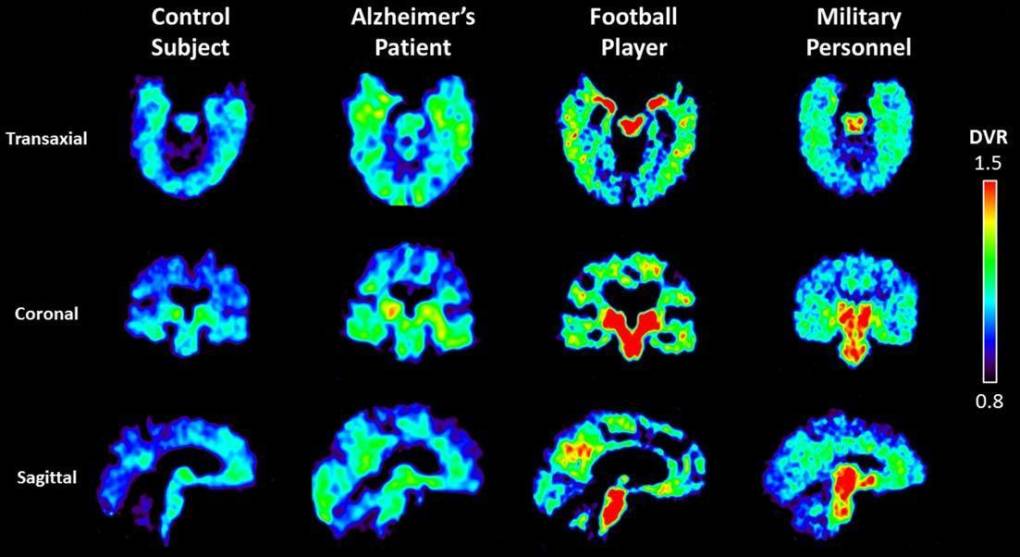
"description": "UCLA researchers are using a radioactive tracer, which binds to abnormal proteins in the brain, to see if it is possible to diagnose chronic traumatic encephalopathy in living patients. Warmer colors in these PET scans indicate higher concentrations of the tracer.",
"title": "UCLA researchers are using a radioactive tracer, which binds to abnormal proteins in the brain, to see if it is possible to diagnose chronic traumatic encephalopathy in living patients. Warmer colors in these PET scans indicate higher concentrations of the tracer.",
"credit": "UCLA",
"status": "inherit",
"isLoading": false,
"fetchFailed": false
},
"news_11681226": {
"type": "attachments",
"id": "news_11681226",
"meta": {
"index": "attachments_1716263798",
"site": "news",
"id": "11681226",
"found": true
},
"parent": 11681225,
"imgSizes": {
"small": {
"file": "https://ww2.kqed.org/app/uploads/sites/10/2018/07/20180709_133010-0-_custom-232f6858743035a4ef2c2603cb96dfa6002af8e2-520x390.jpg",
"width": 520,
"mimeType": "image/jpeg",
"height": 390
},
"twentyfourteen-full-width": {
"file": "https://ww2.kqed.org/app/uploads/sites/10/2018/07/20180709_133010-0-_custom-232f6858743035a4ef2c2603cb96dfa6002af8e2-1038x576.jpg",
"width": 1038,
"mimeType": "image/jpeg",
"height": 576
},
"thumbnail": {
"file": "https://ww2.kqed.org/app/uploads/sites/10/2018/07/20180709_133010-0-_custom-232f6858743035a4ef2c2603cb96dfa6002af8e2-160x120.jpg",
"width": 160,
"mimeType": "image/jpeg",
"height": 120
},
"fd-sm": {
"file": "https://ww2.kqed.org/app/uploads/sites/10/2018/07/20180709_133010-0-_custom-232f6858743035a4ef2c2603cb96dfa6002af8e2-960x720.jpg",
"width": 960,
"mimeType": "image/jpeg",
"height": 720
},
"post-thumbnail": {
"file": "https://ww2.kqed.org/app/uploads/sites/10/2018/07/20180709_133010-0-_custom-232f6858743035a4ef2c2603cb96dfa6002af8e2-672x372.jpg",
"width": 672,
"mimeType": "image/jpeg",
"height": 372
},
"xsmall": {
"file": "https://ww2.kqed.org/app/uploads/sites/10/2018/07/20180709_133010-0-_custom-232f6858743035a4ef2c2603cb96dfa6002af8e2-375x281.jpg",
"width": 375,
"mimeType": "image/jpeg",
"height": 281
},
"kqedFullSize": {
"file": "https://ww2.kqed.org/app/uploads/sites/10/2018/07/20180709_133010-0-_custom-232f6858743035a4ef2c2603cb96dfa6002af8e2-e1531942884485.jpg",
"width": 1920,
"height": 1439
},
"large": {
"file": "https://ww2.kqed.org/app/uploads/sites/10/2018/07/20180709_133010-0-_custom-232f6858743035a4ef2c2603cb96dfa6002af8e2-1020x764.jpg",
"width": 1020,
"mimeType": "image/jpeg",
"height": 764
},
"xlarge": {
"file": "https://ww2.kqed.org/app/uploads/sites/10/2018/07/20180709_133010-0-_custom-232f6858743035a4ef2c2603cb96dfa6002af8e2-1180x884.jpg",
"width": 1180,
"mimeType": "image/jpeg",
"height": 884
},
"complete_open_graph": {
"file": "https://ww2.kqed.org/app/uploads/sites/10/2018/07/20180709_133010-0-_custom-232f6858743035a4ef2c2603cb96dfa6002af8e2-1200x899.jpg",
"width": 1200,
"mimeType": "image/jpeg",
"height": 899
},
"guest-author-50": {
"file": "https://ww2.kqed.org/app/uploads/sites/10/2018/07/20180709_133010-0-_custom-232f6858743035a4ef2c2603cb96dfa6002af8e2-50x50.jpg",
"width": 50,
"mimeType": "image/jpeg",
"height": 50
},
"guest-author-96": {
"file": "https://ww2.kqed.org/app/uploads/sites/10/2018/07/20180709_133010-0-_custom-232f6858743035a4ef2c2603cb96dfa6002af8e2-96x96.jpg",
"width": 96,
"mimeType": "image/jpeg",
"height": 96
},
"medium": {
"file": "https://ww2.kqed.org/app/uploads/sites/10/2018/07/20180709_133010-0-_custom-232f6858743035a4ef2c2603cb96dfa6002af8e2-800x600.jpg",
"width": 800,
"mimeType": "image/jpeg",
"height": 600
},
"guest-author-64": {
"file": "https://ww2.kqed.org/app/uploads/sites/10/2018/07/20180709_133010-0-_custom-232f6858743035a4ef2c2603cb96dfa6002af8e2-64x64.jpg",
"width": 64,
"mimeType": "image/jpeg",
"height": 64
},
"guest-author-32": {
"file": "https://ww2.kqed.org/app/uploads/sites/10/2018/07/20180709_133010-0-_custom-232f6858743035a4ef2c2603cb96dfa6002af8e2-32x32.jpg",
"width": 32,
"mimeType": "image/jpeg",
"height": 32
},
"fd-lrg": {
"file": "https://ww2.kqed.org/app/uploads/sites/10/2018/07/20180709_133010-0-_custom-232f6858743035a4ef2c2603cb96dfa6002af8e2-1920x1439.jpg",
"width": 1920,
"mimeType": "image/jpeg",
"height": 1439
},
"fd-med": {
"file": "https://ww2.kqed.org/app/uploads/sites/10/2018/07/20180709_133010-0-_custom-232f6858743035a4ef2c2603cb96dfa6002af8e2-1180x884.jpg",
"width": 1180,
"mimeType": "image/jpeg",
"height": 884
},
"full-width": {
"file": "https://ww2.kqed.org/app/uploads/sites/10/2018/07/20180709_133010-0-_custom-232f6858743035a4ef2c2603cb96dfa6002af8e2-1920x1439.jpg",
"width": 1920,
"mimeType": "image/jpeg",
"height": 1439
},
"detail": {
"file": "https://ww2.kqed.org/app/uploads/sites/10/2018/07/20180709_133010-0-_custom-232f6858743035a4ef2c2603cb96dfa6002af8e2-150x150.jpg",
"width": 150,
"mimeType": "image/jpeg",
"height": 150
},
"guest-author-128": {
"file": "https://ww2.kqed.org/app/uploads/sites/10/2018/07/20180709_133010-0-_custom-232f6858743035a4ef2c2603cb96dfa6002af8e2-128x128.jpg",
"width": 128,
"mimeType": "image/jpeg",
"height": 128
},
"xxsmall": {
"file": "https://ww2.kqed.org/app/uploads/sites/10/2018/07/20180709_133010-0-_custom-232f6858743035a4ef2c2603cb96dfa6002af8e2-240x180.jpg",
"width": 240,
"mimeType": "image/jpeg",
"height": 180
}
},
"publishDate": 1531942694,
"modified": 1531942906,
"caption": "Harssh Poddar, a senior police official, addresses a village meeting at a rural school near Malegaon, in northern Maharashtra state. He warns families to be skeptical of what they read online. Earlier this month, Poddar helped rescue five people from being killed by a mob in his constituency.",
"description": "Harssh Poddar, a senior police official, addresses a village meeting at a rural school near Malegaon, in northern Maharashtra state. He warns families to be skeptical of what they read online. Earlier this month, Poddar helped rescue five people from being killed by a mob in his constituency.",
"title": "Harssh Poddar, a senior police official, addresses a village meeting at a rural school near Malegaon, in northern Maharashtra state. He warns families to be skeptical of what they read online. Earlier this month, Poddar helped rescue five people from being killed by a mob in his constituency.",
"credit": "Lauren Frayer/NPR",
"status": "inherit",
"isLoading": false,
"fetchFailed": false
},
"news_11681160": {
"type": "attachments",
"id": "news_11681160",
"meta": {
"index": "attachments_1716263798",
"site": "news",
"id": "11681160",
"found": true
},
"parent": 11681159,
"imgSizes": {
"small": {
"file": "https://ww2.kqed.org/app/uploads/sites/10/2018/07/vestager_wide-5991ae2f33307352abbd3eee86591c1a52e9955e-520x293.jpg",
"width": 520,
"mimeType": "image/jpeg",
"height": 293
},
"twentyfourteen-full-width": {
"file": "https://ww2.kqed.org/app/uploads/sites/10/2018/07/vestager_wide-5991ae2f33307352abbd3eee86591c1a52e9955e-1038x576.jpg",
"width": 1038,
"mimeType": "image/jpeg",
"height": 576
},
"thumbnail": {
"file": "https://ww2.kqed.org/app/uploads/sites/10/2018/07/vestager_wide-5991ae2f33307352abbd3eee86591c1a52e9955e-160x90.jpg",
"width": 160,
"mimeType": "image/jpeg",
"height": 90
},
"fd-sm": {
"file": "https://ww2.kqed.org/app/uploads/sites/10/2018/07/vestager_wide-5991ae2f33307352abbd3eee86591c1a52e9955e-960x541.jpg",
"width": 960,
"mimeType": "image/jpeg",
"height": 541
},
"post-thumbnail": {
"file": "https://ww2.kqed.org/app/uploads/sites/10/2018/07/vestager_wide-5991ae2f33307352abbd3eee86591c1a52e9955e-672x372.jpg",
"width": 672,
"mimeType": "image/jpeg",
"height": 372
},
"xsmall": {
"file": "https://ww2.kqed.org/app/uploads/sites/10/2018/07/vestager_wide-5991ae2f33307352abbd3eee86591c1a52e9955e-375x211.jpg",
"width": 375,
"mimeType": "image/jpeg",
"height": 211
},
"kqedFullSize": {
"file": "https://ww2.kqed.org/app/uploads/sites/10/2018/07/vestager_wide-5991ae2f33307352abbd3eee86591c1a52e9955e-e1531930156338.jpg",
"width": 1920,
"height": 1081
},
"large": {
"file": "https://ww2.kqed.org/app/uploads/sites/10/2018/07/vestager_wide-5991ae2f33307352abbd3eee86591c1a52e9955e-1020x574.jpg",
"width": 1020,
"mimeType": "image/jpeg",
"height": 574
},
"xlarge": {
"file": "https://ww2.kqed.org/app/uploads/sites/10/2018/07/vestager_wide-5991ae2f33307352abbd3eee86591c1a52e9955e-1180x665.jpg",
"width": 1180,
"mimeType": "image/jpeg",
"height": 665
},
"complete_open_graph": {
"file": "https://ww2.kqed.org/app/uploads/sites/10/2018/07/vestager_wide-5991ae2f33307352abbd3eee86591c1a52e9955e-1200x676.jpg",
"width": 1200,
"mimeType": "image/jpeg",
"height": 676
},
"guest-author-50": {
"file": "https://ww2.kqed.org/app/uploads/sites/10/2018/07/vestager_wide-5991ae2f33307352abbd3eee86591c1a52e9955e-50x50.jpg",
"width": 50,
"mimeType": "image/jpeg",
"height": 50
},
"guest-author-96": {
"file": "https://ww2.kqed.org/app/uploads/sites/10/2018/07/vestager_wide-5991ae2f33307352abbd3eee86591c1a52e9955e-96x96.jpg",
"width": 96,
"mimeType": "image/jpeg",
"height": 96
},
"medium": {
"file": "https://ww2.kqed.org/app/uploads/sites/10/2018/07/vestager_wide-5991ae2f33307352abbd3eee86591c1a52e9955e-800x451.jpg",
"width": 800,
"mimeType": "image/jpeg",
"height": 451
},
"guest-author-64": {
"file": "https://ww2.kqed.org/app/uploads/sites/10/2018/07/vestager_wide-5991ae2f33307352abbd3eee86591c1a52e9955e-64x64.jpg",
"width": 64,
"mimeType": "image/jpeg",
"height": 64
},
"guest-author-32": {
"file": "https://ww2.kqed.org/app/uploads/sites/10/2018/07/vestager_wide-5991ae2f33307352abbd3eee86591c1a52e9955e-32x32.jpg",
"width": 32,
"mimeType": "image/jpeg",
"height": 32
},
"fd-lrg": {
"file": "https://ww2.kqed.org/app/uploads/sites/10/2018/07/vestager_wide-5991ae2f33307352abbd3eee86591c1a52e9955e-1920x1081.jpg",
"width": 1920,
"mimeType": "image/jpeg",
"height": 1081
},
"fd-med": {
"file": "https://ww2.kqed.org/app/uploads/sites/10/2018/07/vestager_wide-5991ae2f33307352abbd3eee86591c1a52e9955e-1180x665.jpg",
"width": 1180,
"mimeType": "image/jpeg",
"height": 665
},
"full-width": {
"file": "https://ww2.kqed.org/app/uploads/sites/10/2018/07/vestager_wide-5991ae2f33307352abbd3eee86591c1a52e9955e-1920x1081.jpg",
"width": 1920,
"mimeType": "image/jpeg",
"height": 1081
},
"detail": {
"file": "https://ww2.kqed.org/app/uploads/sites/10/2018/07/vestager_wide-5991ae2f33307352abbd3eee86591c1a52e9955e-150x150.jpg",
"width": 150,
"mimeType": "image/jpeg",
"height": 150
},
"guest-author-128": {
"file": "https://ww2.kqed.org/app/uploads/sites/10/2018/07/vestager_wide-5991ae2f33307352abbd3eee86591c1a52e9955e-128x128.jpg",
"width": 128,
"mimeType": "image/jpeg",
"height": 128
},
"xxsmall": {
"file": "https://ww2.kqed.org/app/uploads/sites/10/2018/07/vestager_wide-5991ae2f33307352abbd3eee86591c1a52e9955e-240x135.jpg",
"width": 240,
"mimeType": "image/jpeg",
"height": 135
}
},
"publishDate": 1531927436,
"modified": 1531956284,
"caption": "European Union Competition Commissioner Margrethe Vestager held a joint news conference at EU headquarters in Brussels on Wednesday after slapping a record $5 billion antitrust penalty on U.S. tech giant Google.",
"description": "European Union Competition Commissioner Margrethe Vestager held a joint news conference at EU headquarters in Brussels on Wednesday after slapping a record $5 billion antitrust penalty on the U.S. tech giant.",
"title": "European Union Competition Commissioner Margrethe Vestager held a joint news conference at EU headquarters in Brussels on Wednesday after slapping a record $5 billion antitrust penalty on the U.S. tech giant.",
"credit": "John Thys/AFP/Getty Images",
"status": "inherit",
"isLoading": false,
"fetchFailed": false
},
"news_11681123": {
"type": "attachments",
"id": "news_11681123",
"meta": {
"index": "attachments_1716263798",
"site": "news",
"id": "11681123",
"found": true
},
"parent": 11680985,
"imgSizes": {
"small": {
"file": "https://ww2.kqed.org/app/uploads/sites/10/2018/07/TechHearing2-520x300.jpg",
"width": 520,
"mimeType": "image/jpeg",
"height": 300
},
"twentyfourteen-full-width": {
"file": "https://ww2.kqed.org/app/uploads/sites/10/2018/07/TechHearing2-1038x576.jpg",
"width": 1038,
"mimeType": "image/jpeg",
"height": 576
},
"thumbnail": {
"file": "https://ww2.kqed.org/app/uploads/sites/10/2018/07/TechHearing2-160x92.jpg",
"width": 160,
"mimeType": "image/jpeg",
"height": 92
},
"fd-sm": {
"file": "https://ww2.kqed.org/app/uploads/sites/10/2018/07/TechHearing2-960x554.jpg",
"width": 960,
"mimeType": "image/jpeg",
"height": 554
},
"post-thumbnail": {
"file": "https://ww2.kqed.org/app/uploads/sites/10/2018/07/TechHearing2-672x372.jpg",
"width": 672,
"mimeType": "image/jpeg",
"height": 372
},
"xsmall": {
"file": "https://ww2.kqed.org/app/uploads/sites/10/2018/07/TechHearing2-375x216.jpg",
"width": 375,
"mimeType": "image/jpeg",
"height": 216
},
"kqedFullSize": {
"file": "https://ww2.kqed.org/app/uploads/sites/10/2018/07/TechHearing2.jpg",
"width": 1920,
"height": 1107
},
"large": {
"file": "https://ww2.kqed.org/app/uploads/sites/10/2018/07/TechHearing2-1020x588.jpg",
"width": 1020,
"mimeType": "image/jpeg",
"height": 588
},
"xlarge": {
"file": "https://ww2.kqed.org/app/uploads/sites/10/2018/07/TechHearing2-1180x680.jpg",
"width": 1180,
"mimeType": "image/jpeg",
"height": 680
},
"complete_open_graph": {
"file": "https://ww2.kqed.org/app/uploads/sites/10/2018/07/TechHearing2-1200x692.jpg",
"width": 1200,
"mimeType": "image/jpeg",
"height": 692
},
"guest-author-50": {
"file": "https://ww2.kqed.org/app/uploads/sites/10/2018/07/TechHearing2-50x50.jpg",
"width": 50,
"mimeType": "image/jpeg",
"height": 50
},
"guest-author-96": {
"file": "https://ww2.kqed.org/app/uploads/sites/10/2018/07/TechHearing2-96x96.jpg",
"width": 96,
"mimeType": "image/jpeg",
"height": 96
},
"medium": {
"file": "https://ww2.kqed.org/app/uploads/sites/10/2018/07/TechHearing2-800x461.jpg",
"width": 800,
"mimeType": "image/jpeg",
"height": 461
},
"guest-author-64": {
"file": "https://ww2.kqed.org/app/uploads/sites/10/2018/07/TechHearing2-64x64.jpg",
"width": 64,
"mimeType": "image/jpeg",
"height": 64
},
"guest-author-32": {
"file": "https://ww2.kqed.org/app/uploads/sites/10/2018/07/TechHearing2-32x32.jpg",
"width": 32,
"mimeType": "image/jpeg",
"height": 32
},
"fd-lrg": {
"file": "https://ww2.kqed.org/app/uploads/sites/10/2018/07/TechHearing2-1920x1107.jpg",
"width": 1920,
"mimeType": "image/jpeg",
"height": 1107
},
"fd-med": {
"file": "https://ww2.kqed.org/app/uploads/sites/10/2018/07/TechHearing2-1180x680.jpg",
"width": 1180,
"mimeType": "image/jpeg",
"height": 680
},
"full-width": {
"file": "https://ww2.kqed.org/app/uploads/sites/10/2018/07/TechHearing2-1920x1107.jpg",
"width": 1920,
"mimeType": "image/jpeg",
"height": 1107
},
"detail": {
"file": "https://ww2.kqed.org/app/uploads/sites/10/2018/07/TechHearing2-150x150.jpg",
"width": 150,
"mimeType": "image/jpeg",
"height": 150
},
"guest-author-128": {
"file": "https://ww2.kqed.org/app/uploads/sites/10/2018/07/TechHearing2-128x128.jpg",
"width": 128,
"mimeType": "image/jpeg",
"height": 128
},
"xxsmall": {
"file": "https://ww2.kqed.org/app/uploads/sites/10/2018/07/TechHearing2-240x138.jpg",
"width": 240,
"mimeType": "image/jpeg",
"height": 138
}
},
"publishDate": 1531876856,
"modified": 1531876915,
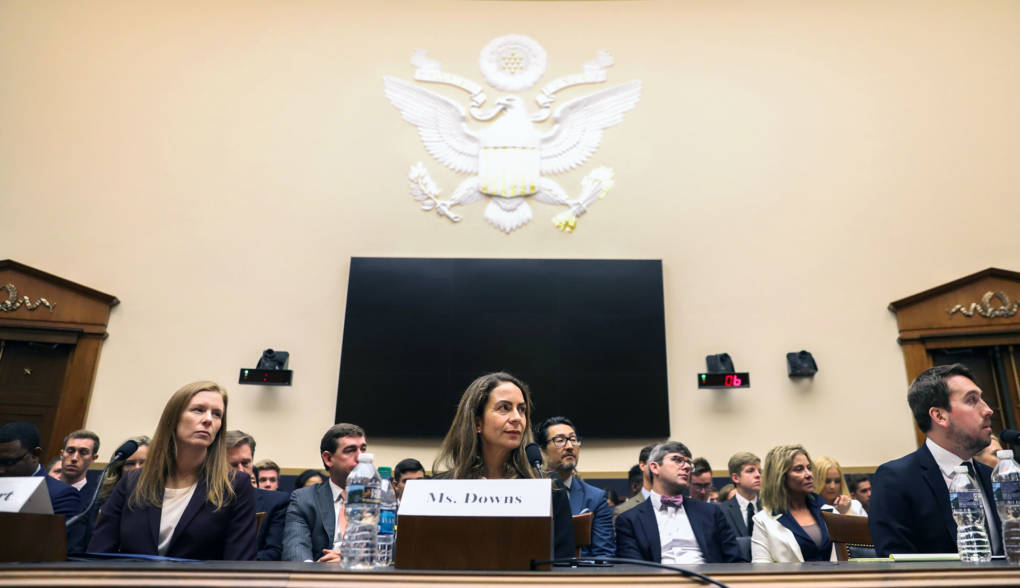
"caption": "Monika Bickert, the head of global policy management at Facebook, Juniper Downs, global head of public policy and government relations at YouTube, and Nick Pickles, the senior strategist at Twitter, testify to the House Judiciary Committee on July 17, 2018.",
"description": "Monika Bickert, the head of global policy management at Facebook, Juniper Downs, global head of public policy and government relations at YouTube, and Nick Pickles, the senior strategist at Twitter, testify to the House Judiciary Committee on July 17, 2018.",
"title": "TechHearing2",
"credit": "Alex Wroblewski/Getty Images",
"status": "inherit",
"isLoading": false,
"fetchFailed": false
},
"futureofyou_443405": {
"type": "attachments",
"id": "futureofyou_443405",
"meta": {
"index": "attachments_1716263798",
"site": "futureofyou",
"id": "443405",
"found": true
},
"parent": 443403,
"imgSizes": {
"small": {
"file": "https://ww2.kqed.org/app/uploads/sites/13/2018/07/DNABreak-1024x576-520x293.jpg",
"width": 520,
"mimeType": "image/jpeg",
"height": 293
},
"twentyfourteen-full-width": {
"file": "https://ww2.kqed.org/app/uploads/sites/13/2018/07/DNABreak-1024x576-1024x576.jpg",
"width": 1024,
"mimeType": "image/jpeg",
"height": 576
},
"thumbnail": {
"file": "https://ww2.kqed.org/app/uploads/sites/13/2018/07/DNABreak-1024x576-160x90.jpg",
"width": 160,
"mimeType": "image/jpeg",
"height": 90
},
"fd-sm": {
"file": "https://ww2.kqed.org/app/uploads/sites/13/2018/07/DNABreak-1024x576-960x540.jpg",
"width": 960,
"mimeType": "image/jpeg",
"height": 540
},
"post-thumbnail": {
"file": "https://ww2.kqed.org/app/uploads/sites/13/2018/07/DNABreak-1024x576-672x372.jpg",
"width": 672,
"mimeType": "image/jpeg",
"height": 372
},
"xsmall": {
"file": "https://ww2.kqed.org/app/uploads/sites/13/2018/07/DNABreak-1024x576-375x211.jpg",
"width": 375,
"mimeType": "image/jpeg",
"height": 211
},
"kqedFullSize": {
"file": "https://ww2.kqed.org/app/uploads/sites/13/2018/07/DNABreak-1024x576.jpg",
"width": 1024,
"height": 576
},
"large": {
"file": "https://ww2.kqed.org/app/uploads/sites/13/2018/07/DNABreak-1024x576-1020x574.jpg",
"width": 1020,
"mimeType": "image/jpeg",
"height": 574
},
"guest-author-50": {
"file": "https://ww2.kqed.org/app/uploads/sites/13/2018/07/DNABreak-1024x576-50x50.jpg",
"width": 50,
"mimeType": "image/jpeg",
"height": 50
},
"guest-author-96": {
"file": "https://ww2.kqed.org/app/uploads/sites/13/2018/07/DNABreak-1024x576-96x96.jpg",
"width": 96,
"mimeType": "image/jpeg",
"height": 96
},
"medium": {
"file": "https://ww2.kqed.org/app/uploads/sites/13/2018/07/DNABreak-1024x576-800x450.jpg",
"width": 800,
"mimeType": "image/jpeg",
"height": 450
},
"guest-author-64": {
"file": "https://ww2.kqed.org/app/uploads/sites/13/2018/07/DNABreak-1024x576-64x64.jpg",
"width": 64,
"mimeType": "image/jpeg",
"height": 64
},
"guest-author-32": {
"file": "https://ww2.kqed.org/app/uploads/sites/13/2018/07/DNABreak-1024x576-32x32.jpg",
"width": 32,
"mimeType": "image/jpeg",
"height": 32
},
"detail": {
"file": "https://ww2.kqed.org/app/uploads/sites/13/2018/07/DNABreak-1024x576-150x150.jpg",
"width": 150,
"mimeType": "image/jpeg",
"height": 150
},
"medium_large": {
"file": "https://ww2.kqed.org/app/uploads/sites/13/2018/07/DNABreak-1024x576-768x432.jpg",
"width": 768,
"mimeType": "image/jpeg",
"height": 432
},
"guest-author-128": {
"file": "https://ww2.kqed.org/app/uploads/sites/13/2018/07/DNABreak-1024x576-128x128.jpg",
"width": 128,
"mimeType": "image/jpeg",
"height": 128
},
"xxsmall": {
"file": "https://ww2.kqed.org/app/uploads/sites/13/2018/07/DNABreak-1024x576-240x135.jpg",
"width": 240,
"mimeType": "image/jpeg",
"height": 135
}
},
"publishDate": 1531813223,
"modified": 1531813242,
"caption": null,
"description": null,
"title": "DNA string with clipping path",
"credit": "Adobe",
"status": "inherit",
"isLoading": false,
"fetchFailed": false
},
"news_11680782": {
"type": "attachments",
"id": "news_11680782",
"meta": {
"index": "attachments_1716263798",
"site": "news",
"id": "11680782",
"found": true
},
"parent": 11680781,
"imgSizes": {
"small": {
"file": "https://ww2.kqed.org/app/uploads/sites/10/2018/07/ap_18171624437490-4ee1f9390d0549f675d43a91d63189c2e6e2df4a-520x390.jpg",
"width": 520,
"mimeType": "image/jpeg",
"height": 390
},
"twentyfourteen-full-width": {
"file": "https://ww2.kqed.org/app/uploads/sites/10/2018/07/ap_18171624437490-4ee1f9390d0549f675d43a91d63189c2e6e2df4a-1038x576.jpg",
"width": 1038,
"mimeType": "image/jpeg",
"height": 576
},
"thumbnail": {
"file": "https://ww2.kqed.org/app/uploads/sites/10/2018/07/ap_18171624437490-4ee1f9390d0549f675d43a91d63189c2e6e2df4a-160x120.jpg",
"width": 160,
"mimeType": "image/jpeg",
"height": 120
},
"fd-sm": {
"file": "https://ww2.kqed.org/app/uploads/sites/10/2018/07/ap_18171624437490-4ee1f9390d0549f675d43a91d63189c2e6e2df4a-960x720.jpg",
"width": 960,
"mimeType": "image/jpeg",
"height": 720
},
"post-thumbnail": {
"file": "https://ww2.kqed.org/app/uploads/sites/10/2018/07/ap_18171624437490-4ee1f9390d0549f675d43a91d63189c2e6e2df4a-672x372.jpg",
"width": 672,
"mimeType": "image/jpeg",
"height": 372
},
"xsmall": {
"file": "https://ww2.kqed.org/app/uploads/sites/10/2018/07/ap_18171624437490-4ee1f9390d0549f675d43a91d63189c2e6e2df4a-375x281.jpg",
"width": 375,
"mimeType": "image/jpeg",
"height": 281
},
"kqedFullSize": {
"file": "https://ww2.kqed.org/app/uploads/sites/10/2018/07/ap_18171624437490-4ee1f9390d0549f675d43a91d63189c2e6e2df4a-e1531767341326.jpg",
"width": 1920,
"height": 1440
},
"large": {
"file": "https://ww2.kqed.org/app/uploads/sites/10/2018/07/ap_18171624437490-4ee1f9390d0549f675d43a91d63189c2e6e2df4a-1020x765.jpg",
"width": 1020,
"mimeType": "image/jpeg",
"height": 765
},
"xlarge": {
"file": "https://ww2.kqed.org/app/uploads/sites/10/2018/07/ap_18171624437490-4ee1f9390d0549f675d43a91d63189c2e6e2df4a-1180x885.jpg",
"width": 1180,
"mimeType": "image/jpeg",
"height": 885
},
"complete_open_graph": {
"file": "https://ww2.kqed.org/app/uploads/sites/10/2018/07/ap_18171624437490-4ee1f9390d0549f675d43a91d63189c2e6e2df4a-1200x900.jpg",
"width": 1200,
"mimeType": "image/jpeg",
"height": 900
},
"guest-author-50": {
"file": "https://ww2.kqed.org/app/uploads/sites/10/2018/07/ap_18171624437490-4ee1f9390d0549f675d43a91d63189c2e6e2df4a-50x50.jpg",
"width": 50,
"mimeType": "image/jpeg",
"height": 50
},
"guest-author-96": {
"file": "https://ww2.kqed.org/app/uploads/sites/10/2018/07/ap_18171624437490-4ee1f9390d0549f675d43a91d63189c2e6e2df4a-96x96.jpg",
"width": 96,
"mimeType": "image/jpeg",
"height": 96
},
"medium": {
"file": "https://ww2.kqed.org/app/uploads/sites/10/2018/07/ap_18171624437490-4ee1f9390d0549f675d43a91d63189c2e6e2df4a-800x600.jpg",
"width": 800,
"mimeType": "image/jpeg",
"height": 600
},
"guest-author-64": {
"file": "https://ww2.kqed.org/app/uploads/sites/10/2018/07/ap_18171624437490-4ee1f9390d0549f675d43a91d63189c2e6e2df4a-64x64.jpg",
"width": 64,
"mimeType": "image/jpeg",
"height": 64
},
"guest-author-32": {
"file": "https://ww2.kqed.org/app/uploads/sites/10/2018/07/ap_18171624437490-4ee1f9390d0549f675d43a91d63189c2e6e2df4a-32x32.jpg",
"width": 32,
"mimeType": "image/jpeg",
"height": 32
},
"fd-lrg": {
"file": "https://ww2.kqed.org/app/uploads/sites/10/2018/07/ap_18171624437490-4ee1f9390d0549f675d43a91d63189c2e6e2df4a-1920x1440.jpg",
"width": 1920,
"mimeType": "image/jpeg",
"height": 1440
},
"fd-med": {
"file": "https://ww2.kqed.org/app/uploads/sites/10/2018/07/ap_18171624437490-4ee1f9390d0549f675d43a91d63189c2e6e2df4a-1180x885.jpg",
"width": 1180,
"mimeType": "image/jpeg",
"height": 885
},
"full-width": {
"file": "https://ww2.kqed.org/app/uploads/sites/10/2018/07/ap_18171624437490-4ee1f9390d0549f675d43a91d63189c2e6e2df4a-1920x1440.jpg",
"width": 1920,
"mimeType": "image/jpeg",
"height": 1440
},
"detail": {
"file": "https://ww2.kqed.org/app/uploads/sites/10/2018/07/ap_18171624437490-4ee1f9390d0549f675d43a91d63189c2e6e2df4a-150x150.jpg",
"width": 150,
"mimeType": "image/jpeg",
"height": 150
},
"guest-author-128": {
"file": "https://ww2.kqed.org/app/uploads/sites/10/2018/07/ap_18171624437490-4ee1f9390d0549f675d43a91d63189c2e6e2df4a-128x128.jpg",
"width": 128,
"mimeType": "image/jpeg",
"height": 128
},
"xxsmall": {
"file": "https://ww2.kqed.org/app/uploads/sites/10/2018/07/ap_18171624437490-4ee1f9390d0549f675d43a91d63189c2e6e2df4a-240x180.jpg",
"width": 240,
"mimeType": "image/jpeg",
"height": 180
}
},
"publishDate": 1531767245,
"modified": 1531767332,
"caption": "Tesla CEO Elon Musk called a British diver involved in the rescue of the Thailand soccer team \"a pedo guy\" on Twitter after the diver criticized the billionaire's minisubmarine plan.",
"description": "Tesla CEO Elon Musk called a British diver involved in the rescue of the Thailand soccer team \"a pedo guy\" on Twitter after the diver criticized the billionaire's minisubmarine plan.",
"title": "Tesla CEO Elon Musk called a British diver involved in the rescue of the Thailand soccer team \"a pedo guy\" on Twitter after the diver criticized the billionaire's minisubmarine plan.",
"credit": "Kiichiro Sato/AP",
"status": "inherit",
"isLoading": false,
"fetchFailed": false
},
"news_11679801": {
"type": "attachments",
"id": "news_11679801",
"meta": {
"index": "attachments_1716263798",
"site": "news",
"id": "11679801",
"found": true
},
"parent": 11679745,
"imgSizes": {
"small": {
"file": "https://ww2.kqed.org/app/uploads/sites/10/2018/07/RS31751_IMG_3553-qut-520x348.jpg",
"width": 520,
"mimeType": "image/jpeg",
"height": 348
},
"twentyfourteen-full-width": {
"file": "https://ww2.kqed.org/app/uploads/sites/10/2018/07/RS31751_IMG_3553-qut-1038x576.jpg",
"width": 1038,
"mimeType": "image/jpeg",
"height": 576
},
"thumbnail": {
"file": "https://ww2.kqed.org/app/uploads/sites/10/2018/07/RS31751_IMG_3553-qut-160x107.jpg",
"width": 160,
"mimeType": "image/jpeg",
"height": 107
},
"fd-sm": {
"file": "https://ww2.kqed.org/app/uploads/sites/10/2018/07/RS31751_IMG_3553-qut-960x643.jpg",
"width": 960,
"mimeType": "image/jpeg",
"height": 643
},
"post-thumbnail": {
"file": "https://ww2.kqed.org/app/uploads/sites/10/2018/07/RS31751_IMG_3553-qut-672x372.jpg",
"width": 672,
"mimeType": "image/jpeg",
"height": 372
},
"xsmall": {
"file": "https://ww2.kqed.org/app/uploads/sites/10/2018/07/RS31751_IMG_3553-qut-375x251.jpg",
"width": 375,
"mimeType": "image/jpeg",
"height": 251
},
"kqedFullSize": {
"file": "https://ww2.kqed.org/app/uploads/sites/10/2018/07/RS31751_IMG_3553-qut.jpg",
"width": 1920,
"height": 1285
},
"large": {
"file": "https://ww2.kqed.org/app/uploads/sites/10/2018/07/RS31751_IMG_3553-qut-1020x683.jpg",
"width": 1020,
"mimeType": "image/jpeg",
"height": 683
},
"xlarge": {
"file": "https://ww2.kqed.org/app/uploads/sites/10/2018/07/RS31751_IMG_3553-qut-1180x790.jpg",
"width": 1180,
"mimeType": "image/jpeg",
"height": 790
},
"complete_open_graph": {
"file": "https://ww2.kqed.org/app/uploads/sites/10/2018/07/RS31751_IMG_3553-qut-1200x803.jpg",
"width": 1200,
"mimeType": "image/jpeg",
"height": 803
},
"guest-author-50": {
"file": "https://ww2.kqed.org/app/uploads/sites/10/2018/07/RS31751_IMG_3553-qut-50x50.jpg",
"width": 50,
"mimeType": "image/jpeg",
"height": 50
},
"guest-author-96": {
"file": "https://ww2.kqed.org/app/uploads/sites/10/2018/07/RS31751_IMG_3553-qut-96x96.jpg",
"width": 96,
"mimeType": "image/jpeg",
"height": 96
},
"medium": {
"file": "https://ww2.kqed.org/app/uploads/sites/10/2018/07/RS31751_IMG_3553-qut-800x535.jpg",
"width": 800,
"mimeType": "image/jpeg",
"height": 535
},
"guest-author-64": {
"file": "https://ww2.kqed.org/app/uploads/sites/10/2018/07/RS31751_IMG_3553-qut-64x64.jpg",
"width": 64,
"mimeType": "image/jpeg",
"height": 64
},
"guest-author-32": {
"file": "https://ww2.kqed.org/app/uploads/sites/10/2018/07/RS31751_IMG_3553-qut-32x32.jpg",
"width": 32,
"mimeType": "image/jpeg",
"height": 32
},
"fd-lrg": {
"file": "https://ww2.kqed.org/app/uploads/sites/10/2018/07/RS31751_IMG_3553-qut-1920x1285.jpg",
"width": 1920,
"mimeType": "image/jpeg",
"height": 1285
},
"fd-med": {
"file": "https://ww2.kqed.org/app/uploads/sites/10/2018/07/RS31751_IMG_3553-qut-1180x790.jpg",
"width": 1180,
"mimeType": "image/jpeg",
"height": 790
},
"full-width": {
"file": "https://ww2.kqed.org/app/uploads/sites/10/2018/07/RS31751_IMG_3553-qut-1920x1285.jpg",
"width": 1920,
"mimeType": "image/jpeg",
"height": 1285
},
"detail": {
"file": "https://ww2.kqed.org/app/uploads/sites/10/2018/07/RS31751_IMG_3553-qut-150x150.jpg",
"width": 150,
"mimeType": "image/jpeg",
"height": 150
},
"guest-author-128": {
"file": "https://ww2.kqed.org/app/uploads/sites/10/2018/07/RS31751_IMG_3553-qut-128x128.jpg",
"width": 128,
"mimeType": "image/jpeg",
"height": 128
},
"xxsmall": {
"file": "https://ww2.kqed.org/app/uploads/sites/10/2018/07/RS31751_IMG_3553-qut-240x161.jpg",
"width": 240,
"mimeType": "image/jpeg",
"height": 161
}
},
"publishDate": 1531245199,
"modified": 1531522882,
"caption": "Vintage personal computers on display at the Computer History Museum in Mountain View.",
"description": "Vintage personal computers on display at the Computer History Museum in Mountain View.",
"title": "RS31751_IMG_3553-qut",
"credit": "Bianca Taylor/KQED",
"status": "inherit",
"isLoading": false,
"fetchFailed": false
},
"news_11680262": {
"type": "attachments",
"id": "news_11680262",
"meta": {
"index": "attachments_1716263798",
"site": "news",
"id": "11680262",
"found": true
},
"parent": 11680221,
"imgSizes": {
"small": {
"file": "https://ww2.kqed.org/app/uploads/sites/10/2018/07/RS31788_lioness1-qut-520x375.jpg",
"width": 520,
"mimeType": "image/jpeg",
"height": 375
},
"twentyfourteen-full-width": {
"file": "https://ww2.kqed.org/app/uploads/sites/10/2018/07/RS31788_lioness1-qut-1038x576.jpg",
"width": 1038,
"mimeType": "image/jpeg",
"height": 576
},
"thumbnail": {
"file": "https://ww2.kqed.org/app/uploads/sites/10/2018/07/RS31788_lioness1-qut-160x115.jpg",
"width": 160,
"mimeType": "image/jpeg",
"height": 115
},
"fd-sm": {
"file": "https://ww2.kqed.org/app/uploads/sites/10/2018/07/RS31788_lioness1-qut-960x693.jpg",
"width": 960,
"mimeType": "image/jpeg",
"height": 693
},
"post-thumbnail": {
"file": "https://ww2.kqed.org/app/uploads/sites/10/2018/07/RS31788_lioness1-qut-672x372.jpg",
"width": 672,
"mimeType": "image/jpeg",
"height": 372
},
"xsmall": {
"file": "https://ww2.kqed.org/app/uploads/sites/10/2018/07/RS31788_lioness1-qut-375x271.jpg",
"width": 375,
"mimeType": "image/jpeg",
"height": 271
},
"kqedFullSize": {
"file": "https://ww2.kqed.org/app/uploads/sites/10/2018/07/RS31788_lioness1-qut.jpg",
"width": 1920,
"height": 1385
},
"large": {
"file": "https://ww2.kqed.org/app/uploads/sites/10/2018/07/RS31788_lioness1-qut-1020x736.jpg",
"width": 1020,
"mimeType": "image/jpeg",
"height": 736
},
"xlarge": {
"file": "https://ww2.kqed.org/app/uploads/sites/10/2018/07/RS31788_lioness1-qut-1180x851.jpg",
"width": 1180,
"mimeType": "image/jpeg",
"height": 851
},
"complete_open_graph": {
"file": "https://ww2.kqed.org/app/uploads/sites/10/2018/07/RS31788_lioness1-qut-1200x866.jpg",
"width": 1200,
"mimeType": "image/jpeg",
"height": 866
},
"guest-author-50": {
"file": "https://ww2.kqed.org/app/uploads/sites/10/2018/07/RS31788_lioness1-qut-50x50.jpg",
"width": 50,
"mimeType": "image/jpeg",
"height": 50
},
"guest-author-96": {
"file": "https://ww2.kqed.org/app/uploads/sites/10/2018/07/RS31788_lioness1-qut-96x96.jpg",
"width": 96,
"mimeType": "image/jpeg",
"height": 96
},
"medium": {
"file": "https://ww2.kqed.org/app/uploads/sites/10/2018/07/RS31788_lioness1-qut-800x577.jpg",
"width": 800,
"mimeType": "image/jpeg",
"height": 577
},
"guest-author-64": {
"file": "https://ww2.kqed.org/app/uploads/sites/10/2018/07/RS31788_lioness1-qut-64x64.jpg",
"width": 64,
"mimeType": "image/jpeg",
"height": 64
},
"guest-author-32": {
"file": "https://ww2.kqed.org/app/uploads/sites/10/2018/07/RS31788_lioness1-qut-32x32.jpg",
"width": 32,
"mimeType": "image/jpeg",
"height": 32
},
"fd-lrg": {
"file": "https://ww2.kqed.org/app/uploads/sites/10/2018/07/RS31788_lioness1-qut-1920x1385.jpg",
"width": 1920,
"mimeType": "image/jpeg",
"height": 1385
},
"fd-med": {
"file": "https://ww2.kqed.org/app/uploads/sites/10/2018/07/RS31788_lioness1-qut-1180x851.jpg",
"width": 1180,
"mimeType": "image/jpeg",
"height": 851
},
"full-width": {
"file": "https://ww2.kqed.org/app/uploads/sites/10/2018/07/RS31788_lioness1-qut-1920x1385.jpg",
"width": 1920,
"mimeType": "image/jpeg",
"height": 1385
},
"detail": {
"file": "https://ww2.kqed.org/app/uploads/sites/10/2018/07/RS31788_lioness1-qut-150x150.jpg",
"width": 150,
"mimeType": "image/jpeg",
"height": 150
},
"guest-author-128": {
"file": "https://ww2.kqed.org/app/uploads/sites/10/2018/07/RS31788_lioness1-qut-128x128.jpg",
"width": 128,
"mimeType": "image/jpeg",
"height": 128
},
"xxsmall": {
"file": "https://ww2.kqed.org/app/uploads/sites/10/2018/07/RS31788_lioness1-qut-240x173.jpg",
"width": 240,
"mimeType": "image/jpeg",
"height": 173
}
},
"publishDate": 1531418942,
"modified": 1531632194,
"caption": "An ad for a \"smart\" vibrator could not compete for attention with workers washing a building at Van Ness Avenue and Jackson Street in San Francisco.",
"description": "An ad for a \"smart\" vibrator could not compete for attention with workers washing a building at Van Ness Avenue and Jackson Street in San Francisco.",
"title": "RS31788_lioness1-qut",
"credit": "Patricia Yollin/KQED",
"status": "inherit",
"isLoading": false,
"fetchFailed": false
}
},
"audioPlayerReducer": {
"postId": "stream_live",
"isPaused": true,
"isPlaying": false,
"pfsActive": false,
"pledgeModalIsOpen": true,
"playerDrawerIsOpen": false,
"liveAudioPlayStartedAt": 0,
"liveAudioPlayContext": ""
},
"authorsReducer": {
"byline_news_11683962": {
"type": "authors",
"id": "byline_news_11683962",
"meta": {
"override": true
},
"slug": "byline_news_11683962",
"name": "Tim Mak",
"isLoading": false
},
"byline_news_11681618": {
"type": "authors",
"id": "byline_news_11681618",
"meta": {
"override": true
},
"slug": "byline_news_11681618",
"name": "\u003cstrong>Laura Sydell\u003cbr />NPR\u003c/strong>",
"isLoading": false
},
"byline_futureofyou_443419": {
"type": "authors",
"id": "byline_futureofyou_443419",
"meta": {
"override": true
},
"slug": "byline_futureofyou_443419",
"name": "Tom Goldman, NPR",
"isLoading": false
},
"byline_news_11681225": {
"type": "authors",
"id": "byline_news_11681225",
"meta": {
"override": true
},
"slug": "byline_news_11681225",
"name": "Lauren Frayer",
"isLoading": false
},
"byline_news_11681159": {
"type": "authors",
"id": "byline_news_11681159",
"meta": {
"override": true
},
"slug": "byline_news_11681159",
"name": "\u003cstrong>\u003ca href=\"https://www.npr.org/people/348744968/camila-domonoske\">Camila Domonoske\u003c/a>\u003c/br>\u003ca href=https://www.npr.org/>NPR\u003c/a>\u003c/strong>",
"isLoading": false
},
"byline_futureofyou_443403": {
"type": "authors",
"id": "byline_futureofyou_443403",
"meta": {
"override": true
},
"slug": "byline_futureofyou_443403",
"name": "Sharon Begley\u003cbr />STAT",
"isLoading": false
},
"byline_news_11680781": {
"type": "authors",
"id": "byline_news_11680781",
"meta": {
"override": true
},
"slug": "byline_news_11680781",
"name": "Scott Neuman",
"isLoading": false
},
"kqed": {
"type": "authors",
"id": "236",
"meta": {
"index": "authors_1716337520",
"id": "236",
"found": true
},
"name": "KQED News Staff",
"firstName": "KQED News Staff",
"lastName": null,
"slug": "kqed",
"email": "faq@kqed.org",
"display_author_email": false,
"staff_mastheads": [],
"title": null,
"bio": null,
"avatar": "https://secure.gravatar.com/avatar/ef0e801a68c4c54afa9180db14084167?s=600&d=blank&r=g",
"twitter": null,
"facebook": null,
"instagram": null,
"linkedin": null,
"sites": [
{
"site": "arts",
"roles": [
"contributor"
]
},
{
"site": "news",
"roles": [
"editor"
]
},
{
"site": "futureofyou",
"roles": [
"author"
]
}
],
"headData": {
"title": "KQED News Staff | KQED",
"description": null,
"ogImgSrc": "https://secure.gravatar.com/avatar/ef0e801a68c4c54afa9180db14084167?s=600&d=blank&r=g",
"twImgSrc": "https://secure.gravatar.com/avatar/ef0e801a68c4c54afa9180db14084167?s=600&d=blank&r=g"
},
"isLoading": false,
"link": "/author/kqed"
},
"patyollin": {
"type": "authors",
"id": "247",
"meta": {
"index": "authors_1716337520",
"id": "247",
"found": true
},
"name": "Patricia Yollin",
"firstName": "Patricia",
"lastName": "Yollin",
"slug": "patyollin",
"email": "pyollin@kqed.org",
"display_author_email": false,
"staff_mastheads": [],
"title": "KQED Contributor",
"bio": "Pat Yollin has written about lots of stuff, including organ transplants, wayward penguins at the San Francisco Zoo, the comeback of the cream puff, New York on the fifth anniversary of 9/11, a Slow Food gathering in Italy, and the microcredit movement in Northern California. Among her favorite stories: an interview with George Lucas at Skywalker Ranch that broke the story about his plan to build a cultural museum, and a pirate Trader Joe's operation in Vancouver that prompted the grocery chain to sue -- and lose. She joined KQED in 2013 and was previously a reporter and editor at the San Francisco Chronicle, the Hearst-owned San Francisco Examiner and the Hayward Daily Review.",
"avatar": "https://secure.gravatar.com/avatar/0a18ac41a263665c04b25b2c7d6b817c?s=600&d=blank&r=g",
"twitter": null,
"facebook": null,
"instagram": null,
"linkedin": null,
"sites": [
{
"site": "arts",
"roles": [
"subscriber"
]
},
{
"site": "news",
"roles": [
"subscriber"
]
},
{
"site": "futureofyou",
"roles": [
"editor"
]
},
{
"site": "lowdown",
"roles": [
"editor"
]
},
{
"site": "stateofhealth",
"roles": [
"editor"
]
}
],
"headData": {
"title": "Patricia Yollin | KQED",
"description": "KQED Contributor",
"ogImgSrc": "https://secure.gravatar.com/avatar/0a18ac41a263665c04b25b2c7d6b817c?s=600&d=blank&r=g",
"twImgSrc": "https://secure.gravatar.com/avatar/0a18ac41a263665c04b25b2c7d6b817c?s=600&d=blank&r=g"
},
"isLoading": false,
"link": "/author/patyollin"
},
"jeremysiegel": {
"type": "authors",
"id": "11258",
"meta": {
"index": "authors_1716337520",
"id": "11258",
"found": true
},
"name": "Jeremy Siegel",
"firstName": "Jeremy",
"lastName": "Siegel",
"slug": "jeremysiegel",
"email": "jsiegel@kqed.org",
"display_author_email": false,
"staff_mastheads": [],
"title": "KQED Contributor",
"bio": "Jeremy Siegel is is the weekend afternoon news anchor for KQED. His reporting can be heard on KQED News, Morning Edition, All Things Considered and The California Report. Jeremy's coverage of the Camp Fire in Butte County won the 2019 Society of Professional Journalists, Northern California Chapter, Excellence in Journalism Award for Breaking News. Jeremy grew up in Cincinnati, Ohio, and graduated from UC Berkeley.",
"avatar": "https://secure.gravatar.com/avatar/3921a64ceb9ed5d0ba47d9ae9782f1ab?s=600&d=blank&r=g",
"twitter": "jersiegel",
"facebook": null,
"instagram": null,
"linkedin": null,
"sites": [
{
"site": "arts",
"roles": []
},
{
"site": "news",
"roles": [
"subscriber"
]
},
{
"site": "science",
"roles": []
}
],
"headData": {
"title": "Jeremy Siegel | KQED",
"description": "KQED Contributor",
"ogImgSrc": "https://secure.gravatar.com/avatar/3921a64ceb9ed5d0ba47d9ae9782f1ab?s=600&d=blank&r=g",
"twImgSrc": "https://secure.gravatar.com/avatar/3921a64ceb9ed5d0ba47d9ae9782f1ab?s=600&d=blank&r=g"
},
"isLoading": false,
"link": "/author/jeremysiegel"
},
"btaylor": {
"type": "authors",
"id": "11365",
"meta": {
"index": "authors_1716337520",
"id": "11365",
"found": true
},
"name": "Bianca Taylor",
"firstName": "Bianca",
"lastName": "Taylor",
"slug": "btaylor",
"email": "btaylor@KQED.org",
"display_author_email": false,
"staff_mastheads": [
"news"
],
"title": "Host and Producer ",
"bio": "Bianca Taylor is a news producer and host of KQED's The Latest podcast.\r\n\r\nHer work with KQED has been honored by the Society of Professional Journalists NorCal, the Webby's, the Regional Murrow Awards, and ONA. She has also worked with NPR, the BBC World Service, and the Washington Post Creative Group.\r\n\r\nBianca is represented by SAG-AFTRA.",
"avatar": "https://secure.gravatar.com/avatar/6b9d3f6552dd10470c5d1c2e58cfe717?s=600&d=blank&r=g",
"twitter": "SoundsLkeBianca",
"facebook": null,
"instagram": null,
"linkedin": null,
"sites": [
{
"site": "arts",
"roles": [
"editor"
]
},
{
"site": "news",
"roles": [
"edit_others_posts",
"editor"
]
},
{
"site": "pop",
"roles": [
"editor"
]
},
{
"site": "bayareabites",
"roles": [
"author"
]
},
{
"site": "science",
"roles": [
"editor"
]
},
{
"site": "forum",
"roles": [
"editor"
]
},
{
"site": "radio",
"roles": [
"editor"
]
},
{
"site": "podcasts",
"roles": [
"editor"
]
}
],
"headData": {
"title": "Bianca Taylor | KQED",
"description": "Host and Producer ",
"ogImgSrc": "https://secure.gravatar.com/avatar/6b9d3f6552dd10470c5d1c2e58cfe717?s=600&d=blank&r=g",
"twImgSrc": "https://secure.gravatar.com/avatar/6b9d3f6552dd10470c5d1c2e58cfe717?s=600&d=blank&r=g"
},
"isLoading": false,
"link": "/author/btaylor"
},
"tmosley": {
"type": "authors",
"id": "11373",
"meta": {
"index": "authors_1716337520",
"id": "11373",
"found": true
},
"name": "Tonya Mosley",
"firstName": "Tonya",
"lastName": "Mosley",
"slug": "tmosley",
"email": "tmosley@kqed.org",
"display_author_email": false,
"staff_mastheads": [],
"title": "KQED Contributor",
"bio": "Tonya Mosley is a former Silicon Valley bureau chief for KQED. She served as the senior editor, leading a team of journalists covering the impacts of technology companies on the South Bay and society. Tonya is also a former host and reporter for KQED.\r\n\r\nPrior to KQED, Tonya served as a television reporter & anchor for several media outlets, including Al Jazeera America.\r\n\r\nIn 2015, Tonya was awarded a John S. Knight Journalism Fellowship at Stanford University where she co-created a workshop for journalists on the impacts of implicit bias, and co-wrote a Belgian/American experimental study on the effects of protest coverage.\r\n\r\nTonya has won several national awards for her work, most recently an Emmy Award in 2016 for her televised piece \"Beyond Ferguson,\" and a national Edward R. Murrow award for her public radio series \"Black in Seattle.\"\r\n\r\nYou can reach Tonya at: tmosley@kqed.org.",
"avatar": "https://secure.gravatar.com/avatar/0b2ea2bbfed6bafaacd21e9398c68e5e?s=600&d=blank&r=g",
"twitter": "tonyamosley",
"facebook": null,
"instagram": null,
"linkedin": null,
"sites": [
{
"site": "arts",
"roles": [
"editor"
]
},
{
"site": "news",
"roles": [
"subscriber"
]
},
{
"site": "about",
"roles": [
"author"
]
},
{
"site": "forum",
"roles": [
"author"
]
}
],
"headData": {
"title": "Tonya Mosley | KQED",
"description": "KQED Contributor",
"ogImgSrc": "https://secure.gravatar.com/avatar/0b2ea2bbfed6bafaacd21e9398c68e5e?s=600&d=blank&r=g",
"twImgSrc": "https://secure.gravatar.com/avatar/0b2ea2bbfed6bafaacd21e9398c68e5e?s=600&d=blank&r=g"
},
"isLoading": false,
"link": "/author/tmosley"
}
},
"pagesReducer": {
"news_category_technology": {
"type": "terms",
"id": "news_248",
"meta": {
"index": "terms_1716263798",
"site": "news",
"id": "248",
"score": 10.932037
},
"featImg": null,
"name": "Technology",
"description": null,
"taxonomy": "category",
"headData": {
"twImgId": null,
"twTitle": null,
"ogTitle": null,
"ogImgId": null,
"twDescription": null,
"description": null,
"title": "Technology Archives | KQED News",
"ogDescription": null
},
"ttid": 256,
"slug": "technology",
"isLoading": false,
"title": "Technology",
"pageMeta": {
"site": "news",
"WpPageTemplate": "page-topic-editorial",
"currentPage": 87
},
"blocks": [
{
"blockName": "kqed/post-list",
"attrs": {
"layout": "cardArticle2",
"query": "posts/news?category=technology",
"seeMore": false,
"paginated": true,
"page": 87
}
},
{
"blockName": "kqed/ad"
}
]
}
},
"pfsSessionReducer": {},
"postsReducer": {
"stream_live": {
"type": "live",
"id": "stream_live",
"audioUrl": "https://streams.kqed.org/kqedradio",
"title": "Live Stream",
"excerpt": "Live Stream information currently unavailable.",
"link": "/radio",
"featImg": "",
"label": {
"name": "KQED Live",
"link": "/"
}
},
"stream_kqedNewscast": {
"type": "posts",
"id": "stream_kqedNewscast",
"audioUrl": "https://www.kqed.org/.stream/anon/radio/RDnews/newscast.mp3?_=1",
"title": "KQED Newscast",
"featImg": "",
"label": {
"name": "88.5 FM",
"link": "/"
}
},
"news_11683962": {
"type": "posts",
"id": "news_11683962",
"meta": {
"index": "posts_1716263798",
"site": "news",
"id": "11683962",
"score": null,
"sort": [
1533063809000
]
},
"parent": 0,
"labelTerm": {},
"blocks": [],
"publishDate": 1533063809,
"format": "standard",
"disqusTitle": "Facebook Says It Removed Pages Involved in Deceptive Political Influence Campaign",
"title": "Facebook Says It Removed Pages Involved in Deceptive Political Influence Campaign",
"headTitle": "The California Report | KQED News",
"content": "\u003cp>Facebook \u003ca href=\"https://newsroom.fb.com/news/2018/07/removing-bad-actors-on-facebook/\">announced Tuesday afternoon\u003c/a> that it has removed 32 Facebook and Instagram accounts or pages involved in a political influence campaign with links to the Russian government.\u003c/p>\n\u003cp>The company says this included efforts to organize counter-protests August 10-12 for the white nationalist Unite The Right 2 rally planned in Washington that weekend.\u003c/p>\n\u003cp>Counterfeit administrators from a fake page called 'Resisters' connected with five legitimate Facebook pages to build interest and share logistical information for counter-protests, Facebook said. The imminence of that event was what prompted Facebook to go public with this information.\u003c/p>\n\u003cp>In a blog post from the head of Facebook's cybersecurity policy, the company says those accounts were \"involved in coordinated inauthentic behavior,\" but that their investigation had not yielded definitive information about who was behind the effort. \u003c/p>\n\u003cp>However, Facebook's top security officials said that the campaign involved similar \"tools, techniques and procedures\" employed by the Russian Internet Research Agency during the 2016 campaign.\u003c/p>\n\u003cp>[ad fullwidth]\u003c/p>\n\u003cp>There are not many details presented about the origin of these pages, but there is a link established between a page involved in organizing Unite The Right counter-protests and an IRA account.\u003c/p>\n\u003cp>Facebook noticed that a known Internet Research Agency account had been made a co-administrator on a fake page for a period of seven minutes — something a top Facebook official called \"interesting but not determinative.\"\u003c/p>\n\u003cp>The actors behind the accounts were more careful to conceal their true identities than the Internet Research Agency has in the past, Facebook said. \u003c/p>\n\u003cp>\u003c!-- iframe plugin v.4.3 wordpress.org/plugins/iframe/ -->\u003cbr>\n\u003ciframe src=\"https://www.npr.org/player/embed/634319520/634369365\" width=\"100%\" height=\"290\" frameborder=\"0\" scrolling=\"no\" title=\"NPR embedded audio player\" class=\"iframe-class\">\u003c/iframe>\u003c/p>\n\u003cp>While Internet Research Agency accounts had occasionally used Russian IP addresses in the past, the actors behind this effort never did.\u003c/p>\n\u003cp>\"These bad actors have been more careful to cover their tracks, in part due to the actions we've taken to prevent abuse over the past year,\" wrote Nathaniel Gleicher, head of cybersecurity policy at Facebook. \"For example they used VPNs and internet phone services, and paid third parties to run ads on their behalf.\"\u003c/p>\n\u003cp>Both the Republican and Democratic leaders of the Senate Intelligence Committee were less reserved about placing the blame for this campaign on the Russian government. \u003c/p>\n\u003cp>\"The goal of these operations is to sow discord, distrust, and division in an attempt to undermine public faith in our institutions and our political system. The Russians want a weak America,\" said Sen. Richard Burr, the chairman of that committee. \u003c/p>\n\u003cp>Added Sen. Mark Warner, the top Democrat on the panel, \"today's disclosure is further evidence that the Kremlin continues to exploit platforms like Facebook to sow division and spread disinformation.\"\u003c/p>\n\u003cp>This most recent political influence campaign consisted of pages with names like \"Aztlan Warriors,\" \"Black Elevation,\" \"Mindful Being,\" and \"Resisters.\"\u003c/p>\n\u003cp>The pages were created between March 2017 and May 2018 and had a total of 290,000 followers. Over this time period they generated 9,500 posts and ran 150 ads for approximately $11,000. They also organized approximately 30 events, only two of which were slated for the future. \u003c/p>\n\u003cp>Facebook says it is still in early stages of an investigation and is sharing information with U.S. law enforcement and Congress.\u003c/p>\n\u003cp>Lawmakers and Trump administration officials have been continuously warning that Russian continues to interfere with the American elections process. \u003c/p>\n\u003cp>\u003c/p>\n\u003cp>\"We expect to find activities focused on the [2018 Congressional] midterms as our investigations continue,\" Gleicher said on a conference call with reporters Tuesday afternoon. \u003c/p>\n\u003cdiv class=\"fullattribution\">Copyright 2018 NPR. To see more, visit http://www.npr.org/.\u003cimg src=\"https://www.google-analytics.com/__utm.gif?utmac=UA-5828686-4&utmdt=Facebook+Says+It+Removed+Pages+Involved+In+Deceptive+Political+Influence+Campaign&utme=8(APIKey)9(MDAxOTAwOTE4MDEyMTkxMDAzNjczZDljZA004)\">\u003c/div>\n\n",
"disqusIdentifier": "11683962 https://ww2.kqed.org/news/?p=11683962",
"disqusUrl": "https://ww2.kqed.org/news/2018/07/31/facebook-says-it-removed-pages-involved-in-deceptive-political-influence-campaign/",
"stats": {
"hasVideo": false,
"hasChartOrMap": false,
"hasAudio": false,
"hasPolis": false,
"wordCount": 575,
"hasGoogleForm": false,
"hasGallery": false,
"hasHearkenModule": false,
"iframeSrcs": [],
"paragraphCount": 21
},
"modified": 1533077644,
"excerpt": "The activity on Facebook and Instagram included organizing counter-protests for a white nationalist rally in Washington. There's evidence of links to previous Russian disinformation efforts.",
"headData": {
"twImgId": "",
"twTitle": "",
"ogTitle": "",
"ogImgId": "",
"twDescription": "",
"description": "The activity on Facebook and Instagram included organizing counter-protests for a white nationalist rally in Washington. There's evidence of links to previous Russian disinformation efforts.",
"title": "Facebook Says It Removed Pages Involved in Deceptive Political Influence Campaign | KQED",
"ogDescription": "",
"schema": {
"@context": "https://schema.org",
"@type": "NewsArticle",
"headline": "Facebook Says It Removed Pages Involved in Deceptive Political Influence Campaign",
"datePublished": "2018-07-31T12:03:29-07:00",
"dateModified": "2018-07-31T15:54:04-07:00",
"image": "https://cdn.kqed.org/wp-content/uploads/2020/02/KQED-OG-Image@1x.png",
"isAccessibleForFree": "True",
"publisher": {
"@type": "NewsMediaOrganization",
"@id": "https://www.kqed.org/#organization",
"name": "KQED",
"logo": "https://cdn.kqed.org/wp-content/uploads/2020/02/KQED-OG-Image@1x.png",
"url": "https://www.kqed.org",
"sameAs": [
"https://www.facebook.com/KQED",
"https://twitter.com/KQED",
"https://www.instagram.com/kqed/",
"https://www.tiktok.com/@kqedofficial",
"https://www.linkedin.com/company/kqed",
"https://www.youtube.com/channel/UCeC0IOo7i1P_61zVUWbJ4nw"
]
}
}
},
"guestAuthors": [],
"slug": "facebook-says-it-removed-pages-involved-in-deceptive-political-influence-campaign",
"status": "publish",
"sourceUrl": "https://www.npr.org/",
"nprApiLink": "http://api.npr.org/query?id=634319520&apiKey=MDAxOTAwOTE4MDEyMTkxMDAzNjczZDljZA004",
"nprByline": "Tim Mak",
"nprStoryDate": "Tue, 31 Jul 2018 13:06:00 -0400",
"nprLastModifiedDate": "Tue, 31 Jul 2018 14:27:22 -0400",
"nprHtmlLink": "https://www.npr.org/2018/07/31/634319520/facebook-says-it-removed-pages-involved-in-deceptive-political-influence-campaig?ft=nprml&f=634319520",
"nprImageAgency": "AP",
"nprImageCredit": "Thibault Camus",
"source": "NPR",
"nprStoryId": "634319520",
"nprRetrievedStory": "1",
"nprPubDate": "Tue, 31 Jul 2018 14:27:00 -0400",
"path": "/news/11683962/facebook-says-it-removed-pages-involved-in-deceptive-political-influence-campaign",
"audioTrackLength": null,
"parsedContent": [
{
"type": "contentString",
"content": "\u003cdiv class=\"post-body\">\u003cp>\u003cp>Facebook \u003ca href=\"https://newsroom.fb.com/news/2018/07/removing-bad-actors-on-facebook/\">announced Tuesday afternoon\u003c/a> that it has removed 32 Facebook and Instagram accounts or pages involved in a political influence campaign with links to the Russian government.\u003c/p>\n\u003cp>The company says this included efforts to organize counter-protests August 10-12 for the white nationalist Unite The Right 2 rally planned in Washington that weekend.\u003c/p>\n\u003cp>Counterfeit administrators from a fake page called 'Resisters' connected with five legitimate Facebook pages to build interest and share logistical information for counter-protests, Facebook said. The imminence of that event was what prompted Facebook to go public with this information.\u003c/p>\n\u003cp>In a blog post from the head of Facebook's cybersecurity policy, the company says those accounts were \"involved in coordinated inauthentic behavior,\" but that their investigation had not yielded definitive information about who was behind the effort. \u003c/p>\n\u003cp>However, Facebook's top security officials said that the campaign involved similar \"tools, techniques and procedures\" employed by the Russian Internet Research Agency during the 2016 campaign.\u003c/p>\n\u003cp>\u003c/p>\u003c/div>",
"attributes": {
"named": {},
"numeric": []
}
},
{
"type": "component",
"content": "",
"name": "ad",
"attributes": {
"named": {
"label": "fullwidth"
},
"numeric": [
"fullwidth"
]
}
},
{
"type": "contentString",
"content": "\u003cdiv class=\"post-body\">\u003cp>\u003c/p>\n\u003cp>There are not many details presented about the origin of these pages, but there is a link established between a page involved in organizing Unite The Right counter-protests and an IRA account.\u003c/p>\n\u003cp>Facebook noticed that a known Internet Research Agency account had been made a co-administrator on a fake page for a period of seven minutes — something a top Facebook official called \"interesting but not determinative.\"\u003c/p>\n\u003cp>The actors behind the accounts were more careful to conceal their true identities than the Internet Research Agency has in the past, Facebook said. \u003c/p>\n\u003cp>\u003c!-- iframe plugin v.4.3 wordpress.org/plugins/iframe/ -->\u003cbr>\n\u003ciframe src=\"https://www.npr.org/player/embed/634319520/634369365\" width=\"100%\" height=\"290\" frameborder=\"0\" scrolling=\"no\" title=\"NPR embedded audio player\" class=\"iframe-class\">\u003c/iframe>\u003c/p>\n\u003cp>While Internet Research Agency accounts had occasionally used Russian IP addresses in the past, the actors behind this effort never did.\u003c/p>\n\u003cp>\"These bad actors have been more careful to cover their tracks, in part due to the actions we've taken to prevent abuse over the past year,\" wrote Nathaniel Gleicher, head of cybersecurity policy at Facebook. \"For example they used VPNs and internet phone services, and paid third parties to run ads on their behalf.\"\u003c/p>\n\u003cp>Both the Republican and Democratic leaders of the Senate Intelligence Committee were less reserved about placing the blame for this campaign on the Russian government. \u003c/p>\n\u003cp>\"The goal of these operations is to sow discord, distrust, and division in an attempt to undermine public faith in our institutions and our political system. The Russians want a weak America,\" said Sen. Richard Burr, the chairman of that committee. \u003c/p>\n\u003cp>Added Sen. Mark Warner, the top Democrat on the panel, \"today's disclosure is further evidence that the Kremlin continues to exploit platforms like Facebook to sow division and spread disinformation.\"\u003c/p>\n\u003cp>This most recent political influence campaign consisted of pages with names like \"Aztlan Warriors,\" \"Black Elevation,\" \"Mindful Being,\" and \"Resisters.\"\u003c/p>\n\u003cp>The pages were created between March 2017 and May 2018 and had a total of 290,000 followers. Over this time period they generated 9,500 posts and ran 150 ads for approximately $11,000. They also organized approximately 30 events, only two of which were slated for the future. \u003c/p>\n\u003cp>Facebook says it is still in early stages of an investigation and is sharing information with U.S. law enforcement and Congress.\u003c/p>\n\u003cp>Lawmakers and Trump administration officials have been continuously warning that Russian continues to interfere with the American elections process. \u003c/p>\n\u003cp>\u003c/p>\n\u003cp>\"We expect to find activities focused on the [2018 Congressional] midterms as our investigations continue,\" Gleicher said on a conference call with reporters Tuesday afternoon. \u003c/p>\n\u003cdiv class=\"fullattribution\">Copyright 2018 NPR. To see more, visit http://www.npr.org/.\u003cimg src=\"https://www.google-analytics.com/__utm.gif?utmac=UA-5828686-4&utmdt=Facebook+Says+It+Removed+Pages+Involved+In+Deceptive+Political+Influence+Campaign&utme=8(APIKey)9(MDAxOTAwOTE4MDEyMTkxMDAzNjczZDljZA004)\">\u003c/div>\n\n\u003c/div>\u003c/p>",
"attributes": {
"named": {},
"numeric": []
}
}
],
"link": "/news/11683962/facebook-says-it-removed-pages-involved-in-deceptive-political-influence-campaign",
"authors": [
"byline_news_11683962"
],
"programs": [
"news_72"
],
"categories": [
"news_6188",
"news_8",
"news_13",
"news_248"
],
"tags": [
"news_17619",
"news_1323",
"news_249",
"news_2414",
"news_20279",
"news_21254",
"news_20964"
],
"affiliates": [
"news_253"
],
"featImg": "news_11683963",
"label": "source_news_11683962"
},
"news_11682863": {
"type": "posts",
"id": "news_11682863",
"meta": {
"index": "posts_1716263798",
"site": "news",
"id": "11682863",
"score": null,
"sort": [
1532646259000
]
},
"parent": 0,
"labelTerm": {
"site": "news",
"term": 72
},
"blocks": [],
"publishDate": 1532646259,
"format": "audio",
"disqusTitle": "ACLU: Amazon's Facial Recognition Technology Falsely Matched 28 Lawmakers With Mugshots",
"title": "ACLU: Amazon's Facial Recognition Technology Falsely Matched 28 Lawmakers With Mugshots",
"headTitle": "The California Report | KQED News",
"content": "\u003cp>The American Civil Liberties Union tested out Amazon's facial recognition technology, and they say it falsely matched 28 current members of Congress with images of people who had been charged with crimes.\u003c/p>\n\u003cp>ACLU of Northern California tech and civil liberties attorney Jacob Snow says the testing also found that Amazon's software — used by some police departments — disproportionately misidentified black and Latino people.\u003c/p>\n\u003cp>In their testing, the ACLU used \u003ca href=\"https://aws.amazon.com/rekognition/\" target=\"_blank\" rel=\"noopener\">Amazon Rekognition\u003c/a> to compare the photos of all federal lawmakers to a database of 25,000 mugshots.\u003c/p>\n\u003cp>\"We're calling for immediate action by Congress to put the brakes on this technology with a moratorium on its use by government,\" Snow said. \"We need to have a discussion about whether or not face recognition is safe for use at all.\"\u003c/p>\n\u003cp>Amazon Web Services spokeswoman Kathleen Rohde said in a statement that the civil liberty group's test results came from the fact that they used an 80 percent confidence threshold, which is lower than what they would recommend for law enforcement purposes.\u003c/p>\n\u003cp>[ad fullwidth]\u003c/p>\n\u003cp>\"While 80 percent confidence is an acceptable threshold for photos of hot dogs, chairs, animals, or other social media use cases, it wouldn’t be appropriate for identifying individuals with a reasonable level of certainty,\" she said. \"When using facial recognition for law enforcement activities, we guide customers to set a threshold of at least 95 percent or higher.\"\u003c/p>\n\u003cp>Three of the misidentified lawmakers, including East Bay congressman Mark DeSaulnier, penned \u003ca href=\"https://www.markey.senate.gov/imo/media/doc/Amazon%20Facial%20Recognition%20Tech.pdf\" target=\"_blank\" rel=\"noopener\">a letter\u003c/a> to Amazon CEO Jeff Bezos on Thursday questioning how the company has tested the technology for accuracy and bias. The lawmakers also demanded a list of government agencies that use Rekognition.\u003c/p>\n\u003cp>DeSaulnier told KQED on Thursday that he thinks the technology just isn't ready for use by law enforcement.\u003c/p>\n\u003cp>\"Our justice system is not perfect, and too many people have convicted crimes that they're innocent of,\" DeSaulnier said. \"So I just think we need to go slowly with this technology until we're sure that it actually works.\"\u003c/p>\n\u003cp>Amazon Rekognition is currently being used by the Washington County Sheriff's Office in Oregon. According to a \u003ca href=\"https://aws.amazon.com/rekognition/customers/\" target=\"_blank\" rel=\"noopener\">customer testimonial\u003c/a> posted on Amazon's website, the agency has used the technology to expedite its suspect identification process.\u003c/p>\n\u003cp>\"Within one week of going live, the solution built on Rekognition identified a suspect for a cold case that led to an arrest through due process,\" said Chris Adzima, a senior information systems analyst for Washington County Sheriff’s Office, in the testimonial.\u003c/p>\n\u003cp>Snow says the ACLU's testing mimicked the process used by the Washington County Sheriff's Office's.\u003c/p>\n\u003cp>\"This test is in parallel with those deployments,\" he said.\u003c/p>\n\u003cp>Snow says Amazon's facial recognition technology has also been used by the Orlando Police Department. \u003ca href=\"https://www.aclu.org/blog/privacy-technology/surveillance-technologies/amazon-teams-government-deploy-dangerous-new\" target=\"_blank\" rel=\"noopener\">An ACLU investigation\u003c/a> released in May found that Amazon aggressively marketed Rekognition to the OPD as a tool for surveillance.\u003c/p>\n\u003cp>\"They were saying that the Orlando police could use it for real-time tracking, and they could use it to track people as they move around the city,\" Snow said.\u003c/p>\n\u003cp>\"Technology should not be used for mass surveillance, and it shouldn't be used to track people as they go about their daily lives,\" he said.\u003c/p>\n\u003cp>\u003c/p>\n\u003cp>\u003cem>KQED's Ted Goldberg contributed to this report. \u003c/em>\u003c/p>\n\n",
"disqusIdentifier": "11682863 https://ww2.kqed.org/news/?p=11682863",
"disqusUrl": "https://ww2.kqed.org/news/2018/07/26/aclu-amazons-facial-recogntion-technology-falsely-matched-28-lawmakers-with-mugshots/",
"stats": {
"hasVideo": false,
"hasChartOrMap": false,
"hasAudio": false,
"hasPolis": false,
"wordCount": 553,
"hasGoogleForm": false,
"hasGallery": false,
"hasHearkenModule": false,
"iframeSrcs": [],
"paragraphCount": 19
},
"modified": 1532652359,
"excerpt": "'We're calling for immediate action by Congress to put the brakes on this technology with a moratorium on its use by government,' said ACLU attorney Jacob Snow. ",
"headData": {
"twImgId": "",
"twTitle": "",
"ogTitle": "",
"ogImgId": "",
"twDescription": "",
"description": "'We're calling for immediate action by Congress to put the brakes on this technology with a moratorium on its use by government,' said ACLU attorney Jacob Snow. ",
"title": "ACLU: Amazon's Facial Recognition Technology Falsely Matched 28 Lawmakers With Mugshots | KQED",
"ogDescription": "",
"schema": {
"@context": "https://schema.org",
"@type": "NewsArticle",
"headline": "ACLU: Amazon's Facial Recognition Technology Falsely Matched 28 Lawmakers With Mugshots",
"datePublished": "2018-07-26T16:04:19-07:00",
"dateModified": "2018-07-26T17:45:59-07:00",
"image": "https://cdn.kqed.org/wp-content/uploads/2020/02/KQED-OG-Image@1x.png",
"isAccessibleForFree": "True",
"publisher": {
"@type": "NewsMediaOrganization",
"@id": "https://www.kqed.org/#organization",
"name": "KQED",
"logo": "https://cdn.kqed.org/wp-content/uploads/2020/02/KQED-OG-Image@1x.png",
"url": "https://www.kqed.org",
"sameAs": [
"https://www.facebook.com/KQED",
"https://twitter.com/KQED",
"https://www.instagram.com/kqed/",
"https://www.tiktok.com/@kqedofficial",
"https://www.linkedin.com/company/kqed",
"https://www.youtube.com/channel/UCeC0IOo7i1P_61zVUWbJ4nw"
]
}
}
},
"guestAuthors": [],
"slug": "aclu-amazons-facial-recogntion-technology-falsely-matched-28-lawmakers-with-mugshots",
"status": "publish",
"audioUrl": "https://www.kqed.org/.stream/anon/radio/RDnews/2018/07/AmazonRekognition.mp3",
"audioTrackLength": 245,
"path": "/news/11682863/aclu-amazons-facial-recogntion-technology-falsely-matched-28-lawmakers-with-mugshots",
"audioDuration": 246000,
"parsedContent": [
{
"type": "contentString",
"content": "\u003cdiv class=\"post-body\">\u003cp>\u003cp>The American Civil Liberties Union tested out Amazon's facial recognition technology, and they say it falsely matched 28 current members of Congress with images of people who had been charged with crimes.\u003c/p>\n\u003cp>ACLU of Northern California tech and civil liberties attorney Jacob Snow says the testing also found that Amazon's software — used by some police departments — disproportionately misidentified black and Latino people.\u003c/p>\n\u003cp>In their testing, the ACLU used \u003ca href=\"https://aws.amazon.com/rekognition/\" target=\"_blank\" rel=\"noopener\">Amazon Rekognition\u003c/a> to compare the photos of all federal lawmakers to a database of 25,000 mugshots.\u003c/p>\n\u003cp>\"We're calling for immediate action by Congress to put the brakes on this technology with a moratorium on its use by government,\" Snow said. \"We need to have a discussion about whether or not face recognition is safe for use at all.\"\u003c/p>\n\u003cp>Amazon Web Services spokeswoman Kathleen Rohde said in a statement that the civil liberty group's test results came from the fact that they used an 80 percent confidence threshold, which is lower than what they would recommend for law enforcement purposes.\u003c/p>\n\u003cp>\u003c/p>\u003c/div>",
"attributes": {
"named": {},
"numeric": []
}
},
{
"type": "component",
"content": "",
"name": "ad",
"attributes": {
"named": {
"label": "fullwidth"
},
"numeric": [
"fullwidth"
]
}
},
{
"type": "contentString",
"content": "\u003cdiv class=\"post-body\">\u003cp>\u003c/p>\n\u003cp>\"While 80 percent confidence is an acceptable threshold for photos of hot dogs, chairs, animals, or other social media use cases, it wouldn’t be appropriate for identifying individuals with a reasonable level of certainty,\" she said. \"When using facial recognition for law enforcement activities, we guide customers to set a threshold of at least 95 percent or higher.\"\u003c/p>\n\u003cp>Three of the misidentified lawmakers, including East Bay congressman Mark DeSaulnier, penned \u003ca href=\"https://www.markey.senate.gov/imo/media/doc/Amazon%20Facial%20Recognition%20Tech.pdf\" target=\"_blank\" rel=\"noopener\">a letter\u003c/a> to Amazon CEO Jeff Bezos on Thursday questioning how the company has tested the technology for accuracy and bias. The lawmakers also demanded a list of government agencies that use Rekognition.\u003c/p>\n\u003cp>DeSaulnier told KQED on Thursday that he thinks the technology just isn't ready for use by law enforcement.\u003c/p>\n\u003cp>\"Our justice system is not perfect, and too many people have convicted crimes that they're innocent of,\" DeSaulnier said. \"So I just think we need to go slowly with this technology until we're sure that it actually works.\"\u003c/p>\n\u003cp>Amazon Rekognition is currently being used by the Washington County Sheriff's Office in Oregon. According to a \u003ca href=\"https://aws.amazon.com/rekognition/customers/\" target=\"_blank\" rel=\"noopener\">customer testimonial\u003c/a> posted on Amazon's website, the agency has used the technology to expedite its suspect identification process.\u003c/p>\n\u003cp>\"Within one week of going live, the solution built on Rekognition identified a suspect for a cold case that led to an arrest through due process,\" said Chris Adzima, a senior information systems analyst for Washington County Sheriff’s Office, in the testimonial.\u003c/p>\n\u003cp>Snow says the ACLU's testing mimicked the process used by the Washington County Sheriff's Office's.\u003c/p>\n\u003cp>\"This test is in parallel with those deployments,\" he said.\u003c/p>\n\u003cp>Snow says Amazon's facial recognition technology has also been used by the Orlando Police Department. \u003ca href=\"https://www.aclu.org/blog/privacy-technology/surveillance-technologies/amazon-teams-government-deploy-dangerous-new\" target=\"_blank\" rel=\"noopener\">An ACLU investigation\u003c/a> released in May found that Amazon aggressively marketed Rekognition to the OPD as a tool for surveillance.\u003c/p>\n\u003cp>\"They were saying that the Orlando police could use it for real-time tracking, and they could use it to track people as they move around the city,\" Snow said.\u003c/p>\n\u003cp>\"Technology should not be used for mass surveillance, and it shouldn't be used to track people as they go about their daily lives,\" he said.\u003c/p>\n\u003cp>\u003c/p>\n\u003cp>\u003cem>KQED's Ted Goldberg contributed to this report. \u003c/em>\u003c/p>\n\n\u003c/div>\u003c/p>",
"attributes": {
"named": {},
"numeric": []
}
}
],
"link": "/news/11682863/aclu-amazons-facial-recogntion-technology-falsely-matched-28-lawmakers-with-mugshots",
"authors": [
"11258"
],
"programs": [
"news_72"
],
"categories": [
"news_6188",
"news_8",
"news_13",
"news_248"
],
"tags": [
"news_350",
"news_1611",
"news_23800"
],
"featImg": "news_11682965",
"label": "news_72"
},
"news_11682772": {
"type": "posts",
"id": "news_11682772",
"meta": {
"index": "posts_1716263798",
"site": "news",
"id": "11682772",
"score": null,
"sort": [
1532609735000
]
},
"parent": 0,
"labelTerm": {},
"blocks": [],
"publishDate": 1532609735,
"format": "audio",
"disqusTitle": "Deadline Arrives to Reunify Migrant Families",
"title": "Deadline Arrives to Reunify Migrant Families",
"headTitle": "KQED News",
"content": "\u003ch2>Government Will Deport Hundreds of Reunified Families, Immigration Attorneys Say\u003c/h2>\n\u003cp>Attorneys for the parents of the 2,500 migrant children taken from their families at the U.S.-Mexico border say U.S. officials are poised to immediately deport hundreds of them once they’re reunified with their kids by today's deadline.\u003cbr>\n\u003cem>Reporter: Alex Emslie\u003c/em>\u003c/p>\n\u003ch2>Why Immigration Is a California Story\u003c/h2>\n\u003cp>We've been covering the border and family separation story for the past month or so. John Sepulvado, the host of \u003cem>The California Report,\u003c/em> has been all over the map covering it for the show. He tells us why this story really is a California story, and what to expect on today's reunification deadline.\u003cbr>\n\u003cem>Guest: John Sepulvado\u003c/em>\u003c/p>\n\u003ch2>Man Arrested for Starting 4,700-Acre Fire in Southern California\u003c/h2>\n\u003cp>Wildfires across California continue to burn, and Wednesday 32-year-old Brandon McGlover was arrested for starting one of them: the Cranston fire in Riverside County. It has scorched more than 4,700 acres and is only 5 percent contained.\u003c/p>\n\u003ch2>\u003ca href=\"https://www.kqed.org/news/11682596/environmental-issues-weigh-heavily-for-california-voters\" target=\"_blank\" rel=\"noopener\">Environmental Issues Weighing Heavily on Voters' Minds, Poll Finds\u003c/a>\u003c/h2>\n\u003cp>A strong majority of voters say environmental issues will help them decide between gubernatorial candidates Gavin Newsom and John Cox, according to a new poll.\u003cbr>\n\u003cem>Reporters: Katie Orr and Lesley McClurg\u003c/em>\u003c/p>\n\u003ch2>Facebook Settling an Ad Discrimination Lawsuit\u003c/h2>\n\u003cp>The social network behemoth Facebook saw its stock plunge more than 18 percent Wednesday on news that its user base and revenue grew more slowly than expected in the second quarter. The company is struggling with privacy and fake news concerns from its users -- especially since the Cambridge Analytica scandal in which millions of users had their personal data used for political purposes. Meanwhile, Facebook is settling a discrimination lawsuit over how it allows advertisers to exclude certain people from seeing certain ads.\u003cbr>\n\u003cem>Reporter: Sam Harnett\u003c/em>\u003c/p>\n\u003ch2>'Pure' Cannabis?\u003c/h2>\n\u003cp>On July 1, new regulations went into effect for cannabis sold legally in California. One of the rules says marijuana has to be tested for pesticides.\u003cbr>\n\u003cem>Guest: David Downs\u003c/em>\u003c/p>\n\u003ch2>To Fight Abuse, Bay Area Organization Teaches Developmentally Disabled Kids Boundaries\u003c/h2>\n\u003cp>People with intellectual disabilities are seven times more likely to be sexually abused compared with others, according to an NPR investigation. On Wednesday, a Bay Area family shared with us what it means to be victim to this type of abuse. And today we hear about how one organization is training young people with disabilities on how to prevent it.\u003cbr>\n\u003cem>Reporter: Peter Arcuni\u003c/em>\u003c/p>\n\u003cp>[ad fullwidth]\u003c/p>\u003cp>\u003c/p>\n",
"disqusIdentifier": "11682772 https://ww2.kqed.org/news/?p=11682772",
"disqusUrl": "https://ww2.kqed.org/news/2018/07/26/todays-deadline-to-reunify-migrant-families/",
"stats": {
"hasVideo": false,
"hasChartOrMap": false,
"hasAudio": false,
"hasPolis": false,
"wordCount": 411,
"hasGoogleForm": false,
"hasGallery": false,
"hasHearkenModule": false,
"iframeSrcs": [],
"paragraphCount": 9
},
"modified": 1532640853,
"excerpt": null,
"headData": {
"twImgId": "",
"twTitle": "",
"ogTitle": "",
"ogImgId": "",
"twDescription": "",
"description": "Government Will Deport Hundreds of Reunified Families, Immigration Attorneys Say Attorneys for the parents of the 2,500 migrant children taken from their families at the U.S.-Mexico border say U.S. officials are poised to immediately deport hundreds of them once they’re reunified with their kids by today's deadline. Reporter: Alex Emslie Why Immigration Is a California",
"title": "Deadline Arrives to Reunify Migrant Families | KQED",
"ogDescription": "",
"schema": {
"@context": "https://schema.org",
"@type": "NewsArticle",
"headline": "Deadline Arrives to Reunify Migrant Families",
"datePublished": "2018-07-26T05:55:35-07:00",
"dateModified": "2018-07-26T14:34:13-07:00",
"image": "https://cdn.kqed.org/wp-content/uploads/2020/02/KQED-OG-Image@1x.png",
"isAccessibleForFree": "True",
"publisher": {
"@type": "NewsMediaOrganization",
"@id": "https://www.kqed.org/#organization",
"name": "KQED",
"logo": "https://cdn.kqed.org/wp-content/uploads/2020/02/KQED-OG-Image@1x.png",
"url": "https://www.kqed.org",
"sameAs": [
"https://www.facebook.com/KQED",
"https://twitter.com/KQED",
"https://www.instagram.com/kqed/",
"https://www.tiktok.com/@kqedofficial",
"https://www.linkedin.com/company/kqed",
"https://www.youtube.com/channel/UCeC0IOo7i1P_61zVUWbJ4nw"
]
}
}
},
"guestAuthors": [],
"slug": "todays-deadline-to-reunify-migrant-families",
"status": "publish",
"sourceUrl": "https://www.kqed.org/news/tag/tcrarchive/",
"audioUrl": "https://www.kqed.org/.stream/anon/radio/tcr/2018/07/TCRPodcast726.mp3",
"audioTrackLength": 913,
"source": "Morning Report",
"path": "/news/11682772/todays-deadline-to-reunify-migrant-families",
"audioDuration": 914000,
"parsedContent": [
{
"type": "contentString",
"content": "\u003cdiv class=\"post-body\">\u003cp>\u003ch2>Government Will Deport Hundreds of Reunified Families, Immigration Attorneys Say\u003c/h2>\n\u003cp>Attorneys for the parents of the 2,500 migrant children taken from their families at the U.S.-Mexico border say U.S. officials are poised to immediately deport hundreds of them once they’re reunified with their kids by today's deadline.\u003cbr>\n\u003cem>Reporter: Alex Emslie\u003c/em>\u003c/p>\n\u003ch2>Why Immigration Is a California Story\u003c/h2>\n\u003cp>We've been covering the border and family separation story for the past month or so. John Sepulvado, the host of \u003cem>The California Report,\u003c/em> has been all over the map covering it for the show. He tells us why this story really is a California story, and what to expect on today's reunification deadline.\u003cbr>\n\u003cem>Guest: John Sepulvado\u003c/em>\u003c/p>\n\u003ch2>Man Arrested for Starting 4,700-Acre Fire in Southern California\u003c/h2>\n\u003cp>Wildfires across California continue to burn, and Wednesday 32-year-old Brandon McGlover was arrested for starting one of them: the Cranston fire in Riverside County. It has scorched more than 4,700 acres and is only 5 percent contained.\u003c/p>\n\u003ch2>\u003ca href=\"https://www.kqed.org/news/11682596/environmental-issues-weigh-heavily-for-california-voters\" target=\"_blank\" rel=\"noopener\">Environmental Issues Weighing Heavily on Voters' Minds, Poll Finds\u003c/a>\u003c/h2>\n\u003cp>A strong majority of voters say environmental issues will help them decide between gubernatorial candidates Gavin Newsom and John Cox, according to a new poll.\u003cbr>\n\u003cem>Reporters: Katie Orr and Lesley McClurg\u003c/em>\u003c/p>\n\u003ch2>Facebook Settling an Ad Discrimination Lawsuit\u003c/h2>\n\u003cp>The social network behemoth Facebook saw its stock plunge more than 18 percent Wednesday on news that its user base and revenue grew more slowly than expected in the second quarter. The company is struggling with privacy and fake news concerns from its users -- especially since the Cambridge Analytica scandal in which millions of users had their personal data used for political purposes. Meanwhile, Facebook is settling a discrimination lawsuit over how it allows advertisers to exclude certain people from seeing certain ads.\u003cbr>\n\u003cem>Reporter: Sam Harnett\u003c/em>\u003c/p>\n\u003ch2>'Pure' Cannabis?\u003c/h2>\n\u003cp>On July 1, new regulations went into effect for cannabis sold legally in California. One of the rules says marijuana has to be tested for pesticides.\u003cbr>\n\u003cem>Guest: David Downs\u003c/em>\u003c/p>\n\u003ch2>To Fight Abuse, Bay Area Organization Teaches Developmentally Disabled Kids Boundaries\u003c/h2>\n\u003cp>People with intellectual disabilities are seven times more likely to be sexually abused compared with others, according to an NPR investigation. On Wednesday, a Bay Area family shared with us what it means to be victim to this type of abuse. And today we hear about how one organization is training young people with disabilities on how to prevent it.\u003cbr>\n\u003cem>Reporter: Peter Arcuni\u003c/em>\u003c/p>\n\u003cp>\u003c/p>\u003c/div>",
"attributes": {
"named": {},
"numeric": []
}
},
{
"type": "component",
"content": "",
"name": "ad",
"attributes": {
"named": {
"label": "fullwidth"
},
"numeric": [
"fullwidth"
]
}
},
{
"type": "contentString",
"content": "\u003cdiv class=\"post-body\">\u003cp>\u003c/p>\u003cp>\u003c/p>\n\u003c/div>\u003c/p>",
"attributes": {
"named": {},
"numeric": []
}
}
],
"link": "/news/11682772/todays-deadline-to-reunify-migrant-families",
"authors": [
"236"
],
"categories": [
"news_1169",
"news_6188",
"news_248"
],
"tags": [
"news_21998",
"news_21268"
],
"featImg": "news_11572756",
"label": "source_news_11682772"
},
"news_11681618": {
"type": "posts",
"id": "news_11681618",
"meta": {
"index": "posts_1716263798",
"site": "news",
"id": "11681618",
"score": null,
"sort": [
1532106754000
]
},
"parent": 0,
"labelTerm": {},
"blocks": [],
"publishDate": 1532106754,
"format": "standard",
"disqusTitle": "Immigrant Rights Group Turns Down $250,000 From Salesforce Over Ties to Border Agency",
"title": "Immigrant Rights Group Turns Down $250,000 From Salesforce Over Ties to Border Agency",
"headTitle": "The California Report | KQED News",
"content": "\u003cp>A Texas nonprofit that works with families separated at the border has turned down a $250,000 contribution from San Francisco-based Salesforce, a company under pressure for its work creating software for U.S. Customs and Border Protection.\u003c/p>\n\u003cp>Salesforce CEO Marc Benioff is known for his support of progressive policies and liberal views on many social issues. But his company has been under pressure to \u003ca href=\"https://www.npr.org/2018/07/14/628765208/tech-workers-demand-ceos-stop-doing-business-with-ice-other-u-s-agencies\" target=\"_blank\" rel=\"noopener\">dump the contract\u003c/a> by tech workers who are critical of the Trump administration's policies on immigration.\u003c/p>\n\u003cp>The head of \u003ca href=\"https://www.raicestexas.org/\" target=\"_blank\" rel=\"noopener\">RAICES\u003c/a>, which stands for the Refugee and Immigrant Center for Education and Legal Services, said the group won't take contributions from Salesforce. The group does not want to be part of a maneuver that aims to calm critics of Salesforce's contract with CBP.\u003c/p>\n\u003cp>\"We stand for justice, and justice is not for sale,\" said RAICES executive director Jonathan Ryan. He said Salesforce is making millions from its government contract. \"Our fundamental mission is to protect immigrants and refugees and to promote their rights — not be part of some kind of hand-washing operation for a corporation,\" he said.\u003c/p>\n\u003cp>Salesforce has been facing mounting pressure over its contract with CBP.\u003c/p>\n\u003cp>[ad fullwidth]\u003c/p>\n\u003cp>Some 650 Salesforce employees sent a petition last month to Benioff asking him to end the company's contract with the agency.\u003c/p>\n\u003cp>(Salesforce is an NPR financial supporter.)\u003c/p>\n\u003cp>Last week, community groups joined with the advocacy group \u003ca href=\"https://techworkerscoalition.org/\" target=\"_blank\" rel=\"noopener\">Tech Workers Coalition\u003c/a> and protested outside the Salesforce Tower in downtown San Francisco. The coalition is made up of tech employees who say they are concerned about the misuse of the technology they create. Stephanie Parker, who is with the coalition, said members of the group were excited to learn about RAICES turning down Salesforce's contribution.\u003c/p>\n\u003cp>\"It's a great feeling to have an organization that's doing such amazing work directly on the issue of family separation and border detention\" to join the protest against Salesforce, she said.\u003c/p>\n\u003cp>Benioff has said he considers the separation of families at the border wrong.\u003c/p>\n\u003cp>When asked about RAICES' refusal of the money, a Salesforce spokesperson pointed to the \u003ca href=\"https://twitter.com/Benioff/status/1015460127493591040\" target=\"_blank\" rel=\"noopener\">same tweets\u003c/a> Benioff sent out in response to the workers' petition. It was in those tweets that the CEO announced that the company was donating $1 million to organizations that help families at the border.\u003c/p>\n\u003cp>The $250,000 that RAICES turned down was part of that $1 million. Benioff also said the company would match employee donations to increase the charitable giving. \u003ca href=\"https://twitter.com/Benioff/status/1016101605307920385\" target=\"_blank\" rel=\"noopener\">Benioff also defends the company by saying \u003c/a>Salesforce doesn't work \"with CBP regarding separation of families.\"\u003c/p>\n\u003cp>But Ryan, the RAICES director, said Benioff is overlooking the bigger picture.\u003c/p>\n\u003cp>\"Salesforce software provides the operational backbone for the agency,\" Ryan said. \"Thus, it does directly support CBP in implementing its inhumane and immoral policies with the software they provide.\"\u003c/p>\n\u003cp>Ryan says his group would accept Salesforce's contribution if the company dropped the CBP contract.\u003c/p>\n\u003cp>\u003ca href=\"https://www.kqed.org/news/11681049/the-latest-tech-disruption-labor-organizing\" target=\"_blank\" rel=\"noopener\">Tech companies have been facing increasing criticism about the use of powerful products\u003c/a>. Google ended a contract with the Pentagon to make software to improve drone performance after employees protested. Amazon is facing growing criticism from its workers over its sale of facial recognition technology to law enforcement. Employees fear it can be easily be misused to abuse individual civil rights. Hundreds of Microsoft workers signed a petition calling on the company to stop working with U.S. Immigration and Customs Enforcement, or ICE. This week, a group of \u003ca href=\"https://www.npr.org/2018/07/18/630146884/ai-innovators-take-pledge-against-autonomous-killer-weapons\" target=\"_blank\" rel=\"noopener\">tech leaders pledged\u003c/a> they would never work on artificial intelligence for autonomous weapons.\u003c/p>\n\u003cp>Ryan said it's difficult to turn down money. \"With $250,000, we could hire several attorneys for a year or more to continue our work,\" he said.\u003c/p>\n\u003cp>But RAICES may have a little extra cushion this year. It was also the beneficiary of a lot of support from two tech workers who set up a fundraising campaign on Facebook. Initially, the goal was $1,500. In the end, they raised\u003ca href=\"https://www.texastribune.org/2018/06/27/viral-facebook-fundraiser-has-generated-more-20-million-immigration-no/\" target=\"_blank\" rel=\"noopener\"> more than $20 million\u003c/a>.\u003c/p>\n\u003cp>The timing for this fundraising is key. A lot of immigrant rights groups, including RAICES, rely on financial backing from the federal government. Ryan said he fears that with the Trump administration's zero tolerance policy toward immigrants, that source of funding may soon dry up.\u003c/p>\n\u003cp>\u003c/p>\n\u003cp>Copyright 2018 NPR. To see more, visit http://www.npr.org/.\u003c/p>\n\n",
"disqusIdentifier": "11681618 https://ww2.kqed.org/news/?p=11681618",
"disqusUrl": "https://ww2.kqed.org/news/2018/07/20/immigrant-rights-group-turns-down-250000-from-salesforce-over-ties-to-border-patrol/",
"stats": {
"hasVideo": false,
"hasChartOrMap": false,
"hasAudio": false,
"hasPolis": false,
"wordCount": 724,
"hasGoogleForm": false,
"hasGallery": false,
"hasHearkenModule": false,
"iframeSrcs": [],
"paragraphCount": 22
},
"modified": 1532130345,
"excerpt": "Salesforce CEO Marc Benioff has been under mounting pressure because of the company's contract with U.S. Customs and Border Protection. A Texas nonprofit says it won't accept a contribution from the company.",
"headData": {
"twImgId": "",
"twTitle": "",
"ogTitle": "",
"ogImgId": "",
"twDescription": "",
"description": "Salesforce CEO Marc Benioff has been under mounting pressure because of the company's contract with U.S. Customs and Border Protection. A Texas nonprofit says it won't accept a contribution from the company.",
"title": "Immigrant Rights Group Turns Down $250,000 From Salesforce Over Ties to Border Agency | KQED",
"ogDescription": "",
"schema": {
"@context": "https://schema.org",
"@type": "NewsArticle",
"headline": "Immigrant Rights Group Turns Down $250,000 From Salesforce Over Ties to Border Agency",
"datePublished": "2018-07-20T10:12:34-07:00",
"dateModified": "2018-07-20T16:45:45-07:00",
"image": "https://cdn.kqed.org/wp-content/uploads/2020/02/KQED-OG-Image@1x.png",
"isAccessibleForFree": "True",
"publisher": {
"@type": "NewsMediaOrganization",
"@id": "https://www.kqed.org/#organization",
"name": "KQED",
"logo": "https://cdn.kqed.org/wp-content/uploads/2020/02/KQED-OG-Image@1x.png",
"url": "https://www.kqed.org",
"sameAs": [
"https://www.facebook.com/KQED",
"https://twitter.com/KQED",
"https://www.instagram.com/kqed/",
"https://www.tiktok.com/@kqedofficial",
"https://www.linkedin.com/company/kqed",
"https://www.youtube.com/channel/UCeC0IOo7i1P_61zVUWbJ4nw"
]
}
}
},
"guestAuthors": [],
"slug": "immigrant-rights-group-turns-down-250000-from-salesforce-over-ties-to-border-patrol",
"status": "publish",
"sourceUrl": "https://www.npr.org/",
"nprApiLink": "http://api.npr.org/query?id=630358800&apiKey=MDAxOTAwOTE4MDEyMTkxMDAzNjczZDljZA004",
"nprByline": "\u003cstrong>Laura Sydell\u003cbr />NPR\u003c/strong>",
"nprStoryDate": "Thu, 19 Jul 2018 12:00:00 -0400",
"nprLastModifiedDate": "Thu, 19 Jul 2018 13:41:25 -0400",
"nprHtmlLink": "https://www.npr.org/2018/07/19/630358800/immigrant-rights-group-turns-down-250-000-from-tech-firm-over-ties-to-border-pat?ft=nprml&f=630358800",
"nprImageAgency": "Reuters",
"nprImageCredit": "Denis Balibouse",
"source": "NPR",
"nprStoryId": "630358800",
"nprRetrievedStory": "1",
"nprPubDate": "Thu, 19 Jul 2018 13:41:00 -0400",
"path": "/news/11681618/immigrant-rights-group-turns-down-250000-from-salesforce-over-ties-to-border-patrol",
"audioTrackLength": null,
"parsedContent": [
{
"type": "contentString",
"content": "\u003cdiv class=\"post-body\">\u003cp>\u003cp>A Texas nonprofit that works with families separated at the border has turned down a $250,000 contribution from San Francisco-based Salesforce, a company under pressure for its work creating software for U.S. Customs and Border Protection.\u003c/p>\n\u003cp>Salesforce CEO Marc Benioff is known for his support of progressive policies and liberal views on many social issues. But his company has been under pressure to \u003ca href=\"https://www.npr.org/2018/07/14/628765208/tech-workers-demand-ceos-stop-doing-business-with-ice-other-u-s-agencies\" target=\"_blank\" rel=\"noopener\">dump the contract\u003c/a> by tech workers who are critical of the Trump administration's policies on immigration.\u003c/p>\n\u003cp>The head of \u003ca href=\"https://www.raicestexas.org/\" target=\"_blank\" rel=\"noopener\">RAICES\u003c/a>, which stands for the Refugee and Immigrant Center for Education and Legal Services, said the group won't take contributions from Salesforce. The group does not want to be part of a maneuver that aims to calm critics of Salesforce's contract with CBP.\u003c/p>\n\u003cp>\"We stand for justice, and justice is not for sale,\" said RAICES executive director Jonathan Ryan. He said Salesforce is making millions from its government contract. \"Our fundamental mission is to protect immigrants and refugees and to promote their rights — not be part of some kind of hand-washing operation for a corporation,\" he said.\u003c/p>\n\u003cp>Salesforce has been facing mounting pressure over its contract with CBP.\u003c/p>\n\u003cp>\u003c/p>\u003c/div>",
"attributes": {
"named": {},
"numeric": []
}
},
{
"type": "component",
"content": "",
"name": "ad",
"attributes": {
"named": {
"label": "fullwidth"
},
"numeric": [
"fullwidth"
]
}
},
{
"type": "contentString",
"content": "\u003cdiv class=\"post-body\">\u003cp>\u003c/p>\n\u003cp>Some 650 Salesforce employees sent a petition last month to Benioff asking him to end the company's contract with the agency.\u003c/p>\n\u003cp>(Salesforce is an NPR financial supporter.)\u003c/p>\n\u003cp>Last week, community groups joined with the advocacy group \u003ca href=\"https://techworkerscoalition.org/\" target=\"_blank\" rel=\"noopener\">Tech Workers Coalition\u003c/a> and protested outside the Salesforce Tower in downtown San Francisco. The coalition is made up of tech employees who say they are concerned about the misuse of the technology they create. Stephanie Parker, who is with the coalition, said members of the group were excited to learn about RAICES turning down Salesforce's contribution.\u003c/p>\n\u003cp>\"It's a great feeling to have an organization that's doing such amazing work directly on the issue of family separation and border detention\" to join the protest against Salesforce, she said.\u003c/p>\n\u003cp>Benioff has said he considers the separation of families at the border wrong.\u003c/p>\n\u003cp>When asked about RAICES' refusal of the money, a Salesforce spokesperson pointed to the \u003ca href=\"https://twitter.com/Benioff/status/1015460127493591040\" target=\"_blank\" rel=\"noopener\">same tweets\u003c/a> Benioff sent out in response to the workers' petition. It was in those tweets that the CEO announced that the company was donating $1 million to organizations that help families at the border.\u003c/p>\n\u003cp>The $250,000 that RAICES turned down was part of that $1 million. Benioff also said the company would match employee donations to increase the charitable giving. \u003ca href=\"https://twitter.com/Benioff/status/1016101605307920385\" target=\"_blank\" rel=\"noopener\">Benioff also defends the company by saying \u003c/a>Salesforce doesn't work \"with CBP regarding separation of families.\"\u003c/p>\n\u003cp>But Ryan, the RAICES director, said Benioff is overlooking the bigger picture.\u003c/p>\n\u003cp>\"Salesforce software provides the operational backbone for the agency,\" Ryan said. \"Thus, it does directly support CBP in implementing its inhumane and immoral policies with the software they provide.\"\u003c/p>\n\u003cp>Ryan says his group would accept Salesforce's contribution if the company dropped the CBP contract.\u003c/p>\n\u003cp>\u003ca href=\"https://www.kqed.org/news/11681049/the-latest-tech-disruption-labor-organizing\" target=\"_blank\" rel=\"noopener\">Tech companies have been facing increasing criticism about the use of powerful products\u003c/a>. Google ended a contract with the Pentagon to make software to improve drone performance after employees protested. Amazon is facing growing criticism from its workers over its sale of facial recognition technology to law enforcement. Employees fear it can be easily be misused to abuse individual civil rights. Hundreds of Microsoft workers signed a petition calling on the company to stop working with U.S. Immigration and Customs Enforcement, or ICE. This week, a group of \u003ca href=\"https://www.npr.org/2018/07/18/630146884/ai-innovators-take-pledge-against-autonomous-killer-weapons\" target=\"_blank\" rel=\"noopener\">tech leaders pledged\u003c/a> they would never work on artificial intelligence for autonomous weapons.\u003c/p>\n\u003cp>Ryan said it's difficult to turn down money. \"With $250,000, we could hire several attorneys for a year or more to continue our work,\" he said.\u003c/p>\n\u003cp>But RAICES may have a little extra cushion this year. It was also the beneficiary of a lot of support from two tech workers who set up a fundraising campaign on Facebook. Initially, the goal was $1,500. In the end, they raised\u003ca href=\"https://www.texastribune.org/2018/06/27/viral-facebook-fundraiser-has-generated-more-20-million-immigration-no/\" target=\"_blank\" rel=\"noopener\"> more than $20 million\u003c/a>.\u003c/p>\n\u003cp>The timing for this fundraising is key. A lot of immigrant rights groups, including RAICES, rely on financial backing from the federal government. Ryan said he fears that with the Trump administration's zero tolerance policy toward immigrants, that source of funding may soon dry up.\u003c/p>\n\u003cp>\u003c/p>\n\u003cp>Copyright 2018 NPR. To see more, visit http://www.npr.org/.\u003c/p>\n\n\u003c/div>\u003c/p>",
"attributes": {
"named": {},
"numeric": []
}
}
],
"link": "/news/11681618/immigrant-rights-group-turns-down-250000-from-salesforce-over-ties-to-border-patrol",
"authors": [
"byline_news_11681618"
],
"programs": [
"news_72"
],
"categories": [
"news_1169",
"news_8",
"news_248"
],
"tags": [
"news_5150",
"news_23744"
],
"featImg": "news_11681619",
"label": "source_news_11681618"
},
"futureofyou_443419": {
"type": "posts",
"id": "futureofyou_443419",
"meta": {
"index": "posts_1716263798",
"site": "futureofyou",
"id": "443419",
"score": null,
"sort": [
1531940456000
]
},
"guestAuthors": [],
"slug": "scientists-hunt-for-a-test-to-diagnose-chronic-brain-injury-in-living-people",
"title": "Scientists Hunt For A Test To Diagnose Chronic Brain Injury In Living People",
"publishDate": 1531940456,
"format": "standard",
"headTitle": "Scientists Hunt For A Test To Diagnose Chronic Brain Injury In Living People | KQED",
"labelTerm": {
"site": "futureofyou"
},
"content": "\u003cp>CTE has been part of the national lexicon in the U.S. since the 2015 movie \u003cem>\u003ca href=\"http://www.sonypictures.com/movies/concussion/\" target=\"_blank\" rel=\"noopener\">Concussion\u003c/a> \u003c/em>dramatized the discovery of this degenerative brain disease among football players.[contextly_sidebar id=”ehLMKdjS8P8l8PM67KnXRoh4cZnjRNoD”]\u003c/p>\n\u003cp>\u003ca href=\"https://www.ncbi.nlm.nih.gov/pmc/articles/PMC2945234/\" target=\"_blank\" rel=\"noopener\">Chronic traumatic encephalopathy\u003c/a> is found among people who’ve had head injuries. Though not everyone with head trauma develops CTE, the group that’s come to be most associated with it is football players, whose brains can be routinely jarred by hard hits. The disease has been linked to depression, dementia and even suicide among those who play the game.\u003c/p>\n\u003cp>But the \u003cem>Journal of Alzheimer’s Disease\u003c/em> published a study Tuesday that helps broaden the understanding of who is potentially affected by CTE to include \u003ca href=\"https://www.npr.org/sections/health-shots/2017/04/05/522613294/do-u-s-troops-risk-brain-injury-when-they-fire-heavy-weapons\" target=\"_blank\" rel=\"noopener\">military personnel\u003c/a>. And, perhaps more significantly, the study represents a step forward in developing a test for the disease in the living.\u003c/p>\n\u003cp>Right now, accurately diagnosing CTE requires the close study of brain tissue during autopsy, to identify the telltale abnormal proteins that kill brain cells. And this is a key reason why knowledge about CTE — who gets it, how widespread it is and the development of treatments — has lagged.\u003c/p>\n\u003cp>“You’ve really got to have a living diagnosis scan in order to make much headway on understanding the disease,” says \u003ca href=\"http://www.protectthebrain.org/Our-Team.aspx\" target=\"_blank\" rel=\"noopener\">Dr. Julian Bailes\u003c/a>, a neurosurgeon at the Chicago area’s NorthShore University HealthSystem, and one of the study’s authors.\u003c/p>\n\u003cp>[ad fullwidth]\u003c/p>\n\u003cp>That diagnostic scan is what researchers have gotten close to in this case.\u003c/p>\n\u003cp>\u003cstrong>A Comparison of Brains\u003c/strong>\u003c/p>\n\u003cp>The small study involved seven military personnel — five veterans and two active duty — who’d had brain injuries and experienced CTE-type symptoms, such as memory loss and mood swings. They were injected with what’s called a molecular tracer — in this case the shorthand name is FDDNP. The FDDNP tracer, which is radioactive, binds with the abnormal proteins in the brain and then appears in neural PET scans.[contextly_sidebar id=”Ndl9rWapqUS4IcPfG65Xr4EsLQn8p0vR”]\u003c/p>\n\u003cp>“The PET scanner functions a bit like a Geiger counter, which measures radioactivity,” says the study’s lead researcher, \u003ca href=\"http://www.bri.ucla.edu/people/gary-w-small-md\" target=\"_blank\" rel=\"noopener\">Dr. Gary Small\u003c/a>, a professor of geriatric psychiatry and biobehavioral sciences at UCLA’s David Geffen School of Medicine. (Small is a co-inventor of the FDDNP marker; he and some other researchers in the project have disclosed a financial interest in Taumark LLC, a company licensed by UCLA to develop the tracer.)\u003c/p>\n\u003cp>Small’s team compared the scans with those of a number of other people: Fifteen retired football players who had suffered brain injuries and exhibited CTE symptoms; two dozen people who had Alzheimer’s dementia and 28 healthy “control” subjects who were cognitively intact.\u003c/p>\n\u003cp>The results: The scans of the military personel showed patterns similar to the retired football players and different from the Alzheimer’s patients and control subjects.\u003c/p>\n\u003cp>And, it should be noted, the former players — all of them professionals who’d played in the NFL — had brain scans consistent with those of people who had died and had autopsies that \u003cem>confirmed\u003c/em> CTE.\u003c/p>\n\u003cp>\u003cstrong>Not Just a Problem for Athletes, Soldiers\u003c/strong>\u003c/p>\n\u003cp>Small says the study paves the way for deeper investigation of CTE’s brain changes.\u003c/p>\n\u003cp>“It could help us not just with people who’ve had head trauma from sports,” he says, “but also from other forms of injury, such as blast injury in the military.” \u003ca href=\"https://www.npr.org/sections/health-shots/2018/05/30/613779769/domestic-violence-s-untold-damage-concussion-and-brain-injury\" target=\"_blank\" rel=\"noopener\">Survivors of domestic violence\u003c/a> are another group believed to be vulnerable to CTE.[contextly_sidebar id=”1oVFhsMiBXNwtZ6trkQG3xEAzXq6oKRy”]\u003c/p>\n\u003cp>Small is quick to caution that the study isn’t definitive.\u003c/p>\n\u003cp>“There are several limitations,” he says. “One is [the small] sample size. Another is that we don’t have a control group of individuals who’ve been subjected to the same degree of head trauma, but are asymptomatic. … And what does that tell us? There may be something else we’re completely unaware of that’s driving the disease.”\u003c/p>\n\u003cp>A reliable test for CTE in living people is still at least a few years away, he estimates. But there already are plans for more research.\u003c/p>\n\u003cp>“We’re still within the scientific process of trying to figure out where this test lands on the scale of being definitive,” Bailes says. The researchers still need to determine “how it correlates with the changes actually seen in the brain when people die,” he explains. “It’s not definitive yet but this paper in a military setting is another piece of the puzzle, we think.”\u003c/p>\n\u003cp>A potentially pivotal piece of the puzzle.\u003c/p>\n\u003cp>“If you can’t diagnose a disease when someone’s alive,” says Bailes, “you really can’t help them. And you really don’t know, in a new and emerging and not completely understood situation like CTE. You don’t know the prevalence of it. You don’t know exactly who gets it and why. You don’t know how it evolves or changes over time and if there’s ever a potential for treatment.”\u003c/p>\n\u003cp>As another football season approaches, CTE will again be a lingering issue. And in some instances, it will be portrayed by some as it has in the past few years — as an “epidemic,” threatening the game’s future.\u003c/p>\n\u003cp>Which Bailes says is wrong.\u003c/p>\n\u003cp>\u003c/p>\n\u003cp>“I don’t think it’s an epidemic,” he says, “but whatever the number is, is important. And you have to have living diagnosis in order to be able to tell that.”\u003c/p>\n\u003cdiv class=\"fullattribution\">Copyright 2018 NPR. To see more, visit http://www.npr.org/.\u003cimg decoding=\"async\" src=\"https://www.google-analytics.com/__utm.gif?utmac=UA-5828686-4&utmdt=Scientists+Hunt+For+A+Test+To+Diagnose+Chronic+Brain+Injury+In+Living+People&utme=8(APIKey)9(MDAxOTAwOTE4MDEyMTkxMDAzNjczZDljZA004)\">\u003c/div>\n\n",
"blocks": [],
"excerpt": "Doctors are closer to a test in live brains that could help diagnose chronic traumatic encephalopathy, a disease that's been linked to concussions and other repeated brain assaults.",
"status": "publish",
"parent": 0,
"modified": 1721114149,
"stats": {
"hasAudio": false,
"hasVideo": false,
"hasChartOrMap": false,
"iframeSrcs": [],
"hasGoogleForm": false,
"hasGallery": false,
"hasHearkenModule": false,
"hasPolis": false,
"paragraphCount": 26,
"wordCount": 973
},
"headData": {
"title": "Scientists Hunt For A Test To Diagnose Chronic Brain Injury In Living People",
"description": "Doctors are closer to a test in live brains that could help diagnose chronic traumatic encephalopathy, a disease that's been linked to concussions and other repeated brain assaults.",
"ogTitle": "",
"ogDescription": "",
"ogImgId": "",
"twTitle": "",
"twDescription": "",
"twImgId": "",
"schema": {
"@context": "https://schema.org",
"@type": "Article",
"headline": "Scientists Hunt For A Test To Diagnose Chronic Brain Injury In Living People",
"datePublished": "2018-07-18T12:00:56-07:00",
"dateModified": "2024-07-16T00:15:49-07:00",
"image": "https://cdn.kqed.org/wp-content/uploads/2020/02/KQED-OG-Image@1x.png"
}
},
"sticky": false,
"nprByline": "Tom Goldman, NPR",
"nprImageAgency": "UCLA",
"nprStoryId": "629593428",
"nprApiLink": "http://api.npr.org/query?id=629593428&apiKey=MDAxOTAwOTE4MDEyMTkxMDAzNjczZDljZA004",
"nprHtmlLink": "https://www.npr.org/sections/health-shots/2018/07/17/629593428/scientists-hunt-a-test-for-chronic-injury-in-living-brains?ft=nprml&f=629593428",
"nprRetrievedStory": "1",
"nprPubDate": "Tue, 17 Jul 2018 16:04:00 -0400",
"nprStoryDate": "Tue, 17 Jul 2018 12:32:00 -0400",
"nprLastModifiedDate": "Tue, 17 Jul 2018 16:05:10 -0400",
"path": "/futureofyou/443419/scientists-hunt-for-a-test-to-diagnose-chronic-brain-injury-in-living-people",
"audioTrackLength": null,
"parsedContent": [
{
"type": "contentString",
"content": "\u003cdiv class=\"post-body\">\u003cp>\u003cp>CTE has been part of the national lexicon in the U.S. since the 2015 movie \u003cem>\u003ca href=\"http://www.sonypictures.com/movies/concussion/\" target=\"_blank\" rel=\"noopener\">Concussion\u003c/a> \u003c/em>dramatized the discovery of this degenerative brain disease among football players.\u003c/p>\u003cp>\u003c/p>\u003cp>\u003c/p>\n\u003cp>\u003ca href=\"https://www.ncbi.nlm.nih.gov/pmc/articles/PMC2945234/\" target=\"_blank\" rel=\"noopener\">Chronic traumatic encephalopathy\u003c/a> is found among people who’ve had head injuries. Though not everyone with head trauma develops CTE, the group that’s come to be most associated with it is football players, whose brains can be routinely jarred by hard hits. The disease has been linked to depression, dementia and even suicide among those who play the game.\u003c/p>\n\u003cp>But the \u003cem>Journal of Alzheimer’s Disease\u003c/em> published a study Tuesday that helps broaden the understanding of who is potentially affected by CTE to include \u003ca href=\"https://www.npr.org/sections/health-shots/2017/04/05/522613294/do-u-s-troops-risk-brain-injury-when-they-fire-heavy-weapons\" target=\"_blank\" rel=\"noopener\">military personnel\u003c/a>. And, perhaps more significantly, the study represents a step forward in developing a test for the disease in the living.\u003c/p>\n\u003cp>Right now, accurately diagnosing CTE requires the close study of brain tissue during autopsy, to identify the telltale abnormal proteins that kill brain cells. And this is a key reason why knowledge about CTE — who gets it, how widespread it is and the development of treatments — has lagged.\u003c/p>\n\u003cp>“You’ve really got to have a living diagnosis scan in order to make much headway on understanding the disease,” says \u003ca href=\"http://www.protectthebrain.org/Our-Team.aspx\" target=\"_blank\" rel=\"noopener\">Dr. Julian Bailes\u003c/a>, a neurosurgeon at the Chicago area’s NorthShore University HealthSystem, and one of the study’s authors.\u003c/p>\n\u003cp>\u003c/p>\u003c/div>",
"attributes": {
"named": {},
"numeric": []
}
},
{
"type": "component",
"content": "",
"name": "ad",
"attributes": {
"named": {
"label": "fullwidth"
},
"numeric": [
"fullwidth"
]
}
},
{
"type": "contentString",
"content": "\u003cdiv class=\"post-body\">\u003cp>\u003c/p>\n\u003cp>That diagnostic scan is what researchers have gotten close to in this case.\u003c/p>\n\u003cp>\u003cstrong>A Comparison of Brains\u003c/strong>\u003c/p>\n\u003cp>The small study involved seven military personnel — five veterans and two active duty — who’d had brain injuries and experienced CTE-type symptoms, such as memory loss and mood swings. They were injected with what’s called a molecular tracer — in this case the shorthand name is FDDNP. The FDDNP tracer, which is radioactive, binds with the abnormal proteins in the brain and then appears in neural PET scans.\u003c/p>\u003cp>\u003c/p>\u003cp>\u003c/p>\n\u003cp>“The PET scanner functions a bit like a Geiger counter, which measures radioactivity,” says the study’s lead researcher, \u003ca href=\"http://www.bri.ucla.edu/people/gary-w-small-md\" target=\"_blank\" rel=\"noopener\">Dr. Gary Small\u003c/a>, a professor of geriatric psychiatry and biobehavioral sciences at UCLA’s David Geffen School of Medicine. (Small is a co-inventor of the FDDNP marker; he and some other researchers in the project have disclosed a financial interest in Taumark LLC, a company licensed by UCLA to develop the tracer.)\u003c/p>\n\u003cp>Small’s team compared the scans with those of a number of other people: Fifteen retired football players who had suffered brain injuries and exhibited CTE symptoms; two dozen people who had Alzheimer’s dementia and 28 healthy “control” subjects who were cognitively intact.\u003c/p>\n\u003cp>The results: The scans of the military personel showed patterns similar to the retired football players and different from the Alzheimer’s patients and control subjects.\u003c/p>\n\u003cp>And, it should be noted, the former players — all of them professionals who’d played in the NFL — had brain scans consistent with those of people who had died and had autopsies that \u003cem>confirmed\u003c/em> CTE.\u003c/p>\n\u003cp>\u003cstrong>Not Just a Problem for Athletes, Soldiers\u003c/strong>\u003c/p>\n\u003cp>Small says the study paves the way for deeper investigation of CTE’s brain changes.\u003c/p>\n\u003cp>“It could help us not just with people who’ve had head trauma from sports,” he says, “but also from other forms of injury, such as blast injury in the military.” \u003ca href=\"https://www.npr.org/sections/health-shots/2018/05/30/613779769/domestic-violence-s-untold-damage-concussion-and-brain-injury\" target=\"_blank\" rel=\"noopener\">Survivors of domestic violence\u003c/a> are another group believed to be vulnerable to CTE.\u003c/p>\u003cp>\u003c/p>\u003cp>\u003c/p>\n\u003cp>Small is quick to caution that the study isn’t definitive.\u003c/p>\n\u003cp>“There are several limitations,” he says. “One is [the small] sample size. Another is that we don’t have a control group of individuals who’ve been subjected to the same degree of head trauma, but are asymptomatic. … And what does that tell us? There may be something else we’re completely unaware of that’s driving the disease.”\u003c/p>\n\u003cp>A reliable test for CTE in living people is still at least a few years away, he estimates. But there already are plans for more research.\u003c/p>\n\u003cp>“We’re still within the scientific process of trying to figure out where this test lands on the scale of being definitive,” Bailes says. The researchers still need to determine “how it correlates with the changes actually seen in the brain when people die,” he explains. “It’s not definitive yet but this paper in a military setting is another piece of the puzzle, we think.”\u003c/p>\n\u003cp>A potentially pivotal piece of the puzzle.\u003c/p>\n\u003cp>“If you can’t diagnose a disease when someone’s alive,” says Bailes, “you really can’t help them. And you really don’t know, in a new and emerging and not completely understood situation like CTE. You don’t know the prevalence of it. You don’t know exactly who gets it and why. You don’t know how it evolves or changes over time and if there’s ever a potential for treatment.”\u003c/p>\n\u003cp>As another football season approaches, CTE will again be a lingering issue. And in some instances, it will be portrayed by some as it has in the past few years — as an “epidemic,” threatening the game’s future.\u003c/p>\n\u003cp>Which Bailes says is wrong.\u003c/p>\n\u003cp>\u003c/p>\n\u003cp>“I don’t think it’s an epidemic,” he says, “but whatever the number is, is important. And you have to have living diagnosis in order to be able to tell that.”\u003c/p>\n\u003cdiv class=\"fullattribution\">Copyright 2018 NPR. To see more, visit http://www.npr.org/.\u003cimg decoding=\"async\" src=\"https://www.google-analytics.com/__utm.gif?utmac=UA-5828686-4&utmdt=Scientists+Hunt+For+A+Test+To+Diagnose+Chronic+Brain+Injury+In+Living+People&utme=8(APIKey)9(MDAxOTAwOTE4MDEyMTkxMDAzNjczZDljZA004)\">\u003c/div>\n\n\u003c/div>\u003c/p>",
"attributes": {
"named": {},
"numeric": []
}
}
],
"link": "/futureofyou/443419/scientists-hunt-for-a-test-to-diagnose-chronic-brain-injury-in-living-people",
"authors": [
"byline_futureofyou_443419"
],
"categories": [
"futureofyou_1",
"futureofyou_73"
],
"tags": [
"futureofyou_1579",
"futureofyou_56",
"futureofyou_1412",
"futureofyou_1358",
"futureofyou_141"
],
"featImg": "futureofyou_443420",
"label": "futureofyou"
},
"news_11681225": {
"type": "posts",
"id": "news_11681225",
"meta": {
"index": "posts_1716263798",
"site": "news",
"id": "11681225",
"score": null,
"sort": [
1531948171000
]
},
"parent": 0,
"labelTerm": {},
"blocks": [],
"publishDate": 1531948171,
"format": "standard",
"disqusTitle": "Viral WhatsApp Messages Are Triggering Mob Killings in India",
"title": "Viral WhatsApp Messages Are Triggering Mob Killings in India",
"headTitle": "The California Report | KQED News",
"content": "\u003cp>Iram Sabah, mother of two, is terrified by messages her family has been receiving on their smartphones.\u003c/p>\n\u003cp>Her husband recently was forwarded a video that shows a child's mutilated body. It's unclear where or when the video is from, or whether it has been doctored. A voice implores people to forward it to others, and to stay vigilant — that kidnappers are on the loose.\u003c/p>\n\u003cp>Sabah, 27, doesn't know if the video is fake or real. But she's not taking any chances.\u003c/p>\n\u003cp>\"When my children go outside to play, I'm really scared,\" she says in an interview at her home in western India. \"These rumors have been spreading. I don't let them walk to school alone anymore.\"\u003c/p>\n\u003cp>Such videos and messages — many of them fake or photoshopped — have gone viral across India, spread mostly on WhatsApp, a messaging tool owned by Facebook. India is its largest market, with more than 200 million users.\u003c/p>\n\u003cp>[ad fullwidth]\u003c/p>\n\u003cp>The messages have driven parents like Sabah to keep their children indoors. Teachers report reduced attendance at schools. The texts have even driven some Indians to murder.\u003c/p>\n\u003cp>In recent months, about two dozen people across India have been lynched — beaten to death — by mobs driven to violence by what they've read on social media.\u003c/p>\n\u003cp>Fake news is blamed for misleading voters and possibly influencing elections in the West. But in India, it's killing people.\u003c/p>\n\u003cp>\u003c!-- iframe plugin v.4.3 wordpress.org/plugins/iframe/ -->\u003cbr>\n\u003ciframe src=\"https://www.npr.org/player/embed/629731693/630053086\" width=\"100%\" height=\"290\" frameborder=\"0\" scrolling=\"no\" title=\"NPR embedded audio player\" class=\"iframe-class\">\u003c/iframe>\u003c/p>\n\u003cp>One night this month, around 11 p.m., Sabah heard a commotion outside her home. She lives in a midsize town, Malegaon, in northern Maharashtra state — an area famous for its textile looms, about 170 miles northeast and inland from India's largest city, Mumbai.\u003c/p>\n\u003cp>She was inside, having put her children, ages 4 and 6, to bed. Her husband was outside tinkering with his motorcycle.\u003c/p>\n\u003cp>\"I saw a mob beating five people. The crowd was getting bigger and bigger. They filled up the road in front of my house,\" says Sabah's husband, Shaikh Wasim Shaikh Karim, 32. \"They even attacked police vehicles.\"\u003c/p>\n\u003cp>The five victims at the center of the mob were a couple, their toddler and two relatives. They'd wandered into town to beg, police and witnesses said. Locals feared they were the kidnappers all these WhatsApp messages had warned of — and attacked them.\u003c/p>\n\u003cp>Shaikh Karim pulled the victims to safety inside his home, as the mob shattered his windows with stones. Police finally intervened and extracted them. But they're still in hiding, shaken.\u003c/p>\n\u003cp>Not everyone has been as lucky. In the neighboring district of Dhule, \u003ca href=\"https://www.ndtv.com/india-news/whatsapp-rumours-updates-over-whatsapp-rumours-5-men-killed-in-maharashtra-men-beaten-in-chennai-1876287\">five other people were beaten to death\u003c/a> under similar circumstances on July 1, the same day Shaikh Karim rescued people from the mob in front of his house in Malegaon.\u003c/p>\n\u003cfigure id=\"attachment_11681227\" class=\"wp-caption aligncenter\" style=\"max-width: 800px\">\u003cimg class=\"size-medium wp-image-11681227\" src=\"https://ww2.kqed.org/news/wp-content/uploads/sites/10/2018/07/11_custom-ac34e888c79ba032a2fa015fe4427cb3f5e714c8-800x598.jpg\" alt=\"Shaikh Wasim Shaikh Karim, 32, rescued five people from an angry mob in front of his home earlier this month. He pulled the victims — a couple, their toddler and two relatives — to safety behind this gate, as the mob shattered his windows with stones.\" width=\"800\" height=\"598\">\u003cfigcaption class=\"wp-caption-text\">Shaikh Wasim Shaikh Karim, 32, rescued five people from an angry mob in front of his home earlier this month. He pulled the victims — a couple, their toddler and two relatives — to safety behind this gate, as the mob shattered his windows with stones. \u003ccite>(Lauren Frayer/NPR)\u003c/cite>\u003c/figcaption>\u003c/figure>\n\u003cp>Nationwide, Indian police have launched an \u003ca href=\"https://scroll.in/article/885082/child-lifting-rumours-as-social-media-provokes-mobs-indian-police-struggle-to-dispel-fake-news\">anti-fake news campaign\u003c/a>. Traffic cops hand out flyers at intersections, with information dispelling the latest smartphone rumors to go viral. Town hall meetings are being convened across the country.\u003c/p>\n\u003cp>At a rural school near Malegaon, police officers huddle in a humid cinderblock classroom, showing students one such misleading video on a tablet computer. Hundreds of villagers have gathered outside to hear the local police chief speak to the crowd. He urges them to be skeptical of what they read online.\u003c/p>\n\u003cp>\"We made an appeal to the families, that they should not be fooled by false rumors and false pieces of news on the internet,\" says Harssh Poddar, additional superintendent of the Malegaon police. \"They must use their own minds. They must use their own sense of discretion — and in any case, it is not legitimate to attack someone on the belief of any rumor, fake or true.\"\u003c/p>\n\u003cp>The problem of mob justice in India isn't confined to poor people, or rural dwellers, or first-time smartphone users. One of the latest victims was an \u003ca href=\"https://www.dw.com/en/india-google-engineer-latest-victim-of-mob-lynchings-fueled-by-whatsapp-rumors/a-44679902\">engineer for Google\u003c/a>. In May, another man was \u003ca href=\"https://www.bbc.com/news/av/world-asia-india-44532224/the-india-whatsapp-video-driving-people-to-murder\">killed under a highway flyover in Bangalore\u003c/a>, a city of 12 million that has become India's high-tech hub — the local equivalent of Silicon Valley.\u003c/p>\n\u003cp>Many of the rumors circulating in India prey on people's deepest fears, like having your child stolen. Some of the messages blame a rival religious, ethnic or tribal group — stirring a mistrust that already exists deep down in certain communities, Poddar says.\u003c/p>\n\u003cp>\"I wouldn't say that when a mob behaves like this, that it is an incident of collective losing of mind. It isn't,\" he says. \"It is an instance of knowing that you are shielded behind a crowd, that you may not be identified, and therefore you can indulge in behavior that is otherwise unacceptable in any civilized society.\"\u003c/p>\n\u003cp>In that way, mobs on the street could be acting similarly to trolls on the internet — taking advantage of anonymity.\u003c/p>\n\u003cp>Poddar is trying to change that. He's used closed-circuit TV to identify attackers. He's threatening jail time to anyone who even forwards incendiary messages.\u003c/p>\n\u003cp>The Indian government has \u003ca href=\"http://pib.nic.in/newsite/PrintRelease.aspx?relid=180364\">demanded that WhatsApp\u003c/a> block such messages. The company has \u003ca href=\"https://inc42.com/buzz/fake-new-alert-whatsapp-launches-forwards-label/\">responded with a new feature\u003c/a>, which labels content that has been forwarded.\u003c/p>\n\u003cp>\"Right now the most important point is to tell people that WhatsApp is not your news source,\" says Pankaj Jain, who runs the \u003ca href=\"http://smhoaxslayer.com/\">Hoax Slayer website\u003c/a>, devoted to debunking fake news online. \"It's not a newspaper, it's not a news channel.\"\u003c/p>\n\u003cp>Jain says he receives 20 to 30 queries a day from the public, urging him to investigate rumors or suspicious videos online. He has debunked mermaid sightings, \u003ca href=\"http://smhoaxslayer.com/?s=ghost+car\">ghost cars\u003c/a> and, increasingly in India, kidnapping videos. He traced some of the most incendiary footage to an unrelated \u003ca href=\"http://smhoaxslayer.com/?s=guatemala\">incident in Guatemala\u003c/a>, not India.\u003c/p>\n\u003cp>With smartphones and web service getting cheaper and more ubiquitous in India, Jain says online rumors are multiplying. He predicts it'll grow even more next year.\u003c/p>\n\u003cp>\"Whenever an election comes, the fake news starts spreading a lot,\" Jain says. \"So obviously it's going to increase by 2019.\"\u003c/p>\n\u003cp>2019 — next year – is when India holds its general elections.\u003c/p>\n\u003chr>\n\u003cp>[ad floatright]\u003c/p>\n\u003cp>\u003cem>NPR Mumbai producer Sushmita Pathak contributed to this report.\u003c/em>\u003c/p>\n\u003cdiv class=\"fullattribution\">Copyright 2018 NPR. To see more, visit http://www.npr.org/.\u003cimg src=\"https://www.google-analytics.com/__utm.gif?utmac=UA-5828686-4&utmdt=Viral+WhatsApp+Messages+Are+Triggering+Mob+Killings+In+India&utme=8(APIKey)9(MDAxOTAwOTE4MDEyMTkxMDAzNjczZDljZA004)\">\u003c/div>\n\n",
"disqusIdentifier": "11681225 https://ww2.kqed.org/news/?p=11681225",
"disqusUrl": "https://ww2.kqed.org/news/2018/07/18/viral-whatsapp-messages-are-triggering-mob-killings-in-india/",
"stats": {
"hasVideo": false,
"hasChartOrMap": false,
"hasAudio": false,
"hasPolis": false,
"wordCount": 1085,
"hasGoogleForm": false,
"hasGallery": false,
"hasHearkenModule": false,
"iframeSrcs": [],
"paragraphCount": 32
},
"modified": 1531949995,
"excerpt": "In recent months, about two dozen people across India have been beaten to death by mobs driven to violence by what they've read on social media and messaging apps.",
"headData": {
"twImgId": "",
"twTitle": "",
"ogTitle": "",
"ogImgId": "",
"twDescription": "",
"description": "In recent months, about two dozen people across India have been beaten to death by mobs driven to violence by what they've read on social media and messaging apps.",
"title": "Viral WhatsApp Messages Are Triggering Mob Killings in India | KQED",
"ogDescription": "",
"schema": {
"@context": "https://schema.org",
"@type": "NewsArticle",
"headline": "Viral WhatsApp Messages Are Triggering Mob Killings in India",
"datePublished": "2018-07-18T14:09:31-07:00",
"dateModified": "2018-07-18T14:39:55-07:00",
"image": "https://cdn.kqed.org/wp-content/uploads/2020/02/KQED-OG-Image@1x.png",
"isAccessibleForFree": "True",
"publisher": {
"@type": "NewsMediaOrganization",
"@id": "https://www.kqed.org/#organization",
"name": "KQED",
"logo": "https://cdn.kqed.org/wp-content/uploads/2020/02/KQED-OG-Image@1x.png",
"url": "https://www.kqed.org",
"sameAs": [
"https://www.facebook.com/KQED",
"https://twitter.com/KQED",
"https://www.instagram.com/kqed/",
"https://www.tiktok.com/@kqedofficial",
"https://www.linkedin.com/company/kqed",
"https://www.youtube.com/channel/UCeC0IOo7i1P_61zVUWbJ4nw"
]
}
}
},
"guestAuthors": [],
"slug": "viral-whatsapp-messages-are-triggering-mob-killings-in-india",
"status": "publish",
"nprApiLink": "http://api.npr.org/query?id=629731693&apiKey=MDAxOTAwOTE4MDEyMTkxMDAzNjczZDljZA004",
"nprStoryDate": "Wed, 18 Jul 2018 09:12:00 -0400",
"nprLastModifiedDate": "Wed, 18 Jul 2018 14:19:23 -0400",
"nprHtmlLink": "https://www.npr.org/2018/07/18/629731693/fake-news-turns-deadly-in-india?ft=nprml&f=629731693",
"nprAudio": "https://ondemand.npr.org/anon.npr-mp3/npr/atc/2018/07/20180717_atc_india-fake_news.mp3?orgId=1&topicId=1004&d=253&story=629731693&ft=nprml&f=629731693",
"nprImageAgency": "Lauren Frayer/NPR",
"source": "NPR",
"nprAudioM3u": "http://api.npr.org/m3u/1630053086-5cc68d.m3u?orgId=1&topicId=1004&d=253&story=629731693&ft=nprml&f=629731693",
"nprStoryId": "629731693",
"sourceUrl": "https://www.npr.org/",
"nprByline": "Lauren Frayer",
"nprRetrievedStory": "1",
"nprPubDate": "Wed, 18 Jul 2018 14:17:00 -0400",
"path": "/news/11681225/viral-whatsapp-messages-are-triggering-mob-killings-in-india",
"audioUrl": "https://ondemand.npr.org/anon.npr-mp3/npr/atc/2018/07/20180717_atc_india-fake_news.mp3?orgId=1&topicId=1004&d=253&story=629731693&ft=nprml&f=629731693",
"audioTrackLength": null,
"parsedContent": [
{
"type": "contentString",
"content": "\u003cdiv class=\"post-body\">\u003cp>\u003cp>Iram Sabah, mother of two, is terrified by messages her family has been receiving on their smartphones.\u003c/p>\n\u003cp>Her husband recently was forwarded a video that shows a child's mutilated body. It's unclear where or when the video is from, or whether it has been doctored. A voice implores people to forward it to others, and to stay vigilant — that kidnappers are on the loose.\u003c/p>\n\u003cp>Sabah, 27, doesn't know if the video is fake or real. But she's not taking any chances.\u003c/p>\n\u003cp>\"When my children go outside to play, I'm really scared,\" she says in an interview at her home in western India. \"These rumors have been spreading. I don't let them walk to school alone anymore.\"\u003c/p>\n\u003cp>Such videos and messages — many of them fake or photoshopped — have gone viral across India, spread mostly on WhatsApp, a messaging tool owned by Facebook. India is its largest market, with more than 200 million users.\u003c/p>\n\u003cp>\u003c/p>\u003c/div>",
"attributes": {
"named": {},
"numeric": []
}
},
{
"type": "component",
"content": "",
"name": "ad",
"attributes": {
"named": {
"label": "fullwidth"
},
"numeric": [
"fullwidth"
]
}
},
{
"type": "contentString",
"content": "\u003cdiv class=\"post-body\">\u003cp>\u003c/p>\n\u003cp>The messages have driven parents like Sabah to keep their children indoors. Teachers report reduced attendance at schools. The texts have even driven some Indians to murder.\u003c/p>\n\u003cp>In recent months, about two dozen people across India have been lynched — beaten to death — by mobs driven to violence by what they've read on social media.\u003c/p>\n\u003cp>Fake news is blamed for misleading voters and possibly influencing elections in the West. But in India, it's killing people.\u003c/p>\n\u003cp>\u003c!-- iframe plugin v.4.3 wordpress.org/plugins/iframe/ -->\u003cbr>\n\u003ciframe src=\"https://www.npr.org/player/embed/629731693/630053086\" width=\"100%\" height=\"290\" frameborder=\"0\" scrolling=\"no\" title=\"NPR embedded audio player\" class=\"iframe-class\">\u003c/iframe>\u003c/p>\n\u003cp>One night this month, around 11 p.m., Sabah heard a commotion outside her home. She lives in a midsize town, Malegaon, in northern Maharashtra state — an area famous for its textile looms, about 170 miles northeast and inland from India's largest city, Mumbai.\u003c/p>\n\u003cp>She was inside, having put her children, ages 4 and 6, to bed. Her husband was outside tinkering with his motorcycle.\u003c/p>\n\u003cp>\"I saw a mob beating five people. The crowd was getting bigger and bigger. They filled up the road in front of my house,\" says Sabah's husband, Shaikh Wasim Shaikh Karim, 32. \"They even attacked police vehicles.\"\u003c/p>\n\u003cp>The five victims at the center of the mob were a couple, their toddler and two relatives. They'd wandered into town to beg, police and witnesses said. Locals feared they were the kidnappers all these WhatsApp messages had warned of — and attacked them.\u003c/p>\n\u003cp>Shaikh Karim pulled the victims to safety inside his home, as the mob shattered his windows with stones. Police finally intervened and extracted them. But they're still in hiding, shaken.\u003c/p>\n\u003cp>Not everyone has been as lucky. In the neighboring district of Dhule, \u003ca href=\"https://www.ndtv.com/india-news/whatsapp-rumours-updates-over-whatsapp-rumours-5-men-killed-in-maharashtra-men-beaten-in-chennai-1876287\">five other people were beaten to death\u003c/a> under similar circumstances on July 1, the same day Shaikh Karim rescued people from the mob in front of his house in Malegaon.\u003c/p>\n\u003cfigure id=\"attachment_11681227\" class=\"wp-caption aligncenter\" style=\"max-width: 800px\">\u003cimg class=\"size-medium wp-image-11681227\" src=\"https://ww2.kqed.org/news/wp-content/uploads/sites/10/2018/07/11_custom-ac34e888c79ba032a2fa015fe4427cb3f5e714c8-800x598.jpg\" alt=\"Shaikh Wasim Shaikh Karim, 32, rescued five people from an angry mob in front of his home earlier this month. He pulled the victims — a couple, their toddler and two relatives — to safety behind this gate, as the mob shattered his windows with stones.\" width=\"800\" height=\"598\">\u003cfigcaption class=\"wp-caption-text\">Shaikh Wasim Shaikh Karim, 32, rescued five people from an angry mob in front of his home earlier this month. He pulled the victims — a couple, their toddler and two relatives — to safety behind this gate, as the mob shattered his windows with stones. \u003ccite>(Lauren Frayer/NPR)\u003c/cite>\u003c/figcaption>\u003c/figure>\n\u003cp>Nationwide, Indian police have launched an \u003ca href=\"https://scroll.in/article/885082/child-lifting-rumours-as-social-media-provokes-mobs-indian-police-struggle-to-dispel-fake-news\">anti-fake news campaign\u003c/a>. Traffic cops hand out flyers at intersections, with information dispelling the latest smartphone rumors to go viral. Town hall meetings are being convened across the country.\u003c/p>\n\u003cp>At a rural school near Malegaon, police officers huddle in a humid cinderblock classroom, showing students one such misleading video on a tablet computer. Hundreds of villagers have gathered outside to hear the local police chief speak to the crowd. He urges them to be skeptical of what they read online.\u003c/p>\n\u003cp>\"We made an appeal to the families, that they should not be fooled by false rumors and false pieces of news on the internet,\" says Harssh Poddar, additional superintendent of the Malegaon police. \"They must use their own minds. They must use their own sense of discretion — and in any case, it is not legitimate to attack someone on the belief of any rumor, fake or true.\"\u003c/p>\n\u003cp>The problem of mob justice in India isn't confined to poor people, or rural dwellers, or first-time smartphone users. One of the latest victims was an \u003ca href=\"https://www.dw.com/en/india-google-engineer-latest-victim-of-mob-lynchings-fueled-by-whatsapp-rumors/a-44679902\">engineer for Google\u003c/a>. In May, another man was \u003ca href=\"https://www.bbc.com/news/av/world-asia-india-44532224/the-india-whatsapp-video-driving-people-to-murder\">killed under a highway flyover in Bangalore\u003c/a>, a city of 12 million that has become India's high-tech hub — the local equivalent of Silicon Valley.\u003c/p>\n\u003cp>Many of the rumors circulating in India prey on people's deepest fears, like having your child stolen. Some of the messages blame a rival religious, ethnic or tribal group — stirring a mistrust that already exists deep down in certain communities, Poddar says.\u003c/p>\n\u003cp>\"I wouldn't say that when a mob behaves like this, that it is an incident of collective losing of mind. It isn't,\" he says. \"It is an instance of knowing that you are shielded behind a crowd, that you may not be identified, and therefore you can indulge in behavior that is otherwise unacceptable in any civilized society.\"\u003c/p>\n\u003cp>In that way, mobs on the street could be acting similarly to trolls on the internet — taking advantage of anonymity.\u003c/p>\n\u003cp>Poddar is trying to change that. He's used closed-circuit TV to identify attackers. He's threatening jail time to anyone who even forwards incendiary messages.\u003c/p>\n\u003cp>The Indian government has \u003ca href=\"http://pib.nic.in/newsite/PrintRelease.aspx?relid=180364\">demanded that WhatsApp\u003c/a> block such messages. The company has \u003ca href=\"https://inc42.com/buzz/fake-new-alert-whatsapp-launches-forwards-label/\">responded with a new feature\u003c/a>, which labels content that has been forwarded.\u003c/p>\n\u003cp>\"Right now the most important point is to tell people that WhatsApp is not your news source,\" says Pankaj Jain, who runs the \u003ca href=\"http://smhoaxslayer.com/\">Hoax Slayer website\u003c/a>, devoted to debunking fake news online. \"It's not a newspaper, it's not a news channel.\"\u003c/p>\n\u003cp>Jain says he receives 20 to 30 queries a day from the public, urging him to investigate rumors or suspicious videos online. He has debunked mermaid sightings, \u003ca href=\"http://smhoaxslayer.com/?s=ghost+car\">ghost cars\u003c/a> and, increasingly in India, kidnapping videos. He traced some of the most incendiary footage to an unrelated \u003ca href=\"http://smhoaxslayer.com/?s=guatemala\">incident in Guatemala\u003c/a>, not India.\u003c/p>\n\u003cp>With smartphones and web service getting cheaper and more ubiquitous in India, Jain says online rumors are multiplying. He predicts it'll grow even more next year.\u003c/p>\n\u003cp>\"Whenever an election comes, the fake news starts spreading a lot,\" Jain says. \"So obviously it's going to increase by 2019.\"\u003c/p>\n\u003cp>2019 — next year – is when India holds its general elections.\u003c/p>\n\u003chr>\n\u003cp>\u003c/p>\u003c/div>",
"attributes": {
"named": {},
"numeric": []
}
},
{
"type": "component",
"content": "",
"name": "ad",
"attributes": {
"named": {
"label": "floatright"
},
"numeric": [
"floatright"
]
}
},
{
"type": "contentString",
"content": "\u003cdiv class=\"post-body\">\u003cp>\u003c/p>\n\u003cp>\u003cem>NPR Mumbai producer Sushmita Pathak contributed to this report.\u003c/em>\u003c/p>\n\u003cdiv class=\"fullattribution\">Copyright 2018 NPR. To see more, visit http://www.npr.org/.\u003cimg src=\"https://www.google-analytics.com/__utm.gif?utmac=UA-5828686-4&utmdt=Viral+WhatsApp+Messages+Are+Triggering+Mob+Killings+In+India&utme=8(APIKey)9(MDAxOTAwOTE4MDEyMTkxMDAzNjczZDljZA004)\">\u003c/div>\n\n\u003c/div>\u003c/p>",
"attributes": {
"named": {},
"numeric": []
}
}
],
"link": "/news/11681225/viral-whatsapp-messages-are-triggering-mob-killings-in-india",
"authors": [
"byline_news_11681225"
],
"programs": [
"news_72"
],
"categories": [
"news_6188",
"news_8",
"news_248"
],
"tags": [
"news_249",
"news_18436",
"news_5800"
],
"affiliates": [
"news_253"
],
"featImg": "news_11681226",
"label": "source_news_11681225"
},
"news_11681159": {
"type": "posts",
"id": "news_11681159",
"meta": {
"index": "posts_1716263798",
"site": "news",
"id": "11681159",
"score": null,
"sort": [
1531930772000
]
},
"guestAuthors": [],
"slug": "eu-hits-google-with-5-billion-fine-for-pushing-apps-on-android-users",
"title": "EU Hits Google With $5 Billion Fine for Pushing Apps on Android Users",
"publishDate": 1531930772,
"format": "audio",
"headTitle": "EU Hits Google With $5 Billion Fine for Pushing Apps on Android Users | KQED",
"labelTerm": {},
"content": "\u003cp>\u003cstrong>Updated at 6:15 a.m. PT\u003c/strong>\u003c/p>\n\u003cp>The European Commission has \u003ca href=\"http://europa.eu/rapid/press-release_IP-18-4581_en.htm\" target=\"_blank\" rel=\"noopener\">fined Google $5 billion\u003c/a> for violating the European Union’s antitrust rules — specifically, by forcing manufacturers of Android phones to install the Google search app and the Chrome Web browser.\u003c/p>\n\u003cp>“Google has used Android as a vehicle to cement the dominance of its search engine,” Commissioner Margrethe Vestager said in a statement. “These practices have denied rivals the chance to innovate and compete on the merits.”\u003c/p>\n\u003cp>The tech giant plans to appeal the decision, a Google spokesperson tells NPR.\u003c/p>\n\u003cp>“Android has created more choice for everyone, not less,” the company says. “A vibrant ecosystem, rapid innovation and lower prices are classic hallmarks of robust competition.”\u003c/p>\n\u003cp>[ad fullwidth]\u003c/p>\n\u003cp>Last year, the European Commission \u003ca href=\"https://www.npr.org/sections/thetwo-way/2017/06/27/534524024/google-hit-with-2-7-billion-fine-by-european-antitrust-monitor\" target=\"_blank\" rel=\"noopener\">fined Google $2.72 billion\u003c/a> for antitrust violations. That time, it found Google was using its search service to improperly promote its shopping service.\u003c/p>\n\u003cp>The new fine — 4.34 billion euros, or just over $5 billion — sets a world record for such antitrust penalties, \u003ca href=\"https://www.bloomberg.com/news/articles/2018-07-17/google-said-to-have-11th-hour-call-with-eu-ahead-of-android-fine\" target=\"_blank\" rel=\"noopener\">Bloomberg reports\u003c/a>. And if Google doesn’t change its business practices, the cost could grow even higher, with penalty payments added after 90 days.\u003c/p>\n\u003cp>The European Commission says the large fine is appropriate because of the “duration and gravity” of the antitrust violations.\u003c/p>\n\u003cp>The executive body says that about 80 percent of smart devices in Europe run on Android. It’s not illegal to dominate a market, the European Commission says — but companies aren’t supposed to “abuse their powerful market position by restricting competition.”\u003c/p>\n\u003cp>Google licenses its Android operating system to third-party phone manufacturers. The issue, the EU says, is that Google requires Android device-makers to pre-install the Google search and browser apps on “practically all” devices sold in Europe; in the past, the company used financial incentives to further encourage pre-installation. That makes it hard for other search apps to compete, the EU says.\u003c/p>\n\u003cp>Another problem has to do with rival operating systems. Source code for the Android system is shared online, allowing third parties to modify it and create “forks,” or versions of Android not approved by Google. (Amazon’s Fire devices, for example, run a “fork” of Android.)\u003c/p>\n\u003cp>Google has prohibited companies that make Android devices from making and selling any \u003cem>other\u003c/em> devices that run Android forks. That gives Google too much power over competition between different operating systems, the EU says.\u003c/p>\n\u003cp>Google forcefully objects to the ruling, calling it a rejection of Android’s entire business model.\u003c/p>\n\u003cp>In a \u003ca href=\"https://www.blog.google/around-the-globe/google-europe/android-has-created-more-choice-not-less/\" target=\"_blank\" rel=\"noopener\">blog post\u003c/a>, CEO Sundar Pichai said the decision “ignores the fact that Android phones compete with iOS phones.” (The European Commission decided that Apple products don’t adequately “constrain Google’s market power,” in part because iPhones are more expensive, and because iPhones use Google search by default anyway.)\u003c/p>\n\u003cp>Phones typically come preloaded with dozens of apps, not just Google apps, and it’s easy to remove them and add new apps instead, Pichai writes. He also says that the rules imposed by Google are meant to “ensure technical compatibility,” and that they’re optional.\u003c/p>\n\u003cp>“No phone maker is even obliged to sign up to these rules — they can use or modify Android in any way they want, just as Amazon has done with its Fire tablets and TV sticks,” Pichai writes.\u003c/p>\n\u003cp>Because Google makes the Android platform available for free, the company makes money off the phones only if Google apps are installed and used, Pichai says.\u003c/p>\n\u003cp>The case is reminiscent of a 2009 agreement between Microsoft and the EU. The EU said that Microsoft was violating antitrust rules by selling computers with Internet Explorer as the default browser, and Microsoft agreed to offer users \u003ca href=\"https://www.theguardian.com/business/2009/dec/16/eu-competition-microsoft-browser-agreement\" target=\"_blank\" rel=\"noopener\">a choice of browsers instead\u003c/a>.\u003c/p>\n\u003cp>Bloomberg opinion columnist Alex Webb \u003ca href=\"https://www.bloomberg.com/view/articles/2018-07-18/google-escapes-microsoft-levels-of-antitrust-pain\" target=\"_blank\" rel=\"noopener\">points out\u003c/a> a key difference between the two cases. This time around, there’s no requirement to promote competitors’ apps.\u003c/p>\n\u003cp>\u003c/p>\n\u003cp>Copyright 2018 NPR. To see more, visit http://www.npr.org/.\u003c/p>\n\n",
"blocks": [],
"excerpt": "The European Commission found that the tech giant broke EU antitrust rules by requiring manufacturers to pre-install the Google and Chrome apps. Google plans to appeal the record fine.",
"status": "publish",
"parent": 0,
"modified": 1721153850,
"stats": {
"hasAudio": false,
"hasVideo": false,
"hasChartOrMap": false,
"iframeSrcs": [],
"hasGoogleForm": false,
"hasGallery": false,
"hasHearkenModule": false,
"hasPolis": false,
"paragraphCount": 22,
"wordCount": 695
},
"headData": {
"title": "EU Hits Google With $5 Billion Fine for Pushing Apps on Android Users | KQED",
"description": "The European Commission found that the tech giant broke EU antitrust rules by requiring manufacturers to pre-install the Google and Chrome apps. Google plans to appeal the record fine.",
"ogTitle": "",
"ogDescription": "",
"ogImgId": "",
"twTitle": "",
"twDescription": "",
"twImgId": "",
"schema": {
"@context": "https://schema.org",
"@type": "NewsArticle",
"headline": "EU Hits Google With $5 Billion Fine for Pushing Apps on Android Users",
"datePublished": "2018-07-18T09:19:32-07:00",
"dateModified": "2024-07-16T11:17:30-07:00",
"image": "https://cdn.kqed.org/wp-content/uploads/2020/02/KQED-OG-Image@1x.png",
"isAccessibleForFree": "True",
"publisher": {
"@type": "NewsMediaOrganization",
"@id": "https://www.kqed.org/#organization",
"name": "KQED",
"logo": "https://cdn.kqed.org/wp-content/uploads/2020/02/KQED-OG-Image@1x.png",
"url": "https://www.kqed.org",
"sameAs": [
"https://www.facebook.com/KQED",
"https://twitter.com/KQED",
"https://www.instagram.com/kqed/",
"https://www.tiktok.com/@kqedofficial",
"https://www.linkedin.com/company/kqed",
"https://www.youtube.com/channel/UCeC0IOo7i1P_61zVUWbJ4nw"
]
}
}
},
"source": "NPR",
"sourceUrl": "https://www.npr.org/",
"audioUrl": "https://www.kqed.org/.stream/anon/radio/tcr/2018/07/NelsonHesslerGoogleFineTCRAM180718.mp3",
"sticky": false,
"nprImageCredit": "John Thys",
"nprByline": "\u003cstrong>\u003ca href=\"https://www.npr.org/people/348744968/camila-domonoske\">Camila Domonoske\u003c/a>\u003c/br>\u003ca href=https://www.npr.org/>NPR\u003c/a>\u003c/strong>",
"nprImageAgency": "AFP/Getty Images",
"nprStoryId": "630030673",
"nprApiLink": "http://api.npr.org/query?id=630030673&apiKey=MDAxOTAwOTE4MDEyMTkxMDAzNjczZDljZA004",
"nprHtmlLink": "https://www.npr.org/2018/07/18/630030673/eu-hits-google-with-5-billion-fine-for-pushing-apps-on-android-users?ft=nprml&f=630030673",
"nprRetrievedStory": "1",
"nprPubDate": "Wed, 18 Jul 2018 10:53:00 -0400",
"nprStoryDate": "Wed, 18 Jul 2018 08:02:00 -0400",
"nprLastModifiedDate": "Wed, 18 Jul 2018 10:53:57 -0400",
"path": "/news/11681159/eu-hits-google-with-5-billion-fine-for-pushing-apps-on-android-users",
"audioTrackLength": null,
"parsedContent": [
{
"type": "contentString",
"content": "\u003cdiv class=\"post-body\">\u003cp>\u003cp>\u003cstrong>Updated at 6:15 a.m. PT\u003c/strong>\u003c/p>\n\u003cp>The European Commission has \u003ca href=\"http://europa.eu/rapid/press-release_IP-18-4581_en.htm\" target=\"_blank\" rel=\"noopener\">fined Google $5 billion\u003c/a> for violating the European Union’s antitrust rules — specifically, by forcing manufacturers of Android phones to install the Google search app and the Chrome Web browser.\u003c/p>\n\u003cp>“Google has used Android as a vehicle to cement the dominance of its search engine,” Commissioner Margrethe Vestager said in a statement. “These practices have denied rivals the chance to innovate and compete on the merits.”\u003c/p>\n\u003cp>The tech giant plans to appeal the decision, a Google spokesperson tells NPR.\u003c/p>\n\u003cp>“Android has created more choice for everyone, not less,” the company says. “A vibrant ecosystem, rapid innovation and lower prices are classic hallmarks of robust competition.”\u003c/p>\n\u003cp>\u003c/p>\u003c/div>",
"attributes": {
"named": {},
"numeric": []
}
},
{
"type": "component",
"content": "",
"name": "ad",
"attributes": {
"named": {
"label": "fullwidth"
},
"numeric": [
"fullwidth"
]
}
},
{
"type": "contentString",
"content": "\u003cdiv class=\"post-body\">\u003cp>\u003c/p>\n\u003cp>Last year, the European Commission \u003ca href=\"https://www.npr.org/sections/thetwo-way/2017/06/27/534524024/google-hit-with-2-7-billion-fine-by-european-antitrust-monitor\" target=\"_blank\" rel=\"noopener\">fined Google $2.72 billion\u003c/a> for antitrust violations. That time, it found Google was using its search service to improperly promote its shopping service.\u003c/p>\n\u003cp>The new fine — 4.34 billion euros, or just over $5 billion — sets a world record for such antitrust penalties, \u003ca href=\"https://www.bloomberg.com/news/articles/2018-07-17/google-said-to-have-11th-hour-call-with-eu-ahead-of-android-fine\" target=\"_blank\" rel=\"noopener\">Bloomberg reports\u003c/a>. And if Google doesn’t change its business practices, the cost could grow even higher, with penalty payments added after 90 days.\u003c/p>\n\u003cp>The European Commission says the large fine is appropriate because of the “duration and gravity” of the antitrust violations.\u003c/p>\n\u003cp>The executive body says that about 80 percent of smart devices in Europe run on Android. It’s not illegal to dominate a market, the European Commission says — but companies aren’t supposed to “abuse their powerful market position by restricting competition.”\u003c/p>\n\u003cp>Google licenses its Android operating system to third-party phone manufacturers. The issue, the EU says, is that Google requires Android device-makers to pre-install the Google search and browser apps on “practically all” devices sold in Europe; in the past, the company used financial incentives to further encourage pre-installation. That makes it hard for other search apps to compete, the EU says.\u003c/p>\n\u003cp>Another problem has to do with rival operating systems. Source code for the Android system is shared online, allowing third parties to modify it and create “forks,” or versions of Android not approved by Google. (Amazon’s Fire devices, for example, run a “fork” of Android.)\u003c/p>\n\u003cp>Google has prohibited companies that make Android devices from making and selling any \u003cem>other\u003c/em> devices that run Android forks. That gives Google too much power over competition between different operating systems, the EU says.\u003c/p>\n\u003cp>Google forcefully objects to the ruling, calling it a rejection of Android’s entire business model.\u003c/p>\n\u003cp>In a \u003ca href=\"https://www.blog.google/around-the-globe/google-europe/android-has-created-more-choice-not-less/\" target=\"_blank\" rel=\"noopener\">blog post\u003c/a>, CEO Sundar Pichai said the decision “ignores the fact that Android phones compete with iOS phones.” (The European Commission decided that Apple products don’t adequately “constrain Google’s market power,” in part because iPhones are more expensive, and because iPhones use Google search by default anyway.)\u003c/p>\n\u003cp>Phones typically come preloaded with dozens of apps, not just Google apps, and it’s easy to remove them and add new apps instead, Pichai writes. He also says that the rules imposed by Google are meant to “ensure technical compatibility,” and that they’re optional.\u003c/p>\n\u003cp>“No phone maker is even obliged to sign up to these rules — they can use or modify Android in any way they want, just as Amazon has done with its Fire tablets and TV sticks,” Pichai writes.\u003c/p>\n\u003cp>Because Google makes the Android platform available for free, the company makes money off the phones only if Google apps are installed and used, Pichai says.\u003c/p>\n\u003cp>The case is reminiscent of a 2009 agreement between Microsoft and the EU. The EU said that Microsoft was violating antitrust rules by selling computers with Internet Explorer as the default browser, and Microsoft agreed to offer users \u003ca href=\"https://www.theguardian.com/business/2009/dec/16/eu-competition-microsoft-browser-agreement\" target=\"_blank\" rel=\"noopener\">a choice of browsers instead\u003c/a>.\u003c/p>\n\u003cp>Bloomberg opinion columnist Alex Webb \u003ca href=\"https://www.bloomberg.com/view/articles/2018-07-18/google-escapes-microsoft-levels-of-antitrust-pain\" target=\"_blank\" rel=\"noopener\">points out\u003c/a> a key difference between the two cases. This time around, there’s no requirement to promote competitors’ apps.\u003c/p>\n\u003cp>\u003c/p>\n\u003cp>Copyright 2018 NPR. To see more, visit http://www.npr.org/.\u003c/p>\n\n\u003c/div>\u003c/p>",
"attributes": {
"named": {},
"numeric": []
}
}
],
"link": "/news/11681159/eu-hits-google-with-5-billion-fine-for-pushing-apps-on-android-users",
"authors": [
"byline_news_11681159"
],
"programs": [
"news_72"
],
"categories": [
"news_8",
"news_13",
"news_248"
],
"tags": [
"news_23736",
"news_93",
"news_1631"
],
"featImg": "news_11681160",
"label": "source_news_11681159"
},
"news_11680985": {
"type": "posts",
"id": "news_11680985",
"meta": {
"index": "posts_1716263798",
"site": "news",
"id": "11680985",
"score": null,
"sort": [
1531877421000
]
},
"guestAuthors": [],
"slug": "social-media-tech-giants-defend-approaches-to-policing-content",
"title": "Social Media Tech Giants Defend Approaches to Policing Content",
"publishDate": 1531877421,
"format": "audio",
"headTitle": "Social Media Tech Giants Defend Approaches to Policing Content | KQED",
"labelTerm": {
"term": 72,
"site": "news"
},
"content": "\u003cp>A House Judiciary Committee hearing on social media content moderation quickly turned into partisan bickering Tuesday morning in Washington, D.C.\u003c/p>\n\u003cp>Democrats blasted Republicans for holding a second hearing on whether conservative voices are being silenced on social media sites.\u003c/p>\n\u003cp>“Clearly the majority would prefer to focus on made-up threats, fabricated, phony and conflated threats, that are facing America,” said Maryland Democratic Rep. Jamie Raskin at the start of the hearing.\u003c/p>\n\u003cp>Representatives from Facebook, Twitter and Google apologized about some decisions to filter content. \u003c/p>\n\u003cp>However, in response to Facebook’s decision to allow InfoWars, a conspiracy theory site, to remain on Facebook, head of global policy management Monika Bickert doubled down on the decision to delete InfoWars posts while choosing to keep the source page up in the name of free expression.\u003c/p>\n\u003cp>[ad fullwidth]\u003c/p>\n\u003cp>“If they posted sufficient content that violated our threshold, that page would come down,” said Bickert. “That threshold varies, depending on the severity of different types of violations.” \u003c/p>\n\u003cp>Bickert apologized to right-wing personalities Diamond and Silk for deeming them “dangerous.” Bickert also acknowledged Facebook may have made other mistakes, like deleting content from groups like Black Lives Matter.\u003c/p>\n\u003cp>The bigger issue, said San Jose congresswoman Zoe Lofgren, is that algorithms are playing into what users want to see. \u003c/p>\n\u003cp>“The net result is that Americans have been isolated into bubbles. The next effect is that we’ve ended up in echo chambers. That has allowed the American public to be exploited by our enemies,” said Lofgren.\u003c/p>\n\u003cp>Critics have argued the hearings are a waste of time. Eric Goldman, law professor at Santa Clara University, said that decisions by social media companies on whether to filter content are fundamentally a First Amendment protected activity.\u003c/p>\n\u003cp>“There’s substantial limits on the House Judiciary Committee or any other regulator to tell the social media companies what they should be filtering or can’t be filtering,” said Goldman. “That’s not really the purview of the legislature.”\u003c/p>\n\u003cp>Goldman points to \u003ca href=\"https://www.eff.org/issues/cda230\">Section 230 of the Communications Decency Act\u003c/a>, which protects tech companies from content posted on their platforms.\u003c/p>\n\u003cp>Facebook, Twitter and Google declined an invite to the first hearing in April. This time around, Bickert, Juniper Downs, head of public policy and government relations for Google-owned YouTube, and Nick Pickles, Twitter’s senior strategist on public policy, attended.\u003c/p>\n\u003cp>Pickles’ testimony echoed Bickert’s remarks, telling the committee that Twitter doesn’t censor political views but that the social media site has made mistakes — for instance, blocking a Senate campaign announcement ad for Tennessee Republican Rep. Marsha Blackburn. \u003c/p>\n\u003cp>“Every day we have to make tough calls. We do not always get them right,” said Pickles. “When we make a mistake, we acknowledge them, and we strive to learn from them.”\u003c/p>\n\u003cp>Berin Szoka, president of policy think tank TechFreedom, testified at the first hearing and said he hopes that this time around legislators gain an understanding of the complexities of policing content, so that ultimately the conversation can steer in the direction of solutions.\u003c/p>\n\u003cp>\u003c/p>\n\u003cp>“It’s about educating the members as to how their content moderation works and how hard it is to hit moving targets. How much they have to constantly adjust what they do to stay ahead of people who are trying to manipulate and game their systems.”\u003c/p>\n\n",
"blocks": [],
"excerpt": "A House Judiciary Committee hearing on social media content moderation quickly turned into partisan bickering on Tuesday in Washington, D.C.",
"status": "publish",
"parent": 0,
"modified": 1729029172,
"stats": {
"hasAudio": false,
"hasVideo": false,
"hasChartOrMap": false,
"iframeSrcs": [],
"hasGoogleForm": false,
"hasGallery": false,
"hasHearkenModule": false,
"hasPolis": false,
"paragraphCount": 19,
"wordCount": 582
},
"headData": {
"title": "Social Media Tech Giants Defend Approaches to Policing Content | KQED",
"description": "A House Judiciary Committee hearing on social media content moderation quickly turned into partisan bickering on Tuesday in Washington, D.C.",
"ogTitle": "",
"ogDescription": "",
"ogImgId": "",
"twTitle": "",
"twDescription": "",
"twImgId": "",
"schema": {
"@context": "https://schema.org",
"@type": "NewsArticle",
"headline": "Social Media Tech Giants Defend Approaches to Policing Content",
"datePublished": "2018-07-17T18:30:21-07:00",
"dateModified": "2024-10-15T14:52:52-07:00",
"image": "https://cdn.kqed.org/wp-content/uploads/2020/02/KQED-OG-Image@1x.png",
"isAccessibleForFree": "True",
"publisher": {
"@type": "NewsMediaOrganization",
"@id": "https://www.kqed.org/#organization",
"name": "KQED",
"logo": "https://cdn.kqed.org/wp-content/uploads/2020/02/KQED-OG-Image@1x.png",
"url": "https://www.kqed.org",
"sameAs": [
"https://www.facebook.com/KQED",
"https://twitter.com/KQED",
"https://www.instagram.com/kqed/",
"https://www.tiktok.com/@kqedofficial",
"https://www.linkedin.com/company/kqed",
"https://www.youtube.com/channel/UCeC0IOo7i1P_61zVUWbJ4nw"
]
}
}
},
"audioUrl": "https://www.kqed.org/.stream/anon/radio/RDnews/2018/07/MosleySocialMediaPolicingHearing.mp3",
"sticky": false,
"path": "/news/11680985/social-media-tech-giants-defend-approaches-to-policing-content",
"audioTrackLength": null,
"parsedContent": [
{
"type": "contentString",
"content": "\u003cdiv class=\"post-body\">\u003cp>\u003cp>A House Judiciary Committee hearing on social media content moderation quickly turned into partisan bickering Tuesday morning in Washington, D.C.\u003c/p>\n\u003cp>Democrats blasted Republicans for holding a second hearing on whether conservative voices are being silenced on social media sites.\u003c/p>\n\u003cp>“Clearly the majority would prefer to focus on made-up threats, fabricated, phony and conflated threats, that are facing America,” said Maryland Democratic Rep. Jamie Raskin at the start of the hearing.\u003c/p>\n\u003cp>Representatives from Facebook, Twitter and Google apologized about some decisions to filter content. \u003c/p>\n\u003cp>However, in response to Facebook’s decision to allow InfoWars, a conspiracy theory site, to remain on Facebook, head of global policy management Monika Bickert doubled down on the decision to delete InfoWars posts while choosing to keep the source page up in the name of free expression.\u003c/p>\n\u003cp>\u003c/p>\u003c/div>",
"attributes": {
"named": {},
"numeric": []
}
},
{
"type": "component",
"content": "",
"name": "ad",
"attributes": {
"named": {
"label": "fullwidth"
},
"numeric": [
"fullwidth"
]
}
},
{
"type": "contentString",
"content": "\u003cdiv class=\"post-body\">\u003cp>\u003c/p>\n\u003cp>“If they posted sufficient content that violated our threshold, that page would come down,” said Bickert. “That threshold varies, depending on the severity of different types of violations.” \u003c/p>\n\u003cp>Bickert apologized to right-wing personalities Diamond and Silk for deeming them “dangerous.” Bickert also acknowledged Facebook may have made other mistakes, like deleting content from groups like Black Lives Matter.\u003c/p>\n\u003cp>The bigger issue, said San Jose congresswoman Zoe Lofgren, is that algorithms are playing into what users want to see. \u003c/p>\n\u003cp>“The net result is that Americans have been isolated into bubbles. The next effect is that we’ve ended up in echo chambers. That has allowed the American public to be exploited by our enemies,” said Lofgren.\u003c/p>\n\u003cp>Critics have argued the hearings are a waste of time. Eric Goldman, law professor at Santa Clara University, said that decisions by social media companies on whether to filter content are fundamentally a First Amendment protected activity.\u003c/p>\n\u003cp>“There’s substantial limits on the House Judiciary Committee or any other regulator to tell the social media companies what they should be filtering or can’t be filtering,” said Goldman. “That’s not really the purview of the legislature.”\u003c/p>\n\u003cp>Goldman points to \u003ca href=\"https://www.eff.org/issues/cda230\">Section 230 of the Communications Decency Act\u003c/a>, which protects tech companies from content posted on their platforms.\u003c/p>\n\u003cp>Facebook, Twitter and Google declined an invite to the first hearing in April. This time around, Bickert, Juniper Downs, head of public policy and government relations for Google-owned YouTube, and Nick Pickles, Twitter’s senior strategist on public policy, attended.\u003c/p>\n\u003cp>Pickles’ testimony echoed Bickert’s remarks, telling the committee that Twitter doesn’t censor political views but that the social media site has made mistakes — for instance, blocking a Senate campaign announcement ad for Tennessee Republican Rep. Marsha Blackburn. \u003c/p>\n\u003cp>“Every day we have to make tough calls. We do not always get them right,” said Pickles. “When we make a mistake, we acknowledge them, and we strive to learn from them.”\u003c/p>\n\u003cp>Berin Szoka, president of policy think tank TechFreedom, testified at the first hearing and said he hopes that this time around legislators gain an understanding of the complexities of policing content, so that ultimately the conversation can steer in the direction of solutions.\u003c/p>\n\u003cp>\u003c/p>\n\u003cp>“It’s about educating the members as to how their content moderation works and how hard it is to hit moving targets. How much they have to constantly adjust what they do to stay ahead of people who are trying to manipulate and game their systems.”\u003c/p>\n\n\u003c/div>\u003c/p>",
"attributes": {
"named": {},
"numeric": []
}
}
],
"link": "/news/11680985/social-media-tech-giants-defend-approaches-to-policing-content",
"authors": [
"11373"
],
"programs": [
"news_72"
],
"categories": [
"news_6188",
"news_8",
"news_33520",
"news_13",
"news_248"
],
"tags": [
"news_249",
"news_93",
"news_23369",
"news_23372",
"news_1631",
"news_22396",
"news_346"
],
"featImg": "news_11681123",
"label": "news_72"
},
"futureofyou_443403": {
"type": "posts",
"id": "futureofyou_443403",
"meta": {
"index": "posts_1716263798",
"site": "futureofyou",
"id": "443403",
"score": null,
"sort": [
1531854049000
]
},
"parent": 0,
"labelTerm": {},
"blocks": [],
"publishDate": 1531854049,
"format": "standard",
"disqusTitle": "Potential DNA Damage From CRISPR ‘Seriously Underestimated,’ Study Finds",
"title": "Potential DNA Damage From CRISPR ‘Seriously Underestimated,’ Study Finds",
"headTitle": "KQED Future of You | KQED Science",
"content": "\u003cp>From the earliest days of the CRISPR-Cas9 era, scientists have known that the first step in how it \u003ca href=\"https://www.statnews.com/2018/04/04/how-crispr-works-visualized/\">edits genomes\u003c/a> — snipping DNA — creates an unholy mess: Cellular repairmen frantically try to fix the cuts by throwing random chunks of DNA into the breach and deleting other random bits. \u003ca href=\"https://www.nature.com/articles/Nbt.4192\" target=\"_blank\" rel=\"noopener\">Research\u003c/a> published on Monday suggests that’s only the tip of a Titanic-sized iceberg: CRISPR-Cas9 can cause significantly greater genetic havoc than experts thought, the study concludes, perhaps enough to threaten the health of patients who would one day receive \u003ca href=\"https://www.statnews.com/2018/02/21/crispr-sickle-cell-clinical-trials/\">CRISPR-based therapy\u003c/a>.[contextly_sidebar id=\"y9TqAZzR84fJHw52DmhRAZZb04jkzjxD\"]\u003c/p>\n\u003cp>The results come hard on the heels of two \u003ca href=\"https://www.statnews.com/2018/06/11/crispr-hurdle-edited-cells-might-cause-cancer/\">studies\u003c/a> that identified a related issue: Some CRISPR’d cells might be missing a key anti-cancer mechanism and therefore be able to initiate tumors.\u003c/p>\n\u003cp>The DNA damage found in the new study included deletions of thousands of DNA bases, including at spots far from the edit. Some of the deletions can silence genes that should be active and activate genes that should be silent, including cancer-causing genes.\u003c/p>\n\u003cp>The DNA chaos that CRISPR unleashes has been “seriously underestimated,” said geneticist Allan Bradley of England’s Wellcome Sanger Institute, who led the study. “This should be a wake-up call.”\u003c/p>\n\u003cp>Leading CRISPR companies scrambled to play down the latest threat to what they hope will be a multibillion-dollar business \u003cstrong>— \u003c/strong>and to their stock prices, but investors reacted with alarm. Within the first 20 minutes of when the study was released, the three publicly traded CRISPR companies lost more than $300 million in value, and it was downhill from there: CRISPR Therapeutics ended down 8.6 percent, Editas Medicine fell 7 percent, and Intellia Therapeutics lost nearly 10 percent.\u003c/p>\n\u003cp>[ad fullwidth]\u003c/p>\n\u003cp>The companies questioned whether the CRISPR-caused DNA damage reported in the new study applied to the kind of cells they’re planning to CRISPR. They emphasized that if genomic scrambling is at all common then it should also be seen in earlier forms of genome-editing such as \u003ca href=\"https://www.statnews.com/2017/11/30/crispr-talens-gene-editing/\">zinc fingers and TALENs\u003c/a> (but apparently isn’t). And they insisted they’re on the case.\u003c/p>\n\u003cp>“We’re not Pollyannaish about this,” said geneticist Tom Barnes, chief innovation officer at Intellia. For its mouse experiments, Intellia analyzes edited genomes for collateral damage both near the editing target and tens of thousands of DNA letters away, he said, but “we have not seen any [cancer-causing] transformation of these cells, even with all the edits we’ve introduced.”[contextly_sidebar id=\"X3REPdHlQY5Hjsf4rQxCF5iuUbyNXJ8K\"]\u003c/p>\n\u003cp>In a statement, Editas spokeswoman Cristi Barnett said the possibility of genetic chaos from CRISPR is “an interesting topic” that the company “actively examine[s].” The reported DNA havoc, she said, is not “specifically problematic in our work to make CRISPR-based medicines.” CRISPR Therapeutics did not respond to requests for comment.\u003c/p>\n\u003cp>Academic scientists were less dismissive of the new study, in Nature Biotechnology. One leading CRISPR developer called it “well-done and credible,” “a cautionary note to the [genome-editing] community,” and consistent with other research showing that the DNA cuts that CRISPR makes, called double-stranded breaks, “can induce the types of genomic DNA rearrangements and deletions they report.” He asked not to be identified so as not to jeopardize business relationships with genome-editing companies.\u003c/p>\n\u003cp>But just as critics of last month’s studies asked why, if CRISPR’d cells can initiate cancer, no CRISPR’d mice had turned up with tumors, so scientists raised similar questions about the new genomic havoc finding: Why don’t scientists see it when they analyze the DNA of CRISPR’d cells?\u003c/p>\n\u003cp>“You find what you look for,” said Bradley. “No one is looking at the impact [of these DNA changes] on downstream genes.”\u003c/p>\n\u003cp>And few studies conduct full-out genome sequencing of CRISPR’d cells. Moreover, scientists typically search for one form of the collateral damage the Sanger study found — deletions of thousands of DNA bases (the double helix’s famous A’s, T’s, C’s, and G’s) — using a standard technique called PCR, which makes millions of DNA copies. But to work, PCR must attach to a “binding site” on DNA; CRISPR sometimes deletes that binding site, said Bradley, whose team used a different technique to analyze the double helix for collateral damage from CRISPR.\u003c/p>\n\u003cp>The Sanger scientists didn’t set out to find collateral DNA damage from CRISPR. As they investigated how CRISPR might change gene expression, a “weird thing” showed up, Bradley said: The target DNA was accurately changed, but that set off a chain reaction that engulfed genes far from the target. The scientists therefore changed course.[contextly_sidebar id=\"dkt97iGOrAQULIvrxP1t89Dkl2rYRsky\"]\u003c/p>\n\u003cp>When they aimed CRISPR at different targets in mouse embryonic stem cells, mouse blood-making cells, and human retinal cells, “extensive on-target genomic damage [was] a common outcome,” they wrote in their paper. In one case, genomes in about two-thirds of the CRISPR’d cells showed the expected small-scale inadvertent havoc, but 21 percent had DNA deletions of more than 250 bases and up to 6,000 bases long.\u003c/p>\n\u003cp>Since therapeutic uses of CRISPR would edit the genomes of billions of cells in, say, a patient’s liver, even rare DNA damage “makes it likely that one or more edited cells … would be endowed with an important [disease-causing] lesion,” the scientists wrote.\u003c/p>\n\u003cp>Nature Biotechnology took a year to publish the paper, after asking Bradley numerous variations of “are you sure?” and “did you consider this?” and asking him to run additional experiments, Bradley said. The results all held up.\u003c/p>\n\u003cp>The one U.S. \u003ca href=\"https://clinicaltrials.gov/ct2/show/NCT03399448\" target=\"_blank\" rel=\"noopener\">clinical trial\u003c/a> using CRISPR’d cells began recruiting patients this year. It will use CRISPR to make immune cells, removed from patients with any of four types of cancer, attack telltale molecules on the tumor cells’ surface. Asked what genome analysis he plans to do, lead investigator Dr. Edward Stadtmauer of the University of Pennsylvania said, “We are doing extensive testing of the final cellular product as well as the cells within the patient.”\u003c/p>\n\u003cp>The possibility of adverse consequences from CRISPR’d cells has caused some company officials to argue that if, say, their therapy cures a child of a devastating disease, but increases her risk of cancer, that might be an acceptable trade-off.\u003c/p>\n\u003cp>That argument may well prevail. In 2003, however, when a boy in a gene therapy trial in France \u003ca href=\"https://www.nejm.org/doi/full/10.1056/NEJM200301163480314\" target=\"_blank\" rel=\"noopener\">developed leukemia\u003c/a> because the repair gene landed in the wrong place in his genome and activated a cancer-causing gene, it shut down gene therapy development on both sides of the Atlantic for years.\u003c/p>\n\u003cp>[ad floatright]\u003c/p>\n\u003cp>\u003cem>This\u003ca href=\"https://www.statnews.com/2018/07/16/crispr-potential-dna-damage-underestimated/\" target=\"_blank\" rel=\"noopener\"> story\u003c/a> was originally published by STAT, an online publication of Boston Globe Media that covers health, medicine, and scientific discovery.\u003c/em>\u003c/p>\n\n",
"disqusIdentifier": "443403 https://ww2.kqed.org/futureofyou/?p=443403",
"disqusUrl": "https://ww2.kqed.org/futureofyou/2018/07/17/potential-dna-damage-from-crispr-seriously-underestimated-study-finds/",
"stats": {
"hasVideo": false,
"hasChartOrMap": false,
"hasAudio": false,
"hasPolis": false,
"wordCount": 1198,
"hasGoogleForm": false,
"hasGallery": false,
"hasHearkenModule": false,
"iframeSrcs": [],
"paragraphCount": 22
},
"modified": 1531933835,
"excerpt": "Leading CRISPR companies scrambled to play down the latest threat to what they hope will be a multibillion-dollar business.",
"headData": {
"twImgId": "",
"twTitle": "",
"ogTitle": "",
"ogImgId": "",
"twDescription": "",
"description": "Leading CRISPR companies scrambled to play down the latest threat to what they hope will be a multibillion-dollar business.",
"title": "Potential DNA Damage From CRISPR ‘Seriously Underestimated,’ Study Finds | KQED",
"ogDescription": "",
"schema": {
"@context": "https://schema.org",
"@type": "Article",
"headline": "Potential DNA Damage From CRISPR ‘Seriously Underestimated,’ Study Finds",
"datePublished": "2018-07-17T12:00:49-07:00",
"dateModified": "2018-07-18T10:10:35-07:00",
"image": "https://cdn.kqed.org/wp-content/uploads/2020/02/KQED-OG-Image@1x.png"
}
},
"guestAuthors": [],
"slug": "potential-dna-damage-from-crispr-seriously-underestimated-study-finds",
"status": "publish",
"nprByline": "Sharon Begley\u003cbr />STAT",
"source": "Hope/Hype",
"path": "/futureofyou/443403/potential-dna-damage-from-crispr-seriously-underestimated-study-finds",
"audioTrackLength": null,
"parsedContent": [
{
"type": "contentString",
"content": "\u003cdiv class=\"post-body\">\u003cp>\u003cp>From the earliest days of the CRISPR-Cas9 era, scientists have known that the first step in how it \u003ca href=\"https://www.statnews.com/2018/04/04/how-crispr-works-visualized/\">edits genomes\u003c/a> — snipping DNA — creates an unholy mess: Cellular repairmen frantically try to fix the cuts by throwing random chunks of DNA into the breach and deleting other random bits. \u003ca href=\"https://www.nature.com/articles/Nbt.4192\" target=\"_blank\" rel=\"noopener\">Research\u003c/a> published on Monday suggests that’s only the tip of a Titanic-sized iceberg: CRISPR-Cas9 can cause significantly greater genetic havoc than experts thought, the study concludes, perhaps enough to threaten the health of patients who would one day receive \u003ca href=\"https://www.statnews.com/2018/02/21/crispr-sickle-cell-clinical-trials/\">CRISPR-based therapy\u003c/a>.\u003c/p>\u003cp>\u003c/p>\u003cp>\u003c/p>\n\u003cp>The results come hard on the heels of two \u003ca href=\"https://www.statnews.com/2018/06/11/crispr-hurdle-edited-cells-might-cause-cancer/\">studies\u003c/a> that identified a related issue: Some CRISPR’d cells might be missing a key anti-cancer mechanism and therefore be able to initiate tumors.\u003c/p>\n\u003cp>The DNA damage found in the new study included deletions of thousands of DNA bases, including at spots far from the edit. Some of the deletions can silence genes that should be active and activate genes that should be silent, including cancer-causing genes.\u003c/p>\n\u003cp>The DNA chaos that CRISPR unleashes has been “seriously underestimated,” said geneticist Allan Bradley of England’s Wellcome Sanger Institute, who led the study. “This should be a wake-up call.”\u003c/p>\n\u003cp>Leading CRISPR companies scrambled to play down the latest threat to what they hope will be a multibillion-dollar business \u003cstrong>— \u003c/strong>and to their stock prices, but investors reacted with alarm. Within the first 20 minutes of when the study was released, the three publicly traded CRISPR companies lost more than $300 million in value, and it was downhill from there: CRISPR Therapeutics ended down 8.6 percent, Editas Medicine fell 7 percent, and Intellia Therapeutics lost nearly 10 percent.\u003c/p>\n\u003cp>\u003c/p>\u003c/div>",
"attributes": {
"named": {},
"numeric": []
}
},
{
"type": "component",
"content": "",
"name": "ad",
"attributes": {
"named": {
"label": "fullwidth"
},
"numeric": [
"fullwidth"
]
}
},
{
"type": "contentString",
"content": "\u003cdiv class=\"post-body\">\u003cp>\u003c/p>\n\u003cp>The companies questioned whether the CRISPR-caused DNA damage reported in the new study applied to the kind of cells they’re planning to CRISPR. They emphasized that if genomic scrambling is at all common then it should also be seen in earlier forms of genome-editing such as \u003ca href=\"https://www.statnews.com/2017/11/30/crispr-talens-gene-editing/\">zinc fingers and TALENs\u003c/a> (but apparently isn’t). And they insisted they’re on the case.\u003c/p>\n\u003cp>“We’re not Pollyannaish about this,” said geneticist Tom Barnes, chief innovation officer at Intellia. For its mouse experiments, Intellia analyzes edited genomes for collateral damage both near the editing target and tens of thousands of DNA letters away, he said, but “we have not seen any [cancer-causing] transformation of these cells, even with all the edits we’ve introduced.”\u003c/p>\u003cp>\u003c/p>\u003cp>\u003c/p>\n\u003cp>In a statement, Editas spokeswoman Cristi Barnett said the possibility of genetic chaos from CRISPR is “an interesting topic” that the company “actively examine[s].” The reported DNA havoc, she said, is not “specifically problematic in our work to make CRISPR-based medicines.” CRISPR Therapeutics did not respond to requests for comment.\u003c/p>\n\u003cp>Academic scientists were less dismissive of the new study, in Nature Biotechnology. One leading CRISPR developer called it “well-done and credible,” “a cautionary note to the [genome-editing] community,” and consistent with other research showing that the DNA cuts that CRISPR makes, called double-stranded breaks, “can induce the types of genomic DNA rearrangements and deletions they report.” He asked not to be identified so as not to jeopardize business relationships with genome-editing companies.\u003c/p>\n\u003cp>But just as critics of last month’s studies asked why, if CRISPR’d cells can initiate cancer, no CRISPR’d mice had turned up with tumors, so scientists raised similar questions about the new genomic havoc finding: Why don’t scientists see it when they analyze the DNA of CRISPR’d cells?\u003c/p>\n\u003cp>“You find what you look for,” said Bradley. “No one is looking at the impact [of these DNA changes] on downstream genes.”\u003c/p>\n\u003cp>And few studies conduct full-out genome sequencing of CRISPR’d cells. Moreover, scientists typically search for one form of the collateral damage the Sanger study found — deletions of thousands of DNA bases (the double helix’s famous A’s, T’s, C’s, and G’s) — using a standard technique called PCR, which makes millions of DNA copies. But to work, PCR must attach to a “binding site” on DNA; CRISPR sometimes deletes that binding site, said Bradley, whose team used a different technique to analyze the double helix for collateral damage from CRISPR.\u003c/p>\n\u003cp>The Sanger scientists didn’t set out to find collateral DNA damage from CRISPR. As they investigated how CRISPR might change gene expression, a “weird thing” showed up, Bradley said: The target DNA was accurately changed, but that set off a chain reaction that engulfed genes far from the target. The scientists therefore changed course.\u003c/p>\u003cp>\u003c/p>\u003cp>\u003c/p>\n\u003cp>When they aimed CRISPR at different targets in mouse embryonic stem cells, mouse blood-making cells, and human retinal cells, “extensive on-target genomic damage [was] a common outcome,” they wrote in their paper. In one case, genomes in about two-thirds of the CRISPR’d cells showed the expected small-scale inadvertent havoc, but 21 percent had DNA deletions of more than 250 bases and up to 6,000 bases long.\u003c/p>\n\u003cp>Since therapeutic uses of CRISPR would edit the genomes of billions of cells in, say, a patient’s liver, even rare DNA damage “makes it likely that one or more edited cells … would be endowed with an important [disease-causing] lesion,” the scientists wrote.\u003c/p>\n\u003cp>Nature Biotechnology took a year to publish the paper, after asking Bradley numerous variations of “are you sure?” and “did you consider this?” and asking him to run additional experiments, Bradley said. The results all held up.\u003c/p>\n\u003cp>The one U.S. \u003ca href=\"https://clinicaltrials.gov/ct2/show/NCT03399448\" target=\"_blank\" rel=\"noopener\">clinical trial\u003c/a> using CRISPR’d cells began recruiting patients this year. It will use CRISPR to make immune cells, removed from patients with any of four types of cancer, attack telltale molecules on the tumor cells’ surface. Asked what genome analysis he plans to do, lead investigator Dr. Edward Stadtmauer of the University of Pennsylvania said, “We are doing extensive testing of the final cellular product as well as the cells within the patient.”\u003c/p>\n\u003cp>The possibility of adverse consequences from CRISPR’d cells has caused some company officials to argue that if, say, their therapy cures a child of a devastating disease, but increases her risk of cancer, that might be an acceptable trade-off.\u003c/p>\n\u003cp>That argument may well prevail. In 2003, however, when a boy in a gene therapy trial in France \u003ca href=\"https://www.nejm.org/doi/full/10.1056/NEJM200301163480314\" target=\"_blank\" rel=\"noopener\">developed leukemia\u003c/a> because the repair gene landed in the wrong place in his genome and activated a cancer-causing gene, it shut down gene therapy development on both sides of the Atlantic for years.\u003c/p>\n\u003cp>\u003c/p>\u003c/div>",
"attributes": {
"named": {},
"numeric": []
}
},
{
"type": "component",
"content": "",
"name": "ad",
"attributes": {
"named": {
"label": "floatright"
},
"numeric": [
"floatright"
]
}
},
{
"type": "contentString",
"content": "\u003cdiv class=\"post-body\">\u003cp>\u003c/p>\n\u003cp>\u003cem>This\u003ca href=\"https://www.statnews.com/2018/07/16/crispr-potential-dna-damage-underestimated/\" target=\"_blank\" rel=\"noopener\"> story\u003c/a> was originally published by STAT, an online publication of Boston Globe Media that covers health, medicine, and scientific discovery.\u003c/em>\u003c/p>\n\n\u003c/div>\u003c/p>",
"attributes": {
"named": {},
"numeric": []
}
}
],
"link": "/futureofyou/443403/potential-dna-damage-from-crispr-seriously-underestimated-study-finds",
"authors": [
"byline_futureofyou_443403"
],
"categories": [
"futureofyou_1062",
"futureofyou_73"
],
"tags": [
"futureofyou_103",
"futureofyou_94",
"futureofyou_17",
"futureofyou_1275",
"futureofyou_830",
"futureofyou_61"
],
"collections": [
"futureofyou_1097",
"futureofyou_1094"
],
"featImg": "futureofyou_443405",
"label": "source_futureofyou_443403"
},
"news_11680781": {
"type": "posts",
"id": "news_11680781",
"meta": {
"index": "posts_1716263798",
"site": "news",
"id": "11680781",
"score": null,
"sort": [
1531767800000
]
},
"parent": 0,
"labelTerm": {},
"blocks": [],
"publishDate": 1531767800,
"format": "standard",
"disqusTitle": "Elon Musk and British Diver Exchange Harsh Words Over Thai Cave Rescue",
"title": "Elon Musk and British Diver Exchange Harsh Words Over Thai Cave Rescue",
"headTitle": "The California Report | KQED News",
"content": "\u003cp>Entrepreneur Elon Musk and a British diver who helped rescue a dozen boys and their soccer coach from a cave in Thailand last week are engaged in a public spat over the specially designed minisubmarine that Musk offered to rescuers but was never used.\u003c/p>\n\u003cp>In \u003ca href=\"https://www.youtube.com/watch?v=1TmjpIkVDrU\">an interview with CNN\u003c/a>, diver Vern Unsworth was asked for his thoughts on Musk's \"kid-size\" submersible.\u003c/p>\n\u003cp>\"He can stick his submarine where it hurts,\" Unsworth replied.\u003c/p>\n\u003cp>https://twitter.com/CNN/status/1018612817077813248\u003c/p>\n\u003cp>Unsworth called the minisub a \"PR stunt\" by the billionaire founder of Tesla and SpaceX and said it \"had absolutely no chance of working\" because Musk and his team of engineers \"had no conception of what the cave passage was like.\"\u003c/p>\n\u003cp>[ad fullwidth]\u003c/p>\n\u003cp>He said because the vehicle was rigid, it would never have made it around and through tight spaces to reach Cave 5 in the Tham Luang Cave in northern Thailand, where the boys from the Wild Boars soccer team were trapped.\u003c/p>\n\u003cp>In tweets that appear to have since been deleted, Musk said the submarine would have managed easily, as \"you could literally have swum to Cave 5 with no gear.\"\u003c/p>\n\u003cfigure id=\"attachment_11680783\" class=\"wp-caption aligncenter\" style=\"max-width: 800px\">\u003cimg class=\"size-medium wp-image-11680783\" src=\"https://ww2.kqed.org/news/wp-content/uploads/sites/10/2018/07/ap_18190079722207_wide-b48cadf50a1a5299c1ad288ccde194d52e1fee03-800x450.jpg\" alt='This frame grab from video tweeted by Elon Musk shows his \"tiny kid-size submarine\" being tested in a pool at Palisades Charter High School on July 8 in California.' width=\"800\" height=\"450\">\u003cfigcaption class=\"wp-caption-text\">This frame grab from video tweeted by Elon Musk shows his \"tiny kid-size submarine\" being tested in a pool at Palisades Charter High School on July 8 in California. \u003ccite>(Courtesy of Elon Musk via AP)\u003c/cite>\u003c/figcaption>\u003c/figure>\n\u003cp>\"I challenge this dude to show final rescue video,\" Musk said, referring to Unsworth.\u003c/p>\n\u003cp>A few minutes later, Musk added, \"You know what, don't bother showing the video. We will make one of the mini-sub/pod going all the way to Cave 5 no problem. Sorry pedo guy, you really did ask for it.\"\u003c/p>\n\u003cp>Musk did not provide any context or evidence for his claim that Unsworth is a pedophile. And later, in another since-deleted tweet, said, \"Bet ya a signed dollar it's true.\"\u003c/p>\n\u003cp>https://twitter.com/brokenbottleboy/status/1018506740403462144\u003c/p>\n\u003cp>In an \u003ca href=\"https://www.nytimes.com/2018/07/14/opinion/sunday/elon-musk-thailand-hubris.html\">op-ed piece in The New York Times\u003c/a>, Zeynep Tufekci writes, \"Mr. Musk's desire to help was commendable. But when the head of the rescue operation, Narongsak Osottanakorn, declared that Mr. Musk's contraption was impractical for the task at hand — a task that had been completed, at that point, by some of the world's top cave divers — Mr. Musk responded with irritation. He insisted on Twitter that leaders of the operation had in fact welcomed his assistance and that Mr. Narongsak was not the 'subject matter expert.' He also expressed frustration that he was being criticized while trying to help.\"\u003c/p>\n\u003cp>Unsworth, who says he has spent the last six years exploring the cave, described it as a \"second home.\" His knowledge of the cave system proved critical in finding and rescuing the boys.\u003c/p>\n\u003cp>Meanwhile, in a video taken of the boys recovering in a hospital, they speak in Thai mixed with some English, introducing themselves and thanking their rescuers.\u003c/p>\n\u003cp>\u003c/p>\n\u003cp>Asked on camera what they wanted to eat once they were released, one replies \"Fried crispy pork with rice.\" Others responses: KFC, sushi, steak and pork bbq.\u003c/p>\n\u003cdiv class=\"fullattribution\">Copyright 2018 NPR. To see more, visit http://www.npr.org/.\u003cimg src=\"https://www.google-analytics.com/__utm.gif?utmac=UA-5828686-4&utmdt=Elon+Musk+And+British+Diver+Exchange+Harsh+Words+Over+Thai+Cave+Rescue&utme=8(APIKey)9(MDAxOTAwOTE4MDEyMTkxMDAzNjczZDljZA004)\">\u003c/div>\n\n",
"disqusIdentifier": "11680781 https://ww2.kqed.org/news/?p=11680781",
"disqusUrl": "https://ww2.kqed.org/news/2018/07/16/elon-musk-and-british-diver-exchange-harsh-words-over-thai-cave-rescue/",
"stats": {
"hasVideo": false,
"hasChartOrMap": false,
"hasAudio": false,
"hasPolis": false,
"wordCount": 526,
"hasGoogleForm": false,
"hasGallery": false,
"hasHearkenModule": false,
"iframeSrcs": [],
"paragraphCount": 15
},
"modified": 1531784726,
"excerpt": "Vern Unsworth, who helped rescue 12 boys from a cave in northern Thailand, called Musk's minisub a \"PR stunt.\" The billionaire fired back, calling the diver a \"pedo guy,\" short for pedophile.",
"headData": {
"twImgId": "",
"twTitle": "",
"ogTitle": "",
"ogImgId": "",
"twDescription": "",
"description": "Vern Unsworth, who helped rescue 12 boys from a cave in northern Thailand, called Musk's minisub a "PR stunt." The billionaire fired back, calling the diver a "pedo guy," short for pedophile.",
"title": "Elon Musk and British Diver Exchange Harsh Words Over Thai Cave Rescue | KQED",
"ogDescription": "",
"schema": {
"@context": "https://schema.org",
"@type": "NewsArticle",
"headline": "Elon Musk and British Diver Exchange Harsh Words Over Thai Cave Rescue",
"datePublished": "2018-07-16T12:03:20-07:00",
"dateModified": "2018-07-16T16:45:26-07:00",
"image": "https://cdn.kqed.org/wp-content/uploads/2020/02/KQED-OG-Image@1x.png",
"isAccessibleForFree": "True",
"publisher": {
"@type": "NewsMediaOrganization",
"@id": "https://www.kqed.org/#organization",
"name": "KQED",
"logo": "https://cdn.kqed.org/wp-content/uploads/2020/02/KQED-OG-Image@1x.png",
"url": "https://www.kqed.org",
"sameAs": [
"https://www.facebook.com/KQED",
"https://twitter.com/KQED",
"https://www.instagram.com/kqed/",
"https://www.tiktok.com/@kqedofficial",
"https://www.linkedin.com/company/kqed",
"https://www.youtube.com/channel/UCeC0IOo7i1P_61zVUWbJ4nw"
]
}
}
},
"guestAuthors": [],
"slug": "elon-musk-and-british-diver-exchange-harsh-words-over-thai-cave-rescue",
"status": "publish",
"sourceUrl": "https://www.npr.org/",
"nprApiLink": "http://api.npr.org/query?id=629348178&apiKey=MDAxOTAwOTE4MDEyMTkxMDAzNjczZDljZA004",
"nprByline": "Scott Neuman",
"nprStoryDate": "Mon, 16 Jul 2018 04:42:00 -0400",
"nprLastModifiedDate": "Mon, 16 Jul 2018 10:54:07 -0400",
"nprHtmlLink": "https://www.npr.org/2018/07/16/629348178/elon-musk-and-british-diver-exchange-harsh-words-over-thai-cave-rescue?ft=nprml&f=629348178",
"nprImageAgency": "AP",
"nprImageCredit": "Kiichiro Sato",
"source": "NPR",
"nprStoryId": "629348178",
"nprRetrievedStory": "1",
"nprPubDate": "Mon, 16 Jul 2018 10:54:00 -0400",
"path": "/news/11680781/elon-musk-and-british-diver-exchange-harsh-words-over-thai-cave-rescue",
"audioTrackLength": null,
"parsedContent": [
{
"type": "contentString",
"content": "\u003cdiv class=\"post-body\">\u003cp>\u003cp>Entrepreneur Elon Musk and a British diver who helped rescue a dozen boys and their soccer coach from a cave in Thailand last week are engaged in a public spat over the specially designed minisubmarine that Musk offered to rescuers but was never used.\u003c/p>\n\u003cp>In \u003ca href=\"https://www.youtube.com/watch?v=1TmjpIkVDrU\">an interview with CNN\u003c/a>, diver Vern Unsworth was asked for his thoughts on Musk's \"kid-size\" submersible.\u003c/p>\n\u003cp>\"He can stick his submarine where it hurts,\" Unsworth replied.\u003c/p>\u003c/p>\u003c/div>",
"attributes": {
"named": {},
"numeric": []
}
},
{
"type": "component",
"content": "",
"name": "singleTwitterStatus",
"attributes": {
"named": {
"id": "1018612817077813248"
},
"numeric": []
}
},
{
"type": "contentString",
"content": "\u003cdiv class=\"post-body\">\u003cp>\n\u003cp>Unsworth called the minisub a \"PR stunt\" by the billionaire founder of Tesla and SpaceX and said it \"had absolutely no chance of working\" because Musk and his team of engineers \"had no conception of what the cave passage was like.\"\u003c/p>\n\u003cp>\u003c/p>\u003c/div>",
"attributes": {
"named": {},
"numeric": []
}
},
{
"type": "component",
"content": "",
"name": "ad",
"attributes": {
"named": {
"label": "fullwidth"
},
"numeric": [
"fullwidth"
]
}
},
{
"type": "contentString",
"content": "\u003cdiv class=\"post-body\">\u003cp>\u003c/p>\n\u003cp>He said because the vehicle was rigid, it would never have made it around and through tight spaces to reach Cave 5 in the Tham Luang Cave in northern Thailand, where the boys from the Wild Boars soccer team were trapped.\u003c/p>\n\u003cp>In tweets that appear to have since been deleted, Musk said the submarine would have managed easily, as \"you could literally have swum to Cave 5 with no gear.\"\u003c/p>\n\u003cfigure id=\"attachment_11680783\" class=\"wp-caption aligncenter\" style=\"max-width: 800px\">\u003cimg class=\"size-medium wp-image-11680783\" src=\"https://ww2.kqed.org/news/wp-content/uploads/sites/10/2018/07/ap_18190079722207_wide-b48cadf50a1a5299c1ad288ccde194d52e1fee03-800x450.jpg\" alt='This frame grab from video tweeted by Elon Musk shows his \"tiny kid-size submarine\" being tested in a pool at Palisades Charter High School on July 8 in California.' width=\"800\" height=\"450\">\u003cfigcaption class=\"wp-caption-text\">This frame grab from video tweeted by Elon Musk shows his \"tiny kid-size submarine\" being tested in a pool at Palisades Charter High School on July 8 in California. \u003ccite>(Courtesy of Elon Musk via AP)\u003c/cite>\u003c/figcaption>\u003c/figure>\n\u003cp>\"I challenge this dude to show final rescue video,\" Musk said, referring to Unsworth.\u003c/p>\n\u003cp>A few minutes later, Musk added, \"You know what, don't bother showing the video. We will make one of the mini-sub/pod going all the way to Cave 5 no problem. Sorry pedo guy, you really did ask for it.\"\u003c/p>\n\u003cp>Musk did not provide any context or evidence for his claim that Unsworth is a pedophile. And later, in another since-deleted tweet, said, \"Bet ya a signed dollar it's true.\"\u003c/p>\u003c/p>\u003c/div>",
"attributes": {
"named": {},
"numeric": []
}
},
{
"type": "component",
"content": "",
"name": "singleTwitterStatus",
"attributes": {
"named": {
"id": "1018506740403462144"
},
"numeric": []
}
},
{
"type": "contentString",
"content": "\u003cdiv class=\"post-body\">\u003cp>\n\u003cp>In an \u003ca href=\"https://www.nytimes.com/2018/07/14/opinion/sunday/elon-musk-thailand-hubris.html\">op-ed piece in The New York Times\u003c/a>, Zeynep Tufekci writes, \"Mr. Musk's desire to help was commendable. But when the head of the rescue operation, Narongsak Osottanakorn, declared that Mr. Musk's contraption was impractical for the task at hand — a task that had been completed, at that point, by some of the world's top cave divers — Mr. Musk responded with irritation. He insisted on Twitter that leaders of the operation had in fact welcomed his assistance and that Mr. Narongsak was not the 'subject matter expert.' He also expressed frustration that he was being criticized while trying to help.\"\u003c/p>\n\u003cp>Unsworth, who says he has spent the last six years exploring the cave, described it as a \"second home.\" His knowledge of the cave system proved critical in finding and rescuing the boys.\u003c/p>\n\u003cp>Meanwhile, in a video taken of the boys recovering in a hospital, they speak in Thai mixed with some English, introducing themselves and thanking their rescuers.\u003c/p>\n\u003cp>\u003c/p>\n\u003cp>Asked on camera what they wanted to eat once they were released, one replies \"Fried crispy pork with rice.\" Others responses: KFC, sushi, steak and pork bbq.\u003c/p>\n\u003cdiv class=\"fullattribution\">Copyright 2018 NPR. To see more, visit http://www.npr.org/.\u003cimg src=\"https://www.google-analytics.com/__utm.gif?utmac=UA-5828686-4&utmdt=Elon+Musk+And+British+Diver+Exchange+Harsh+Words+Over+Thai+Cave+Rescue&utme=8(APIKey)9(MDAxOTAwOTE4MDEyMTkxMDAzNjczZDljZA004)\">\u003c/div>\n\n\u003c/div>\u003c/p>",
"attributes": {
"named": {},
"numeric": []
}
}
],
"link": "/news/11680781/elon-musk-and-british-diver-exchange-harsh-words-over-thai-cave-rescue",
"authors": [
"byline_news_11680781"
],
"programs": [
"news_72"
],
"categories": [
"news_8",
"news_248"
],
"tags": [
"news_3897",
"news_57",
"news_23640"
],
"affiliates": [
"news_253"
],
"featImg": "news_11680782",
"label": "source_news_11680781"
},
"news_11679745": {
"type": "posts",
"id": "news_11679745",
"meta": {
"index": "posts_1716263798",
"site": "news",
"id": "11679745",
"score": null,
"sort": [
1531524921000
]
},
"guestAuthors": [],
"slug": "going-back-to-1993-unpacking-the-internet-then-and-now",
"title": "Going Back to 1993: Unpacking the Internet, Then and Now",
"publishDate": 1531524921,
"format": "audio",
"headTitle": "Going Back to 1993: Unpacking the Internet, Then and Now | KQED",
"labelTerm": {
"term": 72,
"site": "news"
},
"content": "\u003cp>The year 1993 was a watershed for the internet. It was the year developers of the web at the European Organization for Nuclear Research (French acronym CERN) made it open and free to everyone.\u003c/p>\n\u003cp>It’s also the year that \u003ca href=\"http://www.ncsa.illinois.edu/enabling/mosaic\">Mosaic\u003c/a>, the first general-use internet browser, was released.\u003c/p>\n\u003cp>Twenty-five years later, the internet has become one of the most important tools in our lives, so much so that it feels strange to call it a “thing.” Our digital lives allow us to communicate and connect like never before, but it has also opened up a Pandora’s box of complicated ethical issues.\u003c/p>\n\u003cp>What better place to muse on how technology has changed our lives than the \u003ca href=\"http://www.computerhistory.org/\" target=\"_blank\" rel=\"noopener noreferrer\">Computer History Museum\u003c/a> in Mountain View, California?\u003c/p>\n\u003cp>KQED’s Silicon Valley tech team — senior editor Tonya Mosley and reporters Peter Jon Shuler and Sam Harnett — visited the museum for this week’s show to take us back in time.\u003c/p>\n\u003ch2>\u003ca href=\"https://www.kqed.org/news/11665625/virtual-worlds-reassessing-our-tech-predictions-25-years-later\" target=\"_blank\" rel=\"noopener noreferrer\">Virtual Worlds: Reassessing Our Tech Predictions 25 Years Later\u003c/a>\u003c/h2>\n\u003cfigure id=\"attachment_11680550\" class=\"wp-caption aligncenter\" style=\"max-width: 800px\">\u003cimg loading=\"lazy\" decoding=\"async\" class=\"size-medium wp-image-11680550\" src=\"https://ww2.kqed.org/news/wp-content/uploads/sites/10/2018/07/ATTYouWill-800x546.jpg\" alt=\"In one of AT&T's "You Will" commercials from 1993, a man remotely attends a business meeting via his laptop at the beach -- something barely imaginable at the time.\" width=\"800\" height=\"546\" srcset=\"https://cdn.kqed.org/wp-content/uploads/sites/10/2018/07/ATTYouWill-800x546.jpg 800w, https://cdn.kqed.org/wp-content/uploads/sites/10/2018/07/ATTYouWill-160x109.jpg 160w, https://cdn.kqed.org/wp-content/uploads/sites/10/2018/07/ATTYouWill-1020x696.jpg 1020w, https://cdn.kqed.org/wp-content/uploads/sites/10/2018/07/ATTYouWill-1200x819.jpg 1200w, https://cdn.kqed.org/wp-content/uploads/sites/10/2018/07/ATTYouWill.jpg 1920w, https://cdn.kqed.org/wp-content/uploads/sites/10/2018/07/ATTYouWill-1180x806.jpg 1180w, https://cdn.kqed.org/wp-content/uploads/sites/10/2018/07/ATTYouWill-960x656.jpg 960w, https://cdn.kqed.org/wp-content/uploads/sites/10/2018/07/ATTYouWill-240x164.jpg 240w, https://cdn.kqed.org/wp-content/uploads/sites/10/2018/07/ATTYouWill-375x256.jpg 375w, https://cdn.kqed.org/wp-content/uploads/sites/10/2018/07/ATTYouWill-520x355.jpg 520w\" sizes=\"(max-width: 800px) 100vw, 800px\">\u003cfigcaption class=\"wp-caption-text\">In one of AT&T’s “You Will” commercials from 1993, a man remotely attends a business meeting via his laptop at the beach — something barely imaginable at the time. \u003ccite>(YouTube)\u003c/cite>\u003c/figcaption>\u003c/figure>\n\u003cp>Along with colleague Rachael Myrow, the team investigated how our first experiences of this “futuristic” technology from a quarter-century ago have evolved to present day. That series, \u003ca href=\"https://www.kqed.org/news/11665625/virtual-worlds-reassessing-our-tech-predictions-25-years-later\" target=\"_blank\" rel=\"noopener noreferrer\">Virtual Worlds\u003c/a>, revisits KQED’s reporting from 1993.\u003c/p>\n\u003cp>[ad fullwidth]\u003c/p>\n\u003cp>The first story in the series re-examines 25-year-old tech predictions about the dangers of feeling tied to technology, and futuristic ads showing people buying concert tickets from an ATM machine, making video calls from a pay phone and sending their beach messages through a fax.\u003c/p>\n\u003ch2>\u003ca href=\"https://www.kqed.org/news/11665181/the-internet-really-did-lead-to-an-explosion-of-creative-content-good-bad-and-ugly\">The Internet Really Did Lead to an Explosion of Creative Content: Good, Bad and Ugly\u003c/a>\u003c/h2>\n\u003cfigure id=\"attachment_11680272\" class=\"wp-caption aligncenter\" style=\"max-width: 800px\">\u003cimg loading=\"lazy\" decoding=\"async\" class=\"size-medium wp-image-11680272\" src=\"https://ww2.kqed.org/news/wp-content/uploads/sites/10/2018/07/AHCF_circus-1180x944-800x640.jpg\" alt=\"\" width=\"800\" height=\"640\" srcset=\"https://cdn.kqed.org/wp-content/uploads/sites/10/2018/07/AHCF_circus-1180x944-800x640.jpg 800w, https://cdn.kqed.org/wp-content/uploads/sites/10/2018/07/AHCF_circus-1180x944-160x128.jpg 160w, https://cdn.kqed.org/wp-content/uploads/sites/10/2018/07/AHCF_circus-1180x944-1020x816.jpg 1020w, https://cdn.kqed.org/wp-content/uploads/sites/10/2018/07/AHCF_circus-1180x944.jpg 1180w, https://cdn.kqed.org/wp-content/uploads/sites/10/2018/07/AHCF_circus-1180x944-960x768.jpg 960w, https://cdn.kqed.org/wp-content/uploads/sites/10/2018/07/AHCF_circus-1180x944-240x192.jpg 240w, https://cdn.kqed.org/wp-content/uploads/sites/10/2018/07/AHCF_circus-1180x944-375x300.jpg 375w, https://cdn.kqed.org/wp-content/uploads/sites/10/2018/07/AHCF_circus-1180x944-520x416.jpg 520w\" sizes=\"(max-width: 800px) 100vw, 800px\">\u003cfigcaption class=\"wp-caption-text\">A Halo Called Fred enjoys the first coverage it’s received on KQED since 1993. Brushwood Thicket Farmer (left); Geverend Dee (top center); Queenie (right); Tiny (bottom center). \u003ccite>(Courtesy of Scott Levine/FotoPlex)\u003c/cite>\u003c/figcaption>\u003c/figure>\n\u003cp>Back in 1993, there were new ideas about how the internet could let you pay for content you like (and \u003cem>get paid\u003c/em> for making your own content!).\u003c/p>\n\u003cp>We revisit just how that has played out 25 years later.\u003c/p>\n\u003ch2>\u003ca href=\"https://www.kqed.org/news/11665681/innovation-in-east-oakland-the-realities-of-keeping-up-outside-of-silicon-valleys-bubble\">Innovation in East Oakland: The Realities of Keeping Up Outside of Silicon Valley’s Bubble\u003c/a>\u003c/h2>\n\u003cfigure id=\"attachment_11680274\" class=\"wp-caption alignnone\" style=\"max-width: 800px\">\u003cimg loading=\"lazy\" decoding=\"async\" class=\"size-medium wp-image-11680274\" src=\"https://ww2.kqed.org/news/wp-content/uploads/sites/10/2018/07/FremontStudentsWorking-e1525383096344-800x600.jpg\" alt=\"\" width=\"800\" height=\"600\" srcset=\"https://cdn.kqed.org/wp-content/uploads/sites/10/2018/07/FremontStudentsWorking-e1525383096344-800x600.jpg 800w, https://cdn.kqed.org/wp-content/uploads/sites/10/2018/07/FremontStudentsWorking-e1525383096344-160x120.jpg 160w, https://cdn.kqed.org/wp-content/uploads/sites/10/2018/07/FremontStudentsWorking-e1525383096344-1020x765.jpg 1020w, https://cdn.kqed.org/wp-content/uploads/sites/10/2018/07/FremontStudentsWorking-e1525383096344-1200x900.jpg 1200w, https://cdn.kqed.org/wp-content/uploads/sites/10/2018/07/FremontStudentsWorking-e1525383096344.jpg 1920w, https://cdn.kqed.org/wp-content/uploads/sites/10/2018/07/FremontStudentsWorking-e1525383096344-1180x885.jpg 1180w, https://cdn.kqed.org/wp-content/uploads/sites/10/2018/07/FremontStudentsWorking-e1525383096344-960x720.jpg 960w, https://cdn.kqed.org/wp-content/uploads/sites/10/2018/07/FremontStudentsWorking-e1525383096344-240x180.jpg 240w, https://cdn.kqed.org/wp-content/uploads/sites/10/2018/07/FremontStudentsWorking-e1525383096344-375x281.jpg 375w, https://cdn.kqed.org/wp-content/uploads/sites/10/2018/07/FremontStudentsWorking-e1525383096344-520x390.jpg 520w\" sizes=\"(max-width: 800px) 100vw, 800px\">\u003cfigcaption class=\"wp-caption-text\">Students in the Media Academy at Fremont High School in East Oakland work on a solution for a community problem using virtual reality. \u003ccite>(Tonya Mosley/KQED)\u003c/cite>\u003c/figcaption>\u003c/figure>\n\u003cp>Twenty-five years ago, students at Fremont High School in East Oakland were learning all about how to use the latest technologies.\u003c/p>\n\u003cp>But even back then, teachers were questioning whether they were creating passive consumers or active creators of tech. We revisit East Oakland to let see if anything has changed.\u003c/p>\n\u003ch2>Online Privacy … a Thing of the Past?\u003c/h2>\n\u003cfigure id=\"attachment_11679803\" class=\"wp-caption aligncenter\" style=\"max-width: 800px\">\u003cimg loading=\"lazy\" decoding=\"async\" class=\"wp-image-11679803 size-medium\" style=\"font-weight: bold;background-color: transparent;color: #767676\" src=\"https://ww2.kqed.org/news/wp-content/uploads/sites/10/2018/07/RS31750_IMG_3549-qut-800x1067.jpg\" alt=\"\" width=\"800\" height=\"1067\" srcset=\"https://cdn.kqed.org/wp-content/uploads/sites/10/2018/07/RS31750_IMG_3549-qut-800x1067.jpg 800w, https://cdn.kqed.org/wp-content/uploads/sites/10/2018/07/RS31750_IMG_3549-qut-160x213.jpg 160w, https://cdn.kqed.org/wp-content/uploads/sites/10/2018/07/RS31750_IMG_3549-qut-1020x1361.jpg 1020w, https://cdn.kqed.org/wp-content/uploads/sites/10/2018/07/RS31750_IMG_3549-qut-900x1200.jpg 900w, https://cdn.kqed.org/wp-content/uploads/sites/10/2018/07/RS31750_IMG_3549-qut.jpg 1920w, https://cdn.kqed.org/wp-content/uploads/sites/10/2018/07/RS31750_IMG_3549-qut-1180x1574.jpg 1180w, https://cdn.kqed.org/wp-content/uploads/sites/10/2018/07/RS31750_IMG_3549-qut-960x1281.jpg 960w, https://cdn.kqed.org/wp-content/uploads/sites/10/2018/07/RS31750_IMG_3549-qut-240x320.jpg 240w, https://cdn.kqed.org/wp-content/uploads/sites/10/2018/07/RS31750_IMG_3549-qut-375x500.jpg 375w, https://cdn.kqed.org/wp-content/uploads/sites/10/2018/07/RS31750_IMG_3549-qut-520x694.jpg 520w\" sizes=\"(max-width: 800px) 100vw, 800px\">\u003cfigcaption class=\"wp-caption-text\">The Altair 8800 was released in 1975 as the first personal computer. \u003ccite>(Bianca Taylor/KQED)\u003c/cite>\u003c/figcaption>\u003c/figure>\n\u003cp>\u003c/p>\n\u003cp>As part of this week’s special, guest host Tonya Mosley also walks through the museum with technology journalist and internet safety advocate \u003ca href=\"http://www.larrysworld.com/about/\">Larry Magid\u003c/a>, to talk about our evolving standards for privacy and security online.\u003c/p>\n\n",
"blocks": [],
"excerpt": "We've come a long way from a 6-foot-tall computer. But the internet hasn't solved everything it promised to. This week we visit the Computer History Museum in Mountain View to muse on how the internet has changed our lives.",
"status": "publish",
"parent": 0,
"modified": 1729029176,
"stats": {
"hasAudio": false,
"hasVideo": false,
"hasChartOrMap": false,
"iframeSrcs": [],
"hasGoogleForm": false,
"hasGallery": false,
"hasHearkenModule": false,
"hasPolis": false,
"paragraphCount": 14,
"wordCount": 541
},
"headData": {
"title": "Going Back to 1993: Unpacking the Internet, Then and Now | KQED",
"description": "We've come a long way from a 6-foot-tall computer. But the internet hasn't solved everything it promised to. This week we visit the Computer History Museum in Mountain View to muse on how the internet has changed our lives.",
"ogTitle": "",
"ogDescription": "",
"ogImgId": "",
"twTitle": "",
"twDescription": "",
"twImgId": "",
"schema": {
"@context": "https://schema.org",
"@type": "NewsArticle",
"headline": "Going Back to 1993: Unpacking the Internet, Then and Now",
"datePublished": "2018-07-13T16:35:21-07:00",
"dateModified": "2024-10-15T14:52:56-07:00",
"image": "https://cdn.kqed.org/wp-content/uploads/2020/02/KQED-OG-Image@1x.png",
"isAccessibleForFree": "True",
"publisher": {
"@type": "NewsMediaOrganization",
"@id": "https://www.kqed.org/#organization",
"name": "KQED",
"logo": "https://cdn.kqed.org/wp-content/uploads/2020/02/KQED-OG-Image@1x.png",
"url": "https://www.kqed.org",
"sameAs": [
"https://www.facebook.com/KQED",
"https://twitter.com/KQED",
"https://www.instagram.com/kqed/",
"https://www.tiktok.com/@kqedofficial",
"https://www.linkedin.com/company/kqed",
"https://www.youtube.com/channel/UCeC0IOo7i1P_61zVUWbJ4nw"
]
}
}
},
"audioUrl": "https://www.kqed.org/.stream/anon/radio/tcrmag/2018/07/TCRMAG20180713.mp3",
"sticky": false,
"audioTrackLength": 1714,
"path": "/news/11679745/going-back-to-1993-unpacking-the-internet-then-and-now",
"parsedContent": [
{
"type": "contentString",
"content": "\u003cdiv class=\"post-body\">\u003cp>\u003cp>The year 1993 was a watershed for the internet. It was the year developers of the web at the European Organization for Nuclear Research (French acronym CERN) made it open and free to everyone.\u003c/p>\n\u003cp>It’s also the year that \u003ca href=\"http://www.ncsa.illinois.edu/enabling/mosaic\">Mosaic\u003c/a>, the first general-use internet browser, was released.\u003c/p>\n\u003cp>Twenty-five years later, the internet has become one of the most important tools in our lives, so much so that it feels strange to call it a “thing.” Our digital lives allow us to communicate and connect like never before, but it has also opened up a Pandora’s box of complicated ethical issues.\u003c/p>\n\u003cp>What better place to muse on how technology has changed our lives than the \u003ca href=\"http://www.computerhistory.org/\" target=\"_blank\" rel=\"noopener noreferrer\">Computer History Museum\u003c/a> in Mountain View, California?\u003c/p>\n\u003cp>KQED’s Silicon Valley tech team — senior editor Tonya Mosley and reporters Peter Jon Shuler and Sam Harnett — visited the museum for this week’s show to take us back in time.\u003c/p>\n\u003ch2>\u003ca href=\"https://www.kqed.org/news/11665625/virtual-worlds-reassessing-our-tech-predictions-25-years-later\" target=\"_blank\" rel=\"noopener noreferrer\">Virtual Worlds: Reassessing Our Tech Predictions 25 Years Later\u003c/a>\u003c/h2>\n\u003cfigure id=\"attachment_11680550\" class=\"wp-caption aligncenter\" style=\"max-width: 800px\">\u003cimg loading=\"lazy\" decoding=\"async\" class=\"size-medium wp-image-11680550\" src=\"https://ww2.kqed.org/news/wp-content/uploads/sites/10/2018/07/ATTYouWill-800x546.jpg\" alt=\"In one of AT&T's "You Will" commercials from 1993, a man remotely attends a business meeting via his laptop at the beach -- something barely imaginable at the time.\" width=\"800\" height=\"546\" srcset=\"https://cdn.kqed.org/wp-content/uploads/sites/10/2018/07/ATTYouWill-800x546.jpg 800w, https://cdn.kqed.org/wp-content/uploads/sites/10/2018/07/ATTYouWill-160x109.jpg 160w, https://cdn.kqed.org/wp-content/uploads/sites/10/2018/07/ATTYouWill-1020x696.jpg 1020w, https://cdn.kqed.org/wp-content/uploads/sites/10/2018/07/ATTYouWill-1200x819.jpg 1200w, https://cdn.kqed.org/wp-content/uploads/sites/10/2018/07/ATTYouWill.jpg 1920w, https://cdn.kqed.org/wp-content/uploads/sites/10/2018/07/ATTYouWill-1180x806.jpg 1180w, https://cdn.kqed.org/wp-content/uploads/sites/10/2018/07/ATTYouWill-960x656.jpg 960w, https://cdn.kqed.org/wp-content/uploads/sites/10/2018/07/ATTYouWill-240x164.jpg 240w, https://cdn.kqed.org/wp-content/uploads/sites/10/2018/07/ATTYouWill-375x256.jpg 375w, https://cdn.kqed.org/wp-content/uploads/sites/10/2018/07/ATTYouWill-520x355.jpg 520w\" sizes=\"(max-width: 800px) 100vw, 800px\">\u003cfigcaption class=\"wp-caption-text\">In one of AT&T’s “You Will” commercials from 1993, a man remotely attends a business meeting via his laptop at the beach — something barely imaginable at the time. \u003ccite>(YouTube)\u003c/cite>\u003c/figcaption>\u003c/figure>\n\u003cp>Along with colleague Rachael Myrow, the team investigated how our first experiences of this “futuristic” technology from a quarter-century ago have evolved to present day. That series, \u003ca href=\"https://www.kqed.org/news/11665625/virtual-worlds-reassessing-our-tech-predictions-25-years-later\" target=\"_blank\" rel=\"noopener noreferrer\">Virtual Worlds\u003c/a>, revisits KQED’s reporting from 1993.\u003c/p>\n\u003cp>\u003c/p>\u003c/div>",
"attributes": {
"named": {},
"numeric": []
}
},
{
"type": "component",
"content": "",
"name": "ad",
"attributes": {
"named": {
"label": "fullwidth"
},
"numeric": [
"fullwidth"
]
}
},
{
"type": "contentString",
"content": "\u003cdiv class=\"post-body\">\u003cp>\u003c/p>\n\u003cp>The first story in the series re-examines 25-year-old tech predictions about the dangers of feeling tied to technology, and futuristic ads showing people buying concert tickets from an ATM machine, making video calls from a pay phone and sending their beach messages through a fax.\u003c/p>\n\u003ch2>\u003ca href=\"https://www.kqed.org/news/11665181/the-internet-really-did-lead-to-an-explosion-of-creative-content-good-bad-and-ugly\">The Internet Really Did Lead to an Explosion of Creative Content: Good, Bad and Ugly\u003c/a>\u003c/h2>\n\u003cfigure id=\"attachment_11680272\" class=\"wp-caption aligncenter\" style=\"max-width: 800px\">\u003cimg loading=\"lazy\" decoding=\"async\" class=\"size-medium wp-image-11680272\" src=\"https://ww2.kqed.org/news/wp-content/uploads/sites/10/2018/07/AHCF_circus-1180x944-800x640.jpg\" alt=\"\" width=\"800\" height=\"640\" srcset=\"https://cdn.kqed.org/wp-content/uploads/sites/10/2018/07/AHCF_circus-1180x944-800x640.jpg 800w, https://cdn.kqed.org/wp-content/uploads/sites/10/2018/07/AHCF_circus-1180x944-160x128.jpg 160w, https://cdn.kqed.org/wp-content/uploads/sites/10/2018/07/AHCF_circus-1180x944-1020x816.jpg 1020w, https://cdn.kqed.org/wp-content/uploads/sites/10/2018/07/AHCF_circus-1180x944.jpg 1180w, https://cdn.kqed.org/wp-content/uploads/sites/10/2018/07/AHCF_circus-1180x944-960x768.jpg 960w, https://cdn.kqed.org/wp-content/uploads/sites/10/2018/07/AHCF_circus-1180x944-240x192.jpg 240w, https://cdn.kqed.org/wp-content/uploads/sites/10/2018/07/AHCF_circus-1180x944-375x300.jpg 375w, https://cdn.kqed.org/wp-content/uploads/sites/10/2018/07/AHCF_circus-1180x944-520x416.jpg 520w\" sizes=\"(max-width: 800px) 100vw, 800px\">\u003cfigcaption class=\"wp-caption-text\">A Halo Called Fred enjoys the first coverage it’s received on KQED since 1993. Brushwood Thicket Farmer (left); Geverend Dee (top center); Queenie (right); Tiny (bottom center). \u003ccite>(Courtesy of Scott Levine/FotoPlex)\u003c/cite>\u003c/figcaption>\u003c/figure>\n\u003cp>Back in 1993, there were new ideas about how the internet could let you pay for content you like (and \u003cem>get paid\u003c/em> for making your own content!).\u003c/p>\n\u003cp>We revisit just how that has played out 25 years later.\u003c/p>\n\u003ch2>\u003ca href=\"https://www.kqed.org/news/11665681/innovation-in-east-oakland-the-realities-of-keeping-up-outside-of-silicon-valleys-bubble\">Innovation in East Oakland: The Realities of Keeping Up Outside of Silicon Valley’s Bubble\u003c/a>\u003c/h2>\n\u003cfigure id=\"attachment_11680274\" class=\"wp-caption alignnone\" style=\"max-width: 800px\">\u003cimg loading=\"lazy\" decoding=\"async\" class=\"size-medium wp-image-11680274\" src=\"https://ww2.kqed.org/news/wp-content/uploads/sites/10/2018/07/FremontStudentsWorking-e1525383096344-800x600.jpg\" alt=\"\" width=\"800\" height=\"600\" srcset=\"https://cdn.kqed.org/wp-content/uploads/sites/10/2018/07/FremontStudentsWorking-e1525383096344-800x600.jpg 800w, https://cdn.kqed.org/wp-content/uploads/sites/10/2018/07/FremontStudentsWorking-e1525383096344-160x120.jpg 160w, https://cdn.kqed.org/wp-content/uploads/sites/10/2018/07/FremontStudentsWorking-e1525383096344-1020x765.jpg 1020w, https://cdn.kqed.org/wp-content/uploads/sites/10/2018/07/FremontStudentsWorking-e1525383096344-1200x900.jpg 1200w, https://cdn.kqed.org/wp-content/uploads/sites/10/2018/07/FremontStudentsWorking-e1525383096344.jpg 1920w, https://cdn.kqed.org/wp-content/uploads/sites/10/2018/07/FremontStudentsWorking-e1525383096344-1180x885.jpg 1180w, https://cdn.kqed.org/wp-content/uploads/sites/10/2018/07/FremontStudentsWorking-e1525383096344-960x720.jpg 960w, https://cdn.kqed.org/wp-content/uploads/sites/10/2018/07/FremontStudentsWorking-e1525383096344-240x180.jpg 240w, https://cdn.kqed.org/wp-content/uploads/sites/10/2018/07/FremontStudentsWorking-e1525383096344-375x281.jpg 375w, https://cdn.kqed.org/wp-content/uploads/sites/10/2018/07/FremontStudentsWorking-e1525383096344-520x390.jpg 520w\" sizes=\"(max-width: 800px) 100vw, 800px\">\u003cfigcaption class=\"wp-caption-text\">Students in the Media Academy at Fremont High School in East Oakland work on a solution for a community problem using virtual reality. \u003ccite>(Tonya Mosley/KQED)\u003c/cite>\u003c/figcaption>\u003c/figure>\n\u003cp>Twenty-five years ago, students at Fremont High School in East Oakland were learning all about how to use the latest technologies.\u003c/p>\n\u003cp>But even back then, teachers were questioning whether they were creating passive consumers or active creators of tech. We revisit East Oakland to let see if anything has changed.\u003c/p>\n\u003ch2>Online Privacy … a Thing of the Past?\u003c/h2>\n\u003cfigure id=\"attachment_11679803\" class=\"wp-caption aligncenter\" style=\"max-width: 800px\">\u003cimg loading=\"lazy\" decoding=\"async\" class=\"wp-image-11679803 size-medium\" style=\"font-weight: bold;background-color: transparent;color: #767676\" src=\"https://ww2.kqed.org/news/wp-content/uploads/sites/10/2018/07/RS31750_IMG_3549-qut-800x1067.jpg\" alt=\"\" width=\"800\" height=\"1067\" srcset=\"https://cdn.kqed.org/wp-content/uploads/sites/10/2018/07/RS31750_IMG_3549-qut-800x1067.jpg 800w, https://cdn.kqed.org/wp-content/uploads/sites/10/2018/07/RS31750_IMG_3549-qut-160x213.jpg 160w, https://cdn.kqed.org/wp-content/uploads/sites/10/2018/07/RS31750_IMG_3549-qut-1020x1361.jpg 1020w, https://cdn.kqed.org/wp-content/uploads/sites/10/2018/07/RS31750_IMG_3549-qut-900x1200.jpg 900w, https://cdn.kqed.org/wp-content/uploads/sites/10/2018/07/RS31750_IMG_3549-qut.jpg 1920w, https://cdn.kqed.org/wp-content/uploads/sites/10/2018/07/RS31750_IMG_3549-qut-1180x1574.jpg 1180w, https://cdn.kqed.org/wp-content/uploads/sites/10/2018/07/RS31750_IMG_3549-qut-960x1281.jpg 960w, https://cdn.kqed.org/wp-content/uploads/sites/10/2018/07/RS31750_IMG_3549-qut-240x320.jpg 240w, https://cdn.kqed.org/wp-content/uploads/sites/10/2018/07/RS31750_IMG_3549-qut-375x500.jpg 375w, https://cdn.kqed.org/wp-content/uploads/sites/10/2018/07/RS31750_IMG_3549-qut-520x694.jpg 520w\" sizes=\"(max-width: 800px) 100vw, 800px\">\u003cfigcaption class=\"wp-caption-text\">The Altair 8800 was released in 1975 as the first personal computer. \u003ccite>(Bianca Taylor/KQED)\u003c/cite>\u003c/figcaption>\u003c/figure>\n\u003cp>\u003c/p>\n\u003cp>As part of this week’s special, guest host Tonya Mosley also walks through the museum with technology journalist and internet safety advocate \u003ca href=\"http://www.larrysworld.com/about/\">Larry Magid\u003c/a>, to talk about our evolving standards for privacy and security online.\u003c/p>\n\n\u003c/div>\u003c/p>",
"attributes": {
"named": {},
"numeric": []
}
}
],
"link": "/news/11679745/going-back-to-1993-unpacking-the-internet-then-and-now",
"authors": [
"11365"
],
"programs": [
"news_72"
],
"categories": [
"news_8",
"news_33520",
"news_248"
],
"tags": [
"news_22586",
"news_160",
"news_3137",
"news_638",
"news_1859",
"news_21278",
"news_21268",
"news_22018",
"news_28235",
"news_1631",
"news_17041"
],
"featImg": "news_11679801",
"label": "news_72"
},
"news_11680221": {
"type": "posts",
"id": "news_11680221",
"meta": {
"index": "posts_1716263798",
"site": "news",
"id": "11680221",
"score": null,
"sort": [
1531422737000
]
},
"guestAuthors": [],
"slug": "the-female-orgasm-comes-quietly-to-the-streets-of-san-francisco",
"title": "The Female Orgasm Comes (Quietly) to the Streets of San Francisco",
"publishDate": 1531422737,
"format": "standard",
"headTitle": "The Female Orgasm Comes (Quietly) to the Streets of San Francisco | KQED",
"labelTerm": {
"site": "news"
},
"content": "\u003cp>[dropcap]Y[/dropcap]ou can see it almost a block away: the word “orgasm” in gigantic letters on a San Francisco bus shelter. Although a seeming milestone in the world of outdoor advertising, it’s not at all clear what’s being sold.\u003c/p>\n\u003cp>The product in question is a “smart” vibrator called the Lioness — a cross between a sex toy and a fitness tracker that produces data synced to a smartphone app.\u003c/p>\n\u003cp>“People can use this to figure out what works for them and what doesn’t,” said Liz Klinger, CEO and co-founder of \u003ca href=\"https://lioness.io/\">Lioness,\u003c/a> a women’s sexual health company. “You can tweak it to your heart’s content.”\u003c/p>\n\u003cp>My first encounter with Klinger and Lioness co-founder James Wang was in the basement of Sutardja Dai Hall on the UC Berkeley campus in February 2015. An editor at California Magazine had asked me to do \u003ca href=\"https://alumni.berkeley.edu/california-magazine/just-in/2015-03-18/orgasm-app-uc-berkeley-nurtured-tech-team-launches-its-smart\">a story about the venture,\u003c/a> then known as SmartBod, which was developing the vibrator with the help of a Cal technology incubator.\u003c/p>\n\u003cp>More than three years later, the startup is located in an airy office near Jack London Square in Oakland, occupied by seven full-time employees and three interns. The firm started shipping the vibrator in August 2017. Klinger said that they’ve sold more than 1,000 of the $229 devices and Lioness is on target to be profitable this year or next.\u003c/p>\n\u003cfigure id=\"attachment_11680239\" class=\"wp-caption aligncenter\" style=\"max-width: 640px\">\u003cimg loading=\"lazy\" decoding=\"async\" class=\"wp-image-11680239 size-large\" src=\"https://ww2.kqed.org/news/wp-content/uploads/sites/10/2018/07/RS31784_vibrator-vibes-qut-1-1020x765.jpg\" alt=\"\" width=\"640\" height=\"480\" srcset=\"https://cdn.kqed.org/wp-content/uploads/sites/10/2018/07/RS31784_vibrator-vibes-qut-1-1020x765.jpg 1020w, https://cdn.kqed.org/wp-content/uploads/sites/10/2018/07/RS31784_vibrator-vibes-qut-1-160x120.jpg 160w, https://cdn.kqed.org/wp-content/uploads/sites/10/2018/07/RS31784_vibrator-vibes-qut-1-800x600.jpg 800w, https://cdn.kqed.org/wp-content/uploads/sites/10/2018/07/RS31784_vibrator-vibes-qut-1-1200x900.jpg 1200w, https://cdn.kqed.org/wp-content/uploads/sites/10/2018/07/RS31784_vibrator-vibes-qut-1.jpg 1920w, https://cdn.kqed.org/wp-content/uploads/sites/10/2018/07/RS31784_vibrator-vibes-qut-1-1180x885.jpg 1180w, https://cdn.kqed.org/wp-content/uploads/sites/10/2018/07/RS31784_vibrator-vibes-qut-1-960x720.jpg 960w, https://cdn.kqed.org/wp-content/uploads/sites/10/2018/07/RS31784_vibrator-vibes-qut-1-240x180.jpg 240w, https://cdn.kqed.org/wp-content/uploads/sites/10/2018/07/RS31784_vibrator-vibes-qut-1-375x281.jpg 375w, https://cdn.kqed.org/wp-content/uploads/sites/10/2018/07/RS31784_vibrator-vibes-qut-1-520x390.jpg 520w\" sizes=\"(max-width: 640px) 100vw, 640px\">\u003cfigcaption class=\"wp-caption-text\">An ad for a Lioness “smart” vibrator was installed on June 18 on Pacific Avenue at Hyde Street in San Francisco. \u003ccite>(Patricia Yollin/KQED)\u003c/cite>\u003c/figcaption>\u003c/figure>\n\u003cp>The Lioness, which belongs to the “rabbit” genre of vibrator made famous in \u003ca href=\"https://www.youtube.com/watch?time_continue=12&v=o-RozcHd08k&has_verified=1\">a 1998 “Sex and the City” episode,\u003c/a> provides biofeedback on one’s sessions and measures many aspects of sexual pleasure, including how long it takes to have an orgasm, its duration and its intensity. Much like with a Fitbit, Klinger said, users can track their experiences and experiment in a structured way — and there are lots of software updates.\u003c/p>\n\u003cp>[ad fullwidth]\u003c/p>\n\u003cp>Users have ranged from women in their mid-20s to an 86-year-old. Some are Silicon Valley types — the “quantified selfers,” Klinger said — but many Lioness buyers are from Texas, Utah, the Midwest and the Deep South.\u003c/p>\n\u003cp>“There are a lot of people who have questions about sex,” she said. “This is a way to observe things about yourself.”\u003c/p>\n\u003cp>Klinger has noticed how, in her case, the data change based on such variables as alcohol, porn, stress, menstrual cycle, using the vibrator with a partner and, on 4/20, edible cannabis, which produced more forceful vibrations than she’d ever experienced.\u003c/p>\n\u003cp>“There were these peaks that would not stop,” Klinger said, as she held up her smartphone to illustrate the point.\u003c/p>\n\u003cfigure id=\"attachment_11680243\" class=\"wp-caption alignleft\" style=\"max-width: 800px\">\u003cimg loading=\"lazy\" decoding=\"async\" class=\"wp-image-11680243 size-medium\" src=\"https://ww2.kqed.org/news/wp-content/uploads/sites/10/2018/07/RS31787_alt_766-800x1067.jpg\" alt=\"\" width=\"800\" height=\"1067\" srcset=\"https://cdn.kqed.org/wp-content/uploads/sites/10/2018/07/RS31787_alt_766-800x1067.jpg 800w, https://cdn.kqed.org/wp-content/uploads/sites/10/2018/07/RS31787_alt_766-160x213.jpg 160w, https://cdn.kqed.org/wp-content/uploads/sites/10/2018/07/RS31787_alt_766-1020x1360.jpg 1020w, https://cdn.kqed.org/wp-content/uploads/sites/10/2018/07/RS31787_alt_766-900x1200.jpg 900w, https://cdn.kqed.org/wp-content/uploads/sites/10/2018/07/RS31787_alt_766-1920x2560.jpg 1920w, https://cdn.kqed.org/wp-content/uploads/sites/10/2018/07/RS31787_alt_766-1180x1573.jpg 1180w, https://cdn.kqed.org/wp-content/uploads/sites/10/2018/07/RS31787_alt_766-960x1280.jpg 960w, https://cdn.kqed.org/wp-content/uploads/sites/10/2018/07/RS31787_alt_766-240x320.jpg 240w, https://cdn.kqed.org/wp-content/uploads/sites/10/2018/07/RS31787_alt_766-375x500.jpg 375w, https://cdn.kqed.org/wp-content/uploads/sites/10/2018/07/RS31787_alt_766-520x693.jpg 520w\" sizes=\"(max-width: 800px) 100vw, 800px\">\u003cfigcaption class=\"wp-caption-text\">Liz Klinger, co-founder and CEO of Lioness, shows the app that is used with the company’s “smart” vibrator, lying on the table, at the company’s office near Jack London Square in Oakland \u003ccite>(Patricia Yollin/KQED)\u003c/cite>\u003c/figcaption>\u003c/figure>\n\u003cp>The company has won numerous awards, including second place at the South by Southwest 2014 Business Idea Challenge, and appeared at a pop-up at this year’s Consumer Electronics Show in Las Vegas. Still, there are easier things in life than marketing an object like the Lioness.\u003c/p>\n\u003cp>\u003cstrong>‘So Many Restrictions’ on Getting Word Out\u003c/strong>\u003c/p>\n\u003cp>“We were thinking of ways to get the word out,” Klinger said. “There are so many restrictions on this. So we started thinking of outdoor ads. A billboard on (U.S.) 101 would be great, but bus shelter ads are good for our budget.”\u003c/p>\n\u003cp>After prolonged negotiations between Lioness and Clear Channel Outdoor advertising company, the ads went up June 18 at 10 San Francisco bus shelters, mostly on or near Nob Hill, where they’ll be on display for about a month.\u003c/p>\n\u003cp>There were many hurdles: Ad copy was scrupulously edited, the words “vibrator” and “vagina” were forbidden — although “orgasm” somehow made the cut — and a full picture of the device was not allowed. All three versions of the ad have the same background: a chart of pelvic-floor vibrations during an orgasm, captured with the Lioness app.\u003c/p>\n\u003cp>“You’ll only recognize it if you’re in the know,” said Klinger.\u003c/p>\n\u003cp>But isn’t that a problem? When is an advertisement so subtle that the message becomes impenetrable?\u003c/p>\n\u003cp>Since the ads went up, Klinger said, San Francisco traffic on the Lioness website has quadrupled. But on a Friday morning visit to five of the ads, I didn’t find a single person who could figure out what was being sold.\u003c/p>\n\u003cfigure id=\"attachment_11680246\" class=\"wp-caption alignright\" style=\"max-width: 1920px\">\u003cimg loading=\"lazy\" decoding=\"async\" class=\"wp-image-11680246 size-full\" src=\"https://ww2.kqed.org/news/wp-content/uploads/sites/10/2018/07/RS31785_vibrator-data-qut.jpg\" alt=\"\" width=\"1920\" height=\"1836\" srcset=\"https://cdn.kqed.org/wp-content/uploads/sites/10/2018/07/RS31785_vibrator-data-qut.jpg 1920w, https://cdn.kqed.org/wp-content/uploads/sites/10/2018/07/RS31785_vibrator-data-qut-160x153.jpg 160w, https://cdn.kqed.org/wp-content/uploads/sites/10/2018/07/RS31785_vibrator-data-qut-800x765.jpg 800w, https://cdn.kqed.org/wp-content/uploads/sites/10/2018/07/RS31785_vibrator-data-qut-1020x975.jpg 1020w, https://cdn.kqed.org/wp-content/uploads/sites/10/2018/07/RS31785_vibrator-data-qut-1200x1148.jpg 1200w, https://cdn.kqed.org/wp-content/uploads/sites/10/2018/07/RS31785_vibrator-data-qut-1180x1128.jpg 1180w, https://cdn.kqed.org/wp-content/uploads/sites/10/2018/07/RS31785_vibrator-data-qut-960x918.jpg 960w, https://cdn.kqed.org/wp-content/uploads/sites/10/2018/07/RS31785_vibrator-data-qut-240x230.jpg 240w, https://cdn.kqed.org/wp-content/uploads/sites/10/2018/07/RS31785_vibrator-data-qut-375x359.jpg 375w, https://cdn.kqed.org/wp-content/uploads/sites/10/2018/07/RS31785_vibrator-data-qut-520x497.jpg 520w, https://cdn.kqed.org/wp-content/uploads/sites/10/2018/07/RS31785_vibrator-data-qut-32x32.jpg 32w\" sizes=\"(max-width: 1920px) 100vw, 1920px\">\u003cfigcaption class=\"wp-caption-text\">This ad for a Lioness “smart” vibrator occupies a bus shelter on Pacific Avenue at Polk Street in San Francisco. \u003ccite>(Patricia Yollin/KQED)\u003c/cite>\u003c/figcaption>\u003c/figure>\n\u003cp>On Jackson at Van Ness, professional driver Dawayne Baker contemplated an ad that said “Come For Fun, Stay For Data” and showed part of the gray silicone vibrator.\u003c/p>\n\u003cp>“Probably it’s a bunch of females running a startup,” he speculated. When he found out that the product was a smart vibrator, he laughed. “I would never have known that. This is way in left field.”\u003c/p>\n\u003cp>On Pacific at Polk, Katarina Kauftheil was equally mystified by the same Lioness ad.\u003c/p>\n\u003cp>“I’m not really sure. Maybe it’s an awareness ad. Or something for a feminist website. But it’s too discreet,” said Kauftheil, a student at the Academy of Art who sits next to the ad most days while she’s waiting for the inbound 12-Folsom. She admitted she’d been “intrigued” by the words at the bottom: “Revolutionizing the way we approach female sexuality.”\u003c/p>\n\u003cp>So, had she checked out the Lioness website, since its address was right under that slogan?\u003c/p>\n\u003cp>“No. I guess I wasn’t intrigued enough,” said Kauftheil. After learning what the ad was about, she added, “I don’t think you equate vibrators with data.”\u003c/p>\n\u003cp>Two blocks east, “Good Vibes, Better Data” didn’t get a glance. Even the most blatant of the ads, “Redefining Orgasm,” failed to attract much attention — not unlike bus shelter ads for 24 Hour Fitness, the SPCA, Super Lotto and Alaska Airlines, featuring Kevin Durant. Instead, passers-by were fixated on \u003cem>other\u003c/em> devices and oblivious to their surroundings.\u003c/p>\n\u003cp>At the southeast corner of Clay and Leavenworth, a restaurant worker who gave his name only as Tran couldn’t make sense of the orgasm ad. “I think it’s how to get high with sex,” he finally decided. “But people don’t have time to think about this.”\u003c/p>\n\u003cp>Ads for vibrators are nothing new. The object debuted as a home medical appliance in 1899 and showed up in magazine advertisements by 1904. Fourteen years later, an ad in a Sears Roebuck catalog — for “aids that every woman appreciates” — described a $5.95 device as “very useful and satisfactory for home service.”\u003c/p>\n\u003cp>\u003cstrong>‘Part of the Neighborhood’ \u003c/strong>\u003c/p>\n\u003cp>Still, Klinger believes the presence of Lioness ads on the streets of San Francisco has broken new ground. A few days after the ads were installed, she went into the city to check them out.\u003c/p>\n\u003cp>“One was right by CVS and Trader Joe’s and in a normal-looking area,” she recalled. “I went, ‘Oh my God, I never thought this would happen.’ It’s a great feeling. You’re part of the neighborhood, where people are getting prescriptions or groceries. Even if it’s subtle, you’re being treated in the same way as everyone else.”\u003c/p>\n\u003cp>Ads for formerly taboo subjects like marijuana have popped up on buses and billboards. Commercials for erectile dysfunction remedies are all over TV. But even though women’s bodies have been used to advertise all kinds of things for decades, Klinger said, it’s still challenging to find ways to publicize products designed for female pleasure. Unbound, a company that sells sex toys for women, discovered that earlier this year when the MTA in New York City initially \u003ca href=\"https://www.nytimes.com/2018/05/17/nyregion/subway-sex-toy-ads-mta.html\">rejected its subway ad campaign,\u003c/a> claiming it violated rules against obscenity.\u003c/p>\n\u003cp>Clear Channel makes the final decisions on bus shelter advertisements, based on the approved ad policy of the San Francisco Municipal Transportation Agency, said SFMTA spokesman Paul Rose.\u003c/p>\n\u003cp>“We have not received complaints or feedback” about the Lioness ads, he said.\u003c/p>\n\u003cp>In an email, Lioness marketing manager Corinne Santoro wrote, “Clear Channel was very willing to work with us to find a way to make this successful, which was very refreshing. It did seem clear, however, that they didn’t have a lot of experience working with subject matter like ours.”\u003c/p>\n\u003cp>There didn’t appear to be any actual guidelines, Santoro said, and Clear Channel had to approve everything internally to make sure the ads complied with “community standards.”\u003c/p>\n\u003cp>[ad floatright]\u003c/p>\n\u003cp>“Interestingly, they had absolutely no problem with including the orgasm data,” said Santoro. “They figured, correctly, that very few would actually be able to identify it for what it is.”\u003c/p>\n\u003cfigure id=\"attachment_11680249\" class=\"wp-caption aligncenter\" style=\"max-width: 640px\">\u003cimg loading=\"lazy\" decoding=\"async\" class=\"wp-image-11680249 size-large\" src=\"https://ww2.kqed.org/news/wp-content/uploads/sites/10/2018/07/vibrator-dolores-park-1020x816.jpg\" alt=\"\" width=\"640\" height=\"512\" srcset=\"https://cdn.kqed.org/wp-content/uploads/sites/10/2018/07/vibrator-dolores-park-1020x816.jpg 1020w, https://cdn.kqed.org/wp-content/uploads/sites/10/2018/07/vibrator-dolores-park-160x128.jpg 160w, https://cdn.kqed.org/wp-content/uploads/sites/10/2018/07/vibrator-dolores-park-800x640.jpg 800w, https://cdn.kqed.org/wp-content/uploads/sites/10/2018/07/vibrator-dolores-park-1200x960.jpg 1200w, https://cdn.kqed.org/wp-content/uploads/sites/10/2018/07/vibrator-dolores-park-1180x944.jpg 1180w, https://cdn.kqed.org/wp-content/uploads/sites/10/2018/07/vibrator-dolores-park-960x768.jpg 960w, https://cdn.kqed.org/wp-content/uploads/sites/10/2018/07/vibrator-dolores-park-240x192.jpg 240w, https://cdn.kqed.org/wp-content/uploads/sites/10/2018/07/vibrator-dolores-park-375x300.jpg 375w, https://cdn.kqed.org/wp-content/uploads/sites/10/2018/07/vibrator-dolores-park-520x416.jpg 520w, https://cdn.kqed.org/wp-content/uploads/sites/10/2018/07/vibrator-dolores-park.jpg 1500w\" sizes=\"(max-width: 640px) 100vw, 640px\">\u003cfigcaption class=\"wp-caption-text\">The team from Lioness, a women’s sexual health company in Oakland, visits Dolores Park in San Francisco on Gay Pride weekend on June 23, 2018. James Wang, far left, and Liz Klinger, far right, are the firm’s co-founders, with a human version of the Lioness vibrator in the middle. It was 88 degrees. \u003ccite>(Courtesy of Lioness)\u003c/cite>\u003c/figcaption>\u003c/figure>\n\n",
"blocks": [],
"excerpt": "Ads for a 'smart' vibrator called the Lioness are now displayed on city bus shelters. But it wasn't easy to get there.",
"status": "publish",
"parent": 0,
"modified": 1721116073,
"stats": {
"hasAudio": false,
"hasVideo": false,
"hasChartOrMap": false,
"iframeSrcs": [],
"hasGoogleForm": false,
"hasGallery": false,
"hasHearkenModule": false,
"hasPolis": false,
"paragraphCount": 38,
"wordCount": 1664
},
"headData": {
"title": "The Female Orgasm Comes (Quietly) to the Streets of San Francisco | KQED",
"description": "Ads for a 'smart' vibrator called the Lioness are now displayed on city bus shelters. But it wasn't easy to get there.",
"ogTitle": "",
"ogDescription": "",
"ogImgId": "",
"twTitle": "",
"twDescription": "",
"twImgId": "",
"schema": {
"@context": "https://schema.org",
"@type": "NewsArticle",
"headline": "The Female Orgasm Comes (Quietly) to the Streets of San Francisco",
"datePublished": "2018-07-12T12:12:17-07:00",
"dateModified": "2024-07-16T00:47:53-07:00",
"image": "https://cdn.kqed.org/wp-content/uploads/2020/02/KQED-OG-Image@1x.png",
"isAccessibleForFree": "True",
"publisher": {
"@type": "NewsMediaOrganization",
"@id": "https://www.kqed.org/#organization",
"name": "KQED",
"logo": "https://cdn.kqed.org/wp-content/uploads/2020/02/KQED-OG-Image@1x.png",
"url": "https://www.kqed.org",
"sameAs": [
"https://www.facebook.com/KQED",
"https://twitter.com/KQED",
"https://www.instagram.com/kqed/",
"https://www.tiktok.com/@kqedofficial",
"https://www.linkedin.com/company/kqed",
"https://www.youtube.com/channel/UCeC0IOo7i1P_61zVUWbJ4nw"
]
}
}
},
"sticky": false,
"path": "/news/11680221/the-female-orgasm-comes-quietly-to-the-streets-of-san-francisco",
"audioTrackLength": null,
"parsedContent": [
{
"type": "contentString",
"content": "\u003cdiv class=\"post-body\">\u003cp>\u003cp>\u003c/p>\u003cp>\u003cspan class=\"utils-parseShortcode-shortcodes-__dropcapShortcode__dropcap\">Y\u003c/span>\u003c/p>\u003cp>ou can see it almost a block away: the word “orgasm” in gigantic letters on a San Francisco bus shelter. Although a seeming milestone in the world of outdoor advertising, it’s not at all clear what’s being sold.\u003c/p>\n\u003cp>The product in question is a “smart” vibrator called the Lioness — a cross between a sex toy and a fitness tracker that produces data synced to a smartphone app.\u003c/p>\n\u003cp>“People can use this to figure out what works for them and what doesn’t,” said Liz Klinger, CEO and co-founder of \u003ca href=\"https://lioness.io/\">Lioness,\u003c/a> a women’s sexual health company. “You can tweak it to your heart’s content.”\u003c/p>\n\u003cp>My first encounter with Klinger and Lioness co-founder James Wang was in the basement of Sutardja Dai Hall on the UC Berkeley campus in February 2015. An editor at California Magazine had asked me to do \u003ca href=\"https://alumni.berkeley.edu/california-magazine/just-in/2015-03-18/orgasm-app-uc-berkeley-nurtured-tech-team-launches-its-smart\">a story about the venture,\u003c/a> then known as SmartBod, which was developing the vibrator with the help of a Cal technology incubator.\u003c/p>\n\u003cp>More than three years later, the startup is located in an airy office near Jack London Square in Oakland, occupied by seven full-time employees and three interns. The firm started shipping the vibrator in August 2017. Klinger said that they’ve sold more than 1,000 of the $229 devices and Lioness is on target to be profitable this year or next.\u003c/p>\n\u003cfigure id=\"attachment_11680239\" class=\"wp-caption aligncenter\" style=\"max-width: 640px\">\u003cimg loading=\"lazy\" decoding=\"async\" class=\"wp-image-11680239 size-large\" src=\"https://ww2.kqed.org/news/wp-content/uploads/sites/10/2018/07/RS31784_vibrator-vibes-qut-1-1020x765.jpg\" alt=\"\" width=\"640\" height=\"480\" srcset=\"https://cdn.kqed.org/wp-content/uploads/sites/10/2018/07/RS31784_vibrator-vibes-qut-1-1020x765.jpg 1020w, https://cdn.kqed.org/wp-content/uploads/sites/10/2018/07/RS31784_vibrator-vibes-qut-1-160x120.jpg 160w, https://cdn.kqed.org/wp-content/uploads/sites/10/2018/07/RS31784_vibrator-vibes-qut-1-800x600.jpg 800w, https://cdn.kqed.org/wp-content/uploads/sites/10/2018/07/RS31784_vibrator-vibes-qut-1-1200x900.jpg 1200w, https://cdn.kqed.org/wp-content/uploads/sites/10/2018/07/RS31784_vibrator-vibes-qut-1.jpg 1920w, https://cdn.kqed.org/wp-content/uploads/sites/10/2018/07/RS31784_vibrator-vibes-qut-1-1180x885.jpg 1180w, https://cdn.kqed.org/wp-content/uploads/sites/10/2018/07/RS31784_vibrator-vibes-qut-1-960x720.jpg 960w, https://cdn.kqed.org/wp-content/uploads/sites/10/2018/07/RS31784_vibrator-vibes-qut-1-240x180.jpg 240w, https://cdn.kqed.org/wp-content/uploads/sites/10/2018/07/RS31784_vibrator-vibes-qut-1-375x281.jpg 375w, https://cdn.kqed.org/wp-content/uploads/sites/10/2018/07/RS31784_vibrator-vibes-qut-1-520x390.jpg 520w\" sizes=\"(max-width: 640px) 100vw, 640px\">\u003cfigcaption class=\"wp-caption-text\">An ad for a Lioness “smart” vibrator was installed on June 18 on Pacific Avenue at Hyde Street in San Francisco. \u003ccite>(Patricia Yollin/KQED)\u003c/cite>\u003c/figcaption>\u003c/figure>\n\u003cp>The Lioness, which belongs to the “rabbit” genre of vibrator made famous in \u003ca href=\"https://www.youtube.com/watch?time_continue=12&v=o-RozcHd08k&has_verified=1\">a 1998 “Sex and the City” episode,\u003c/a> provides biofeedback on one’s sessions and measures many aspects of sexual pleasure, including how long it takes to have an orgasm, its duration and its intensity. Much like with a Fitbit, Klinger said, users can track their experiences and experiment in a structured way — and there are lots of software updates.\u003c/p>\n\u003cp>\u003c/p>\u003c/div>",
"attributes": {
"named": {},
"numeric": []
}
},
{
"type": "component",
"content": "",
"name": "ad",
"attributes": {
"named": {
"label": "fullwidth"
},
"numeric": [
"fullwidth"
]
}
},
{
"type": "contentString",
"content": "\u003cdiv class=\"post-body\">\u003cp>\u003c/p>\n\u003cp>Users have ranged from women in their mid-20s to an 86-year-old. Some are Silicon Valley types — the “quantified selfers,” Klinger said — but many Lioness buyers are from Texas, Utah, the Midwest and the Deep South.\u003c/p>\n\u003cp>“There are a lot of people who have questions about sex,” she said. “This is a way to observe things about yourself.”\u003c/p>\n\u003cp>Klinger has noticed how, in her case, the data change based on such variables as alcohol, porn, stress, menstrual cycle, using the vibrator with a partner and, on 4/20, edible cannabis, which produced more forceful vibrations than she’d ever experienced.\u003c/p>\n\u003cp>“There were these peaks that would not stop,” Klinger said, as she held up her smartphone to illustrate the point.\u003c/p>\n\u003cfigure id=\"attachment_11680243\" class=\"wp-caption alignleft\" style=\"max-width: 800px\">\u003cimg loading=\"lazy\" decoding=\"async\" class=\"wp-image-11680243 size-medium\" src=\"https://ww2.kqed.org/news/wp-content/uploads/sites/10/2018/07/RS31787_alt_766-800x1067.jpg\" alt=\"\" width=\"800\" height=\"1067\" srcset=\"https://cdn.kqed.org/wp-content/uploads/sites/10/2018/07/RS31787_alt_766-800x1067.jpg 800w, https://cdn.kqed.org/wp-content/uploads/sites/10/2018/07/RS31787_alt_766-160x213.jpg 160w, https://cdn.kqed.org/wp-content/uploads/sites/10/2018/07/RS31787_alt_766-1020x1360.jpg 1020w, https://cdn.kqed.org/wp-content/uploads/sites/10/2018/07/RS31787_alt_766-900x1200.jpg 900w, https://cdn.kqed.org/wp-content/uploads/sites/10/2018/07/RS31787_alt_766-1920x2560.jpg 1920w, https://cdn.kqed.org/wp-content/uploads/sites/10/2018/07/RS31787_alt_766-1180x1573.jpg 1180w, https://cdn.kqed.org/wp-content/uploads/sites/10/2018/07/RS31787_alt_766-960x1280.jpg 960w, https://cdn.kqed.org/wp-content/uploads/sites/10/2018/07/RS31787_alt_766-240x320.jpg 240w, https://cdn.kqed.org/wp-content/uploads/sites/10/2018/07/RS31787_alt_766-375x500.jpg 375w, https://cdn.kqed.org/wp-content/uploads/sites/10/2018/07/RS31787_alt_766-520x693.jpg 520w\" sizes=\"(max-width: 800px) 100vw, 800px\">\u003cfigcaption class=\"wp-caption-text\">Liz Klinger, co-founder and CEO of Lioness, shows the app that is used with the company’s “smart” vibrator, lying on the table, at the company’s office near Jack London Square in Oakland \u003ccite>(Patricia Yollin/KQED)\u003c/cite>\u003c/figcaption>\u003c/figure>\n\u003cp>The company has won numerous awards, including second place at the South by Southwest 2014 Business Idea Challenge, and appeared at a pop-up at this year’s Consumer Electronics Show in Las Vegas. Still, there are easier things in life than marketing an object like the Lioness.\u003c/p>\n\u003cp>\u003cstrong>‘So Many Restrictions’ on Getting Word Out\u003c/strong>\u003c/p>\n\u003cp>“We were thinking of ways to get the word out,” Klinger said. “There are so many restrictions on this. So we started thinking of outdoor ads. A billboard on (U.S.) 101 would be great, but bus shelter ads are good for our budget.”\u003c/p>\n\u003cp>After prolonged negotiations between Lioness and Clear Channel Outdoor advertising company, the ads went up June 18 at 10 San Francisco bus shelters, mostly on or near Nob Hill, where they’ll be on display for about a month.\u003c/p>\n\u003cp>There were many hurdles: Ad copy was scrupulously edited, the words “vibrator” and “vagina” were forbidden — although “orgasm” somehow made the cut — and a full picture of the device was not allowed. All three versions of the ad have the same background: a chart of pelvic-floor vibrations during an orgasm, captured with the Lioness app.\u003c/p>\n\u003cp>“You’ll only recognize it if you’re in the know,” said Klinger.\u003c/p>\n\u003cp>But isn’t that a problem? When is an advertisement so subtle that the message becomes impenetrable?\u003c/p>\n\u003cp>Since the ads went up, Klinger said, San Francisco traffic on the Lioness website has quadrupled. But on a Friday morning visit to five of the ads, I didn’t find a single person who could figure out what was being sold.\u003c/p>\n\u003cfigure id=\"attachment_11680246\" class=\"wp-caption alignright\" style=\"max-width: 1920px\">\u003cimg loading=\"lazy\" decoding=\"async\" class=\"wp-image-11680246 size-full\" src=\"https://ww2.kqed.org/news/wp-content/uploads/sites/10/2018/07/RS31785_vibrator-data-qut.jpg\" alt=\"\" width=\"1920\" height=\"1836\" srcset=\"https://cdn.kqed.org/wp-content/uploads/sites/10/2018/07/RS31785_vibrator-data-qut.jpg 1920w, https://cdn.kqed.org/wp-content/uploads/sites/10/2018/07/RS31785_vibrator-data-qut-160x153.jpg 160w, https://cdn.kqed.org/wp-content/uploads/sites/10/2018/07/RS31785_vibrator-data-qut-800x765.jpg 800w, https://cdn.kqed.org/wp-content/uploads/sites/10/2018/07/RS31785_vibrator-data-qut-1020x975.jpg 1020w, https://cdn.kqed.org/wp-content/uploads/sites/10/2018/07/RS31785_vibrator-data-qut-1200x1148.jpg 1200w, https://cdn.kqed.org/wp-content/uploads/sites/10/2018/07/RS31785_vibrator-data-qut-1180x1128.jpg 1180w, https://cdn.kqed.org/wp-content/uploads/sites/10/2018/07/RS31785_vibrator-data-qut-960x918.jpg 960w, https://cdn.kqed.org/wp-content/uploads/sites/10/2018/07/RS31785_vibrator-data-qut-240x230.jpg 240w, https://cdn.kqed.org/wp-content/uploads/sites/10/2018/07/RS31785_vibrator-data-qut-375x359.jpg 375w, https://cdn.kqed.org/wp-content/uploads/sites/10/2018/07/RS31785_vibrator-data-qut-520x497.jpg 520w, https://cdn.kqed.org/wp-content/uploads/sites/10/2018/07/RS31785_vibrator-data-qut-32x32.jpg 32w\" sizes=\"(max-width: 1920px) 100vw, 1920px\">\u003cfigcaption class=\"wp-caption-text\">This ad for a Lioness “smart” vibrator occupies a bus shelter on Pacific Avenue at Polk Street in San Francisco. \u003ccite>(Patricia Yollin/KQED)\u003c/cite>\u003c/figcaption>\u003c/figure>\n\u003cp>On Jackson at Van Ness, professional driver Dawayne Baker contemplated an ad that said “Come For Fun, Stay For Data” and showed part of the gray silicone vibrator.\u003c/p>\n\u003cp>“Probably it’s a bunch of females running a startup,” he speculated. When he found out that the product was a smart vibrator, he laughed. “I would never have known that. This is way in left field.”\u003c/p>\n\u003cp>On Pacific at Polk, Katarina Kauftheil was equally mystified by the same Lioness ad.\u003c/p>\n\u003cp>“I’m not really sure. Maybe it’s an awareness ad. Or something for a feminist website. But it’s too discreet,” said Kauftheil, a student at the Academy of Art who sits next to the ad most days while she’s waiting for the inbound 12-Folsom. She admitted she’d been “intrigued” by the words at the bottom: “Revolutionizing the way we approach female sexuality.”\u003c/p>\n\u003cp>So, had she checked out the Lioness website, since its address was right under that slogan?\u003c/p>\n\u003cp>“No. I guess I wasn’t intrigued enough,” said Kauftheil. After learning what the ad was about, she added, “I don’t think you equate vibrators with data.”\u003c/p>\n\u003cp>Two blocks east, “Good Vibes, Better Data” didn’t get a glance. Even the most blatant of the ads, “Redefining Orgasm,” failed to attract much attention — not unlike bus shelter ads for 24 Hour Fitness, the SPCA, Super Lotto and Alaska Airlines, featuring Kevin Durant. Instead, passers-by were fixated on \u003cem>other\u003c/em> devices and oblivious to their surroundings.\u003c/p>\n\u003cp>At the southeast corner of Clay and Leavenworth, a restaurant worker who gave his name only as Tran couldn’t make sense of the orgasm ad. “I think it’s how to get high with sex,” he finally decided. “But people don’t have time to think about this.”\u003c/p>\n\u003cp>Ads for vibrators are nothing new. The object debuted as a home medical appliance in 1899 and showed up in magazine advertisements by 1904. Fourteen years later, an ad in a Sears Roebuck catalog — for “aids that every woman appreciates” — described a $5.95 device as “very useful and satisfactory for home service.”\u003c/p>\n\u003cp>\u003cstrong>‘Part of the Neighborhood’ \u003c/strong>\u003c/p>\n\u003cp>Still, Klinger believes the presence of Lioness ads on the streets of San Francisco has broken new ground. A few days after the ads were installed, she went into the city to check them out.\u003c/p>\n\u003cp>“One was right by CVS and Trader Joe’s and in a normal-looking area,” she recalled. “I went, ‘Oh my God, I never thought this would happen.’ It’s a great feeling. You’re part of the neighborhood, where people are getting prescriptions or groceries. Even if it’s subtle, you’re being treated in the same way as everyone else.”\u003c/p>\n\u003cp>Ads for formerly taboo subjects like marijuana have popped up on buses and billboards. Commercials for erectile dysfunction remedies are all over TV. But even though women’s bodies have been used to advertise all kinds of things for decades, Klinger said, it’s still challenging to find ways to publicize products designed for female pleasure. Unbound, a company that sells sex toys for women, discovered that earlier this year when the MTA in New York City initially \u003ca href=\"https://www.nytimes.com/2018/05/17/nyregion/subway-sex-toy-ads-mta.html\">rejected its subway ad campaign,\u003c/a> claiming it violated rules against obscenity.\u003c/p>\n\u003cp>Clear Channel makes the final decisions on bus shelter advertisements, based on the approved ad policy of the San Francisco Municipal Transportation Agency, said SFMTA spokesman Paul Rose.\u003c/p>\n\u003cp>“We have not received complaints or feedback” about the Lioness ads, he said.\u003c/p>\n\u003cp>In an email, Lioness marketing manager Corinne Santoro wrote, “Clear Channel was very willing to work with us to find a way to make this successful, which was very refreshing. It did seem clear, however, that they didn’t have a lot of experience working with subject matter like ours.”\u003c/p>\n\u003cp>There didn’t appear to be any actual guidelines, Santoro said, and Clear Channel had to approve everything internally to make sure the ads complied with “community standards.”\u003c/p>\n\u003cp>\u003c/p>\u003c/div>",
"attributes": {
"named": {},
"numeric": []
}
},
{
"type": "component",
"content": "",
"name": "ad",
"attributes": {
"named": {
"label": "floatright"
},
"numeric": [
"floatright"
]
}
},
{
"type": "contentString",
"content": "\u003cdiv class=\"post-body\">\u003cp>\u003c/p>\n\u003cp>“Interestingly, they had absolutely no problem with including the orgasm data,” said Santoro. “They figured, correctly, that very few would actually be able to identify it for what it is.”\u003c/p>\n\u003cfigure id=\"attachment_11680249\" class=\"wp-caption aligncenter\" style=\"max-width: 640px\">\u003cimg loading=\"lazy\" decoding=\"async\" class=\"wp-image-11680249 size-large\" src=\"https://ww2.kqed.org/news/wp-content/uploads/sites/10/2018/07/vibrator-dolores-park-1020x816.jpg\" alt=\"\" width=\"640\" height=\"512\" srcset=\"https://cdn.kqed.org/wp-content/uploads/sites/10/2018/07/vibrator-dolores-park-1020x816.jpg 1020w, https://cdn.kqed.org/wp-content/uploads/sites/10/2018/07/vibrator-dolores-park-160x128.jpg 160w, https://cdn.kqed.org/wp-content/uploads/sites/10/2018/07/vibrator-dolores-park-800x640.jpg 800w, https://cdn.kqed.org/wp-content/uploads/sites/10/2018/07/vibrator-dolores-park-1200x960.jpg 1200w, https://cdn.kqed.org/wp-content/uploads/sites/10/2018/07/vibrator-dolores-park-1180x944.jpg 1180w, https://cdn.kqed.org/wp-content/uploads/sites/10/2018/07/vibrator-dolores-park-960x768.jpg 960w, https://cdn.kqed.org/wp-content/uploads/sites/10/2018/07/vibrator-dolores-park-240x192.jpg 240w, https://cdn.kqed.org/wp-content/uploads/sites/10/2018/07/vibrator-dolores-park-375x300.jpg 375w, https://cdn.kqed.org/wp-content/uploads/sites/10/2018/07/vibrator-dolores-park-520x416.jpg 520w, https://cdn.kqed.org/wp-content/uploads/sites/10/2018/07/vibrator-dolores-park.jpg 1500w\" sizes=\"(max-width: 640px) 100vw, 640px\">\u003cfigcaption class=\"wp-caption-text\">The team from Lioness, a women’s sexual health company in Oakland, visits Dolores Park in San Francisco on Gay Pride weekend on June 23, 2018. James Wang, far left, and Liz Klinger, far right, are the firm’s co-founders, with a human version of the Lioness vibrator in the middle. It was 88 degrees. \u003ccite>(Courtesy of Lioness)\u003c/cite>\u003c/figcaption>\u003c/figure>\n\n\u003c/div>\u003c/p>",
"attributes": {
"named": {},
"numeric": []
}
}
],
"link": "/news/11680221/the-female-orgasm-comes-quietly-to-the-streets-of-san-francisco",
"authors": [
"247"
],
"categories": [
"news_457",
"news_8",
"news_356",
"news_248"
],
"tags": [
"news_18543"
],
"featImg": "news_11680262",
"label": "news"
}
},
"podcastsReducer": {
"isFetching": false,
"fetchFailed": false,
"hasFetched": false,
"podcasts": {}
},
"radioProgramsReducer": {
"isFetching": false,
"fetchFailed": false,
"hasFetched": false,
"radioPrograms": {}
},
"radioSearchSegmentsReducer": {},
"programsReducer": {
"all-things-considered": {
"id": "all-things-considered",
"title": "All Things Considered",
"info": "Every weekday, \u003cem>All Things Considered\u003c/em> hosts Robert Siegel, Audie Cornish, Ari Shapiro, and Kelly McEvers present the program's trademark mix of news, interviews, commentaries, reviews, and offbeat features. Michel Martin hosts on the weekends.",
"airtime": "MON-FRI 1pm-2pm, 4:30pm-6:30pm\u003cbr />SAT-SUN 5pm-6pm",
"imageSrc": "https://cdn.kqed.org/wp-content/uploads/2024/04/All-Things-Considered-Podcast-Tile-360x360-1.jpg",
"officialWebsiteLink": "https://www.npr.org/programs/all-things-considered/",
"meta": {
"site": "news",
"source": "npr"
},
"link": "/radio/program/all-things-considered"
},
"american-suburb-podcast": {
"id": "american-suburb-podcast",
"title": "American Suburb: The Podcast",
"tagline": "The flip side of gentrification, told through one town",
"info": "Gentrification is changing cities across America, forcing people from neighborhoods they have long called home. Call them the displaced. Now those priced out of the Bay Area are looking for a better life in an unlikely place. American Suburb follows this migration to one California town along the Delta, 45 miles from San Francisco. But is this once sleepy suburb ready for them?",
"imageSrc": "https://cdn.kqed.org/wp-content/uploads/2024/04/American-Suburb-Podcast-Tile-703x703-1.jpg",
"officialWebsiteLink": "/news/series/american-suburb-podcast",
"meta": {
"site": "news",
"source": "kqed",
"order": 19
},
"link": "/news/series/american-suburb-podcast/",
"subscribe": {
"npr": "https://rpb3r.app.goo.gl/RBrW",
"apple": "https://itunes.apple.com/WebObjects/MZStore.woa/wa/viewPodcast?mt=2&id=1287748328",
"tuneIn": "https://tunein.com/radio/American-Suburb-p1086805/",
"rss": "https://ww2.kqed.org/news/series/american-suburb-podcast/feed/podcast",
"google": "https://podcasts.google.com/feed/aHR0cHM6Ly9mZWVkcy5tZWdhcGhvbmUuZm0vS1FJTkMzMDExODgxNjA5"
}
},
"baycurious": {
"id": "baycurious",
"title": "Bay Curious",
"tagline": "Exploring the Bay Area, one question at a time",
"info": "KQED’s new podcast, Bay Curious, gets to the bottom of the mysteries — both profound and peculiar — that give the Bay Area its unique identity. And we’ll do it with your help! You ask the questions. You decide what Bay Curious investigates. And you join us on the journey to find the answers.",
"imageSrc": "https://cdn.kqed.org/wp-content/uploads/2024/04/Bay-Curious-Podcast-Tile-703x703-1.jpg",
"imageAlt": "KQED Bay Curious",
"officialWebsiteLink": "/news/series/baycurious",
"meta": {
"site": "news",
"source": "kqed",
"order": 3
},
"link": "/podcasts/baycurious",
"subscribe": {
"apple": "https://podcasts.apple.com/us/podcast/bay-curious/id1172473406",
"npr": "https://www.npr.org/podcasts/500557090/bay-curious",
"rss": "https://ww2.kqed.org/news/category/bay-curious-podcast/feed/podcast",
"amazon": "https://music.amazon.com/podcasts/9a90d476-aa04-455d-9a4c-0871ed6216d4/bay-curious",
"stitcher": "https://www.stitcher.com/podcast/kqed/bay-curious",
"spotify": "https://open.spotify.com/show/6O76IdmhixfijmhTZLIJ8k"
}
},
"bbc-world-service": {
"id": "bbc-world-service",
"title": "BBC World Service",
"info": "The day's top stories from BBC News compiled twice daily in the week, once at weekends.",
"airtime": "MON-FRI 9pm-10pm, TUE-FRI 1am-2am",
"imageSrc": "https://cdn.kqed.org/wp-content/uploads/2024/04/BBC-World-Service-Podcast-Tile-360x360-1.jpg",
"officialWebsiteLink": "https://www.bbc.co.uk/sounds/play/live:bbc_world_service",
"meta": {
"site": "news",
"source": "BBC World Service"
},
"link": "/radio/program/bbc-world-service",
"subscribe": {
"apple": "https://itunes.apple.com/us/podcast/global-news-podcast/id135067274?mt=2",
"tuneIn": "https://tunein.com/radio/BBC-World-Service-p455581/",
"rss": "https://podcasts.files.bbci.co.uk/p02nq0gn.rss"
}
},
"californiareport": {
"id": "californiareport",
"title": "The California Report",
"tagline": "California, day by day",
"info": "KQED’s statewide radio news program providing daily coverage of issues, trends and public policy decisions.",
"imageSrc": "https://cdn.kqed.org/wp-content/uploads/2024/04/The-California-Report-Podcast-Tile-703x703-1.jpg",
"imageAlt": "KQED The California Report",
"officialWebsiteLink": "/californiareport",
"meta": {
"site": "news",
"source": "kqed",
"order": 8
},
"link": "/californiareport",
"subscribe": {
"apple": "https://podcasts.apple.com/us/podcast/kqeds-the-california-report/id79681292",
"amazon": "https://music.amazon.com/podcasts/26099305-72af-4542-9dde-ac1807fe36d5/kqed-s-the-california-report",
"npr": "https://www.npr.org/podcasts/432285393/the-california-report",
"stitcher": "https://www.stitcher.com/podcast/kqedfm-kqeds-the-california-report-podcast-8838",
"rss": "https://ww2.kqed.org/news/tag/tcram/feed/podcast"
}
},
"californiareportmagazine": {
"id": "californiareportmagazine",
"title": "The California Report Magazine",
"tagline": "Your state, your stories",
"info": "Every week, The California Report Magazine takes you on a road trip for the ears: to visit the places and meet the people who make California unique. The in-depth storytelling podcast from the California Report.",
"airtime": "FRI 4:30pm-5pm, 6:30pm-7pm, 11pm-11:30pm",
"imageSrc": "https://cdn.kqed.org/wp-content/uploads/2024/04/The-California-Report-Magazine-Podcast-Tile-703x703-1.jpg",
"imageAlt": "KQED The California Report Magazine",
"officialWebsiteLink": "/californiareportmagazine",
"meta": {
"site": "news",
"source": "kqed",
"order": 10
},
"link": "/californiareportmagazine",
"subscribe": {
"apple": "https://podcasts.apple.com/us/podcast/the-california-report-magazine/id1314750545",
"google": "https://podcasts.google.com/feed/aHR0cHM6Ly9mZWVkcy5tZWdhcGhvbmUuZm0vS1FJTkM3NjkwNjk1OTAz",
"npr": "https://www.npr.org/podcasts/564733126/the-california-report-magazine",
"stitcher": "https://www.stitcher.com/podcast/kqed/the-california-report-magazine",
"rss": "https://ww2.kqed.org/news/tag/tcrmag/feed/podcast"
}
},
"city-arts": {
"id": "city-arts",
"title": "City Arts & Lectures",
"info": "A one-hour radio program to hear celebrated writers, artists and thinkers address contemporary ideas and values, often discussing the creative process. Please note: tapes or transcripts are not available",
"imageSrc": "https://ww2.kqed.org/radio/wp-content/uploads/sites/50/2018/05/cityartsandlecture-300x300.jpg",
"officialWebsiteLink": "https://www.cityarts.net/",
"airtime": "SUN 1pm-2pm, TUE 10pm, WED 1am",
"meta": {
"site": "news",
"source": "City Arts & Lectures"
},
"link": "https://www.cityarts.net",
"subscribe": {
"tuneIn": "https://tunein.com/radio/City-Arts-and-Lectures-p692/",
"rss": "https://www.cityarts.net/feed/"
}
},
"closealltabs": {
"id": "closealltabs",
"title": "Close All Tabs",
"tagline": "Your irreverent guide to the trends redefining our world",
"info": "Close All Tabs breaks down how digital culture shapes our world through thoughtful insights and irreverent humor.",
"imageSrc": "https://cdn.kqed.org/wp-content/uploads/2025/02/CAT_2_Tile-scaled.jpg",
"imageAlt": "KQED Close All Tabs",
"officialWebsiteLink": "/podcasts/closealltabs",
"meta": {
"site": "news",
"source": "kqed",
"order": 1
},
"link": "/podcasts/closealltabs",
"subscribe": {
"apple": "https://podcasts.apple.com/us/podcast/close-all-tabs/id214663465",
"rss": "https://feeds.megaphone.fm/KQINC6993880386",
"amazon": "https://music.amazon.com/podcasts/92d9d4ac-67a3-4eed-b10a-fb45d45b1ef2/close-all-tabs",
"spotify": "https://open.spotify.com/show/6LAJFHnGK1pYXYzv6SIol6?si=deb0cae19813417c"
}
},
"code-switch-life-kit": {
"id": "code-switch-life-kit",
"title": "Code Switch / Life Kit",
"info": "\u003cem>Code Switch\u003c/em>, which listeners will hear in the first part of the hour, has fearless and much-needed conversations about race. Hosted by journalists of color, the show tackles the subject of race head-on, exploring how it impacts every part of society — from politics and pop culture to history, sports and more.\u003cbr />\u003cbr />\u003cem>Life Kit\u003c/em>, which will be in the second part of the hour, guides you through spaces and feelings no one prepares you for — from finances to mental health, from workplace microaggressions to imposter syndrome, from relationships to parenting. The show features experts with real world experience and shares their knowledge. Because everyone needs a little help being human.\u003cbr />\u003cbr />\u003ca href=\"https://www.npr.org/podcasts/510312/codeswitch\">\u003cem>Code Switch\u003c/em> offical site and podcast\u003c/a>\u003cbr />\u003ca href=\"https://www.npr.org/lifekit\">\u003cem>Life Kit\u003c/em> offical site and podcast\u003c/a>\u003cbr />",
"airtime": "SUN 9pm-10pm",
"imageSrc": "https://cdn.kqed.org/wp-content/uploads/2024/04/Code-Switch-Life-Kit-Podcast-Tile-360x360-1.jpg",
"meta": {
"site": "radio",
"source": "npr"
},
"link": "/radio/program/code-switch-life-kit",
"subscribe": {
"apple": "https://podcasts.apple.com/podcast/1112190608?mt=2&at=11l79Y&ct=nprdirectory",
"google": "https://podcasts.google.com/feed/aHR0cHM6Ly93d3cubnByLm9yZy9yc3MvcG9kY2FzdC5waHA_aWQ9NTEwMzEy",
"spotify": "https://open.spotify.com/show/3bExJ9JQpkwNhoHvaIIuyV",
"rss": "https://feeds.npr.org/510312/podcast.xml"
}
},
"commonwealth-club": {
"id": "commonwealth-club",
"title": "Commonwealth Club of California Podcast",
"info": "The Commonwealth Club of California is the nation's oldest and largest public affairs forum. As a non-partisan forum, The Club brings to the public airwaves diverse viewpoints on important topics. The Club's weekly radio broadcast - the oldest in the U.S., dating back to 1924 - is carried across the nation on public radio stations and is now podcasting. Our website archive features audio of our recent programs, as well as selected speeches from our long and distinguished history. This podcast feed is usually updated twice a week and is always un-edited.",
"airtime": "THU 10pm, FRI 1am",
"imageSrc": "https://cdn.kqed.org/wp-content/uploads/2024/04/Commonwealth-Club-Podcast-Tile-360x360-1.jpg",
"officialWebsiteLink": "https://www.commonwealthclub.org/podcasts",
"meta": {
"site": "news",
"source": "Commonwealth Club of California"
},
"link": "/radio/program/commonwealth-club",
"subscribe": {
"apple": "https://itunes.apple.com/us/podcast/commonwealth-club-of-california-podcast/id976334034?mt=2",
"google": "https://podcasts.google.com/feed/aHR0cDovL3d3dy5jb21tb253ZWFsdGhjbHViLm9yZy9hdWRpby9wb2RjYXN0L3dlZWtseS54bWw",
"tuneIn": "https://tunein.com/radio/Commonwealth-Club-of-California-p1060/"
}
},
"forum": {
"id": "forum",
"title": "Forum",
"tagline": "The conversation starts here",
"info": "KQED’s live call-in program discussing local, state, national and international issues, as well as in-depth interviews.",
"airtime": "MON-FRI 9am-11am, 10pm-11pm",
"imageSrc": "https://cdn.kqed.org/wp-content/uploads/2024/04/Forum-Podcast-Tile-703x703-1.jpg",
"imageAlt": "KQED Forum with Mina Kim and Alexis Madrigal",
"officialWebsiteLink": "/forum",
"meta": {
"site": "news",
"source": "kqed",
"order": 9
},
"link": "/forum",
"subscribe": {
"apple": "https://podcasts.apple.com/us/podcast/kqeds-forum/id73329719",
"google": "https://podcasts.google.com/feed/aHR0cHM6Ly9mZWVkcy5tZWdhcGhvbmUuZm0vS1FJTkM5NTU3MzgxNjMz",
"npr": "https://www.npr.org/podcasts/432307980/forum",
"stitcher": "https://www.stitcher.com/podcast/kqedfm-kqeds-forum-podcast",
"rss": "https://feeds.megaphone.fm/KQINC9557381633"
}
},
"freakonomics-radio": {
"id": "freakonomics-radio",
"title": "Freakonomics Radio",
"info": "Freakonomics Radio is a one-hour award-winning podcast and public-radio project hosted by Stephen Dubner, with co-author Steve Levitt as a regular guest. It is produced in partnership with WNYC.",
"imageSrc": "https://ww2.kqed.org/news/wp-content/uploads/sites/10/2018/05/freakonomicsRadio.png",
"officialWebsiteLink": "http://freakonomics.com/",
"airtime": "SUN 1am-2am, SAT 3pm-4pm",
"meta": {
"site": "radio",
"source": "WNYC"
},
"link": "/radio/program/freakonomics-radio",
"subscribe": {
"npr": "https://rpb3r.app.goo.gl/4s8b",
"apple": "https://itunes.apple.com/us/podcast/freakonomics-radio/id354668519",
"tuneIn": "https://tunein.com/podcasts/WNYC-Podcasts/Freakonomics-Radio-p272293/",
"rss": "https://feeds.feedburner.com/freakonomicsradio"
}
},
"fresh-air": {
"id": "fresh-air",
"title": "Fresh Air",
"info": "Hosted by Terry Gross, \u003cem>Fresh Air from WHYY\u003c/em> is the Peabody Award-winning weekday magazine of contemporary arts and issues. One of public radio's most popular programs, Fresh Air features intimate conversations with today's biggest luminaries.",
"airtime": "MON-FRI 7pm-8pm",
"imageSrc": "https://cdn.kqed.org/wp-content/uploads/2024/04/Fresh-Air-Podcast-Tile-360x360-1.jpg",
"officialWebsiteLink": "https://www.npr.org/programs/fresh-air/",
"meta": {
"site": "radio",
"source": "npr"
},
"link": "/radio/program/fresh-air",
"subscribe": {
"npr": "https://rpb3r.app.goo.gl/4s8b",
"apple": "https://itunes.apple.com/WebObjects/MZStore.woa/wa/viewPodcast?s=143441&mt=2&id=214089682&at=11l79Y&ct=nprdirectory",
"tuneIn": "https://tunein.com/radio/Fresh-Air-p17/",
"rss": "https://feeds.npr.org/381444908/podcast.xml"
}
},
"here-and-now": {
"id": "here-and-now",
"title": "Here & Now",
"info": "A live production of NPR and WBUR Boston, in collaboration with stations across the country, Here & Now reflects the fluid world of news as it's happening in the middle of the day, with timely, in-depth news, interviews and conversation. Hosted by Robin Young, Jeremy Hobson and Tonya Mosley.",
"airtime": "MON-THU 11am-12pm",
"imageSrc": "https://cdn.kqed.org/wp-content/uploads/2024/04/Here-And-Now-Podcast-Tile-360x360-1.jpg",
"officialWebsiteLink": "http://www.wbur.org/hereandnow",
"meta": {
"site": "news",
"source": "npr"
},
"link": "/radio/program/here-and-now",
"subsdcribe": {
"apple": "https://itunes.apple.com/WebObjects/MZStore.woa/wa/viewPodcast?mt=2&id=426698661",
"tuneIn": "https://tunein.com/radio/Here--Now-p211/",
"rss": "https://feeds.npr.org/510051/podcast.xml"
}
},
"hidden-brain": {
"id": "hidden-brain",
"title": "Hidden Brain",
"info": "Shankar Vedantam uses science and storytelling to reveal the unconscious patterns that drive human behavior, shape our choices and direct our relationships.",
"imageSrc": "https://ww2.kqed.org/radio/wp-content/uploads/sites/50/2018/05/hiddenbrain.jpg",
"officialWebsiteLink": "https://www.npr.org/series/423302056/hidden-brain",
"airtime": "SUN 7pm-8pm",
"meta": {
"site": "news",
"source": "NPR"
},
"link": "/radio/program/hidden-brain",
"subscribe": {
"apple": "https://itunes.apple.com/us/podcast/hidden-brain/id1028908750?mt=2",
"tuneIn": "https://tunein.com/podcasts/Science-Podcasts/Hidden-Brain-p787503/",
"rss": "https://feeds.npr.org/510308/podcast.xml"
}
},
"how-i-built-this": {
"id": "how-i-built-this",
"title": "How I Built This with Guy Raz",
"info": "Guy Raz dives into the stories behind some of the world's best known companies. How I Built This weaves a narrative journey about innovators, entrepreneurs and idealists—and the movements they built.",
"imageSrc": "https://ww2.kqed.org/news/wp-content/uploads/sites/10/2018/05/howIBuiltThis.png",
"officialWebsiteLink": "https://www.npr.org/podcasts/510313/how-i-built-this",
"airtime": "SUN 7:30pm-8pm",
"meta": {
"site": "news",
"source": "npr"
},
"link": "/radio/program/how-i-built-this",
"subscribe": {
"npr": "https://rpb3r.app.goo.gl/3zxy",
"apple": "https://itunes.apple.com/us/podcast/how-i-built-this-with-guy-raz/id1150510297?mt=2",
"tuneIn": "https://tunein.com/podcasts/Arts--Culture-Podcasts/How-I-Built-This-p910896/",
"rss": "https://feeds.npr.org/510313/podcast.xml"
}
},
"hyphenacion": {
"id": "hyphenacion",
"title": "Hyphenación",
"tagline": "Where conversation and cultura meet",
"info": "What kind of no sabo word is Hyphenación? For us, it’s about living within a hyphenation. Like being a third-gen Mexican-American from the Texas border now living that Bay Area Chicano life. Like Xorje! Each week we bring together a couple of hyphenated Latinos to talk all about personal life choices: family, careers, relationships, belonging … everything is on the table. ",
"imageSrc": "https://cdn.kqed.org/wp-content/uploads/2025/03/Hyphenacion_FinalAssets_PodcastTile.png",
"imageAlt": "KQED Hyphenación",
"officialWebsiteLink": "/podcasts/hyphenacion",
"meta": {
"site": "news",
"source": "kqed",
"order": 15
},
"link": "/podcasts/hyphenacion",
"subscribe": {
"apple": "https://podcasts.apple.com/us/podcast/hyphenaci%C3%B3n/id1191591838",
"spotify": "https://open.spotify.com/show/2p3Fifq96nw9BPcmFdIq0o?si=39209f7b25774f38",
"youtube": "https://www.youtube.com/c/kqedarts",
"amazon": "https://music.amazon.com/podcasts/6c3dd23c-93fb-4aab-97ba-1725fa6315f1/hyphenaci%C3%B3n",
"rss": "https://feeds.megaphone.fm/KQINC2275451163"
}
},
"jerrybrown": {
"id": "jerrybrown",
"title": "The Political Mind of Jerry Brown",
"tagline": "Lessons from a lifetime in politics",
"info": "The Political Mind of Jerry Brown brings listeners the wisdom of the former Governor, Mayor, and presidential candidate. Scott Shafer interviewed Brown for more than 40 hours, covering the former governor's life and half-century in the political game – and Brown has some lessons he'd like to share. ",
"imageSrc": "https://cdn.kqed.org/wp-content/uploads/2024/04/The-Political-Mind-of-Jerry-Brown-Podcast-Tile-703x703-1.jpg",
"imageAlt": "KQED The Political Mind of Jerry Brown",
"officialWebsiteLink": "/podcasts/jerrybrown",
"meta": {
"site": "news",
"source": "kqed",
"order": 18
},
"link": "/podcasts/jerrybrown",
"subscribe": {
"npr": "https://www.npr.org/podcasts/790253322/the-political-mind-of-jerry-brown",
"apple": "https://itunes.apple.com/us/podcast/id1492194549",
"rss": "https://ww2.kqed.org/news/series/jerrybrown/feed/podcast/",
"tuneIn": "http://tun.in/pjGcK",
"stitcher": "https://www.stitcher.com/podcast/kqed/the-political-mind-of-jerry-brown",
"spotify": "https://open.spotify.com/show/54C1dmuyFyKMFttY6X2j6r?si=K8SgRCoISNK6ZbjpXrX5-w",
"amazon": "https://music.amazon.com/podcasts/44420f75-3b0e-4301-ab3b-16da6b09e543/the-political-mind-of-jerry-brown"
}
},
"latino-usa": {
"id": "latino-usa",
"title": "Latino USA",
"airtime": "MON 1am-2am, SUN 6pm-7pm",
"info": "Latino USA, the radio journal of news and culture, is the only national, English-language radio program produced from a Latino perspective.",
"imageSrc": "https://ww2.kqed.org/radio/wp-content/uploads/sites/50/2018/04/latinoUsa.jpg",
"officialWebsiteLink": "http://latinousa.org/",
"meta": {
"site": "news",
"source": "npr"
},
"link": "/radio/program/latino-usa",
"subscribe": {
"npr": "https://rpb3r.app.goo.gl/xtTd",
"apple": "https://itunes.apple.com/WebObjects/MZStore.woa/wa/viewPodcast?s=143441&mt=2&id=79681317&at=11l79Y&ct=nprdirectory",
"tuneIn": "https://tunein.com/radio/Latino-USA-p621/",
"rss": "https://feeds.npr.org/510016/podcast.xml"
}
},
"marketplace": {
"id": "marketplace",
"title": "Marketplace",
"info": "Our flagship program, helmed by Kai Ryssdal, examines what the day in money delivered, through stories, conversations, newsworthy numbers and more. Updated Monday through Friday at about 3:30 p.m. PT.",
"airtime": "MON-FRI 4pm-4:30pm, MON-WED 6:30pm-7pm",
"imageSrc": "https://cdn.kqed.org/wp-content/uploads/2024/04/Marketplace-Podcast-Tile-360x360-1.jpg",
"officialWebsiteLink": "https://www.marketplace.org/",
"meta": {
"site": "news",
"source": "American Public Media"
},
"link": "/radio/program/marketplace",
"subscribe": {
"apple": "https://itunes.apple.com/WebObjects/MZStore.woa/wa/viewPodcast?s=143441&mt=2&id=201853034&at=11l79Y&ct=nprdirectory",
"tuneIn": "https://tunein.com/radio/APM-Marketplace-p88/",
"rss": "https://feeds.publicradio.org/public_feeds/marketplace-pm/rss/rss"
}
},
"masters-of-scale": {
"id": "masters-of-scale",
"title": "Masters of Scale",
"info": "Masters of Scale is an original podcast in which LinkedIn co-founder and Greylock Partner Reid Hoffman sets out to describe and prove theories that explain how great entrepreneurs take their companies from zero to a gazillion in ingenious fashion.",
"airtime": "Every other Wednesday June 12 through October 16 at 8pm (repeats Thursdays at 2am)",
"imageSrc": "https://cdn.kqed.org/wp-content/uploads/2024/04/Masters-of-Scale-Podcast-Tile-360x360-1.jpg",
"officialWebsiteLink": "https://mastersofscale.com/",
"meta": {
"site": "radio",
"source": "WaitWhat"
},
"link": "/radio/program/masters-of-scale",
"subscribe": {
"apple": "http://mastersofscale.app.link/",
"rss": "https://rss.art19.com/masters-of-scale"
}
},
"mindshift": {
"id": "mindshift",
"title": "MindShift",
"tagline": "A podcast about the future of learning and how we raise our kids",
"info": "The MindShift podcast explores the innovations in education that are shaping how kids learn. Hosts Ki Sung and Katrina Schwartz introduce listeners to educators, researchers, parents and students who are developing effective ways to improve how kids learn. We cover topics like how fed-up administrators are developing surprising tactics to deal with classroom disruptions; how listening to podcasts are helping kids develop reading skills; the consequences of overparenting; and why interdisciplinary learning can engage students on all ends of the traditional achievement spectrum. This podcast is part of the MindShift education site, a division of KQED News. KQED is an NPR/PBS member station based in San Francisco. You can also visit the MindShift website for episodes and supplemental blog posts or tweet us \u003ca href=\"https://twitter.com/MindShiftKQED\">@MindShiftKQED\u003c/a> or visit us at \u003ca href=\"/mindshift\">MindShift.KQED.org\u003c/a>",
"imageSrc": "https://cdn.kqed.org/wp-content/uploads/2024/04/Mindshift-Podcast-Tile-703x703-1.jpg",
"imageAlt": "KQED MindShift: How We Will Learn",
"officialWebsiteLink": "/mindshift/",
"meta": {
"site": "news",
"source": "kqed",
"order": 12
},
"link": "/podcasts/mindshift",
"subscribe": {
"apple": "https://podcasts.apple.com/us/podcast/mindshift-podcast/id1078765985",
"google": "https://podcasts.google.com/feed/aHR0cHM6Ly9mZWVkcy5tZWdhcGhvbmUuZm0vS1FJTkM1NzY0NjAwNDI5",
"npr": "https://www.npr.org/podcasts/464615685/mind-shift-podcast",
"stitcher": "https://www.stitcher.com/podcast/kqed/stories-teachers-share",
"spotify": "https://open.spotify.com/show/0MxSpNYZKNprFLCl7eEtyx"
}
},
"morning-edition": {
"id": "morning-edition",
"title": "Morning Edition",
"info": "\u003cem>Morning Edition\u003c/em> takes listeners around the country and the world with multi-faceted stories and commentaries every weekday. Hosts Steve Inskeep, David Greene and Rachel Martin bring you the latest breaking news and features to prepare you for the day.",
"airtime": "MON-FRI 3am-9am",
"imageSrc": "https://cdn.kqed.org/wp-content/uploads/2024/04/Morning-Edition-Podcast-Tile-360x360-1.jpg",
"officialWebsiteLink": "https://www.npr.org/programs/morning-edition/",
"meta": {
"site": "news",
"source": "npr"
},
"link": "/radio/program/morning-edition"
},
"onourwatch": {
"id": "onourwatch",
"title": "On Our Watch",
"tagline": "Deeply-reported investigative journalism",
"info": "For decades, the process for how police police themselves has been inconsistent – if not opaque. In some states, like California, these proceedings were completely hidden. After a new police transparency law unsealed scores of internal affairs files, our reporters set out to examine these cases and the shadow world of police discipline. On Our Watch brings listeners into the rooms where officers are questioned and witnesses are interrogated to find out who this system is really protecting. Is it the officers, or the public they've sworn to serve?",
"imageSrc": "https://cdn.kqed.org/wp-content/uploads/2024/04/On-Our-Watch-Podcast-Tile-703x703-1.jpg",
"imageAlt": "On Our Watch from NPR and KQED",
"officialWebsiteLink": "/podcasts/onourwatch",
"meta": {
"site": "news",
"source": "kqed",
"order": 11
},
"link": "/podcasts/onourwatch",
"subscribe": {
"apple": "https://podcasts.apple.com/podcast/id1567098962",
"google": "https://podcasts.google.com/feed/aHR0cHM6Ly9mZWVkcy5ucHIub3JnLzUxMDM2MC9wb2RjYXN0LnhtbD9zYz1nb29nbGVwb2RjYXN0cw",
"npr": "https://rpb3r.app.goo.gl/onourwatch",
"spotify": "https://open.spotify.com/show/0OLWoyizopu6tY1XiuX70x",
"tuneIn": "https://tunein.com/radio/On-Our-Watch-p1436229/",
"stitcher": "https://www.stitcher.com/show/on-our-watch",
"rss": "https://feeds.npr.org/510360/podcast.xml"
}
},
"on-the-media": {
"id": "on-the-media",
"title": "On The Media",
"info": "Our weekly podcast explores how the media 'sausage' is made, casts an incisive eye on fluctuations in the marketplace of ideas, and examines threats to the freedom of information and expression in America and abroad. For one hour a week, the show tries to lift the veil from the process of \"making media,\" especially news media, because it's through that lens that we see the world and the world sees us",
"airtime": "SUN 2pm-3pm, MON 12am-1am",
"imageSrc": "https://ww2.kqed.org/radio/wp-content/uploads/sites/50/2018/04/onTheMedia.png",
"officialWebsiteLink": "https://www.wnycstudios.org/shows/otm",
"meta": {
"site": "news",
"source": "wnyc"
},
"link": "/radio/program/on-the-media",
"subscribe": {
"apple": "https://itunes.apple.com/us/podcast/on-the-media/id73330715?mt=2",
"tuneIn": "https://tunein.com/radio/On-the-Media-p69/",
"rss": "http://feeds.wnyc.org/onthemedia"
}
},
"pbs-newshour": {
"id": "pbs-newshour",
"title": "PBS NewsHour",
"info": "Analysis, background reports and updates from the PBS NewsHour putting today's news in context.",
"airtime": "MON-FRI 3pm-4pm",
"imageSrc": "https://cdn.kqed.org/wp-content/uploads/2024/04/PBS-News-Hour-Podcast-Tile-360x360-1.jpg",
"officialWebsiteLink": "https://www.pbs.org/newshour/",
"meta": {
"site": "news",
"source": "pbs"
},
"link": "/radio/program/pbs-newshour",
"subscribe": {
"apple": "https://itunes.apple.com/us/podcast/pbs-newshour-full-show/id394432287?mt=2",
"tuneIn": "https://tunein.com/radio/PBS-NewsHour---Full-Show-p425698/",
"rss": "https://www.pbs.org/newshour/feeds/rss/podcasts/show"
}
},
"perspectives": {
"id": "perspectives",
"title": "Perspectives",
"tagline": "KQED's series of daily listener commentaries since 1991",
"info": "KQED's series of daily listener commentaries since 1991.",
"imageSrc": "https://cdn.kqed.org/wp-content/uploads/2025/01/Perspectives_Tile_Final.jpg",
"imageAlt": "KQED Perspectives",
"officialWebsiteLink": "/perspectives/",
"meta": {
"site": "radio",
"source": "kqed",
"order": 14
},
"link": "/perspectives",
"subscribe": {
"apple": "https://podcasts.apple.com/us/podcast/id73801135",
"npr": "https://www.npr.org/podcasts/432309616/perspectives",
"rss": "https://ww2.kqed.org/perspectives/category/perspectives/feed/",
"google": "https://podcasts.google.com/feed/aHR0cHM6Ly93dzIua3FlZC5vcmcvcGVyc3BlY3RpdmVzL2NhdGVnb3J5L3BlcnNwZWN0aXZlcy9mZWVkLw"
}
},
"planet-money": {
"id": "planet-money",
"title": "Planet Money",
"info": "The economy explained. Imagine you could call up a friend and say, Meet me at the bar and tell me what's going on with the economy. Now imagine that's actually a fun evening.",
"airtime": "SUN 3pm-4pm",
"imageSrc": "https://ww2.kqed.org/radio/wp-content/uploads/sites/50/2018/04/planetmoney.jpg",
"officialWebsiteLink": "https://www.npr.org/sections/money/",
"meta": {
"site": "news",
"source": "npr"
},
"link": "/radio/program/planet-money",
"subscribe": {
"npr": "https://rpb3r.app.goo.gl/M4f5",
"apple": "https://itunes.apple.com/us/podcast/planet-money/id290783428?mt=2",
"tuneIn": "https://tunein.com/podcasts/Business--Economics-Podcasts/Planet-Money-p164680/",
"rss": "https://feeds.npr.org/510289/podcast.xml"
}
},
"politicalbreakdown": {
"id": "politicalbreakdown",
"title": "Political Breakdown",
"tagline": "Politics from a personal perspective",
"info": "Political Breakdown is a new series that explores the political intersection of California and the nation. Each week hosts Scott Shafer and Marisa Lagos are joined with a new special guest to unpack politics -- with personality — and offer an insider’s glimpse at how politics happens.",
"airtime": "THU 6:30pm-7pm",
"imageSrc": "https://cdn.kqed.org/wp-content/uploads/2024/04/Political-Breakdown-2024-Podcast-Tile-703x703-1.jpg",
"imageAlt": "KQED Political Breakdown",
"officialWebsiteLink": "/podcasts/politicalbreakdown",
"meta": {
"site": "radio",
"source": "kqed",
"order": 5
},
"link": "/podcasts/politicalbreakdown",
"subscribe": {
"apple": "https://podcasts.apple.com/us/podcast/political-breakdown/id1327641087",
"amazon": "https://music.amazon.com/podcasts/e0c2d153-ad36-4c8d-901d-f1da6a724824/political-breakdown",
"npr": "https://www.npr.org/podcasts/572155894/political-breakdown",
"stitcher": "https://www.stitcher.com/podcast/kqed/political-breakdown",
"spotify": "https://open.spotify.com/show/07RVyIjIdk2WDuVehvBMoN",
"rss": "https://ww2.kqed.org/news/tag/political-breakdown/feed/podcast"
}
},
"possible": {
"id": "possible",
"title": "Possible",
"info": "Possible is hosted by entrepreneur Reid Hoffman and writer Aria Finger. Together in Possible, Hoffman and Finger lead enlightening discussions about building a brighter collective future. The show features interviews with visionary guests like Trevor Noah, Sam Altman and Janette Sadik-Khan. Possible paints an optimistic portrait of the world we can create through science, policy, business, art and our shared humanity. It asks: What if everything goes right for once? How can we get there? Each episode also includes a short fiction story generated by advanced AI GPT-4, serving as a thought-provoking springboard to speculate how humanity could leverage technology for good.",
"airtime": "SUN 2pm",
"imageSrc": "https://cdn.kqed.org/wp-content/uploads/2024/04/Possible-Podcast-Tile-360x360-1.jpg",
"officialWebsiteLink": "https://www.possible.fm/",
"meta": {
"site": "news",
"source": "Possible"
},
"link": "/radio/program/possible",
"subscribe": {
"apple": "https://podcasts.apple.com/us/podcast/possible/id1677184070",
"spotify": "https://open.spotify.com/show/730YpdUSNlMyPQwNnyjp4k"
}
},
"pri-the-world": {
"id": "pri-the-world",
"title": "PRI's The World: Latest Edition",
"info": "Each weekday, host Marco Werman and his team of producers bring you the world's most interesting stories in an hour of radio that reminds us just how small our planet really is.",
"airtime": "MON-FRI 2pm-3pm",
"imageSrc": "https://cdn.kqed.org/wp-content/uploads/2024/04/The-World-Podcast-Tile-360x360-1.jpg",
"officialWebsiteLink": "https://www.pri.org/programs/the-world",
"meta": {
"site": "news",
"source": "PRI"
},
"link": "/radio/program/pri-the-world",
"subscribe": {
"apple": "https://itunes.apple.com/us/podcast/pris-the-world-latest-edition/id278196007?mt=2",
"tuneIn": "https://tunein.com/podcasts/News--Politics-Podcasts/PRIs-The-World-p24/",
"rss": "http://feeds.feedburner.com/pri/theworld"
}
},
"radiolab": {
"id": "radiolab",
"title": "Radiolab",
"info": "A two-time Peabody Award-winner, Radiolab is an investigation told through sounds and stories, and centered around one big idea. In the Radiolab world, information sounds like music and science and culture collide. Hosted by Jad Abumrad and Robert Krulwich, the show is designed for listeners who demand skepticism, but appreciate wonder. WNYC Studios is the producer of other leading podcasts including Freakonomics Radio, Death, Sex & Money, On the Media and many more.",
"airtime": "SUN 12am-1am, SAT 2pm-3pm",
"imageSrc": "https://ww2.kqed.org/radio/wp-content/uploads/sites/50/2018/04/radiolab1400.png",
"officialWebsiteLink": "https://www.wnycstudios.org/shows/radiolab/",
"meta": {
"site": "science",
"source": "WNYC"
},
"link": "/radio/program/radiolab",
"subscribe": {
"apple": "https://itunes.apple.com/us/podcast/radiolab/id152249110?mt=2",
"tuneIn": "https://tunein.com/radio/RadioLab-p68032/",
"rss": "https://feeds.wnyc.org/radiolab"
}
},
"reveal": {
"id": "reveal",
"title": "Reveal",
"info": "Created by The Center for Investigative Reporting and PRX, Reveal is public radios first one-hour weekly radio show and podcast dedicated to investigative reporting. Credible, fact based and without a partisan agenda, Reveal combines the power and artistry of driveway moment storytelling with data-rich reporting on critically important issues. The result is stories that inform and inspire, arming our listeners with information to right injustices, hold the powerful accountable and improve lives.Reveal is hosted by Al Letson and showcases the award-winning work of CIR and newsrooms large and small across the nation. In a radio and podcast market crowded with choices, Reveal focuses on important and often surprising stories that illuminate the world for our listeners.",
"airtime": "SAT 4pm-5pm",
"imageSrc": "https://ww2.kqed.org/radio/wp-content/uploads/sites/50/2018/04/reveal300px.png",
"officialWebsiteLink": "https://www.revealnews.org/episodes/",
"meta": {
"site": "news",
"source": "npr"
},
"link": "/radio/program/reveal",
"subscribe": {
"apple": "https://itunes.apple.com/us/podcast/reveal/id886009669",
"tuneIn": "https://tunein.com/radio/Reveal-p679597/",
"rss": "http://feeds.revealradio.org/revealpodcast"
}
},
"rightnowish": {
"id": "rightnowish",
"title": "Rightnowish",
"tagline": "Art is where you find it",
"info": "Rightnowish digs into life in the Bay Area right now… ish. Journalist Pendarvis Harshaw takes us to galleries painted on the sides of liquor stores in West Oakland. We'll dance in warehouses in the Bayview, make smoothies with kids in South Berkeley, and listen to classical music in a 1984 Cutlass Supreme in Richmond. Every week, Pen talks to movers and shakers about how the Bay Area shapes what they create, and how they shape the place we call home.",
"imageSrc": "https://cdn.kqed.org/wp-content/uploads/2024/04/Rightnowish-Podcast-Tile-500x500-1.jpg",
"imageAlt": "KQED Rightnowish with Pendarvis Harshaw",
"officialWebsiteLink": "/podcasts/rightnowish",
"meta": {
"site": "arts",
"source": "kqed",
"order": 16
},
"link": "/podcasts/rightnowish",
"subscribe": {
"npr": "https://www.npr.org/podcasts/721590300/rightnowish",
"rss": "https://ww2.kqed.org/arts/programs/rightnowish/feed/podcast",
"apple": "https://podcasts.apple.com/us/podcast/rightnowish/id1482187648",
"stitcher": "https://www.stitcher.com/podcast/kqed/rightnowish",
"google": "https://podcasts.google.com/feed/aHR0cHM6Ly9mZWVkcy5tZWdhcGhvbmUuZm0vS1FJTkMxMjU5MTY3NDc4",
"spotify": "https://open.spotify.com/show/7kEJuafTzTVan7B78ttz1I"
}
},
"science-friday": {
"id": "science-friday",
"title": "Science Friday",
"info": "Science Friday is a weekly science talk show, broadcast live over public radio stations nationwide. Each week, the show focuses on science topics that are in the news and tries to bring an educated, balanced discussion to bear on the scientific issues at hand. Panels of expert guests join host Ira Flatow, a veteran science journalist, to discuss science and to take questions from listeners during the call-in portion of the program.",
"airtime": "FRI 11am-1pm",
"imageSrc": "https://cdn.kqed.org/wp-content/uploads/2024/04/Science-Friday-Podcast-Tile-360x360-1.jpg",
"officialWebsiteLink": "https://www.wnycstudios.org/shows/science-friday",
"meta": {
"site": "news",
"source": "npr"
},
"link": "/radio/program/science-friday",
"subscribe": {
"apple": "https://itunes.apple.com/WebObjects/MZStore.woa/wa/viewPodcast?s=143441&mt=2&id=73329284&at=11l79Y&ct=nprdirectory",
"tuneIn": "https://tunein.com/radio/Science-Friday-p394/",
"rss": "http://feeds.wnyc.org/science-friday"
}
},
"snap-judgment": {
"id": "snap-judgment",
"title": "Snap Judgment",
"tagline": "Real stories with killer beats",
"info": "The Snap Judgment radio show and podcast mixes real stories with killer beats to produce cinematic, dramatic radio. Snap's musical brand of storytelling dares listeners to see the world through the eyes of another. This is storytelling... with a BEAT!! Snap first aired on public radio stations nationwide in July 2010. Today, Snap Judgment airs on over 450 public radio stations and is brought to the airwaves by KQED & PRX.",
"airtime": "SAT 1pm-2pm, 9pm-10pm",
"imageSrc": "https://cdn.kqed.org/wp-content/uploads/2024/05/Snap-Judgment-Podcast-Tile-703x703-1.jpg",
"imageAlt": "KQED Snap Judgment",
"officialWebsiteLink": "https://snapjudgment.org",
"meta": {
"site": "arts",
"source": "kqed",
"order": 4
},
"link": "https://snapjudgment.org",
"subscribe": {
"apple": "https://podcasts.apple.com/us/podcast/snap-judgment/id283657561",
"npr": "https://www.npr.org/podcasts/449018144/snap-judgment",
"stitcher": "https://www.pandora.com/podcast/snap-judgment/PC:241?source=stitcher-sunset",
"spotify": "https://open.spotify.com/show/3Cct7ZWmxHNAtLgBTqjC5v",
"rss": "https://snap.feed.snapjudgment.org/"
}
},
"soldout": {
"id": "soldout",
"title": "SOLD OUT: Rethinking Housing in America",
"tagline": "A new future for housing",
"info": "Sold Out: Rethinking Housing in America",
"imageSrc": "https://cdn.kqed.org/wp-content/uploads/2024/04/Sold-Out-Podcast-Tile-703x703-1.jpg",
"imageAlt": "KQED Sold Out: Rethinking Housing in America",
"officialWebsiteLink": "/podcasts/soldout",
"meta": {
"site": "news",
"source": "kqed",
"order": 13
},
"link": "/podcasts/soldout",
"subscribe": {
"npr": "https://www.npr.org/podcasts/911586047/s-o-l-d-o-u-t-a-new-future-for-housing",
"apple": "https://podcasts.apple.com/us/podcast/introducing-sold-out-rethinking-housing-in-america/id1531354937",
"rss": "https://feeds.megaphone.fm/soldout",
"spotify": "https://open.spotify.com/show/38dTBSk2ISFoPiyYNoKn1X",
"stitcher": "https://www.stitcher.com/podcast/kqed/sold-out-rethinking-housing-in-america",
"tunein": "https://tunein.com/radio/SOLD-OUT-Rethinking-Housing-in-America-p1365871/"
}
},
"spooked": {
"id": "spooked",
"title": "Spooked",
"tagline": "True-life supernatural stories",
"info": "",
"imageSrc": "https://cdn.kqed.org/wp-content/uploads/2024/10/Spooked-Podcast-Tile-703x703-1.jpg",
"imageAlt": "KQED Spooked",
"officialWebsiteLink": "https://spookedpodcast.org/",
"meta": {
"site": "news",
"source": "kqed",
"order": 7
},
"link": "https://spookedpodcast.org/",
"subscribe": {
"apple": "https://podcasts.apple.com/us/podcast/spooked/id1279361017",
"npr": "https://www.npr.org/podcasts/549547848/snap-judgment-presents-spooked",
"spotify": "https://open.spotify.com/show/76571Rfl3m7PLJQZKQIGCT",
"rss": "https://feeds.simplecast.com/TBotaapn"
}
},
"tech-nation": {
"id": "tech-nation",
"title": "Tech Nation Radio Podcast",
"info": "Tech Nation is a weekly public radio program, hosted by Dr. Moira Gunn. Founded in 1993, it has grown from a simple interview show to a multi-faceted production, featuring conversations with noted technology and science leaders, and a weekly science and technology-related commentary.",
"airtime": "FRI 10pm",
"imageSrc": "https://cdn.kqed.org/wp-content/uploads/2024/04/Tech-Nation-Radio-Podcast-Tile-360x360-1.jpg",
"officialWebsiteLink": "http://technation.podomatic.com/",
"meta": {
"site": "science",
"source": "Tech Nation Media"
},
"link": "/radio/program/tech-nation",
"subscribe": {
"rss": "https://technation.podomatic.com/rss2.xml"
}
},
"ted-radio-hour": {
"id": "ted-radio-hour",
"title": "TED Radio Hour",
"info": "The TED Radio Hour is a journey through fascinating ideas, astonishing inventions, fresh approaches to old problems, and new ways to think and create.",
"airtime": "SUN 3pm-4pm, SAT 10pm-11pm",
"imageSrc": "https://ww2.kqed.org/radio/wp-content/uploads/sites/50/2018/04/tedRadioHour.jpg",
"officialWebsiteLink": "https://www.npr.org/programs/ted-radio-hour/?showDate=2018-06-22",
"meta": {
"site": "news",
"source": "npr"
},
"link": "/radio/program/ted-radio-hour",
"subscribe": {
"npr": "https://rpb3r.app.goo.gl/8vsS",
"apple": "https://itunes.apple.com/WebObjects/MZStore.woa/wa/viewPodcast?s=143441&mt=2&id=523121474&at=11l79Y&ct=nprdirectory",
"tuneIn": "https://tunein.com/radio/TED-Radio-Hour-p418021/",
"rss": "https://feeds.npr.org/510298/podcast.xml"
}
},
"thebay": {
"id": "thebay",
"title": "The Bay",
"tagline": "Local news to keep you rooted",
"info": "Host Devin Katayama walks you through the biggest story of the day with reporters and newsmakers.",
"imageSrc": "https://cdn.kqed.org/wp-content/uploads/2024/04/The-Bay-Podcast-Tile-703x703-1.jpg",
"imageAlt": "KQED The Bay",
"officialWebsiteLink": "/podcasts/thebay",
"meta": {
"site": "radio",
"source": "kqed",
"order": 2
},
"link": "/podcasts/thebay",
"subscribe": {
"apple": "https://podcasts.apple.com/us/podcast/the-bay/id1350043452",
"amazon": "https://music.amazon.com/podcasts/d800ea4c-7a2c-42f2-b861-edaf78a5db0b/the-bay",
"npr": "https://www.npr.org/podcasts/586725995/the-bay",
"stitcher": "https://www.stitcher.com/podcast/kqed/the-bay",
"spotify": "https://open.spotify.com/show/4BIKBKIujizLHlIlBNaAqQ",
"rss": "https://feeds.megaphone.fm/KQINC8259786327"
}
},
"thelatest": {
"id": "thelatest",
"title": "The Latest",
"tagline": "Trusted local news in real time",
"info": "",
"imageSrc": "https://cdn.kqed.org/wp-content/uploads/2025/05/The-Latest-2025-Podcast-Tile-703x703-1.jpg",
"imageAlt": "KQED The Latest",
"officialWebsiteLink": "/thelatest",
"meta": {
"site": "news",
"source": "kqed",
"order": 6
},
"link": "/thelatest",
"subscribe": {
"apple": "https://podcasts.apple.com/us/podcast/the-latest-from-kqed/id1197721799",
"npr": "https://www.npr.org/podcasts/1257949365/the-latest-from-k-q-e-d",
"spotify": "https://open.spotify.com/show/5KIIXMgM9GTi5AepwOYvIZ?si=bd3053fec7244dba",
"rss": "https://feeds.megaphone.fm/KQINC9137121918"
}
},
"theleap": {
"id": "theleap",
"title": "The Leap",
"tagline": "What if you closed your eyes, and jumped?",
"info": "Stories about people making dramatic, risky changes, told by award-winning public radio reporter Judy Campbell.",
"imageSrc": "https://cdn.kqed.org/wp-content/uploads/2024/04/The-Leap-Podcast-Tile-703x703-1.jpg",
"imageAlt": "KQED The Leap",
"officialWebsiteLink": "/podcasts/theleap",
"meta": {
"site": "news",
"source": "kqed",
"order": 17
},
"link": "/podcasts/theleap",
"subscribe": {
"apple": "https://podcasts.apple.com/us/podcast/the-leap/id1046668171",
"npr": "https://www.npr.org/podcasts/447248267/the-leap",
"stitcher": "https://www.stitcher.com/podcast/kqed/the-leap",
"spotify": "https://open.spotify.com/show/3sSlVHHzU0ytLwuGs1SD1U",
"rss": "https://ww2.kqed.org/news/programs/the-leap/feed/podcast"
}
},
"the-moth-radio-hour": {
"id": "the-moth-radio-hour",
"title": "The Moth Radio Hour",
"info": "Since its launch in 1997, The Moth has presented thousands of true stories, told live and without notes, to standing-room-only crowds worldwide. Moth storytellers stand alone, under a spotlight, with only a microphone and a roomful of strangers. The storyteller and the audience embark on a high-wire act of shared experience which is both terrifying and exhilarating. Since 2008, The Moth podcast has featured many of our favorite stories told live on Moth stages around the country. For information on all of our programs and live events, visit themoth.org.",
"airtime": "SAT 8pm-9pm and SUN 11am-12pm",
"imageSrc": "https://ww2.kqed.org/radio/wp-content/uploads/sites/50/2018/04/theMoth.jpg",
"officialWebsiteLink": "https://themoth.org/",
"meta": {
"site": "arts",
"source": "prx"
},
"link": "/radio/program/the-moth-radio-hour",
"subscribe": {
"apple": "https://itunes.apple.com/us/podcast/the-moth-podcast/id275699983?mt=2",
"tuneIn": "https://tunein.com/radio/The-Moth-p273888/",
"rss": "http://feeds.themoth.org/themothpodcast"
}
},
"the-new-yorker-radio-hour": {
"id": "the-new-yorker-radio-hour",
"title": "The New Yorker Radio Hour",
"info": "The New Yorker Radio Hour is a weekly program presented by the magazine's editor, David Remnick, and produced by WNYC Studios and The New Yorker. Each episode features a diverse mix of interviews, profiles, storytelling, and an occasional burst of humor inspired by the magazine, and shaped by its writers, artists, and editors. This isn't a radio version of a magazine, but something all its own, reflecting the rich possibilities of audio storytelling and conversation. Theme music for the show was composed and performed by Merrill Garbus of tUnE-YArDs.",
"airtime": "SAT 10am-11am",
"imageSrc": "https://cdn.kqed.org/wp-content/uploads/2024/04/The-New-Yorker-Podcast-Tile-360x360-1.jpg",
"officialWebsiteLink": "https://www.wnycstudios.org/shows/tnyradiohour",
"meta": {
"site": "arts",
"source": "WNYC"
},
"link": "/radio/program/the-new-yorker-radio-hour",
"subscribe": {
"apple": "https://itunes.apple.com/us/podcast/id1050430296",
"tuneIn": "https://tunein.com/podcasts/WNYC-Podcasts/New-Yorker-Radio-Hour-p803804/",
"rss": "https://feeds.feedburner.com/newyorkerradiohour"
}
},
"the-sam-sanders-show": {
"id": "the-sam-sanders-show",
"title": "The Sam Sanders Show",
"info": "One of public radio's most dynamic voices, Sam Sanders helped launch The NPR Politics Podcast and hosted NPR's hit show It's Been A Minute. Now, the award-winning host returns with something brand new, The Sam Sanders Show. Every week, Sam Sanders and friends dig into the culture that shapes our lives: what's driving the biggest trends, how artists really think, and even the memes you can't stop scrolling past. Sam is beloved for his way of unpacking the world and bringing you up close to fresh currents and engaging conversations. The Sam Sanders Show is smart, funny and always a good time.",
"airtime": "FRI 12-1pm AND SAT 11am-12pm",
"imageSrc": "https://cdn.kqed.org/wp-content/uploads/2025/11/The-Sam-Sanders-Show-Podcast-Tile-400x400-1.jpg",
"officialWebsiteLink": "https://www.kcrw.com/shows/the-sam-sanders-show/latest",
"meta": {
"site": "arts",
"source": "KCRW"
},
"link": "https://www.kcrw.com/shows/the-sam-sanders-show/latest",
"subscribe": {
"rss": "https://feed.cdnstream1.com/zjb/feed/download/ac/28/59/ac28594c-e1d0-4231-8728-61865cdc80e8.xml"
}
},
"the-splendid-table": {
"id": "the-splendid-table",
"title": "The Splendid Table",
"info": "\u003cem>The Splendid Table\u003c/em> hosts our nation's conversations about cooking, sustainability and food culture.",
"imageSrc": "https://cdn.kqed.org/wp-content/uploads/2024/04/The-Splendid-Table-Podcast-Tile-360x360-1.jpg",
"officialWebsiteLink": "https://www.splendidtable.org/",
"airtime": "SUN 10-11 pm",
"meta": {
"site": "radio",
"source": "npr"
},
"link": "/radio/program/the-splendid-table"
},
"this-american-life": {
"id": "this-american-life",
"title": "This American Life",
"info": "This American Life is a weekly public radio show, heard by 2.2 million people on more than 500 stations. Another 2.5 million people download the weekly podcast. It is hosted by Ira Glass, produced in collaboration with Chicago Public Media, delivered to stations by PRX The Public Radio Exchange, and has won all of the major broadcasting awards.",
"airtime": "SAT 12pm-1pm, 7pm-8pm",
"imageSrc": "https://ww2.kqed.org/radio/wp-content/uploads/sites/50/2018/04/thisAmericanLife.png",
"officialWebsiteLink": "https://www.thisamericanlife.org/",
"meta": {
"site": "news",
"source": "wbez"
},
"link": "/radio/program/this-american-life",
"subscribe": {
"apple": "https://itunes.apple.com/WebObjects/MZStore.woa/wa/viewPodcast?s=143441&mt=2&id=201671138&at=11l79Y&ct=nprdirectory",
"rss": "https://www.thisamericanlife.org/podcast/rss.xml"
}
},
"tinydeskradio": {
"id": "tinydeskradio",
"title": "Tiny Desk Radio",
"info": "We're bringing the best of Tiny Desk to the airwaves, only on public radio.",
"airtime": "SUN 8pm and SAT 9pm",
"imageSrc": "https://cdn.kqed.org/wp-content/uploads/2025/04/300x300-For-Member-Station-Logo-Tiny-Desk-Radio-@2x.png",
"officialWebsiteLink": "https://www.npr.org/series/g-s1-52030/tiny-desk-radio",
"meta": {
"site": "news",
"source": "npr"
},
"link": "/radio/program/tinydeskradio",
"subscribe": {
"rss": "https://feeds.npr.org/g-s1-52030/rss.xml"
}
},
"wait-wait-dont-tell-me": {
"id": "wait-wait-dont-tell-me",
"title": "Wait Wait... Don't Tell Me!",
"info": "Peter Sagal and Bill Kurtis host the weekly NPR News quiz show alongside some of the best and brightest news and entertainment personalities.",
"airtime": "SUN 10am-11am, SAT 11am-12pm, SAT 6pm-7pm",
"imageSrc": "https://cdn.kqed.org/wp-content/uploads/2024/04/Wait-Wait-Podcast-Tile-300x300-1.jpg",
"officialWebsiteLink": "https://www.npr.org/programs/wait-wait-dont-tell-me/",
"meta": {
"site": "news",
"source": "npr"
},
"link": "/radio/program/wait-wait-dont-tell-me",
"subscribe": {
"npr": "https://rpb3r.app.goo.gl/Xogv",
"apple": "https://itunes.apple.com/WebObjects/MZStore.woa/wa/viewPodcast?s=143441&mt=2&id=121493804&at=11l79Y&ct=nprdirectory",
"tuneIn": "https://tunein.com/radio/Wait-Wait-Dont-Tell-Me-p46/",
"rss": "https://feeds.npr.org/344098539/podcast.xml"
}
},
"weekend-edition-saturday": {
"id": "weekend-edition-saturday",
"title": "Weekend Edition Saturday",
"info": "Weekend Edition Saturday wraps up the week's news and offers a mix of analysis and features on a wide range of topics, including arts, sports, entertainment, and human interest stories. The two-hour program is hosted by NPR's Peabody Award-winning Scott Simon.",
"airtime": "SAT 5am-10am",
"imageSrc": "https://cdn.kqed.org/wp-content/uploads/2024/04/Weekend-Edition-Podcast-Tile-360x360-1.jpg",
"officialWebsiteLink": "https://www.npr.org/programs/weekend-edition-saturday/",
"meta": {
"site": "news",
"source": "npr"
},
"link": "/radio/program/weekend-edition-saturday"
},
"weekend-edition-sunday": {
"id": "weekend-edition-sunday",
"title": "Weekend Edition Sunday",
"info": "Weekend Edition Sunday features interviews with newsmakers, artists, scientists, politicians, musicians, writers, theologians and historians. The program has covered news events from Nelson Mandela's 1990 release from a South African prison to the capture of Saddam Hussein.",
"airtime": "SUN 5am-10am",
"imageSrc": "https://cdn.kqed.org/wp-content/uploads/2024/04/Weekend-Edition-Podcast-Tile-360x360-1.jpg",
"officialWebsiteLink": "https://www.npr.org/programs/weekend-edition-sunday/",
"meta": {
"site": "news",
"source": "npr"
},
"link": "/radio/program/weekend-edition-sunday"
}
},
"racesReducer": {},
"racesGenElectionReducer": {},
"racesGenElection2026Reducer": {},
"racesGenElection2026PresidentialReducer": {},
"radioSchedulesReducer": {},
"listsReducer": {
"posts/news?category=technology": {
"isFetching": false,
"latestQuery": {
"from": 1032,
"size": 12
},
"vitalsOnly": false,
"totalRequested": 12,
"isLoading": false,
"isLoadingMore": true,
"total": {
"value": 2462,
"relation": "eq"
},
"items": [
"news_11683962",
"news_11682863",
"news_11682772",
"news_11681618",
"futureofyou_443419",
"news_11681225",
"news_11681159",
"news_11680985",
"futureofyou_443403",
"news_11680781",
"news_11679745",
"news_11680221"
],
"complete": true
}
},
"recallGuideReducer": {
"intros": {},
"policy": {},
"candidates": {}
},
"savedArticleReducer": {
"articles": [],
"status": {}
},
"newslettersReducer": {
"isFetching": false,
"fetchFailed": false,
"hasFetched": false,
"newsletters": {},
"isSubscribing": false,
"isUnsubscribing": false,
"subscribedNewsletters": {}
},
"termsReducer": {
"about": {
"name": "About",
"type": "terms",
"id": "about",
"slug": "about",
"link": "/about",
"taxonomy": "site"
},
"arts": {
"name": "Arts & Culture",
"grouping": [
"arts",
"pop",
"trulyca"
],
"description": "KQED Arts provides daily in-depth coverage of the Bay Area's music, art, film, performing arts, literature and arts news, as well as cultural commentary and criticism.",
"type": "terms",
"id": "arts",
"slug": "arts",
"link": "/arts",
"taxonomy": "site"
},
"artschool": {
"name": "Art School",
"parent": "arts",
"type": "terms",
"id": "artschool",
"slug": "artschool",
"link": "/artschool",
"taxonomy": "site"
},
"bayareabites": {
"name": "KQED food",
"grouping": [
"food",
"bayareabites",
"checkplease"
],
"parent": "food",
"type": "terms",
"id": "bayareabites",
"slug": "bayareabites",
"link": "/food",
"taxonomy": "site"
},
"bayareahiphop": {
"name": "Bay Area Hiphop",
"type": "terms",
"id": "bayareahiphop",
"slug": "bayareahiphop",
"link": "/bayareahiphop",
"taxonomy": "site"
},
"campaign21": {
"name": "Campaign 21",
"type": "terms",
"id": "campaign21",
"slug": "campaign21",
"link": "/campaign21",
"taxonomy": "site"
},
"careers": {
"name": "Careers",
"type": "terms",
"id": "careers",
"slug": "careers",
"link": "/careers",
"taxonomy": "site"
},
"checkplease": {
"name": "KQED food",
"grouping": [
"food",
"bayareabites",
"checkplease"
],
"parent": "food",
"type": "terms",
"id": "checkplease",
"slug": "checkplease",
"link": "/food",
"taxonomy": "site"
},
"education": {
"name": "Education",
"grouping": [
"education"
],
"type": "terms",
"id": "education",
"slug": "education",
"link": "/education",
"taxonomy": "site"
},
"elections": {
"name": "Elections",
"type": "terms",
"id": "elections",
"slug": "elections",
"link": "/elections",
"taxonomy": "site"
},
"events": {
"name": "Events",
"type": "terms",
"id": "events",
"slug": "events",
"link": "/events",
"taxonomy": "site"
},
"event": {
"name": "Event",
"alias": "events",
"type": "terms",
"id": "event",
"slug": "event",
"link": "/event",
"taxonomy": "site"
},
"filmschoolshorts": {
"name": "Film School Shorts",
"type": "terms",
"id": "filmschoolshorts",
"slug": "filmschoolshorts",
"link": "/filmschoolshorts",
"taxonomy": "site"
},
"food": {
"name": "KQED food",
"grouping": [
"food",
"bayareabites",
"checkplease"
],
"type": "terms",
"id": "food",
"slug": "food",
"link": "/food",
"taxonomy": "site"
},
"forum": {
"name": "Forum",
"relatedContentQuery": "posts/forum?",
"parent": "news",
"type": "terms",
"id": "forum",
"slug": "forum",
"link": "/forum",
"taxonomy": "site"
},
"futureofyou": {
"name": "Future of You",
"grouping": [
"science",
"futureofyou"
],
"parent": "science",
"type": "terms",
"id": "futureofyou",
"slug": "futureofyou",
"link": "/futureofyou",
"taxonomy": "site"
},
"jpepinheart": {
"name": "KQED food",
"relatedContentQuery": "posts/food,bayareabites,checkplease",
"parent": "food",
"type": "terms",
"id": "jpepinheart",
"slug": "jpepinheart",
"link": "/food",
"taxonomy": "site"
},
"liveblog": {
"name": "Live Blog",
"type": "terms",
"id": "liveblog",
"slug": "liveblog",
"link": "/liveblog",
"taxonomy": "site"
},
"livetv": {
"name": "Live TV",
"parent": "tv",
"type": "terms",
"id": "livetv",
"slug": "livetv",
"link": "/livetv",
"taxonomy": "site"
},
"lowdown": {
"name": "The Lowdown",
"relatedContentQuery": "posts/lowdown?",
"parent": "news",
"type": "terms",
"id": "lowdown",
"slug": "lowdown",
"link": "/lowdown",
"taxonomy": "site"
},
"mindshift": {
"name": "Mindshift",
"parent": "news",
"description": "MindShift explores the future of education by highlighting the innovative – and sometimes counterintuitive – ways educators and parents are helping all children succeed.",
"type": "terms",
"id": "mindshift",
"slug": "mindshift",
"link": "/mindshift",
"taxonomy": "site"
},
"news": {
"name": "News",
"grouping": [
"news",
"forum"
],
"type": "terms",
"id": "news",
"slug": "news",
"link": "/news",
"taxonomy": "site"
},
"newsletters": {
"name": "newsletters",
"type": "terms",
"id": "newsletters",
"slug": "newsletters",
"link": "/newsletters",
"taxonomy": "site"
},
"perspectives": {
"name": "Perspectives",
"parent": "radio",
"type": "terms",
"id": "perspectives",
"slug": "perspectives",
"link": "/perspectives",
"taxonomy": "site"
},
"podcasts": {
"name": "Podcasts",
"type": "terms",
"id": "podcasts",
"slug": "podcasts",
"link": "/podcasts",
"taxonomy": "site"
},
"pop": {
"name": "Pop",
"parent": "arts",
"type": "terms",
"id": "pop",
"slug": "pop",
"link": "/pop",
"taxonomy": "site"
},
"pressroom": {
"name": "Pressroom",
"type": "terms",
"id": "pressroom",
"slug": "pressroom",
"link": "/pressroom",
"taxonomy": "site"
},
"quest": {
"name": "Quest",
"parent": "science",
"type": "terms",
"id": "quest",
"slug": "quest",
"link": "/quest",
"taxonomy": "site"
},
"radio": {
"name": "Radio",
"grouping": [
"forum",
"perspectives"
],
"description": "Listen to KQED Public Radio – home of Forum and The California Report – on 88.5 FM in San Francisco, 89.3 FM in Sacramento, 88.3 FM in Santa Rosa and 88.1 FM in Martinez.",
"type": "terms",
"id": "radio",
"slug": "radio",
"link": "/radio",
"taxonomy": "site"
},
"root": {
"name": "KQED",
"image": "https://ww2.kqed.org/app/uploads/2020/02/KQED-OG-Image@1x.png",
"imageWidth": 1200,
"imageHeight": 630,
"headData": {
"title": "KQED | News, Radio, Podcasts, TV | Public Media for Northern California",
"description": "KQED provides public radio, television, and independent reporting on issues that matter to the Bay Area. We’re the NPR and PBS member station for Northern California."
},
"type": "terms",
"id": "root",
"slug": "root",
"link": "/root",
"taxonomy": "site"
},
"science": {
"name": "Science",
"grouping": [
"science",
"futureofyou"
],
"description": "KQED Science brings you award-winning science and environment coverage from the Bay Area and beyond.",
"type": "terms",
"id": "science",
"slug": "science",
"link": "/science",
"taxonomy": "site"
},
"stateofhealth": {
"name": "State of Health",
"parent": "science",
"type": "terms",
"id": "stateofhealth",
"slug": "stateofhealth",
"link": "/stateofhealth",
"taxonomy": "site"
},
"support": {
"name": "Support",
"type": "terms",
"id": "support",
"slug": "support",
"link": "/support",
"taxonomy": "site"
},
"thedolist": {
"name": "The Do List",
"parent": "arts",
"type": "terms",
"id": "thedolist",
"slug": "thedolist",
"link": "/thedolist",
"taxonomy": "site"
},
"trulyca": {
"name": "Truly CA",
"grouping": [
"arts",
"pop",
"trulyca"
],
"parent": "arts",
"type": "terms",
"id": "trulyca",
"slug": "trulyca",
"link": "/trulyca",
"taxonomy": "site"
},
"tv": {
"name": "TV",
"type": "terms",
"id": "tv",
"slug": "tv",
"link": "/tv",
"taxonomy": "site"
},
"voterguide": {
"name": "Voter Guide",
"parent": "elections",
"alias": "elections",
"type": "terms",
"id": "voterguide",
"slug": "voterguide",
"link": "/voterguide",
"taxonomy": "site"
},
"guiaelectoral": {
"name": "Guia Electoral",
"parent": "elections",
"alias": "elections",
"type": "terms",
"id": "guiaelectoral",
"slug": "guiaelectoral",
"link": "/guiaelectoral",
"taxonomy": "site"
},
"news_category_technology": {
"isLoading": true
},
"news_248": {
"type": "terms",
"id": "news_248",
"meta": {
"index": "terms_1716263798",
"site": "news",
"id": "248",
"found": true
},
"relationships": {},
"featImg": null,
"name": "Technology",
"description": null,
"taxonomy": "category",
"headData": {
"twImgId": null,
"twTitle": null,
"ogTitle": null,
"ogImgId": null,
"twDescription": null,
"description": null,
"title": "Technology Archives | KQED News",
"ogDescription": null
},
"ttid": 256,
"slug": "technology",
"isLoading": false,
"link": "/news/category/technology"
},
"source_news_11683962": {
"type": "terms",
"id": "source_news_11683962",
"meta": {
"override": true
},
"name": "NPR",
"link": "https://www.npr.org/",
"isLoading": false
},
"source_news_11682772": {
"type": "terms",
"id": "source_news_11682772",
"meta": {
"override": true
},
"name": "Morning Report",
"link": "https://www.kqed.org/news/tag/tcrarchive/",
"isLoading": false
},
"source_news_11681618": {
"type": "terms",
"id": "source_news_11681618",
"meta": {
"override": true
},
"name": "NPR",
"link": "https://www.npr.org/",
"isLoading": false
},
"source_news_11681225": {
"type": "terms",
"id": "source_news_11681225",
"meta": {
"override": true
},
"name": "NPR",
"link": "https://www.npr.org/",
"isLoading": false
},
"source_news_11681159": {
"type": "terms",
"id": "source_news_11681159",
"meta": {
"override": true
},
"name": "NPR",
"link": "https://www.npr.org/",
"isLoading": false
},
"source_futureofyou_443403": {
"type": "terms",
"id": "source_futureofyou_443403",
"meta": {
"override": true
},
"name": "Hope/Hype",
"isLoading": false
},
"source_news_11680781": {
"type": "terms",
"id": "source_news_11680781",
"meta": {
"override": true
},
"name": "NPR",
"link": "https://www.npr.org/",
"isLoading": false
},
"news_72": {
"type": "terms",
"id": "news_72",
"meta": {
"index": "terms_1716263798",
"site": "news",
"id": "72",
"found": true
},
"relationships": {},
"featImg": "https://ww2.kqed.org/app/uploads/sites/10/2014/10/TCR-2-Logo-Web-Banners-03.png",
"name": "The California Report",
"description": null,
"taxonomy": "program",
"headData": {
"twImgId": null,
"twTitle": null,
"ogTitle": null,
"ogImgId": null,
"twDescription": null,
"description": null,
"title": "The California Report Archives | KQED News",
"ogDescription": null
},
"ttid": 6969,
"slug": "the-california-report",
"isLoading": false,
"link": "/news/program/the-california-report"
},
"news_6188": {
"type": "terms",
"id": "news_6188",
"meta": {
"index": "terms_1716263798",
"site": "news",
"id": "6188",
"found": true
},
"relationships": {},
"featImg": null,
"name": "Law and Justice",
"description": null,
"taxonomy": "category",
"headData": {
"twImgId": null,
"twTitle": null,
"ogTitle": null,
"ogImgId": null,
"twDescription": null,
"description": null,
"title": "Law and Justice Archives | KQED News",
"ogDescription": null
},
"ttid": 6212,
"slug": "law-and-justice",
"isLoading": false,
"link": "/news/category/law-and-justice"
},
"news_8": {
"type": "terms",
"id": "news_8",
"meta": {
"index": "terms_1716263798",
"site": "news",
"id": "8",
"found": true
},
"relationships": {},
"featImg": null,
"name": "News",
"description": null,
"taxonomy": "category",
"headData": {
"twImgId": null,
"twTitle": null,
"ogTitle": null,
"ogImgId": null,
"twDescription": null,
"description": null,
"title": "News Archives | KQED News",
"ogDescription": null
},
"ttid": 8,
"slug": "news",
"isLoading": false,
"link": "/news/category/news"
},
"news_13": {
"type": "terms",
"id": "news_13",
"meta": {
"index": "terms_1716263798",
"site": "news",
"id": "13",
"found": true
},
"relationships": {},
"name": "Politics",
"slug": "politics",
"taxonomy": "category",
"description": null,
"featImg": null,
"headData": {
"title": "Politics | KQED News",
"description": null,
"ogTitle": null,
"ogDescription": null,
"ogImgId": null,
"twTitle": null,
"twDescription": null,
"twImgId": null
},
"ttid": 13,
"isLoading": false,
"link": "/news/category/politics"
},
"news_17619": {
"type": "terms",
"id": "news_17619",
"meta": {
"index": "terms_1716263798",
"site": "news",
"id": "17619",
"found": true
},
"relationships": {},
"featImg": null,
"name": "cybersecurity",
"description": null,
"taxonomy": "tag",
"headData": {
"twImgId": null,
"twTitle": null,
"ogTitle": null,
"ogImgId": null,
"twDescription": null,
"description": null,
"title": "cybersecurity Archives | KQED News",
"ogDescription": null
},
"ttid": 17653,
"slug": "cybersecurity",
"isLoading": false,
"link": "/news/tag/cybersecurity"
},
"news_1323": {
"type": "terms",
"id": "news_1323",
"meta": {
"index": "terms_1716263798",
"site": "news",
"id": "1323",
"found": true
},
"relationships": {},
"featImg": null,
"name": "Donald Trump",
"description": null,
"taxonomy": "tag",
"headData": {
"twImgId": null,
"twTitle": null,
"ogTitle": null,
"ogImgId": null,
"twDescription": null,
"description": null,
"title": "Donald Trump Archives | KQED News",
"ogDescription": null
},
"ttid": 1335,
"slug": "donald-trump",
"isLoading": false,
"link": "/news/tag/donald-trump"
},
"news_249": {
"type": "terms",
"id": "news_249",
"meta": {
"index": "terms_1716263798",
"site": "news",
"id": "249",
"found": true
},
"relationships": {},
"featImg": null,
"name": "Facebook",
"description": null,
"taxonomy": "tag",
"headData": {
"twImgId": null,
"twTitle": null,
"ogTitle": null,
"ogImgId": null,
"twDescription": null,
"description": null,
"title": "Facebook Archives | KQED News",
"ogDescription": null
},
"ttid": 257,
"slug": "facebook",
"isLoading": false,
"link": "/news/tag/facebook"
},
"news_2414": {
"type": "terms",
"id": "news_2414",
"meta": {
"index": "terms_1716263798",
"site": "news",
"id": "2414",
"found": true
},
"relationships": {},
"featImg": null,
"name": "Internet Privacy",
"description": null,
"taxonomy": "tag",
"headData": {
"twImgId": null,
"twTitle": null,
"ogTitle": null,
"ogImgId": null,
"twDescription": null,
"description": null,
"title": "Internet Privacy Archives | KQED News",
"ogDescription": null
},
"ttid": 2429,
"slug": "internet-privacy",
"isLoading": false,
"link": "/news/tag/internet-privacy"
},
"news_20279": {
"type": "terms",
"id": "news_20279",
"meta": {
"index": "terms_1716263798",
"site": "news",
"id": "20279",
"found": true
},
"relationships": {},
"featImg": null,
"name": "Russia",
"description": null,
"taxonomy": "tag",
"headData": {
"twImgId": null,
"twTitle": null,
"ogTitle": null,
"ogImgId": null,
"twDescription": null,
"description": null,
"title": "Russia Archives | KQED News",
"ogDescription": null
},
"ttid": 20296,
"slug": "russia",
"isLoading": false,
"link": "/news/tag/russia"
},
"news_21254": {
"type": "terms",
"id": "news_21254",
"meta": {
"index": "terms_1716263798",
"site": "news",
"id": "21254",
"found": true
},
"relationships": {},
"featImg": null,
"name": "Russian meddling",
"description": null,
"taxonomy": "tag",
"headData": {
"twImgId": null,
"twTitle": null,
"ogTitle": null,
"ogImgId": null,
"twDescription": null,
"description": null,
"title": "Russian meddling Archives | KQED News",
"ogDescription": null
},
"ttid": 21271,
"slug": "russian-meddling",
"isLoading": false,
"link": "/news/tag/russian-meddling"
},
"news_20964": {
"type": "terms",
"id": "news_20964",
"meta": {
"index": "terms_1716263798",
"site": "news",
"id": "20964",
"found": true
},
"relationships": {},
"featImg": null,
"name": "Vladimir Putin",
"description": null,
"taxonomy": "tag",
"headData": {
"twImgId": null,
"twTitle": null,
"ogTitle": null,
"ogImgId": null,
"twDescription": null,
"description": null,
"title": "Vladimir Putin Archives | KQED News",
"ogDescription": null
},
"ttid": 20981,
"slug": "vladimir-putin",
"isLoading": false,
"link": "/news/tag/vladimir-putin"
},
"news_253": {
"type": "terms",
"id": "news_253",
"meta": {
"index": "terms_1716263798",
"site": "news",
"id": "253",
"found": true
},
"relationships": {},
"featImg": null,
"name": "NPR",
"description": null,
"taxonomy": "affiliate",
"headData": {
"twImgId": null,
"twTitle": null,
"ogTitle": null,
"ogImgId": null,
"twDescription": null,
"description": "KQED is the NPR station for the Bay Area, providing award-winning news, programming, and community engagement.",
"title": "NPR Archives - Get the Latest News and Reports from California | KQED",
"ogDescription": null
},
"ttid": 7083,
"slug": "npr",
"isLoading": false,
"link": "/news/affiliate/npr"
},
"news_350": {
"type": "terms",
"id": "news_350",
"meta": {
"index": "terms_1716263798",
"site": "news",
"id": "350",
"found": true
},
"relationships": {},
"featImg": null,
"name": "ACLU",
"description": null,
"taxonomy": "tag",
"headData": {
"twImgId": null,
"twTitle": null,
"ogTitle": null,
"ogImgId": null,
"twDescription": null,
"description": null,
"title": "ACLU Archives | KQED News",
"ogDescription": null
},
"ttid": 358,
"slug": "aclu",
"isLoading": false,
"link": "/news/tag/aclu"
},
"news_1611": {
"type": "terms",
"id": "news_1611",
"meta": {
"index": "terms_1716263798",
"site": "news",
"id": "1611",
"found": true
},
"relationships": {},
"featImg": null,
"name": "Amazon",
"description": null,
"taxonomy": "tag",
"headData": {
"twImgId": null,
"twTitle": null,
"ogTitle": null,
"ogImgId": null,
"twDescription": null,
"description": null,
"title": "Amazon Archives | KQED News",
"ogDescription": null
},
"ttid": 1623,
"slug": "amazon",
"isLoading": false,
"link": "/news/tag/amazon"
},
"news_23800": {
"type": "terms",
"id": "news_23800",
"meta": {
"index": "terms_1716263798",
"site": "news",
"id": "23800",
"found": true
},
"relationships": {},
"featImg": null,
"name": "facial recognition",
"description": null,
"taxonomy": "tag",
"headData": {
"twImgId": null,
"twTitle": null,
"ogTitle": null,
"ogImgId": null,
"twDescription": null,
"description": null,
"title": "facial recognition Archives | KQED News",
"ogDescription": null
},
"ttid": 23817,
"slug": "facial-recognition",
"isLoading": false,
"link": "/news/tag/facial-recognition"
},
"news_1169": {
"type": "terms",
"id": "news_1169",
"meta": {
"index": "terms_1716263798",
"site": "news",
"id": "1169",
"found": true
},
"relationships": {},
"featImg": null,
"name": "Immigration",
"description": null,
"taxonomy": "category",
"headData": {
"twImgId": null,
"twTitle": null,
"ogTitle": null,
"ogImgId": null,
"twDescription": null,
"description": null,
"title": "Immigration Archives | KQED News",
"ogDescription": null
},
"ttid": 1180,
"slug": "immigration",
"isLoading": false,
"link": "/news/category/immigration"
},
"news_21998": {
"type": "terms",
"id": "news_21998",
"meta": {
"index": "terms_1716263798",
"site": "news",
"id": "21998",
"found": true
},
"relationships": {},
"featImg": null,
"name": "TCRAM",
"description": null,
"taxonomy": "tag",
"headData": {
"twImgId": null,
"twTitle": null,
"ogTitle": null,
"ogImgId": null,
"twDescription": null,
"description": null,
"title": "TCRAM Archives | KQED News",
"ogDescription": null
},
"ttid": 22015,
"slug": "tcram",
"isLoading": false,
"link": "/news/tag/tcram"
},
"news_21268": {
"type": "terms",
"id": "news_21268",
"meta": {
"index": "terms_1716263798",
"site": "news",
"id": "21268",
"found": true
},
"relationships": {},
"featImg": null,
"name": "tcrarchive",
"description": null,
"taxonomy": "tag",
"headData": {
"twImgId": null,
"twTitle": null,
"ogTitle": null,
"ogImgId": null,
"twDescription": null,
"description": null,
"title": "tcrarchive Archives | KQED News",
"ogDescription": null
},
"ttid": 21285,
"slug": "tcrarchive",
"isLoading": false,
"link": "/news/tag/tcrarchive"
},
"news_5150": {
"type": "terms",
"id": "news_5150",
"meta": {
"index": "terms_1716263798",
"site": "news",
"id": "5150",
"found": true
},
"relationships": {},
"featImg": null,
"name": "Salesforce",
"description": null,
"taxonomy": "tag",
"headData": {
"twImgId": null,
"twTitle": null,
"ogTitle": null,
"ogImgId": null,
"twDescription": null,
"description": null,
"title": "Salesforce Archives | KQED News",
"ogDescription": null
},
"ttid": 5171,
"slug": "salesforce",
"isLoading": false,
"link": "/news/tag/salesforce"
},
"news_23744": {
"type": "terms",
"id": "news_23744",
"meta": {
"index": "terms_1716263798",
"site": "news",
"id": "23744",
"found": true
},
"relationships": {},
"featImg": null,
"name": "U.S. Customs and Border Enforcement",
"description": null,
"taxonomy": "tag",
"headData": {
"twImgId": null,
"twTitle": null,
"ogTitle": null,
"ogImgId": null,
"twDescription": null,
"description": null,
"title": "U.S. Customs and Border Enforcement Archives | KQED News",
"ogDescription": null
},
"ttid": 23761,
"slug": "u-s-customs-and-border-enforcement",
"isLoading": false,
"link": "/news/tag/u-s-customs-and-border-enforcement"
},
"futureofyou_1": {
"type": "terms",
"id": "futureofyou_1",
"meta": {
"index": "terms_1716263798",
"site": "futureofyou",
"id": "1",
"found": true
},
"relationships": {},
"featImg": null,
"name": "KQED Future Of You",
"description": null,
"taxonomy": "category",
"headData": {
"twImgId": null,
"twTitle": null,
"ogTitle": null,
"ogImgId": null,
"twDescription": null,
"description": null,
"title": "KQED Future Of You Archives | KQED Arts",
"ogDescription": null
},
"ttid": 1,
"slug": "future-of-you",
"isLoading": false,
"link": "/futureofyou/category/future-of-you"
},
"futureofyou_73": {
"type": "terms",
"id": "futureofyou_73",
"meta": {
"index": "terms_1716263798",
"site": "futureofyou",
"id": "73",
"found": true
},
"relationships": {},
"featImg": null,
"name": "KQED News",
"description": null,
"taxonomy": "category",
"headData": {
"twImgId": null,
"twTitle": null,
"ogTitle": null,
"ogImgId": null,
"twDescription": null,
"description": null,
"title": "KQED News Archives | KQED Arts",
"ogDescription": null
},
"ttid": 73,
"slug": "kqed-news",
"isLoading": false,
"link": "/futureofyou/category/kqed-news"
},
"futureofyou_1579": {
"type": "terms",
"id": "futureofyou_1579",
"meta": {
"index": "terms_1716263798",
"site": "futureofyou",
"id": "1579",
"found": true
},
"relationships": {},
"featImg": null,
"name": "athletes",
"description": null,
"taxonomy": "tag",
"headData": {
"twImgId": null,
"twTitle": null,
"ogTitle": null,
"ogImgId": null,
"twDescription": null,
"description": null,
"title": "athletes Archives | KQED Arts",
"ogDescription": null
},
"ttid": 1579,
"slug": "athletes",
"isLoading": false,
"link": "/futureofyou/tag/athletes"
},
"futureofyou_56": {
"type": "terms",
"id": "futureofyou_56",
"meta": {
"index": "terms_1716263798",
"site": "futureofyou",
"id": "56",
"found": true
},
"relationships": {},
"featImg": null,
"name": "brain",
"description": null,
"taxonomy": "tag",
"headData": {
"twImgId": null,
"twTitle": null,
"ogTitle": null,
"ogImgId": null,
"twDescription": null,
"description": null,
"title": "brain Archives | KQED Arts",
"ogDescription": null
},
"ttid": 56,
"slug": "brain",
"isLoading": false,
"link": "/futureofyou/tag/brain"
},
"futureofyou_1412": {
"type": "terms",
"id": "futureofyou_1412",
"meta": {
"index": "terms_1716263798",
"site": "futureofyou",
"id": "1412",
"found": true
},
"relationships": {},
"featImg": null,
"name": "concussion",
"description": null,
"taxonomy": "tag",
"headData": {
"twImgId": null,
"twTitle": null,
"ogTitle": null,
"ogImgId": null,
"twDescription": null,
"description": null,
"title": "concussion Archives | KQED Arts",
"ogDescription": null
},
"ttid": 1412,
"slug": "concussion",
"isLoading": false,
"link": "/futureofyou/tag/concussion"
},
"futureofyou_1358": {
"type": "terms",
"id": "futureofyou_1358",
"meta": {
"index": "terms_1716263798",
"site": "futureofyou",
"id": "1358",
"found": true
},
"relationships": {},
"featImg": null,
"name": "CTE",
"description": null,
"taxonomy": "tag",
"headData": {
"twImgId": null,
"twTitle": null,
"ogTitle": null,
"ogImgId": null,
"twDescription": null,
"description": null,
"title": "CTE Archives | KQED Arts",
"ogDescription": null
},
"ttid": 1358,
"slug": "cte",
"isLoading": false,
"link": "/futureofyou/tag/cte"
},
"futureofyou_141": {
"type": "terms",
"id": "futureofyou_141",
"meta": {
"index": "terms_1716263798",
"site": "futureofyou",
"id": "141",
"found": true
},
"relationships": {},
"featImg": null,
"name": "disease",
"description": null,
"taxonomy": "tag",
"headData": {
"twImgId": null,
"twTitle": null,
"ogTitle": null,
"ogImgId": null,
"twDescription": null,
"description": null,
"title": "disease Archives | KQED Arts",
"ogDescription": null
},
"ttid": 141,
"slug": "disease",
"isLoading": false,
"link": "/futureofyou/tag/disease"
},
"news_18436": {
"type": "terms",
"id": "news_18436",
"meta": {
"index": "terms_1716263798",
"site": "news",
"id": "18436",
"found": true
},
"relationships": {},
"featImg": null,
"name": "India",
"description": null,
"taxonomy": "tag",
"headData": {
"twImgId": null,
"twTitle": null,
"ogTitle": null,
"ogImgId": null,
"twDescription": null,
"description": null,
"title": "India Archives | KQED News",
"ogDescription": null
},
"ttid": 18470,
"slug": "india",
"isLoading": false,
"link": "/news/tag/india"
},
"news_5800": {
"type": "terms",
"id": "news_5800",
"meta": {
"index": "terms_1716263798",
"site": "news",
"id": "5800",
"found": true
},
"relationships": {},
"featImg": null,
"name": "Whatsapp",
"description": null,
"taxonomy": "tag",
"headData": {
"twImgId": null,
"twTitle": null,
"ogTitle": null,
"ogImgId": null,
"twDescription": null,
"description": null,
"title": "Whatsapp Archives | KQED News",
"ogDescription": null
},
"ttid": 5824,
"slug": "whatsapp",
"isLoading": false,
"link": "/news/tag/whatsapp"
},
"news_23736": {
"type": "terms",
"id": "news_23736",
"meta": {
"index": "terms_1716263798",
"site": "news",
"id": "23736",
"found": true
},
"relationships": {},
"featImg": null,
"name": "antitrust",
"description": null,
"taxonomy": "tag",
"headData": {
"twImgId": null,
"twTitle": null,
"ogTitle": null,
"ogImgId": null,
"twDescription": null,
"description": null,
"title": "antitrust Archives | KQED News",
"ogDescription": null
},
"ttid": 23753,
"slug": "antitrust",
"isLoading": false,
"link": "/news/tag/antitrust"
},
"news_93": {
"type": "terms",
"id": "news_93",
"meta": {
"index": "terms_1716263798",
"site": "news",
"id": "93",
"found": true
},
"relationships": {},
"featImg": null,
"name": "Google",
"description": null,
"taxonomy": "tag",
"headData": {
"twImgId": null,
"twTitle": null,
"ogTitle": null,
"ogImgId": null,
"twDescription": null,
"description": null,
"title": "Google Archives | KQED News",
"ogDescription": null
},
"ttid": 96,
"slug": "google",
"isLoading": false,
"link": "/news/tag/google"
},
"news_1631": {
"type": "terms",
"id": "news_1631",
"meta": {
"index": "terms_1716263798",
"site": "news",
"id": "1631",
"found": true
},
"relationships": {},
"name": "Technology",
"slug": "technology",
"taxonomy": "tag",
"description": null,
"featImg": null,
"headData": {
"title": "Technology | KQED News",
"description": null,
"ogTitle": null,
"ogDescription": null,
"ogImgId": null,
"twTitle": null,
"twDescription": null,
"twImgId": null
},
"ttid": 1643,
"isLoading": false,
"link": "/news/tag/technology"
},
"news_33520": {
"type": "terms",
"id": "news_33520",
"meta": {
"index": "terms_1716263798",
"site": "news",
"id": "33520",
"found": true
},
"relationships": {},
"featImg": null,
"name": "Podcast",
"description": null,
"taxonomy": "category",
"headData": {
"twImgId": null,
"twTitle": null,
"ogTitle": null,
"ogImgId": null,
"twDescription": null,
"description": null,
"title": "Podcast Archives | KQED News",
"ogDescription": null
},
"ttid": 33537,
"slug": "podcast",
"isLoading": false,
"link": "/news/category/podcast"
},
"news_23369": {
"type": "terms",
"id": "news_23369",
"meta": {
"index": "terms_1716263798",
"site": "news",
"id": "23369",
"found": true
},
"relationships": {},
"featImg": null,
"name": "SV feature",
"description": null,
"taxonomy": "tag",
"headData": {
"twImgId": null,
"twTitle": null,
"ogTitle": null,
"ogImgId": null,
"twDescription": null,
"description": null,
"title": "SV feature Archives | KQED News",
"ogDescription": null
},
"ttid": 23386,
"slug": "sv-feature",
"isLoading": false,
"link": "/news/tag/sv-feature"
},
"news_23372": {
"type": "terms",
"id": "news_23372",
"meta": {
"index": "terms_1716263798",
"site": "news",
"id": "23372",
"found": true
},
"relationships": {},
"featImg": null,
"name": "SVaccountability",
"description": null,
"taxonomy": "tag",
"headData": {
"twImgId": null,
"twTitle": null,
"ogTitle": null,
"ogImgId": null,
"twDescription": null,
"description": null,
"title": "SVaccountability Archives | KQED News",
"ogDescription": null
},
"ttid": 23389,
"slug": "svaccountability",
"isLoading": false,
"link": "/news/tag/svaccountability"
},
"news_22396": {
"type": "terms",
"id": "news_22396",
"meta": {
"index": "terms_1716263798",
"site": "news",
"id": "22396",
"found": true
},
"relationships": {},
"featImg": null,
"name": "Tonya Mosley",
"description": null,
"taxonomy": "tag",
"headData": {
"twImgId": null,
"twTitle": null,
"ogTitle": null,
"ogImgId": null,
"twDescription": null,
"description": null,
"title": "Tonya Mosley Archives | KQED News",
"ogDescription": null
},
"ttid": 22413,
"slug": "tonya-mosley",
"isLoading": false,
"link": "/news/tag/tonya-mosley"
},
"news_346": {
"type": "terms",
"id": "news_346",
"meta": {
"index": "terms_1716263798",
"site": "news",
"id": "346",
"found": true
},
"relationships": {},
"featImg": null,
"name": "Twitter",
"description": null,
"taxonomy": "tag",
"headData": {
"twImgId": null,
"twTitle": null,
"ogTitle": null,
"ogImgId": null,
"twDescription": null,
"description": null,
"title": "Twitter Archives | KQED News",
"ogDescription": null
},
"ttid": 354,
"slug": "twitter",
"isLoading": false,
"link": "/news/tag/twitter"
},
"futureofyou_1062": {
"type": "terms",
"id": "futureofyou_1062",
"meta": {
"index": "terms_1716263798",
"site": "futureofyou",
"id": "1062",
"found": true
},
"relationships": {},
"featImg": null,
"name": "Hope/Hype",
"description": null,
"taxonomy": "category",
"headData": {
"twImgId": null,
"twTitle": null,
"ogTitle": null,
"ogImgId": null,
"twDescription": null,
"description": null,
"title": "Hope/Hype Archives | KQED Arts",
"ogDescription": null
},
"ttid": 1062,
"slug": "hopehype",
"isLoading": false,
"link": "/futureofyou/category/hopehype"
},
"futureofyou_103": {
"type": "terms",
"id": "futureofyou_103",
"meta": {
"index": "terms_1716263798",
"site": "futureofyou",
"id": "103",
"found": true
},
"relationships": {},
"featImg": null,
"name": "cancer",
"description": null,
"taxonomy": "tag",
"headData": {
"twImgId": null,
"twTitle": null,
"ogTitle": null,
"ogImgId": null,
"twDescription": null,
"description": null,
"title": "cancer Archives | KQED Arts",
"ogDescription": null
},
"ttid": 103,
"slug": "cancer",
"isLoading": false,
"link": "/futureofyou/tag/cancer"
},
"futureofyou_94": {
"type": "terms",
"id": "futureofyou_94",
"meta": {
"index": "terms_1716263798",
"site": "futureofyou",
"id": "94",
"found": true
},
"relationships": {},
"featImg": null,
"name": "CRISPR",
"description": null,
"taxonomy": "tag",
"headData": {
"twImgId": null,
"twTitle": null,
"ogTitle": null,
"ogImgId": null,
"twDescription": null,
"description": null,
"title": "CRISPR Archives | KQED Arts",
"ogDescription": null
},
"ttid": 94,
"slug": "crispr",
"isLoading": false,
"link": "/futureofyou/tag/crispr"
},
"futureofyou_17": {
"type": "terms",
"id": "futureofyou_17",
"meta": {
"index": "terms_1716263798",
"site": "futureofyou",
"id": "17",
"found": true
},
"relationships": {},
"featImg": null,
"name": "DNA",
"description": null,
"taxonomy": "tag",
"headData": {
"twImgId": null,
"twTitle": null,
"ogTitle": null,
"ogImgId": null,
"twDescription": null,
"description": null,
"title": "DNA Archives | KQED Arts",
"ogDescription": null
},
"ttid": 17,
"slug": "dna",
"isLoading": false,
"link": "/futureofyou/tag/dna"
},
"futureofyou_1275": {
"type": "terms",
"id": "futureofyou_1275",
"meta": {
"index": "terms_1716263798",
"site": "futureofyou",
"id": "1275",
"found": true
},
"relationships": {},
"featImg": null,
"name": "featured",
"description": null,
"taxonomy": "tag",
"headData": {
"twImgId": null,
"twTitle": null,
"ogTitle": null,
"ogImgId": null,
"twDescription": null,
"description": null,
"title": "featured Archives | KQED Arts",
"ogDescription": null
},
"ttid": 1275,
"slug": "featured",
"isLoading": false,
"link": "/futureofyou/tag/featured"
},
"futureofyou_830": {
"type": "terms",
"id": "futureofyou_830",
"meta": {
"index": "terms_1716263798",
"site": "futureofyou",
"id": "830",
"found": true
},
"relationships": {},
"featImg": null,
"name": "gene",
"description": null,
"taxonomy": "tag",
"headData": {
"twImgId": null,
"twTitle": null,
"ogTitle": null,
"ogImgId": null,
"twDescription": null,
"description": null,
"title": "gene Archives | KQED Arts",
"ogDescription": null
},
"ttid": 830,
"slug": "gene",
"isLoading": false,
"link": "/futureofyou/tag/gene"
},
"futureofyou_61": {
"type": "terms",
"id": "futureofyou_61",
"meta": {
"index": "terms_1716263798",
"site": "futureofyou",
"id": "61",
"found": true
},
"relationships": {},
"featImg": null,
"name": "Health",
"description": null,
"taxonomy": "tag",
"headData": {
"twImgId": null,
"twTitle": null,
"ogTitle": null,
"ogImgId": null,
"twDescription": null,
"description": null,
"title": "Health Archives | KQED Arts",
"ogDescription": null
},
"ttid": 61,
"slug": "health",
"isLoading": false,
"link": "/futureofyou/tag/health"
},
"futureofyou_1097": {
"type": "terms",
"id": "futureofyou_1097",
"meta": {
"index": "terms_1716263798",
"site": "futureofyou",
"id": "1097",
"found": true
},
"relationships": {},
"featImg": null,
"name": "Hope/Hype",
"description": null,
"taxonomy": "collection",
"headData": {
"twImgId": null,
"twTitle": null,
"ogTitle": null,
"ogImgId": null,
"twDescription": null,
"description": null,
"title": "Hope/Hype Archives | KQED Arts",
"ogDescription": null
},
"ttid": 1097,
"slug": "hopehype",
"isLoading": false,
"link": "/futureofyou/collection/hopehype"
},
"futureofyou_1094": {
"type": "terms",
"id": "futureofyou_1094",
"meta": {
"index": "terms_1716263798",
"site": "futureofyou",
"id": "1094",
"found": true
},
"relationships": {},
"featImg": null,
"name": "Your Genes",
"description": null,
"taxonomy": "collection",
"headData": {
"twImgId": null,
"twTitle": null,
"ogTitle": null,
"ogImgId": null,
"twDescription": null,
"description": null,
"title": "Your Genes Archives | KQED Arts",
"ogDescription": null
},
"ttid": 1094,
"slug": "your-genes",
"isLoading": false,
"link": "/futureofyou/collection/your-genes"
},
"news_3897": {
"type": "terms",
"id": "news_3897",
"meta": {
"index": "terms_1716263798",
"site": "news",
"id": "3897",
"found": true
},
"relationships": {},
"featImg": null,
"name": "Elon Musk",
"description": null,
"taxonomy": "tag",
"headData": {
"twImgId": null,
"twTitle": null,
"ogTitle": null,
"ogImgId": null,
"twDescription": null,
"description": null,
"title": "Elon Musk Archives | KQED News",
"ogDescription": null
},
"ttid": 3916,
"slug": "elon-musk",
"isLoading": false,
"link": "/news/tag/elon-musk"
},
"news_57": {
"type": "terms",
"id": "news_57",
"meta": {
"index": "terms_1716263798",
"site": "news",
"id": "57",
"found": true
},
"relationships": {},
"featImg": null,
"name": "Tesla",
"description": null,
"taxonomy": "tag",
"headData": {
"twImgId": null,
"twTitle": null,
"ogTitle": null,
"ogImgId": null,
"twDescription": null,
"description": null,
"title": "Tesla Archives | KQED News",
"ogDescription": null
},
"ttid": 57,
"slug": "tesla",
"isLoading": false,
"link": "/news/tag/tesla"
},
"news_23640": {
"type": "terms",
"id": "news_23640",
"meta": {
"index": "terms_1716263798",
"site": "news",
"id": "23640",
"found": true
},
"relationships": {},
"name": "Thailand",
"slug": "thailand",
"taxonomy": "tag",
"description": null,
"featImg": null,
"headData": {
"title": "Thailand | KQED News",
"description": null,
"ogTitle": null,
"ogDescription": null,
"ogImgId": null,
"twTitle": null,
"twDescription": null,
"twImgId": null,
"metaRobotsNoIndex": "noindex"
},
"ttid": 23657,
"isLoading": false,
"link": "/news/tag/thailand"
},
"news_22586": {
"type": "terms",
"id": "news_22586",
"meta": {
"index": "terms_1716263798",
"site": "news",
"id": "22586",
"found": true
},
"relationships": {},
"name": "_2018_lp",
"slug": "_2018_lp",
"taxonomy": "tag",
"description": null,
"featImg": null,
"headData": {
"title": "_2018_lp | KQED News",
"description": null,
"ogTitle": null,
"ogDescription": null,
"ogImgId": null,
"twTitle": null,
"twDescription": null,
"twImgId": null,
"metaRobotsNoIndex": "noindex"
},
"ttid": 22603,
"isLoading": false,
"link": "/news/tag/_2018_lp"
},
"news_160": {
"type": "terms",
"id": "news_160",
"meta": {
"index": "terms_1716263798",
"site": "news",
"id": "160",
"found": true
},
"relationships": {},
"featImg": null,
"name": "history",
"description": null,
"taxonomy": "tag",
"headData": {
"twImgId": null,
"twTitle": null,
"ogTitle": null,
"ogImgId": null,
"twDescription": null,
"description": null,
"title": "history Archives | KQED News",
"ogDescription": null
},
"ttid": 167,
"slug": "history",
"isLoading": false,
"link": "/news/tag/history"
},
"news_3137": {
"type": "terms",
"id": "news_3137",
"meta": {
"index": "terms_1716263798",
"site": "news",
"id": "3137",
"found": true
},
"relationships": {},
"featImg": null,
"name": "internet",
"description": null,
"taxonomy": "tag",
"headData": {
"twImgId": null,
"twTitle": null,
"ogTitle": null,
"ogImgId": null,
"twDescription": null,
"description": null,
"title": "internet Archives | KQED News",
"ogDescription": null
},
"ttid": 3155,
"slug": "internet",
"isLoading": false,
"link": "/news/tag/internet"
},
"news_638": {
"type": "terms",
"id": "news_638",
"meta": {
"index": "terms_1716263798",
"site": "news",
"id": "638",
"found": true
},
"relationships": {},
"featImg": null,
"name": "Mountain View",
"description": null,
"taxonomy": "tag",
"headData": {
"twImgId": null,
"twTitle": null,
"ogTitle": null,
"ogImgId": null,
"twDescription": null,
"description": null,
"title": "Mountain View Archives | KQED News",
"ogDescription": null
},
"ttid": 647,
"slug": "mountain-view",
"isLoading": false,
"link": "/news/tag/mountain-view"
},
"news_1859": {
"type": "terms",
"id": "news_1859",
"meta": {
"index": "terms_1716263798",
"site": "news",
"id": "1859",
"found": true
},
"relationships": {},
"featImg": null,
"name": "privacy",
"description": null,
"taxonomy": "tag",
"headData": {
"twImgId": null,
"twTitle": null,
"ogTitle": null,
"ogImgId": null,
"twDescription": null,
"description": null,
"title": "privacy Archives | KQED News",
"ogDescription": null
},
"ttid": 1874,
"slug": "privacy",
"isLoading": false,
"link": "/news/tag/privacy"
},
"news_21278": {
"type": "terms",
"id": "news_21278",
"meta": {
"index": "terms_1716263798",
"site": "news",
"id": "21278",
"found": true
},
"relationships": {},
"featImg": null,
"name": "Robots",
"description": null,
"taxonomy": "tag",
"headData": {
"twImgId": null,
"twTitle": null,
"ogTitle": null,
"ogImgId": null,
"twDescription": null,
"description": null,
"title": "Robots Archives | KQED News",
"ogDescription": null
},
"ttid": 21295,
"slug": "robots",
"isLoading": false,
"link": "/news/tag/robots"
},
"news_22018": {
"type": "terms",
"id": "news_22018",
"meta": {
"index": "terms_1716263798",
"site": "news",
"id": "22018",
"found": true
},
"relationships": {},
"featImg": null,
"name": "TCRMag",
"description": null,
"taxonomy": "tag",
"headData": {
"twImgId": null,
"twTitle": null,
"ogTitle": null,
"ogImgId": null,
"twDescription": null,
"description": null,
"title": "TCRMag Archives | KQED News",
"ogDescription": null
},
"ttid": 22035,
"slug": "tcrmag",
"isLoading": false,
"link": "/news/tag/tcrmag"
},
"news_28235": {
"type": "terms",
"id": "news_28235",
"meta": {
"index": "terms_1716263798",
"site": "news",
"id": "28235",
"found": true
},
"relationships": {},
"featImg": null,
"name": "tcrmag4",
"description": null,
"taxonomy": "tag",
"headData": {
"twImgId": null,
"twTitle": null,
"ogTitle": null,
"ogImgId": null,
"twDescription": null,
"description": null,
"title": "tcrmag4 Archives | KQED News",
"ogDescription": null
},
"ttid": 28252,
"slug": "tcrmag4",
"isLoading": false,
"link": "/news/tag/tcrmag4"
},
"news_17041": {
"type": "terms",
"id": "news_17041",
"meta": {
"index": "terms_1716263798",
"site": "news",
"id": "17041",
"found": true
},
"relationships": {},
"featImg": null,
"name": "the-california-report-featured",
"description": null,
"taxonomy": "tag",
"headData": {
"twImgId": null,
"twTitle": null,
"ogTitle": null,
"ogImgId": null,
"twDescription": null,
"description": null,
"title": "the-california-report-featured Archives | KQED News",
"ogDescription": null
},
"ttid": 17067,
"slug": "the-california-report-featured",
"isLoading": false,
"link": "/news/tag/the-california-report-featured"
},
"news_457": {
"type": "terms",
"id": "news_457",
"meta": {
"index": "terms_1716263798",
"site": "news",
"id": "457",
"found": true
},
"relationships": {},
"featImg": null,
"name": "Health",
"description": null,
"taxonomy": "category",
"headData": {
"twImgId": null,
"twTitle": null,
"ogTitle": null,
"ogImgId": null,
"twDescription": null,
"description": null,
"title": "Health Archives | KQED News",
"ogDescription": null
},
"ttid": 16998,
"slug": "health",
"isLoading": false,
"link": "/news/category/health"
},
"news_356": {
"type": "terms",
"id": "news_356",
"meta": {
"index": "terms_1716263798",
"site": "news",
"id": "356",
"found": true
},
"relationships": {},
"featImg": null,
"name": "Science",
"description": null,
"taxonomy": "category",
"headData": {
"twImgId": null,
"twTitle": null,
"ogTitle": null,
"ogImgId": null,
"twDescription": null,
"description": null,
"title": "Science Archives | KQED News",
"ogDescription": null
},
"ttid": 364,
"slug": "science",
"isLoading": false,
"link": "/news/category/science"
},
"news_18543": {
"type": "terms",
"id": "news_18543",
"meta": {
"index": "terms_1716263798",
"site": "news",
"id": "18543",
"found": true
},
"relationships": {},
"featImg": null,
"name": "Health",
"description": null,
"taxonomy": "tag",
"headData": {
"twImgId": null,
"twTitle": null,
"ogTitle": null,
"ogImgId": null,
"twDescription": null,
"description": null,
"title": "Health Archives | KQED News",
"ogDescription": null
},
"ttid": 466,
"slug": "health",
"isLoading": false,
"link": "/news/tag/health"
}
},
"userPermissionsReducer": {
"wpLoggedIn": false
},
"eventsReducer": {},
"fssReducer": {},
"tvDailyScheduleReducer": {},
"tvWeeklyScheduleReducer": {},
"tvPrimetimeScheduleReducer": {},
"tvMonthlyScheduleReducer": {},
"userAccountReducer": {
"user": {
"email": null,
"emailStatus": "EMAIL_UNVALIDATED",
"loggedStatus": "LOGGED_OUT",
"loggingChecked": false,
"articles": [],
"firstName": null,
"lastName": null,
"phoneNumber": null,
"fetchingMembership": false,
"membershipError": false,
"memberships": [
{
"id": null,
"startDate": null,
"firstName": null,
"lastName": null,
"familyNumber": null,
"memberNumber": null,
"memberSince": null,
"expirationDate": null,
"pfsEligible": false,
"isSustaining": false,
"membershipLevel": "Prospect",
"membershipStatus": "Non Member",
"lastGiftDate": null,
"renewalDate": null,
"lastDonationAmount": null
}
]
},
"authModal": {
"isOpen": false,
"view": "LANDING_VIEW"
},
"error": null
},
"youthMediaReducer": {},
"checkPleaseReducer": {
"filterData": {
"region": {
"key": "Restaurant Region",
"filters": [
"Any Region"
]
},
"cuisine": {
"key": "Restaurant Cuisine",
"filters": [
"Any Cuisine"
]
}
},
"restaurantDataById": {},
"restaurantIdsSorted": [],
"error": null
},
"userAgentReducer": {
"userAgent": "Mozilla/5.0 AppleWebKit/537.36 (KHTML, like Gecko; compatible; ClaudeBot/1.0; +claudebot@anthropic.com)",
"isBot": true
},
"requestOutcomesReducer": {
"notFound": []
}
}