window.__IS_SSR__=true
window.__INITIAL_STATE__={
"attachmentsReducer": {
"audio_0": {
"type": "attachments",
"id": "audio_0",
"imgSizes": {
"kqedFullSize": {
"file": "https://ww2.kqed.org/news/wp-content/themes/KQED-unified/img/audio_bgs/background0.jpg"
}
}
},
"audio_1": {
"type": "attachments",
"id": "audio_1",
"imgSizes": {
"kqedFullSize": {
"file": "https://ww2.kqed.org/news/wp-content/themes/KQED-unified/img/audio_bgs/background1.jpg"
}
}
},
"audio_2": {
"type": "attachments",
"id": "audio_2",
"imgSizes": {
"kqedFullSize": {
"file": "https://ww2.kqed.org/news/wp-content/themes/KQED-unified/img/audio_bgs/background2.jpg"
}
}
},
"audio_3": {
"type": "attachments",
"id": "audio_3",
"imgSizes": {
"kqedFullSize": {
"file": "https://ww2.kqed.org/news/wp-content/themes/KQED-unified/img/audio_bgs/background3.jpg"
}
}
},
"audio_4": {
"type": "attachments",
"id": "audio_4",
"imgSizes": {
"kqedFullSize": {
"file": "https://ww2.kqed.org/news/wp-content/themes/KQED-unified/img/audio_bgs/background4.jpg"
}
}
},
"placeholder": {
"type": "attachments",
"id": "placeholder",
"imgSizes": {
"thumbnail": {
"file": "https://cdn.kqed.org/wp-content/uploads/2024/12/KQED-Default-Image-816638274-2000x1333-1-160x107.jpg",
"width": 160,
"height": 107,
"mimeType": "image/jpeg"
},
"medium": {
"file": "https://cdn.kqed.org/wp-content/uploads/2024/12/KQED-Default-Image-816638274-2000x1333-1-800x533.jpg",
"width": 800,
"height": 533,
"mimeType": "image/jpeg"
},
"medium_large": {
"file": "https://cdn.kqed.org/wp-content/uploads/2024/12/KQED-Default-Image-816638274-2000x1333-1-768x512.jpg",
"width": 768,
"height": 512,
"mimeType": "image/jpeg"
},
"large": {
"file": "https://cdn.kqed.org/wp-content/uploads/2024/12/KQED-Default-Image-816638274-2000x1333-1-1020x680.jpg",
"width": 1020,
"height": 680,
"mimeType": "image/jpeg"
},
"1536x1536": {
"file": "https://cdn.kqed.org/wp-content/uploads/2024/12/KQED-Default-Image-816638274-2000x1333-1-1536x1024.jpg",
"width": 1536,
"height": 1024,
"mimeType": "image/jpeg"
},
"fd-lrg": {
"file": "https://cdn.kqed.org/wp-content/uploads/2024/12/KQED-Default-Image-816638274-2000x1333-1-1536x1024.jpg",
"width": 1536,
"height": 1024,
"mimeType": "image/jpeg"
},
"fd-med": {
"file": "https://cdn.kqed.org/wp-content/uploads/2024/12/KQED-Default-Image-816638274-2000x1333-1-1020x680.jpg",
"width": 1020,
"height": 680,
"mimeType": "image/jpeg"
},
"fd-sm": {
"file": "https://cdn.kqed.org/wp-content/uploads/2024/12/KQED-Default-Image-816638274-2000x1333-1-800x533.jpg",
"width": 800,
"height": 533,
"mimeType": "image/jpeg"
},
"post-thumbnail": {
"file": "https://cdn.kqed.org/wp-content/uploads/2024/12/KQED-Default-Image-816638274-2000x1333-1-672x372.jpg",
"width": 672,
"height": 372,
"mimeType": "image/jpeg"
},
"twentyfourteen-full-width": {
"file": "https://cdn.kqed.org/wp-content/uploads/2024/12/KQED-Default-Image-816638274-2000x1333-1-1038x576.jpg",
"width": 1038,
"height": 576,
"mimeType": "image/jpeg"
},
"xxsmall": {
"file": "https://cdn.kqed.org/wp-content/uploads/2024/12/KQED-Default-Image-816638274-2000x1333-1-160x107.jpg",
"width": 160,
"height": 107,
"mimeType": "image/jpeg"
},
"xsmall": {
"file": "https://cdn.kqed.org/wp-content/uploads/2024/12/KQED-Default-Image-816638274-2000x1333-1-672x372.jpg",
"width": 672,
"height": 372,
"mimeType": "image/jpeg"
},
"small": {
"file": "https://cdn.kqed.org/wp-content/uploads/2024/12/KQED-Default-Image-816638274-2000x1333-1-672x372.jpg",
"width": 672,
"height": 372,
"mimeType": "image/jpeg"
},
"xlarge": {
"file": "https://cdn.kqed.org/wp-content/uploads/2024/12/KQED-Default-Image-816638274-2000x1333-1-1020x680.jpg",
"width": 1020,
"height": 680,
"mimeType": "image/jpeg"
},
"full-width": {
"file": "https://cdn.kqed.org/wp-content/uploads/2024/12/KQED-Default-Image-816638274-2000x1333-1-1920x1280.jpg",
"width": 1920,
"height": 1280,
"mimeType": "image/jpeg"
},
"guest-author-32": {
"file": "https://cdn.kqed.org/wp-content/uploads/2025/01/KQED-Default-Image-816638274-1333x1333-1-160x160.jpg",
"width": 32,
"height": 32,
"mimeType": "image/jpeg"
},
"guest-author-50": {
"file": "https://cdn.kqed.org/wp-content/uploads/2025/01/KQED-Default-Image-816638274-1333x1333-1-160x160.jpg",
"width": 50,
"height": 50,
"mimeType": "image/jpeg"
},
"guest-author-64": {
"file": "https://cdn.kqed.org/wp-content/uploads/2025/01/KQED-Default-Image-816638274-1333x1333-1-160x160.jpg",
"width": 64,
"height": 64,
"mimeType": "image/jpeg"
},
"guest-author-96": {
"file": "https://cdn.kqed.org/wp-content/uploads/2025/01/KQED-Default-Image-816638274-1333x1333-1-160x160.jpg",
"width": 96,
"height": 96,
"mimeType": "image/jpeg"
},
"guest-author-128": {
"file": "https://cdn.kqed.org/wp-content/uploads/2025/01/KQED-Default-Image-816638274-1333x1333-1-160x160.jpg",
"width": 128,
"height": 128,
"mimeType": "image/jpeg"
},
"detail": {
"file": "https://cdn.kqed.org/wp-content/uploads/2025/01/KQED-Default-Image-816638274-1333x1333-1-160x160.jpg",
"width": 160,
"height": 160,
"mimeType": "image/jpeg"
},
"kqedFullSize": {
"file": "https://cdn.kqed.org/wp-content/uploads/2024/12/KQED-Default-Image-816638274-2000x1333-1.jpg",
"width": 2000,
"height": 1333
}
}
},
"news_11687666": {
"type": "attachments",
"id": "news_11687666",
"meta": {
"index": "attachments_1716263798",
"site": "news",
"id": "11687666",
"found": true
},
"parent": 11687665,
"imgSizes": {
"small": {
"file": "https://ww2.kqed.org/app/uploads/sites/10/2018/08/facebook-6d9375d6b3dd68a34adb3899456f4f56d6faf069-520x390.jpg",
"width": 520,
"mimeType": "image/jpeg",
"height": 390
},
"twentyfourteen-full-width": {
"file": "https://ww2.kqed.org/app/uploads/sites/10/2018/08/facebook-6d9375d6b3dd68a34adb3899456f4f56d6faf069-1038x576.jpg",
"width": 1038,
"mimeType": "image/jpeg",
"height": 576
},
"thumbnail": {
"file": "https://ww2.kqed.org/app/uploads/sites/10/2018/08/facebook-6d9375d6b3dd68a34adb3899456f4f56d6faf069-160x120.jpg",
"width": 160,
"mimeType": "image/jpeg",
"height": 120
},
"fd-sm": {
"file": "https://ww2.kqed.org/app/uploads/sites/10/2018/08/facebook-6d9375d6b3dd68a34adb3899456f4f56d6faf069-960x720.jpg",
"width": 960,
"mimeType": "image/jpeg",
"height": 720
},
"post-thumbnail": {
"file": "https://ww2.kqed.org/app/uploads/sites/10/2018/08/facebook-6d9375d6b3dd68a34adb3899456f4f56d6faf069-672x372.jpg",
"width": 672,
"mimeType": "image/jpeg",
"height": 372
},
"xsmall": {
"file": "https://ww2.kqed.org/app/uploads/sites/10/2018/08/facebook-6d9375d6b3dd68a34adb3899456f4f56d6faf069-375x281.jpg",
"width": 375,
"mimeType": "image/jpeg",
"height": 281
},
"kqedFullSize": {
"file": "https://ww2.kqed.org/app/uploads/sites/10/2018/08/facebook-6d9375d6b3dd68a34adb3899456f4f56d6faf069-e1534693704280.jpg",
"width": 1920,
"height": 1440
},
"large": {
"file": "https://ww2.kqed.org/app/uploads/sites/10/2018/08/facebook-6d9375d6b3dd68a34adb3899456f4f56d6faf069-1020x765.jpg",
"width": 1020,
"mimeType": "image/jpeg",
"height": 765
},
"xlarge": {
"file": "https://ww2.kqed.org/app/uploads/sites/10/2018/08/facebook-6d9375d6b3dd68a34adb3899456f4f56d6faf069-1180x885.jpg",
"width": 1180,
"mimeType": "image/jpeg",
"height": 885
},
"complete_open_graph": {
"file": "https://ww2.kqed.org/app/uploads/sites/10/2018/08/facebook-6d9375d6b3dd68a34adb3899456f4f56d6faf069-1200x900.jpg",
"width": 1200,
"mimeType": "image/jpeg",
"height": 900
},
"guest-author-50": {
"file": "https://ww2.kqed.org/app/uploads/sites/10/2018/08/facebook-6d9375d6b3dd68a34adb3899456f4f56d6faf069-50x50.jpg",
"width": 50,
"mimeType": "image/jpeg",
"height": 50
},
"guest-author-96": {
"file": "https://ww2.kqed.org/app/uploads/sites/10/2018/08/facebook-6d9375d6b3dd68a34adb3899456f4f56d6faf069-96x96.jpg",
"width": 96,
"mimeType": "image/jpeg",
"height": 96
},
"medium": {
"file": "https://ww2.kqed.org/app/uploads/sites/10/2018/08/facebook-6d9375d6b3dd68a34adb3899456f4f56d6faf069-800x600.jpg",
"width": 800,
"mimeType": "image/jpeg",
"height": 600
},
"guest-author-64": {
"file": "https://ww2.kqed.org/app/uploads/sites/10/2018/08/facebook-6d9375d6b3dd68a34adb3899456f4f56d6faf069-64x64.jpg",
"width": 64,
"mimeType": "image/jpeg",
"height": 64
},
"guest-author-32": {
"file": "https://ww2.kqed.org/app/uploads/sites/10/2018/08/facebook-6d9375d6b3dd68a34adb3899456f4f56d6faf069-32x32.jpg",
"width": 32,
"mimeType": "image/jpeg",
"height": 32
},
"fd-lrg": {
"file": "https://ww2.kqed.org/app/uploads/sites/10/2018/08/facebook-6d9375d6b3dd68a34adb3899456f4f56d6faf069-1920x1440.jpg",
"width": 1920,
"mimeType": "image/jpeg",
"height": 1440
},
"fd-med": {
"file": "https://ww2.kqed.org/app/uploads/sites/10/2018/08/facebook-6d9375d6b3dd68a34adb3899456f4f56d6faf069-1180x885.jpg",
"width": 1180,
"mimeType": "image/jpeg",
"height": 885
},
"full-width": {
"file": "https://ww2.kqed.org/app/uploads/sites/10/2018/08/facebook-6d9375d6b3dd68a34adb3899456f4f56d6faf069-1920x1440.jpg",
"width": 1920,
"mimeType": "image/jpeg",
"height": 1440
},
"detail": {
"file": "https://ww2.kqed.org/app/uploads/sites/10/2018/08/facebook-6d9375d6b3dd68a34adb3899456f4f56d6faf069-150x150.jpg",
"width": 150,
"mimeType": "image/jpeg",
"height": 150
},
"guest-author-128": {
"file": "https://ww2.kqed.org/app/uploads/sites/10/2018/08/facebook-6d9375d6b3dd68a34adb3899456f4f56d6faf069-128x128.jpg",
"width": 128,
"mimeType": "image/jpeg",
"height": 128
},
"xxsmall": {
"file": "https://ww2.kqed.org/app/uploads/sites/10/2018/08/facebook-6d9375d6b3dd68a34adb3899456f4f56d6faf069-240x180.jpg",
"width": 240,
"mimeType": "image/jpeg",
"height": 180
}
},
"publishDate": 1534693622,
"modified": 1534693698,
"caption": "The Department of Housing and Urban Development is looking into whether Facebook violated fair housing laws.",
"description": "The Department of Housing and Urban Development is looking into whether Facebook violated fair housing laws.",
"title": "The Department of Housing and Urban Development is looking into whether Facebook violated fair housing laws.",
"credit": "Marcio Jose Sanchez/AP",
"status": "inherit",
"isLoading": false,
"fetchFailed": false
},
"news_11687571": {
"type": "attachments",
"id": "news_11687571",
"meta": {
"index": "attachments_1716263798",
"site": "news",
"id": "11687571",
"found": true
},
"parent": 11687475,
"imgSizes": {
"small": {
"file": "https://ww2.kqed.org/app/uploads/sites/10/2018/08/NR542_MARQUEE-1-520x293.jpg",
"width": 520,
"mimeType": "image/jpeg",
"height": 293
},
"twentyfourteen-full-width": {
"file": "https://ww2.kqed.org/app/uploads/sites/10/2018/08/NR542_MARQUEE-1-1038x576.jpg",
"width": 1038,
"mimeType": "image/jpeg",
"height": 576
},
"thumbnail": {
"file": "https://ww2.kqed.org/app/uploads/sites/10/2018/08/NR542_MARQUEE-1-160x90.jpg",
"width": 160,
"mimeType": "image/jpeg",
"height": 90
},
"fd-sm": {
"file": "https://ww2.kqed.org/app/uploads/sites/10/2018/08/NR542_MARQUEE-1-960x540.jpg",
"width": 960,
"mimeType": "image/jpeg",
"height": 540
},
"post-thumbnail": {
"file": "https://ww2.kqed.org/app/uploads/sites/10/2018/08/NR542_MARQUEE-1-672x372.jpg",
"width": 672,
"mimeType": "image/jpeg",
"height": 372
},
"xsmall": {
"file": "https://ww2.kqed.org/app/uploads/sites/10/2018/08/NR542_MARQUEE-1-375x211.jpg",
"width": 375,
"mimeType": "image/jpeg",
"height": 211
},
"kqedFullSize": {
"file": "https://ww2.kqed.org/app/uploads/sites/10/2018/08/NR542_MARQUEE-1.jpg",
"width": 1280,
"height": 720
},
"large": {
"file": "https://ww2.kqed.org/app/uploads/sites/10/2018/08/NR542_MARQUEE-1-1020x574.jpg",
"width": 1020,
"mimeType": "image/jpeg",
"height": 574
},
"xlarge": {
"file": "https://ww2.kqed.org/app/uploads/sites/10/2018/08/NR542_MARQUEE-1-1180x664.jpg",
"width": 1180,
"mimeType": "image/jpeg",
"height": 664
},
"complete_open_graph": {
"file": "https://ww2.kqed.org/app/uploads/sites/10/2018/08/NR542_MARQUEE-1-1200x675.jpg",
"width": 1200,
"mimeType": "image/jpeg",
"height": 675
},
"guest-author-50": {
"file": "https://ww2.kqed.org/app/uploads/sites/10/2018/08/NR542_MARQUEE-1-50x50.jpg",
"width": 50,
"mimeType": "image/jpeg",
"height": 50
},
"guest-author-96": {
"file": "https://ww2.kqed.org/app/uploads/sites/10/2018/08/NR542_MARQUEE-1-96x96.jpg",
"width": 96,
"mimeType": "image/jpeg",
"height": 96
},
"medium": {
"file": "https://ww2.kqed.org/app/uploads/sites/10/2018/08/NR542_MARQUEE-1-800x450.jpg",
"width": 800,
"mimeType": "image/jpeg",
"height": 450
},
"guest-author-64": {
"file": "https://ww2.kqed.org/app/uploads/sites/10/2018/08/NR542_MARQUEE-1-64x64.jpg",
"width": 64,
"mimeType": "image/jpeg",
"height": 64
},
"guest-author-32": {
"file": "https://ww2.kqed.org/app/uploads/sites/10/2018/08/NR542_MARQUEE-1-32x32.jpg",
"width": 32,
"mimeType": "image/jpeg",
"height": 32
},
"fd-med": {
"file": "https://ww2.kqed.org/app/uploads/sites/10/2018/08/NR542_MARQUEE-1-1180x664.jpg",
"width": 1180,
"mimeType": "image/jpeg",
"height": 664
},
"detail": {
"file": "https://ww2.kqed.org/app/uploads/sites/10/2018/08/NR542_MARQUEE-1-150x150.jpg",
"width": 150,
"mimeType": "image/jpeg",
"height": 150
},
"guest-author-128": {
"file": "https://ww2.kqed.org/app/uploads/sites/10/2018/08/NR542_MARQUEE-1-128x128.jpg",
"width": 128,
"mimeType": "image/jpeg",
"height": 128
},
"xxsmall": {
"file": "https://ww2.kqed.org/app/uploads/sites/10/2018/08/NR542_MARQUEE-1-240x135.jpg",
"width": 240,
"mimeType": "image/jpeg",
"height": 135
}
},
"publishDate": 1534553094,
"modified": 1534553094,
"caption": null,
"description": null,
"title": "NR542_MARQUEE",
"credit": null,
"status": "inherit",
"isLoading": false,
"fetchFailed": false
},
"news_11687405": {
"type": "attachments",
"id": "news_11687405",
"meta": {
"index": "attachments_1716263798",
"site": "news",
"id": "11687405",
"found": true
},
"parent": 11687403,
"imgSizes": {
"small": {
"file": "https://ww2.kqed.org/app/uploads/sites/10/2018/08/RS26155_GettyImages-621183270-qut-520x342.jpg",
"width": 520,
"mimeType": "image/jpeg",
"height": 342
},
"twentyfourteen-full-width": {
"file": "https://ww2.kqed.org/app/uploads/sites/10/2018/08/RS26155_GettyImages-621183270-qut-1038x576.jpg",
"width": 1038,
"mimeType": "image/jpeg",
"height": 576
},
"thumbnail": {
"file": "https://ww2.kqed.org/app/uploads/sites/10/2018/08/RS26155_GettyImages-621183270-qut-160x105.jpg",
"width": 160,
"mimeType": "image/jpeg",
"height": 105
},
"fd-sm": {
"file": "https://ww2.kqed.org/app/uploads/sites/10/2018/08/RS26155_GettyImages-621183270-qut-960x632.jpg",
"width": 960,
"mimeType": "image/jpeg",
"height": 632
},
"post-thumbnail": {
"file": "https://ww2.kqed.org/app/uploads/sites/10/2018/08/RS26155_GettyImages-621183270-qut-672x372.jpg",
"width": 672,
"mimeType": "image/jpeg",
"height": 372
},
"xsmall": {
"file": "https://ww2.kqed.org/app/uploads/sites/10/2018/08/RS26155_GettyImages-621183270-qut-375x247.jpg",
"width": 375,
"mimeType": "image/jpeg",
"height": 247
},
"kqedFullSize": {
"file": "https://ww2.kqed.org/app/uploads/sites/10/2018/08/RS26155_GettyImages-621183270-qut.jpg",
"width": 1920,
"height": 1263
},
"large": {
"file": "https://ww2.kqed.org/app/uploads/sites/10/2018/08/RS26155_GettyImages-621183270-qut-1020x671.jpg",
"width": 1020,
"mimeType": "image/jpeg",
"height": 671
},
"xlarge": {
"file": "https://ww2.kqed.org/app/uploads/sites/10/2018/08/RS26155_GettyImages-621183270-qut-1180x776.jpg",
"width": 1180,
"mimeType": "image/jpeg",
"height": 776
},
"complete_open_graph": {
"file": "https://ww2.kqed.org/app/uploads/sites/10/2018/08/RS26155_GettyImages-621183270-qut-1200x789.jpg",
"width": 1200,
"mimeType": "image/jpeg",
"height": 789
},
"guest-author-50": {
"file": "https://ww2.kqed.org/app/uploads/sites/10/2018/08/RS26155_GettyImages-621183270-qut-50x50.jpg",
"width": 50,
"mimeType": "image/jpeg",
"height": 50
},
"guest-author-96": {
"file": "https://ww2.kqed.org/app/uploads/sites/10/2018/08/RS26155_GettyImages-621183270-qut-96x96.jpg",
"width": 96,
"mimeType": "image/jpeg",
"height": 96
},
"medium": {
"file": "https://ww2.kqed.org/app/uploads/sites/10/2018/08/RS26155_GettyImages-621183270-qut-800x526.jpg",
"width": 800,
"mimeType": "image/jpeg",
"height": 526
},
"guest-author-64": {
"file": "https://ww2.kqed.org/app/uploads/sites/10/2018/08/RS26155_GettyImages-621183270-qut-64x64.jpg",
"width": 64,
"mimeType": "image/jpeg",
"height": 64
},
"guest-author-32": {
"file": "https://ww2.kqed.org/app/uploads/sites/10/2018/08/RS26155_GettyImages-621183270-qut-32x32.jpg",
"width": 32,
"mimeType": "image/jpeg",
"height": 32
},
"fd-lrg": {
"file": "https://ww2.kqed.org/app/uploads/sites/10/2018/08/RS26155_GettyImages-621183270-qut-1920x1263.jpg",
"width": 1920,
"mimeType": "image/jpeg",
"height": 1263
},
"fd-med": {
"file": "https://ww2.kqed.org/app/uploads/sites/10/2018/08/RS26155_GettyImages-621183270-qut-1180x776.jpg",
"width": 1180,
"mimeType": "image/jpeg",
"height": 776
},
"full-width": {
"file": "https://ww2.kqed.org/app/uploads/sites/10/2018/08/RS26155_GettyImages-621183270-qut-1920x1263.jpg",
"width": 1920,
"mimeType": "image/jpeg",
"height": 1263
},
"detail": {
"file": "https://ww2.kqed.org/app/uploads/sites/10/2018/08/RS26155_GettyImages-621183270-qut-150x150.jpg",
"width": 150,
"mimeType": "image/jpeg",
"height": 150
},
"guest-author-128": {
"file": "https://ww2.kqed.org/app/uploads/sites/10/2018/08/RS26155_GettyImages-621183270-qut-128x128.jpg",
"width": 128,
"mimeType": "image/jpeg",
"height": 128
},
"xxsmall": {
"file": "https://ww2.kqed.org/app/uploads/sites/10/2018/08/RS26155_GettyImages-621183270-qut-240x158.jpg",
"width": 240,
"mimeType": "image/jpeg",
"height": 158
}
},
"publishDate": 1534532414,
"modified": 1534532535,
"caption": "The Google sign and logo at the Googleplex in Menlo Park.",
"description": "The Google sign and logo at the Googleplex in Menlo Park.",
"title": "US-TECHNOLOGY-GOOGLE",
"credit": "JOSH EDELSON/AFP/Getty Images",
"status": "inherit",
"isLoading": false,
"fetchFailed": false
},
"news_11687185": {
"type": "attachments",
"id": "news_11687185",
"meta": {
"index": "attachments_1716263798",
"site": "news",
"id": "11687185",
"found": true
},
"parent": 11686772,
"imgSizes": {
"small": {
"file": "https://ww2.kqed.org/app/uploads/sites/10/2018/08/AfifaPlay-520x375.jpg",
"width": 520,
"mimeType": "image/jpeg",
"height": 375
},
"twentyfourteen-full-width": {
"file": "https://ww2.kqed.org/app/uploads/sites/10/2018/08/AfifaPlay-1038x576.jpg",
"width": 1038,
"mimeType": "image/jpeg",
"height": 576
},
"thumbnail": {
"file": "https://ww2.kqed.org/app/uploads/sites/10/2018/08/AfifaPlay-160x115.jpg",
"width": 160,
"mimeType": "image/jpeg",
"height": 115
},
"fd-sm": {
"file": "https://ww2.kqed.org/app/uploads/sites/10/2018/08/AfifaPlay-960x692.jpg",
"width": 960,
"mimeType": "image/jpeg",
"height": 692
},
"post-thumbnail": {
"file": "https://ww2.kqed.org/app/uploads/sites/10/2018/08/AfifaPlay-672x372.jpg",
"width": 672,
"mimeType": "image/jpeg",
"height": 372
},
"xsmall": {
"file": "https://ww2.kqed.org/app/uploads/sites/10/2018/08/AfifaPlay-375x270.jpg",
"width": 375,
"mimeType": "image/jpeg",
"height": 270
},
"kqedFullSize": {
"file": "https://ww2.kqed.org/app/uploads/sites/10/2018/08/AfifaPlay.jpg",
"width": 3980,
"height": 2867
},
"large": {
"file": "https://ww2.kqed.org/app/uploads/sites/10/2018/08/AfifaPlay-1020x735.jpg",
"width": 1020,
"mimeType": "image/jpeg",
"height": 735
},
"xlarge": {
"file": "https://ww2.kqed.org/app/uploads/sites/10/2018/08/AfifaPlay-1180x850.jpg",
"width": 1180,
"mimeType": "image/jpeg",
"height": 850
},
"complete_open_graph": {
"file": "https://ww2.kqed.org/app/uploads/sites/10/2018/08/AfifaPlay-1200x864.jpg",
"width": 1200,
"mimeType": "image/jpeg",
"height": 864
},
"guest-author-50": {
"file": "https://ww2.kqed.org/app/uploads/sites/10/2018/08/AfifaPlay-50x50.jpg",
"width": 50,
"mimeType": "image/jpeg",
"height": 50
},
"guest-author-96": {
"file": "https://ww2.kqed.org/app/uploads/sites/10/2018/08/AfifaPlay-96x96.jpg",
"width": 96,
"mimeType": "image/jpeg",
"height": 96
},
"medium": {
"file": "https://ww2.kqed.org/app/uploads/sites/10/2018/08/AfifaPlay-800x576.jpg",
"width": 800,
"mimeType": "image/jpeg",
"height": 576
},
"guest-author-64": {
"file": "https://ww2.kqed.org/app/uploads/sites/10/2018/08/AfifaPlay-64x64.jpg",
"width": 64,
"mimeType": "image/jpeg",
"height": 64
},
"guest-author-32": {
"file": "https://ww2.kqed.org/app/uploads/sites/10/2018/08/AfifaPlay-32x32.jpg",
"width": 32,
"mimeType": "image/jpeg",
"height": 32
},
"fd-lrg": {
"file": "https://ww2.kqed.org/app/uploads/sites/10/2018/08/AfifaPlay-1920x1383.jpg",
"width": 1920,
"mimeType": "image/jpeg",
"height": 1383
},
"fd-med": {
"file": "https://ww2.kqed.org/app/uploads/sites/10/2018/08/AfifaPlay-1180x850.jpg",
"width": 1180,
"mimeType": "image/jpeg",
"height": 850
},
"full-width": {
"file": "https://ww2.kqed.org/app/uploads/sites/10/2018/08/AfifaPlay-1920x1383.jpg",
"width": 1920,
"mimeType": "image/jpeg",
"height": 1383
},
"detail": {
"file": "https://ww2.kqed.org/app/uploads/sites/10/2018/08/AfifaPlay-150x150.jpg",
"width": 150,
"mimeType": "image/jpeg",
"height": 150
},
"guest-author-128": {
"file": "https://ww2.kqed.org/app/uploads/sites/10/2018/08/AfifaPlay-128x128.jpg",
"width": 128,
"mimeType": "image/jpeg",
"height": 128
},
"xxsmall": {
"file": "https://ww2.kqed.org/app/uploads/sites/10/2018/08/AfifaPlay-240x173.jpg",
"width": 240,
"mimeType": "image/jpeg",
"height": 173
}
},
"publishDate": 1534393554,
"modified": 1534457519,
"caption": "Afifa Tawil is an organizer of pickup ultimate games in the South Bay. Here she eyes opportunities to pass the Frisbee. ",
"description": "Afifa Tawil is an organizer of pickup ultimate games in the South Bay. Here she eyes opportunities to pass the Frisbee. ",
"title": "AfifaPlay",
"credit": "Olivia Allen-Price/KQED",
"status": "inherit",
"isLoading": false,
"fetchFailed": false
},
"news_11687117": {
"type": "attachments",
"id": "news_11687117",
"meta": {
"index": "attachments_1716263798",
"site": "news",
"id": "11687117",
"found": true
},
"parent": 11687093,
"imgSizes": {
"small": {
"file": "https://ww2.kqed.org/app/uploads/sites/10/2018/08/RS32411_IMG_7596-qut-520x390.jpg",
"width": 520,
"mimeType": "image/jpeg",
"height": 390
},
"twentyfourteen-full-width": {
"file": "https://ww2.kqed.org/app/uploads/sites/10/2018/08/RS32411_IMG_7596-qut-1038x576.jpg",
"width": 1038,
"mimeType": "image/jpeg",
"height": 576
},
"thumbnail": {
"file": "https://ww2.kqed.org/app/uploads/sites/10/2018/08/RS32411_IMG_7596-qut-160x120.jpg",
"width": 160,
"mimeType": "image/jpeg",
"height": 120
},
"fd-sm": {
"file": "https://ww2.kqed.org/app/uploads/sites/10/2018/08/RS32411_IMG_7596-qut-960x720.jpg",
"width": 960,
"mimeType": "image/jpeg",
"height": 720
},
"post-thumbnail": {
"file": "https://ww2.kqed.org/app/uploads/sites/10/2018/08/RS32411_IMG_7596-qut-672x372.jpg",
"width": 672,
"mimeType": "image/jpeg",
"height": 372
},
"xsmall": {
"file": "https://ww2.kqed.org/app/uploads/sites/10/2018/08/RS32411_IMG_7596-qut-375x281.jpg",
"width": 375,
"mimeType": "image/jpeg",
"height": 281
},
"kqedFullSize": {
"file": "https://ww2.kqed.org/app/uploads/sites/10/2018/08/RS32411_IMG_7596-qut.jpg",
"width": 1920,
"height": 1440
},
"large": {
"file": "https://ww2.kqed.org/app/uploads/sites/10/2018/08/RS32411_IMG_7596-qut-1020x765.jpg",
"width": 1020,
"mimeType": "image/jpeg",
"height": 765
},
"xlarge": {
"file": "https://ww2.kqed.org/app/uploads/sites/10/2018/08/RS32411_IMG_7596-qut-1180x885.jpg",
"width": 1180,
"mimeType": "image/jpeg",
"height": 885
},
"complete_open_graph": {
"file": "https://ww2.kqed.org/app/uploads/sites/10/2018/08/RS32411_IMG_7596-qut-1200x900.jpg",
"width": 1200,
"mimeType": "image/jpeg",
"height": 900
},
"guest-author-50": {
"file": "https://ww2.kqed.org/app/uploads/sites/10/2018/08/RS32411_IMG_7596-qut-50x50.jpg",
"width": 50,
"mimeType": "image/jpeg",
"height": 50
},
"guest-author-96": {
"file": "https://ww2.kqed.org/app/uploads/sites/10/2018/08/RS32411_IMG_7596-qut-96x96.jpg",
"width": 96,
"mimeType": "image/jpeg",
"height": 96
},
"medium": {
"file": "https://ww2.kqed.org/app/uploads/sites/10/2018/08/RS32411_IMG_7596-qut-800x600.jpg",
"width": 800,
"mimeType": "image/jpeg",
"height": 600
},
"guest-author-64": {
"file": "https://ww2.kqed.org/app/uploads/sites/10/2018/08/RS32411_IMG_7596-qut-64x64.jpg",
"width": 64,
"mimeType": "image/jpeg",
"height": 64
},
"guest-author-32": {
"file": "https://ww2.kqed.org/app/uploads/sites/10/2018/08/RS32411_IMG_7596-qut-32x32.jpg",
"width": 32,
"mimeType": "image/jpeg",
"height": 32
},
"fd-lrg": {
"file": "https://ww2.kqed.org/app/uploads/sites/10/2018/08/RS32411_IMG_7596-qut-1920x1440.jpg",
"width": 1920,
"mimeType": "image/jpeg",
"height": 1440
},
"fd-med": {
"file": "https://ww2.kqed.org/app/uploads/sites/10/2018/08/RS32411_IMG_7596-qut-1180x885.jpg",
"width": 1180,
"mimeType": "image/jpeg",
"height": 885
},
"full-width": {
"file": "https://ww2.kqed.org/app/uploads/sites/10/2018/08/RS32411_IMG_7596-qut-1920x1440.jpg",
"width": 1920,
"mimeType": "image/jpeg",
"height": 1440
},
"detail": {
"file": "https://ww2.kqed.org/app/uploads/sites/10/2018/08/RS32411_IMG_7596-qut-150x150.jpg",
"width": 150,
"mimeType": "image/jpeg",
"height": 150
},
"guest-author-128": {
"file": "https://ww2.kqed.org/app/uploads/sites/10/2018/08/RS32411_IMG_7596-qut-128x128.jpg",
"width": 128,
"mimeType": "image/jpeg",
"height": 128
},
"xxsmall": {
"file": "https://ww2.kqed.org/app/uploads/sites/10/2018/08/RS32411_IMG_7596-qut-240x180.jpg",
"width": 240,
"mimeType": "image/jpeg",
"height": 180
}
},
"publishDate": 1534373748,
"modified": 1534373826,
"caption": "Many of the bear-proofing designs you see in parks with bears were invented in Yosemite.",
"description": "Many of the bear-proofing designs you see in parks with bears were invented in Yosemite.",
"title": "RS32411_IMG_7596-qut",
"credit": "Marissa Ortega Welch/KQED",
"status": "inherit",
"isLoading": false,
"fetchFailed": false
},
"news_11686915": {
"type": "attachments",
"id": "news_11686915",
"meta": {
"index": "attachments_1716263798",
"site": "news",
"id": "11686915",
"found": true
},
"parent": 11686902,
"imgSizes": {
"small": {
"file": "https://ww2.kqed.org/app/uploads/sites/10/2018/08/l.a.-metro-520x390.jpg",
"width": 520,
"mimeType": "image/jpeg",
"height": 390
},
"twentyfourteen-full-width": {
"file": "https://ww2.kqed.org/app/uploads/sites/10/2018/08/l.a.-metro-1038x576.jpg",
"width": 1038,
"mimeType": "image/jpeg",
"height": 576
},
"thumbnail": {
"file": "https://ww2.kqed.org/app/uploads/sites/10/2018/08/l.a.-metro-160x120.jpg",
"width": 160,
"mimeType": "image/jpeg",
"height": 120
},
"fd-sm": {
"file": "https://ww2.kqed.org/app/uploads/sites/10/2018/08/l.a.-metro-960x720.jpg",
"width": 960,
"mimeType": "image/jpeg",
"height": 720
},
"post-thumbnail": {
"file": "https://ww2.kqed.org/app/uploads/sites/10/2018/08/l.a.-metro-672x372.jpg",
"width": 672,
"mimeType": "image/jpeg",
"height": 372
},
"xsmall": {
"file": "https://ww2.kqed.org/app/uploads/sites/10/2018/08/l.a.-metro-375x281.jpg",
"width": 375,
"mimeType": "image/jpeg",
"height": 281
},
"kqedFullSize": {
"file": "https://ww2.kqed.org/app/uploads/sites/10/2018/08/l.a.-metro-e1534284137277.jpg",
"width": 1920,
"height": 1440
},
"large": {
"file": "https://ww2.kqed.org/app/uploads/sites/10/2018/08/l.a.-metro-1020x765.jpg",
"width": 1020,
"mimeType": "image/jpeg",
"height": 765
},
"xlarge": {
"file": "https://ww2.kqed.org/app/uploads/sites/10/2018/08/l.a.-metro-1180x885.jpg",
"width": 1180,
"mimeType": "image/jpeg",
"height": 885
},
"complete_open_graph": {
"file": "https://ww2.kqed.org/app/uploads/sites/10/2018/08/l.a.-metro-1200x900.jpg",
"width": 1200,
"mimeType": "image/jpeg",
"height": 900
},
"guest-author-50": {
"file": "https://ww2.kqed.org/app/uploads/sites/10/2018/08/l.a.-metro-50x50.jpg",
"width": 50,
"mimeType": "image/jpeg",
"height": 50
},
"guest-author-96": {
"file": "https://ww2.kqed.org/app/uploads/sites/10/2018/08/l.a.-metro-96x96.jpg",
"width": 96,
"mimeType": "image/jpeg",
"height": 96
},
"medium": {
"file": "https://ww2.kqed.org/app/uploads/sites/10/2018/08/l.a.-metro-800x600.jpg",
"width": 800,
"mimeType": "image/jpeg",
"height": 600
},
"guest-author-64": {
"file": "https://ww2.kqed.org/app/uploads/sites/10/2018/08/l.a.-metro-64x64.jpg",
"width": 64,
"mimeType": "image/jpeg",
"height": 64
},
"guest-author-32": {
"file": "https://ww2.kqed.org/app/uploads/sites/10/2018/08/l.a.-metro-32x32.jpg",
"width": 32,
"mimeType": "image/jpeg",
"height": 32
},
"fd-lrg": {
"file": "https://ww2.kqed.org/app/uploads/sites/10/2018/08/l.a.-metro-1920x1440.jpg",
"width": 1920,
"mimeType": "image/jpeg",
"height": 1440
},
"fd-med": {
"file": "https://ww2.kqed.org/app/uploads/sites/10/2018/08/l.a.-metro-1180x885.jpg",
"width": 1180,
"mimeType": "image/jpeg",
"height": 885
},
"full-width": {
"file": "https://ww2.kqed.org/app/uploads/sites/10/2018/08/l.a.-metro-1920x1440.jpg",
"width": 1920,
"mimeType": "image/jpeg",
"height": 1440
},
"detail": {
"file": "https://ww2.kqed.org/app/uploads/sites/10/2018/08/l.a.-metro-150x150.jpg",
"width": 150,
"mimeType": "image/jpeg",
"height": 150
},
"guest-author-128": {
"file": "https://ww2.kqed.org/app/uploads/sites/10/2018/08/l.a.-metro-128x128.jpg",
"width": 128,
"mimeType": "image/jpeg",
"height": 128
},
"xxsmall": {
"file": "https://ww2.kqed.org/app/uploads/sites/10/2018/08/l.a.-metro-240x180.jpg",
"width": 240,
"mimeType": "image/jpeg",
"height": 180
}
},
"publishDate": 1534283980,
"modified": 1534284126,
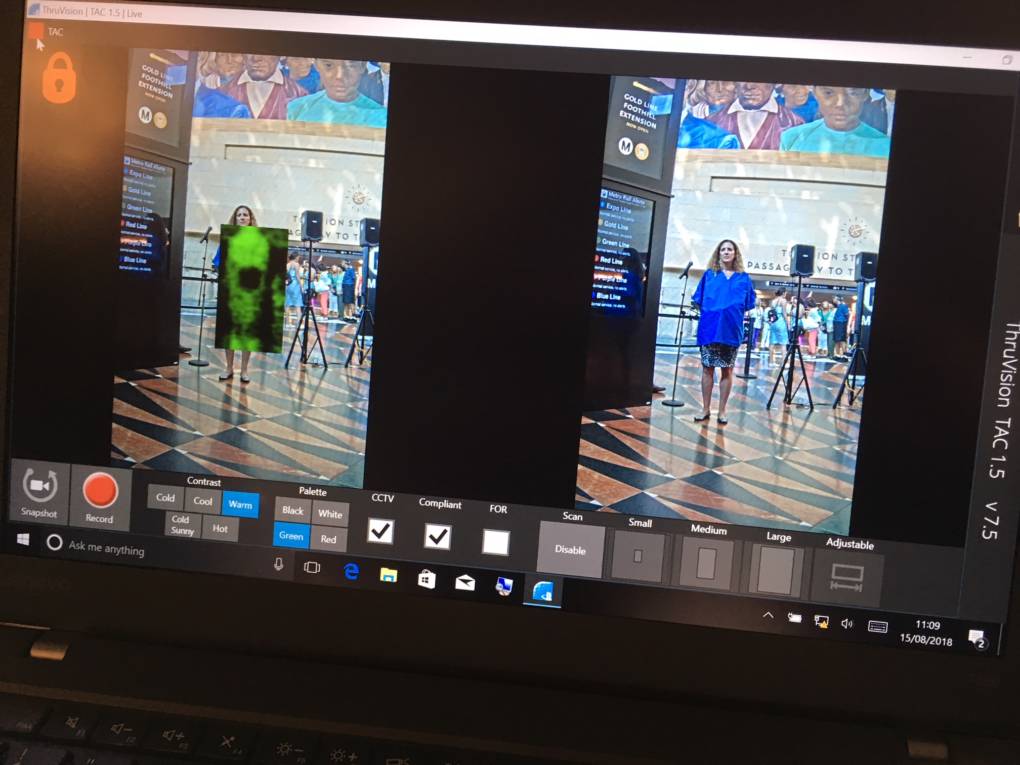
"caption": "An L.A. Metro test shows what new body scanners display on monitors. In this case, the test subject is concealing an object beneath her clothing. ",
"description": null,
"title": "L.A. Metro-Body Scanning",
"credit": "L.A. Metro",
"status": "inherit",
"isLoading": false,
"fetchFailed": false
},
"news_11686636": {
"type": "attachments",
"id": "news_11686636",
"meta": {
"index": "attachments_1716263798",
"site": "news",
"id": "11686636",
"found": true
},
"parent": 11686635,
"imgSizes": {
"small": {
"file": "https://ww2.kqed.org/app/uploads/sites/10/2018/08/gettyimages-144539782-605adbb3b8ebe028583f7398f8886a89e6e88052-520x390.jpg",
"width": 520,
"mimeType": "image/jpeg",
"height": 390
},
"twentyfourteen-full-width": {
"file": "https://ww2.kqed.org/app/uploads/sites/10/2018/08/gettyimages-144539782-605adbb3b8ebe028583f7398f8886a89e6e88052-1038x576.jpg",
"width": 1038,
"mimeType": "image/jpeg",
"height": 576
},
"thumbnail": {
"file": "https://ww2.kqed.org/app/uploads/sites/10/2018/08/gettyimages-144539782-605adbb3b8ebe028583f7398f8886a89e6e88052-160x120.jpg",
"width": 160,
"mimeType": "image/jpeg",
"height": 120
},
"fd-sm": {
"file": "https://ww2.kqed.org/app/uploads/sites/10/2018/08/gettyimages-144539782-605adbb3b8ebe028583f7398f8886a89e6e88052-960x719.jpg",
"width": 960,
"mimeType": "image/jpeg",
"height": 719
},
"post-thumbnail": {
"file": "https://ww2.kqed.org/app/uploads/sites/10/2018/08/gettyimages-144539782-605adbb3b8ebe028583f7398f8886a89e6e88052-672x372.jpg",
"width": 672,
"mimeType": "image/jpeg",
"height": 372
},
"xsmall": {
"file": "https://ww2.kqed.org/app/uploads/sites/10/2018/08/gettyimages-144539782-605adbb3b8ebe028583f7398f8886a89e6e88052-375x281.jpg",
"width": 375,
"mimeType": "image/jpeg",
"height": 281
},
"kqedFullSize": {
"file": "https://ww2.kqed.org/app/uploads/sites/10/2018/08/gettyimages-144539782-605adbb3b8ebe028583f7398f8886a89e6e88052.jpg",
"width": 3209,
"height": 2405
},
"large": {
"file": "https://ww2.kqed.org/app/uploads/sites/10/2018/08/gettyimages-144539782-605adbb3b8ebe028583f7398f8886a89e6e88052-1020x764.jpg",
"width": 1020,
"mimeType": "image/jpeg",
"height": 764
},
"xlarge": {
"file": "https://ww2.kqed.org/app/uploads/sites/10/2018/08/gettyimages-144539782-605adbb3b8ebe028583f7398f8886a89e6e88052-1180x884.jpg",
"width": 1180,
"mimeType": "image/jpeg",
"height": 884
},
"complete_open_graph": {
"file": "https://ww2.kqed.org/app/uploads/sites/10/2018/08/gettyimages-144539782-605adbb3b8ebe028583f7398f8886a89e6e88052-1200x899.jpg",
"width": 1200,
"mimeType": "image/jpeg",
"height": 899
},
"guest-author-50": {
"file": "https://ww2.kqed.org/app/uploads/sites/10/2018/08/gettyimages-144539782-605adbb3b8ebe028583f7398f8886a89e6e88052-50x50.jpg",
"width": 50,
"mimeType": "image/jpeg",
"height": 50
},
"guest-author-96": {
"file": "https://ww2.kqed.org/app/uploads/sites/10/2018/08/gettyimages-144539782-605adbb3b8ebe028583f7398f8886a89e6e88052-96x96.jpg",
"width": 96,
"mimeType": "image/jpeg",
"height": 96
},
"medium": {
"file": "https://ww2.kqed.org/app/uploads/sites/10/2018/08/gettyimages-144539782-605adbb3b8ebe028583f7398f8886a89e6e88052-800x600.jpg",
"width": 800,
"mimeType": "image/jpeg",
"height": 600
},
"guest-author-64": {
"file": "https://ww2.kqed.org/app/uploads/sites/10/2018/08/gettyimages-144539782-605adbb3b8ebe028583f7398f8886a89e6e88052-64x64.jpg",
"width": 64,
"mimeType": "image/jpeg",
"height": 64
},
"guest-author-32": {
"file": "https://ww2.kqed.org/app/uploads/sites/10/2018/08/gettyimages-144539782-605adbb3b8ebe028583f7398f8886a89e6e88052-32x32.jpg",
"width": 32,
"mimeType": "image/jpeg",
"height": 32
},
"fd-lrg": {
"file": "https://ww2.kqed.org/app/uploads/sites/10/2018/08/gettyimages-144539782-605adbb3b8ebe028583f7398f8886a89e6e88052-1920x1439.jpg",
"width": 1920,
"mimeType": "image/jpeg",
"height": 1439
},
"fd-med": {
"file": "https://ww2.kqed.org/app/uploads/sites/10/2018/08/gettyimages-144539782-605adbb3b8ebe028583f7398f8886a89e6e88052-1180x884.jpg",
"width": 1180,
"mimeType": "image/jpeg",
"height": 884
},
"full-width": {
"file": "https://ww2.kqed.org/app/uploads/sites/10/2018/08/gettyimages-144539782-605adbb3b8ebe028583f7398f8886a89e6e88052-1920x1439.jpg",
"width": 1920,
"mimeType": "image/jpeg",
"height": 1439
},
"detail": {
"file": "https://ww2.kqed.org/app/uploads/sites/10/2018/08/gettyimages-144539782-605adbb3b8ebe028583f7398f8886a89e6e88052-150x150.jpg",
"width": 150,
"mimeType": "image/jpeg",
"height": 150
},
"guest-author-128": {
"file": "https://ww2.kqed.org/app/uploads/sites/10/2018/08/gettyimages-144539782-605adbb3b8ebe028583f7398f8886a89e6e88052-128x128.jpg",
"width": 128,
"mimeType": "image/jpeg",
"height": 128
},
"xxsmall": {
"file": "https://ww2.kqed.org/app/uploads/sites/10/2018/08/gettyimages-144539782-605adbb3b8ebe028583f7398f8886a89e6e88052-240x180.jpg",
"width": 240,
"mimeType": "image/jpeg",
"height": 180
}
},
"publishDate": 1534173064,
"modified": 1534173064,
"caption": null,
"description": "People walk into the cafeteria at Facebook's main campus in Menlo Park, Calif., May 15, 2012.",
"title": "People walk into the cafeteria at Facebook's main campus in Menlo Park, Calif., May 15, 2012.",
"credit": null,
"status": "inherit",
"isLoading": false,
"fetchFailed": false
},
"news_11686254": {
"type": "attachments",
"id": "news_11686254",
"meta": {
"index": "attachments_1716263798",
"site": "news",
"id": "11686254",
"found": true
},
"parent": 11686240,
"imgSizes": {
"small": {
"file": "https://ww2.kqed.org/app/uploads/sites/10/2018/08/FacebookAcademy_Aug2018_jenniferleahyphotography-46-520x347.jpg",
"width": 520,
"mimeType": "image/jpeg",
"height": 347
},
"twentyfourteen-full-width": {
"file": "https://ww2.kqed.org/app/uploads/sites/10/2018/08/FacebookAcademy_Aug2018_jenniferleahyphotography-46-1038x576.jpg",
"width": 1038,
"mimeType": "image/jpeg",
"height": 576
},
"thumbnail": {
"file": "https://ww2.kqed.org/app/uploads/sites/10/2018/08/FacebookAcademy_Aug2018_jenniferleahyphotography-46-160x107.jpg",
"width": 160,
"mimeType": "image/jpeg",
"height": 107
},
"fd-sm": {
"file": "https://ww2.kqed.org/app/uploads/sites/10/2018/08/FacebookAcademy_Aug2018_jenniferleahyphotography-46-960x640.jpg",
"width": 960,
"mimeType": "image/jpeg",
"height": 640
},
"post-thumbnail": {
"file": "https://ww2.kqed.org/app/uploads/sites/10/2018/08/FacebookAcademy_Aug2018_jenniferleahyphotography-46-672x372.jpg",
"width": 672,
"mimeType": "image/jpeg",
"height": 372
},
"xsmall": {
"file": "https://ww2.kqed.org/app/uploads/sites/10/2018/08/FacebookAcademy_Aug2018_jenniferleahyphotography-46-375x250.jpg",
"width": 375,
"mimeType": "image/jpeg",
"height": 250
},
"kqedFullSize": {
"file": "https://ww2.kqed.org/app/uploads/sites/10/2018/08/FacebookAcademy_Aug2018_jenniferleahyphotography-46-e1534029050693.jpg",
"width": 1920,
"height": 1280
},
"large": {
"file": "https://ww2.kqed.org/app/uploads/sites/10/2018/08/FacebookAcademy_Aug2018_jenniferleahyphotography-46-1020x680.jpg",
"width": 1020,
"mimeType": "image/jpeg",
"height": 680
},
"xlarge": {
"file": "https://ww2.kqed.org/app/uploads/sites/10/2018/08/FacebookAcademy_Aug2018_jenniferleahyphotography-46-1180x787.jpg",
"width": 1180,
"mimeType": "image/jpeg",
"height": 787
},
"complete_open_graph": {
"file": "https://ww2.kqed.org/app/uploads/sites/10/2018/08/FacebookAcademy_Aug2018_jenniferleahyphotography-46-1200x800.jpg",
"width": 1200,
"mimeType": "image/jpeg",
"height": 800
},
"guest-author-50": {
"file": "https://ww2.kqed.org/app/uploads/sites/10/2018/08/FacebookAcademy_Aug2018_jenniferleahyphotography-46-50x50.jpg",
"width": 50,
"mimeType": "image/jpeg",
"height": 50
},
"guest-author-96": {
"file": "https://ww2.kqed.org/app/uploads/sites/10/2018/08/FacebookAcademy_Aug2018_jenniferleahyphotography-46-96x96.jpg",
"width": 96,
"mimeType": "image/jpeg",
"height": 96
},
"medium": {
"file": "https://ww2.kqed.org/app/uploads/sites/10/2018/08/FacebookAcademy_Aug2018_jenniferleahyphotography-46-800x533.jpg",
"width": 800,
"mimeType": "image/jpeg",
"height": 533
},
"guest-author-64": {
"file": "https://ww2.kqed.org/app/uploads/sites/10/2018/08/FacebookAcademy_Aug2018_jenniferleahyphotography-46-64x64.jpg",
"width": 64,
"mimeType": "image/jpeg",
"height": 64
},
"guest-author-32": {
"file": "https://ww2.kqed.org/app/uploads/sites/10/2018/08/FacebookAcademy_Aug2018_jenniferleahyphotography-46-32x32.jpg",
"width": 32,
"mimeType": "image/jpeg",
"height": 32
},
"fd-lrg": {
"file": "https://ww2.kqed.org/app/uploads/sites/10/2018/08/FacebookAcademy_Aug2018_jenniferleahyphotography-46-1920x1280.jpg",
"width": 1920,
"mimeType": "image/jpeg",
"height": 1280
},
"fd-med": {
"file": "https://ww2.kqed.org/app/uploads/sites/10/2018/08/FacebookAcademy_Aug2018_jenniferleahyphotography-46-1180x787.jpg",
"width": 1180,
"mimeType": "image/jpeg",
"height": 787
},
"full-width": {
"file": "https://ww2.kqed.org/app/uploads/sites/10/2018/08/FacebookAcademy_Aug2018_jenniferleahyphotography-46-1920x1280.jpg",
"width": 1920,
"mimeType": "image/jpeg",
"height": 1280
},
"detail": {
"file": "https://ww2.kqed.org/app/uploads/sites/10/2018/08/FacebookAcademy_Aug2018_jenniferleahyphotography-46-150x150.jpg",
"width": 150,
"mimeType": "image/jpeg",
"height": 150
},
"guest-author-128": {
"file": "https://ww2.kqed.org/app/uploads/sites/10/2018/08/FacebookAcademy_Aug2018_jenniferleahyphotography-46-128x128.jpg",
"width": 128,
"mimeType": "image/jpeg",
"height": 128
},
"xxsmall": {
"file": "https://ww2.kqed.org/app/uploads/sites/10/2018/08/FacebookAcademy_Aug2018_jenniferleahyphotography-46-240x160.jpg",
"width": 240,
"mimeType": "image/jpeg",
"height": 160
}
},
"publishDate": 1533933508,
"modified": 1534029081,
"caption": "All 19 students in Facebook Academy's 7th graduating class receive a stipend of $1,500 for completing their six-week internship. ",
"description": "All 19 students in Facebook Academy's 7th graduating class receive a stipend of $1,500 for completing their six-week internship.",
"title": "FacebookAcademy_Aug2018_jenniferleahyphotography-46",
"credit": "Jennifer Leahy for Facebook",
"status": "inherit",
"isLoading": false,
"fetchFailed": false
},
"news_11685759": {
"type": "attachments",
"id": "news_11685759",
"meta": {
"index": "attachments_1716263798",
"site": "news",
"id": "11685759",
"found": true
},
"parent": 0,
"imgSizes": {
"small": {
"file": "https://ww2.kqed.org/app/uploads/sites/10/2018/08/California-DMV-Getty-84776394-520x346.jpg",
"width": 520,
"mimeType": "image/jpeg",
"height": 346
},
"twentyfourteen-full-width": {
"file": "https://ww2.kqed.org/app/uploads/sites/10/2018/08/California-DMV-Getty-84776394-1038x576.jpg",
"width": 1038,
"mimeType": "image/jpeg",
"height": 576
},
"thumbnail": {
"file": "https://ww2.kqed.org/app/uploads/sites/10/2018/08/California-DMV-Getty-84776394-160x107.jpg",
"width": 160,
"mimeType": "image/jpeg",
"height": 107
},
"fd-sm": {
"file": "https://ww2.kqed.org/app/uploads/sites/10/2018/08/California-DMV-Getty-84776394-960x639.jpg",
"width": 960,
"mimeType": "image/jpeg",
"height": 639
},
"post-thumbnail": {
"file": "https://ww2.kqed.org/app/uploads/sites/10/2018/08/California-DMV-Getty-84776394-672x372.jpg",
"width": 672,
"mimeType": "image/jpeg",
"height": 372
},
"xsmall": {
"file": "https://ww2.kqed.org/app/uploads/sites/10/2018/08/California-DMV-Getty-84776394-375x250.jpg",
"width": 375,
"mimeType": "image/jpeg",
"height": 250
},
"kqedFullSize": {
"file": "https://ww2.kqed.org/app/uploads/sites/10/2018/08/California-DMV-Getty-84776394.jpg",
"width": 1920,
"height": 1278
},
"large": {
"file": "https://ww2.kqed.org/app/uploads/sites/10/2018/08/California-DMV-Getty-84776394-1020x679.jpg",
"width": 1020,
"mimeType": "image/jpeg",
"height": 679
},
"xlarge": {
"file": "https://ww2.kqed.org/app/uploads/sites/10/2018/08/California-DMV-Getty-84776394-1180x785.jpg",
"width": 1180,
"mimeType": "image/jpeg",
"height": 785
},
"complete_open_graph": {
"file": "https://ww2.kqed.org/app/uploads/sites/10/2018/08/California-DMV-Getty-84776394-1200x799.jpg",
"width": 1200,
"mimeType": "image/jpeg",
"height": 799
},
"guest-author-50": {
"file": "https://ww2.kqed.org/app/uploads/sites/10/2018/08/California-DMV-Getty-84776394-50x50.jpg",
"width": 50,
"mimeType": "image/jpeg",
"height": 50
},
"guest-author-96": {
"file": "https://ww2.kqed.org/app/uploads/sites/10/2018/08/California-DMV-Getty-84776394-96x96.jpg",
"width": 96,
"mimeType": "image/jpeg",
"height": 96
},
"medium": {
"file": "https://ww2.kqed.org/app/uploads/sites/10/2018/08/California-DMV-Getty-84776394-800x533.jpg",
"width": 800,
"mimeType": "image/jpeg",
"height": 533
},
"guest-author-64": {
"file": "https://ww2.kqed.org/app/uploads/sites/10/2018/08/California-DMV-Getty-84776394-64x64.jpg",
"width": 64,
"mimeType": "image/jpeg",
"height": 64
},
"guest-author-32": {
"file": "https://ww2.kqed.org/app/uploads/sites/10/2018/08/California-DMV-Getty-84776394-32x32.jpg",
"width": 32,
"mimeType": "image/jpeg",
"height": 32
},
"fd-lrg": {
"file": "https://ww2.kqed.org/app/uploads/sites/10/2018/08/California-DMV-Getty-84776394-1920x1278.jpg",
"width": 1920,
"mimeType": "image/jpeg",
"height": 1278
},
"fd-med": {
"file": "https://ww2.kqed.org/app/uploads/sites/10/2018/08/California-DMV-Getty-84776394-1180x785.jpg",
"width": 1180,
"mimeType": "image/jpeg",
"height": 785
},
"full-width": {
"file": "https://ww2.kqed.org/app/uploads/sites/10/2018/08/California-DMV-Getty-84776394-1920x1278.jpg",
"width": 1920,
"mimeType": "image/jpeg",
"height": 1278
},
"detail": {
"file": "https://ww2.kqed.org/app/uploads/sites/10/2018/08/California-DMV-Getty-84776394-150x150.jpg",
"width": 150,
"mimeType": "image/jpeg",
"height": 150
},
"guest-author-128": {
"file": "https://ww2.kqed.org/app/uploads/sites/10/2018/08/California-DMV-Getty-84776394-128x128.jpg",
"width": 128,
"mimeType": "image/jpeg",
"height": 128
},
"xxsmall": {
"file": "https://ww2.kqed.org/app/uploads/sites/10/2018/08/California-DMV-Getty-84776394-240x160.jpg",
"width": 240,
"mimeType": "image/jpeg",
"height": 160
}
},
"publishDate": 1533765293,
"modified": 1563915302,
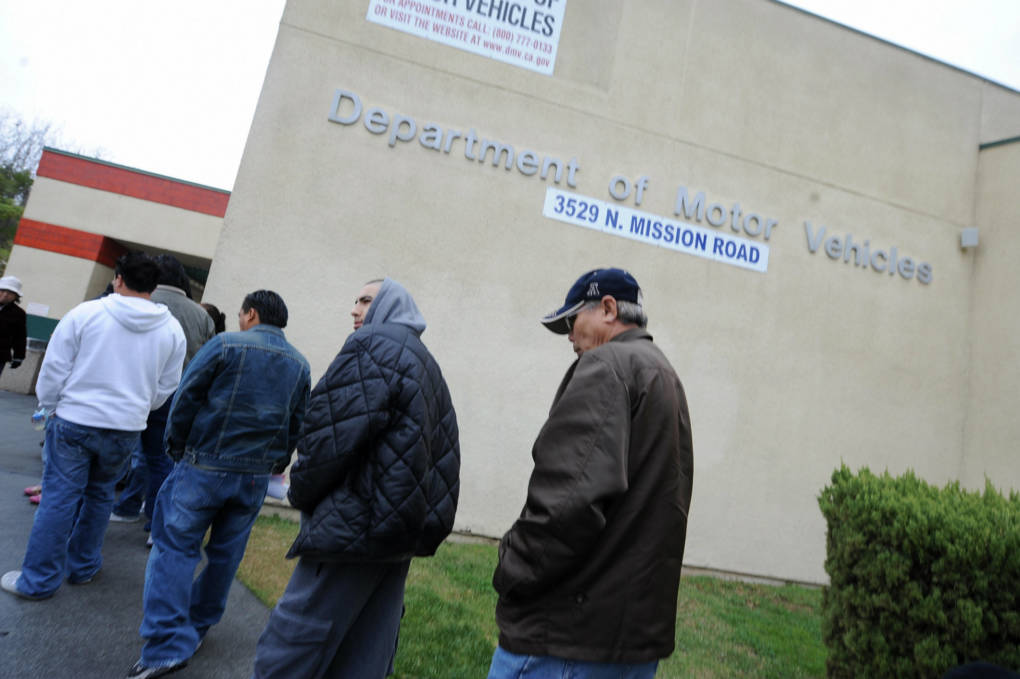
"caption": "People wait in line outside the state Department of Motor Vehicles (DMV) office in Los Angeles on Feb. 13, 2009. Lines at the state agency became even longer in 2018 after the rollout of the Real ID. ",
"description": "People wait in line outside the state Department of Motor Vehicles (DMV) office in Los Angeles on Feb. 13, 2009. Lines at the state agency became even longer in 2018 after the rollout of the Real ID. ",
"title": "California-DMV-Getty-84776394",
"credit": "Robyn Beck/AFP/Getty Images",
"status": "inherit",
"isLoading": false,
"fetchFailed": false
},
"news_11685635": {
"type": "attachments",
"id": "news_11685635",
"meta": {
"index": "attachments_1716263798",
"site": "news",
"id": "11685635",
"found": true
},
"parent": 11685634,
"imgSizes": {
"small": {
"file": "https://ww2.kqed.org/app/uploads/sites/10/2018/08/gettyimages-157777285_wide-2007e471295adfece993732251df78f897108c65-520x292.jpg",
"width": 520,
"mimeType": "image/jpeg",
"height": 292
},
"twentyfourteen-full-width": {
"file": "https://ww2.kqed.org/app/uploads/sites/10/2018/08/gettyimages-157777285_wide-2007e471295adfece993732251df78f897108c65-1038x576.jpg",
"width": 1038,
"mimeType": "image/jpeg",
"height": 576
},
"thumbnail": {
"file": "https://ww2.kqed.org/app/uploads/sites/10/2018/08/gettyimages-157777285_wide-2007e471295adfece993732251df78f897108c65-160x90.jpg",
"width": 160,
"mimeType": "image/jpeg",
"height": 90
},
"fd-sm": {
"file": "https://ww2.kqed.org/app/uploads/sites/10/2018/08/gettyimages-157777285_wide-2007e471295adfece993732251df78f897108c65-960x540.jpg",
"width": 960,
"mimeType": "image/jpeg",
"height": 540
},
"post-thumbnail": {
"file": "https://ww2.kqed.org/app/uploads/sites/10/2018/08/gettyimages-157777285_wide-2007e471295adfece993732251df78f897108c65-672x372.jpg",
"width": 672,
"mimeType": "image/jpeg",
"height": 372
},
"xsmall": {
"file": "https://ww2.kqed.org/app/uploads/sites/10/2018/08/gettyimages-157777285_wide-2007e471295adfece993732251df78f897108c65-375x211.jpg",
"width": 375,
"mimeType": "image/jpeg",
"height": 211
},
"kqedFullSize": {
"file": "https://ww2.kqed.org/app/uploads/sites/10/2018/08/gettyimages-157777285_wide-2007e471295adfece993732251df78f897108c65.jpg",
"width": 3000,
"height": 1687
},
"large": {
"file": "https://ww2.kqed.org/app/uploads/sites/10/2018/08/gettyimages-157777285_wide-2007e471295adfece993732251df78f897108c65-1020x574.jpg",
"width": 1020,
"mimeType": "image/jpeg",
"height": 574
},
"xlarge": {
"file": "https://ww2.kqed.org/app/uploads/sites/10/2018/08/gettyimages-157777285_wide-2007e471295adfece993732251df78f897108c65-1180x664.jpg",
"width": 1180,
"mimeType": "image/jpeg",
"height": 664
},
"complete_open_graph": {
"file": "https://ww2.kqed.org/app/uploads/sites/10/2018/08/gettyimages-157777285_wide-2007e471295adfece993732251df78f897108c65-1200x675.jpg",
"width": 1200,
"mimeType": "image/jpeg",
"height": 675
},
"guest-author-50": {
"file": "https://ww2.kqed.org/app/uploads/sites/10/2018/08/gettyimages-157777285_wide-2007e471295adfece993732251df78f897108c65-50x50.jpg",
"width": 50,
"mimeType": "image/jpeg",
"height": 50
},
"guest-author-96": {
"file": "https://ww2.kqed.org/app/uploads/sites/10/2018/08/gettyimages-157777285_wide-2007e471295adfece993732251df78f897108c65-96x96.jpg",
"width": 96,
"mimeType": "image/jpeg",
"height": 96
},
"medium": {
"file": "https://ww2.kqed.org/app/uploads/sites/10/2018/08/gettyimages-157777285_wide-2007e471295adfece993732251df78f897108c65-800x450.jpg",
"width": 800,
"mimeType": "image/jpeg",
"height": 450
},
"guest-author-64": {
"file": "https://ww2.kqed.org/app/uploads/sites/10/2018/08/gettyimages-157777285_wide-2007e471295adfece993732251df78f897108c65-64x64.jpg",
"width": 64,
"mimeType": "image/jpeg",
"height": 64
},
"guest-author-32": {
"file": "https://ww2.kqed.org/app/uploads/sites/10/2018/08/gettyimages-157777285_wide-2007e471295adfece993732251df78f897108c65-32x32.jpg",
"width": 32,
"mimeType": "image/jpeg",
"height": 32
},
"fd-lrg": {
"file": "https://ww2.kqed.org/app/uploads/sites/10/2018/08/gettyimages-157777285_wide-2007e471295adfece993732251df78f897108c65-1920x1080.jpg",
"width": 1920,
"mimeType": "image/jpeg",
"height": 1080
},
"fd-med": {
"file": "https://ww2.kqed.org/app/uploads/sites/10/2018/08/gettyimages-157777285_wide-2007e471295adfece993732251df78f897108c65-1180x664.jpg",
"width": 1180,
"mimeType": "image/jpeg",
"height": 664
},
"full-width": {
"file": "https://ww2.kqed.org/app/uploads/sites/10/2018/08/gettyimages-157777285_wide-2007e471295adfece993732251df78f897108c65-1920x1080.jpg",
"width": 1920,
"mimeType": "image/jpeg",
"height": 1080
},
"detail": {
"file": "https://ww2.kqed.org/app/uploads/sites/10/2018/08/gettyimages-157777285_wide-2007e471295adfece993732251df78f897108c65-150x150.jpg",
"width": 150,
"mimeType": "image/jpeg",
"height": 150
},
"guest-author-128": {
"file": "https://ww2.kqed.org/app/uploads/sites/10/2018/08/gettyimages-157777285_wide-2007e471295adfece993732251df78f897108c65-128x128.jpg",
"width": 128,
"mimeType": "image/jpeg",
"height": 128
},
"xxsmall": {
"file": "https://ww2.kqed.org/app/uploads/sites/10/2018/08/gettyimages-157777285_wide-2007e471295adfece993732251df78f897108c65-240x135.jpg",
"width": 240,
"mimeType": "image/jpeg",
"height": 135
}
},
"publishDate": 1533744807,
"modified": 1533747457,
"caption": "The Oakland Police Department remains under federal oversight 15 years after settling a civil rights case against it.",
"description": "The Oakland Police Department remains under federal oversight 15 years after settling a civil rights case against it",
"title": "The Oakland Police Department remains under federal oversight 15 years after settling a civil rights case against it.",
"credit": "Justin Sullivan/Getty Images",
"status": "inherit",
"isLoading": false,
"fetchFailed": false
},
"news_11685074": {
"type": "attachments",
"id": "news_11685074",
"meta": {
"index": "attachments_1716263798",
"site": "news",
"id": "11685074",
"found": true
},
"parent": 11685073,
"imgSizes": {
"small": {
"file": "https://ww2.kqed.org/app/uploads/sites/10/2018/08/gettyimages-578048116_wide-99625f2aa2e8f6f29672fd8d989f7f8a055c0462-520x292.jpg",
"width": 520,
"mimeType": "image/jpeg",
"height": 292
},
"twentyfourteen-full-width": {
"file": "https://ww2.kqed.org/app/uploads/sites/10/2018/08/gettyimages-578048116_wide-99625f2aa2e8f6f29672fd8d989f7f8a055c0462-1038x576.jpg",
"width": 1038,
"mimeType": "image/jpeg",
"height": 576
},
"thumbnail": {
"file": "https://ww2.kqed.org/app/uploads/sites/10/2018/08/gettyimages-578048116_wide-99625f2aa2e8f6f29672fd8d989f7f8a055c0462-160x90.jpg",
"width": 160,
"mimeType": "image/jpeg",
"height": 90
},
"fd-sm": {
"file": "https://ww2.kqed.org/app/uploads/sites/10/2018/08/gettyimages-578048116_wide-99625f2aa2e8f6f29672fd8d989f7f8a055c0462-960x540.jpg",
"width": 960,
"mimeType": "image/jpeg",
"height": 540
},
"post-thumbnail": {
"file": "https://ww2.kqed.org/app/uploads/sites/10/2018/08/gettyimages-578048116_wide-99625f2aa2e8f6f29672fd8d989f7f8a055c0462-672x372.jpg",
"width": 672,
"mimeType": "image/jpeg",
"height": 372
},
"xsmall": {
"file": "https://ww2.kqed.org/app/uploads/sites/10/2018/08/gettyimages-578048116_wide-99625f2aa2e8f6f29672fd8d989f7f8a055c0462-375x211.jpg",
"width": 375,
"mimeType": "image/jpeg",
"height": 211
},
"kqedFullSize": {
"file": "https://ww2.kqed.org/app/uploads/sites/10/2018/08/gettyimages-578048116_wide-99625f2aa2e8f6f29672fd8d989f7f8a055c0462.jpg",
"width": 1704,
"height": 958
},
"large": {
"file": "https://ww2.kqed.org/app/uploads/sites/10/2018/08/gettyimages-578048116_wide-99625f2aa2e8f6f29672fd8d989f7f8a055c0462-1020x573.jpg",
"width": 1020,
"mimeType": "image/jpeg",
"height": 573
},
"xlarge": {
"file": "https://ww2.kqed.org/app/uploads/sites/10/2018/08/gettyimages-578048116_wide-99625f2aa2e8f6f29672fd8d989f7f8a055c0462-1180x663.jpg",
"width": 1180,
"mimeType": "image/jpeg",
"height": 663
},
"complete_open_graph": {
"file": "https://ww2.kqed.org/app/uploads/sites/10/2018/08/gettyimages-578048116_wide-99625f2aa2e8f6f29672fd8d989f7f8a055c0462-1200x675.jpg",
"width": 1200,
"mimeType": "image/jpeg",
"height": 675
},
"guest-author-50": {
"file": "https://ww2.kqed.org/app/uploads/sites/10/2018/08/gettyimages-578048116_wide-99625f2aa2e8f6f29672fd8d989f7f8a055c0462-50x50.jpg",
"width": 50,
"mimeType": "image/jpeg",
"height": 50
},
"guest-author-96": {
"file": "https://ww2.kqed.org/app/uploads/sites/10/2018/08/gettyimages-578048116_wide-99625f2aa2e8f6f29672fd8d989f7f8a055c0462-96x96.jpg",
"width": 96,
"mimeType": "image/jpeg",
"height": 96
},
"medium": {
"file": "https://ww2.kqed.org/app/uploads/sites/10/2018/08/gettyimages-578048116_wide-99625f2aa2e8f6f29672fd8d989f7f8a055c0462-800x450.jpg",
"width": 800,
"mimeType": "image/jpeg",
"height": 450
},
"guest-author-64": {
"file": "https://ww2.kqed.org/app/uploads/sites/10/2018/08/gettyimages-578048116_wide-99625f2aa2e8f6f29672fd8d989f7f8a055c0462-64x64.jpg",
"width": 64,
"mimeType": "image/jpeg",
"height": 64
},
"guest-author-32": {
"file": "https://ww2.kqed.org/app/uploads/sites/10/2018/08/gettyimages-578048116_wide-99625f2aa2e8f6f29672fd8d989f7f8a055c0462-32x32.jpg",
"width": 32,
"mimeType": "image/jpeg",
"height": 32
},
"fd-med": {
"file": "https://ww2.kqed.org/app/uploads/sites/10/2018/08/gettyimages-578048116_wide-99625f2aa2e8f6f29672fd8d989f7f8a055c0462-1180x663.jpg",
"width": 1180,
"mimeType": "image/jpeg",
"height": 663
},
"detail": {
"file": "https://ww2.kqed.org/app/uploads/sites/10/2018/08/gettyimages-578048116_wide-99625f2aa2e8f6f29672fd8d989f7f8a055c0462-150x150.jpg",
"width": 150,
"mimeType": "image/jpeg",
"height": 150
},
"guest-author-128": {
"file": "https://ww2.kqed.org/app/uploads/sites/10/2018/08/gettyimages-578048116_wide-99625f2aa2e8f6f29672fd8d989f7f8a055c0462-128x128.jpg",
"width": 128,
"mimeType": "image/jpeg",
"height": 128
},
"xxsmall": {
"file": "https://ww2.kqed.org/app/uploads/sites/10/2018/08/gettyimages-578048116_wide-99625f2aa2e8f6f29672fd8d989f7f8a055c0462-240x135.jpg",
"width": 240,
"mimeType": "image/jpeg",
"height": 135
}
},
"publishDate": 1533582919,
"modified": 1533583020,
"caption": "Alex Jones and his Infowars channels have been removed from YouTube; Facebook and Apple's iTunes have also deleted most or all of his outlets on their services. He's seen here being escorted from a rally near the 2016 Republican National Convention.",
"description": "Alex Jones and his Infowars channels have been removed from YouTube; Facebook and Apple's iTunes have also deleted most or all of his outlets on their services. He's seen here being escorted from a rally near the 2016 Republican National Convention.",
"title": "Alex Jones and his Infowars channels have been removed from YouTube; Facebook and Apple's iTunes have also deleted most or all of his outlets on their services. He's seen here being escorted from a rally near the 2016 Republican National Convention.",
"credit": "Tom Williams/CQ-Roll Call Inc.",
"status": "inherit",
"isLoading": false,
"fetchFailed": false
},
"news_11684650": {
"type": "attachments",
"id": "news_11684650",
"meta": {
"index": "attachments_1716263798",
"site": "news",
"id": "11684650",
"found": true
},
"parent": 11684649,
"imgSizes": {
"small": {
"file": "https://ww2.kqed.org/app/uploads/sites/10/2018/08/rtx6cy6a_wide-cb31df35187f6a52240a583c7ce3433304564991-520x293.jpg",
"width": 520,
"mimeType": "image/jpeg",
"height": 293
},
"twentyfourteen-full-width": {
"file": "https://ww2.kqed.org/app/uploads/sites/10/2018/08/rtx6cy6a_wide-cb31df35187f6a52240a583c7ce3433304564991-1038x576.jpg",
"width": 1038,
"mimeType": "image/jpeg",
"height": 576
},
"thumbnail": {
"file": "https://ww2.kqed.org/app/uploads/sites/10/2018/08/rtx6cy6a_wide-cb31df35187f6a52240a583c7ce3433304564991-160x90.jpg",
"width": 160,
"mimeType": "image/jpeg",
"height": 90
},
"fd-sm": {
"file": "https://ww2.kqed.org/app/uploads/sites/10/2018/08/rtx6cy6a_wide-cb31df35187f6a52240a583c7ce3433304564991-960x540.jpg",
"width": 960,
"mimeType": "image/jpeg",
"height": 540
},
"post-thumbnail": {
"file": "https://ww2.kqed.org/app/uploads/sites/10/2018/08/rtx6cy6a_wide-cb31df35187f6a52240a583c7ce3433304564991-672x372.jpg",
"width": 672,
"mimeType": "image/jpeg",
"height": 372
},
"xsmall": {
"file": "https://ww2.kqed.org/app/uploads/sites/10/2018/08/rtx6cy6a_wide-cb31df35187f6a52240a583c7ce3433304564991-375x211.jpg",
"width": 375,
"mimeType": "image/jpeg",
"height": 211
},
"kqedFullSize": {
"file": "https://ww2.kqed.org/app/uploads/sites/10/2018/08/rtx6cy6a_wide-cb31df35187f6a52240a583c7ce3433304564991.jpg",
"width": 2773,
"height": 1560
},
"large": {
"file": "https://ww2.kqed.org/app/uploads/sites/10/2018/08/rtx6cy6a_wide-cb31df35187f6a52240a583c7ce3433304564991-1020x574.jpg",
"width": 1020,
"mimeType": "image/jpeg",
"height": 574
},
"xlarge": {
"file": "https://ww2.kqed.org/app/uploads/sites/10/2018/08/rtx6cy6a_wide-cb31df35187f6a52240a583c7ce3433304564991-1180x664.jpg",
"width": 1180,
"mimeType": "image/jpeg",
"height": 664
},
"complete_open_graph": {
"file": "https://ww2.kqed.org/app/uploads/sites/10/2018/08/rtx6cy6a_wide-cb31df35187f6a52240a583c7ce3433304564991-1200x675.jpg",
"width": 1200,
"mimeType": "image/jpeg",
"height": 675
},
"guest-author-50": {
"file": "https://ww2.kqed.org/app/uploads/sites/10/2018/08/rtx6cy6a_wide-cb31df35187f6a52240a583c7ce3433304564991-50x50.jpg",
"width": 50,
"mimeType": "image/jpeg",
"height": 50
},
"guest-author-96": {
"file": "https://ww2.kqed.org/app/uploads/sites/10/2018/08/rtx6cy6a_wide-cb31df35187f6a52240a583c7ce3433304564991-96x96.jpg",
"width": 96,
"mimeType": "image/jpeg",
"height": 96
},
"medium": {
"file": "https://ww2.kqed.org/app/uploads/sites/10/2018/08/rtx6cy6a_wide-cb31df35187f6a52240a583c7ce3433304564991-800x450.jpg",
"width": 800,
"mimeType": "image/jpeg",
"height": 450
},
"guest-author-64": {
"file": "https://ww2.kqed.org/app/uploads/sites/10/2018/08/rtx6cy6a_wide-cb31df35187f6a52240a583c7ce3433304564991-64x64.jpg",
"width": 64,
"mimeType": "image/jpeg",
"height": 64
},
"guest-author-32": {
"file": "https://ww2.kqed.org/app/uploads/sites/10/2018/08/rtx6cy6a_wide-cb31df35187f6a52240a583c7ce3433304564991-32x32.jpg",
"width": 32,
"mimeType": "image/jpeg",
"height": 32
},
"fd-lrg": {
"file": "https://ww2.kqed.org/app/uploads/sites/10/2018/08/rtx6cy6a_wide-cb31df35187f6a52240a583c7ce3433304564991-1920x1080.jpg",
"width": 1920,
"mimeType": "image/jpeg",
"height": 1080
},
"fd-med": {
"file": "https://ww2.kqed.org/app/uploads/sites/10/2018/08/rtx6cy6a_wide-cb31df35187f6a52240a583c7ce3433304564991-1180x664.jpg",
"width": 1180,
"mimeType": "image/jpeg",
"height": 664
},
"full-width": {
"file": "https://ww2.kqed.org/app/uploads/sites/10/2018/08/rtx6cy6a_wide-cb31df35187f6a52240a583c7ce3433304564991-1920x1080.jpg",
"width": 1920,
"mimeType": "image/jpeg",
"height": 1080
},
"detail": {
"file": "https://ww2.kqed.org/app/uploads/sites/10/2018/08/rtx6cy6a_wide-cb31df35187f6a52240a583c7ce3433304564991-150x150.jpg",
"width": 150,
"mimeType": "image/jpeg",
"height": 150
},
"guest-author-128": {
"file": "https://ww2.kqed.org/app/uploads/sites/10/2018/08/rtx6cy6a_wide-cb31df35187f6a52240a583c7ce3433304564991-128x128.jpg",
"width": 128,
"mimeType": "image/jpeg",
"height": 128
},
"xxsmall": {
"file": "https://ww2.kqed.org/app/uploads/sites/10/2018/08/rtx6cy6a_wide-cb31df35187f6a52240a583c7ce3433304564991-240x135.jpg",
"width": 240,
"mimeType": "image/jpeg",
"height": 135
}
},
"publishDate": 1533311292,
"modified": 1663251710,
"caption": null,
"description": "Amazon boxes are seen stacked for delivery in New York City.",
"title": "Amazon boxes are seen stacked for delivery in New York City.",
"credit": null,
"status": "inherit",
"altTag": "Amazon",
"isLoading": false,
"fetchFailed": false
}
},
"audioPlayerReducer": {
"postId": "stream_live",
"isPaused": true,
"isPlaying": false,
"pfsActive": false,
"pledgeModalIsOpen": true,
"playerDrawerIsOpen": false,
"liveAudioPlayStartedAt": 0,
"liveAudioPlayContext": ""
},
"authorsReducer": {
"byline_news_11687665": {
"type": "authors",
"id": "byline_news_11687665",
"meta": {
"override": true
},
"slug": "byline_news_11687665",
"name": "\u003cstrong>Brakkton Booker\u003c/strong>",
"isLoading": false
},
"byline_news_11687403": {
"type": "authors",
"id": "byline_news_11687403",
"meta": {
"override": true
},
"slug": "byline_news_11687403",
"name": "\u003cstrong>Ryan Nakashima\u003c/strong>\u003c/br>Associated Press Technology Writer",
"isLoading": false
},
"byline_news_11687093": {
"type": "authors",
"id": "byline_news_11687093",
"meta": {
"override": true
},
"slug": "byline_news_11687093",
"name": "Lisa Morehouse and Marissa Ortega Welch",
"isLoading": false
},
"byline_news_11686902": {
"type": "authors",
"id": "byline_news_11686902",
"meta": {
"override": true
},
"slug": "byline_news_11686902",
"name": "\u003cstrong>Michael Balsamo\u003cbr />Associated Press\u003c/strong>",
"isLoading": false
},
"byline_news_11686635": {
"type": "authors",
"id": "byline_news_11686635",
"meta": {
"override": true
},
"slug": "byline_news_11686635",
"name": "Tonya Mosley",
"isLoading": false
},
"byline_news_11685634": {
"type": "authors",
"id": "byline_news_11685634",
"meta": {
"override": true
},
"slug": "byline_news_11685634",
"name": "Eric Westervelt\u003cbr>\u003cstrong>\u003ca href=\"https://www.npr.org/2018/08/08/636319870/in-oakland-more-data-hasnt-meant-less-racial-disparity-during-police-stops\">NPR\u003c/a>\u003c/strong>",
"isLoading": false
},
"byline_news_11685073": {
"type": "authors",
"id": "byline_news_11685073",
"meta": {
"override": true
},
"slug": "byline_news_11685073",
"name": "Anastasia Tsioulcas",
"isLoading": false
},
"byline_news_11684649": {
"type": "authors",
"id": "byline_news_11684649",
"meta": {
"override": true
},
"slug": "byline_news_11684649",
"name": "James Doubek",
"isLoading": false
},
"kqed": {
"type": "authors",
"id": "236",
"meta": {
"index": "authors_1716337520",
"id": "236",
"found": true
},
"name": "KQED News Staff",
"firstName": "KQED News Staff",
"lastName": null,
"slug": "kqed",
"email": "faq@kqed.org",
"display_author_email": false,
"staff_mastheads": [],
"title": null,
"bio": null,
"avatar": "https://secure.gravatar.com/avatar/ef0e801a68c4c54afa9180db14084167?s=600&d=blank&r=g",
"twitter": null,
"facebook": null,
"instagram": null,
"linkedin": null,
"sites": [
{
"site": "arts",
"roles": [
"contributor"
]
},
{
"site": "news",
"roles": [
"editor"
]
},
{
"site": "futureofyou",
"roles": [
"author"
]
}
],
"headData": {
"title": "KQED News Staff | KQED",
"description": null,
"ogImgSrc": "https://secure.gravatar.com/avatar/ef0e801a68c4c54afa9180db14084167?s=600&d=blank&r=g",
"twImgSrc": "https://secure.gravatar.com/avatar/ef0e801a68c4c54afa9180db14084167?s=600&d=blank&r=g"
},
"isLoading": false,
"link": "/author/kqed"
},
"rachael-myrow": {
"type": "authors",
"id": "251",
"meta": {
"index": "authors_1716337520",
"id": "251",
"found": true
},
"name": "Rachael Myrow",
"firstName": "Rachael",
"lastName": "Myrow",
"slug": "rachael-myrow",
"email": "rmyrow@kqed.org",
"display_author_email": true,
"staff_mastheads": [
"news"
],
"title": "Senior Editor of KQED's Silicon Valley News Desk",
"bio": "• I write and edit stories about how Silicon Valley power and policies shape everyday life in California. I’m also passionate about making Bay Area history and culture more accessible to a broad public. • I’ve been a journalist for most of my life, starting in high school with The Franklin Press in Los Angeles, where I grew up. While earning my first degree in English at UC Berkeley, I got my start in public radio at KALX-FM. After completing a second degree in journalism at Cal, I landed my first professional job at Marketplace, then moved on to KPCC (now LAist), and then KQED, where I hosted The California Report for more than seven years. • My reporting has appeared on NPR, The World, WBUR’s \u003ci>Here & Now\u003c/i>, and the BBC. I also guest host for KQED’s \u003ci>Forum\u003c/i>, as well as the Commonwealth Club in San Francisco. • I speak periodically on media, democracy and technology issues, and do voiceover work for documentaries and educational video projects. • Outside of the studio, you'll find me hiking Bay Area trails and whipping up Insta-ready meals in my kitchen. • I do not accept gifts, money, or favors from anyone connected to my reporting, I don't pay people for information, and I do not support or donate to political causes. • I strive to treat the people I report on with fairness, honesty, and respect. I also recognize there are often multiple sides to a story and work to verify information through multiple sources and documentation. If I get something wrong, I correct it.",
"avatar": "https://secure.gravatar.com/avatar/3ed8a3c5f26025e4a805ba634cda8cd764906b97438a6d9ce216b044e340da4e?s=600&d=blank&r=g",
"twitter": "rachaelmyrow",
"bluesky": null,
"facebook": null,
"instagram": null,
"linkedin": "https://www.linkedin.com/in/rachaelmyrow/",
"sites": [
{
"site": "arts",
"roles": [
"administrator"
]
},
{
"site": "news",
"roles": [
"edit_others_posts",
"editor"
]
},
{
"site": "futureofyou",
"roles": [
"editor"
]
},
{
"site": "bayareabites",
"roles": [
"editor"
]
},
{
"site": "stateofhealth",
"roles": [
"editor"
]
},
{
"site": "science",
"roles": [
"editor"
]
},
{
"site": "food",
"roles": [
"editor"
]
},
{
"site": "forum",
"roles": [
"editor"
]
},
{
"site": "liveblog",
"roles": [
"author"
]
}
],
"headData": {
"title": "Rachael Myrow | KQED",
"description": "Senior Editor of KQED's Silicon Valley News Desk",
"ogImgSrc": "https://secure.gravatar.com/avatar/3ed8a3c5f26025e4a805ba634cda8cd764906b97438a6d9ce216b044e340da4e?s=600&d=blank&r=g",
"twImgSrc": "https://secure.gravatar.com/avatar/3ed8a3c5f26025e4a805ba634cda8cd764906b97438a6d9ce216b044e340da4e?s=600&d=blank&r=g"
},
"isLoading": false,
"link": "/author/rachael-myrow"
},
"msamayoa": {
"type": "authors",
"id": "11512",
"meta": {
"index": "authors_1716337520",
"id": "11512",
"found": true
},
"name": "Monica Samayoa",
"firstName": "Monica",
"lastName": "Samayoa",
"slug": "msamayoa",
"email": "msamayoa@kqed.org",
"display_author_email": false,
"staff_mastheads": [],
"title": "KQED Contributor",
"bio": "Monica Samayoa is a former reporter for KQED News and on-call Producer for The California Report. Before joining KQED, Monica worked at 2SER, an educational radio station in Sydney Australia, where she was a Producer, Host and a Reporter. She graduated with a BA in Broadcast Electronic Communication Arts from San Francisco State University.",
"avatar": "https://secure.gravatar.com/avatar/23e498e43c7614b6c17d430c4859d114?s=600&d=blank&r=g",
"twitter": "@M0NICA10",
"facebook": null,
"instagram": null,
"linkedin": null,
"sites": [
{
"site": "news",
"roles": [
"subscriber"
]
}
],
"headData": {
"title": "Monica Samayoa | KQED",
"description": "KQED Contributor",
"ogImgSrc": "https://secure.gravatar.com/avatar/23e498e43c7614b6c17d430c4859d114?s=600&d=blank&r=g",
"twImgSrc": "https://secure.gravatar.com/avatar/23e498e43c7614b6c17d430c4859d114?s=600&d=blank&r=g"
},
"isLoading": false,
"link": "/author/msamayoa"
}
},
"pagesReducer": {
"news_category_technology": {
"type": "terms",
"id": "news_248",
"meta": {
"index": "terms_1716263798",
"site": "news",
"id": "248",
"score": 10.9318695
},
"featImg": null,
"name": "Technology",
"description": null,
"taxonomy": "category",
"headData": {
"twImgId": null,
"twTitle": null,
"ogTitle": null,
"ogImgId": null,
"twDescription": null,
"description": null,
"title": "Technology Archives | KQED News",
"ogDescription": null
},
"ttid": 256,
"slug": "technology",
"isLoading": false,
"title": "Technology",
"pageMeta": {
"site": "news",
"WpPageTemplate": "page-topic-editorial",
"currentPage": 86
},
"blocks": [
{
"blockName": "kqed/post-list",
"attrs": {
"layout": "cardArticle2",
"query": "posts/news?category=technology",
"seeMore": false,
"paginated": true,
"page": 86
}
},
{
"blockName": "kqed/ad"
}
]
}
},
"pfsSessionReducer": {},
"postsReducer": {
"stream_live": {
"type": "live",
"id": "stream_live",
"audioUrl": "https://streams.kqed.org/kqedradio",
"title": "Live Stream",
"excerpt": "Live Stream information currently unavailable.",
"link": "/radio",
"featImg": "",
"label": {
"name": "KQED Live",
"link": "/"
}
},
"stream_kqedNewscast": {
"type": "posts",
"id": "stream_kqedNewscast",
"audioUrl": "https://www.kqed.org/.stream/anon/radio/RDnews/newscast.mp3?_=1",
"title": "KQED Newscast",
"featImg": "",
"label": {
"name": "88.5 FM",
"link": "/"
}
},
"news_11687665": {
"type": "posts",
"id": "news_11687665",
"meta": {
"index": "posts_1716263798",
"site": "news",
"id": "11687665",
"score": null,
"sort": [
1534696221000
]
},
"parent": 0,
"labelTerm": {},
"blocks": [],
"publishDate": 1534696221,
"format": "image",
"disqusTitle": "HUD Hits Facebook For Allowing Housing Discrimination",
"title": "HUD Hits Facebook For Allowing Housing Discrimination",
"headTitle": "The California Report | KQED News",
"content": "\u003cp>Housing and Urban Development Secretary Ben Carson is accusing tech behemoth Facebook of engaging in housing discrimination, according to a \u003ca href=\"https://www.hud.gov/sites/dfiles/PIH/documents/HUD_01-18-0323_Complaint.pdf\" rel=\"noopener\" target=\"_blank\">complaint\u003c/a> filed on Friday. \u003c/p>\n\u003cp>In it, HUD says the social media giant allows landlords and home sellers access to advertising tools that limit which prospective buyers or tenants can view certain online ads based on race, religion, sex, disability and other characteristics. \u003c/p>\n\u003cp>\"The Fair Housing Act prohibits housing discrimination including those who might limit or deny housing options with a click of a mouse,\" Anna María Farías, HUD's assistant secretary for fair housing and equal opportunity said in a \u003ca href=\"https://www.hud.gov/press/press_releases_media_advisories/HUD_No_18_085\" rel=\"noopener\" target=\"_blank\">statement\u003c/a>. \u003c/p>\n\u003cp>\"When Facebook uses the vast amount of personal data it collects to help advertisers to discriminate, it's the same as slamming the door in someone's face,\" she said.\u003c/p>\n\u003cp>According to the complaint, Facebook permitted advertisers to discriminate based on disability by blocking ads to users the company categorized as having interests in \"mobility scooter\" or \"deaf culture.\" It similarly discriminates based on familial status by not showing ads to users that were labeled as being interested in \"child care\" or \"parenting,\" according to the complaint. \u003c/p>\n\u003cp>[ad fullwidth]\u003c/p>\n\u003cp>Facebook could also modify or block ads depending on ZIP code, the complaint adds. \u003c/p>\n\u003cp>A spokesperson for Facebook said it would respond to the HUD complaint in court and that the company will work with the department about concerns raised. \u003c/p>\n\u003cp>In a separate action from the HUD complaint, the Justice Department filed a statement of interest Friday, joining housing advocates in alleging that Facebook's advertising platform of violating fair housing laws. \u003c/p>\n\u003cp>The move allows the lawsuit, filed in March by the \u003ca href=\"https://nationalfairhousing.org/2018/03/27/facebook-sued-by-civil-rights-groups-for-discrimination-in-online-housing-advertisements/\" rel=\"noopener\" target=\"_blank\">National Fair Housing Alliance\u003c/a> and three other housing advocacy groups, to continue. \u003c/p>\n\u003cp>Facebook had sought to have that lawsuit dismissed on the grounds that it is simply an interactive computer service. \u003c/p>\n\u003cp>\u003c/p>\n\u003cp>In the filing, Geoffrey Berman, the U.S. attorney for the Southern District of New York, called that a \"faulty premise,\" adding, \"The categorizing of Facebook users based on protected characteristics, and the mechanism that Facebook offers advertisers to target those segments of the potential audience, violate the FHA [Fair Housing Act]. Facebook's motion should therefore be denied.\" \u003c/p>\n\u003cdiv class=\"fullattribution\">Copyright 2018 NPR. To see more, visit http://www.npr.org/.\u003cimg src=\"https://www.google-analytics.com/__utm.gif?utmac=UA-5828686-4&utmdt=HUD+Hits+Facebook+For+Allowing+Housing+Discrimination+&utme=8(APIKey)9(MDAxOTAwOTE4MDEyMTkxMDAzNjczZDljZA004)\">\u003c/div>\n\n",
"disqusIdentifier": "11687665 https://ww2.kqed.org/news/?p=11687665",
"disqusUrl": "https://ww2.kqed.org/news/2018/08/19/hud-hits-facebook-for-allowing-housing-discrimination/",
"stats": {
"hasVideo": false,
"hasChartOrMap": false,
"hasAudio": false,
"hasPolis": false,
"wordCount": 377,
"hasGoogleForm": false,
"hasGallery": false,
"hasHearkenModule": false,
"iframeSrcs": [],
"paragraphCount": 13
},
"modified": 1534693989,
"excerpt": "In a formal complaint, HUD says Facebook allows landlords and home sellers to use targeted ads to discriminate based upon the recipient's race, religion, sex, familial status and national origin. ",
"headData": {
"twImgId": "",
"twTitle": "",
"ogTitle": "",
"ogImgId": "",
"twDescription": "",
"description": "In a formal complaint, HUD says Facebook allows landlords and home sellers to use targeted ads to discriminate based upon the recipient's race, religion, sex, familial status and national origin. ",
"title": "HUD Hits Facebook For Allowing Housing Discrimination | KQED",
"ogDescription": "",
"schema": {
"@context": "https://schema.org",
"@type": "NewsArticle",
"headline": "HUD Hits Facebook For Allowing Housing Discrimination",
"datePublished": "2018-08-19T09:30:21-07:00",
"dateModified": "2018-08-19T08:53:09-07:00",
"image": "https://cdn.kqed.org/wp-content/uploads/2020/02/KQED-OG-Image@1x.png",
"isAccessibleForFree": "True",
"publisher": {
"@type": "NewsMediaOrganization",
"@id": "https://www.kqed.org/#organization",
"name": "KQED",
"logo": "https://cdn.kqed.org/wp-content/uploads/2020/02/KQED-OG-Image@1x.png",
"url": "https://www.kqed.org",
"sameAs": [
"https://www.facebook.com/KQED",
"https://twitter.com/KQED",
"https://www.instagram.com/kqed/",
"https://www.tiktok.com/@kqedofficial",
"https://www.linkedin.com/company/kqed",
"https://www.youtube.com/channel/UCeC0IOo7i1P_61zVUWbJ4nw"
]
}
}
},
"guestAuthors": [],
"slug": "hud-hits-facebook-for-allowing-housing-discrimination",
"status": "publish",
"sourceUrl": "https://www.npr.org/",
"nprApiLink": "http://api.npr.org/query?id=640002304&apiKey=MDAxOTAwOTE4MDEyMTkxMDAzNjczZDljZA004",
"nprByline": "\u003cstrong>Brakkton Booker\u003c/strong>",
"nprStoryDate": "Sun, 19 Aug 2018 07:42:03 -0400",
"nprLastModifiedDate": "Sun, 19 Aug 2018 08:04:07 -0400",
"nprHtmlLink": "https://www.npr.org/2018/08/19/640002304/hud-hits-facebook-for-allowing-housing-discrimination?ft=nprml&f=640002304",
"nprImageAgency": "AP",
"nprImageCredit": "Marcio Jose Sanchez",
"source": "NPR",
"nprStoryId": "640002304",
"nprRetrievedStory": "1",
"nprPubDate": "Sun, 19 Aug 2018 08:04:00 -0400",
"path": "/news/11687665/hud-hits-facebook-for-allowing-housing-discrimination",
"audioTrackLength": null,
"parsedContent": [
{
"type": "contentString",
"content": "\u003cdiv class=\"post-body\">\u003cp>\u003cp>Housing and Urban Development Secretary Ben Carson is accusing tech behemoth Facebook of engaging in housing discrimination, according to a \u003ca href=\"https://www.hud.gov/sites/dfiles/PIH/documents/HUD_01-18-0323_Complaint.pdf\" rel=\"noopener\" target=\"_blank\">complaint\u003c/a> filed on Friday. \u003c/p>\n\u003cp>In it, HUD says the social media giant allows landlords and home sellers access to advertising tools that limit which prospective buyers or tenants can view certain online ads based on race, religion, sex, disability and other characteristics. \u003c/p>\n\u003cp>\"The Fair Housing Act prohibits housing discrimination including those who might limit or deny housing options with a click of a mouse,\" Anna María Farías, HUD's assistant secretary for fair housing and equal opportunity said in a \u003ca href=\"https://www.hud.gov/press/press_releases_media_advisories/HUD_No_18_085\" rel=\"noopener\" target=\"_blank\">statement\u003c/a>. \u003c/p>\n\u003cp>\"When Facebook uses the vast amount of personal data it collects to help advertisers to discriminate, it's the same as slamming the door in someone's face,\" she said.\u003c/p>\n\u003cp>According to the complaint, Facebook permitted advertisers to discriminate based on disability by blocking ads to users the company categorized as having interests in \"mobility scooter\" or \"deaf culture.\" It similarly discriminates based on familial status by not showing ads to users that were labeled as being interested in \"child care\" or \"parenting,\" according to the complaint. \u003c/p>\n\u003cp>\u003c/p>\u003c/div>",
"attributes": {
"named": {},
"numeric": []
}
},
{
"type": "component",
"content": "",
"name": "ad",
"attributes": {
"named": {
"label": "fullwidth"
},
"numeric": [
"fullwidth"
]
}
},
{
"type": "contentString",
"content": "\u003cdiv class=\"post-body\">\u003cp>\u003c/p>\n\u003cp>Facebook could also modify or block ads depending on ZIP code, the complaint adds. \u003c/p>\n\u003cp>A spokesperson for Facebook said it would respond to the HUD complaint in court and that the company will work with the department about concerns raised. \u003c/p>\n\u003cp>In a separate action from the HUD complaint, the Justice Department filed a statement of interest Friday, joining housing advocates in alleging that Facebook's advertising platform of violating fair housing laws. \u003c/p>\n\u003cp>The move allows the lawsuit, filed in March by the \u003ca href=\"https://nationalfairhousing.org/2018/03/27/facebook-sued-by-civil-rights-groups-for-discrimination-in-online-housing-advertisements/\" rel=\"noopener\" target=\"_blank\">National Fair Housing Alliance\u003c/a> and three other housing advocacy groups, to continue. \u003c/p>\n\u003cp>Facebook had sought to have that lawsuit dismissed on the grounds that it is simply an interactive computer service. \u003c/p>\n\u003cp>\u003c/p>\n\u003cp>In the filing, Geoffrey Berman, the U.S. attorney for the Southern District of New York, called that a \"faulty premise,\" adding, \"The categorizing of Facebook users based on protected characteristics, and the mechanism that Facebook offers advertisers to target those segments of the potential audience, violate the FHA [Fair Housing Act]. Facebook's motion should therefore be denied.\" \u003c/p>\n\u003cdiv class=\"fullattribution\">Copyright 2018 NPR. To see more, visit http://www.npr.org/.\u003cimg src=\"https://www.google-analytics.com/__utm.gif?utmac=UA-5828686-4&utmdt=HUD+Hits+Facebook+For+Allowing+Housing+Discrimination+&utme=8(APIKey)9(MDAxOTAwOTE4MDEyMTkxMDAzNjczZDljZA004)\">\u003c/div>\n\n\u003c/div>\u003c/p>",
"attributes": {
"named": {},
"numeric": []
}
}
],
"link": "/news/11687665/hud-hits-facebook-for-allowing-housing-discrimination",
"authors": [
"byline_news_11687665"
],
"programs": [
"news_72"
],
"categories": [
"news_6266",
"news_8",
"news_248"
],
"tags": [
"news_249",
"news_829"
],
"featImg": "news_11687666",
"label": "source_news_11687665"
},
"news_11687475": {
"type": "posts",
"id": "news_11687475",
"meta": {
"index": "posts_1716263798",
"site": "news",
"id": "11687475",
"score": null,
"sort": [
1534555420000
]
},
"guestAuthors": [],
"slug": "reddits-melissa-tidwell-crazy-rich-asians-week-in-politics",
"title": "Reddit’s Melissa Tidwell, ‘Crazy Rich Asians,’ Week in Politics",
"publishDate": 1534555420,
"format": "video",
"headTitle": "Reddit’s Melissa Tidwell, ‘Crazy Rich Asians,’ Week in Politics | KQED",
"labelTerm": {
"term": 7052,
"site": "news"
},
"content": "\u003cp>\u003cb>California State Bills and Security Clearance Controversy\u003cbr>\n\u003c/b>\u003cspan style=\"font-weight: 400\">In Sacramento, state lawmakers and Gov. Jerry Brown have just two weeks to decide the fate of a thousand bills before the end of the legislative session. On Thursday, a bill that would end the practice of cash bail in California cleared a key committee, but its passage remains uncertain. Also this week, President Trump revoked the security clearance of former CIA director John Brennan, a frequent critic of the president. A group of former security officials yesterday signed a letter attacking the decision, saying it was done to stifle free speech.\u003c/span>\u003c/p>\n\u003cp>\u003cspan style=\"font-weight: 400\">Guests:\u003c/span>\u003c/p>\n\u003cul>\n\u003cli style=\"font-weight: 400\">\u003ci>\u003cspan style=\"font-weight: 400\">Joe Garofoli, \u003c/span>\u003cspan style=\"font-weight: 400\">San Francisco Chronicle senior political writer\u003cbr>\n\u003c/span>\u003c/i>\u003c/li>\n\u003cli style=\"font-weight: 400\">\u003cem>\u003cspan style=\"font-weight: 400\">Marisa Lagos, \u003c/span>\u003cspan style=\"font-weight: 400\">KQED politics and government reporter\u003cbr>\n\u003c/span>\u003c/em>\u003c/li>\n\u003cli style=\"font-weight: 400\">\u003cem>\u003cspan style=\"font-weight: 400\">Sean Walsh,\u003c/span>\u003cspan style=\"font-weight: 400\"> Wilson Walsh Consulting\u003c/span>\u003c/em>\u003c/li>\n\u003c/ul>\n\u003cp>\u003cb>Reddit Vice President and General Counsel Melissa Tidwell\u003cbr>\n\u003c/b>\u003cspan style=\"font-weight: 400\">Since its launch in 2005, Reddit has become the fourth most-popular website in the U.S. But with its growth come challenges, including a growing debate on how to protect free speech while fighting online bullying and hate speech. We interview Reddit Vice President and General Counsel Melissa Tidwell on the challenge of stopping hate speech and how to close Silicon Valley’s diversity gap.\u003c/span>\u003c/p>\n\u003cp>\u003cb>‘Crazy Rich Asians’\u003cbr>\n\u003c/b>\u003cspan style=\"font-weight: 400\">A new romantic comedy with an all-Asian cast hopes to break barriers in Hollywood and beyond. The romantic comedy is based on the best-selling novel by Kevin Kwan. The film is the first major studio film released in 25 years to feature and all-Asian cast, sparking debates over race and representation in Hollywood. \u003c/span>\u003c/p>\n\u003cp>\u003cspan style=\"font-weight: 400\">Guests:\u003c/span>\u003c/p>\n\u003cul>\n\u003cli style=\"font-weight: 400\">\u003ci>\u003cspan style=\"font-weight: 400\">Valerie Soe,\u003c/span>\u003cspan style=\"font-weight: 400\"> associate professor of Asian American studies, San Francisco State University\u003c/span>\u003c/i>\u003c/li>\n\u003cli style=\"font-weight: 400\">\u003ci>Phil Yu, \u003c/i>\u003cem>Angry Asian Man blogger\u003c/em>\u003c/li>\n\u003c/ul>\n\u003cp>[ad fullwidth]\u003c/p>\u003cp>\u003c/p>\n",
"blocks": [],
"excerpt": "There's only two weeks left to decide the fate of a thousand bills before the legislative session ends.",
"status": "publish",
"parent": 0,
"modified": 1729029154,
"stats": {
"hasAudio": false,
"hasVideo": false,
"hasChartOrMap": false,
"iframeSrcs": [],
"hasGoogleForm": false,
"hasGallery": false,
"hasHearkenModule": false,
"hasPolis": false,
"paragraphCount": 7,
"wordCount": 278
},
"headData": {
"title": "Reddit’s Melissa Tidwell, ‘Crazy Rich Asians,’ Week in Politics | KQED",
"description": "There's only two weeks left to decide the fate of a thousand bills before the legislative session ends.",
"ogTitle": "",
"ogDescription": "",
"ogImgId": "",
"twTitle": "",
"twDescription": "",
"twImgId": "",
"schema": {
"@context": "https://schema.org",
"@type": "NewsArticle",
"headline": "Reddit’s Melissa Tidwell, ‘Crazy Rich Asians,’ Week in Politics",
"datePublished": "2018-08-17T18:23:40-07:00",
"dateModified": "2024-10-15T14:52:34-07:00",
"image": "https://cdn.kqed.org/wp-content/uploads/2020/02/KQED-OG-Image@1x.png",
"isAccessibleForFree": "True",
"publisher": {
"@type": "NewsMediaOrganization",
"@id": "https://www.kqed.org/#organization",
"name": "KQED",
"logo": "https://cdn.kqed.org/wp-content/uploads/2020/02/KQED-OG-Image@1x.png",
"url": "https://www.kqed.org",
"sameAs": [
"https://www.facebook.com/KQED",
"https://twitter.com/KQED",
"https://www.instagram.com/kqed/",
"https://www.tiktok.com/@kqedofficial",
"https://www.linkedin.com/company/kqed",
"https://www.youtube.com/channel/UCeC0IOo7i1P_61zVUWbJ4nw"
]
}
}
},
"videoEmbed": "https://youtu.be/fW7Xauhooyk",
"sticky": false,
"path": "/news/11687475/reddits-melissa-tidwell-crazy-rich-asians-week-in-politics",
"audioTrackLength": null,
"parsedContent": [
{
"type": "contentString",
"content": "\u003cdiv class=\"post-body\">\u003cp>\u003cp>\u003cb>California State Bills and Security Clearance Controversy\u003cbr>\n\u003c/b>\u003cspan style=\"font-weight: 400\">In Sacramento, state lawmakers and Gov. Jerry Brown have just two weeks to decide the fate of a thousand bills before the end of the legislative session. On Thursday, a bill that would end the practice of cash bail in California cleared a key committee, but its passage remains uncertain. Also this week, President Trump revoked the security clearance of former CIA director John Brennan, a frequent critic of the president. A group of former security officials yesterday signed a letter attacking the decision, saying it was done to stifle free speech.\u003c/span>\u003c/p>\n\u003cp>\u003cspan style=\"font-weight: 400\">Guests:\u003c/span>\u003c/p>\n\u003cul>\n\u003cli style=\"font-weight: 400\">\u003ci>\u003cspan style=\"font-weight: 400\">Joe Garofoli, \u003c/span>\u003cspan style=\"font-weight: 400\">San Francisco Chronicle senior political writer\u003cbr>\n\u003c/span>\u003c/i>\u003c/li>\n\u003cli style=\"font-weight: 400\">\u003cem>\u003cspan style=\"font-weight: 400\">Marisa Lagos, \u003c/span>\u003cspan style=\"font-weight: 400\">KQED politics and government reporter\u003cbr>\n\u003c/span>\u003c/em>\u003c/li>\n\u003cli style=\"font-weight: 400\">\u003cem>\u003cspan style=\"font-weight: 400\">Sean Walsh,\u003c/span>\u003cspan style=\"font-weight: 400\"> Wilson Walsh Consulting\u003c/span>\u003c/em>\u003c/li>\n\u003c/ul>\n\u003cp>\u003cb>Reddit Vice President and General Counsel Melissa Tidwell\u003cbr>\n\u003c/b>\u003cspan style=\"font-weight: 400\">Since its launch in 2005, Reddit has become the fourth most-popular website in the U.S. But with its growth come challenges, including a growing debate on how to protect free speech while fighting online bullying and hate speech. We interview Reddit Vice President and General Counsel Melissa Tidwell on the challenge of stopping hate speech and how to close Silicon Valley’s diversity gap.\u003c/span>\u003c/p>\n\u003cp>\u003cb>‘Crazy Rich Asians’\u003cbr>\n\u003c/b>\u003cspan style=\"font-weight: 400\">A new romantic comedy with an all-Asian cast hopes to break barriers in Hollywood and beyond. The romantic comedy is based on the best-selling novel by Kevin Kwan. The film is the first major studio film released in 25 years to feature and all-Asian cast, sparking debates over race and representation in Hollywood. \u003c/span>\u003c/p>\n\u003cp>\u003cspan style=\"font-weight: 400\">Guests:\u003c/span>\u003c/p>\n\u003cul>\n\u003cli style=\"font-weight: 400\">\u003ci>\u003cspan style=\"font-weight: 400\">Valerie Soe,\u003c/span>\u003cspan style=\"font-weight: 400\"> associate professor of Asian American studies, San Francisco State University\u003c/span>\u003c/i>\u003c/li>\n\u003cli style=\"font-weight: 400\">\u003ci>Phil Yu, \u003c/i>\u003cem>Angry Asian Man blogger\u003c/em>\u003c/li>\n\u003c/ul>\n\u003cp>\u003c/p>\u003c/div>",
"attributes": {
"named": {},
"numeric": []
}
},
{
"type": "component",
"content": "",
"name": "ad",
"attributes": {
"named": {
"label": "fullwidth"
},
"numeric": [
"fullwidth"
]
}
},
{
"type": "contentString",
"content": "\u003cdiv class=\"post-body\">\u003cp>\u003c/p>\u003cp>\u003c/p>\n\u003c/div>\u003c/p>",
"attributes": {
"named": {},
"numeric": []
}
}
],
"link": "/news/11687475/reddits-melissa-tidwell-crazy-rich-asians-week-in-politics",
"authors": [
"236"
],
"programs": [
"news_7052"
],
"categories": [
"news_223",
"news_6188",
"news_8",
"news_13",
"news_248"
],
"tags": [
"news_18538",
"news_23033",
"news_3682",
"news_20297",
"news_19177",
"news_20562",
"news_3301",
"news_20871",
"news_1631"
],
"featImg": "news_11687571",
"label": "news_7052"
},
"news_11687403": {
"type": "posts",
"id": "news_11687403",
"meta": {
"index": "posts_1716263798",
"site": "news",
"id": "11687403",
"score": null,
"sort": [
1534532781000
]
},
"parent": 0,
"labelTerm": {},
"blocks": [],
"publishDate": 1534532781,
"format": "image",
"disqusTitle": "More Than 1,000 Google Workers Protest Censored China Search",
"title": "More Than 1,000 Google Workers Protest Censored China Search",
"headTitle": "The California Report | KQED News",
"content": "\u003cp>More than a thousand Google employees have signed a letter protesting the company's secretive plan to build a search engine that would comply with Chinese censorship.\u003c/p>\n\u003cp>The letter calls on executives to review ethics and transparency at the company.\u003c/p>\n\u003cp>The letter's contents were confirmed by a Google employee who helped organize it but who requested anonymity because of the sensitive nature of the debate.\u003c/p>\n\u003cp>The letter says employees lack the information required \"to make ethically informed decisions about our work\" and complains that most employees only found out about the project — nicknamed Dragonfly — through media reports.\u003c/p>\n\u003cp>The letter is similar to one thousands of employees had signed in protest of Project Maven, a U.S. military contract that Google decided in June not to renew.\u003c/p>\n\u003cp>[ad fullwidth]\u003c/p>\u003cp>\u003c/p>\n",
"disqusIdentifier": "11687403 https://ww2.kqed.org/news/?p=11687403",
"disqusUrl": "https://ww2.kqed.org/news/2018/08/17/more-than-1000-google-workers-protest-censored-china-search/",
"stats": {
"hasVideo": false,
"hasChartOrMap": false,
"hasAudio": false,
"hasPolis": false,
"wordCount": 131,
"hasGoogleForm": false,
"hasGallery": false,
"hasHearkenModule": false,
"iframeSrcs": [],
"paragraphCount": 7
},
"modified": 1534532781,
"excerpt": "More than a thousand Google employees have signed a letter protesting the company's plan to build a search engine that would comply with Chinese censorship.",
"headData": {
"twImgId": "",
"twTitle": "",
"ogTitle": "",
"ogImgId": "",
"twDescription": "",
"description": "More than a thousand Google employees have signed a letter protesting the company's plan to build a search engine that would comply with Chinese censorship.",
"title": "More Than 1,000 Google Workers Protest Censored China Search | KQED",
"ogDescription": "",
"schema": {
"@context": "https://schema.org",
"@type": "NewsArticle",
"headline": "More Than 1,000 Google Workers Protest Censored China Search",
"datePublished": "2018-08-17T12:06:21-07:00",
"dateModified": "2018-08-17T12:06:21-07:00",
"image": "https://cdn.kqed.org/wp-content/uploads/2020/02/KQED-OG-Image@1x.png",
"isAccessibleForFree": "True",
"publisher": {
"@type": "NewsMediaOrganization",
"@id": "https://www.kqed.org/#organization",
"name": "KQED",
"logo": "https://cdn.kqed.org/wp-content/uploads/2020/02/KQED-OG-Image@1x.png",
"url": "https://www.kqed.org",
"sameAs": [
"https://www.facebook.com/KQED",
"https://twitter.com/KQED",
"https://www.instagram.com/kqed/",
"https://www.tiktok.com/@kqedofficial",
"https://www.linkedin.com/company/kqed",
"https://www.youtube.com/channel/UCeC0IOo7i1P_61zVUWbJ4nw"
]
}
}
},
"guestAuthors": [],
"slug": "more-than-1000-google-workers-protest-censored-china-search",
"status": "publish",
"nprByline": "\u003cstrong>Ryan Nakashima\u003c/strong>\u003c/br>Associated Press Technology Writer",
"source": "Associated Press",
"path": "/news/11687403/more-than-1000-google-workers-protest-censored-china-search",
"audioTrackLength": null,
"parsedContent": [
{
"type": "contentString",
"content": "\u003cdiv class=\"post-body\">\u003cp>\u003cp>More than a thousand Google employees have signed a letter protesting the company's secretive plan to build a search engine that would comply with Chinese censorship.\u003c/p>\n\u003cp>The letter calls on executives to review ethics and transparency at the company.\u003c/p>\n\u003cp>The letter's contents were confirmed by a Google employee who helped organize it but who requested anonymity because of the sensitive nature of the debate.\u003c/p>\n\u003cp>The letter says employees lack the information required \"to make ethically informed decisions about our work\" and complains that most employees only found out about the project — nicknamed Dragonfly — through media reports.\u003c/p>\n\u003cp>The letter is similar to one thousands of employees had signed in protest of Project Maven, a U.S. military contract that Google decided in June not to renew.\u003c/p>\n\u003cp>\u003c/p>\u003c/div>",
"attributes": {
"named": {},
"numeric": []
}
},
{
"type": "component",
"content": "",
"name": "ad",
"attributes": {
"named": {
"label": "fullwidth"
},
"numeric": [
"fullwidth"
]
}
},
{
"type": "contentString",
"content": "\u003cdiv class=\"post-body\">\u003cp>\u003c/p>\u003cp>\u003c/p>\n\u003c/div>\u003c/p>",
"attributes": {
"named": {},
"numeric": []
}
}
],
"link": "/news/11687403/more-than-1000-google-workers-protest-censored-china-search",
"authors": [
"byline_news_11687403"
],
"programs": [
"news_72"
],
"categories": [
"news_8",
"news_248"
],
"tags": [
"news_20759",
"news_18378",
"news_93"
],
"featImg": "news_11687405",
"label": "source_news_11687403"
},
"news_11686772": {
"type": "posts",
"id": "news_11686772",
"meta": {
"index": "posts_1716263798",
"site": "news",
"id": "11686772",
"score": null,
"sort": [
1534413616000
]
},
"guestAuthors": [],
"slug": "is-ultimate-frisbee-the-golf-of-silicon-valley",
"title": "Is Ultimate Frisbee the Golf of Silicon Valley?",
"publishDate": 1534413616,
"format": "image",
"headTitle": "Is Ultimate Frisbee the Golf of Silicon Valley? | KQED",
"labelTerm": {},
"content": "\u003cp>Going way back, Americans trying to move up the corporate ladder have played golf — or at least, pretended to. But in Silicon Valley … well, people in Silicon Valley like to “think different.”\u003c/p>\n\u003cp>Can you name a sport played by the people who founded companies like Google, WhatsApp, SolarCity and Women Who Code?\u003c/p>\n\u003cp>The answer is ultimate Frisbee. (Or “ultimate flying disc” or simply “ultimate,” as Frisbee is a registered trademark.)\u003c/p>\n\u003cp>[baycuriouspodcastinfo]\u003c/p>\n\u003cp>Afifa Tawil of San Jose helps organize regular ultimate games \u003ca href=\"https://www.facebook.com/groups/MondayNightPickupUltimate/about/\" target=\"_blank\" rel=\"noopener noreferrer\">Monday\u003c/a> and \u003ca href=\"https://www.facebook.com/groups/418268218215319/about/\" target=\"_blank\" rel=\"noopener noreferrer\">Wednesday\u003c/a> nights at Encinal Park in Sunnyvale. What she wants to know from Bay Curious: \u003cem>Why\u003c/em> does it seem like a lot of start-up execs play ultimate Frisbee and use that to network with venture capitalists?\u003c/p>\n\u003ch2>A little backstory\u003c/h2>\n\u003cp>There’s no question ultimate is popular in Silicon Valley. You might be surprised to discover it started in \u003ca href=\"http://www.wfdf.org/history-stats/history-of-ultimate\" target=\"_blank\" rel=\"noopener noreferrer\">New Jersey\u003c/a> rather than California. But California has a natural affinity for ultimate. In any given week, \u003ca href=\"http://pickupultimate.com\" target=\"_blank\" rel=\"noopener noreferrer\">pickupultimate.com\u003c/a> lists a couple dozen games on the Peninsula and in the South Bay.\u003c/p>\n\u003caside class=\"alignright\">\u003cstrong>What is Ultimate Frisbee?\u003c/strong>\u003cbr>\n\u003ca href=\"https://en.wikipedia.org/wiki/Ultimate_(sport)#Rules\" target=\"_blank\" rel=\"noopener noreferrer\">Ultimate\u003c/a> is the team sport version of Frisbee — and shares similarities with basketball, football and handball.\u003c/aside>\n\u003cp>We went to check out one of Tawil’s games to get the lay of the land. Encinal Park is your basic neighborhood park, with green grass, a baseball diamond and picnic tables. It’s also within walking distance of corporate complexes for the likes of Apple, LinkedIn and Synopsis.\u003c/p>\n\u003cp>[ad fullwidth]\u003c/p>\n\u003cp>You see a lot of people who are well into their Silicon Valley careers playing alongside young up-and-comers.\u003c/p>\n\u003cp>But if we were hoping to break into the gilded set in Tawil’s group, we were disappointed. She did introduce me though to Andrew Zill, a chemist who works for Thermofisher Scientific. He is also owner and manager of the \u003ca href=\"https://theaudl.com/spiders\" target=\"_blank\" rel=\"noopener noreferrer\">San Jose Spiders\u003c/a>.\u003c/p>\n\u003cp>That’s a semi-professional ultimate team that plays in the \u003ca href=\"https://theaudl.com\" target=\"_blank\" rel=\"noopener noreferrer\">American Ultimate Disc League\u003c/a> along with other teams like the \u003ca href=\"http://theaudl.com/flamethrowers\" target=\"_blank\" rel=\"noopener noreferrer\">San Francisco Flamethrowers\u003c/a>.\u003c/p>\n\u003cp>[youtube https://www.youtube.com/watch?v=y4rq4Or4fY4]\u003c/p>\n\u003cp>I asked Zill if people approach him on or near the field, hoping to rub shoulders with someone rich and powerful, and got a big laugh.\u003c/p>\n\u003cp>“I don’t think that’s necessarily people’s goal. I think it just happens,” he says. “People mostly play for fun. I think that’s for the best because you actually make a real friendly relationship with somebody.”\u003c/p>\n\u003cp>Zill introduced me to \u003ca href=\"https://lsvp.com/team/peter-nieh/\" target=\"_blank\" rel=\"noopener noreferrer\">Peter Nieh\u003c/a>, an ultimate-playing venture capitalist who figures he may have missed a chance to invest early in Google because he was unaware he was playing with Google co-founder \u003ca href=\"https://www.forbes.com/profile/sergey-brin/\" target=\"_blank\" rel=\"noopener noreferrer\">Sergey Brin\u003c/a>, who is on a variety of Forbes’ lists because he’s, well, rich and powerful.\u003c/p>\n\u003cp>Years passed, and Nieh attended a party at one of the world’s top ranked venture capital firms, \u003ca href=\"https://www.kleinerperkins.com\" target=\"_blank\" rel=\"noopener noreferrer\">Kleiner Perkins\u003c/a>. It was the the kind of party where you look at everybody thinking “Do I know you? Should I know you?” Nieh spotted that guy he plays ultimate with — and lo and behold, it was Brin.\u003c/p>\n\u003cp>“Even though he didn’t seem to want to talk to people, I probably should have reached out to him!” Nieh says, laughing.\u003c/p>\n\u003cp>“Another time, I was standing on the line of seven players before you kick off for the first point,” he says. “I’m just fumbling around with the Frisbee, and I turn it over, and it says ‘\u003ca href=\"https://www.forbes.com/profile/brian-acton/#636048295cfc\" target=\"_blank\" rel=\"noopener noreferrer\">Brian Acton\u003c/a>.’ You know, one of the co-founders of Whatsapp. I said to the guy next to me, ‘I didn’t know Brian Acton plays ultimate.’ The guy next to me says ‘Oh. He does play ultimate. He’s me.'”\u003c/p>\n\u003ch2>Why ultimate?\u003c/h2>\n\u003cp>In other parts of the business world, people schmooze on the golf course. It has a long history serving as a field of opportunity for business people trying to sidle up to a boss.\u003c/p>\n\u003cp>https://youtu.be/uKE1FwjcCE8\u003c/p>\n\u003cp>Perhaps nobody in Silicon Valley has four hours to play 18 holes or even two hours to play nine. The average ultimate game lasts an hour and a half. But it’s also true most people in the Valley went to college, and ultimate is a popular college sport.\u003c/p>\n\u003cp>Ultimate players can be very competitive, despite the fact much is made of the “spirit of the game,” a principle in ultimate that more or less means good sportsmanship. The ideal ultimate player resolves disagreements with opponents as she would with a friend, honest and amicable in both victory and defeat.\u003c/p>\n\u003cfigure id=\"attachment_11686845\" class=\"wp-caption aligncenter\" style=\"max-width: 800px\">\u003cimg loading=\"lazy\" decoding=\"async\" class=\"size-medium wp-image-11686845\" src=\"https://ww2.kqed.org/news/wp-content/uploads/sites/10/2018/08/Screen-Shot-2018-08-14-at-8.38.24-AM-800x485.png\" alt=\"Venture capitalist Peter Nieh's profile on the website for Lightspeed Venture Partners.\" width=\"800\" height=\"485\" srcset=\"https://cdn.kqed.org/wp-content/uploads/sites/10/2018/08/Screen-Shot-2018-08-14-at-8.38.24-AM-800x485.png 800w, https://cdn.kqed.org/wp-content/uploads/sites/10/2018/08/Screen-Shot-2018-08-14-at-8.38.24-AM-160x97.png 160w, https://cdn.kqed.org/wp-content/uploads/sites/10/2018/08/Screen-Shot-2018-08-14-at-8.38.24-AM-1020x618.png 1020w, https://cdn.kqed.org/wp-content/uploads/sites/10/2018/08/Screen-Shot-2018-08-14-at-8.38.24-AM-1200x728.png 1200w, https://cdn.kqed.org/wp-content/uploads/sites/10/2018/08/Screen-Shot-2018-08-14-at-8.38.24-AM-1920x1164.png 1920w, https://cdn.kqed.org/wp-content/uploads/sites/10/2018/08/Screen-Shot-2018-08-14-at-8.38.24-AM-1180x715.png 1180w, https://cdn.kqed.org/wp-content/uploads/sites/10/2018/08/Screen-Shot-2018-08-14-at-8.38.24-AM-960x582.png 960w, https://cdn.kqed.org/wp-content/uploads/sites/10/2018/08/Screen-Shot-2018-08-14-at-8.38.24-AM-240x146.png 240w, https://cdn.kqed.org/wp-content/uploads/sites/10/2018/08/Screen-Shot-2018-08-14-at-8.38.24-AM-375x227.png 375w, https://cdn.kqed.org/wp-content/uploads/sites/10/2018/08/Screen-Shot-2018-08-14-at-8.38.24-AM-520x315.png 520w\" sizes=\"(max-width: 800px) 100vw, 800px\">\u003cfigcaption class=\"wp-caption-text\">Venture capitalist Peter Nieh’s profile on the website for Lightspeed Venture Partners. \u003ccite>(Photo: Courtesy of Lightspeed Venture Partners)\u003c/cite>\u003c/figcaption>\u003c/figure>\n\u003cp>Nieh says, “There’s that whole sort of thrill of winning together as a team, which you get to do when you’re in a start-up. The game is also very dynamic. It’s fast paced. There’s infinite avenues and dimensions to learn. So I think that all lends itself to people who are inclined to always be learning — doing it with a lot of energy and passion.”\u003c/p>\n\u003cp>If someone wants to sidle up to Nieh because of his fund, Lightspeed Venture Partners, he’s says he’s more than game to talk. In fact, Lightspeed sponsored in the San Jose Spiders to raise its profile with would-be entrepreneurs in Silicon Valley.\u003c/p>\n\u003cp>“It’s a blurred line between your professional life and your personal life. You know, some of my closest friends are people I do business with. It’s part of the job, and if you’re not of that mindset, you probably shouldn’t be a VC,” Nieh says.\u003c/p>\n\u003cp>So if Tawil wants to launch a start-up, she’s playing the right game. Although she might want to switch to a pickup game playing near where more VCs live: on the Peninsula, rather than in the South Bay.\u003c/p>\n\u003ch2>Or she might want to take up cycling\u003c/h2>\n\u003cp>There are a lot of \u003ca href=\"https://peopleforbikes.org/blog/doing-business-on-bikes-in-silicon-valley/\" target=\"_blank\" rel=\"noopener noreferrer\">\u003ci>very important \u003c/i>\u003cem>people\u003c/em>\u003c/a> who cycle in packs, especially on the Peninsula. There’s even an acronym for them: MAMIL, short for “middle-aged men in lycra.”\u003c/p>\n\u003cp>But cycling is an expensive hobby, if you want to ride with VCs. A bike that will impress the boss costs several thousand dollars. For example, consider the \u003ca href=\"https://www.cervelo.com/en/triathlon/p-series/p5x?model=21576d41-bd59-46ce-8a91-0eb2bad9d54e\" target=\"_blank\" rel=\"noopener noreferrer\">Cervélo P5x eTap\u003c/a> bike, yours for $15,000.\u003c/p>\n\u003cfigure id=\"attachment_11686843\" class=\"wp-caption aligncenter\" style=\"max-width: 800px\">\u003cimg loading=\"lazy\" decoding=\"async\" class=\"size-medium wp-image-11686843\" src=\"https://ww2.kqed.org/news/wp-content/uploads/sites/10/2018/08/RS32296_Screen-Shot-2018-08-14-at-8.18.48-AM-qut-800x527.jpg\" alt='\"From aerodynamically integrated storage and stress-free packing to unprecedented micro- and macro-adjustability, the P5X focuses on a singular goal: Helping triathletes achieve their personal best,\" writes Cervélo on its web site.' width=\"800\" height=\"527\" srcset=\"https://cdn.kqed.org/wp-content/uploads/sites/10/2018/08/RS32296_Screen-Shot-2018-08-14-at-8.18.48-AM-qut-800x527.jpg 800w, https://cdn.kqed.org/wp-content/uploads/sites/10/2018/08/RS32296_Screen-Shot-2018-08-14-at-8.18.48-AM-qut-160x105.jpg 160w, https://cdn.kqed.org/wp-content/uploads/sites/10/2018/08/RS32296_Screen-Shot-2018-08-14-at-8.18.48-AM-qut-1020x672.jpg 1020w, https://cdn.kqed.org/wp-content/uploads/sites/10/2018/08/RS32296_Screen-Shot-2018-08-14-at-8.18.48-AM-qut-1200x790.jpg 1200w, https://cdn.kqed.org/wp-content/uploads/sites/10/2018/08/RS32296_Screen-Shot-2018-08-14-at-8.18.48-AM-qut.jpg 1920w, https://cdn.kqed.org/wp-content/uploads/sites/10/2018/08/RS32296_Screen-Shot-2018-08-14-at-8.18.48-AM-qut-1180x777.jpg 1180w, https://cdn.kqed.org/wp-content/uploads/sites/10/2018/08/RS32296_Screen-Shot-2018-08-14-at-8.18.48-AM-qut-960x632.jpg 960w, https://cdn.kqed.org/wp-content/uploads/sites/10/2018/08/RS32296_Screen-Shot-2018-08-14-at-8.18.48-AM-qut-240x158.jpg 240w, https://cdn.kqed.org/wp-content/uploads/sites/10/2018/08/RS32296_Screen-Shot-2018-08-14-at-8.18.48-AM-qut-375x247.jpg 375w, https://cdn.kqed.org/wp-content/uploads/sites/10/2018/08/RS32296_Screen-Shot-2018-08-14-at-8.18.48-AM-qut-520x342.jpg 520w\" sizes=\"(max-width: 800px) 100vw, 800px\">\u003cfigcaption class=\"wp-caption-text\">“From aerodynamically integrated storage and stress-free packing to unprecedented micro- and macro-adjustability, the P5X focuses on a singular goal: Helping triathletes achieve their personal best,” writes Cervélo on its web site. \u003ccite>(Photo: Courtesy of Cervélo)\u003c/cite>\u003c/figcaption>\u003c/figure>\n\u003cp>Also, you do take your life in your hands riding on those curvaceous roads alongside all those Teslas, McLarens and Prii. Much cheaper to try ultimate. All you need is a pair of soccer cleats and a game attitude.\u003c/p>\n\u003cp>[ad floatright]\u003c/p>\n\u003cp>[baycuriousquestion]\u003c/p>\n\n",
"blocks": [],
"excerpt": "Why does it seem like a lot of start-up execs play ultimate frisbee and use that to network with VCs?",
"status": "publish",
"parent": 0,
"modified": 1729029158,
"stats": {
"hasAudio": false,
"hasVideo": true,
"hasChartOrMap": false,
"iframeSrcs": [],
"hasGoogleForm": false,
"hasGallery": false,
"hasHearkenModule": true,
"hasPolis": false,
"paragraphCount": 30,
"wordCount": 1216
},
"headData": {
"title": "Is Ultimate Frisbee the Golf of Silicon Valley? | KQED",
"description": "Why does it seem like a lot of start-up execs play ultimate frisbee and use that to network with VCs?",
"ogTitle": "",
"ogDescription": "",
"ogImgId": "",
"twTitle": "",
"twDescription": "",
"twImgId": "",
"schema": {
"@context": "https://schema.org",
"@type": "NewsArticle",
"headline": "Is Ultimate Frisbee the Golf of Silicon Valley?",
"datePublished": "2018-08-16T03:00:16-07:00",
"dateModified": "2024-10-15T14:52:38-07:00",
"image": "https://cdn.kqed.org/wp-content/uploads/2020/02/KQED-OG-Image@1x.png",
"isAccessibleForFree": "True",
"publisher": {
"@type": "NewsMediaOrganization",
"@id": "https://www.kqed.org/#organization",
"name": "KQED",
"logo": "https://cdn.kqed.org/wp-content/uploads/2020/02/KQED-OG-Image@1x.png",
"url": "https://www.kqed.org",
"sameAs": [
"https://www.facebook.com/KQED",
"https://twitter.com/KQED",
"https://www.instagram.com/kqed/",
"https://www.tiktok.com/@kqedofficial",
"https://www.linkedin.com/company/kqed",
"https://www.youtube.com/channel/UCeC0IOo7i1P_61zVUWbJ4nw"
]
}
}
},
"source": "Bay Curious",
"sourceUrl": "https://www.kqed.org/news/series/baycurious",
"audioUrl": "https://www.kqed.org/.stream/anon/radio/new-bay-curious/2018/08/UltimateFrisbee.mp3",
"sticky": false,
"audioTrackLength": 563,
"path": "/news/11686772/is-ultimate-frisbee-the-golf-of-silicon-valley",
"parsedContent": [
{
"type": "contentString",
"content": "\u003cdiv class=\"post-body\">\u003cp>\u003cp>Going way back, Americans trying to move up the corporate ladder have played golf — or at least, pretended to. But in Silicon Valley … well, people in Silicon Valley like to “think different.”\u003c/p>\n\u003cp>Can you name a sport played by the people who founded companies like Google, WhatsApp, SolarCity and Women Who Code?\u003c/p>\n\u003cp>The answer is ultimate Frisbee. (Or “ultimate flying disc” or simply “ultimate,” as Frisbee is a registered trademark.)\u003c/p>\n\u003cp>\u003c/p>\u003cp>\u003caside class=\"alignleft utils-parseShortcode-shortcodes-__bayCuriousPodcastShortcode__bayCurious\">\u003cimg src=https://cdn.kqed.org/wp-content/uploads/2023/02/bayCuriousLogo.png alt=\"Bay Curious Podcast\" loading=\"lazy\" />\n \u003ca href=\"/news/series/baycurious\">Bay Curious\u003c/a> is a podcast that answers your questions about the Bay Area.\n Subscribe on \u003ca href=\"https://itunes.apple.com/us/podcast/bay-curious/id1172473406\" target=\"_blank\" rel=\"noopener noreferrer\">Apple Podcasts\u003c/a>,\n \u003ca href=\"http://www.npr.org/podcasts/500557090/bay-curious\" target=\"_blank\" rel=\"noopener noreferrer\">NPR One\u003c/a> or your favorite podcast platform.\u003c/aside>\u003c/p>\u003cp>\u003c/p>\n\u003cp>Afifa Tawil of San Jose helps organize regular ultimate games \u003ca href=\"https://www.facebook.com/groups/MondayNightPickupUltimate/about/\" target=\"_blank\" rel=\"noopener noreferrer\">Monday\u003c/a> and \u003ca href=\"https://www.facebook.com/groups/418268218215319/about/\" target=\"_blank\" rel=\"noopener noreferrer\">Wednesday\u003c/a> nights at Encinal Park in Sunnyvale. What she wants to know from Bay Curious: \u003cem>Why\u003c/em> does it seem like a lot of start-up execs play ultimate Frisbee and use that to network with venture capitalists?\u003c/p>\n\u003ch2>A little backstory\u003c/h2>\n\u003cp>There’s no question ultimate is popular in Silicon Valley. You might be surprised to discover it started in \u003ca href=\"http://www.wfdf.org/history-stats/history-of-ultimate\" target=\"_blank\" rel=\"noopener noreferrer\">New Jersey\u003c/a> rather than California. But California has a natural affinity for ultimate. In any given week, \u003ca href=\"http://pickupultimate.com\" target=\"_blank\" rel=\"noopener noreferrer\">pickupultimate.com\u003c/a> lists a couple dozen games on the Peninsula and in the South Bay.\u003c/p>\n\u003caside class=\"alignright\">\u003cstrong>What is Ultimate Frisbee?\u003c/strong>\u003cbr>\n\u003ca href=\"https://en.wikipedia.org/wiki/Ultimate_(sport)#Rules\" target=\"_blank\" rel=\"noopener noreferrer\">Ultimate\u003c/a> is the team sport version of Frisbee — and shares similarities with basketball, football and handball.\u003c/aside>\n\u003cp>We went to check out one of Tawil’s games to get the lay of the land. Encinal Park is your basic neighborhood park, with green grass, a baseball diamond and picnic tables. It’s also within walking distance of corporate complexes for the likes of Apple, LinkedIn and Synopsis.\u003c/p>\n\u003cp>\u003c/p>\u003c/div>",
"attributes": {
"named": {},
"numeric": []
}
},
{
"type": "component",
"content": "",
"name": "ad",
"attributes": {
"named": {
"label": "fullwidth"
},
"numeric": [
"fullwidth"
]
}
},
{
"type": "contentString",
"content": "\u003cdiv class=\"post-body\">\u003cp>\u003c/p>\n\u003cp>You see a lot of people who are well into their Silicon Valley careers playing alongside young up-and-comers.\u003c/p>\n\u003cp>But if we were hoping to break into the gilded set in Tawil’s group, we were disappointed. She did introduce me though to Andrew Zill, a chemist who works for Thermofisher Scientific. He is also owner and manager of the \u003ca href=\"https://theaudl.com/spiders\" target=\"_blank\" rel=\"noopener noreferrer\">San Jose Spiders\u003c/a>.\u003c/p>\n\u003cp>That’s a semi-professional ultimate team that plays in the \u003ca href=\"https://theaudl.com\" target=\"_blank\" rel=\"noopener noreferrer\">American Ultimate Disc League\u003c/a> along with other teams like the \u003ca href=\"http://theaudl.com/flamethrowers\" target=\"_blank\" rel=\"noopener noreferrer\">San Francisco Flamethrowers\u003c/a>.\u003c/p>\n\u003cp>\u003c/p>\u003cp>\u003cspan class='utils-parseShortcode-shortcodes-__youtubeShortcode__embedYoutube'>\n \u003cspan class='utils-parseShortcode-shortcodes-__youtubeShortcode__embedYoutubeInside'>\n \u003ciframe\n loading='lazy'\n class='utils-parseShortcode-shortcodes-__youtubeShortcode__youtubePlayer'\n type='text/html'\n src='//www.youtube.com/embed/y4rq4Or4fY4'\n title='//www.youtube.com/embed/y4rq4Or4fY4'\n allowfullscreen='true'\n style='border:0;'>\u003c/iframe>\n \u003c/span>\n \u003c/span>\u003c/p>\u003cp>\u003c/p>\n\u003cp>I asked Zill if people approach him on or near the field, hoping to rub shoulders with someone rich and powerful, and got a big laugh.\u003c/p>\n\u003cp>“I don’t think that’s necessarily people’s goal. I think it just happens,” he says. “People mostly play for fun. I think that’s for the best because you actually make a real friendly relationship with somebody.”\u003c/p>\n\u003cp>Zill introduced me to \u003ca href=\"https://lsvp.com/team/peter-nieh/\" target=\"_blank\" rel=\"noopener noreferrer\">Peter Nieh\u003c/a>, an ultimate-playing venture capitalist who figures he may have missed a chance to invest early in Google because he was unaware he was playing with Google co-founder \u003ca href=\"https://www.forbes.com/profile/sergey-brin/\" target=\"_blank\" rel=\"noopener noreferrer\">Sergey Brin\u003c/a>, who is on a variety of Forbes’ lists because he’s, well, rich and powerful.\u003c/p>\n\u003cp>Years passed, and Nieh attended a party at one of the world’s top ranked venture capital firms, \u003ca href=\"https://www.kleinerperkins.com\" target=\"_blank\" rel=\"noopener noreferrer\">Kleiner Perkins\u003c/a>. It was the the kind of party where you look at everybody thinking “Do I know you? Should I know you?” Nieh spotted that guy he plays ultimate with — and lo and behold, it was Brin.\u003c/p>\n\u003cp>“Even though he didn’t seem to want to talk to people, I probably should have reached out to him!” Nieh says, laughing.\u003c/p>\n\u003cp>“Another time, I was standing on the line of seven players before you kick off for the first point,” he says. “I’m just fumbling around with the Frisbee, and I turn it over, and it says ‘\u003ca href=\"https://www.forbes.com/profile/brian-acton/#636048295cfc\" target=\"_blank\" rel=\"noopener noreferrer\">Brian Acton\u003c/a>.’ You know, one of the co-founders of Whatsapp. I said to the guy next to me, ‘I didn’t know Brian Acton plays ultimate.’ The guy next to me says ‘Oh. He does play ultimate. He’s me.'”\u003c/p>\n\u003ch2>Why ultimate?\u003c/h2>\n\u003cp>In other parts of the business world, people schmooze on the golf course. It has a long history serving as a field of opportunity for business people trying to sidle up to a boss.\u003c/p>\u003c/p>\u003cp>\u003cspan class='utils-parseShortcode-shortcodes-__youtubeShortcode__embedYoutube'>\n \u003cspan class='utils-parseShortcode-shortcodes-__youtubeShortcode__embedYoutubeInside'>\n \u003ciframe\n loading='lazy'\n class='utils-parseShortcode-shortcodes-__youtubeShortcode__youtubePlayer'\n type='text/html'\n src='//www.youtube.com/embed/uKE1FwjcCE8'\n title='//www.youtube.com/embed/uKE1FwjcCE8'\n allowfullscreen='true'\n style='border:0;'>\u003c/iframe>\n \u003c/span>\n \u003c/span>\u003c/p>\u003cp>\u003cp>Perhaps nobody in Silicon Valley has four hours to play 18 holes or even two hours to play nine. The average ultimate game lasts an hour and a half. But it’s also true most people in the Valley went to college, and ultimate is a popular college sport.\u003c/p>\n\u003cp>Ultimate players can be very competitive, despite the fact much is made of the “spirit of the game,” a principle in ultimate that more or less means good sportsmanship. The ideal ultimate player resolves disagreements with opponents as she would with a friend, honest and amicable in both victory and defeat.\u003c/p>\n\u003cfigure id=\"attachment_11686845\" class=\"wp-caption aligncenter\" style=\"max-width: 800px\">\u003cimg loading=\"lazy\" decoding=\"async\" class=\"size-medium wp-image-11686845\" src=\"https://ww2.kqed.org/news/wp-content/uploads/sites/10/2018/08/Screen-Shot-2018-08-14-at-8.38.24-AM-800x485.png\" alt=\"Venture capitalist Peter Nieh's profile on the website for Lightspeed Venture Partners.\" width=\"800\" height=\"485\" srcset=\"https://cdn.kqed.org/wp-content/uploads/sites/10/2018/08/Screen-Shot-2018-08-14-at-8.38.24-AM-800x485.png 800w, https://cdn.kqed.org/wp-content/uploads/sites/10/2018/08/Screen-Shot-2018-08-14-at-8.38.24-AM-160x97.png 160w, https://cdn.kqed.org/wp-content/uploads/sites/10/2018/08/Screen-Shot-2018-08-14-at-8.38.24-AM-1020x618.png 1020w, https://cdn.kqed.org/wp-content/uploads/sites/10/2018/08/Screen-Shot-2018-08-14-at-8.38.24-AM-1200x728.png 1200w, https://cdn.kqed.org/wp-content/uploads/sites/10/2018/08/Screen-Shot-2018-08-14-at-8.38.24-AM-1920x1164.png 1920w, https://cdn.kqed.org/wp-content/uploads/sites/10/2018/08/Screen-Shot-2018-08-14-at-8.38.24-AM-1180x715.png 1180w, https://cdn.kqed.org/wp-content/uploads/sites/10/2018/08/Screen-Shot-2018-08-14-at-8.38.24-AM-960x582.png 960w, https://cdn.kqed.org/wp-content/uploads/sites/10/2018/08/Screen-Shot-2018-08-14-at-8.38.24-AM-240x146.png 240w, https://cdn.kqed.org/wp-content/uploads/sites/10/2018/08/Screen-Shot-2018-08-14-at-8.38.24-AM-375x227.png 375w, https://cdn.kqed.org/wp-content/uploads/sites/10/2018/08/Screen-Shot-2018-08-14-at-8.38.24-AM-520x315.png 520w\" sizes=\"(max-width: 800px) 100vw, 800px\">\u003cfigcaption class=\"wp-caption-text\">Venture capitalist Peter Nieh’s profile on the website for Lightspeed Venture Partners. \u003ccite>(Photo: Courtesy of Lightspeed Venture Partners)\u003c/cite>\u003c/figcaption>\u003c/figure>\n\u003cp>Nieh says, “There’s that whole sort of thrill of winning together as a team, which you get to do when you’re in a start-up. The game is also very dynamic. It’s fast paced. There’s infinite avenues and dimensions to learn. So I think that all lends itself to people who are inclined to always be learning — doing it with a lot of energy and passion.”\u003c/p>\n\u003cp>If someone wants to sidle up to Nieh because of his fund, Lightspeed Venture Partners, he’s says he’s more than game to talk. In fact, Lightspeed sponsored in the San Jose Spiders to raise its profile with would-be entrepreneurs in Silicon Valley.\u003c/p>\n\u003cp>“It’s a blurred line between your professional life and your personal life. You know, some of my closest friends are people I do business with. It’s part of the job, and if you’re not of that mindset, you probably shouldn’t be a VC,” Nieh says.\u003c/p>\n\u003cp>So if Tawil wants to launch a start-up, she’s playing the right game. Although she might want to switch to a pickup game playing near where more VCs live: on the Peninsula, rather than in the South Bay.\u003c/p>\n\u003ch2>Or she might want to take up cycling\u003c/h2>\n\u003cp>There are a lot of \u003ca href=\"https://peopleforbikes.org/blog/doing-business-on-bikes-in-silicon-valley/\" target=\"_blank\" rel=\"noopener noreferrer\">\u003ci>very important \u003c/i>\u003cem>people\u003c/em>\u003c/a> who cycle in packs, especially on the Peninsula. There’s even an acronym for them: MAMIL, short for “middle-aged men in lycra.”\u003c/p>\n\u003cp>But cycling is an expensive hobby, if you want to ride with VCs. A bike that will impress the boss costs several thousand dollars. For example, consider the \u003ca href=\"https://www.cervelo.com/en/triathlon/p-series/p5x?model=21576d41-bd59-46ce-8a91-0eb2bad9d54e\" target=\"_blank\" rel=\"noopener noreferrer\">Cervélo P5x eTap\u003c/a> bike, yours for $15,000.\u003c/p>\n\u003cfigure id=\"attachment_11686843\" class=\"wp-caption aligncenter\" style=\"max-width: 800px\">\u003cimg loading=\"lazy\" decoding=\"async\" class=\"size-medium wp-image-11686843\" src=\"https://ww2.kqed.org/news/wp-content/uploads/sites/10/2018/08/RS32296_Screen-Shot-2018-08-14-at-8.18.48-AM-qut-800x527.jpg\" alt='\"From aerodynamically integrated storage and stress-free packing to unprecedented micro- and macro-adjustability, the P5X focuses on a singular goal: Helping triathletes achieve their personal best,\" writes Cervélo on its web site.' width=\"800\" height=\"527\" srcset=\"https://cdn.kqed.org/wp-content/uploads/sites/10/2018/08/RS32296_Screen-Shot-2018-08-14-at-8.18.48-AM-qut-800x527.jpg 800w, https://cdn.kqed.org/wp-content/uploads/sites/10/2018/08/RS32296_Screen-Shot-2018-08-14-at-8.18.48-AM-qut-160x105.jpg 160w, https://cdn.kqed.org/wp-content/uploads/sites/10/2018/08/RS32296_Screen-Shot-2018-08-14-at-8.18.48-AM-qut-1020x672.jpg 1020w, https://cdn.kqed.org/wp-content/uploads/sites/10/2018/08/RS32296_Screen-Shot-2018-08-14-at-8.18.48-AM-qut-1200x790.jpg 1200w, https://cdn.kqed.org/wp-content/uploads/sites/10/2018/08/RS32296_Screen-Shot-2018-08-14-at-8.18.48-AM-qut.jpg 1920w, https://cdn.kqed.org/wp-content/uploads/sites/10/2018/08/RS32296_Screen-Shot-2018-08-14-at-8.18.48-AM-qut-1180x777.jpg 1180w, https://cdn.kqed.org/wp-content/uploads/sites/10/2018/08/RS32296_Screen-Shot-2018-08-14-at-8.18.48-AM-qut-960x632.jpg 960w, https://cdn.kqed.org/wp-content/uploads/sites/10/2018/08/RS32296_Screen-Shot-2018-08-14-at-8.18.48-AM-qut-240x158.jpg 240w, https://cdn.kqed.org/wp-content/uploads/sites/10/2018/08/RS32296_Screen-Shot-2018-08-14-at-8.18.48-AM-qut-375x247.jpg 375w, https://cdn.kqed.org/wp-content/uploads/sites/10/2018/08/RS32296_Screen-Shot-2018-08-14-at-8.18.48-AM-qut-520x342.jpg 520w\" sizes=\"(max-width: 800px) 100vw, 800px\">\u003cfigcaption class=\"wp-caption-text\">“From aerodynamically integrated storage and stress-free packing to unprecedented micro- and macro-adjustability, the P5X focuses on a singular goal: Helping triathletes achieve their personal best,” writes Cervélo on its web site. \u003ccite>(Photo: Courtesy of Cervélo)\u003c/cite>\u003c/figcaption>\u003c/figure>\n\u003cp>Also, you do take your life in your hands riding on those curvaceous roads alongside all those Teslas, McLarens and Prii. Much cheaper to try ultimate. All you need is a pair of soccer cleats and a game attitude.\u003c/p>\n\u003cp>\u003c/p>\u003c/div>",
"attributes": {
"named": {},
"numeric": []
}
},
{
"type": "component",
"content": "",
"name": "ad",
"attributes": {
"named": {
"label": "floatright"
},
"numeric": [
"floatright"
]
}
},
{
"type": "contentString",
"content": "\u003cdiv class=\"post-body\">\u003cp>\u003c/p>\n\u003cp>\u003c/p>\u003c/div>",
"attributes": {
"named": {},
"numeric": []
}
},
{
"type": "component",
"content": "",
"name": "baycuriousquestion",
"attributes": {
"named": {
"label": ""
},
"numeric": []
}
},
{
"type": "contentString",
"content": "\u003cdiv class=\"post-body\">\u003cp>\u003c/p>\n\n\u003c/div>\u003c/p>",
"attributes": {
"named": {},
"numeric": []
}
}
],
"link": "/news/11686772/is-ultimate-frisbee-the-golf-of-silicon-valley",
"authors": [
"251"
],
"programs": [
"news_28779",
"news_34552",
"news_33523"
],
"series": [
"news_17986"
],
"categories": [
"news_223",
"news_8",
"news_33520",
"news_10",
"news_248"
],
"tags": [
"news_18555",
"news_2011",
"news_18541",
"news_23930",
"news_23379",
"news_1631"
],
"featImg": "news_11687185",
"label": "source_news_11686772"
},
"news_11687093": {
"type": "posts",
"id": "news_11687093",
"meta": {
"index": "posts_1716263798",
"site": "news",
"id": "11687093",
"score": null,
"sort": [
1534376017000
]
},
"guestAuthors": [],
"slug": "a-brief-history-of-bear-proofing-in-yosemite-from-canisters-to-a-garbage-dump",
"title": "A Brief History of Bear-Proofing In Yosemite, From a Garbage Dump to Canisters",
"publishDate": 1534376017,
"format": "audio",
"headTitle": "A Brief History of Bear-Proofing In Yosemite, From a Garbage Dump to Canisters | KQED",
"labelTerm": {
"term": 72,
"site": "news"
},
"content": "\u003cp>Ah, the tranquil sounds of Yosemite Valley in the summertime. Robins singing, leaves rustling in the wind and the loud booming noise of a bear locker being slammed shut.\u003c/p>\n\u003cp>These are the sweet, sweet sounds of camping in bear country.\u003c/p>\n\u003cp>When you camp in Yosemite and other parks with black bears, you can’t just leave your food out on the picnic table or even in your car overnight. You have to store it in a weird contraption called a bear locker, a large metal box that bears cannot open.\u003c/p>\n\u003cp>If you want to go backpacking in Yosemite, up to the top of Half Dome or down to the majestic Tuolumne River, you have to keep all of your food in a portable bear-proof canister.\u003c/p>\n\u003cp>This problem of bears wanting to eat human food in places like Yosemite, it’s a problem we humans created. And for decades, people have been inventing solutions to try to solve it.\u003c/p>\n\u003cp>[ad fullwidth]\u003c/p>\n\u003cp>“The canister, the locker — all of those things were basically invented here in Yosemite,” says Rachel Mazur, Chief of Wildlife and Visitor Use for Yosemite National Park.\u003c/p>\n\u003cp>As for the problem that these inventions were created to solve?\u003c/p>\n\u003cp>“The problem was not invented here,” Mazur says, “but we sure did a good job of making it a tough one.”\u003c/p>\n\u003cp>\u003cstrong>“In your car, you turn to ‘Classic Rock;’ here you get a bear”\u003c/strong>\u003c/p>\n\u003cp>Ryan Leahy is on patrol in Yosemite Valley. Leahy looks kind of like a cop — sunglasses, a uniform with a vest full of pockets. He’s armed with a radio and binoculars. Leahy’s a biologist; he’s patrolling for bears.\u003c/p>\n\u003cp>As we slowly drive along a back road in Yosemite Valley, he sticks a hand-held antenna out the window. There are up to 500 bears in the park, and Leahy and his team have put GPS and radio collars on a handful of them to be able to track them.\u003c/p>\n\u003cp>“Essentially they have radio frequency and we have a receiver,” he explains. When Leahy listens to different frequencies using his antenna, he can hear the beeping noise coming from different bears’ collars. “Like in your car you turn to 104.1 classic rock, but here you get you get a different bear.”\u003c/p>\n\u003cp>The beeping speeds up. “The bear’s pretty close,” Leahy says.\u003c/p>\n\u003cp>There’s plenty of natural food for bears to eat in Yosemite, but they’ve learned that swiping coolers and grocery bags is just easier. So Leahy and his team monitor the bears to try and prevent them from ever getting a taste.\u003c/p>\n\u003cp>Leahy’s park radio interrupts our quiet listening. One of Leahy’s crew members is trying to get a hold of him, because a mamma bear and cub have been reported in a campground on the opposite side of the park. Then his work cell phone rings. It turns out there’s even another bear down here in the valley. He’s got to move quickly.\u003c/p>\n\u003cp>“If there’s a bear in the campground in the middle of the day going after human food,” he explains, “it’s going to probably get worse fast.”\u003c/p>\n\u003cp>He pulls over into a parking lot so he can make a plan, which turns out to maybe be a bad idea because now he’s a sitting duck for tourist questions. In the middle of all this chaos, a park visitor approaches his truck window. “Hey, where’s Half Dome?”\u003c/p>\n\u003cp>You know, the giant granite monolith visible from most places in Yosemite Valley.\u003c/p>\n\u003cp>Leahy is nothing but professional. “After you take a left at the stop sign, look right on the bridge; you’ll see Half Dome. It’s huge. You can’t miss it.”\u003c/p>\n\u003cp>More than four million people visit Yosemite each year, most only for a day. Many are first-timers and don’t even know their way around the park, let alone how to behave in bear country.\u003c/p>\n\u003cp>Bears take advantage of that ignorance, which is why Leahy’s got to get on the road, and drive to the other end of the park to keep these bears from getting into people’s food.\u003c/p>\n\u003cp>This is the reality of bears and humans trying to coexist in Yosemite.\u003c/p>\n\u003cp>So how did we get here?\u003c/p>\n\u003cfigure id=\"attachment_11687121\" class=\"wp-caption aligncenter\" style=\"max-width: 640px\">\u003cimg loading=\"lazy\" decoding=\"async\" class=\"size-large wp-image-11687121\" src=\"https://ww2.kqed.org/news/wp-content/uploads/sites/10/2018/08/RS32394_DSC02243-qut-1020x680.jpg\" alt=\"There are up to 500 bears in Yosemite, and Ryan Leahy and his team have put GPS and radio collars on a handful. Here, he tracks a bear getting a little too close to a campground.\" width=\"640\" height=\"427\" srcset=\"https://cdn.kqed.org/wp-content/uploads/sites/10/2018/08/RS32394_DSC02243-qut-1020x680.jpg 1020w, https://cdn.kqed.org/wp-content/uploads/sites/10/2018/08/RS32394_DSC02243-qut-160x107.jpg 160w, https://cdn.kqed.org/wp-content/uploads/sites/10/2018/08/RS32394_DSC02243-qut-800x533.jpg 800w, https://cdn.kqed.org/wp-content/uploads/sites/10/2018/08/RS32394_DSC02243-qut-1200x800.jpg 1200w, https://cdn.kqed.org/wp-content/uploads/sites/10/2018/08/RS32394_DSC02243-qut.jpg 1920w, https://cdn.kqed.org/wp-content/uploads/sites/10/2018/08/RS32394_DSC02243-qut-1180x787.jpg 1180w, https://cdn.kqed.org/wp-content/uploads/sites/10/2018/08/RS32394_DSC02243-qut-960x640.jpg 960w, https://cdn.kqed.org/wp-content/uploads/sites/10/2018/08/RS32394_DSC02243-qut-240x160.jpg 240w, https://cdn.kqed.org/wp-content/uploads/sites/10/2018/08/RS32394_DSC02243-qut-375x250.jpg 375w, https://cdn.kqed.org/wp-content/uploads/sites/10/2018/08/RS32394_DSC02243-qut-520x347.jpg 520w\" sizes=\"(max-width: 640px) 100vw, 640px\">\u003cfigcaption class=\"wp-caption-text\">There are up to 500 bears in Yosemite, and Ryan Leahy and his team have put GPS and radio collars on a handful. Here, he tracks a bear getting a little too close to a campground. \u003ccite>(Marissa Ortega Welch/KQED)\u003c/cite>\u003c/figcaption>\u003c/figure>\n\u003cp>\u003cstrong>From bear-feeding shows to “nuisance bears”\u003c/strong>\u003c/p>\n\u003cp>In the early 1900s, tourists started visiting Yosemite year-round. This was a time before garbage trucks and even plastic garbage bags were invented, and the tourists needed somewhere to put their trash.\u003c/p>\n\u003cp>“It was crazy!” Rachel Mazur says. “They would have a dump, and that’s where the garbage would go.”\u003c/p>\n\u003cp>Before Mazur worked as Chief of Wildlife in Yosemite, she wrote \u003ca href=\"http://www.falcon.com/book/9781493008223\" target=\"_blank\" rel=\"noopener\">a book\u003c/a> about the history of bears and humans in the park. She says the bears quickly figured out that they could go to the dump and eat campers’ food scraps. Then, the concessionaire for the park figured it could make money off of tourists who’d love to see bears up close and personal.\u003c/p>\n\u003cp>“They’d put bleachers up, bus people in, have on spotlights, and you’d have twenty, thirty bears in there, feeding off the trash but also fighting each other,” Mazur says, and basically becoming conditioned to humans and our food. The dumps drew bears out of the wilderness into Yosemite Valley. They started reproducing in larger numbers because they got so many calories from human food.\u003c/p>\n\u003cp>Visitors were getting too close to the bears and getting injured, and the park realized it had to make some changes. It ended all bear feeding shows in the 1940s and closed the dumps in 1970.\u003c/p>\n\u003cp>“But you can’t just close dumps and expect these bears that are food-conditioned and used to humans to disappear back into the forest,” Mazur says.\u003c/p>\n\u003cfigure id=\"attachment_11687123\" class=\"wp-caption aligncenter\" style=\"max-width: 640px\">\u003cimg loading=\"lazy\" decoding=\"async\" class=\"size-large wp-image-11687123\" src=\"https://ww2.kqed.org/news/wp-content/uploads/sites/10/2018/08/RS32391_DSC02225-qut-1020x680.jpg\" alt='Rachel Mazur, Chief of Wildlife for Yosemite National Park, by a \"graveyard\" of old bear lockers. She says when bear management is under control, her team can focus on other wildlife efforts, like conservation and restoring endangered species.' width=\"640\" height=\"427\" srcset=\"https://cdn.kqed.org/wp-content/uploads/sites/10/2018/08/RS32391_DSC02225-qut-1020x680.jpg 1020w, https://cdn.kqed.org/wp-content/uploads/sites/10/2018/08/RS32391_DSC02225-qut-160x107.jpg 160w, https://cdn.kqed.org/wp-content/uploads/sites/10/2018/08/RS32391_DSC02225-qut-800x533.jpg 800w, https://cdn.kqed.org/wp-content/uploads/sites/10/2018/08/RS32391_DSC02225-qut-1200x800.jpg 1200w, https://cdn.kqed.org/wp-content/uploads/sites/10/2018/08/RS32391_DSC02225-qut.jpg 1920w, https://cdn.kqed.org/wp-content/uploads/sites/10/2018/08/RS32391_DSC02225-qut-1180x787.jpg 1180w, https://cdn.kqed.org/wp-content/uploads/sites/10/2018/08/RS32391_DSC02225-qut-960x640.jpg 960w, https://cdn.kqed.org/wp-content/uploads/sites/10/2018/08/RS32391_DSC02225-qut-240x160.jpg 240w, https://cdn.kqed.org/wp-content/uploads/sites/10/2018/08/RS32391_DSC02225-qut-375x250.jpg 375w, https://cdn.kqed.org/wp-content/uploads/sites/10/2018/08/RS32391_DSC02225-qut-520x347.jpg 520w\" sizes=\"(max-width: 640px) 100vw, 640px\">\u003cfigcaption class=\"wp-caption-text\">Rachel Mazur, Chief of Wildlife for Yosemite National Park, by a “graveyard” of old bear lockers. She says when bear management is under control, her team can focus on other wildlife efforts, like conservation and restoring endangered species. \u003ccite>(Marissa Ortega Welch/KQED)\u003c/cite>\u003c/figcaption>\u003c/figure>\n\u003cp>When the dumps closed, the bears turned their eye toward the campgrounds and visitors’ cars. This lead to even more injuries and rangers killing what they called “nuisance” bears.”\u003c/p>\n\u003cp>It wasn’t the type of job that the rangers had signed up for. They wanted to figure out a way to keep bears wild and away from human food, so, Mazur says, they started experimenting. They created special lids for garbage cans, and metal lockers for campers to store their food, with latches complicated enough that they were sure bears wouldn’t be able to use them.\u003c/p>\n\u003cp>Yet bears are very smart and they figured out a way in. The rangers tweaked the designs more, adding carabiners and inventing new latches. Mazur has a whole stack of these old bear locker designs outside her office in Yosemite Valley; she calls it the “bear locker graveyard.”\u003c/p>\n\u003cp>\u003cstrong>Staying ahead of the “wily bears”\u003c/strong>\u003c/p>\n\u003cp>While rangers experimented with bear-proof storage for car campgrounds, more and more tourists were heading out to hike in the wilderness. This was the late 1960s and the start of the environmental movement. Many young people wanted to go backpacking.\u003c/p>\n\u003cp>George Durkee was a ranger in Little Yosemite Valley, the popular backcountry area behind Half Dome. Hikers would hike from the valley up to these woods and stay overnight, leaving the next day to climb the famous granite monolith. They didn’t have anywhere to store their food while they camped.\u003c/p>\n\u003cp>“You would get five or ten people minimum having their food taken every night,” Durkee remembers.\u003c/p>\n\u003cp>Other campers were about to set out for weeks-long trips on the John Muir Trail. They didn’t take kindly to the idea of losing all their food to bears before such a big trip. Durkee remembers one upset camper chasing a bear when it ran off with his food sack.\u003c/p>\n\u003cp>“It was one of those cartoon moments,” Durkee laughs. “You see the bear suddenly realizing, ‘Wait a minute, I’m a 200 pound bear. I don’t have to put up with this!’” The bear turned around and swatted the guy across the chest.\u003c/p>\n\u003cp>Others campers tried using their food as pillows, which Durkee says is a very dangerous idea. “On the one hand, you want to say, ‘This is natural selection at work!’ But you don’t want people to get hurt.”\u003c/p>\n\u003cfigure id=\"attachment_11687128\" class=\"wp-caption aligncenter\" style=\"max-width: 640px\">\u003cimg loading=\"lazy\" decoding=\"async\" class=\"size-large wp-image-11687128\" src=\"https://ww2.kqed.org/news/wp-content/uploads/sites/10/2018/08/RS32390_DSC02209-qut-1020x680.jpg\" alt=\"Retired back country ranger George Durkee helped invent some of the earliest bear-proofing methods.\" width=\"640\" height=\"427\" srcset=\"https://cdn.kqed.org/wp-content/uploads/sites/10/2018/08/RS32390_DSC02209-qut-1020x680.jpg 1020w, https://cdn.kqed.org/wp-content/uploads/sites/10/2018/08/RS32390_DSC02209-qut-160x107.jpg 160w, https://cdn.kqed.org/wp-content/uploads/sites/10/2018/08/RS32390_DSC02209-qut-800x533.jpg 800w, https://cdn.kqed.org/wp-content/uploads/sites/10/2018/08/RS32390_DSC02209-qut-1200x800.jpg 1200w, https://cdn.kqed.org/wp-content/uploads/sites/10/2018/08/RS32390_DSC02209-qut.jpg 1920w, https://cdn.kqed.org/wp-content/uploads/sites/10/2018/08/RS32390_DSC02209-qut-1180x787.jpg 1180w, https://cdn.kqed.org/wp-content/uploads/sites/10/2018/08/RS32390_DSC02209-qut-960x640.jpg 960w, https://cdn.kqed.org/wp-content/uploads/sites/10/2018/08/RS32390_DSC02209-qut-240x160.jpg 240w, https://cdn.kqed.org/wp-content/uploads/sites/10/2018/08/RS32390_DSC02209-qut-375x250.jpg 375w, https://cdn.kqed.org/wp-content/uploads/sites/10/2018/08/RS32390_DSC02209-qut-520x347.jpg 520w\" sizes=\"(max-width: 640px) 100vw, 640px\">\u003cfigcaption class=\"wp-caption-text\">Retired back country ranger George Durkee helped invent some of the earliest bear-proofing methods. \u003ccite>(Marissa Ortega Welch/KQED)\u003c/cite>\u003c/figcaption>\u003c/figure>\n\u003cp>Campers would complain to Durkee when they lost their food to bears, so he and other rangers started experimenting with different ways to hang food away from bears’ reach. First, he tried tying the food between two trees, but bears would chew through the rope and pull down the food. Then, Durkee invented something called the counterbalance system. He would throw a rope over a tree branch and hang two food bags of equal weight on each end; that way, there was no rope for the bears to chew through. Instead, bears would climb high into the tree and drop down onto the food from above, knocking it to the ground. Then the bear would run off with the food bag.\u003c/p>\n\u003cp>“It’s just one thing after another trying to stay ahead of the wily bears!” Durkee says.\u003c/p>\n\u003cp>The park tried installing metal poles with hooks that campers could hang their food on, but those got knocked down by an avalanche; then the park helicoptered heavy bear lockers into the backcountry.\u003c/p>\n\u003cp>“They tried everything,” Rachel Mazur says. Until finally, “This idea of the canister came about.”\u003c/p>\n\u003cp>The bear canister: a portable, cylindrical container that bears cannot open, and that holds about five days of food. It looks sort of like a drum. These days, anyone backpacking in Yosemite must use one.\u003c/p>\n\u003cfigure id=\"attachment_11687126\" class=\"wp-caption aligncenter\" style=\"max-width: 640px\">\u003cimg loading=\"lazy\" decoding=\"async\" class=\"size-large wp-image-11687126\" src=\"https://ww2.kqed.org/news/wp-content/uploads/sites/10/2018/08/RS32423_IMG_7630-qut-1020x765.jpg\" alt=\"Bear canisters like this are required for anyone backpacking in Yosemite. The park has approved 12 different types of bear canisters.\" width=\"640\" height=\"480\" srcset=\"https://cdn.kqed.org/wp-content/uploads/sites/10/2018/08/RS32423_IMG_7630-qut-1020x765.jpg 1020w, https://cdn.kqed.org/wp-content/uploads/sites/10/2018/08/RS32423_IMG_7630-qut-160x120.jpg 160w, https://cdn.kqed.org/wp-content/uploads/sites/10/2018/08/RS32423_IMG_7630-qut-800x600.jpg 800w, https://cdn.kqed.org/wp-content/uploads/sites/10/2018/08/RS32423_IMG_7630-qut-1200x900.jpg 1200w, https://cdn.kqed.org/wp-content/uploads/sites/10/2018/08/RS32423_IMG_7630-qut.jpg 1920w, https://cdn.kqed.org/wp-content/uploads/sites/10/2018/08/RS32423_IMG_7630-qut-1180x885.jpg 1180w, https://cdn.kqed.org/wp-content/uploads/sites/10/2018/08/RS32423_IMG_7630-qut-960x720.jpg 960w, https://cdn.kqed.org/wp-content/uploads/sites/10/2018/08/RS32423_IMG_7630-qut-240x180.jpg 240w, https://cdn.kqed.org/wp-content/uploads/sites/10/2018/08/RS32423_IMG_7630-qut-375x281.jpg 375w, https://cdn.kqed.org/wp-content/uploads/sites/10/2018/08/RS32423_IMG_7630-qut-520x390.jpg 520w\" sizes=\"(max-width: 640px) 100vw, 640px\">\u003cfigcaption class=\"wp-caption-text\">Bear canisters like this are required for anyone backpacking in Yosemite. The park has approved 12 different types of bear canisters. \u003ccite>(Marissa Ortega Welch/KQED)\u003c/cite>\u003c/figcaption>\u003c/figure>\n\u003cp>The idea was invented by Barrie Gilbert, a behavioral ecologist, who was researching bears in Yellowstone and got \u003ca href=\"https://www.bozemandailychronicle.com/bear-attack-makes-man-a-bear-defender/article_660bc36f-8268-590c-a7be-55d04a41ce50.html\">horribly mauled\u003c/a> by a grizzly. The bear pulled the scalp off his head, ripped off his ears and took out an eye.\u003c/p>\n\u003cp>After he healed, he decided to send his graduate student to research black bears in Yosemite instead, figuring he’d be safer there. But the graduate student kept losing his food to the bears! (It’s better than losing an eye, but still a problem.) Gilbert wanted to invent a way for his student to be able to bear-proof his food.\u003c/p>\n\u003cp>He got the idea while watching a nature show on TV. He saw a frustrated lion pawing at an ostrich egg, trying to eat it, but its shape kept the lion out. That’s when Gilbert “just had this ‘A-ha’ moment,” Mazur says. Gilbert realized if someone could design a contraption that bears would have trouble getting a grip on, and make it lightweight, backpackers might be able to use it to bear-proof their food.\u003c/p>\n\u003cp>Gilberts’ colleagues working in Yosemite took the idea and ran with it. They hired a machinist from Visalia to make prototypes and gave them to bears at the Fresno Zoo to see if they could break them open.\u003c/p>\n\u003cp>They ran through many prototypes, testing them both on bears and humans. “You’re trying to find something that can keep a bear out but that humans can use and will” use, Mazur says. “We learned, for example, if there’s more than two hand motions, people won’t do it.”\u003c/p>\n\u003cp>When it comes to bears, nothing is foolproof. A few black bears have figured out a way around these canisters. There’s a famously smart bear in the \u003ca href=\"https://www.adirondackalmanack.com/2012/11/a-yellow-yellow-obituary.html\">Adirondack\u003c/a> mountains that taught herself out how to open one of the canister models. Back here in Yosemite, a clever bear realized she can roll canisters off a cliff to break them open. Then she climbs down to get the contents. “It just drives us nuts!” Mazur says.\u003c/p>\n\u003cp>That’s just one individual bear and the park was able to close that area off from camping. The people on Mazur’s team sometimes have to relocate young bears or even adult bears that have become too conditioned to human food.\u003c/p>\n\u003cp>“It feels like the ultimate betrayal,” Mazur says. When visitors don’t bear proof their food, it’s really the bears who pay the price.\u003c/p>\n\u003cp>That’s what’s driven rangers and researchers over the years to invent these bear-proof contraptions. Yet even once the park knew that the canisters and lockers worked, it took decades to get the funding and the support to put all the infrastructure in place and get visitors to use them.\u003c/p>\n\u003cp>\u003cstrong>“If we backslide, everything backslides”\u003c/strong>\u003c/p>\n\u003cp>Now, with tons of education and enforcement, and requiring the use of bear lockers and canisters, Yosemite has reduced their human-bear incidents, from a high of 1,500 a year to under 50.\u003c/p>\n\u003cp>Mazur says, that’s exciting. “But what’s also amazing is in the old days, all we did was bear management – nothing else.”\u003c/p>\n\u003cp>Remember, she’s technically the Chief of Wildlife, not just bears. Now she’s able to focus on reintroducing endangered species like the Sierra Nevada bighorn sheep and yellow-legged frog. But Mazur says, the park still has to stay on top of bear management.\u003c/p>\n\u003cp>“If we backslide, everything backslides,” she says. “We won’t just lose our grip on the human-bear issue. We’ll lose our grip on all the good wildlife work that we’re doing.”\u003c/p>\n\u003cp>Mazur says, it’s ultimately up to the tourists to behave properly in bear country. She says, many times campers have told her they didn’t really believe how bad the bear-human food issue was until they lost food to a bear themselves.\u003c/p>\n\u003cp>[ad floatright]\u003c/p>\n\u003cp>“If everyone had to lose their food to a bear before they stored it, we’d be in a world of trouble,” she says. At some point, you have to just agree that this is the right thing to do and take it from what’s been learned in the past.”\u003c/p>\n\n",
"blocks": [],
"excerpt": "Bear-proofing designs like lockers and canisters exist to solve a problem humans created. ",
"status": "publish",
"parent": 0,
"modified": 1721117247,
"stats": {
"hasAudio": false,
"hasVideo": false,
"hasChartOrMap": false,
"iframeSrcs": [],
"hasGoogleForm": false,
"hasGallery": false,
"hasHearkenModule": false,
"hasPolis": false,
"paragraphCount": 63,
"wordCount": 2559
},
"headData": {
"title": "A Brief History of Bear-Proofing In Yosemite, From a Garbage Dump to Canisters | KQED",
"description": "Bear-proofing designs like lockers and canisters exist to solve a problem humans created. ",
"ogTitle": "",
"ogDescription": "",
"ogImgId": "",
"twTitle": "",
"twDescription": "",
"twImgId": "",
"schema": {
"@context": "https://schema.org",
"@type": "NewsArticle",
"headline": "A Brief History of Bear-Proofing In Yosemite, From a Garbage Dump to Canisters",
"datePublished": "2018-08-15T16:33:37-07:00",
"dateModified": "2024-07-16T01:07:27-07:00",
"image": "https://cdn.kqed.org/wp-content/uploads/2020/02/KQED-OG-Image@1x.png",
"isAccessibleForFree": "True",
"publisher": {
"@type": "NewsMediaOrganization",
"@id": "https://www.kqed.org/#organization",
"name": "KQED",
"logo": "https://cdn.kqed.org/wp-content/uploads/2020/02/KQED-OG-Image@1x.png",
"url": "https://www.kqed.org",
"sameAs": [
"https://www.facebook.com/KQED",
"https://twitter.com/KQED",
"https://www.instagram.com/kqed/",
"https://www.tiktok.com/@kqedofficial",
"https://www.linkedin.com/company/kqed",
"https://www.youtube.com/channel/UCeC0IOo7i1P_61zVUWbJ4nw"
]
}
}
},
"audioUrl": "https://www.kqed.org/.stream/anon/radio/tcrmag/2018/08/MorehouseYosemiteFORWEB.mp3",
"sticky": false,
"nprByline": "Lisa Morehouse and Marissa Ortega Welch",
"audioTrackLength": 733,
"path": "/news/11687093/a-brief-history-of-bear-proofing-in-yosemite-from-canisters-to-a-garbage-dump",
"parsedContent": [
{
"type": "contentString",
"content": "\u003cdiv class=\"post-body\">\u003cp>\u003cp>Ah, the tranquil sounds of Yosemite Valley in the summertime. Robins singing, leaves rustling in the wind and the loud booming noise of a bear locker being slammed shut.\u003c/p>\n\u003cp>These are the sweet, sweet sounds of camping in bear country.\u003c/p>\n\u003cp>When you camp in Yosemite and other parks with black bears, you can’t just leave your food out on the picnic table or even in your car overnight. You have to store it in a weird contraption called a bear locker, a large metal box that bears cannot open.\u003c/p>\n\u003cp>If you want to go backpacking in Yosemite, up to the top of Half Dome or down to the majestic Tuolumne River, you have to keep all of your food in a portable bear-proof canister.\u003c/p>\n\u003cp>This problem of bears wanting to eat human food in places like Yosemite, it’s a problem we humans created. And for decades, people have been inventing solutions to try to solve it.\u003c/p>\n\u003cp>\u003c/p>\u003c/div>",
"attributes": {
"named": {},
"numeric": []
}
},
{
"type": "component",
"content": "",
"name": "ad",
"attributes": {
"named": {
"label": "fullwidth"
},
"numeric": [
"fullwidth"
]
}
},
{
"type": "contentString",
"content": "\u003cdiv class=\"post-body\">\u003cp>\u003c/p>\n\u003cp>“The canister, the locker — all of those things were basically invented here in Yosemite,” says Rachel Mazur, Chief of Wildlife and Visitor Use for Yosemite National Park.\u003c/p>\n\u003cp>As for the problem that these inventions were created to solve?\u003c/p>\n\u003cp>“The problem was not invented here,” Mazur says, “but we sure did a good job of making it a tough one.”\u003c/p>\n\u003cp>\u003cstrong>“In your car, you turn to ‘Classic Rock;’ here you get a bear”\u003c/strong>\u003c/p>\n\u003cp>Ryan Leahy is on patrol in Yosemite Valley. Leahy looks kind of like a cop — sunglasses, a uniform with a vest full of pockets. He’s armed with a radio and binoculars. Leahy’s a biologist; he’s patrolling for bears.\u003c/p>\n\u003cp>As we slowly drive along a back road in Yosemite Valley, he sticks a hand-held antenna out the window. There are up to 500 bears in the park, and Leahy and his team have put GPS and radio collars on a handful of them to be able to track them.\u003c/p>\n\u003cp>“Essentially they have radio frequency and we have a receiver,” he explains. When Leahy listens to different frequencies using his antenna, he can hear the beeping noise coming from different bears’ collars. “Like in your car you turn to 104.1 classic rock, but here you get you get a different bear.”\u003c/p>\n\u003cp>The beeping speeds up. “The bear’s pretty close,” Leahy says.\u003c/p>\n\u003cp>There’s plenty of natural food for bears to eat in Yosemite, but they’ve learned that swiping coolers and grocery bags is just easier. So Leahy and his team monitor the bears to try and prevent them from ever getting a taste.\u003c/p>\n\u003cp>Leahy’s park radio interrupts our quiet listening. One of Leahy’s crew members is trying to get a hold of him, because a mamma bear and cub have been reported in a campground on the opposite side of the park. Then his work cell phone rings. It turns out there’s even another bear down here in the valley. He’s got to move quickly.\u003c/p>\n\u003cp>“If there’s a bear in the campground in the middle of the day going after human food,” he explains, “it’s going to probably get worse fast.”\u003c/p>\n\u003cp>He pulls over into a parking lot so he can make a plan, which turns out to maybe be a bad idea because now he’s a sitting duck for tourist questions. In the middle of all this chaos, a park visitor approaches his truck window. “Hey, where’s Half Dome?”\u003c/p>\n\u003cp>You know, the giant granite monolith visible from most places in Yosemite Valley.\u003c/p>\n\u003cp>Leahy is nothing but professional. “After you take a left at the stop sign, look right on the bridge; you’ll see Half Dome. It’s huge. You can’t miss it.”\u003c/p>\n\u003cp>More than four million people visit Yosemite each year, most only for a day. Many are first-timers and don’t even know their way around the park, let alone how to behave in bear country.\u003c/p>\n\u003cp>Bears take advantage of that ignorance, which is why Leahy’s got to get on the road, and drive to the other end of the park to keep these bears from getting into people’s food.\u003c/p>\n\u003cp>This is the reality of bears and humans trying to coexist in Yosemite.\u003c/p>\n\u003cp>So how did we get here?\u003c/p>\n\u003cfigure id=\"attachment_11687121\" class=\"wp-caption aligncenter\" style=\"max-width: 640px\">\u003cimg loading=\"lazy\" decoding=\"async\" class=\"size-large wp-image-11687121\" src=\"https://ww2.kqed.org/news/wp-content/uploads/sites/10/2018/08/RS32394_DSC02243-qut-1020x680.jpg\" alt=\"There are up to 500 bears in Yosemite, and Ryan Leahy and his team have put GPS and radio collars on a handful. Here, he tracks a bear getting a little too close to a campground.\" width=\"640\" height=\"427\" srcset=\"https://cdn.kqed.org/wp-content/uploads/sites/10/2018/08/RS32394_DSC02243-qut-1020x680.jpg 1020w, https://cdn.kqed.org/wp-content/uploads/sites/10/2018/08/RS32394_DSC02243-qut-160x107.jpg 160w, https://cdn.kqed.org/wp-content/uploads/sites/10/2018/08/RS32394_DSC02243-qut-800x533.jpg 800w, https://cdn.kqed.org/wp-content/uploads/sites/10/2018/08/RS32394_DSC02243-qut-1200x800.jpg 1200w, https://cdn.kqed.org/wp-content/uploads/sites/10/2018/08/RS32394_DSC02243-qut.jpg 1920w, https://cdn.kqed.org/wp-content/uploads/sites/10/2018/08/RS32394_DSC02243-qut-1180x787.jpg 1180w, https://cdn.kqed.org/wp-content/uploads/sites/10/2018/08/RS32394_DSC02243-qut-960x640.jpg 960w, https://cdn.kqed.org/wp-content/uploads/sites/10/2018/08/RS32394_DSC02243-qut-240x160.jpg 240w, https://cdn.kqed.org/wp-content/uploads/sites/10/2018/08/RS32394_DSC02243-qut-375x250.jpg 375w, https://cdn.kqed.org/wp-content/uploads/sites/10/2018/08/RS32394_DSC02243-qut-520x347.jpg 520w\" sizes=\"(max-width: 640px) 100vw, 640px\">\u003cfigcaption class=\"wp-caption-text\">There are up to 500 bears in Yosemite, and Ryan Leahy and his team have put GPS and radio collars on a handful. Here, he tracks a bear getting a little too close to a campground. \u003ccite>(Marissa Ortega Welch/KQED)\u003c/cite>\u003c/figcaption>\u003c/figure>\n\u003cp>\u003cstrong>From bear-feeding shows to “nuisance bears”\u003c/strong>\u003c/p>\n\u003cp>In the early 1900s, tourists started visiting Yosemite year-round. This was a time before garbage trucks and even plastic garbage bags were invented, and the tourists needed somewhere to put their trash.\u003c/p>\n\u003cp>“It was crazy!” Rachel Mazur says. “They would have a dump, and that’s where the garbage would go.”\u003c/p>\n\u003cp>Before Mazur worked as Chief of Wildlife in Yosemite, she wrote \u003ca href=\"http://www.falcon.com/book/9781493008223\" target=\"_blank\" rel=\"noopener\">a book\u003c/a> about the history of bears and humans in the park. She says the bears quickly figured out that they could go to the dump and eat campers’ food scraps. Then, the concessionaire for the park figured it could make money off of tourists who’d love to see bears up close and personal.\u003c/p>\n\u003cp>“They’d put bleachers up, bus people in, have on spotlights, and you’d have twenty, thirty bears in there, feeding off the trash but also fighting each other,” Mazur says, and basically becoming conditioned to humans and our food. The dumps drew bears out of the wilderness into Yosemite Valley. They started reproducing in larger numbers because they got so many calories from human food.\u003c/p>\n\u003cp>Visitors were getting too close to the bears and getting injured, and the park realized it had to make some changes. It ended all bear feeding shows in the 1940s and closed the dumps in 1970.\u003c/p>\n\u003cp>“But you can’t just close dumps and expect these bears that are food-conditioned and used to humans to disappear back into the forest,” Mazur says.\u003c/p>\n\u003cfigure id=\"attachment_11687123\" class=\"wp-caption aligncenter\" style=\"max-width: 640px\">\u003cimg loading=\"lazy\" decoding=\"async\" class=\"size-large wp-image-11687123\" src=\"https://ww2.kqed.org/news/wp-content/uploads/sites/10/2018/08/RS32391_DSC02225-qut-1020x680.jpg\" alt='Rachel Mazur, Chief of Wildlife for Yosemite National Park, by a \"graveyard\" of old bear lockers. She says when bear management is under control, her team can focus on other wildlife efforts, like conservation and restoring endangered species.' width=\"640\" height=\"427\" srcset=\"https://cdn.kqed.org/wp-content/uploads/sites/10/2018/08/RS32391_DSC02225-qut-1020x680.jpg 1020w, https://cdn.kqed.org/wp-content/uploads/sites/10/2018/08/RS32391_DSC02225-qut-160x107.jpg 160w, https://cdn.kqed.org/wp-content/uploads/sites/10/2018/08/RS32391_DSC02225-qut-800x533.jpg 800w, https://cdn.kqed.org/wp-content/uploads/sites/10/2018/08/RS32391_DSC02225-qut-1200x800.jpg 1200w, https://cdn.kqed.org/wp-content/uploads/sites/10/2018/08/RS32391_DSC02225-qut.jpg 1920w, https://cdn.kqed.org/wp-content/uploads/sites/10/2018/08/RS32391_DSC02225-qut-1180x787.jpg 1180w, https://cdn.kqed.org/wp-content/uploads/sites/10/2018/08/RS32391_DSC02225-qut-960x640.jpg 960w, https://cdn.kqed.org/wp-content/uploads/sites/10/2018/08/RS32391_DSC02225-qut-240x160.jpg 240w, https://cdn.kqed.org/wp-content/uploads/sites/10/2018/08/RS32391_DSC02225-qut-375x250.jpg 375w, https://cdn.kqed.org/wp-content/uploads/sites/10/2018/08/RS32391_DSC02225-qut-520x347.jpg 520w\" sizes=\"(max-width: 640px) 100vw, 640px\">\u003cfigcaption class=\"wp-caption-text\">Rachel Mazur, Chief of Wildlife for Yosemite National Park, by a “graveyard” of old bear lockers. She says when bear management is under control, her team can focus on other wildlife efforts, like conservation and restoring endangered species. \u003ccite>(Marissa Ortega Welch/KQED)\u003c/cite>\u003c/figcaption>\u003c/figure>\n\u003cp>When the dumps closed, the bears turned their eye toward the campgrounds and visitors’ cars. This lead to even more injuries and rangers killing what they called “nuisance” bears.”\u003c/p>\n\u003cp>It wasn’t the type of job that the rangers had signed up for. They wanted to figure out a way to keep bears wild and away from human food, so, Mazur says, they started experimenting. They created special lids for garbage cans, and metal lockers for campers to store their food, with latches complicated enough that they were sure bears wouldn’t be able to use them.\u003c/p>\n\u003cp>Yet bears are very smart and they figured out a way in. The rangers tweaked the designs more, adding carabiners and inventing new latches. Mazur has a whole stack of these old bear locker designs outside her office in Yosemite Valley; she calls it the “bear locker graveyard.”\u003c/p>\n\u003cp>\u003cstrong>Staying ahead of the “wily bears”\u003c/strong>\u003c/p>\n\u003cp>While rangers experimented with bear-proof storage for car campgrounds, more and more tourists were heading out to hike in the wilderness. This was the late 1960s and the start of the environmental movement. Many young people wanted to go backpacking.\u003c/p>\n\u003cp>George Durkee was a ranger in Little Yosemite Valley, the popular backcountry area behind Half Dome. Hikers would hike from the valley up to these woods and stay overnight, leaving the next day to climb the famous granite monolith. They didn’t have anywhere to store their food while they camped.\u003c/p>\n\u003cp>“You would get five or ten people minimum having their food taken every night,” Durkee remembers.\u003c/p>\n\u003cp>Other campers were about to set out for weeks-long trips on the John Muir Trail. They didn’t take kindly to the idea of losing all their food to bears before such a big trip. Durkee remembers one upset camper chasing a bear when it ran off with his food sack.\u003c/p>\n\u003cp>“It was one of those cartoon moments,” Durkee laughs. “You see the bear suddenly realizing, ‘Wait a minute, I’m a 200 pound bear. I don’t have to put up with this!’” The bear turned around and swatted the guy across the chest.\u003c/p>\n\u003cp>Others campers tried using their food as pillows, which Durkee says is a very dangerous idea. “On the one hand, you want to say, ‘This is natural selection at work!’ But you don’t want people to get hurt.”\u003c/p>\n\u003cfigure id=\"attachment_11687128\" class=\"wp-caption aligncenter\" style=\"max-width: 640px\">\u003cimg loading=\"lazy\" decoding=\"async\" class=\"size-large wp-image-11687128\" src=\"https://ww2.kqed.org/news/wp-content/uploads/sites/10/2018/08/RS32390_DSC02209-qut-1020x680.jpg\" alt=\"Retired back country ranger George Durkee helped invent some of the earliest bear-proofing methods.\" width=\"640\" height=\"427\" srcset=\"https://cdn.kqed.org/wp-content/uploads/sites/10/2018/08/RS32390_DSC02209-qut-1020x680.jpg 1020w, https://cdn.kqed.org/wp-content/uploads/sites/10/2018/08/RS32390_DSC02209-qut-160x107.jpg 160w, https://cdn.kqed.org/wp-content/uploads/sites/10/2018/08/RS32390_DSC02209-qut-800x533.jpg 800w, https://cdn.kqed.org/wp-content/uploads/sites/10/2018/08/RS32390_DSC02209-qut-1200x800.jpg 1200w, https://cdn.kqed.org/wp-content/uploads/sites/10/2018/08/RS32390_DSC02209-qut.jpg 1920w, https://cdn.kqed.org/wp-content/uploads/sites/10/2018/08/RS32390_DSC02209-qut-1180x787.jpg 1180w, https://cdn.kqed.org/wp-content/uploads/sites/10/2018/08/RS32390_DSC02209-qut-960x640.jpg 960w, https://cdn.kqed.org/wp-content/uploads/sites/10/2018/08/RS32390_DSC02209-qut-240x160.jpg 240w, https://cdn.kqed.org/wp-content/uploads/sites/10/2018/08/RS32390_DSC02209-qut-375x250.jpg 375w, https://cdn.kqed.org/wp-content/uploads/sites/10/2018/08/RS32390_DSC02209-qut-520x347.jpg 520w\" sizes=\"(max-width: 640px) 100vw, 640px\">\u003cfigcaption class=\"wp-caption-text\">Retired back country ranger George Durkee helped invent some of the earliest bear-proofing methods. \u003ccite>(Marissa Ortega Welch/KQED)\u003c/cite>\u003c/figcaption>\u003c/figure>\n\u003cp>Campers would complain to Durkee when they lost their food to bears, so he and other rangers started experimenting with different ways to hang food away from bears’ reach. First, he tried tying the food between two trees, but bears would chew through the rope and pull down the food. Then, Durkee invented something called the counterbalance system. He would throw a rope over a tree branch and hang two food bags of equal weight on each end; that way, there was no rope for the bears to chew through. Instead, bears would climb high into the tree and drop down onto the food from above, knocking it to the ground. Then the bear would run off with the food bag.\u003c/p>\n\u003cp>“It’s just one thing after another trying to stay ahead of the wily bears!” Durkee says.\u003c/p>\n\u003cp>The park tried installing metal poles with hooks that campers could hang their food on, but those got knocked down by an avalanche; then the park helicoptered heavy bear lockers into the backcountry.\u003c/p>\n\u003cp>“They tried everything,” Rachel Mazur says. Until finally, “This idea of the canister came about.”\u003c/p>\n\u003cp>The bear canister: a portable, cylindrical container that bears cannot open, and that holds about five days of food. It looks sort of like a drum. These days, anyone backpacking in Yosemite must use one.\u003c/p>\n\u003cfigure id=\"attachment_11687126\" class=\"wp-caption aligncenter\" style=\"max-width: 640px\">\u003cimg loading=\"lazy\" decoding=\"async\" class=\"size-large wp-image-11687126\" src=\"https://ww2.kqed.org/news/wp-content/uploads/sites/10/2018/08/RS32423_IMG_7630-qut-1020x765.jpg\" alt=\"Bear canisters like this are required for anyone backpacking in Yosemite. The park has approved 12 different types of bear canisters.\" width=\"640\" height=\"480\" srcset=\"https://cdn.kqed.org/wp-content/uploads/sites/10/2018/08/RS32423_IMG_7630-qut-1020x765.jpg 1020w, https://cdn.kqed.org/wp-content/uploads/sites/10/2018/08/RS32423_IMG_7630-qut-160x120.jpg 160w, https://cdn.kqed.org/wp-content/uploads/sites/10/2018/08/RS32423_IMG_7630-qut-800x600.jpg 800w, https://cdn.kqed.org/wp-content/uploads/sites/10/2018/08/RS32423_IMG_7630-qut-1200x900.jpg 1200w, https://cdn.kqed.org/wp-content/uploads/sites/10/2018/08/RS32423_IMG_7630-qut.jpg 1920w, https://cdn.kqed.org/wp-content/uploads/sites/10/2018/08/RS32423_IMG_7630-qut-1180x885.jpg 1180w, https://cdn.kqed.org/wp-content/uploads/sites/10/2018/08/RS32423_IMG_7630-qut-960x720.jpg 960w, https://cdn.kqed.org/wp-content/uploads/sites/10/2018/08/RS32423_IMG_7630-qut-240x180.jpg 240w, https://cdn.kqed.org/wp-content/uploads/sites/10/2018/08/RS32423_IMG_7630-qut-375x281.jpg 375w, https://cdn.kqed.org/wp-content/uploads/sites/10/2018/08/RS32423_IMG_7630-qut-520x390.jpg 520w\" sizes=\"(max-width: 640px) 100vw, 640px\">\u003cfigcaption class=\"wp-caption-text\">Bear canisters like this are required for anyone backpacking in Yosemite. The park has approved 12 different types of bear canisters. \u003ccite>(Marissa Ortega Welch/KQED)\u003c/cite>\u003c/figcaption>\u003c/figure>\n\u003cp>The idea was invented by Barrie Gilbert, a behavioral ecologist, who was researching bears in Yellowstone and got \u003ca href=\"https://www.bozemandailychronicle.com/bear-attack-makes-man-a-bear-defender/article_660bc36f-8268-590c-a7be-55d04a41ce50.html\">horribly mauled\u003c/a> by a grizzly. The bear pulled the scalp off his head, ripped off his ears and took out an eye.\u003c/p>\n\u003cp>After he healed, he decided to send his graduate student to research black bears in Yosemite instead, figuring he’d be safer there. But the graduate student kept losing his food to the bears! (It’s better than losing an eye, but still a problem.) Gilbert wanted to invent a way for his student to be able to bear-proof his food.\u003c/p>\n\u003cp>He got the idea while watching a nature show on TV. He saw a frustrated lion pawing at an ostrich egg, trying to eat it, but its shape kept the lion out. That’s when Gilbert “just had this ‘A-ha’ moment,” Mazur says. Gilbert realized if someone could design a contraption that bears would have trouble getting a grip on, and make it lightweight, backpackers might be able to use it to bear-proof their food.\u003c/p>\n\u003cp>Gilberts’ colleagues working in Yosemite took the idea and ran with it. They hired a machinist from Visalia to make prototypes and gave them to bears at the Fresno Zoo to see if they could break them open.\u003c/p>\n\u003cp>They ran through many prototypes, testing them both on bears and humans. “You’re trying to find something that can keep a bear out but that humans can use and will” use, Mazur says. “We learned, for example, if there’s more than two hand motions, people won’t do it.”\u003c/p>\n\u003cp>When it comes to bears, nothing is foolproof. A few black bears have figured out a way around these canisters. There’s a famously smart bear in the \u003ca href=\"https://www.adirondackalmanack.com/2012/11/a-yellow-yellow-obituary.html\">Adirondack\u003c/a> mountains that taught herself out how to open one of the canister models. Back here in Yosemite, a clever bear realized she can roll canisters off a cliff to break them open. Then she climbs down to get the contents. “It just drives us nuts!” Mazur says.\u003c/p>\n\u003cp>That’s just one individual bear and the park was able to close that area off from camping. The people on Mazur’s team sometimes have to relocate young bears or even adult bears that have become too conditioned to human food.\u003c/p>\n\u003cp>“It feels like the ultimate betrayal,” Mazur says. When visitors don’t bear proof their food, it’s really the bears who pay the price.\u003c/p>\n\u003cp>That’s what’s driven rangers and researchers over the years to invent these bear-proof contraptions. Yet even once the park knew that the canisters and lockers worked, it took decades to get the funding and the support to put all the infrastructure in place and get visitors to use them.\u003c/p>\n\u003cp>\u003cstrong>“If we backslide, everything backslides”\u003c/strong>\u003c/p>\n\u003cp>Now, with tons of education and enforcement, and requiring the use of bear lockers and canisters, Yosemite has reduced their human-bear incidents, from a high of 1,500 a year to under 50.\u003c/p>\n\u003cp>Mazur says, that’s exciting. “But what’s also amazing is in the old days, all we did was bear management – nothing else.”\u003c/p>\n\u003cp>Remember, she’s technically the Chief of Wildlife, not just bears. Now she’s able to focus on reintroducing endangered species like the Sierra Nevada bighorn sheep and yellow-legged frog. But Mazur says, the park still has to stay on top of bear management.\u003c/p>\n\u003cp>“If we backslide, everything backslides,” she says. “We won’t just lose our grip on the human-bear issue. We’ll lose our grip on all the good wildlife work that we’re doing.”\u003c/p>\n\u003cp>Mazur says, it’s ultimately up to the tourists to behave properly in bear country. She says, many times campers have told her they didn’t really believe how bad the bear-human food issue was until they lost food to a bear themselves.\u003c/p>\n\u003cp>\u003c/p>\u003c/div>",
"attributes": {
"named": {},
"numeric": []
}
},
{
"type": "component",
"content": "",
"name": "ad",
"attributes": {
"named": {
"label": "floatright"
},
"numeric": [
"floatright"
]
}
},
{
"type": "contentString",
"content": "\u003cdiv class=\"post-body\">\u003cp>\u003c/p>\n\u003cp>“If everyone had to lose their food to a bear before they stored it, we’d be in a world of trouble,” she says. At some point, you have to just agree that this is the right thing to do and take it from what’s been learned in the past.”\u003c/p>\n\n\u003c/div>\u003c/p>",
"attributes": {
"named": {},
"numeric": []
}
}
],
"link": "/news/11687093/a-brief-history-of-bear-proofing-in-yosemite-from-canisters-to-a-garbage-dump",
"authors": [
"byline_news_11687093"
],
"programs": [
"news_72"
],
"series": [
"news_17045"
],
"categories": [
"news_19906",
"news_356",
"news_248"
],
"tags": [
"news_18132",
"news_2715",
"news_17603"
],
"featImg": "news_11687117",
"label": "news_72"
},
"news_11686902": {
"type": "posts",
"id": "news_11686902",
"meta": {
"index": "posts_1716263798",
"site": "news",
"id": "11686902",
"score": null,
"sort": [
1534284239000
]
},
"parent": 0,
"labelTerm": {
"site": "news",
"term": 72
},
"blocks": [],
"publishDate": 1534284239,
"format": "standard",
"disqusTitle": "L.A. Metro Set to Deploy 'Body Scanning' of Train and Bus Passengers",
"title": "L.A. Metro Set to Deploy 'Body Scanning' of Train and Bus Passengers",
"headTitle": "The California Report | KQED News",
"content": "\u003cp>L.A. Metro will become the first mass transit system in the U.S. to install body scanners that screen passengers for weapons and explosives, officials said Tuesday.\u003c/p>\n\u003cp>The deployment of the portable scanners, which project waves to do full-body screenings of passengers walking through a station without slowing them down, will happen in the coming months, said Alex Wiggins, who runs L.A. Metro's law enforcement division.\u003c/p>\n\u003cp>The machines scan for metallic and non-metallic objects on a person's body, can detect suspicious items from 30 feet away and have the capability of scanning more than 2,000 passengers per hour.\u003c/p>\n\u003cp>\"We're dealing with persistent threats to our transportation systems in our country,\" said U.S. Transportation Security Administration Administrator David Pekoske. \"Our job is to ensure security in the transportation systems so that a terrorist incident does not happen on our watch.\"\u003c/p>\n\u003cp>On Tuesday, Pekoske and other officials demonstrated the new machines, which are being purchased from Thruvision, which is headquartered in the United Kingdom.\u003c/p>\n\u003cp>[ad fullwidth]\u003c/p>\n\u003cp>\"We're looking specifically for weapons that have the ability to cause a mass-casualty event,\" Wiggins said. \"We're looking for explosive vests, we're looking for assault rifles. We're not necessarily looking for smaller weapons that don't have the ability to inflict mass casualties.\"\u003c/p>\n\u003cp>(Some further details on the technology \u003ca href=\"https://thesource.metro.net/2018/08/14/tsa-and-l-a-metro-partner-to-provide-advanced-passenger-screening-system/\" rel=\"noopener\" target=\"_blank\">via L.A. Metro\u003c/a>:\u003c/p>\n\u003cblockquote>\u003cp>Following a series of tests over the last year of TSA-vetted and approved security technologies at its stations, Metro has purchased several Thruvision TAC-TS4 portable terahertz millimeter wave passenger screening devices. The units can be placed at locations throughout the Metro system and are equipped with software that quickly and unobtrusively screens individuals for concealed threats. The units can identify both metallic and non-metallic objects.\u003cbr>\n \u003cbr>\nThe devices identify objects that block the naturally-occurring waves produced by a person’s body. When an object is hidden in clothing or strapped to a person, these waves are blocked and detected by the system’s software. The software generates generic avatars and creates either a black spot on the area of the body where the item is concealed or overlays a color indicator. The technology does not emit radiation of any kind and no anatomical details are displayed. The device allows law enforcement agents and Metro Security to screen rail and bus patrons without disrupting foot traffic and to take decisive, pre-emptive action if suspicious items are found.) \u003c/p>\u003c/blockquote>\n\u003cp>In addition to the Thruvision scanners, the agency is also planning to purchase other body scanners — which resemble white television cameras on tripods — that have the ability to move around and target specific people and angles, Wiggins said.\u003c/p>\n\u003cp>\"We really want to be effective and we need the ability to have a fixed field of view, but we also need to be able to move that field of view as necessary,\" Wiggins said. \"Deploying these technologies together gives us that accuracy and minimizes any delays.\"\u003c/p>\n\u003cp>Wiggins would not say how many of the machines were being purchased, but said they would be rolled out in subway stations in the \"coming months.\" Employees and police officers first have to be trained on how to use the equipment.\u003c/p>\n\u003cp>Signs will be posted at stations warning passengers they are subject to body scanner screening. The screening process is voluntary, Wiggins said, but customers who choose not be screened won't be able to ride on the subway.\u003c/p>\n\u003cp>But some passengers saw the screening as an added layer of security.\u003c/p>\n\u003cp>\"I guess it is a good, precautionary thing,\" Andrea Kirsh said, a 22-year-old student from Corvallis, Oregon, who was traveling through Los Angeles' Union Station on Tuesday. \"It makes me feel safe. As a civilian I think we often don't know what to look for or what we would be looking for.\"\u003c/p>\n\u003cp>Passengers who rode down an escalator to ride the Metro Red Line at Union Station in Los Angeles on Tuesday were screened as Pekoske and other officials looked on. But after the news conference and media demonstration, officials packed up the equipment and carted it off.\u003c/p>\n\u003cp>The TSA tested body scanners in New York's Penn Station in February and has also conducted tests at Union Station in Washington, D.C., and at a New Jersey Transit station during the 2014 Super Bowl.\u003c/p>\n\u003cp>Metro has previously tested several different types of body scanners, including airport-style screening systems where passengers walk through a scanner. The pilot program was meant to evaluate the accuracy and capacity of the portable machines.\u003c/p>\n\u003cp>\u003c/p>\n\u003cp>Weekday ridership for L.A. Metro's five rail lines averaged about 340,000 passengers in July.\u003c/p>\n\n",
"disqusIdentifier": "11686902 https://ww2.kqed.org/news/?p=11686902",
"disqusUrl": "https://ww2.kqed.org/news/2018/08/14/l-a-metro-to-deploy-body-scanning-technology-for-bus-and-train-riders/",
"stats": {
"hasVideo": false,
"hasChartOrMap": false,
"hasAudio": false,
"hasPolis": false,
"wordCount": 783,
"hasGoogleForm": false,
"hasGallery": false,
"hasHearkenModule": false,
"iframeSrcs": [],
"paragraphCount": 20
},
"modified": 1544222317,
"excerpt": "Agency says new devices are meant to detect potential terrorist threats and can scan riders without slowing them down. ",
"headData": {
"twImgId": "",
"twTitle": "",
"ogTitle": "",
"ogImgId": "",
"twDescription": "",
"description": "Agency says new devices are meant to detect potential terrorist threats and can scan riders without slowing them down. ",
"title": "L.A. Metro Set to Deploy 'Body Scanning' of Train and Bus Passengers | KQED",
"ogDescription": "",
"schema": {
"@context": "https://schema.org",
"@type": "NewsArticle",
"headline": "L.A. Metro Set to Deploy 'Body Scanning' of Train and Bus Passengers",
"datePublished": "2018-08-14T15:03:59-07:00",
"dateModified": "2018-12-07T14:38:37-08:00",
"image": "https://cdn.kqed.org/wp-content/uploads/2020/02/KQED-OG-Image@1x.png",
"isAccessibleForFree": "True",
"publisher": {
"@type": "NewsMediaOrganization",
"@id": "https://www.kqed.org/#organization",
"name": "KQED",
"logo": "https://cdn.kqed.org/wp-content/uploads/2020/02/KQED-OG-Image@1x.png",
"url": "https://www.kqed.org",
"sameAs": [
"https://www.facebook.com/KQED",
"https://twitter.com/KQED",
"https://www.instagram.com/kqed/",
"https://www.tiktok.com/@kqedofficial",
"https://www.linkedin.com/company/kqed",
"https://www.youtube.com/channel/UCeC0IOo7i1P_61zVUWbJ4nw"
]
}
}
},
"guestAuthors": [],
"slug": "l-a-metro-to-deploy-body-scanning-technology-for-bus-and-train-riders",
"status": "publish",
"nprByline": "\u003cstrong>Michael Balsamo\u003cbr />Associated Press\u003c/strong>",
"path": "/news/11686902/l-a-metro-to-deploy-body-scanning-technology-for-bus-and-train-riders",
"audioTrackLength": null,
"parsedContent": [
{
"type": "contentString",
"content": "\u003cdiv class=\"post-body\">\u003cp>\u003cp>L.A. Metro will become the first mass transit system in the U.S. to install body scanners that screen passengers for weapons and explosives, officials said Tuesday.\u003c/p>\n\u003cp>The deployment of the portable scanners, which project waves to do full-body screenings of passengers walking through a station without slowing them down, will happen in the coming months, said Alex Wiggins, who runs L.A. Metro's law enforcement division.\u003c/p>\n\u003cp>The machines scan for metallic and non-metallic objects on a person's body, can detect suspicious items from 30 feet away and have the capability of scanning more than 2,000 passengers per hour.\u003c/p>\n\u003cp>\"We're dealing with persistent threats to our transportation systems in our country,\" said U.S. Transportation Security Administration Administrator David Pekoske. \"Our job is to ensure security in the transportation systems so that a terrorist incident does not happen on our watch.\"\u003c/p>\n\u003cp>On Tuesday, Pekoske and other officials demonstrated the new machines, which are being purchased from Thruvision, which is headquartered in the United Kingdom.\u003c/p>\n\u003cp>\u003c/p>\u003c/div>",
"attributes": {
"named": {},
"numeric": []
}
},
{
"type": "component",
"content": "",
"name": "ad",
"attributes": {
"named": {
"label": "fullwidth"
},
"numeric": [
"fullwidth"
]
}
},
{
"type": "contentString",
"content": "\u003cdiv class=\"post-body\">\u003cp>\u003c/p>\n\u003cp>\"We're looking specifically for weapons that have the ability to cause a mass-casualty event,\" Wiggins said. \"We're looking for explosive vests, we're looking for assault rifles. We're not necessarily looking for smaller weapons that don't have the ability to inflict mass casualties.\"\u003c/p>\n\u003cp>(Some further details on the technology \u003ca href=\"https://thesource.metro.net/2018/08/14/tsa-and-l-a-metro-partner-to-provide-advanced-passenger-screening-system/\" rel=\"noopener\" target=\"_blank\">via L.A. Metro\u003c/a>:\u003c/p>\n\u003cblockquote>\u003cp>Following a series of tests over the last year of TSA-vetted and approved security technologies at its stations, Metro has purchased several Thruvision TAC-TS4 portable terahertz millimeter wave passenger screening devices. The units can be placed at locations throughout the Metro system and are equipped with software that quickly and unobtrusively screens individuals for concealed threats. The units can identify both metallic and non-metallic objects.\u003cbr>\n \u003cbr>\nThe devices identify objects that block the naturally-occurring waves produced by a person’s body. When an object is hidden in clothing or strapped to a person, these waves are blocked and detected by the system’s software. The software generates generic avatars and creates either a black spot on the area of the body where the item is concealed or overlays a color indicator. The technology does not emit radiation of any kind and no anatomical details are displayed. The device allows law enforcement agents and Metro Security to screen rail and bus patrons without disrupting foot traffic and to take decisive, pre-emptive action if suspicious items are found.) \u003c/p>\u003c/blockquote>\n\u003cp>In addition to the Thruvision scanners, the agency is also planning to purchase other body scanners — which resemble white television cameras on tripods — that have the ability to move around and target specific people and angles, Wiggins said.\u003c/p>\n\u003cp>\"We really want to be effective and we need the ability to have a fixed field of view, but we also need to be able to move that field of view as necessary,\" Wiggins said. \"Deploying these technologies together gives us that accuracy and minimizes any delays.\"\u003c/p>\n\u003cp>Wiggins would not say how many of the machines were being purchased, but said they would be rolled out in subway stations in the \"coming months.\" Employees and police officers first have to be trained on how to use the equipment.\u003c/p>\n\u003cp>Signs will be posted at stations warning passengers they are subject to body scanner screening. The screening process is voluntary, Wiggins said, but customers who choose not be screened won't be able to ride on the subway.\u003c/p>\n\u003cp>But some passengers saw the screening as an added layer of security.\u003c/p>\n\u003cp>\"I guess it is a good, precautionary thing,\" Andrea Kirsh said, a 22-year-old student from Corvallis, Oregon, who was traveling through Los Angeles' Union Station on Tuesday. \"It makes me feel safe. As a civilian I think we often don't know what to look for or what we would be looking for.\"\u003c/p>\n\u003cp>Passengers who rode down an escalator to ride the Metro Red Line at Union Station in Los Angeles on Tuesday were screened as Pekoske and other officials looked on. But after the news conference and media demonstration, officials packed up the equipment and carted it off.\u003c/p>\n\u003cp>The TSA tested body scanners in New York's Penn Station in February and has also conducted tests at Union Station in Washington, D.C., and at a New Jersey Transit station during the 2014 Super Bowl.\u003c/p>\n\u003cp>Metro has previously tested several different types of body scanners, including airport-style screening systems where passengers walk through a scanner. The pilot program was meant to evaluate the accuracy and capacity of the portable machines.\u003c/p>\n\u003cp>\u003c/p>\n\u003cp>Weekday ridership for L.A. Metro's five rail lines averaged about 340,000 passengers in July.\u003c/p>\n\n\u003c/div>\u003c/p>",
"attributes": {
"named": {},
"numeric": []
}
}
],
"link": "/news/11686902/l-a-metro-to-deploy-body-scanning-technology-for-bus-and-train-riders",
"authors": [
"byline_news_11686902"
],
"programs": [
"news_72"
],
"categories": [
"news_8",
"news_248",
"news_1397"
],
"tags": [
"news_24620",
"news_4",
"news_264"
],
"featImg": "news_11686915",
"label": "news_72"
},
"news_11686635": {
"type": "posts",
"id": "news_11686635",
"meta": {
"index": "posts_1716263798",
"site": "news",
"id": "11686635",
"score": null,
"sort": [
1534173156000
]
},
"guestAuthors": [],
"slug": "for-some-facebook-employees-free-food-is-coming-to-an-end",
"title": "For Some Facebook Employees, Free Food Is Coming to an End",
"publishDate": 1534173156,
"format": "image",
"headTitle": "For Some Facebook Employees, Free Food Is Coming to an End | KQED",
"labelTerm": {},
"content": "\u003cp>For years, tech employees of companies in Silicon Valley have enjoyed free meals around the clock. That’s changing — at least in Mountain View, where the city is banning the social media giant Facebook from offering free food in its newest office building.\u003c/p>\n\u003cp>Currently, Facebook’s main campus in Menlo Park is the stuff of lore. The 430,000 square foot compound offers perks like an onsite cleaners, a dentist and free food — basically a smorgasbord of anything your heart desires — custom omelets, braised beef, handmade sushi and desserts often made to order by trained chefs.\u003c/p>\n\u003cp>For the company’s employees, you really never have to leave the office. It’s what lured Ben Werner to California all the way from France to get a tour of the campus. He wanted to see for himself all of the perks he’s read so much about.\u003c/p>\n\u003cp>“I’d like to have those things taken care of,” Werner says. “I guess it would mean I’d spend more time at work, but then I guess it’s a two-way street that benefits us both.”\u003c/p>\n\u003cp>But about eight miles away, in Mountain View — also the home of Google — free food, at least at the new Facebook campus — won’t be on the menu.\u003c/p>\n\u003cp>[ad fullwidth]\u003c/p>\n\u003cp>“We believe these companies are part of our community,” says Mountain View Mayor Lenny Siegel. “A growing number of their employees live in our community, and we want them to be a part of our community.”\u003c/p>\n\u003cp>Siegel, a Democrat, says that for years, restaurant owners have complained that employees of Google never come out to eat or shop. So when the city learned that Facebook would be opening a new office in the fall of 2018 at a building project known as the Village at San Antonio Center, the city passed a project-specific requirement that bars the company from providing free daily meals to employees at any in-house cafeteria. The company is also prevented from providing deeply discounted meals.\u003c/p>\n\u003cp>Along with the internal cafeterias, corporate catering companies have also come to rely on serving food to big tech companies.\u003c/p>\n\u003cp>Under the agreement between Mountain View and Facebook, meals within the Facebook offices can’t be subsidized by more than 50 percent on a regular basis. However, the company can fully subsidize meals if employees go to restaurants that are open to the public. Mayor Siegel acknowledges there are still a few kinks that need to be smoothed out.\u003c/p>\n\u003cp>“Facebook is a global company and some of their people work in the middle of the night,” Siegel says. “If all the restaurants are closed, maybe I would be open to considering food service in the middle of the night.”\u003c/p>\n\u003cp>Facebook spokesperson Jamil Walker says the company is still working out the details of what this new arrangement will look like. “We found the location attractive because of its proximity to public transportation, housing and public-serving amenities like shops and restaurants,” says Walker.\u003c/p>\n\u003cp>Siegel says Facebook has suggested ideas like turning the ground floor into a food court with local restaurants that are open to the public.\u003c/p>\n\u003cp>Erika Rasmussen, the manager of Milk Pail Market, an open-air grocery store next to the new building, is looking forward to figuring out the best way to serve the 2,000 employees expected to converge on the area when the new office opens. “We don’t want Facebook to overwhelm this area, but we do want Facebook to support this area, because we will need their patronage to survive,” Rasmussen says.\u003c/p>\n\u003cp>Deepak Rao, a tech employee at a startup in Silicon Valley, says perks aren’t the defining reason he and his colleagues do the work that they do. But sometimes, he says, when you’re working long hours, perks like free food, feel like a necessity.\u003c/p>\n\u003cp>“To go out and drive, eat whatever, that could take an hour and a half, which you might not have,” says Rao. So for tech companies, it’s been worth it to keep employees at work, for as long as they can stay, by providing food in-house. These new laws will change what’s become a given in Silicon Valley work culture.\u003c/p>\n\u003cp>\u003c/p>\n\u003cp>The city of San Francisco is considering a similar measure that would ban cafeterias in all new office buildings, forcing tech employees to venture out and share a bit of the wealth outside of their walls.\u003c/p>\n\n",
"blocks": [],
"excerpt": "Some cities in the Bay Area want to stop tech companies from offering free or discounted food in their cafeterias. The idea is to make employees go to local businesses for their meals.",
"status": "publish",
"parent": 0,
"modified": 1729029161,
"stats": {
"hasAudio": false,
"hasVideo": false,
"hasChartOrMap": false,
"iframeSrcs": [],
"hasGoogleForm": false,
"hasGallery": false,
"hasHearkenModule": false,
"hasPolis": false,
"paragraphCount": 18,
"wordCount": 777
},
"headData": {
"title": "For Some Facebook Employees, Free Food Is Coming to an End | KQED",
"description": "Some cities in the Bay Area want to stop tech companies from offering free or discounted food in their cafeterias. The idea is to make employees go to local businesses for their meals.",
"ogTitle": "",
"ogDescription": "",
"ogImgId": "",
"twTitle": "",
"twDescription": "",
"twImgId": "",
"schema": {
"@context": "https://schema.org",
"@type": "NewsArticle",
"headline": "For Some Facebook Employees, Free Food Is Coming to an End",
"datePublished": "2018-08-13T08:12:36-07:00",
"dateModified": "2024-10-15T14:52:41-07:00",
"image": "https://cdn.kqed.org/wp-content/uploads/2020/02/KQED-OG-Image@1x.png",
"isAccessibleForFree": "True",
"publisher": {
"@type": "NewsMediaOrganization",
"@id": "https://www.kqed.org/#organization",
"name": "KQED",
"logo": "https://cdn.kqed.org/wp-content/uploads/2020/02/KQED-OG-Image@1x.png",
"url": "https://www.kqed.org",
"sameAs": [
"https://www.facebook.com/KQED",
"https://twitter.com/KQED",
"https://www.instagram.com/kqed/",
"https://www.tiktok.com/@kqedofficial",
"https://www.linkedin.com/company/kqed",
"https://www.youtube.com/channel/UCeC0IOo7i1P_61zVUWbJ4nw"
]
}
}
},
"source": "NPR",
"sourceUrl": "https://www.npr.org/",
"sticky": false,
"nprImageCredit": "ROBYN BECK",
"nprByline": "Tonya Mosley",
"nprImageAgency": "AFP/Getty Images",
"nprStoryId": "637817855",
"nprApiLink": "http://api.npr.org/query?id=637817855&apiKey=MDAxOTAwOTE4MDEyMTkxMDAzNjczZDljZA004",
"nprHtmlLink": "https://www.npr.org/2018/08/12/637817855/for-some-facebook-employees-free-food-is-coming-to-an-end?ft=nprml&f=637817855",
"nprRetrievedStory": "1",
"nprPubDate": "Sun, 12 Aug 2018 22:45:00 -0400",
"nprStoryDate": "Sun, 12 Aug 2018 17:06:41 -0400",
"nprLastModifiedDate": "Sun, 12 Aug 2018 22:45:59 -0400",
"nprAudio": "https://ondemand.npr.org/anon.npr-mp3/npr/atc/2018/08/20180812_atc_for_some_facebook_employees_free_food_is_coming_to_an_end.mp3?orgId=150&topicId=1019&d=225&p=2&story=637817855&ft=nprml&f=637817855",
"nprAudioM3u": "http://api.npr.org/m3u/1638018064-f31623.m3u?orgId=150&topicId=1019&d=225&p=2&story=637817855&ft=nprml&f=637817855",
"audioTrackLength": 226,
"path": "/news/11686635/for-some-facebook-employees-free-food-is-coming-to-an-end",
"audioUrl": "https://ondemand.npr.org/anon.npr-mp3/npr/atc/2018/08/20180812_atc_for_some_facebook_employees_free_food_is_coming_to_an_end.mp3?orgId=150&topicId=1019&d=225&p=2&story=637817855&ft=nprml&f=637817855",
"parsedContent": [
{
"type": "contentString",
"content": "\u003cdiv class=\"post-body\">\u003cp>\u003cp>For years, tech employees of companies in Silicon Valley have enjoyed free meals around the clock. That’s changing — at least in Mountain View, where the city is banning the social media giant Facebook from offering free food in its newest office building.\u003c/p>\n\u003cp>Currently, Facebook’s main campus in Menlo Park is the stuff of lore. The 430,000 square foot compound offers perks like an onsite cleaners, a dentist and free food — basically a smorgasbord of anything your heart desires — custom omelets, braised beef, handmade sushi and desserts often made to order by trained chefs.\u003c/p>\n\u003cp>For the company’s employees, you really never have to leave the office. It’s what lured Ben Werner to California all the way from France to get a tour of the campus. He wanted to see for himself all of the perks he’s read so much about.\u003c/p>\n\u003cp>“I’d like to have those things taken care of,” Werner says. “I guess it would mean I’d spend more time at work, but then I guess it’s a two-way street that benefits us both.”\u003c/p>\n\u003cp>But about eight miles away, in Mountain View — also the home of Google — free food, at least at the new Facebook campus — won’t be on the menu.\u003c/p>\n\u003cp>\u003c/p>\u003c/div>",
"attributes": {
"named": {},
"numeric": []
}
},
{
"type": "component",
"content": "",
"name": "ad",
"attributes": {
"named": {
"label": "fullwidth"
},
"numeric": [
"fullwidth"
]
}
},
{
"type": "contentString",
"content": "\u003cdiv class=\"post-body\">\u003cp>\u003c/p>\n\u003cp>“We believe these companies are part of our community,” says Mountain View Mayor Lenny Siegel. “A growing number of their employees live in our community, and we want them to be a part of our community.”\u003c/p>\n\u003cp>Siegel, a Democrat, says that for years, restaurant owners have complained that employees of Google never come out to eat or shop. So when the city learned that Facebook would be opening a new office in the fall of 2018 at a building project known as the Village at San Antonio Center, the city passed a project-specific requirement that bars the company from providing free daily meals to employees at any in-house cafeteria. The company is also prevented from providing deeply discounted meals.\u003c/p>\n\u003cp>Along with the internal cafeterias, corporate catering companies have also come to rely on serving food to big tech companies.\u003c/p>\n\u003cp>Under the agreement between Mountain View and Facebook, meals within the Facebook offices can’t be subsidized by more than 50 percent on a regular basis. However, the company can fully subsidize meals if employees go to restaurants that are open to the public. Mayor Siegel acknowledges there are still a few kinks that need to be smoothed out.\u003c/p>\n\u003cp>“Facebook is a global company and some of their people work in the middle of the night,” Siegel says. “If all the restaurants are closed, maybe I would be open to considering food service in the middle of the night.”\u003c/p>\n\u003cp>Facebook spokesperson Jamil Walker says the company is still working out the details of what this new arrangement will look like. “We found the location attractive because of its proximity to public transportation, housing and public-serving amenities like shops and restaurants,” says Walker.\u003c/p>\n\u003cp>Siegel says Facebook has suggested ideas like turning the ground floor into a food court with local restaurants that are open to the public.\u003c/p>\n\u003cp>Erika Rasmussen, the manager of Milk Pail Market, an open-air grocery store next to the new building, is looking forward to figuring out the best way to serve the 2,000 employees expected to converge on the area when the new office opens. “We don’t want Facebook to overwhelm this area, but we do want Facebook to support this area, because we will need their patronage to survive,” Rasmussen says.\u003c/p>\n\u003cp>Deepak Rao, a tech employee at a startup in Silicon Valley, says perks aren’t the defining reason he and his colleagues do the work that they do. But sometimes, he says, when you’re working long hours, perks like free food, feel like a necessity.\u003c/p>\n\u003cp>“To go out and drive, eat whatever, that could take an hour and a half, which you might not have,” says Rao. So for tech companies, it’s been worth it to keep employees at work, for as long as they can stay, by providing food in-house. These new laws will change what’s become a given in Silicon Valley work culture.\u003c/p>\n\u003cp>\u003c/p>\n\u003cp>The city of San Francisco is considering a similar measure that would ban cafeterias in all new office buildings, forcing tech employees to venture out and share a bit of the wealth outside of their walls.\u003c/p>\n\n\u003c/div>\u003c/p>",
"attributes": {
"named": {},
"numeric": []
}
}
],
"link": "/news/11686635/for-some-facebook-employees-free-food-is-coming-to-an-end",
"authors": [
"byline_news_11686635"
],
"programs": [
"news_72"
],
"categories": [
"news_8",
"news_33520",
"news_248"
],
"tags": [
"news_1631"
],
"featImg": "news_11686636",
"label": "source_news_11686635"
},
"news_11686240": {
"type": "posts",
"id": "news_11686240",
"meta": {
"index": "posts_1716263798",
"site": "news",
"id": "11686240",
"score": null,
"sort": [
1534029096000
]
},
"guestAuthors": [],
"slug": "facebook-celebrates-its-7th-facebook-academy-internship",
"title": "Facebook Celebrates its 7th Facebook Academy Internship",
"publishDate": 1534029096,
"format": "audio",
"headTitle": "Facebook Celebrates its 7th Facebook Academy Internship | KQED",
"labelTerm": {
"site": "news"
},
"content": "\u003cp>For the 7th year in a row, Facebook has opened its doors to high schoolers from neighboring communities for a six-week summer internship. The purpose is to expose students to the tech industry.\u003c/p>\n\u003cp>At the graduation ceremony held at Facebook headquarters earlier this month, 16-year-old Alan Kagiri never thought being a Facebook intern was possible.\u003c/p>\n\u003cp>“Growing up in Kenya I never thought, first, if I would be able to come to the United States, and then, [if] I would be able to intern at Facebook,” said Kagiri.\u003c/p>\n\u003cp>Facebook Academy chose Kagiri out of more than 150 applicants. And it’s easy to see why. He’s full of personality, charisma and drive.\u003c/p>\n\u003cp>Kagiri is a student at Sacred Heart Prep and lives in East Palo Alto with his mother. He is the youngest of 9 brothers and sisters.\u003c/p>\n\u003cfigure id=\"attachment_11686256\" class=\"wp-caption alignnone\" style=\"max-width: 800px\">\u003cimg loading=\"lazy\" decoding=\"async\" class=\"size-medium wp-image-11686256\" src=\"https://ww2.kqed.org/news/wp-content/uploads/sites/10/2018/08/FacebookAcademy_Aug2018_jenniferleahyphotography-49-800x533.jpg\" alt=\"\" width=\"800\" height=\"533\" srcset=\"https://cdn.kqed.org/wp-content/uploads/sites/10/2018/08/FacebookAcademy_Aug2018_jenniferleahyphotography-49-800x533.jpg 800w, https://cdn.kqed.org/wp-content/uploads/sites/10/2018/08/FacebookAcademy_Aug2018_jenniferleahyphotography-49-160x107.jpg 160w, https://cdn.kqed.org/wp-content/uploads/sites/10/2018/08/FacebookAcademy_Aug2018_jenniferleahyphotography-49-1020x680.jpg 1020w, https://cdn.kqed.org/wp-content/uploads/sites/10/2018/08/FacebookAcademy_Aug2018_jenniferleahyphotography-49-1200x800.jpg 1200w, https://cdn.kqed.org/wp-content/uploads/sites/10/2018/08/FacebookAcademy_Aug2018_jenniferleahyphotography-49-1920x1280.jpg 1920w, https://cdn.kqed.org/wp-content/uploads/sites/10/2018/08/FacebookAcademy_Aug2018_jenniferleahyphotography-49-1180x787.jpg 1180w, https://cdn.kqed.org/wp-content/uploads/sites/10/2018/08/FacebookAcademy_Aug2018_jenniferleahyphotography-49-960x640.jpg 960w, https://cdn.kqed.org/wp-content/uploads/sites/10/2018/08/FacebookAcademy_Aug2018_jenniferleahyphotography-49-240x160.jpg 240w, https://cdn.kqed.org/wp-content/uploads/sites/10/2018/08/FacebookAcademy_Aug2018_jenniferleahyphotography-49-375x250.jpg 375w, https://cdn.kqed.org/wp-content/uploads/sites/10/2018/08/FacebookAcademy_Aug2018_jenniferleahyphotography-49-520x347.jpg 520w\" sizes=\"auto, (max-width: 800px) 100vw, 800px\">\u003cfigcaption class=\"wp-caption-text\">Alan Kagiri, 16, poses for a photo outside Facebook’s courtyard. He will be attending Sacred Heart Prep as a Junior this Fall. \u003ccite>(Jennifer Leahy for Facebook)\u003c/cite>\u003c/figcaption>\u003c/figure>\n\u003cp>He wants to be a Software Engineer but he wasn’t always sure it would be a good fit because there aren’t many people in the tech industry who look like him.\u003c/p>\n\u003cp>[ad fullwidth]\u003c/p>\n\u003cp>“Prior to coming here, I just thought [a Facebook employee] was a stereotypical young male who just codes all the time,” said Kagiri.\u003c/p>\n\u003cp>But his thoughts changed once he got to Facebook, networked with people from different departments and saw how diverse the company is.\u003c/p>\n\u003cp>And he learned a new skill.\u003c/p>\n\u003cp>“You have to advocate for yourself, you have to have that self-advocacy and say this is what I need, this is what I want,” said Kagiri.\u003c/p>\n\u003cp>\u003cspan style=\"font-weight: 400\">Kagiri said he learned that qualities such as friendliness, integrity and having a good work ethic are characteristics everyone will always want to work with. \u003c/span>\u003c/p>\n\u003cp>Facebook Academy’s Program Manager Agustin Torres said since the start of the program, some alum have been accepted to Ivy League Universities and three have been hired by Google and Uber, but none have been hired at Facebook yet.\u003c/p>\n\u003cp>Torres said the confidence level has improved in all 19 students since the start of the program. His goal is to keep in contact with all Facebook Academy Alum and to make sure they are on top of important school deadlines, like applying for college.\u003c/p>\n\u003cp>“You guys deserve to work in tech and now you know that there’s a variety of careers that exists at Facebook, in the tech industry,” said Torres.\u003c/p>\n\u003cp>Kagiri hopes to possibly come back as an employee for Facebook for himself and to honor his mother’s sacrifice, who has worked extra shifts to pay for her children’s education and to have healthy food at home.\u003c/p>\n\u003cp>\u003c/p>\n\u003cp>“If there’s anything that I can do to be able to give back to her, then I will take every opportunity possible,” said Kagiri.\u003c/p>\n\n",
"blocks": [],
"excerpt": "For the 7th year in a row, Facebook has opened its doors to high schoolers from neighboring communities to expose them to the tech industry.",
"status": "publish",
"parent": 0,
"modified": 1740180643,
"stats": {
"hasAudio": false,
"hasVideo": false,
"hasChartOrMap": false,
"iframeSrcs": [],
"hasGoogleForm": false,
"hasGallery": false,
"hasHearkenModule": false,
"hasPolis": false,
"paragraphCount": 18,
"wordCount": 503
},
"headData": {
"title": "Facebook Celebrates its 7th Facebook Academy Internship | KQED",
"description": "For the 7th year in a row, Facebook has opened its doors to high schoolers from neighboring communities to expose them to the tech industry.",
"ogTitle": "",
"ogDescription": "",
"ogImgId": "",
"twTitle": "",
"twDescription": "",
"twImgId": "",
"schema": {
"@context": "https://schema.org",
"@type": "NewsArticle",
"headline": "Facebook Celebrates its 7th Facebook Academy Internship",
"datePublished": "2018-08-11T16:11:36-07:00",
"dateModified": "2025-02-21T15:30:43-08:00",
"image": "https://cdn.kqed.org/wp-content/uploads/2020/02/KQED-OG-Image@1x.png",
"isAccessibleForFree": "True",
"publisher": {
"@type": "NewsMediaOrganization",
"@id": "https://www.kqed.org/#organization",
"name": "KQED",
"logo": "https://cdn.kqed.org/wp-content/uploads/2020/02/KQED-OG-Image@1x.png",
"url": "https://www.kqed.org",
"sameAs": [
"https://www.facebook.com/KQED",
"https://twitter.com/KQED",
"https://www.instagram.com/kqed/",
"https://www.tiktok.com/@kqedofficial",
"https://www.linkedin.com/company/kqed",
"https://www.youtube.com/channel/UCeC0IOo7i1P_61zVUWbJ4nw"
]
}
}
},
"audioUrl": "https://www.kqed.org/.stream/anon/radio/RDnews/2018/08/FBAcademySamayoaSuperspot180911.mp3",
"sticky": false,
"audioTrackLength": 88,
"path": "/news/11686240/facebook-celebrates-its-7th-facebook-academy-internship",
"parsedContent": [
{
"type": "contentString",
"content": "\u003cdiv class=\"post-body\">\u003cp>\u003cp>For the 7th year in a row, Facebook has opened its doors to high schoolers from neighboring communities for a six-week summer internship. The purpose is to expose students to the tech industry.\u003c/p>\n\u003cp>At the graduation ceremony held at Facebook headquarters earlier this month, 16-year-old Alan Kagiri never thought being a Facebook intern was possible.\u003c/p>\n\u003cp>“Growing up in Kenya I never thought, first, if I would be able to come to the United States, and then, [if] I would be able to intern at Facebook,” said Kagiri.\u003c/p>\n\u003cp>Facebook Academy chose Kagiri out of more than 150 applicants. And it’s easy to see why. He’s full of personality, charisma and drive.\u003c/p>\n\u003cp>Kagiri is a student at Sacred Heart Prep and lives in East Palo Alto with his mother. He is the youngest of 9 brothers and sisters.\u003c/p>\n\u003cfigure id=\"attachment_11686256\" class=\"wp-caption alignnone\" style=\"max-width: 800px\">\u003cimg loading=\"lazy\" decoding=\"async\" class=\"size-medium wp-image-11686256\" src=\"https://ww2.kqed.org/news/wp-content/uploads/sites/10/2018/08/FacebookAcademy_Aug2018_jenniferleahyphotography-49-800x533.jpg\" alt=\"\" width=\"800\" height=\"533\" srcset=\"https://cdn.kqed.org/wp-content/uploads/sites/10/2018/08/FacebookAcademy_Aug2018_jenniferleahyphotography-49-800x533.jpg 800w, https://cdn.kqed.org/wp-content/uploads/sites/10/2018/08/FacebookAcademy_Aug2018_jenniferleahyphotography-49-160x107.jpg 160w, https://cdn.kqed.org/wp-content/uploads/sites/10/2018/08/FacebookAcademy_Aug2018_jenniferleahyphotography-49-1020x680.jpg 1020w, https://cdn.kqed.org/wp-content/uploads/sites/10/2018/08/FacebookAcademy_Aug2018_jenniferleahyphotography-49-1200x800.jpg 1200w, https://cdn.kqed.org/wp-content/uploads/sites/10/2018/08/FacebookAcademy_Aug2018_jenniferleahyphotography-49-1920x1280.jpg 1920w, https://cdn.kqed.org/wp-content/uploads/sites/10/2018/08/FacebookAcademy_Aug2018_jenniferleahyphotography-49-1180x787.jpg 1180w, https://cdn.kqed.org/wp-content/uploads/sites/10/2018/08/FacebookAcademy_Aug2018_jenniferleahyphotography-49-960x640.jpg 960w, https://cdn.kqed.org/wp-content/uploads/sites/10/2018/08/FacebookAcademy_Aug2018_jenniferleahyphotography-49-240x160.jpg 240w, https://cdn.kqed.org/wp-content/uploads/sites/10/2018/08/FacebookAcademy_Aug2018_jenniferleahyphotography-49-375x250.jpg 375w, https://cdn.kqed.org/wp-content/uploads/sites/10/2018/08/FacebookAcademy_Aug2018_jenniferleahyphotography-49-520x347.jpg 520w\" sizes=\"auto, (max-width: 800px) 100vw, 800px\">\u003cfigcaption class=\"wp-caption-text\">Alan Kagiri, 16, poses for a photo outside Facebook’s courtyard. He will be attending Sacred Heart Prep as a Junior this Fall. \u003ccite>(Jennifer Leahy for Facebook)\u003c/cite>\u003c/figcaption>\u003c/figure>\n\u003cp>He wants to be a Software Engineer but he wasn’t always sure it would be a good fit because there aren’t many people in the tech industry who look like him.\u003c/p>\n\u003cp>\u003c/p>\u003c/div>",
"attributes": {
"named": {},
"numeric": []
}
},
{
"type": "component",
"content": "",
"name": "ad",
"attributes": {
"named": {
"label": "fullwidth"
},
"numeric": [
"fullwidth"
]
}
},
{
"type": "contentString",
"content": "\u003cdiv class=\"post-body\">\u003cp>\u003c/p>\n\u003cp>“Prior to coming here, I just thought [a Facebook employee] was a stereotypical young male who just codes all the time,” said Kagiri.\u003c/p>\n\u003cp>But his thoughts changed once he got to Facebook, networked with people from different departments and saw how diverse the company is.\u003c/p>\n\u003cp>And he learned a new skill.\u003c/p>\n\u003cp>“You have to advocate for yourself, you have to have that self-advocacy and say this is what I need, this is what I want,” said Kagiri.\u003c/p>\n\u003cp>\u003cspan style=\"font-weight: 400\">Kagiri said he learned that qualities such as friendliness, integrity and having a good work ethic are characteristics everyone will always want to work with. \u003c/span>\u003c/p>\n\u003cp>Facebook Academy’s Program Manager Agustin Torres said since the start of the program, some alum have been accepted to Ivy League Universities and three have been hired by Google and Uber, but none have been hired at Facebook yet.\u003c/p>\n\u003cp>Torres said the confidence level has improved in all 19 students since the start of the program. His goal is to keep in contact with all Facebook Academy Alum and to make sure they are on top of important school deadlines, like applying for college.\u003c/p>\n\u003cp>“You guys deserve to work in tech and now you know that there’s a variety of careers that exists at Facebook, in the tech industry,” said Torres.\u003c/p>\n\u003cp>Kagiri hopes to possibly come back as an employee for Facebook for himself and to honor his mother’s sacrifice, who has worked extra shifts to pay for her children’s education and to have healthy food at home.\u003c/p>\n\u003cp>\u003c/p>\n\u003cp>“If there’s anything that I can do to be able to give back to her, then I will take every opportunity possible,” said Kagiri.\u003c/p>\n\n\u003c/div>\u003c/p>",
"attributes": {
"named": {},
"numeric": []
}
}
],
"link": "/news/11686240/facebook-celebrates-its-7th-facebook-academy-internship",
"authors": [
"11512"
],
"categories": [
"news_18540",
"news_8",
"news_248"
],
"tags": [
"news_4612",
"news_249",
"news_480",
"news_1631"
],
"featImg": "news_11686254",
"label": "news"
},
"news_11685674": {
"type": "posts",
"id": "news_11685674",
"meta": {
"index": "posts_1716263798",
"site": "news",
"id": "11685674",
"score": null,
"sort": [
1533771210000
]
},
"guestAuthors": [],
"slug": "long-lines-at-the-california-dmv-prompt-anguish-anger-and-calls-for-change",
"title": "Long Lines at California DMV Prompt Anguish, Anger and Calls for Change",
"publishDate": 1533771210,
"format": "audio",
"headTitle": "Long Lines at California DMV Prompt Anguish, Anger and Calls for Change | KQED",
"labelTerm": {
"term": 72,
"site": "news"
},
"content": "\u003cblockquote>\u003cp>California Peeps: Do you have a horror story about the wait to get something ever so simple accomplished at the DMV in the last six months? It took me 2½ hours, for instance, to register my car in February at the San Jose DMV. And I showed up right when it opened. The only appointments available online were a month or so out. Was your story worse? Please lemme know! (Researching for a KQED story.)\u003c/p>\u003c/blockquote>\n\u003cp>That was the Facebook post I put up earlier this summer as stories began to multiply about the ballooning lines at \u003ca href=\"https://www.dmv.ca.gov/portal/dmv\" target=\"_blank\" rel=\"noopener\">Department of Motor Vehicles\u003c/a> field offices across the state. Now, DMV visits have never been fun, but the agency acknowledges that wait times have gotten worse, starting around April of this year.\u003c/p>\n\u003cp>This week, DMV Director Jean Shiomoto has been speaking to state lawmakers about the hellaciously long lines, and attempting to fend off calls for a state audit, by publicizing a new set of measures the agency will be taking to shorten those lines.\u003c/p>\n\u003cp>“We want to do better and we will do better. Our customers deserve it,” Shiomoto said at an Assembly meeting Tuesday. Lawmakers have been airing their grievances publicly and sharing stories, like this retweet from San Mateo County Supervisor Warren Slocum by Assemblyman Phil Ting of San Francisco:\u003c/p>\n\u003cp>https://twitter.com/warrenslocum/status/1019661351306682368\u003c/p>\n\u003ch2>How bad it is\u003c/h2>\n\u003cp>When I started asking around for DMV horror stories, my Facebook feed was flooded with stories, and also smug advice from people urging the rest of us to make an appointment online, even though appointments are typically booked months out.\u003c/p>\n\u003cp>[ad fullwidth]\u003c/p>\n\u003cp>\u003cimg loading=\"lazy\" decoding=\"async\" class=\"aligncenter size-medium wp-image-11685687\" src=\"https://ww2.kqed.org/news/wp-content/uploads/sites/10/2018/08/Screen-Shot-2018-08-08-at-11.11.48-AM-800x127.png\" alt=\"\" width=\"800\" height=\"127\" srcset=\"https://cdn.kqed.org/wp-content/uploads/sites/10/2018/08/Screen-Shot-2018-08-08-at-11.11.48-AM-800x127.png 800w, https://cdn.kqed.org/wp-content/uploads/sites/10/2018/08/Screen-Shot-2018-08-08-at-11.11.48-AM-160x25.png 160w, https://cdn.kqed.org/wp-content/uploads/sites/10/2018/08/Screen-Shot-2018-08-08-at-11.11.48-AM-1020x162.png 1020w, https://cdn.kqed.org/wp-content/uploads/sites/10/2018/08/Screen-Shot-2018-08-08-at-11.11.48-AM-960x152.png 960w, https://cdn.kqed.org/wp-content/uploads/sites/10/2018/08/Screen-Shot-2018-08-08-at-11.11.48-AM-240x38.png 240w, https://cdn.kqed.org/wp-content/uploads/sites/10/2018/08/Screen-Shot-2018-08-08-at-11.11.48-AM-375x59.png 375w, https://cdn.kqed.org/wp-content/uploads/sites/10/2018/08/Screen-Shot-2018-08-08-at-11.11.48-AM-520x82.png 520w, https://cdn.kqed.org/wp-content/uploads/sites/10/2018/08/Screen-Shot-2018-08-08-at-11.11.48-AM.png 1136w\" sizes=\"(max-width: 800px) 100vw, 800px\">\u003cimg loading=\"lazy\" decoding=\"async\" class=\"aligncenter size-medium wp-image-11685688\" src=\"https://ww2.kqed.org/news/wp-content/uploads/sites/10/2018/08/Screen-Shot-2018-08-08-at-11.12.10-AM-800x125.png\" alt=\"\" width=\"800\" height=\"125\" srcset=\"https://cdn.kqed.org/wp-content/uploads/sites/10/2018/08/Screen-Shot-2018-08-08-at-11.12.10-AM-800x125.png 800w, https://cdn.kqed.org/wp-content/uploads/sites/10/2018/08/Screen-Shot-2018-08-08-at-11.12.10-AM-160x25.png 160w, https://cdn.kqed.org/wp-content/uploads/sites/10/2018/08/Screen-Shot-2018-08-08-at-11.12.10-AM-1020x159.png 1020w, https://cdn.kqed.org/wp-content/uploads/sites/10/2018/08/Screen-Shot-2018-08-08-at-11.12.10-AM-960x150.png 960w, https://cdn.kqed.org/wp-content/uploads/sites/10/2018/08/Screen-Shot-2018-08-08-at-11.12.10-AM-240x37.png 240w, https://cdn.kqed.org/wp-content/uploads/sites/10/2018/08/Screen-Shot-2018-08-08-at-11.12.10-AM-375x58.png 375w, https://cdn.kqed.org/wp-content/uploads/sites/10/2018/08/Screen-Shot-2018-08-08-at-11.12.10-AM-520x81.png 520w, https://cdn.kqed.org/wp-content/uploads/sites/10/2018/08/Screen-Shot-2018-08-08-at-11.12.10-AM.png 1142w\" sizes=\"(max-width: 800px) 100vw, 800px\">\u003cimg loading=\"lazy\" decoding=\"async\" class=\"aligncenter size-medium wp-image-11685707\" src=\"https://ww2.kqed.org/news/wp-content/uploads/sites/10/2018/08/Screen-Shot-2018-08-08-at-12.45.32-PM-800x181.png\" alt=\"\" width=\"800\" height=\"181\" srcset=\"https://cdn.kqed.org/wp-content/uploads/sites/10/2018/08/Screen-Shot-2018-08-08-at-12.45.32-PM-800x181.png 800w, https://cdn.kqed.org/wp-content/uploads/sites/10/2018/08/Screen-Shot-2018-08-08-at-12.45.32-PM-160x36.png 160w, https://cdn.kqed.org/wp-content/uploads/sites/10/2018/08/Screen-Shot-2018-08-08-at-12.45.32-PM-1020x231.png 1020w, https://cdn.kqed.org/wp-content/uploads/sites/10/2018/08/Screen-Shot-2018-08-08-at-12.45.32-PM-960x217.png 960w, https://cdn.kqed.org/wp-content/uploads/sites/10/2018/08/Screen-Shot-2018-08-08-at-12.45.32-PM-240x54.png 240w, https://cdn.kqed.org/wp-content/uploads/sites/10/2018/08/Screen-Shot-2018-08-08-at-12.45.32-PM-375x85.png 375w, https://cdn.kqed.org/wp-content/uploads/sites/10/2018/08/Screen-Shot-2018-08-08-at-12.45.32-PM-520x118.png 520w, https://cdn.kqed.org/wp-content/uploads/sites/10/2018/08/Screen-Shot-2018-08-08-at-12.45.32-PM.png 1130w\" sizes=\"(max-width: 800px) 100vw, 800px\">\u003c/p>\n\u003cp>The worst story came from \u003ca href=\"https://susanvalot.com\" target=\"_blank\" rel=\"noopener\">Susan Valot,\u003c/a> a freelance reporter who lives in Southern California. For the record, she knows you can make appointments online in advance. But like so many of us, she was too late getting her act together.\u003c/p>\n\u003cp>“I had to put myself at the mercy of the DMV because my driver’s license expired,” Valot says.\u003c/p>\n\u003cp>This was last fall, before the rollout of the \u003ca href=\"https://www.dmv.ca.gov/portal/wcm/connect/8e621ce2-f744-4333-a32f-04d5283766b7/REAL_ID_FactSheet.pdf?MOD=AJPERES\" target=\"_blank\" rel=\"noopener\">Real ID\u003c/a>, a driver’s license that can be used to board domestic flights starting in October 2020. The Real ID requires an in-person visit, and it’s the foremost reason for the current surge in wait times.\u003c/p>\n\u003cp>Even back then, Valot researched to find out which local DMV had the shortest lines, on what days and at what times. She waited only an hour to get a temporary license at the field office in San Pedro, not including the time it took her to park. Then, she waited for her permanent license to come in the mail, but weeks passed and the temporary license approached its expiration date.\u003c/p>\n\u003ch3>\n\u003caside class=\"alignright\">\n\u003ch3>Listen to The Bay\u003c/h3>\n\u003cp>\u003c/p>\n\u003cul>\n\u003cli>\u003ca href=\"https://www.kqed.org/news/11684797/how-the-dmv-got-worse\" target=\"_blank\" rel=\"noopener\">How the DMV Got Worse\u003c/a>\u003c/li>\n\u003c/ul>\n\u003c/aside>\n\u003c/h3>\u003cp>Finally, she called and talked to a sympathetic customer service representative, who informed Valot the system had no record of her application for a license, “and if you’re caught driving with an expired license, they might take your car away.”\u003c/p>\n\u003cp>Valot was dismayed, mortified and incensed.\u003c/p>\n\u003cp>“But I have the temporary license. I can prove that I applied for a license.” she told the man.\u003c/p>\n\u003cp>He replied, “I believe you, but nothing ever came through on our system. You have to go back down to the DMV and have \u003ci>them\u003c/i> fix it.”\u003c/p>\n\u003cp>The second trip to the San Pedro DMV took twice as long, and there again, the customer service representative was sympathetic. Valot said the woman told her: “There’s some kind of glitch in the system, and it doesn’t go through to the state, and the state knew about it.” The woman, whom Valot described as frustrated because it hadn’t been fixed, added, “Believe me, you’re not the first person this has happened to.”\u003c/p>\n\u003cp>Of course, if Valot now wants to get a driver’s license that’s a Real ID, she’d have to go back a third time.\u003c/p>\n\u003cp>“I have my passport, so I’m not going to put myself through that hell,” she says.\u003c/p>\n\u003cp>[youtube https://www.youtube.com/watch?v=KFbpgXY5jdg]\u003c/p>\n\u003ch2>The hacker’s perspective\u003c/h2>\n\u003cp>I asked Michelle Thong, co-founder of \u003ca href=\"https://www.codeforsanjose.com\" target=\"_blank\" rel=\"noopener\">Code for San Jose\u003c/a>, to join me at a local DMV. The group is one of more than 70 \u003ca href=\"https://www.codeforamerica.org\" target=\"_blank\" rel=\"noopener\">Code for America\u003c/a> chapters around the country made up of techies keen to volunteer their skills for the civic good.\u003cspan class=\"Apple-converted-space\"> \u003c/span>\u003c/p>\n\u003cp>“Many engineers and designers get a lot of satisfaction working on problems that make people’s lives better,” Thong says, explaining that civic hacking is more collaborative or complementary than confrontational. For example, she proudly points to a local renters’ rights website that Code for San Jose built recently: \u003ca href=\"http://rentersrightsguide.org\">Rentersrightsguide.org\u003c/a>.\u003c/p>\n\u003cp>It’s been years since Thong herself went to a DMV field office. \u003cem>She’s\u003c/em> had success with the DMV website. So we take a moment to observe the system most large field offices use.\u003c/p>\n\u003cp>There are actually two lines in operation. The first: to get in the door and have somebody confirm you have the proper paperwork to get your need met. The second: to get a number so you can wait to be called to a desk. Both of these waits can last hours.\u003c/p>\n\u003cp>Surely, I ask her, there’s a more efficient way to process all these people. Thong takes a moment. Her assessment seems obvious, \u003ci>once she says it\u003c/i>: Figure out who, exactly, is in that first line, so it can be shrunk.\u003c/p>\n\u003cp>“If it turns out a lot of people are coming in person when they don’t need to, then maybe it’s more of an educational campaign to catch people before they come in and add to the wait times for everyone else who really needs to be here,” Thong opines.\u003c/p>\n\u003ch2>The DMV has an action plan\u003c/h2>\n\u003cp>Perhaps not surprisingly, given the demand for testimony at the state Capitol, the DMV has just announced plans to reduce the number of reasons you have to come to a field office in person — like say, getting a duplicate driver’s license. Also, while there are a number of places you can go to use DMV Now self-service terminals to get your registration renewed, DMV spokeswoman Jessica Gonzalez says there will be more coming soon.\u003c/p>\n\u003cp>“We’re putting those into 10 additional field offices this month. We currently have them in 60 field offices. Later this year, we’re going to expand to 50 additional grocery stores. We’re already in 40 retail locations, so this’ll bring our total to 160 statewide,” Gonzalez says.\u003c/p>\n\u003cp>She adds there will be more self-service check-in kiosks, too, at field offices, “If you know that you have everything you need and you’re ready, you can head on over to that free-standing kiosk and check in and get your service number right then and there.”\u003c/p>\n\u003caside class=\"alignright\">\n\u003cul>\n\u003cli>\n\u003ca href=\"https://www.kqed.org/news/11685393/california-lawmakers-to-question-dmv-about-long-lines\" target=\"_blank\" rel=\"noopener\">State Lawmakers to Question DMV About Long Lines\u003c/a>\n\u003c/li>\n\u003c/ul>\n\u003c/aside>\n\u003cp>The DMV’s answer for the second line: text notifications “about 30 minutes or so before your number’s going to be called,” Gonzalez says. “So that way, you can go to the store, or do something else other than stand there and wait.”\u003c/p>\n\u003cp>This might kill what appears to be a new line of business for a California startup called\u003ca href=\"https://yogov.org/dmv/california/line-waiting-concierge/\" target=\"_blank\" rel=\"noopener\"> YoGov\u003c/a> that offers “live waiting concierge service,” as well as automated support booking a field office appointment online. The company has gotten a fair bit of media attention in recent months, but it is not working with the DMV’s cooperation or approval. Gonzalez says the agency is “investigating” YoGov, though she would not provide more details.\u003c/p>\n\u003cp>The agency recently opened 60 field offices on Saturday for a half-day. Now it promises to shift nearly 300 employees from DMV headquarters and other state agencies to field offices to help triage the longer lines.\u003c/p>\n\u003cp>[ad floatright]\u003c/p>\n\u003cp>The goal, DMV director Shiomoto told lawmakers, is to reduce wait times back to what the agency considers to be the norm: 15 minutes for customers with an appointment, 45 minutes for those without.\u003c/p>\n\n",
"blocks": [],
"excerpt": "New measures promise to reduce wait times. The agency has been overwhelmed in recent months at field offices across the state.",
"status": "publish",
"parent": 0,
"modified": 1729029168,
"stats": {
"hasAudio": false,
"hasVideo": true,
"hasChartOrMap": false,
"iframeSrcs": [],
"hasGoogleForm": false,
"hasGallery": false,
"hasHearkenModule": false,
"hasPolis": false,
"paragraphCount": 34,
"wordCount": 1416
},
"headData": {
"title": "Long Lines at California DMV Prompt Anguish, Anger and Calls for Change | KQED",
"description": "New measures promise to reduce wait times. The agency has been overwhelmed in recent months at field offices across the state.",
"ogTitle": "",
"ogDescription": "",
"ogImgId": "",
"twTitle": "",
"twDescription": "",
"twImgId": "",
"schema": {
"@context": "https://schema.org",
"@type": "NewsArticle",
"headline": "Long Lines at California DMV Prompt Anguish, Anger and Calls for Change",
"datePublished": "2018-08-08T16:33:30-07:00",
"dateModified": "2024-10-15T14:52:48-07:00",
"image": "https://cdn.kqed.org/wp-content/uploads/2020/02/KQED-OG-Image@1x.png",
"isAccessibleForFree": "True",
"publisher": {
"@type": "NewsMediaOrganization",
"@id": "https://www.kqed.org/#organization",
"name": "KQED",
"logo": "https://cdn.kqed.org/wp-content/uploads/2020/02/KQED-OG-Image@1x.png",
"url": "https://www.kqed.org",
"sameAs": [
"https://www.facebook.com/KQED",
"https://twitter.com/KQED",
"https://www.instagram.com/kqed/",
"https://www.tiktok.com/@kqedofficial",
"https://www.linkedin.com/company/kqed",
"https://www.youtube.com/channel/UCeC0IOo7i1P_61zVUWbJ4nw"
]
}
}
},
"audioUrl": "https://www.kqed.org/.stream/anon/radio/RDnews/2018/08/MyrowDisruptingDMVProblems.mp3",
"sticky": false,
"audioTrackLength": 244,
"path": "/news/11685674/long-lines-at-the-california-dmv-prompt-anguish-anger-and-calls-for-change",
"parsedContent": [
{
"type": "contentString",
"content": "\u003cdiv class=\"post-body\">\u003cp>\u003cblockquote>\u003cp>California Peeps: Do you have a horror story about the wait to get something ever so simple accomplished at the DMV in the last six months? It took me 2½ hours, for instance, to register my car in February at the San Jose DMV. And I showed up right when it opened. The only appointments available online were a month or so out. Was your story worse? Please lemme know! (Researching for a KQED story.)\u003c/p>\u003c/blockquote>\n\u003cp>That was the Facebook post I put up earlier this summer as stories began to multiply about the ballooning lines at \u003ca href=\"https://www.dmv.ca.gov/portal/dmv\" target=\"_blank\" rel=\"noopener\">Department of Motor Vehicles\u003c/a> field offices across the state. Now, DMV visits have never been fun, but the agency acknowledges that wait times have gotten worse, starting around April of this year.\u003c/p>\n\u003cp>This week, DMV Director Jean Shiomoto has been speaking to state lawmakers about the hellaciously long lines, and attempting to fend off calls for a state audit, by publicizing a new set of measures the agency will be taking to shorten those lines.\u003c/p>\n\u003cp>“We want to do better and we will do better. Our customers deserve it,” Shiomoto said at an Assembly meeting Tuesday. Lawmakers have been airing their grievances publicly and sharing stories, like this retweet from San Mateo County Supervisor Warren Slocum by Assemblyman Phil Ting of San Francisco:\u003c/p>\u003c/p>\u003c/div>",
"attributes": {
"named": {},
"numeric": []
}
},
{
"type": "component",
"content": "",
"name": "singleTwitterStatus",
"attributes": {
"named": {
"id": "1019661351306682368"
},
"numeric": []
}
},
{
"type": "contentString",
"content": "\u003cdiv class=\"post-body\">\u003cp>\n\u003ch2>How bad it is\u003c/h2>\n\u003cp>When I started asking around for DMV horror stories, my Facebook feed was flooded with stories, and also smug advice from people urging the rest of us to make an appointment online, even though appointments are typically booked months out.\u003c/p>\n\u003cp>\u003c/p>\u003c/div>",
"attributes": {
"named": {},
"numeric": []
}
},
{
"type": "component",
"content": "",
"name": "ad",
"attributes": {
"named": {
"label": "fullwidth"
},
"numeric": [
"fullwidth"
]
}
},
{
"type": "contentString",
"content": "\u003cdiv class=\"post-body\">\u003cp>\u003c/p>\n\u003cp>\u003cimg loading=\"lazy\" decoding=\"async\" class=\"aligncenter size-medium wp-image-11685687\" src=\"https://ww2.kqed.org/news/wp-content/uploads/sites/10/2018/08/Screen-Shot-2018-08-08-at-11.11.48-AM-800x127.png\" alt=\"\" width=\"800\" height=\"127\" srcset=\"https://cdn.kqed.org/wp-content/uploads/sites/10/2018/08/Screen-Shot-2018-08-08-at-11.11.48-AM-800x127.png 800w, https://cdn.kqed.org/wp-content/uploads/sites/10/2018/08/Screen-Shot-2018-08-08-at-11.11.48-AM-160x25.png 160w, https://cdn.kqed.org/wp-content/uploads/sites/10/2018/08/Screen-Shot-2018-08-08-at-11.11.48-AM-1020x162.png 1020w, https://cdn.kqed.org/wp-content/uploads/sites/10/2018/08/Screen-Shot-2018-08-08-at-11.11.48-AM-960x152.png 960w, https://cdn.kqed.org/wp-content/uploads/sites/10/2018/08/Screen-Shot-2018-08-08-at-11.11.48-AM-240x38.png 240w, https://cdn.kqed.org/wp-content/uploads/sites/10/2018/08/Screen-Shot-2018-08-08-at-11.11.48-AM-375x59.png 375w, https://cdn.kqed.org/wp-content/uploads/sites/10/2018/08/Screen-Shot-2018-08-08-at-11.11.48-AM-520x82.png 520w, https://cdn.kqed.org/wp-content/uploads/sites/10/2018/08/Screen-Shot-2018-08-08-at-11.11.48-AM.png 1136w\" sizes=\"(max-width: 800px) 100vw, 800px\">\u003cimg loading=\"lazy\" decoding=\"async\" class=\"aligncenter size-medium wp-image-11685688\" src=\"https://ww2.kqed.org/news/wp-content/uploads/sites/10/2018/08/Screen-Shot-2018-08-08-at-11.12.10-AM-800x125.png\" alt=\"\" width=\"800\" height=\"125\" srcset=\"https://cdn.kqed.org/wp-content/uploads/sites/10/2018/08/Screen-Shot-2018-08-08-at-11.12.10-AM-800x125.png 800w, https://cdn.kqed.org/wp-content/uploads/sites/10/2018/08/Screen-Shot-2018-08-08-at-11.12.10-AM-160x25.png 160w, https://cdn.kqed.org/wp-content/uploads/sites/10/2018/08/Screen-Shot-2018-08-08-at-11.12.10-AM-1020x159.png 1020w, https://cdn.kqed.org/wp-content/uploads/sites/10/2018/08/Screen-Shot-2018-08-08-at-11.12.10-AM-960x150.png 960w, https://cdn.kqed.org/wp-content/uploads/sites/10/2018/08/Screen-Shot-2018-08-08-at-11.12.10-AM-240x37.png 240w, https://cdn.kqed.org/wp-content/uploads/sites/10/2018/08/Screen-Shot-2018-08-08-at-11.12.10-AM-375x58.png 375w, https://cdn.kqed.org/wp-content/uploads/sites/10/2018/08/Screen-Shot-2018-08-08-at-11.12.10-AM-520x81.png 520w, https://cdn.kqed.org/wp-content/uploads/sites/10/2018/08/Screen-Shot-2018-08-08-at-11.12.10-AM.png 1142w\" sizes=\"(max-width: 800px) 100vw, 800px\">\u003cimg loading=\"lazy\" decoding=\"async\" class=\"aligncenter size-medium wp-image-11685707\" src=\"https://ww2.kqed.org/news/wp-content/uploads/sites/10/2018/08/Screen-Shot-2018-08-08-at-12.45.32-PM-800x181.png\" alt=\"\" width=\"800\" height=\"181\" srcset=\"https://cdn.kqed.org/wp-content/uploads/sites/10/2018/08/Screen-Shot-2018-08-08-at-12.45.32-PM-800x181.png 800w, https://cdn.kqed.org/wp-content/uploads/sites/10/2018/08/Screen-Shot-2018-08-08-at-12.45.32-PM-160x36.png 160w, https://cdn.kqed.org/wp-content/uploads/sites/10/2018/08/Screen-Shot-2018-08-08-at-12.45.32-PM-1020x231.png 1020w, https://cdn.kqed.org/wp-content/uploads/sites/10/2018/08/Screen-Shot-2018-08-08-at-12.45.32-PM-960x217.png 960w, https://cdn.kqed.org/wp-content/uploads/sites/10/2018/08/Screen-Shot-2018-08-08-at-12.45.32-PM-240x54.png 240w, https://cdn.kqed.org/wp-content/uploads/sites/10/2018/08/Screen-Shot-2018-08-08-at-12.45.32-PM-375x85.png 375w, https://cdn.kqed.org/wp-content/uploads/sites/10/2018/08/Screen-Shot-2018-08-08-at-12.45.32-PM-520x118.png 520w, https://cdn.kqed.org/wp-content/uploads/sites/10/2018/08/Screen-Shot-2018-08-08-at-12.45.32-PM.png 1130w\" sizes=\"(max-width: 800px) 100vw, 800px\">\u003c/p>\n\u003cp>The worst story came from \u003ca href=\"https://susanvalot.com\" target=\"_blank\" rel=\"noopener\">Susan Valot,\u003c/a> a freelance reporter who lives in Southern California. For the record, she knows you can make appointments online in advance. But like so many of us, she was too late getting her act together.\u003c/p>\n\u003cp>“I had to put myself at the mercy of the DMV because my driver’s license expired,” Valot says.\u003c/p>\n\u003cp>This was last fall, before the rollout of the \u003ca href=\"https://www.dmv.ca.gov/portal/wcm/connect/8e621ce2-f744-4333-a32f-04d5283766b7/REAL_ID_FactSheet.pdf?MOD=AJPERES\" target=\"_blank\" rel=\"noopener\">Real ID\u003c/a>, a driver’s license that can be used to board domestic flights starting in October 2020. The Real ID requires an in-person visit, and it’s the foremost reason for the current surge in wait times.\u003c/p>\n\u003cp>Even back then, Valot researched to find out which local DMV had the shortest lines, on what days and at what times. She waited only an hour to get a temporary license at the field office in San Pedro, not including the time it took her to park. Then, she waited for her permanent license to come in the mail, but weeks passed and the temporary license approached its expiration date.\u003c/p>\n\u003ch3>\n\u003caside class=\"alignright\">\n\u003ch3>Listen to The Bay\u003c/h3>\n\u003cp>\u003c/p>\n\u003cul>\n\u003cli>\u003ca href=\"https://www.kqed.org/news/11684797/how-the-dmv-got-worse\" target=\"_blank\" rel=\"noopener\">How the DMV Got Worse\u003c/a>\u003c/li>\n\u003c/ul>\n\u003c/aside>\n\u003c/h3>\u003cp>Finally, she called and talked to a sympathetic customer service representative, who informed Valot the system had no record of her application for a license, “and if you’re caught driving with an expired license, they might take your car away.”\u003c/p>\n\u003cp>Valot was dismayed, mortified and incensed.\u003c/p>\n\u003cp>“But I have the temporary license. I can prove that I applied for a license.” she told the man.\u003c/p>\n\u003cp>He replied, “I believe you, but nothing ever came through on our system. You have to go back down to the DMV and have \u003ci>them\u003c/i> fix it.”\u003c/p>\n\u003cp>The second trip to the San Pedro DMV took twice as long, and there again, the customer service representative was sympathetic. Valot said the woman told her: “There’s some kind of glitch in the system, and it doesn’t go through to the state, and the state knew about it.” The woman, whom Valot described as frustrated because it hadn’t been fixed, added, “Believe me, you’re not the first person this has happened to.”\u003c/p>\n\u003cp>Of course, if Valot now wants to get a driver’s license that’s a Real ID, she’d have to go back a third time.\u003c/p>\n\u003cp>“I have my passport, so I’m not going to put myself through that hell,” she says.\u003c/p>\n\u003cp>\u003c/p>\u003cp>\u003cspan class='utils-parseShortcode-shortcodes-__youtubeShortcode__embedYoutube'>\n \u003cspan class='utils-parseShortcode-shortcodes-__youtubeShortcode__embedYoutubeInside'>\n \u003ciframe\n loading='lazy'\n class='utils-parseShortcode-shortcodes-__youtubeShortcode__youtubePlayer'\n type='text/html'\n src='//www.youtube.com/embed/KFbpgXY5jdg'\n title='//www.youtube.com/embed/KFbpgXY5jdg'\n allowfullscreen='true'\n style='border:0;'>\u003c/iframe>\n \u003c/span>\n \u003c/span>\u003c/p>\u003cp>\u003c/p>\n\u003ch2>The hacker’s perspective\u003c/h2>\n\u003cp>I asked Michelle Thong, co-founder of \u003ca href=\"https://www.codeforsanjose.com\" target=\"_blank\" rel=\"noopener\">Code for San Jose\u003c/a>, to join me at a local DMV. The group is one of more than 70 \u003ca href=\"https://www.codeforamerica.org\" target=\"_blank\" rel=\"noopener\">Code for America\u003c/a> chapters around the country made up of techies keen to volunteer their skills for the civic good.\u003cspan class=\"Apple-converted-space\"> \u003c/span>\u003c/p>\n\u003cp>“Many engineers and designers get a lot of satisfaction working on problems that make people’s lives better,” Thong says, explaining that civic hacking is more collaborative or complementary than confrontational. For example, she proudly points to a local renters’ rights website that Code for San Jose built recently: \u003ca href=\"http://rentersrightsguide.org\">Rentersrightsguide.org\u003c/a>.\u003c/p>\n\u003cp>It’s been years since Thong herself went to a DMV field office. \u003cem>She’s\u003c/em> had success with the DMV website. So we take a moment to observe the system most large field offices use.\u003c/p>\n\u003cp>There are actually two lines in operation. The first: to get in the door and have somebody confirm you have the proper paperwork to get your need met. The second: to get a number so you can wait to be called to a desk. Both of these waits can last hours.\u003c/p>\n\u003cp>Surely, I ask her, there’s a more efficient way to process all these people. Thong takes a moment. Her assessment seems obvious, \u003ci>once she says it\u003c/i>: Figure out who, exactly, is in that first line, so it can be shrunk.\u003c/p>\n\u003cp>“If it turns out a lot of people are coming in person when they don’t need to, then maybe it’s more of an educational campaign to catch people before they come in and add to the wait times for everyone else who really needs to be here,” Thong opines.\u003c/p>\n\u003ch2>The DMV has an action plan\u003c/h2>\n\u003cp>Perhaps not surprisingly, given the demand for testimony at the state Capitol, the DMV has just announced plans to reduce the number of reasons you have to come to a field office in person — like say, getting a duplicate driver’s license. Also, while there are a number of places you can go to use DMV Now self-service terminals to get your registration renewed, DMV spokeswoman Jessica Gonzalez says there will be more coming soon.\u003c/p>\n\u003cp>“We’re putting those into 10 additional field offices this month. We currently have them in 60 field offices. Later this year, we’re going to expand to 50 additional grocery stores. We’re already in 40 retail locations, so this’ll bring our total to 160 statewide,” Gonzalez says.\u003c/p>\n\u003cp>She adds there will be more self-service check-in kiosks, too, at field offices, “If you know that you have everything you need and you’re ready, you can head on over to that free-standing kiosk and check in and get your service number right then and there.”\u003c/p>\n\u003caside class=\"alignright\">\n\u003cul>\n\u003cli>\n\u003ca href=\"https://www.kqed.org/news/11685393/california-lawmakers-to-question-dmv-about-long-lines\" target=\"_blank\" rel=\"noopener\">State Lawmakers to Question DMV About Long Lines\u003c/a>\n\u003c/li>\n\u003c/ul>\n\u003c/aside>\n\u003cp>The DMV’s answer for the second line: text notifications “about 30 minutes or so before your number’s going to be called,” Gonzalez says. “So that way, you can go to the store, or do something else other than stand there and wait.”\u003c/p>\n\u003cp>This might kill what appears to be a new line of business for a California startup called\u003ca href=\"https://yogov.org/dmv/california/line-waiting-concierge/\" target=\"_blank\" rel=\"noopener\"> YoGov\u003c/a> that offers “live waiting concierge service,” as well as automated support booking a field office appointment online. The company has gotten a fair bit of media attention in recent months, but it is not working with the DMV’s cooperation or approval. Gonzalez says the agency is “investigating” YoGov, though she would not provide more details.\u003c/p>\n\u003cp>The agency recently opened 60 field offices on Saturday for a half-day. Now it promises to shift nearly 300 employees from DMV headquarters and other state agencies to field offices to help triage the longer lines.\u003c/p>\n\u003cp>\u003c/p>\u003c/div>",
"attributes": {
"named": {},
"numeric": []
}
},
{
"type": "component",
"content": "",
"name": "ad",
"attributes": {
"named": {
"label": "floatright"
},
"numeric": [
"floatright"
]
}
},
{
"type": "contentString",
"content": "\u003cdiv class=\"post-body\">\u003cp>\u003c/p>\n\u003cp>The goal, DMV director Shiomoto told lawmakers, is to reduce wait times back to what the agency considers to be the norm: 15 minutes for customers with an appointment, 45 minutes for those without.\u003c/p>\n\n\u003c/div>\u003c/p>",
"attributes": {
"named": {},
"numeric": []
}
}
],
"link": "/news/11685674/long-lines-at-the-california-dmv-prompt-anguish-anger-and-calls-for-change",
"authors": [
"251"
],
"programs": [
"news_72"
],
"categories": [
"news_8",
"news_33520",
"news_248"
],
"tags": [
"news_17636",
"news_2011",
"news_18541",
"news_23395",
"news_1631"
],
"featImg": "news_11685759",
"label": "news_72"
},
"news_11685634": {
"type": "posts",
"id": "news_11685634",
"meta": {
"index": "posts_1716263798",
"site": "news",
"id": "11685634",
"score": null,
"sort": [
1533747461000
]
},
"parent": 0,
"labelTerm": {},
"blocks": [],
"publishDate": 1533747461,
"format": "standard",
"disqusTitle": "In Oakland, More Data Hasn't Meant Less Racial Disparity During Police Stops",
"title": "In Oakland, More Data Hasn't Meant Less Racial Disparity During Police Stops",
"headTitle": "KQED News",
"content": "\u003cp>For more than 15 years, Oakland's police department has been under federal oversight following a police abuse and racial profiling scandal.\u003c/p>\n\u003cp>As part of a negotiated settlement in 2003, the city agreed to work toward sweeping police reforms. The Riders Settlement mandated ongoing monitoring of the department, including the collection of data on police stops and an end to discriminatory policing.\u003c/p>\n\u003cp>But there's mounting frustration that federal oversight and better data collection have not led to real change, despite a massive price tag.\u003c/p>\n\u003cp>For the past few years, Stanford University researchers have helped the Oakland Police Department analyze the data collected from every police stop and arrest. Studies carried out by the \u003ca href=\"https://sparq.stanford.edu/opd-reports\">Stanford team show\u003c/a> that Oakland officers are still far more likely to stop, search and handcuff black people than white people during a traffic or pedestrian stop.\u003c/p>\n\u003cp>Analysis of bodycam footage also showed that, during traffic stops, officers spoke less respectfully to black motorists than whites.\u003c/p>\n\u003cp>[ad fullwidth]\u003c/p>\n\u003cp>Despite this, Oakland's police department says the studies have proved invaluable.\u003c/p>\n\u003cp>\"A lot of agencies collect data. But we have gone and worked with Stanford to say 'teach us how to ask the questions of that data, teach us how to think.' I want a change of how we think about policing. And when you think differently you're going to have culture change,\" says Oakland police Chief Anne Kirkpatrick. \u003ca href=\"https://www.kqed.org/news/11253123/after-long-search-oakland-naming-new-police-chief\" rel=\"noopener\" target=\"_blank\">She was hired less than two years ago\u003c/a> in the wake of a different police scandal.\u003c/p>\n\u003cp>But what the police chief and the city's mayor had hoped would become a national model for a data-driven reduction in racially biased policing has become the latest flashpoint for Oakland's troubled department.\u003c/p>\n\u003caside class=\"alignright\">\n\u003cli>\n\u003ca href=\"https://www.kqed.org/forum/201409190930/stanford-psychologist-wins-genius-grant-for-work-on-racial-bias\" target=\"_blank\">Stanford Psychologist Wins 'Genius' Grant for Work on Racial Bias\u003c/a>\n\u003c/li>\n\u003c/aside>\n\u003cp>Activist residents and some local politicians protested the recent renewal of the Stanford professor, Jennifer Eberhardt's $500,000 two-year contract.\u003c/p>\n\u003cp>\"I don't understand why she needs to come back and ask for more money,\" says Cathy Leonard, founder of Oakland Neighborhoods for Equity. \"Fifteen years and a lot of money. We could have housed people, we could fix our streets. It's a waste of money and a waste of resources.\" Leonard says the department seems in love with big data and stuck on a hamster wheel of collection and analysis.\u003c/p>\n\u003cp>The cost of keeping the monitoring program ongoing is high. According to public records from the city of Oakland requested by the Coalition for Police Accountability, the annual cost of the monitoring program is estimated at $1.5 million.\u003c/p>\n\u003cp>Leonard says the new system hasn't worked to reduce racially biased police stops — a key aspect of the federal settlement more than 15 years ago. \"Black people are being forced out of the city of Oakland due to gentrification and other matters. And yet the police are still stopping black men at exponential rates. The only thing that can be explained by is racism, pure and simple.\"\u003c/p>\n\u003cp>Oakland City Councilwoman Desley Brooks also questions why the police chief needs an outside consultant to interpret data and help make policy. Brooks says neither the chief nor the professor has been able to move the needle on an issue they were hired to help fix.\u003c/p>\n\u003cp>\"The reality is that if you are the one that is stopped when there is no reason for you to be stopped except for the color of your skin, that is unacceptable. You know that it takes away a part of your dignity,\" Brooks says. \"The mayor said it, the chief of police said it, Dr. Eberhardt has said it: Racial profiling is unacceptable. Then why haven't you came up with anything that addresses racial profiling?\"\u003c/p>\n\u003cp>\"The disparities with respect to African-Americans particularly has remained constant throughout all of Dr. Eberhardt's work,\" Brooks says, adding \"the reason that we got into this contract was to help us reduce the disparities. They have not. It's not that difficult to understand.\"\u003c/p>\n\u003cp>Police Chief Anne Kirkpatrick defends her department, saying the total number of people stopped by police has gone down. But she acknowledges that the percentage of African Americans stopped remains higher than the number of white people stopped. \"Right. So we're starting first with the 'footprint,'\" she says. \"We still know that it's disproportionate. And it is that disparity, that lack of equity, that is now the target.\"\u003c/p>\n\u003cp>Kirkpatrick says the department has also reduced officer use of force and traffic stops for minor mechanical problems. The chief says the data collected so far helped her pivot when it revealed that pulling people over for things like a broken taillight was shown to be racially biased and provocative. Kirkpatrick has ordered a change.\u003c/p>\n\u003cp>\"We have said in the police department [and] we're saying culturally we don't value that kind of stop. So we've told the officers we want to reduce that because we also know that the more people you stop for mechanical problems, we end up stopping more people of color.\"\u003c/p>\n\u003cp>She cautions that data-driven change takes time. But with so much money spent and so little to show for it, the Oakland community may not share her patience. \u003c/p>\n\u003cp>\u003c/p>\n\u003cp>\u003cem>Copyright 2018 \u003ca href=\"http://www.npr.org/\" rel=\"noopener\" target=\"_blank\">NPR\u003c/a>. \u003c/em>\u003c/p>\n\n",
"disqusIdentifier": "11685634 https://ww2.kqed.org/news/?p=11685634",
"disqusUrl": "https://ww2.kqed.org/news/2018/08/08/in-oakland-more-data-hasnt-meant-less-racial-disparity-during-police-stops/",
"stats": {
"hasVideo": false,
"hasChartOrMap": false,
"hasAudio": false,
"hasPolis": false,
"wordCount": 875,
"hasGoogleForm": false,
"hasGallery": false,
"hasHearkenModule": false,
"iframeSrcs": [],
"paragraphCount": 22
},
"modified": 1533747461,
"excerpt": "Despite 15 years of federal oversight and data collection, the Oakland Police Department persists in racially biased policing. Community activists are frustrated that more has not changed.",
"headData": {
"twImgId": "",
"twTitle": "",
"ogTitle": "",
"ogImgId": "",
"twDescription": "",
"description": "Despite 15 years of federal oversight and data collection, the Oakland Police Department persists in racially biased policing. Community activists are frustrated that more has not changed.",
"title": "In Oakland, More Data Hasn't Meant Less Racial Disparity During Police Stops | KQED",
"ogDescription": "",
"schema": {
"@context": "https://schema.org",
"@type": "NewsArticle",
"headline": "In Oakland, More Data Hasn't Meant Less Racial Disparity During Police Stops",
"datePublished": "2018-08-08T09:57:41-07:00",
"dateModified": "2018-08-08T09:57:41-07:00",
"image": "https://cdn.kqed.org/wp-content/uploads/2020/02/KQED-OG-Image@1x.png",
"isAccessibleForFree": "True",
"publisher": {
"@type": "NewsMediaOrganization",
"@id": "https://www.kqed.org/#organization",
"name": "KQED",
"logo": "https://cdn.kqed.org/wp-content/uploads/2020/02/KQED-OG-Image@1x.png",
"url": "https://www.kqed.org",
"sameAs": [
"https://www.facebook.com/KQED",
"https://twitter.com/KQED",
"https://www.instagram.com/kqed/",
"https://www.tiktok.com/@kqedofficial",
"https://www.linkedin.com/company/kqed",
"https://www.youtube.com/channel/UCeC0IOo7i1P_61zVUWbJ4nw"
]
}
}
},
"guestAuthors": [],
"slug": "in-oakland-more-data-hasnt-meant-less-racial-disparity-during-police-stops",
"status": "publish",
"nprApiLink": "http://api.npr.org/query?id=636319870&apiKey=MDAxOTAwOTE4MDEyMTkxMDAzNjczZDljZA004",
"nprStoryDate": "Wed, 08 Aug 2018 07:17:00 -0400",
"nprLastModifiedDate": "Wed, 08 Aug 2018 10:17:09 -0400",
"nprHtmlLink": "https://www.npr.org/2018/08/08/636319870/in-oakland-more-data-hasnt-meant-less-racial-disparity-during-police-stops?ft=nprml&f=636319870",
"nprAudio": "https://ondemand.npr.org/anon.npr-mp3/npr/me/2018/08/20180808_me_racial_profiling-oakland.mp3?orgId=1&topicId=1003&d=243&p=3&story=636319870&ft=nprml&f=636319870",
"nprImageAgency": "Getty Images",
"source": "NPR",
"nprAudioM3u": "http://api.npr.org/m3u/1636622758-ac6fb4.m3u?orgId=1&topicId=1003&d=243&p=3&story=636319870&ft=nprml&f=636319870",
"nprStoryId": "636319870",
"sourceUrl": "https://www.npr.org/2018/08/08/636319870/in-oakland-more-data-hasnt-meant-less-racial-disparity-during-police-stops",
"nprByline": "Eric Westervelt\u003cbr>\u003cstrong>\u003ca href=\"https://www.npr.org/2018/08/08/636319870/in-oakland-more-data-hasnt-meant-less-racial-disparity-during-police-stops\">NPR\u003c/a>\u003c/strong>",
"audioTrackLength": 243,
"nprImageCredit": "Justin Sullivan",
"nprRetrievedStory": "1",
"nprPubDate": "Wed, 08 Aug 2018 10:17:00 -0400",
"path": "/news/11685634/in-oakland-more-data-hasnt-meant-less-racial-disparity-during-police-stops",
"audioUrl": "https://ondemand.npr.org/anon.npr-mp3/npr/me/2018/08/20180808_me_racial_profiling-oakland.mp3?orgId=1&topicId=1003&d=243&p=3&story=636319870&ft=nprml&f=636319870",
"parsedContent": [
{
"type": "contentString",
"content": "\u003cdiv class=\"post-body\">\u003cp>\u003cp>For more than 15 years, Oakland's police department has been under federal oversight following a police abuse and racial profiling scandal.\u003c/p>\n\u003cp>As part of a negotiated settlement in 2003, the city agreed to work toward sweeping police reforms. The Riders Settlement mandated ongoing monitoring of the department, including the collection of data on police stops and an end to discriminatory policing.\u003c/p>\n\u003cp>But there's mounting frustration that federal oversight and better data collection have not led to real change, despite a massive price tag.\u003c/p>\n\u003cp>For the past few years, Stanford University researchers have helped the Oakland Police Department analyze the data collected from every police stop and arrest. Studies carried out by the \u003ca href=\"https://sparq.stanford.edu/opd-reports\">Stanford team show\u003c/a> that Oakland officers are still far more likely to stop, search and handcuff black people than white people during a traffic or pedestrian stop.\u003c/p>\n\u003cp>Analysis of bodycam footage also showed that, during traffic stops, officers spoke less respectfully to black motorists than whites.\u003c/p>\n\u003cp>\u003c/p>\u003c/div>",
"attributes": {
"named": {},
"numeric": []
}
},
{
"type": "component",
"content": "",
"name": "ad",
"attributes": {
"named": {
"label": "fullwidth"
},
"numeric": [
"fullwidth"
]
}
},
{
"type": "contentString",
"content": "\u003cdiv class=\"post-body\">\u003cp>\u003c/p>\n\u003cp>Despite this, Oakland's police department says the studies have proved invaluable.\u003c/p>\n\u003cp>\"A lot of agencies collect data. But we have gone and worked with Stanford to say 'teach us how to ask the questions of that data, teach us how to think.' I want a change of how we think about policing. And when you think differently you're going to have culture change,\" says Oakland police Chief Anne Kirkpatrick. \u003ca href=\"https://www.kqed.org/news/11253123/after-long-search-oakland-naming-new-police-chief\" rel=\"noopener\" target=\"_blank\">She was hired less than two years ago\u003c/a> in the wake of a different police scandal.\u003c/p>\n\u003cp>But what the police chief and the city's mayor had hoped would become a national model for a data-driven reduction in racially biased policing has become the latest flashpoint for Oakland's troubled department.\u003c/p>\n\u003caside class=\"alignright\">\n\u003cli>\n\u003ca href=\"https://www.kqed.org/forum/201409190930/stanford-psychologist-wins-genius-grant-for-work-on-racial-bias\" target=\"_blank\">Stanford Psychologist Wins 'Genius' Grant for Work on Racial Bias\u003c/a>\n\u003c/li>\n\u003c/aside>\n\u003cp>Activist residents and some local politicians protested the recent renewal of the Stanford professor, Jennifer Eberhardt's $500,000 two-year contract.\u003c/p>\n\u003cp>\"I don't understand why she needs to come back and ask for more money,\" says Cathy Leonard, founder of Oakland Neighborhoods for Equity. \"Fifteen years and a lot of money. We could have housed people, we could fix our streets. It's a waste of money and a waste of resources.\" Leonard says the department seems in love with big data and stuck on a hamster wheel of collection and analysis.\u003c/p>\n\u003cp>The cost of keeping the monitoring program ongoing is high. According to public records from the city of Oakland requested by the Coalition for Police Accountability, the annual cost of the monitoring program is estimated at $1.5 million.\u003c/p>\n\u003cp>Leonard says the new system hasn't worked to reduce racially biased police stops — a key aspect of the federal settlement more than 15 years ago. \"Black people are being forced out of the city of Oakland due to gentrification and other matters. And yet the police are still stopping black men at exponential rates. The only thing that can be explained by is racism, pure and simple.\"\u003c/p>\n\u003cp>Oakland City Councilwoman Desley Brooks also questions why the police chief needs an outside consultant to interpret data and help make policy. Brooks says neither the chief nor the professor has been able to move the needle on an issue they were hired to help fix.\u003c/p>\n\u003cp>\"The reality is that if you are the one that is stopped when there is no reason for you to be stopped except for the color of your skin, that is unacceptable. You know that it takes away a part of your dignity,\" Brooks says. \"The mayor said it, the chief of police said it, Dr. Eberhardt has said it: Racial profiling is unacceptable. Then why haven't you came up with anything that addresses racial profiling?\"\u003c/p>\n\u003cp>\"The disparities with respect to African-Americans particularly has remained constant throughout all of Dr. Eberhardt's work,\" Brooks says, adding \"the reason that we got into this contract was to help us reduce the disparities. They have not. It's not that difficult to understand.\"\u003c/p>\n\u003cp>Police Chief Anne Kirkpatrick defends her department, saying the total number of people stopped by police has gone down. But she acknowledges that the percentage of African Americans stopped remains higher than the number of white people stopped. \"Right. So we're starting first with the 'footprint,'\" she says. \"We still know that it's disproportionate. And it is that disparity, that lack of equity, that is now the target.\"\u003c/p>\n\u003cp>Kirkpatrick says the department has also reduced officer use of force and traffic stops for minor mechanical problems. The chief says the data collected so far helped her pivot when it revealed that pulling people over for things like a broken taillight was shown to be racially biased and provocative. Kirkpatrick has ordered a change.\u003c/p>\n\u003cp>\"We have said in the police department [and] we're saying culturally we don't value that kind of stop. So we've told the officers we want to reduce that because we also know that the more people you stop for mechanical problems, we end up stopping more people of color.\"\u003c/p>\n\u003cp>She cautions that data-driven change takes time. But with so much money spent and so little to show for it, the Oakland community may not share her patience. \u003c/p>\n\u003cp>\u003c/p>\n\u003cp>\u003cem>Copyright 2018 \u003ca href=\"http://www.npr.org/\" rel=\"noopener\" target=\"_blank\">NPR\u003c/a>. \u003c/em>\u003c/p>\n\n\u003c/div>\u003c/p>",
"attributes": {
"named": {},
"numeric": []
}
}
],
"link": "/news/11685634/in-oakland-more-data-hasnt-meant-less-racial-disparity-during-police-stops",
"authors": [
"byline_news_11685634"
],
"categories": [
"news_6188",
"news_8",
"news_248"
],
"tags": [
"news_20361",
"news_416",
"news_1928"
],
"featImg": "news_11685635",
"label": "source_news_11685634"
},
"news_11685073": {
"type": "posts",
"id": "news_11685073",
"meta": {
"index": "posts_1716263798",
"site": "news",
"id": "11685073",
"score": null,
"sort": [
1533583496000
]
},
"parent": 0,
"labelTerm": {},
"blocks": [],
"publishDate": 1533583496,
"format": "standard",
"disqusTitle": "YouTube, Apple and Facebook Ban Infowars, Which Decries 'Mega Purge'",
"title": "YouTube, Apple and Facebook Ban Infowars, Which Decries 'Mega Purge'",
"headTitle": "The California Report | KQED News",
"content": "\u003cp>YouTube, Apple and Facebook have removed main outlets for conspiracy theorist Alex Jones and his Infowars website, citing repeated violations of policies against hate speech and glorifying violence. Infowars responded by accusing the companies of censorship.\u003c/p>\n\u003cp>The streaming service Spotify also expanded a ban imposed last week on some of Jones' content, saying Monday that \"The Alex Jones Show has lost access to the Spotify platform.\"\u003c/p>\n\u003cp>On Sunday, Apple and iTunes deleted five podcasts related to Infowars and Jones. The other bans then piled up in quick succession.\u003c/p>\n\u003cp>\"Apple does not tolerate hate speech,\" the company said in a statement. \"We believe in representing a wide range of views, so long as people are respectful to those with differing opinions.\"\u003c/p>\n\u003cp>YouTube and Facebook had previously warned Jones and Infowars that they were accumulating \"strikes\" by violating the services' community standards.\u003c/p>\n\u003cp>[ad fullwidth]\u003c/p>\n\u003cp>Early Monday, Facebook \u003ca href=\"https://newsroom.fb.com/news/2018/08/enforcing-our-community-standards/\">announced\u003c/a> that it had permanently removed four Alex Jones-related pages — the Alex Jones Channel Page, the Alex Jones Page, the InfoWars Page and the Infowars Nightly News Page.\u003c/p>\n\u003cp>\"We believe in giving people a voice, but we also want everyone using Facebook to feel safe,\" the company said in a statement. \"It's why we have community standards and remove anything that violates them, including hate speech that attacks or dehumanizes others.\"\u003c/p>\n\u003cp>Last month, Facebook \u003ca href=\"https://variety.com/2018/digital/news/facebook-bans-infowars-alex-jones-hate-speech-1202887980/\">removed\u003c/a> four specific videos from Alex Jones and Infowars-related pages for violating its hate speech and bullying policies, while Jones himself received a 30-day suspension from Facebook. (YouTube also took down the four videos and \u003ca href=\"https://variety.com/2018/digital/news/youtube-deletes-alex-jones-infowars-videos-1202886565/\">banned\u003c/a> Infowars from live streaming for 90 days.)\u003c/p>\n\u003cp>\"Since then,\" Facebook said in its Monday statement, \"more content from the same pages has been reported to us — upon review, we have taken it down for glorifying violence, which violates our graphic violence policy, and using dehumanizing language to describe people who are transgender, Muslims and immigrants, which violates our hate speech policies.\"\u003c/p>\n\u003cp>\u003ca href=\"https://newsroom.fb.com/news/2018/08/enforcing-our-community-standards/\">Facebook says\u003c/a> the pushing of \"fake news\" had nothing to do with Jones' removal.\u003c/p>\n\u003cp>Not long after Facebook's move, YouTube said that it, too, had taken action.\u003c/p>\n\u003caside class=\"alignright\">\n\u003ch3>\u003ca href=\"https://www.kqed.org/news/11683962/facebook-says-it-removed-pages-involved-in-deceptive-political-influence-campaign\">Facebook Says It Removed Pages Involved in Deceptive Political Influence Campaign\u003c/a>\u003c/h3>\n\u003cfigure>\u003ca href=\"https://www.kqed.org/news/11683962/facebook-says-it-removed-pages-involved-in-deceptive-political-influence-campaign\">\u003cimg src=\"https://ww2.kqed.org/news/wp-content/uploads/sites/10/2018/07/ap_17286700318855_custom-667b9940620bd0b8f81f3a910097597c039da882-1180x786.jpg\" alt=\"\">\u003c/a>\u003c/figure>\n\u003c/aside>\n\u003cp>Jones apparently also fell afoul of the outlet because despite a July 24 ban against him — for child endangerment and hate speech — Jones' channel tried to send viewers to live video streams on other YouTube channels.\u003c/p>\n\u003cp>\"When users violate these policies repeatedly, like our policies against hate speech and harassment or our terms prohibiting circumvention of our enforcement measures, we terminate their accounts,\" a YouTube spokesperson told NPR.\u003c/p>\n\u003cp>Last Thursday, Spotify said it had removed \u003ca href=\"https://www.npr.org/2018/08/02/634998447/spotify-pulls-some-alex-jones-podcast-episodes\">some\u003c/a> episodes of \u003cem>The Alex Jones Show\u003c/em> but did not specify which ones, or how many in total.\u003c/p>\n\u003cp>In announcing Monday's total ban, a Spotify spokesperson said in a statement to NPR, \"We take reports of hate content seriously and review any podcast episode or song that is flagged by our community.\"\u003c/p>\n\u003cp>The bans and deletions come as big tech companies have faced intense scrutiny and criticism over their role in the spread of bogus news stories and the incitement of hatred — and their potential use as tools to manipulate voters and public opinion.\u003c/p>\n\u003cp>Monday marks exactly three months before the Nov. 6 midterm elections, timing that had Jones and Infowars crying foul.\u003c/p>\n\u003cp>\"Mega Purge!\" RealNews tweeted on Monday morning. Paul Joseph Watson, Infowars' editor at large, wrote, \"Spotify has now completely banned Infowars too. Apple, Facebook, Spotify all within 12 hours of each other. This isn't enforcement of [terms of service], it's coordinated big tech censorship. This is real election meddling.\"\u003c/p>\n\u003cp>Jones is currently facing five separate defamation suits. He has been accused of knowingly spreading false information about the Marjory Stoneman Douglas High School shooting this year, the violence in Charlottesville, Va., last year and the Sandy Hook Elementary School shooting in 2012. \u003ca href=\"http://www.wbur.org/hereandnow/2018/08/02/hearings-conspiracy-theorist-alex-jones\">Three\u003c/a> of the defamation cases have been filed by families of Sandy Hook victims.\u003c/p>\n\u003cp>When the tech companies recently started pushing back on Infowars, Jones, a syndicated radio host, released a video in which he encouraged his audience to go directly to his website and sign up for its newsletter.\u003c/p>\n\u003cp>\"So there's no way the censors can get between us,\" he said.\u003c/p>\n\u003cp>On Monday, Jones stated that \"America has been sold out\" and the Infowars Twitter feed declared that the moves against his company were \"communist style censorship.\"\u003c/p>\n\u003cp>\u003c/p>\n\u003cp>Jones also urged people to go to his online store and buy a T-shirt, with slogans that back his site and President Trump's re-election campaign. \u003c/p>\n\u003cdiv class=\"fullattribution\">Copyright 2018 NPR. To see more, visit http://www.npr.org/.\u003cimg src=\"https://www.google-analytics.com/__utm.gif?utmac=UA-5828686-4&utmdt=YouTube%2C+Apple+and+Facebook+Ban+Infowars%2C+Which+Decries+%27Mega+Purge%27&utme=8(APIKey)9(MDAxOTAwOTE4MDEyMTkxMDAzNjczZDljZA004)\">\u003c/div>\n\n",
"disqusIdentifier": "11685073 https://ww2.kqed.org/news/?p=11685073",
"disqusUrl": "https://ww2.kqed.org/news/2018/08/06/youtube-apple-and-facebook-ban-infowars-which-decries-mega-purge/",
"stats": {
"hasVideo": false,
"hasChartOrMap": false,
"hasAudio": false,
"hasPolis": false,
"wordCount": 775,
"hasGoogleForm": false,
"hasGallery": false,
"hasHearkenModule": false,
"iframeSrcs": [],
"paragraphCount": 25
},
"modified": 1533583496,
"excerpt": "Alex Jones' Infowars site accused the companies of censorship. Apple said, \"We believe in representing a wide range of views, so long as people are respectful to those with differing opinions.\"",
"headData": {
"twImgId": "",
"twTitle": "",
"ogTitle": "",
"ogImgId": "",
"twDescription": "",
"description": "Alex Jones' Infowars site accused the companies of censorship. Apple said, "We believe in representing a wide range of views, so long as people are respectful to those with differing opinions."",
"title": "YouTube, Apple and Facebook Ban Infowars, Which Decries 'Mega Purge' | KQED",
"ogDescription": "",
"schema": {
"@context": "https://schema.org",
"@type": "NewsArticle",
"headline": "YouTube, Apple and Facebook Ban Infowars, Which Decries 'Mega Purge'",
"datePublished": "2018-08-06T12:24:56-07:00",
"dateModified": "2018-08-06T12:24:56-07:00",
"image": "https://cdn.kqed.org/wp-content/uploads/2020/02/KQED-OG-Image@1x.png",
"isAccessibleForFree": "True",
"publisher": {
"@type": "NewsMediaOrganization",
"@id": "https://www.kqed.org/#organization",
"name": "KQED",
"logo": "https://cdn.kqed.org/wp-content/uploads/2020/02/KQED-OG-Image@1x.png",
"url": "https://www.kqed.org",
"sameAs": [
"https://www.facebook.com/KQED",
"https://twitter.com/KQED",
"https://www.instagram.com/kqed/",
"https://www.tiktok.com/@kqedofficial",
"https://www.linkedin.com/company/kqed",
"https://www.youtube.com/channel/UCeC0IOo7i1P_61zVUWbJ4nw"
]
}
}
},
"guestAuthors": [],
"slug": "youtube-apple-and-facebook-ban-infowars-which-decries-mega-purge",
"status": "publish",
"sourceUrl": "https://www.npr.org/",
"nprApiLink": "http://api.npr.org/query?id=636030043&apiKey=MDAxOTAwOTE4MDEyMTkxMDAzNjczZDljZA004",
"nprByline": "Anastasia Tsioulcas",
"nprStoryDate": "Mon, 06 Aug 2018 14:19:00 -0400",
"nprLastModifiedDate": "Mon, 06 Aug 2018 14:42:27 -0400",
"nprHtmlLink": "https://www.npr.org/2018/08/06/636030043/youtube-apple-and-facebook-ban-infowars-which-decries-mega-purge?ft=nprml&f=636030043",
"nprImageAgency": "CQ-Roll Call Inc.",
"nprImageCredit": "Tom Williams",
"source": "NPR",
"nprStoryId": "636030043",
"nprRetrievedStory": "1",
"nprPubDate": "Mon, 06 Aug 2018 14:42:00 -0400",
"path": "/news/11685073/youtube-apple-and-facebook-ban-infowars-which-decries-mega-purge",
"audioTrackLength": null,
"parsedContent": [
{
"type": "contentString",
"content": "\u003cdiv class=\"post-body\">\u003cp>\u003cp>YouTube, Apple and Facebook have removed main outlets for conspiracy theorist Alex Jones and his Infowars website, citing repeated violations of policies against hate speech and glorifying violence. Infowars responded by accusing the companies of censorship.\u003c/p>\n\u003cp>The streaming service Spotify also expanded a ban imposed last week on some of Jones' content, saying Monday that \"The Alex Jones Show has lost access to the Spotify platform.\"\u003c/p>\n\u003cp>On Sunday, Apple and iTunes deleted five podcasts related to Infowars and Jones. The other bans then piled up in quick succession.\u003c/p>\n\u003cp>\"Apple does not tolerate hate speech,\" the company said in a statement. \"We believe in representing a wide range of views, so long as people are respectful to those with differing opinions.\"\u003c/p>\n\u003cp>YouTube and Facebook had previously warned Jones and Infowars that they were accumulating \"strikes\" by violating the services' community standards.\u003c/p>\n\u003cp>\u003c/p>\u003c/div>",
"attributes": {
"named": {},
"numeric": []
}
},
{
"type": "component",
"content": "",
"name": "ad",
"attributes": {
"named": {
"label": "fullwidth"
},
"numeric": [
"fullwidth"
]
}
},
{
"type": "contentString",
"content": "\u003cdiv class=\"post-body\">\u003cp>\u003c/p>\n\u003cp>Early Monday, Facebook \u003ca href=\"https://newsroom.fb.com/news/2018/08/enforcing-our-community-standards/\">announced\u003c/a> that it had permanently removed four Alex Jones-related pages — the Alex Jones Channel Page, the Alex Jones Page, the InfoWars Page and the Infowars Nightly News Page.\u003c/p>\n\u003cp>\"We believe in giving people a voice, but we also want everyone using Facebook to feel safe,\" the company said in a statement. \"It's why we have community standards and remove anything that violates them, including hate speech that attacks or dehumanizes others.\"\u003c/p>\n\u003cp>Last month, Facebook \u003ca href=\"https://variety.com/2018/digital/news/facebook-bans-infowars-alex-jones-hate-speech-1202887980/\">removed\u003c/a> four specific videos from Alex Jones and Infowars-related pages for violating its hate speech and bullying policies, while Jones himself received a 30-day suspension from Facebook. (YouTube also took down the four videos and \u003ca href=\"https://variety.com/2018/digital/news/youtube-deletes-alex-jones-infowars-videos-1202886565/\">banned\u003c/a> Infowars from live streaming for 90 days.)\u003c/p>\n\u003cp>\"Since then,\" Facebook said in its Monday statement, \"more content from the same pages has been reported to us — upon review, we have taken it down for glorifying violence, which violates our graphic violence policy, and using dehumanizing language to describe people who are transgender, Muslims and immigrants, which violates our hate speech policies.\"\u003c/p>\n\u003cp>\u003ca href=\"https://newsroom.fb.com/news/2018/08/enforcing-our-community-standards/\">Facebook says\u003c/a> the pushing of \"fake news\" had nothing to do with Jones' removal.\u003c/p>\n\u003cp>Not long after Facebook's move, YouTube said that it, too, had taken action.\u003c/p>\n\u003caside class=\"alignright\">\n\u003ch3>\u003ca href=\"https://www.kqed.org/news/11683962/facebook-says-it-removed-pages-involved-in-deceptive-political-influence-campaign\">Facebook Says It Removed Pages Involved in Deceptive Political Influence Campaign\u003c/a>\u003c/h3>\n\u003cfigure>\u003ca href=\"https://www.kqed.org/news/11683962/facebook-says-it-removed-pages-involved-in-deceptive-political-influence-campaign\">\u003cimg src=\"https://ww2.kqed.org/news/wp-content/uploads/sites/10/2018/07/ap_17286700318855_custom-667b9940620bd0b8f81f3a910097597c039da882-1180x786.jpg\" alt=\"\">\u003c/a>\u003c/figure>\n\u003c/aside>\n\u003cp>Jones apparently also fell afoul of the outlet because despite a July 24 ban against him — for child endangerment and hate speech — Jones' channel tried to send viewers to live video streams on other YouTube channels.\u003c/p>\n\u003cp>\"When users violate these policies repeatedly, like our policies against hate speech and harassment or our terms prohibiting circumvention of our enforcement measures, we terminate their accounts,\" a YouTube spokesperson told NPR.\u003c/p>\n\u003cp>Last Thursday, Spotify said it had removed \u003ca href=\"https://www.npr.org/2018/08/02/634998447/spotify-pulls-some-alex-jones-podcast-episodes\">some\u003c/a> episodes of \u003cem>The Alex Jones Show\u003c/em> but did not specify which ones, or how many in total.\u003c/p>\n\u003cp>In announcing Monday's total ban, a Spotify spokesperson said in a statement to NPR, \"We take reports of hate content seriously and review any podcast episode or song that is flagged by our community.\"\u003c/p>\n\u003cp>The bans and deletions come as big tech companies have faced intense scrutiny and criticism over their role in the spread of bogus news stories and the incitement of hatred — and their potential use as tools to manipulate voters and public opinion.\u003c/p>\n\u003cp>Monday marks exactly three months before the Nov. 6 midterm elections, timing that had Jones and Infowars crying foul.\u003c/p>\n\u003cp>\"Mega Purge!\" RealNews tweeted on Monday morning. Paul Joseph Watson, Infowars' editor at large, wrote, \"Spotify has now completely banned Infowars too. Apple, Facebook, Spotify all within 12 hours of each other. This isn't enforcement of [terms of service], it's coordinated big tech censorship. This is real election meddling.\"\u003c/p>\n\u003cp>Jones is currently facing five separate defamation suits. He has been accused of knowingly spreading false information about the Marjory Stoneman Douglas High School shooting this year, the violence in Charlottesville, Va., last year and the Sandy Hook Elementary School shooting in 2012. \u003ca href=\"http://www.wbur.org/hereandnow/2018/08/02/hearings-conspiracy-theorist-alex-jones\">Three\u003c/a> of the defamation cases have been filed by families of Sandy Hook victims.\u003c/p>\n\u003cp>When the tech companies recently started pushing back on Infowars, Jones, a syndicated radio host, released a video in which he encouraged his audience to go directly to his website and sign up for its newsletter.\u003c/p>\n\u003cp>\"So there's no way the censors can get between us,\" he said.\u003c/p>\n\u003cp>On Monday, Jones stated that \"America has been sold out\" and the Infowars Twitter feed declared that the moves against his company were \"communist style censorship.\"\u003c/p>\n\u003cp>\u003c/p>\n\u003cp>Jones also urged people to go to his online store and buy a T-shirt, with slogans that back his site and President Trump's re-election campaign. \u003c/p>\n\u003cdiv class=\"fullattribution\">Copyright 2018 NPR. To see more, visit http://www.npr.org/.\u003cimg src=\"https://www.google-analytics.com/__utm.gif?utmac=UA-5828686-4&utmdt=YouTube%2C+Apple+and+Facebook+Ban+Infowars%2C+Which+Decries+%27Mega+Purge%27&utme=8(APIKey)9(MDAxOTAwOTE4MDEyMTkxMDAzNjczZDljZA004)\">\u003c/div>\n\n\u003c/div>\u003c/p>",
"attributes": {
"named": {},
"numeric": []
}
}
],
"link": "/news/11685073/youtube-apple-and-facebook-ban-infowars-which-decries-mega-purge",
"authors": [
"byline_news_11685073"
],
"programs": [
"news_72"
],
"categories": [
"news_8",
"news_13",
"news_248"
],
"tags": [
"news_23879",
"news_19182",
"news_249",
"news_22585"
],
"affiliates": [
"news_253"
],
"featImg": "news_11685074",
"label": "source_news_11685073"
},
"news_11684649": {
"type": "posts",
"id": "news_11684649",
"meta": {
"index": "posts_1716263798",
"site": "news",
"id": "11684649",
"score": null,
"sort": [
1533312008000
]
},
"parent": 0,
"labelTerm": {},
"blocks": [],
"publishDate": 1533312008,
"format": "standard",
"disqusTitle": "Amazon Pulls Some Nazi-Themed, Offensive Items After Criticism, But Many Remain",
"title": "Amazon Pulls Some Nazi-Themed, Offensive Items After Criticism, But Many Remain",
"headTitle": "The California Report | KQED News",
"content": "\u003cp>Amazon says it removed several items of racist propaganda from its store in response to questions from a Democratic lawmaker — though white supremacist literature and other propaganda items remain widely available on the site.\u003c/p>\n\u003cp>After criticism from advocacy groups and Minnesota Democratic Rep. Keith Ellison about the availability of Nazi-themed toys and baby onesies with pictures of burning crosses on Amazon's website, the company said this week that it had removed several items and banned sellers who had violated its policies.\u003c/p>\n\u003cp>Amazon's U.S. \u003ca href=\"https://sellercentral.amazon.com/gp/help/external/help.html?itemID=200164670&language=en_US&ref=efph_200164670_cont_200164330\">seller policies\u003c/a> ban \"items that Amazon deems offensive,\" which include products \"that promote or glorify hatred, violence, racial, sexual or religious intolerance or promote organizations with such views.\"\u003c/p>\n\u003cp>But a \u003ca href=\"https://static1.squarespace.com/static/58d8a1bb3a041137d463d64f/t/5b3e4dd403ce6479df046dd1/1530809814928/Delivering+Hate+-+Jul+2018.pdf\">report last month\u003c/a> by the advocacy groups the Partnership for Working Families and the Action Center on Race & the Economy said Amazon was \"facilitat[ing] the spread of hate ideologies, including white supremacy, anti-Semitism, Islamophobia, and homophobia.\" The groups said the \"breadth of Amazon's business combined with its weak and inadequately enforced policies\" was giving hate groups the opportunity to profit.\u003c/p>\n\u003cp>The report featured pictures of items for sale as of June 2018, including a baby onesie with a picture of a burning cross, a sticker of a noose, Nazi-themed flags and patches, a swastika pendant and Nazi-themed toys for children. The report also named various publishers and authors with e-books for sale on Amazon who were identified as being affiliated with hate groups, according to the monitoring group the Southern Poverty Law Center.\u003c/p>\n\u003cp>[ad fullwidth]\u003c/p>\n\u003cp>That caught the attention of Ellison, \u003ca href=\"https://ellison.house.gov/sites/ellison.house.gov/files/7.17.2018%20Ellison%20Letter%20to%20Jeff%20Bezos%20on%20Amazon%20Sale%20of%20Hateful%20Items_0.pdf\">who sent a letter\u003c/a> to Amazon CEO Jeff Bezos on July 17 asking \"whether Amazon is committed to ceasing the sale of all products that promote hateful and racist ideologies.\"\u003c/p>\n\u003cp>Amazon replied in a letter dated July 31, saying it had removed items referenced in Ellison's letter and permanently banned seller accounts who had violated Amazon's policies.\u003c/p>\n\u003cp>Brian Huseman, Amazon's vice president of public policy, said in his letter to Ellison that the company \"makes a significant investment in, and strictly enforces, our seller policies.\"\u003c/p>\n\u003cp>\"We have developed sophisticated, automated tools that use machine learning to scan listings on Amazon, automatically removing listings found to be in violation of our policies, before we are ever notified by an external party,\" he added in a copy of the letter \u003ca href=\"https://int.nyt.com/data/documenthelper/126-amazon-ellison-letter/5415d5a0d5361d800d35/optimized/full.pdf#page=1\">obtained by The New York Times.\u003c/a> \"These automated tools are supplemented by teams of investigators that conduct manual, human review of our listings on a regular basis.\"\u003c/p>\n\u003cp>A search by NPR of Amazon's website yielded many results of racist paraphernalia, especially books by white supremacists.\u003c/p>\n\u003cp>Search for \"white pride,\" and Amazon's site will automatically offer suggestions, such as \"white pride shirt,\" \"white pride flag,\" and the white supremacist slogan, \"white pride worldwide.\"\u003c/p>\n\u003cp>One of the top results after searching for \"white pride\" is a T-shirt with an \"Amazon's choice\" label, reading, \"It's OK to be white.\"\u003c/p>\n\u003cp>\u003cem>White Power\u003c/em> by George Lincoln Rockwell, founder of the American Nazi Party, is available on Amazon in Kindle, hardcover and paperback, with 50 customer reviews giving it an average of 4.3 out of 5 stars. Amazon's website automatically recommends other titles by Rockwell, including \u003cem>A National Socialist Life\u003c/em> and \u003cem>This Time the World.\u003c/em>\u003c/p>\n\u003cp>\u003cem>Trevor Lynch's White Nationalist Guide to the Movies\u003c/em> promises to deal \"frankly with the anti-white bias and Jewish agenda of many mainstream films.\" Amazon's website says the item ships from and is sold by Amazon.com.\u003c/p>\n\u003cp>Prominent white nationalist Jared Taylor has his own author page on Amazon, with several of his books available. \u003ca href=\"https://www.splcenter.org/fighting-hate/extremist-files/individual/jared-taylor\">The SPLC describes Taylor\u003c/a> as \"a kind of modern-day version of the refined but racist colonialist of old.\"\u003c/p>\n\u003cp>Another author with books easily available is Kevin B. MacDonald, a retired California State University psychology professor who espouses views that the \u003ca href=\"https://www.adl.org/sites/default/files/documents/assets/pdf/combating-hate/kevin-macdonald-backgrounder-november-2013rev.pdf\">the Anti-Defamation League\u003c/a> has called anti-Semitic.\u003c/p>\n\u003cp>\u003c/p>\n\u003cp>An inquiry to Amazon's media relations office was not immediately returned. \u003c/p>\n\u003cdiv class=\"fullattribution\">Copyright 2018 NPR. To see more, visit http://www.npr.org/.\u003cimg src=\"https://www.google-analytics.com/__utm.gif?utmac=UA-5828686-4&utmdt=Amazon+Pulls+Some+Nazi-Themed%2C+Offensive+Items+After+Criticism%2C+But+Many+Remain&utme=8(APIKey)9(MDAxOTAwOTE4MDEyMTkxMDAzNjczZDljZA004)\">\u003c/div>\n\n",
"disqusIdentifier": "11684649 https://ww2.kqed.org/news/?p=11684649",
"disqusUrl": "https://ww2.kqed.org/news/2018/08/03/amazon-pulls-some-nazi-themed-offensive-items-after-criticism-but-many-remain/",
"stats": {
"hasVideo": false,
"hasChartOrMap": false,
"hasAudio": false,
"hasPolis": false,
"wordCount": 682,
"hasGoogleForm": false,
"hasGallery": false,
"hasHearkenModule": false,
"iframeSrcs": [],
"paragraphCount": 19
},
"modified": 1533312008,
"excerpt": "Amazon says it removed several items featuring racist symbols from its store after a letter from Minnesota Rep. Keith Ellison. But it's still easy to find white supremacist materials on the site.",
"headData": {
"twImgId": "",
"twTitle": "",
"ogTitle": "",
"ogImgId": "",
"twDescription": "",
"description": "Amazon says it removed several items featuring racist symbols from its store after a letter from Minnesota Rep. Keith Ellison. But it's still easy to find white supremacist materials on the site.",
"title": "Amazon Pulls Some Nazi-Themed, Offensive Items After Criticism, But Many Remain | KQED",
"ogDescription": "",
"schema": {
"@context": "https://schema.org",
"@type": "NewsArticle",
"headline": "Amazon Pulls Some Nazi-Themed, Offensive Items After Criticism, But Many Remain",
"datePublished": "2018-08-03T09:00:08-07:00",
"dateModified": "2018-08-03T09:00:08-07:00",
"image": "https://cdn.kqed.org/wp-content/uploads/2020/02/KQED-OG-Image@1x.png",
"isAccessibleForFree": "True",
"publisher": {
"@type": "NewsMediaOrganization",
"@id": "https://www.kqed.org/#organization",
"name": "KQED",
"logo": "https://cdn.kqed.org/wp-content/uploads/2020/02/KQED-OG-Image@1x.png",
"url": "https://www.kqed.org",
"sameAs": [
"https://www.facebook.com/KQED",
"https://twitter.com/KQED",
"https://www.instagram.com/kqed/",
"https://www.tiktok.com/@kqedofficial",
"https://www.linkedin.com/company/kqed",
"https://www.youtube.com/channel/UCeC0IOo7i1P_61zVUWbJ4nw"
]
}
}
},
"guestAuthors": [],
"slug": "amazon-pulls-some-nazi-themed-offensive-items-after-criticism-but-many-remain",
"status": "publish",
"sourceUrl": "https://www.npr.org/",
"nprApiLink": "http://api.npr.org/query?id=635221620&apiKey=MDAxOTAwOTE4MDEyMTkxMDAzNjczZDljZA004",
"nprByline": "James Doubek",
"nprStoryDate": "Fri, 03 Aug 2018 07:51:00 -0400",
"nprLastModifiedDate": "Fri, 03 Aug 2018 08:51:02 -0400",
"nprHtmlLink": "https://www.npr.org/2018/08/03/635221620/amazon-removes-some-racist-items-from-its-site-after-criticism-but-many-remain?ft=nprml&f=635221620",
"nprImageAgency": "Reuters",
"nprImageCredit": "Mike Segar",
"source": "NPR",
"nprStoryId": "635221620",
"nprRetrievedStory": "1",
"nprPubDate": "Fri, 03 Aug 2018 08:51:00 -0400",
"path": "/news/11684649/amazon-pulls-some-nazi-themed-offensive-items-after-criticism-but-many-remain",
"audioTrackLength": null,
"parsedContent": [
{
"type": "contentString",
"content": "\u003cdiv class=\"post-body\">\u003cp>\u003cp>Amazon says it removed several items of racist propaganda from its store in response to questions from a Democratic lawmaker — though white supremacist literature and other propaganda items remain widely available on the site.\u003c/p>\n\u003cp>After criticism from advocacy groups and Minnesota Democratic Rep. Keith Ellison about the availability of Nazi-themed toys and baby onesies with pictures of burning crosses on Amazon's website, the company said this week that it had removed several items and banned sellers who had violated its policies.\u003c/p>\n\u003cp>Amazon's U.S. \u003ca href=\"https://sellercentral.amazon.com/gp/help/external/help.html?itemID=200164670&language=en_US&ref=efph_200164670_cont_200164330\">seller policies\u003c/a> ban \"items that Amazon deems offensive,\" which include products \"that promote or glorify hatred, violence, racial, sexual or religious intolerance or promote organizations with such views.\"\u003c/p>\n\u003cp>But a \u003ca href=\"https://static1.squarespace.com/static/58d8a1bb3a041137d463d64f/t/5b3e4dd403ce6479df046dd1/1530809814928/Delivering+Hate+-+Jul+2018.pdf\">report last month\u003c/a> by the advocacy groups the Partnership for Working Families and the Action Center on Race & the Economy said Amazon was \"facilitat[ing] the spread of hate ideologies, including white supremacy, anti-Semitism, Islamophobia, and homophobia.\" The groups said the \"breadth of Amazon's business combined with its weak and inadequately enforced policies\" was giving hate groups the opportunity to profit.\u003c/p>\n\u003cp>The report featured pictures of items for sale as of June 2018, including a baby onesie with a picture of a burning cross, a sticker of a noose, Nazi-themed flags and patches, a swastika pendant and Nazi-themed toys for children. The report also named various publishers and authors with e-books for sale on Amazon who were identified as being affiliated with hate groups, according to the monitoring group the Southern Poverty Law Center.\u003c/p>\n\u003cp>\u003c/p>\u003c/div>",
"attributes": {
"named": {},
"numeric": []
}
},
{
"type": "component",
"content": "",
"name": "ad",
"attributes": {
"named": {
"label": "fullwidth"
},
"numeric": [
"fullwidth"
]
}
},
{
"type": "contentString",
"content": "\u003cdiv class=\"post-body\">\u003cp>\u003c/p>\n\u003cp>That caught the attention of Ellison, \u003ca href=\"https://ellison.house.gov/sites/ellison.house.gov/files/7.17.2018%20Ellison%20Letter%20to%20Jeff%20Bezos%20on%20Amazon%20Sale%20of%20Hateful%20Items_0.pdf\">who sent a letter\u003c/a> to Amazon CEO Jeff Bezos on July 17 asking \"whether Amazon is committed to ceasing the sale of all products that promote hateful and racist ideologies.\"\u003c/p>\n\u003cp>Amazon replied in a letter dated July 31, saying it had removed items referenced in Ellison's letter and permanently banned seller accounts who had violated Amazon's policies.\u003c/p>\n\u003cp>Brian Huseman, Amazon's vice president of public policy, said in his letter to Ellison that the company \"makes a significant investment in, and strictly enforces, our seller policies.\"\u003c/p>\n\u003cp>\"We have developed sophisticated, automated tools that use machine learning to scan listings on Amazon, automatically removing listings found to be in violation of our policies, before we are ever notified by an external party,\" he added in a copy of the letter \u003ca href=\"https://int.nyt.com/data/documenthelper/126-amazon-ellison-letter/5415d5a0d5361d800d35/optimized/full.pdf#page=1\">obtained by The New York Times.\u003c/a> \"These automated tools are supplemented by teams of investigators that conduct manual, human review of our listings on a regular basis.\"\u003c/p>\n\u003cp>A search by NPR of Amazon's website yielded many results of racist paraphernalia, especially books by white supremacists.\u003c/p>\n\u003cp>Search for \"white pride,\" and Amazon's site will automatically offer suggestions, such as \"white pride shirt,\" \"white pride flag,\" and the white supremacist slogan, \"white pride worldwide.\"\u003c/p>\n\u003cp>One of the top results after searching for \"white pride\" is a T-shirt with an \"Amazon's choice\" label, reading, \"It's OK to be white.\"\u003c/p>\n\u003cp>\u003cem>White Power\u003c/em> by George Lincoln Rockwell, founder of the American Nazi Party, is available on Amazon in Kindle, hardcover and paperback, with 50 customer reviews giving it an average of 4.3 out of 5 stars. Amazon's website automatically recommends other titles by Rockwell, including \u003cem>A National Socialist Life\u003c/em> and \u003cem>This Time the World.\u003c/em>\u003c/p>\n\u003cp>\u003cem>Trevor Lynch's White Nationalist Guide to the Movies\u003c/em> promises to deal \"frankly with the anti-white bias and Jewish agenda of many mainstream films.\" Amazon's website says the item ships from and is sold by Amazon.com.\u003c/p>\n\u003cp>Prominent white nationalist Jared Taylor has his own author page on Amazon, with several of his books available. \u003ca href=\"https://www.splcenter.org/fighting-hate/extremist-files/individual/jared-taylor\">The SPLC describes Taylor\u003c/a> as \"a kind of modern-day version of the refined but racist colonialist of old.\"\u003c/p>\n\u003cp>Another author with books easily available is Kevin B. MacDonald, a retired California State University psychology professor who espouses views that the \u003ca href=\"https://www.adl.org/sites/default/files/documents/assets/pdf/combating-hate/kevin-macdonald-backgrounder-november-2013rev.pdf\">the Anti-Defamation League\u003c/a> has called anti-Semitic.\u003c/p>\n\u003cp>\u003c/p>\n\u003cp>An inquiry to Amazon's media relations office was not immediately returned. \u003c/p>\n\u003cdiv class=\"fullattribution\">Copyright 2018 NPR. To see more, visit http://www.npr.org/.\u003cimg src=\"https://www.google-analytics.com/__utm.gif?utmac=UA-5828686-4&utmdt=Amazon+Pulls+Some+Nazi-Themed%2C+Offensive+Items+After+Criticism%2C+But+Many+Remain&utme=8(APIKey)9(MDAxOTAwOTE4MDEyMTkxMDAzNjczZDljZA004)\">\u003c/div>\n\n\u003c/div>\u003c/p>",
"attributes": {
"named": {},
"numeric": []
}
}
],
"link": "/news/11684649/amazon-pulls-some-nazi-themed-offensive-items-after-criticism-but-many-remain",
"authors": [
"byline_news_11684649"
],
"programs": [
"news_72"
],
"categories": [
"news_8",
"news_248"
],
"tags": [
"news_1611"
],
"affiliates": [
"news_253"
],
"featImg": "news_11684650",
"label": "source_news_11684649"
}
},
"podcastsReducer": {
"isFetching": false,
"fetchFailed": false,
"hasFetched": false,
"podcasts": {}
},
"radioProgramsReducer": {
"isFetching": false,
"fetchFailed": false,
"hasFetched": false,
"radioPrograms": {}
},
"radioSearchSegmentsReducer": {},
"programsReducer": {
"all-things-considered": {
"id": "all-things-considered",
"title": "All Things Considered",
"info": "Every weekday, \u003cem>All Things Considered\u003c/em> hosts Robert Siegel, Audie Cornish, Ari Shapiro, and Kelly McEvers present the program's trademark mix of news, interviews, commentaries, reviews, and offbeat features. Michel Martin hosts on the weekends.",
"airtime": "MON-FRI 1pm-2pm, 4:30pm-6:30pm\u003cbr />SAT-SUN 5pm-6pm",
"imageSrc": "https://cdn.kqed.org/wp-content/uploads/2024/04/All-Things-Considered-Podcast-Tile-360x360-1.jpg",
"officialWebsiteLink": "https://www.npr.org/programs/all-things-considered/",
"meta": {
"site": "news",
"source": "npr"
},
"link": "/radio/program/all-things-considered"
},
"american-suburb-podcast": {
"id": "american-suburb-podcast",
"title": "American Suburb: The Podcast",
"tagline": "The flip side of gentrification, told through one town",
"info": "Gentrification is changing cities across America, forcing people from neighborhoods they have long called home. Call them the displaced. Now those priced out of the Bay Area are looking for a better life in an unlikely place. American Suburb follows this migration to one California town along the Delta, 45 miles from San Francisco. But is this once sleepy suburb ready for them?",
"imageSrc": "https://cdn.kqed.org/wp-content/uploads/2024/04/American-Suburb-Podcast-Tile-703x703-1.jpg",
"officialWebsiteLink": "/news/series/american-suburb-podcast",
"meta": {
"site": "news",
"source": "kqed",
"order": 19
},
"link": "/news/series/american-suburb-podcast/",
"subscribe": {
"npr": "https://rpb3r.app.goo.gl/RBrW",
"apple": "https://itunes.apple.com/WebObjects/MZStore.woa/wa/viewPodcast?mt=2&id=1287748328",
"tuneIn": "https://tunein.com/radio/American-Suburb-p1086805/",
"rss": "https://ww2.kqed.org/news/series/american-suburb-podcast/feed/podcast",
"google": "https://podcasts.google.com/feed/aHR0cHM6Ly9mZWVkcy5tZWdhcGhvbmUuZm0vS1FJTkMzMDExODgxNjA5"
}
},
"baycurious": {
"id": "baycurious",
"title": "Bay Curious",
"tagline": "Exploring the Bay Area, one question at a time",
"info": "KQED’s new podcast, Bay Curious, gets to the bottom of the mysteries — both profound and peculiar — that give the Bay Area its unique identity. And we’ll do it with your help! You ask the questions. You decide what Bay Curious investigates. And you join us on the journey to find the answers.",
"imageSrc": "https://cdn.kqed.org/wp-content/uploads/2024/04/Bay-Curious-Podcast-Tile-703x703-1.jpg",
"imageAlt": "KQED Bay Curious",
"officialWebsiteLink": "/news/series/baycurious",
"meta": {
"site": "news",
"source": "kqed",
"order": 3
},
"link": "/podcasts/baycurious",
"subscribe": {
"apple": "https://podcasts.apple.com/us/podcast/bay-curious/id1172473406",
"npr": "https://www.npr.org/podcasts/500557090/bay-curious",
"rss": "https://ww2.kqed.org/news/category/bay-curious-podcast/feed/podcast",
"amazon": "https://music.amazon.com/podcasts/9a90d476-aa04-455d-9a4c-0871ed6216d4/bay-curious",
"stitcher": "https://www.stitcher.com/podcast/kqed/bay-curious",
"spotify": "https://open.spotify.com/show/6O76IdmhixfijmhTZLIJ8k"
}
},
"bbc-world-service": {
"id": "bbc-world-service",
"title": "BBC World Service",
"info": "The day's top stories from BBC News compiled twice daily in the week, once at weekends.",
"airtime": "MON-FRI 9pm-10pm, TUE-FRI 1am-2am",
"imageSrc": "https://cdn.kqed.org/wp-content/uploads/2024/04/BBC-World-Service-Podcast-Tile-360x360-1.jpg",
"officialWebsiteLink": "https://www.bbc.co.uk/sounds/play/live:bbc_world_service",
"meta": {
"site": "news",
"source": "BBC World Service"
},
"link": "/radio/program/bbc-world-service",
"subscribe": {
"apple": "https://itunes.apple.com/us/podcast/global-news-podcast/id135067274?mt=2",
"tuneIn": "https://tunein.com/radio/BBC-World-Service-p455581/",
"rss": "https://podcasts.files.bbci.co.uk/p02nq0gn.rss"
}
},
"californiareport": {
"id": "californiareport",
"title": "The California Report",
"tagline": "California, day by day",
"info": "KQED’s statewide radio news program providing daily coverage of issues, trends and public policy decisions.",
"imageSrc": "https://cdn.kqed.org/wp-content/uploads/2024/04/The-California-Report-Podcast-Tile-703x703-1.jpg",
"imageAlt": "KQED The California Report",
"officialWebsiteLink": "/californiareport",
"meta": {
"site": "news",
"source": "kqed",
"order": 8
},
"link": "/californiareport",
"subscribe": {
"apple": "https://podcasts.apple.com/us/podcast/kqeds-the-california-report/id79681292",
"amazon": "https://music.amazon.com/podcasts/26099305-72af-4542-9dde-ac1807fe36d5/kqed-s-the-california-report",
"npr": "https://www.npr.org/podcasts/432285393/the-california-report",
"stitcher": "https://www.stitcher.com/podcast/kqedfm-kqeds-the-california-report-podcast-8838",
"rss": "https://ww2.kqed.org/news/tag/tcram/feed/podcast"
}
},
"californiareportmagazine": {
"id": "californiareportmagazine",
"title": "The California Report Magazine",
"tagline": "Your state, your stories",
"info": "Every week, The California Report Magazine takes you on a road trip for the ears: to visit the places and meet the people who make California unique. The in-depth storytelling podcast from the California Report.",
"airtime": "FRI 4:30pm-5pm, 6:30pm-7pm, 11pm-11:30pm",
"imageSrc": "https://cdn.kqed.org/wp-content/uploads/2024/04/The-California-Report-Magazine-Podcast-Tile-703x703-1.jpg",
"imageAlt": "KQED The California Report Magazine",
"officialWebsiteLink": "/californiareportmagazine",
"meta": {
"site": "news",
"source": "kqed",
"order": 10
},
"link": "/californiareportmagazine",
"subscribe": {
"apple": "https://podcasts.apple.com/us/podcast/the-california-report-magazine/id1314750545",
"google": "https://podcasts.google.com/feed/aHR0cHM6Ly9mZWVkcy5tZWdhcGhvbmUuZm0vS1FJTkM3NjkwNjk1OTAz",
"npr": "https://www.npr.org/podcasts/564733126/the-california-report-magazine",
"stitcher": "https://www.stitcher.com/podcast/kqed/the-california-report-magazine",
"rss": "https://ww2.kqed.org/news/tag/tcrmag/feed/podcast"
}
},
"city-arts": {
"id": "city-arts",
"title": "City Arts & Lectures",
"info": "A one-hour radio program to hear celebrated writers, artists and thinkers address contemporary ideas and values, often discussing the creative process. Please note: tapes or transcripts are not available",
"imageSrc": "https://ww2.kqed.org/radio/wp-content/uploads/sites/50/2018/05/cityartsandlecture-300x300.jpg",
"officialWebsiteLink": "https://www.cityarts.net/",
"airtime": "SUN 1pm-2pm, TUE 10pm, WED 1am",
"meta": {
"site": "news",
"source": "City Arts & Lectures"
},
"link": "https://www.cityarts.net",
"subscribe": {
"tuneIn": "https://tunein.com/radio/City-Arts-and-Lectures-p692/",
"rss": "https://www.cityarts.net/feed/"
}
},
"closealltabs": {
"id": "closealltabs",
"title": "Close All Tabs",
"tagline": "Your irreverent guide to the trends redefining our world",
"info": "Close All Tabs breaks down how digital culture shapes our world through thoughtful insights and irreverent humor.",
"imageSrc": "https://cdn.kqed.org/wp-content/uploads/2025/02/CAT_2_Tile-scaled.jpg",
"imageAlt": "KQED Close All Tabs",
"officialWebsiteLink": "/podcasts/closealltabs",
"meta": {
"site": "news",
"source": "kqed",
"order": 1
},
"link": "/podcasts/closealltabs",
"subscribe": {
"apple": "https://podcasts.apple.com/us/podcast/close-all-tabs/id214663465",
"rss": "https://feeds.megaphone.fm/KQINC6993880386",
"amazon": "https://music.amazon.com/podcasts/92d9d4ac-67a3-4eed-b10a-fb45d45b1ef2/close-all-tabs",
"spotify": "https://open.spotify.com/show/6LAJFHnGK1pYXYzv6SIol6?si=deb0cae19813417c"
}
},
"code-switch-life-kit": {
"id": "code-switch-life-kit",
"title": "Code Switch / Life Kit",
"info": "\u003cem>Code Switch\u003c/em>, which listeners will hear in the first part of the hour, has fearless and much-needed conversations about race. Hosted by journalists of color, the show tackles the subject of race head-on, exploring how it impacts every part of society — from politics and pop culture to history, sports and more.\u003cbr />\u003cbr />\u003cem>Life Kit\u003c/em>, which will be in the second part of the hour, guides you through spaces and feelings no one prepares you for — from finances to mental health, from workplace microaggressions to imposter syndrome, from relationships to parenting. The show features experts with real world experience and shares their knowledge. Because everyone needs a little help being human.\u003cbr />\u003cbr />\u003ca href=\"https://www.npr.org/podcasts/510312/codeswitch\">\u003cem>Code Switch\u003c/em> offical site and podcast\u003c/a>\u003cbr />\u003ca href=\"https://www.npr.org/lifekit\">\u003cem>Life Kit\u003c/em> offical site and podcast\u003c/a>\u003cbr />",
"airtime": "SUN 9pm-10pm",
"imageSrc": "https://cdn.kqed.org/wp-content/uploads/2024/04/Code-Switch-Life-Kit-Podcast-Tile-360x360-1.jpg",
"meta": {
"site": "radio",
"source": "npr"
},
"link": "/radio/program/code-switch-life-kit",
"subscribe": {
"apple": "https://podcasts.apple.com/podcast/1112190608?mt=2&at=11l79Y&ct=nprdirectory",
"google": "https://podcasts.google.com/feed/aHR0cHM6Ly93d3cubnByLm9yZy9yc3MvcG9kY2FzdC5waHA_aWQ9NTEwMzEy",
"spotify": "https://open.spotify.com/show/3bExJ9JQpkwNhoHvaIIuyV",
"rss": "https://feeds.npr.org/510312/podcast.xml"
}
},
"commonwealth-club": {
"id": "commonwealth-club",
"title": "Commonwealth Club of California Podcast",
"info": "The Commonwealth Club of California is the nation's oldest and largest public affairs forum. As a non-partisan forum, The Club brings to the public airwaves diverse viewpoints on important topics. The Club's weekly radio broadcast - the oldest in the U.S., dating back to 1924 - is carried across the nation on public radio stations and is now podcasting. Our website archive features audio of our recent programs, as well as selected speeches from our long and distinguished history. This podcast feed is usually updated twice a week and is always un-edited.",
"airtime": "THU 10pm, FRI 1am",
"imageSrc": "https://cdn.kqed.org/wp-content/uploads/2024/04/Commonwealth-Club-Podcast-Tile-360x360-1.jpg",
"officialWebsiteLink": "https://www.commonwealthclub.org/podcasts",
"meta": {
"site": "news",
"source": "Commonwealth Club of California"
},
"link": "/radio/program/commonwealth-club",
"subscribe": {
"apple": "https://itunes.apple.com/us/podcast/commonwealth-club-of-california-podcast/id976334034?mt=2",
"google": "https://podcasts.google.com/feed/aHR0cDovL3d3dy5jb21tb253ZWFsdGhjbHViLm9yZy9hdWRpby9wb2RjYXN0L3dlZWtseS54bWw",
"tuneIn": "https://tunein.com/radio/Commonwealth-Club-of-California-p1060/"
}
},
"forum": {
"id": "forum",
"title": "Forum",
"tagline": "The conversation starts here",
"info": "KQED’s live call-in program discussing local, state, national and international issues, as well as in-depth interviews.",
"airtime": "MON-FRI 9am-11am, 10pm-11pm",
"imageSrc": "https://cdn.kqed.org/wp-content/uploads/2024/04/Forum-Podcast-Tile-703x703-1.jpg",
"imageAlt": "KQED Forum with Mina Kim and Alexis Madrigal",
"officialWebsiteLink": "/forum",
"meta": {
"site": "news",
"source": "kqed",
"order": 9
},
"link": "/forum",
"subscribe": {
"apple": "https://podcasts.apple.com/us/podcast/kqeds-forum/id73329719",
"google": "https://podcasts.google.com/feed/aHR0cHM6Ly9mZWVkcy5tZWdhcGhvbmUuZm0vS1FJTkM5NTU3MzgxNjMz",
"npr": "https://www.npr.org/podcasts/432307980/forum",
"stitcher": "https://www.stitcher.com/podcast/kqedfm-kqeds-forum-podcast",
"rss": "https://feeds.megaphone.fm/KQINC9557381633"
}
},
"freakonomics-radio": {
"id": "freakonomics-radio",
"title": "Freakonomics Radio",
"info": "Freakonomics Radio is a one-hour award-winning podcast and public-radio project hosted by Stephen Dubner, with co-author Steve Levitt as a regular guest. It is produced in partnership with WNYC.",
"imageSrc": "https://ww2.kqed.org/news/wp-content/uploads/sites/10/2018/05/freakonomicsRadio.png",
"officialWebsiteLink": "http://freakonomics.com/",
"airtime": "SUN 1am-2am, SAT 3pm-4pm",
"meta": {
"site": "radio",
"source": "WNYC"
},
"link": "/radio/program/freakonomics-radio",
"subscribe": {
"npr": "https://rpb3r.app.goo.gl/4s8b",
"apple": "https://itunes.apple.com/us/podcast/freakonomics-radio/id354668519",
"tuneIn": "https://tunein.com/podcasts/WNYC-Podcasts/Freakonomics-Radio-p272293/",
"rss": "https://feeds.feedburner.com/freakonomicsradio"
}
},
"fresh-air": {
"id": "fresh-air",
"title": "Fresh Air",
"info": "Hosted by Terry Gross, \u003cem>Fresh Air from WHYY\u003c/em> is the Peabody Award-winning weekday magazine of contemporary arts and issues. One of public radio's most popular programs, Fresh Air features intimate conversations with today's biggest luminaries.",
"airtime": "MON-FRI 7pm-8pm",
"imageSrc": "https://cdn.kqed.org/wp-content/uploads/2024/04/Fresh-Air-Podcast-Tile-360x360-1.jpg",
"officialWebsiteLink": "https://www.npr.org/programs/fresh-air/",
"meta": {
"site": "radio",
"source": "npr"
},
"link": "/radio/program/fresh-air",
"subscribe": {
"npr": "https://rpb3r.app.goo.gl/4s8b",
"apple": "https://itunes.apple.com/WebObjects/MZStore.woa/wa/viewPodcast?s=143441&mt=2&id=214089682&at=11l79Y&ct=nprdirectory",
"tuneIn": "https://tunein.com/radio/Fresh-Air-p17/",
"rss": "https://feeds.npr.org/381444908/podcast.xml"
}
},
"here-and-now": {
"id": "here-and-now",
"title": "Here & Now",
"info": "A live production of NPR and WBUR Boston, in collaboration with stations across the country, Here & Now reflects the fluid world of news as it's happening in the middle of the day, with timely, in-depth news, interviews and conversation. Hosted by Robin Young, Jeremy Hobson and Tonya Mosley.",
"airtime": "MON-THU 11am-12pm",
"imageSrc": "https://cdn.kqed.org/wp-content/uploads/2024/04/Here-And-Now-Podcast-Tile-360x360-1.jpg",
"officialWebsiteLink": "http://www.wbur.org/hereandnow",
"meta": {
"site": "news",
"source": "npr"
},
"link": "/radio/program/here-and-now",
"subsdcribe": {
"apple": "https://itunes.apple.com/WebObjects/MZStore.woa/wa/viewPodcast?mt=2&id=426698661",
"tuneIn": "https://tunein.com/radio/Here--Now-p211/",
"rss": "https://feeds.npr.org/510051/podcast.xml"
}
},
"hidden-brain": {
"id": "hidden-brain",
"title": "Hidden Brain",
"info": "Shankar Vedantam uses science and storytelling to reveal the unconscious patterns that drive human behavior, shape our choices and direct our relationships.",
"imageSrc": "https://ww2.kqed.org/radio/wp-content/uploads/sites/50/2018/05/hiddenbrain.jpg",
"officialWebsiteLink": "https://www.npr.org/series/423302056/hidden-brain",
"airtime": "SUN 7pm-8pm",
"meta": {
"site": "news",
"source": "NPR"
},
"link": "/radio/program/hidden-brain",
"subscribe": {
"apple": "https://itunes.apple.com/us/podcast/hidden-brain/id1028908750?mt=2",
"tuneIn": "https://tunein.com/podcasts/Science-Podcasts/Hidden-Brain-p787503/",
"rss": "https://feeds.npr.org/510308/podcast.xml"
}
},
"how-i-built-this": {
"id": "how-i-built-this",
"title": "How I Built This with Guy Raz",
"info": "Guy Raz dives into the stories behind some of the world's best known companies. How I Built This weaves a narrative journey about innovators, entrepreneurs and idealists—and the movements they built.",
"imageSrc": "https://ww2.kqed.org/news/wp-content/uploads/sites/10/2018/05/howIBuiltThis.png",
"officialWebsiteLink": "https://www.npr.org/podcasts/510313/how-i-built-this",
"airtime": "SUN 7:30pm-8pm",
"meta": {
"site": "news",
"source": "npr"
},
"link": "/radio/program/how-i-built-this",
"subscribe": {
"npr": "https://rpb3r.app.goo.gl/3zxy",
"apple": "https://itunes.apple.com/us/podcast/how-i-built-this-with-guy-raz/id1150510297?mt=2",
"tuneIn": "https://tunein.com/podcasts/Arts--Culture-Podcasts/How-I-Built-This-p910896/",
"rss": "https://feeds.npr.org/510313/podcast.xml"
}
},
"hyphenacion": {
"id": "hyphenacion",
"title": "Hyphenación",
"tagline": "Where conversation and cultura meet",
"info": "What kind of no sabo word is Hyphenación? For us, it’s about living within a hyphenation. Like being a third-gen Mexican-American from the Texas border now living that Bay Area Chicano life. Like Xorje! Each week we bring together a couple of hyphenated Latinos to talk all about personal life choices: family, careers, relationships, belonging … everything is on the table. ",
"imageSrc": "https://cdn.kqed.org/wp-content/uploads/2025/03/Hyphenacion_FinalAssets_PodcastTile.png",
"imageAlt": "KQED Hyphenación",
"officialWebsiteLink": "/podcasts/hyphenacion",
"meta": {
"site": "news",
"source": "kqed",
"order": 15
},
"link": "/podcasts/hyphenacion",
"subscribe": {
"apple": "https://podcasts.apple.com/us/podcast/hyphenaci%C3%B3n/id1191591838",
"spotify": "https://open.spotify.com/show/2p3Fifq96nw9BPcmFdIq0o?si=39209f7b25774f38",
"youtube": "https://www.youtube.com/c/kqedarts",
"amazon": "https://music.amazon.com/podcasts/6c3dd23c-93fb-4aab-97ba-1725fa6315f1/hyphenaci%C3%B3n",
"rss": "https://feeds.megaphone.fm/KQINC2275451163"
}
},
"jerrybrown": {
"id": "jerrybrown",
"title": "The Political Mind of Jerry Brown",
"tagline": "Lessons from a lifetime in politics",
"info": "The Political Mind of Jerry Brown brings listeners the wisdom of the former Governor, Mayor, and presidential candidate. Scott Shafer interviewed Brown for more than 40 hours, covering the former governor's life and half-century in the political game – and Brown has some lessons he'd like to share. ",
"imageSrc": "https://cdn.kqed.org/wp-content/uploads/2024/04/The-Political-Mind-of-Jerry-Brown-Podcast-Tile-703x703-1.jpg",
"imageAlt": "KQED The Political Mind of Jerry Brown",
"officialWebsiteLink": "/podcasts/jerrybrown",
"meta": {
"site": "news",
"source": "kqed",
"order": 18
},
"link": "/podcasts/jerrybrown",
"subscribe": {
"npr": "https://www.npr.org/podcasts/790253322/the-political-mind-of-jerry-brown",
"apple": "https://itunes.apple.com/us/podcast/id1492194549",
"rss": "https://ww2.kqed.org/news/series/jerrybrown/feed/podcast/",
"tuneIn": "http://tun.in/pjGcK",
"stitcher": "https://www.stitcher.com/podcast/kqed/the-political-mind-of-jerry-brown",
"spotify": "https://open.spotify.com/show/54C1dmuyFyKMFttY6X2j6r?si=K8SgRCoISNK6ZbjpXrX5-w",
"amazon": "https://music.amazon.com/podcasts/44420f75-3b0e-4301-ab3b-16da6b09e543/the-political-mind-of-jerry-brown"
}
},
"latino-usa": {
"id": "latino-usa",
"title": "Latino USA",
"airtime": "MON 1am-2am, SUN 6pm-7pm",
"info": "Latino USA, the radio journal of news and culture, is the only national, English-language radio program produced from a Latino perspective.",
"imageSrc": "https://ww2.kqed.org/radio/wp-content/uploads/sites/50/2018/04/latinoUsa.jpg",
"officialWebsiteLink": "http://latinousa.org/",
"meta": {
"site": "news",
"source": "npr"
},
"link": "/radio/program/latino-usa",
"subscribe": {
"npr": "https://rpb3r.app.goo.gl/xtTd",
"apple": "https://itunes.apple.com/WebObjects/MZStore.woa/wa/viewPodcast?s=143441&mt=2&id=79681317&at=11l79Y&ct=nprdirectory",
"tuneIn": "https://tunein.com/radio/Latino-USA-p621/",
"rss": "https://feeds.npr.org/510016/podcast.xml"
}
},
"marketplace": {
"id": "marketplace",
"title": "Marketplace",
"info": "Our flagship program, helmed by Kai Ryssdal, examines what the day in money delivered, through stories, conversations, newsworthy numbers and more. Updated Monday through Friday at about 3:30 p.m. PT.",
"airtime": "MON-FRI 4pm-4:30pm, MON-WED 6:30pm-7pm",
"imageSrc": "https://cdn.kqed.org/wp-content/uploads/2024/04/Marketplace-Podcast-Tile-360x360-1.jpg",
"officialWebsiteLink": "https://www.marketplace.org/",
"meta": {
"site": "news",
"source": "American Public Media"
},
"link": "/radio/program/marketplace",
"subscribe": {
"apple": "https://itunes.apple.com/WebObjects/MZStore.woa/wa/viewPodcast?s=143441&mt=2&id=201853034&at=11l79Y&ct=nprdirectory",
"tuneIn": "https://tunein.com/radio/APM-Marketplace-p88/",
"rss": "https://feeds.publicradio.org/public_feeds/marketplace-pm/rss/rss"
}
},
"masters-of-scale": {
"id": "masters-of-scale",
"title": "Masters of Scale",
"info": "Masters of Scale is an original podcast in which LinkedIn co-founder and Greylock Partner Reid Hoffman sets out to describe and prove theories that explain how great entrepreneurs take their companies from zero to a gazillion in ingenious fashion.",
"airtime": "Every other Wednesday June 12 through October 16 at 8pm (repeats Thursdays at 2am)",
"imageSrc": "https://cdn.kqed.org/wp-content/uploads/2024/04/Masters-of-Scale-Podcast-Tile-360x360-1.jpg",
"officialWebsiteLink": "https://mastersofscale.com/",
"meta": {
"site": "radio",
"source": "WaitWhat"
},
"link": "/radio/program/masters-of-scale",
"subscribe": {
"apple": "http://mastersofscale.app.link/",
"rss": "https://rss.art19.com/masters-of-scale"
}
},
"mindshift": {
"id": "mindshift",
"title": "MindShift",
"tagline": "A podcast about the future of learning and how we raise our kids",
"info": "The MindShift podcast explores the innovations in education that are shaping how kids learn. Hosts Ki Sung and Katrina Schwartz introduce listeners to educators, researchers, parents and students who are developing effective ways to improve how kids learn. We cover topics like how fed-up administrators are developing surprising tactics to deal with classroom disruptions; how listening to podcasts are helping kids develop reading skills; the consequences of overparenting; and why interdisciplinary learning can engage students on all ends of the traditional achievement spectrum. This podcast is part of the MindShift education site, a division of KQED News. KQED is an NPR/PBS member station based in San Francisco. You can also visit the MindShift website for episodes and supplemental blog posts or tweet us \u003ca href=\"https://twitter.com/MindShiftKQED\">@MindShiftKQED\u003c/a> or visit us at \u003ca href=\"/mindshift\">MindShift.KQED.org\u003c/a>",
"imageSrc": "https://cdn.kqed.org/wp-content/uploads/2024/04/Mindshift-Podcast-Tile-703x703-1.jpg",
"imageAlt": "KQED MindShift: How We Will Learn",
"officialWebsiteLink": "/mindshift/",
"meta": {
"site": "news",
"source": "kqed",
"order": 12
},
"link": "/podcasts/mindshift",
"subscribe": {
"apple": "https://podcasts.apple.com/us/podcast/mindshift-podcast/id1078765985",
"google": "https://podcasts.google.com/feed/aHR0cHM6Ly9mZWVkcy5tZWdhcGhvbmUuZm0vS1FJTkM1NzY0NjAwNDI5",
"npr": "https://www.npr.org/podcasts/464615685/mind-shift-podcast",
"stitcher": "https://www.stitcher.com/podcast/kqed/stories-teachers-share",
"spotify": "https://open.spotify.com/show/0MxSpNYZKNprFLCl7eEtyx"
}
},
"morning-edition": {
"id": "morning-edition",
"title": "Morning Edition",
"info": "\u003cem>Morning Edition\u003c/em> takes listeners around the country and the world with multi-faceted stories and commentaries every weekday. Hosts Steve Inskeep, David Greene and Rachel Martin bring you the latest breaking news and features to prepare you for the day.",
"airtime": "MON-FRI 3am-9am",
"imageSrc": "https://cdn.kqed.org/wp-content/uploads/2024/04/Morning-Edition-Podcast-Tile-360x360-1.jpg",
"officialWebsiteLink": "https://www.npr.org/programs/morning-edition/",
"meta": {
"site": "news",
"source": "npr"
},
"link": "/radio/program/morning-edition"
},
"onourwatch": {
"id": "onourwatch",
"title": "On Our Watch",
"tagline": "Deeply-reported investigative journalism",
"info": "For decades, the process for how police police themselves has been inconsistent – if not opaque. In some states, like California, these proceedings were completely hidden. After a new police transparency law unsealed scores of internal affairs files, our reporters set out to examine these cases and the shadow world of police discipline. On Our Watch brings listeners into the rooms where officers are questioned and witnesses are interrogated to find out who this system is really protecting. Is it the officers, or the public they've sworn to serve?",
"imageSrc": "https://cdn.kqed.org/wp-content/uploads/2024/04/On-Our-Watch-Podcast-Tile-703x703-1.jpg",
"imageAlt": "On Our Watch from NPR and KQED",
"officialWebsiteLink": "/podcasts/onourwatch",
"meta": {
"site": "news",
"source": "kqed",
"order": 11
},
"link": "/podcasts/onourwatch",
"subscribe": {
"apple": "https://podcasts.apple.com/podcast/id1567098962",
"google": "https://podcasts.google.com/feed/aHR0cHM6Ly9mZWVkcy5ucHIub3JnLzUxMDM2MC9wb2RjYXN0LnhtbD9zYz1nb29nbGVwb2RjYXN0cw",
"npr": "https://rpb3r.app.goo.gl/onourwatch",
"spotify": "https://open.spotify.com/show/0OLWoyizopu6tY1XiuX70x",
"tuneIn": "https://tunein.com/radio/On-Our-Watch-p1436229/",
"stitcher": "https://www.stitcher.com/show/on-our-watch",
"rss": "https://feeds.npr.org/510360/podcast.xml"
}
},
"on-the-media": {
"id": "on-the-media",
"title": "On The Media",
"info": "Our weekly podcast explores how the media 'sausage' is made, casts an incisive eye on fluctuations in the marketplace of ideas, and examines threats to the freedom of information and expression in America and abroad. For one hour a week, the show tries to lift the veil from the process of \"making media,\" especially news media, because it's through that lens that we see the world and the world sees us",
"airtime": "SUN 2pm-3pm, MON 12am-1am",
"imageSrc": "https://ww2.kqed.org/radio/wp-content/uploads/sites/50/2018/04/onTheMedia.png",
"officialWebsiteLink": "https://www.wnycstudios.org/shows/otm",
"meta": {
"site": "news",
"source": "wnyc"
},
"link": "/radio/program/on-the-media",
"subscribe": {
"apple": "https://itunes.apple.com/us/podcast/on-the-media/id73330715?mt=2",
"tuneIn": "https://tunein.com/radio/On-the-Media-p69/",
"rss": "http://feeds.wnyc.org/onthemedia"
}
},
"pbs-newshour": {
"id": "pbs-newshour",
"title": "PBS NewsHour",
"info": "Analysis, background reports and updates from the PBS NewsHour putting today's news in context.",
"airtime": "MON-FRI 3pm-4pm",
"imageSrc": "https://cdn.kqed.org/wp-content/uploads/2024/04/PBS-News-Hour-Podcast-Tile-360x360-1.jpg",
"officialWebsiteLink": "https://www.pbs.org/newshour/",
"meta": {
"site": "news",
"source": "pbs"
},
"link": "/radio/program/pbs-newshour",
"subscribe": {
"apple": "https://itunes.apple.com/us/podcast/pbs-newshour-full-show/id394432287?mt=2",
"tuneIn": "https://tunein.com/radio/PBS-NewsHour---Full-Show-p425698/",
"rss": "https://www.pbs.org/newshour/feeds/rss/podcasts/show"
}
},
"perspectives": {
"id": "perspectives",
"title": "Perspectives",
"tagline": "KQED's series of daily listener commentaries since 1991",
"info": "KQED's series of daily listener commentaries since 1991.",
"imageSrc": "https://cdn.kqed.org/wp-content/uploads/2025/01/Perspectives_Tile_Final.jpg",
"imageAlt": "KQED Perspectives",
"officialWebsiteLink": "/perspectives/",
"meta": {
"site": "radio",
"source": "kqed",
"order": 14
},
"link": "/perspectives",
"subscribe": {
"apple": "https://podcasts.apple.com/us/podcast/id73801135",
"npr": "https://www.npr.org/podcasts/432309616/perspectives",
"rss": "https://ww2.kqed.org/perspectives/category/perspectives/feed/",
"google": "https://podcasts.google.com/feed/aHR0cHM6Ly93dzIua3FlZC5vcmcvcGVyc3BlY3RpdmVzL2NhdGVnb3J5L3BlcnNwZWN0aXZlcy9mZWVkLw"
}
},
"planet-money": {
"id": "planet-money",
"title": "Planet Money",
"info": "The economy explained. Imagine you could call up a friend and say, Meet me at the bar and tell me what's going on with the economy. Now imagine that's actually a fun evening.",
"airtime": "SUN 3pm-4pm",
"imageSrc": "https://ww2.kqed.org/radio/wp-content/uploads/sites/50/2018/04/planetmoney.jpg",
"officialWebsiteLink": "https://www.npr.org/sections/money/",
"meta": {
"site": "news",
"source": "npr"
},
"link": "/radio/program/planet-money",
"subscribe": {
"npr": "https://rpb3r.app.goo.gl/M4f5",
"apple": "https://itunes.apple.com/us/podcast/planet-money/id290783428?mt=2",
"tuneIn": "https://tunein.com/podcasts/Business--Economics-Podcasts/Planet-Money-p164680/",
"rss": "https://feeds.npr.org/510289/podcast.xml"
}
},
"politicalbreakdown": {
"id": "politicalbreakdown",
"title": "Political Breakdown",
"tagline": "Politics from a personal perspective",
"info": "Political Breakdown is a new series that explores the political intersection of California and the nation. Each week hosts Scott Shafer and Marisa Lagos are joined with a new special guest to unpack politics -- with personality — and offer an insider’s glimpse at how politics happens.",
"airtime": "THU 6:30pm-7pm",
"imageSrc": "https://cdn.kqed.org/wp-content/uploads/2024/04/Political-Breakdown-2024-Podcast-Tile-703x703-1.jpg",
"imageAlt": "KQED Political Breakdown",
"officialWebsiteLink": "/podcasts/politicalbreakdown",
"meta": {
"site": "radio",
"source": "kqed",
"order": 5
},
"link": "/podcasts/politicalbreakdown",
"subscribe": {
"apple": "https://podcasts.apple.com/us/podcast/political-breakdown/id1327641087",
"amazon": "https://music.amazon.com/podcasts/e0c2d153-ad36-4c8d-901d-f1da6a724824/political-breakdown",
"npr": "https://www.npr.org/podcasts/572155894/political-breakdown",
"stitcher": "https://www.stitcher.com/podcast/kqed/political-breakdown",
"spotify": "https://open.spotify.com/show/07RVyIjIdk2WDuVehvBMoN",
"rss": "https://ww2.kqed.org/news/tag/political-breakdown/feed/podcast"
}
},
"possible": {
"id": "possible",
"title": "Possible",
"info": "Possible is hosted by entrepreneur Reid Hoffman and writer Aria Finger. Together in Possible, Hoffman and Finger lead enlightening discussions about building a brighter collective future. The show features interviews with visionary guests like Trevor Noah, Sam Altman and Janette Sadik-Khan. Possible paints an optimistic portrait of the world we can create through science, policy, business, art and our shared humanity. It asks: What if everything goes right for once? How can we get there? Each episode also includes a short fiction story generated by advanced AI GPT-4, serving as a thought-provoking springboard to speculate how humanity could leverage technology for good.",
"airtime": "SUN 2pm",
"imageSrc": "https://cdn.kqed.org/wp-content/uploads/2024/04/Possible-Podcast-Tile-360x360-1.jpg",
"officialWebsiteLink": "https://www.possible.fm/",
"meta": {
"site": "news",
"source": "Possible"
},
"link": "/radio/program/possible",
"subscribe": {
"apple": "https://podcasts.apple.com/us/podcast/possible/id1677184070",
"spotify": "https://open.spotify.com/show/730YpdUSNlMyPQwNnyjp4k"
}
},
"pri-the-world": {
"id": "pri-the-world",
"title": "PRI's The World: Latest Edition",
"info": "Each weekday, host Marco Werman and his team of producers bring you the world's most interesting stories in an hour of radio that reminds us just how small our planet really is.",
"airtime": "MON-FRI 2pm-3pm",
"imageSrc": "https://cdn.kqed.org/wp-content/uploads/2024/04/The-World-Podcast-Tile-360x360-1.jpg",
"officialWebsiteLink": "https://www.pri.org/programs/the-world",
"meta": {
"site": "news",
"source": "PRI"
},
"link": "/radio/program/pri-the-world",
"subscribe": {
"apple": "https://itunes.apple.com/us/podcast/pris-the-world-latest-edition/id278196007?mt=2",
"tuneIn": "https://tunein.com/podcasts/News--Politics-Podcasts/PRIs-The-World-p24/",
"rss": "http://feeds.feedburner.com/pri/theworld"
}
},
"radiolab": {
"id": "radiolab",
"title": "Radiolab",
"info": "A two-time Peabody Award-winner, Radiolab is an investigation told through sounds and stories, and centered around one big idea. In the Radiolab world, information sounds like music and science and culture collide. Hosted by Jad Abumrad and Robert Krulwich, the show is designed for listeners who demand skepticism, but appreciate wonder. WNYC Studios is the producer of other leading podcasts including Freakonomics Radio, Death, Sex & Money, On the Media and many more.",
"airtime": "SUN 12am-1am, SAT 2pm-3pm",
"imageSrc": "https://ww2.kqed.org/radio/wp-content/uploads/sites/50/2018/04/radiolab1400.png",
"officialWebsiteLink": "https://www.wnycstudios.org/shows/radiolab/",
"meta": {
"site": "science",
"source": "WNYC"
},
"link": "/radio/program/radiolab",
"subscribe": {
"apple": "https://itunes.apple.com/us/podcast/radiolab/id152249110?mt=2",
"tuneIn": "https://tunein.com/radio/RadioLab-p68032/",
"rss": "https://feeds.wnyc.org/radiolab"
}
},
"reveal": {
"id": "reveal",
"title": "Reveal",
"info": "Created by The Center for Investigative Reporting and PRX, Reveal is public radios first one-hour weekly radio show and podcast dedicated to investigative reporting. Credible, fact based and without a partisan agenda, Reveal combines the power and artistry of driveway moment storytelling with data-rich reporting on critically important issues. The result is stories that inform and inspire, arming our listeners with information to right injustices, hold the powerful accountable and improve lives.Reveal is hosted by Al Letson and showcases the award-winning work of CIR and newsrooms large and small across the nation. In a radio and podcast market crowded with choices, Reveal focuses on important and often surprising stories that illuminate the world for our listeners.",
"airtime": "SAT 4pm-5pm",
"imageSrc": "https://ww2.kqed.org/radio/wp-content/uploads/sites/50/2018/04/reveal300px.png",
"officialWebsiteLink": "https://www.revealnews.org/episodes/",
"meta": {
"site": "news",
"source": "npr"
},
"link": "/radio/program/reveal",
"subscribe": {
"apple": "https://itunes.apple.com/us/podcast/reveal/id886009669",
"tuneIn": "https://tunein.com/radio/Reveal-p679597/",
"rss": "http://feeds.revealradio.org/revealpodcast"
}
},
"rightnowish": {
"id": "rightnowish",
"title": "Rightnowish",
"tagline": "Art is where you find it",
"info": "Rightnowish digs into life in the Bay Area right now… ish. Journalist Pendarvis Harshaw takes us to galleries painted on the sides of liquor stores in West Oakland. We'll dance in warehouses in the Bayview, make smoothies with kids in South Berkeley, and listen to classical music in a 1984 Cutlass Supreme in Richmond. Every week, Pen talks to movers and shakers about how the Bay Area shapes what they create, and how they shape the place we call home.",
"imageSrc": "https://cdn.kqed.org/wp-content/uploads/2024/04/Rightnowish-Podcast-Tile-500x500-1.jpg",
"imageAlt": "KQED Rightnowish with Pendarvis Harshaw",
"officialWebsiteLink": "/podcasts/rightnowish",
"meta": {
"site": "arts",
"source": "kqed",
"order": 16
},
"link": "/podcasts/rightnowish",
"subscribe": {
"npr": "https://www.npr.org/podcasts/721590300/rightnowish",
"rss": "https://ww2.kqed.org/arts/programs/rightnowish/feed/podcast",
"apple": "https://podcasts.apple.com/us/podcast/rightnowish/id1482187648",
"stitcher": "https://www.stitcher.com/podcast/kqed/rightnowish",
"google": "https://podcasts.google.com/feed/aHR0cHM6Ly9mZWVkcy5tZWdhcGhvbmUuZm0vS1FJTkMxMjU5MTY3NDc4",
"spotify": "https://open.spotify.com/show/7kEJuafTzTVan7B78ttz1I"
}
},
"science-friday": {
"id": "science-friday",
"title": "Science Friday",
"info": "Science Friday is a weekly science talk show, broadcast live over public radio stations nationwide. Each week, the show focuses on science topics that are in the news and tries to bring an educated, balanced discussion to bear on the scientific issues at hand. Panels of expert guests join host Ira Flatow, a veteran science journalist, to discuss science and to take questions from listeners during the call-in portion of the program.",
"airtime": "FRI 11am-1pm",
"imageSrc": "https://cdn.kqed.org/wp-content/uploads/2024/04/Science-Friday-Podcast-Tile-360x360-1.jpg",
"officialWebsiteLink": "https://www.wnycstudios.org/shows/science-friday",
"meta": {
"site": "news",
"source": "npr"
},
"link": "/radio/program/science-friday",
"subscribe": {
"apple": "https://itunes.apple.com/WebObjects/MZStore.woa/wa/viewPodcast?s=143441&mt=2&id=73329284&at=11l79Y&ct=nprdirectory",
"tuneIn": "https://tunein.com/radio/Science-Friday-p394/",
"rss": "http://feeds.wnyc.org/science-friday"
}
},
"snap-judgment": {
"id": "snap-judgment",
"title": "Snap Judgment",
"tagline": "Real stories with killer beats",
"info": "The Snap Judgment radio show and podcast mixes real stories with killer beats to produce cinematic, dramatic radio. Snap's musical brand of storytelling dares listeners to see the world through the eyes of another. This is storytelling... with a BEAT!! Snap first aired on public radio stations nationwide in July 2010. Today, Snap Judgment airs on over 450 public radio stations and is brought to the airwaves by KQED & PRX.",
"airtime": "SAT 1pm-2pm, 9pm-10pm",
"imageSrc": "https://cdn.kqed.org/wp-content/uploads/2024/05/Snap-Judgment-Podcast-Tile-703x703-1.jpg",
"imageAlt": "KQED Snap Judgment",
"officialWebsiteLink": "https://snapjudgment.org",
"meta": {
"site": "arts",
"source": "kqed",
"order": 4
},
"link": "https://snapjudgment.org",
"subscribe": {
"apple": "https://podcasts.apple.com/us/podcast/snap-judgment/id283657561",
"npr": "https://www.npr.org/podcasts/449018144/snap-judgment",
"stitcher": "https://www.pandora.com/podcast/snap-judgment/PC:241?source=stitcher-sunset",
"spotify": "https://open.spotify.com/show/3Cct7ZWmxHNAtLgBTqjC5v",
"rss": "https://snap.feed.snapjudgment.org/"
}
},
"soldout": {
"id": "soldout",
"title": "SOLD OUT: Rethinking Housing in America",
"tagline": "A new future for housing",
"info": "Sold Out: Rethinking Housing in America",
"imageSrc": "https://cdn.kqed.org/wp-content/uploads/2024/04/Sold-Out-Podcast-Tile-703x703-1.jpg",
"imageAlt": "KQED Sold Out: Rethinking Housing in America",
"officialWebsiteLink": "/podcasts/soldout",
"meta": {
"site": "news",
"source": "kqed",
"order": 13
},
"link": "/podcasts/soldout",
"subscribe": {
"npr": "https://www.npr.org/podcasts/911586047/s-o-l-d-o-u-t-a-new-future-for-housing",
"apple": "https://podcasts.apple.com/us/podcast/introducing-sold-out-rethinking-housing-in-america/id1531354937",
"rss": "https://feeds.megaphone.fm/soldout",
"spotify": "https://open.spotify.com/show/38dTBSk2ISFoPiyYNoKn1X",
"stitcher": "https://www.stitcher.com/podcast/kqed/sold-out-rethinking-housing-in-america",
"tunein": "https://tunein.com/radio/SOLD-OUT-Rethinking-Housing-in-America-p1365871/"
}
},
"spooked": {
"id": "spooked",
"title": "Spooked",
"tagline": "True-life supernatural stories",
"info": "",
"imageSrc": "https://cdn.kqed.org/wp-content/uploads/2024/10/Spooked-Podcast-Tile-703x703-1.jpg",
"imageAlt": "KQED Spooked",
"officialWebsiteLink": "https://spookedpodcast.org/",
"meta": {
"site": "news",
"source": "kqed",
"order": 7
},
"link": "https://spookedpodcast.org/",
"subscribe": {
"apple": "https://podcasts.apple.com/us/podcast/spooked/id1279361017",
"npr": "https://www.npr.org/podcasts/549547848/snap-judgment-presents-spooked",
"spotify": "https://open.spotify.com/show/76571Rfl3m7PLJQZKQIGCT",
"rss": "https://feeds.simplecast.com/TBotaapn"
}
},
"tech-nation": {
"id": "tech-nation",
"title": "Tech Nation Radio Podcast",
"info": "Tech Nation is a weekly public radio program, hosted by Dr. Moira Gunn. Founded in 1993, it has grown from a simple interview show to a multi-faceted production, featuring conversations with noted technology and science leaders, and a weekly science and technology-related commentary.",
"airtime": "FRI 10pm",
"imageSrc": "https://cdn.kqed.org/wp-content/uploads/2024/04/Tech-Nation-Radio-Podcast-Tile-360x360-1.jpg",
"officialWebsiteLink": "http://technation.podomatic.com/",
"meta": {
"site": "science",
"source": "Tech Nation Media"
},
"link": "/radio/program/tech-nation",
"subscribe": {
"rss": "https://technation.podomatic.com/rss2.xml"
}
},
"ted-radio-hour": {
"id": "ted-radio-hour",
"title": "TED Radio Hour",
"info": "The TED Radio Hour is a journey through fascinating ideas, astonishing inventions, fresh approaches to old problems, and new ways to think and create.",
"airtime": "SUN 3pm-4pm, SAT 10pm-11pm",
"imageSrc": "https://ww2.kqed.org/radio/wp-content/uploads/sites/50/2018/04/tedRadioHour.jpg",
"officialWebsiteLink": "https://www.npr.org/programs/ted-radio-hour/?showDate=2018-06-22",
"meta": {
"site": "news",
"source": "npr"
},
"link": "/radio/program/ted-radio-hour",
"subscribe": {
"npr": "https://rpb3r.app.goo.gl/8vsS",
"apple": "https://itunes.apple.com/WebObjects/MZStore.woa/wa/viewPodcast?s=143441&mt=2&id=523121474&at=11l79Y&ct=nprdirectory",
"tuneIn": "https://tunein.com/radio/TED-Radio-Hour-p418021/",
"rss": "https://feeds.npr.org/510298/podcast.xml"
}
},
"thebay": {
"id": "thebay",
"title": "The Bay",
"tagline": "Local news to keep you rooted",
"info": "Host Devin Katayama walks you through the biggest story of the day with reporters and newsmakers.",
"imageSrc": "https://cdn.kqed.org/wp-content/uploads/2024/04/The-Bay-Podcast-Tile-703x703-1.jpg",
"imageAlt": "KQED The Bay",
"officialWebsiteLink": "/podcasts/thebay",
"meta": {
"site": "radio",
"source": "kqed",
"order": 2
},
"link": "/podcasts/thebay",
"subscribe": {
"apple": "https://podcasts.apple.com/us/podcast/the-bay/id1350043452",
"amazon": "https://music.amazon.com/podcasts/d800ea4c-7a2c-42f2-b861-edaf78a5db0b/the-bay",
"npr": "https://www.npr.org/podcasts/586725995/the-bay",
"stitcher": "https://www.stitcher.com/podcast/kqed/the-bay",
"spotify": "https://open.spotify.com/show/4BIKBKIujizLHlIlBNaAqQ",
"rss": "https://feeds.megaphone.fm/KQINC8259786327"
}
},
"thelatest": {
"id": "thelatest",
"title": "The Latest",
"tagline": "Trusted local news in real time",
"info": "",
"imageSrc": "https://cdn.kqed.org/wp-content/uploads/2025/05/The-Latest-2025-Podcast-Tile-703x703-1.jpg",
"imageAlt": "KQED The Latest",
"officialWebsiteLink": "/thelatest",
"meta": {
"site": "news",
"source": "kqed",
"order": 6
},
"link": "/thelatest",
"subscribe": {
"apple": "https://podcasts.apple.com/us/podcast/the-latest-from-kqed/id1197721799",
"npr": "https://www.npr.org/podcasts/1257949365/the-latest-from-k-q-e-d",
"spotify": "https://open.spotify.com/show/5KIIXMgM9GTi5AepwOYvIZ?si=bd3053fec7244dba",
"rss": "https://feeds.megaphone.fm/KQINC9137121918"
}
},
"theleap": {
"id": "theleap",
"title": "The Leap",
"tagline": "What if you closed your eyes, and jumped?",
"info": "Stories about people making dramatic, risky changes, told by award-winning public radio reporter Judy Campbell.",
"imageSrc": "https://cdn.kqed.org/wp-content/uploads/2024/04/The-Leap-Podcast-Tile-703x703-1.jpg",
"imageAlt": "KQED The Leap",
"officialWebsiteLink": "/podcasts/theleap",
"meta": {
"site": "news",
"source": "kqed",
"order": 17
},
"link": "/podcasts/theleap",
"subscribe": {
"apple": "https://podcasts.apple.com/us/podcast/the-leap/id1046668171",
"npr": "https://www.npr.org/podcasts/447248267/the-leap",
"stitcher": "https://www.stitcher.com/podcast/kqed/the-leap",
"spotify": "https://open.spotify.com/show/3sSlVHHzU0ytLwuGs1SD1U",
"rss": "https://ww2.kqed.org/news/programs/the-leap/feed/podcast"
}
},
"the-moth-radio-hour": {
"id": "the-moth-radio-hour",
"title": "The Moth Radio Hour",
"info": "Since its launch in 1997, The Moth has presented thousands of true stories, told live and without notes, to standing-room-only crowds worldwide. Moth storytellers stand alone, under a spotlight, with only a microphone and a roomful of strangers. The storyteller and the audience embark on a high-wire act of shared experience which is both terrifying and exhilarating. Since 2008, The Moth podcast has featured many of our favorite stories told live on Moth stages around the country. For information on all of our programs and live events, visit themoth.org.",
"airtime": "SAT 8pm-9pm and SUN 11am-12pm",
"imageSrc": "https://ww2.kqed.org/radio/wp-content/uploads/sites/50/2018/04/theMoth.jpg",
"officialWebsiteLink": "https://themoth.org/",
"meta": {
"site": "arts",
"source": "prx"
},
"link": "/radio/program/the-moth-radio-hour",
"subscribe": {
"apple": "https://itunes.apple.com/us/podcast/the-moth-podcast/id275699983?mt=2",
"tuneIn": "https://tunein.com/radio/The-Moth-p273888/",
"rss": "http://feeds.themoth.org/themothpodcast"
}
},
"the-new-yorker-radio-hour": {
"id": "the-new-yorker-radio-hour",
"title": "The New Yorker Radio Hour",
"info": "The New Yorker Radio Hour is a weekly program presented by the magazine's editor, David Remnick, and produced by WNYC Studios and The New Yorker. Each episode features a diverse mix of interviews, profiles, storytelling, and an occasional burst of humor inspired by the magazine, and shaped by its writers, artists, and editors. This isn't a radio version of a magazine, but something all its own, reflecting the rich possibilities of audio storytelling and conversation. Theme music for the show was composed and performed by Merrill Garbus of tUnE-YArDs.",
"airtime": "SAT 10am-11am",
"imageSrc": "https://cdn.kqed.org/wp-content/uploads/2024/04/The-New-Yorker-Podcast-Tile-360x360-1.jpg",
"officialWebsiteLink": "https://www.wnycstudios.org/shows/tnyradiohour",
"meta": {
"site": "arts",
"source": "WNYC"
},
"link": "/radio/program/the-new-yorker-radio-hour",
"subscribe": {
"apple": "https://itunes.apple.com/us/podcast/id1050430296",
"tuneIn": "https://tunein.com/podcasts/WNYC-Podcasts/New-Yorker-Radio-Hour-p803804/",
"rss": "https://feeds.feedburner.com/newyorkerradiohour"
}
},
"the-sam-sanders-show": {
"id": "the-sam-sanders-show",
"title": "The Sam Sanders Show",
"info": "One of public radio's most dynamic voices, Sam Sanders helped launch The NPR Politics Podcast and hosted NPR's hit show It's Been A Minute. Now, the award-winning host returns with something brand new, The Sam Sanders Show. Every week, Sam Sanders and friends dig into the culture that shapes our lives: what's driving the biggest trends, how artists really think, and even the memes you can't stop scrolling past. Sam is beloved for his way of unpacking the world and bringing you up close to fresh currents and engaging conversations. The Sam Sanders Show is smart, funny and always a good time.",
"airtime": "FRI 12-1pm AND SAT 11am-12pm",
"imageSrc": "https://cdn.kqed.org/wp-content/uploads/2025/11/The-Sam-Sanders-Show-Podcast-Tile-400x400-1.jpg",
"officialWebsiteLink": "https://www.kcrw.com/shows/the-sam-sanders-show/latest",
"meta": {
"site": "arts",
"source": "KCRW"
},
"link": "https://www.kcrw.com/shows/the-sam-sanders-show/latest",
"subscribe": {
"rss": "https://feed.cdnstream1.com/zjb/feed/download/ac/28/59/ac28594c-e1d0-4231-8728-61865cdc80e8.xml"
}
},
"the-splendid-table": {
"id": "the-splendid-table",
"title": "The Splendid Table",
"info": "\u003cem>The Splendid Table\u003c/em> hosts our nation's conversations about cooking, sustainability and food culture.",
"imageSrc": "https://cdn.kqed.org/wp-content/uploads/2024/04/The-Splendid-Table-Podcast-Tile-360x360-1.jpg",
"officialWebsiteLink": "https://www.splendidtable.org/",
"airtime": "SUN 10-11 pm",
"meta": {
"site": "radio",
"source": "npr"
},
"link": "/radio/program/the-splendid-table"
},
"this-american-life": {
"id": "this-american-life",
"title": "This American Life",
"info": "This American Life is a weekly public radio show, heard by 2.2 million people on more than 500 stations. Another 2.5 million people download the weekly podcast. It is hosted by Ira Glass, produced in collaboration with Chicago Public Media, delivered to stations by PRX The Public Radio Exchange, and has won all of the major broadcasting awards.",
"airtime": "SAT 12pm-1pm, 7pm-8pm",
"imageSrc": "https://ww2.kqed.org/radio/wp-content/uploads/sites/50/2018/04/thisAmericanLife.png",
"officialWebsiteLink": "https://www.thisamericanlife.org/",
"meta": {
"site": "news",
"source": "wbez"
},
"link": "/radio/program/this-american-life",
"subscribe": {
"apple": "https://itunes.apple.com/WebObjects/MZStore.woa/wa/viewPodcast?s=143441&mt=2&id=201671138&at=11l79Y&ct=nprdirectory",
"rss": "https://www.thisamericanlife.org/podcast/rss.xml"
}
},
"tinydeskradio": {
"id": "tinydeskradio",
"title": "Tiny Desk Radio",
"info": "We're bringing the best of Tiny Desk to the airwaves, only on public radio.",
"airtime": "SUN 8pm and SAT 9pm",
"imageSrc": "https://cdn.kqed.org/wp-content/uploads/2025/04/300x300-For-Member-Station-Logo-Tiny-Desk-Radio-@2x.png",
"officialWebsiteLink": "https://www.npr.org/series/g-s1-52030/tiny-desk-radio",
"meta": {
"site": "news",
"source": "npr"
},
"link": "/radio/program/tinydeskradio",
"subscribe": {
"rss": "https://feeds.npr.org/g-s1-52030/rss.xml"
}
},
"wait-wait-dont-tell-me": {
"id": "wait-wait-dont-tell-me",
"title": "Wait Wait... Don't Tell Me!",
"info": "Peter Sagal and Bill Kurtis host the weekly NPR News quiz show alongside some of the best and brightest news and entertainment personalities.",
"airtime": "SUN 10am-11am, SAT 11am-12pm, SAT 6pm-7pm",
"imageSrc": "https://cdn.kqed.org/wp-content/uploads/2024/04/Wait-Wait-Podcast-Tile-300x300-1.jpg",
"officialWebsiteLink": "https://www.npr.org/programs/wait-wait-dont-tell-me/",
"meta": {
"site": "news",
"source": "npr"
},
"link": "/radio/program/wait-wait-dont-tell-me",
"subscribe": {
"npr": "https://rpb3r.app.goo.gl/Xogv",
"apple": "https://itunes.apple.com/WebObjects/MZStore.woa/wa/viewPodcast?s=143441&mt=2&id=121493804&at=11l79Y&ct=nprdirectory",
"tuneIn": "https://tunein.com/radio/Wait-Wait-Dont-Tell-Me-p46/",
"rss": "https://feeds.npr.org/344098539/podcast.xml"
}
},
"weekend-edition-saturday": {
"id": "weekend-edition-saturday",
"title": "Weekend Edition Saturday",
"info": "Weekend Edition Saturday wraps up the week's news and offers a mix of analysis and features on a wide range of topics, including arts, sports, entertainment, and human interest stories. The two-hour program is hosted by NPR's Peabody Award-winning Scott Simon.",
"airtime": "SAT 5am-10am",
"imageSrc": "https://cdn.kqed.org/wp-content/uploads/2024/04/Weekend-Edition-Podcast-Tile-360x360-1.jpg",
"officialWebsiteLink": "https://www.npr.org/programs/weekend-edition-saturday/",
"meta": {
"site": "news",
"source": "npr"
},
"link": "/radio/program/weekend-edition-saturday"
},
"weekend-edition-sunday": {
"id": "weekend-edition-sunday",
"title": "Weekend Edition Sunday",
"info": "Weekend Edition Sunday features interviews with newsmakers, artists, scientists, politicians, musicians, writers, theologians and historians. The program has covered news events from Nelson Mandela's 1990 release from a South African prison to the capture of Saddam Hussein.",
"airtime": "SUN 5am-10am",
"imageSrc": "https://cdn.kqed.org/wp-content/uploads/2024/04/Weekend-Edition-Podcast-Tile-360x360-1.jpg",
"officialWebsiteLink": "https://www.npr.org/programs/weekend-edition-sunday/",
"meta": {
"site": "news",
"source": "npr"
},
"link": "/radio/program/weekend-edition-sunday"
}
},
"racesReducer": {},
"racesGenElectionReducer": {},
"racesGenElection2026Reducer": {},
"racesGenElection2026PresidentialReducer": {},
"radioSchedulesReducer": {},
"listsReducer": {
"posts/news?category=technology": {
"isFetching": false,
"latestQuery": {
"from": 1020,
"size": 12
},
"vitalsOnly": false,
"totalRequested": 12,
"isLoading": false,
"isLoadingMore": true,
"total": {
"value": 2462,
"relation": "eq"
},
"items": [
"news_11687665",
"news_11687475",
"news_11687403",
"news_11686772",
"news_11687093",
"news_11686902",
"news_11686635",
"news_11686240",
"news_11685674",
"news_11685634",
"news_11685073",
"news_11684649"
],
"complete": true
}
},
"recallGuideReducer": {
"intros": {},
"policy": {},
"candidates": {}
},
"savedArticleReducer": {
"articles": [],
"status": {}
},
"newslettersReducer": {
"isFetching": false,
"fetchFailed": false,
"hasFetched": false,
"newsletters": {},
"isSubscribing": false,
"isUnsubscribing": false,
"subscribedNewsletters": {}
},
"termsReducer": {
"about": {
"name": "About",
"type": "terms",
"id": "about",
"slug": "about",
"link": "/about",
"taxonomy": "site"
},
"arts": {
"name": "Arts & Culture",
"grouping": [
"arts",
"pop",
"trulyca"
],
"description": "KQED Arts provides daily in-depth coverage of the Bay Area's music, art, film, performing arts, literature and arts news, as well as cultural commentary and criticism.",
"type": "terms",
"id": "arts",
"slug": "arts",
"link": "/arts",
"taxonomy": "site"
},
"artschool": {
"name": "Art School",
"parent": "arts",
"type": "terms",
"id": "artschool",
"slug": "artschool",
"link": "/artschool",
"taxonomy": "site"
},
"bayareabites": {
"name": "KQED food",
"grouping": [
"food",
"bayareabites",
"checkplease"
],
"parent": "food",
"type": "terms",
"id": "bayareabites",
"slug": "bayareabites",
"link": "/food",
"taxonomy": "site"
},
"bayareahiphop": {
"name": "Bay Area Hiphop",
"type": "terms",
"id": "bayareahiphop",
"slug": "bayareahiphop",
"link": "/bayareahiphop",
"taxonomy": "site"
},
"campaign21": {
"name": "Campaign 21",
"type": "terms",
"id": "campaign21",
"slug": "campaign21",
"link": "/campaign21",
"taxonomy": "site"
},
"careers": {
"name": "Careers",
"type": "terms",
"id": "careers",
"slug": "careers",
"link": "/careers",
"taxonomy": "site"
},
"checkplease": {
"name": "KQED food",
"grouping": [
"food",
"bayareabites",
"checkplease"
],
"parent": "food",
"type": "terms",
"id": "checkplease",
"slug": "checkplease",
"link": "/food",
"taxonomy": "site"
},
"education": {
"name": "Education",
"grouping": [
"education"
],
"type": "terms",
"id": "education",
"slug": "education",
"link": "/education",
"taxonomy": "site"
},
"elections": {
"name": "Elections",
"type": "terms",
"id": "elections",
"slug": "elections",
"link": "/elections",
"taxonomy": "site"
},
"events": {
"name": "Events",
"type": "terms",
"id": "events",
"slug": "events",
"link": "/events",
"taxonomy": "site"
},
"event": {
"name": "Event",
"alias": "events",
"type": "terms",
"id": "event",
"slug": "event",
"link": "/event",
"taxonomy": "site"
},
"filmschoolshorts": {
"name": "Film School Shorts",
"type": "terms",
"id": "filmschoolshorts",
"slug": "filmschoolshorts",
"link": "/filmschoolshorts",
"taxonomy": "site"
},
"food": {
"name": "KQED food",
"grouping": [
"food",
"bayareabites",
"checkplease"
],
"type": "terms",
"id": "food",
"slug": "food",
"link": "/food",
"taxonomy": "site"
},
"forum": {
"name": "Forum",
"relatedContentQuery": "posts/forum?",
"parent": "news",
"type": "terms",
"id": "forum",
"slug": "forum",
"link": "/forum",
"taxonomy": "site"
},
"futureofyou": {
"name": "Future of You",
"grouping": [
"science",
"futureofyou"
],
"parent": "science",
"type": "terms",
"id": "futureofyou",
"slug": "futureofyou",
"link": "/futureofyou",
"taxonomy": "site"
},
"jpepinheart": {
"name": "KQED food",
"relatedContentQuery": "posts/food,bayareabites,checkplease",
"parent": "food",
"type": "terms",
"id": "jpepinheart",
"slug": "jpepinheart",
"link": "/food",
"taxonomy": "site"
},
"liveblog": {
"name": "Live Blog",
"type": "terms",
"id": "liveblog",
"slug": "liveblog",
"link": "/liveblog",
"taxonomy": "site"
},
"livetv": {
"name": "Live TV",
"parent": "tv",
"type": "terms",
"id": "livetv",
"slug": "livetv",
"link": "/livetv",
"taxonomy": "site"
},
"lowdown": {
"name": "The Lowdown",
"relatedContentQuery": "posts/lowdown?",
"parent": "news",
"type": "terms",
"id": "lowdown",
"slug": "lowdown",
"link": "/lowdown",
"taxonomy": "site"
},
"mindshift": {
"name": "Mindshift",
"parent": "news",
"description": "MindShift explores the future of education by highlighting the innovative – and sometimes counterintuitive – ways educators and parents are helping all children succeed.",
"type": "terms",
"id": "mindshift",
"slug": "mindshift",
"link": "/mindshift",
"taxonomy": "site"
},
"news": {
"name": "News",
"grouping": [
"news",
"forum"
],
"type": "terms",
"id": "news",
"slug": "news",
"link": "/news",
"taxonomy": "site"
},
"newsletters": {
"name": "newsletters",
"type": "terms",
"id": "newsletters",
"slug": "newsletters",
"link": "/newsletters",
"taxonomy": "site"
},
"perspectives": {
"name": "Perspectives",
"parent": "radio",
"type": "terms",
"id": "perspectives",
"slug": "perspectives",
"link": "/perspectives",
"taxonomy": "site"
},
"podcasts": {
"name": "Podcasts",
"type": "terms",
"id": "podcasts",
"slug": "podcasts",
"link": "/podcasts",
"taxonomy": "site"
},
"pop": {
"name": "Pop",
"parent": "arts",
"type": "terms",
"id": "pop",
"slug": "pop",
"link": "/pop",
"taxonomy": "site"
},
"pressroom": {
"name": "Pressroom",
"type": "terms",
"id": "pressroom",
"slug": "pressroom",
"link": "/pressroom",
"taxonomy": "site"
},
"quest": {
"name": "Quest",
"parent": "science",
"type": "terms",
"id": "quest",
"slug": "quest",
"link": "/quest",
"taxonomy": "site"
},
"radio": {
"name": "Radio",
"grouping": [
"forum",
"perspectives"
],
"description": "Listen to KQED Public Radio – home of Forum and The California Report – on 88.5 FM in San Francisco, 89.3 FM in Sacramento, 88.3 FM in Santa Rosa and 88.1 FM in Martinez.",
"type": "terms",
"id": "radio",
"slug": "radio",
"link": "/radio",
"taxonomy": "site"
},
"root": {
"name": "KQED",
"image": "https://ww2.kqed.org/app/uploads/2020/02/KQED-OG-Image@1x.png",
"imageWidth": 1200,
"imageHeight": 630,
"headData": {
"title": "KQED | News, Radio, Podcasts, TV | Public Media for Northern California",
"description": "KQED provides public radio, television, and independent reporting on issues that matter to the Bay Area. We’re the NPR and PBS member station for Northern California."
},
"type": "terms",
"id": "root",
"slug": "root",
"link": "/root",
"taxonomy": "site"
},
"science": {
"name": "Science",
"grouping": [
"science",
"futureofyou"
],
"description": "KQED Science brings you award-winning science and environment coverage from the Bay Area and beyond.",
"type": "terms",
"id": "science",
"slug": "science",
"link": "/science",
"taxonomy": "site"
},
"stateofhealth": {
"name": "State of Health",
"parent": "science",
"type": "terms",
"id": "stateofhealth",
"slug": "stateofhealth",
"link": "/stateofhealth",
"taxonomy": "site"
},
"support": {
"name": "Support",
"type": "terms",
"id": "support",
"slug": "support",
"link": "/support",
"taxonomy": "site"
},
"thedolist": {
"name": "The Do List",
"parent": "arts",
"type": "terms",
"id": "thedolist",
"slug": "thedolist",
"link": "/thedolist",
"taxonomy": "site"
},
"trulyca": {
"name": "Truly CA",
"grouping": [
"arts",
"pop",
"trulyca"
],
"parent": "arts",
"type": "terms",
"id": "trulyca",
"slug": "trulyca",
"link": "/trulyca",
"taxonomy": "site"
},
"tv": {
"name": "TV",
"type": "terms",
"id": "tv",
"slug": "tv",
"link": "/tv",
"taxonomy": "site"
},
"voterguide": {
"name": "Voter Guide",
"parent": "elections",
"alias": "elections",
"type": "terms",
"id": "voterguide",
"slug": "voterguide",
"link": "/voterguide",
"taxonomy": "site"
},
"guiaelectoral": {
"name": "Guia Electoral",
"parent": "elections",
"alias": "elections",
"type": "terms",
"id": "guiaelectoral",
"slug": "guiaelectoral",
"link": "/guiaelectoral",
"taxonomy": "site"
},
"news_category_technology": {
"isLoading": true
},
"news_248": {
"type": "terms",
"id": "news_248",
"meta": {
"index": "terms_1716263798",
"site": "news",
"id": "248",
"found": true
},
"relationships": {},
"featImg": null,
"name": "Technology",
"description": null,
"taxonomy": "category",
"headData": {
"twImgId": null,
"twTitle": null,
"ogTitle": null,
"ogImgId": null,
"twDescription": null,
"description": null,
"title": "Technology Archives | KQED News",
"ogDescription": null
},
"ttid": 256,
"slug": "technology",
"isLoading": false,
"link": "/news/category/technology"
},
"source_news_11687665": {
"type": "terms",
"id": "source_news_11687665",
"meta": {
"override": true
},
"name": "NPR",
"link": "https://www.npr.org/",
"isLoading": false
},
"source_news_11687403": {
"type": "terms",
"id": "source_news_11687403",
"meta": {
"override": true
},
"name": "Associated Press",
"isLoading": false
},
"source_news_11686772": {
"type": "terms",
"id": "source_news_11686772",
"meta": {
"override": true
},
"name": "Bay Curious",
"link": "https://www.kqed.org/news/series/baycurious",
"isLoading": false
},
"source_news_11686635": {
"type": "terms",
"id": "source_news_11686635",
"meta": {
"override": true
},
"name": "NPR",
"link": "https://www.npr.org/",
"isLoading": false
},
"source_news_11685634": {
"type": "terms",
"id": "source_news_11685634",
"meta": {
"override": true
},
"name": "NPR",
"link": "https://www.npr.org/2018/08/08/636319870/in-oakland-more-data-hasnt-meant-less-racial-disparity-during-police-stops",
"isLoading": false
},
"source_news_11685073": {
"type": "terms",
"id": "source_news_11685073",
"meta": {
"override": true
},
"name": "NPR",
"link": "https://www.npr.org/",
"isLoading": false
},
"source_news_11684649": {
"type": "terms",
"id": "source_news_11684649",
"meta": {
"override": true
},
"name": "NPR",
"link": "https://www.npr.org/",
"isLoading": false
},
"news_72": {
"type": "terms",
"id": "news_72",
"meta": {
"index": "terms_1716263798",
"site": "news",
"id": "72",
"found": true
},
"relationships": {},
"featImg": "https://ww2.kqed.org/app/uploads/sites/10/2014/10/TCR-2-Logo-Web-Banners-03.png",
"name": "The California Report",
"description": null,
"taxonomy": "program",
"headData": {
"twImgId": null,
"twTitle": null,
"ogTitle": null,
"ogImgId": null,
"twDescription": null,
"description": null,
"title": "The California Report Archives | KQED News",
"ogDescription": null
},
"ttid": 6969,
"slug": "the-california-report",
"isLoading": false,
"link": "/news/program/the-california-report"
},
"news_6266": {
"type": "terms",
"id": "news_6266",
"meta": {
"index": "terms_1716263798",
"site": "news",
"id": "6266",
"found": true
},
"relationships": {},
"featImg": null,
"name": "Housing",
"description": null,
"taxonomy": "category",
"headData": {
"twImgId": null,
"twTitle": null,
"ogTitle": null,
"ogImgId": null,
"twDescription": null,
"description": null,
"title": "Housing Archives | KQED News",
"ogDescription": null
},
"ttid": 6290,
"slug": "housing",
"isLoading": false,
"link": "/news/category/housing"
},
"news_8": {
"type": "terms",
"id": "news_8",
"meta": {
"index": "terms_1716263798",
"site": "news",
"id": "8",
"found": true
},
"relationships": {},
"featImg": null,
"name": "News",
"description": null,
"taxonomy": "category",
"headData": {
"twImgId": null,
"twTitle": null,
"ogTitle": null,
"ogImgId": null,
"twDescription": null,
"description": null,
"title": "News Archives | KQED News",
"ogDescription": null
},
"ttid": 8,
"slug": "news",
"isLoading": false,
"link": "/news/category/news"
},
"news_249": {
"type": "terms",
"id": "news_249",
"meta": {
"index": "terms_1716263798",
"site": "news",
"id": "249",
"found": true
},
"relationships": {},
"featImg": null,
"name": "Facebook",
"description": null,
"taxonomy": "tag",
"headData": {
"twImgId": null,
"twTitle": null,
"ogTitle": null,
"ogImgId": null,
"twDescription": null,
"description": null,
"title": "Facebook Archives | KQED News",
"ogDescription": null
},
"ttid": 257,
"slug": "facebook",
"isLoading": false,
"link": "/news/tag/facebook"
},
"news_829": {
"type": "terms",
"id": "news_829",
"meta": {
"index": "terms_1716263798",
"site": "news",
"id": "829",
"found": true
},
"relationships": {},
"featImg": null,
"name": "hud",
"description": null,
"taxonomy": "tag",
"headData": {
"twImgId": null,
"twTitle": null,
"ogTitle": null,
"ogImgId": null,
"twDescription": null,
"description": null,
"title": "hud Archives | KQED News",
"ogDescription": null
},
"ttid": 839,
"slug": "hud",
"isLoading": false,
"link": "/news/tag/hud"
},
"news_7052": {
"type": "terms",
"id": "news_7052",
"meta": {
"index": "terms_1716263798",
"site": "news",
"id": "7052",
"found": true
},
"relationships": {
"ogImgId": {
"data": {
"type": "attachments",
"id": "news_117396"
}
}
},
"featImg": "https://ww2.kqed.org/app/uploads/sites/10/2014/10/KQED-Newsroom-Logo-Web-Banners-051.png",
"name": "KQED Newsroom",
"description": null,
"taxonomy": "program",
"headData": {
"twImgId": null,
"twTitle": null,
"ogTitle": "KQED Newsroom",
"ogImgId": "news_117396",
"twDescription": null,
"description": "KQED Newsroom airs every Friday on KQED-9",
"title": "KQED Newsroom | KQED Arts",
"ogDescription": "KQED Newsroom is our weekly show highlighting the issues that matter most to the people of Northern California."
},
"ttid": 7078,
"slug": "kqed-newsroom",
"isLoading": false,
"link": "/news/program/kqed-newsroom"
},
"news_223": {
"type": "terms",
"id": "news_223",
"meta": {
"index": "terms_1716263798",
"site": "news",
"id": "223",
"found": true
},
"relationships": {},
"featImg": null,
"name": "Arts and Culture",
"description": null,
"taxonomy": "category",
"headData": {
"twImgId": null,
"twTitle": null,
"ogTitle": null,
"ogImgId": null,
"twDescription": null,
"description": null,
"title": "Arts and Culture Archives | KQED News",
"ogDescription": null
},
"ttid": 231,
"slug": "arts-and-culture",
"isLoading": false,
"link": "/news/category/arts-and-culture"
},
"news_6188": {
"type": "terms",
"id": "news_6188",
"meta": {
"index": "terms_1716263798",
"site": "news",
"id": "6188",
"found": true
},
"relationships": {},
"featImg": null,
"name": "Law and Justice",
"description": null,
"taxonomy": "category",
"headData": {
"twImgId": null,
"twTitle": null,
"ogTitle": null,
"ogImgId": null,
"twDescription": null,
"description": null,
"title": "Law and Justice Archives | KQED News",
"ogDescription": null
},
"ttid": 6212,
"slug": "law-and-justice",
"isLoading": false,
"link": "/news/category/law-and-justice"
},
"news_13": {
"type": "terms",
"id": "news_13",
"meta": {
"index": "terms_1716263798",
"site": "news",
"id": "13",
"found": true
},
"relationships": {},
"name": "Politics",
"slug": "politics",
"taxonomy": "category",
"description": null,
"featImg": null,
"headData": {
"title": "Politics | KQED News",
"description": null,
"ogTitle": null,
"ogDescription": null,
"ogImgId": null,
"twTitle": null,
"twDescription": null,
"twImgId": null
},
"ttid": 13,
"isLoading": false,
"link": "/news/category/politics"
},
"news_18538": {
"type": "terms",
"id": "news_18538",
"meta": {
"index": "terms_1716263798",
"site": "news",
"id": "18538",
"found": true
},
"relationships": {},
"featImg": null,
"name": "California",
"description": null,
"taxonomy": "tag",
"headData": {
"twImgId": null,
"twTitle": null,
"ogTitle": null,
"ogImgId": null,
"twDescription": null,
"description": null,
"title": "California Archives | KQED News",
"ogDescription": null
},
"ttid": 31,
"slug": "california",
"isLoading": false,
"link": "/news/tag/california"
},
"news_23033": {
"type": "terms",
"id": "news_23033",
"meta": {
"index": "terms_1716263798",
"site": "news",
"id": "23033",
"found": true
},
"relationships": {},
"featImg": null,
"name": "Gov. Jerry Brown",
"description": null,
"taxonomy": "tag",
"headData": {
"twImgId": null,
"twTitle": null,
"ogTitle": null,
"ogImgId": null,
"twDescription": null,
"description": null,
"title": "Gov. Jerry Brown Archives | KQED News",
"ogDescription": null
},
"ttid": 23050,
"slug": "gov-jerry-brown",
"isLoading": false,
"link": "/news/tag/gov-jerry-brown"
},
"news_3682": {
"type": "terms",
"id": "news_3682",
"meta": {
"index": "terms_1716263798",
"site": "news",
"id": "3682",
"found": true
},
"relationships": {},
"featImg": null,
"name": "Joe Garofoli",
"description": null,
"taxonomy": "tag",
"headData": {
"twImgId": null,
"twTitle": null,
"ogTitle": null,
"ogImgId": null,
"twDescription": null,
"description": null,
"title": "Joe Garofoli Archives | KQED News",
"ogDescription": null
},
"ttid": 3700,
"slug": "joe-garofoli",
"isLoading": false,
"link": "/news/tag/joe-garofoli"
},
"news_20297": {
"type": "terms",
"id": "news_20297",
"meta": {
"index": "terms_1716263798",
"site": "news",
"id": "20297",
"found": true
},
"relationships": {},
"featImg": "https://ww2.kqed.org/app/uploads/sites/10/2014/10/KQED-Newsroom-Logo-Web-Banners-051.png",
"name": "KQED Newsroom Full Episodes",
"description": null,
"taxonomy": "tag",
"headData": {
"twImgId": null,
"twTitle": null,
"ogTitle": null,
"ogImgId": null,
"twDescription": null,
"description": null,
"title": "KQED Newsroom Full Episodes Archives | KQED News",
"ogDescription": null
},
"ttid": 20314,
"slug": "kqed-newsroom-episode",
"isLoading": false,
"link": "/news/tag/kqed-newsroom-episode"
},
"news_19177": {
"type": "terms",
"id": "news_19177",
"meta": {
"index": "terms_1716263798",
"site": "news",
"id": "19177",
"found": true
},
"relationships": {},
"featImg": null,
"name": "kqed-newsroom-featured",
"description": null,
"taxonomy": "tag",
"headData": {
"twImgId": null,
"twTitle": null,
"ogTitle": null,
"ogImgId": null,
"twDescription": null,
"description": null,
"title": "kqed-newsroom-featured Archives | KQED News",
"ogDescription": null
},
"ttid": 19194,
"slug": "kqed-newsroom-featured",
"isLoading": false,
"link": "/news/tag/kqed-newsroom-featured"
},
"news_20562": {
"type": "terms",
"id": "news_20562",
"meta": {
"index": "terms_1716263798",
"site": "news",
"id": "20562",
"found": true
},
"relationships": {},
"featImg": null,
"name": "Marisa Lagos",
"description": null,
"taxonomy": "tag",
"headData": {
"twImgId": null,
"twTitle": null,
"ogTitle": null,
"ogImgId": null,
"twDescription": null,
"description": null,
"title": "Marisa Lagos Archives | KQED News",
"ogDescription": null
},
"ttid": 20579,
"slug": "marisa-lagos",
"isLoading": false,
"link": "/news/tag/marisa-lagos"
},
"news_3301": {
"type": "terms",
"id": "news_3301",
"meta": {
"index": "terms_1716263798",
"site": "news",
"id": "3301",
"found": true
},
"relationships": {},
"featImg": null,
"name": "Reddit",
"description": null,
"taxonomy": "tag",
"headData": {
"twImgId": null,
"twTitle": null,
"ogTitle": null,
"ogImgId": null,
"twDescription": null,
"description": null,
"title": "Reddit Archives | KQED News",
"ogDescription": null
},
"ttid": 3319,
"slug": "reddit",
"isLoading": false,
"link": "/news/tag/reddit"
},
"news_20871": {
"type": "terms",
"id": "news_20871",
"meta": {
"index": "terms_1716263798",
"site": "news",
"id": "20871",
"found": true
},
"relationships": {},
"featImg": null,
"name": "sean walsh",
"description": null,
"taxonomy": "tag",
"headData": {
"twImgId": null,
"twTitle": null,
"ogTitle": null,
"ogImgId": null,
"twDescription": null,
"description": null,
"title": "sean walsh Archives | KQED News",
"ogDescription": null
},
"ttid": 20888,
"slug": "sean-walsh",
"isLoading": false,
"link": "/news/tag/sean-walsh"
},
"news_1631": {
"type": "terms",
"id": "news_1631",
"meta": {
"index": "terms_1716263798",
"site": "news",
"id": "1631",
"found": true
},
"relationships": {},
"name": "Technology",
"slug": "technology",
"taxonomy": "tag",
"description": null,
"featImg": null,
"headData": {
"title": "Technology | KQED News",
"description": null,
"ogTitle": null,
"ogDescription": null,
"ogImgId": null,
"twTitle": null,
"twDescription": null,
"twImgId": null
},
"ttid": 1643,
"isLoading": false,
"link": "/news/tag/technology"
},
"news_20759": {
"type": "terms",
"id": "news_20759",
"meta": {
"index": "terms_1716263798",
"site": "news",
"id": "20759",
"found": true
},
"relationships": {},
"featImg": null,
"name": "censorship",
"description": null,
"taxonomy": "tag",
"headData": {
"twImgId": null,
"twTitle": null,
"ogTitle": null,
"ogImgId": null,
"twDescription": null,
"description": null,
"title": "censorship Archives | KQED News",
"ogDescription": null
},
"ttid": 20776,
"slug": "censorship",
"isLoading": false,
"link": "/news/tag/censorship"
},
"news_18378": {
"type": "terms",
"id": "news_18378",
"meta": {
"index": "terms_1716263798",
"site": "news",
"id": "18378",
"found": true
},
"relationships": {},
"featImg": null,
"name": "China",
"description": null,
"taxonomy": "tag",
"headData": {
"twImgId": null,
"twTitle": null,
"ogTitle": null,
"ogImgId": null,
"twDescription": null,
"description": null,
"title": "China Archives | KQED News",
"ogDescription": null
},
"ttid": 18412,
"slug": "china",
"isLoading": false,
"link": "/news/tag/china"
},
"news_93": {
"type": "terms",
"id": "news_93",
"meta": {
"index": "terms_1716263798",
"site": "news",
"id": "93",
"found": true
},
"relationships": {},
"featImg": null,
"name": "Google",
"description": null,
"taxonomy": "tag",
"headData": {
"twImgId": null,
"twTitle": null,
"ogTitle": null,
"ogImgId": null,
"twDescription": null,
"description": null,
"title": "Google Archives | KQED News",
"ogDescription": null
},
"ttid": 96,
"slug": "google",
"isLoading": false,
"link": "/news/tag/google"
},
"news_28779": {
"type": "terms",
"id": "news_28779",
"meta": {
"index": "terms_1716263798",
"site": "news",
"id": "28779",
"found": true
},
"relationships": {},
"featImg": null,
"name": "The Bay",
"description": null,
"taxonomy": "program",
"headData": {
"twImgId": null,
"twTitle": null,
"ogTitle": null,
"ogImgId": null,
"twDescription": null,
"description": "The Bay is a daily news and culture program from KQED that covers the latest headlines, trends, and stories that matter to the Bay Area.",
"title": "The Bay Area Archives | KQED",
"ogDescription": null
},
"ttid": 28796,
"slug": "the-bay",
"isLoading": false,
"link": "/news/program/the-bay"
},
"news_34552": {
"type": "terms",
"id": "news_34552",
"meta": {
"index": "terms_1716263798",
"site": "news",
"id": "34552",
"found": true
},
"relationships": {},
"name": "baycurious",
"slug": "baycurious",
"taxonomy": "program",
"description": null,
"featImg": null,
"headData": {
"title": "baycurious | KQED News",
"description": null,
"ogTitle": null,
"ogDescription": null,
"ogImgId": null,
"twTitle": null,
"twDescription": null,
"twImgId": null
},
"ttid": 34569,
"isLoading": false,
"link": "/news/program/baycurious"
},
"news_33523": {
"type": "terms",
"id": "news_33523",
"meta": {
"index": "terms_1716263798",
"site": "news",
"id": "33523",
"found": true
},
"relationships": {},
"featImg": null,
"name": "Bay Curious",
"description": null,
"taxonomy": "program",
"headData": {
"twImgId": null,
"twTitle": null,
"ogTitle": null,
"ogImgId": null,
"twDescription": null,
"description": null,
"title": "Bay Curious Archives | KQED News",
"ogDescription": null
},
"ttid": 33540,
"slug": "bay-curious",
"isLoading": false,
"link": "/news/program/bay-curious"
},
"news_17986": {
"type": "terms",
"id": "news_17986",
"meta": {
"index": "terms_1716263798",
"site": "news",
"id": "17986",
"found": true
},
"relationships": {},
"featImg": "https://ww2.kqed.org/app/uploads/sites/10/2016/11/BayCuriousLogoFinal01-e1493662037229.png",
"name": "Bay Curious",
"description": "\u003ch2>A podcast exploring the Bay Area one question at a time\u003c/h2>\r\n\r\n\u003caside>\r\n\u003cdiv style=\"width: 100%; padding-right: 20px;\">\r\n\r\nKQED’s \u003cstrong>Bay Curious\u003c/strong> gets to the bottom of the mysteries — both profound and peculiar — that give the Bay Area its unique identity. And we’ll do it with your help! You ask the questions. You decide what Bay Curious investigates. And you join us on the journey to find the answers.\r\n\u003cbr />\r\n\u003cspan class=\"alignleft\">\u003ca href=\"https://itunes.apple.com/us/podcast/id1172473406\">\u003cimg width=\"75px\" src=\"https://ww2.kqed.org/news/wp-content/uploads/sites/10/2016/11/DownloadOniTunes_100x100.png\">\u003c/a> \u003ca href=\"https://goo.gl/app/playmusic?ibi=com.google.PlayMusic&isi=691797987&ius=googleplaymusic&link=https://play.google.com/music/m/Ipi2mc5aqfen4nr2daayiziiyuy?t%3DBay_Curious\">\u003cimg width=\"75px\" src=\"https://ww2.kqed.org/news/wp-content/uploads/sites/10/2016/11/Google_Play_100x100.png\">\u003c/a>\u003c/span>\u003c/div>\r\n\u003c/aside> \r\n\u003ch2>What's your question?\u003c/h2>\r\n\u003cdiv id=\"huxq6\" class=\"curiosity-module\" data-pym-src=\"//modules.wearehearken.com/kqed/curiosity_modules/133\">\u003c/div>\r\n\u003cscript src=\"//assets.wearehearken.com/production/thirdparty/p.m.js\">\u003c/script>\r\n\u003ch2>Bay Curious monthly newsletter\u003c/h2>\r\nWe're launching it soon! \u003ca href=\"https://docs.google.com/forms/d/e/1FAIpQLSdEtzbyNbSQkRHCCAkKhoGiAl3Bd0zWxhk0ZseJ1KH_o_ZDjQ/viewform\" target=\"_blank\">Sign up\u003c/a> so you don't miss it when it drops.\r\n",
"taxonomy": "series",
"headData": {
"twImgId": null,
"twTitle": null,
"ogTitle": null,
"ogImgId": null,
"twDescription": null,
"description": "A podcast exploring the Bay Area one question at a time KQED’s Bay Curious gets to the bottom of the mysteries — both profound and peculiar — that give the Bay Area its unique identity. And we’ll do it with your help! You ask the questions. You decide what Bay Curious investigates. And you join us on the journey to find the answers. What's your question? Bay Curious monthly newsletter We're launching it soon! Sign up so you don't miss it when it drops.",
"title": "Bay Curious Archives | KQED News",
"ogDescription": null
},
"ttid": 18020,
"slug": "baycurious",
"isLoading": false,
"link": "/news/series/baycurious"
},
"news_33520": {
"type": "terms",
"id": "news_33520",
"meta": {
"index": "terms_1716263798",
"site": "news",
"id": "33520",
"found": true
},
"relationships": {},
"featImg": null,
"name": "Podcast",
"description": null,
"taxonomy": "category",
"headData": {
"twImgId": null,
"twTitle": null,
"ogTitle": null,
"ogImgId": null,
"twDescription": null,
"description": null,
"title": "Podcast Archives | KQED News",
"ogDescription": null
},
"ttid": 33537,
"slug": "podcast",
"isLoading": false,
"link": "/news/category/podcast"
},
"news_10": {
"type": "terms",
"id": "news_10",
"meta": {
"index": "terms_1716263798",
"site": "news",
"id": "10",
"found": true
},
"relationships": {},
"featImg": null,
"name": "Sports",
"description": null,
"taxonomy": "category",
"headData": {
"twImgId": null,
"twTitle": null,
"ogTitle": null,
"ogImgId": null,
"twDescription": null,
"description": null,
"title": "Sports Archives | KQED News",
"ogDescription": null
},
"ttid": 10,
"slug": "sports",
"isLoading": false,
"link": "/news/category/sports"
},
"news_18555": {
"type": "terms",
"id": "news_18555",
"meta": {
"index": "terms_1716263798",
"site": "news",
"id": "18555",
"found": true
},
"relationships": {},
"featImg": null,
"name": "cycling",
"description": null,
"taxonomy": "tag",
"headData": {
"twImgId": null,
"twTitle": null,
"ogTitle": null,
"ogImgId": null,
"twDescription": null,
"description": null,
"title": "cycling Archives | KQED News",
"ogDescription": null
},
"ttid": 18572,
"slug": "cycling",
"isLoading": false,
"link": "/news/tag/cycling"
},
"news_2011": {
"type": "terms",
"id": "news_2011",
"meta": {
"index": "terms_1716263798",
"site": "news",
"id": "2011",
"found": true
},
"relationships": {},
"featImg": null,
"name": "Rachael Myrow",
"description": null,
"taxonomy": "tag",
"headData": {
"twImgId": null,
"twTitle": null,
"ogTitle": null,
"ogImgId": null,
"twDescription": null,
"description": null,
"title": "Rachael Myrow Archives | KQED News",
"ogDescription": null
},
"ttid": 2026,
"slug": "rachael-myrow-2",
"isLoading": false,
"link": "/news/tag/rachael-myrow-2"
},
"news_18541": {
"type": "terms",
"id": "news_18541",
"meta": {
"index": "terms_1716263798",
"site": "news",
"id": "18541",
"found": true
},
"relationships": {},
"featImg": null,
"name": "San Jose",
"description": null,
"taxonomy": "tag",
"headData": {
"twImgId": null,
"twTitle": null,
"ogTitle": null,
"ogImgId": null,
"twDescription": null,
"description": null,
"title": "San Jose Archives | KQED News",
"ogDescription": null
},
"ttid": 91,
"slug": "san-jose",
"isLoading": false,
"link": "/news/tag/san-jose"
},
"news_23930": {
"type": "terms",
"id": "news_23930",
"meta": {
"index": "terms_1716263798",
"site": "news",
"id": "23930",
"found": true
},
"relationships": {},
"featImg": null,
"name": "Sunnyvale",
"description": null,
"taxonomy": "tag",
"headData": {
"twImgId": null,
"twTitle": null,
"ogTitle": null,
"ogImgId": null,
"twDescription": null,
"description": null,
"title": "Sunnyvale Archives | KQED News",
"ogDescription": null
},
"ttid": 23947,
"slug": "sunnyvale",
"isLoading": false,
"link": "/news/tag/sunnyvale"
},
"news_23379": {
"type": "terms",
"id": "news_23379",
"meta": {
"index": "terms_1716263798",
"site": "news",
"id": "23379",
"found": true
},
"relationships": {},
"featImg": null,
"name": "svculture",
"description": null,
"taxonomy": "tag",
"headData": {
"twImgId": null,
"twTitle": null,
"ogTitle": null,
"ogImgId": null,
"twDescription": null,
"description": null,
"title": "svculture Archives | KQED News",
"ogDescription": null
},
"ttid": 23396,
"slug": "svculture",
"isLoading": false,
"link": "/news/tag/svculture"
},
"news_17045": {
"type": "terms",
"id": "news_17045",
"meta": {
"index": "terms_1716263798",
"site": "news",
"id": "17045",
"found": true
},
"relationships": {},
"featImg": null,
"name": "California Foodways",
"description": "\u003ca href=\"http://www.californiafoodways.com/\" target=\"_blank\">California Foodways\u003c/a> is a series by independent producer Lisa Morehouse. She's traveling county by county reporting on people and places at the intersection of food, culture, history and economy.\r\n\r\nFollow the series on \u003ca href=\"https://www.facebook.com/californiafoodways\">Facebook\u003c/a> and Twitter \u003ca href=\"https://twitter.com/cafoodways\">@cafoodways.\r\n\u003c/a>\r\n\u003cem>Funded in part by \u003ca href=\"http://www.calhum.org/\">Cal Humanities\u003c/a>.\u003c/em>",
"taxonomy": "series",
"headData": {
"twImgId": null,
"twTitle": null,
"ogTitle": null,
"ogImgId": null,
"twDescription": null,
"description": "California Foodways is a series by independent producer Lisa Morehouse. She's traveling county by county reporting on people and places at the intersection of food, culture, history and economy. Follow the series on Facebook and Twitter @cafoodways. Funded in part by Cal Humanities.",
"title": "California Foodways Archives | KQED News",
"ogDescription": null
},
"ttid": 17073,
"slug": "california-foodways",
"isLoading": false,
"link": "/news/series/california-foodways"
},
"news_19906": {
"type": "terms",
"id": "news_19906",
"meta": {
"index": "terms_1716263798",
"site": "news",
"id": "19906",
"found": true
},
"relationships": {},
"featImg": null,
"name": "Environment",
"description": null,
"taxonomy": "category",
"headData": {
"twImgId": null,
"twTitle": null,
"ogTitle": null,
"ogImgId": null,
"twDescription": null,
"description": null,
"title": "Environment Archives | KQED News",
"ogDescription": null
},
"ttid": 19923,
"slug": "environment",
"isLoading": false,
"link": "/news/category/environment"
},
"news_356": {
"type": "terms",
"id": "news_356",
"meta": {
"index": "terms_1716263798",
"site": "news",
"id": "356",
"found": true
},
"relationships": {},
"featImg": null,
"name": "Science",
"description": null,
"taxonomy": "category",
"headData": {
"twImgId": null,
"twTitle": null,
"ogTitle": null,
"ogImgId": null,
"twDescription": null,
"description": null,
"title": "Science Archives | KQED News",
"ogDescription": null
},
"ttid": 364,
"slug": "science",
"isLoading": false,
"link": "/news/category/science"
},
"news_18132": {
"type": "terms",
"id": "news_18132",
"meta": {
"index": "terms_1716263798",
"site": "news",
"id": "18132",
"found": true
},
"relationships": {},
"featImg": null,
"name": "animals",
"description": null,
"taxonomy": "tag",
"headData": {
"twImgId": null,
"twTitle": null,
"ogTitle": null,
"ogImgId": null,
"twDescription": null,
"description": null,
"title": "animals Archives | KQED News",
"ogDescription": null
},
"ttid": 18166,
"slug": "animals",
"isLoading": false,
"link": "/news/tag/animals"
},
"news_2715": {
"type": "terms",
"id": "news_2715",
"meta": {
"index": "terms_1716263798",
"site": "news",
"id": "2715",
"found": true
},
"relationships": {},
"featImg": null,
"name": "national parks",
"description": null,
"taxonomy": "tag",
"headData": {
"twImgId": null,
"twTitle": null,
"ogTitle": null,
"ogImgId": null,
"twDescription": null,
"description": null,
"title": "national parks Archives | KQED News",
"ogDescription": null
},
"ttid": 2733,
"slug": "national-parks",
"isLoading": false,
"link": "/news/tag/national-parks"
},
"news_17603": {
"type": "terms",
"id": "news_17603",
"meta": {
"index": "terms_1716263798",
"site": "news",
"id": "17603",
"found": true
},
"relationships": {},
"featImg": null,
"name": "Yosemite",
"description": null,
"taxonomy": "tag",
"headData": {
"twImgId": null,
"twTitle": null,
"ogTitle": null,
"ogImgId": null,
"twDescription": null,
"description": null,
"title": "Yosemite Archives | KQED News",
"ogDescription": null
},
"ttid": 17637,
"slug": "yosemite",
"isLoading": false,
"link": "/news/tag/yosemite"
},
"news_1397": {
"type": "terms",
"id": "news_1397",
"meta": {
"index": "terms_1716263798",
"site": "news",
"id": "1397",
"found": true
},
"relationships": {},
"featImg": null,
"name": "Transportation",
"description": null,
"taxonomy": "category",
"headData": {
"twImgId": null,
"twTitle": null,
"ogTitle": null,
"ogImgId": null,
"twDescription": null,
"description": null,
"title": "Transportation Archives | KQED News",
"ogDescription": null
},
"ttid": 1409,
"slug": "transportation",
"isLoading": false,
"link": "/news/category/transportation"
},
"news_24620": {
"type": "terms",
"id": "news_24620",
"meta": {
"index": "terms_1716263798",
"site": "news",
"id": "24620",
"found": true
},
"relationships": {},
"featImg": null,
"name": "Dan Brekke",
"description": null,
"taxonomy": "tag",
"headData": {
"twImgId": null,
"twTitle": null,
"ogTitle": null,
"ogImgId": null,
"twDescription": null,
"description": null,
"title": "Dan Brekke Archives | KQED News",
"ogDescription": null
},
"ttid": 24637,
"slug": "dan-brekke",
"isLoading": false,
"link": "/news/tag/dan-brekke"
},
"news_4": {
"type": "terms",
"id": "news_4",
"meta": {
"index": "terms_1716263798",
"site": "news",
"id": "4",
"found": true
},
"relationships": {},
"featImg": null,
"name": "los angeles",
"description": null,
"taxonomy": "tag",
"headData": {
"twImgId": null,
"twTitle": null,
"ogTitle": null,
"ogImgId": null,
"twDescription": null,
"description": null,
"title": "los angeles Archives | KQED News",
"ogDescription": null
},
"ttid": 4,
"slug": "los-angeles",
"isLoading": false,
"link": "/news/tag/los-angeles"
},
"news_264": {
"type": "terms",
"id": "news_264",
"meta": {
"index": "terms_1716263798",
"site": "news",
"id": "264",
"found": true
},
"relationships": {},
"featImg": null,
"name": "TSA",
"description": null,
"taxonomy": "tag",
"headData": {
"twImgId": null,
"twTitle": null,
"ogTitle": null,
"ogImgId": null,
"twDescription": null,
"description": null,
"title": "TSA Archives | KQED News",
"ogDescription": null
},
"ttid": 272,
"slug": "tsa",
"isLoading": false,
"link": "/news/tag/tsa"
},
"news_18540": {
"type": "terms",
"id": "news_18540",
"meta": {
"index": "terms_1716263798",
"site": "news",
"id": "18540",
"found": true
},
"relationships": {},
"featImg": null,
"name": "Education",
"description": null,
"taxonomy": "category",
"headData": {
"twImgId": null,
"twTitle": null,
"ogTitle": null,
"ogImgId": null,
"twDescription": null,
"description": null,
"title": "Education Archives | KQED News",
"ogDescription": null
},
"ttid": 2595,
"slug": "education",
"isLoading": false,
"link": "/news/category/education"
},
"news_4612": {
"type": "terms",
"id": "news_4612",
"meta": {
"index": "terms_1716263798",
"site": "news",
"id": "4612",
"found": true
},
"relationships": {},
"featImg": null,
"name": "East Palo Alto",
"description": null,
"taxonomy": "tag",
"headData": {
"twImgId": null,
"twTitle": null,
"ogTitle": null,
"ogImgId": null,
"twDescription": null,
"description": null,
"title": "East Palo Alto Archives | KQED News",
"ogDescription": null
},
"ttid": 4631,
"slug": "east-palo-alto",
"isLoading": false,
"link": "/news/tag/east-palo-alto"
},
"news_480": {
"type": "terms",
"id": "news_480",
"meta": {
"index": "terms_1716263798",
"site": "news",
"id": "480",
"found": true
},
"relationships": {},
"featImg": null,
"name": "Menlo Park",
"description": null,
"taxonomy": "tag",
"headData": {
"twImgId": null,
"twTitle": null,
"ogTitle": null,
"ogImgId": null,
"twDescription": null,
"description": null,
"title": "Menlo Park Archives | KQED News",
"ogDescription": null
},
"ttid": 489,
"slug": "menlo-park",
"isLoading": false,
"link": "/news/tag/menlo-park"
},
"news_17636": {
"type": "terms",
"id": "news_17636",
"meta": {
"index": "terms_1716263798",
"site": "news",
"id": "17636",
"found": true
},
"relationships": {},
"featImg": null,
"name": "DMV",
"description": null,
"taxonomy": "tag",
"headData": {
"twImgId": null,
"twTitle": null,
"ogTitle": null,
"ogImgId": null,
"twDescription": null,
"description": null,
"title": "DMV Archives | KQED News",
"ogDescription": null
},
"ttid": 17670,
"slug": "dmv",
"isLoading": false,
"link": "/news/tag/dmv"
},
"news_23395": {
"type": "terms",
"id": "news_23395",
"meta": {
"index": "terms_1716263798",
"site": "news",
"id": "23395",
"found": true
},
"relationships": {},
"featImg": null,
"name": "SVfeature",
"description": null,
"taxonomy": "tag",
"headData": {
"twImgId": null,
"twTitle": null,
"ogTitle": null,
"ogImgId": null,
"twDescription": null,
"description": null,
"title": "SVfeature Archives | KQED News",
"ogDescription": null
},
"ttid": 23412,
"slug": "svfeature",
"isLoading": false,
"link": "/news/tag/svfeature"
},
"news_20361": {
"type": "terms",
"id": "news_20361",
"meta": {
"index": "terms_1716263798",
"site": "news",
"id": "20361",
"found": true
},
"relationships": {},
"featImg": null,
"name": "Anne E. Kirkpatrick",
"description": null,
"taxonomy": "tag",
"headData": {
"twImgId": null,
"twTitle": null,
"ogTitle": null,
"ogImgId": null,
"twDescription": null,
"description": null,
"title": "Anne E. Kirkpatrick Archives | KQED News",
"ogDescription": null
},
"ttid": 20378,
"slug": "anne-e-kirkpatrick",
"isLoading": false,
"link": "/news/tag/anne-e-kirkpatrick"
},
"news_416": {
"type": "terms",
"id": "news_416",
"meta": {
"index": "terms_1716263798",
"site": "news",
"id": "416",
"found": true
},
"relationships": {},
"featImg": null,
"name": "Oakland Police Department",
"description": null,
"taxonomy": "tag",
"headData": {
"twImgId": null,
"twTitle": null,
"ogTitle": null,
"ogImgId": null,
"twDescription": null,
"description": null,
"title": "Oakland Police Department Archives | KQED News",
"ogDescription": null
},
"ttid": 425,
"slug": "oakland-police-department",
"isLoading": false,
"link": "/news/tag/oakland-police-department"
},
"news_1928": {
"type": "terms",
"id": "news_1928",
"meta": {
"index": "terms_1716263798",
"site": "news",
"id": "1928",
"found": true
},
"relationships": {},
"featImg": null,
"name": "Stanford University",
"description": null,
"taxonomy": "tag",
"headData": {
"twImgId": null,
"twTitle": null,
"ogTitle": null,
"ogImgId": null,
"twDescription": null,
"description": null,
"title": "Stanford University Archives | KQED News",
"ogDescription": null
},
"ttid": 1943,
"slug": "stanford-university",
"isLoading": false,
"link": "/news/tag/stanford-university"
},
"news_23879": {
"type": "terms",
"id": "news_23879",
"meta": {
"index": "terms_1716263798",
"site": "news",
"id": "23879",
"found": true
},
"relationships": {},
"name": "alex jones",
"slug": "alex-jones",
"taxonomy": "tag",
"description": null,
"featImg": null,
"headData": {
"title": "alex jones | KQED News",
"description": null,
"ogTitle": null,
"ogDescription": null,
"ogImgId": null,
"twTitle": null,
"twDescription": null,
"twImgId": null,
"metaRobotsNoIndex": "noindex"
},
"ttid": 23896,
"isLoading": false,
"link": "/news/tag/alex-jones"
},
"news_19182": {
"type": "terms",
"id": "news_19182",
"meta": {
"index": "terms_1716263798",
"site": "news",
"id": "19182",
"found": true
},
"relationships": {},
"featImg": null,
"name": "Apple",
"description": null,
"taxonomy": "tag",
"headData": {
"twImgId": null,
"twTitle": null,
"ogTitle": null,
"ogImgId": null,
"twDescription": null,
"description": null,
"title": "Apple Archives | KQED News",
"ogDescription": null
},
"ttid": 19199,
"slug": "apple",
"isLoading": false,
"link": "/news/tag/apple"
},
"news_22585": {
"type": "terms",
"id": "news_22585",
"meta": {
"index": "terms_1716263798",
"site": "news",
"id": "22585",
"found": true
},
"relationships": {},
"featImg": null,
"name": "YouTube",
"description": null,
"taxonomy": "tag",
"headData": {
"twImgId": null,
"twTitle": null,
"ogTitle": null,
"ogImgId": null,
"twDescription": null,
"description": null,
"title": "YouTube Archives | KQED News",
"ogDescription": null
},
"ttid": 22602,
"slug": "youtube",
"isLoading": false,
"link": "/news/tag/youtube"
},
"news_253": {
"type": "terms",
"id": "news_253",
"meta": {
"index": "terms_1716263798",
"site": "news",
"id": "253",
"found": true
},
"relationships": {},
"featImg": null,
"name": "NPR",
"description": null,
"taxonomy": "affiliate",
"headData": {
"twImgId": null,
"twTitle": null,
"ogTitle": null,
"ogImgId": null,
"twDescription": null,
"description": "KQED is the NPR station for the Bay Area, providing award-winning news, programming, and community engagement.",
"title": "NPR Archives - Get the Latest News and Reports from California | KQED",
"ogDescription": null
},
"ttid": 7083,
"slug": "npr",
"isLoading": false,
"link": "/news/affiliate/npr"
},
"news_1611": {
"type": "terms",
"id": "news_1611",
"meta": {
"index": "terms_1716263798",
"site": "news",
"id": "1611",
"found": true
},
"relationships": {},
"featImg": null,
"name": "Amazon",
"description": null,
"taxonomy": "tag",
"headData": {
"twImgId": null,
"twTitle": null,
"ogTitle": null,
"ogImgId": null,
"twDescription": null,
"description": null,
"title": "Amazon Archives | KQED News",
"ogDescription": null
},
"ttid": 1623,
"slug": "amazon",
"isLoading": false,
"link": "/news/tag/amazon"
}
},
"userPermissionsReducer": {
"wpLoggedIn": false
},
"eventsReducer": {},
"fssReducer": {},
"tvDailyScheduleReducer": {},
"tvWeeklyScheduleReducer": {},
"tvPrimetimeScheduleReducer": {},
"tvMonthlyScheduleReducer": {},
"userAccountReducer": {
"user": {
"email": null,
"emailStatus": "EMAIL_UNVALIDATED",
"loggedStatus": "LOGGED_OUT",
"loggingChecked": false,
"articles": [],
"firstName": null,
"lastName": null,
"phoneNumber": null,
"fetchingMembership": false,
"membershipError": false,
"memberships": [
{
"id": null,
"startDate": null,
"firstName": null,
"lastName": null,
"familyNumber": null,
"memberNumber": null,
"memberSince": null,
"expirationDate": null,
"pfsEligible": false,
"isSustaining": false,
"membershipLevel": "Prospect",
"membershipStatus": "Non Member",
"lastGiftDate": null,
"renewalDate": null,
"lastDonationAmount": null
}
]
},
"authModal": {
"isOpen": false,
"view": "LANDING_VIEW"
},
"error": null
},
"youthMediaReducer": {},
"checkPleaseReducer": {
"filterData": {
"region": {
"key": "Restaurant Region",
"filters": [
"Any Region"
]
},
"cuisine": {
"key": "Restaurant Cuisine",
"filters": [
"Any Cuisine"
]
}
},
"restaurantDataById": {},
"restaurantIdsSorted": [],
"error": null
},
"userAgentReducer": {
"userAgent": "Mozilla/5.0 AppleWebKit/537.36 (KHTML, like Gecko; compatible; ClaudeBot/1.0; +claudebot@anthropic.com)",
"isBot": true
},
"requestOutcomesReducer": {
"notFound": []
}
}